Archives for category: Uncategorized

Gaining knowledge is a thread woven through my current thinking for my dissertation. From the first knowledge of conscious thought – that we are separate from nature, the temptation of the tree of knowledge and its consequences, to self knowledge through the grand Romantic quest and the furthering of knowledge to pass on to future generations.

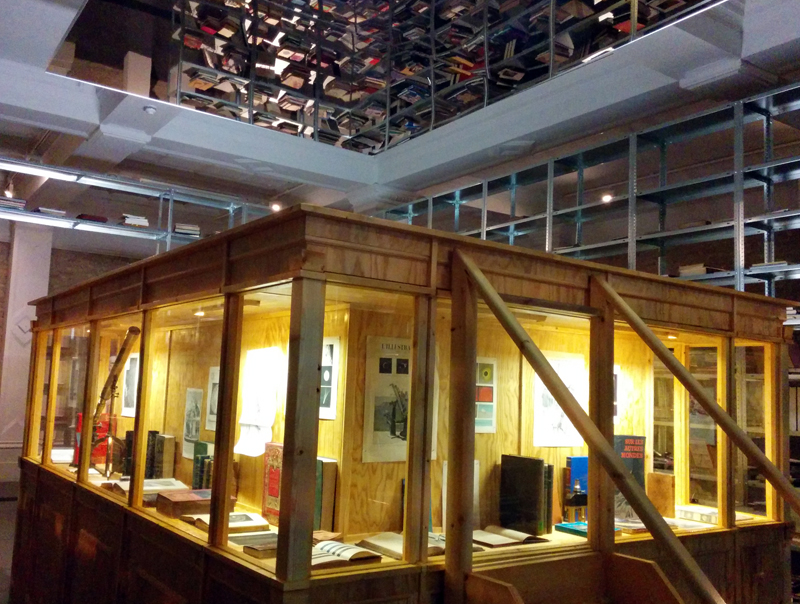
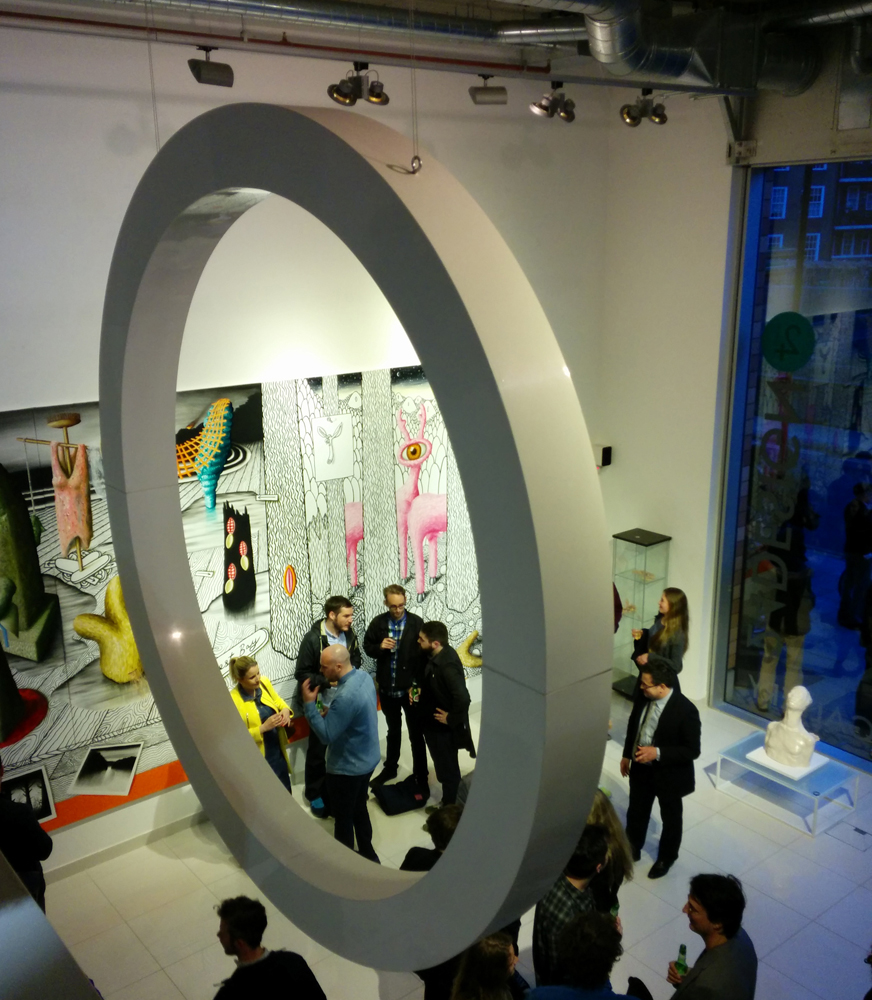
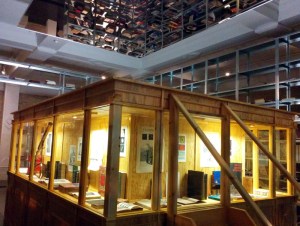
Kadar Attia – Continuum of Repair: The Light of Jacob’s Ladder at Whitechapel Gallery was interesting to me because of the focus given to the value of knowledge.

Books as receptacles of history.
Kader Attia _ The Light of Jacob's Ladder

Kader Attia   The Light of Jacob’s Ladder

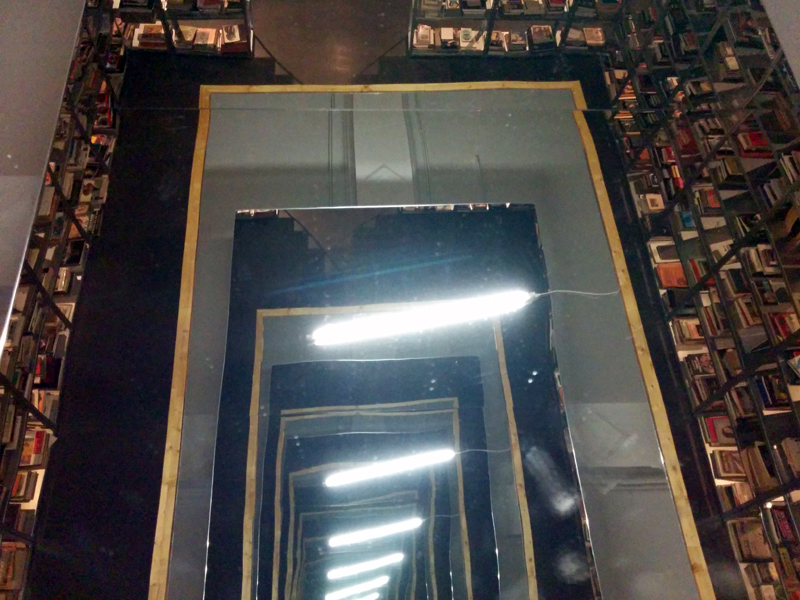
The shelves which rise up to the gallery ceiling are full of books with evocative titles and inspiring covers from science, anthropology, politics and physics – they are mostly in French though so for me the knowledge they contain is frustratingly inaccessible. Attia talks about repair as a principle of evolution and development – that we plug holes and fill gaps – holding it all together with sticky tape. I enjoyed seeing the physical manifestation of knowledge. The internet holds so much and offers so much so quickly but the material sight of so many books is uplifting.
Kader Attia

Kader Attia

The installation at Whitechapel is about conveying knowledge from different ideologies, it refers to Michel Foucault – The Archeology of Knowledge and uses the symbolism from Christian, Islamic and Judaic traditions of a ladder of light – a link between the terrestrial nad the celestial. Within the installation the telescope and the microscope embody two alternative ways of looking at the world.

Revelation through scale.

Simmons and McCollum 'The Actual Photos'

Simmons and McCollum ‘The Actual Photos’

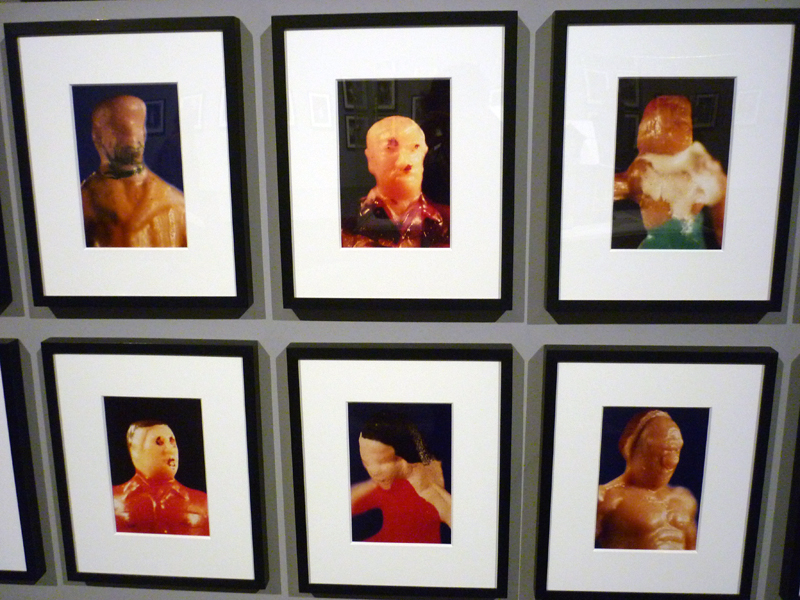
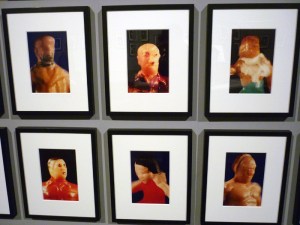
This collection of portraits by Laurie Simmons and Allan McCollum manipulate scale through photography – enlarging the tiny to life size.

These melting features are portraits of model railroad figures used to add human presence to the constructed landscapes of the hobbyist.
Simmons and McCollum 'The Actual Photos'

Simmons and McCollum ‘The Actual Photos’

A land of the disfigured is revealed. Disrupting the symmetry and expectations of the human face.

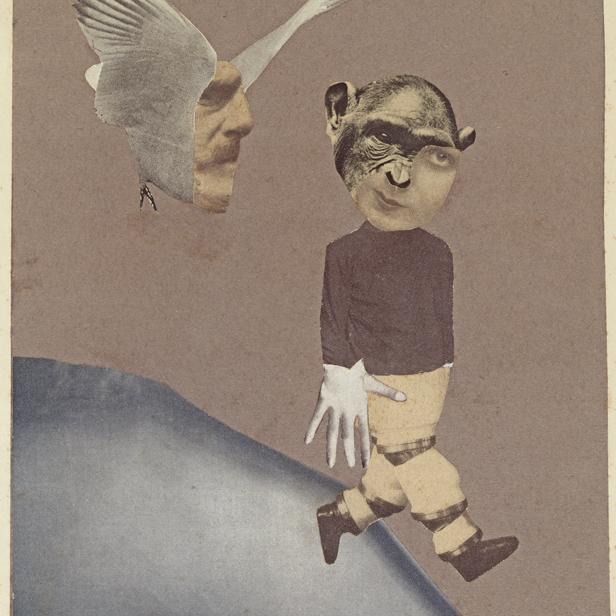
Hannah Hoch also uses this approach of disruption of the human form to pose questions about our inner humanity – it’s amazing to think when she was making this work – the early work, particularly in the 1920’s how different the world was and yet how the same. Like the ever on-going topicality of Shakespeare – we struggle with the same issues in every generation – money/power, image, gender. It still seems so fresh though I found the volume of works at her Whitechapel  retrospective a bit overwhelming.

Hannah Hoch

Hannah Hoch

I joined the RCA school trip to see The Negligent Eye exhibition at The Bluecoat Gallery in Liverpool curated by our own RCA head of printmaking Jo Stockham

– she questions;  ‘scanning is riddled with an internal contradiction: is it a close reading or a glance?’

The artists in this show all use some form of scanning, experimenting with translations across digital media into various print processes

Maurice Carlin

Maurice Carlin

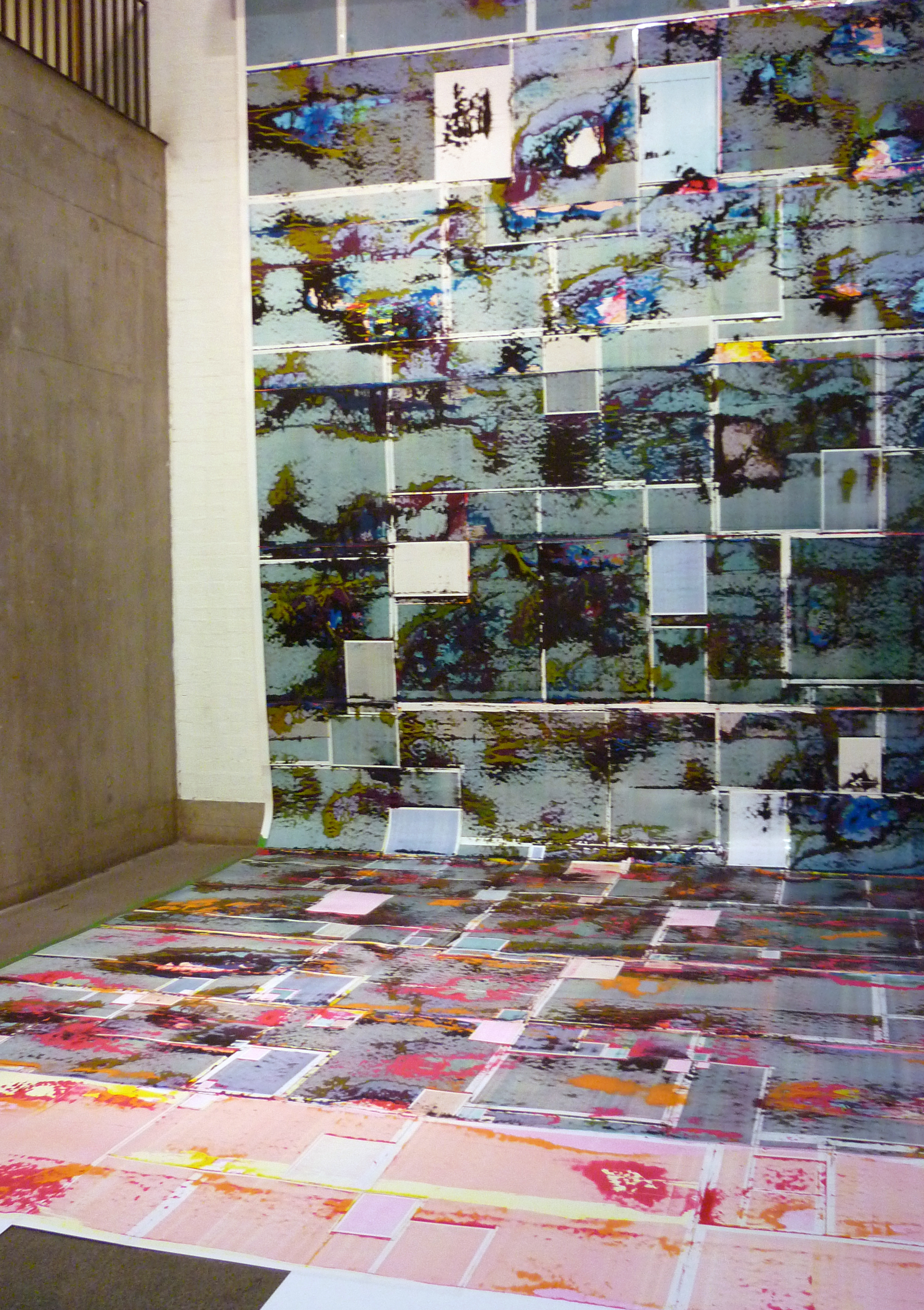
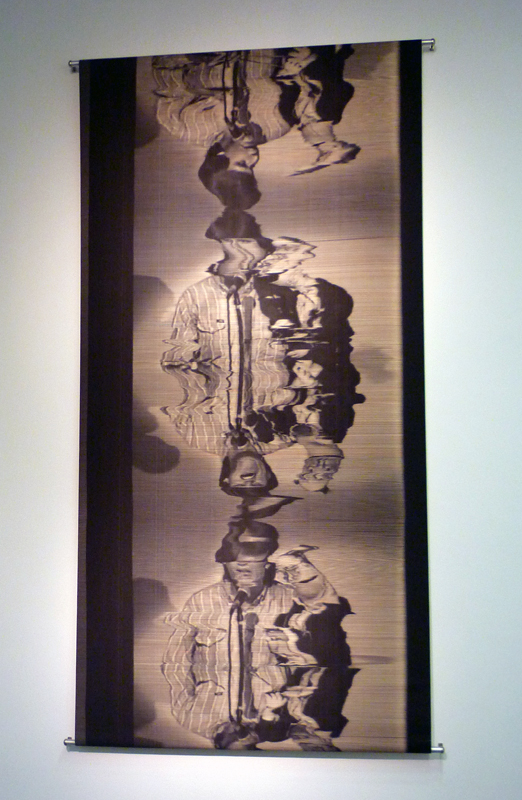
Endless Pageless is performance screen printing on a vast scale. The surface of the gallery floor is recorded though an analogue scan; the pressure of the screen over paper on the floor gradually building up the image in coded blocks.

Rebecca Gossling

Elizabeth Gossling

Gossling scans from a computer or tv screen with a hand held recording device which results in a distorted image that highlights the waves of transmission – like the image on the edge of tuning in to a channel, you are aware of the process.

A feeling reminiscent of having one of those little tellys with a bent wire ariel – not going to happen with a digital signal.
Christiane Baumgartner

Christiane Baumgartner

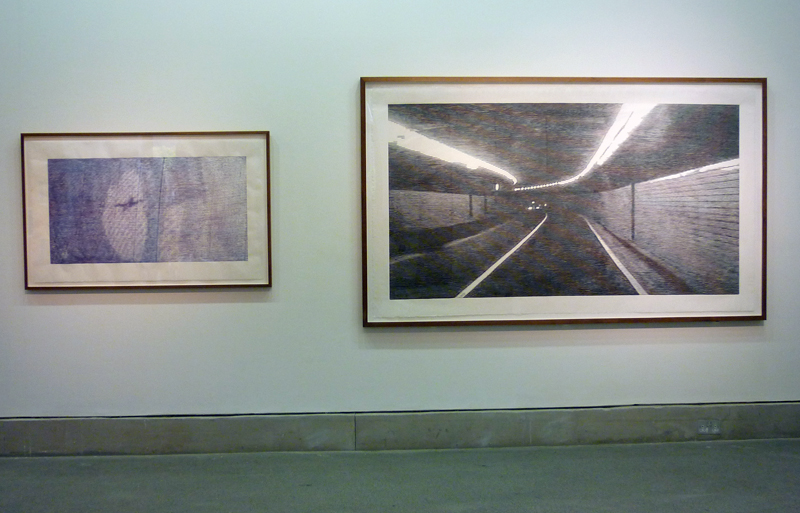
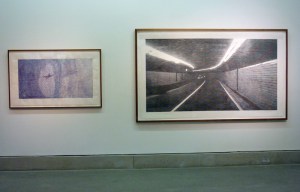
Also taken from the screen Baumgartner translates the media image from tiny pixels to giant woodcut
Juneau Projects

Juneau Projects

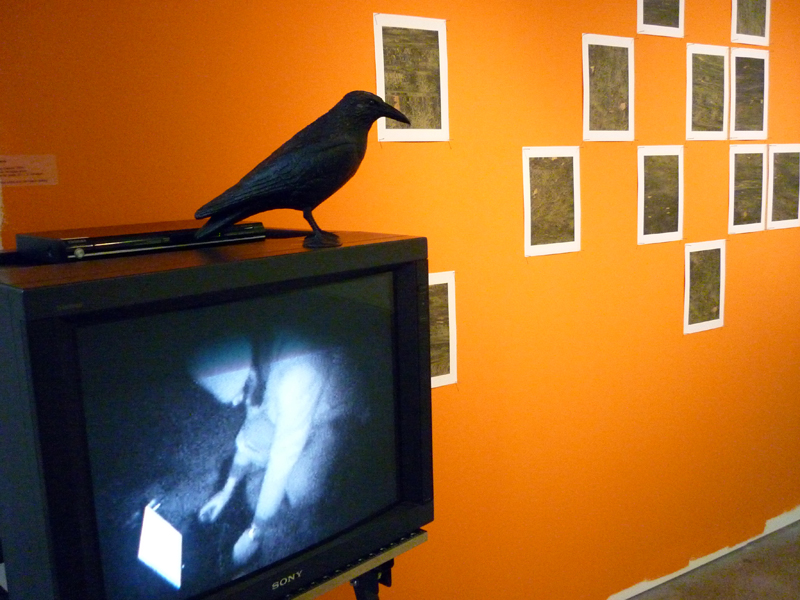
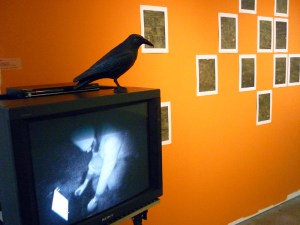
Hand held scanners traversing the lawn
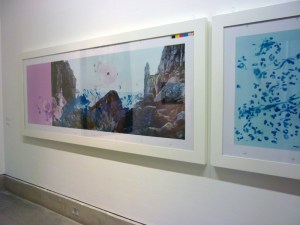
Helen Chadwick

Helen Chadwick

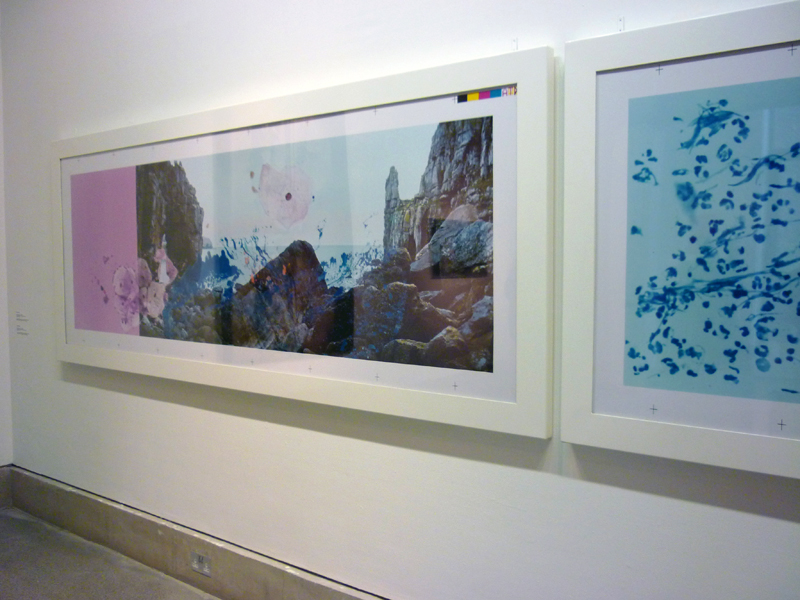
viral attack

Bob Matthews

Bob Matthews

A reimagining of the landscape, Bob Matthews  explores architecture within the environment, painting by pixels
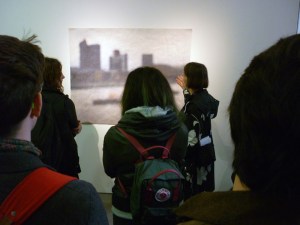
Jo Stockham

Jo Stockham

value, discarded and reborn
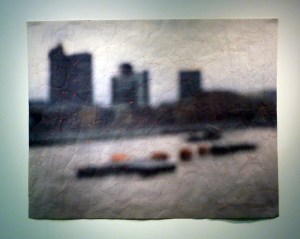
Jo Stockham

Jo Stockham

Some good thoughts on the show at
http://www.furtherfield.org/features/reviews/digital-autopsies-negligent-eye-bluecoat

The book ‘Keywords’ by Raymond Williams was recommended to me by my tutor Faisal Abdu’Allah when we were discussing the etymology of words and personal interpretations of paradise or utopia.

The guiding principle in the composition of Keywords was to look at historical changes in the meaning of 109 key words, in order to bring out the significance of the facts of these changes. As Williams put it in the book’s Introduction:

This is not a neutral review of meanings. It is an exploration of the vocabulary of a crucial area of social and cultural discussion, which has been inherited within precise historical and social conditions and which has to be made at once conscious and critical – subject to change as well as to continuity.

While in  Liverpool we visited the Keywords exhibition at the Tate. The idea offered really interesting possibilities, juxtaposing works from the Tate’s collection with keywords from the book.

Some good work but the strange display with blocks of carpet and the words in giant cursive script on the walls destroyed any magic the theme evoked.
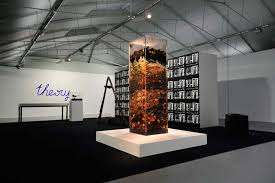
Keywords Tate Liverpool

Keywords Tate Liverpool

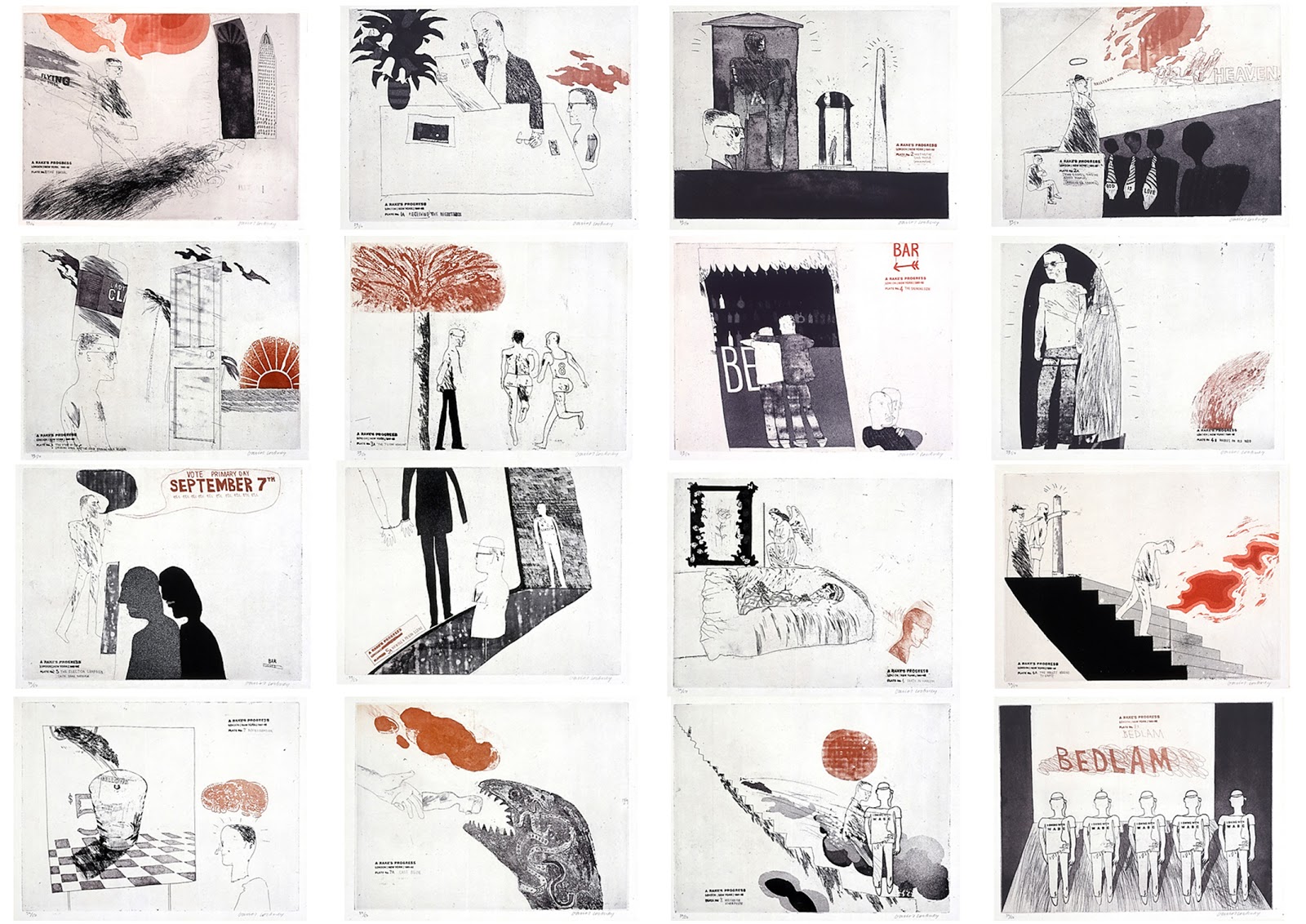
Another school trip was to see the David Hockney prints at Dulwich Picture Gallery.

It wasn’t something I would have gone along to myself but I enjoyed the humour in his early etchings done while at the RCA and our technician Alan Smith was able to show off his knowledge of the etching process
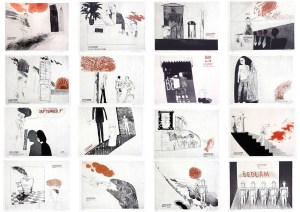
David Hockney - A Rake's Progress

David Hockney – A Rake’s Progress

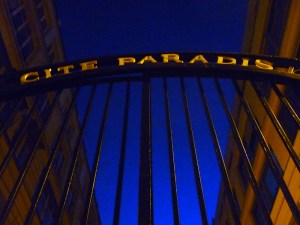
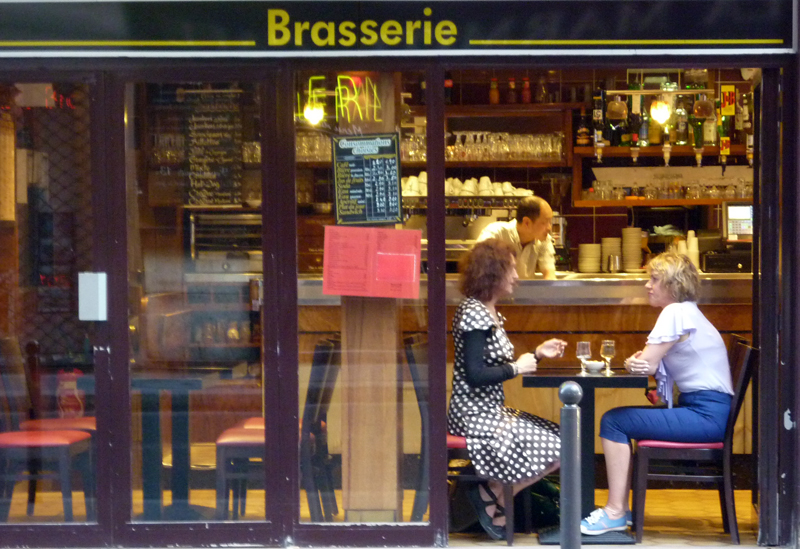
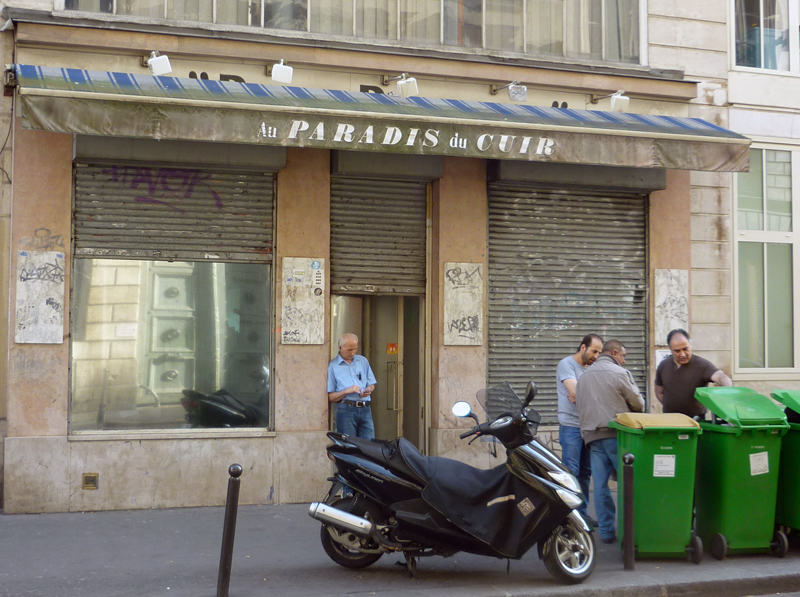
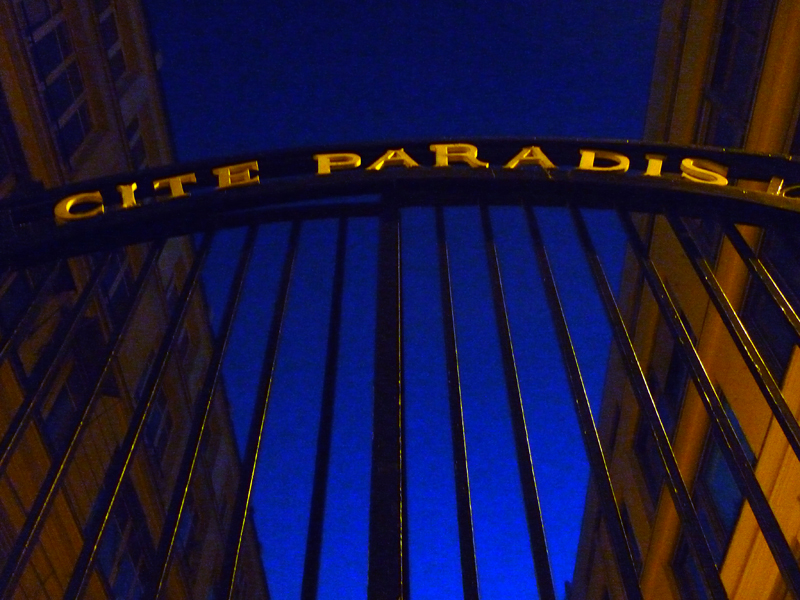
Some fragments of Rue de Paradis

1406 Rue de Paradis 1

Paradise – prison

1406 Rue de Paradis 2

or sanctuary

1406 Rue de Paradis 3

discover

1406 Rue de Paradis 4

a place of false riches

1406 Rue de Paradis 5

a place to be wary who you trust

1406 Rue de Paradis 6

like reaching for a reflection

1406 Rue de Paradis 7

always unattainable

1406 Rue de Paradis 8

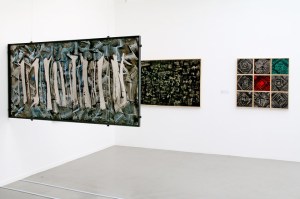
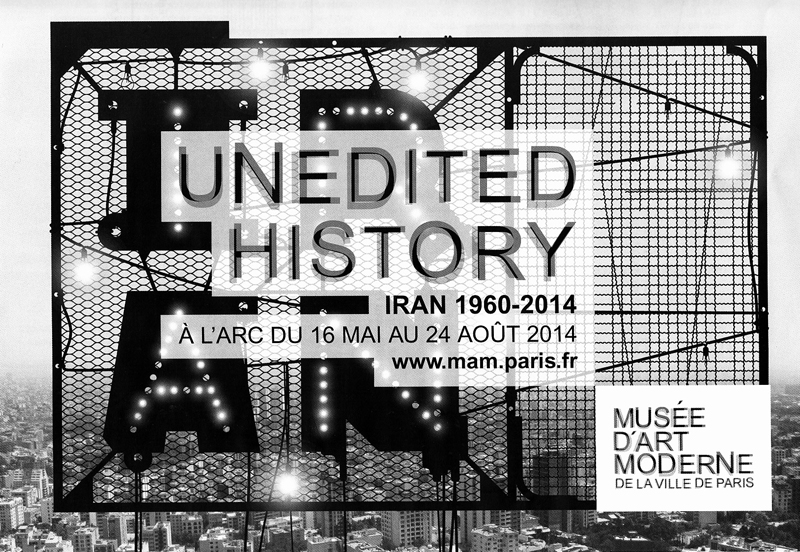
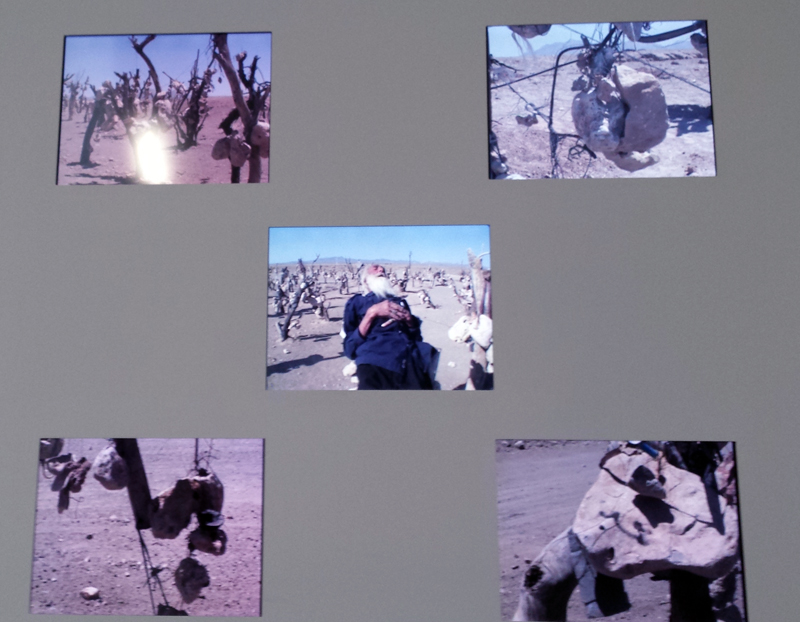
While in Paris also had a look at the Unedited History of Iran exhibition at The Musee D’art Moderne
1406 Unedited History


Behdjat Sadr

Behdjat Sadr

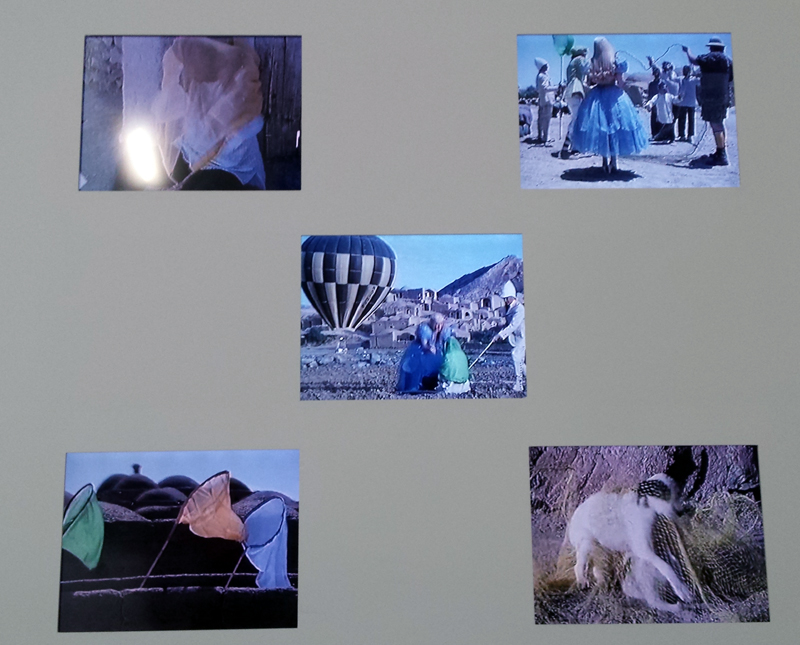
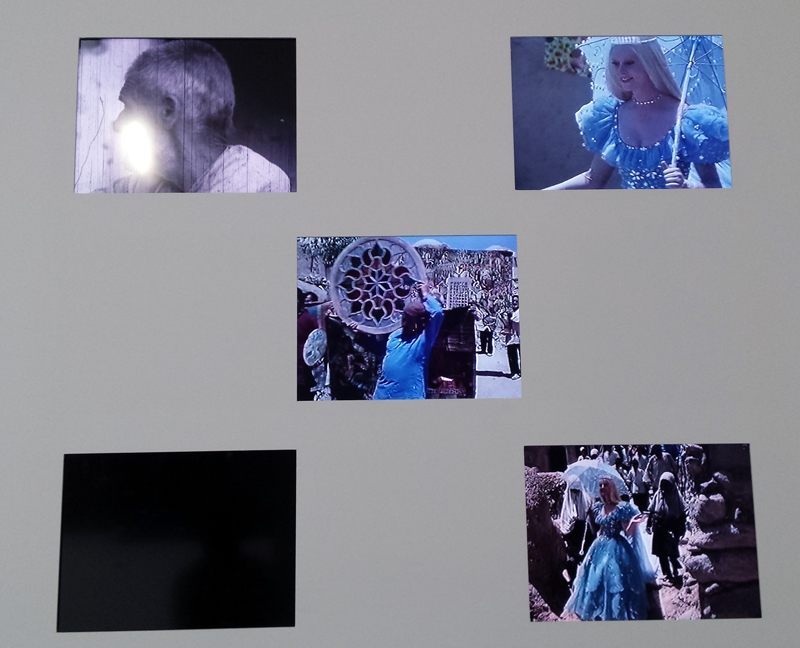
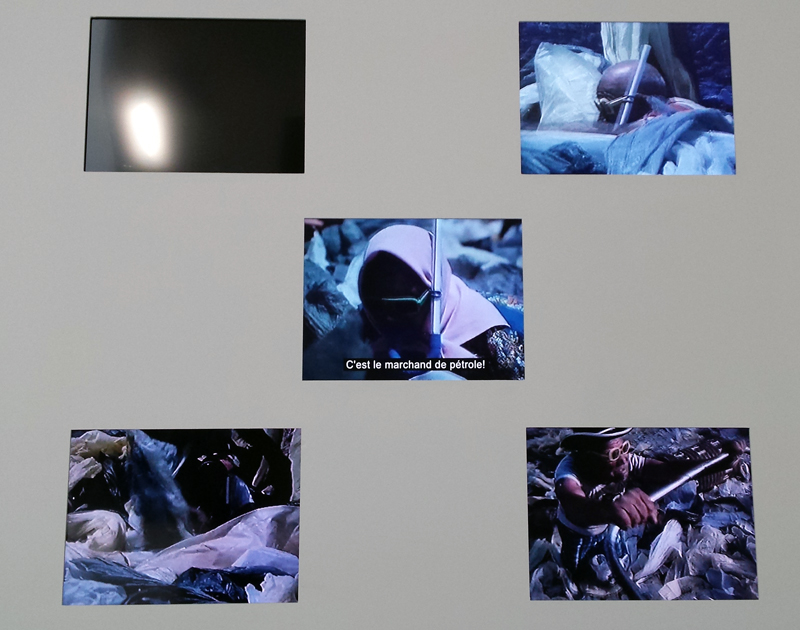
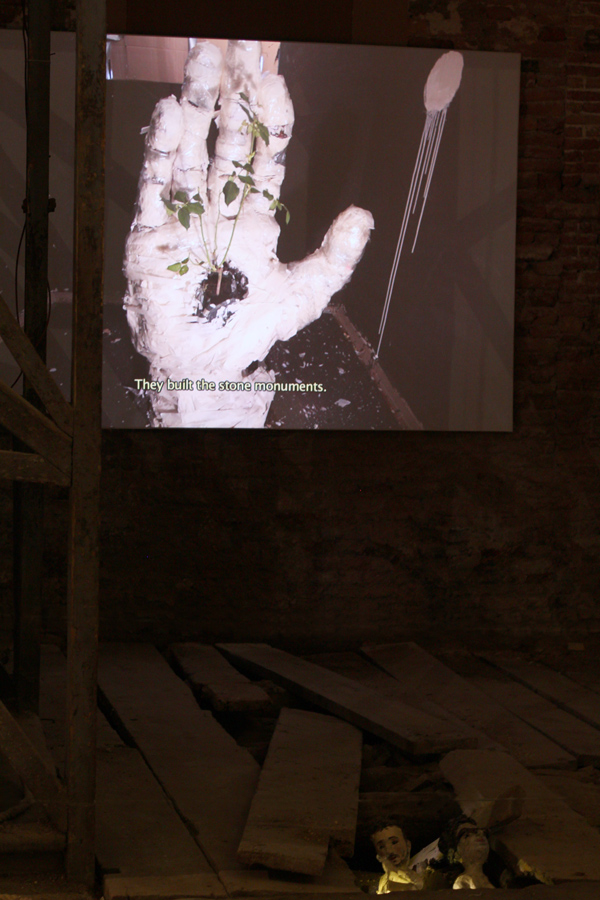
Was captivated by the surreal images in the video installation of Parviz Kimiavi – a mixture of Oz and world pollution, will the good fairy come to save us all from drowning in our own filth
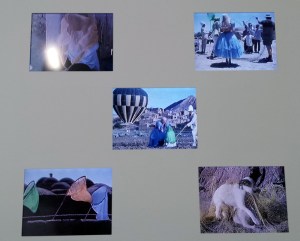
Parviz Kimiavi
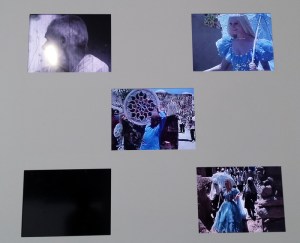
Parviz Kimiavi
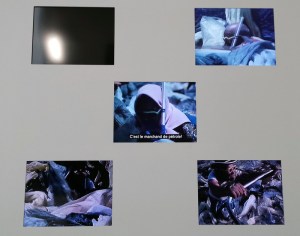
Parviz Kimiavi

Parviz Kimiavi

Parviz Kimiavi

Parviz Kimiavi

does the yellow brick road end here
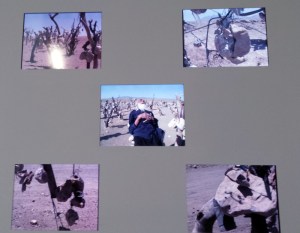
Parviz Kimiavi

Parviz Kimiavi

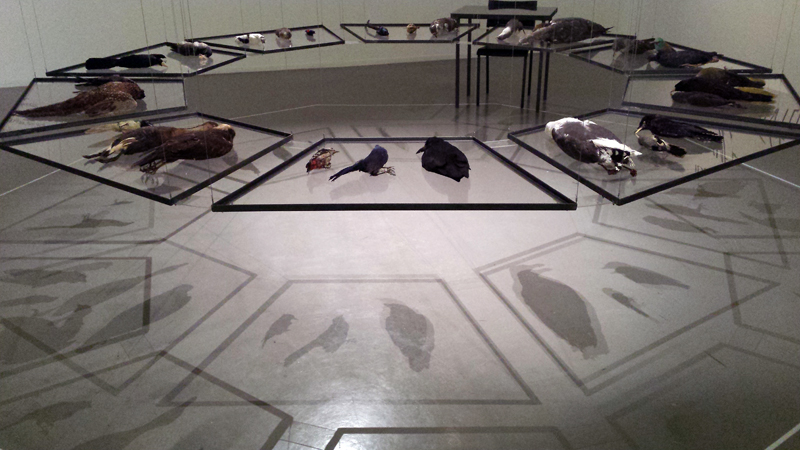
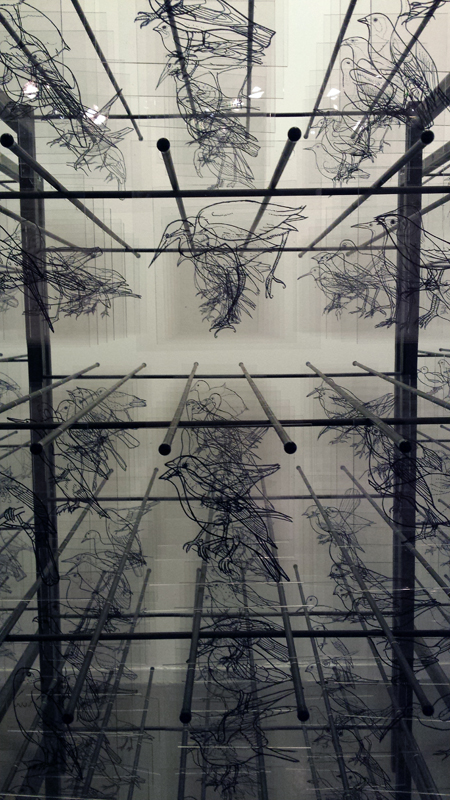
‘Office of Investigation into Diverted Trajectories’ – the dead birds

Narmine Sadeg

Narmine Sadeg

This was poetic

Narmine Sadeg

Narmine Sadeg

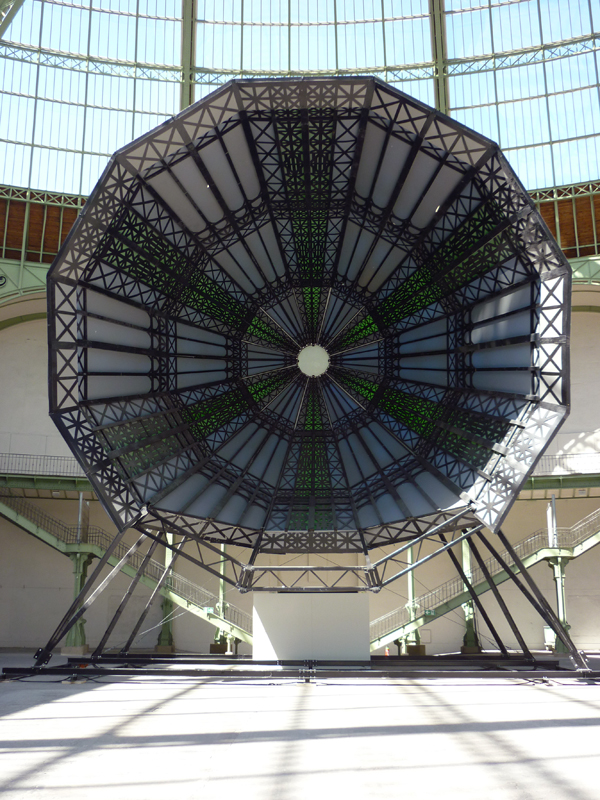
Also while in Paris visited the vast installation at the Grand Palais” by Ilya and Emilia Kabakov.

We came across the exhibition by chance but it turned out to explore many of the themes I am currently interested in.

Ilya’s background is questioning the totalitarian regime of his childhood in soviet society – in the end he believes every -ism ends in disaster so there is no point in trying to build Utopia in reality – better to keep it in the realm of the art-world.
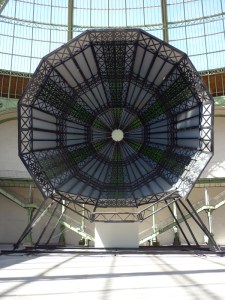
Ilya and Emilia Kabakov  'Strange City'

Ilya and Emilia Kabakov
‘Strange City’

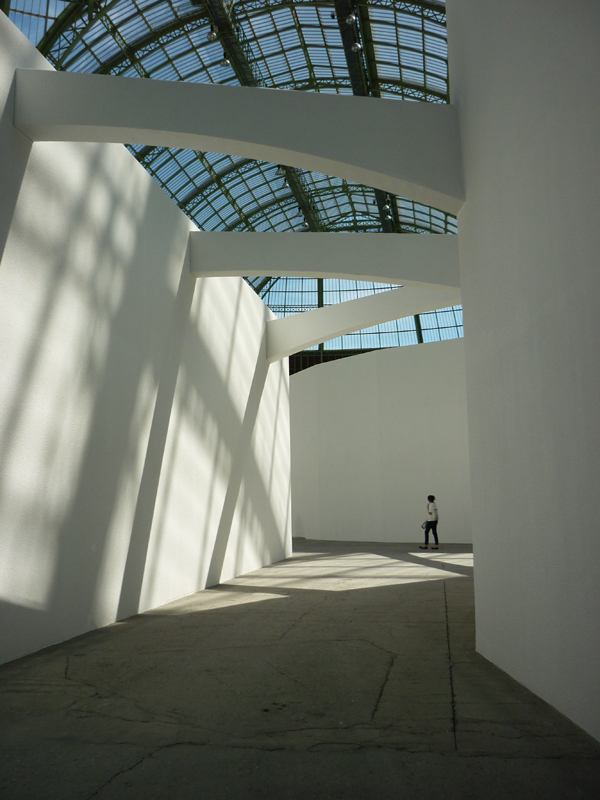
In exploring the maze of the city the viewer is exploring the dreams of individuals that are shared across all nations
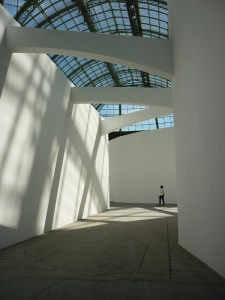
'Stange City'

‘Strange City’

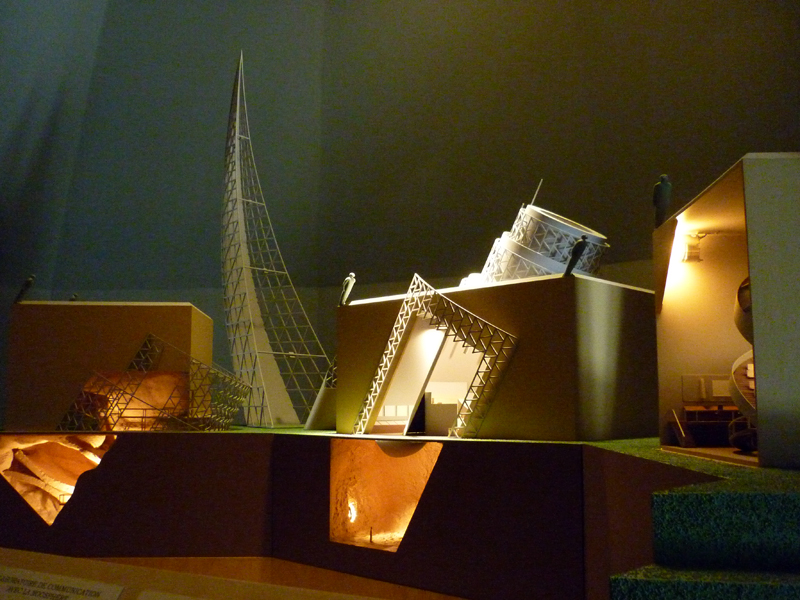
The installation is made up of many buildings. There is the empty museum reflecting a yearning towards the sacred as a shrine to our values.

There is the model mythical Tibetan city where the world is in duplicate – one celestial, one terrestrial but it is not known which is heaven and which is earth.
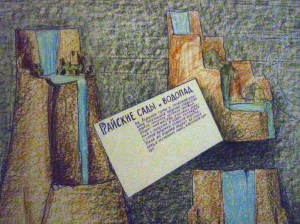
'Strange City'

‘Strange City’

There is the centre for cosmic energy built on an archaeological dig uncovering a time when contact was established with alien life.
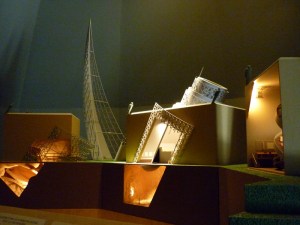
'Strange City'

‘Strange City’

Instructions on how to meet an angel.
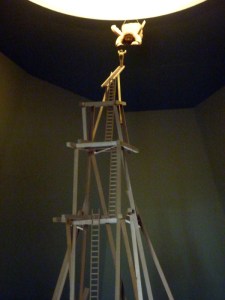
'Starnage City'

‘Strange City’

The artists are not religious but like many people still hope for miracles.

Axisweb ran a competition for curators to select work from their database for a theorectical exhibition.

It was a nice surprise to find Laura Dennis won the competition with one of my pieces included in her selection for her proposal ‘Synthetic Landscapes’

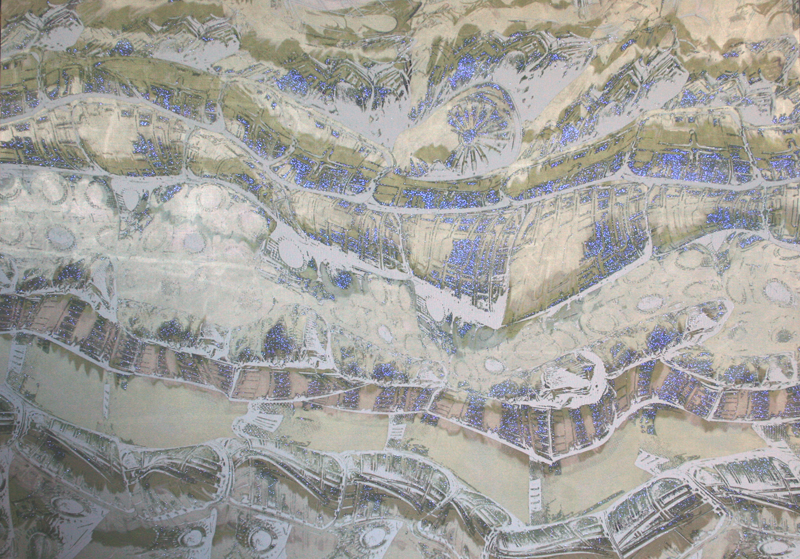
StrataGem(ii)

StrataGem(ii)

She writes: ‘In the screen print StrataGem(ii), Susan Eyre has created a mesmerising image of geological strata using items of plastic landfill. Shimmering, iridescent layers of waste packaging form the imagined rock structures and gemstones of a distant future. Despite its apparent beauty, the image is unsettling: it prompts us to contemplate the far-reaching impact of human activity upon the earth, and a legacy in which the man-made and natural worlds have become indistinguishable.’

My themes have shifted slightly since I made work with a more ecological slant. Still interested in the human connection to nature I have been looking at a more emotional relationship.

From my research into the stimulus for the first conscious thought, when man looked at nature and found it ‘other’ I have been thinking about basic instincts. The line between civilization and savagery.

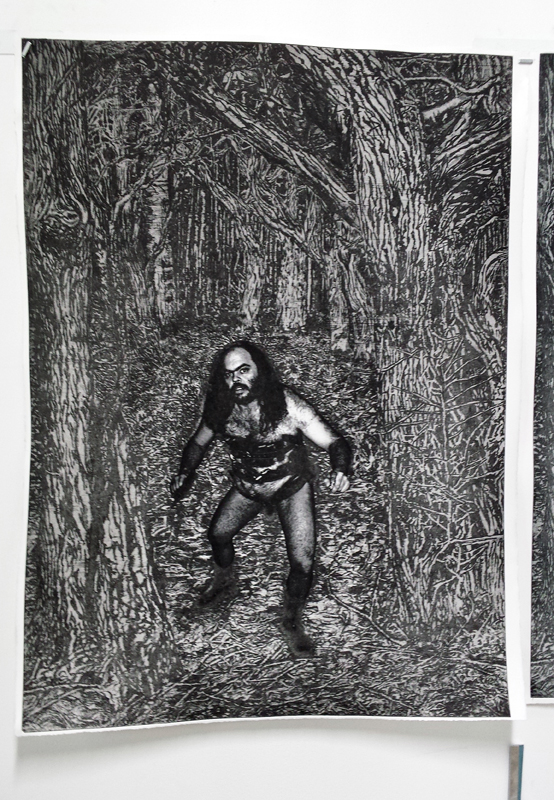
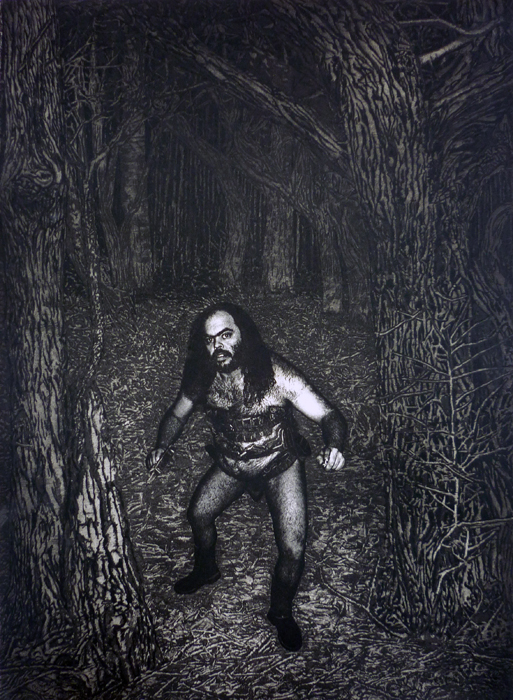
I went back to an image I found on the internet a couple of years ago when I was making the installation ‘Syndrome’ of a guy in his room posing almost naked with guns and weapons strapped to his body.

I felt he might embody the contemporary wild man. I have gone back to the source of the image and found he has become a meme with many postings and comments.

This furthers the idea of identity and illusion. Someone on the edges of society.

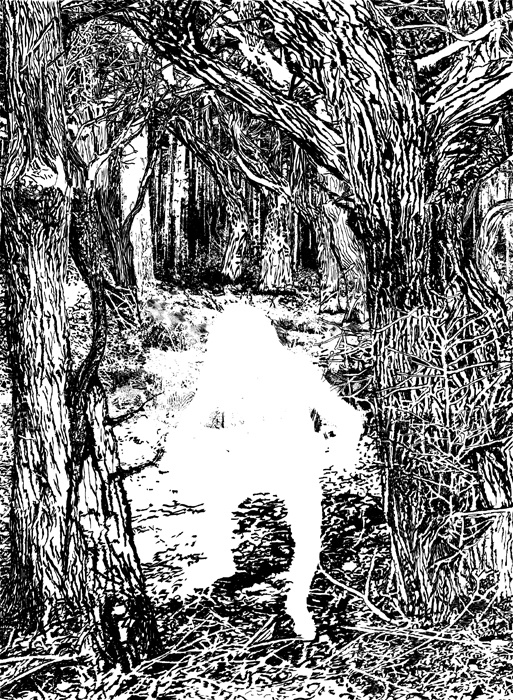
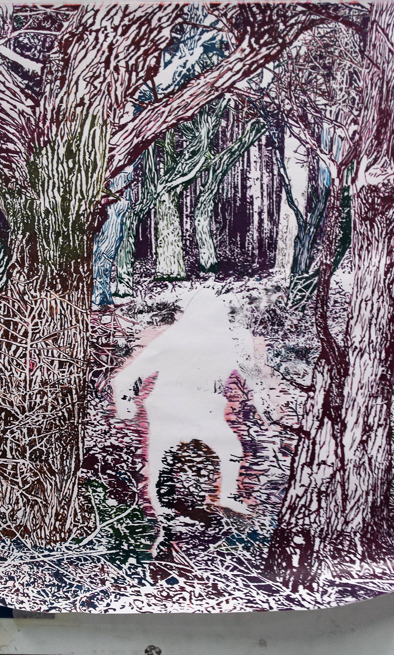
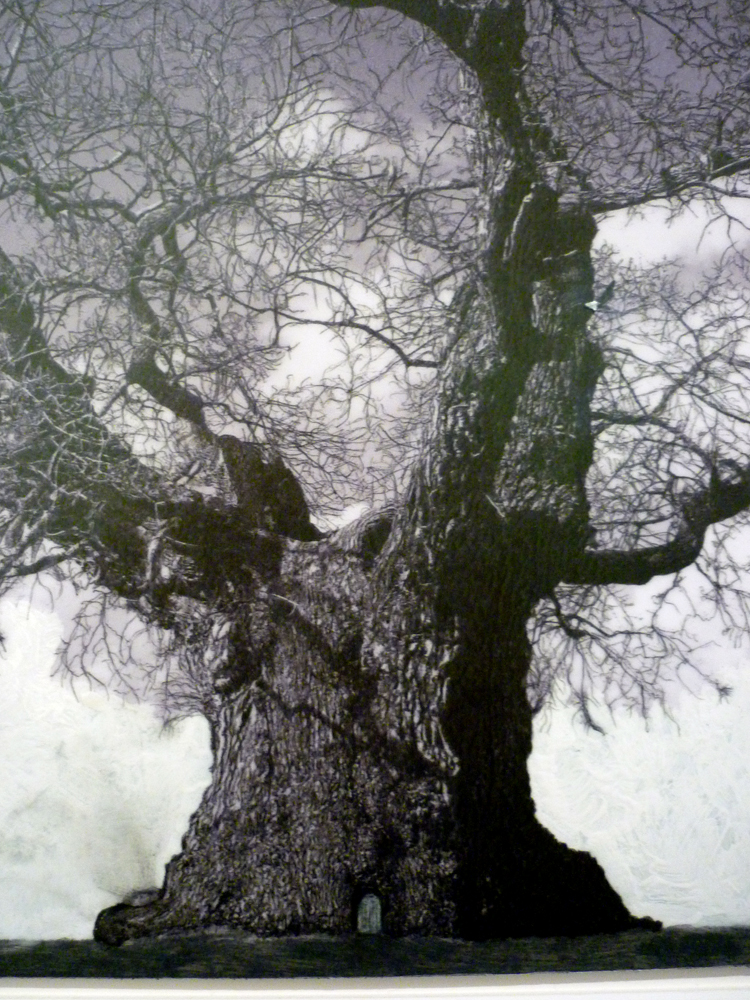
Through a laborious process of drawing and soft-ground etching with aquatint I have placed him into the ancient forest of all our origins.
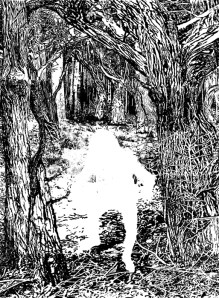
Forst drawing printed onto thin paper

Final drawing printed onto thin paper

I polished a steel plate and added the photo etching around which I would draw the forest.

Soft ground (a sort of wax) is rolled onto the plate and the paper drawing is placed on top.

The pressure of the pencil on the paper pushes into the wax beneath. I used coloured pencils to see where I had drawn.
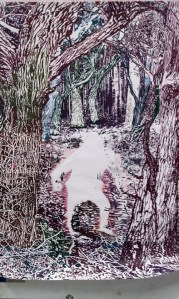
Drawing into soft ground using coloured pencils

Drawing into soft ground using coloured pencils

After the dark areas are drawn over, the paper is peeled away, the wax sticks to the paper leaving the metal exposed for etching.

The plate is etched in acid, then placed back under the paper and drawing continues to add midtones.

Soft Ground Peel

Soft Ground Peel

The paper is peeled away and more drawing is done and etched until the range of tone is acheived

Peeling away paper from plate

Peeling away paper from plate

Between each drawing and etching the plate is printed to see how the tones are looking and which areas need more work.

A dusting of aquatint added a final depth of tone.
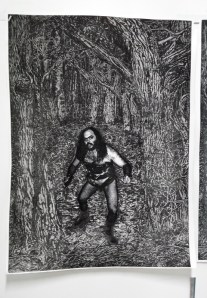
Test print

Test print

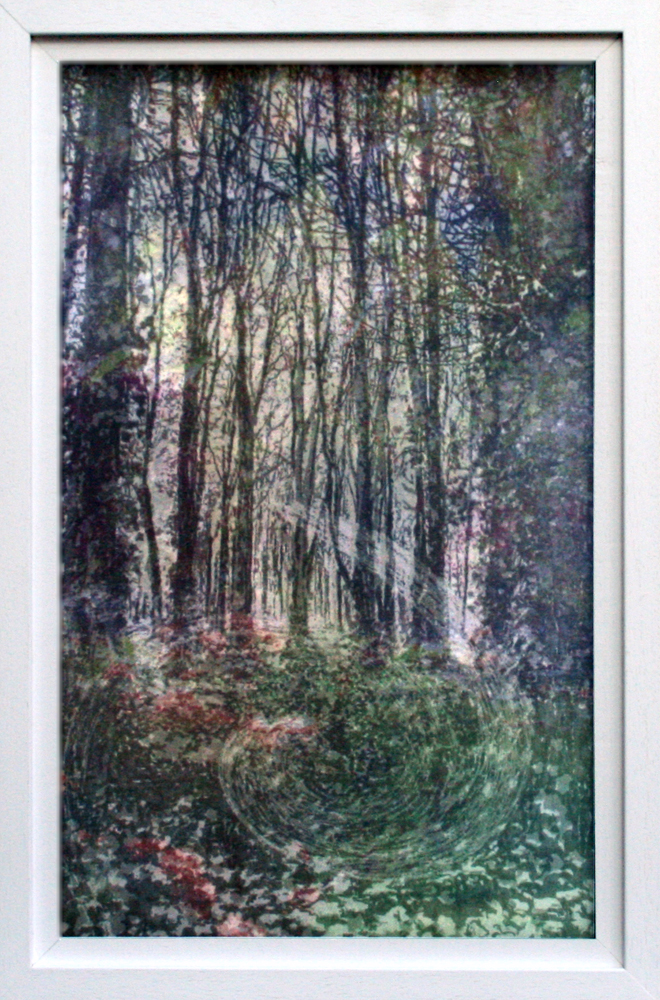
I wanted the forest to appear dark and primordial, the forest of Grimm brothers imaginination
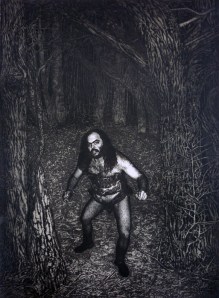
Final print - Forest of Eden

Final print – Forest of Eden

Not the Garden of Eden but the land before, of after, the garden existed.
Dissertation sickness. Gaining knowledge should be enriching – Bill Viola talks about a pollution of the mind from too much information, he means a flooding from advertising and media and such like that has a negative impact on our well being. Walter Benjamin was also concerned that post industrial life was overwhelming our senses in such a way that we couldn’t process the volume of experiences we had in order to gain any knowledge or understanding. I think I may be overloading my mind with too many books – too many threads to follow – so that I can no longer process meaningfully.
Nostalgia – the wounds of returning.
Ruin Lust at Tate Britain was a chance to revel in the beauty of decay – to feed desire for the lost idyll. Desire is such that it is eternal.

Jane and Louise Wilson - Azeville

Jane and Louise Wilson – Azeville

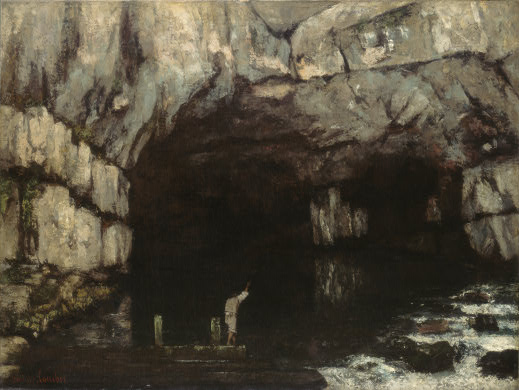
I have just been reading about critic Neil Hertz comments on Gustave Coubet’s La Grotte de la Loue 1864 as an example of the move from the romantic sublime to the post modern sublime.

Gustave Courbet - La Grotte de la Loue

Gustave Courbet – La Grotte de la Loue

The Wilson’s photograph Azeville seems to share the same unnerving dark space where there is no escape into infinity only a reflection back to self meditation.

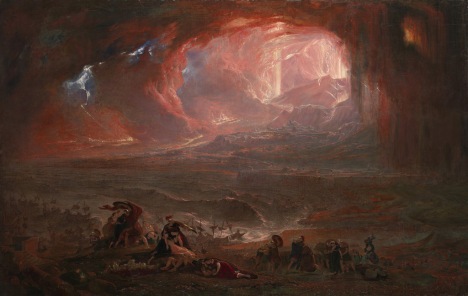
John Martin the master of the fantastical sublime shows the devastation of Pompeii.

John Martin - The Destruction of Pompeii and Herculaneum

John Martin – The Destruction of Pompeii and Herculaneum

With the sublime there is always the possibility of death.

If a dark space of contemplation is post modern sublime what is this …

1405 Pompeii

feels like a brash disrespect for the dead to me.

Finlay Taylor, tutor in printmaking at RCA, brought together an impressive selection of works for an exhibition at Camberwell Space – Against Nature.

In his introductory speech at the symposium held in conjunction with the show he spoke about cause and effect of environmental interventions.

The extinction of the Large Blue Butterfly in Britain as habitat is eroded as land use changes and the introduction of a butterfly from Scandinavia as replacement – a near match.

The high mercury levels at the top of Mount Fuji brought on the winds from China’s expanding coal mining industry.

Dr Joy Sleeman and David Cross, speakers at the symposium, discussed our shift in perception of landscape after the moon landings.

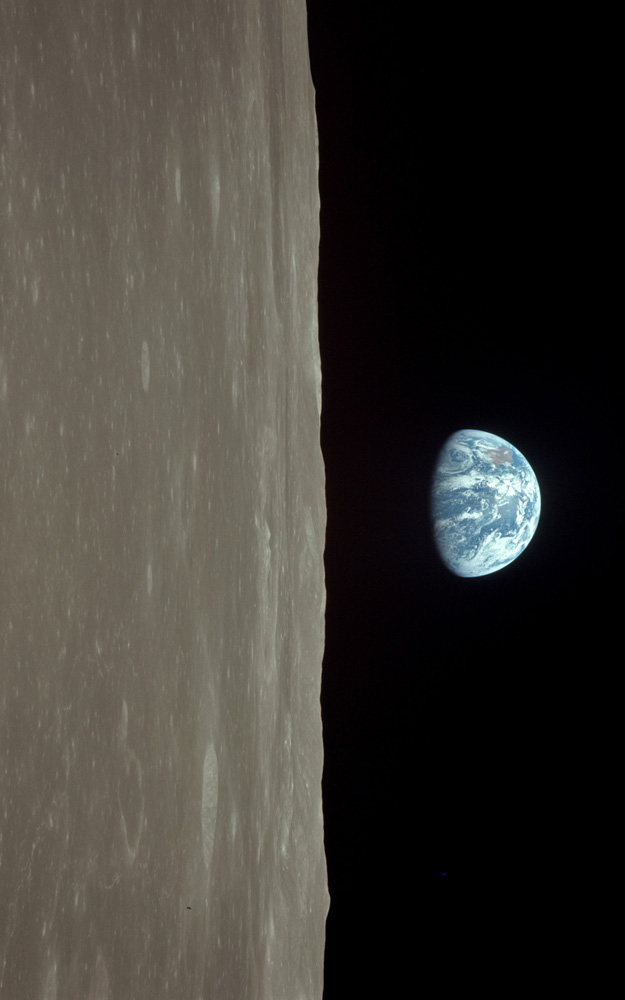
The iconic image earthrise – looking back at earth from space apparently very nearly didn’t happen.

The highly trained military scientists had been instructed to only photograph the surface of the moon with the precious amount of film that they had taken into space with them.

1405 earthrise

However, when they saw the earth as it had never been seen before and it was so beautiful they disobeyed command and pressed the shutter.

Optimum selfie.  It’s been a while now since the reverberations of that image were first felt, it was supposed to unite us as a planet, to position us within the enormity of the universe so that we could appreciate our lives as being part of something amazing and vast.

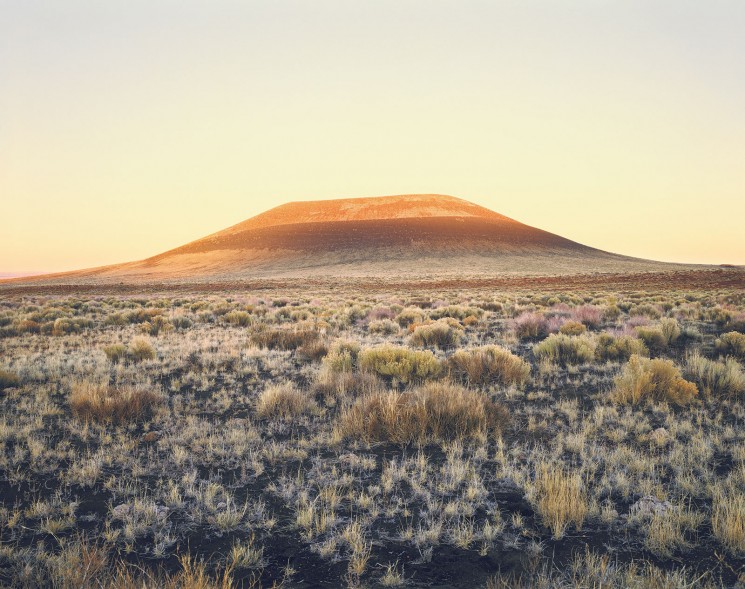
Our skies, flooded with artificial light means we can no longer see the stars. Our territory has shrunk. James Turrell makes work to try and open up our skies to us again. By creating an enclosure to look out from, a vaulting occurs in our perception, bringing the sky closer, and as the light changes throughout the day and the seasons a myriad range of colours can be observed.

James Turrell - Roden Crater

James Turrell – Roden Crater

His friend and art collector Count Giuseppe Panza di Biumo believes that if everyone could visit The Roden Crater then all violence would stop.

Also we wouldn’t need any hallucinogens.

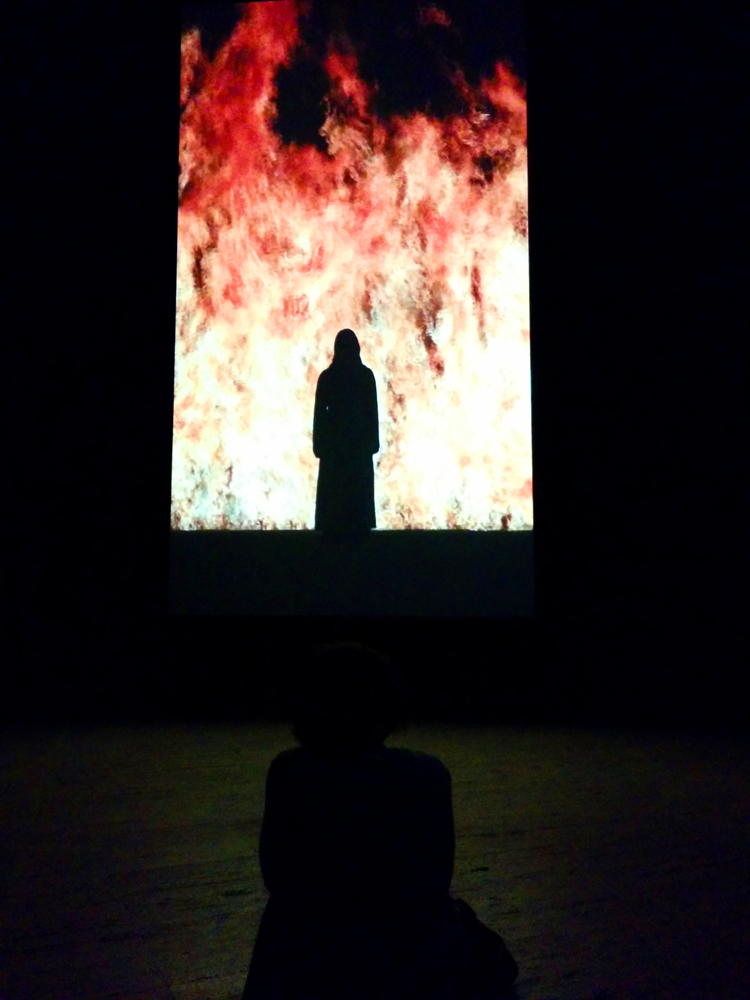
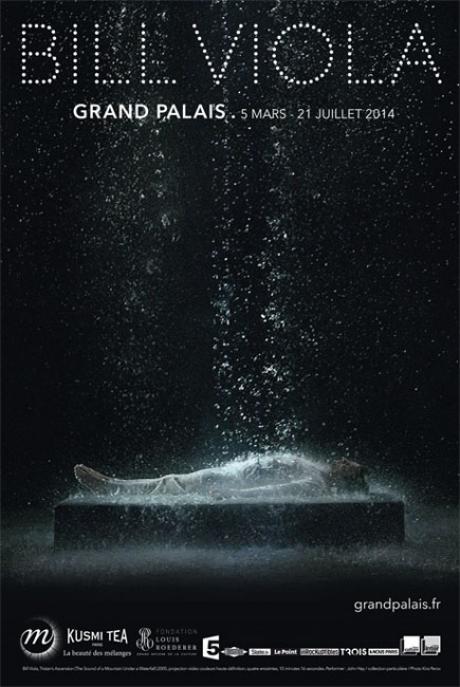
Crossing the channel to see Bill Viola in Paris. Dissertation research isn’t all sitting in the library.

Bill Viola - Fire Woman

Bill Viola – Fire Woman

Enjoyed some favourite pieces and saw some new ones.

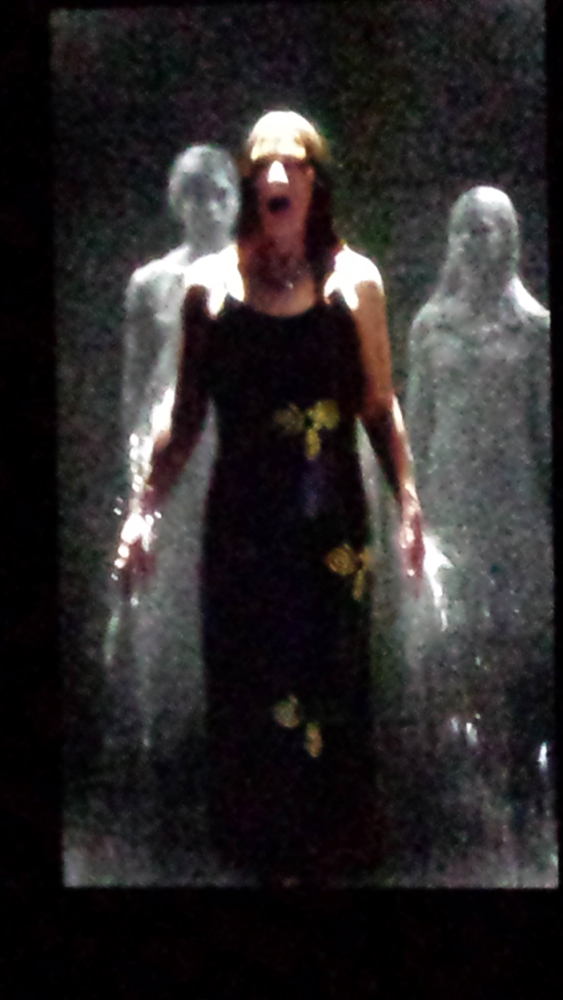
I found ‘Three Women’ very hypnotic and moving. For me it was about cycles of separation.

The mother figure steps out from a grey mist through a wall of water, with all the wetness and rupture of birth, she emerges glistening into full colour.

Bill Viola - Three Women

Bill Viola – Three Women

She reaches back for the older girl and guides her on her journey through the baptism of water to be at her side, the older girl in turn then takes her sister by the hand to join them.

Bill Viola - Three Women

Bill Viola – Three Women

No sooner are they all together than the mother figure steps back through the veil, the older girl soon follows, leaving the young girl suddenly alone.

As she reaches back and takes her older sister’s hand to return from where she came, she turns directly to the viewer, her gaze holds us in a grief of separation.

Bill Viola - Three Women

Bill Viola – Three Women

Who steps over the threshold willingly?

Crossing Oceans – ‘The Stuart Hall Project’ film is a poetic collage of archive footage set to the music of Miles Davis, directed by John Akomfrah. Stuart Hall emigrated from Jamaica to the UK in 1951 to take up a place at Oxford University, and became a founding figure of cultural studies in Britain.

Stuart Hall

I have Jo Stockham (head of printmaking at the RCA) to thank for screening this film of a wonderful man sadly no longer with us.

This film is now part of an exhibition at the Stanley Picker Gallery in Kingston Upon Thames – Your Tongue in My Mouth

1405 Standing on the Frontier (22)

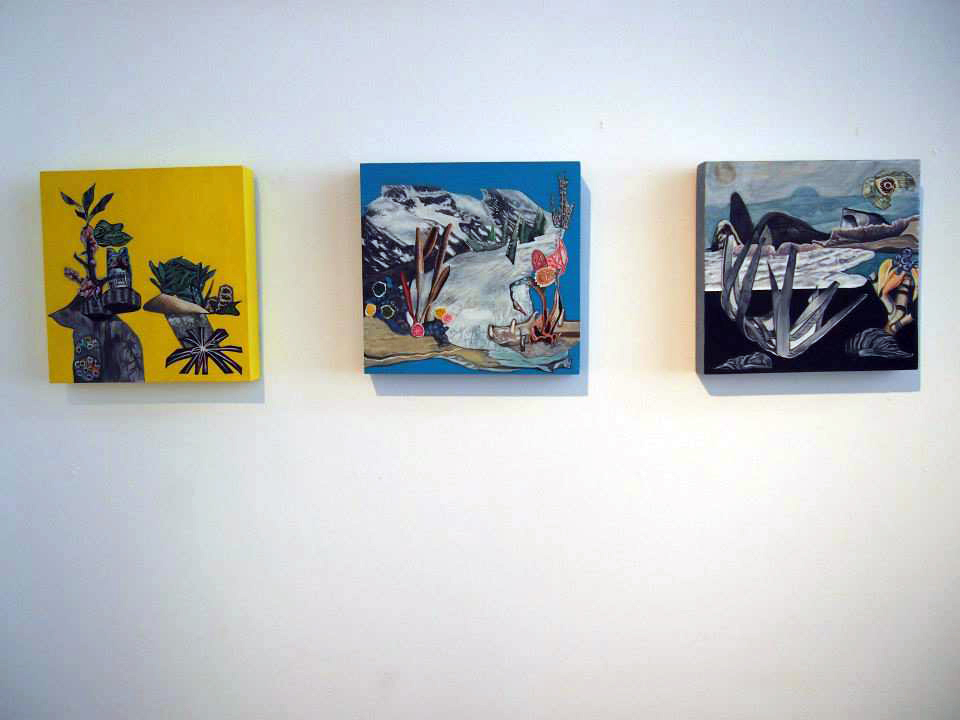
Honoured to be invited to join the artists in Standing on the Frontier, a group show at Unit 24 Gallery curated by Takayuki Hari and Noa Edwards.

“One of the tasks art has assumed is making forays into and taking up positions on the frontiers of consciousness (….) and reporting back what’s there.” –Susan Sontag, ‘The Pornographic Imagination’.

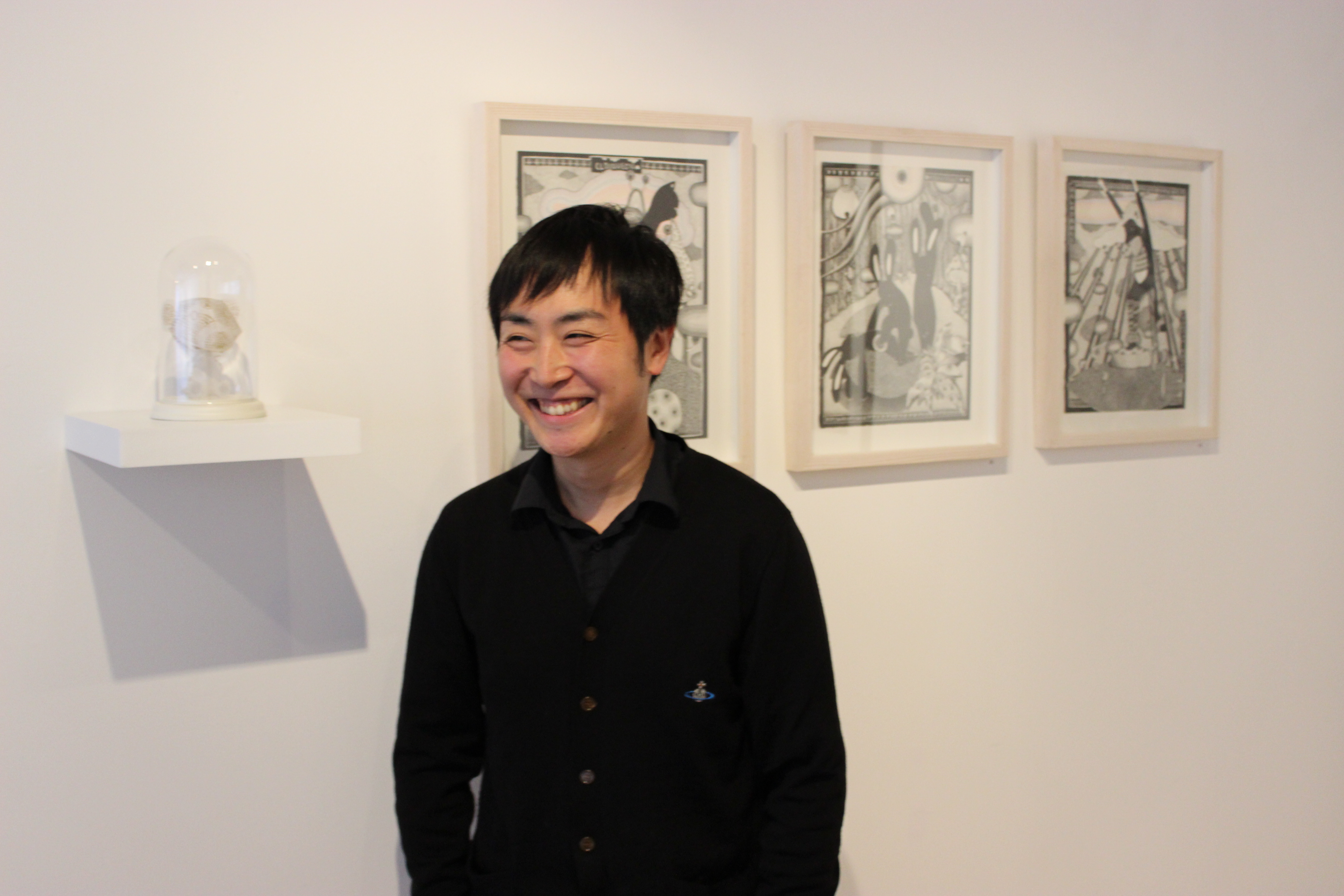
Takayuki Hara with his work

Takayuki Hara with his work

The images presented by the artists in Standing on the Frontier depict views taken on a redefining the frontier between reality and the imagination. On this meandering journey the viewer weaves his or her way across the line that demarcates the boundary between the mundane scenery of familiar places and the surreal landscapes of the individual mind.

Noa Edwards paintings

Noa Edwards paintings

A review can be read here

Susan Eyre - Yellow Sky

Susan Eyre – Yellow Sky

The boundary I was thinking about here was the one between outside and inside a controlled environment.

A dystopian future where all life is sheltered in a sort of Eden project.

Coming up soon –

I have some work in the Ochre Print Studio Summer exhibition

Would 1/2 ve

Would 1/2 ve

Some exhibitions I hope to visit –

Arkipelagos at Beaconsfield

Fleursdumal at Charlie Smith

Suky Best at Danielle Arnoud

Laurence Kavanagh at Marlborough Contemporary

Chris Marker at Whitechapel

TTTT at Jerwood Space

Daniel Malva at ArtEco

and of course Royal College of Art SHOW 2014


I have been lucky enough to be assigned Esther Teichmann as my dissertation supervisor.
I fell in love with Esther’s work when I first saw it at the ArtSway Open 2008.

She was showing hand coloured photographs from the Mythologies series.

Esther Teichmann - Mythologies

Esther Teichmann – Mythologies

It has been inspiring to able to talk with her and discover a mutual interest in lightning and the remarkable Litchenberg Figures that are left by a strike on skin

Litchenberg Figure

Litchenberg Figure

Also inspiring to see her sensuous show Fractal Scars, Salt Water and Tears at Flowers Gallery.

Esther Teichmann installation view at Flowers Gallery

Esther Teichmann installation view at Flowers Gallery

In a gallery talk Carol Mavor, in response to Esther’s work, spoke of shells, grottoes, sleeping beauty (someone who has forgotten her clitoris) and the proposition to ‘Let your lids drop the fall is always worth it’ .

Esther Teichmann

Esther Teichmann

We are taken deep inside the grotto, the dark space of desire.

I have been re- reading through the journal of Sergio Vega who ends up in a grotto at the centre of Paradise as defined by the mapping of Don Antonio de Leon Pinelo undertaken in 1650.

Sergio Vega followed the ancient map to a location in Brazil and finds himself having a transcendental experience in the cool waters of a secluded cavern.

Sergio Vega Windows on the Sublime 1

Sergio Vega Windows on the Sublime 1

I have spent my first day in the British Library Reading Room soaking in the atmosphere of investigative minds.

My first enquiry has been to try and find out who decided to name Paradise Road, Paradise Walk etc with such aplomb.

Paradise Road SW4

Paradise Road SW4

One book cites a profusion of Paradise Rows springing up in Victorian times so named by mendatious developers to attract customers to their mews squatting in not so desirable locations such as along railway embankments. Another book dates the Paradises to the 1700’s. The Victorian’s maybe just ran with the theme, the advertisers sleight of hand to gloss over the facts with hyperbole. Paradise Road in Islington had previously been Named Love Walk – this usually meant where the prostitutes hung out.  A day can easily slip by in the library and maybe only one small paragraph might be gleaned for the dissertation.

I really like these drawings by Patrick Van Caeckenbergh. I have ancient forests in my head at the moment and I like his little interventions.

Patrick Van Caeckenbergh

Patrick Van Caeckenbergh


Patrick Van Caeckenbergh

Patrick Van Caeckenbergh

I think he has a sense of humour

Patrick Van Caekenbergh

Patrick Van Caekenbergh

Also obsessive as he lived in a piece of art for 4 years.

This is a link to the website of Cristobel Leon and Joaquin Cocina – they make amazing inventive films

http://leoncocina.com/los-andes/

In ‘Los Andes’, a restless primal spirit takes possession of an office room.

Cristóbal León and Joaquín Cociña Los Andes

Cristóbal León and Joaquín Cociña Los Andes


Again a bit out of date with my life. Rewind, fast forward. A week after my interview at the RCA I went to see the current MA Printmaking student show at Café Gallery Projects – that was a year ago. I left in awe and apprehension. Suddenly here I am participating.
There was a vague concensus that we should have some kind of unifying theme but we knew that couldn’t be through the work shown as we were all individual practises. So we thought we would choose a text we could respond to through a group publication.
Rob being our show rep came up with a suggestion to use Air Guitar, an essay by Dave Hickey.

Rob Miles

My initial reaction was I didn’t like Hickey’s style and it took a few readings for me to appreciate some of his points.
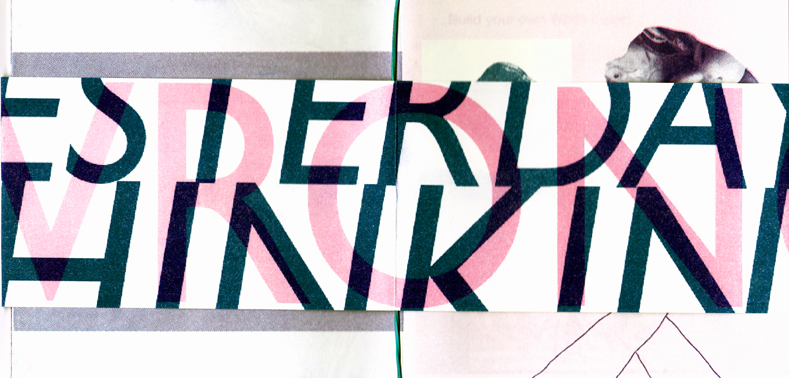
From this text we managed to wrestle the title YESTERDAY’S WRONG THINKING.

The title became autonomous. It spoke of tomorrow’s world.

1404 YWT publication_0001
We made a neat little risograph publication in teal and fleuro pink.

1404 YWT publication_0002


Loading

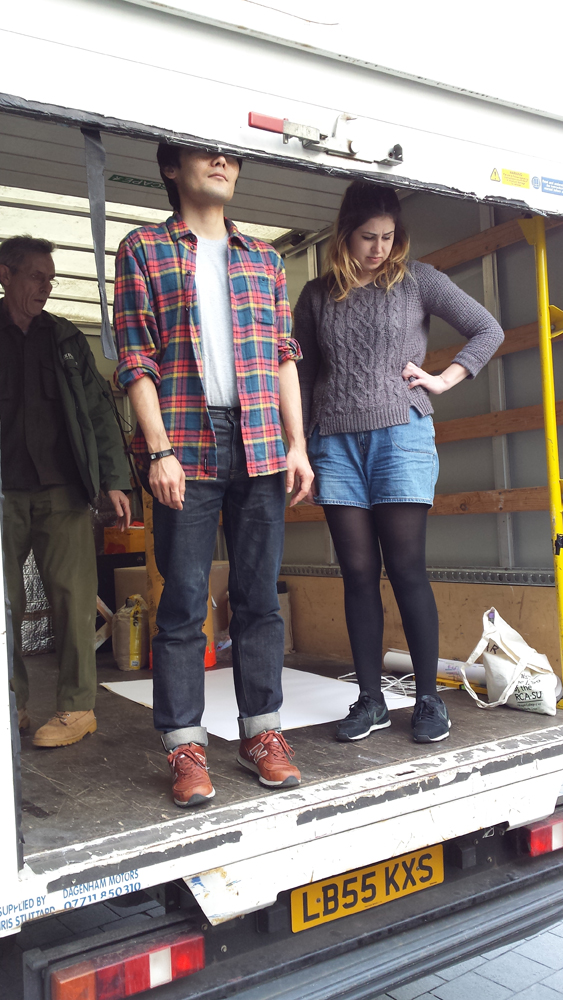
Day one it felt impossible that we could all fit in the space.

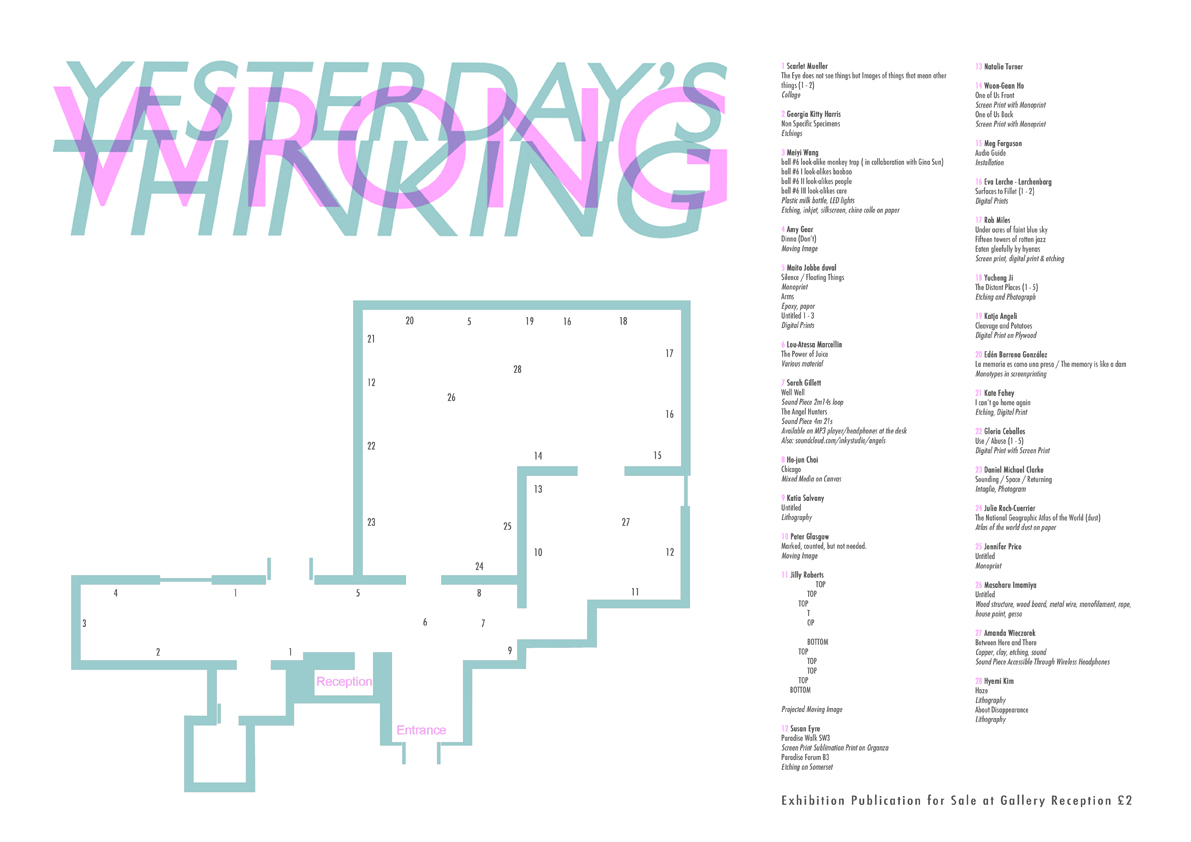
But by day 3 we had a plan.

1404 Floor Plan


I was showing the next two from the Paradise on Earth series

Paradise Forum B3

Paradise Forum B3

The etching that had taken so long to get a decent copy mounted on steel and hung in the room with the videos for a low level light

1404 YWT Paradise Forum B3 3

and the mixed media piece on Perspex with organza which had also been a technical challenge hung high on the wall to force perspective

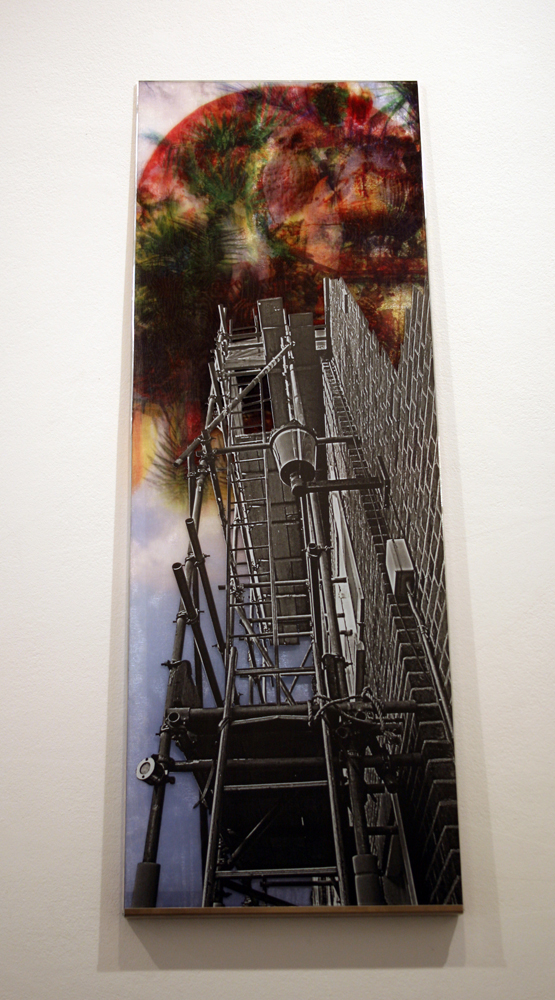
Paradise Walk SW3

Paradise Walk SW3

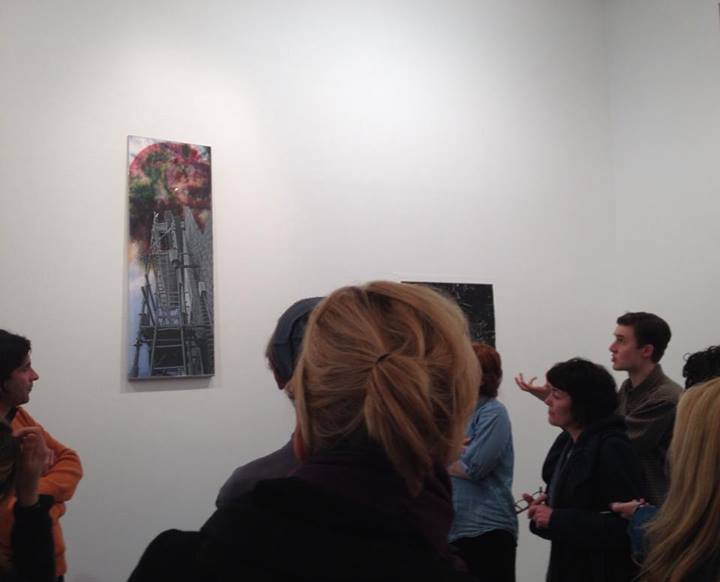
And here we are for the crits

Crit pic

Only had about 3 minutes to discuss Paradise Walk SW3 but Paradise Forum B3 received a good crit and as Rob kindly pointed out the basis of the discussion was the content of the work and not the medium or technique.

That’s a step forward for me as so often I get asked how rather than what or why when it comes to my work.

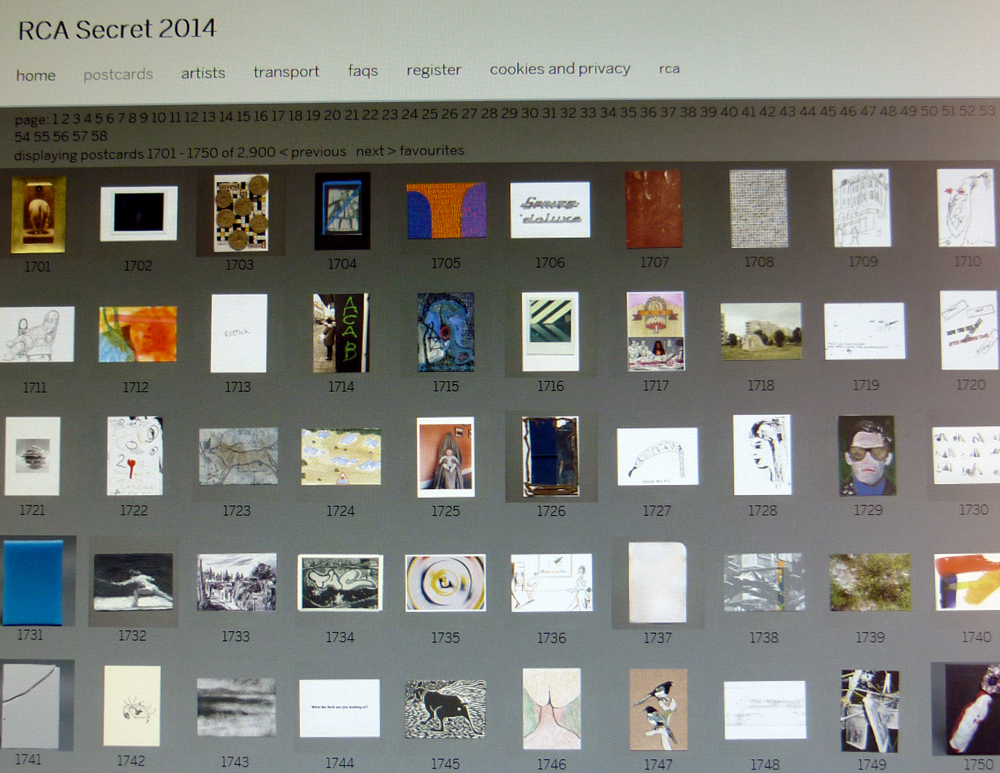
Also had the privelige to participate in RCA Secret 2014.

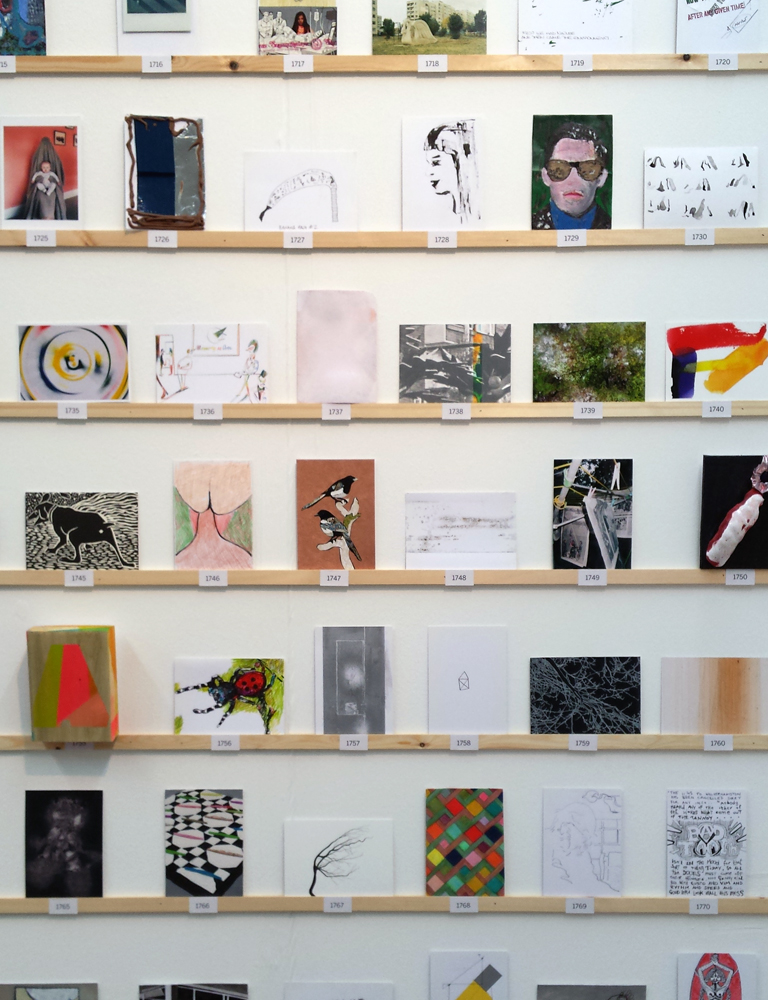
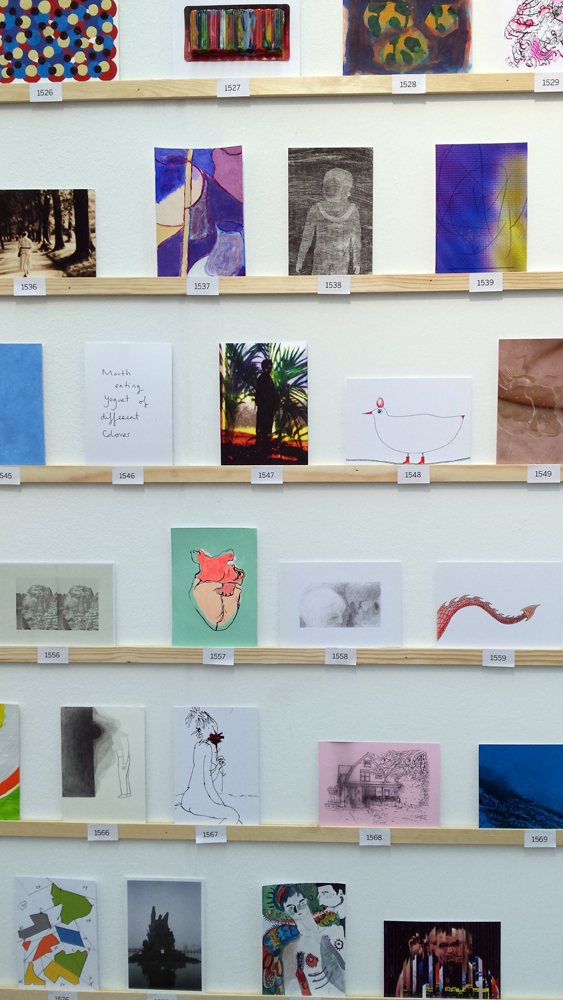
All current students plus celebrated alumni make 3 postcards that can be viewed online.

1404 postcard online

Or in person.

1404 postcard secret

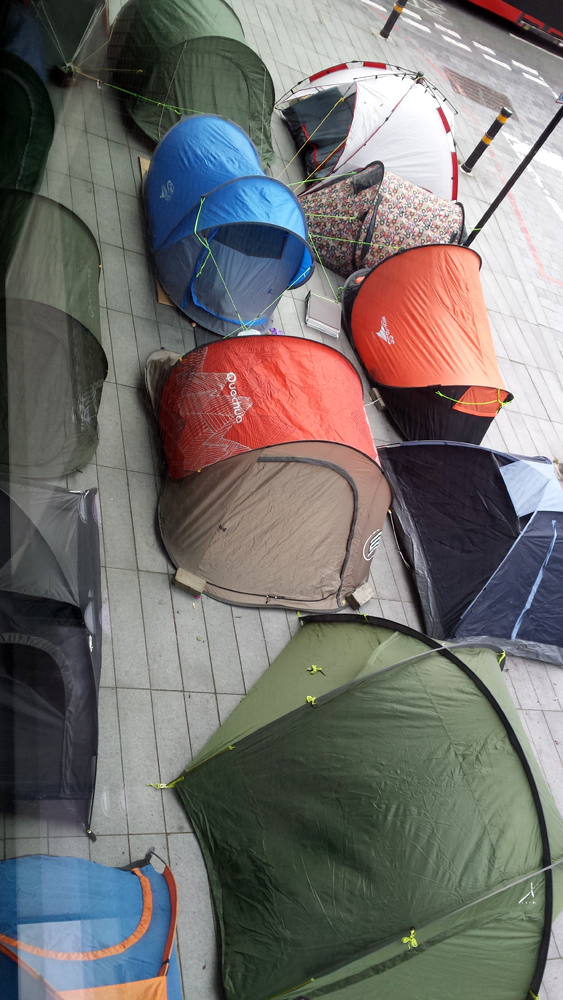
There is a lot of interest and the queuing starts days before

1404 Gathering

It’s a secret who made what until the purchase is made

1404 postcard 3

So if you can spot your favourite artist’s work you may get lucky

1404 postcard 2

Or you may discover someone new

1404 postcard

The next event I will be participating in is Standing on the Frontier Vol 2

at Unit24 Gallery Great Guildford Street SE1 oFD

Standin On The Frontier V2 flyer

Really excited about this.

Yellow Sky ready to hang.

Yellow Sky

Yellow Sky


Been spending a lot of time in the etching workshop.
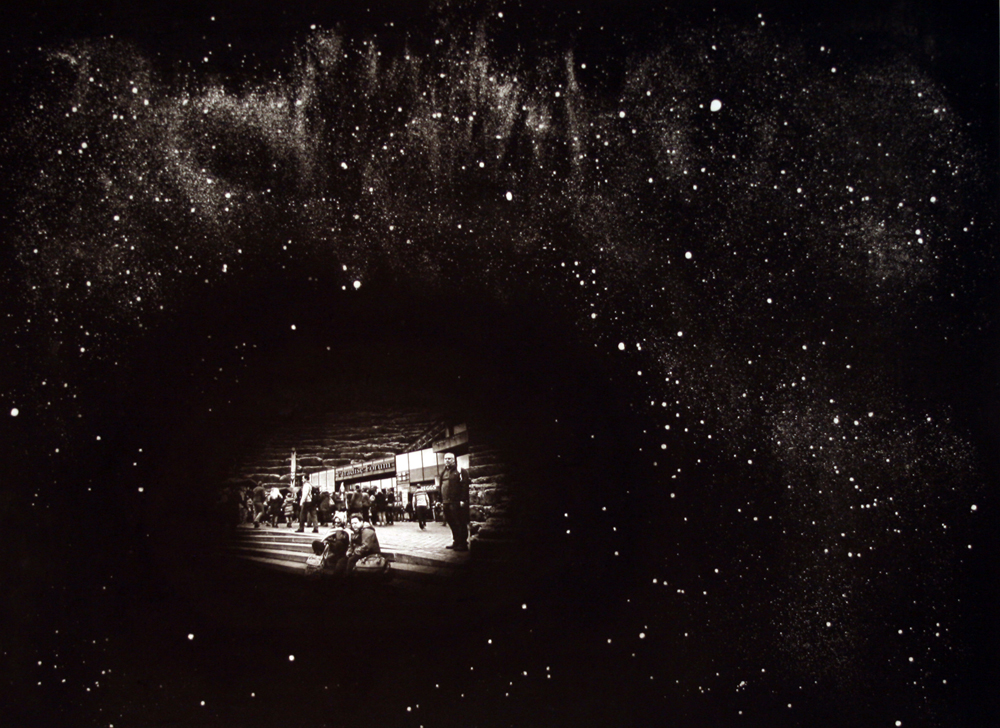
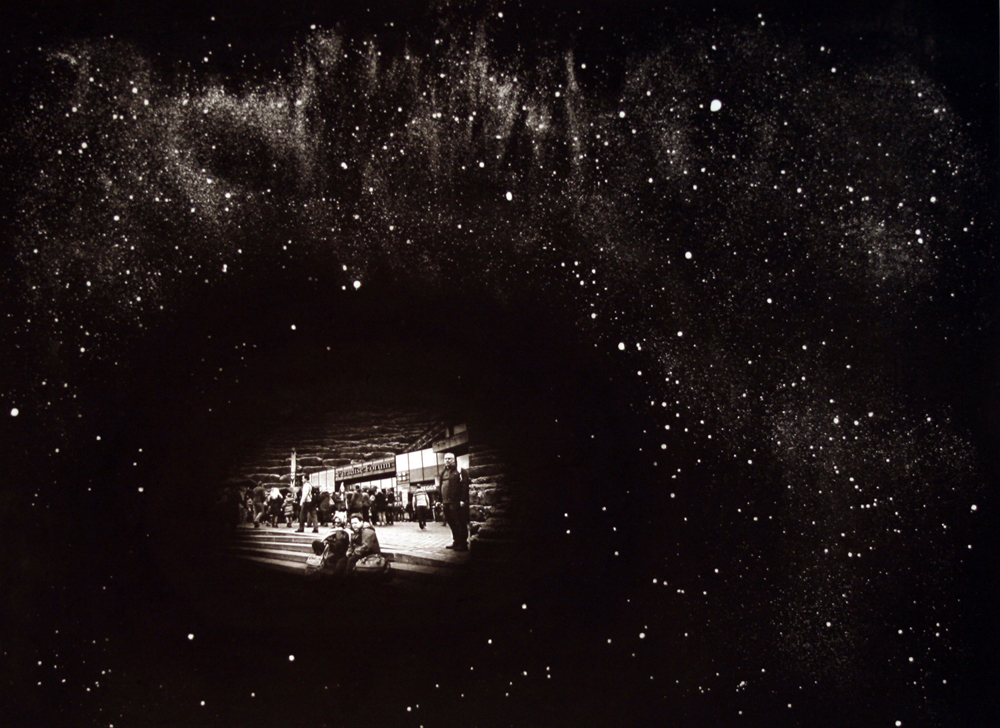
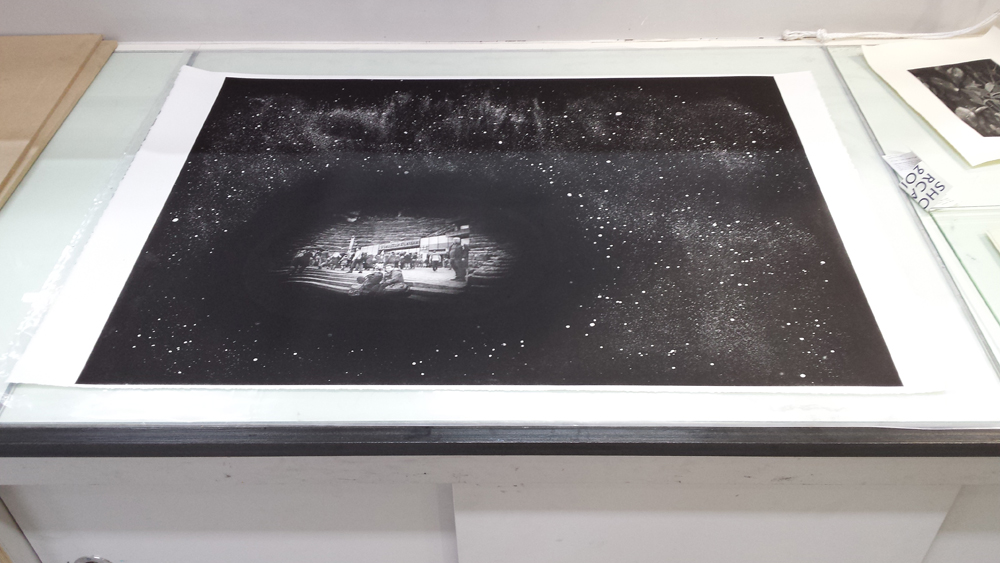
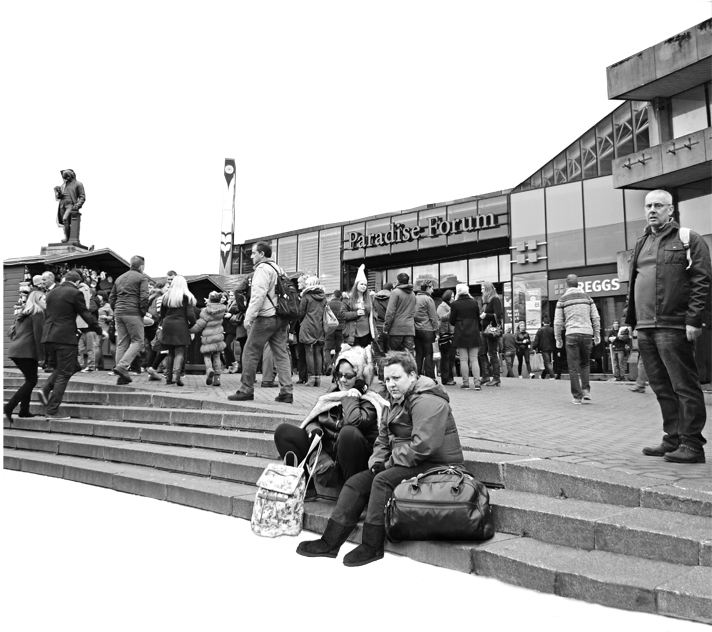
It all started with a photo of Paradise Forum shopping mall in Birmingham.
Everyone looked so pissed off – yet if they just looked beyond to the cosmos, wouldn’t they be dazzled.
I thought the two girls on the steps looked like they had their feet dangling in space, that they were sitting on the edge of something, awaiting their escape.

Of course the word Forum conjures up ideas of a Roman Forum, from which I segue to amphitheatre, a place of gathering, like a shopping mall. A sense of history of construction, of public space.
This small exert of life on earth in fadeout – a temporal moment.

Paradise Forum B3

Paradise Forum B3

I listened to Bill Viola being interviewed about his current retrospective at the Grand Palais in Paris which I hope to visit shortly. He talks about the brevity of our lives and how it is really important to leave behind some knowledge or some new thing for the next generation, it can be something really simple. Through knowledge we gain transformation. But beware, too much information can become a pollution and we have to separate out the unnecessary bombardment of advertising and media sources from the good stuff that enriches us.

1404 Bill Viola

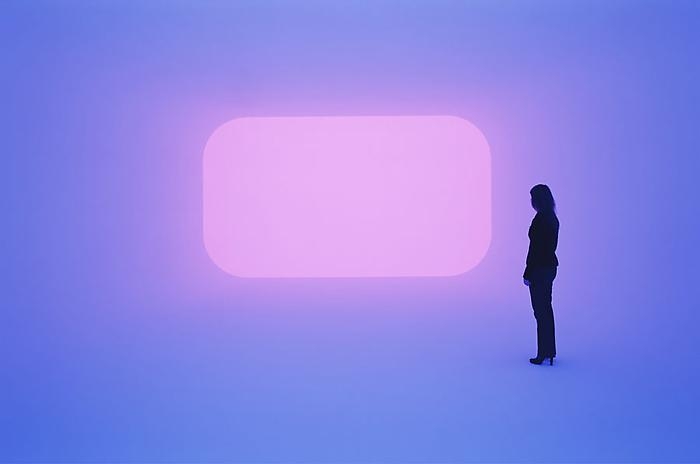
Also looking at  the work and ideas of James Turrell. His formless landscapes of light with no object, no image and no focus leaves us only with an awareness of ourselves looking and an experience only felt otherwise in dreams, meditation or near death experiences. I can remember my visit to Gagosian a few years back to see Dhatu – staring into a pink misty void, anticipating angels.


JAMES TURRELL  Dhātu, 2010

JAMES TURRELL
Dhātu, 2010


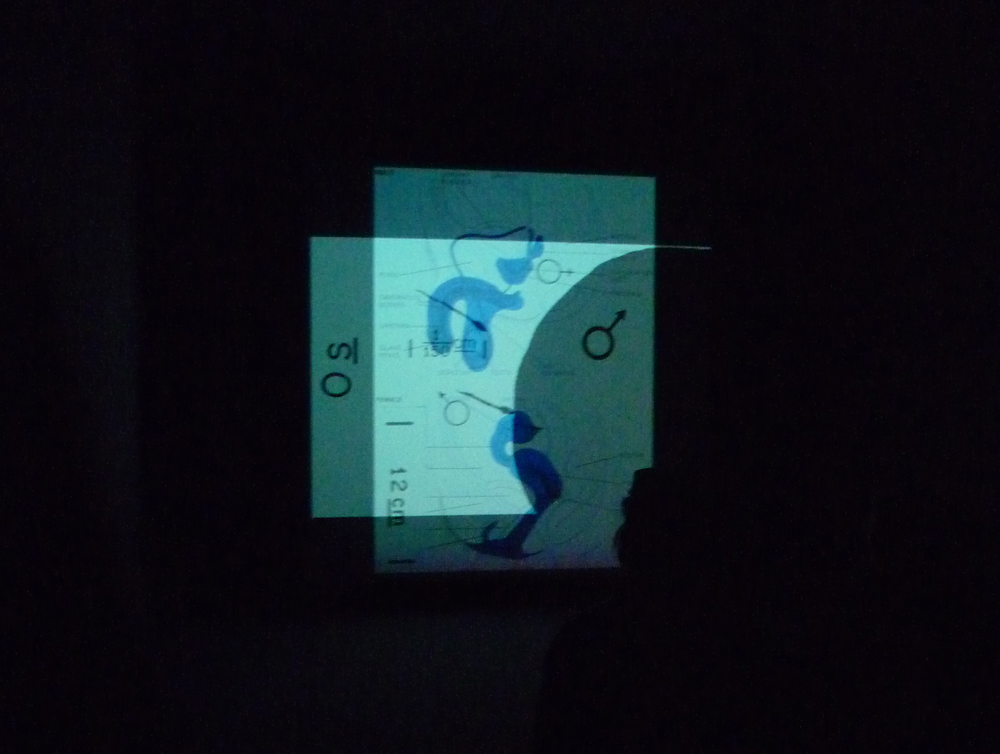
In ‘Once Upon a Time’ Steve McQueen presents 116 images from Karl Sagan’s Golden Record which was launched into space in 1977 to enlighten any extraterrestrials about life on earth. McQueen overlays geographical images and scientific diagrams with the sounds of people speaking in tongues. The highly factual with the highly emotional – potentially equally indecipherable to aliens but showing an alternative side to human nature other than the one NASA documented.

Steve McQueen - Once Upon a Time

Steve McQueen – Once Upon a Time

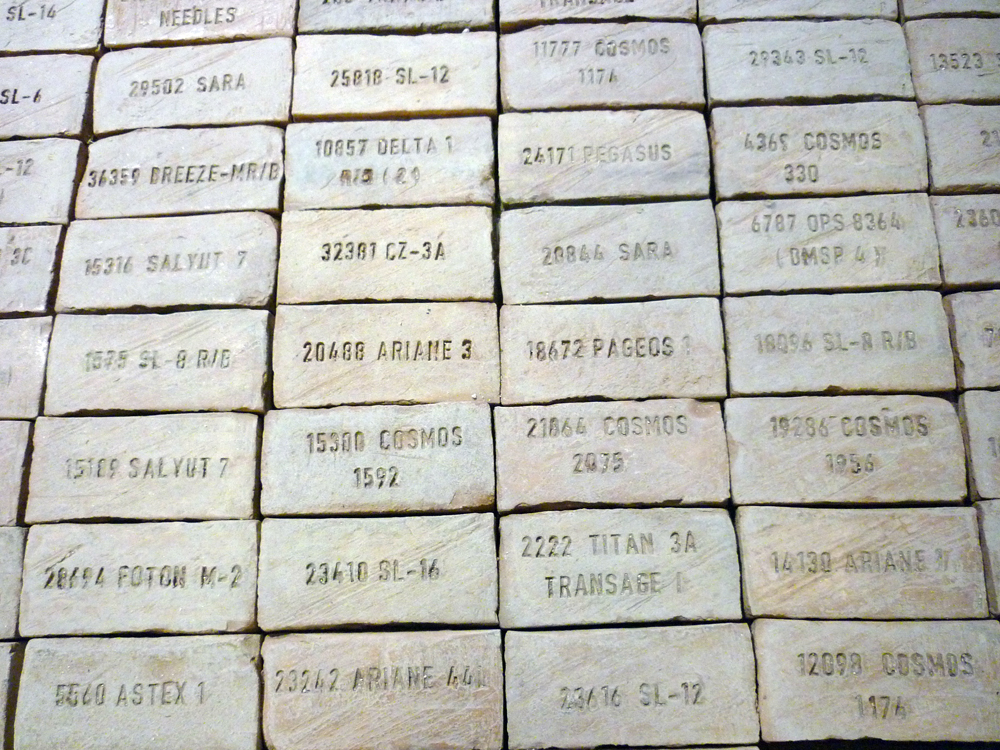
In ‘The Dry Salvages’ Elisabetta Benassi presents 10,000 bricks made from clay taken from the 1951 Polesine flood area (one of the largest natural disasters in Italy) that are printed with the names and codes of the largest space debris orbiting the earth.

1404 Elisabetta Benassi (2)

Elisabetta Benassi – The Dry Salvages

Power of nature, power of nations.

Elisabetta Benassi - The Dry Salvages

Elisabetta Benassi – The Dry Salvages

The regeneration of matter. The impossibility of control.

I have been considering the impact and use of different materials in some of the shows I have seen lately.

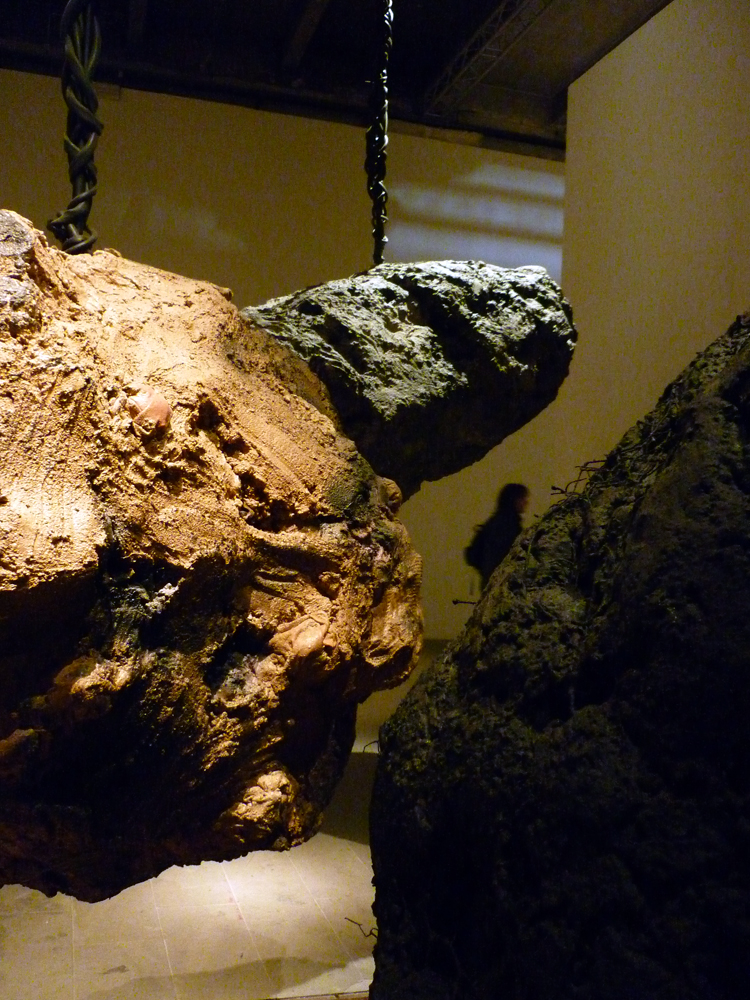
The weight of Phyllida Barlow’s sculptures

Phyllida Barlow

Phyllida Barlow

Because of their displacive presence and the stillness, they look heavy, immovable;but maybe they are not and if you pushed against them they would swing lightly away.

Phylida Barlow

Phylida Barlow

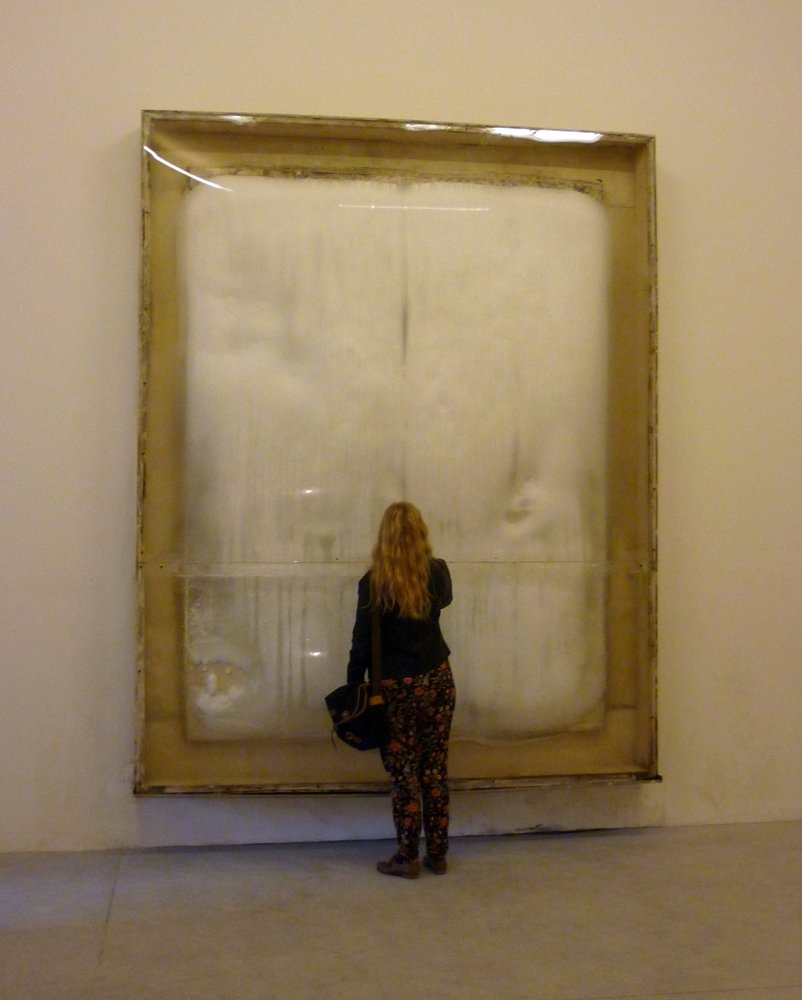
The frozen painting of Lawrence Carroll.

Lawrence Carroll

Lawrence Carroll

In the Holy See Pavilion at the Venice Biennale tasked with the theme of re-creation after the cleansing of the great flood Carroll (click for interview) chose to use ice as the medium of a new beginning.

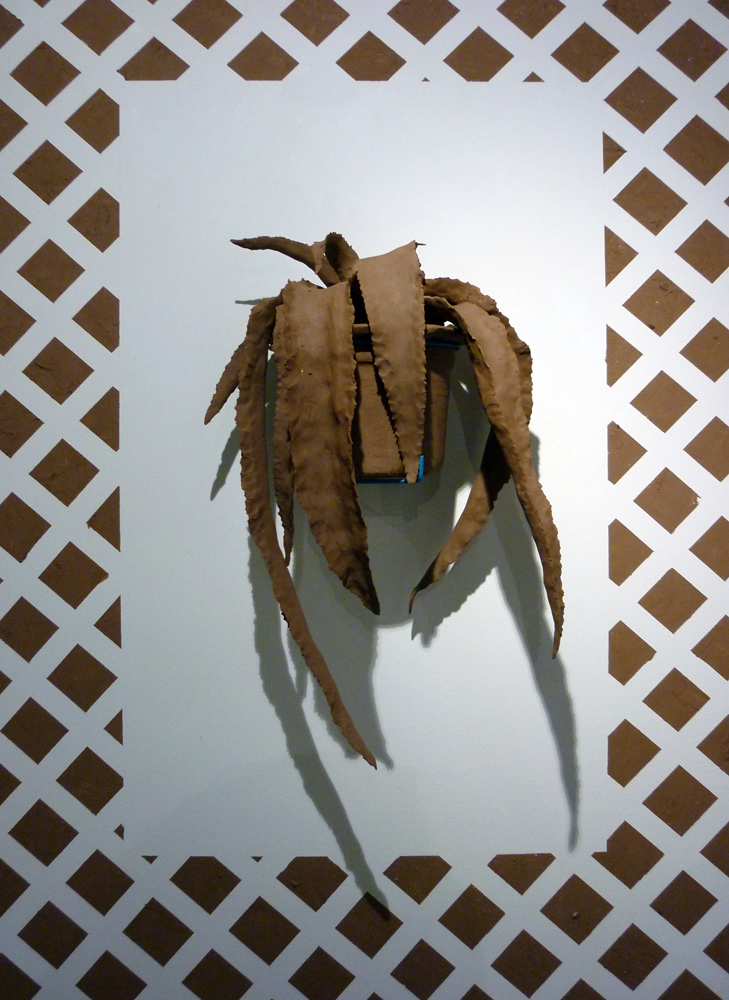
Noemi Niederhauser, winner of the ArtLacuna Prize created an installation during her residency at the gallery – Vista Follies explored themes of artifice and a fetishized view of nature.

Noemi Niederhauser

Noemi Niederhauser

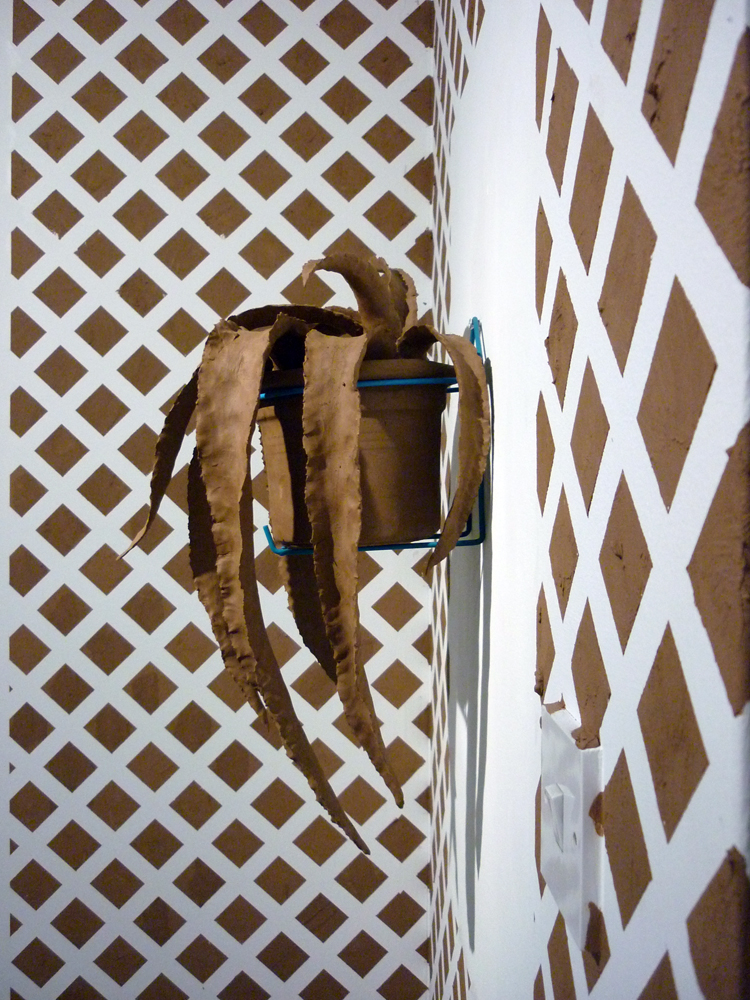
Her chosen materials are at odds with the objects they form.

Noemi Niederhauser

Noemi Niederhauser

Out of the mud. Like ice, mud talks of beginnings.

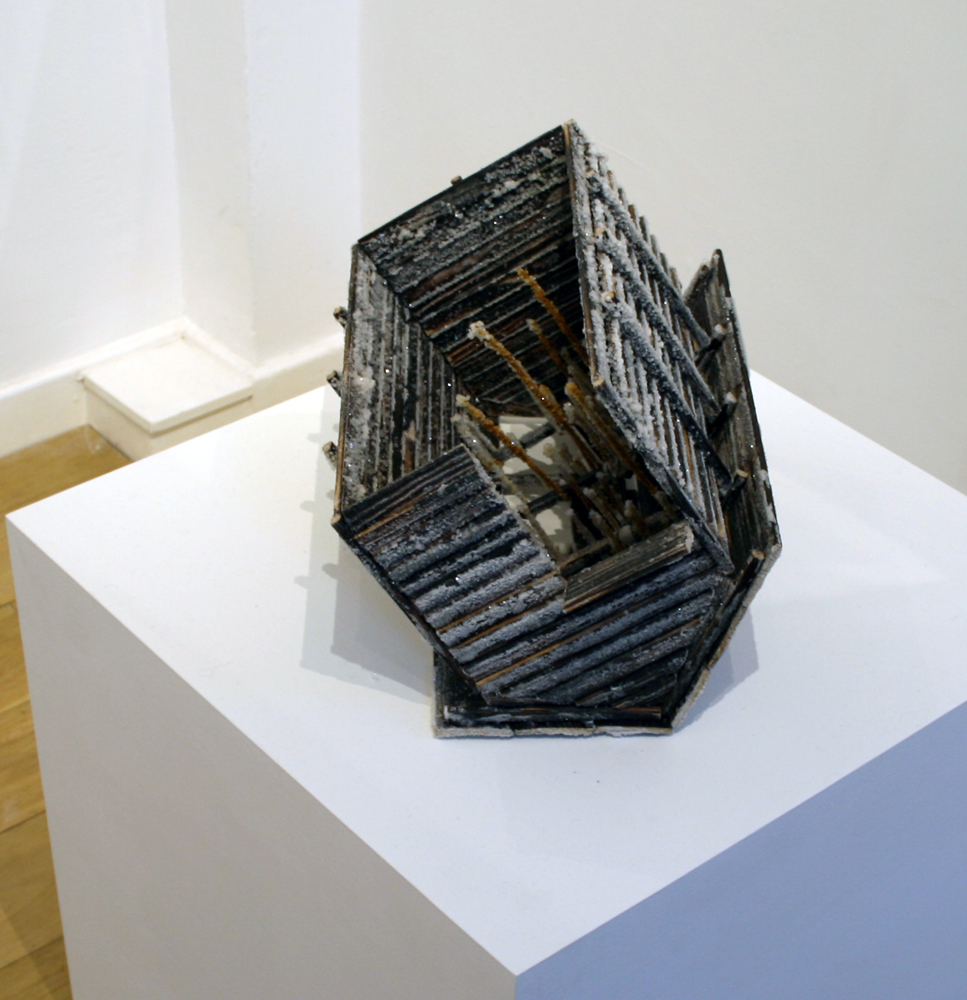
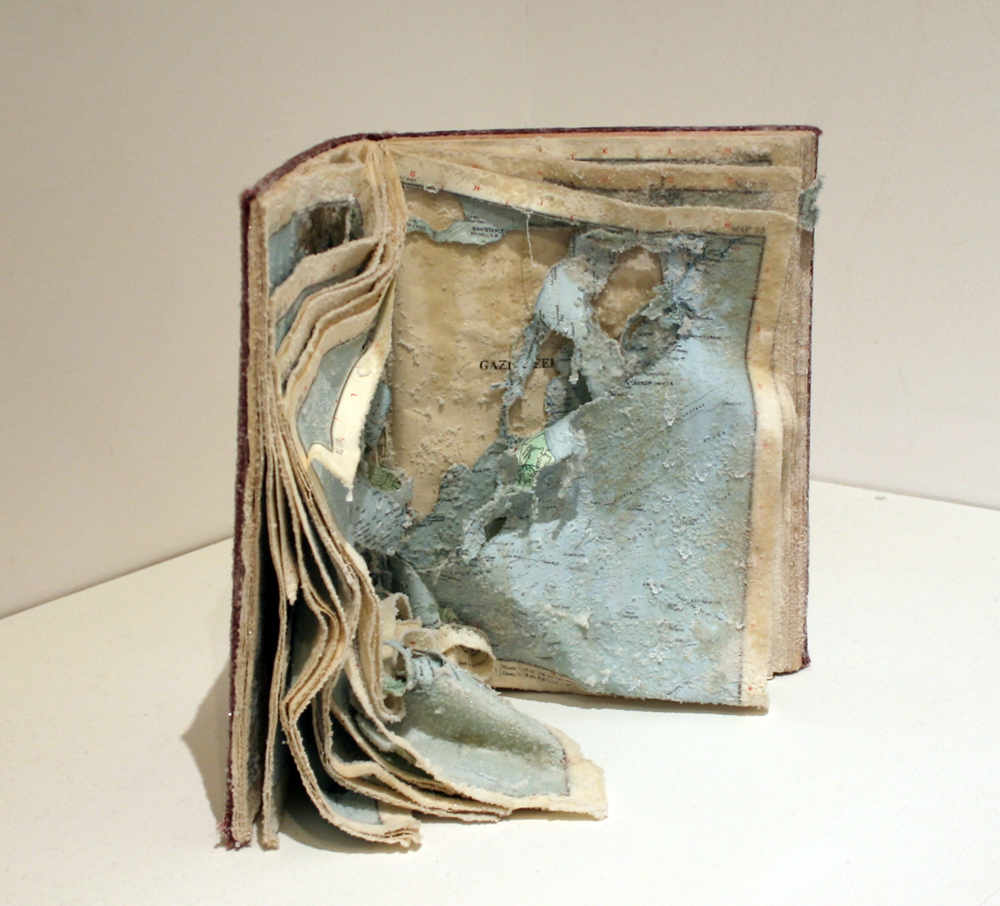
In the exhibition Delve at Leyden Gallery Atsuko Nakamura uses salt crystals as metaphors for natural evolution and time passing.

Atsuko Nakamura

Atsuko Nakamura

The land has all been cut from this atlas encrusted with salt crystals leaving only the oceans

Atsuko Nakamura

Atsuko Nakamura

after the tsunami the sea has grasped attention away from the land where power is usually described.
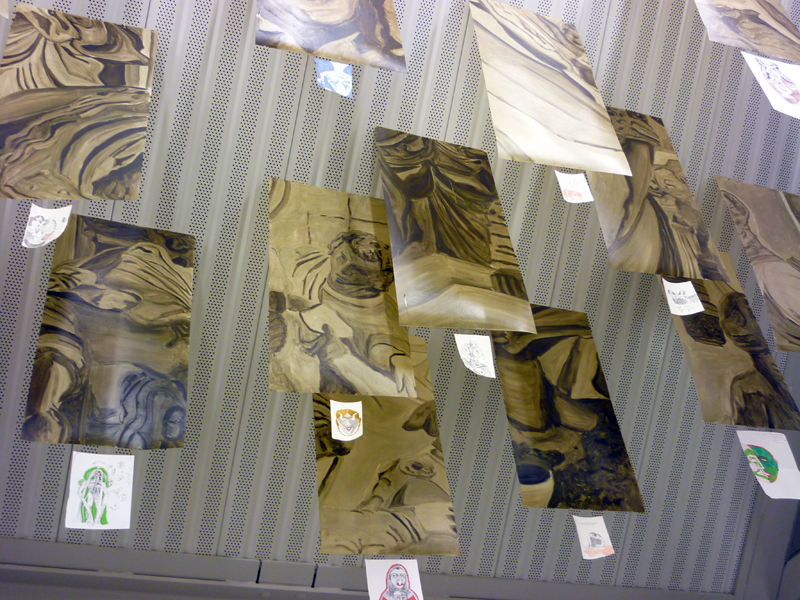
Glass Cat at Danielle Arnaud Gallery modest and even abject objects are hieroglyphs in whose dark prism social relations lay congealed and in fragments..In this perspective, a thing is never just an object, but a fossil in which a constellation of forces are petrified. Things are never just inert objects, passive items or lifeless shucks, but consist of tensions, forces, hidden powers, all being constantly exchanged.’ Hito Steyerl
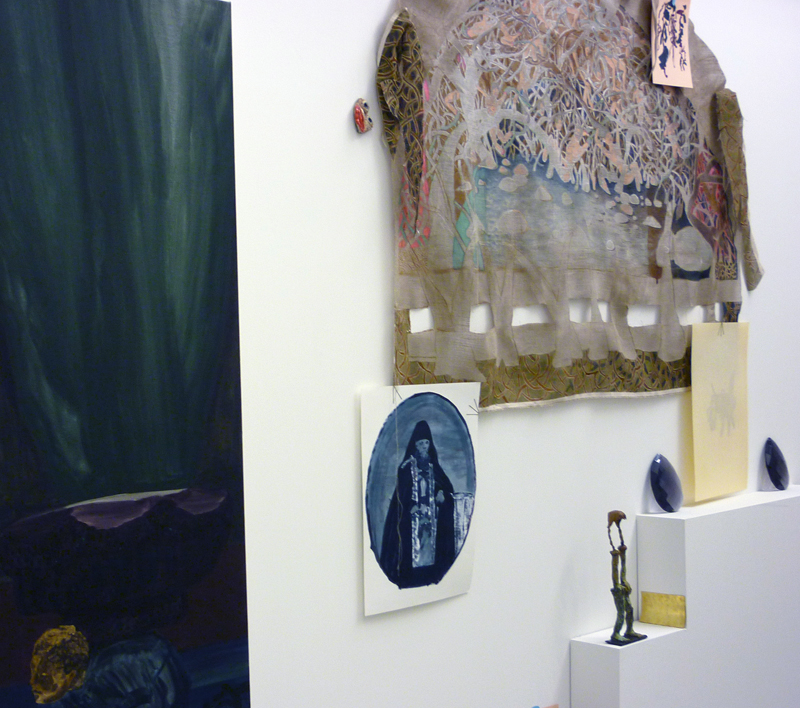
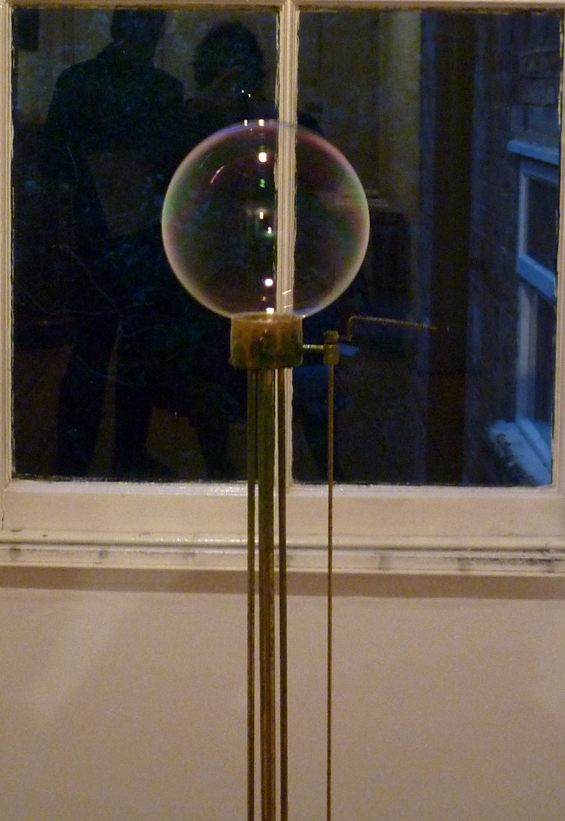
William Waterhouse uses glycerine to repeatedly form a bubble – surface tension plus emotional tension.
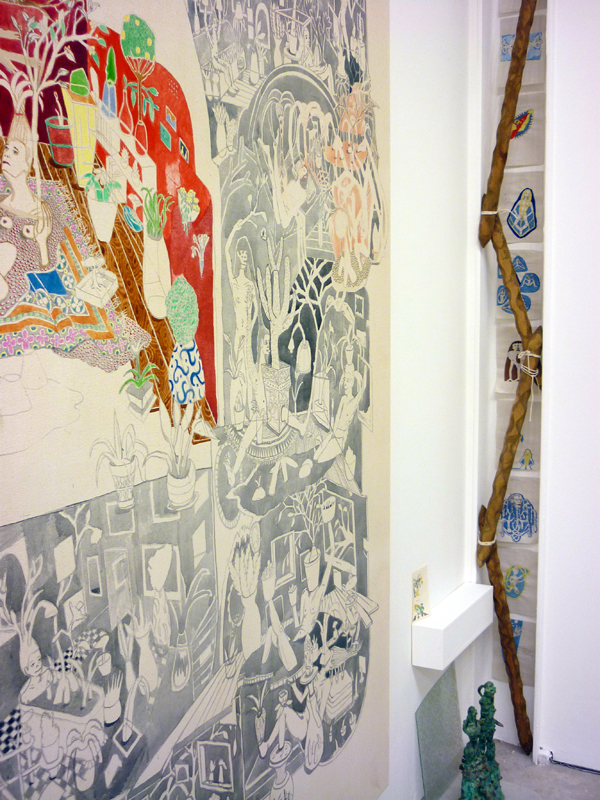
William Waterhouse

William Waterhouse

Sophie Lascelles uses an unfolded cardboard box as low key screen for her projection ‘In the grasslands’

Sophie Lascelles

Sophie Lascelles

Sarah Woodfine’s sculptures are so smooth and solid. The pencil drawings on paper are immaculately pressed to a curved block of mdf – mdf made sexy

Sarah Woodfine

Sarah Woodfine

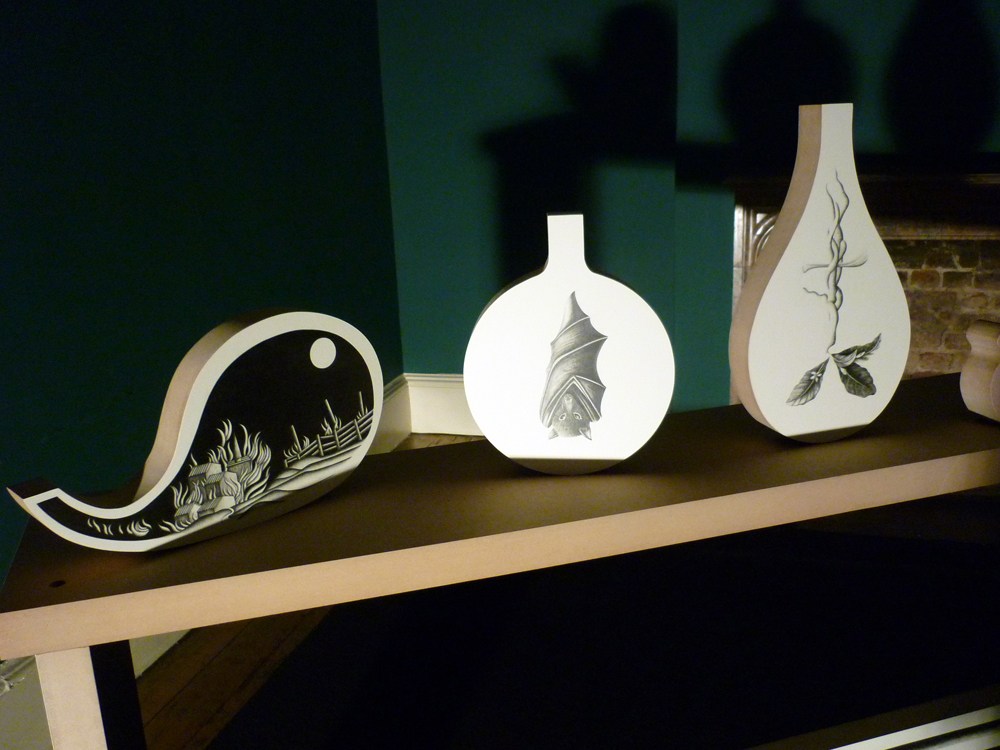
Helen Maurer uses light through cut glass and shadows to create mini animations in space

Helen Maurer

Helen Maurer

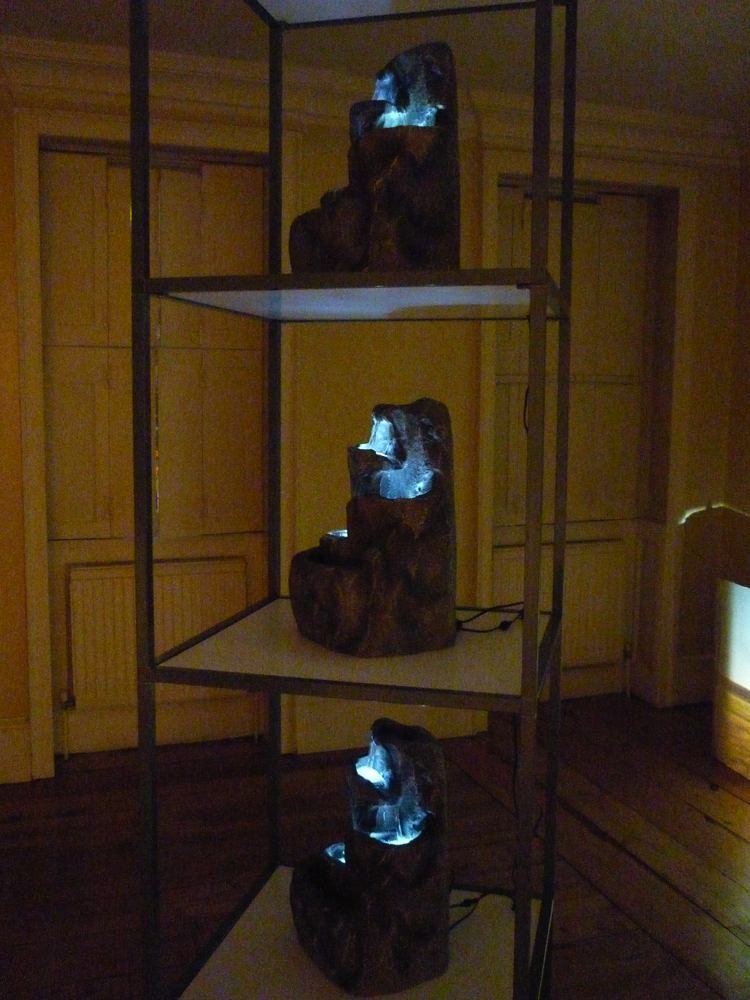
James Ireland uses materials found at the local diy centre, mock mini waterfalls in lumpy resin on garage shelving

James Ireland

James Ireland

There is a certain beauty through lighting and repetition and exposure, this can be the new sublime. The work is called ‘Epic’

Is a symbol now enough. This idea of the authenticity of the fake is something I will be tussling with in my dissertation. I have had a look at Jean Baudrillard on simulation but am not quite grasping his language yet.  So, first order simulation is an artificial copy of an original. Second order simulation blurs the boundaries between the authentic and the fake so they are hard to tell apart. Third order simulation is hyperreality which is artifice with no original. But wouldn’t that mean that the first of anything man made was an example of hyperreality. What about the first garden centre, the first cathedral. I got on better with Umberto Eco, Travels in Hyperreality.

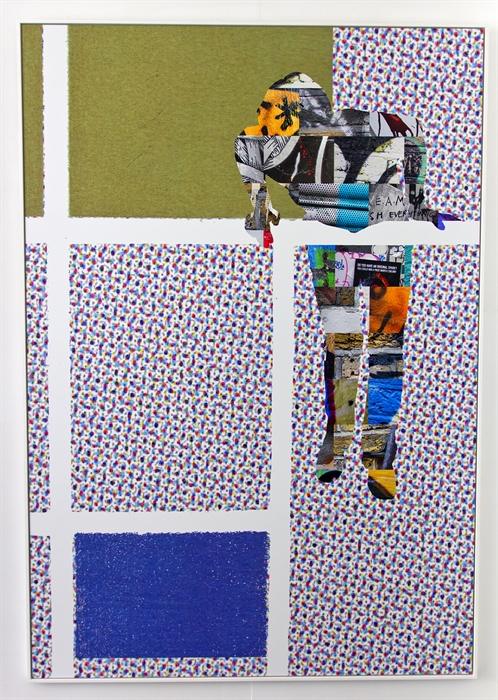
Barton Hargreave gave an interesting talk at Ochre Print Studio about his work. Combining print with photography and sculpture to create simple silhouettes of figures in frozen movement.

Barton Hargreaves

Barton Hargreaves

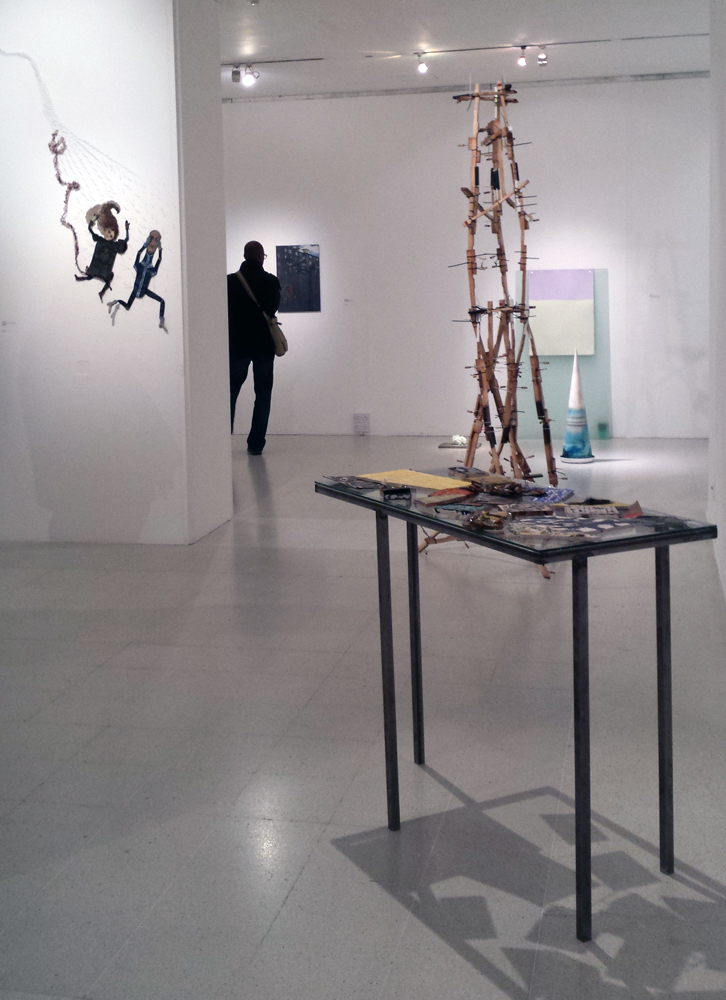
The figures have a lightness about them which comes from the photographic origin and staging of his models who are captured climbing, suspended, or mid jump. Much of his work is installed in site specific locations and so he uses locally photographed images randomly collaged to inhabit the silhouettes.

Barton Hargreaves 'Promised Land'

Barton Hargreaves ‘Promised Land’

He also deals with images of the crowd, multiplying the figure. He has a wealth of knowledge about print surfaces and new technologies that are available. Wallwrap sounds an interesting material for outside installations and dibond was not something I was familiar with.

It’s been a crazy busy few weeks at the RCA making new work for the show at Café Gallery Projects so my blogs have got rather behind yet again.

Etching

Etching – work in progress

I have been working on the Paradise Forum piece as an etching. Etching is good for getting a really velvety black for the universe. It has been a real struggle to get the blend right between the photo etch and the aquatint. The problem of a dark or a light circle as one surface changes to another. I have learnt a lot about etching along the way.

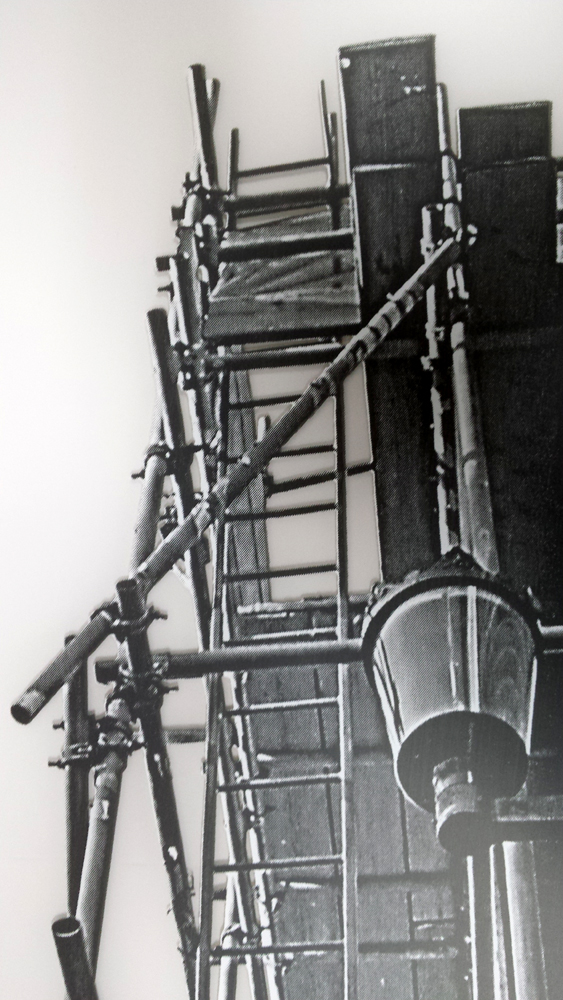
Also had Paradise Walk SW3 piece on the go as well. From the photos I took on location I liked the scaffolding at one house – a Jacobs ladder.

Screenprint on Perspex

Screen print on Perspex – work in progress

Work In Progress. So good to mix with people from painting, sculpture and photography. To negotiate our spaces, to look at each others work and discuss relationships between the works. To see how consensus forms and finally to install the show.  Really exciting to see what had been created during the past term, to see work emerging from the chaos of the studios.
I took the two images of Paradise Road SW4 to the gallery not sure if I would hang one or both but found they worked well directly opposite each other.

Paradise Road SW4

Paradise Road SW4

It was appropriate you couldn’t see them both at the same time initiating a forced extra looking as people tried to see the difference between them, were they the same image, a mirror or what.

Paradise Road SW4

Paradise Road SW4

With around 150 students showing new work the private view was noisy and vibrant.

Then there were the cross programme group crits. Freezing under scrutiny, it all becomes a blur of half remembered phrases.
Felt rather deflated afterwards, really questioning my themes and motives which is a good thing though tough to process.

RCA Work In Progress

RCA Work In Progress

The most encouraging thing was that during the exhibition people stopped to look at my work and spent time looking.

RCA Work in Progress

RCA Work in Progress

It was also encouraging to find an image of my work included on the RCA website write up of the exhibition.

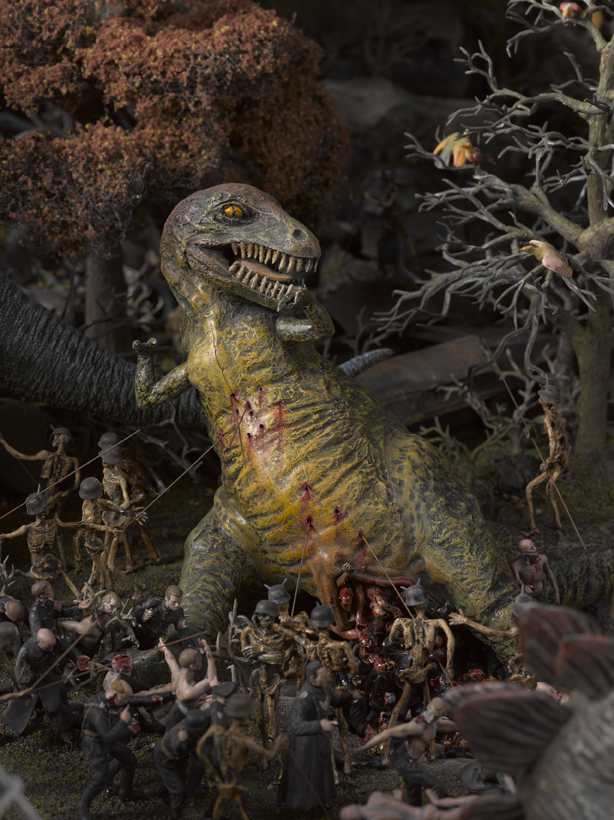
Printmaking students met at the new Serpentine Sackler Gallery to discuss the current show of Jake and Dinos Chapman – Come and See. There was discussion about who the Chapman brothers make their work for (the media) and whether they were taking the piss out of us, the audience.

Jake and Dinos Chapman

Jake and Dinos Chapman

The excessive lathering on of depictions of horror and violence, the mix of Nazi skeletons and dinosaurs and Ronald McDonald all amid scenes of torture and piles of bloodied bodies reflects the tropes of the horror film and video game industry and bears little relation to real life and therefore was not shocking. I don’t think this is a desensitization of our feelings but just the fact that the depictions are so unreal, like a war hammer game. Maybe they are labouring a point that we can no longer differentiate between reality and fantasy or that we enjoy looking at depictions of horror. This is something worth discussing but it all felt rather heavy handed. It seems they may have drawn themselves into a corner and can no longer surprise their audience.
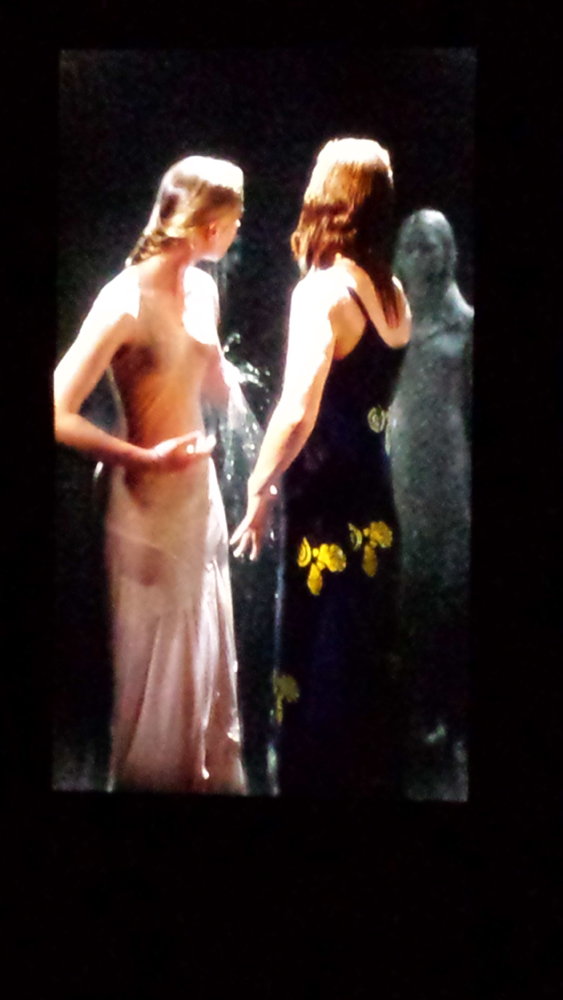
Jake and Dinos Chapman

Jake and Dinos Chapman

They obviously have a big fan base but the general consensus of the seminar was one of boredom by these repeated depictions. I think there are probably lots of codes to decipher and art history references to acknowledge if you can be bothered. The attention to detail is astonishing from the accuracy of every minute figure in Hell to the layer of aging dust on the crude corrugated cardboard models of earlier work complete with cardboard audience displaying a gamut of emotions (children allowed in this cardboard world).
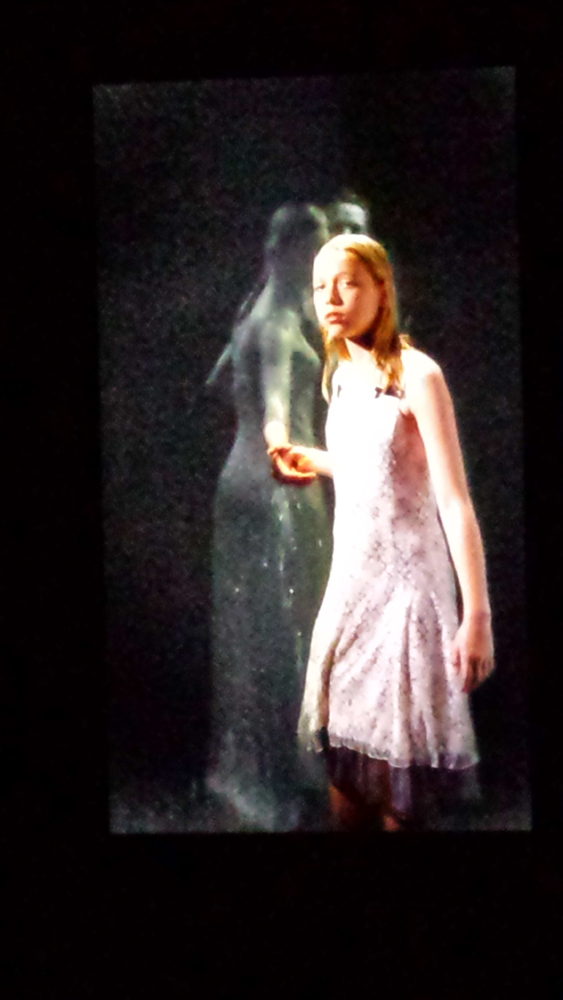
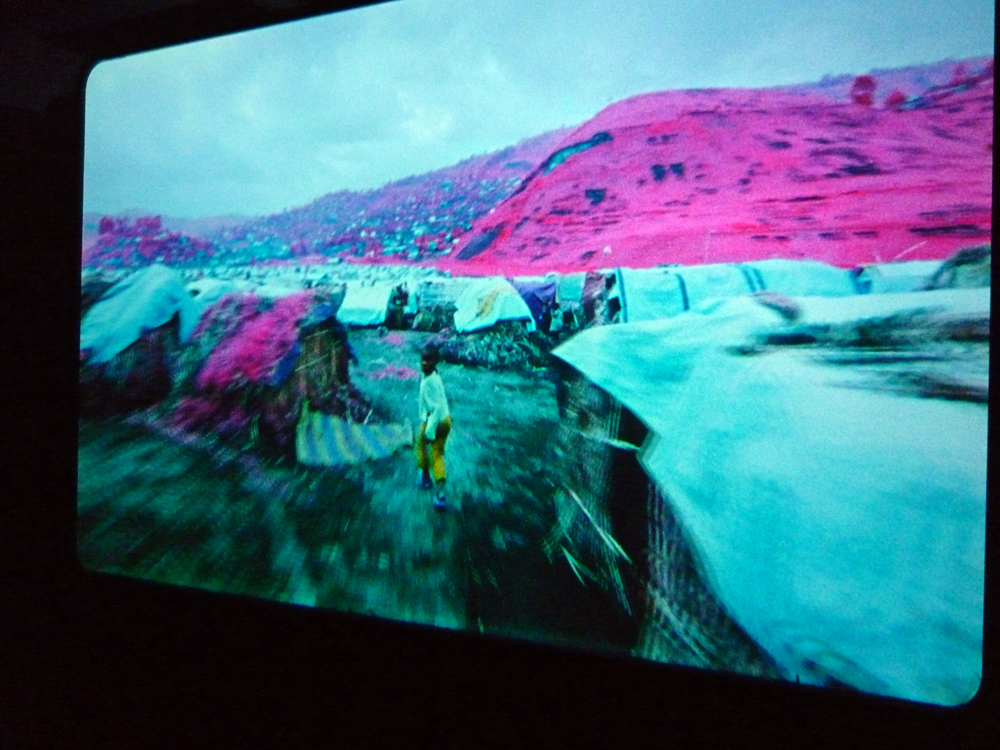
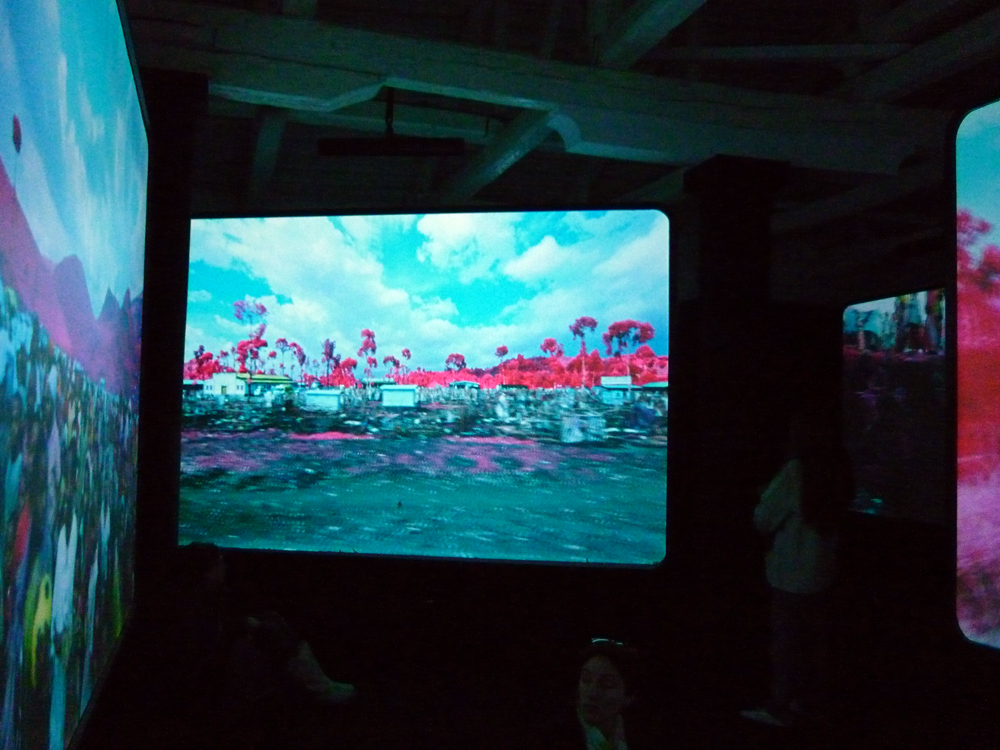
It felt a great contrast to the very moving and immersive experience of Richard Mosse’s ‘The Enclave’ for the Irish Pavillion at the Venice Biennale. Also work about horrors of war and man’s inhumanity to man.

Richard Mosse 'The Enclave'

Richard Mosse ‘The Enclave’

Filmed in Eastern Congo amongst violent armed rebels using a discontinued military reconnaissance film that registers infrared light which is normally invisible but here turns the landscape into a kaleidoscopic dreamscape where the vegetation registers in shocking pink. Hauntingly beautiful the film reflects a real nightmare scenario. We enter an alien world with a heightened sense of dislocation and confusion. Surrounded by giant screens we are trapped in a cycle, not knowing where to look or where the next assault may come from.

Richard Mosse 'The Enclave'

Richard Mosse ‘The Enclave’

After all the conflict looking for a quiet space for contemplation.

Woods v/e 1

Wood v/e 1

Woods v/e 2

Wood v/e 2

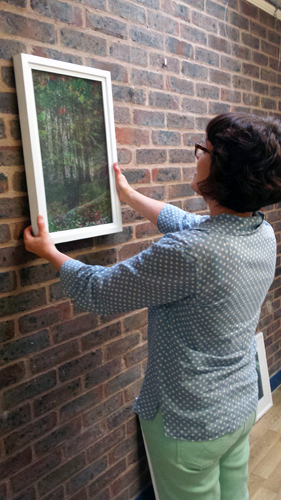
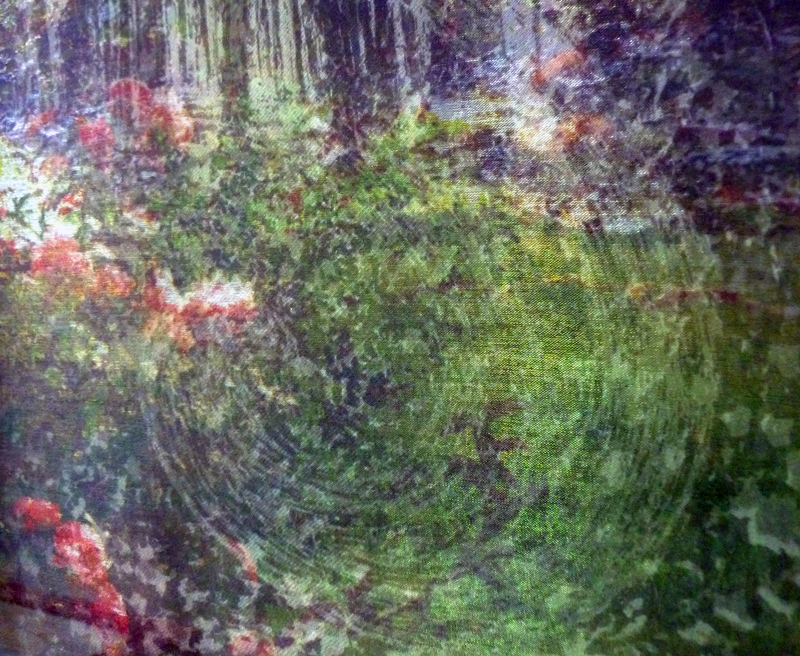
Finally managed to get these works which for now are just titled ‘Wood’ into frames. Greyscale sublimation print from a screen print of disperse dye on polyester under a layer of sublimation print organza.

The main focus at school has been preparing for the Fine Art Work In Progress Show. There is a nice tension of activity in the studios and workshops with everyone busy for the deadlines.

I have been working on my ‘Paradise on Earth’ series.

Paradise Road SW4 test print

Paradise Road SW4 test print

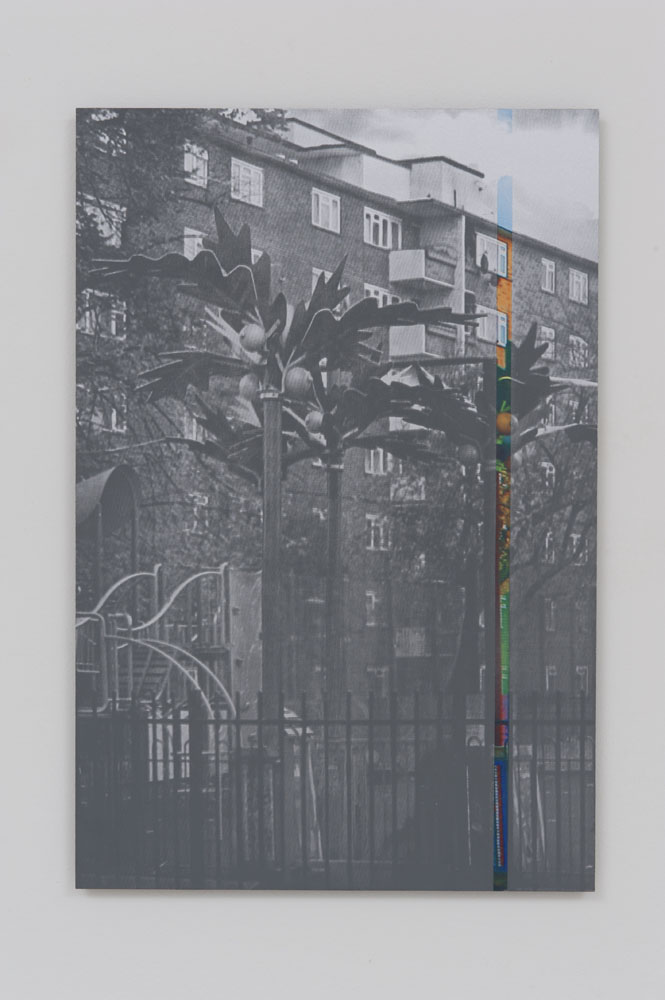
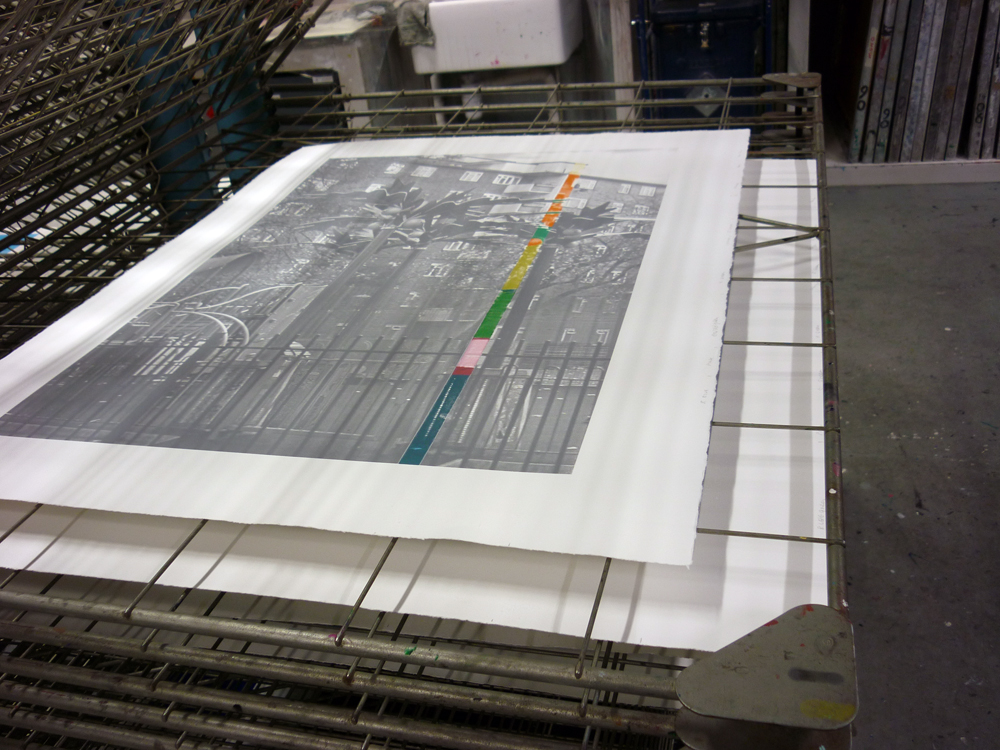
I wasn’t happy with the screen prints I had done on paper using grayscale and then a strip of colour added by mono-printing. For this to be successful it will need a separate screen making for the strip, using paper to block off the strip means the lines aren’t that clean. Also the colours needed more attention.

However I was happy with the screen prints I did onto polyester. Using opaque matt grey textile ink through a fine mesh screen meant I had to wash the screen after every print and the image did disintegrate on the screen but I was able to get a few copies to work with.

Paradise Road SW4 ve 1

Screen print over sublimation on polyester

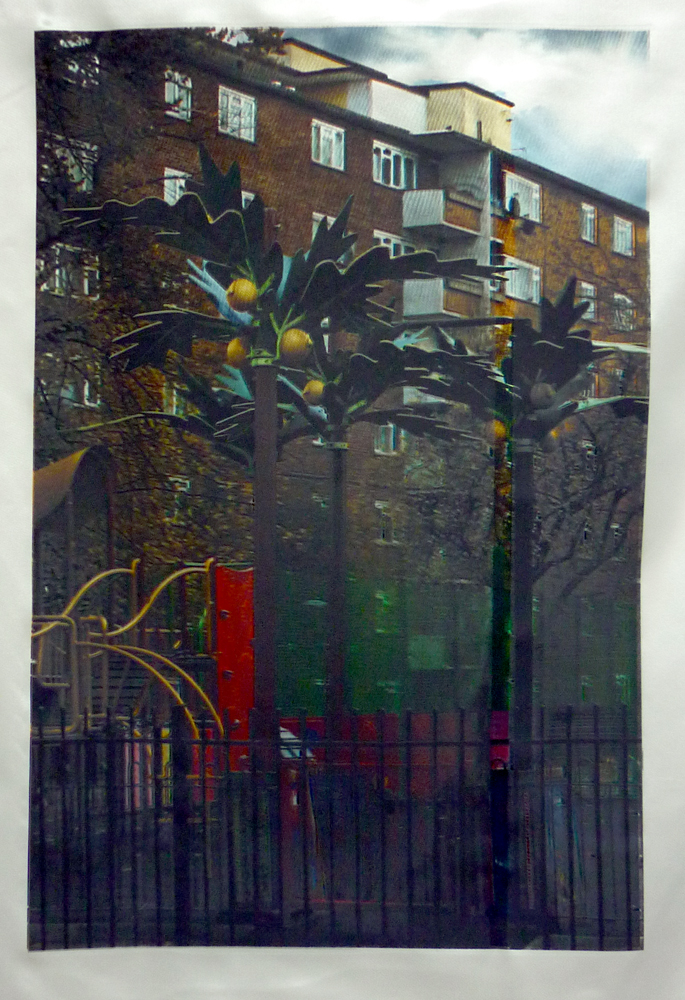
Printing the grey ink heavily over the high saturation colour on polyester blocked areas off leaving jewel like glimpses between the grey. I lost some detail with the heavy ink but ran another layer over with print room ink in a darker colour which brought it back a bit. The clash of the dot matrix pattern on the screen mesh and the fabric weave created a moire effect which gives the image a sort of 3D effect and also looks a bit like driving rain.

Paradise Road SW4 ve2

Screen print on polyester

I printed grey straight onto white polyester leaving a blank strip for the colour sublimation print. Working with the polyester spray-mounted onto thin card to keep the image square I used the heat-press to add the strip of colour.

Big relief once I had managed to mount these prints onto aluminium. I used 3M positionable adhesive on a roll. It was a tricky process to get it straight with no creases and took most of a weekend to get both done and the edges cut and sealed off.

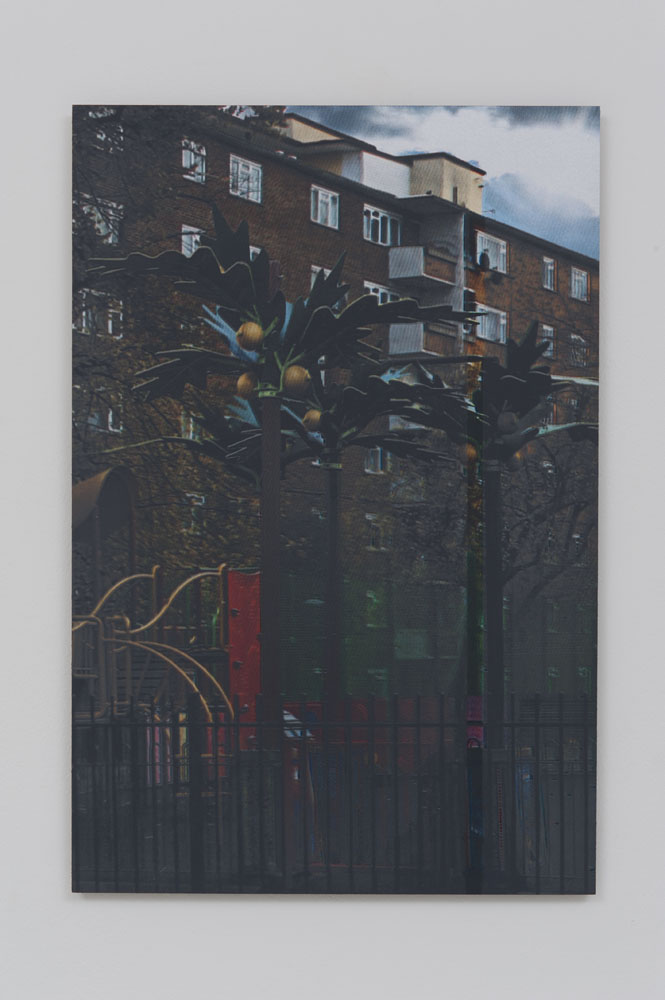
Both pieces work with the idea of a glimpse of colour through the grey – a space for the imagination to flourish within even a grim urban landscape. The idea of the plastic palm trees as a symbol for paradise. How fulfilling is this idea of association.

I enjoyed the film Gravity at the IMAX and have tried to hold in my head the backdrop of space – drop upon drop of light. The effects were amazing, really vertiginous and the relentless tension was exhausting. I am planning a new piece of work where I aim to create the feeling of the universe, some vast space. I am going to try this with acquatint on a large steel plate. I spent a whole day sanding the plate which is almost a metre square. I was in so much pain at then end but hopefully it will be worth it if I can get a good range of tone and depth.

Gravity

Gravity

Floating in space will be an image derived from a photograph of Paradise Forum, Birmingham and added as a photo-etching.  I was inspired by the two girls sitting on the steps, they look like they are ready to leave this grey version of paradise. It’s easy to forget the magnitude of where we are.

Paradise Forum

Paradise Forum

Some time ago…

A series of 8 short films were screened at the BFI London film festival under the heading Bizarre Ride.
They came under the thrill section of the programme, a new way of labeling the films rather than by country that has been adopted by the London Film Festival in the last couple of years. Since the nice lady with the boots was replaced by someone who thought a trailer featuring pop corn consumption was appropriate.
I’m not sure any labels should be applied. Alphabetical would be fine and leave people to decide for themselves if the film was a thrill or a dare. The Spanish film ‘That wasn’t me’ was terrifying rather than thrilling in the knowledge that it reflected the reality of child soldiers and the horrors they are forced to commit and endure.

'That wasn't me' directed by Esteban Crespo

‘That wasn’t me’ directed by Esteban Crespo

The beautiful French entry ‘5 metres 80’ was an entrancing spectacle of gawky giraffes performing elegant acrobatic dives into a deserted swimming pool.

'5 Metres 80' directed by Nicolas Devereaux

‘5 Metres 80’ directed by Nicolas Devereaux

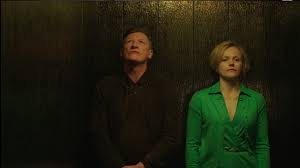
Maxine Peake gave a wonderful strong performance in ‘Keeping up with the Joneses’ which swerved from comedy to gore while trying to reveal the undercurrent of repressed emotions.

'Keeping up with the Joneses' directed by Michael Pearce

‘Keeping up with the Joneses’ directed by Michael Pearce

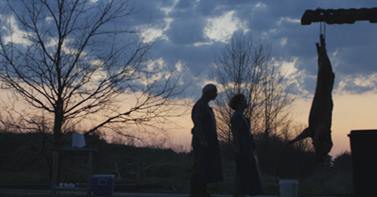
‘The Slaughter’ saw a father and son bonding through a harsh lesson in how to kill and butcher a pig. Vegetarians look away now. Some people did walk out  -so was this more upsetting than the rape and bludgeoning we had seen in ‘It wasn’t me’ or was it just a coincidence they had to leave.

'The Slaughter' directed by Jason B. Kohl

‘The Slaughter’ directed by Jason B. Kohl

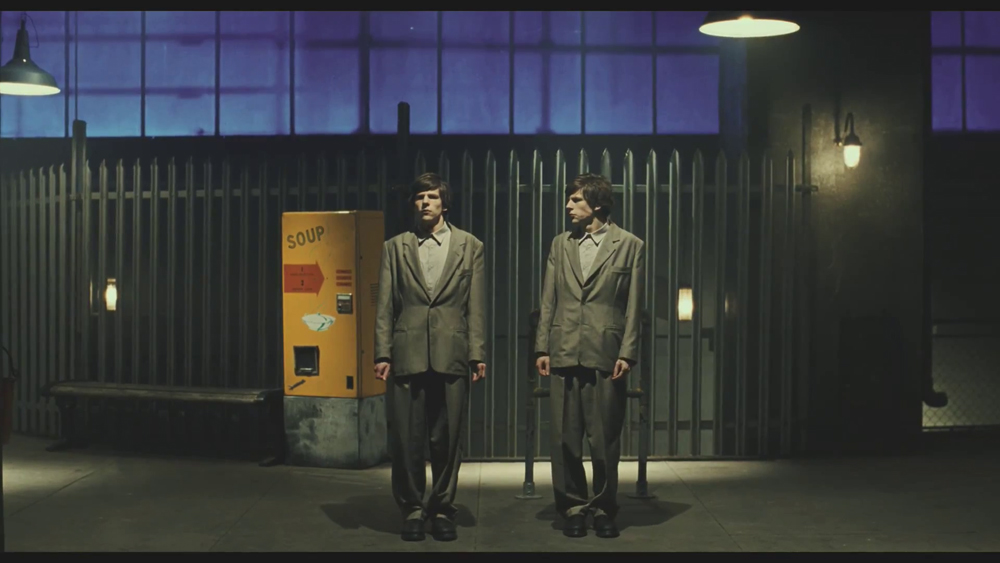
‘The Double’ Richard Ayoade’s second film turned out to be a decidedly grey comedy.

Set in an indeterminate period a sickly light pervaded the film, along with a musty stench of deprivation and humiliation.

The Double

The Double

It was I suppose a story of self discovery, facing your true self. The horror of subjugation went on so long and the final denouement was so brief that we were still left with the grey feeling at the end.

I am however glad I saw it, I might even watch it again.

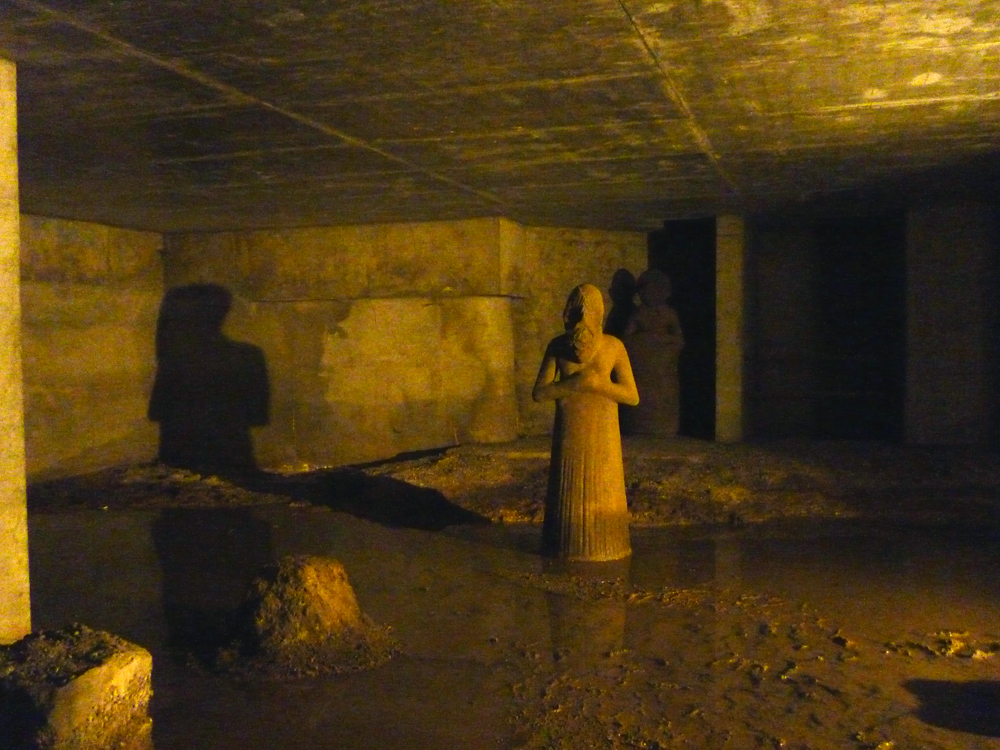
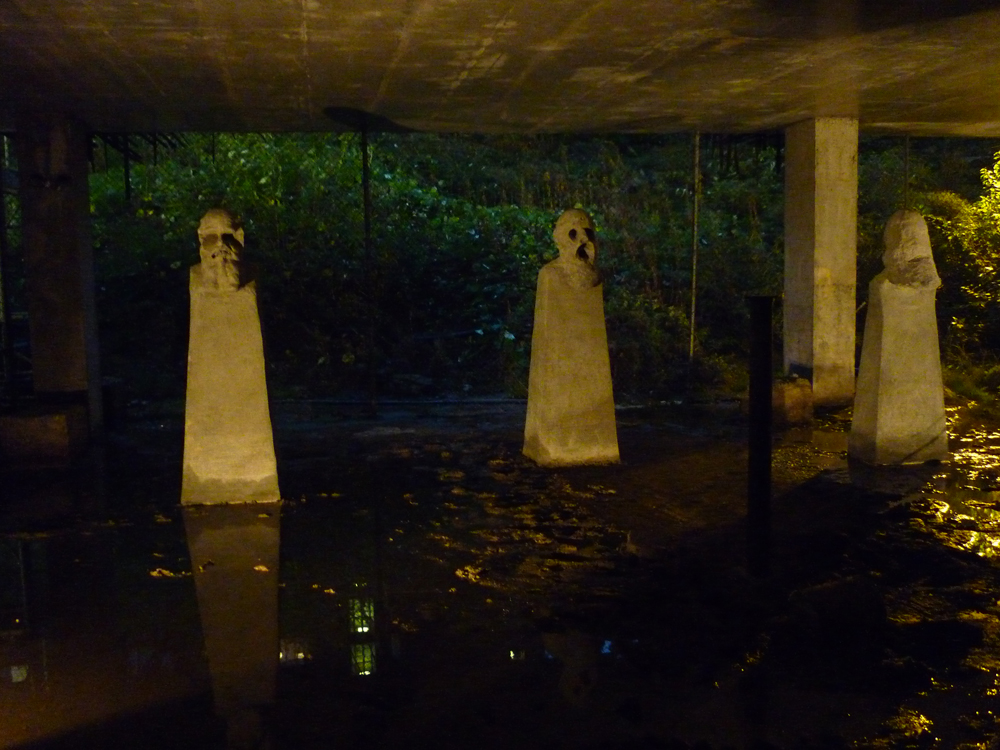
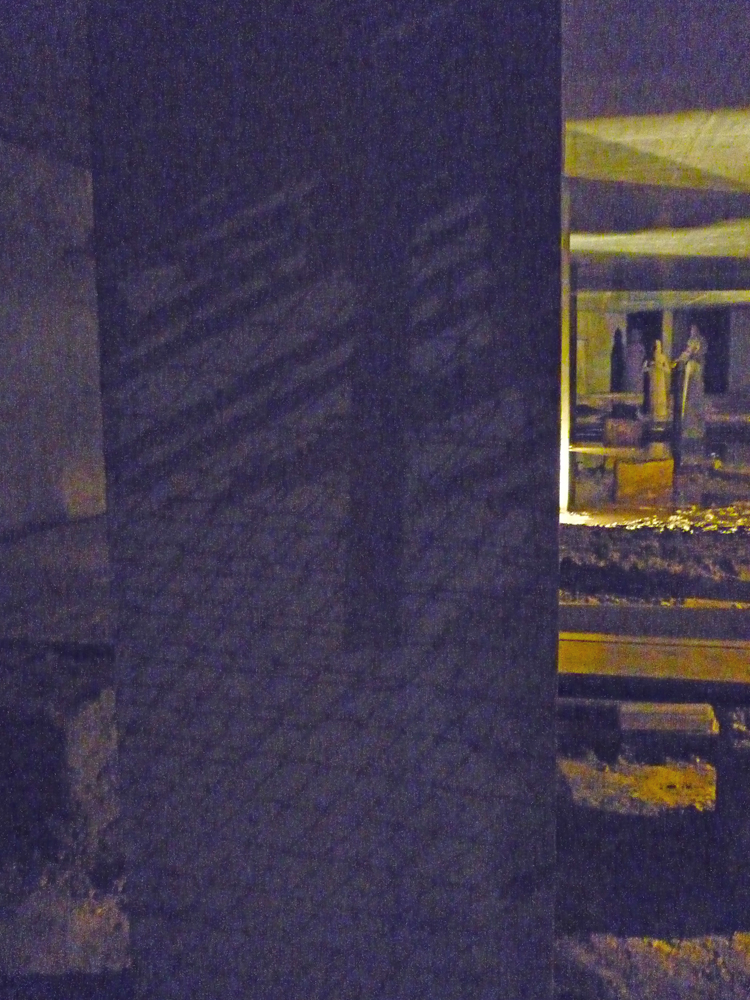
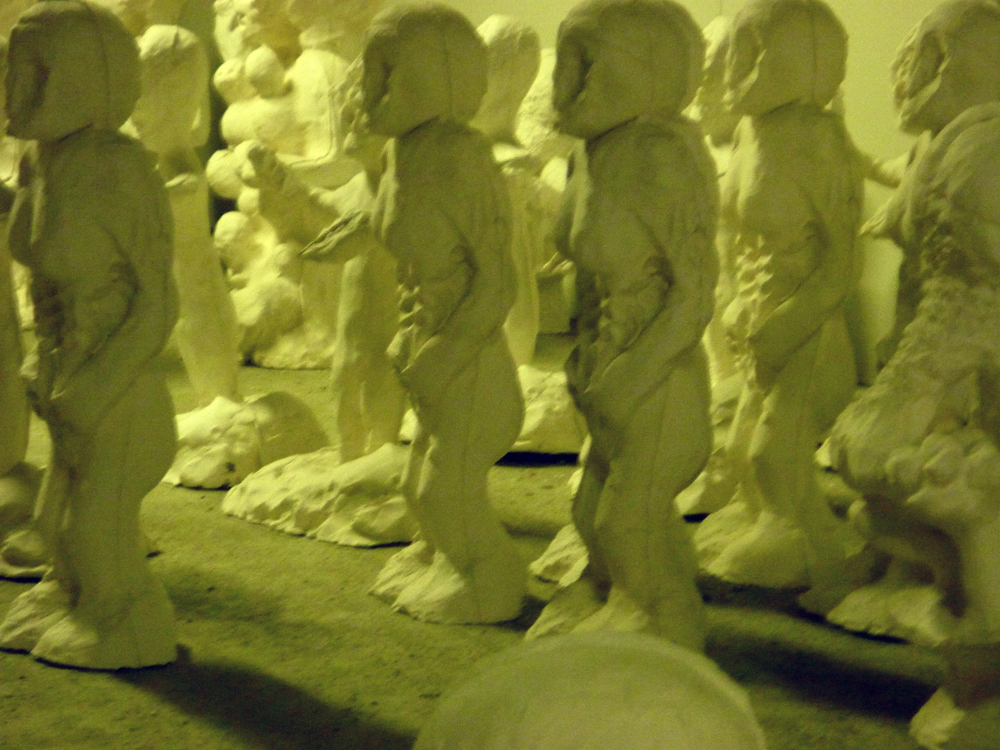
I visited Daniel Silver’s ‘Dig’ on Halloween. It was suitably other worldly.

Daniel Silver 'Dig'

Daniel Silver ‘Dig’

Set in the Old Odeon Site just off Tottenham Court Road was quite extraordinary to move between two such different locations in such a short journey.

Daniel Silver 'Dig'

Daniel Silver ‘Dig’

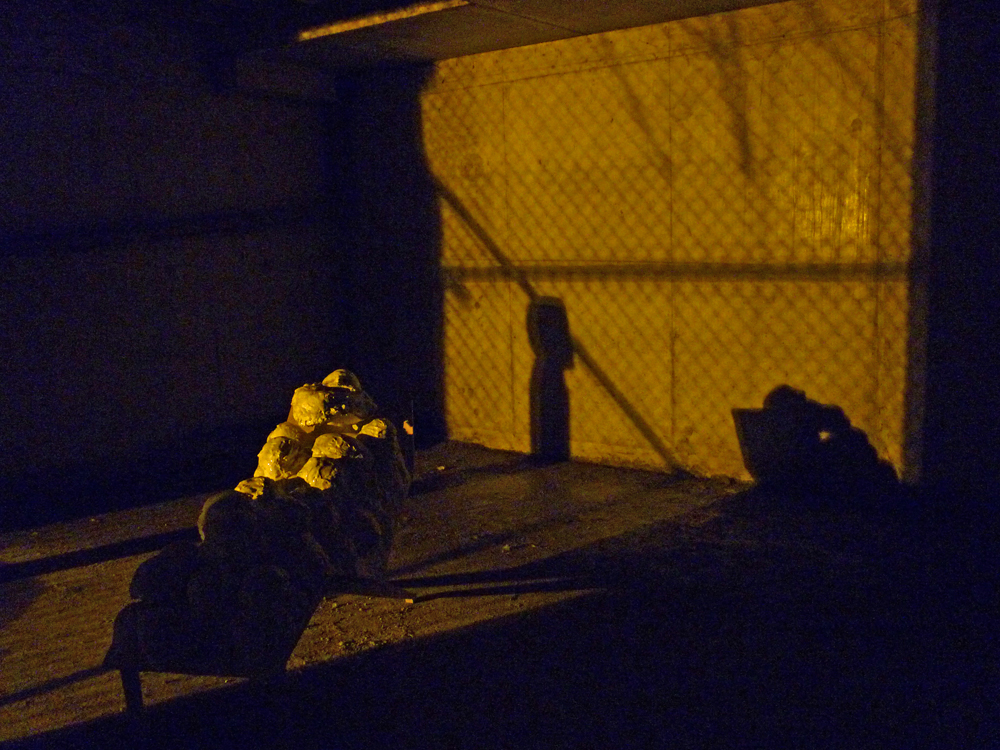
Visiting at dusk seemed to be a good time to go.

Daniel Silver 'Dig'

Daniel Silver ‘Dig’

Unearthly shadows added to the aura of mystery.

Daniel Silver 'Dig'

Daniel Silver ‘Dig’

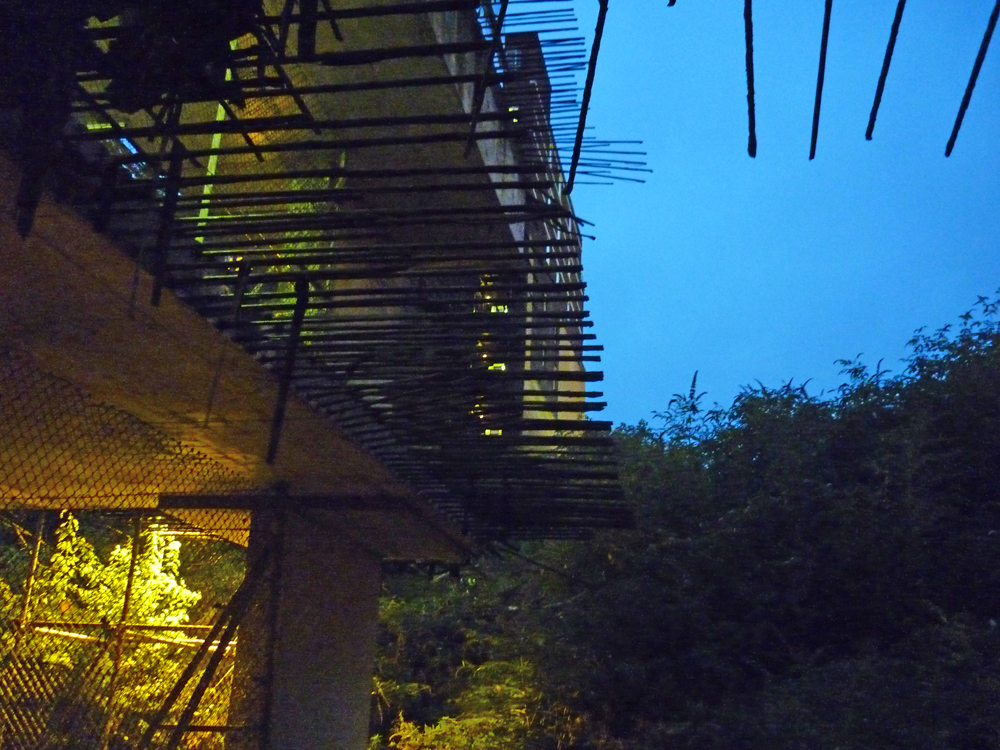
The raw bones of the building above revealed a brutal concrete structure which seemed fitting with the atmosphere created below.

It was the sort of building we associate with hot dusty countries where it is uncertain whether the building is in a state of construction or destruction and history is ancient and full of mythology.

Daniel Silver 'Dig'

Daniel Silver ‘Dig’

Daniel Silver 'Dig'

Daniel Silver ‘Dig’

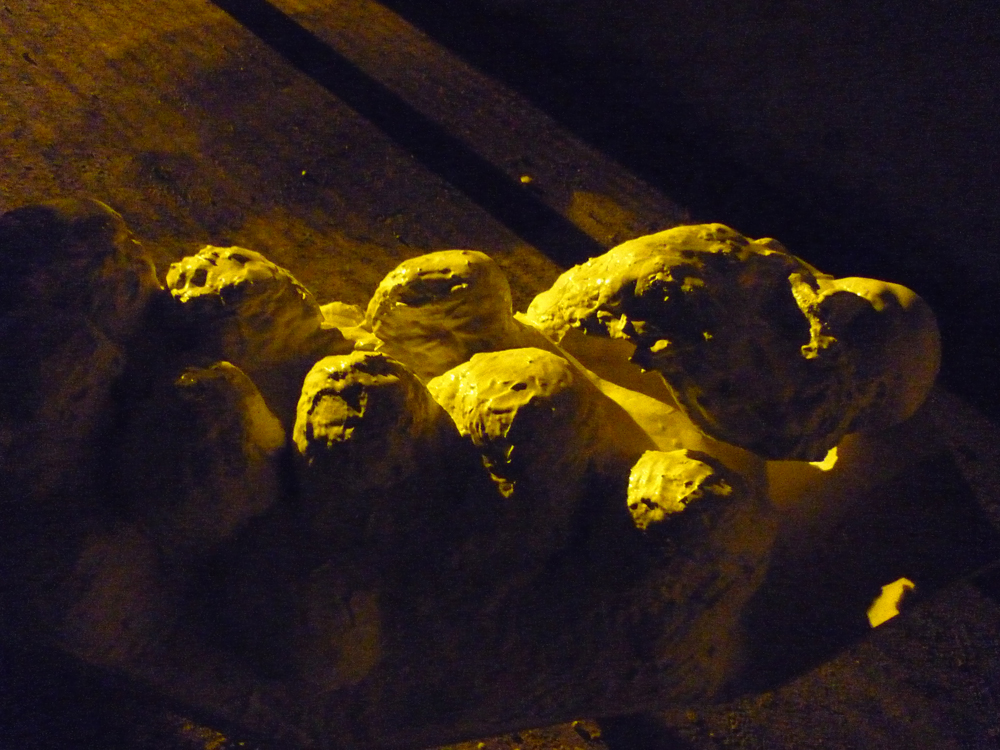
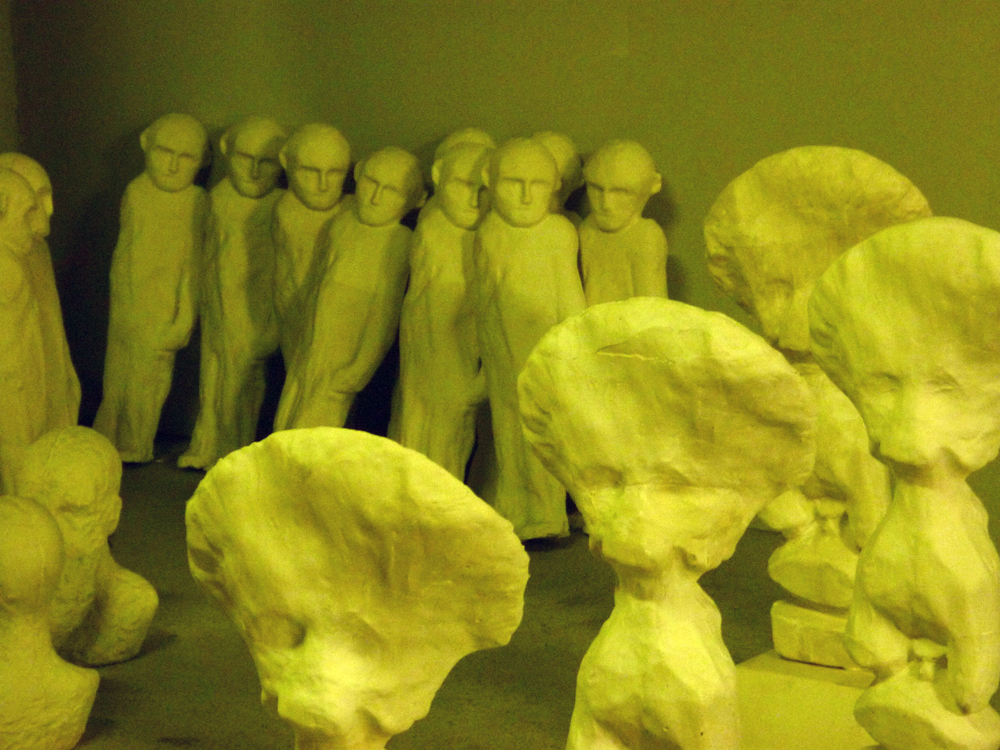
At the entrance to the site multiples of artefacts were displayed.

Mass produced and slightly alien in appearance.

Daniel Silver 'Dig'

Daniel Silver ‘Dig’

These collections in the brightly lit arena do not possess the magic of the lower excavations. Like any object removed from its archeological source something is lost.

Like mass produced souvenirs.

Daniel Silver 'Dig'

Daniel Silver ‘Dig’

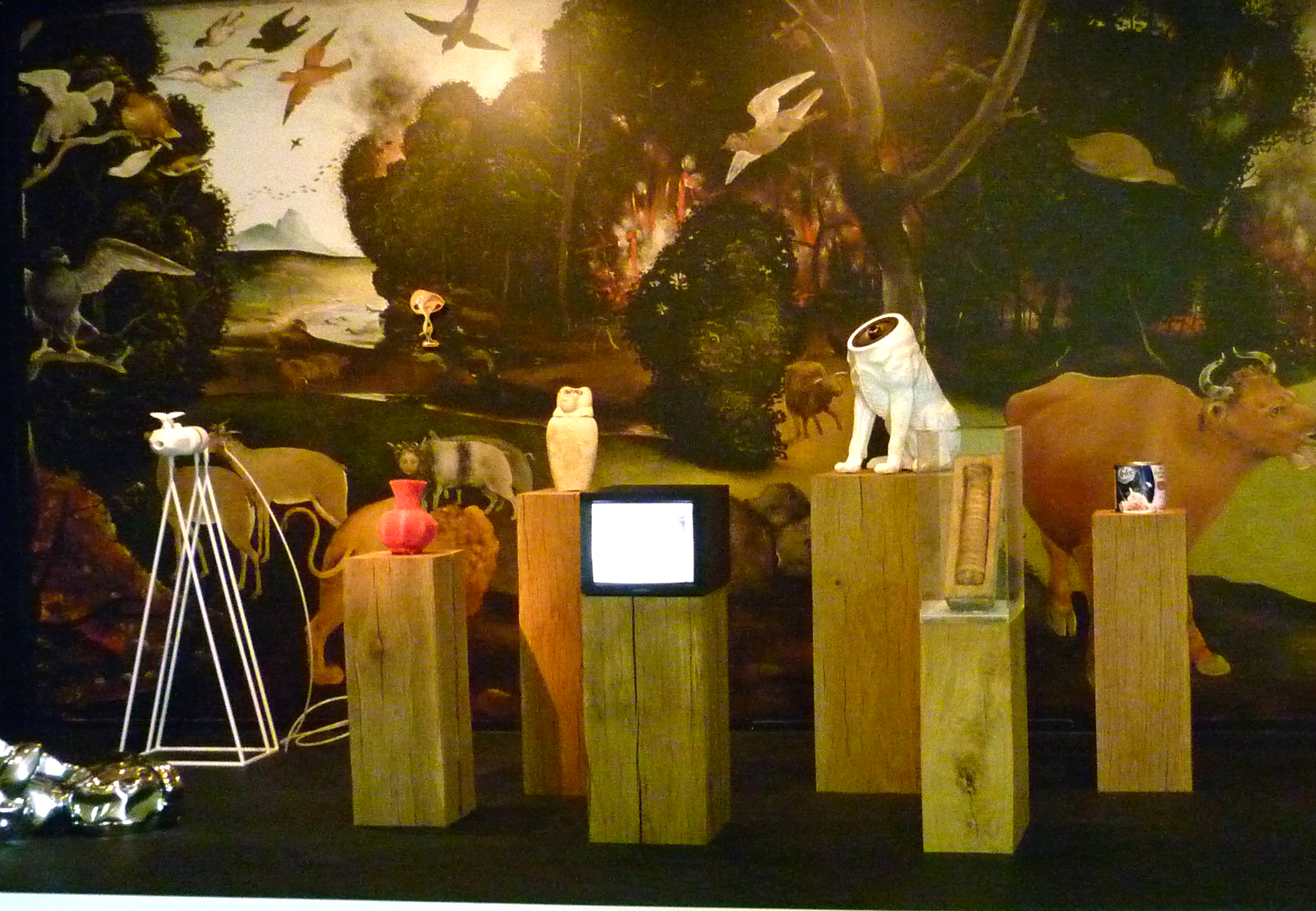
It was interesting to hear what Mark Leckey had to say about his exhibition The Universal Addressability of Dumb Things during his talk at the RCA.

The exhibition promised a kind of ‘techno-animism’, where the inanimate comes to life, returning us to ‘an archaic state of being, to aboriginal landscapes of fabulous hybrid creatures, where images are endowed with divine powers, and even rocks and trees have names’

In his lecture, In the Long Tail (2008), Leckey describes the ways in which the ‘entire vastness’ of the internet caters for the desires of an infinitely long tail of consumers with minority interests.  As modern technology becomes ever more pervasive and sophisticated, objects begin to communicate with us: phones speak back, refrigerators suggest recipes, and websites seem to predict what we want.  While this takes us into the realms of science fiction, it also boomerangs us back into the past and a more animistic relationship to the things around us.

Mark Leckey The Universal Addressability of Dumb Things

Mark Leckey The Universal Addressability of Dumb Things

‘The status of objects’, Leckey argues, ‘is changing, and we are once again in thrall to an enchanted world full of transformations and correspondences, a wonderful instability between things animate and inanimate, animal and human, mental and material’.  Our hyper-rationalism of modern technology has paradoxically produced its opposite, an ‘irrational’ magical realm – or as Marshall McLuhan, communication theorist, described “a resonating world akin to the old tribal echo chamber where magic will live again”.

For the exhibition he was able to request all sorts of objects that he had only previously seen on his computer screen. He chose items that possessed some quality or aura that made them in some way magical. Once the objects were delivered to the gallery though he seemed a bit disappointed when he finally came face to face with them. He seemed to be saying that he preferred them as images on his computer screen where he had the possibility to transform them though software wizardry. To make them vibrate with digital life.

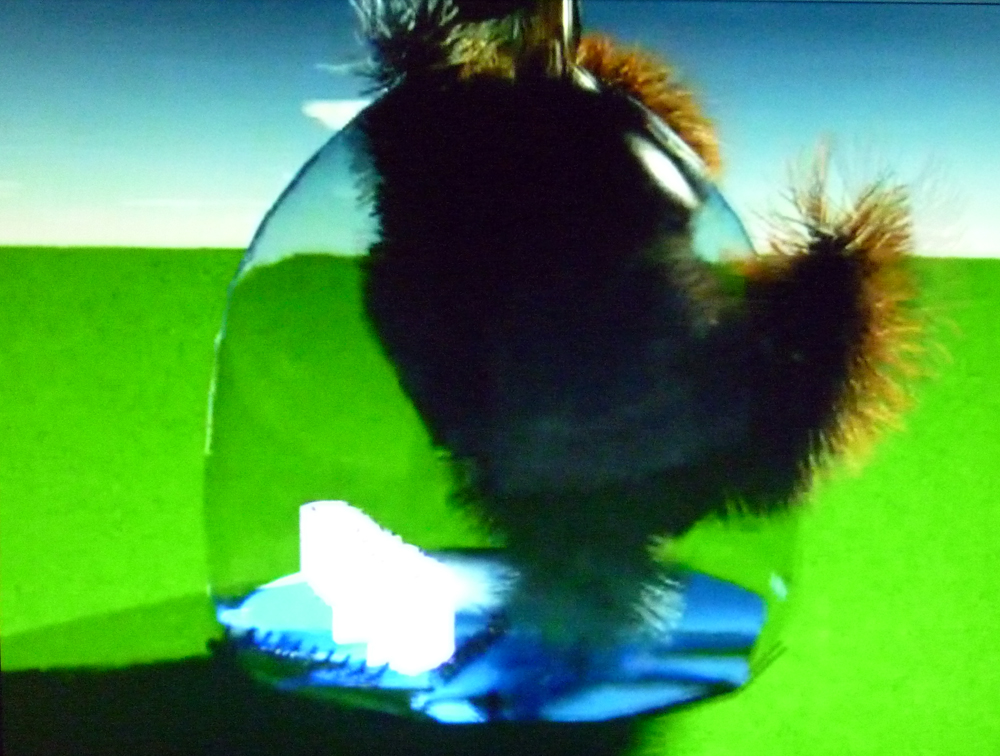
He was fascinated by the digital animation Viral Vacuum.

Viral Vacuum

Viral Vacuum

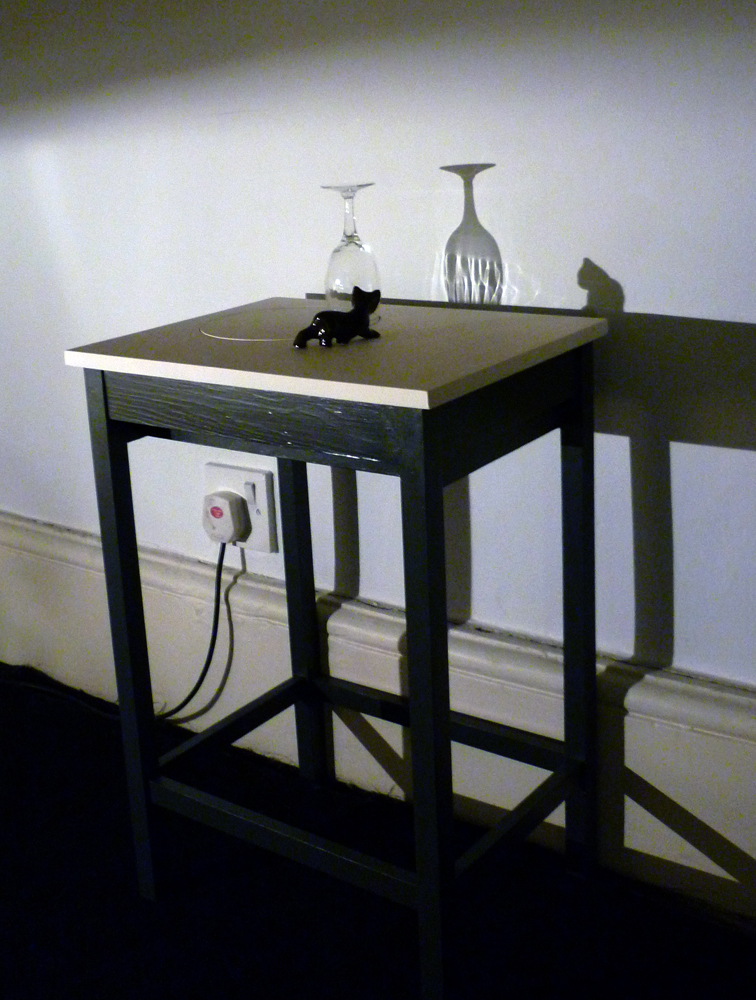
Particularly the ability of the cat to pass through glass. The rules of the solid world do not entirely apply.

Viral Vacuum cat

Viral Vacuum cat

He should check out Dynamo magician impossible.

Dynamo Magician Impossible

Dynamo Magician Impossible

‘For everyone who has philosophized, now or in the past, has been motivated only by wonder. Now, wonder is defined as a constriction and suspension of the heart caused by amazement at the sensible appearance of something so portentous, great, and unusual, that the heart suffers a systole. Hence wonder is something like fear in its effect on the heart. This effect of wonder, then, this constriction and systole of the heart, springs from an unfulfilled but felt desire to know the cause of that which appears portentous and unusual…’ Albertus Magnus (1200-1280) Commentary on the Metaphysics of Aristotle.

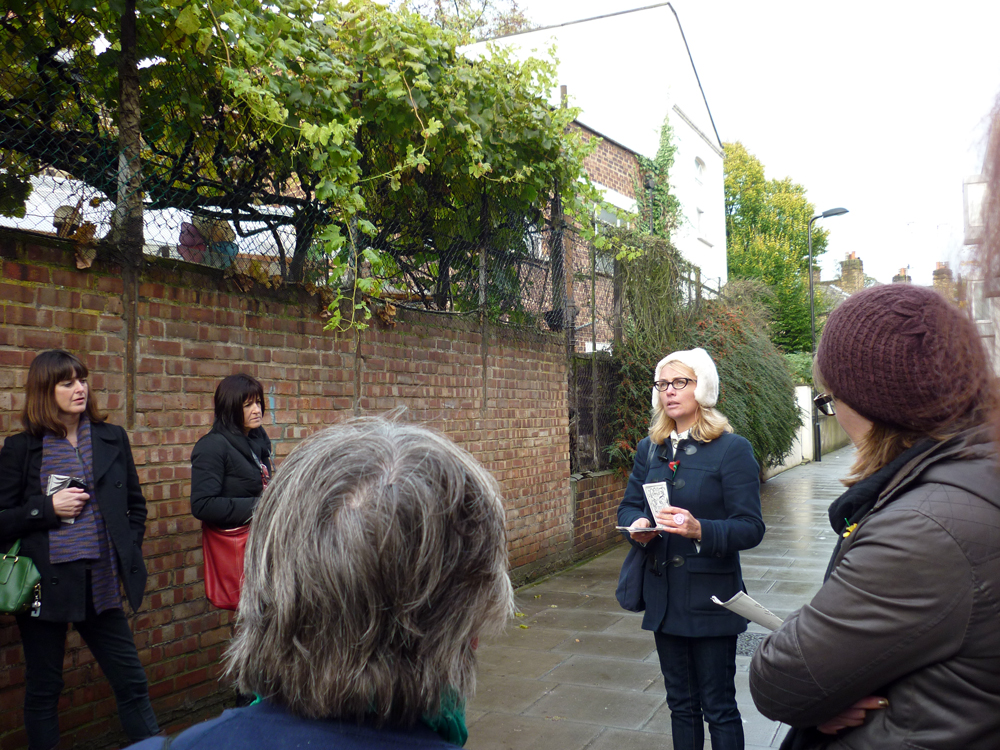
This quote is from ‘The Artificial Kingdom’ by Celeste Olalquiaga a book recommended to me by artist Bridgette Ashton who I met when she led a walking tour of Hackney all about the Loddiges’ Nursery 1785 – 1852.

Bridget Ashton  Leading the walk

Bridget Ashton leading Loddiges’ Miscellanea Walk

We looked out for clues left behind from the Loddiges hothouses and exotic gardens that once were here.

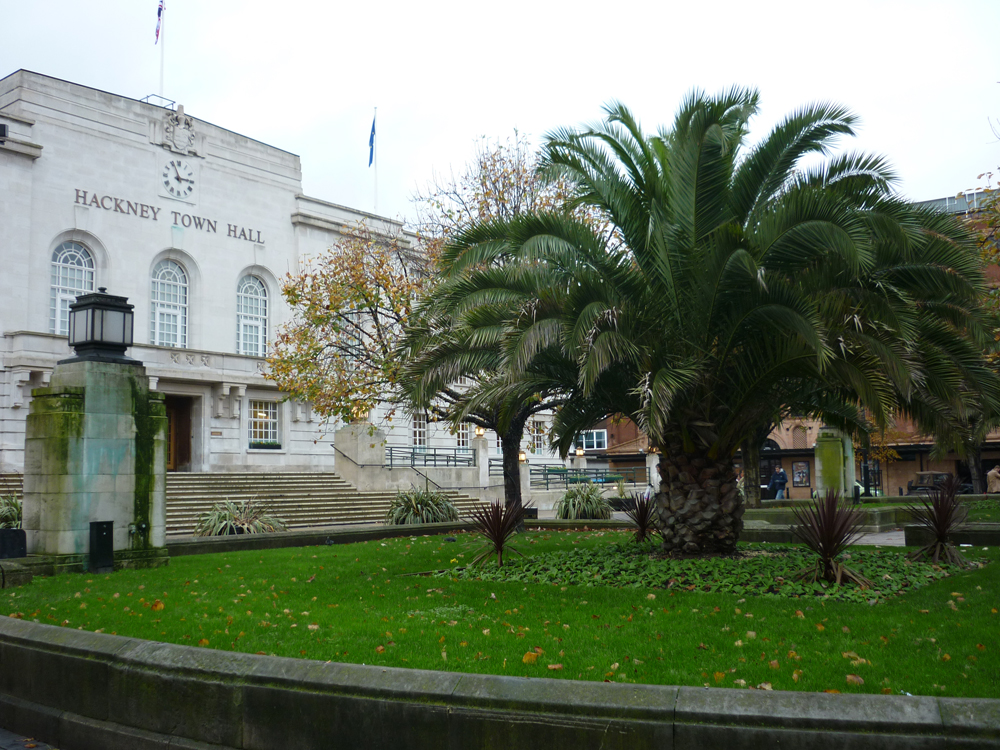
Hackney

History in Hackney

Trees like this have been in the area for 200 years yet still they remain other.

Hackney

Hackney Town Hall

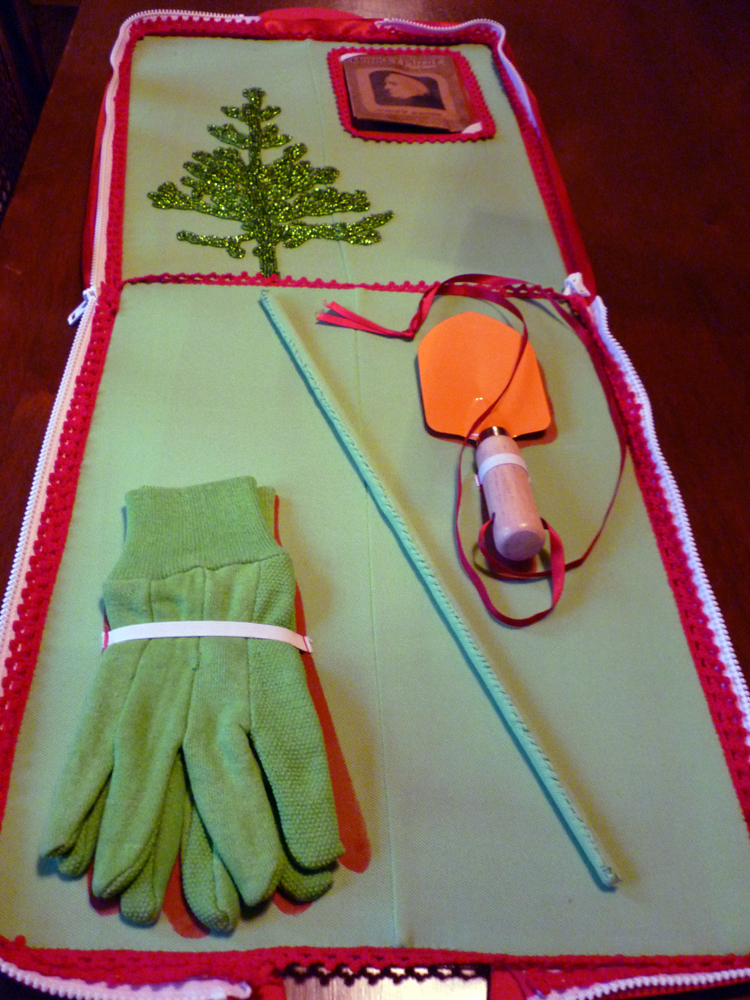
Bridget has a fascination with the Monkey Puzzle Tree.

Bridget Ashton Monkey Puzzle

Bridget Ashton Monkey Puzzle
papier mache, glitter, soap, found object

Bridget Ashton  Monkey Puzzle Tree Presentation Case

Bridget Ashton
Monkey Puzzle Tree Presentation Case

The Loddiges’ Miscellanea walk was part of  ‘Wintergarden’ a collaboration between Sutton House and Transition Gallery.

Sutton House

Sutton House

Sutton house was an elegant backdrop to work that references the public pleasure houses of the mid 19th Century where tropical flora and fauna were displayed often for the first time in Europe.

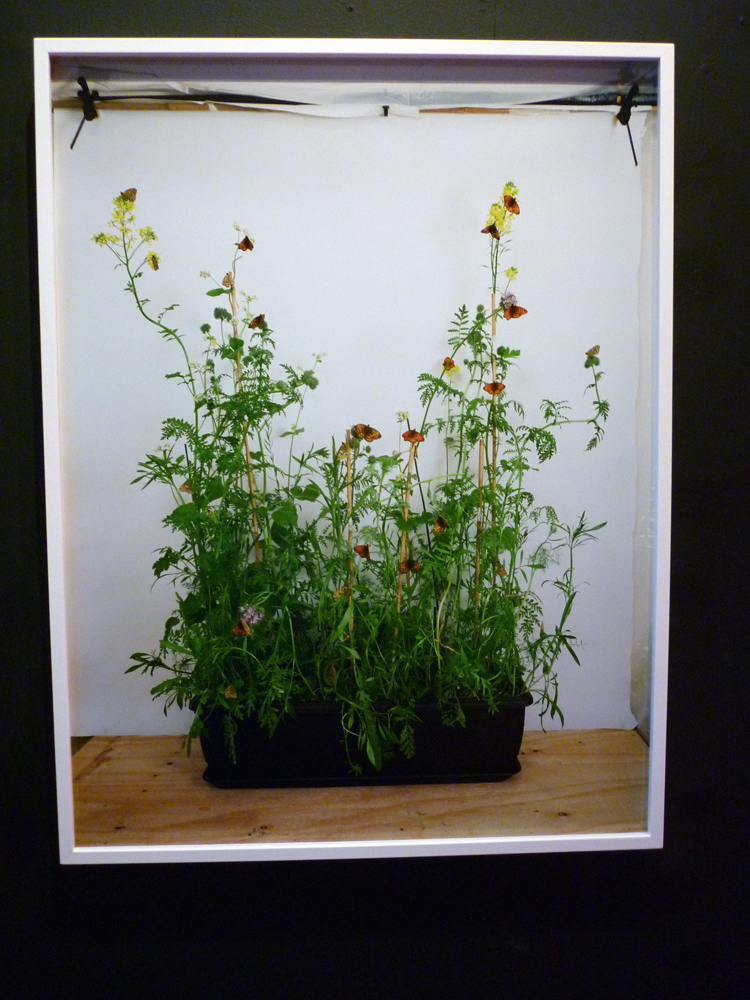
Alison Stolwood Dark Green Fritillary on Wildlife Attracting Mix

Alison Stolwood
Dark Green Fritillary on Wildlife Attracting Mix
photomontage, digital c-type print

Focussing on contemporary artificiality and fake environments, the artists embrace the notion of a self conscious spectacle in the remaking of nature.

Rachael Adams

Rachael Adams


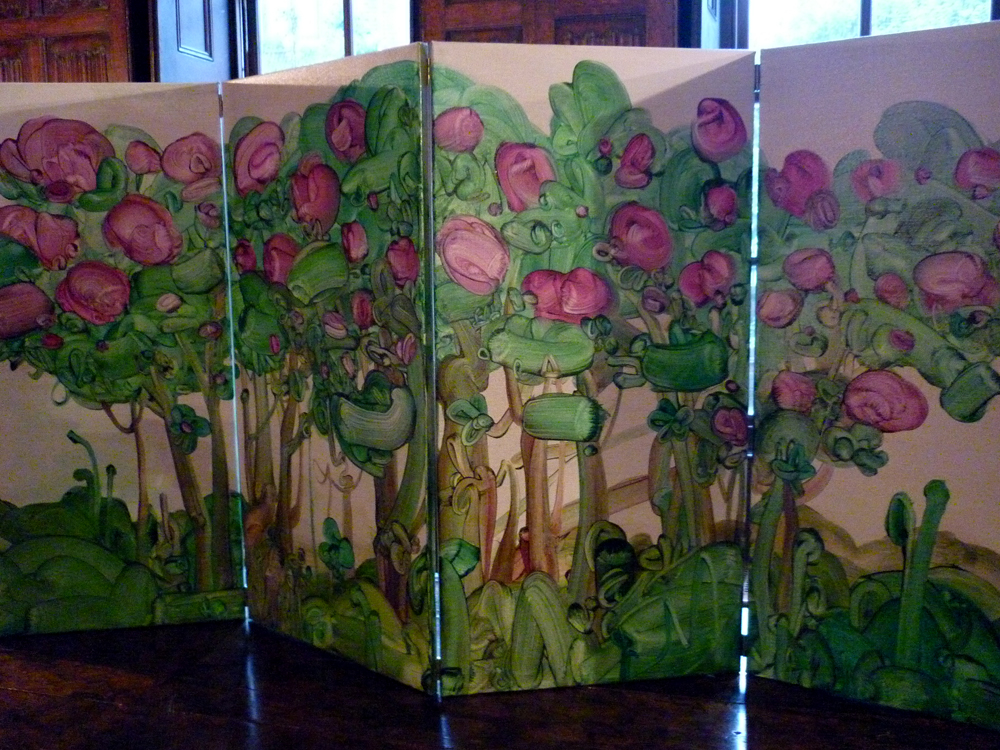
Mimei Thompson Rhododendron Screen

Mimei Thompson
Rhododendron Screen

Jo Wilmot Neon Lights

Jo Wilmot
Neon Lights

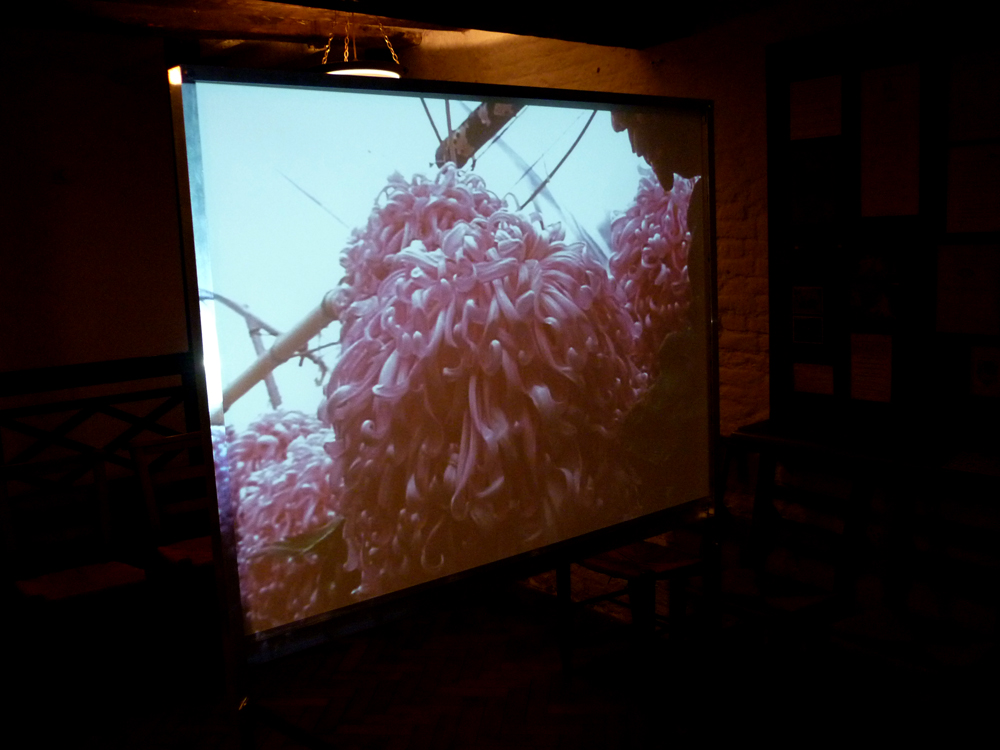
Jackie Chettur Ivor's Chrysanthemums'

Jackie Chettur
Ivor’s Chrysanthemums’

Jackie Chettur 'I set out to pick a yellow bunch to place as a lamp on my table'

Jackie Chettur
I set out to pick a yellow bunch to place as a lamp on my table
white modelling wax, wax colour pigment, silk, wire, copper jug

International Lawns with Rebecca Eastland  Joppatowne (The Gunpowder Falls)

International Lawns with Rebecca Eastland
Joppatowne (The Gunpowder Falls)
water clear casting resin

Darius Lambert

Darius Lambert

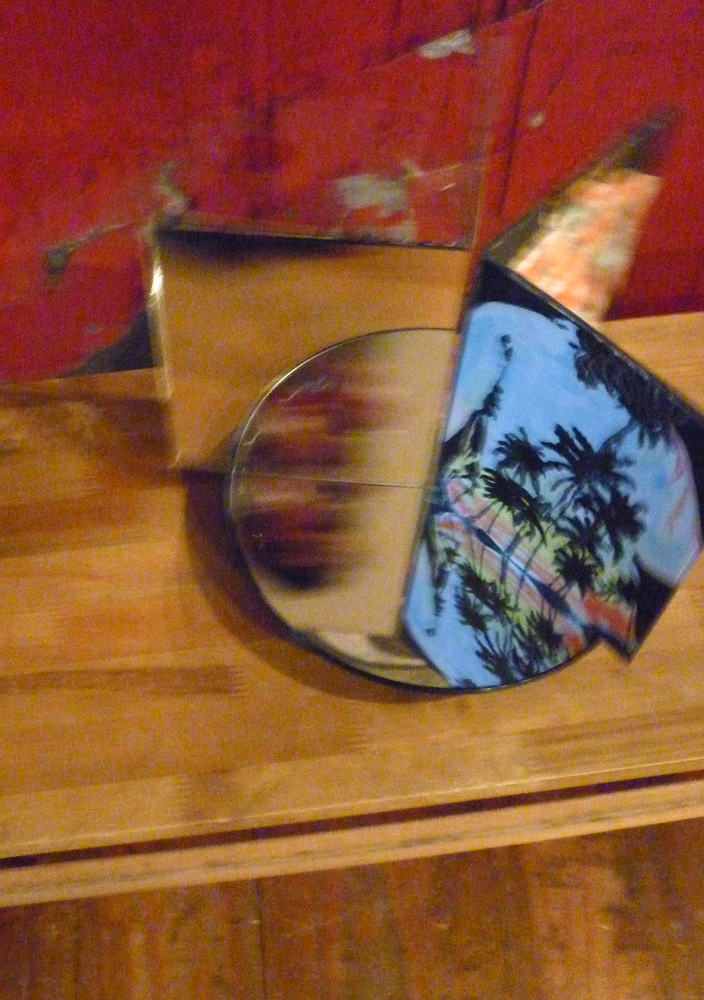
Cathy Lomax Aloha from Hawaii

Cathy Lomax
Aloha from Hawaii
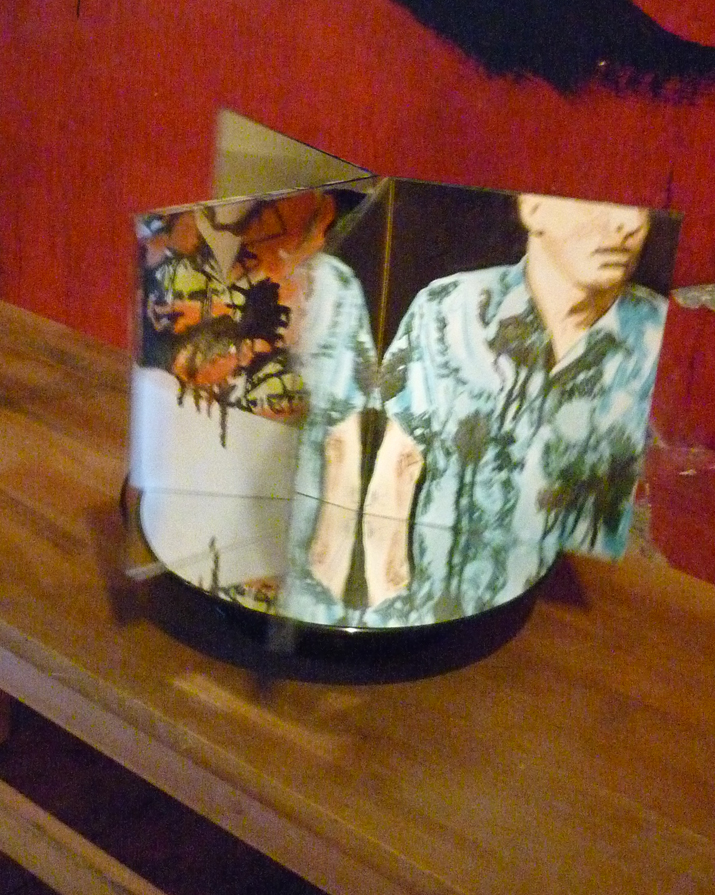
oil on card, mirrors on rotating mirror turntable

Cathy Lomax Aloha from Hawaii

Cathy Lomax
Aloha from Hawaii

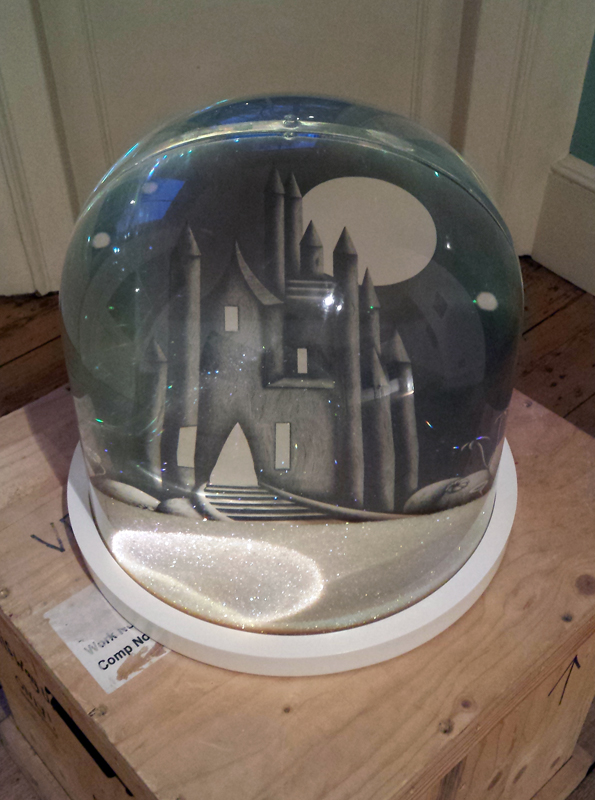
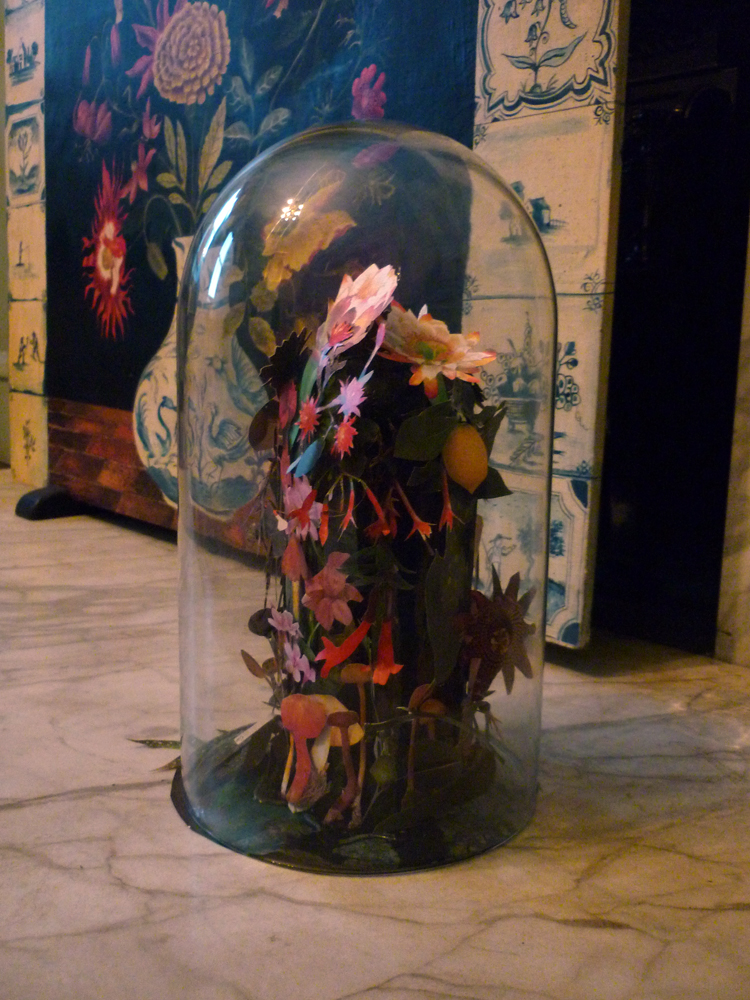
Annabel Dover Holy Mountain

Annabel Dover
Holy Mountain
cut paper, glass dome, papier mache

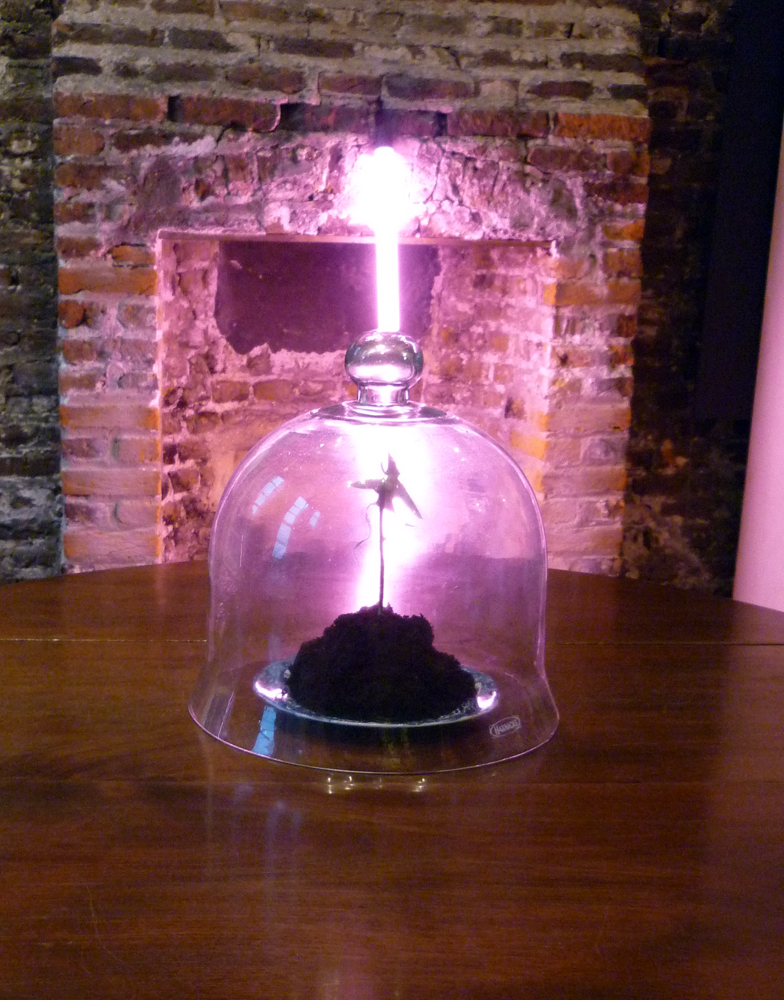
Annabel Dover Phantasm

Annabel Dover
Phantasm
cut paper, orchid cloche , peat

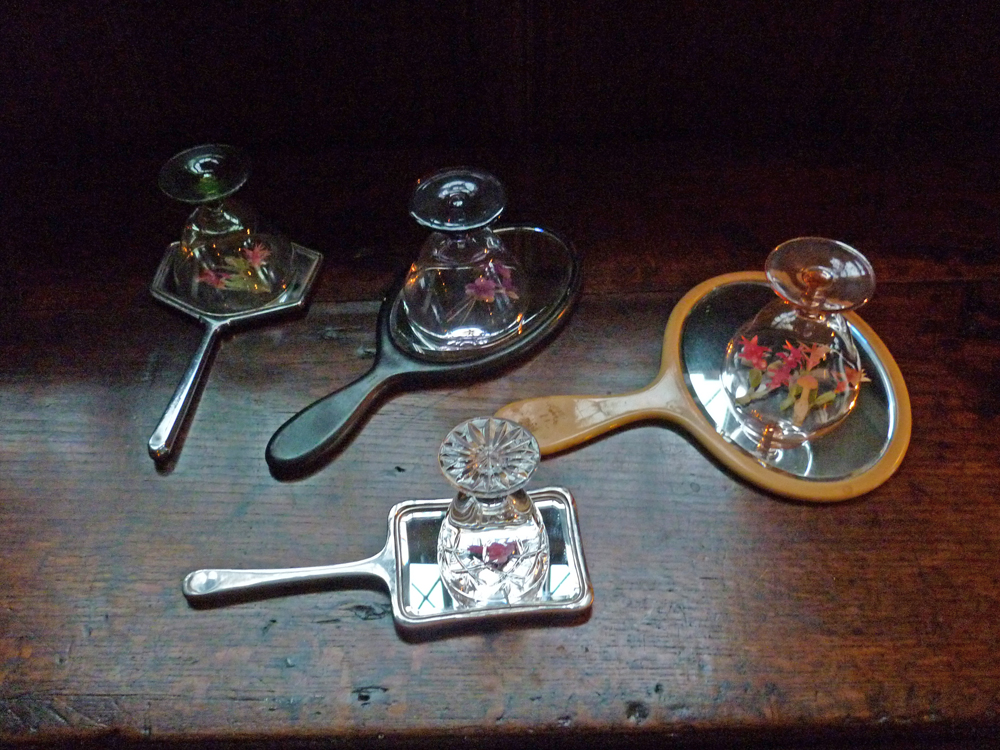
Annabel Dover Lux

Annabel Dover
Lux
dressing table mirrors, cocktail glasses, cut out hothouse flowers

Went to two very interesting talks at the RCA , Peter Kennard whose photo-collage work has a political agenda and David Rayson who dreams of escaping suburbia aboard a galleon bound for some exotic island of the imagination.

Peter Kennard is concerned with getting a message across so admits his work may sometimes appear unsubtle, but then he has created some iconic images that are globally recognisable.

Peter Kennard

Peter Kennard

David Rayson makes drawings that originate in his own back yard but often offer a way out to sail to distant shores.

There were so many of his ideas that I relate to.

David Rayson

David Rayson

Listening to these speakers helped me think about ideas for my dissertation – to clarify the difference between utopia (Peter Kennard –  social ideology) and paradise (David Rayson – fantasy landscape).

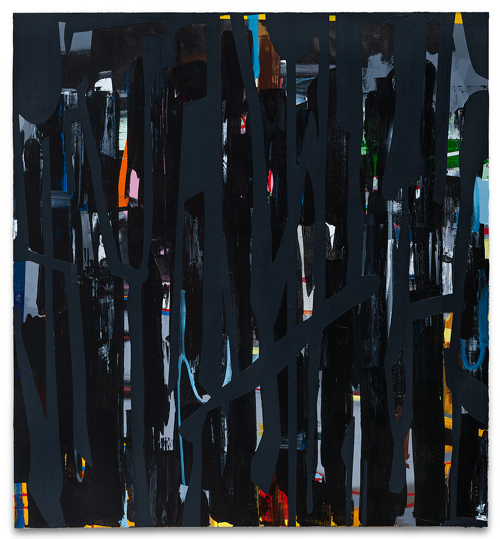
I thought these painting by Caleb Taylor look interesting. Showing in NYC though – only saw this via the re-title.com newsletter.

I like what they have to say about the idea of access open/denied. Looking through.

Caleb Taylor  Space Gate I - Pull 2012 Oil and acrylic on canvas

Caleb Taylor
Space Gate I – Pull
2012
Oil and acrylic on canvas

Bands of dark grey and black paint, like bars of a gate, sweep across the surface in broad gestures – vertically, horizontally, or crisscrossing – blocking or revealing the more luminous bright colors underneath. Gates serve a dual purpose: they deny entry, but they also allow it. This tension and duality carries on in Taylor’s work with investigations into what is near/far, foreground/background, concealed/revealed. According to Taylor, his paintings “create non-specific places where modes of looking are as much the content as material, subject or presentation strategy”.

Fascinating to read about how Gina Soden creates her atmospheric photographs on Rise Art website

Mine:Changing Room Gina Soden

Mine:Changing Room Gina Soden

‘I like to shoot at the best time of day if possible, the ‘Golden Hour’. The light is thick and takes over the scene, picking up a lot of texture. In high contrast scenes such as these, many cameras find it hard to depict all of the tonal range in one single exposure, so I blend around 5-9 shots, painting in different layers of exposures, (depending on the scene) to gain the best possible dynamic range in one shot. This is otherwise known as HDR. The process brings out the shadow detail and gives a painterly feel to the image. I chose this aesthetic as I like to breathe life into the scenes, in certain light the colours can look dull and flat in camera and I like to be able to depict what my eyes can see, with a bit of extra pop. I also like to shoot the ceiling, middle and floor of the image (5 shots each sometimes with the HDR process, so the image can made out of 15-18 images) If it is a wide angle scene with lots of verticals, this tilt shift lens gives me little to no distortion, and I have a HUGE file at the end of the process which can be printed at a very large size.’

‘Praise for the sweetness of the wet garden’

1401 Dad's garden

So it’s been a while since I last made a post on this blog.

It’s hard to keep up a diary sometimes when so much is happening.

I am going to try and keep it more current so that when I write about something it is still fairly fresh in my mind. I often feel I don’t have time to reflect on things so this space is a good discipline for that purpose.

Back to school after the Christmas break. It’s been a surreal time as my Father, a passionate gardener while he was able, passed away just before Christmas and this has meant my thoughts have been scattered in all sorts of directions.

Normality mostly, then tears. So my work is about ideas of paradise, still it is an abstract thought for me.

I have been working with a photograph taken in Paradise Road in Stockwell. The children’s playground there has plastic palm trees. The palm trees look like oversized Playmobil with added bolts.

Somehow I want to convey that even with a scene so far removed from an idyllic idea of paradise there is a space for imagination, for a glimpse to something else. There must always be an escape route.

I made some images for sublimation prints using greyscale but leaving a thin strip of  highly saturated colour and put these onto polyester.

1401 Paradise Road Stockwell sublimation print

I also screen printed the image in dark grey onto paper and then used monoprint directly onto the screen to add a thin strip of bright colours.

1401 Paradise Road Stockwell screen print

Art Lacuna Gallery near Clapham Junction are running a series of FOR ONE NIGHT ONLY exhibitions.  The first of which was paintings by Ralph Anderson.

I found these really interesting in the use of colour and how he works with greyscale and then adds the colour afterwards in a swirling spectrum of refracted light.

ralph-anderson_retrobate_art-lacuna_flyer

Now a catch up from November – a quick run through of  some of the exhibits I visited in The Giardini at the Venice Biennale.

The Giardini

The Giardini

Still lush in November.

Switzerland Pavilion

Switzerland Pavilion

We were blessed with amazing sunshine to add an extra dimension to the Swiss Pavilion.

1311 Russian Pavillion 3

The pile of husks in the Russian Pavilion had accumulated over the summer

Russian Pavilion

Russian Pavilion

The need for umbrellas was not quite so crucial this visit  as there was no longer a torrential downpour of gold coins from above but a stuttering trickle.

1311 Russian Pavillion

The coins have been circulated across the globe as each participant kept their souvenir

Russian Pavilion

Russian Pavilion

Only a few coins remain in the system.

Korean Pavilion

Korean Pavilion

The Korean Pavilion looks enticing with its kaleidoscopic lights and ritual shoe removal. Maybe it would better to only suppose what was inside

Somehow missed the Canadian Pavilion last visit

Canadian Pavlion

Shary Boyle ‘Ophiodea’

Using projections onto a stage set in a very dark setting the mood shifted

1311 Canada (5)

Shary Boyle

between dreamscapes

1311 Canada (4)

Shary Boyle

and stark illumination

1311 Canada (6)

Shary Boyle

As intended the elements had been at work in the Australian Pavilion spattering mud, releasing paper and rusting metal.

1311 Australian Pavilion (7) 1311 Australian Pavilion (6)

I was invited to look in the books stacked in the corner- the ageing pages had been cut into, hurrying their disintegration while creating new readings.

Australian Pavilion

Simryn Gill – Australian Pavilion

Enjoyed another blast of Sarah Sze in the American Pavilion.

1311 Sarah Sze 3

Sarah Sze

Fresh green moss.

1311 Sarah Sze 2

Sarah Sze

American Pavilion

American Pavilion – Sarah Sze

I was interested to look at the Shaker Gift Drawings. These drawings were believed to be created by sixteen shakers possessed by heavenly beings who offered a portal to view heaven itself.

Shaker Gift Drawing

Shaker Gift Drawing

Superfluous decoration was forbidden in the sect but these depictions inspired from heaven were exceptions and used to reflect life on earth in the shaker community.

The idea of The Encyclopaedic Palace which was the thinking behind the Central Pavilion this year was as a repository for all knowledge. With this all encompassing idea in mind the curator has included lots of outsider art.

There were many collections shown here which were never intended for such a setting, some quite private images on public display, all these manifestations of endeavour showing what a curious bunch we are.

The collection of houses made by an insurance clerk from Vienna are exhibited under the names of the artist and architect who found them in a junk shop.

They create a kind of suburbia to the destruction of Manhattan.

Jack Whitten

Jack Whitten ‘9-11-01’
The Houses of Peter Fritz

Jack Whitten’s huge memorial to 9/11 has a heavily textured surface.

It looks like it could be made of the very debris from the site.

JackWhitten

Jack Whitten ’09-11-01′

The Netherlands – ‘Room with Broken Sentence’ shows a series of work by Mark Manders.

Mark Manders

Mark Manders

The windows are covered with newspaper giving an under construction look to the pavilion and inside too the theme of under construction continues with a casual studio in progress setting, polythene wrappings pushed aside, work propped or submissively sited which somehow emphasizes the power and scale of the big work

Mark Manders

Mark Manders

Couldn’t resist another trip into the undulating wombworld of Joana Vasconcelas

Portugese Pavilion

Portuguese Pavilion

Joana Vasconcelas

Joana Vasconcelas