Archives for posts with tag: Giambattista Vico

I have had to say goodbye to my studio space and all the other wonderful facilities and people at the RCA.
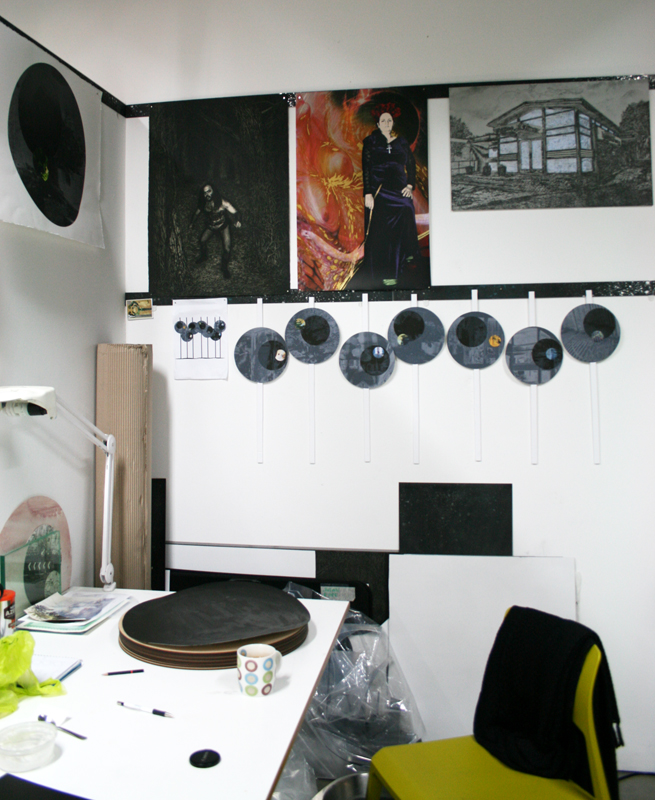
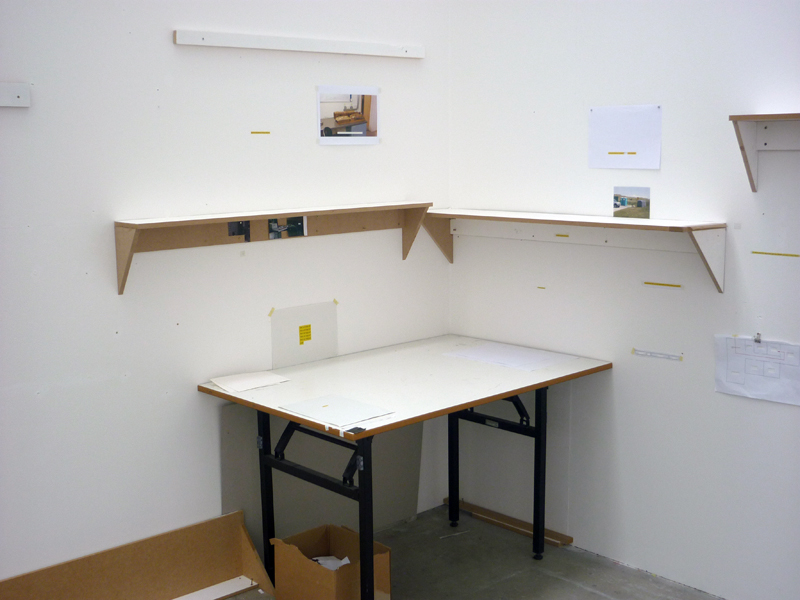
1507 studio

Lots of ideas were formulated in this little corner and I will miss it very much.
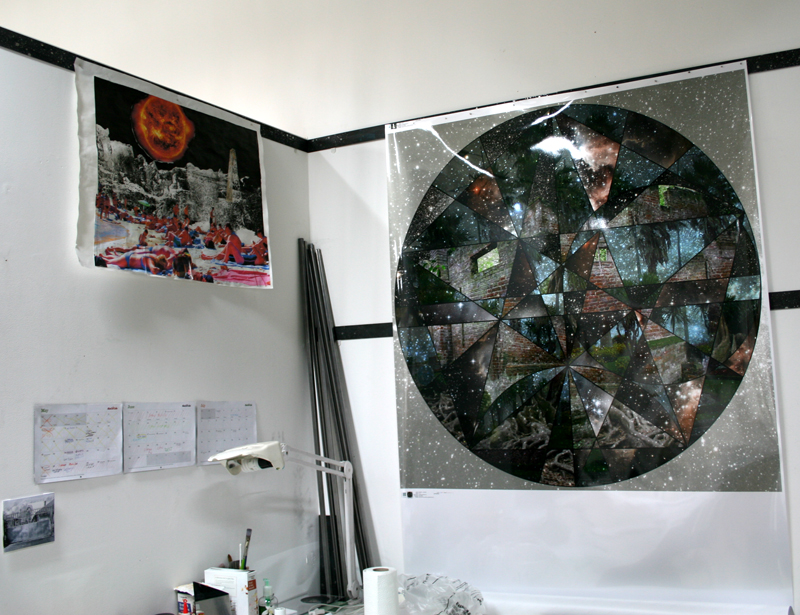
1507 studio2

I spent the last six months pretty much in the screenprinting room
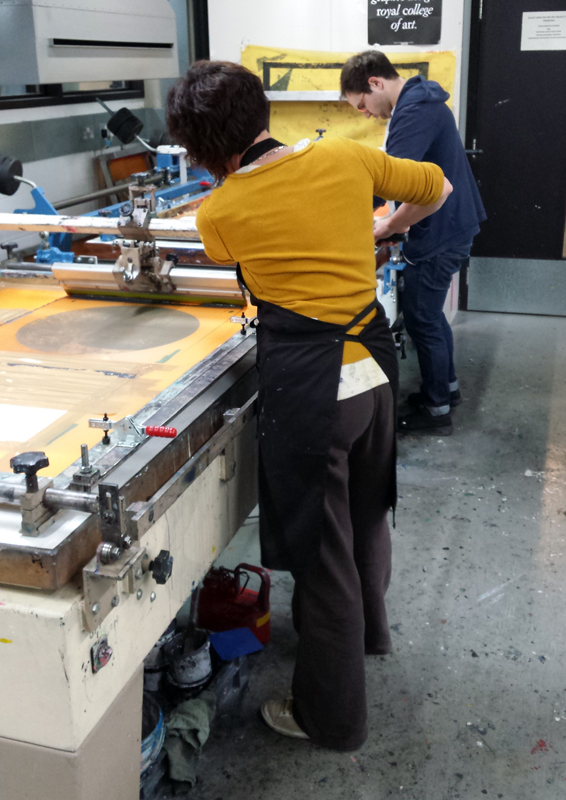
1507 screenprinting

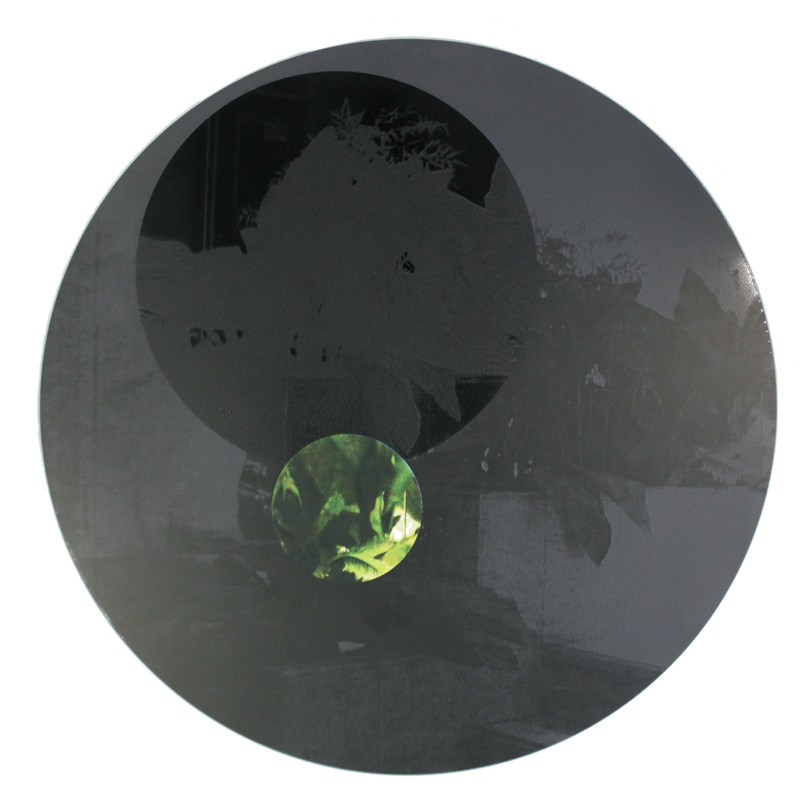
working on the mirror circles for my final show.

1507 circle

There wasn’t much time out but I did try to see some exhibitions that felt were relevant to my own concerns.

I hadn’t come across the work of Michelle Stuart before and I found her exhibition at Parafin Gallery very inspiring.

Michelle Stuart Night Over Alice Springs

Michelle Stuart Night Over Alice Springs

I was drawn to her spiritual aesthetic. The subtle use of colour and juxtaposition of images set within a grid structure bind themes together to create a whole from fragments. I like the way she uses objects, incorporating natural materials and sacred symbolism, referencing alters and rituals.
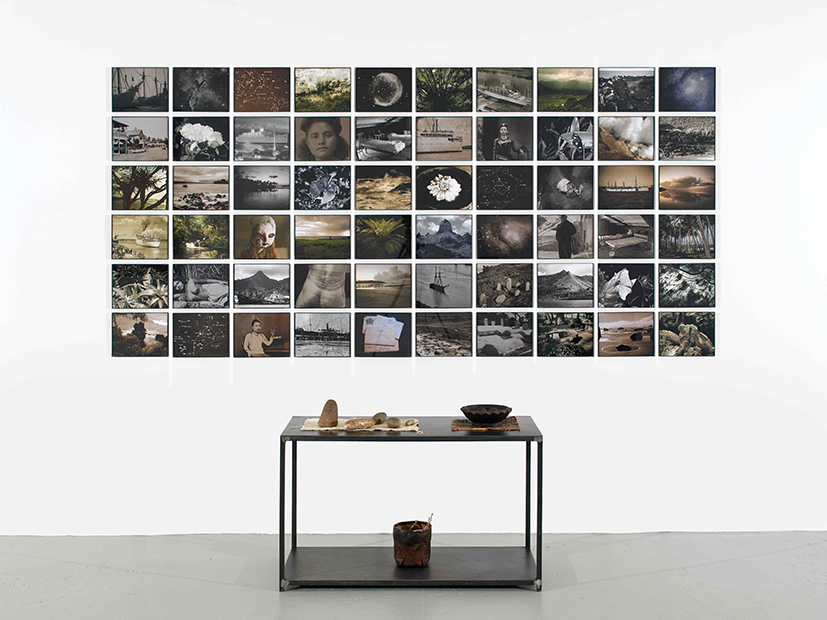
Michelle Stuart Ring of Fire

Michelle Stuart Ring of Fire

I was excited to see Diana Thater at Hauser and Wirth mostly because of the promise of seven holy ‘kunds’ – or water tanks- and waterfalls that create two tiered pools within her projected installations. I thought this might relate to my own ideas using water in my work giving some insight into water as a sacred medium.

I was disappointed. Due to poor light levels and projected image quality what should have been an immersive experience was frustrated by an awareness of ineffectual technology exacerbated by the front door repeatedly opening and  flooding the space with even more light. There were no ‘kunds’ visible. The gallery assistant thought the pools may be projected onto the floor but with the light levels too high it was not so much that ‘…the pools of water occupy a liminal state between reality and imagination’ but must be totally conjured by the imagination.

Diana Thater Life is a Time-Based Medium

Diana Thater Life is a Time-Based Medium

Online you can find an image more akin to the promises of the press release.
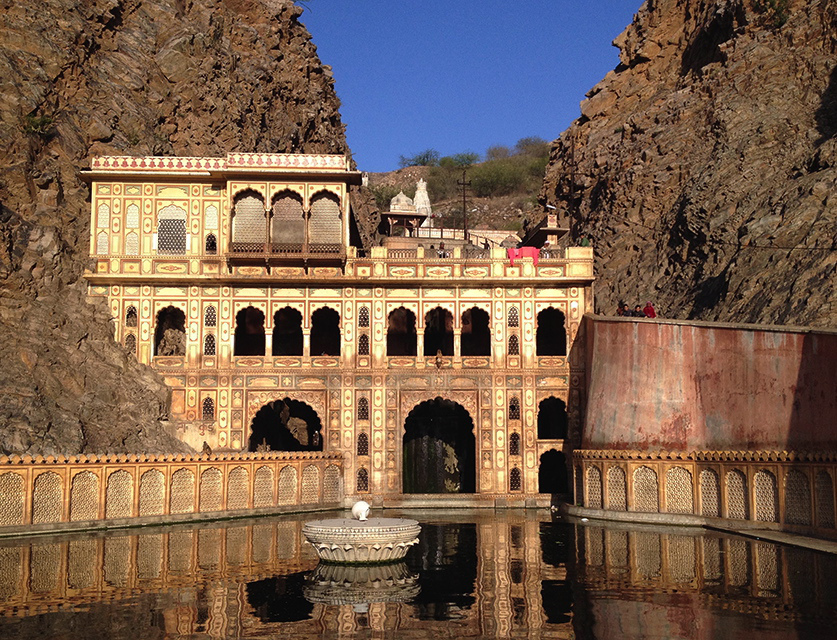
Galtaji Temple near Jaipur

Galtaji Temple near Jaipu

For my second year at the RCA I had David Blandy as my tutor. I think we have quite a few crossover interests in our investigation of contemporary society which manifest themselves in very different ways. He works with video and references music trends and gaming aesthetics and is quite performative. It’s very engaging and has a fine humour.
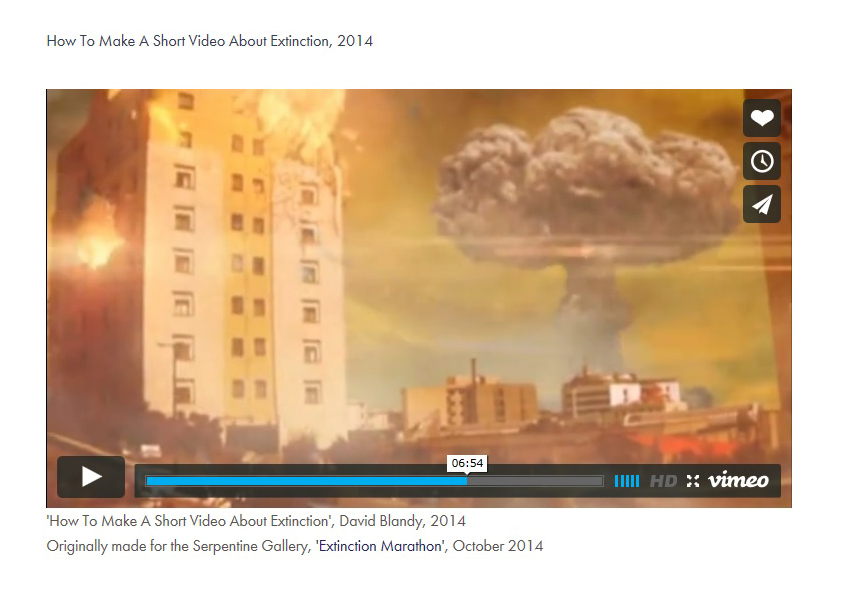
1507 David Blandy

He screened his video How To Make A Short Video About Extinction for us in the lecture theatre, it was good to see it on a big screen and appreciate the disaster movie genre it plays off though the DIY amateurism invoked does perhaps mean the small screen is its home. Eitherway it’s very funny (while obviously trying to make some serious points too). He put me onto Miranda July, also funny while highlighting some cultural idiosyncrasies , whose book of short stories No-one Deserves To Be Here More Than You I am enjoying at the moment.

I have visited his exhibition showing the video hercules-rough-cut at the Bloomberg Space.
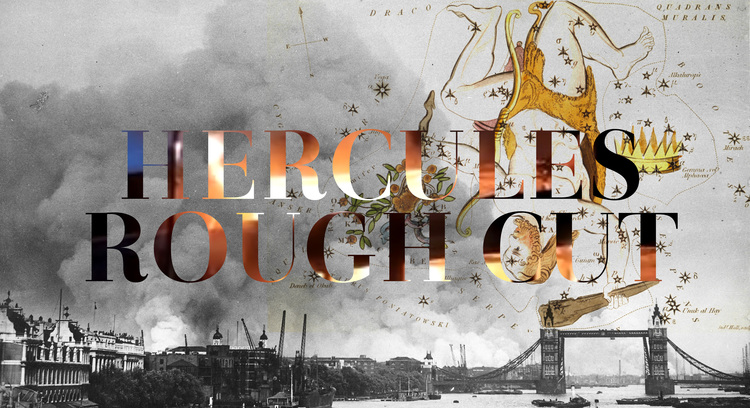
David Blandy

David Blandy

It has huge presence. Ominous and mesmerizing it engulfs you in a kaleidoscopic bombardment of image and dialogue tracing the history of civilisation on its frenzied trajectory to what must be an inevitable implosion. Surrounded by rotating images and screens and immersed in continuous rap-speak that fills your head there is no space to escape.
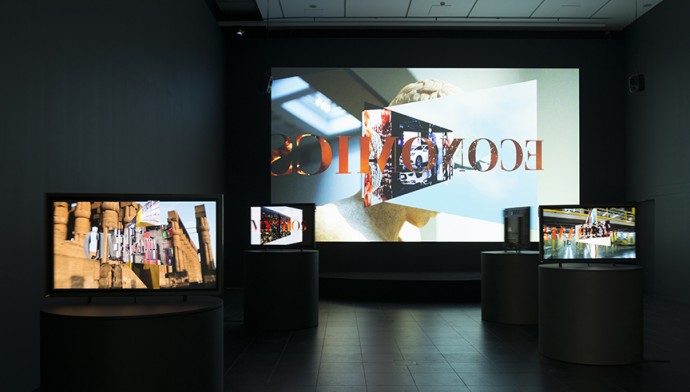
David Blandy Hercules:Rough Cut

David Blandy Hercules:Rough Cut

It captures the obsessions that are driving our civilisation over the edge into oblivion employing the same seductions that hypnotise us as we are carried along unable to resist.

I have long been a fan of Gordon Cheung’s work so was excited to be able to chat with him about my work when he visited the RCA on what was described as an artists promenade. His interest in relating ancient mythologies to present day financial trading and historical markets such as tulip mania to current boom and bust economics are fascinating subjects.

Gordon Cheung island

Gordon Cheung Island

We also attempted to discuss quantum and particle physics. He had been key in selecting my etching Forest of Eden for the neo:print prize award that I received last year so I was able to go into more detail about what had inspired me to make this work. Originally it was Giambattista Vico’s story of wild men inventing the gods as they cowered in the forest under thunderous skies that led to my research into the myth of the wild man. This myth stretches back to the tale of Gilgamesh’s quest for immortality. In history the wild man’s characteristics reflect topical fears and aspirations, violating the taboos of civilization and symbolizing the repressed desires of society. They oscillate between horror and fantasy.
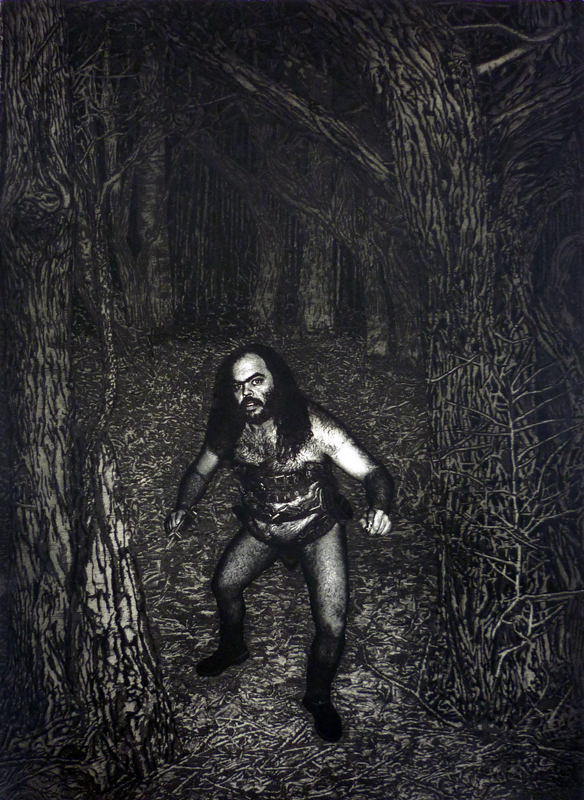
Susan Eyre Forest of Eden

Susan Eyre Forest of Eden

I wondered who a contemporary wild man might be. Someone on the edges of society, both fascinating and repulsive. I had come across images on the internet of this person who posts photos of himself posing almost naked with guns strapped to his body. He had become an internet meme, shared with equal disgust and fascination. In this etching I placed him back in the ancient forest of all our origins.

The most recent of work I made while at the RCA was Sun Factor. This work allows an alternative access point to my ideas about escape from reality and the search for something outside the ordinary. It explores ancient and modern ideas on sun worship and the rituals that are part of these cultures.

Susan Eyre Sun Factor

Susan Eyre Sun Factor

I used etching for the ancient cliffs and gold pigments on chine colle for the obelisk. The figures are screen printed in high saturation, a reminder of the early days of package holidays and glossy postcards and also of skin damage and loss of connection to the powers of nature. The sun as apocalyptic fireball is a reminder of its true nature which we often forget to acknowledge.

Sun Factor has been selected as a finalist for the HIX award.

I had been experimenting with images printed on translucent fabric submerged in water with a view to using this in my final show.
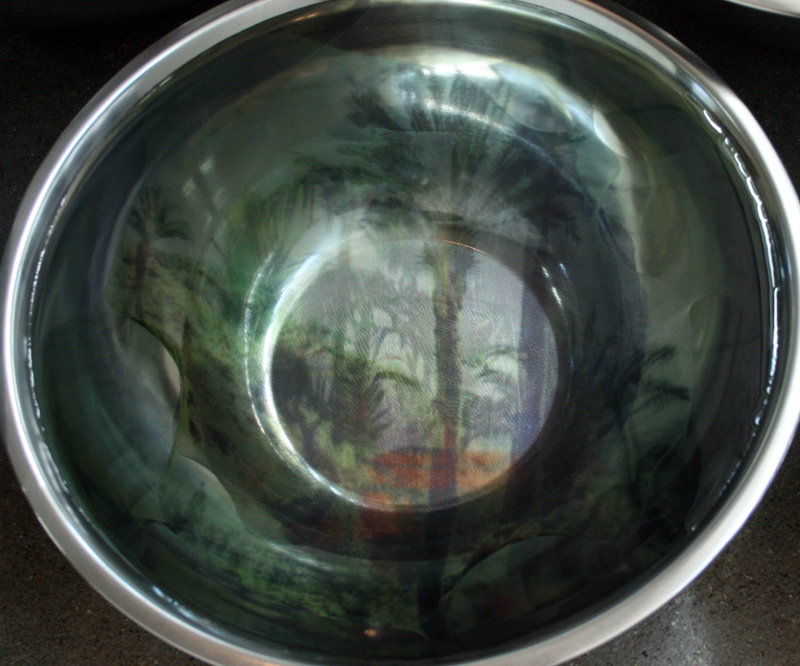
Susan Eyre submīrārī

Susan Eyre submīrārī

This came from the idea of looking through a surface to consider what is there but unseen by our limited senses   Sometimes the images in the water float and sometimes they sink or fold according to the otherwise unseen movement within the water. The activity in the matter of the universe is going on around us unseen – other intangible things like the aura of place and the dream of paradise cannot be pinned down or explained in terms of materiality.

Susan Eyre submīrārī

Susan Eyre submīrārī

I spent a long time searching for the right bowls for the images floating in water. I had in mind something you might find in the world of Jonathan Strange and Mr Norrell but ended up using the same simple very shiny ones as I had originally found for Café Gallery – Objects Of.

1507 dry clay bowl

I tried giving them a clay outer shell – it didn’t work but the cracked result was inspiring for future work.

I chose to exhibit the water pieces in a cluster for the RCA MA Show rather than each one placed at the base of the individual sculptures as I had previously.
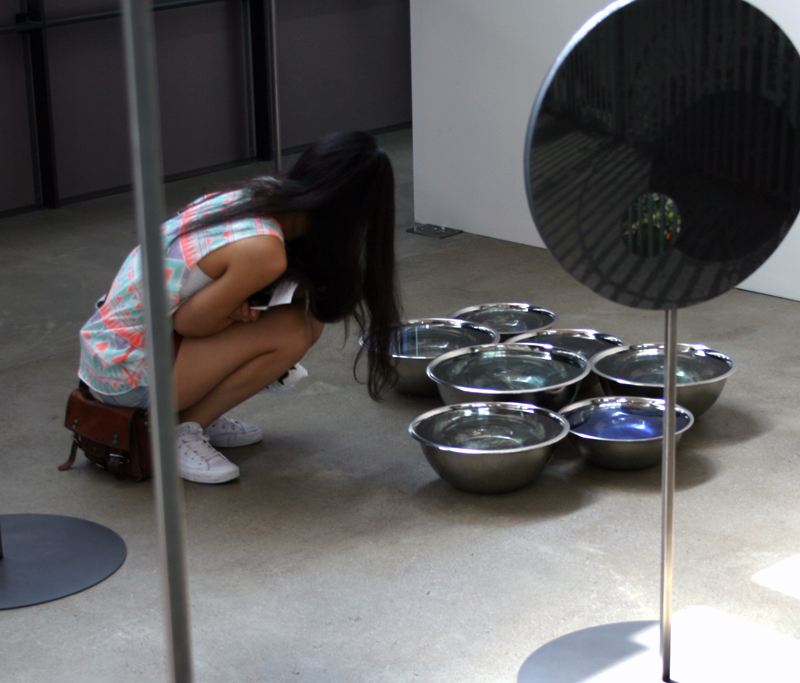
1507 veiwing submirari

submīrārī installation

mīrārī  comes from the latin miror whose etymology is to gaze in wonder.

Now that I had 7 sculptures (one for every day of the week) I felt each work had more weight holding their own space.
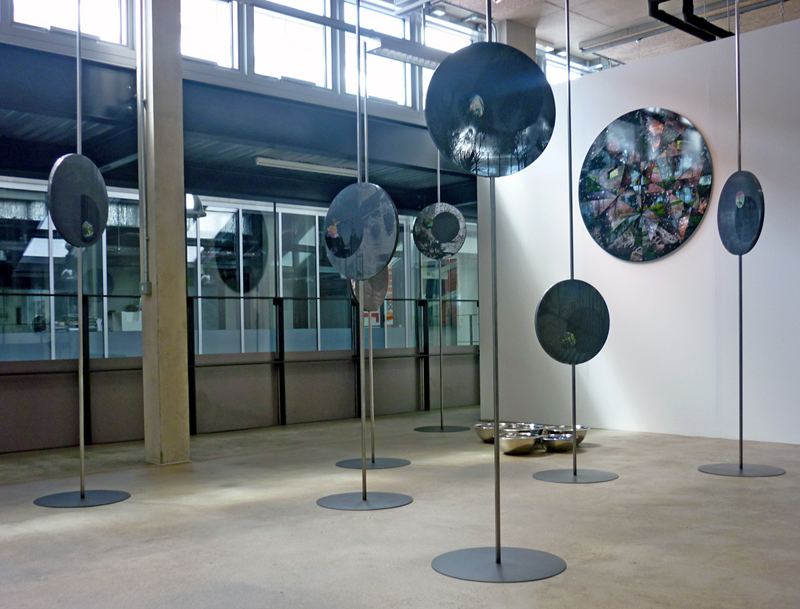
Susan Eyre everydaymatters

Susan Eyre everydaymatters

There is a similarity in the way an image is experienced as a surface to look through and be absorbed into connecting the pieces in the installation.

The images in the bowls are more dreamlike, idealised landscapes whereas the images on the mirrors come from the everyday locations that happen to be called paradise.
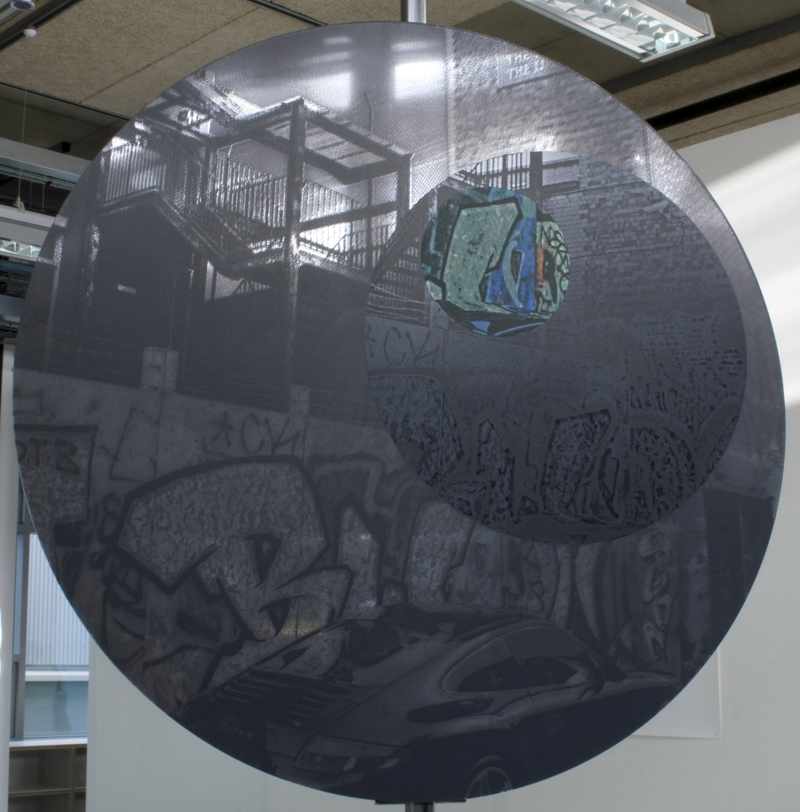
Susan Eyre everydaymatters (6/7 escapism  - the life)

Susan Eyre everydaymatters (6/7 escapism – the life)

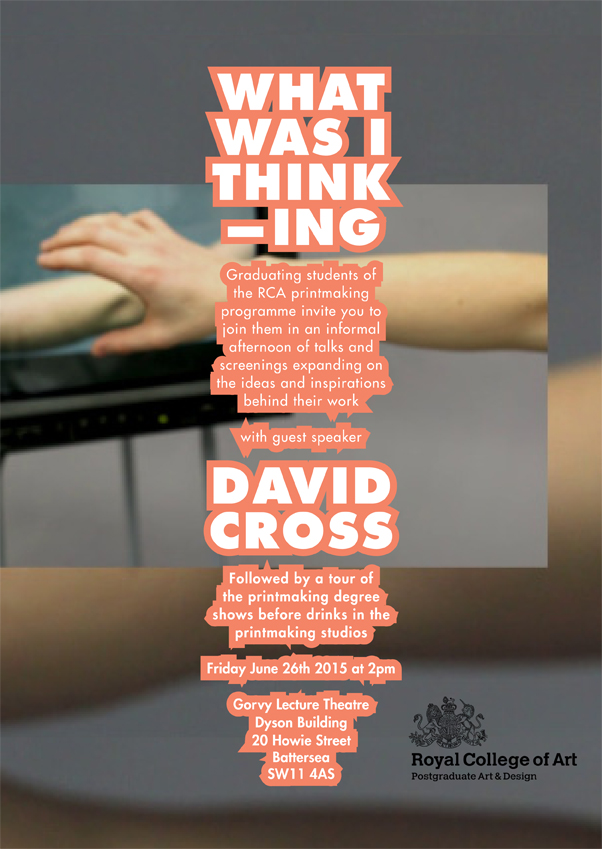
In conjunction with the MA degree show I led the organisation of our event WHAT WAS I THINKING. This was a chance to look back at the thinking behind our degree show and the ways in which decisions get made and also the alarm we sometimes feel at what we have embarked upon.
1507 what-was-i-thinking

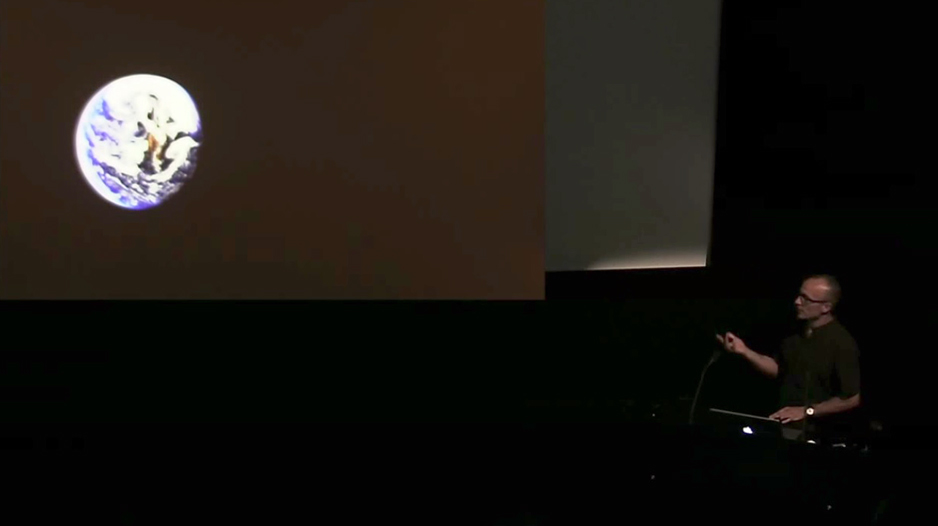
We invited David Cross as our guest speaker. David Cross has an international reputation as a lecturer and academic. As an artist, he began collaborating with Matthew Cornford, in the partnership Cornford and Cross, while studying at St Martin’s School of Art in 1987, and graduated from the Royal College of Art in 1991. In addition to producing aesthetic experiences, he maintains that a key function of contemporary art is to test concepts, assumptions and boundaries.
David Cross

David Cross

Looking at global economics and systems of value which govern the art world as well as wider issues of capitalism and our blind commitment to material consumption fuelling economic growth he poses the question  – can we reclaim the vanishing point and reconnect our individual perspective with our collective capacity to envision and plan for a more ecologically stable future?

Early in our first year at RCA we had a seminar with the provocative title Why Print? This caused a lot of argument at the time as we found there were very many opinions on what was and what was not considered print, the value of craft and the place of the multiple or cheap reproduction. As we progressed we learnt to respect each others approaches and realised that the diversity of our group was a strength from which we could all learn.
Rob Miles Cmd shift 3

Rob Miles Cmd shift 3

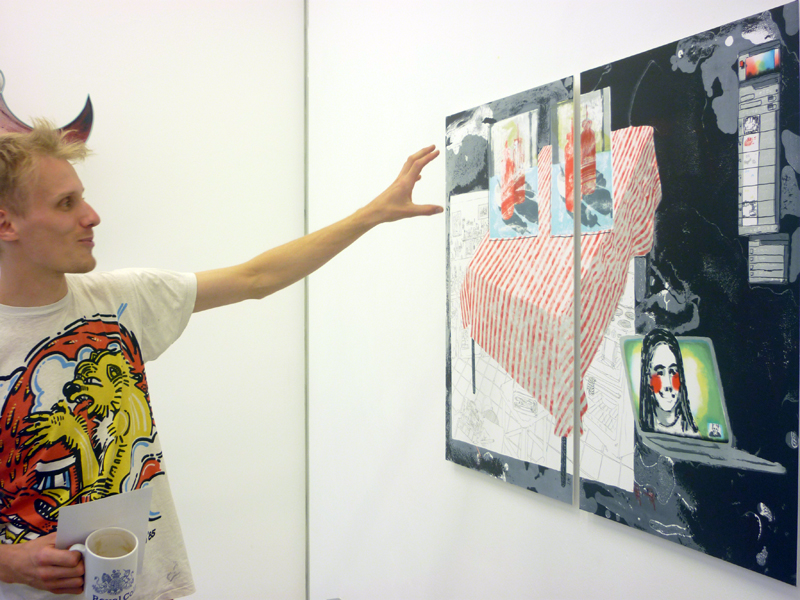
Rob Miles was our MC for the event and gave an introduction which set out the challenges we faced during our MA and will continue to tackle as artists.  He explained that in such a programme as printmaking there are many processes we could choose from to express our ideas and it was through this exposure and interrogation that we found our own individual affinities from digital media to etching and many combinations in between. New reproduction technologies offer opportunities for exploration,  the old techniques feed into the new, and the new reinvigorates the old. To study Fine Art today is to navigate a plethora of possibilities across an ever widening field of possibilities, often dauntingly so but this also offers us a new representational freedom as artists.
Navigating these new possibilities is something we had discussed in seminars which led us to authors who write about the impact of the web, image saturation/appropriation, and new ways in which we view the world that lead on to questions of reality and representation.

As a point of focus for our event we referred to the politics of the image theories of Hito Steryl in the e-flux journal The Wretched of the Screen.
Her comments on the condition of groundlessness in her essay free fall a thought experiment on vertical perspective seemed particularly relevant.
          ‘Imagine you are falling. But there is no ground.
          Many contemporary philosophers have pointed out that the present moment is distinguished by a prevailing condition of groundlessness.
          We cannot assume any stable ground on which to base metaphysical claims or foundational political myths.
          At best, we are faced with temporary, contingent, and partial attempts at grounding.’
Peter Glasgow spoke about ways that material might be gathered, piled up, held onto and left over to form a body of work.
Peter Glasgow

Peter Glasgow

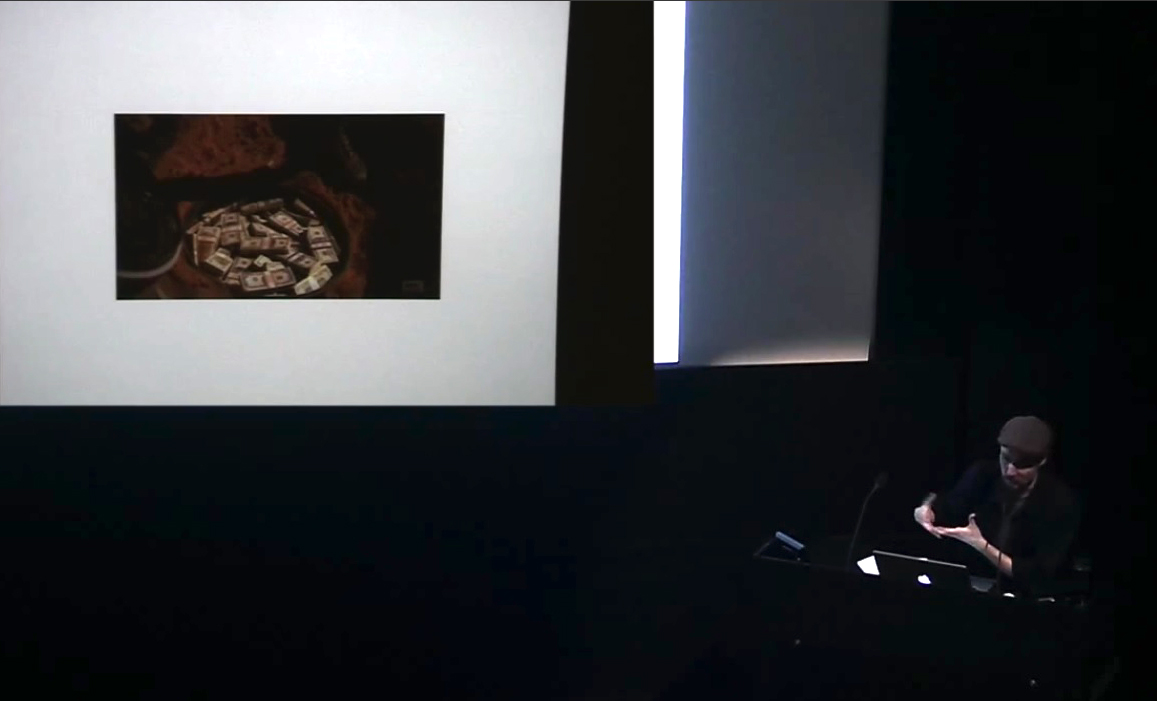
Using American TV series as his research material he used this analogy to look at work in the degree show as a gathering of material.
Peter Glasgow I'm dead in the water here

Peter Glasgow I’m dead in the water here
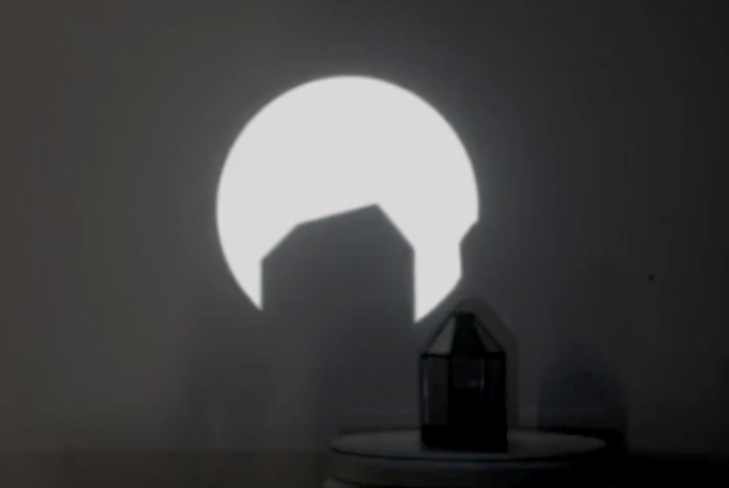
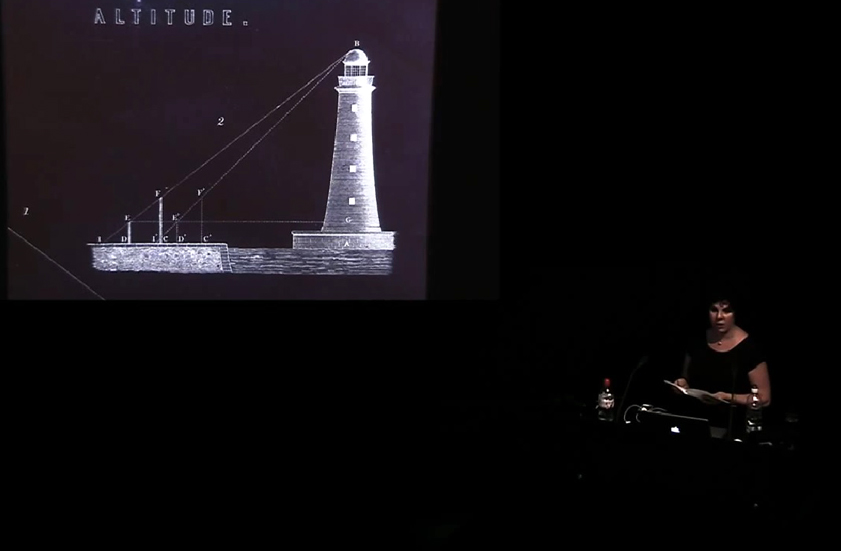
 Jilly Roberts narrated The Case Study, a story which explores her ideas of how perspectives can get influenced and altered depending on their content and origin.
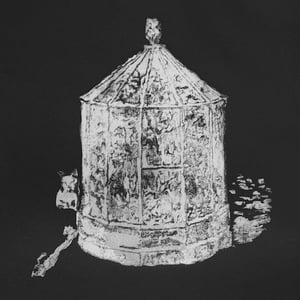
Jilly Roberts

Jilly Roberts

Mixing factual accounts with her own experiences out in the field researching architectural landscapes and the invention of the Wardian Case.
Jilly Roberts

Jilly Roberts

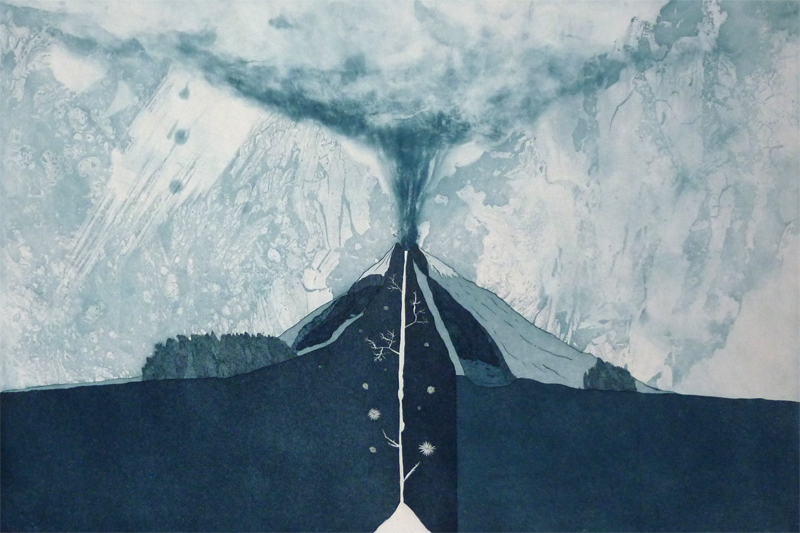
 Daniel Clark discussed his research into the cross section between sound and printmaking
Daniel Clark

Daniel Clark

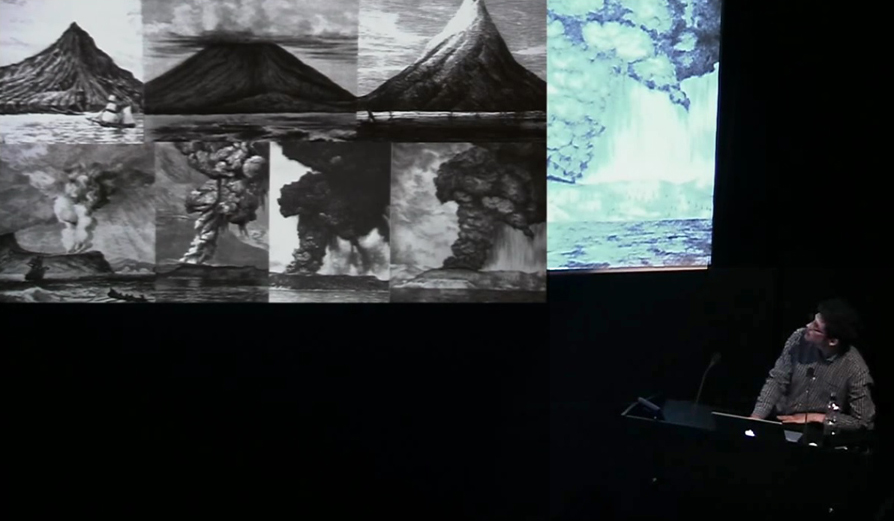
 covering the strange sensations we experience when exposed to very low frequency vibrations  the mysteries of the aquatint box and the sensory drama of the eruption of Krakatoa.
Daniel Clark Volcano

Daniel Clark Volcano

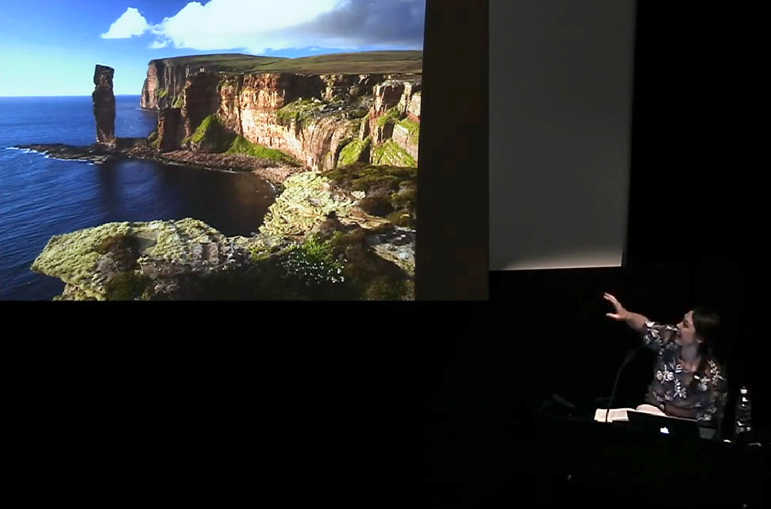
 Amy Gear brought our attention to the link between landscape, language and the shape of words, focusing on the rich history of her native Shetland
Amy Gear

Amy Gear

and how we mimic through language and also through our work.
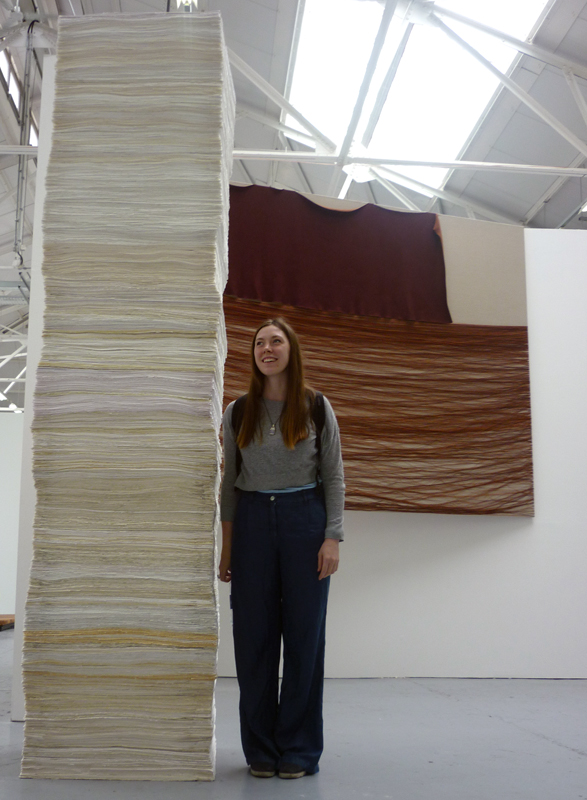
Amy Gear Stack

Amy Gear Stack

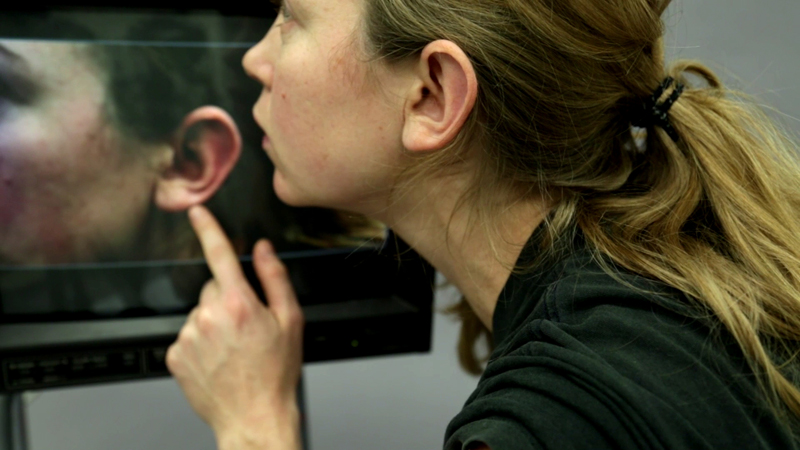
 Meg Ferguson and Maito Jobbe Duval who both work with text and moving image discussed the ideas of French Philosopher Maurice Blanchot to explore their experience of uncertainty in the creative process.
Meg Ferguson

Meg Ferguson

Meg spoke about the ‘leap’ of faith necessary to make work and its value as a catalyst to move forward, letting go of control and falling into the unknown of the unconscious mind.
Maito Jobbe Duval can you see it

Maito Jobbe Duval can you see it

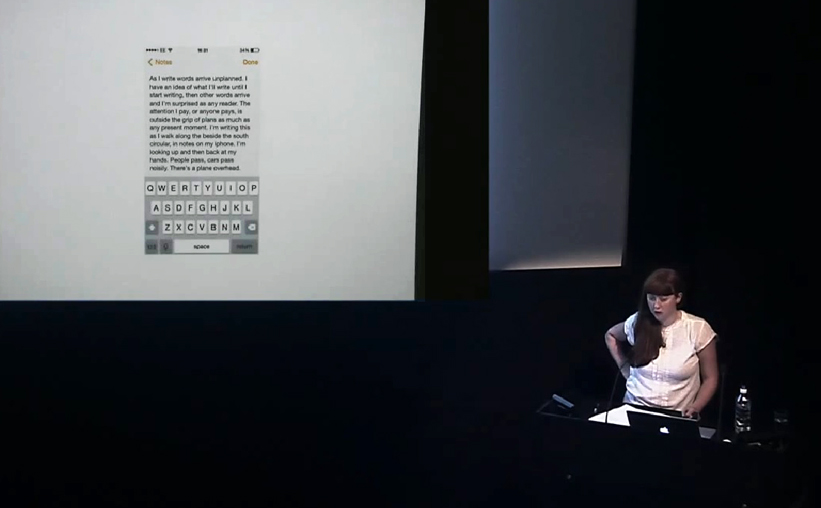
Maito read from Blanchot’s Thomas the Obscure while screening her video work Can You See It encouraging us to think the image of the thought.
Sarah Gillett read a story from her book which accompanied her work in the degree show.
Sarah Gillett

Sarah Gillett

We were transported to a suburban Mum’s night in which was suddenly impacted by the enormity and chaos of the universe both physically as a meteorite hits the conservatory and poetically as we contemplate the points in our lives when new perspectives open up to us.


I wondered what the building blocks of the universe looked like and found myself on the Cern website reading about Quarks and Leptons. I discovered the language of particle physics to be quite like that of mythology – inhabited with mysterious characters like the charm quark and strange quark, the muon neutrino and the tau governed by fundamental forces that cannot be seen or explained other than by their attributes – like the mythical gods. I am intrigued by this mysterious world.

The name “quarks“ was chosen for the three fundamental particles of all matter from a nonsense word used by James Joyce in the novel Finnegan’s Wake:“Three quarks for Muster Mark!“ – the first sentence of Finnegans Wake completes the end of the last sentence – the book’s circular structure reflects the theories of the philosopher Giambattista Vico (1668–1744) a major source of inspiration for me this past year. Vico published his theories for a new approach to the study of human history in Scienza Nuova, he viewed human history as cyclical along with the natural cycles of the earth – night and day, life and death, rise and fall, civilization and breakdown.

Quarks are explained in the theory of the standard model – a mathematical formula which explains how the basic building blocks of matter interact – it provides the best explanation so far but does not explain everything. According to current theory the matter we know which is what makes up all stars and galaxies is only 4% of the content of the universe. Dark matter makes up about 26% of all matter and the remaining 70% is referred to as dark energy, it is even more mysterious than dark matter but it may be what is causing the expansion of the universe. I found these statistics extraordinary. This has led to a new piece of work I am beginning work on.

Every Day Matters 1

Susan Eyre Every Day Matters 1

I have been reading ‘Impossibility – the limits of science and the science of limits’ by John Barrow about how what we don’t understand has defined society as much as by what we do. That we can know what we cannot know is one of the most striking consequences of human consciousness.  All human experience is an edited account of full reality – our senses prune information – our eyes do not see the full spectrum – we summarize, compress and abbreviate the world around us. Religious and Mystical explanations do a similar thing, they make the world manageable.

Despite warnings in mythology that to possess all knowledge will lead to no good we still try to understand the unknowable.

According to current debate we may now be at an impasse where science can no longer offer us an answer. It might be that not everything in the world can be explained through materiality and there are some things we will never understand. The answers may be hidden deep in the subatomic world or the dark recesses of the universe, or we may never answer the big questions about the origin of matter and human consciousness.

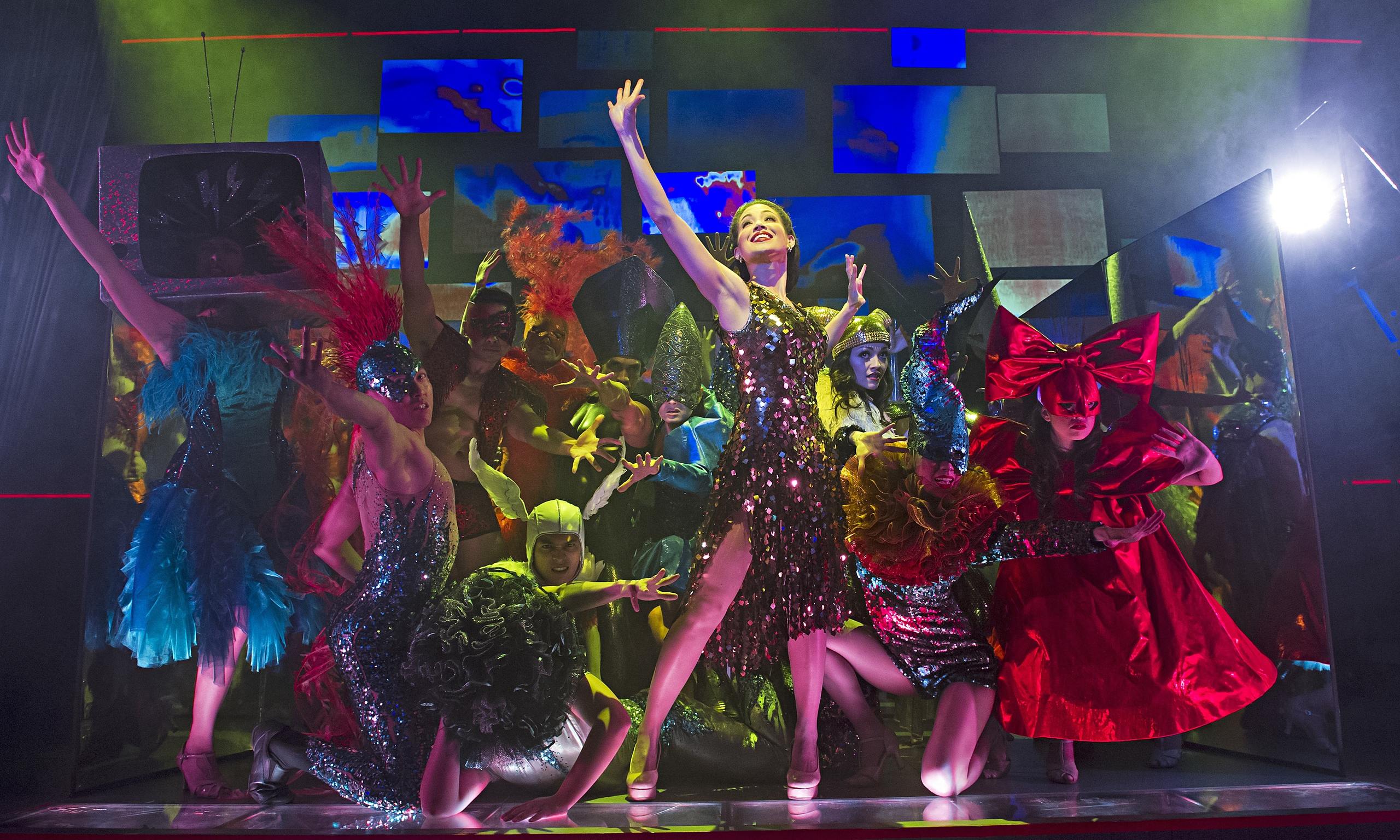
Reading Robert Pogue-Harrison’s book Forests – the shadow of civilization, introduced me to Giambattista Vico and his speculation on the myth of forest dwelling bestial giants primordial fear of thunder which led me to reading about the Tasaday Tribe of the Philipines  – modern day forest dwellers who also feared thunder. The controversy over the authenticity of the tribe has raged since the first media revelation of their existence with implications that the corrupt Marcos regime were involved in the debunking of the story in order to plunder the Tasaday forest home for resources. I then find myself immersed in the midst of the most powerful musical rendition based on the remarkable life of Imelda Marcos  – Here Lies Love – at the National Theatre.

David Byrne and Fat Boy Slim - Here Lies Love

David Byrne and Fat Boy Slim – Here Lies Love

Also colourful and immersive, I loved A.S. Byatt’s Ragnarok – The End of The Gods  – a delicious imagining of Norse mythology full of lavish imagery. There are many ways for the world to end.

Nietzsche wrote ‘Every culture that has lost myth has lost, by the same token, its natural healthy creativity.’

I have just started A.S. Byatt’s novel Possession to find Vico popping up again as a main thread in the storyline. It seems he is everywhere I look at the moment.

Visited Bloomberg New Contemporaries at the ICA. There is a particular flavour here but I’m not sure I can articulate what it is.

So pleased for the talented Ben Zawalich and Alice Gauthier 2014 graduates who were among several RCA printmaking graduates in this show.

Alice Gauthier Tourne  video still

Alice Gauthier  video still

Ben Zawalich

Ben Zawalich

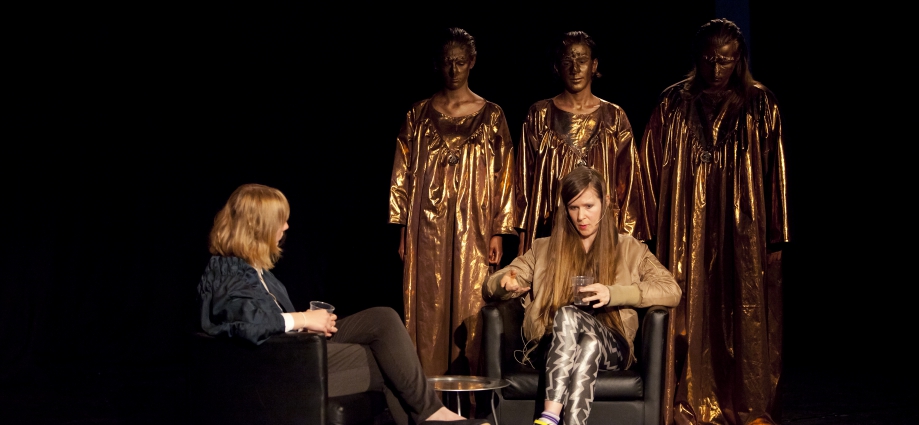
I did enjoy the video piece by Emely Neu though not sure if it was on any other level than how I enjoy the absurdity in Big Train.

Emely Neu

Emely Neu

There appeared to be a serious interview going on, while three characters in golden robes and painted faces would from time to time make Tourette’s like interjections of nonsense or the sort of noises a bored toddler might make waiting for a parent to finish talking to a friend and divert their attention back to them.

Visited Constructing Worlds: Photography and Architecture in the Modern Age at the Barbican Gallery. I liked the title, Constructing Worlds.

Some work was interesting as documentation of place and other work offered an interpretation or an opening to somewhere else.

The Becher’s water tower collection is a favourite piece. Similarities and differences unite us as individuals.

Bernd and Hilla Becher

Bernd and Hilla Becher

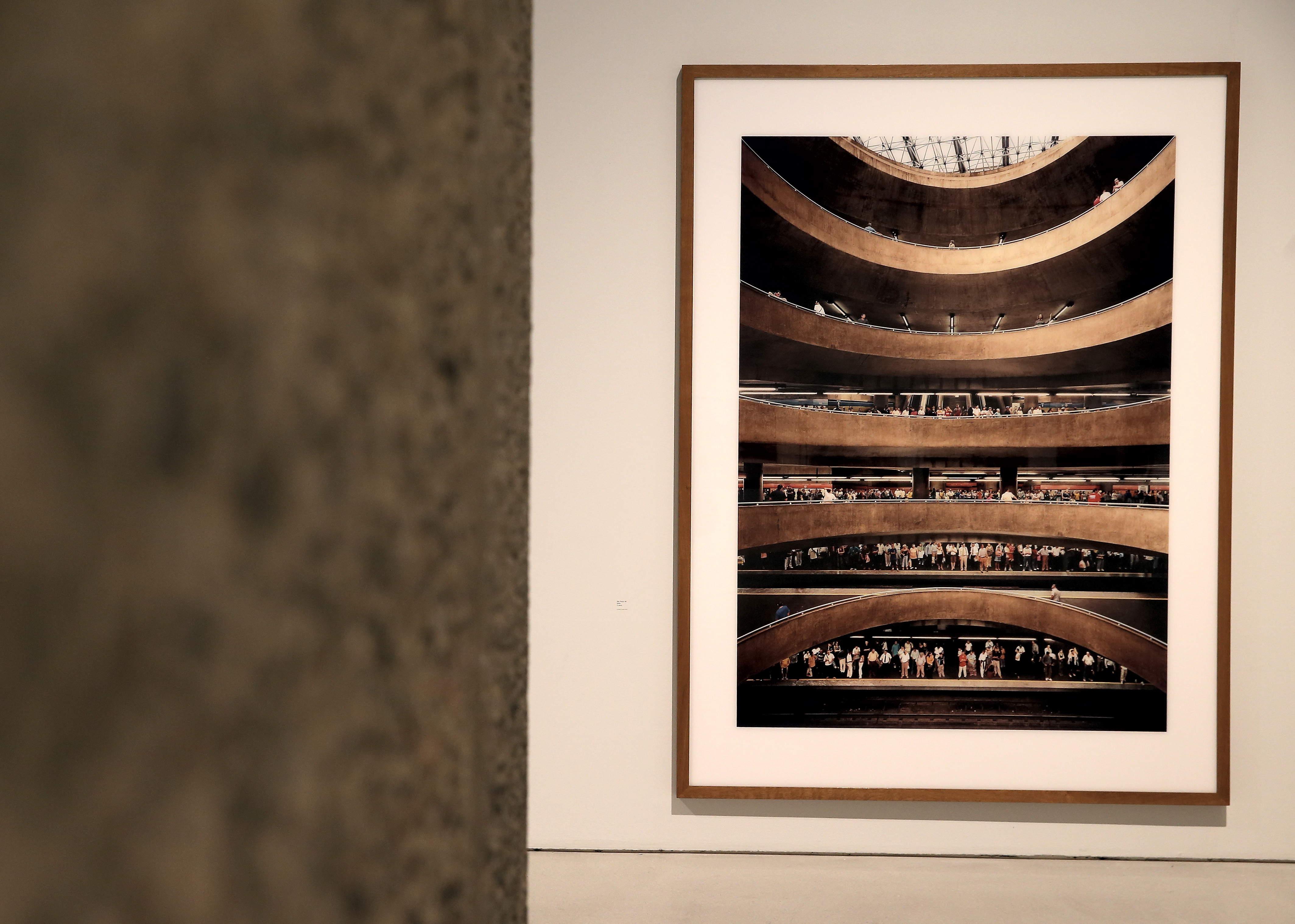
The sheer scale and drama of a Gursky image is always mindblowing. Its like we stand back and go wow, we made this, we have impressed ourselves, and he captures that awe.

Andreas Gursky

Andreas Gursky

Iwan Baan’s images of Torre David, an abandoned skyscraper in Caracas, home to thousands of squatters until last year,  had added interest because we had seen it on Homeland, also these were the only images in the show with no white borders.

Iwan Baan

Iwan Baan

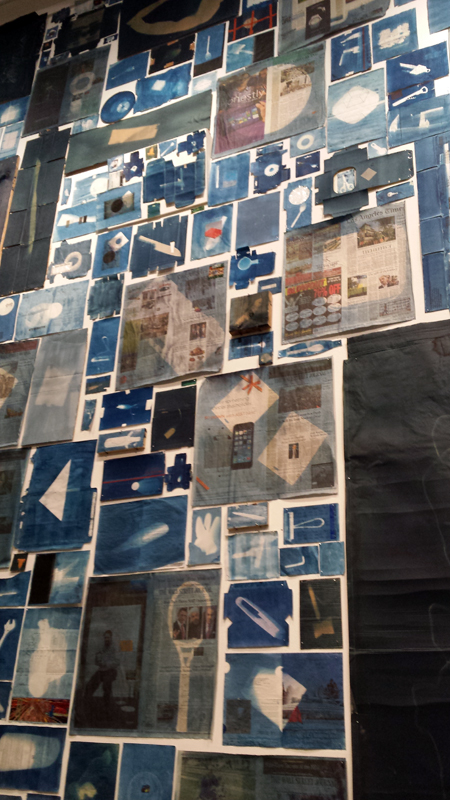
While at the Barbican had a look at Walead Beshty’s impressively scaled visual diary in the Curve.

Walead Beshty

Walead Beshty

Over 12,000 cyanotype prints pasted to the wall. Surprising detail captured in some of the prints while others were simple silouhettes. It looked like a satisfying project to fill so much space through a process.

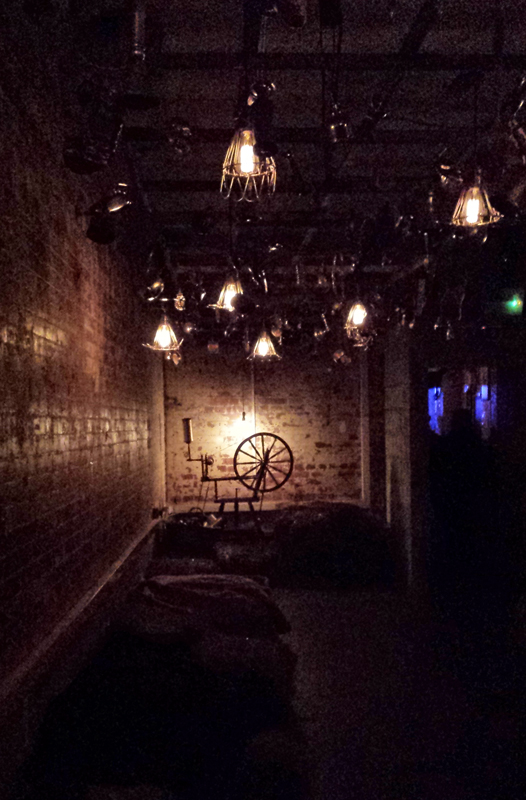
As part of a series of events surrounding the RA exhibition ‘Anselm Kiefer’, novelists A.S. Byatt and Lawrence Norfolk lead a discussion on the Brothers Grimm Fairy Tales in this Podcast: – venture together into Germany’s dark woods.

The forest as dark, dangerous and profane, on the edges of civilization. It once surrounded the city, now it is removed. The dark inner space is inviting yet fearful. In history it is the separation between earth and sky. In Vico’s myth it is the heavy branches of the forest that hide the sky – the home of the gods, from the wild men of the forest. The deep recesses of the forest hide danger and wild beasts in their mazes. The laws are those of survival.

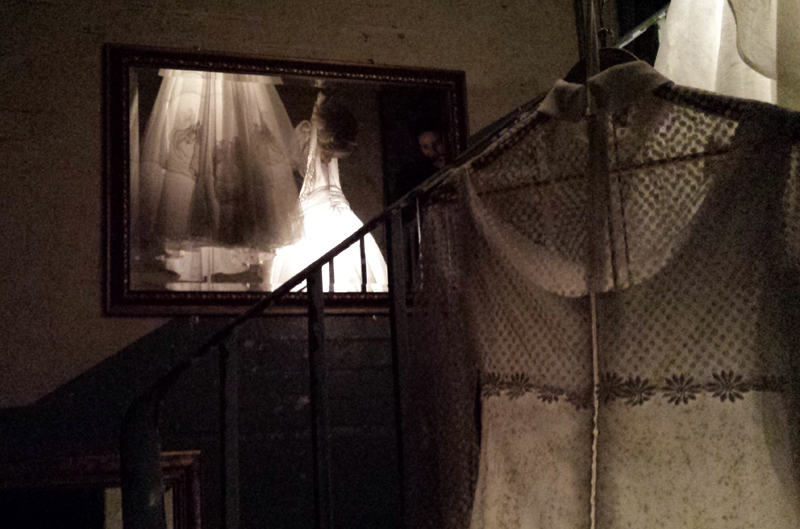
Grimm Tales staged at the Oxo Wharf were given the Philip Pullman treatment.

Grimm Tales

Grimm Tales

Led from one set to another in the theatrically dressed wharf building a series of Fairy Tales were acted out.

Grimm Tales

Grimm Tales

The setting was magical enough and the actors enthusiastic

Grimm Tales

Grimm Tales

but the pace was a bit too slow and disjointed to really carry the audience through

Grimm Tales

Grimm Tales

I heard Philip Pullman on the radio the other day talking about His Dark Materials. There seems a lot of ideas explored in his novels that I would find interesting in connection with my work at the moment.

The Golden Compass that God used to set a circular boundary around all creation mentioned in Milton’s Paradise Lost:

Then staid the fervid wheels, and in his hand
He took the golden compasses, prepared
In God’s eternal store, to circumscribe
This universe, and all created things:
One foot he centred, and the other turned
Round through the vast profundity obscure

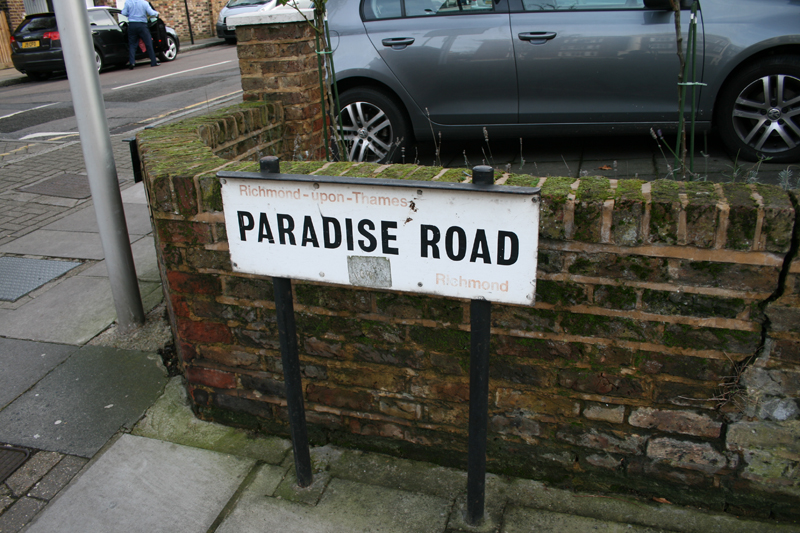
I have been on another paradise location exploration. This was to Paradise Road in Richmond.

1501 road sign

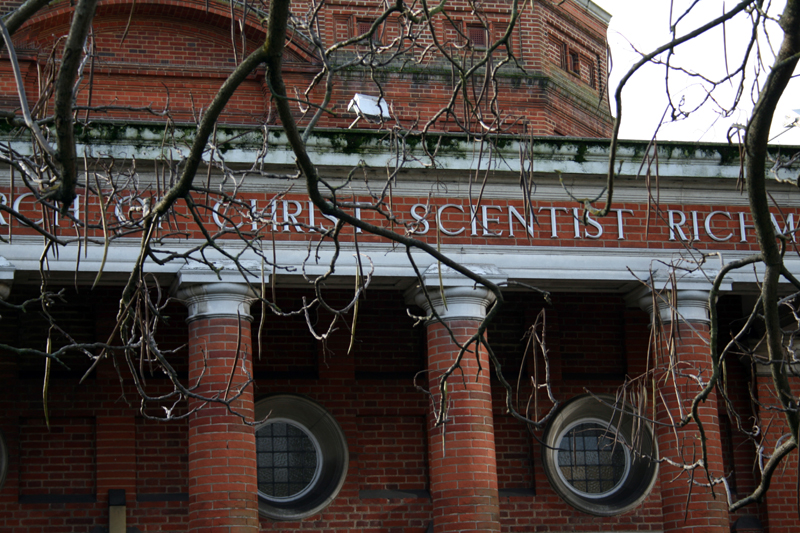
I was delighted to find The Church of Christ Scientist at one end

1501 Church of Christ Scientist

and St Mary Magdalene Church of England at the other

1501 St Mary Magdelene's

– alternative routes to paradise?

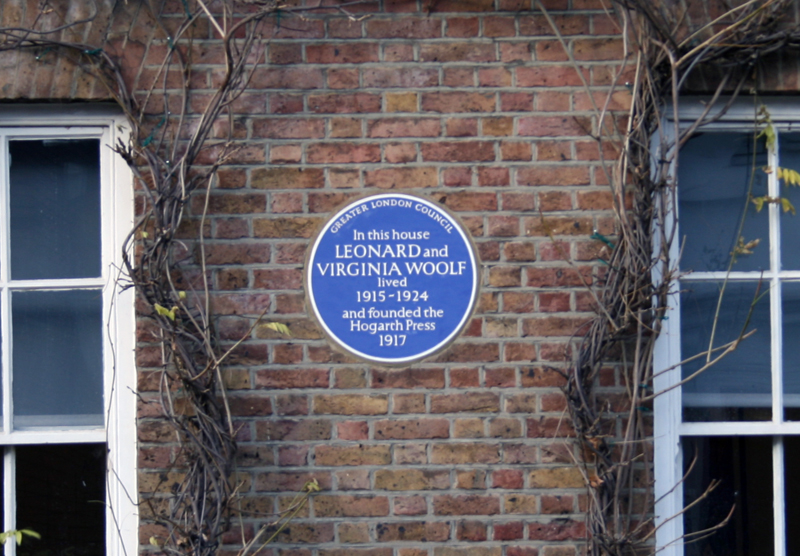
A bit of print history in the road as well.

1501 Paradise Road Richmond

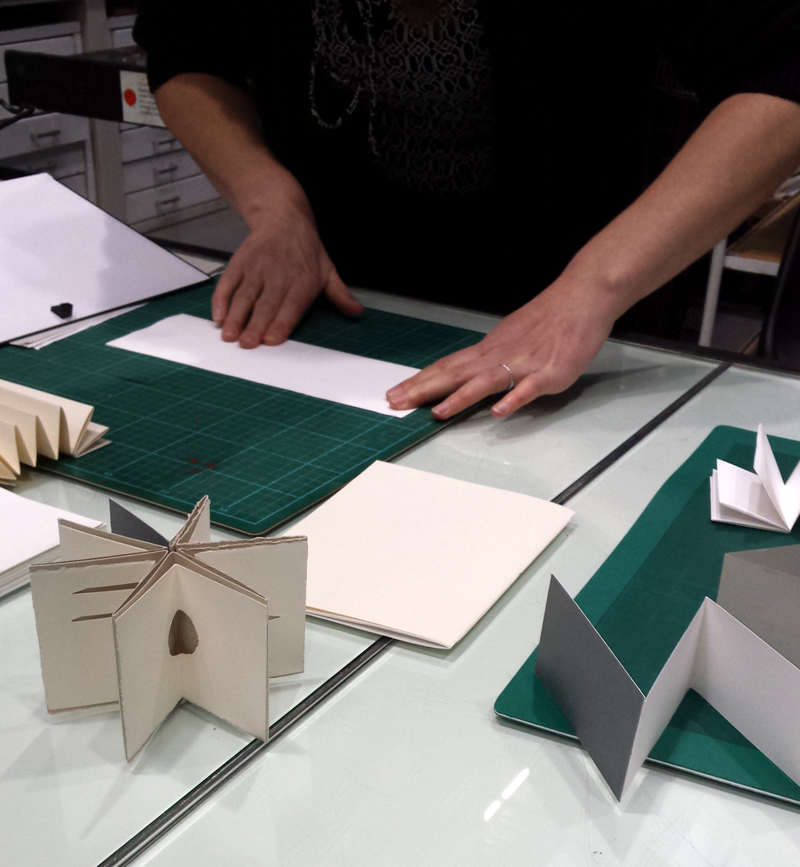
The Hogarth Press was started in 1917 by Leonard and Virginia Woolf, named after their house on Paradise Road. They began by hand-printing books of their own books and then stories from others in the Bloomsbury Group.I had a chance to make some simple books in a workshop at school.

simple bookbinding workshop at RCA

simple bookbinding workshop at RCA

When the intensity of the MA is over come July then I might have a go at this.

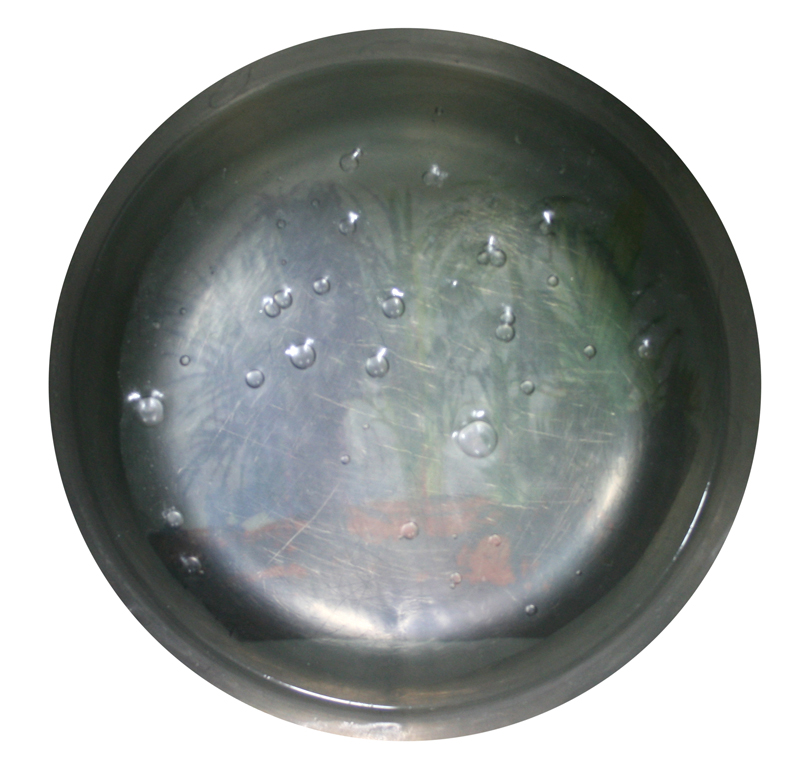
Thinking about portals to other dimensions I decided to try submerging an image in water. At first I wanted the fabric to stay on the bottom of the bowl but it refused to do so – so I left it floating, wondering if it would eventually sink, after a while bubbles appeared on the surface trapped by the fabric – I have found this evidence of unseen activity intriguing – like the activity in the matter of the universe going on around us unseen –  some unseen activity we can understand,  other intangible things like the aura of place and the dream of paradise cannot be pinned down or explained in terms of materiality.

1501 pool