Archives for posts with tag: navigation

Photoshoot with Warren King Photography resulted in some great images of my work ready for the press release and promotion of A STONE SKY – the upcoming joint exhibition, with Julie F Hill, that we have been working towards for many months. The exhibition will be at Thames-side Studios Gallery 11th – 26th November 2023 with a private view on 10th November 6-9pm.
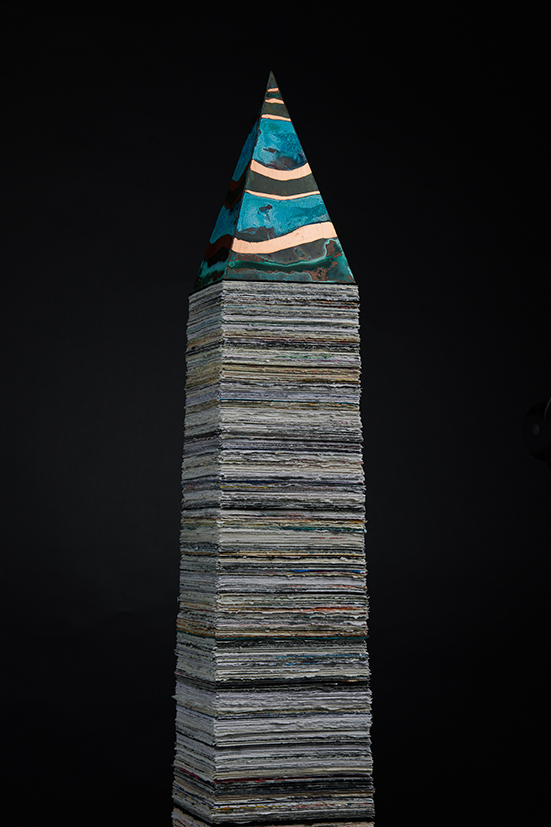
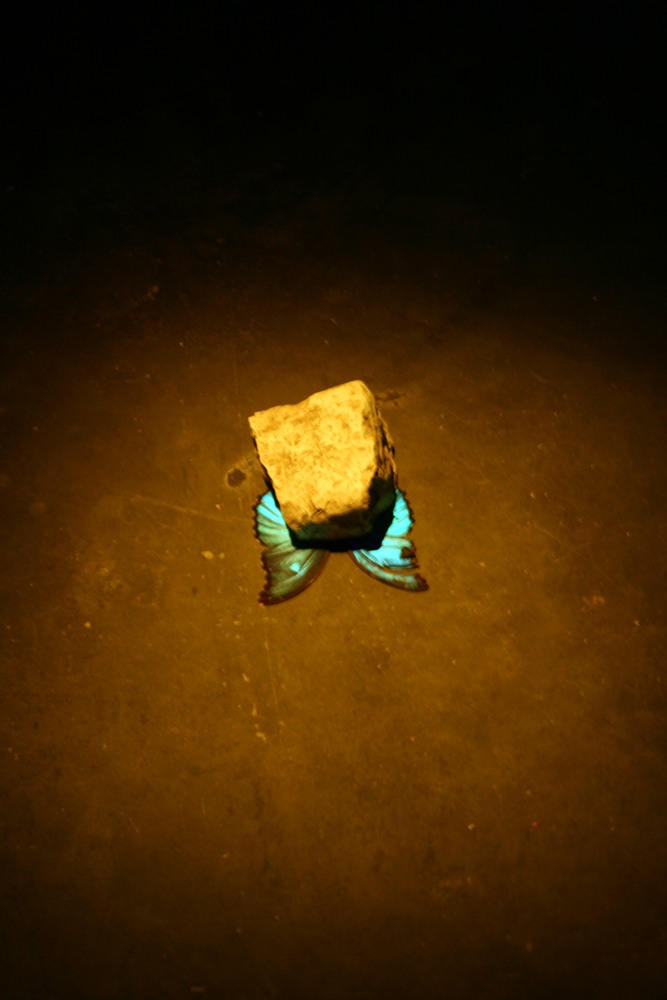
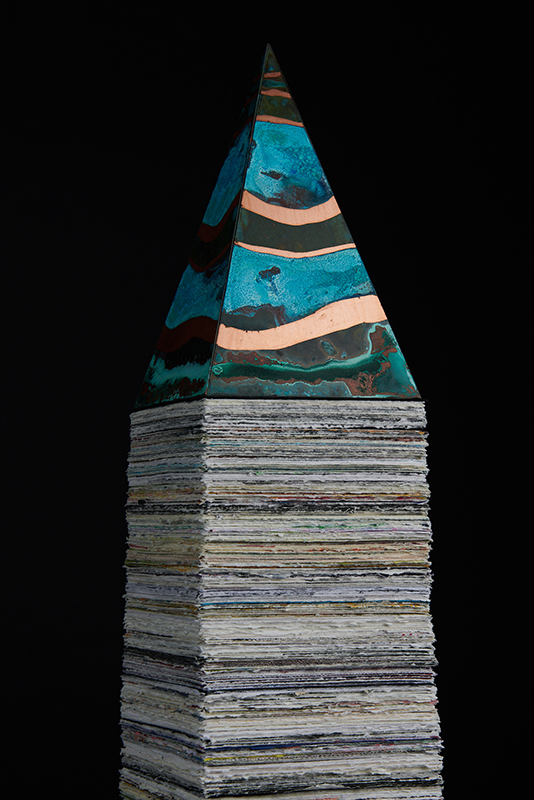
Susan Eyre, Azimuth Obelisk (of sedimentary knowledge), paper, concrete, patinated copper, 2023 (detail) Photo Warren King Photography
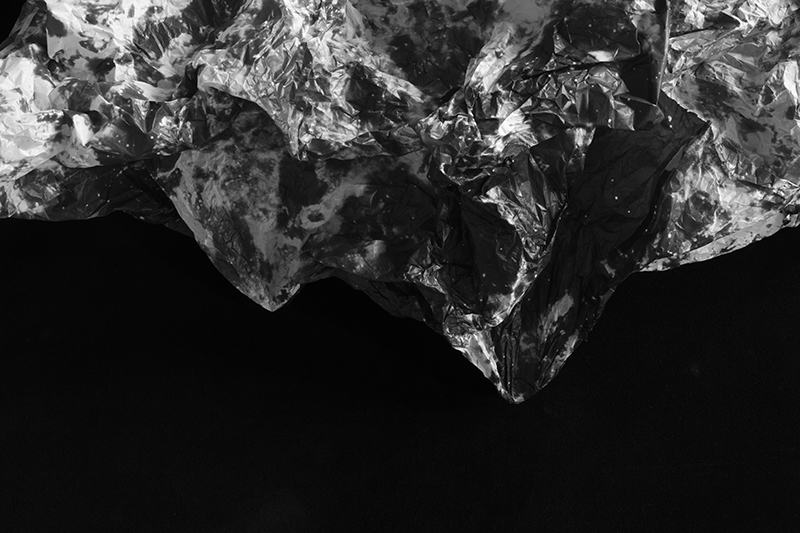
Julie F Hill, Cave, physically manipulated print of infrared James Webb data of barred, spiral galaxy NGC 5068, 2023 (detail).
Photo Julie F Hill

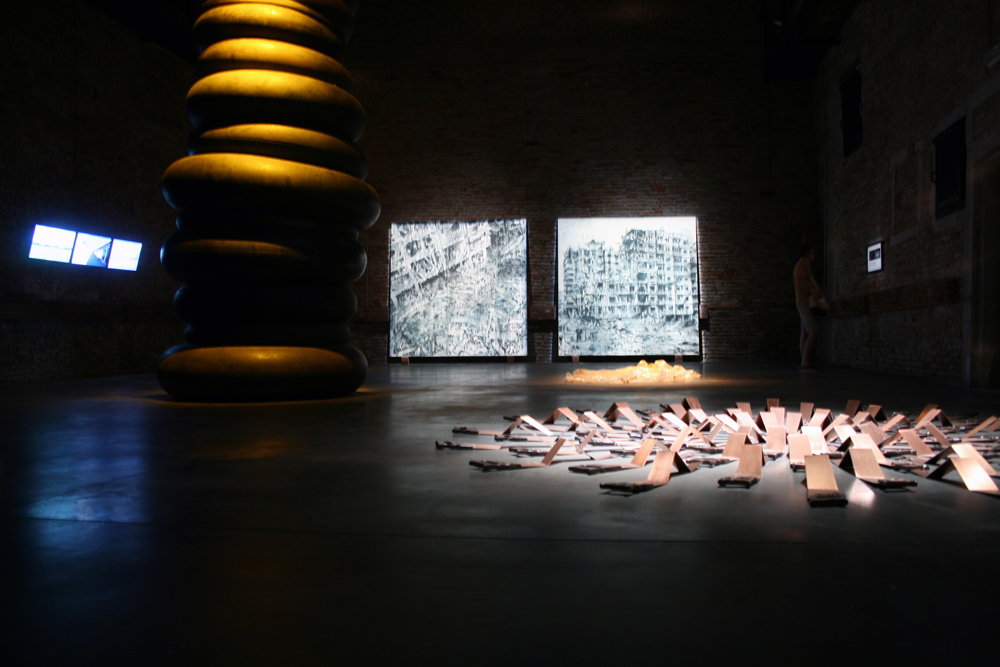
A Stone Sky brings together the works of multi-disciplinary artists Julie F Hill and Susan Eyre who traverse cosmic layers from the deep earth to deep space, exploring manifestations of darkness and its associations with the unknown and undiscovered. Reimagining the idea of an observatory, their sculptures and installations reach for scales and orders that surpass the human, revealing the cosmic at our feet. The exhibition proposes a cavernous realm of real and speculative possibilities that arise from beyond the limits of human perception. Engaging with the extended sensory range offered by technologies such as orbiting space telescopes through to the ability of birds to ‘see’ the Earth’s magnetic field, the artists’ reveal intimate connections between earth and space.

It was great to meet Anjana Janardhan who we have commissioned to write an essay for a publication which will be launched on the final weekend of the exhibition. We are also planning to give some informal readings, tours of the work and I will be running the cloud chamber so visitors can see the trails of cosmic rays – a way of visualising these unseen visitors from the stars.

The Azimuth Obelisk (of sedimentary knowledge) sculpture is an almost 3m tall reimagining of the obelisk erected at Hartland Magnetic Observatory in 1955 as an azimuth mark to be viewed from the Observing Room or Absolute Hut to monitor the drift of the magnetic north pole.
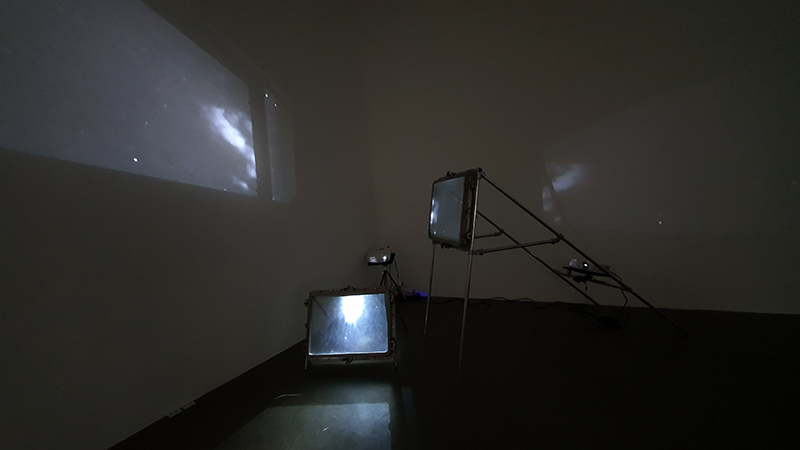
I have obtained an old wooden trolley to put the cosmic ray detectors and projector on for the digital video work The Breath of Stars. This feels in keeping with the original furniture used at Hartland Magnetic Observatory. The Breath of Stars directly interacts with cosmic rays – as each cosmic ray particle strikes a plastic scintillator its energy is recorded and a starburst image video is projected. The interaction of cosmic rays and the solar wind with atmospheric electrical fields combines to influence the unpredictability of the magnetosphere. Most radioactive particles heading for Earth are deflected by the magnetosphere. Without the Earth’s magnetic field deflecting the majority of cosmic rays, life on this planet could not survive.

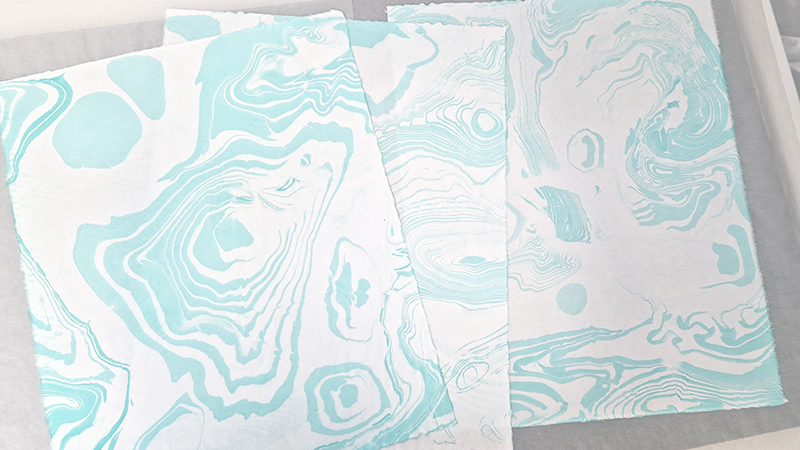
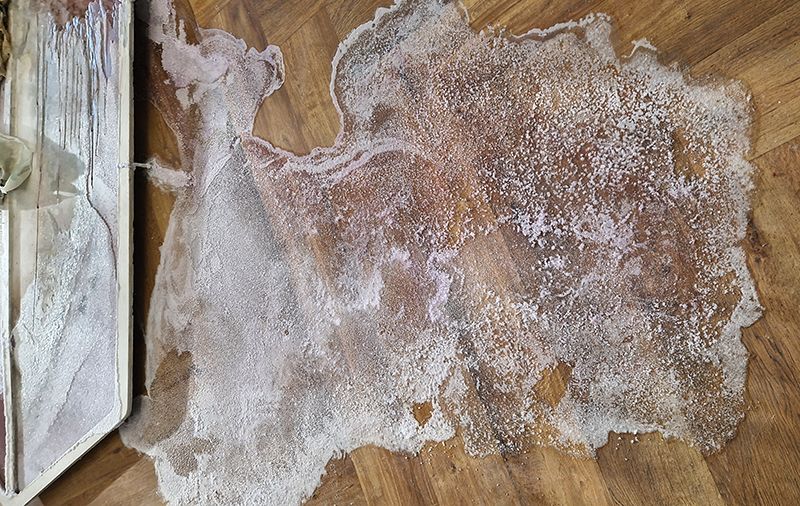
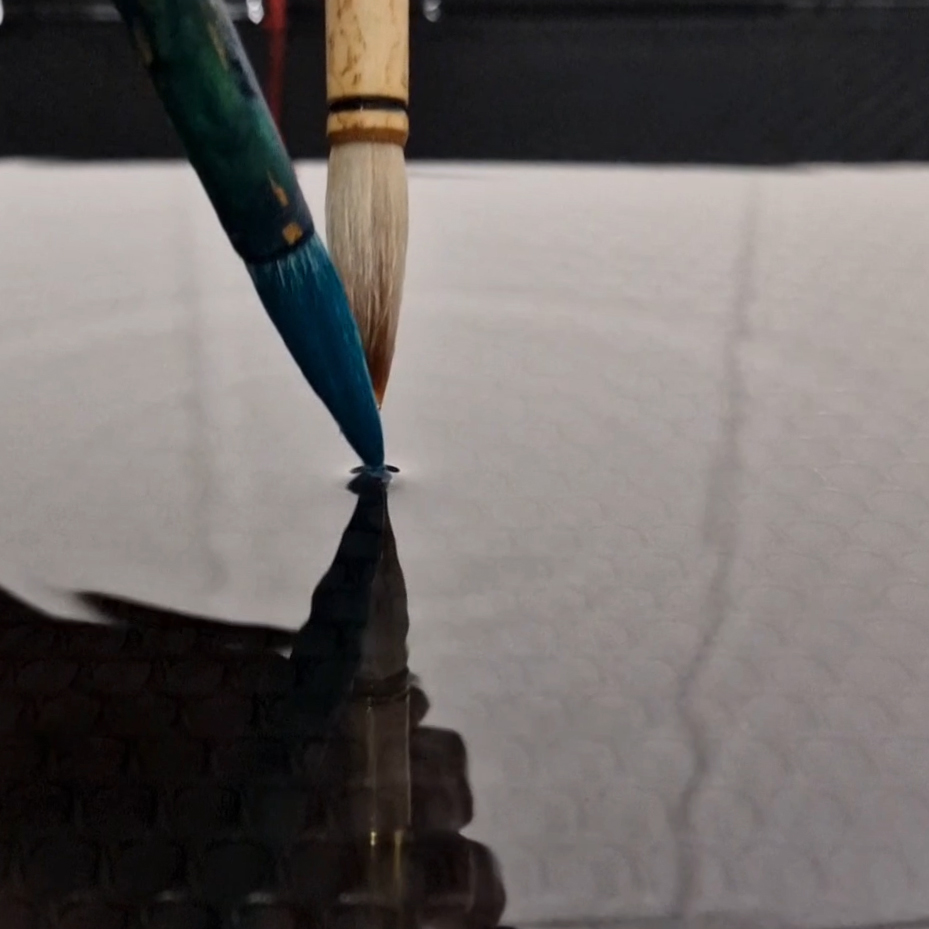
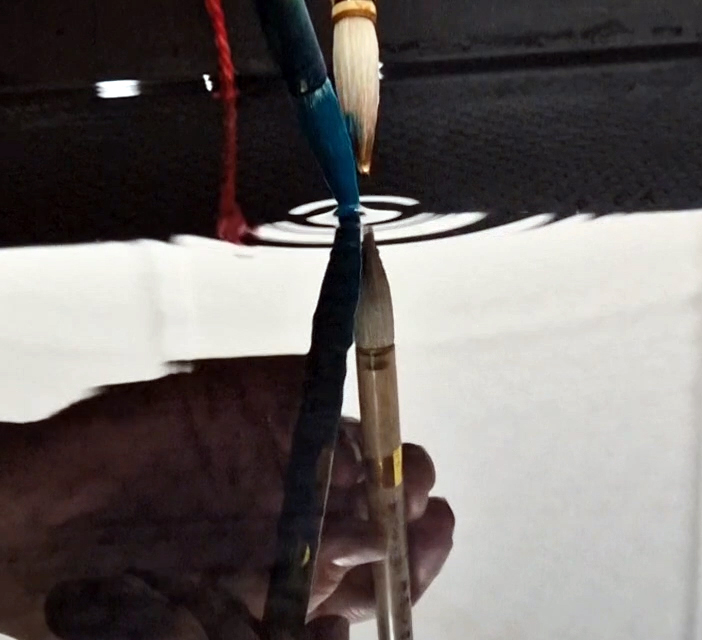
The 48 paper tiles for the roof of The Absolute Hut (of action potential) are made using the suminagashi technique of marbling with a colour to reflect both the sky and the patinated copper roof tiles of the Observation Hut at Hartland Magnetic Observatory. The paper is Japanese Osho Select and is very fragile when wet so has to be pulled from the water tray using a supporting mesh. Topological contours of suminagashi marbling reflect the fluid motion of the Earth’s magnetic dynamo and the pulsating alpha waves of the human brain when subjected to magnetic fields.
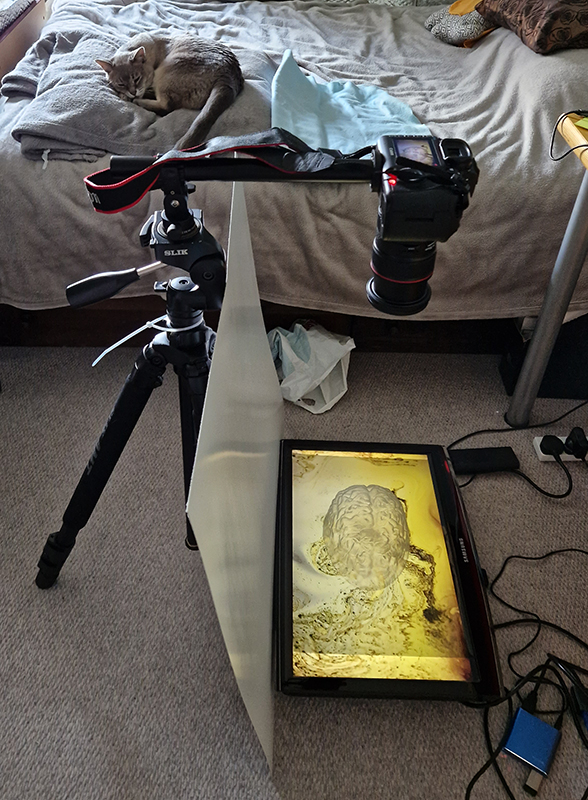
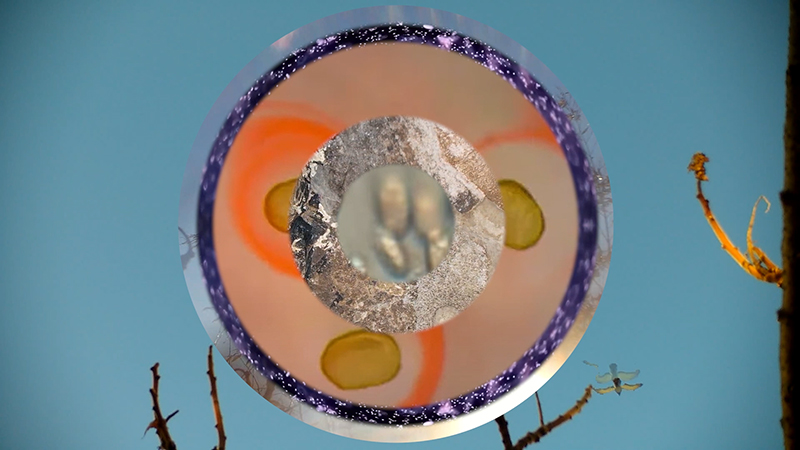
If you place a polarising filter over a screen that emits polarised light and use a polarising lens on the camera, then any plastic, photographed in this method, especially injection-moulded plastic, reveals stress points with a kaleidoscope of colours known as birefringence. Cryptochrome, the protein molecule found in a birds eye that enables birds to ‘see’ the magnetic field is excited by polarised light. Polarisation may also reveal the existence and properties of magnetic fields in the space medium light has travelled through. Research suggests that human alpha brainwaves react to a changing magnetic field. These ideas are brought together in a video work speculating on human magnetoreception via magnetite crystals in brain cells.

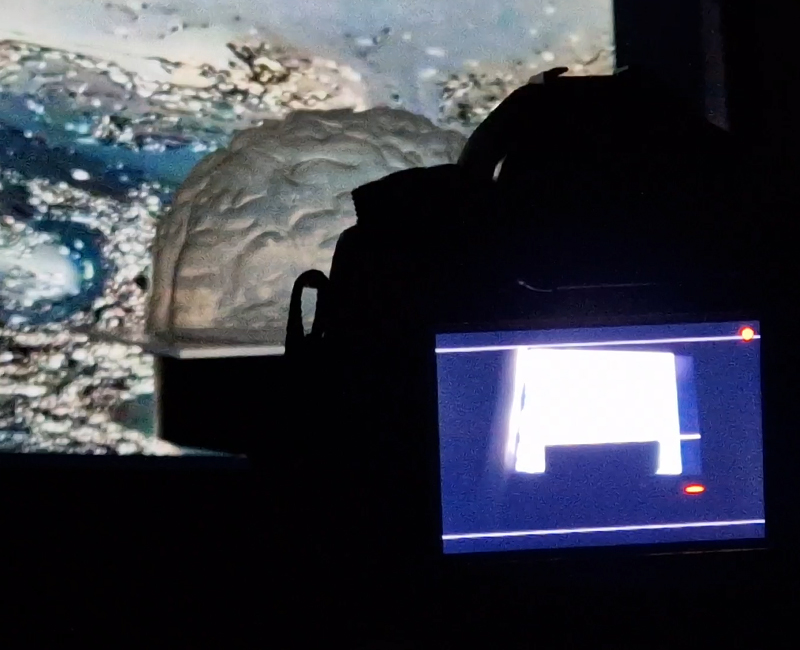
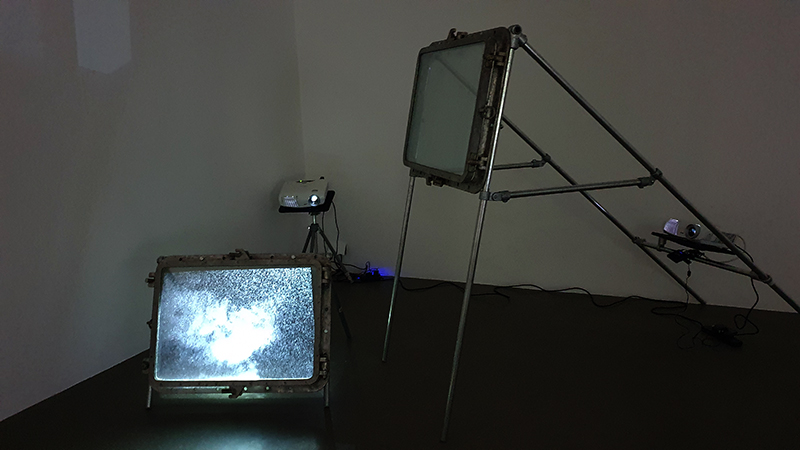
This video work will be shown on multiple small screens inside The Absolute Hut (of action potential) alongside two larger monitors showing companion video pieces exploring dynamics between the Earth’s geologic structure and navigation using the magnetic field.

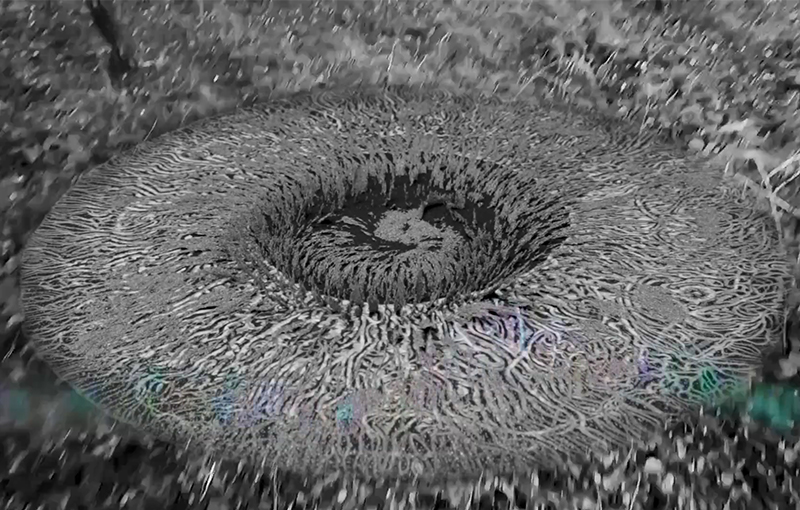
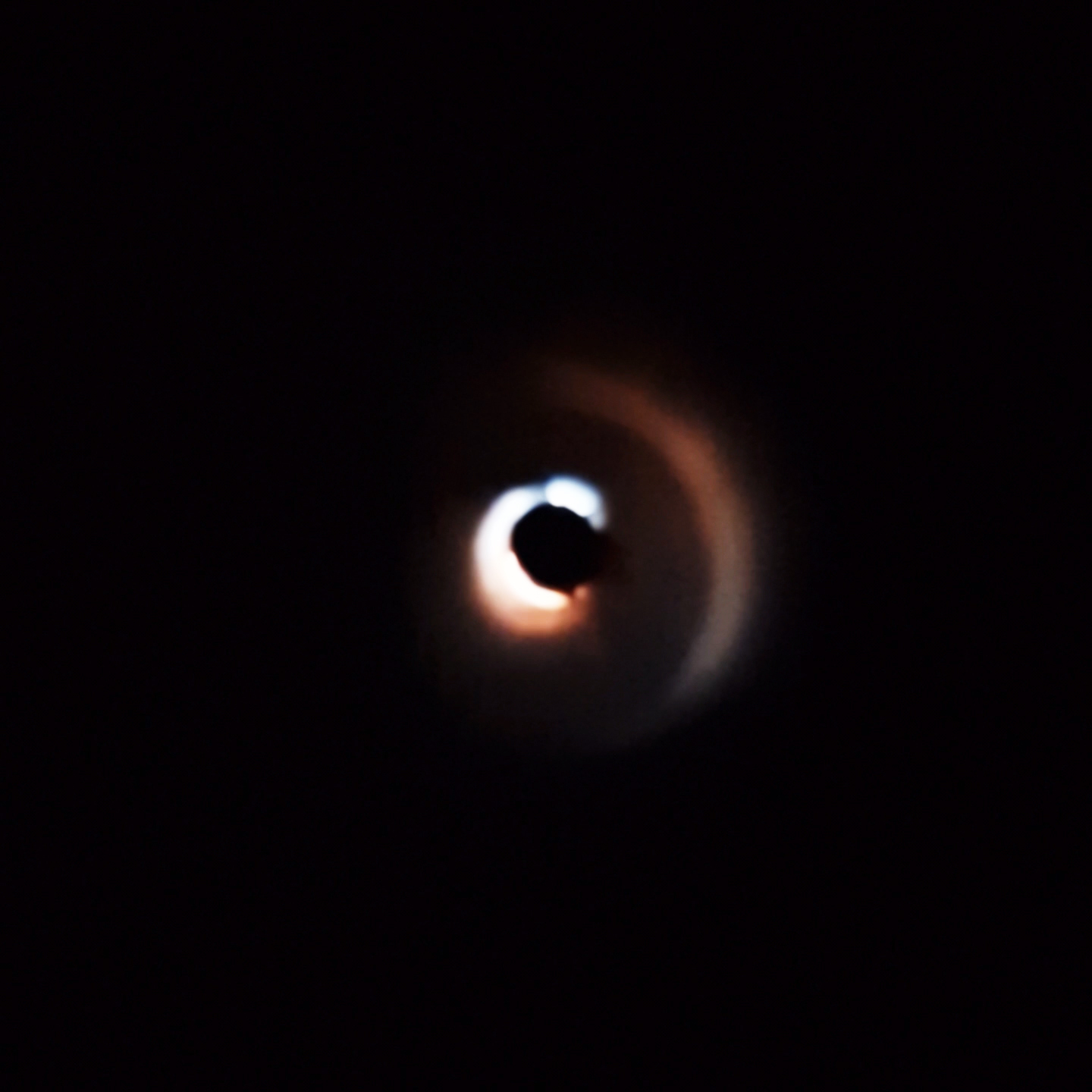
I have replicated the experiment I saw at the National Physical Laboratory, dropping a magnet down a copper pipe to see how the magnetic field generated slows the magnet down considerably. I filmed this and added a tiny led light with the magnet.
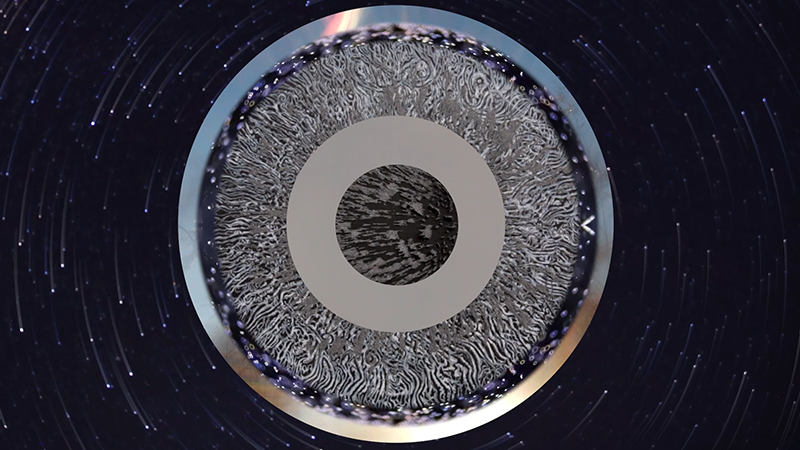
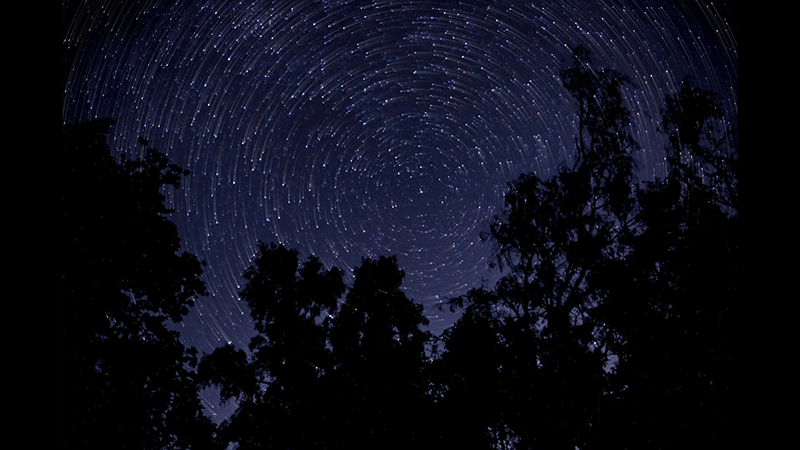
Finally dark skies and fine weather coincided so I was able to go and make a time lapse of the stars rotating around Polaris.
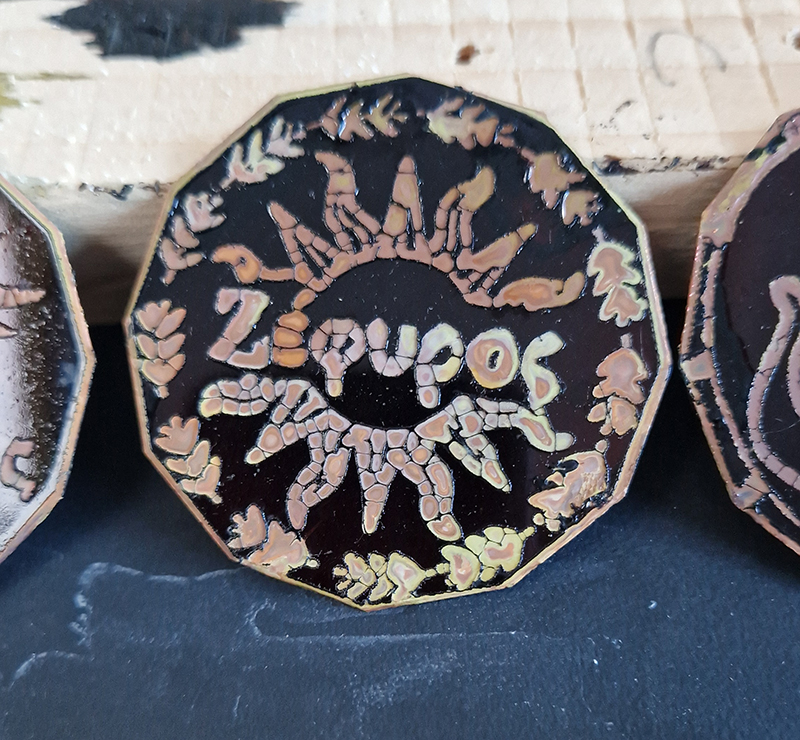
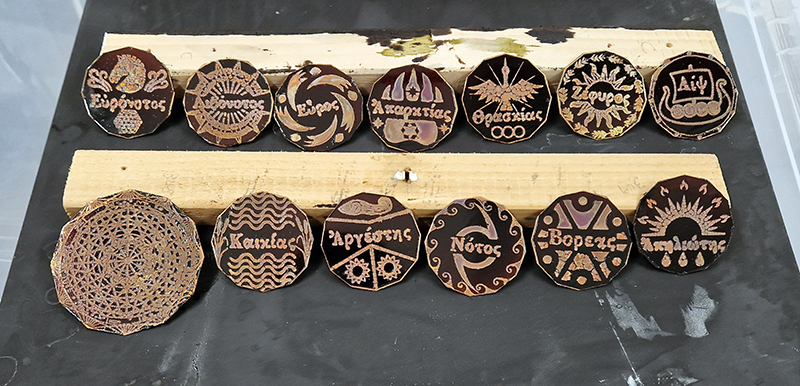
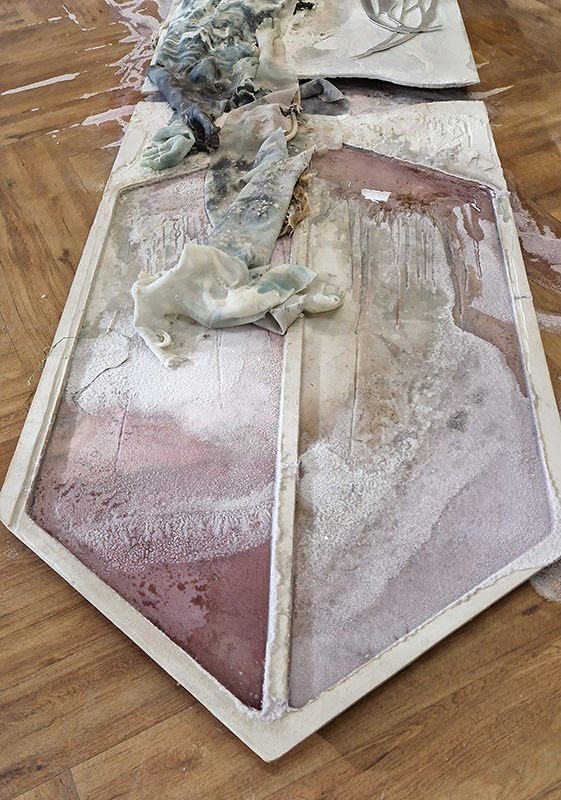
Instruments of the Anemoi is a set of three dodecagon tablets cast in Snowcrete, a non-magnetic cement, as used in a magnetic observatory. Suggestive of the pedestals that support various instruments used in monitoring the Earths’ magnetic field they also respond to an ancient anemoscope “table of the winds” inscribed with the Greek and Latin names of classical winds on each of its twelve sides.

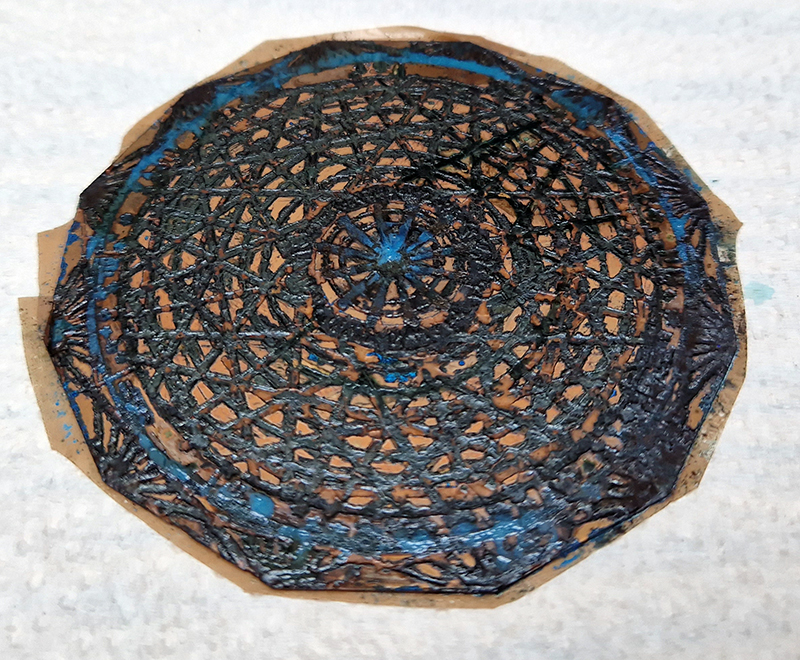
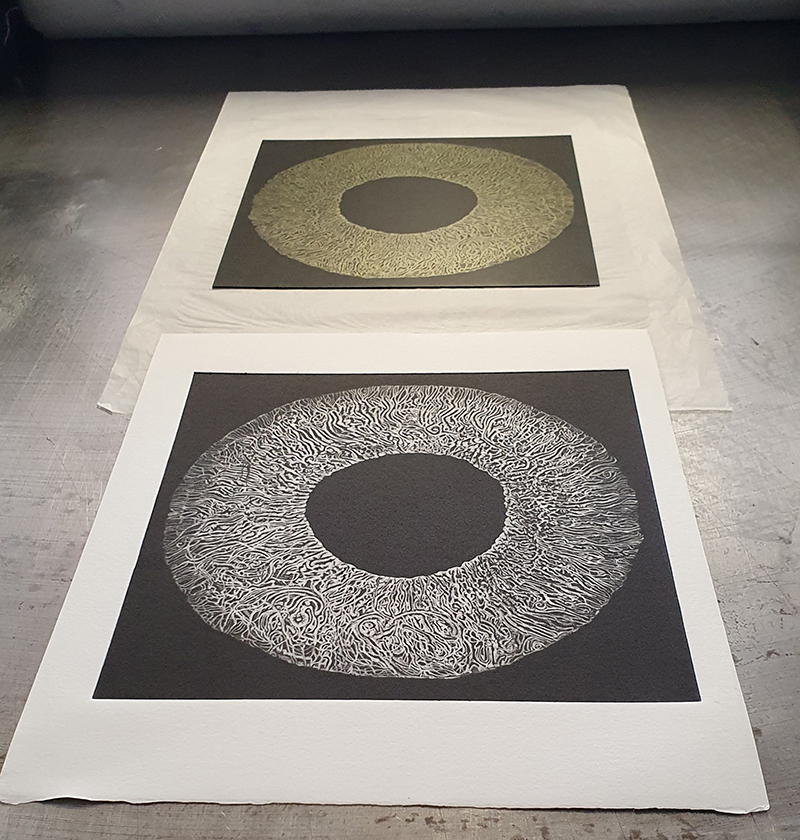
Hand cut copper pieces to be etched with images based on associations and attributes of the twelve Greek wind gods.

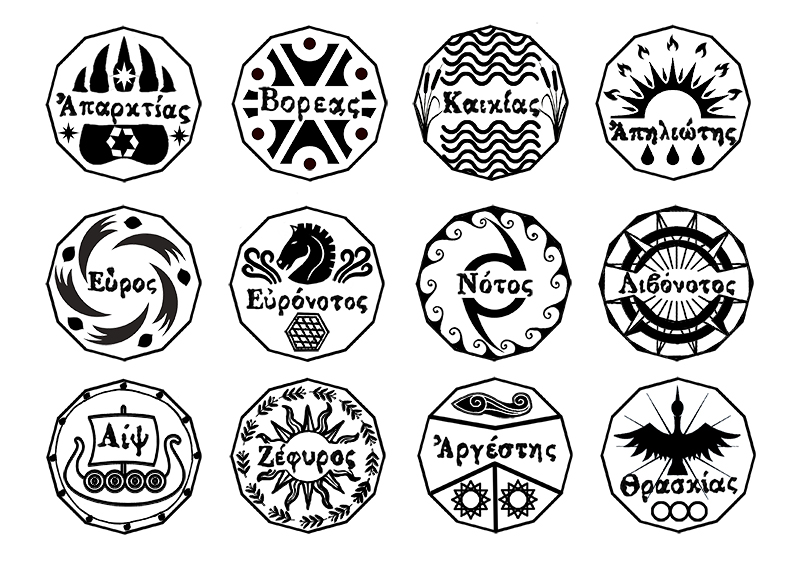
Sugar lift solution is screen printed onto the copper pieces.
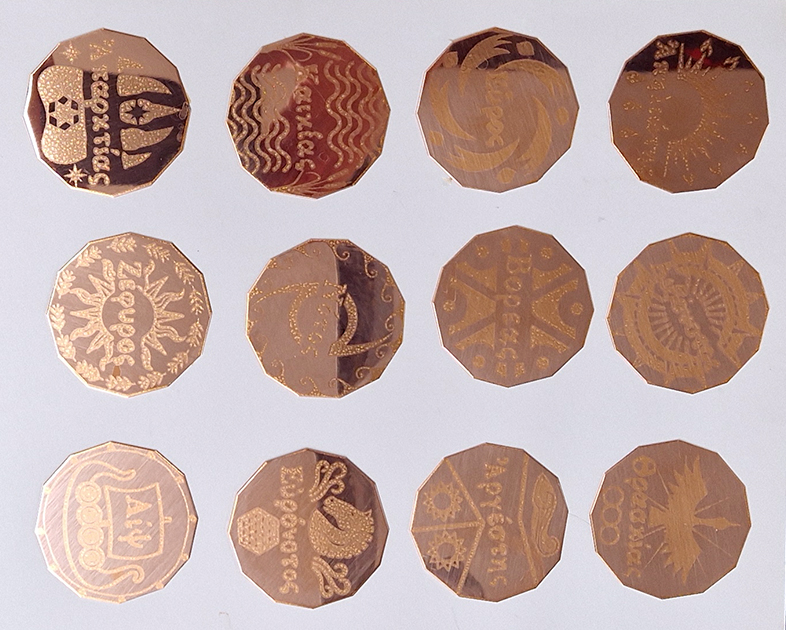
These are then dipped in bitumen and immersed in hot water where the sugar slowly dissolves to reveal the image.

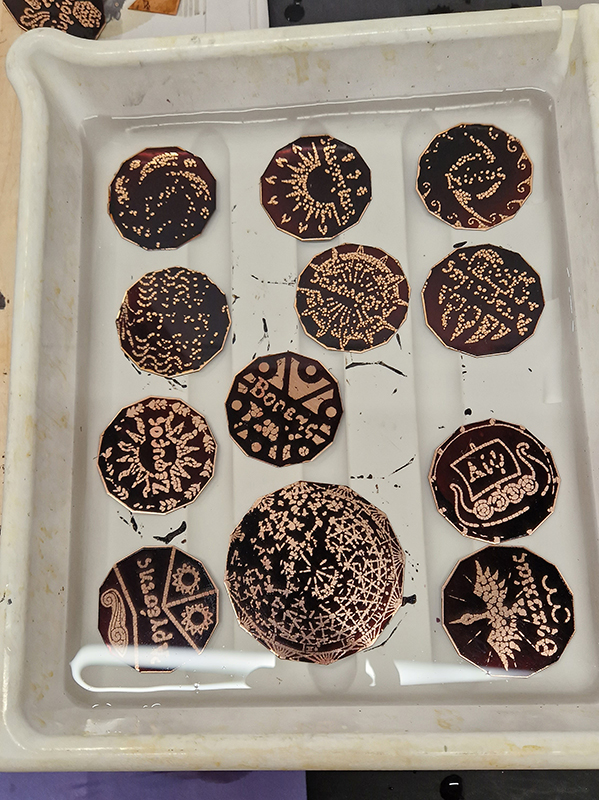
They are then left to dry before being etched.
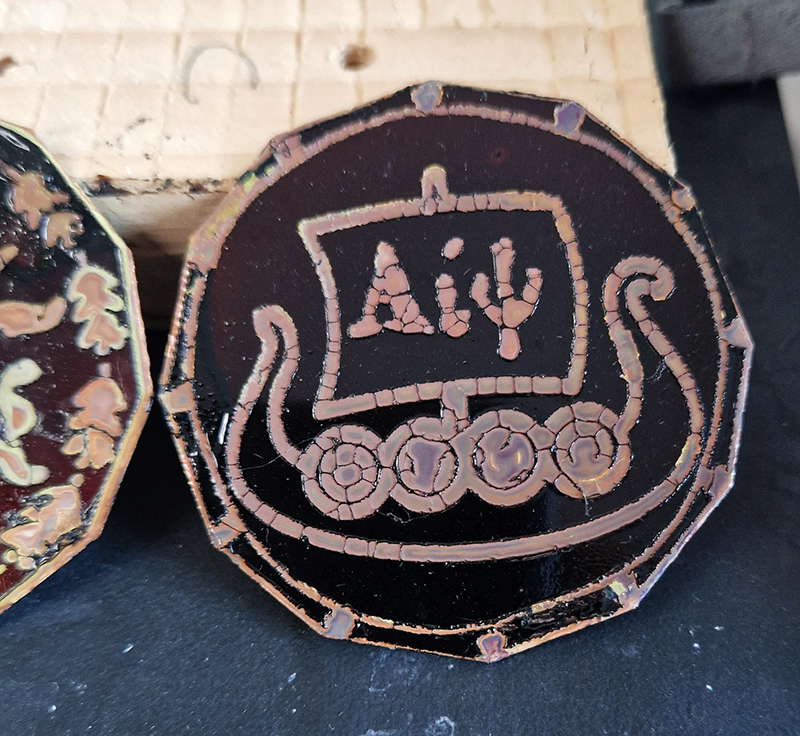
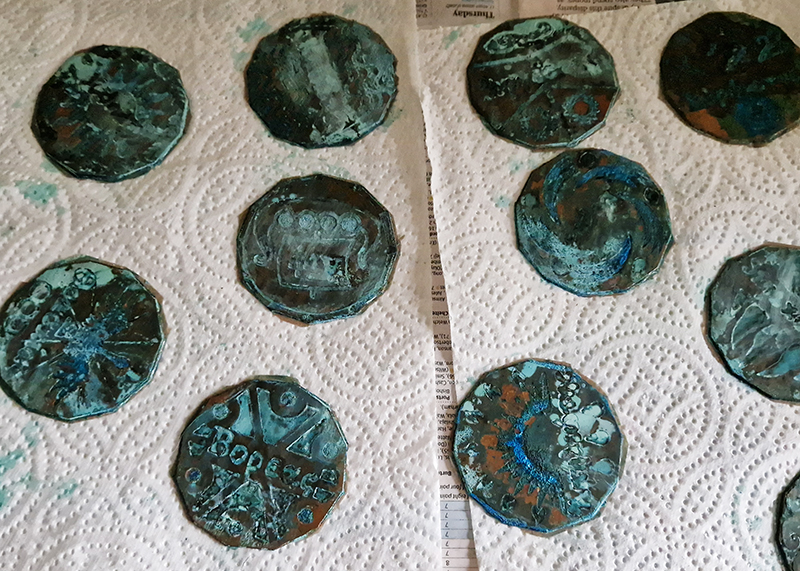
These were etched for 2 hours in an Edinburgh Etch solution, made with ferric chloride, citric acid and water to get a deep etch. The detail in the bitumen held very well. I constructed a collagraph from card to attach them to for casting in concrete. Once etched the detail areas were painted with a soy sauce solution before being placed in an ammonia vapour bath.
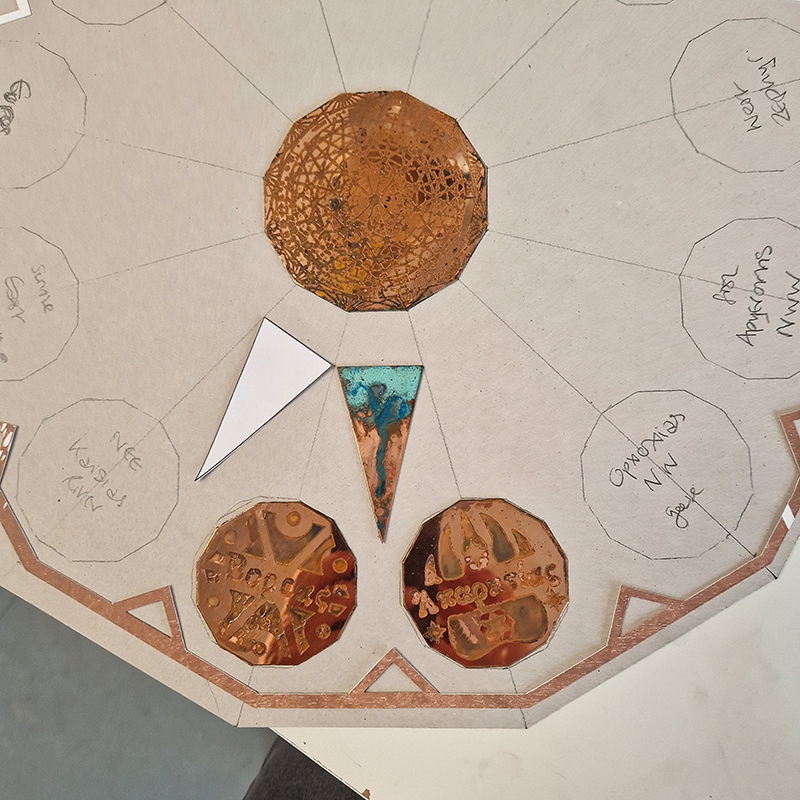
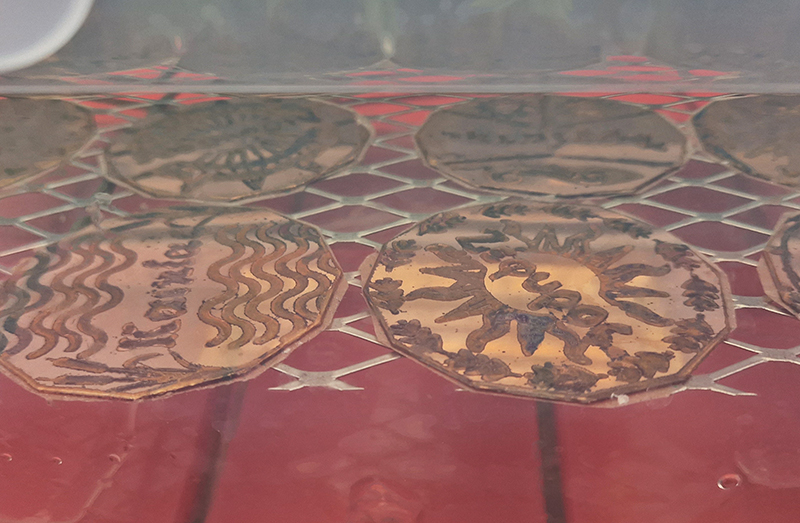
After a few hours patinating they are removed to dry before being cleaned up.

Positions are marked out on the collagraph and double sided tape is used to secure the pieces in place face down. The collagraph is then placed in the silicon mould ready for casting with Snowcrete – the same non-magnetic concrete used at a magnetic observatory.
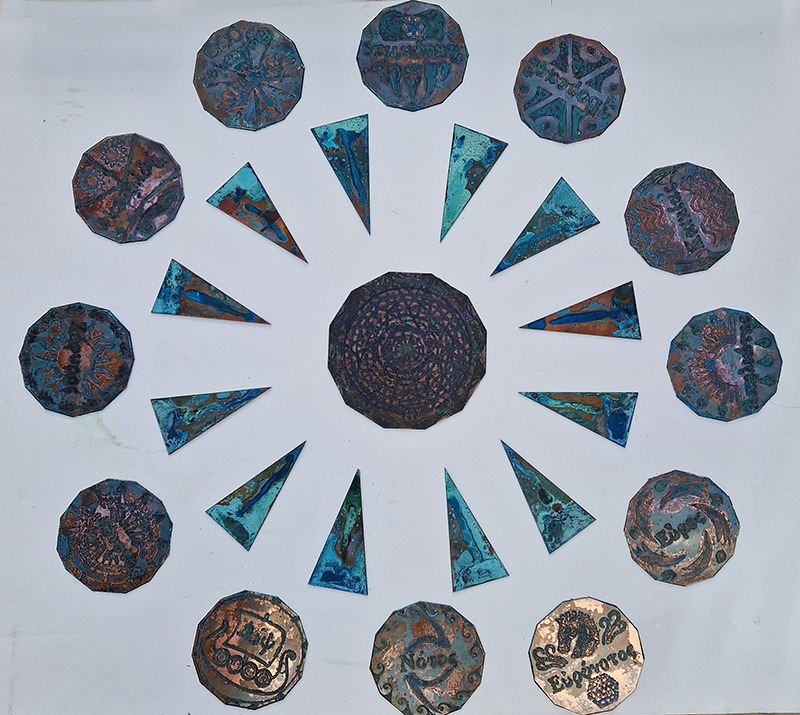
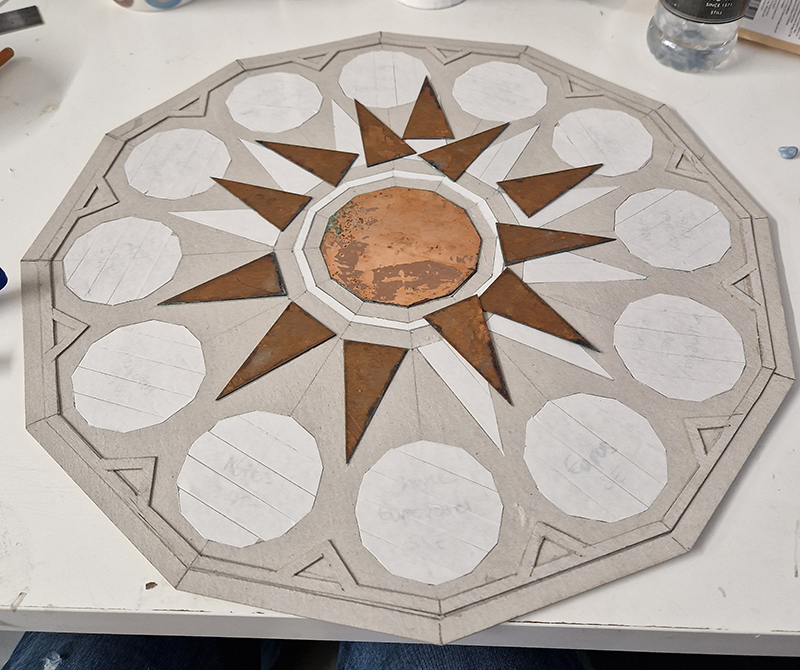
This is the third of the tablets to be cast for the work Instruments of the Anemoi. The first holds a copper bowl with a ‘silver fish’ floating in water based on the oval shaped compass needle (illustrated in Breve Compendio de la Sphera de la arte Navegar by Martin Cortes 1551) as symbol of the silver fish – wafer thin fish shaped iron leaves used by 11th century Chinese geomancers.
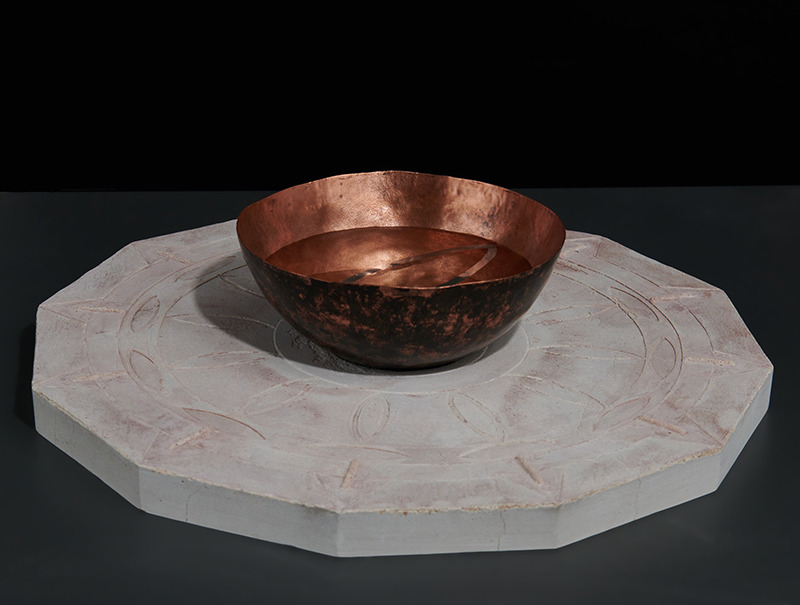
Photo Warren King Photography

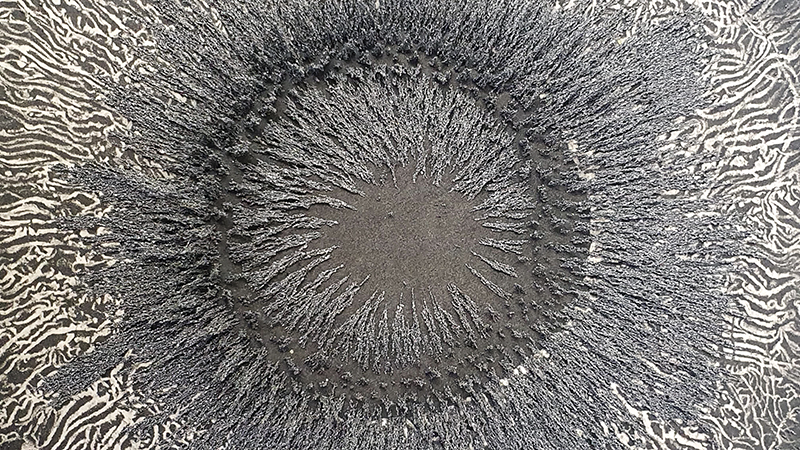
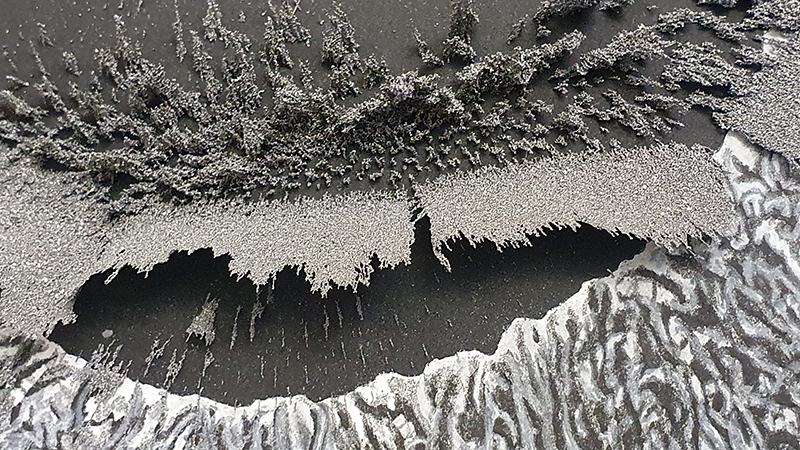
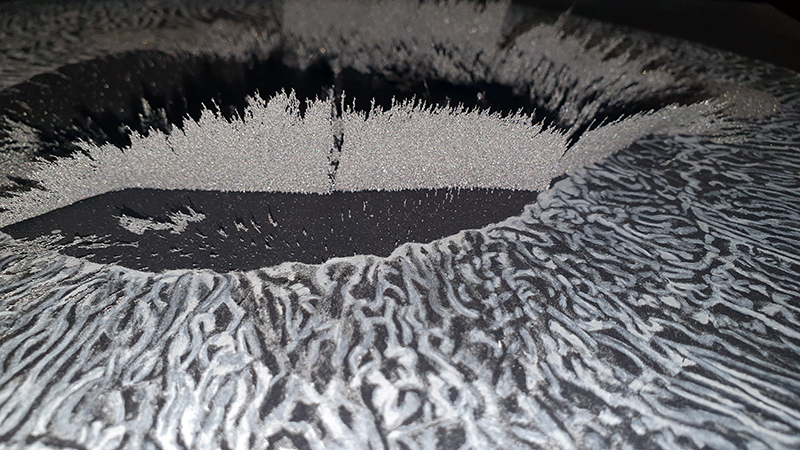
The second has embedded magnets in a pattern revealed by old nails and iron filings over the surface. One legend on the discovery of the lodestone recalls a Greek shepherd who noticed the nails in his boots were attracted to the lodestone (also known as magnetite a naturally occurring mineral).
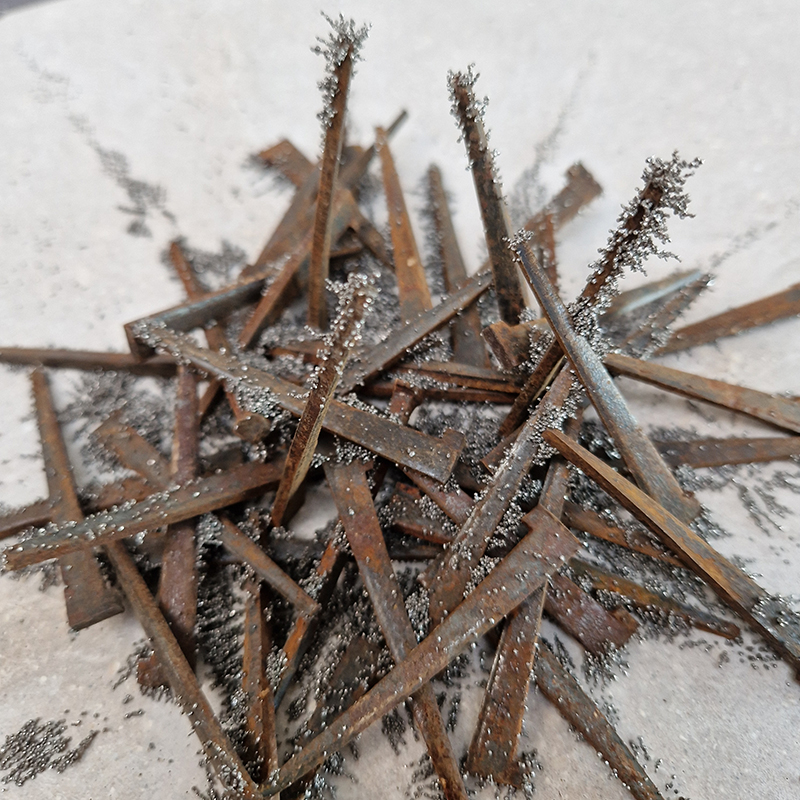
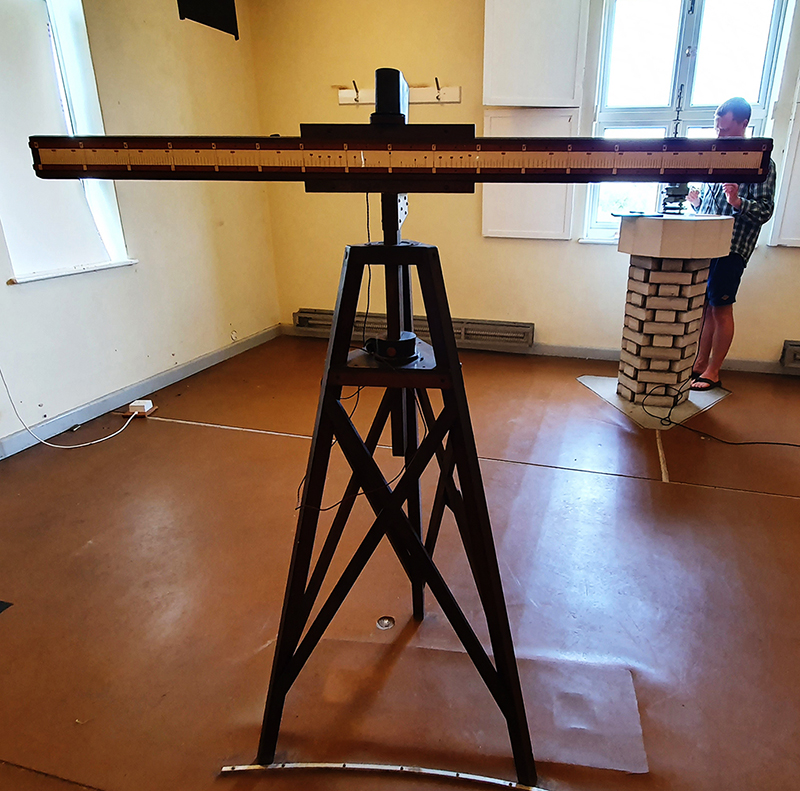
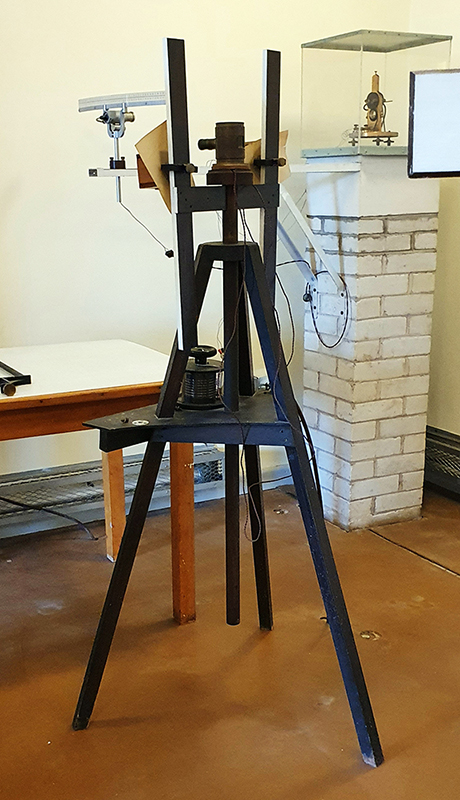
The tablets will be shown on adapted wooden theodolite or telescope tripods in the spirit of equipment seen below during my research trip to Hartland Magnetic Observatory.
Gallery Visits

Seismic Mother curated by Charly Blackburn and Holly Birtles at Hypha Space – an exhibition of 20 artists whose work attempts to communicate the seemingly incomprehensible nature of the earth’s magnitude and magnificence, temerity and resilience as it endures, regenerates and struggles to survive through the slow violence of ecological catastrophe. I visited for the book launch and performative reading from Stephen Cornford whose book, Petrified Matter, I bought. It’s an enlightening read on the links between photography and fossils through mineral, chemical and data recording processes, going on to speculate on future geology and the impossibility of reversing the extraction process by separating minerals used in mobile phones and other technology to return these back to the soil.
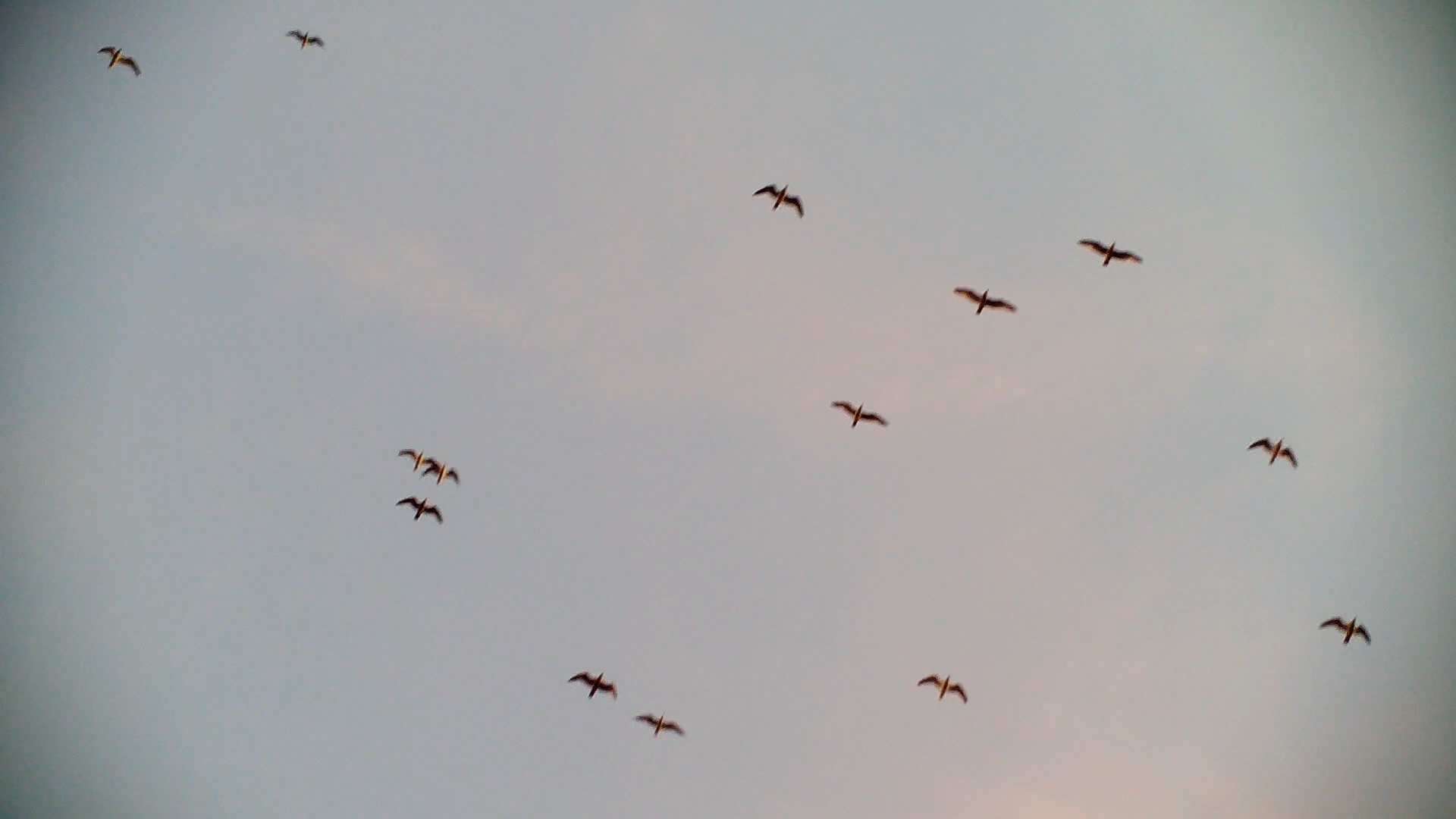
The fascinating and perilous journeys made by migrating birds has been a natural wonder for centuries with the first records of this phenomena made more than 3,000 years ago. The innate knowledge of migratory birds is mentioned in Job and Jeremiah and the ancient Greek writers Homer, Hesiod and Aristotle noted their passage.

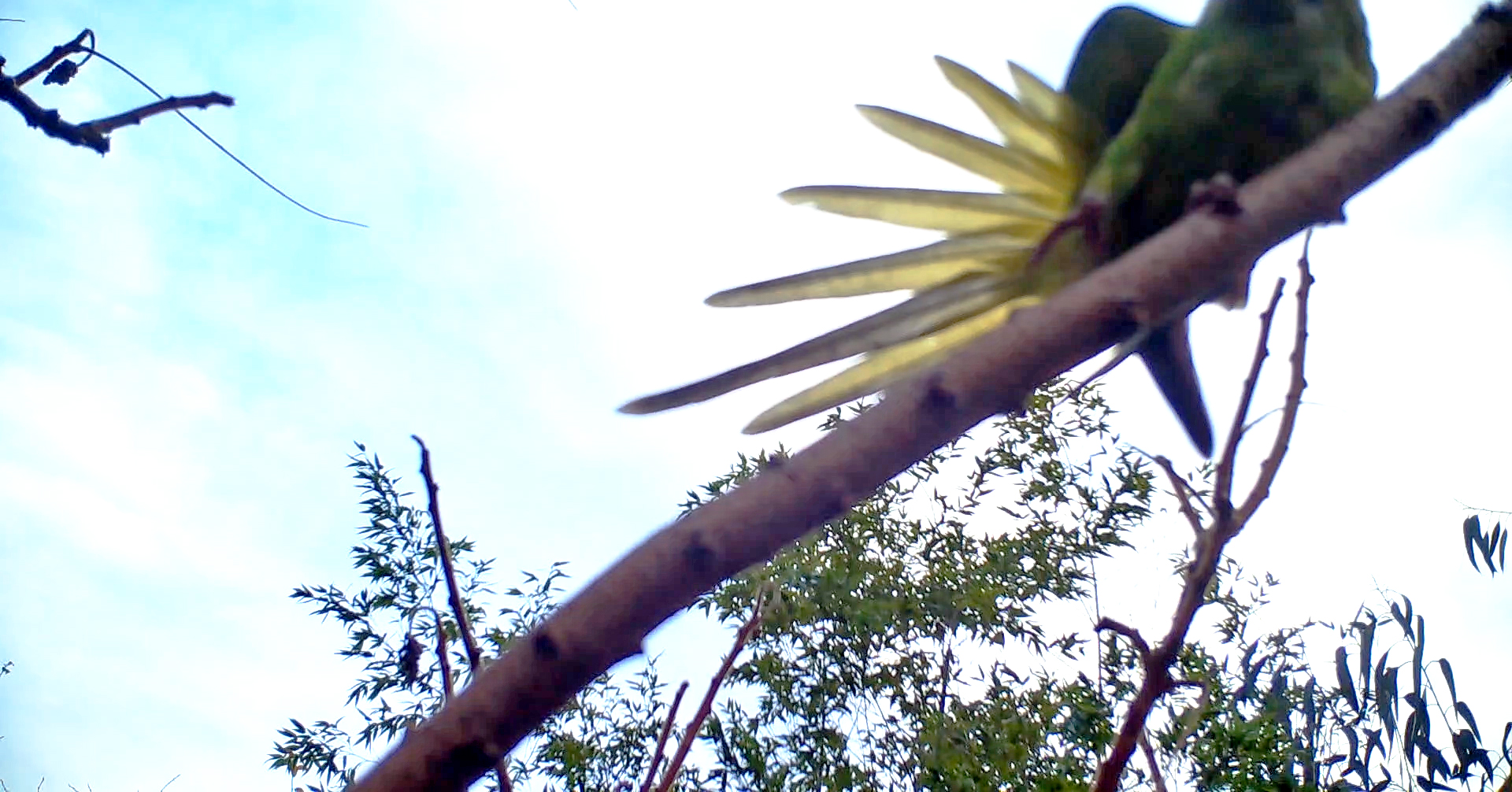
Sensing the Earth’s magnetic field allows birds and other animals to determine their approximate position on the Earth. Research looking at how birds navigate over vast distances has shown many species are able to sense the compass direction of the Earth’s magnetic field and process this information. Non-migratory birds also have this ability using magnetoreception to orientate themselves in a local sense to map habitat.

There are two basic mechanisms involving magnetism used by animals; one method uses the iron based mineral magnetite found in the body’s cells and the other involves a protein found in the eye which is sensitive to light of different colours and intensities.

In plants and some animals, the light sensitive cryptochrome molecules are also involved in the control of the body’s circadian rhythms by tracking the difference between night and day. They can be found in cell nuclei of mammals and in the retina of several bird species. Ilia Solov’yov from the University of Southern Denmark has found the particular structure of cryptochrome Cry4 is unique and when light hits Cry4 cryptochromes in the eye of a migrating bird, they undergo chemical reactions that are influenced by the direction of Earth’s magnetic field, providing a signal of the bird’s orientation.

This light sensitive magnetic compass used by birds is affected by the polarisation direction of light. This was discovered by Rachel Muheim in a study where zebra finches were set the task of finding food in a maze. The birds were only able to use their magnetic compass when the direction of the polarised light was parallel to the magnetic field, when the polarised light was perpendicular to the magnetic field the birds became completely disorientated.

Researchers have put forward a theory that polarised light at sunrise and sunset accentuates the magnetic field at times when birds are ready to migrate or roost but in the middle of the day when the polarised light is approximately perpendicular to the magnetic field and less visible to them they can rely on sight to hunt and spot predators.

Magnetite is the most magnetic of Earth’s naturally-occurring minerals and microscopic particles are found in the cells of animals. Unlike the cryptochrome protein found in the eye and used by birds to perceive the Earth’s magnetic field, a magnetite-based magnetic sense does not need light to function.

Mole rats navigate their tunnels using this method which works like an internal compass. Birds also use this mechanism based on magnetite as an additional method to determine their position.

Sensing Earth’s geomagnetism is a functional ability seen in many creatures from bacteria and birds to turtles and bats. It is an evolutionary advantage to be able to orientate and navigate. Joseph Kirschvink and researchers at Caltech have completed experiments testing the human capacity to sense the magnetic field. Volunteers inside a chamber shielded from electromagnetic interference were subjected to an altered magnetic field while their brainwaves were monitored. The team found clear evidence that the subjects’ alpha brain waves were effected suggesting a rudimentary magnetic “sense”. The scientists believe that cells containing crystals of magnetite could register changes in magnetic fields and report this information to the brain. It is already known that magnetotactic bacteria have structures containing nanoscale magnetite crystals called magnetosomes that act as biological compasses, allowing the bacteria to navigate.

This research suggests that human alpha brainwaves react to a changing magnetic field. Alpha waves are always present, but are more prominent when in a relaxed and idle state of mind. Noticing a dip in the amplitude of the alpha waves would indicate the neurons in the brain becoming engaged in a task. The experiment was conducted to mimic how the Earth’s magnetic field would be experienced by the brain. The laboratory field was similar in strength to the Earth’s and the researchers moved it slowly to simulate how the field would change when turning one’s head. 

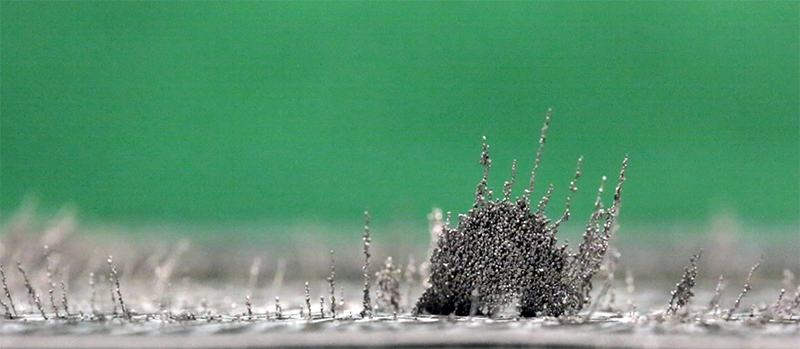
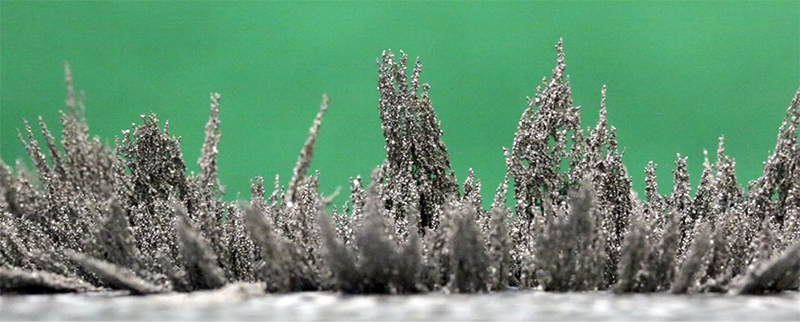
More experiments with iron filings, etchings and magnets.

Large etching on steel plate and small polymer etching.

Also some green screen filming towards the video work I am creating on this subject.

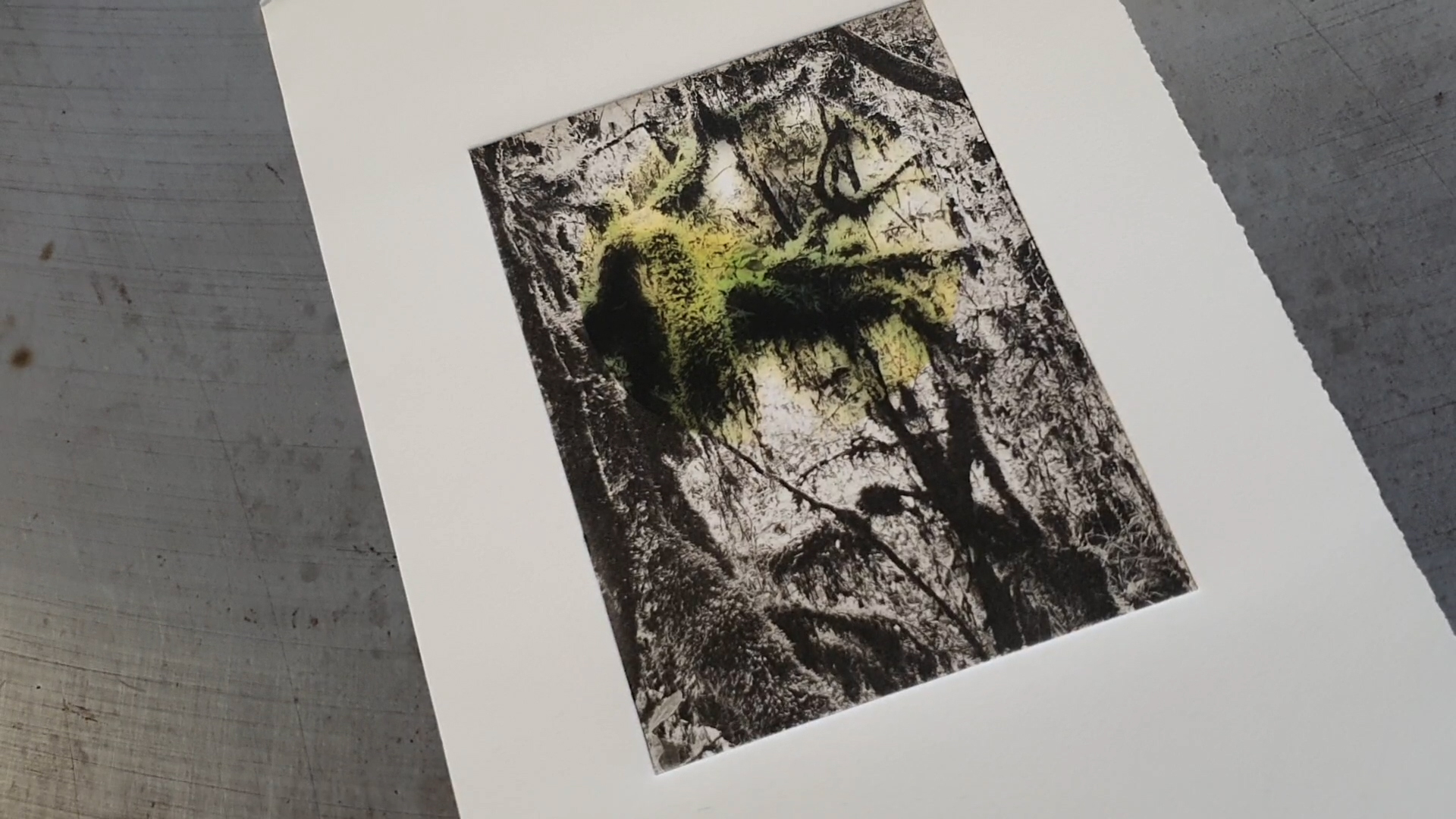
While back in the print studio I made some more prints of the mossy forest and added a little burst of colour.

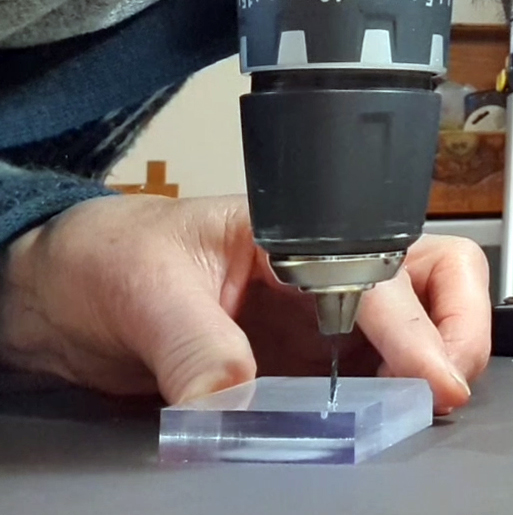
A little progress with building the cosmic ray detector. I have drilled the holes in the plastic scintillator which was quite stressful as the project notes say it is easy to break. I did a test first in acrylic to gauge the size of the drill bit needed. The scintillator turned out to be much softer though and so I am hoping the holes are not too big now. I sent the Printed Circuit Board off to get the components soldered. I really wanted to do the soldering myself but am glad I went for help as there have been some issues with getting the voltage correct for the connection to the SiPM PCB.

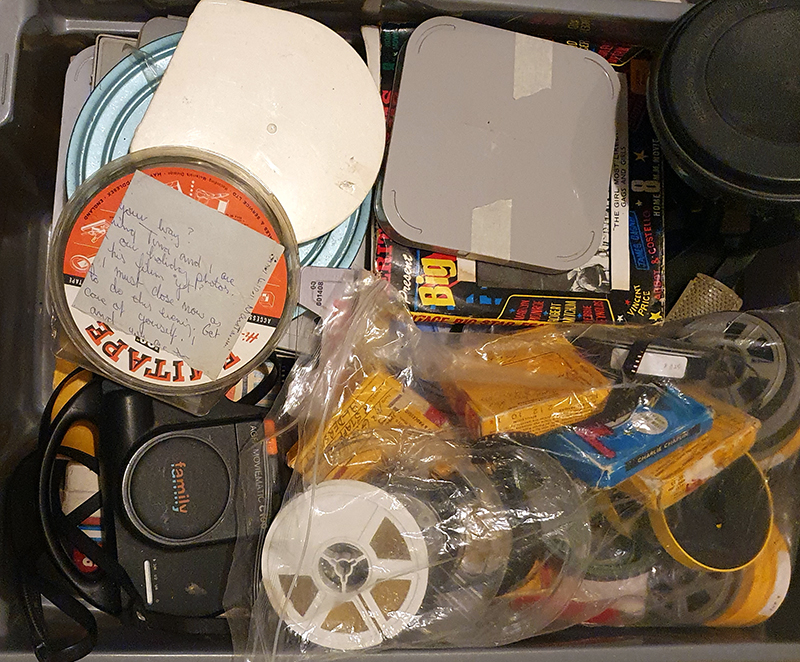
I was lucky to grab a bargain box of Super 8 filming kit though haven’t had time yet to explore this fully and see if I can work out how to operate everything.

Out of studio

A visit to APT Gallery to see Periastra curated by Paul Malone looking at methodologies of curiosity within the fields of art and astrophysics.

I really like the presentation by Nicola Rae of a collection of fireball videos collected by the meteor watch group UKMON

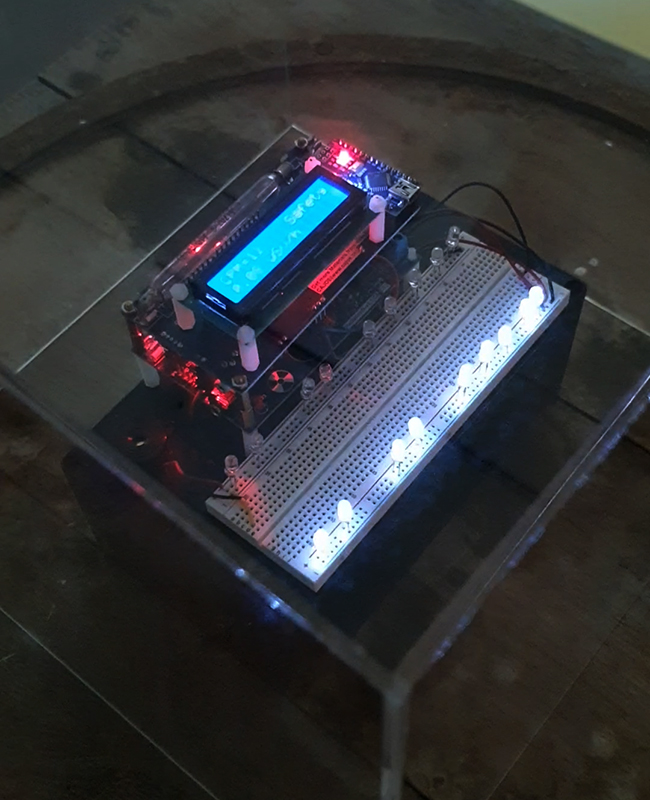
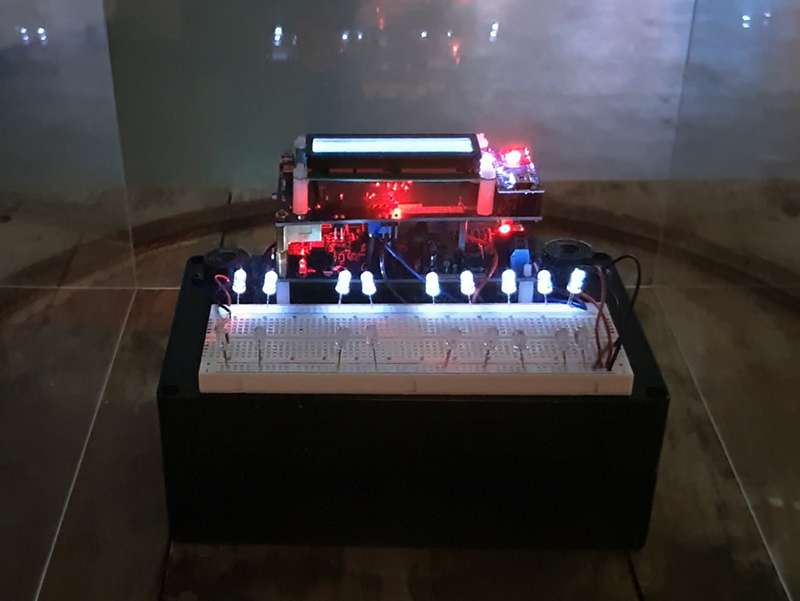
I was excited to meet John Berman who was showing a muon detector he had built. He has used a Geiger Müller (GM) tube, for his detector which can be bought as a kit . A GM tube will detect alpha particles, beta particles, gamma rays and Cosmic Muons. It can be adapted to run in coincidence mode – this is when two or more tubes are connected and only when all tubes register a particle passing through at the same time can it be certain it is a cosmic particle and not background radiation. There is some downtime in a GM tube after each ionisation is recorded so it is possible not all particles are registered. When a particle passes through the tube the LED’s will flash.

Thinking on an international scale can be daunting.
I have been trying to imagine a world before religion which must of course be a world without man but how long was man around first, as religion in some form seems to have been something that emerged very early in our development.

When I think about snowball earth and the coming of the forests I do think globally. Those seeds growing and spreading.

Cross pollination. No borders.

I have been working on adding the fern embryos to the iceberg landscape.

1308 Fern Collagraphs

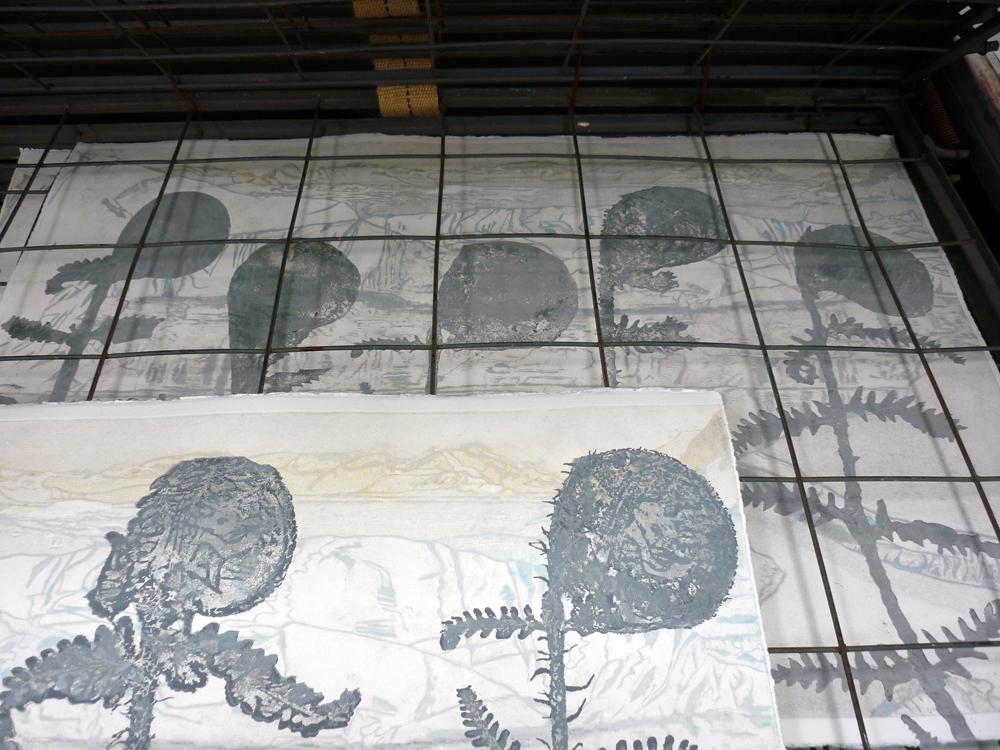
I made some relief plates of the ferns from cardboard and gave them a bit of texture with acrylic medium and carborundum.

Then I gave them a coat of shellac to give them a bit of strength.

1308 Precursor in progress

I am using them to give a background texture to the fern images.

I will then screen print on top of these to add detail.

What was so great about visiting the Venice Biennale this year was that I found so many of the artists I really like were showing there.
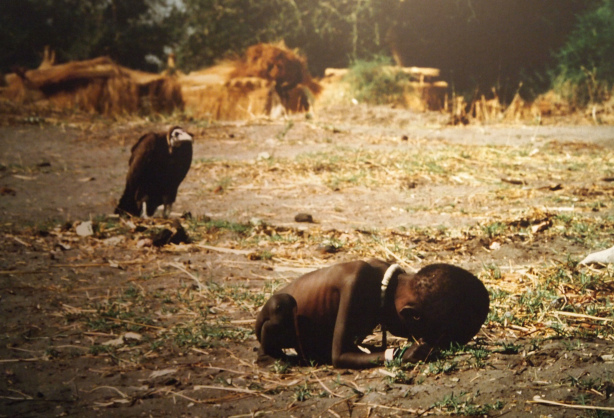
Alfredo Jaar makes work that hits you bodily. I can still feel the power of his work I saw in Brighton years ago about the photo journalist Kevin Carter.

The Sound of Silence, tells the story of one photograph taken in Sudan 1993. You sit in a dark space and the story is told in simple sentences, on a black screen.

Alfredo Jaar 'The Sound of Silence'

Alfredo Jaar ‘The Sound of Silence’

The photograph is shown briefly before a blinding flash of light scores into your retina.

You are left blinking in the afterglow. I can still feel the sadness.

Kevin Carter’s suicide at just 33 is so poignant, he had just seen too much suffering to cope with his own problems.

Should you intervene?  Lucy Kirkwood’s play Chimerica also addresses this issue. On the Headlong website is a link to a bbc interview with war photographer Don McCullin who discusses how ‘ there came a natural limit to looking at what others can’t bear to see.’

In Venice Alfredo Jaar looked at the Giardini and its political and economic posturing of pavilions built before the second world war. He then made a model of the Giardini which gets submerged underwater – we see it disappear into obscurity then emerge, green and dripping only to vanish again.

Alfrdo Jaar 'Venezia, Venezia'

Alfredo Jaar ‘Venezia, Venezia’

It might signify the highs and lows of economic powers but of course being in Venice the water rising is a very real threat.

The whole idea of a national pavilion in the art world is questioned now that artists work internationally, moving and exhibiting around the world.

France and Germany have swapped pavilions and to push the international crossover further Ai Weiwei is showing along with 3 other non-German artists in the German Pavilion.

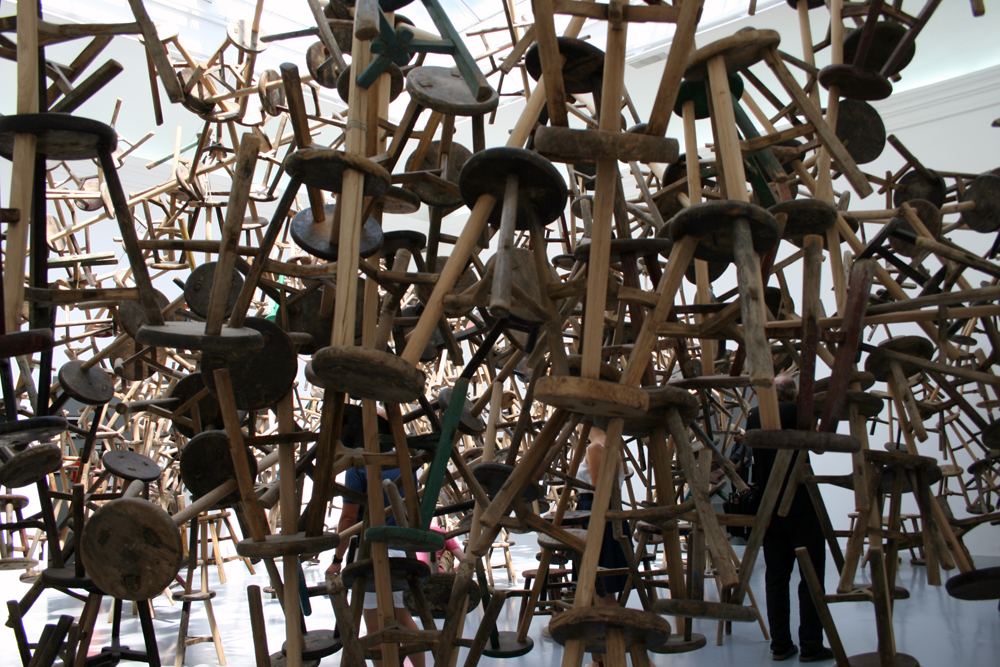
Ai Wei Wei 'Bang'
Ai Wei Wei ‘Bang’

BANG is an expanding,  rhizomatic structure made from the once ubiquitous wooden stool which has now been superseded in China by manufactured models in metal and plastic.  These simple objects that hold the traces of their life in the patina of years, are part of the cultural identity of a nation being lost to globalisation, just as the individual is swallowed up and forced to conform.

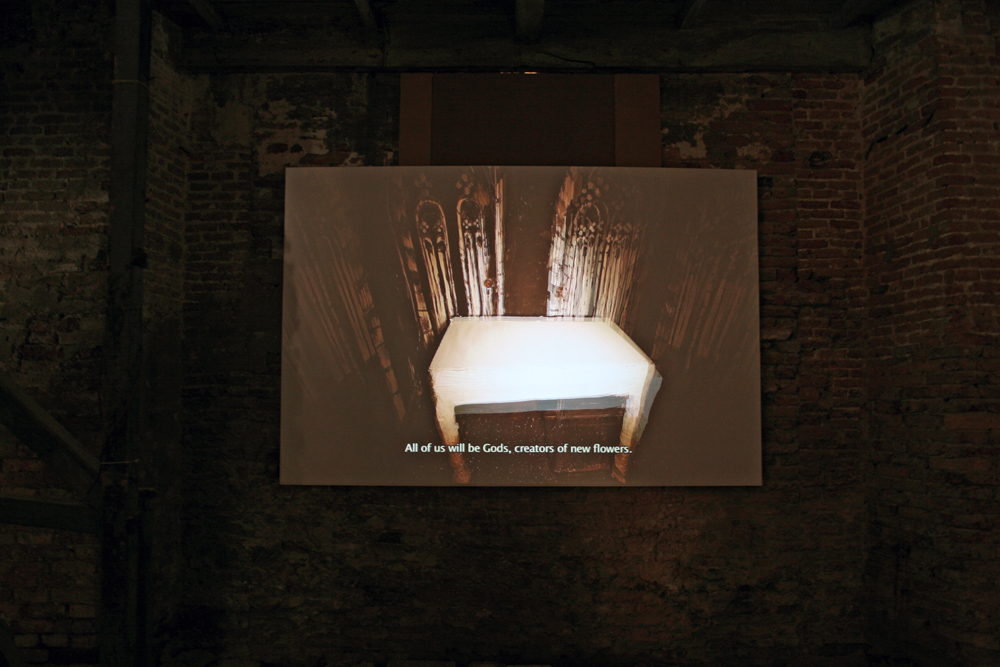
Gilad Ratman for Israel also wanted to question the national boundaries that such a setting as the Biennale constructs and he also made work about  transgressing boundaries.

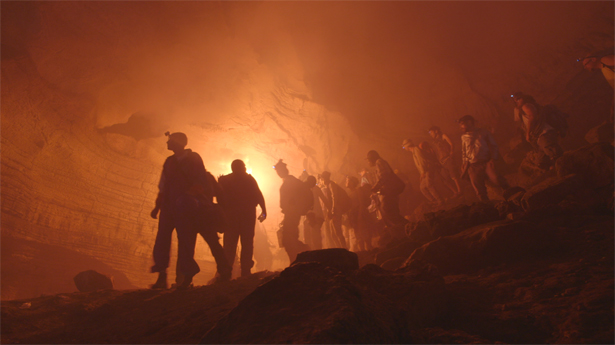
We see a group of people making their way though underground passages, crawling and dragging themselves through the earth.

Gilad Ratman 'The Workshop'

Gilad Ratman ‘The Workshop’

Eventually they emerge into the light from a hole in the ground straight into the gallery space.

Gilad Ratman 'The Workshop'

Gilad Ratman ‘The Workshop’

Underground there are no borders.

Gilad Ratman 'The Workshop'

Gilad Ratman ‘The Workshop’

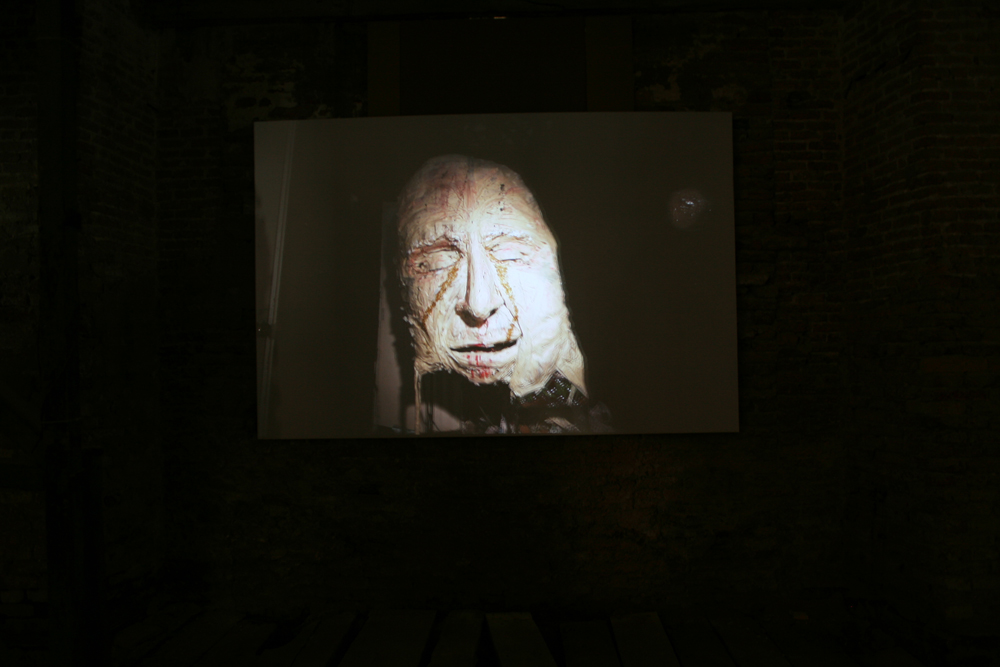
Once in the gallery each member of the group begins to sculpt a self portrait in clay.

Like a birth, some new body is forged and given voice.

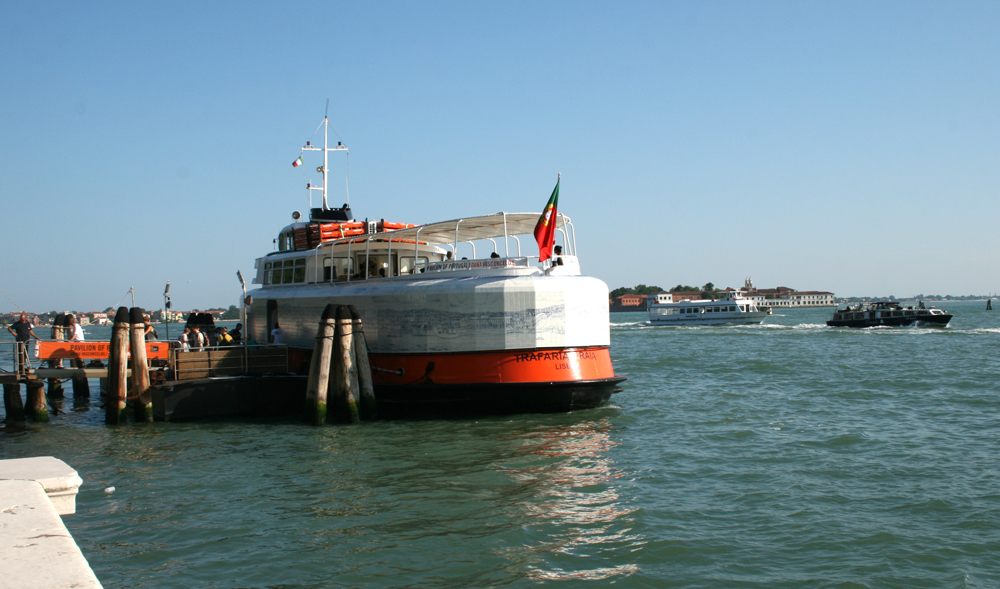
Joana Vasconcelos also looks at the journey, navigation and passage.

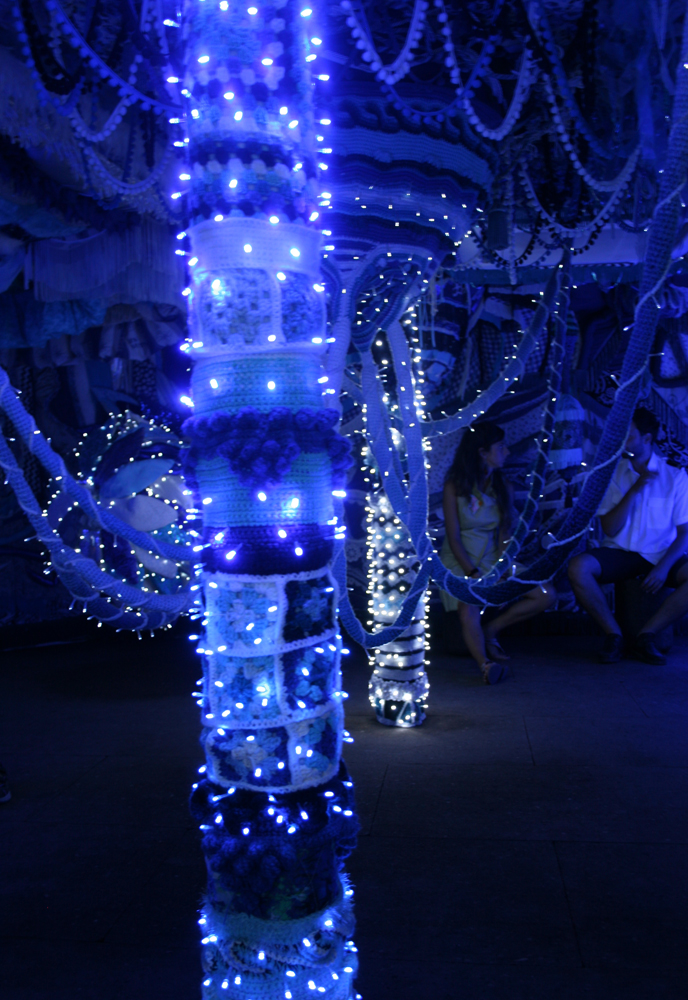
Joana Vasconcelos 'Trafaria Praia'

Joana Vasconcelos ‘Trafaria Praia’

Addressing common themes that Lisbon and Venice share she created a floating pavilion – well a boat.

It has a gift shop and art books, cultural history and then in the depths you can climb down into a dark and warm space, soft and feminine and full of wonder.

Joana Vasconcelos

Joana Vasconcelos

Reduced to basic sensory levels of pleasure like a baby in the womb, soft dark warmth, gentle undulation.

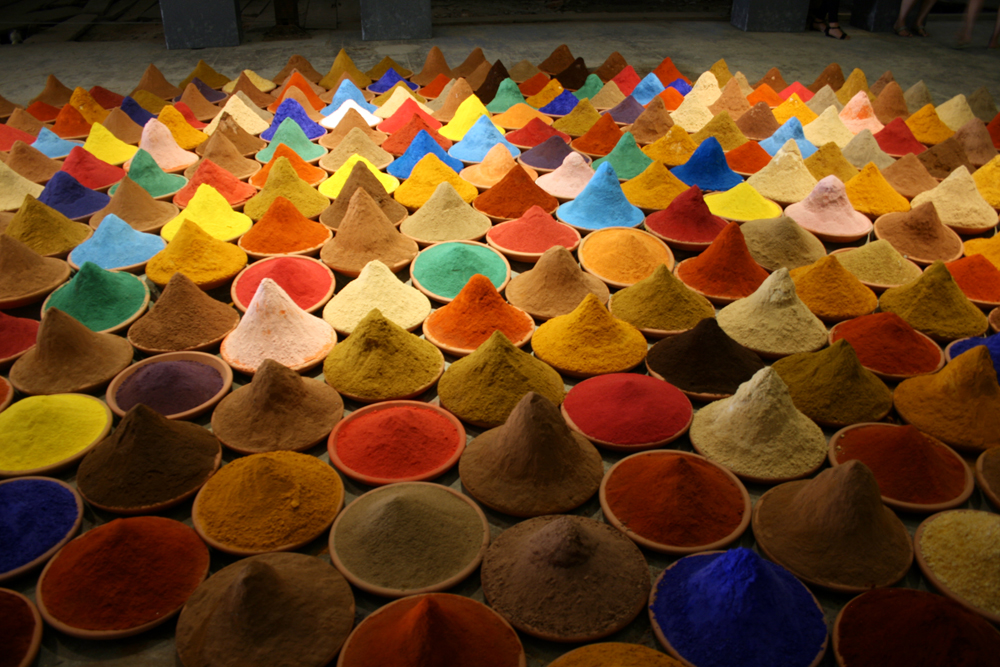
The Instituto Italo-Latino Americano a forum for cultural exchange between Europe and Latin America  is all about how cross fertilization can impact cultural identity.

The cavernous pavilion is scented with spice.

Latin American Institute

Latin American Institute

I loved the animation ‘Los Andes’ by Cristóbal León & Joaquín Cociña.

A primal spirit possess an office causing drawings to appear on the wall and plants to emerge from the furniture.

Latin American Institute

Latin American Institute

The spirit appears in the form of a giant growing in size and then crumpling away.

Leon & Cocina Loa Andes

Leon & Cocina Los Andes

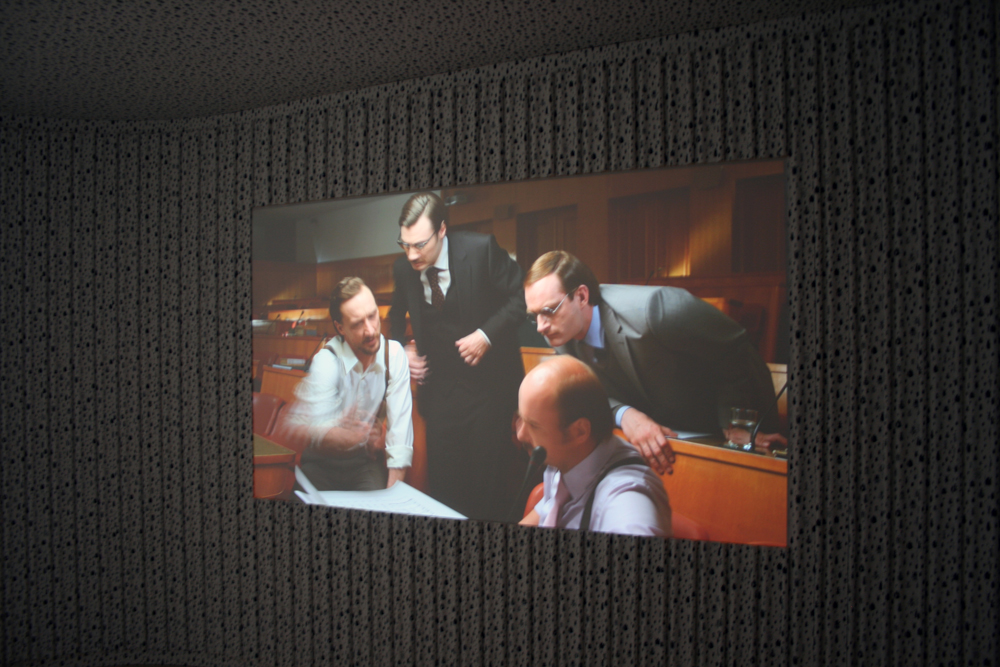
Jasmina Cibic for Slovenia looked at how national identity is portrayed and guided by the state into what is acceptable.

Her project ‘For Our Economy and Culture’  looks at art as a token of national identity and how the integrity of the art commissioned for public arenas may be compromised by institutional hierarchies intent on influencing its presentation..

Jasmina Cibic 'For Our Economy and Culture'

Jasmina Cibic ‘For Our Economy and Culture’

Art by committee.

The Pavilion is lined with wallpaper depicting a beetle which has become endangered because of its ideologically charged name – Anophthalmus hitleri.

Anophthalmus hitleri

Anophthalmus hitleri

The beetle which is only found in caves in Slovenia could have been a national cause celebre were it not for it being named by a fascist species collector.

The official Chinese representative Simon Ma had been to the rainforest of Southern China and come back to a life in the city that now was too grey.

He had been inspired by the dramatic landscape, the colours of the forest and the magnificent height of the trees.

Feeling overwhelmed by the power of these colossal living forms he was aware of how deep the roots much reach to support such heights which in turn made him think about the scale of the cities sprouting up all over China

and the need for people to also have roots.

Simon Ma

Simon Ma

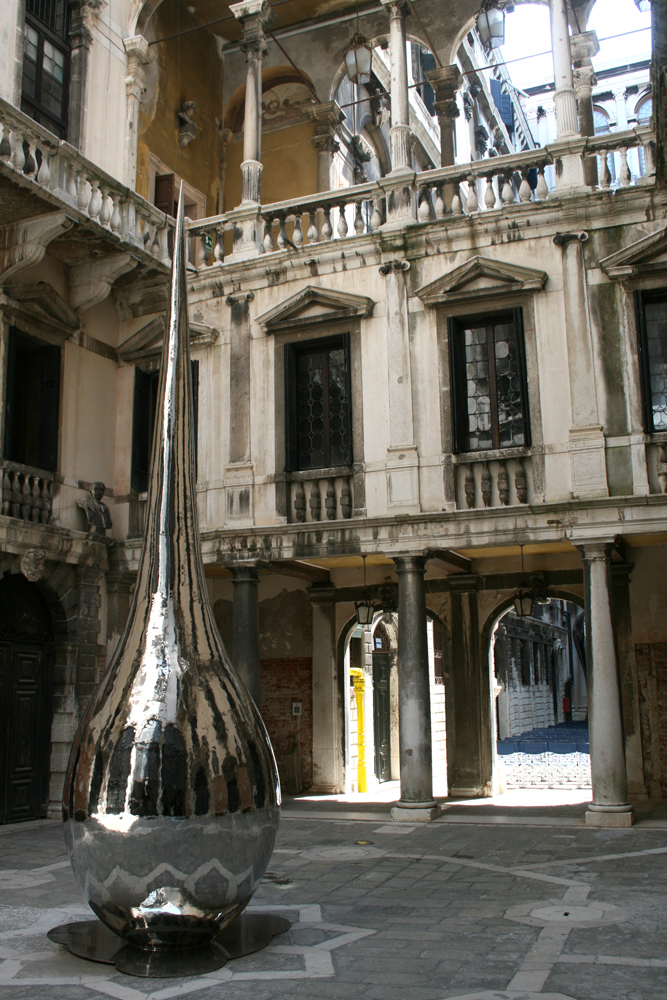
His oversized rain drop sculptures gave a good photo opportunity against the dramatic architecture of an ancient palazzo.

Simon Ma

Simon Ma

Simon Ma

Simon Ma

These plastic raindrops were left over form a performance piece.

At the Manchester International Festival Robert Del Naja of Massive Attack and film maker Adam Curtis got together to create a new kind of media experience combining film and music on a mega scale.

The result of their collaboration tells the story of a new system of power that has risen up in the modern world to manage and control us. It is a fake, but enchanting world which we all live in today – but which has also become a new kind of prison that prevents us moving forward into the future.

Massive Attack v Adam Curtis

Massive Attack v Adam Curtis

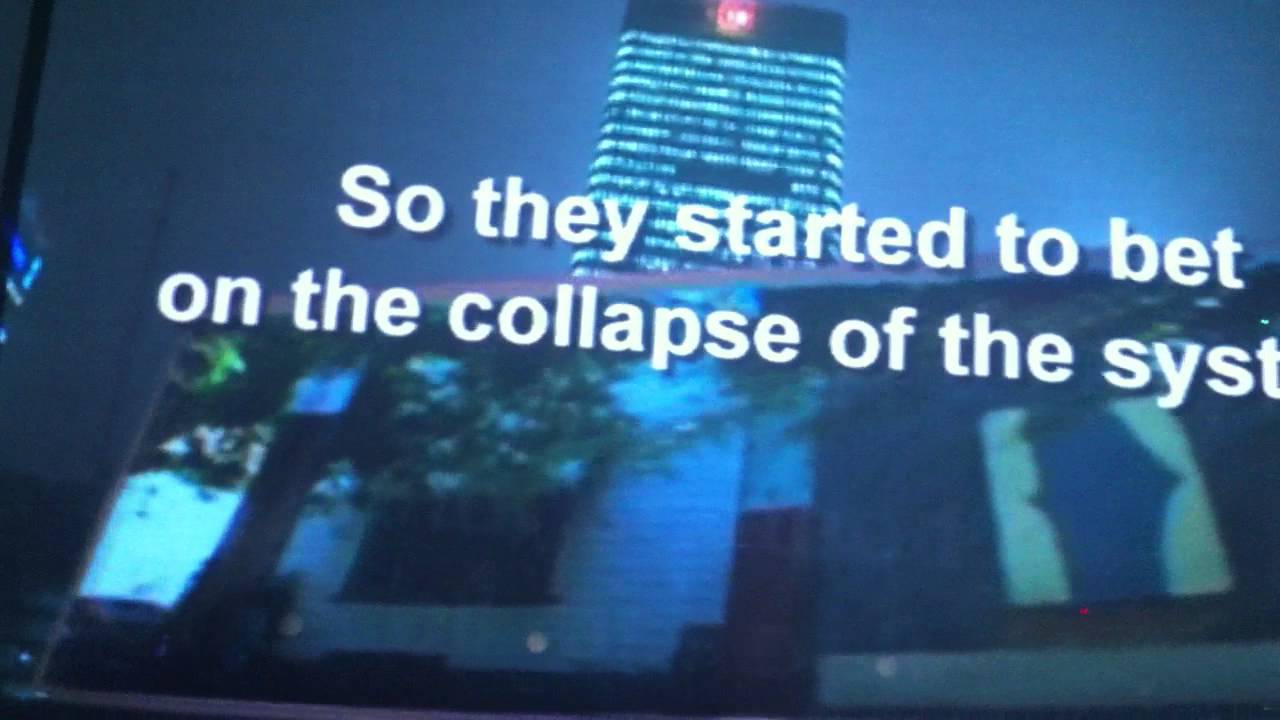
So many ideas are set off by this ‘gilm’ as they called it. I was spellbound by the scale, the decibels vibrating through my chest, the wonderful eclectic music set, the pure voice of Elizabeth Fraser and the stream of images – my era in soundbites. There were mixed reviews but I loved it. It wasn’t all news but there was a lot of things I didn’t know about –  Russian Punk Yegor Letov for instance though whether the story we were spun was actually true or not I can’t quite work out. The history is mapped out in personal stories such as the tragic case of Pauline Boty who died at 28 after she refused cancer treatments that would have harmed her unborn daughter.

Pauline Boty

1308 MIF 2

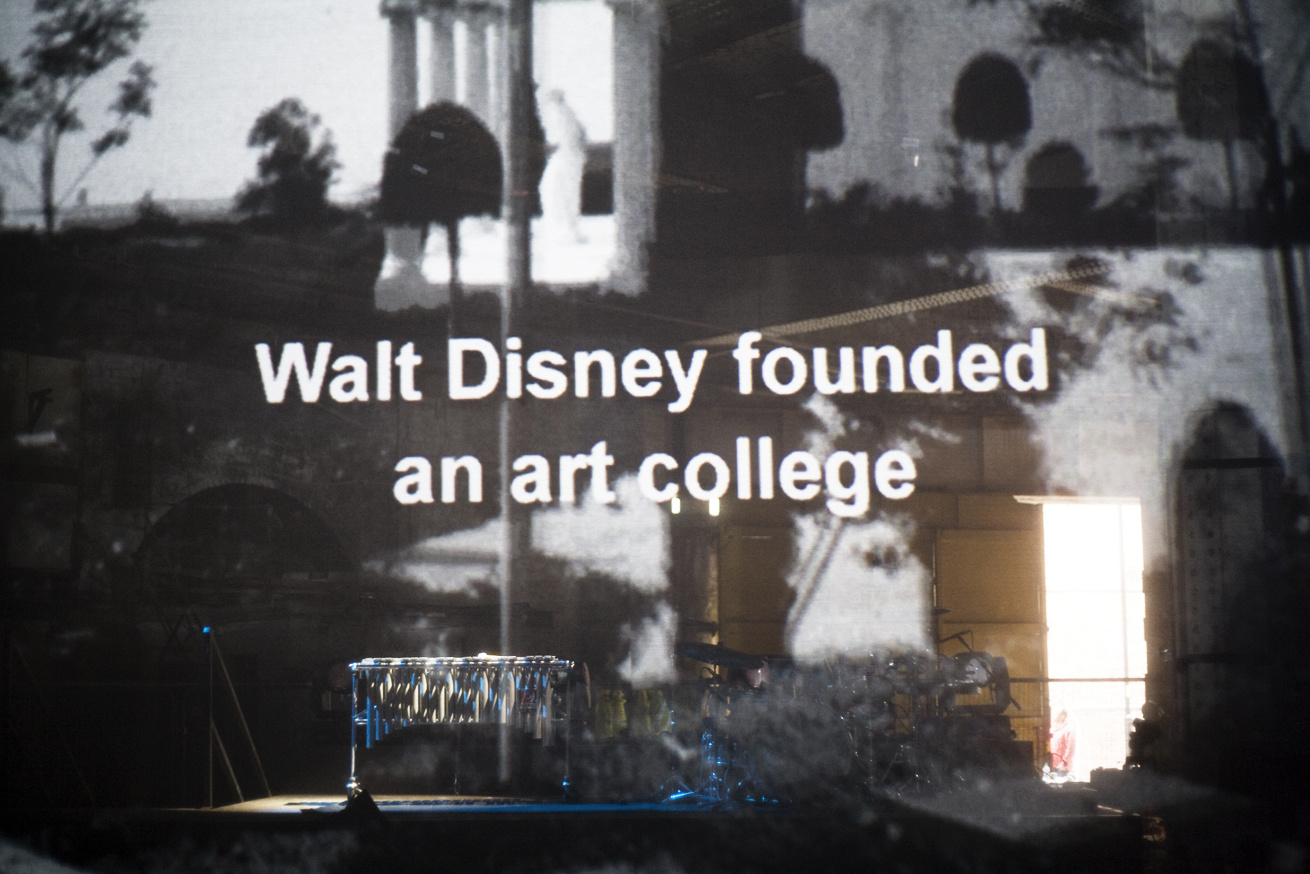
The daughter, Katy ‘Boty’ Goodwin went on to study at the California Institute of the Arts, Walt Disney’s idealist art college, but she became obsessed with her appearance, developed an eating disorder, took heroin and died.

The Japanese gambler Akio Kashiwagi known as ‘The Warrior’ got into a row with Donald Trump’s casino when his system finally failed and he left owing 10 million dollars. Trump never got the money however as the gambler was stabbed to death with a samurai sword before the debts were paid.

Risk management.

1308 MIF

Lots more info about this and other ideas of Adam Curtis can be found on his blog

Mayfield Depot

Mayfield Depot

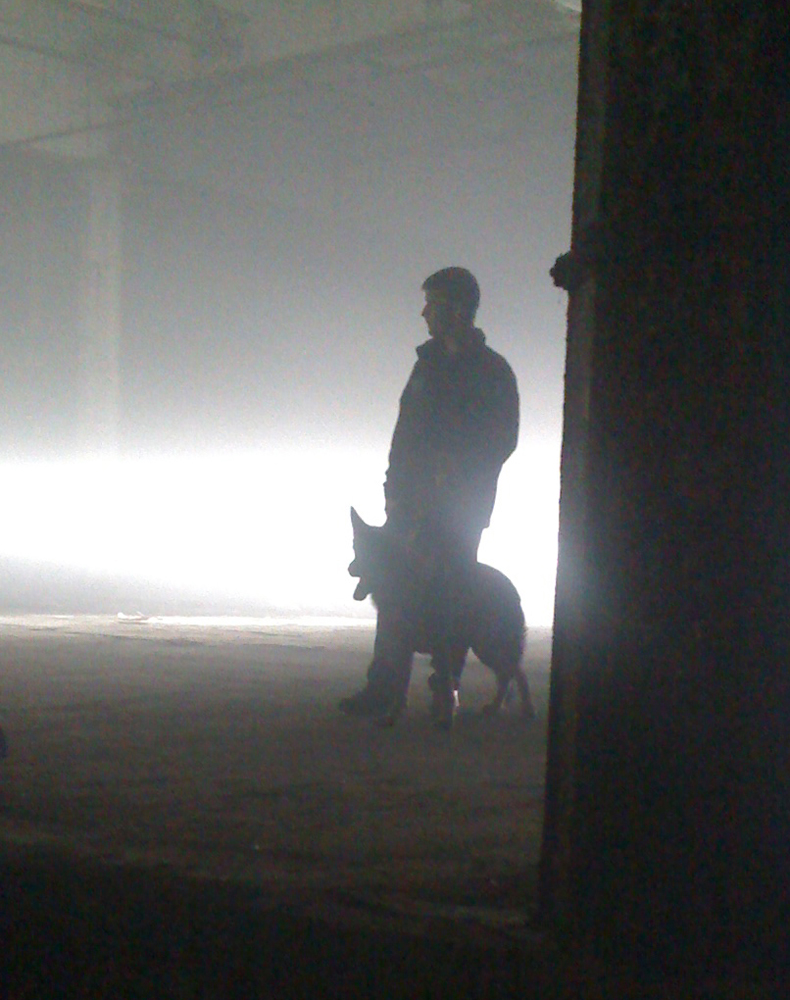
After a chilling look at the recent past and the nature of control and illusion the crowd is channeled through a subterranean world under intense spotlight to the ferocious barking of the guard’s dog.

Mayfield Depot

Mayfield Depot

Despite the dystopian exit route we were left with the message that now it’s up to us to change the world.

Artist Maria Cristina Finucci is having a go.

There are huge patches of rubbish floating in seas around the world like islands and so to bring something tangible to the debate she has got the U.N. culture agency UNESCO  to grant the “Garbage Patch State” symbolic statehood. This brings them onto the world stage. They are a global problem.

These “garbage patches” are areas of high marine debris concentrated in the North Pacific Ocean, the exact size and content of which are hard to define.

The patches are mostly invisible to the naked eye as the debris – chiefly plastic – breaks down over time, without ever fully disappearing.

In Venice there was an immersive installation using plastic bottle tops to highlight the problem.

Maria Cristina Finucci 'Garbage Patch State'

Maria Cristina Finucci ‘Garbage Patch State’

Every time you throw away a bottle top you are part of the problem.

She is hoping to give direction for good behaviour rather than an apocalyptic message.

In the Emergency Pavilion, a multinational event took on the topic ‘Rebuilding Utopia.’

40 years have gone by without us realizing it.

This exhibition will be a game, what happened during
the last forty years? What worked, what didn’t, what
appeared and what disappeared? When did the world
begin to change? Was it 1973 or 1989? When did
“imagination in power” die, was it in ‘68 or 2012?
Or was it on the first of January, 2013?

Jota Castro ' Here comes the rain again'

Jota Castro ‘ Here comes the rain again’

It didn’t really offer much optimism for a better world it felt full of sadness and lost hopes.

However, these artists from all parts of the world are thinking about a better world, and how art can contribute to imagining such a world.

Emergency Pavilion - Rebuilding Utopia

Emergency Pavilion – Rebuilding Utopia

During the early 60’s when Pauline Boty was studying at the RCA and involved in the anti capiltalist students movements of the time she followed the ideas of the german political theorist Herbert Marcuse.

A year after her death he gave a speech titled “The End of Utopia”. Marcuse said he didn’t mean that utopia was impossible but now we had the technical and scientific means to achieve what had only once been dreamed of, utopia was a real possibility no longer an imagined idea. Poverty and hunger could be solved.

I’m not sure that anyone any longer believes utopia is a real possibility certainly not on a global scale. Even Jesus said there will be poor always.

We have to try though.

Adam Curtis encourages us to look to the future and to think about what sort of a world we want to live in. Our origins are important too.
How much changes how much we learn is debatable.
Pauline Boty is posthumously going to have retrospective of her paintings this year – the show is to be called Pauline Boty: Pop artist and Woman
I suppose that has to be taken in the context of history.

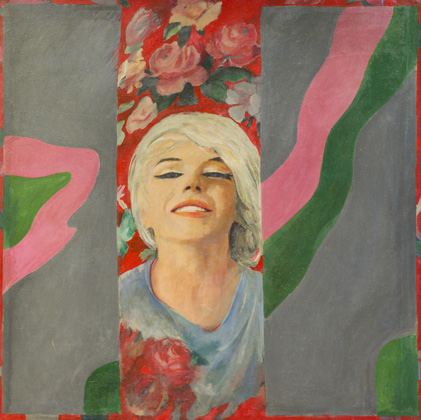
Pauline Boty 'Colour Her Gone'

Pauline Boty ‘Colour Her Gone’