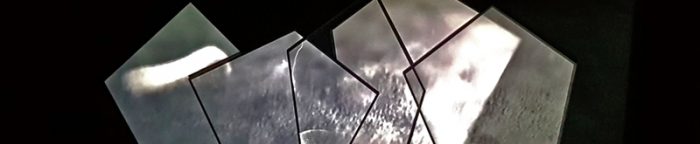
To welcome back the light of longer days I collected one of my solargraph cans from The Hogsmill Nature Reserve where it had been fixed to a hide for 6 months, since the summer solstice, looking out across the water where the birds gather. Really pleased with the image and that it captured the reflection too.
So delighted that Cosmic Chiasmus: crossing the universe was included in the amazing Serendipity Arts Festival, an annual interdisciplinary festival held across multiple venues in Panjim, Goa, India. I just wish I could have visited 💎🌌✨️☀️
My video was shown as part of the selected module exhibition CARBON, curated by the Science Gallery Bengaluru team in collaboration with artist and curator Ravi Agarwal.
Artists: Annelie Berner; Susan Eyre; Marina Zurkow; David Hochagatterer; Dhiraj Kumar Nite; Jan Sweirowski; Jane Tingley; Maria Joseph and Nuvedo; Shanthamani Muddaiah
Curated walkthrough with Jahnavi Phalkey
The video (05:29 min) offers a glimpse into a subatomic world where cosmic rays travel from distant galaxies to collide and silently interact with atoms and technology on Earth. Above our heads where cosmic rays interact with the Earth’s atmosphere radioactive carbon-14 is formed. This is then absorbed by plants that are eaten by animals and humans. When an organism dies, no more carbon-14 will be absorbed and the current amount in the organism will start to decay. By measuring the remaining carbon-14 in organic matter, the time of death can be established. Cosmic ray activity gives us carbon dating techniques.
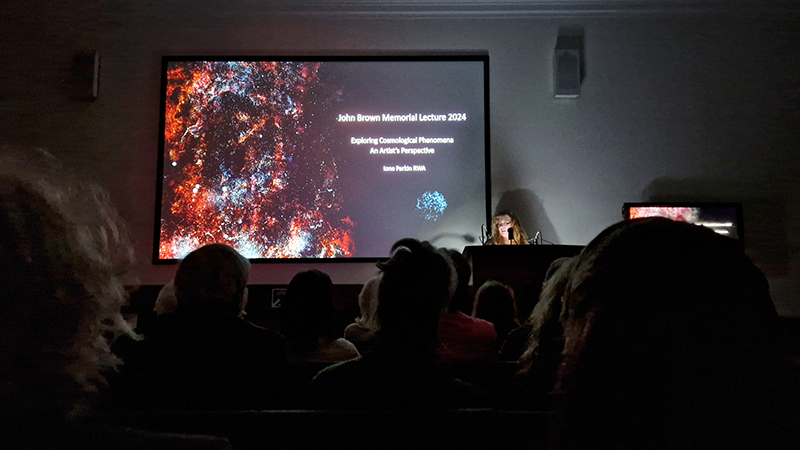
I attended The John Brown Memorial Lecture: Exploring Cosmological Phenomena: An Artist’s Perspective, talk by Ione Parkin RWA at The Royal Astronomical Society. Ione is the Co-Founder/Lead Artist of the Creativity and Curiosity Art-Astronomy Project (C&C). She is an Honorary Visiting Fellow of the School of Physics and Astronomy at the University of Leicester and a member of the British Association of Planetaria. Through her many cosmological paintings the ephemeral, gaseous, nebulous phenomena of space are given an earthly materiality that still retains the sense of the intangible. Ione has created an impressive body of work. I especially liked the cloud chamber mixed media pieces and photopolymer etchings created through the fluorescence microscopy process of firing laser beams of light of one wavelength at the surface of the painting then capturing the light emitted from a longer wavelength. Look forward to seeing these works irl rather than digital images.
I am over the moon that Ione has selected my sculpture The Azimuth Obelisk (of sedimentary knowledge) to be included in Cosmos: The Art of Observing Space, a major exhibition she is curating at the Royal West of England Academy in 2026. Cosmos will bring together a body of artwork inspired by themes of astronomy, cosmology, astrophysics, planetary atmospherics, space-exploration, solar dynamics and celestial mechanics. There will be a catalogue published to accompany the exhibition with a Foreword by Professor Chris Lintott (Professor of Astrophysics, University of Oxford).
In the studio I have been conducting some more tests towards a video installation which will respond to the crystal structure of magnetite and a quote from Jason Groves book The Geological Unconscious – ‘What truth could be more unexpected ….than the one in which the mineral envisions while also being envisioned.’
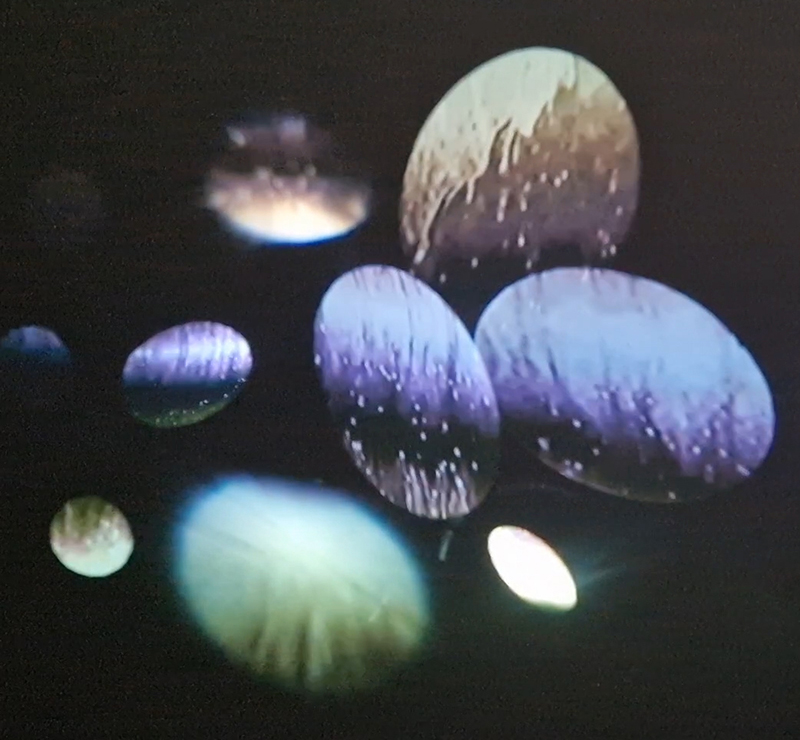
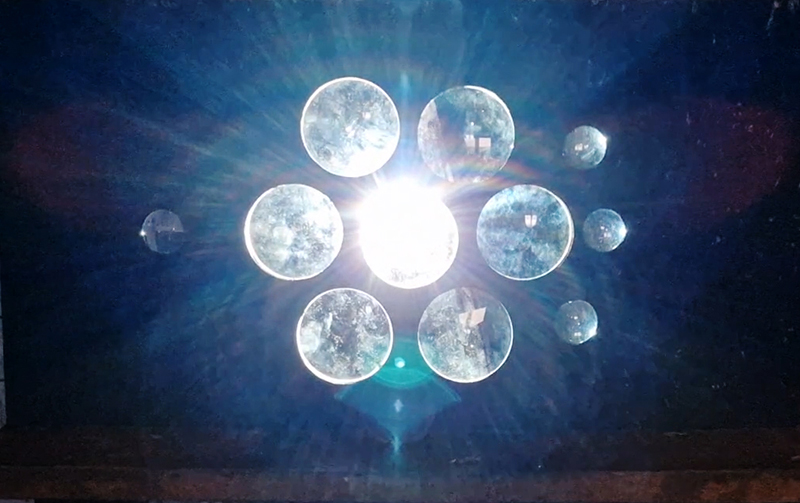
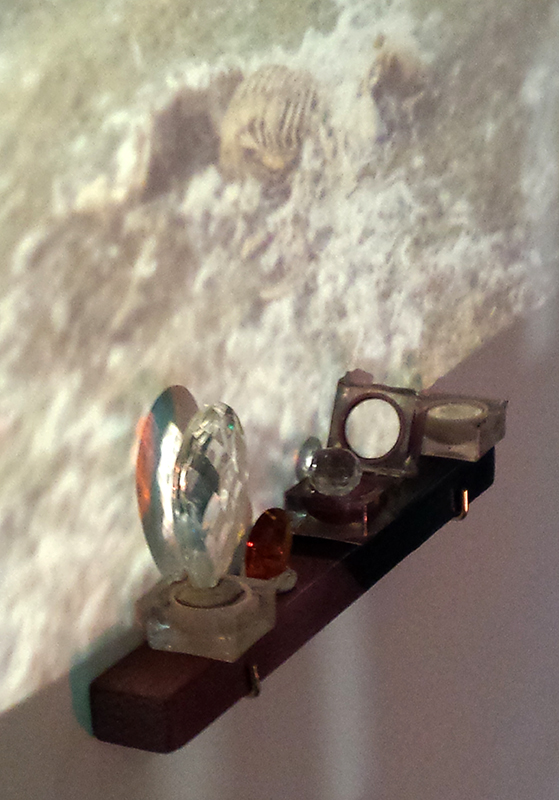
Magnetite is attracted to a magnet and can be magnetized to become a permanent magnet itself. It’s crystal structure was determined in 1915 as one of the first crystal structures to be obtained using X-ray diffraction. Magnetite contains both ferrous (divalent) and ferric (trivalent) iron. At present I am just testing the concept and technical issues using a small board with some lenses inserted in a circle pattern. The large lenses used to distort the projection represent the oxygen present in the crystal structure, I have drilled some smaller holes to test lenses to represent the iron component. In my tests I was surprised to find that when the small lenses were inserted in the holes the projection image was no longer visible on the wall. The small lenses I have are quite thick, but still it was unexpected. I am sourcing some thin lenses to test.
Projection with no lenses in board – no distortion of image
With all lenses inserted – large lens distortion occurs but small lens images not visible
Tests with only large lenses inserted for distortion
Tests using back projection screen and looking directly at the lenses
Exhibitions visited
In the Thick of Things at APT curated by Chris Marshall and Cash Aspeek including works by Laura White, Asaki Kan, Leila Galloway and Deborah Gardner. Big messy works, tumbling, sliding and colliding following the vein of arte povera letting the materials speak. Had a touching conversation about the last days of our respective parents with Cash who had made a very personal series of work using her parents marital bed of 60 years as both subject and material.
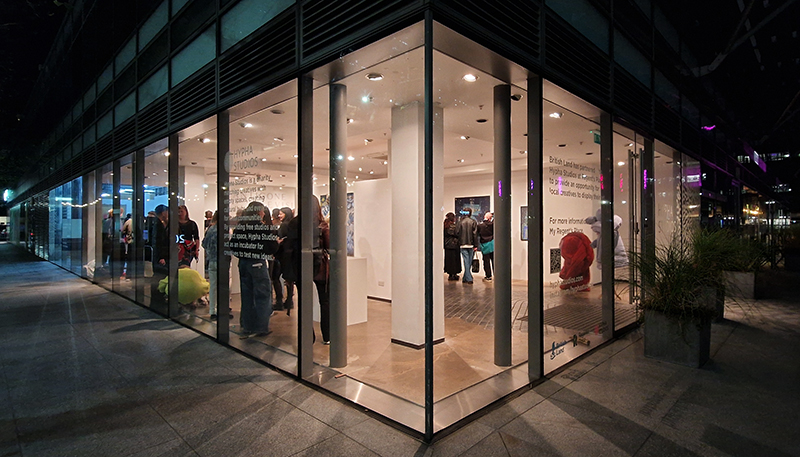
Conglomerates at Hypha Gallery Mayfair, a group show featuring work by Paola Bascon, Rhiannon Hunter, Rona Lee, Hannah Morgan, Davinia-Ann Robinson and Sam Williams. A warm and earthy show exploring care formed through relations with self and other beings to create substrates for resistance, deep-knowing, storying and kinning as processes of paying attention to that which is unheard.
Reading
While reading Margaret Atwood’s disturbing novel Oryx and Crake (to gain insight after seeing the stunning collaboration between Wayne McGregor and Max Richter in Maddaddam at ROH recently) I came across a reference to Mesembryanthemaceae – a plant which disguises itself as small pebbles by taking on patterns and colouring of the ground it grows on. I had forgotten about these strange plants commonly called stone lithops or living stones. The thick leaves can store enough water for the plants to survive for months without rain and during dry periods they shrivel into the ground. With no stem they are partially subterranean, sending light down to the buried leaf cells via ingenious reflecting ‘window cells’ on the two wide leaf tips.
In The Human Soul: Its Movements, Its Lights, and the Iconography of the Fluidic Invisible, originally published in French in 1896, Dr. Hippolyte Baraduc (1850–1909) postulates the existence of “the fluidic invisible” — a “vital cosmic force”, which he calls Odic liquid, that extends across the universe and “saturates the organism of living beings and constitutes our fluidic body”. Instead of all things being composed of one elementary substance, as in philosophical accounts of the monad, in this cosmic vision, we all live in a sea that we cannot see, which Baraduc names Somod.
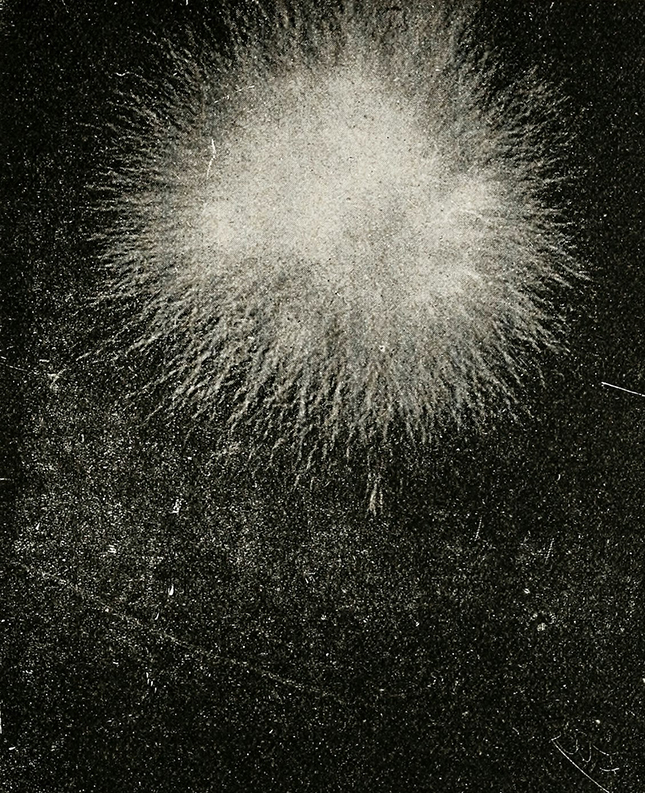
This remarkable image posted by Public Domain Review is one of the many attempts to capture the “vital cosmic force” made by Dr. Hippolyte Baraduc a French physician and parapsychologist who believed he could photograph thoughts and emotions.
“Pure electography of the hand by Iodko’s method. The hand of an over-electrified person, placed on a plate gives a very remarkable impression of the electrified cutaneous surface.”
I am intrigued as to what might ‘over-electrified person’ mean? I was also fascinated by this image – “Luminous spectre of the north pole magnet, obtained by the red electric photographic lamp, surrounded by fine pearls of psychecstasis.”
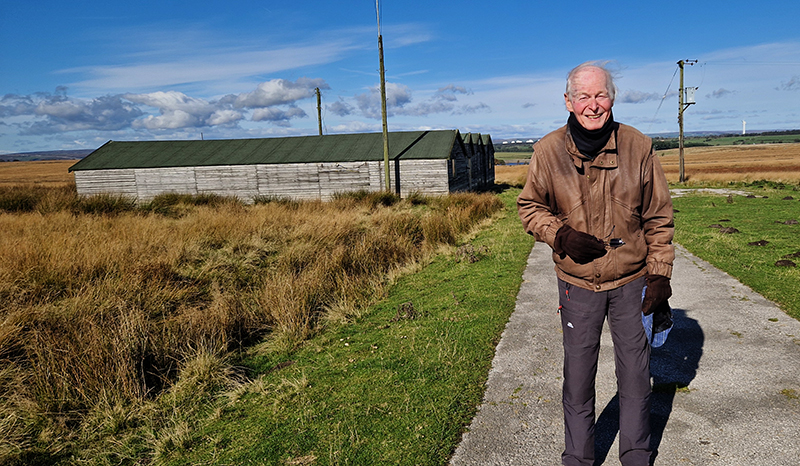
At Haverah Park on a glorious day with Professor Alan Watson, FRS, an emeritus professor at the University of Leeds, and emeritus spokesperson for the Pierre Auger Observatory, who spent many years working here in the pursuit of high energy cosmic rays.
Alan gained his PhD in 1964 for his thesis involving cloud chambers and went on to work for J.G. Wilson, who in turn had worked for C.T.R. Wilson, the inventor of the original cloud chamber. Alan was a leading member of the UK Extensive Air Shower project at Haverah Park from 1964 until its closure in the early 1990s, directing the project from 1976. The work there led to the best estimates of the energy spectrum, mass composition and arrival direction distribution of cosmic rays available at that time and was regarded as the premier project in the field for about 15 years. He was the UK Principal Investigator for the South Pole Air Shower Experiment which ran from 1987 to 1994 and was instrumental, along with J W Cronin, in the creation of the Pierre Auger Observatory in Argentina, which covers 3000 square kilometres and has led to major discoveries in cosmic-ray astronomy.
Cosmic rays are fast-moving particles from space that constantly bombard the earth from all directions. Wherever they come from, the highest-energy particles hold secrets to the origin of their enormous energies, many millions of times greater than any earthbound particle accelerator can create.
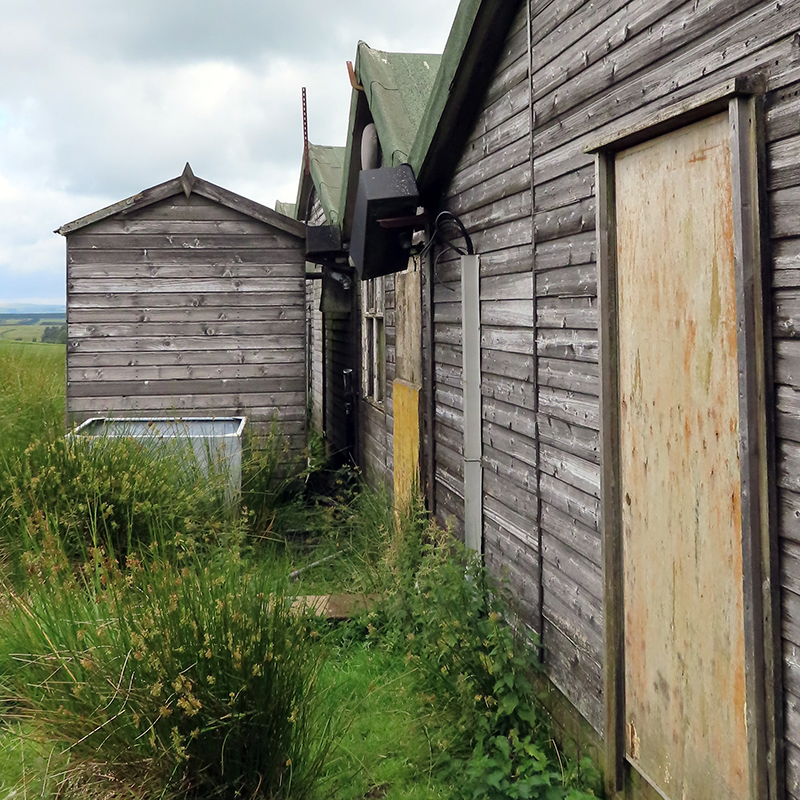
It is extraordinary that these infinitesimal particles powering across the universe at close to the speed of light can be observed and recorded as they interact with our atmosphere. Alan was very generous in giving his time to visit Haverah Park with me and patient in explaining some of the physics. Having been involved in so many pioneering projects that had many obstacles to overcome in their development, he has many stories to tell. We walked to the site of the main control huts, which are the best preserved of the project, most detector huts have been removed or are in a state of collapse. Peering through the windows, Alan pointed out where the dark room used to be and explained that when the project started in the 1960’s there were just two main huts here for data analysis, and a sort of caravan alongside with no heating where film was developed.
Wooden huts, arranged across 12 square kilometres of moorland, in groups of three, were built to house the water Cherenkov detectors which had to be protected from freezing temperatures. If the water had frozen it would have cracked the photomultipliers which dipped into the water to capture the flashes of Cherenkov light emitted as high energy particles passed through.
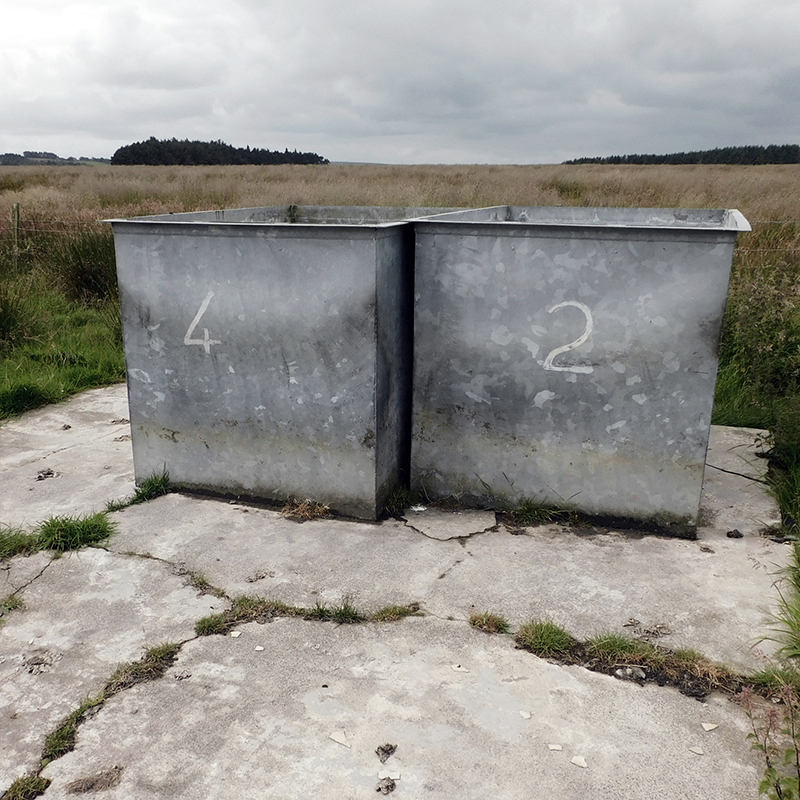
Moving equipment around the site was not always easy. When foot and mouth came along it was prohibited to take the Land Rover on to the site so all the equipment had to be carried by hand and this was often very heavy electronics with many thermodynamic valves. The large steel tanks are also very heavy, over 300kg, and it was found that even 6 strong men with bars couldn’t lift them across the rough ground, so before a trolley was found, they had to be rolled end over end into position.
As technology progressed, by the 1970’s, new insulated tanks were developed by Durham University. About twenty of these octagon shaped tanks were set out at spacings of 150m in order to look at cosmic ray showers in more detail with some really interesting results. Six small huts were set around the main huts, but just one remains now, the others having been removed by the farmer who rents this land for his sheep.
At the height of the project three electronic technicians worked here full-time and a handy man who kept the place tidy, got the fish and chips on a Friday from Harrogate and was responsible for fetching water from the reservoir just down the road. No running water was ever installed as the initial plan was for the project to run for just five years so the cost didn’t seem practicable at the time. Researchers had to make do with a chemical toilet known as hut seven.
The pure water for the tanks came from a borehole on nearby Marston Moor, ingeniously it was transported via a milk tanker which could be sterilised and used when not needed for delivering milk. In order to fill the tanks, lengths of unwieldly hose pipe were borrowed from Leeds fire brigade, joined to stretch across 200 – 300 metres with pails placed underneath the junctions to catch any precious water leaking out. The pump used was purchased from a junk yard in London and towed back north by Land Rover. It had originally been in service to put out fires during the second world war and proved its worth again during the heatwave of 1976 when the smaller of the local reservoirs supplying Harrogate was in danger of drying up. The pump was used to move water from the larger reservoirs to the smaller one to maintain the Harrogate water supply.
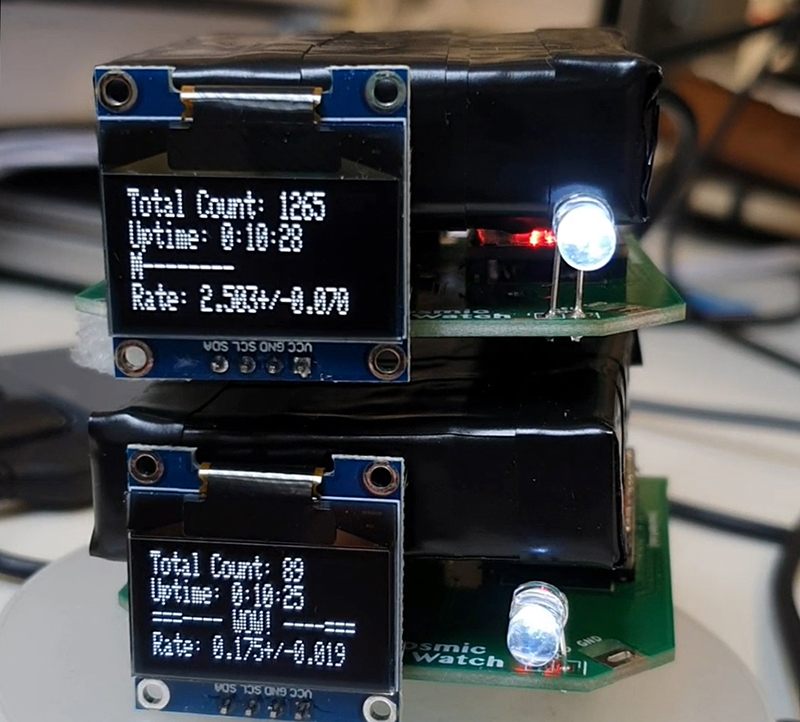
Plastic scintillator used in cosmic ray detectors is expensive. Just two 5x5x1cm blocks I bought for my own cosmic ray detectors cost about £60. There was a possibility of getting some for Haverah Park from a friend of Alan’s in the US but the import duties to the UK were prohibitive. An opportunity then arose when Imperial College, who had once set up a cosmic ray lab. in the depths of the London underground, were asked to remove a quantity of scintillator they had stored at Holborn. It was offered to Leeds University for free but meant sweet-talking the underground station managers over a whisky fuelled lunch to arrange to take possession of the line for a weekend or two, stationing a guard with a red flag and light at one end of the tunnel while the heavy scintillator blocks were loaded onto a trolley and pushed between the tracks a quarter of a mile up an incline to the (now defunct) Aldwych station where there was a lift to bring them up to ground level. When Haverah Park closed the scintillator was passed on to to schools in the Netherlands for their cosmic ray science projects. That from the states ended up being used at The South Pole Air Shower Experiment during its operation before being shipped back to Albuquerque to become a physicist’s unique dark skies garden feature.
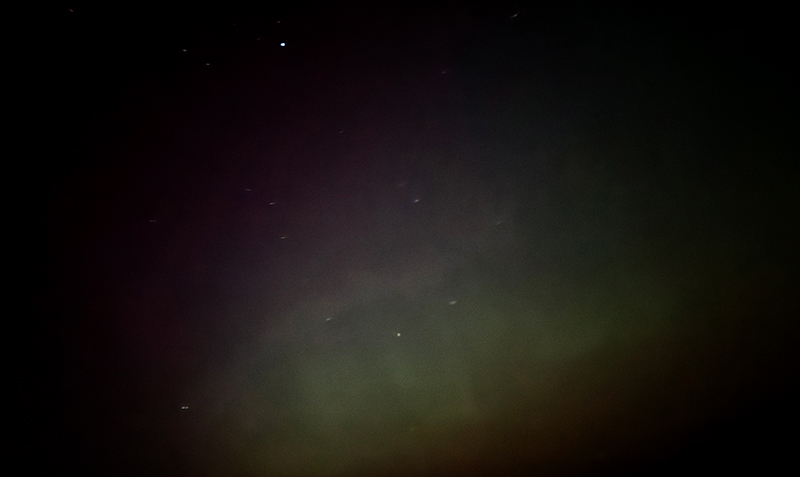
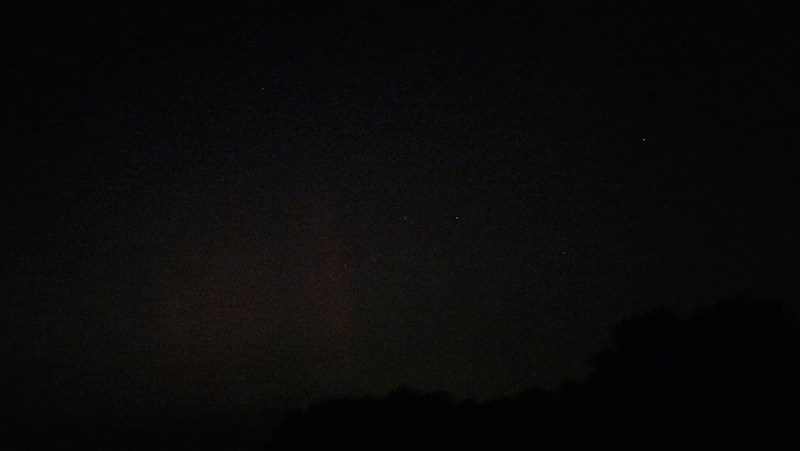
While in Yorkshire I was excited to get an alert for intense solar activity with the possibility of the Northern Lights being visible anywhere in the UK. There were even clear skies. I’ve missed all the aurora displays this year so far and it didn’t happen here either. I went and stood in a dark field around midnight and there was a faint glow but nothing like the images being posted online, some in the same town as I was staying and some annoyingly back south. First image back garden with bright street light interference. Second image with enhanced camera settings. Third image is what it looked like to my inadequate eye.
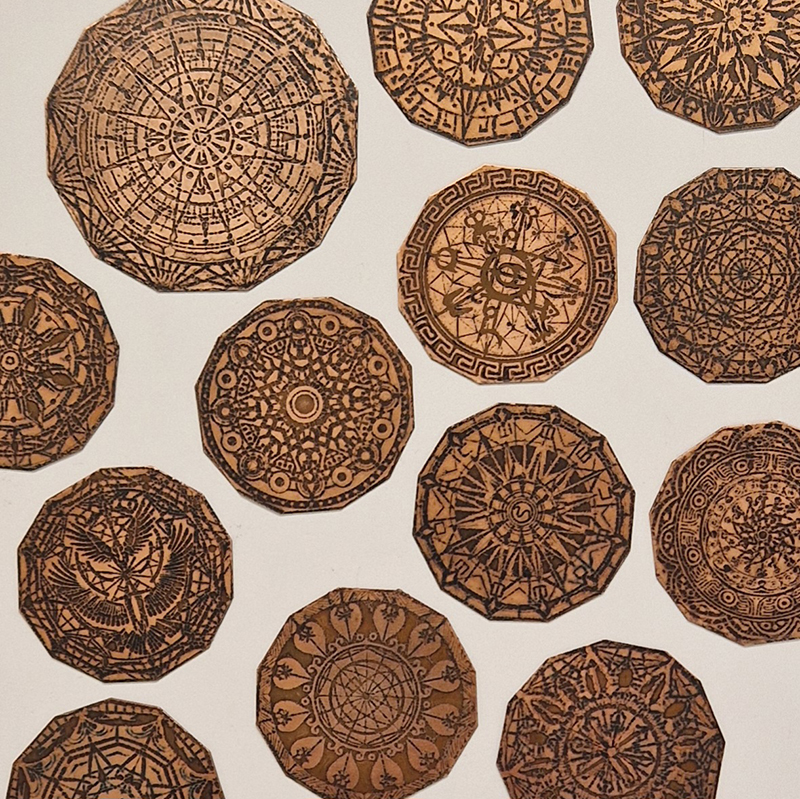
Work in progress on new tablet for Instruments of the Anemoi series of sculptures. The copper dodecagons have been inked and sealed and placed face down onto the collagraph in the silicon mould ready for casting in Snowcrete.
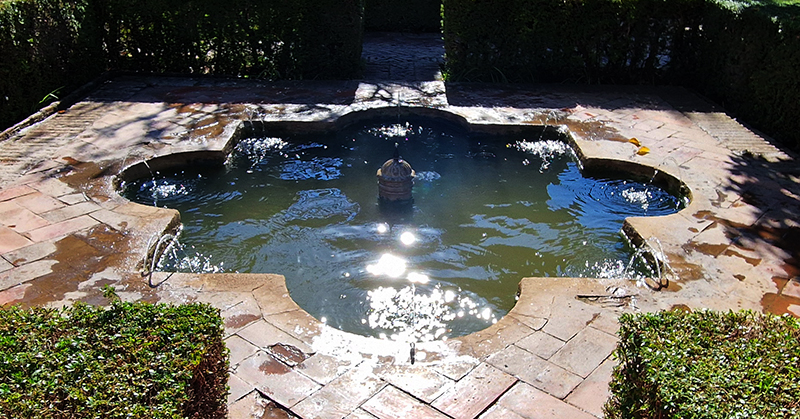
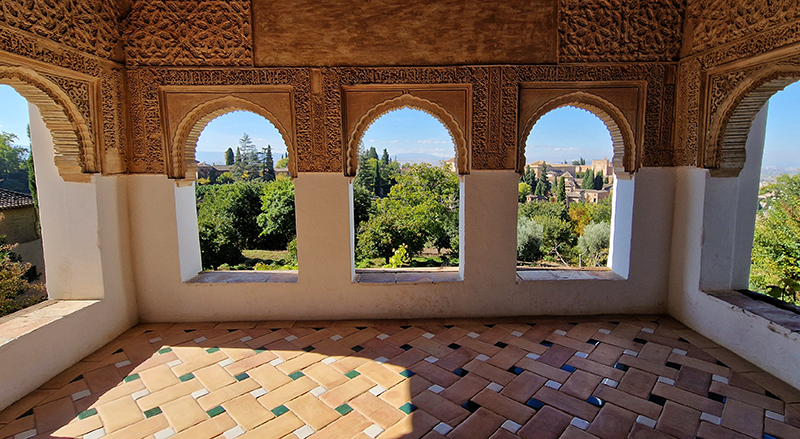
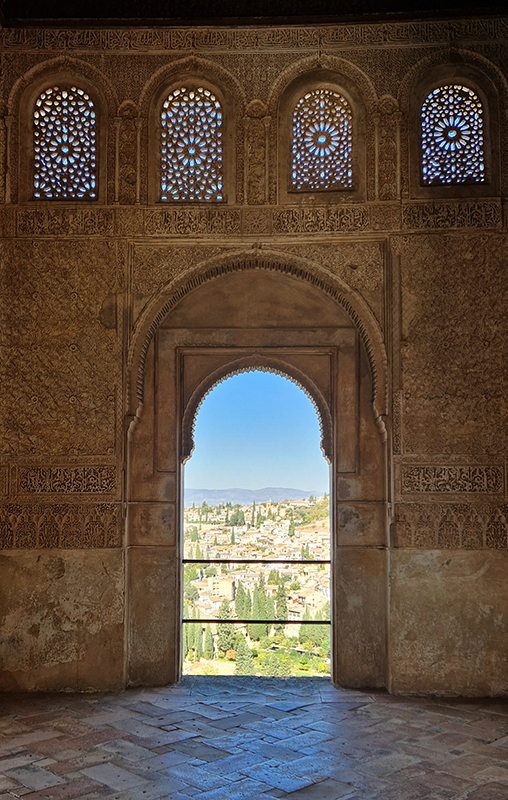
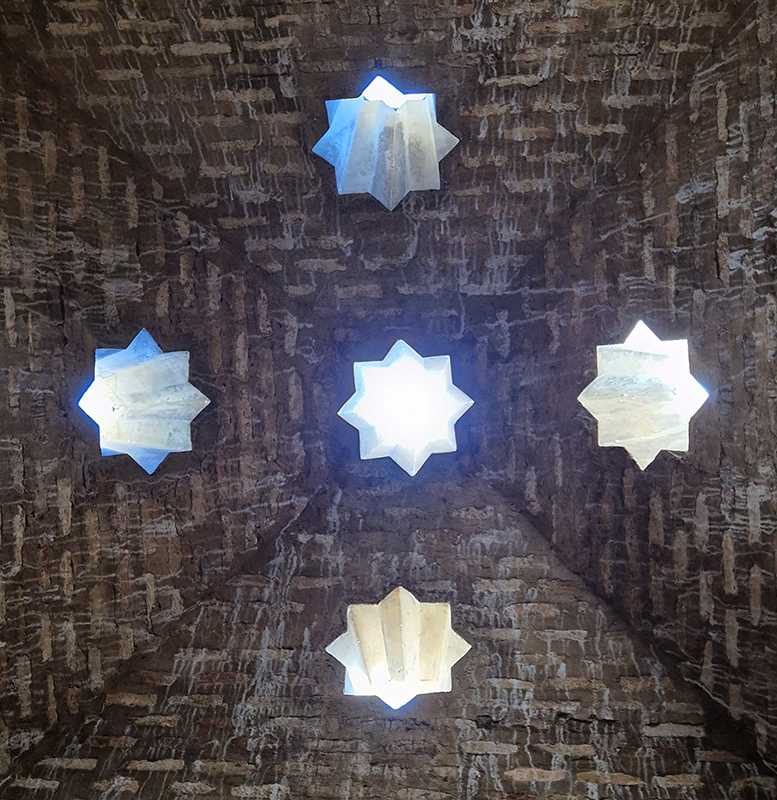
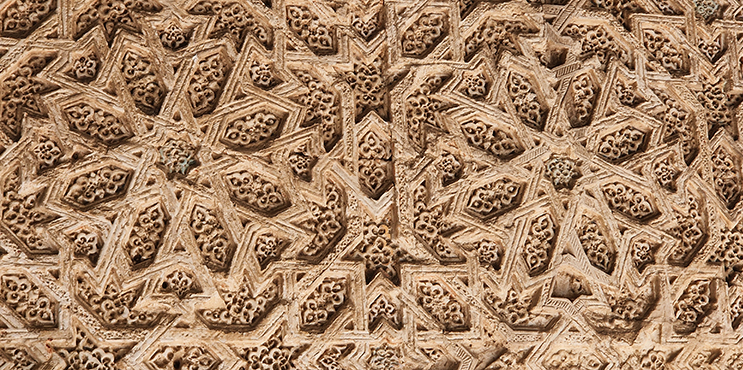
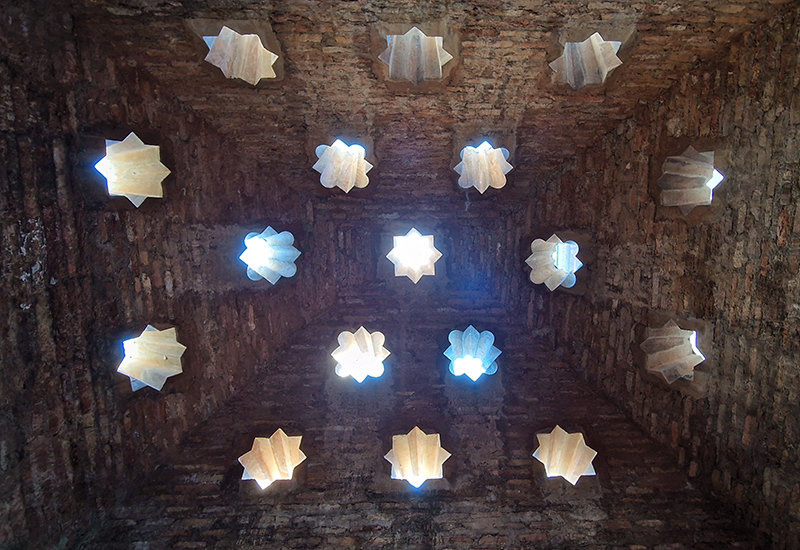
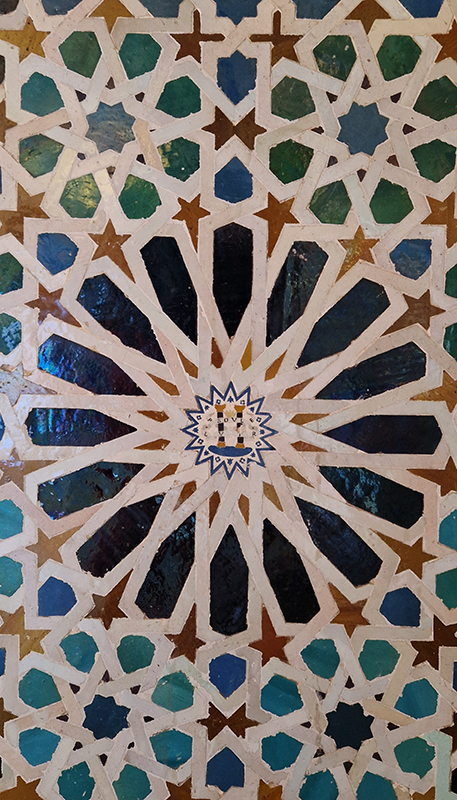
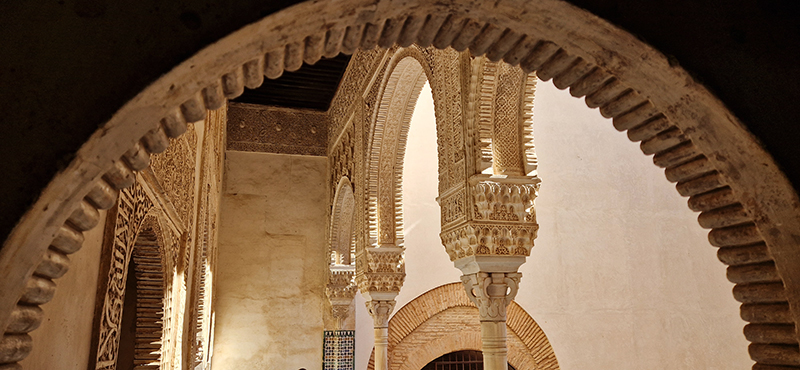
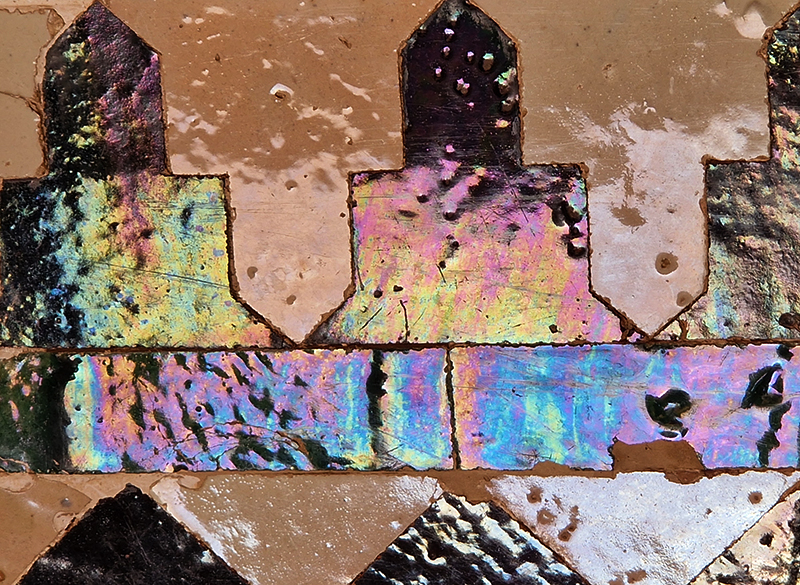
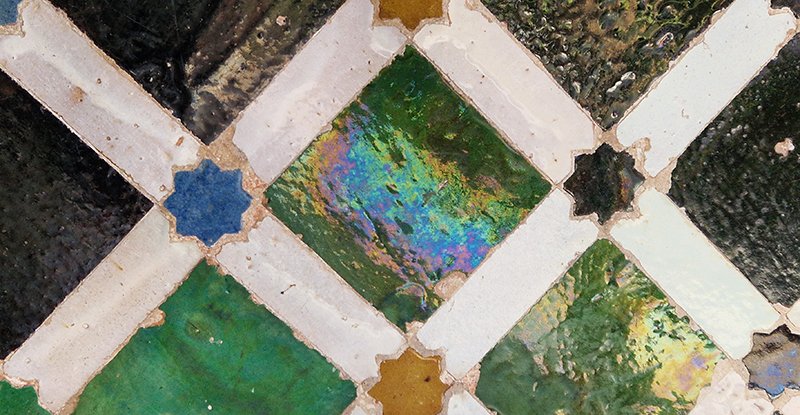
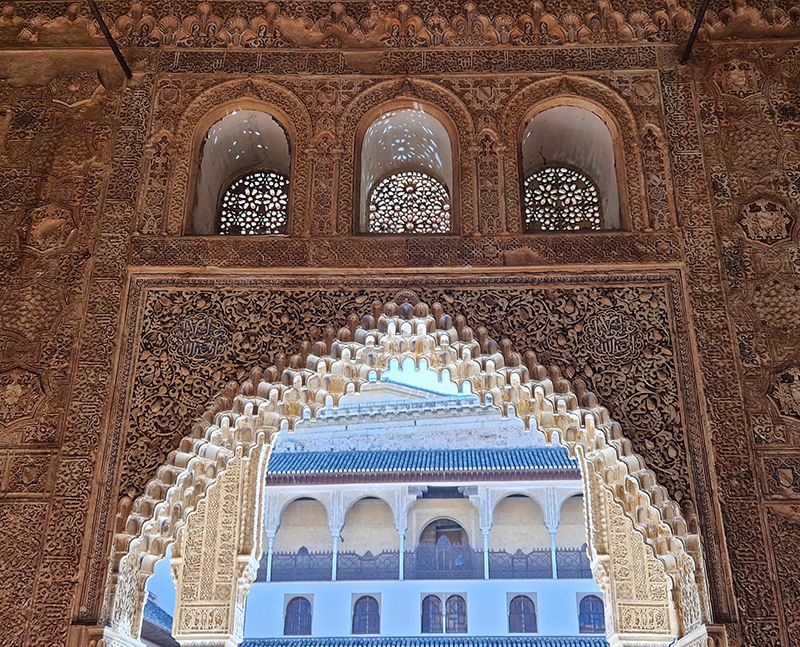
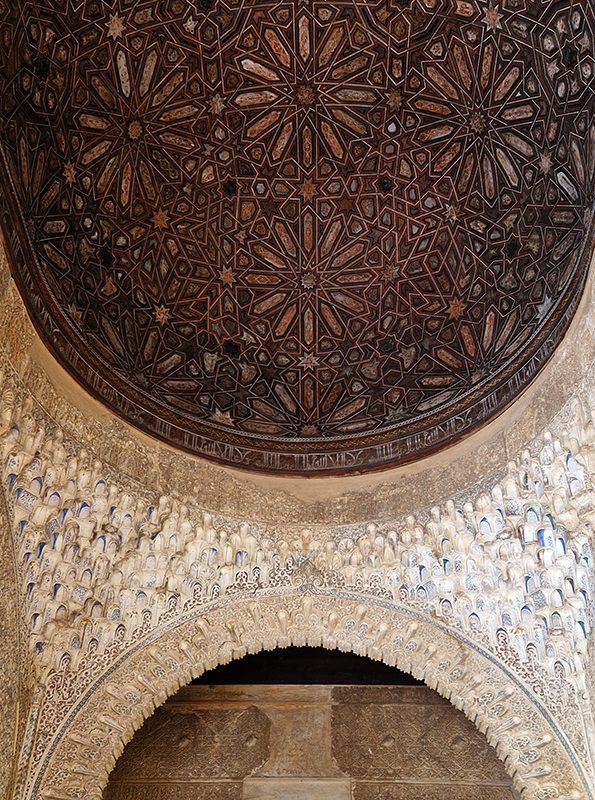
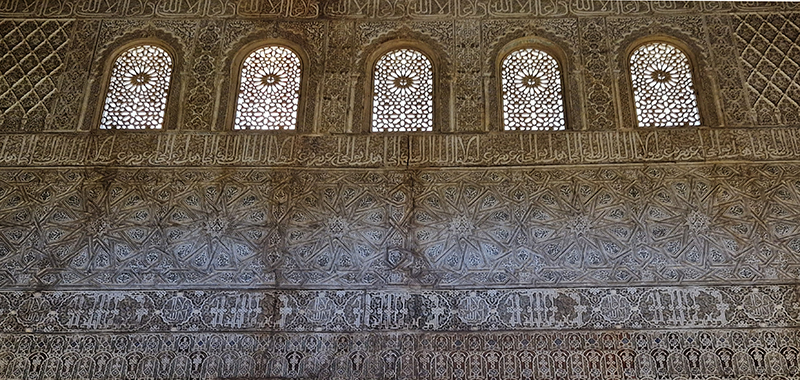
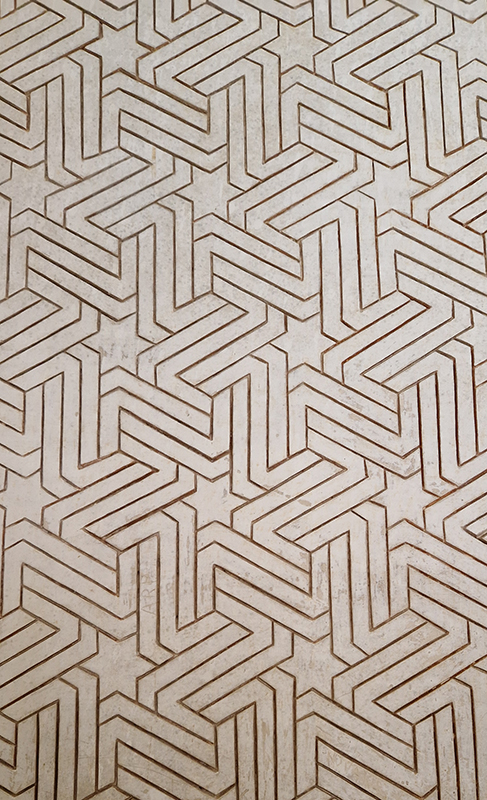
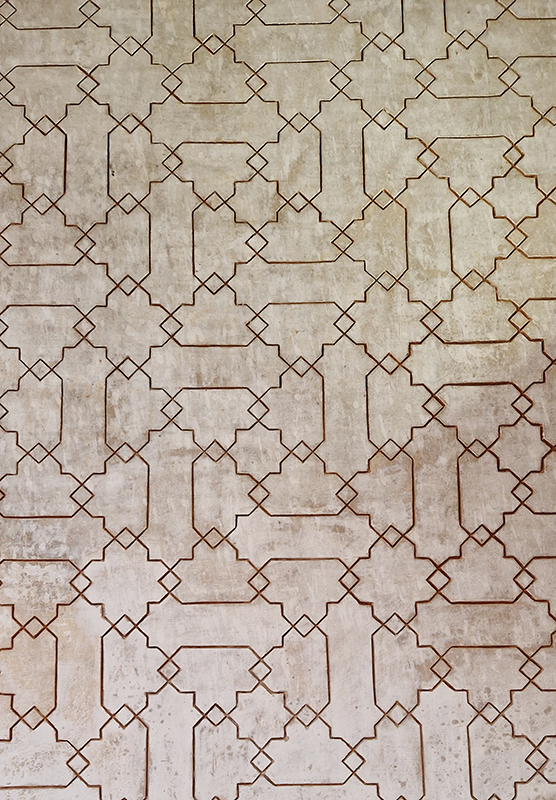
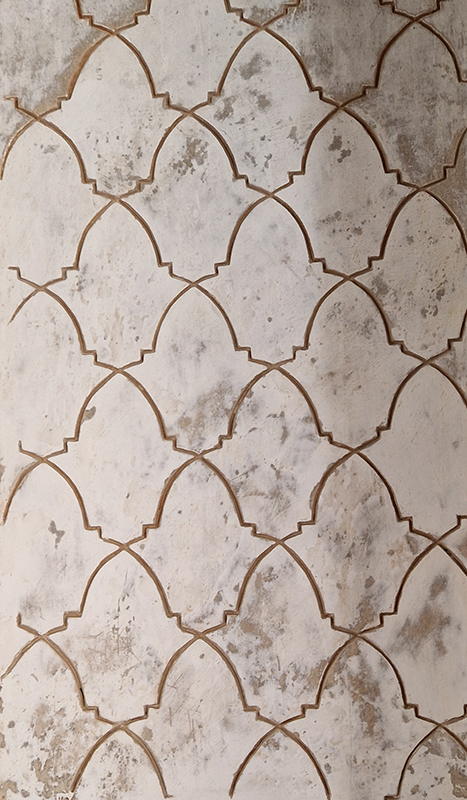
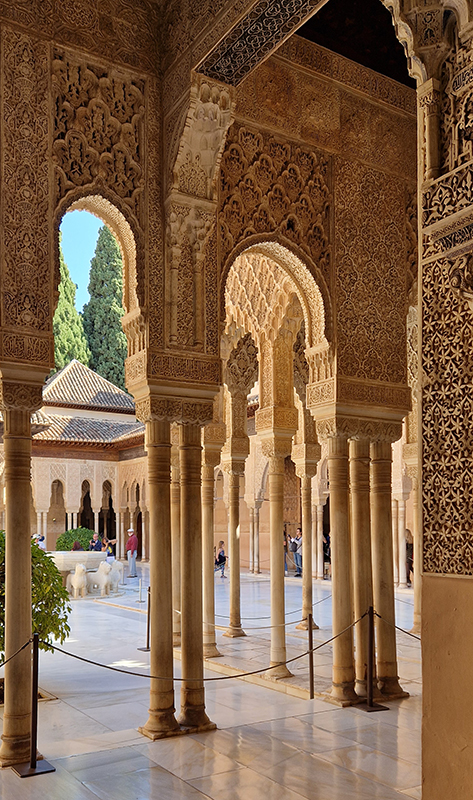
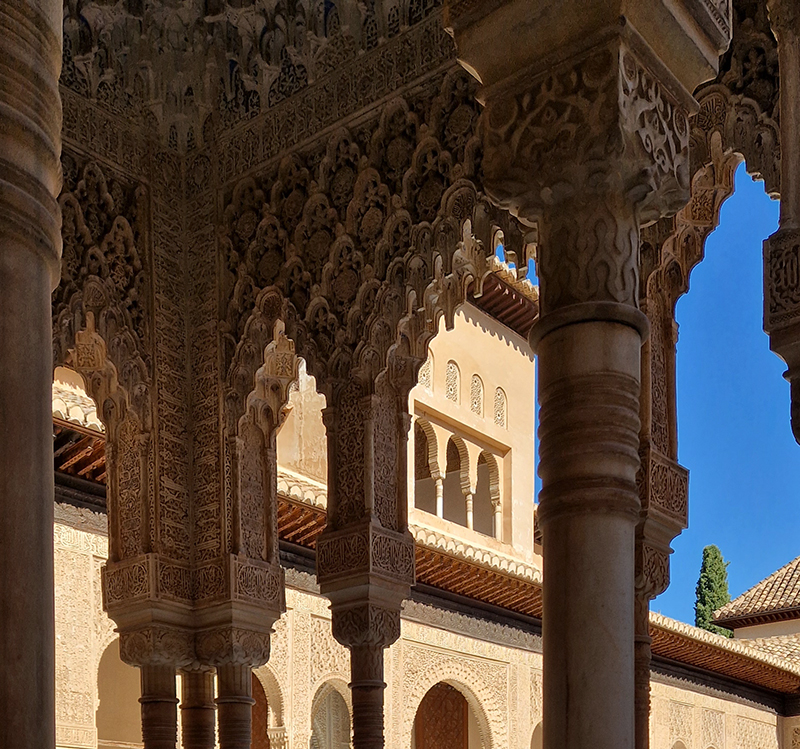
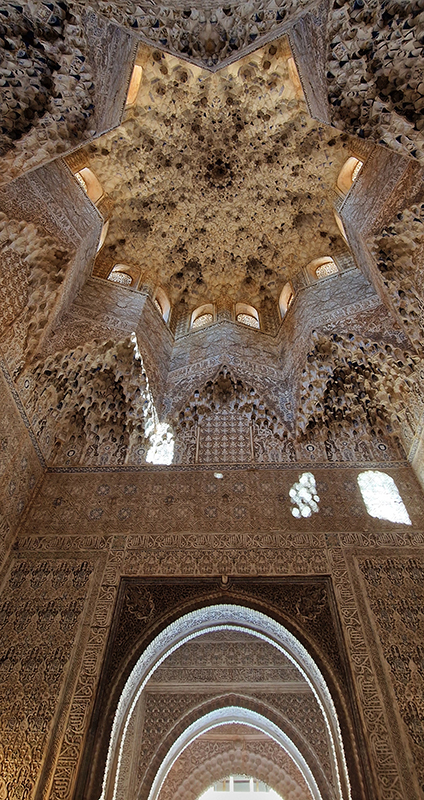
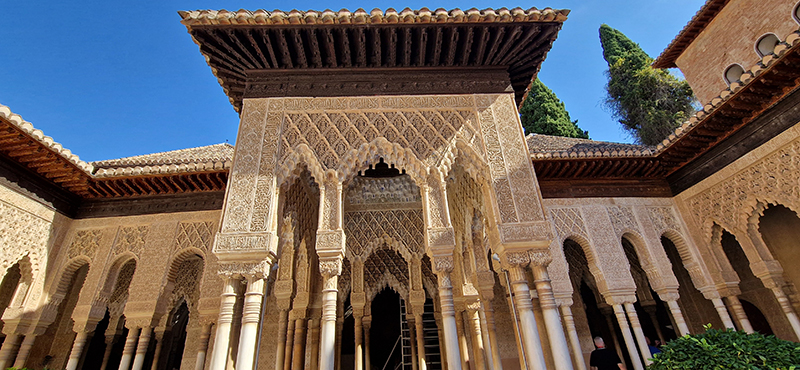
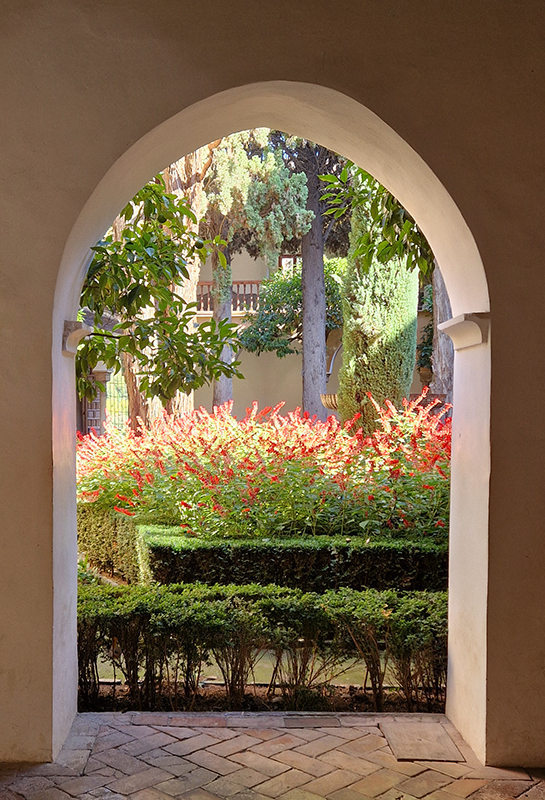
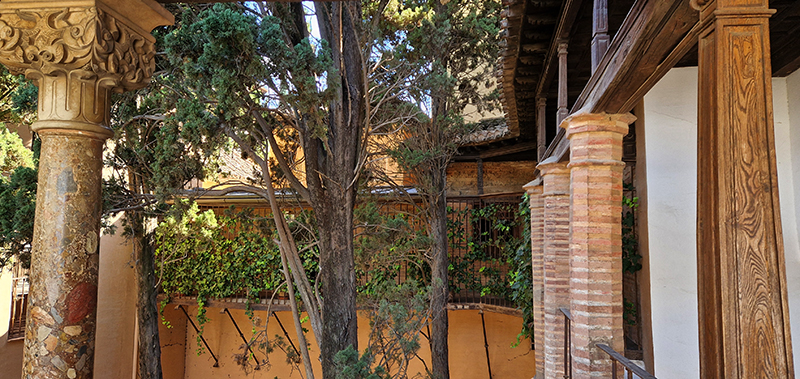
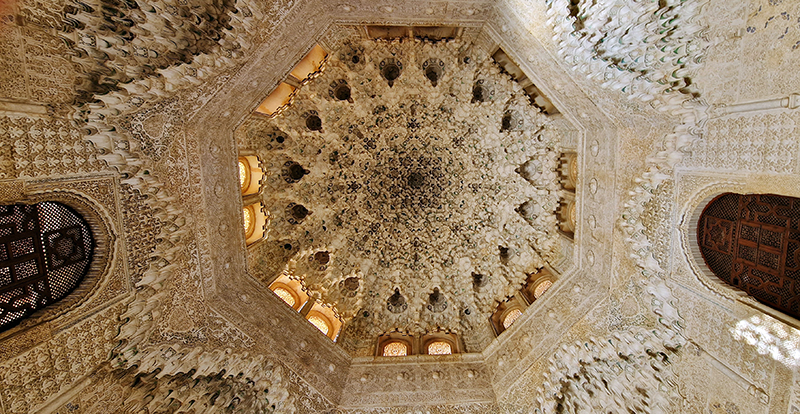
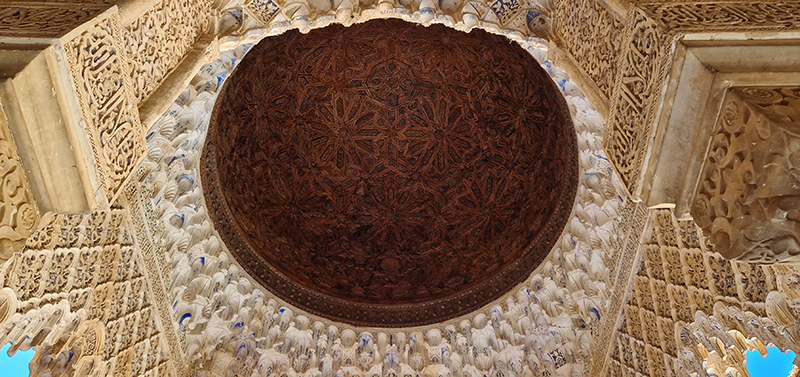
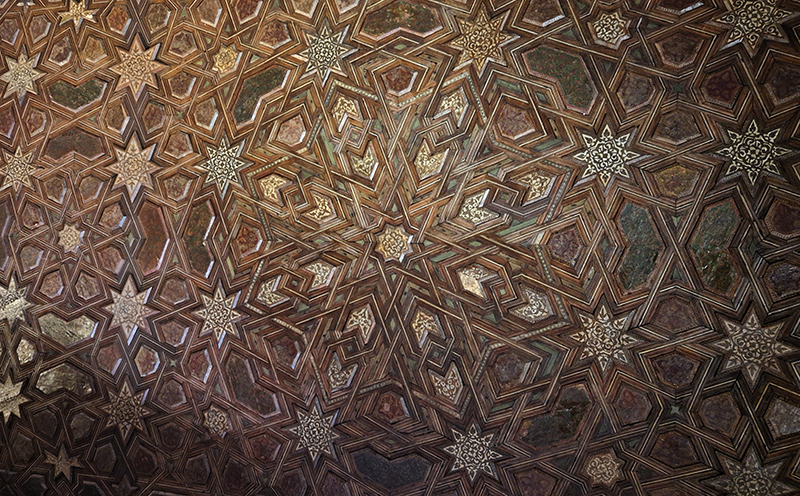
Finally got to visit The Alhambra and it didn’t disappoint.
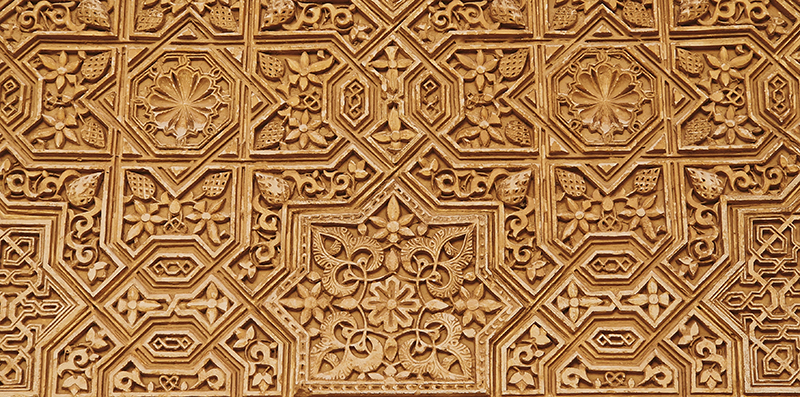
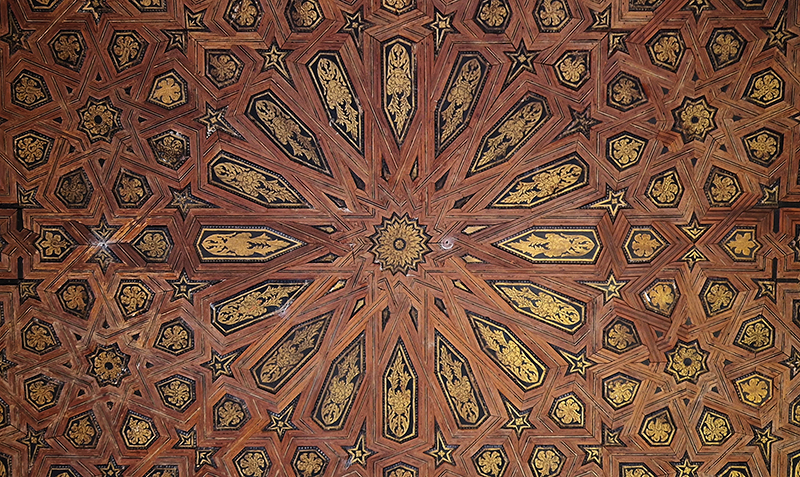
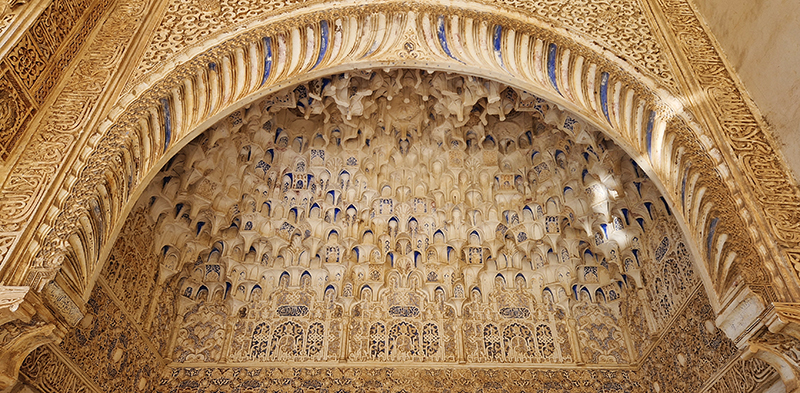
Designed by poets, philosophers and mathematicians, it is said to bring the harmony of paradise to earth in its perfect symmetries and idyllic gardens. The complex was begun in 1238 by Muhammad I Ibn al-Ahmar, the first Nasrid emir and founder of the Emirate of Granada, the last Muslim state of Al-Andalus and has been expanded, modified and repurposed over the centuries. It is a vast network of garden pools, fountains, courtyards, palaces and fortress towers with jaw dropping vistas. Water runs down from the mountains in an ingenious systems of open channels intertwining through pathways to feed the many pools and fountains. Every ceiling is a vault of heaven, inlaid or sculpted to draw the eye upward. Every wall tiled or stuccoed. Pavements interlaced with patterns set in stones accept cooling water splashed onto their surfaces without it immediately evaporating as it would on a smooth path.
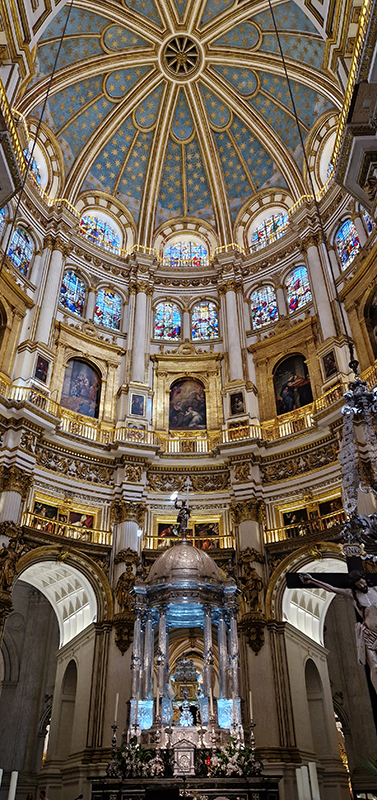
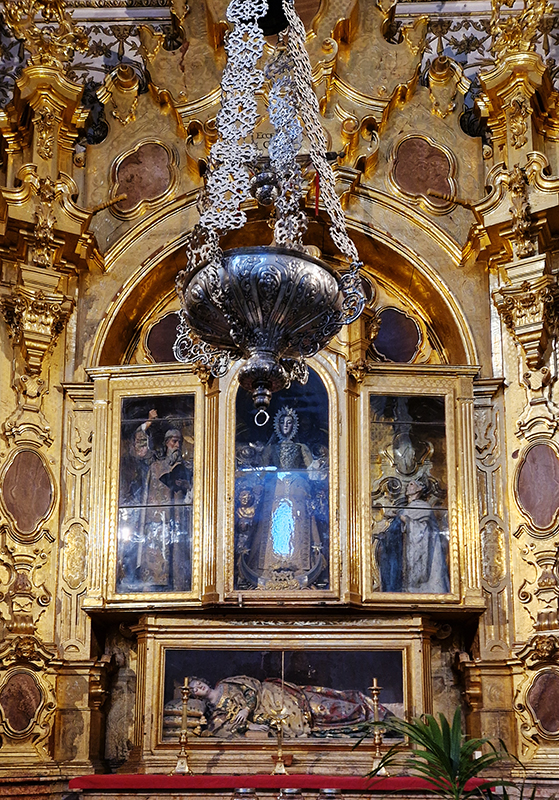
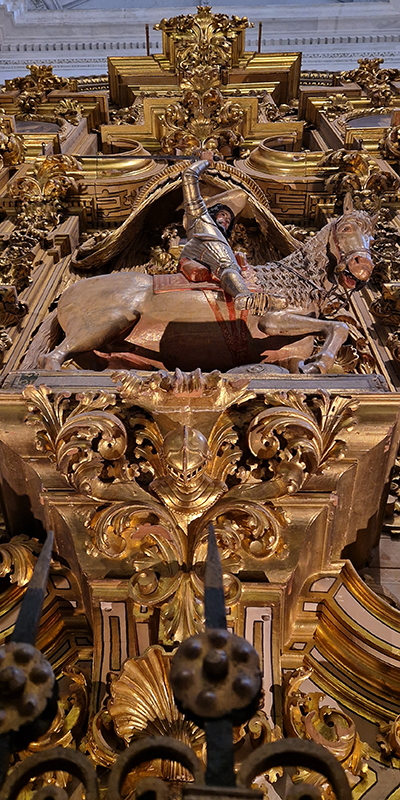
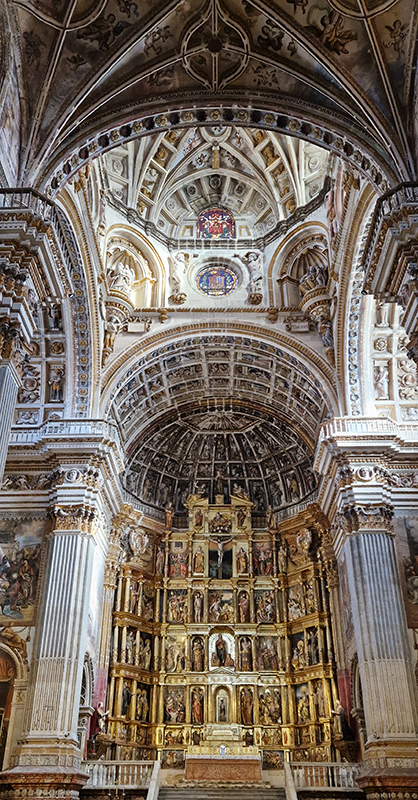
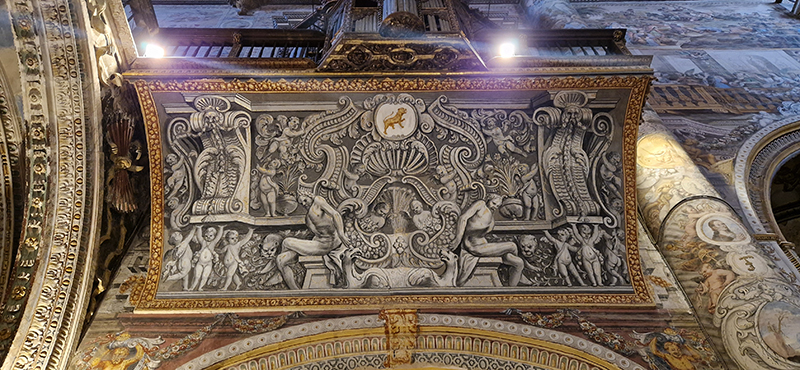
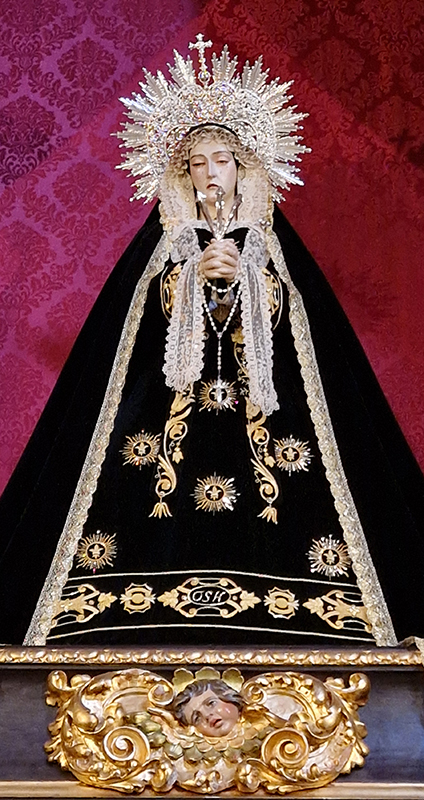
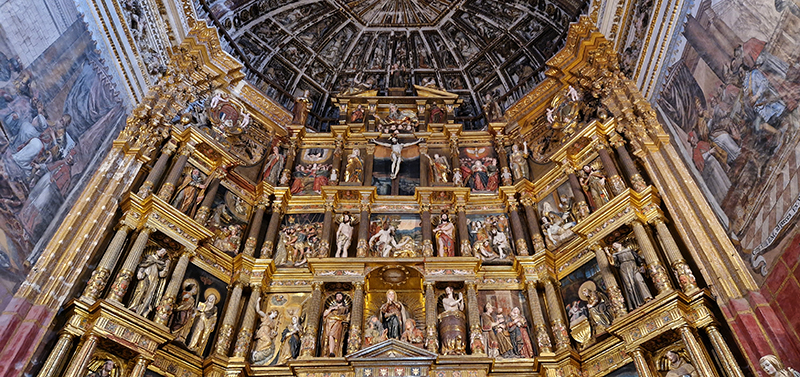
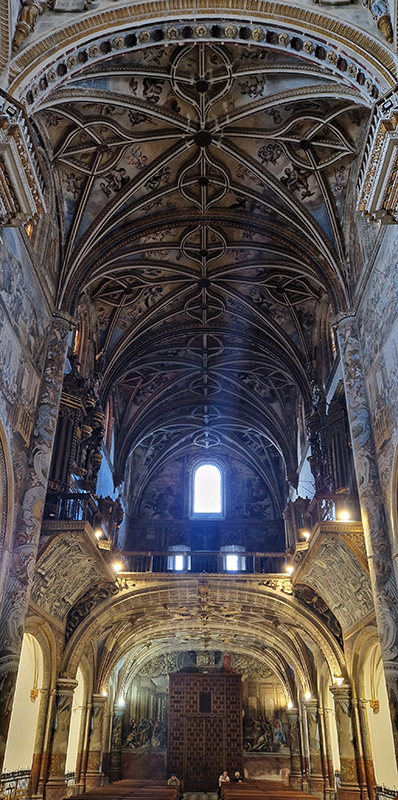
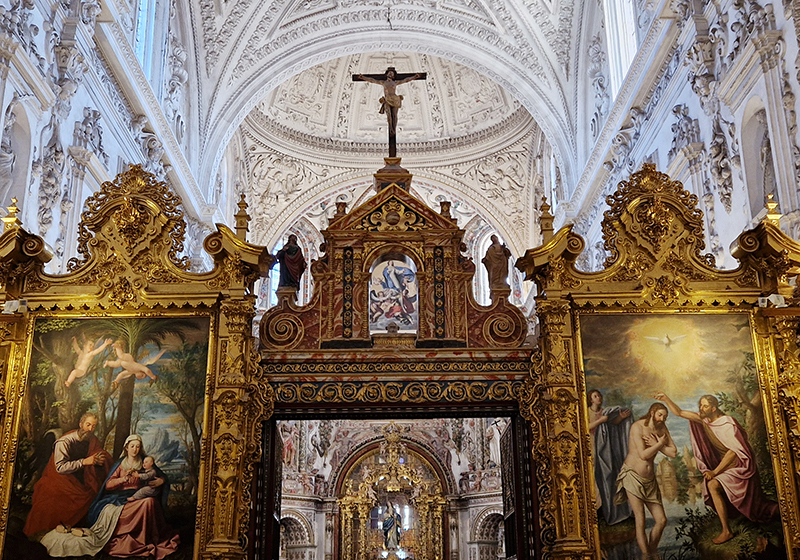
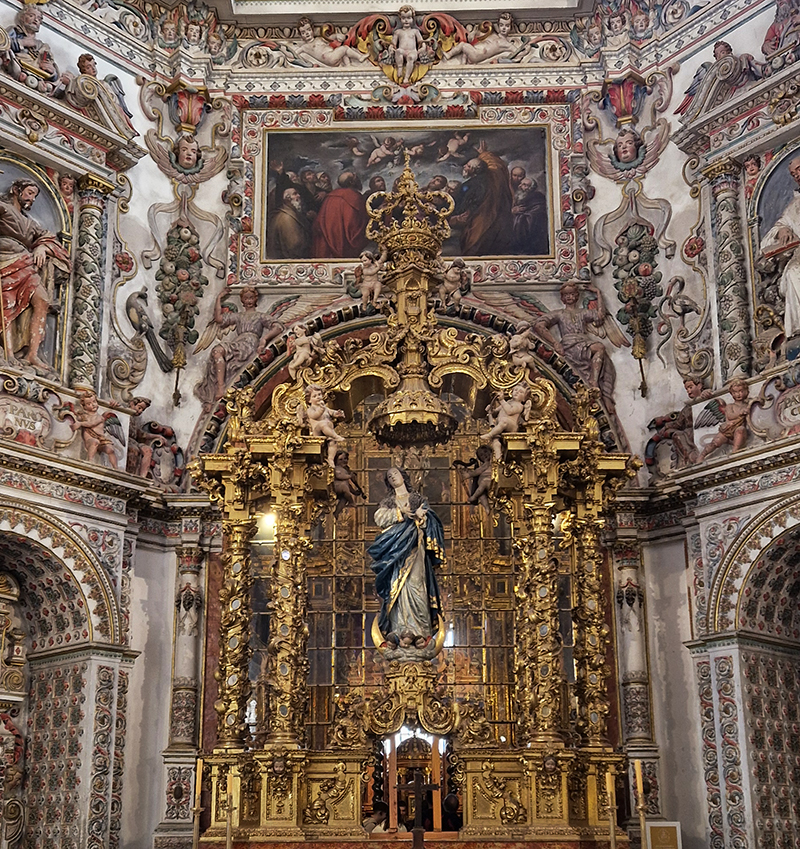
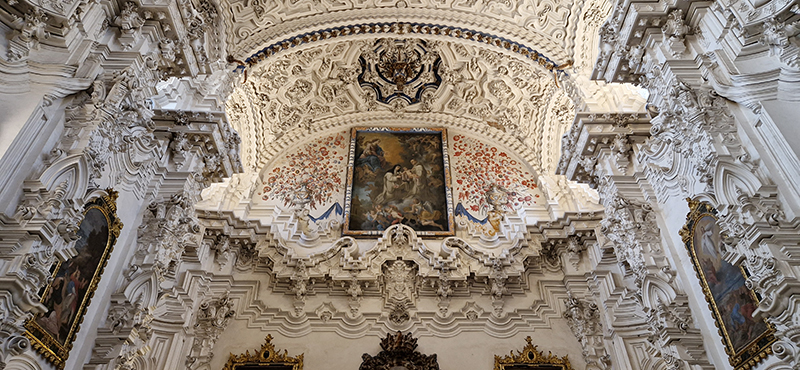
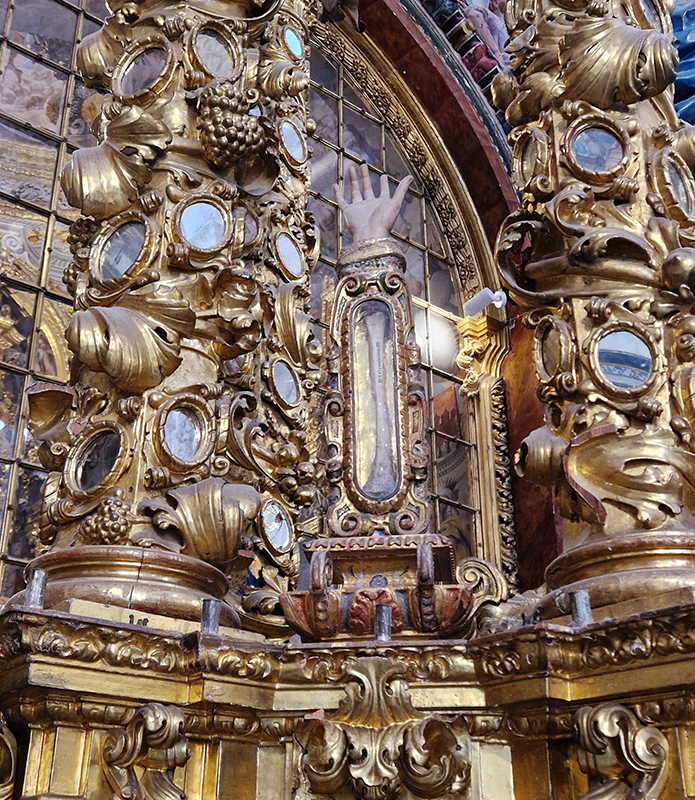
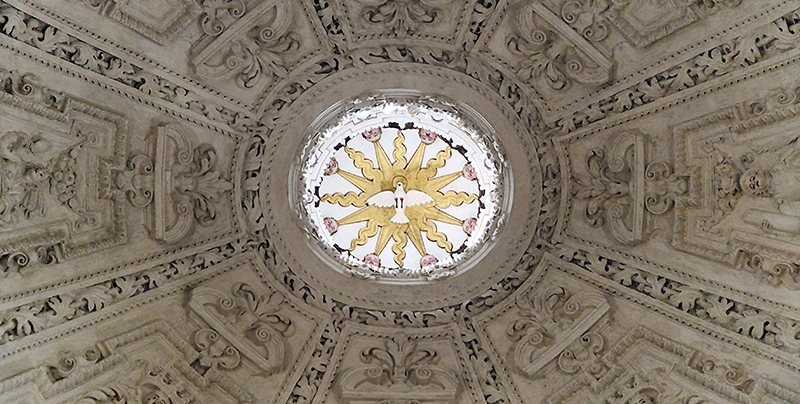
After the stunning intricacies of sacred geometry and calligraphy, the cast plaster and carved stucco in sunblushed pinks and ochres coloured with mineral pigments of the Alhambra came the Roman Catholics with an alternative interpretation of spirituality. The Cathedrals, Abbeys and Monasteries they built are also astonishing in their scale, architecture and decoration. But this new regime conveyed its power with overwhelming opulence and extravagance, gleaming with gold and spilling over with iconography.
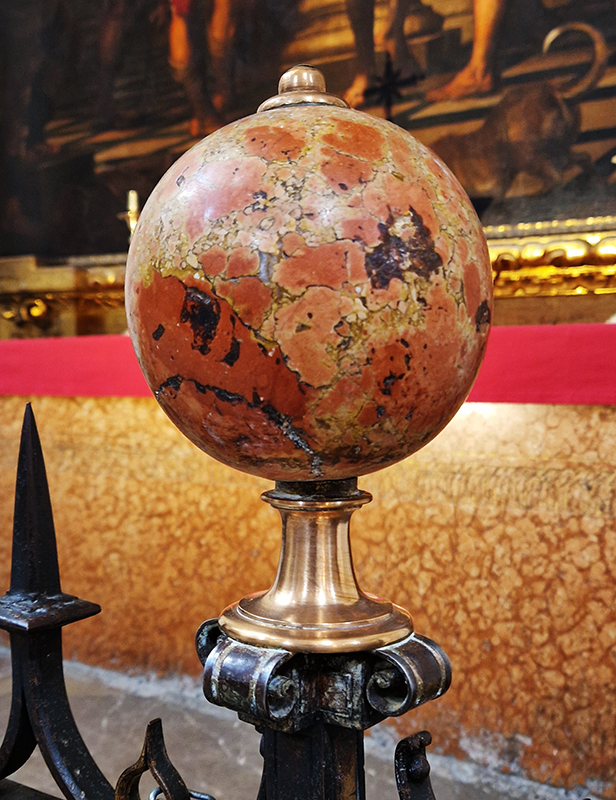
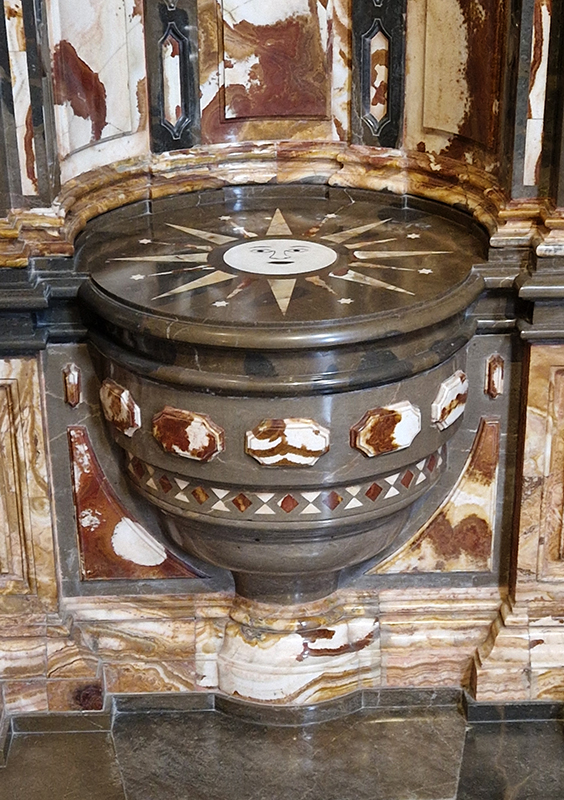
Of course all our cities are built in stone but here the stone shouts of its materiality and origins.
What could a monument be? Is it the thing we build or the thing we have taken away from? A place of emptiness is the monument to remind us there is no possibility of getting back to what has been – Otobong Nkanga
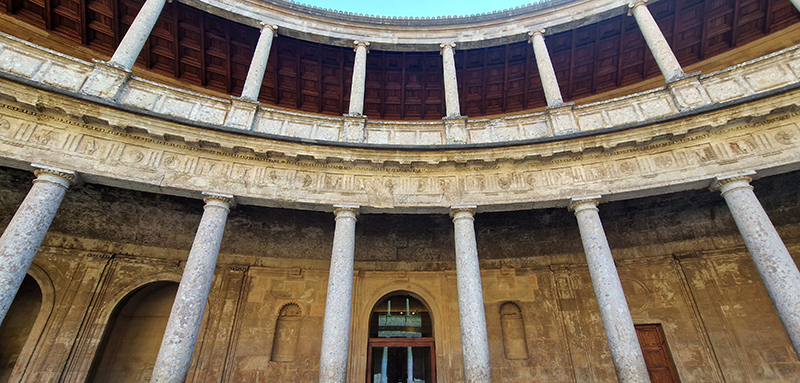
The circular Palace of Charles V was built inside the Alhambra beginning in 1527 to symbolize the royal imperial status and the imposition of Christianity over Islam achieved by the Roman Catholic monarchs. I was intrigued by the Doric colonnade of conglomerate stone and wonder how these were polished so smooth.
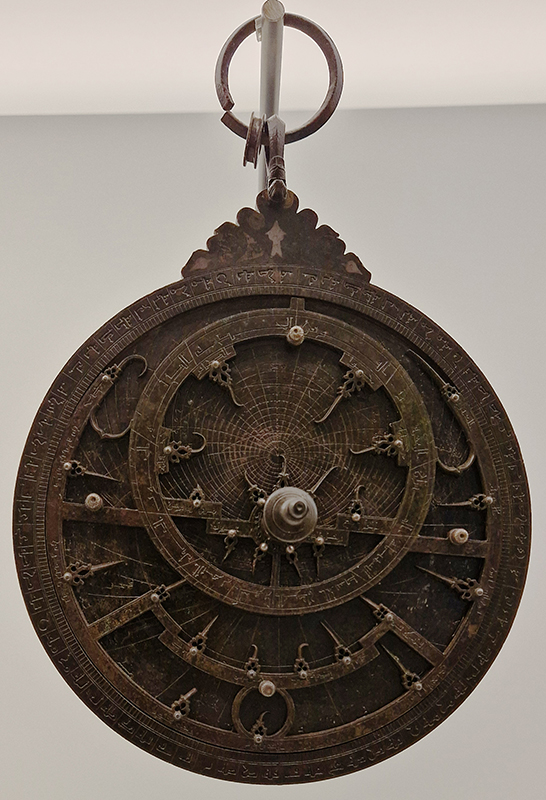
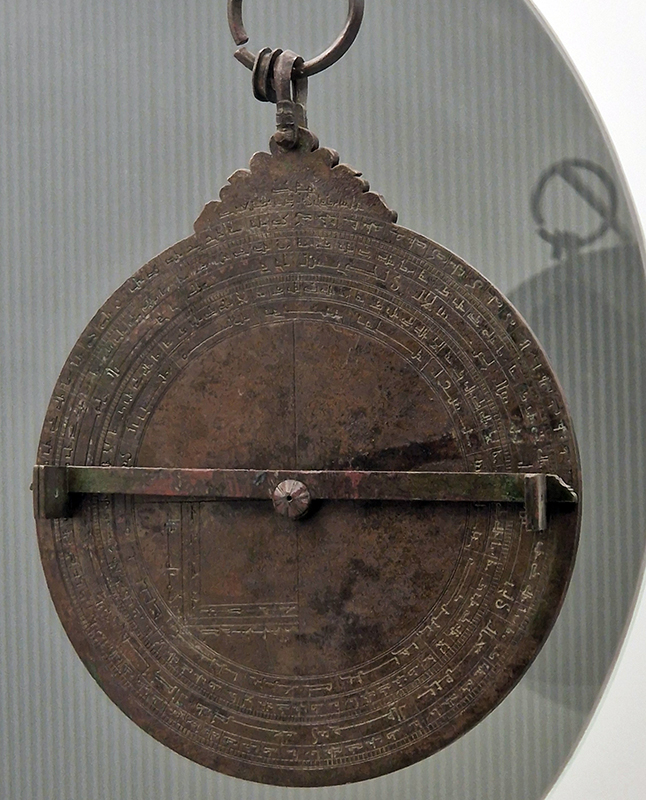
The Museums of Granada hold some fascinating ancient instruments. The Astrolabe of Ibn Zawal: molten, cast and etched bronze, 1481, used to determine position and time based on observation of the heavenly bodies. This one served to mark the times of prayer, beginning of Ramadan and qibla (direction of prayer). This is the only example known built specifically for the latitude of Granada. A marble Sun Dial with missing gnomon, this solar quadrant marks the hours of the day in relation to the seasons. Winter and summer solstices are marked by two semicircles. It has some signs of the zodiac and inscriptions in Kufic characters which mark the times of daily prayers. A bronze celestial globe.
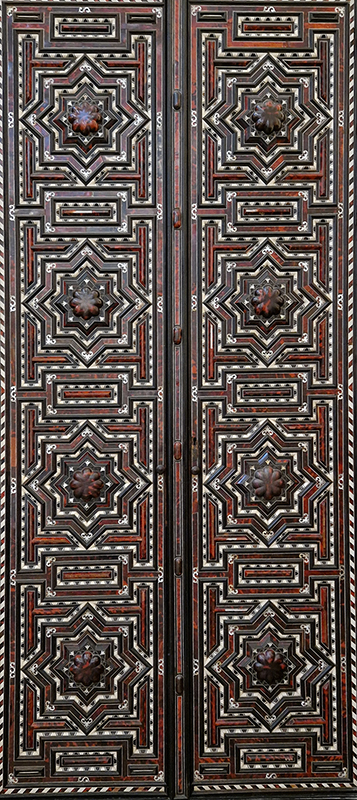
Seeing these instruments along with the intricate patterns of the 13th–15thC larder doors from the Palacio de los Infantes of cypress decorated with intarsia of inlaid wood, bone and ivory and other pieces seen at Granada Cartuja Monastery and Granada Casa de Los Trios, while smelling spices sold loose on the streets brings to mind the ‘Matter of Objects’ project instigated by Queen Mary University that I took part in. Humanities researchers and artists were paired in interdisciplinary conversation to open the way for reinvigorated readings of objects from the past. I was paired with Bruno Martinho from the European University Institute in Florence researching exotic objects found on the Iberian Peninsula during the 16thC.
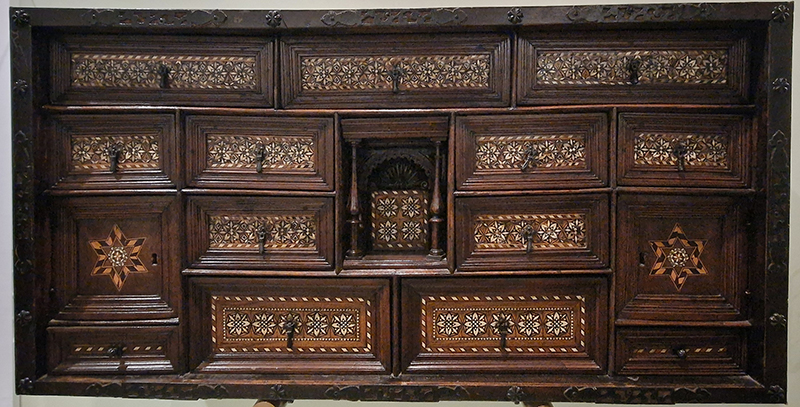
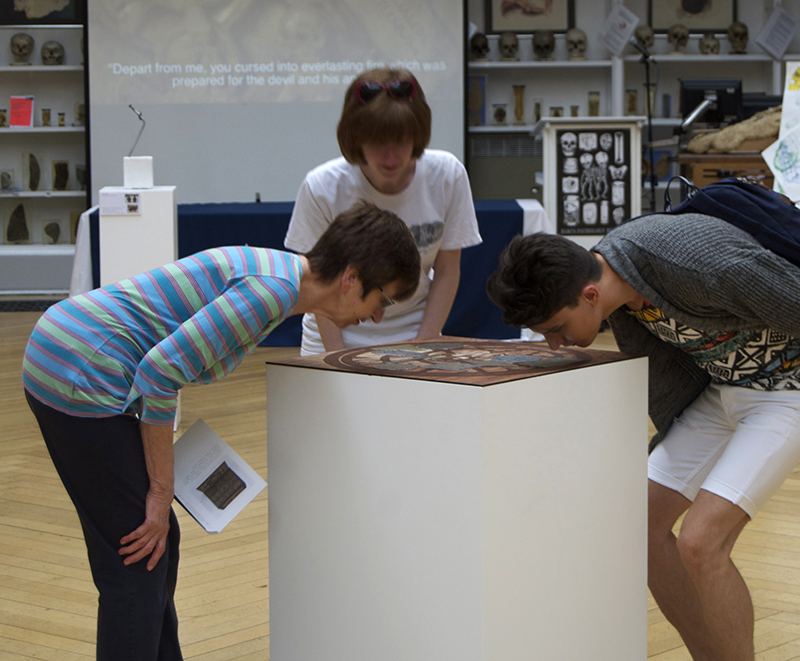
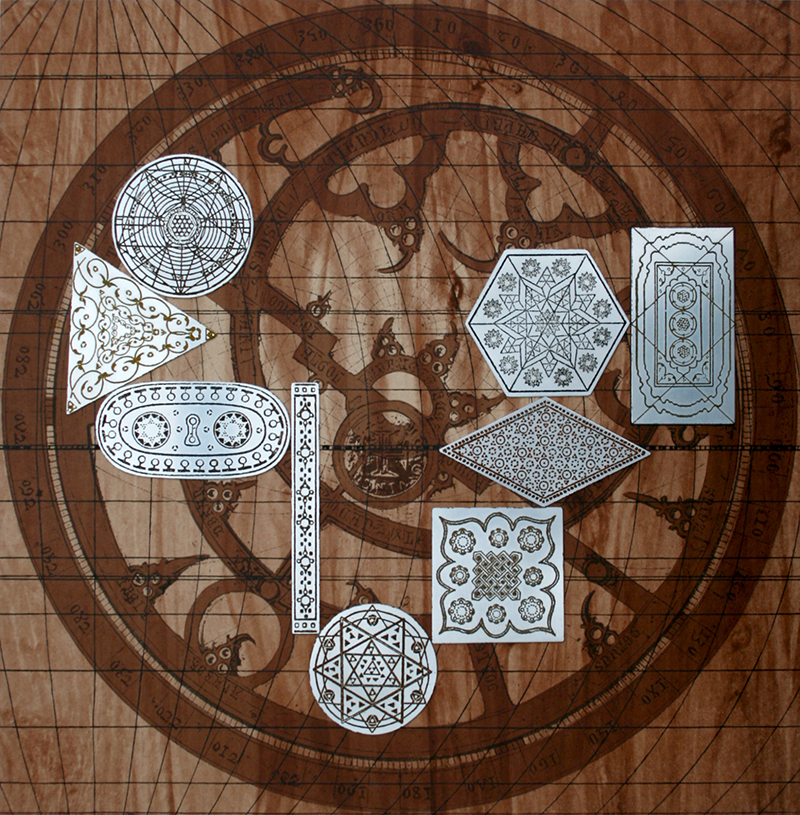
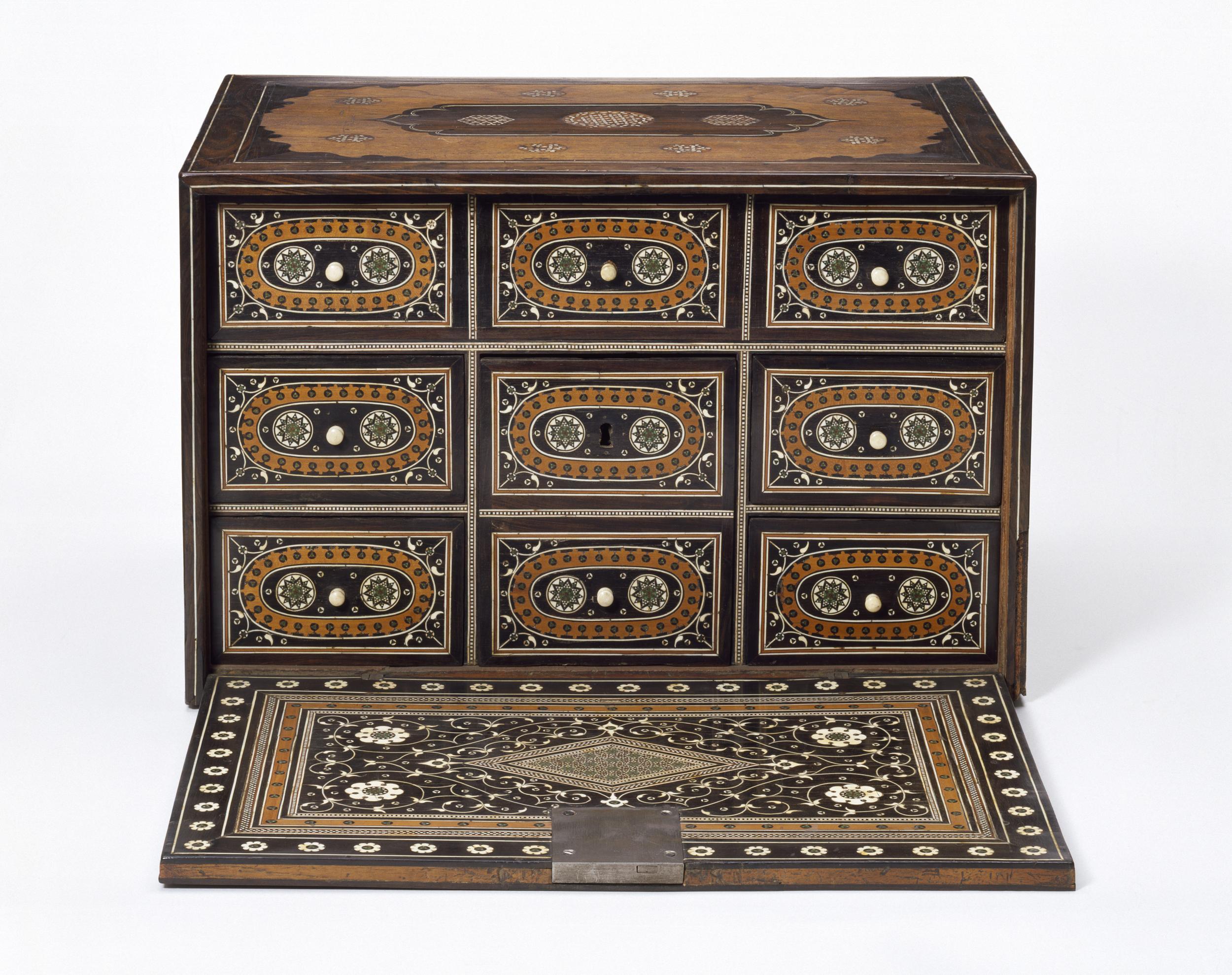
The work containment was made in response to objects traded by merchants that journeyed across the globe five hundred years ago when navigation was reliant on reading the stars. The deep etched lines of the metal plates were filled with inks made from different spices, inviting the viewer to lean in and inhale the aromas. These markers plot the spice route from India around Africa to Europe along the latitude and longitude lines taken from 16th maps of Mercator and Ortelius. A fall-fronted cabinet from 16thC held at the V&A was chosen by Bruno as an object to respond to
Gallery Visits
Liz Elton in Emerging Landscape Painting Todayat Messums Cork Street. Assessing the conversation on how landscape and our collective wellbeing mirror each other. Liz’s delicate work Habitat creating a focal point here was first shown in Lifeboatat APT gallery.
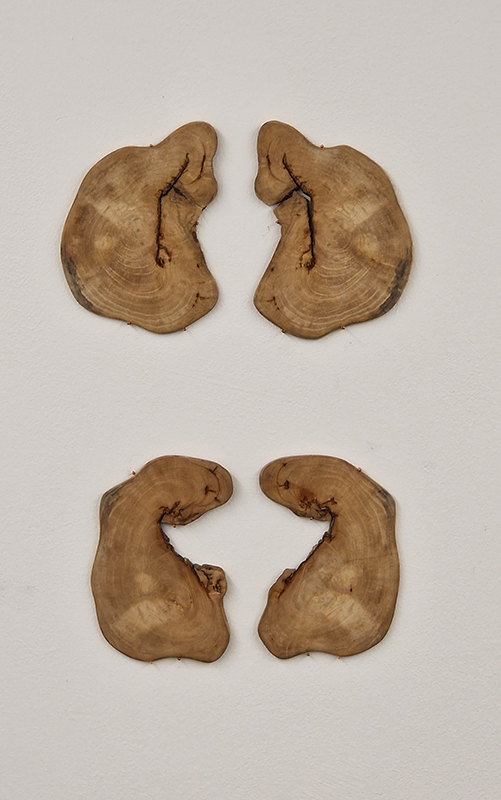
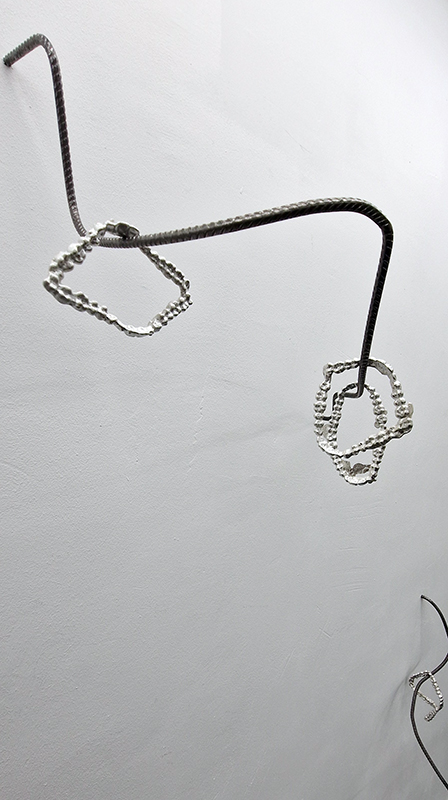
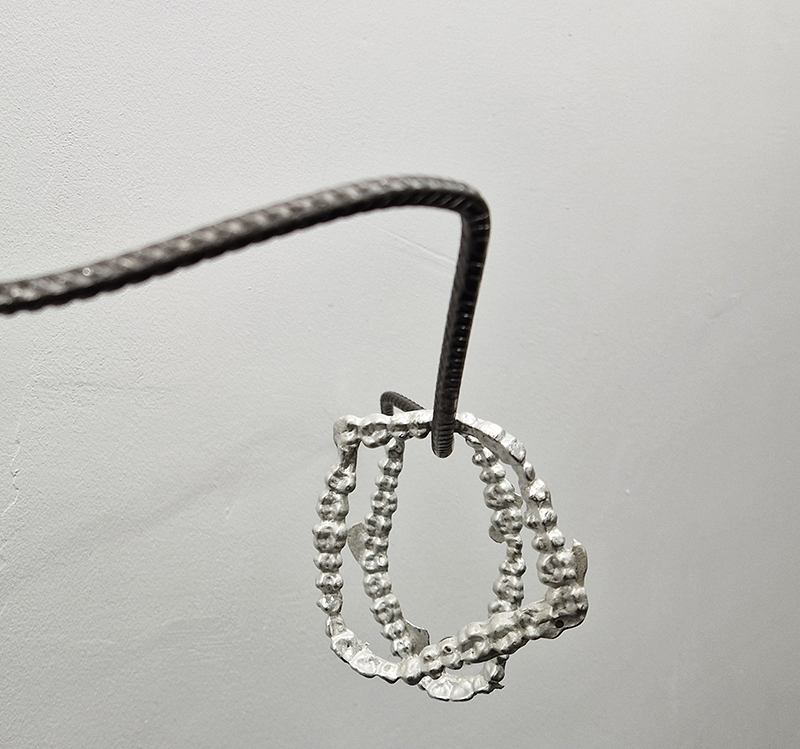
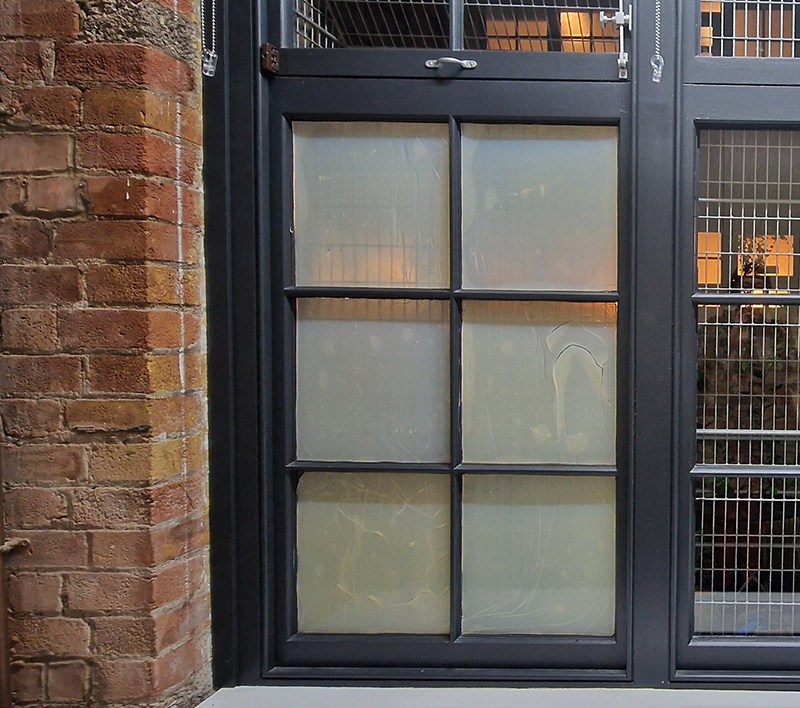
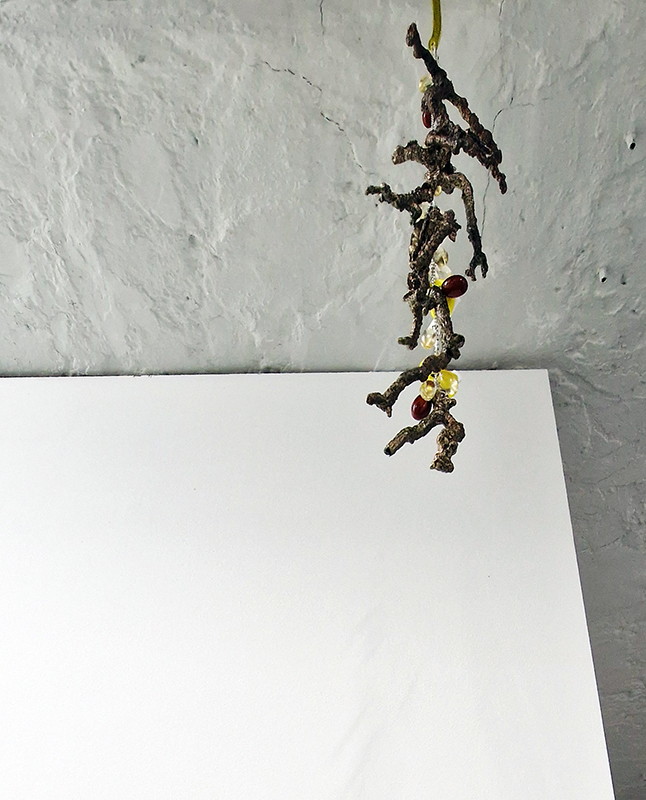
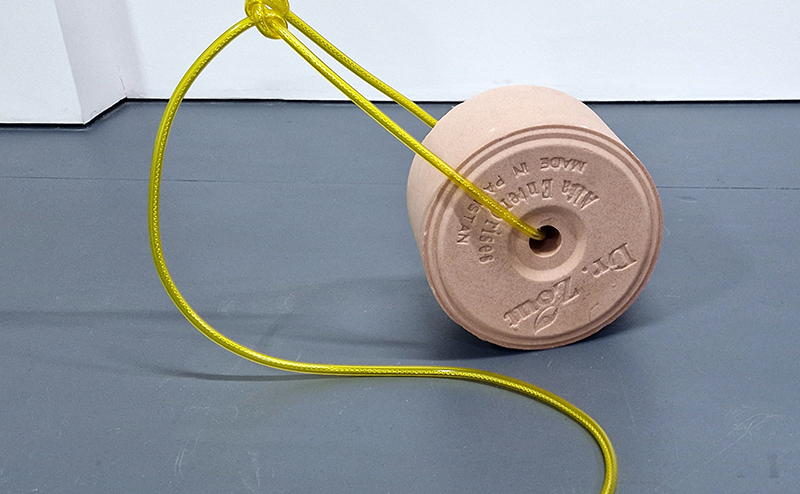
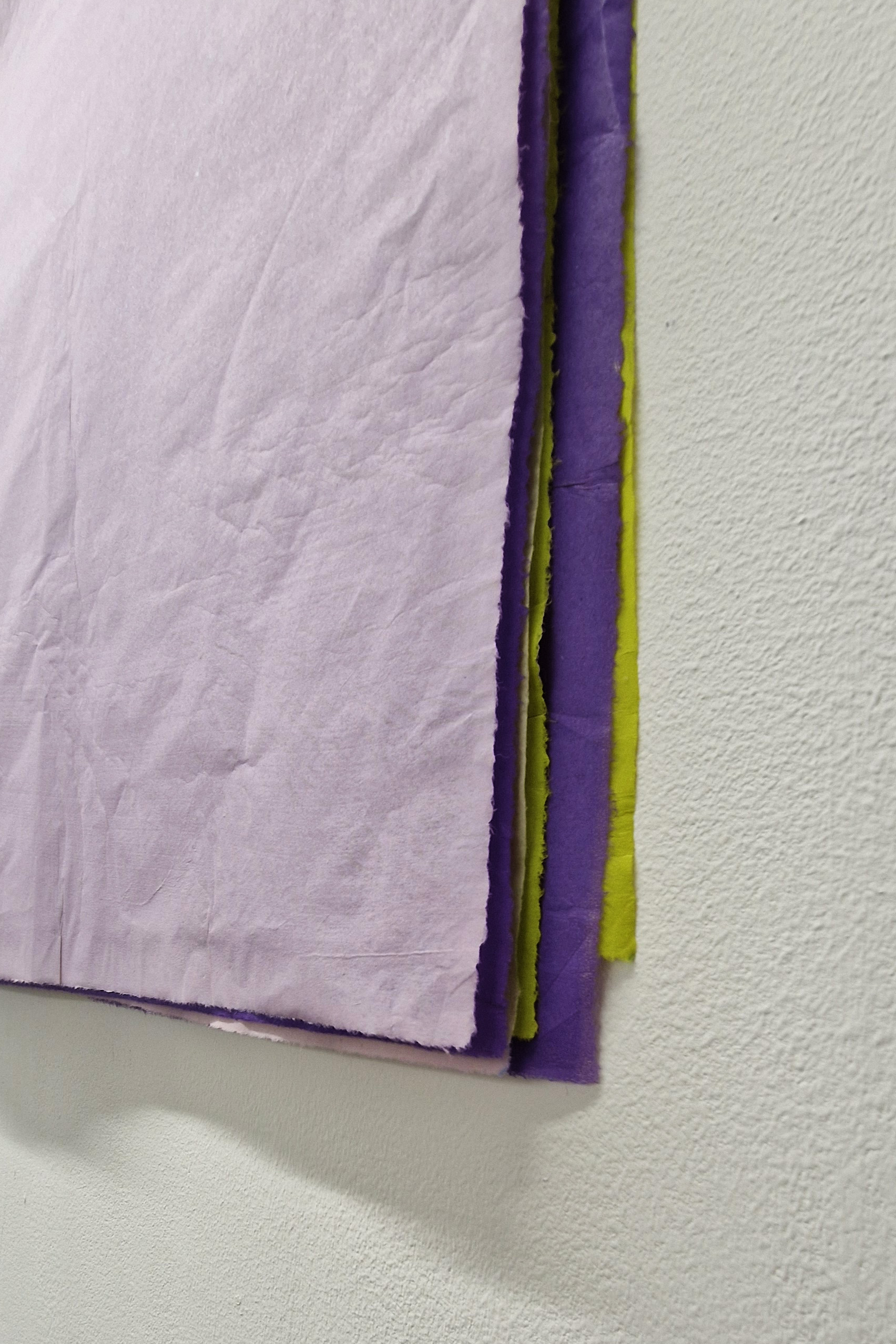
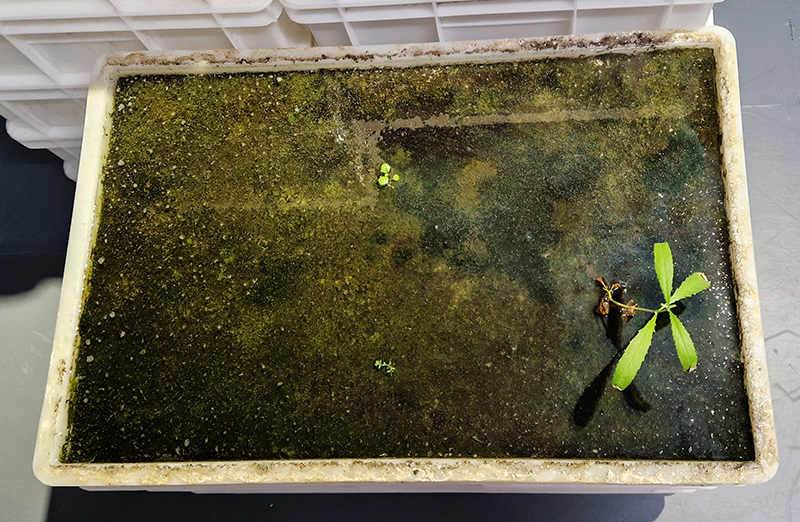
Kate Fahey, Lizzie Munn and Timo Kube in As it is – with works at Commonage Projects and No Show Space. The exhibition talks about subjective experience of time, the past echoing into the future. I find the title ‘As it is’ echoes from my past of Sunday School mantras ‘…on earth as it is in heaven’. That unknown questionable idyll. Aluminium teeth frozen in open cry, strung like trophies; wood sculpted in foetal shapes echoing a folding unfolding, bronze twigs strung with vitamins dangle chirping and chiming over head – hoisted in place with salt blocks, window panes obscured with sheets of semi translucent jelly poised to fall. These works from Kate Fahey encourage an assessment of what is natural, what can be transformed and what can be preserved. Lizzie Munn hangs blocks of hand printed paper in layers of rich colours, the installation draws attention to the vibrant edges and the weight of the paper as object rather than substrate. The manmade bogs in Timo Kube’s plastic tanks also took me back to childhood and the delight of finding strange lifeforms in the rusted water butts of neighbours gardens when taken on trips to renew flowers in the graveyard. Like these bogs his other pieces exploit their surfaces as uncertain, both reflecting and revealing.
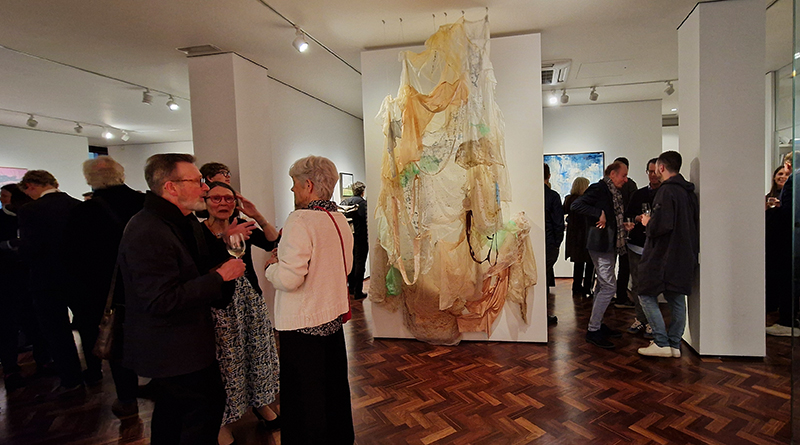
Venetia Nevill We Belong to the Earth at The Bhavan. Venetia has an extraordinary talent of opening pathways into the soul of the natural world allowing us to enter a calm and meditative space. Through her own passion for nature and her deep knowledge of ancient rituals and passing seasons in tune with cosmological cycles she gives us access to the unseen but felt experience of connecting with nature. I walked the cedar mandala and stirred the iron rich water of the scared spring. I pressed damp clay against my skin and the contours of the cedar cone to create an addition to the Mandala of Hope, a growing collection of tiny ceramic vessels, like casts of little hugs.
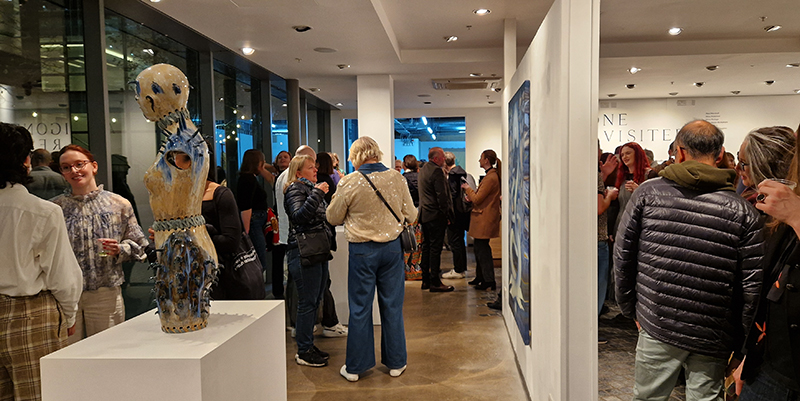
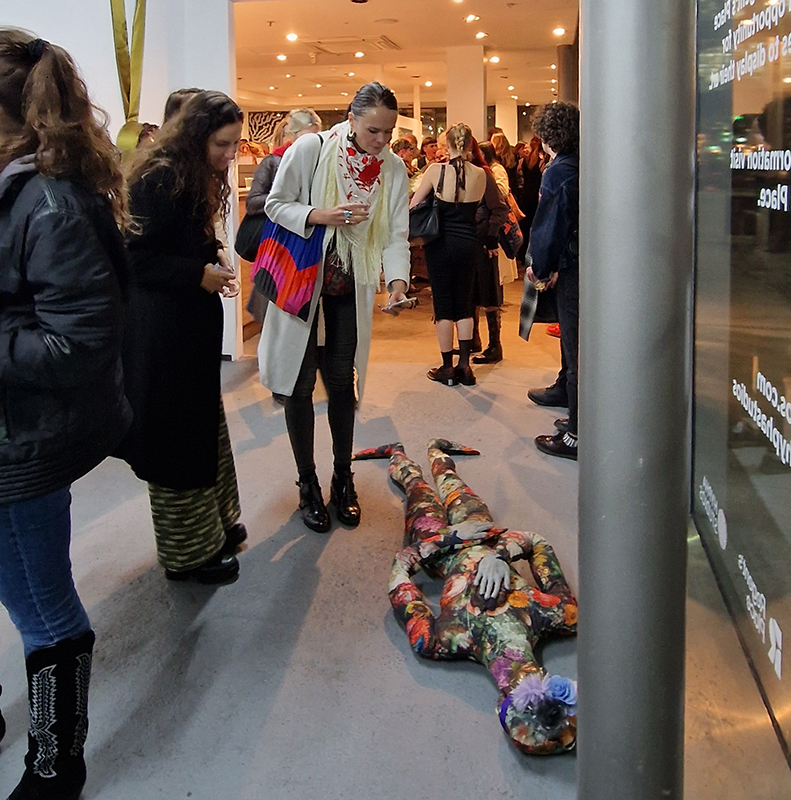
Antigone Revisited curated by Marcelle Joseph at Hypha Studios Euston. This exhibition turns to the contemporary poet Anne Carson and her interpretation of the Greek heroine of Antigone for guidance in our present era of societal crisis. It was good to see the space full and buzzing as this is the site I will be exhibiting in next year in a group show I am co-curating with Julie F. Hill. We will be discussing concepts of The Geological Unconscious taken from the book of the same name by Jason Groves.
Reading
Orbital by Samantha Harvey. This is a nourishing read. Orbital is so first person evocative, the descriptions of Earth from the ISS are so transcendent, it’s hard to believe Samantha is not an astronaut. I very much admire the Art Fictions Podcast curated by JiIlian Knipe and often wondered what book I would choose for myself in this context. I think this book would fit. Why it resonates so much with me is the sense of wonder it evokes along with an acceptance of the infinite incomprehensibility of our position in the cosmos.
‘Our lives here are inexpressively trivial and momentous at once [..] both repetitive and unprecedented. We matter greatly and not at all. To reach some pinnacle of human achievement only to discover that your achievements are next to nothing and that to understand this is the greatest achievement of any life, which itself is nothing, and also so much more than everything.’
Listening
Hannah Critchlow on the connected brain In her books Hannah Critchlow has explored the idea that much of our character and behaviour is hard-wired into us before we’re even born. Most recently she’s considered collective intelligence, asking how we can bring all our individual brains together and harness their power in one ‘super brain’.
86 billion nerve cells within the brain produce electrical currents as they pump sodium and potassium ions in and out across cell membranes and that pumping of charged ions creates an electrical current which passes from one nerve cell to the next cell in the circuit and that movement of electrical current creates our thoughts, ideas, emotions and our behaviour. An EEG machine can examine the electrical activity within the brain and the brainwaves can be read and converted to sound. Fascinating to hear that when Hannah read the brainwaves of Rowan Williams, the former Archbishop of Canterbury, as he meditated she could see an incredible burst of gamma wave activity in the brain, the fastest frequency of electrical oscillation. Scientists are exploring what happens when groups of brains start working together. In a group, brainwaves start to synchronise with each other, and that physiological alignment within the brain is linked to better learning and consensus building and problem solving ability. In a multi-person brain to brain interface – individuals across the world can be hooked up to an EEG machine and their brain oscillations can be converted into a magnetic stimulation signal which is then transmitted from one person to another person enabling them to read each others thoughts in a very rudimentary sense. Experiments have been done with isolated individuals playing games such as 20 questions and they can complete this without any other communication across the group.
Wrinkled Time The Persistence of Past Worlds on Earth by Marcia Bjornerud. Chronicling the way Earth archives Her geological history in the wrinkled strata just beneath our feet, Marcia Bjornerud orients us to the deep time-fulness of Earth—the four billion years of dynamism held in the ancient and ongoing story of rock.
Viewing
Architecton written and directed by Viktor Kossakovsky at BFI Imax as part of the 2024 London Film Festival. Fabulous to see this on the giant screen. It is an epic and poetic work meditating on humanity’s relationship with architecture. The footage of tumbling stones and rock blasts is breathtaking. An extraordinary journey through the material that makes up our habitat: concrete and its ancestor, stone.
Right In The Substance of Them a Trace of What Happened a series of short experimental films showing at ICA as part of LFF 2024. A couple of favourites were the atmospheric Hexham Heads by Chloë Delanghe and Mattijs Driesen based on a local myth of stone heads unearthed in a local garden that bring forth a chilling presence. Hemel by Danielle Dean, tapping into 1950’s science fiction of alien life and mysterious meteorites to examine lived experiences and xenophobia in Hemel Hempstead.
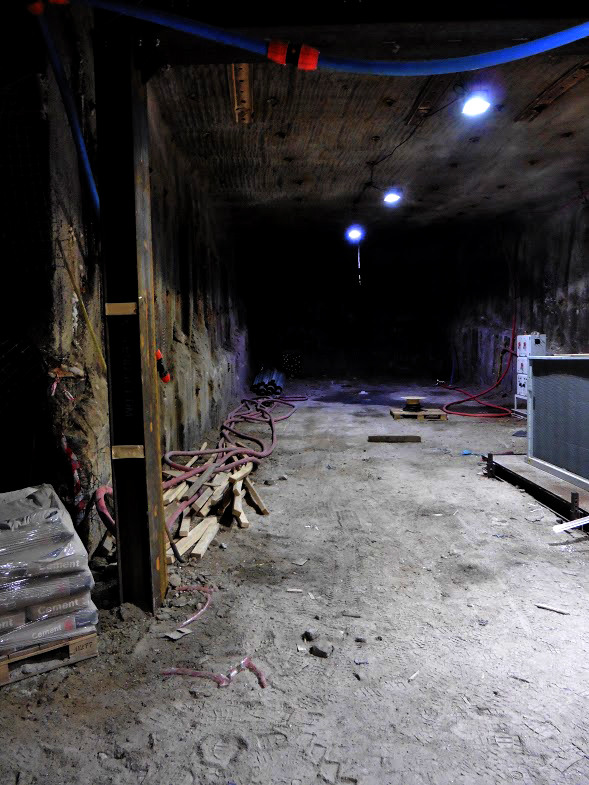
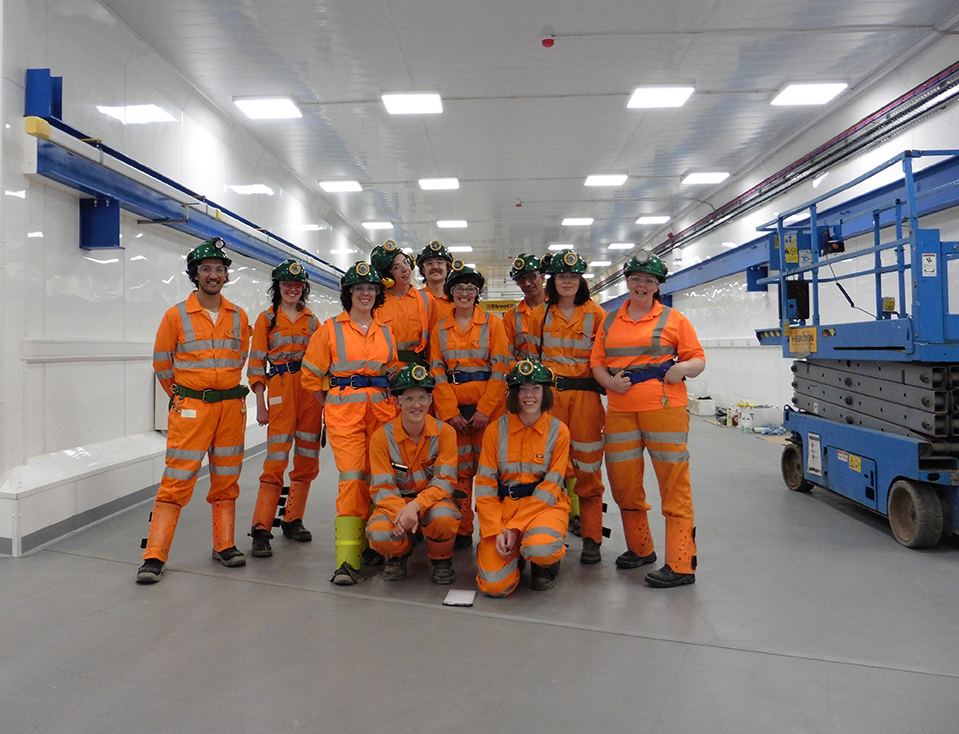
After months of anticipation we finally crammed into the miners cage and made the 7 minute descent 1100m below ground to visit the Dark Matter Research Facility at Boulby Mine near Whitby on the dramatic north east coast.
Led by astrophysicist Dr.Chamkaur Ghag and his colleagues Emma Meehan and Chris Toth we were transported to a hot and dusty world beyond the reach of cosmic rays and background radiation that would distract from the search for the illusive dark matter particles.
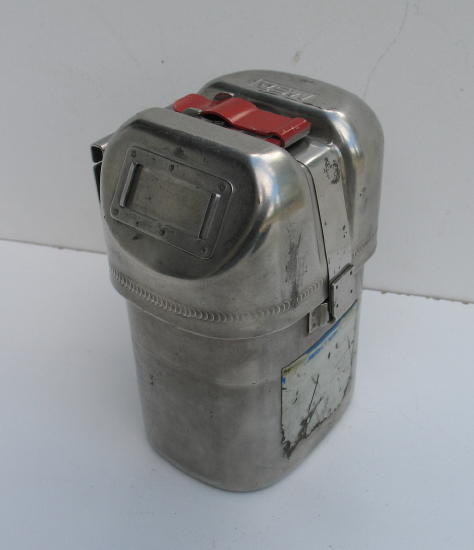
Kitted out in orange boiler suits, heavy boots, hard hats, safety goggles, ear defenders, shin pads and tool belt we were inducted into the safety procedures and alerted to the hazards of life underground. The most alarming was the instruction on use of the self rescuer (a metal box containing breathing apparatus that converts carbon monoxide into carbon dioxide) ‘better to use in doubt than die in error’. Only three breathes of deadly carbon monoxide and you are unconscious, possibly dead.
On descent there is a series of air locked passages to pass through, ears popping before stepping out into the vast network of tunnels that extends over thousands of kilometres under the sea. With our headlamps dimmed here is total darkness.
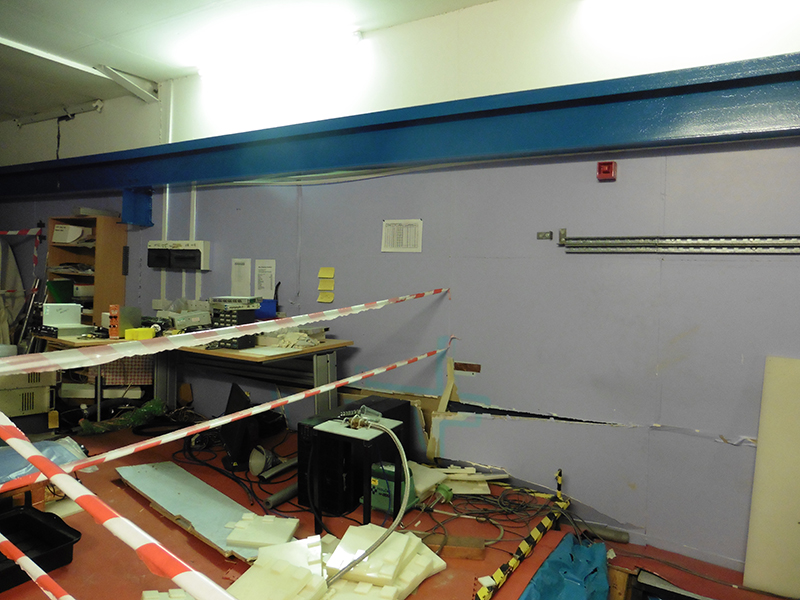
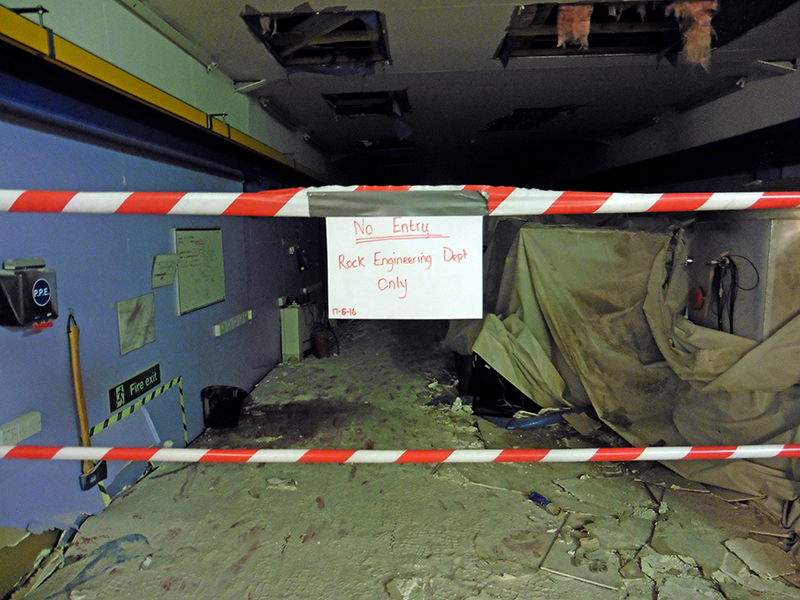
We walk 20 minutes to visit the original research laboratory now being ripped diagonally in half by the slow liquid like movement of the salt walls sliding against a fault line.
The floor and ceiling are ruptured and so the highly sensitive equipment is being moved to a new purpose built reinforced steel clad lab.
From the abandoned clutter of past experiments we cross another grimy passage to enter the pristine white cavernous space of the new laboratories.
Still in the process of being equipped and put into full use we can only see a small part of what will go on here.
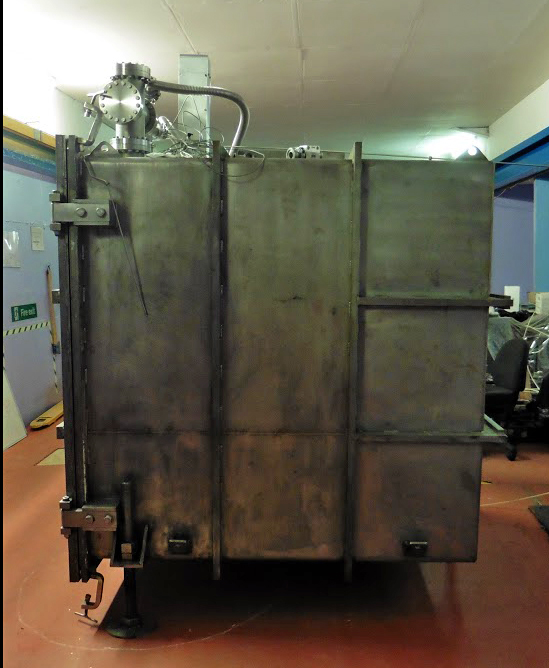
Behind the blank face of the technology in large metal containers sprouting many wires and screens with data passing across in repeating wavering lines is the ongoing hope to witness a tiny scintillation of light that can be identified as the result of a collision of a dark matter particle in the target matter of pure Xenon.
The three hours underground pass very quickly as we are in constant awe at what we see and hear about the extraordinary past and present projects that take place in this hidden arena.
Prohibited from taking anything battery powered below we rely on borrowing a lab camera to take a few snaps before we have to return to the lift shaft to be hauled back to the surface this time tightly packed amongst the silent salt dusted mine workers.
We returned to the surface exhausted and full of information to assimilate. The next stage is to let this experience feed into and stimulate new work engaging with ideas of charting the unknown and extending our vocabulary and ability to interact with the matter of our universe that at present we can only surmise about through theory.
I was delighted to be asked to show work in Aethercurated by Lumen at Imperial College London. Aether is a curatorial project, focused on the philosophical aspects of astronomy and space exploration. The participating artists explore phenomena existing in outer space considering how “invisible” objects are made tangible in the fields of both art and astrophysics.
These pieces from the everydaymatters series were inspired by the discovery that we can only see less than 5% of the matter in the universe. Sparked by an interest in aura of place and dreams of paradise this has expanded into a fascination with how we encounter the physical and the spiritual world and the unseen activity of matter in the universe. The images, from real locations called Paradise such as Paradise Industrial Estate, Hemel Hempstead are dissected into the proportions of dark energy, dark matter and the visible world that current science believes constitutes our universe.
I have been pursuing further investigations into matter as part of The Matter of Objects collaboration with Medieval and Renaissance research historians. This project interested me as it combined an investigation into the physical matter of objects and also more intangible things such as agency of object. I thought the Medieval period would also be interesting as a time when science and religion clashed as being the source of truth. I was paired with PhD researcher Bruno Martinho based at the European University Institute in Florence. His work explores the consumption of non-European objects on the Iberian Peninsula during the second half of the sixteenth century. Something I had never considered. The object he chose for me to respond to was a C16th Fall-fronted cabinet probably made in Gujarat for a Portuguese merchant. This work has taken me in unexpected and new directions.
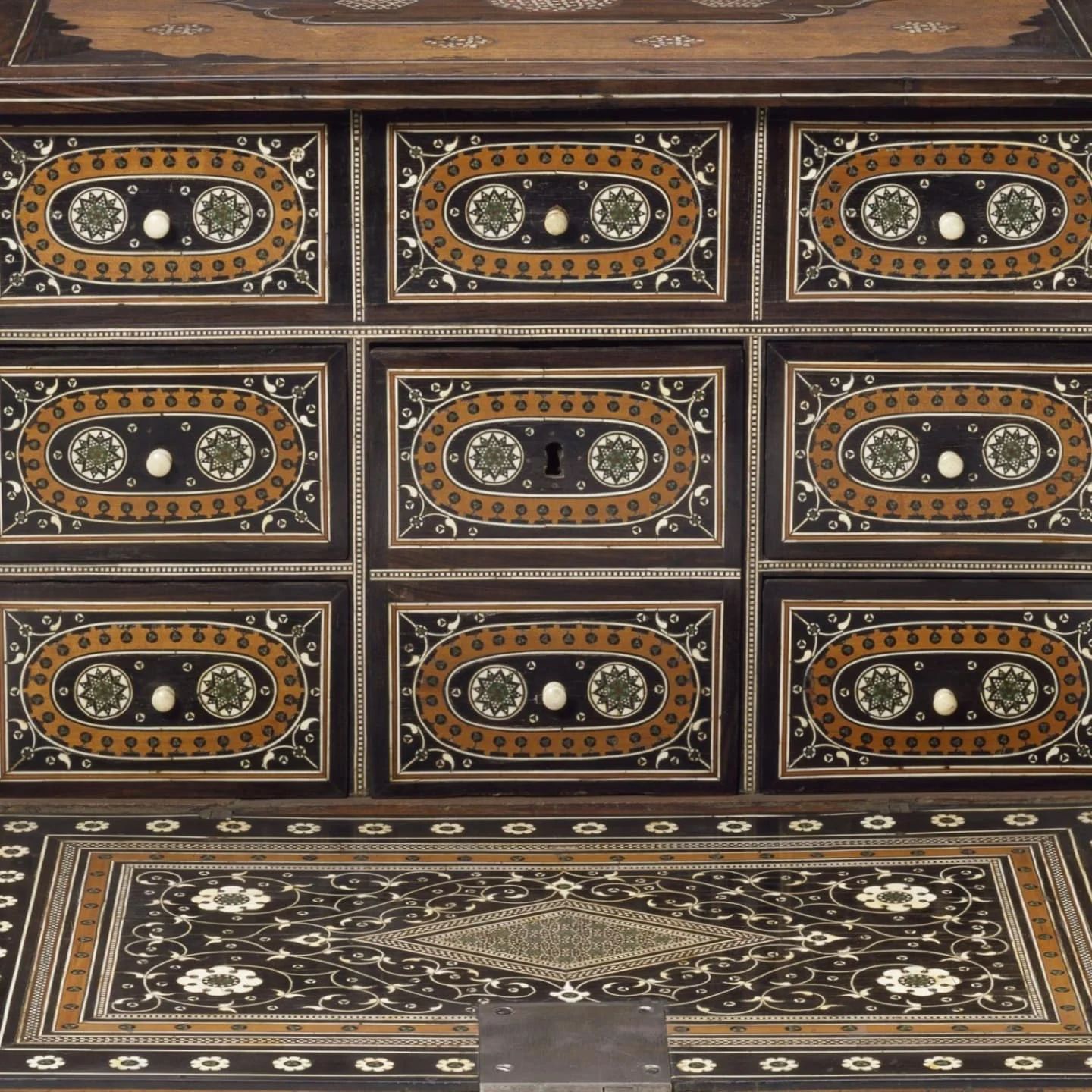
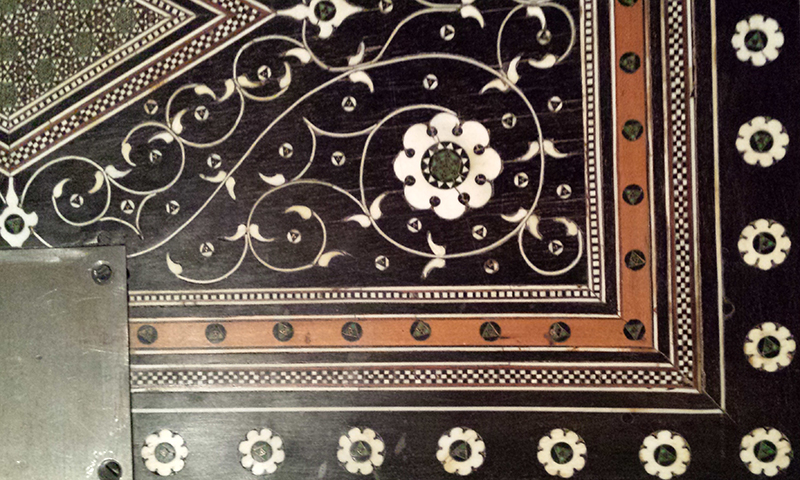
At first I thought I may only experience this object as a digital image so was pleased to discover it was at the V&A and I could visit it and get a sense of scale and materiality. The most striking thing about the cabinet are the patterns. I could see the incredible detail, the minute pieces and precision in the workmanship.
I think it is hard to connect to an object when you can’t touch it. It’s tantalizing not being able to open the drawers – they are tied shut just in case you are tempted to try. At least it’s not behind glass so you can get up close and sniff it. I learnt from Bruno about its heritage from a mixture of cultural traditions seen combined in the patterns (European, Islamic, Indian) and materials (tropical woods, ivory). These cabinets were highly sought after at the time, they were the latest must have item to show wealth and status. An object of beauty, rarity and symbolism; commissioned, bought, sold and smuggled. They became part of 16th Century life but not always in a good way. A play “The Avaricious Cabinet” written at the height of the cabinets popularity criticized the hoarding practices it encouraged in merchants that were causing stagnation of the Portuguese economy. It could be written today about the unpopularity of the avaricious banker who dodges his taxes and is more concerned with his own wealth than the welfare of society at large.
The cabinet’s basic function was to store expensive objects, such as jewels or money, and important documents, like contracts or letters, and also all sorts of personal items such as lace and porcelain. There were antidotes against poison (like bezoar stones or unicorn horns), perfumes (made of musk extracted from Asian civet cats), coral (to make toothpaste), and also rosaries made of jet (that was believed to protect against melancholia). These appear as alchemical and mysterious objects today adding to the sense of mystique that surrounds the cabinet. The warm tones, exotic aromas and smooth surfaces made using the cabinet an intimate and sensual experience.
The idea of using spices came from my conversation with Bruno about the aroma the cabinet would give off from the exotic woods it was made from and the smells it would absorb from its contents and surroundings. I thought of the mix of cultures that came together to produce this object, the markets of India and Spain and all those places in between. I made inks from ground spices and copperplate oils to fill the etching plates that would operate as markers of the route from Asia to Europe along the spice route.
I hoped that as the viewer leans in they will smell the spices and the colours would be natural and earthy like the materials used in the cabinet.
I wanted to try and include something personal into the work about this particular cabinet but so much is a mystery. The V&A don’t hold a lot of information about its personal history. They sent me the purchase order and had a look to see if there were patterns inlaid inside the drawers – there are not. So the history of who this little cabinet belonged to and the items it stored seems lost. All that we know is it made the journey 500 years ago when navigating across the globe was reliant on reading the stars.
containment – 60 x 60 cm, screenprint on board, etched aluminium, spices
This one object that potentially holds so many other objects all with their own reasons for being, the trail is endless and diverse. After many weeks of conversation it was good to finally meet Bruno at the event at Queen Mary University and to see work produced by the other collaborators. Everyone felt it had been a worthwhile experience opening up new ways of thinking on both sides. The exhibition was then taken to the extraordinary setting of Barts Pathology Museum where matter and objects have a very direct conversation.
I went to the Materials Library for their Pigments, Paint, Print event.
There were various minerals on hand that can be used to grind into pigments but we were only offered synthetic materials to make into ink and ready made inks to print with so wasn’t quite what I hope for but I did get to see aerogel.
This was like looking at little pieces of sky or transluscent mini icebergs. Apparently NASA uses this – the lightest material on earth, to collect stardust in the tails of comets. It looks a bit like a very fine mesh yet is brittle and very fragile and also very expensive.
Helena Pritchard’s show Encounters at T.J. Boulting was a dialogue between materiality and light, the play of one off the other created in collaboration with Ilenia Bombardi.
Mesh cloyed with plaster scattering light to create movement, light bouncing from projectors and splitting into spectrums.
Spencer Finch ‘The Opposite of Blindness’ at Lisson Gallery is also an investigation into light – how it hits the back of our retina to burn images into our mind which hover beyond our ability to physically recreate them. What we see and what we imagine take place in the same arena.
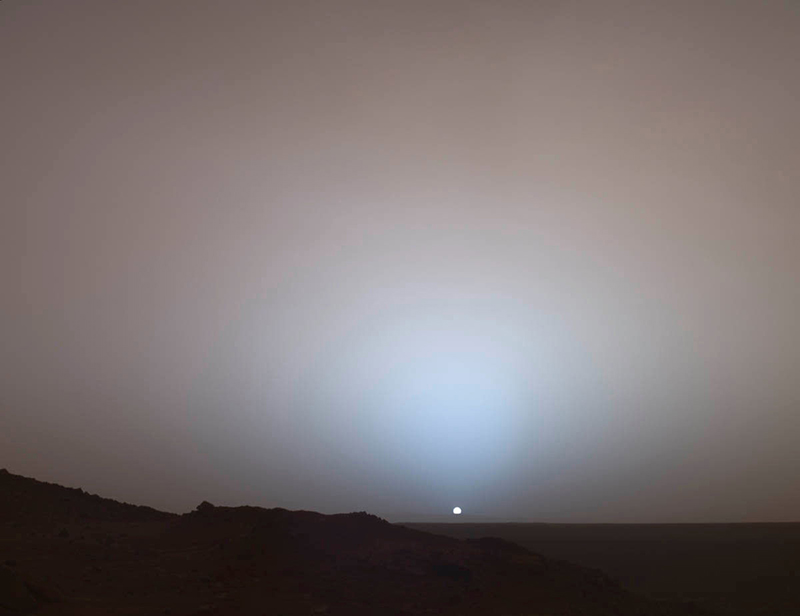
Spencer Finch Sunrise (Mars)
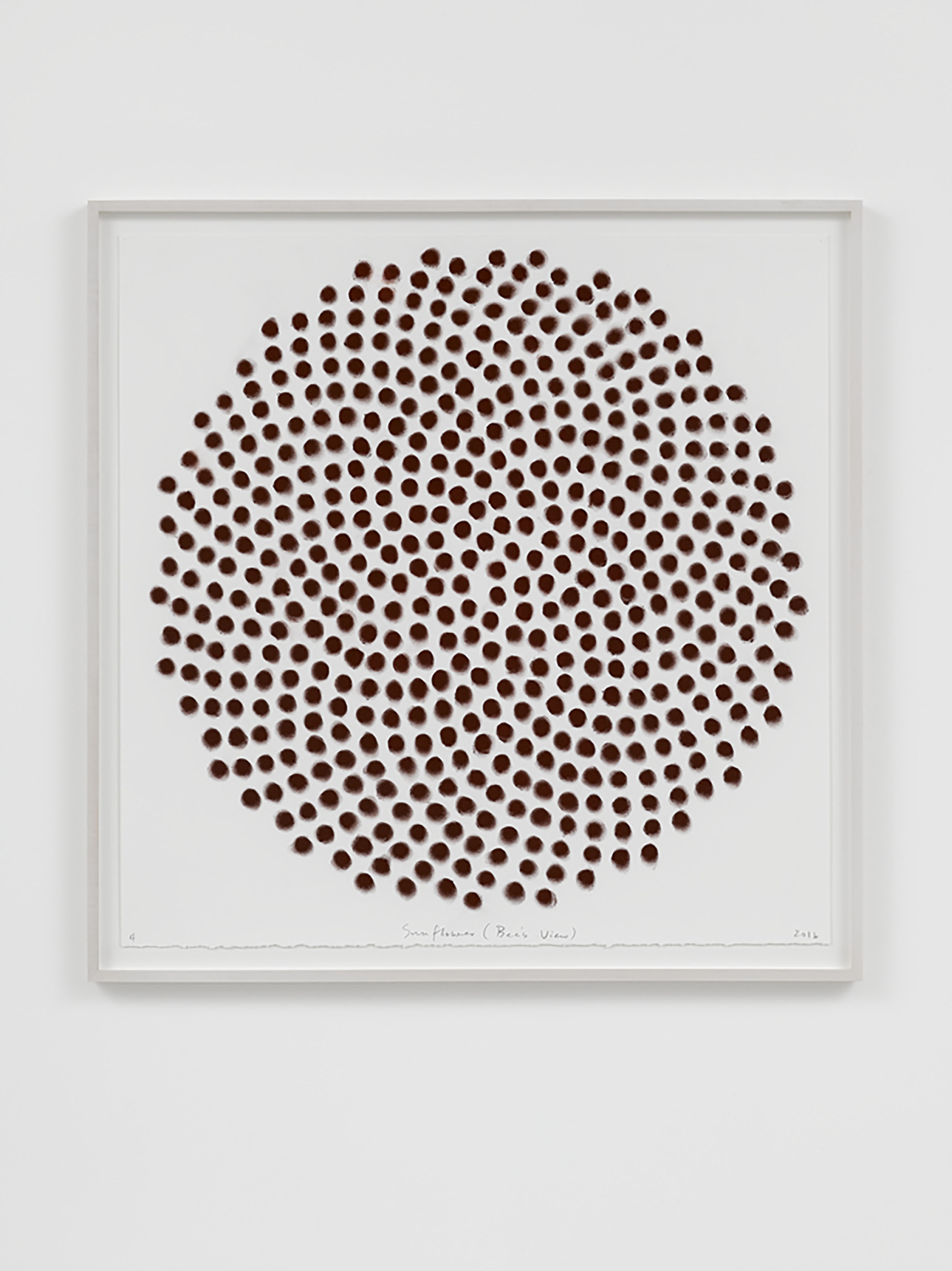
There are paintings made up of concentric dots that animate themselves as our restless eyes dance over their surface creating ever changing patterns
Spencer Finch Sunflower (Bee’s View)
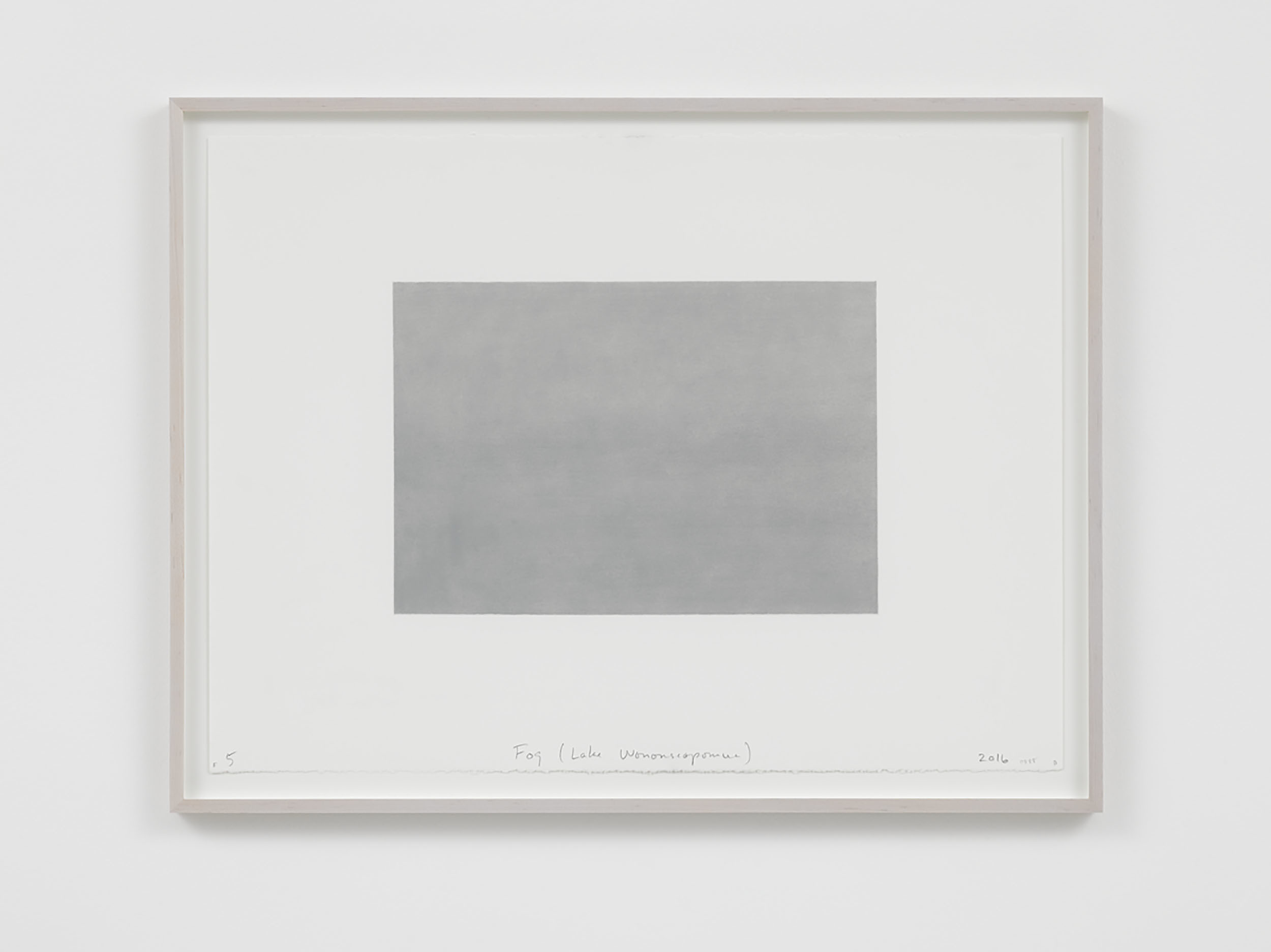
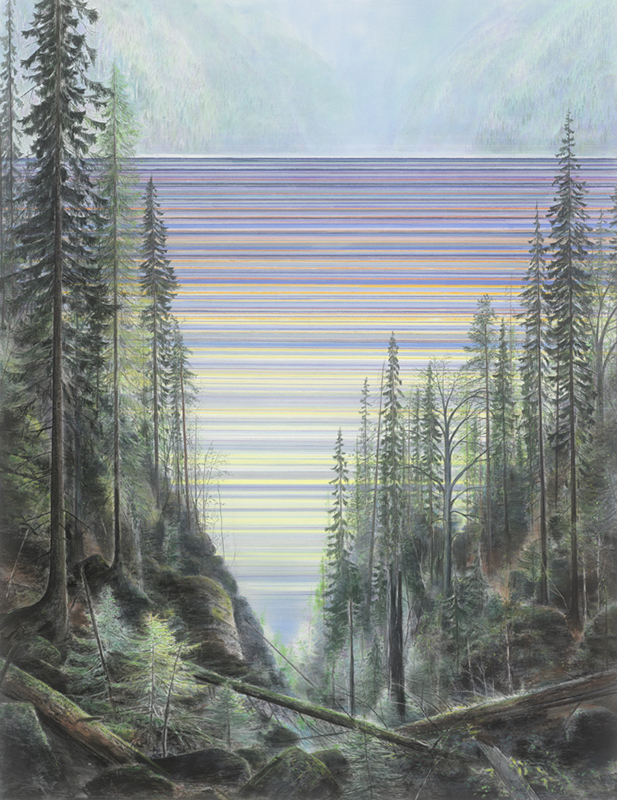
then as relief, soft grey fog to wade into. The paintings, like after burn on the retina, are pared back to leave just the essential essence that Finch wishes to convey.
Spencer Finch Fog (Lake Wononscopomac)
Finch has taken light recordings from the Pathfinder unmanned mission to Mars and recreated the exact colour tone of a sunrise as would be experienced on the red planet.
Photographic images created from space agency data by Micheal Benson in Otherworlds: Visions of our solar system at The Natural History Museum included one of the sun setting on Mars.
Tracing space exploration from the first images in 1967 to the present day his aim is to create images as close as possible to what the human eye would see were we able to travel to the far reaches of the solar system.
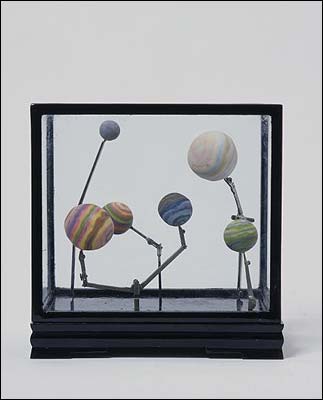
Francis Upritchard Orrery IV
The speakers at Tate Talks New Materialisms: Reconfiguring the Object were considering how investigating materials can stimulate new ways of thinking. Francesco Manaconda gave an overview of his curatorial explorations into how materials can be presented in new ways by imagining viewing an exhibition from the perspective of an alien in Martian Museum of Terrestrial Art and Radical Nature which focused on our relationship with nature. Anne-Sophie Lehmann and Iris Van Der Tuin discussed the importance of material literacy and the exactitude required in differentiating between materials, matter, materiality and materialisms. It is important that if we are to understand the matter that surrounds us we must test the resistance of the materials we encounter.
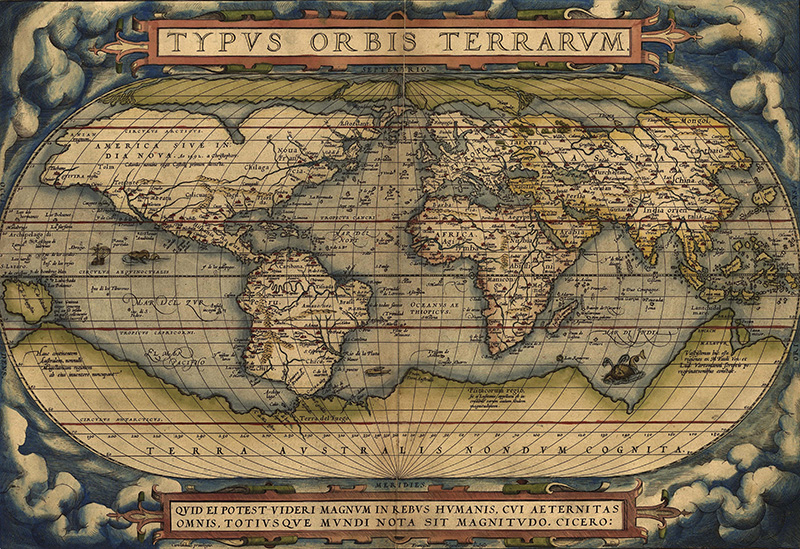
I have been looking at A History Of The World in Twelve Maps by Jerry Brotton again, this time in connection with the work I am making as part of TheMatter of Objects collaboration between artists and historians. The little fall front cabinet that I am responding to took the journey from India to Portugal around 500 years ago, possibly following the same route as the spice trade.
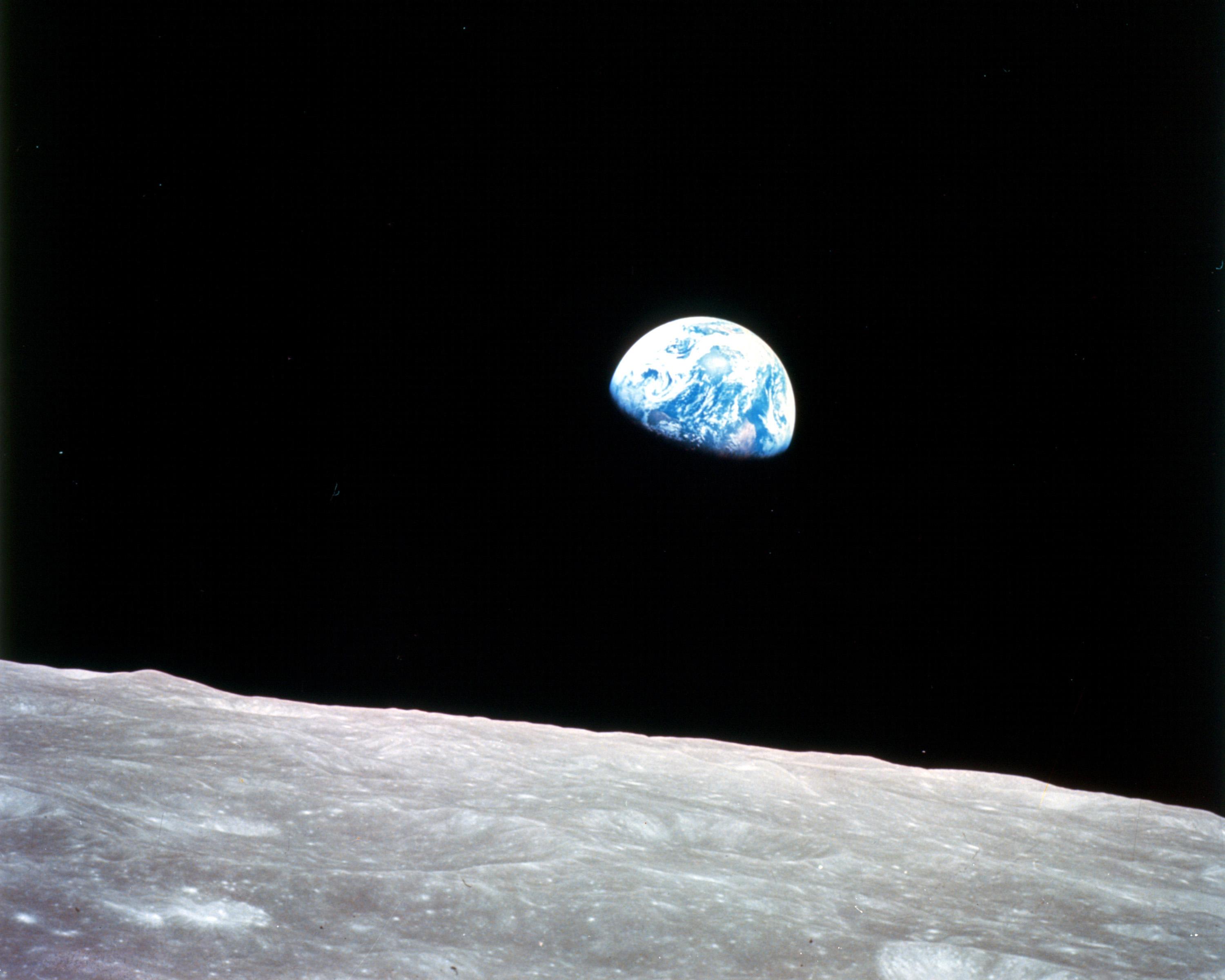
I have been looking at maps created around that time and reading about Gerardus Mercator and Abraham Ortelius both renowned cosmographers. I particularly like Ortelius view of his atlas as the Theatre of the World – ‘a place for viewing a spectacle’. Maps present a creative version of a reality we think we know but transform it into something different. Both men expressed a cosmographical philosophy of peace and harmony and hoped their world maps would give mankind pause for thought much as the 1968 earthrise image embodies.
Ortelius added the quote from Seneca to his maps –
‘Is this that pinpoint which is divided by sword and fire among so many nations? How ridiculous are the boundaries of mortals.’
And from Cicero –
‘what can seem of moment in human occurrences to a man who keeps all eternity before his eyes and knows the vastness of the universe?’
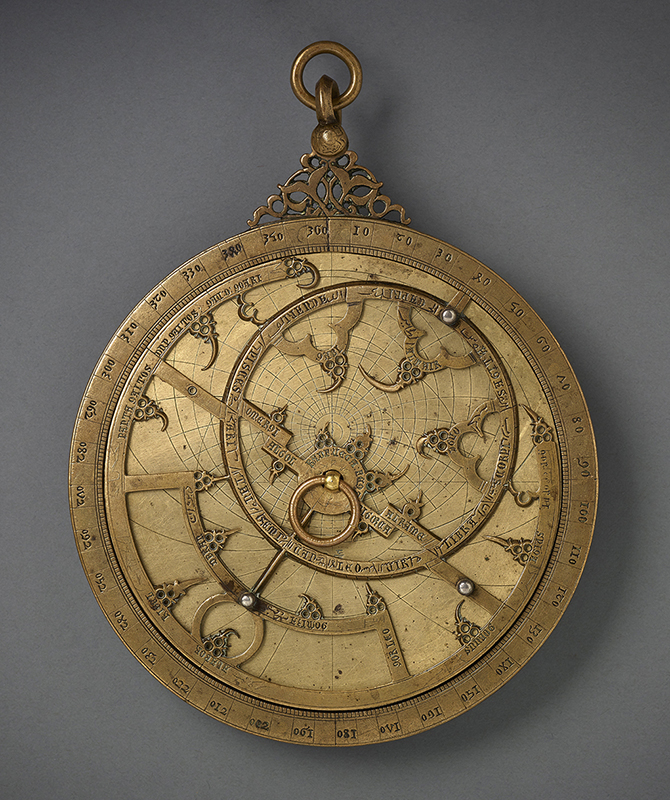
Another point of reference for me is the astrolabe, a complex and beautiful instrument used by early astronomers and cosmographers to determine time and the movement of celestial objects.
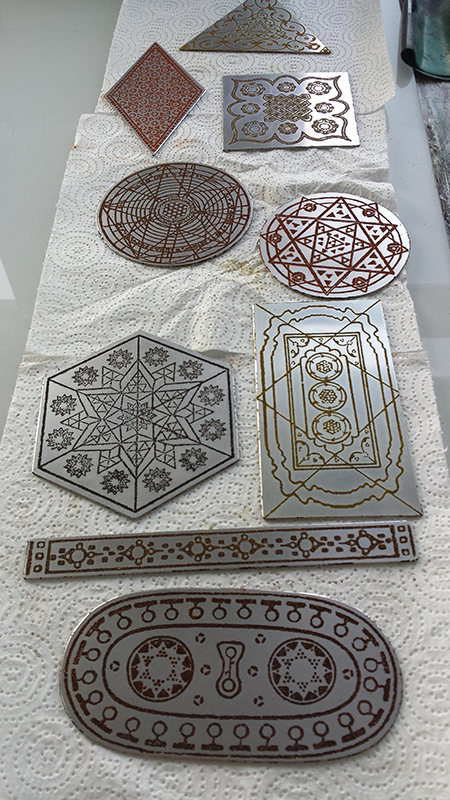
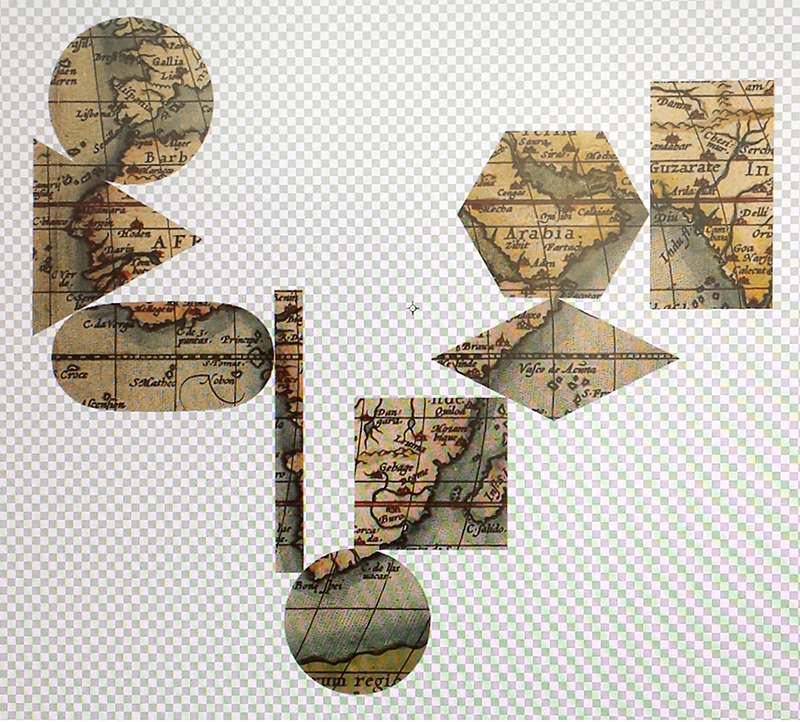
I have been making ‘markers’ from aluminium. The shapes and patterns relate to those on the cabinet and the materiality of the etched metal which will be filled with ink and spices relates to the objects kept in the drawers of the cabinet and the trade that circulated the wealth of the merchants who owned these exotic objects.
I screen printed sugar lift solution onto the aluminium shapes before coating with stop out.
These are etched and then inked up with spices and will be laid out in a sequence that follows the route from India to the Iberian Peninsula and ultimately London where this little cabinet now sits in the V&A.
I am in love with this Boyd and Evans lithograph. I was very jealous of the lady who bought a copy from our RCA stand at Christies Multiplied print fair.
Boyd and Evans Insignificance
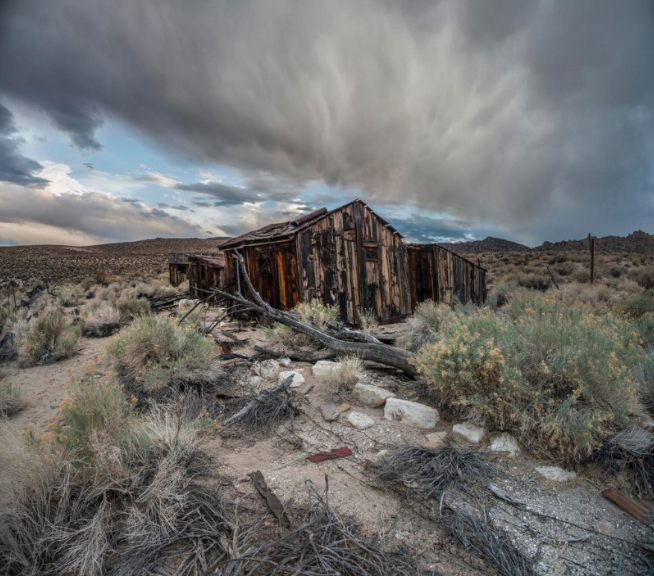
I went to hear them talk about their practice at Flowers Gallery where they had an exhibition of panoramic photographs in Overland. These vast moody skies, rocky barren vistas and abandoned structures are a record to their travels across the American South-West.
Boyd and Evans Benton Springs, California
Inspired by the book Amazon Beaming by Petru Popescu the latest production from Simon McBurney’s Complicite is an extraordinary journey in consciousness, questioning reality and its constructs.
The Encounter tells the story of a National Geographic photographer, Loren McIntyre who in 1969 found himself adrift among the Mayoruna people of the remote Javari Valley in Brazil. Following his desire to discover and record he enters uncharted jungle putting himself at the mercy of the people he was trying to capture on film. He develops a close relationship with the head tribesman and shaman he calls Barnacle and begins to feel they are communicating through thought as they share no common language. The old language is not something you learn it is something you remember.
The tribe are on the move. Distraught at the impact of the sacking of resources of the forest and diseases introduced by outsiders they are heading back to the beginning.
In order to return to a time before the bad things happened they must destroy all their possessions that are holding them in the present. Everything is thrown onto massive bonfires. The journalist is distraught as he fears the ritual will involve death but the chief is calm, he doesn’t worry what time is, he is just concerned with what he can do with it.
The beginning lies at the inception of time but is also everywhere at once. Going back to the beginning is not really a return, but rather a form of exiting from history proper, into the mythical time of renewal.
There is a powerful message here about matter and its hold on us and our experience of history. The concepts that these shaman were expressing are the same as the problems physicists struggle over today – what is the present? ‘Time sits at the centre of the tangle of problems raised by the intersection of gravity, quantum mechanics and thermodynamics.’ – Carlo Rovelli
In the audience we are wearing headphones, the sound of the forest is all around, voices appear in our head, just as they did for Loren, beautifully demonstrated by the use of binaural speakers. Reality is an illusion, all our constructs are fictions and exist only in our imagination.
Creating the sort of places where the Mayoruna people might live…Dean Melbourne paints the places where myth still lives deep in the forests. Shadowy figures, totems and ritual mingle in thick glutinous surfaces.
His exhibition This Myth at Coates and Scarrry’s gallery invites you to step into a sensual and primordial world.
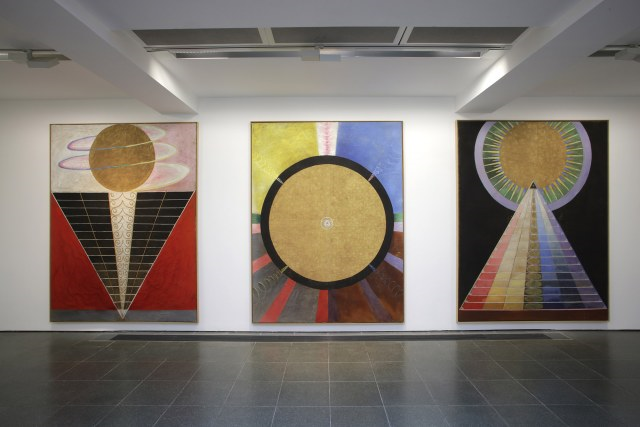
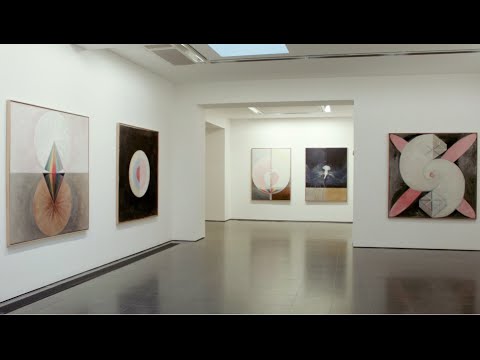
Hilma af Klint was also making connections with the spiritual world. Her public face during her lifetime was of a figurative painter but in the late 1880’s she began painting in secret and created a huge body of work that explored her private interests in the nature of the universe and the relationship between matter and the spiritual. Believing that perfect unity was lost at the point of creation she sought to reconnect the dualities that had arisen from the primordial chaos. Entering Painting the Unseen at The Serpentine Gallery I was immediately awed by the three large works The Paintings For The Temple.
Inspired by the experiments with séances and automatic drawing that she engaged with as part of a small group of women artists she called The Five (De Fem) she felt herself led by a spirit counsel. Motifs and symbols appear in her paintings that she then interrogates for meaning.
Her use of colour allows for contemplation in works that have a calm sensuality.
Her notebooks reflect her dedication to her continuing search for meaning within matter and the extent of the work she produced which is all the more remarkable for her desire to keep her spiritual work hidden until 20 years after her death. Did she believe the world wasn’t ready for her questions, let’s hope she is pleased with the attention it is getting a hundred years on.
Good to see RCA printmaking alumni Wieland Payer’s work showing at The House of St. Barnabas with Man and Eve Gallery and to discover the beautiful work of Nadege Meriau. These artists both take you to another world that is just a step from reality and intriguing for that mix of the familiar with the strange.
Wieland Payer DRIFT Photo: Herbert Boswank
Nadage Meriau Grotto
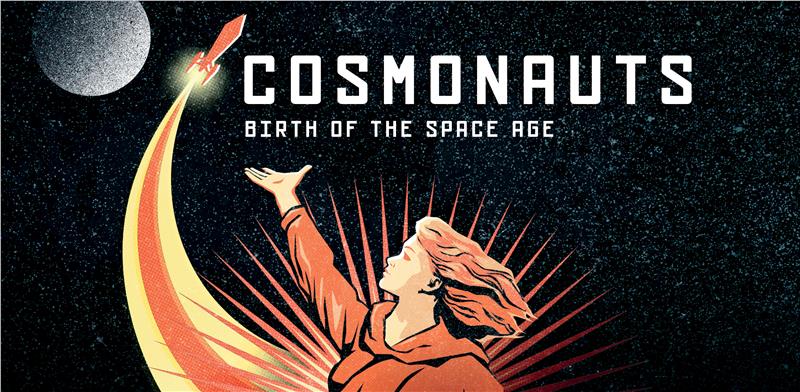
The cosmonaut exhibition at the science museum was a window to the world of space exploration. The risks and competition in the race to be the first. The wonderful graphics that heralded a new era of exploration.
The romantic quest going beyond the rugged landscapes and sublime vista of previous generations. What was most striking I think was how low tech it all looked and so cramped. The bravery and optimism of these people to get into something so small and basic to hurtle across space is to be admired.
cosmonaut. astronaut. nautilus.
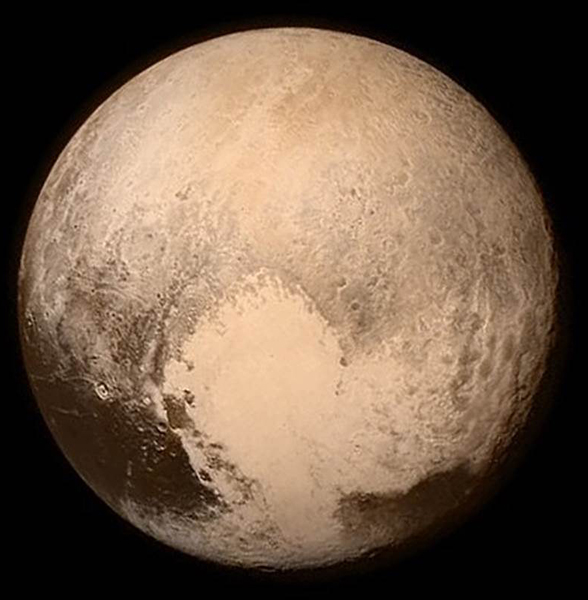
Alistair McDowall’s play X at the Royal Court is set in a future where four astronauts are stranded in their spaceship on Pluto.
Unable to communicate with earth they await rescue that never arrives. It felt more reality TV show where four unredeemed characters are flung together for eternity than exploration of a new frontier for humankind as Pluto barely gets a mention and we suffer endless ranting as each character loses grip on reality before ending up in the freezer.
Finally rescue did arrive, for the audience anyway in the form of Dr.Mike Goldsmith who gave a very informed post play talk about the possibilities and potential of Life on Pluto.
Astrophysicist Dr. Roberto Trotta was out campaigning for ‘Why Society Needs Astronomy and Cosmology’ with his Gresham Lecture at The Museum of London. He was making a case for public funding to support what is increasingly becoming big science big money projects that involve many hundreds of scientists across the world. Detectors and image capturing devices are scaling up and new sophisticated technology means the amount of data captured is beyond human undertaking to analyse and requires huge resources to process all the information. We can reach further and further out into the unknown searching for answers to the big questions of existence. This vastness is awe inspiring but also daunting and so he aims to bring the human scale back into space exploration and make accessible a world that is often described with unfamiliar and obtuse language. He has written a book ‘The Edge of the Sky’ using only the 1,000 most common English words. This approach not only simplifies huge concepts for a younger audience but gives everyone a pause to think about language. The tourist visiting new places may not have the word to describe an unfamiliar object and so must find a way to describe it using known language. This is an effective way of opening up new interpretations and perspectives and encouraging curiosity to discover and explore the unknown.
Moving in unknown territories borders are blurred. Julien Charriére has erased all borders in his installation We Are All Astronauts. Using an international sandpaper made from mineral samples taken from the member states of the United Nations he has carefully eroded any geopolitical demarcations mingling the dust of our homelands. We have the same origins and the same destiny.
His solo show at Parasol Unit For They That Sow the Wind was an eloquent exploration of our relationship to the world of matter, its exploitation and ultimately our insignificance in the wake of our destruction.
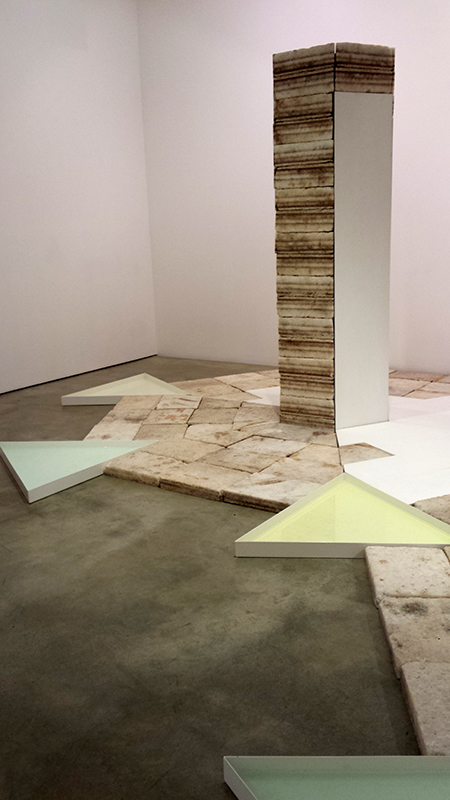
Towers of salt bricks mined from the ‘lithium triangle’ in Bolivia sit in geometric patterns like the remnants of an ancient civilization.
Julian Charriere Future Fossil Spaces
Structures break down.
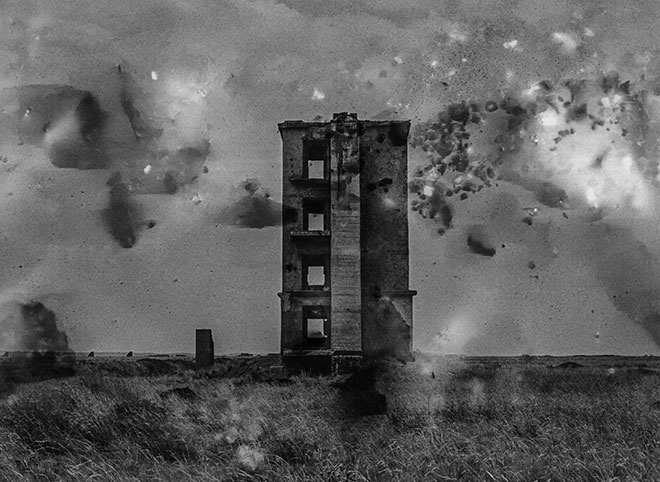
The haze of devastation burnt into the landscape; a legacy from 456 nuclear tests carried out by the Soviet Union between 1949 and 1989 in Kazakhstan.
Julien Charriere Polygon
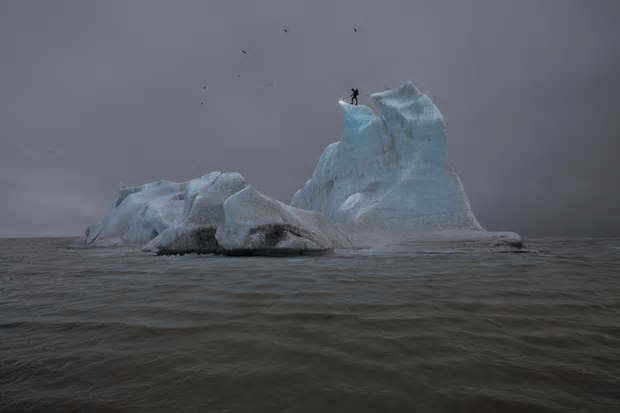
A solitary Charrière stands for all of us as he actively melts ice beneath his feet with a blowtorch.
Julien Charriere The Blue Fossil Entropic Stories
It may be too late to protect the environment, now we must put our energy into creating protected environments.
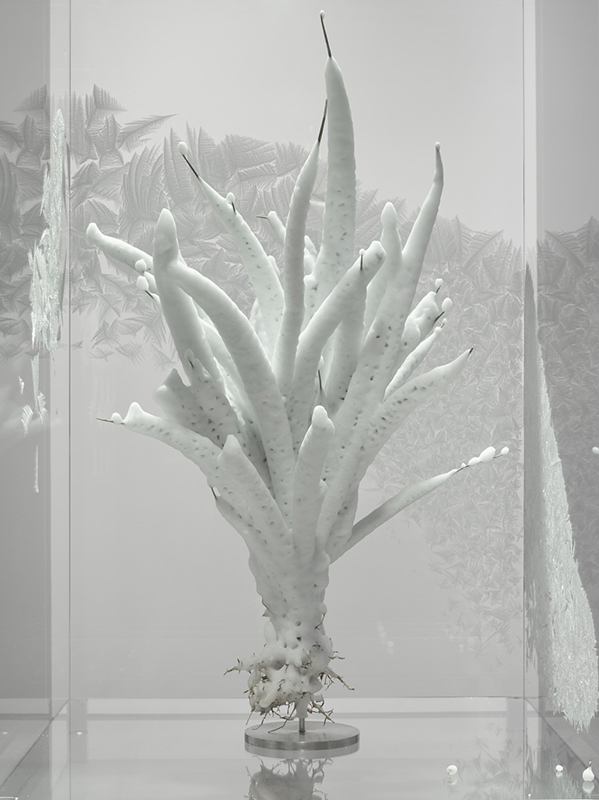
Julien Charriere Tropisme
Plant species around since the Cretaceous period are shock-frozen in liquid nitrogen and preserved in refrigerated containers. The ice patterns appearing over the inside glass of the vitrines cast beautiful veils that threaten to obscure our view. Nature is blocking us out.
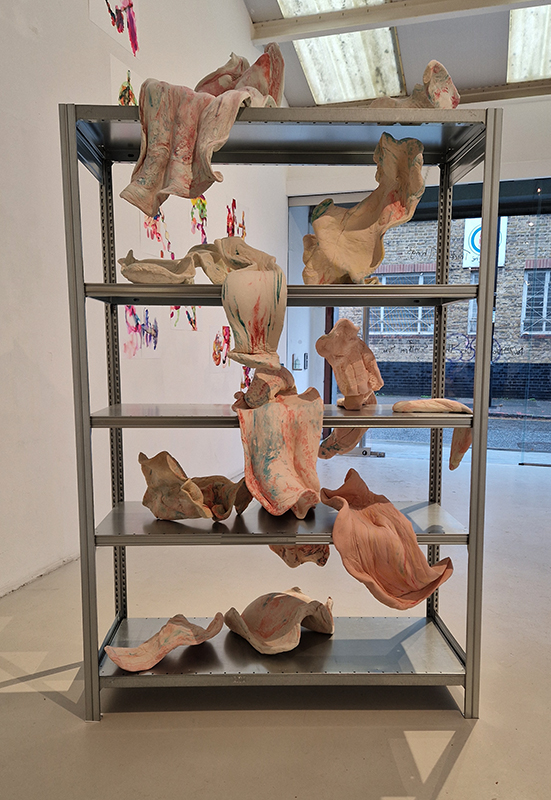
It hardly seems any time since I was setting up our RCA interim show at Café gallery Projects and yet here I am visiting the current second years exhibition DIS PLAY having stepped on out into the wider world. This year because they have taken on so many more students the show was mixed across the years to balance numbers.
Great texture and pallid colour from Emma-Jane Whitton where the tight aqueous skin of the succulent makes haptic connections with the tight skin of the salami, bursting oozing and barely contained this structure is like plastic surgery in meltdown.
This work sat well next to Randy Bretzin’s assemblage of works relating to the body and its skin at the point of rupture.
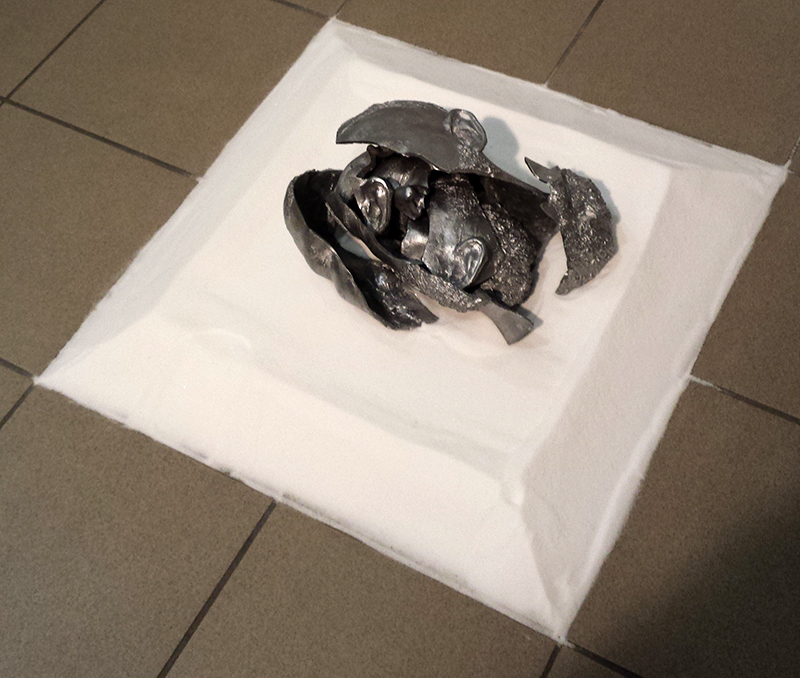
Further body references from Fei Fei Yu whose casts in aluminium of Randy Bretzin’s head lay empty and shattered. No bodily fluids here just a bed of salt left like the residue from some alchemical reduction experiment.
The body and psyche exposed. Nothing like descending the spiral stairs to the museum at The Last Tuesday Society for a delve into the realm of mortality, sex and the fabulous.

































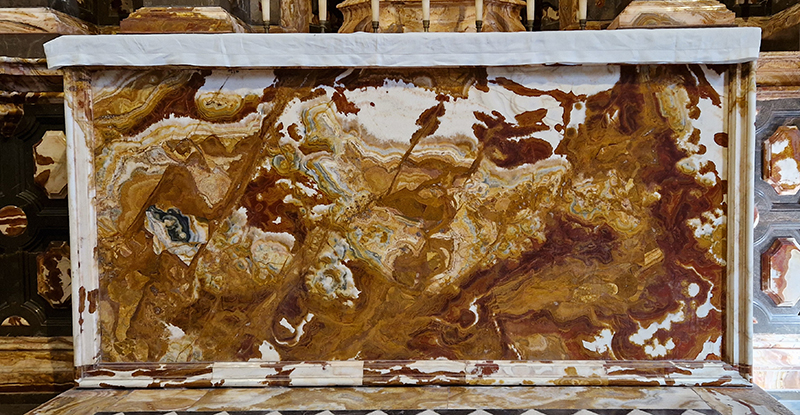
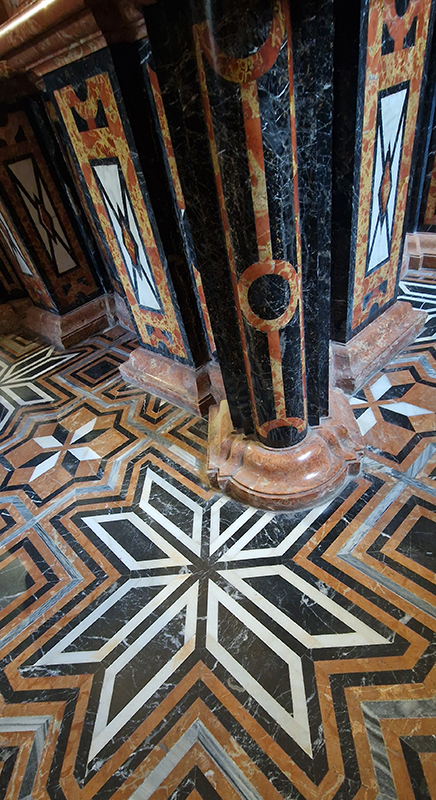
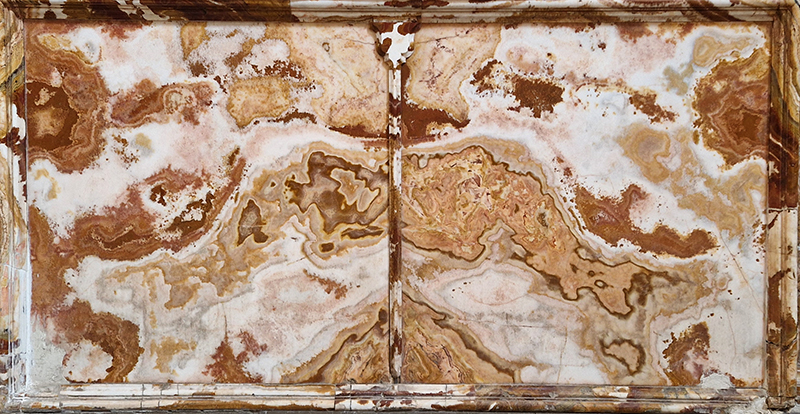
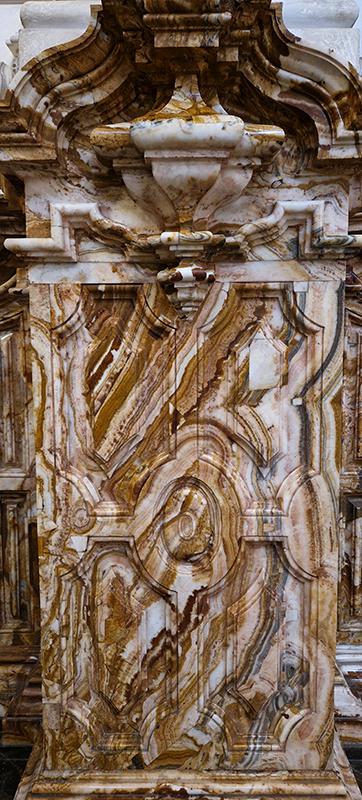






















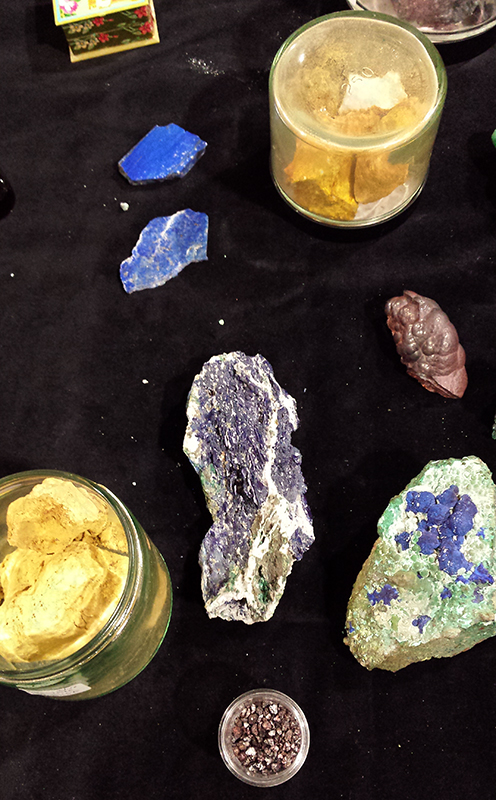 There were various minerals on hand that can be used to grind into pigments but we were only offered synthetic materials to make into ink and ready made inks to print with so wasn’t quite what I hope for but I did get to see aerogel.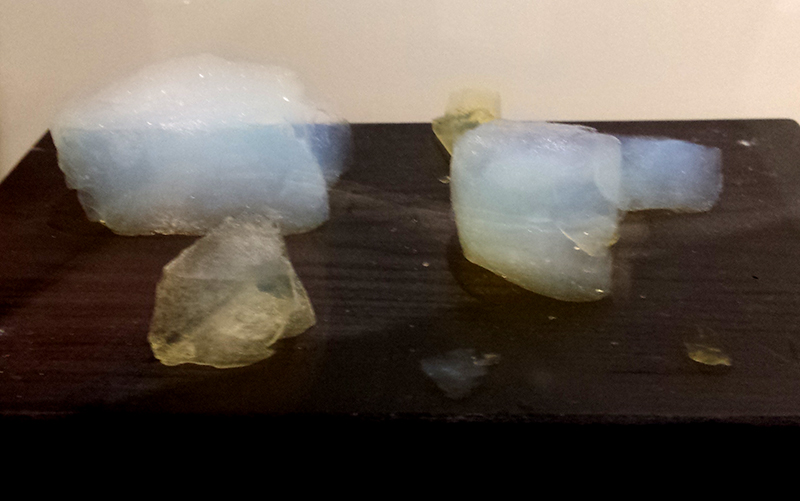












 This approach not only simplifies huge concepts for a younger audience but gives everyone a pause to think about language. The tourist visiting new places may not have the word to describe an unfamiliar object and so must find a way to describe it using known language. This is an effective way of opening up new interpretations and perspectives and encouraging curiosity to discover and explore the unknown.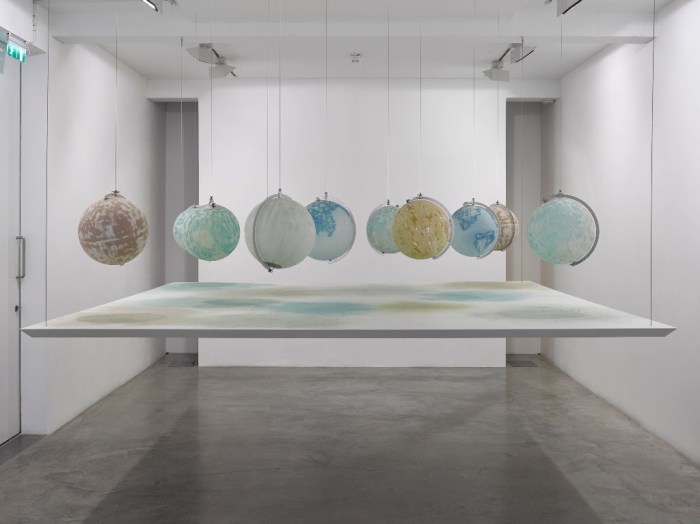





 Susan Eyre