Archives for posts with tag: Cherenkov radiation

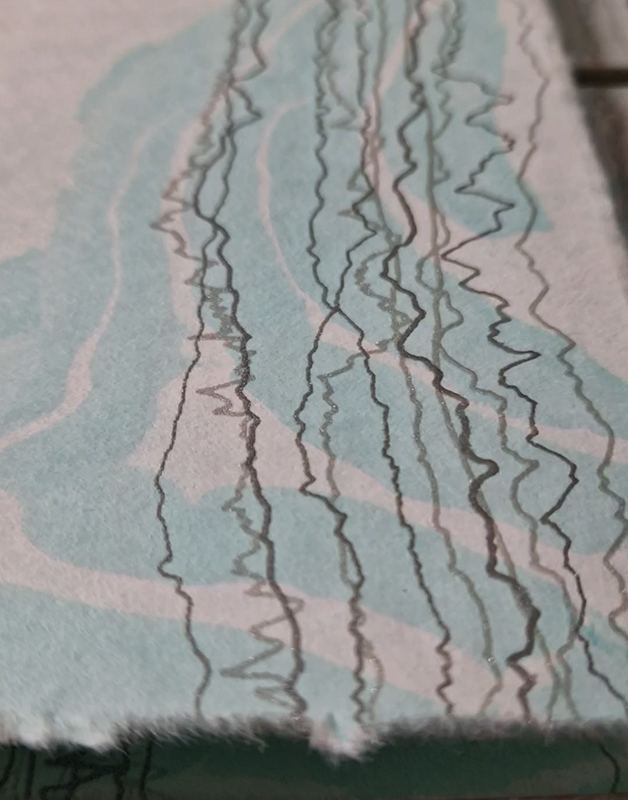
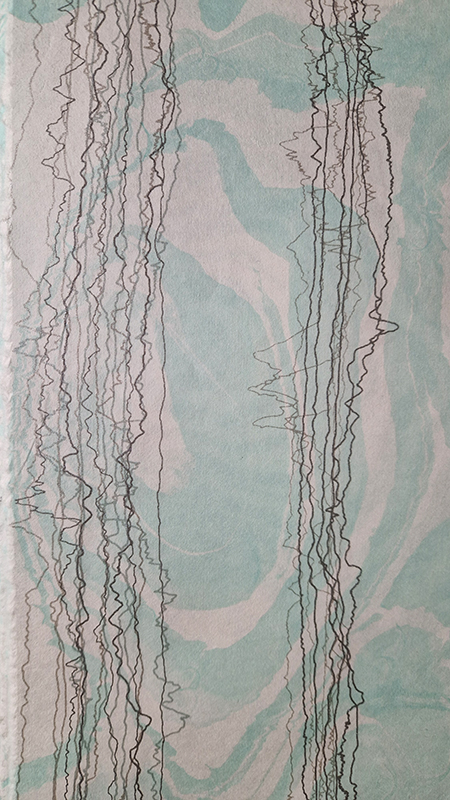
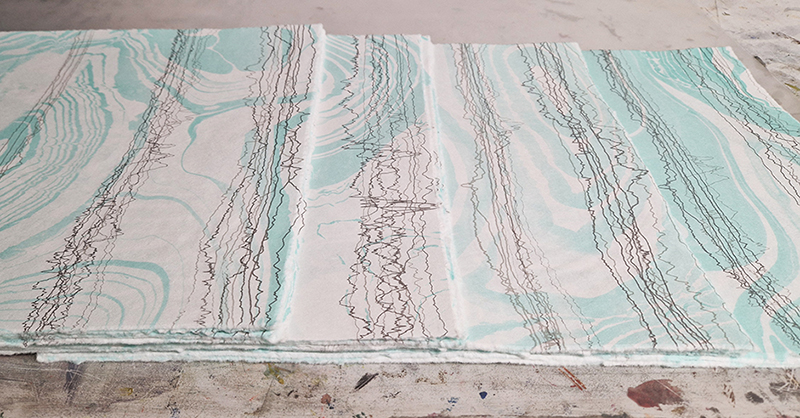
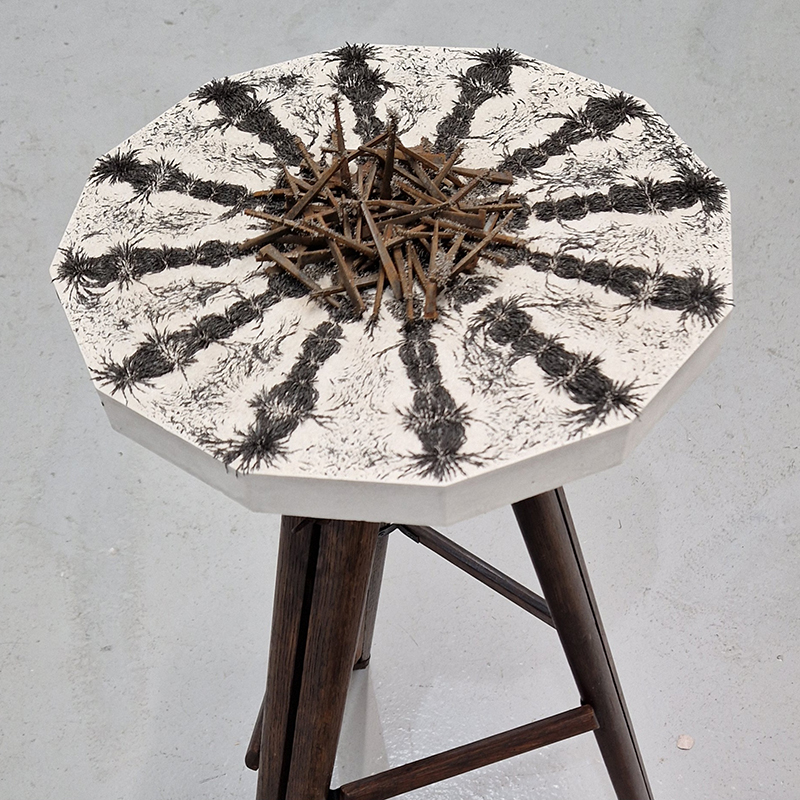
Spending time in the print studio layering up magnetometer lines describing fluctuations in the Earth’s magnetic field. Using sheets of Japanese paper with Suminagashi ink swirls to evoke both ocean and magnetic currents. The lines are printed in metallic inks, relating to the idea of a lode, which in geology is a deposit of metalliferous ore that is embedded in a fracture in a rock formation or a vein of ore that is deposited between layers of rock.

The bands of magnetometer lines are used to signify the last three magnetic pole reversals. The most recent at 42,000 years ago (a short 500 year blip), then 780,000 years ago (continued for 22,000 years) and 1,000,000 years ago (continued for 40,000 years). This history of these reversals is stored in the ocean floor as magma flows up between cracks in the Earth’s crust, spreads and solidifies, capturing the direction of the poles in the orientation of the minerals.

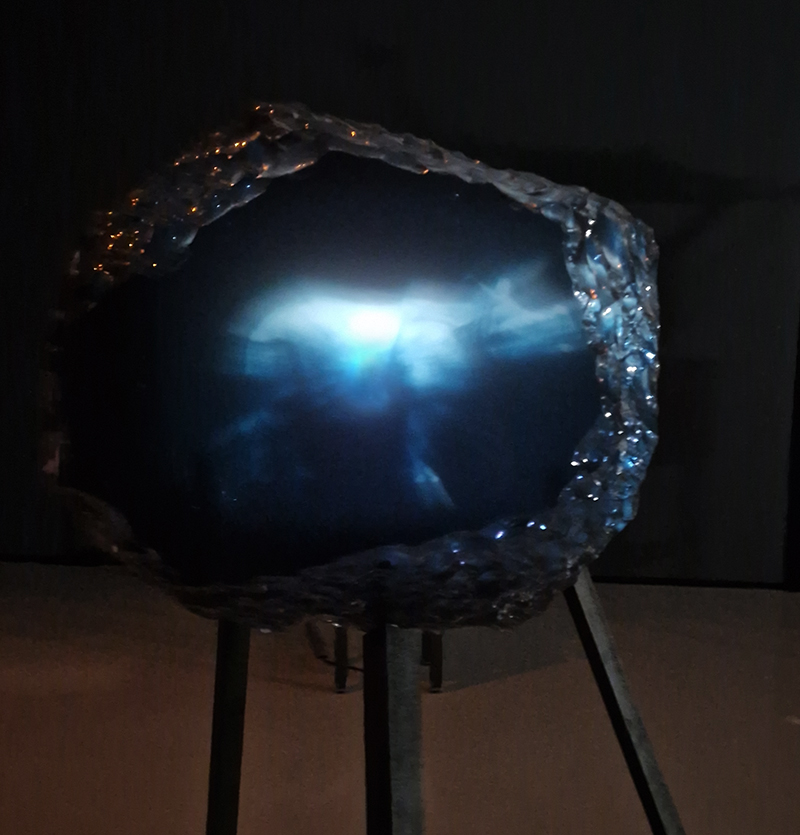
Work in progress on Mineral Visions, a video sculpture with a particular focus on magnetite/magnetism and human relations. Editing video of Jepara seen under the microscope. This is a magnetic pallasite meteorite with an interior structure of densely packed olivine and iron-nickel, discovered in Indonesia in 2008. Pallasite meteorites formed in the asteroid belt between Mars and Jupiter. They’re made up of minerals and remnant materials from the first few million years of the solar system, forming at a time when planets were only just coming together.

A very special research trip with fellow artists exhibiting in the upcoming show at Hypha HQ, The Geological Unconscious, to visit la Galerie de Géologie et de Minéralogie, Muséum National d’Histoire Naturelle, Paris. Hosted by the curator of minerology we were privileged to see a selection of stones in the museum vault. The museum holds Roger Caillois’ stone collection as featured in his book The Writing of Stones. The photographs of this extraordinary collection do not compare to seeing them up close, from every angle. Must larger than anticipated, they are extracted from their snug foam packaging for yet another scrutiny of the human gaze. Caillois wrote at length about each stone, allowing his imagination to conjure metaphor and analogy from the syntax of the ancient crystal and sediment. He was fascinated by his own fascination with the stones which he saw as a desire to connect with the more than human and lose oneself in the enormity of the universe.
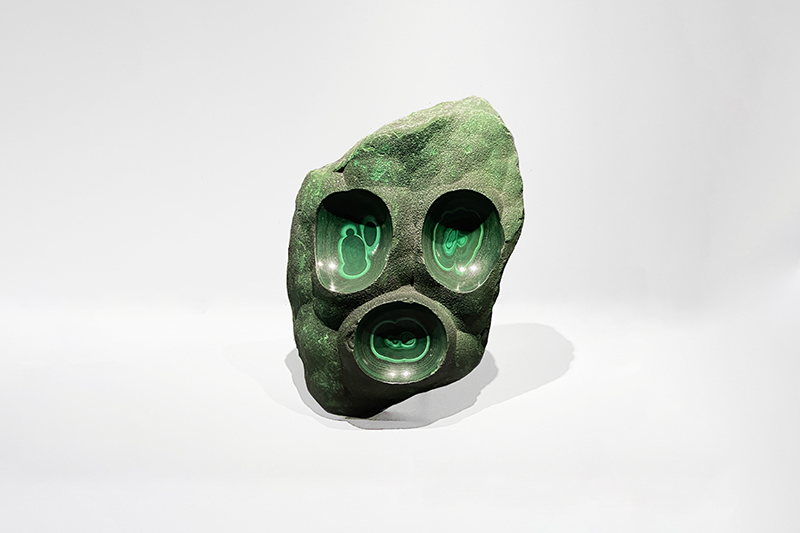
Roger-Caillois Malachite Photo Julie F. Hill

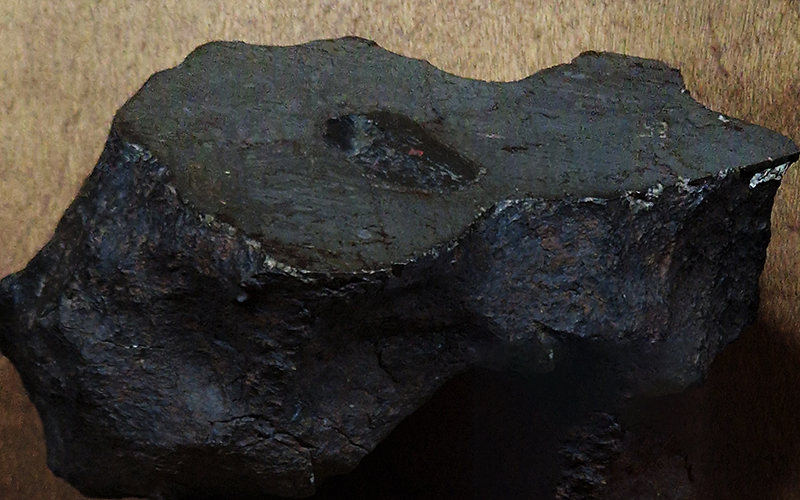
We also got to see some meteorites in the collection including a large one containing diamonds that had belonged to Caillois. The Canyon Diablo meteorite originated in the asteroid belt between Mars and Jupiter and crash landed into the Arizona desert approximately 49,000 years ago, with the force of more than 100 atomic bombs. The crater it left is nearly a mile across and 600 feet deep. Fragments were flung over an area of over 11 sqm from the point of impact where the main mass vaporized on contact. In the force of collision small diamonds formed from graphite and are found inside the highly recrystallized meteorite fragments at the rim of the crater. 
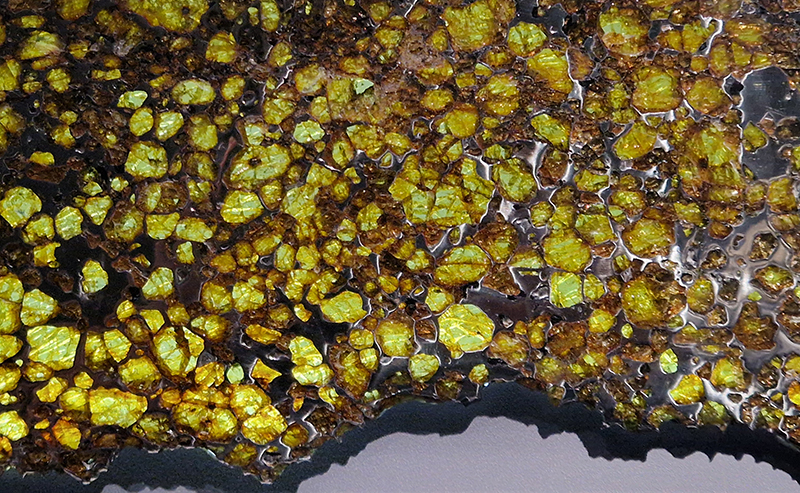
I was also interested to a slice from one of the world’s largest specimens of pallasite, the Imilac pallasite discovered in 1822 which exploded over the Atacama Desert in northern Chile, possibly in the fourteenth century.
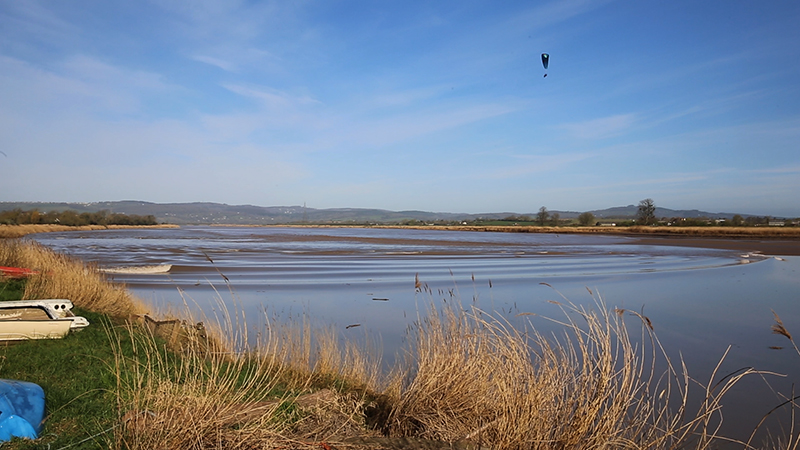
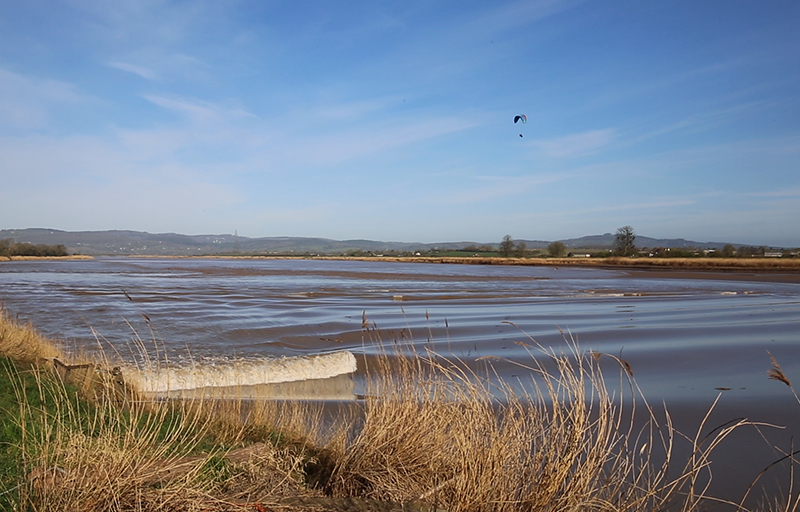
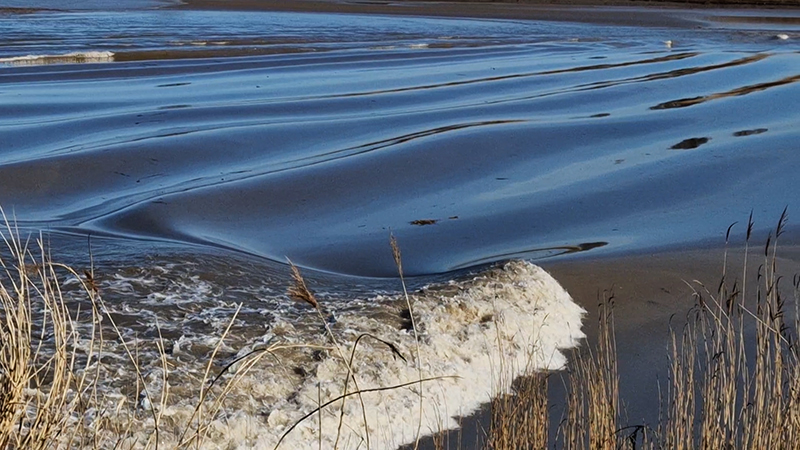
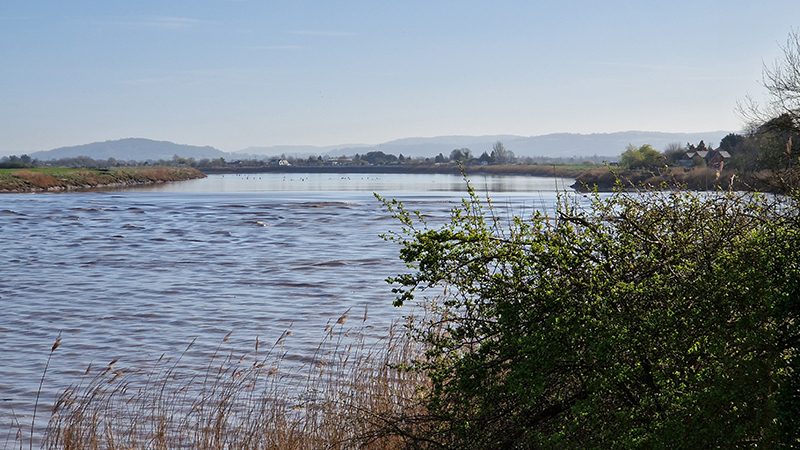
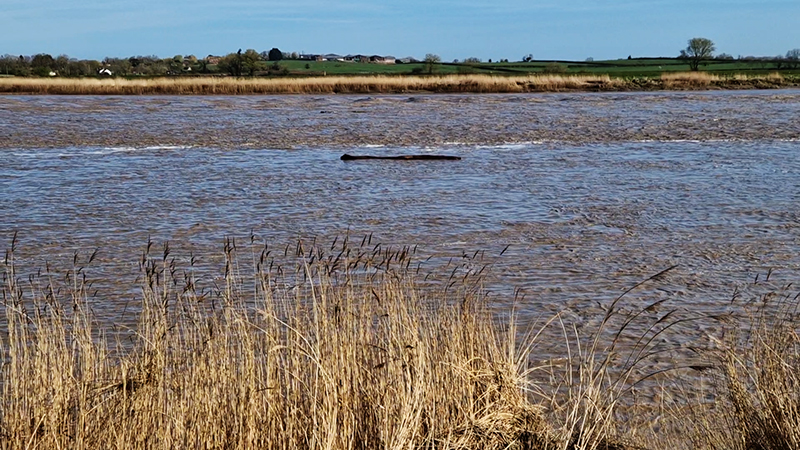
This spring Severn bore had been forecast to be a 4* event but arrived earlier than expected as more of a ripple. Not enough rain from the Welsh hills and no uplifting wind meant it was a more gentle, leisurely wave. It was still exciting to witness the change in the river from the slow glassy seaward flow to choppy, muddy turbulence carrying logs and assorted debris inland as the tidal wave rose into the channel. Such a beautiful morning to be on the river bank.

Gallery Visits

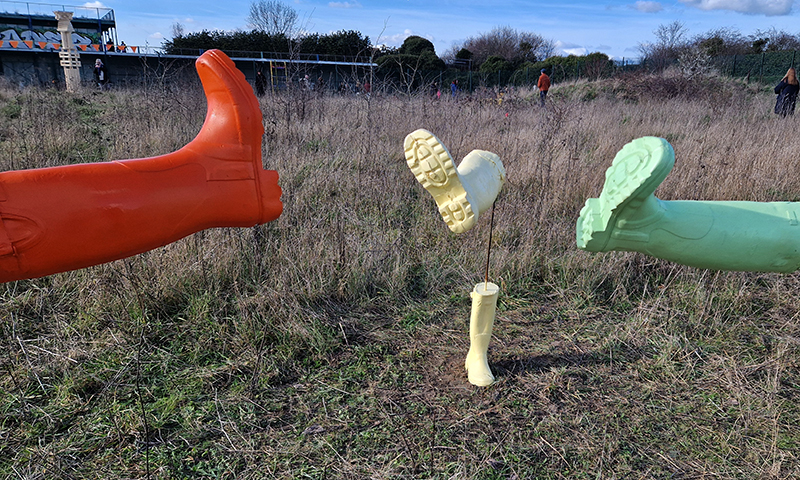
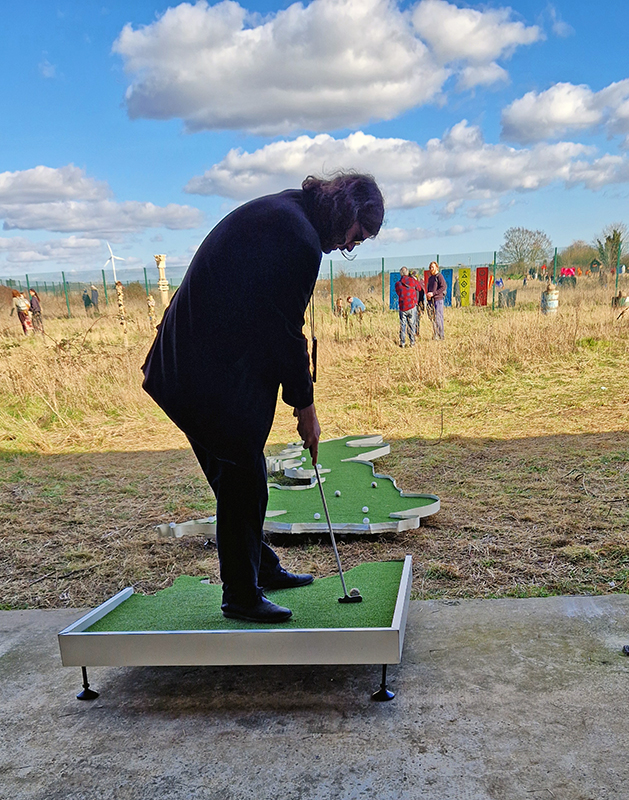
Glorious sunshine spot lit exuberant work at the Winter Sculpture Park hosted by Gallery No32 at a former Thamesmead golf course along the banks of the River Thames.
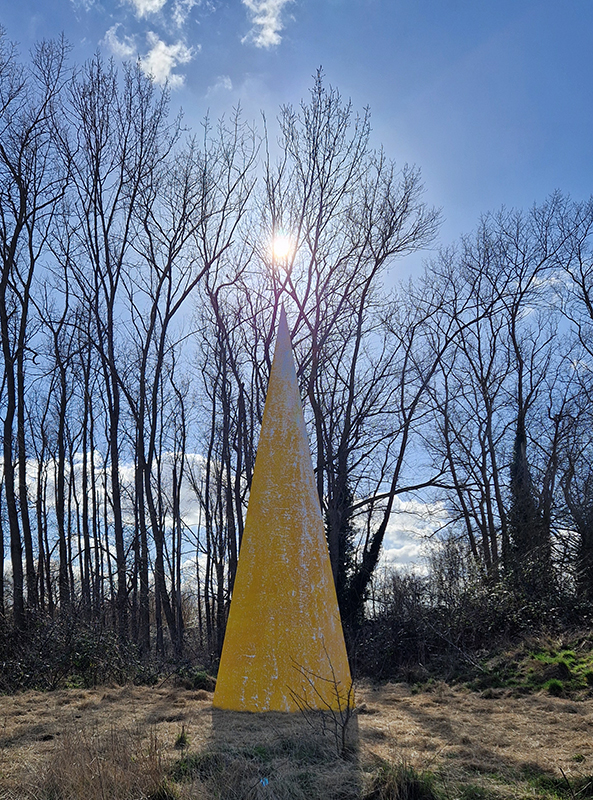
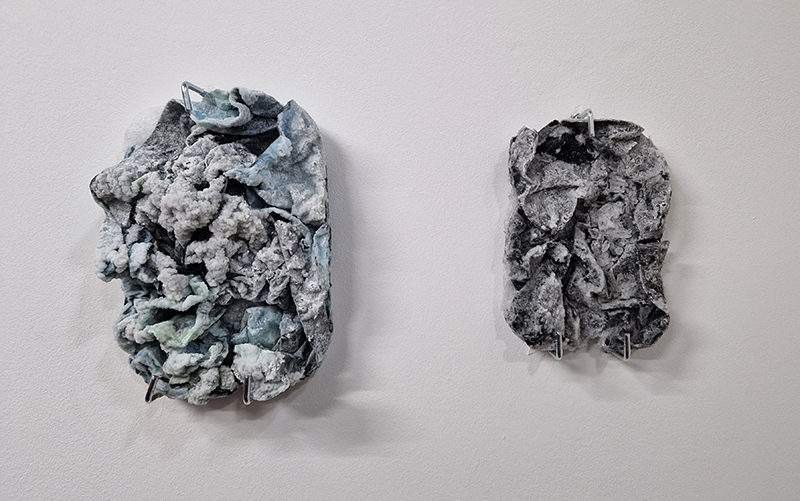
Clinging On, an exhibition of wall based sculptures curated by Poppy Whatmore at Glassyard Studios SW9. Instability is growing across the world, as we cling to liberal norms, ideas and values; these works connect a feeling of uncertainty to the physical, defying a gravitational pull or some internal force. These are physical, material or conceptual investigations of precariousness and the accompanying need to hold on. A packed PV means I have few images but I did capture the excellent Ocean Chasms/Crystal Chasms by Julie F. Hill and Caught Moon by Jane Millar.
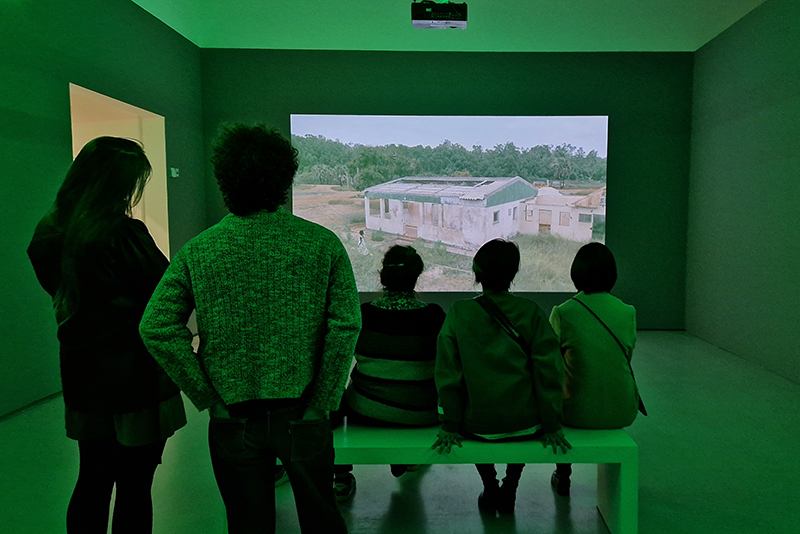
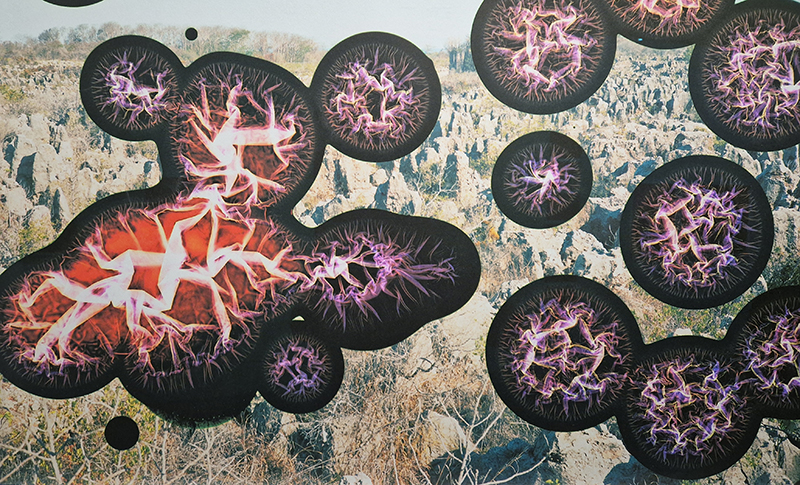
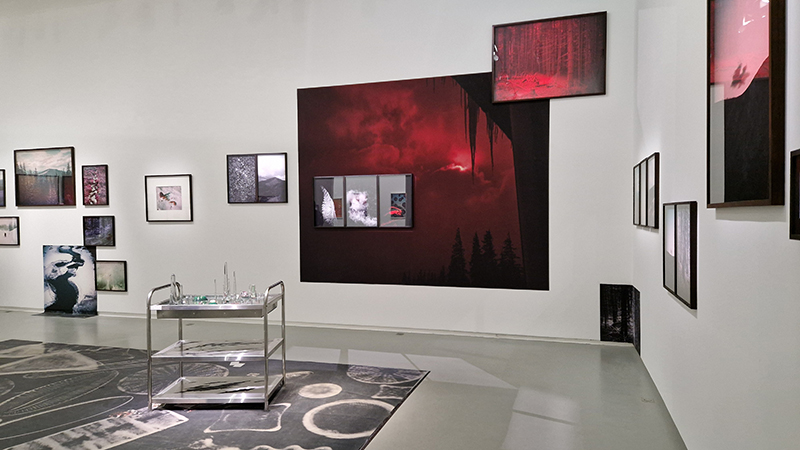
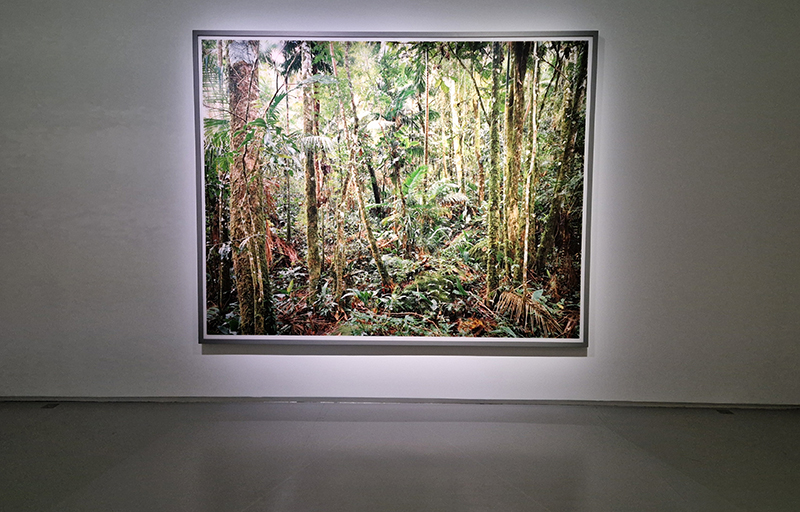
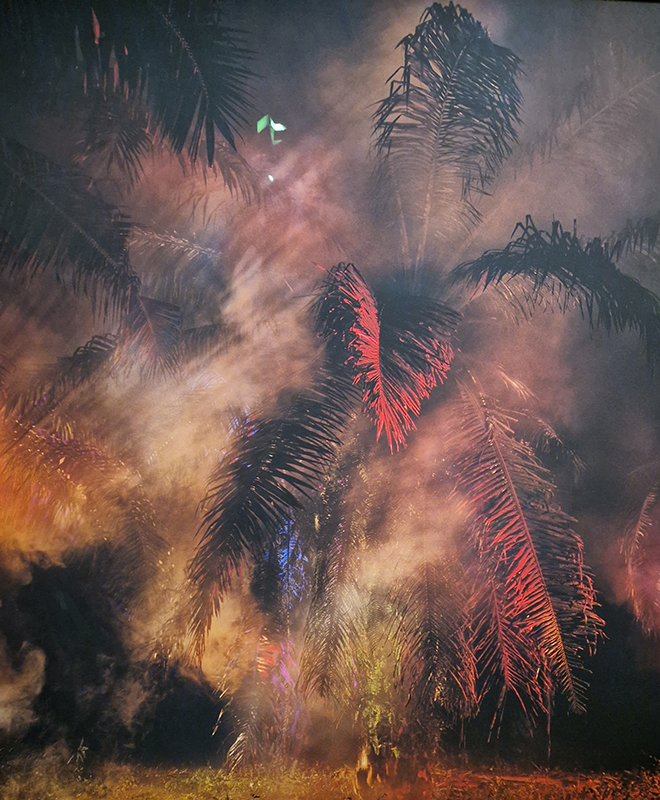
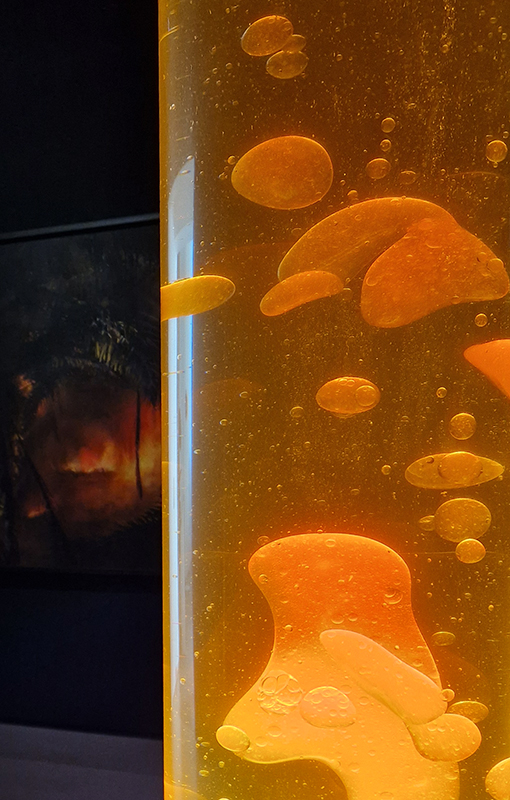
Moving Landscapes at Jeu de Paume, Paris. This exhibition brings together photography, literature and science to address environmental questions but also those of identity or migratory flows; the landscape thus becomes a living and constantly changing territory. Artists include Mounir Ayache, Julian Charrière, Edgar Cleijne, Ellen Gallagher, Yo-Yo Gonthier, Laila Hida, Eliza Levy, Julien Lombardi, Andrea Olga Mantovani,Mónica De Miranda, Richard Pak, Mathieu Pernot, Prune Phi, Léonard Pongoa and Thomas Struth.
Events

More Life By Lauren Mooney and James Yeatman at Royal Court Theatre. Asking the question ‘what is life?’ but also what is the quality of life you would accept if you discovered you were a computer file. What constitutes real human experience? A brain sliced, scanned and rebuilt in the future to be transplanted into a new synthetic body holds memories of a past life and feels emotion but has limited access to new physical sensory experience – no need to eat or sleep. Does the urge to live, live on? Is it possible the first person to live forever has already been born?


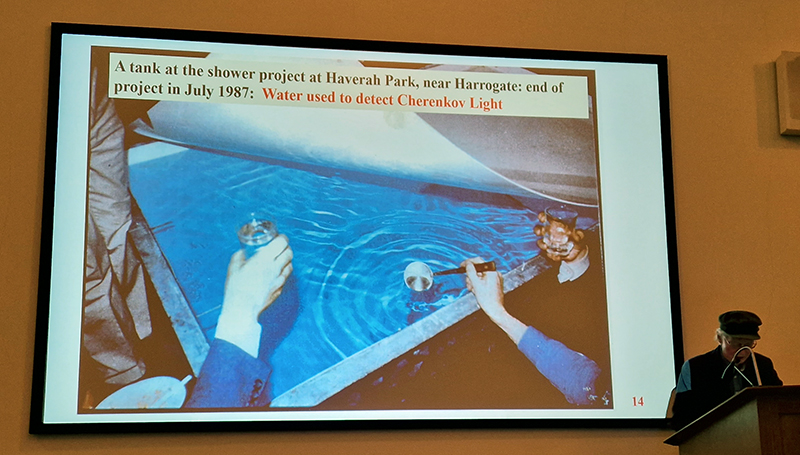
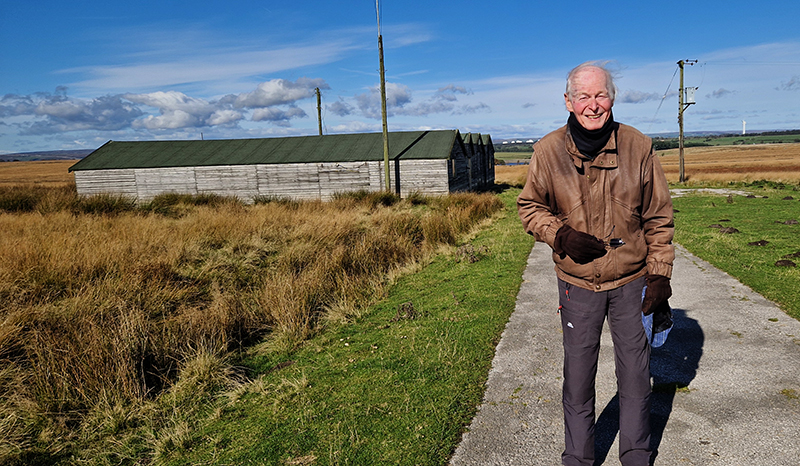
Great to see Alan Watson again, after visiting Haverah Park with him last year, to hear more about Searching for the Origin of the Highest Energy Particles in Nature. This water being sampled in the image below had been in the tank for nearly 30 years yet was still clear and drinkable.
He began his lecture at The Royal Astronomical Society with a short history on the discovery of cosmic rays, taking us right back to 1785 and Charles-Augustin de Coulomb who discovered that bodies with like electrical charges repel and if they have different signs, the force between them makes them attract. In his experiments testing electrical charge with two metal balls suspended on silk threads to easily repel or attract he was surprised to find that even if his experiment was very well insulated the charge still leaked away. It took over a century before it was realised that the air was being ionised which spurred physicists to discover the source of this ionization. In 1912 Victor Hess made his famous balloon flight to over 5km with a rudimentary Geiger counter and no oxygen to discover that ionization increased with altitude and must have an extra-terrestrial source. Over another century on and cosmic rays still present a mystery as to their origin and how they gain their enormous energies.

Alan is interested in the ultra high energy subatomic particles from extragalactic sources with energies about a million times as high as the energy reached by human-made particle accelerators. To put these energy scales in context – a laser pointer has an energy of about 3 electron volts, which is also typical of the photons that come from the sun. The molecules in the air are rushing around at 300m per second with an energy of 1/40 eV. A low energy cosmic ray, the sort that passes through your body a million times in a night, has an energy of 1 giga-electron volts, a proton created at CERN ( the European Organization for Nuclear Research) has around 7 tera-electron volts. If there was a race between a CERN proton and a high energy cosmic ray (over 1018 eV ) starting at the centre of the galaxy, by the time the cosmic ray had reached Earth the CERN proton would not even have reached the moon.

The ultra high energy rays are very rare. To detect these particles physicists rely on observing extensive air shower arrays to amplify the arrival of the particle. By recording the secondary particles that are produced when a cosmic ray hits the upper atmosphere the energy of the particle can be calculated. The showers arrive is a disc like formation with footprints of around 1sqkm so it is necessary to have detectors spread over a large area. The detectors measure the arrival time of the secondary particles and this can help determine the direction of the particle to within 1 degree. The trajectory of the cosmic ray is affected by galactic and intergalactic magnetic fields making it very difficult to find the origin of the particle.

The shadow of the moon can be seen in data recordings of cosmic ray arrivals.

There are a few different methods of detecting cosmic rays. This can be done using scintillator plastic which gives off a flash of light when a particle passes through the medium. Using Cherenkov radiation is another method – this takes advantage of a naturally occurring electromagnetic shock wave giving off energy as light when a particle passes through a medium faster than light can travel through the same medium. The speed of light through water is only 3/4 as fast as when it passes through air, a cosmic ray with much more energy will travel through water at almost the speed of light. This phenomenon can even be seen with the naked eye if the location is dark enough. Astronauts experience flashes of light in the eyes from particles directly hitting the retina but also from particles passing through the vitreous fluid and causing Cherenkov radiation.

Another method is to detect the excitation of nitrogen, the same process that produces the aurora. This light is in the ultra violet spectrum.

By the end of the 1980’s when Haverah Park closed the discovery of the origin of high energy cosmic rays was still a long way off. What had been established was that at the very high energies, only one particle would fall within one km per century. To make further progress a much larger area of detection would be needed. The Pierre Auger Observatory in Argentina at 3000 sq km is about twice the size of Surrey with many hundreds of water tanks. These tanks hold 10 tonnes of water but are the same depth as those at Haverah Park at 1.3m which turned out to be the optimal depth for the water tanks. Charged particles generated during the development of extensive air showers excite atmospheric nitrogen molecules, and these molecules then emit fluorescence light. The Cherenkov detectors at Pierre Auger are supplemented by fluorescence detectors installed at four elevated observation sites with 24 large telescopes specialized for measuring the nitrogen fluorescence in the atmosphere above the array.

The most exciting discovery came in 2017 when a convincing anisotropy in the arrival direction of cosmic rays of a certain energy was determined with some evidence that Centaurus A might be a source of these cosmic rays. There was also evidence of particles clustering close to the super galactic plane, an enormous, flattened structure extending nearly a billion light years across.

The galactic year is the duration of time required for the Sun to orbit once around the centre of the Milky Way Galaxy equivalent to approximately 225 million Earth years.

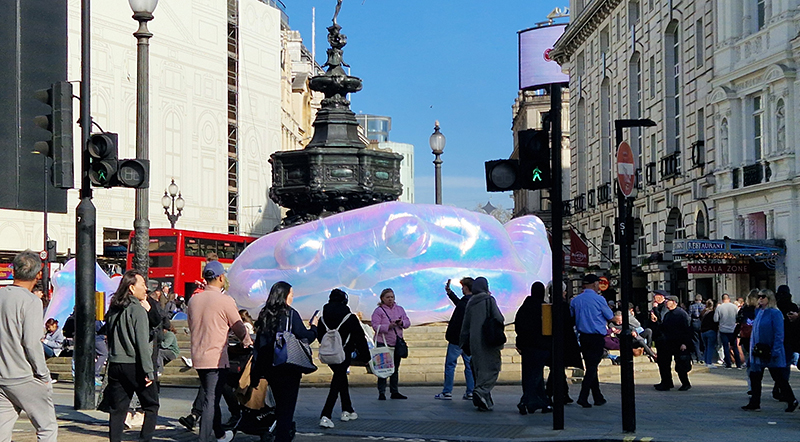
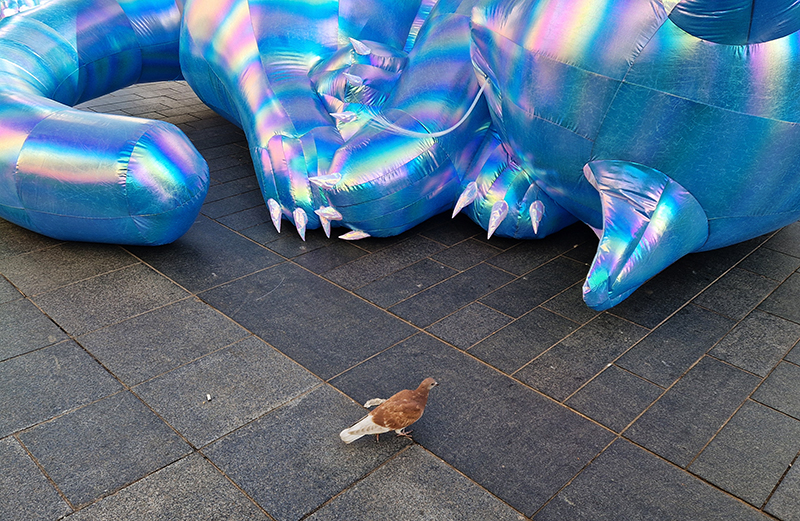
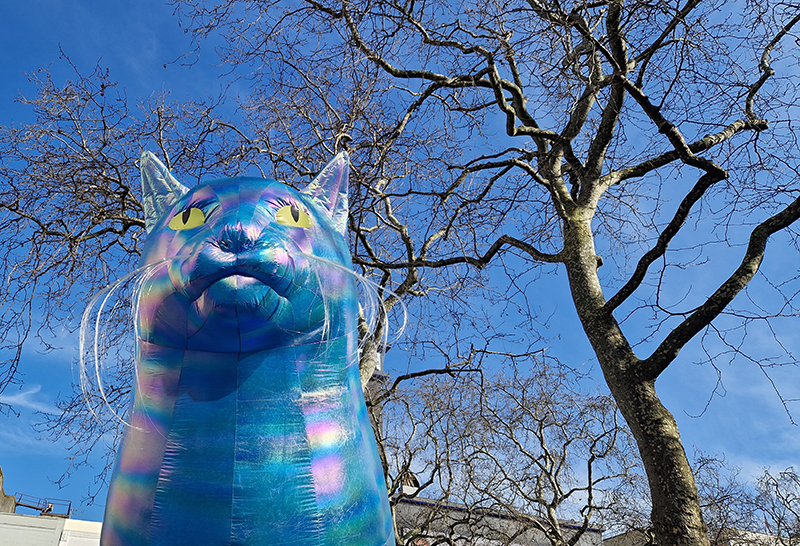
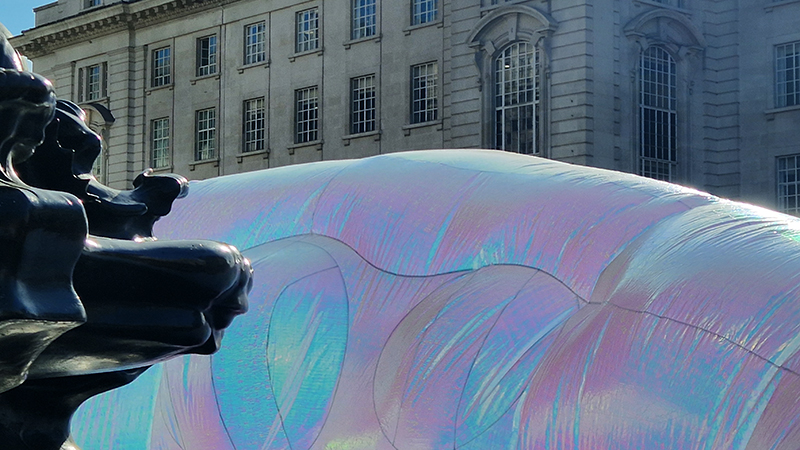
Art After Dark cosmic takeover around Piccadilly and Leicester Square from Nelly Ben Hayoun-Stépanian. I saw the iridescent asteroid-sized moon rocks and inflatable UV reactive sculptures inspired by Schrödinger’s famous quantum physics paradox in bright sunshine

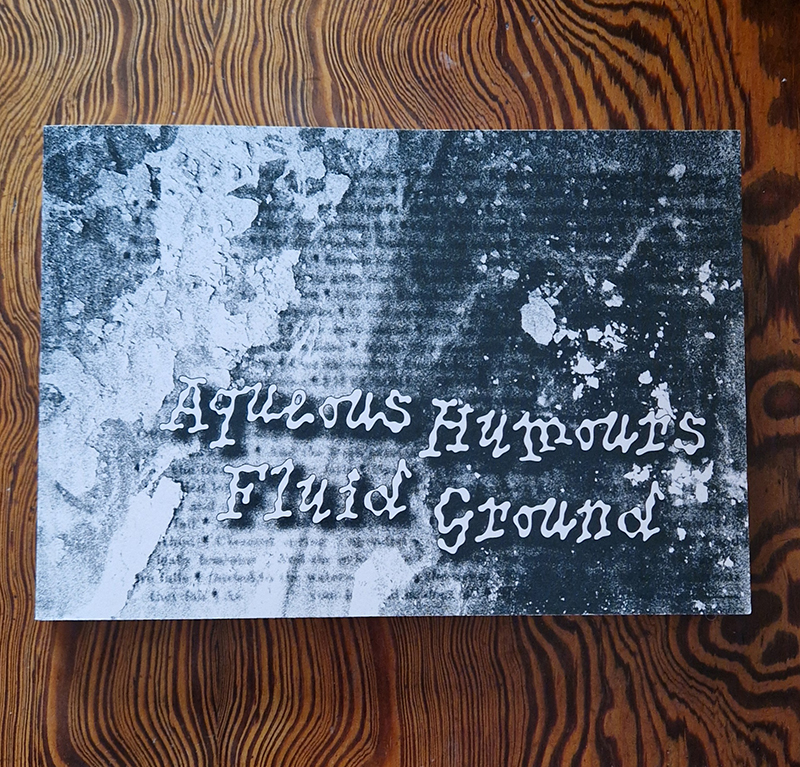
Book launch at Matt’s Gallery – Aqueous Humours Fluid Ground, edited by Kirsten Cooke published by Matt’s Gallery and the Poorhouse Reading Rooms. A night of experimental nonfiction, fiction, diagram, scent and moving image. An evening that activates a watery mapping, which denatures cartography through practices of immersion, aquatics, time travel and the posthuman lenses of geological, animal and machine vision. With contributions from Linda Stupart, Harun Morrison, Ezra-Lloyd Jackson, Melanie Jackson, Joseph Noonan-Ganley, Charlie Franklin, Michelle Williams Gamaker, Lucy A. Sames, Maggie Roberts, Carl Gent. I was only able to stay for the first half of the evening but this gave a wonderful flavour of the book which I look forward to dipping into.
Listening

Journey to the Centre of the Earth – an Infinite Monkey Cage podcast with guests seismologist Ana Ferreira, geologist Chris Jackson and comedian Phil Wang. The immense pressures and searing temperatures that present engineering difficulties of ‘going into the Earth’s crust’ to explore what lies beneath are discussed along with the relationship between the tectonic plates and a stable atmosphere and new evidence of hidden subterranean shifting globular continents.

Reading

The Periodic Table by Primo Levi. My initial reaction to this book was surprise that it was so engaging, but a few elements in, I was surprised to find the chapters shifted from autobiography to fiction with dubious and misogynistic content. I have persevered as the chapter on Carbon, which was recommended to me, is the last chapter in the book and I thought I should start at the beginning not the end. This final chapter is written with a different emphasis, with the explanation that carbon cannot be treated like other elements as it is not specific to one story but is everything to everyone. ‘Every two hundred years, every atom of carbon that is not congealed in materials by now stable (such as, precisely, limestone, or coal, or diamond, or certain plastics) enters and renters the cycle of life, through the narrow door of photosynthesis.’ The story of one atom of carbon is relayed but it is noted that the author ‘could tell innumerable other stories and they would all be true…. the number of atoms is so great that one could always be found whose story coincides with any capriciously invented story’.
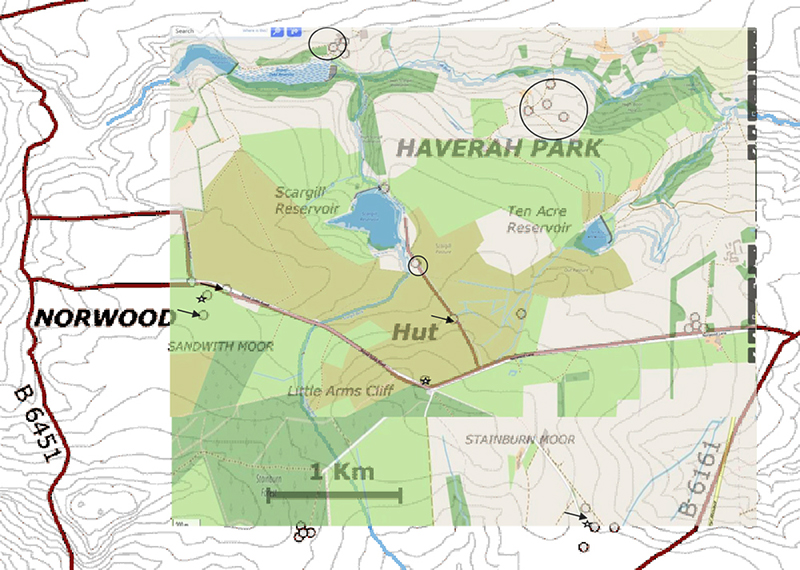
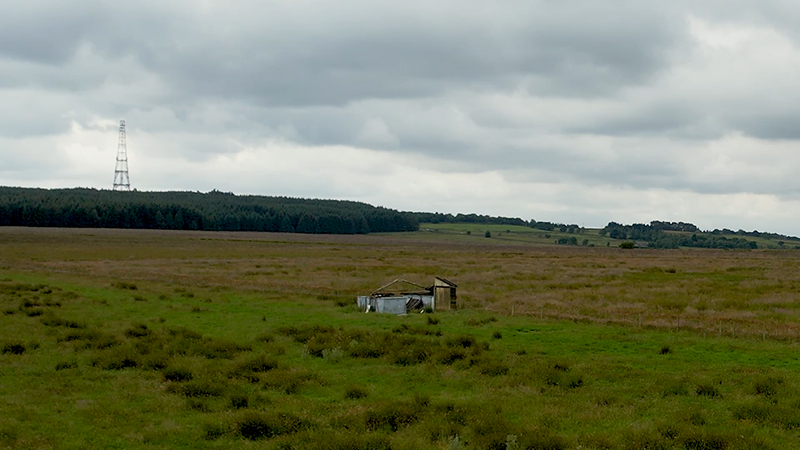
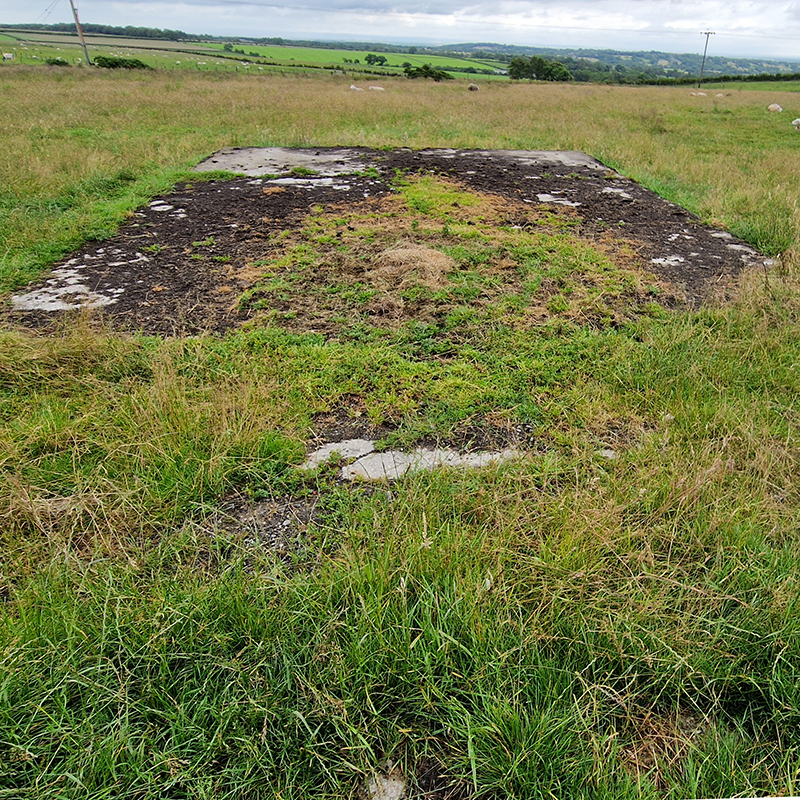
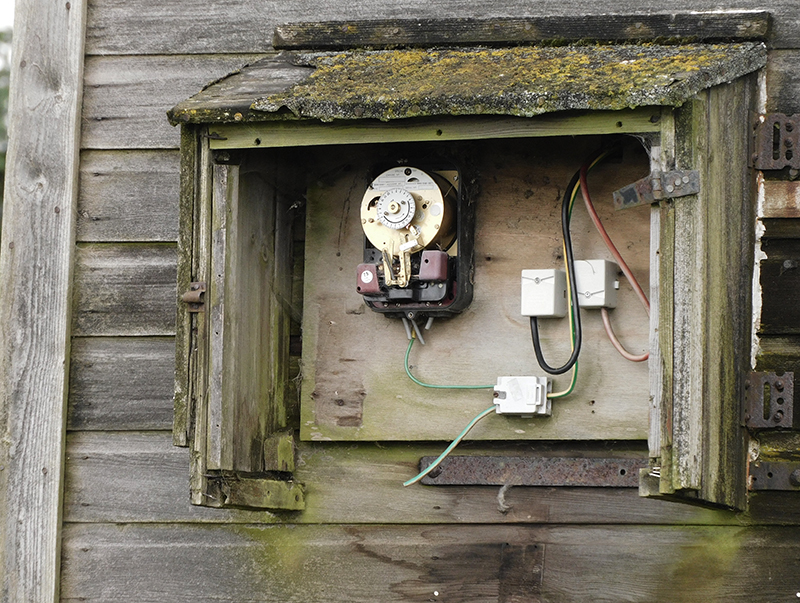
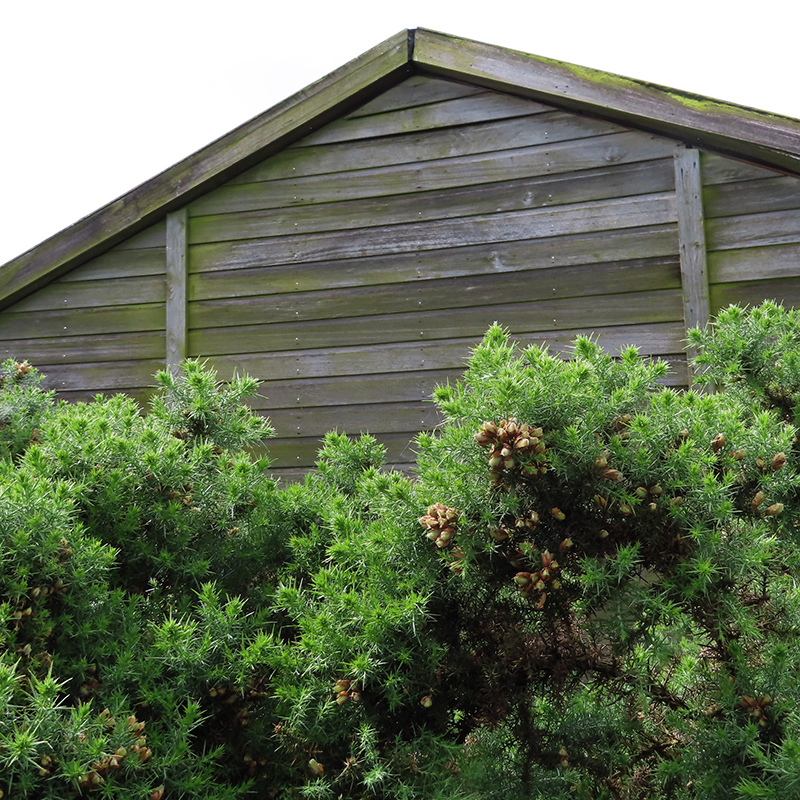
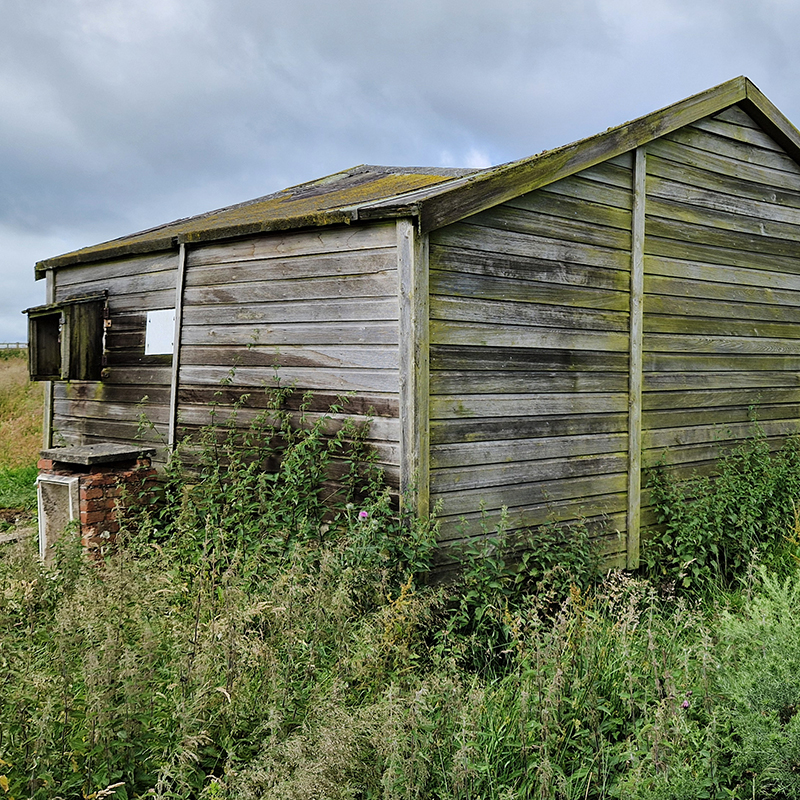
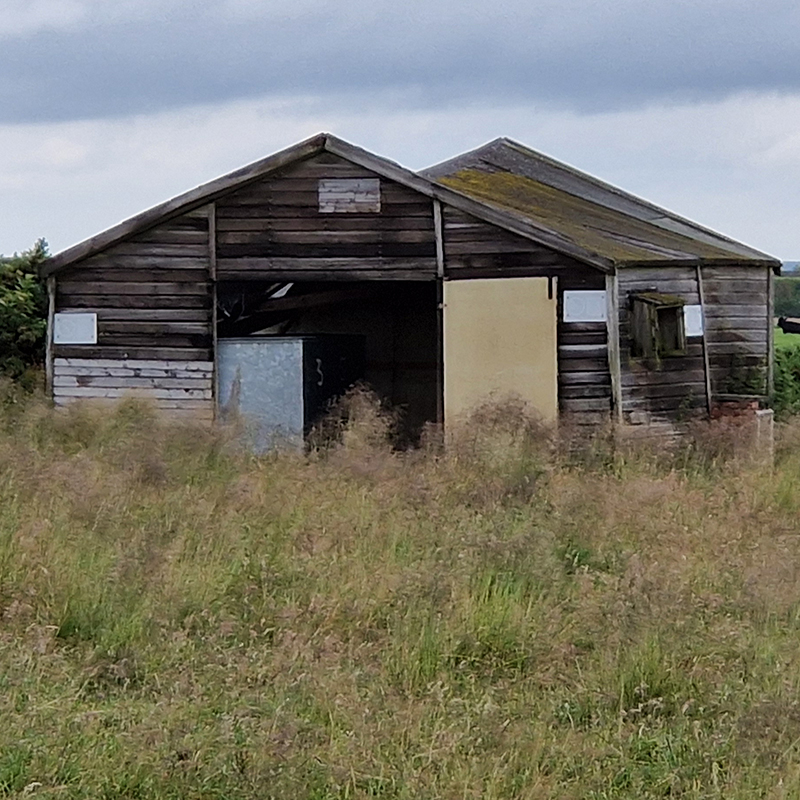
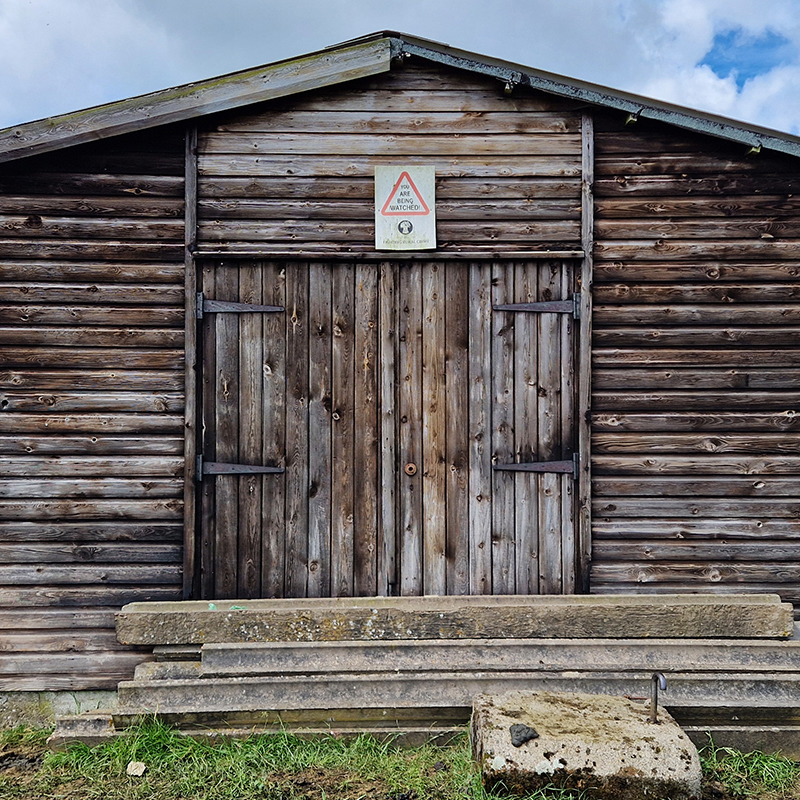
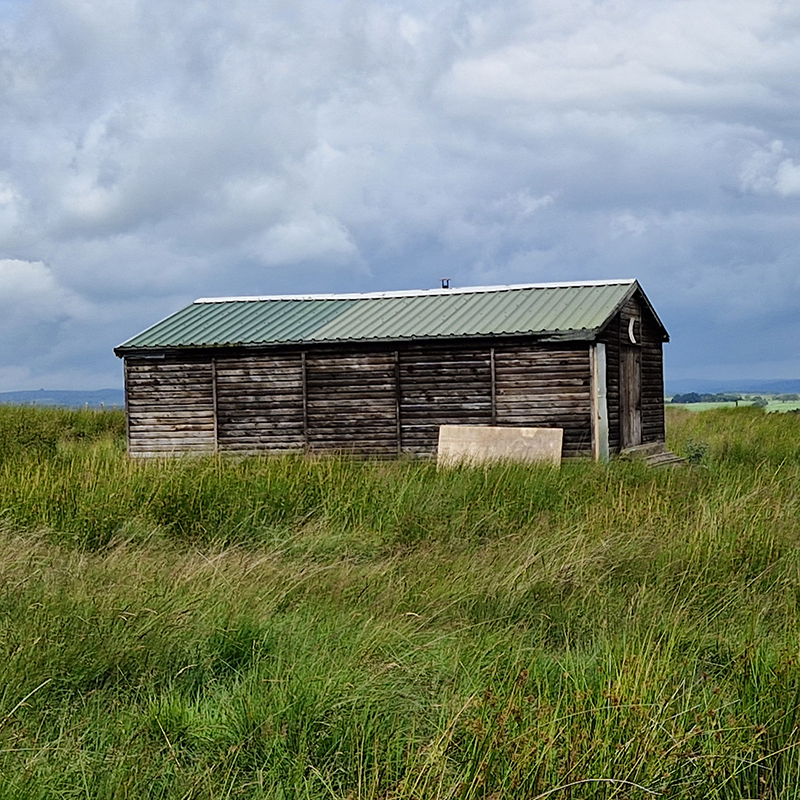
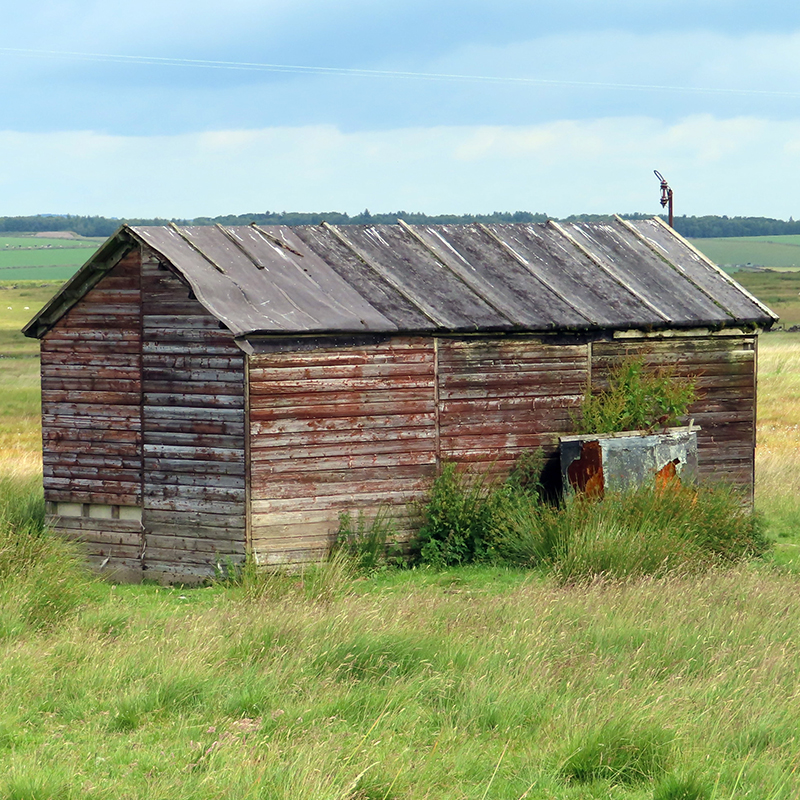
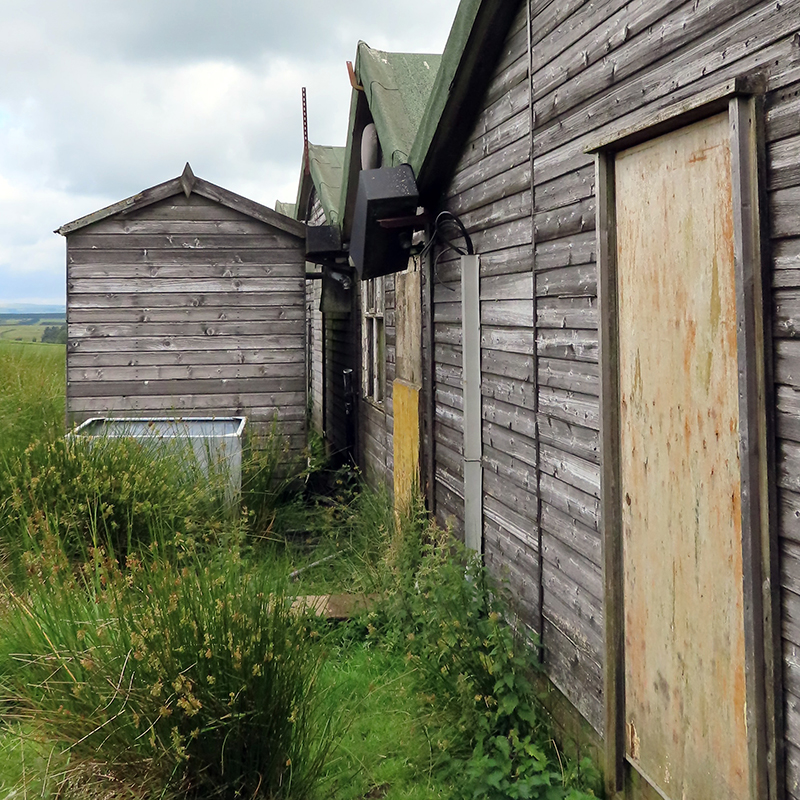
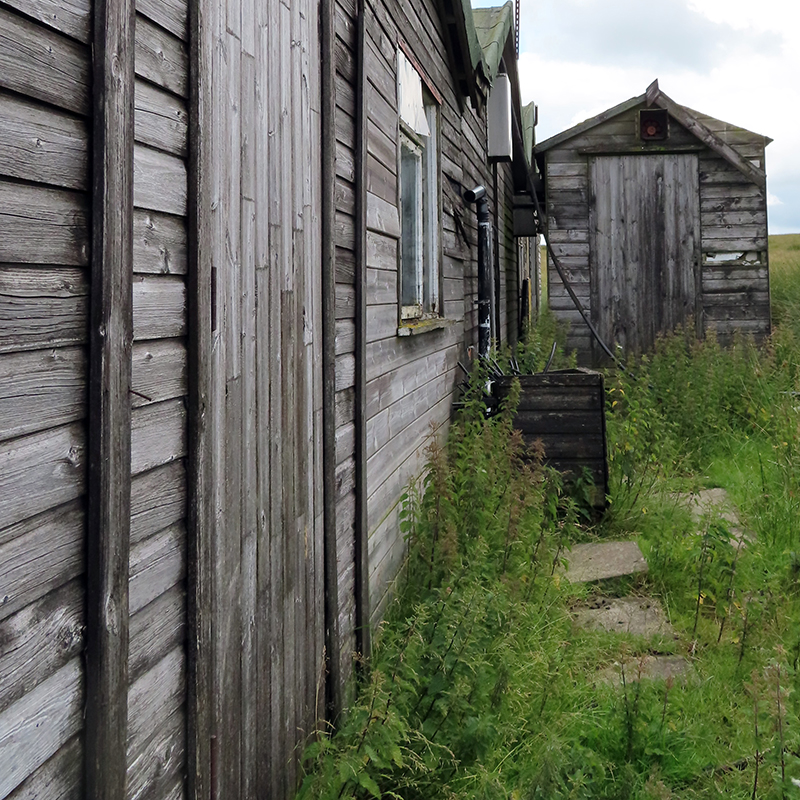
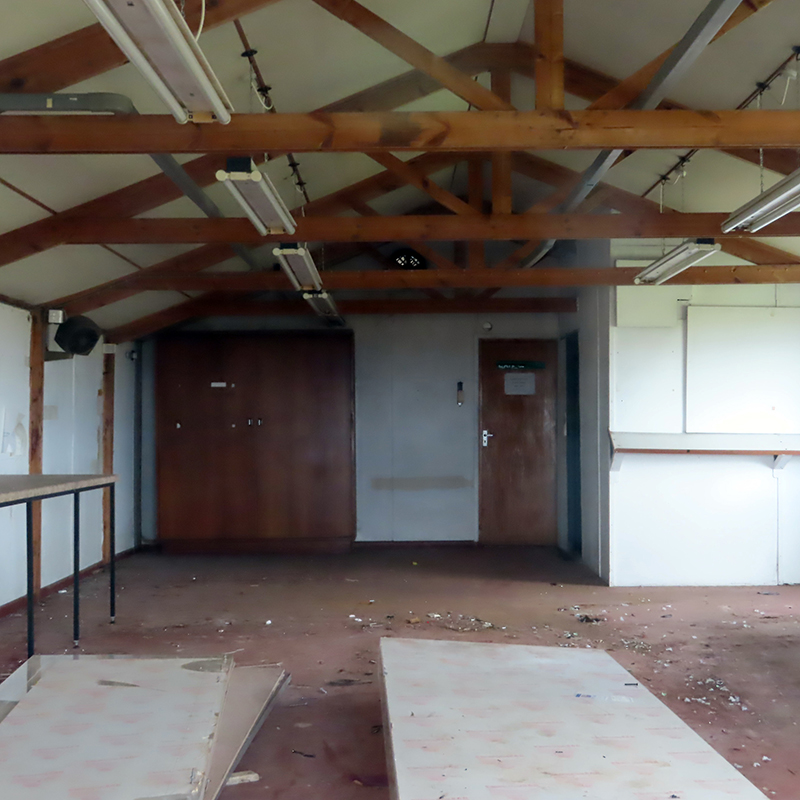
In search of huts. I have been on a mission to locate and document the remaining huts from a cosmic ray detection experiment at Haverah Park on the Pennine moorland in North Yorkshire.

When high-energy cosmic rays enter the atmosphere, they set off a chain-reaction particle cascade known as an extensive air shower. The Haverah Park experiment was home to one of the largest extensive cosmic ray air shower arrays in the world.

It was operated by the Physics Department of the University of Leeds for 20 years, closing in 1987. An array of over 200 water-Cherenkov detectors covering 12 km2 were active during its operation and many 1000’s of extensive air showers were recorded, including ones of such size that the cosmic rays that generated them had energies previously unthought of, adding to the mystery of where they come from.

The large energy density of cosmic rays is close to that of starlight, adding their own glow to the sky as they blast across the universe. Cosmic rays are the atomic nuclei of elements ranging from hydrogen to uranium accelerated to high energies, with half being protons and most positively charged.

Much of the technology used to observe cosmic rays has changed little over the decades since first inventions and still plays a role within newer technologies.

It appeals to me that the excitement of observing particles from other galaxies happened at these unassuming structures.

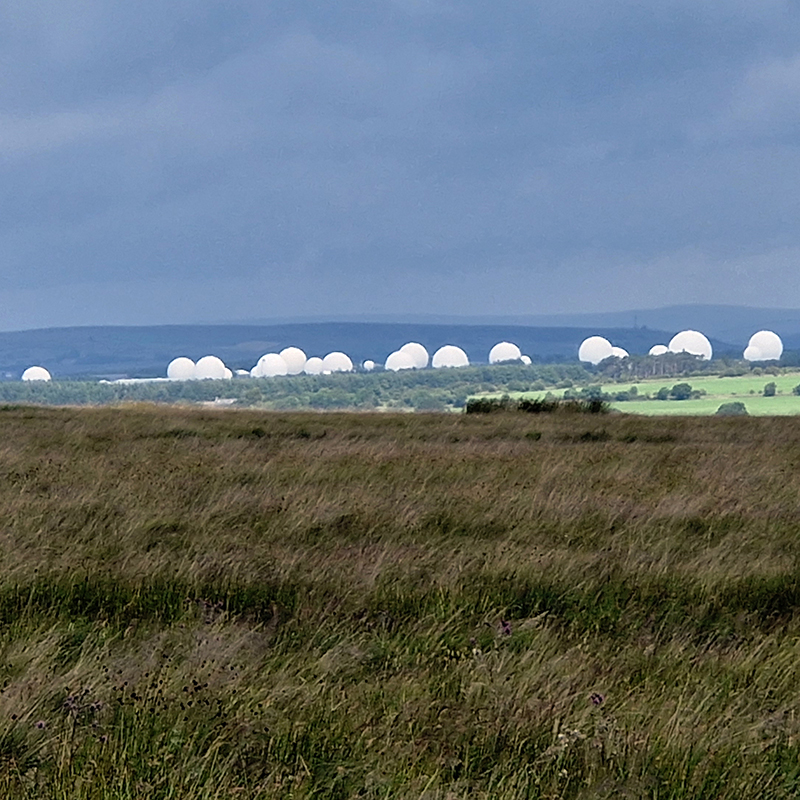
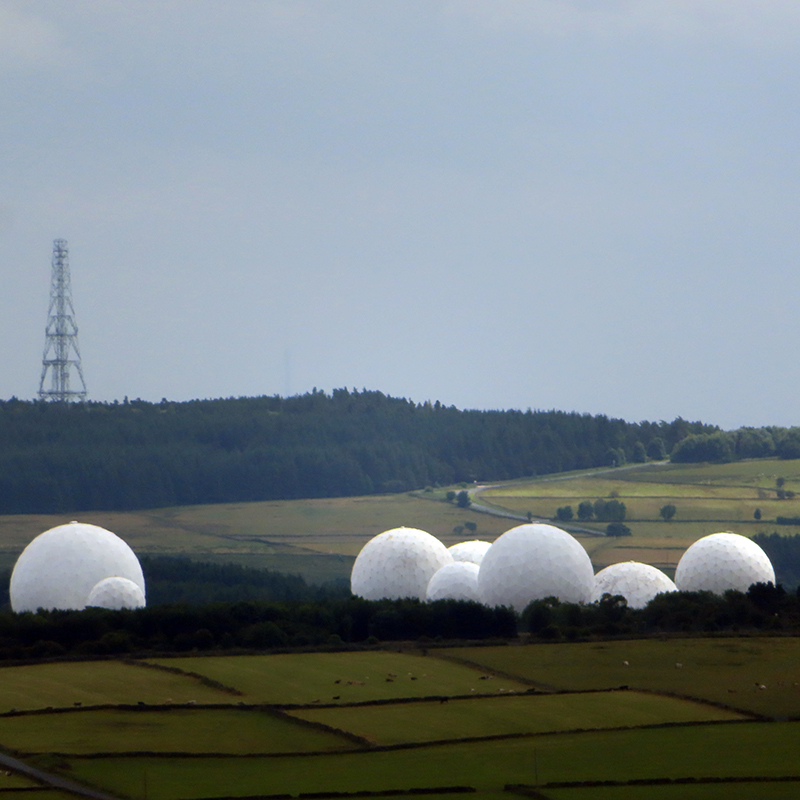
Sharing the landscape of Haverah Park cosmic ray air shower detector array huts are the striking white radomes that shield secret radar equipment at RAF Menwith Hill. The spy station has been there since the cold war space race began in the mid-fifties. Little is known about what goes on here but broadly it is said to gather electronic intelligence and is operated by US National Security Agency (NSA) and UK Government Communications Headquarters (GCHQ). As satellite technology has increased so has the number of radomes which now number 37 at the site. It is worth noting that satellites are vulnerable to unpredictable space weather and cosmic ray interference.

The total number of particles detected in a shower can be used to estimate the energy of the primary cosmic ray. Some particles contain the highest energy form of radiation known to exist anywhere in the universe and their origin is one of science’s greatest mysteries. Air showers of secondary particles generated from a primary cosmic ray hitting the Earth’s atmosphere are spread over many kilometres when they hit the ground so it is useful to have detectors spread over a large area. The difference in the time of arrival of recorded particles at multiple detectors can be used to estimate the arrival direction of the primary cosmic ray. However, this does not necessarily reveal the origin of the particle as magnetic fields within the galaxies bend their trajectories so that the memory of their original direction is obfuscated.

The cosmic ray detectors I made for the The Breath of Stars use a block of plastic scintillator which emits a short burst of UV light when a charged particle passes through it which is picked up by a single-photon-sensitive device. The detectors used at Haverah Park are water Cherenkov detectors. These are large steel tanks of purified water with photon sensitive detectors in the water.

While the speed of light in a vacuum is a universal constant its speed through a material may be significantly reduced as it is slowed by the medium. A particle passing through a material faster than that at which light can travel through the material loses electrons thereby emitting light. When cosmic rays pass through the water tanks, they emit Cherenkov radiation because they travel faster than the speed of light in water. Cherenkov light is similar to the production of a sonic boom when an airplane is traveling through the air faster than sound waves can move through the air. Pavel Cherenkov along with Ilya Frank and Igor Tamm discovered and demonstrated this phenomenon in 1934, astonishingly, it had been predicted in 1888 by Oliver Heaviside, and in 1910 Marie Curie had noticed a strange blue glow from her radium experiments.

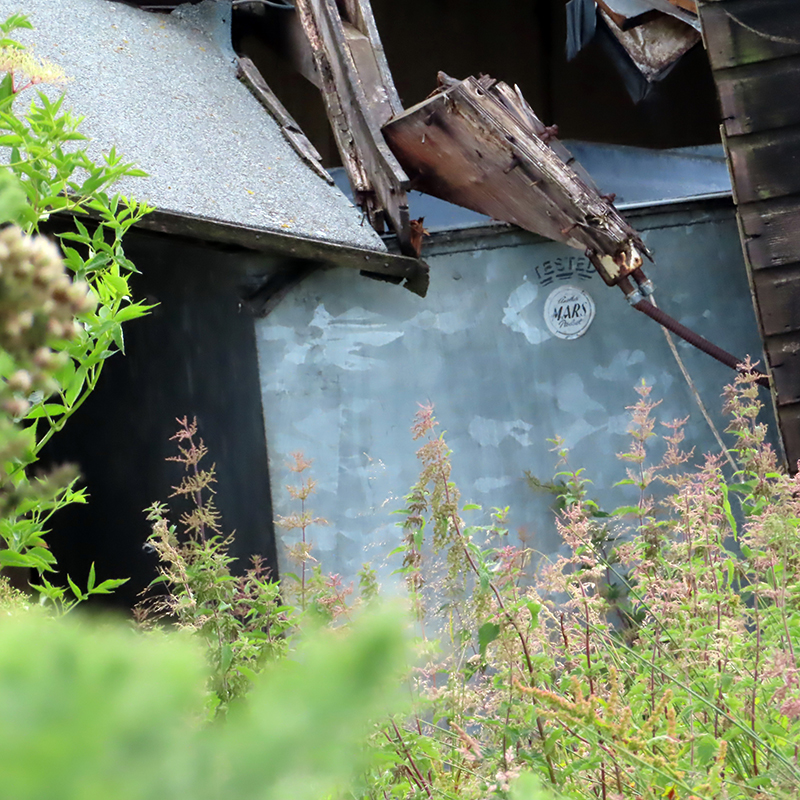
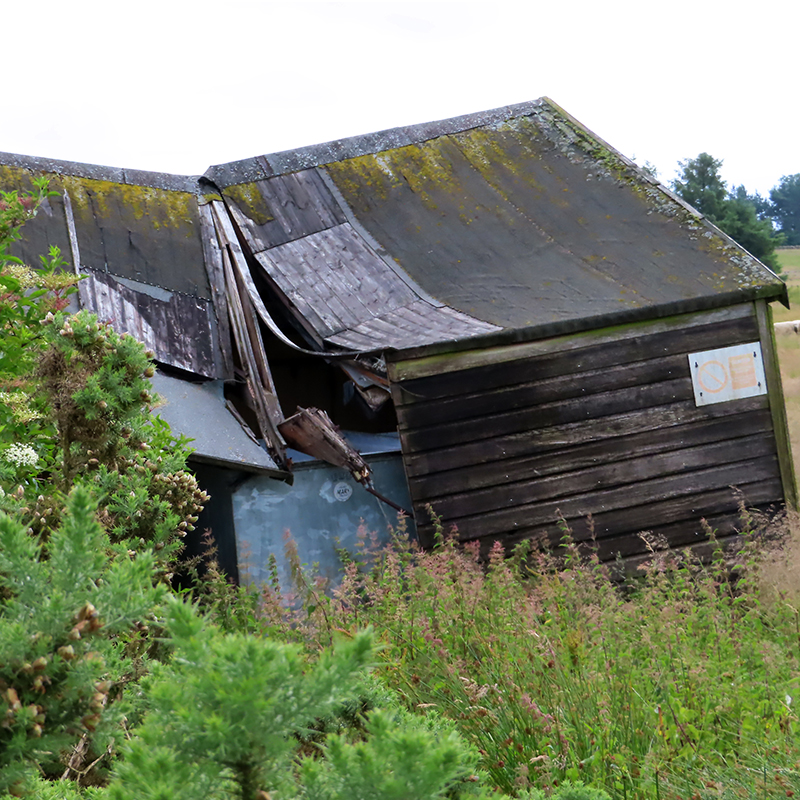
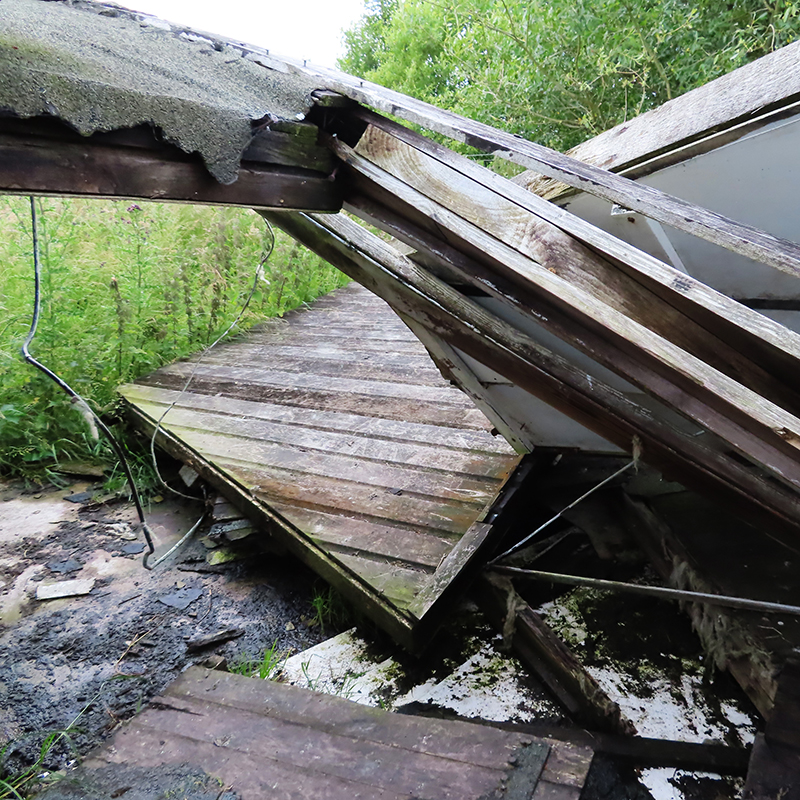
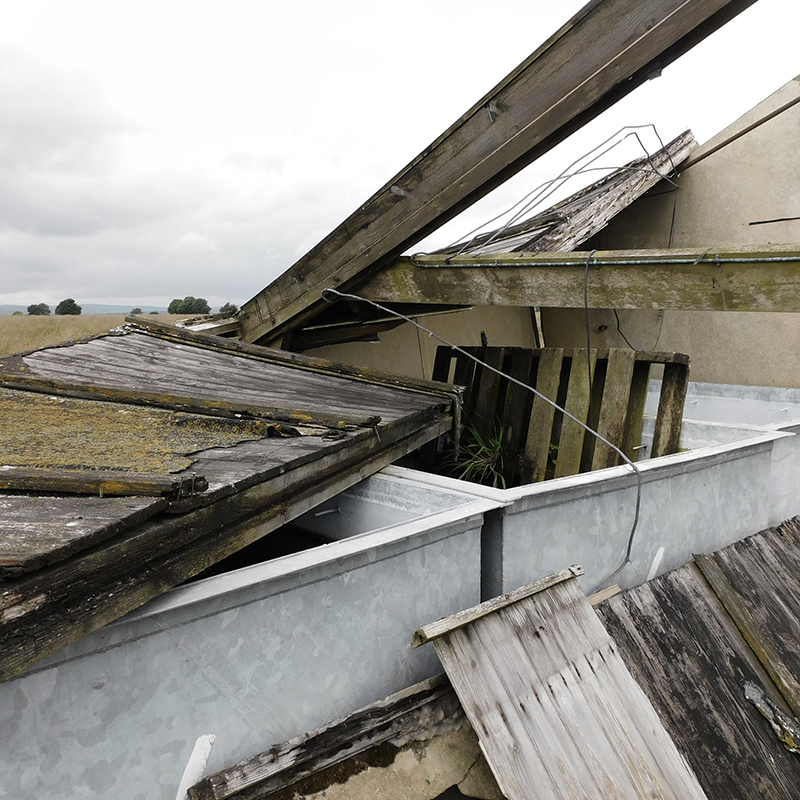
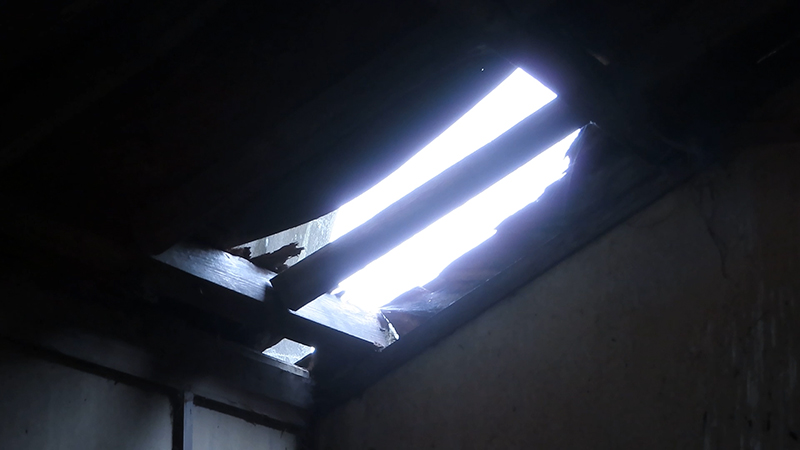
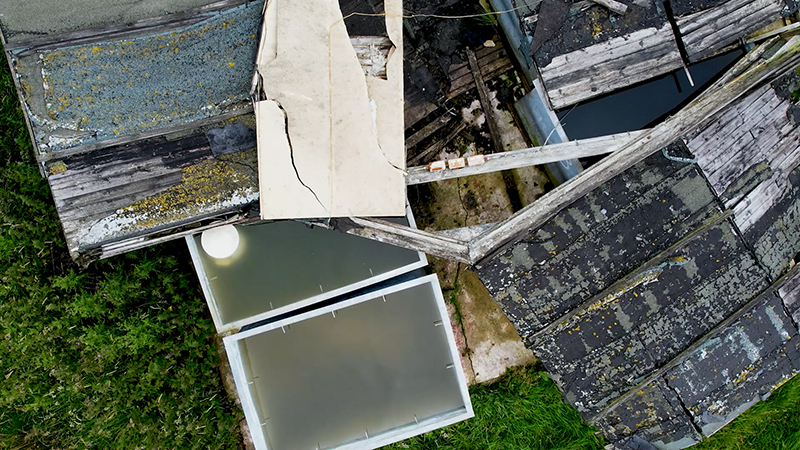
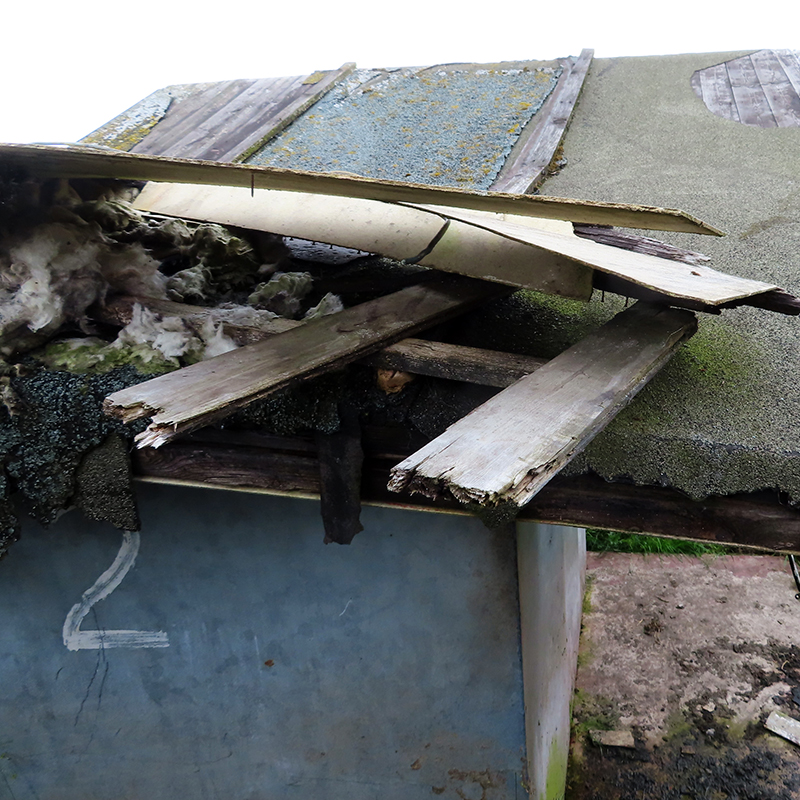
Other huts from the Haverah Park experiment are in a state of collapse.

There are so many high energy particles hurtling around the universe that they almost equal starlight in energy density. Cosmic rays travel at almost the speed of light and because they are charged particles most cosmic rays are confined, spiralling within our galaxy for a million years or more, by the magnetic fields which permeate it.

Five million cosmic rays pass through your body each day. Some will collide with atomic nuclei. A particle passing through a material at a velocity greater than that at which light can travel through the material emits light. Maybe we glow a little.

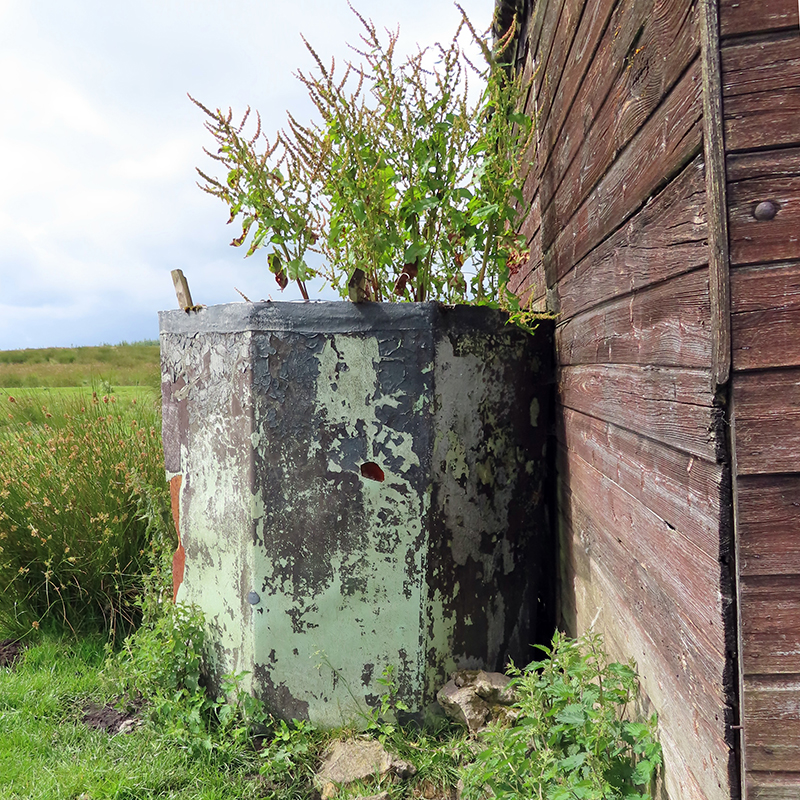
Following the disappearing trail. Haverah Park hut with an intriguing hexagon tank.

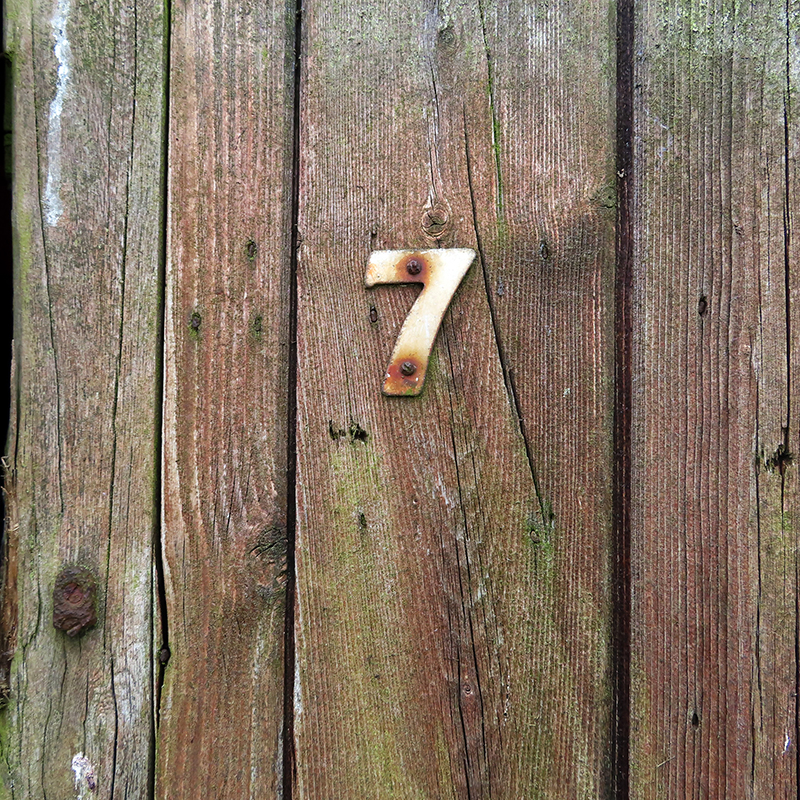
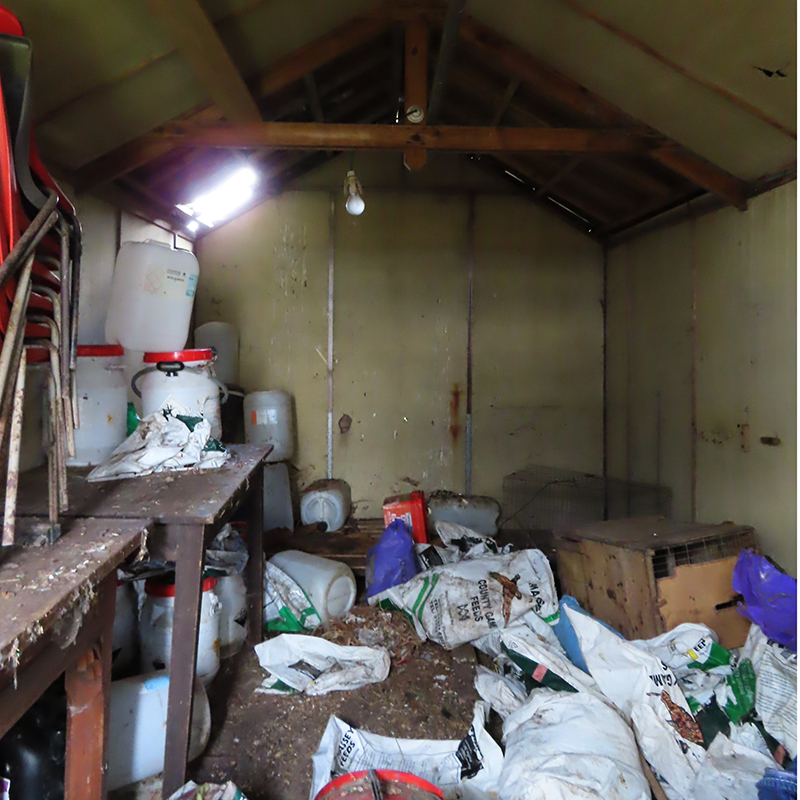
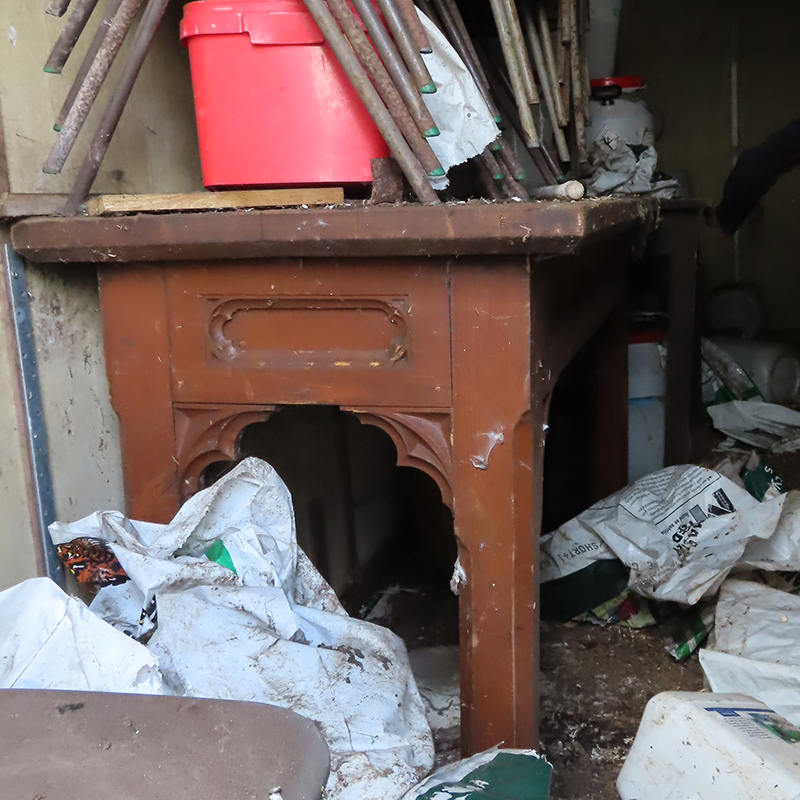
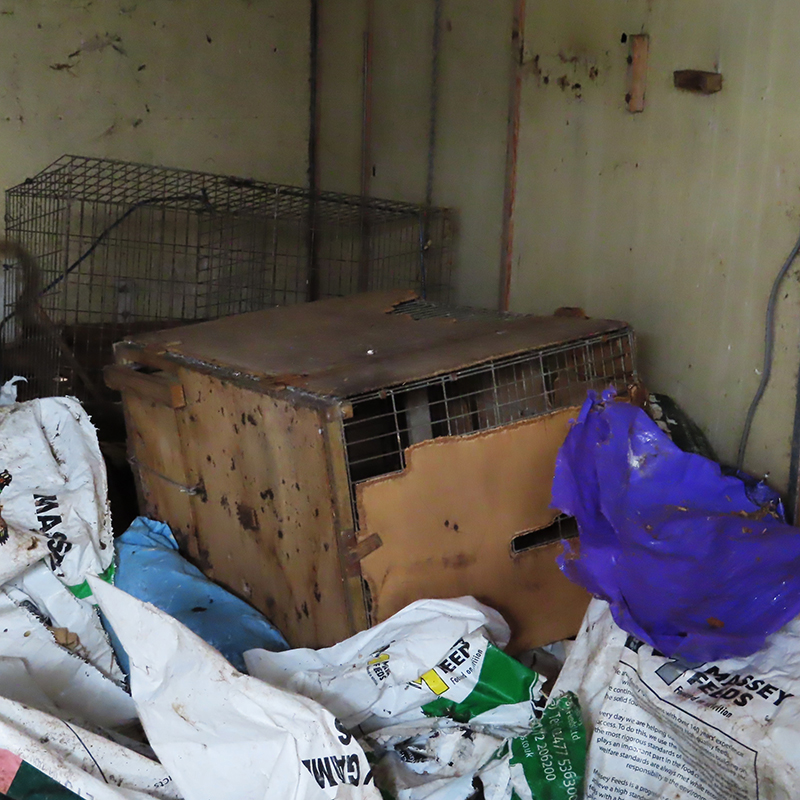
Inside Hut no. 7 is a dumping ground. Waste is a big problem in space as well as on Earth. The thickening shell of space junk in low Earth orbit, if left to accumulate, could cause a conductive shield to form, weakening the effectiveness of the magnetosphere, which protects life on earth from most cosmic radiation.

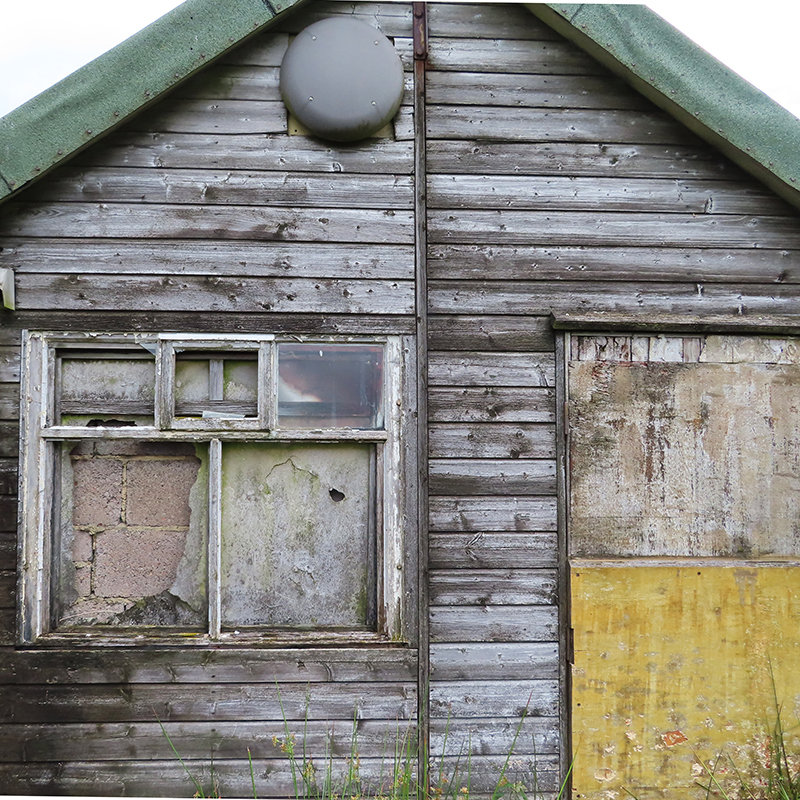
A decaying wall map of the entire Haverah Park experiment is just visible through a window of one of the huts in the central hub, but not much else remains inside.

It looks like these huts have been recently emptied into a skip which, by chance, was collected while I was there. Unfortunately, the driver had no enlightening information for me about the future of the huts.

Cherenkov radiation is a form of energy that gives off a blue glow when electrically charged particles are moving at speeds faster than light is able to travel through the same medium. The experimental physicist Blackett, who received the 1948 Nobel Prize in Physics for his investigations into cosmic rays, believed that extensive air showers should produce flashes of light that could be perceived by the human eye when lying down and looking upwards under dark skies. Whether he achieved seeing this phenomena himself is not known, but he inspired colleagues Galbraith and Jelley, in 1952, to devise an experiment to detect light from air showers using a rubbish bin painted black on the inside, a recycled searchlight mirror and a small phototube. With these simple items, they made the first observation of Cherenkov light produced by cosmic rays passing through the atmosphere. Not all the twinkling in the night sky is starlight.

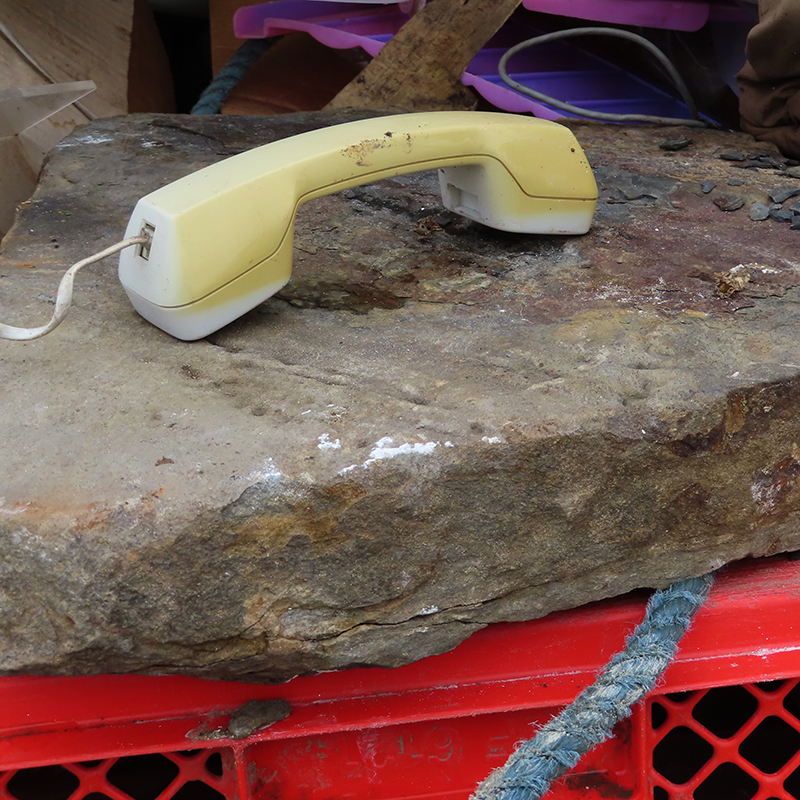
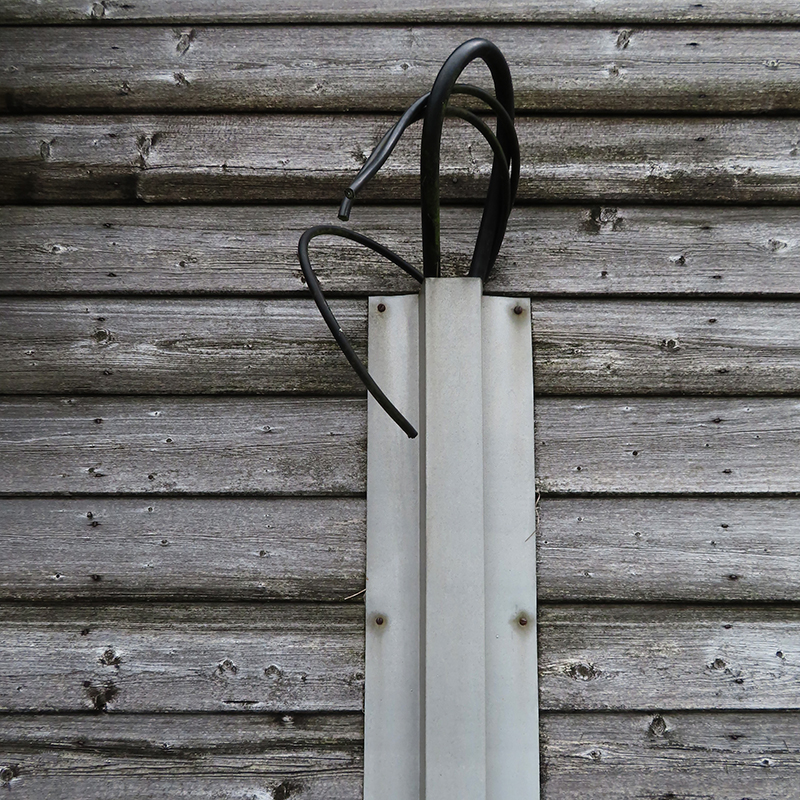
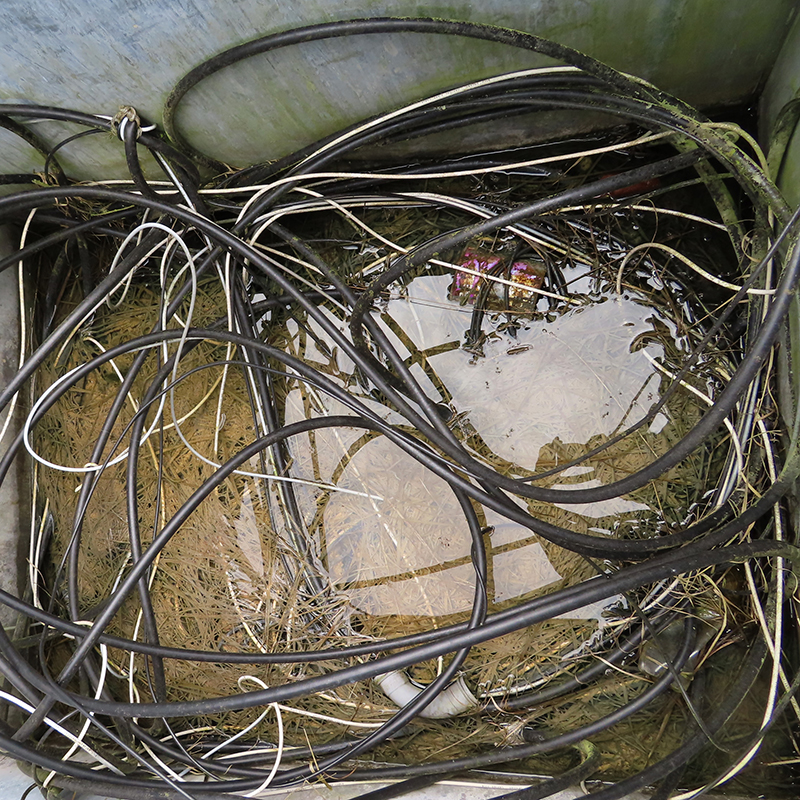
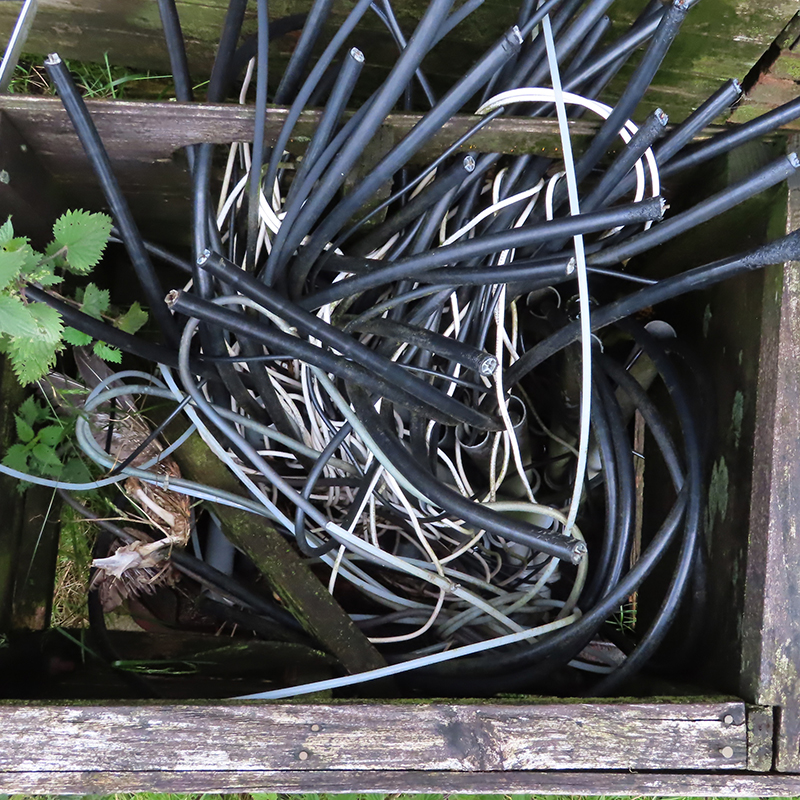
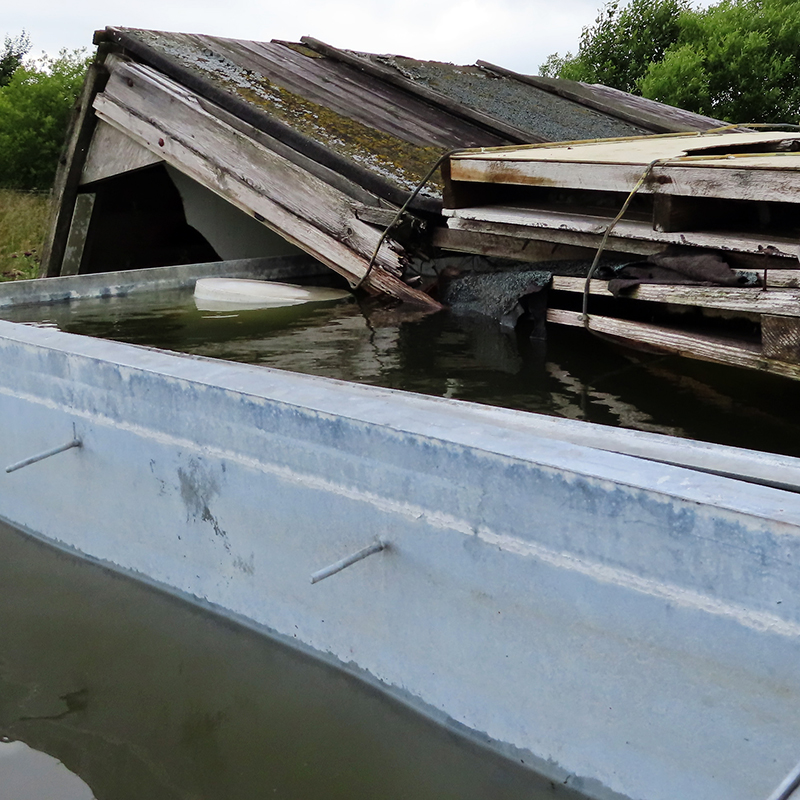
During the Haverah Park experiment, the water Cherenkov detectors deployed across the moors were connected by underground cables and transmitted information to the control huts via radio signals in the microwave frequency range. All communication is now severed. Cut cables coil in rain filled tanks. The cosmic rays are still pounding down upon these new unwatched ecosystems but the detectors have moved elsewhere.

I am looking forward to meeting Professor Alan Watson FRS here in the autumn. He is eminent in the field of cosmic rays and helped initiate the extensive air shower project, working at Haverah Park for 25 years. He has kindly agreed to meet and share his insider knowledge of the history and operations at the site.

The idea to build a truly giant shower array was launched by Alan Watson and Jim Cronin shortly after Haverah Park was decommissioned and thanks to the ground breaking work undertaken in these huts, it evolved to become the vast Pierre Auger Observatory in Argentina, named in honour of the man who first discovered extensive air showers.

Peering into the darkness, trying to fathom the structures of the universe or what’s inside the hut, and the nature of that relationship.

The ultra high energy particles detected at Havarah Park and new arrays across the globe are very rare, possibly less than one per square kilometre per century, so it is big news when one arrives. Because they have such high energy, it is thought they shouldn’t be affected by galactic magnetic fields, and therefore, the direction of the particle could be determined and the source located. The Amaterasu particle, named after the sun goddess in Japanese mythology, the second most powerful particle to be recorded, appears to have emerged from the Local Void, ana area with no astronomical objects that might produce such a particle. There is no explanation of where these particles come from, just hints of bigger mysteries to unfold.

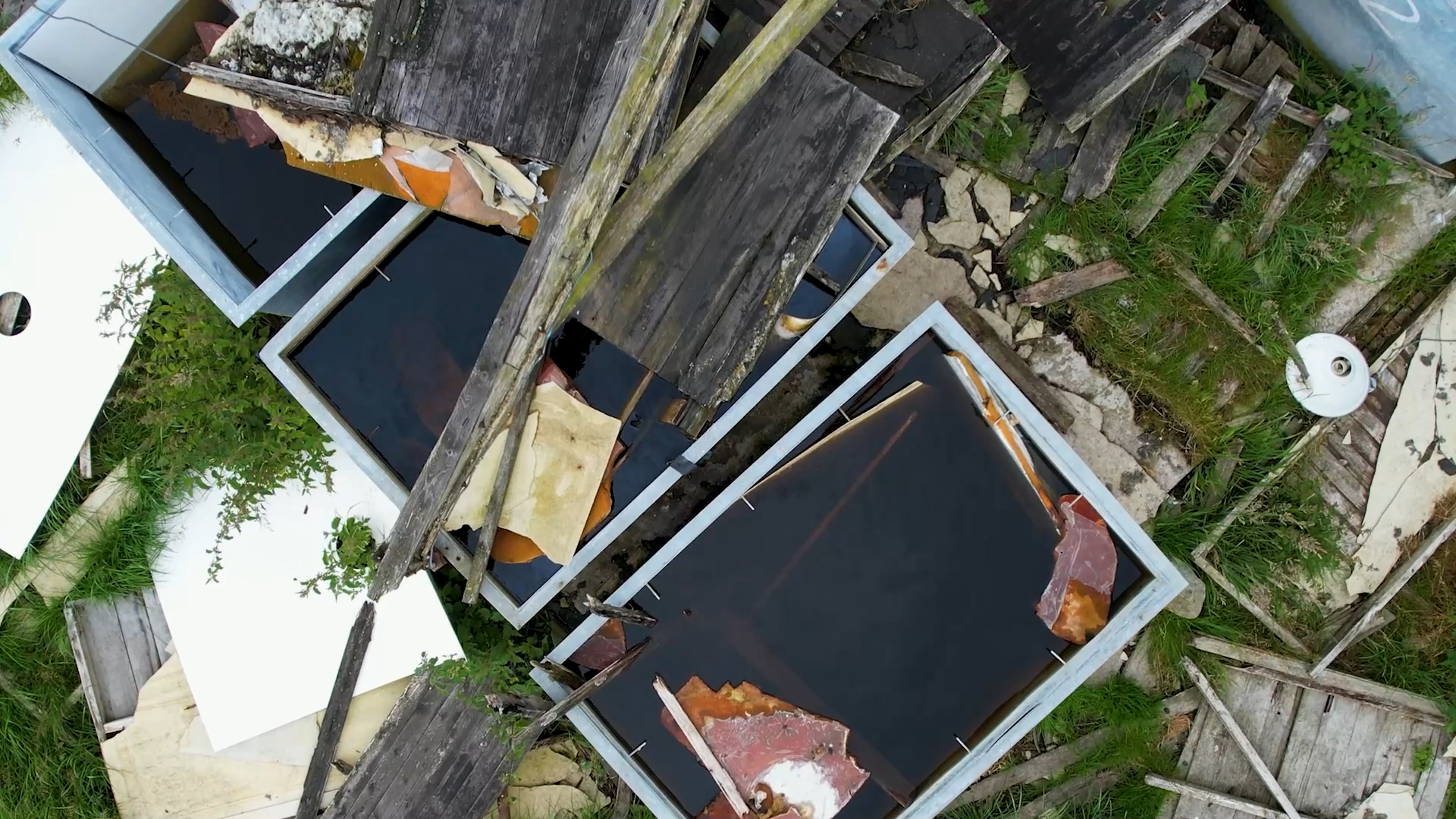
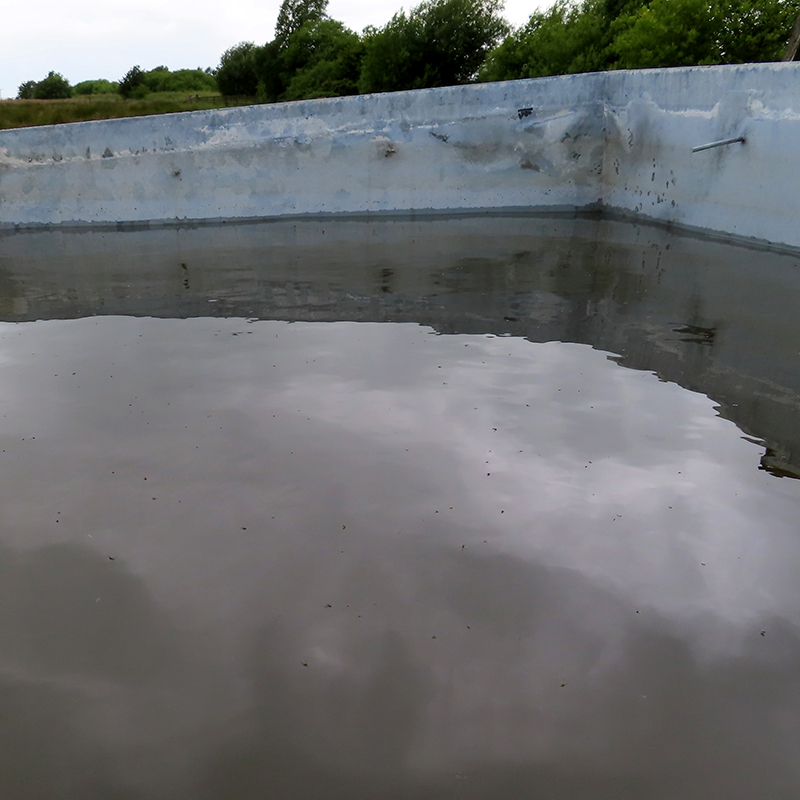
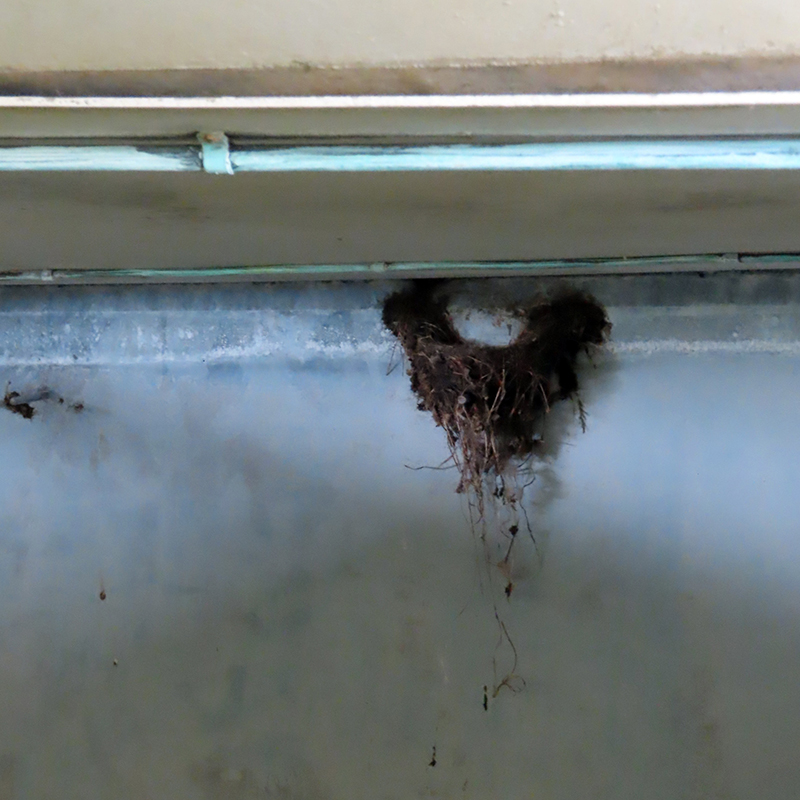
Many water tanks remain around Haverah Park, stripped of their purpose as water Cherenkov detectors they now reflect the sky in the rainfall they collect rather than record showers of particles from space.

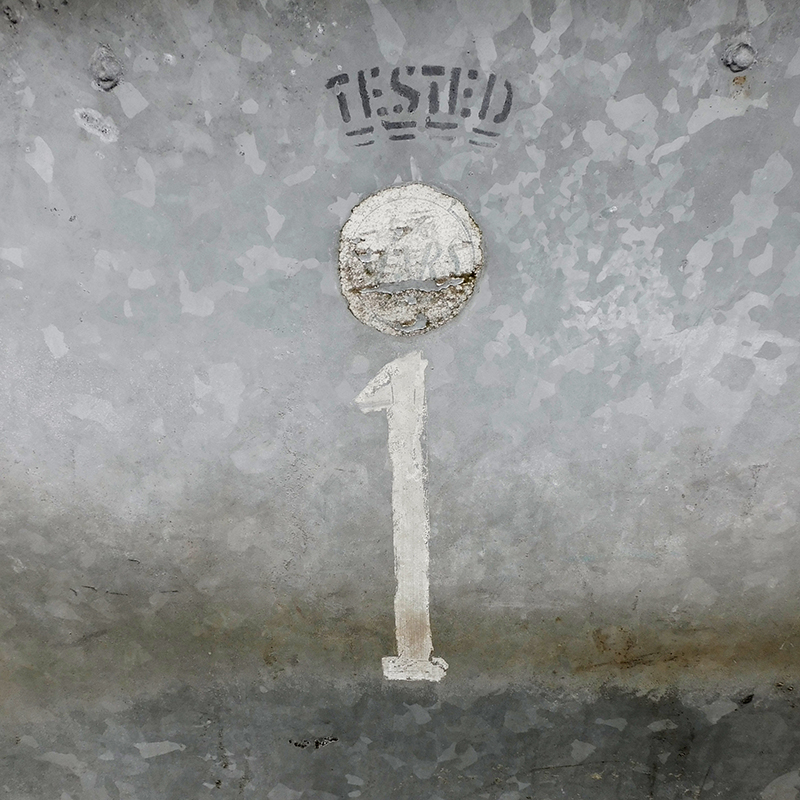
During operation, huts were built in groups of three, each with six large galvanised steel tanks lined with white plastic to diffuse the light and filled with local purified water. Each tank was monitored by extremely sensitive photon detectors which recorded the Cherenkov light emitted as particles passed through the water. At the end of the large array experiment, one of the detectors was opened, and the water was found to be crystal clear and good enough to drink. The proof that water could be kept bacteria-free in a sealed container for over 25 years gave confidence in using the same technology for a future larger cosmic ray detector array to be developed.

Haverah Park was once one of the largest extensive air shower arrays in the world, with an area of 12 km2, but in the end, it just wasn’t big enough.

When Alan Watson and Jim Cronin proposed building a new 3000 km2 shower array, the question from funders was, ‘why do you want to make the array so large?’. The answer is, of course, to discover those known and unknown unknowns, but funders don’t usually like unpredictable outcomes. Luckily their plea was bolstered by the Fly’s Eye Cosmic Ray Detector Array out in the Utah Desert recording the Oh-My-God particle in 1991, it’s energy was 40 million times greater than that of any particles ever produced in any terrestrial particle accelerator. This and other evidence of extremely high energy particles sparked interest in the field of astrophysics and validated the discovery of similar particles at Haverah Park, which had not been taken seriously at the time. This ambitious proposal gained momentum during the 1990s to become the Pierre Auger Observatory in Argentina, with the detector design developed from the water Cherenkov tanks so successfully operated at Haverah Park. The huts here may be in ruins, but their legacy lives on at the world’s largest extensive air shower detector array, which is edging closer to answer the question ‘Where do ultra-high-energy cosmic rays come from?’
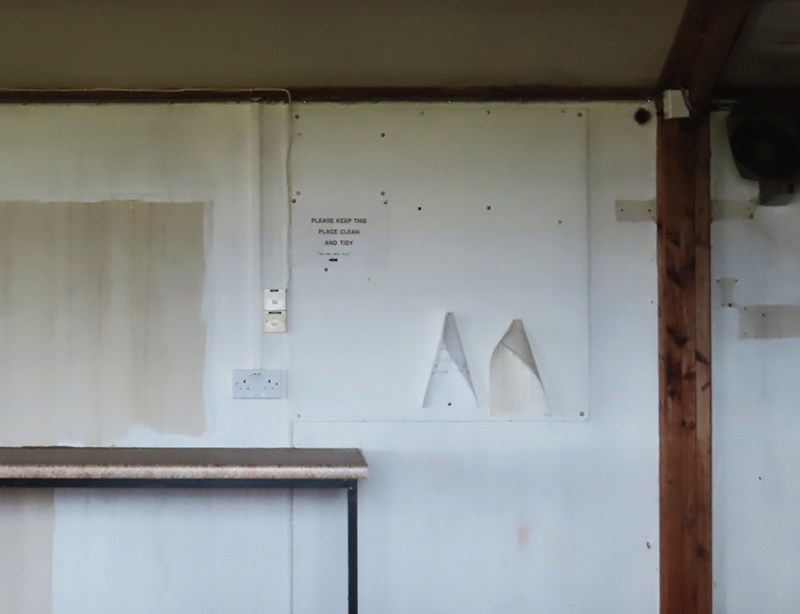
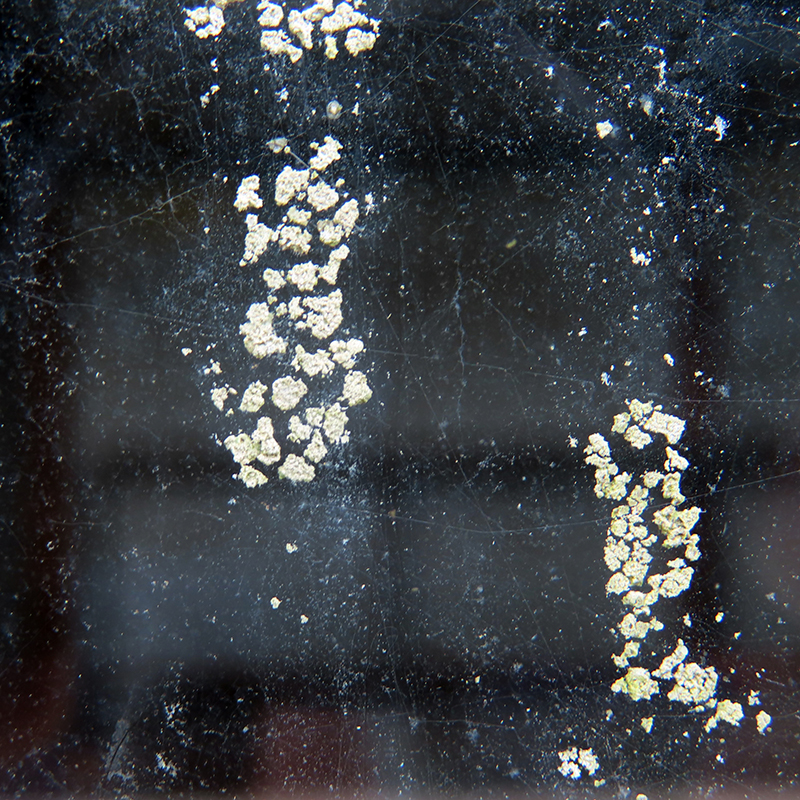
I am looking forward to developing work responding to the legacy of the Haverah Park experiment and building on my experience of creating The Absolute Hut (of absolute potential) New surfaces to explore, more moss, and also lichens here.

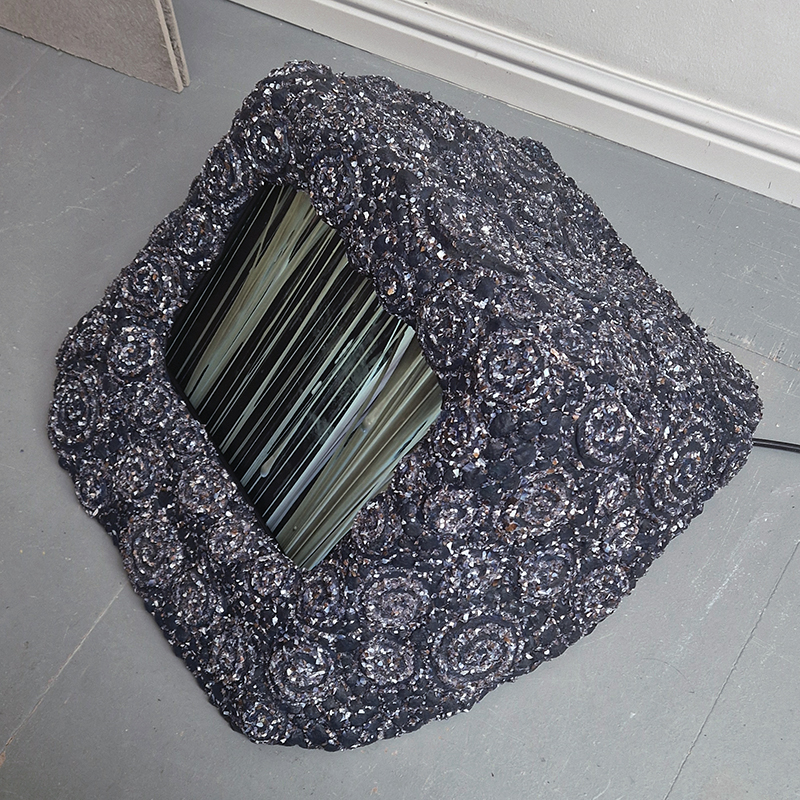
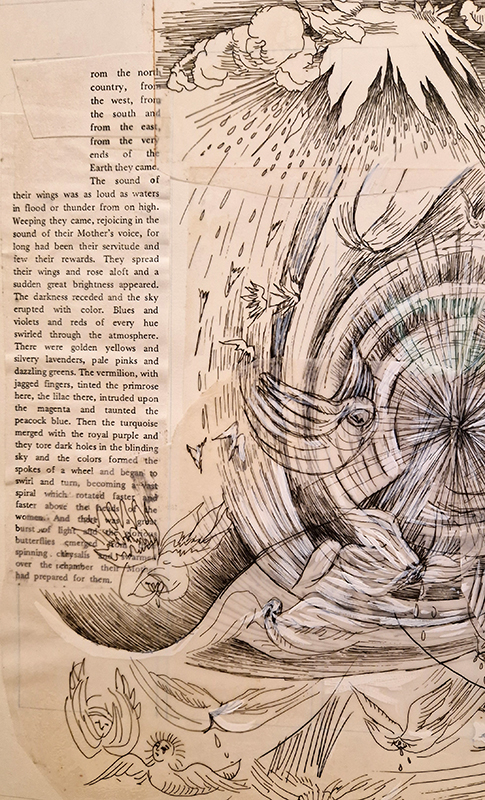
‘The Belly of a Rock’ video has waited a long time for its crusted shell. A hybrid between rock, mollusc, and technology inspired by the chemical conversations and urge to create described by Italo Calvino in his story ‘The Spiral’. We don’t always know what we are creating. Within ‘the belly’ surfaces slide and scrape along lines of fissure, distended innards ooze and rocks moan as they are distorted by untold pressure. The turbulent spiralling of the core births rock and lifeforms acted upon by the drag of the oscillating magnetic field.  
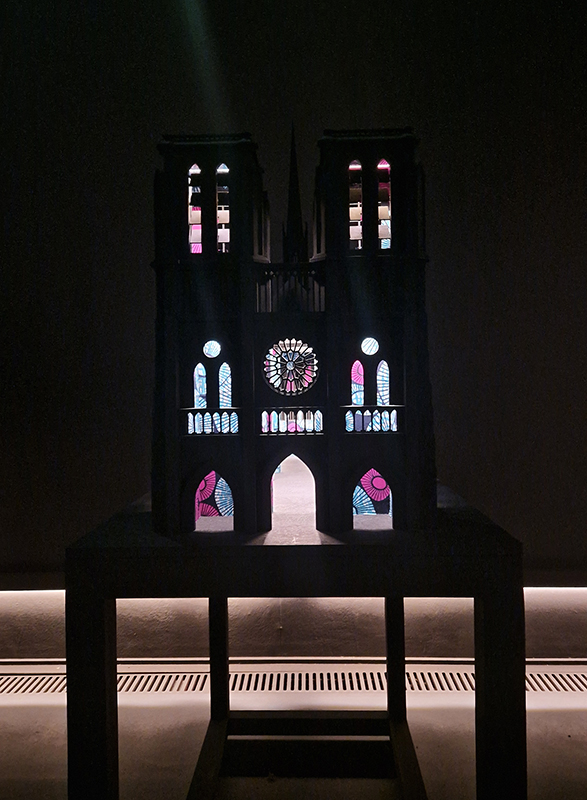
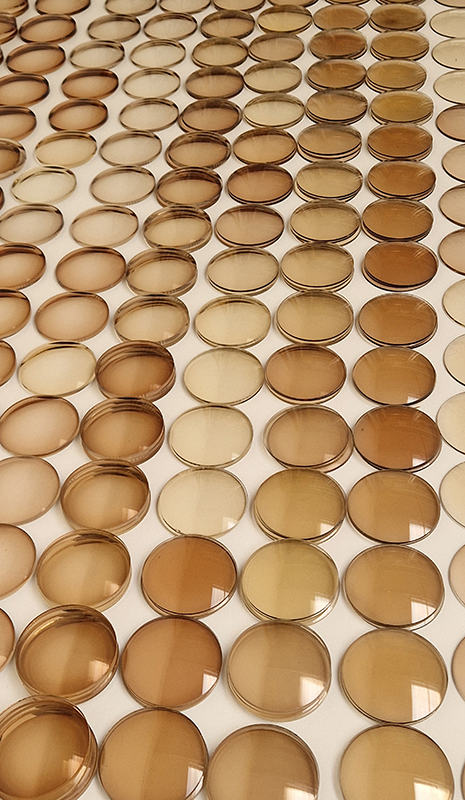
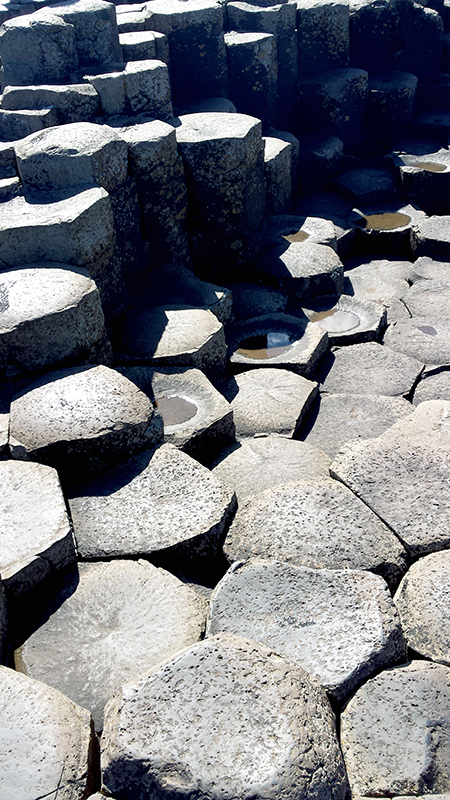
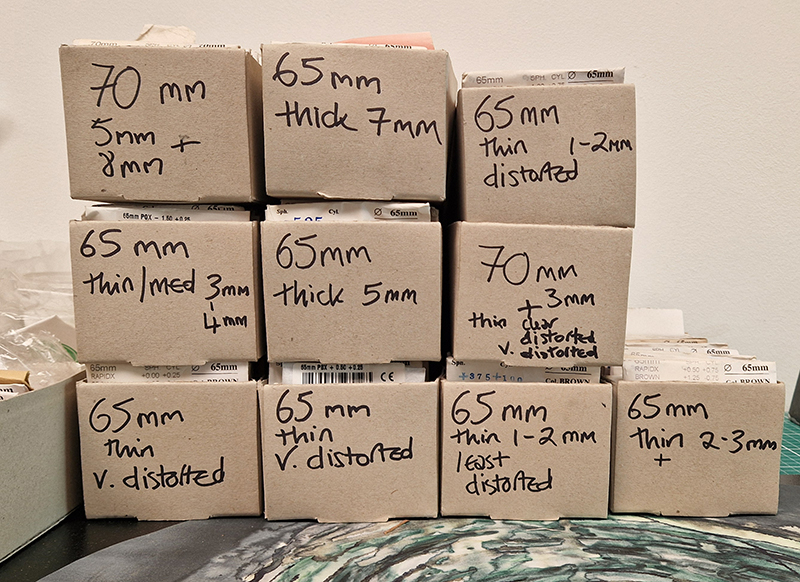
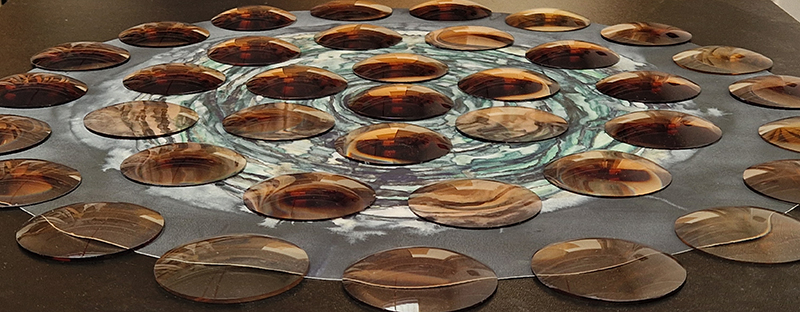
I have acquired a large number of photochromic optical lenses. These I have sorted by diameter, thickness and distortion. Initial thoughts about their use include using them as petri dishes to grow crystals which are embedded into small concrete hexagonal pillars of differing heights with reference to the geology of giants causeway. Using them to create composite windows into a new hut structure filled with video projections referencing the fly’s eye cosmic detector array.

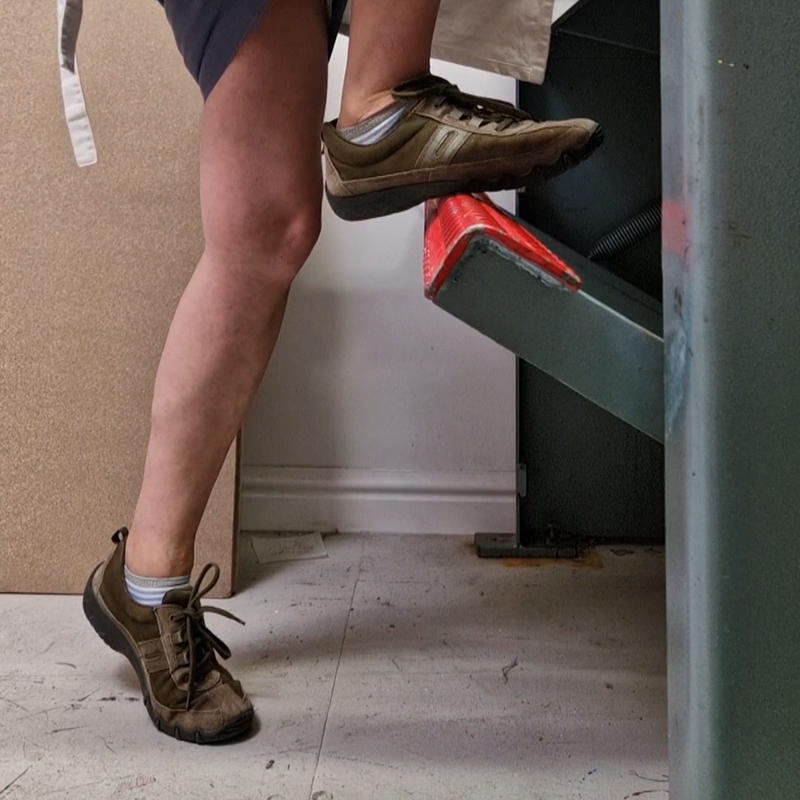
A good workout on the guillotine making 201 cuts in copper sheet in preparation for a new concrete tablet in the Instruments of the Anemoi sculpture series.

Gallery and other outings:

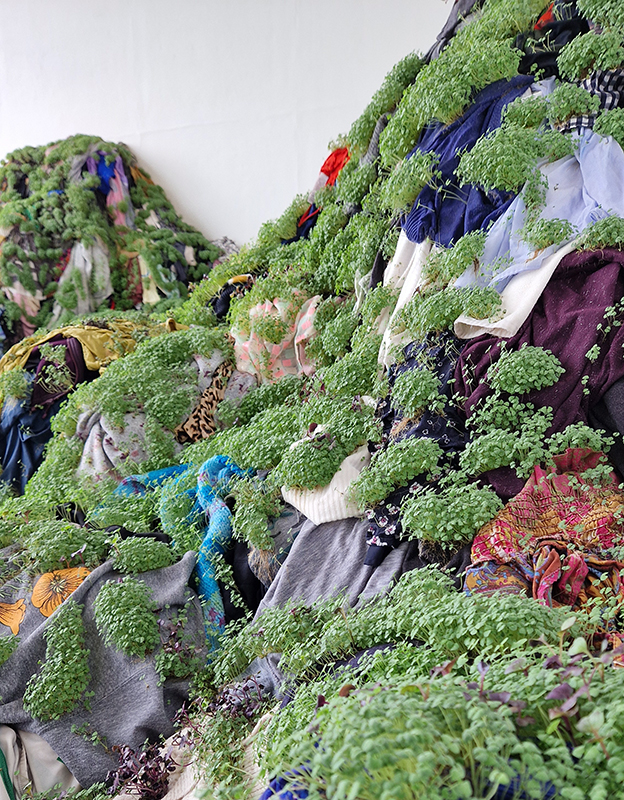
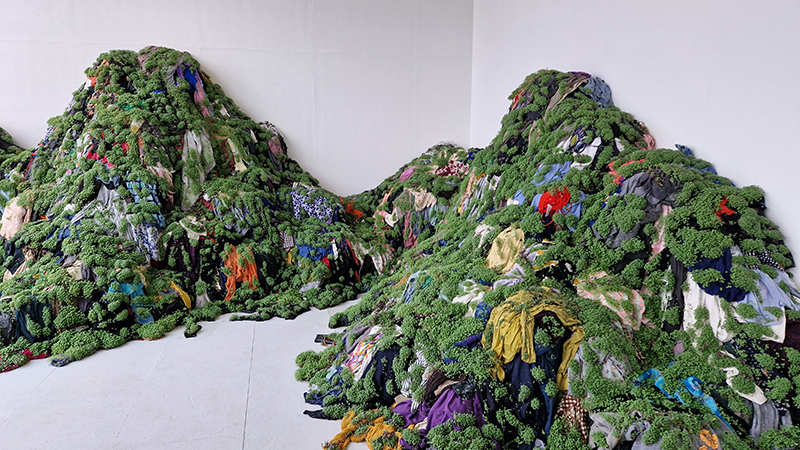
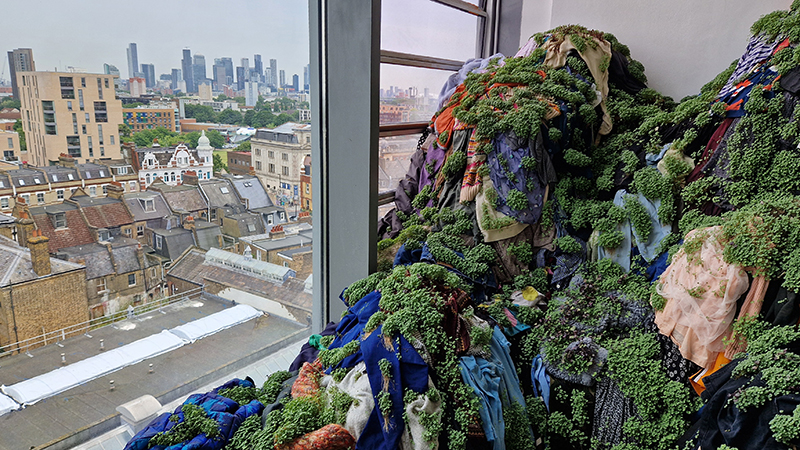
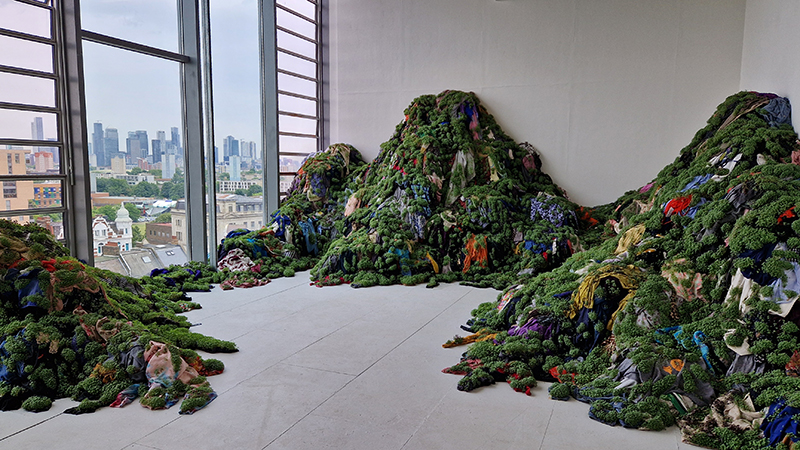
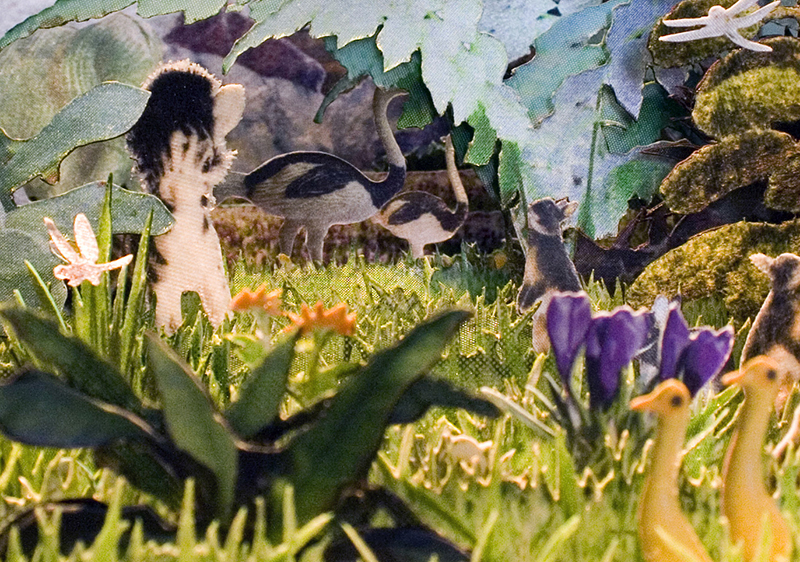
Beverley Duckworth’s installation Surplus at Goldsmiths MFA final show. Beverley’s work is grown through a diligent process of care. Found materials are literally given new life in the seeds which are embedded into them, which then transform and colour them. The installation includes an intermittent sound element of recordings of the melody played by waste trucks in Taiwan to call people to bring out their rubbish.

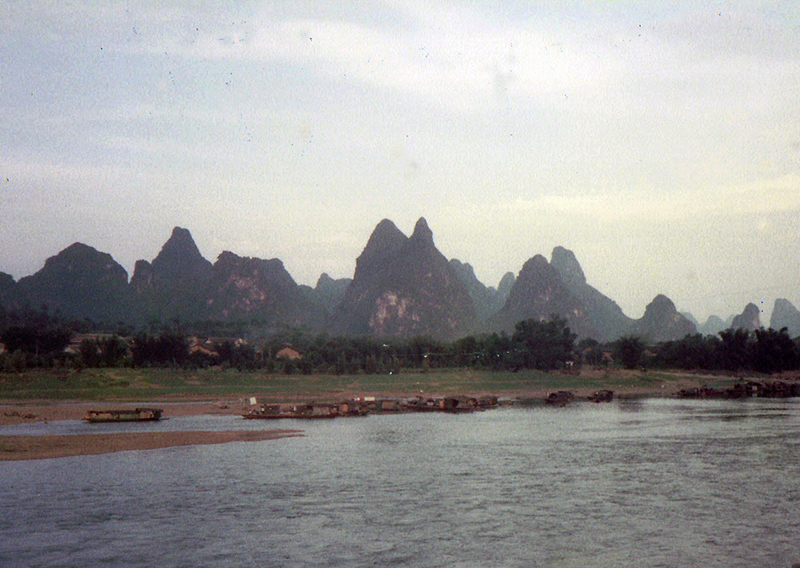
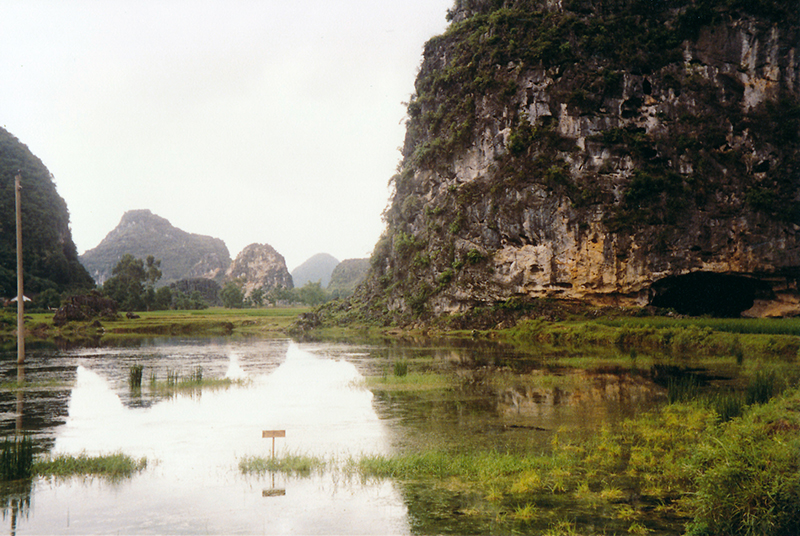
Apparently I wasn’t the first person to be struck by similarities to the landscape of Yangshuo near Guilin China. I visited in 1984 and think it is no longer a quiet little village.

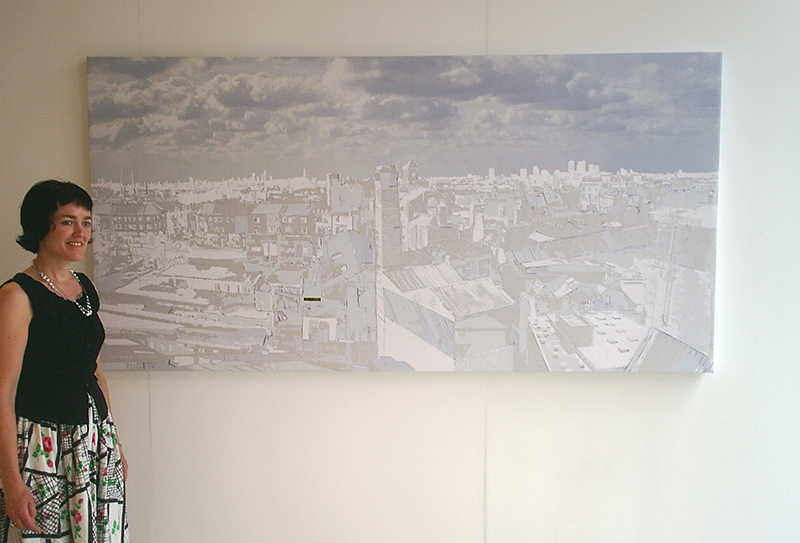
It was the first time I had been back inside the Ben Pimlott building at Goldsmiths since by own graduation, a scary twenty years ago. The building was brand new then and the views with little visible green fed into my installation Re:construction – a large screen print with tiny viewing hole to a tiny oasis amidst the grey, albeit a synthetic one.

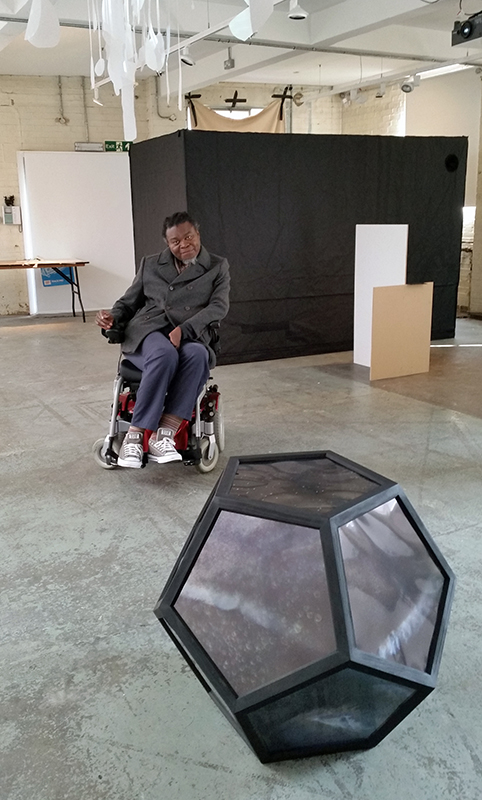
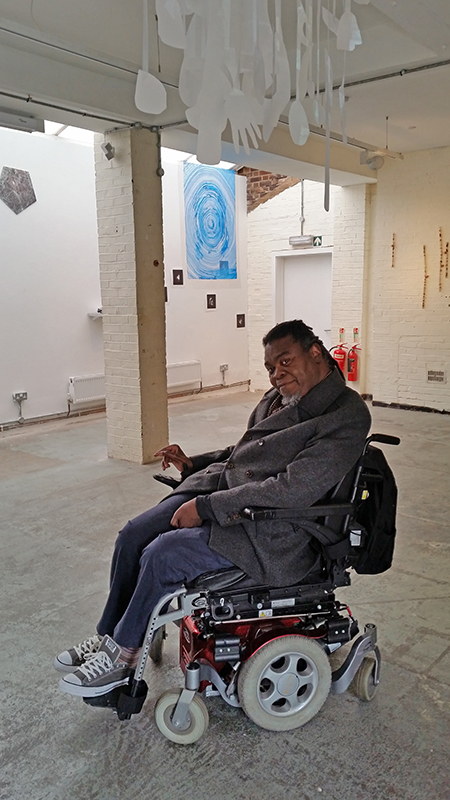
Yinka Shonibare Suspended States at Serpentine South. Horrors of war and colonialism are filed under dazzling colour, birds on the brink of extinction stare in plea or accusation, beacons of light in the darkness come from miniature replicas of sanctuaries.

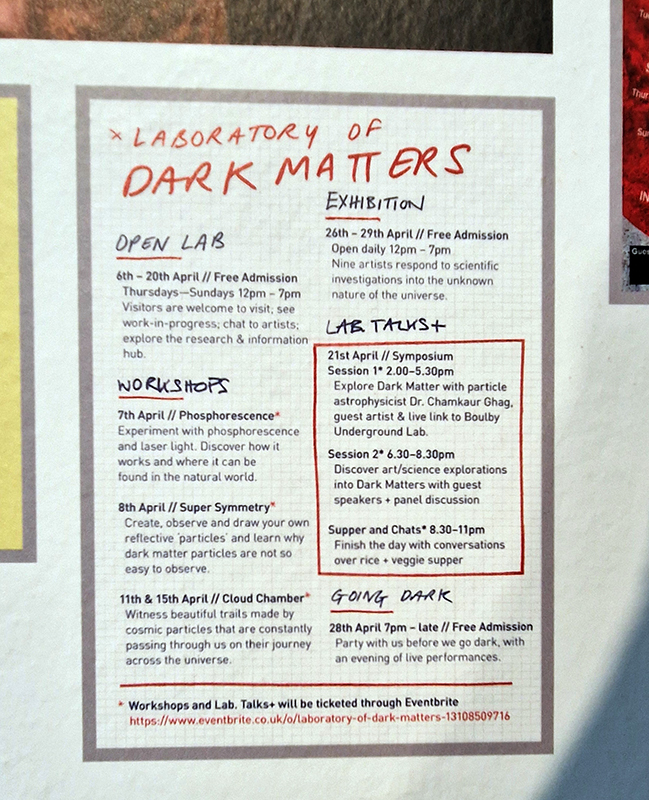
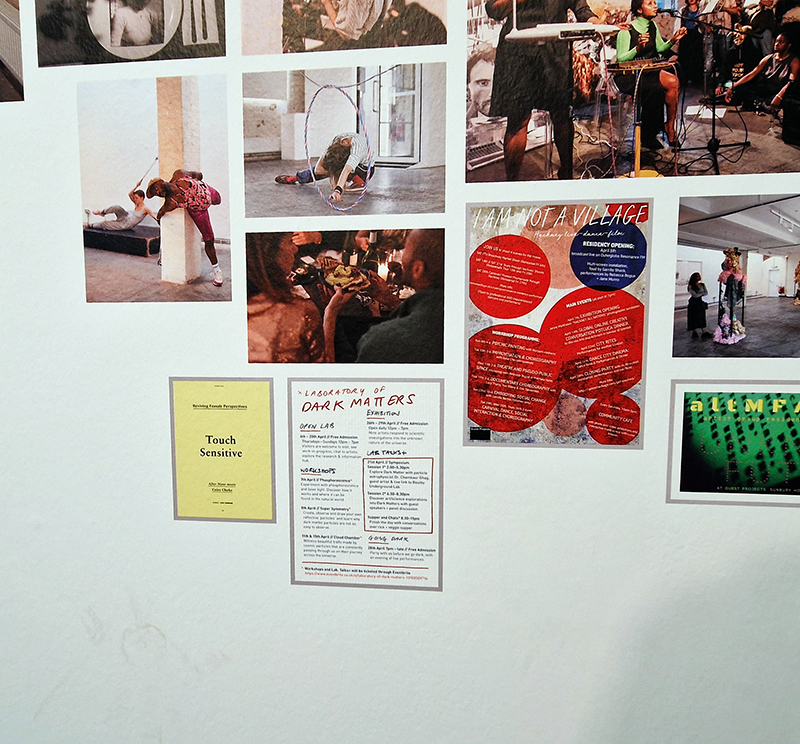
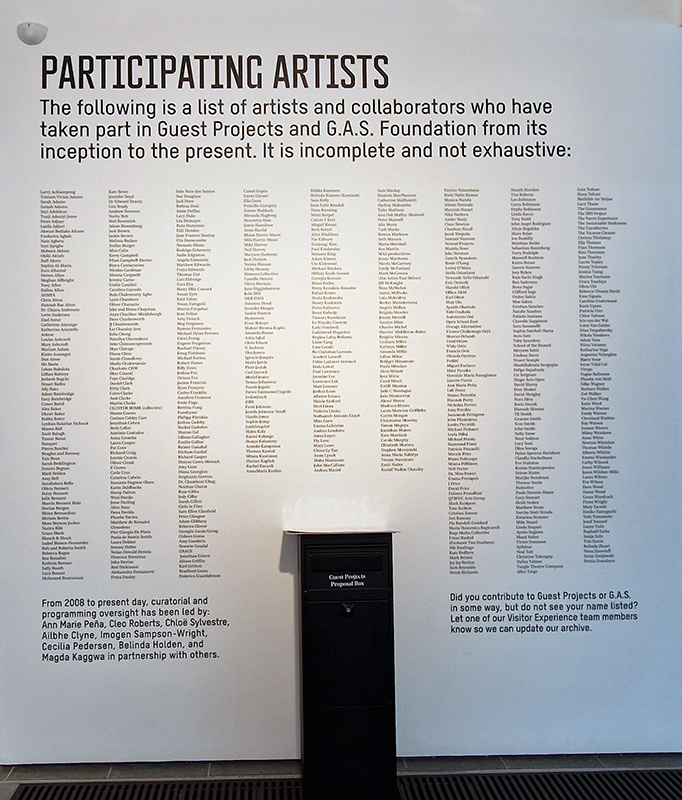
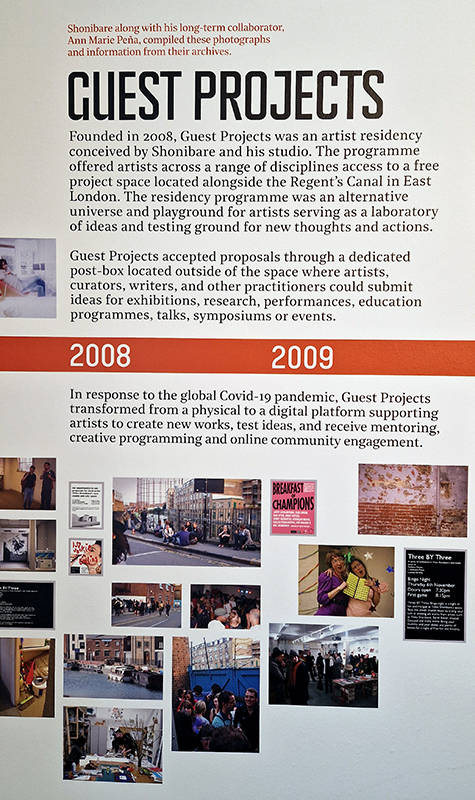
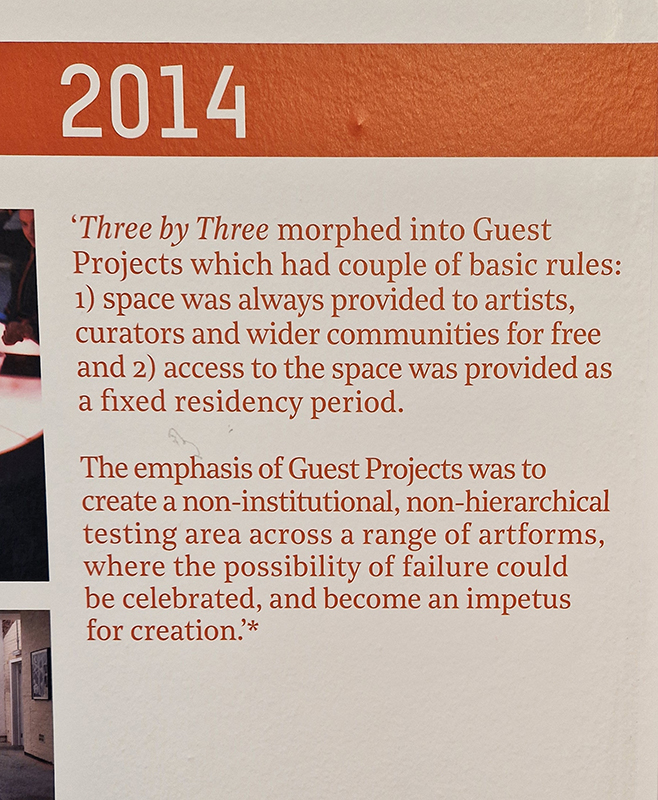
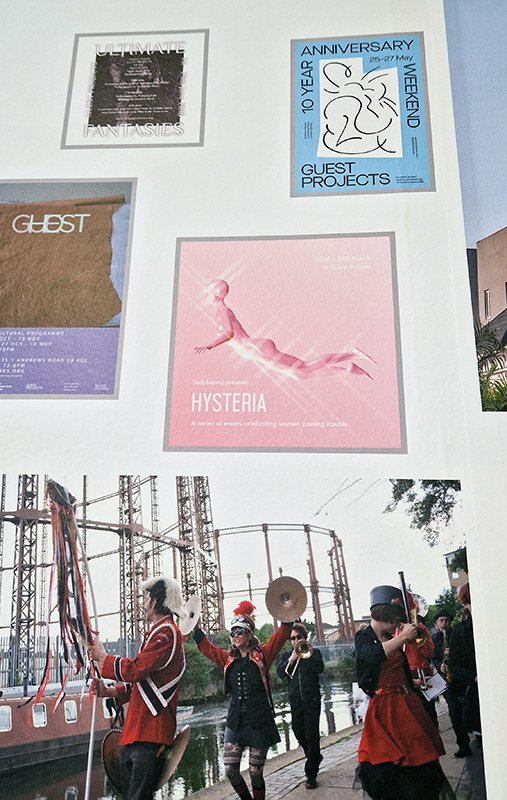
Yinka’s socially engaged inclusive practice spills over into real help for artists and communities. The exhibition celebrates Guest Projects and G.A.S. Foundation in Lagos. Guest Projects is such a generous idea and I have been so lucky to benefit from it with the project Laboratory of Dark Matters

Being awarded a month’s residency at Guest Projects was crucial to the success of Laboratory of Dark Matters as a site for developing ideas and subsequently touring the project. Wonderful to meet Yinka and also to be part of the selection committee for the next round of projects.

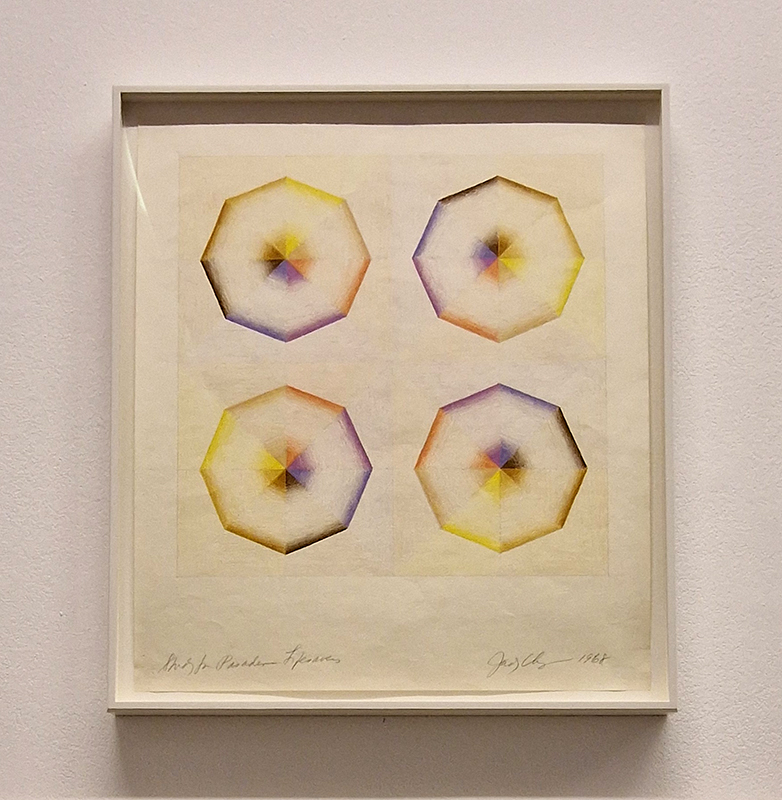
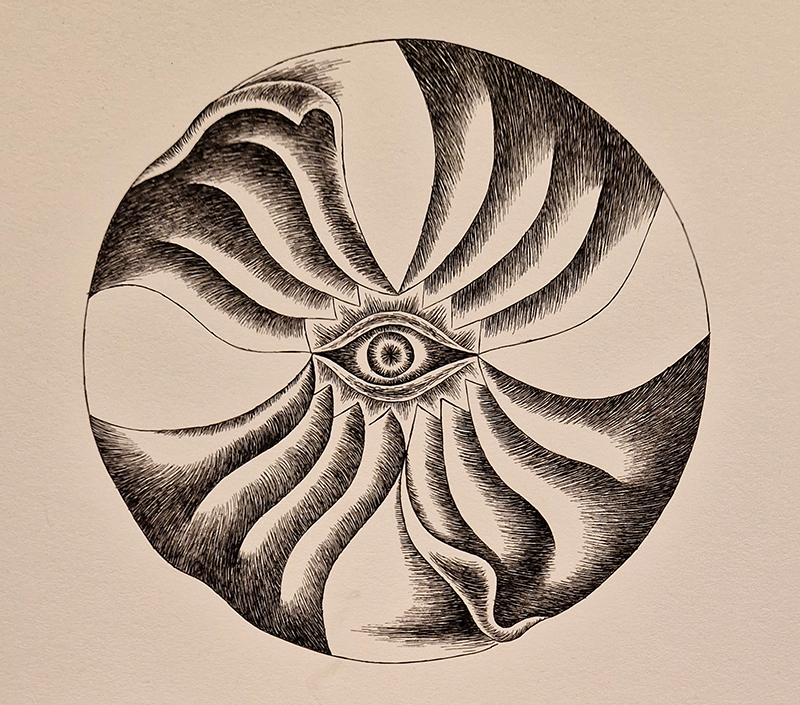
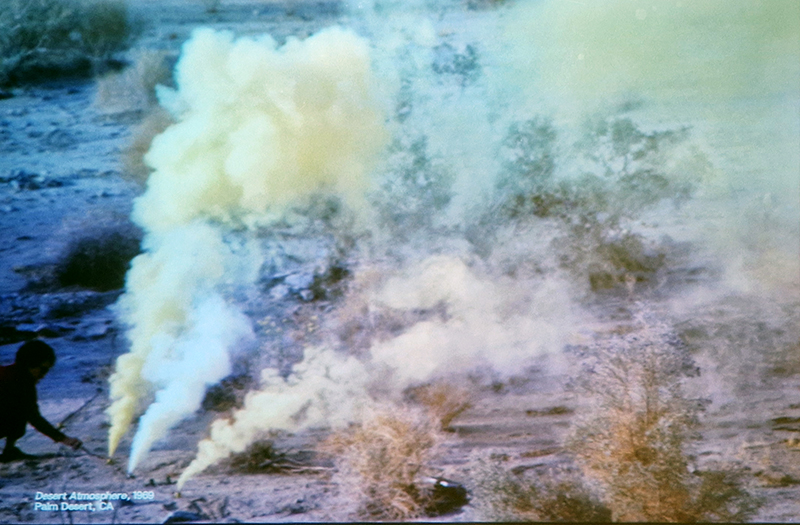
Judy Chicago Revelations at Serpentine North. The highlight of this show is the video documenting The Dinner Party (1974-79) installation and the preparatory drawings and sample plate. What a shame the actual installation wasn’t here, I will have to visit the Brooklyn Museum, New York sometime to see it. The research, collaborations, crafts and designs that went into creating it was phenomenal.

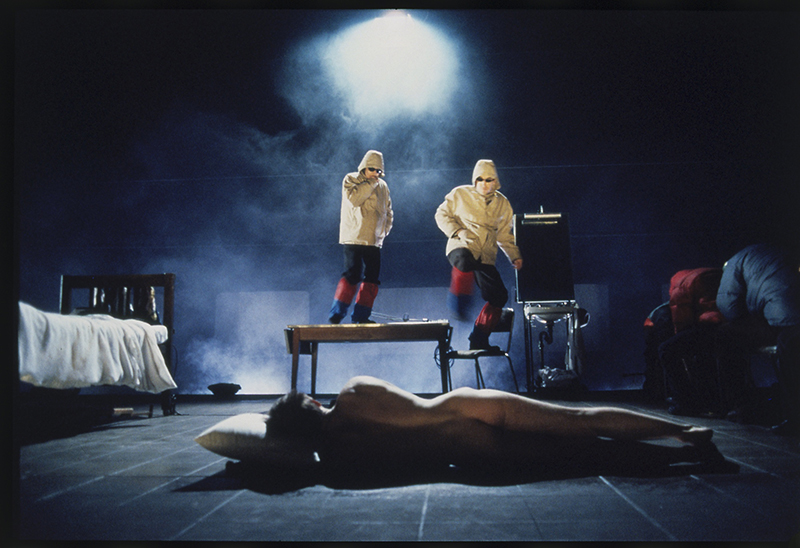
Saw Complicité’s excellent Mnemonic at The National Theatre, 25 years after first seeing it at Riverside Studios. ‘A body is found in the ice, and a woman is looking for her father while a man searches for his lost lover. Mnemonic is as much about origins as it is about memory, and remembering what is lost. Mnemonic asks us: what is our place in the natural world? How have human relationships with the environment shaped patterns of migration? Who are we, and where do we come from? ‘

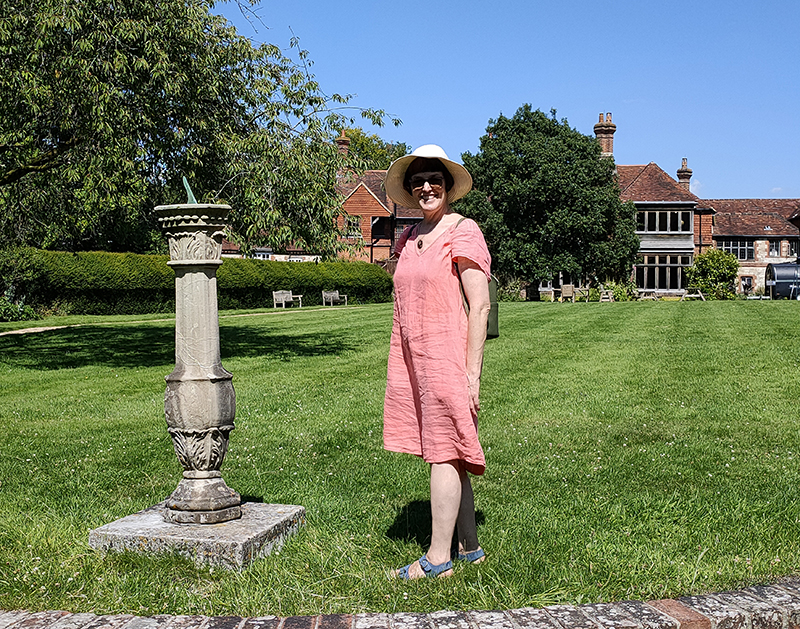
Visited the delightful mellow brick country home and extensive gardens of pioneering naturalist Gilbert White at Selborne. His book ‘The Natural History of Selborne’ (1789) has never been out of print since it was published more than 230 years ago. He was brought to many people’s attention, including mine, during the pandemic and lockdowns of 2020 when writer Melissa Harrison included his diary readings in her podcast The Stubborn Light of Things.

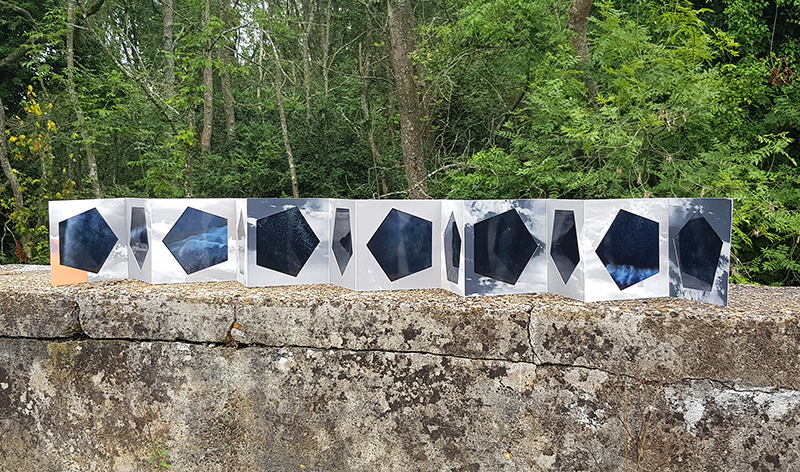
Delighted to have both my artists books In/Out and Unbound accepted into the Art, Science and Creativity exhibition curated by Liverpool Book Art at Liverpool Central Library in the autumn. The starting point for this exhibition is a quote from Albert Einstein:

“Where the world ceases to be a stage for personal hopes, aspirations, and desires, and we stand before it as free creatures, full of admirations, questions and contemplation, we enter the realm of art and science. If we describe what we see and experience in the language of logic, we do science; if we convey connections through forms that are inaccessible to the rational mind, but intuitively recognisable as making sense, we do art.”

Open Studios 2024 – showing the two channel video installation Radical Pair in my studio.

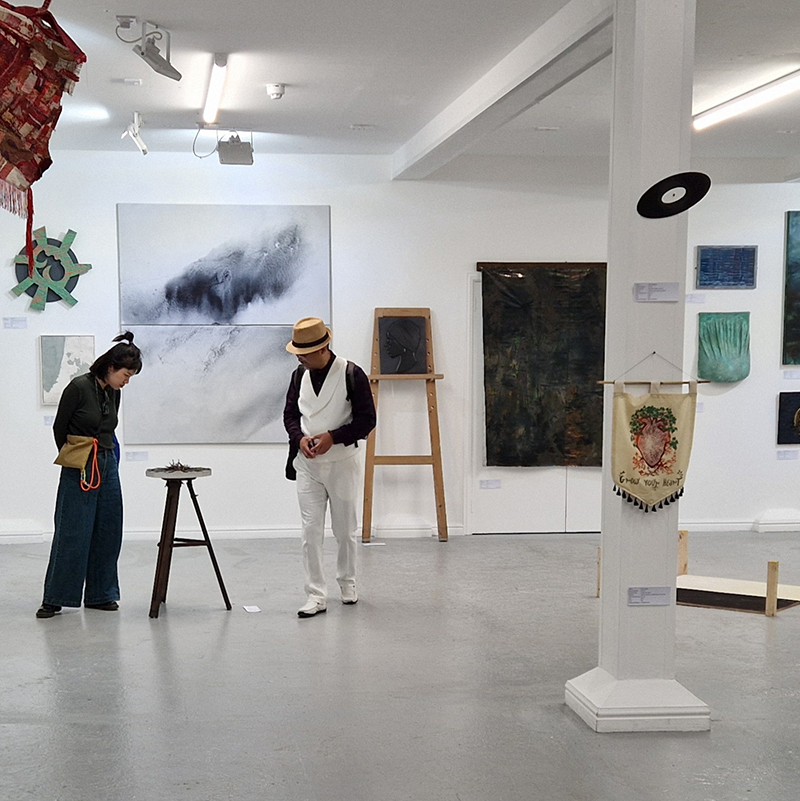
In Thames-side Studios Gallery showcase of studio holders works I presented one of the sculptures from the Instruments of the Anemoi series.

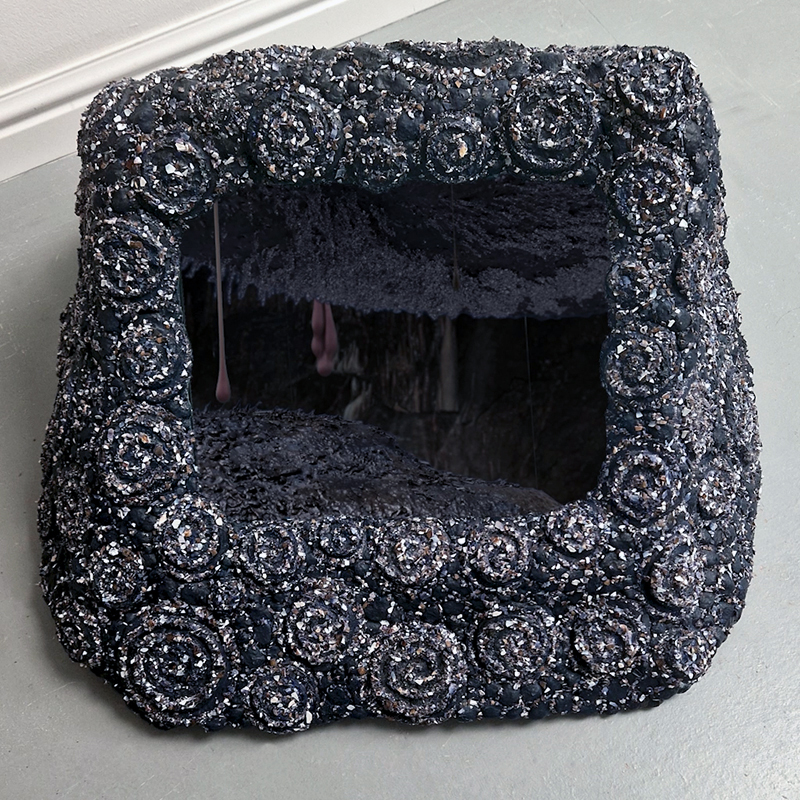
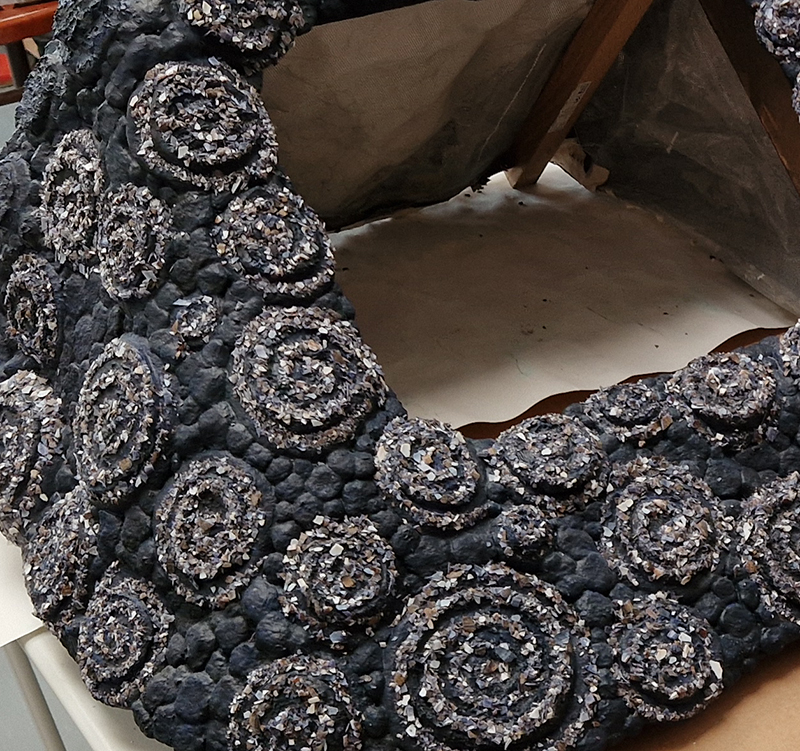
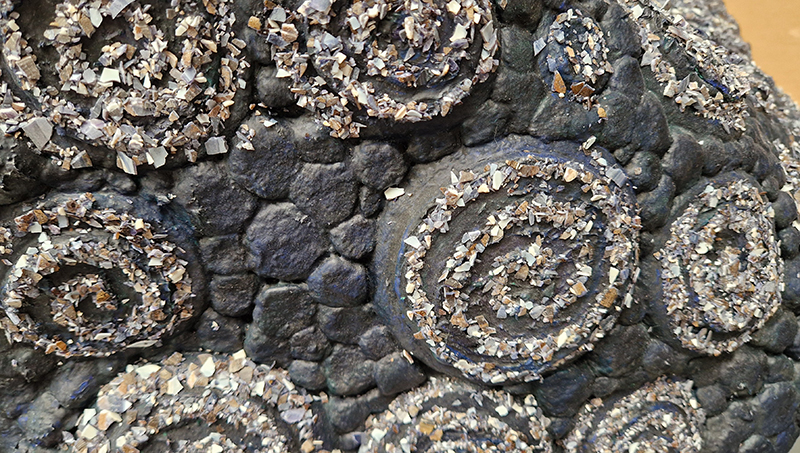
Work in progress on hybrid sculpture Belly of a Rock adding spirals of crushed mussel shells to the crusted casing that will house a monitor screen. Earth rotates faster at the Equator than it does at the poles causing spiral convection currents in the liquid iron outer core. Earth’s magnetic field is created in this swirling outer core where magnetism is about fifty times stronger than it is on the rocky surface of the Earth.

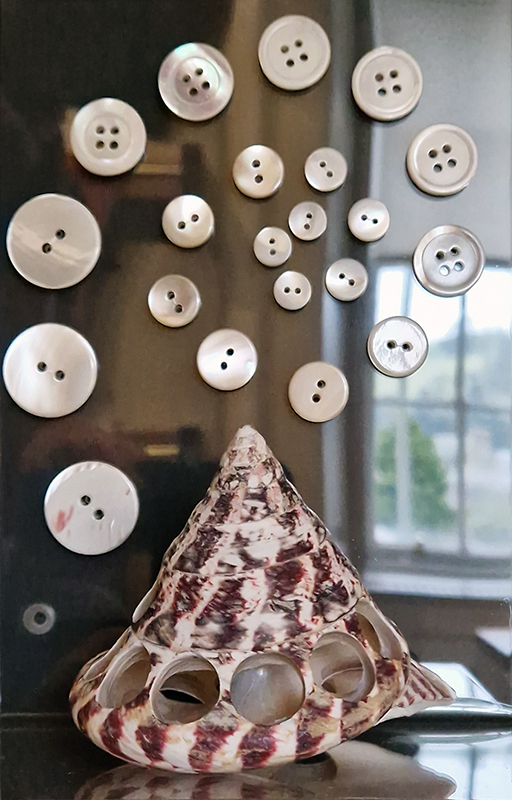
Trochus (sea snail) shell buttons seen at Borders Textile Towerhouse, Hawick. The buttons made from these molluscs found in warm waters are used for the Borders quality knitwear industry. Genuine shell can apparently be identified from imitation by touch, it always feels cool even in hot temperatures.

We do not yet know another form of life other than carbonaceous life. All life on Earth uses the same biochemistry of carbon.

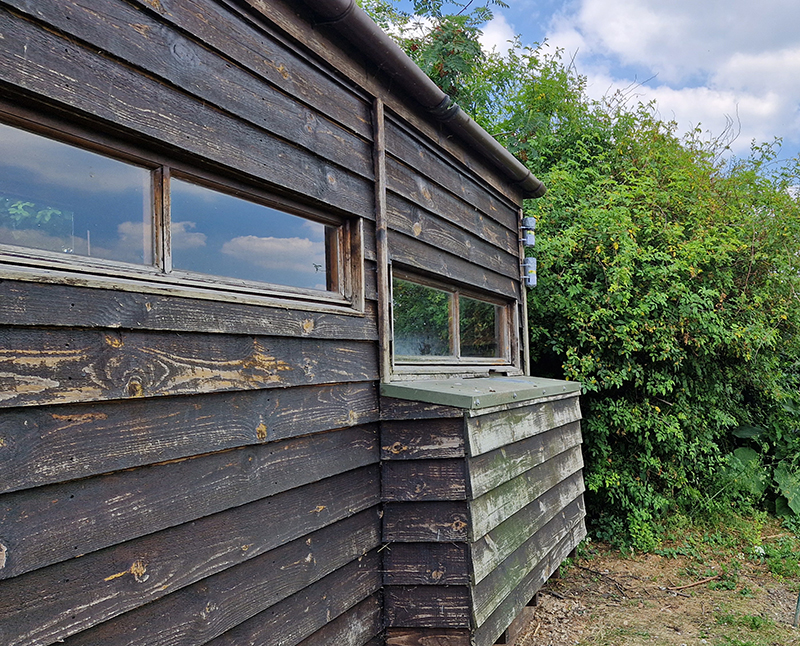
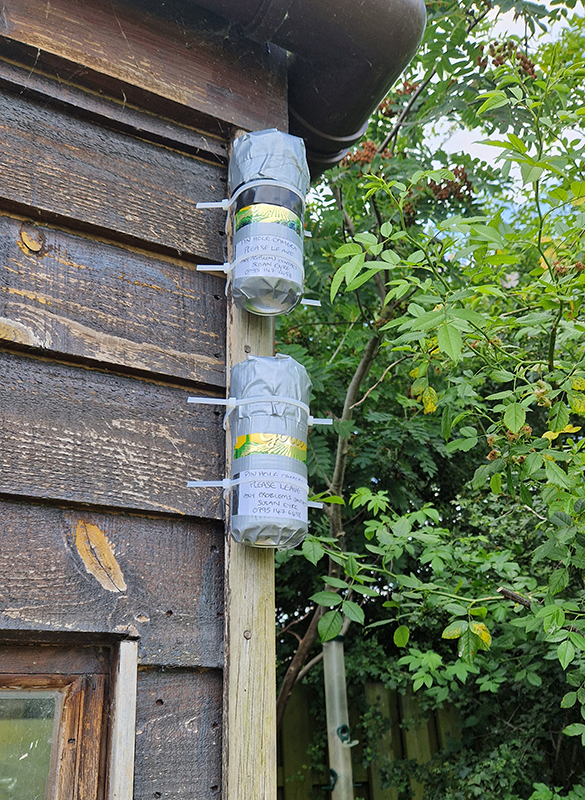
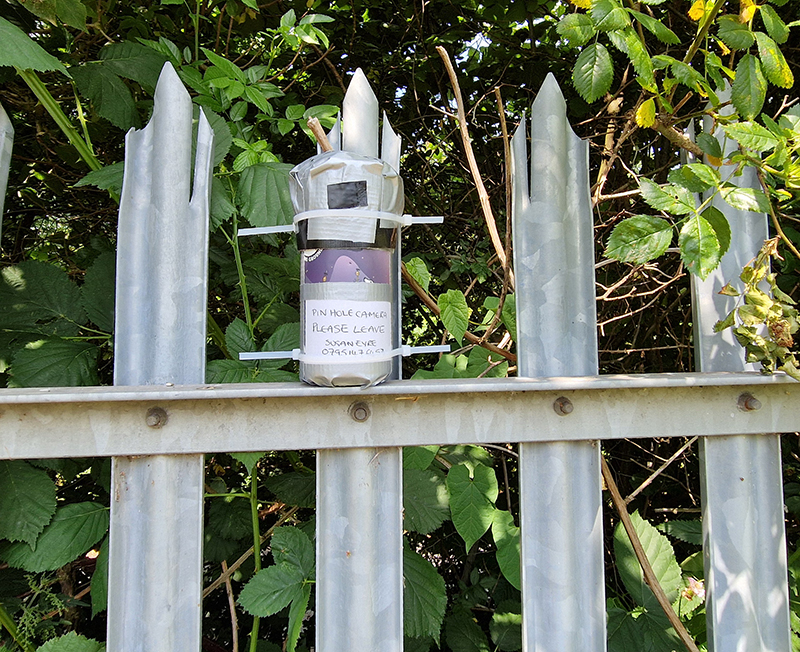
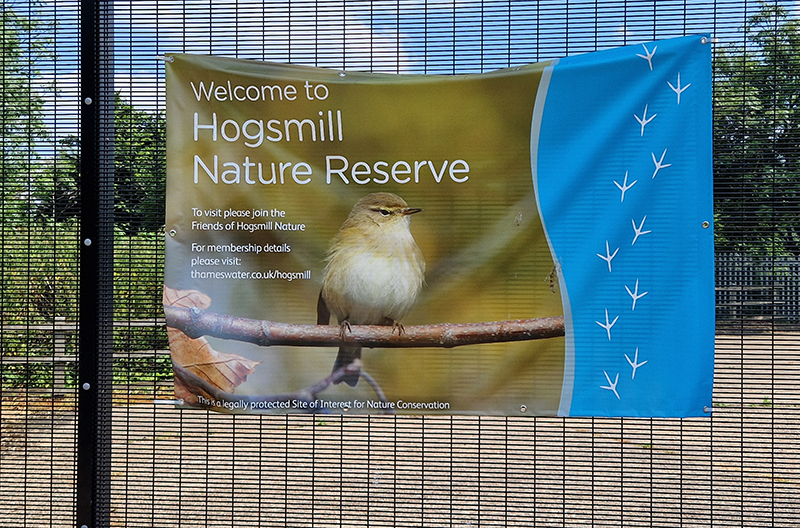
Reminded by the solstice, I finally installed some solargraph pin hole cameras at Hogsmill Nature Reserve. I have had the tins prepared for a long while so not sure if they will work. The lagoon was worryingly green.

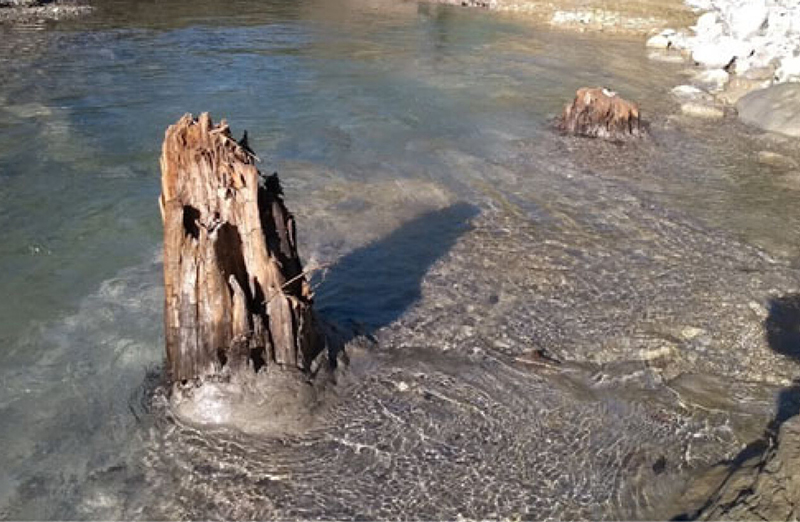
A recent Royal Society research article reveals that extreme solar events such as solar flares and coronal mass ejections can release bursts of energetic particles towards Earth which are found preserved in the rings of partially fossilized trees as huge spikes in carbon-14. Through the individual analysis of ancient tree rings from subfossils found in the Drouzet River in the Southern French Alps, scientists discovered evidence of a giant solar storm dated to around 14,300 years ago. This event appears to have been enormously more powerful than the Carrington Event of 1859 when fires broke out in telegraph offices.

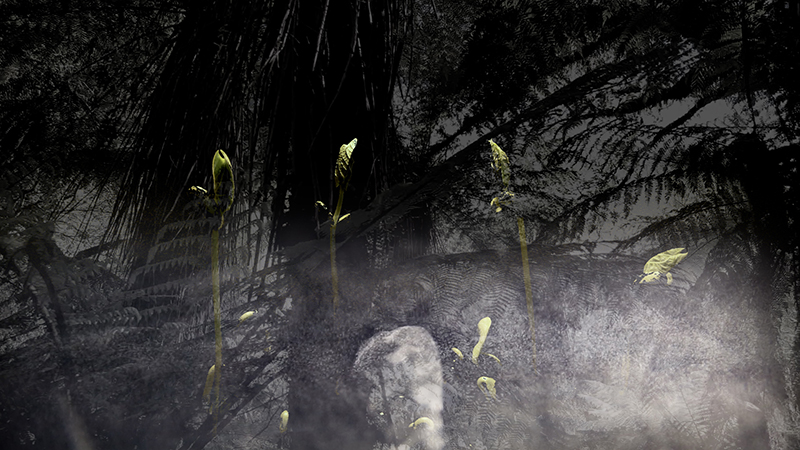
Radiocarbon is produced in the upper atmosphere as cosmic rays collide with particles in the atmosphere. It is absorbed by plants during photosynthesis and enters the food chain of organisms and because it decays at a known rate, scientists can use it to determine when the organism died using carbon dating processes. Solar storms tend to deflect the number of energetic particles coming from outer space but a violent storm will create much more radioactive carbon-14 which will subsequently be absorbed by life on Earth. Radiocarbon dating is not exact because the atmospheric 14C/12C ratio varies due to cosmic ray activity, nuclear explosions and solar activity. Still from Cosmic Chiasmus: crossing the universe.

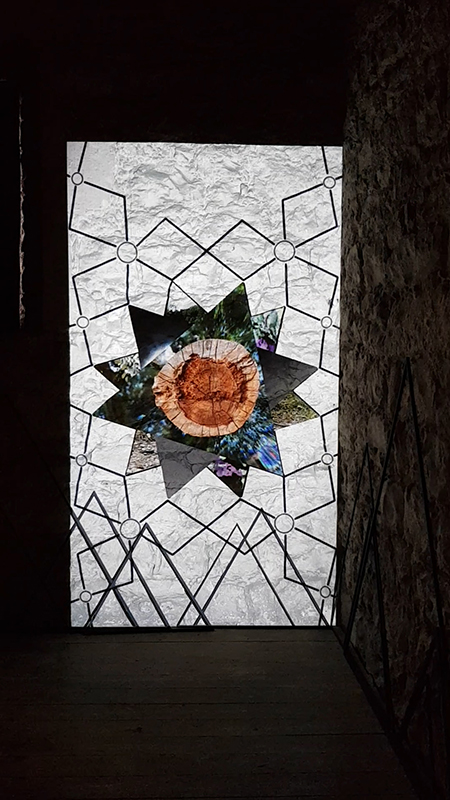
For scientists using the radiocarbon dating technique it is important to know the carbon-12 content of the contemporary atmosphere. A calibration curve of carbon-12 in the atmosphere is provided by an international body using many archive records but the most precise and accurate are based on dendrochronologically dated tree-ring series. Stills from Time Crystals.

Other evidence of this major radiation storm 14,300 years ago is also seen in ice cores having a higher concentration of an isotope of beryllium extracted from Greenland. These incredibly powerful geomagnetic storms are known as Miyake events. Nine Miyake events have been identified in the last 15,000 years, the most recent being around 774 CE.

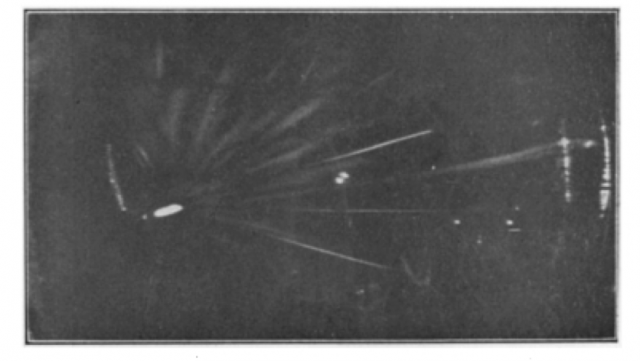
Radioactivity was discovered by Henri Becquerel while working on a series of experiments on phosphorescent materials in 1896. Cosmic Rays were discovered by balloon enthusiast Victor Hess in August 1912. He went almost 5.5km up in a hydrogen filled balloon with a balloonist and a meteorologist equipped with an electrometer which could read the level of radiation. This expedition was to determine the source of radiation which was bewildering scientists working on radiation such as Marie Curie who found some radiation registered on their equipment when they removed the source of radiation and even when instruments were shielded by a lead casing. C.T.R. Wilson was also baffled by apparent radiation seen in his cloud chamber, which he had developed to study atmospheric phenomena. One of the first images from Wilson’s cloud chamber –

A cloud chamber is a box containing a supersaturated vapor. As charged particles pass through, they ionize the vapor, which condenses to form droplets on the ions. The tracks of the particles become visible as trails of droplets, which can be photographed. In 1911 Wilson presented his first rough photographs of particle tracks at the Royal Society in London. In 1929 Hans Geiger and Walter Müller developed a gas filled ionization detector that registers individual charged particles and was ideal for studying high-energy cosmic rays. Bruno Rossi further developed the Geiger counter and demonstrated that the Earth’s magnetic field bends incoming charged particle showers. In 1936 Seth H. Neddermeyer and Carl D. Anderson discovered the Muon as most common cosmic particle in cosmic ray showers. In 1938 Pierre Auger observed showers with energies of 1015 eV – 10 million times higher than any known before.

In 1947 Patrick Blackett presented a paper in which he suggested that Pierre Auger emitted by high-energy cosmic rays contributed to the light in the night sky. In September 1952 a simple experiment by Bill Galbraith and John Jelley allowed the first observation of Cherenkov light produced by cosmic rays passing through the atmosphere. By the end of the decade, observation of Cherenkov radiation in the atmosphere had been developed further as a means for studying cosmic rays. I will be looking further at Cherenkov radiation in the coming weeks as I begin research on the historical site of Haverah Park in North Yorkshire, the site of an extensive cosmic ray air shower detection array which led the world for two decades in studies of cosmic rays of the highest energies. Haverah Park array used water Cherenkov detectors. I will also be looking at the cosmic ray detection innovations of Astronomer Royal Sir Arnold Wolfendale

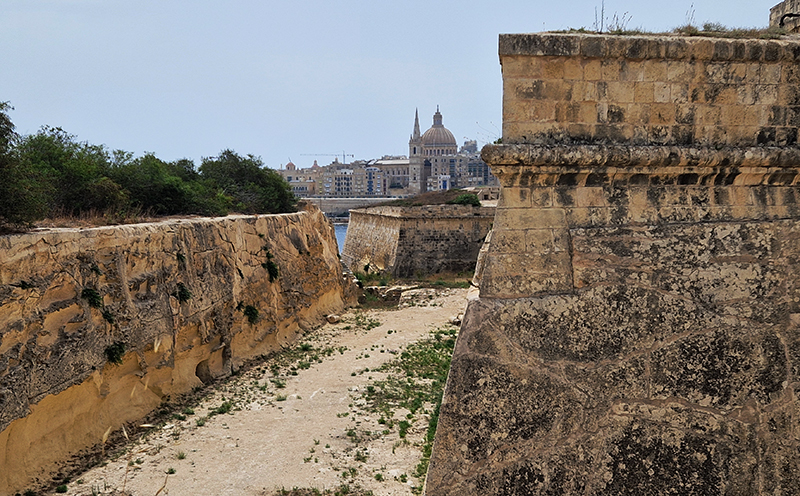
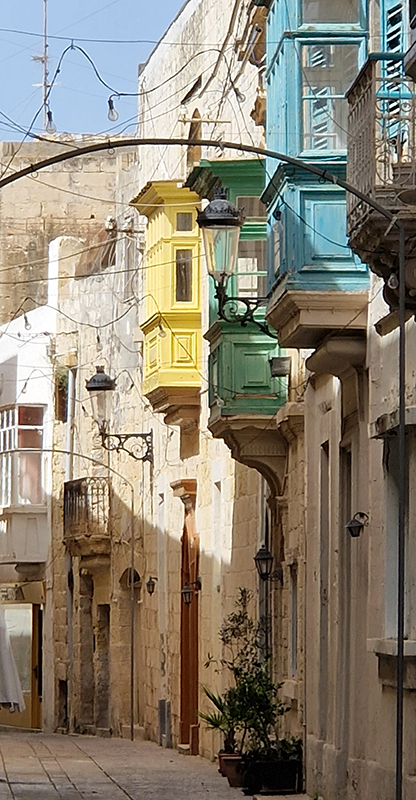
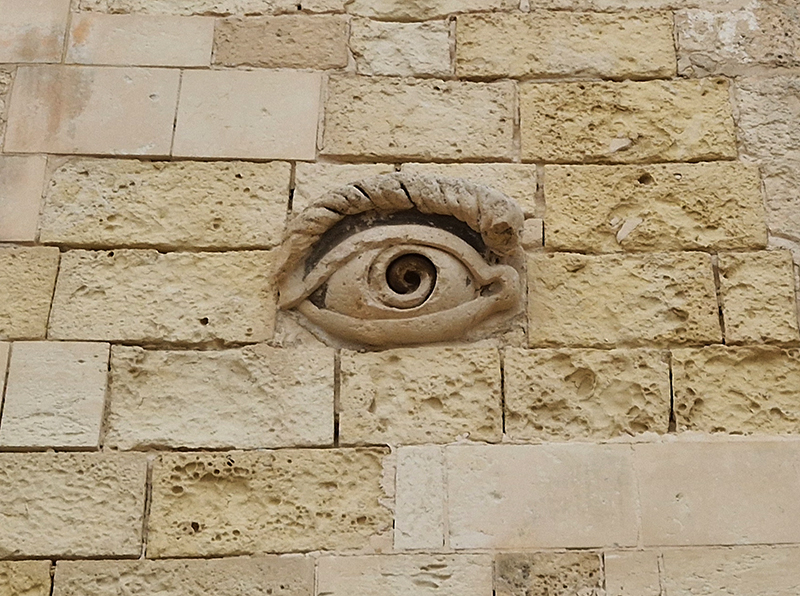
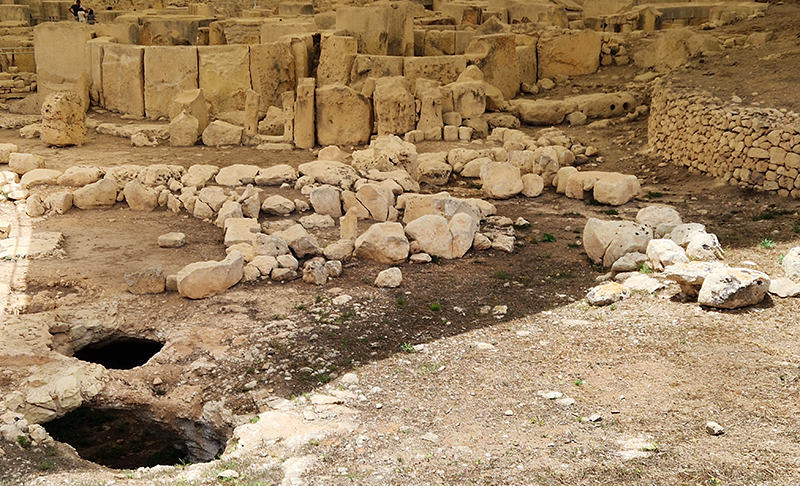
A visit to Malta. Architecturally beautiful, bathed in golden light, the palimpsest of Malta’s history is fascinating to uncover. 20,000 years ago after the last Ice Age, the sea level in the Mediterranean was 130 metres lower than today and Malta was one land mass connected to Sicily.

Due to its geographic location Malta was a contested site for naval and trade powers for hundreds of years, yet before the first empire builders arrived there is no evidence of conflict between communities found at the archaeological sites for the first 5000 years of settlement.

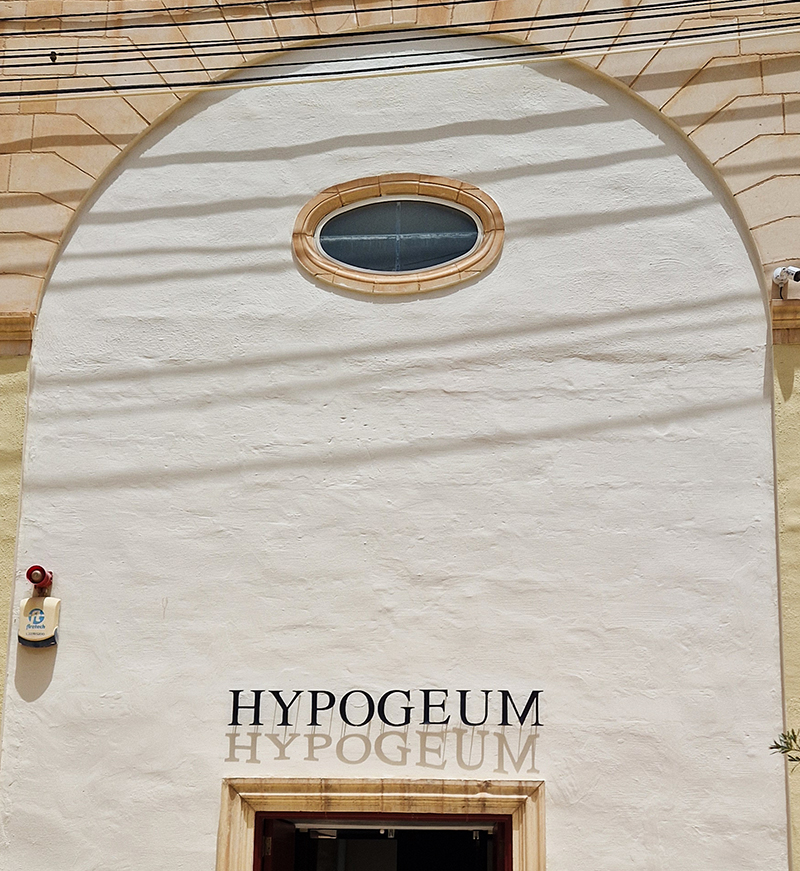
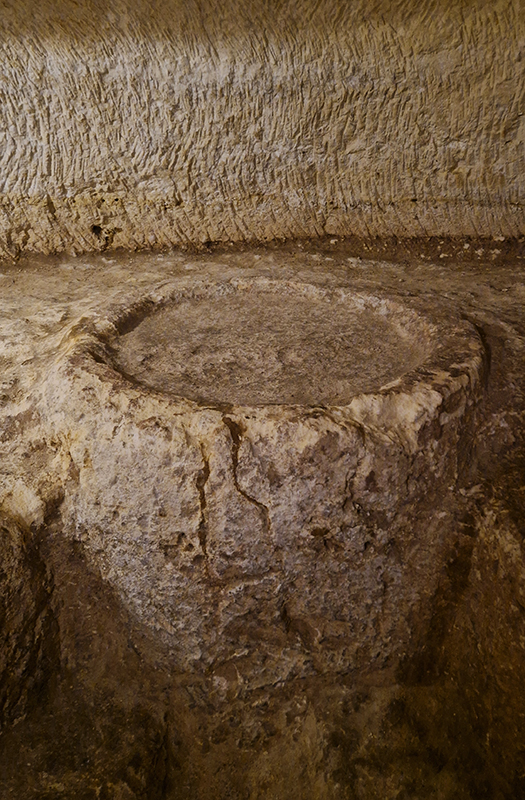
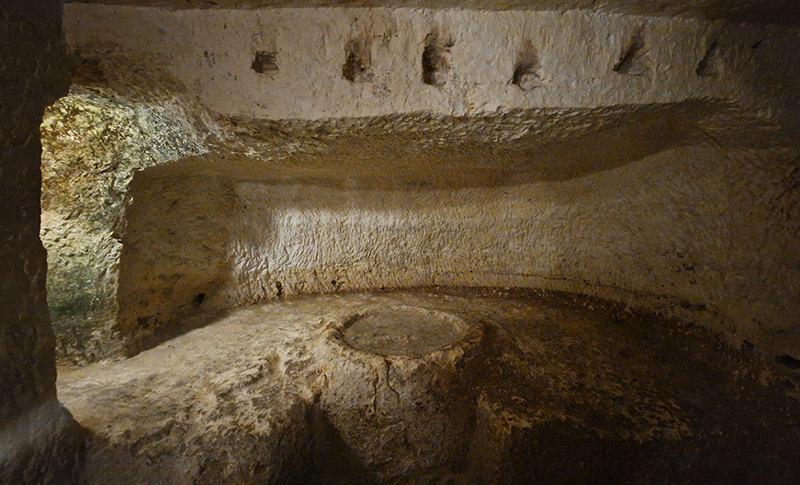
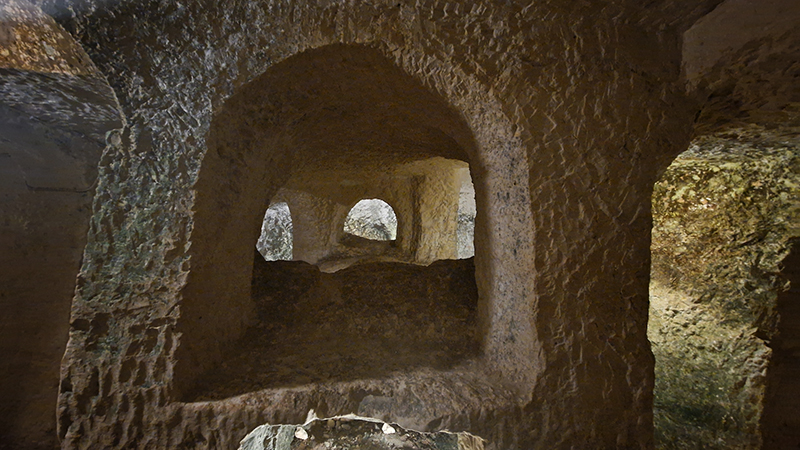
Evidence of first settlers dates to about 5900 BC. These people were hunters and farmers who kept domestic cattle and built temples. The earliest remains found at the Neolithic subterranean temple and burial site of about 7,000 individuals – The Ħal Saflieni Hypogeum – the only known European example of a subterranean ‘labyrinth’ date from about 4000 BC.

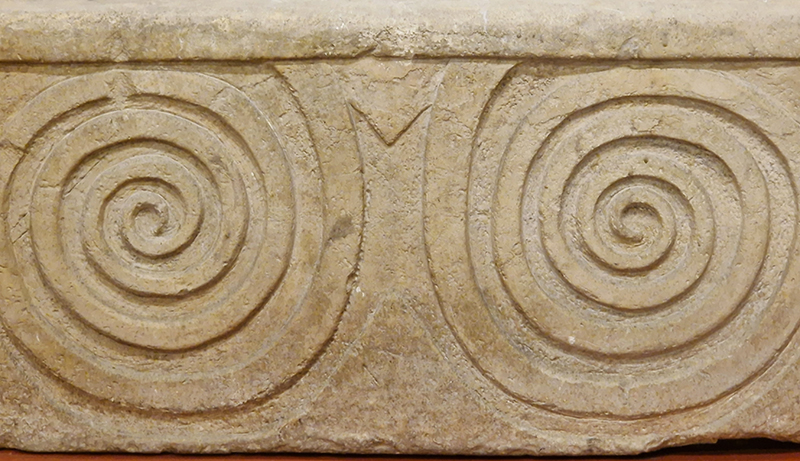
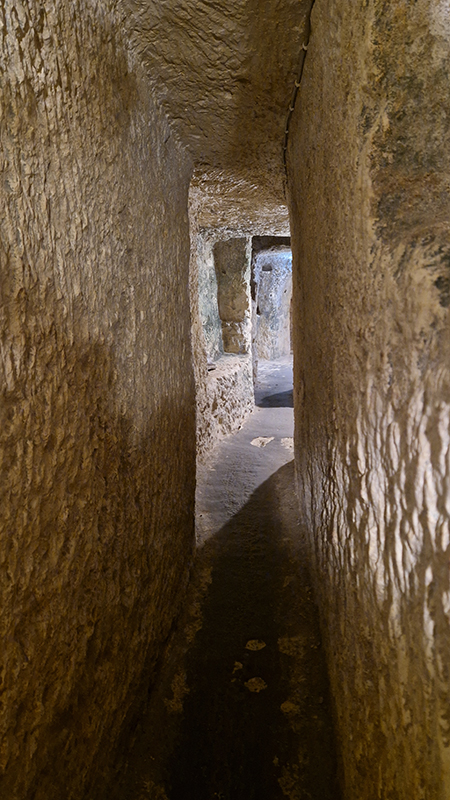
The whole system, which in places replicates the architecture of temples above ground, was cut into the limestone using just stone or antler tools. Some of these deep underground chambers are decorated with spiral and chequerboard patterns in red ochre. A highlight of the visit is the acoustic demonstration of a deep resounding echo filling the chamber when someone with a low voice speaks softly into a small, excavated niche. The particular acoustic frequencies measured throughout the chambers suggests a deliberate design and a potentially important cultural role for making music. Archaeologists believe the dead were probably left exposed until the flesh had decomposed and fallen off before the bones were buried in mass graves along with copious amounts of red ochre but so much is unknown.

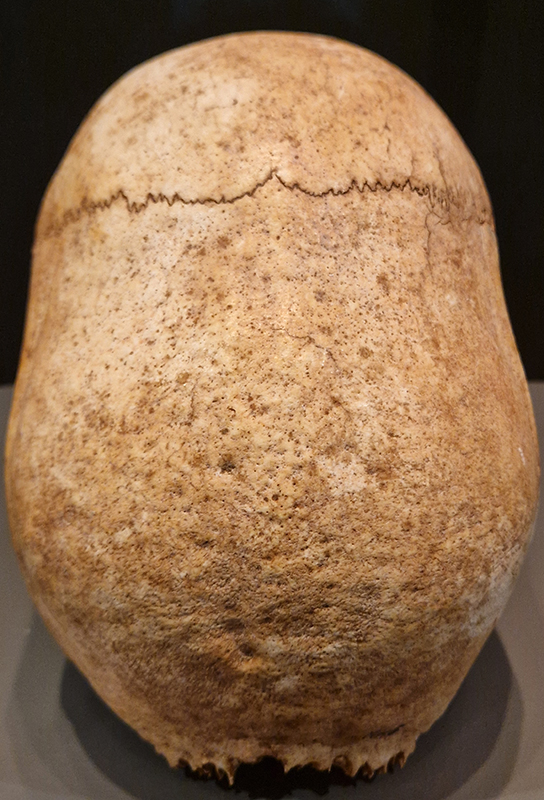
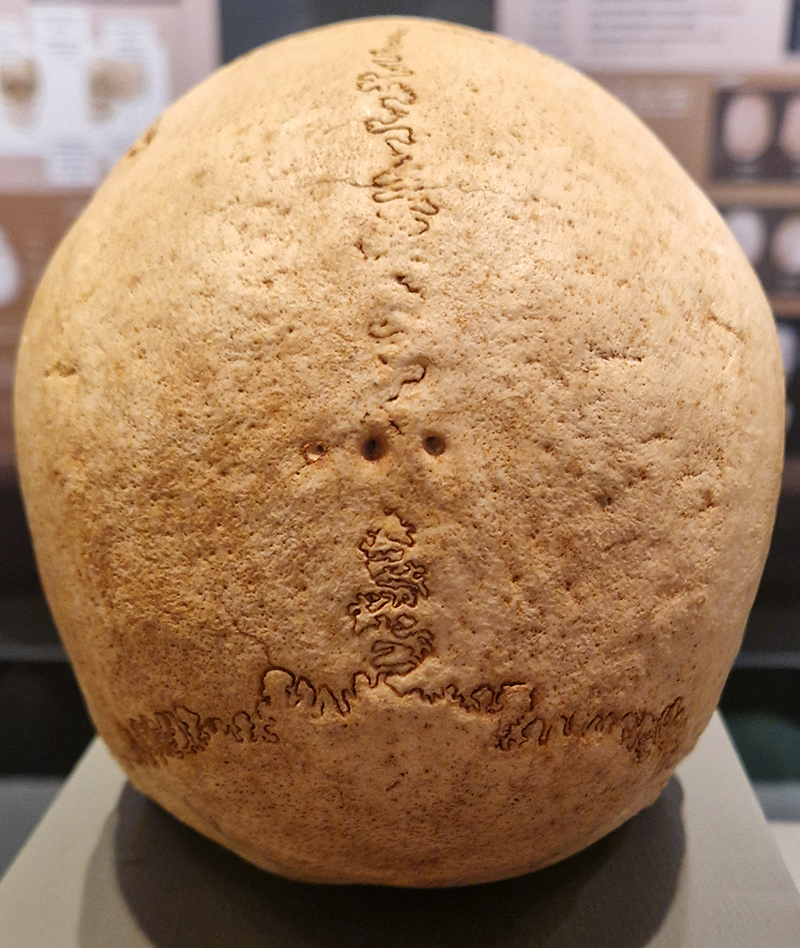
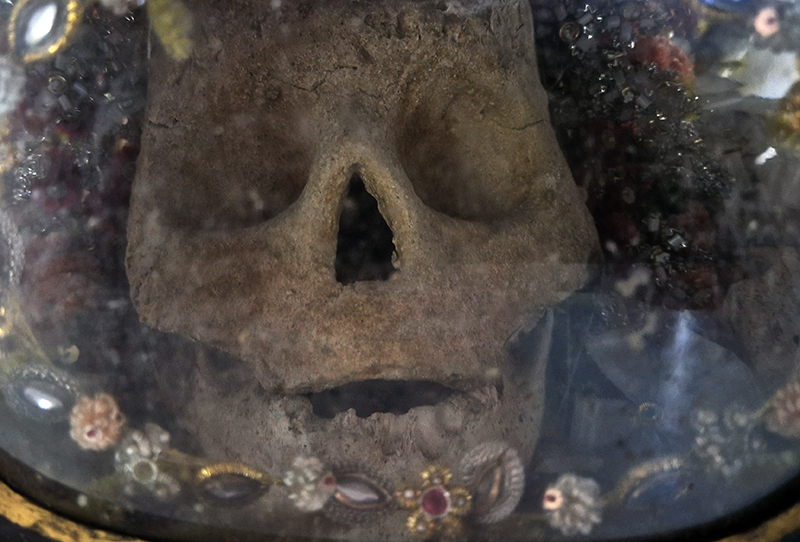
Photography is not allowed in the labyrinth of tunnels, so I have no images inside the ancient site where so many people were buried, but saw skulls found here, known as the long skulls, at the Museum of Archaeology.

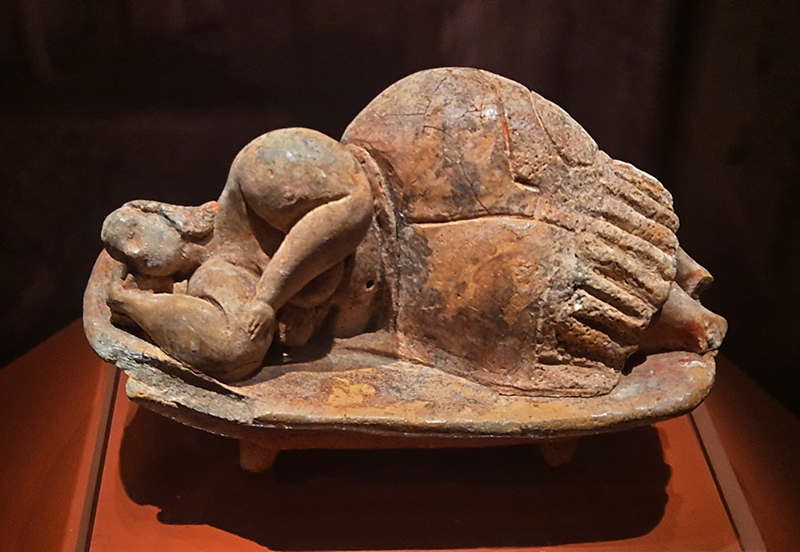
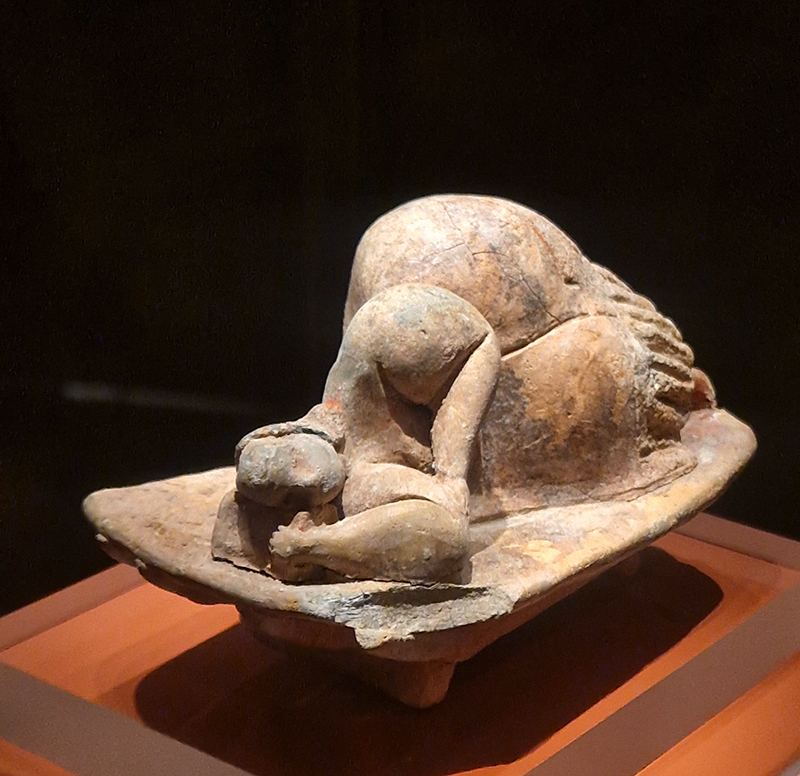
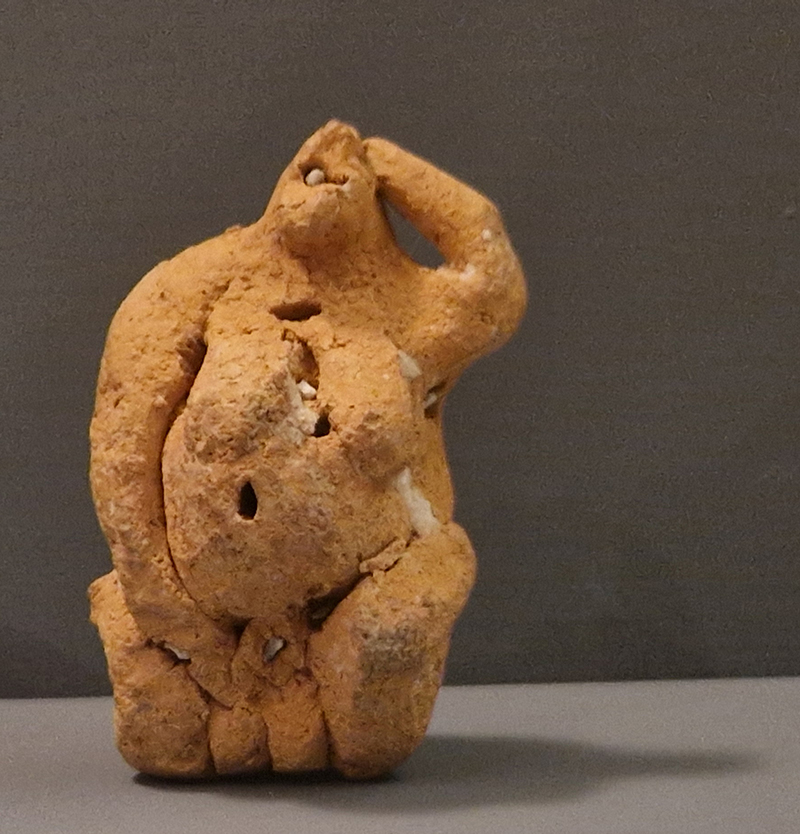
Also at the museum is the famed clay figurine of a ‘sleeping woman’ discovered in the Hypogeum.

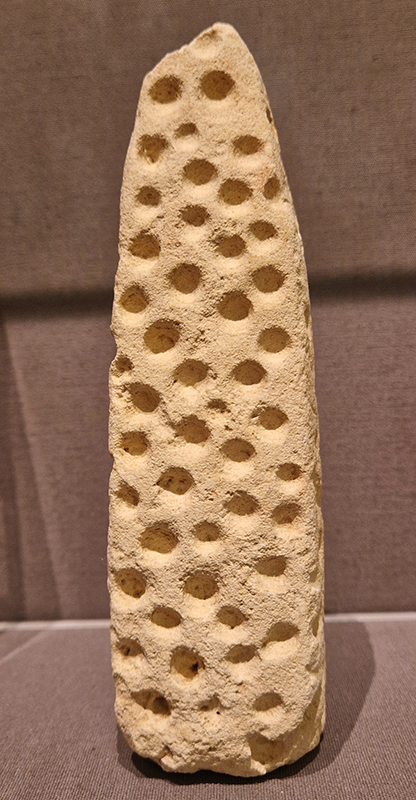
The ancient temples and early artworks hint at past cultures we have no way of understanding.

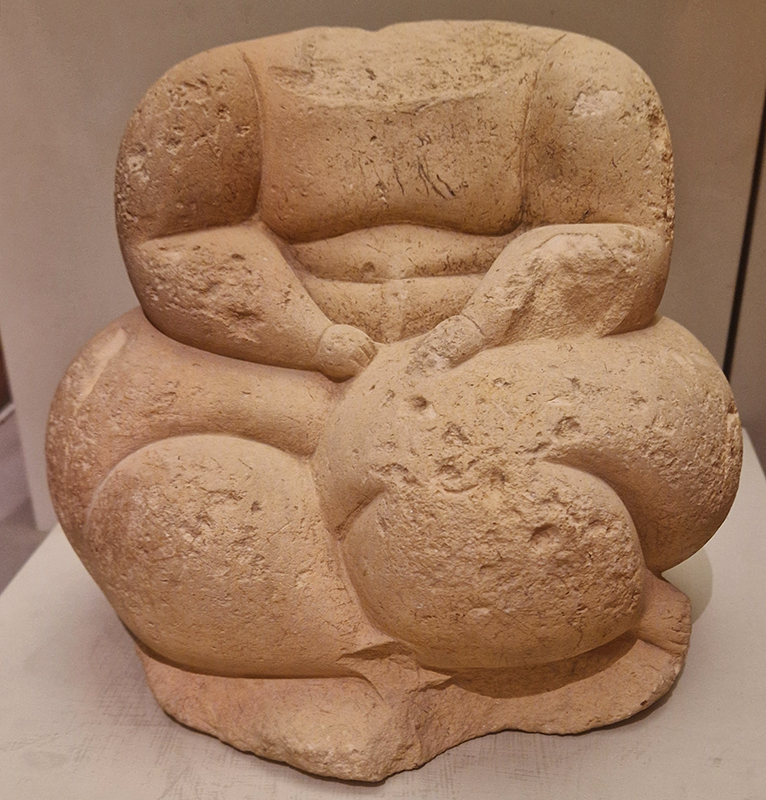
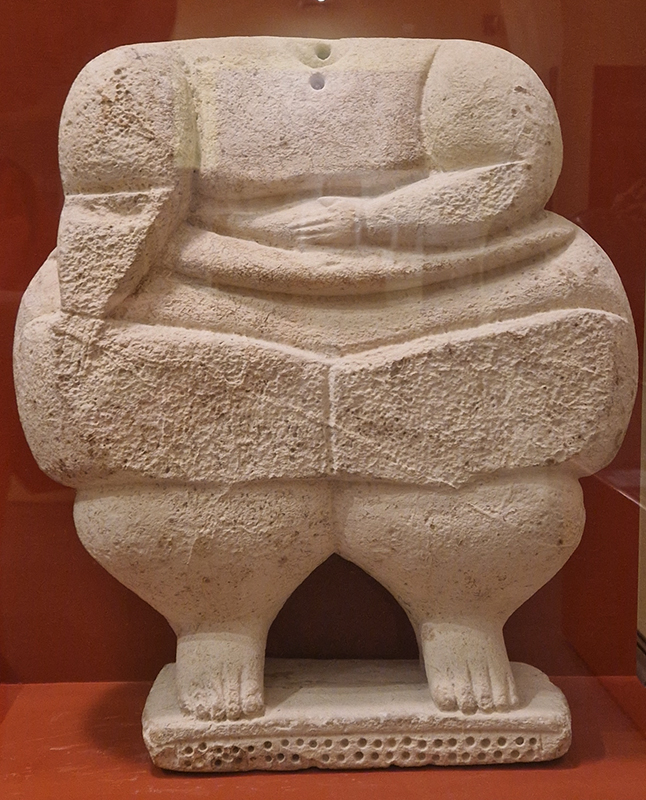
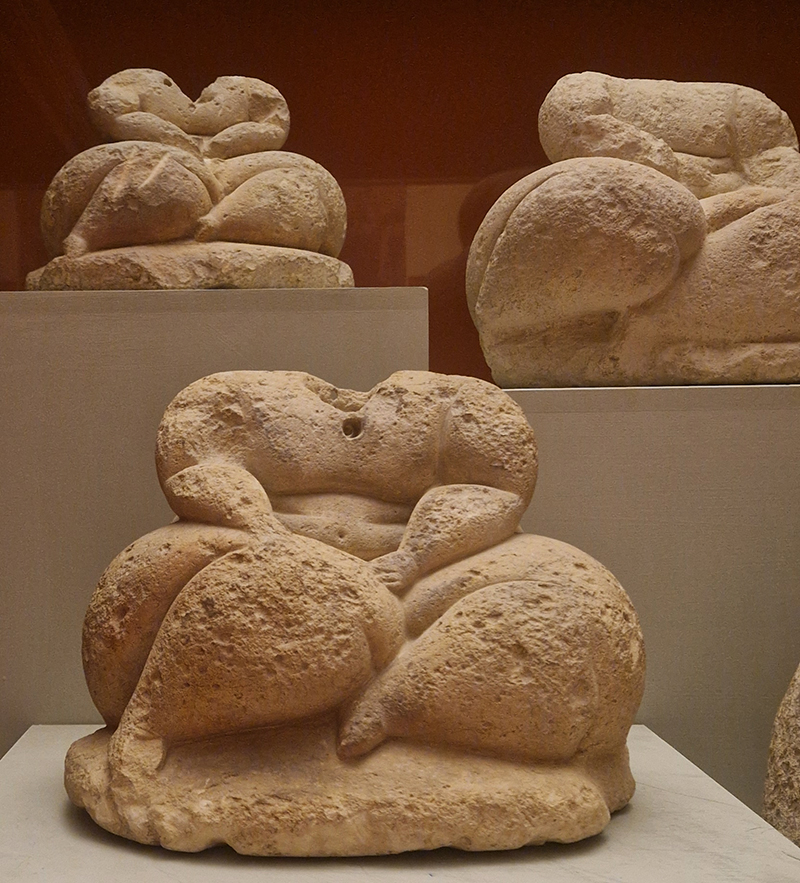
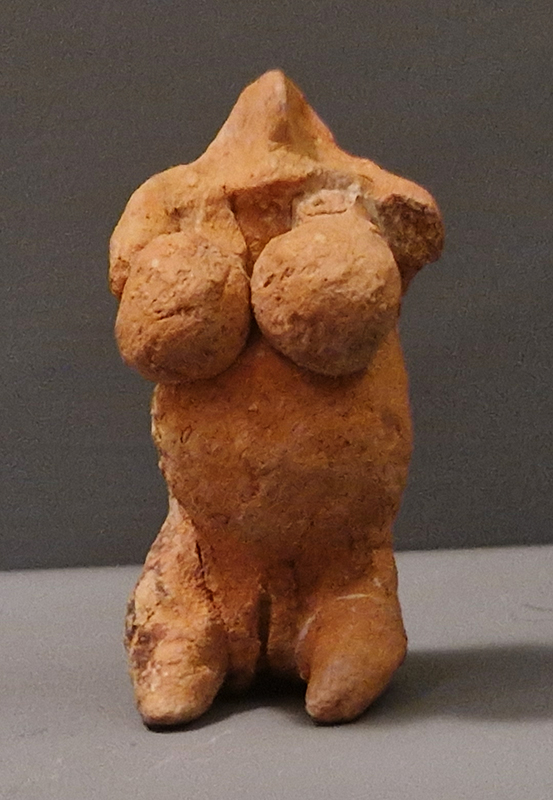
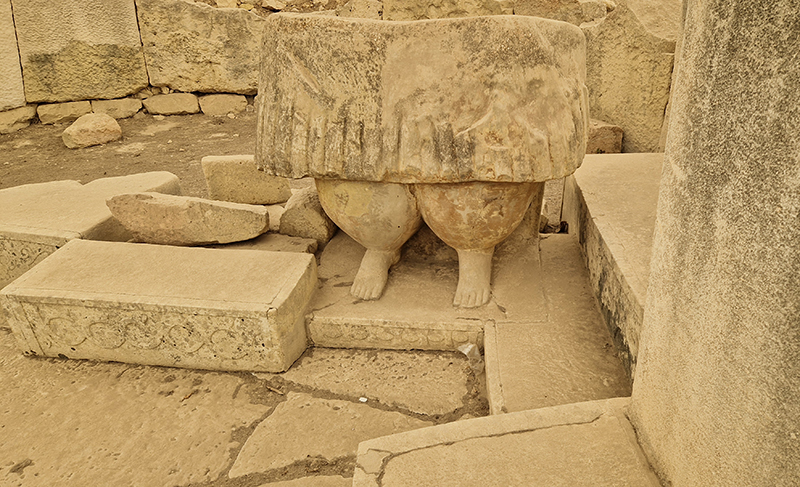
Many figures were found at other temple sites. Although some figures are female and there are many phallic figures, it is not clear of the gender of the ‘fat’ figures some of which appear to allow for interchangeable heads.

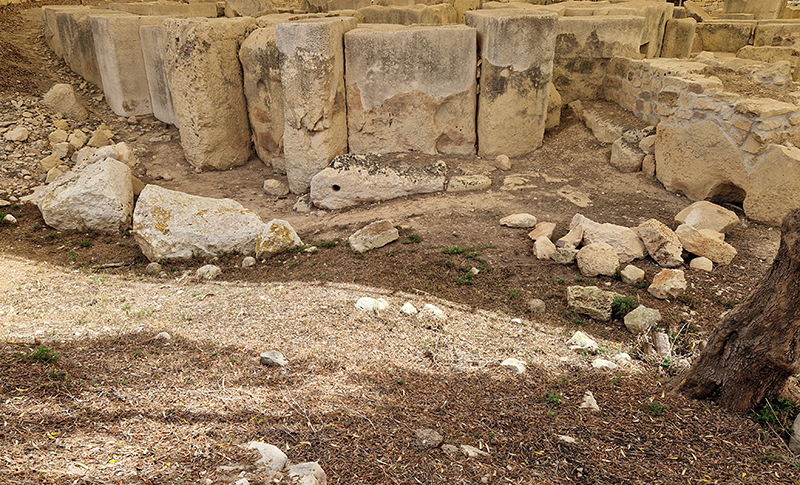
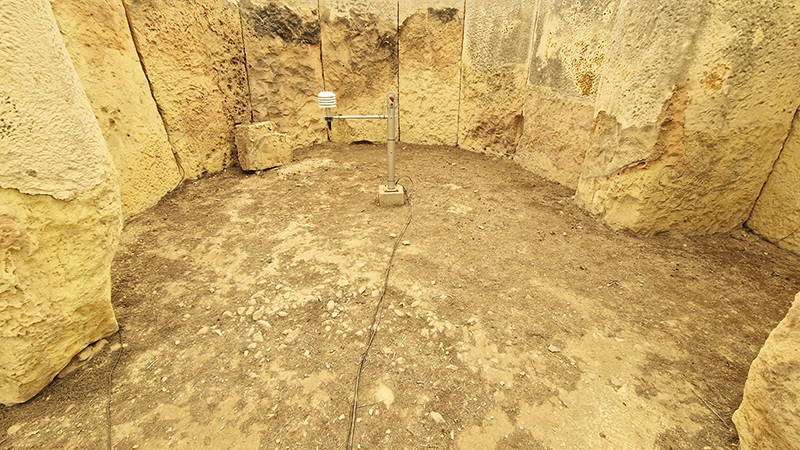
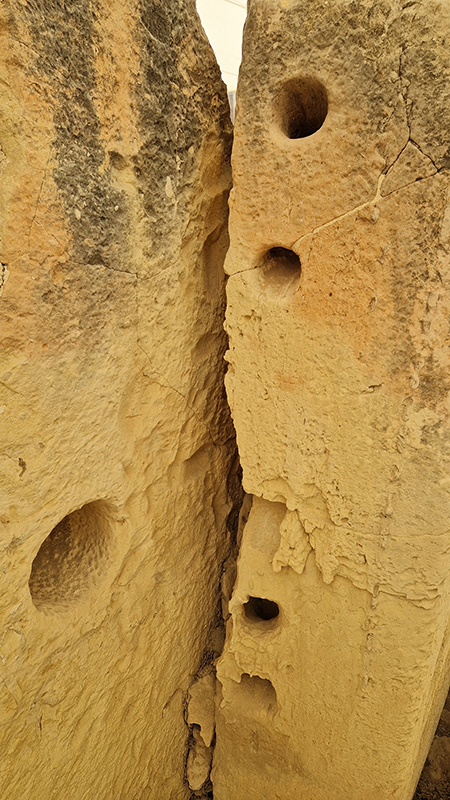
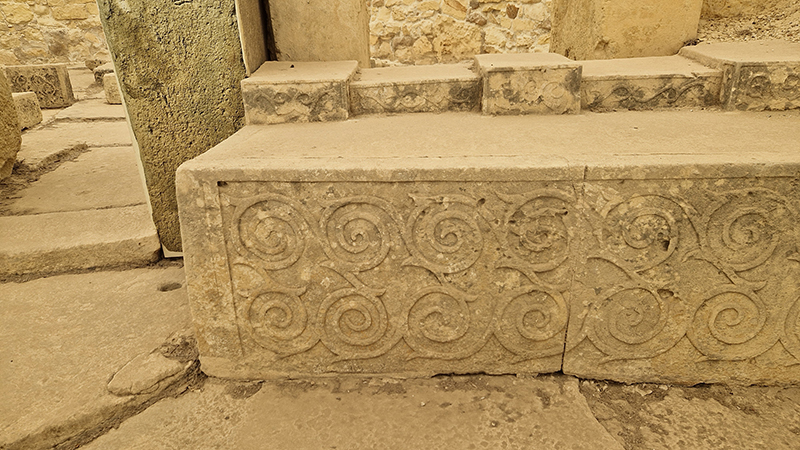
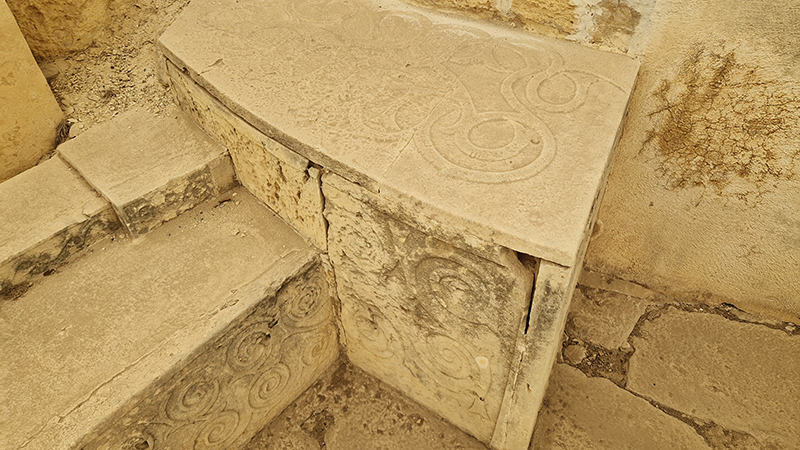
The Tarxien Temples complex of megalithic monuments with intricate stonework date to approximately 3150 BC.

In about 3850 BC new settlers arrived, also farming and building temples but after 1,500 years suddenly disappeared from the landscape. New research using carbon dating, pollen from earth cores, tree ring and human bone analysis, and the location of sediment embedded molluscs, suggests a society battling with soil erosion from felling all the trees, subsequent dietary deficiencies, and a major climate catastrophe around 2350 BC, possibly a dust cloud from volcanic eruptions, which may have led to their ultimate demise.

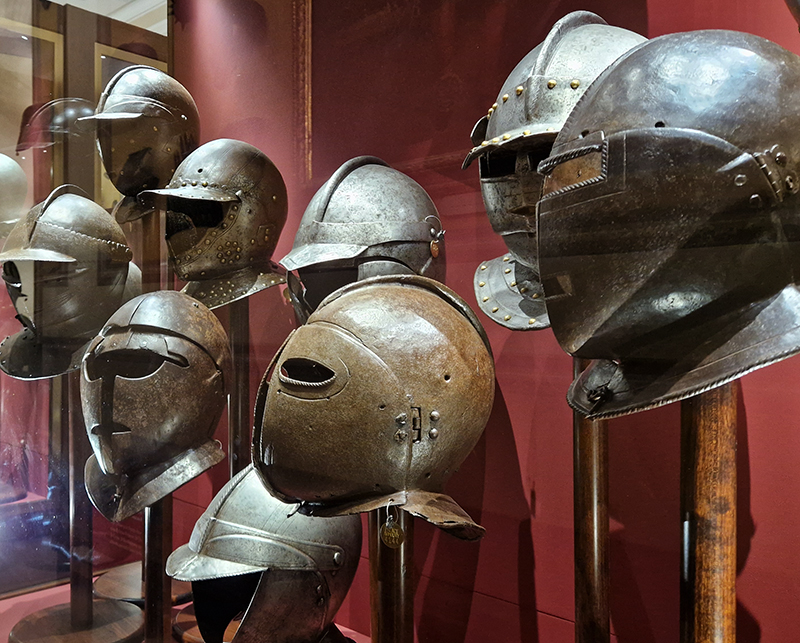
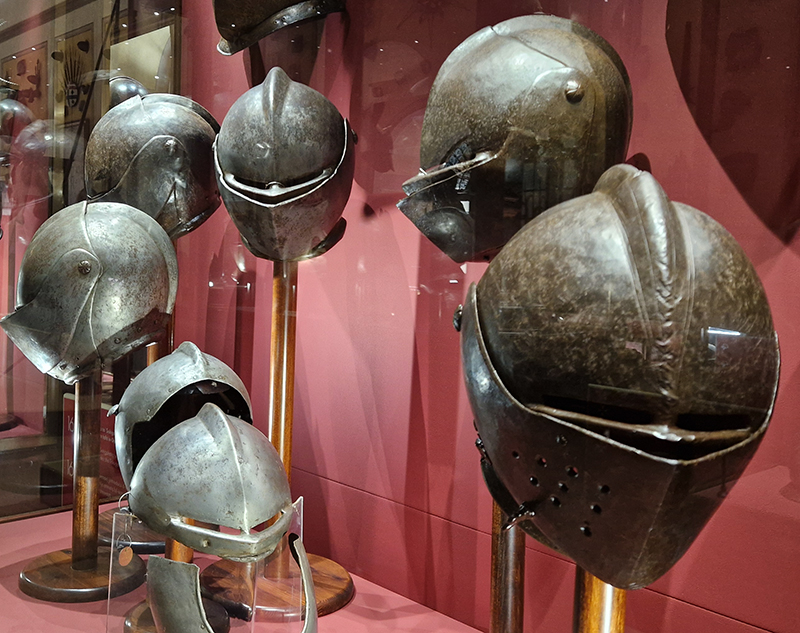
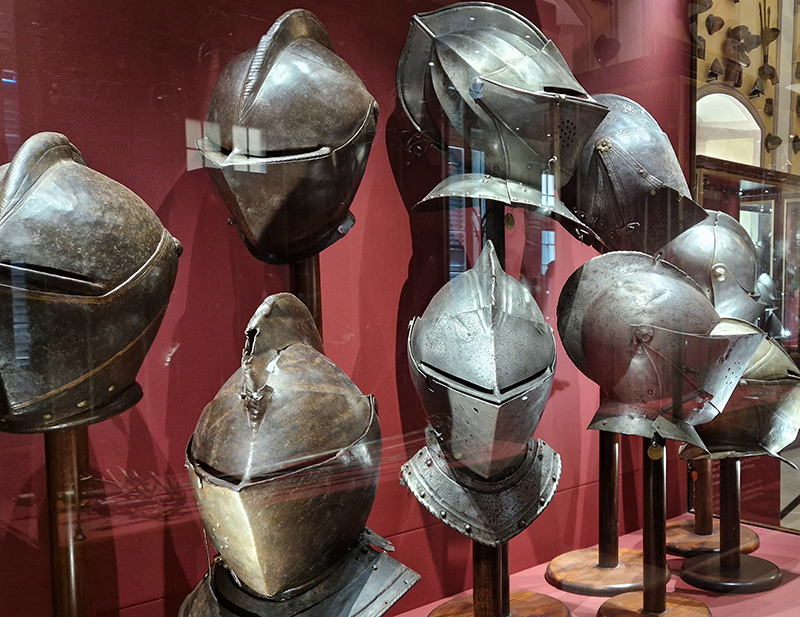
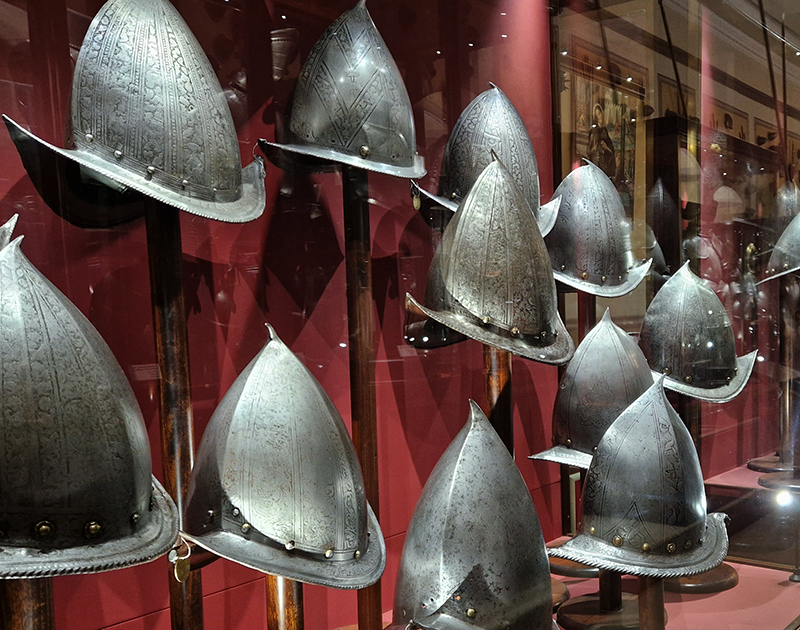
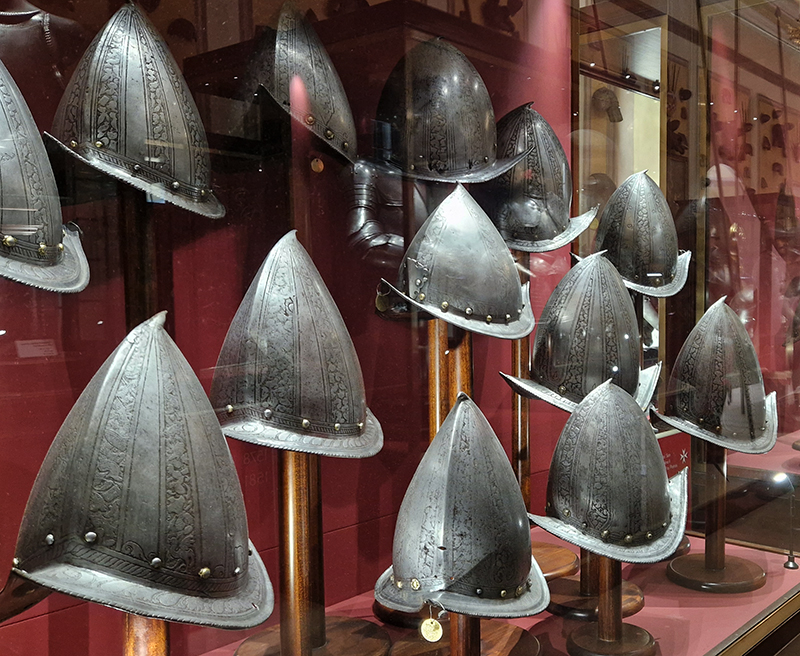
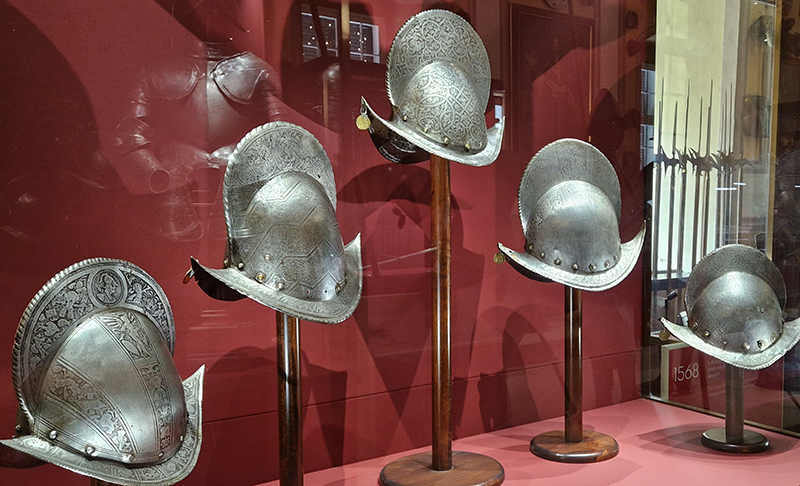
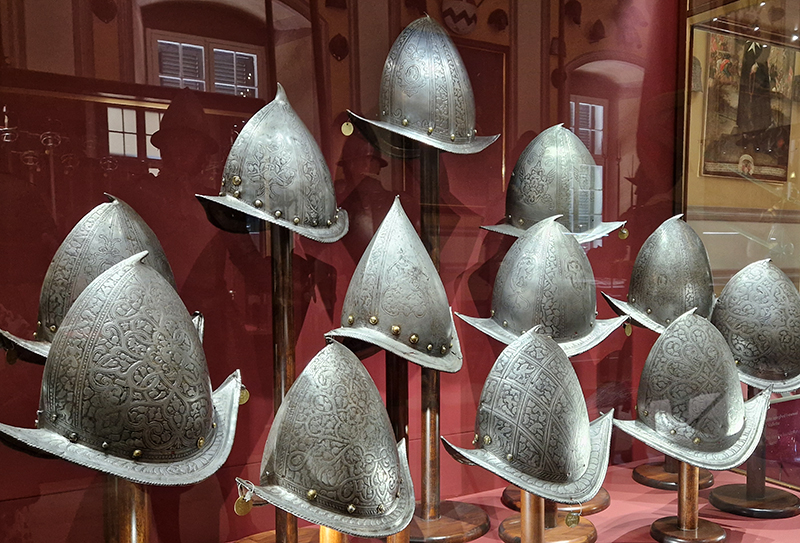
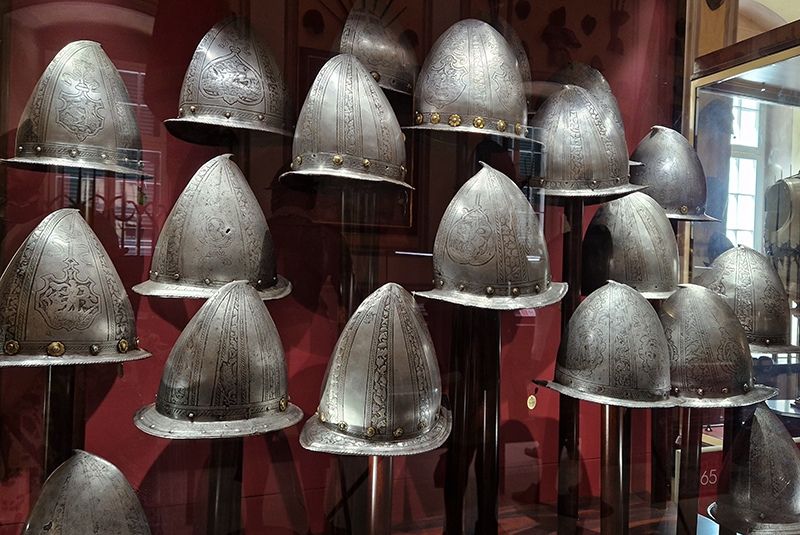
Malta suffered so much war, stretching back hundreds of years, war after war, so many wars, so depressing. A colossal amount of armour, some so intricately detailed, is held at the Grandmasters Palace Museum.

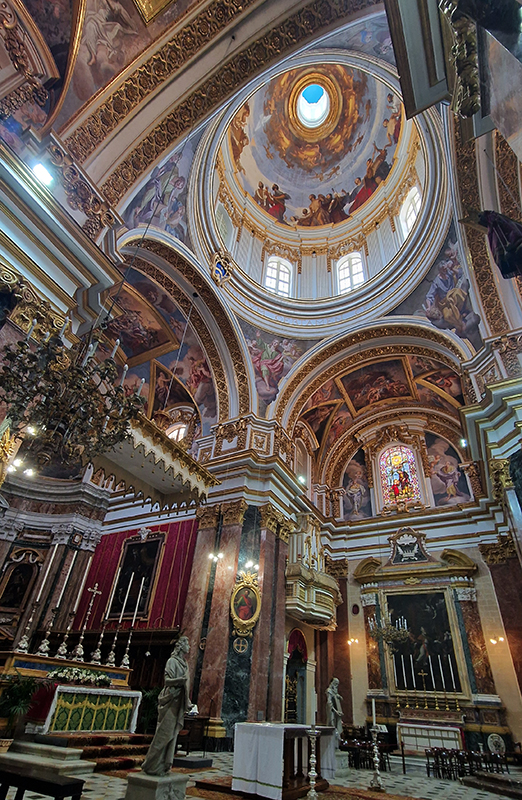
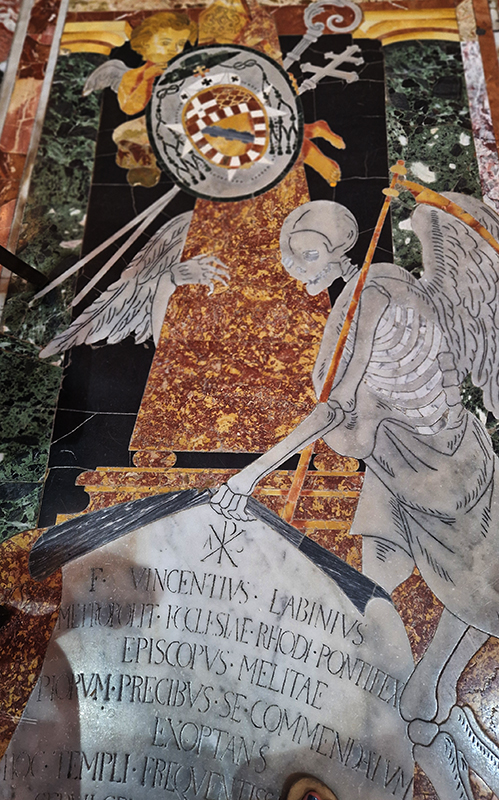
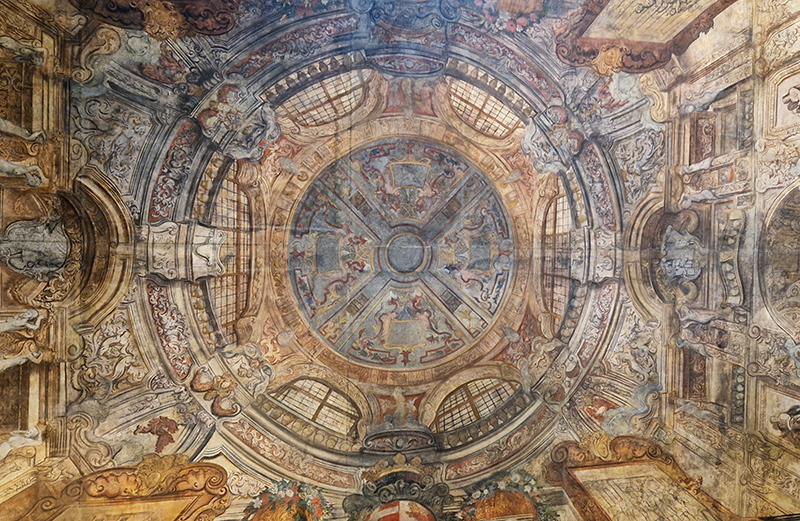
The Phoenicians arrived in Malta around 870 BC from Lebanon, and Malta subsequently came under the control of the ancient city of Carthage as a strategic trading post right up until the Romans take it in 255 BC bringing with them the Roman Catholic religion. A Cathedral was founded in the 12th century (according to legend it was built on the site where the Roman Governor met St. Paul when he was ship wrecked on Malta) was damaged by a huge earthquake in 1693 and rebuilt in the opulent Baroque style.

St. Paul’s catacombs located outside the walls of the ancient city of Melite is a system of underground galleries and tombs dating from the third to the eighth centuries CE.

The Byzantines of Malta fought off an invading Arab army for many weeks but the capital city of Melite fell in 870AD and all inhabitants were massacred. The city was rebuilt as Mdina by the Muslim conquerors. The Normans invaded Malta in 1091 to little resistance and this paved the way for the reintroduction of Christianity. Next came the Order of Knights of the Hospital of Saint John of Jerusalem, colonising Malta in 1530. The Order of St John was given Malta as a fief for the annual donation of a peregrine falcon, better known as the Maltese falcon. It was kept and trained in a great hall of the Grandmasters Palace where owls, song birds and other exotic birds were kept.

The Knights ran a strong naval fleet and knew the importance of astronomy for navigation. They established an astronomical observatory at the Grandmaster’s Palace. Also a meridian line, inlaid in marble, ran across the floor of one room with a hole in the ceiling above – noon was marked as the sun crossed the line.

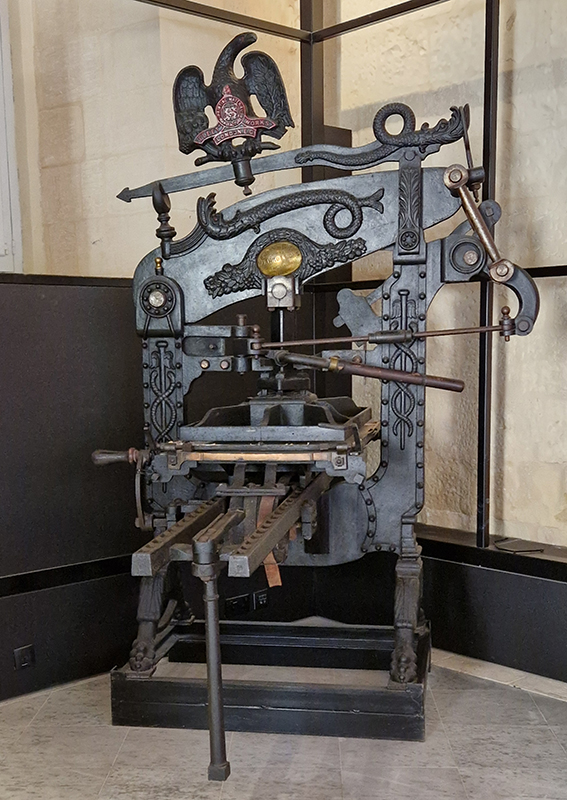
The Order of St John capitulated on the arrival of Napoleon Bonaparte in 1798. During his week on Malta Napoleon abolished slavery and instigated free education but there were other changes not so beneficial to the population and after two years of French rule an uprising led to Malta becoming a protectorate of the British. The magnificent printing press in the administrative hub of the Grandmasters Palace was manufactured by Londoners Harrild and Sons (founded 1809) of Farringdon.

Malta played a vital role providing a strategic location for hospitals during the first world war and was heavily bombed during the second world war. Discontent on British commitment to supporting Malta’s economy and hikes in imported food prices eventually led to riots by the population and came to a head on 7th June 1919 when British troops fired into the crowd, killing four and injuring 50. Relationship souring, Malta finally gains independence in 1964, becoming a republic in 1974.

While in Malta I was reading Cloud Cuckoo Land by Anthony Doerr, a novel that whisks you across time and space as characters inhabit times from the 1453 Ottoman siege of Constantinople to a spaceship escaping future Earth. It resonated with a land whose history is still so present and helped set markers across the centuries to cross reference what was happening in different parts of the world at the same time.

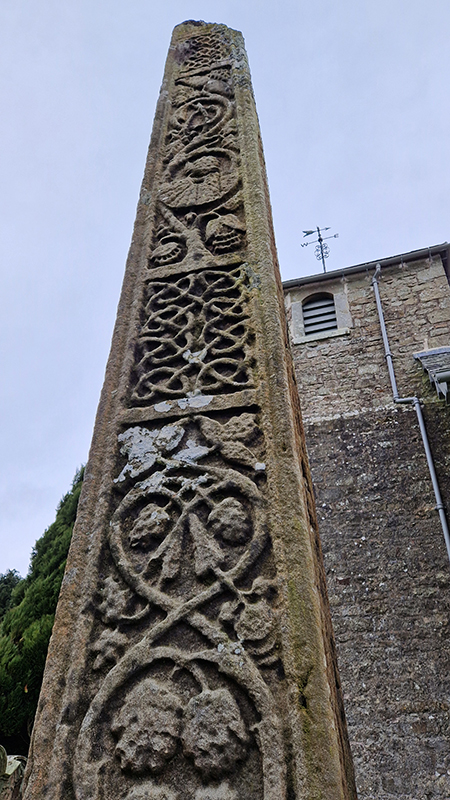
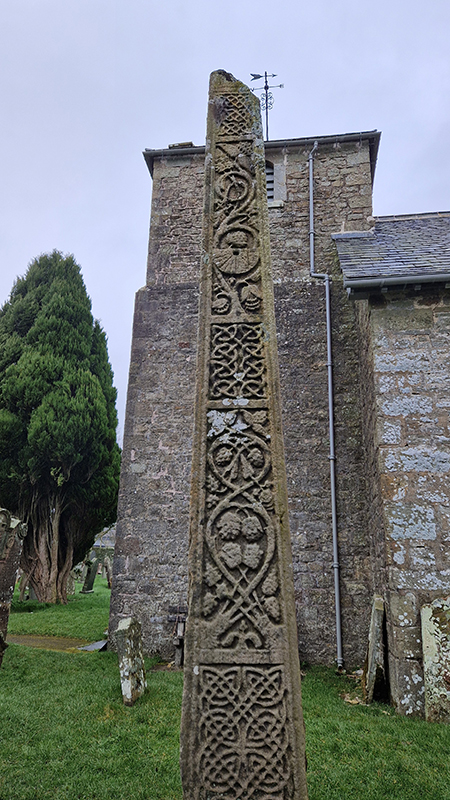
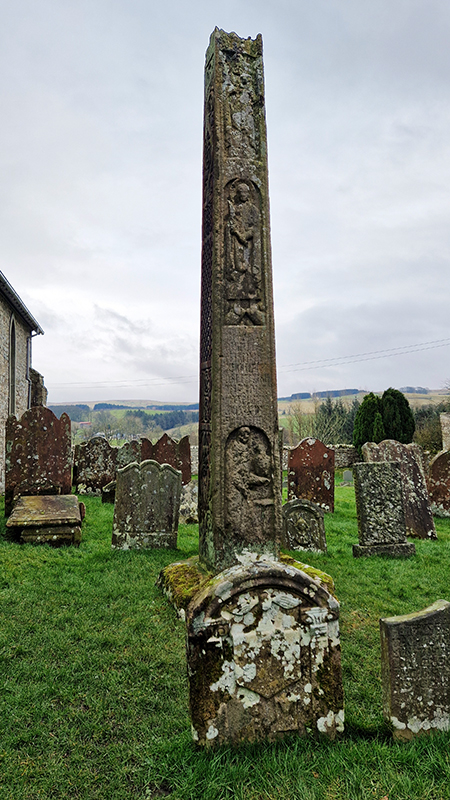
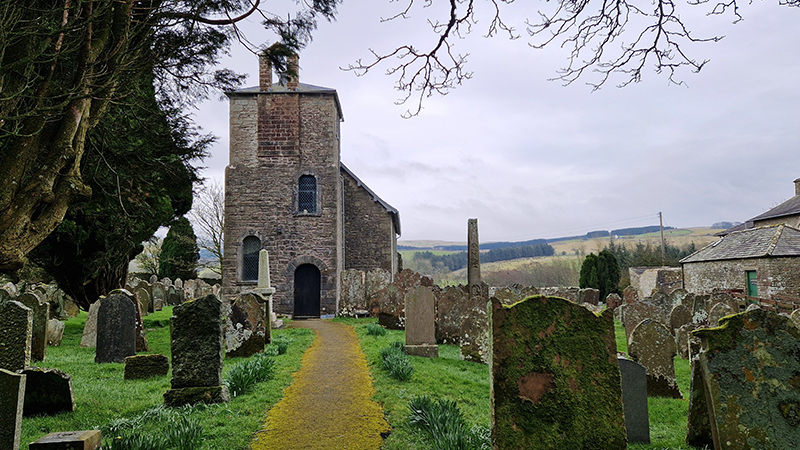
In Cumbria earlier in the year I visited Bewcastle, site of a Roman out post fort. The Anglo-Saxon Bewcastle Cross from the 7/8th century, hewn from a single piece of sandstone stands at 4.5m in the splendid village churchyard of St. Cuthbert’s Church. The head of the cross is missing and the carving very worn but features an intriguing mix of religious and non-religious figures, reliefs and inscriptions in a runic alphabet. The oldest carved sundial in Britain can be seen on the south face of the shaft, this medieval timepiece was carved at a later date, after the cross was erected, and is missing the indicator. From the late 7th century, around when this cross was being commissioned the Byzantines were busy building defence walls around Malta to counter a growing Muslim threat they feared.

Gallery Visits

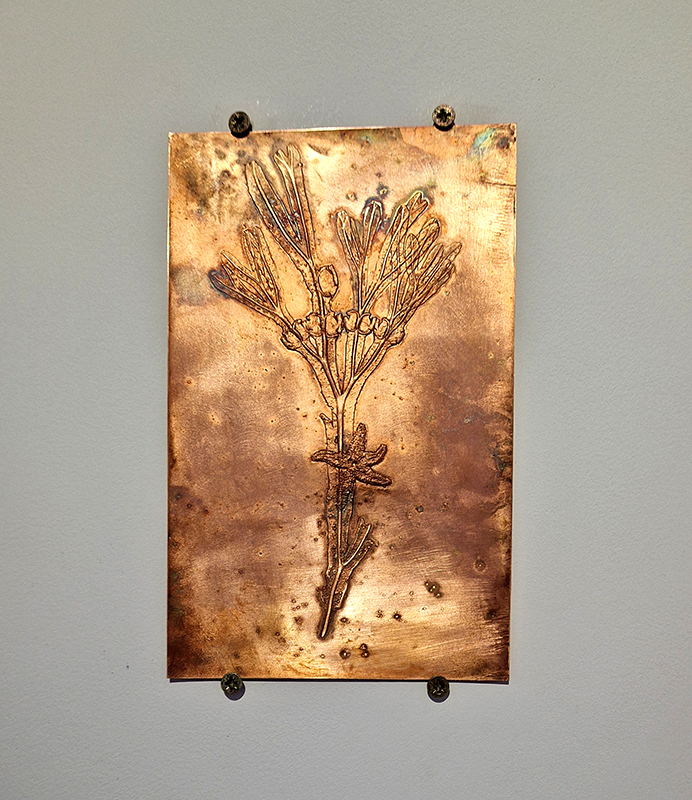
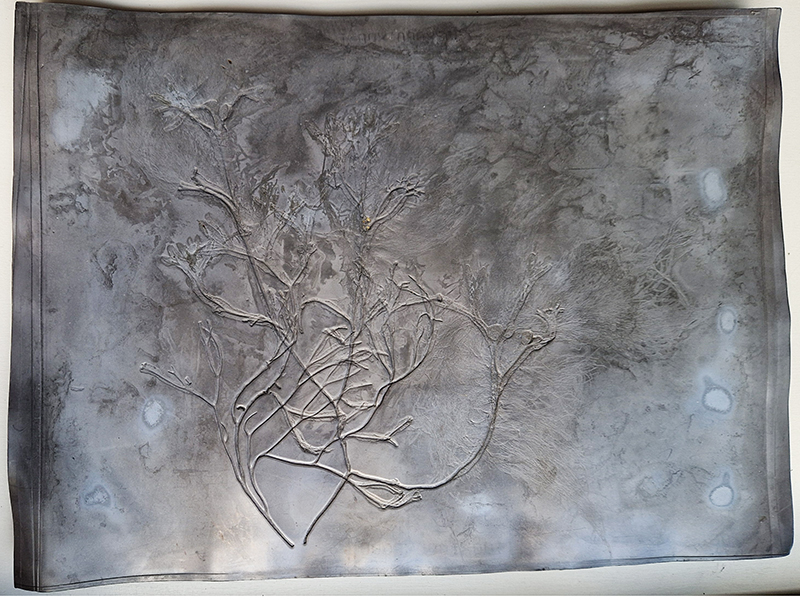
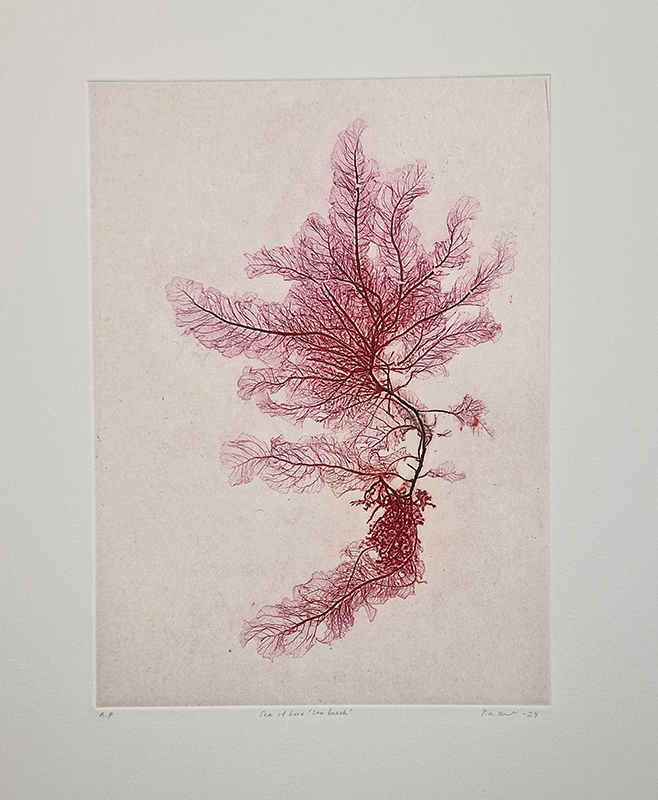
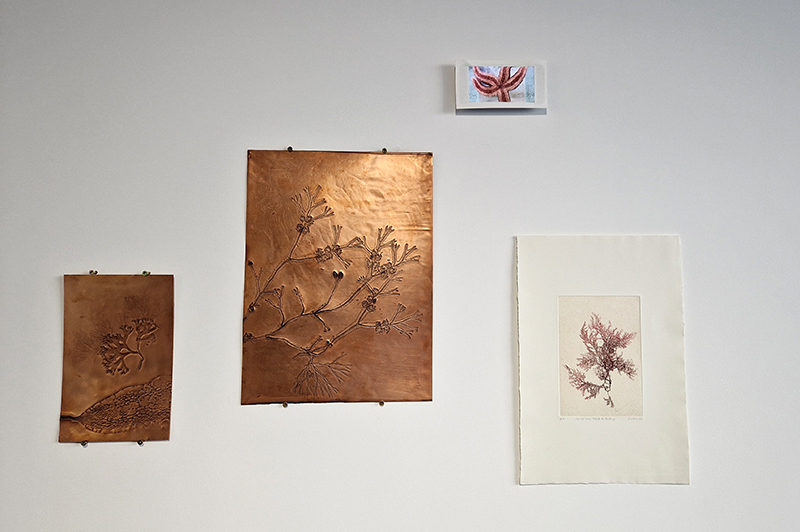
Pia Östlund Sea of Love at No Show Space. Really enjoyed my visit to this beautifully curated exhibition. So nice to have a gallerist take time to talk about the work. The nature printing explored in this show is an involved process of imprinting dried seaweed under pressure between polished lead sheets, taking latex moulds from the imprints which are then made conductive by coating in graphite and electroplated with copper to make a printing plate. Pia Östlund spent two months at BORCH Editions in Copenhagen, working with the master printers on refining the platemaking process of nature printing. Nature printing is an intaglio printing technique from the mid-19th century that makes it possible to make direct impressions of the surface of natural objects.

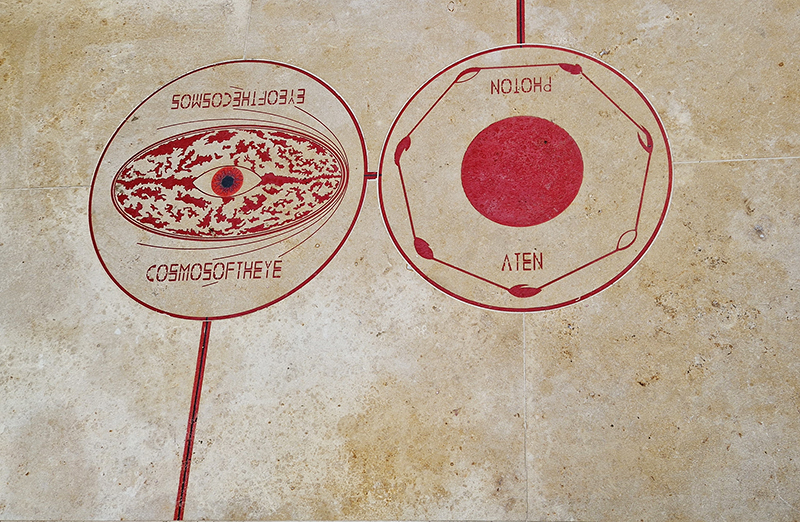
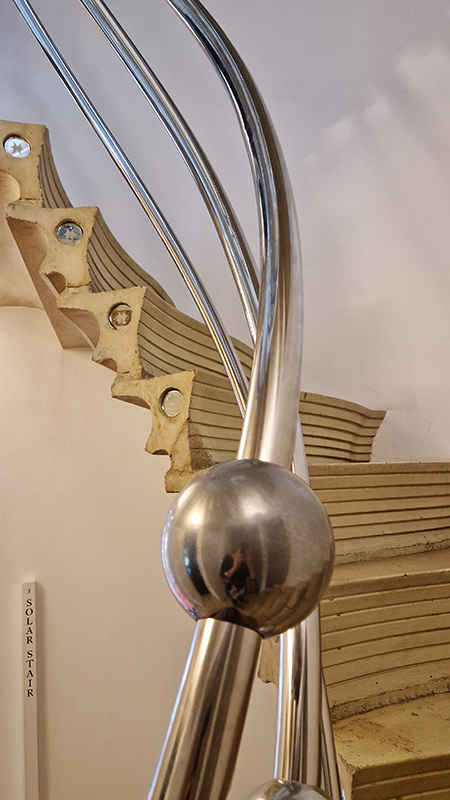
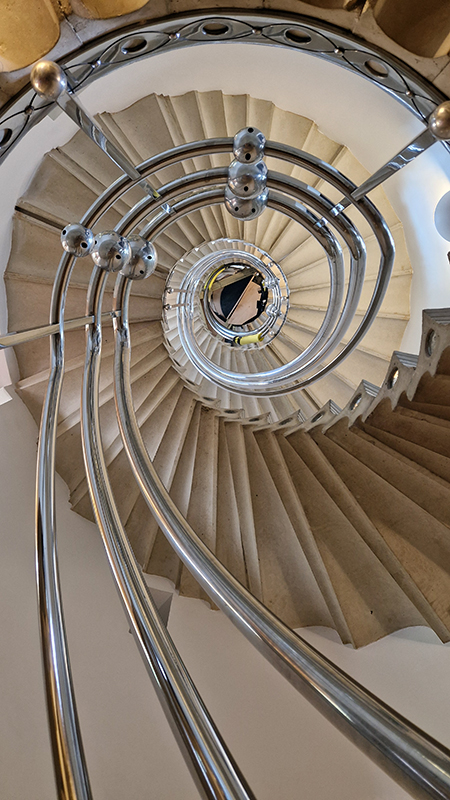
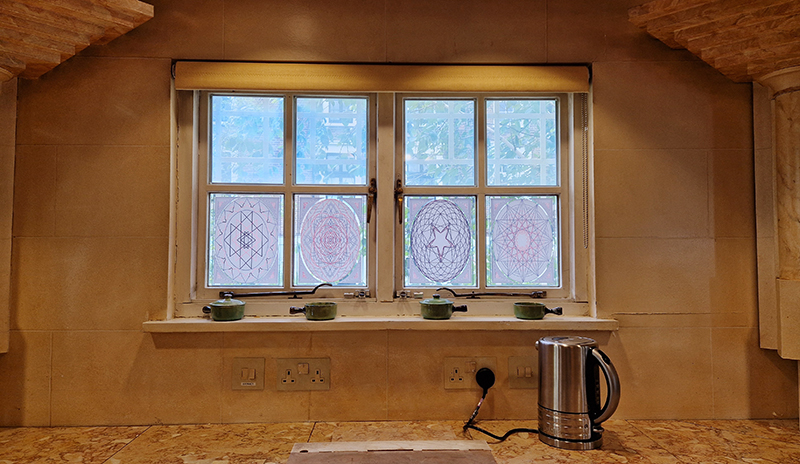
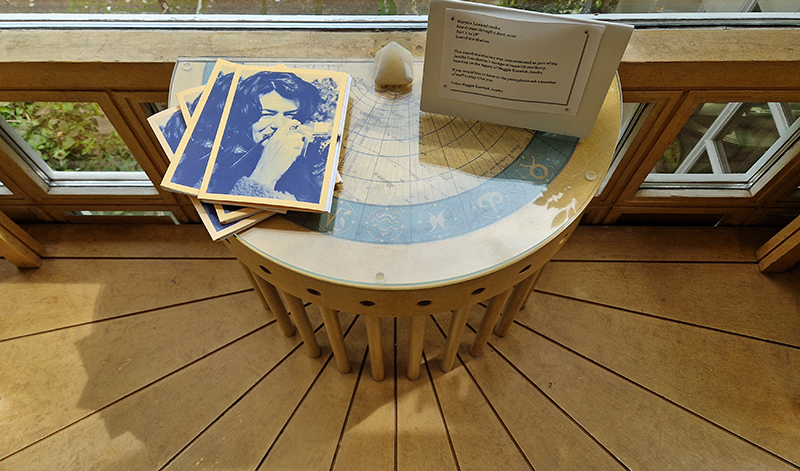
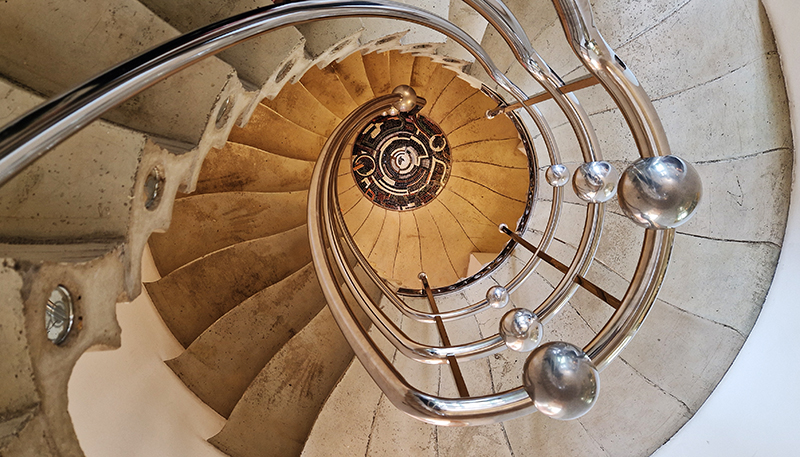
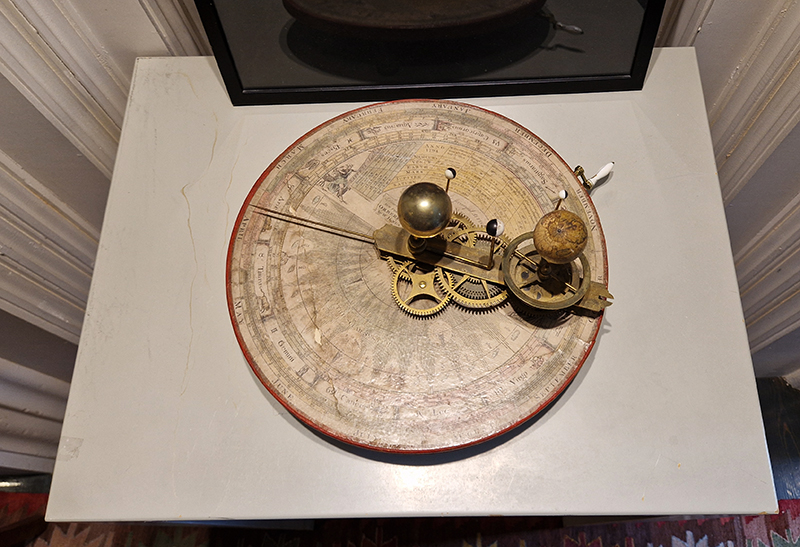
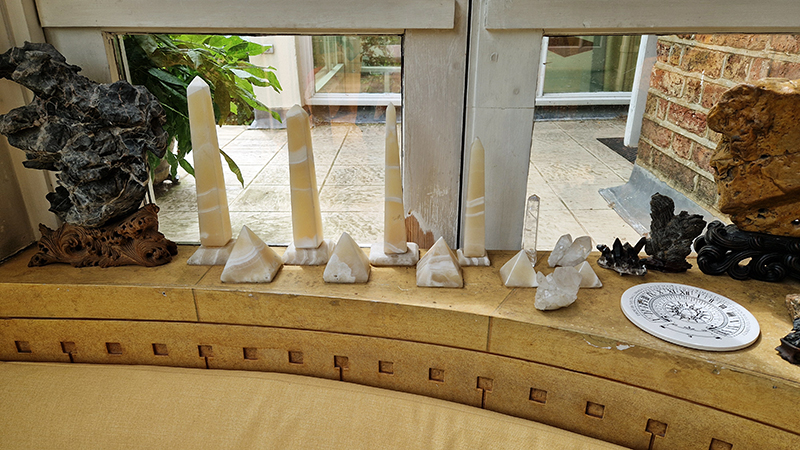
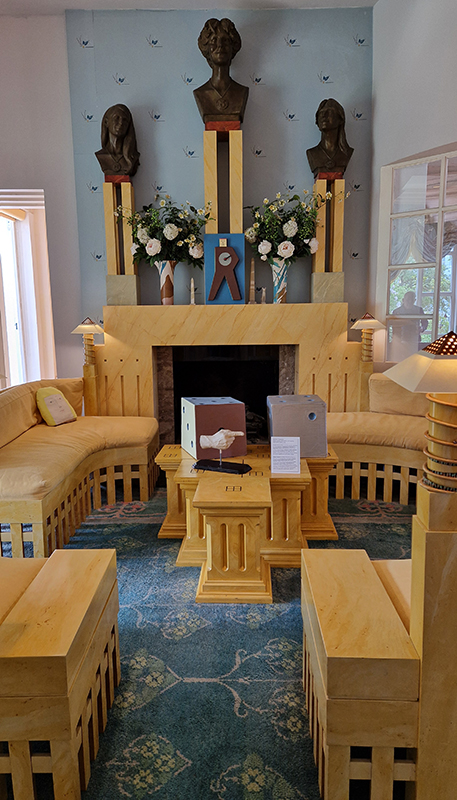
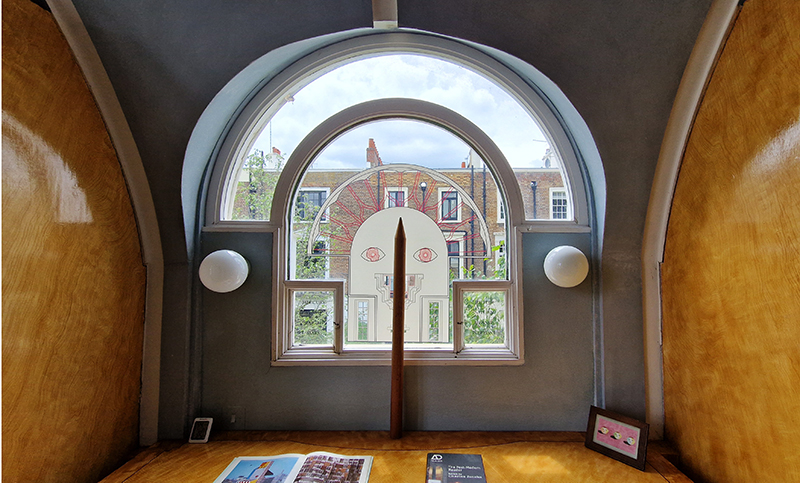
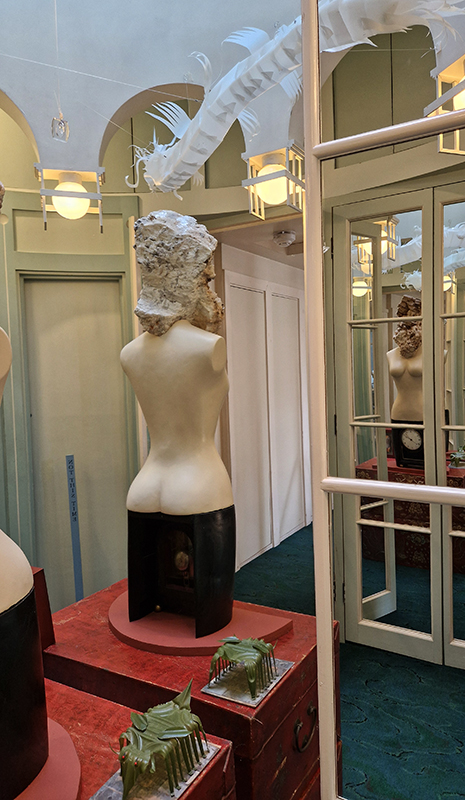
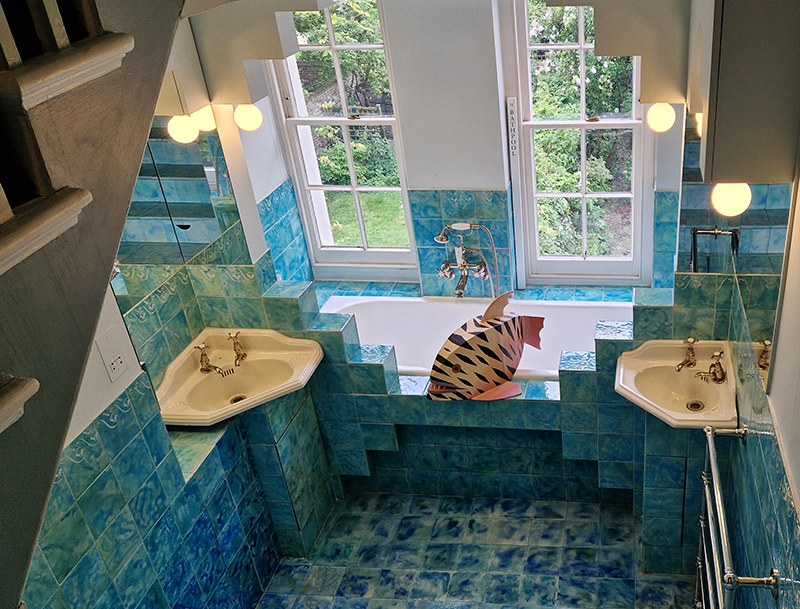
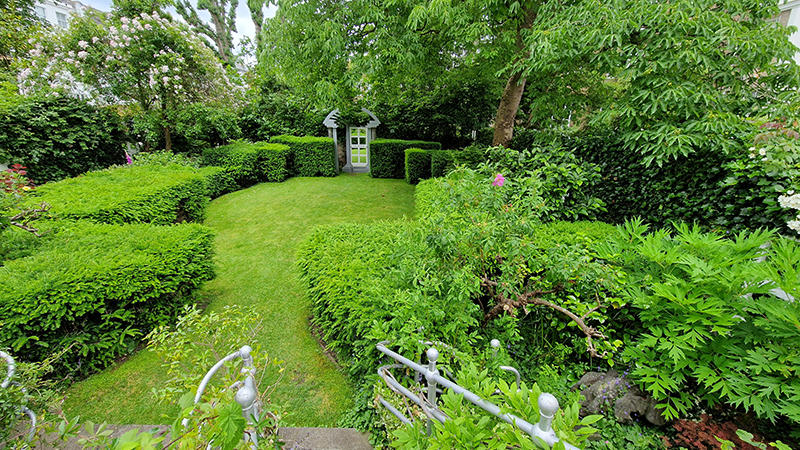
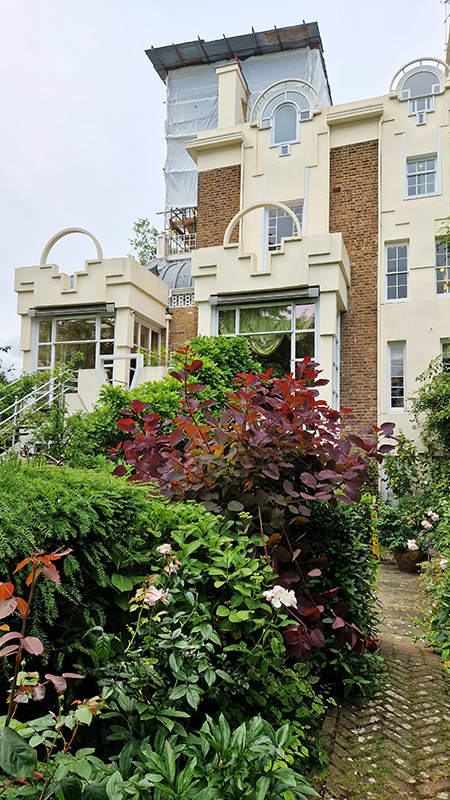
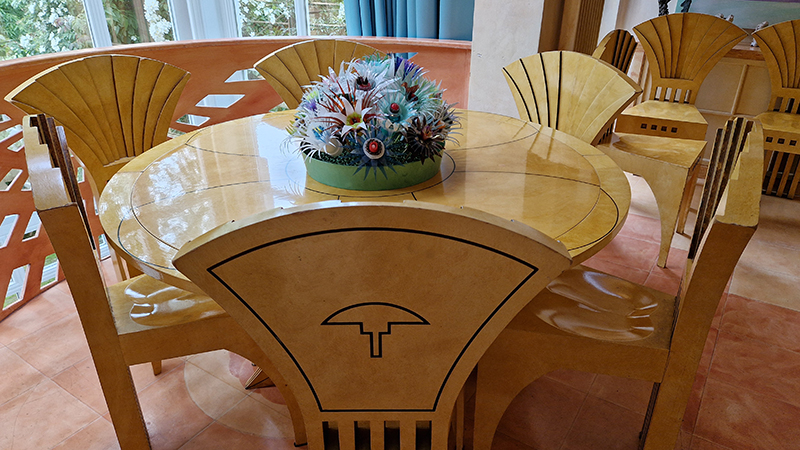
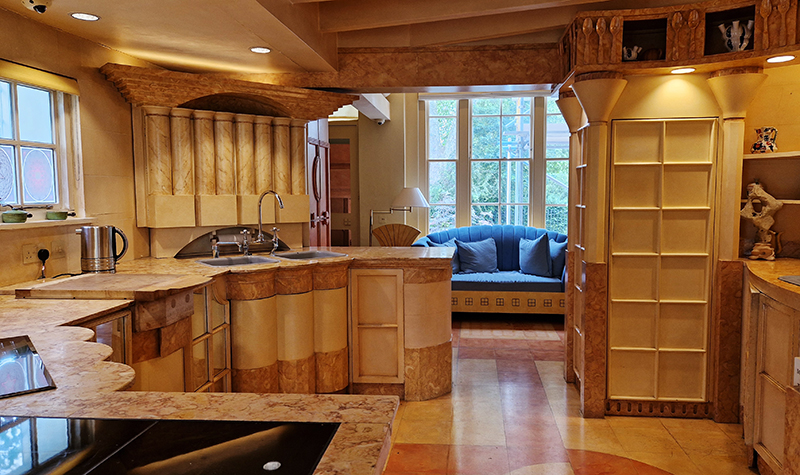
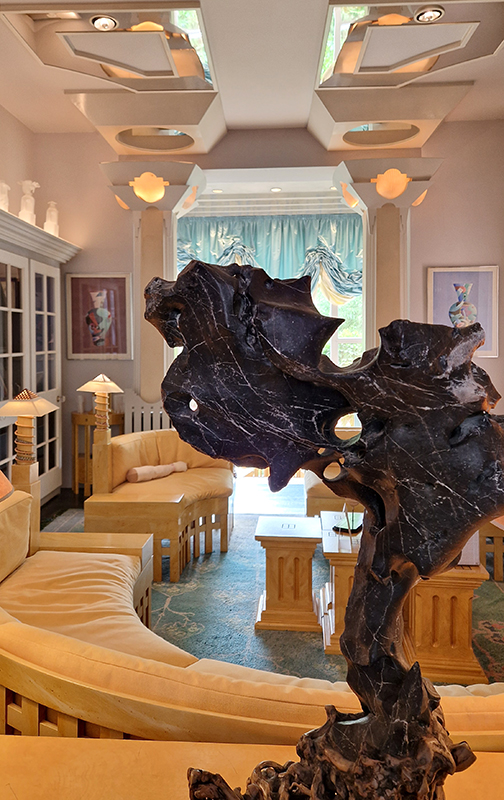
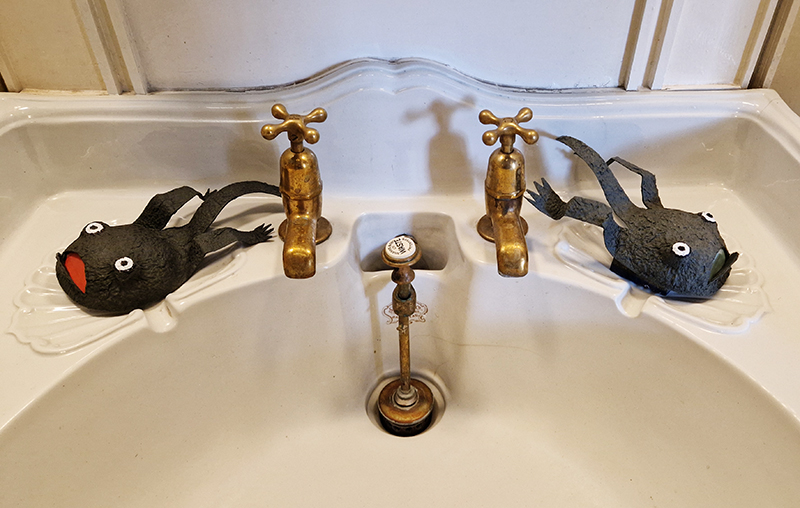
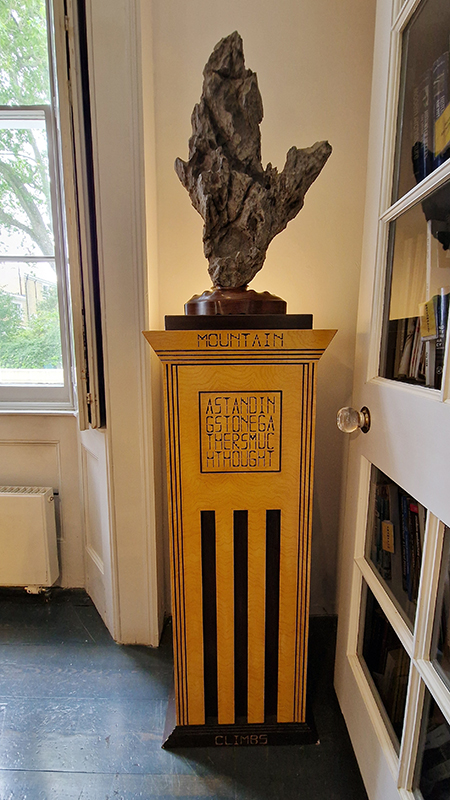
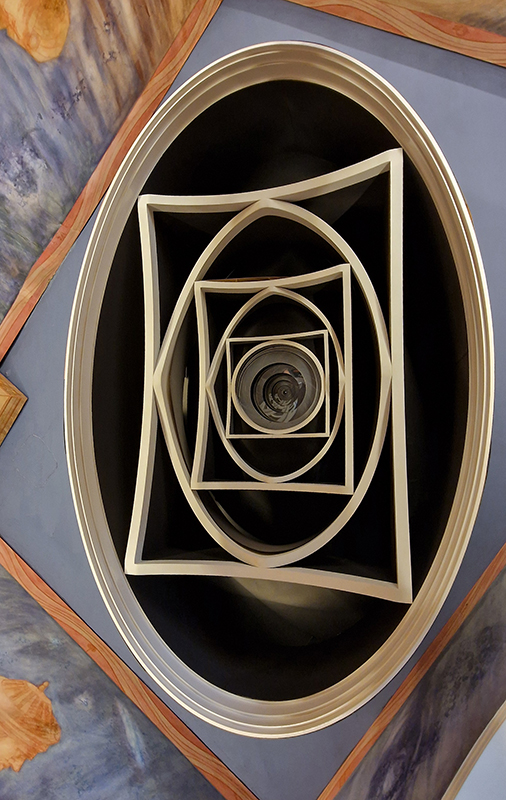
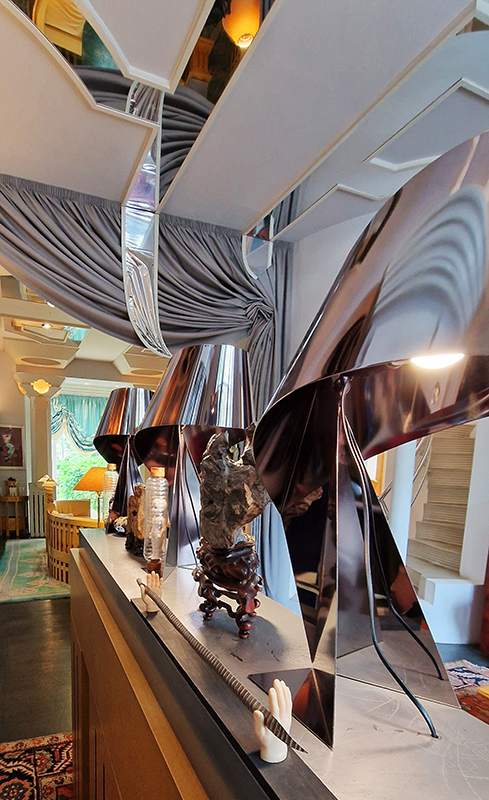
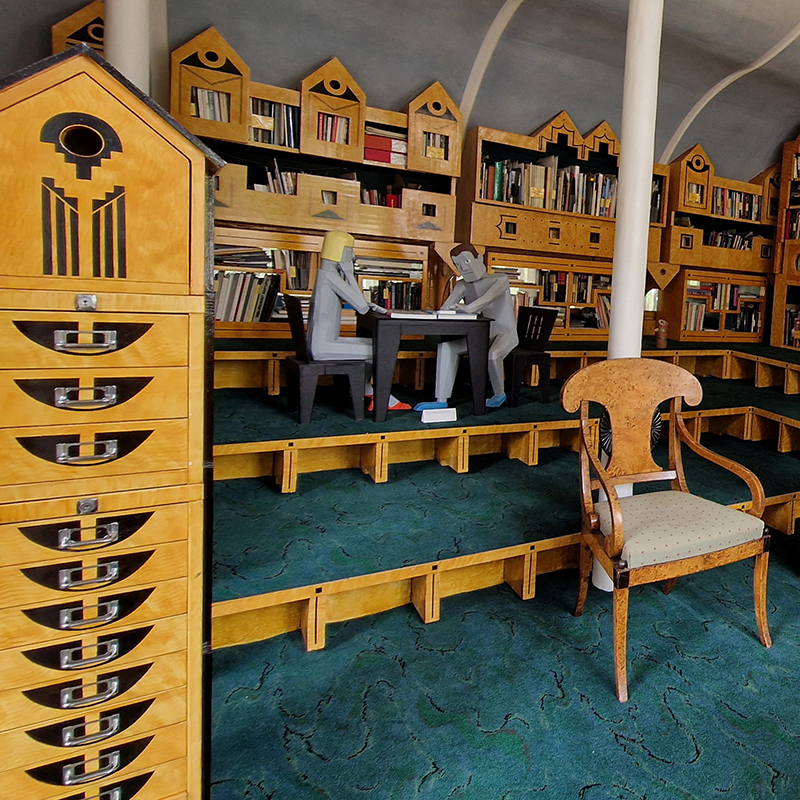
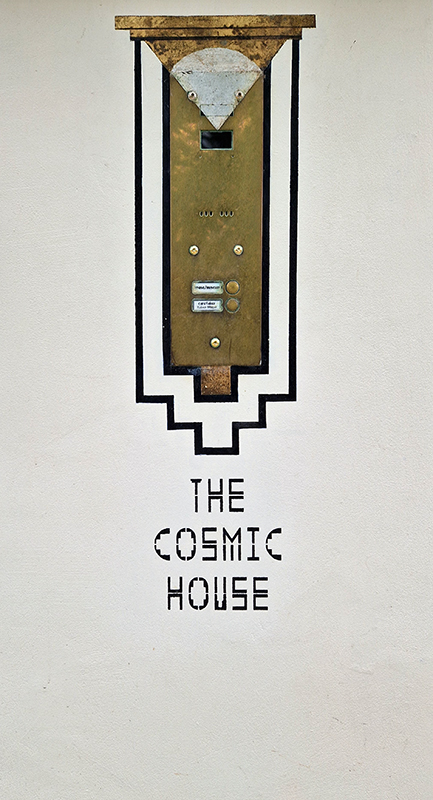
Sensory overload at The Cosmic House, a ‘built manifesto for Post-Modernism’. The original 1840’s residence has been remodelled by Charles Jencks into a complex system of symbols that embrace the creation of the universe, the rotation of the Earth around the Sun, day and night, the seasons, the elements, the understanding of science, and the history of architecture.

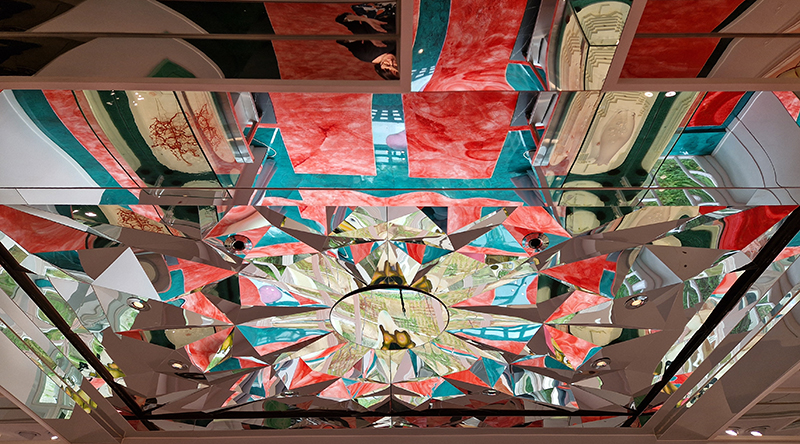
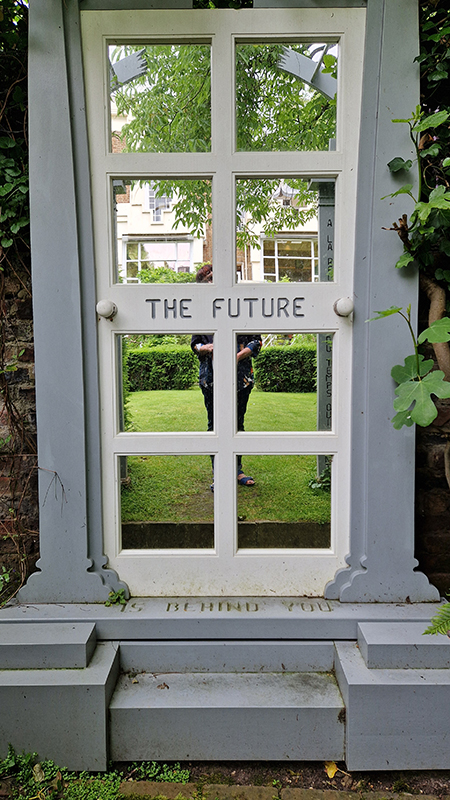
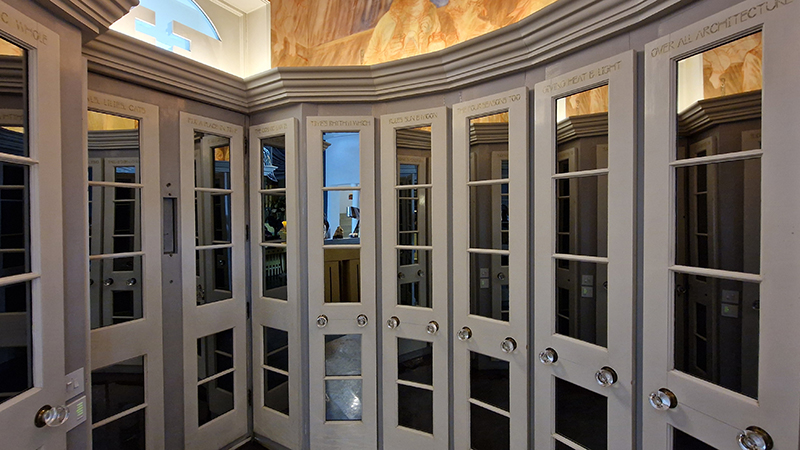
It’s like entering a kaleidoscope, mirrors everywhere, shifting perspectives, glimpses through to other spaces, optical illusions, and all saturated with vibrating colour.

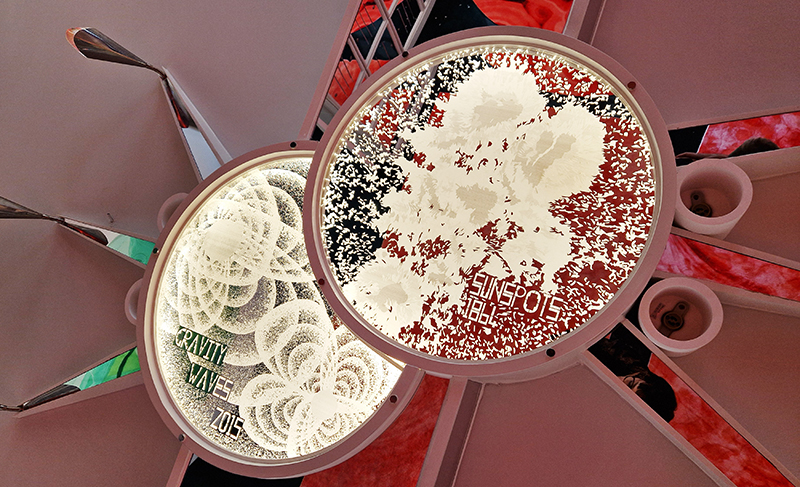
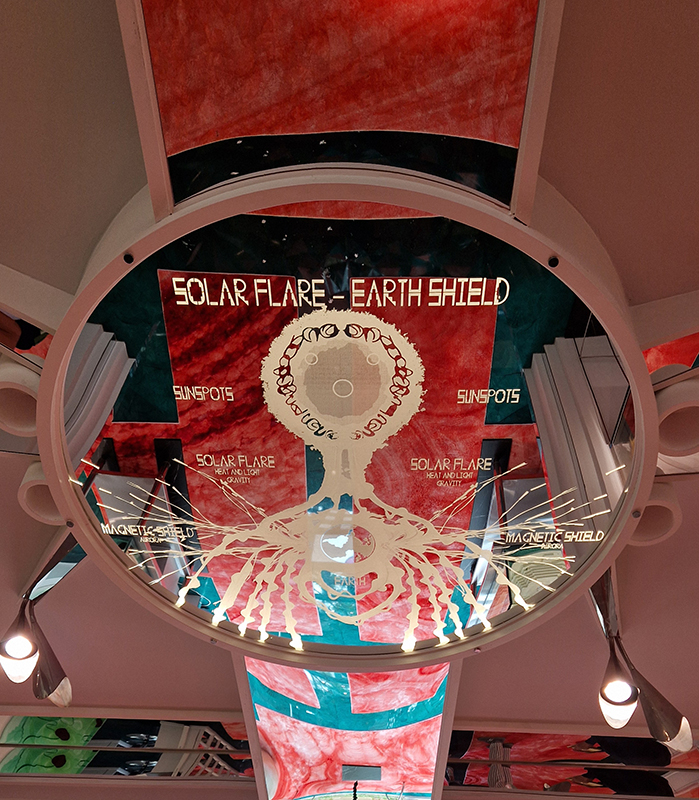
The latest addition to the house is the museum gallery, which Jencks designed but did not live to see completed, with mirrored ceiling plaques on all my favourite things like magnetic fields, solar flares and gravity waves. Amazing place to visit.

There is currently an exhibition THE WORLD TO ME WAS A SECRET: CAESIOUS, ZINNOBER, CELADON, AND VIRESCENT by Tai Shani here whose theatrical colourful works suit this setting.