Archives for posts with tag: exhibition

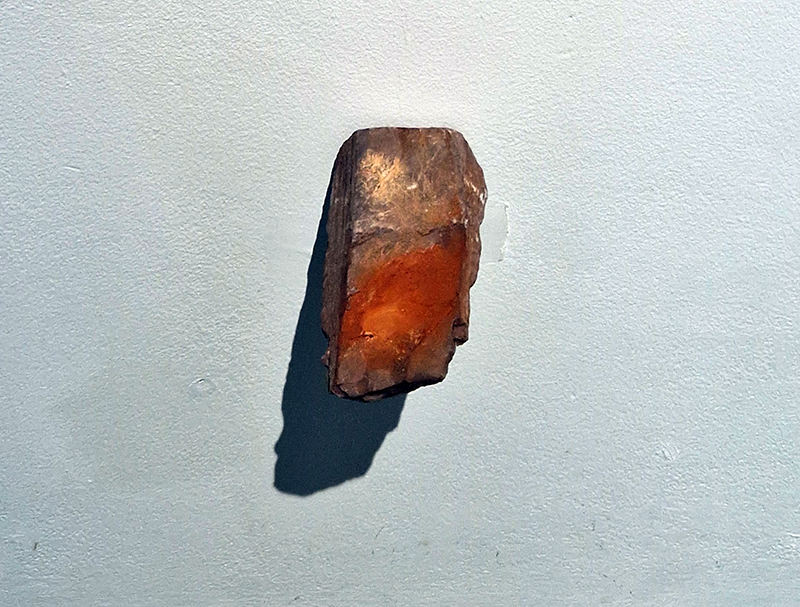
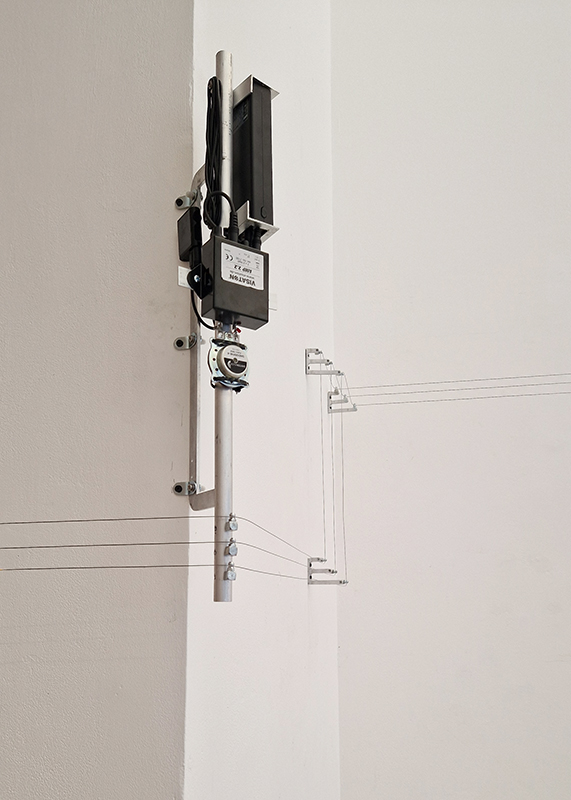
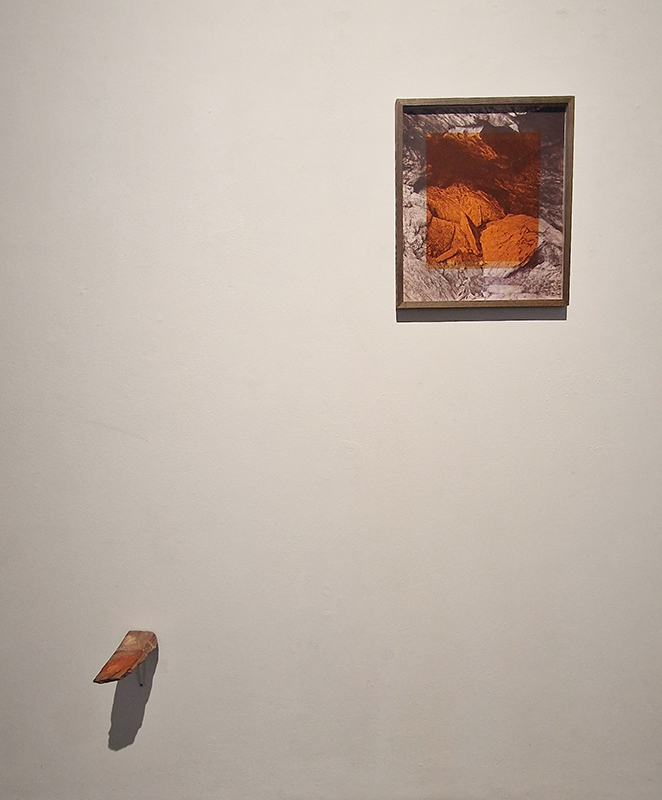
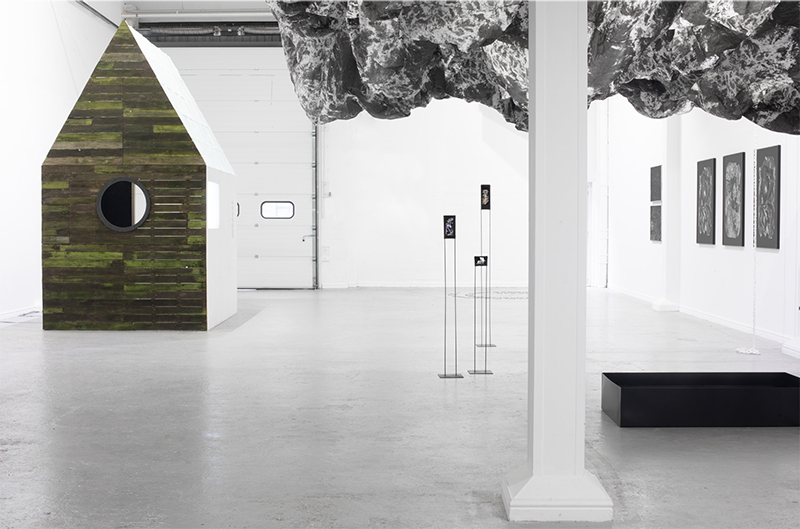
It has been a busy few weeks preparing for The Geological Unconscious at Hypha HQ – a group exhibition, co-curated by Julie F Hill and myself, exploring themes of stone consciousness and human-mineral encounters, destabilising assumptions about passive matter and a stable Earth.
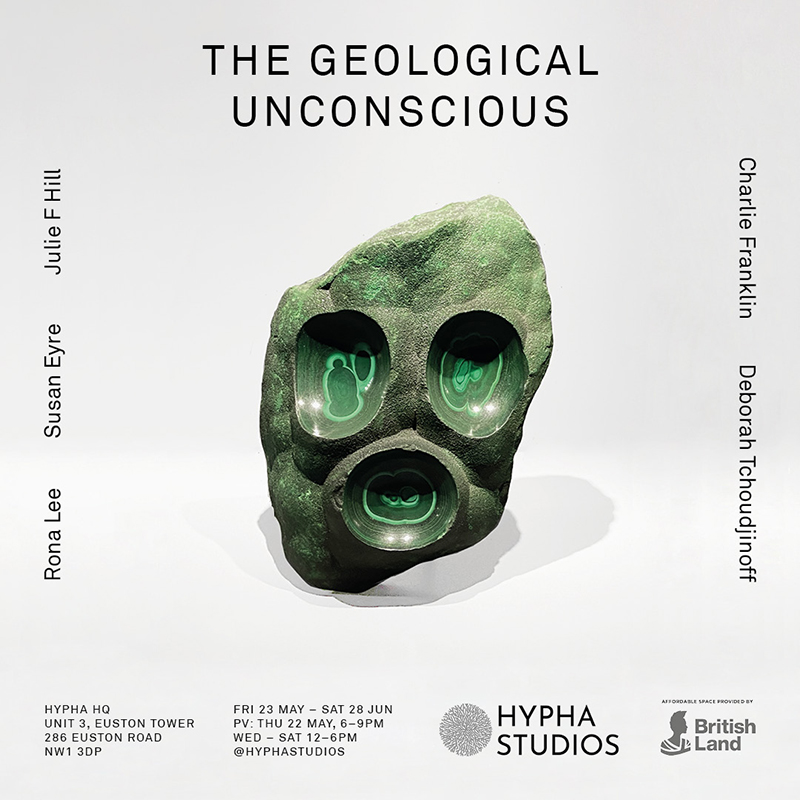
Image: From Roger Caillois’ stone collection: Malachite, masque africain, République démocratique du
Congo, 14 × 20.5 × 6 cm. Photographed in the Museum of Natural History, Paris by Julie F Hill.


Responding to Jason Groves’ inquiry into the mineral imaginary in his eponymous book, as well as the ‘Writing of Stones’ as proposed by writer and mineral collector Roger Caillois, the exhibition exposes the complex entanglements between the organic and the inorganic; the human and the lithic. The Geological Unconscious is viewed through disruptive Surrealist strategies, engagements with the aesthetics of geo-materiality and material processes that attend to the growth and transformation of matter. These artistic ‘excavations’ highlight the toll of extractive industries on our planet, whilst inspiring reverence for the geological lineages of deep, cosmic time. Theories of Animism and Panpsychism are also brought to
bear on ways of attributing agency to inorganic realms.

I am thrilled to be exhibiting with Julie F Hill, Charlie Franklin, Rona Lee and Deborah Tchoudjinoff.
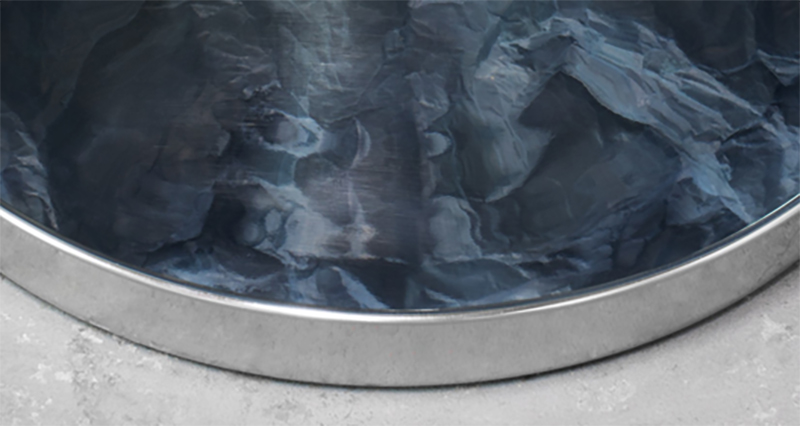

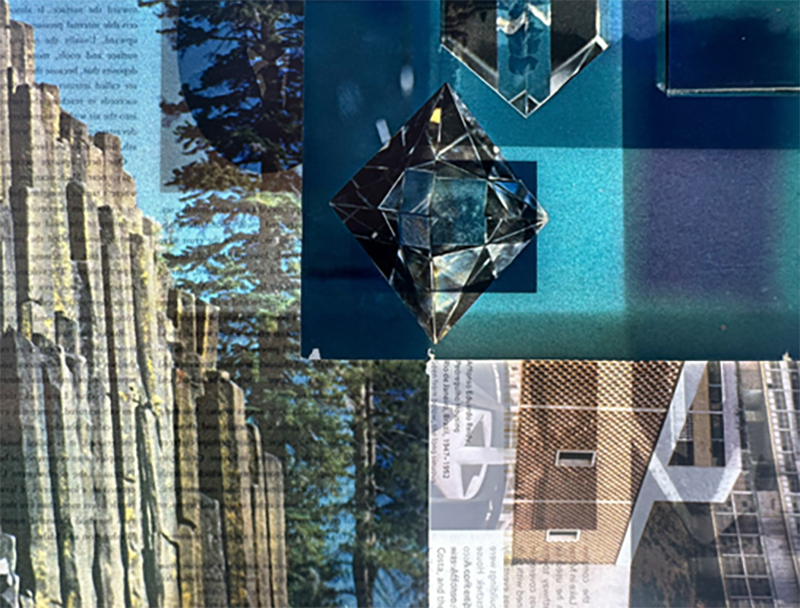
An accompanying events programme includes an urban geology walk with Geologist Ruth Siddall, discussing the origins of the local built environment; an installation and tasting by chef Moonhyung Lee who explores human-mineral entanglements through digestion; a crystal growing workshop led by Julie F Hill and I will be offering visitors lithomancy readings every Friday afternoon.

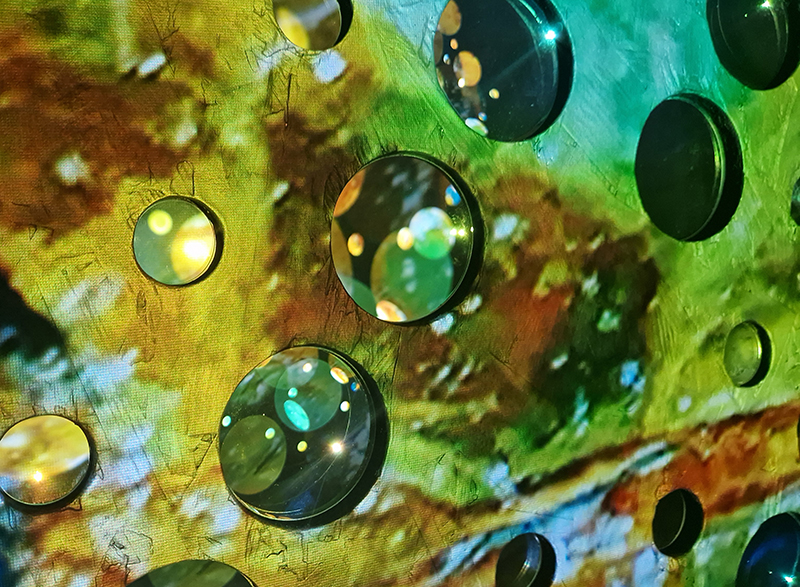
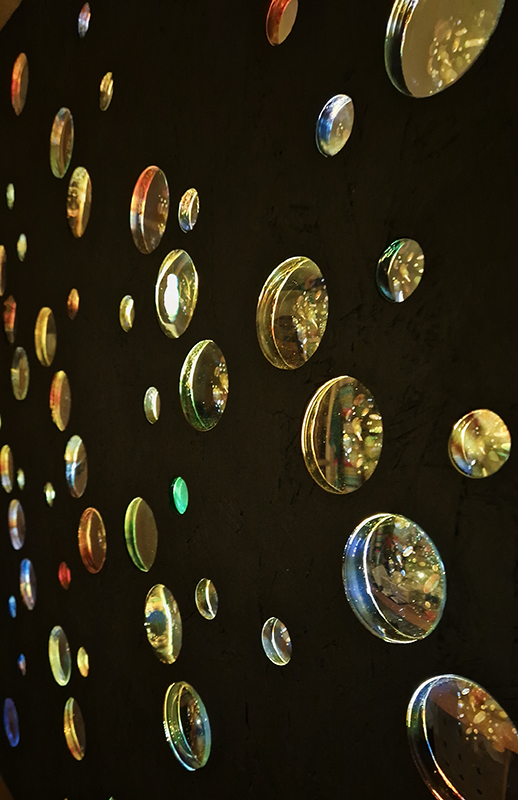
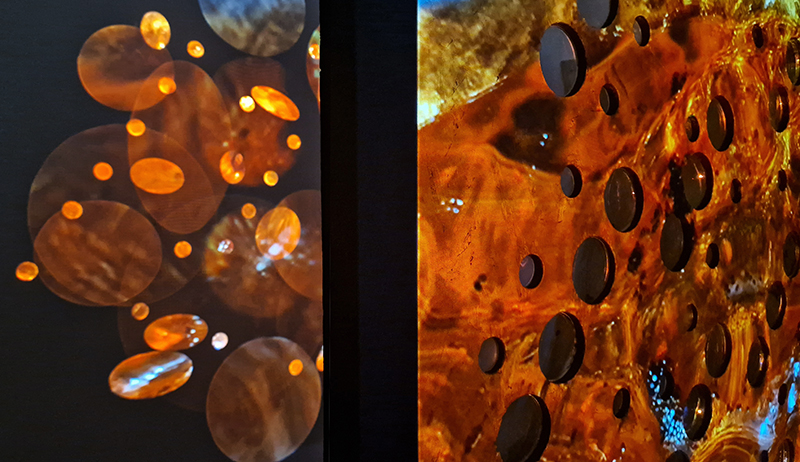
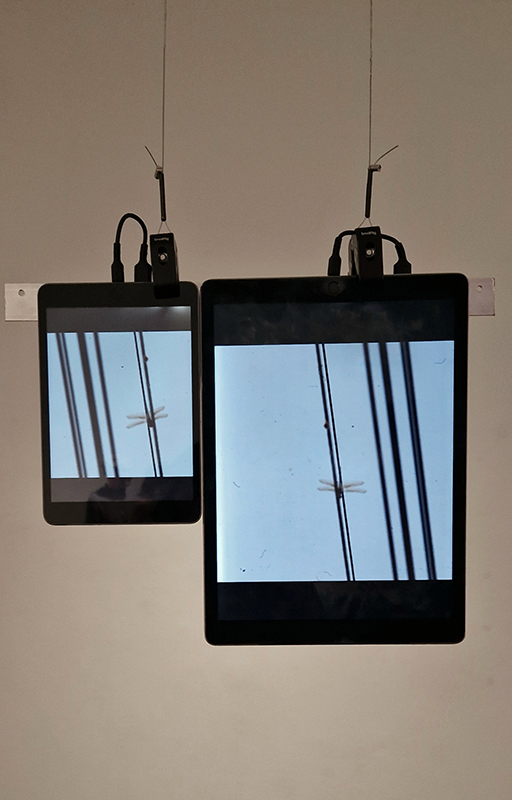
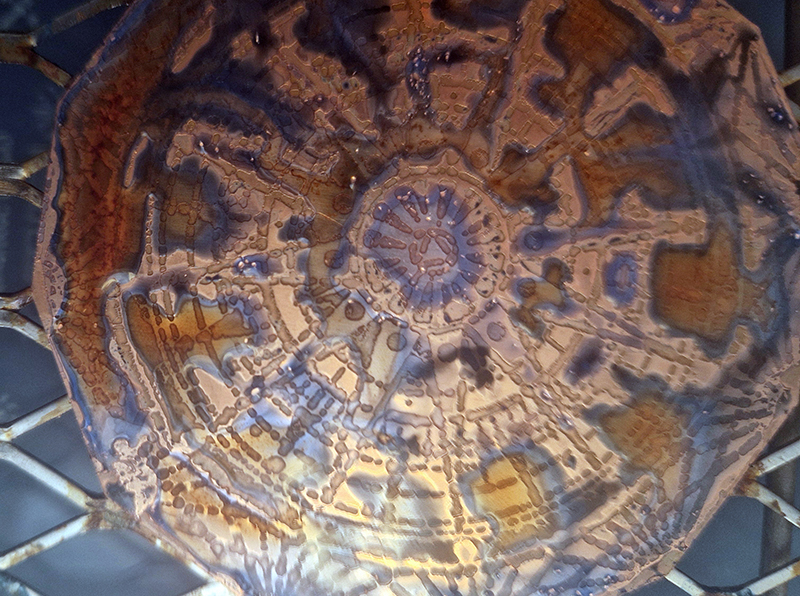
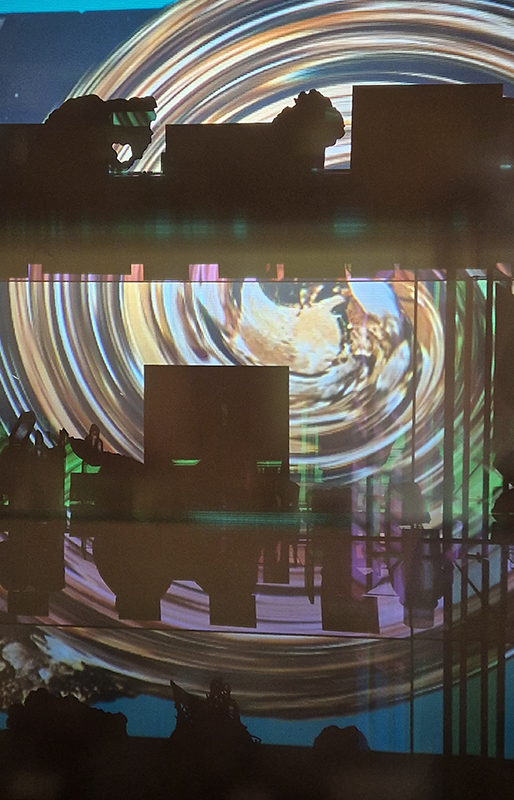
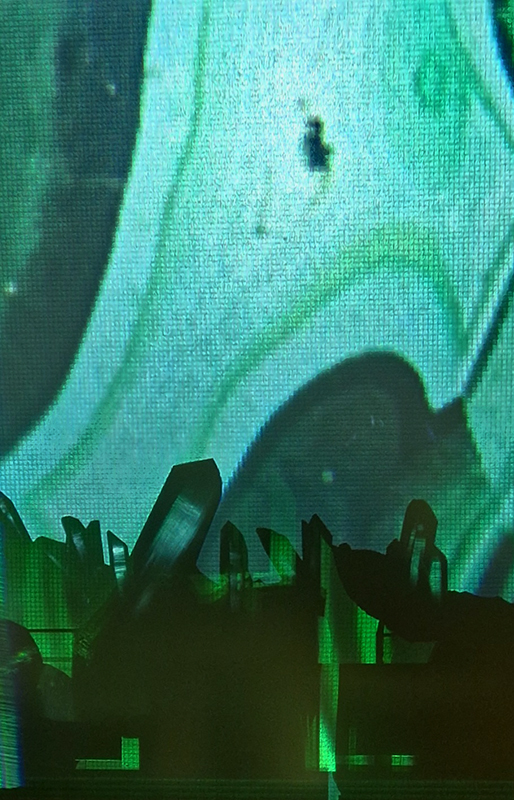
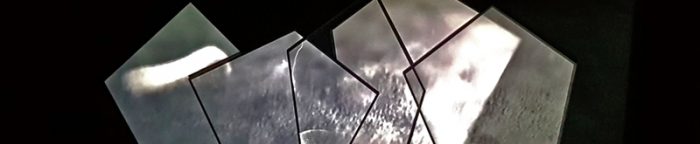
Investigating human/mineral entanglements for new work to be installed at Hypha HQ for The Geological Unconscious. Video of human activity projected through distorting optical lenses transforms the anthropocentric position to imagine the perspective of the rock. The pattern of lenses is informed by the molecular structure of magnetite,
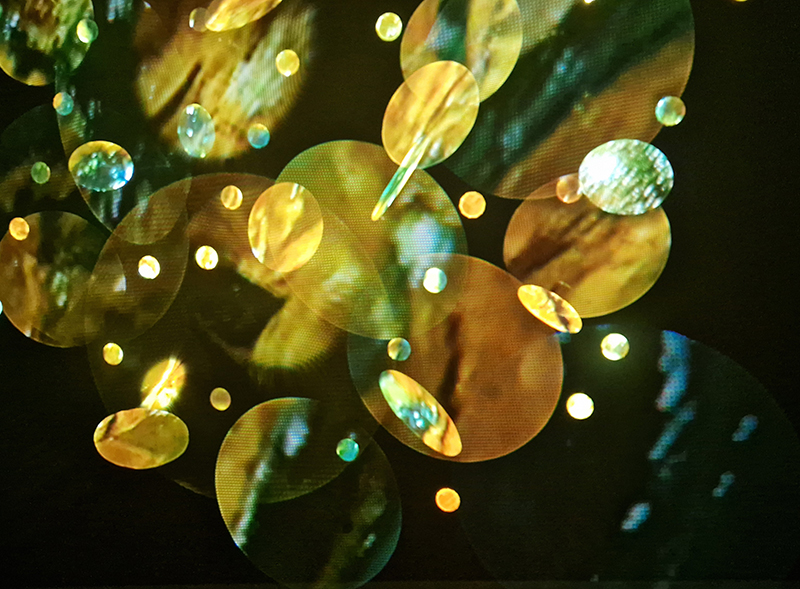
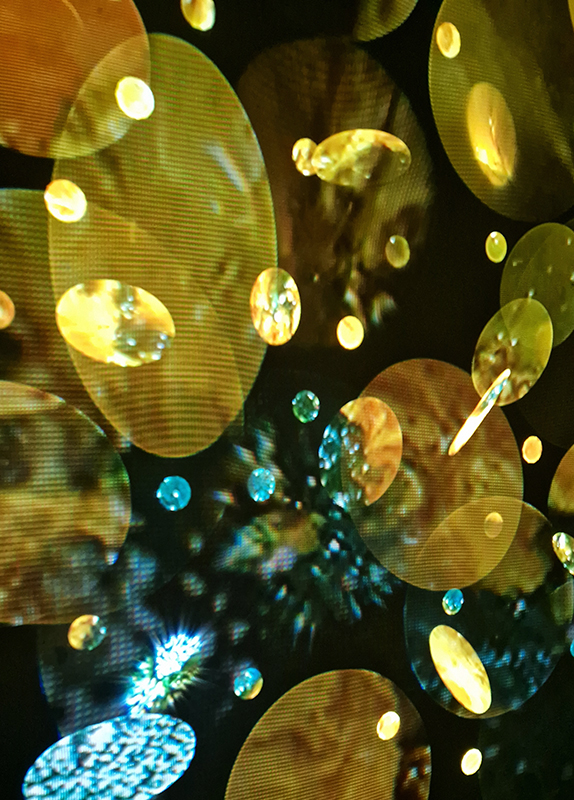
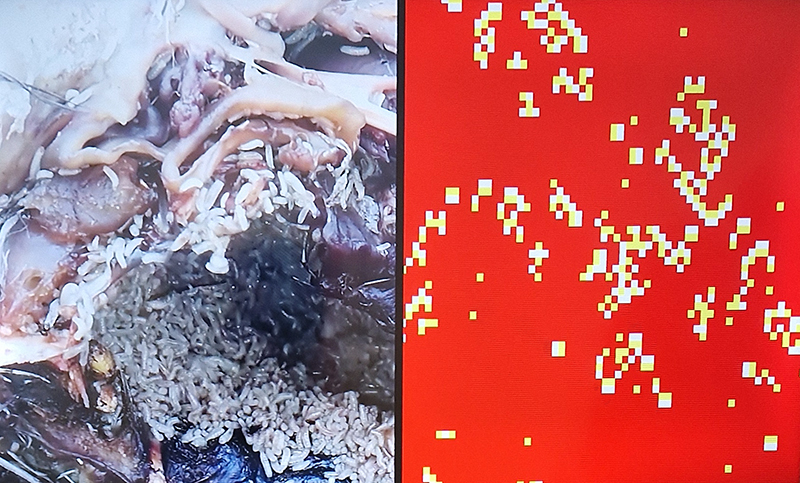
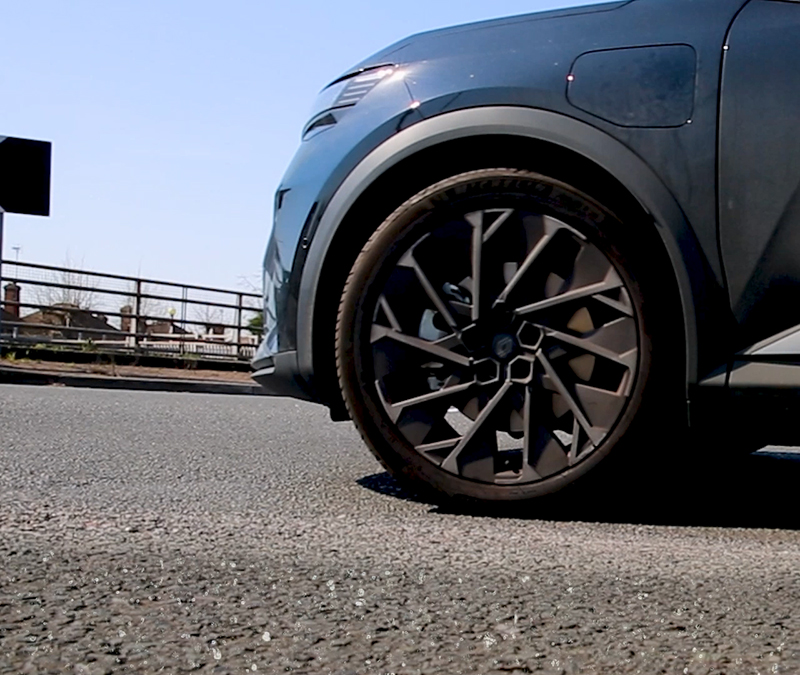
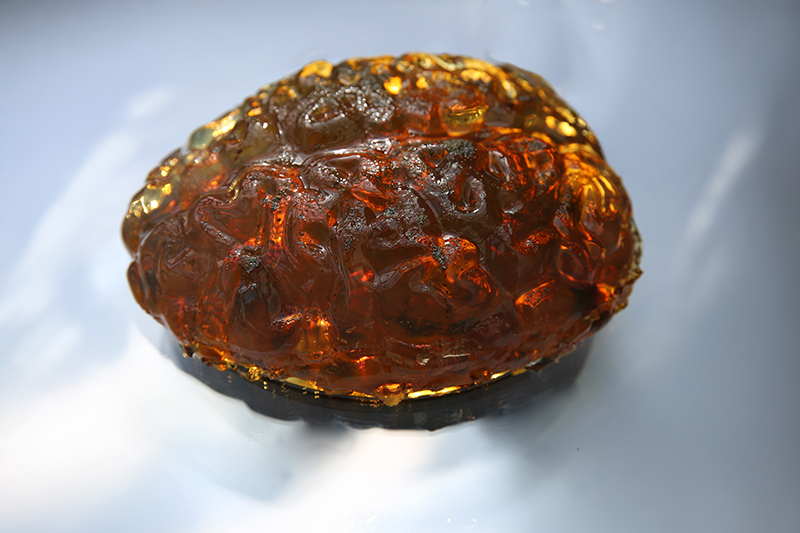
Magnetite is a naturally magnetic mineral found in many organism’s cells including human brain cells. Mined magnetite is used in industrial and mechanical processes and its use in combustion engines and braking systems is releasing nanoscale pollutant particles from traffic into the air which are finding their way into brain cells in high percentages causing concerns with links to degenerative brain diseases. I have been filming the stop start constant stream of traffic at a local roundabout and made a cast of a brain in gelatine with suspended iron filings. The filings oxidised and so the brain took on an iron red tinge and after a few days it cleaved down the centre and gradually as it dried became more and more chiton like.
Chitons are remarkable molluscs that have changed little in hundreds of millions of years. The chiton has hundreds of tiny eyes in its shell, which is made of eight articulating plates. It is the only known creature with lenses made of minerals rather than protein. Another distinctive feature of the chiton is having rows of teeth primed with magnetite, which aid its homing capabilities through magnetoreception and allow chomping on the hard rock surfaces it clings to. Inside the teeth of some species, the mineral santabarbaraite has been found, named after Santa Barbara, a mining district in Italy where it was first discovered and that honours Saint Barbara, who is the patron saint of mining and tunnelling. Santabarbaraite is also one of the few minerals named after a woman.

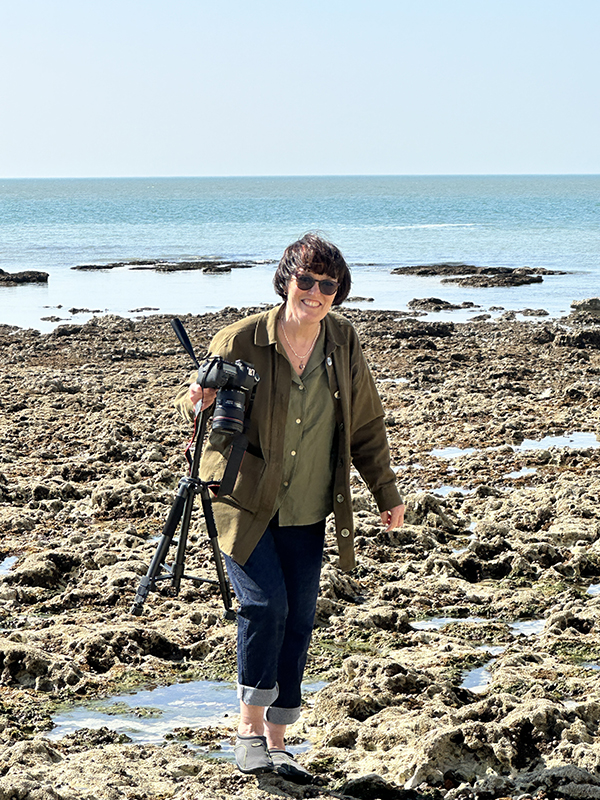
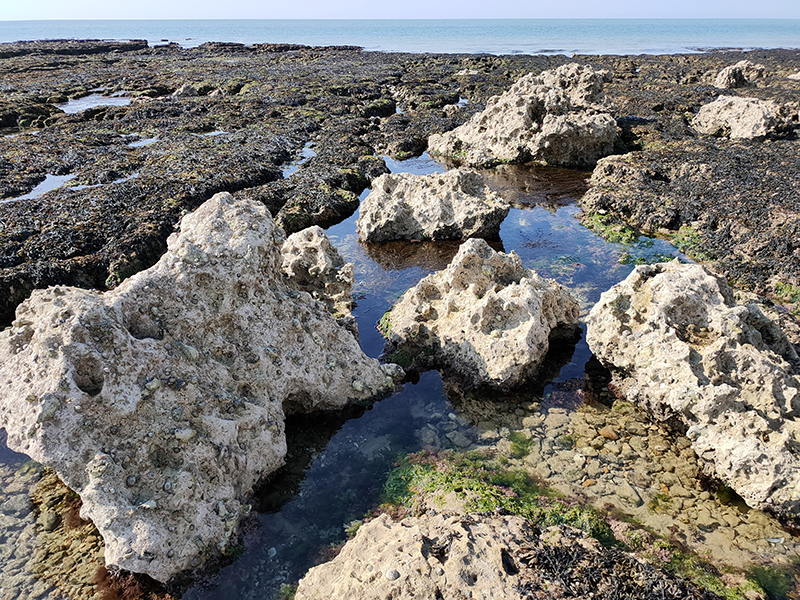
Fantastic day chiton hunting in the rockpools on the stunning East Sussex coast. Thanks to family who helped find these well camouflaged unique creatures.
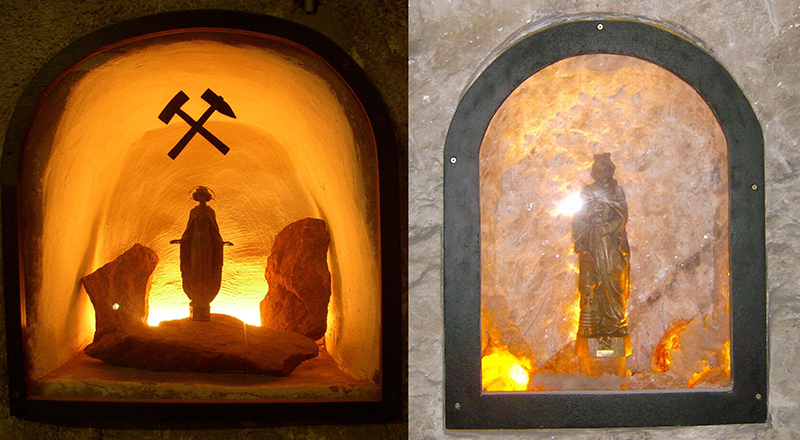
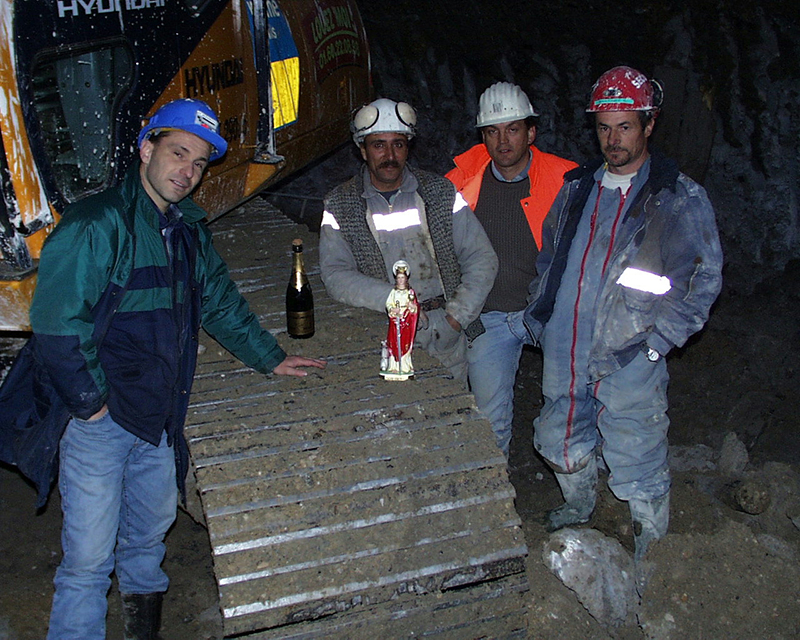
Saint Barbara, was adopted by miners and underground workers as patron saint after the pursuit of geology and the widespread use of gunpowder in mining escalated in the 1600’s. She may have a dubious authenticity but her benedictions are still sought today with many statues installed at the entrances to Crossrail and a large ceremony on her saints day, 4th December, performed by local priests before tunnelling went ahead. Even at CERN the epicentre of scientific rigour, a shrine to Saint Barbara was established at every shaft site of the Large Hadron Collider requiring excavation and a blessing performed even if the priest had to be lowered by crane down the shaft to achieve this.

My mother’s name was Barbara and her birthday 6th December is very close to Saint Barbara’s day on the 4th. It would be great to discover she arrived two days late but there is no one alive now to ask.

Small grains of magnetite are common in igneous rocks, formed from magma having cooled and solidified within the Earth’s crust, and also in metamorphic rock, formed when existing rock is transformed physically or chemically at extreme temperatures. 
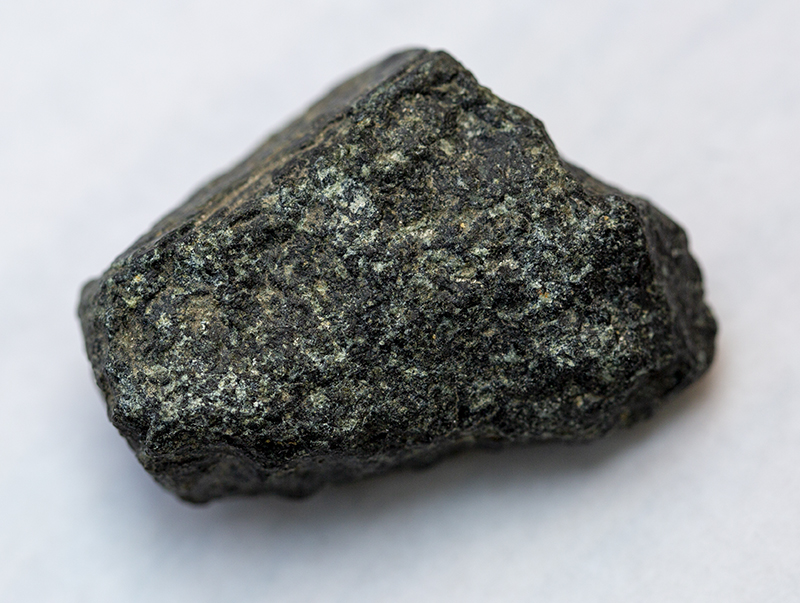
These processes happen on other planets as well as Earth and so magnetite has also been found in meteorites.

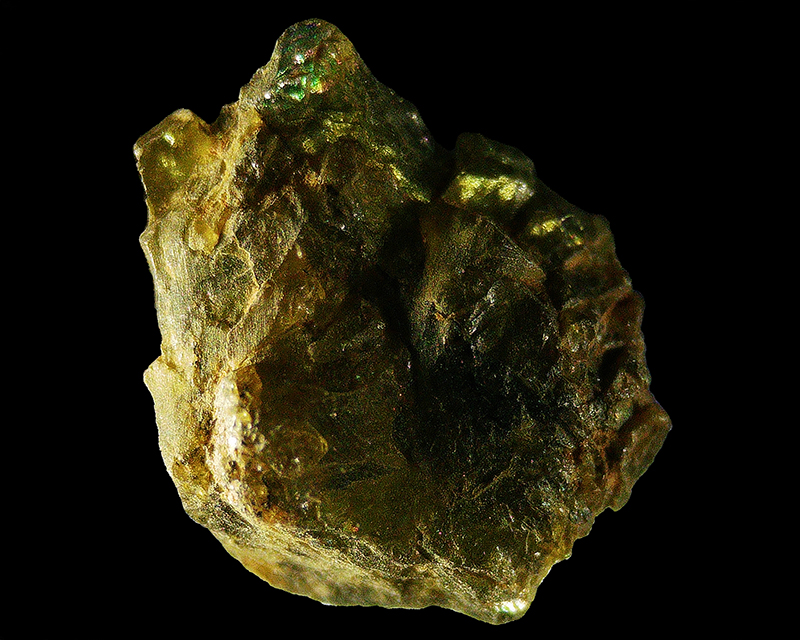
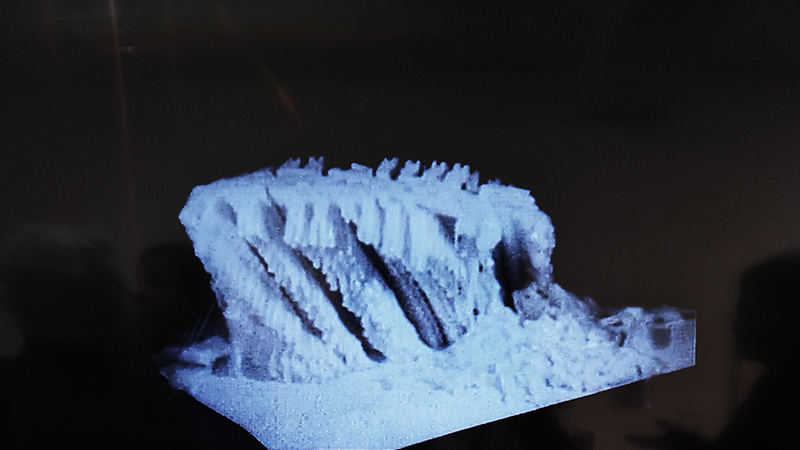
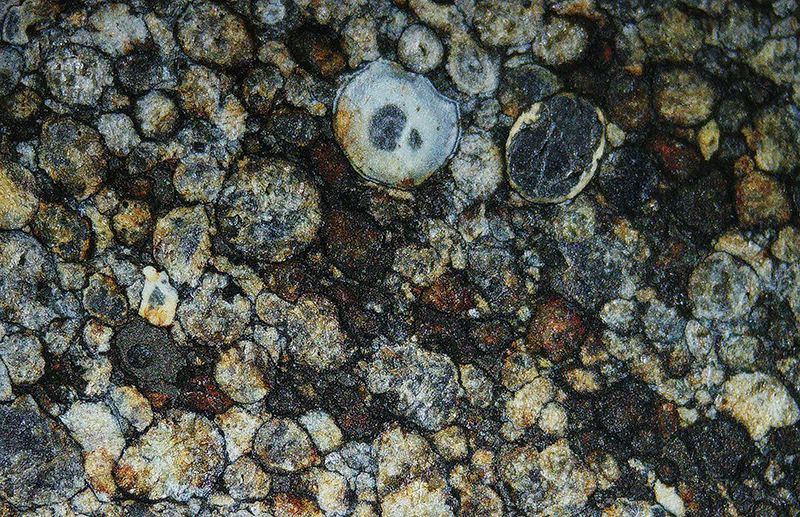
Using a digital microscope to look at the structure of the chondrite meteorite NWA 16975 discovered in the Sahara in 2024 which displays numerous and obvious chondrules and flecks of nickel iron in a fine grained matrix.
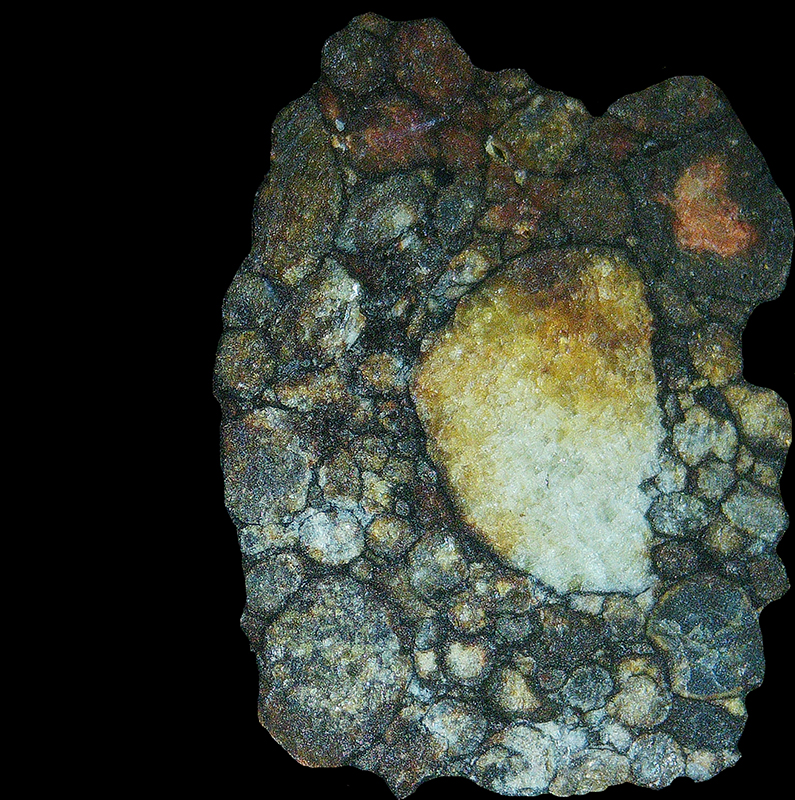
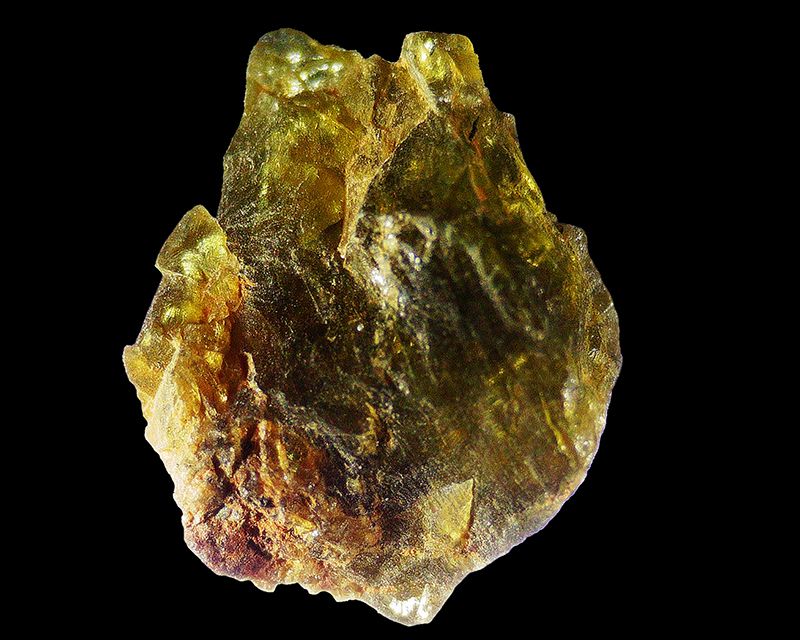
Also the fragment I have from the Diogenite meteorite NWA 7831 found in Morocco in 2013.
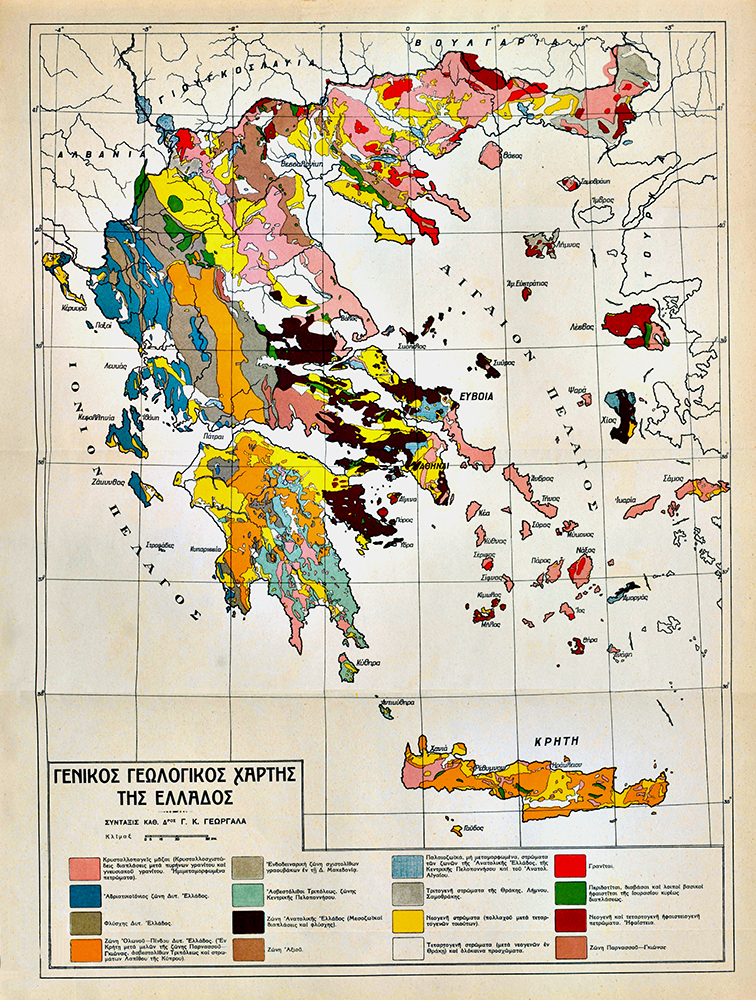
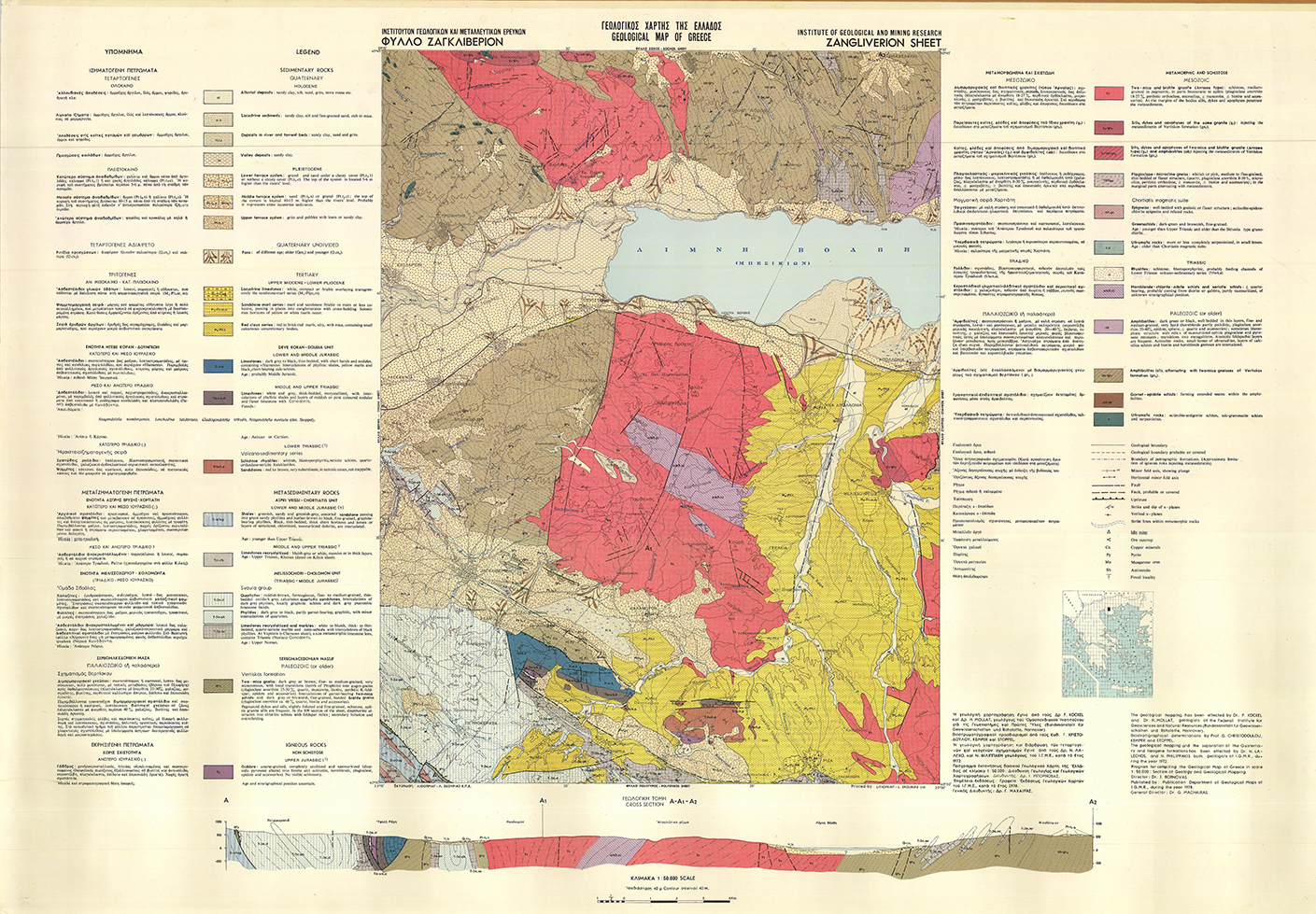
Looking at wonderfully colourful geological maps of Greece to locate the ancient area of Magnesia – the region where magnetite was first discovered and where its name has derived from – known as “magnes lithos” (stone from Magnesia). Definitely want to plan a research trip to this beautiful region around Thessaloniki.
Exhibitions

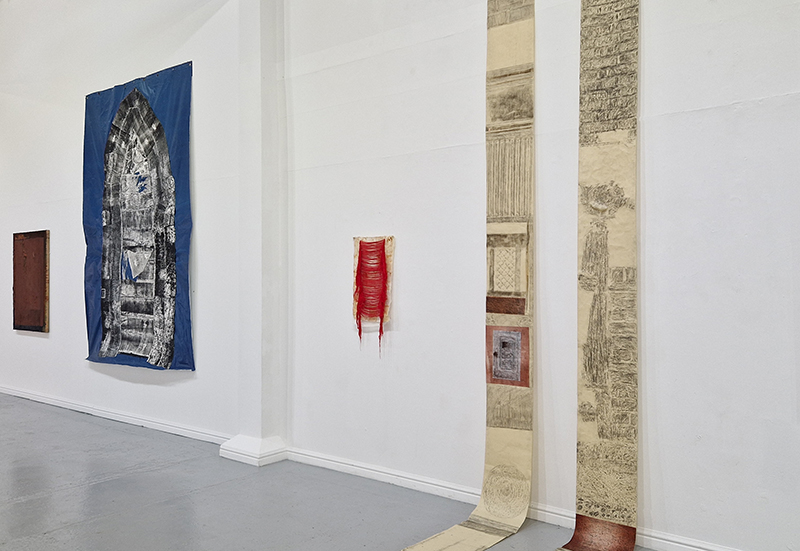
Whatshesaid collective of artists present Terra Incognita at Thames-side Studios Gallery – charting and cataloguing the disregarded, the everyday, its surface textures, accumulations, sedimentations.

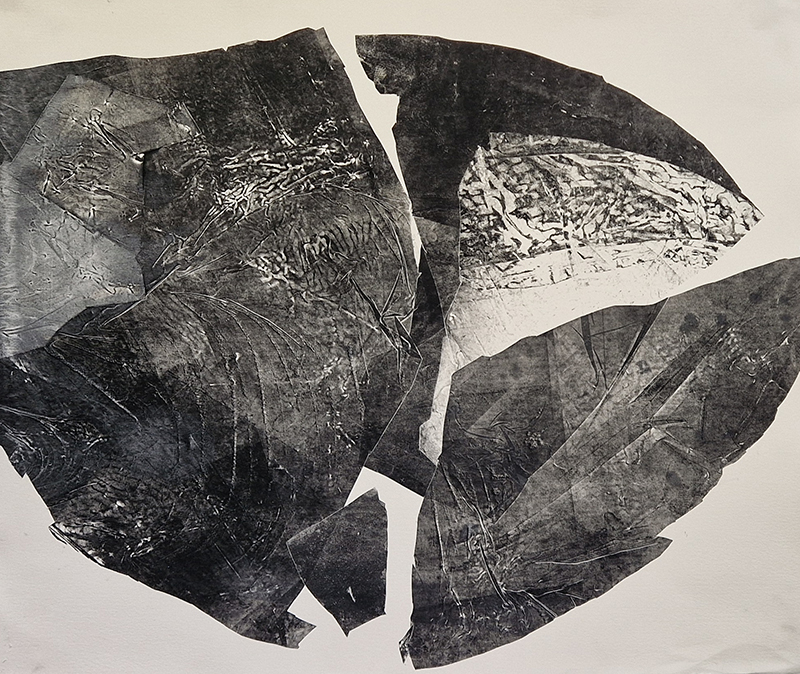
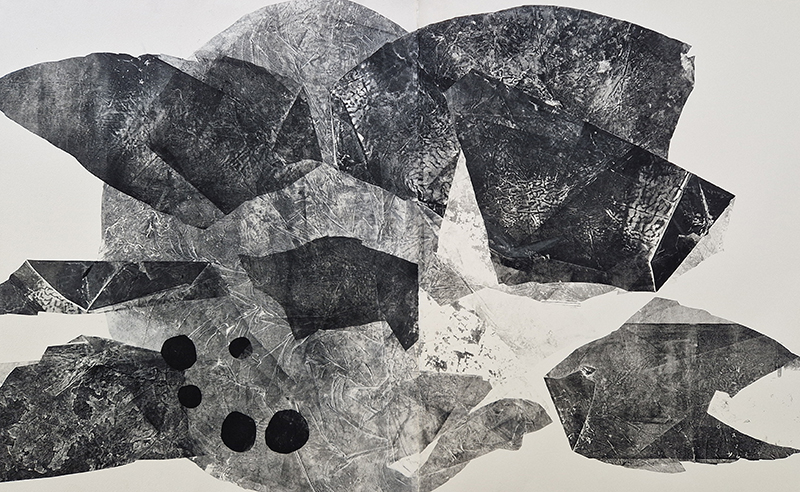
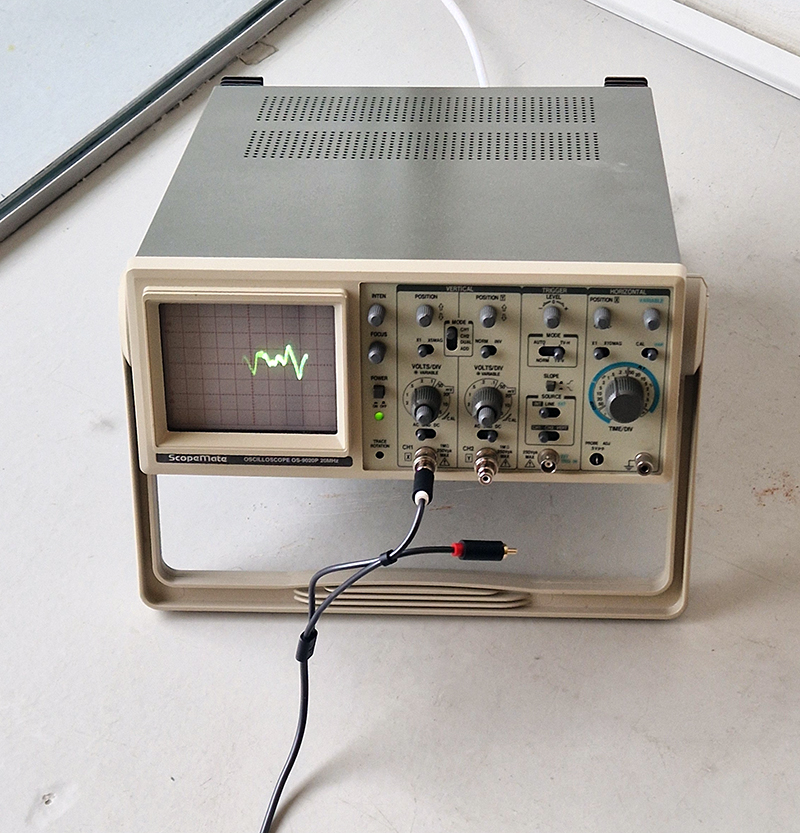
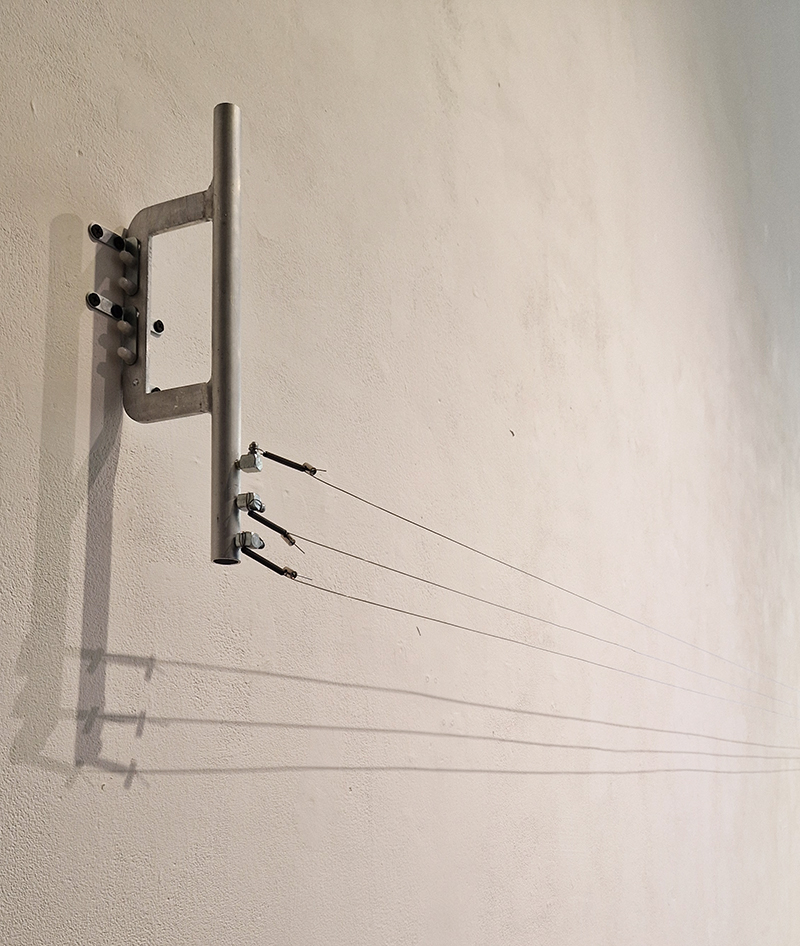
Joao Villas and Victoria Ahrens showing in Spectral Matters at APT Gallery An understated beautifully curated show whose work references the ephemeral materiality of sound, video, photography and print. The work overlaps and crosses over, both artists responding to the other’s practice. The images create matter, as spectral matter gives agency to the materiality of its own making, while haunting the space with its frequency- it vibrates. The exhibition explores memory, technology and the Anthropocene- and how the disappearing materiality of the world is captured through ephemeral means. 
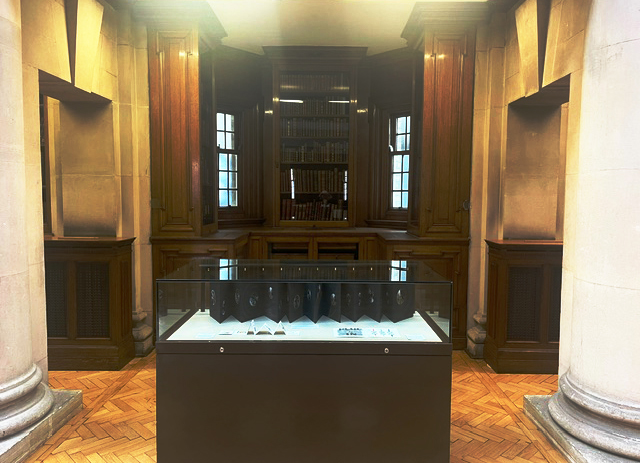
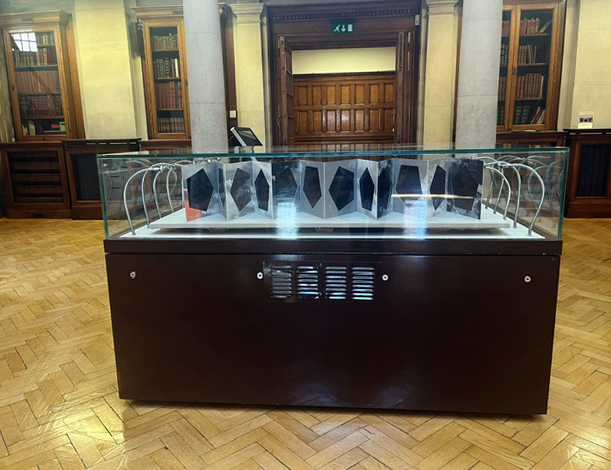
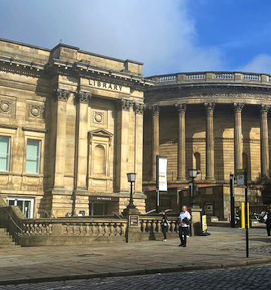
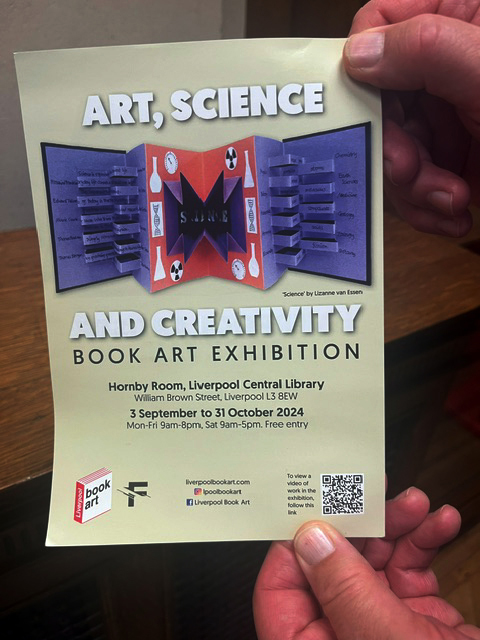
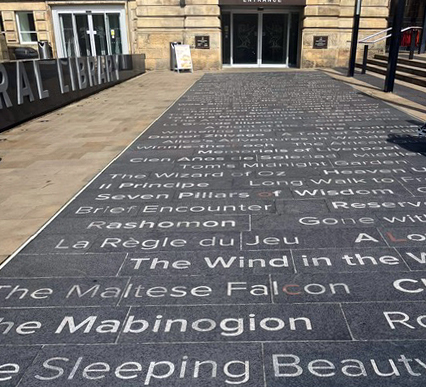
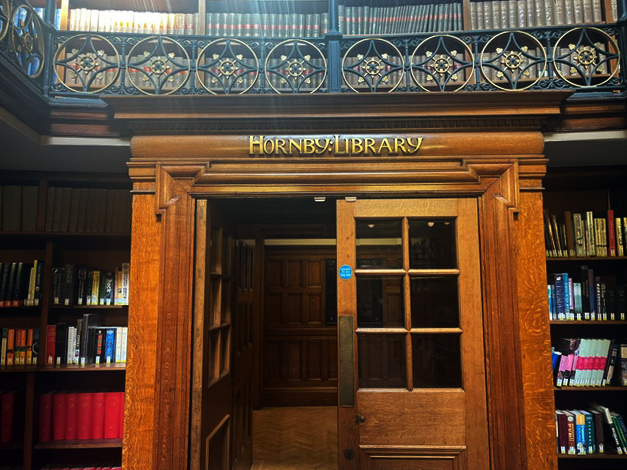
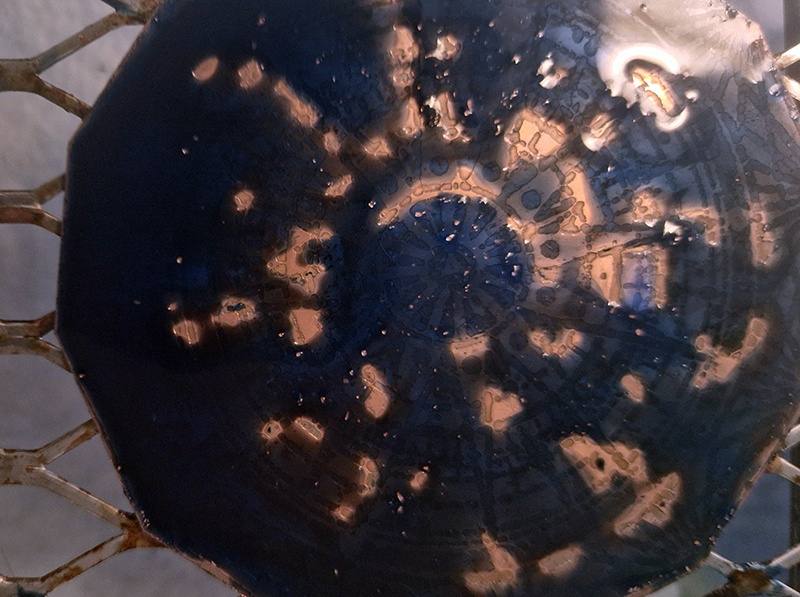
The ‘Art, Science and Creativity’ exhibition at Liverpool’s spectacular Central Library continues. The exhibition is inspired by statements from Albert Einstein, highlighting the fact that creativity is central to explorations in both art and science. As we wonder, and attempt to understand the universe and ourselves, categories can, and perhaps should, become blurred. Distinctions can be both valuable and problematic: ‘art’ versus ‘science’, ‘nature’ versus ‘human’, ‘natural’ versus ‘supernatural’, ‘material’ versus ‘spiritual’, ‘secular’ versus ‘religious’ and so on. And as the great science-fiction writer Arthur C Clarke said “Any sufficiently advanced technology is indistinguishable from magic”.

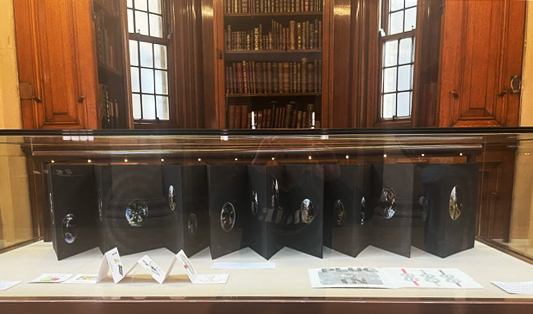
I am very happy to have two unique books included in the exhibition. In/Out and Unbound.

Liverpool Book Art and Fevered Imagination are collaborating to create a video loop of all the artworks, enabling audiences to get a fuller appreciation of the artists’ creativity than allowed by the use only of display cases. Fevered Imagination is a website dedicated to Artists Books, through which works from the exhibition can be bought.

I am delighted to be invited by Serendipity Arts Foundation to show Cosmic Chiasmus: crossing the universe at Serendipity Arts Festival in Goa later this year.

Serendipity Arts Foundation is an organisation that facilitates pluralistic cultural expressions, sparking conversations around the arts across the South Asian region. Committed to innovation and creativity, the aim of the Foundation is to support practice and research in the arts, as well as to promote sustainability and education in the field through a range of cultural and collaborative initiatives. The Foundation hosts projects throughout the year, which include institutional partnerships with artists and arts organisations, educational initiatives, grants, and outreach programs across India.

Serendipity Arts Festival is one of the largest multi-disciplinary arts initiatives in the South Asian region. It spans the visual, performing, and culinary arts, whilst exploring genres with film, live arts, and literature. Besides the core content, which is conceptualised by an eminent curatorial panel, the Festival has various layers of programming, in the form of educational initiatives, workshops, special projects, and institutional engagements. Through active conversations between the artistic community and the urban, social landscape, the Festival continues to evolve around the mandate of making the arts visible and accessible. The Festival is driven by a spirit of collaboration, hoping to inspire new perspectives and fresh aesthetic encounters. This labour of love is a cultural experiment that also addresses issues such as arts education, patronage culture, interdisciplinary discourse, inclusivity, and accessibility in the arts.

Other exciting news is that Julie F. Hill and myself are working together again on a new project. Following on from our ambitious duo show A Stone Sky at Thames-side Studios Gallery (Nov 23), we will be curating and participating in an exhibition next spring, exploring themes of stone consciousness and human-mineral encounters.

In the studio I have been working on a proposal for the Moon Gallery. Moon Gallery is an international collaborative artwork and a gallery of ideas which aims to set up the first permanent museum on the Moon. Moon Gallery will launch 100 artefacts to the Moon within the compact format of a 10 x 10 x 1cm plate on a lunar lander exterior panelling as early as 2025.

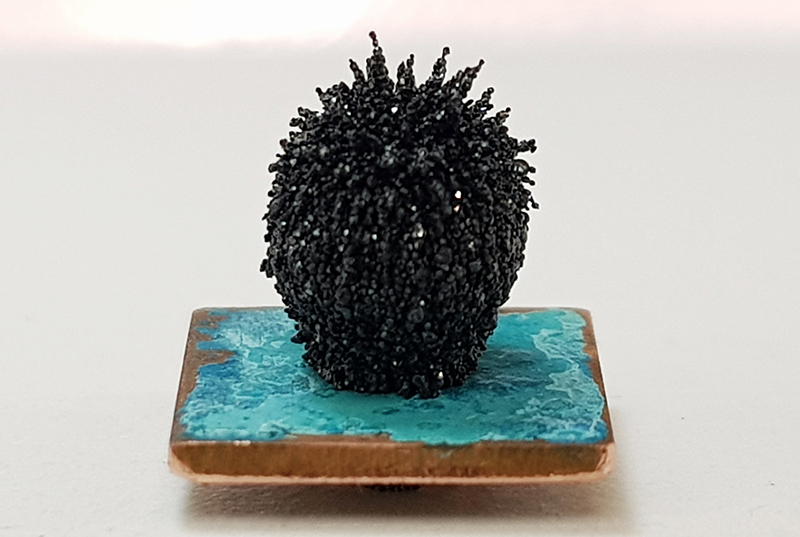
Each sculpture has to fit within a 1cm cube, which is quite challenging. My proposal is a 5mm spherical magnet sparkling with black volcanic sand on a 1cm square of patinated copper. Space exploration means leaving the protective shield of Earth’s magnetic field, placing astronauts and technology at risk from increased levels of harmful high energy particles. This artwork is a small realization of a magnetic field offered as a symbol of safe passage to those venturing beyond our home planet and protection of Earth’s magnetosphere. The black volcanic sand used in this work is naturally magnetic, making visible the force that emanates from the core of the magnet. The patination colour reflects on the astonishing view of our blue planet from the moon and the importance of water to sustain life. The title Core Values, makes reference to the molten core necessary for a planet to generate a magnetic field as well as the ethical principles and beliefs that guide humanity in a positive spirit of peaceful cooperation for the benefit of all. The work operates as a motif for what is in the heart of a body, rocky or otherwise. It also celebrates the beauty of the elements and natural forces that together inspire the human imagination and makes the cosmos so exciting to explore.

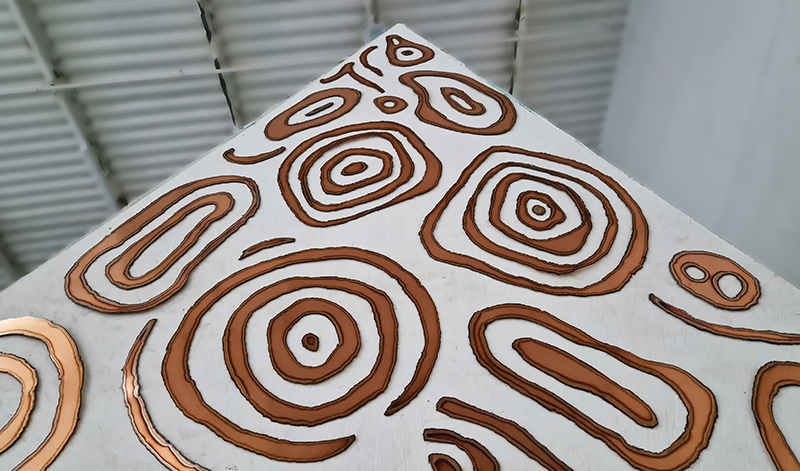
I have been sorting out the copper contours from The Absolute Hut (of action potential) as I couldn’t store this work, it had to be dismantled. The copper will be reused in future work.

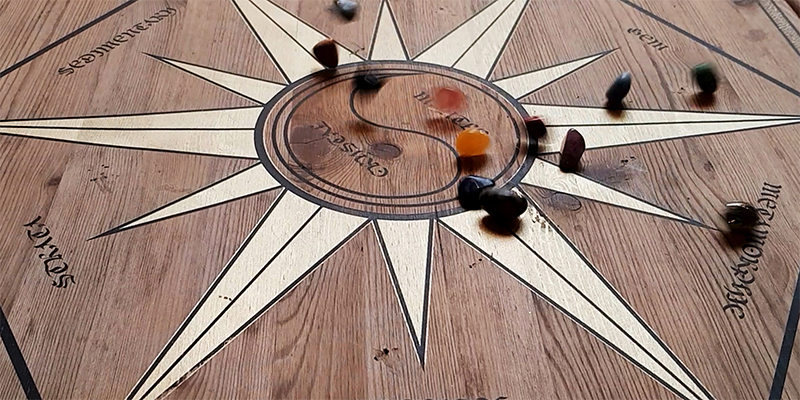
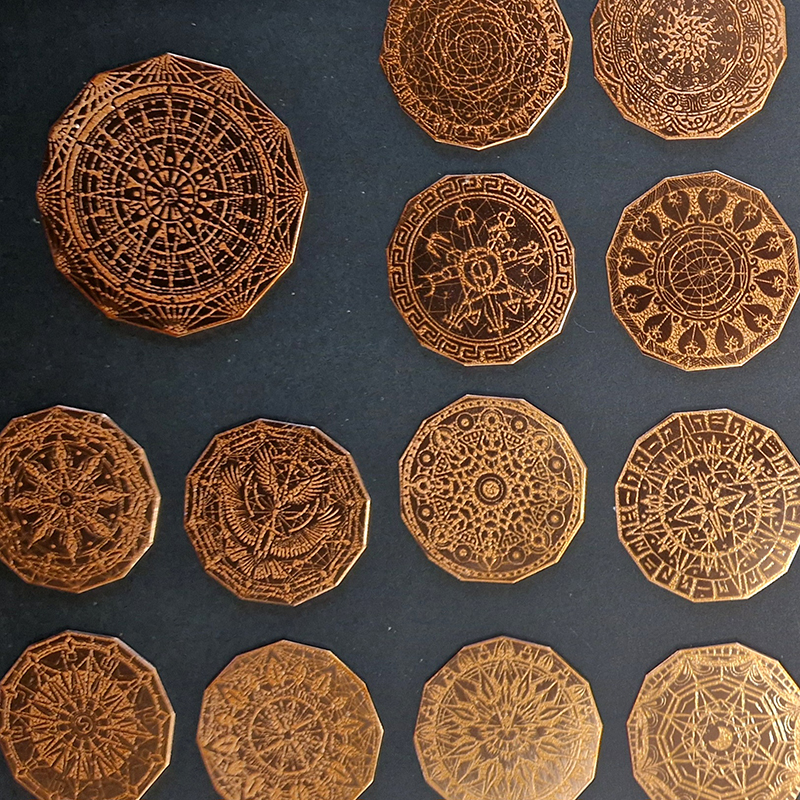
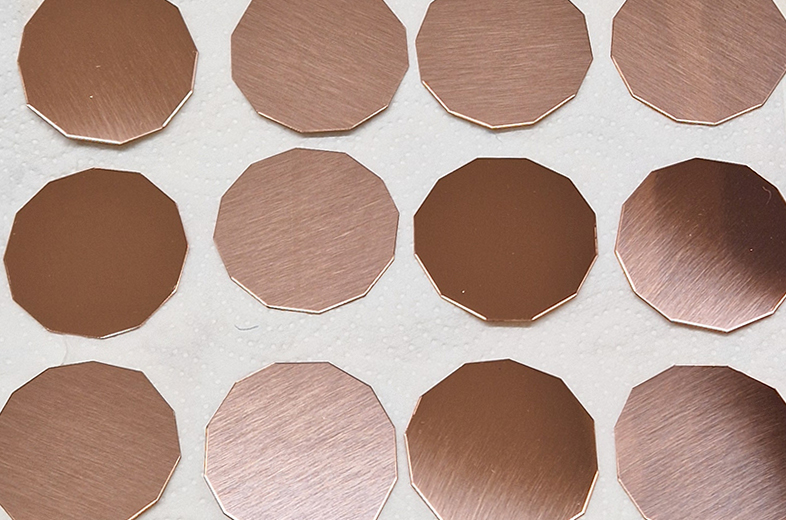
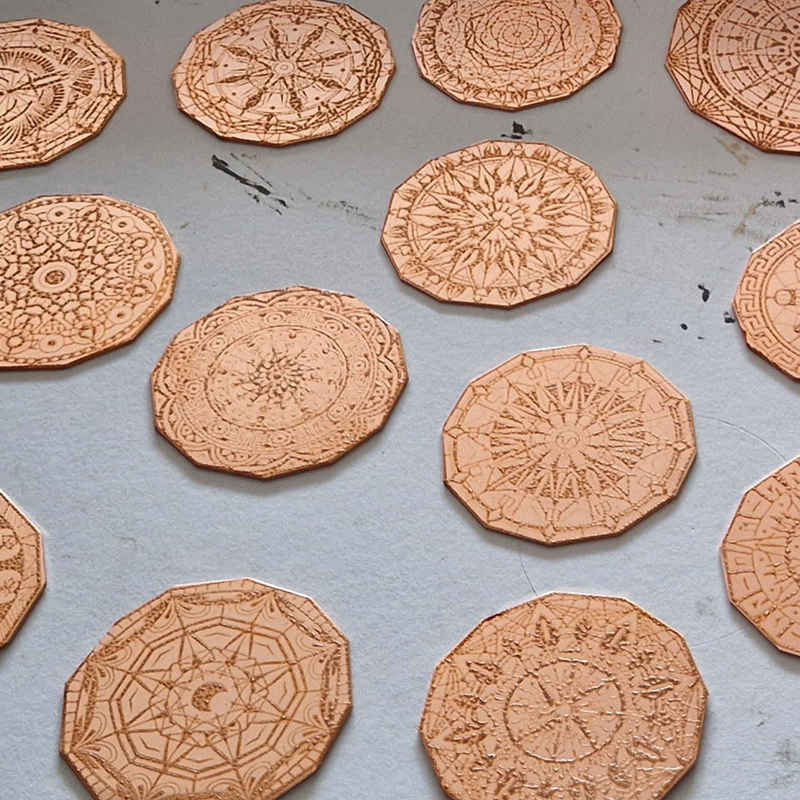
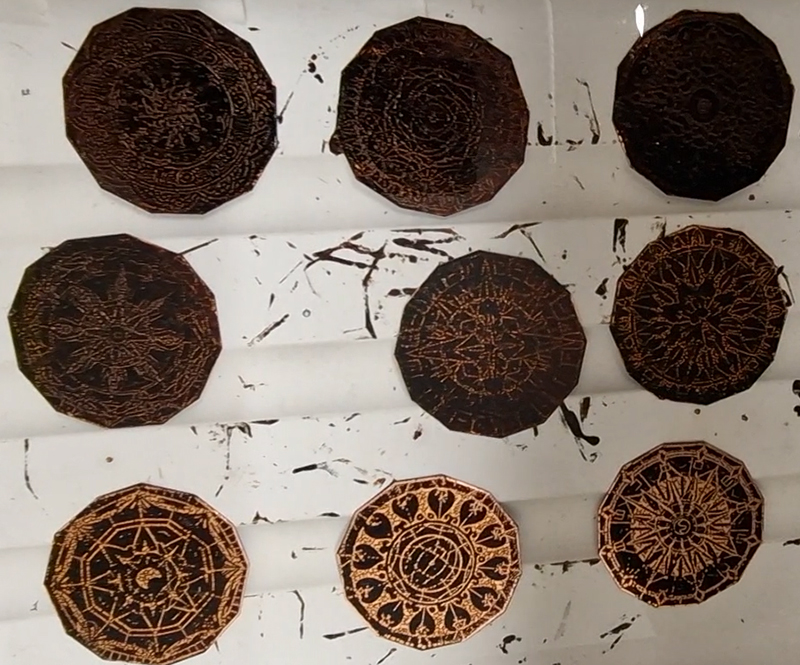
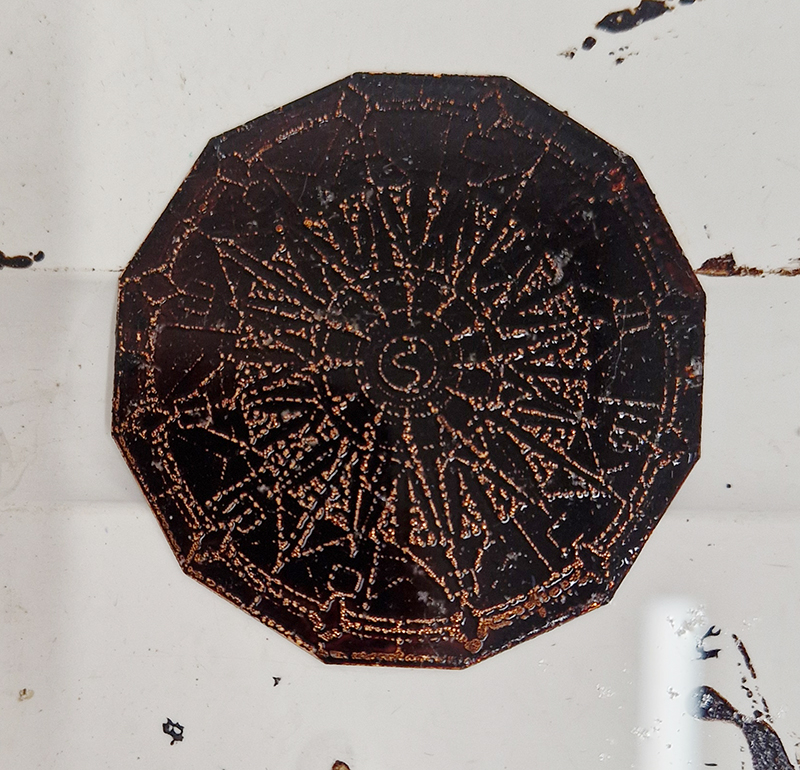
I am making a new concrete tablet for Instruments of the Anemoi series with more detailed compass rose inspired copper insets. The copper is guillotined to shape and screen printed with a sugarlift solution.

The pieces are then dipped in bitumen and left to dry before putting in a bath of warm water to dissolve the sugar solution, leaving the design ready to be etched.

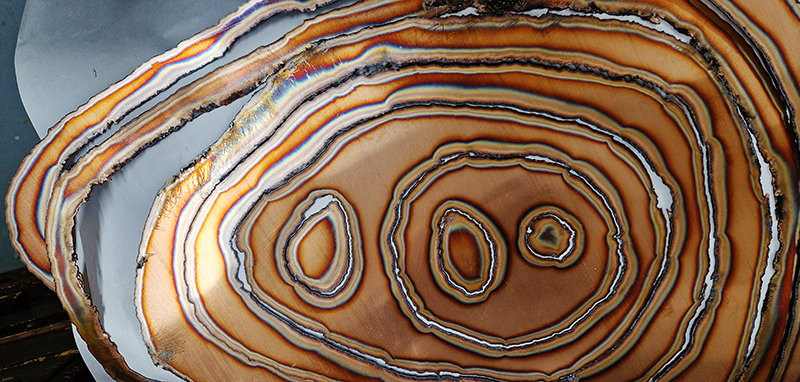
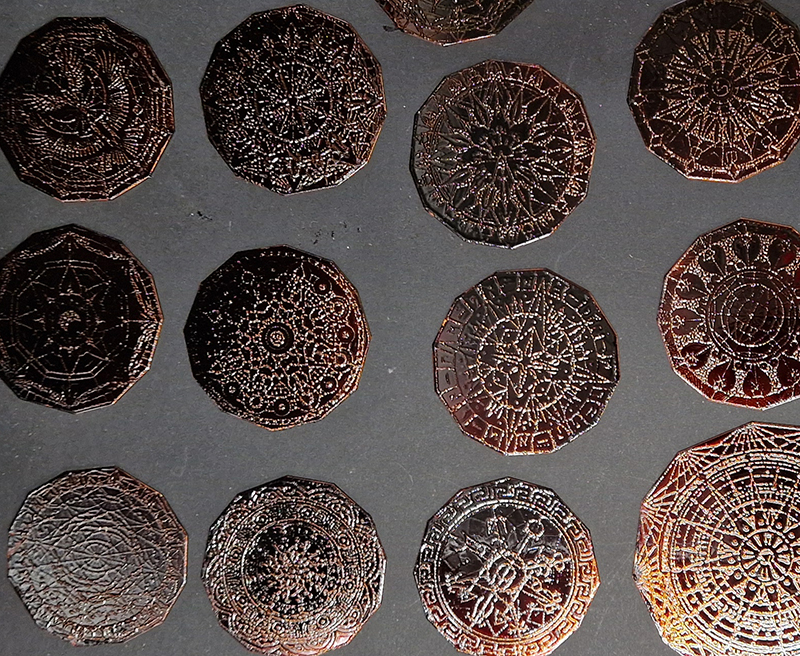
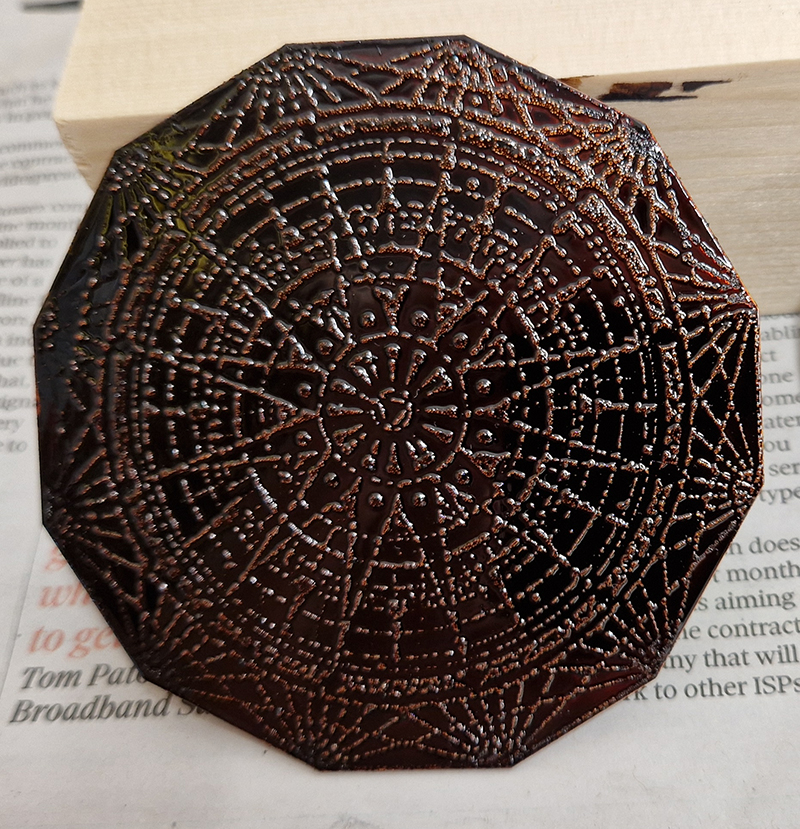
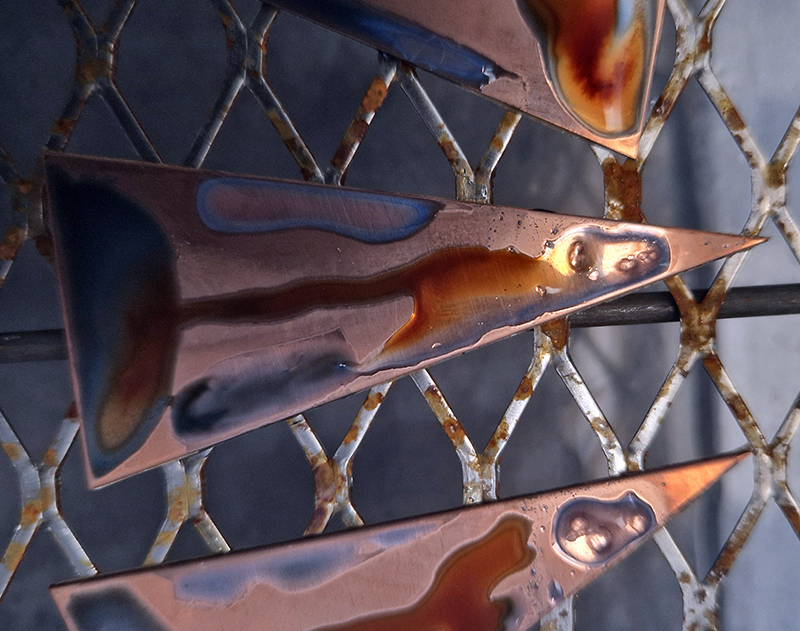
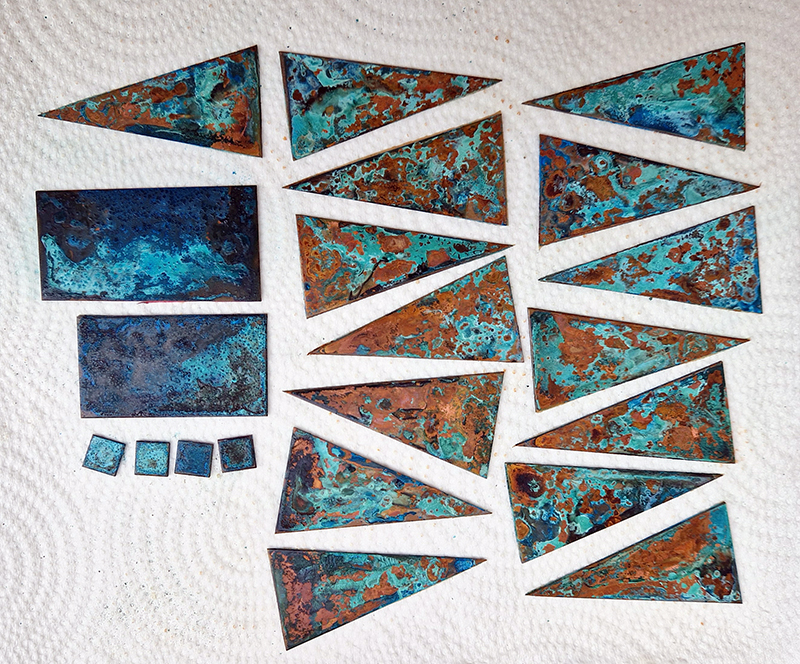
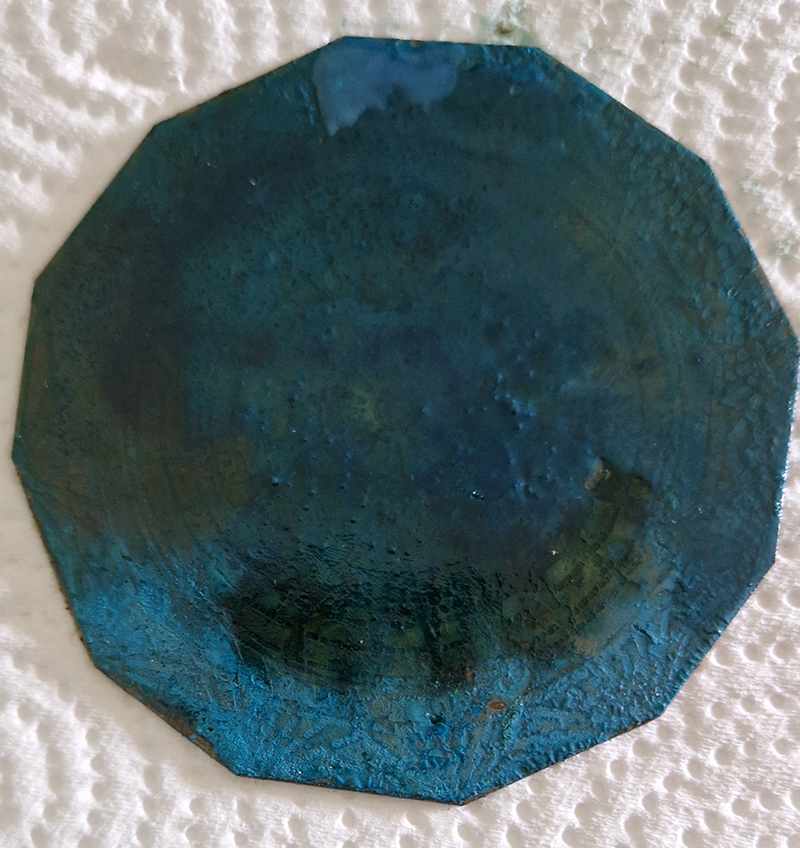
I also cut some copper shapes to patinate, painting the copper with salt and vinegar and soy sauce before fuming in an ammonia bath. I love how the colours change throughout the process.

I was going to patinate the dodecagon shapes as well but in the test I did, I lost a lot of detail, so these will just be inked and left.

Gallery Visits

Charmaine Watkiss showing her beautiful drawings full of symbolism in Hard Graft at Wellcome Collection. The exhibition explores the impact of work on health and her works celebrate the ancestral herbal knowledge of medicinal and edible plants and fruits that carry powerful healing properties.

These were used to secretly cure illnesses and prevent diseases as an act of survival and self-dependency, distinct from Western medicine. The connection between herbal healing and African spiritual practices is represented by cosmological symbols discreetly tattooed on the women’s bodies. Natural dyes – such as Jamaica’s Blue Mountain coffee and indigo – and materials such as brass and raffia palm embed historical knowledge in the fabric of the works. This knowledge is preserved, yet concealed, by the figures who avoid the viewer’s gaze.

The London Group Stillness in Movement at Bermondsey Project Space. Taking three evocative lines from Four Quartets by T S Eliot as a starting point for this group show. Images – Carol Wyss, Sandra Crisp, Genetic Moo and Beverley Duckworth.

‘Not known, because not looked for
But heard, half heard in the stillness
Between two waves of the sea’


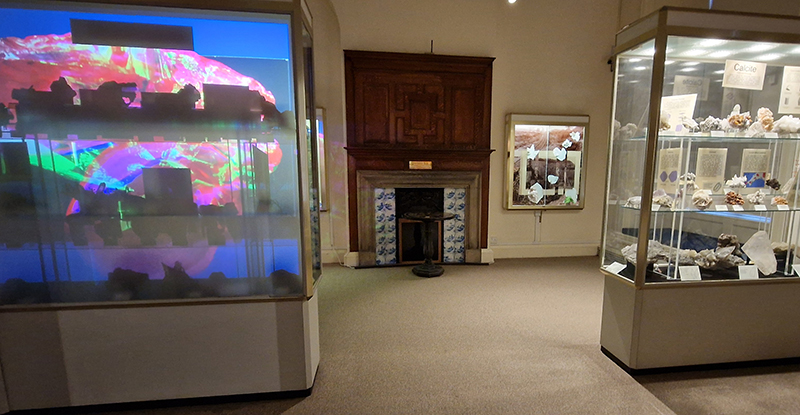
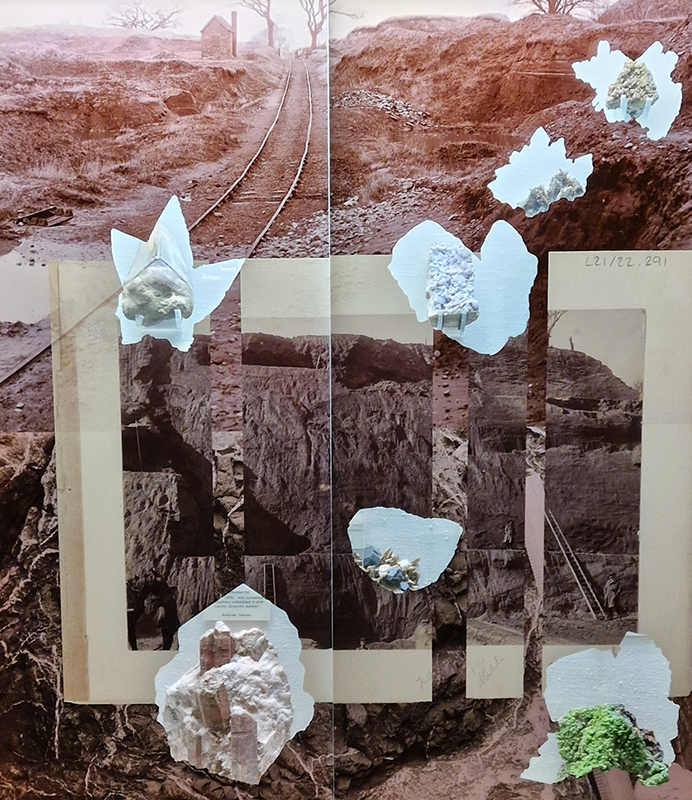
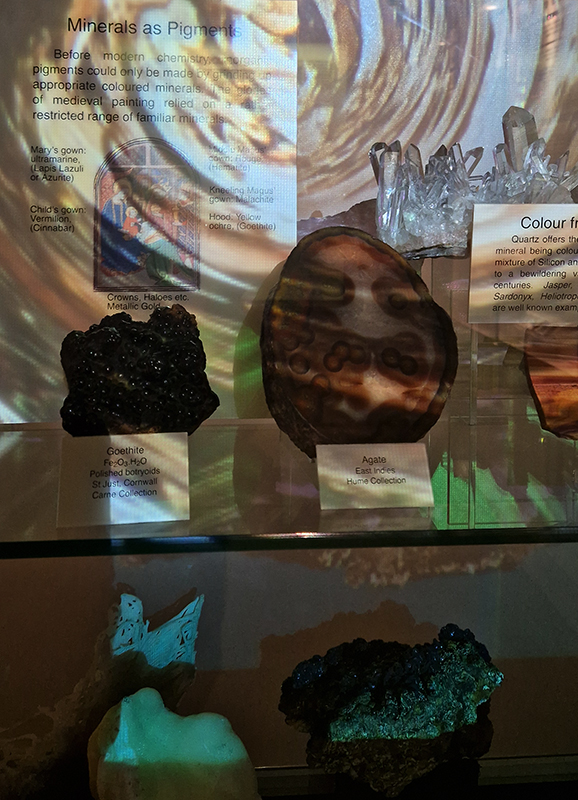
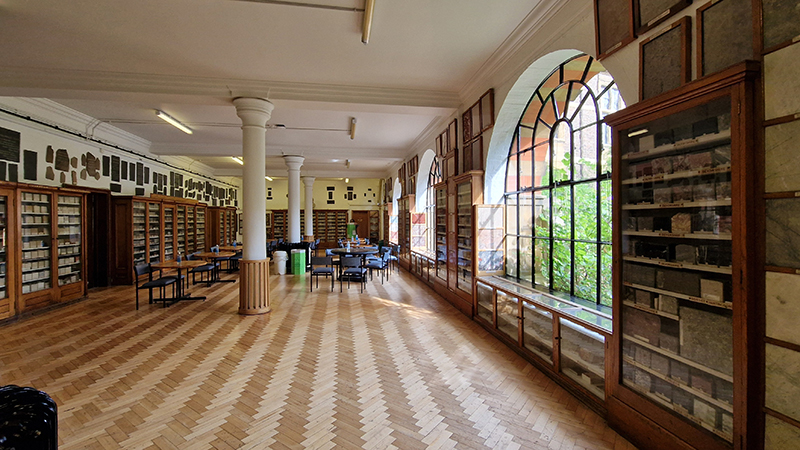
Rona Lee Lithic Entanglements at Sedgewick Museum of Earth Sciences. A considered intervention in the Whewell Mineral Gallery to ‘bring the dirt back in’, making evident the scarred landscapes, physical extraction processes as well as the social strata of those involved in procuring such a collection. There is no denying the allure of minerals and gemstones and the work here captures the beauty of the rocks while also reminding us of the ravaged Earth left scarred and depleted.

A Modern Lapidary a video work, back projected through one of the free-standing cases, animates mid-century scientific photographs of minerals, altering our perception of the samples within as ‘dead’ matter. Elsewhere, in An Extractive Index, digitally collaged photographs of geological field trips are laminated on to the glass, inviting reflection on the social and environmental relationships which these reveal.’ 

The Museum itself was also fascinating to look round and after Rona’s artist talk we were treated to tea in the The John Watson Building Stones Gallery which houses the most complete collection of stones used in construction.

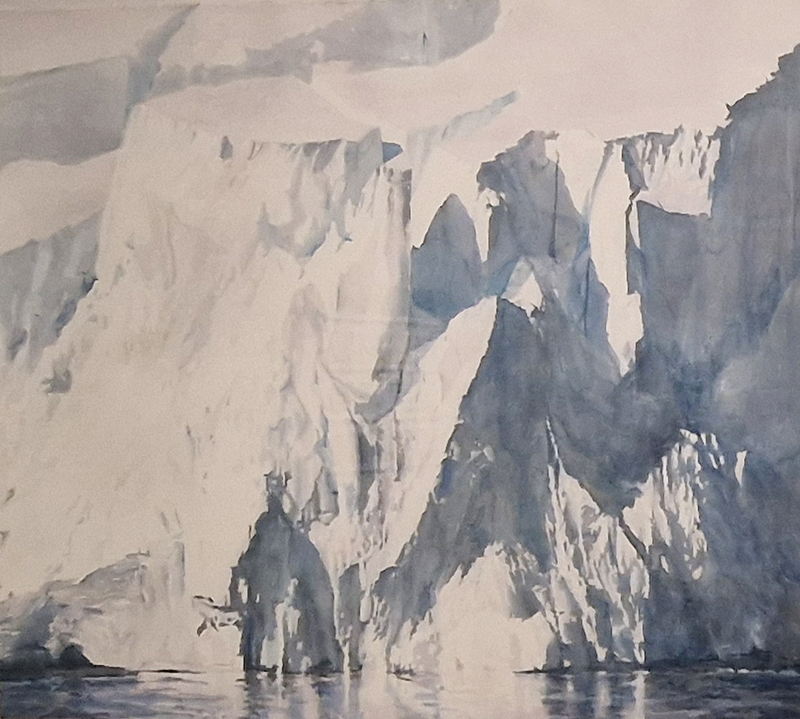
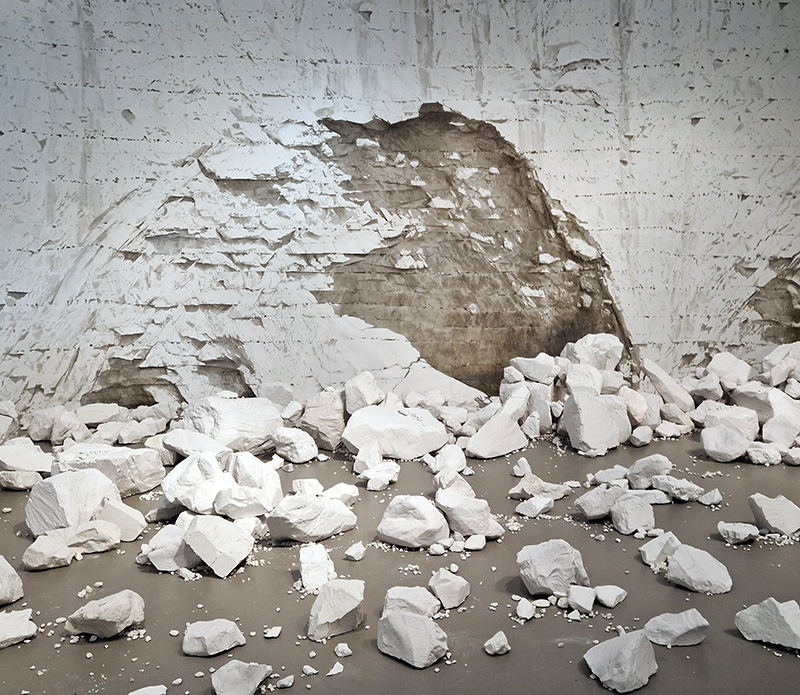
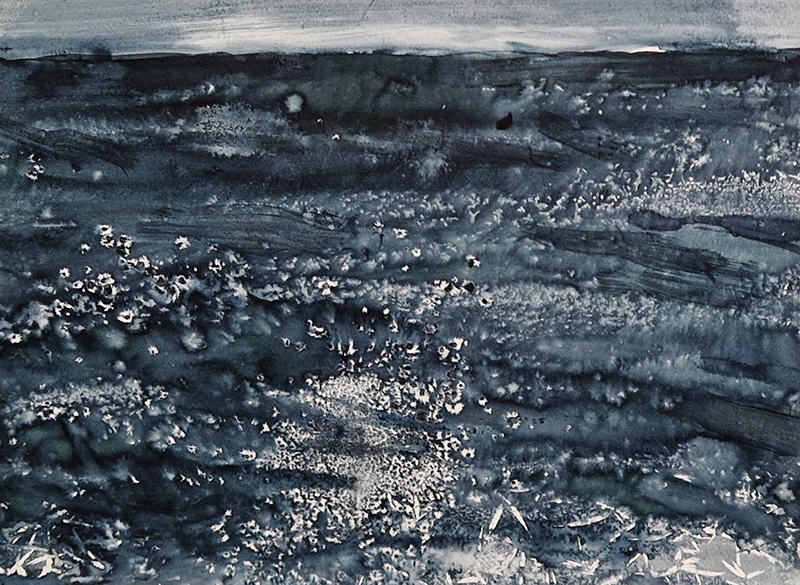
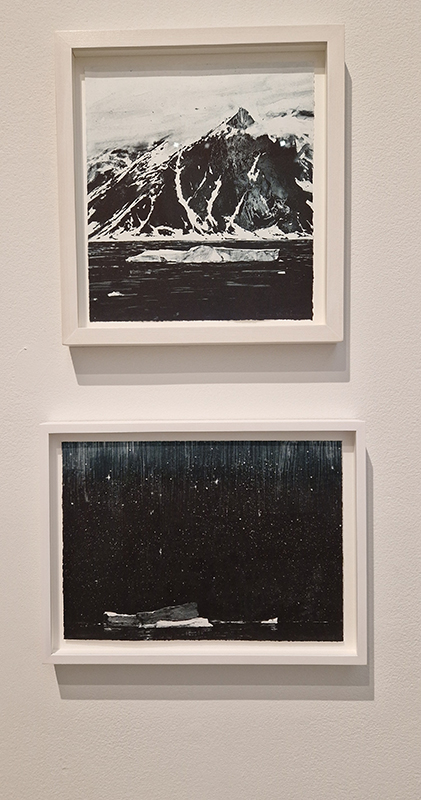
Emma Stibbon Melting Ice | Rising Tides at Towner Eastbourne. A day trip to the see this remarkable body of work so thoughtfully curated. The pale majesty of ice or chalk cliff faces, fragile against pounding seas that Emma witnesses in both the polar and local Sussex coastlines are captured so poignantly. These are portraits of great bodies under stress. Close up, edges and lines break down into fluid, watery strokes, a diaphanous translation of the fast painterly sketches made in often gruelling conditions. Wonderfully immersive, through scale and placement, and the understated palette of deep muted greens and blues, almost blacks and luminous whites which draw the viewer into the landscapes.
Listening

 Sideways – A New Frontier. A four-part podcast about the ethics of space exploration with former NASA astronaut Nicole Stott, new astronaut Ed Dwight, Space Philosopher and author Frank White, Anthropologist of Space and Religion, Deana Weibel, Professor of Religion at Knox College Robert Geraci and former ISRO scientist, Jijith Nadumari Ravi.

Astronauts and space tourists often cite the overview effect as a transformative experience offering the perspective to see a shared planet with no borders. Some however, experience the ‘ultraview’ effect which is the overwhelming and disorienting knowledge of the magnitude of the universe.

BBC Inside Science Podcast. How much of a risk is space junk? As we send more and more metal in the form of satellites up into space, scientists are warning it is becoming more of a risk both here – and up there.

Much space junk comes from defunct satellites. There are plans to launch 60,000 more satellites by 2030. It is estimated there is currently 12, 400 tons of space junk orbiting Earth – 2,500 discarded satellites and 130 million fragments that travel at 10 times the speed of a bullet. Because of the orbiting junk, Space X satellites must make around 275 collision avoidance manoeuvres every day. It is not only dangerous in space but large debris is falling to Earth and not burning up in the atmosphere. It is predicted life will be lost in the next decade as a result of falling space junk, there have already been some near misses. The satellites and launch debris that does burn up in the atmosphere releases large amounts of metal into the atmosphere with unknown consequences.