Archives for posts with tag: The London Group

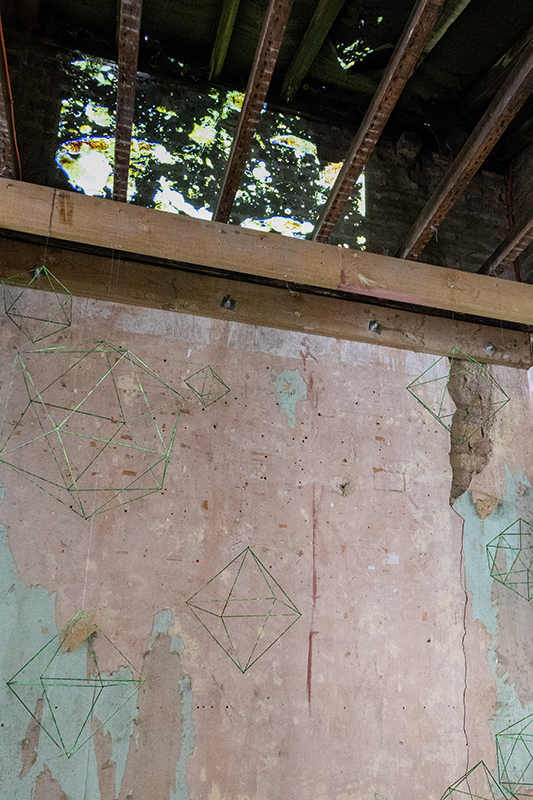
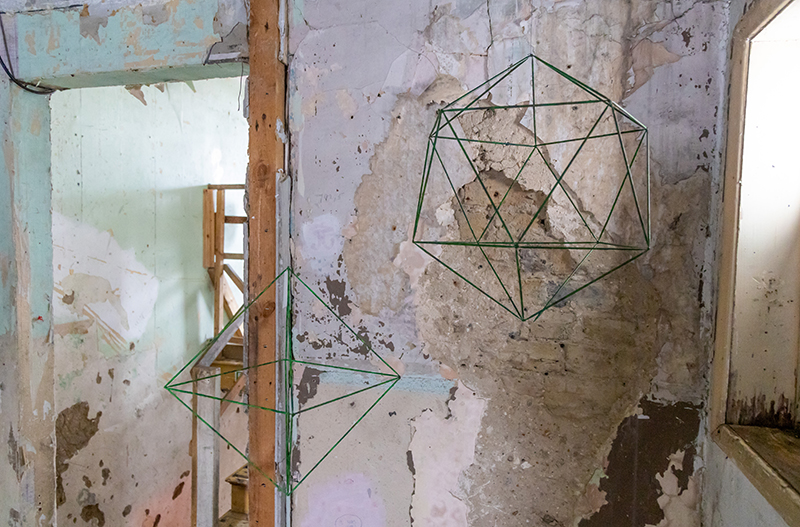
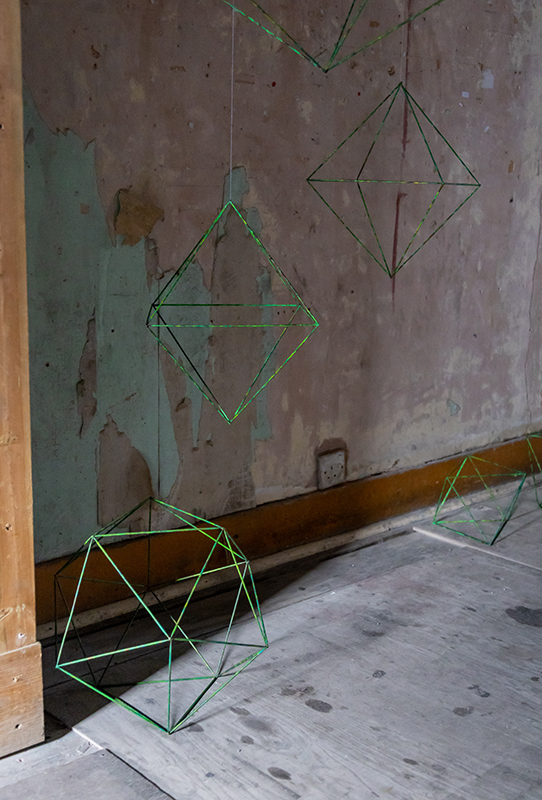
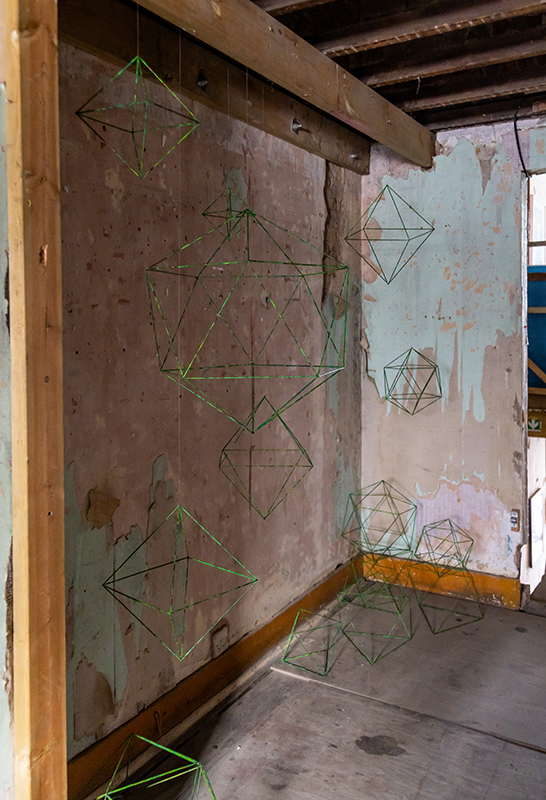
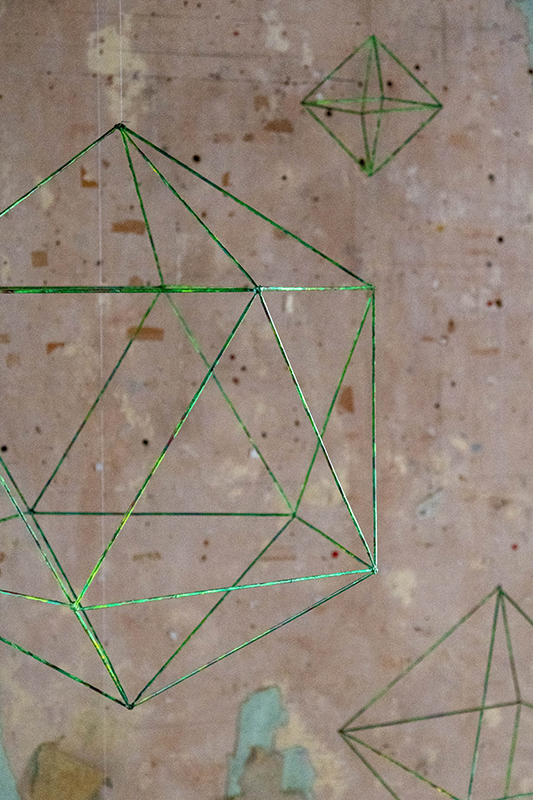
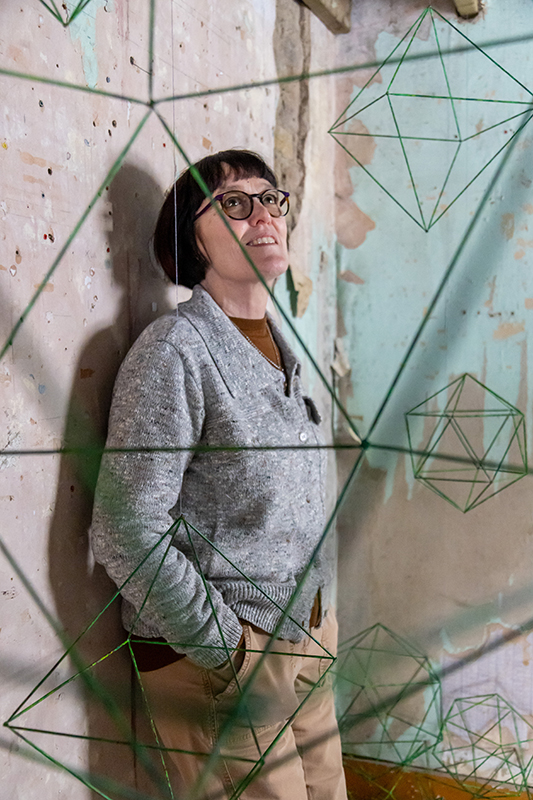
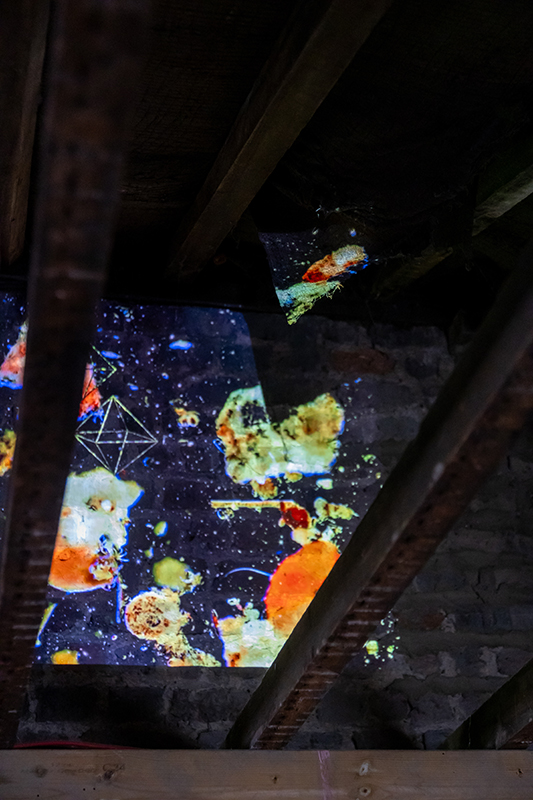
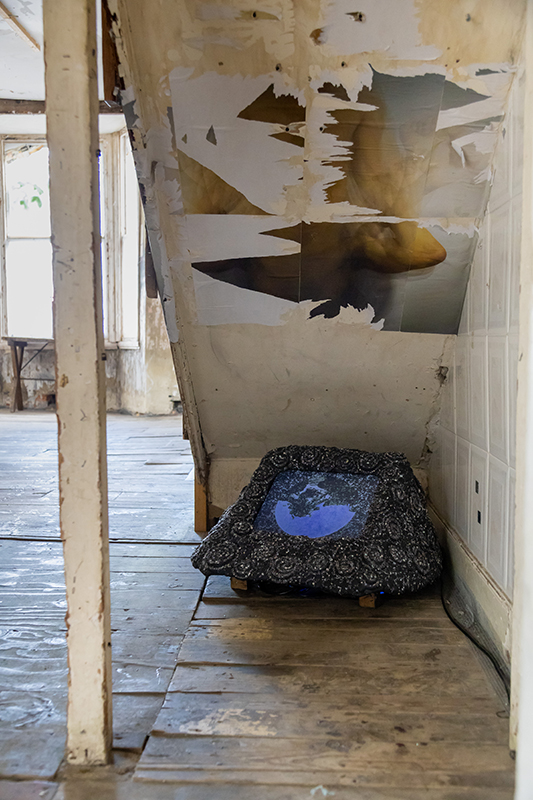
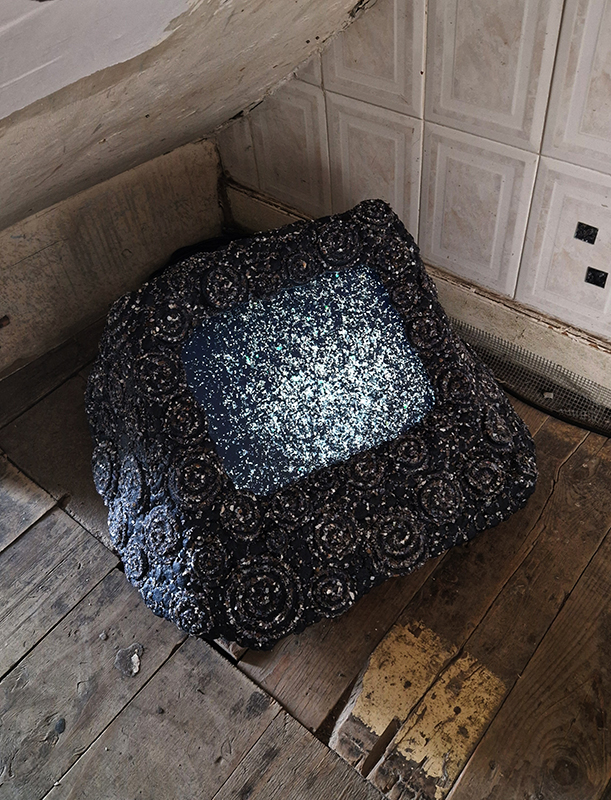
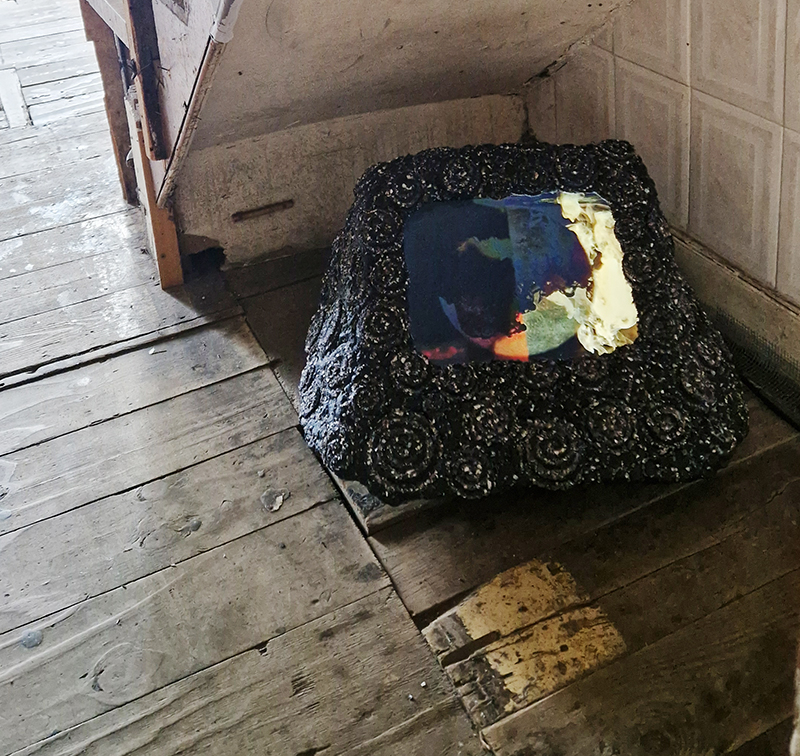
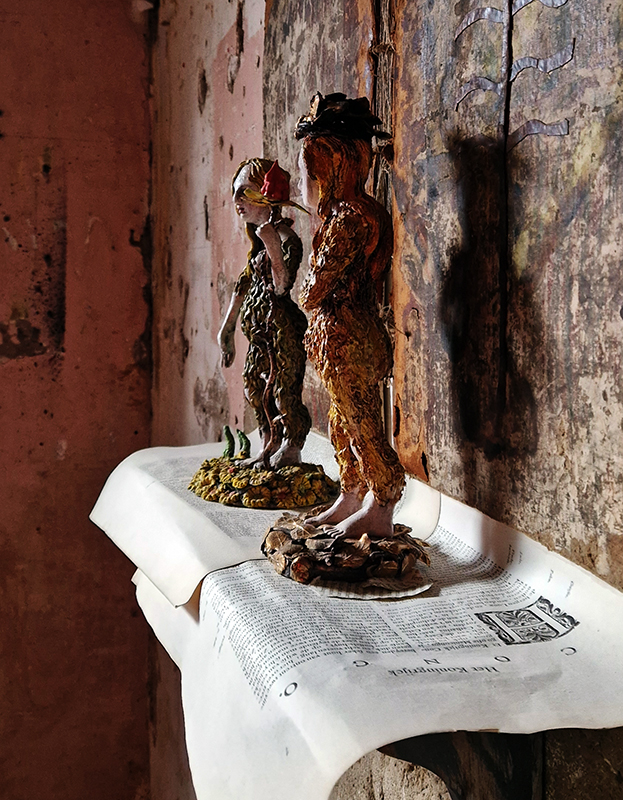
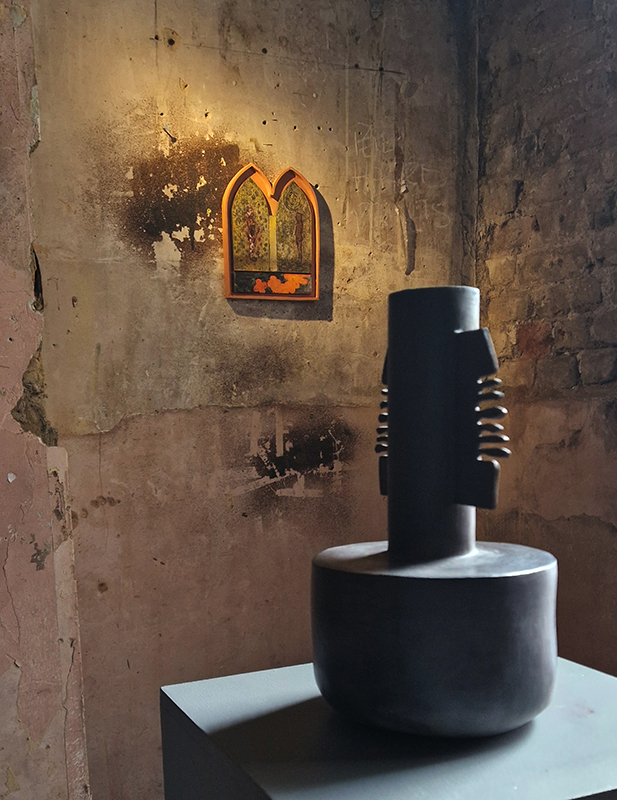
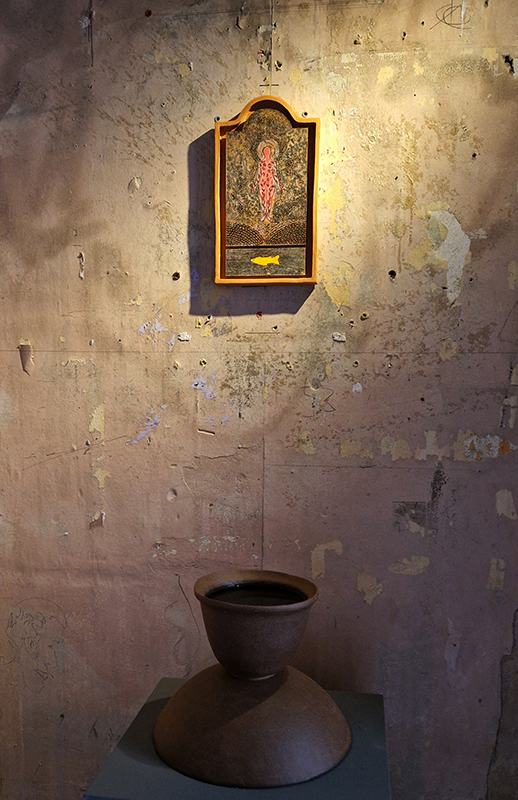
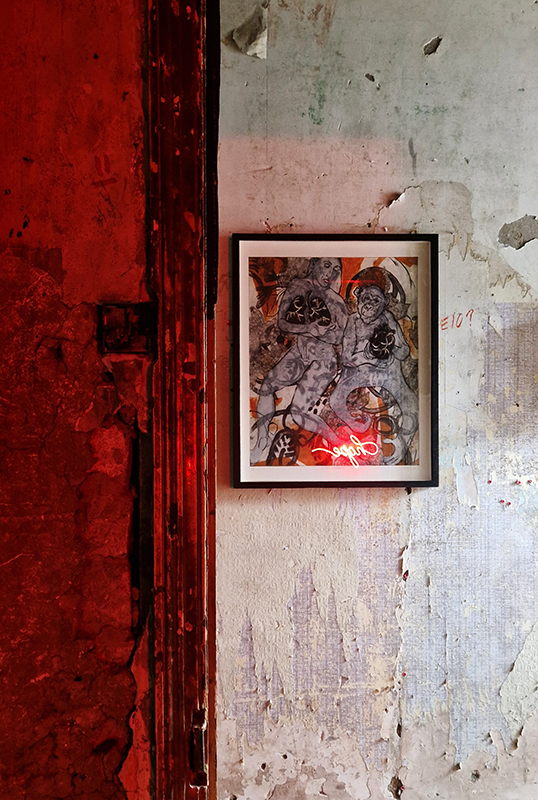
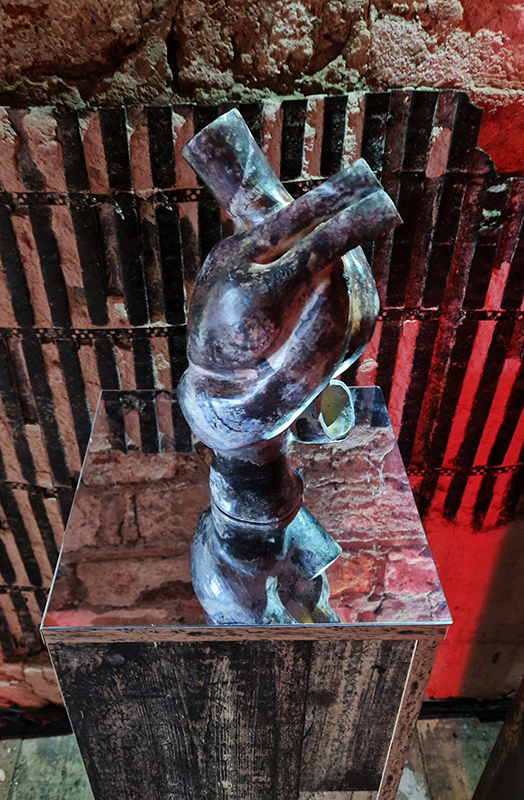
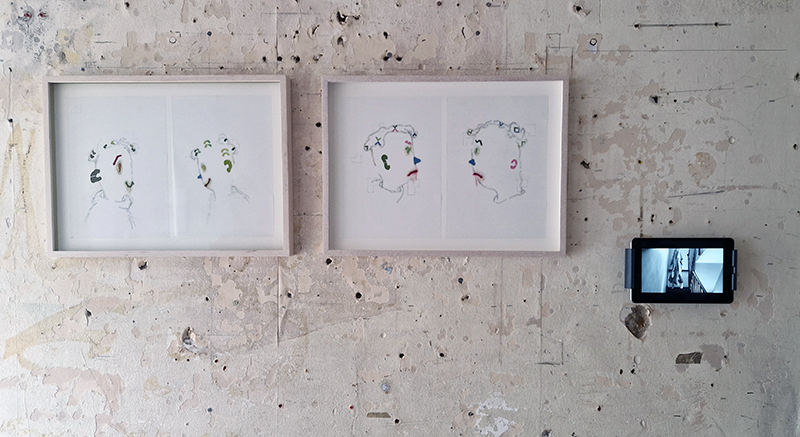
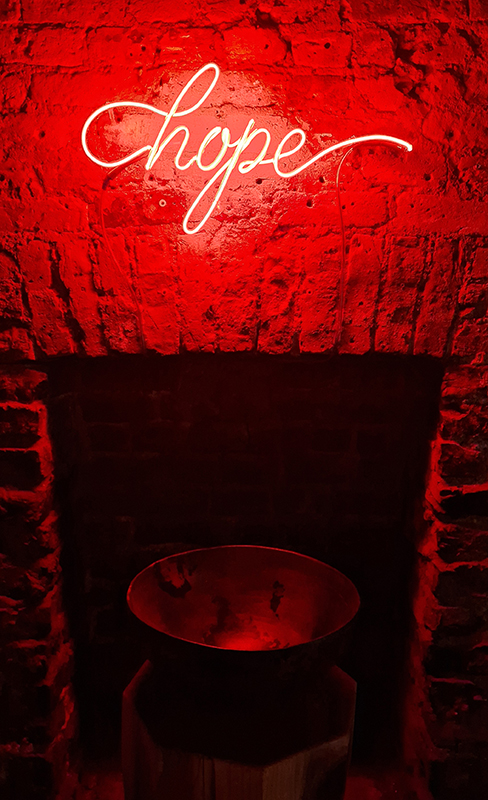
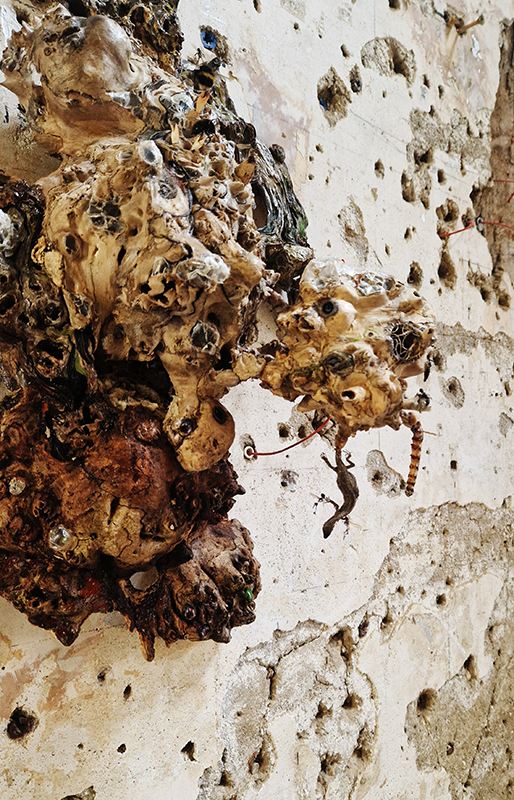
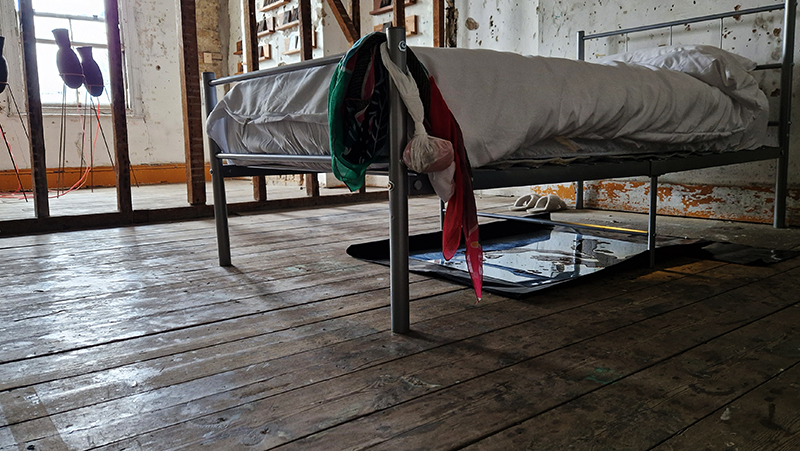
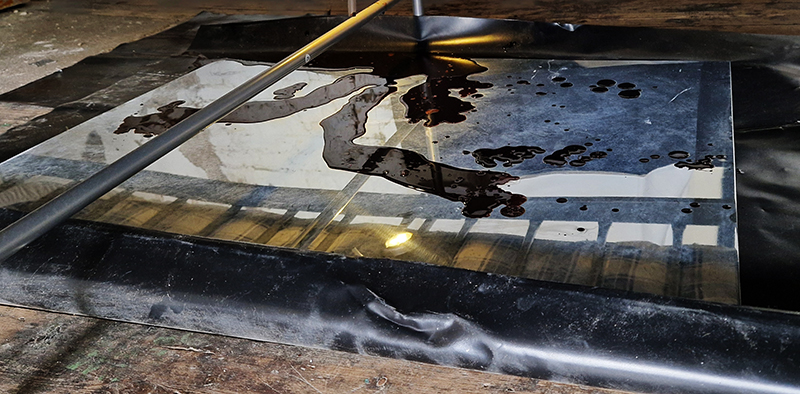
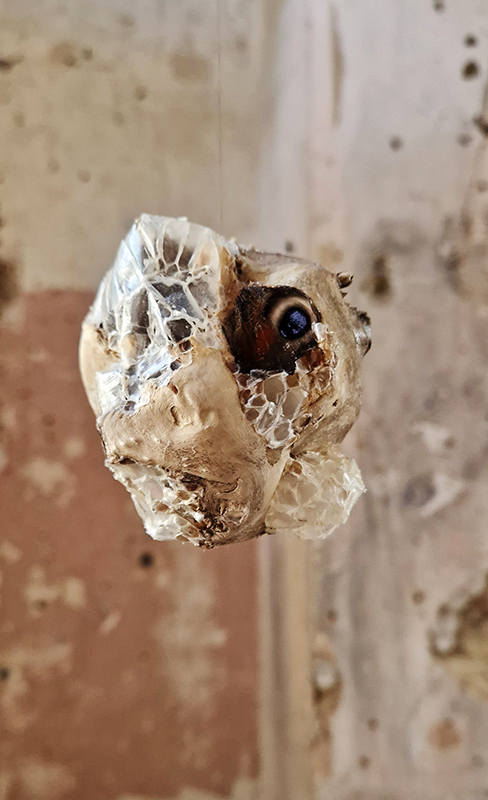
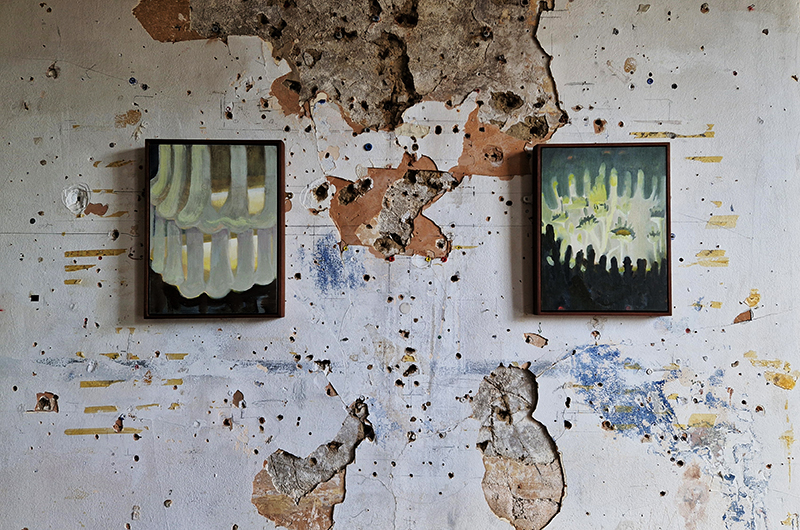
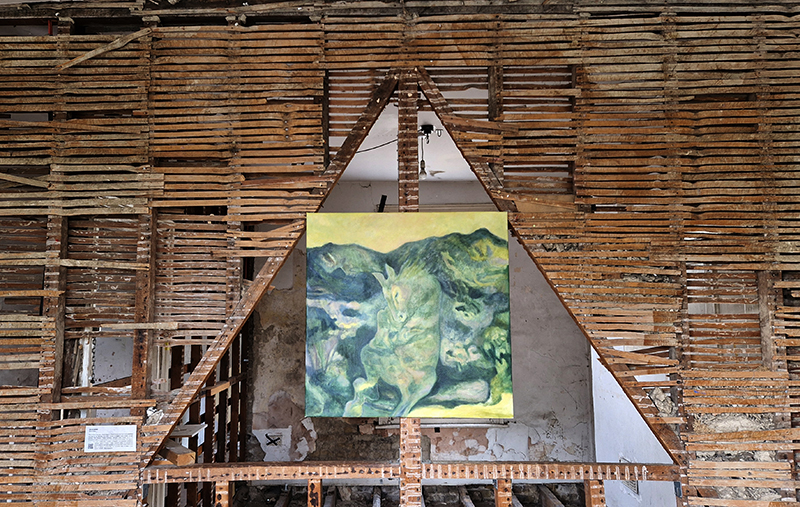
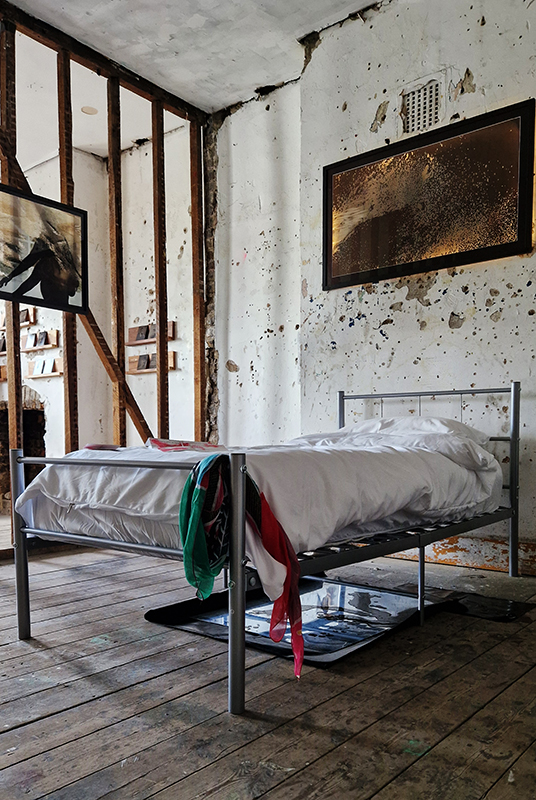
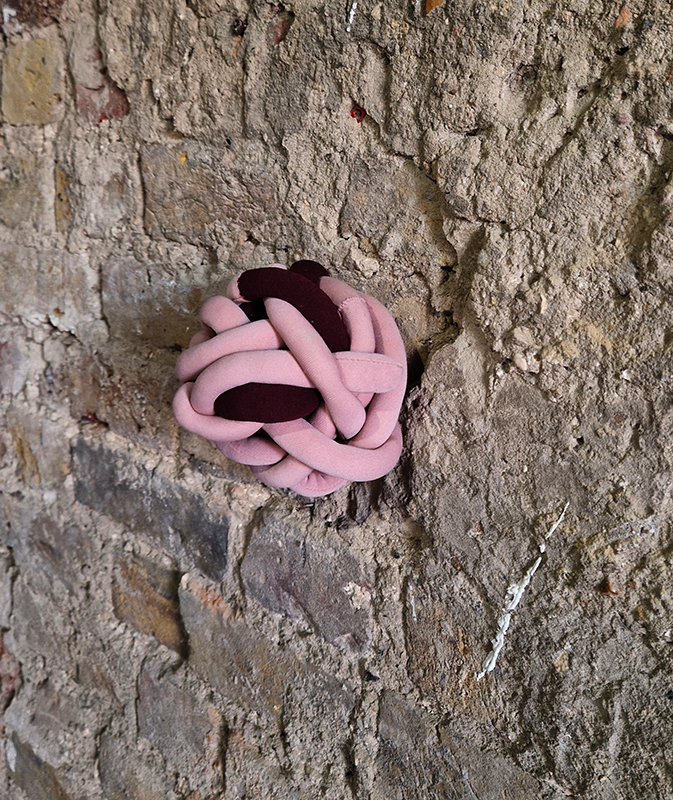
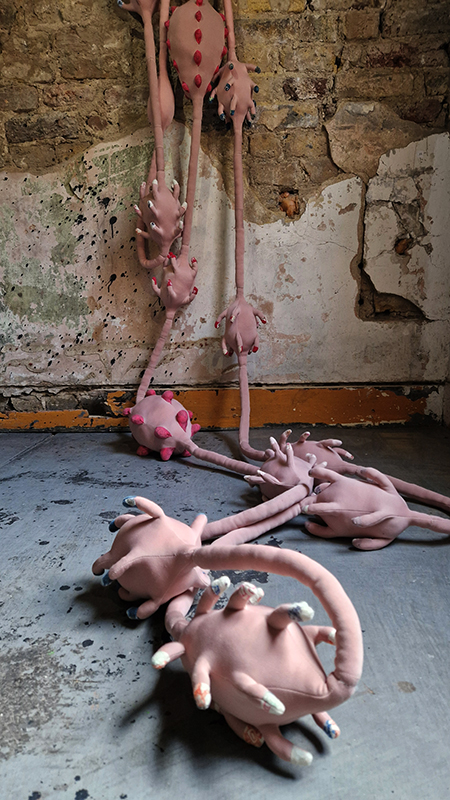
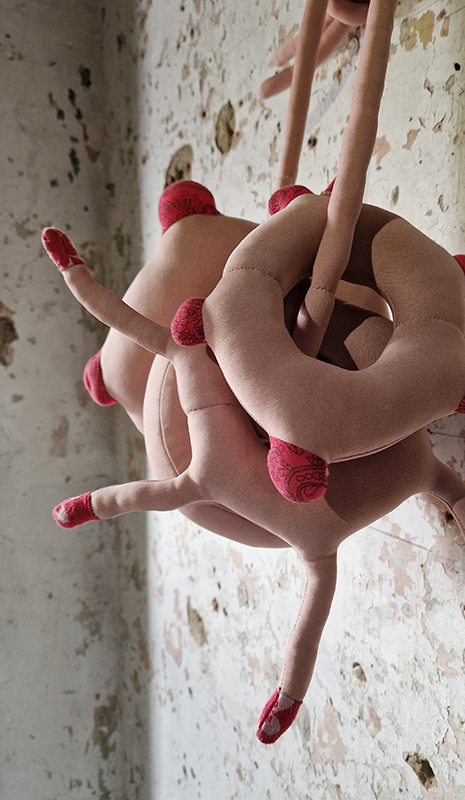
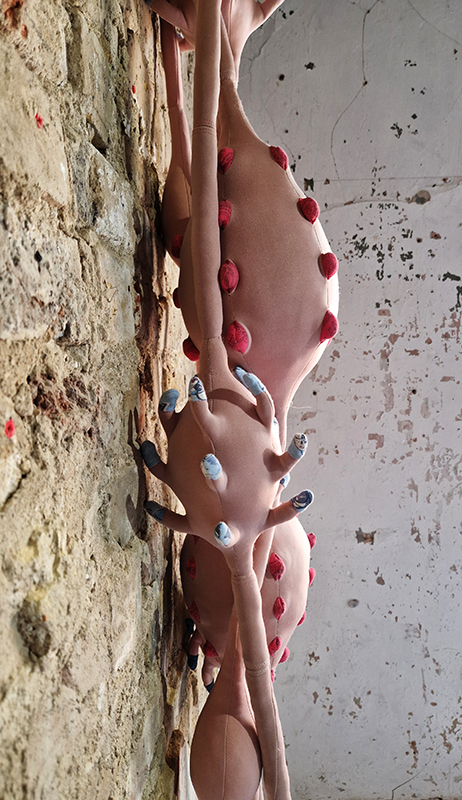
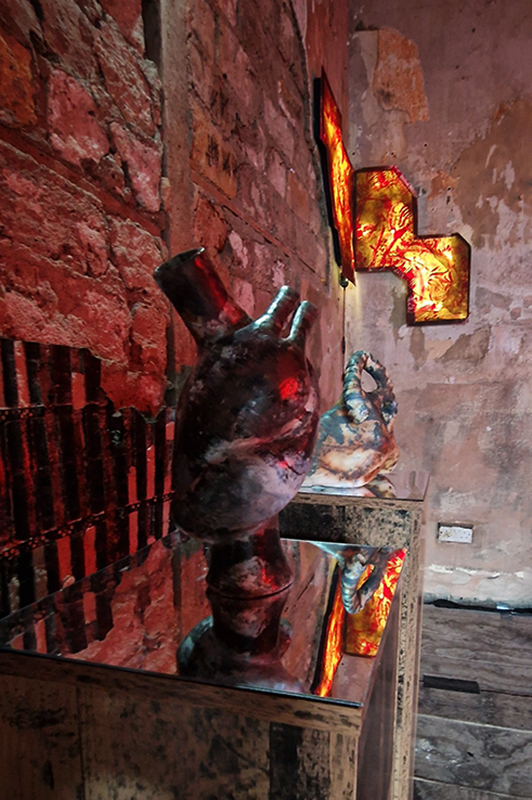
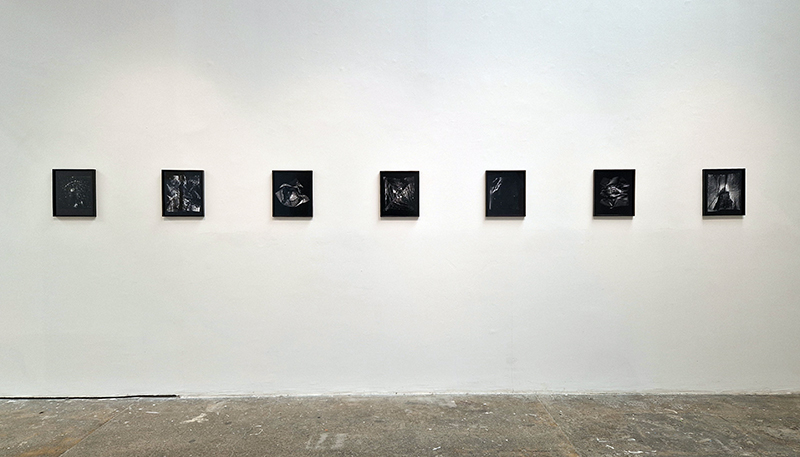
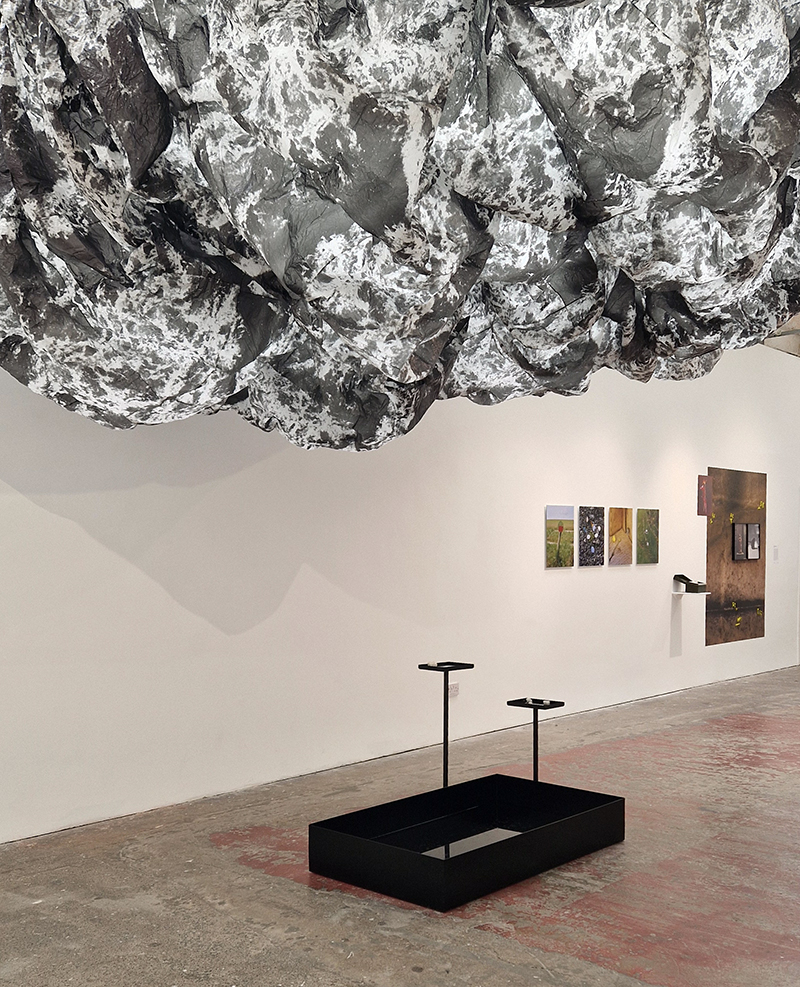
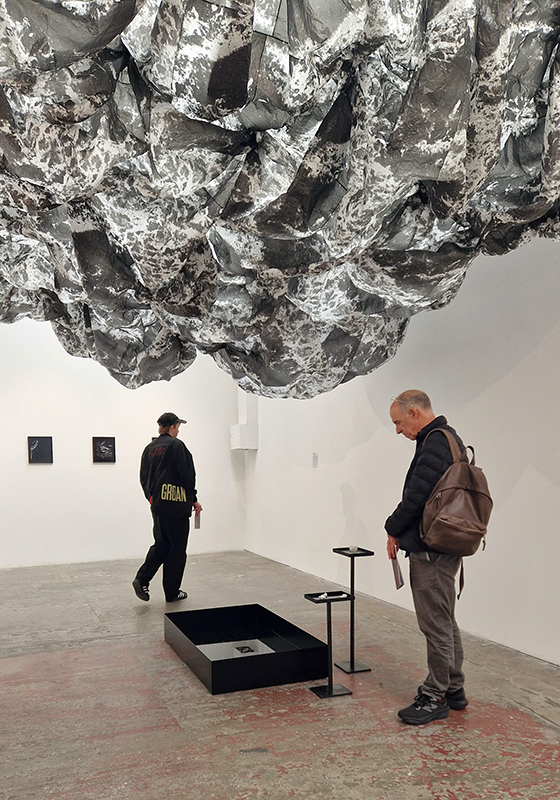
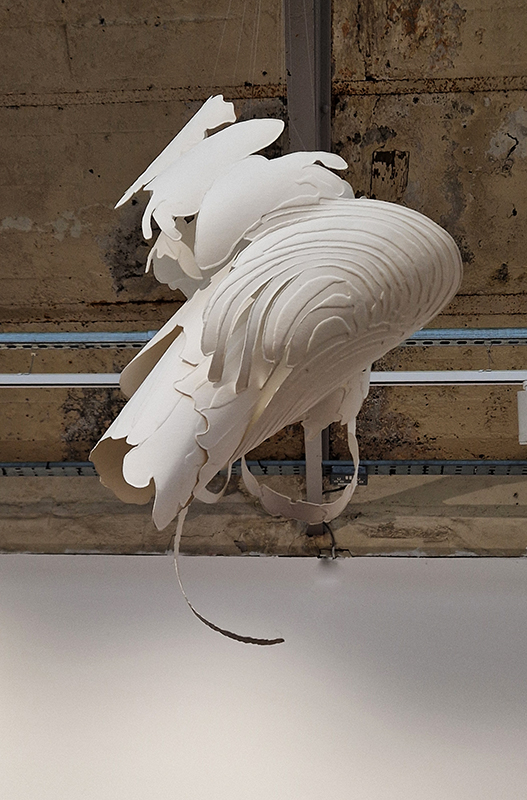
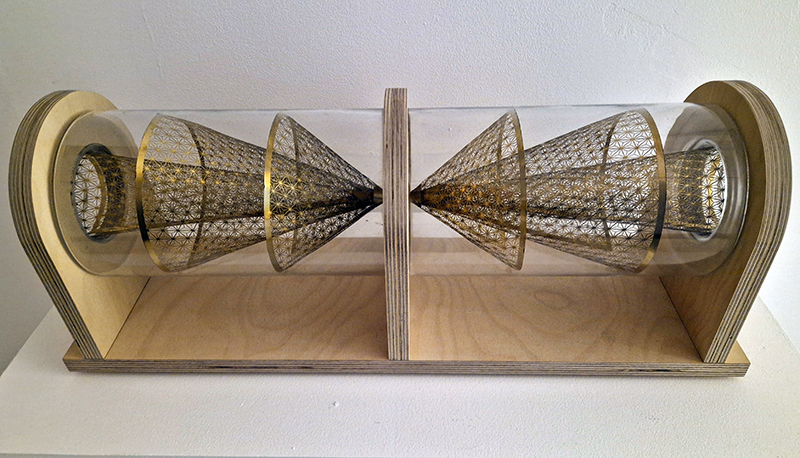
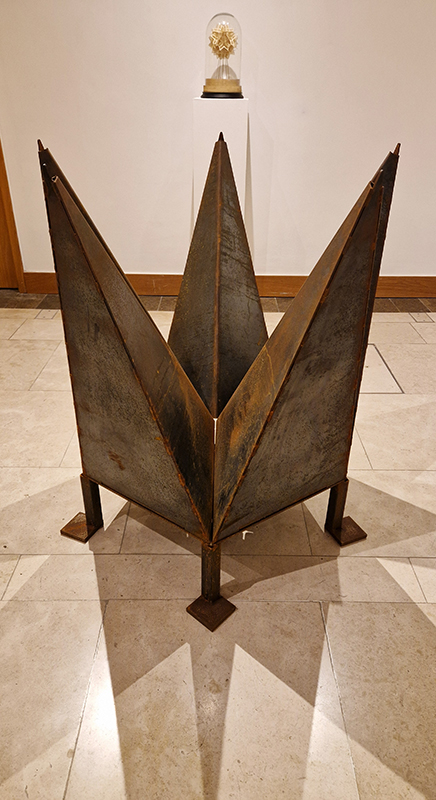
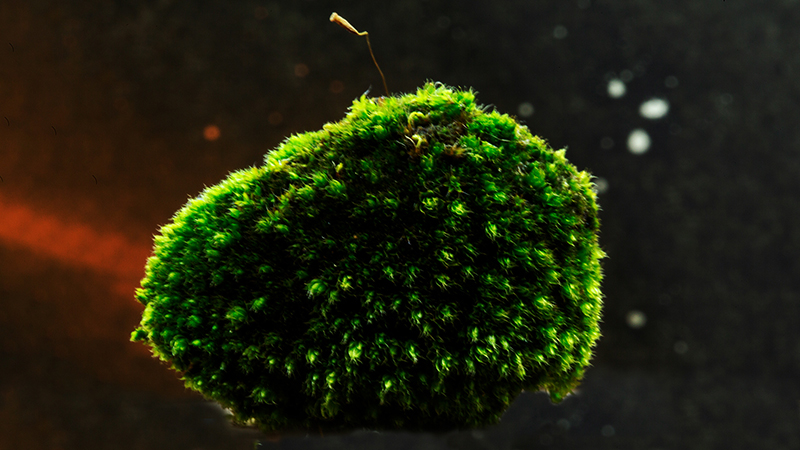
It was a brilliant busy weekend at the Safehouses Peckham for Occupied: Strange Company. So many visitors commented on the excellent curation of the works by Julie Hoyle. Each room had its own unique atmosphere yet all blended so seamlessly across the two houses. I was very happy with the placing of my two installations, one in the rafters the other in a dark recess under the stairs. Both works look to other life forms that we coexist with and often overlook – the mollusc and the creatures of the gutters.

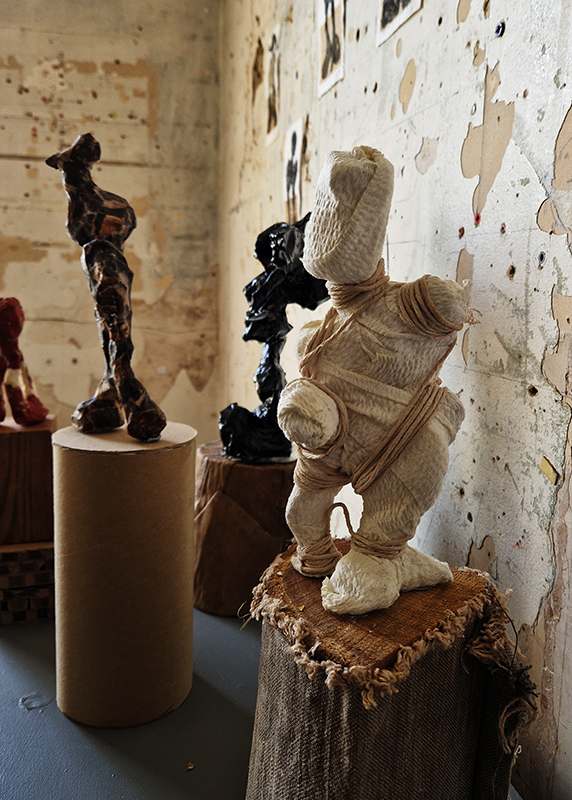
Installation images of my work by Emma Brown Photography
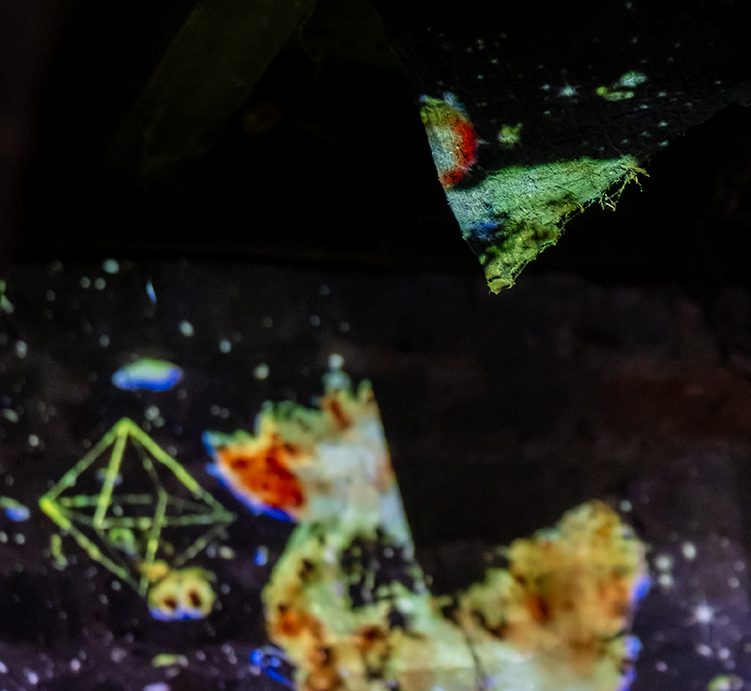
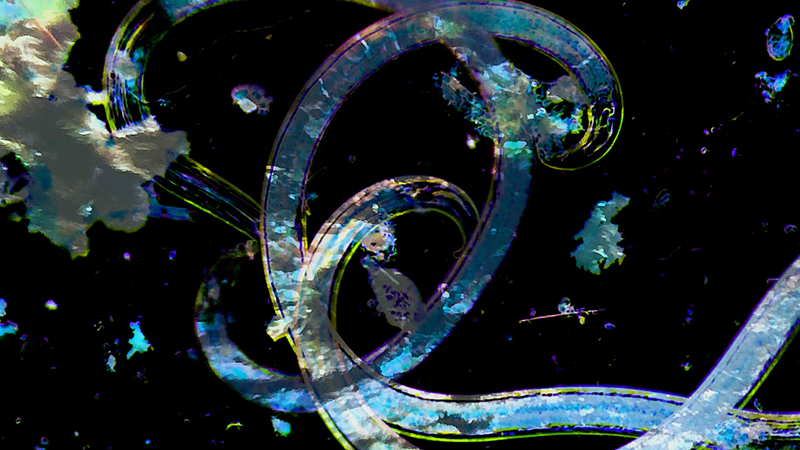
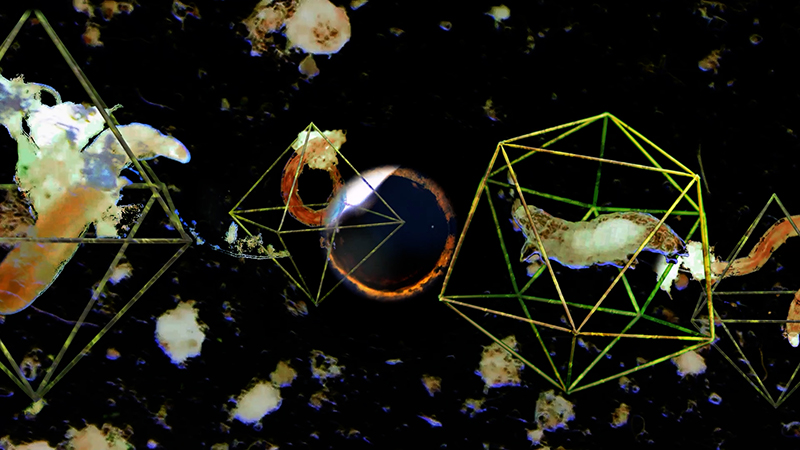
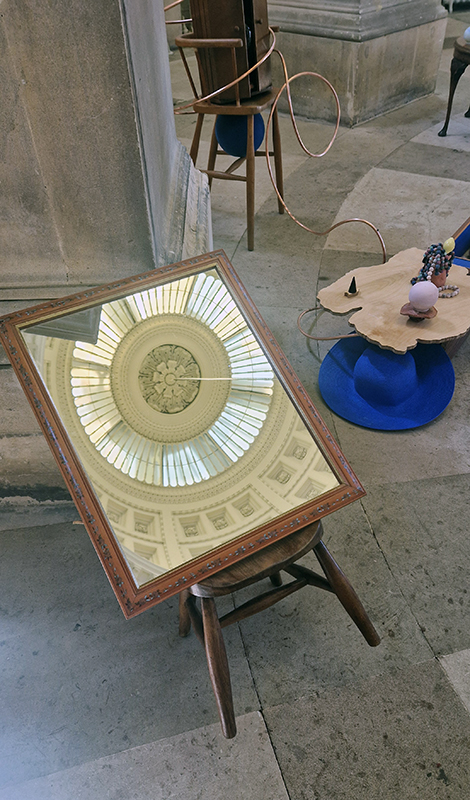
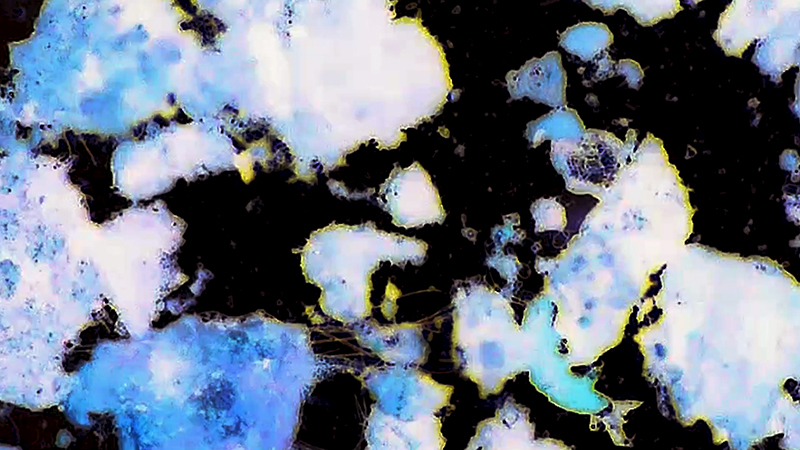
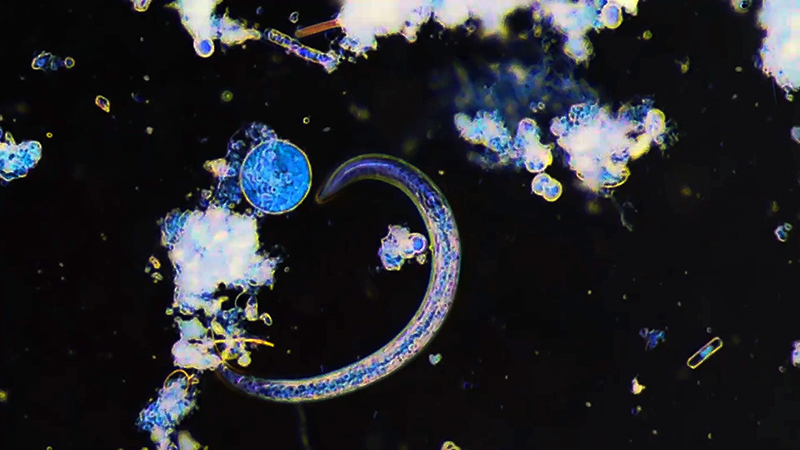
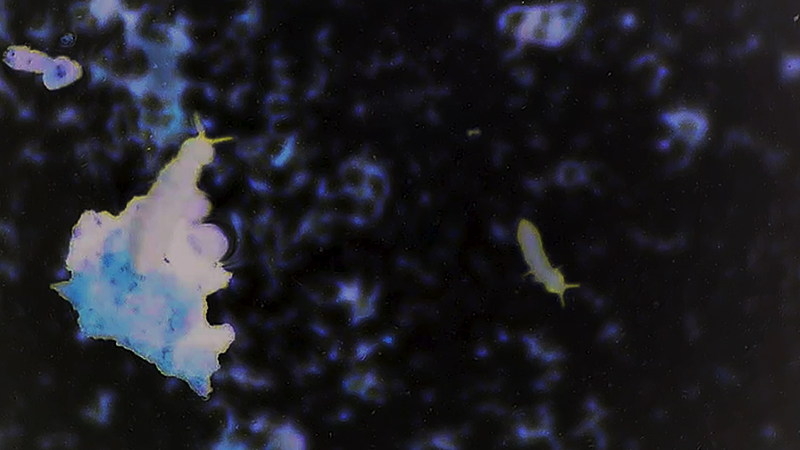
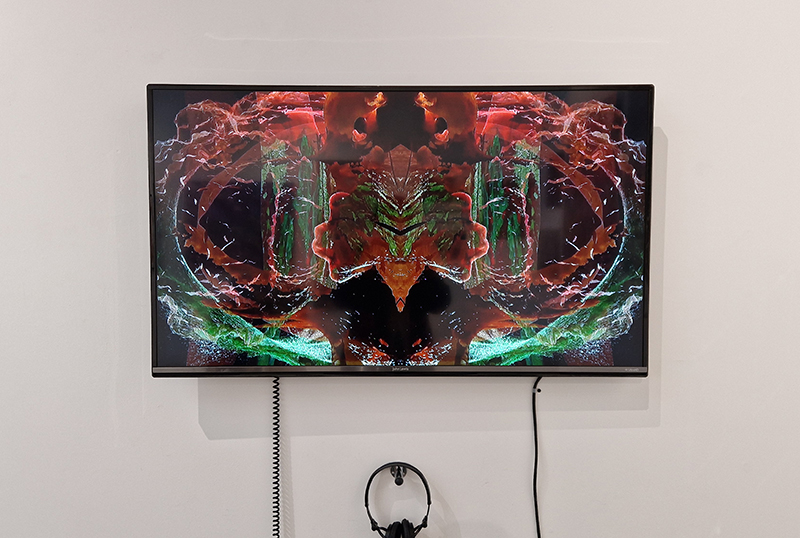
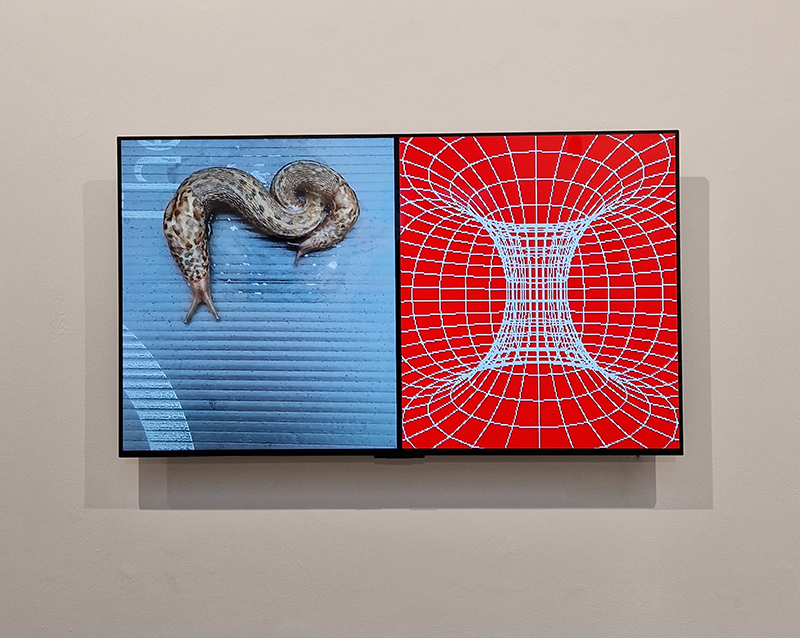
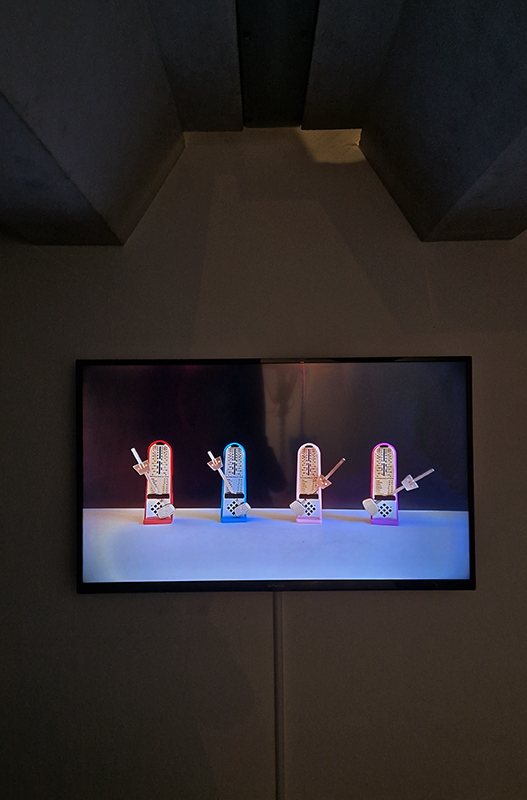
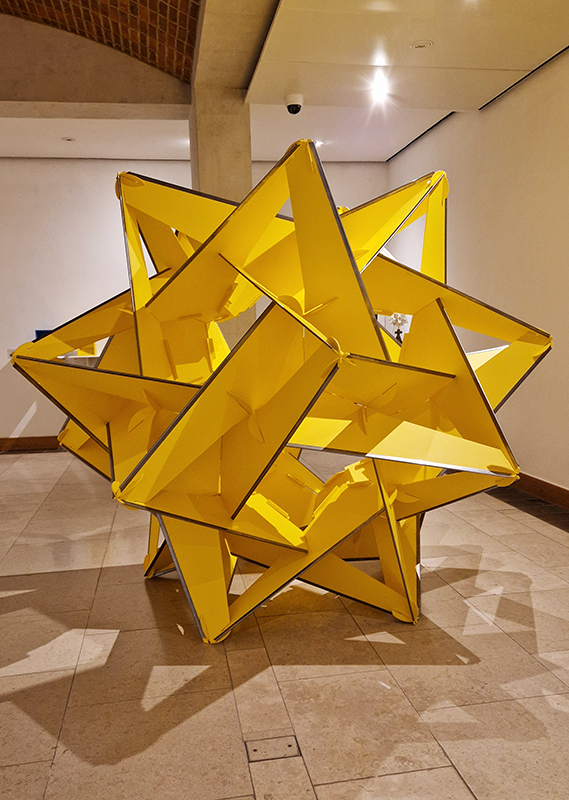
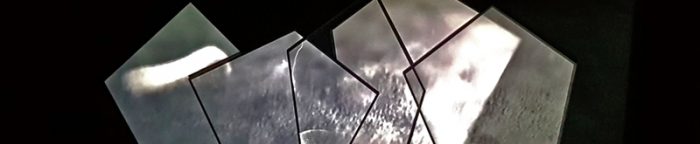
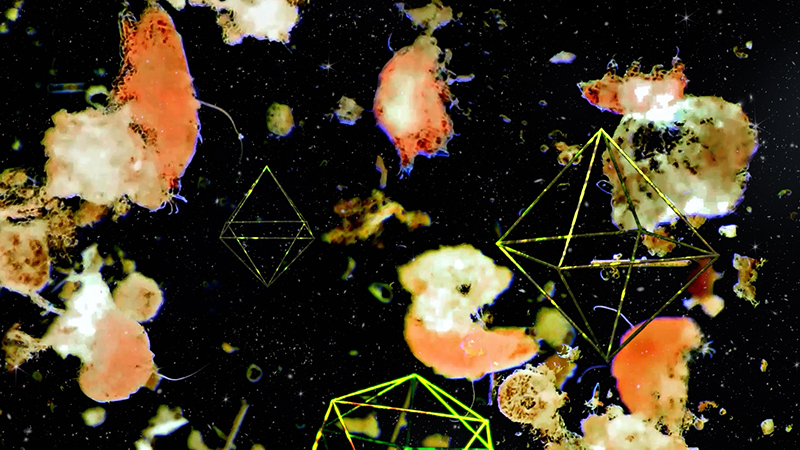
Guttanaut alludes to Oscar Wilde’s familiar quote ‘We are all in the gutter but some of us are looking at the stars’. This video installation transports the viewer to exotic otherworlds inhabited by microscopic creatures found in a drop of water or tuft of moss in the dank environs of house gutters. Icosahedron and octahedron shapes representing the elemental qualities of water and air appear as constructs for satellites or modes of exploration across this alternative cosmos.
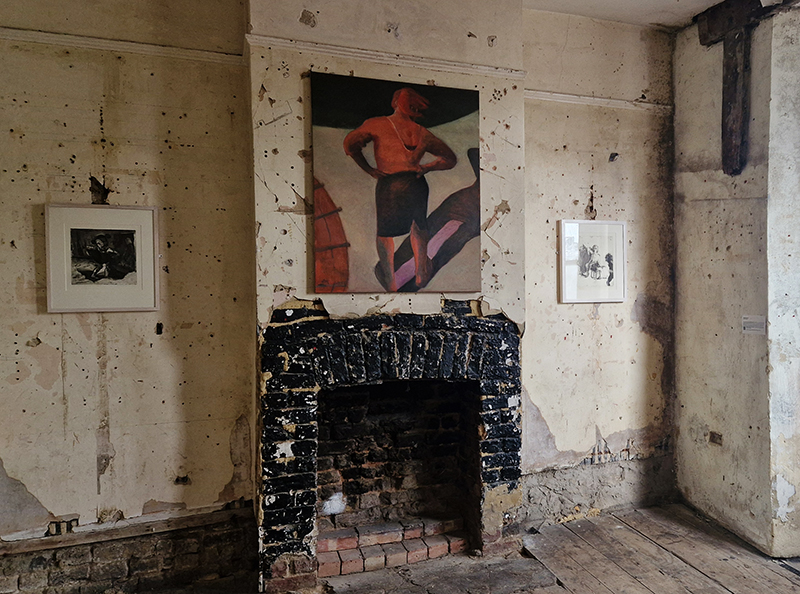
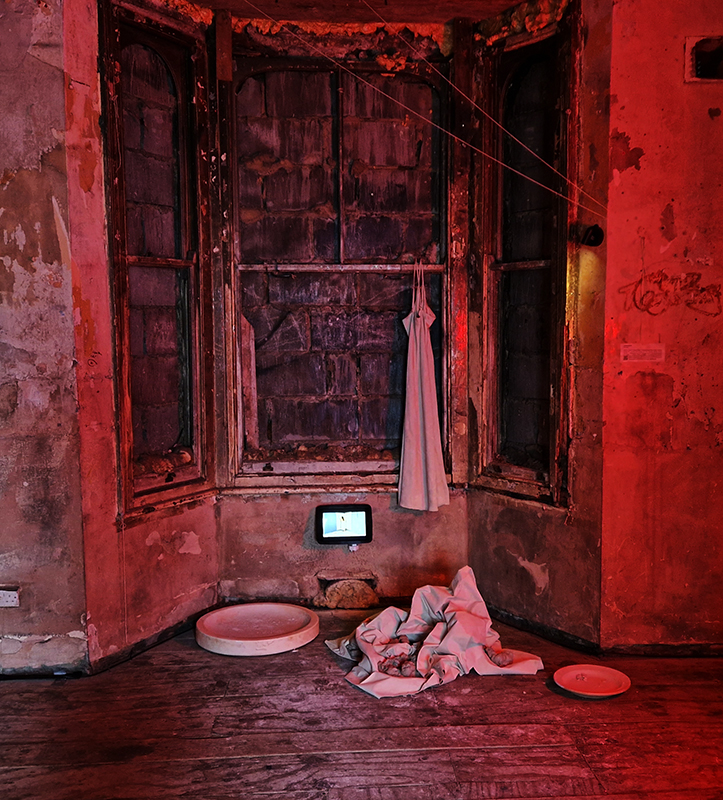
Julie Hoyle brought together a cross-section of artists from Royal Academicians to emerging practitioners, alongside artists working within disability and community contexts reflecting her interest in community and unexpected connections.

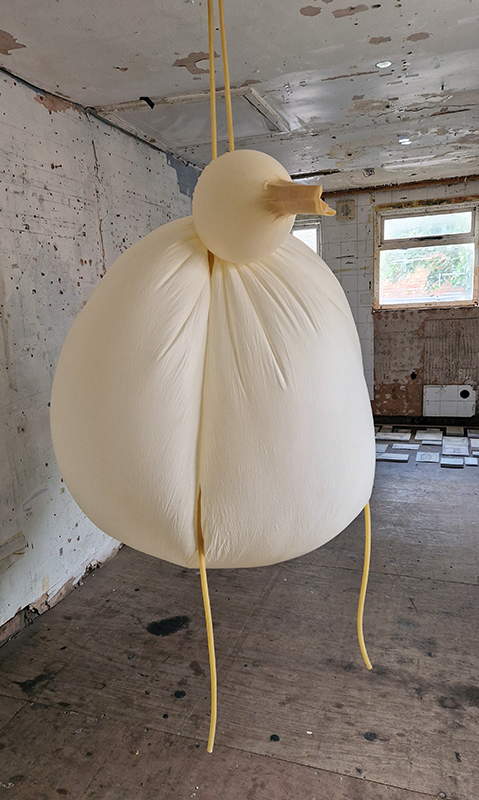
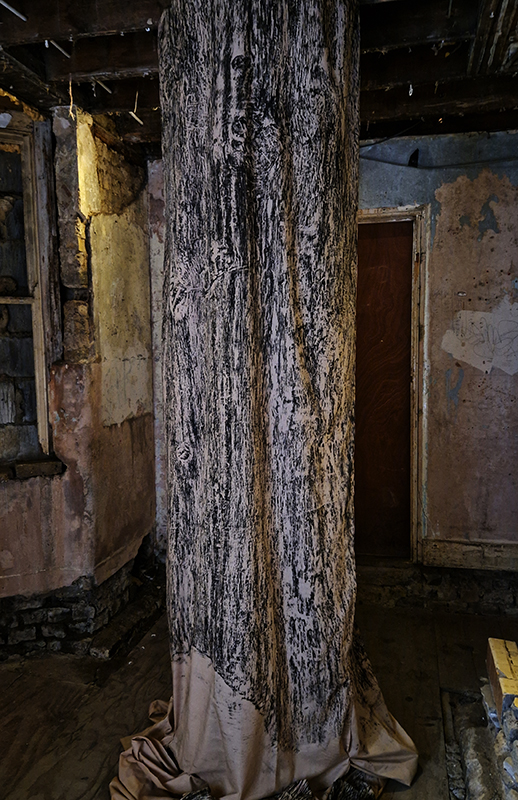
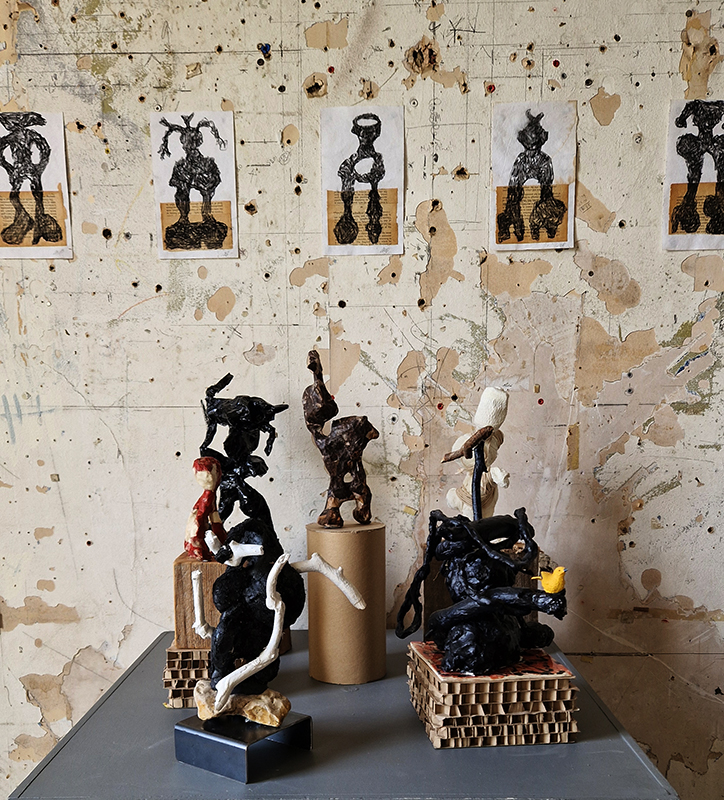
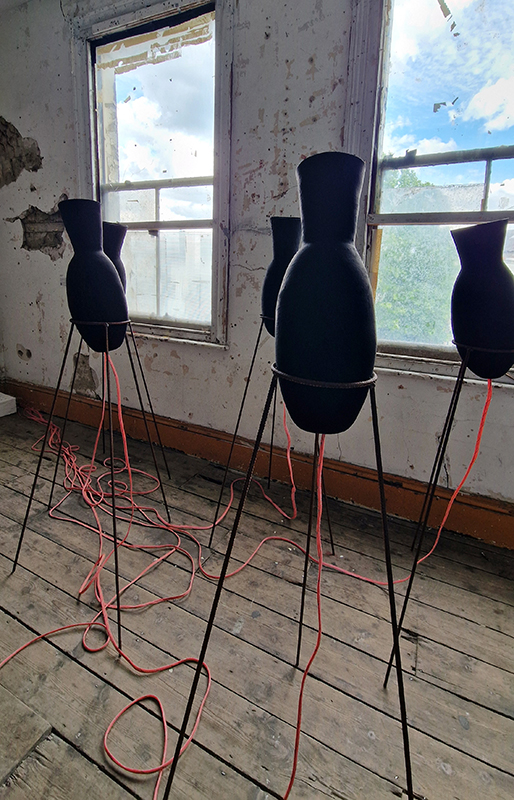
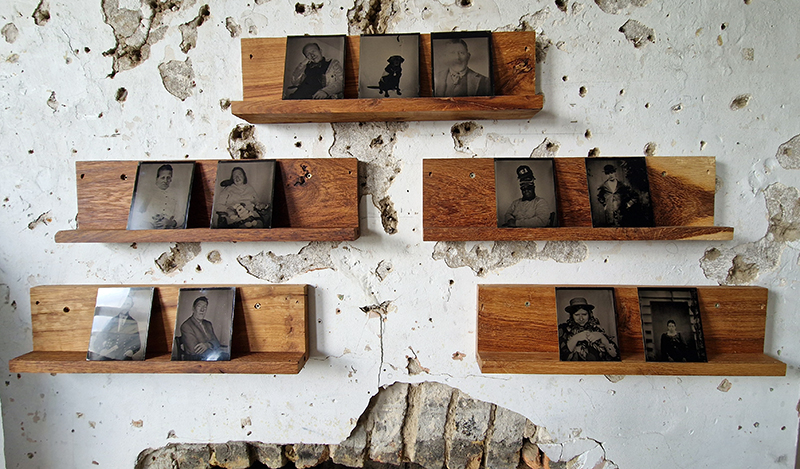
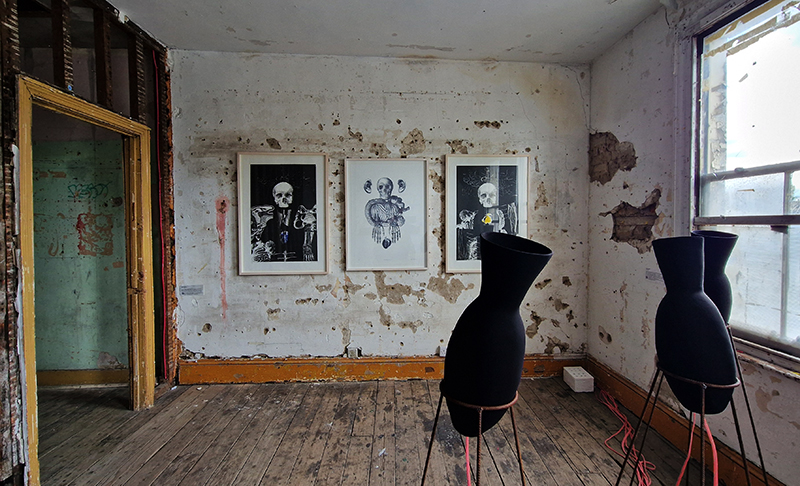
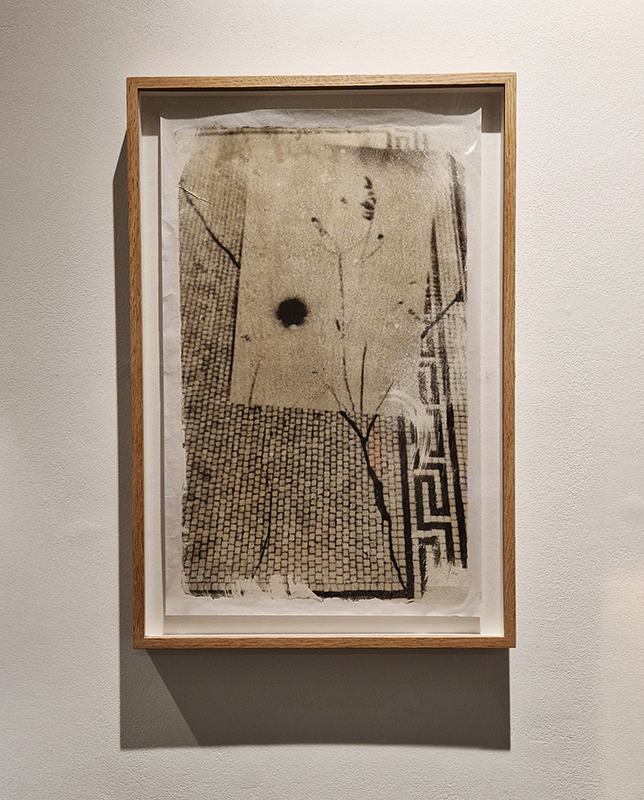
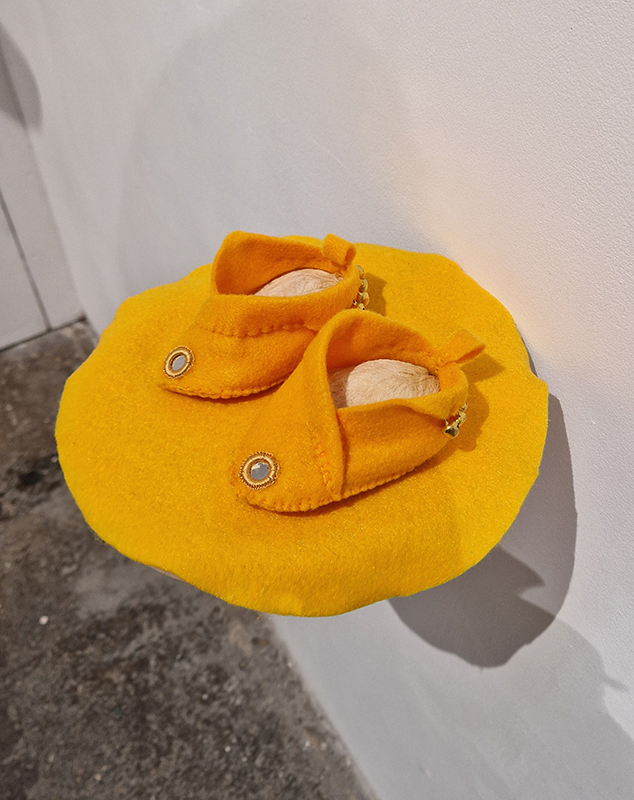
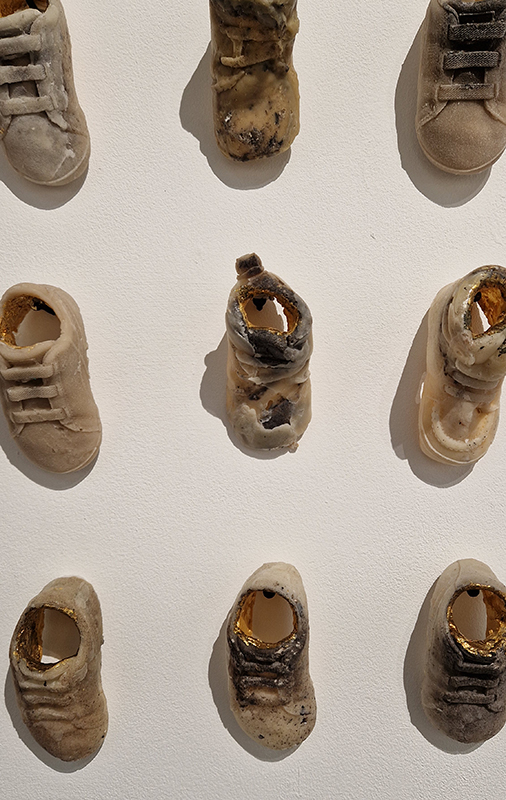
Works across the exhibition move between the intimate and the otherworldly, often unsettling the boundaries between body, space and perception. Included within a range of strange bodily presences are Susan Aldworth’s work Reassembling the Self. Internal, fragmented and reconfigured lithographs exploring how identity may be disrupted through trauma, illness, or simply the experience of being alive. As does Fungai Marima’s practice, using her own body as both subject and archive in performance. Repeated gestures of exposure and persistence draw attention to the private realities of anxiety and endurance. Charlie Betts’s practice is also rooted in movement and performance. Through drawing and action, she captures fleeting physical states that hold presence, absence and memory in tension. Mary Branson’s installation explores the fragile boundary between rest and exposure through vessel forms and the sound of breathing, evoking a vulnerable presence within places we assume are safe. This focus on vulnerability and embodiment resonates with Us and Them, a series of wet plate collodion portraits by Emma Brown in collaboration with Freewheelers Theatre & Media Company, a creative company of disabled artists and performers, reflecting on representation, visibility and shared humanity. In a shift of atmosphere, Marcelle Hanselaar transforms familiar interiors into psychologically charged scenes where bedrooms and domestic spaces become sites of unease, desire and dreamlike threat. Her figures appear exposed, restless and vulnerable, inhabiting worlds where intimacy and danger uneasily coexist. Beyond the body, the exhibition extends into the domestic, material and more-than-human worlds we inhabit. Janet Currier’s work turns to the objects and organisms we live alongside, where repetition, attachment and care become central. Rooted in the domestic and often autobiographical, her sculptural arrangements suggest that the things we tend to – fabrics, forms, fragments – hold memory and presence, quietly accumulating meaning over time. A similar sensitivity to material and instability is present in the work of Mandeep Dillon and Marielle Schram. Dillon’s ephemeral sculptures explore pressure, balance and the temporary nature of form, their fragile, inflatable structures responding to subtle environmental shifts and hovering between buoyancy and collapse. Schram’s small-scale sculptures and drawings translate emotional experience into tactile form, where diverse materials are handled with sensitivity and control, balancing strength and vulnerability. In both practices, making becomes a visible negotiation between material, form and feeling. Sue Baker Kenton and Ann Norfield consider how things are kept, categorised and carried through time. Baker Kenton’s installation of painted, box-like structures reflects on containment and hidden histories, while Norfield’s use of collected bones and print processes brings a quieter, more direct engagement with chance, hope and the precariousness of life. Together, they reflect on accumulation, fragility and the tenuous nature of what we hold on to. A more overtly uncanny register emerges in works that draw on folklore, memory and psychological space. Oona Grimes’s film and drawings draw on historical and cinematic references to create fragmented, misremembered scenes in which figures appear both comic and spectral. This sense of dislocation and re-framing is echoed in the work of Tom Sliwinski, whose drawings present a personal and immediate view of the world, where historic interiors and figures take on a ghostly presence. A different sense of time emerges in the work of Penny Green and Roya Pourzadi, whose figures and forms draw on myth, symbolism and cultural memory. Their works carry a feeling of something ancient yet still in motion, not fixed in the past, but moving through it. Pourzadi’s imagery draws on Persian histories and elemental forces, where water, vessels and symbolic figures suggest cycles of renewal, fragility and transformation. In contrast, Green constructs a world of masquerade, blending emblems and archetypes across time. Her Wild Women and reworked objects draw on mythological forest figures and medieval imagery, creating presences that feel both rooted in history and strangely alive within the present. Throughout the exhibition artists construct distinct visual worlds that shift between observation and imagination. Katherine Jones transforms familiar imagery through intense light and distortion, pushing it towards something simultaneously seductive and unsettling, beauty and unease seem to exist in tension. Helen Baines painting ‘Show Horse’ similarly draws on lived experience and symbolic imagery and questions the uncomfortable truth of how we bend animals to our will in the name of discipline, love or tradition. A suspended bird moves through a constructed interior that feels both familiar and uncertain in Karl Newman’s Melancholy Study holding a moment of stillness charged with anticipation. Rooted in a deep connection to the natural world, Temsuyanger Longkumer’s installation centres on the reconstruction of a tree, drawn from his printmaking practice. Re-situated within the interior of the house, the work introduces a presence that feels both elemental and enchanting. Oak, wormshells, shed snake skin, hedgehog spines, mouse bones are just a few of the organic and unsettling materials used in Tessa Farmer’s sculptural interventions. Her work introduces meticulously constructed miniature worlds, bringing a darkly intricate presence into the house. Imagined or parallel worlds shaped through narrative and invention is prevalent in Adam Green’s work. His painting shown here presents a system-like visual language of pattern, geometry and reptition, suggesting constructed environments that are at once playful but possibly unstable. Elsewhere, David Ferry’s photomontages reimagine landscape through layered and unexpected combinations, where deserts, oases and shifting terrains disrupt familiar visual language, creating a sense of both recognition and disorientation. Finally and beyond the interior, several works extend into speculative and cosmological realms. Susan Eyre’s video-sculptural installations imagine hybrid lifeforms at the intersection of the organic and inorganic, expanding the exhibition beyond the domestic into a wider consideration of time, scale and the unknown.

Together, the exhibition forms a temporary community of presences, installed in close proximity, the works begin to speak to one another in unexpected ways, forming subtle and unexpected relationships that create a charged and shifting environment in which the familiar is rendered persistently strange.
I am excited to be selected for the HIRESidency at Equivalentbehaviour founded by Katrina Stamatopoulos and Wojciech Kawczyk, who specialise in photographic scanning and digitising photographic film, prints and 3 dimensional mixed-media artwork.

My proposal is to scan the Book of Reversals to make a digital work with narration. The physical work will be exhibited at Brompton Cemetery Chapel in the upcoming Appearances are a Glimpse of the Unseen. This book is a poetic interpretation of the formation of planet Earth and its turbulent internal fluid core that generates an unpredictable but protective magnetic field prone to sudden changes in polarity. Ocean floor magnetic stripes are a geological phenomenon consisting of alternating bands of differing magnetic polarity. Our planet is a complex and dynamic body where interactions occur ceaselessly between the inner core the outer core the mantle and the crust.
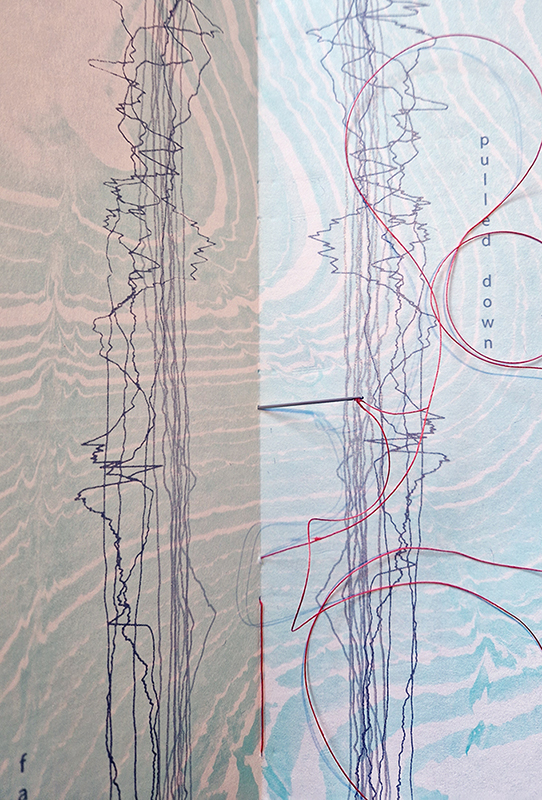
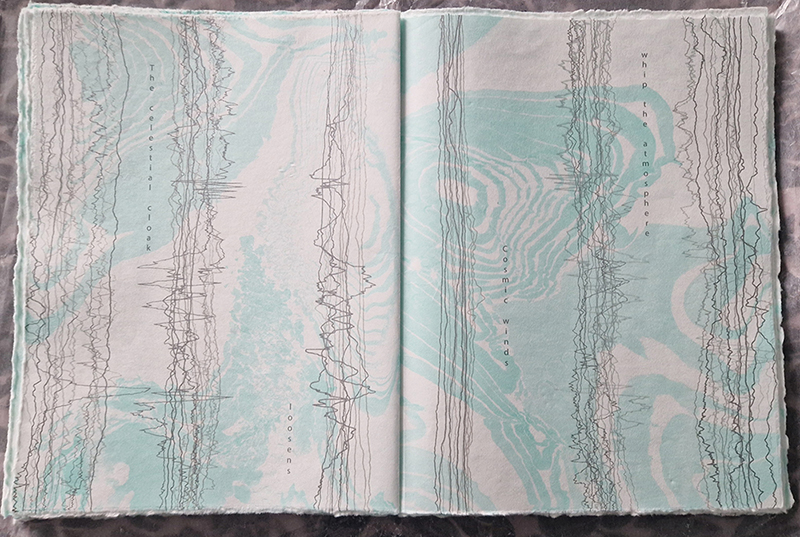
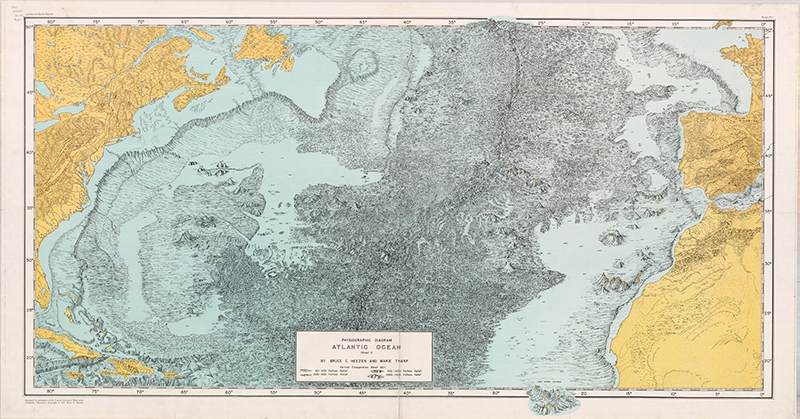
Marie Tharp was an American geologist and oceanographic cartographer. In the 1950s, she was instrumental in producing the first scientific map of the Atlantic Ocean floor revealing a detailed topography and multi-dimensional geographical landscape of the ocean bottom. She translated thousands of sonar readings from ships she was barred from boarding as a woman scientist. Mapping the Atlantic, she identified a continuous rift valley along the Mid-Atlantic Ridge: the first visual evidence of seafloor spreading, the mechanism behind plate tectonics and continental drift. When she showed the map to her colleague Bruce Heezen, he dismissed it as “girl talk.” The idea was still considered too radical, especially from a woman excluded from research vessels. But the evidence kept proving her right. As more surveys arrived and earthquake patterns matched her work, the scientific world accepted by the early 1960s, the planet is not fixed, but alive and in motion. In 1977 she co-published the first complete map of the world’s ocean floor, transforming geology, navigation, and our understanding of natural disasters. In 1997 the Library of Congress named her one of the 20th century’s greatest cartographers, and in 2023 National Geographic awarded her the Hubbard Medal. Thanks to Herstory_feminism for highlighting these amazing usually overlooked women who contributed so much.
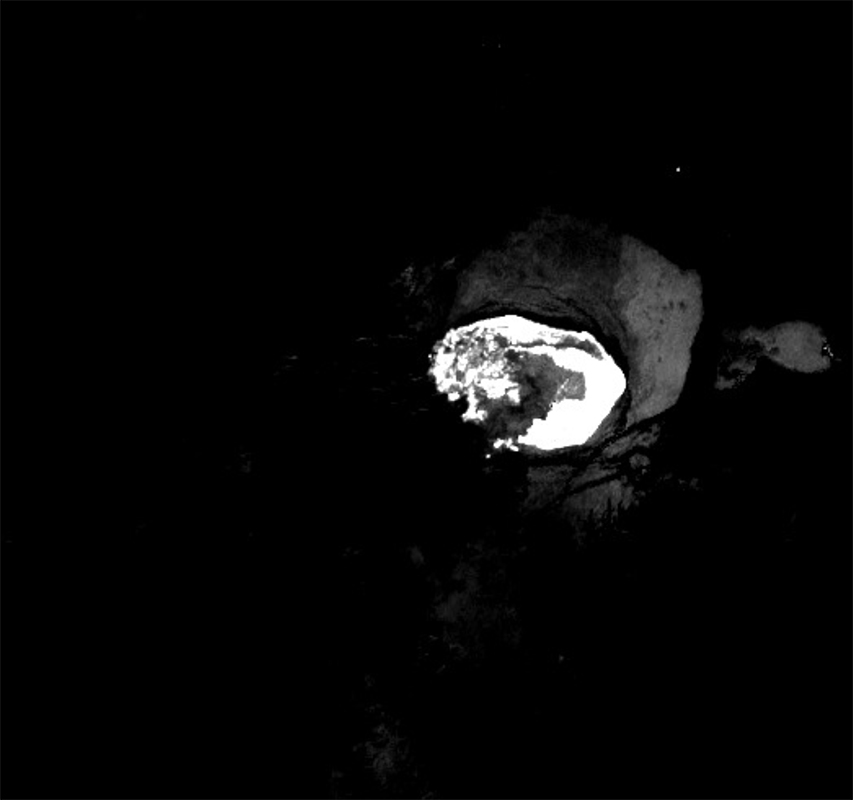
It was great to meet the team at ArtEO in an online group meet and introduction to the collective initiative that aims to make satellite imagery and data sets available to artists.

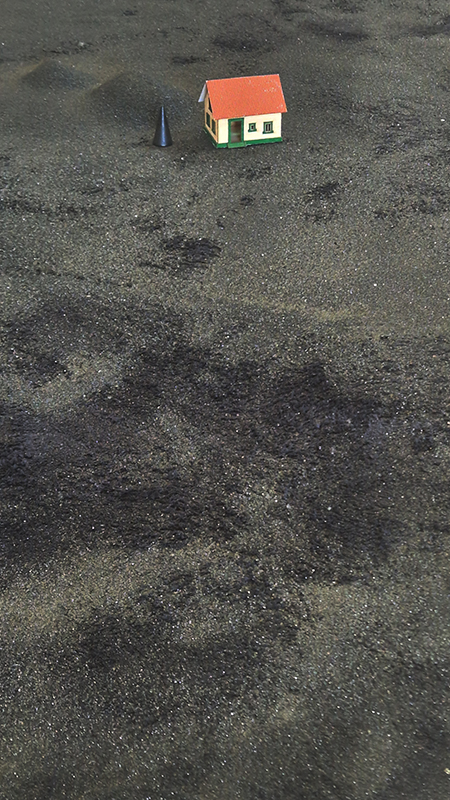
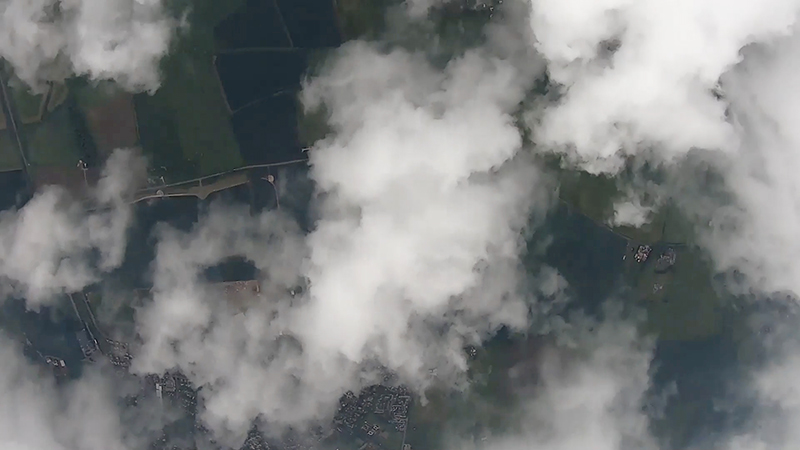
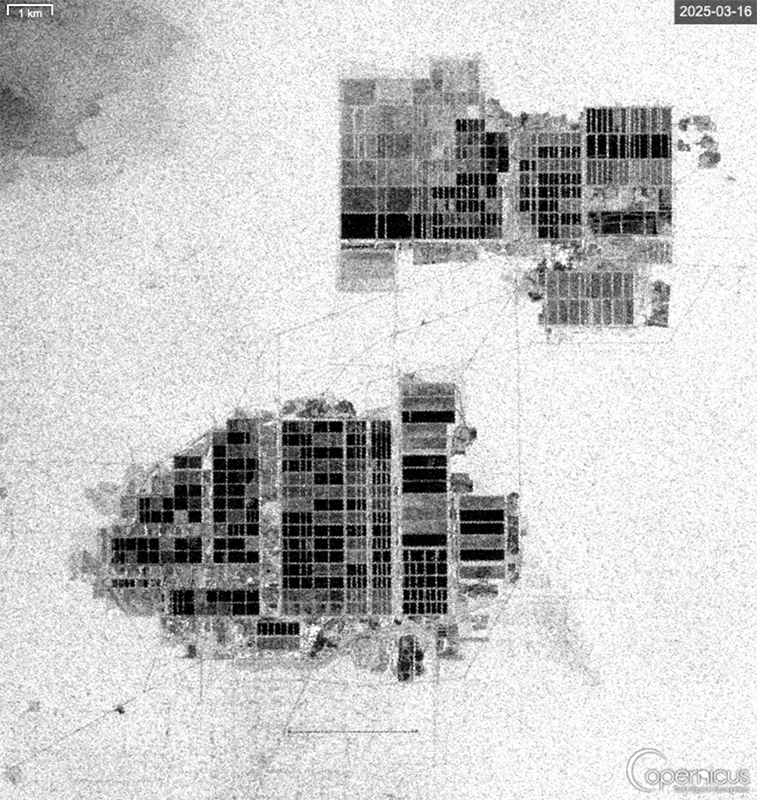
I am excited to have access to imagery that I would never be able to create for myself to feed into my work. I am interested to explore aspects of Earth’s magnetic field in relation to how it might be monitored using satellites, how it impacts the functionality of satellites and how satellites might themselves impact the magnetic field. While bringing so much data and valuable information for us to monitor the Earth and run its infrastructures and provide global communication the increasing number of satellites may put us at risk from over reliance on this technology in the face of an unpredictable force of nature. I hope to learn more about how satellites might help in predicting solar storms and what data sets are produced to model the interaction between high energy particles and the magnetosphere. I would also like to explore the relationship between satellite technology and natural phenomena and the balance between observing and disrupting. These images show an active volcano and a site of mineral extraction.
I have been busy with preparations for the upcoming Appearances are a Glimpse of the Unseen which will be in The Chapel at Brompton Cemetery curated by Catherine Li with the support of The Friends of Brompton Cemetery.

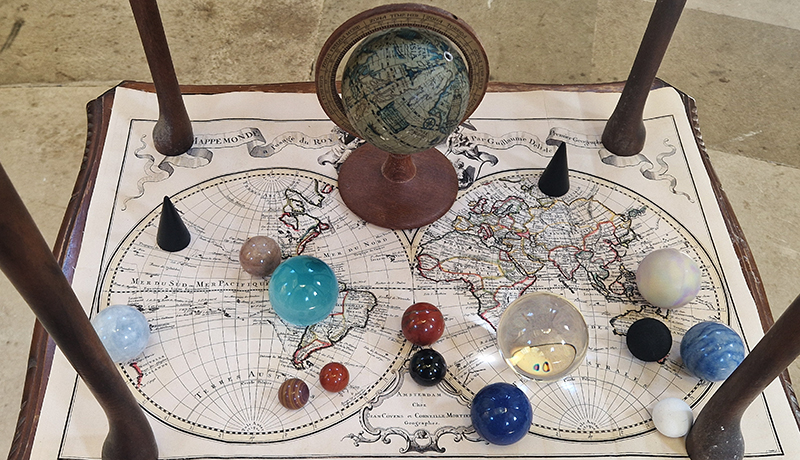
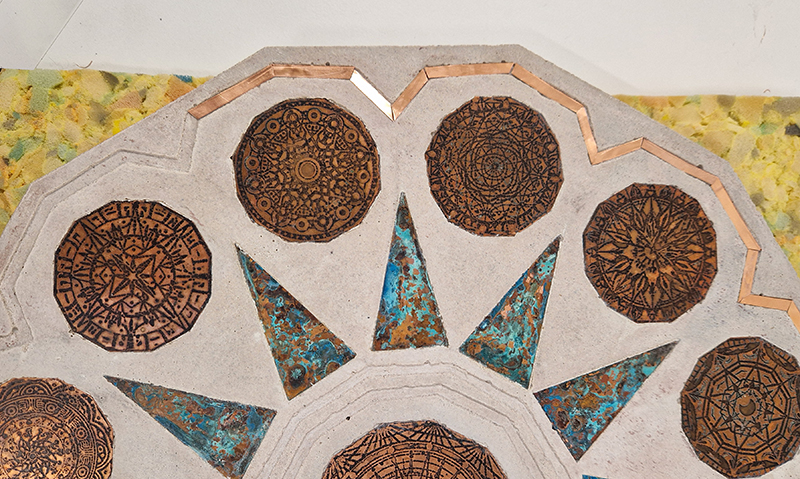
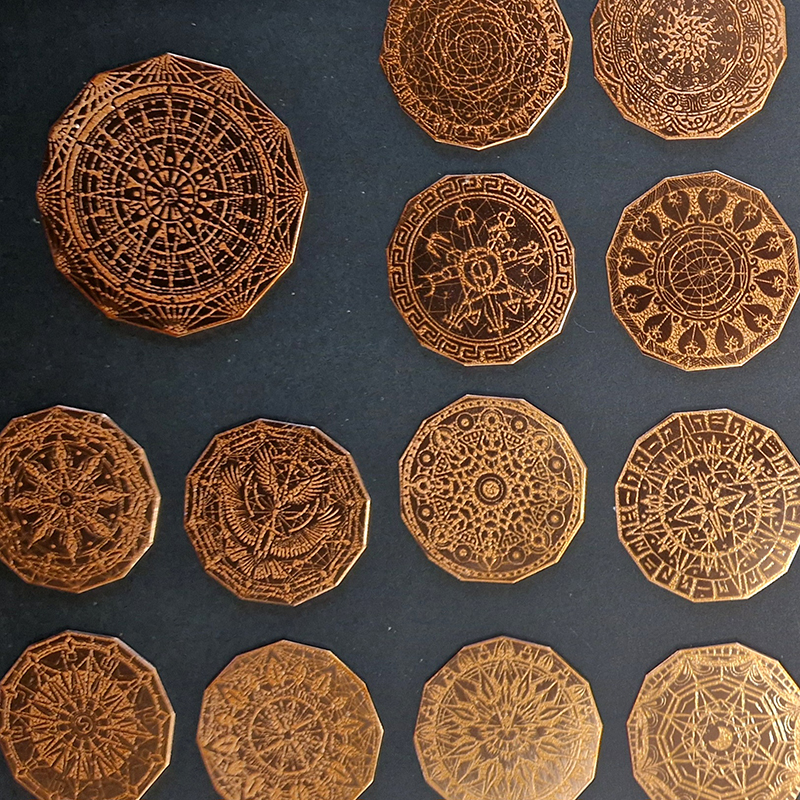
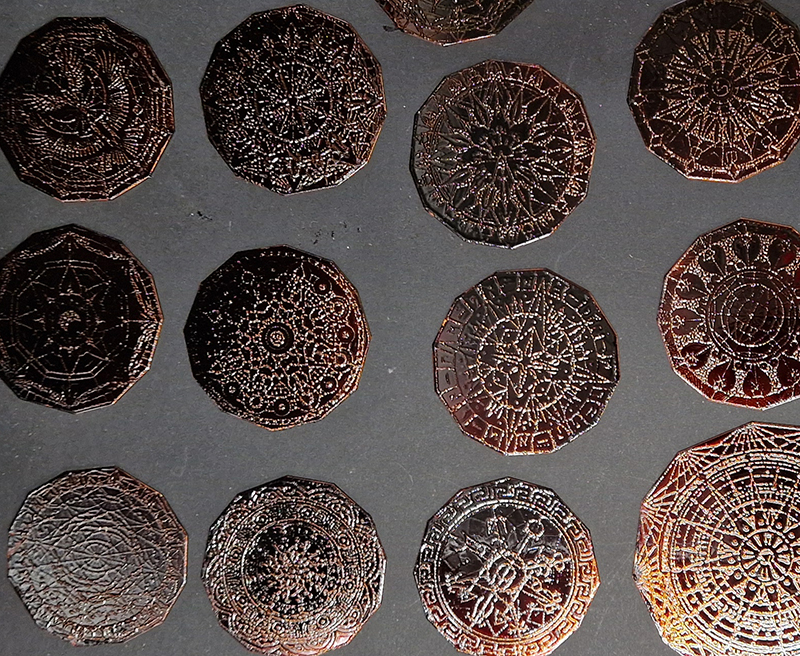
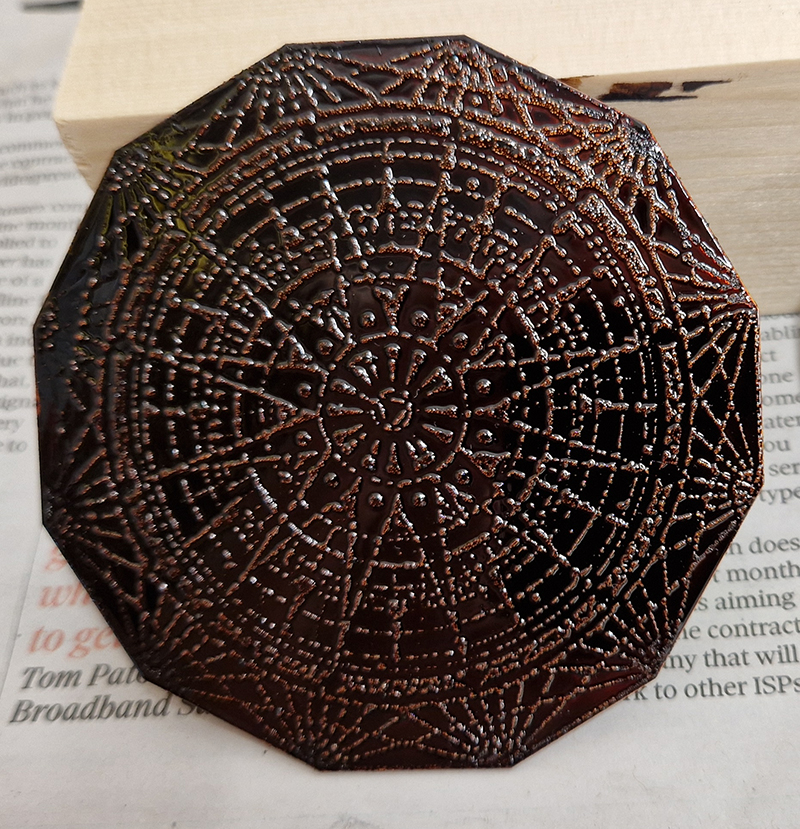
I am making a new sculpture in the series Instruments of the Anemoi set of dodecagon tablets cast in Snowcrete, a non-magnetic cement, as used in buildings at a magnetic observatory. Suggestive of the pedestals that support various instruments used in monitoring the Earths’ magnetic field they also respond to an ancient anemoscope “table of the winds” carved in marble around eighteen hundred years ago with the names of the classical winds, both in Greek and in Latin inscribed on each of its twelve sides.

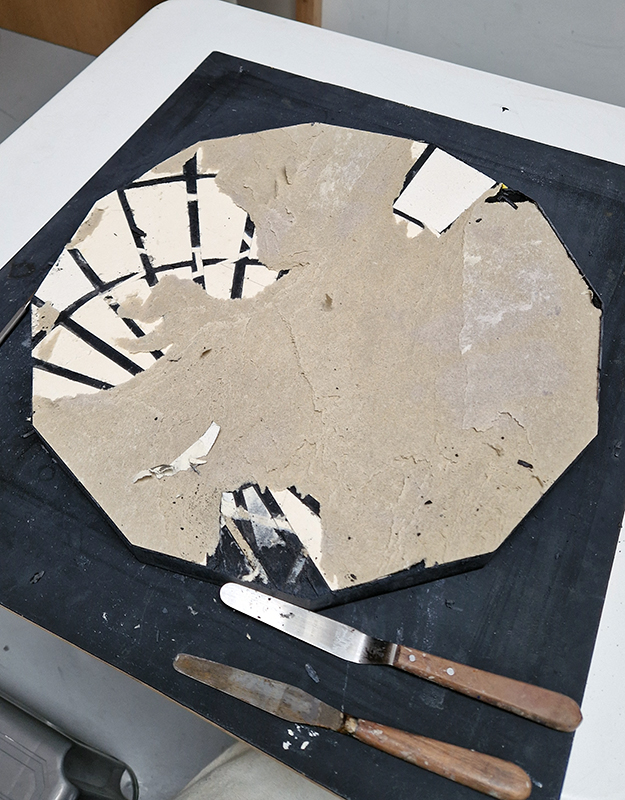
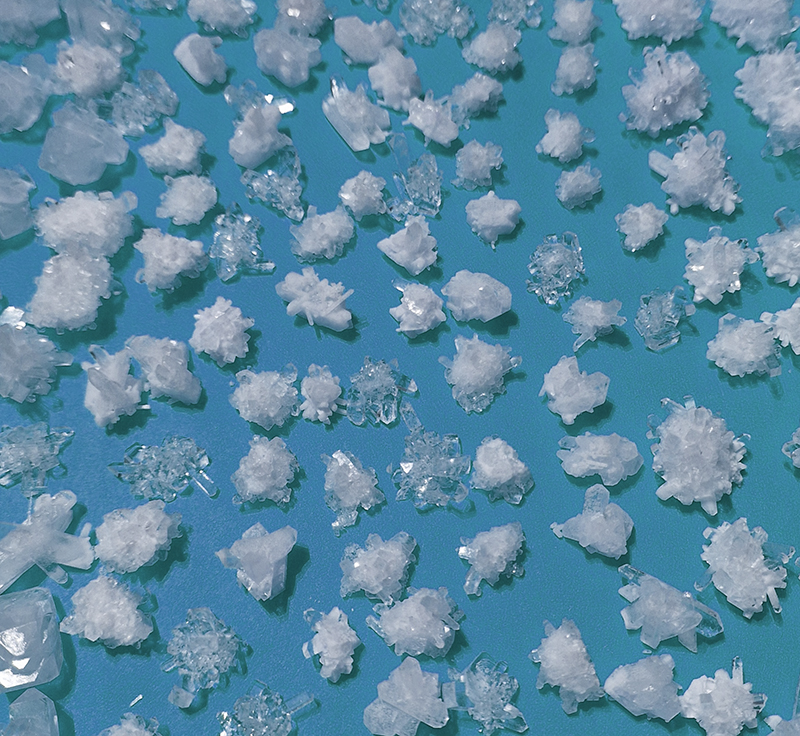
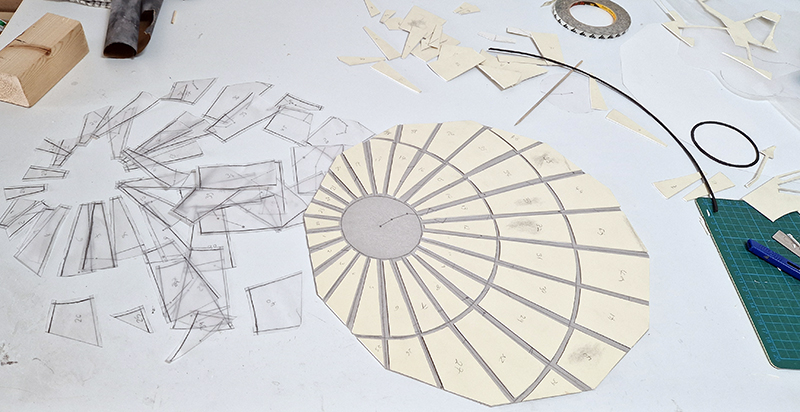
These sculptures are envisaged as speculative objects from past times, shown on repurposed theodolite or telescope tripods, reflecting on methods and tools of natural navigation such as magnetism, wind and stars. The new tablet will reference celestial navigation. Polaris has not always been the Pole Star as Earth’s axis of rotation wobbles over the course of about 26,000 years and many other stars take their turn at pointing to geographic North. I am centring Thuban in the constellation of Draco who took the position between two and four thousand years ago. I have been growing mono-ammonium phosphate crystals to use to outline the constellations whose lines are mapped by casting the concrete onto a collagraph set in a silicon mould. Once the concrete has set, it must be excavated from the cardboard collagraph by careful scraping and peeling away.
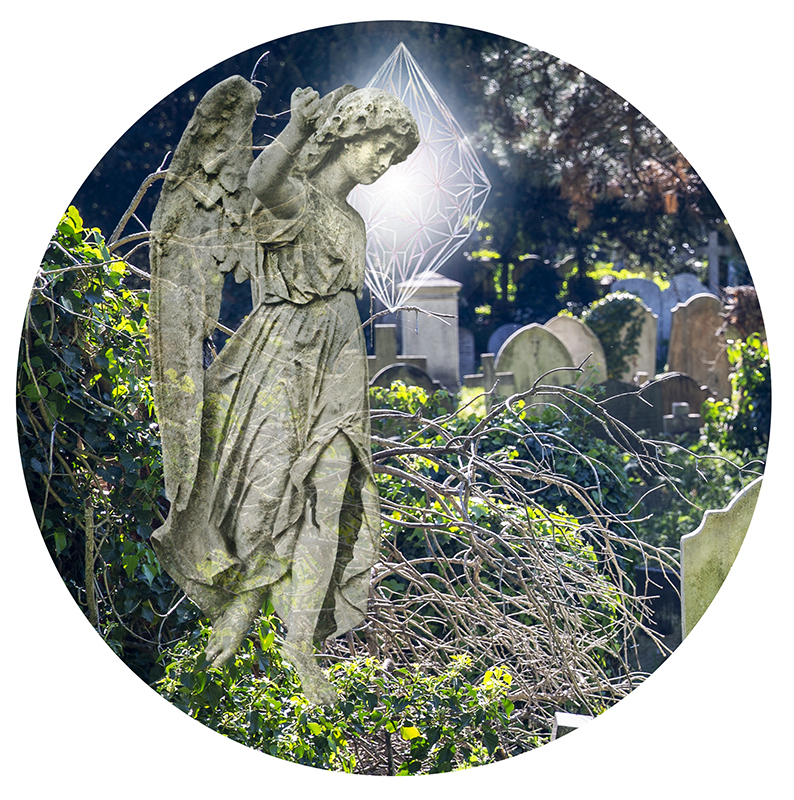
I have also been working on new images for submīrārī (earthbound), which feature the unique convergence of nature, history and serenity at Brompton Cemetery along with a myriad of angels that inhabit it. In looking for cultural and scientific explanations of angels I came across a book The Physics of Angels: Exploring the Realm Where Science and Spirit Meet, in which co-authors Rupert Sheldrake and Matthew Fox discuss parallels between quantum mechanics and early theories of angels, particularly Thomas Aquinas’ teaching that angels are immaterial bodies and creatures of light. The language used to describe the esoteric and the spirit world can often be substituted with the language of physics used to explain energy in its various manifestations.

The images I have been working on are to be printed with sublimation dyes onto organza. I was sad to discover that Promptside printers, who have been so generous to me in the past, in providing paper prints for me to heat press, are no longer operating. I am trying a new company Contrado.
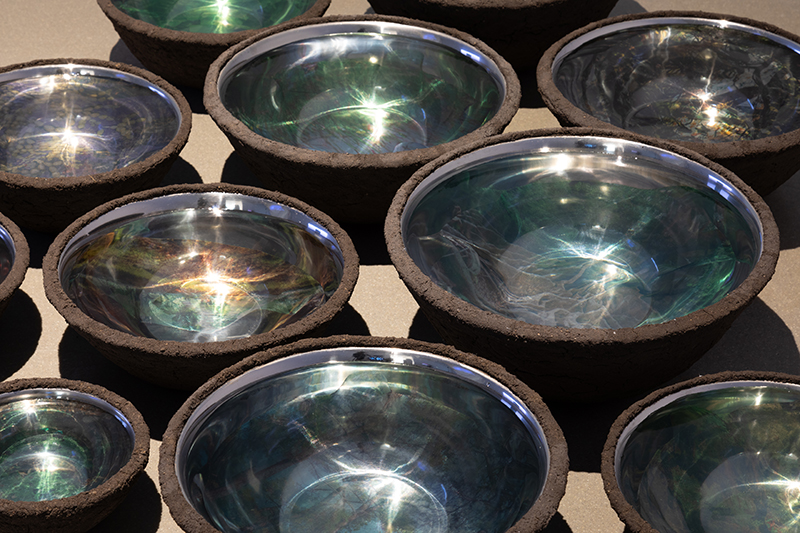
Out of studio activities

Just squeaked in to see The London Group exhibition This That and The Other at The Handbag Factory on its final day.
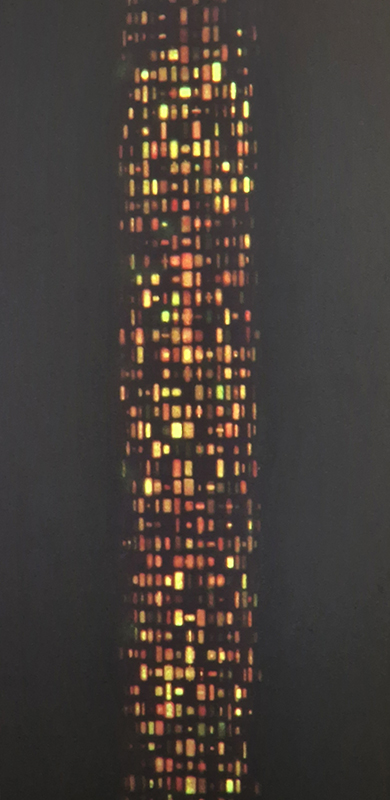
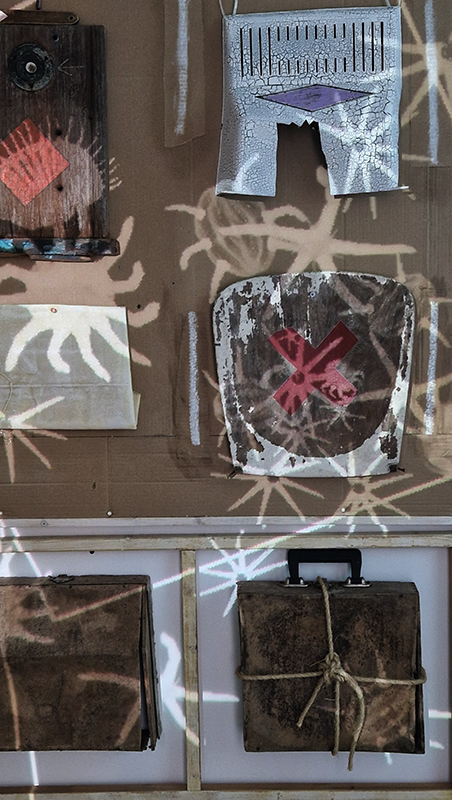
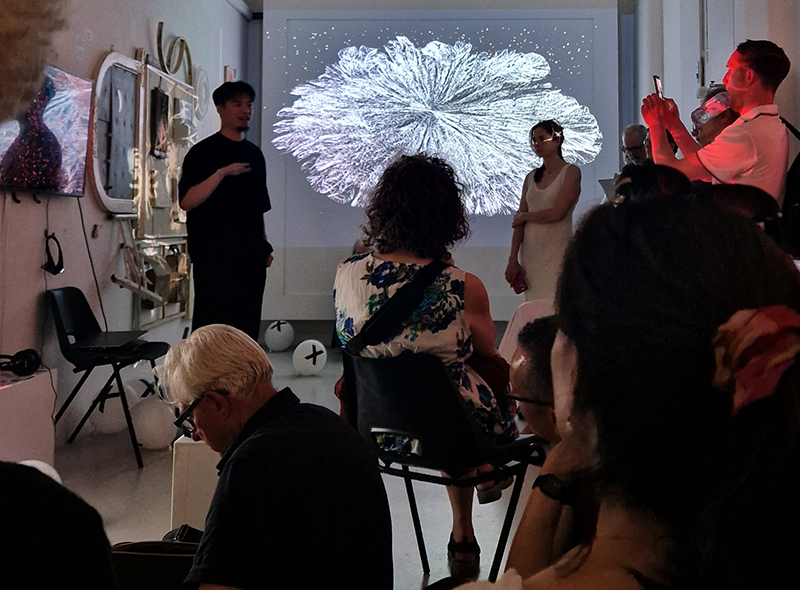
I managed to catch a couple of the talks ‘In the dark’ room and was intrigued by the work of Ash Xu which responded to the brainwaves of visitors wearing a headpiece attached to a screen monitor. The ‘Cosmic in the Brain’ series is an experimental artistic practice that merges neuroscience technologies with generative art, aiming to translate the abstract processes of human thought into the creation, evolution, and integration of stars within a virtual cosmos via Brain-Computer Interface (BCI) technology. The work is a collaboration between the artist and the audience. Through intuitive interaction, individual ideas are translated into a shared digital cosmos, allowing each participant’s inner world to contribute to the collective constellation. This process turns private thought into a visible, living landscape, one that unfolds in real time and belongs equally to everyone present.
I also was drawn to the video work by Eric Fong – A haunting journey through Horton Cemetery in Epsom, where thousands of pauper patients, mostly women, from five nearby mental asylums were buried. It is now an abandoned, derelict and overgrown site, where all grave markers have been removed, except one. The footage is overlaid with words drawn from the medical case notes of those buried there.
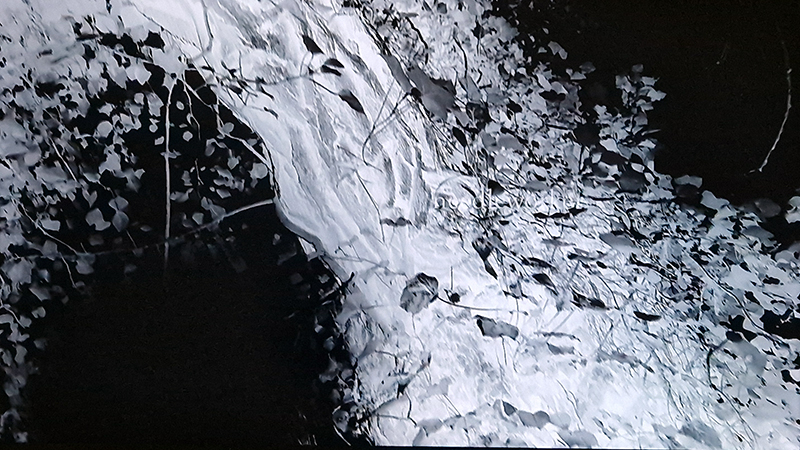
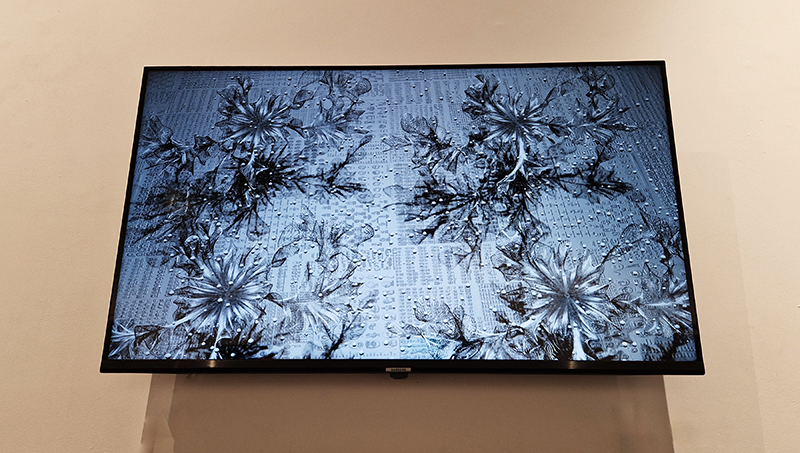
Mesmerising work by Sandra Crisp – ‘Dark Particles [slow_data]’ explores hybrid forms emerging where biological process and computational culture collide. Particle systems and differential growth generate organic structures whose surfaces are mapped with emoji and climate infographics — the residue of our information-saturated present absorbed into coral-like, cellular forms. Particles fall, accumulate, stick and die. Forms grow, darken and sediment. Rendered in monochrome on everyday hardware, the work embraces slowness. Like fossils, these forms carry traces of their moment — compressed into something unreadable, elusive and dark.
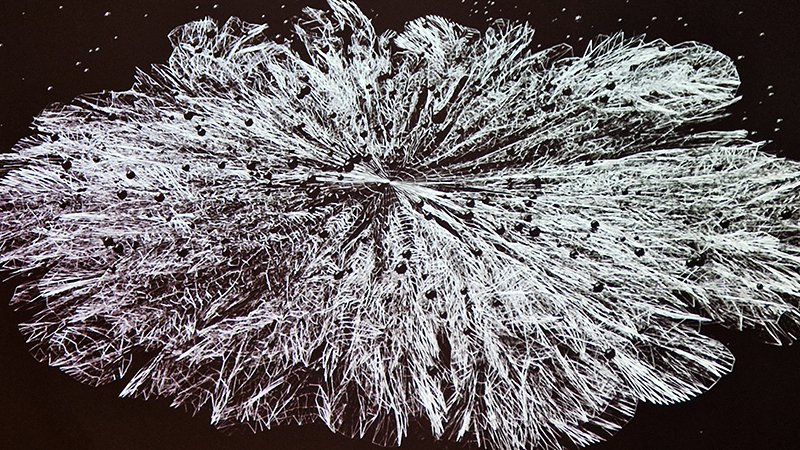
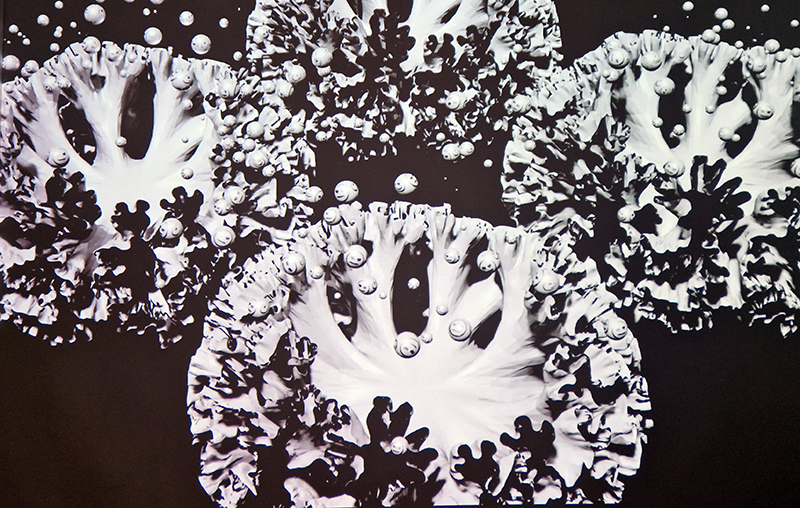
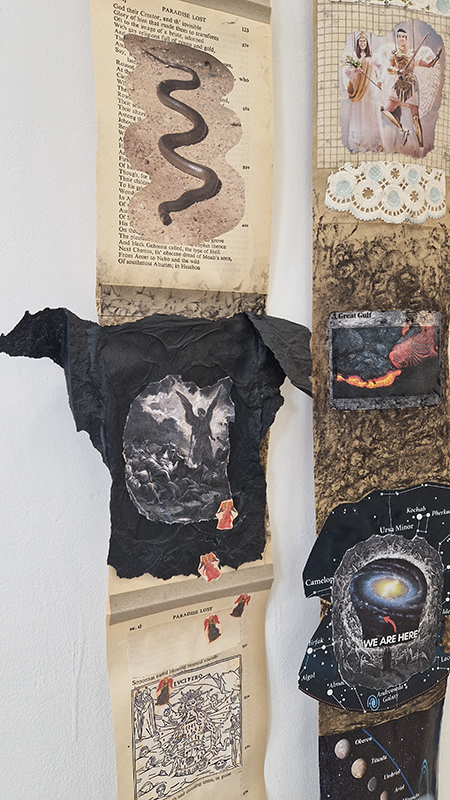
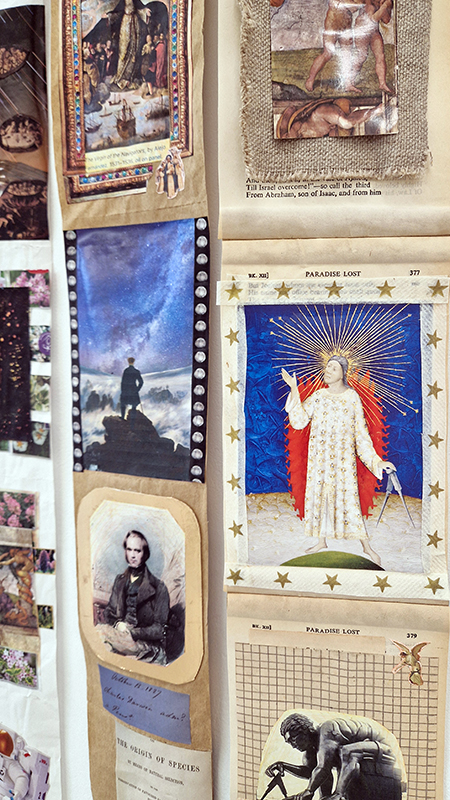
David Redfern On the 12th September 1768 Captain James Cook put in to the island of Madeira to resupply his ship ‘Endeavour’ at the beginning of his epic voyage around the world. Also on board ‘Endeavour’ was a private party of scientists, artists and the amateur botanist Joseph Banks. Banks discovered 25 new plant species on Madeira and needed to preserve the specimens he gathered. He pressed them in a book, a copy of a criticism of Milton’s ‘Paradise Lost’, written by Joseph Addison. The mythical Garden of Eden pressed up against scientific specimens contributing to the burgeoning science of botany. Paradise Lost Book leaves, gathered images 200 x 180cm. This work captured my attention as I am interested in ‘paradise’ and have been looking at angels in Brompton Cemetery at the moment and recently listened to two podcasts where angels feature – Cautionary Tales Podcast on John Dee and the Bureau of Lost Culture Podcast EVP – voices from the other side
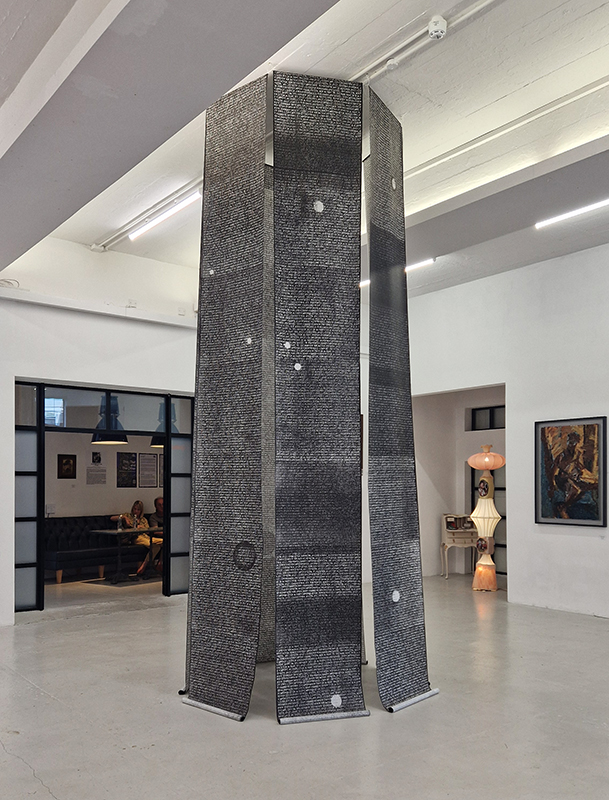
Imposing installation with amazing attention to detail from Carol Wyss 7 PILLARS OF WISDOM deconstructs the very concrete order of bones into lines of information — a basis of a new writing to chronicle human interaction. The title of the installation refers to a biblical proverb which outlines a range of moral duties. T. E. Lawrence wrote an autobiography of that same title, likely inspired by Ruskin’s 7 Lamps of Architecture book which Lawrence had previously read. The installation consists of seven large unframed scrolls. Each scroll combines intaglio and relief printmaking techniques on thin Japanese paper.
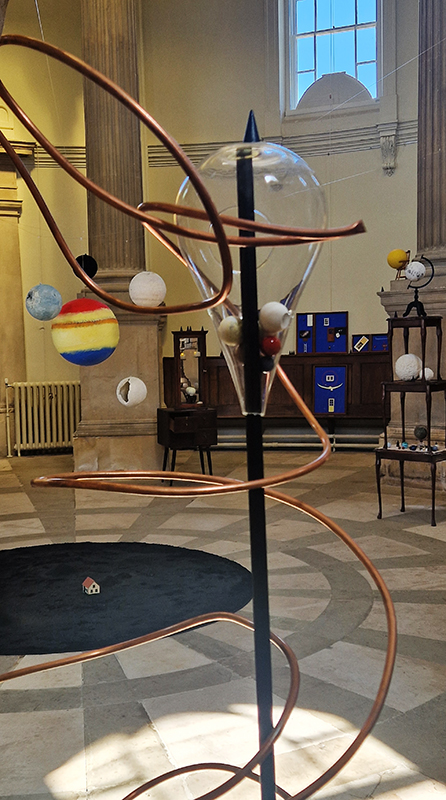
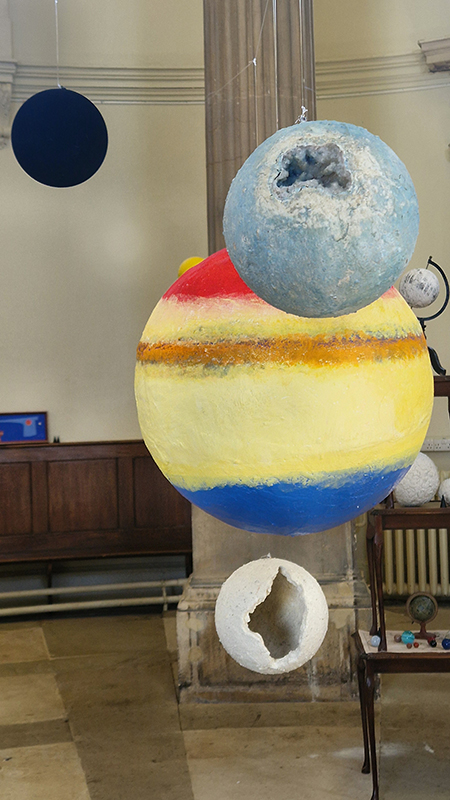
Qi Baiting House of Day, House of Night at The Chapel, Brompton Cemetery curated by Catherine Li brings together a ‘constellation’ of sculptures inspired by the circulation of objects via numerous flea markets. Drawing from Olga Tokarczuk’s image of living in two homes at once, one fixed in time and space and one infinite, these objects appear on interstellar journeys in which they hold together the material and the immeasurable: the located and the unplaced, the lived and the imagined. The objects remain tied to their historical time, imbued with traces lived experience, while their decontextualization allows other meanings to surface, as though they too were inhabiting more than one home at once. She also alludes to Ursula K. Le Guin’s The Carrier Bag Theory of Fiction: Sometimes the world is nothing more than things placed quietly together.
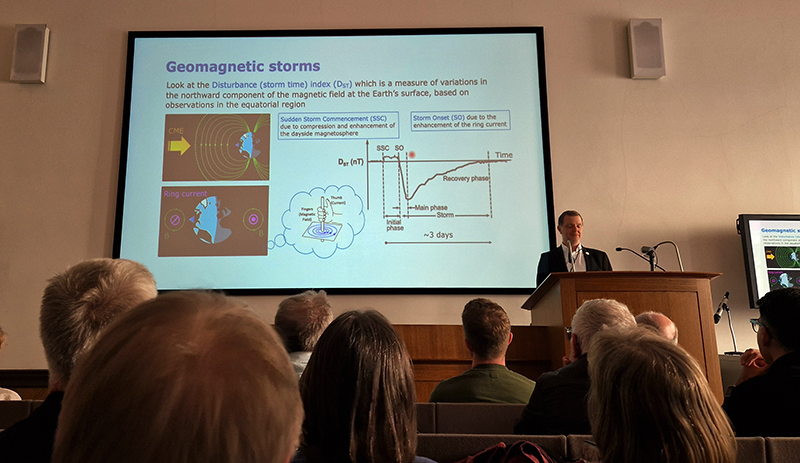
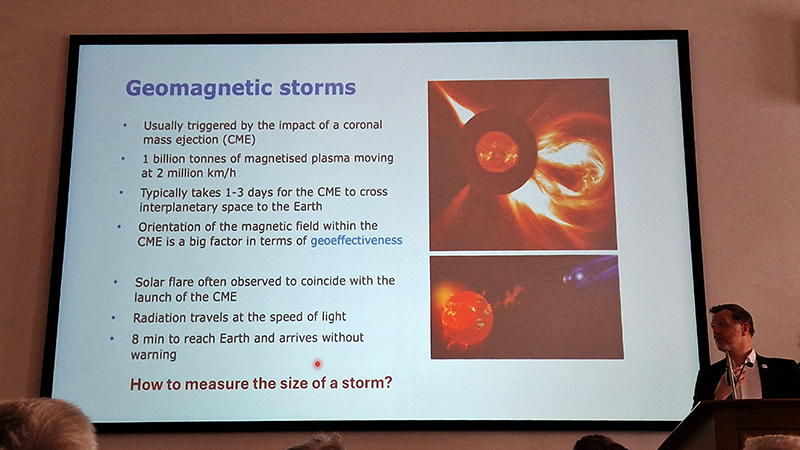
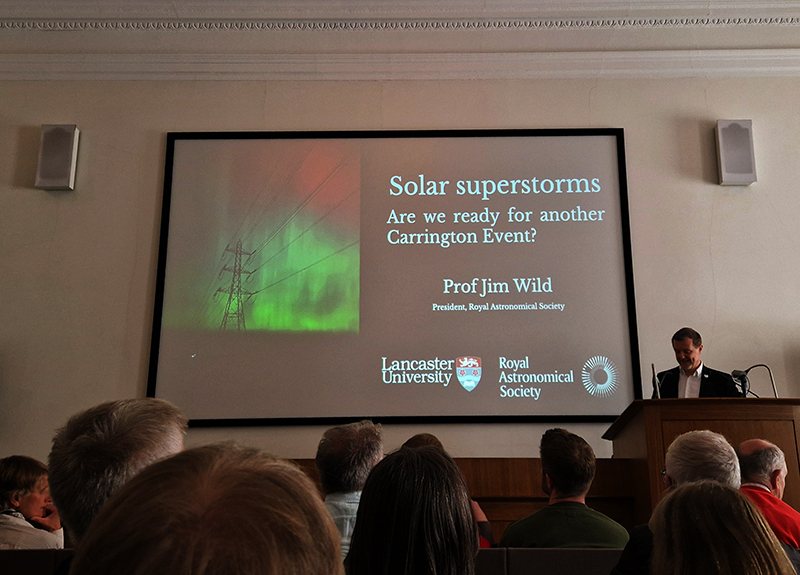
Royal Astronomical Society talk Solar superstorms: Are we ready for another Carrington Event? by Jim Wild, Professor of Space Physics within the Physics Department at Lancaster University and President-Elect of the Royal Astronomical Society.

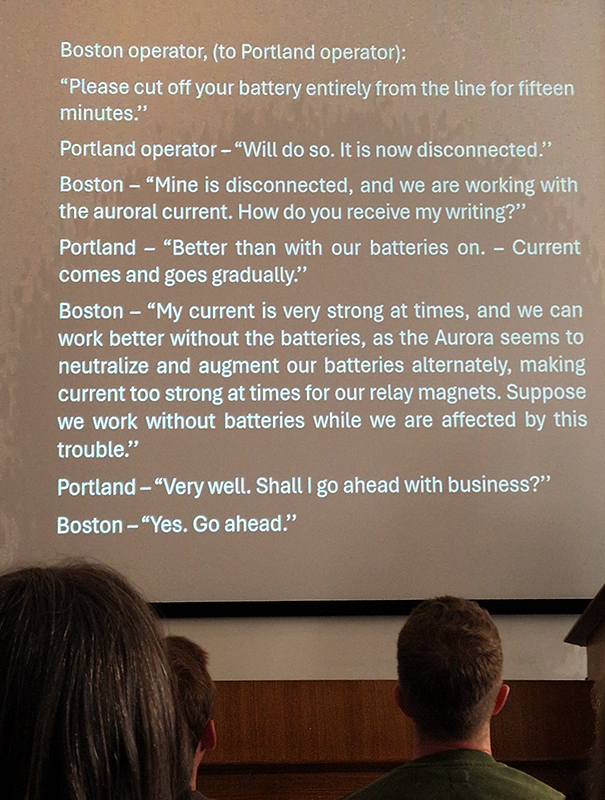
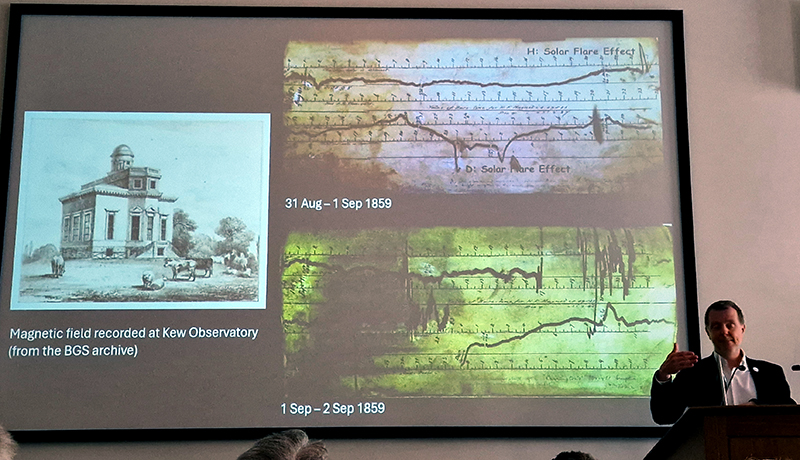
In September 1859, the English astronomer Richard Carrington made the first recorded observations of a solar flare. Unknown to Carrington, the flare coincided with a fast-moving coronal mass ejection that struck the Earth’s less than twenty four hours later, triggering the most powerful geomagnetic storm of the modern age. The storm, now known as “the Carrington event”, sparked auroral displays visible as far south as the Caribbean and disrupted operations of the global telegraph network. But this powerful space weather event pre-dated most of the technologies that we depend upon today, such as power grids, satellites, and wireless communications. How vulnerable are we? Are we prepared for the next Carrington event? In this talk, Prof Jim Wild considers the resilience of the modern world to extreme space weather.

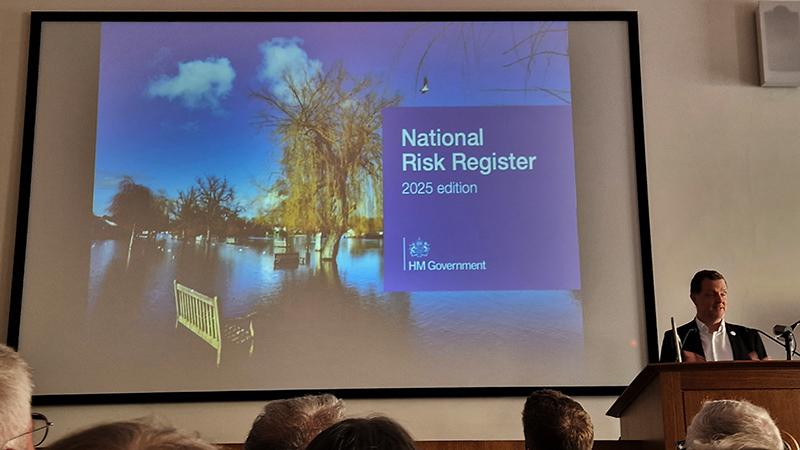
The UK National Risk Register sees space weather as significant risk. The term ‘space weather’ describes a series of phenomena originating from the sun, which include solar flares, solar energetic particles and coronal mass ejections. Day-to-day space weather causes little more than the Aurora Borealis in polar regions, but strong space weather events can bring disruption to many vital technologies. Orbiting satellites are particularly vulnerable to space weather effects, and can be damaged or temporarily disabled. Impacts may include regional power disruptions, loss or disruption of Global Navigation Satellite Systems (for example Global Positioning System (GPS)) and some telecommunications (for example satellite communications and high frequency radio), disruption to aviation, an increase in background radiation doses at high altitudes and in space, and possible disruption to ground-based digital components. The catalogue of tracked objects in orbit would be significantly impacted, raising the risk of on-orbit collisions. There may also be second order impacts such as fatalities and casualties (for example, in the event of power disruptions).
Peckham 24 The Eras Edition at Copeland Gallery exploring photography through the lens of time. ‘Time is a paradox; it is intangible, but its traces are omnipresent; it is an illusion, yet it’s governing our lives; it facilitates growth, while inducing decay. The projects exhibited at this year’s Peckham 24 explore these multifaceted aspects of time; they address the issues of our time, interrogate ecological transformation and its long-term implications, capture varying life stages and nostalgic formations, and explore the lingering of the past in the present.’

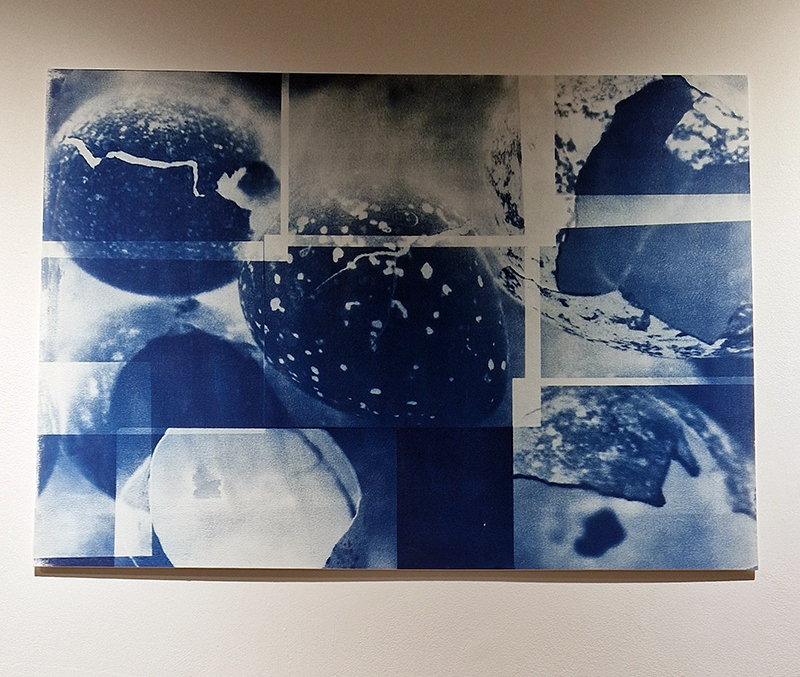
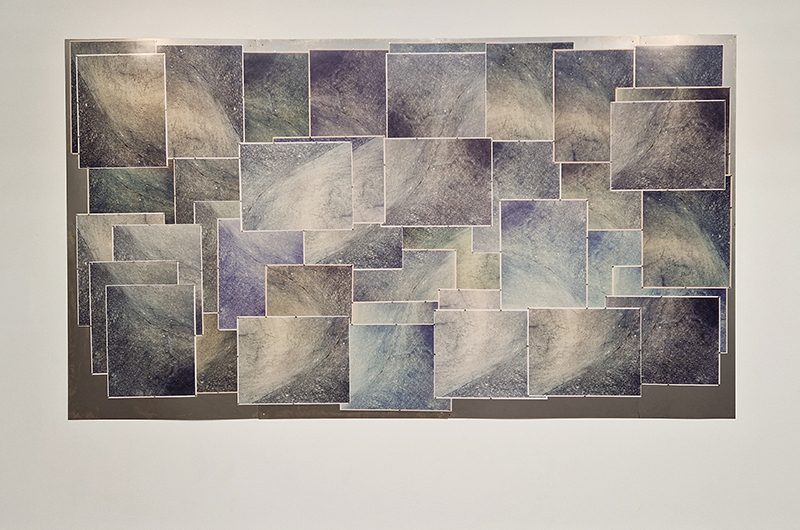
ROM a large-scale multi-image work by Eugenie Shinkle at first glance looks galactic but is in fact a series of photographs of the material surface of a decaying skatepark. The work reconstructs an experience of space, disorienting, immersive, and at times euphoric. Time is encountered here not as sequence or narrative, but as something embedded in matter and enacted through movement. Built in 1978, the Rom skatepark in Hornchurch, Essex was the first of its kind in the UK. No longer in regular use, the concrete structure is slowly decaying – cracking and delaminating, a consequence of decades of weathering, and of the wear and tear inflicted by the passage of thousands of wheels. Though they’re only a few decades old, the forms have a strangely primordial quality, the concrete stained and colonized by lichen, as if the recent past were already slipping into something more geological.
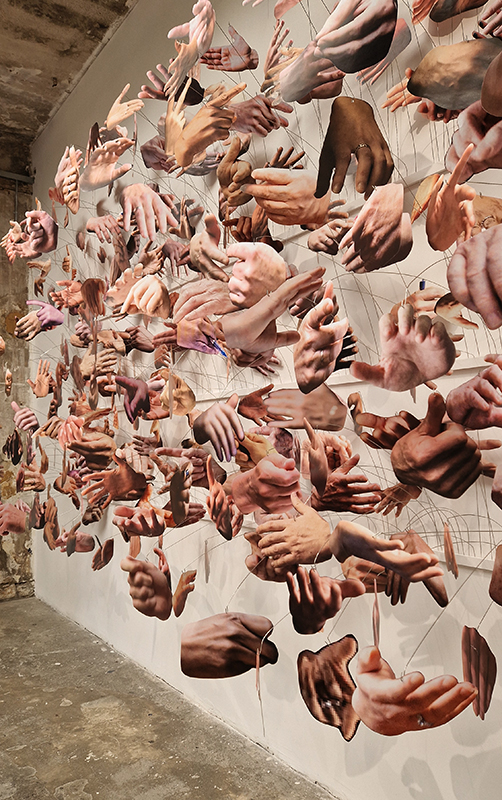
A Parliament of Empty Gestures by Mark Duffy is made from appropriated photographs produced and distributed by the House of Commons over the past two years. It is a comment on the performative and confrontational nature of political debate, the repetition of prescribed political gestures, and the constantly shifting blame game that is modern politics.
A fabulous iteration of Julie F Hill’s installation Cave and Chasms series where RAW data from space telescopes, such as Hubble and the James Webb is processed, sculpted, crystallized and mineralised drawing on the cosmic and terrestrial to offer an experience of intimate immensity.
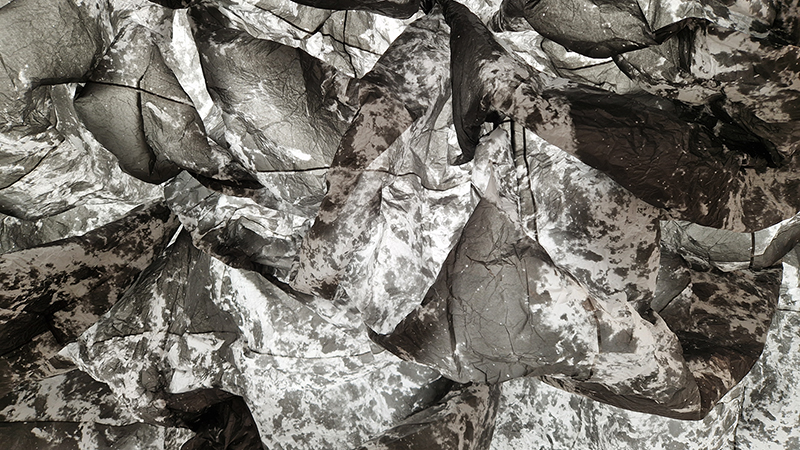
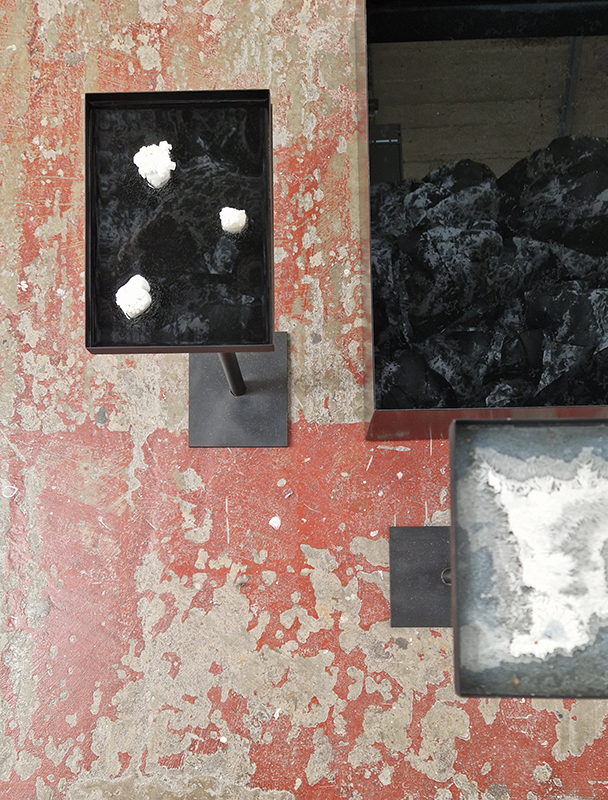
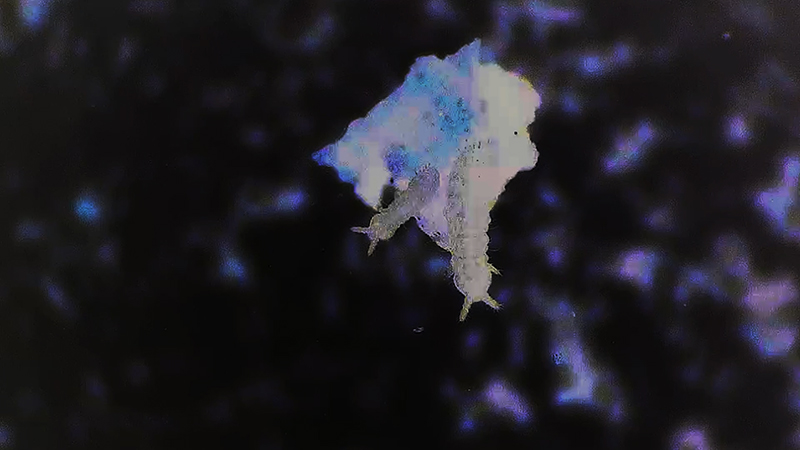
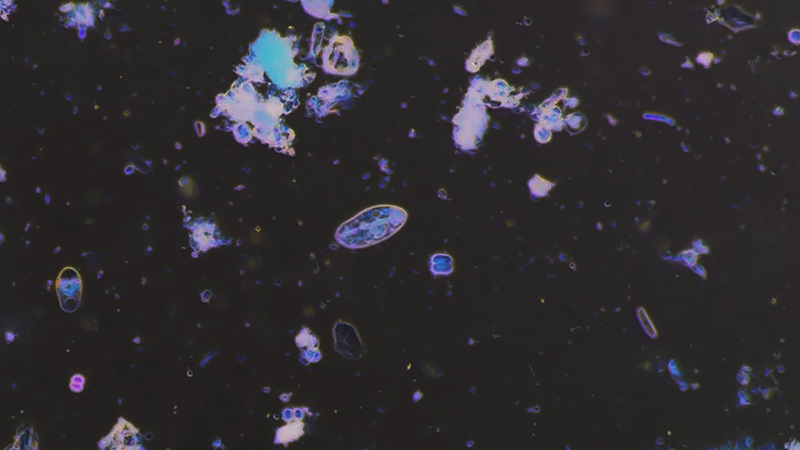
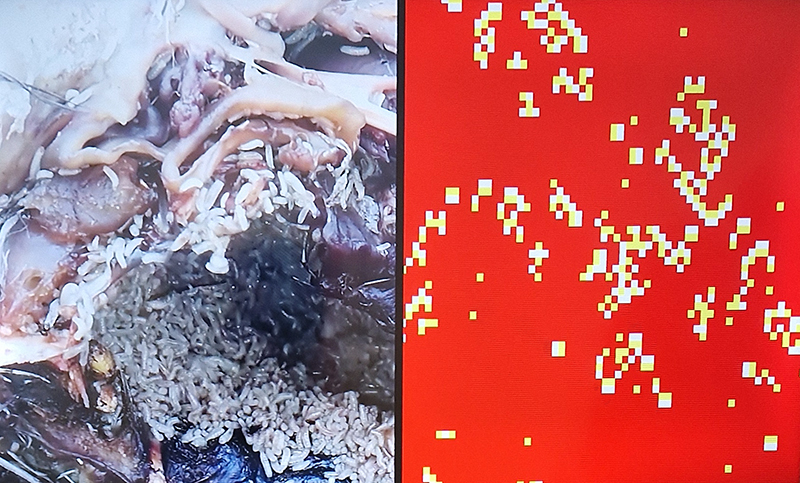
I am enjoying discovering the gutter creatures who share my home. Gathering video footage of an alternative cosmos to go towards making work which will be shown in Occupied: Strange Company at the Safehouse next year, a group exhibition curated by Julie Hoyle.

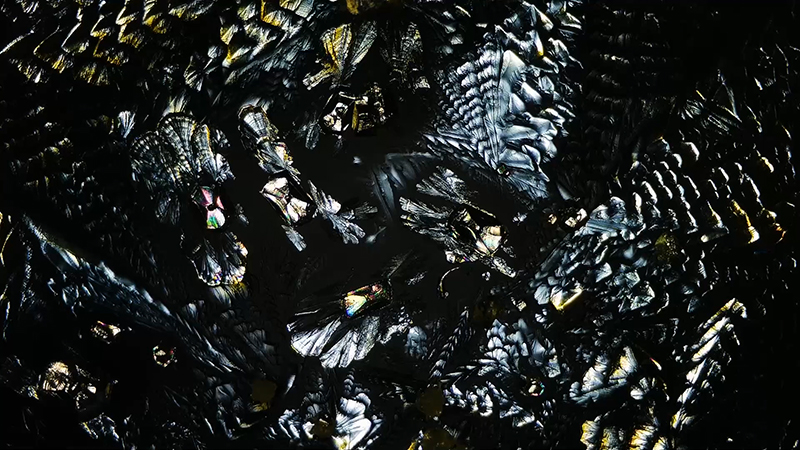
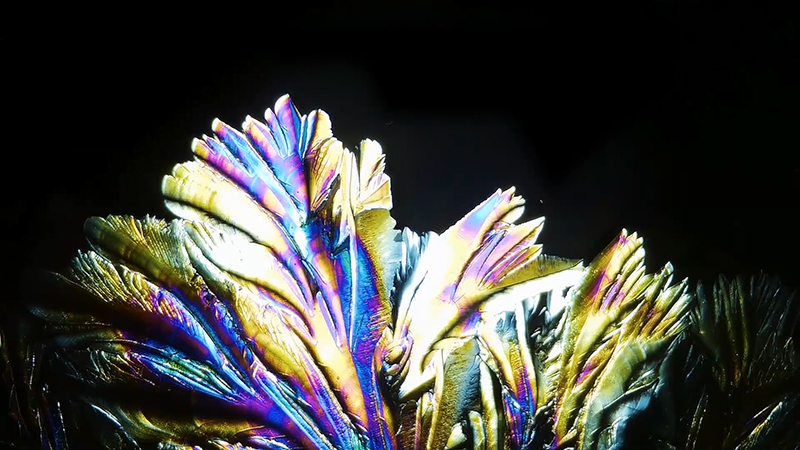
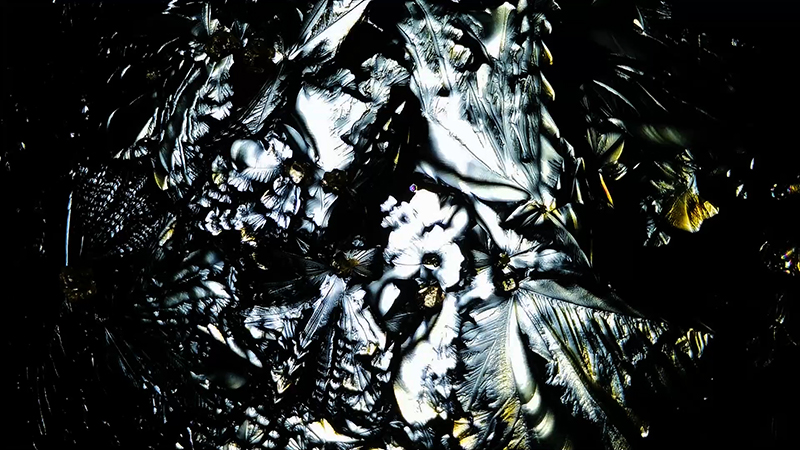
My experiments growing citric acid crystals have been going well. I am filming these transformations under polarised light which reveals the many vibrant colours but I also like the images without the filter. The structures remind me of feathers so I am thinking about creatures that flutter as well as those that swim.

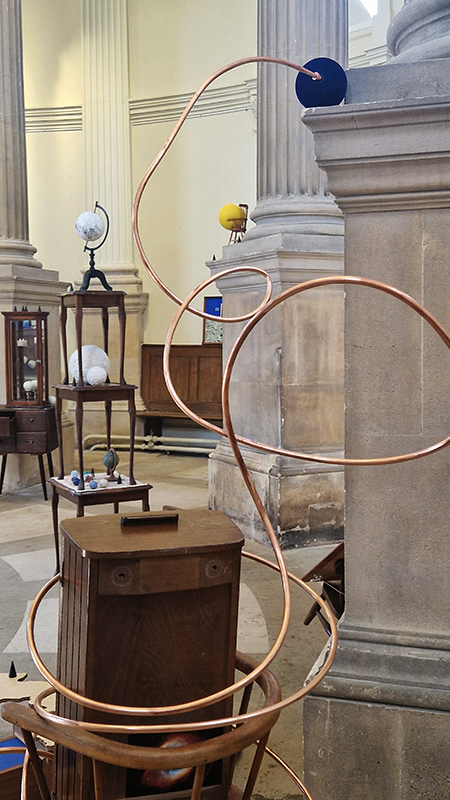
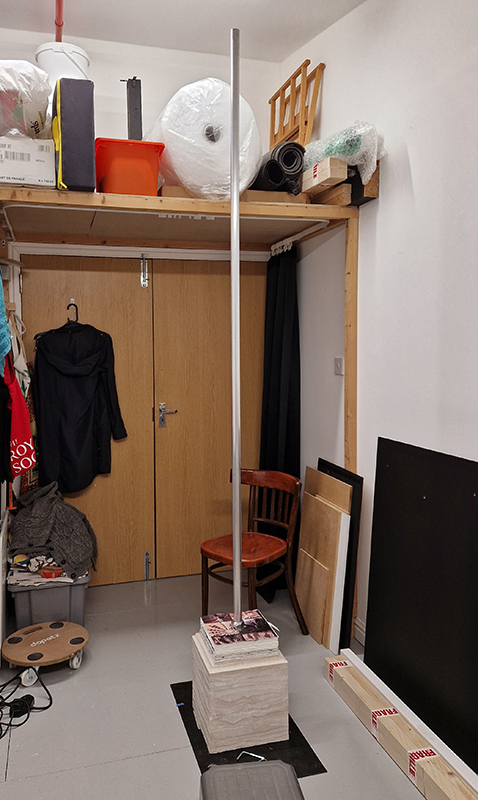
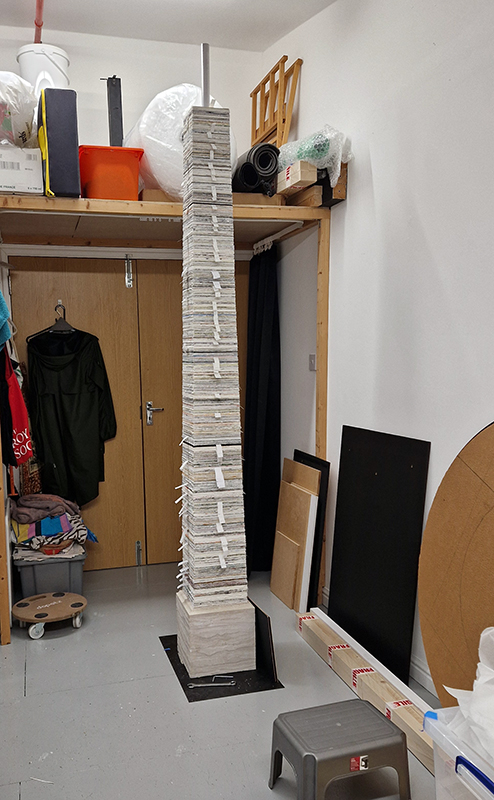
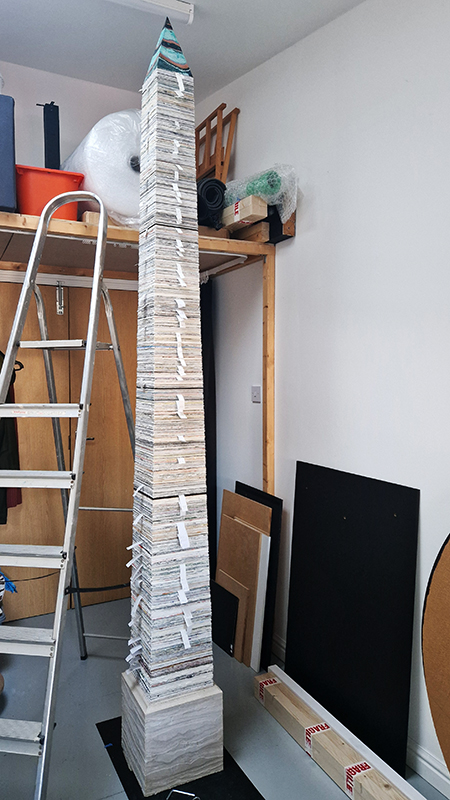
Time in the studio has been spent checking over and preparing works that will be showing in Cosmos: The Art of Observing Space curated by Ione Parkin which opens in the new year. I am thrilled to be part of this exhibition bringing together contemporary and historic artists and featuring an extraordinary range of work inspired by the cosmos. I have completed a test build of The Azimuth Obelisk (of sedimentary knowledge) using a new internal structure for before packing it all away again ready for transport to The Royal West of England Academy in Bristol. This work is a reimagining of an permanent azimuth mark erected at Hartland Magnetic Observatory in North Devon from which the drift of the magnetic north pole is monitored. Made of many layers hand torn from recycled works on paper it echoes the geological and magnetic history of the Earth which is secreted in the strata of sedimentary rock. The protruding tabs of paper seen in these studio images are markers for each section of paper squares of a tapering size and will get tucked away at installation in the gallery. With the added thickness of my new studio roof insulation the obelisk only just fits in now.

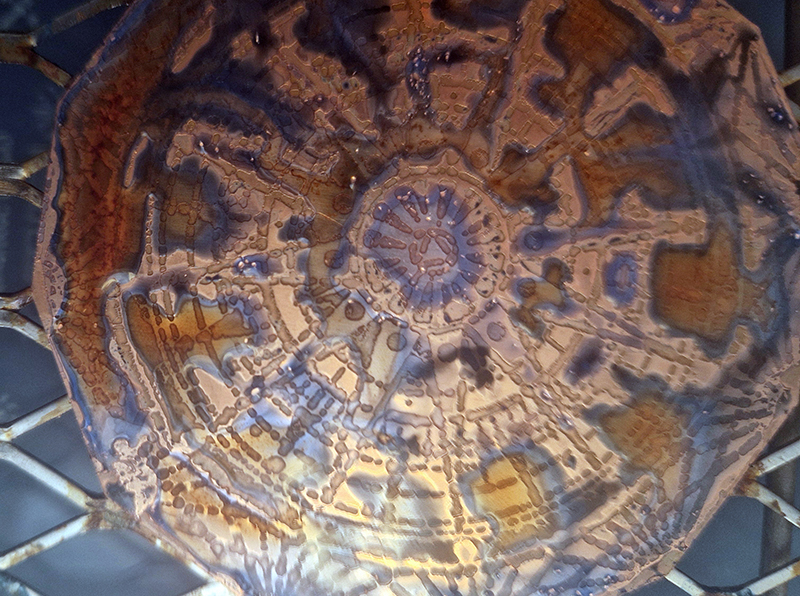
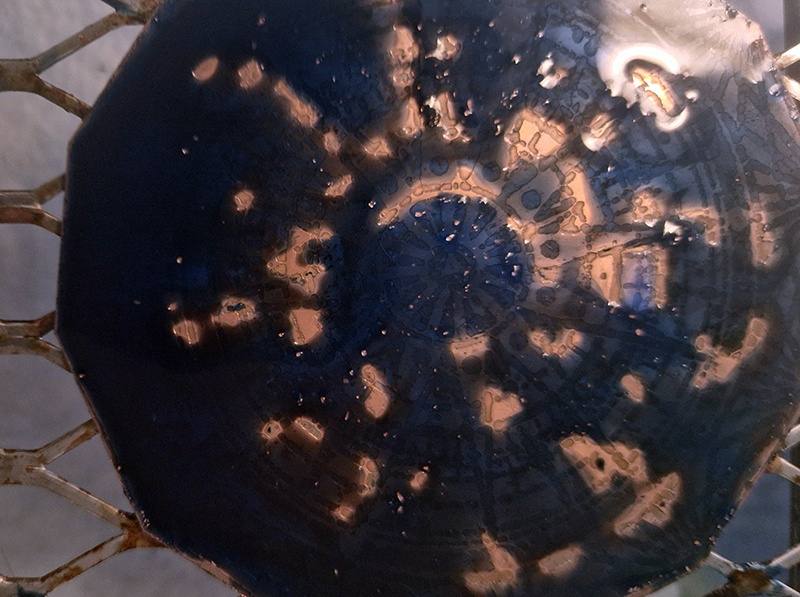
I have started work on inserting copper segments into the new sculpture for the Instruments of the Anemoi series. The other larger pieces of etched and patinated copper were added at the time of casting, held in place with tape and hope when the concrete was poured into the mould. This series of sculptures are suggestive of the pedestals that support various instruments used in monitoring the Earths’ magnetic field but are envisaged here as speculative objects used by the wind gods as the first emissaries of navigation.

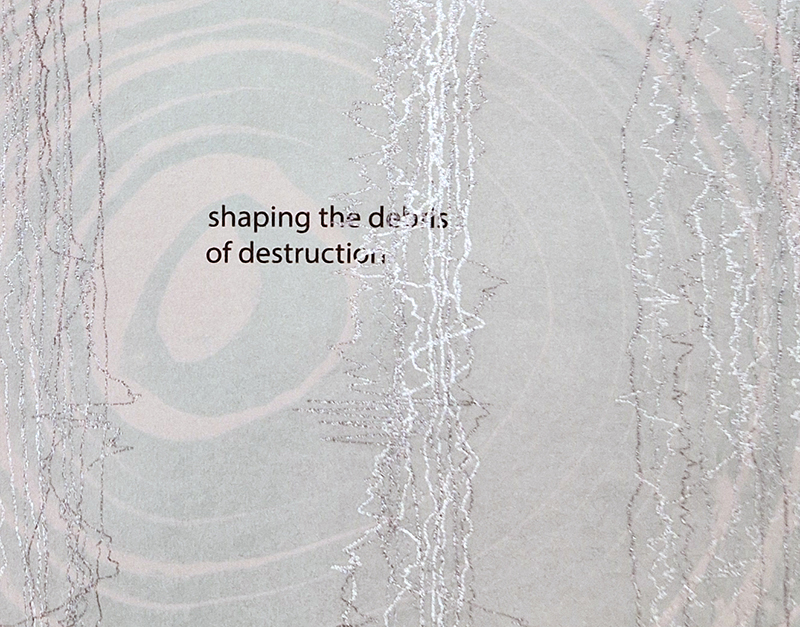
I am still battling with writing text for The Book of Reversals, an artist book that responds to the record of Earth’s magnetic field reversals being written in bands of minerals on the ocean floor.

The crisp crust fractures / Fragments slide across a viscous veneer

Submarine mountains tower / Ocean trenches gape

Tectonic plates subduct / melting into the mantle 

Deep time traces are consumed / surfaces ceaselessly reformed

The Earth’s magnetic field has been a fascinating mystery for many hundreds of years and Gillian Turner’s book North Pole, South Pole recounts the stories of those who sought to solve its origin and mechanism. Something I hope to look at in more depth is how pottery and bricks preserve the direction of the magnetic field in their minerals during the process of firing which heats and then cools the clay – the same process that occurs in a lava flow. Iron-bearing minerals (like magnetite) in clay become “magnetic” when heated in a kiln. As the pottery cools, these minerals lock into the Earth’s magnetic field direction and strength at that time. The study of the magnetic properties of ancient pottery, known as archaeomagnetism, has been used to make records of the inclination of the magnetic field from past millennia. Inspired by these studies of manmade artefacts to determine the historical position of the north magnetic pole, physicists Bernard Brunhes and Pierre David took samples from exposed lava flows and their underlying clay in central France. In 1906 they came to the astonishing conclusion that about six million years ago the magnetic field seemed to point in the opposite direction, the first indication of magnetic field reversals.

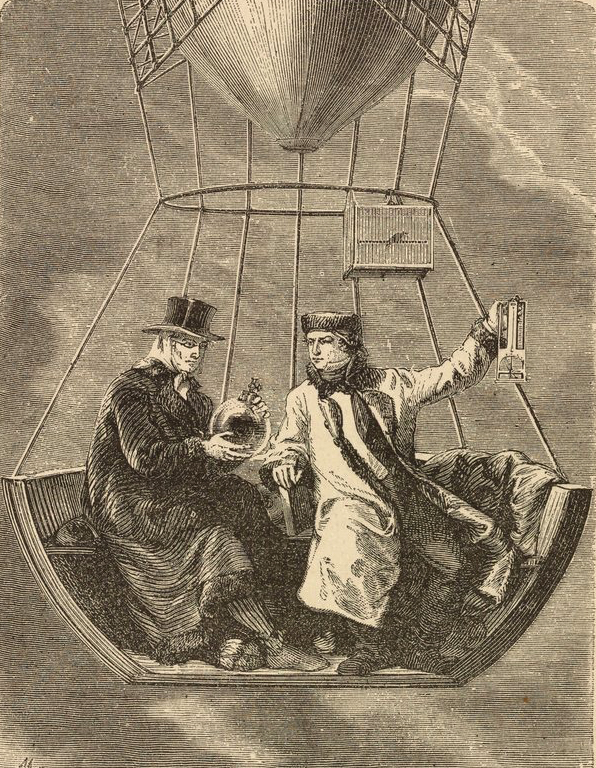
Also with thanks to Gillian Turner’s book North Pole, South Pole I have learnt that there were early hydrogen balloon ascents to determine if the Earth’s magnetic field intensity varied with altitude, helping to decide if the magnetic field came from within the Earth or was extra terrestrial. In 1804 Jean-Baptiste Biot and Joseph Louis Gay-Lussac made a pioneering ascent to 4,000 feet (1.2km). In Turner’s book she writes that the dip needle necessary to take the measurements iced up and so the results were unreliable. I feel for them, but it seems they conducted many other experiments on temperature and gases in the atmosphere while aloft and in any case we now know they would have needed to ascend many kilometres higher than they achieved to notice any weakening in the magnetic field.

This plate is from John Howard Appleton’s (1844-1930) Chemistry, Developed by Facts and Principles Drawn Chiefly from the Non-Metals, published in 1884.

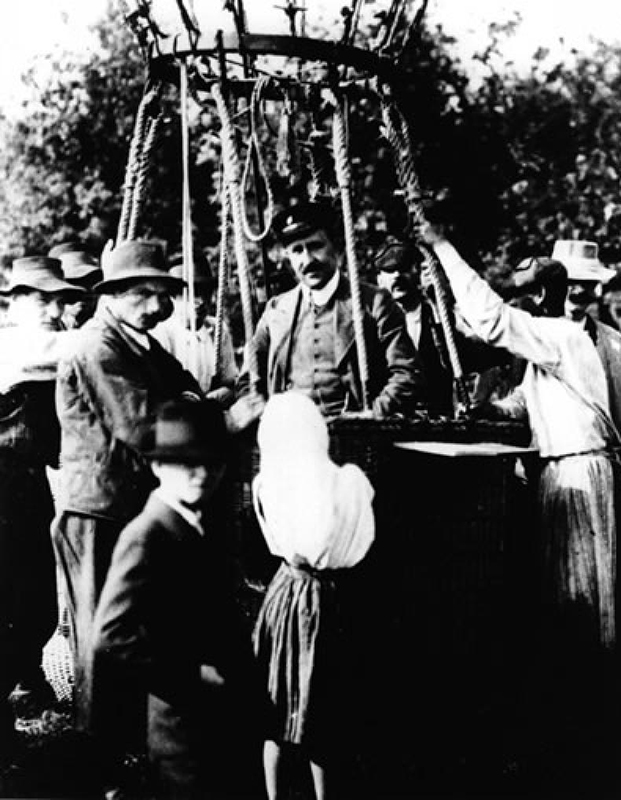
I am trying to remember when I first had the idea to launch a cloud chamber in the payload of a high altitude balloon. I knew about the hot-air balloon experiments carried by Victor Hess to determine the origin of cosmic radiation, and his discovery in 1912, when he made an ascent to over 5km during a near-total eclipse of the Sun, that radiation had to be coming from further out in space.

Hess on his return from the 1912 balloon ascent – Alan Watson pointed out that this was obviously staged at another time as he would not have been standing looking so well after his ordeal.

I remember looking into the dark skies during a residency at Allenheads Contemporary Arts and wondering about all the activity that I couldn’t see. I decided then I would like to film at 15km where most subatomic cosmic ray activity takes place, even if nothing would show on the film.

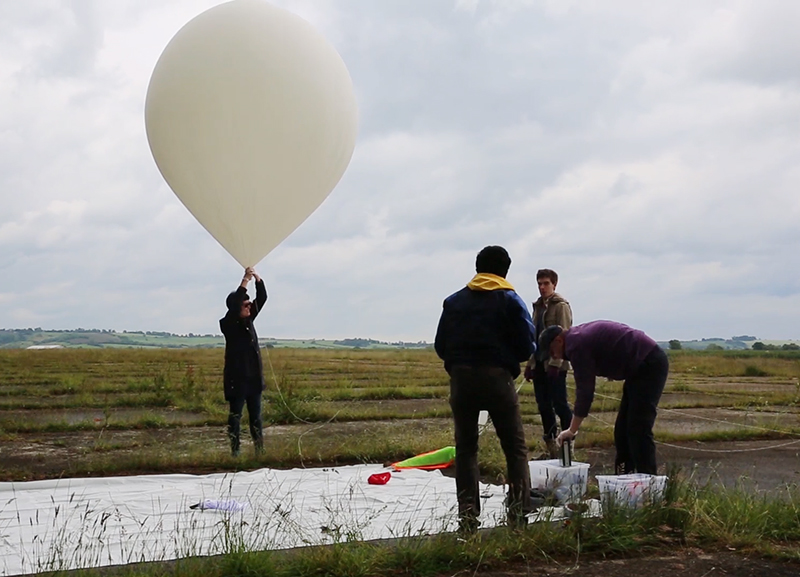
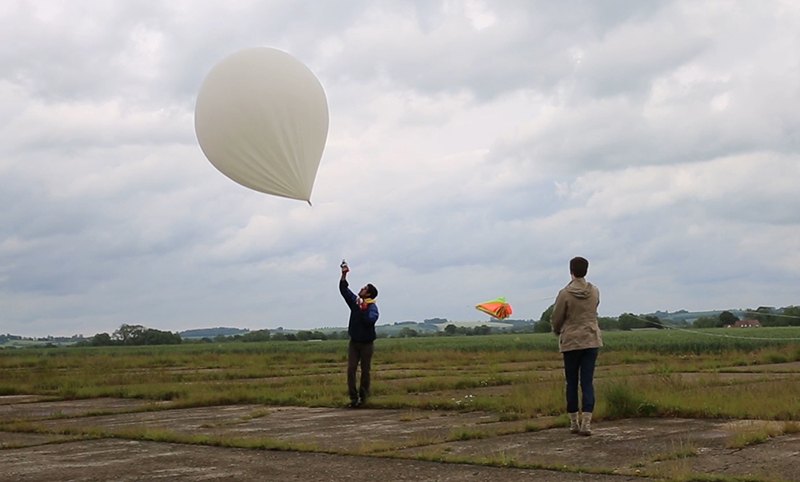
A high altitude balloon flight seemed the perfect solution and I was very grateful for the help I subsequently received from Imperial College Space Society and The UK High Altitude Society. The decision to include a cloud chamber in the payload was always a risk and as it turned out nothing of the cosmic ray activity was captured on film. However, the balloon did reach an altitude of over 37km and the payload was successfully recovered with some amazing video footage of its journey.
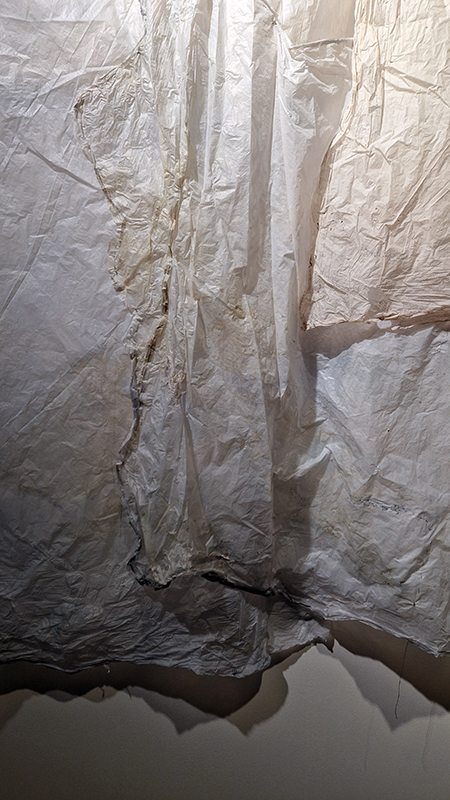
The record height for a hot air balloon ascent is 21km so in theory it could be possible to send a cloud chamber up in a hot-air balloon and film at altitude with potential for more success if some brave person were on board to operate the camera. Unlikely to be me.
Some intriguing news of ORC’s on the RAS websiteThe most distant and most powerful ‘odd radio circle’ (ORC) known so far has been discovered by astronomers. These curious rings are a relatively new astronomical phenomenon, having been detected for the first time just six years ago. Only a handful of confirmed examples are known – most of which are 10-20 times the size of our Milky Way galaxy. ORCs are enormous, faint, ring-shaped structures of radio emission surrounding galaxies which are visible only in the radio band of the electromagnetic spectrum and consist of relativistic, magnetised plasma. the three new cosmic rings – discovered not by automated software but by sharp-eyed citizen scientists – represent an important step toward unlocking the secrets of these vast, puzzling structures.

Out and About

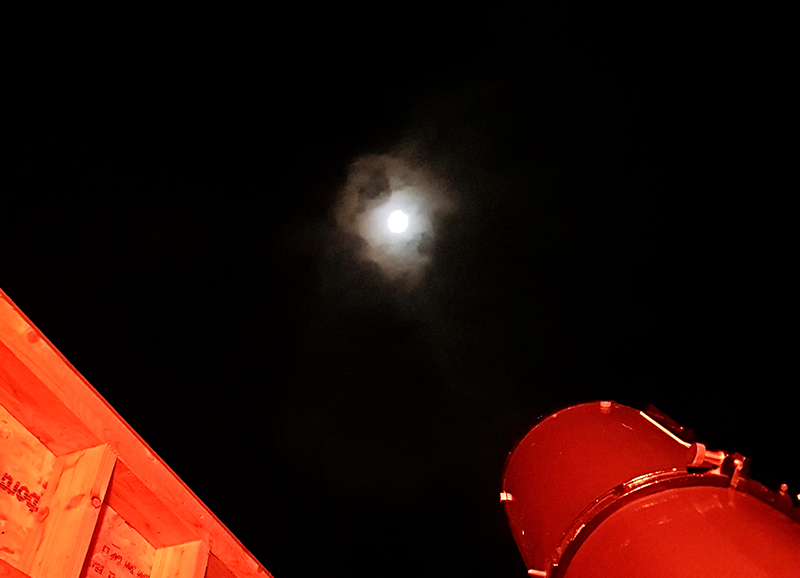
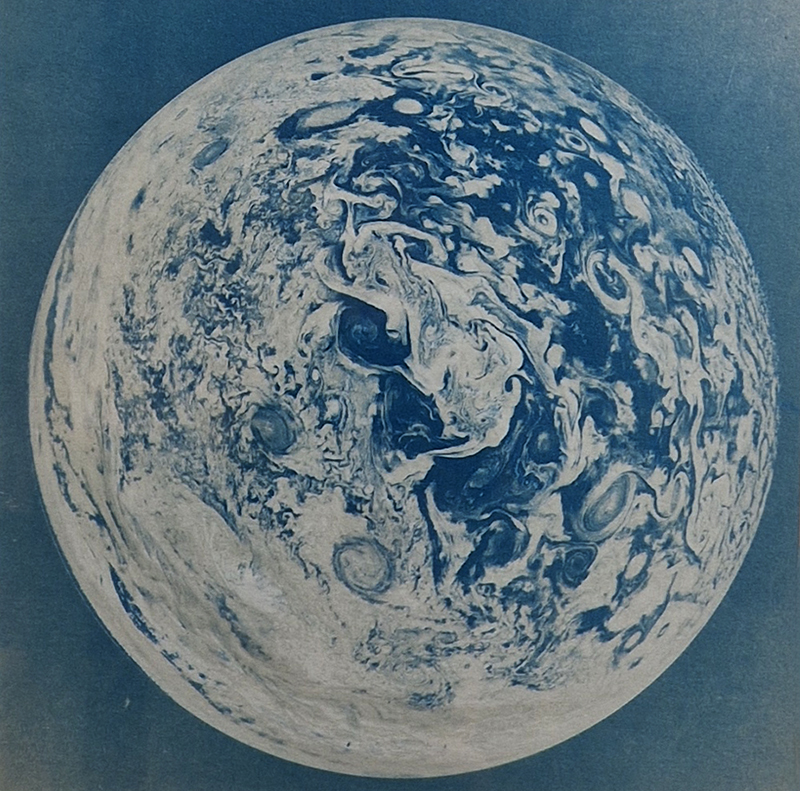
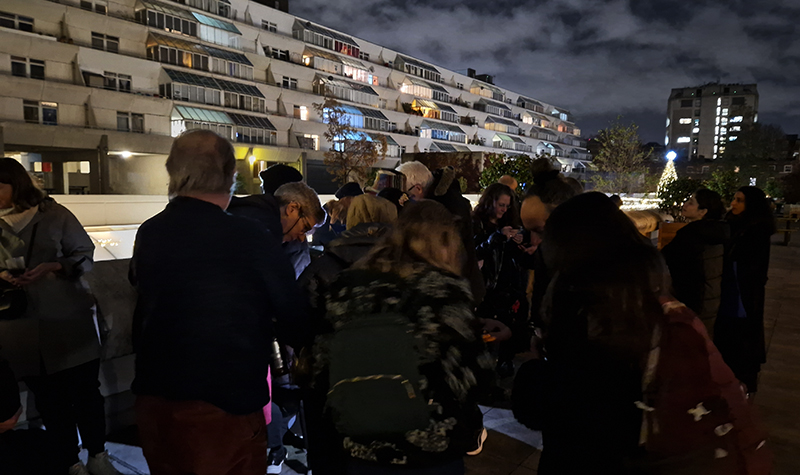
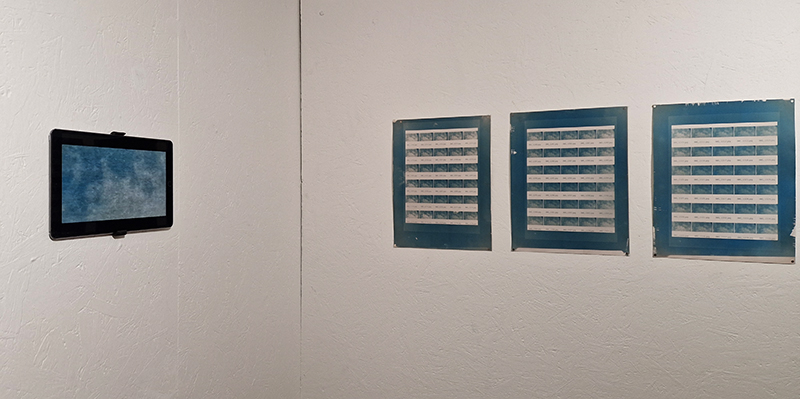
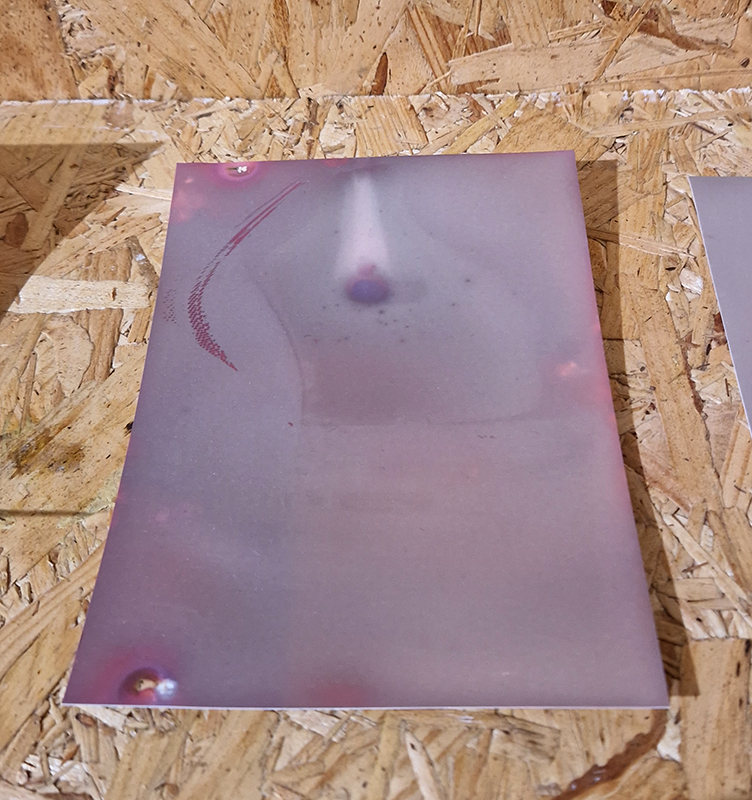
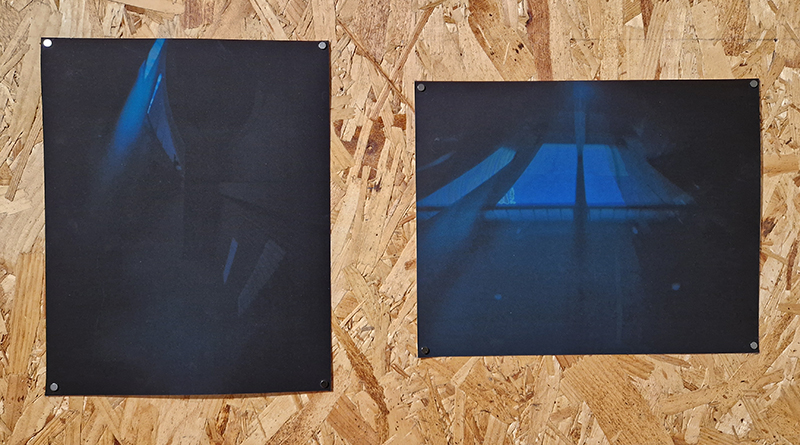
A wonderful evening with artist in residence Melanie King at Passengers connecting the celestial with the architecture of the grade II listed Brunswick Centre in Bloomsbury, London. Melanie used the residency opportunity to explore the duotone cyanotype process using multiple layers of cyanotype to mimic astronomical imaging construction and even used cyanotypes to create an of the Moon. The beautiful results were presented at an evening event with the additional treat of live telescope viewing of the Moon and Saturn from the second floor terrace of the Brunswick centre under the engaging guidance of astronomer and science communicator Paul Hill.

Liz Elton’s sensitive work Black and Blue (compostable bio materials, cabbage and fruit dye saddened with iron, silk, poppy and sage seeds) showing in A Changed Environment at Messums London. This group show examines changing ideas of beauty, ecology, and sustainability, as well as themes of place, memory, and identity, revealing how connections to the natural world can inspire both understanding and hope. I love the delicacy of this new work and the term ‘saddened by iron’ which is used in the dying process to dull a colour, and which, as Liz says, also emotes the hardships of industrial life.

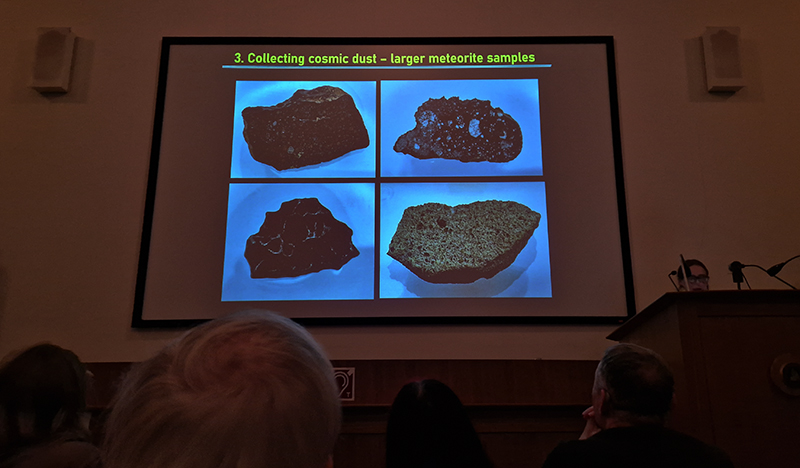
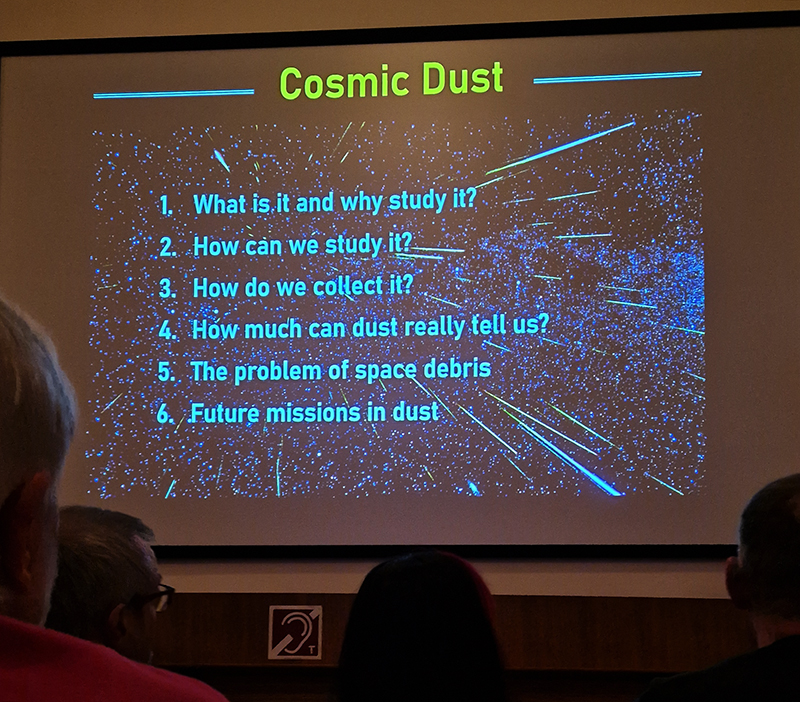
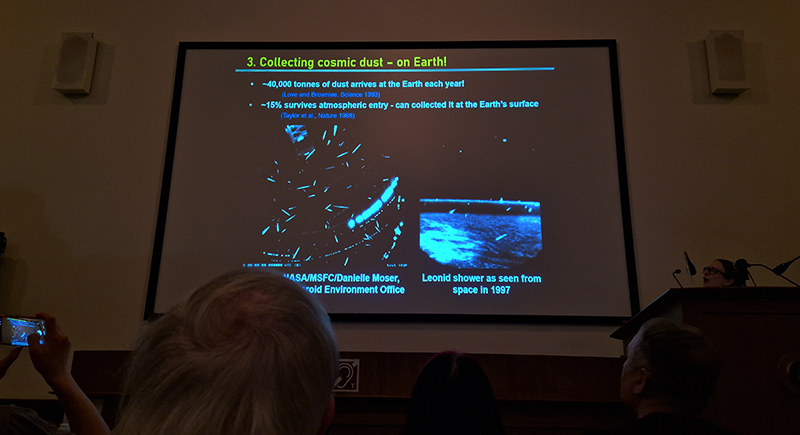
Cosmic Dust talk by expert on extraterrestrial space dust, and how it can impact astronomy and wider human endeavours in space, Penny Wozniakiewicz at The Royal Astronomical Society. ‘Natural’ cosmic dust is being polluted by man made dust from space debris. This is a real problem created by dead satellites, old upper stages of rockets, fragments form exploded rocket or stages, flecks of paint, aluminium oxide spheres from solid rocket burns, dropped space equipment. When any of this debris collides a cloud of smaller debris is ejected, this process is self propagating and even the tiniest piece of debris can cause serious damage to spacecraft and satellites. This is called the Kessler syndrome, a cascading effect that could render orbital space unusable for generations, threatening satellites, the International Space Station, and future space travel.
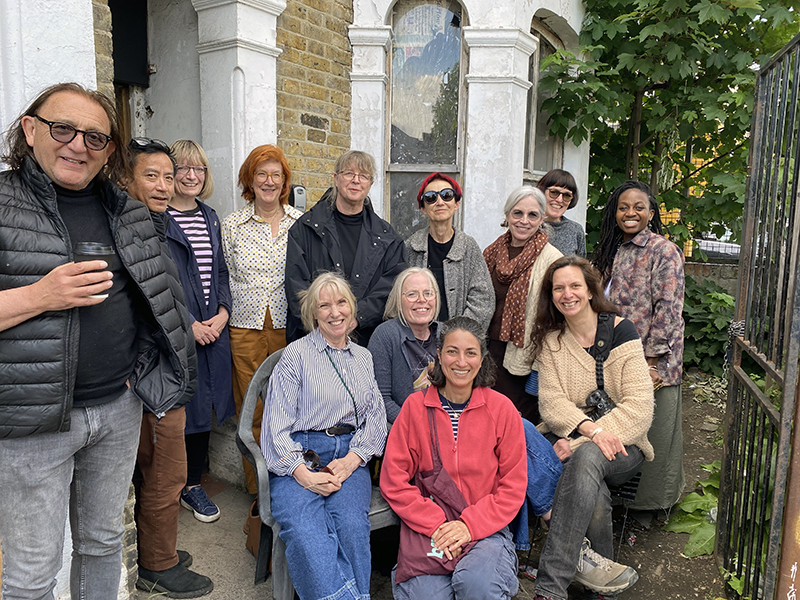
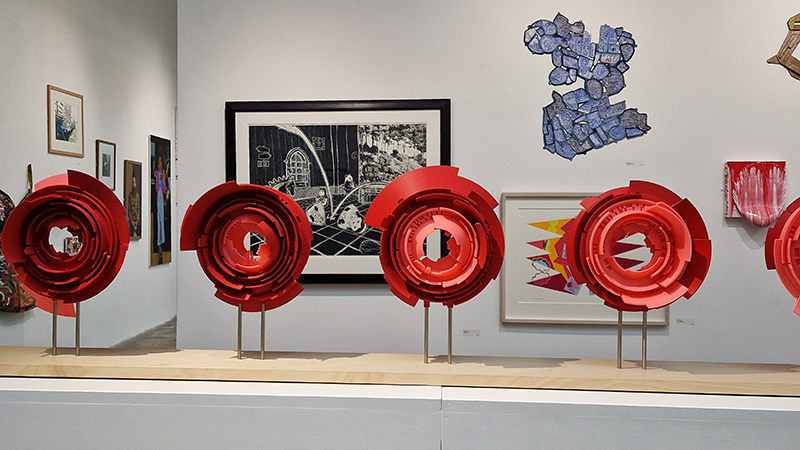
Good to visit the The London Group show 2025 at Copeland Gallery where lots of friends are showing excellent work and also to discover new work and artists.

I found Majid Majid’s video Faith Amongst The Ruins a difficult but compelling work. So scary and horrific because we know this is real footage, some of which I had seen before at the time of the attacks on hotels housing asylum seekers and refugees, but it is still so disturbing to watch these people, with so many children present, cheer on the violence. They have no empathy with the terrified people trapped inside the hotel or for the person in the car who is ambushed and stabbed. The glee of those filming the assault is chilling.

He writes: “As a refugee, I know places shaped by fear and rejection. This work revisits UK sites of last summer’s Islamophobic and racist violence, a mosque, a street, and a hotel housing asylum seekers transforming them through prayer. Placing a mat where hostility flared, I reclaim space as sacred ground. Video and traces of violence form a counter-narrative of dignity, belonging, and resilience.”

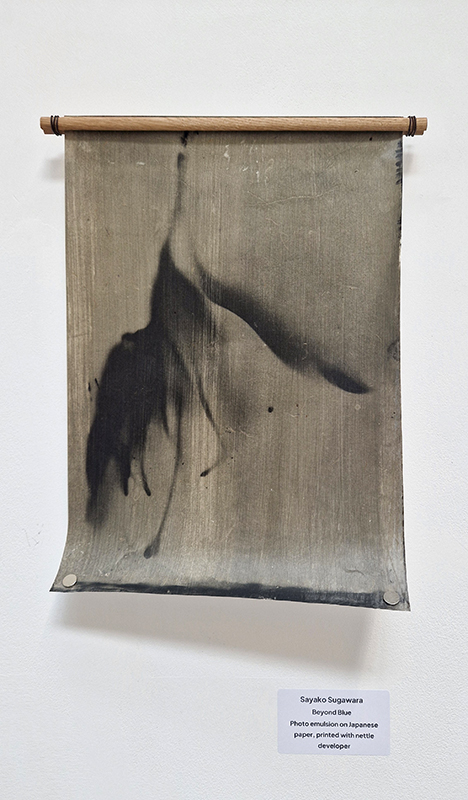
Images: Majid Majid, Sayako Sugawara, R James Healy, Victoria Rance, Jonathan Armour, Sandra Crisp, Jenny Wiggins, Victoria Arney, Carol Wyss, Sandra Crisp, Genetic Moo, Jacqueline Yuen-Ling Chiu.

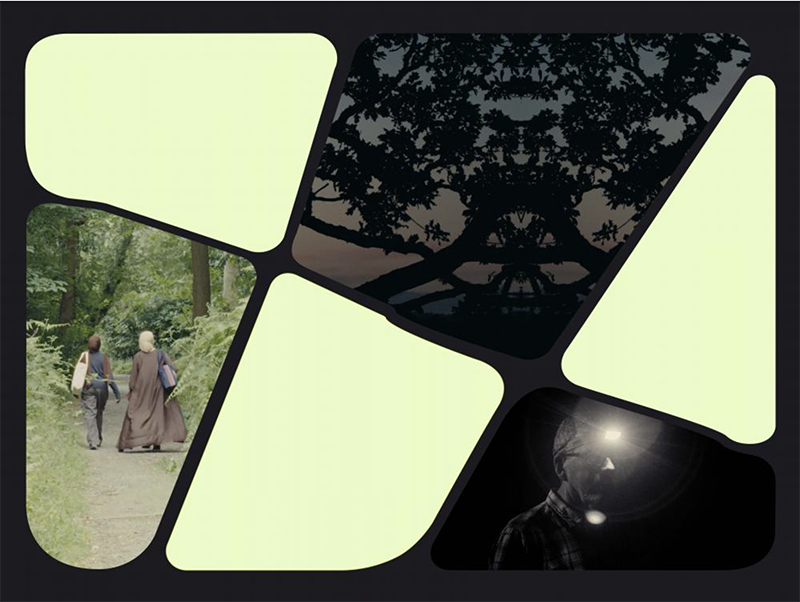
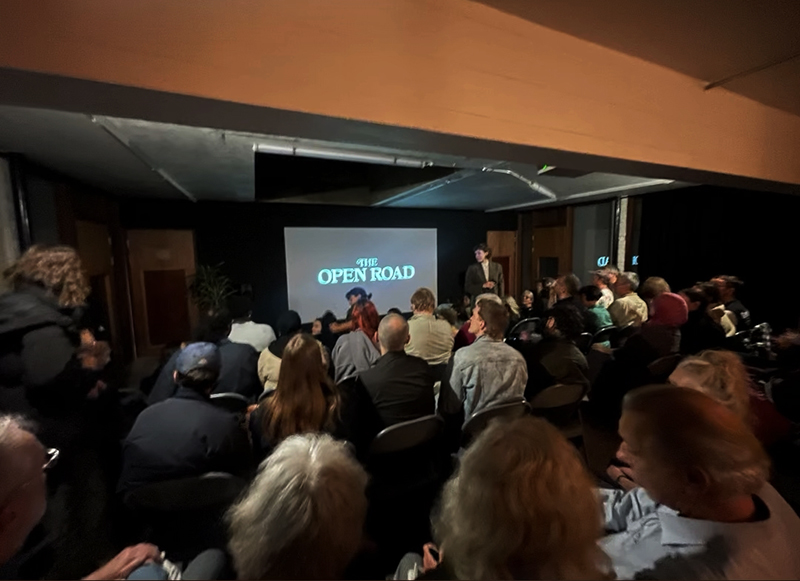
Three beautifully directed films screened at FormaHQ as part of The Open Road series of artists moving image works, co-commissioned by a partnership of visual arts organisations. The works are loosely inspired by The Canterbury Tales, drawing from a disparate cast of characters to recount competing stories in a patchwork of styles. David Blandy (Commons), Amaal Said (Open Country) and Sam Williams (The Eel’s Tale) each draw on storytelling traditions to give fresh perspectives on their journeys, on foot, by sea and through time. Heartbreaking to hear how terrified Amaal Said was to leave London for the open country of the south coast, especially with the current rise in overt racism, when out looking for locations and that they did suffer racist abuse while filming. Hers is a gentle and warm study of a mother and daughter and an absent grandmother, a longing for home and to feel ‘at home’. Sam William’s film sets the plight of the highly endangered glass eels who journey 4,000 miles from the Sargasso Sea to the Medway wetlands in Kent, swept along by currents, undergoing bodily transformation, following an instinctive desire on this epic migration alongside two other watery tales of transformative journeys across boundaries of identity and freedom. Coincidently, a recent episode of the Infinite Monkey Cage is all about these mysterious eels. David Blandy turned his attention to the vast and disparate collection of artefacts held in the Tunbridge Wells museum and gave some of these specimens a voice to tell of how they had lived before they became a part of this collective of human taxonomy.
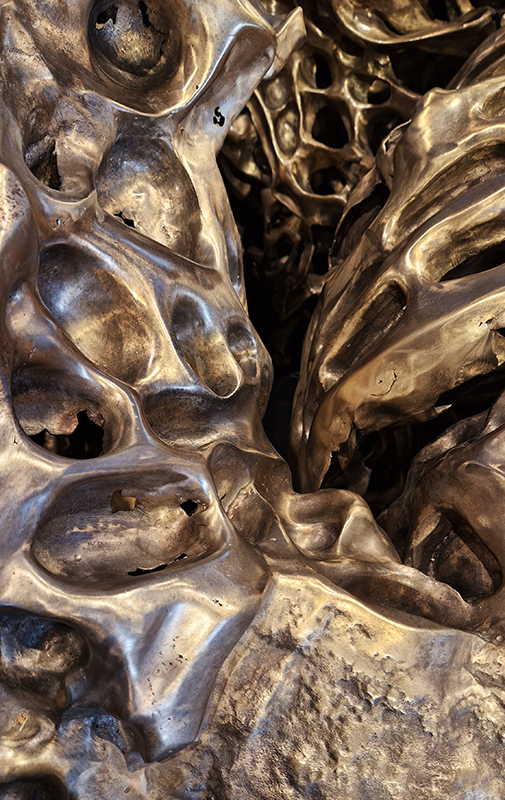
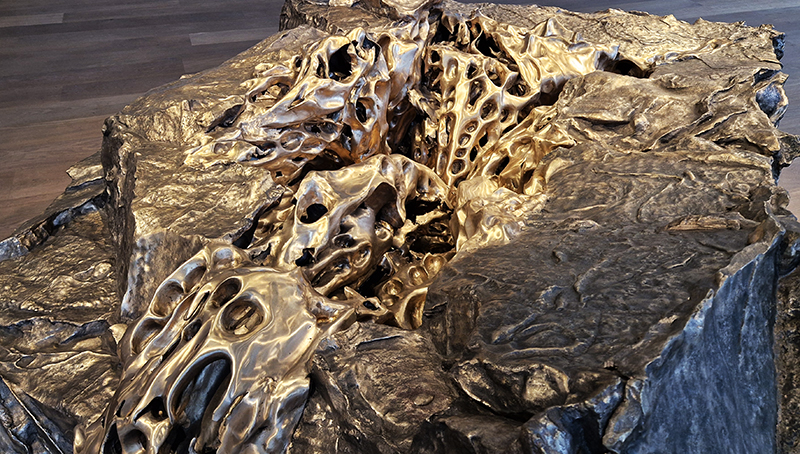
Cristina Iglesias The Shore at Hauser & Wirth features large-scale bronze works from the artist’s Littoral (Lunar Meteorite) series, part of her ongoing exploration of geological themes. The word ‘littoral’ refers to something relating to or situated along a coast or shore, or the region where the land meets the water. The weightiness of the objects is impressive ( I can’t imagine how they were brought into the gallery even with the technology available today – after coming here from the talk on stone henge and the incredible feat of bringing the standing stones across rough terrain for many kilometres and up a slope 5000 years ago seems even more impossible – yet there they are). The sound of water bubbling within each piece draws you to peer within and stay with the piece perhaps longer. The audience is invited to touch the sculptures. The bronze is polished and does need to be used and worn away in a more effective organic and dirty process. They are very clean.

The Royal Astronomical Society lecture Sighting the Sun and Moon? at Stonehenge – by Archaeoastronomist Prof. Clive Ruggles. Debunking many myths and overspeculation, concerning the use of the monument for observations of the sky the professor was clear about what can sensibly be said about the relationship of Stonehenge to the Sun, considering the conventional archaeological evidence that has been uncovered in recent years. He also recommended visiting the day before or after the actual solstice if possible for an experience without the many crowds as the alignment is almost identical. Also visiting at sunset can be just as magical and quieter. He turned his attention to the Moon, questioning if our prehistoric forebears also celebrated the occurrence of a major lunar standstill, an event occurring every 18.6 years around which time the Moon can be seen at fortnightly intervals exceptionally far to the north and south.

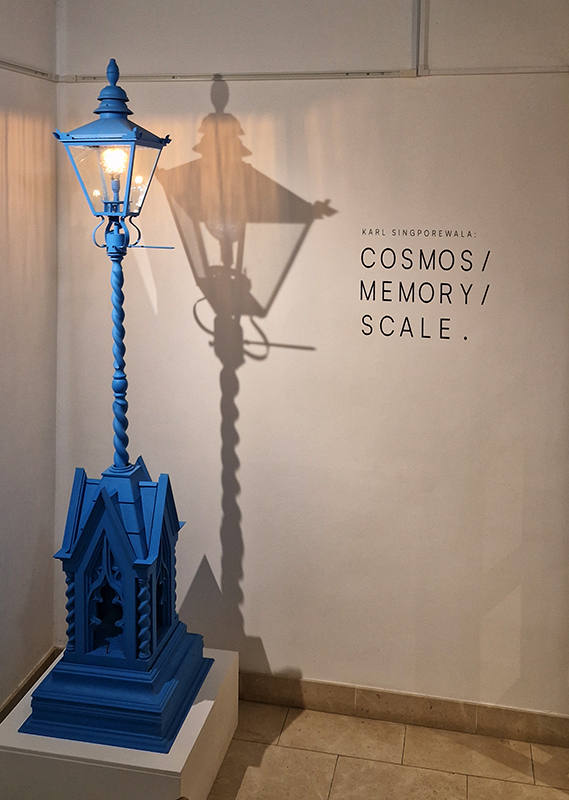
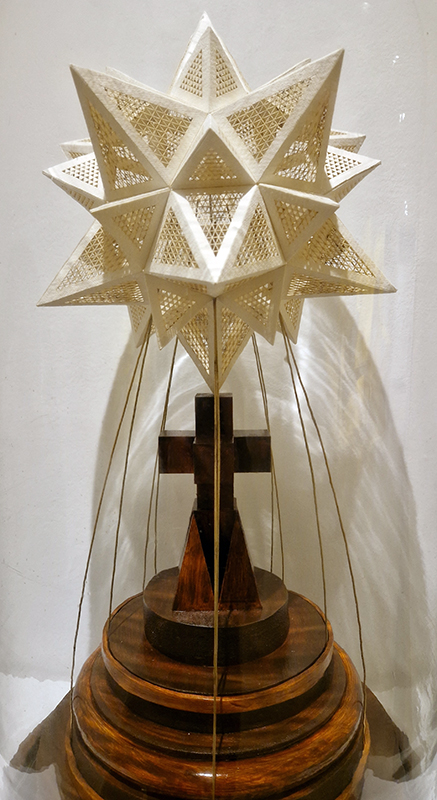
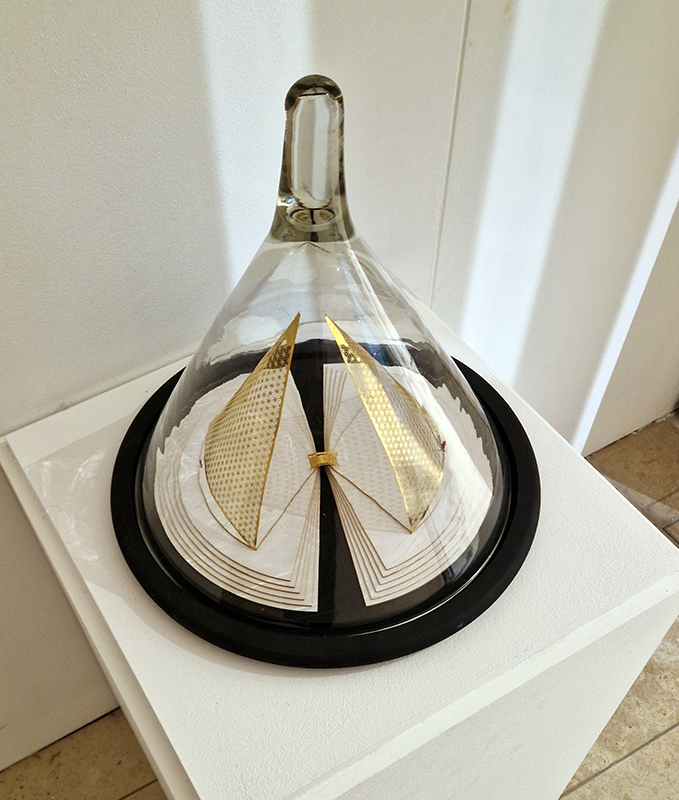
Karl Singporewala’s sculptural interpretations of Zoroastrian symbolism in Cosmos, Memory, Scale at SOAS Gallery convey a meditation on how material and memory intersect to shape the human experience. Cosmos speaks to both his fascination with astrophysics together with a metaphysical belief in the alignments of life. Stars and geometric forms recur as motifs, refracting both spiritual navigation and mathematical structure. Memory is treated as a living, shifting phenomenon. Inspired by oral tradition, family stories and inherited rituals. Scale, is used both literally and metaphorically in shifting perspectives and unexpected relationships. Good Thoughts, Good Words, Good Deeds.

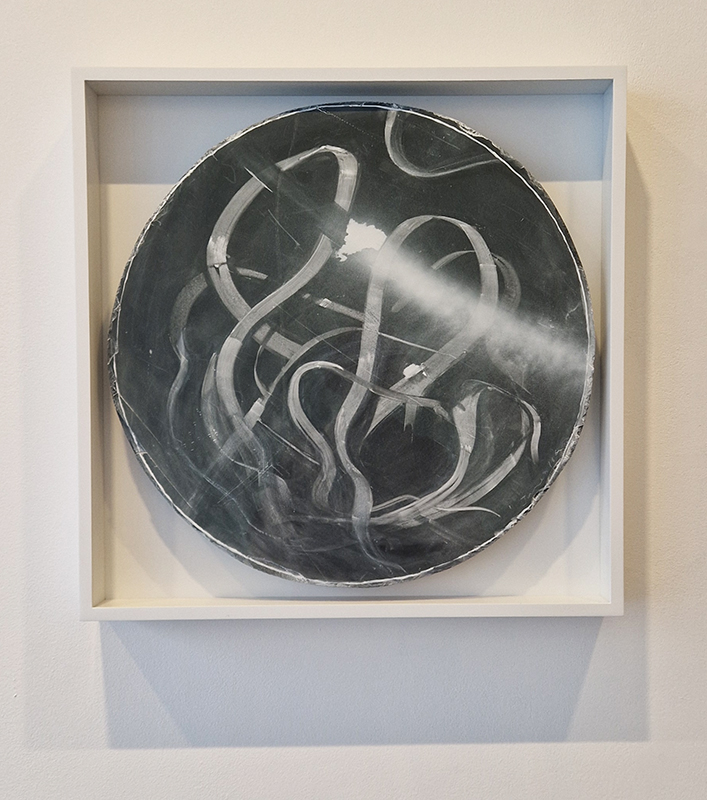
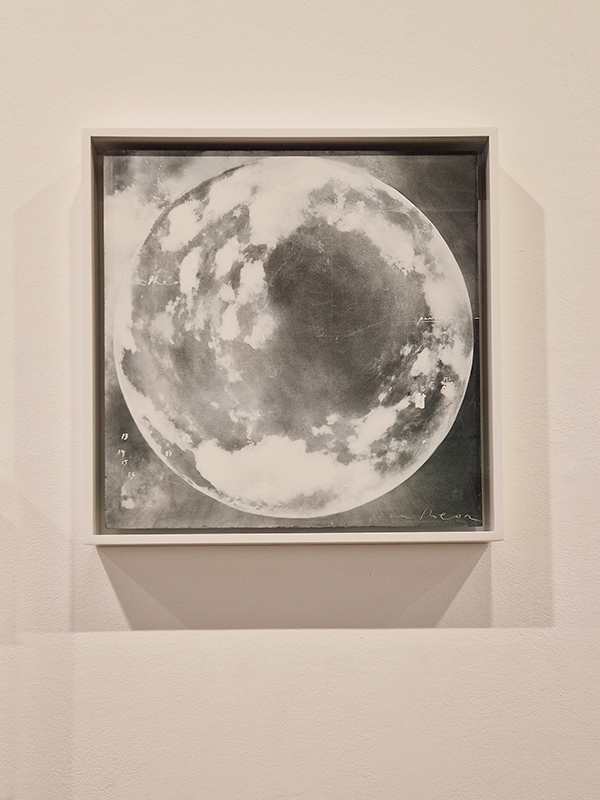
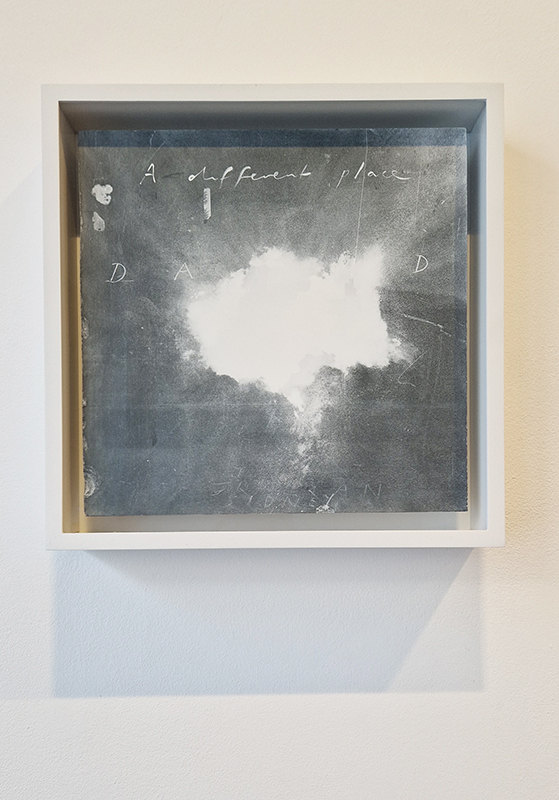
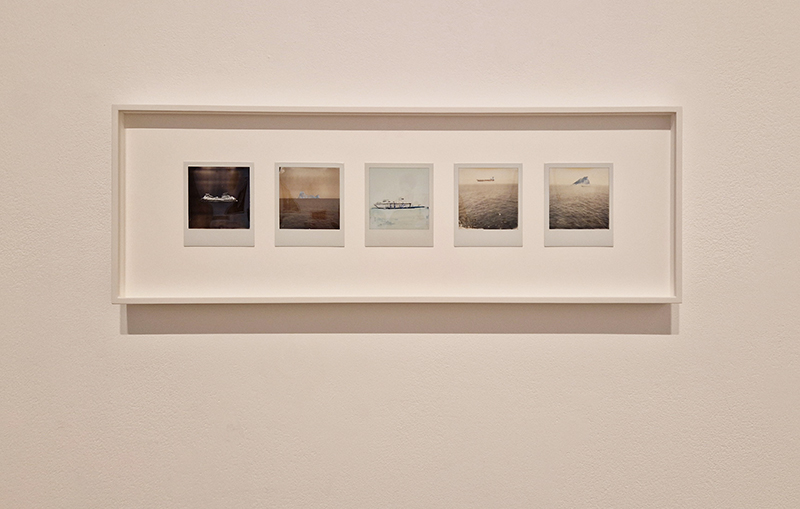
Dusty, chalky mythical drawings and solar eclipse traces from Tacita Dean in Black, Grey, Green and White at Frith Street Gallery Golden Square.

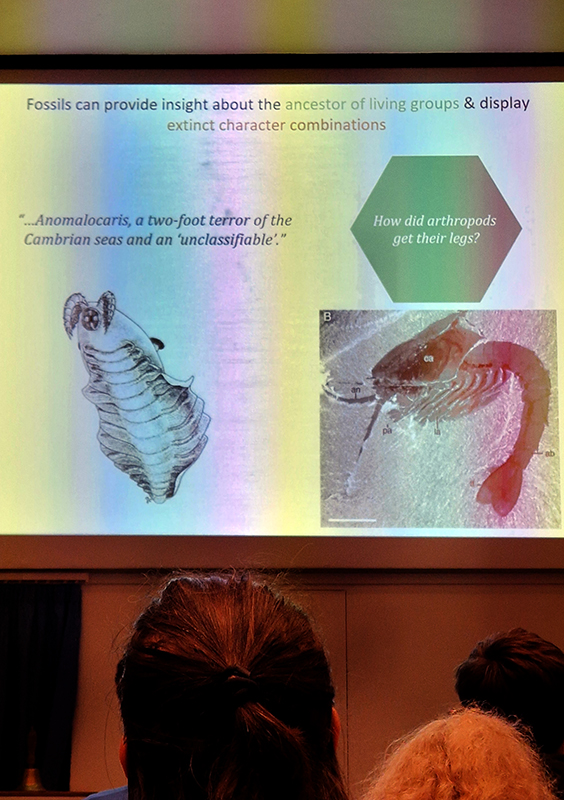
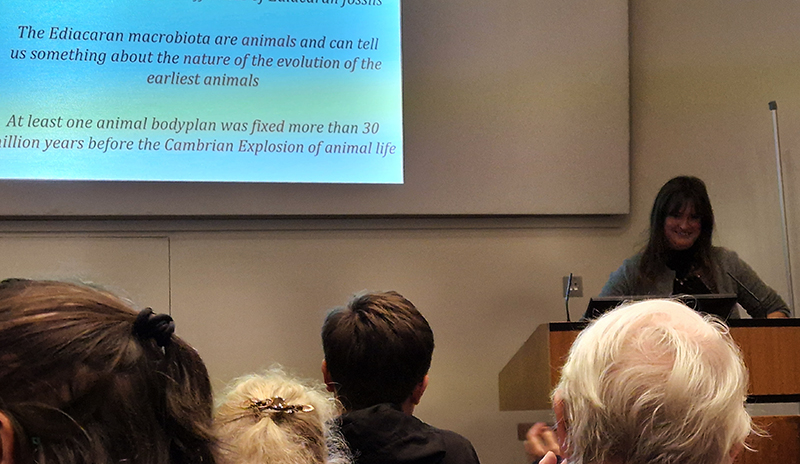
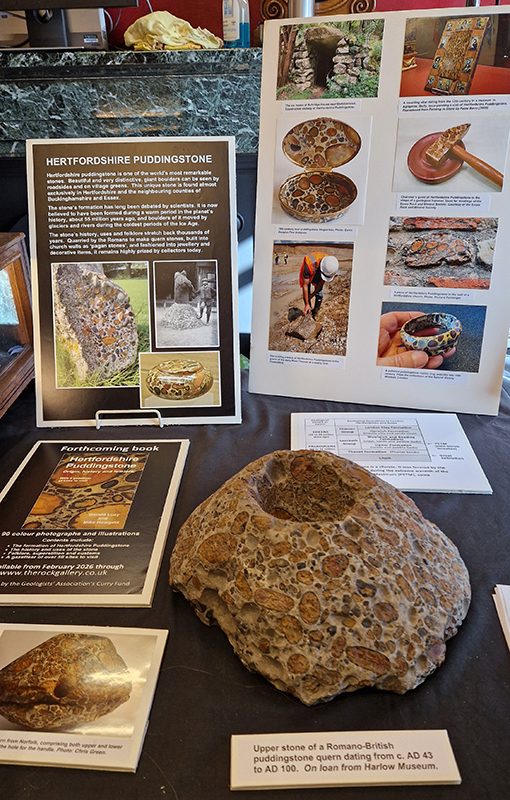
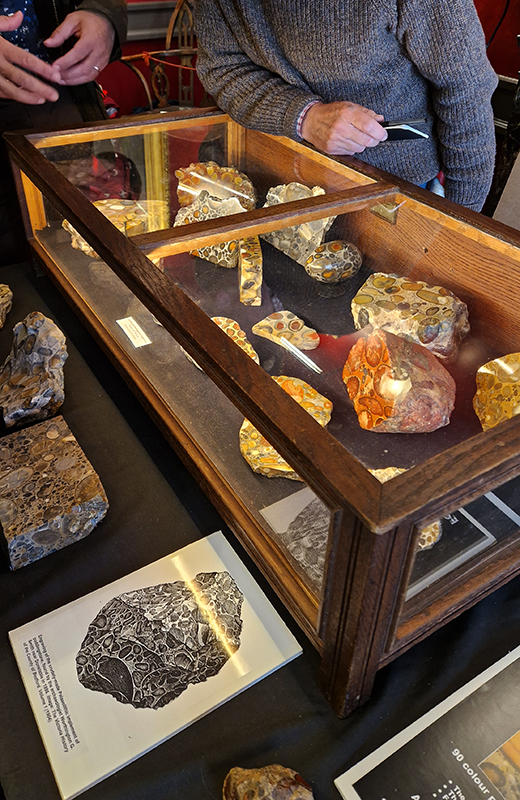
I spent a happy morning at the Geologists Association Festival of Geology 2025. This included a fascinating lecture The Early Evolution of Animal Life by palaeobiologist Frankie Dunn focused on the origin and early evolution of animals and particularly on the fossil record of the late Ediacaran Period (approximately 570 – 540 million years ago) – just before the Cambrian explosion of life. The aim of her research is to understand how animal body plans evolved in deep time. There also was some amazing and unique pudding stone on display.

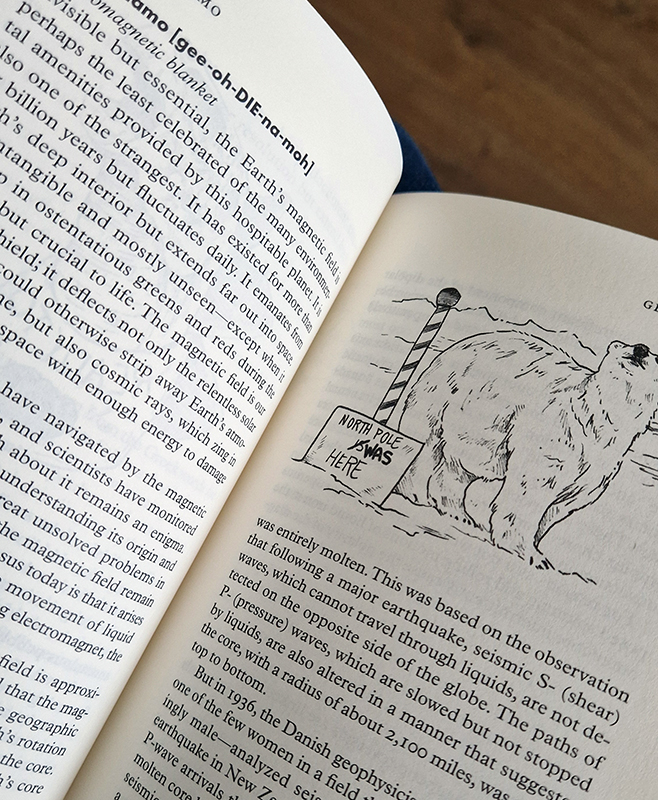
I also picked up a great little book full of wonderful geologically enriching words by Marcia Bjornerud.

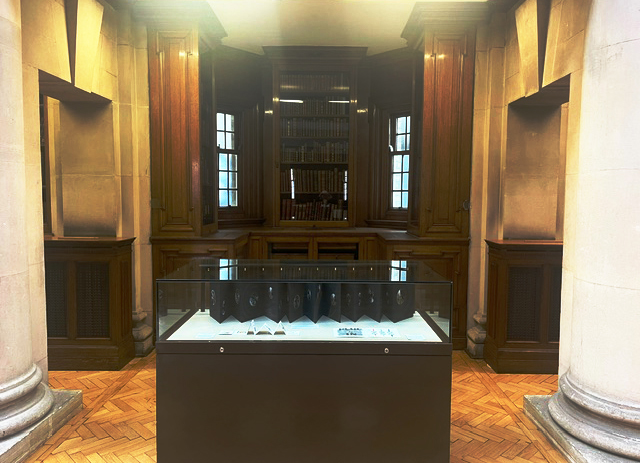
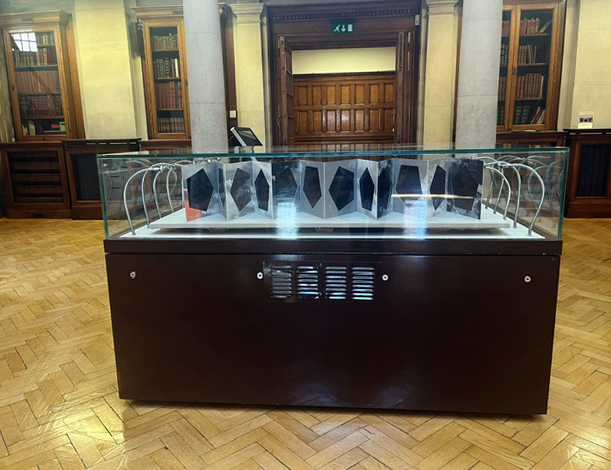
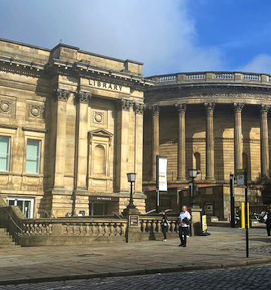
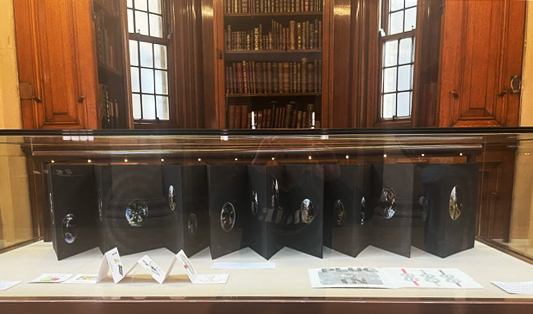
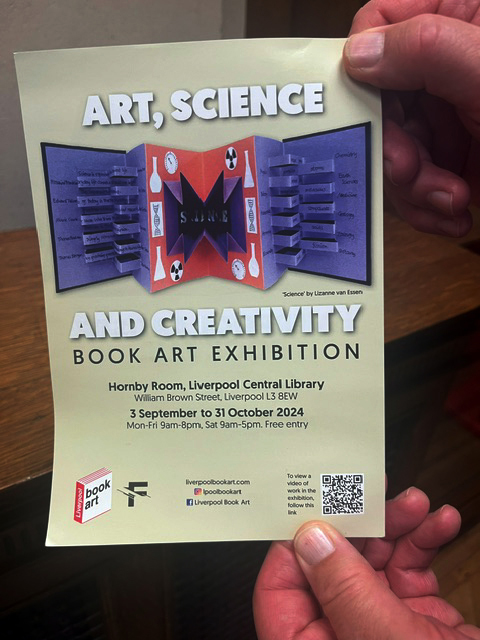
The ‘Art, Science and Creativity’ exhibition at Liverpool’s spectacular Central Library continues. The exhibition is inspired by statements from Albert Einstein, highlighting the fact that creativity is central to explorations in both art and science. As we wonder, and attempt to understand the universe and ourselves, categories can, and perhaps should, become blurred. Distinctions can be both valuable and problematic: ‘art’ versus ‘science’, ‘nature’ versus ‘human’, ‘natural’ versus ‘supernatural’, ‘material’ versus ‘spiritual’, ‘secular’ versus ‘religious’ and so on. And as the great science-fiction writer Arthur C Clarke said “Any sufficiently advanced technology is indistinguishable from magic”.

I am very happy to have two unique books included in the exhibition. In/Out and Unbound.

Liverpool Book Art and Fevered Imagination are collaborating to create a video loop of all the artworks, enabling audiences to get a fuller appreciation of the artists’ creativity than allowed by the use only of display cases. Fevered Imagination is a website dedicated to Artists Books, through which works from the exhibition can be bought.

I am delighted to be invited by Serendipity Arts Foundation to show Cosmic Chiasmus: crossing the universe at Serendipity Arts Festival in Goa later this year.

Serendipity Arts Foundation is an organisation that facilitates pluralistic cultural expressions, sparking conversations around the arts across the South Asian region. Committed to innovation and creativity, the aim of the Foundation is to support practice and research in the arts, as well as to promote sustainability and education in the field through a range of cultural and collaborative initiatives. The Foundation hosts projects throughout the year, which include institutional partnerships with artists and arts organisations, educational initiatives, grants, and outreach programs across India.

Serendipity Arts Festival is one of the largest multi-disciplinary arts initiatives in the South Asian region. It spans the visual, performing, and culinary arts, whilst exploring genres with film, live arts, and literature. Besides the core content, which is conceptualised by an eminent curatorial panel, the Festival has various layers of programming, in the form of educational initiatives, workshops, special projects, and institutional engagements. Through active conversations between the artistic community and the urban, social landscape, the Festival continues to evolve around the mandate of making the arts visible and accessible. The Festival is driven by a spirit of collaboration, hoping to inspire new perspectives and fresh aesthetic encounters. This labour of love is a cultural experiment that also addresses issues such as arts education, patronage culture, interdisciplinary discourse, inclusivity, and accessibility in the arts.

Other exciting news is that Julie F. Hill and myself are working together again on a new project. Following on from our ambitious duo show A Stone Sky at Thames-side Studios Gallery (Nov 23), we will be curating and participating in an exhibition next spring, exploring themes of stone consciousness and human-mineral encounters.

In the studio I have been working on a proposal for the Moon Gallery. Moon Gallery is an international collaborative artwork and a gallery of ideas which aims to set up the first permanent museum on the Moon. Moon Gallery will launch 100 artefacts to the Moon within the compact format of a 10 x 10 x 1cm plate on a lunar lander exterior panelling as early as 2025.

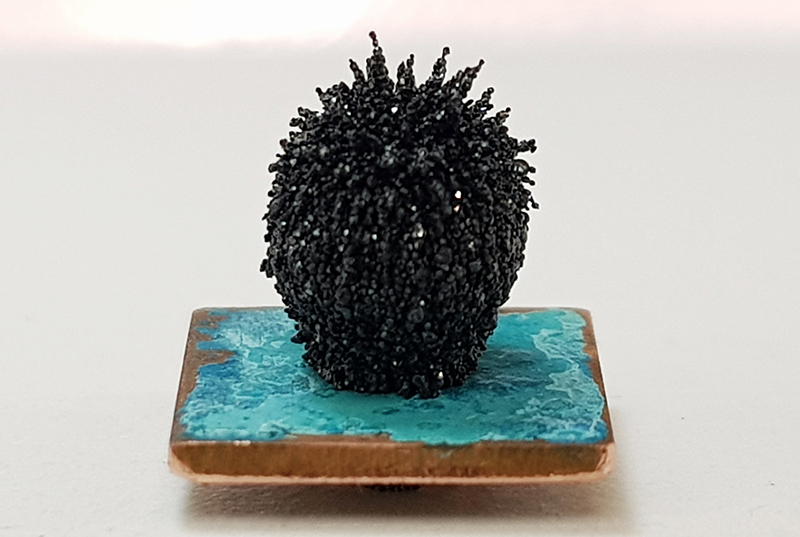
Each sculpture has to fit within a 1cm cube, which is quite challenging. My proposal is a 5mm spherical magnet sparkling with black volcanic sand on a 1cm square of patinated copper. Space exploration means leaving the protective shield of Earth’s magnetic field, placing astronauts and technology at risk from increased levels of harmful high energy particles. This artwork is a small realization of a magnetic field offered as a symbol of safe passage to those venturing beyond our home planet and protection of Earth’s magnetosphere. The black volcanic sand used in this work is naturally magnetic, making visible the force that emanates from the core of the magnet. The patination colour reflects on the astonishing view of our blue planet from the moon and the importance of water to sustain life. The title Core Values, makes reference to the molten core necessary for a planet to generate a magnetic field as well as the ethical principles and beliefs that guide humanity in a positive spirit of peaceful cooperation for the benefit of all. The work operates as a motif for what is in the heart of a body, rocky or otherwise. It also celebrates the beauty of the elements and natural forces that together inspire the human imagination and makes the cosmos so exciting to explore.

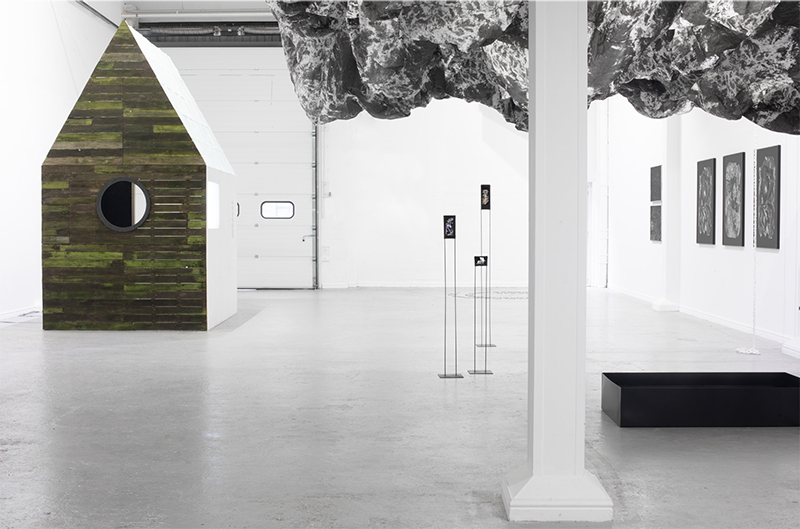
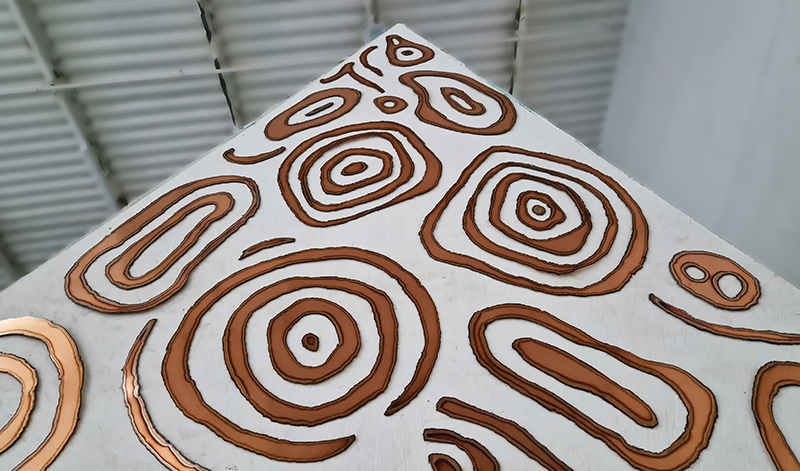
I have been sorting out the copper contours from The Absolute Hut (of action potential) as I couldn’t store this work, it had to be dismantled. The copper will be reused in future work.

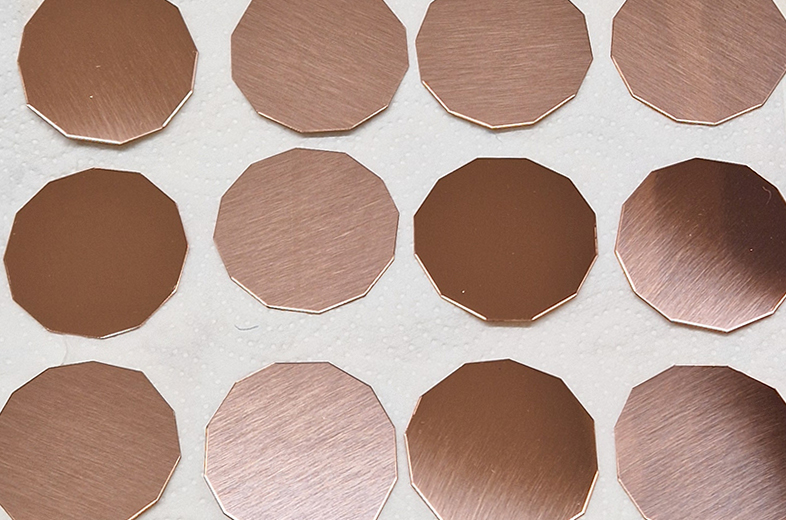
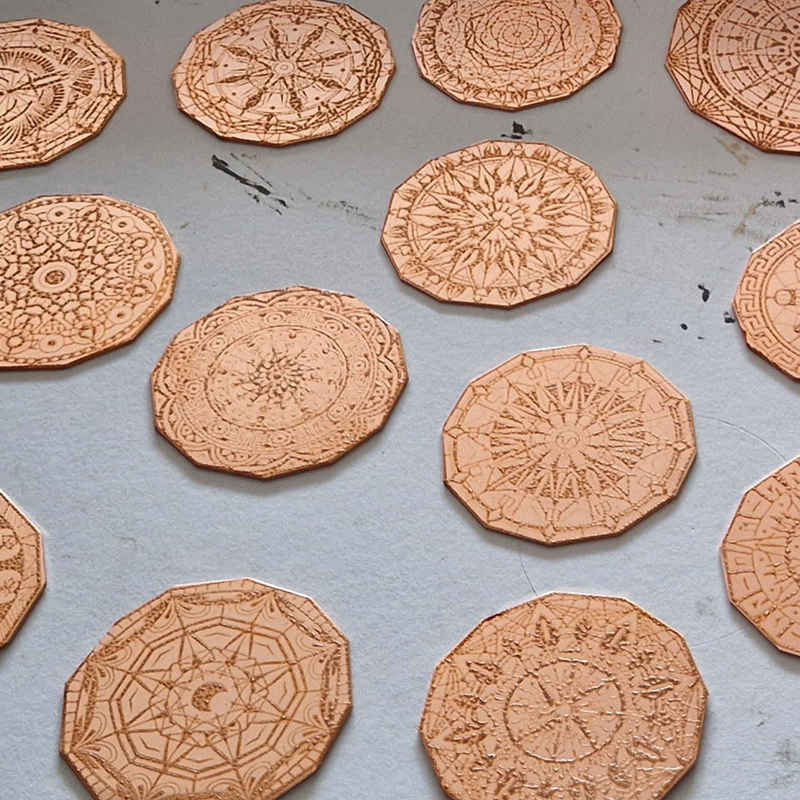
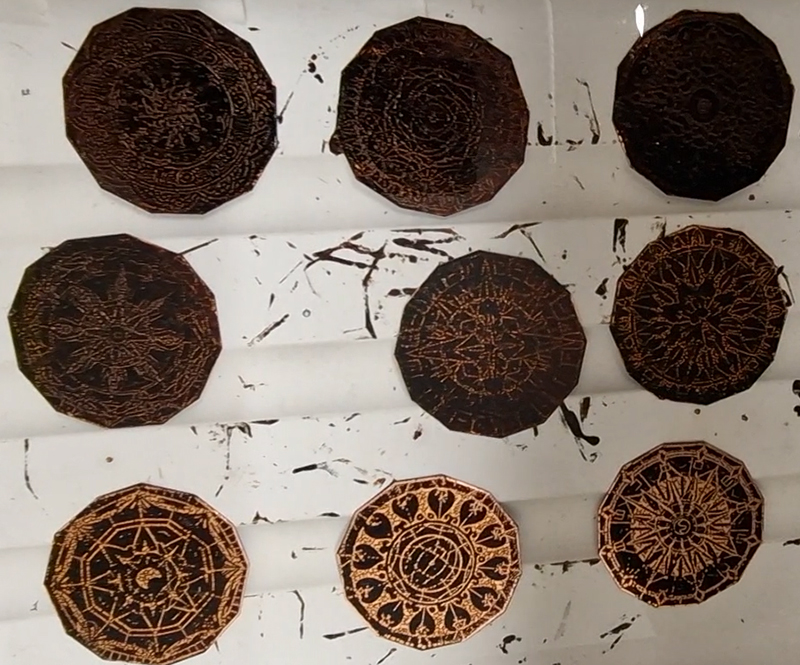
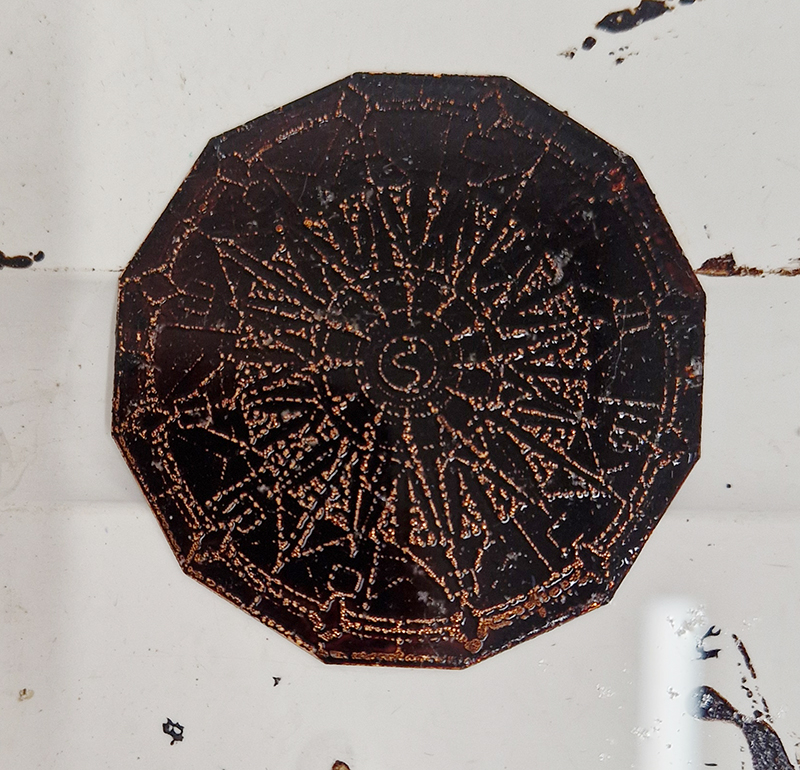
I am making a new concrete tablet for Instruments of the Anemoi series with more detailed compass rose inspired copper insets. The copper is guillotined to shape and screen printed with a sugarlift solution.

The pieces are then dipped in bitumen and left to dry before putting in a bath of warm water to dissolve the sugar solution, leaving the design ready to be etched.

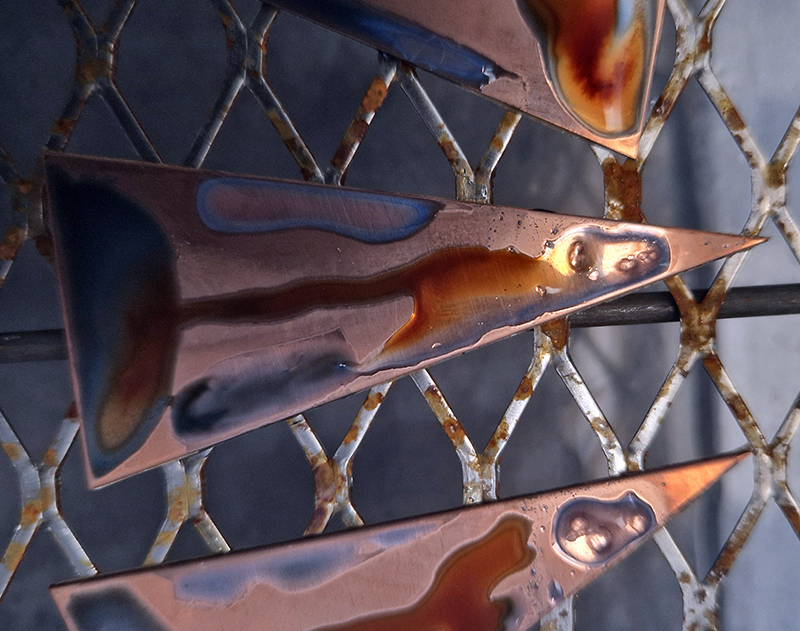
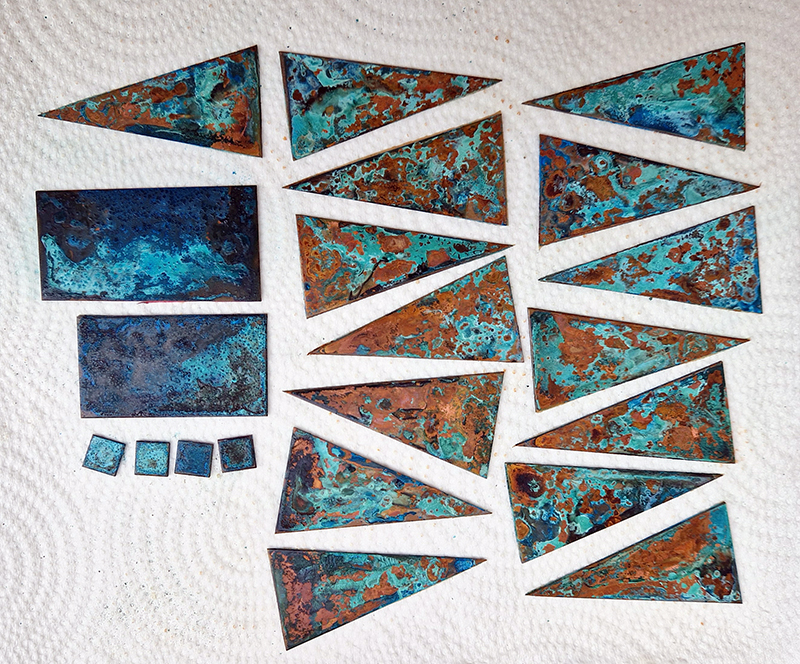
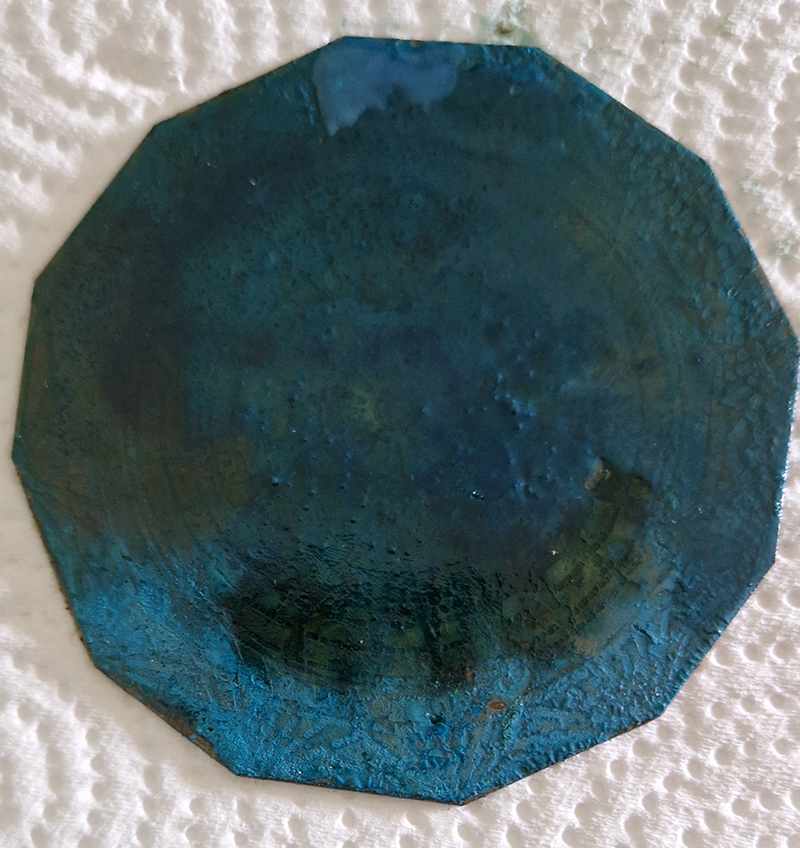
I also cut some copper shapes to patinate, painting the copper with salt and vinegar and soy sauce before fuming in an ammonia bath. I love how the colours change throughout the process.

I was going to patinate the dodecagon shapes as well but in the test I did, I lost a lot of detail, so these will just be inked and left.

Gallery Visits

Charmaine Watkiss showing her beautiful drawings full of symbolism in Hard Graft at Wellcome Collection. The exhibition explores the impact of work on health and her works celebrate the ancestral herbal knowledge of medicinal and edible plants and fruits that carry powerful healing properties.

These were used to secretly cure illnesses and prevent diseases as an act of survival and self-dependency, distinct from Western medicine. The connection between herbal healing and African spiritual practices is represented by cosmological symbols discreetly tattooed on the women’s bodies. Natural dyes – such as Jamaica’s Blue Mountain coffee and indigo – and materials such as brass and raffia palm embed historical knowledge in the fabric of the works. This knowledge is preserved, yet concealed, by the figures who avoid the viewer’s gaze.

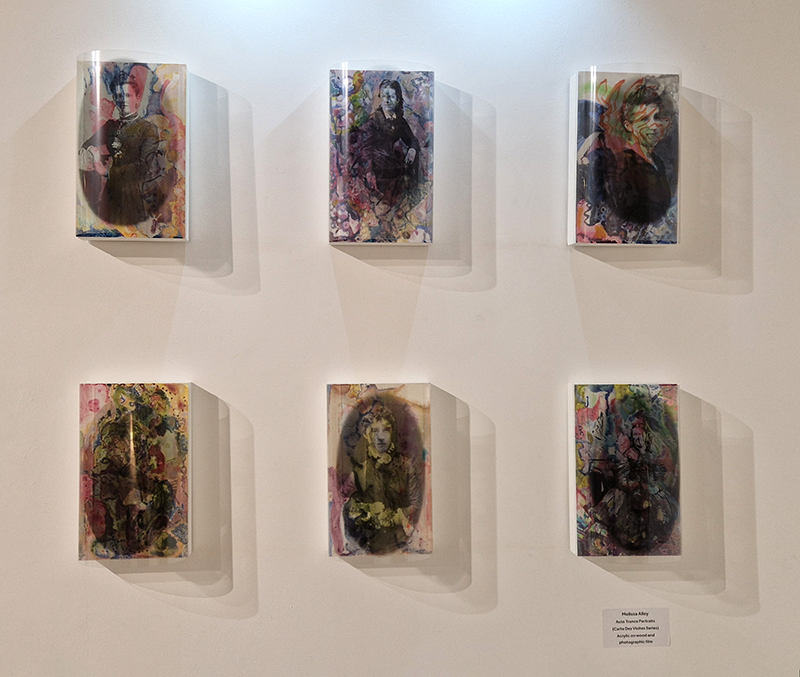
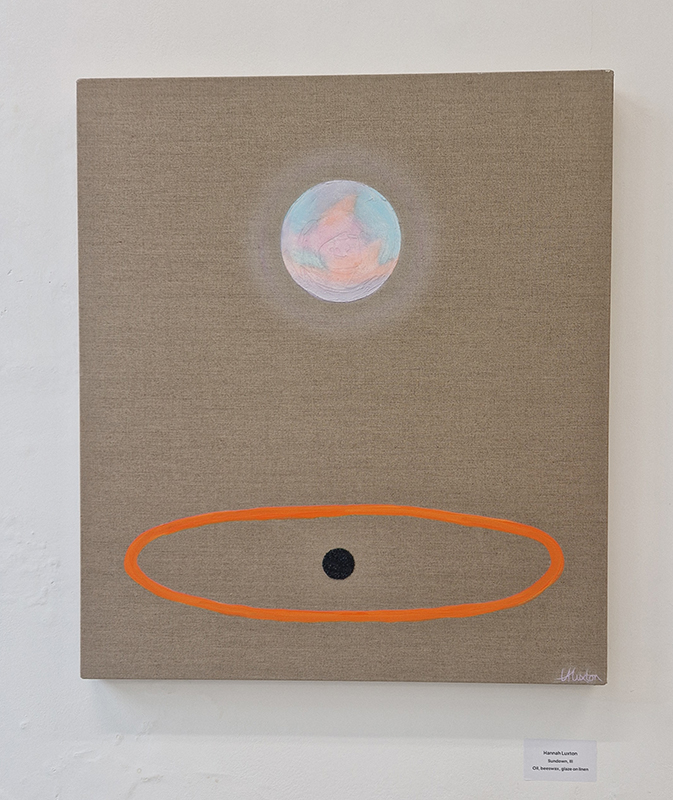
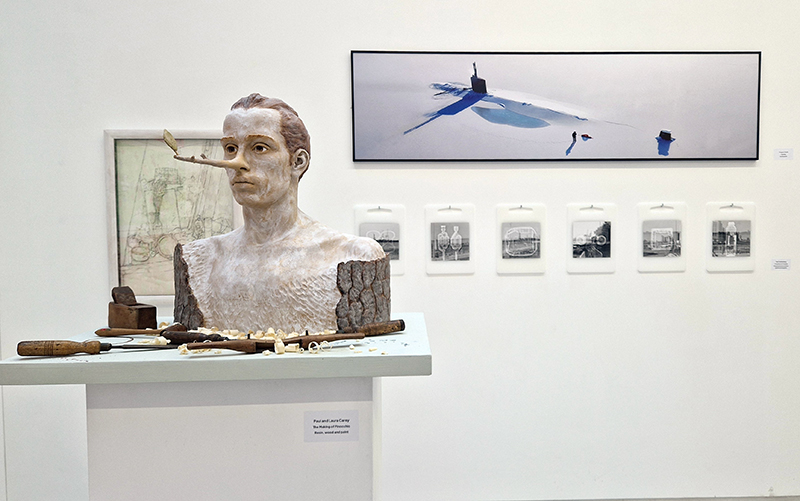
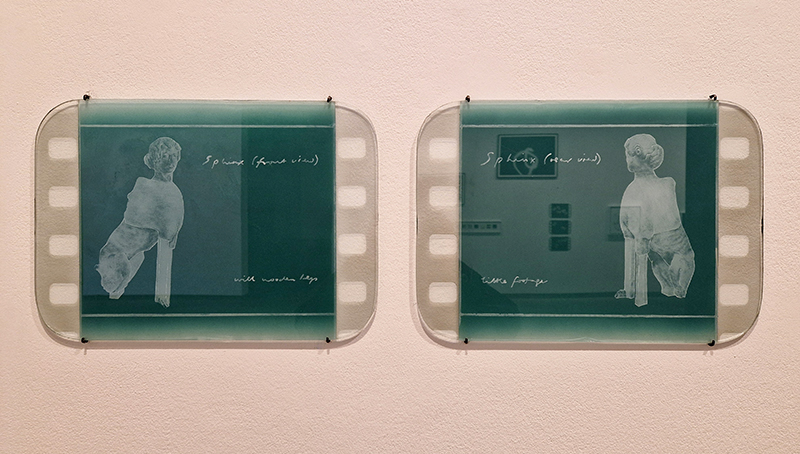
The London Group Stillness in Movement at Bermondsey Project Space. Taking three evocative lines from Four Quartets by T S Eliot as a starting point for this group show. Images – Carol Wyss, Sandra Crisp, Genetic Moo and Beverley Duckworth.

‘Not known, because not looked for
But heard, half heard in the stillness
Between two waves of the sea’


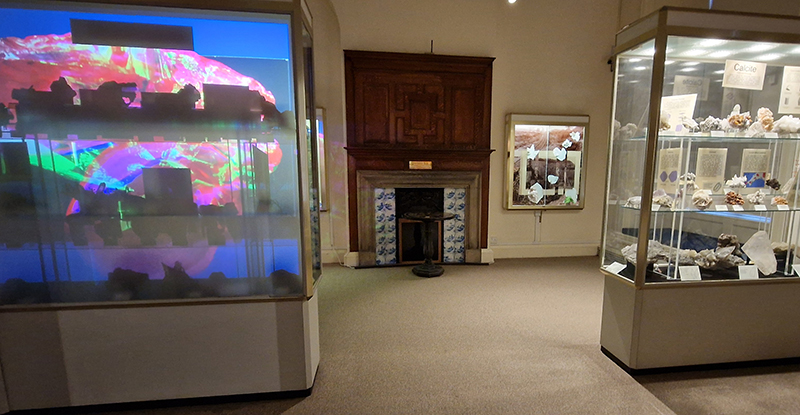
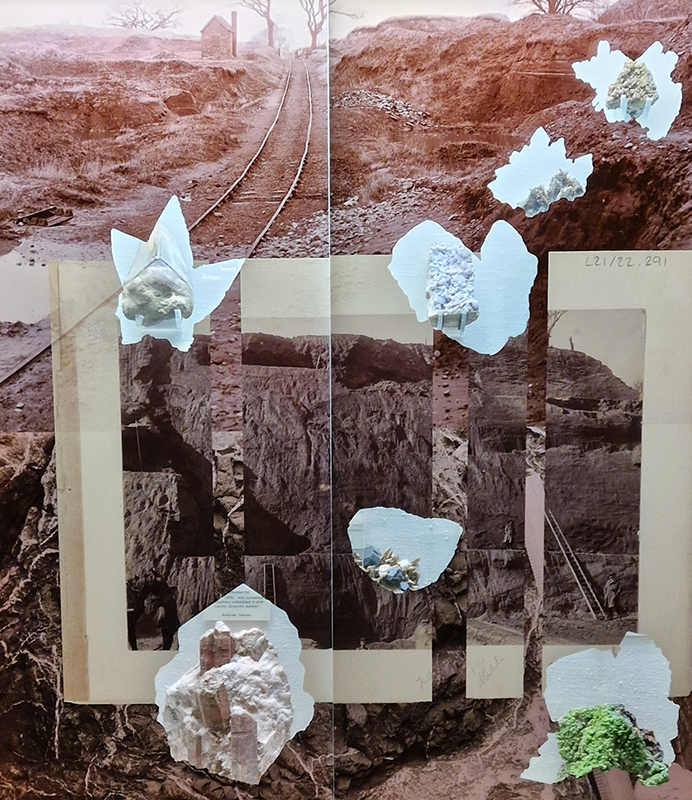
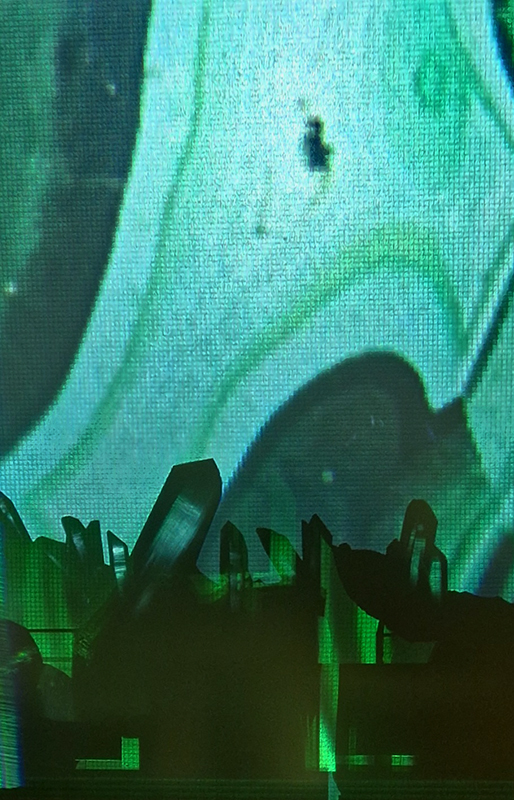
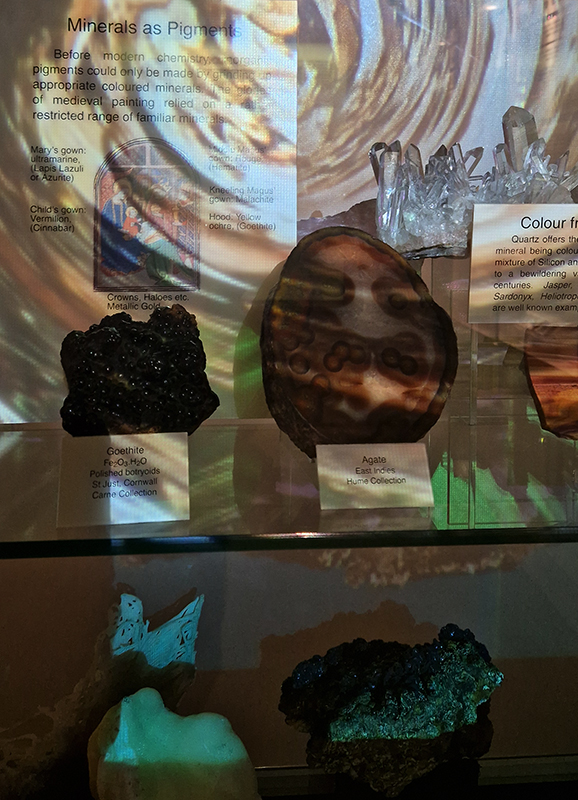
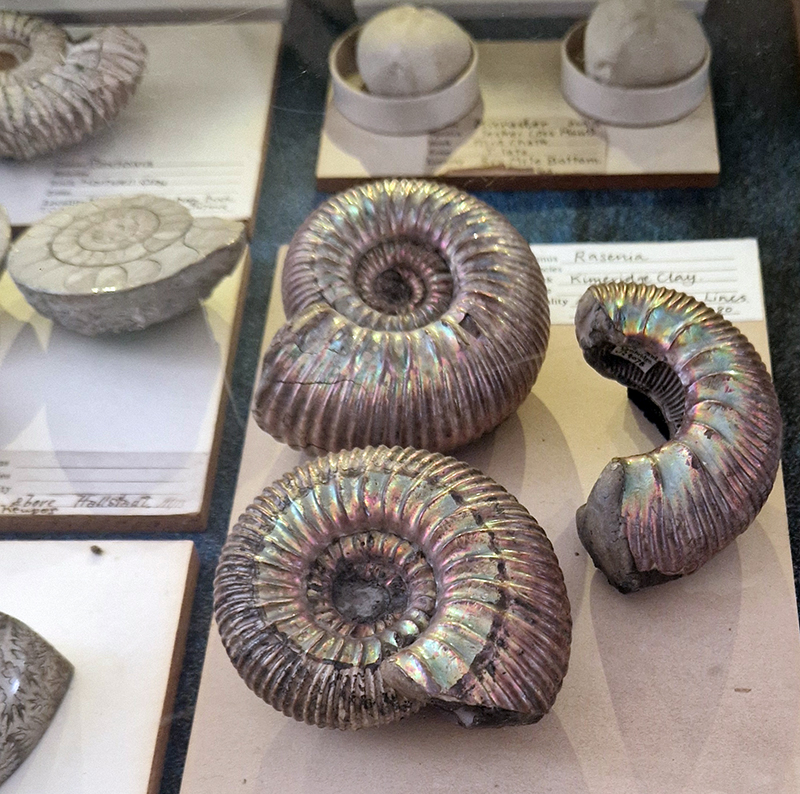
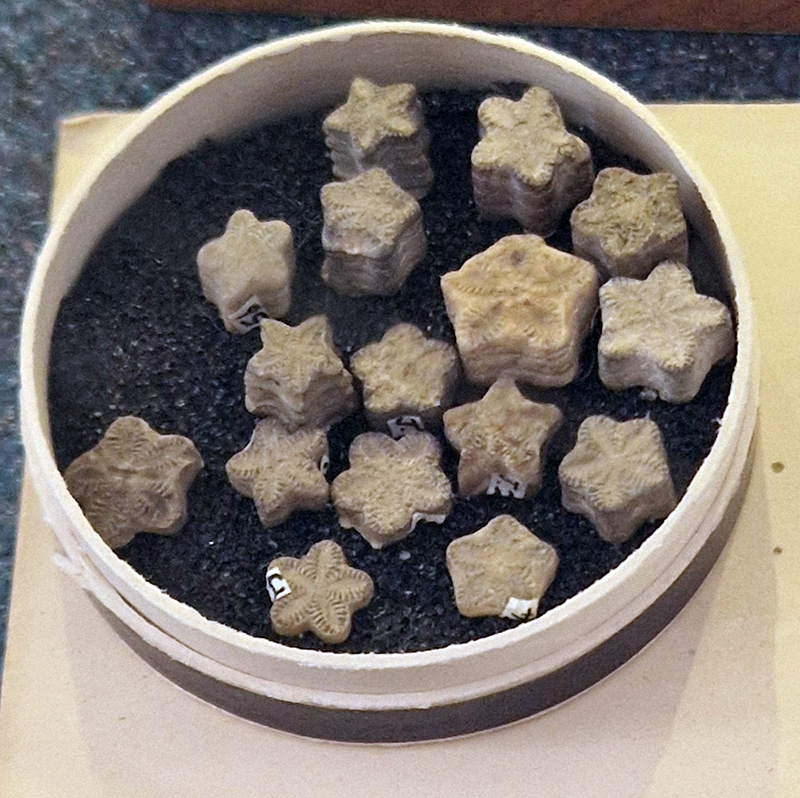
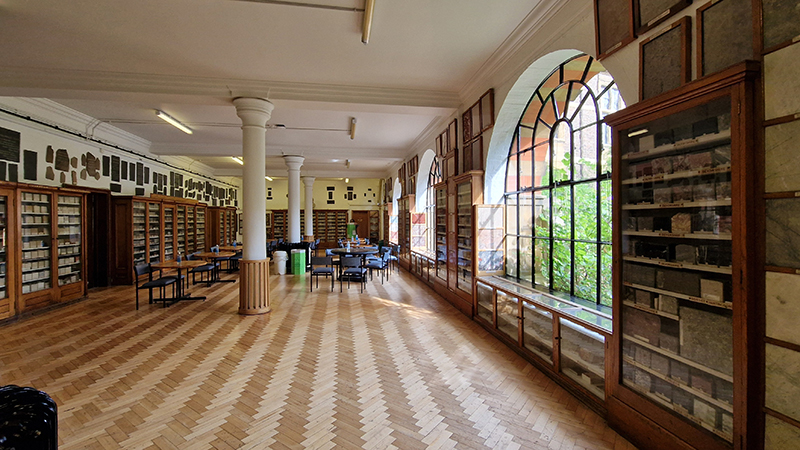
Rona Lee Lithic Entanglements at Sedgewick Museum of Earth Sciences. A considered intervention in the Whewell Mineral Gallery to ‘bring the dirt back in’, making evident the scarred landscapes, physical extraction processes as well as the social strata of those involved in procuring such a collection. There is no denying the allure of minerals and gemstones and the work here captures the beauty of the rocks while also reminding us of the ravaged Earth left scarred and depleted.

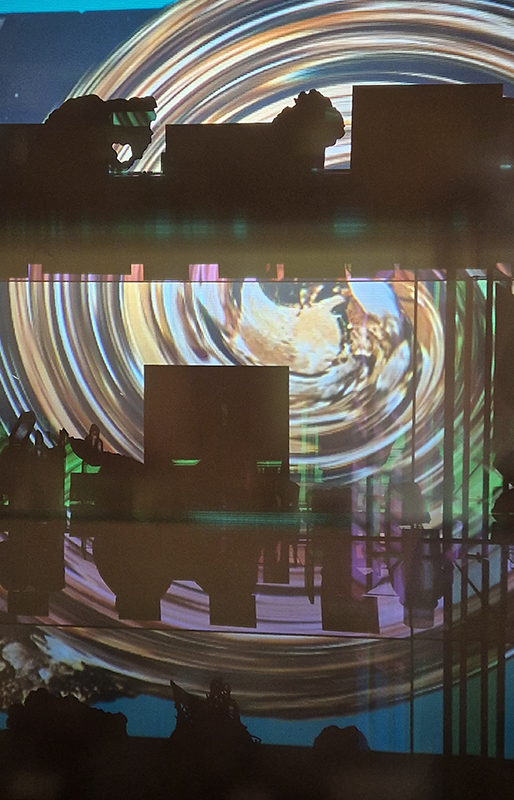
A Modern Lapidary a video work, back projected through one of the free-standing cases, animates mid-century scientific photographs of minerals, altering our perception of the samples within as ‘dead’ matter. Elsewhere, in An Extractive Index, digitally collaged photographs of geological field trips are laminated on to the glass, inviting reflection on the social and environmental relationships which these reveal.’ 

The Museum itself was also fascinating to look round and after Rona’s artist talk we were treated to tea in the The John Watson Building Stones Gallery which houses the most complete collection of stones used in construction.

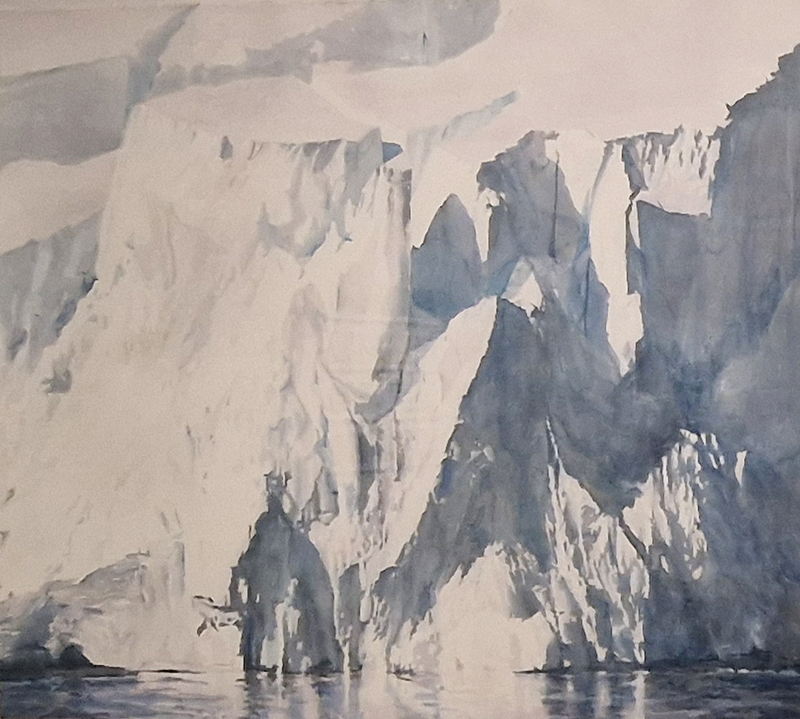
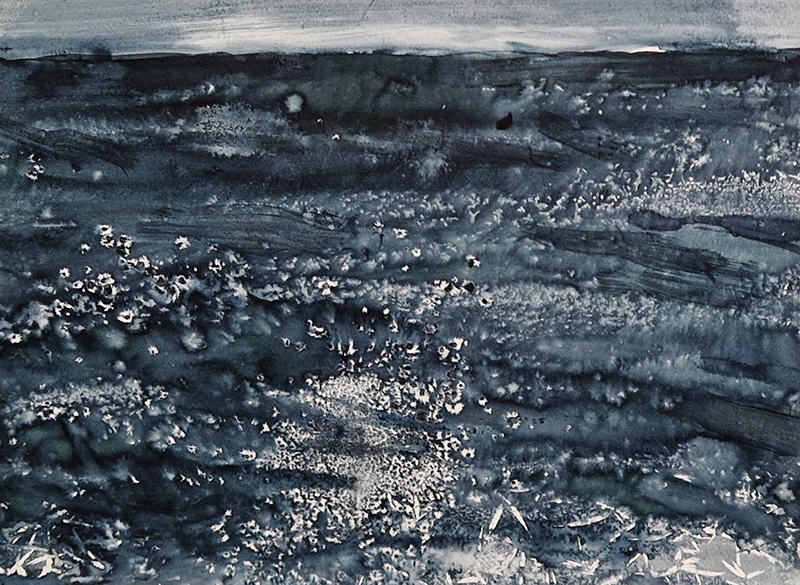
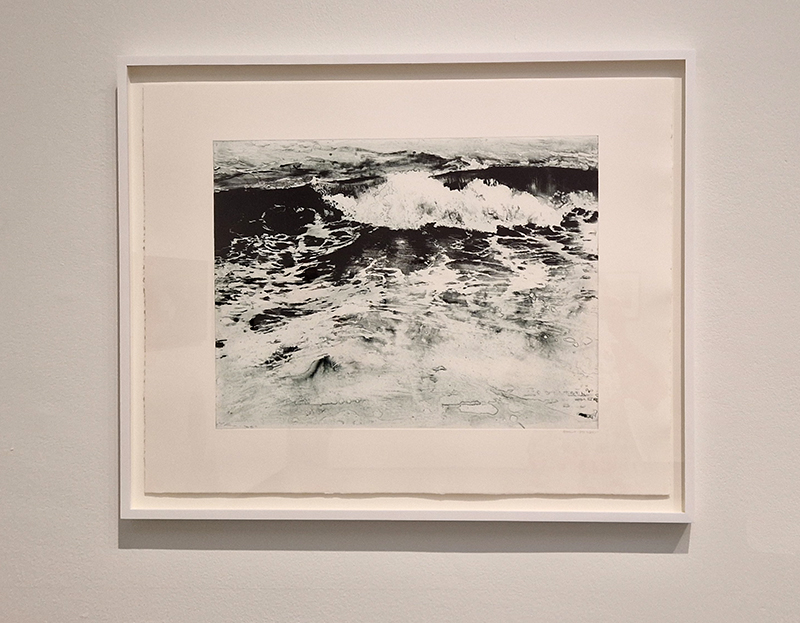
Emma Stibbon Melting Ice | Rising Tides at Towner Eastbourne. A day trip to the see this remarkable body of work so thoughtfully curated. The pale majesty of ice or chalk cliff faces, fragile against pounding seas that Emma witnesses in both the polar and local Sussex coastlines are captured so poignantly. These are portraits of great bodies under stress. Close up, edges and lines break down into fluid, watery strokes, a diaphanous translation of the fast painterly sketches made in often gruelling conditions. Wonderfully immersive, through scale and placement, and the understated palette of deep muted greens and blues, almost blacks and luminous whites which draw the viewer into the landscapes.

Listening

 Sideways – A New Frontier. A four-part podcast about the ethics of space exploration with former NASA astronaut Nicole Stott, new astronaut Ed Dwight, Space Philosopher and author Frank White, Anthropologist of Space and Religion, Deana Weibel, Professor of Religion at Knox College Robert Geraci and former ISRO scientist, Jijith Nadumari Ravi.

Astronauts and space tourists often cite the overview effect as a transformative experience offering the perspective to see a shared planet with no borders. Some however, experience the ‘ultraview’ effect which is the overwhelming and disorienting knowledge of the magnitude of the universe.

BBC Inside Science Podcast. How much of a risk is space junk? As we send more and more metal in the form of satellites up into space, scientists are warning it is becoming more of a risk both here – and up there.

Much space junk comes from defunct satellites. There are plans to launch 60,000 more satellites by 2030. It is estimated there is currently 12, 400 tons of space junk orbiting Earth – 2,500 discarded satellites and 130 million fragments that travel at 10 times the speed of a bullet. Because of the orbiting junk, Space X satellites must make around 275 collision avoidance manoeuvres every day. It is not only dangerous in space but large debris is falling to Earth and not burning up in the atmosphere. It is predicted life will be lost in the next decade as a result of falling space junk, there have already been some near misses. The satellites and launch debris that does burn up in the atmosphere releases large amounts of metal into the atmosphere with unknown consequences.