Archives for posts with tag: aurora-borealis

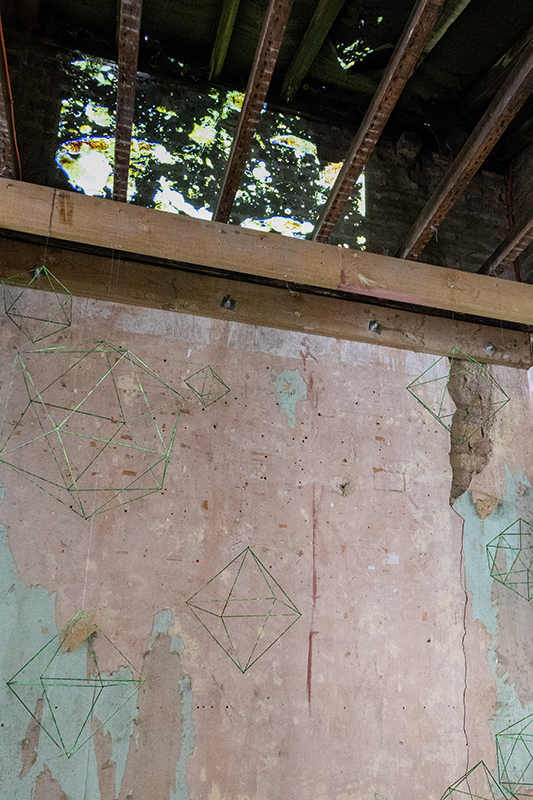
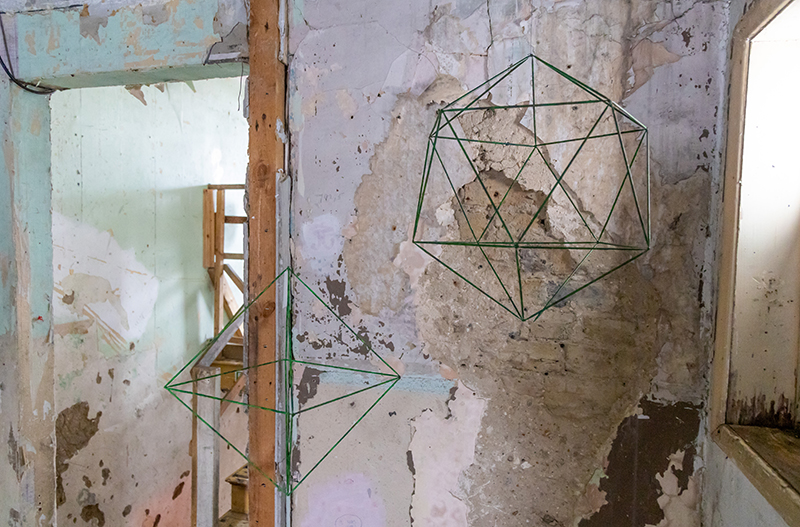
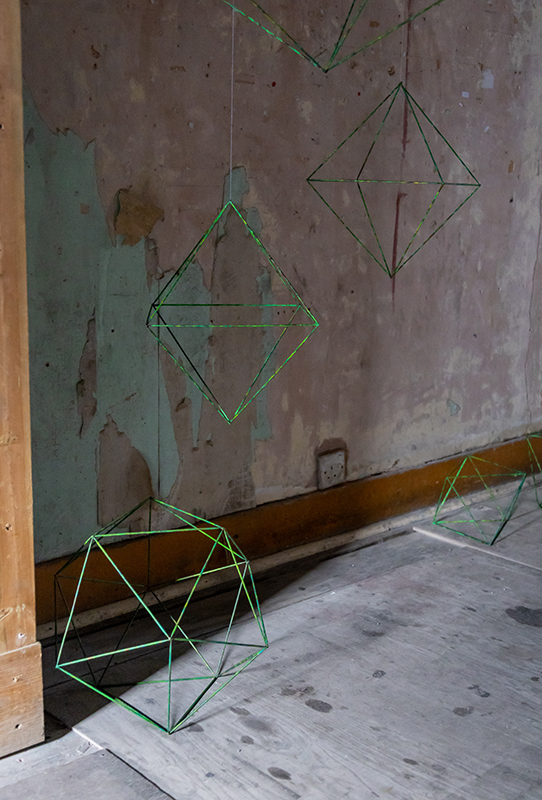
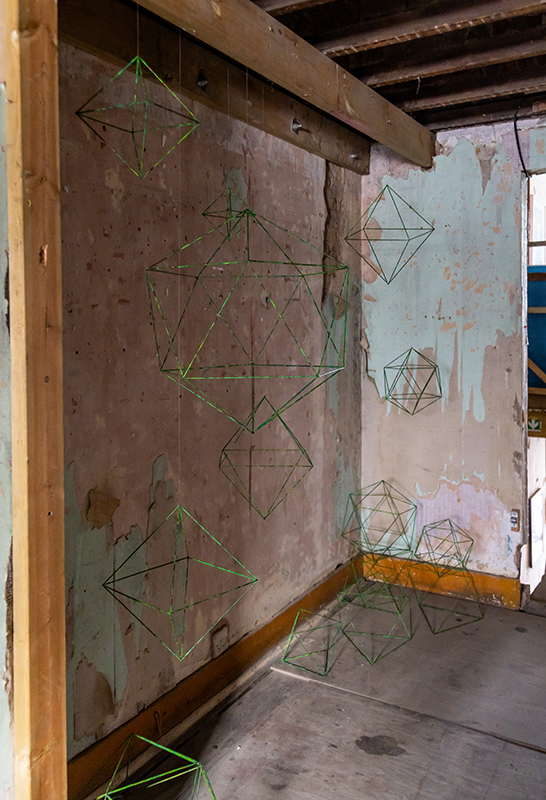
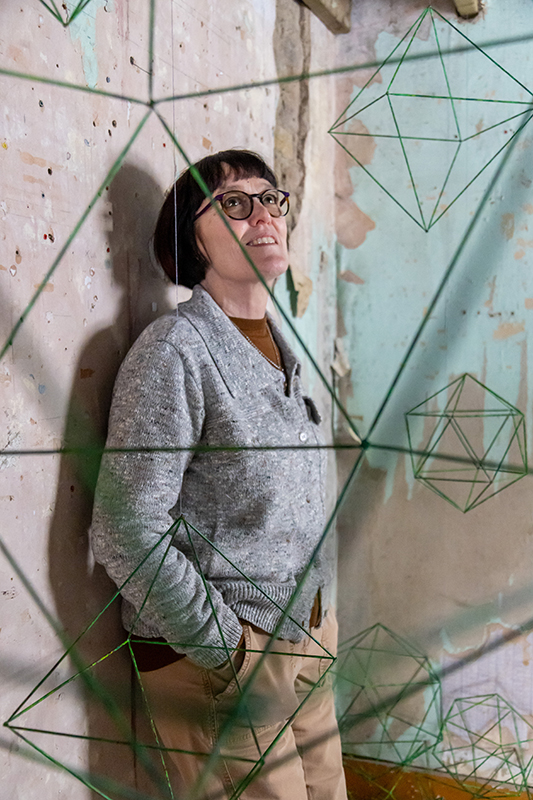
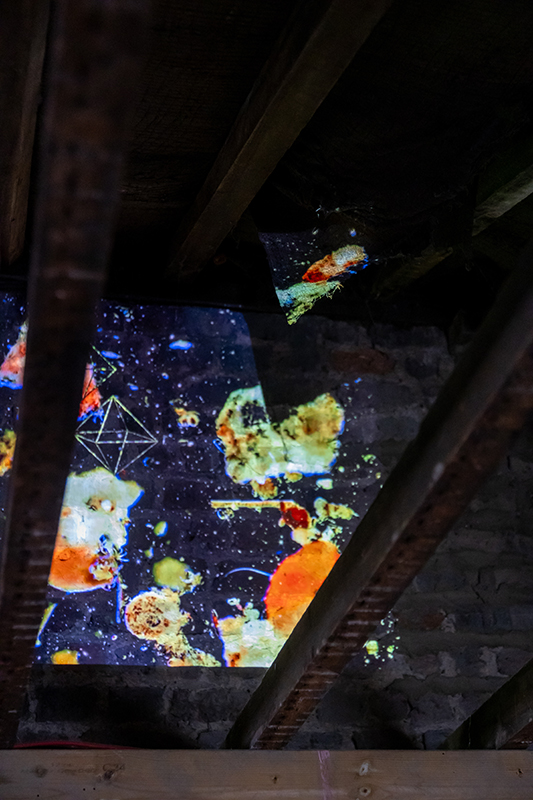
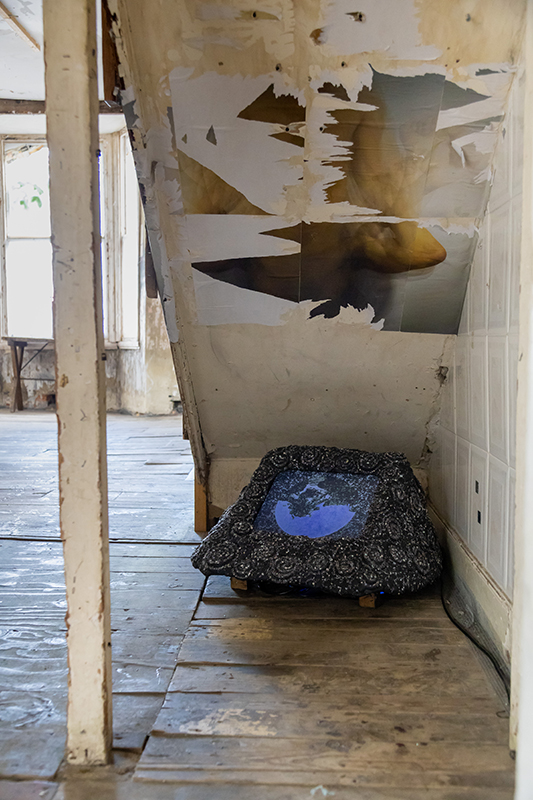
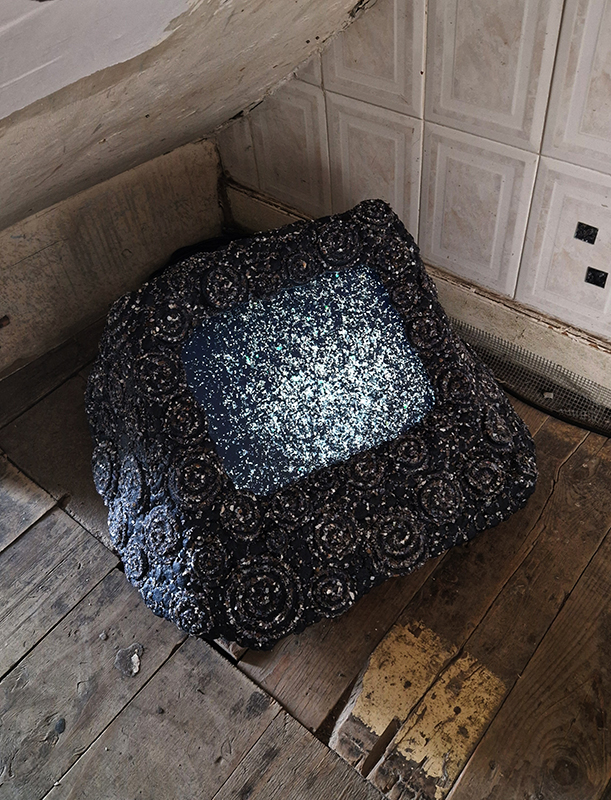
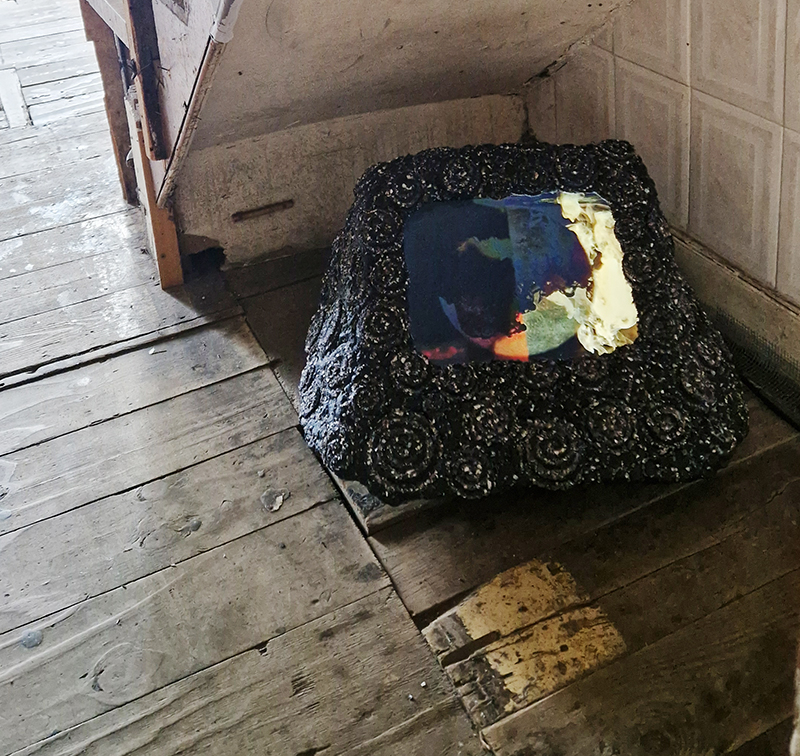
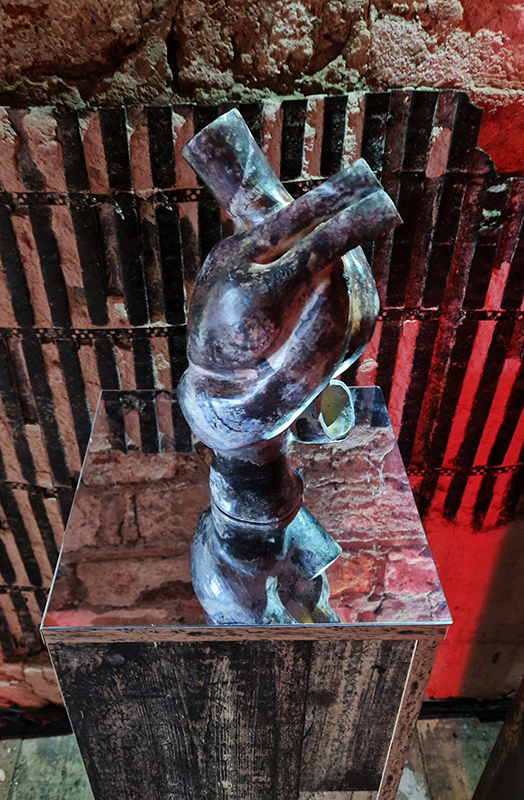
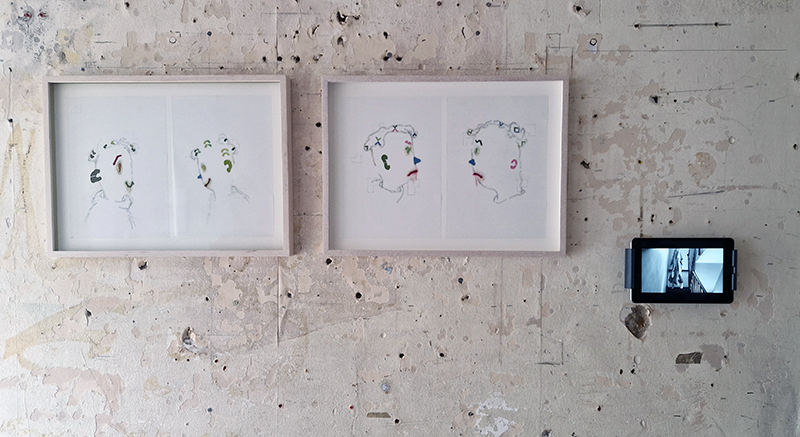
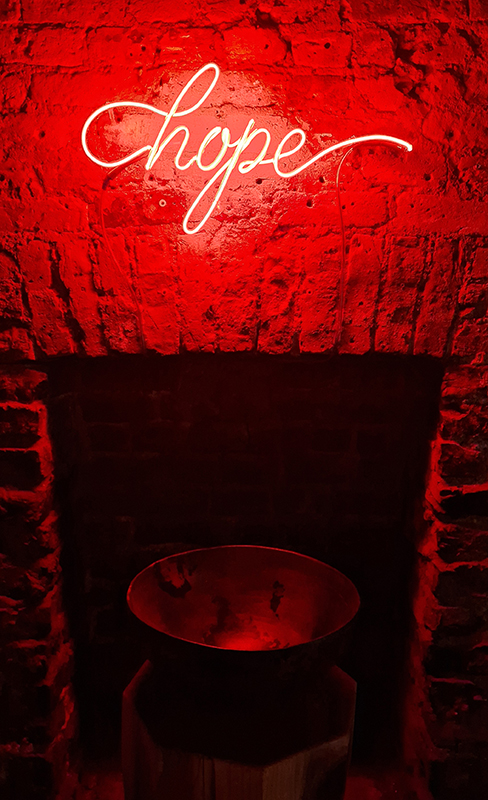
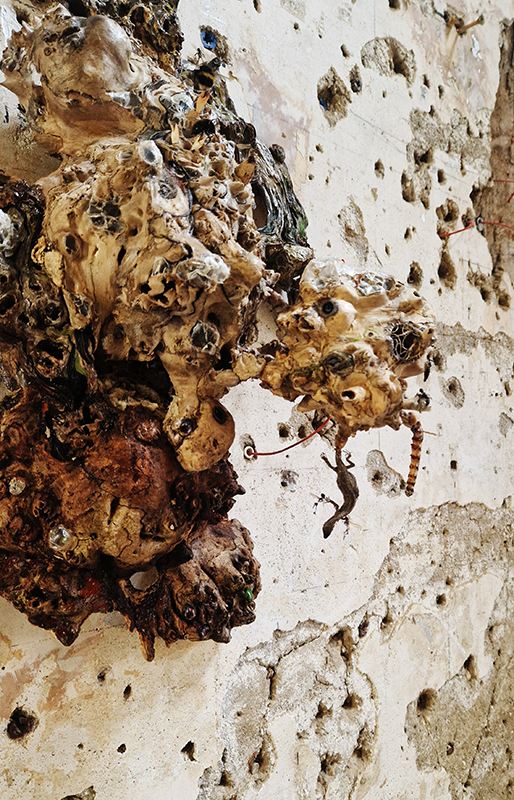
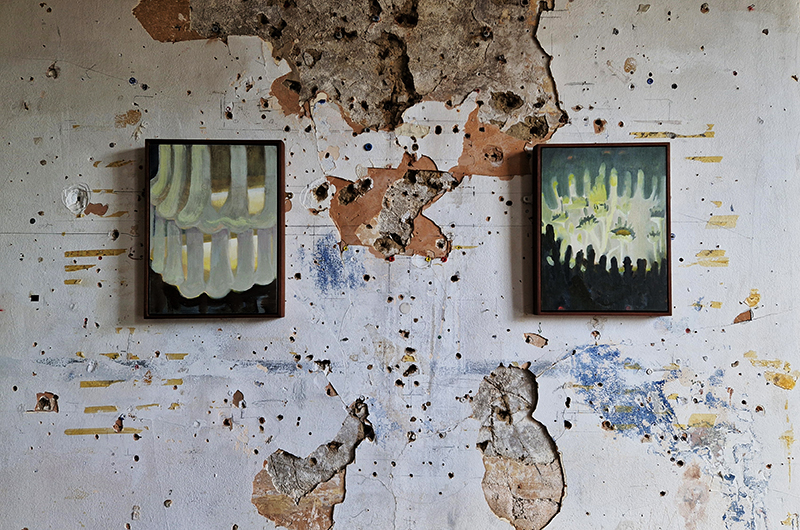
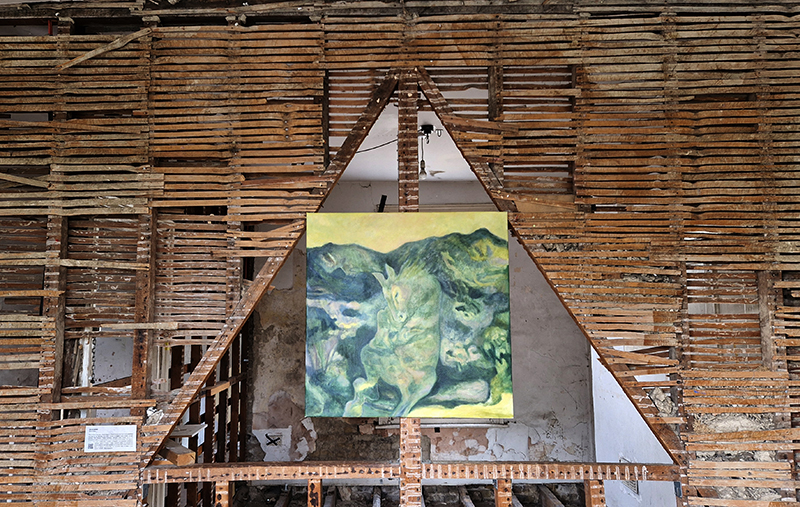
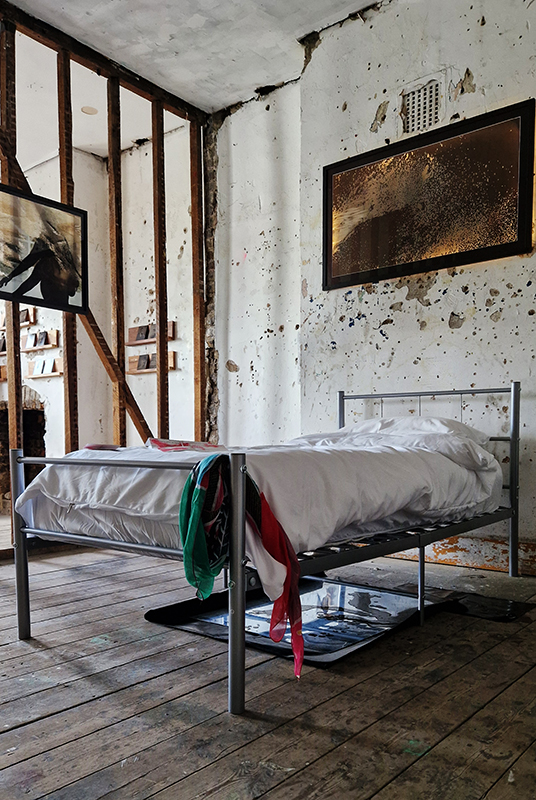
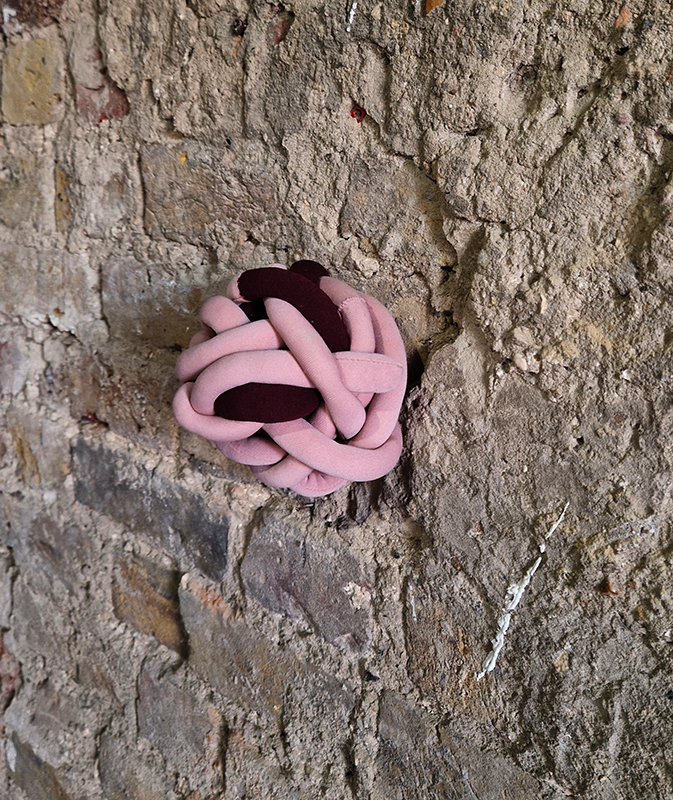
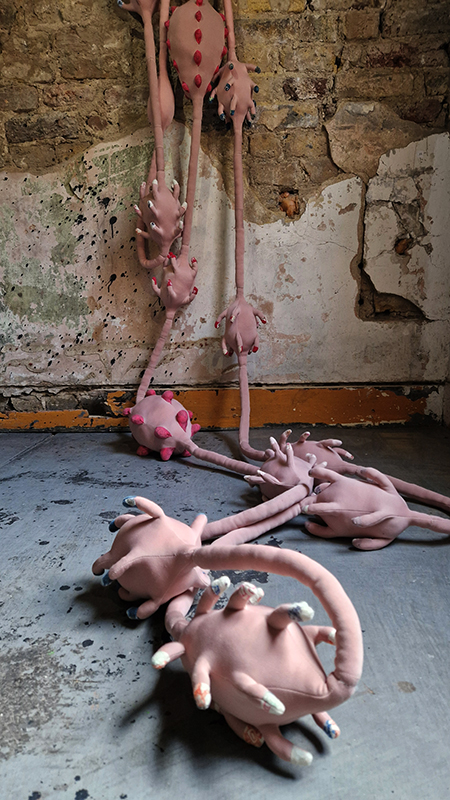
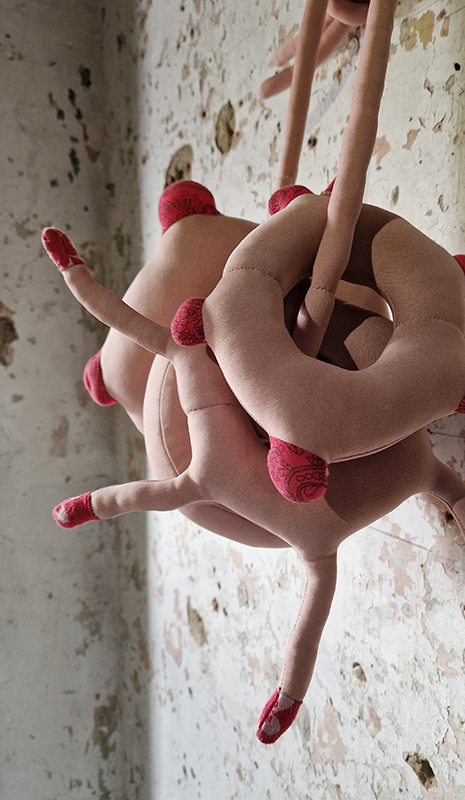
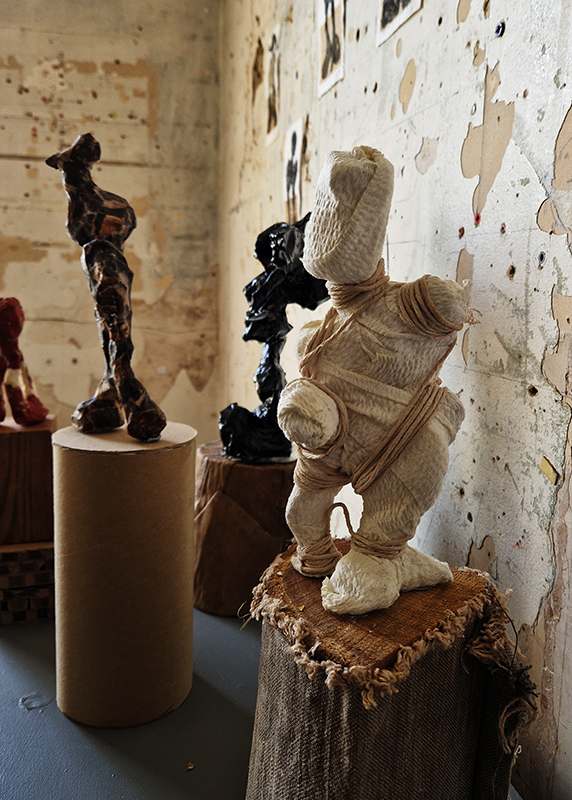
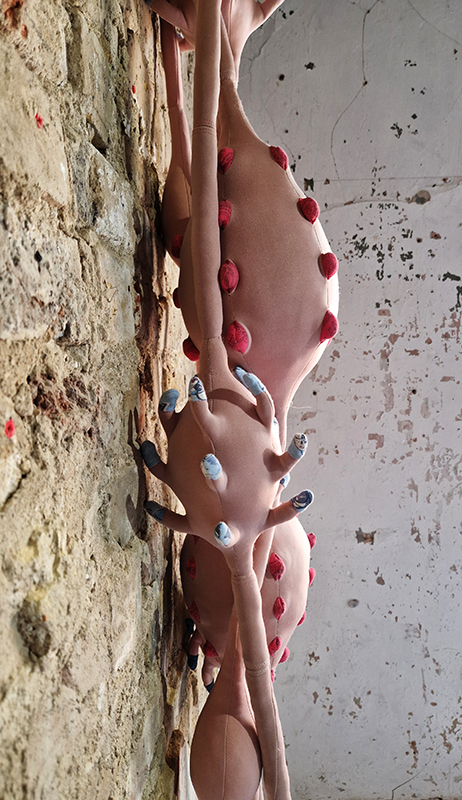
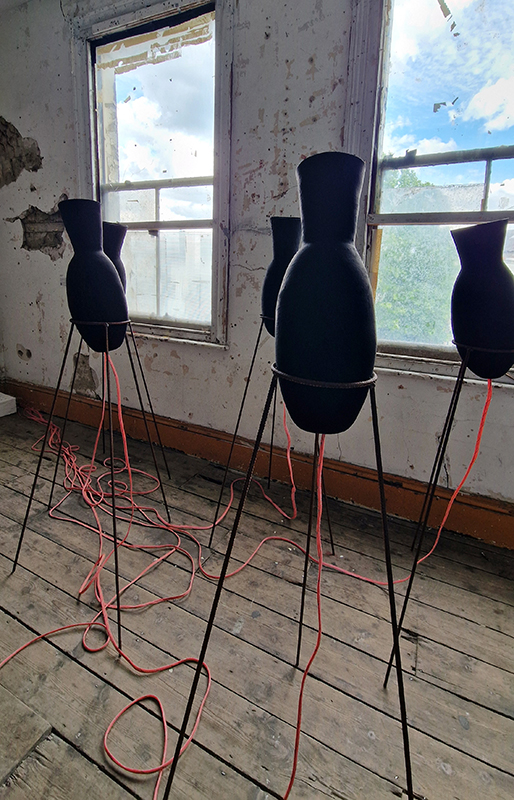
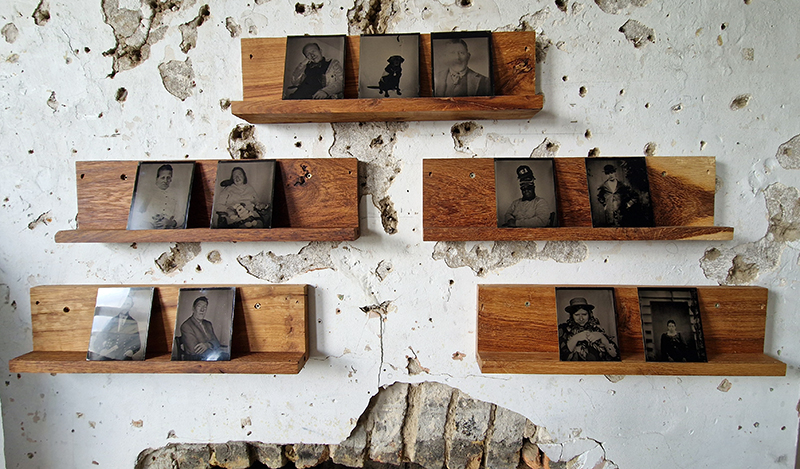
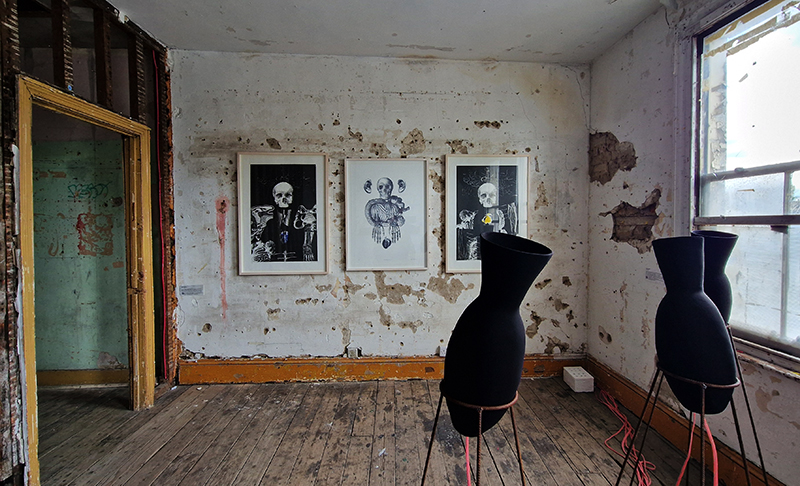
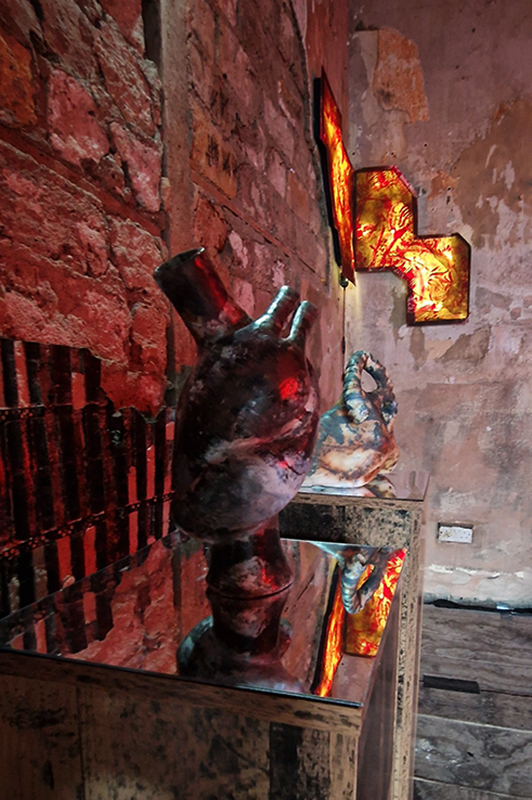
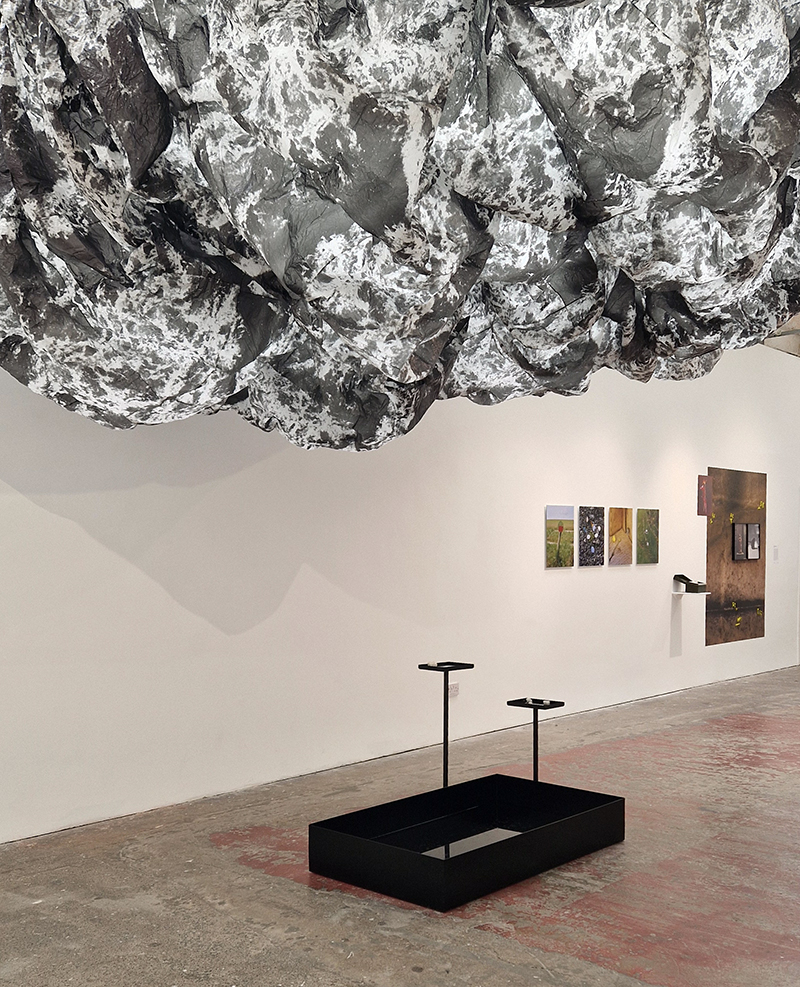
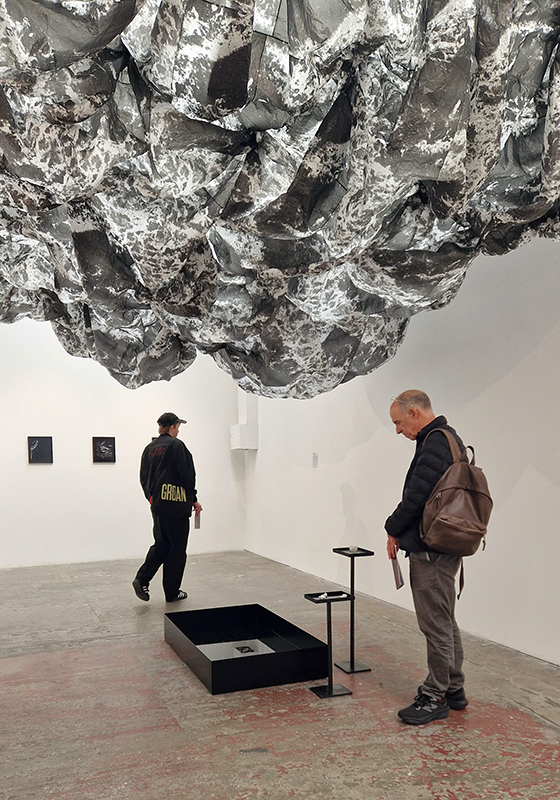
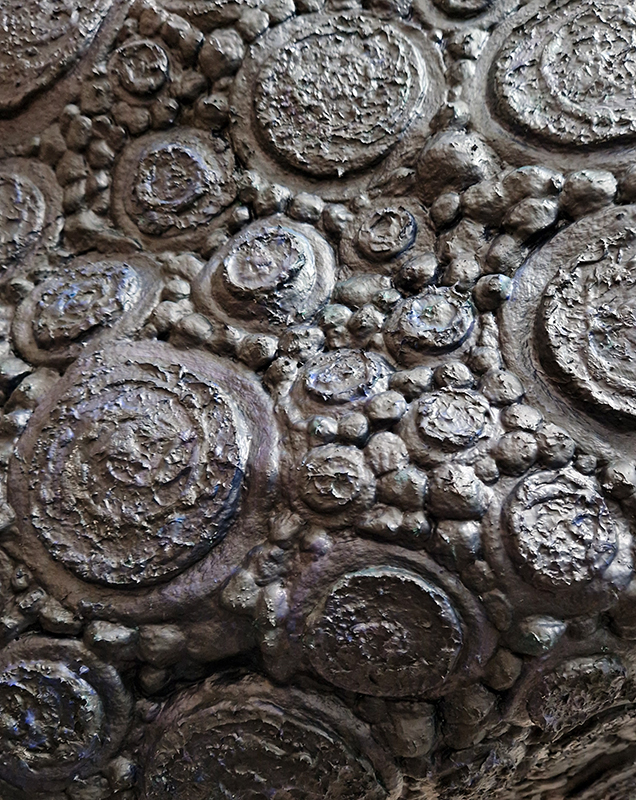
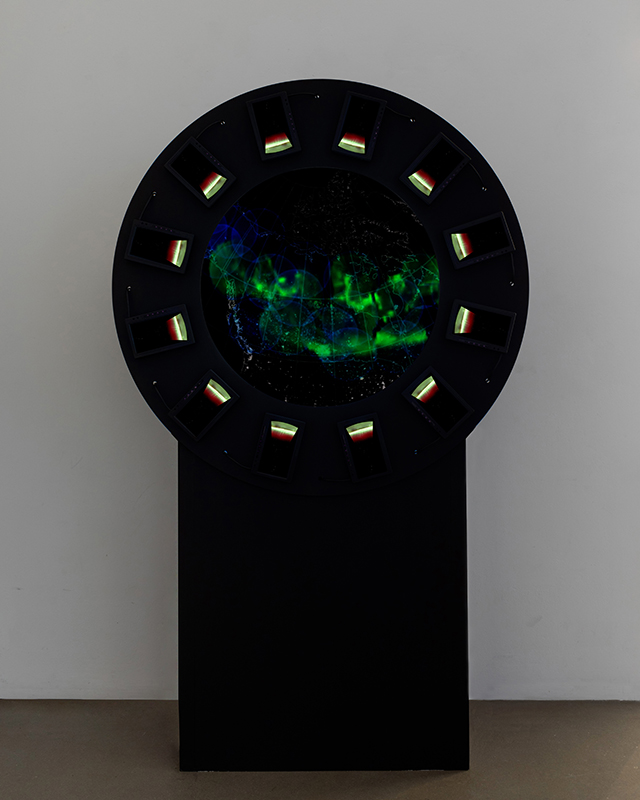
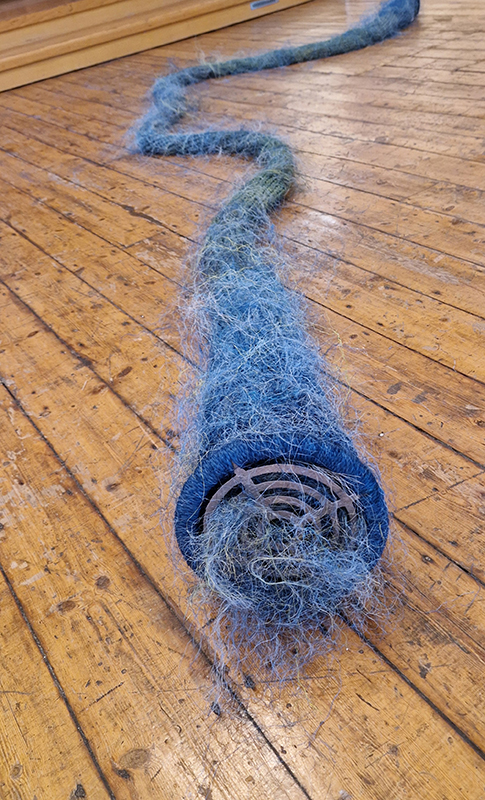
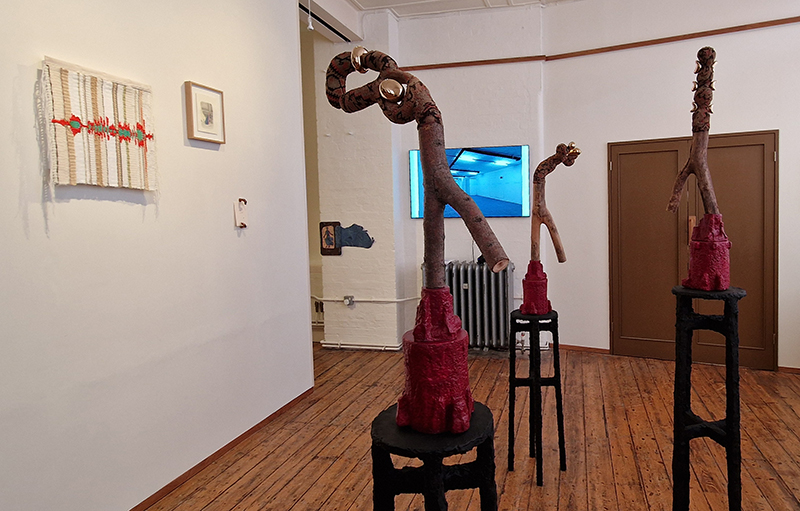
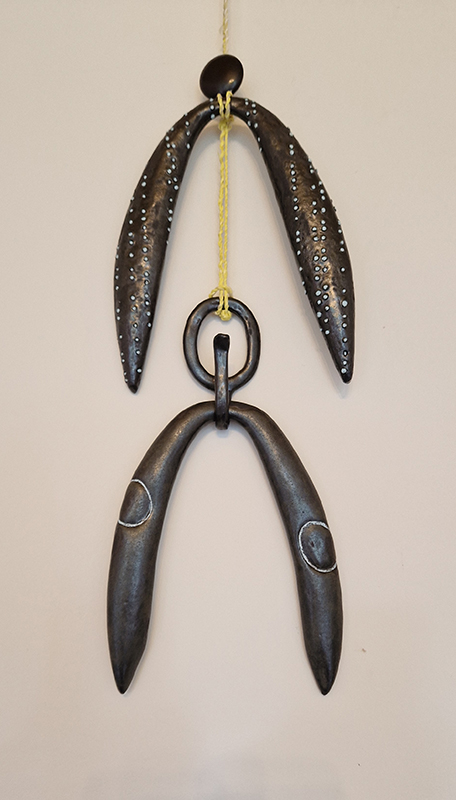
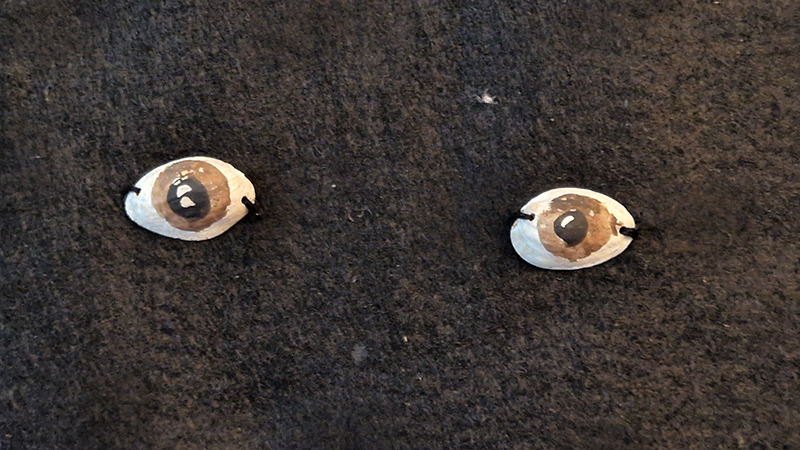
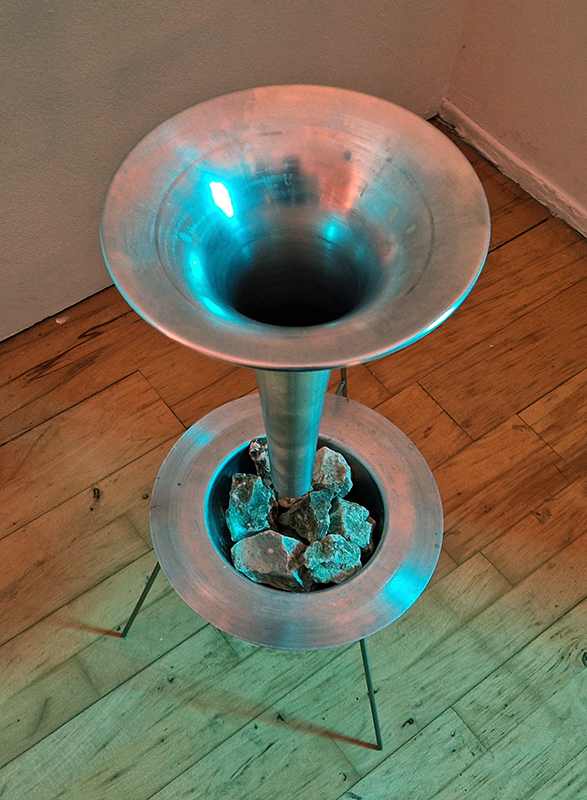
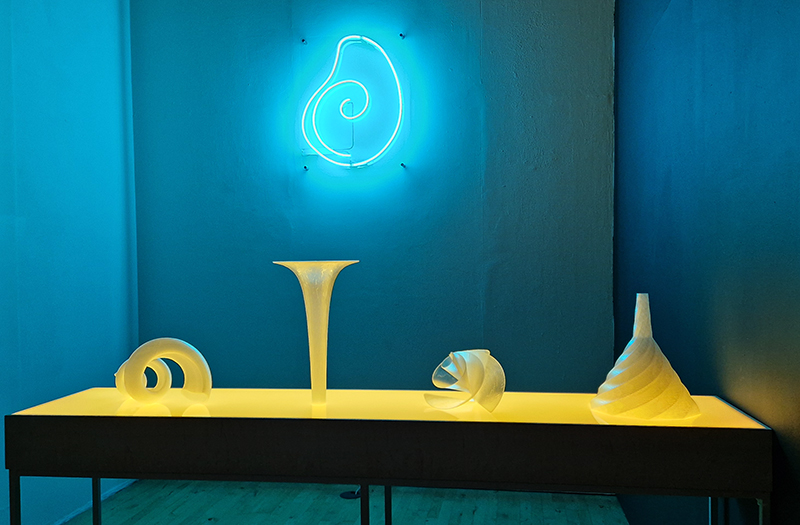
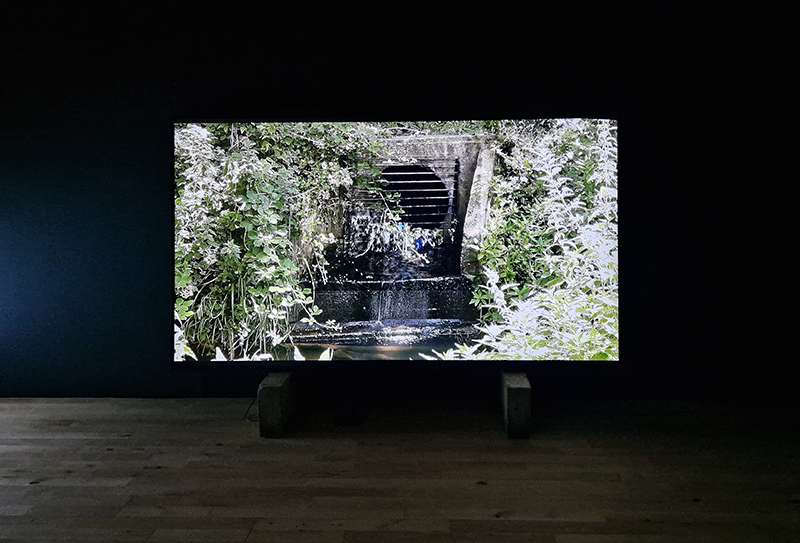
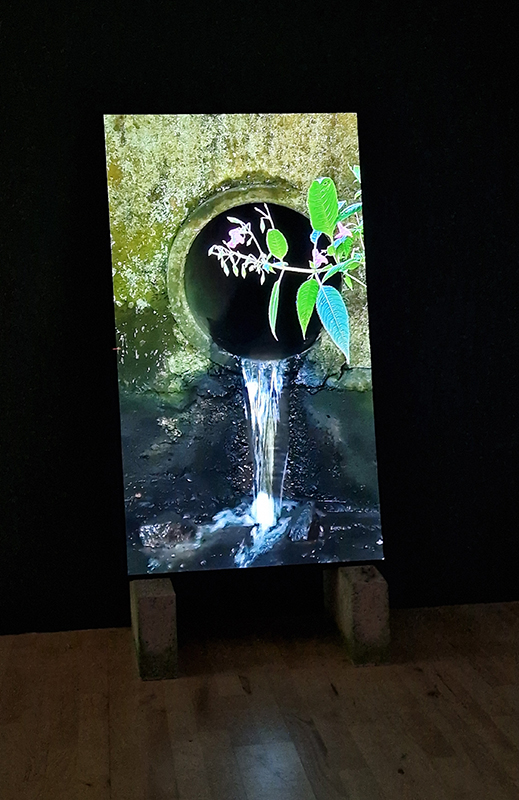
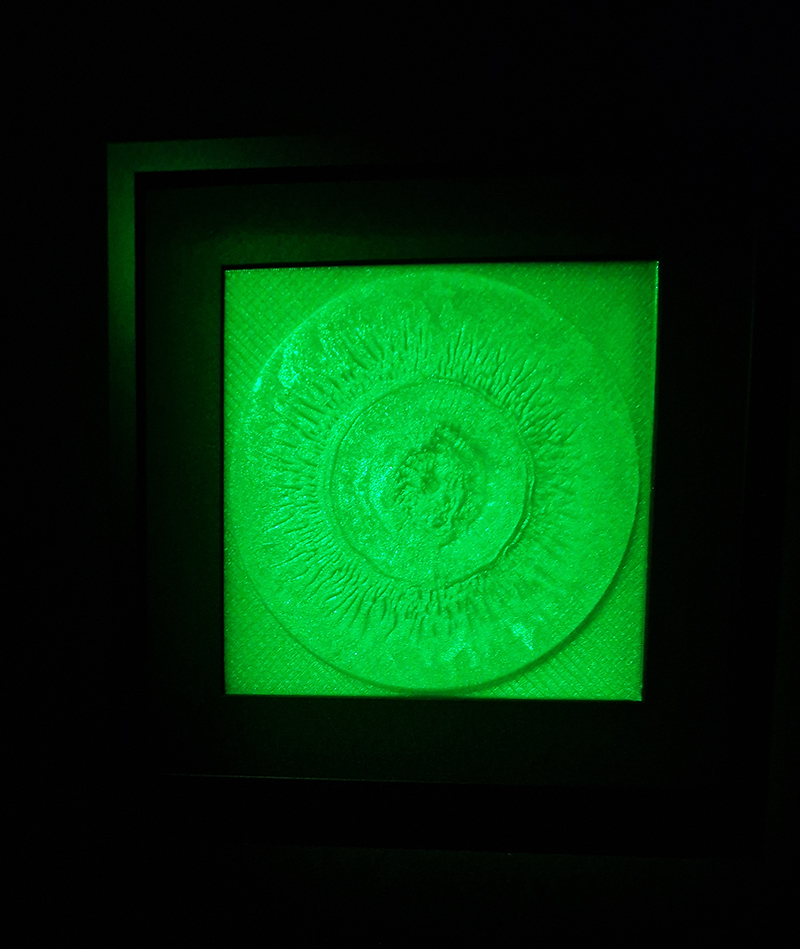
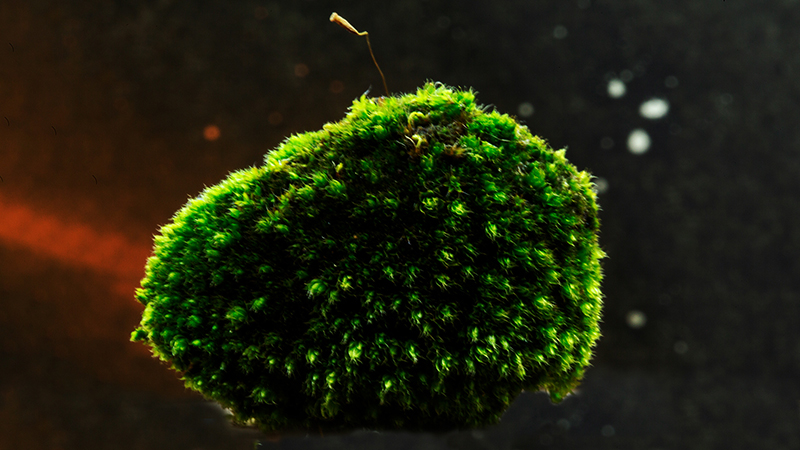
It was a brilliant busy weekend at the Safehouses Peckham for Occupied: Strange Company. So many visitors commented on the excellent curation of the works by Julie Hoyle. Each room had its own unique atmosphere yet all blended so seamlessly across the two houses. I was very happy with the placing of my two installations, one in the rafters the other in a dark recess under the stairs. Both works look to other life forms that we coexist with and often overlook – the mollusc and the creatures of the gutters.

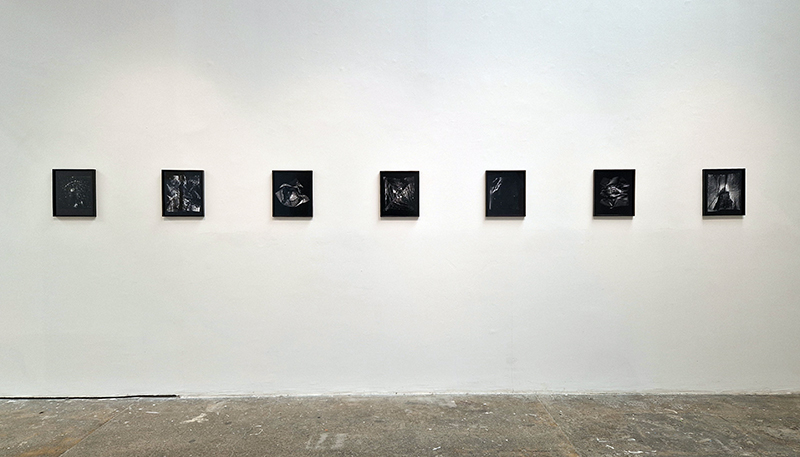
Installation images of my work by Emma Brown Photography
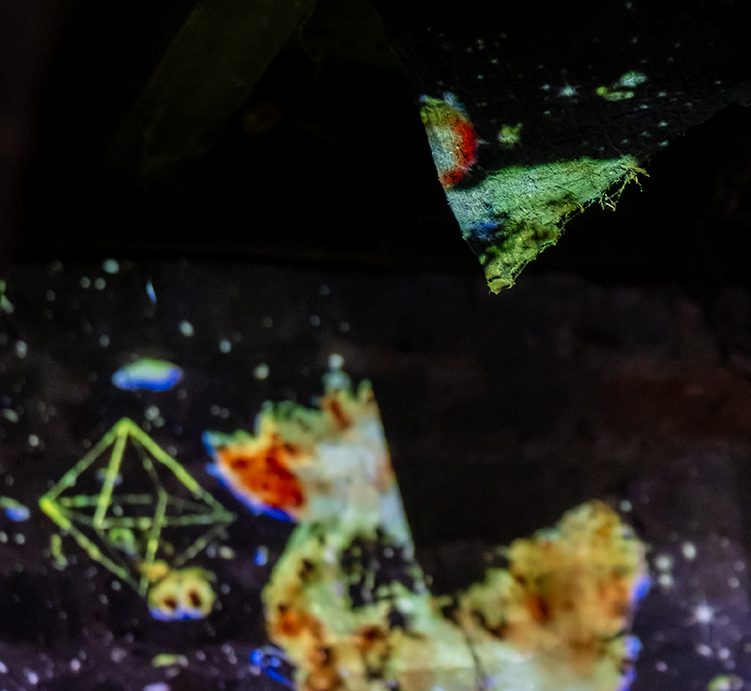
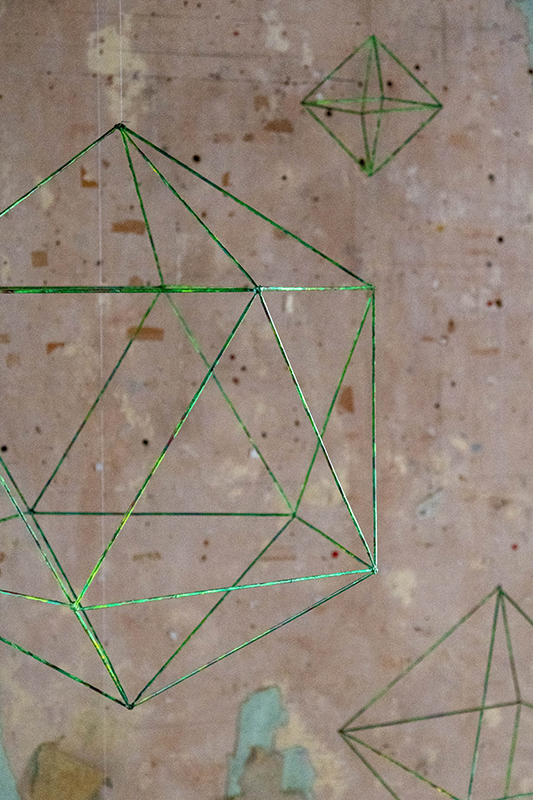
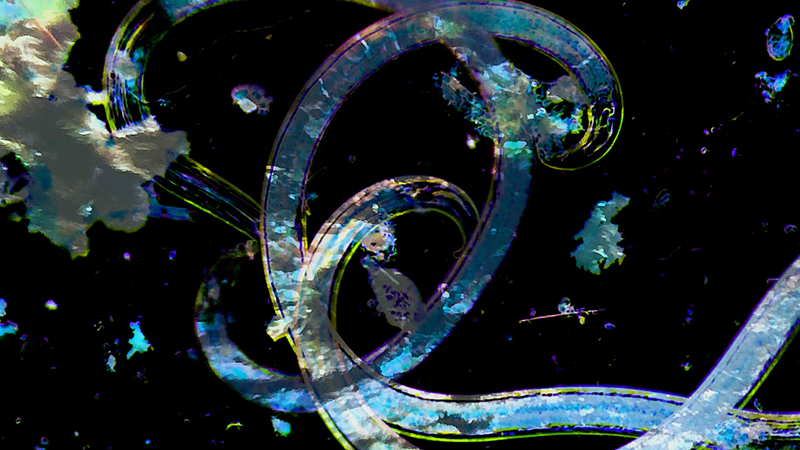
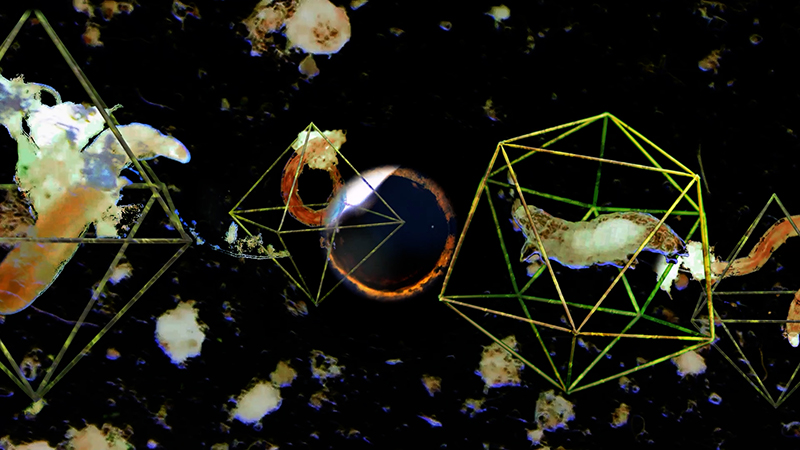
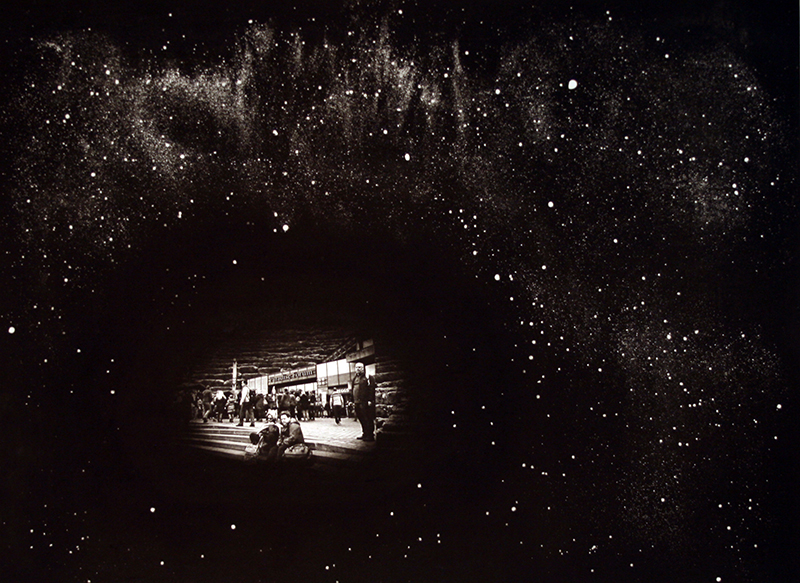
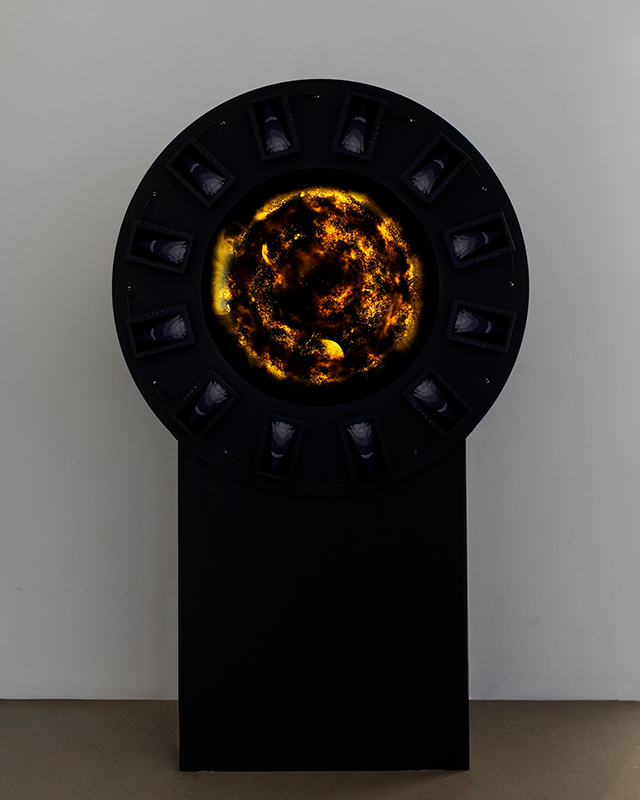
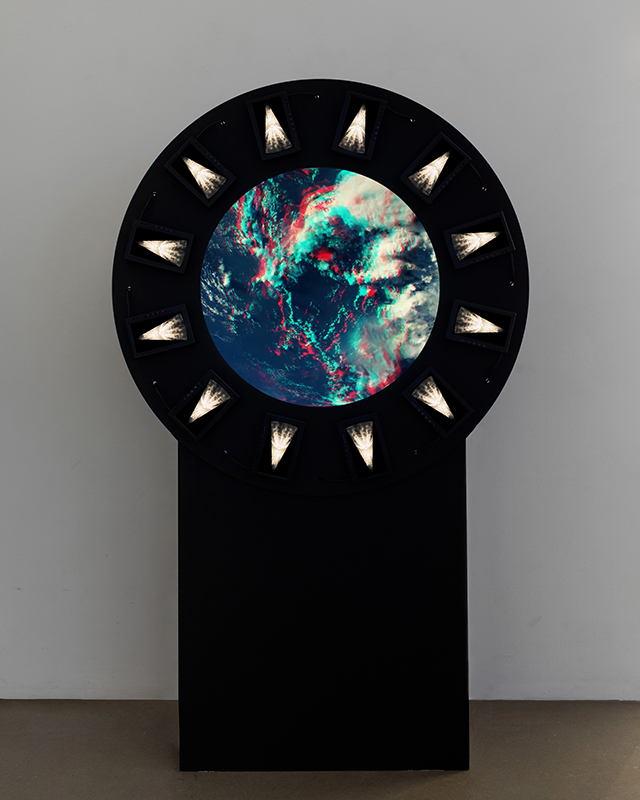
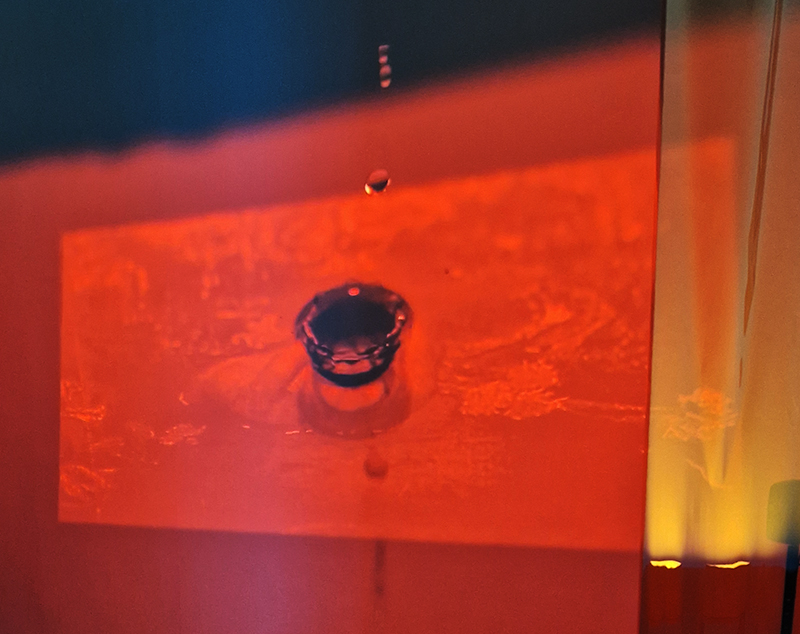
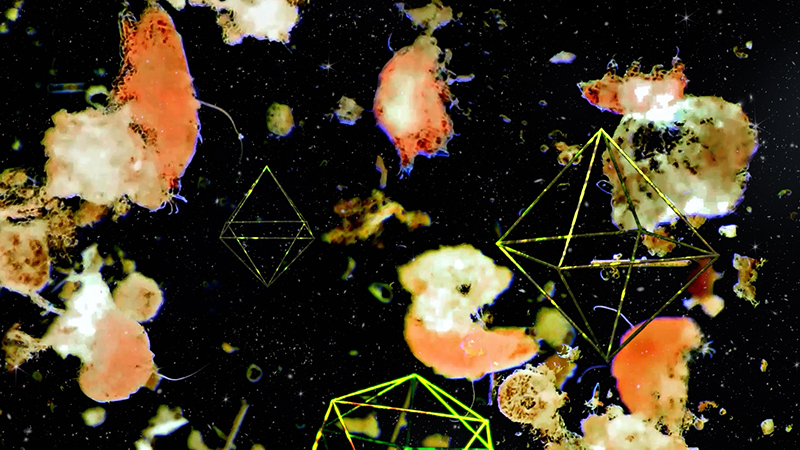
Guttanaut alludes to Oscar Wilde’s familiar quote ‘We are all in the gutter but some of us are looking at the stars’. This video installation transports the viewer to exotic otherworlds inhabited by microscopic creatures found in a drop of water or tuft of moss in the dank environs of house gutters. Icosahedron and octahedron shapes representing the elemental qualities of water and air appear as constructs for satellites or modes of exploration across this alternative cosmos.
Julie Hoyle brought together a cross-section of artists from Royal Academicians to emerging practitioners, alongside artists working within disability and community contexts reflecting her interest in community and unexpected connections.

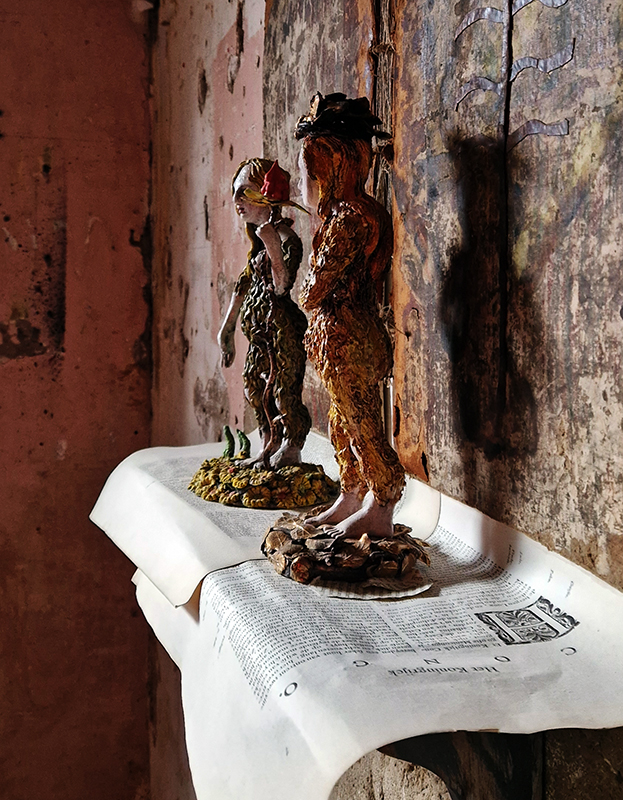
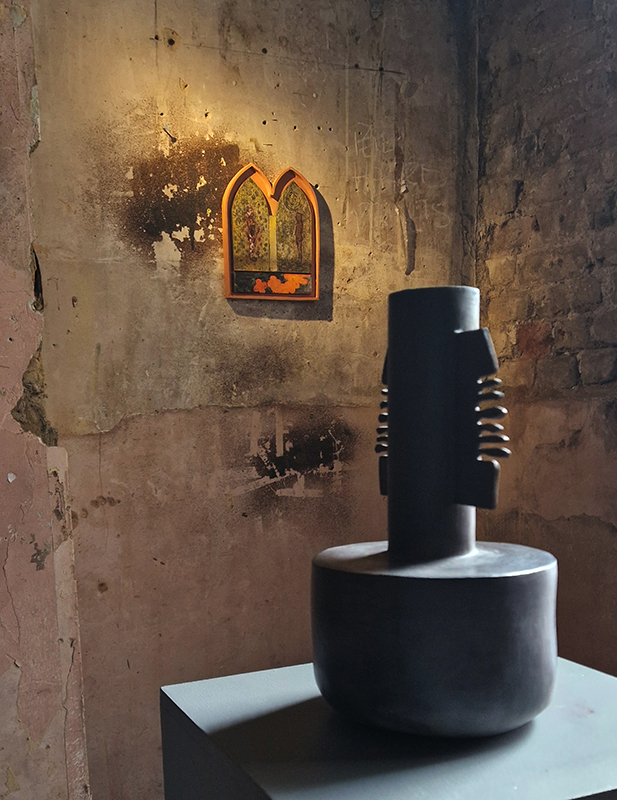
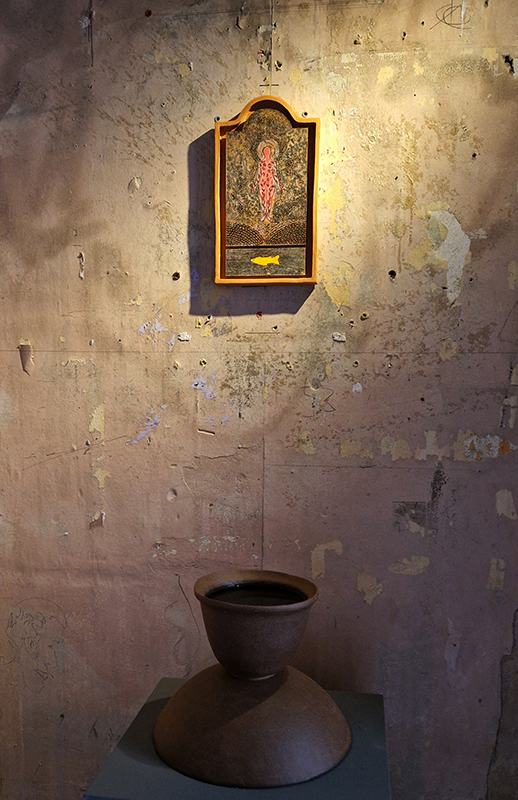
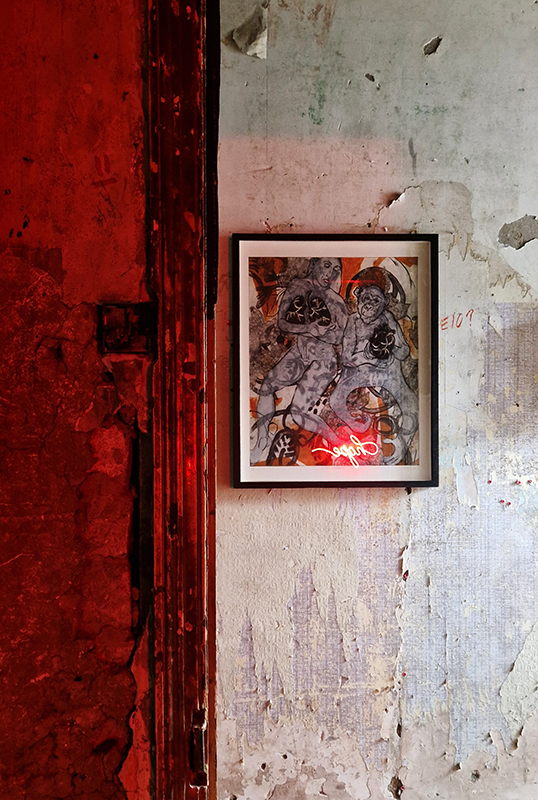
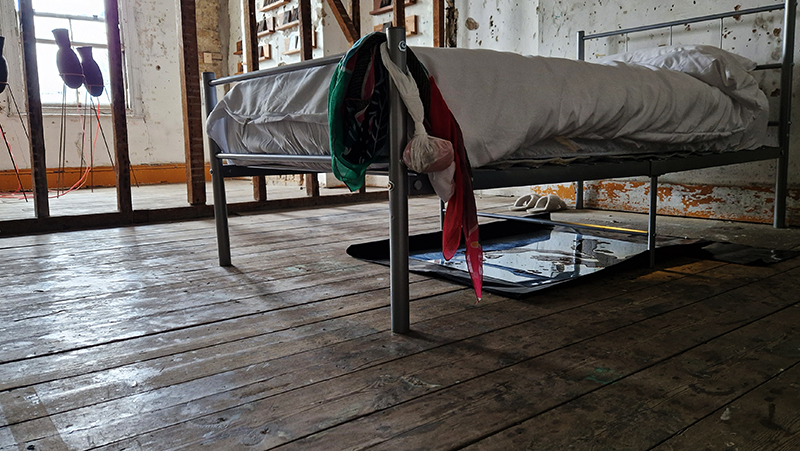
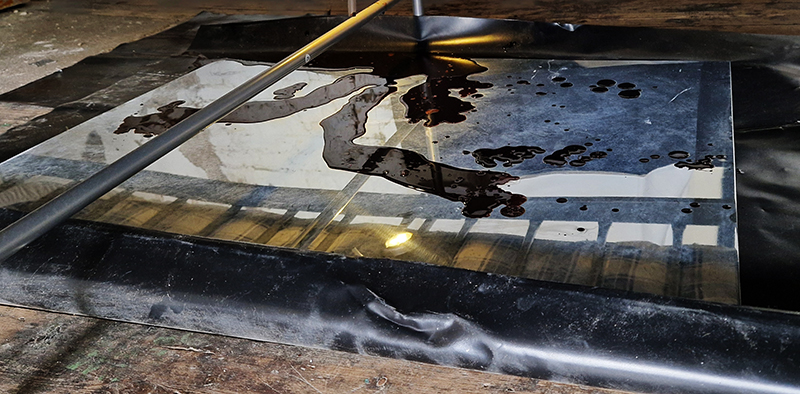
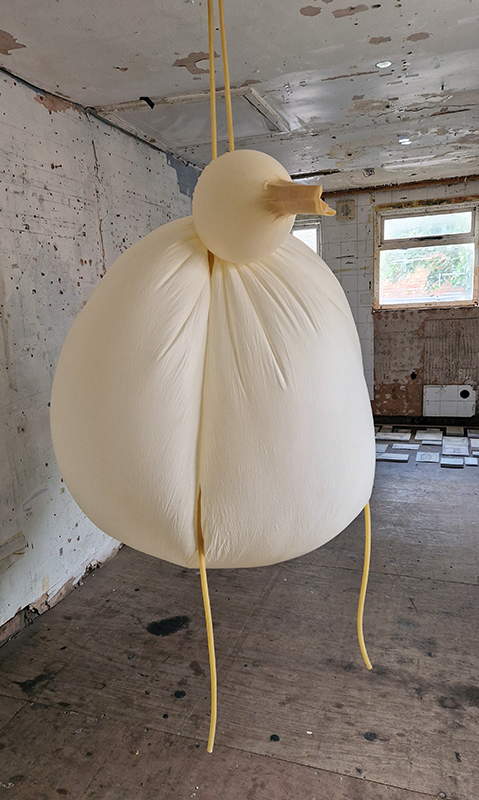
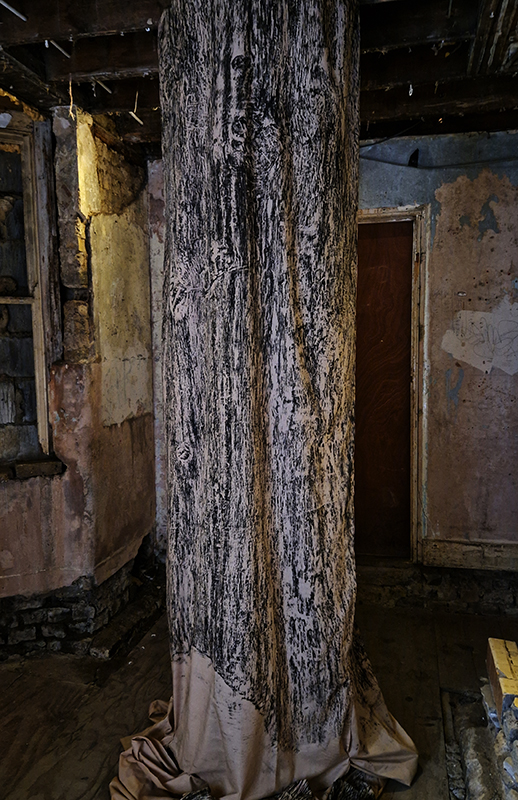
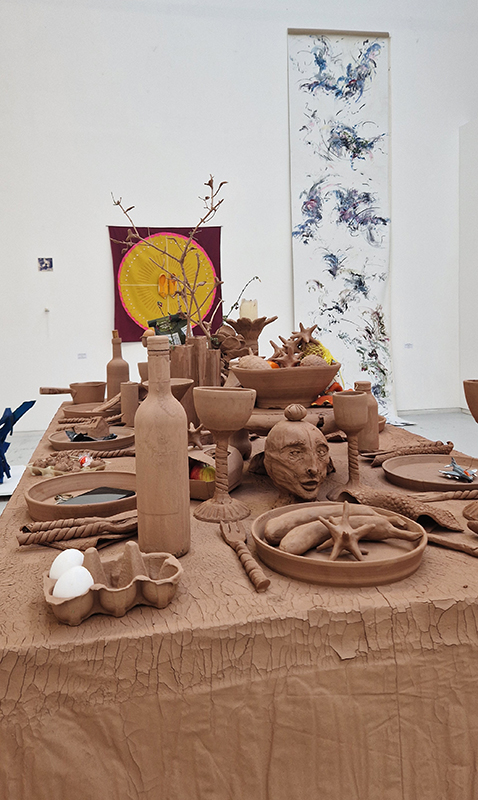
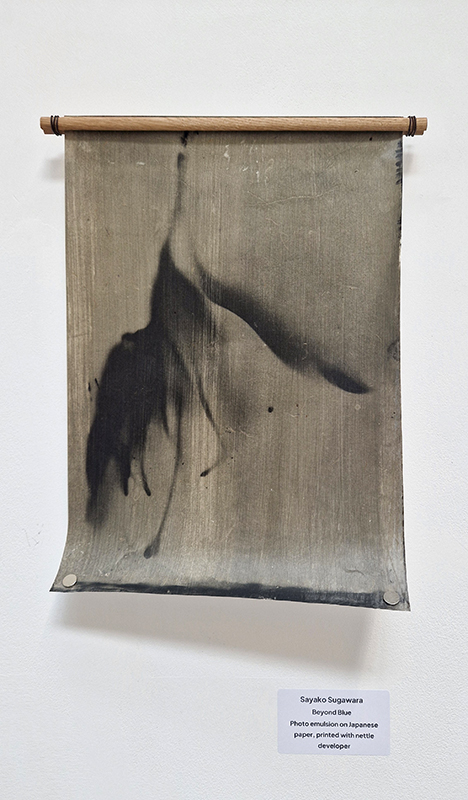
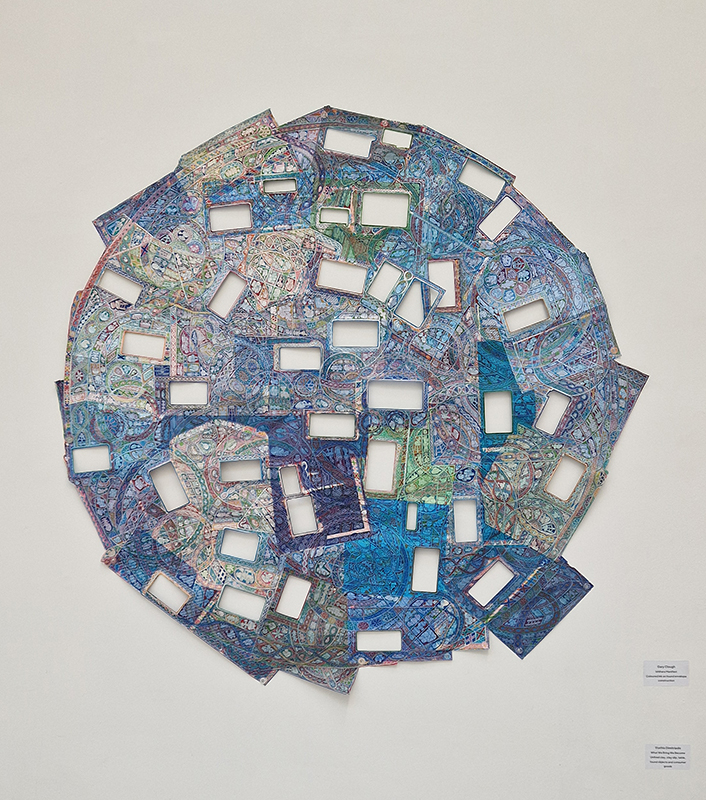
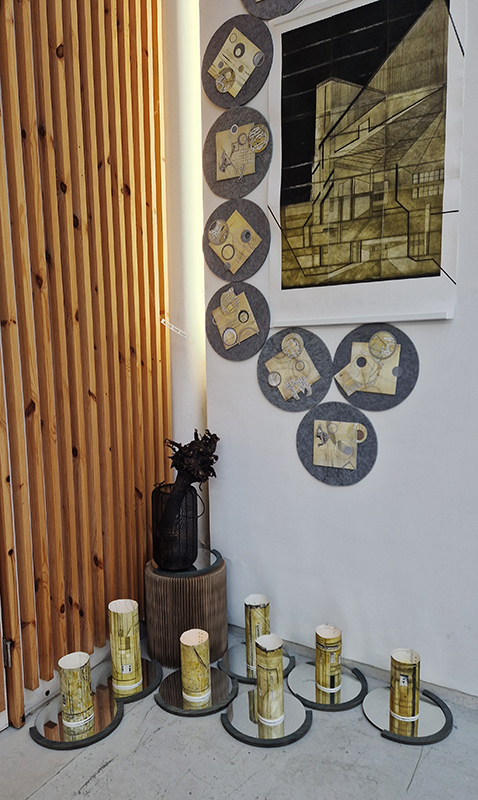
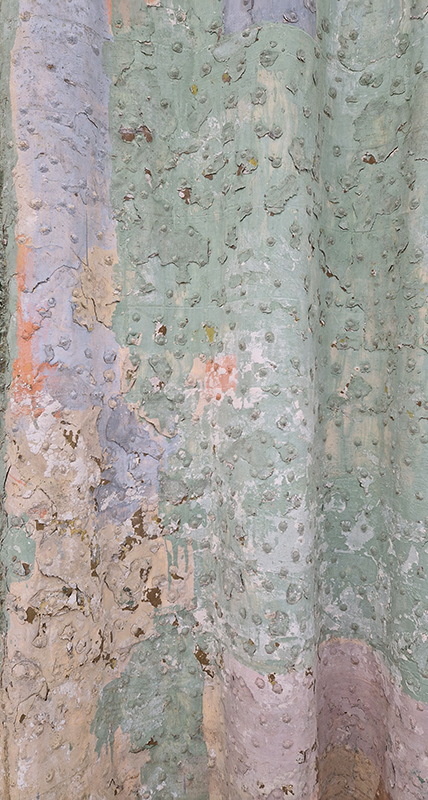
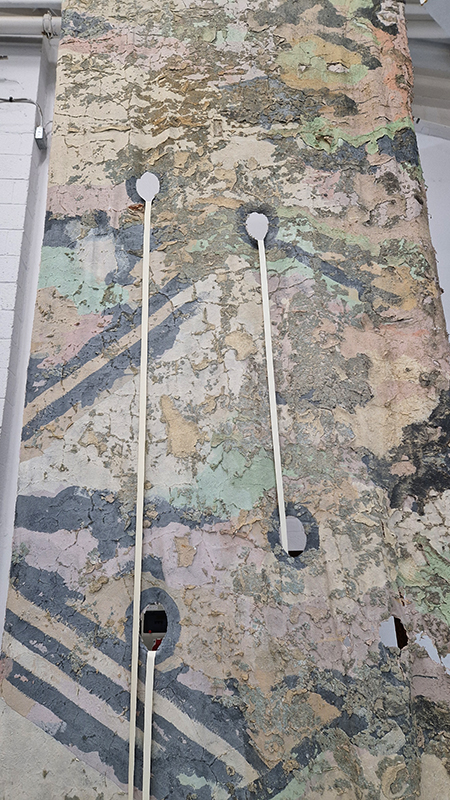
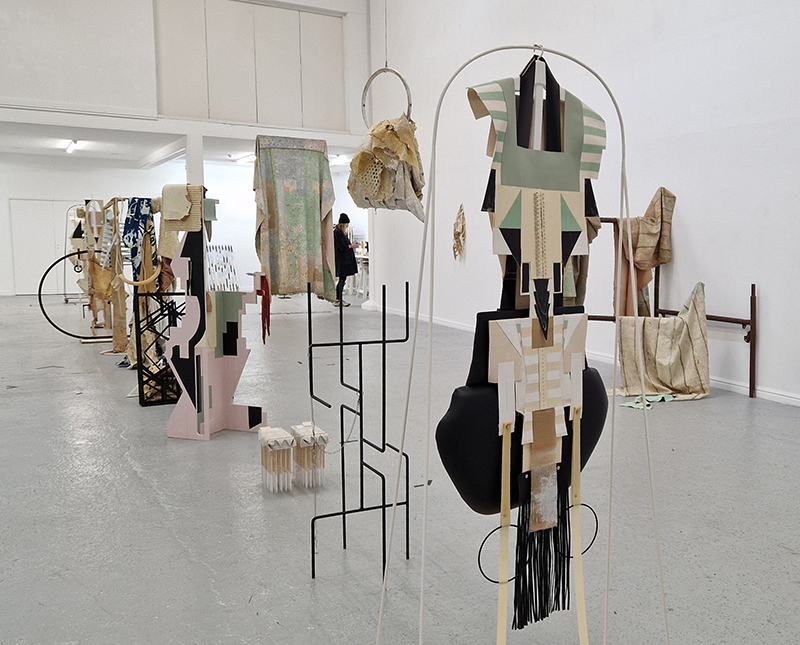
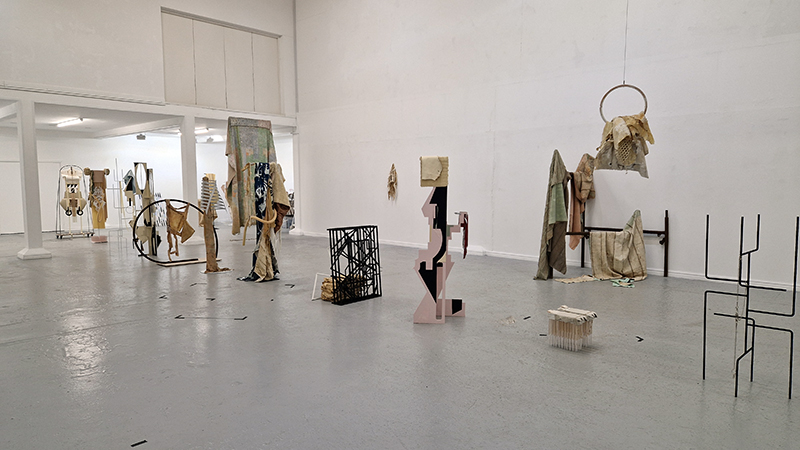
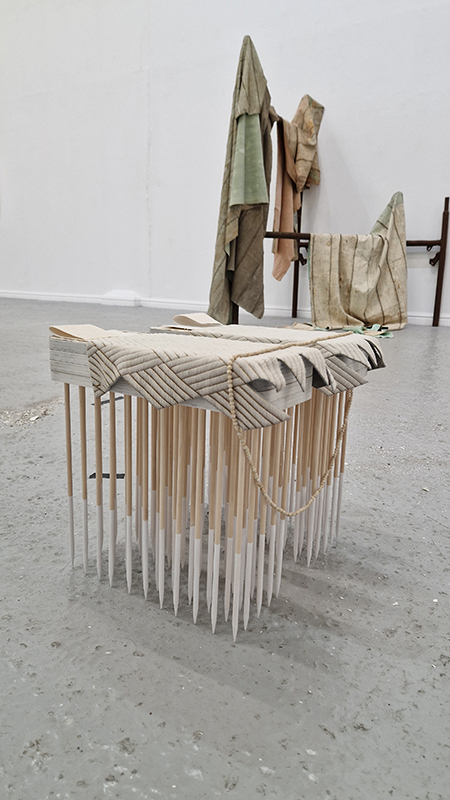
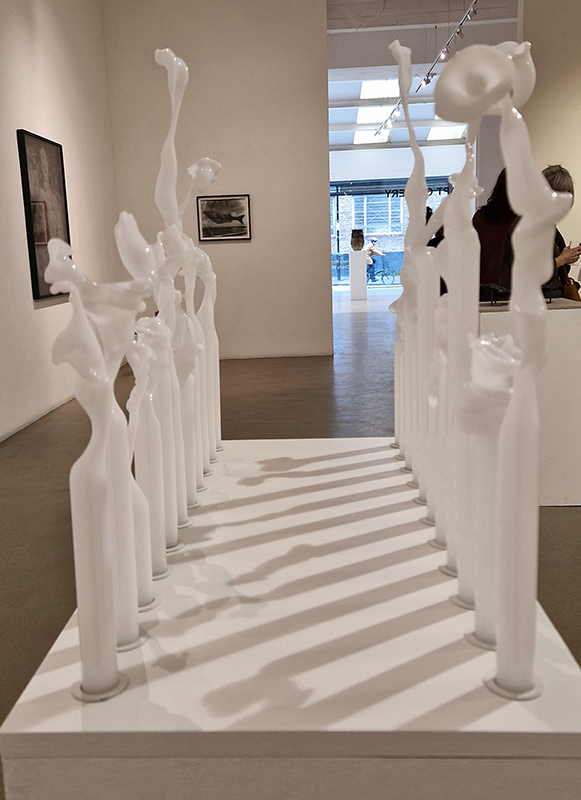
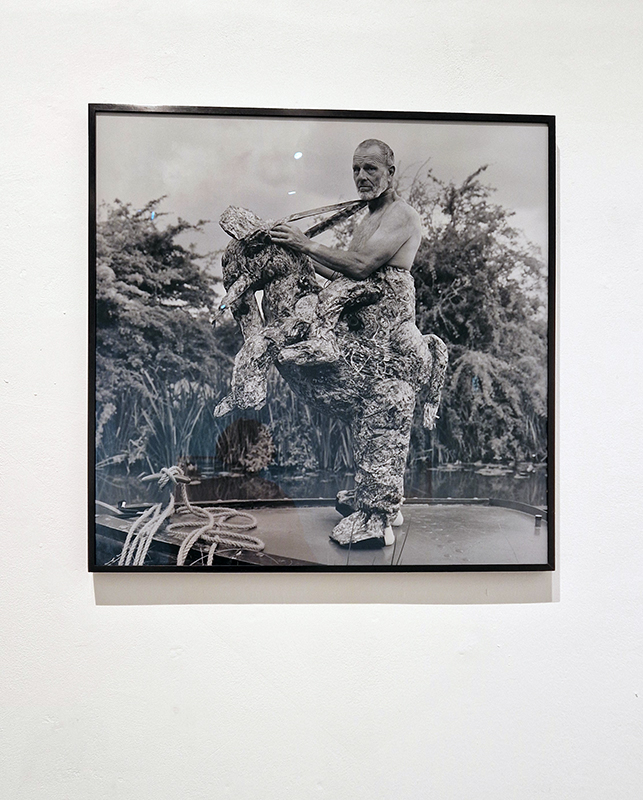
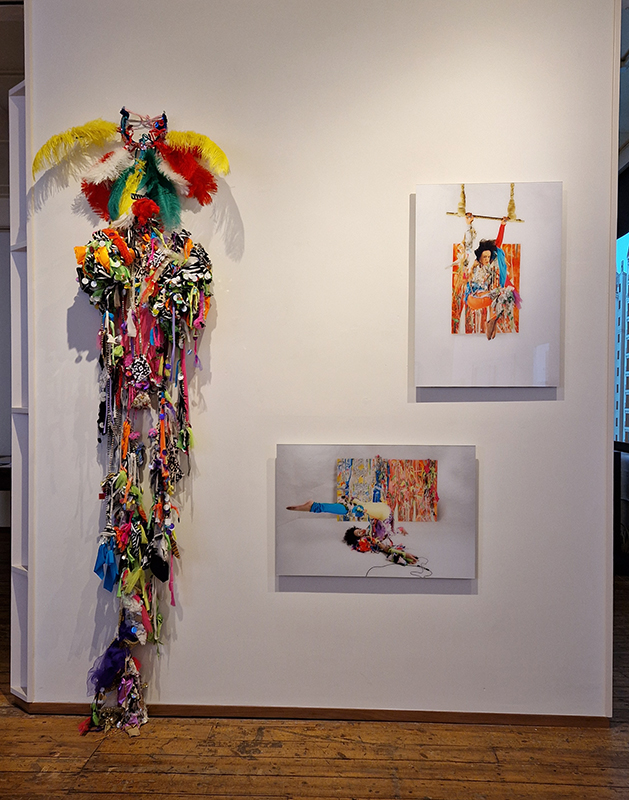
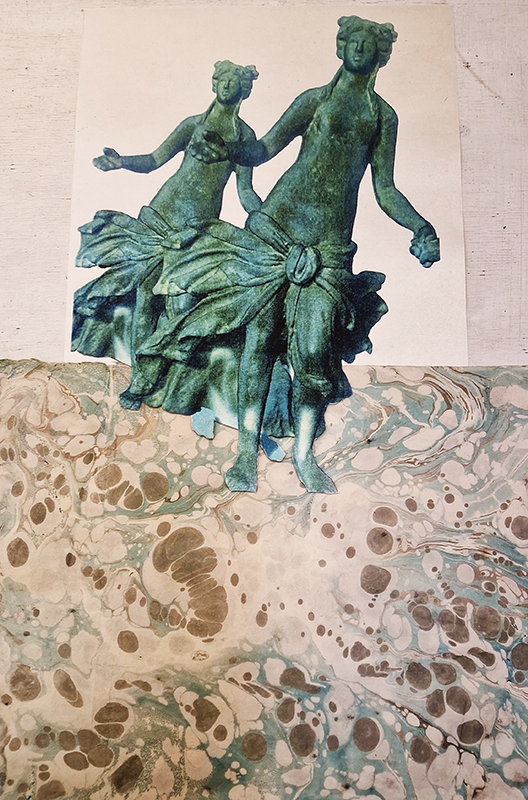
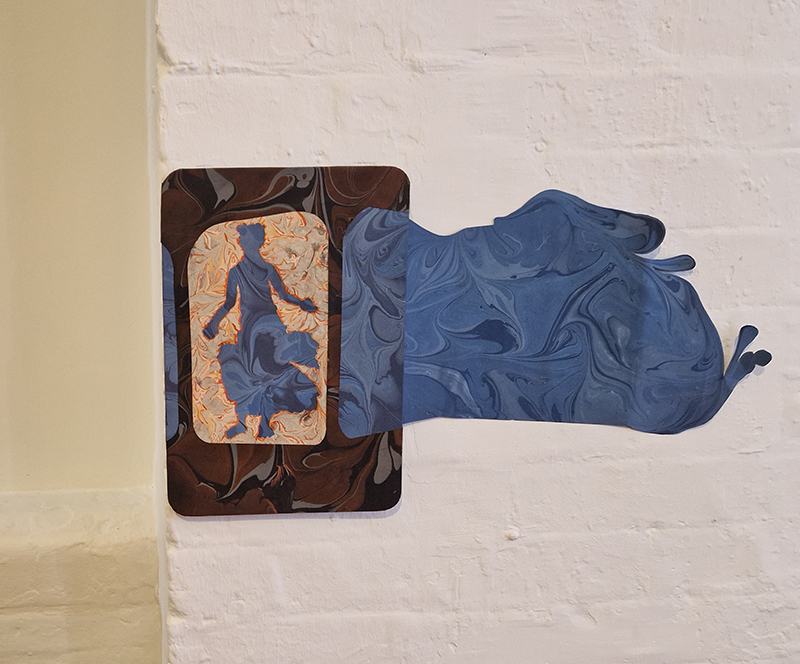
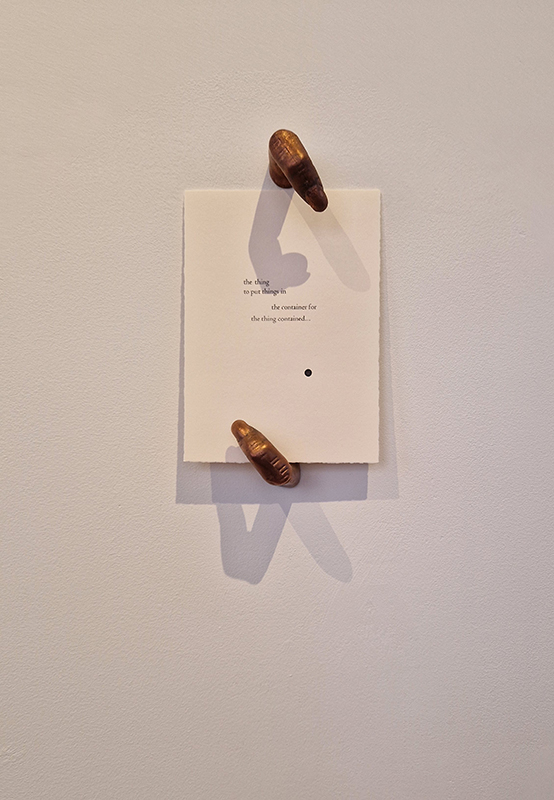
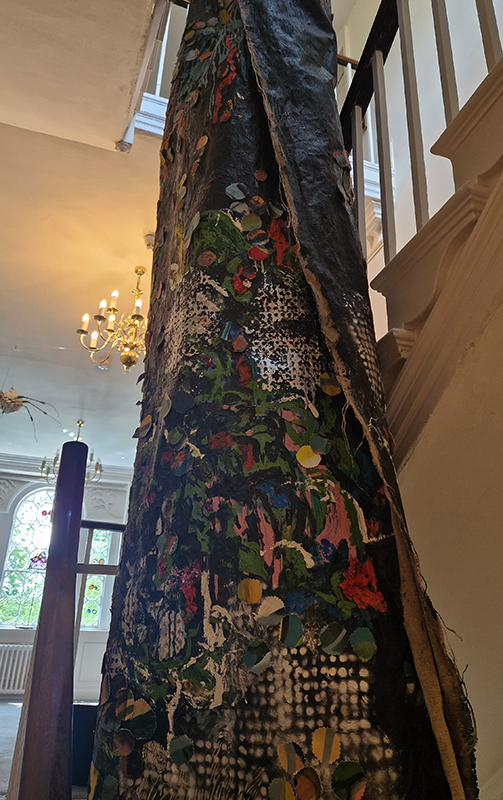
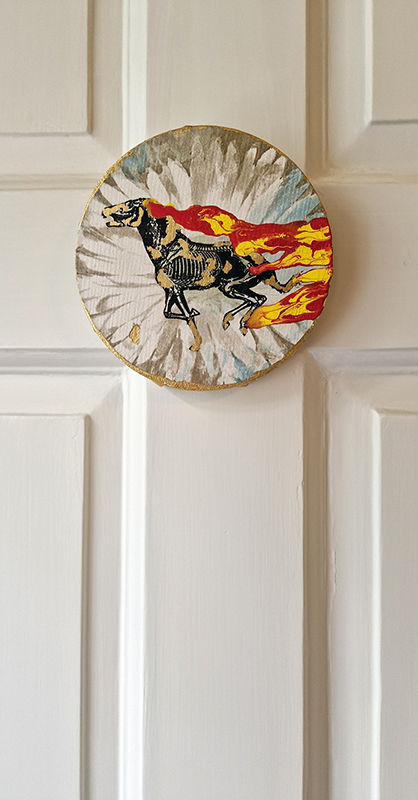
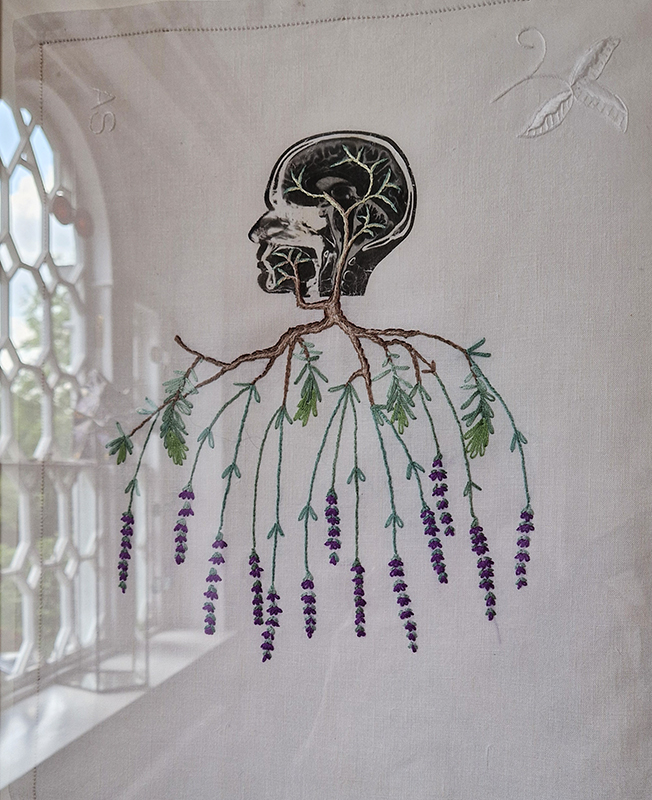
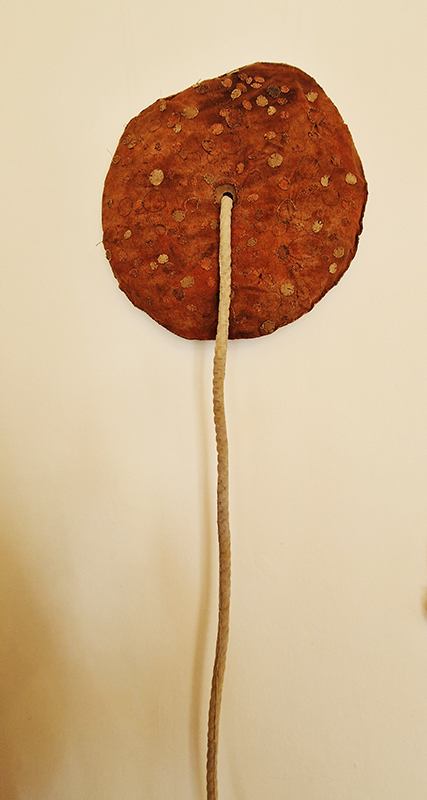
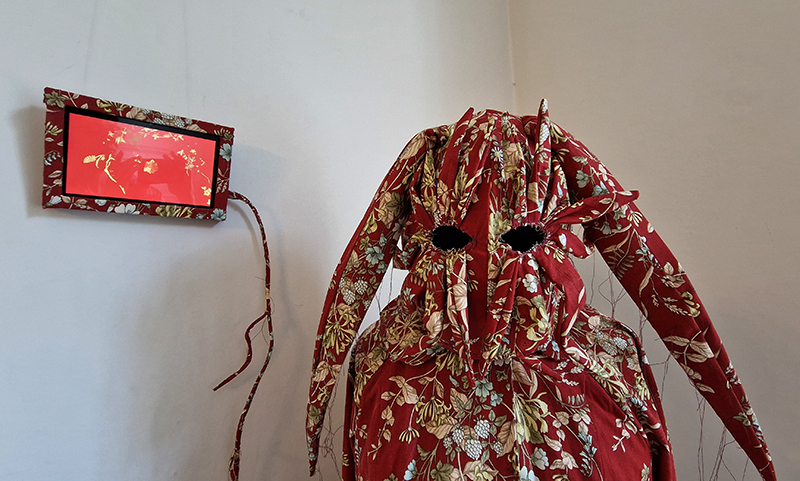
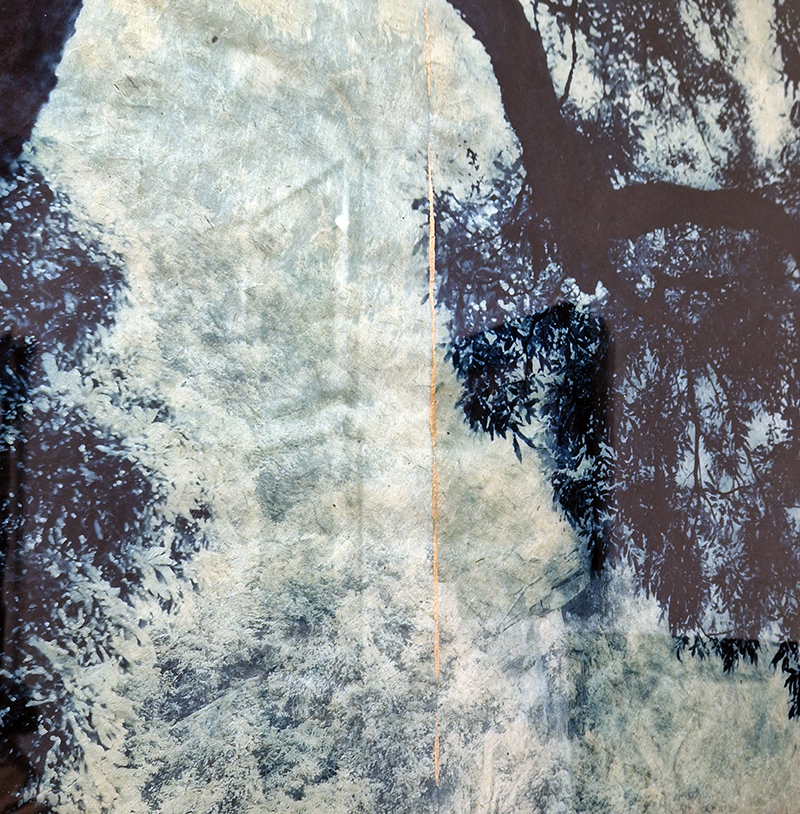
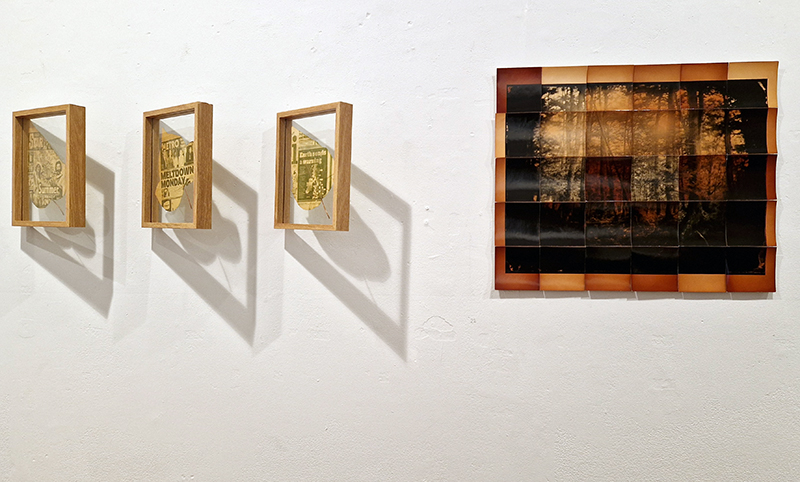
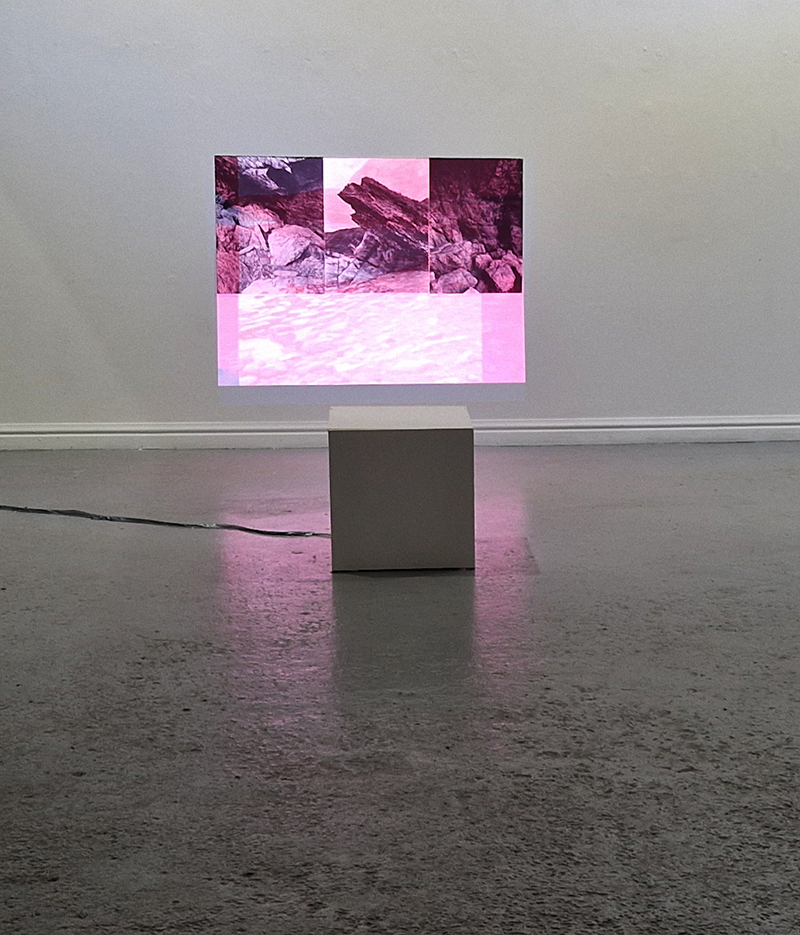
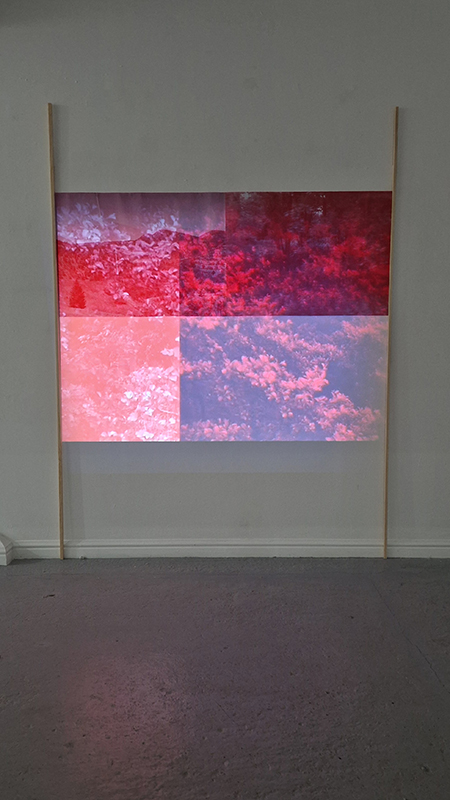
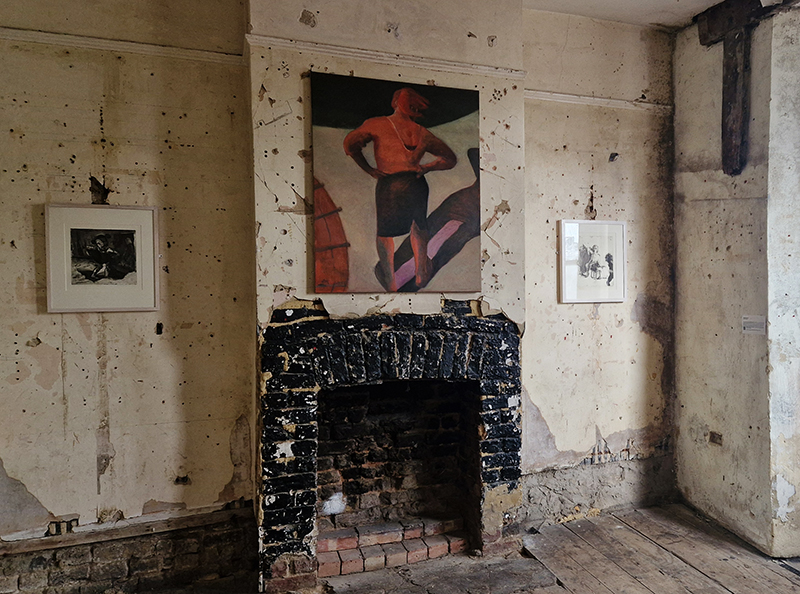
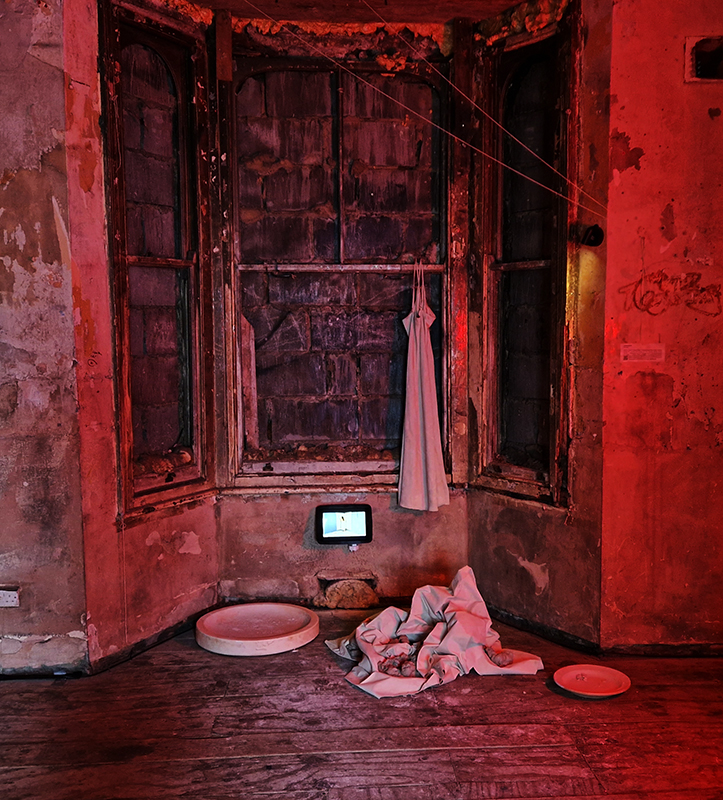
Works across the exhibition move between the intimate and the otherworldly, often unsettling the boundaries between body, space and perception. Included within a range of strange bodily presences are Susan Aldworth’s work Reassembling the Self. Internal, fragmented and reconfigured lithographs exploring how identity may be disrupted through trauma, illness, or simply the experience of being alive. As does Fungai Marima’s practice, using her own body as both subject and archive in performance. Repeated gestures of exposure and persistence draw attention to the private realities of anxiety and endurance. Charlie Betts’s practice is also rooted in movement and performance. Through drawing and action, she captures fleeting physical states that hold presence, absence and memory in tension. Mary Branson’s installation explores the fragile boundary between rest and exposure through vessel forms and the sound of breathing, evoking a vulnerable presence within places we assume are safe. This focus on vulnerability and embodiment resonates with Us and Them, a series of wet plate collodion portraits by Emma Brown in collaboration with Freewheelers Theatre & Media Company, a creative company of disabled artists and performers, reflecting on representation, visibility and shared humanity. In a shift of atmosphere, Marcelle Hanselaar transforms familiar interiors into psychologically charged scenes where bedrooms and domestic spaces become sites of unease, desire and dreamlike threat. Her figures appear exposed, restless and vulnerable, inhabiting worlds where intimacy and danger uneasily coexist. Beyond the body, the exhibition extends into the domestic, material and more-than-human worlds we inhabit. Janet Currier’s work turns to the objects and organisms we live alongside, where repetition, attachment and care become central. Rooted in the domestic and often autobiographical, her sculptural arrangements suggest that the things we tend to – fabrics, forms, fragments – hold memory and presence, quietly accumulating meaning over time. A similar sensitivity to material and instability is present in the work of Mandeep Dillon and Marielle Schram. Dillon’s ephemeral sculptures explore pressure, balance and the temporary nature of form, their fragile, inflatable structures responding to subtle environmental shifts and hovering between buoyancy and collapse. Schram’s small-scale sculptures and drawings translate emotional experience into tactile form, where diverse materials are handled with sensitivity and control, balancing strength and vulnerability. In both practices, making becomes a visible negotiation between material, form and feeling. Sue Baker Kenton and Ann Norfield consider how things are kept, categorised and carried through time. Baker Kenton’s installation of painted, box-like structures reflects on containment and hidden histories, while Norfield’s use of collected bones and print processes brings a quieter, more direct engagement with chance, hope and the precariousness of life. Together, they reflect on accumulation, fragility and the tenuous nature of what we hold on to. A more overtly uncanny register emerges in works that draw on folklore, memory and psychological space. Oona Grimes’s film and drawings draw on historical and cinematic references to create fragmented, misremembered scenes in which figures appear both comic and spectral. This sense of dislocation and re-framing is echoed in the work of Tom Sliwinski, whose drawings present a personal and immediate view of the world, where historic interiors and figures take on a ghostly presence. A different sense of time emerges in the work of Penny Green and Roya Pourzadi, whose figures and forms draw on myth, symbolism and cultural memory. Their works carry a feeling of something ancient yet still in motion, not fixed in the past, but moving through it. Pourzadi’s imagery draws on Persian histories and elemental forces, where water, vessels and symbolic figures suggest cycles of renewal, fragility and transformation. In contrast, Green constructs a world of masquerade, blending emblems and archetypes across time. Her Wild Women and reworked objects draw on mythological forest figures and medieval imagery, creating presences that feel both rooted in history and strangely alive within the present. Throughout the exhibition artists construct distinct visual worlds that shift between observation and imagination. Katherine Jones transforms familiar imagery through intense light and distortion, pushing it towards something simultaneously seductive and unsettling, beauty and unease seem to exist in tension. Helen Baines painting ‘Show Horse’ similarly draws on lived experience and symbolic imagery and questions the uncomfortable truth of how we bend animals to our will in the name of discipline, love or tradition. A suspended bird moves through a constructed interior that feels both familiar and uncertain in Karl Newman’s Melancholy Study holding a moment of stillness charged with anticipation. Rooted in a deep connection to the natural world, Temsuyanger Longkumer’s installation centres on the reconstruction of a tree, drawn from his printmaking practice. Re-situated within the interior of the house, the work introduces a presence that feels both elemental and enchanting. Oak, wormshells, shed snake skin, hedgehog spines, mouse bones are just a few of the organic and unsettling materials used in Tessa Farmer’s sculptural interventions. Her work introduces meticulously constructed miniature worlds, bringing a darkly intricate presence into the house. Imagined or parallel worlds shaped through narrative and invention is prevalent in Adam Green’s work. His painting shown here presents a system-like visual language of pattern, geometry and reptition, suggesting constructed environments that are at once playful but possibly unstable. Elsewhere, David Ferry’s photomontages reimagine landscape through layered and unexpected combinations, where deserts, oases and shifting terrains disrupt familiar visual language, creating a sense of both recognition and disorientation. Finally and beyond the interior, several works extend into speculative and cosmological realms. Susan Eyre’s video-sculptural installations imagine hybrid lifeforms at the intersection of the organic and inorganic, expanding the exhibition beyond the domestic into a wider consideration of time, scale and the unknown.

Together, the exhibition forms a temporary community of presences, installed in close proximity, the works begin to speak to one another in unexpected ways, forming subtle and unexpected relationships that create a charged and shifting environment in which the familiar is rendered persistently strange.
I am excited to be selected for the HIRESidency at Equivalentbehaviour founded by Katrina Stamatopoulos and Wojciech Kawczyk, who specialise in photographic scanning and digitising photographic film, prints and 3 dimensional mixed-media artwork.

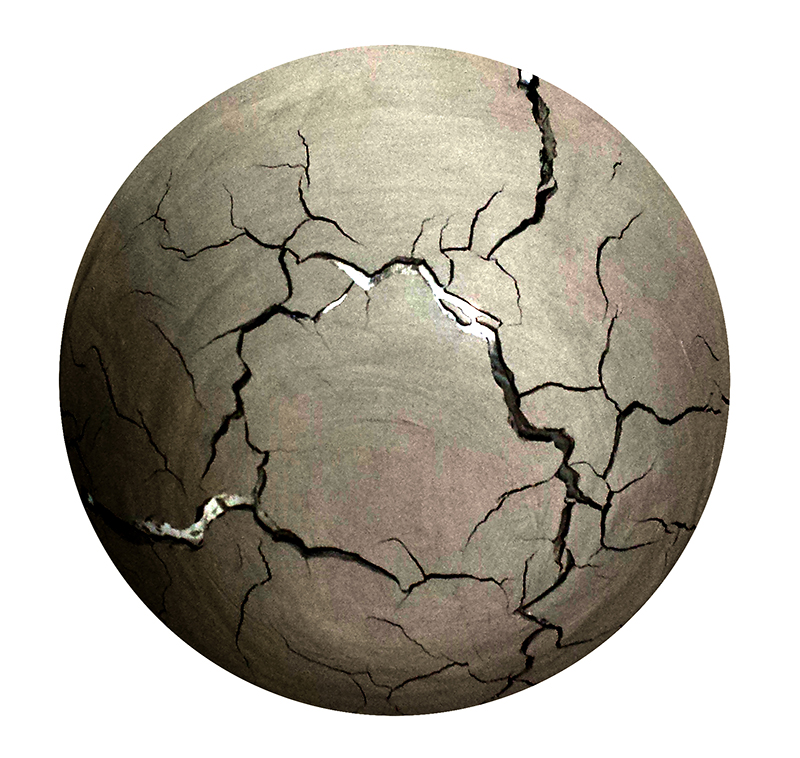
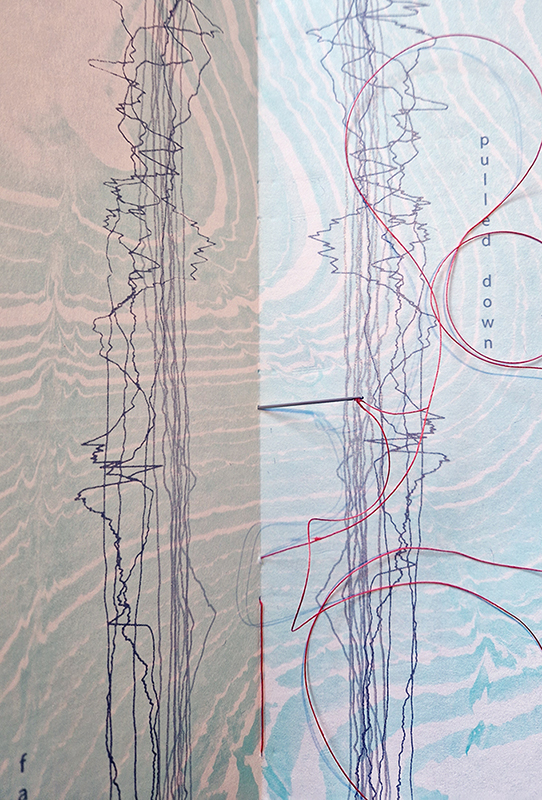
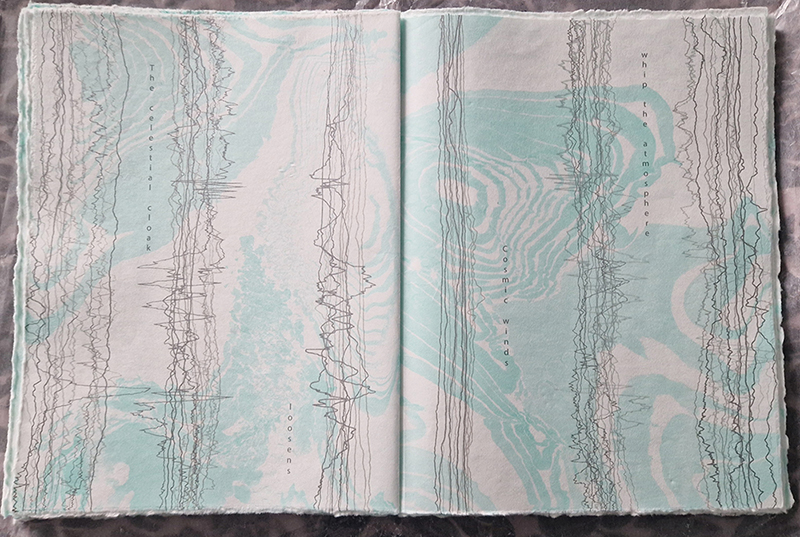
My proposal is to scan the Book of Reversals to make a digital work with narration. The physical work will be exhibited at Brompton Cemetery Chapel in the upcoming Appearances are a Glimpse of the Unseen. This book is a poetic interpretation of the formation of planet Earth and its turbulent internal fluid core that generates an unpredictable but protective magnetic field prone to sudden changes in polarity. Ocean floor magnetic stripes are a geological phenomenon consisting of alternating bands of differing magnetic polarity. Our planet is a complex and dynamic body where interactions occur ceaselessly between the inner core the outer core the mantle and the crust.
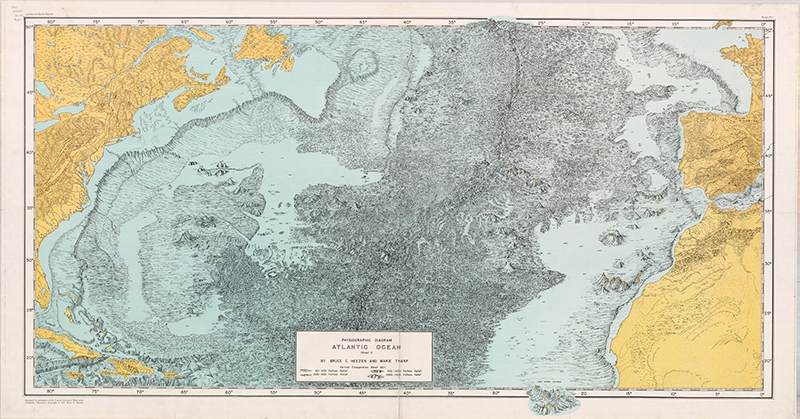
Marie Tharp was an American geologist and oceanographic cartographer. In the 1950s, she was instrumental in producing the first scientific map of the Atlantic Ocean floor revealing a detailed topography and multi-dimensional geographical landscape of the ocean bottom. She translated thousands of sonar readings from ships she was barred from boarding as a woman scientist. Mapping the Atlantic, she identified a continuous rift valley along the Mid-Atlantic Ridge: the first visual evidence of seafloor spreading, the mechanism behind plate tectonics and continental drift. When she showed the map to her colleague Bruce Heezen, he dismissed it as “girl talk.” The idea was still considered too radical, especially from a woman excluded from research vessels. But the evidence kept proving her right. As more surveys arrived and earthquake patterns matched her work, the scientific world accepted by the early 1960s, the planet is not fixed, but alive and in motion. In 1977 she co-published the first complete map of the world’s ocean floor, transforming geology, navigation, and our understanding of natural disasters. In 1997 the Library of Congress named her one of the 20th century’s greatest cartographers, and in 2023 National Geographic awarded her the Hubbard Medal. Thanks to Herstory_feminism for highlighting these amazing usually overlooked women who contributed so much.
It was great to meet the team at ArtEO in an online group meet and introduction to the collective initiative that aims to make satellite imagery and data sets available to artists.

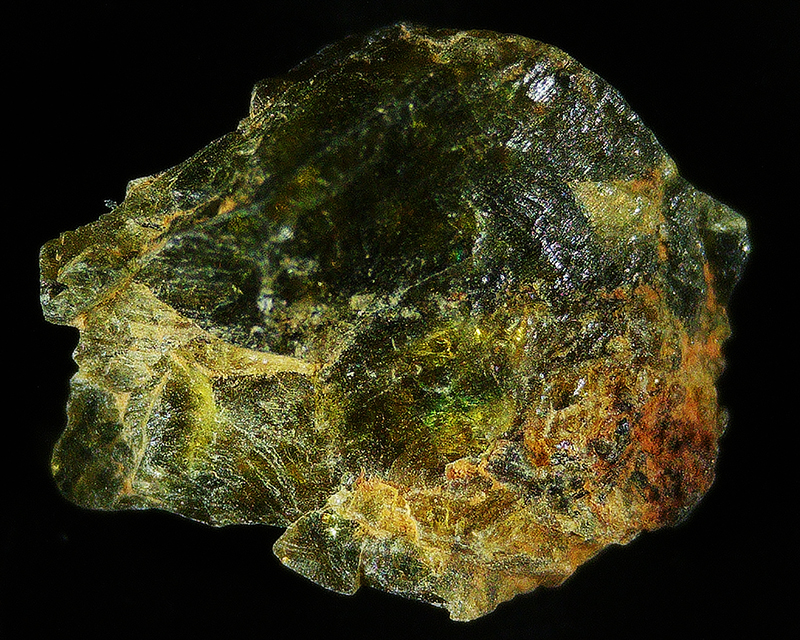
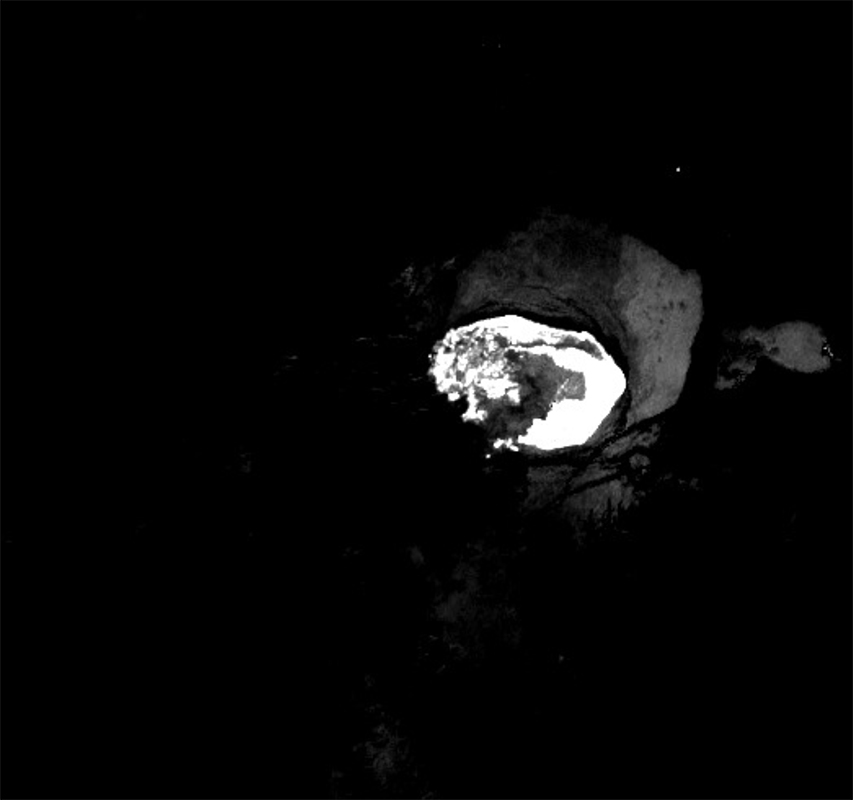
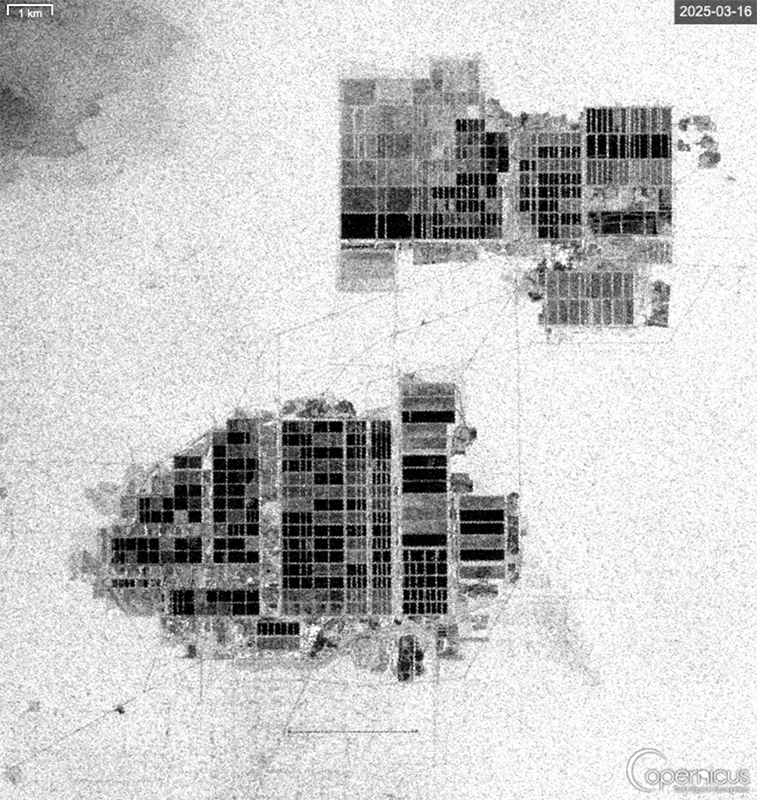
I am excited to have access to imagery that I would never be able to create for myself to feed into my work. I am interested to explore aspects of Earth’s magnetic field in relation to how it might be monitored using satellites, how it impacts the functionality of satellites and how satellites might themselves impact the magnetic field. While bringing so much data and valuable information for us to monitor the Earth and run its infrastructures and provide global communication the increasing number of satellites may put us at risk from over reliance on this technology in the face of an unpredictable force of nature. I hope to learn more about how satellites might help in predicting solar storms and what data sets are produced to model the interaction between high energy particles and the magnetosphere. I would also like to explore the relationship between satellite technology and natural phenomena and the balance between observing and disrupting. These images show an active volcano and a site of mineral extraction.
I have been busy with preparations for the upcoming Appearances are a Glimpse of the Unseen which will be in The Chapel at Brompton Cemetery curated by Catherine Li with the support of The Friends of Brompton Cemetery.

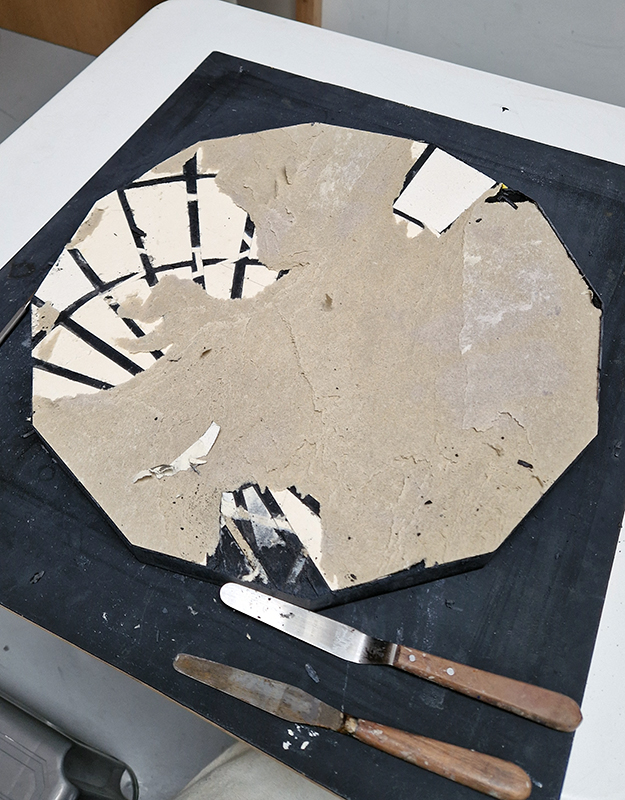
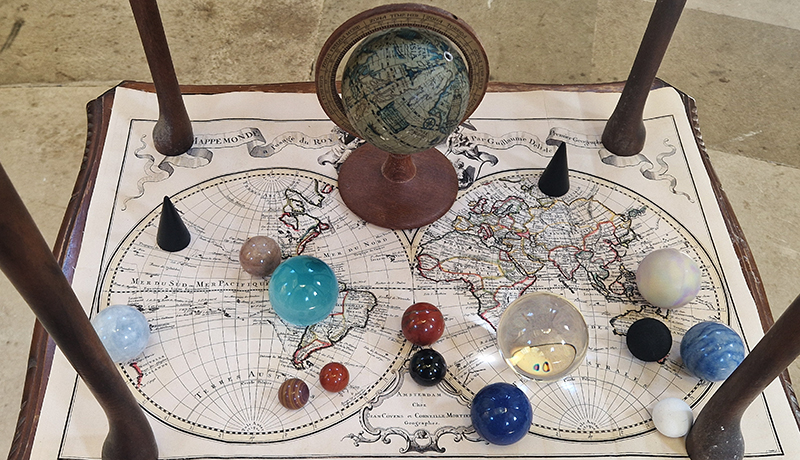
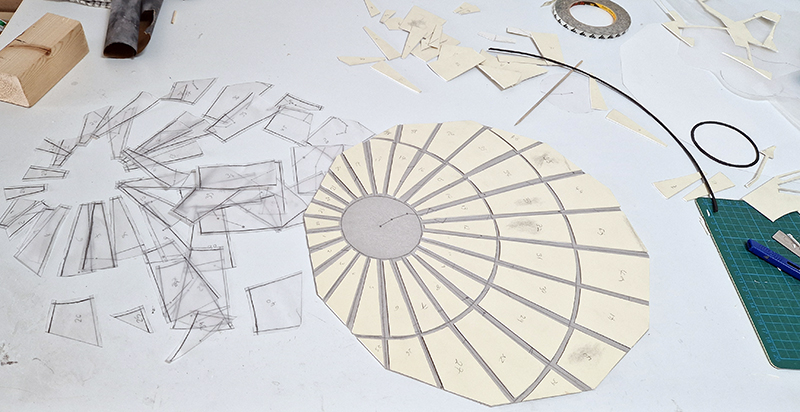
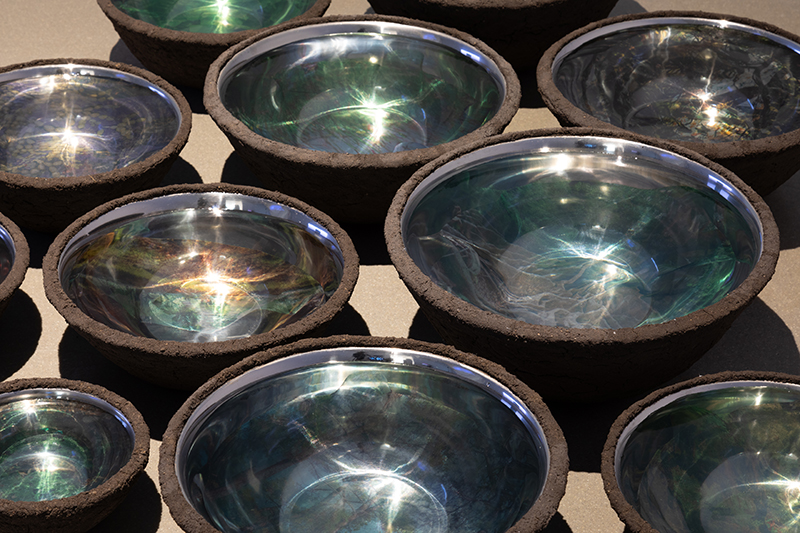
I am making a new sculpture in the series Instruments of the Anemoi set of dodecagon tablets cast in Snowcrete, a non-magnetic cement, as used in buildings at a magnetic observatory. Suggestive of the pedestals that support various instruments used in monitoring the Earths’ magnetic field they also respond to an ancient anemoscope “table of the winds” carved in marble around eighteen hundred years ago with the names of the classical winds, both in Greek and in Latin inscribed on each of its twelve sides.

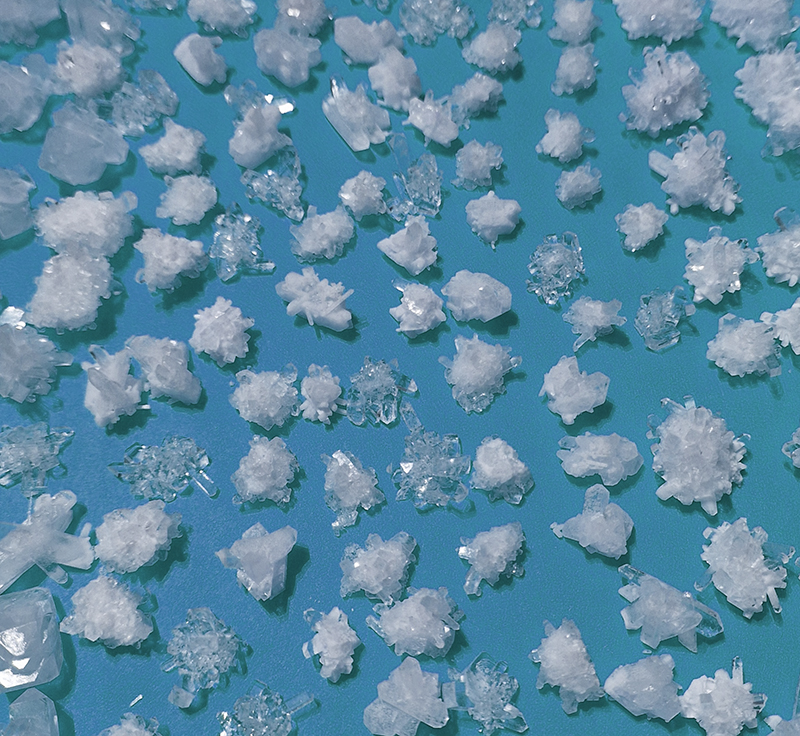
These sculptures are envisaged as speculative objects from past times, shown on repurposed theodolite or telescope tripods, reflecting on methods and tools of natural navigation such as magnetism, wind and stars. The new tablet will reference celestial navigation. Polaris has not always been the Pole Star as Earth’s axis of rotation wobbles over the course of about 26,000 years and many other stars take their turn at pointing to geographic North. I am centring Thuban in the constellation of Draco who took the position between two and four thousand years ago. I have been growing mono-ammonium phosphate crystals to use to outline the constellations whose lines are mapped by casting the concrete onto a collagraph set in a silicon mould. Once the concrete has set, it must be excavated from the cardboard collagraph by careful scraping and peeling away.
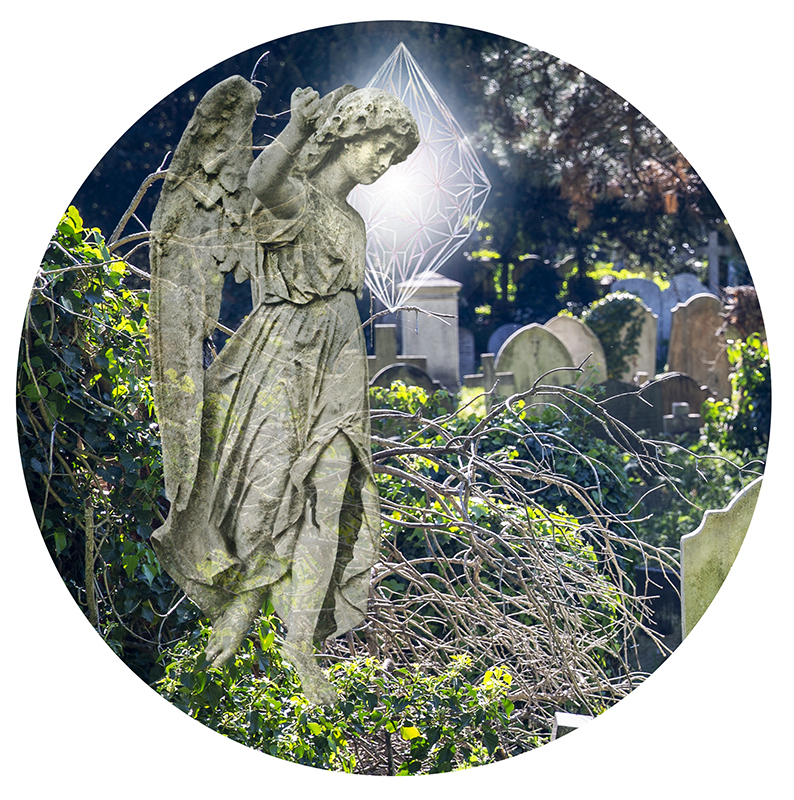
I have also been working on new images for submīrārī (earthbound), which feature the unique convergence of nature, history and serenity at Brompton Cemetery along with a myriad of angels that inhabit it. In looking for cultural and scientific explanations of angels I came across a book The Physics of Angels: Exploring the Realm Where Science and Spirit Meet, in which co-authors Rupert Sheldrake and Matthew Fox discuss parallels between quantum mechanics and early theories of angels, particularly Thomas Aquinas’ teaching that angels are immaterial bodies and creatures of light. The language used to describe the esoteric and the spirit world can often be substituted with the language of physics used to explain energy in its various manifestations.

The images I have been working on are to be printed with sublimation dyes onto organza. I was sad to discover that Promptside printers, who have been so generous to me in the past, in providing paper prints for me to heat press, are no longer operating. I am trying a new company Contrado.
Out of studio activities

Just squeaked in to see The London Group exhibition This That and The Other at The Handbag Factory on its final day.
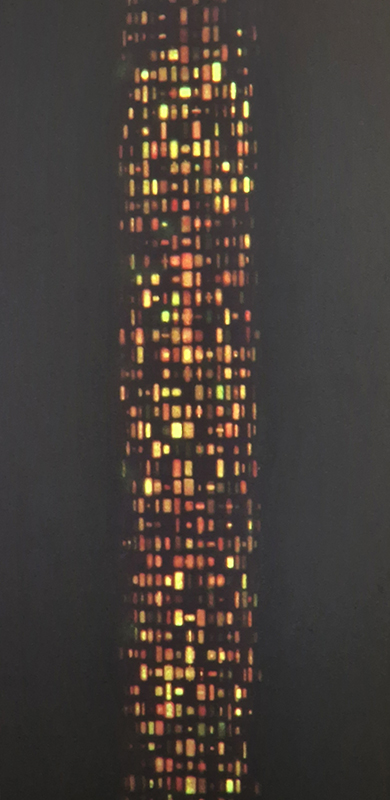
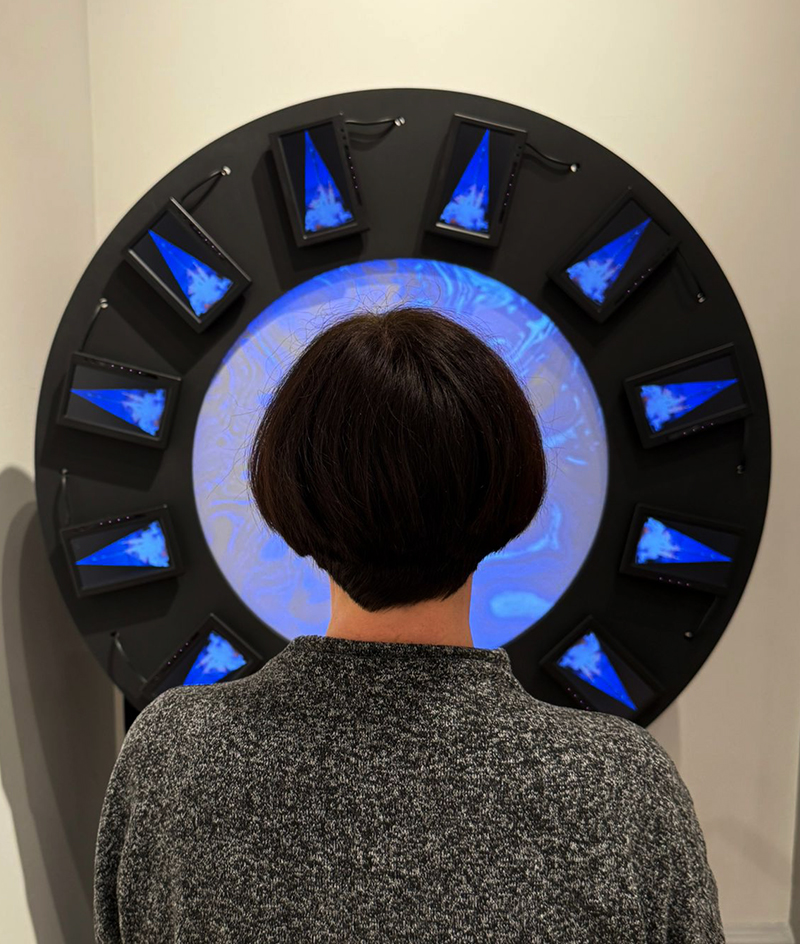
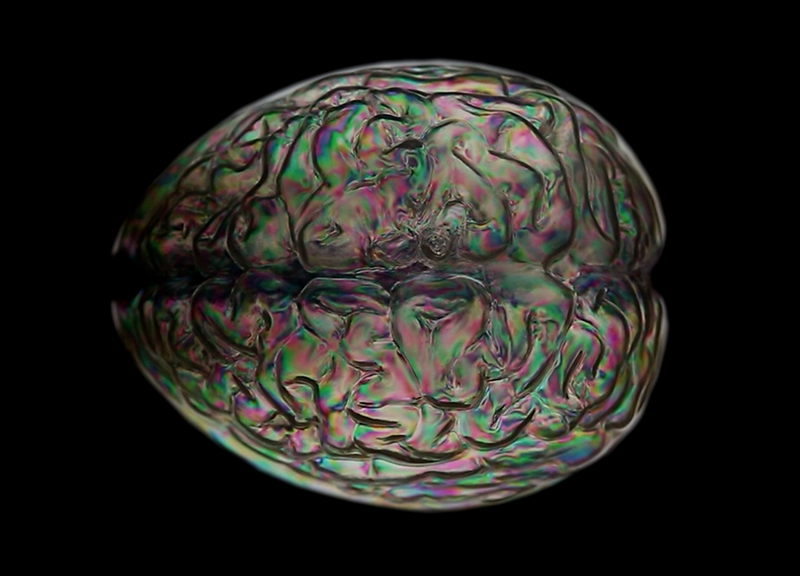
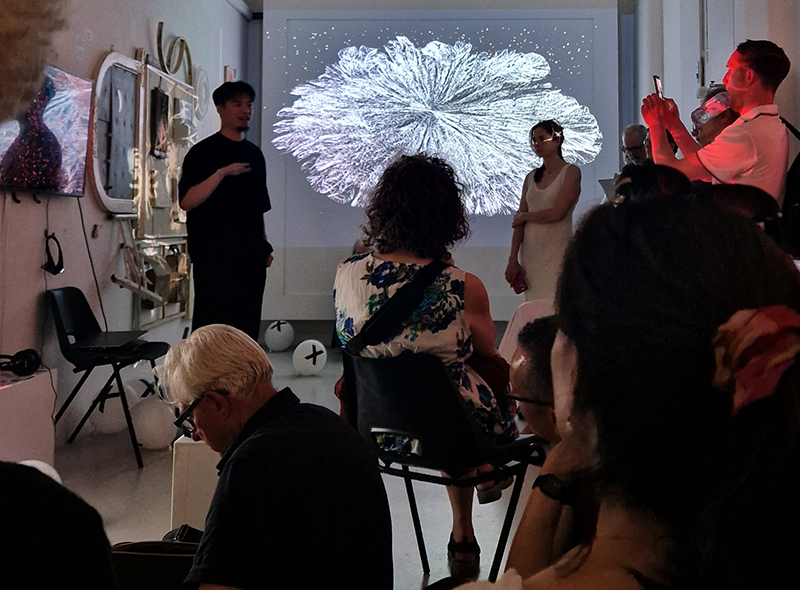
I managed to catch a couple of the talks ‘In the dark’ room and was intrigued by the work of Ash Xu which responded to the brainwaves of visitors wearing a headpiece attached to a screen monitor. The ‘Cosmic in the Brain’ series is an experimental artistic practice that merges neuroscience technologies with generative art, aiming to translate the abstract processes of human thought into the creation, evolution, and integration of stars within a virtual cosmos via Brain-Computer Interface (BCI) technology. The work is a collaboration between the artist and the audience. Through intuitive interaction, individual ideas are translated into a shared digital cosmos, allowing each participant’s inner world to contribute to the collective constellation. This process turns private thought into a visible, living landscape, one that unfolds in real time and belongs equally to everyone present.
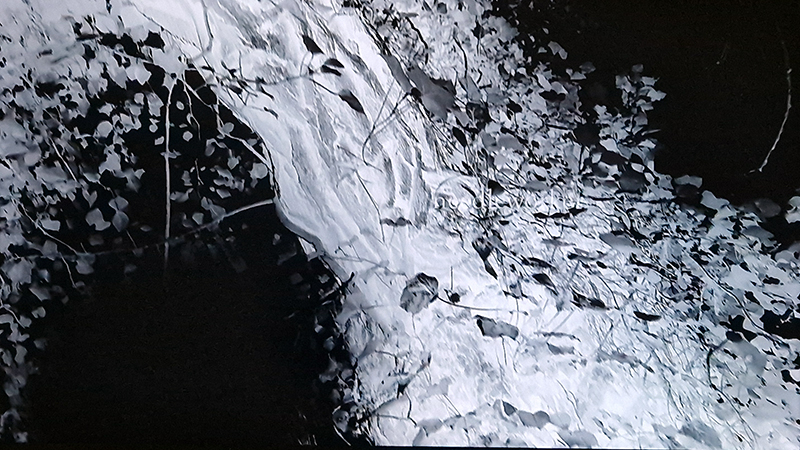
I also was drawn to the video work by Eric Fong – A haunting journey through Horton Cemetery in Epsom, where thousands of pauper patients, mostly women, from five nearby mental asylums were buried. It is now an abandoned, derelict and overgrown site, where all grave markers have been removed, except one. The footage is overlaid with words drawn from the medical case notes of those buried there.
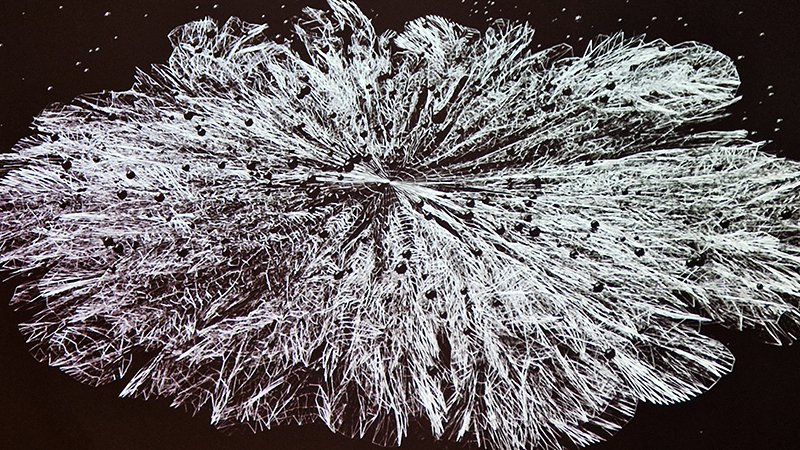
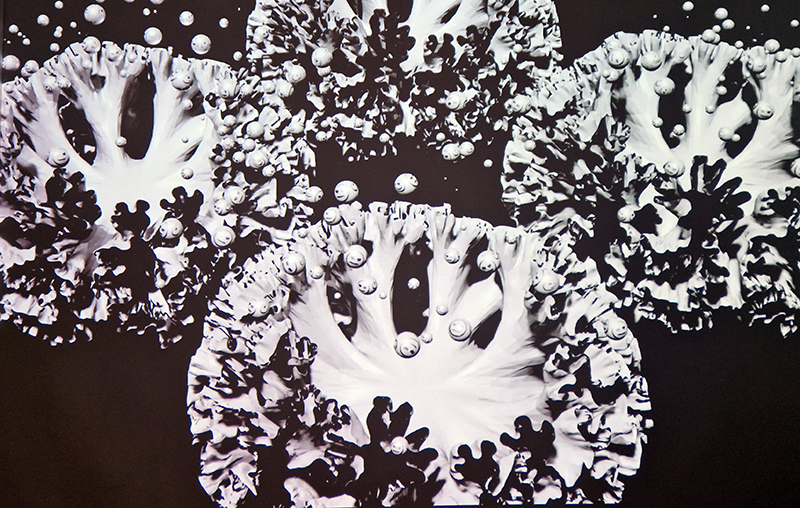
Mesmerising work by Sandra Crisp – ‘Dark Particles [slow_data]’ explores hybrid forms emerging where biological process and computational culture collide. Particle systems and differential growth generate organic structures whose surfaces are mapped with emoji and climate infographics — the residue of our information-saturated present absorbed into coral-like, cellular forms. Particles fall, accumulate, stick and die. Forms grow, darken and sediment. Rendered in monochrome on everyday hardware, the work embraces slowness. Like fossils, these forms carry traces of their moment — compressed into something unreadable, elusive and dark.
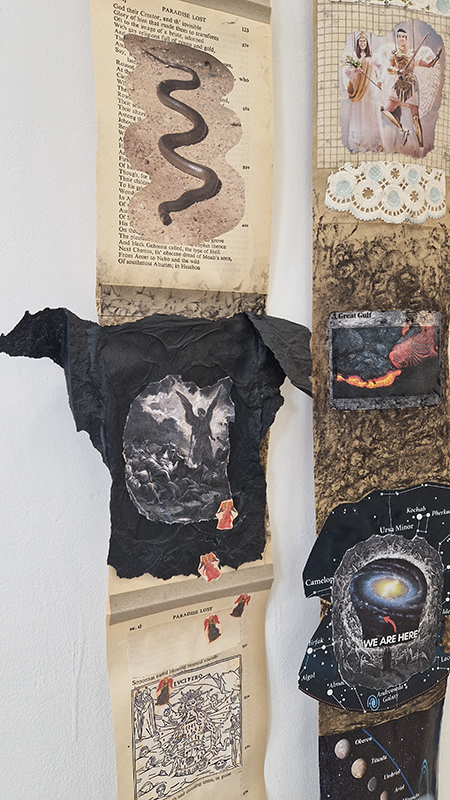
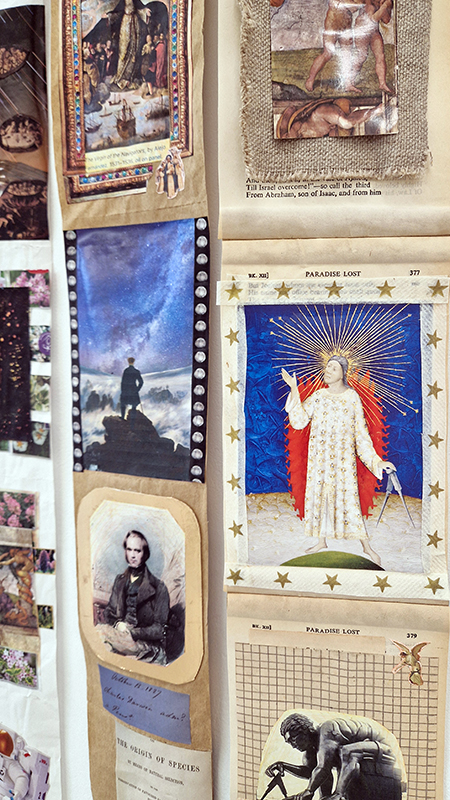
David Redfern On the 12th September 1768 Captain James Cook put in to the island of Madeira to resupply his ship ‘Endeavour’ at the beginning of his epic voyage around the world. Also on board ‘Endeavour’ was a private party of scientists, artists and the amateur botanist Joseph Banks. Banks discovered 25 new plant species on Madeira and needed to preserve the specimens he gathered. He pressed them in a book, a copy of a criticism of Milton’s ‘Paradise Lost’, written by Joseph Addison. The mythical Garden of Eden pressed up against scientific specimens contributing to the burgeoning science of botany. Paradise Lost Book leaves, gathered images 200 x 180cm. This work captured my attention as I am interested in ‘paradise’ and have been looking at angels in Brompton Cemetery at the moment and recently listened to two podcasts where angels feature – Cautionary Tales Podcast on John Dee and the Bureau of Lost Culture Podcast EVP – voices from the other side
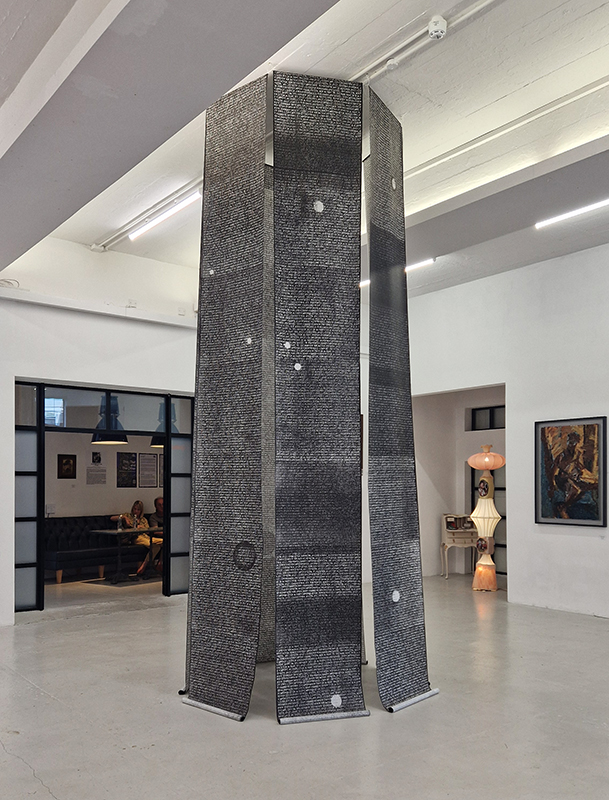
Imposing installation with amazing attention to detail from Carol Wyss 7 PILLARS OF WISDOM deconstructs the very concrete order of bones into lines of information — a basis of a new writing to chronicle human interaction. The title of the installation refers to a biblical proverb which outlines a range of moral duties. T. E. Lawrence wrote an autobiography of that same title, likely inspired by Ruskin’s 7 Lamps of Architecture book which Lawrence had previously read. The installation consists of seven large unframed scrolls. Each scroll combines intaglio and relief printmaking techniques on thin Japanese paper.
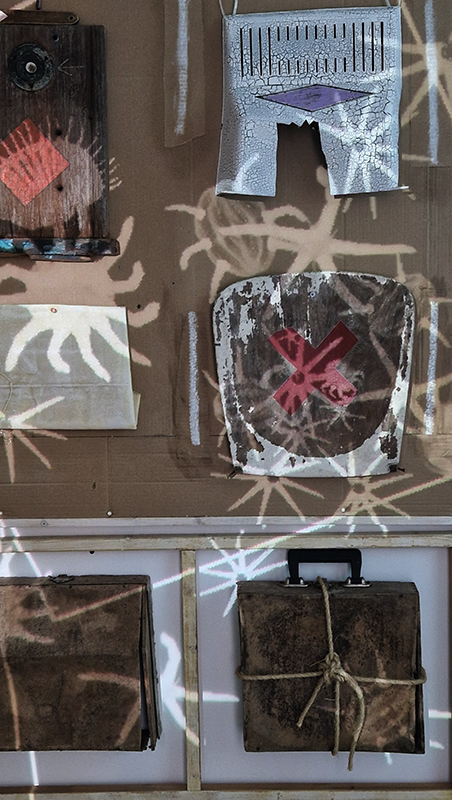
Qi Baiting House of Day, House of Night at The Chapel, Brompton Cemetery curated by Catherine Li brings together a ‘constellation’ of sculptures inspired by the circulation of objects via numerous flea markets. Drawing from Olga Tokarczuk’s image of living in two homes at once, one fixed in time and space and one infinite, these objects appear on interstellar journeys in which they hold together the material and the immeasurable: the located and the unplaced, the lived and the imagined. The objects remain tied to their historical time, imbued with traces lived experience, while their decontextualization allows other meanings to surface, as though they too were inhabiting more than one home at once. She also alludes to Ursula K. Le Guin’s The Carrier Bag Theory of Fiction: Sometimes the world is nothing more than things placed quietly together.
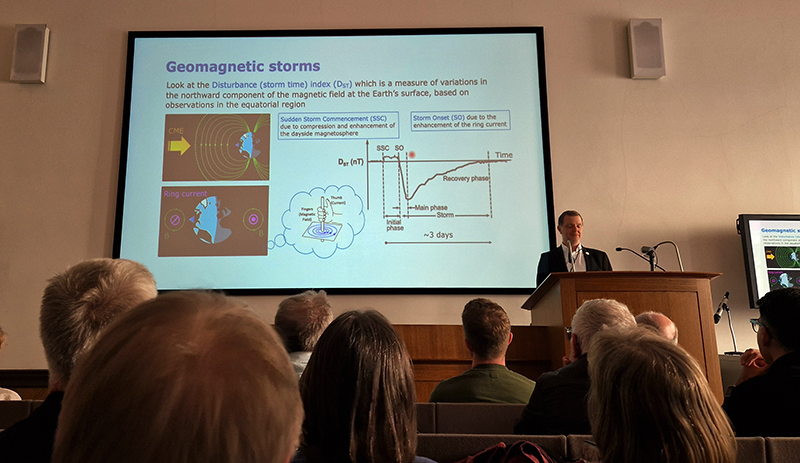
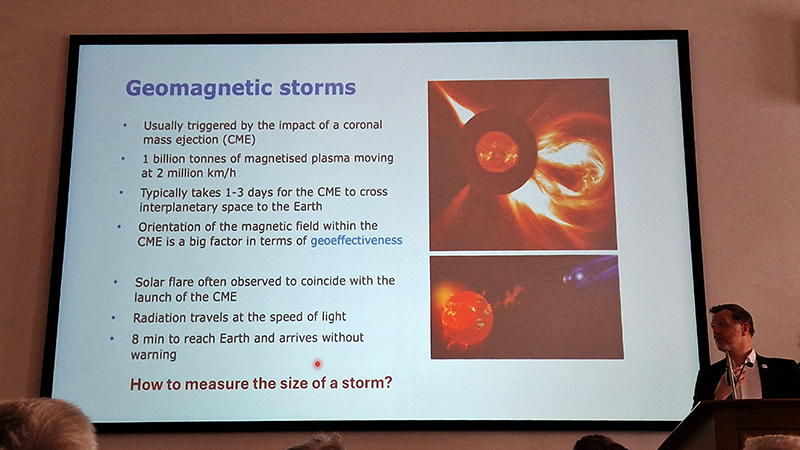
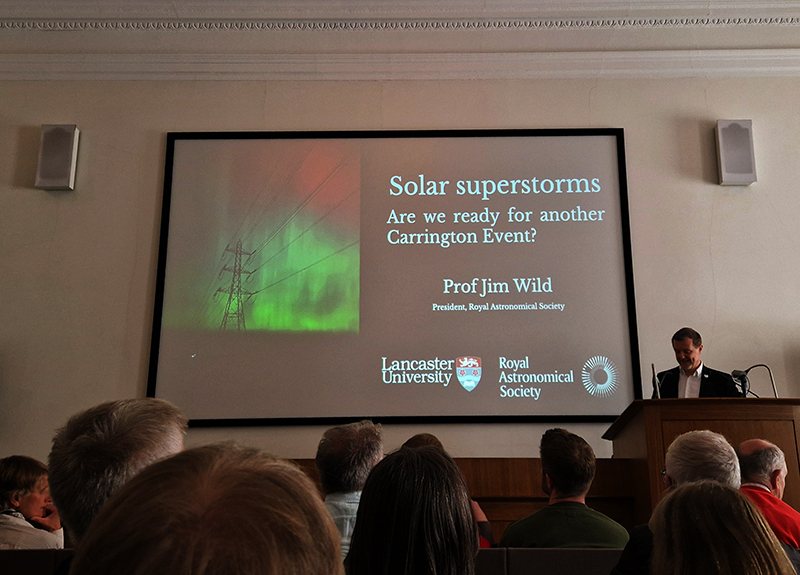
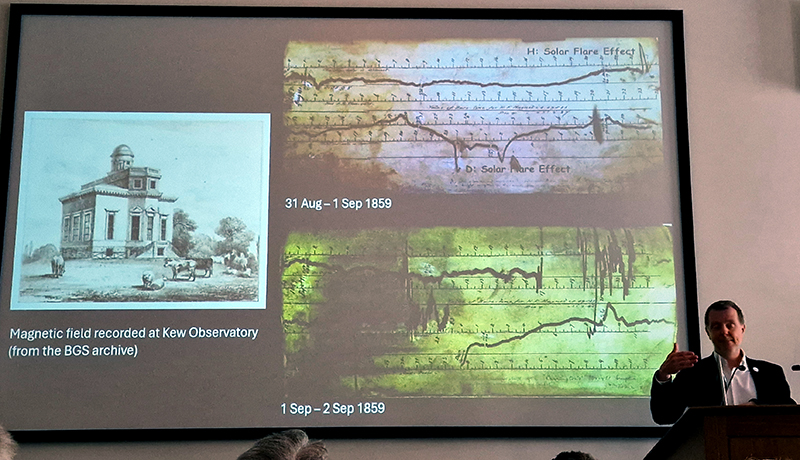
Royal Astronomical Society talk Solar superstorms: Are we ready for another Carrington Event? by Jim Wild, Professor of Space Physics within the Physics Department at Lancaster University and President-Elect of the Royal Astronomical Society.

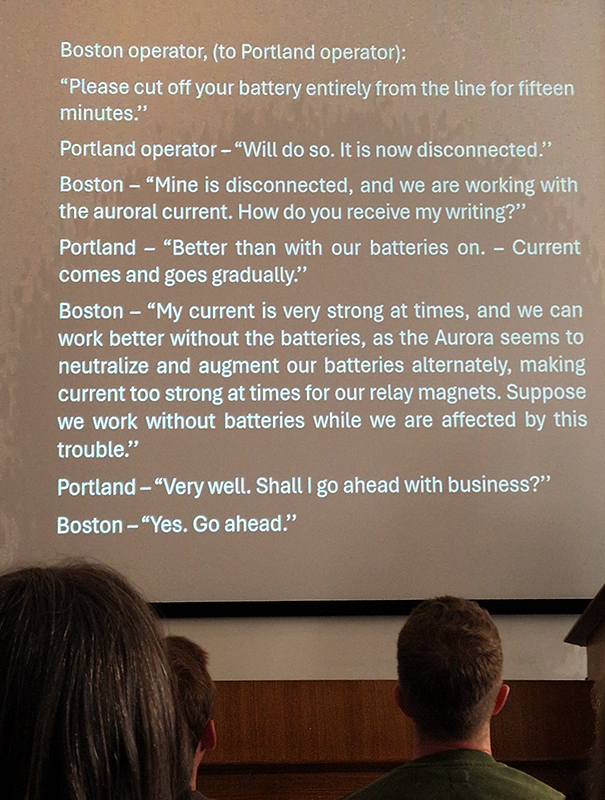
In September 1859, the English astronomer Richard Carrington made the first recorded observations of a solar flare. Unknown to Carrington, the flare coincided with a fast-moving coronal mass ejection that struck the Earth’s less than twenty four hours later, triggering the most powerful geomagnetic storm of the modern age. The storm, now known as “the Carrington event”, sparked auroral displays visible as far south as the Caribbean and disrupted operations of the global telegraph network. But this powerful space weather event pre-dated most of the technologies that we depend upon today, such as power grids, satellites, and wireless communications. How vulnerable are we? Are we prepared for the next Carrington event? In this talk, Prof Jim Wild considers the resilience of the modern world to extreme space weather.

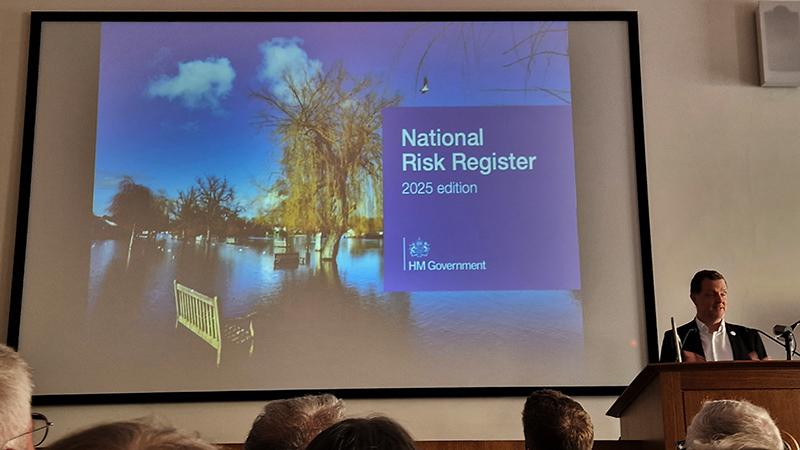
The UK National Risk Register sees space weather as significant risk. The term ‘space weather’ describes a series of phenomena originating from the sun, which include solar flares, solar energetic particles and coronal mass ejections. Day-to-day space weather causes little more than the Aurora Borealis in polar regions, but strong space weather events can bring disruption to many vital technologies. Orbiting satellites are particularly vulnerable to space weather effects, and can be damaged or temporarily disabled. Impacts may include regional power disruptions, loss or disruption of Global Navigation Satellite Systems (for example Global Positioning System (GPS)) and some telecommunications (for example satellite communications and high frequency radio), disruption to aviation, an increase in background radiation doses at high altitudes and in space, and possible disruption to ground-based digital components. The catalogue of tracked objects in orbit would be significantly impacted, raising the risk of on-orbit collisions. There may also be second order impacts such as fatalities and casualties (for example, in the event of power disruptions).
Peckham 24 The Eras Edition at Copeland Gallery exploring photography through the lens of time. ‘Time is a paradox; it is intangible, but its traces are omnipresent; it is an illusion, yet it’s governing our lives; it facilitates growth, while inducing decay. The projects exhibited at this year’s Peckham 24 explore these multifaceted aspects of time; they address the issues of our time, interrogate ecological transformation and its long-term implications, capture varying life stages and nostalgic formations, and explore the lingering of the past in the present.’

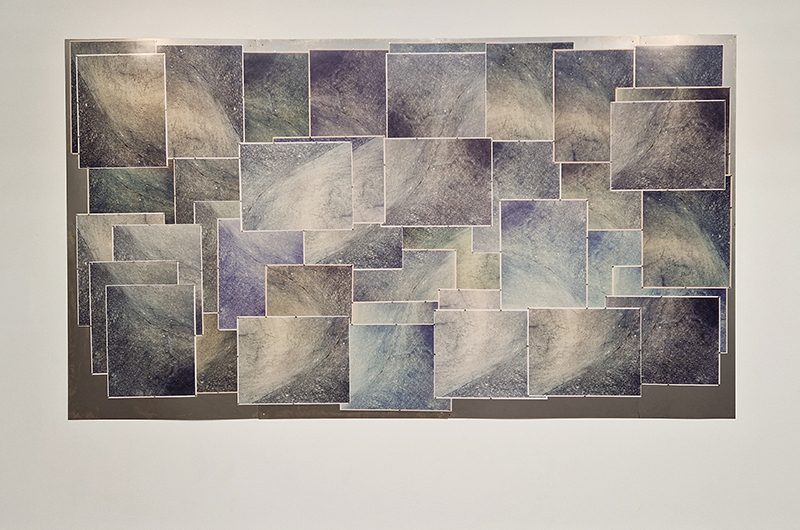
ROM a large-scale multi-image work by Eugenie Shinkle at first glance looks galactic but is in fact a series of photographs of the material surface of a decaying skatepark. The work reconstructs an experience of space, disorienting, immersive, and at times euphoric. Time is encountered here not as sequence or narrative, but as something embedded in matter and enacted through movement. Built in 1978, the Rom skatepark in Hornchurch, Essex was the first of its kind in the UK. No longer in regular use, the concrete structure is slowly decaying – cracking and delaminating, a consequence of decades of weathering, and of the wear and tear inflicted by the passage of thousands of wheels. Though they’re only a few decades old, the forms have a strangely primordial quality, the concrete stained and colonized by lichen, as if the recent past were already slipping into something more geological.
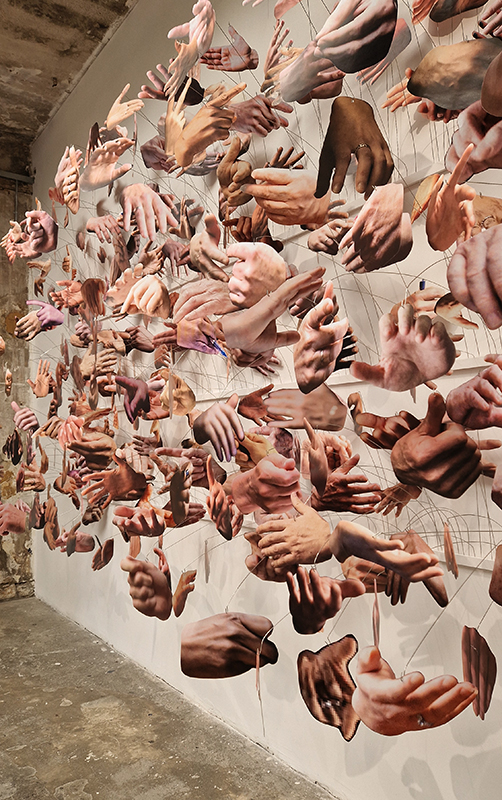
A Parliament of Empty Gestures by Mark Duffy is made from appropriated photographs produced and distributed by the House of Commons over the past two years. It is a comment on the performative and confrontational nature of political debate, the repetition of prescribed political gestures, and the constantly shifting blame game that is modern politics.
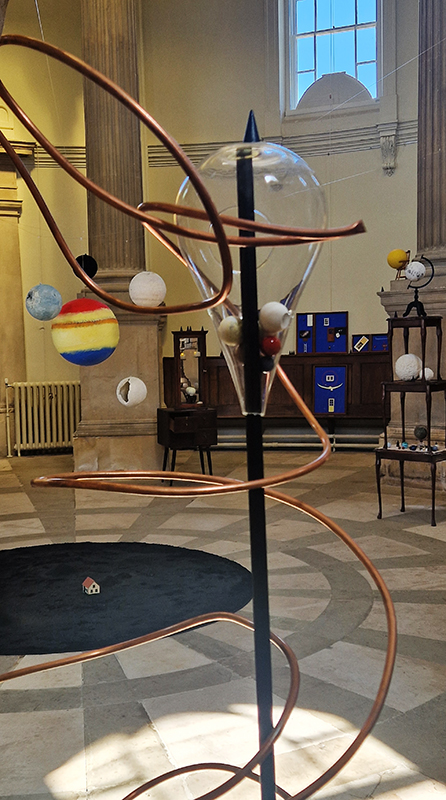
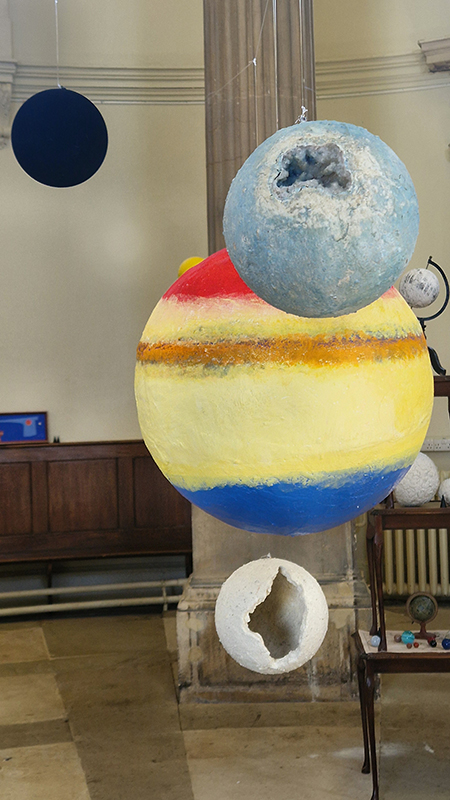
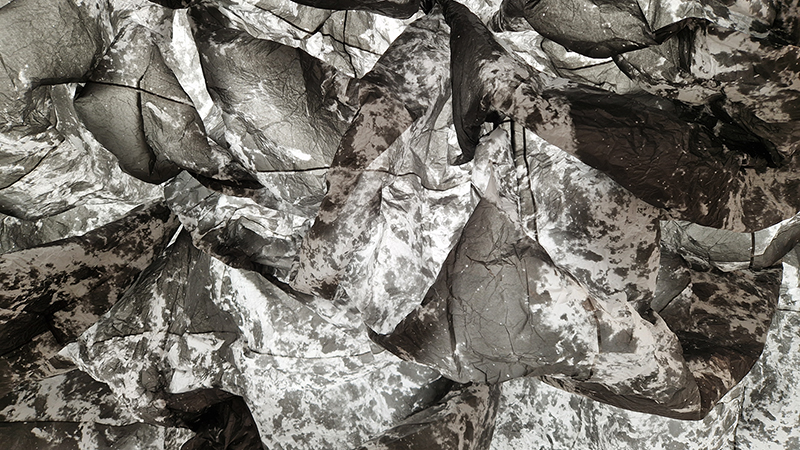
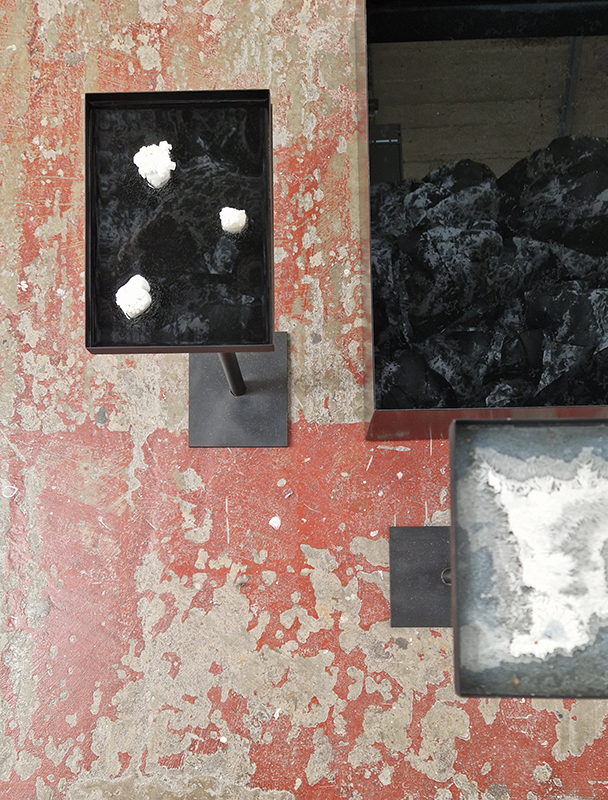
A fabulous iteration of Julie F Hill’s installation Cave and Chasms series where RAW data from space telescopes, such as Hubble and the James Webb is processed, sculpted, crystallized and mineralised drawing on the cosmic and terrestrial to offer an experience of intimate immensity.
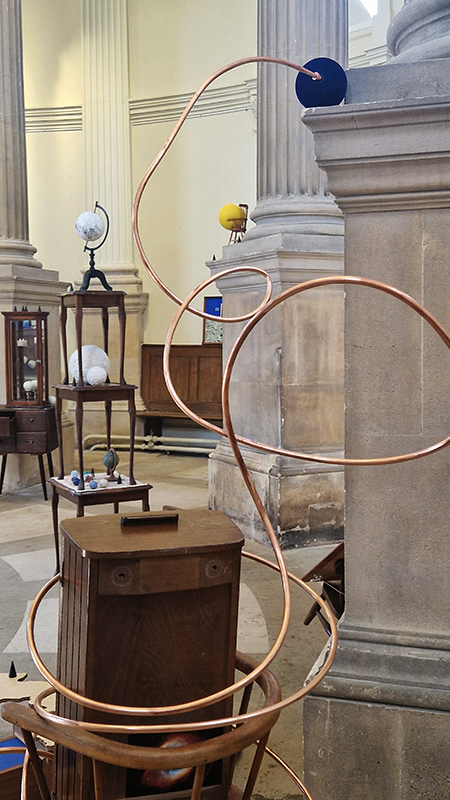
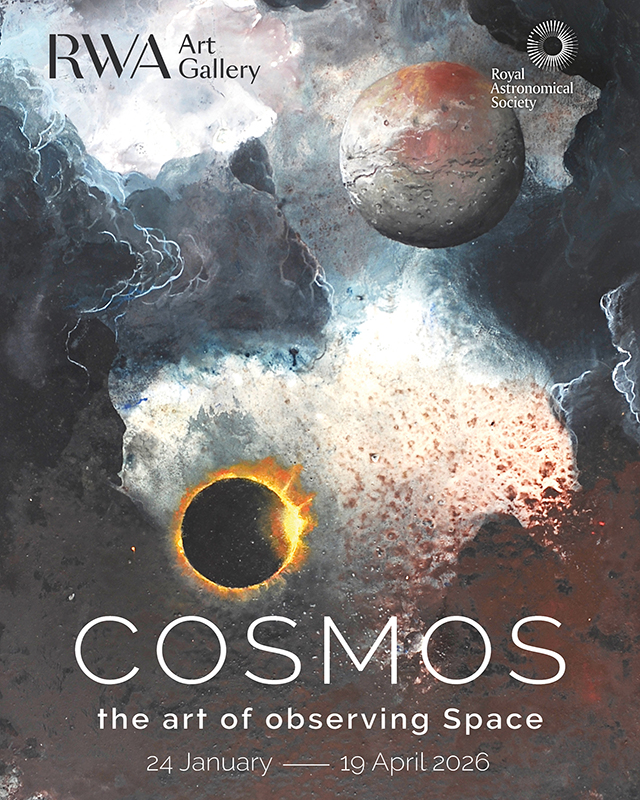
I am thrilled to have work included in Cosmos: The Art of Observing Space curated by Ione Parkin showing at the Royal West of England Academy, Bristol. Delivered in partnership with the Royal Astronomical Society, this exhibition offers a unique journey through time, imagination, and inquiry – inviting you to experience the awe, wonder, and curiosity that the cosmos continues to inspire. 

Image: Michael Porter RWA, Impossible Landscape 15-05-25

Featured artists:
Kate Bernstein 🌖 Annie Cattrell 🌖 Ian Chamberlain RWA 🌖 Richard Cox 🌖 Geraldine Cox 🌖 Susan Derges 🌖 Otto Dettmer 🌖 Sarah Duncan 🌔 Susan Eyre 🌕 Anna Gillespie RWA 🌖 Tom Hammick 🌖 Alex Hartley 🌖 Simon Hitchens RWA 🌖 Janette Kerr RWA HRSA 🌖 Melanie King 🌖 Tania Kovats 🌖 Ulrike Kuchner 🌖 Lynda Laird 🌖 Christopher Le Brun RA RWA 🌖 Johanna Love 🌖 Gillian McFarland 🌖 Rachael Nee RWA 🌖 Pale Blue Dot Collective (Louise Beer and John Hooper) 🌖 Cornelia Parker 🌖 Ione Parkin RWA 🌖 Michael Porter RWA 🌖 Ben Rowe MRSS RWA 🌖 Robin Sewell 🌖 Jane Sheppard 🌖 Yinka Shonibare 🌖 Karl Singporewala RWA RIBA 🌖 Wolfgang Tillmans

My works in the exhibition include The Azimuth Obelisk (of Sedimentary Knowledge), a reimagining of an obelisk operating as a permanent azimuth mark, from which the drift of the magnetic North Pole is monitored; Orbital a multiscreen installation looking at the interaction between space weather and Earth’s magnetic field; 92 Years Measured in Lighta reflection on time spent on Earth in relation to the vastness of the cosmos and Sun Factora look at sun worship and a reminder of the Sun’s true power.

Install in progress.

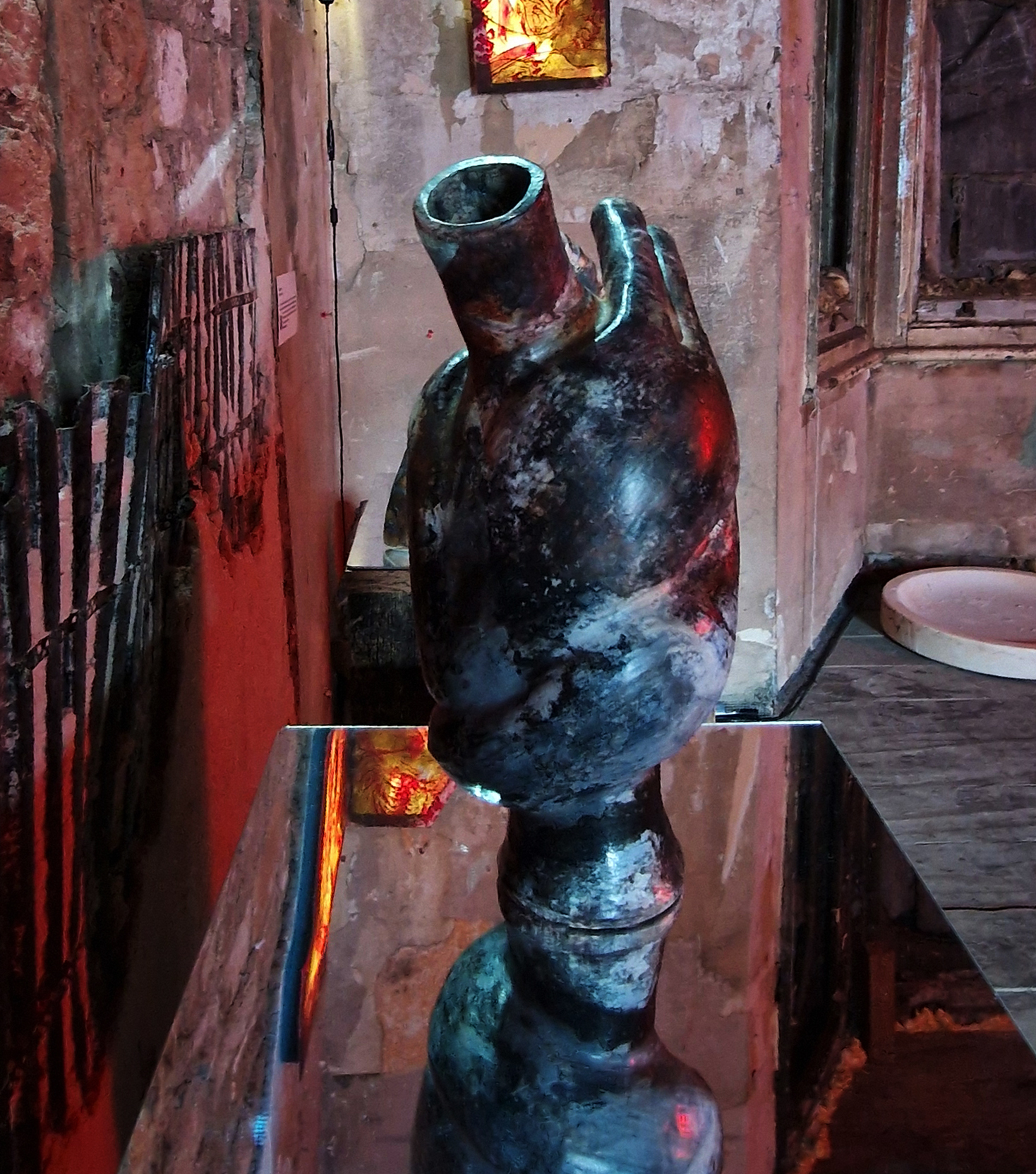
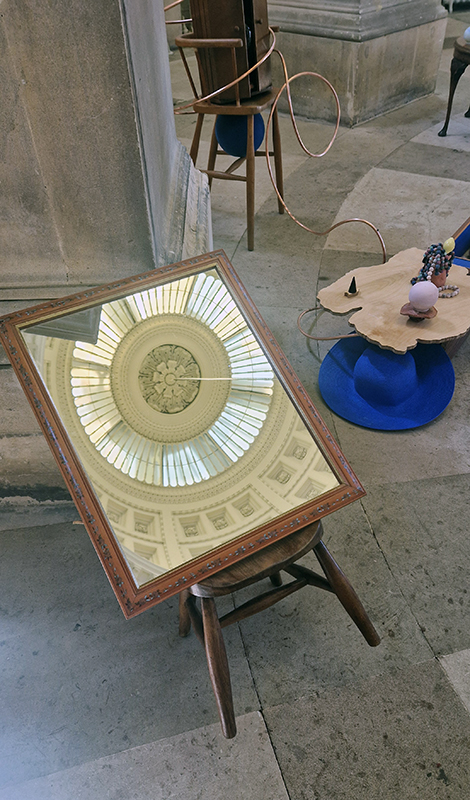
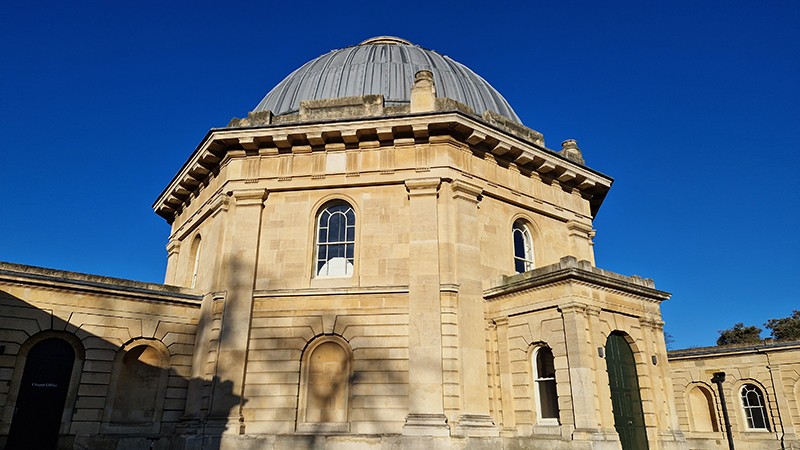
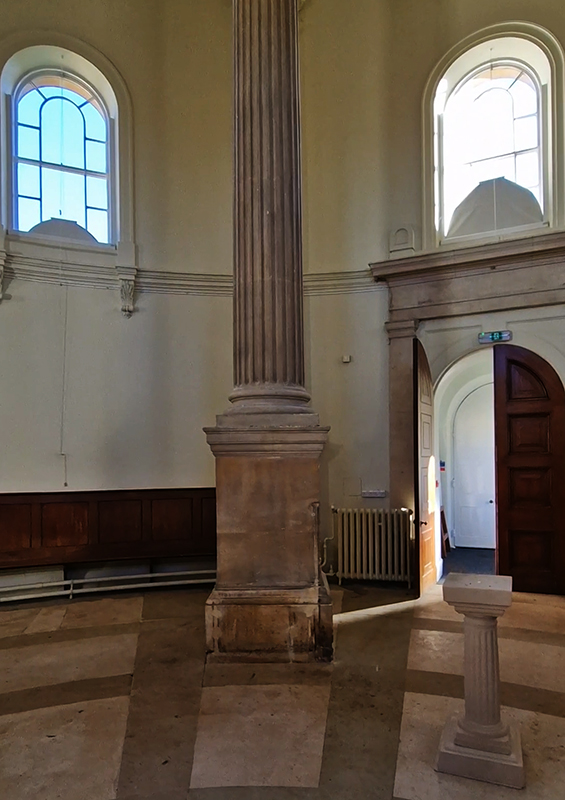
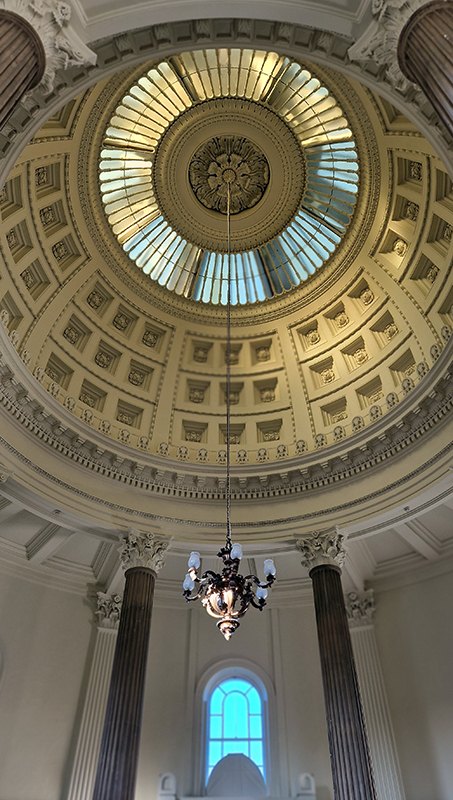
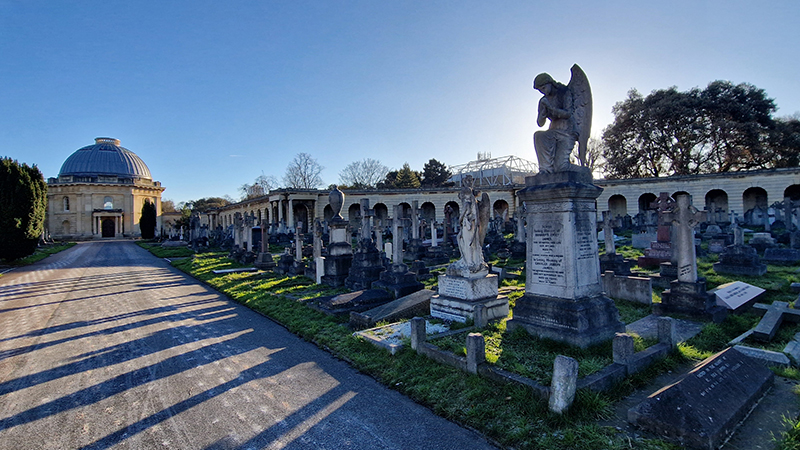
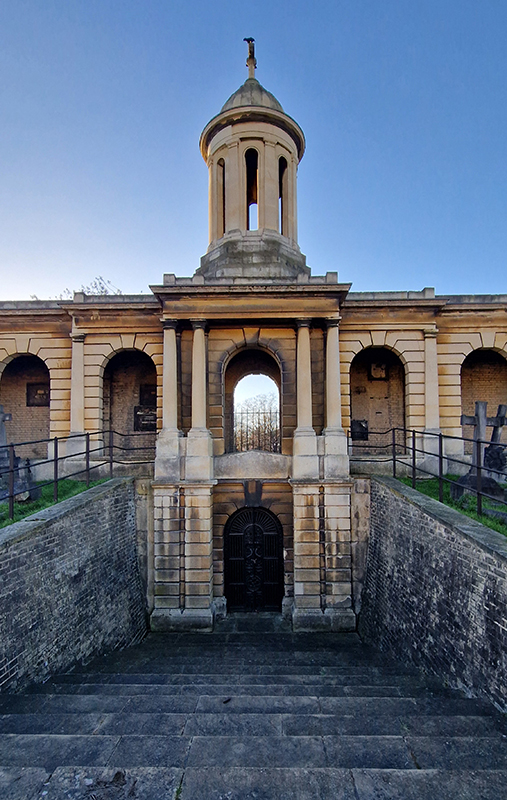
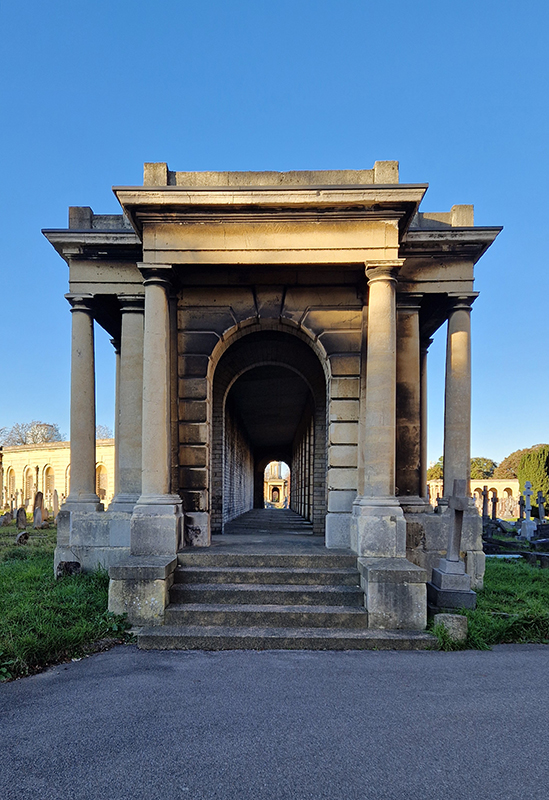
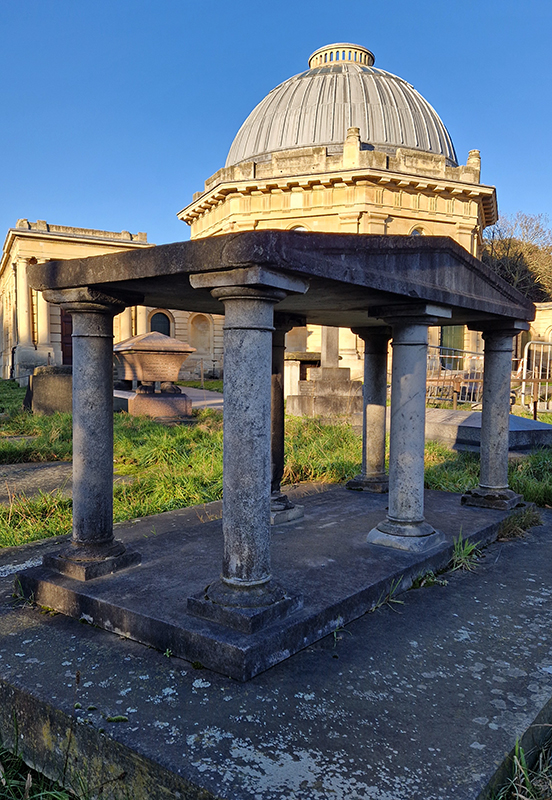
I enjoyed a site visit to Brompton Cemetery Chapel on a bright frosty morning with curator Catherine Li to plan a future exhibition at this magnificent Grade II listed building. Entering the glass domed chapel is entering a space both hushed and echoing. Concentric circles in varying shades of bath stone span the floor circled by eight giant Corinthian columns. Built in 1842 the eight-sided building is said to represent life on earth, while its lofty dome suggests heaven. Early ideas for the exhibition are thinking about ‘way finding’ in terms of physical and spiritual navigation to find a path or direction.

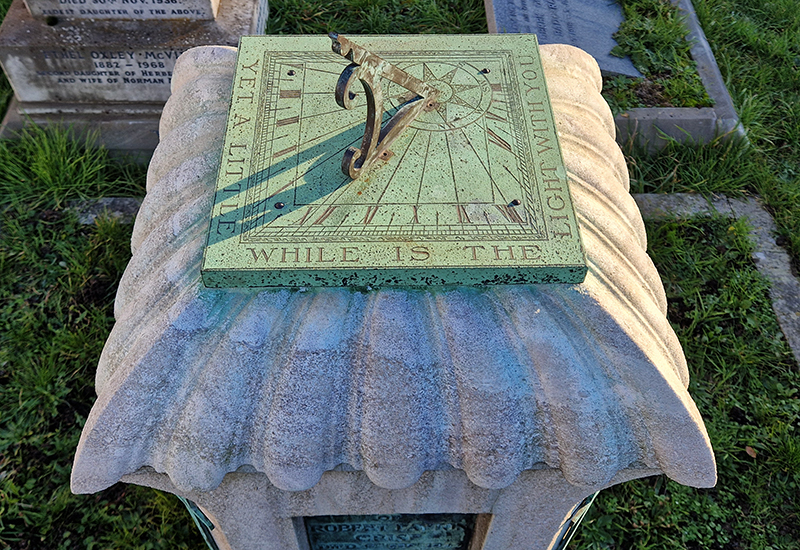
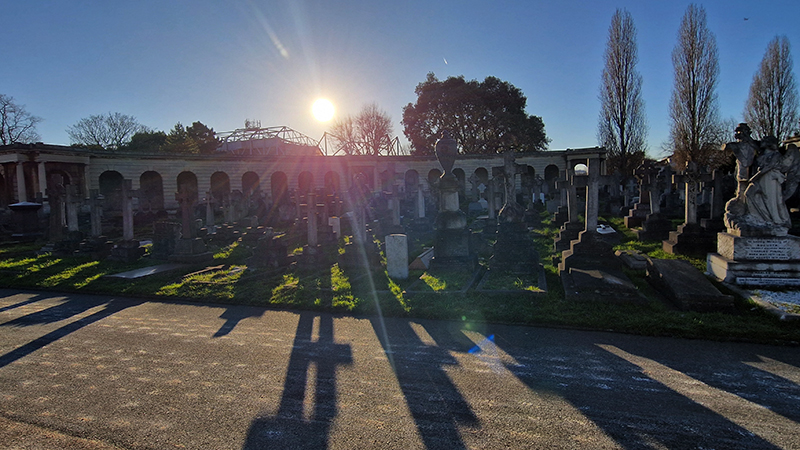
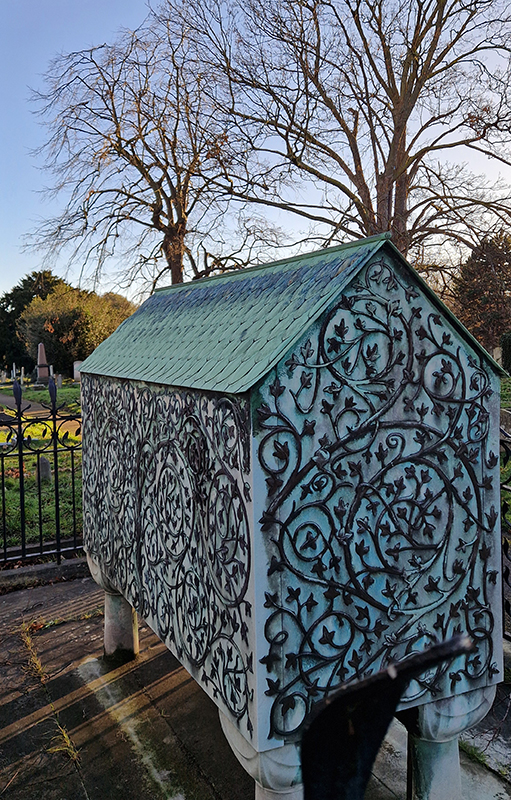
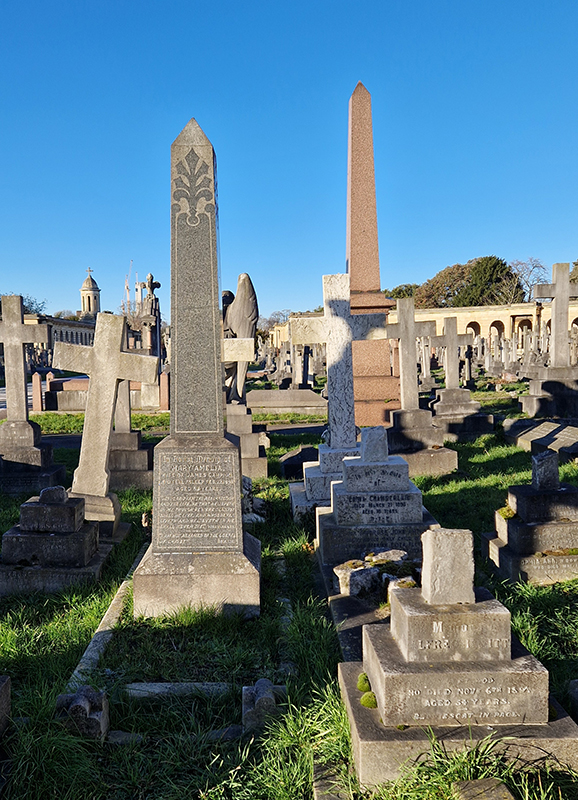
Brompton Cemetery offers a rich site for discovery of the many symbols used to represent the passage from life to death, to comfort, grieve and express love. I was particularly taken by the beautiful sun dial with the inscription YET A LITTLE WHILE IS THE LIGHT WITH YOU

Lessons in electrons.

I listened to an archive episode from In Our Time Pauli’s Exclusion Principle

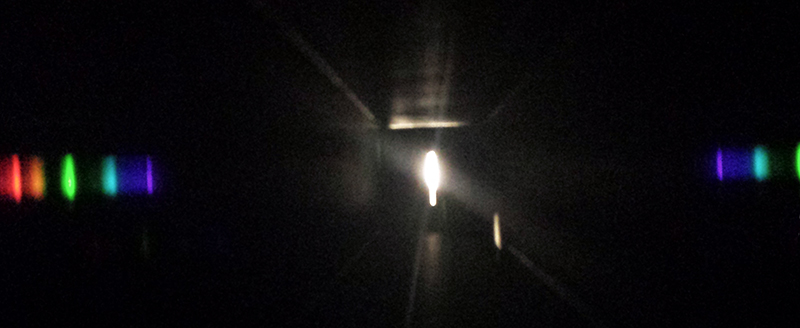
The Pauli Exclusion Principle proposes that no two electrons in an atom can be in the same configuration at the same time, and it helps explain a wide range of phenomena such as the electron shell structure of atoms. This principle explains the chemical behaviour of the elements and why matter is stable. At the beginning of the 19th century the elements were ordered in the periodic table by mass and it was noted that inert elements appeared very regularly in the table with active elements either side – a periodic occurrence of common properties, hence the name. It was found that if you heated the elements, each element emitted light of a specific colour which became known as the spectra.

The internal workings of the atom were discovered to consist of negatively charged electrons whirling around a positively charged nucleus but the metaphor of a miniature solar system based on gravity was inaccurate. It is hard to get away from imagining this image. It was Niels Bohr who realised that electrons were not free to travel anywhere but are restricted to ‘orbits’ – a helpful analogy is to think in terms of a ladder where an electron can be on a high rung with high energy or a low rung with low energy but can’t be between rungs. Electrons can jump from a high rung to a low rung and in so doing lose energy as light in a characteristic colour.

Pauli, a theoretical physicist, discovered that electrons cannot move to a place where there is already an electron and this is what gives rise to structure and the different chemical natures of the atoms. The different rungs on the ladder have different shapes and can accommodate different numbers of electrons. The bottom rung can only fit two electrons, if the rung has just 1 electron it is hydrogen, if it has 2 electrons it is helium and that rung is then full. Helium is chemically inert because that low rung is now full. The next rung up can hold about 10 electrons and when that is full that element is inert. Pauli also noticed that it was possible for electrons to have two values but couldn’t explain this – we now know this as spin – the electron can spin in different directions.

Photons do not have an exclusion principle, you can add more and more photons and make laser beams as intense as you like. I always wondered about Vantablack (the world’s blackest man-made substance, a coating of vertically aligned carbon nanotubes that absorbs up to 99.965% of visible light) and if it absorbs so much light where does it go and does the material get hot.

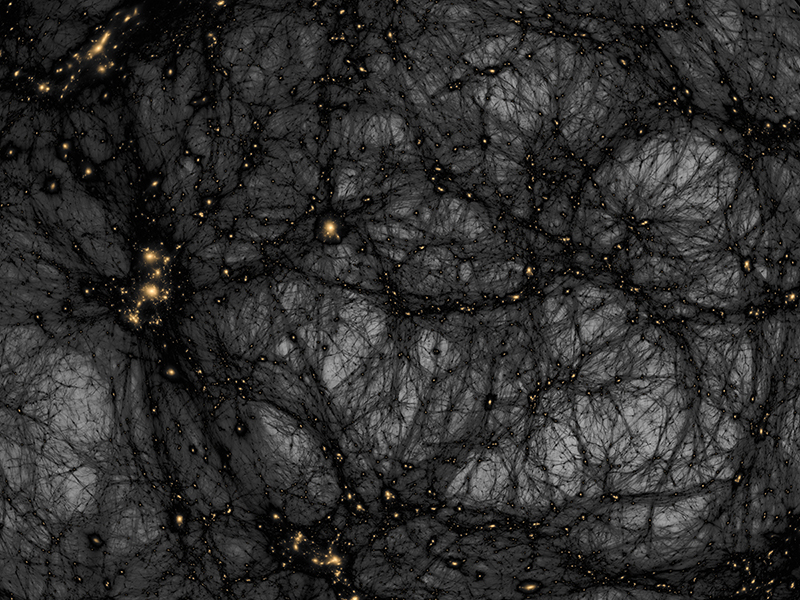
It’s nearly 10 years since the Laboratory of Dark Matters project when, thanks to astrophysicist Dr Cham Ghag and lab director Prof. Sean Paling, I was able to visit Boulby Underground Laboratory to meet scientists looking for dark matter over 1km underground on the N.E coast of England. Dark matter has still not been detected but is still thought to be some sort of particle. Direct detection methods have moved on from trying to detect a direct hit from a dark matter particle with an atom nucleus to looking for signs of electrons scattering from the target.

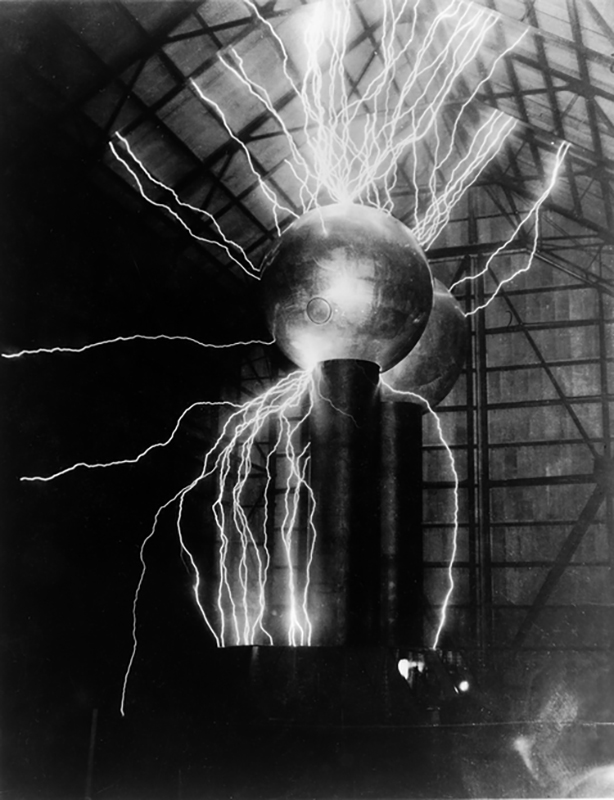
A surprise Christmas gift was a Van Der Graaf Generator which demonstrates ‘static’ electricity. Considering how the electrons caught up by the generator are rushing about desperately trying to get back to the earth it doesn’t sound very static. Electric current is simply electrons on the move. I’m not expecting quite such dramatic results as achieved by this 43-foot-tall experimental high-voltage Van de Graaff generator built at Round Hill, Massachusetts in 1933 as the world’s most powerful particle accelerator, but looking forward to trying some of the experiments.

In February 2023, the highest energy (around 220 million billion electron volts) neutrino ever detected (KM3-230213A) was spotted by the Cubic Kilometre Neutrino Telescope detector, a network of vertical strings with glass spheres holding sensitive Cherenkov radiation light detectors, submerged at great depths in the Mediterranean Sea. This neutrino had over 100 times higher energy than any other previously detected and its origin is still under investigation. High energy neutrinos travel in straight lines, unaffected by galactic magnetic fields, and so could point directly to their violent birthplace, offering insight into the universe’s most energetic processes. It may have been a cosmogenic neutrino, generated when powerful cosmic rays from deep space smash into gas clouds or photons in the interstellar medium creating these rare elusive particles, or from the universe’s most energetic phenomena, involving immense gravity, density, or explosive power, primarily driven by compact objects like black holes and neutron stars, or even decaying dark matter particles.

AI is not like us; the only way we can have a relationship with it, is for us to become like it.

I thought the ideas presented in the Gresham Lecture Becoming AI – Your Journey to Assimilation? gave a prescient perspective – we are so often focused on AI being trained or designed to be more like humans but are losing sight of the fact that it is we humans that are becoming more like AI, it is us that are changing how we communicate to adapt to the methods of the machine.

While thinking about minerals in clay and how pottery and bricks preserve the direction of the magnetic field in their minerals during the process of firing which heats and then cools the clay – the same process that occurs in a lava flow. Iron-bearing minerals (like magnetite) in clay become “magnetic” when heated in a kiln. As the pottery cools, these minerals lock into the Earth’s magnetic field direction and strength at that time.  I came across Rescued Clay, who transform discarded clay from construction sites into new narratives. Together with local communities, they shape this once-forgotten earth into objects, artworks, and spaces that preserve the memory of land, culture, and people, turning waste into stories worth keeping.

I was fascinated to read about the oldest rock found on Earth in Marcia Bjorerud’s little Geopedia compendium. The Acasta Gneiss complex dates from 4.03 billion years ago, any rock that formed on Earth before this time has been melted, obliterated or subducted through violent geologic and astral events save for a few tiny crystals of zircon. The first geologic interval on Earth has left no record. The age of the Earth is therefore determined by looking at the composition of meteorites and planets in the solar system that formed at the same time as Earth and have remained unchanged since. I find this mind blowing.

Diogenite meteorite NWA 7831

Out and About

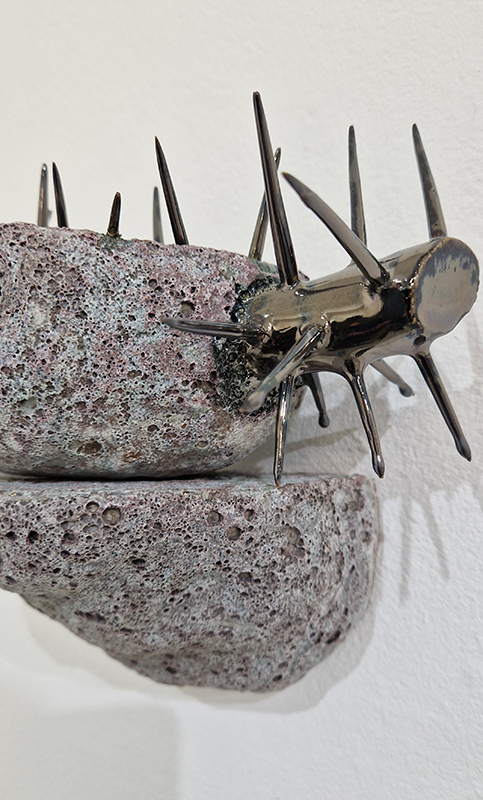
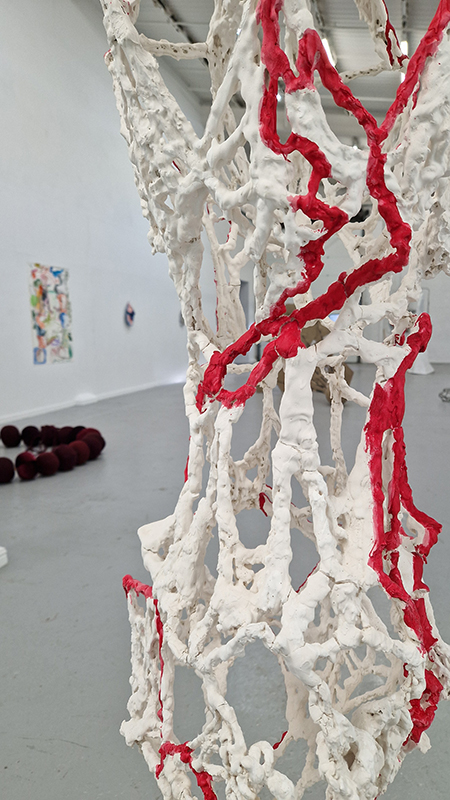
Objects that slip Between the Floor and the Wall at Thames-side Studios Gallery. Some playful works and I particularly enjoyed Eleanor Bedlow’s Push Pull that embodies that idea so well, Jane Millar’s impossibly spikey ceramics with the most gorgeous glazes, the skewed geometrics of Johanna Bolton, morphing oversized beads of Janet Currier and mad Mountain View of Sandra Lane.

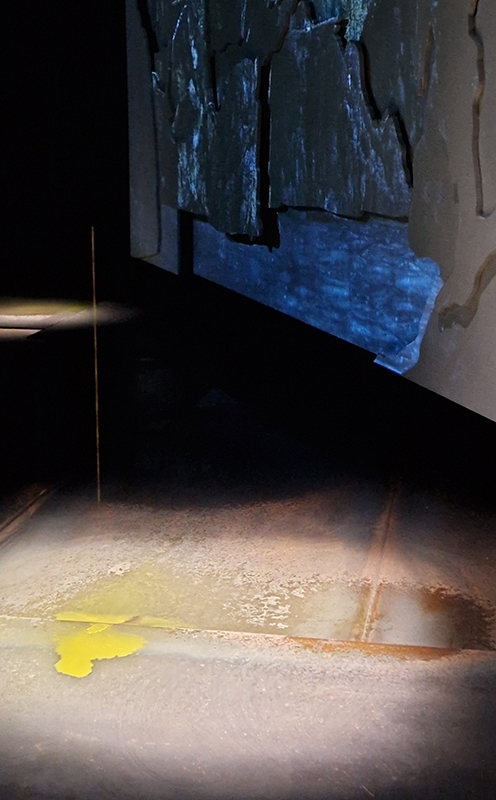
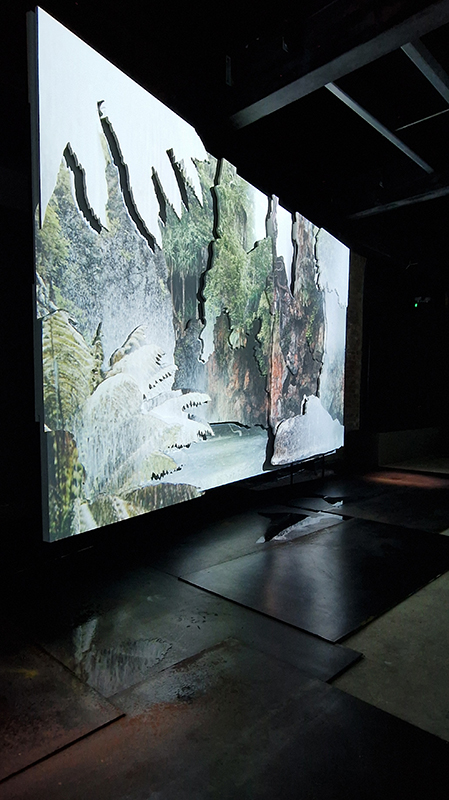
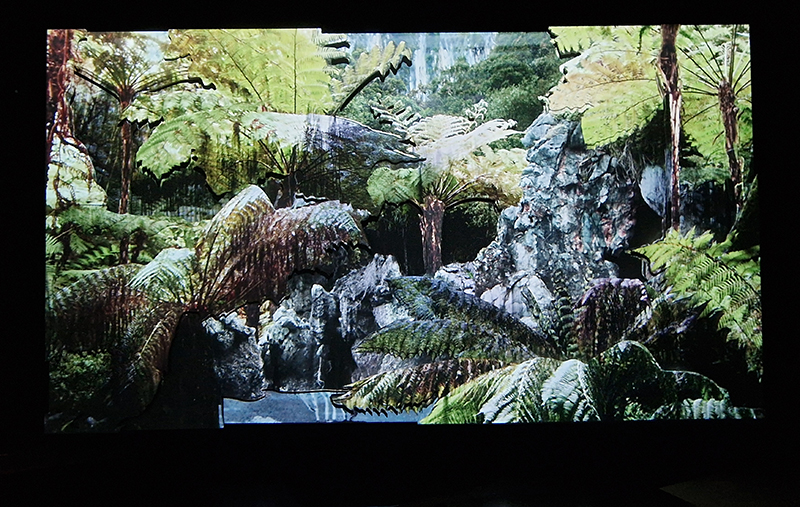
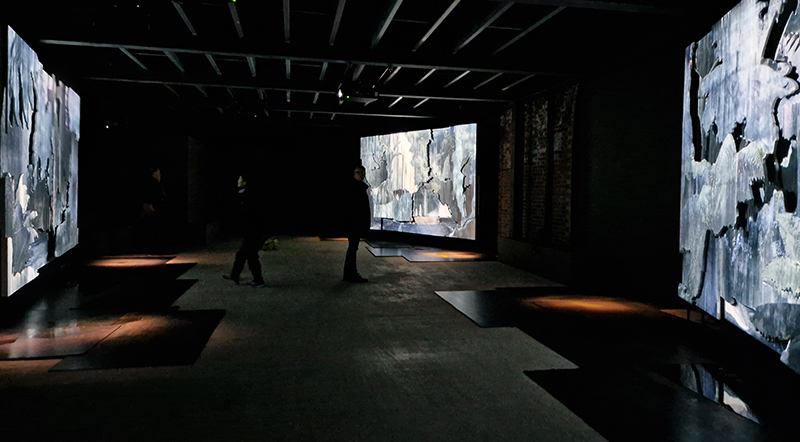
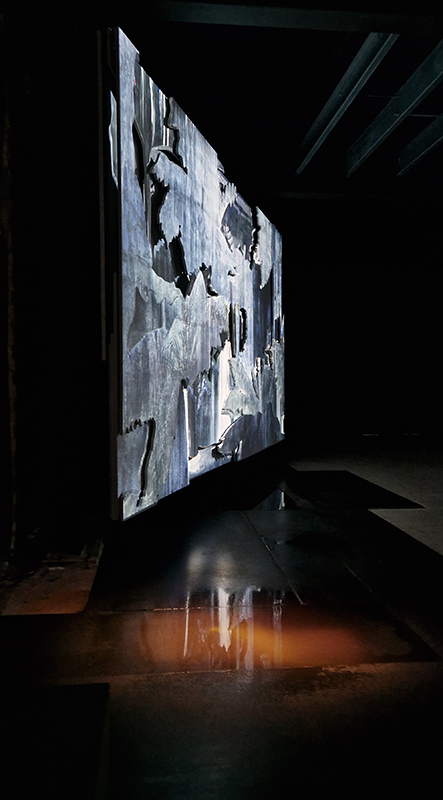
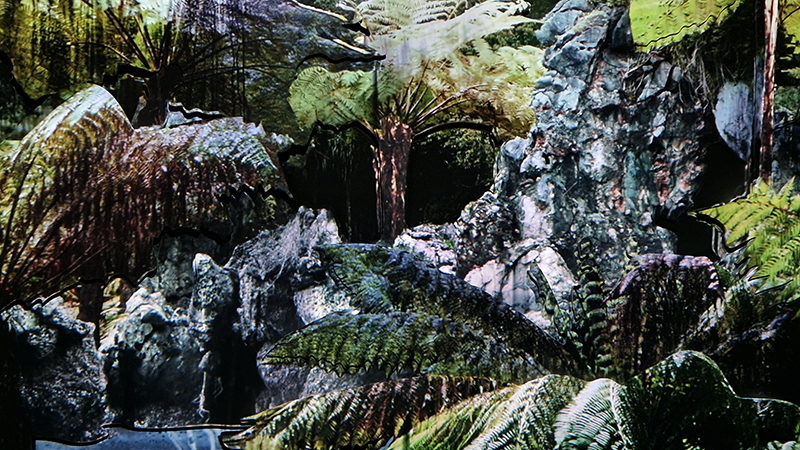
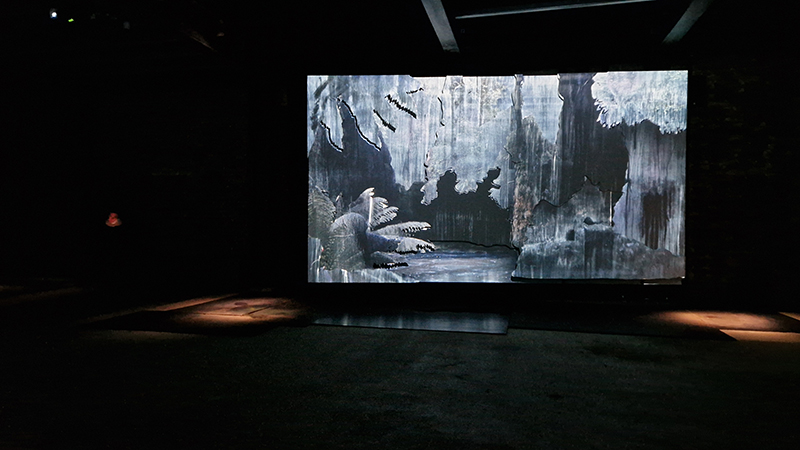
Noémie Goudal The Story of Fixity, an Artangel commission at Borough Yards. Three large screens layered with cut out shapes, that add a 3D staging to the film projections which cycle every 15 minutes through lush vegetation, whiting out to fading painted backdrops and water cascading in rivulets or vaporous spray and dark rocks. Water also drips from the ceiling pooling and staining large steel plates on the floor. The sound is layered like a deep forest. Haunting and beautifully captivating.

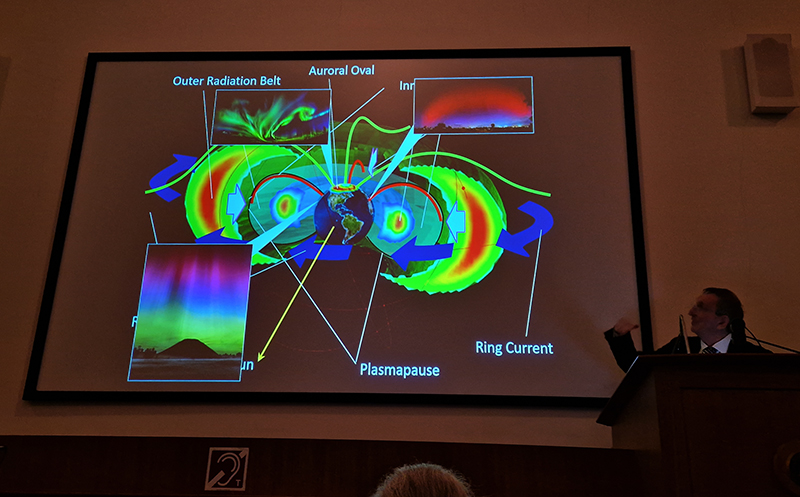
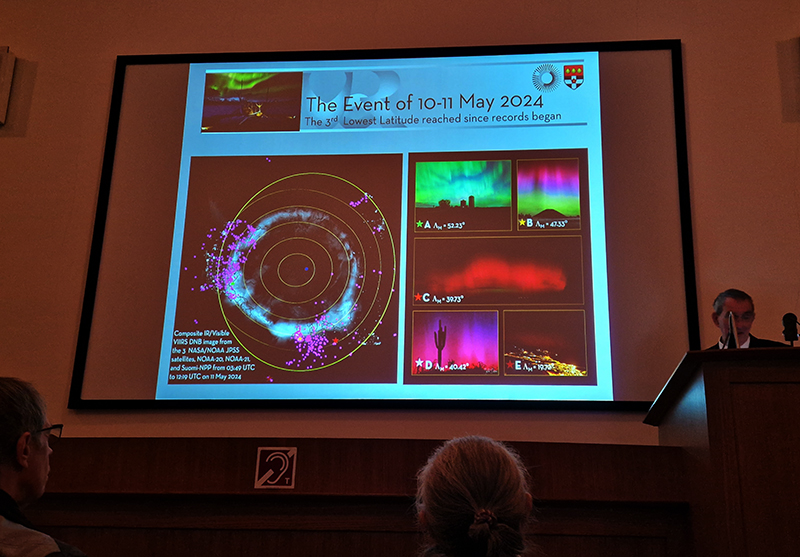
Prof. Mike Lockwood gave a talk at the Royal Astronomical Society on Aurora borealis observations over the past 400 years in part inspired by the events of 10/11th May 2024 when the aurora was seen by many people across the UK at extremely low latitudes. It is estimated that this aurora in May 2024 was the third most extensive seen in the past 400 years.

Earth’s magnetic field is constantly moving and this has a major effect on where aurorae occur.

It is thought the vision of Ezekiel in the old testament was possibly a red coronal aurora seen in Nippur (Iraq) as it tallies with Assyrian and Babylonian documents which date it at 12th March 567BCE.

In 1741, Clockmaker and geophysicist, George Graham witnessed the aurora in London and made the connection between the lights and geomagnetic activity which he was able to measure with his almost friction free compass needle that he had invented in 1701.

He noted ‘Who could have thought it? That a compass needle could have sympathy and a connection with the aurora!’.

The 1859 Carrington Event was the strongest recorded geomagnetic storm in history, caused by an unusually strong solar flare. The simultaneous observation of the solar flare by the English astronomers Richard Carrington and Richard Hodgson and the subsequent geomagnetic disturbance led scientists to realize the Sun could directly affect Earth’s magnetic field, a pivotal moment in the study of space weather. 

On 7/8th March 1918 the UK skies were lit up to devastating effect as the auroral light reflected along the path of the river Thames giving German bombers a map to the otherwise darkened city of London.

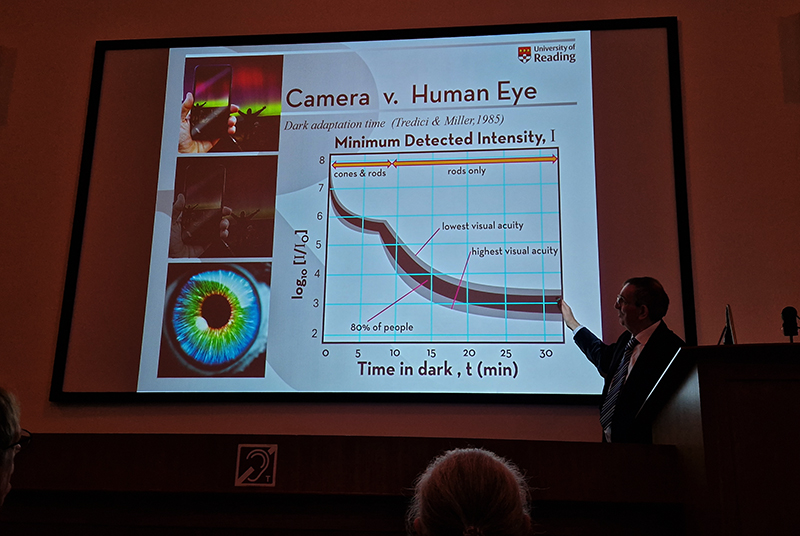
With the advent of the digital camera aurora recording has become ubiquitous across social media. It appears the phone camera can ‘see’ a much brighter and more vibrant effect than the human eye. This is because it can take at least 30 minutes for the human eye to become fully adapted to the dark and sensitive enough to compete with the camera. Looking at the phone will also negate any sensitivity of the eye. Human night vision has evolved to be in black and white, the cones that create colour do not fire unless the light is very bright and so the aurora is often experienced as white pillars without the greens and reds we see on the camera.

The European Space Agency has simulated a solar storm on the scale of the Carrington Event, the most powerful in recorded history. The simulation shows that in minutes, communications were disrupted and in hours, satellites destabilized. There’s no way to stop it, but early warning systems and space weather monitoring could help us prepare.

Scientists Warn: A Solar Superstorm Could Hit Earth Any Day

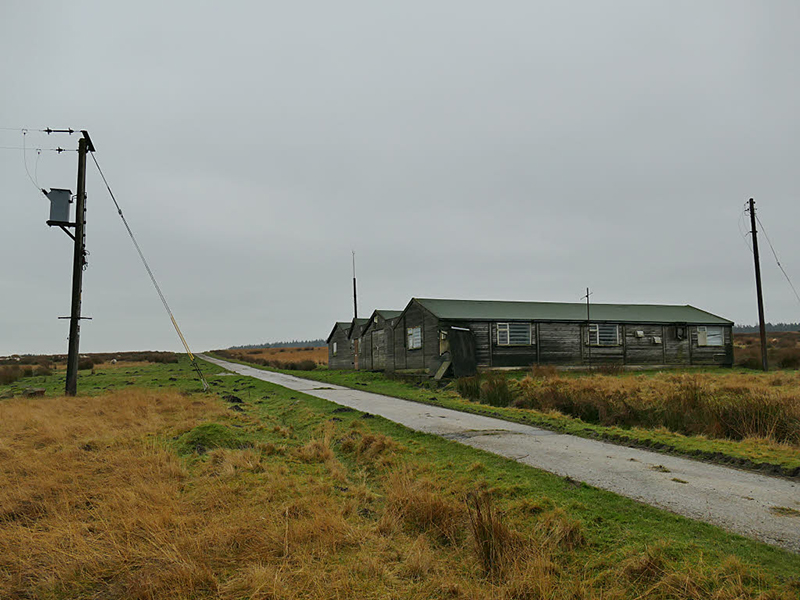
I am excited to be planning a visit to Haverah Park, the site of a cosmic ray air shower detection array consisting of water Cherenkov detectors distributed over an area of 12 km2 on the Pennine moorland, North Yorkshire. The experiment was operated by University of Leeds for 20 years, and was switched off in 1987. During its lifetime many 1000’s of extensive air showers were recorded including four exceptional ones of such size that the cosmic rays that generated them must have had energies greater than 10eV. These particles are the highest energy form of radiation known to exist anywhere in the universe and their origin is one of science’s greatest mysteries. Having reimagined The Absolute Hut seen at Hartland Magnetic Observatory for the exhibition A Stone Sky I am hoping a future project may be the reimagining of the huts from Haverah Park.

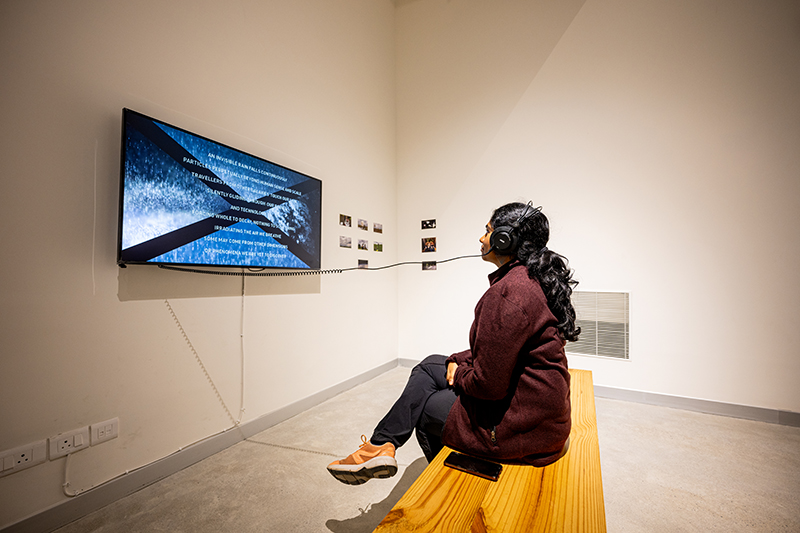
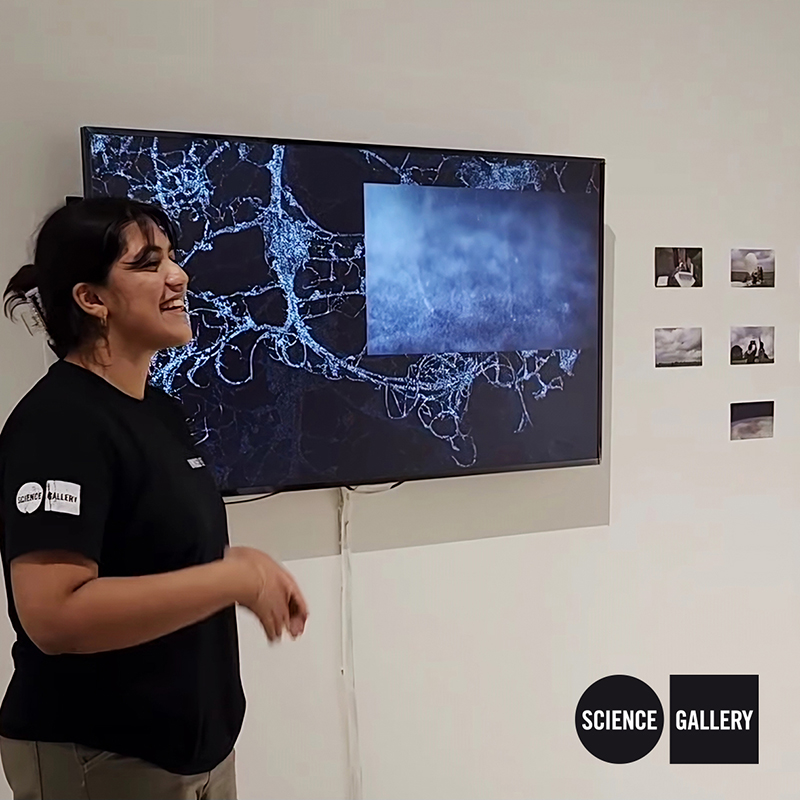
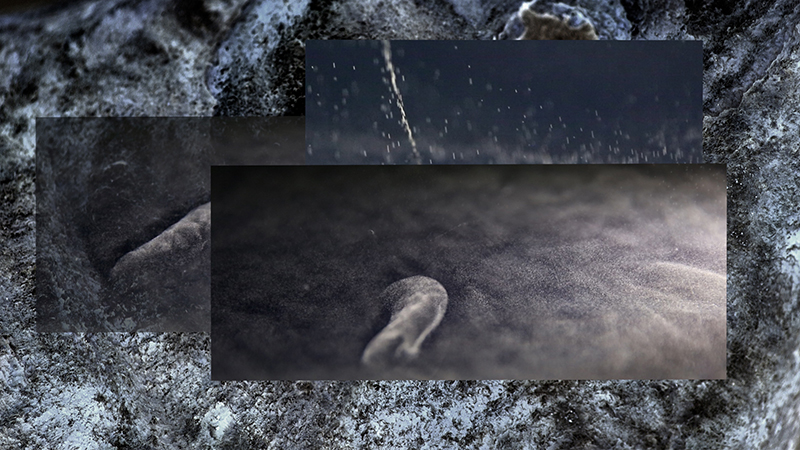
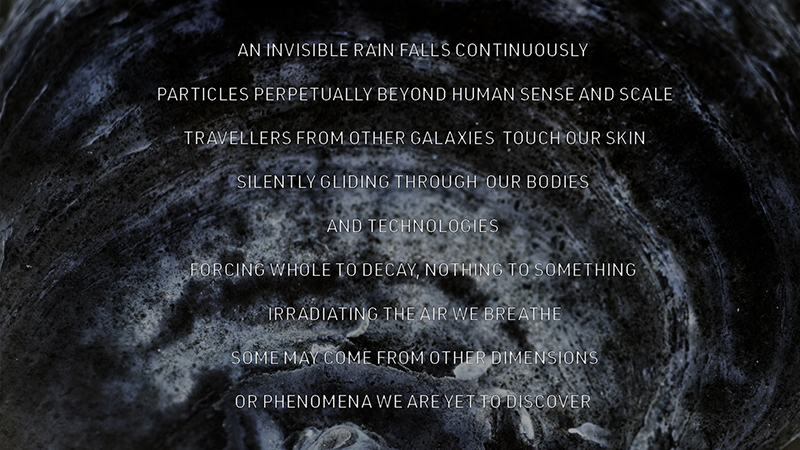
The exhibition Carbon: under pressure at Science Gallery Bengaluru is still running and I am so proud to have my work Cosmic Chiasmus: crossing the universe included in this amazing show. This video offers a glimpse into a subatomic world where cosmic rays travel from distant galaxies to collide and silently interact with atoms and technology on Earth. Cosmic rays go through a violent process of creation, transformation and decay. From the heart of stars or the depths of black holes these particles power across the universe with unimaginable energy colliding with life on Earth and triggering other processes such as cell mutation, computer data corruption and carbon-14 formation.

I am fascinated to learn more about cosmic magnetism and its influence on the development of early life.

The Universe is magnetic. From stars to galaxies to intergalactic space, magnetic fields thread the cosmos. Yet the origin of cosmic magnetism is still unknown, so astronomers are attempting to make maps of the magnetic fields inside massive galaxy clusters to determine if cosmic magnetism came from the early origin of the universe or developed over time. If it is discovered that there is an alignment of fields across the universe this would point to a primordial source of the cosmic magnetic structure rather than a slow emergence from seed magnetic fields. Understanding the origin of cosmic magnetism may give clues to the development of life on Earth and the possibility of life elsewhere in the universe. Only planets with a magnetic field have an atmosphere and offer protection from most radioactive cosmic rays.

Those cosmic rays that do penetrate the atmosphere may have influenced the development of early life. Chirality, also known as handedness, is the existence of mirror-image versions of molecules. Like the left and right hand, two chiral forms of a single molecule reflect each other in shape but don’t line up if stacked. All known life-forms show specific chiral properties in chemical structures as well as macroscopic anatomy, development and behaviour. The sugars that make up DNA, for example, are all right-handed. The amino acids that make up proteins are all left-handed. It is not clear how this asymmetry evolved but one theory suggests that magnetic surfaces on minerals in bodies of water on the primordial Earth, charged by the planet’s magnetic field, could have served as “chiral agents” that attracted some forms of molecules more than others, kicking off a process that amplified the chirality of biological molecules.

Another theory proposes that the influence of cosmic rays on early life may explain nature’s preference for a uniform “handedness” among biology’s critical molecules. Before life emerged on Earth, self-replicating molecules were slowly evolving beneath a constant shower of energetic particles from space. Researchers believe that cosmic rays with the ability to penetrate matter were potentially colliding with chiral molecules on Earth and everywhere else in the universe. These tiny differences in the mutation rate would have been most significant when life was beginning and the molecules involved were very simple and more fragile. Under these circumstances, the small but persistent chiral influence from cosmic rays could have, over billions of generations of evolution, produced the single biological handedness we see today.

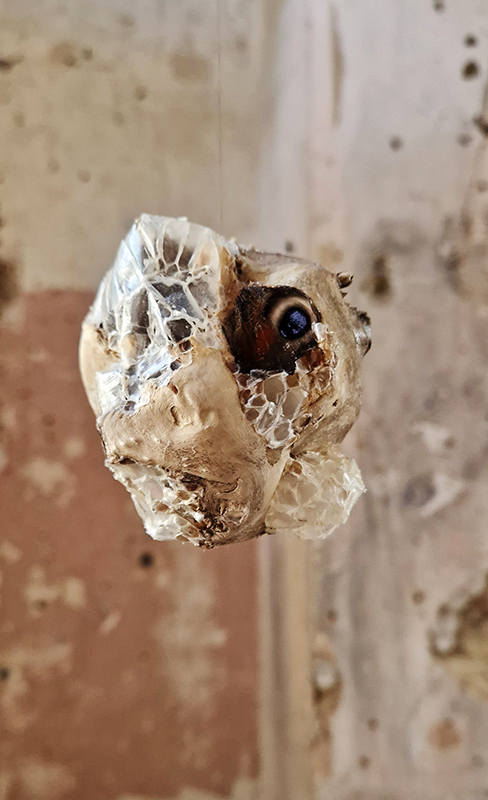
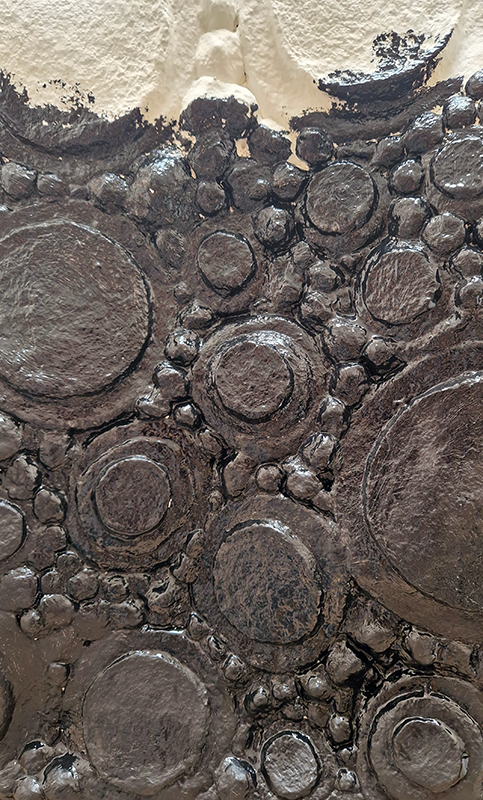
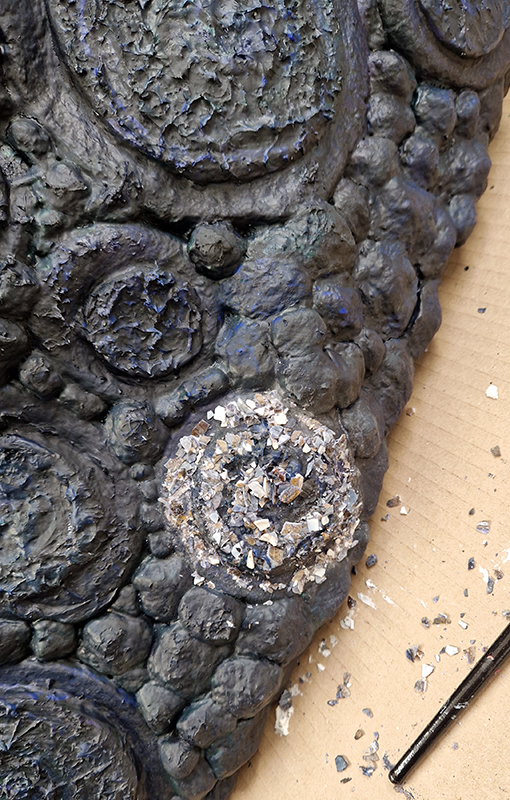
Chirality is also seen in the spiral of a mollusc shell. I am in the process of finishing the sculpture shell for belly of a rock a hybrid work of chemical conversations at the intersection of the animate and inanimate, inspired by Italo Calvino’s Cosmicomics story The Spiral. Paper clay with crushed mussel shells.

My most recent video installation Orbital shown in Life Boat at APT Gallery focused on the potential risks to technology and life on Earth from extreme solar storms.

The following month, a barrage of large solar flares and coronal mass ejections jettisoning clouds of charged particles and magnetic fields, travelling at speeds up to 3 million mph toward Earth, created the strongest solar storm to reach Earth in two decades, and possibly one of the strongest displays of auroras on record in the past 500 years. There were even perfectly clear skies to view this extraordinary event, yet I missed it. So envious of all those who did get to see the displays of Aurora at such low latitudes. I am hoping there will be another chance to see the Aurora in the UK during this current year of peak solar activity, but not so dramatic a storm as to cause an ‘internet apocalypse’.

Gallery Visits

Andrea V. Wright Eyes of Skin at Thames-side Studios Gallery curated by Thorp Stavri. This exhibition explores the permeability and interactions between the body and architecture and the tensions arising from the ever-changing precariousness of our external and internal constructed environments. It was good to be able to chat with Andrea about her influences from fashion tribes and processes such as casting skins from buildings tumbling into ruins and tactics to avoid being vulnerable working in remote locations.

Holly Birtles and Charly Blackburn in Bog Bodies at APT Gallery. interrogate the complexities of wetland mysteries in the Thames Estuary and the Fenland Marshes exploring life, death, and metamorphosis through ceramics and photography. The Bog preserves the body in death enabling us to travel back in time as far as the Mesolithic period. Conditions inside the bog are acidic. They are perpetually wet, entangled with plants and peat, muddy and monstrous. A dense soup inhabited by complex ecologies that thrive in the anaerobic surroundings, creating a unique biochemical and physical occurrence that facilitates the mummification of prehistoric humans. This exhibition however, confounds expectations of oozing mud and swampy detritus. These ‘artefacts’ are presented in a pristine white cube setting, there maybe a slight whiff of smoke lingering from the ceramics but all is clean and orderly and the framing is thoughtful with a nice use of colour contrasts between image and frame. Good to be surprised.

SALON FOR A SPECULATIVE FUTURE: HOW TO BE IN THE FUTURE? at Vestry St – Cross Lane Projects with works from Aideen Barry, Quilla Constance, Lisa Chang Lee, Kate Fahey, Young In Hong, Evy Jokhova, Huma Mulji, Koushna Navabi, Monika Oechsler, Rebecca Scott, Jo Stockham. Postulating hope for a better future Rebecca Solnit (in an article in the Guardian, 2016): wrote “Hope is an embrace of the unknown”. Living in times of unprecedented change, uncertainty, she says, has “the power to influence the future”. Taking inspiration from the ‘future thinking’ of speculative fiction and looking at a wide range of fields from science and technology to spiritual, ecological and socio-economic issues, the exhibition highlights multiplicities and the complex interplay at work in global dynamics. The works, individually and collectively, draw on associations from different  subjectivities and contested /histories facilitating a space for contemplation and the discussion of positive futures. Strong shift shaping work here that gets under the skin, fake facades, hairy hissing and an AI doctored doctrine, make for an unsettling present from which to speculate on the future.

The Tipping Point at Bell House. The tipping point may arrive seemingly out of the blue as a slight change heralding a new way forward.  It can be magical or malevolent.  More than 40 artists in six individually curated spaces will examine different kinds of tipping points, both minor and major, literal and metaphorical. Sarah Sparkes and Jane Millar curate The Gowan Room using Octavia Butler’s dystopian novel, ‘Parable of the Sower’, as a point of reference. Jonathan Callan, Chudamani Clowes, Sarah Doyle, Lydia Julien, Marq Kearey, David Leapman, Yair Meshoulam, Jane Millar, Stephen Nelson, Victoria Rance, Alke Schmidt, Lex Shute, Ania Tomaszewska-Nelson, Sarah Sparkes, Sara Trillo, Marianne Walker and Alice Wilson explore a new awareness of change and exchange, a constant shifting of strange identities, the malleability of being, interspecies communication and the strength and vulnerability of community. Imagining new ways to merge; ways to intelligently and sensually live in the flux of a perpetual tipping point. Léonie Cronin curates the Lutyens room as a procession through objects of different artistic beliefs, pointing to new myths, a point of Syncretism where ideas become merged and the old symbols get incorporated into new systems.
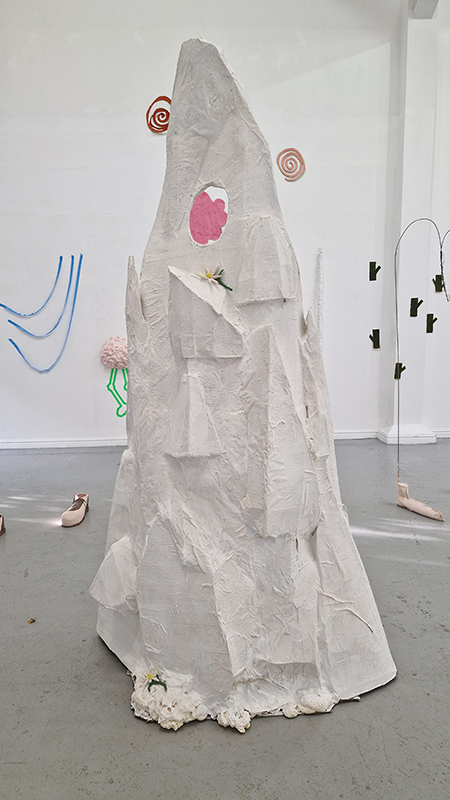
Thomas Pausz in Haunted Ecologies at Stanley Picker Gallery. A very interesting show drawing threads of local history together with current urgencies such as sewage pollution of the local endangered chalk stream Hogsmill River. From spirit photography and the dark room experiments of Kingston’s Eadweard Muybridge, to digital manipulation, rendering and 3D scanning – Our perception of contemporary environment and culture is always haunted by spectres of the past and by hopes and visions of the future.
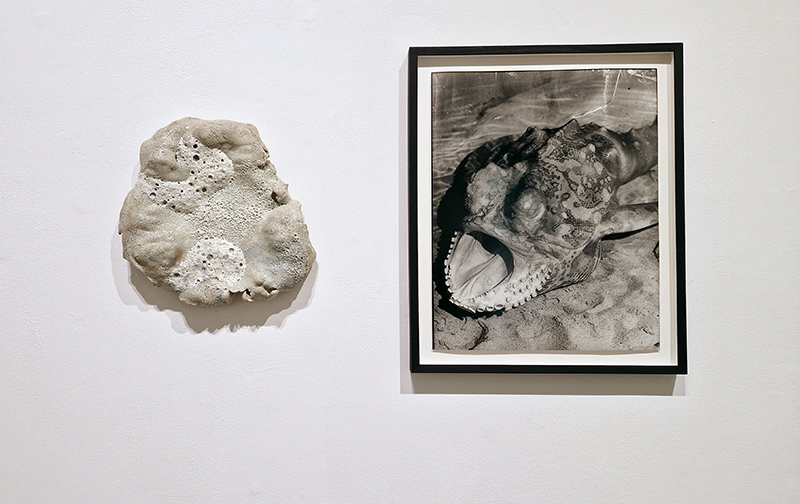
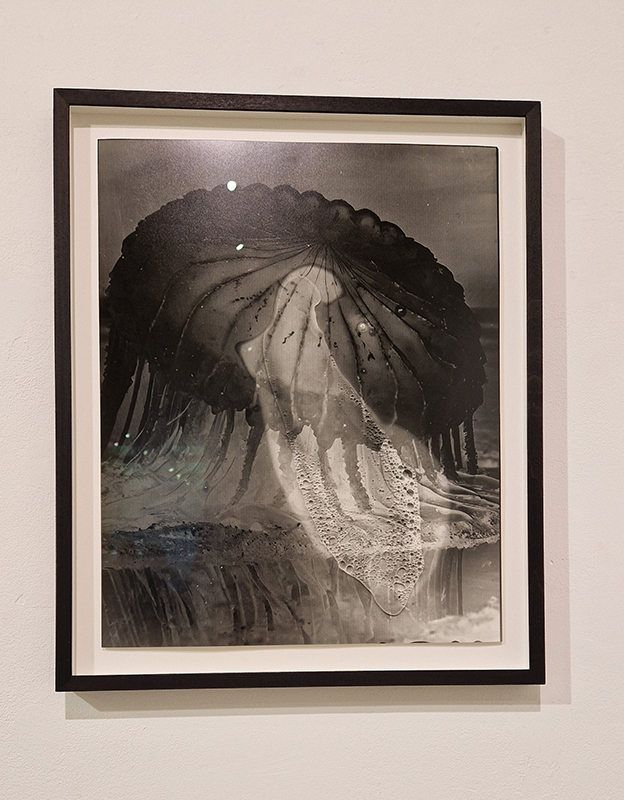
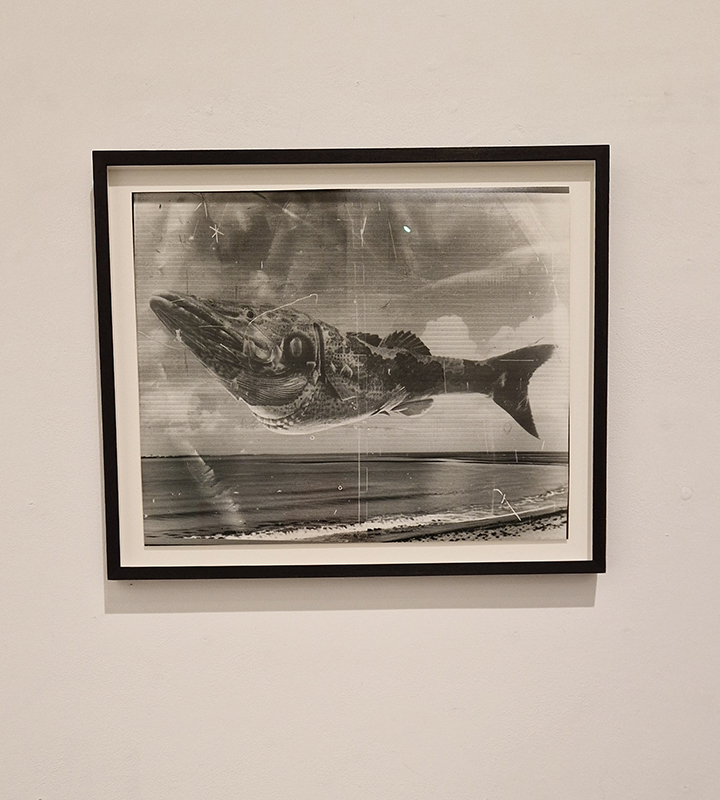
Symbiosis II group exhibition exploring the relationship between image makers, the more-than-human, and alternative photographic processes at Four Corners Gallery organised by London Alternative Photography Collective  curated by Hayley Harrison, Melanie King, and Ky Lewis. This exhibition considers the connections between symbiosis and alternative photography, and asks if nature is a collaborator or a commodity in alternative photography processes.

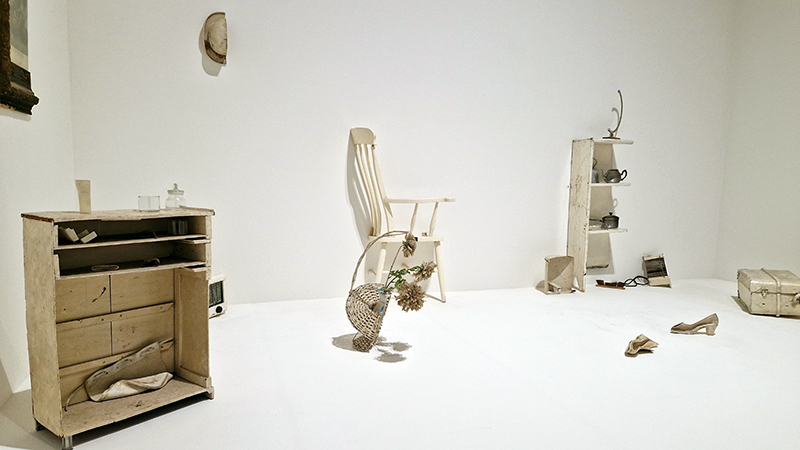
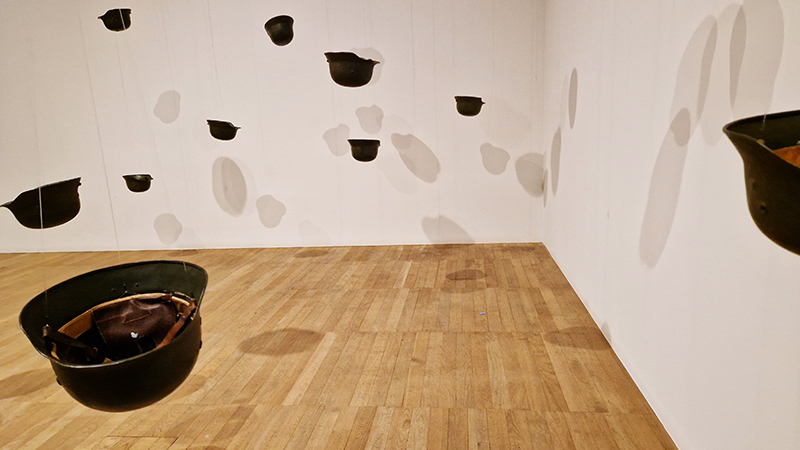
YOKO ONO: MUSIC OF THE MIND at Tate Modern. The main takeaway from this extensive overview of her pioneering work is the sadness that peace hasn’t been given a chance. The works are very direct, may appear simple in content or execution but cut deep into the human psyche. I particularly liked Half a Room, first presented in 1967, this is a room of objects cut in half and painted white. Ono said of this work “Molecules are always at the verge of half disappearing and half emerging…somebody said I should put half a person in the show. But we are halves already.” Another piece, Helmets (pieces of sky) from 2001 invites the audience to take a piece of the sky, which she sees as a hopeful symbol of limitless imagination. Jigsaw pieces of the sky are suspended in German army helmets, and although dispersed, offer the possibility of hope that they can be put back together through collective healing. Many works are participatory. A wall for drawing around your own shadow to create an entanglement of bodies. A boat to add your own wish to an ocean of wishes for the future.
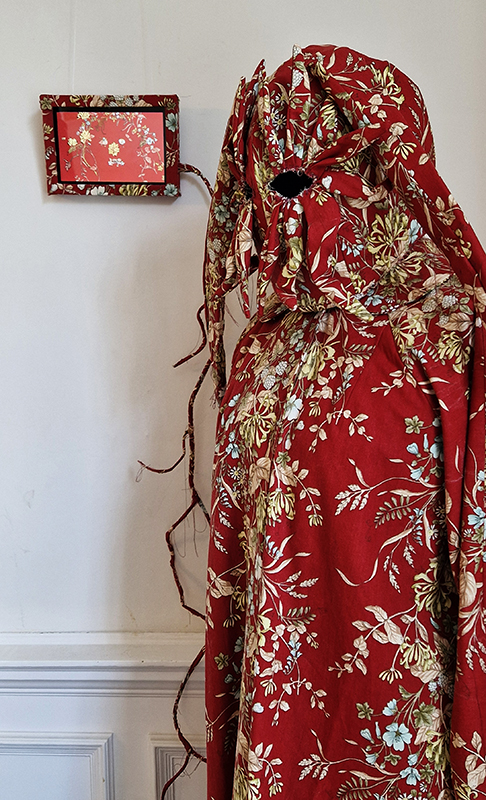
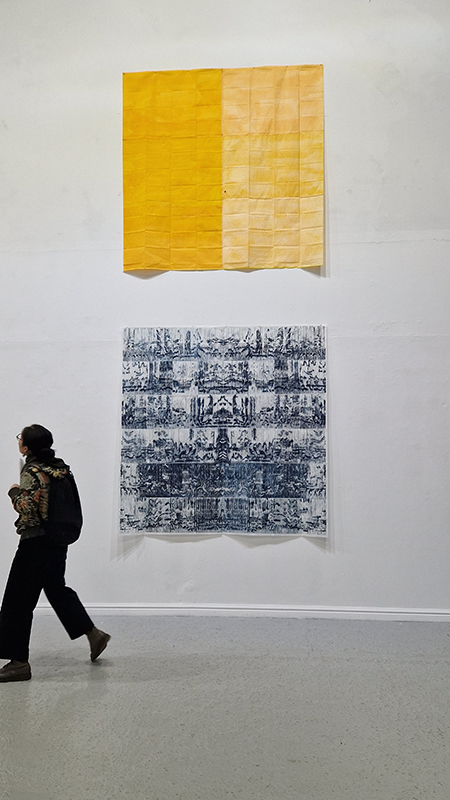
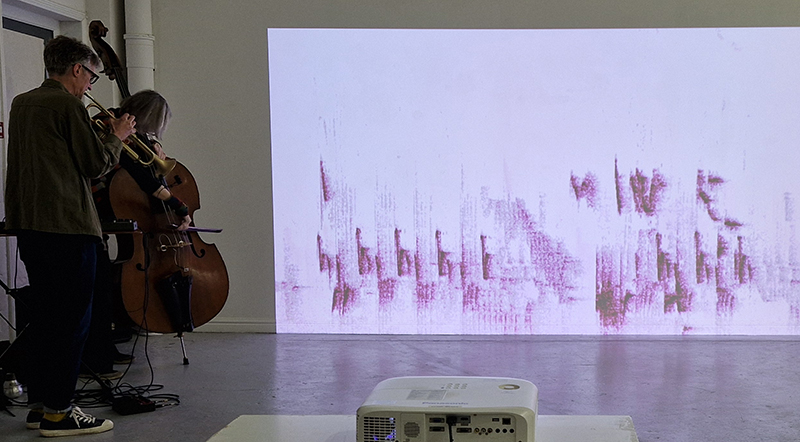
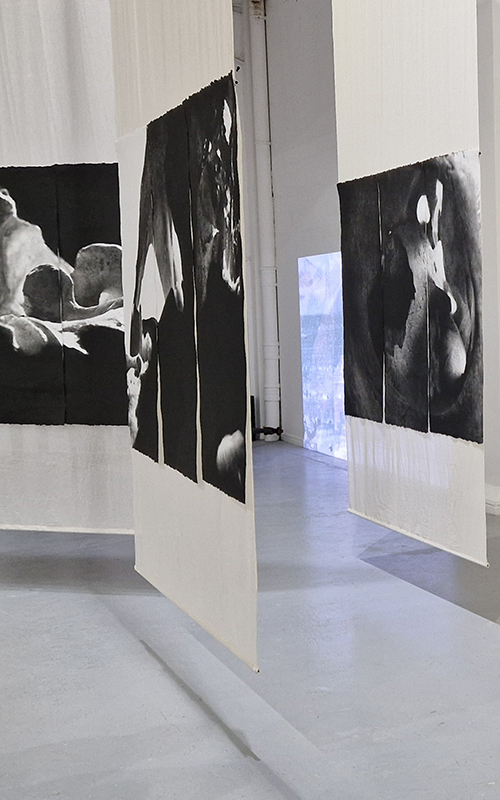
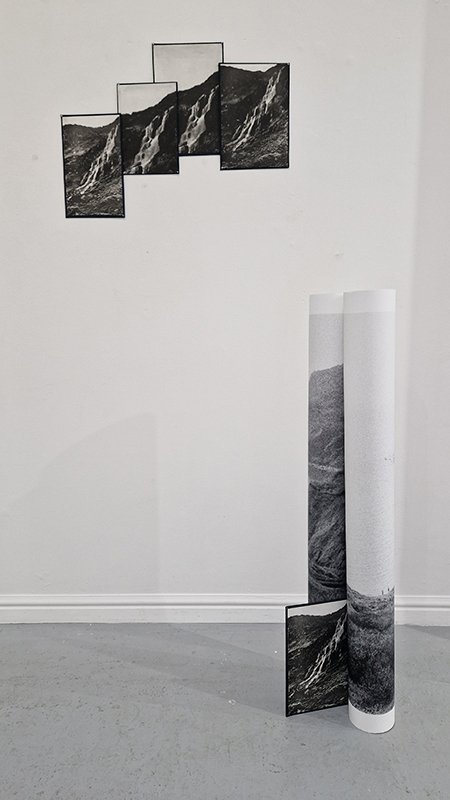
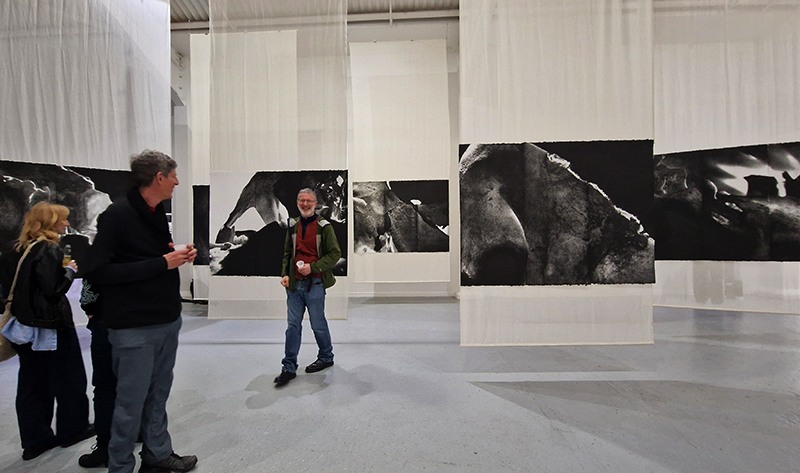
Geographies of Print final iteration of Without Horizon, Without Shore at Thames-side Studios Gallery. Geographies of Print is a collective group created by artists Victoria Ahrens, Carol Wyss and Victoria Arney in 2020. This collective looks to explore and challenge notions of print within wider contemporary discourse and practice. The artists fully inhabit the given space with dramatic large scale pieces, that interact and collaborate to create an exciting and cohesive exhibition. Blocks of colour flash between a maze of hanging muslin panels where etchings of impenetrable blacks and misleading undulations recall both mountain paths and the shadowy mazes of ancient cities. Emotive live music improvisation by Jim Howard (trumpet and electronics) and Julie Walkington (bass) accompanied Victoria Arney’s film reflecting on the epic journey of migrating birds. Landscapes of the mind and the body, a birds eye view and the internal geology of the Earth are beautifully explored.