Archives for posts with tag: Catherine Li

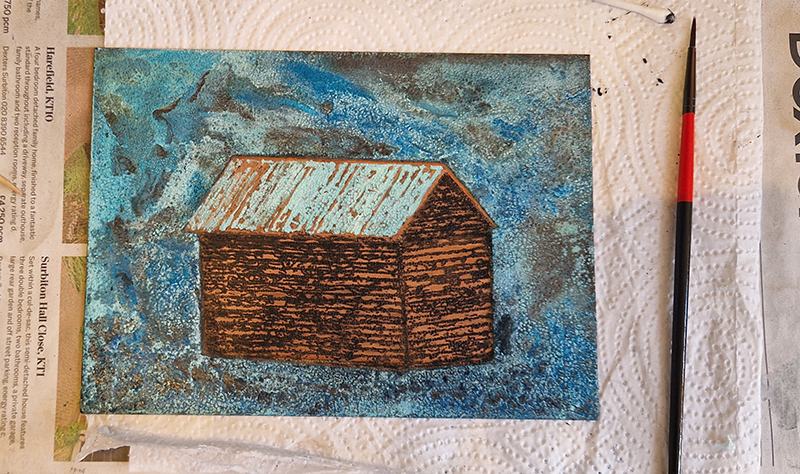
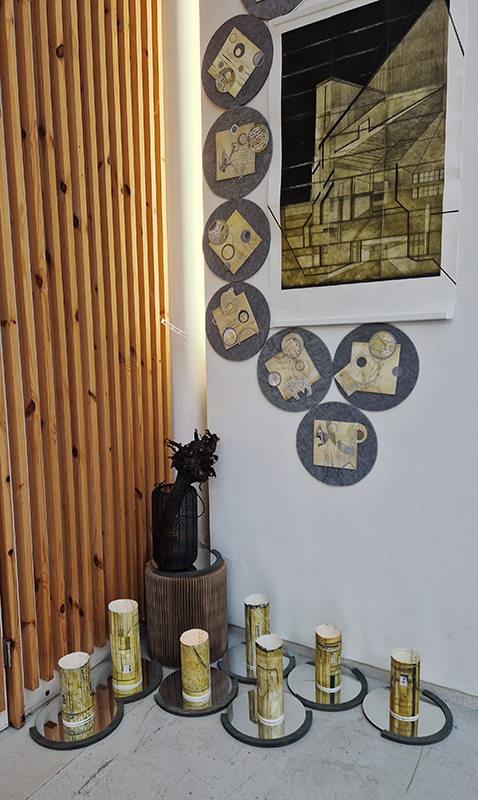
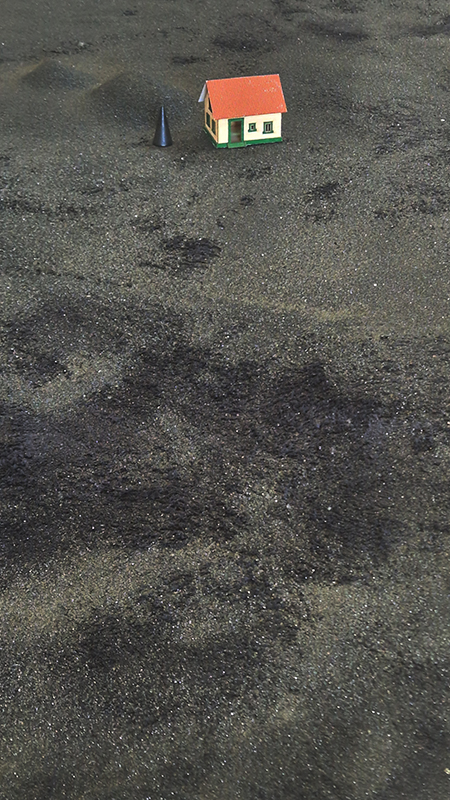
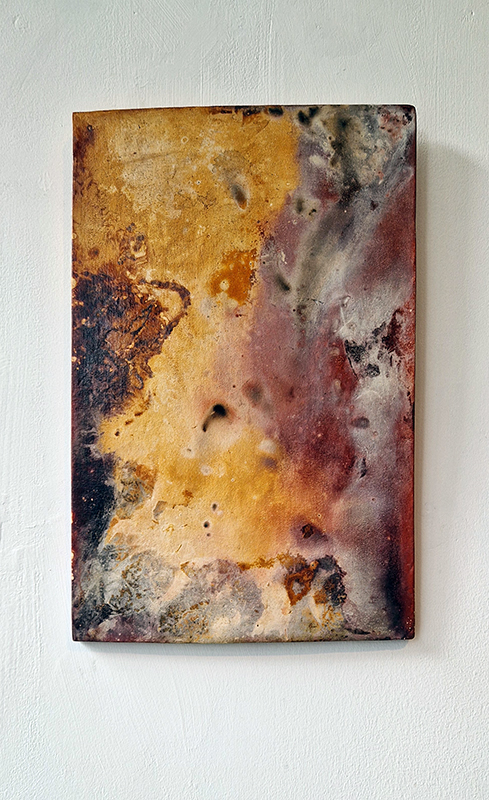
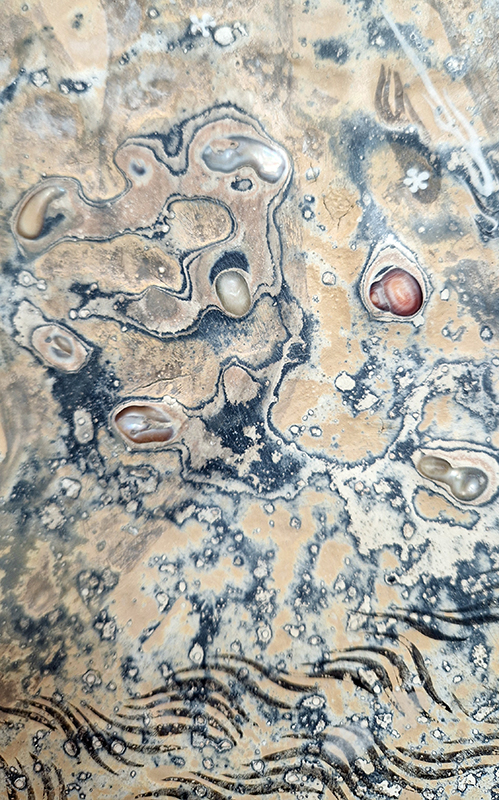
Now that the RWA secret postcard auction is over, I am able to reveal which of the postcards in the RWA secret auction was my contribution to this annual fundraiser. I was delighted that it received so many bids and amazed at the final offer. I hope the recipient is pleased with their purchase of Cosmic Hut.
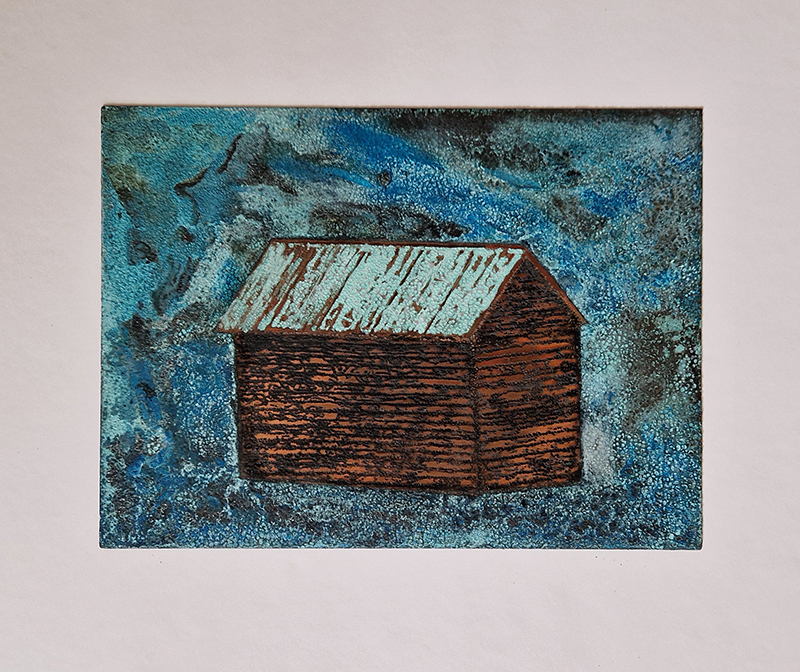
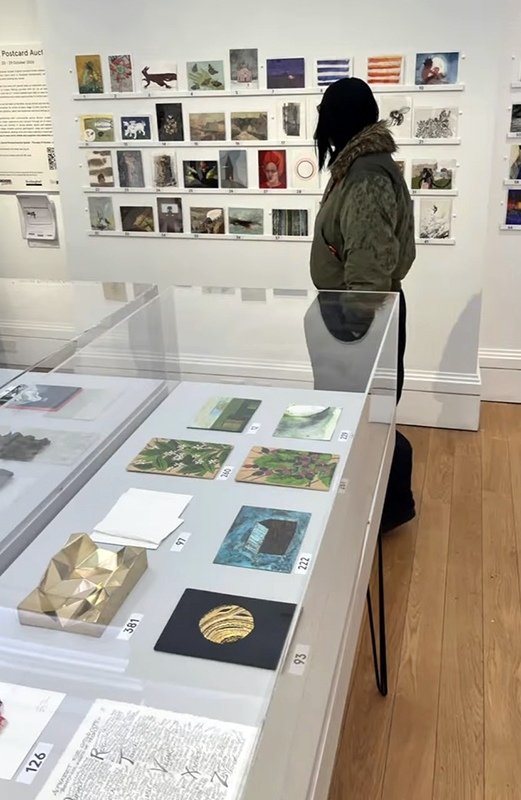
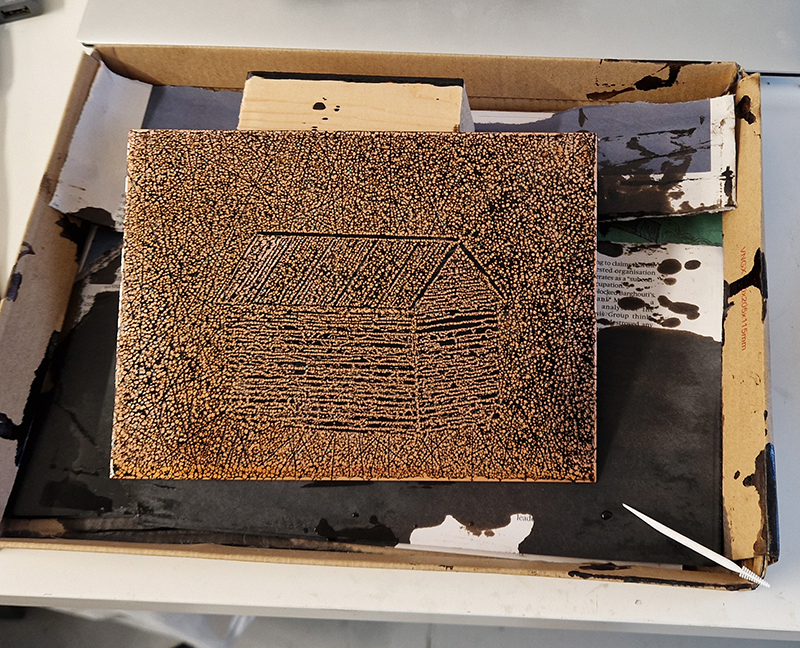
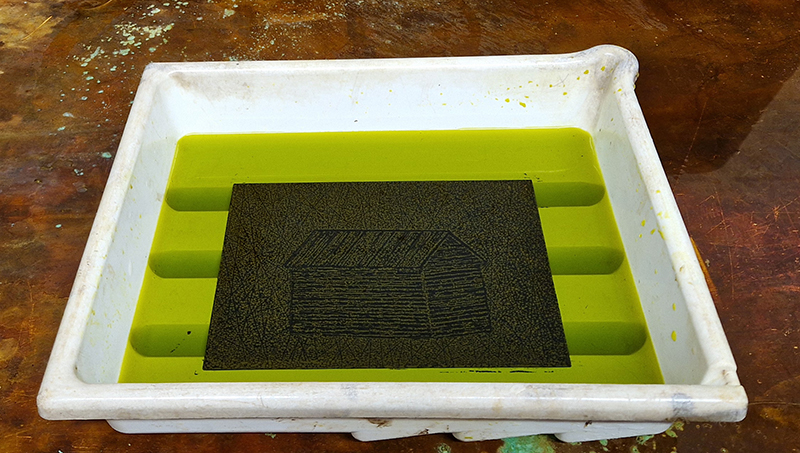
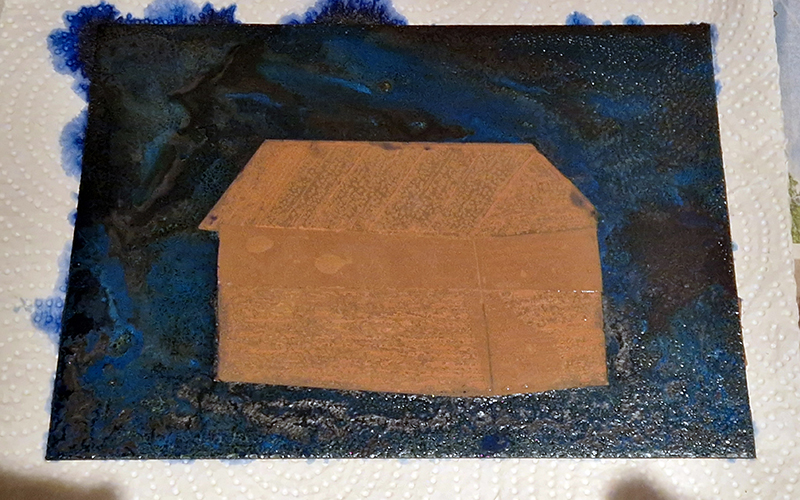
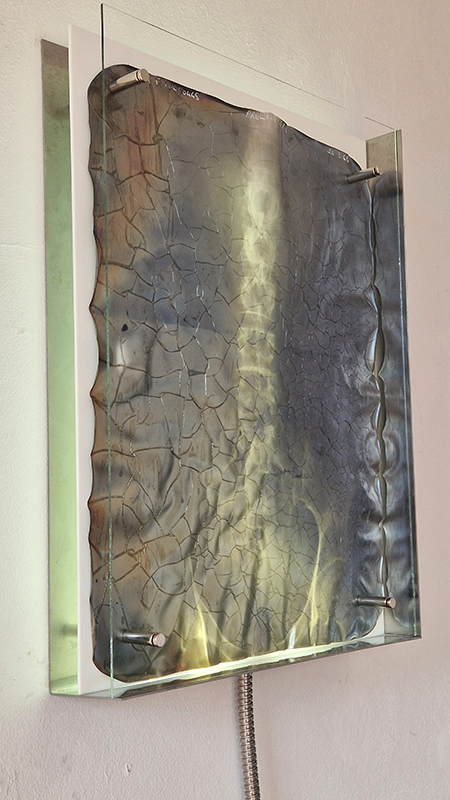
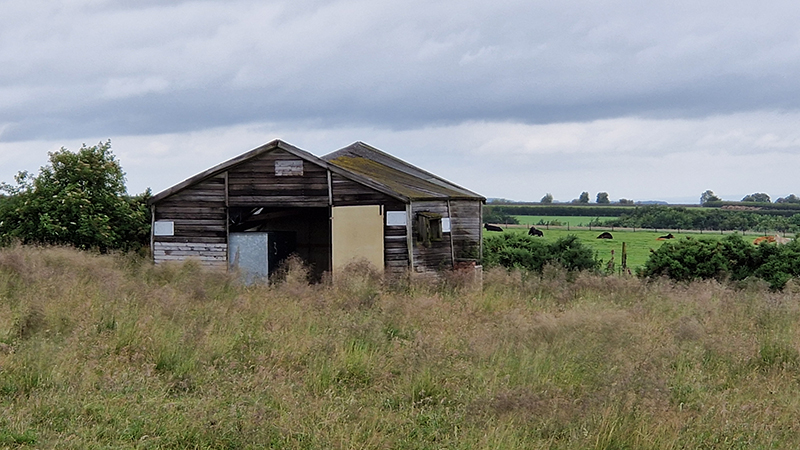
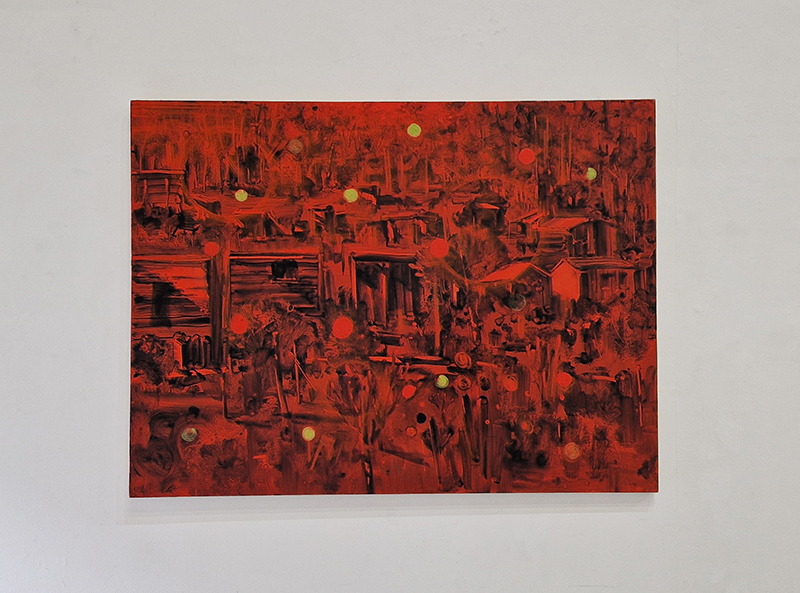
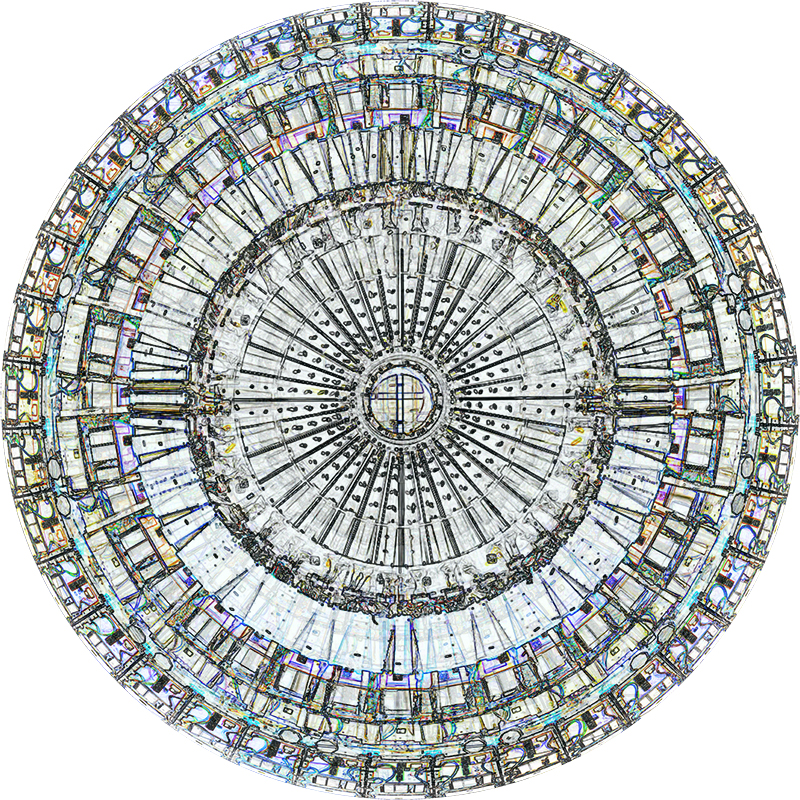
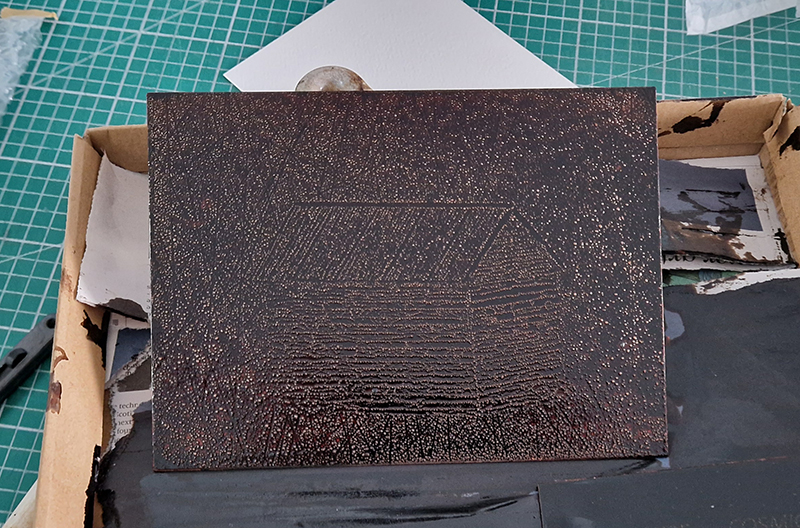
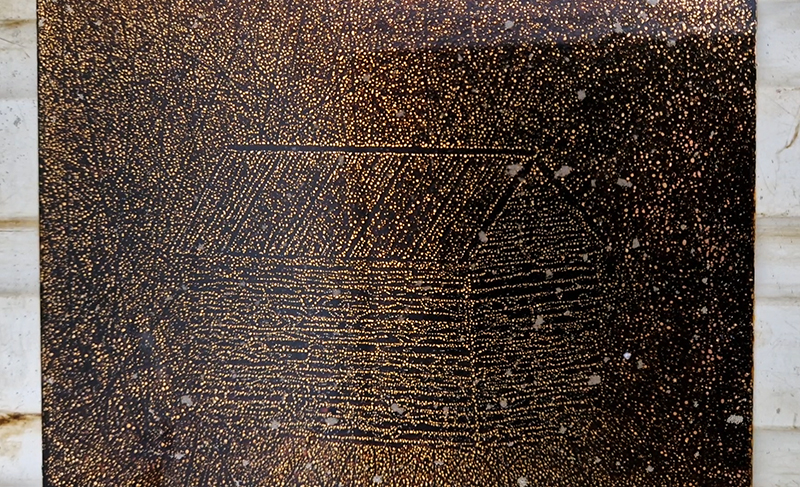
Cosmic Hut etched and patinated copper. First the image is screen printed onto the copper with a sugar based solution. It then goes through a sugar lift process of being coated with bitumen and submerged in warm water to dissolve the sugar and reveal the image before being etched. Once etched, parts of the image are blocked out as it is patinated with different chemical solutions that produce different colours. The image is based on the many cosmic ray detector huts abandoned across the North Yorkshire moors when the Haverah Park experiment stopped operating in the late 1980’s. These humble huts were once home to one of the largest extensive cosmic ray air shower detector arrays in the world, studying the highest-energy cosmic-rays arriving from space.
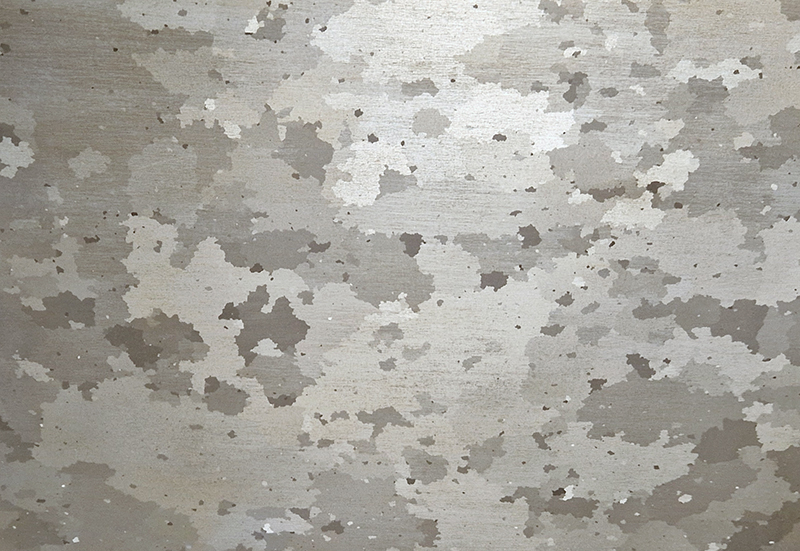
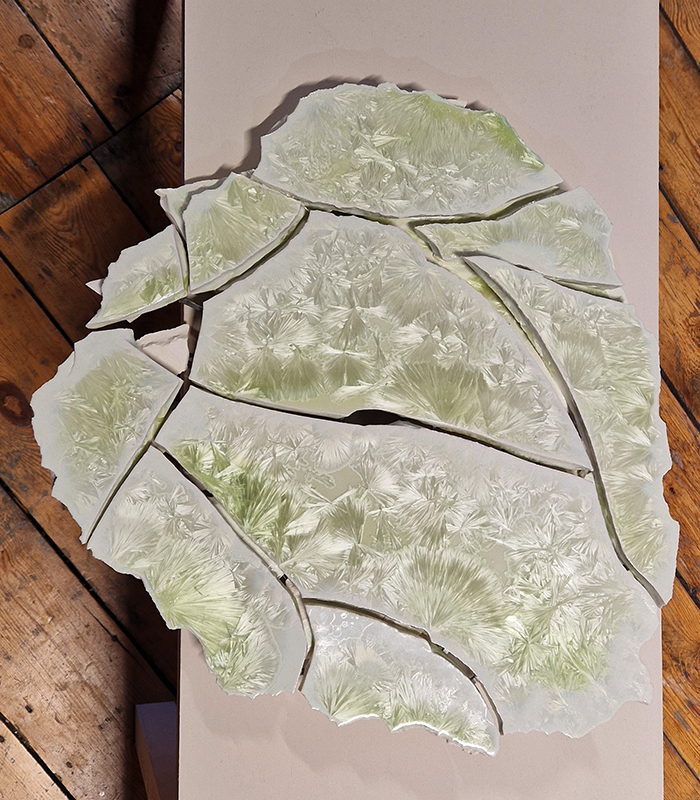
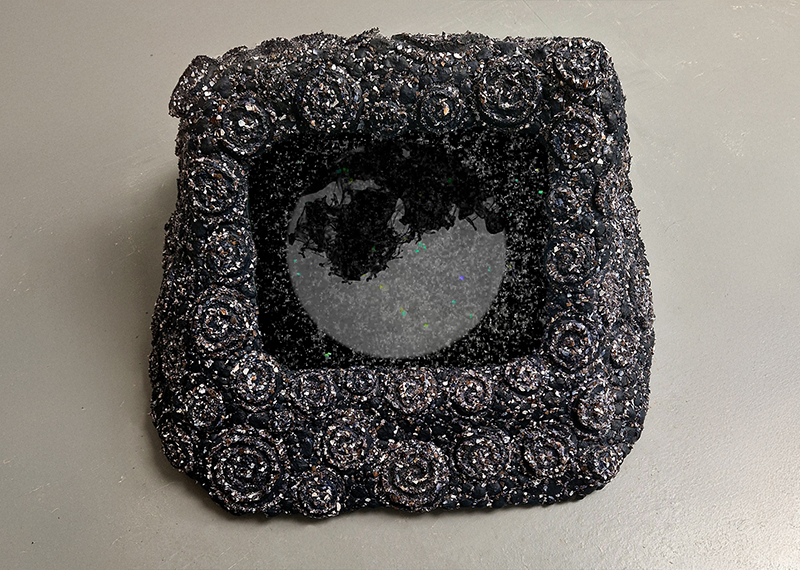
Moving forward with new work thinking about the Haverah Park experiment and the water tanks which were used to record cosmic rays as they arrive in sweeping disc like formations by registering the scintillating light of Cherenkov radiation caused by the particles, I am working towards making a series of small ‘tanks’. I am planning to use directional magnetic steel sheets for the outside of the tanks. I still have a couple of batches of this material provided to me by Union Steel Products a while back. I had first seen this material during the magnetic laboratory open day at The National Physical Laboratory and was fascinated by the jigsaw pattern surface. Norman P. Goss invented grain-orientated steel in 1934, it is a specialized iron-silicon alloy engineered to have exceptional magnetic properties in one specific direction, dramatically reducing energy loss. The jigsaw pattern of crystallographic orientation is known as a Goss texture. The very thin sheet of steel is coated in a specialized, multi-layer inorganic insulation chemically bonded to the steel surface during manufacture. It is very difficult to remove.

I used the first batch of Grain-Oriented Electrical Steel to create the work Domain of the Devil Valley Master which was shown in A Stone Sky at Thames-side Studios Gallery in 2023.
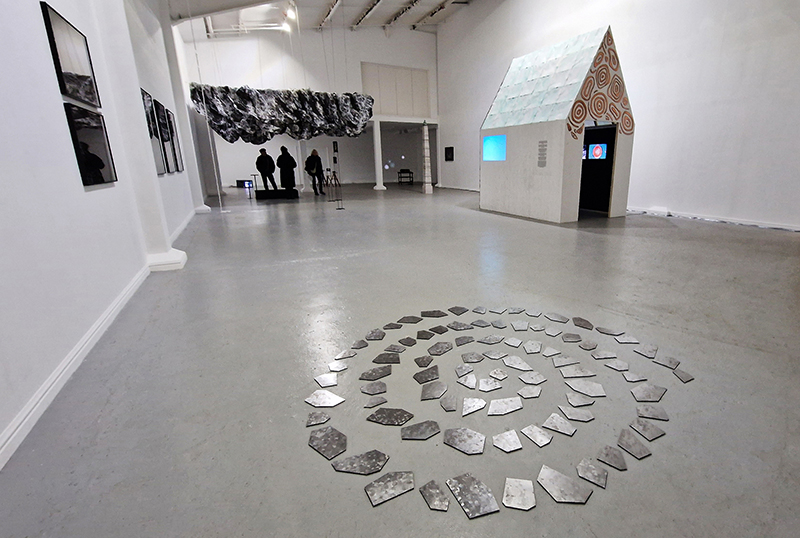
For this spiral sculpture I experimented with various ways of removing the grey coating, eventually finding sanding before etching in copper sulphate could achieve good results if through an arduous and messy process. It was still a bit hit and miss and I could end up with a muddy surface or a silvery one without really knowing why. The surface will flash rust extremely quickly when it comes out of the etching bath, or it suddenly becomes dull and patchy. For this new work I thought I would ask google AI if it could find any tips on removing the insulating surface and it actually came up with a plan that has worked. Much as I don’t like to use AI in a creative process, it was really useful in identifying the composition of the grey coating and suggesting the best removal agent and method. I have adapted the advice slightly after testing the results, but in the end it has saved me many hours of sanding and copper sulphate residue to dispose of. The process giving best results, is to just wipe clean the surface before etching in Ferric Chloride, then soak briefly in a neutralizing bath of bicarbonate of soda, followed by a quick dip in isopropyl alcohol to dispel the water before rapid drying. This batch has a slightly different crystallographic pattern to the batch used for the spiral.
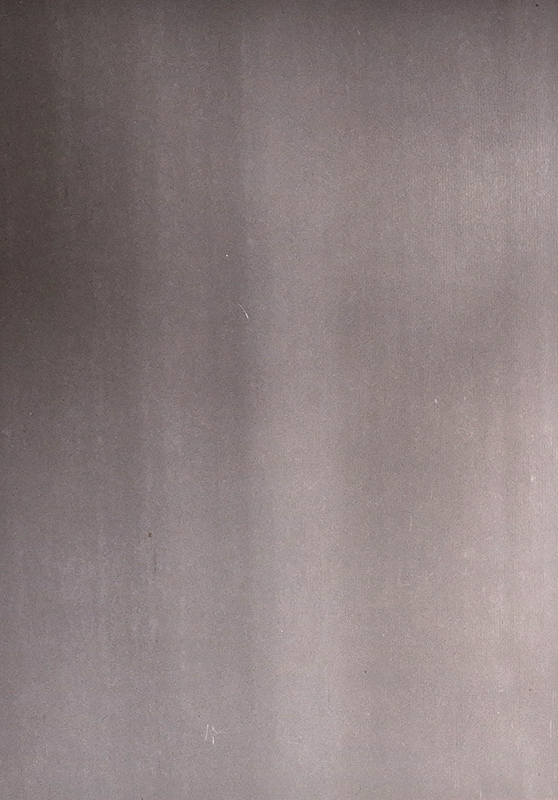
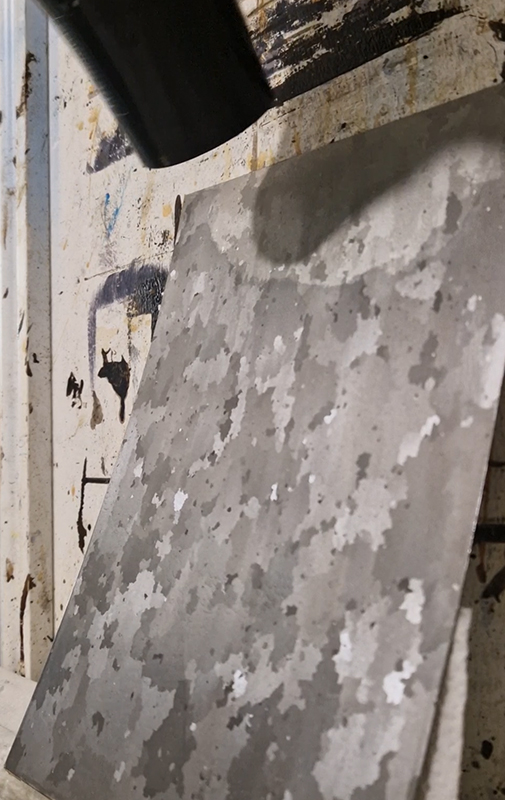
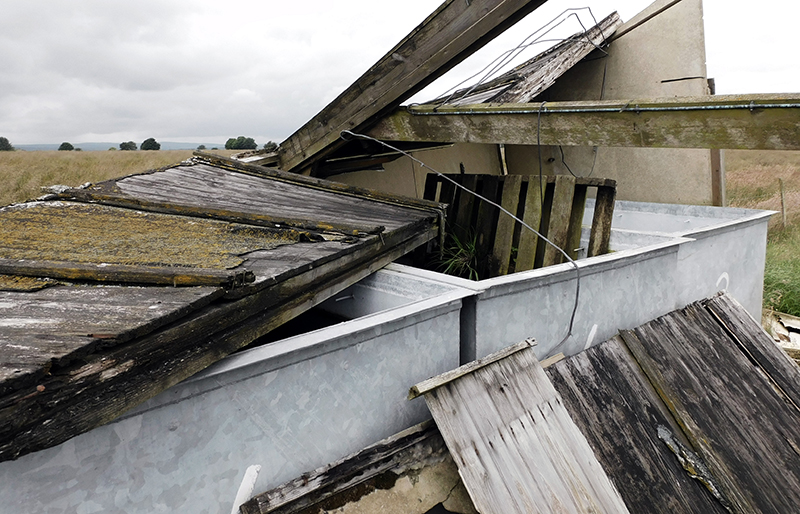
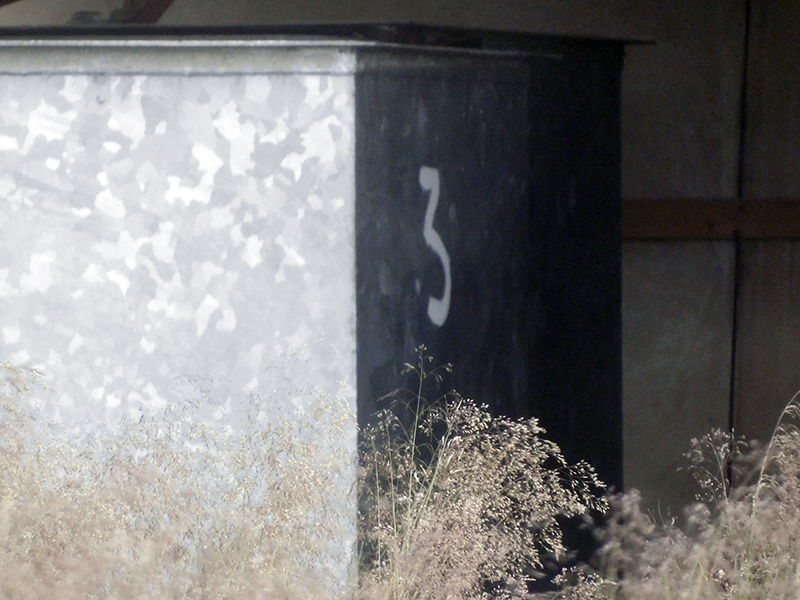
The original water Cherenkov detector tanks at Haverah Park are made of galvanised steel which also has a patterned surface known as a spangle. This is caused during manufacture when the steel is hot dipped in zinc and the individual zinc crystals spread as they cool. Using the directional magnetic steel echoes the pattern and also references the interaction of cosmic rays with magnetic fields which can accelerate them across space but also deflect them from reaching Earth’s surface.
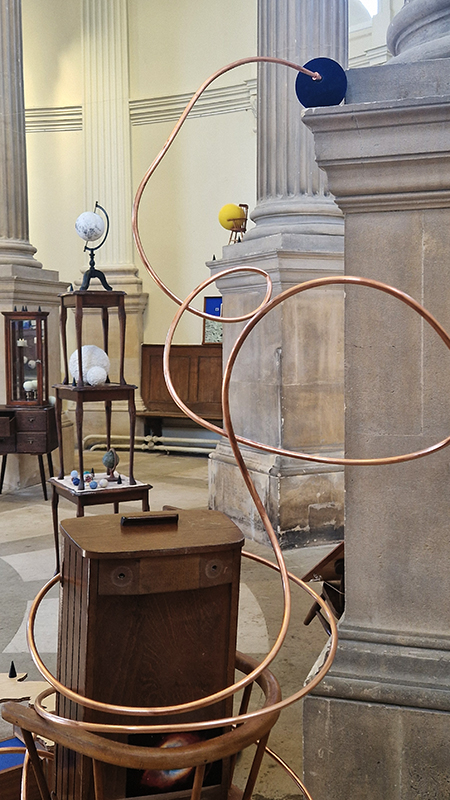
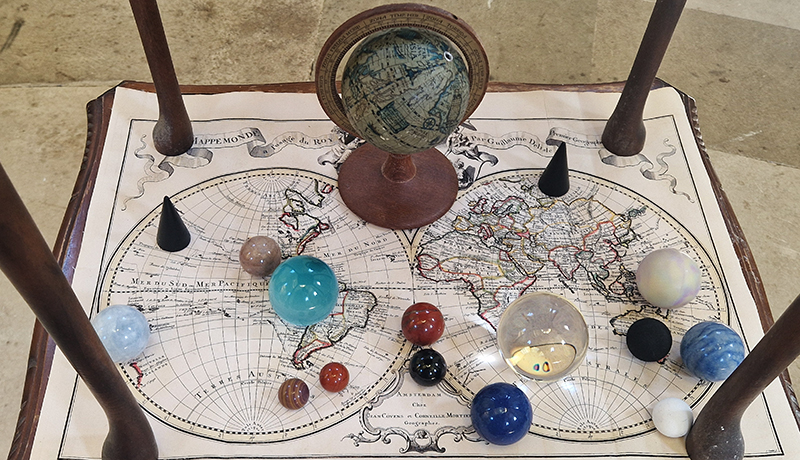
Working on ideas for a 5th tablet as part of The Instruments of the Anemoi series of sculptures that reference methods of natural navigation. Currently I have included magnetism in the form of the compass and the lodestone, the winds and the north star.
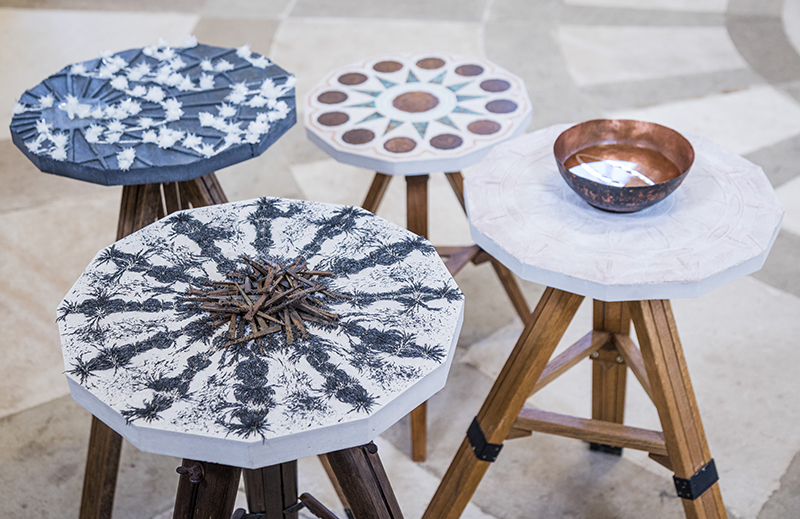
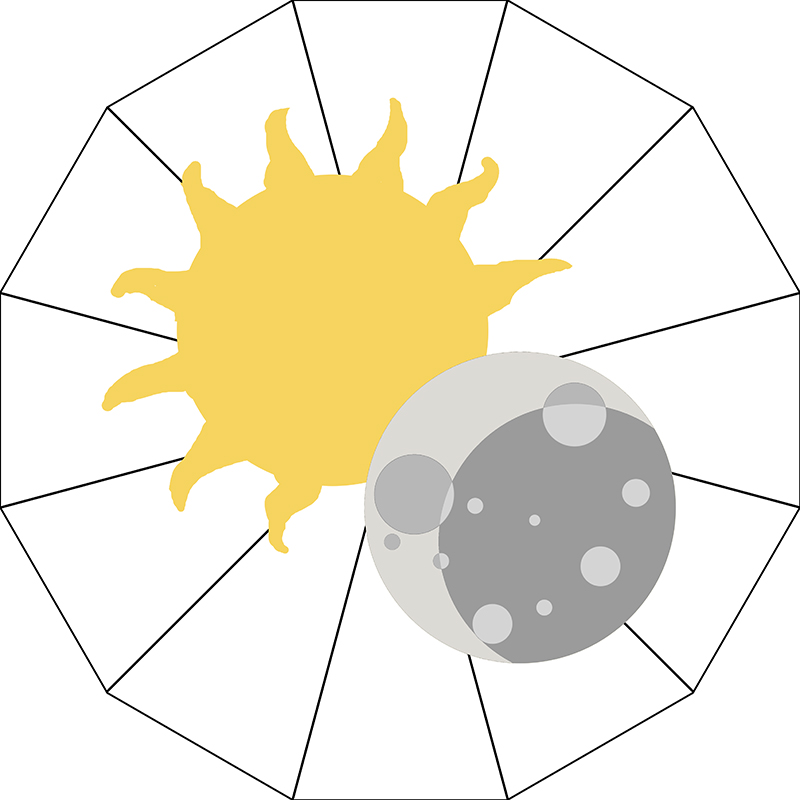
Perhaps influenced by seeing the total eclipse of the sun this year I am thinking of making one referencing the sun and the moon as beacons of navigation. The sun being the most obvious and easiest to work out cardinal direction at least, with the moon needing more knowledge of its lunar cycles. I also like the idea of using copper for the sun and aluminium for the moon.
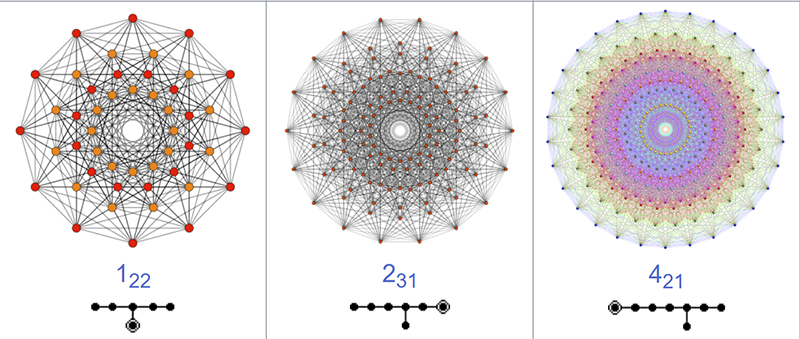
I have been looking at what might be useful to help visualise a fifth dimension and came across Coxeter elements and planes which deal with geometric reflections. The maths is beyond me but the shapes and patterns involved are wonderful.
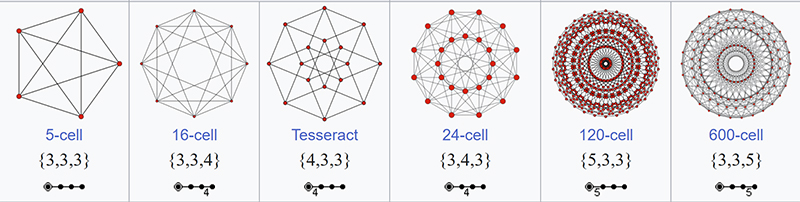
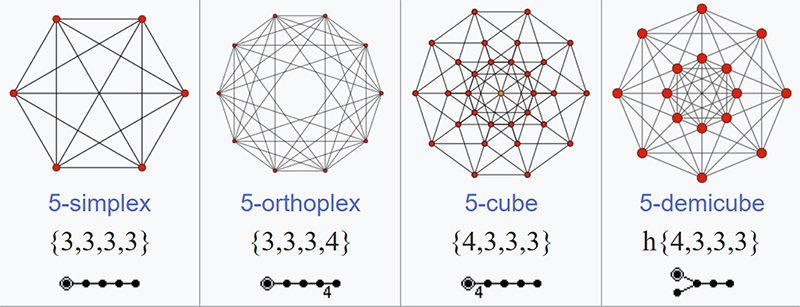
These could be useful for my work reinterpreting the Cosmati Pavement in Westminster Abbey that purports to offer clues to determine the end of the Universe, as different symmetries are used within the mosaic design to signify the different complexities between the earthly and the heavenly spheres. In the symbolism of the Cosmati Pavement, the journey from earthly materialism to spirituality is seen as a progression from multiplicity and diversity towards unity and uniformity.

Through this work I will look at changing human relationships to Fire, Earth, Air, Water and the Aether since the time the Cosmati Pavement was installed in Westminster Abbey in 1268. The pavement uses number, patterns and geometry to articulate the medieval understanding of the cosmos and the end of time. I am using Richard Foster’s book Patterns of Thought: the hidden meaning of the Great Pavement of Westminster Abbey, for reference and Martin Rees book Just Six Numbers: the deep forces that shape the Universe, as reference for symbolic contemporary numbers that are used to describe the cosmos.

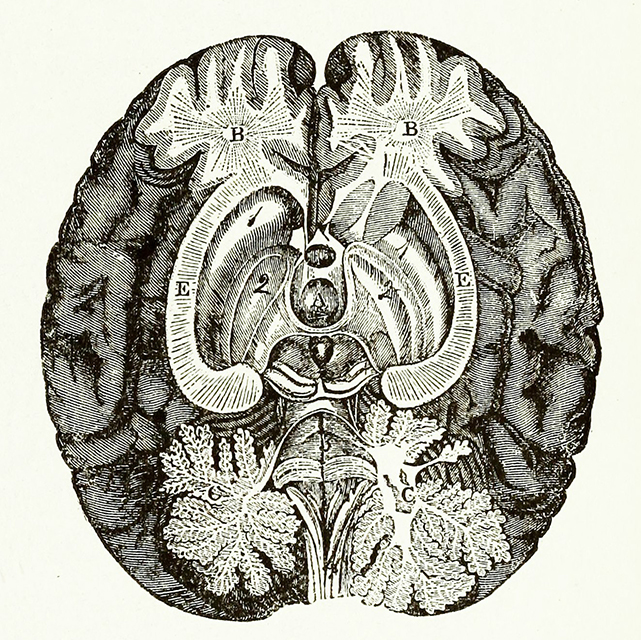
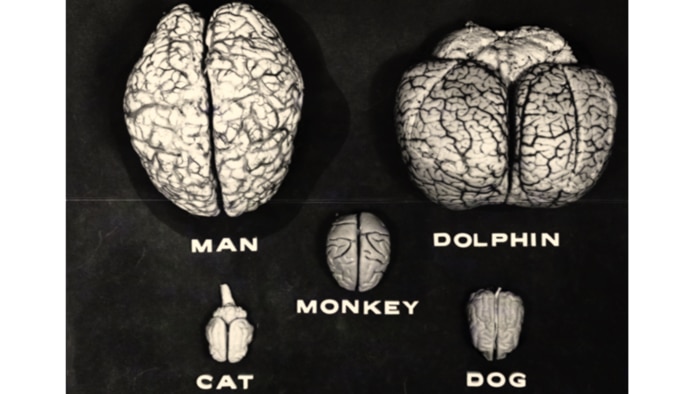
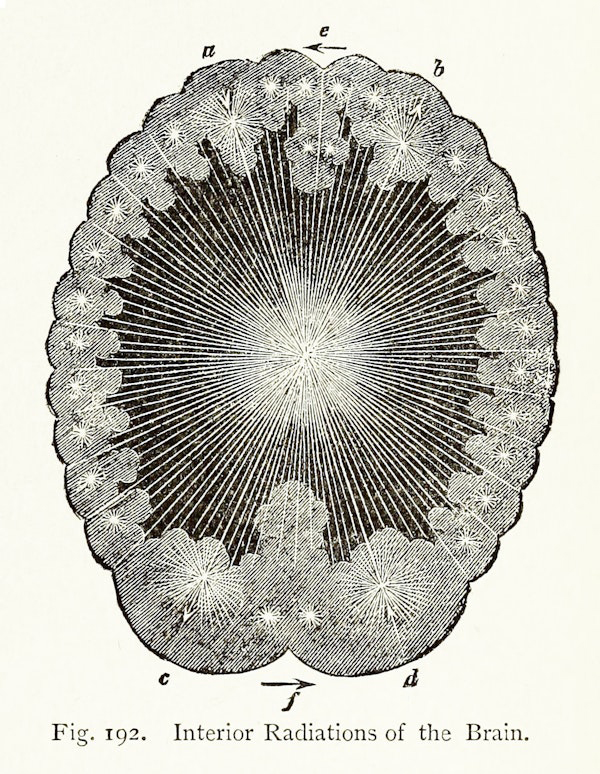
The end of the world was imagined as a reversal of creation when all matter will return into the primordial chaos of elements that are reabsorbed into the divine mind. The centre sphere of the pavement relates to the primordial chaos from which the four elements of earth, water, air and fire separated at creation and will return to at the end of time. Swirling eddies of unformed matter at the threshold of eternity are transformed by a breath across the turbulent waters bringing light to the darkness. I have chosen what is known as the Density Parameter represented by the Omega symbol, to relate to the Aether – this is a number that has not been determined by physics and its value describes the possible fate of the universe. The 61 lozenge shapes circling the Silva, unformed matter, are given to represent the idea of eternity. I like the illustration of the interior radiations of the brain from The Principles of Light and Color, 1878, by Edwin Dwight Babbitt that explores the physical, metaphysical, and therapeutic properties of light and colour. It has a similar relation of a radiating mind of creation.
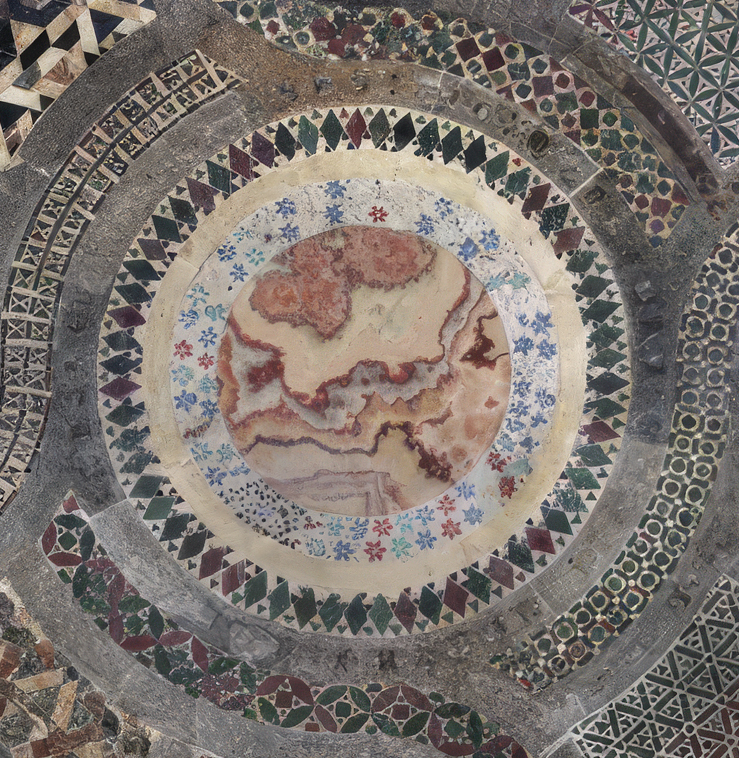
The inner square of the pavement contains four other spheres which represent the elements in their archetypal form before they transition from the metaphysical or the intellect, to the material sensible world. The pavement mosaics show a transition from a variety of patterns at the outer edge through to simplified regular polygons, the archetypes of form representing a perfection that we only experience as a shadow on Earth. Six-fold symmetry patterns signify astronomical time and the perfection of the material elements and four-fold symmetry patterns describe mundane time and compound bodies full of diversity when the elements mix and entangle.

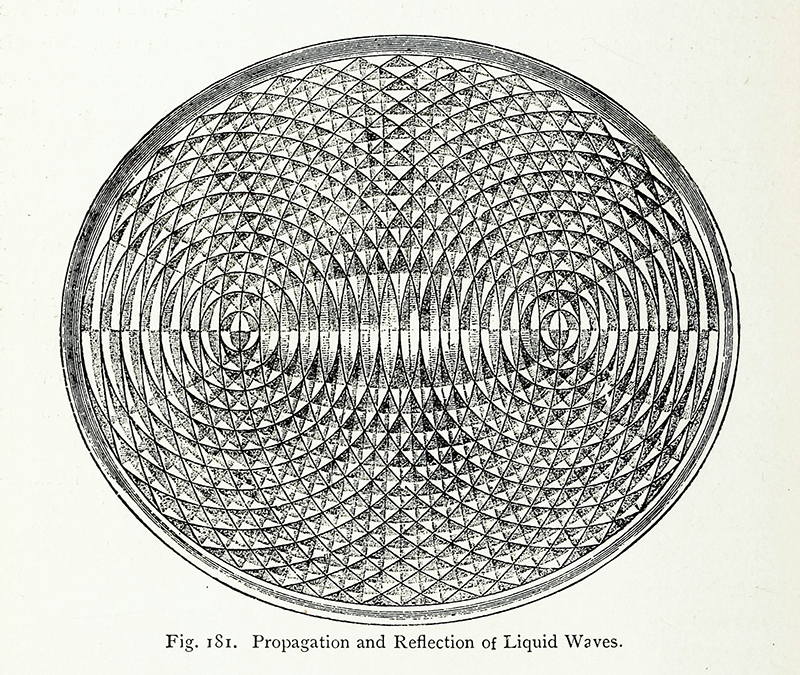
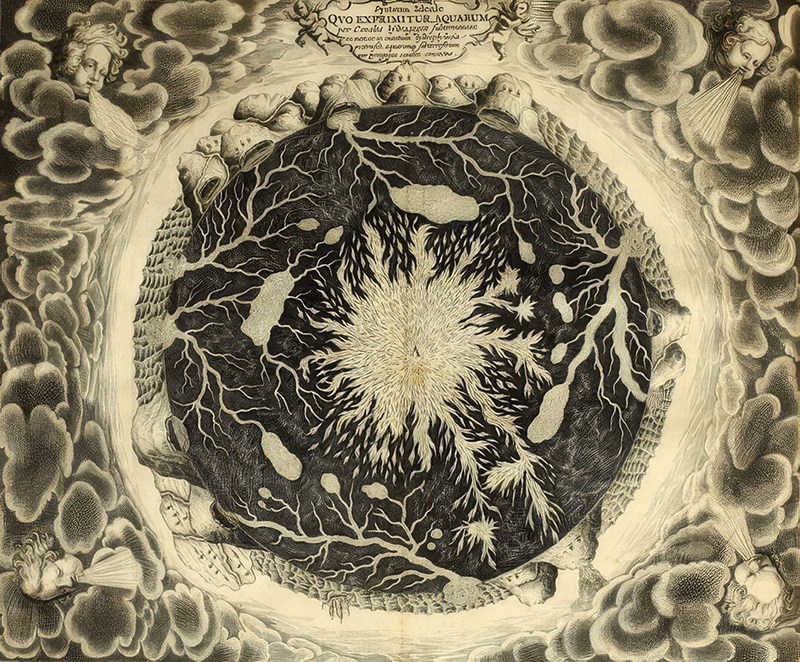
To the north is the sphere representing water containing a seven sided polygon which symbolises the moon. I have chosen to relate the number Q ( 1/100,000 (or 10⁻⁵)) to this sphere. Q represents the texture of the universe through which we can observe such phenomena as gravitational ripples. Other references I am looking at are Mundus Subterraneus, by Athanasius Kircher published in 1665 which has delicious illustrations of the underground world and all its riches and a great illustration of liquid waves from The Principles of Light and Color.
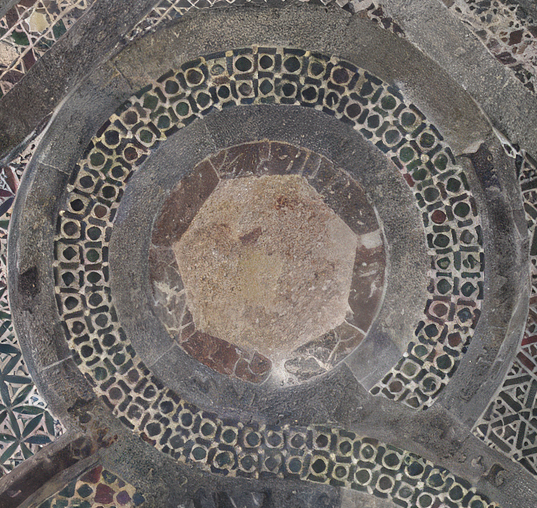
To the south is Fire, represented in the pavement by the symbol of the Sun set in an octahedron which heralds the start (or the end) of astronomical time. I have chosen the nuclear efficiency number for this sphere, represented by the epsilon symbol (ε = 0.007), it is the process which allows for stars to burn steadily for billions of years.
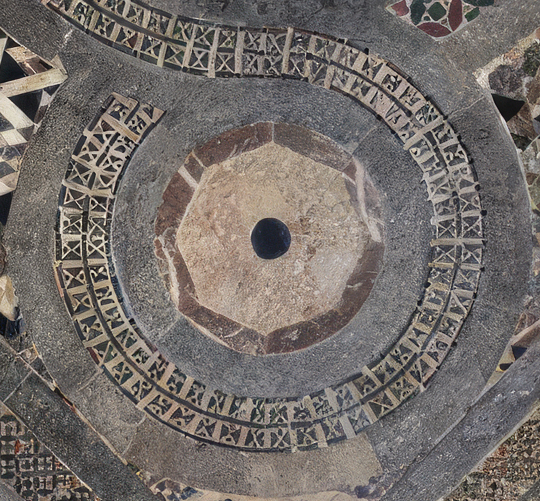
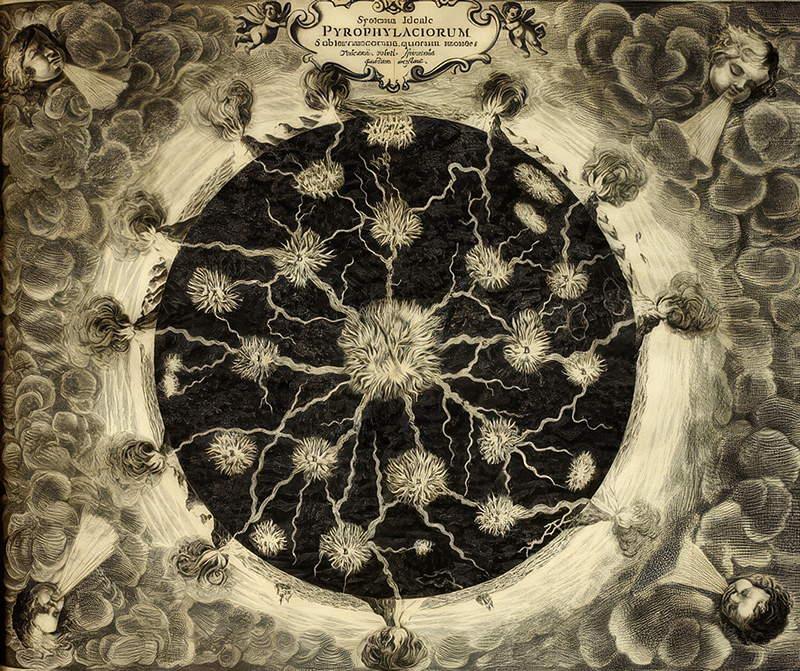
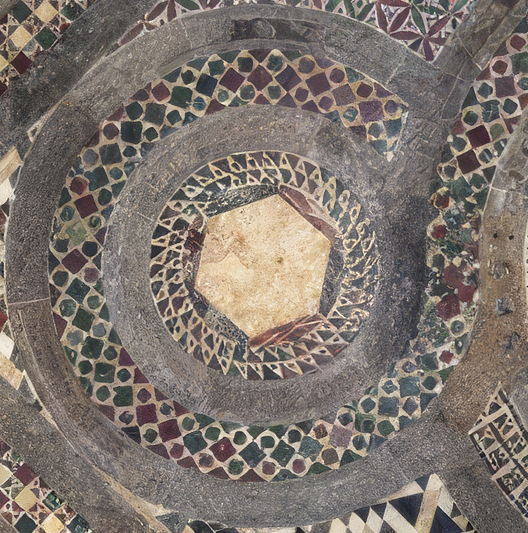
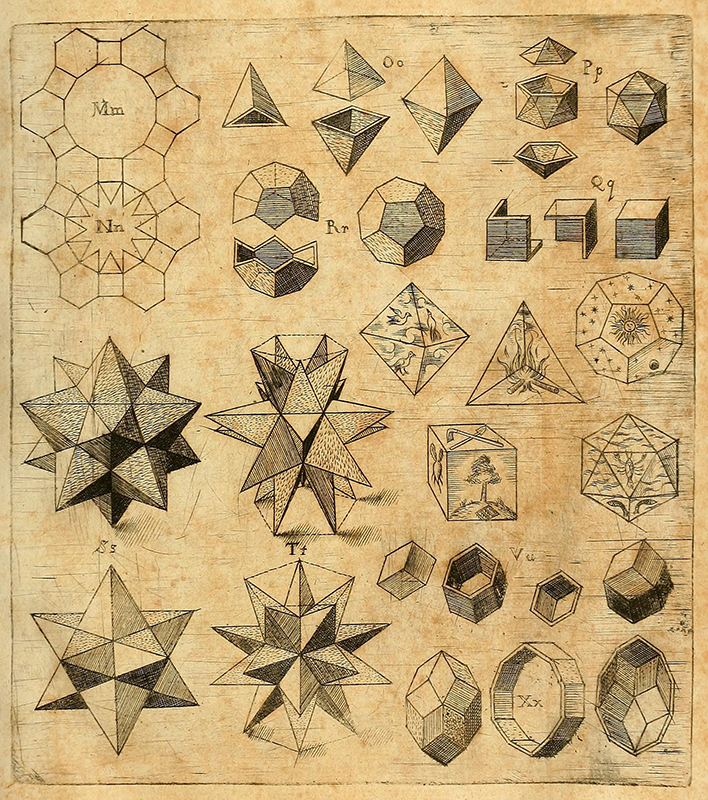
To the West is Earth, represented by a hexagon. I have chosen the large number N 10³⁶ for this sphere, representing the relative weakness of gravity compared to other forces which act on the solid matter of Earth. Also referencing Kepler’s 1619 work Harmonice Mundi (Harmonies of the World) where he linked the five regular Platonic solids to the classical Greek elements. The illustration of the brain laid bare from The Principles of Light and Color has an Earth like quality.
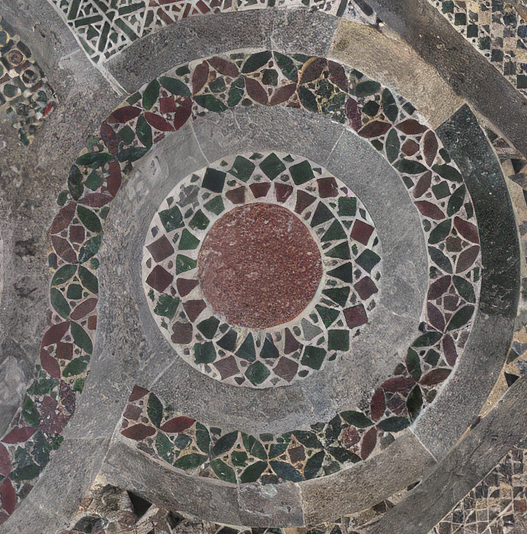
To the East is AIR represented by a circle signifying the logos from where the breath came that stirred the waters. I have chosen the number Λ (Lambda) which describes the expansion of the universe and ties in with things that move through the air.
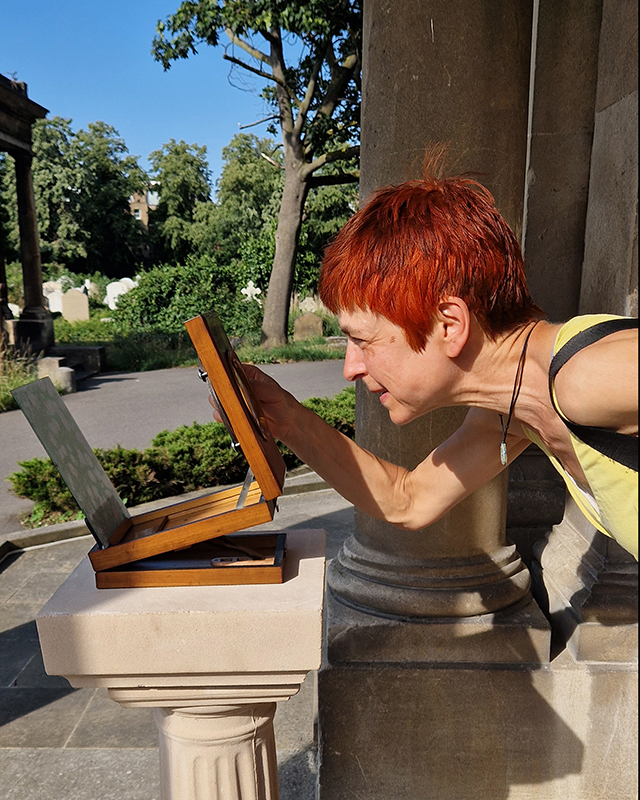
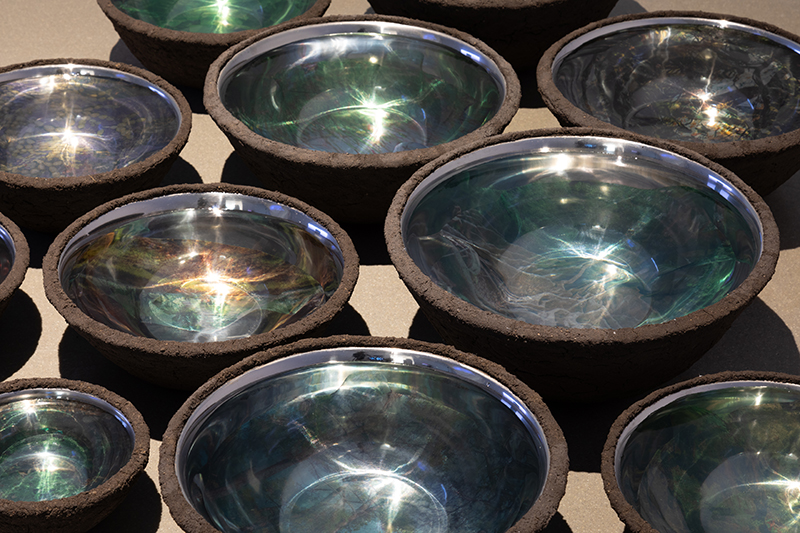
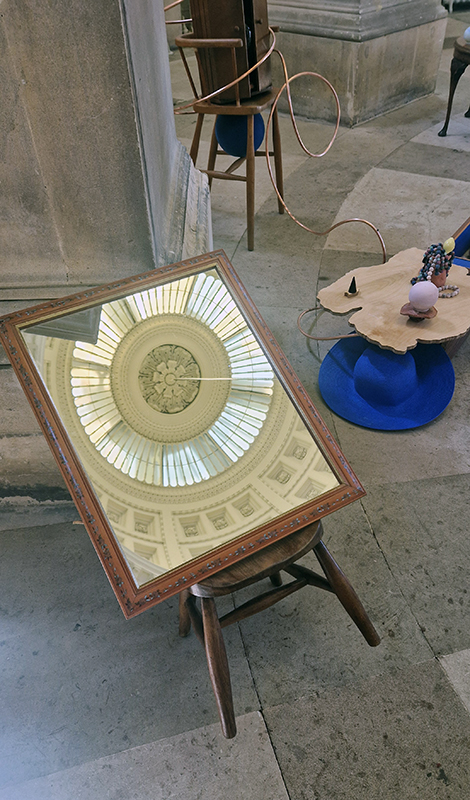
Looking at things that move through the air in other contexts, I am planning to attempt some Schlieren photography. Curator Maria Hinel’s husband first told me about this process and I have finally had a look at how it works. It is an optical technique used to visualize the flow of fluid and density variations in transparent media (such as air, water, or gas) that are invisible to the naked eye. It sounds quite a tricky process requiring absolute precision. First thing I need is a Newtonian Telescope Primary Mirror.

The Magnetic Universe Gresham lecture by Professor Katherine Blundell OBE gives a very thorough overview of magnetic fields from the bar magnet to magnetars and the most recent discoveries by the MeerKat radio telescopes imaging the heart of the milky way that are yet to be explained.
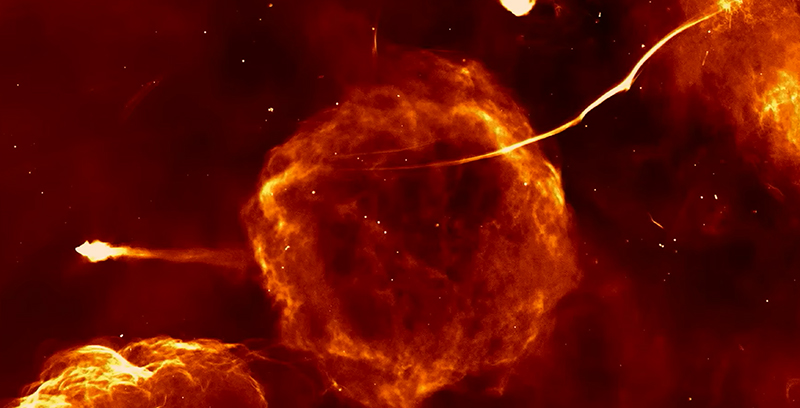
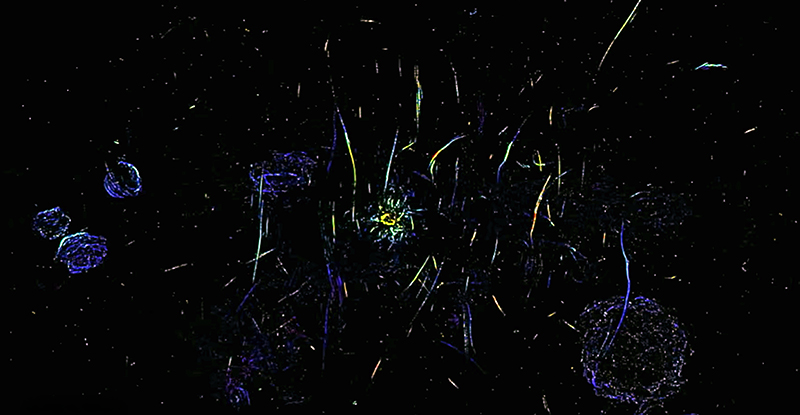
Wrinkled Time by Marcia Bjornerud this essay is from a couple of years ago but I still love to read it every so often. Or you can lay back, listen to Marcia read it and contemplate how unique and precious the Earth is.

Gallery Visits

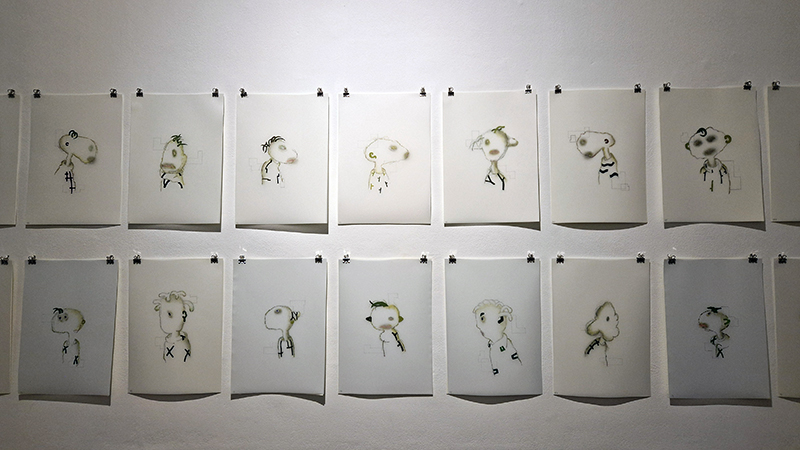
Oona Grimes Weed Killer at Danielle Arnaud Gallery. I has quite an emotional response to the works in this show which present perspectives on cruelty, loss, responsibility and power. I had listened to Natalie Haynes ‘Stands up for Euripides’ episode on the play Medea, a woman notoriously vilified for killing her children to spite her husband who is abandoning her. Oona’s collaged drawings of colourful cartoonlike characters emerging from velvety black surfaces intent on inflicting pain are hard hitting despite the comedic nuances. The works dig deeper than purely physical assaults into psychological damage and family relationships also explored through a tender film. What I think I found especially hard was the ‘chorus’ of bruised ghostly children, so sad and enigmatic. Looking so isolated and vulnerable, they speak for the children of Palestine and Gaza where adults should be protecting and nurturing but instead they are warring and damaging.
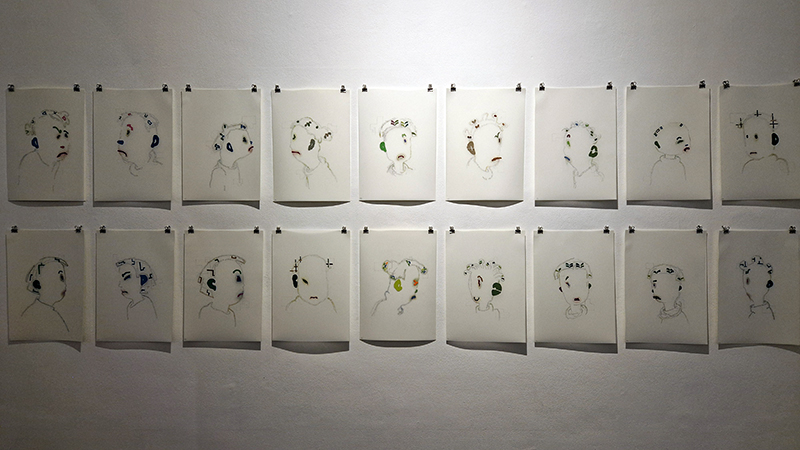
Salon for a Speculative Future presents: How to be in the Future: A Future Sensorium curated by Monika Oechsler at Chisenhale Studios. A beautiful show sensitively curated to bring together works that speak to sensory awareness and physicality. The exhibition features sound sculpture, sonic voicing, rhythmic movement, body scan sculptures and moving image works. Artists include Adonia Bouchehri, Kate Fahey, Alice Sheppard Fidler, Lisa Chang Lee, Anna Mays, Kirti Virmani, Nicola Woodham.
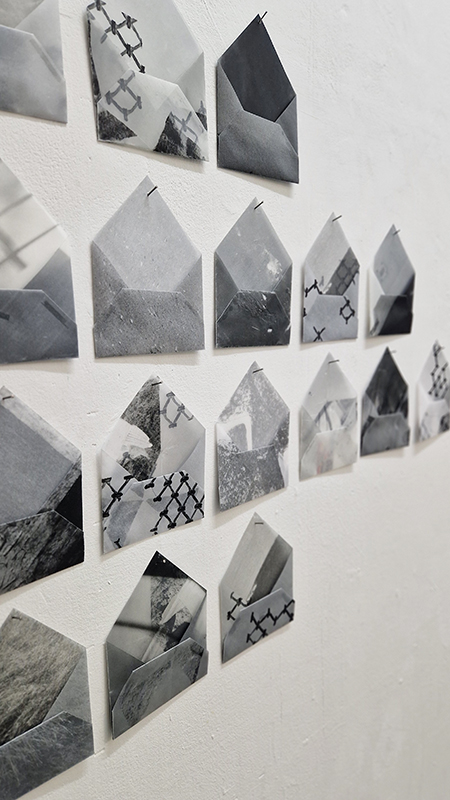
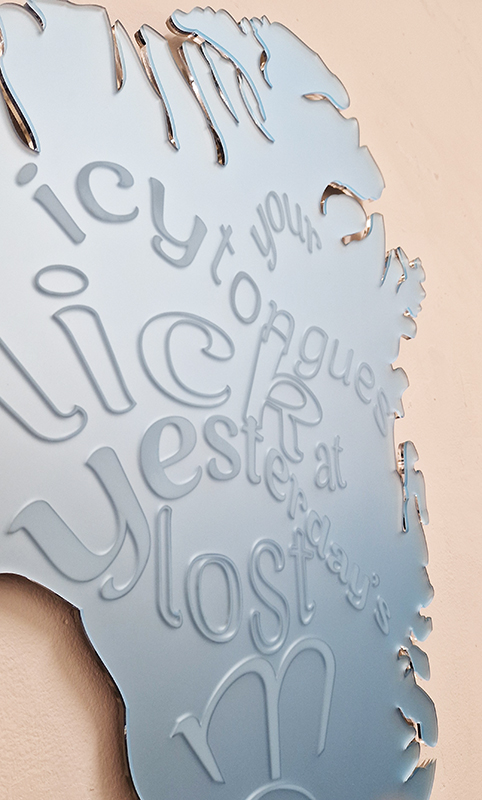
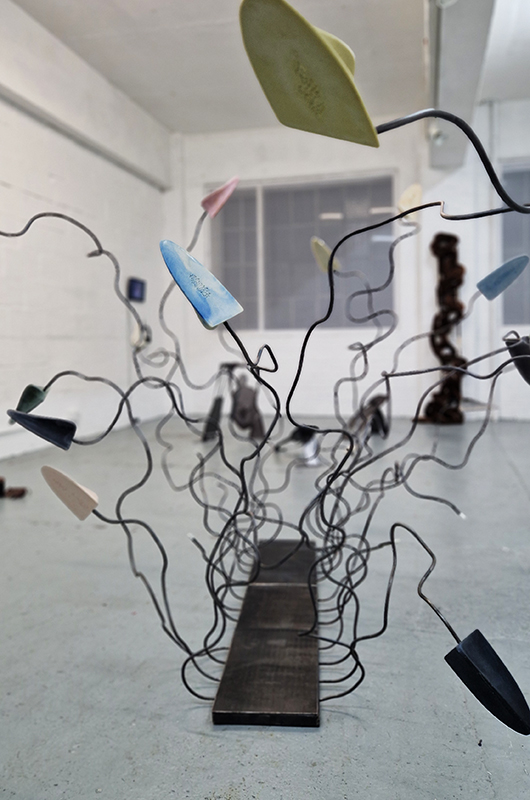
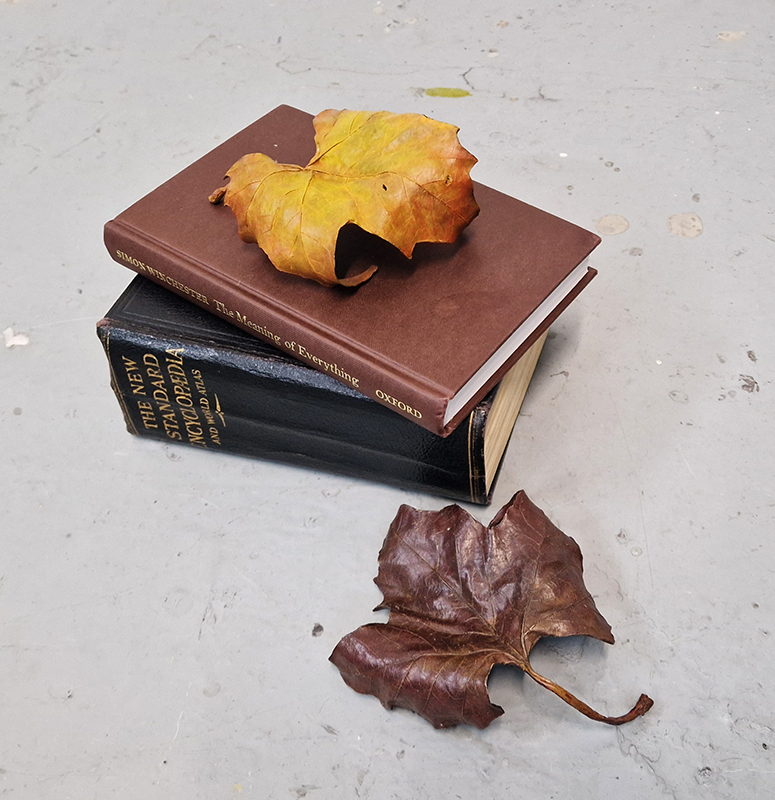
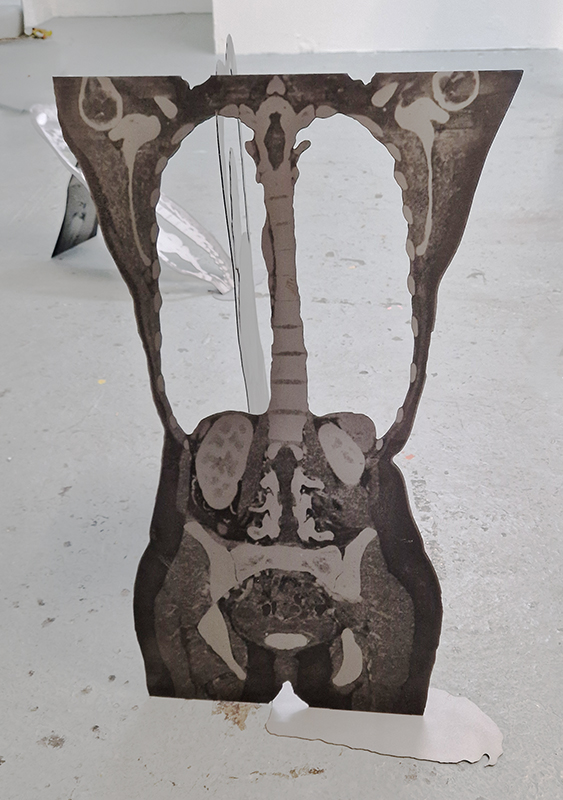
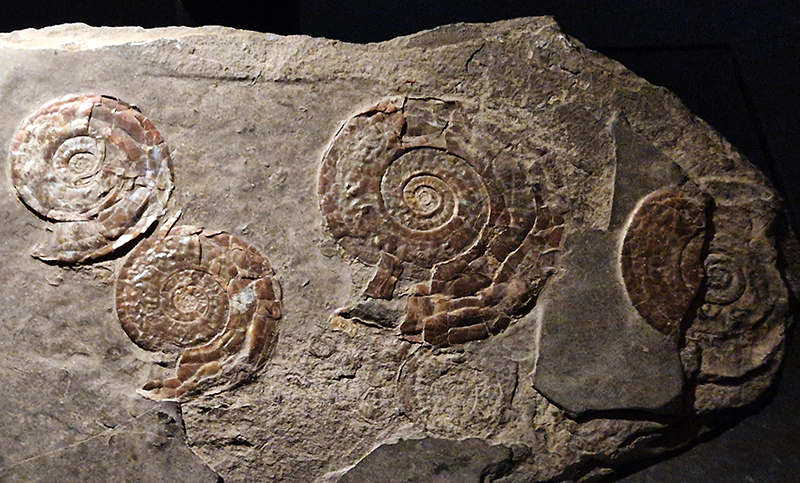
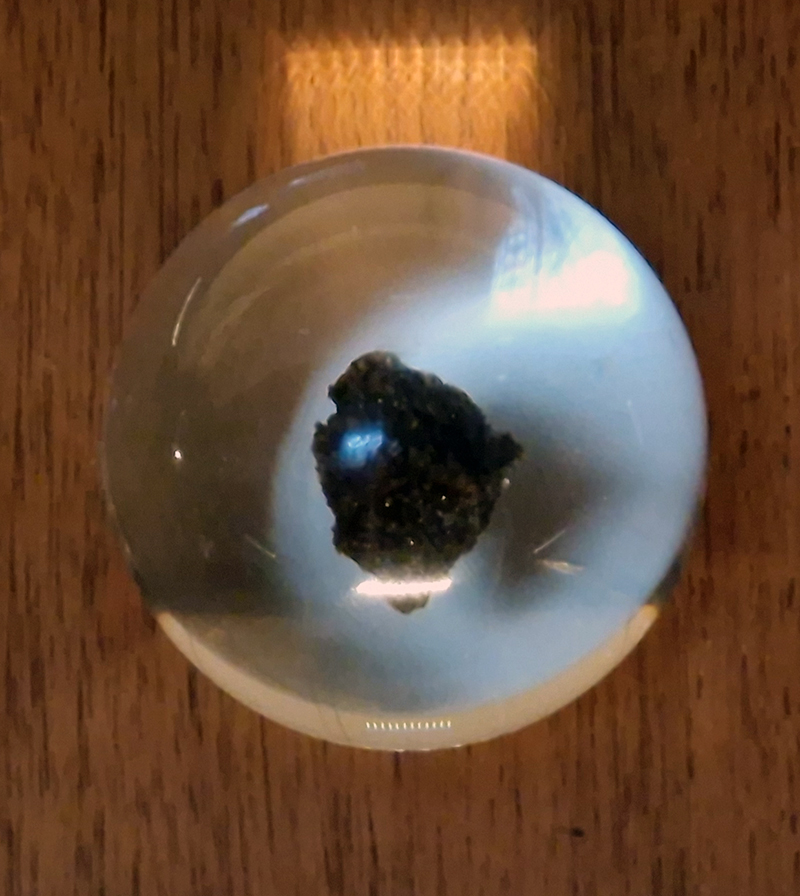
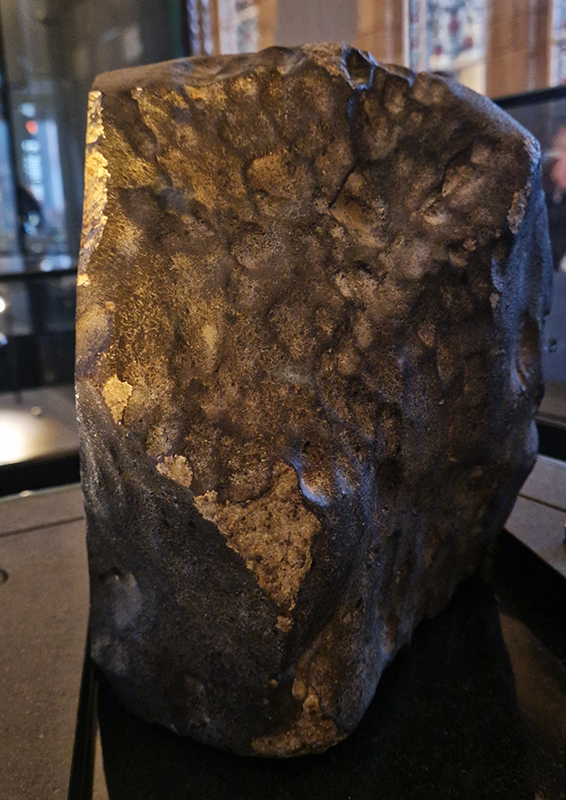
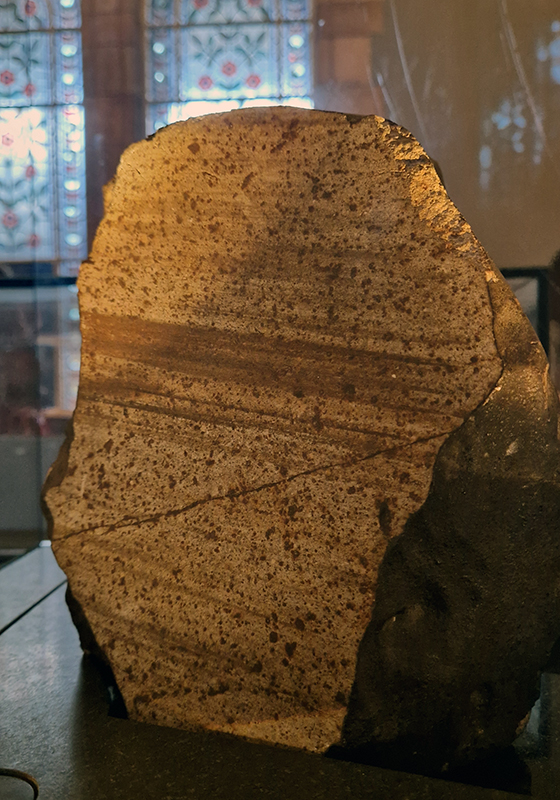
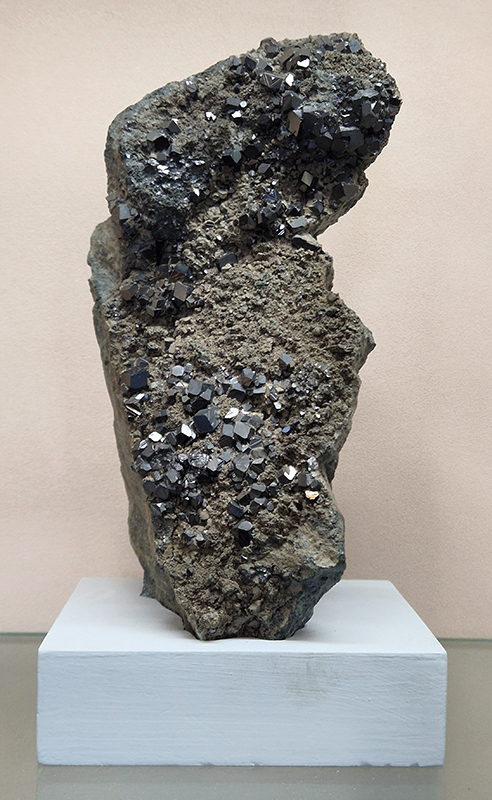
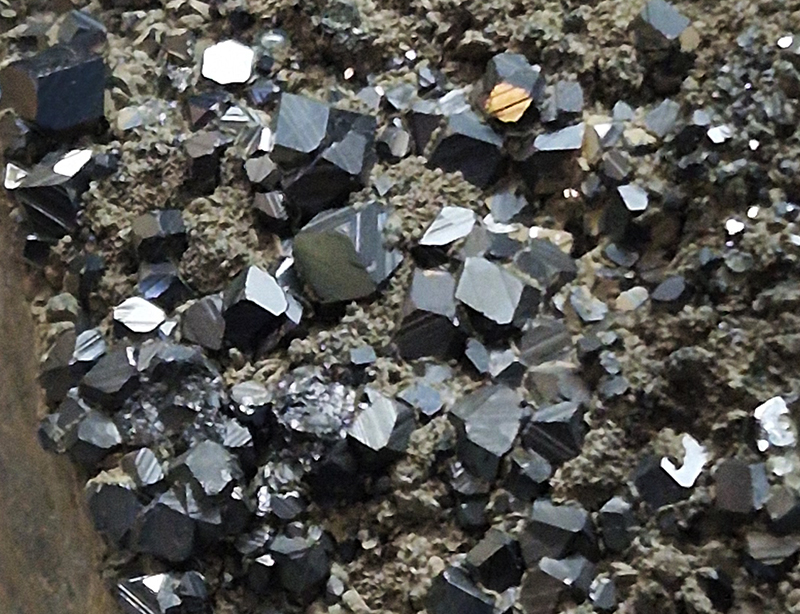
The Natural History Museum is somewhere I should go more often. Popped in to see the new temporary gallery called Nature and Us which was a bit chaotic so ended up looking at the thrilling black dodecahedra on chlorite example of magnetite, a tiny moon rock in a glass sphere, William Smith’s ammonites and the Wold Cottage Meteorite which was sent hurtling to Earth when two asteroids collided in December 1795, surprising ploughman John Shipley who was working nearby when the 25kg rock crashed to Earth. It became key evidence that rocks could have extra terrestrial origins and was duly commemorated with an obelisk at the landing site.
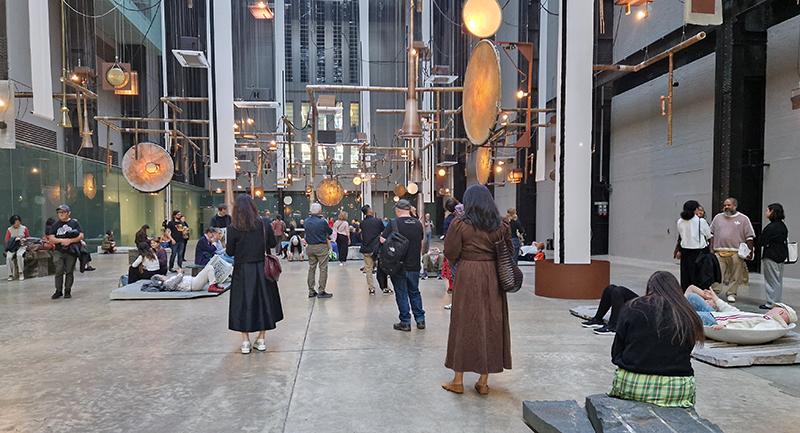
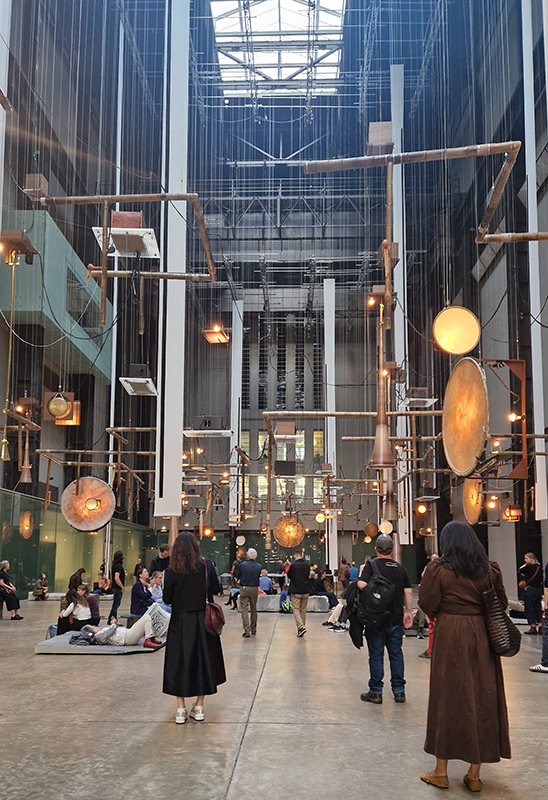
Engaging new commission at Tate Modern Turbine hall, sonic installation by Tarek Atoui: Hold.
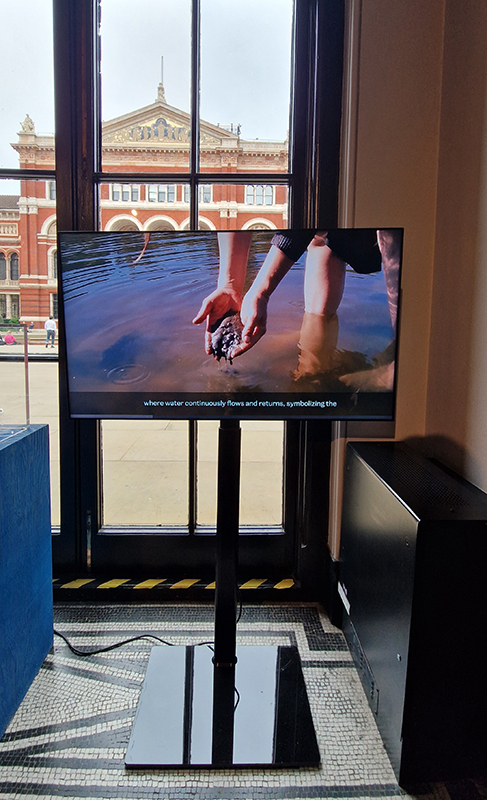
Water Body by the art collective Marshmallow Laser Feast and author Robert Macfarlane, featured as part of the 70th BFI London Film Festival (LFF Expanded). I think it was the price of the ticket and the fact that is wasn’t as immersive as we hoped that left us a bit flat despite being impressed by the visualisations of planetary water circulation. It felt lacking some kind of emotion or element to connect with the audience.
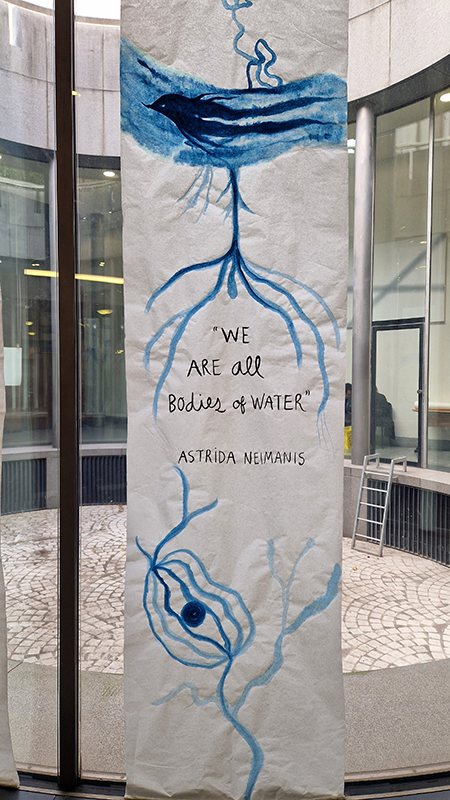
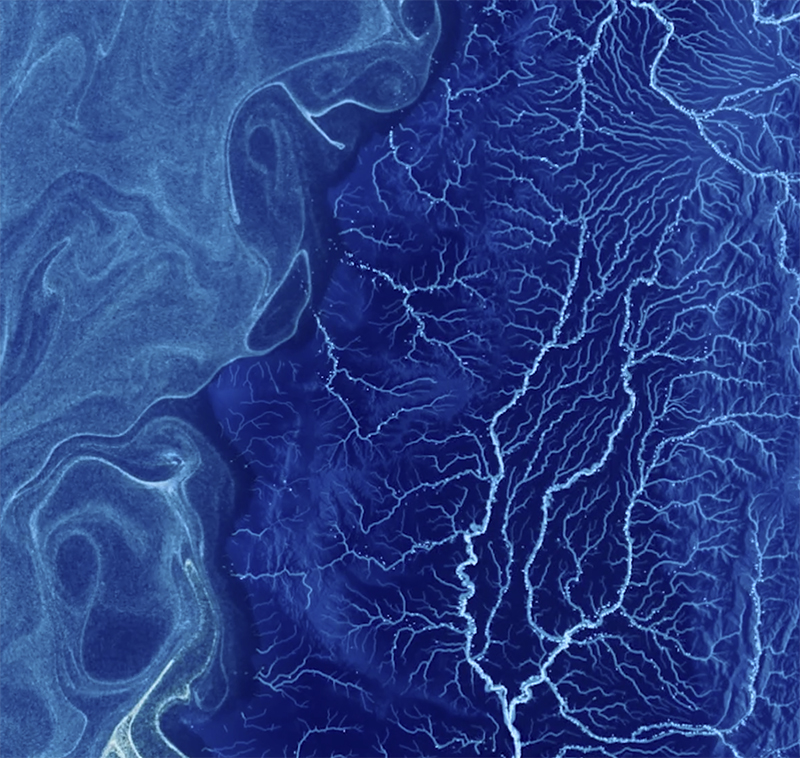
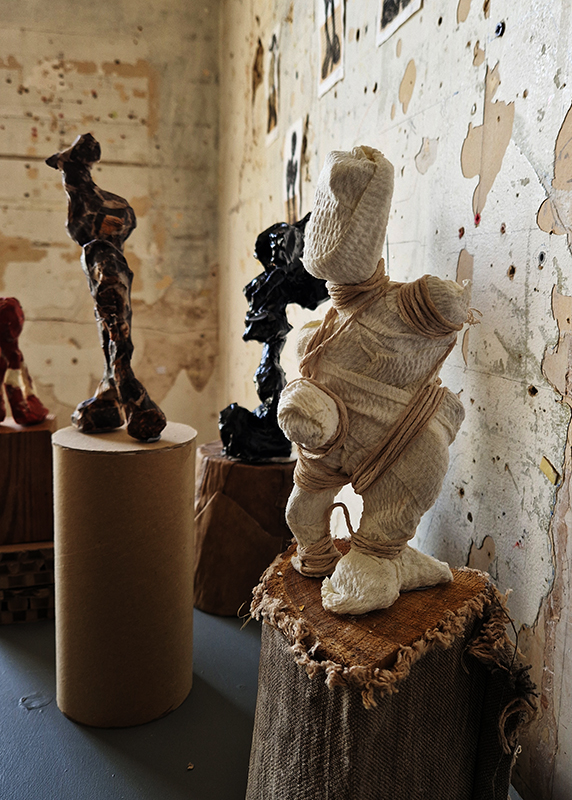
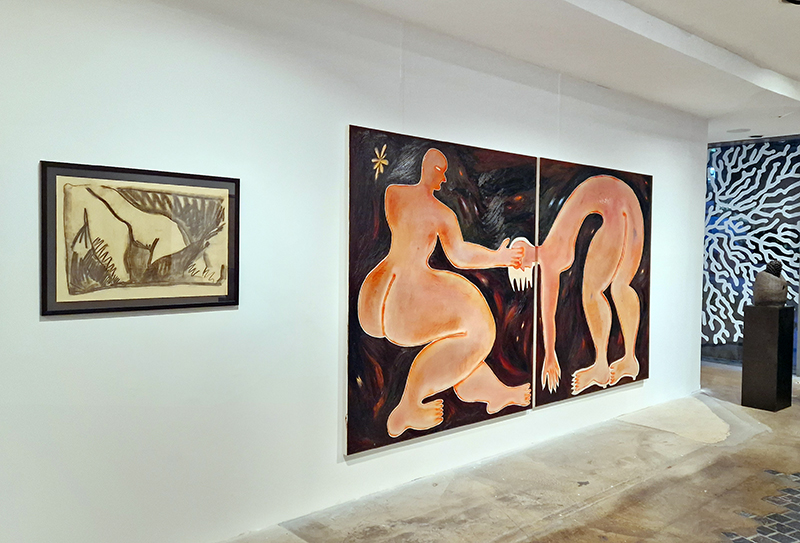
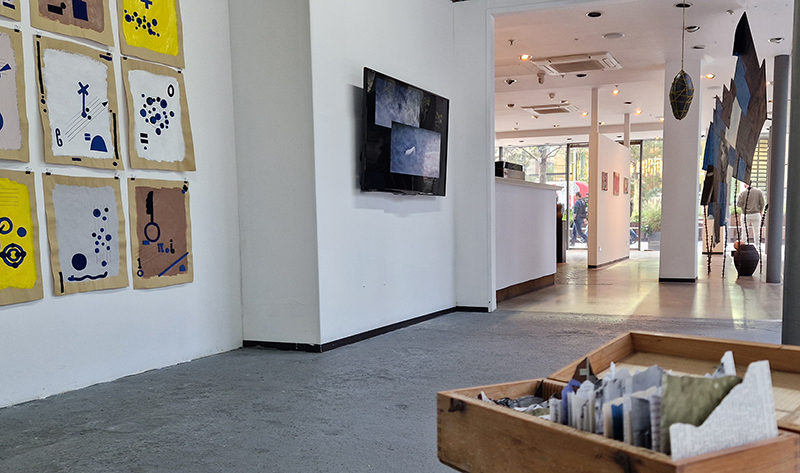
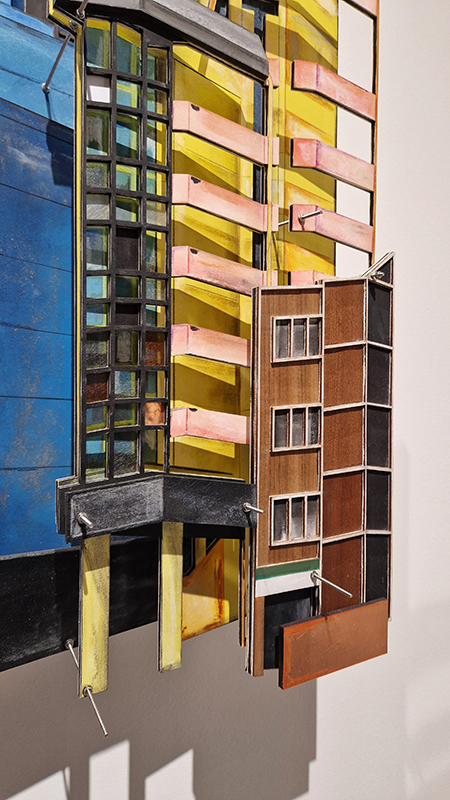
Falsework curated by Catherine Li at Thames-side Studios Gallery. Featuring works by Molly Grad, Steven He, Amélie McKee, Robin Finch Pickering, Ana Teles, and Chris Thompson, the exhibition traces a shared interest in forms that resist being reduced either to function or to representation. Structures may initially appear legible but their meanings shift through material, scale, position and perception.
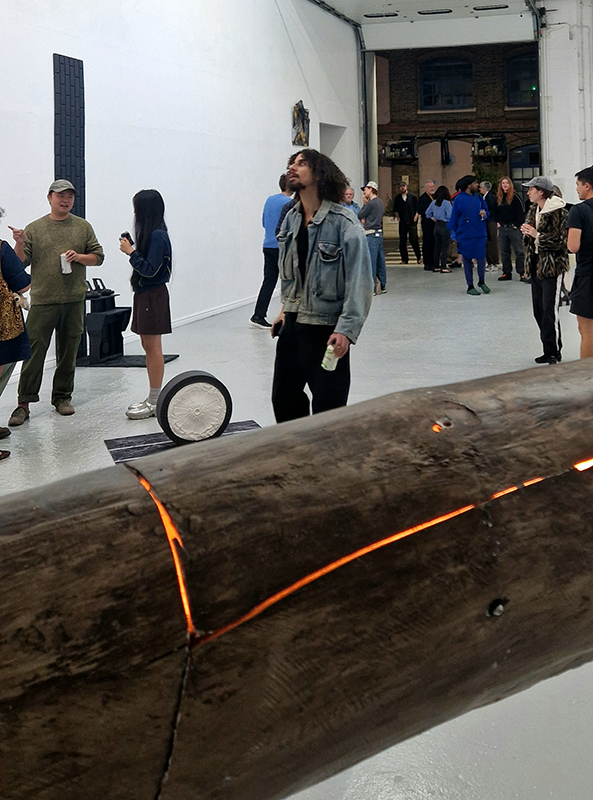
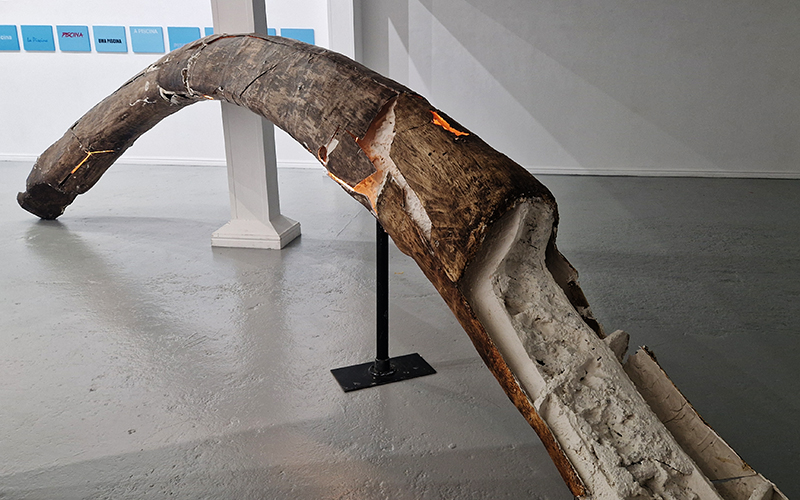
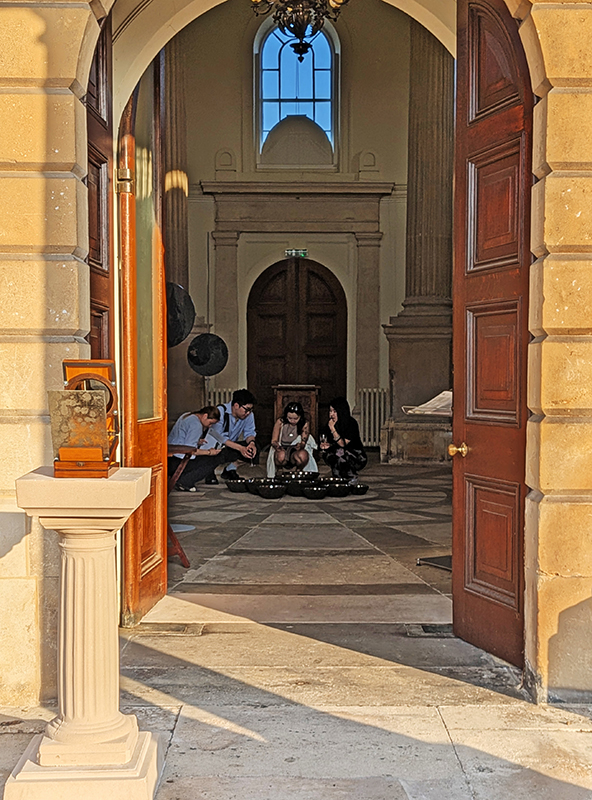
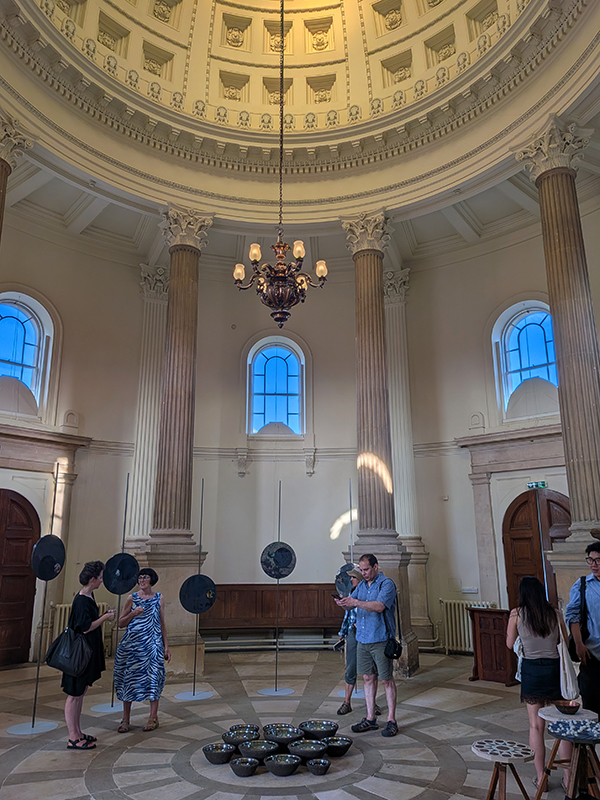
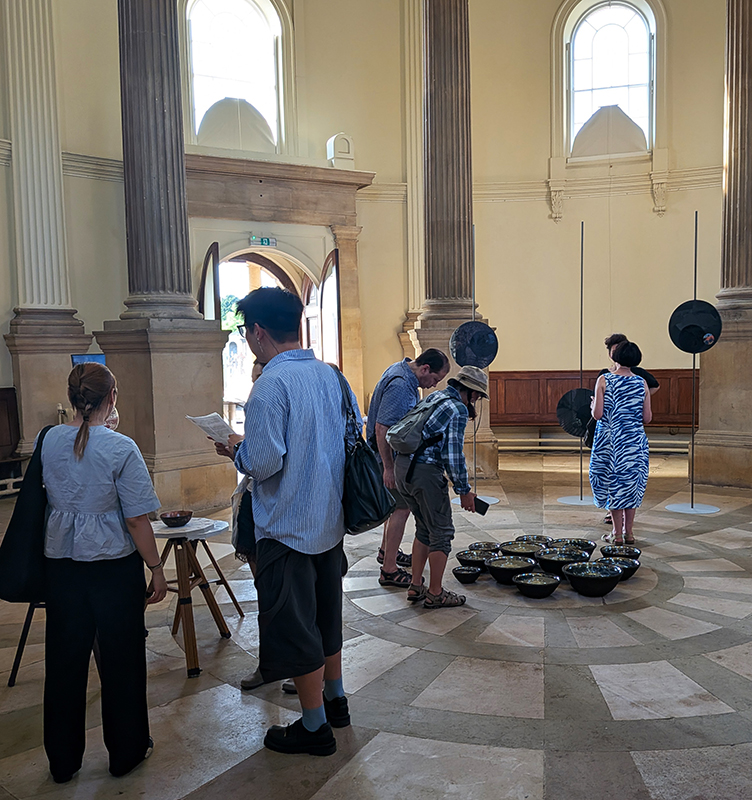
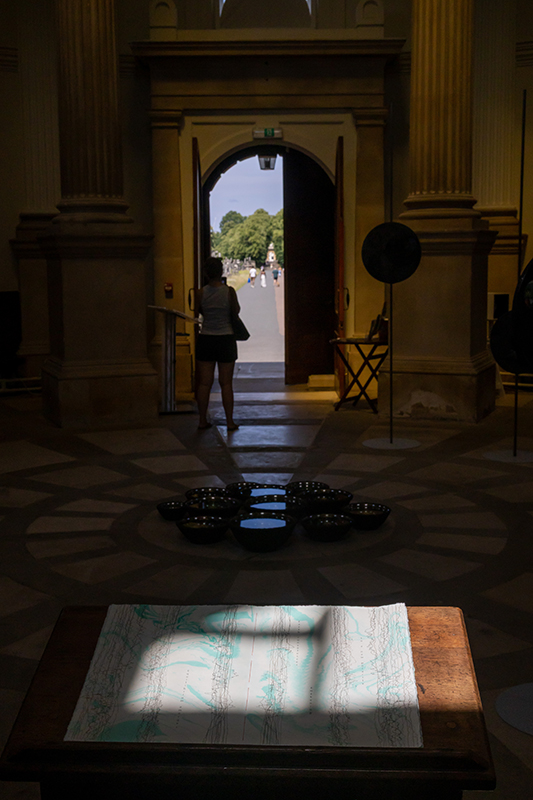
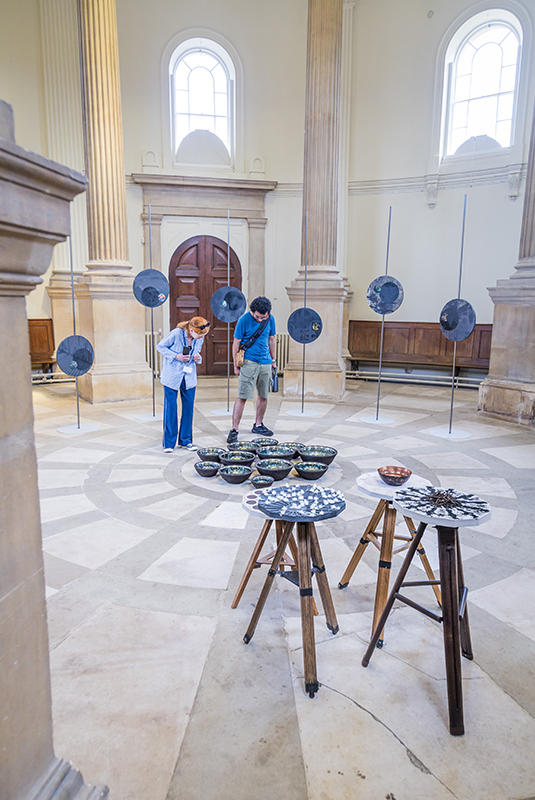
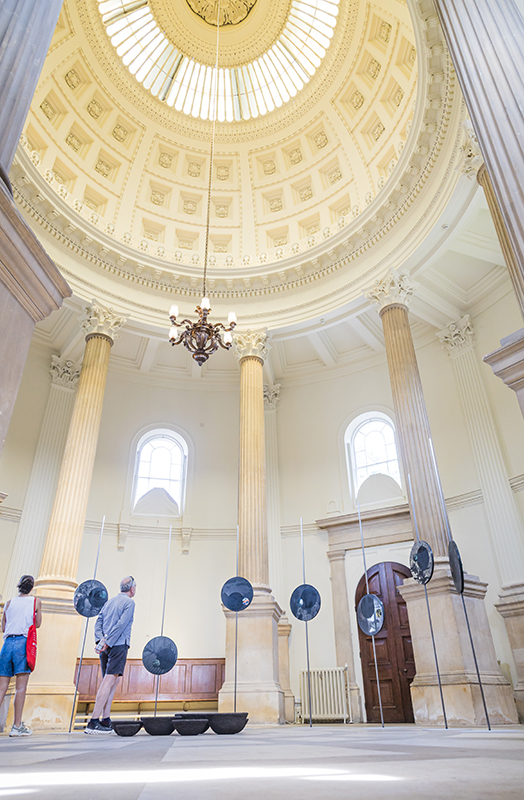
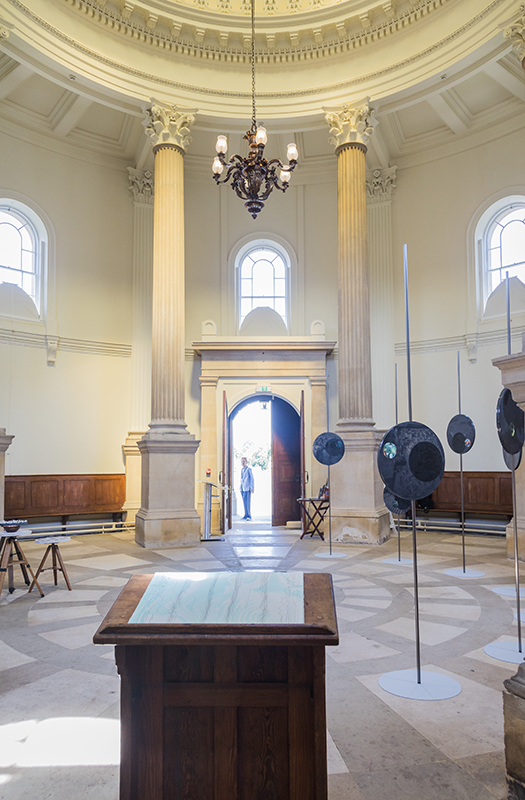
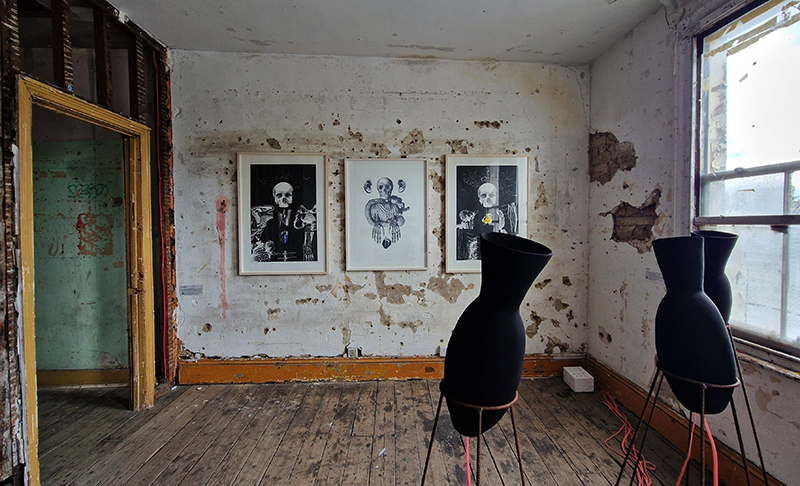
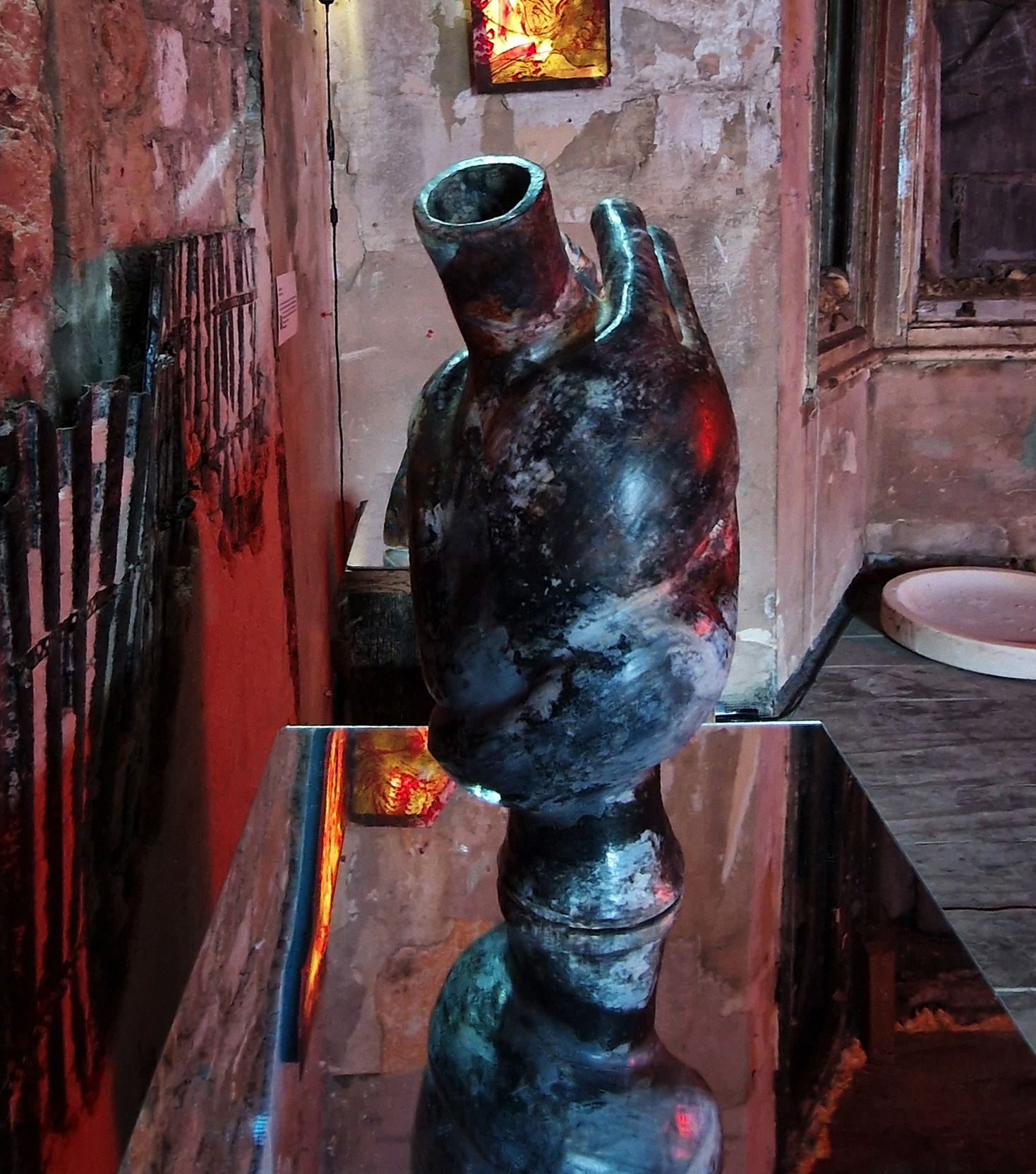
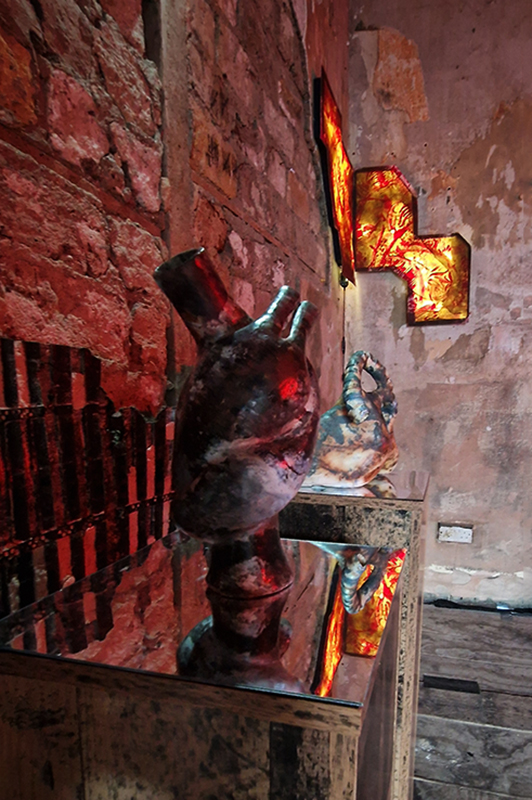
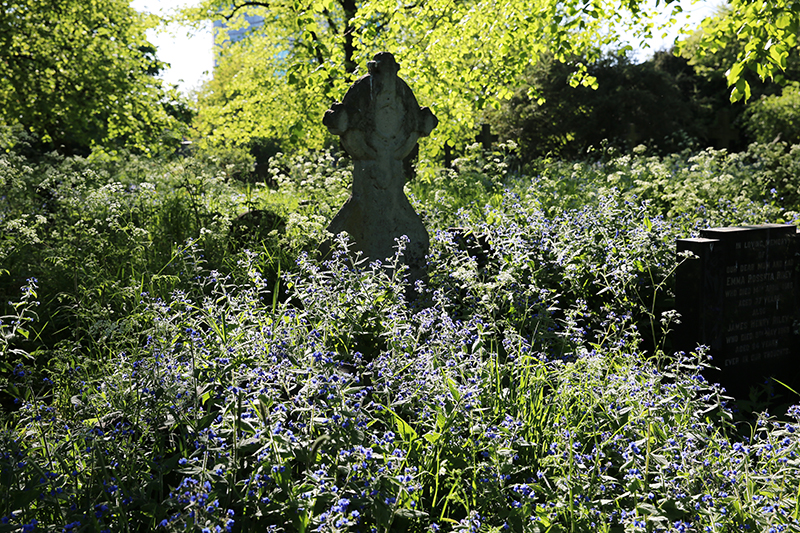
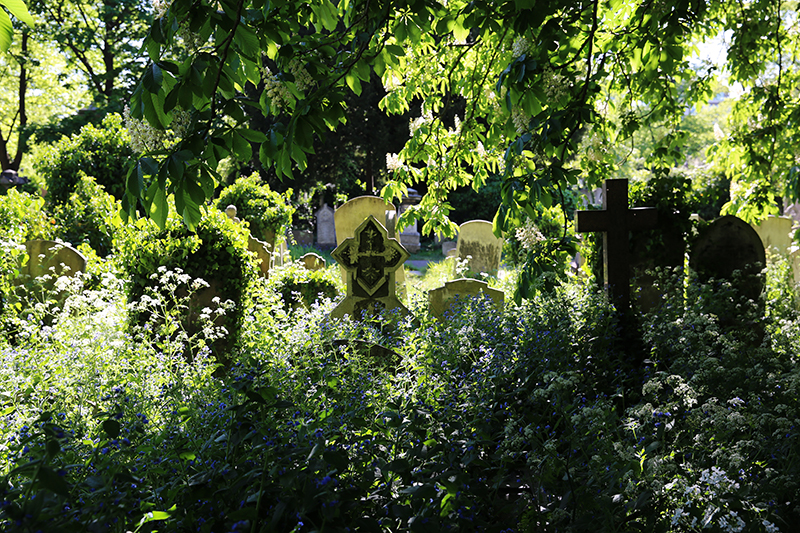
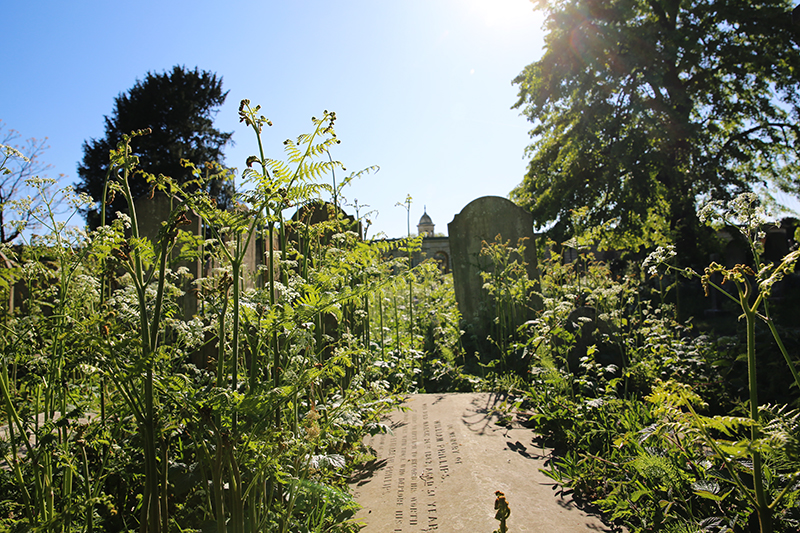
My solo exhibition Appearances are a Glimpse of the Unseen, curated by Catherine Li, at The Chapel, Brompton Cemetery opened on one of the hottest days so far this year. I was very grateful to the valiant visitors who braved astronomical temperatures and negotiated dysfunctional transport systems to make it to the PV.

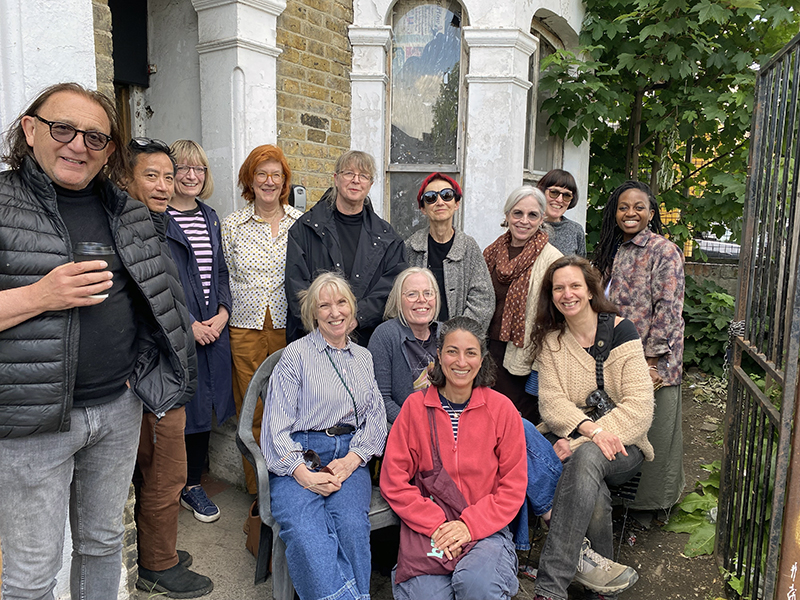
The Friends of Brompton Cemetery volunteers are a warm and enthusiastic community, generous with their support of the exhibition and it was great to meet several of them over the weekend.

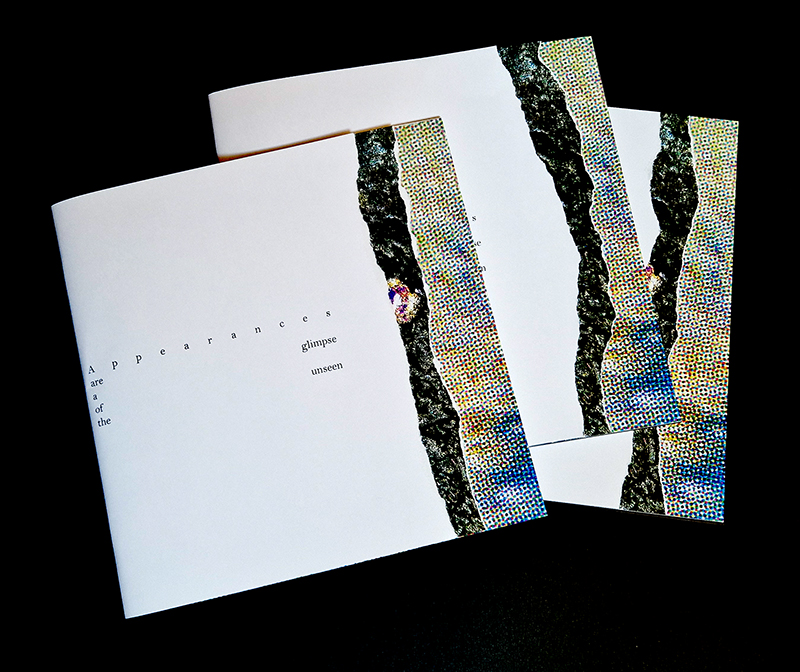
A publication to accompany the exhibition was beautifully designed and edited by Catherine Li who also wrote this wonderful introduction to the exhibition:

In Appearances are a glimpse of the unseen, Susan Eyre approaches the visible world as a threshold rather than a certainty. The exhibition takes its title from a proposition attributed to the pre-Socratic philosopher Anaxagoras, suggesting that, despite the limits of human senses, the hidden structures of reality may still be approached through careful observation and speculative thought. Drawing on scientific enquiry, ancient cosmology and material experiment, Eyre’s works ask how we might attend to realities that surround and pass through us, yet remain beyond direct perception: from dark matter and magnetic fields to molecular movement, distant horizons, light and the silent activity of the Earth itself.

For Eyre, this proposition becomes both a philosophical ground and a working method, as her practice creates situations in which matter seems to react, shimmer, distort, reveal or withhold itself, allowing scientific ideas to be encountered through material presence. Mirrors absorb and fracture the viewer’s image; water holds floating fragments on the edge of disappearance; magnets draw invisible force into pattern; crystals reveal hidden internal structures through polarised light. Across these works, perception becomes less a matter of looking at objects than entering into relation with forces already at work around us.

Light is central to this inquiry because it allows the world to appear while remaining elusive in itself. We encounter light through what it touches or brings momentarily into view. In Eyre’s work, light becomes visual, material and relational at once: a form of contact between the body and a wider universe, cosmic in scale yet intimate in its effects. Her works draw attention to the conditions of visibility itself, asking what enables seeing, what escapes it, and what might be felt before it can be fully understood.

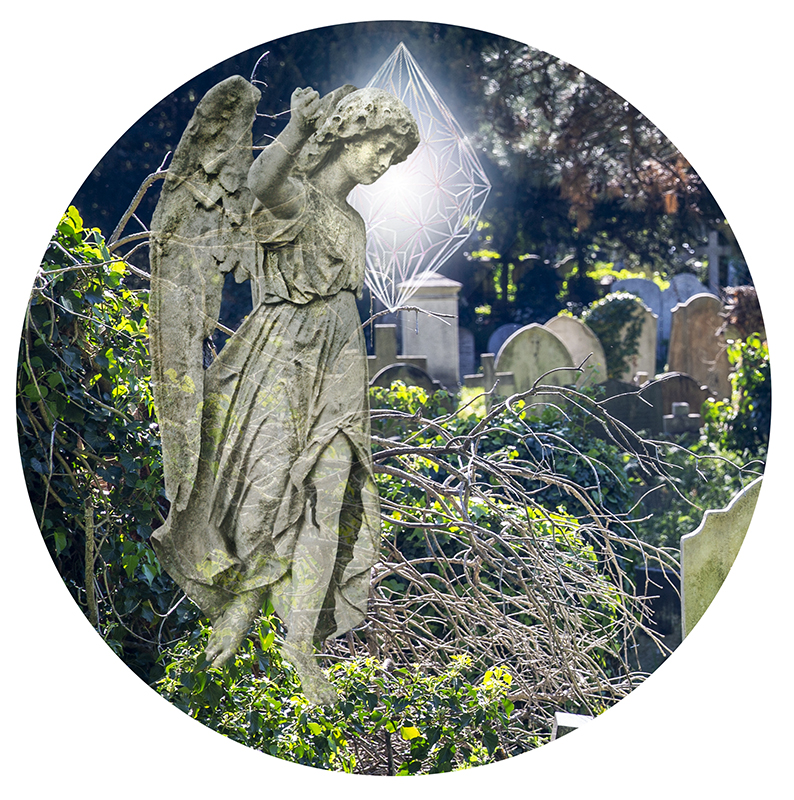
Within the Chapel of Brompton Cemetery, these questions become especially charged, as the space is already shaped by thresholds between interior and exterior, stone and sky, memory and matter, the living body and the absent body. In submīrārī (earthbound), Eyre’s images of angels appear through water as unstable, trembling presences, released from fixed memorial forms into a more fluid state of becoming, where the spiritual and the scientific become parallel languages for approaching what cannot be fully held in view.

Appearances invites a slower form of attention, asking us to look again at the ordinary world and recognise that its mysteries are not distant from us, but already traversing us continually and  instantaneously. From Eyre’s early pursuit of paradise in the everyday to her contemplation of cosmic and subatomic realities, her practice has developed a deep awareness of interconnectedness across human and non-human experience. In the Chapel, among light, stone, water and reflection, Eyre’s works open a quiet field of speculation, where what appears before us may be only the visible edge of a much larger, stranger intimacy.

Catherine Li

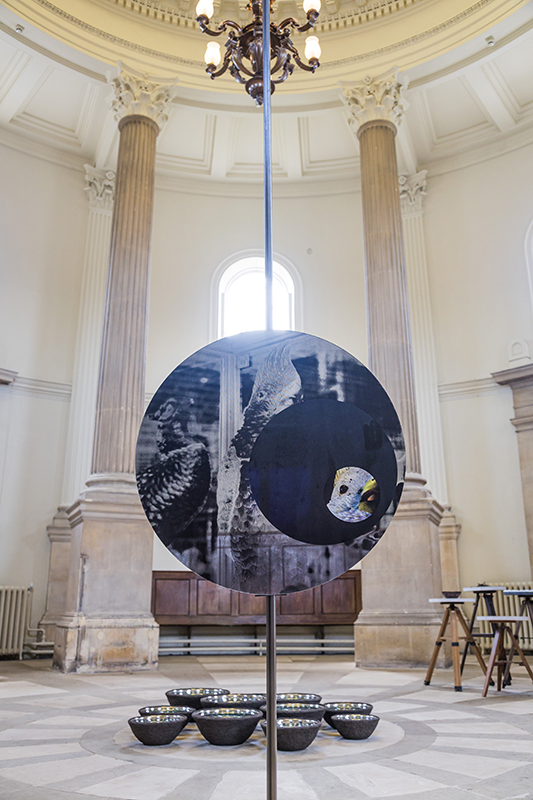
All the fantastic installation images are by Emma Brown Photography.


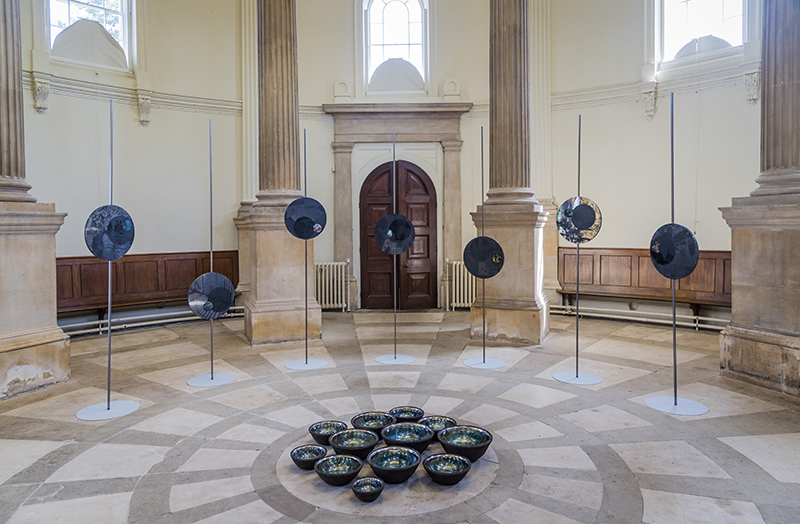
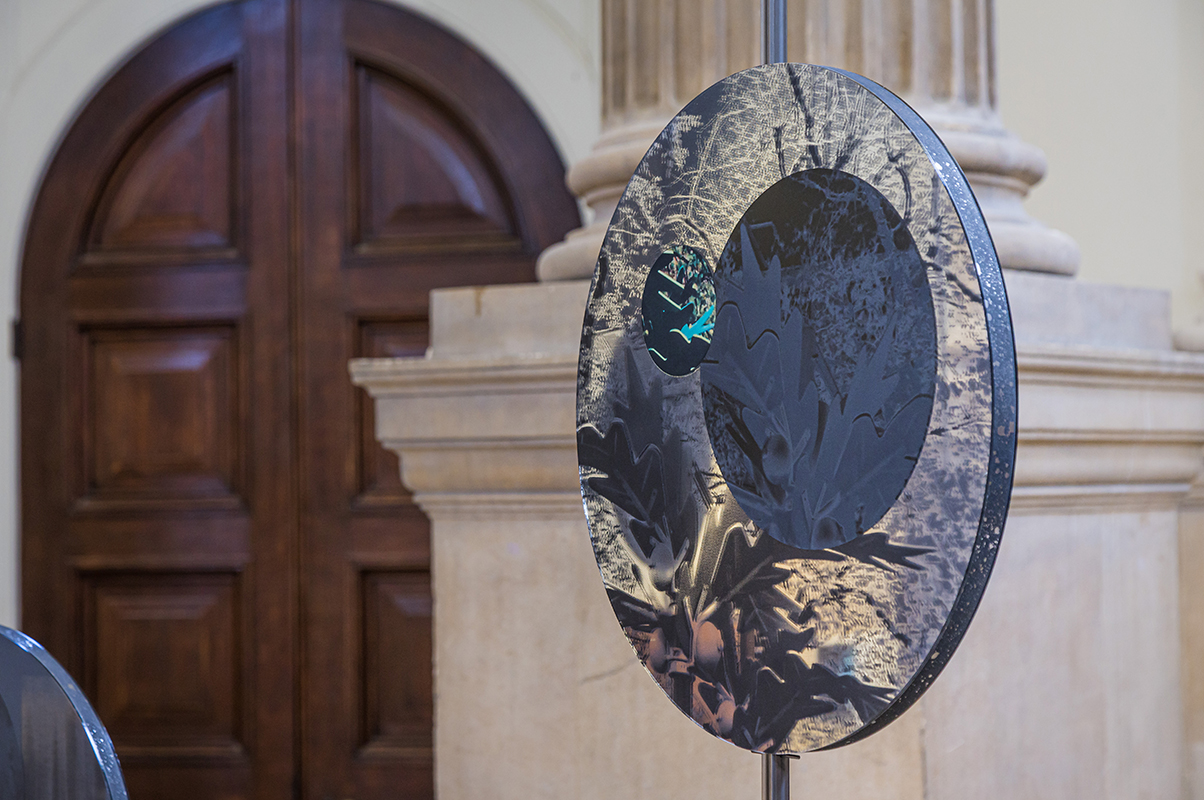
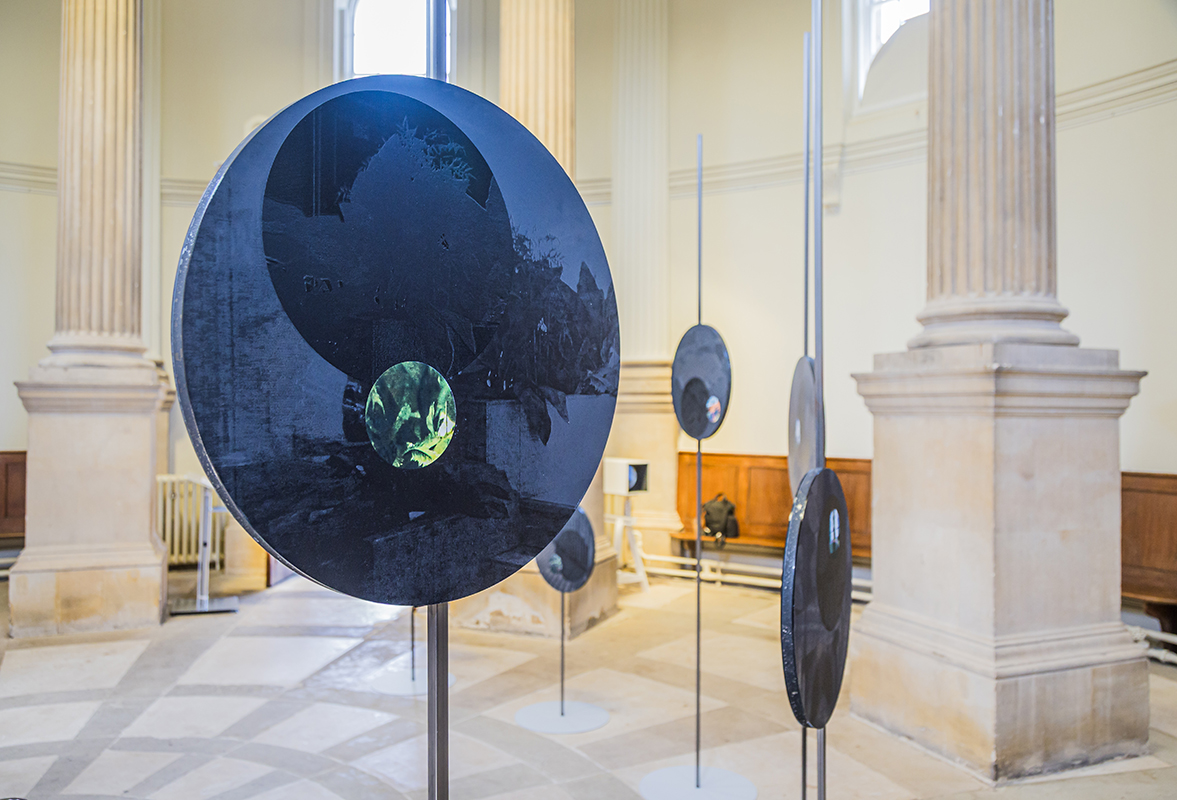
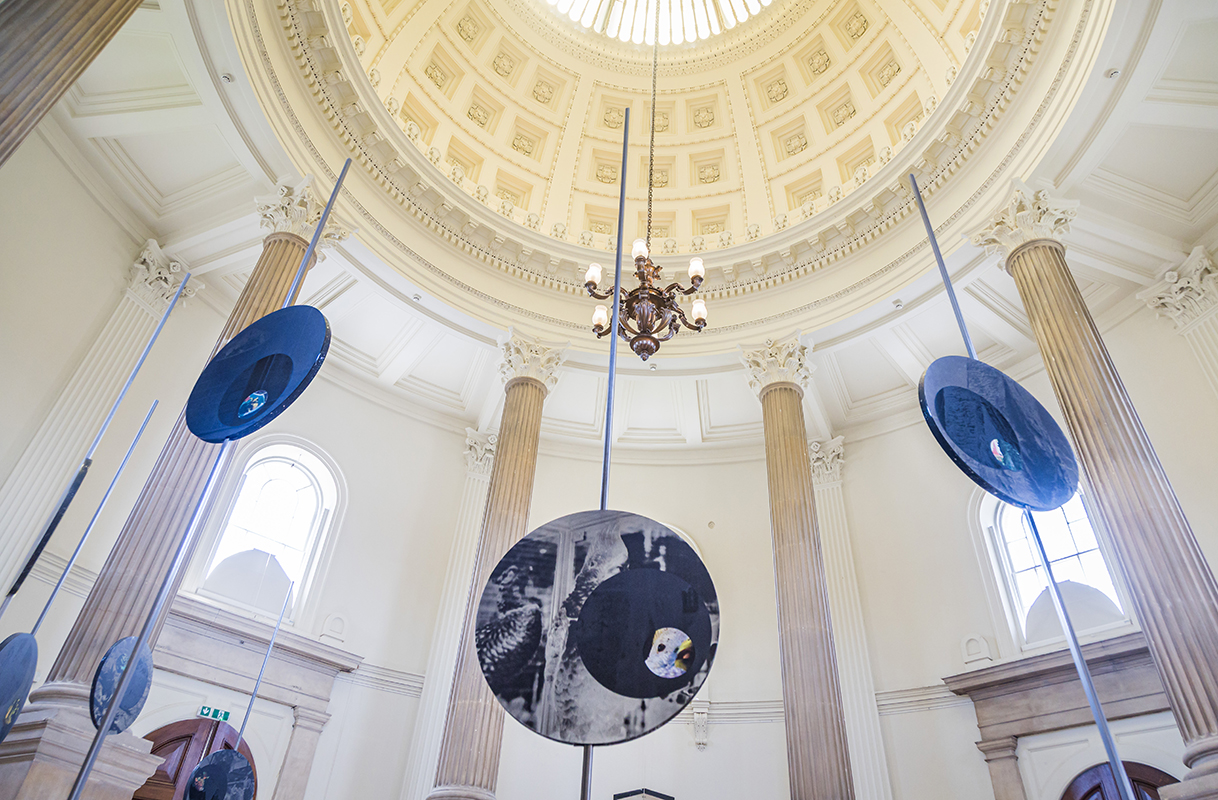
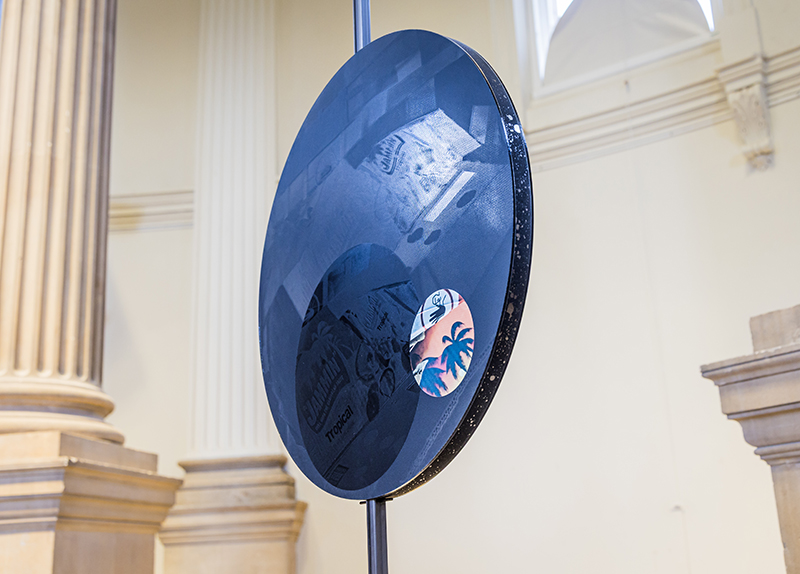
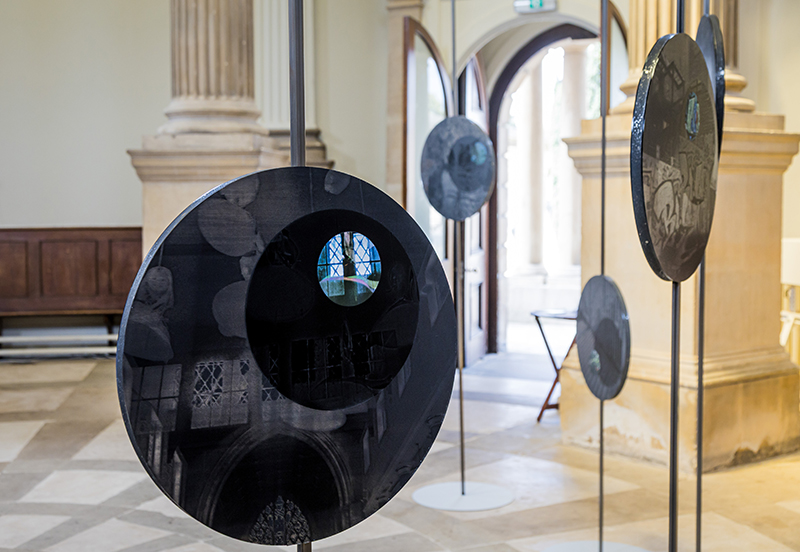
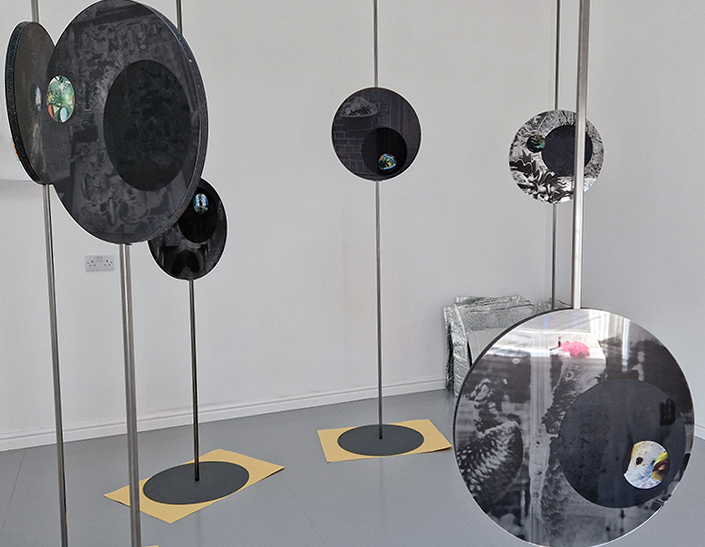
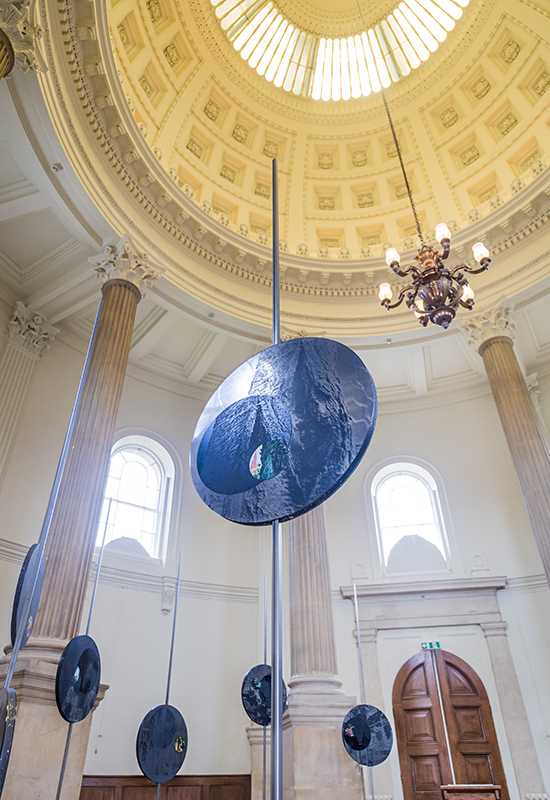
The sculptures everydaymatters respond to the realm of intangible matter, present yet invisible. Using documentation from places named paradise, images were screen-printed onto mirrored surfaces which absorb the viewer into the work, reflecting and distorting perspective. Imagined as cross sections of landscape, exposing the hidden proportions of visible and invisible matter, each circle is divided into the percentages scientists believe are the constituent parts of the known universe. The smallest circle, in colour, is less than 5% of the whole, and reveals the extent of all that is visible or known to us. The circle screen printed black on black is about 26% of the whole and expresses the unknown dark matter that is thought to hold galaxies together. The remaining 70% is shimmering dark energy, accused of escalating the expansion of the universe.

everydaymatters, 2015, screenprint on mirrored acrylic, etching, steel, 7 pieces  50 x 50 x 280 cm 

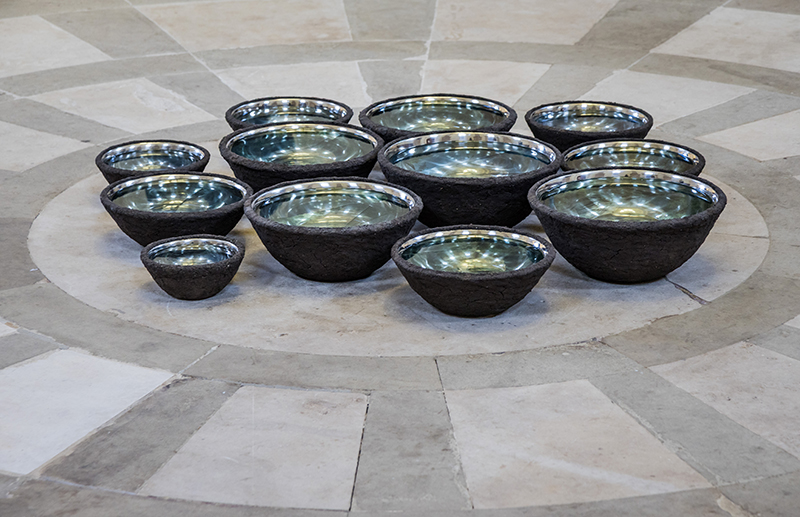
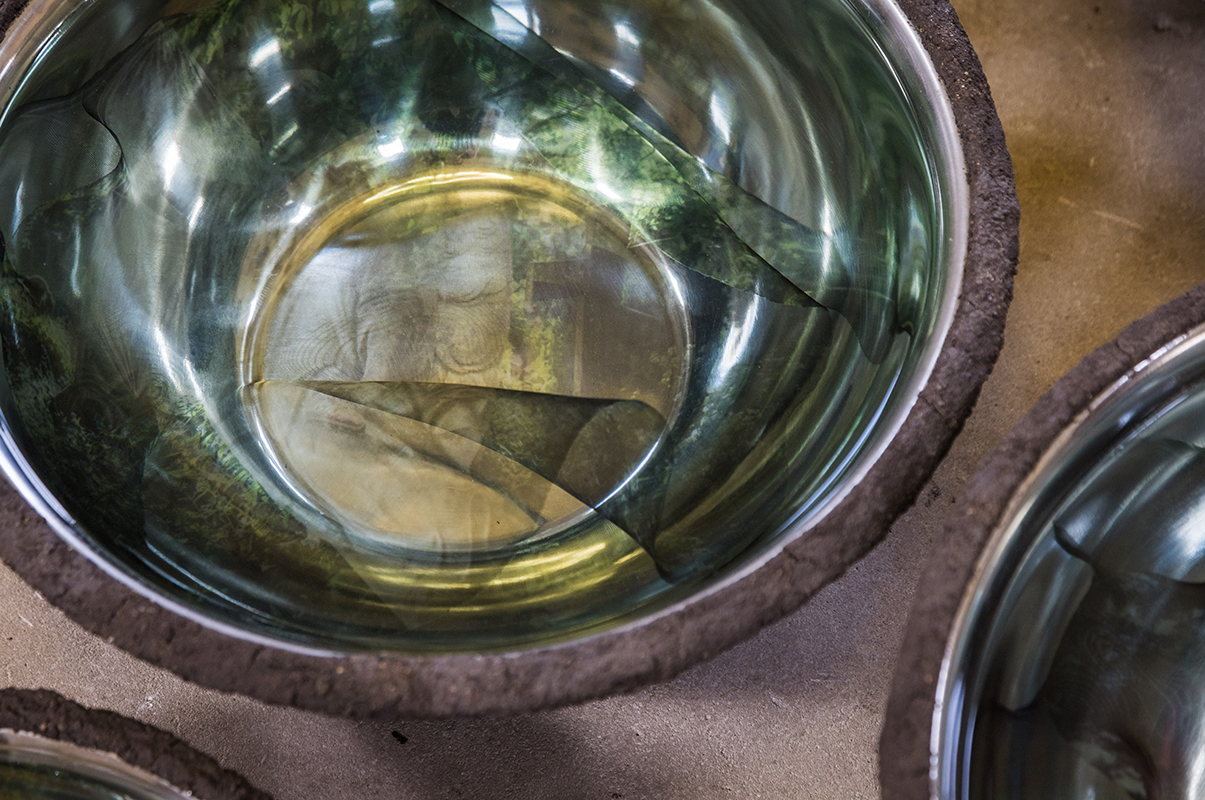
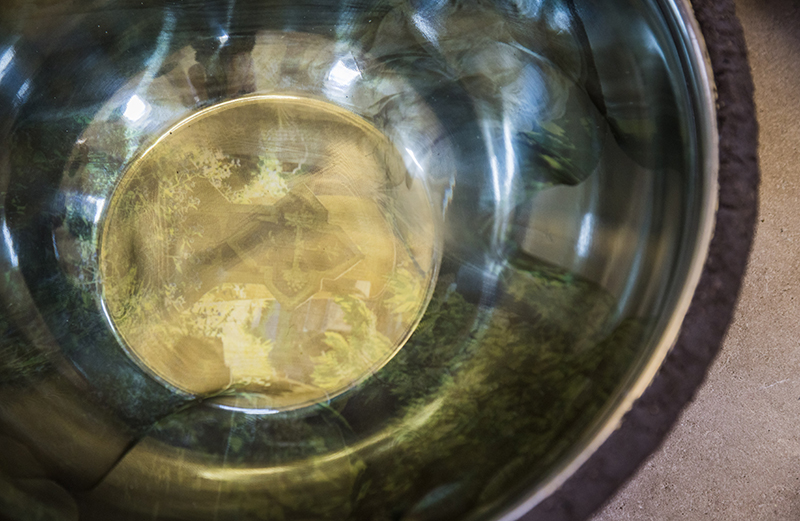
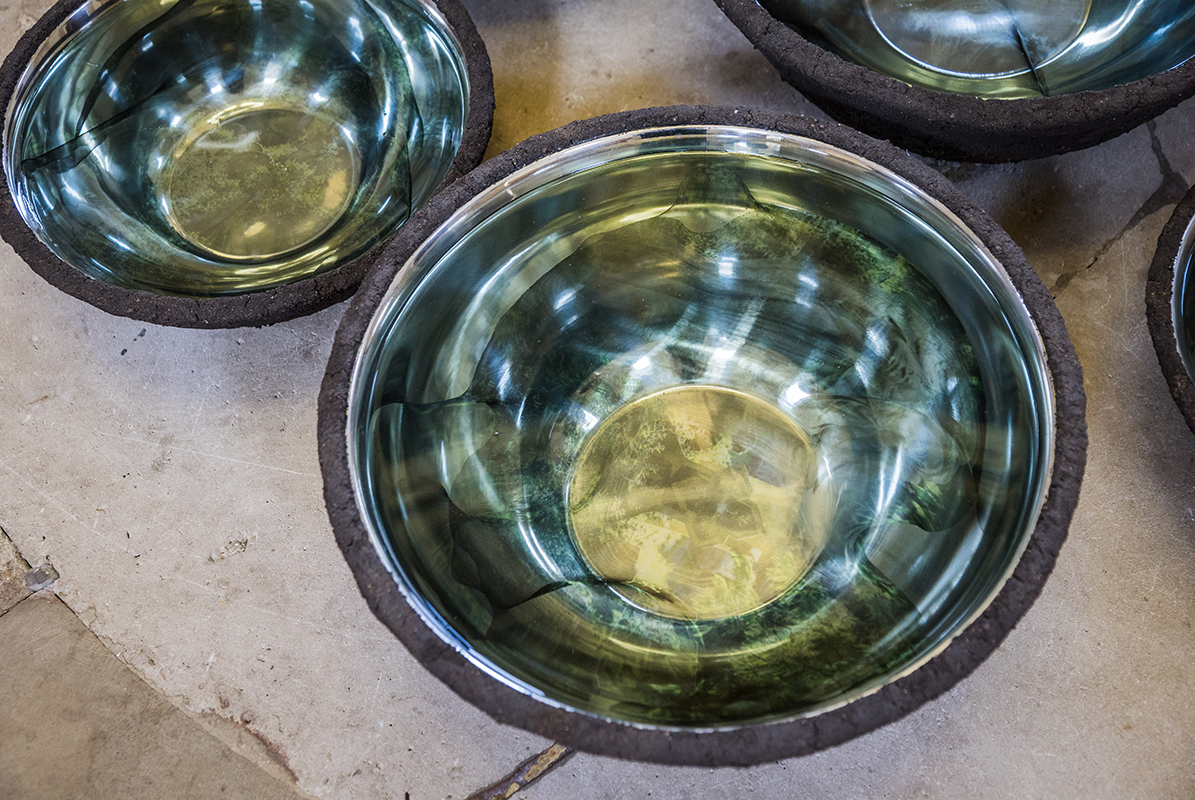
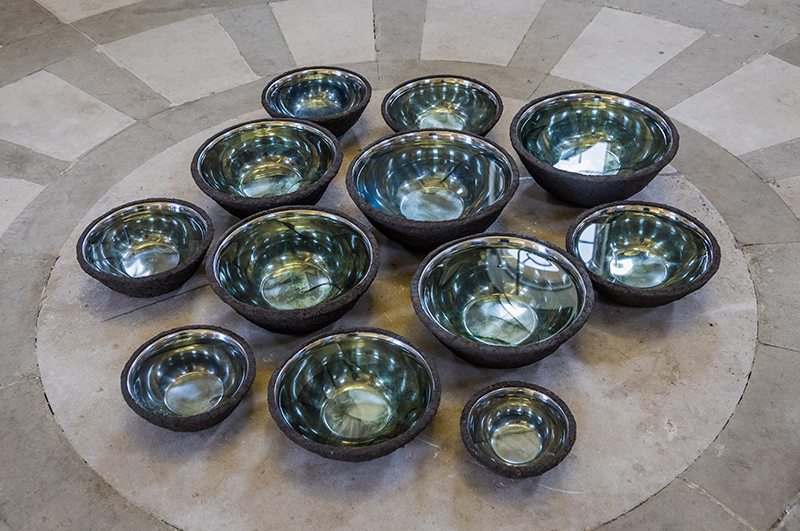
submīrārī (earthbound) installation invites viewers to gaze through the surface of water, shifting perspective, to catch a glimpse of the mirages shimmering in pools, revealing glimpses of an uncertain world fluctuating on the cusp of disappearance. The word mīrārī comes from a Latin root, to gaze in wonder.

These ephemeral evocations created with imagery from Brompton Cemetery, where angels appear, released from their cemetery podiums, accompanied by a glowing source of light, address ideas put forth in The Physics of Angels: Exploring the Realm Where Science and Spirit Meet, in which co-authors Rupert Sheldrake and Matthew Fox discuss parallels between quantum mechanics and early theories of angels, particularly Thomas Aquinas’ teaching that angels are immaterial bodies and creatures of light. The language used to describe the esoteric and the spirit world can often be substituted with the language of physics used to explain energy in its various manifestations.

submīrārī (earthbound), 2018, steel, earth, water, dye sublimation textile (2026 angel edition), 12 pieces 


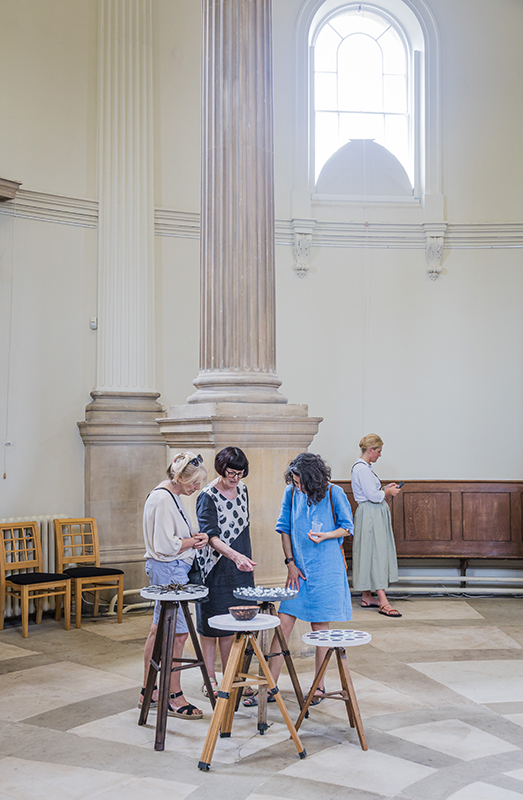
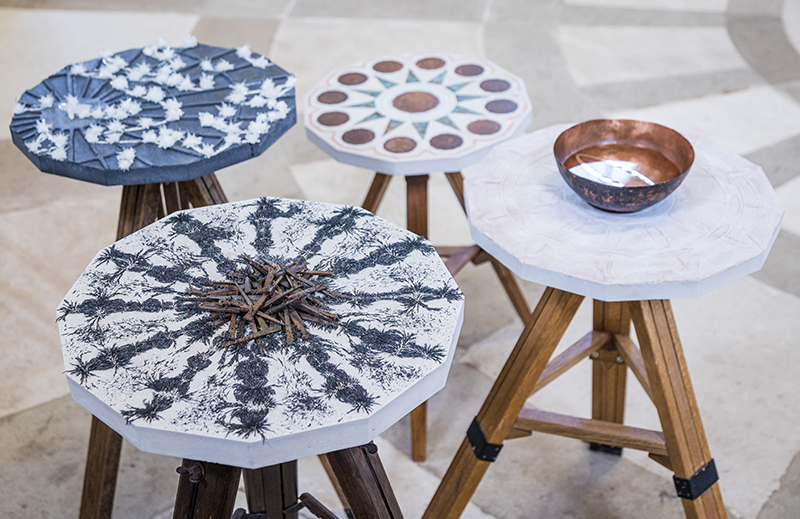
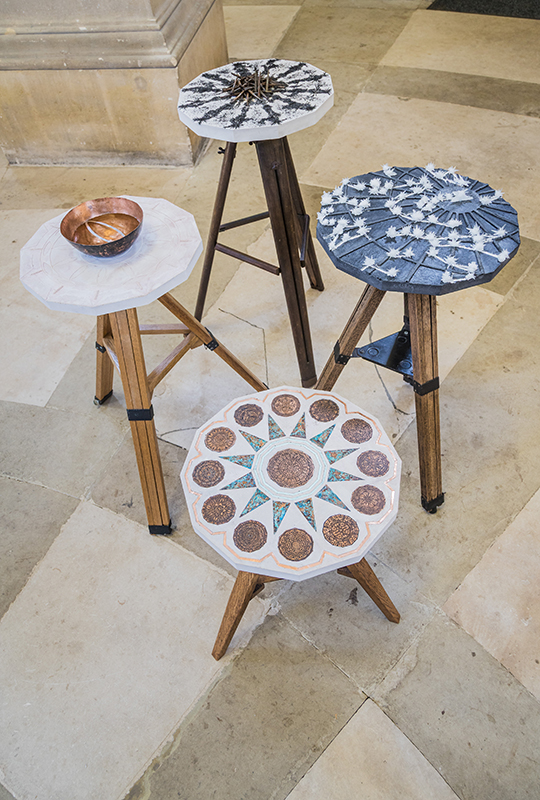
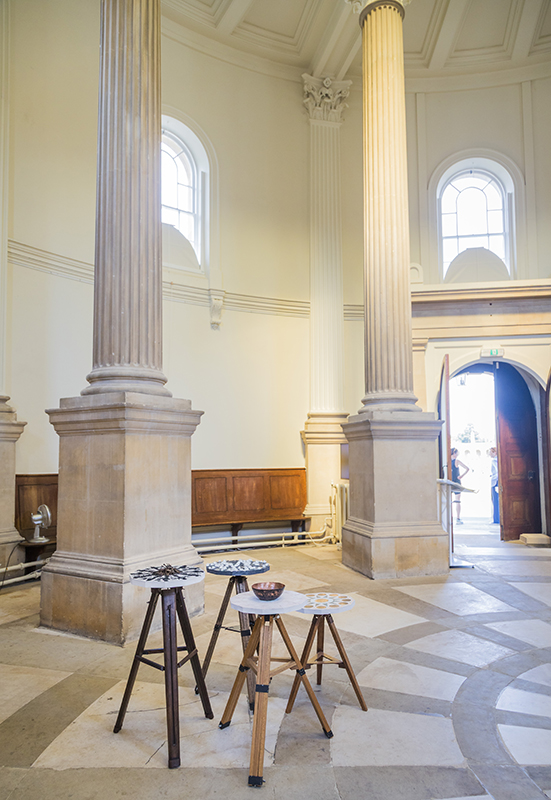
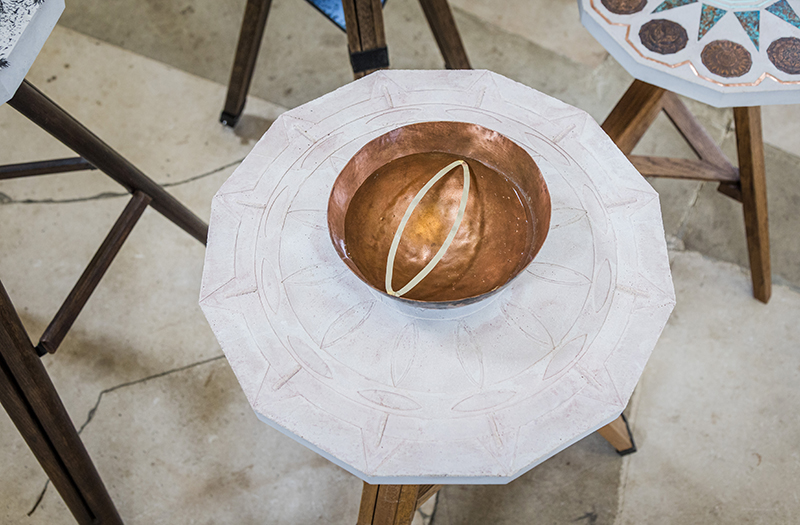
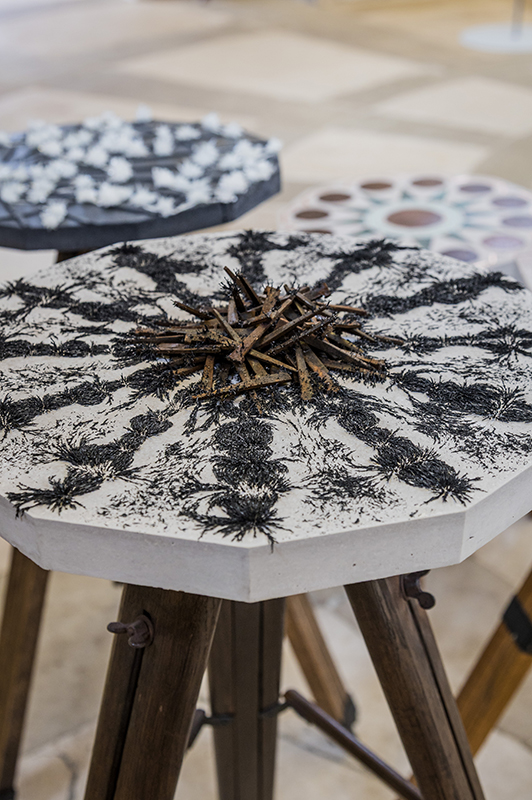
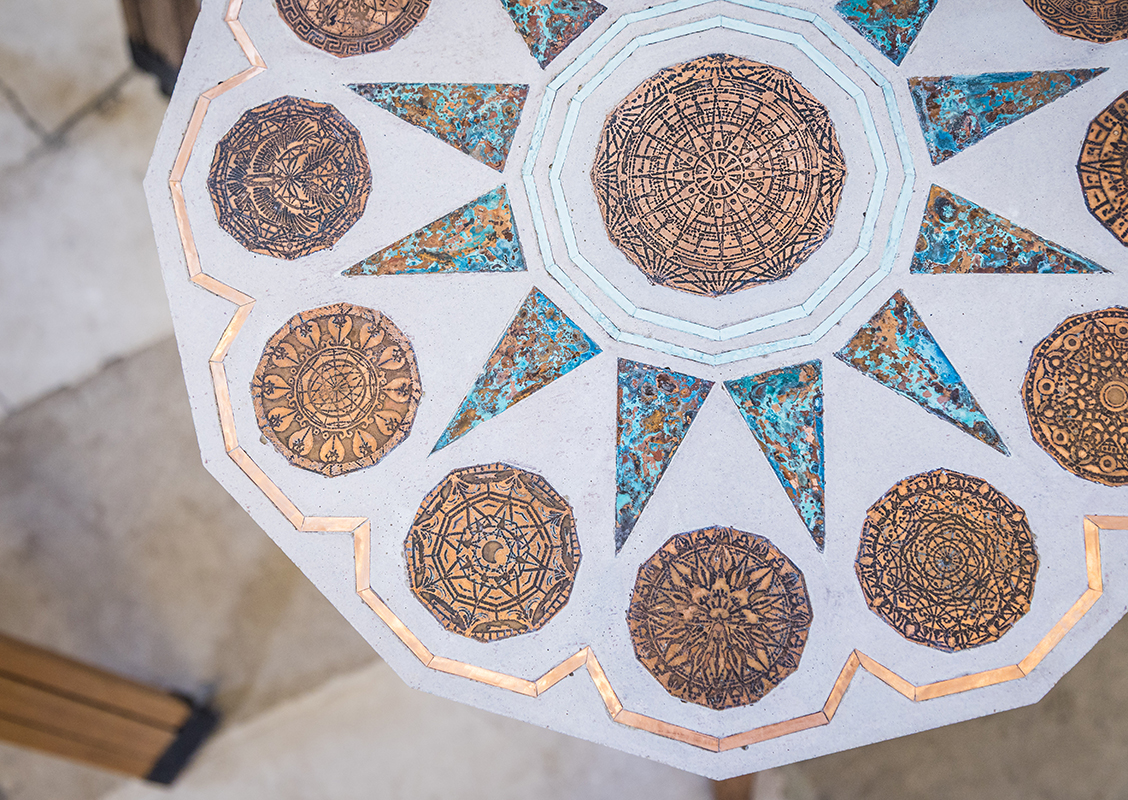
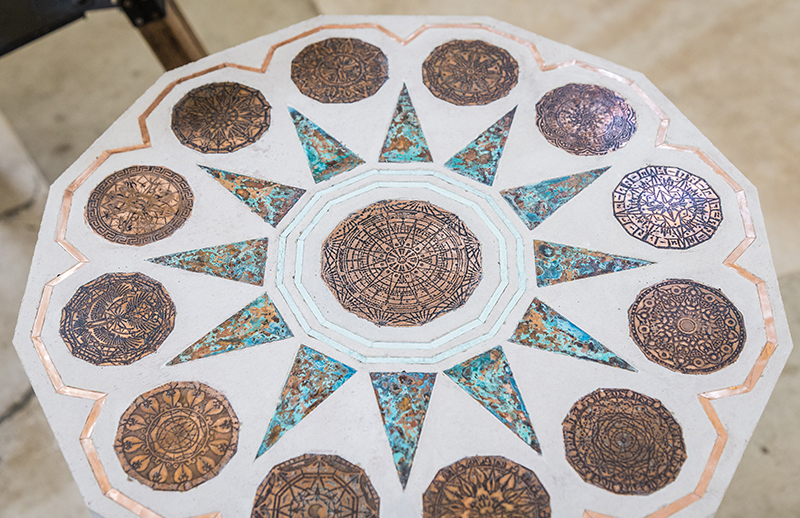
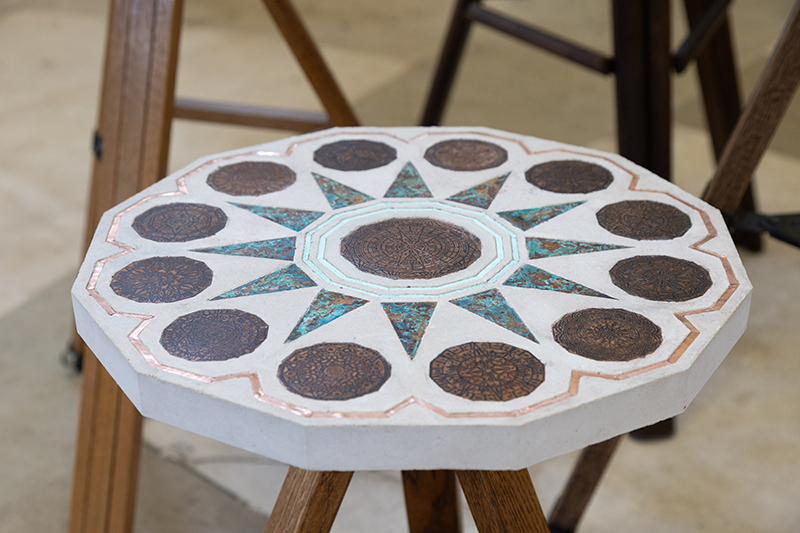
Instruments of the Anemoi are a set of dodecagon tablets cast in Snowcrete, a non-magnetic cement, as used in buildings at a magnetic observatory. Suggestive of the pedestals that support various instruments used in monitoring the Earths’ magnetic field they also respond to an ancient anemoscope “table of the winds” carved in marble around eighteen hundred years ago with the names of the classical winds, both in Greek and in Latin inscribed on each of its twelve sides.
In classical antiquity, geographic orientation usually referred to landmarks or astral phenomena to determine direction. The winds also became associated with direction, and named in accordance with their qualities such as hot and humid or cold and dry. In Greek mythology Astraeus, the god of dusk, and Eos, the goddess of dawn, gave birth to many sons of the twilight including the Anemoi, the gods of the winds who were each ascribed a cardinal direction.


Intimate knowledge of the way the world behaves built up over generations is being lost as we become reliant on technology whose processes we do not understand or are at risk from hostile forces or powerful natural forces.

These sculptures, shown on repurposed theodolite or telescope tripods, are envisaged as speculative objects reflecting on methods and tools of natural navigation such as magnetism, the winds and stars.


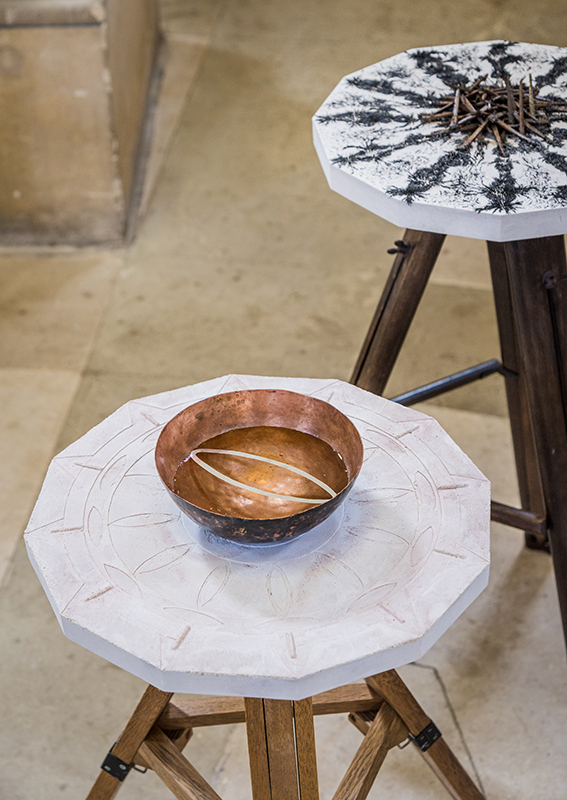
A ‘silver fish’ floating in a hand beaten copper bowl echoes the oval shaped compass needle illustrated in Breve Compendio de la Sphera de la arte Navegar (Brief Compendium of the Sphere and the Art of Navigation) by Martin Cortes (1551). Wafer thin fish shaped iron leaves were used by 11th century Chinese geomancers for feng shui and navigation. These early precursors to the modern compass were known as the ‘south-pointing fish’ and made by heating the iron until red-hot and cooling it while aligned to Earth’s magnetic field.

Instruments of the Anemoi  (i) (south pointer), 2023, Snowcrete, copper, water, silver leaf, tripod, 38 x 38 x 70 cm


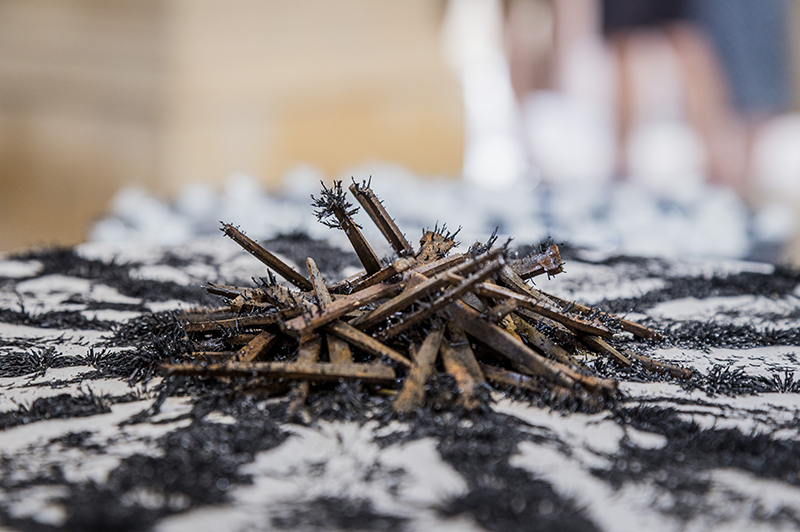
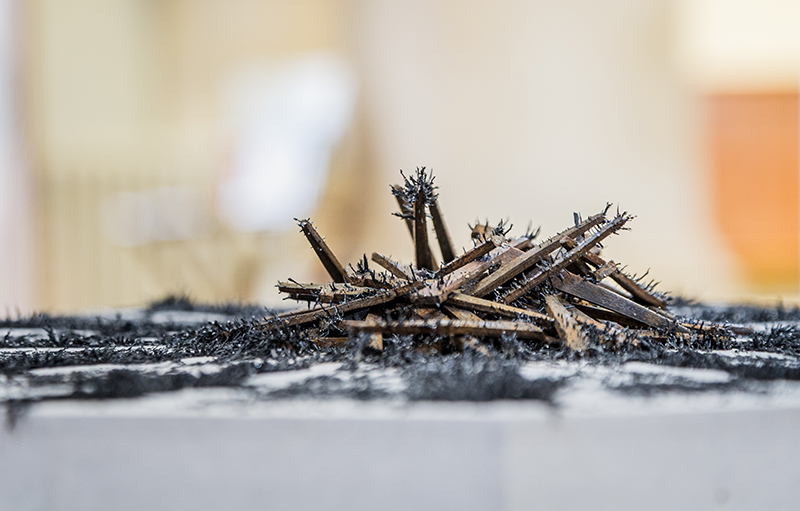
Iron nails and filings reveal an embedded magnetic field and hark back to the legend of the discovery of lodestone by Magnes the shepherd, who noticed the nails in his shoes and the iron ferrule of his staff were attracted to the rock beneath his feet. This story is recounted in Pliny’s Natural History (published after his death in the AD 79 eruption of Vesuvius, when, ever curious, he had gone to investigate the strange cloud rising). Pliny marvels at the powers of the magnet, exclaiming; ‘For what, in fact, is there endowed with more marvellous properties than this?’; ‘What is there in existence more inert than a piece of rigid stone? And yet, behold! Nature has endowed stone with both sense and hands!’
The legend of Magnes is not impossible, if an electrical storm had taken place on Mount Ida and the naturally occurring magnetic magnetite was struck by lightning, it would be permanently magnetised into lodestone and would therefore attract the nails of Magnes’s shoes.

Instruments of the Anemoi (ii) (magnes), 2023, Snowcrete, magnets, iron filings, nails, tripod, 38 x 38 x 79 cm 

Etched copper pieces set in a wind rose arrangement allude to the ancient classification of the winds which developed over centuries with varying numbers of wind directions charted. The outlined divisions of the wind chart looked like a flower of many petals and became known as the rose of the winds. The contemporary compass design has its origin in human aspirations and efforts to explain and contain natural forces through geometric abstraction.

Instruments of the Anemoi (iii) (rose), 2025,  Snowcrete, etched and patinated copper, tripod, 38 x 38 x 56 cm

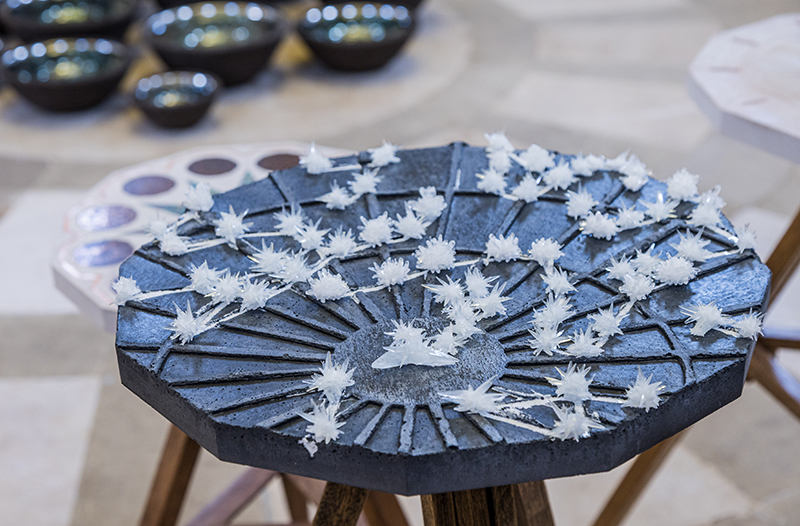
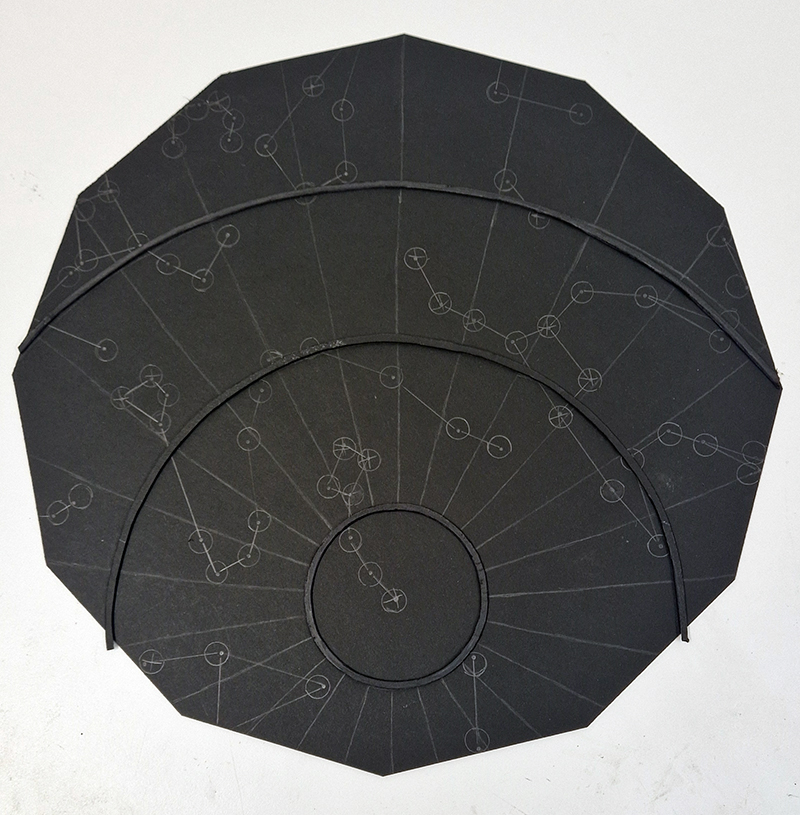
Celestial navigation is referenced via the instrument studded with crystals that map the constellations around the North Pole. Polaris has not always been the Pole Star as Earth’s axis of rotation wobbles over the course of about 26,000 years and many other stars take their turn at pointing to geographic North. When Anaxagoras was born there was no true North Star, Kochab was the closest naked-eye star to the celestial north and used as the primary directional reference. Before that it was Thuban, who took the position between two and four thousand years ago. Thuban, in constellation of Draco is centred in this sculpture, with Polaris, the current North Star in the constellation of Ursa Minor, shown above Earth’s rotational axis.

Instruments of the Anemoi (iv) (thuban), 2026, Snowcrete, pigment, crystals, tripod, 38cm x 38 x 75cm 

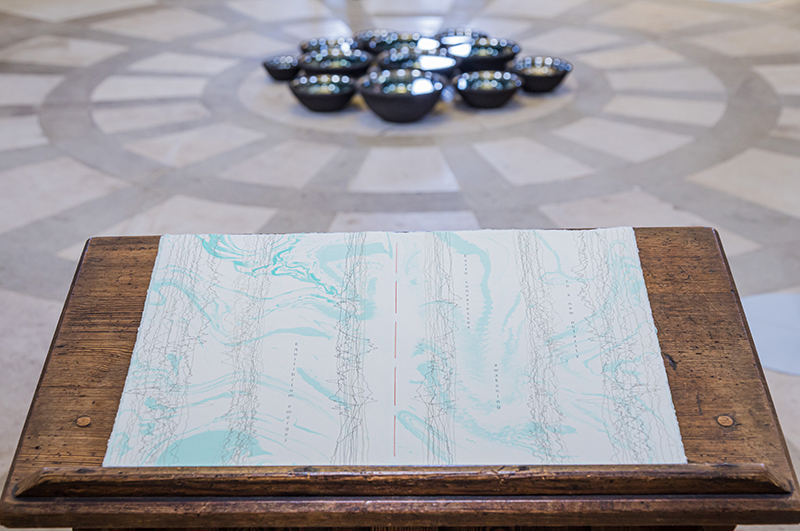
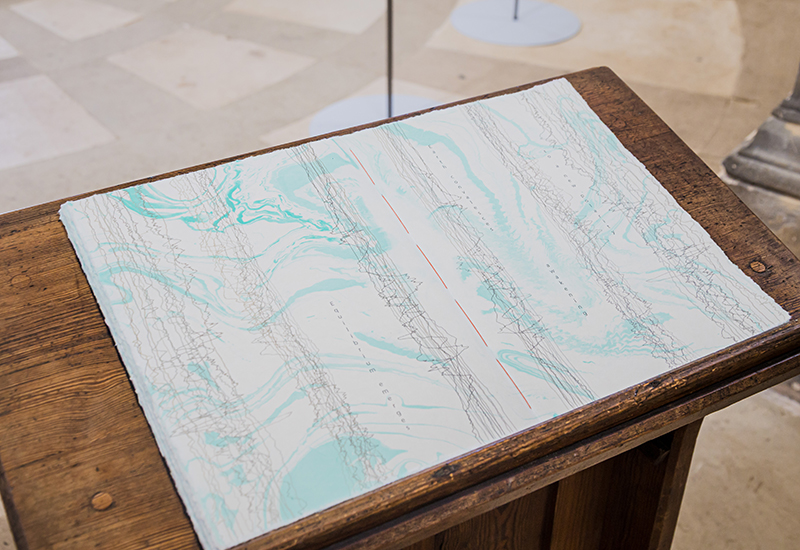
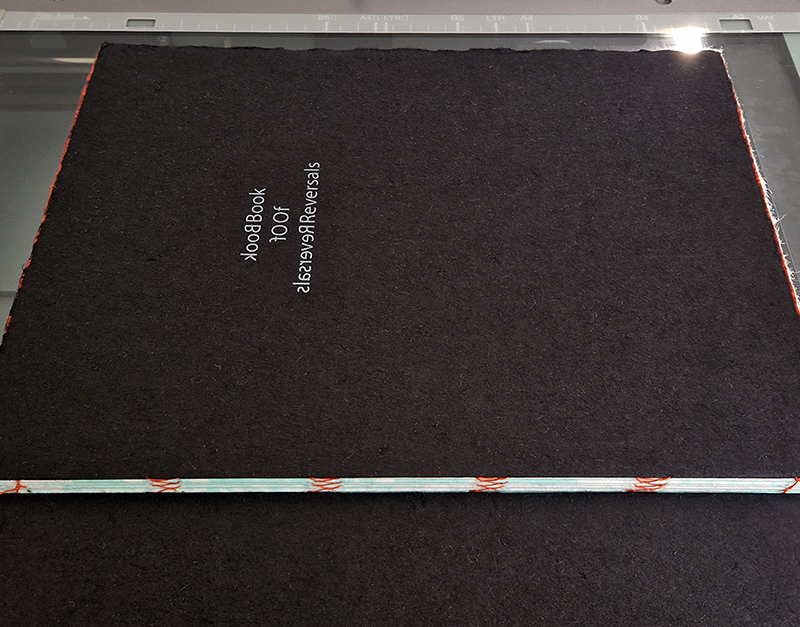
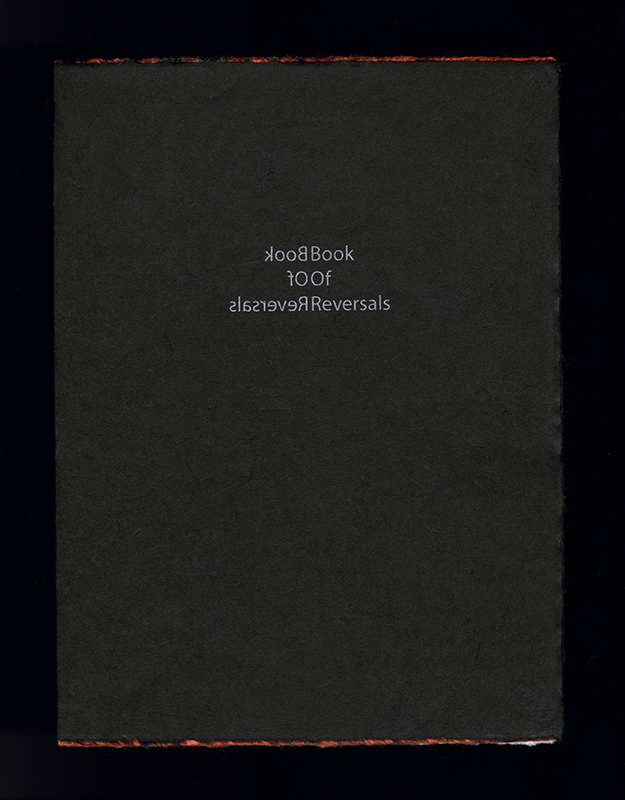
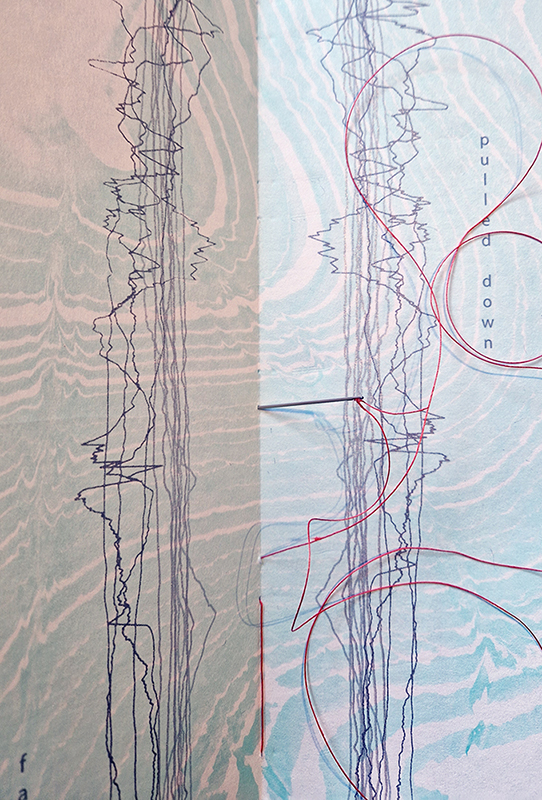
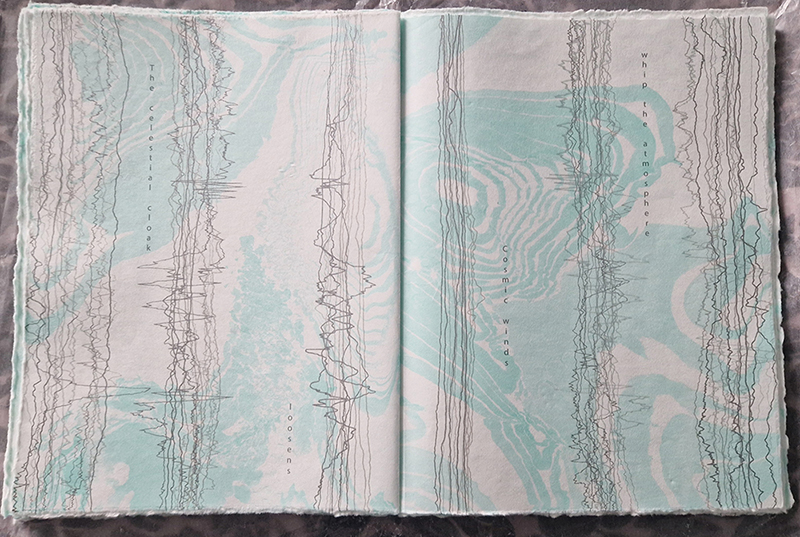
The Book of Reversals offers a poetic overview of the formation of planet Earth and its turbulent fluid core that generates an unpredictable but protective magnetic field prone to sudden changes in polarity.
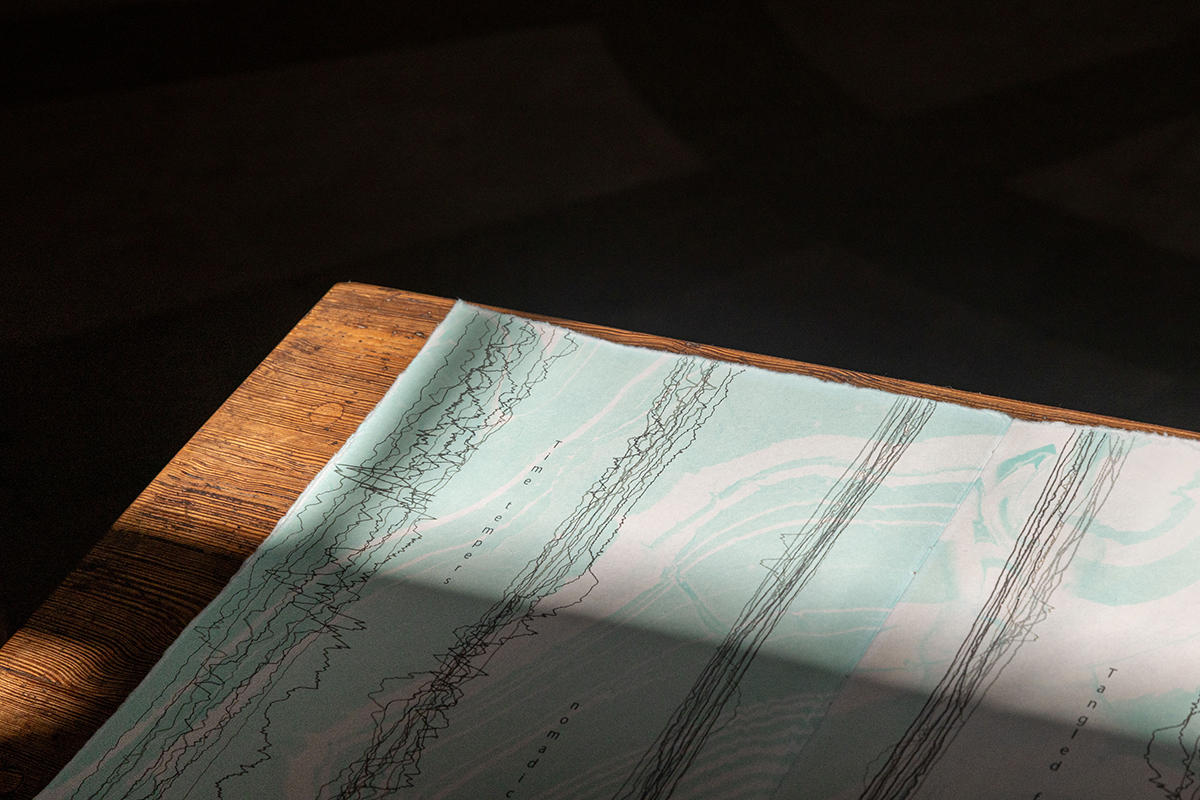
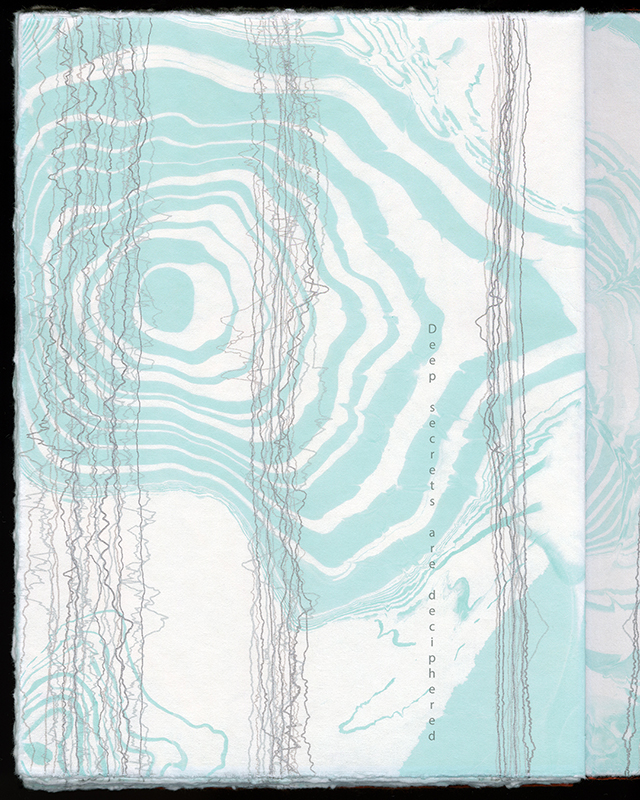
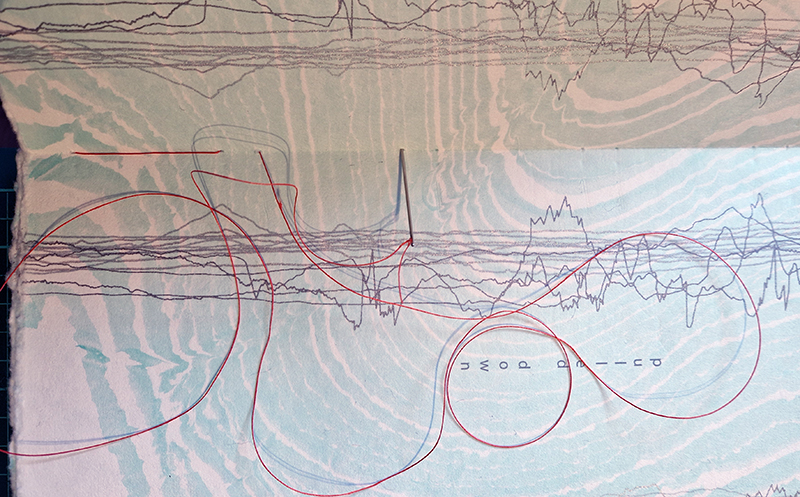
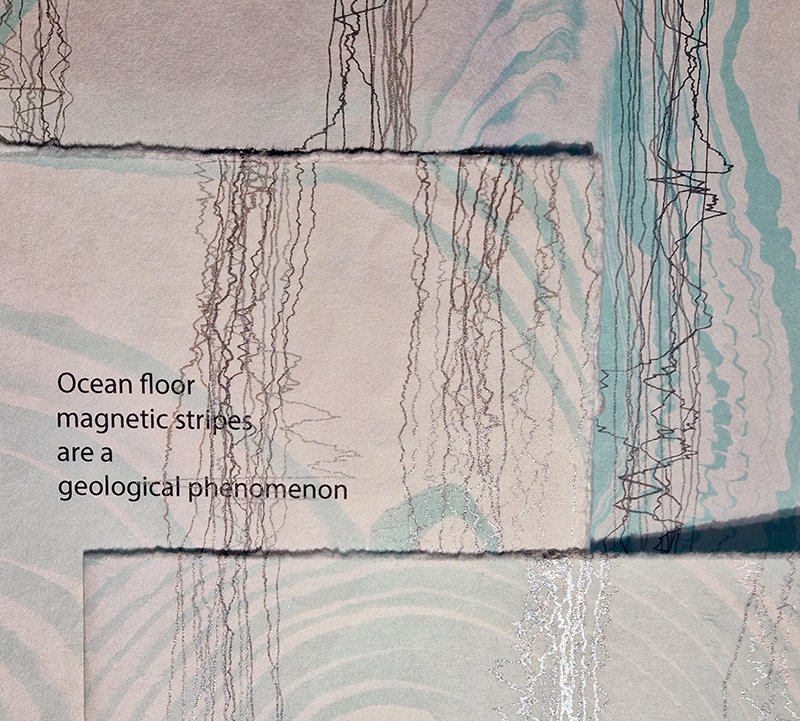
Readings from magnetometers stationed around the British Isles, which record variations in the Earth’s magnetic field, are screen printed in vertical stripes, either side of the book’s spine emulating the geological phenomena of magnetic stripes found on the ocean floor. Magnetic stripes are symmetrical bands found at mid-ocean ridges, created as magma rises, cools, and forms new oceanic crust whose magnetic minerals align with Earth’s prevailing field. Hot buoyant material rises at mid-ocean ridges and cooler, denser rock sinks back into the mantle at subduction zones. Along convergent boundaries, the heavier oceanic plate is forced beneath another plate, forming trenches, generating earthquakes, tsunamis, volcanic eruptions, and mountain belts. Through volcanism, weathering, and the recycling of carbon dioxide and minerals, plate tectonics regulates climate, nourishes the oceans, creates diverse habitats, and shapes the environmental pressures that drive evolution, making it essential to the long-term habitability of our planet.
The text, printed vertically, in line with the spreading ocean floor, evokes the complex dynamics of the planetary body Earth, its geological history of reversals, periods of weakened magnetic field, the ceaseless interactions between the inner core, the outer core, the mantle and the crust and how its secrets may be discovered.
It is only through the shock waves of trauma that we can begin to understand what goes on deep inside the Earth. Seismic waves generated by earthquakes can infer the composition of Earth’s hidden interior, revealing through their speed, refraction, and shadow zones the boundaries between solid and liquid layers.
Magnetic patterns preserved on the ocean floor hold a record of past activity over hundreds of millions of years but cannot predict future reversals.

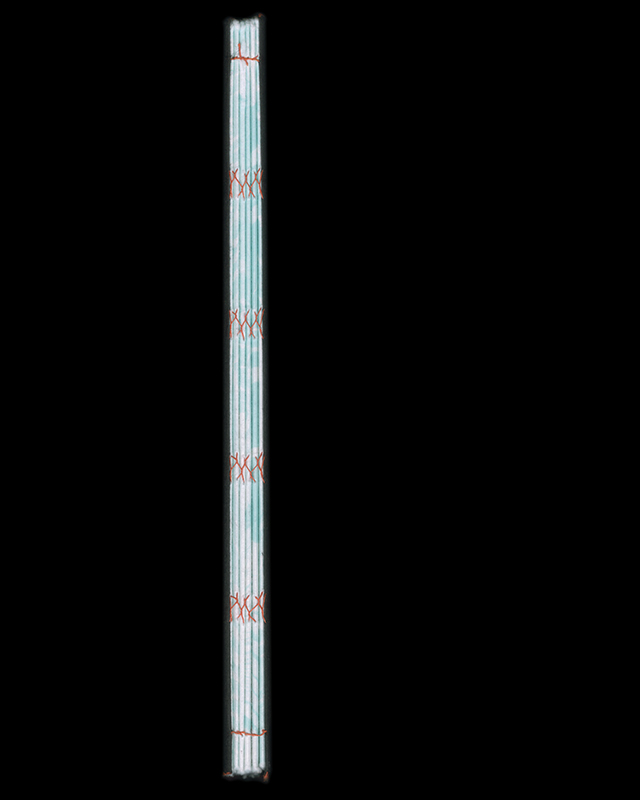
Book of Reversals, 2026, Sumaganshi, screen print, digital text on Japanese paper, 24.5 x 32.5 x 1.5 cm

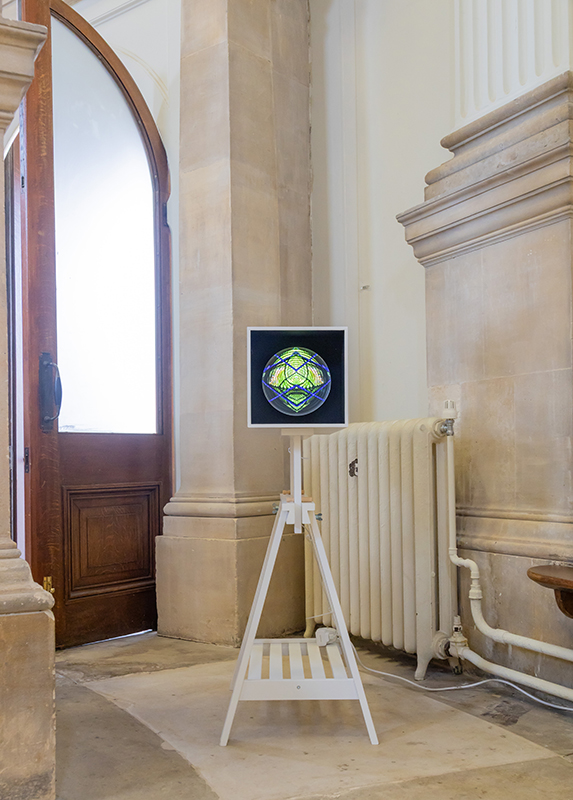
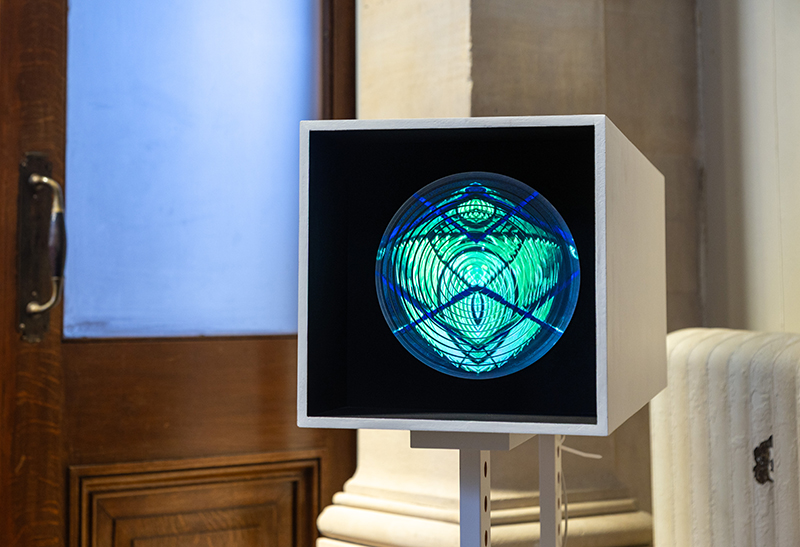
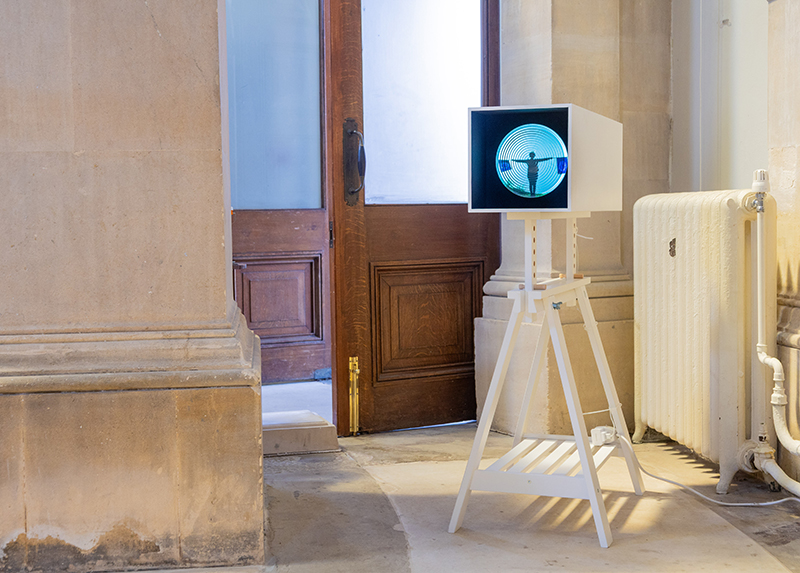
The video sculpture At a Distance reflects on the mysterious twinning of electrons in quantum entanglement where particles link in a way that they instantly affect each other, even over vast distances, and which Einstein famously called ‘spooky action at a distance’. This bond appears to defy the laws of classical physics and, generally, our understanding of reality.
There was a time when the ‘action at a distance’ of a magnet was just as mysterious and intriguing. Greek philosopher Thales of Miletus, who lived a century before Anaxagorus, believed the magnet must have a soul because ‘like living things it moves the iron’.
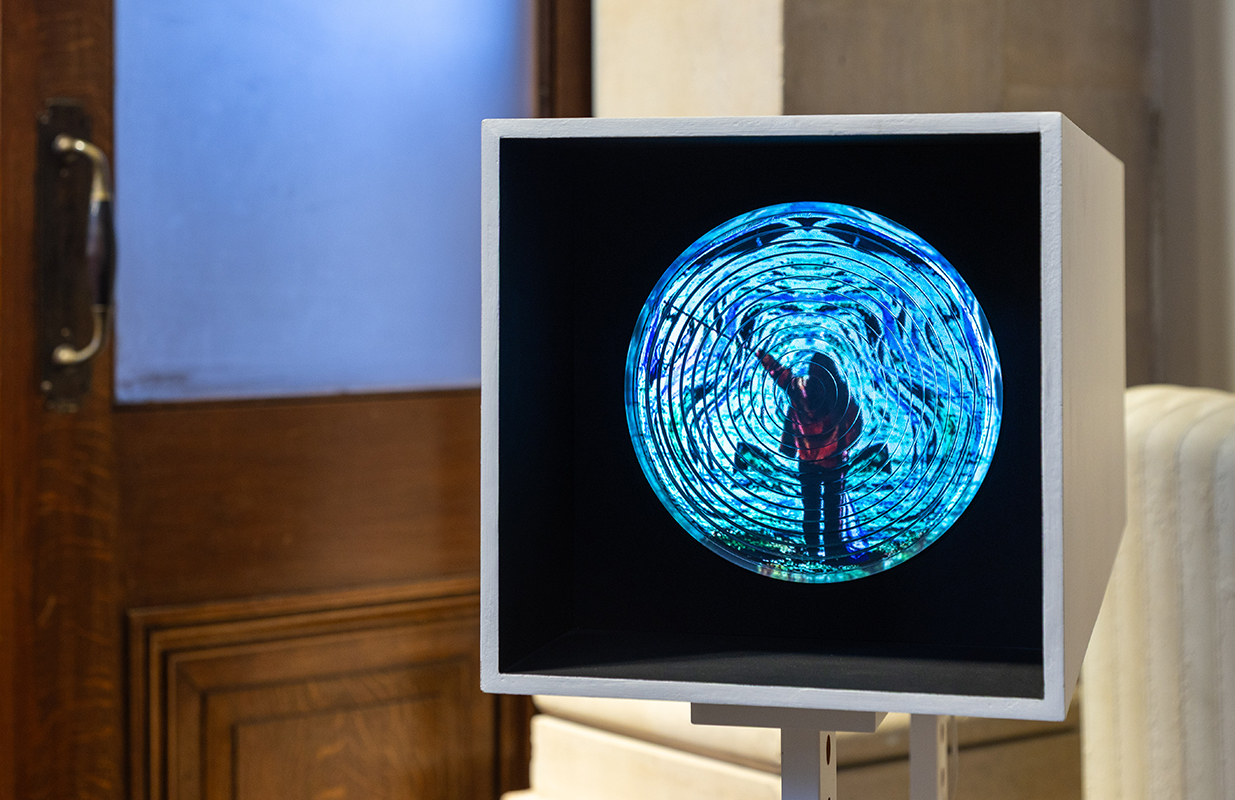
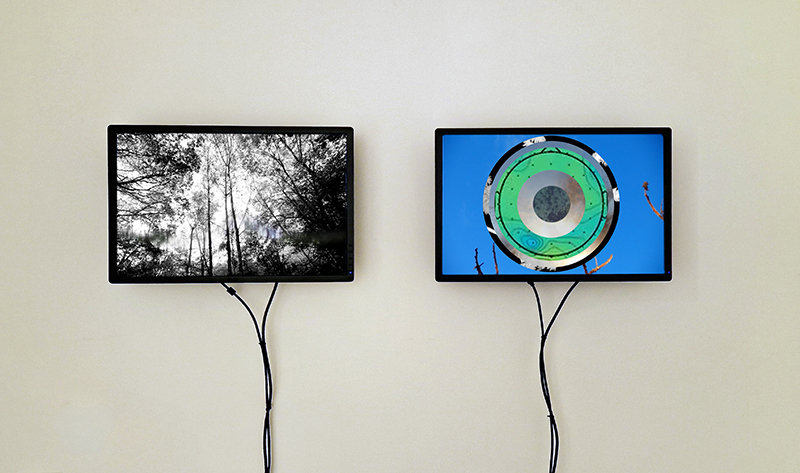
The video footage was filmed at the Lizard Peninsula, Cornwall, on 29th March 2019 (the first date the UK was supposed to leave the EU). Solitary figures using semaphore flags sign ‘We Are One’ out across the ocean. As in entanglement theory, where two paired electrons mirror each other at a distance, it was hoped the message would be echoed back and we remain entangled. The video is back projected onto a Fresnel lens, the type found in lighthouses to increase luminosity of the lamps beam, another form of messaging over distance. The Lizard Lighthouse has a stunning Fresnel lens which was filmed gaining brilliance as dusk descended on this significant day. The flags used were printed using hand painted dye sublimation inks applied via a heat press. This process transfers ink from a paper matrix onto a substrate textile where the image passes momentarily across space in a dematerialized state as vapour, before being reformed as its mirror opposite.

At a Distance, 2019, Video 4.50m, Fresnel lens, projector, wood, trestle, flags, 28 x 80 x 120 cm

The video Contingent Horizons was made during the pandemic, when physical horizons were constrained, yet information received digitally about the world beyond was overwhelming and often hard to decipher. It considers how space is perceived as a plotted dimension on a map, as abstract space calculated mathematically, but perhaps not something we can visualise, and as imagined space which knows no boundaries.
The true horizon is usually hidden. We each have a personal distance to the horizon based on our specific height of eye from the ground and the local elevation from sea level at which we stand, the average distance is 3 miles. It is a distance we can never reach as it always recedes as we approach.
This film interweaves four journeys, walking at dawn, taking the most direct route to cardinal points measured at three miles due North, East, South and West from home. The dialogue is drawn from popular online lectures, combined with poetic insights spanning navigation, properties of space, consciousness and ancient understandings of the cosmos. Hierarchies of dimensions and perception are considered from three speculative perspectives that seek to discover, imagine or theorize what lies beyond the limits of knowledge.
Constantly shifting landscapes begin to lose form and clarity as the three mile boundary approaches, structures break down into contour lines and foliations. The decomposition of recognisable shapes into an amorphous haze reflects the difficulty we have, not only in trying to see what lies beyond our confines, but interpreting the world around us. The video speculates on gaining understanding through sensitivity to natural phenomena and entering a meditative state of mind to enter higher dimensions of consciousness.

We are told that at the smallest scales there are no objects, just relationships. When we zoom in, the world we know dissolves into encounters of opposing forces and it may seem possible that we could pass through what appears to be solid matter.

Contingent Horizons, 2021, Video 8.15m

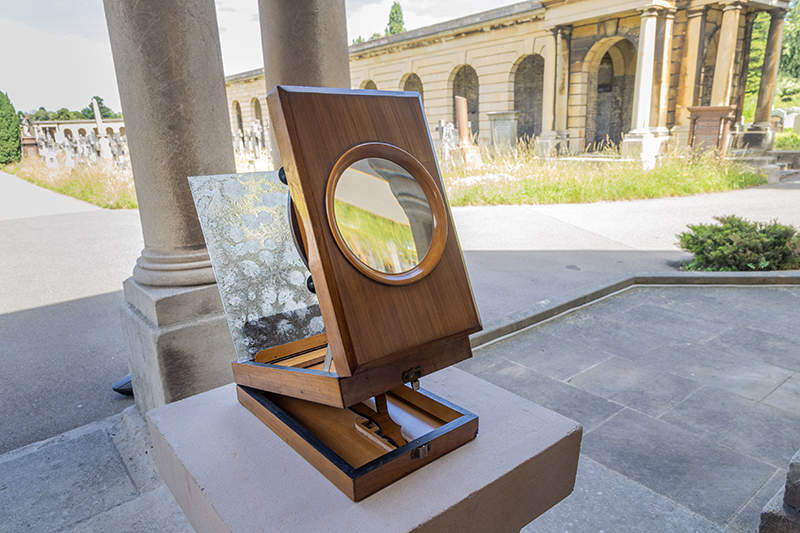
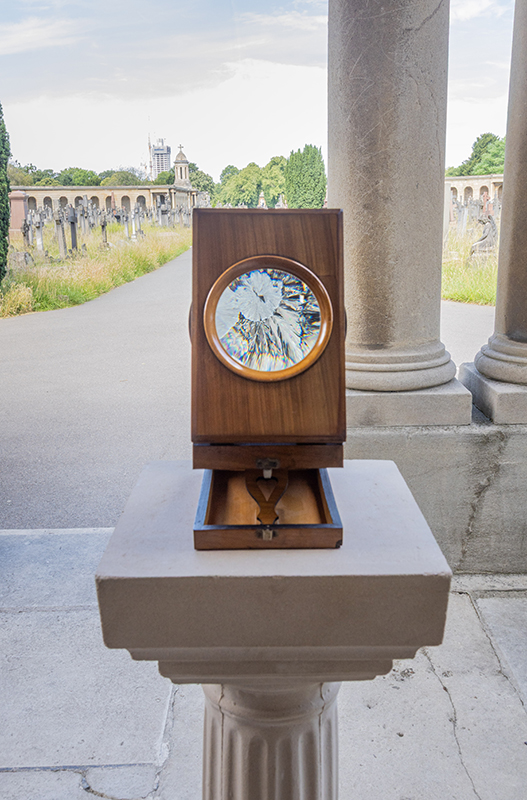
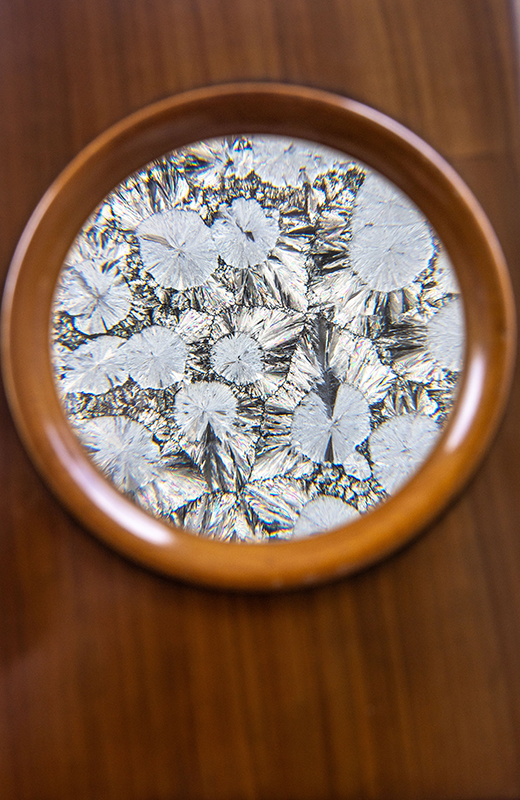
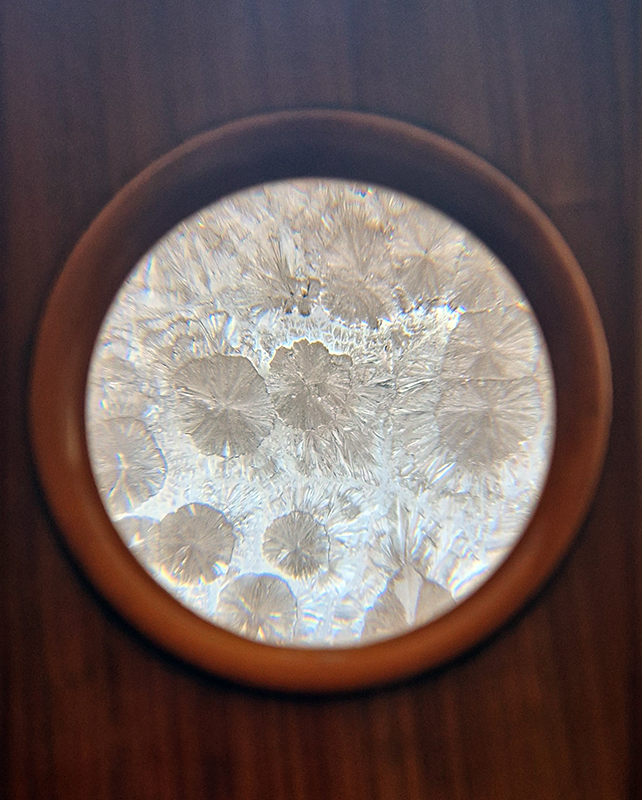
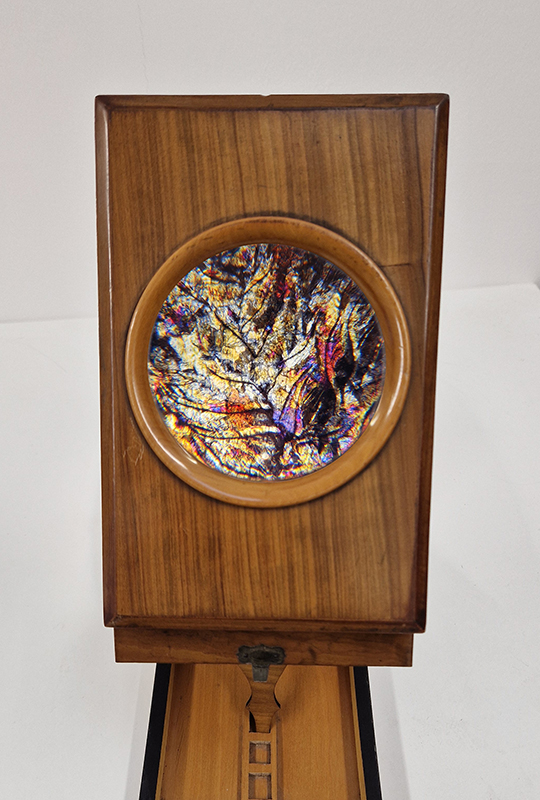
Viewing crystals under a polarizing filter reveals a hidden world of vibrant colours and intricate structures through a process called birefringence. When crystalline materials are placed between two crossed polarizers, they act as tiny prisms, splitting and twisting polarized light to produce kaleidoscope-like patterns. Many crystals have ordered internal atomic structures that split incoming polarized light into two rays, which travel at different speeds and are twisted at 90° to each other.

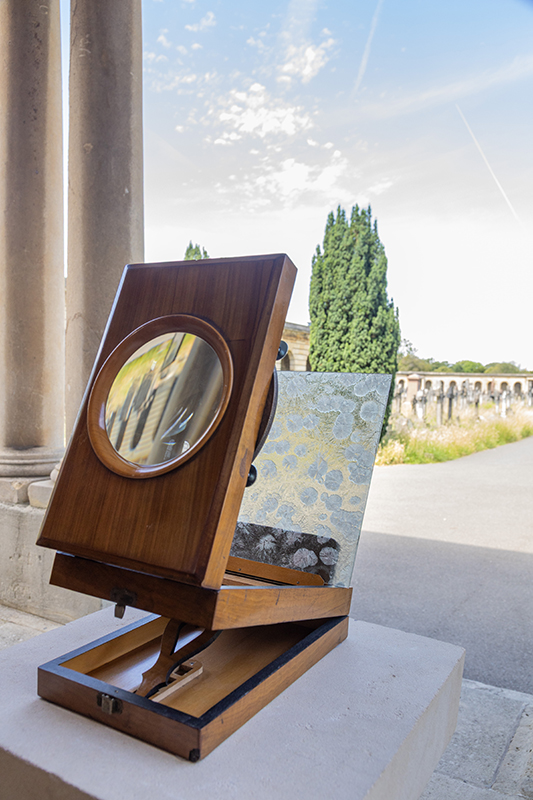
Crystal Kaleidoscope, 2026, Magnifying viewer, polarising filter, crystal growth on glass, 14 x 24 x 32 cm

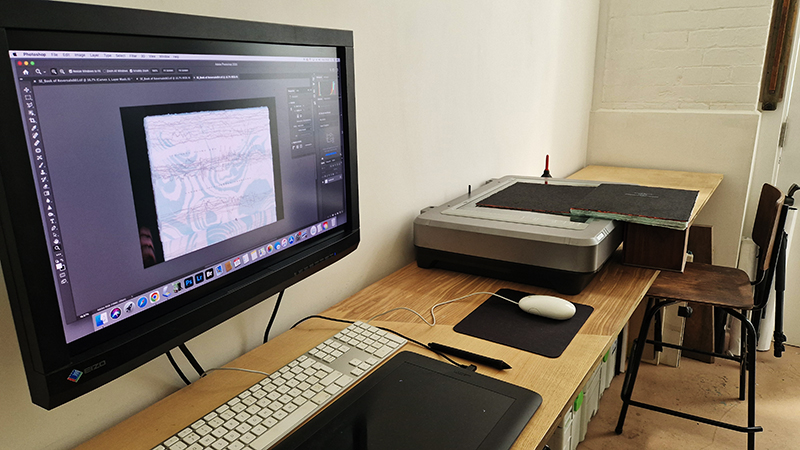
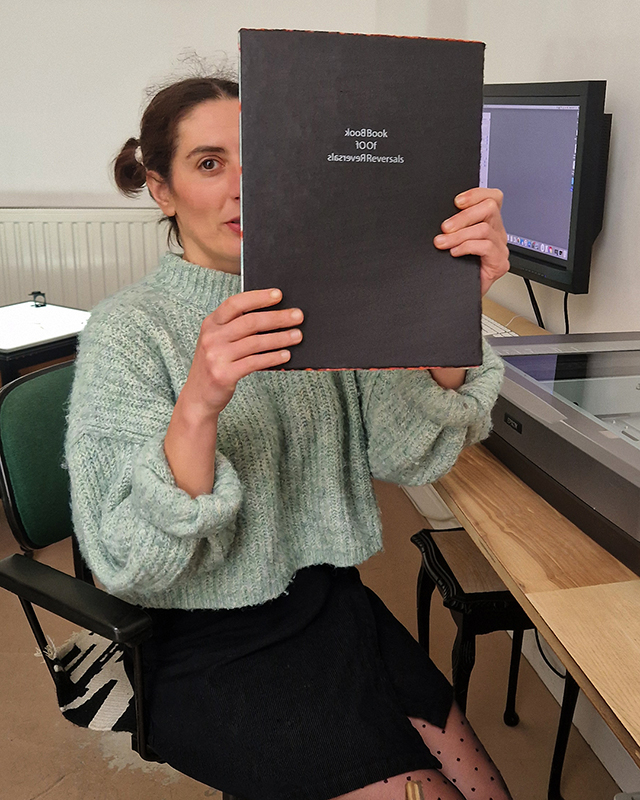
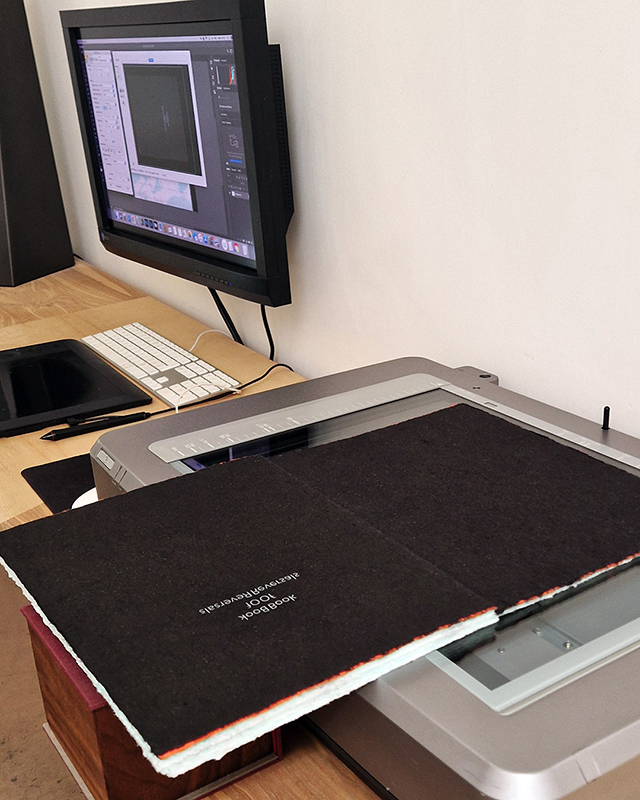
I spent a happy HIRESidency day at Equivalentbehaviour photographic studio scanning my Book of Reversals with a view to creating a digital copy with added narration. Katrina Stamatopoulos, who runs the space with Wojciech Kawczyk, was very welcoming and generous with her time and I came away with high res images to edit into video form.

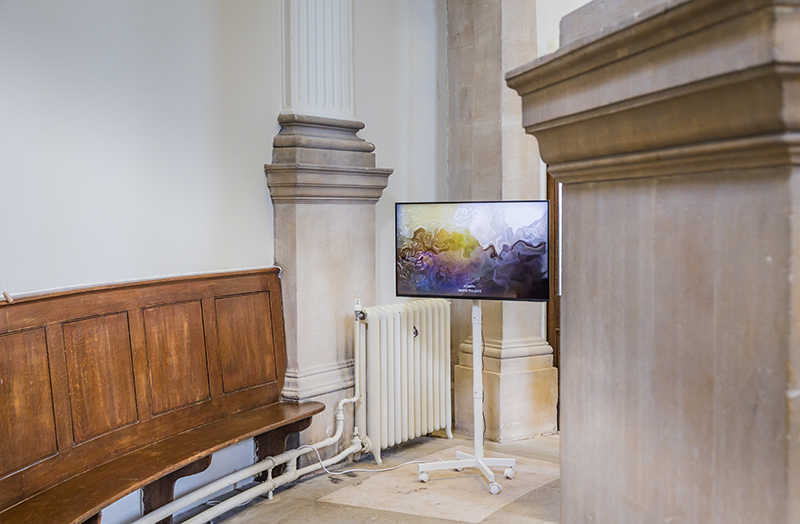
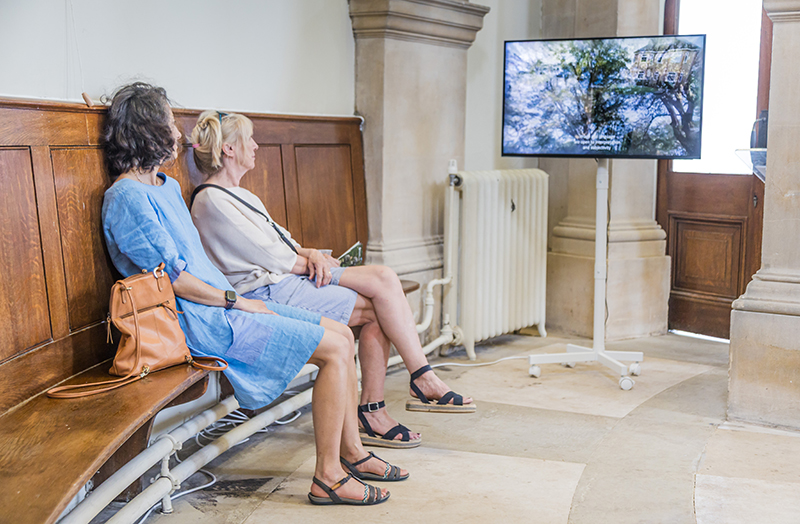
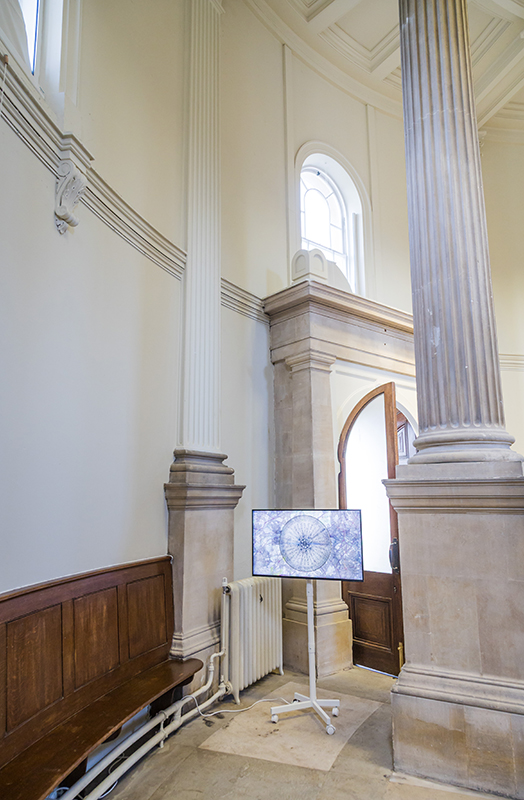
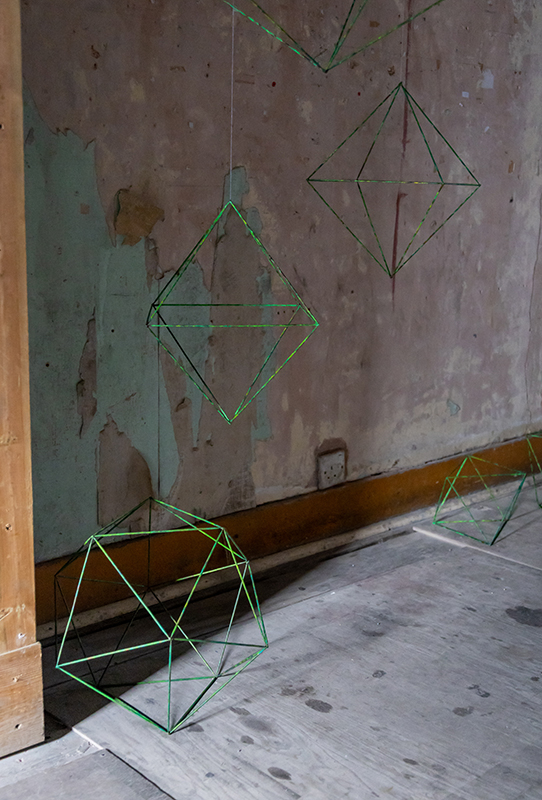
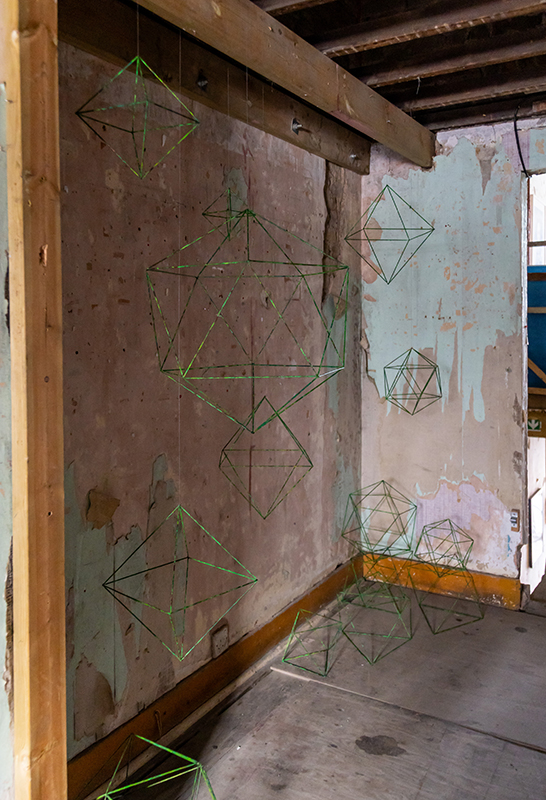
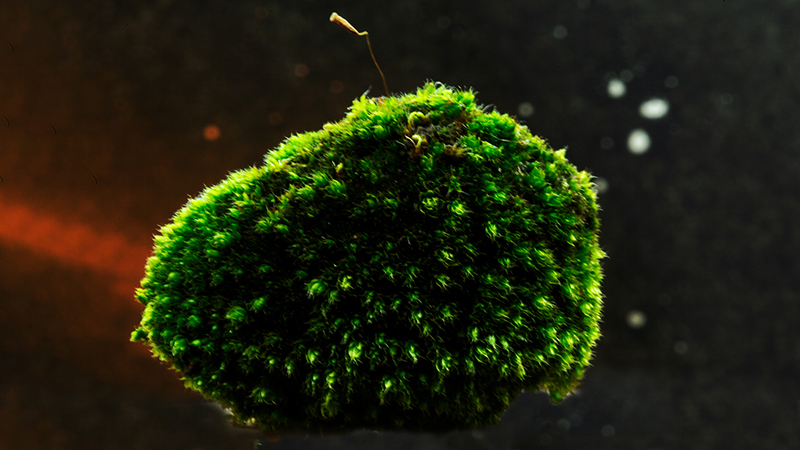
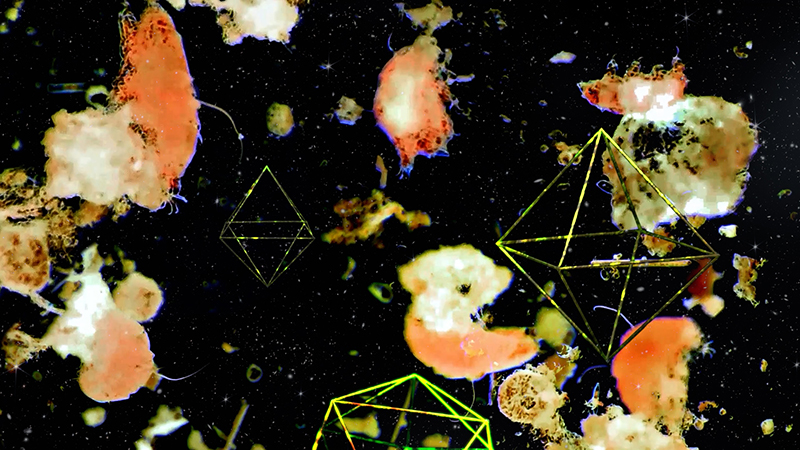
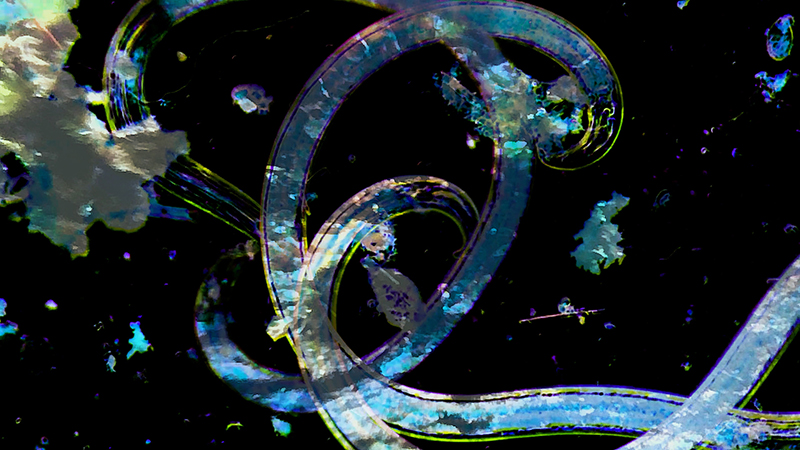
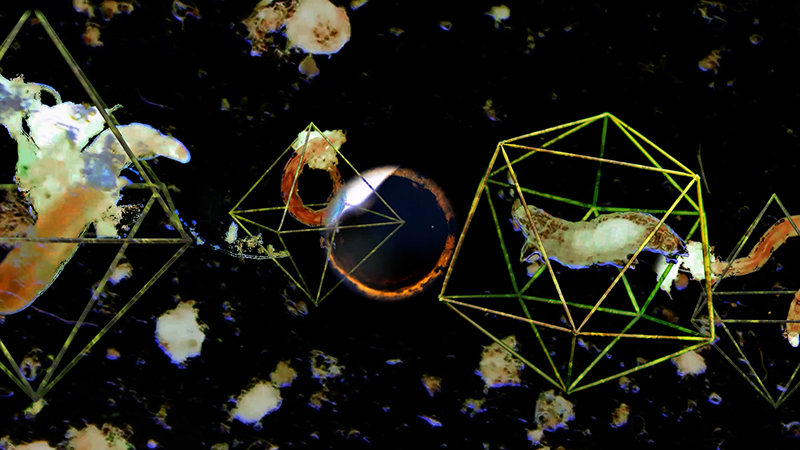
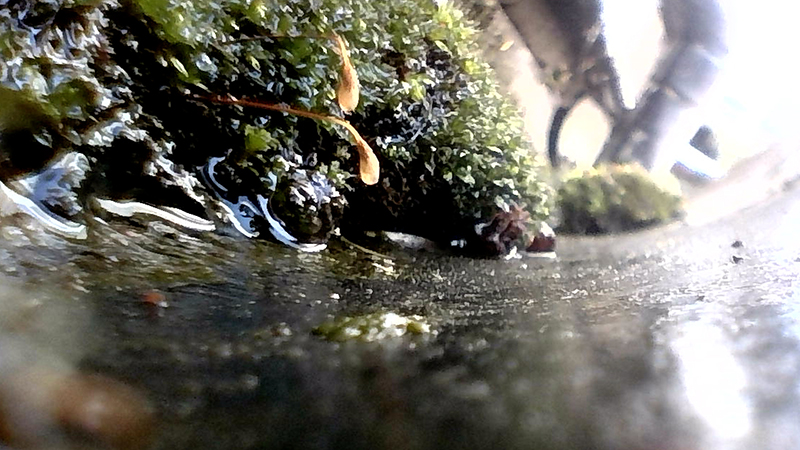
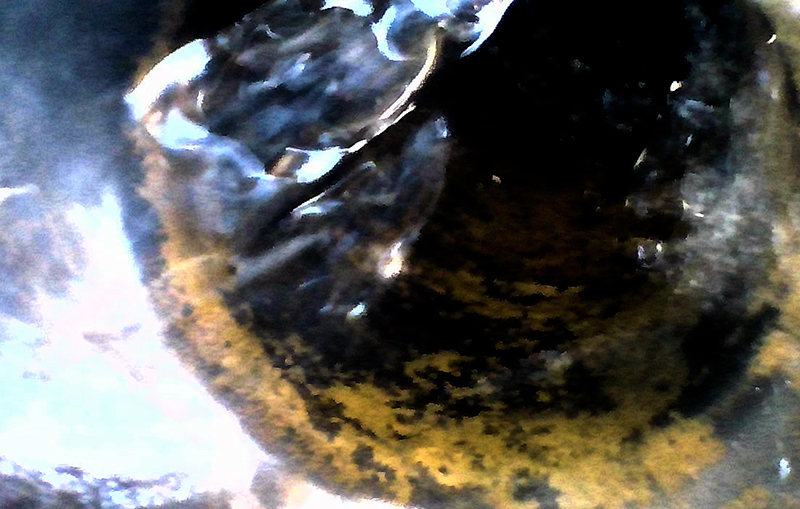
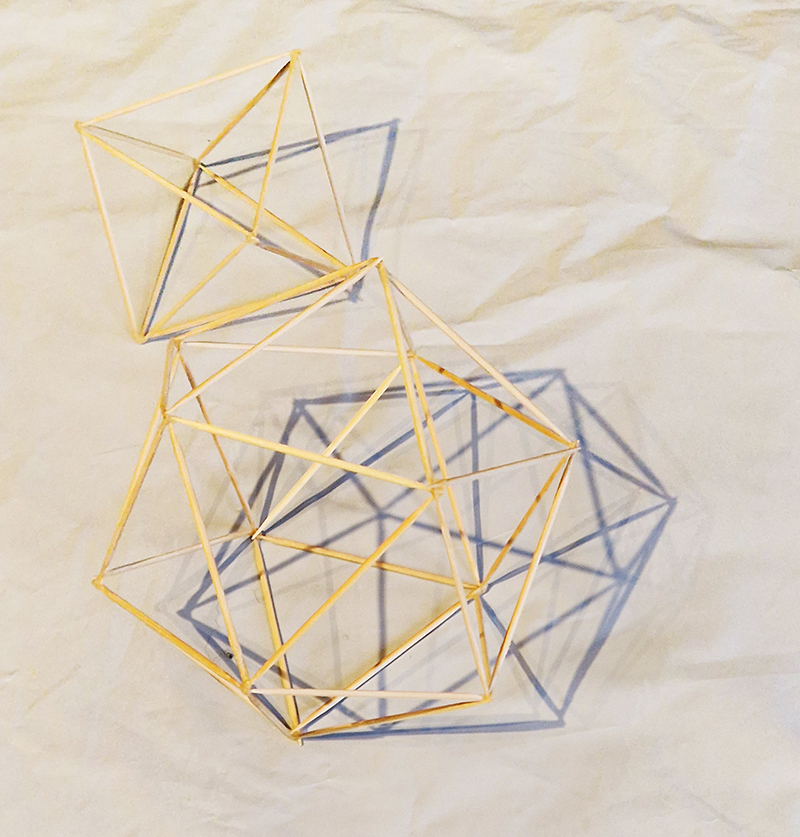
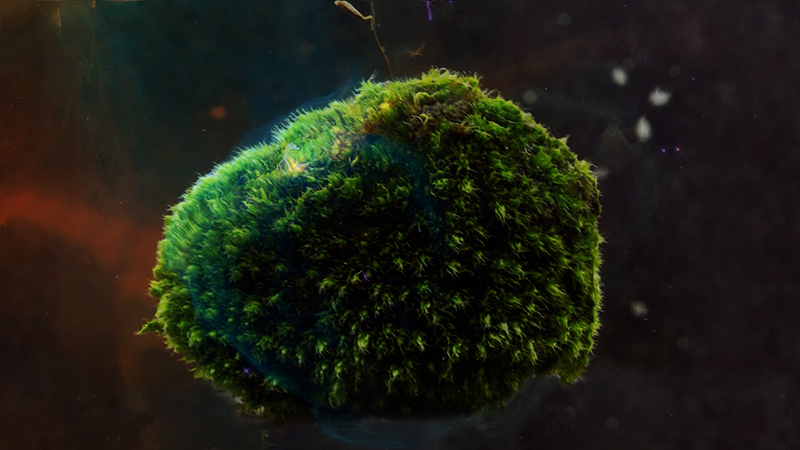
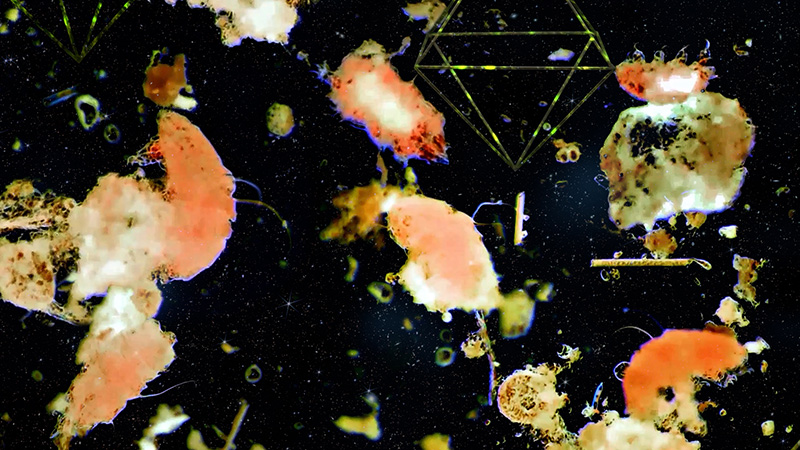
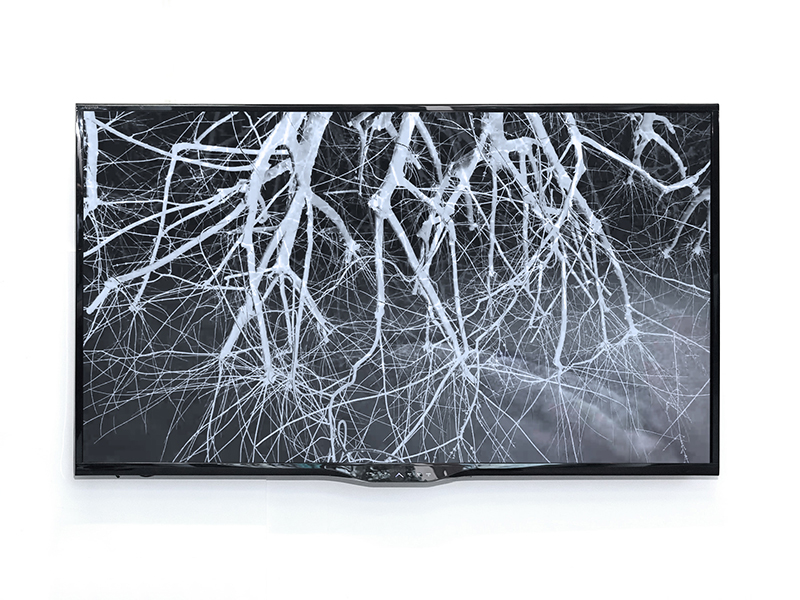
Always good to have visitors in to chat during Thames-side Studios open weekend. This year I installed my giant eBay bargain TV with the video Guttanaut showing. Alluding to Oscar Wilde’s familiar quote ‘We are all in the gutter but some of us are looking at the stars’, this video installation transports the viewer to exotic otherworlds inhabited by microscopic creatures found in a tuft of moss in the dank environs of house gutters. Icosahedron and octahedron shapes representing the elemental qualities of water and air appear as constructs for satellites or modes of exploration across this alternative cosmos. The gutter creatures were very popular, especially with children.

The summer solstice is the peak of the long days of natural light. Throughout our lives, we are exposed to light daily, the primary source being sunlight. To this natural light exposure is added an increasing exposure to artificial light. This light pollution may be detrimental to human health by disrupting the natural light/dark cycle but also by directly causing retinal damage.

A blog post by my optician on eye health and LED lighting draws attention to recent research by Prof. Glen Jeffrey from UCL, on the impact of LED’s on the retina, published in Nature one of the World’s most respected scientific journals.

The research highlights the positive benefits of the old fashioned ‘tungsten’ bulbs on vision and two recent peer-reviewed studies have raised concerns that repeated exposure to low doses of LED light may cause biological stress in the retina. One solution to mitigate any potential negative effects of LED’s is to replace LED lights with Tungsten or Halogen, or install a desk lamp with a tungsten bulb to run alongside the LED lights.

Research paper published in Nature by Glen Jeffrey, University College London

Peer-reviewed study on repeated LED exposure and retinal stress (ScienceDirect)

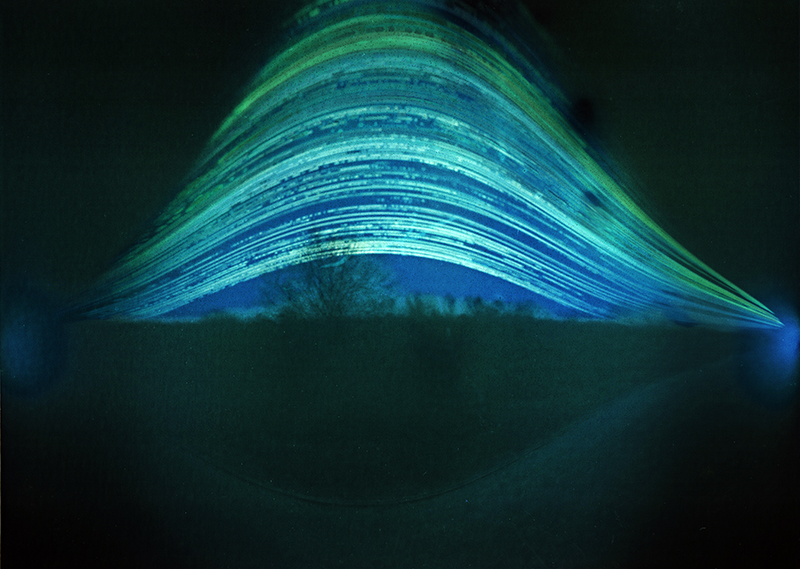
Full year solargraph

Gallery Visits

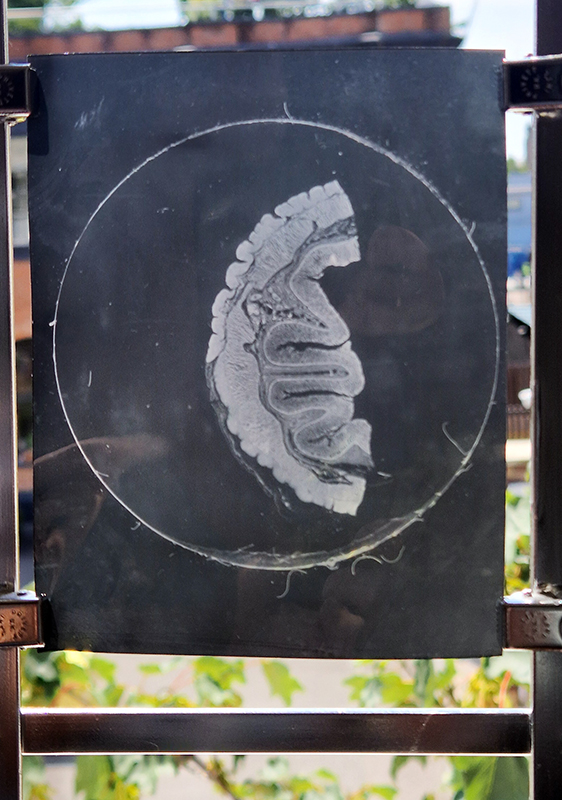
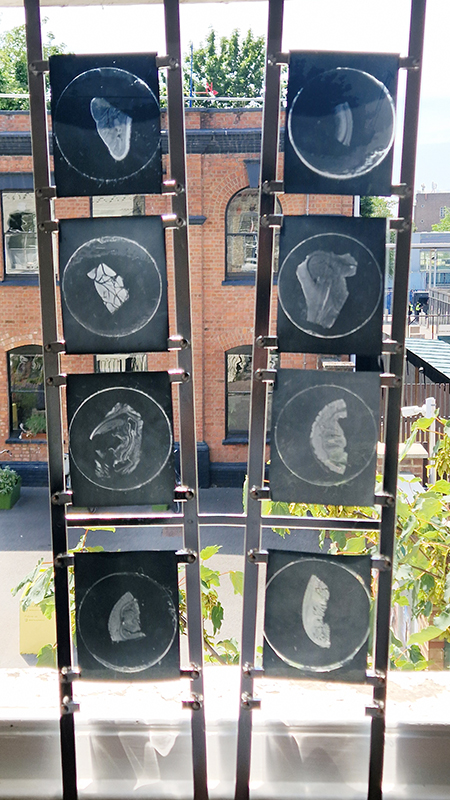
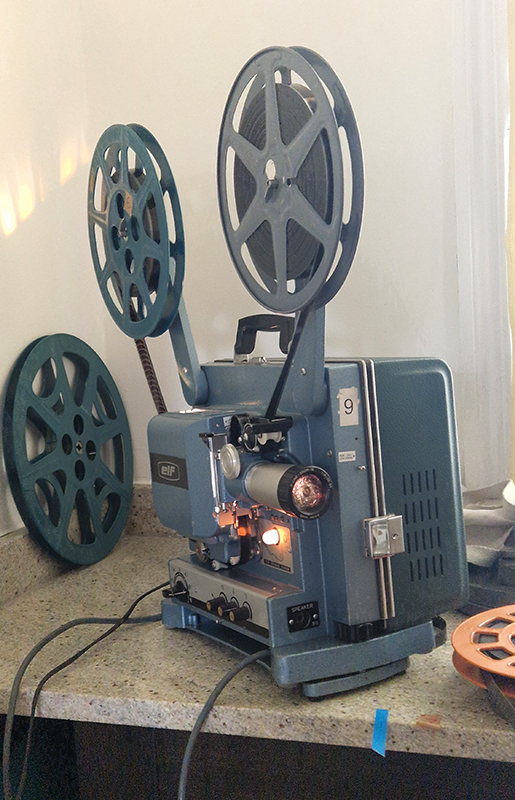
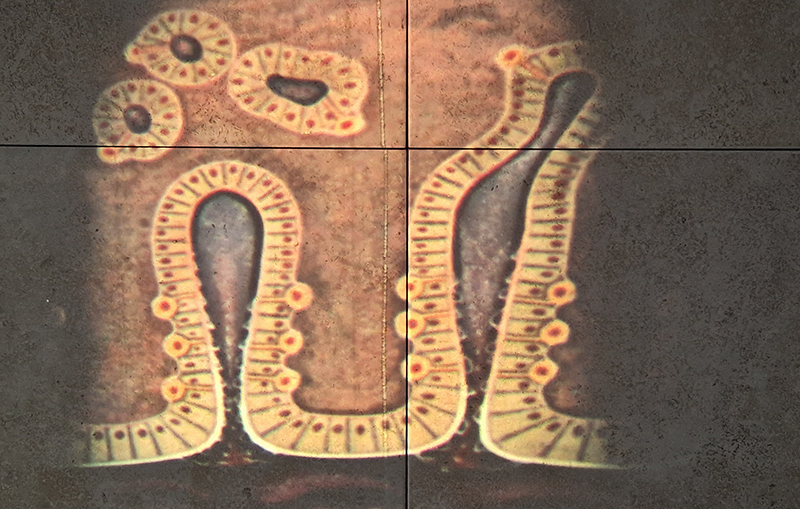
Katrina Stamatopoulos Dip and Dunk! at Happax Living Room stems from found sets of histological slides sourced on eBay, which have been reworked in the darkroom using analogue and experimental photographic processes. Through experimental hand-printing techniques, chemical manipulation, re-photographing and installation, Katrina approaches photography as a site of displacement, examining the medium’s abilities to translate and deceive.
The work looks at how images are made and interpreted amongst institutional systems of vision. In histopathology, diagnosis depends on trained visual literacy: the ability to recognise cellular structures and abnormalities through specialised observation. Photography, on the other hand, occurs in real time. It is not only understood as being images or objects, but is a way of seeing that mediates our relation to vision itself.
Working with reclaimed photographic materials, Dip and Dunk! traces the interconnected histories of medical imaging and photography, and considers how bodies and organisms are made visible through these image-making systems.

This exhibition was so beautifully presented.

Bridging the Gap, Gallery 1 Hypha Studios, South Bank curated by Paul Carey-Kent, Hermione Allsopp and Poppy Whatmore. An exhibition of sculpture that draws inspiration from its immediate environment, using the proximity of Southwark Bridge as a metaphor for connection in divided times. More than twenty artists explore themes of linkage, separation, and repair through innovative approaches to structure and materiality. Artists: Alice Wilson, Catriona Robertson, Erika Trotzig, Harriet Mena Hill, Helen Barff, Hermione Allsopp, Jonny Briggs, Julian Wild, Julie F Hill (image right), Justin Hibbs and Rosalind Davis (image left), Koushna Navbi, Michael Samuels, Milly Peck, Nicky Hirst, Neil Gall, Nigel Massey, Poppy Whatmore, Samuel Zealey, Sarah Pager, Sarah Roberts, Will Cruickshank.

It was the opening night of this huge new Hypha space which places three galleries in one interconnected area leaving each separate exhibition open to either cross pollination or cross contamination.

Seismic Mother at The Old Waiting Room, Peckham Rye Station curated by Charly Blackburn and Holly Birtles. Bringing together multidisciplinary approaches, Holly Birtles, Alfonso Borragán, Charly Blackburn, Colin Crumplin, Martin Howse, Syd Nencini, Gareth Phillips, Xavier Ribas, Eugenie Shinkle, and Alex Simpson create work that centres on their encounters and interpretations of places and objects in the context of geological crisis. The works attempt to communicate the seemingly incomprehensible nature of the earth’s magnitude and magnificence, temerity and resilience as it endures, regenerates and struggles to survive through the slow violence of ecological catastrophe.

Stunning pieces from Charly Blackburn and Alex Simpson.

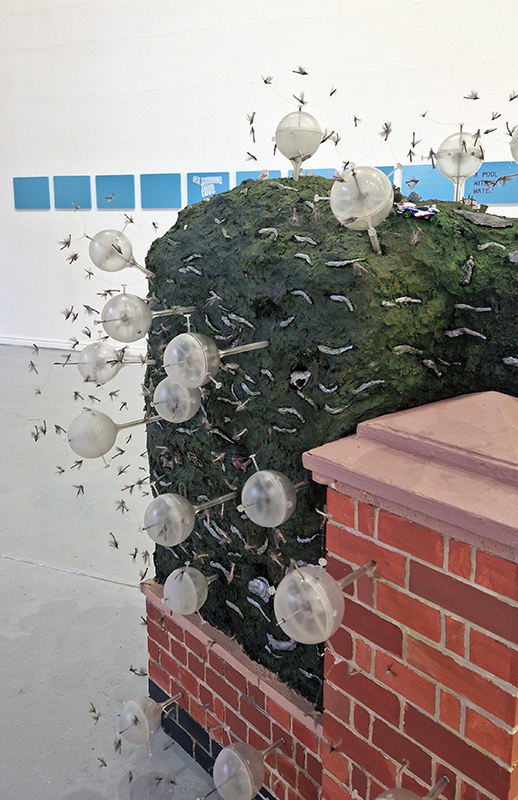
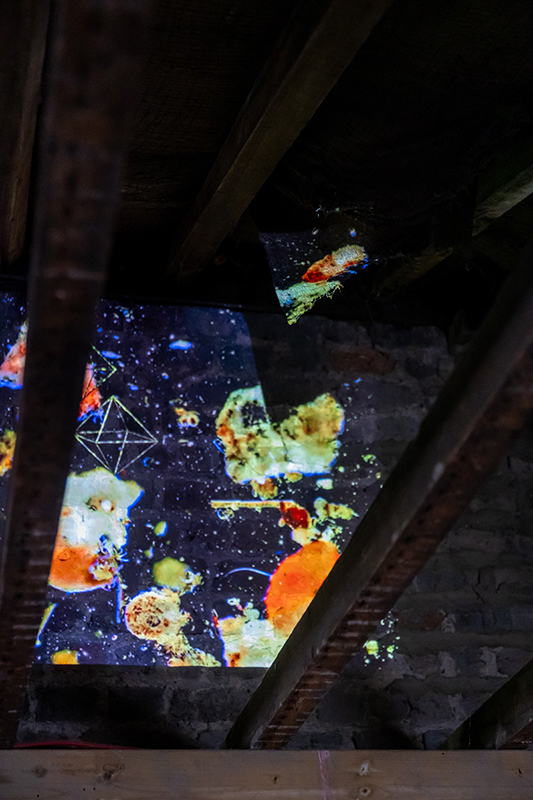
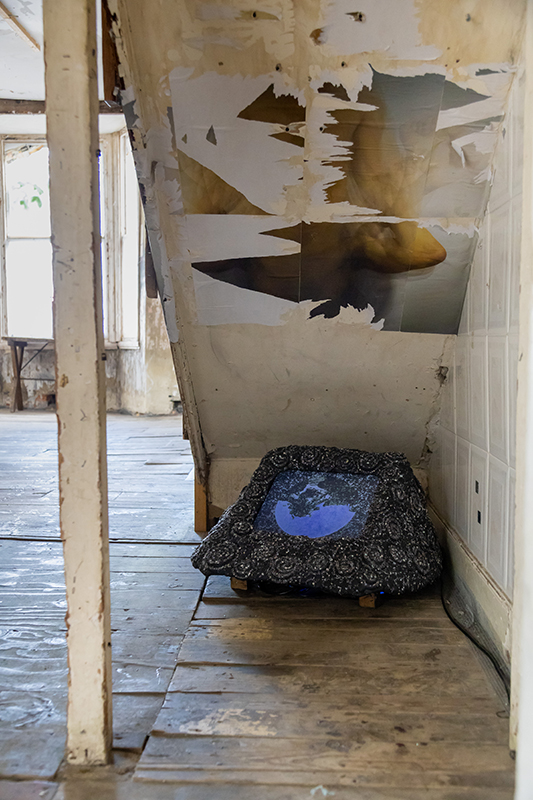
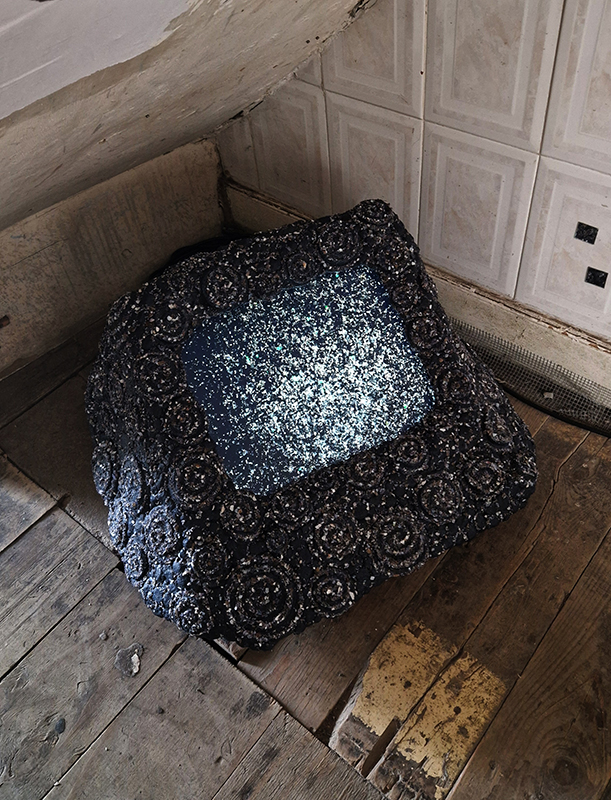
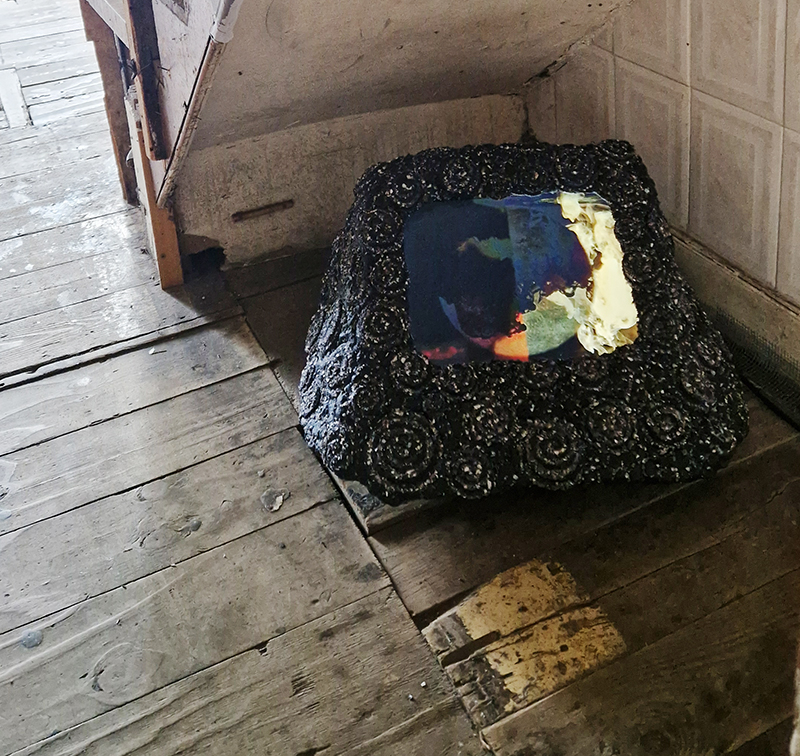
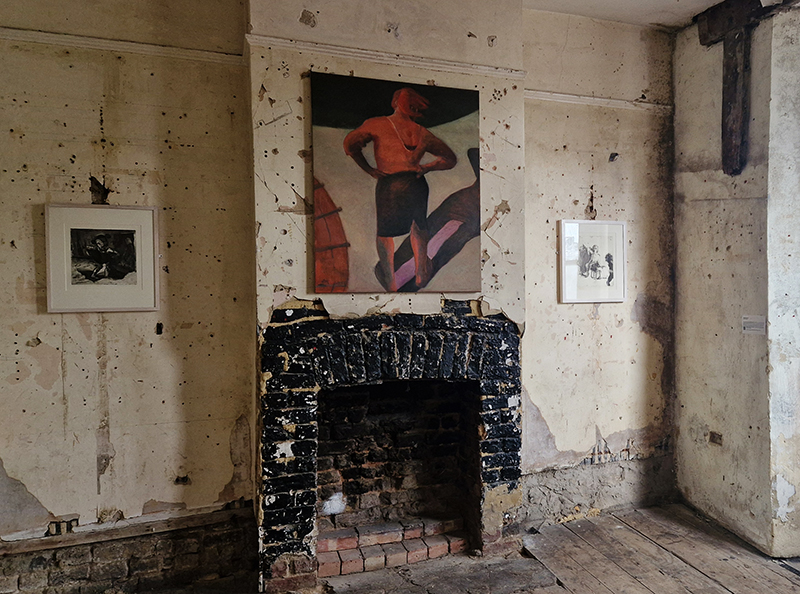
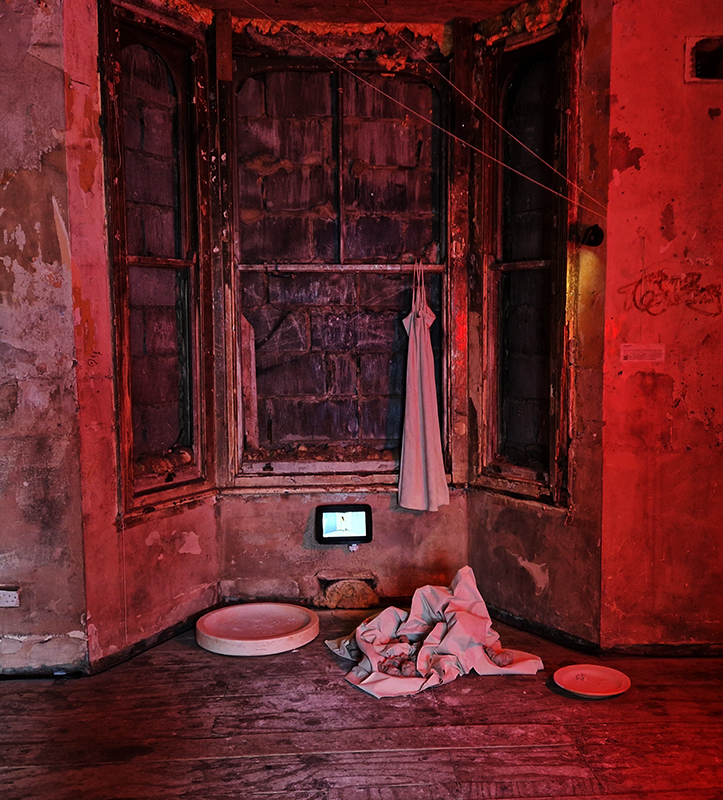
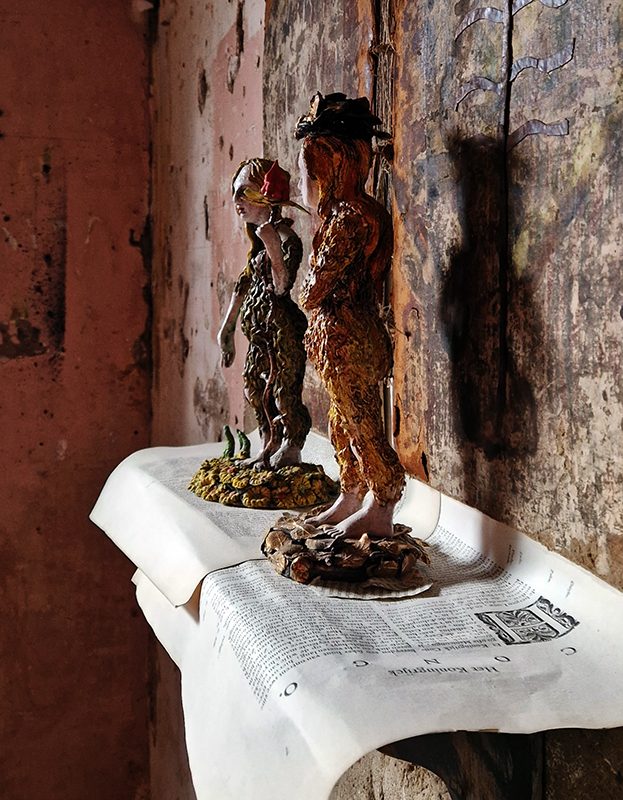
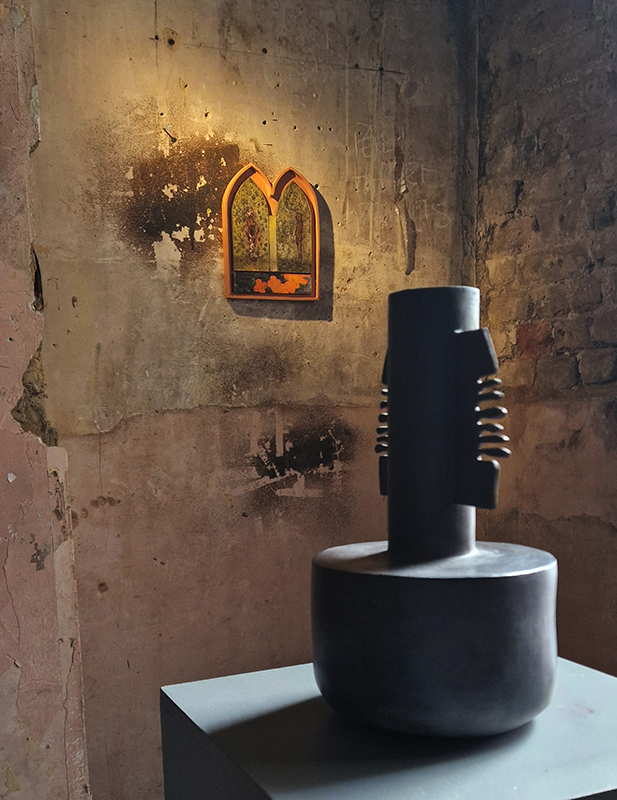
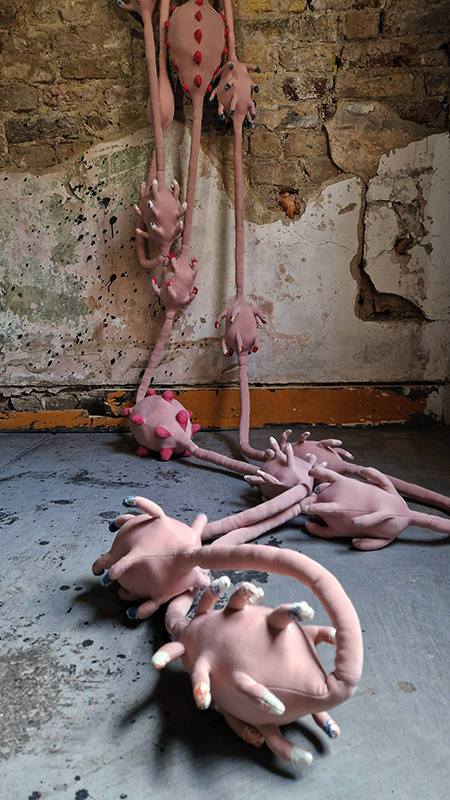
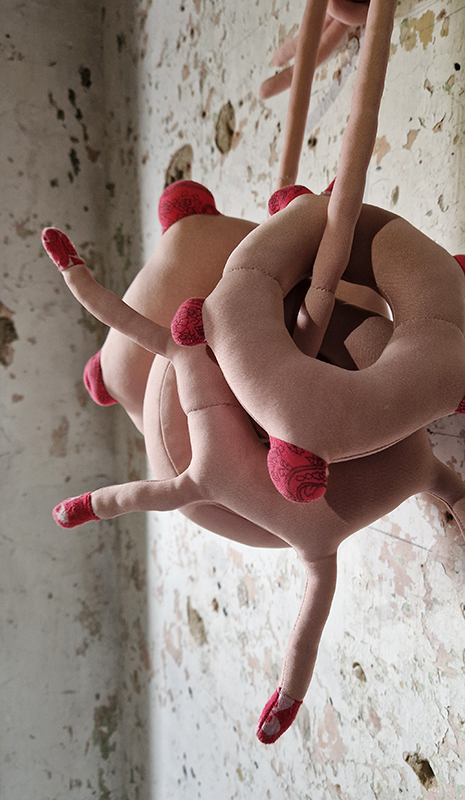
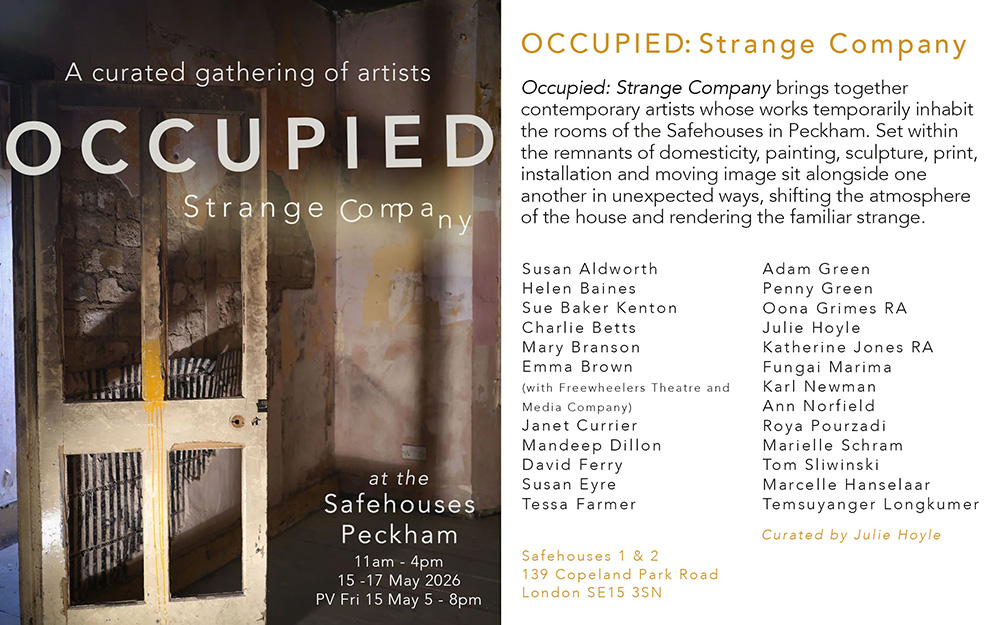
It was a brilliant busy weekend at the Safehouses Peckham for Occupied: Strange Company. So many visitors commented on the excellent curation of the works by Julie Hoyle. Each room had its own unique atmosphere yet all blended so seamlessly across the two houses. I was very happy with the placing of my two installations, one in the rafters the other in a dark recess under the stairs. Both works look to other life forms that we coexist with and often overlook – the mollusc and the creatures of the gutters.

Installation images of my work by Emma Brown Photography

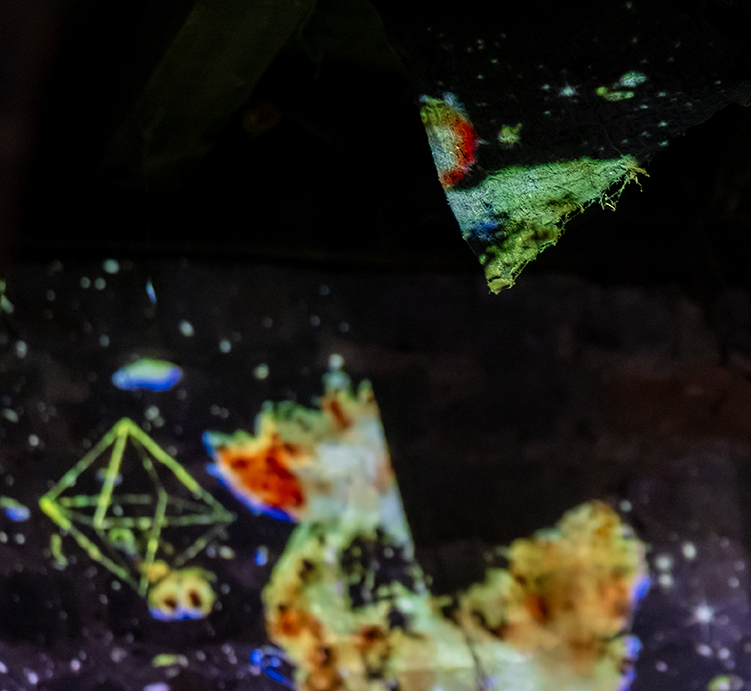
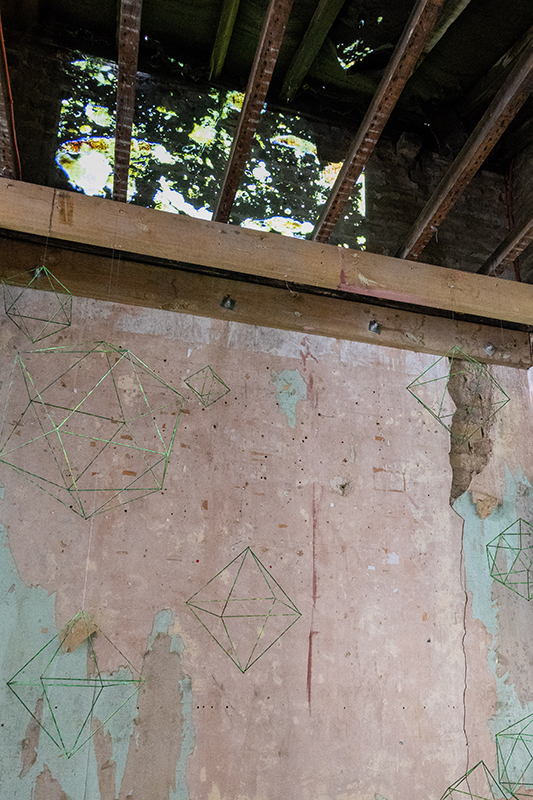
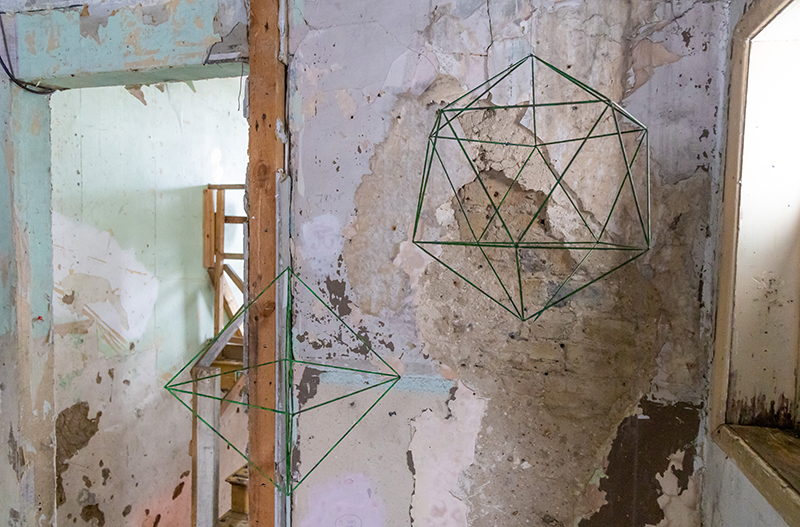
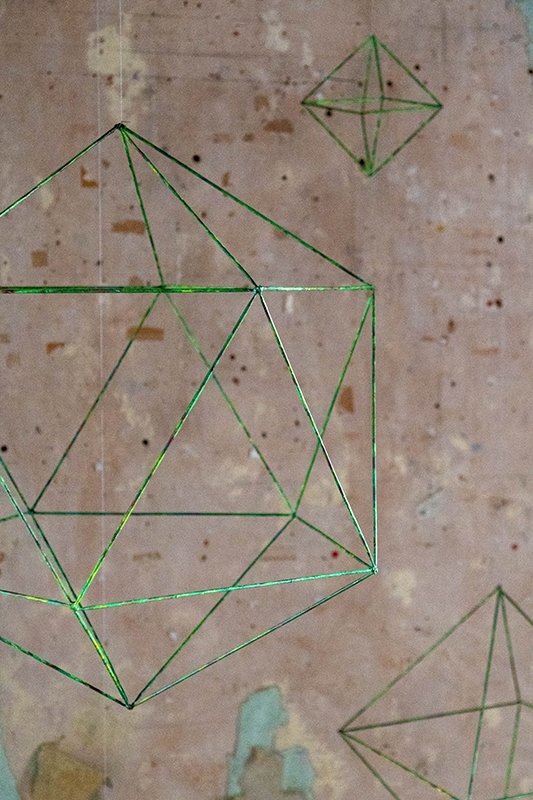
Guttanaut alludes to Oscar Wilde’s familiar quote ‘We are all in the gutter but some of us are looking at the stars’. This video installation transports the viewer to exotic otherworlds inhabited by microscopic creatures found in a drop of water or tuft of moss in the dank environs of house gutters. Icosahedron and octahedron shapes representing the elemental qualities of water and air appear as constructs for satellites or modes of exploration across this alternative cosmos.

Julie Hoyle brought together a cross-section of artists from Royal Academicians to emerging practitioners, alongside artists working within disability and community contexts reflecting her interest in community and unexpected connections.

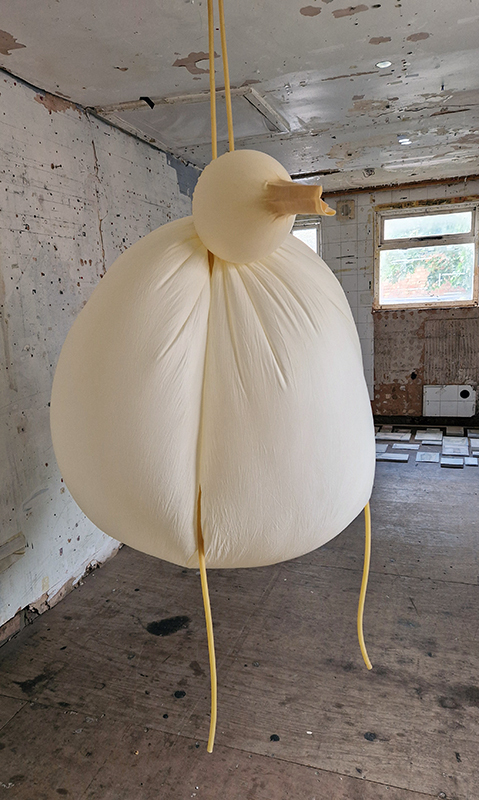
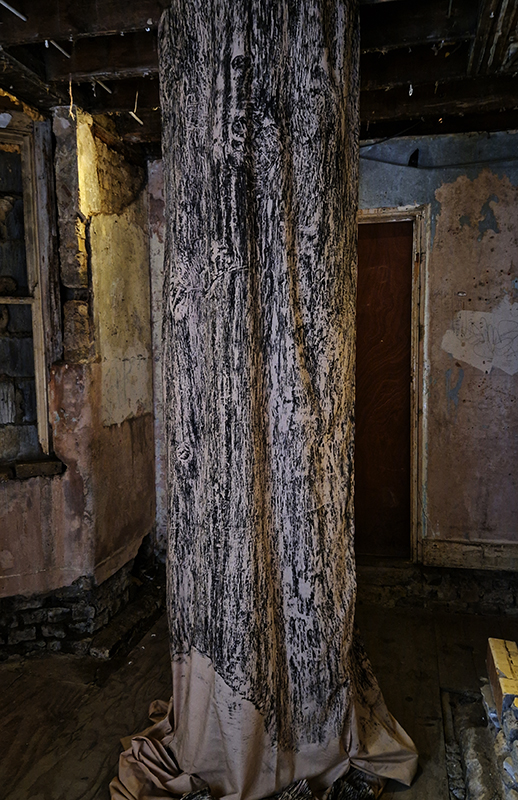
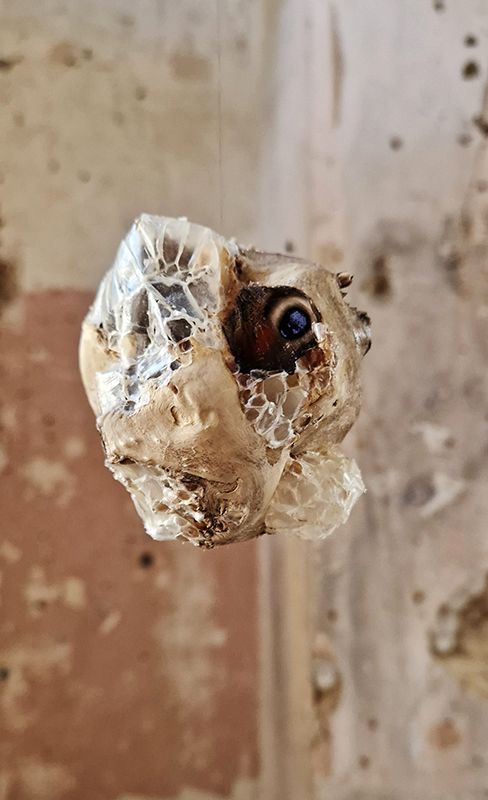
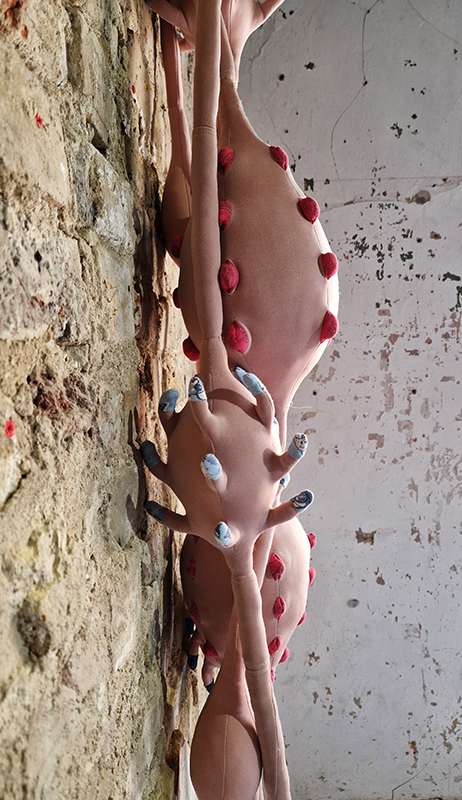
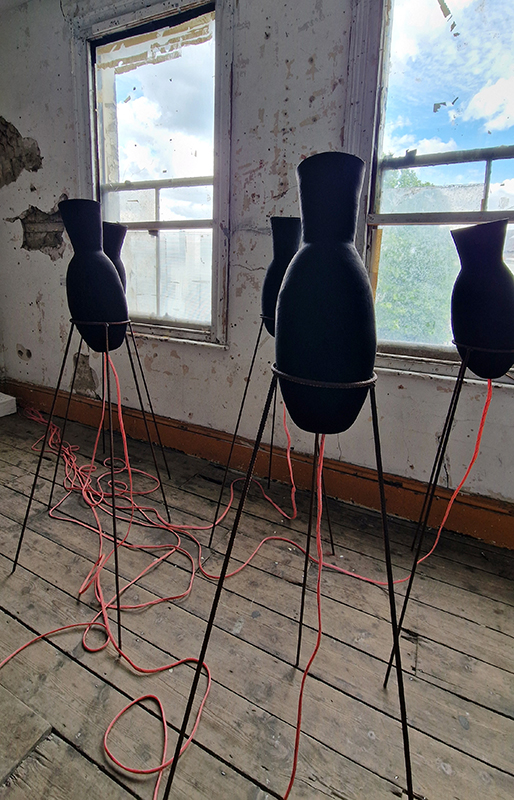
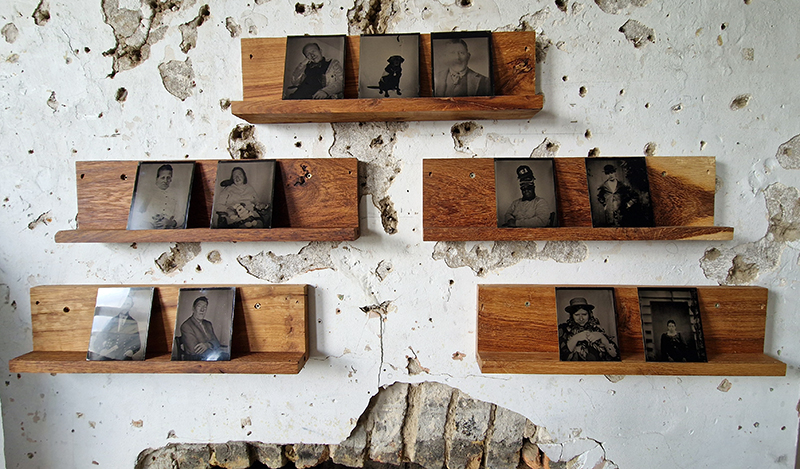
Works across the exhibition move between the intimate and the otherworldly, often unsettling the boundaries between body, space and perception. Included within a range of strange bodily presences are Susan Aldworth’s work Reassembling the Self. Internal, fragmented and reconfigured lithographs exploring how identity may be disrupted through trauma, illness, or simply the experience of being alive. As does Fungai Marima’s practice, using her own body as both subject and archive in performance. Repeated gestures of exposure and persistence draw attention to the private realities of anxiety and endurance. Charlie Betts’s practice is also rooted in movement and performance. Through drawing and action, she captures fleeting physical states that hold presence, absence and memory in tension. Mary Branson’s installation explores the fragile boundary between rest and exposure through vessel forms and the sound of breathing, evoking a vulnerable presence within places we assume are safe. This focus on vulnerability and embodiment resonates with Us and Them, a series of wet plate collodion portraits by Emma Brown in collaboration with Freewheelers Theatre & Media Company, a creative company of disabled artists and performers, reflecting on representation, visibility and shared humanity. In a shift of atmosphere, Marcelle Hanselaar transforms familiar interiors into psychologically charged scenes where bedrooms and domestic spaces become sites of unease, desire and dreamlike threat. Her figures appear exposed, restless and vulnerable, inhabiting worlds where intimacy and danger uneasily coexist. Beyond the body, the exhibition extends into the domestic, material and more-than-human worlds we inhabit. Janet Currier’s work turns to the objects and organisms we live alongside, where repetition, attachment and care become central. Rooted in the domestic and often autobiographical, her sculptural arrangements suggest that the things we tend to – fabrics, forms, fragments – hold memory and presence, quietly accumulating meaning over time. A similar sensitivity to material and instability is present in the work of Mandeep Dillon and Marielle Schram. Dillon’s ephemeral sculptures explore pressure, balance and the temporary nature of form, their fragile, inflatable structures responding to subtle environmental shifts and hovering between buoyancy and collapse. Schram’s small-scale sculptures and drawings translate emotional experience into tactile form, where diverse materials are handled with sensitivity and control, balancing strength and vulnerability. In both practices, making becomes a visible negotiation between material, form and feeling. Sue Baker Kenton and Ann Norfield consider how things are kept, categorised and carried through time. Baker Kenton’s installation of painted, box-like structures reflects on containment and hidden histories, while Norfield’s use of collected bones and print processes brings a quieter, more direct engagement with chance, hope and the precariousness of life. Together, they reflect on accumulation, fragility and the tenuous nature of what we hold on to. A more overtly uncanny register emerges in works that draw on folklore, memory and psychological space. Oona Grimes’s film and drawings draw on historical and cinematic references to create fragmented, misremembered scenes in which figures appear both comic and spectral. This sense of dislocation and re-framing is echoed in the work of Tom Sliwinski, whose drawings present a personal and immediate view of the world, where historic interiors and figures take on a ghostly presence. A different sense of time emerges in the work of Penny Green and Roya Pourzadi, whose figures and forms draw on myth, symbolism and cultural memory. Their works carry a feeling of something ancient yet still in motion, not fixed in the past, but moving through it. Pourzadi’s imagery draws on Persian histories and elemental forces, where water, vessels and symbolic figures suggest cycles of renewal, fragility and transformation. In contrast, Green constructs a world of masquerade, blending emblems and archetypes across time. Her Wild Women and reworked objects draw on mythological forest figures and medieval imagery, creating presences that feel both rooted in history and strangely alive within the present. Throughout the exhibition artists construct distinct visual worlds that shift between observation and imagination. Katherine Jones transforms familiar imagery through intense light and distortion, pushing it towards something simultaneously seductive and unsettling, beauty and unease seem to exist in tension. Helen Baines painting ‘Show Horse’ similarly draws on lived experience and symbolic imagery and questions the uncomfortable truth of how we bend animals to our will in the name of discipline, love or tradition. A suspended bird moves through a constructed interior that feels both familiar and uncertain in Karl Newman’s Melancholy Study holding a moment of stillness charged with anticipation. Rooted in a deep connection to the natural world, Temsuyanger Longkumer’s installation centres on the reconstruction of a tree, drawn from his printmaking practice. Re-situated within the interior of the house, the work introduces a presence that feels both elemental and enchanting. Oak, wormshells, shed snake skin, hedgehog spines, mouse bones are just a few of the organic and unsettling materials used in Tessa Farmer’s sculptural interventions. Her work introduces meticulously constructed miniature worlds, bringing a darkly intricate presence into the house. Imagined or parallel worlds shaped through narrative and invention is prevalent in Adam Green’s work. His painting shown here presents a system-like visual language of pattern, geometry and reptition, suggesting constructed environments that are at once playful but possibly unstable. Elsewhere, David Ferry’s photomontages reimagine landscape through layered and unexpected combinations, where deserts, oases and shifting terrains disrupt familiar visual language, creating a sense of both recognition and disorientation. Finally and beyond the interior, several works extend into speculative and cosmological realms. Susan Eyre’s video-sculptural installations imagine hybrid lifeforms at the intersection of the organic and inorganic, expanding the exhibition beyond the domestic into a wider consideration of time, scale and the unknown.
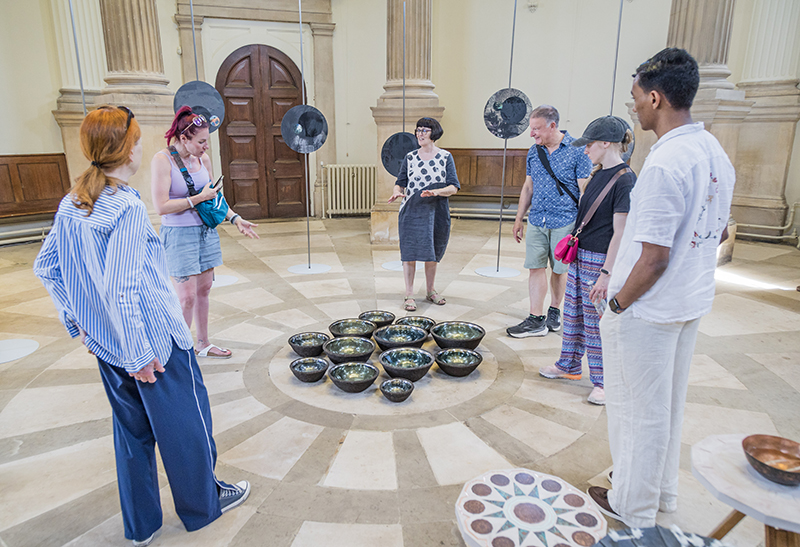
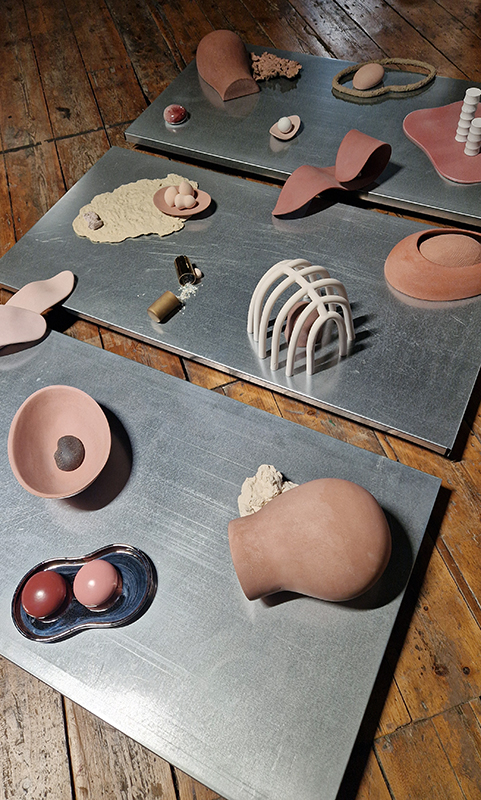
Together, the exhibition forms a temporary community of presences, installed in close proximity, the works begin to speak to one another in unexpected ways, forming subtle and unexpected relationships that create a charged and shifting environment in which the familiar is rendered persistently strange.

I am excited to be selected for the HIRESidency at Equivalentbehaviour founded by Katrina Stamatopoulos and Wojciech Kawczyk, who specialise in photographic scanning and digitising photographic film, prints and 3 dimensional mixed-media artwork.

My proposal is to scan the Book of Reversals to make a digital work with narration. The physical work will be exhibited at Brompton Cemetery Chapel in the upcoming Appearances are a Glimpse of the Unseen. This book is a poetic interpretation of the formation of planet Earth and its turbulent internal fluid core that generates an unpredictable but protective magnetic field prone to sudden changes in polarity. Ocean floor magnetic stripes are a geological phenomenon consisting of alternating bands of differing magnetic polarity. Our planet is a complex and dynamic body where interactions occur ceaselessly between the inner core the outer core the mantle and the crust.
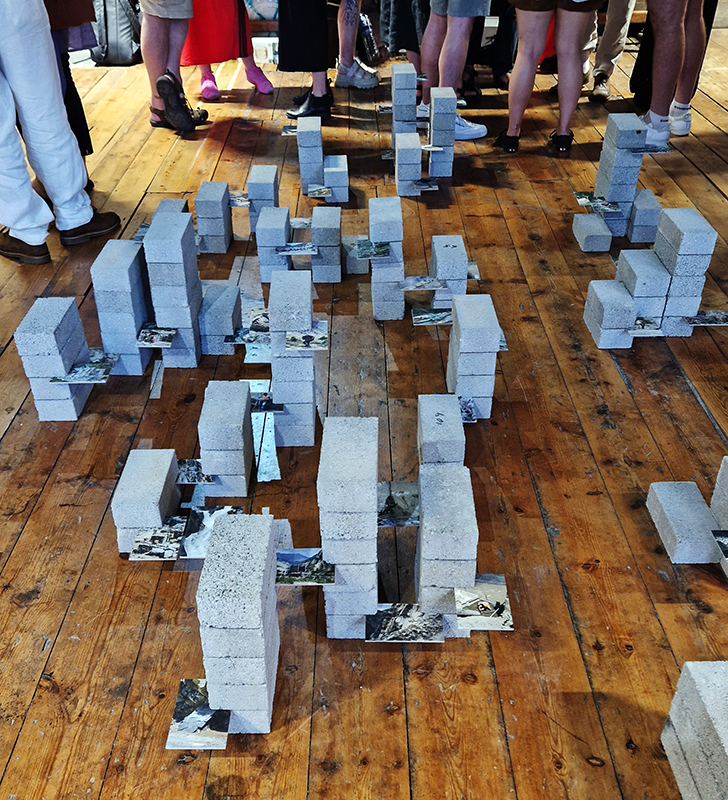
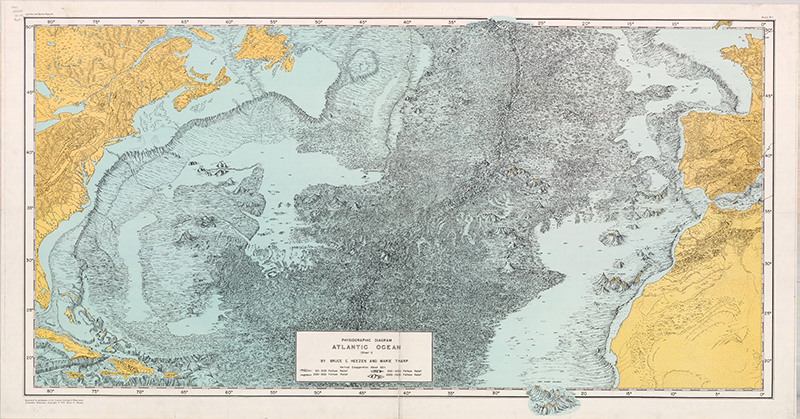
Marie Tharp was an American geologist and oceanographic cartographer. In the 1950s, she was instrumental in producing the first scientific map of the Atlantic Ocean floor revealing a detailed topography and multi-dimensional geographical landscape of the ocean bottom. She translated thousands of sonar readings from ships she was barred from boarding as a woman scientist. Mapping the Atlantic, she identified a continuous rift valley along the Mid-Atlantic Ridge: the first visual evidence of seafloor spreading, the mechanism behind plate tectonics and continental drift. When she showed the map to her colleague Bruce Heezen, he dismissed it as “girl talk.” The idea was still considered too radical, especially from a woman excluded from research vessels. But the evidence kept proving her right. As more surveys arrived and earthquake patterns matched her work, the scientific world accepted by the early 1960s, the planet is not fixed, but alive and in motion. In 1977 she co-published the first complete map of the world’s ocean floor, transforming geology, navigation, and our understanding of natural disasters. In 1997 the Library of Congress named her one of the 20th century’s greatest cartographers, and in 2023 National Geographic awarded her the Hubbard Medal. Thanks to Herstory_feminism for highlighting these amazing usually overlooked women who contributed so much.
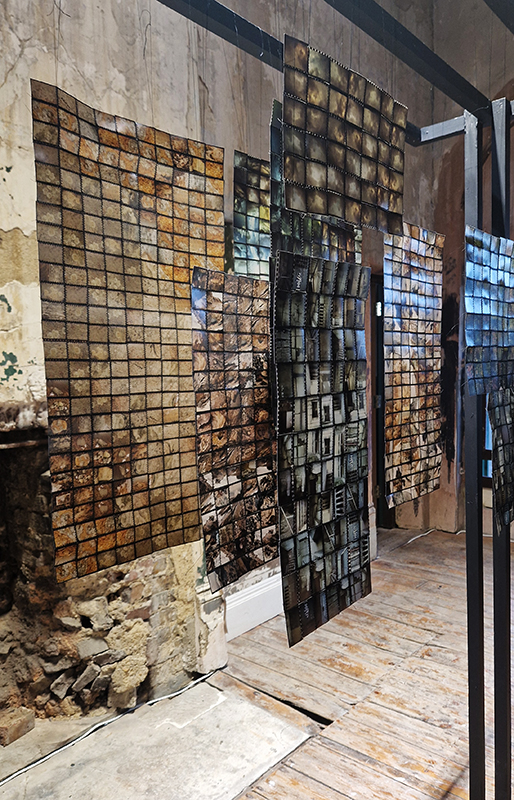
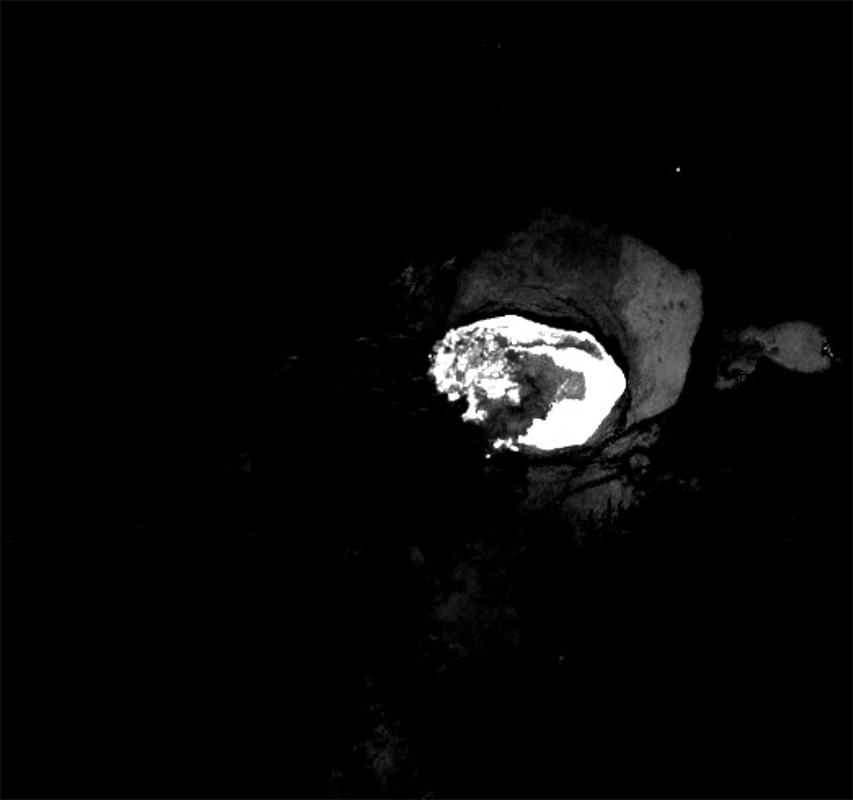
It was great to meet the team at ArtEO in an online group meet and introduction to the collective initiative that aims to make satellite imagery and data sets available to artists.

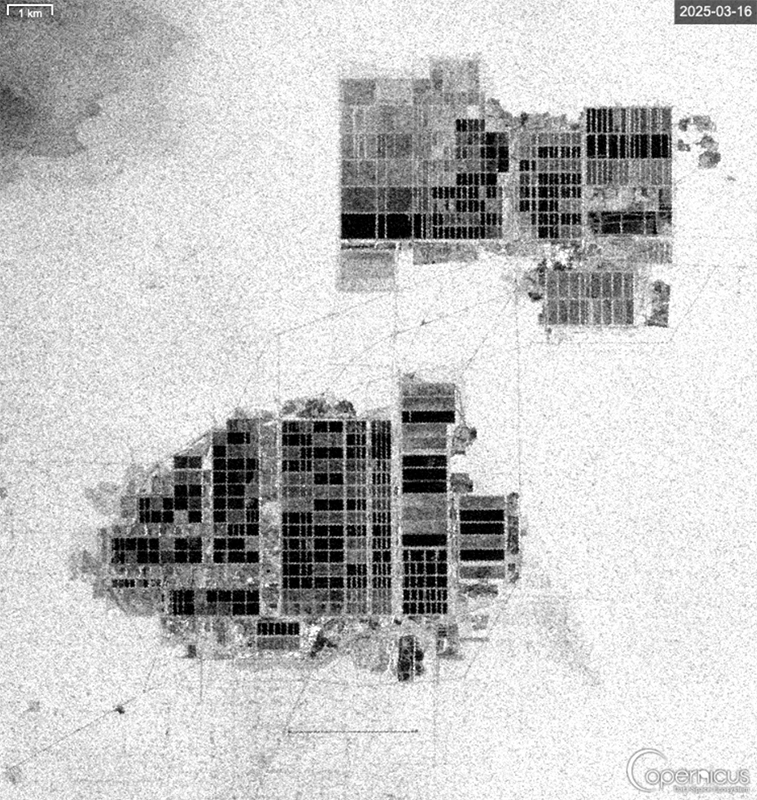
I am excited to have access to imagery that I would never be able to create for myself to feed into my work. I am interested to explore aspects of Earth’s magnetic field in relation to how it might be monitored using satellites, how it impacts the functionality of satellites and how satellites might themselves impact the magnetic field. While bringing so much data and valuable information for us to monitor the Earth and run its infrastructures and provide global communication the increasing number of satellites may put us at risk from over reliance on this technology in the face of an unpredictable force of nature. I hope to learn more about how satellites might help in predicting solar storms and what data sets are produced to model the interaction between high energy particles and the magnetosphere. I would also like to explore the relationship between satellite technology and natural phenomena and the balance between observing and disrupting. These images show an active volcano and a site of mineral extraction.
I have been busy with preparations for the upcoming Appearances are a Glimpse of the Unseen which will be in The Chapel at Brompton Cemetery curated by Catherine Li with the support of The Friends of Brompton Cemetery.

I am making a new sculpture in the series Instruments of the Anemoi set of dodecagon tablets cast in Snowcrete, a non-magnetic cement, as used in buildings at a magnetic observatory. Suggestive of the pedestals that support various instruments used in monitoring the Earths’ magnetic field they also respond to an ancient anemoscope “table of the winds” carved in marble around eighteen hundred years ago with the names of the classical winds, both in Greek and in Latin inscribed on each of its twelve sides.

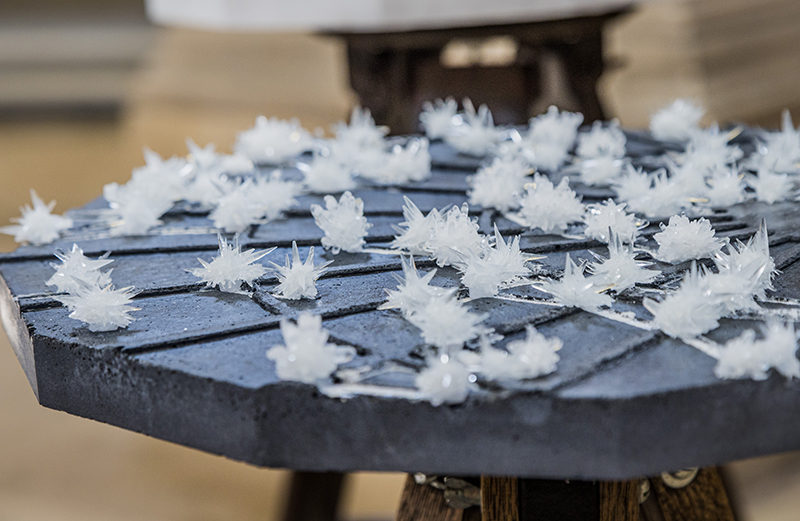
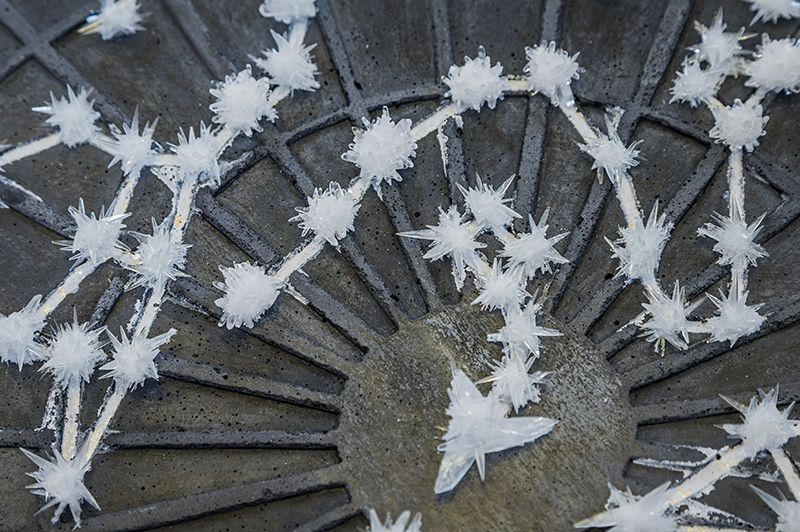
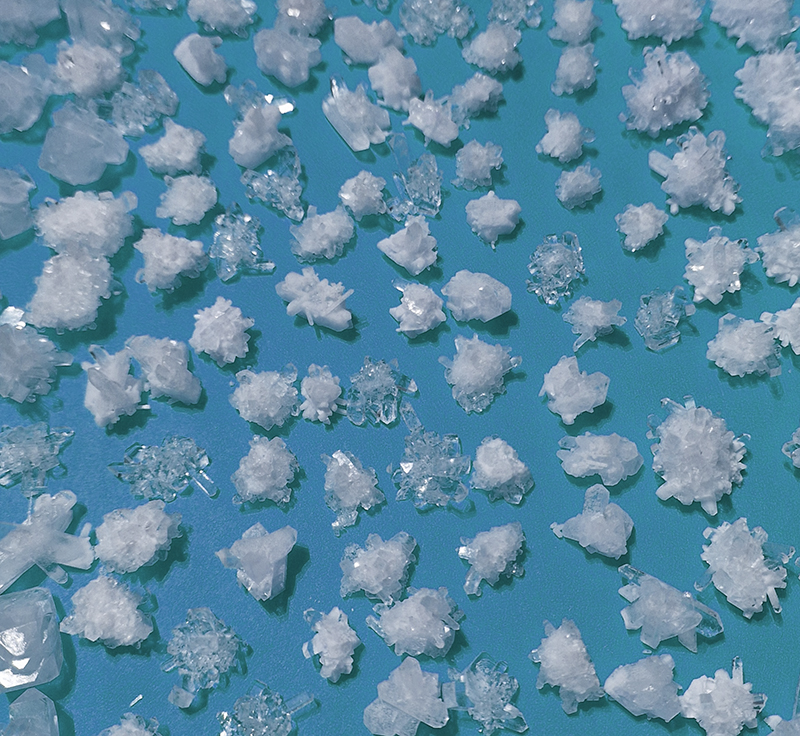
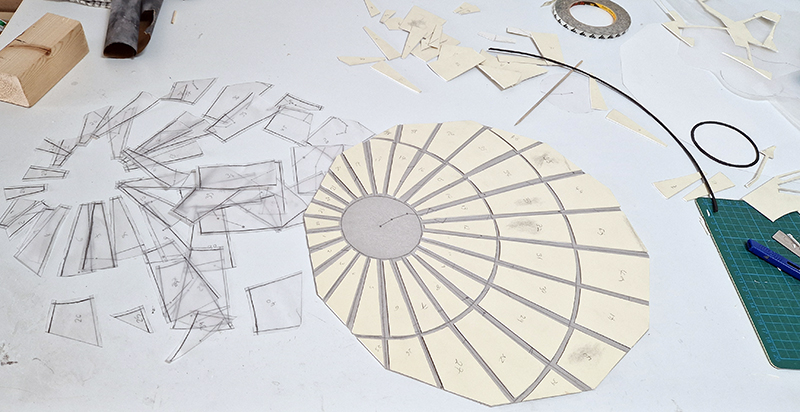
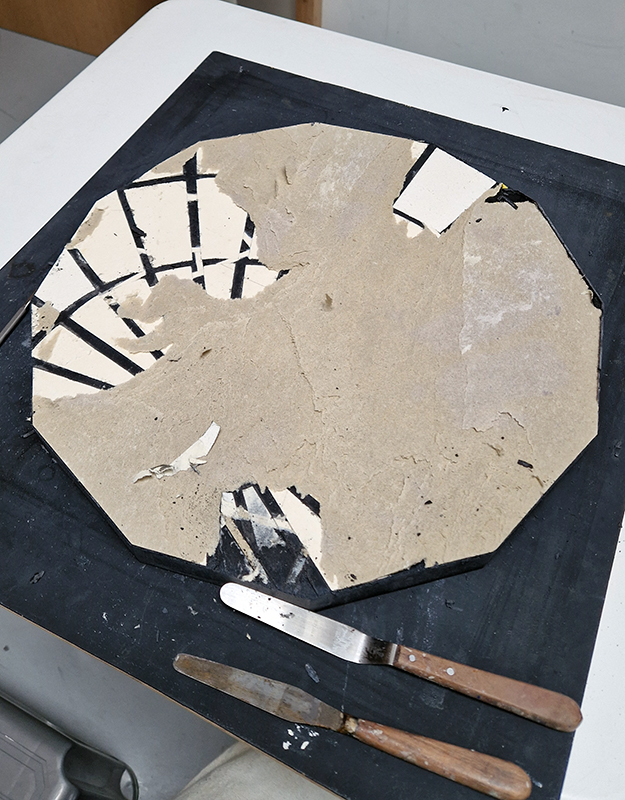
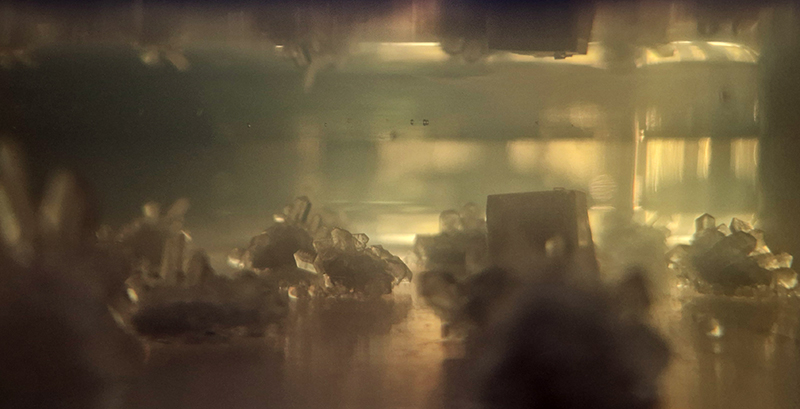
These sculptures are envisaged as speculative objects from past times, shown on repurposed theodolite or telescope tripods, reflecting on methods and tools of natural navigation such as magnetism, wind and stars. The new tablet will reference celestial navigation. Polaris has not always been the Pole Star as Earth’s axis of rotation wobbles over the course of about 26,000 years and many other stars take their turn at pointing to geographic North. I am centring Thuban in the constellation of Draco who took the position between two and four thousand years ago. I have been growing mono-ammonium phosphate crystals to use to outline the constellations whose lines are mapped by casting the concrete onto a collagraph set in a silicon mould. Once the concrete has set, it must be excavated from the cardboard collagraph by careful scraping and peeling away.

I have also been working on new images for submīrārī (earthbound), which feature the unique convergence of nature, history and serenity at Brompton Cemetery along with a myriad of angels that inhabit it. In looking for cultural and scientific explanations of angels I came across a book The Physics of Angels: Exploring the Realm Where Science and Spirit Meet, in which co-authors Rupert Sheldrake and Matthew Fox discuss parallels between quantum mechanics and early theories of angels, particularly Thomas Aquinas’ teaching that angels are immaterial bodies and creatures of light. The language used to describe the esoteric and the spirit world can often be substituted with the language of physics used to explain energy in its various manifestations.

The images I have been working on are to be printed with sublimation dyes onto organza. I was sad to discover that Promptside printers, who have been so generous to me in the past, in providing paper prints for me to heat press, are no longer operating. I am trying a new company Contrado.

Out of studio activities

Just squeaked in to see The London Group exhibition This That and The Other at The Handbag Factory on its final day.

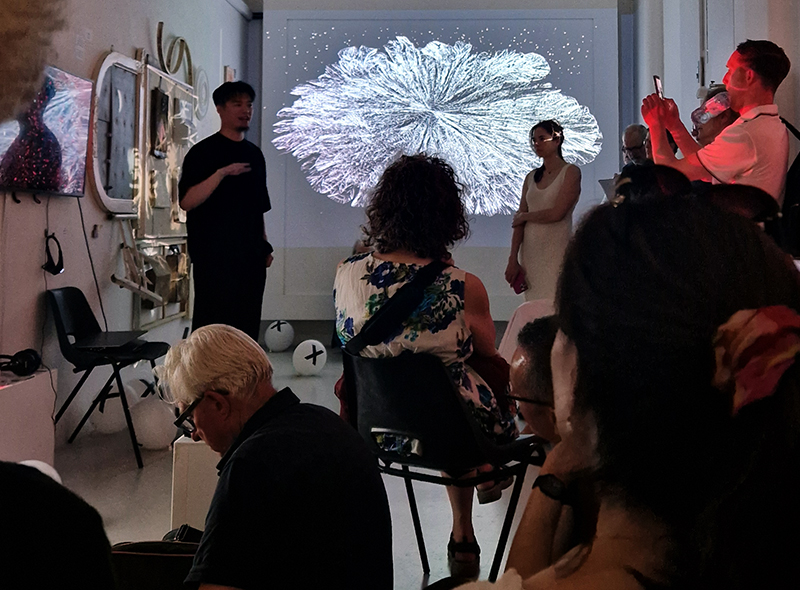
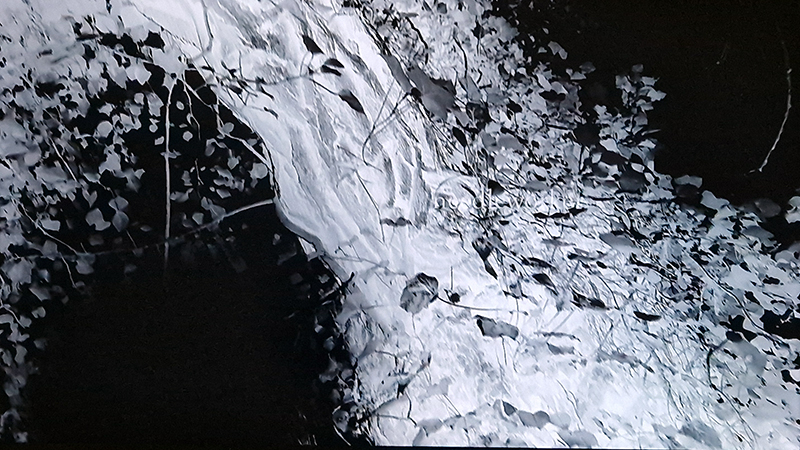
I managed to catch a couple of the talks ‘In the dark’ room and was intrigued by the work of Ash Xu which responded to the brainwaves of visitors wearing a headpiece attached to a screen monitor. The ‘Cosmic in the Brain’ series is an experimental artistic practice that merges neuroscience technologies with generative art, aiming to translate the abstract processes of human thought into the creation, evolution, and integration of stars within a virtual cosmos via Brain-Computer Interface (BCI) technology. The work is a collaboration between the artist and the audience. Through intuitive interaction, individual ideas are translated into a shared digital cosmos, allowing each participant’s inner world to contribute to the collective constellation. This process turns private thought into a visible, living landscape, one that unfolds in real time and belongs equally to everyone present.

I also was drawn to the video work by Eric Fong – A haunting journey through Horton Cemetery in Epsom, where thousands of pauper patients, mostly women, from five nearby mental asylums were buried. It is now an abandoned, derelict and overgrown site, where all grave markers have been removed, except one. The footage is overlaid with words drawn from the medical case notes of those buried there.

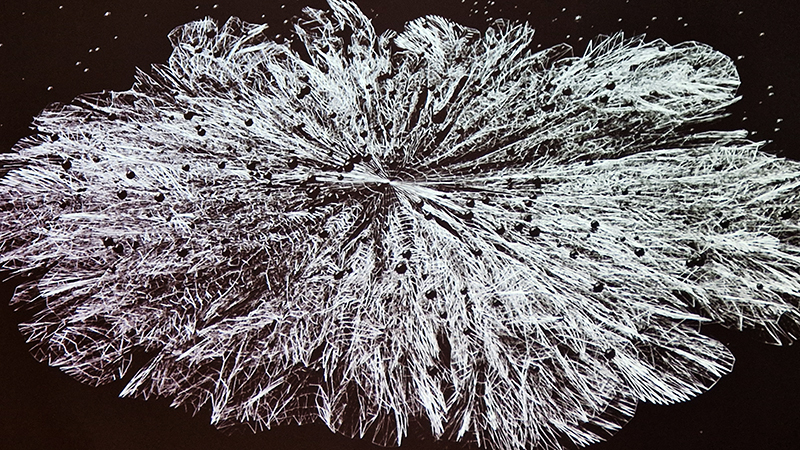
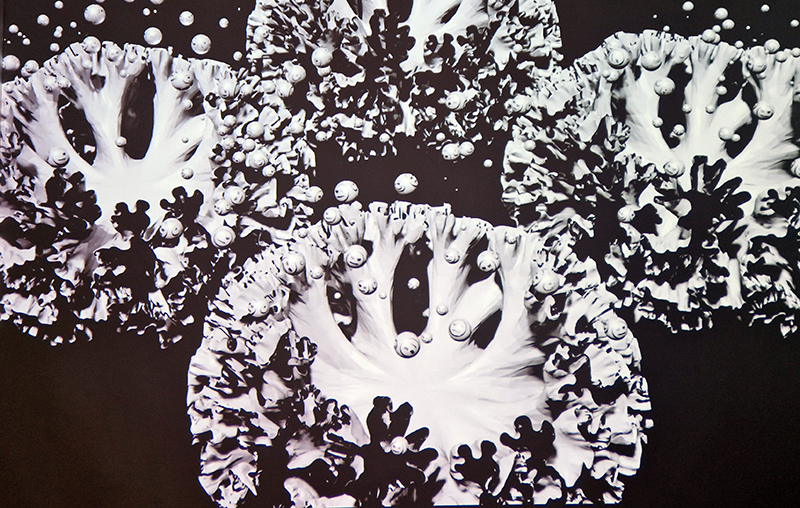
Mesmerising work by Sandra Crisp – ‘Dark Particles [slow_data]’ explores hybrid forms emerging where biological process and computational culture collide. Particle systems and differential growth generate organic structures whose surfaces are mapped with emoji and climate infographics — the residue of our information-saturated present absorbed into coral-like, cellular forms. Particles fall, accumulate, stick and die. Forms grow, darken and sediment. Rendered in monochrome on everyday hardware, the work embraces slowness. Like fossils, these forms carry traces of their moment — compressed into something unreadable, elusive and dark.

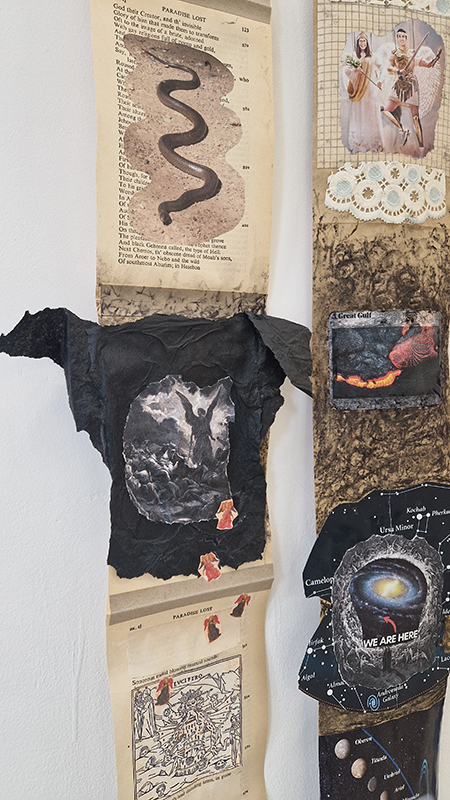
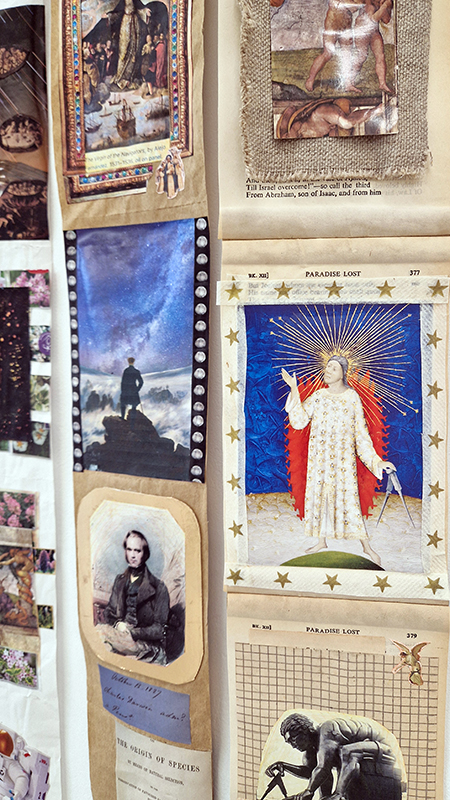
David Redfern On the 12th September 1768 Captain James Cook put in to the island of Madeira to resupply his ship ‘Endeavour’ at the beginning of his epic voyage around the world. Also on board ‘Endeavour’ was a private party of scientists, artists and the amateur botanist Joseph Banks. Banks discovered 25 new plant species on Madeira and needed to preserve the specimens he gathered. He pressed them in a book, a copy of a criticism of Milton’s ‘Paradise Lost’, written by Joseph Addison. The mythical Garden of Eden pressed up against scientific specimens contributing to the burgeoning science of botany. Paradise Lost Book leaves, gathered images 200 x 180cm. This work captured my attention as I am interested in ‘paradise’ and have been looking at angels in Brompton Cemetery at the moment and recently listened to two podcasts where angels feature – Cautionary Tales Podcast on John Dee and the Bureau of Lost Culture Podcast EVP – voices from the other side

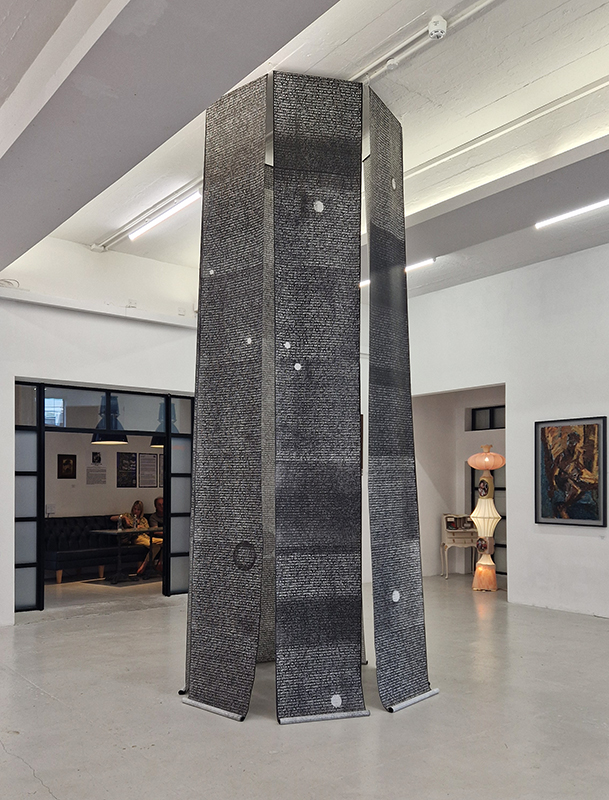
Imposing installation with amazing attention to detail from Carol Wyss 7 PILLARS OF WISDOM deconstructs the very concrete order of bones into lines of information — a basis of a new writing to chronicle human interaction. The title of the installation refers to a biblical proverb which outlines a range of moral duties. T. E. Lawrence wrote an autobiography of that same title, likely inspired by Ruskin’s 7 Lamps of Architecture book which Lawrence had previously read. The installation consists of seven large unframed scrolls. Each scroll combines intaglio and relief printmaking techniques on thin Japanese paper.

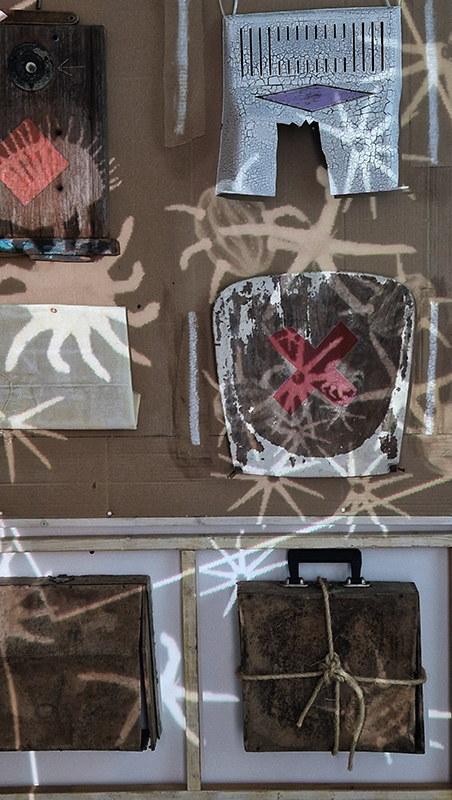
Qi Baiting House of Day, House of Night at The Chapel, Brompton Cemetery curated by Catherine Li brings together a ‘constellation’ of sculptures inspired by the circulation of objects via numerous flea markets. Drawing from Olga Tokarczuk’s image of living in two homes at once, one fixed in time and space and one infinite, these objects appear on interstellar journeys in which they hold together the material and the immeasurable: the located and the unplaced, the lived and the imagined. The objects remain tied to their historical time, imbued with traces lived experience, while their decontextualization allows other meanings to surface, as though they too were inhabiting more than one home at once. She also alludes to Ursula K. Le Guin’s The Carrier Bag Theory of Fiction: Sometimes the world is nothing more than things placed quietly together.

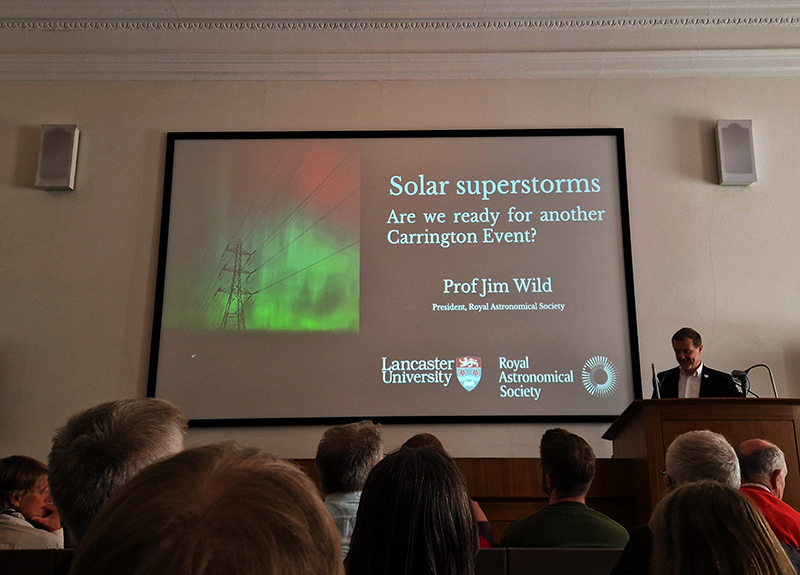
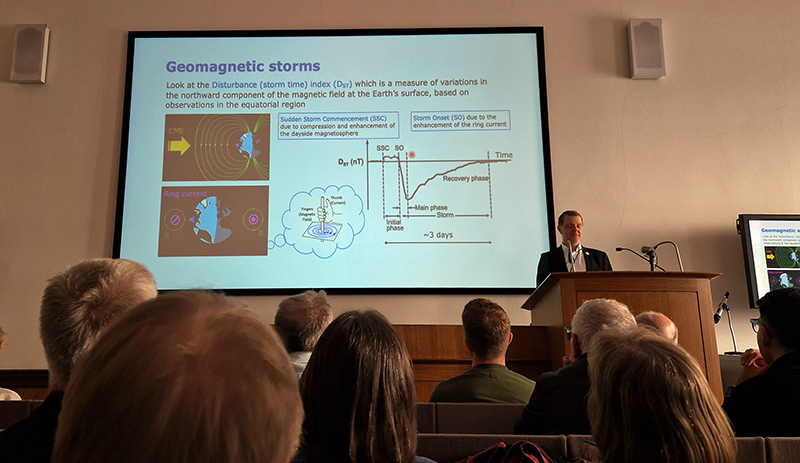
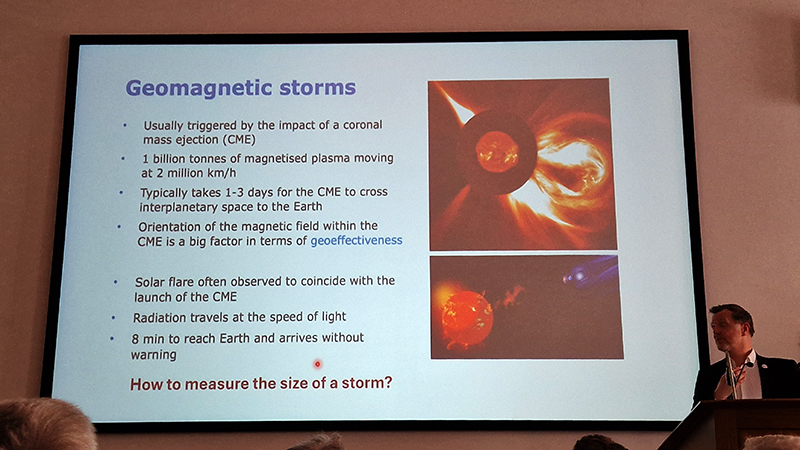
Royal Astronomical Society talk Solar superstorms: Are we ready for another Carrington Event? by Jim Wild, Professor of Space Physics within the Physics Department at Lancaster University and President-Elect of the Royal Astronomical Society.

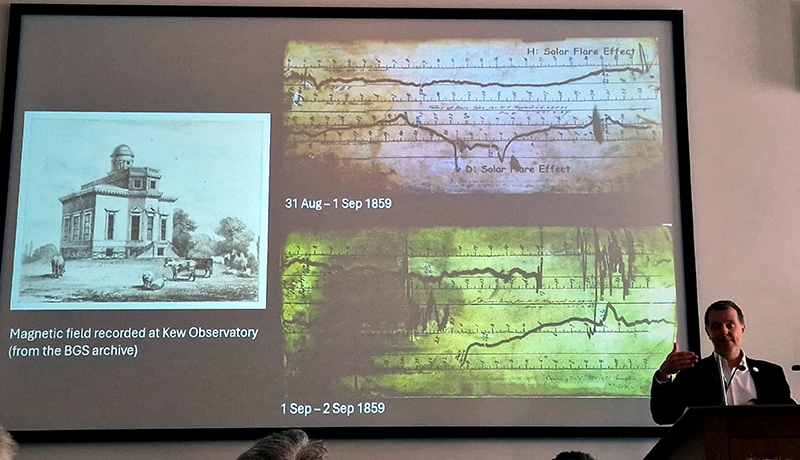
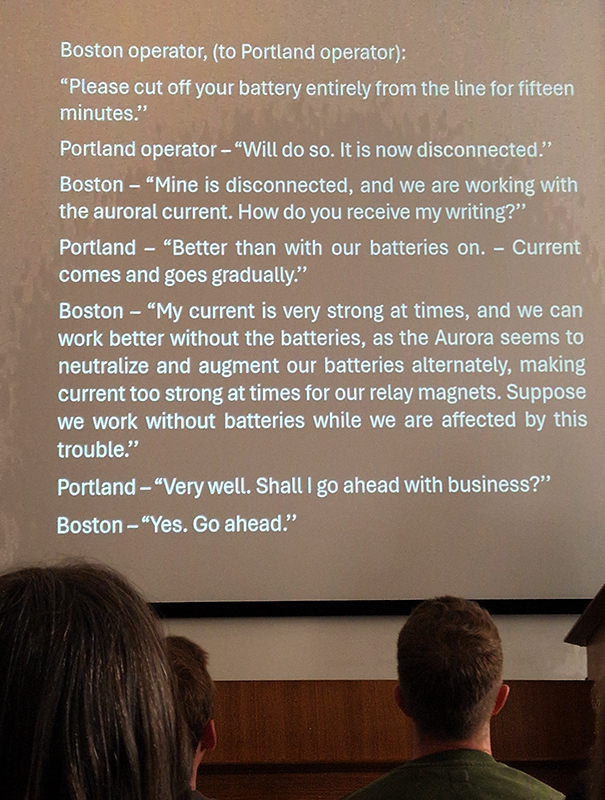
In September 1859, the English astronomer Richard Carrington made the first recorded observations of a solar flare. Unknown to Carrington, the flare coincided with a fast-moving coronal mass ejection that struck the Earth’s less than twenty four hours later, triggering the most powerful geomagnetic storm of the modern age. The storm, now known as “the Carrington event”, sparked auroral displays visible as far south as the Caribbean and disrupted operations of the global telegraph network. But this powerful space weather event pre-dated most of the technologies that we depend upon today, such as power grids, satellites, and wireless communications. How vulnerable are we? Are we prepared for the next Carrington event? In this talk, Prof Jim Wild considers the resilience of the modern world to extreme space weather.

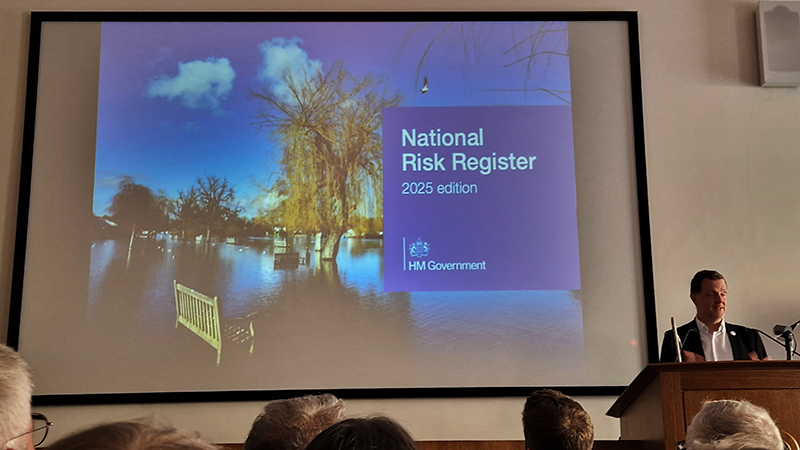
The UK National Risk Register sees space weather as significant risk. The term ‘space weather’ describes a series of phenomena originating from the sun, which include solar flares, solar energetic particles and coronal mass ejections. Day-to-day space weather causes little more than the Aurora Borealis in polar regions, but strong space weather events can bring disruption to many vital technologies. Orbiting satellites are particularly vulnerable to space weather effects, and can be damaged or temporarily disabled. Impacts may include regional power disruptions, loss or disruption of Global Navigation Satellite Systems (for example Global Positioning System (GPS)) and some telecommunications (for example satellite communications and high frequency radio), disruption to aviation, an increase in background radiation doses at high altitudes and in space, and possible disruption to ground-based digital components. The catalogue of tracked objects in orbit would be significantly impacted, raising the risk of on-orbit collisions. There may also be second order impacts such as fatalities and casualties (for example, in the event of power disruptions).

Peckham 24 The Eras Edition at Copeland Gallery exploring photography through the lens of time. ‘Time is a paradox; it is intangible, but its traces are omnipresent; it is an illusion, yet it’s governing our lives; it facilitates growth, while inducing decay. The projects exhibited at this year’s Peckham 24 explore these multifaceted aspects of time; they address the issues of our time, interrogate ecological transformation and its long-term implications, capture varying life stages and nostalgic formations, and explore the lingering of the past in the present.’

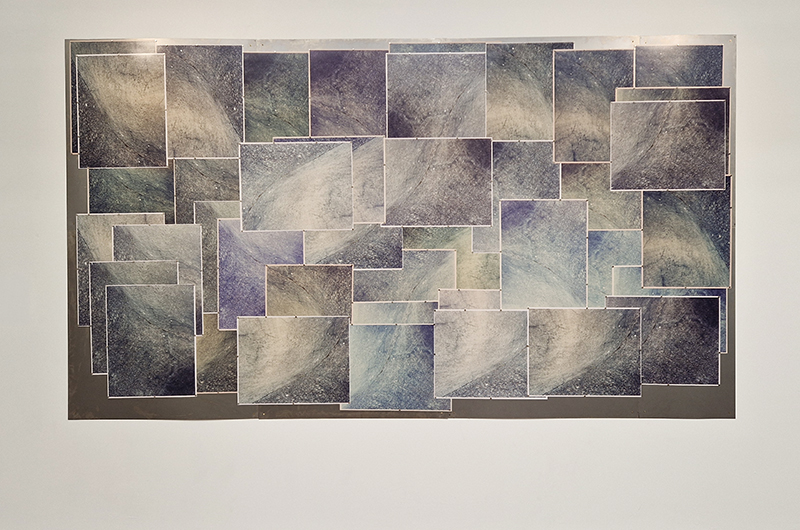
ROM a large-scale multi-image work by Eugenie Shinkle at first glance looks galactic but is in fact a series of photographs of the material surface of a decaying skatepark. The work reconstructs an experience of space, disorienting, immersive, and at times euphoric. Time is encountered here not as sequence or narrative, but as something embedded in matter and enacted through movement. Built in 1978, the Rom skatepark in Hornchurch, Essex was the first of its kind in the UK. No longer in regular use, the concrete structure is slowly decaying – cracking and delaminating, a consequence of decades of weathering, and of the wear and tear inflicted by the passage of thousands of wheels. Though they’re only a few decades old, the forms have a strangely primordial quality, the concrete stained and colonized by lichen, as if the recent past were already slipping into something more geological.

A Parliament of Empty Gestures by Mark Duffy is made from appropriated photographs produced and distributed by the House of Commons over the past two years. It is a comment on the performative and confrontational nature of political debate, the repetition of prescribed political gestures, and the constantly shifting blame game that is modern politics.

A fabulous iteration of Julie F Hill’s installation Cave and Chasms series where RAW data from space telescopes, such as Hubble and the James Webb is processed, sculpted, crystallized and mineralised drawing on the cosmic and terrestrial to offer an experience of intimate immensity.

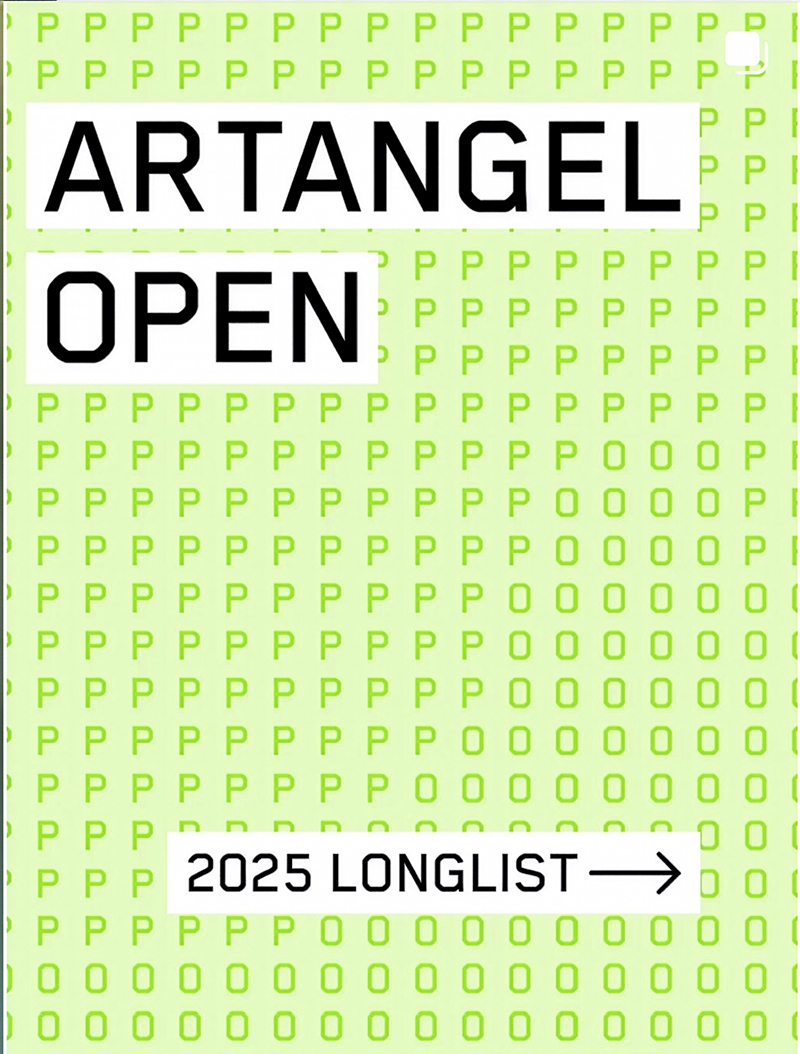
Over the moon to be longlisted for the 2025 Artangel Open amongst such amazing company. I am grateful to Artangel and the selection panel Zineb Sedira, Nitin Sawhney CBE, Freddie Opoku-Addaie, Andrea Luka Zimmerman and Mariam Zulfiqar for considering my proposal regarding the Haverah Park Experiment.

Cosmic rays impact technology and life on Earth but their origin and source of enormous energy is still a mystery. I seek to activate the historically remarkable yet humble Haverah Park detector huts abandoned in various states of collapse across the North Yorkshire moors, through workshops, performance, dark sky gazing, creating artworks that interact directly with cosmic rays and installations that respect local land use, to reflect on pioneering cosmology, human curiosity and wonder.

Cosmic rays are fast-moving particles from space that constantly bombard the earth from all directions. About 5 million pass through your body every day. Wherever they come from, the highest-energy particles hold secrets to the origin of their enormous energies which can be many millions of times greater than any earthbound particle accelerator can generate.

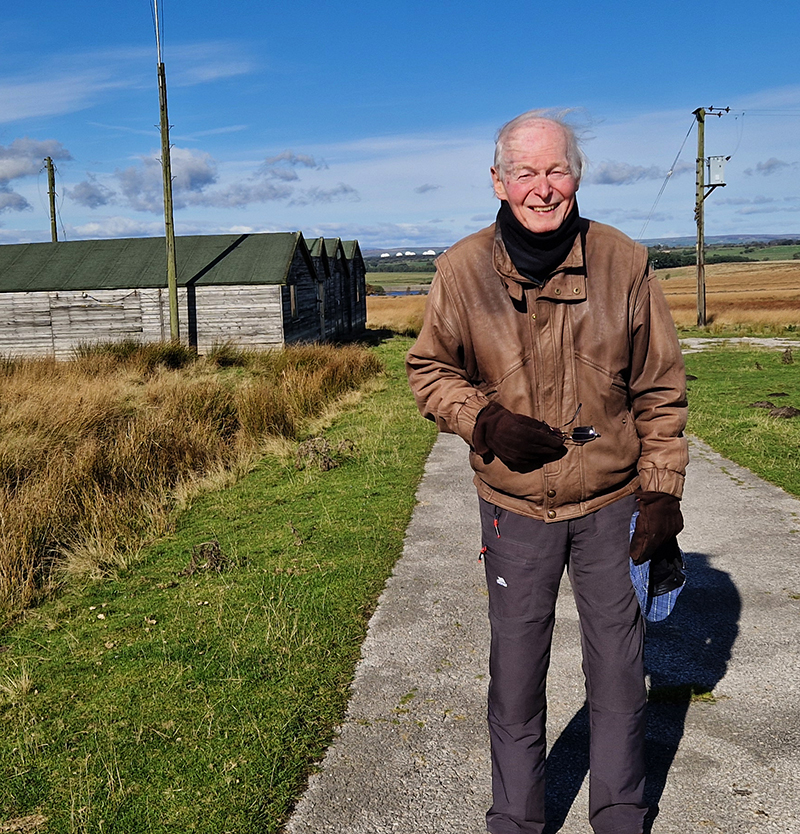
The Haverah Park experiment began in the 1960’s, led by the University of Leeds, and ran for over 20 years. I met with Professor Alan Watson in 2024 to visit the huts and hear about his role in setting up the project and his subsequent life’s work in search of ultra-high energy cosmic rays.  It appeals to me that the astonishing achievement of observing particles arriving on Earth from other galaxies happened at these unassuming structures. The huts were built to protect the array of over 200 water-Cherenkov detectors from freezing. When cosmic rays pass through the water tanks, they emit a blue glow of Cherenkov radiation because they travel faster than the speed of light in water. This light can be recorded and calculations made to discover the energy of the primary particle. The shadow of the moon can be seen by detectors on Earth as it absorbs many galactic cosmic rays causing a ‘shadow’ in the otherwise uniform flux of particles from space.

Although I have not been shortlisted for the Artangel commission, I am excited to continue my investigations into these unexpected sites of space exploration and develop these ideas for artworks and a public programme further.

Congratulations to all artists selected and good luck to the shortlisted artists.

I am excited to be taking part in the upcoming occupation of the Safehouses, Peckham with such a fabulous selection of artists.

Curated by Julie Hoyle the exhibition brings together a cross-section of artists from Royal Academicians to emerging practitioners, alongside artists working within disability and community contexts.
Works include painting, sculpture, print, installation, ceramics and moving image. Moving through rooms, staircases and thresholds, visitors will encounter works that move between the intimate and the uncanny, the material and the imagined.
I will be showing work informed by the otherworlds of creatures we share our spaces with as exotic places of discovery and sites of emerging or alternative consciousness.

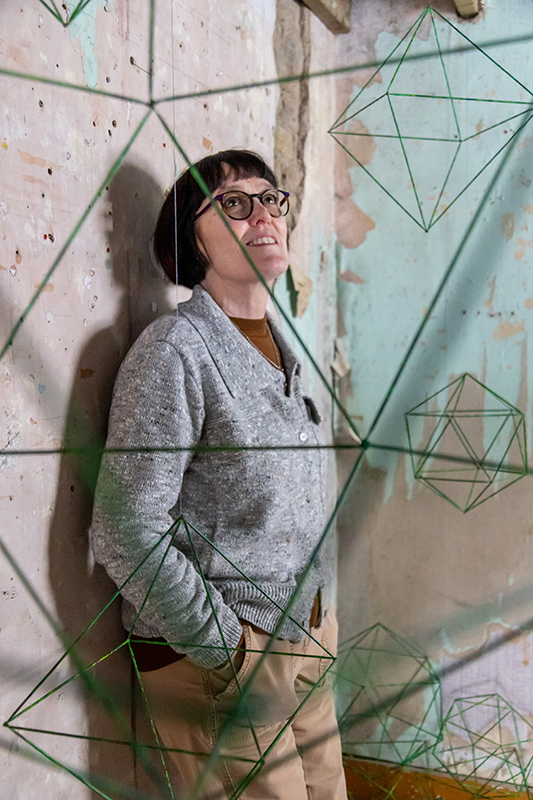
I have been working on a new video Guttanaut thinking about the extraordinary diversity of life we share our planet with and the invisible creatures found very close to home. This has involved gathering moss from my house gutters and filming the life found within under my microscope, recording the sounds of the gutter with a hydroponic microphone and inserting an endoscope camera into the gutters and drainpipes. Gutta, as used in the title, originates from the Latin meaning  ‘a drop’. For the microscopic explorers in this film, a drop of water may comprise their whole universe. They are very tiny and I have been astounded at the variety and energy of the life found here. I have made some icosahedron and octahedron shapes that represent the elemental qualities of water and air to accompany the projection and also to appear in the film in the guise of satellites or modes of exploration.

I will also be showing Belly of a Rock, a hybrid between rock, mollusc and technology, this video sculpture reflects on an early lifeform’s emerging self-awareness, desire to communicate and urge to create. These works celebrate the extraordinary found in hidden corners. Molluscs are known to show a synchronized response to the moon, altering their behaviour based on both light intensity and tidal movements associated with the lunar cycle. They use the moon as an environmental cue to adjust feeding times, metabolic activity, and reproductive spawning. It may be that these behaviours are adapted to match the movement of plankton, which is also affected by moonlight, or to ensure they are submerged during high tide, which is influenced by the moon’s gravity.

Great to have another studio visit from curator Catherine Li in preparation for my upcoming show at Brompton Cemetery Chapel. The title will be, Appearances are a Glimpse of the Unseen, a quote attributed to Anaxagoras, a pre-Socratic philosopher, exiled for controversial natural explanations of the cosmos. It suggests that despite the limitations of human senses we can discover the underlying structure of reality through careful observation and reasoning. Aligning to the precepts of scientific enquiry, in studying the “appearances” of the visible world to reveal the imperceptible, Anaxagoras concluded that matter is made of finely mixed ingredients and wholly entangled so that “everything has a portion of everything,” and it is “Nous” (the mind), that acts as an organising force in creating reality by relating what is seen to what can be inferred.

I will be showing some existing and some new works that draw on the desire to see what is beyond our horizons, question how we interpret the world around us and consider what influences our perception of reality. I have been stitching the Book of Reversals, a poetic interpretation of the formation of planet Earth and its turbulent internal fluid core that generates an unpredictable but protective magnetic field prone to sudden changes in polarity. I am adapting an old slide viewer to show crystals changing colour using a polarising filter. I am making a new edition to the series of sculptures Instruments of the Anemoi – this one is based on a star chart, centred on the star Thuban, which was the pole star before Polaris. I am experimenting with black concrete, though it may end up being dark grey, and I am growing crystals as analogues for the stars. Also, it was great to have the opportunity to set up the sculptures of everydaymatters in an empty studio to assess their inclusion in the show.

I also spent some time in the cemetery taking photos for new images to print on organza and float in water for a site specific edition of work submīrārī (earthbound) that reflects on this place of acutely felt impermanence with weathered stones, encroaching nature and the many carved dates of remembrance receding and fading.

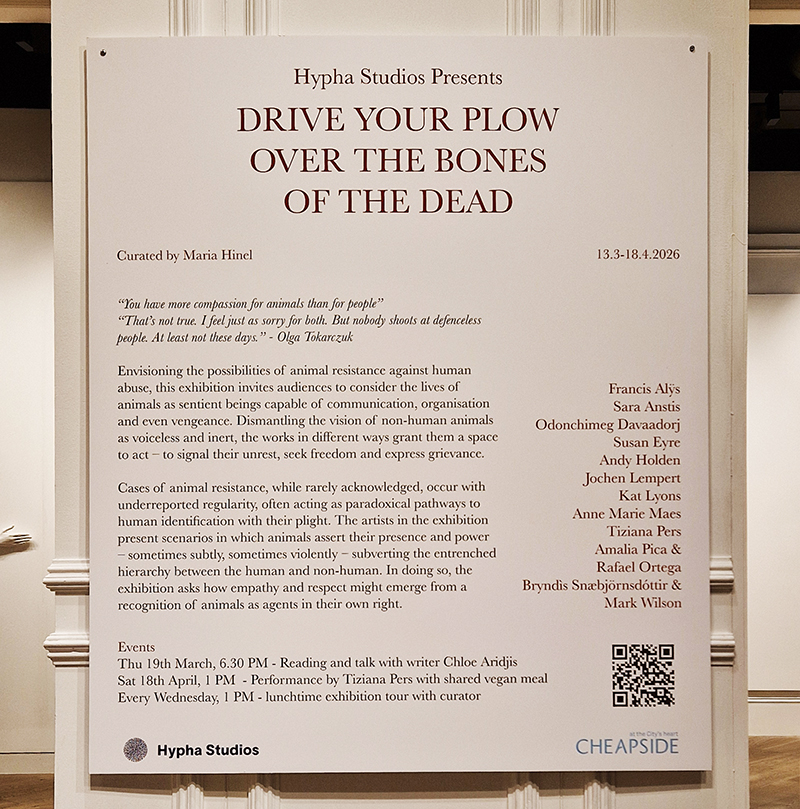
I was happy to speak about my work Radical Pair for a special invitation curators tour in the last week of Drive Your Plow Over the Bones of the Dead. The exhibition was beautifully curated by Maria Hinel who has an impressive art history knowledge and can also speak in real depth about the works she curates. I enjoyed hearing more about the other works in the show which draws on the novel by Nobel Prize-winning author Olga Tokarczuk and the works of William Blake, asking what forms of empathy might emerge when animals are recognised as ethical and political agents in their own right.

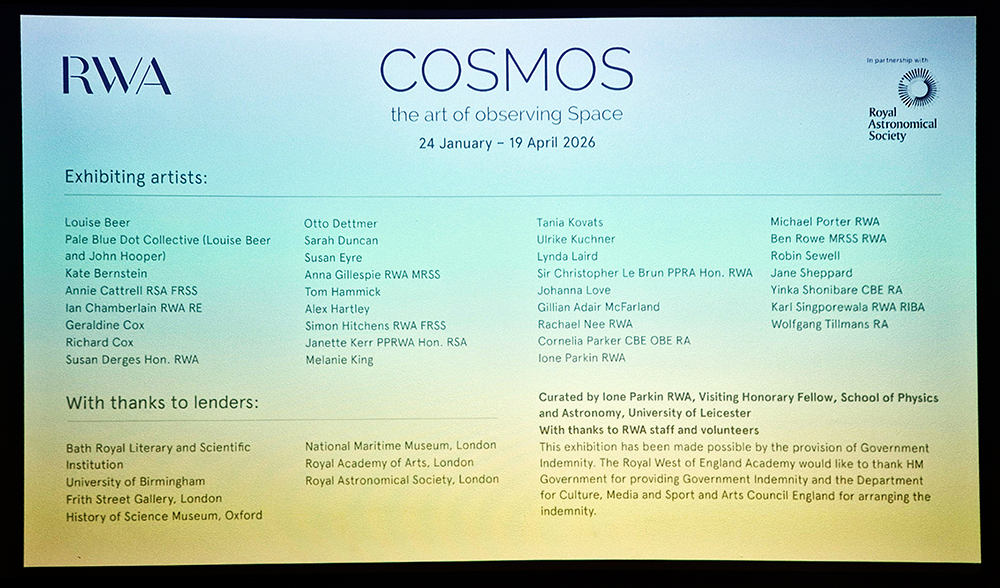
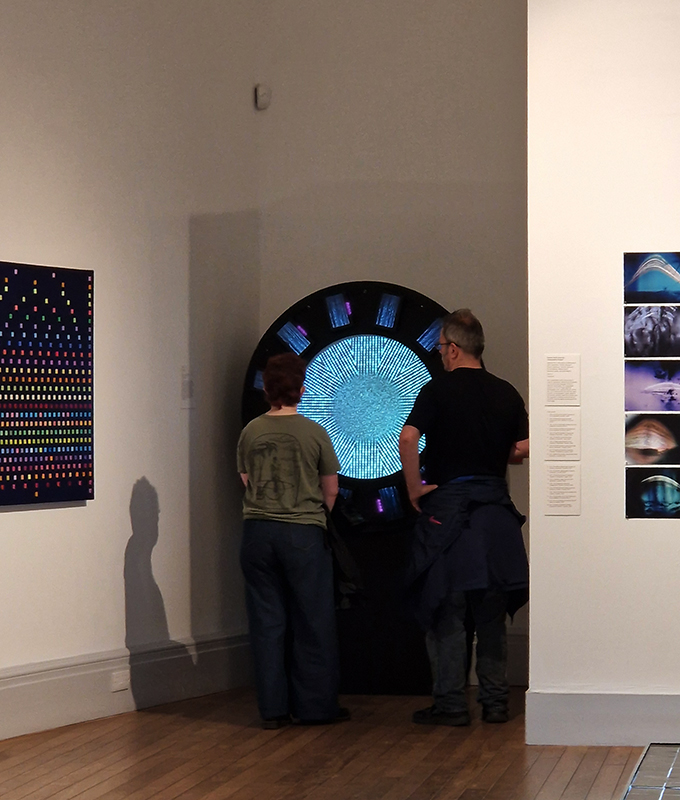
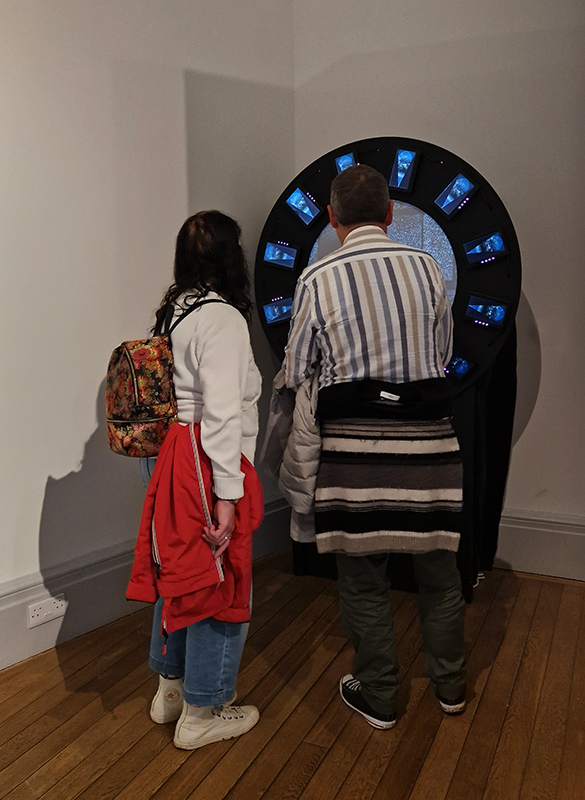
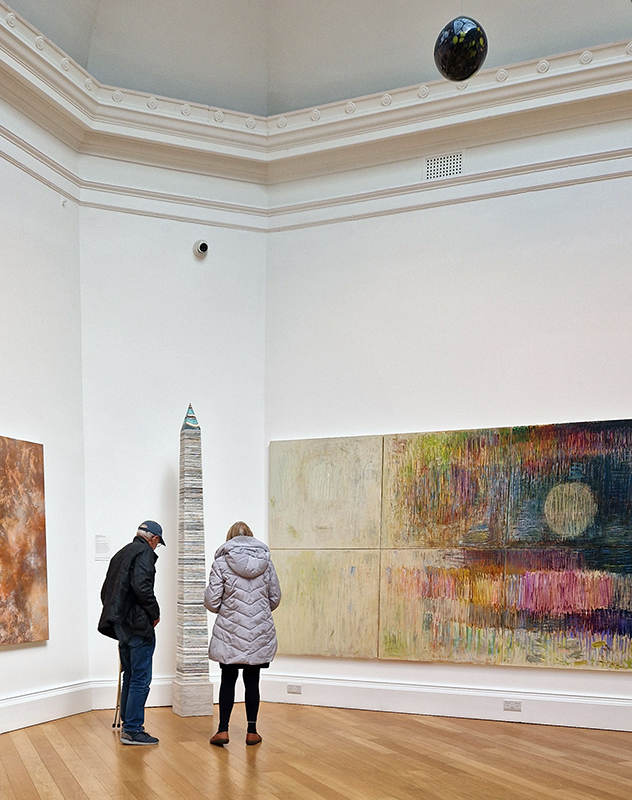
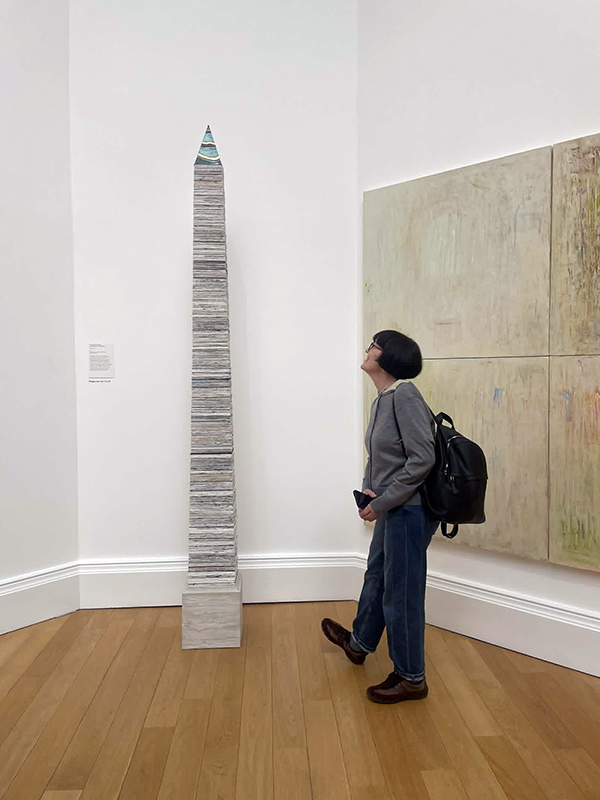
I made a trip to Bristol to spend some time with the works in Cosmos: the art of observing space at the RWA during the final week of the show. Such a rich selection of work to enjoy and it’s always nice to see people engaging with your own work. It hardly seems any time since install and now it has to come down. Great news though that the exhibition will be travelling to Aberdeen Art Gallery later in the year. It will be interesting to see how the works will be curated in a new space. It was an honour to have The Obelisk (of sedimentary knowledge) sitting between Ione Parkin’s Volatile Phenomena painting and Sir Christopher Le Brun’s Phases of the Moon IV of which he says ‘Compelling and grave, the Moon is one of the most haunting of natural symbols- more felt then understood. Here it is shown in a narrative of day and night, with passages of cool and warm light succeeding each other’.

The exhibition has been really popular and Ione did an amazing job alongside the Royal Astronomical Society to bring together such a diverse range of contemporary artwork inspired by themes of astronomy, cosmology, astrophysics, planetary atmospherics, solar dynamics, space exploration and celestial mechanics as well as many astronomy-related items of historical significance loaned from public collections.

I will be opening my studio door for the upcoming Open Studios. It’s also a chance to meet the other artists in my corridor many of whom are new this year.

Out and About

Making Ground curated by Andrew Ekins at Thames-side Studios Gallery, brings together artists whose practice finds common ground in an exploration of the relationship between a topographical terrain and a crumpled landscape of the human condition. Featuring: Kabir Hussain (sculpture in bronze), Dan Hays (conflation of digital technology, and the tactile, flawed and time-consuming medium of painting), Graham Crowley (luminous discourse), Simon Callery (painting rooted in materiality), Andrew Ekins (sediment of experience and memory), Joanna Whittle (real and imaginary landscapes), Harriet Mena Hill (repurposed salvaged material), Laura White (changeable matter).

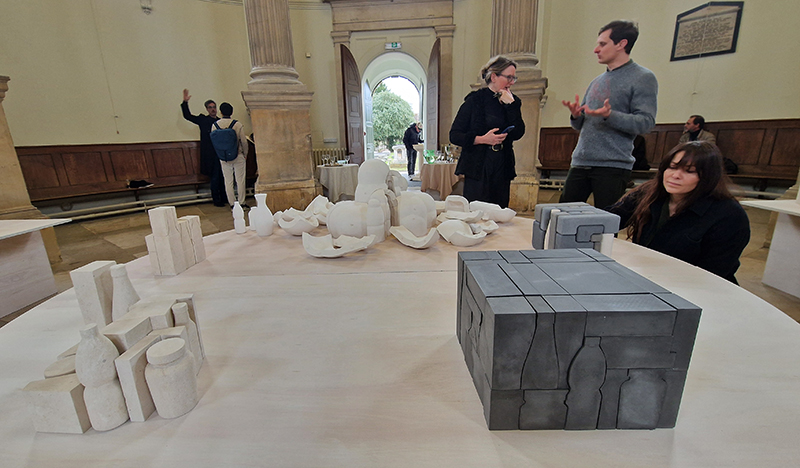
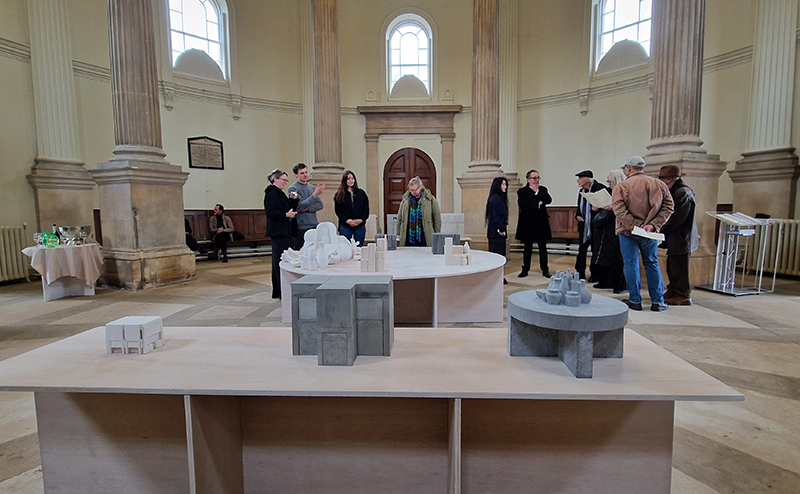
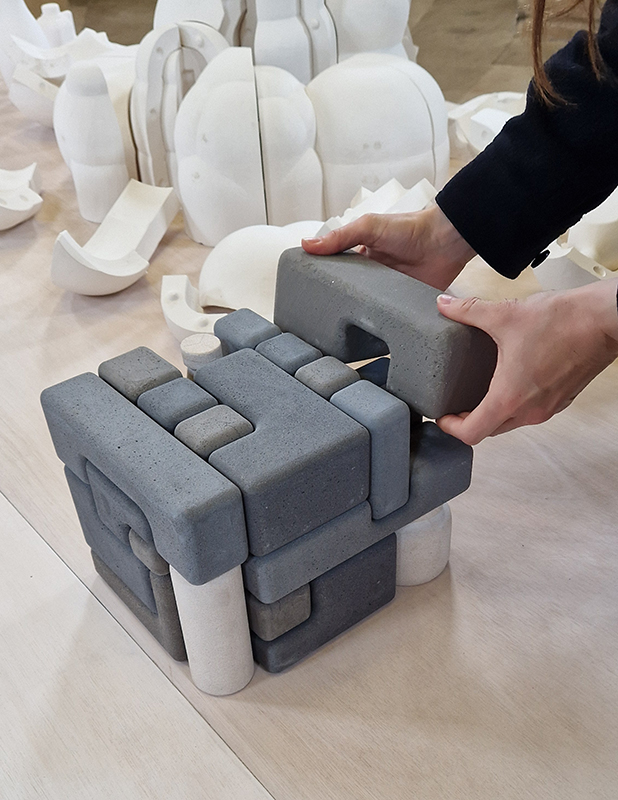
Gabriele Risso Vita Immobile at The Chapel at Brompton Cemetery curated by Catherine Li. Stone within stone within stone. The simply presented works in stone, which in themselves allude to the potential shapes that sit within the sculptors block, outlining simple objects or interconnecting forms as intricate puzzle boxes, sit beautifully within the stone chapel.

I completed watching series 2 of For All Mankind which is set in the 1980’s with a base camp already on the moon and ongoing jostling for space supremacy between USA and the Soviet Union that ends in an unlikely accord. So my mind is full of moon fiction while also watching the launch of NASA’s Artemis II and the videos of the astronauts Reid Wiseman (commander), Christina Koch (mission specialist), Victor Glover (pilot), and CSA astronaut Jeremy Hansen (mission specialist) as they fly the farthest humans have yet been into space on a 10-day journey around the Moon and back to Earth.

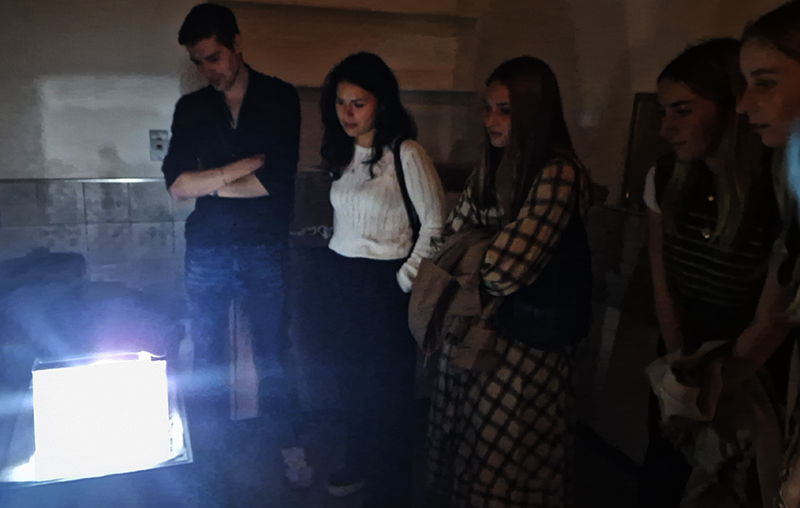
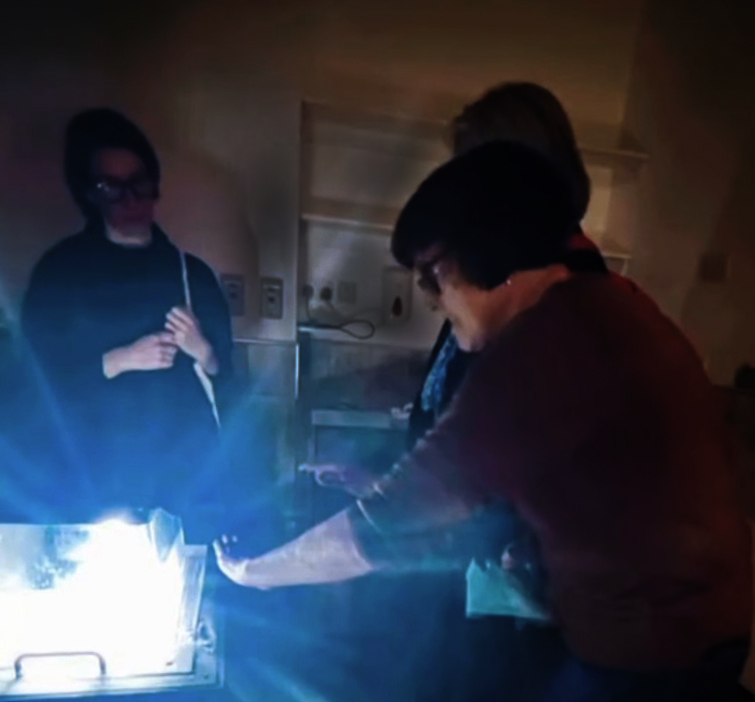
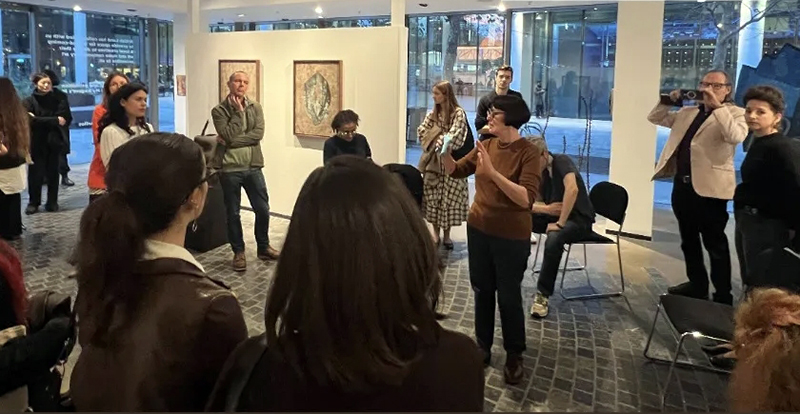
The finale of the exhibition programme of Carbon, Carbon Everywhere co-curated by Indira Dyussebayeva-Ziyabek and Maria Hinel at Hypha HQ included an exhibition tour, a BREAT(HOLD) workshop led by Ania Mokrzycka and an invitation to view cosmic particle trails passing through a cloud chamber.

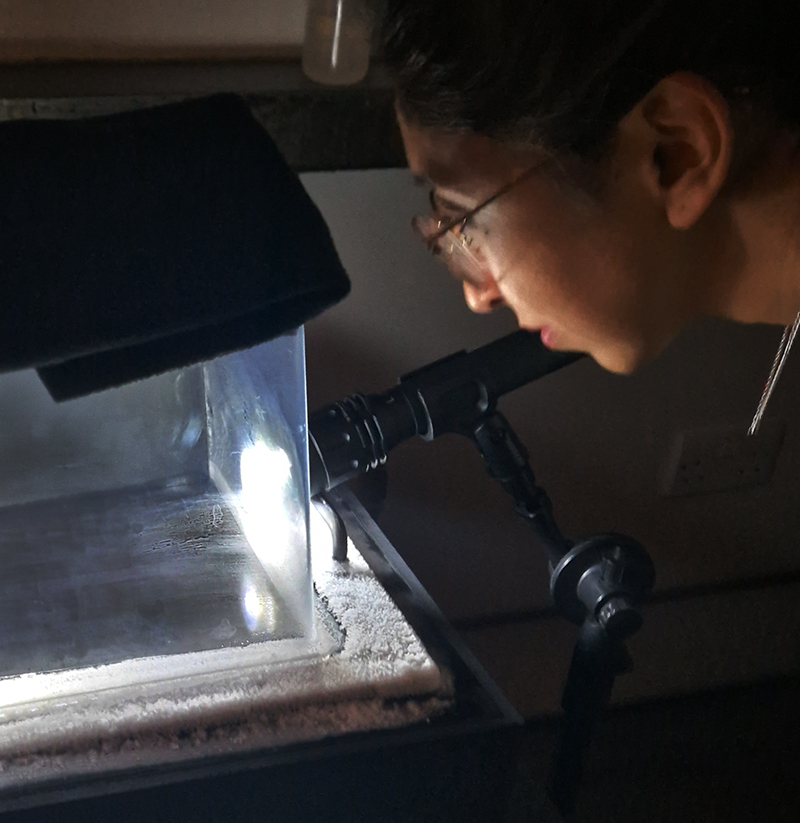
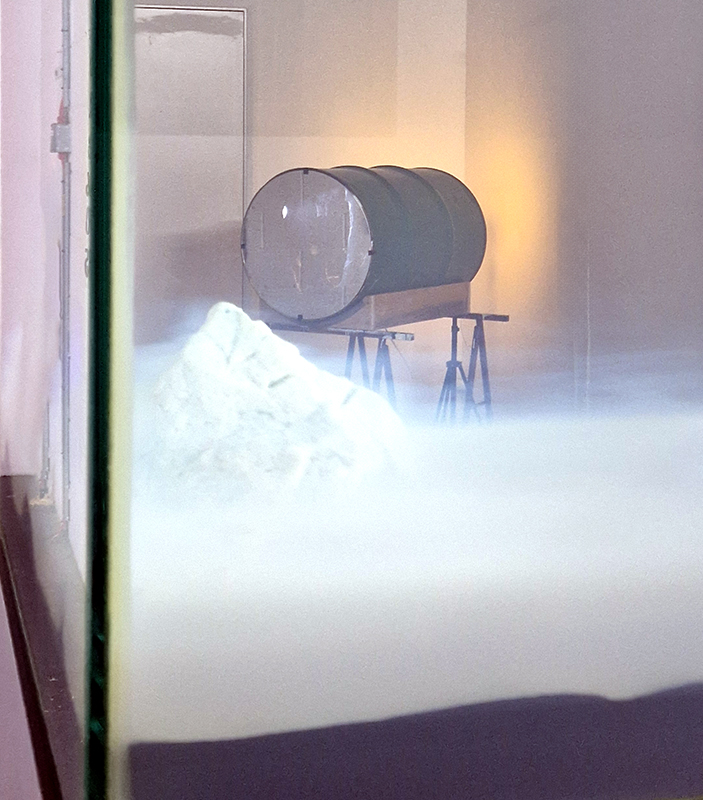
This simple equipment of a plastic tank saturated with isopropyl alcohol vapour over a metal tray sitting on dry ice was used to capture footage for the video Cosmic Chiasmus: crossing the universe showing in the exhibition. Cosmic rays are fast-moving particles, blasted across space, spiralling along magnetic field lines to end up entangled with carbon in our bodies.

Installation image of Cosmic Chiasmus: crossing the universe

Not only is all life physically permeated by cosmic rays with the potential for nuclei collisions but some cascading particles smash into atoms of nitrogen to create carbon-14 which combines with oxygen in the atmosphere to create radioactive carbon-dioxide which enters the food cycle via photosynthesis.  Cosmic ray activity creating Carbon-14 allows us to perform carbon dating techniques offering insights into Earth’s past climate, magnetic field, solar activity, and changes in the carbon cycle, helping to understand historical patterns and establish timelines for ancient human history.

The title of the exhibition, Carbon, Carbon Everywhere, is a quote from the landmark essay Carbon by the writer and chemist Primo Levi. In the essay, Levi traces a journey of a single atom of carbon across distinct states and beings, from the monotony of being embedded in limestone for hundreds of millions of years, to entering the world of ‘things that change’ – swiftly shifting from the atmosphere to the lungs of a falcon, to the sea, to the trunk of a cedar, and eventually entering the writer’s own body from a glass of milk on his desk, crossing into the brain cell that controls the hand writing its own story. Resolutely specific yet universal, Levi’s story highlights the singularity of carbon as an element that inherently connects all things through its relentless transformation. It fossilises, mutates, preserves, pollutes and nourishes. From its ancient geological formations to its current atmospheric volatility, carbon is never still, shifting between forms and contexts in an ongoing process of exchange.

‘It is possible to demonstrate that this completely arbitrary story is true. I could tell innumerable other stories, and they would all be true: literally true, in the nature of the transitions, in their order and data. The number of atoms is so great that one could always be found whose story coincides with any capriciously invented story’ Primo Levi

This was a beautiful show and I was thrilled to be invited to exhibit alongside such amazing artists including Emii Alrai, Anousha Payne, Kate Daudy, Konstantin Novoselov, Ania Mokrzycka, Nissa Nishikawa, Mariele Neudecker, Simon Faithfull, Aimee Parrott, Lucia Pizzani, Lizi Sanchez and Meng Zhou.

I am very excited to have an invitation to exhibit at the Safehouses in Peckham next year with a group of wonderful artists and friends. Curated by Julie Hoyle, the artists have been selected for the way their work resonates with the atmosphere of the Safehouses — places where traces of the past meet the imagined and the unseen. Together, the works will form a dialogue between beauty and unease, the real and the imagined, reanimating the stripped-bare rooms with strange company. We had a productive site visit and I have two spaces in mind to work with – one above and one below.

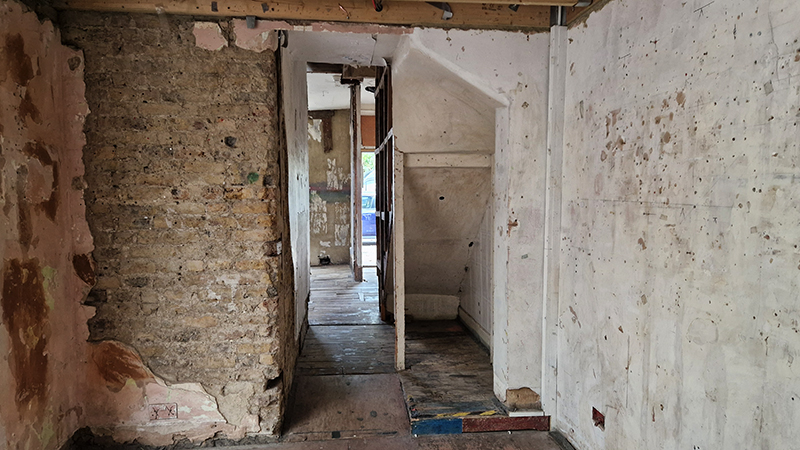
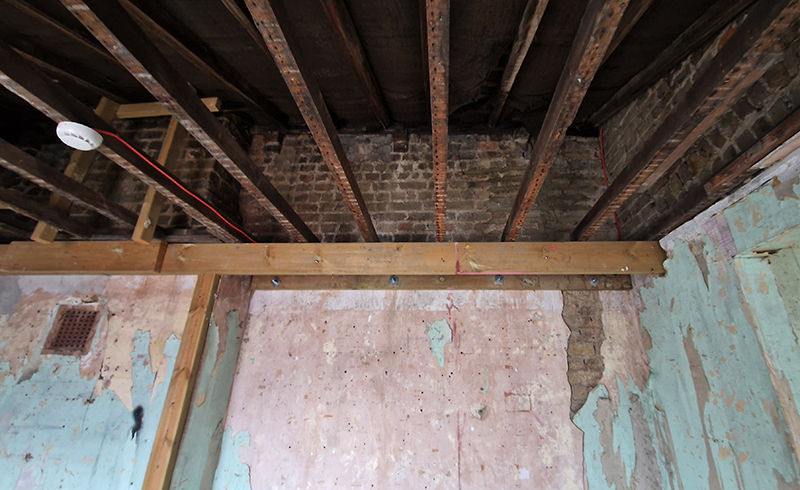
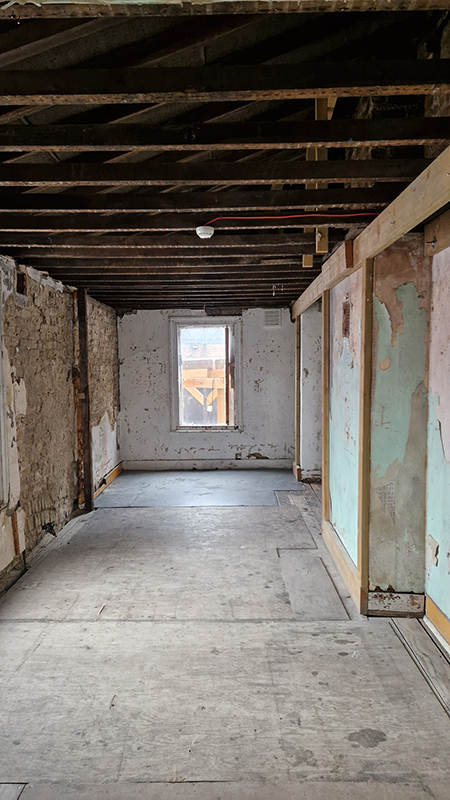
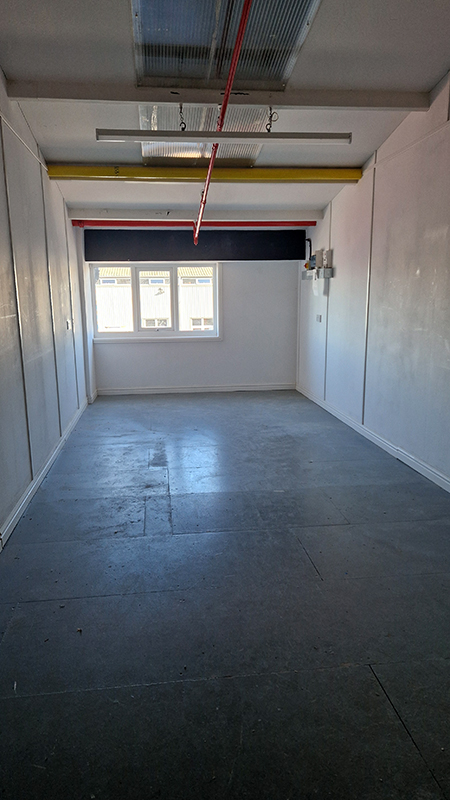
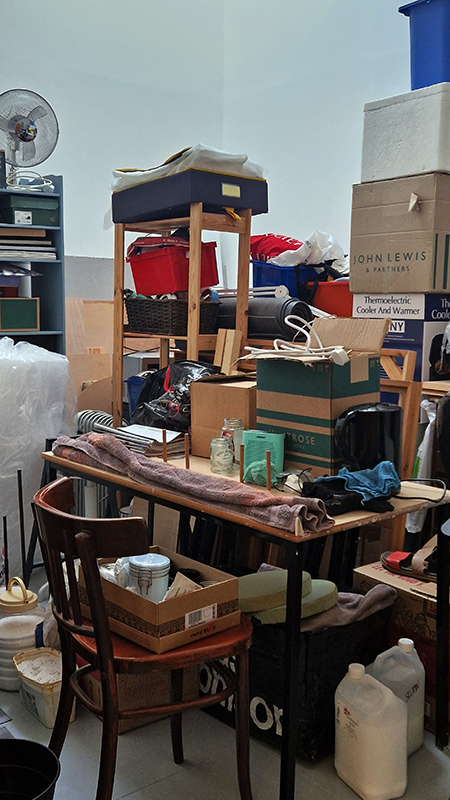
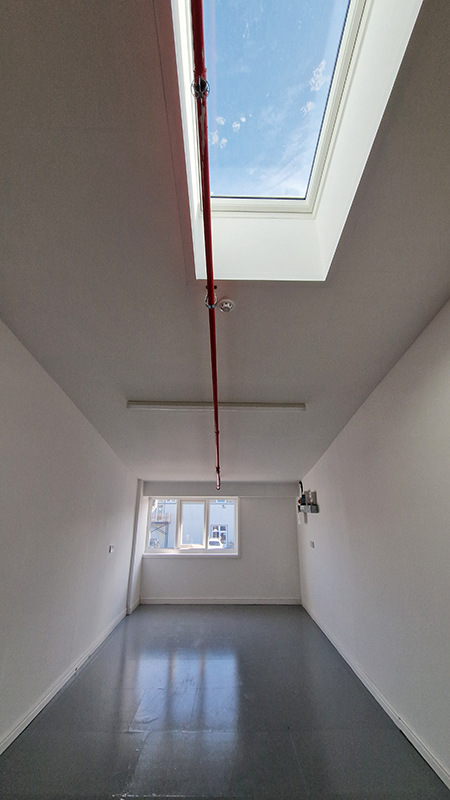
There is an ongoing refurbishment project at my studio complex which although welcome improvements has caused a little disruption to my ability to work there recently. My unit has had a new roof installed and each studio is being insulated with a new ceiling and opening Velux window. When the new roof went on we lost our ceiling windows so it is wonderful to have natural light from above again. Having to move everything out of my studio for a couple of weeks has been a good exercise in discovering long hidden materials and putting it all back has forced my hand to have a bit of a clear out of items I am unlikely to use and pass these on to other studio holders. Images show before, during and after.

I managed to get everything back into my studio just in time for a studio visit from curator Catherine Li to discuss the possibility of exhibiting at Brompton Cemetery Chapel next year. It is a stunning building so I am very excited about this upcoming project.

I have been experimenting with an old wooden slide viewer, printing images onto acetate from my microscope camera of polarised crystal and rock structures.

Work in progress on The Book of Reversals, writing text to print over the screen-printed magnetic graph lines. Ocean floor magnetic stripes are formed as magma cools at mid-ocean ridges. These alternating bands show Earth’s magnetic field reversals, with minerals in the crust aligning to current polarity and recording each change in pattern.

Colossal forces spinning dust

Aeons of accretion and gravity / shaping the debris of destruction

Searing elements separate /  amidst violence and decay

The weighty fall, pulled down, digested / feeling pressure only diamonds can survive

Work in progress looking at the sacred geometry of the Westminster Abbey Cosmati Pavement and relating medieval symbolism with contemporary iconography to think about changing relationships to fire, water, earth, air and the cosmos. Reimagining imagery from the Cosmati Pavement and particle accelerator at CERN.

Out and About

Noémie Goudal And yet it still moves at Edel Assanti. Mesmerizing work. I especially found the work Rocks very effective, an inkjet print on photographic paper with a video projection that moves across the image highlighting certain parts as though a torch is traversing a dark landscape. I always enjoy the theatricality of her large scale video installations even if they do purport a world collapsing around us.

Gorgeous paintings by Helen Baines in Striding Edge at The Department Store, Brixton. Photos don’t capture the ethereal luminosity.

The hypnotic monument of modified LED laptop screens Wiped (Free Palastine) by Katrin Hanusch in Return of the Repressed curated by Toby Ziegler at an empty office block 10 Heddon Street. A show examining alienation and abstraction of the human experience in a climate of digital technology and AI.

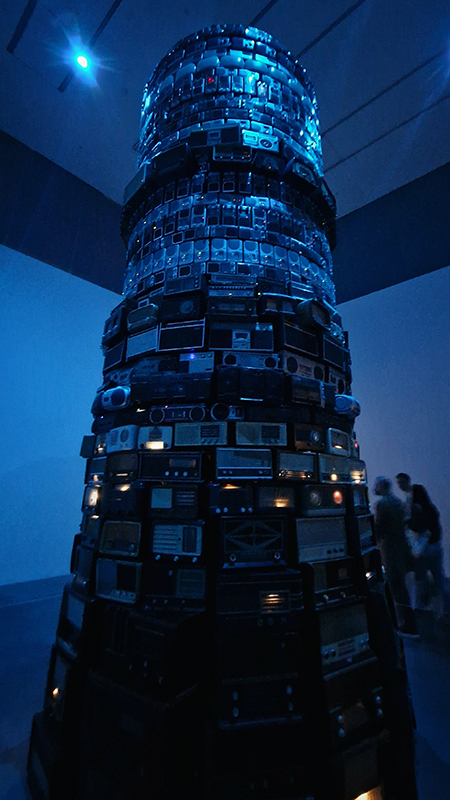
The magnificent Babel by Cildo Meireles at Tate Modern. With slightly dalek vibes, this thrumming ‘tower of incomprehension’ relates to the biblical story of the Tower of Babel, a tower tall enough to reach the heavens. God was offended by this structure, and caused the builders to speak in different languages. No longer able to understand one another, they became divided and scattered across the earth, and so began all mankind’s conflicts. Here we are, punished for our curiosity, again. This work though is a joy.

Material Actors curated by binder of women at Hypha Gallery 3 / No. 1 Poultry, London explores the tipping point of formal representation into the theatrical and cinematic world of mimicry and artifice. The artists include Alice Browne, Charlie Franklin, Lauren Godfrey, Oona Grimes, Pia Pack, Milly Peck, Michelle Williams Gamaker and Laura White. Material process and the façade are key in many of the works that surprise and confound definition.

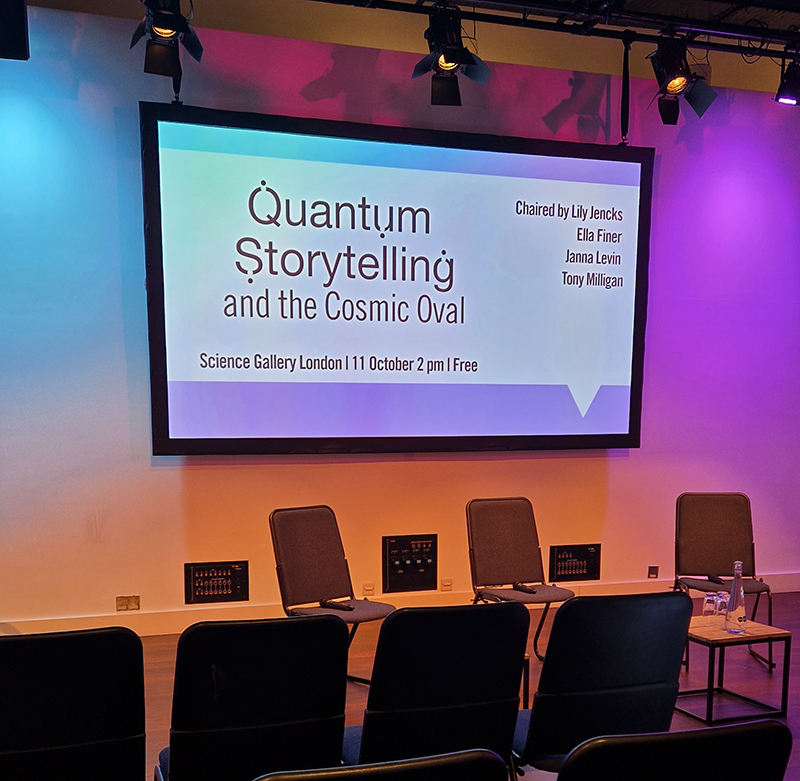
Quantum Storytelling and the Cosmic Oval – a fascinating discussion exploring how cosmic discoveries influence cultural narratives and the composing of histories. Physicist and author Janna Levin in conversation with writer Ella Finer to celebrate the launch of a new book commission The Cosmic Oval. Chaired by Lily Jencks, Keeper of Vision at The Cosmic House, with further insight from Tony Milligan, Research Fellow in the Philosophy of Ethics, Department of Theology and Religious Studies at King’s College London.

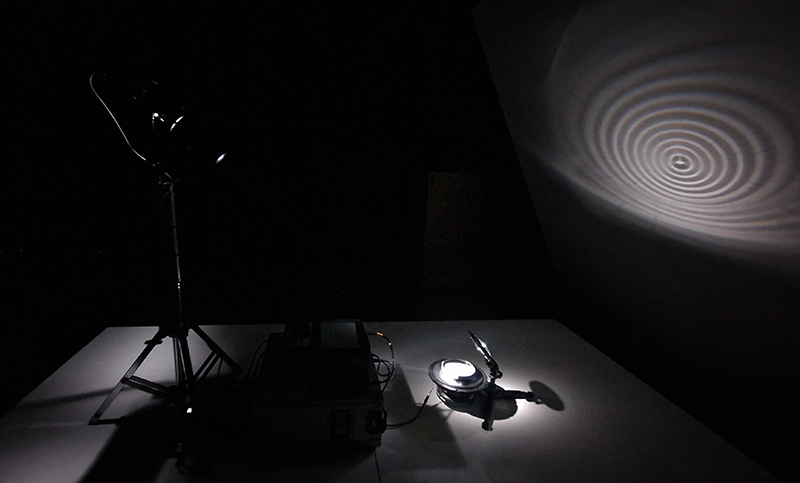
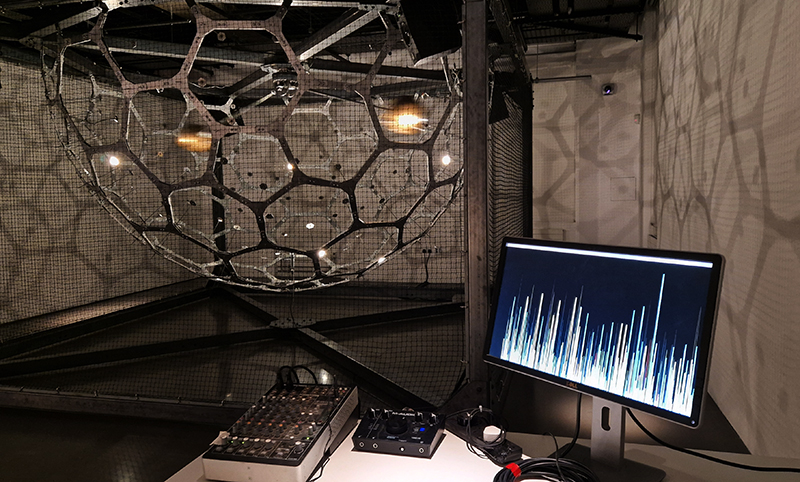
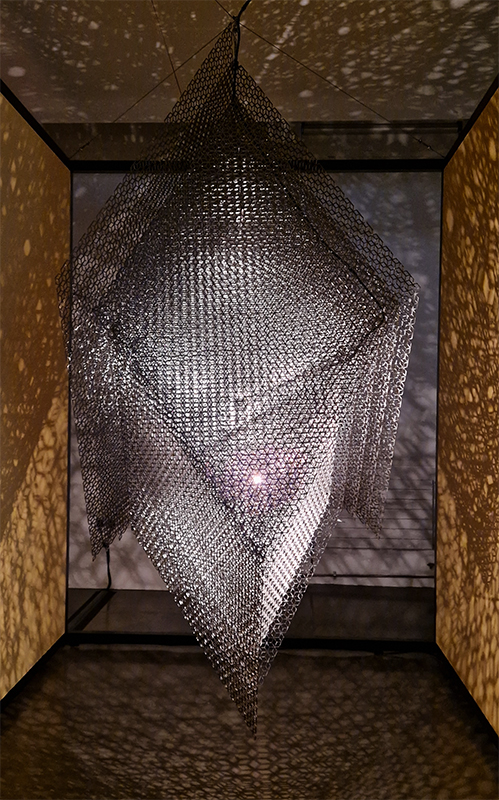
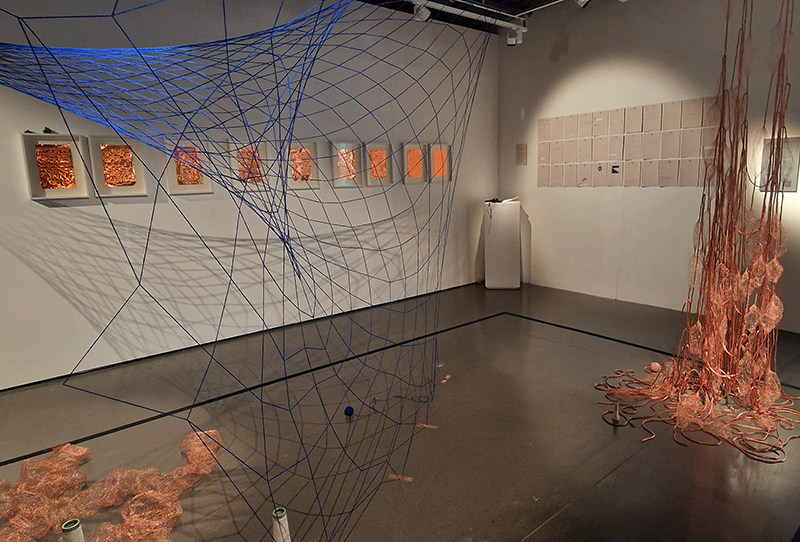
Quantum Untangled at The Science Gallery, London. I liked the simplicity of Alistair McClymont’s An Early Universe where wave patterns caused in water by low frequency sound vibrations are projected via a lens to reference quantum oscillations created when the universe was rapidly expanding after the big bang. Two large installations from Conrad Shawcross use the play of shadows to signify intangible forces of the universe. In Ringdown two caged spherical pendulums oscillate in violent motion to evoke the spiralling motion of gravitational waves in the moments after two black holes merge, a phase known as ‘ringdown.’ The artwork is probed with sensors to trace the magnetic field generated, which is displayed on a monitor. The Blind Proliferation explores the idea that our Universe is one of many co-existing ‘bubble universes’ formed in the period of rapid expansion at the beginning of time. Two ‘scientist’s offices sit either side of a structure casting complex shadows. In a nod to Plato, the scientists can only see the shadows from which they must determine their origin. There are slight differences between the two offices to suggest the idea of the multiverse where many worlds may exist with only slight variations. Daniela Brill Estrada & Monica C. LoCascio, Begriff des Körpers reflect on the nature of perception and shared understanding through their use of copper, a key material in quantum technologies, to create sculptures that describe the diagrammatic language of scientists when explaining spacetime and quantum phenomena.

It is always exciting to enter a truly dark space – NOWISWHENWEARE (The Stars) at the Rambert Dance Studios as part of the LFF Expanded program promised a breath-taking journey through light and sound when you would enter a meditative state and come face to face with your inner self. With nearly 4,000 reactive LED lights and a 496-channel soundscape it was an enjoyable experience but perhaps not quite as awe inspiring as hoped.

(S)low Tech AI by Studio Above & Below (Daria Jelonek and Perry-James Sugden) at Victoria and Albert Museum. ‘This installation examines artificial intelligence through the lens of geology. A sculptural interface of four rocks activates a slow, responsive AI system that reacts to touch with evolving sound and image. Each new rock arrangement adds a line to a growing digital landscape, echoing sedimentary layers shaped by collective interaction. The imagery is drawn from four geologically significant sites in Scotland, where ancient stone carvings show early examples of symbolic data recording. Using simple algorithms, the work invites reflection on AI as a slow, ethical, and materially-aware process.’ I couldn’t determine what changes were set in motion when the stones were moved, it does say it is a slow process so perhaps I shouldn’t have expected to notice the impact of my moving the stones and it is something that builds into the algorithm later. It was still quite mesmerising to watch.

Luca Bosani Unidentified Performing Objects at Victoria and Albert Museum

Loved these boots that look like they have been torn from the rock. Magnes might have felt a slight tug as the nails in his boots clung to the magnetite beneath his feet but imagine the weight, the feeling of increased gravity walking in boots of rock.

The Ripple Effect by Alicja Patanowski blending materials from one of the largest mining waste reservoirs in Europe with clay to create a tiled seating installation in the John Madejski Garden.

Screening as part of the London Film Festival, John Lilly and The Earth Coincidence Control Office directed by Michael Almereyda and Courtney Stephens, explores Lilly’s radical experiments with isolation tanks and LSD to study consciousness, as well as his theory that a hidden entity called the Earth Coincidence Control Office (E.C.C.O.) secretly influences human events. Despite his desire to communicate with cetaceans believing them to be intelligent conscious beings he exhibits a cold disconnect to their physical and emotional welfare. A lot of the footage is shocking to a contemporary audience in its cruelty but his research into human consciousness was trailblazing at the time and his conclusion that humans were at risk from an outside technology based intelligence does have some prescience considering current concerns over AI.

Artists First: Contemporary perspectives on portraiture at The National Portrait Gallery commissioned several artists to respond to an artwork of their choice. Charmaine Watkiss chose the portrait of Sir Hans Sloane, a botanist and collector who travelled to Jamaica in 1687 taking advantage of enslaved people’s indigenous knowledge of the location, properties and medicinal uses of local plants to boost his collection and furnish his publication. Charmaine’s beautifully crafted response To reimagine an African Queen shifts the dynamic to reflect the dissonance between these two human’s relationship to nature, one built on wisdom and respect and one which based on extraction and mastery.

Reading

The Stone Woman by A.S. Byatt. An evocative journey into becoming other.