My solo exhibition Appearances are a Glimpse of the Unseen, curated by Catherine Li, at The Chapel, Brompton Cemetery opened on one of the hottest days so far this year. I was very grateful to the valiant visitors who braved astronomical temperatures and negotiated dysfunctional transport systems to make it to the PV.
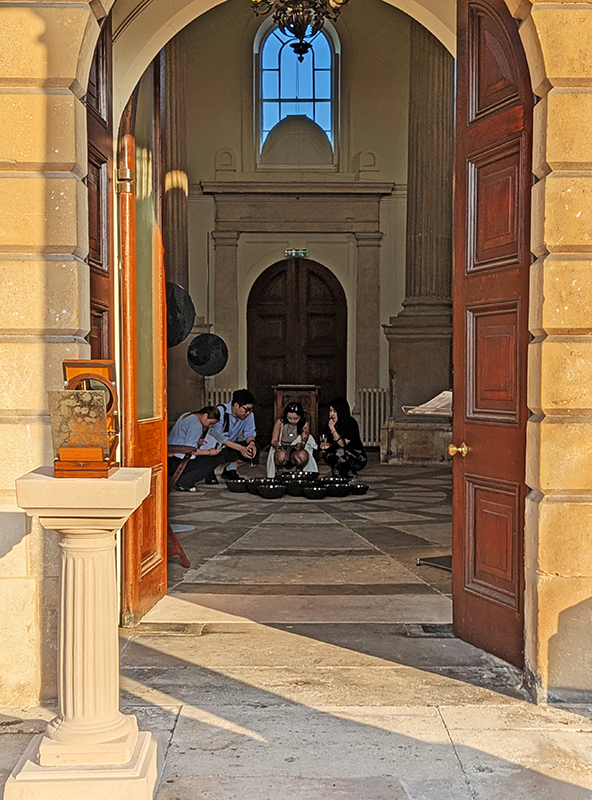
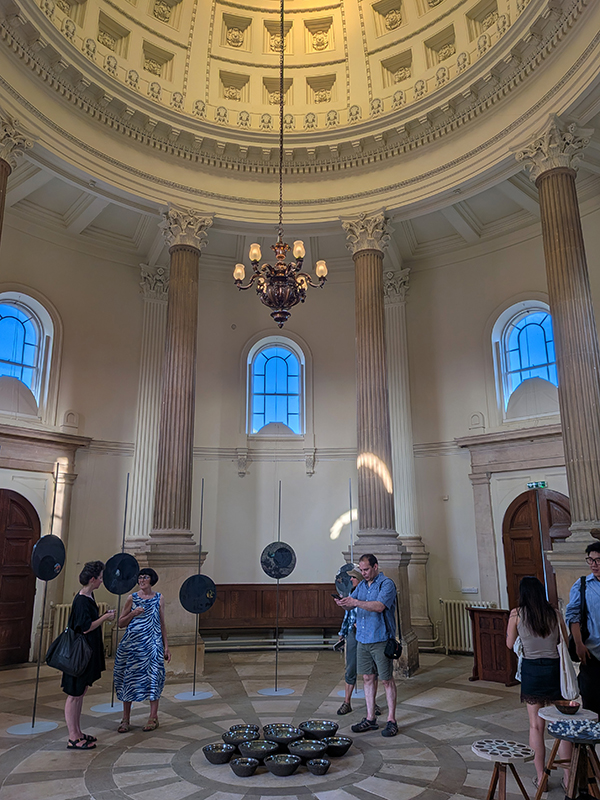
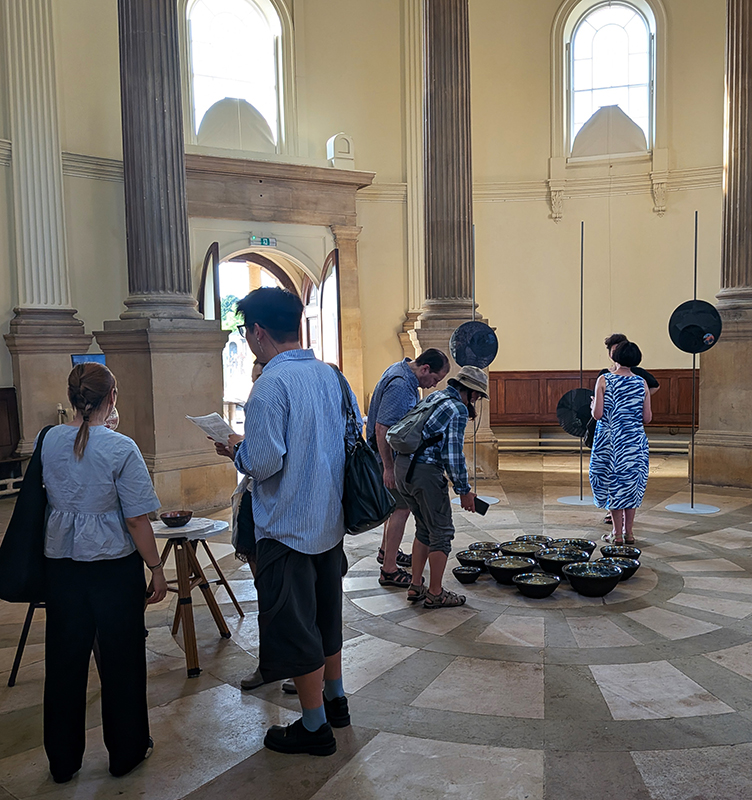
The Friends of Brompton Cemetery volunteers are a warm and enthusiastic community, generous with their support of the exhibition and it was great to meet several of them over the weekend.
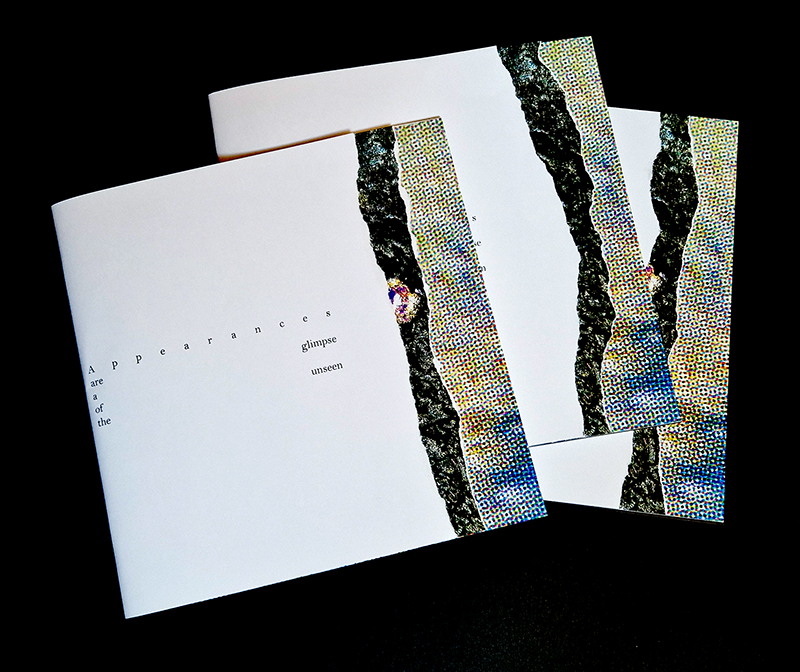
A publication to accompany the exhibition was beautifully designed and edited by Catherine Li who also wrote this wonderful introduction to the exhibition:
In Appearances are a glimpse of the unseen, Susan Eyre approaches the visible world as a threshold rather than a certainty. The exhibition takes its title from a proposition attributed to the pre-Socratic philosopher Anaxagoras, suggesting that, despite the limits of human senses, the hidden structures of reality may still be approached through careful observation and speculative thought. Drawing on scientific enquiry, ancient cosmology and material experiment, Eyre’s works ask how we might attend to realities that surround and pass through us, yet remain beyond direct perception: from dark matter and magnetic fields to molecular movement, distant horizons, light and the silent activity of the Earth itself.
For Eyre, this proposition becomes both a philosophical ground and a working method, as her practice creates situations in which matter seems to react, shimmer, distort, reveal or withhold itself, allowing scientific ideas to be encountered through material presence. Mirrors absorb and fracture the viewer’s image; water holds floating fragments on the edge of disappearance; magnets draw invisible force into pattern; crystals reveal hidden internal structures through polarised light. Across these works, perception becomes less a matter of looking at objects than entering into relation with forces already at work around us.
Light is central to this inquiry because it allows the world to appear while remaining elusive in itself. We encounter light through what it touches or brings momentarily into view. In Eyre’s work, light becomes visual, material and relational at once: a form of contact between the body and a wider universe, cosmic in scale yet intimate in its effects. Her works draw attention to the conditions of visibility itself, asking what enables seeing, what escapes it, and what might be felt before it can be fully understood.
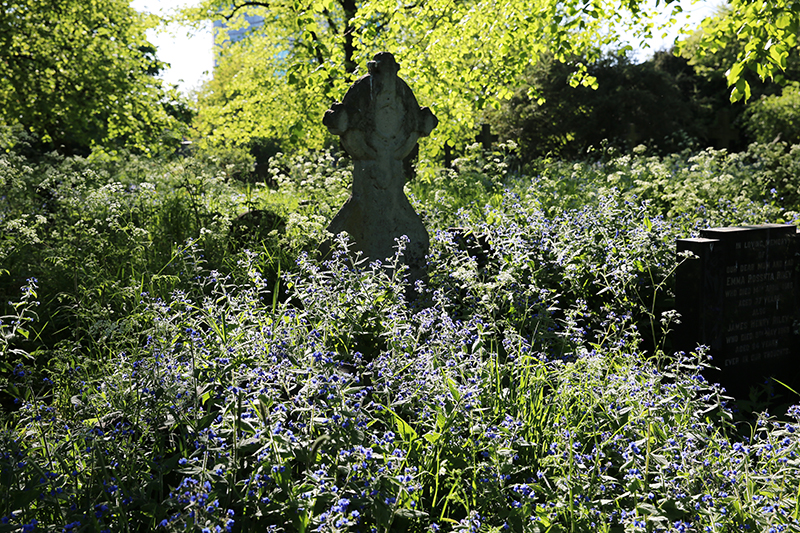
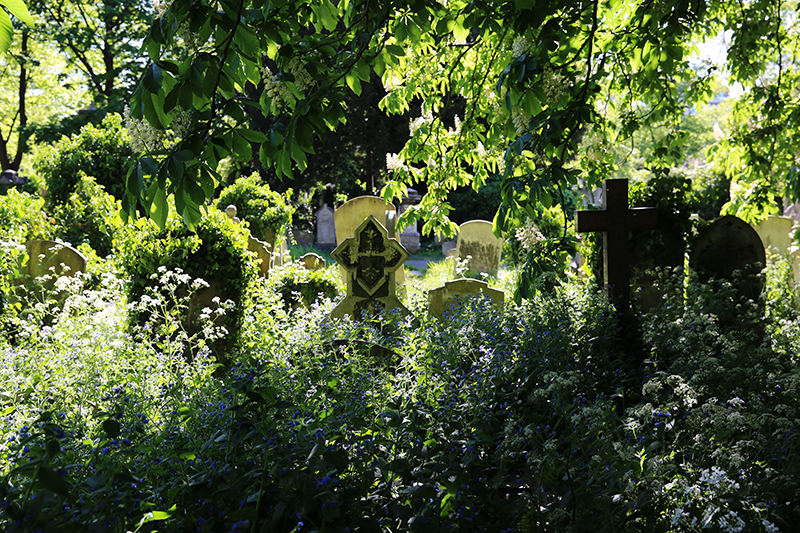
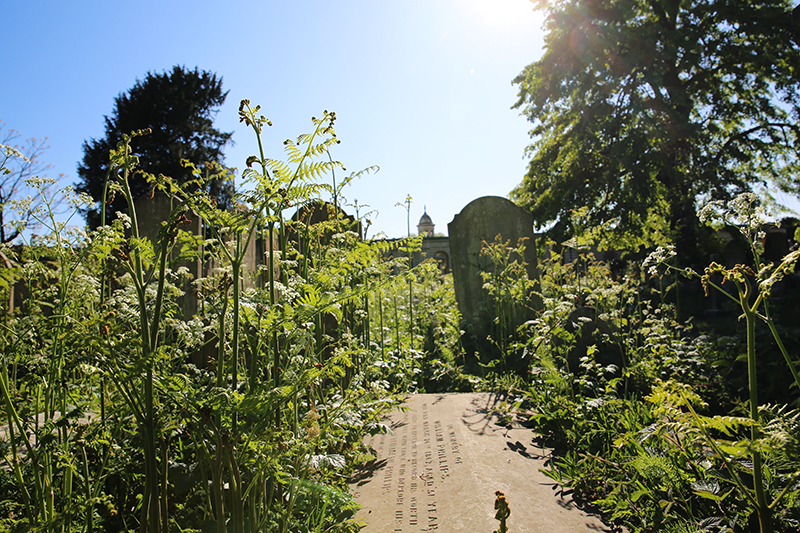
Within the Chapel of Brompton Cemetery, these questions become especially charged, as the space is already shaped by thresholds between interior and exterior, stone and sky, memory and matter, the living body and the absent body. In submīrārī (earthbound), Eyre’s images of angels appear through water as unstable, trembling presences, released from fixed memorial forms into a more fluid state of becoming, where the spiritual and the scientific become parallel languages for approaching what cannot be fully held in view.
Appearances invites a slower form of attention, asking us to look again at the ordinary world and recognise that its mysteries are not distant from us, but already traversing us continually and instantaneously. From Eyre’s early pursuit of paradise in the everyday to her contemplation of cosmic and subatomic realities, her practice has developed a deep awareness of interconnectedness across human and non-human experience. In the Chapel, among light, stone, water and reflection, Eyre’s works open a quiet field of speculation, where what appears before us may be only the visible edge of a much larger, stranger intimacy.
Catherine Li
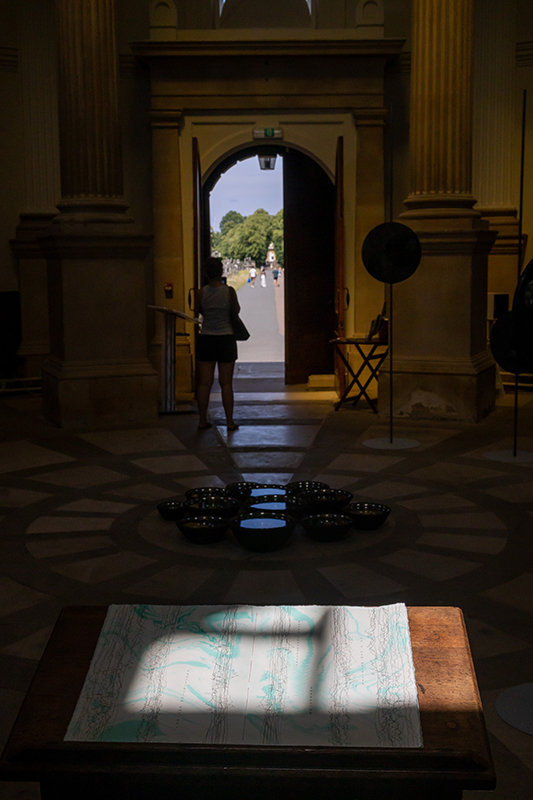
All the fantastic installation images are by Emma Brown Photography.

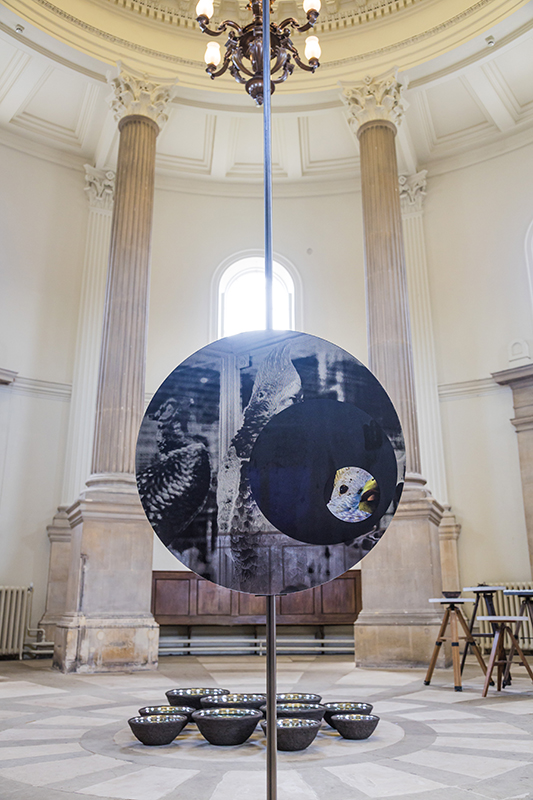
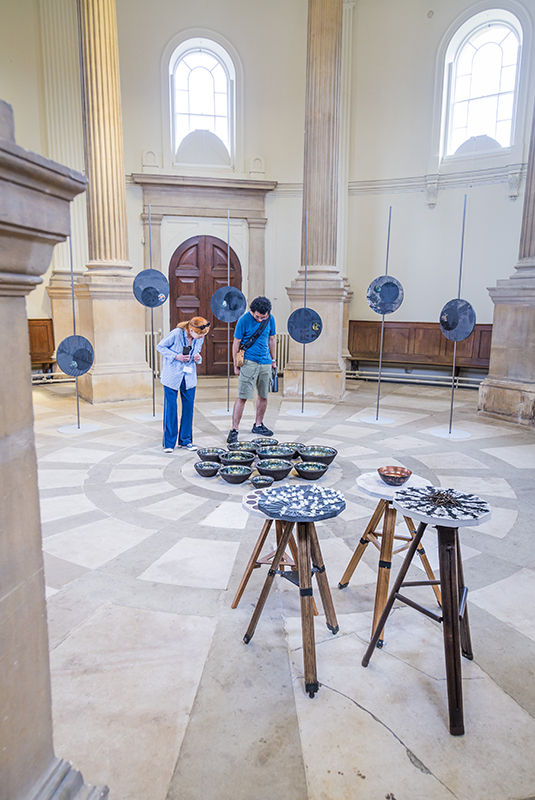
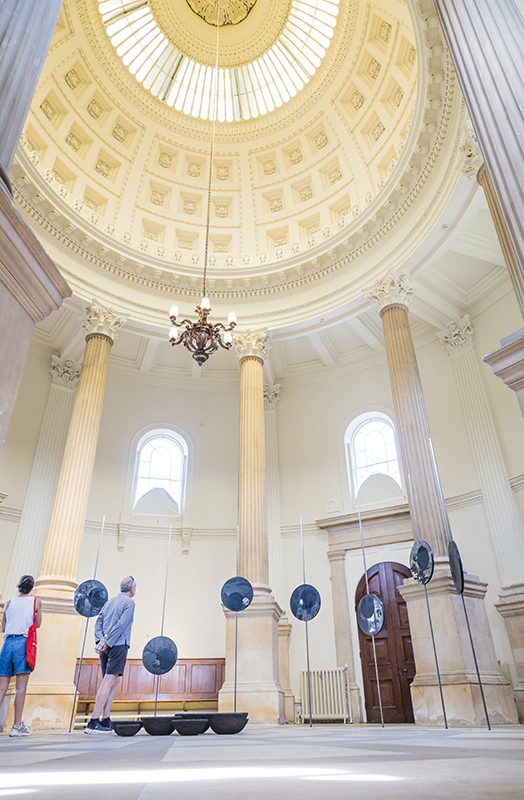

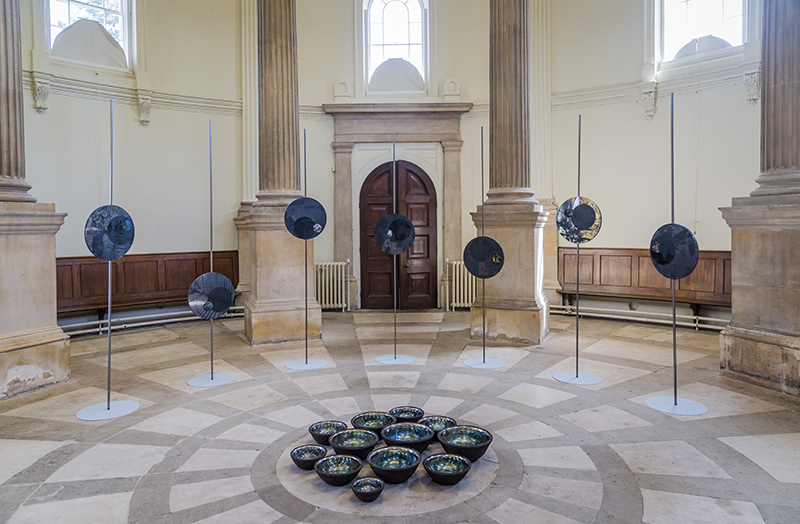
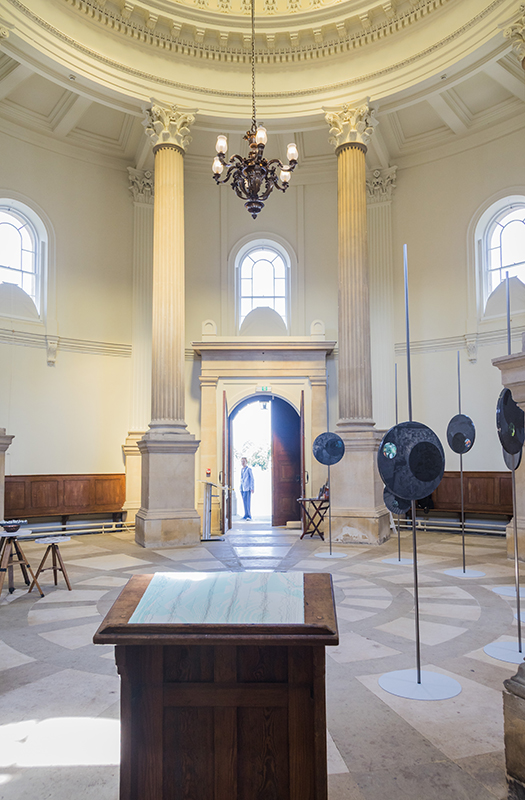
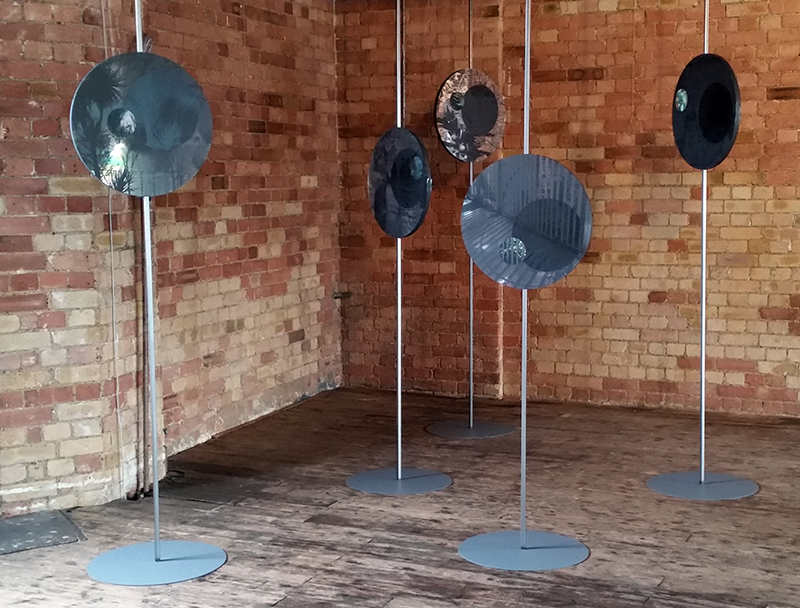
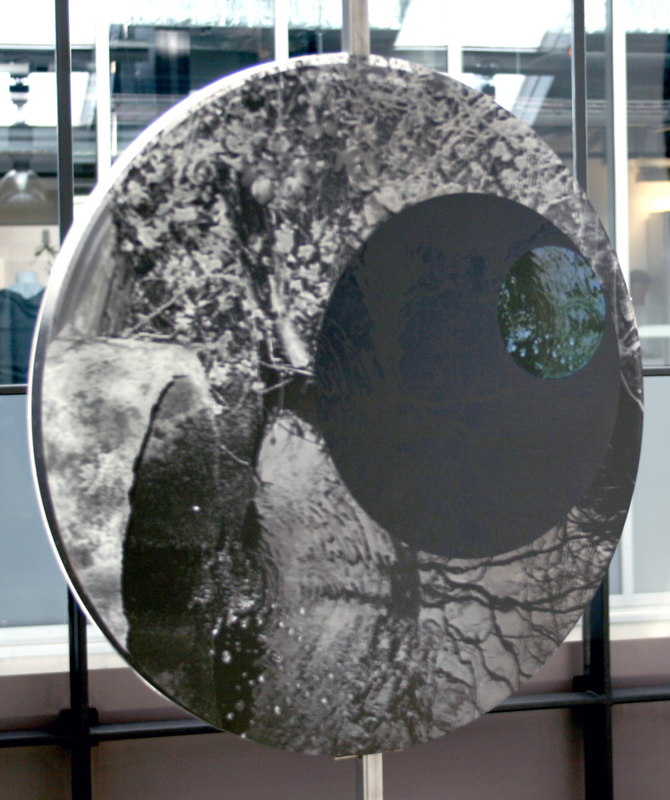
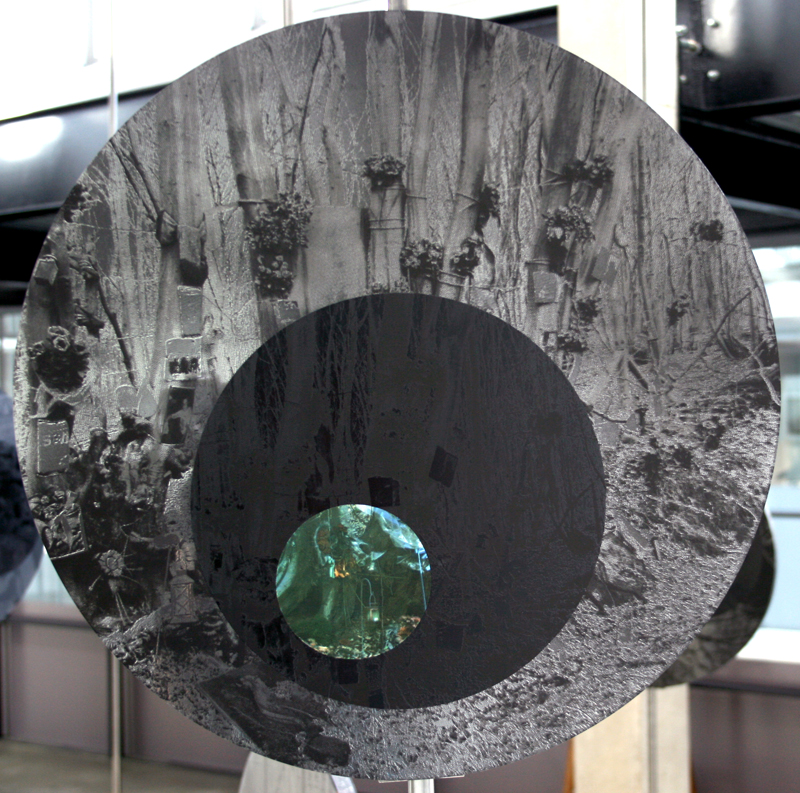
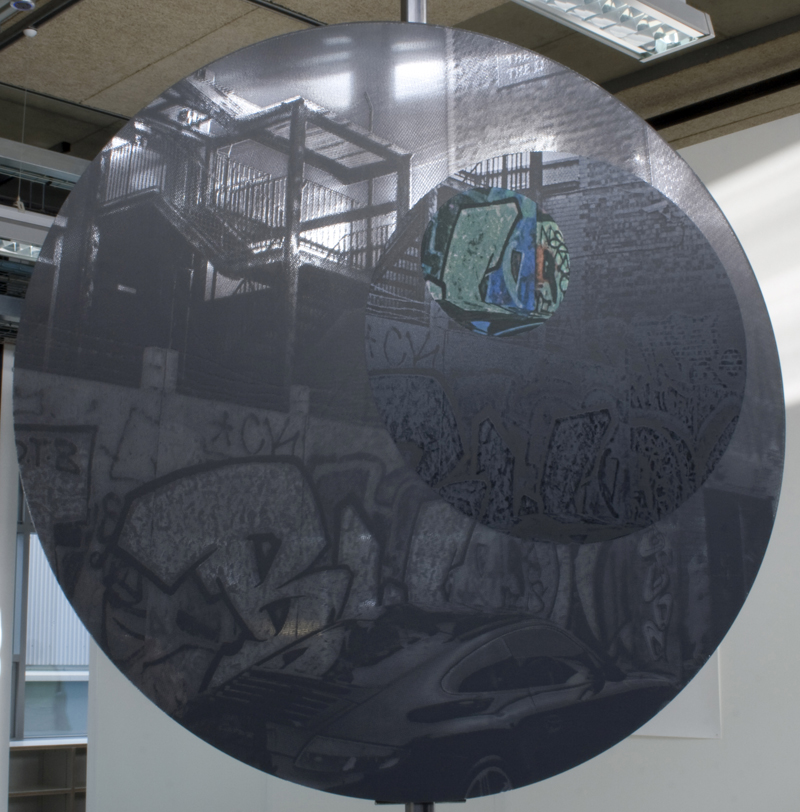
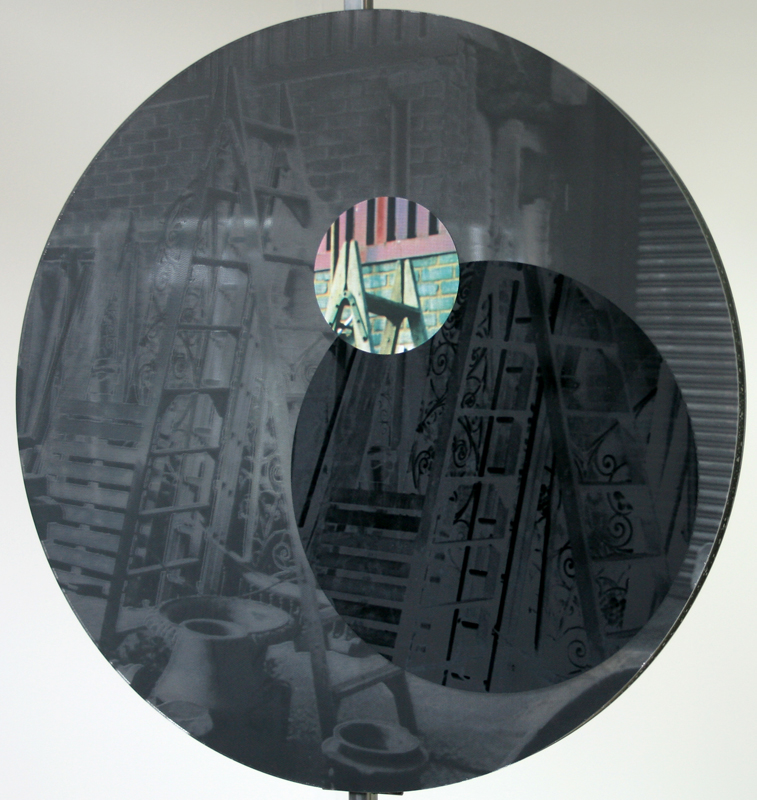
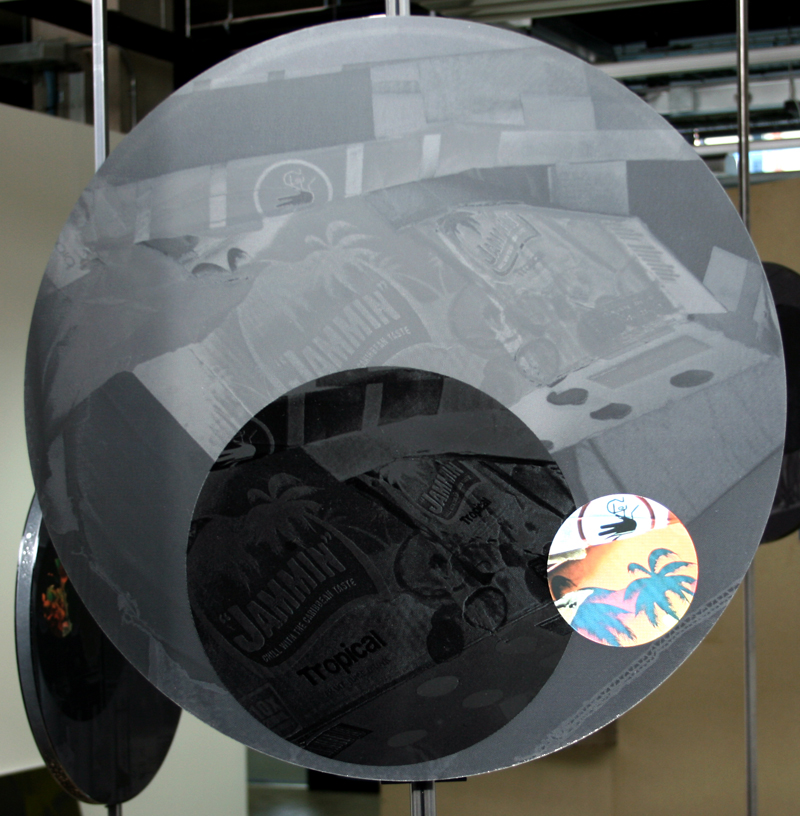
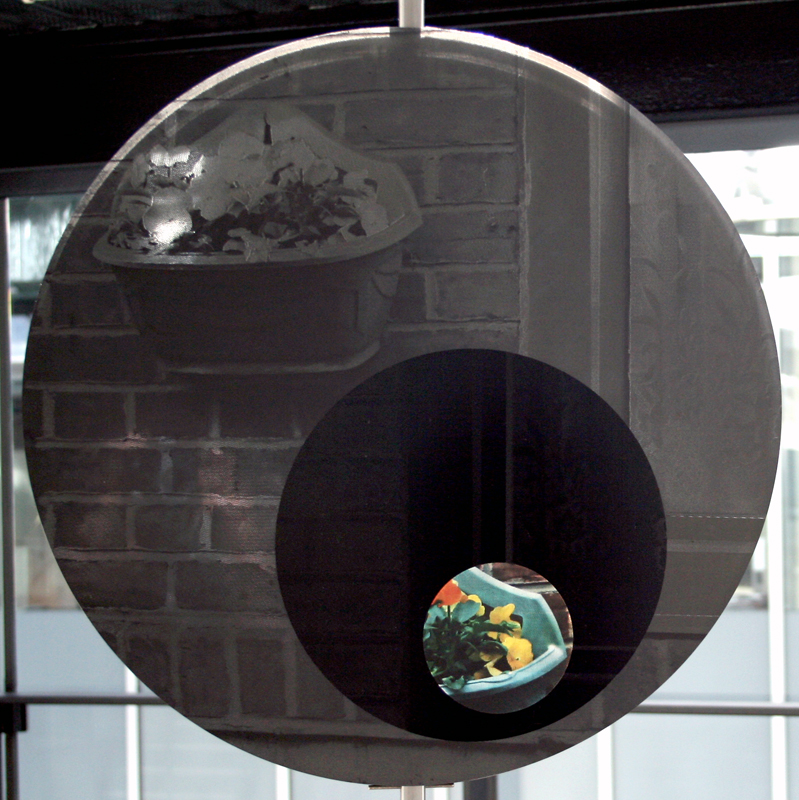
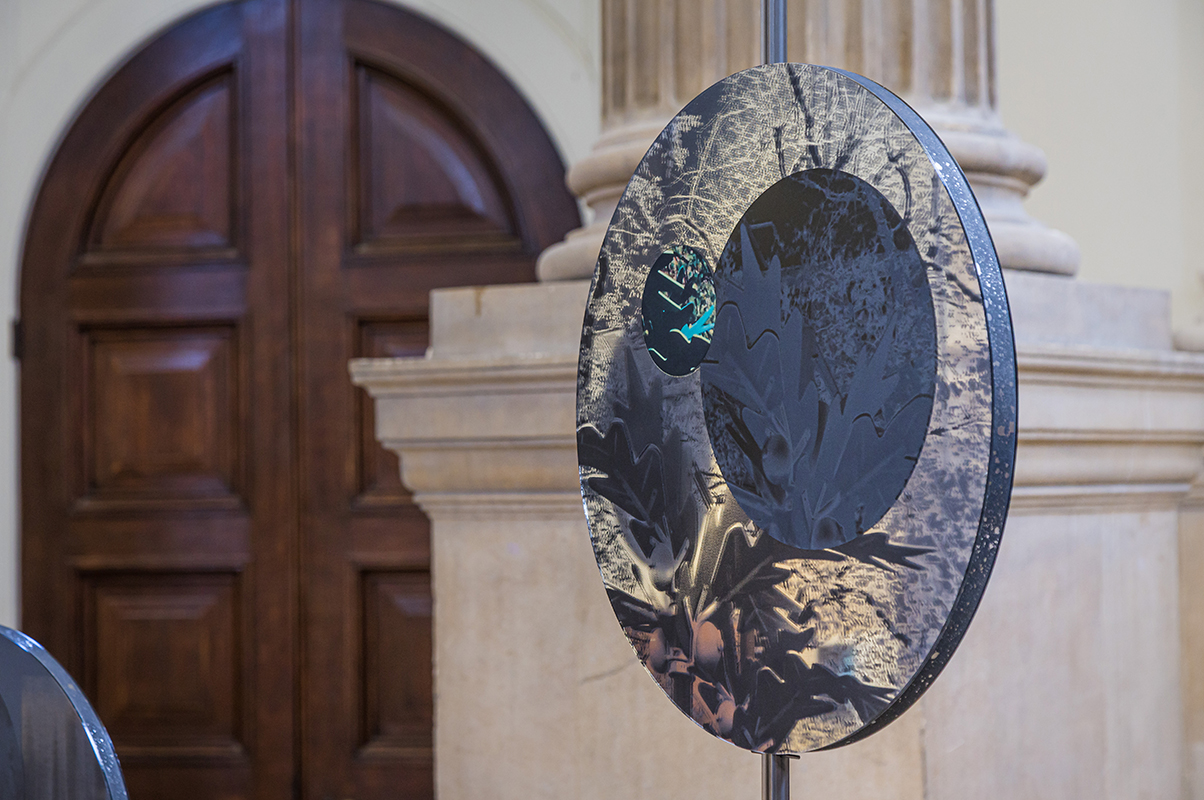
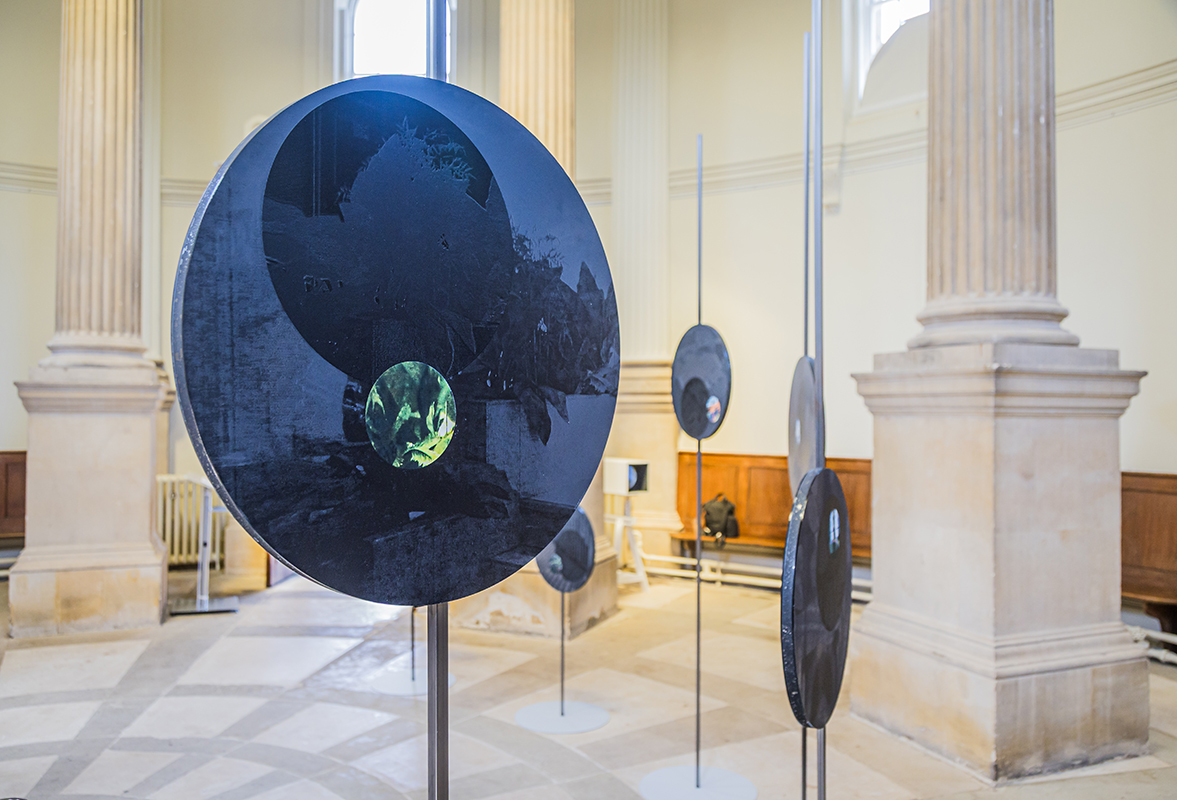
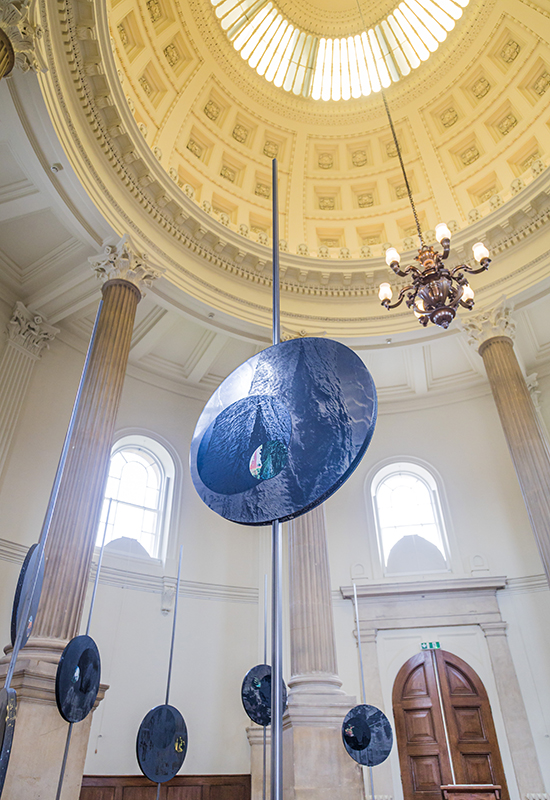
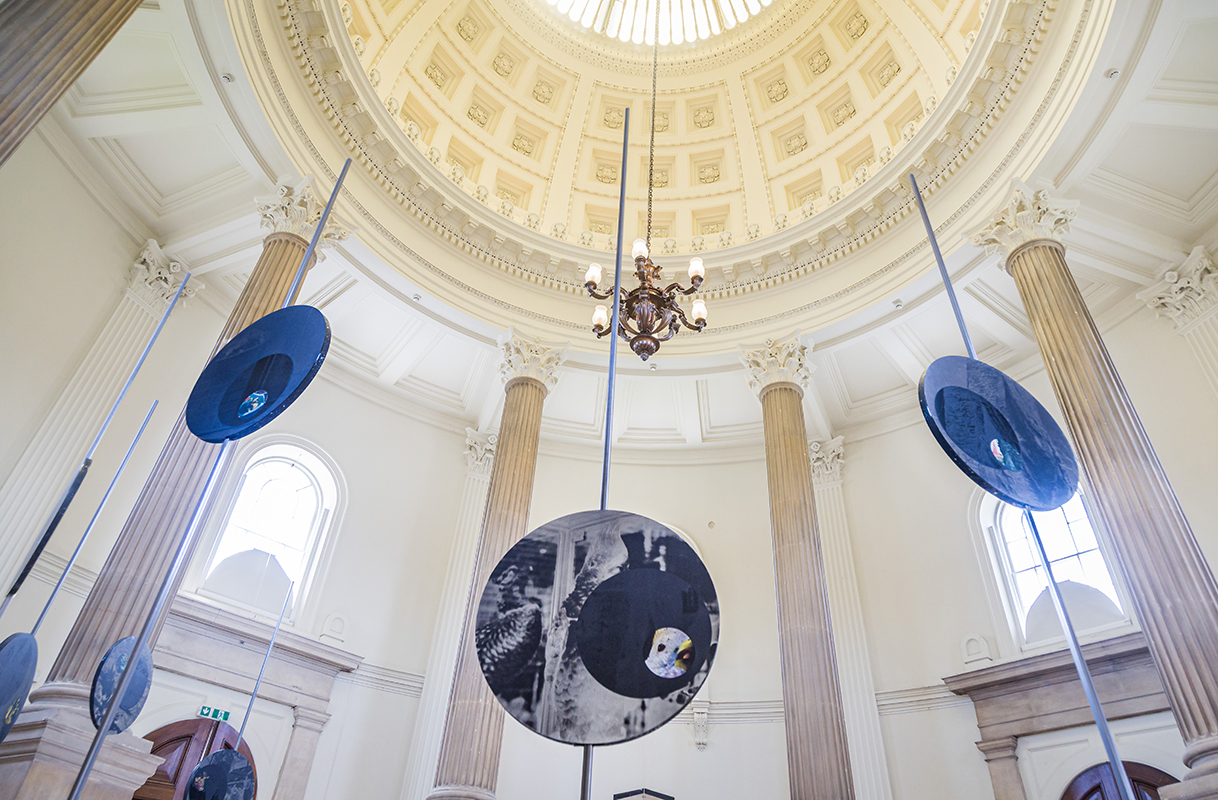
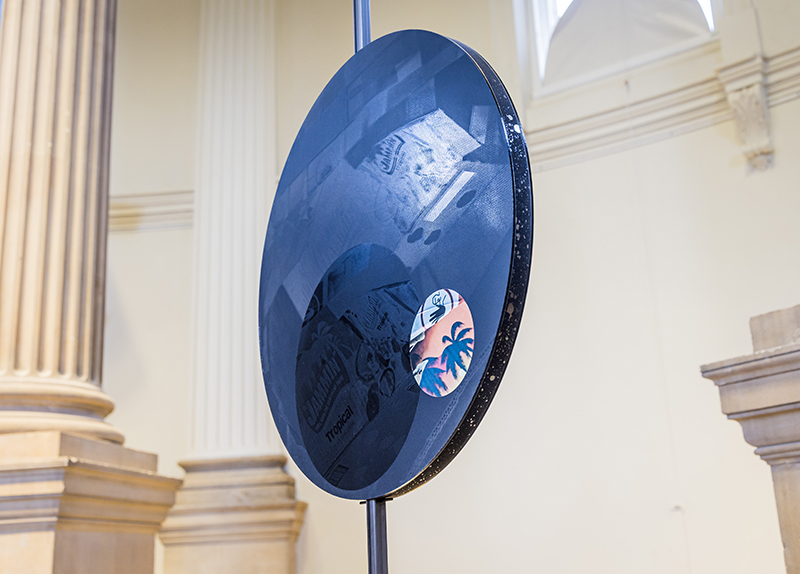
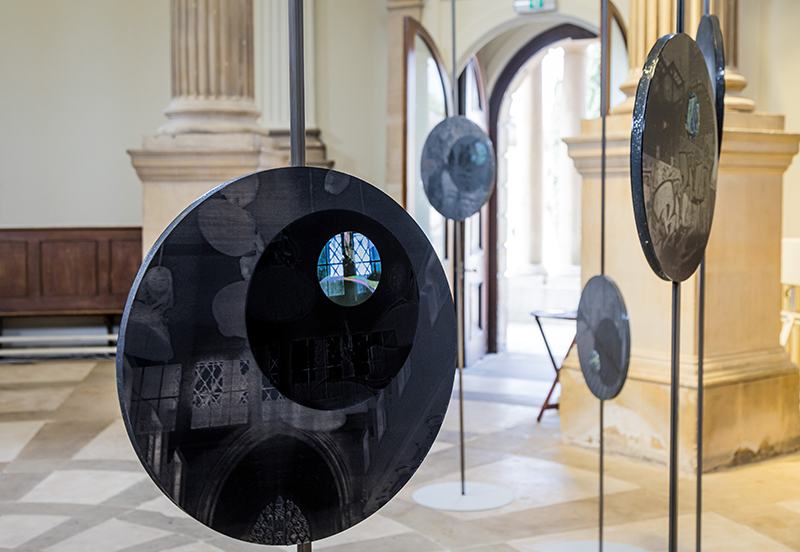
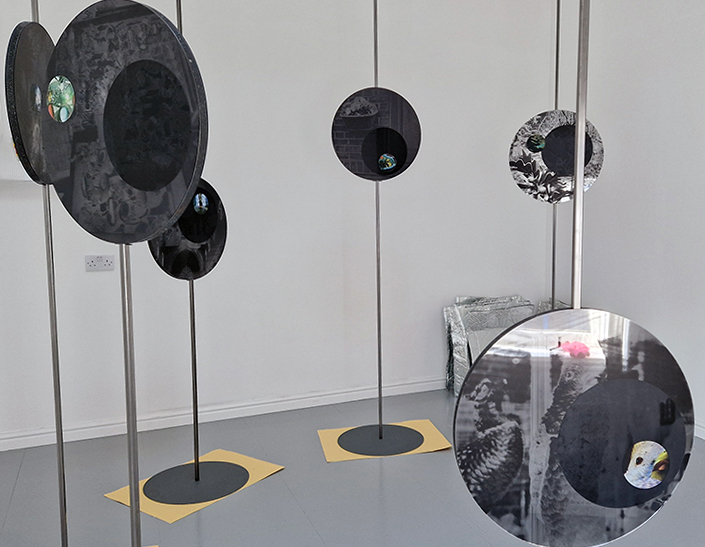
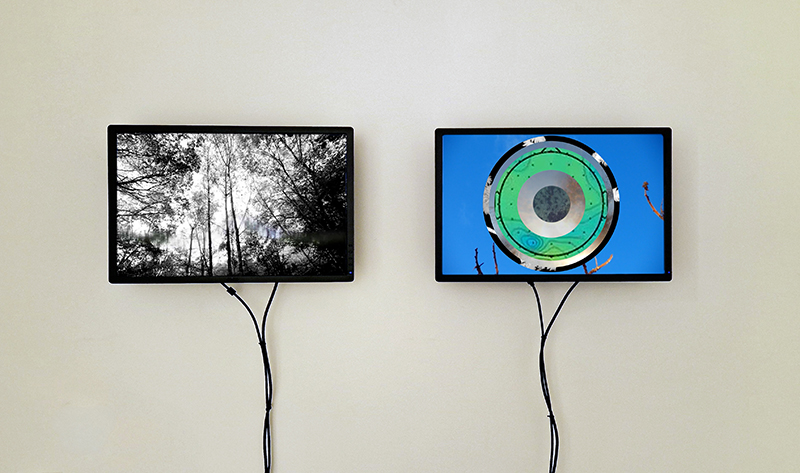
The sculptures everydaymatters respond to the realm of intangible matter, present yet invisible. Using documentation from places named paradise, images were screen-printed onto mirrored surfaces which absorb the viewer into the work, reflecting and distorting perspective. Imagined as cross sections of landscape, exposing the hidden proportions of visible and invisible matter, each circle is divided into the percentages scientists believe are the constituent parts of the known universe. The smallest circle, in colour, is less than 5% of the whole, and reveals the extent of all that is visible or known to us. The circle screen printed black on black is about 26% of the whole and expresses the unknown dark matter that is thought to hold galaxies together. The remaining 70% is shimmering dark energy, accused of escalating the expansion of the universe.
everydaymatters, 2015, screenprint on mirrored acrylic, etching, steel, 7 pieces 50 x 50 x 280 cm


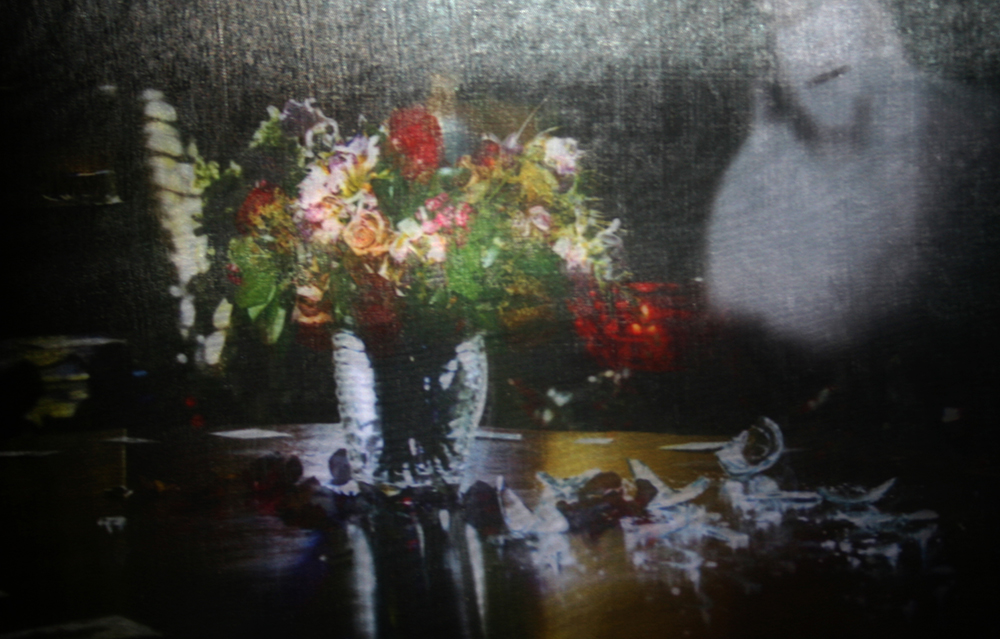
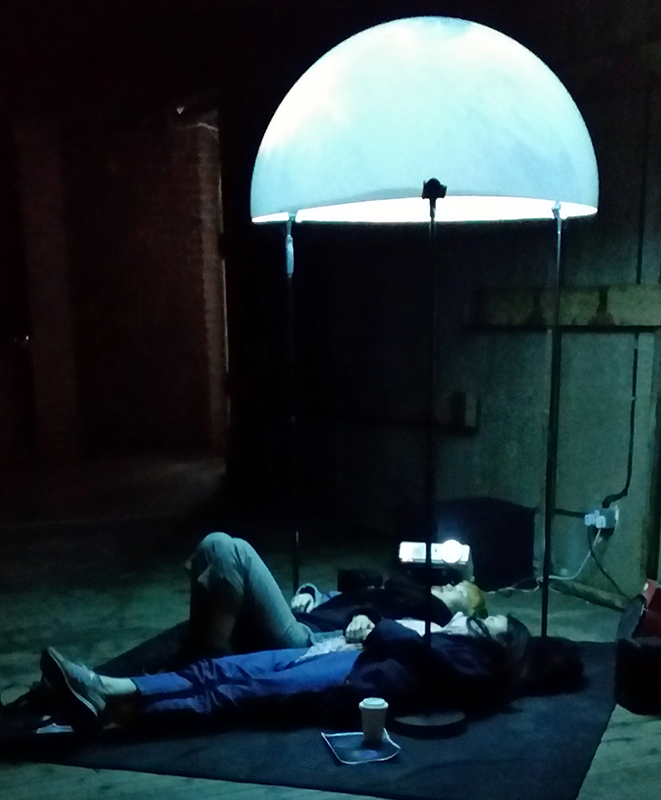
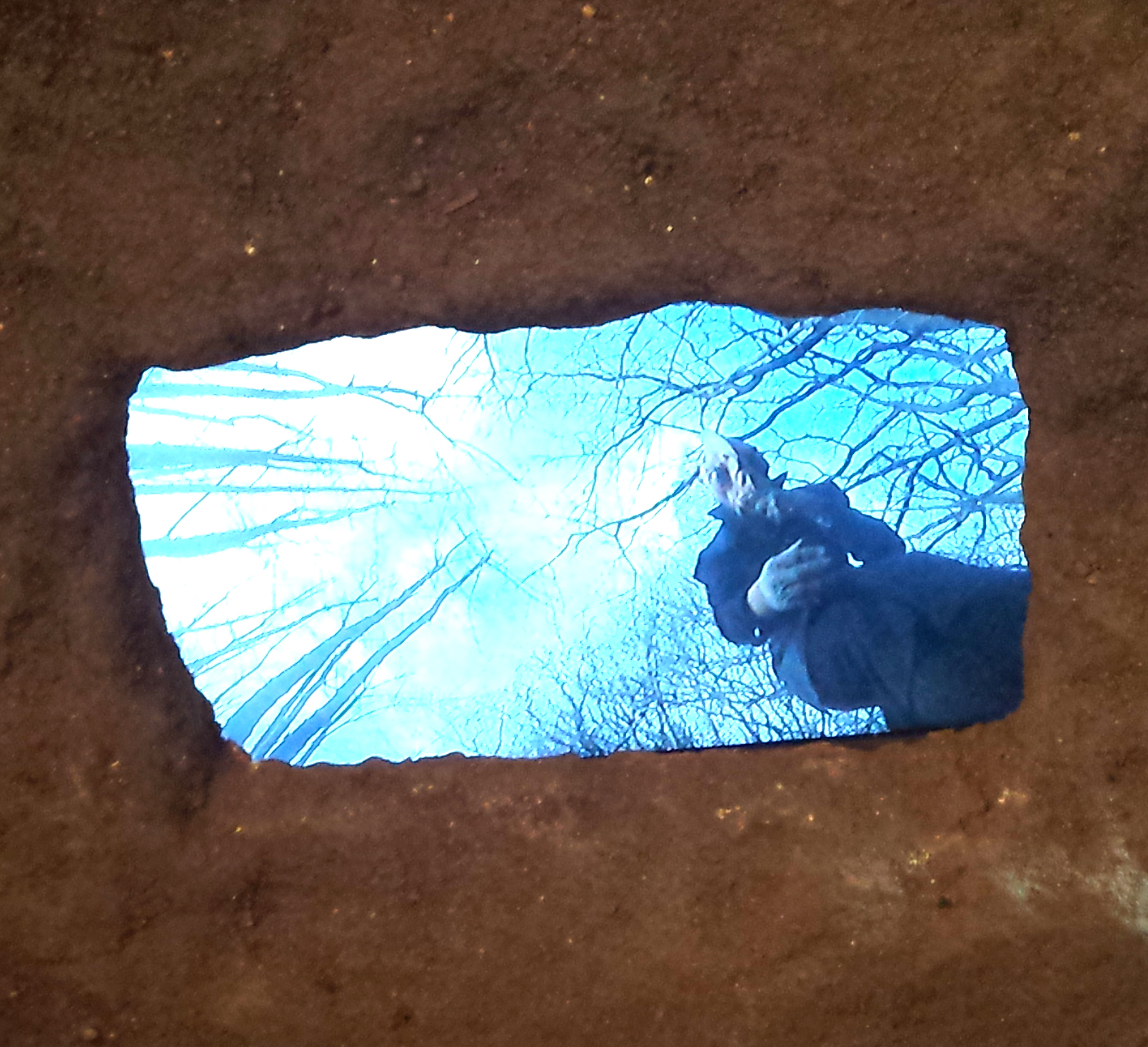
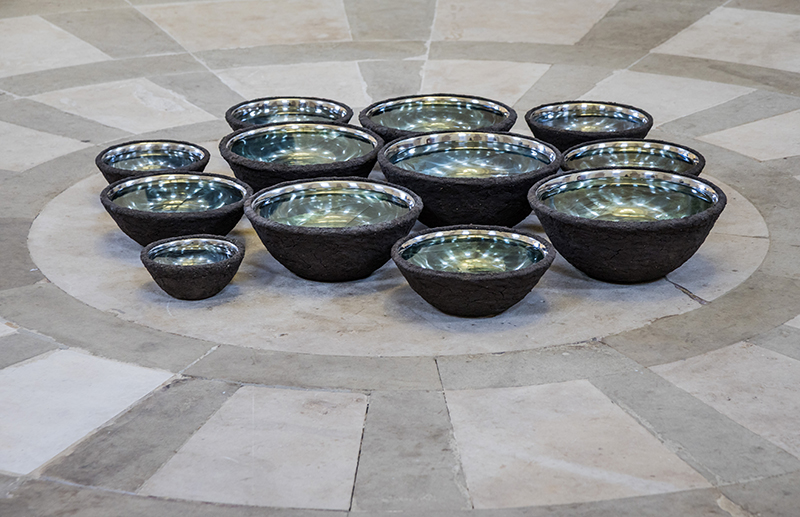
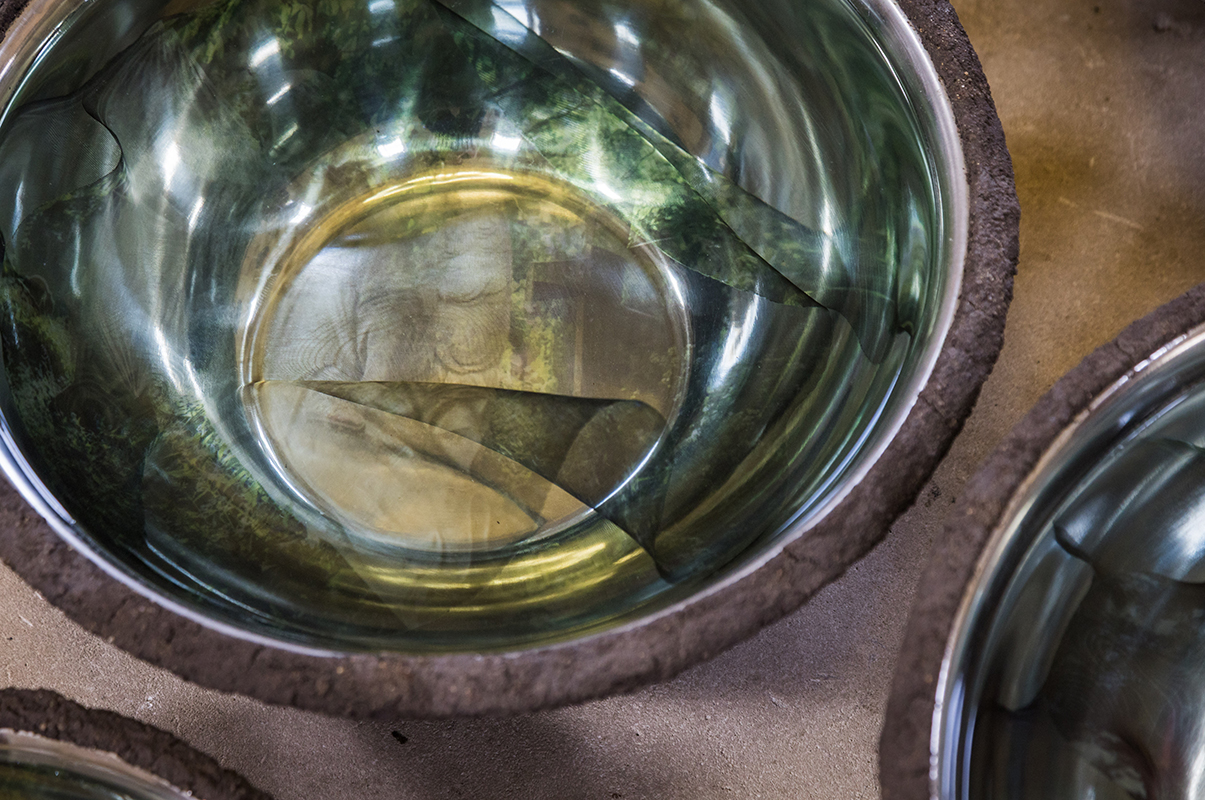
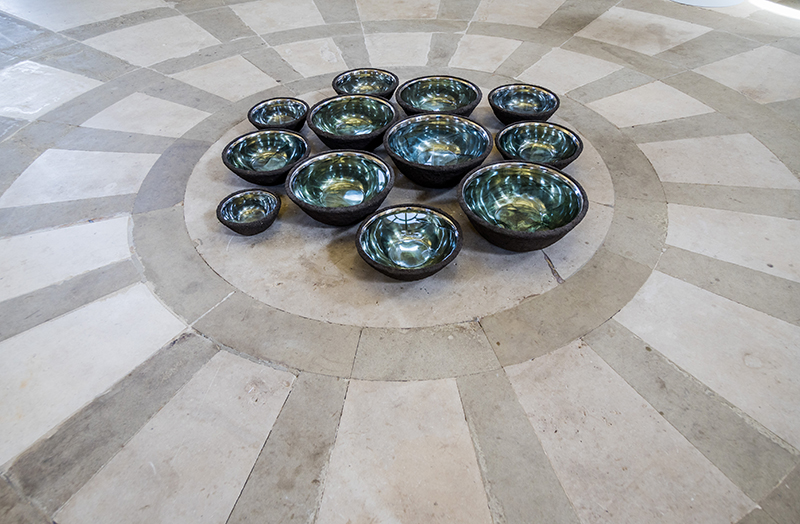
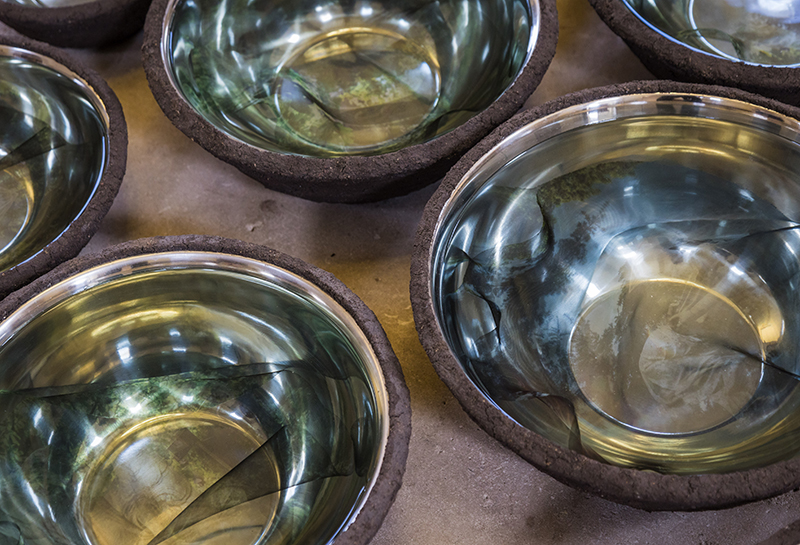
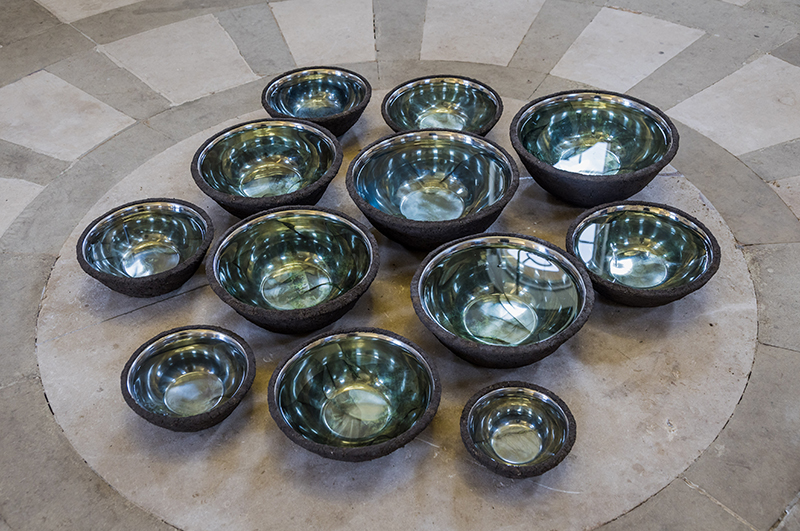
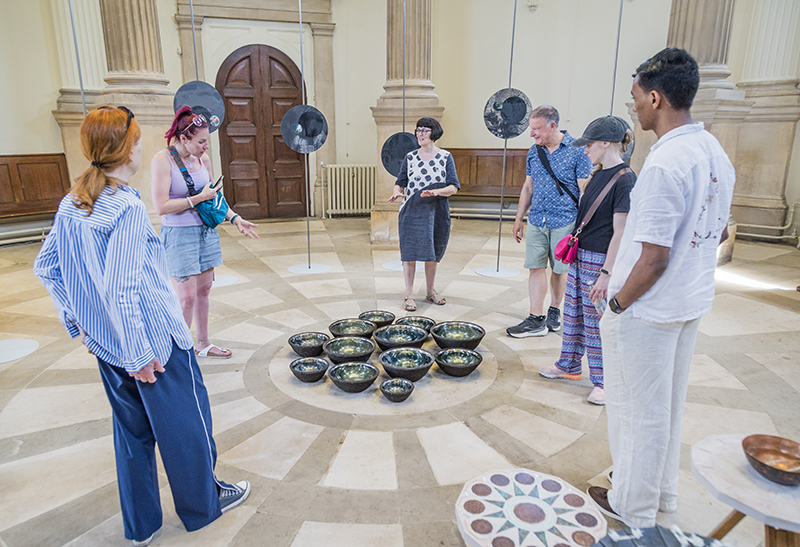
submīrārī (earthbound) installation invites viewers to gaze through the surface of water, shifting perspective, to catch a glimpse of the mirages shimmering in pools, revealing glimpses of an uncertain world fluctuating on the cusp of disappearance. The word mīrārī comes from a Latin root, to gaze in wonder.
These ephemeral evocations created with imagery from Brompton Cemetery, where angels appear, released from their cemetery podiums, accompanied by a glowing source of light, address ideas put forth in The Physics of Angels: Exploring the Realm Where Science and Spirit Meet, in which co-authors Rupert Sheldrake and Matthew Fox discuss parallels between quantum mechanics and early theories of angels, particularly Thomas Aquinas’ teaching that angels are immaterial bodies and creatures of light. The language used to describe the esoteric and the spirit world can often be substituted with the language of physics used to explain energy in its various manifestations.
submīrārī (earthbound), 2018, steel, earth, water, dye sublimation textile (2026 angel edition), 12 pieces
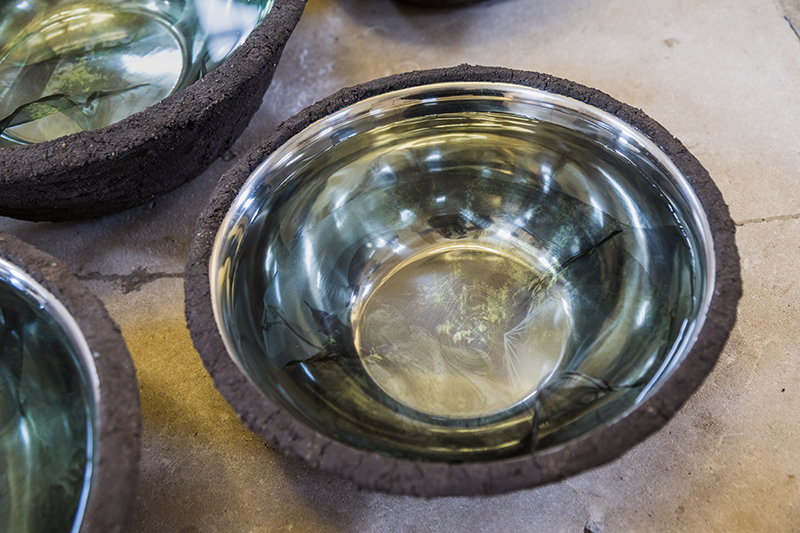

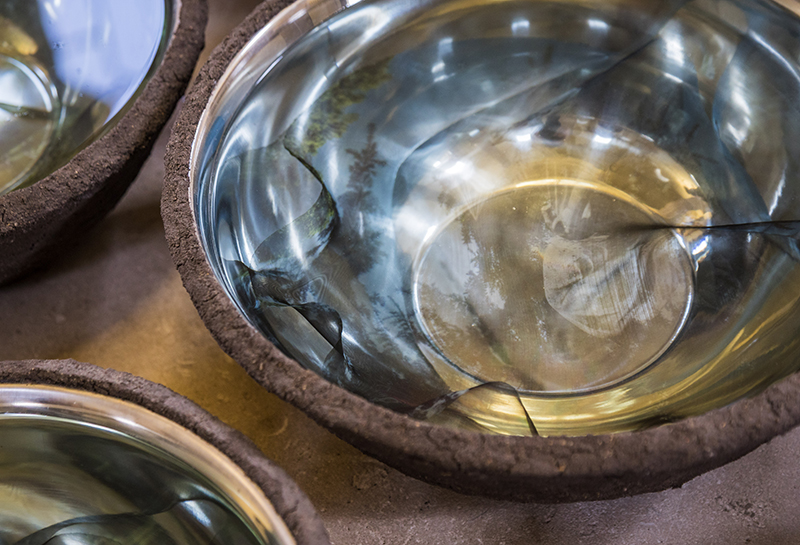

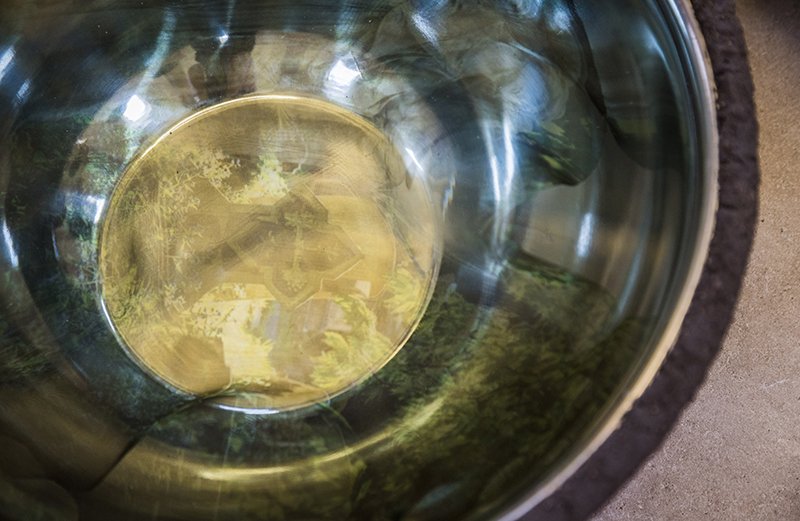
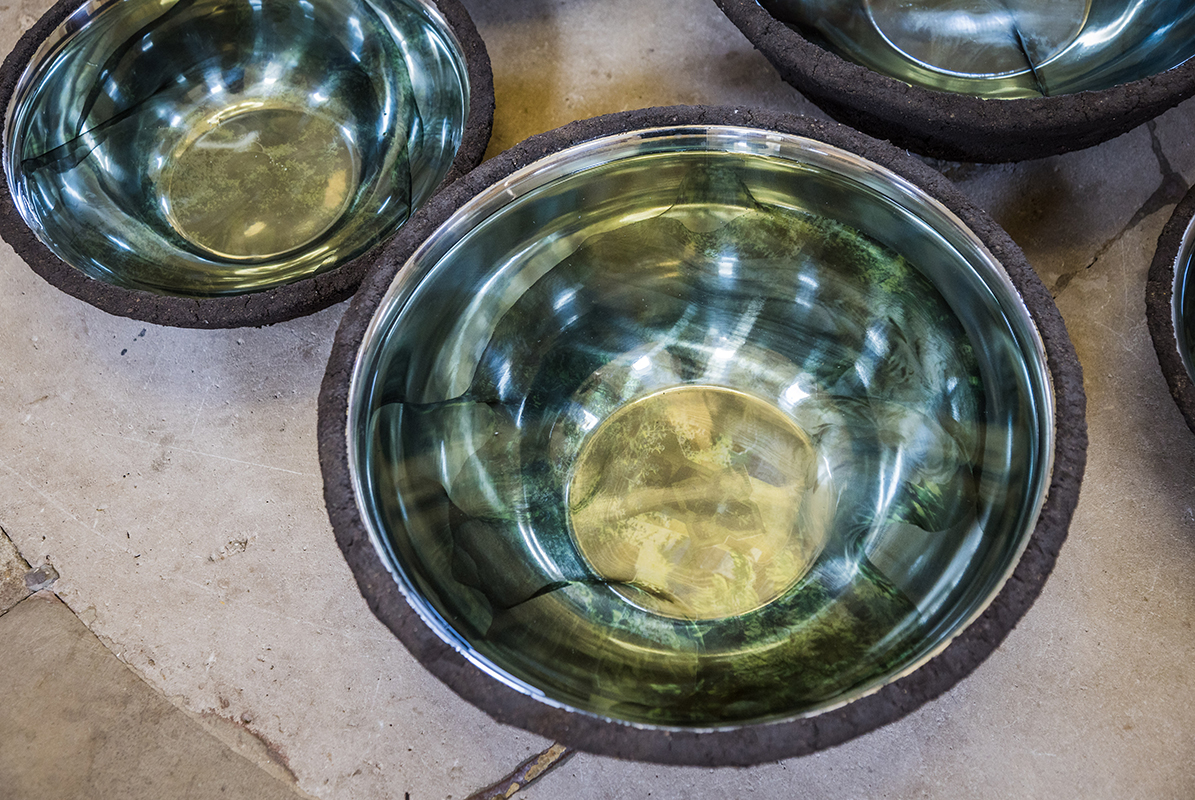
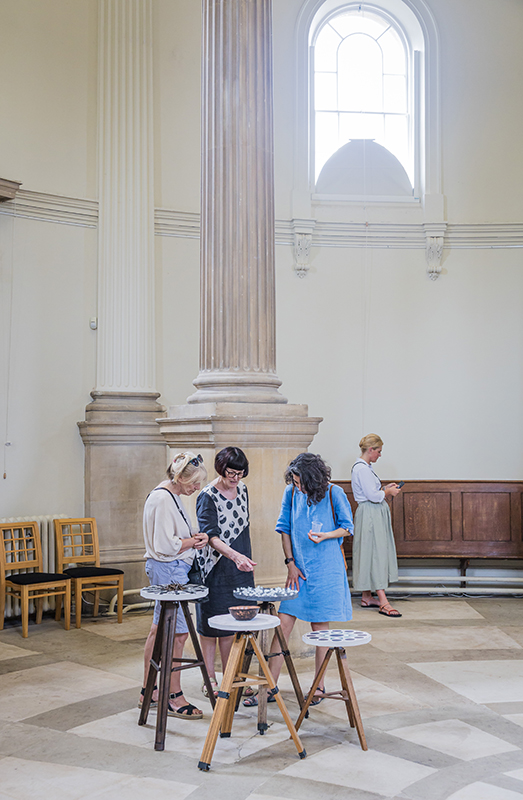
Instruments of the Anemoi are a set of dodecagon tablets cast in Snowcrete, a non-magnetic cement, as used in buildings at a magnetic observatory. Suggestive of the pedestals that support various instruments used in monitoring the Earths’ magnetic field they also respond to an ancient anemoscope “table of the winds” carved in marble around eighteen hundred years ago with the names of the classical winds, both in Greek and in Latin inscribed on each of its twelve sides.
In classical antiquity, geographic orientation usually referred to landmarks or astral phenomena to determine direction. The winds also became associated with direction, and named in accordance with their qualities such as hot and humid or cold and dry. In Greek mythology Astraeus, the god of dusk, and Eos, the goddess of dawn, gave birth to many sons of the twilight including the Anemoi, the gods of the winds who were each ascribed a cardinal direction.
Intimate knowledge of the way the world behaves built up over generations is being lost as we become reliant on technology whose processes we do not understand or are at risk from hostile forces or powerful natural forces.
These sculptures, shown on repurposed theodolite or telescope tripods, are envisaged as speculative objects reflecting on methods and tools of natural navigation such as magnetism, the winds and stars.
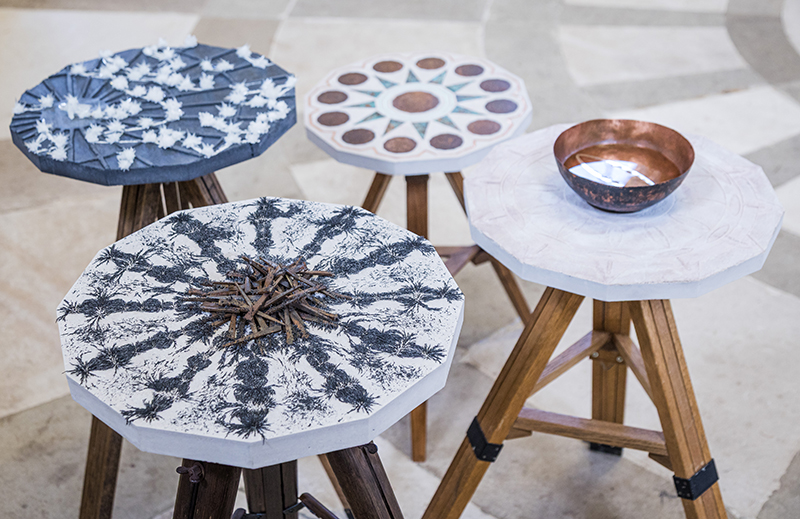
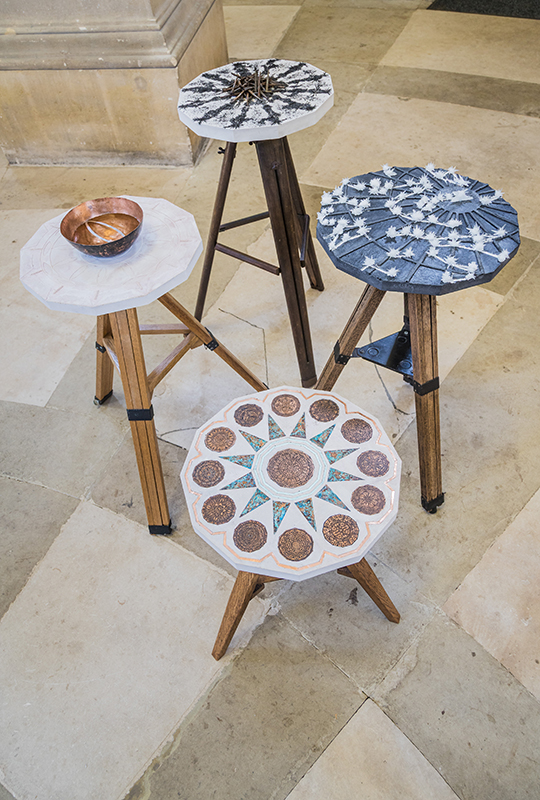
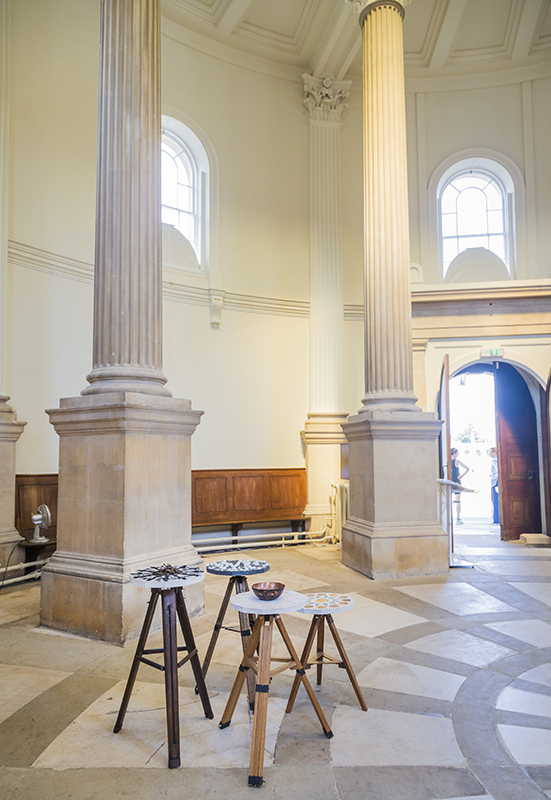
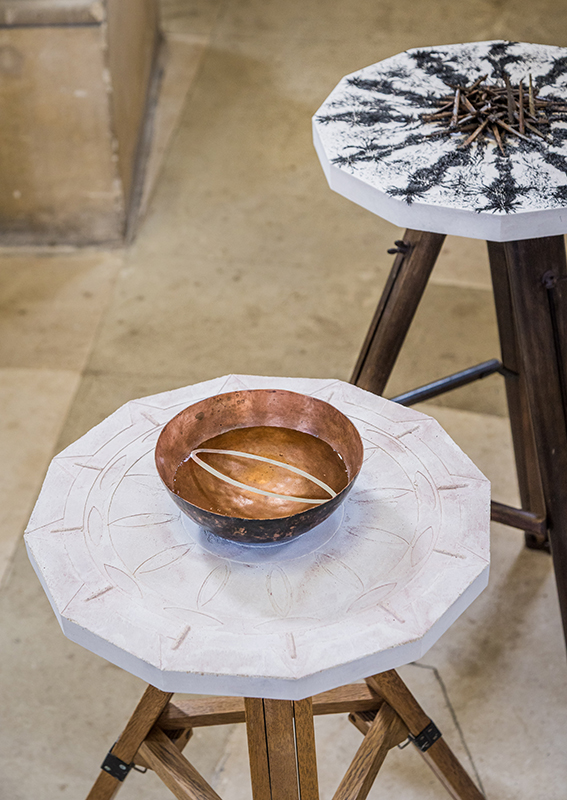
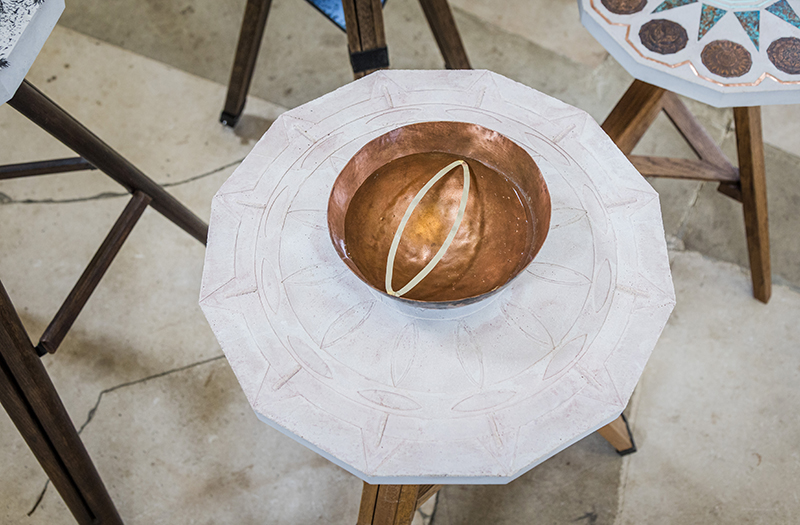
A ‘silver fish’ floating in a hand beaten copper bowl echoes the oval shaped compass needle illustrated in Breve Compendio de la Sphera de la arte Navegar (Brief Compendium of the Sphere and the Art of Navigation) by Martin Cortes (1551). Wafer thin fish shaped iron leaves were used by 11th century Chinese geomancers for feng shui and navigation. These early precursors to the modern compass were known as the ‘south-pointing fish’ and made by heating the iron until red-hot and cooling it while aligned to Earth’s magnetic field.
Instruments of the Anemoi (i) (south pointer), 2023, Snowcrete, copper, water, silver leaf, tripod, 38 x 38 x 70 cm

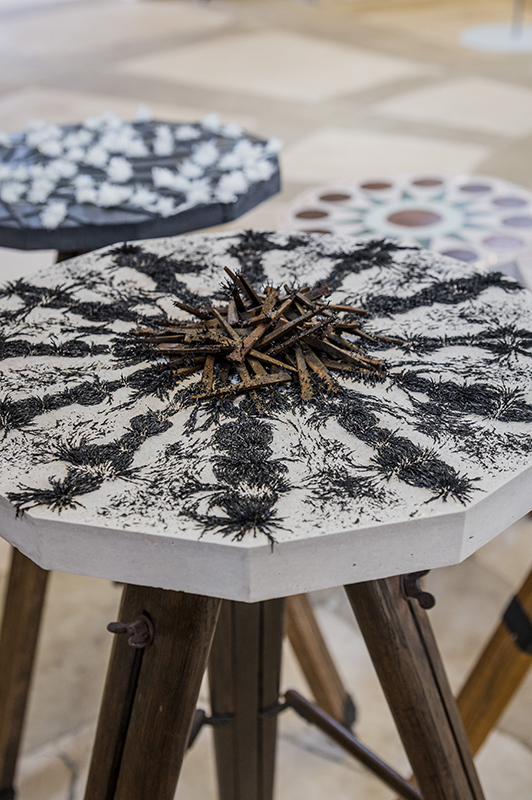
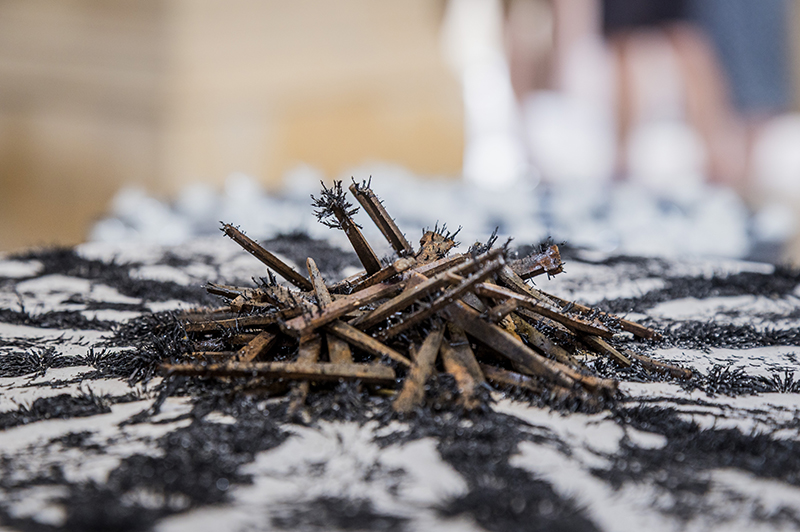
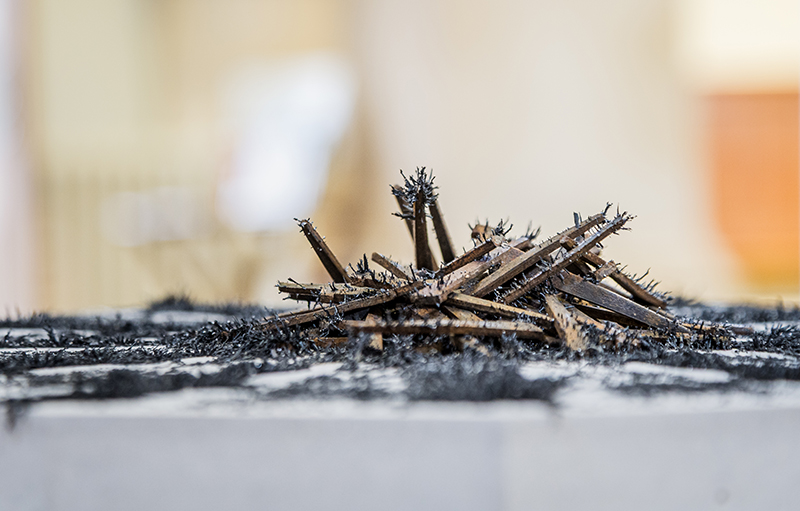
Iron nails and filings reveal an embedded magnetic field and hark back to the legend of the discovery of lodestone by Magnes the shepherd, who noticed the nails in his shoes and the iron ferrule of his staff were attracted to the rock beneath his feet. This story is recounted in Pliny’s Natural History (published after his death in the AD 79 eruption of Vesuvius, when, ever curious, he had gone to investigate the strange cloud rising). Pliny marvels at the powers of the magnet, exclaiming; ‘For what, in fact, is there endowed with more marvellous properties than this?’; ‘What is there in existence more inert than a piece of rigid stone? And yet, behold! Nature has endowed stone with both sense and hands!’
The legend of Magnes is not impossible, if an electrical storm had taken place on Mount Ida and the naturally occurring magnetic magnetite was struck by lightning, it would be permanently magnetised into lodestone and would therefore attract the nails of Magnes’s shoes.
Instruments of the Anemoi (ii) (magnes), 2023, Snowcrete, magnets, iron filings, nails, tripod, 38 x 38 x 79 cm
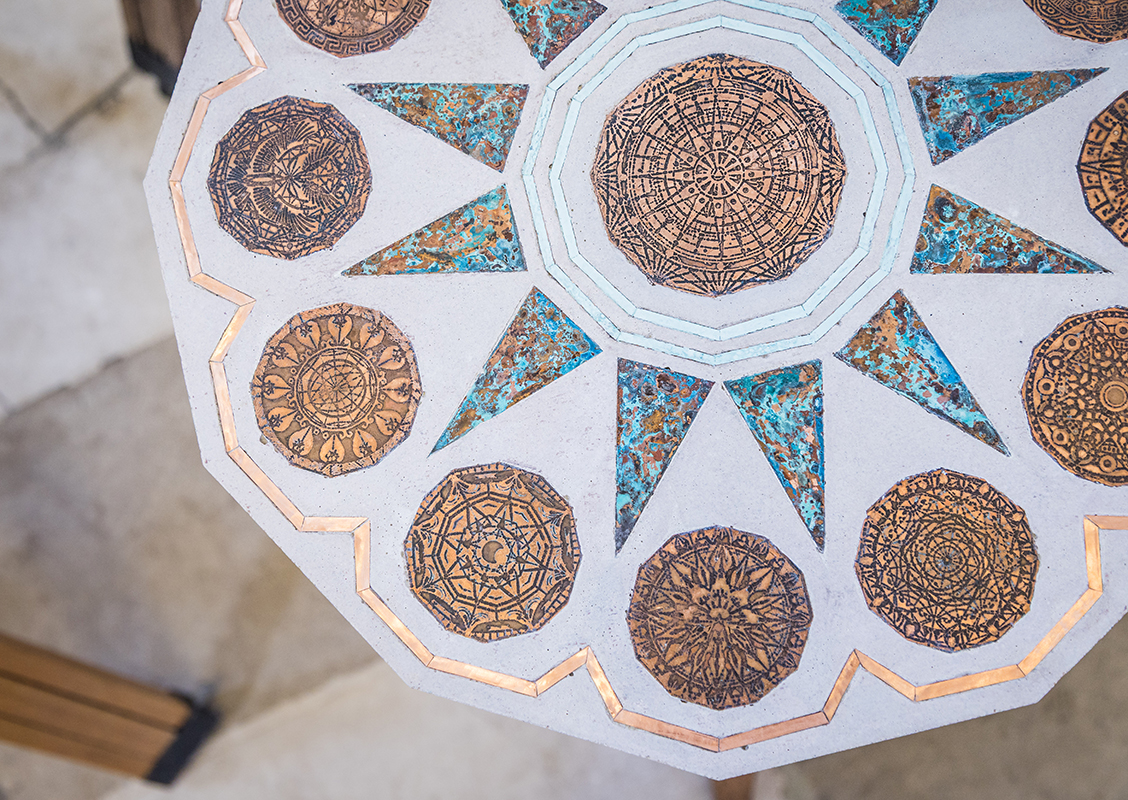
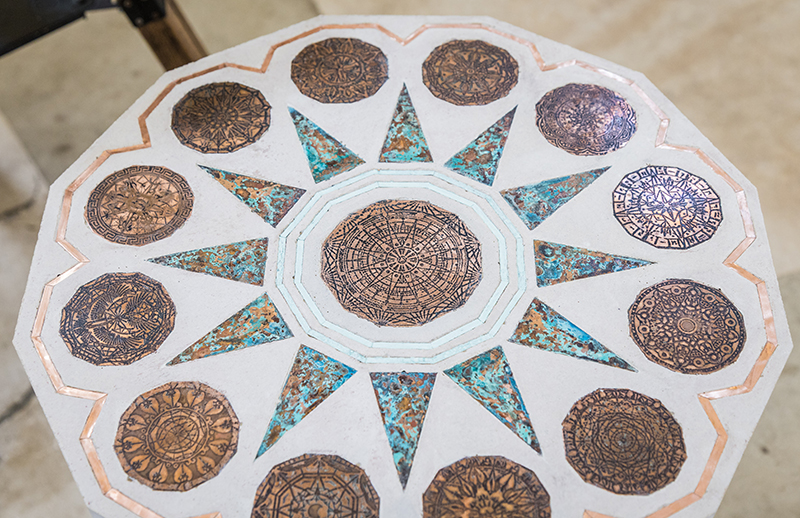
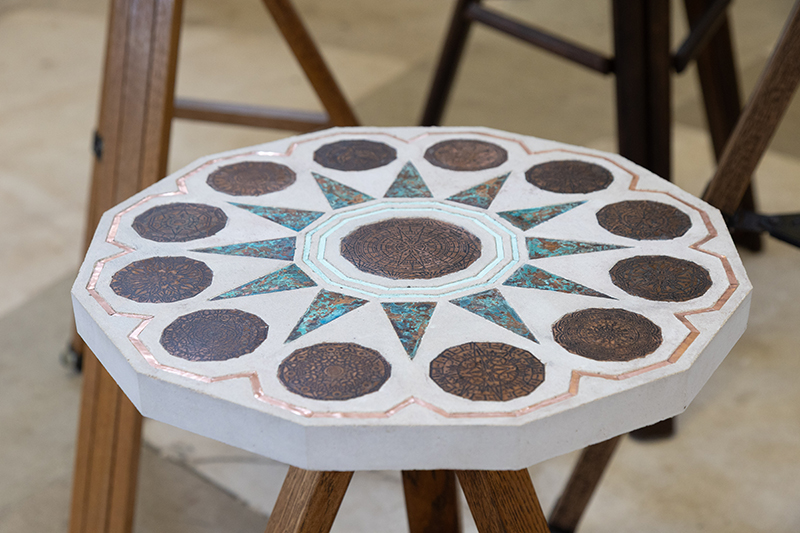
Etched copper pieces set in a wind rose arrangement allude to the ancient classification of the winds which developed over centuries with varying numbers of wind directions charted. The outlined divisions of the wind chart looked like a flower of many petals and became known as the rose of the winds. The contemporary compass design has its origin in human aspirations and efforts to explain and contain natural forces through geometric abstraction.
Instruments of the Anemoi (iii) (rose), 2025, Snowcrete, etched and patinated copper, tripod, 38 x 38 x 56 cm
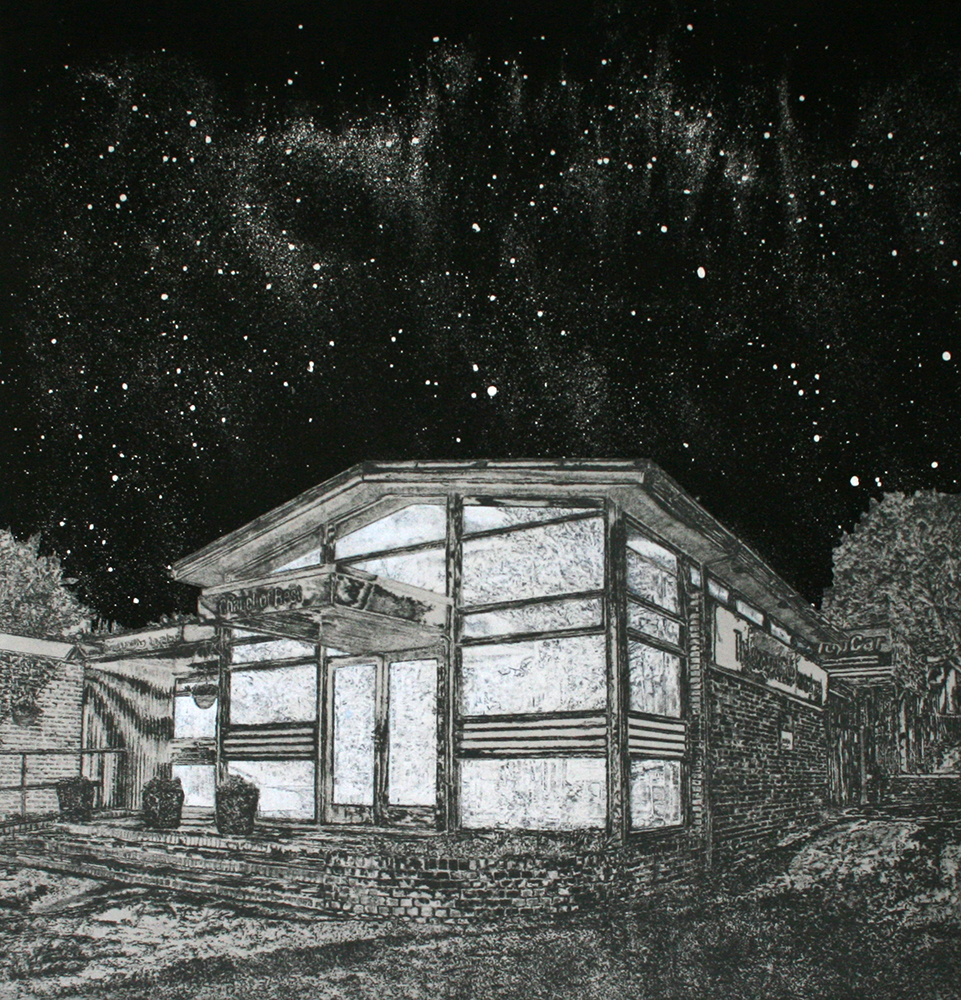
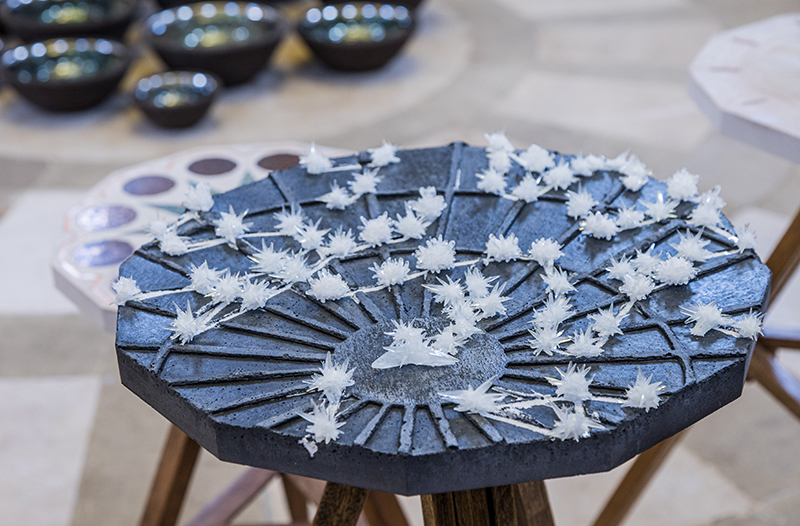
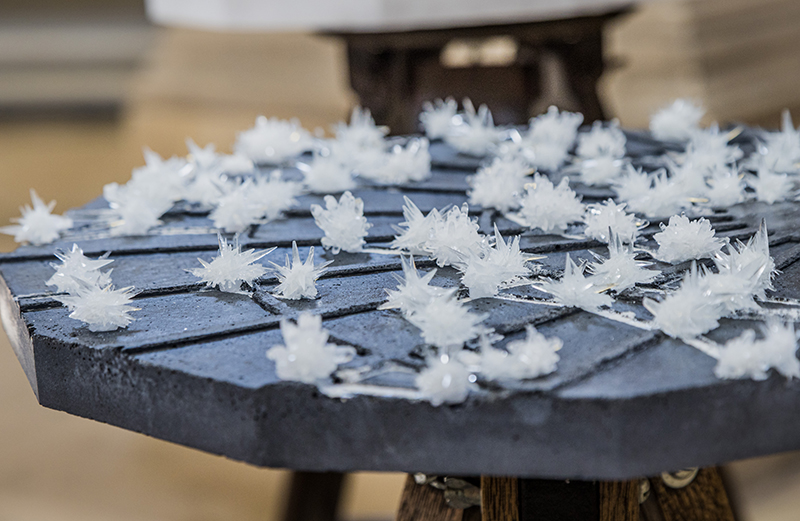
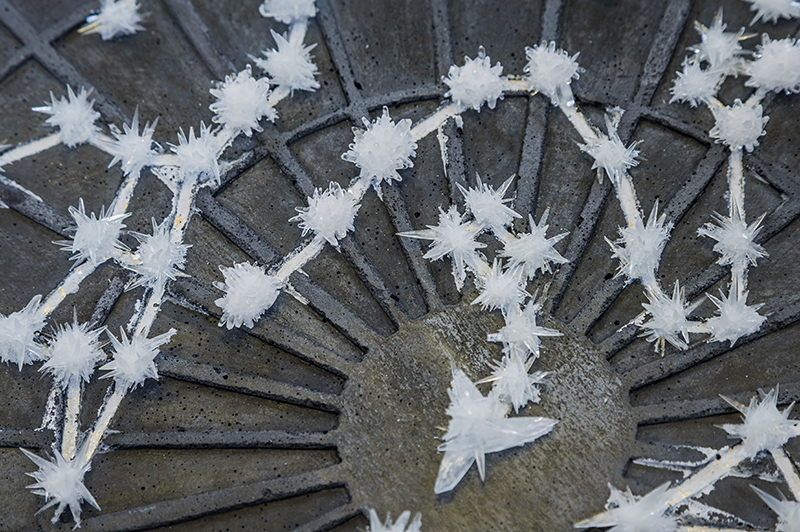
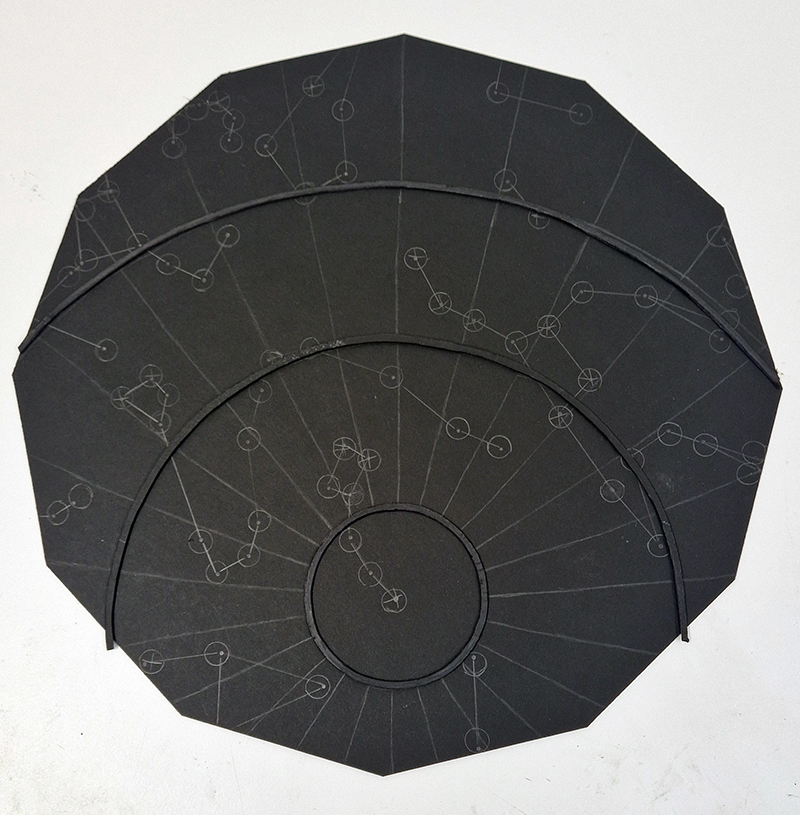
Celestial navigation is referenced via the instrument studded with crystals that map the constellations around the North Pole. Polaris has not always been the Pole Star as Earth’s axis of rotation wobbles over the course of about 26,000 years and many other stars take their turn at pointing to geographic North. When Anaxagoras was born there was no true North Star, Kochab was the closest naked-eye star to the celestial north and used as the primary directional reference. Before that it was Thuban, who took the position between two and four thousand years ago. Thuban, in constellation of Draco is centred in this sculpture, with Polaris, the current North Star in the constellation of Ursa Minor, shown above Earth’s rotational axis.
Instruments of the Anemoi (iv) (thuban), 2026, Snowcrete, pigment, crystals, tripod, 38cm x 38 x 75cm
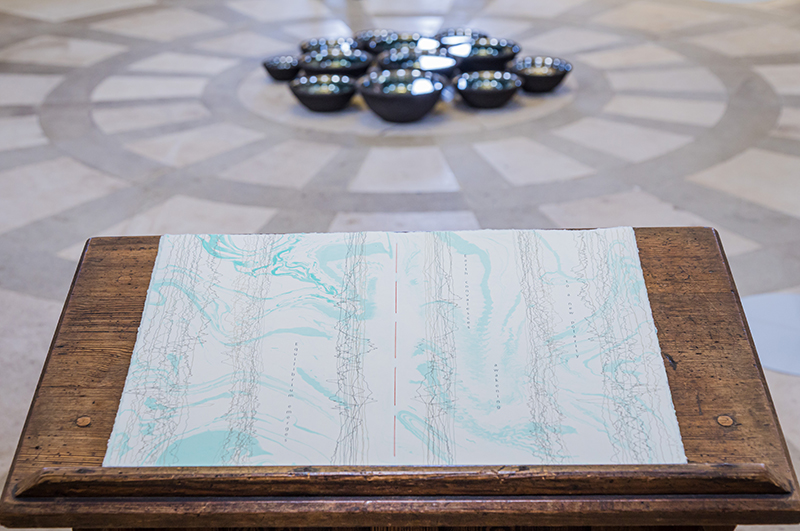
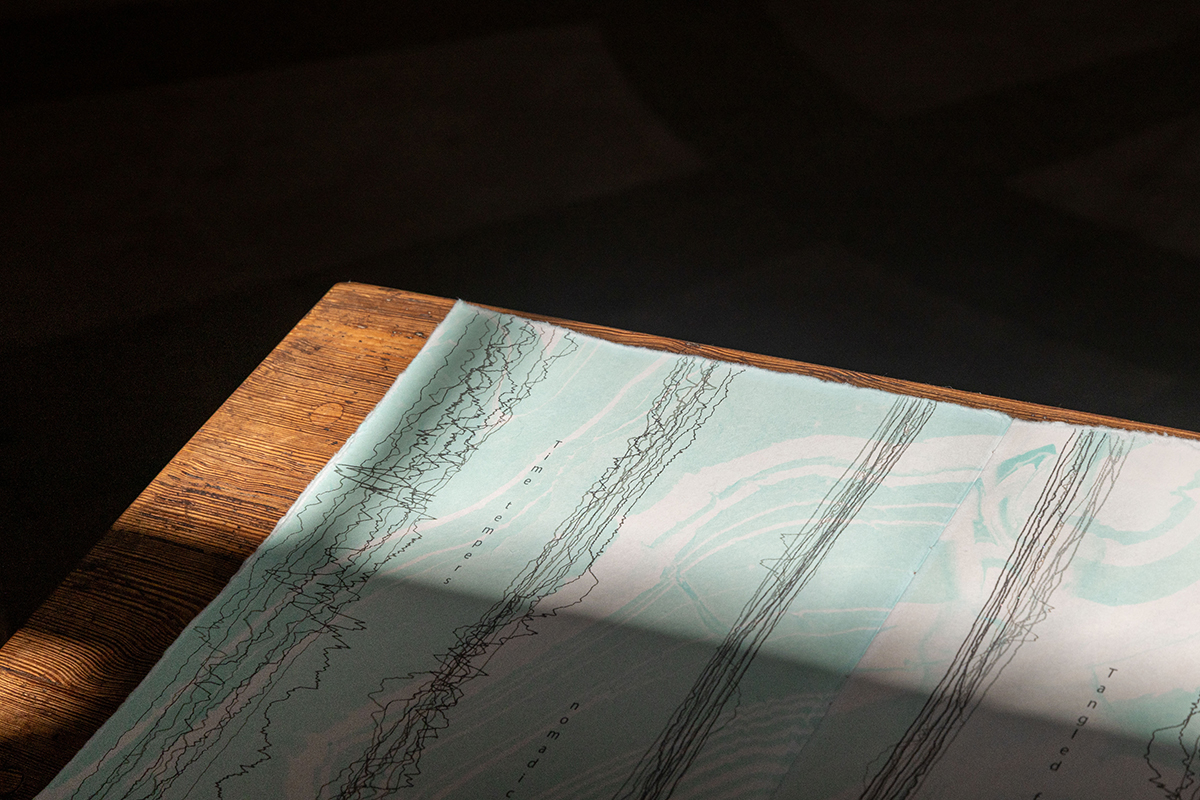
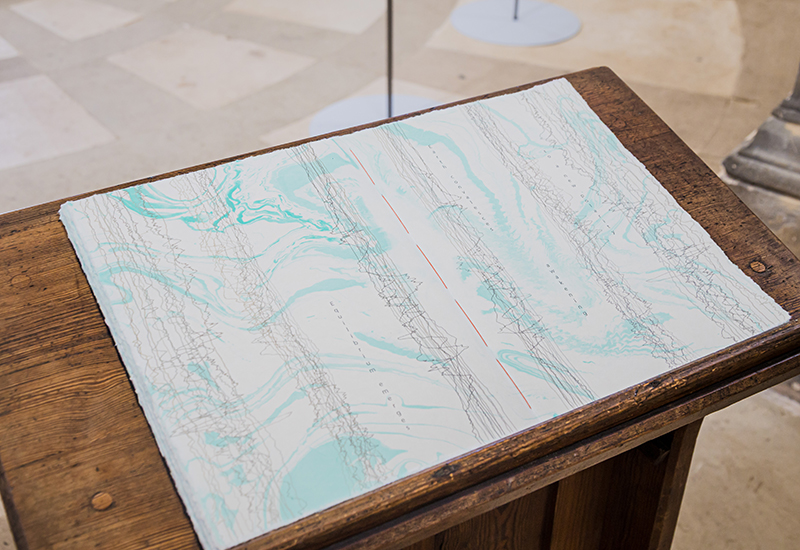
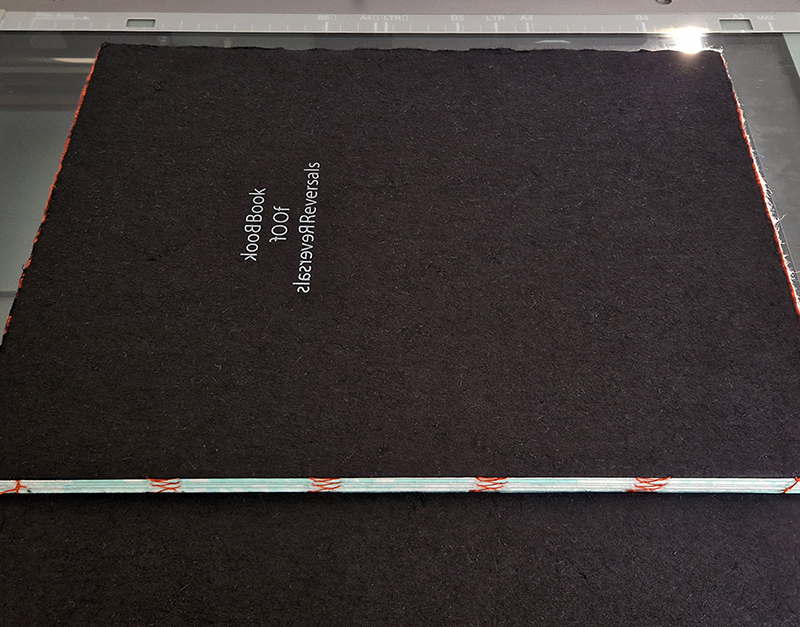
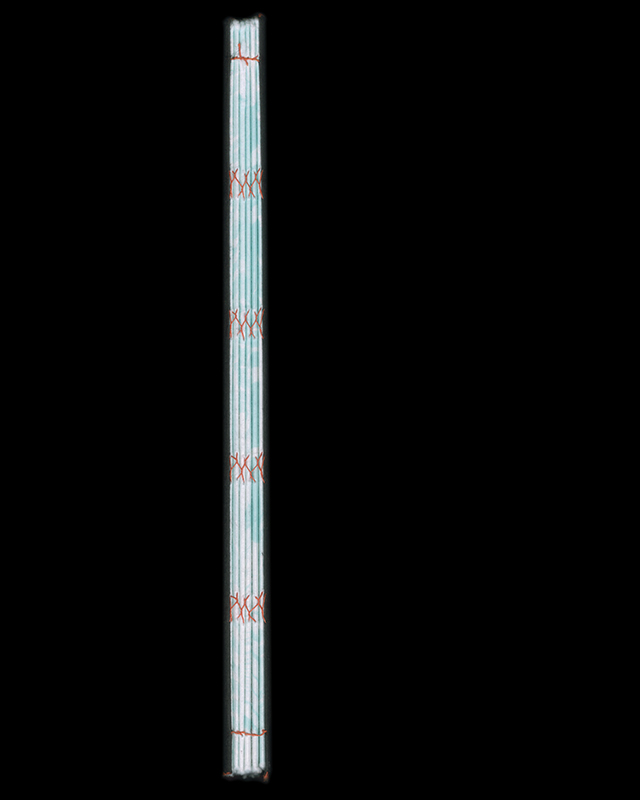
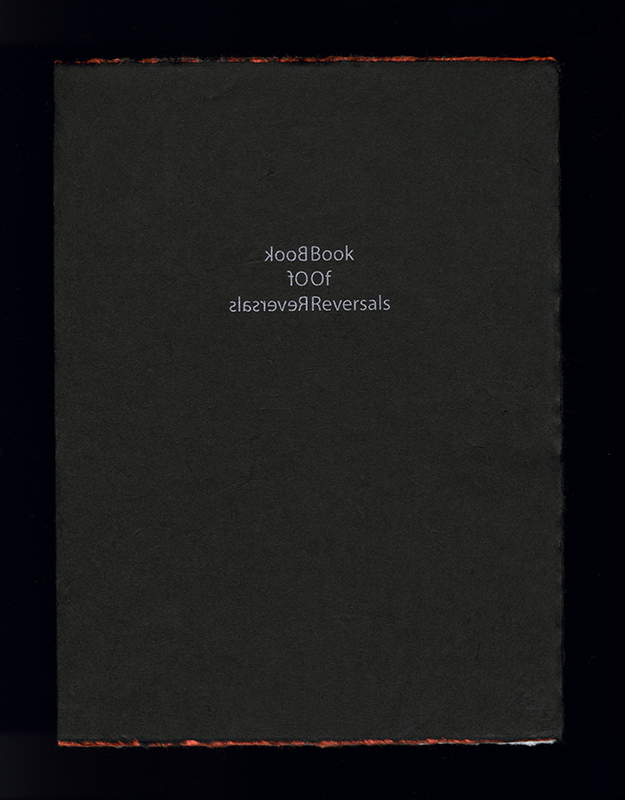
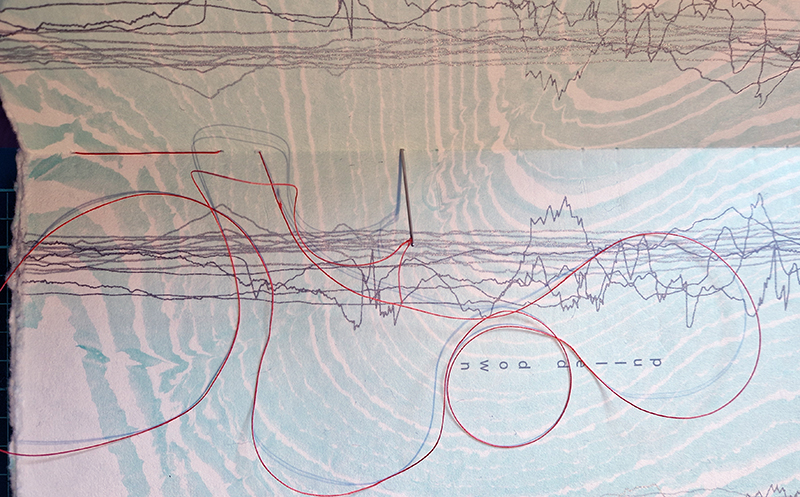
The Book of Reversals offers a poetic overview of the formation of planet Earth and its turbulent fluid core that generates an unpredictable but protective magnetic field prone to sudden changes in polarity.
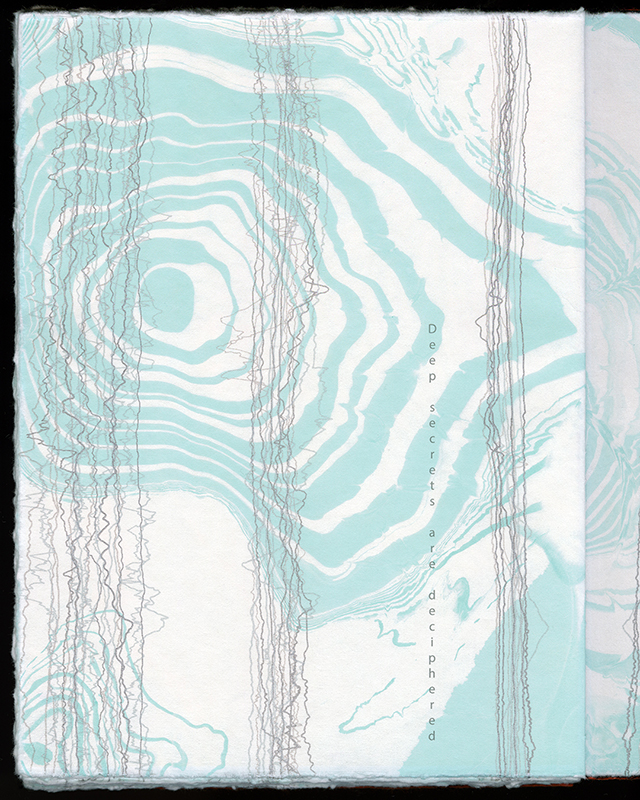
Readings from magnetometers stationed around the British Isles, which record variations in the Earth’s magnetic field, are screen printed in vertical stripes, either side of the book’s spine emulating the geological phenomena of magnetic stripes found on the ocean floor. Magnetic stripes are symmetrical bands found at mid-ocean ridges, created as magma rises, cools, and forms new oceanic crust whose magnetic minerals align with Earth’s prevailing field. Hot buoyant material rises at mid-ocean ridges and cooler, denser rock sinks back into the mantle at subduction zones. Along convergent boundaries, the heavier oceanic plate is forced beneath another plate, forming trenches, generating earthquakes, tsunamis, volcanic eruptions, and mountain belts. Through volcanism, weathering, and the recycling of carbon dioxide and minerals, plate tectonics regulates climate, nourishes the oceans, creates diverse habitats, and shapes the environmental pressures that drive evolution, making it essential to the long-term habitability of our planet.
The text, printed vertically, in line with the spreading ocean floor, evokes the complex dynamics of the planetary body Earth, its geological history of reversals, periods of weakened magnetic field, the ceaseless interactions between the inner core, the outer core, the mantle and the crust and how its secrets may be discovered.
It is only through the shock waves of trauma that we can begin to understand what goes on deep inside the Earth. Seismic waves generated by earthquakes can infer the composition of Earth’s hidden interior, revealing through their speed, refraction, and shadow zones the boundaries between solid and liquid layers.
Magnetic patterns preserved on the ocean floor hold a record of past activity over hundreds of millions of years but cannot predict future reversals.
Book of Reversals, 2026, Sumaganshi, screen print, digital text on Japanese paper, 24.5 x 32.5 x 1.5 cm
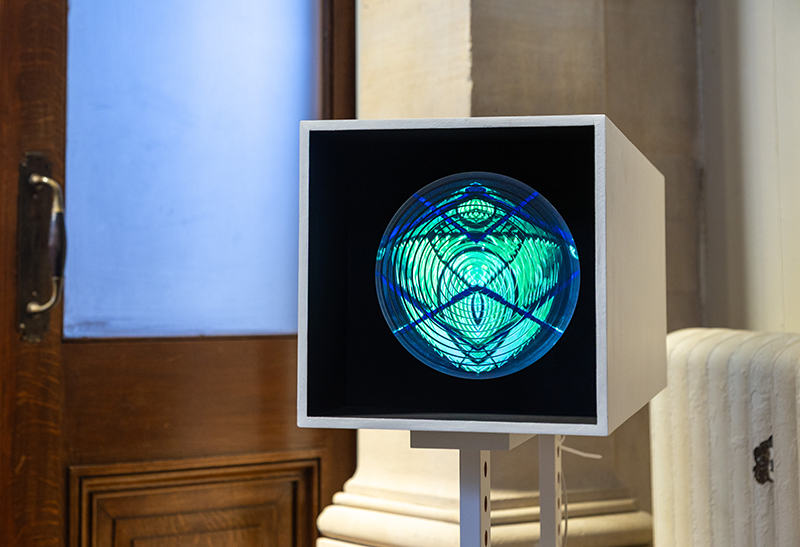
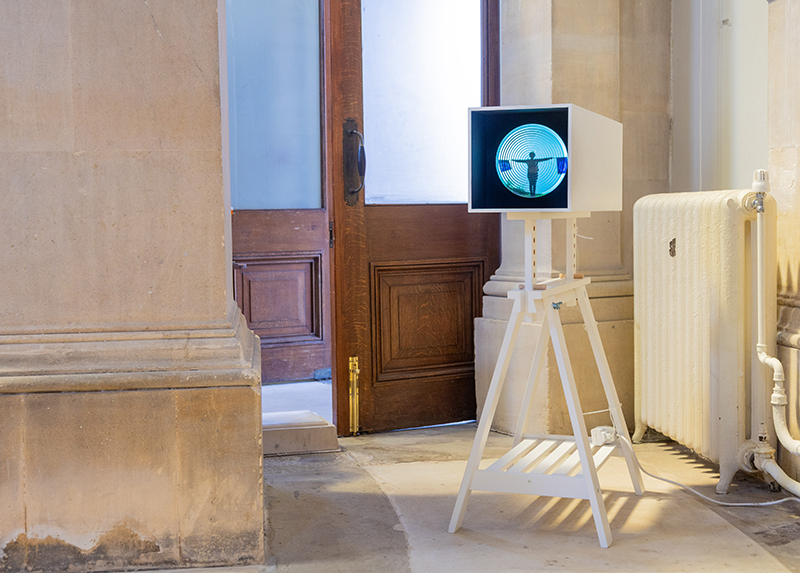
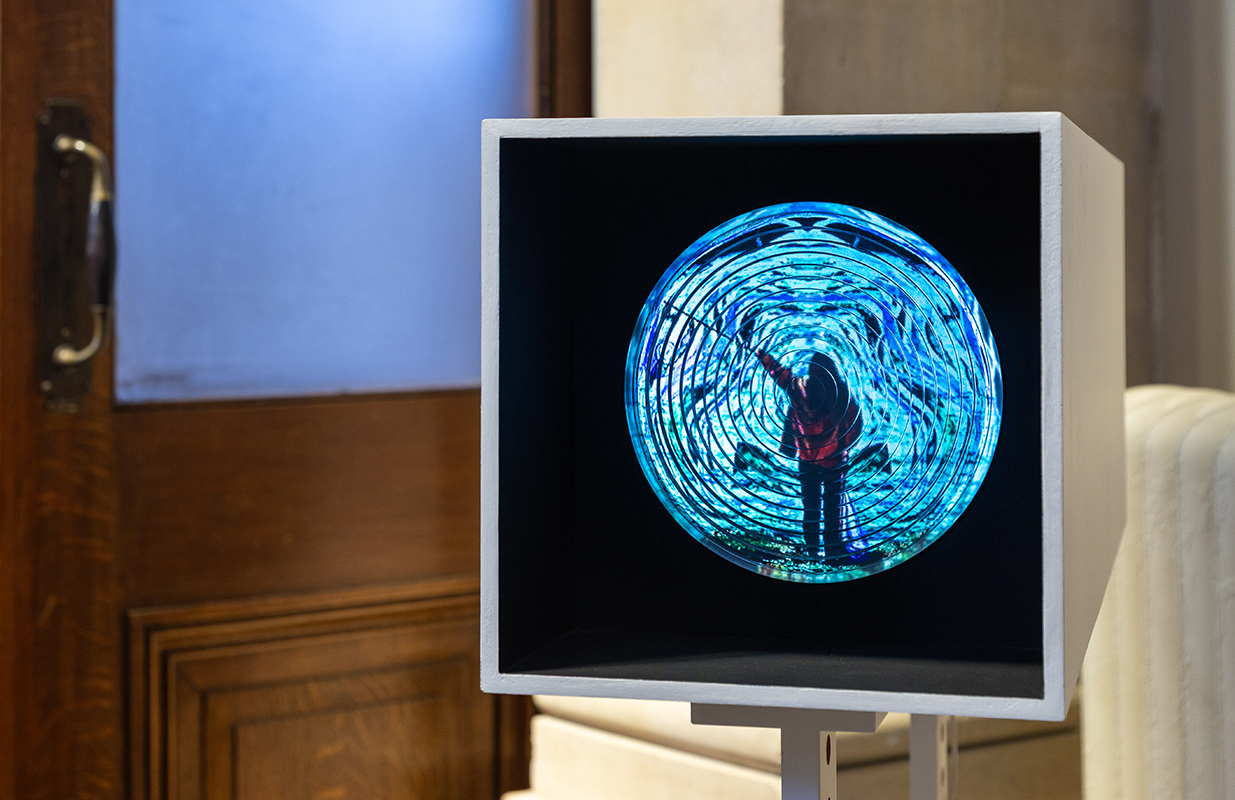
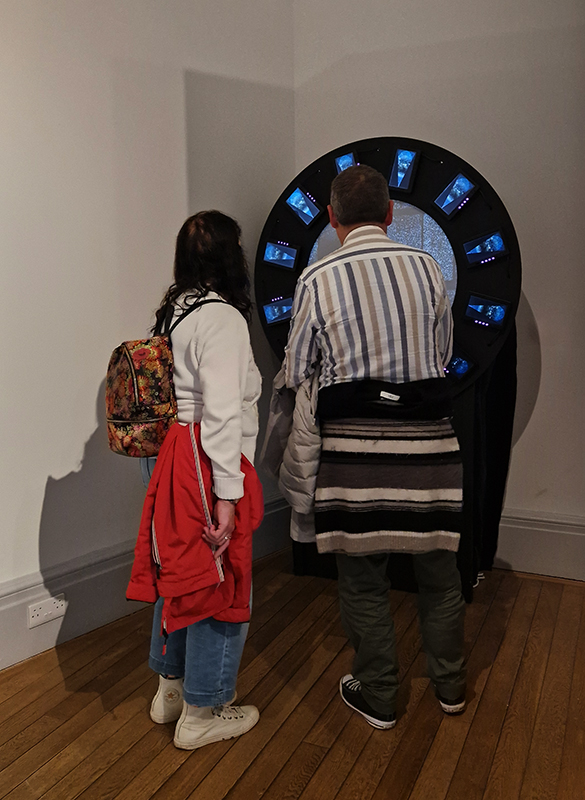
The video sculpture At a Distance reflects on the mysterious twinning of electrons in quantum entanglement where particles link in a way that they instantly affect each other, even over vast distances, and which Einstein famously called ‘spooky action at a distance’. This bond appears to defy the laws of classical physics and, generally, our understanding of reality.
There was a time when the ‘action at a distance’ of a magnet was just as mysterious and intriguing. Greek philosopher Thales of Miletus, who lived a century before Anaxagorus, believed the magnet must have a soul because ‘like living things it moves the iron’.
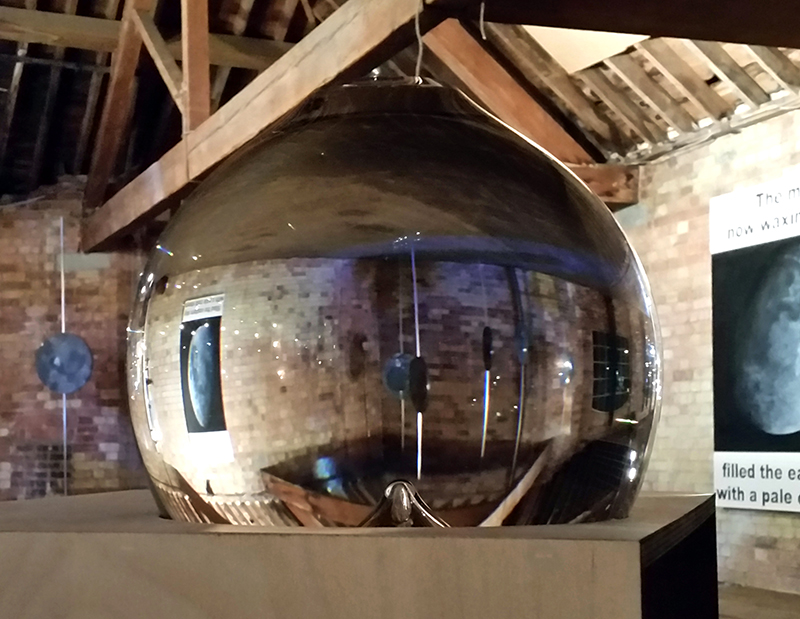
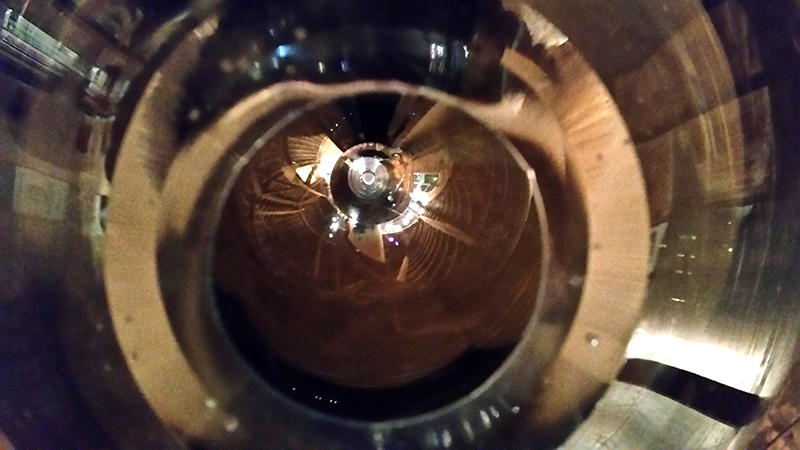
The video footage was filmed at the Lizard Peninsula, Cornwall, on 29th March 2019 (the first date the UK was supposed to leave the EU). Solitary figures using semaphore flags sign ‘We Are One’ out across the ocean. As in entanglement theory, where two paired electrons mirror each other at a distance, it was hoped the message would be echoed back and we remain entangled. The video is back projected onto a Fresnel lens, the type found in lighthouses to increase luminosity of the lamps beam, another form of messaging over distance. The Lizard Lighthouse has a stunning Fresnel lens which was filmed gaining brilliance as dusk descended on this significant day. The flags used were printed using hand painted dye sublimation inks applied via a heat press. This process transfers ink from a paper matrix onto a substrate textile where the image passes momentarily across space in a dematerialized state as vapour, before being reformed as its mirror opposite.
At a Distance, 2019, Video 4.50m, Fresnel lens, projector, wood, trestle, flags, 28 x 80 x 120 cm
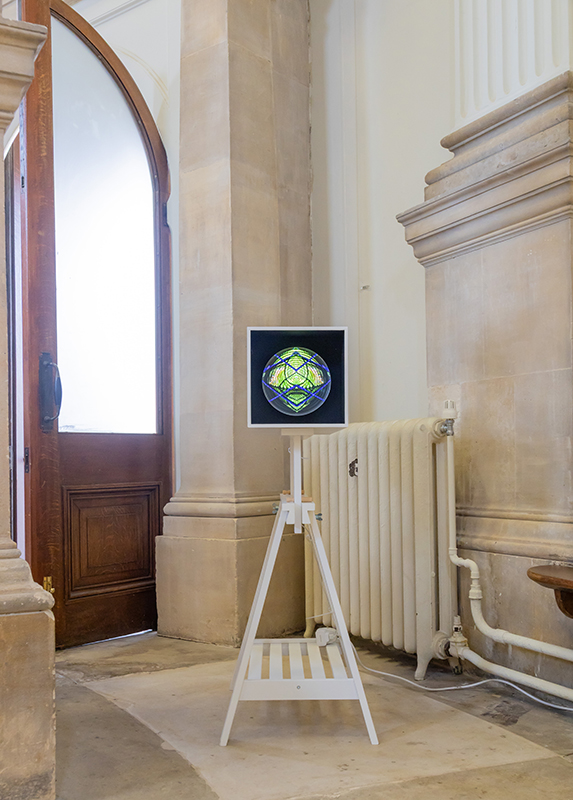
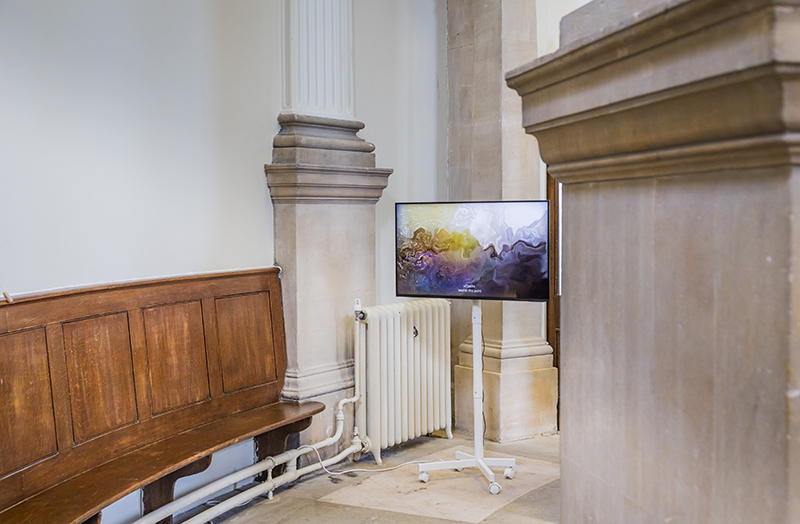
The video Contingent Horizons was made during the pandemic, when physical horizons were constrained, yet information received digitally about the world beyond was overwhelming and often hard to decipher. It considers how space is perceived as a plotted dimension on a map, as abstract space calculated mathematically, but perhaps not something we can visualise, and as imagined space which knows no boundaries.
The true horizon is usually hidden. We each have a personal distance to the horizon based on our specific height of eye from the ground and the local elevation from sea level at which we stand, the average distance is 3 miles. It is a distance we can never reach as it always recedes as we approach.
This film interweaves four journeys, walking at dawn, taking the most direct route to cardinal points measured at three miles due North, East, South and West from home. The dialogue is drawn from popular online lectures, combined with poetic insights spanning navigation, properties of space, consciousness and ancient understandings of the cosmos. Hierarchies of dimensions and perception are considered from three speculative perspectives that seek to discover, imagine or theorize what lies beyond the limits of knowledge.
Constantly shifting landscapes begin to lose form and clarity as the three mile boundary approaches, structures break down into contour lines and foliations. The decomposition of recognisable shapes into an amorphous haze reflects the difficulty we have, not only in trying to see what lies beyond our confines, but interpreting the world around us. The video speculates on gaining understanding through sensitivity to natural phenomena and entering a meditative state of mind to enter higher dimensions of consciousness.
We are told that at the smallest scales there are no objects, just relationships. When we zoom in, the world we know dissolves into encounters of opposing forces and it may seem possible that we could pass through what appears to be solid matter.
Contingent Horizons, 2021, Video 8.15m
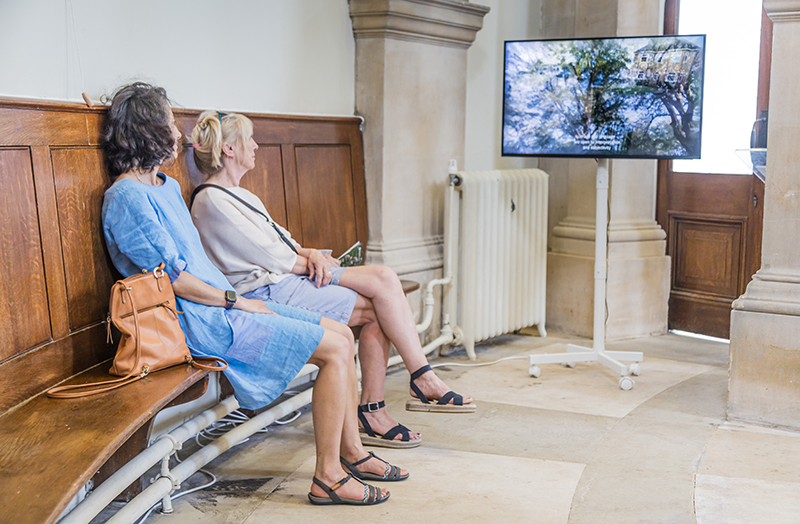
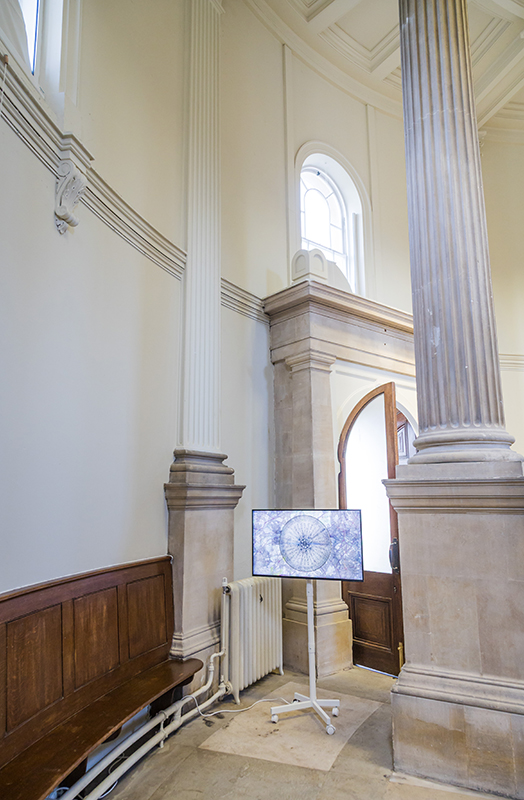
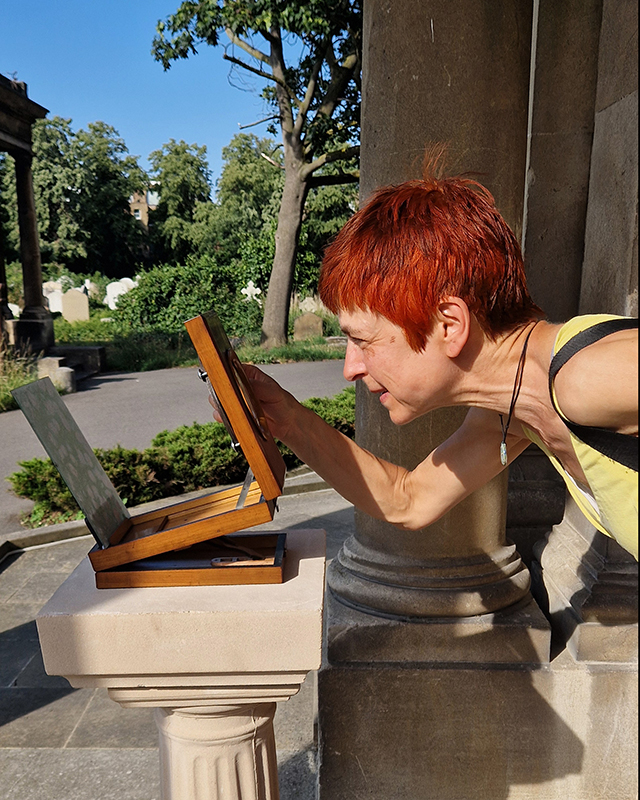
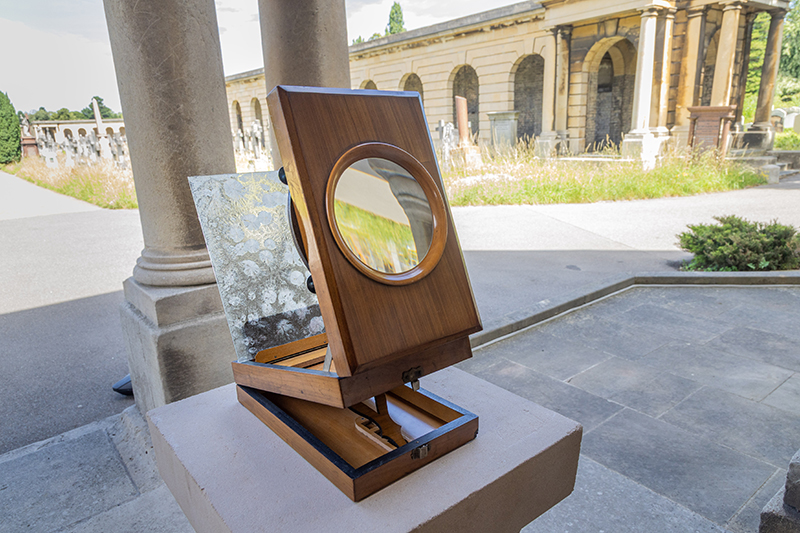
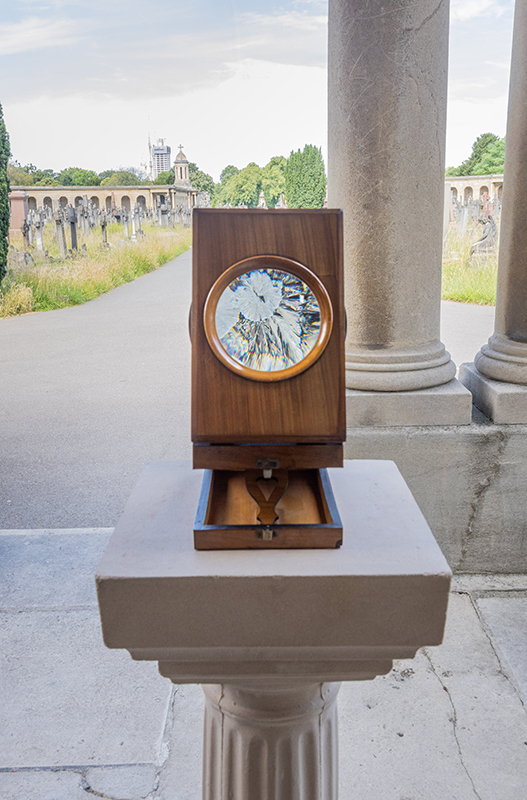
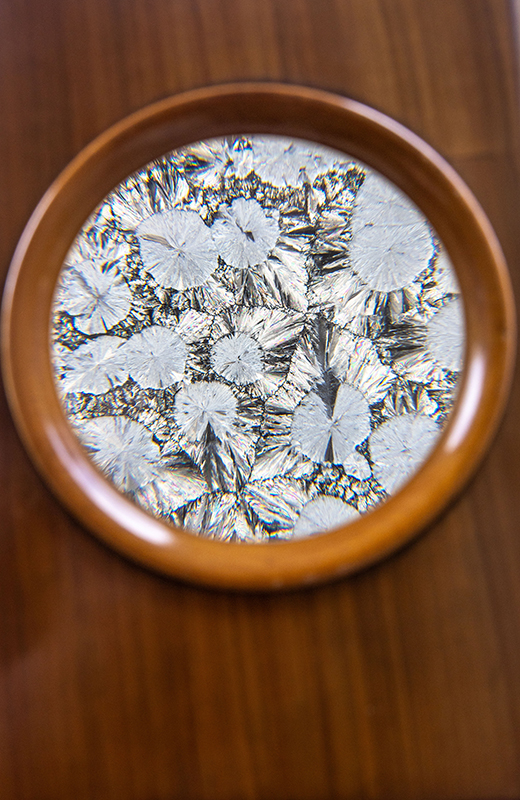
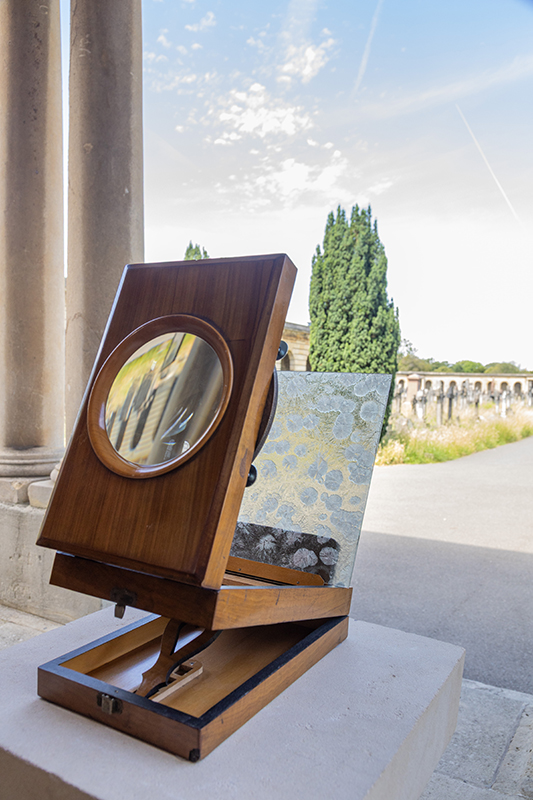
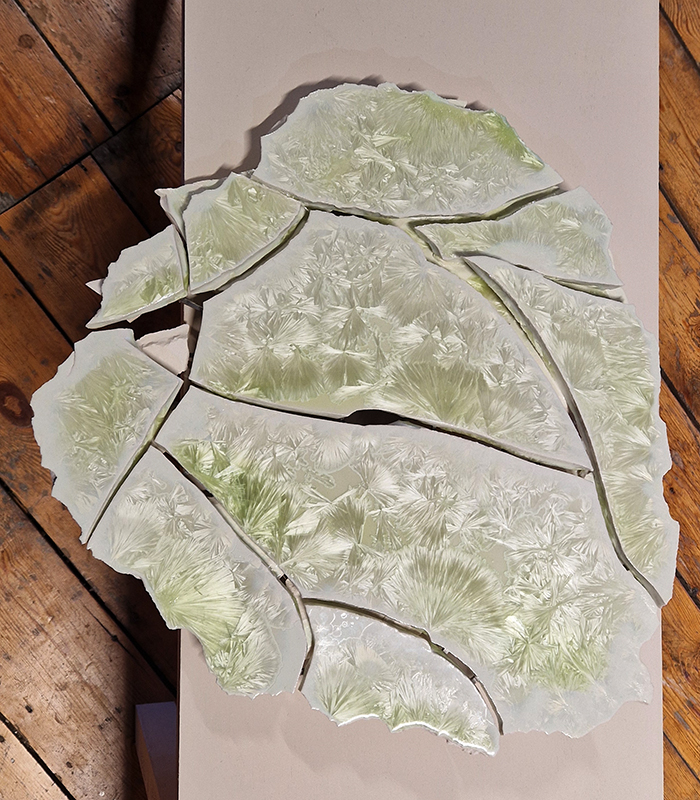
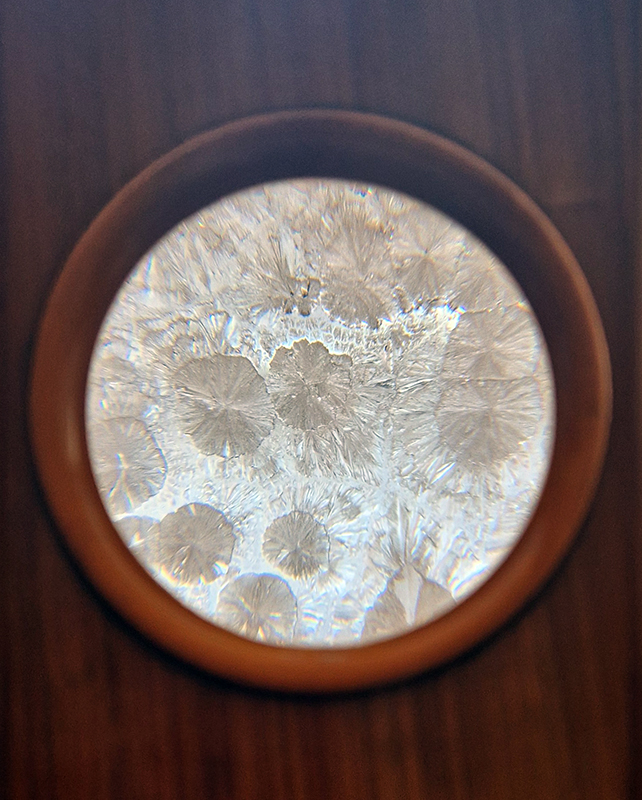
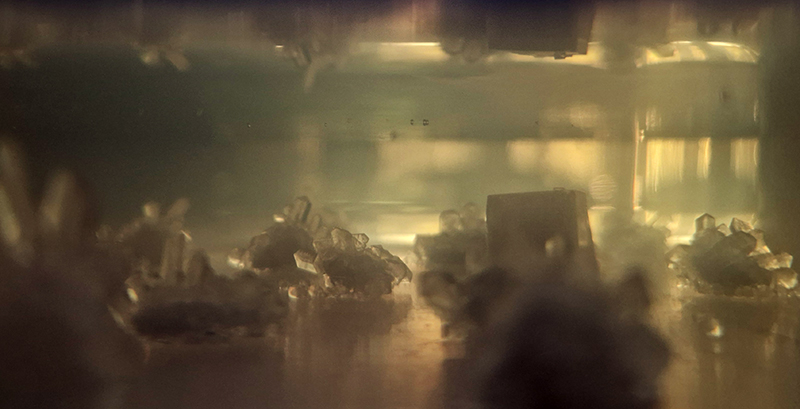
Viewing crystals under a polarizing filter reveals a hidden world of vibrant colours and intricate structures through a process called birefringence. When crystalline materials are placed between two crossed polarizers, they act as tiny prisms, splitting and twisting polarized light to produce kaleidoscope-like patterns. Many crystals have ordered internal atomic structures that split incoming polarized light into two rays, which travel at different speeds and are twisted at 90° to each other.
Crystal Kaleidoscope, 2026, Magnifying viewer, polarising filter, crystal growth on glass, 14 x 24 x 32 cm
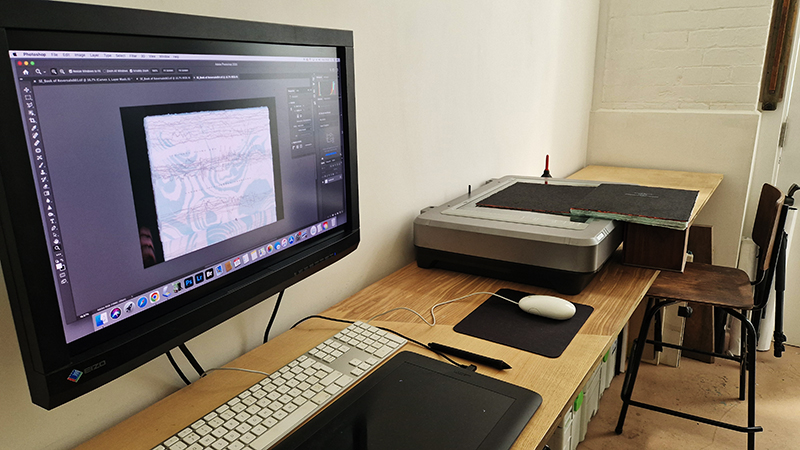
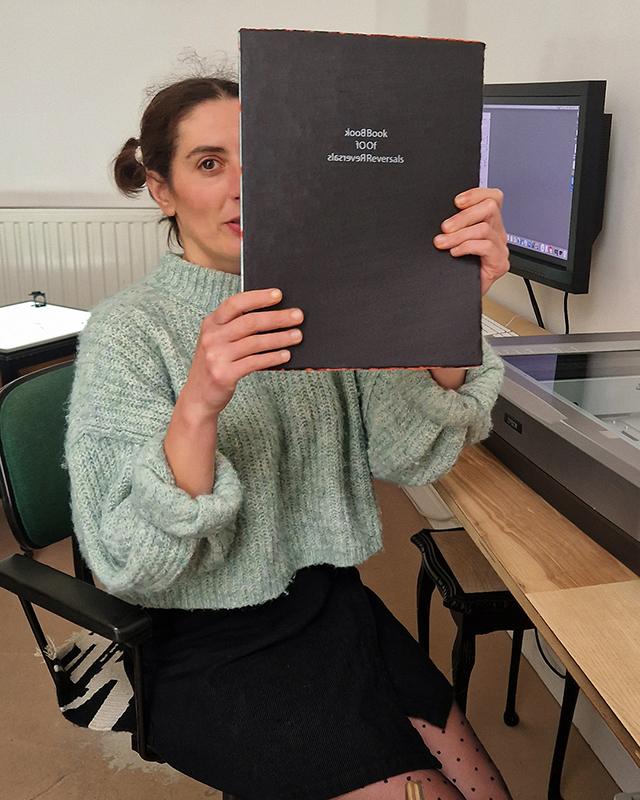
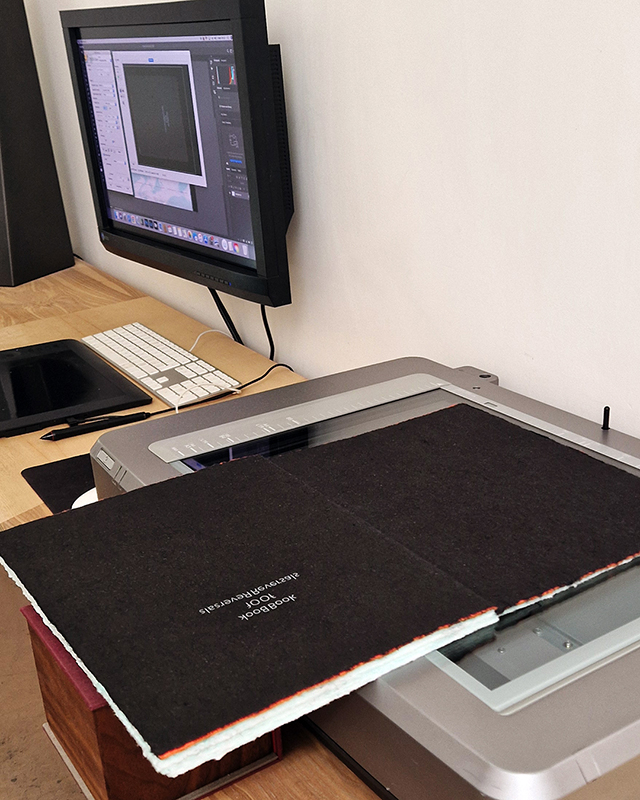
I spent a happy HIRESidency day at Equivalentbehaviour photographic studio scanning my Book of Reversals with a view to creating a digital copy with added narration. Katrina Stamatopoulos, who runs the space with Wojciech Kawczyk, was very welcoming and generous with her time and I came away with high res images to edit into video form.

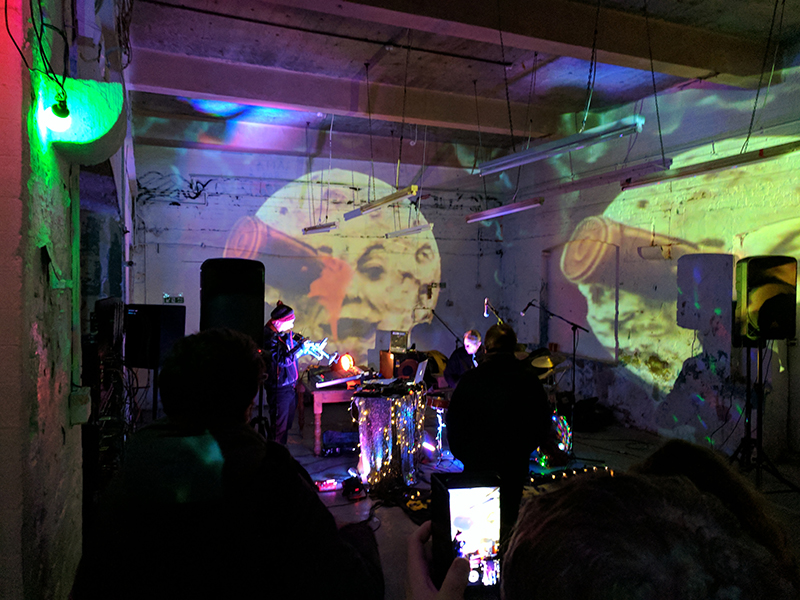
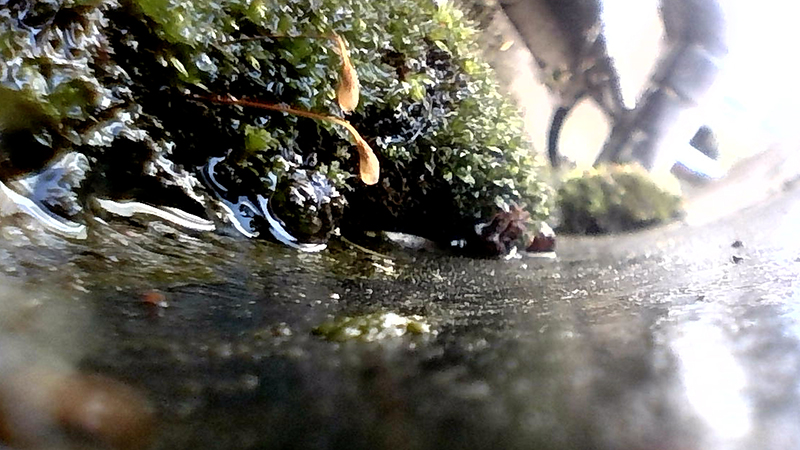
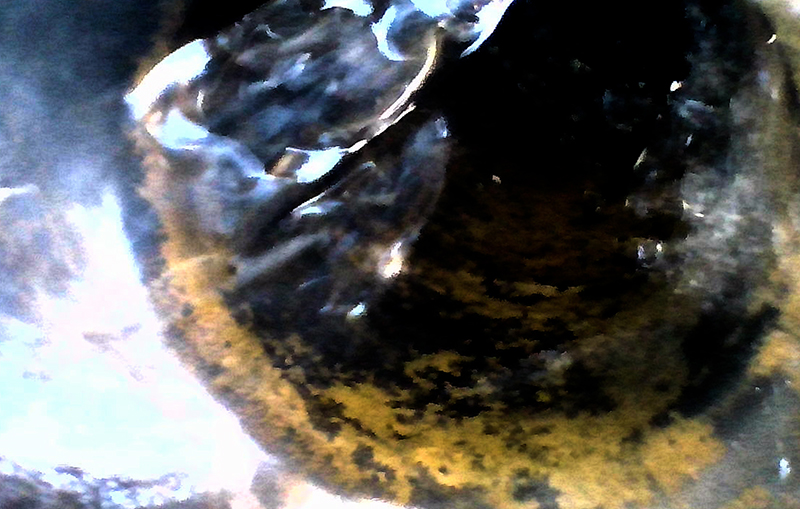
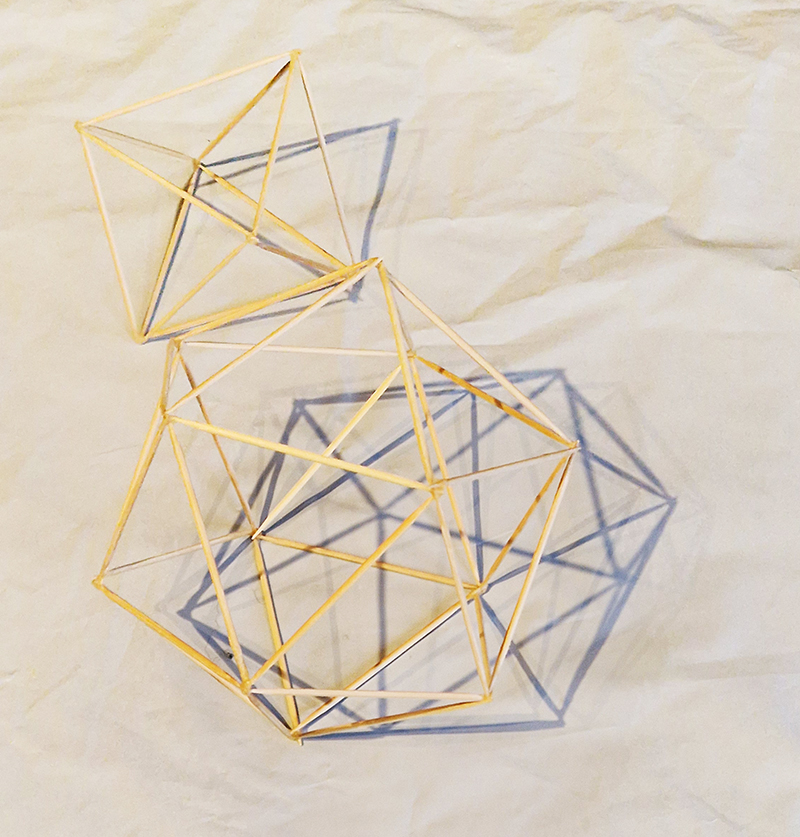
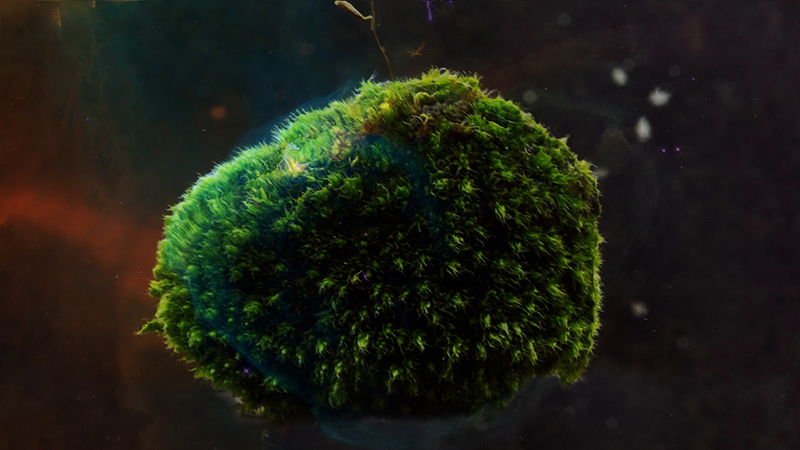
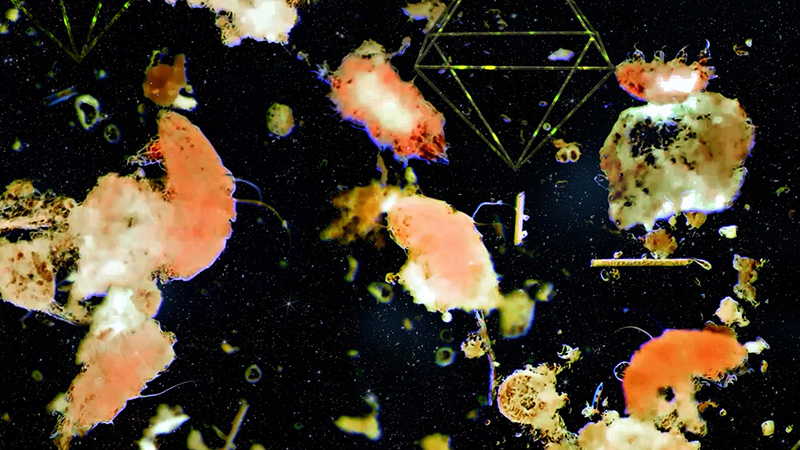
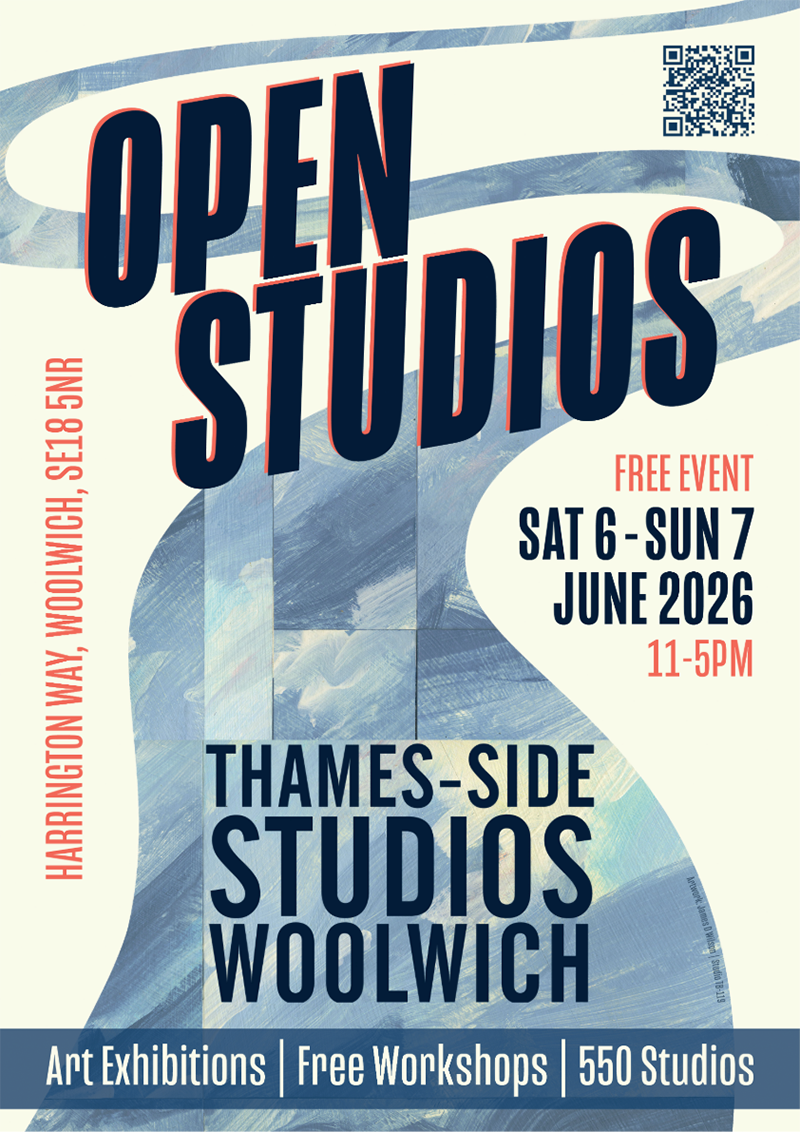
Always good to have visitors in to chat during Thames-side Studios open weekend. This year I installed my giant eBay bargain TV with the video Guttanaut showing. Alluding to Oscar Wilde’s familiar quote ‘We are all in the gutter but some of us are looking at the stars’, this video installation transports the viewer to exotic otherworlds inhabited by microscopic creatures found in a tuft of moss in the dank environs of house gutters. Icosahedron and octahedron shapes representing the elemental qualities of water and air appear as constructs for satellites or modes of exploration across this alternative cosmos. The gutter creatures were very popular, especially with children.


The summer solstice is the peak of the long days of natural light. Throughout our lives, we are exposed to light daily, the primary source being sunlight. To this natural light exposure is added an increasing exposure to artificial light. This light pollution may be detrimental to human health by disrupting the natural light/dark cycle but also by directly causing retinal damage.
A blog post by my optician on eye health and LED lighting draws attention to recent research by Prof. Glen Jeffrey from UCL, on the impact of LED’s on the retina, published in Nature one of the World’s most respected scientific journals.
The research highlights the positive benefits of the old fashioned ‘tungsten’ bulbs on vision and two recent peer-reviewed studies have raised concerns that repeated exposure to low doses of LED light may cause biological stress in the retina. One solution to mitigate any potential negative effects of LED’s is to replace LED lights with Tungsten or Halogen, or install a desk lamp with a tungsten bulb to run alongside the LED lights.
Research paper published in Nature by Glen Jeffrey, University College London
Peer-reviewed study on repeated LED exposure and retinal stress (ScienceDirect)
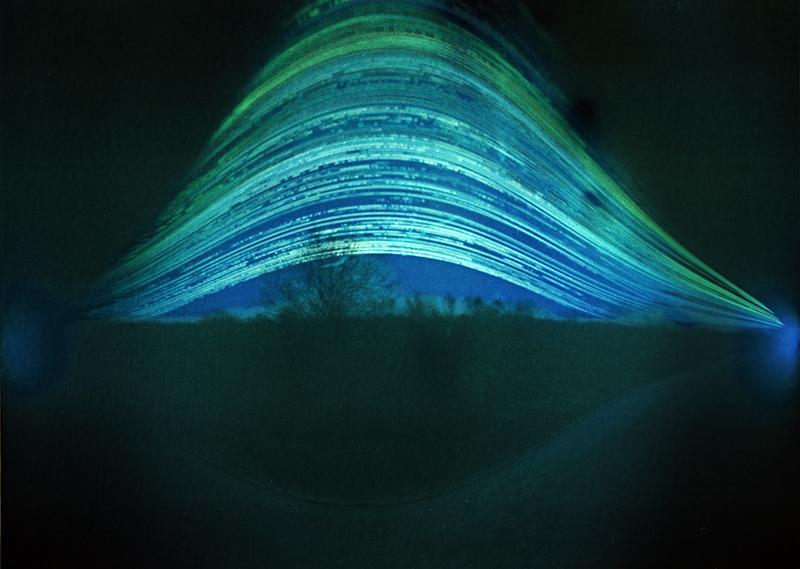
Full year solargraph
Gallery Visits
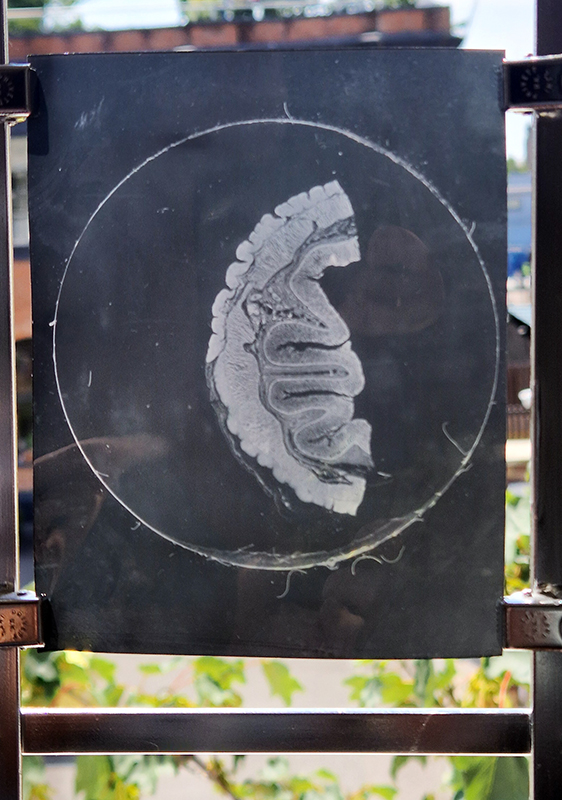
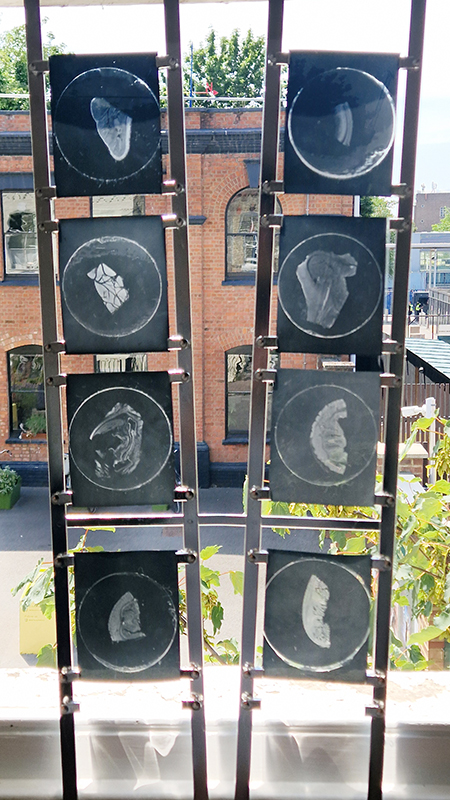
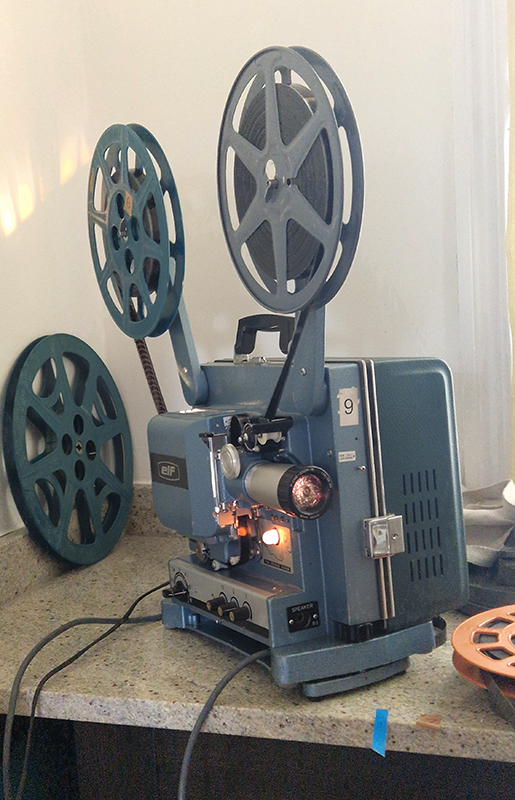
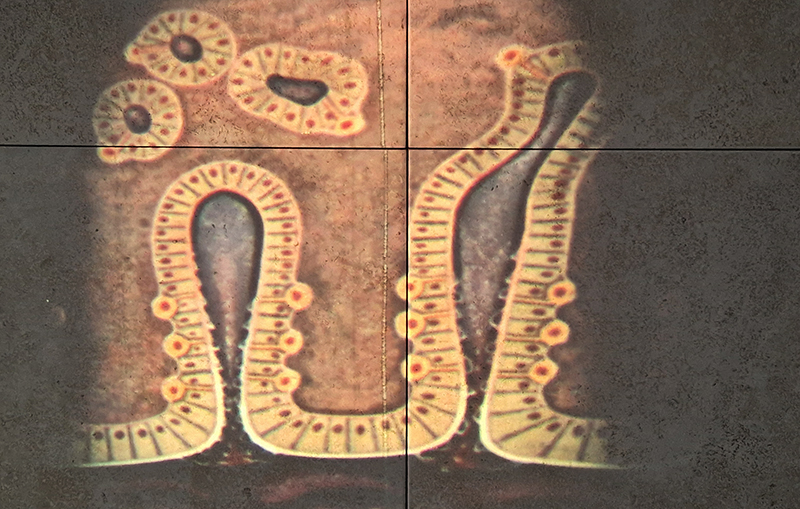
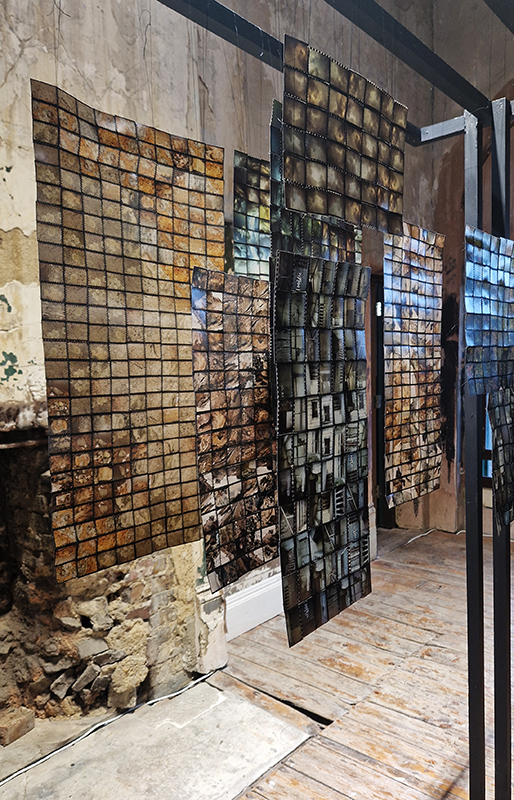
Katrina Stamatopoulos Dip and Dunk! at Happax Living Room stems from found sets of histological slides sourced on eBay, which have been reworked in the darkroom using analogue and experimental photographic processes. Through experimental hand-printing techniques, chemical manipulation, re-photographing and installation, Katrina approaches photography as a site of displacement, examining the medium’s abilities to translate and deceive.
The work looks at how images are made and interpreted amongst institutional systems of vision. In histopathology, diagnosis depends on trained visual literacy: the ability to recognise cellular structures and abnormalities through specialised observation. Photography, on the other hand, occurs in real time. It is not only understood as being images or objects, but is a way of seeing that mediates our relation to vision itself.
Working with reclaimed photographic materials, Dip and Dunk! traces the interconnected histories of medical imaging and photography, and considers how bodies and organisms are made visible through these image-making systems.
This exhibition was so beautifully presented.
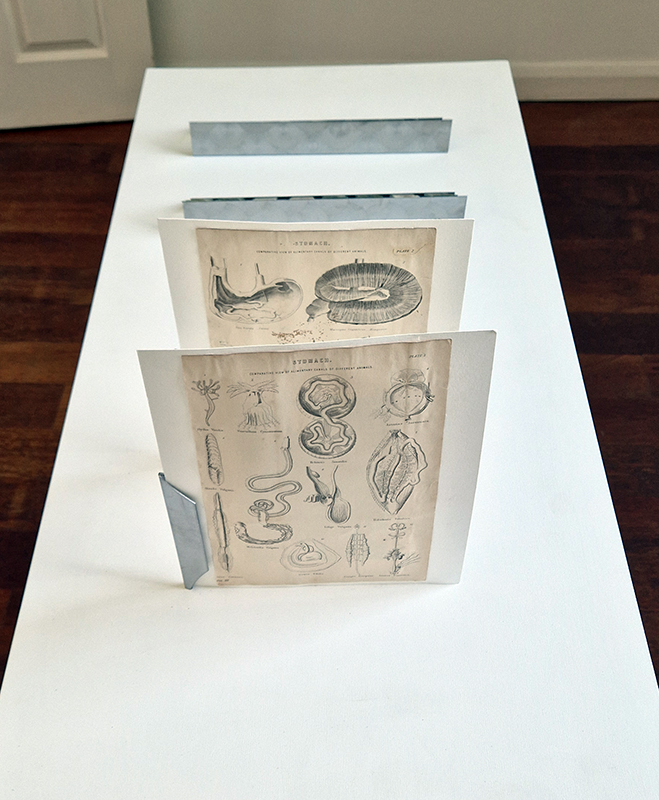
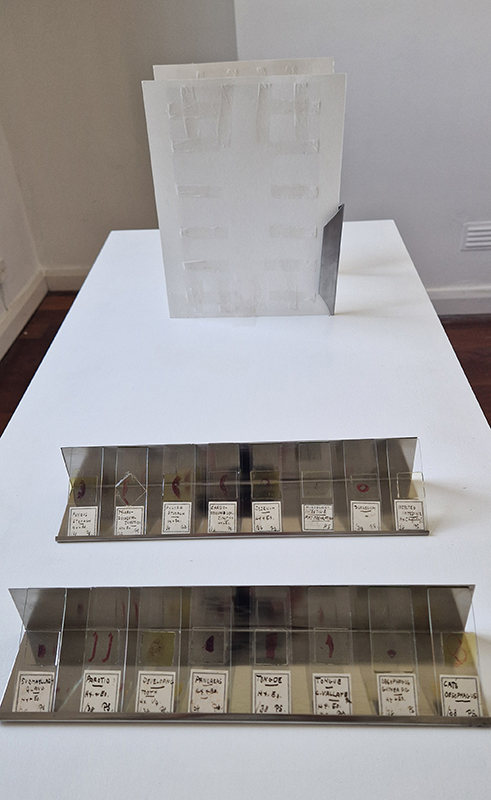
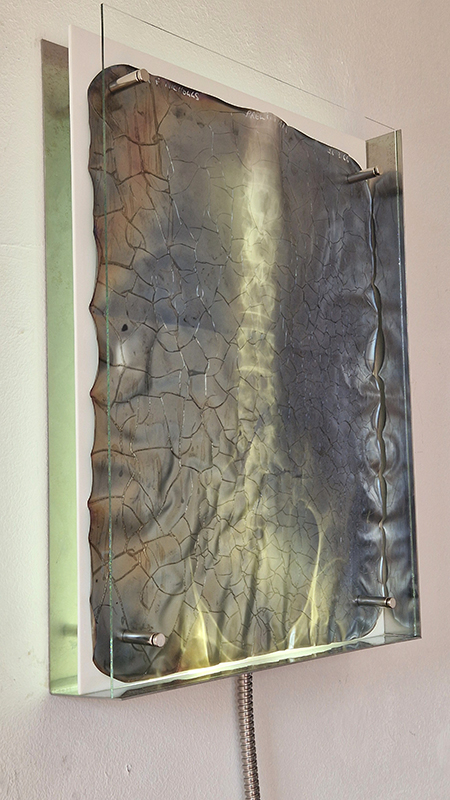
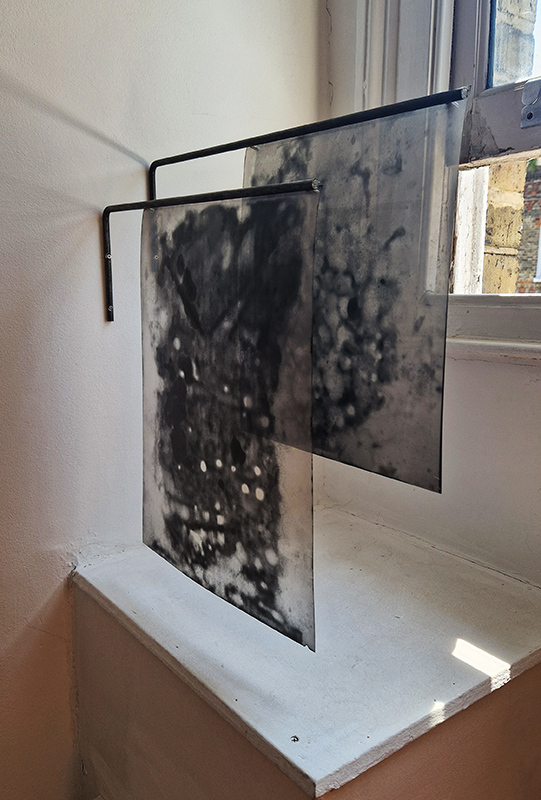
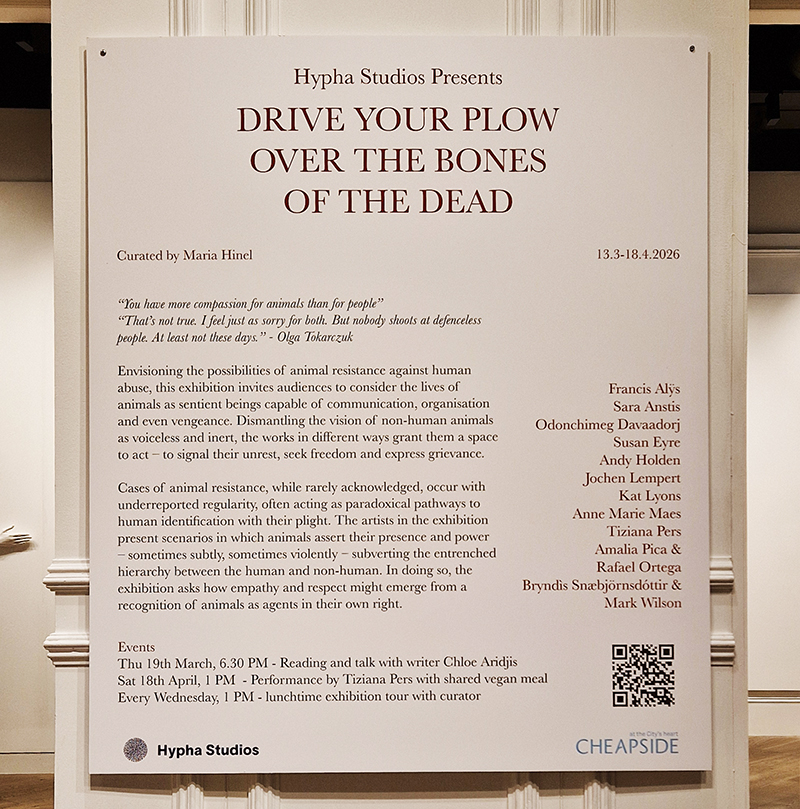
Bridging the Gap, Gallery 1 Hypha Studios, South Bank curated by Paul Carey-Kent, Hermione Allsopp and Poppy Whatmore. An exhibition of sculpture that draws inspiration from its immediate environment, using the proximity of Southwark Bridge as a metaphor for connection in divided times. More than twenty artists explore themes of linkage, separation, and repair through innovative approaches to structure and materiality. Artists: Alice Wilson, Catriona Robertson, Erika Trotzig, Harriet Mena Hill, Helen Barff, Hermione Allsopp, Jonny Briggs, Julian Wild, Julie F Hill (image right), Justin Hibbs and Rosalind Davis (image left), Koushna Navbi, Michael Samuels, Milly Peck, Nicky Hirst, Neil Gall, Nigel Massey, Poppy Whatmore, Samuel Zealey, Sarah Pager, Sarah Roberts, Will Cruickshank.
It was the opening night of this huge new Hypha space which places three galleries in one interconnected area leaving each separate exhibition open to either cross pollination or cross contamination.


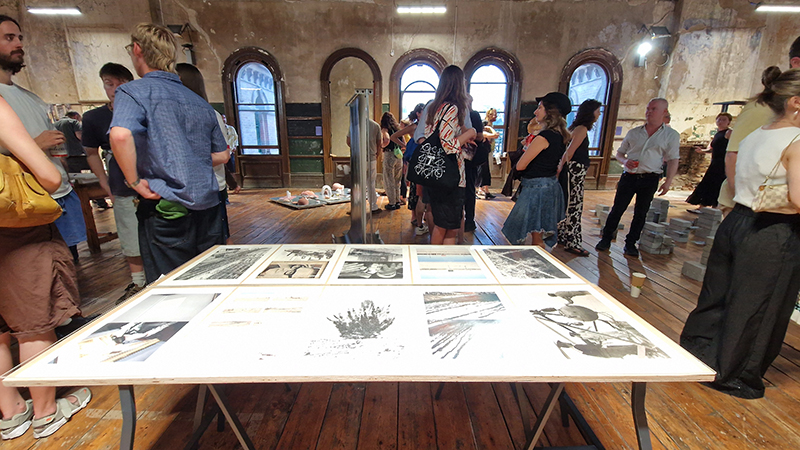
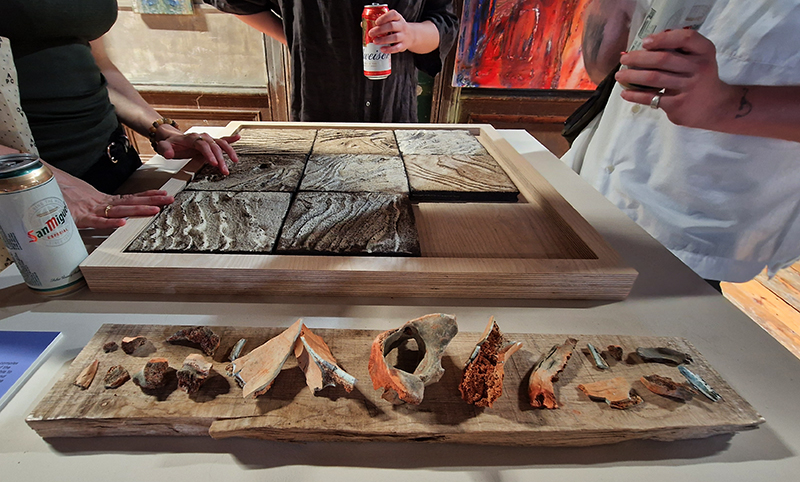
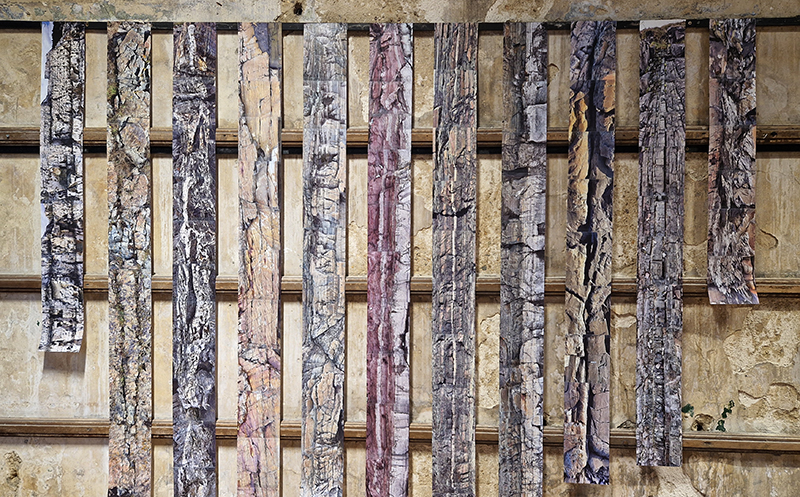
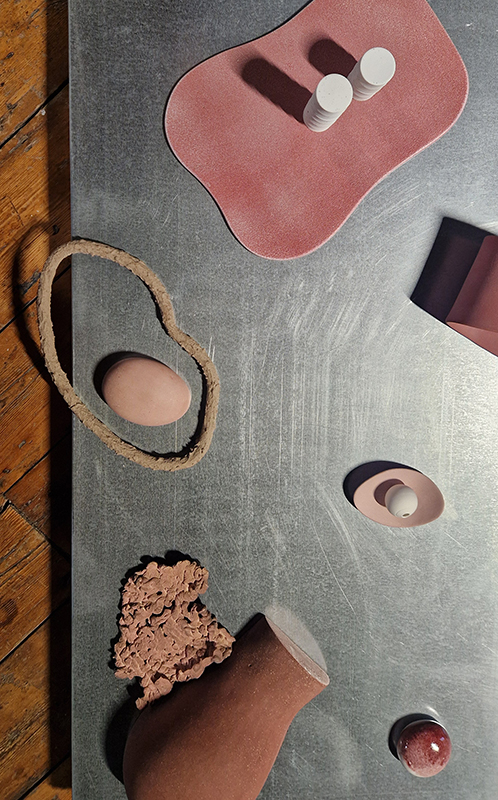
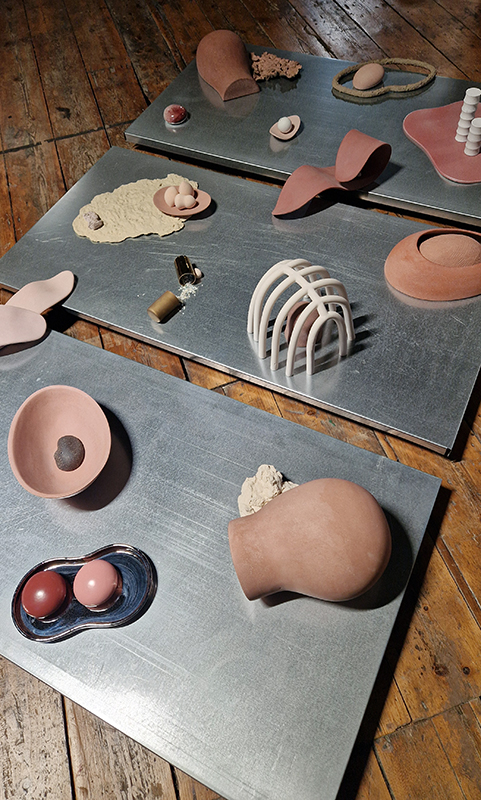
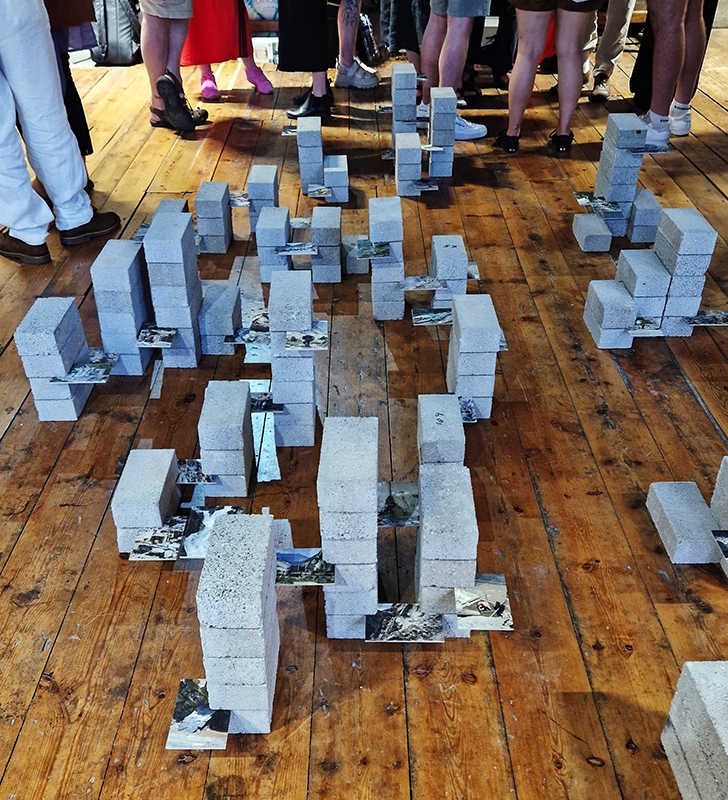
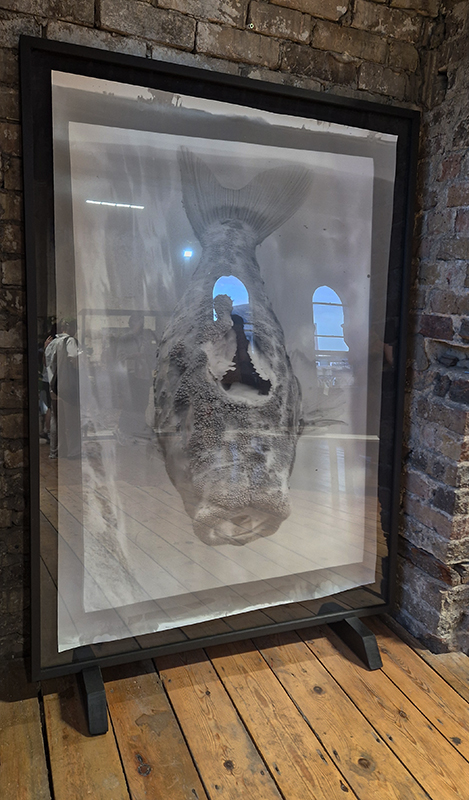
Seismic Mother at The Old Waiting Room, Peckham Rye Station curated by Charly Blackburn and Holly Birtles. Bringing together multidisciplinary approaches, Holly Birtles, Alfonso Borragán, Charly Blackburn, Colin Crumplin, Martin Howse, Syd Nencini, Gareth Phillips, Xavier Ribas, Eugenie Shinkle, and Alex Simpson create work that centres on their encounters and interpretations of places and objects in the context of geological crisis. The works attempt to communicate the seemingly incomprehensible nature of the earth’s magnitude and magnificence, temerity and resilience as it endures, regenerates and struggles to survive through the slow violence of ecological catastrophe.
Stunning pieces from Charly Blackburn and Alex Simpson.





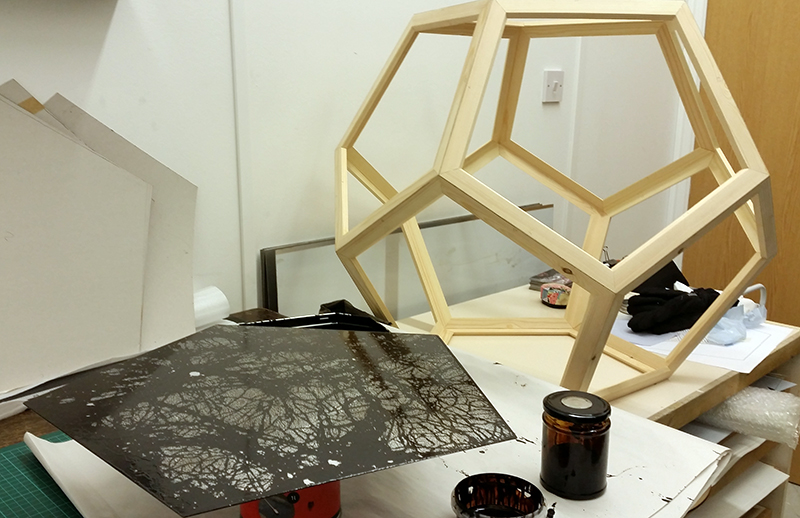


 I am etching in saline sulphate as it gives quite a deep etch into aluminium.