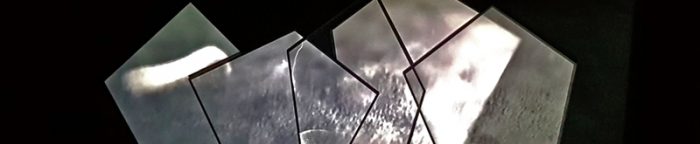
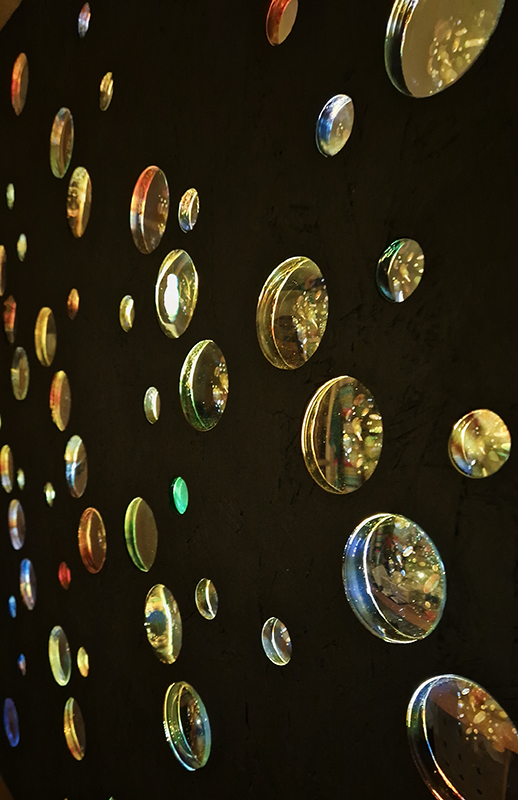
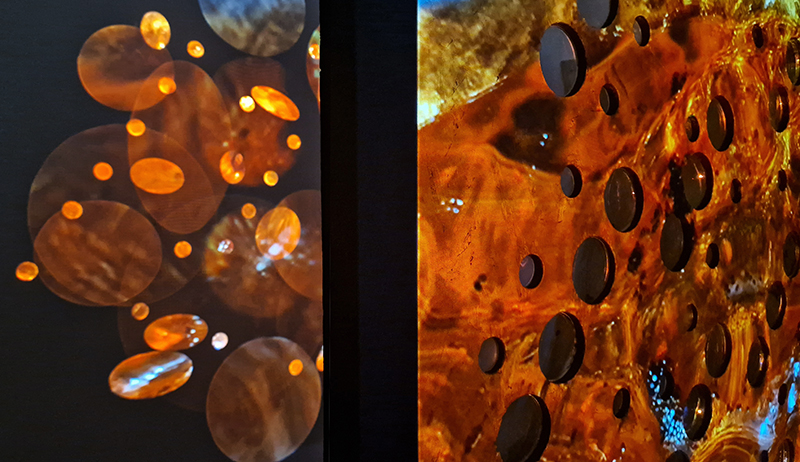
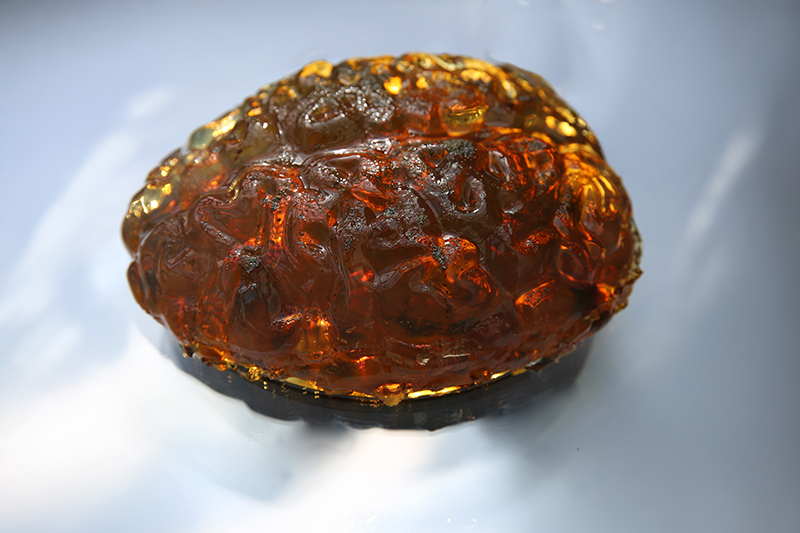
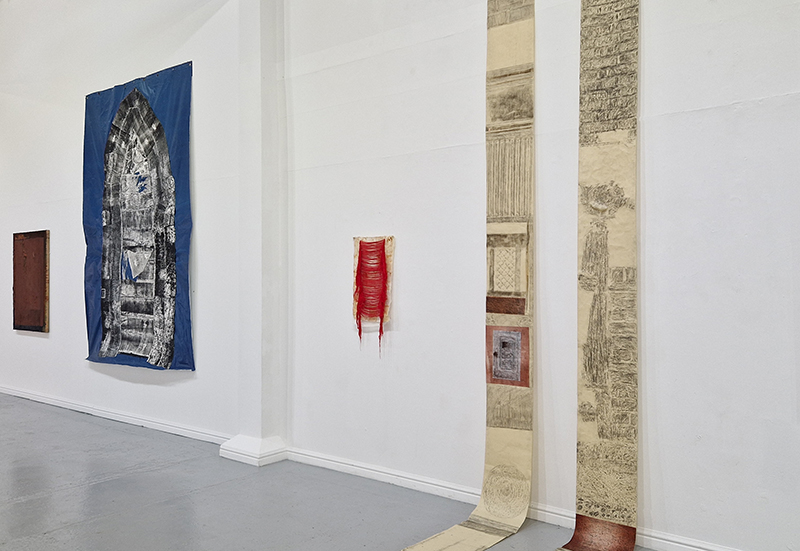
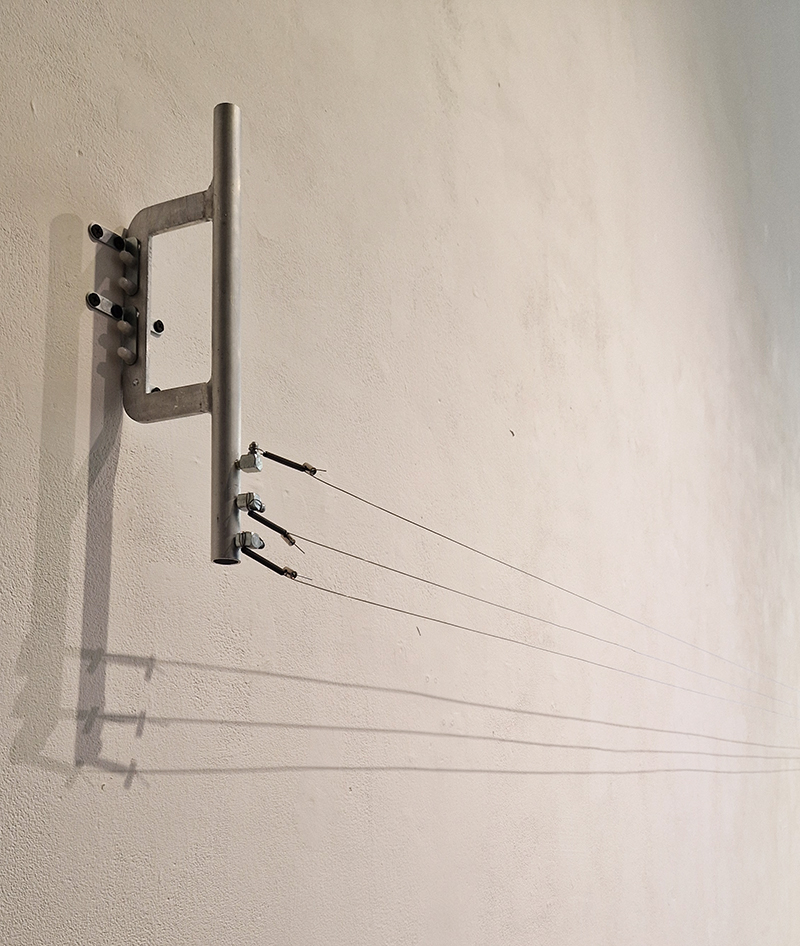
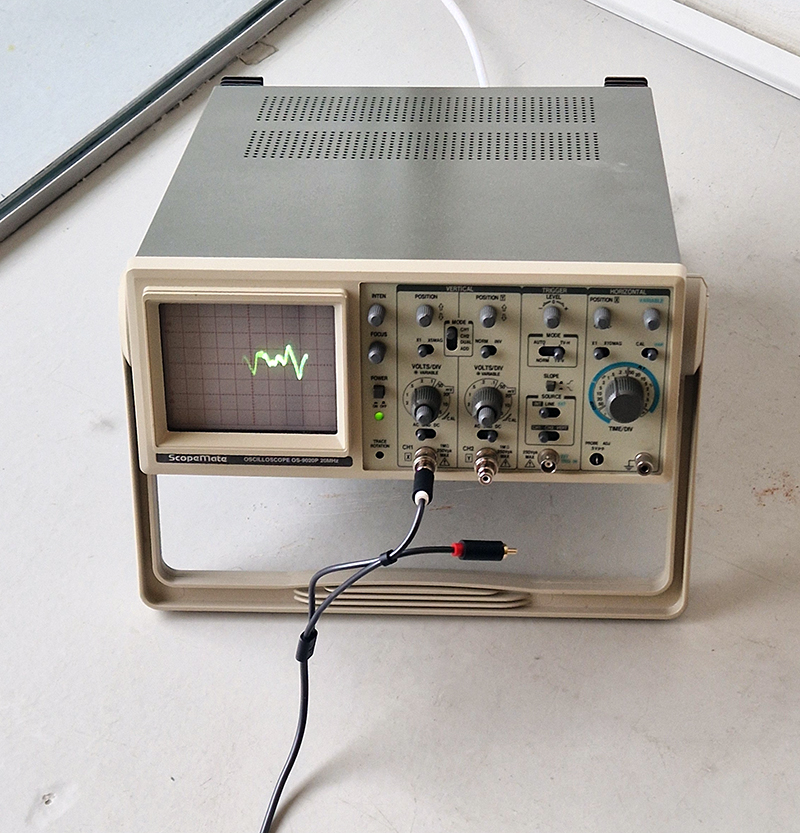
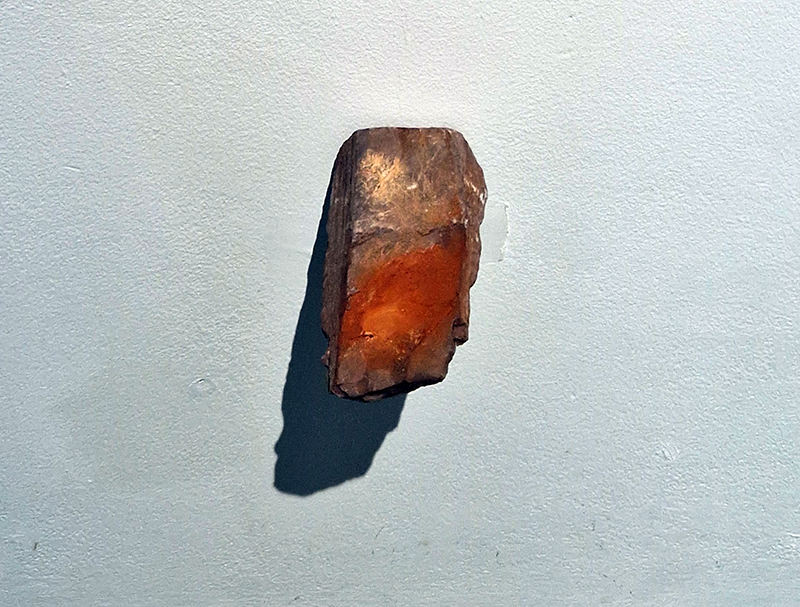
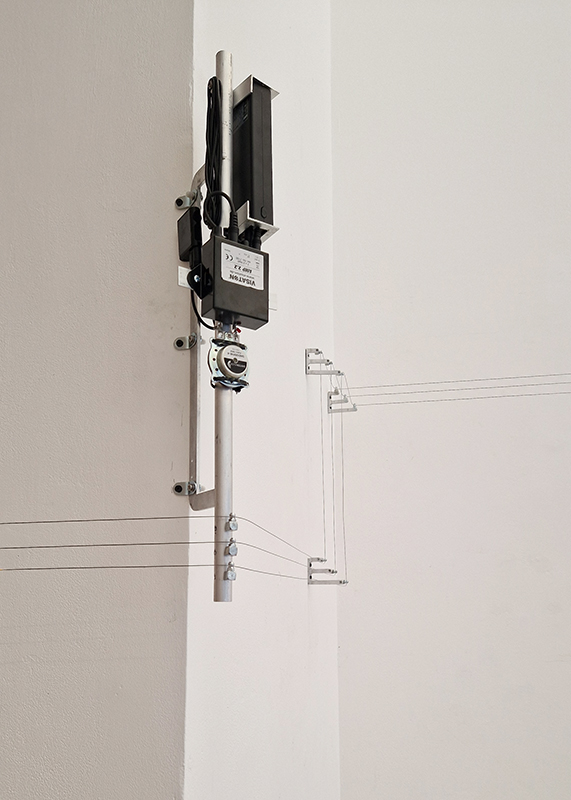
Carbon, Carbon Everywhere opened at Hypha HQ co-curated by Maria Hinel & Indira Dyussebayeva-Ziyabek with exhibiting artists Emii Alrai, Kate Daudy, Konstantin Novoselov, Susan Eyre, Ania Mokrzycka, Simon Faithfull, Nissa Nishikawa, Mariele Neudecker, Anousha Payne, Aimée Parrott, Lucia Pizzani, Lizi Sanchez, Meng Zhou.
The title of the exhibition is taken from the chapter Carbon in the book The Periodic Table by the writer and chemist Primo Levi. Levi traces a journey of a single atom of carbon across distinct states and beings, from resting in a bed of limestone for hundreds of millions of years, to entering the world of ‘things that change’ – swiftly shifting from the atmosphere to the lungs of a falcon, to the sea, to the trunk of a cedar, and eventually entering the writer’s own body from a glass of milk on his desk. Resolutely specific yet universal, Levi’s story highlights the singularity of carbon as an element that inherently connects all things through its relentless transformation. It fossilises, mutates, preserves, pollutes and nourishes. From its ancient geological formations to its current atmospheric volatility, carbon is never still, shifting between forms and contexts in an ongoing process of exchange.
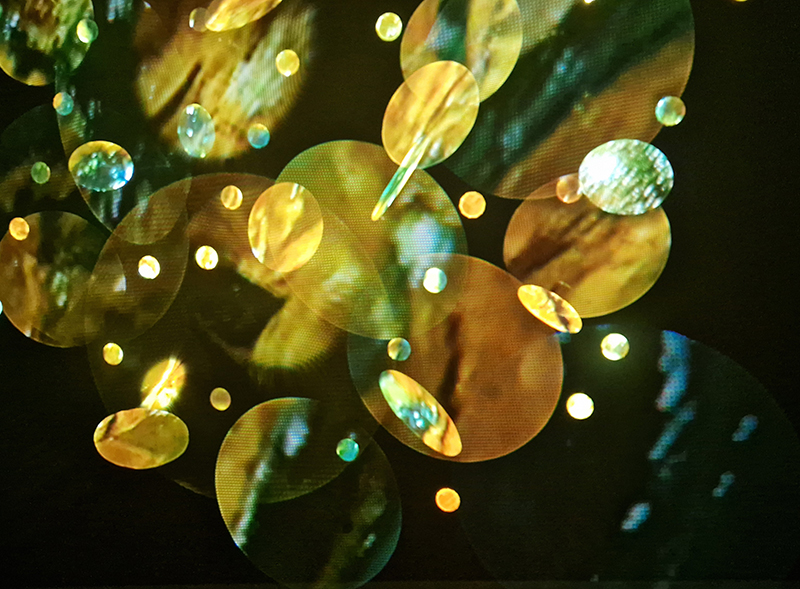
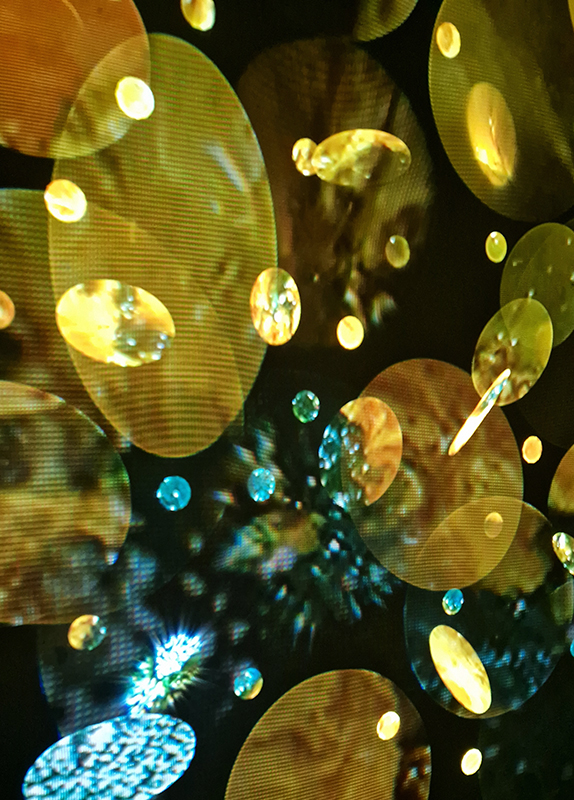
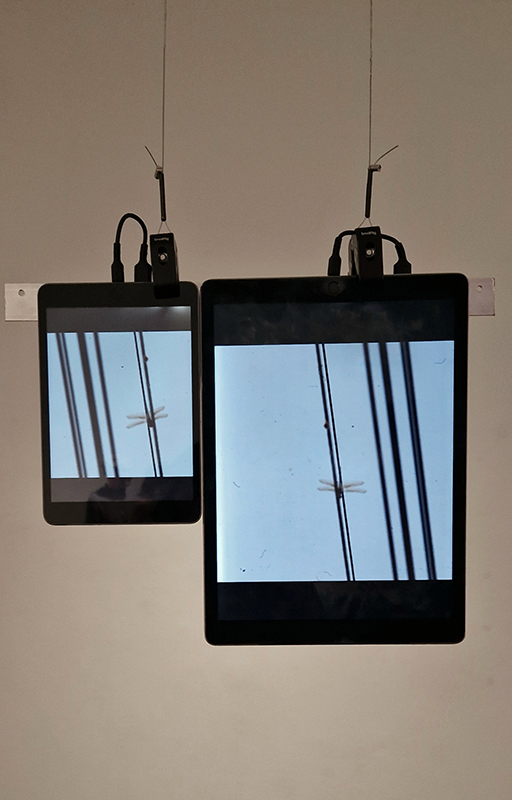
I am very happy to be exhibiting my video Cosmic Chiasmus: crossing the universe alongside the work of the other amazing artists.
Not only is all life physically permeated by cosmic rays with the potential for nuclei collisions but some cascading particles smash into atoms of nitrogen to create carbon-14 which combines with oxygen in the atmosphere to create radioactive carbon-dioxide. Carbon-14 enters the food cycle via photosynthesis as plants absorb it from the atmosphere. It is constantly renewed in all living organisms. On death, the amount of carbon-14 in the tissues begins to decay at a known rate which can be measured to determine the time of death. Cosmic ray activity therefore allows us to perform carbon dating techniques offering insights into Earth’s past climate and magnetic field, solar activity, and changes in the carbon cycle, helping us to understand historical patterns and establish timelines for ancient human history. Understanding the past can help us plan for the future.

Installation shot: Cosmic Chiasmus: crossing the universe 2021, video 05:25 min
Gallery Visits
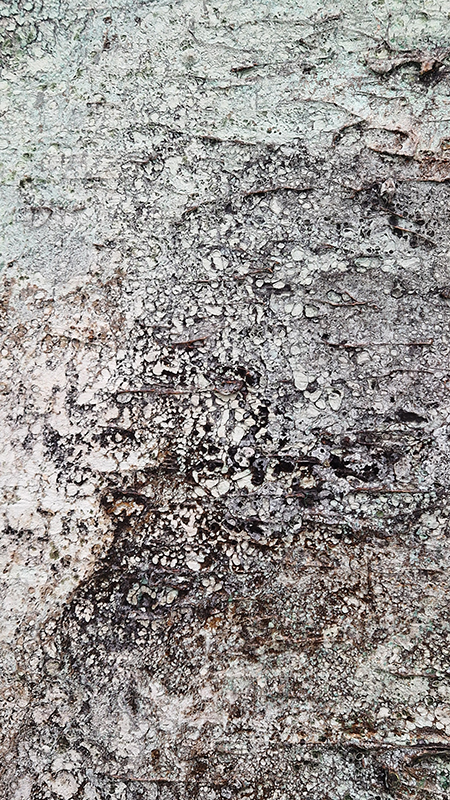
I loved the textures of the sandy cementy surface of the mixed media painting by Antoni Tàpies in Point and Counterpoint at Centro Botin, Santander.

ENREDOS (entanglements) II at Centro Botin, Santander. Nuno da Luz amplifies the frequencies of the waves and the winds felt in the Bay of Santander, interweaving them with their oscillations of the building itself. The sound installations generate shared listening spaces, converting the environmental data of the Santander coast into vibrations and amplifying the building’s own vibrations, extending and intensifying their intrinsic energies.
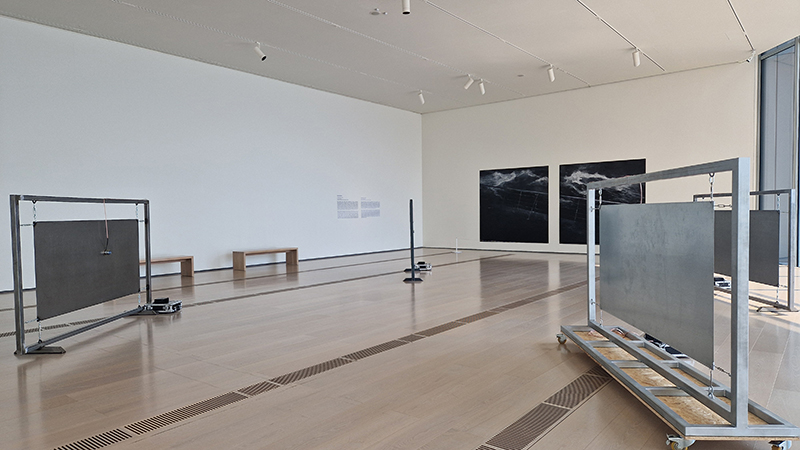


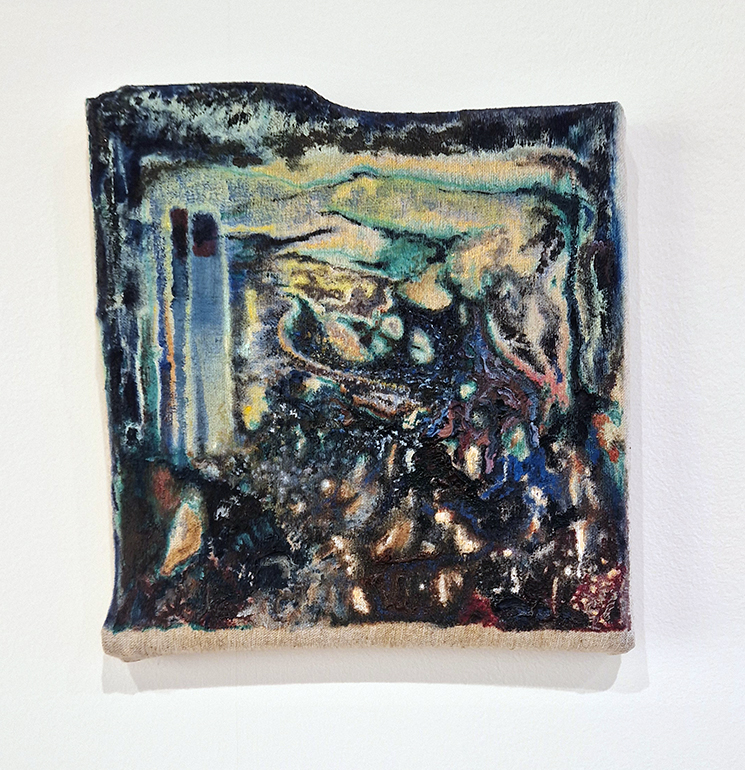
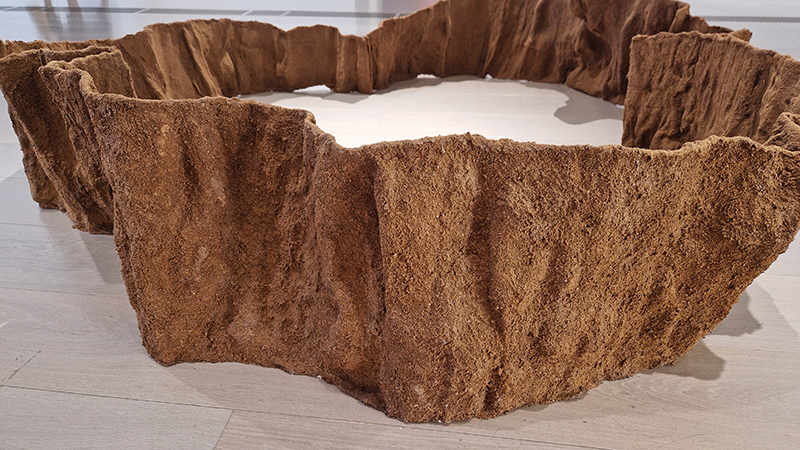
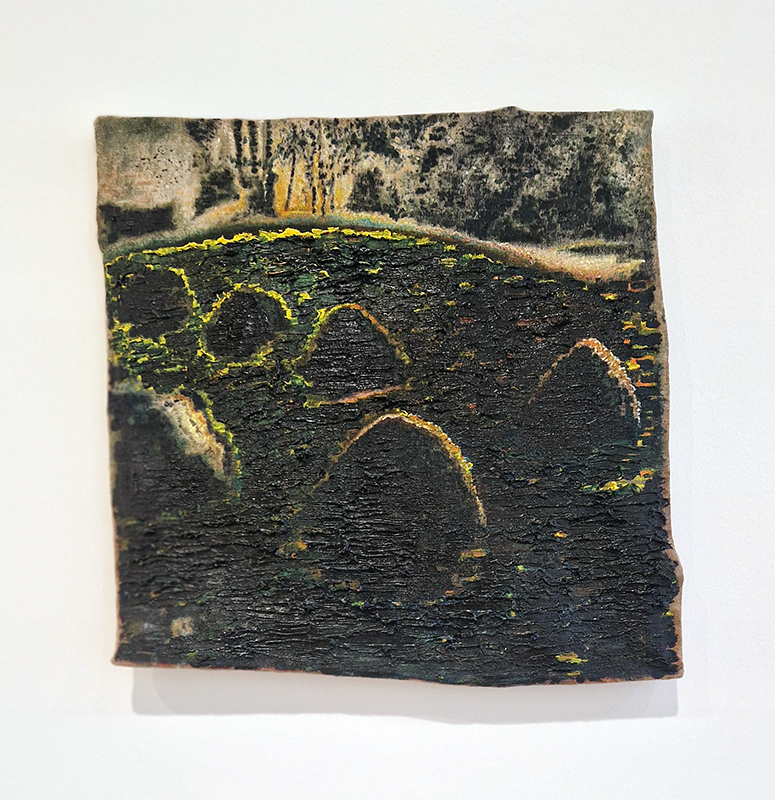
The exhibition also includes works by Javier Arce: a series of oil paintings titled On What is Nearby and the sculpture Cambium – cast from the last ring of a tree stump – this is the most recent ring under the bark where new wood cells are formed as the tree grows.
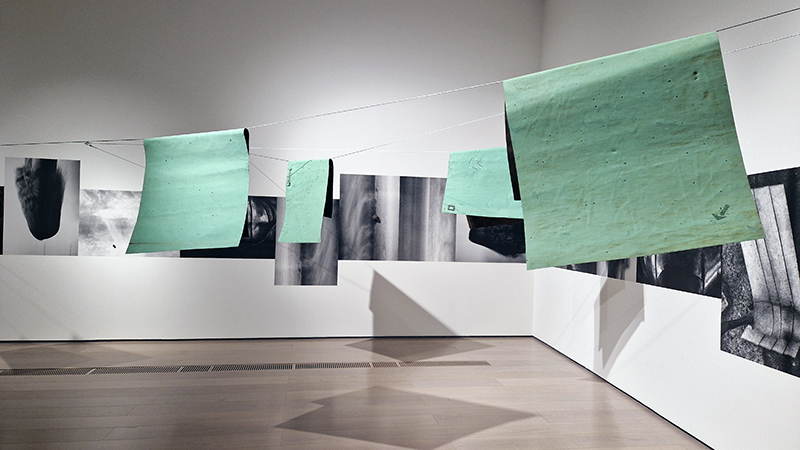
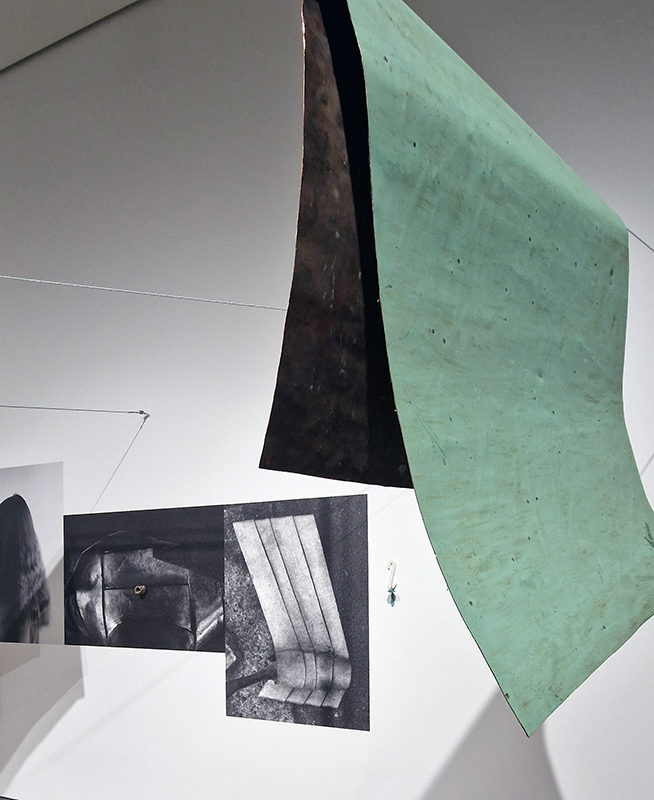
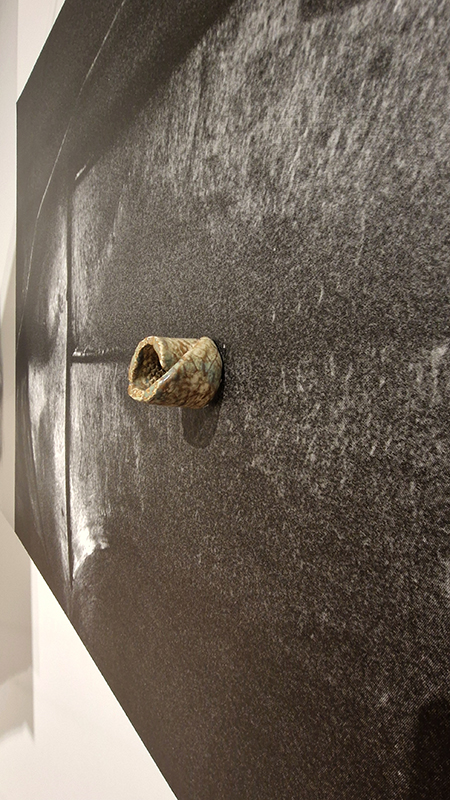
Katinka Bock: A striking installation Feuilles de temperatures which incorporates weather patinated copper sheets rescued from the dome of Anzeiger-Hochhaus in Hannover a legendary site of editorial histories, alongside Some and any, fleeting, an installation of large digital prints set with tiny bronze, ceramic and copper sculptures.
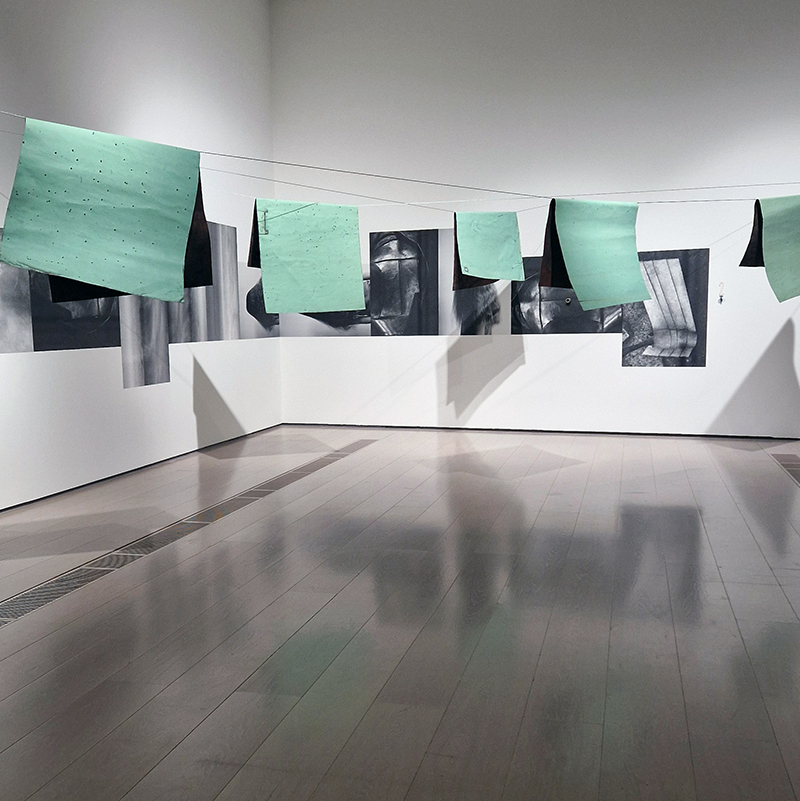
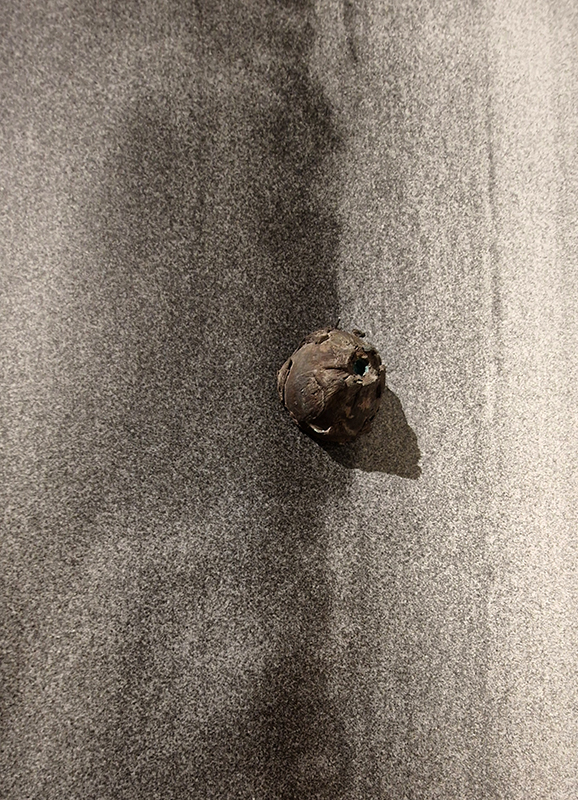
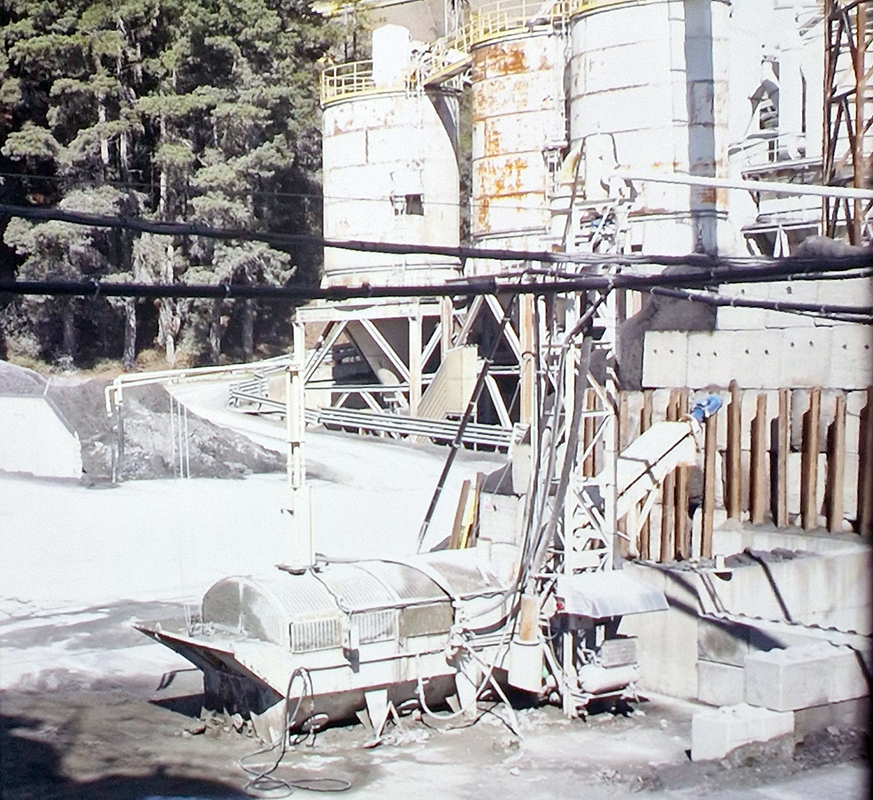
The video Core, a collaboration between sculptor June Crespo and cinematographer Maddi Barber which documents the different states through which the sculptor’s material passes: rock, dust, liquid, and solid. Connecting the processes of hands that touch and manipulate the cement sculptures, and the rock extraction and transformation process in a quarry.

Tacita Dean The Wet Prayer in reference to the final plea of Saint Paul as he was shipwrecked off the coast of Malta. In this exhibition the ephemeral chalk of Dean’s ocean waves resonate with the sound waves recorded from the bay outside and played back within the gallery space.

Great curation by Susanna Greeves of engaging works in Alien Shores at White Cube Bermondsey. In every depiction of landscape is a reflection of the values and beliefs of the society that created it. Landscape is not the world, but the world through human eyes.
Exhibiting artists included: Michael Armitage A kind of belief, oil on Lubugo bark cloth.
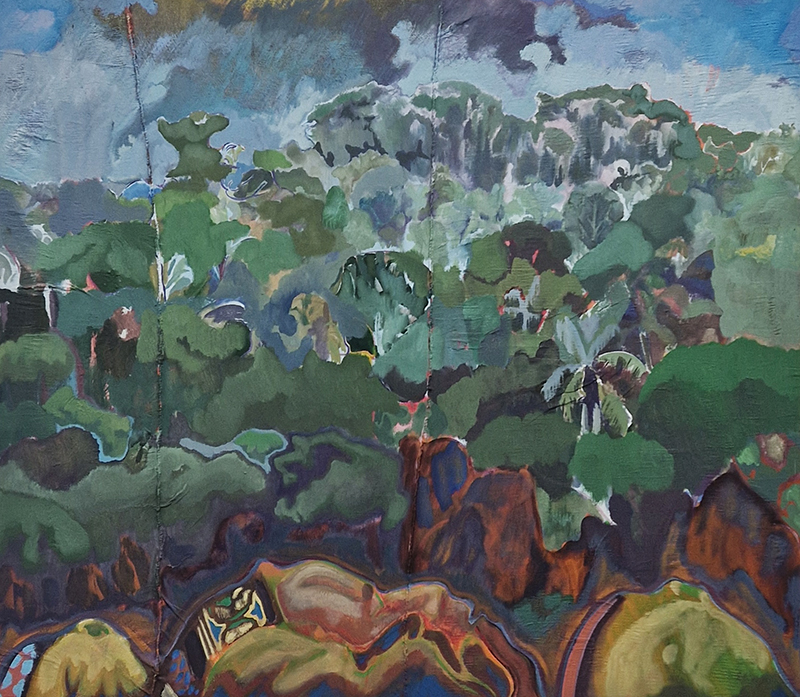
Noémie Goudal Tropiques IV, inkjet print and the mesmerizing collapse of dissolving landscapes in Supra Strata, HD video as layer after layer warps, stetches, tears and falls until there is nothing.

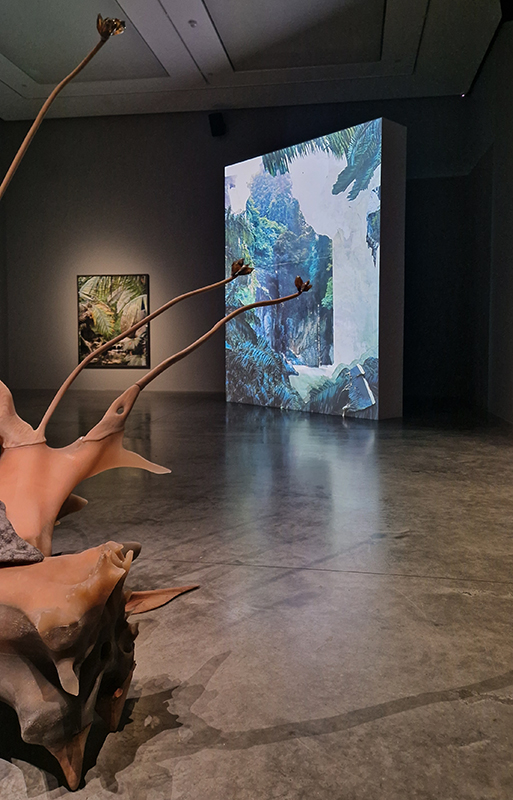
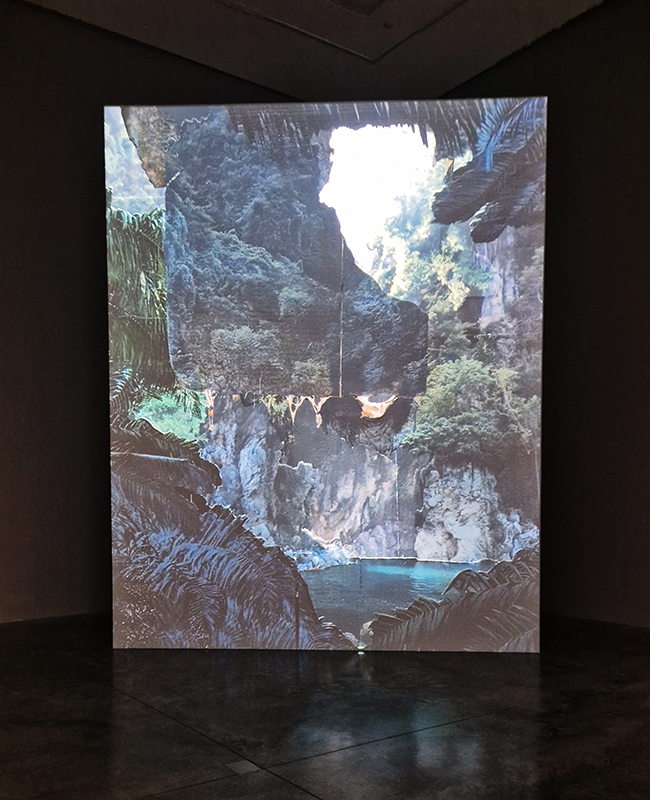
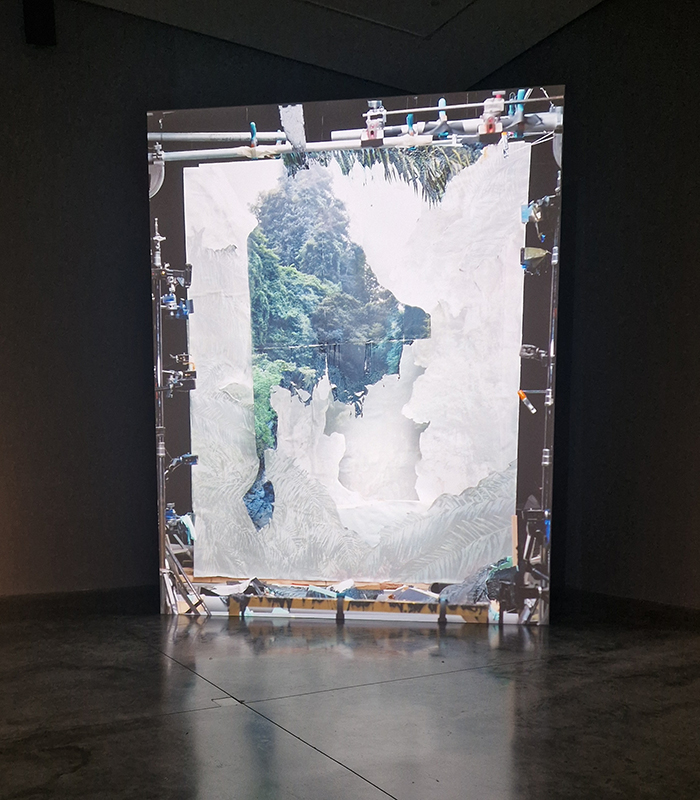
Sky Hopinka shapeshifting video Mnemonics of Shape and Reason
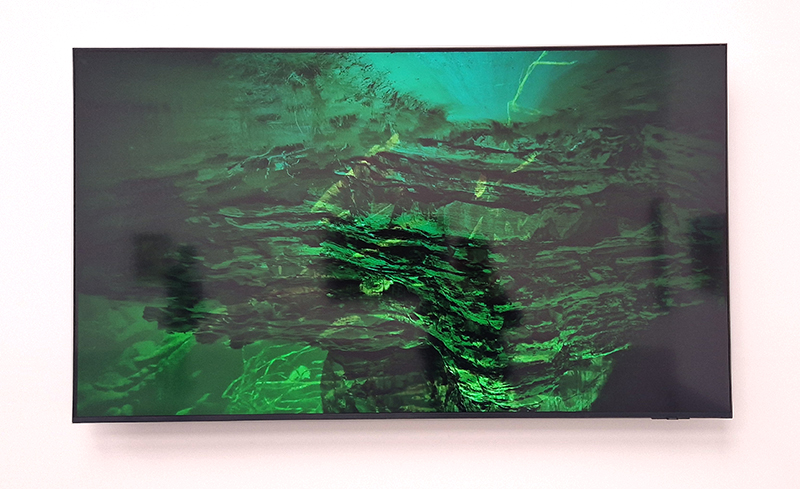

Marguerite Humeau Skero ( the dormant), embellished silk double organza, cast rubber, sediments, pigments, handblown glass, milled walnut, polyurethane foam, epoxy resin and stainless steel paired with Darren Almond’s haunting Fullmoon@Baltic Coastline, latex print.
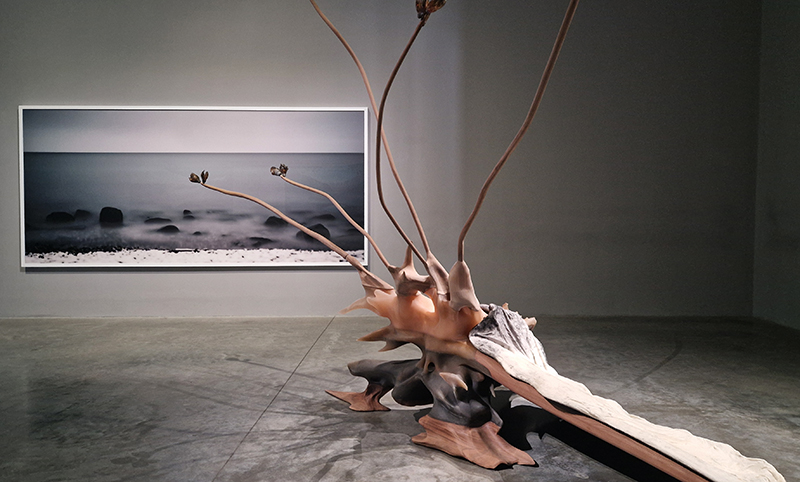
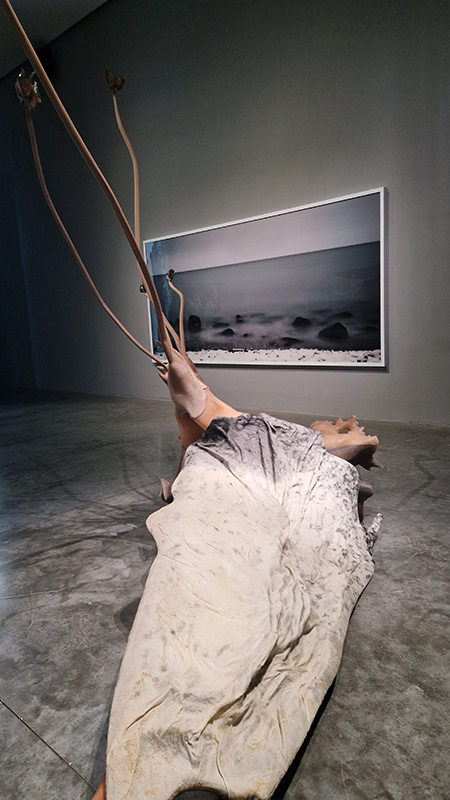
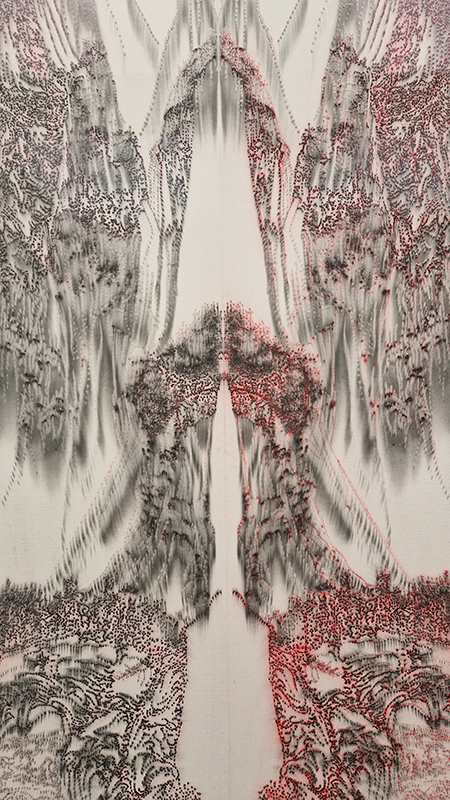
Hung Fai, optically intriguing The Six Principles of Chinese Painting: Transmission XXII (with Hung Hoi), ink and colour on paper.

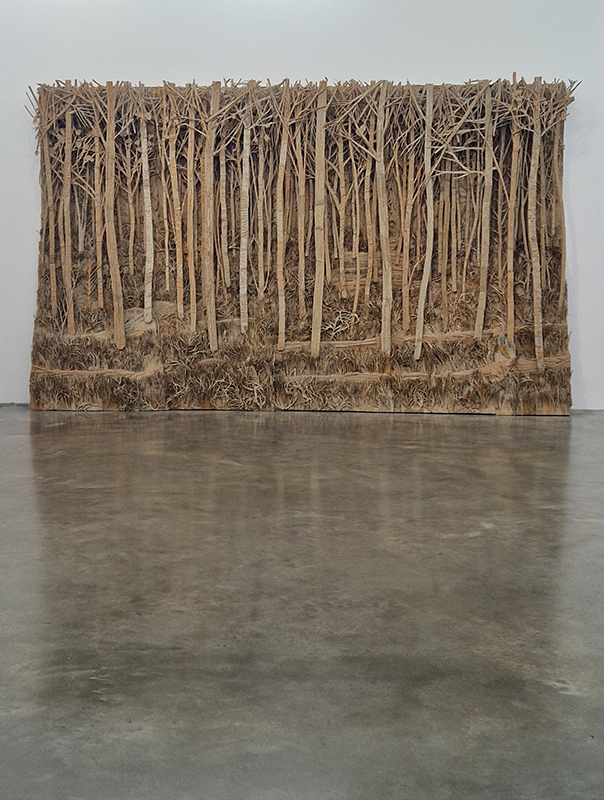
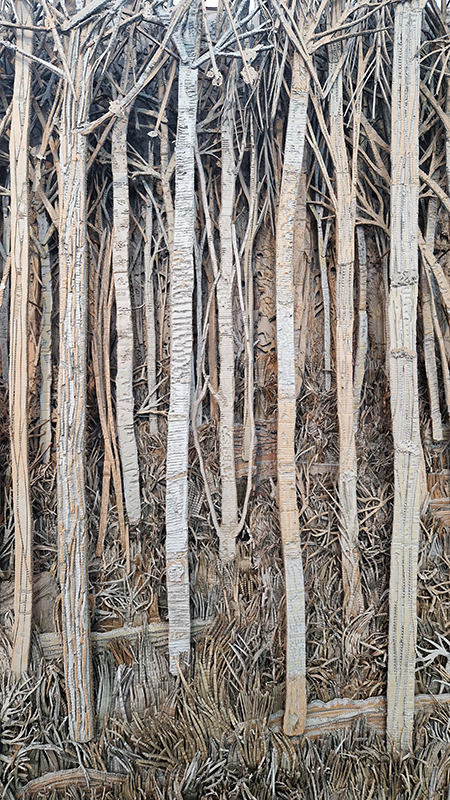
Eva Jospin, Forêt, cardboard and wood.
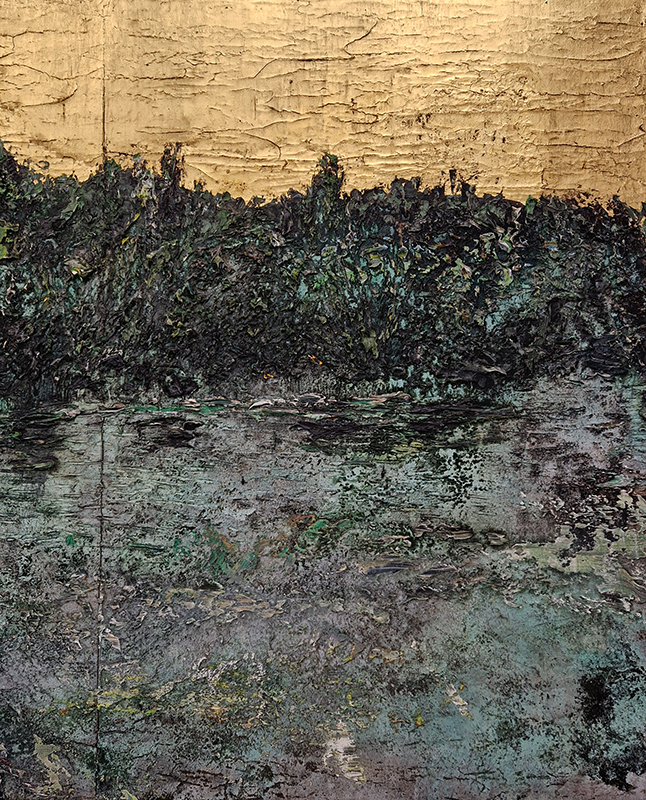
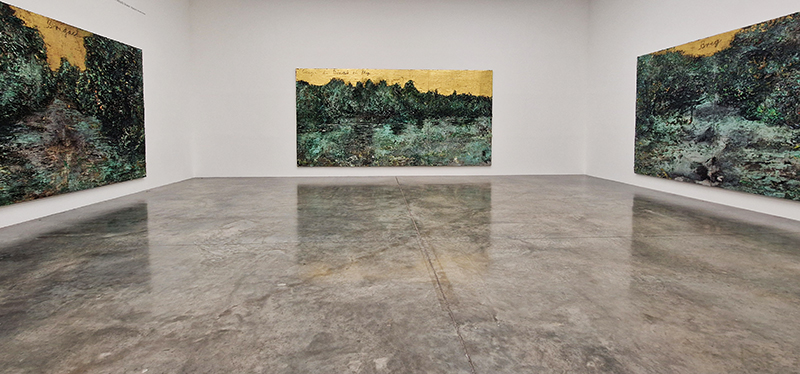
Anselm Kiefer Brigach und Breg bringen die Donau zu Weg, three panels emulsion, oil, acrylic, shellac, gold leaf and sediment of electrolysis on canvas.
Ken Gun Min Everything We Can Imagine As Light Baroque pearl, crystal, assorted gemstones, vintage beads, Korean pigment, silk embroidery, thread, found fabrics and oil paint on canvas. I love exuberance of his painting and the title made me think of the epic Anthony Doerr book All The Light We Cannot See and the beautiful film All We Imagine As Light written and directed by Payal Kapadia both of which I found deeply moving.
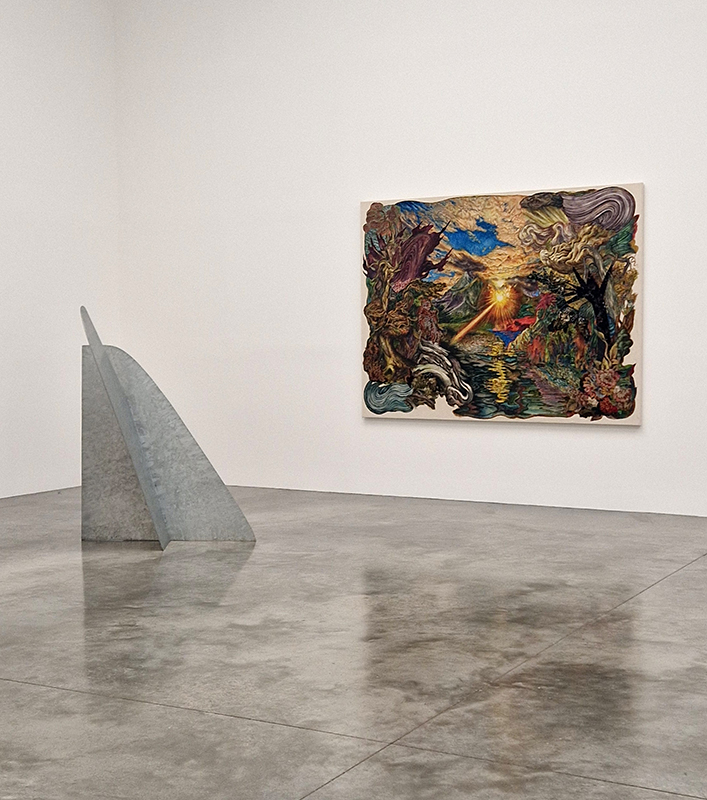
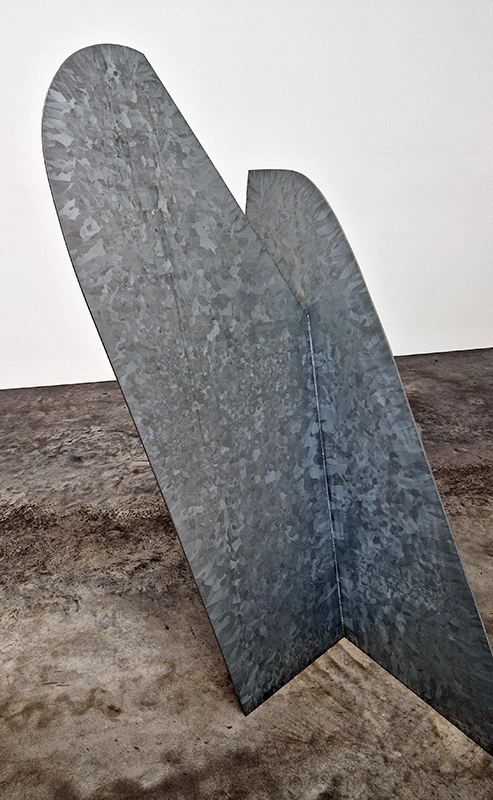
Isamu Noguchi Mountains Forming hot dipped galvanised steel.
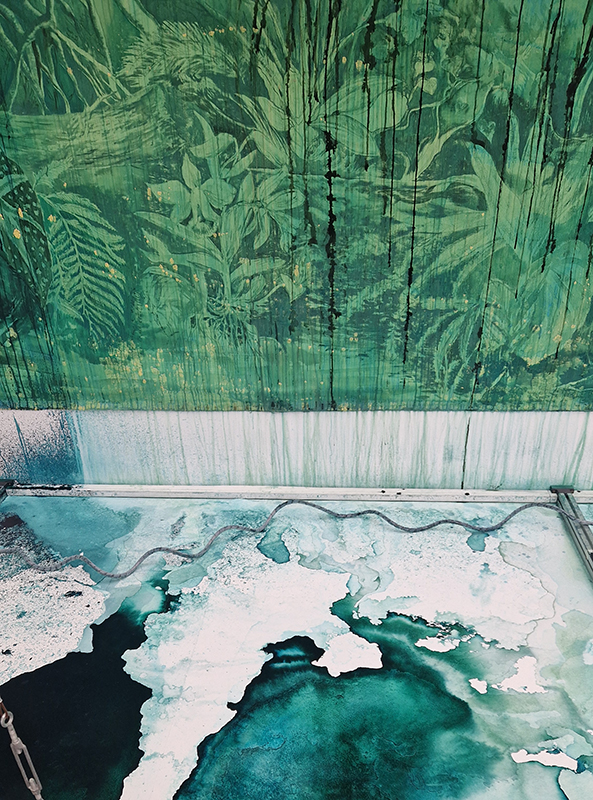
Bagus Pandega and Kei Imazu, Artificial Green by Nature Green 4.1, Painting and erasing machine, water based paint on linen canvas, modular synthesiser, LED screen, PC and jelly palm tree. This was not in action when I visited.



The delicate detailed forests on the cusp of erasure of Tomás Sánchez
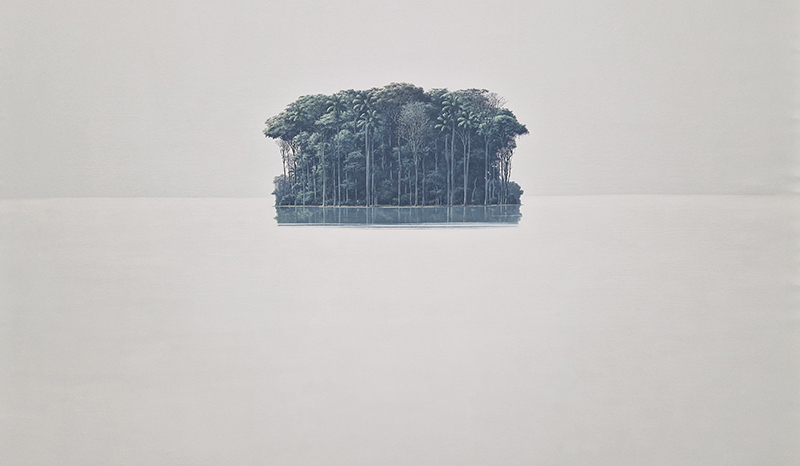
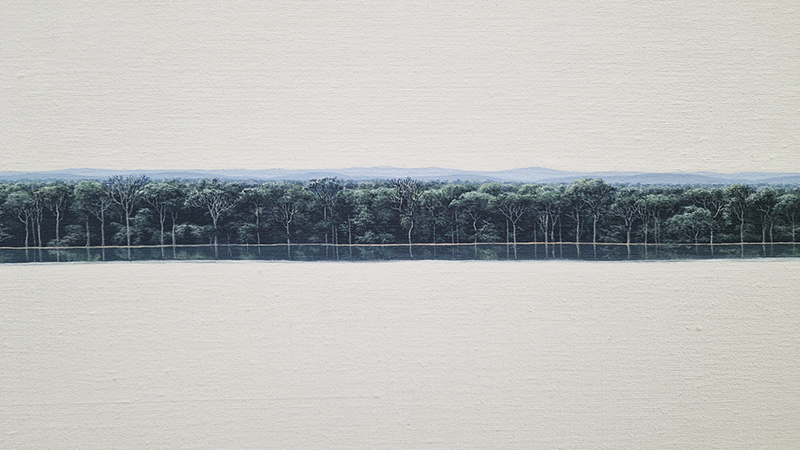
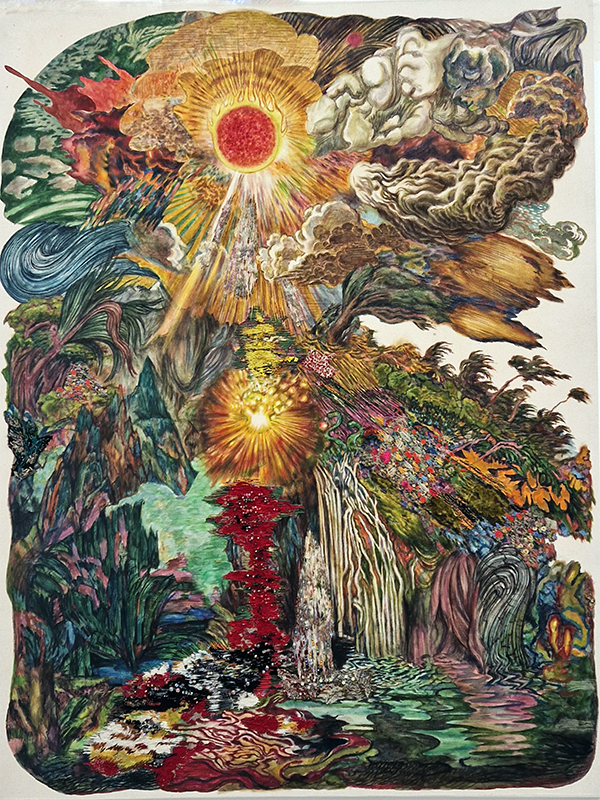
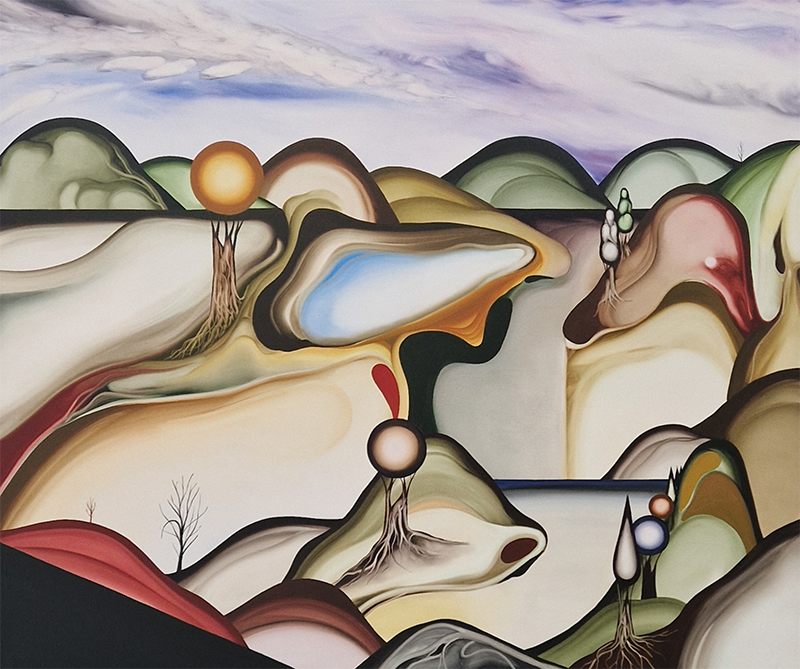
Emma Webster mega painting Borrow Every Forest which has echoes of Noemi Goudall’s video in it’s staged nod to artifice.

Robert Zehnder Hip Bone, oil on canvas on panel.
Out and About
Not to forget that as backdrop to everything that occurs at the moment is the horrific genocide being perpetrated in Gaza. It seems impossible that such cruelty can happen, is still happening and the powers that could stop it do nothing. Santander beach protest for a free Palestine that I was able to walk alongside.


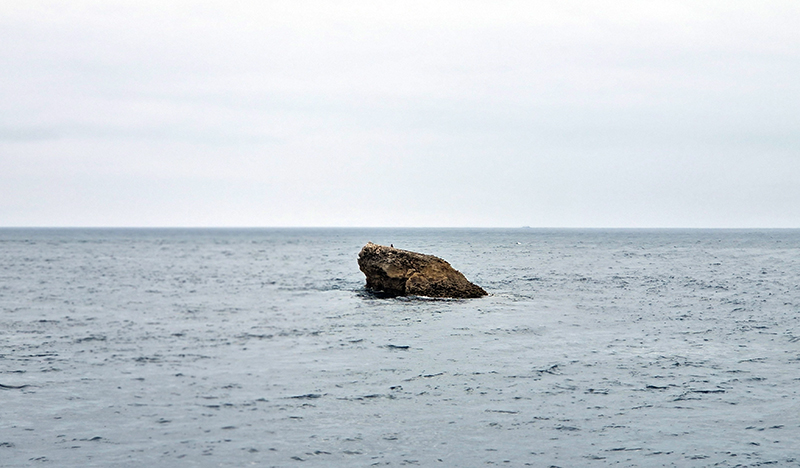
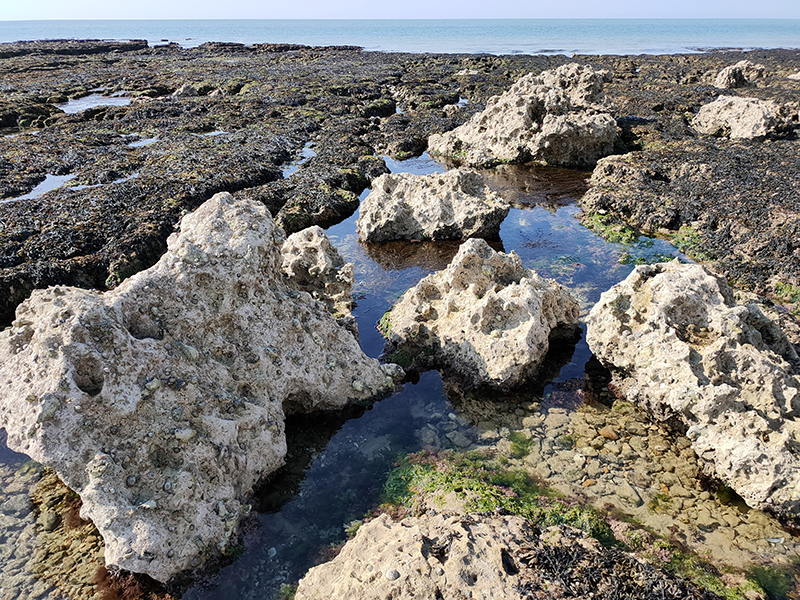
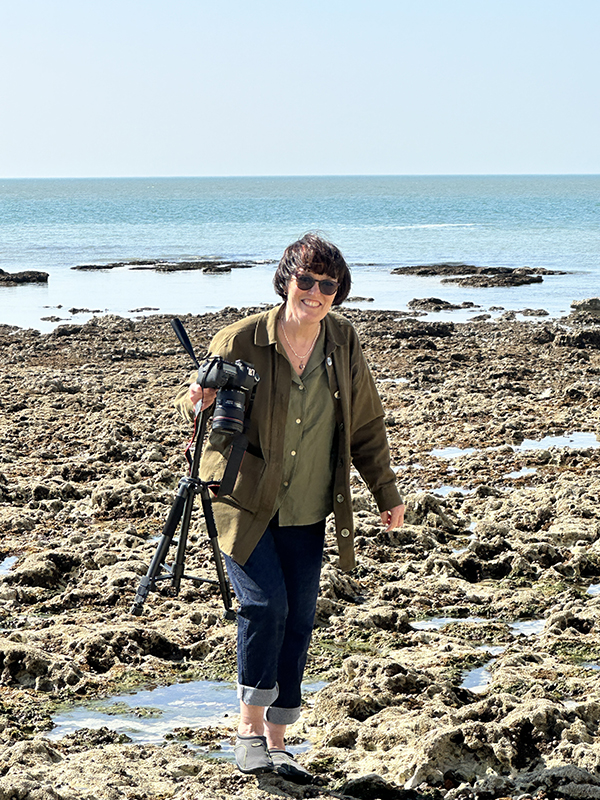
Contemplating geological time, rock gazing along the Santander coast.
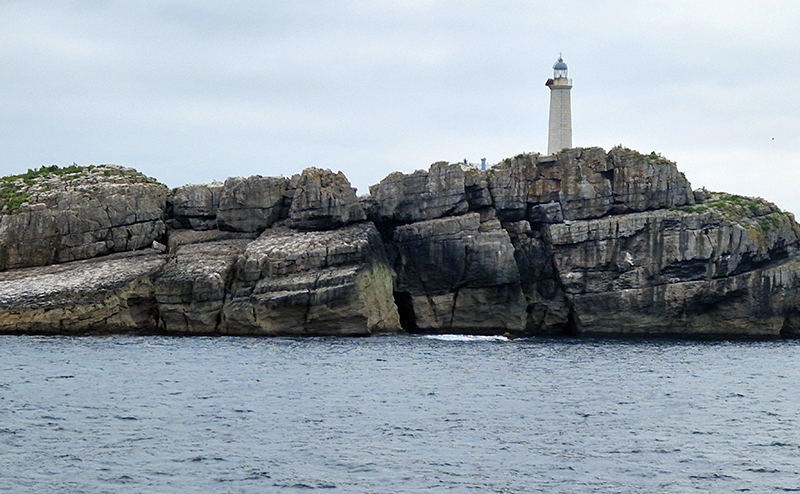
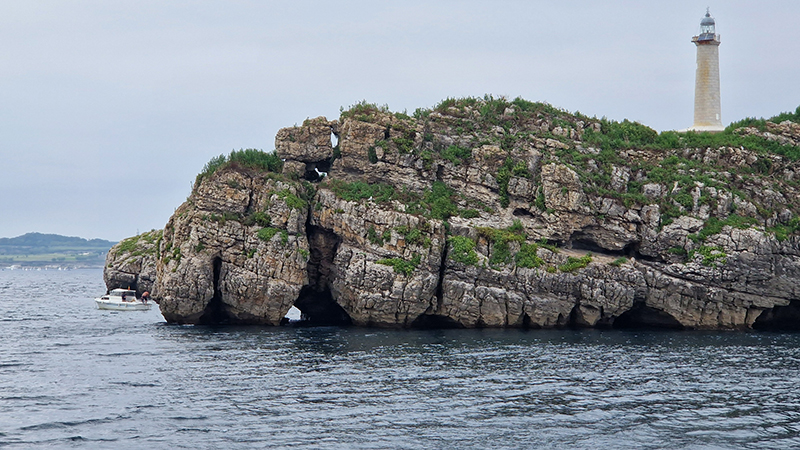


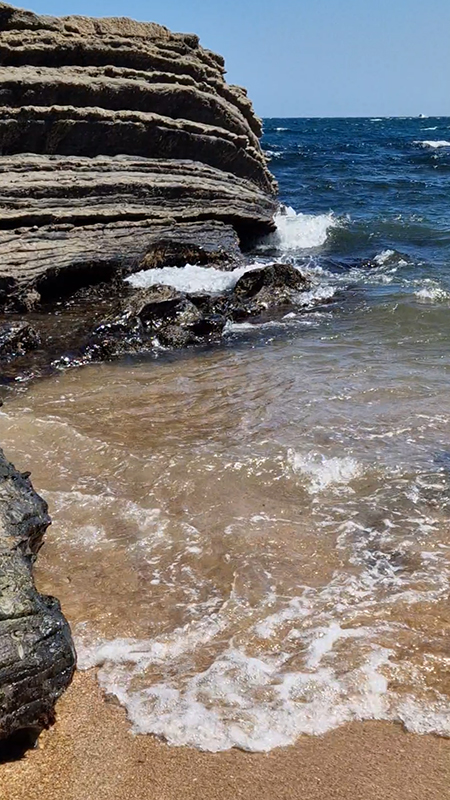

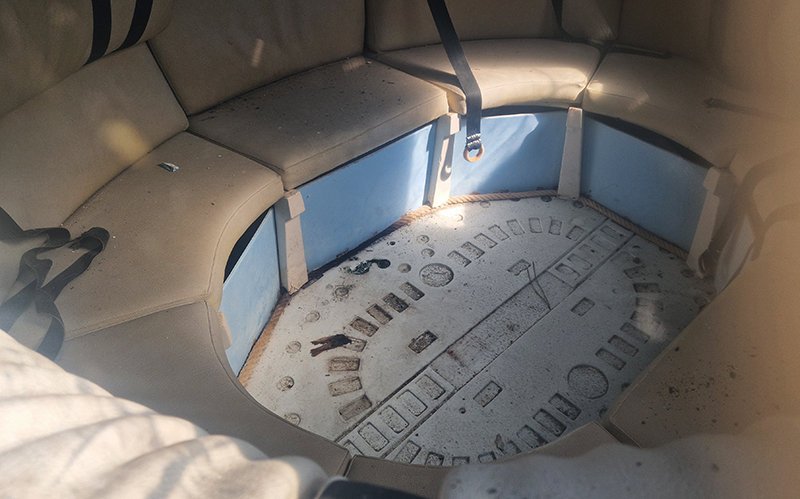
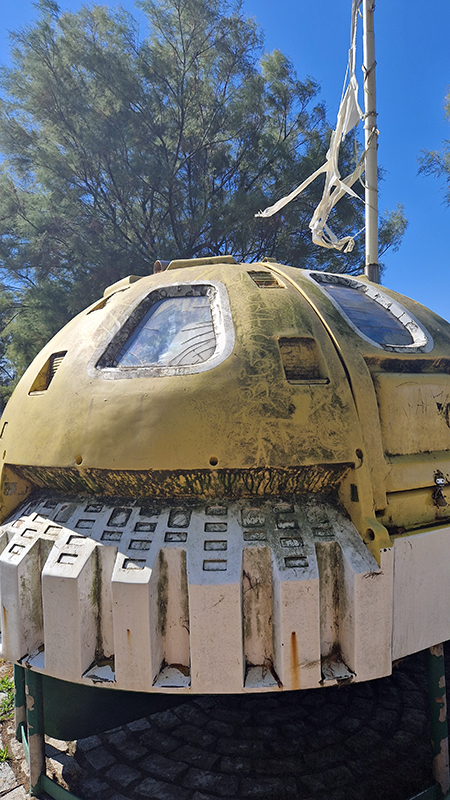
This sci-fi looking experimental lifeboat was designed by Spanish explorer Vital Alsar as part of his project El Hombre y la Mar. It has a capacity for 12 castaways and was towed across the Atlantic from Mexico to Santander in 1978, the culmination of his expedition to emulate the one undertaken in 1542 by Francisco de Orellana from Ecuador on foot across the Andes to navigate the length of the Amazon to the ocean. Through his expeditions, including the longest crossing of the Pacific Ocean by raft, Alsar wanted to prove that by respect for, and harmony with nature, humans can cross oceans, feed themselves and live sustainably.
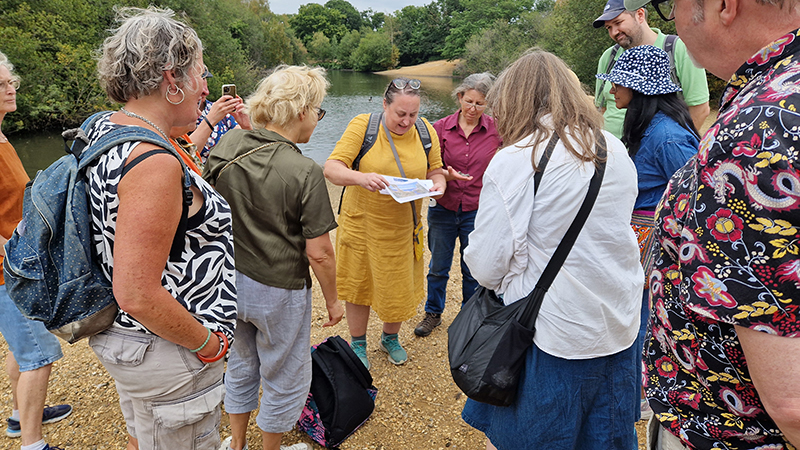
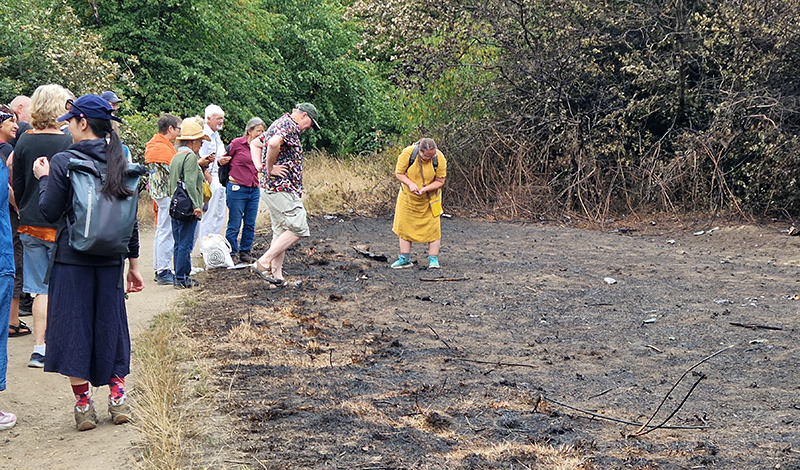
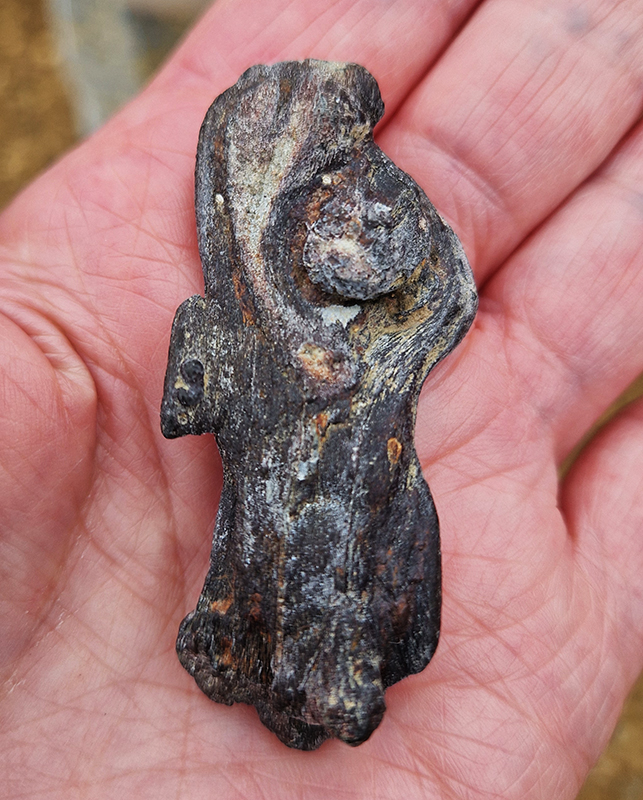
Inspiral London; Re/Walk Festival: Rivers, Reservoirs, Ice and Sea. The colours and layers of Walthamstow revealed by artist Gail Dickerson and geologist Ruth Siddall both members of London Geodiversity a group concerned with the natural and human aspects of landscape, focused on the rocks, sediments, soils, the landscape topography and the processes that act on the landscape. We were not only enlightened on the deep time history of this urban landscape as we stood and imagined when glaciers reached as far as Epping and woolly mammoths wandered the land here but were instructed on how to make shimmering ink from galls, how to make charcoal in a bonfire and use earth’s rich pigments to paint with. Galls form when an organism (like an insect) penetrates or irritates plant tissue, triggering the plant to grow and enclose the organism.

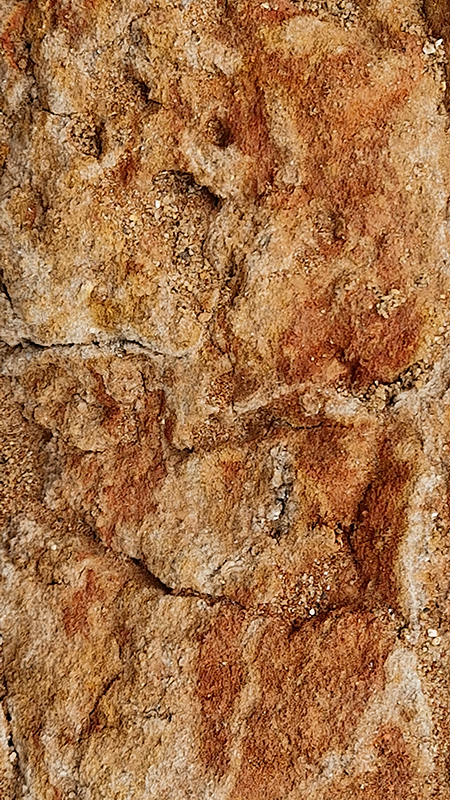
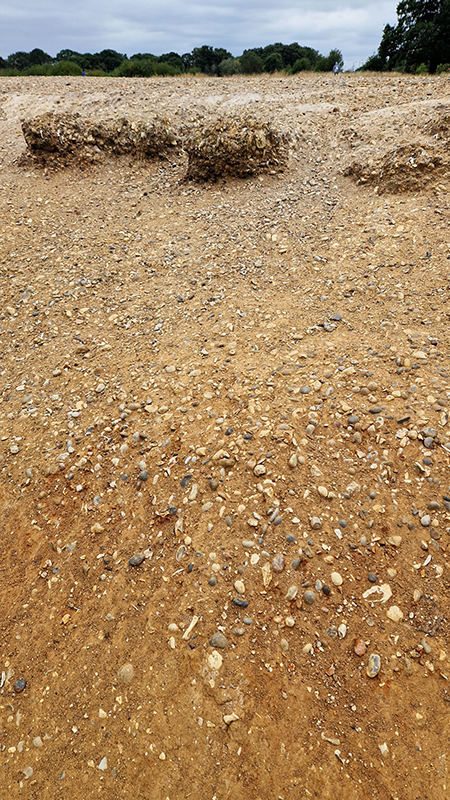
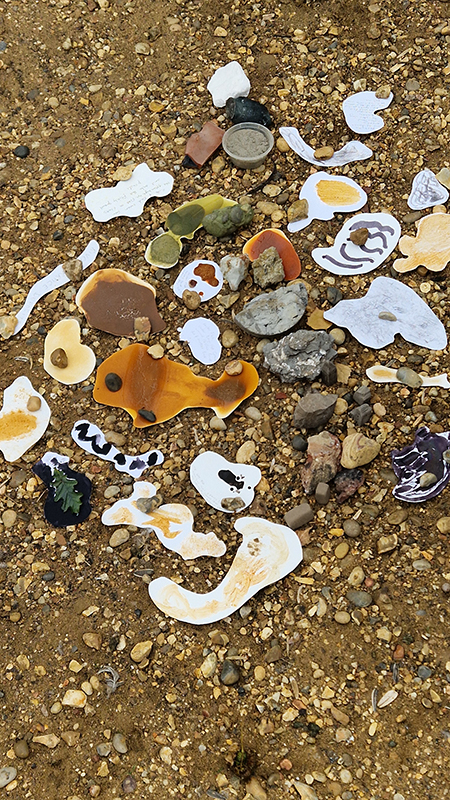
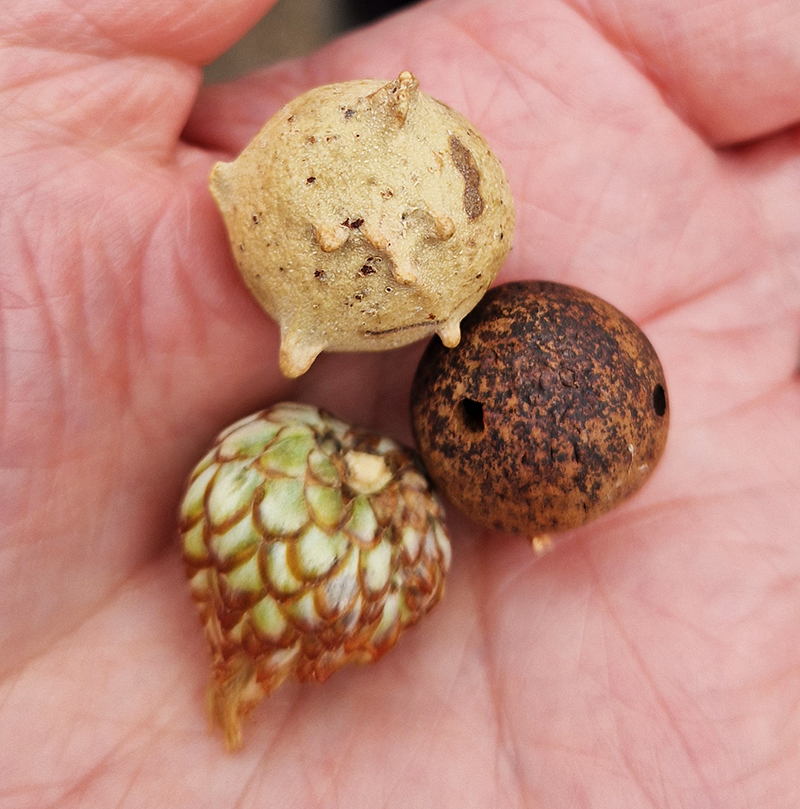
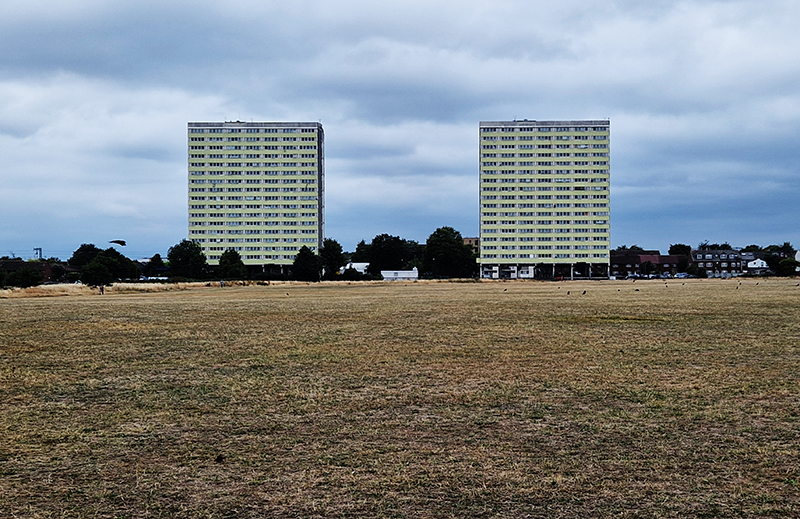

Something I recently found out, amid the hype of the new movie, was that the Fantastic Four super hero characters got their powers from exposure to cosmic rays on an ill fated/serendipitous (depending on how you look at it) space mission. The original story was from 1961, the year Yuri Gagarin was the first human to orbit in space. Cosmic rays are a real danger to astronauts as these high energy radioactive particles can cause cell damage. Astronauts also experience directs hits on the retina from cosmic rays which they see as tiny flashes of light but this wouldn’t have been knowledge in 1961.

Reading
Patterns of Thought: The hidden meaning of the great pavement of Westminster Abbey by Richard Foster. The book offers a thorough investigation into of what is known as the Cosmati Pavement; a unique work laid down in 1268 by order of Henry III who commissioned workmen from Rome, led by Odoricus, who were skilled in a type of inlaid stone decoration known as Cosmati work.
The provenance of the stones and the history of the pavement is interesting but the most compelling aspect of the pavement is its intriguing inscription in Latin which promises the reader disclosure of the end of time. It translates as
Four years before this Year of Our Lord 1272, King Henry III, the Court of Rome, Odoricus and the Abbot set in place these porphyry stones. If the reader wittingly reflects upon all that is laid down, he will discover here the measure of the primum mobile: the hedge stands for three years, add in turn dogs, and horses and men, stags and ravens, eagles, huge sea monsters, the world: each that follows triples the years of the one before. Here is the perfectly rounded sphere which reveals the eternal pattern of the universe.
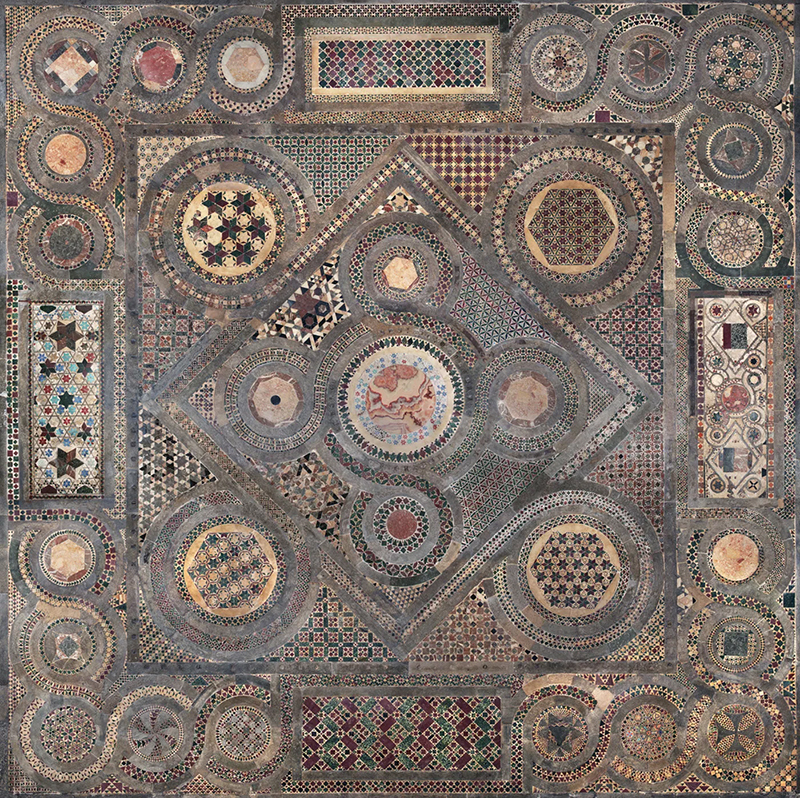
The fateful day expressed in terms of the multiplied life-spans of various creatures apparently arrives at the sum of 19,683. The book offers fascinating insight into the beliefs of medieval cosmology, Christian philosophy and sacred geometry that together formed the thoughts that were meticulously laid down in stone.










 Susan Eyre