Archives for posts with tag: travel

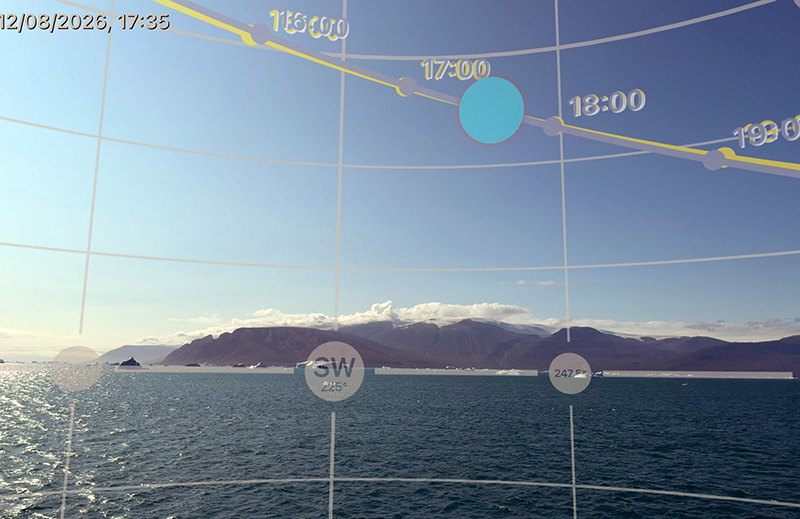
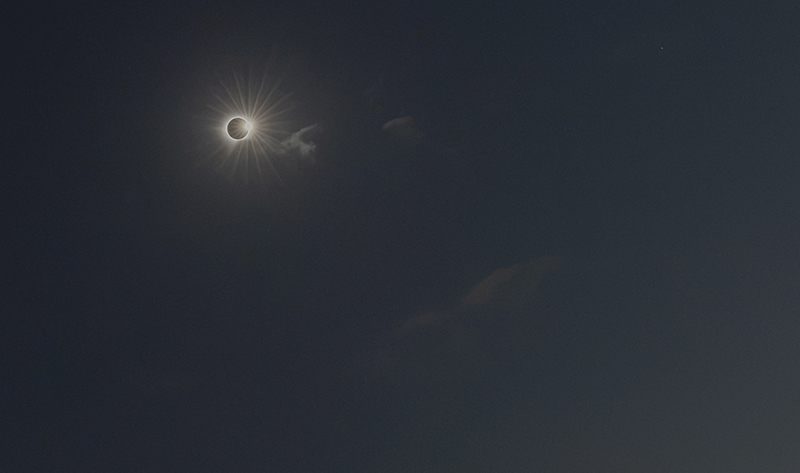
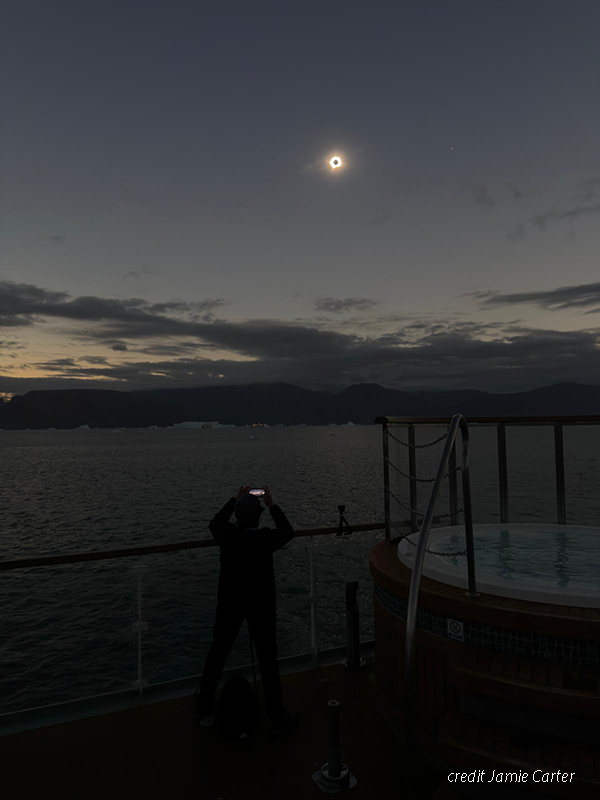
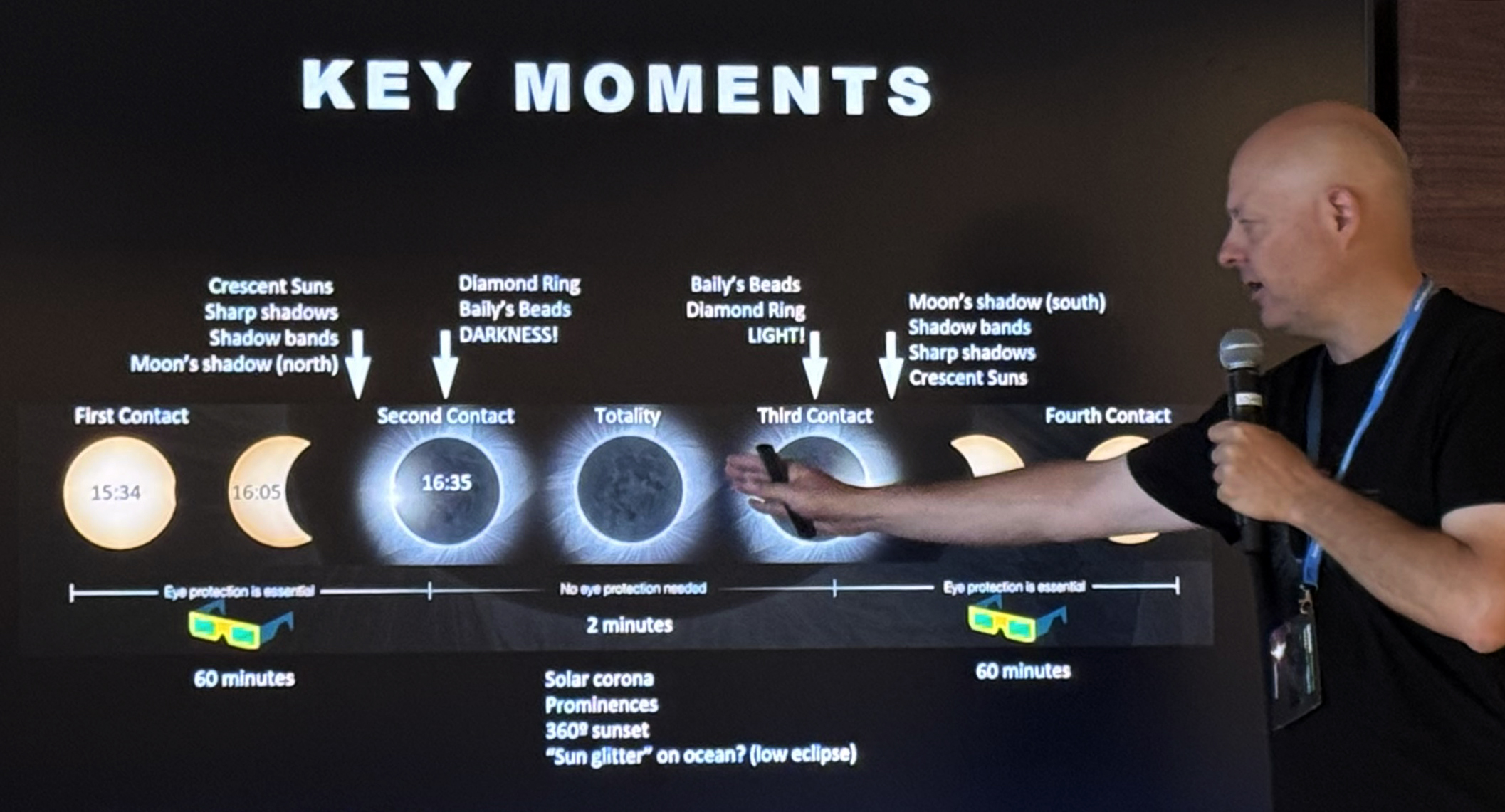
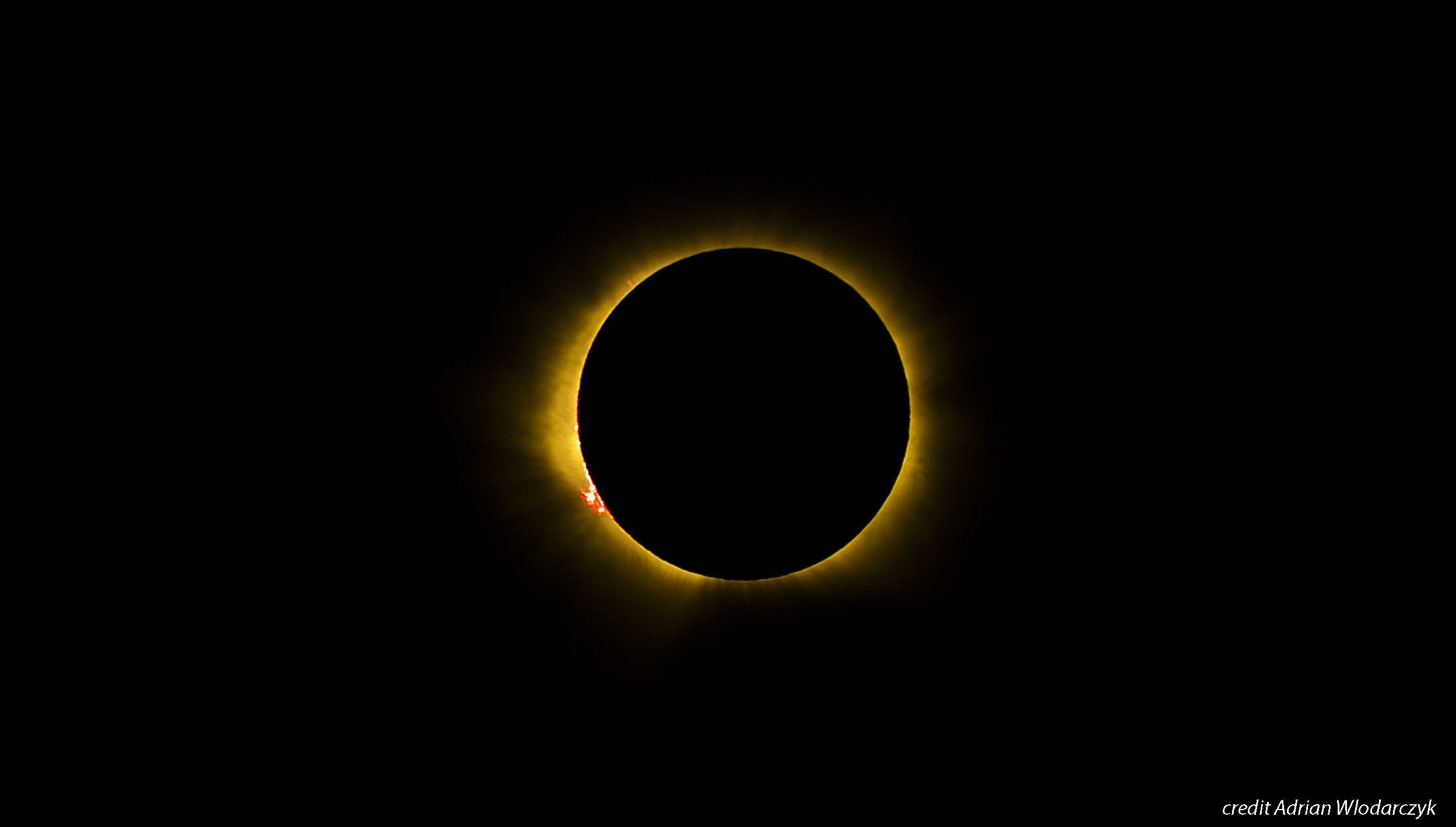
August 12th 2026 16:33 GMT first contact, 17:33 totality, lasting 2 minutes 17 seconds spent aboard the Sylvia Earle expedition ship led by the remarkable Greg Mortimer and perfectly positioned in Ofjord, part of Scoresby Sund, the largest and deepest fjord system in the world.
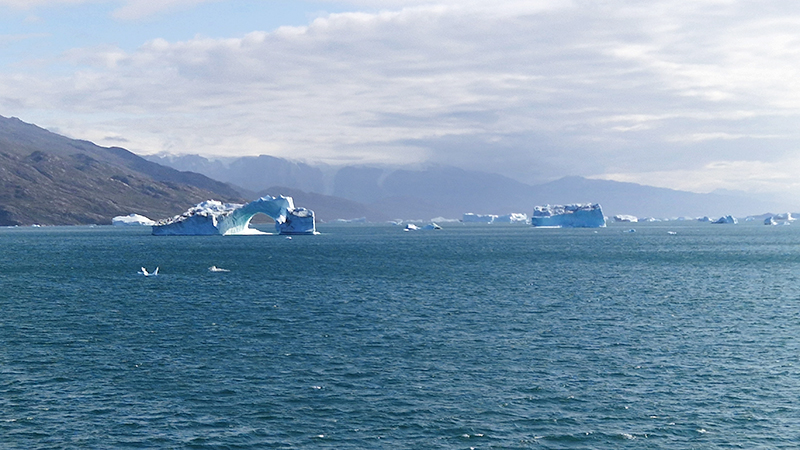
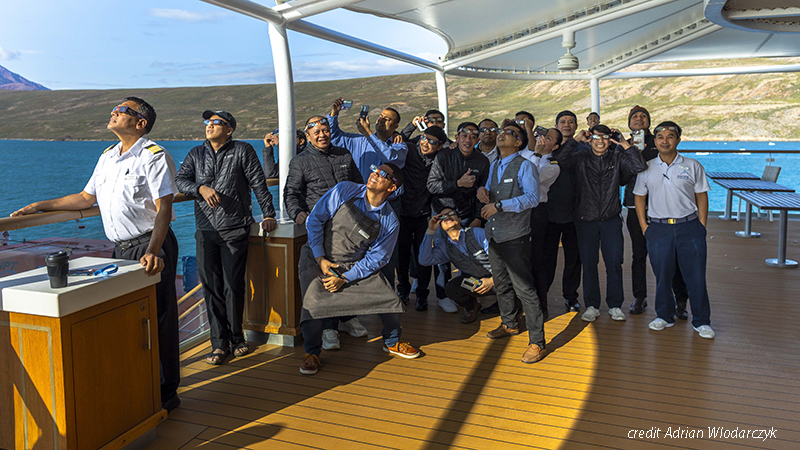
This fjord was so deep the ship could not drop anchor but had to use its virtual anchoring system to hold a steady orientation while every person on board including all crew members from every quarter gathered to experience one of nature’s exquisite astronomical events.
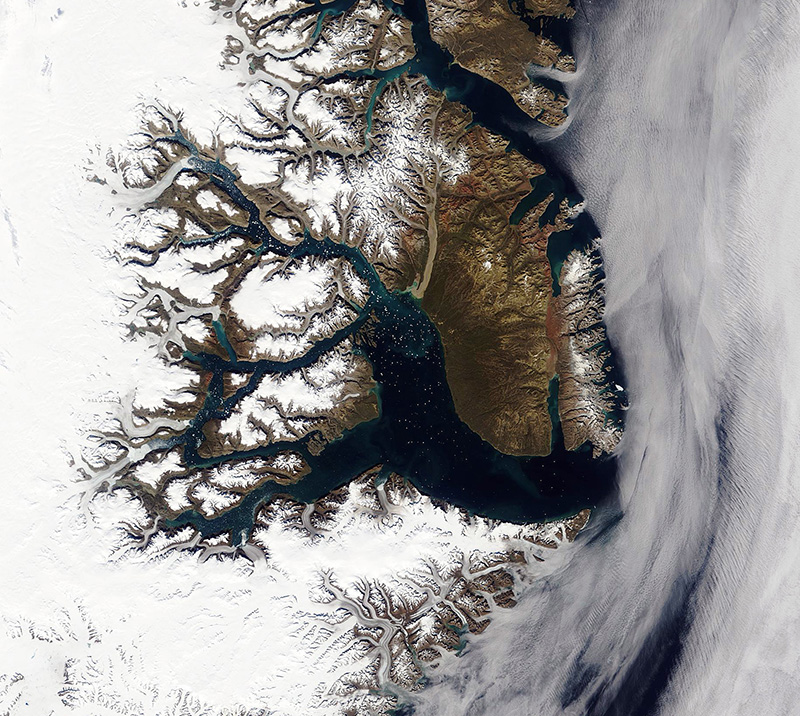
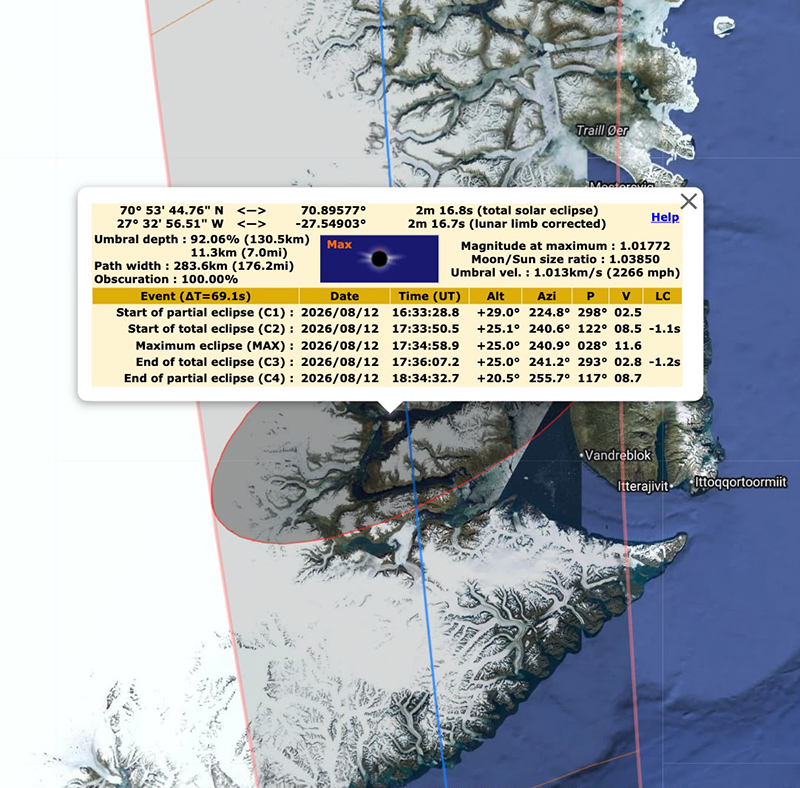
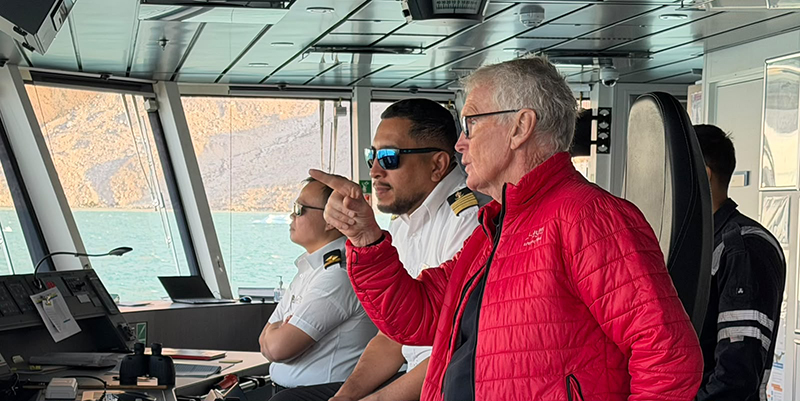
It will/is/has taken time to process the incredible experience of sailing from Iceland to east Greenland to witness totality in such a stunning location. We had booked the trip two years ago knowing there may only be a 40% chance of clear skies, but felt it was worth the risk as being in Greenland would be amazing anyway. As the day neared, the ship’s captain, expedition leader and astronomer held our fate in their hands as they poured over their charts and weather predictions, having to commit to a target destination several hours ahead of the event.
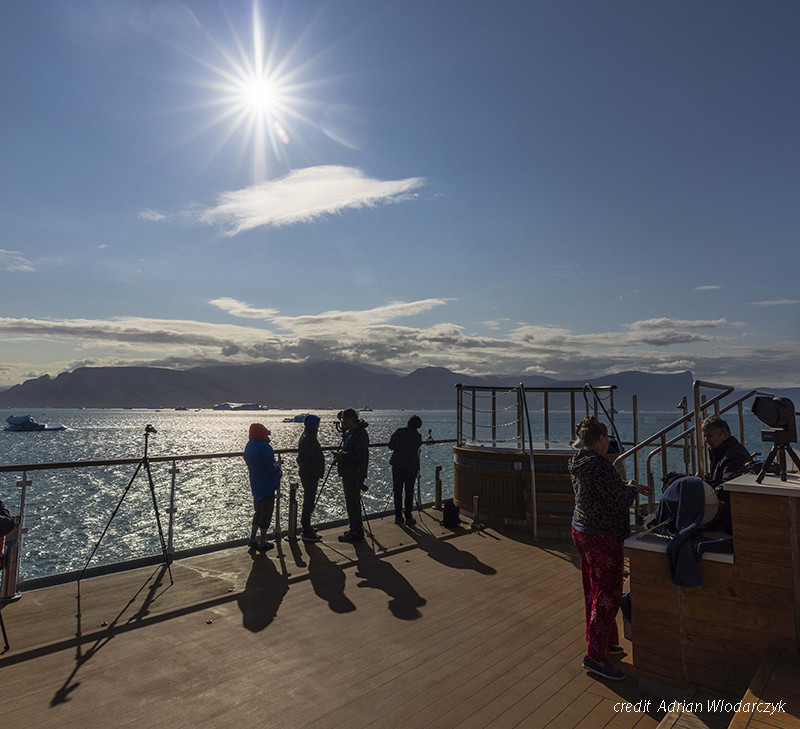
The brilliant team made a perfect choice, deciding to head for a conjunction of fjords yet keeping the ship back from the cliffs so that we looked up at clear skies with just the odd wisp of cloud. As excitement built around the ship there was some concern that we might not know when totality had started so that we could remove our solar glasses and filters and enjoy unfettered viewing. Jamie Carter our onboard eclipse expert was right – we knew instantly.
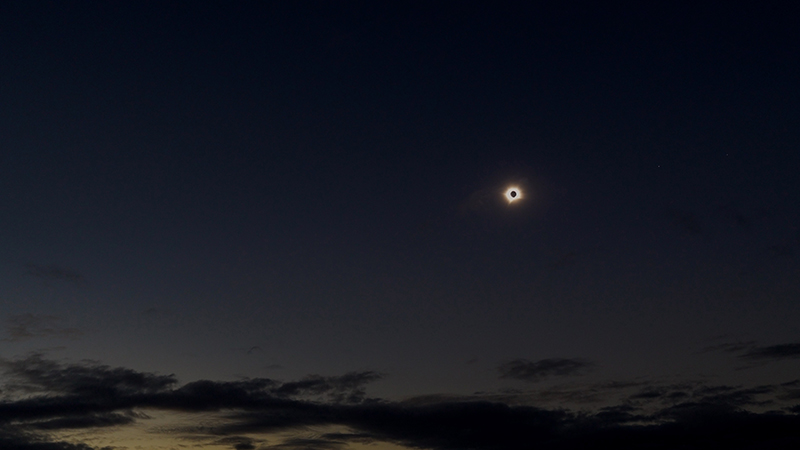
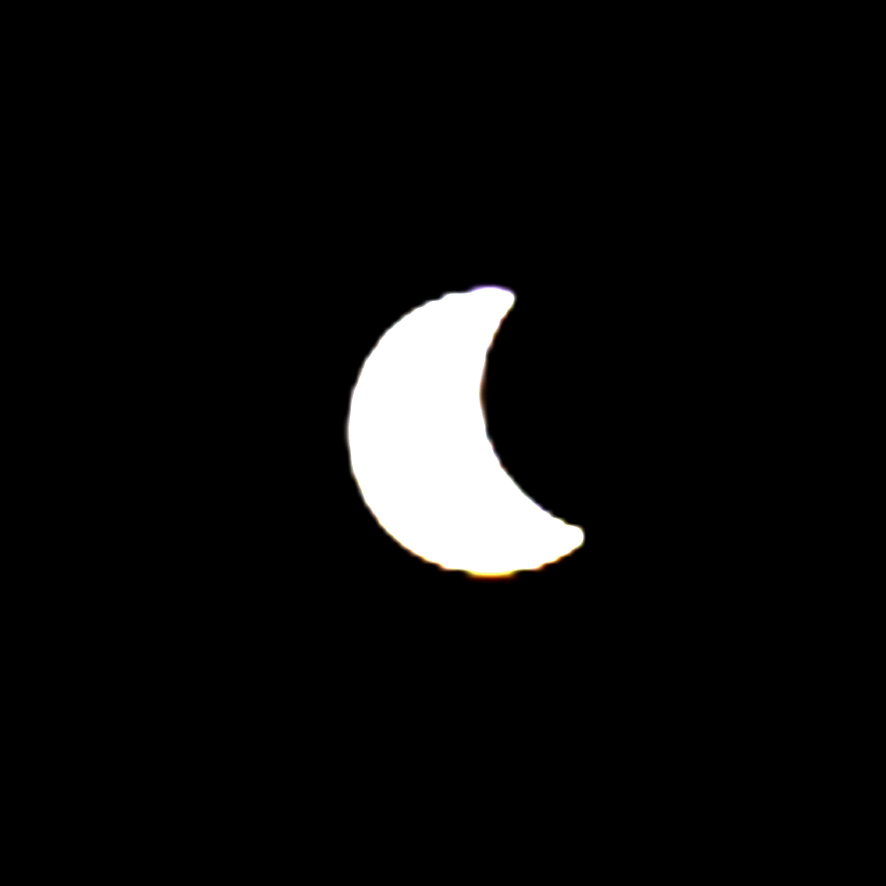
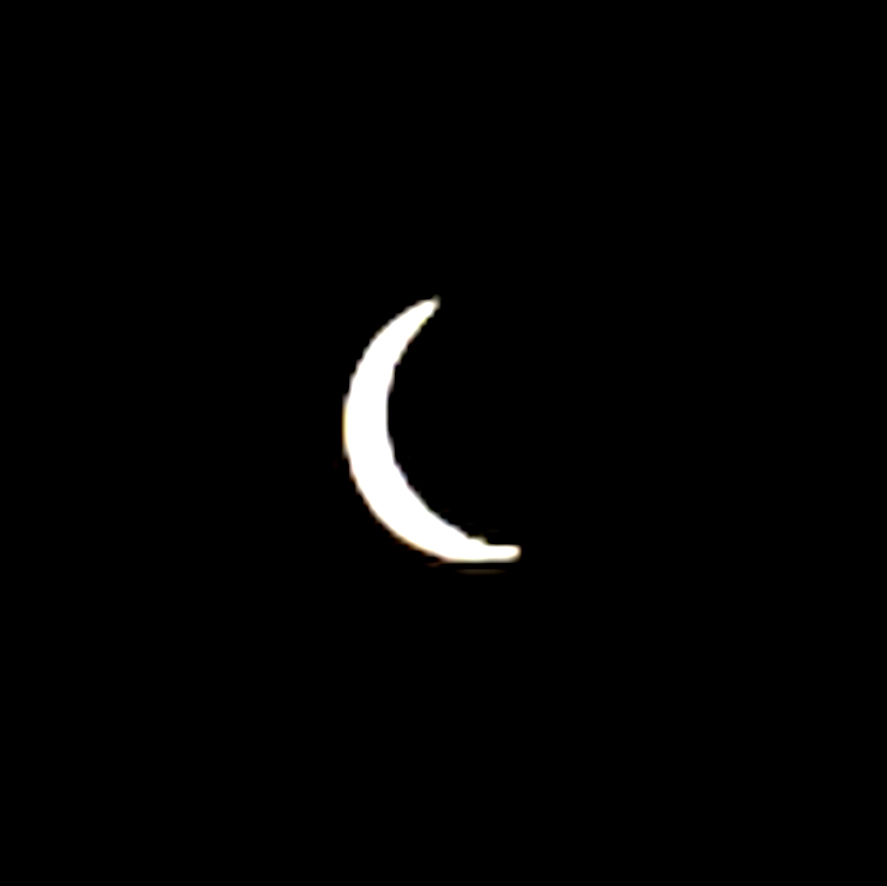
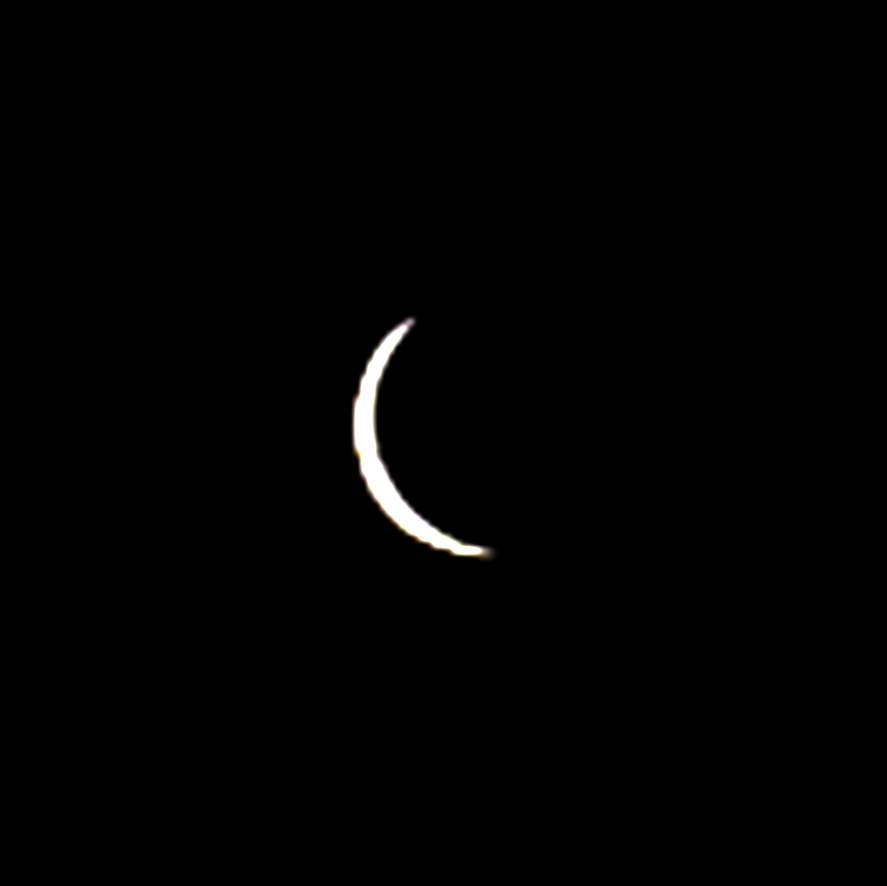
It was spine tingling to witness that moment, so accurately predicted, when the first sliver of the moon’s shadow inched into the circumference of the sun. It then took a leisurely hour to bite an increasingly larger chunk from its sphere as we gazed out from behind solar filters.
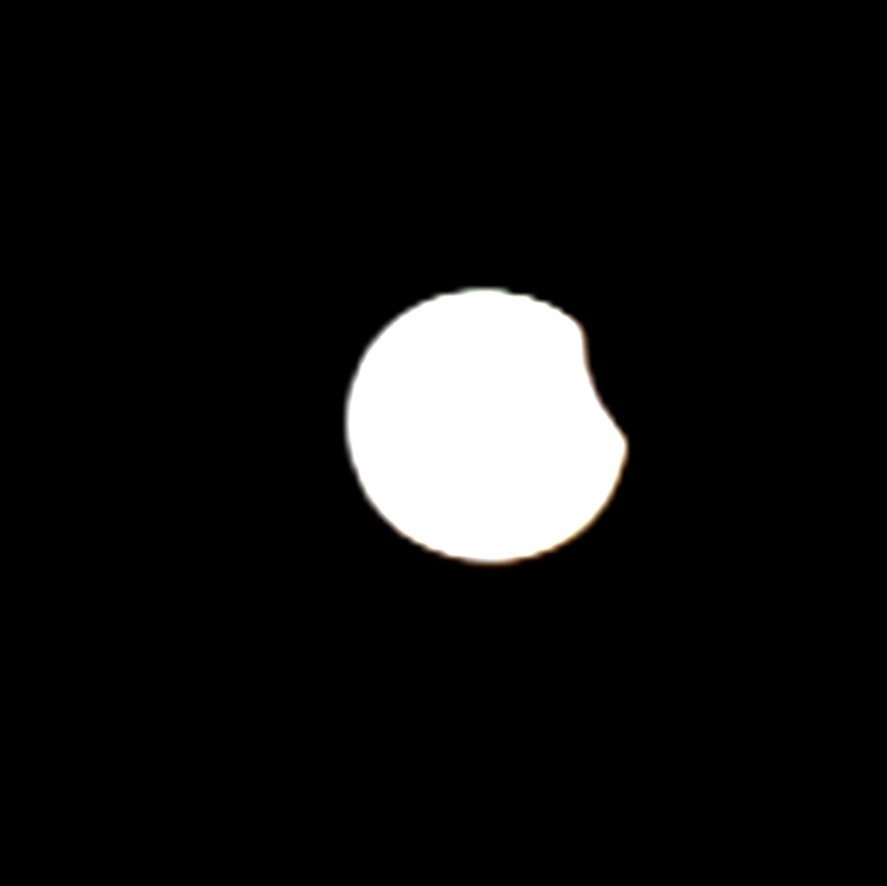
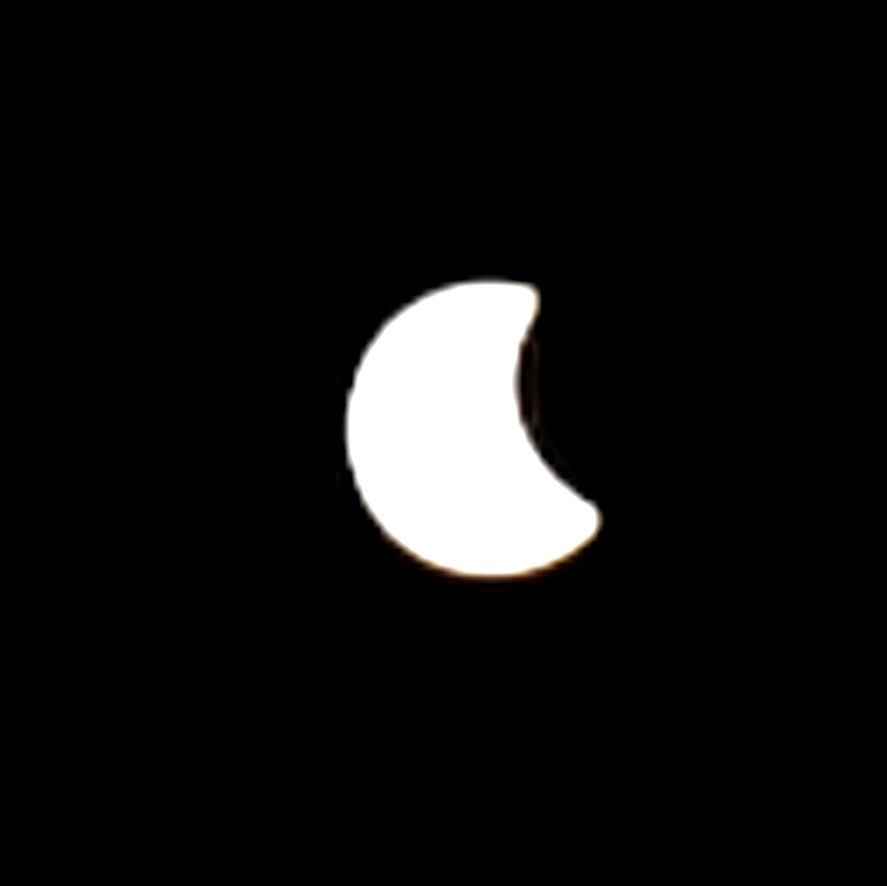
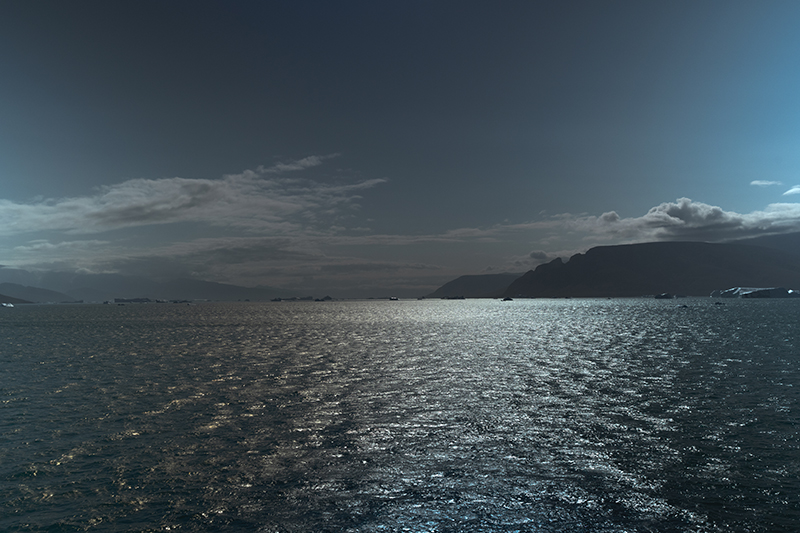
Even at almost complete totality the light escaping from the shrinking crescent was surprisingly illuminating over the fjord, dancing across the rippling water.
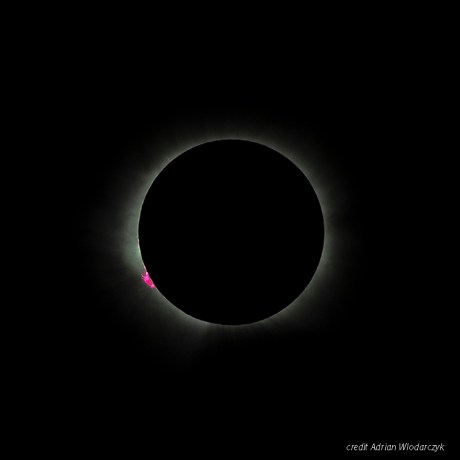
As the two celestial bodies slotted into perfect alignment, the light dimmed dramatically, bright pink solar prominences of glowing hydrogen became visible and flashes of light known as ‘baileys beads’, revealed the rough topography of the moon’s surface craters and valleys.

During the eclipse we noticed the bottom area of the sun’s corona was less defined. Gaps in the corona are due to dynamic changes in the Sun’s magnetic field causing regions in the outer atmosphere where the gas is much cooler and less dense so it does not scatter the same amount of light. This eclipse in 2026 is roughly two years after the peak of Solar Cycle 25 and while the Sun is still relatively active, it lacks the perfectly symmetrical corona seen during maximum activity.
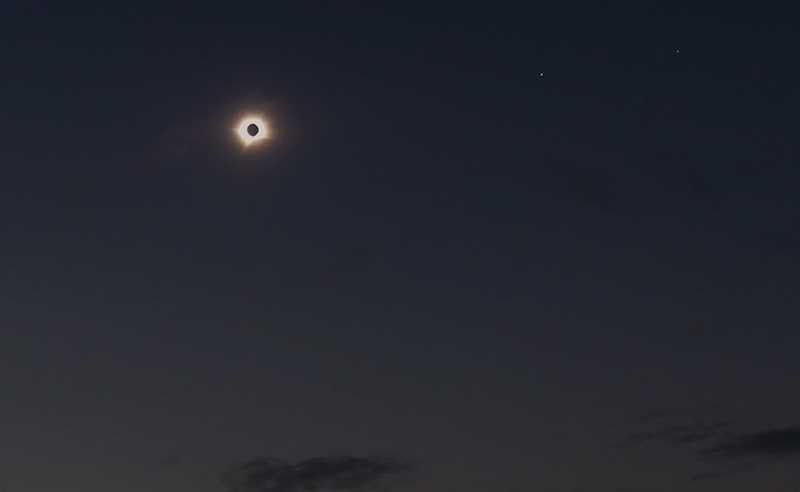
Planets including Mercury made a brief astonishing appearance.
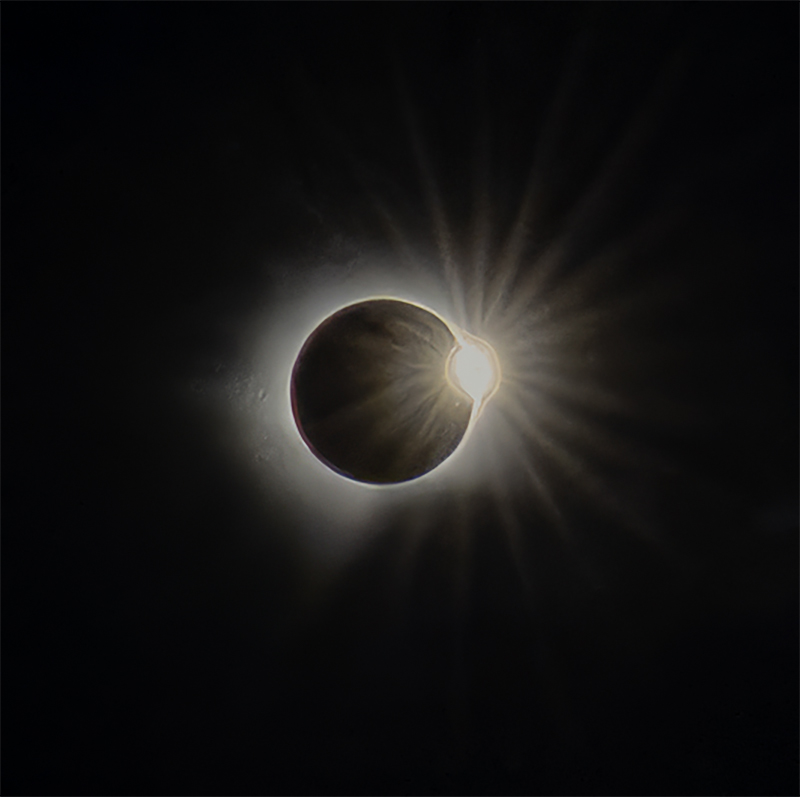
The precious minutes and seconds soon vanished in a dazzling blaze as the ‘diamond ring’ effect shattered the mysterious twilight with piercing rainbows of light. Glasses and filters were quickly replaced to watch the slow retreat of the moon’s shadow slipping off into the unseen.

In his eclipse lectures, Jamie Carter had stressed that we should not stress about getting photos but enjoy being present.
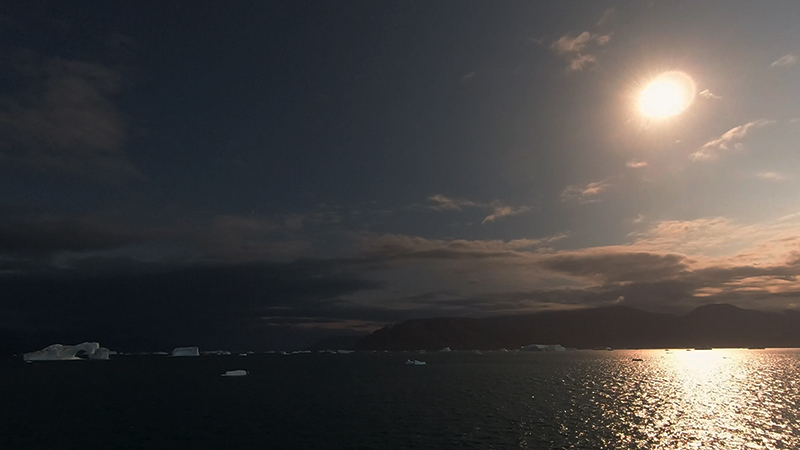
I did try to absorb the moment but also quickly snap some shots with my new Sony A7C II and a couple on my phone.

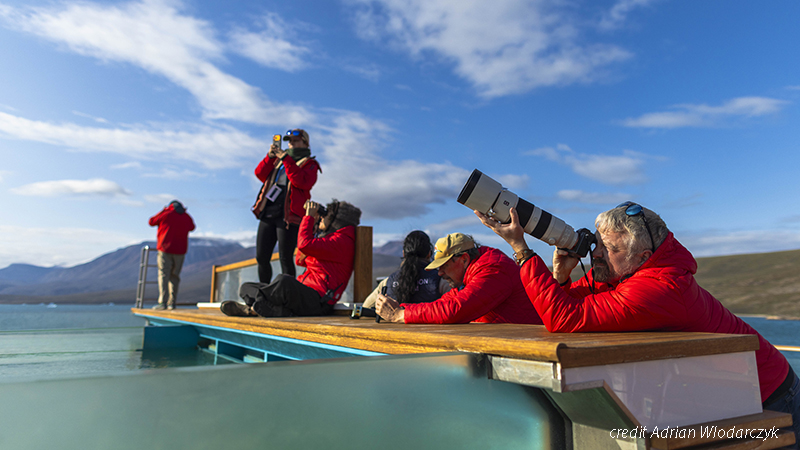
I also had a GoPro running on the side to capture the changing light across the landscape. I had chosen a wide angle rather than a zoom lens for the Sony camera so sacrificed detail for ambience. There is something rewarding about taking your own photos even if they are not perfect and I knew we would have professional images shared with us from the on board photographer Adrian Wlodarczyk. Adrian captured terrific zoom shots of the eclipse and all aspects of the cruise which are shared with everyone so we all have access to fantastic reminders of our arctic adventure.
The total eclipse was obviously the highlight of the trip but there were so many other extraordinary encounters along the way.

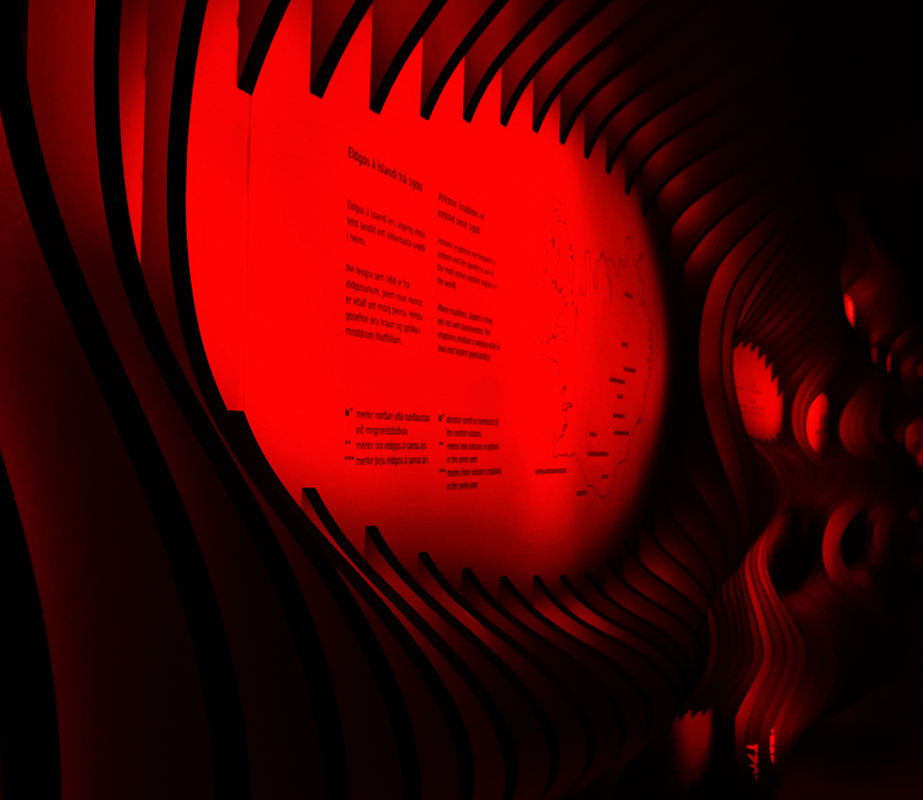
Before sailing for Greenland, I had a rewarding time exploring Iceland in the company of local guide Kristjan Einvarður and volcanologist Dave McGarvie. Both were passionate and knowledgeable as well as being great fun. Blessed with clear skies and alarmingly warm temperatures we were repeatedly told that this weather was very unusual. (It did rain one day)
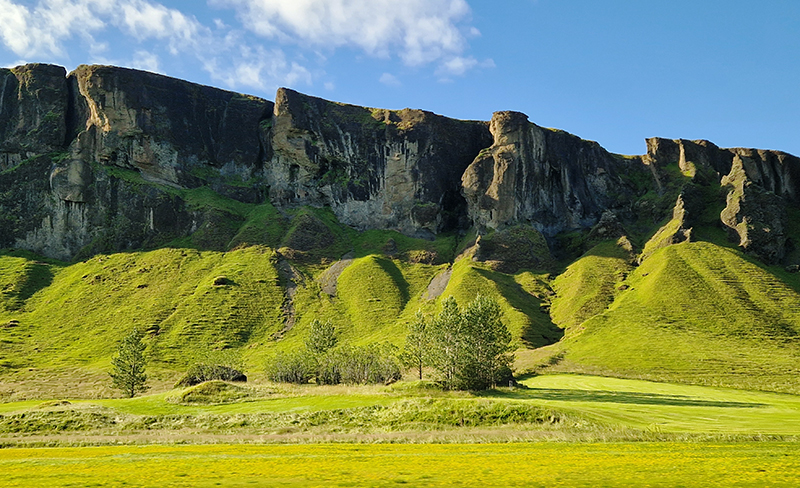
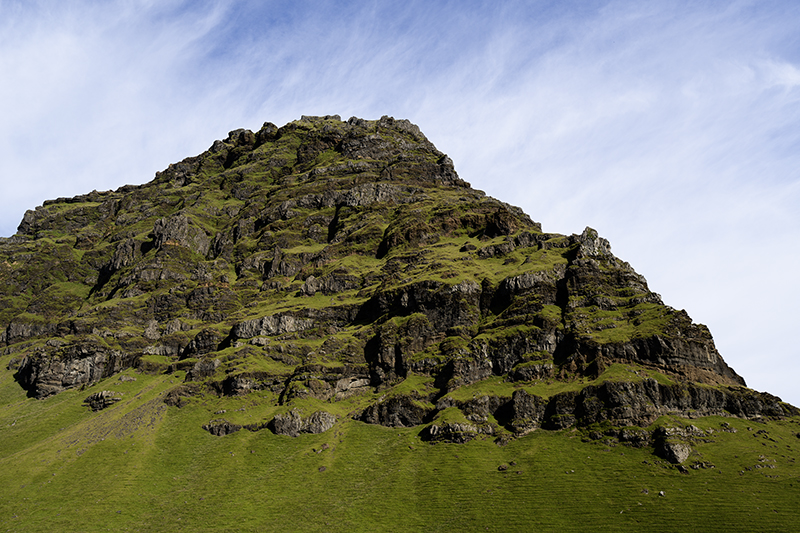
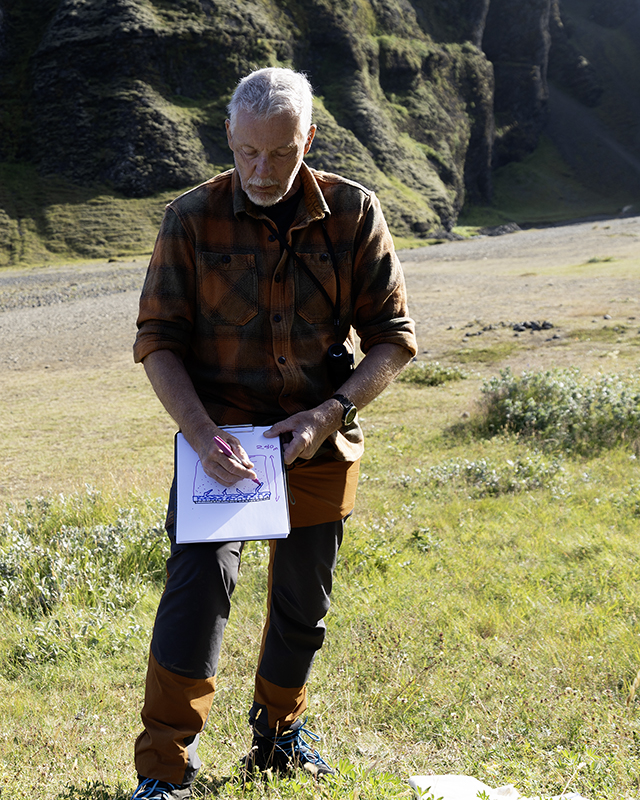
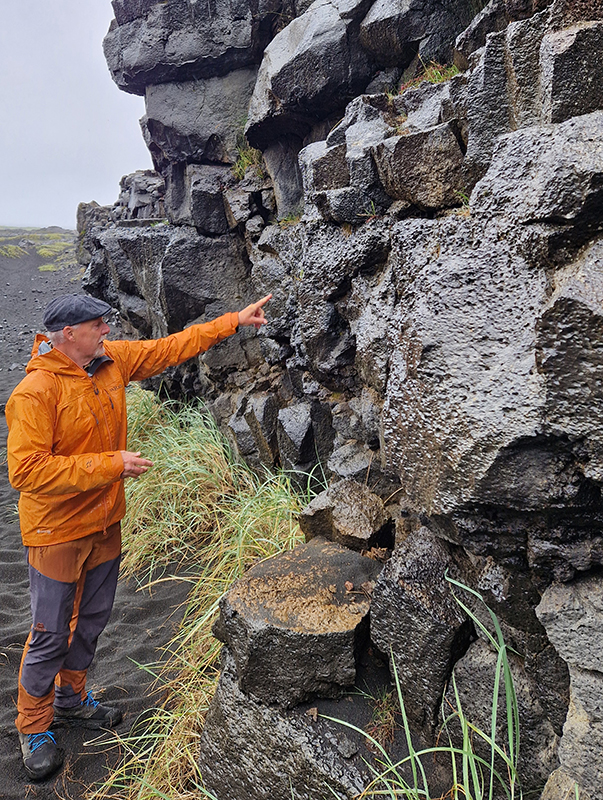
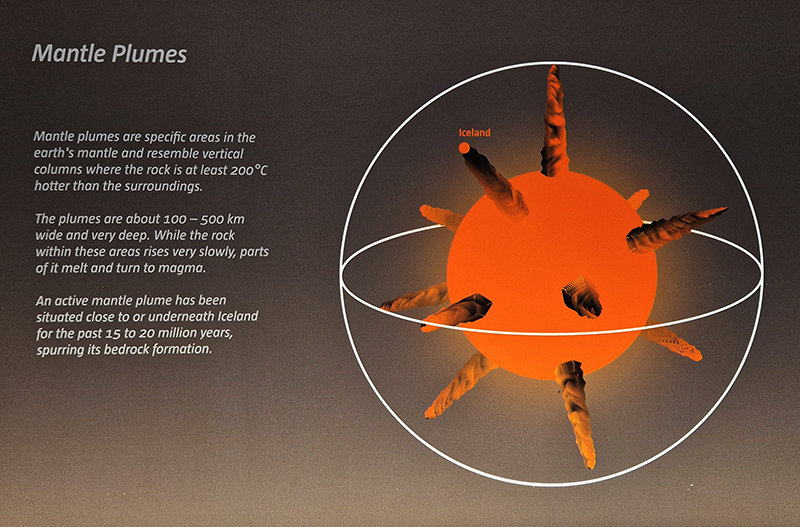
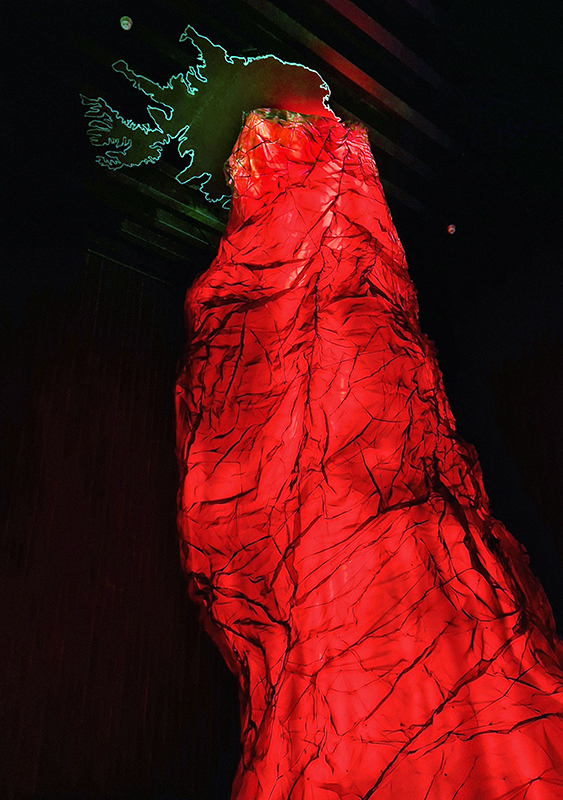
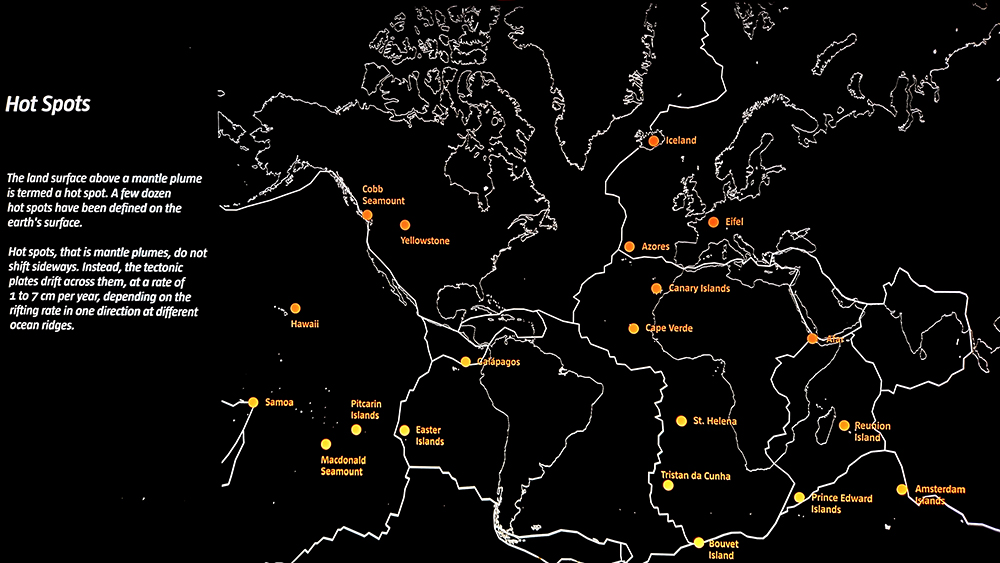
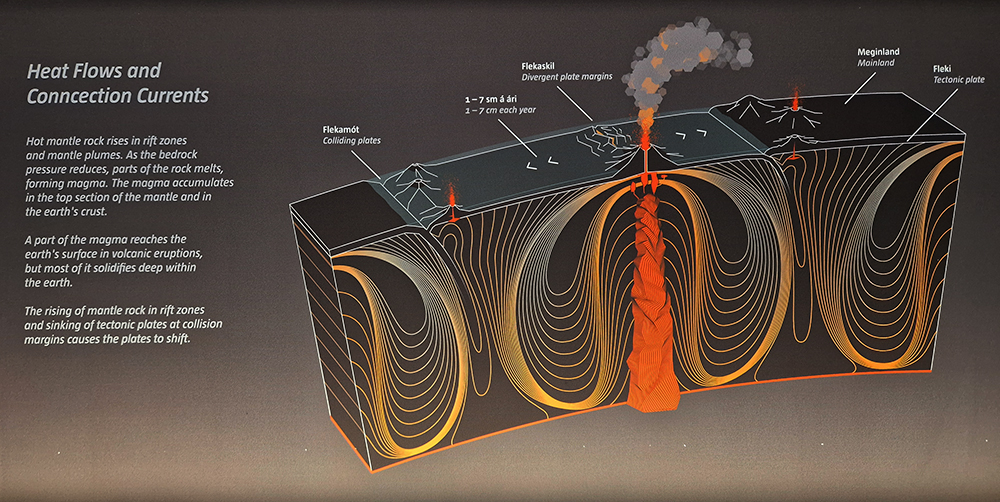
Volcanologist Dave McGarvie explained to us the unique nature of Iceland geology. All along the mid-ocean ridges, basalt magma erupts and builds new oceanic crust as it spreads across the sea floor. What is different about Iceland is the presence of a mantle plume where magma erupts from great depth, enough to build ocean islands. The island of Iceland is the only part of the worldwide mid-ocean ridge system that lies above the sea surface.

Because Iceland has such a thick crust created by sitting over a mantle plume, its central volcanoes produce rhyolite lavas flows which are much thicker than basalt lava flows and produce much more explosive eruptions. Magma that erupts under ice or water can’t spread far and so it builds upwards. Eruptions that occurred under ice can be identified by a table top or ridge appearance.


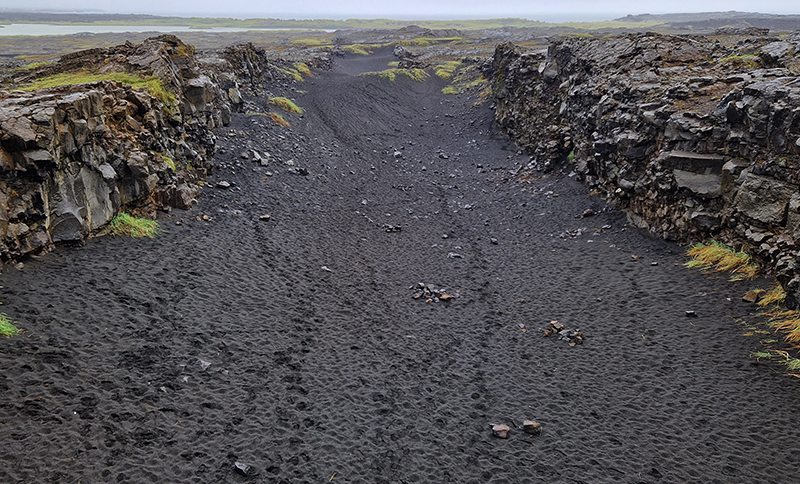
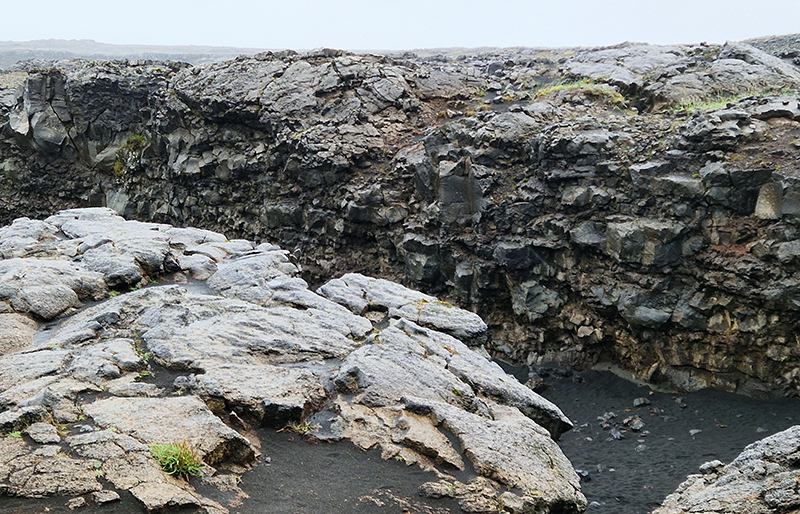
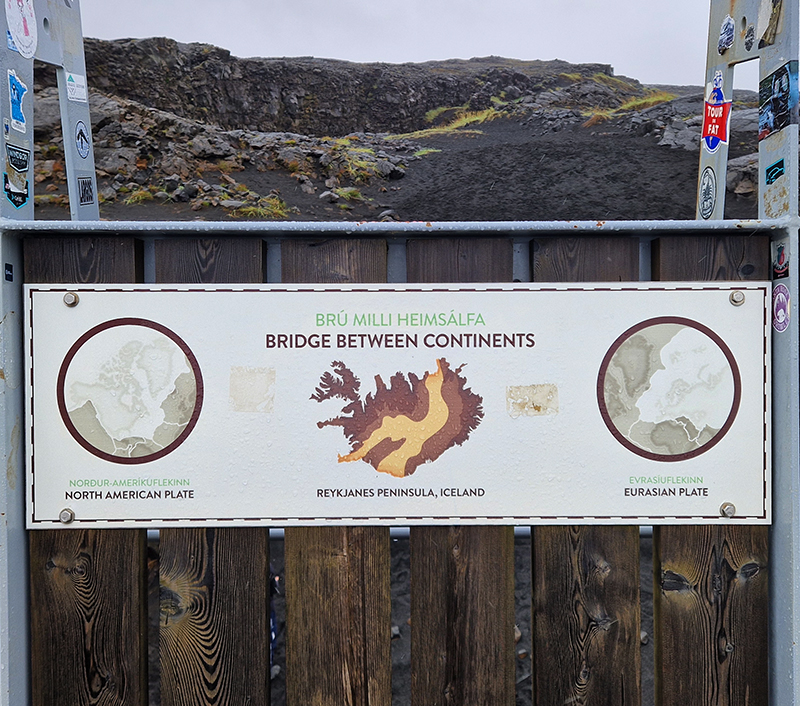
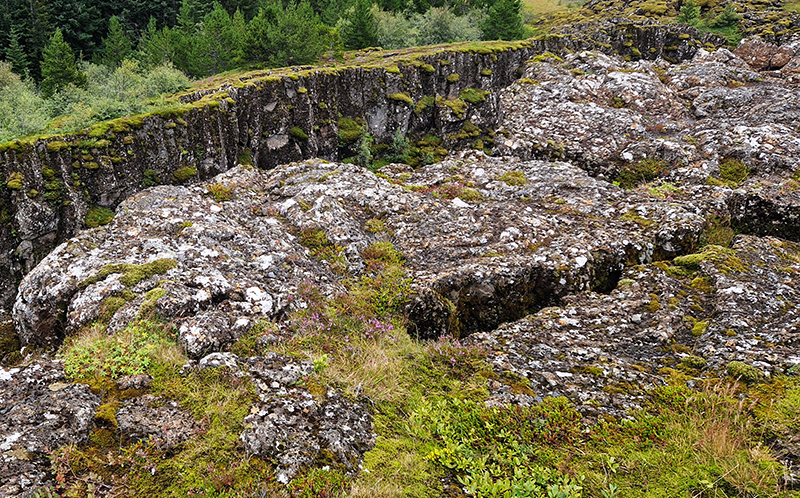
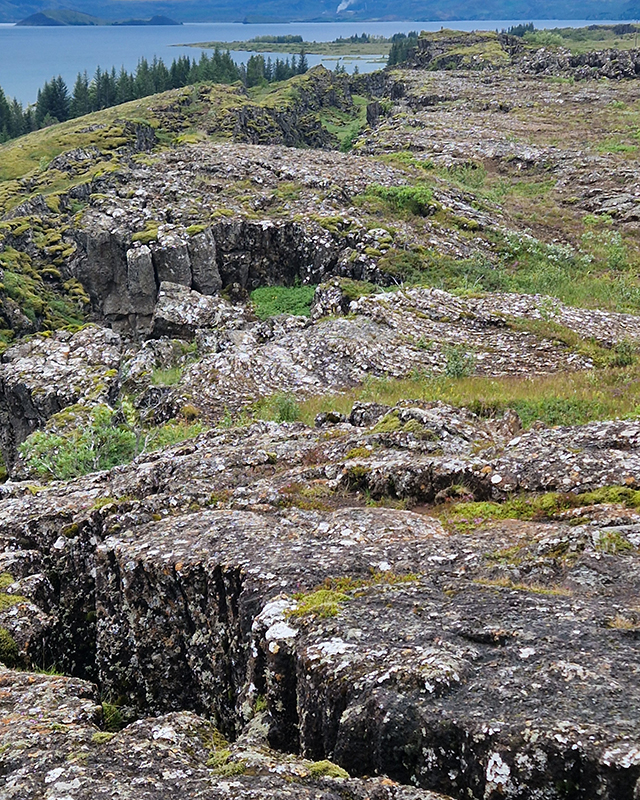
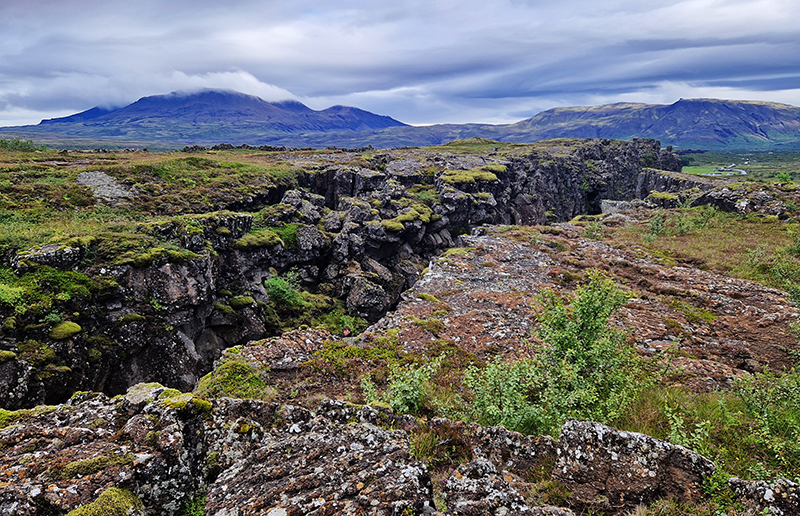
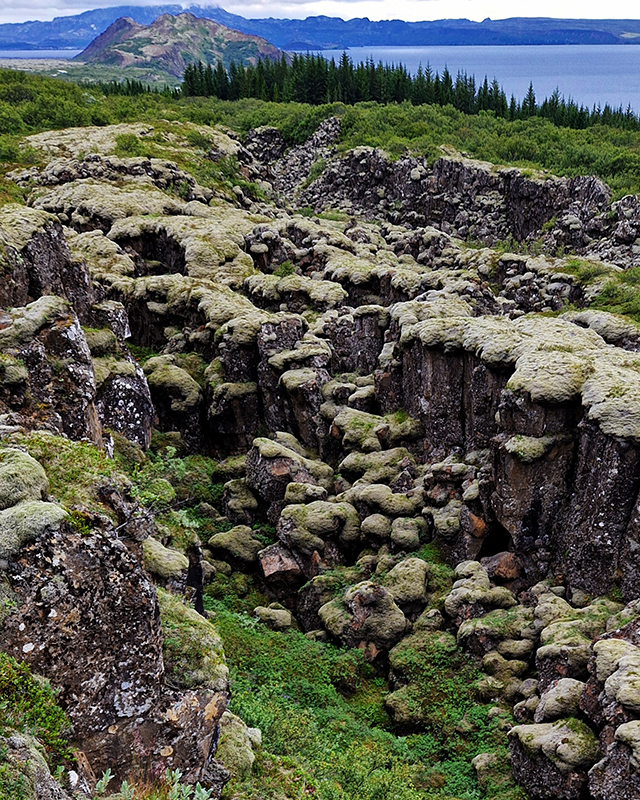
This is land where the North American and Eurasian plates are slowly drifting apart at about 2cm a year. As the plates diverge, cracks and fractures appear in the lava rock forming steep trenches. There is a small footbridge here where you can supposedly walk across from one continent to the other but in reality the division isn’t a single narrow trench but a complex, active rift zone that spans several kilometres.
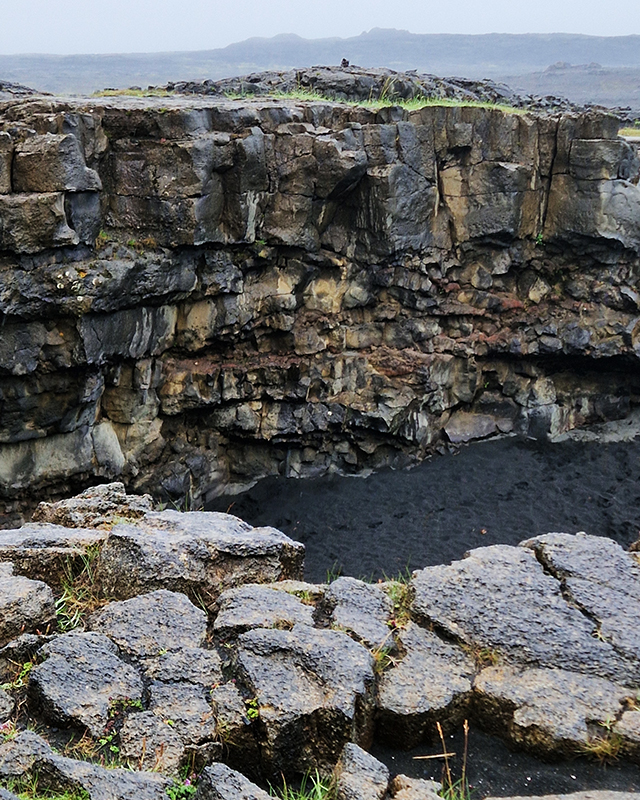
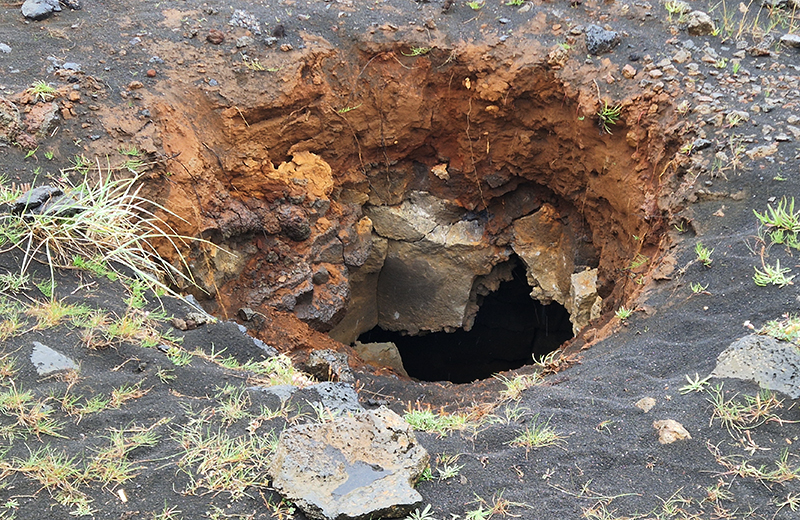
It was the discovery of magnetic stripes, created by sea-floor spreading of lava erupting from mid-ocean ridges during different eras of magnetic polarity, which led to the understanding of plate tectonics. This phenomenon inspired my Book of Reversals so I was thrilled to visit the Mid-Atlantic Ridge at Sandvik Bridge and also at Thingvellir National Park to see land shaped by these forces that I find fascinating. I am planning to use sound recordings from this trip to create an ambient background for the digital form of Book of Reversals which uses the scanned images from my HiResidency at equivalentbehaviour .
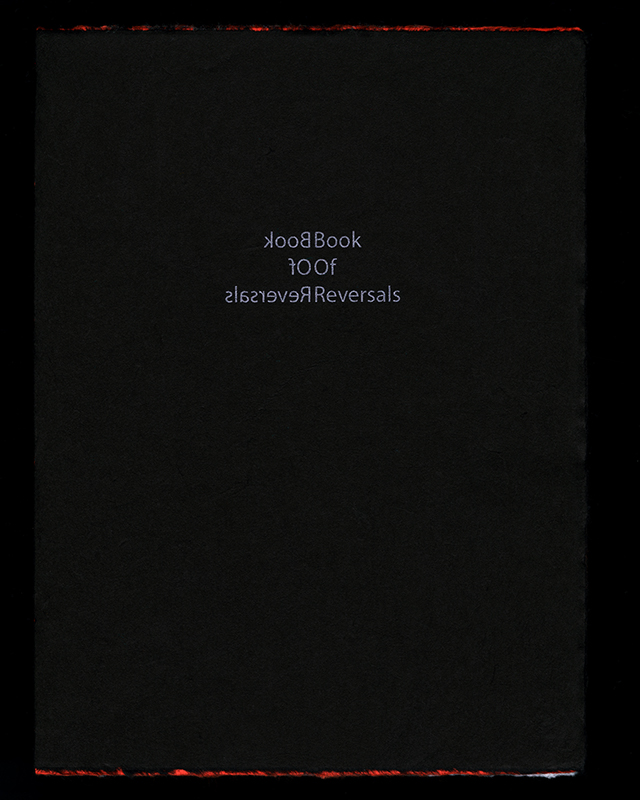
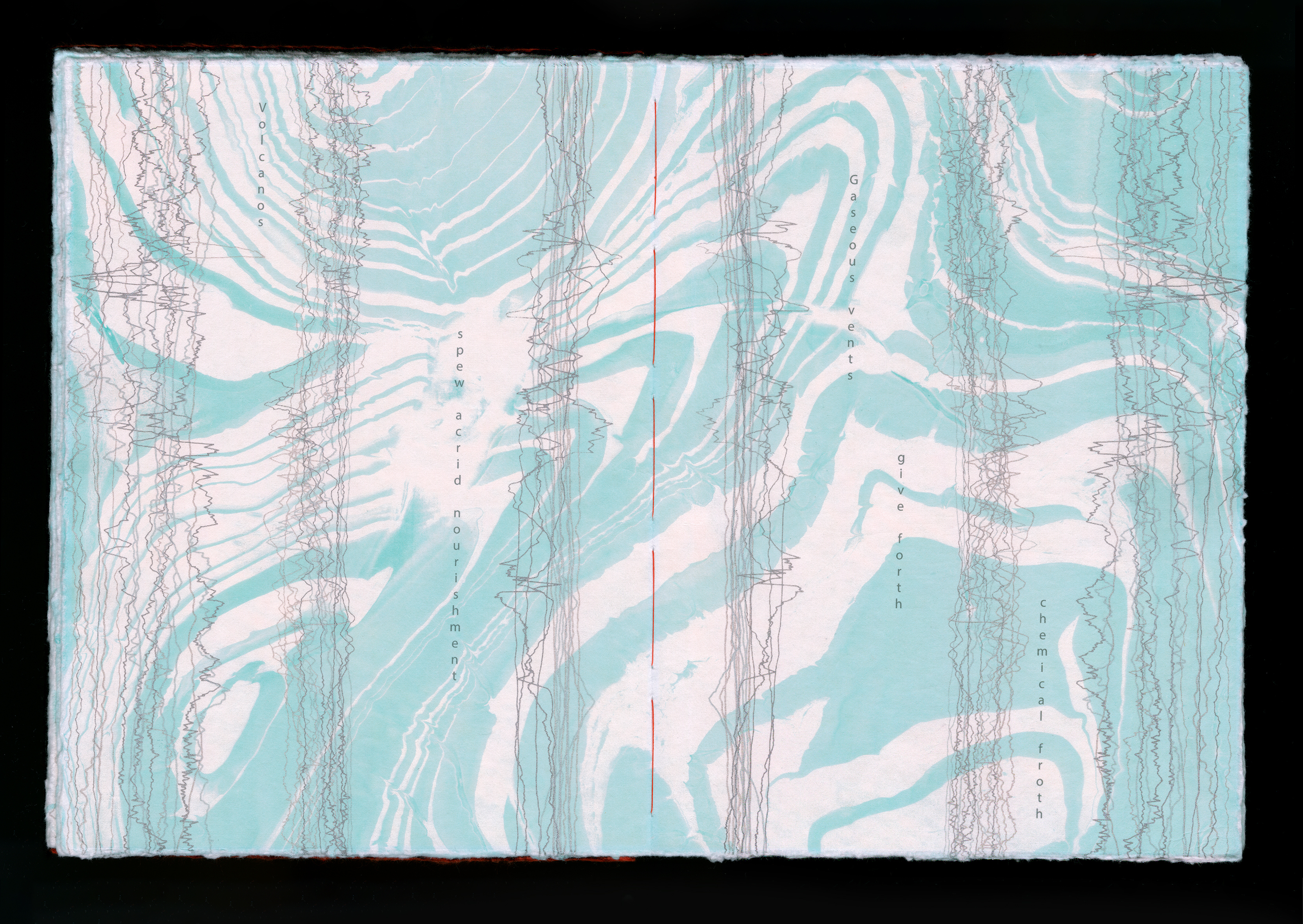
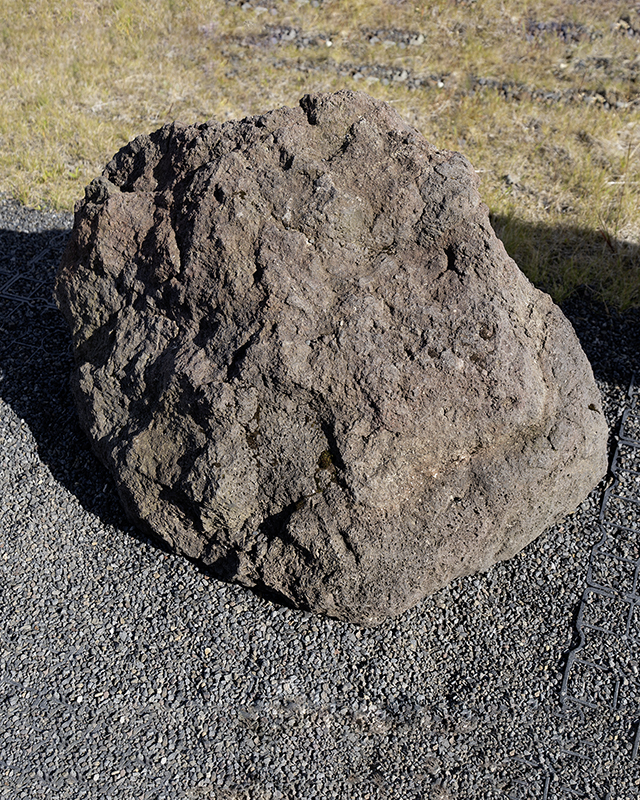
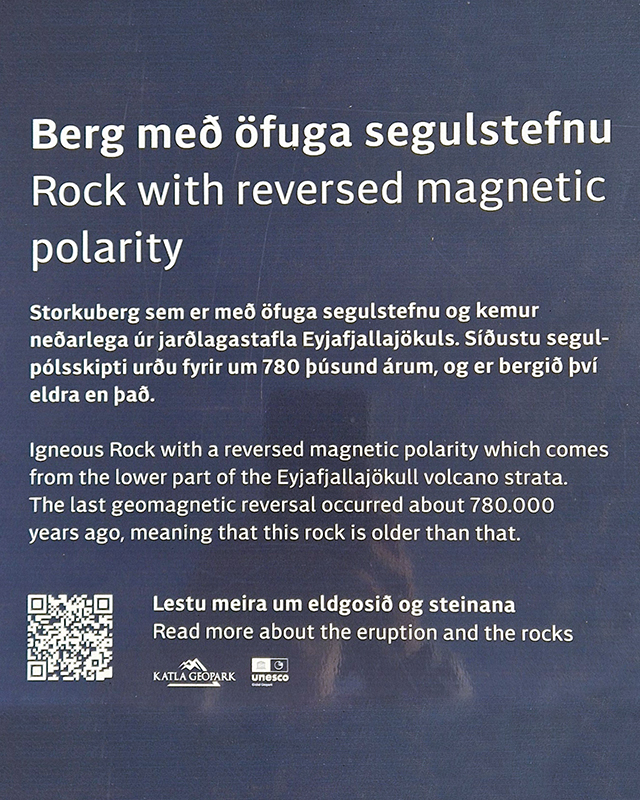
I was also delighted to see a ‘rock with reversed magnetic polarity’ displayed at the Katla Geopark. This rock was born when the north and south poles had flipped to the opposite ends of the Earth.
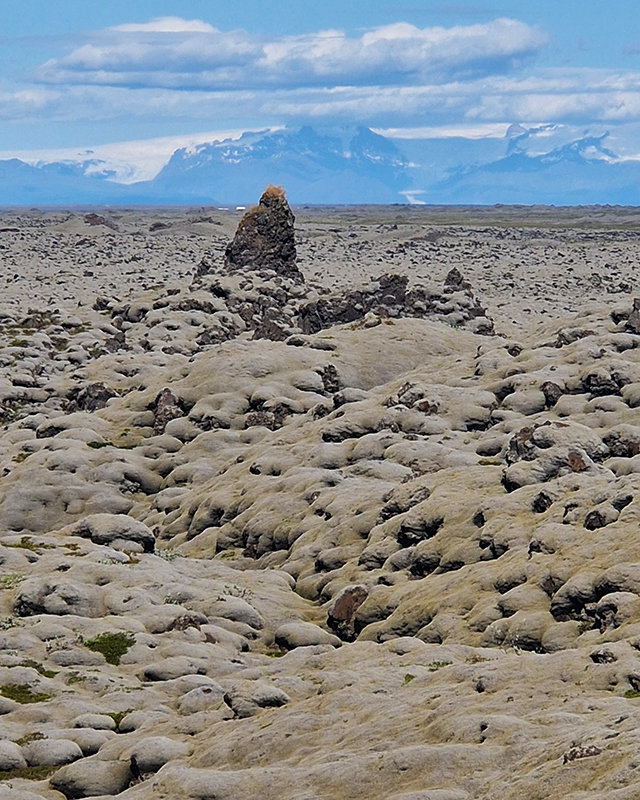
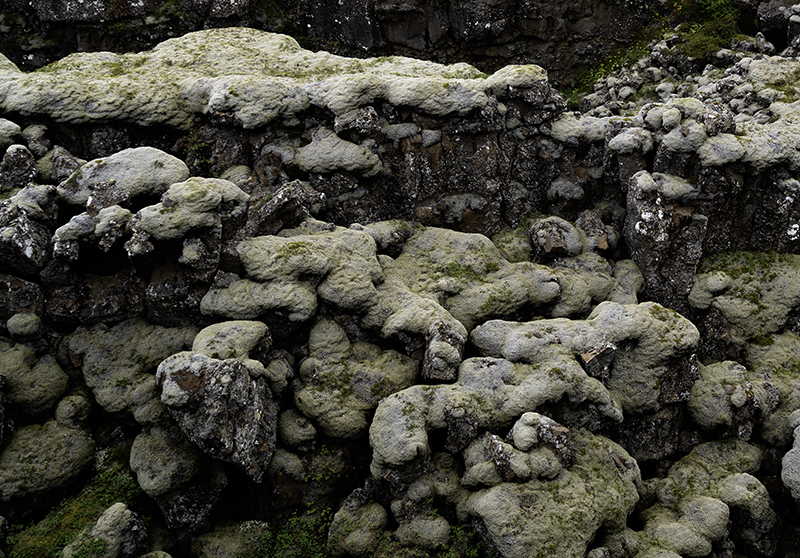
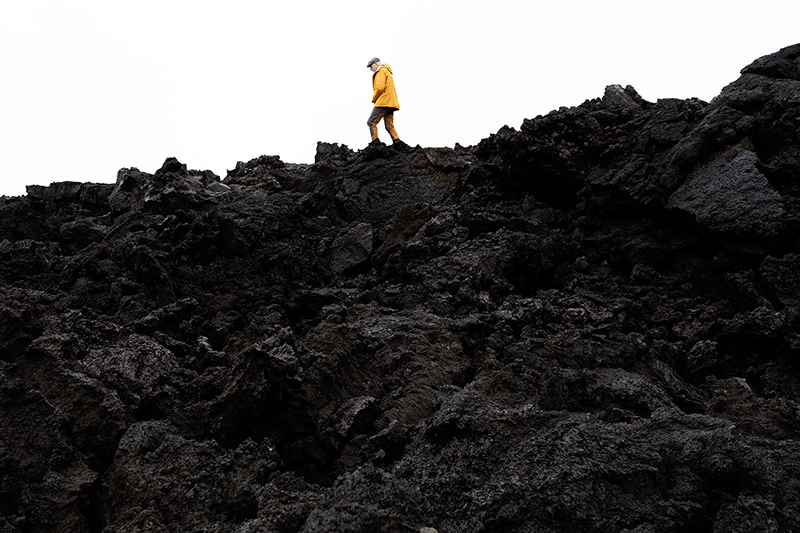
New raw lava fields are hostile jagged and bare terrains stretching vast distances. Over time the lava gains a cushioning of moss, lichens appear and these pioneer lifeforms pave the way for soil and tender flowering plants to take hold.
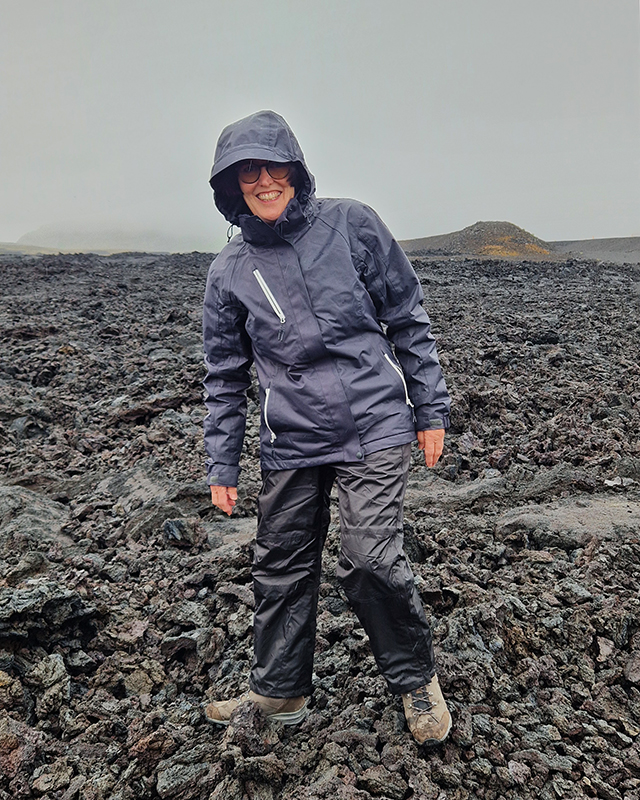
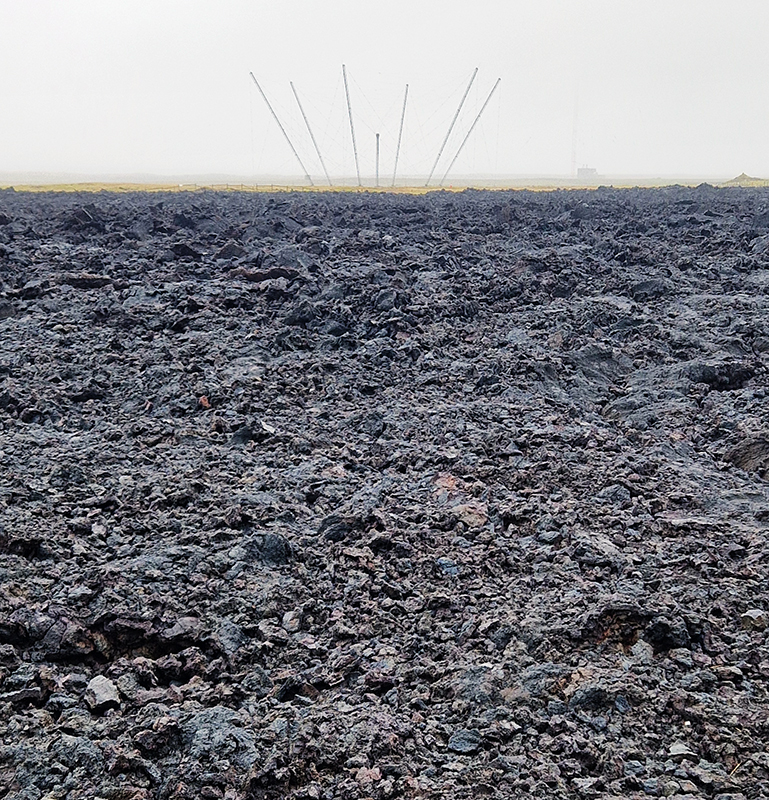
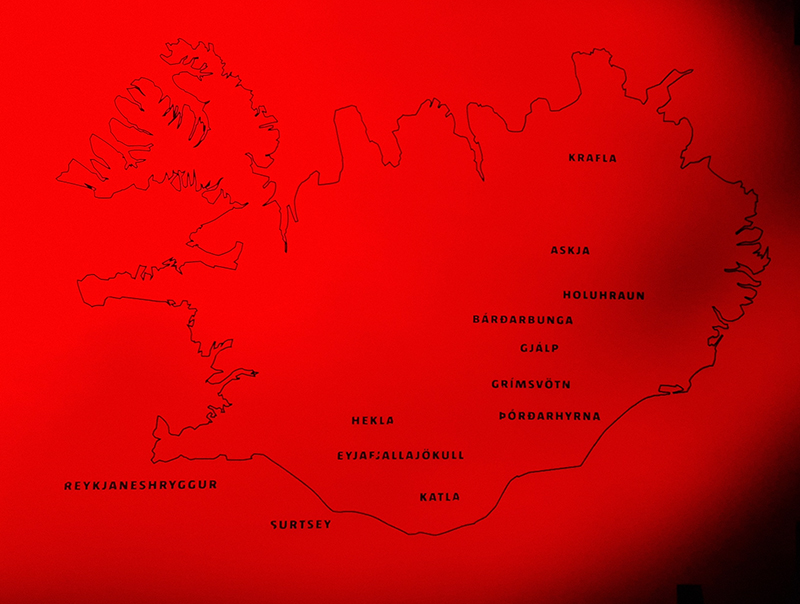
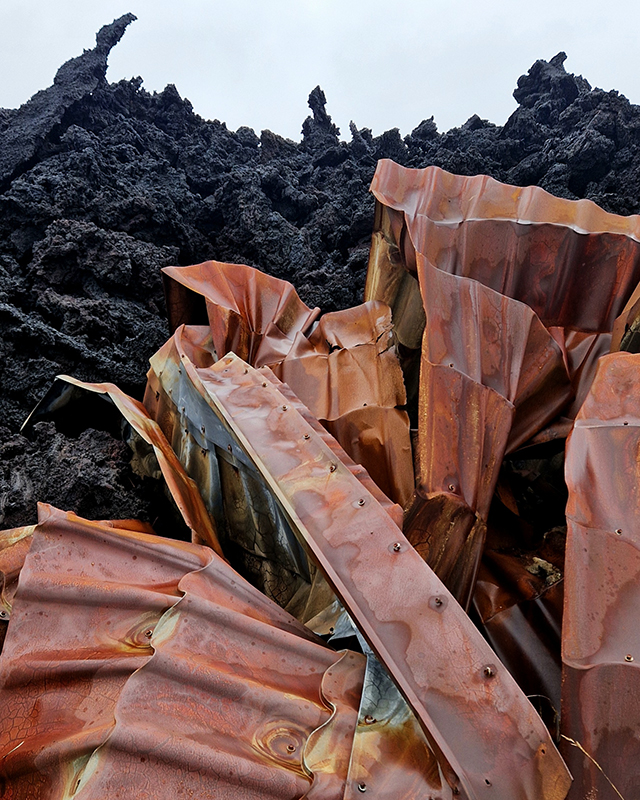
Iceland has many central volcanoes which are surrounded by chains of smaller cones and craters where lava erupts during fissure eruptions from faults where the land subsided during rifting. After almost 800 years of stability on the Reykjanes Peninsula a new cycle of fissure eruptions have occurred since 2021 and are continuing regularly. The most destructive happened in January 2024 when lava reached the town of Grindavík. It was poignant visiting this town where people had to suddenly flee with what they could carry, leaving their homes at the mercy of the lava.
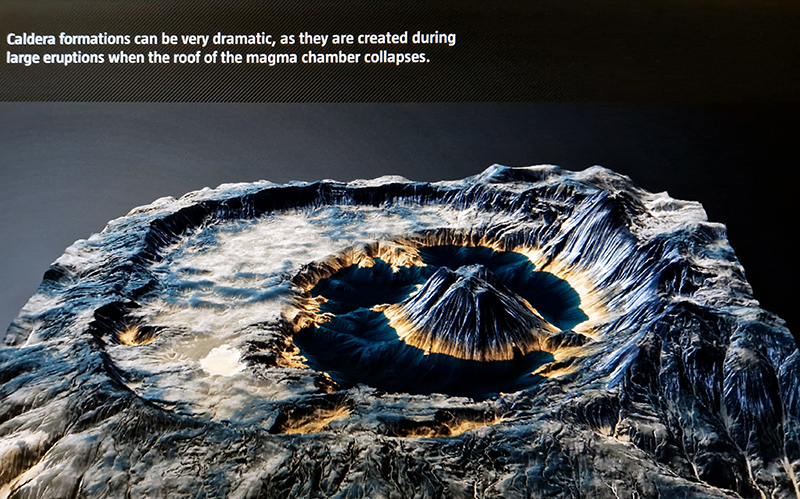
We made a visit to the Lava Centre at Hvolsvöllur to learn more about volcanology and mantle plumes.
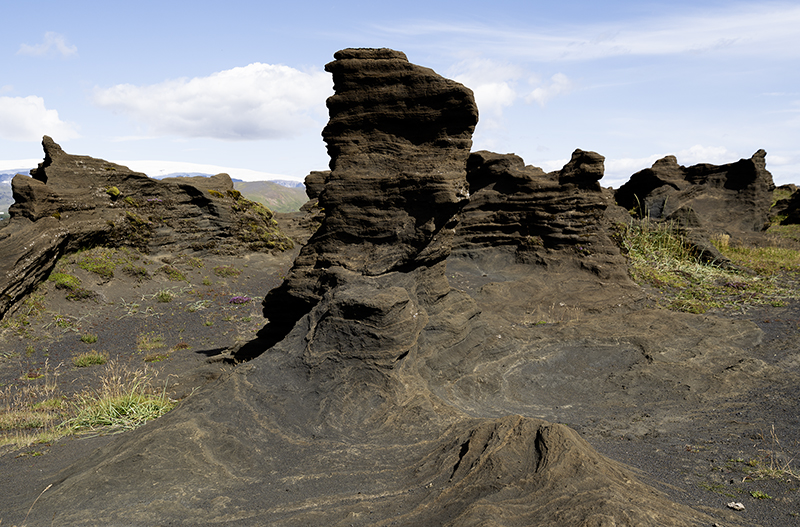
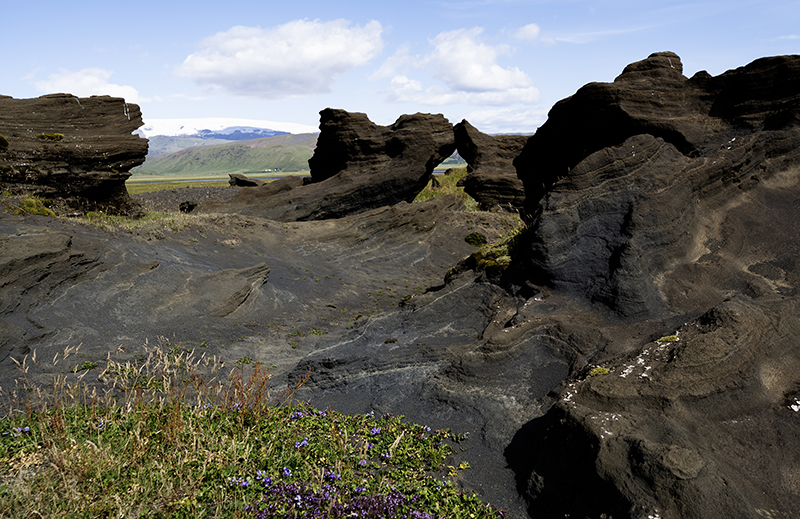
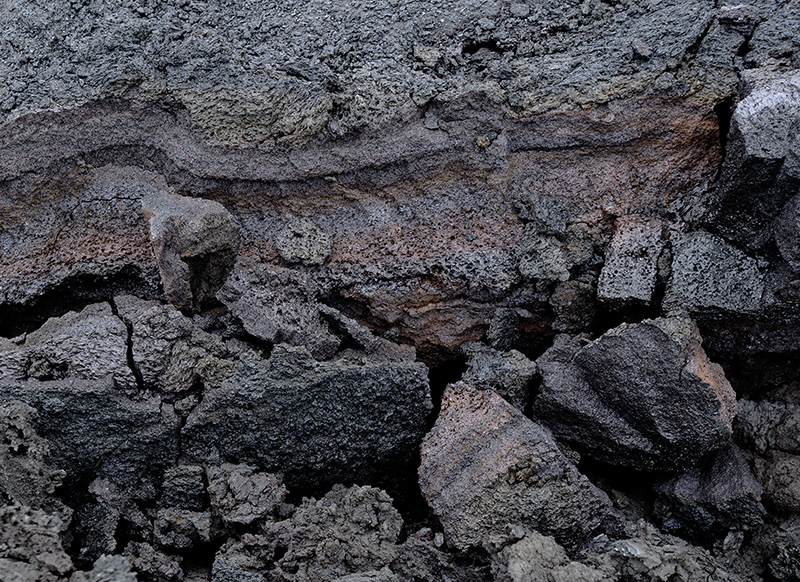
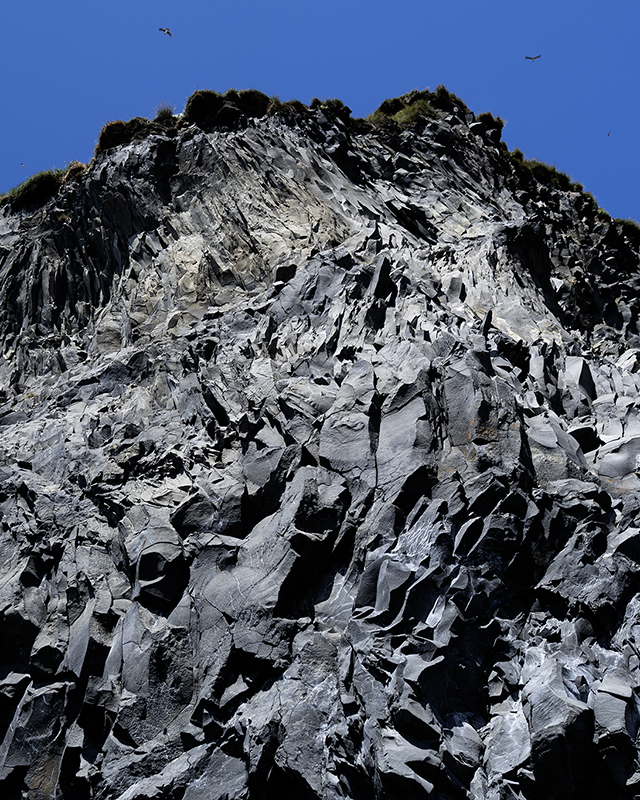
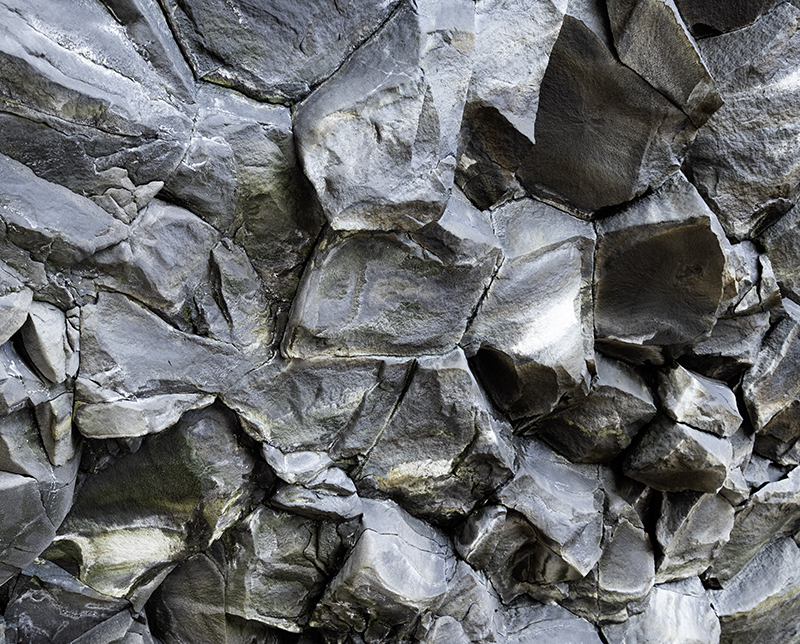
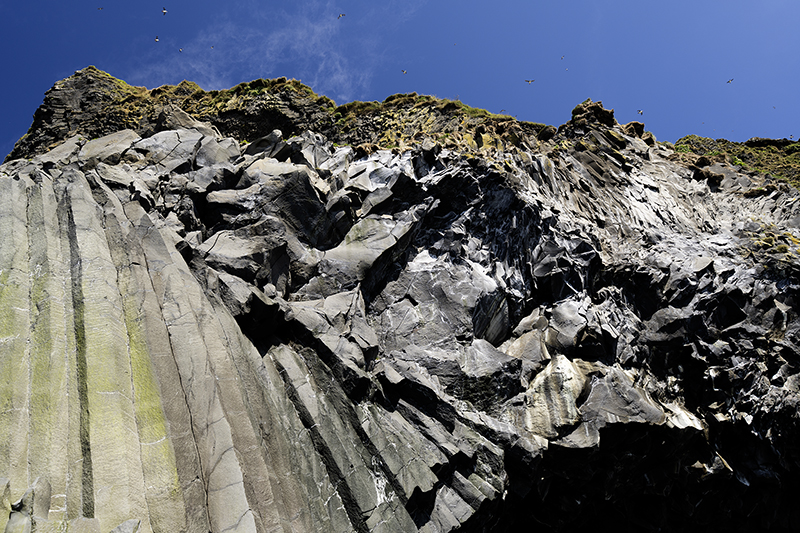
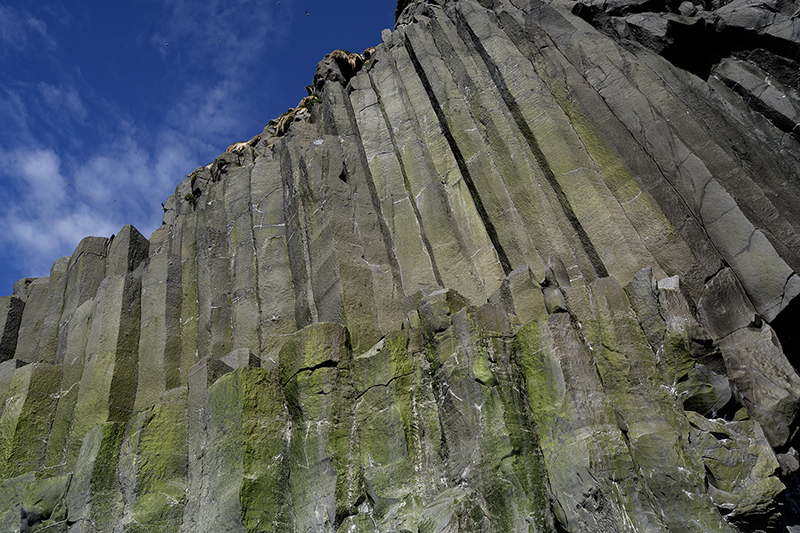
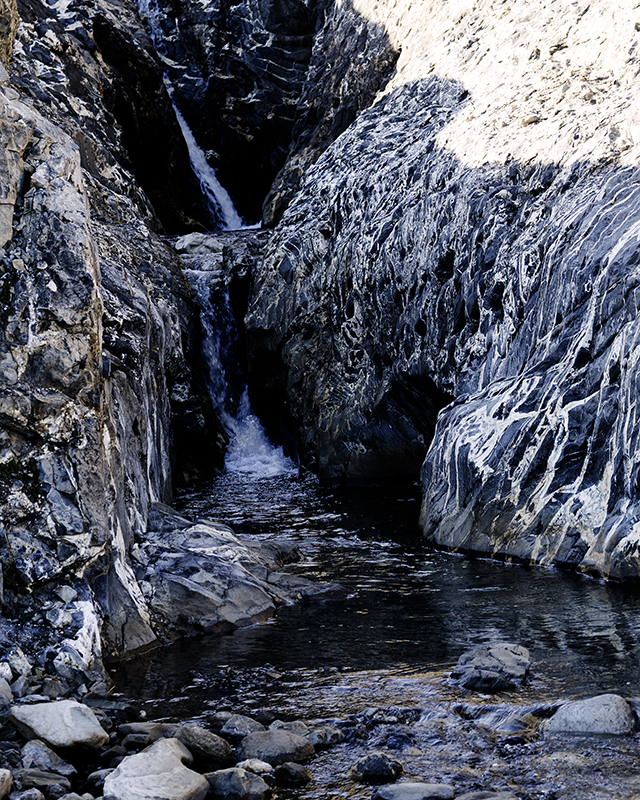
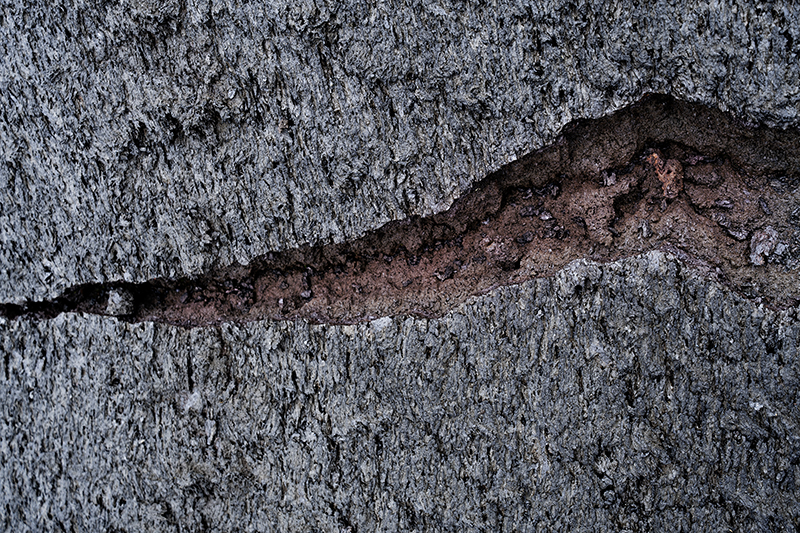
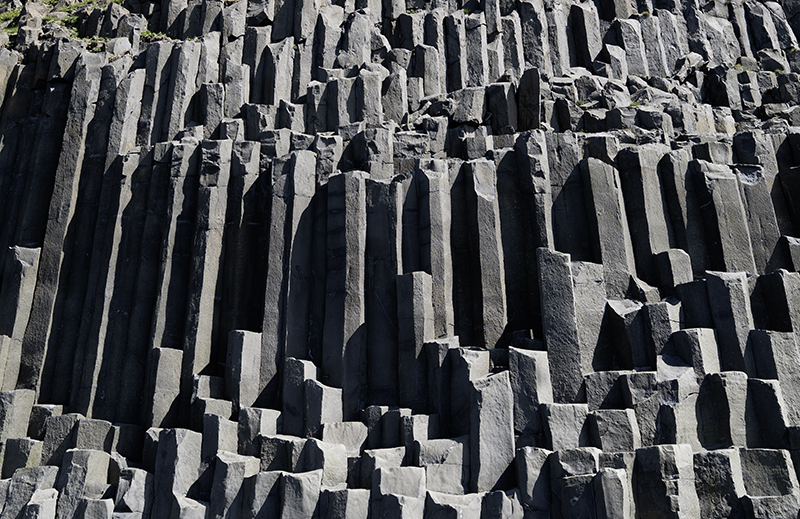
Under expert guidance we made many stops on our travels to look at rock formations, the layering of lava flows, pillars, columns and mosaics formed as lava cooled at varying speeds, cracking, filling with water, freezing and splitting further. We examined the aerated texture of lava, evidence of gas trapped in the magma, and the burnished iridescent surfaces found amongst the blackest basalt laced with minerals like olivine, laboradite and magnetite.
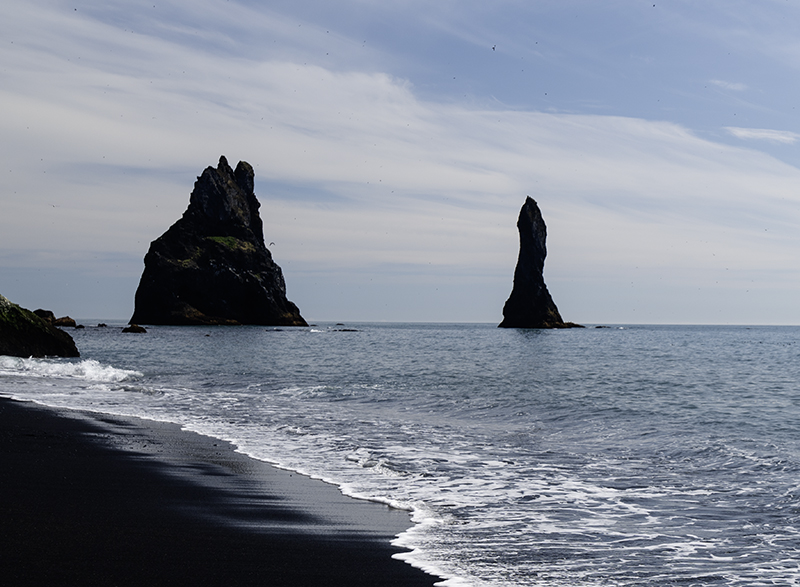
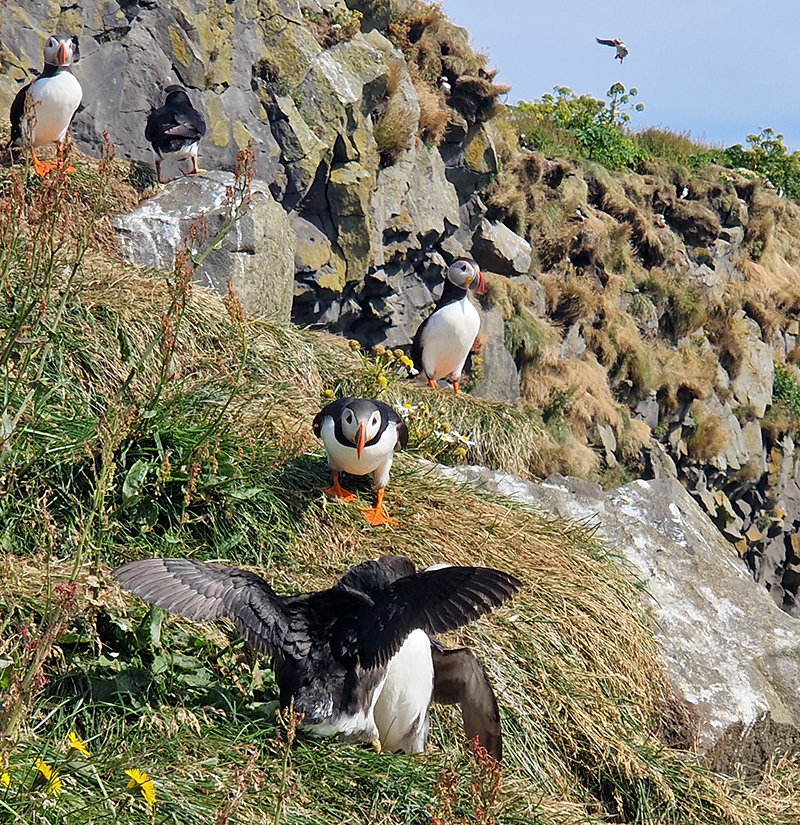
A very special treat was seeing puffins on the Dyrhólaey peninsula. Their stature does not look capable of flight, yet off they swoop from great  heights, out to sea, diving for fish.

Iceland is home to about half the global population. They spend most of their life out on the open sea without their colourful attire which will reappear as breeding season brings them back to their burrows high on the cliffs.
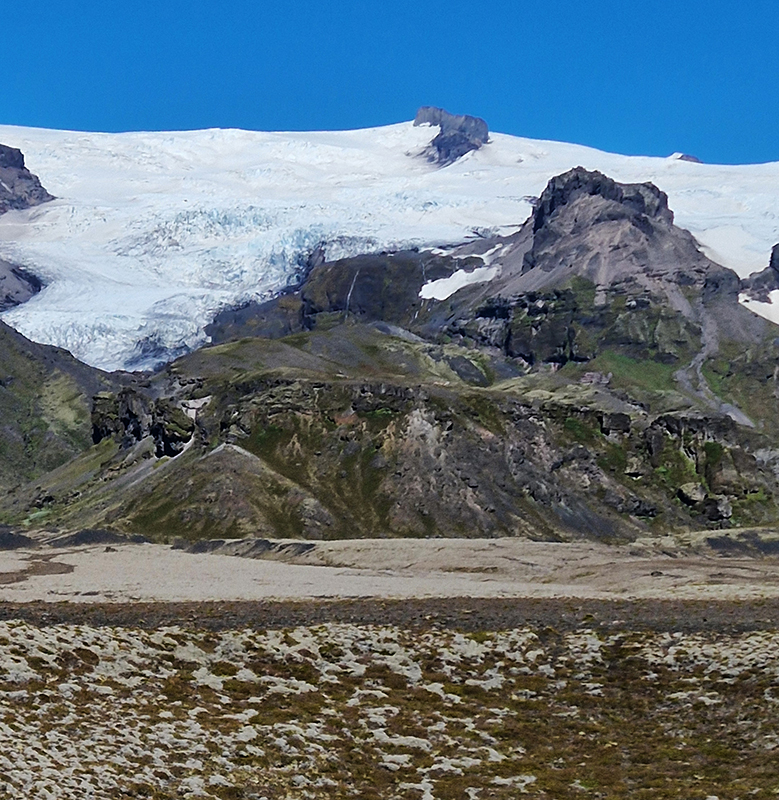
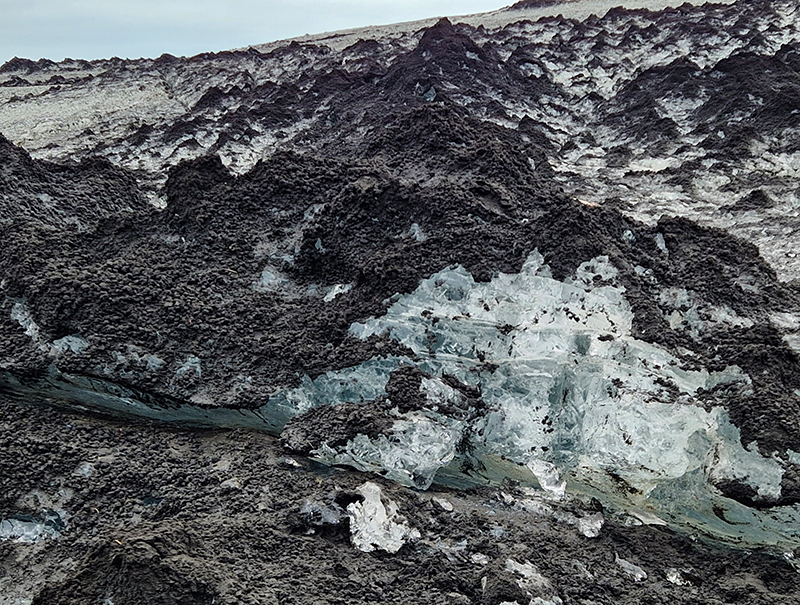
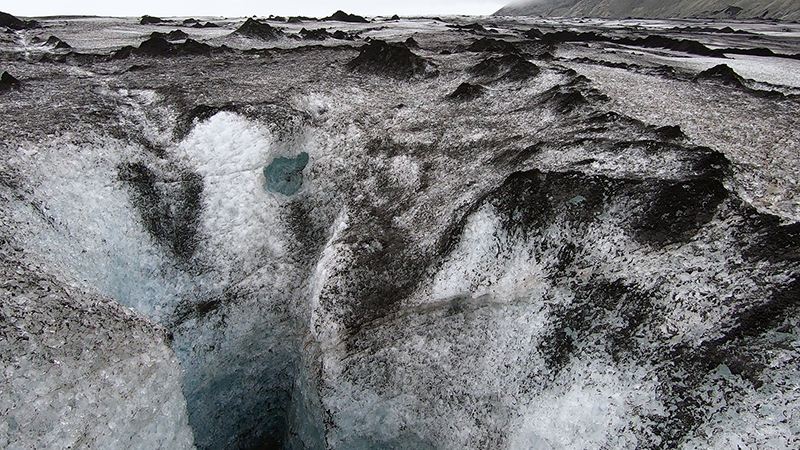
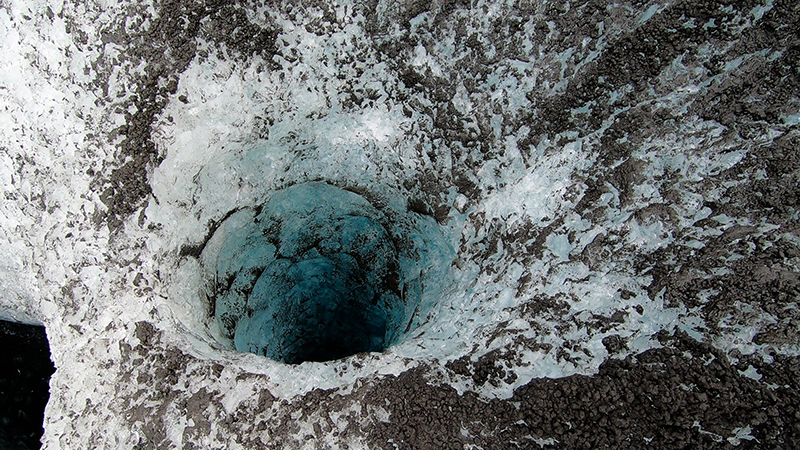
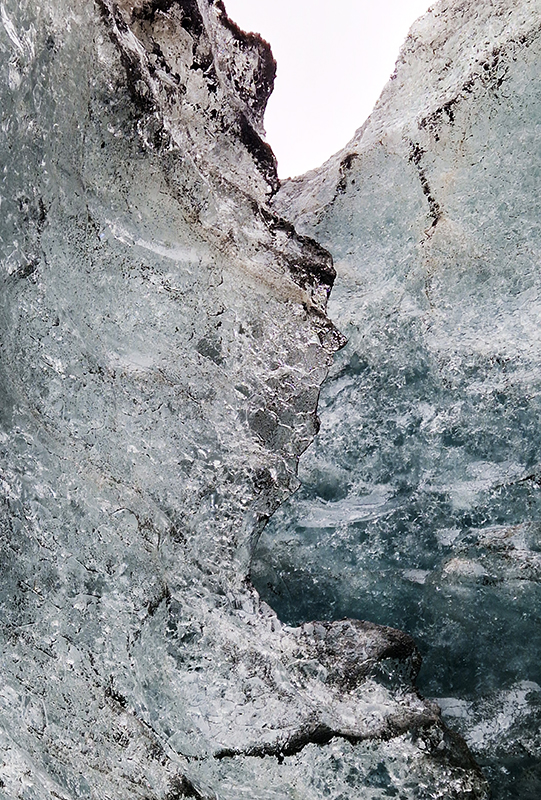
Getting up close to the ice in Iceland was incredible. The depth of the ice caps and glaciers is mind blowing but these giants are losing mass rapidly. We hiked on the Vatnajökull ice cap where it was about 150m deep but at the centre of this vast frozen landscape ice can be1000m deep. Walking in line and wary of crumbling ice holes we were led to view some deep crevasses sculpted by the constant flow of glacier melt. Iceland is one of the fastest warming areas on Earth and our guide helped us understand the impact of glacier retreat on ocean currents and global weather systems. Also, as glaciers melt, their diminishing weight causes the Earth’s crust to rebound, altering the melting point of magma in the upper mantle and leading to further seismic volatility.
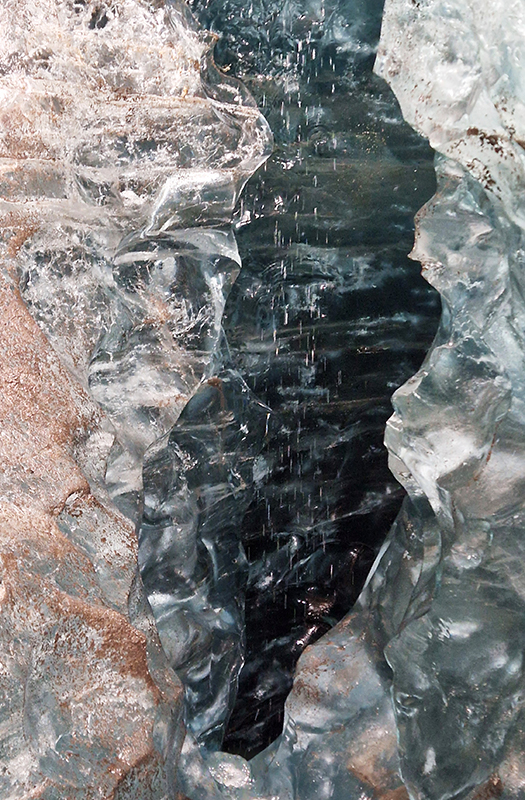
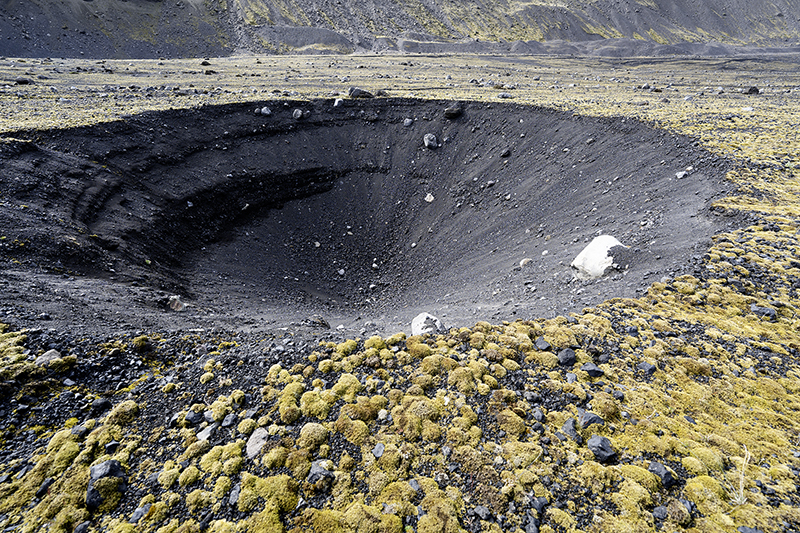
Our visit to the magnificent Gigjokull Glacier, the largest glacier of the Eyjafjallajökull volcano, famed for its internationally disruptive 2010 eruption, involved a jarring 4×4 ride over rock strewn terrain and through several fast flowing rivers of the Thórsmörk Valley. Volcanologist Dave McGarvie pointed out a large cone shaped hole to us that is believed to be where a huge chunk of ice was covered in deep ash and then slowly melted away leaving no evidence.
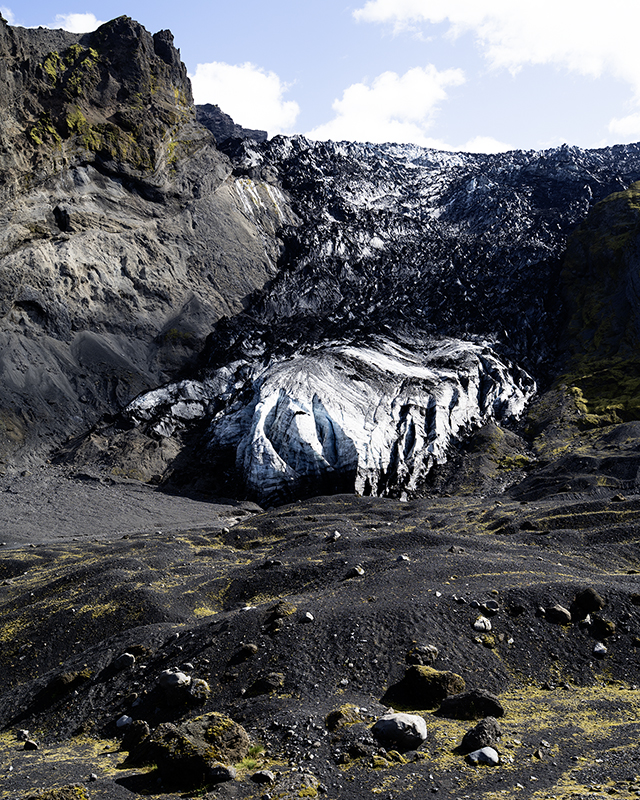
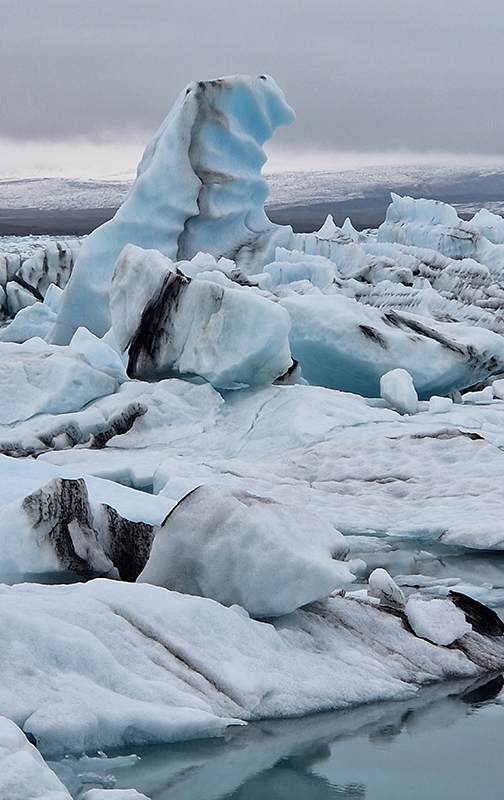
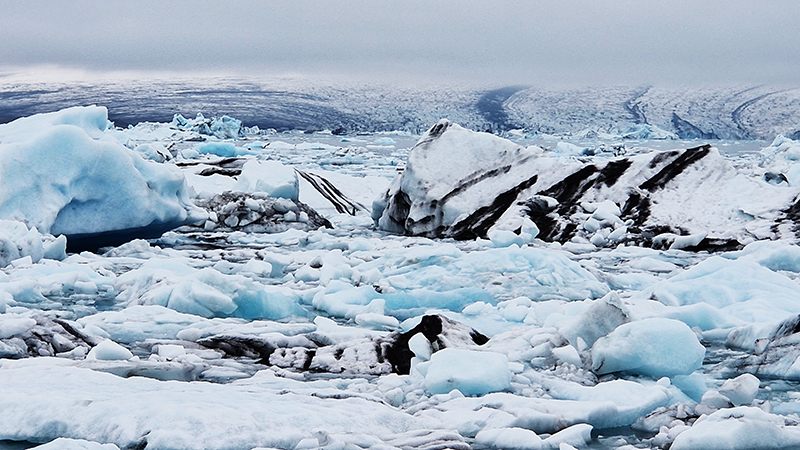
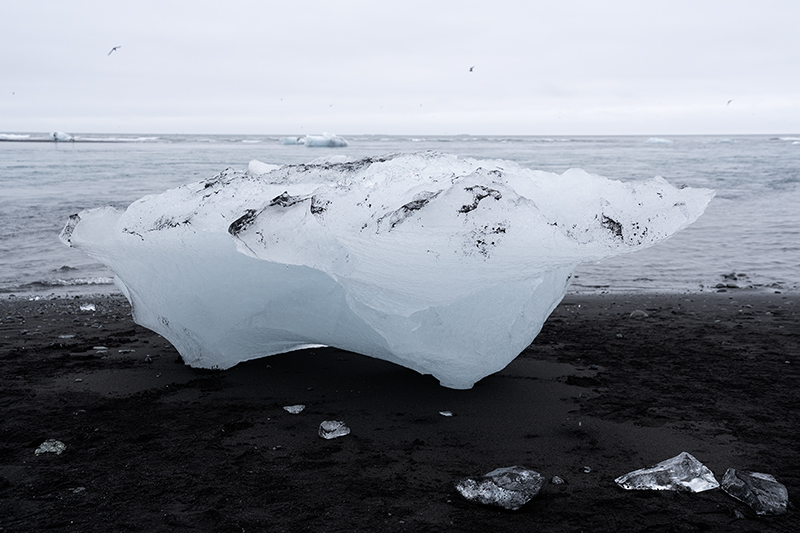
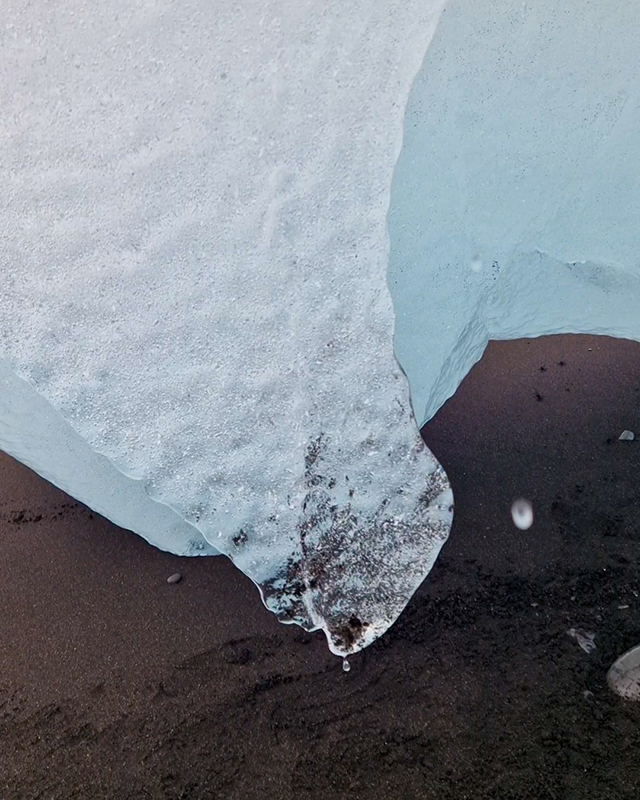
From the dark volcanic rocks come the famous black sand beaches, particularly set off by stranded sparkling ice, washed onto its shores at Diamond Beach. The adjacent Jökulsárlón Glacier Lagoon is an example of a landscape shaped by glacier change, as ice from one of the glaciers of the Vatnajökull ice cap calves into this lagoon, creating icebergs that jostle through the water towards the sea.
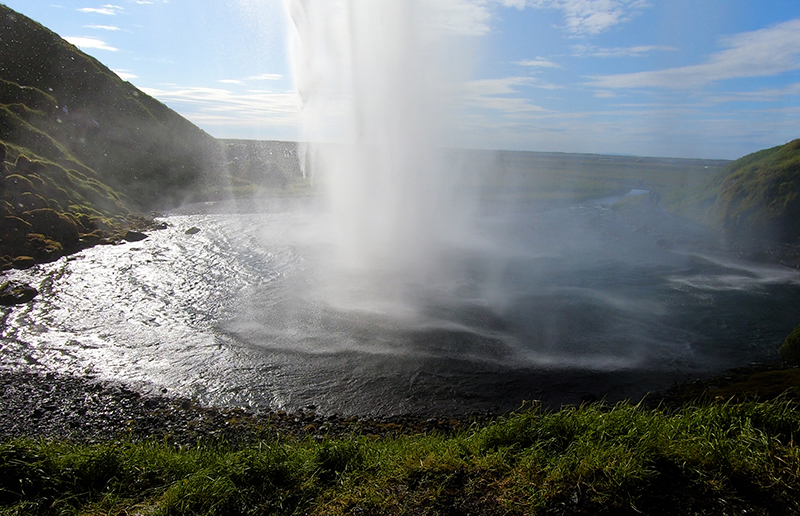
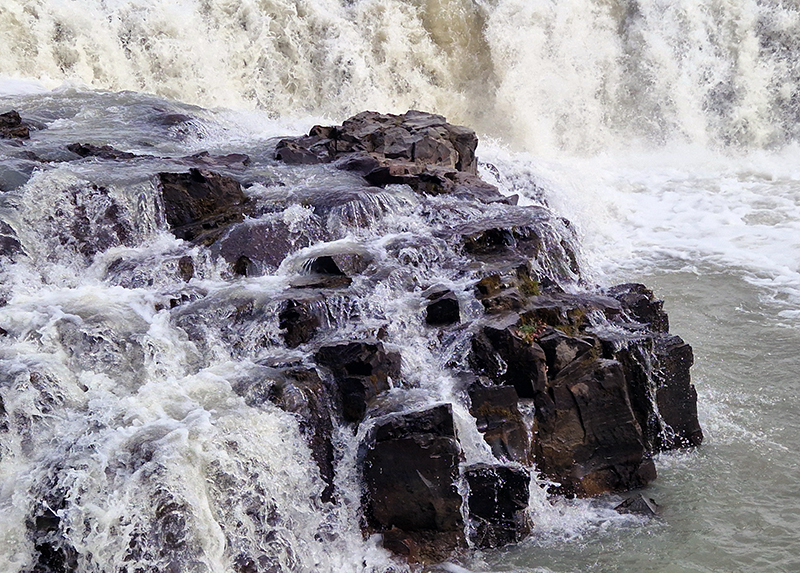
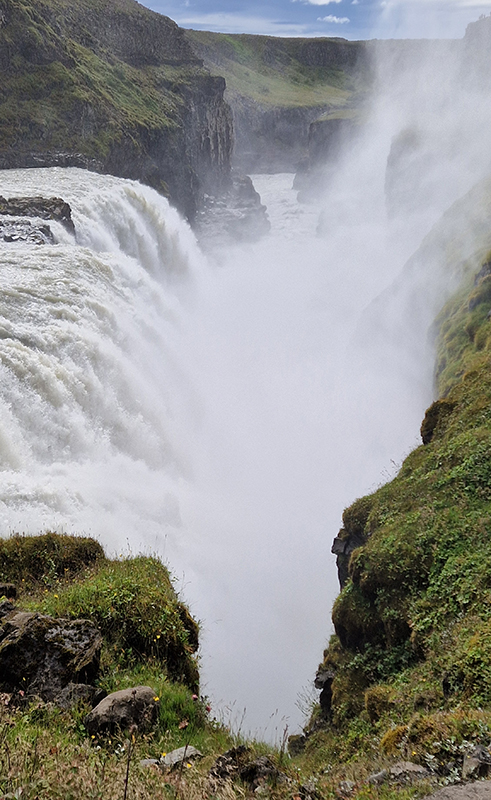
A wet climate, melting glaciers and steep volcanic cliffs create thousands of waterfalls across Iceland, roaring and tumbling from colossal heights into deep pools and ravines feeding a lattice of streams and rivers. Always magical to experience and such a contrast to the vast flatlands of lava fields.
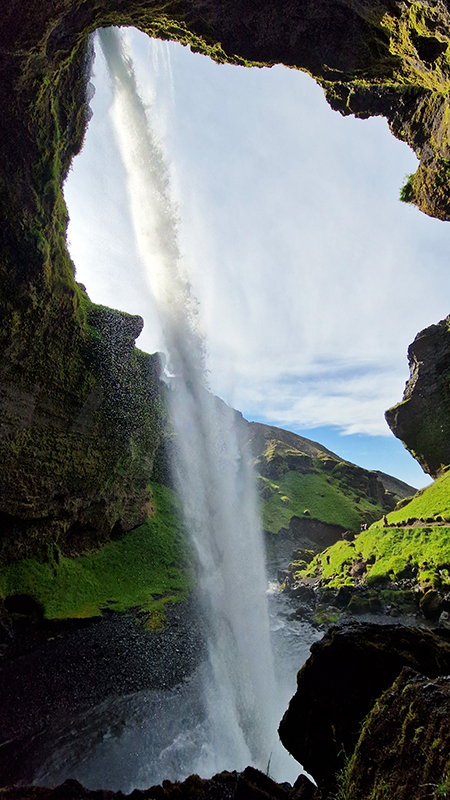
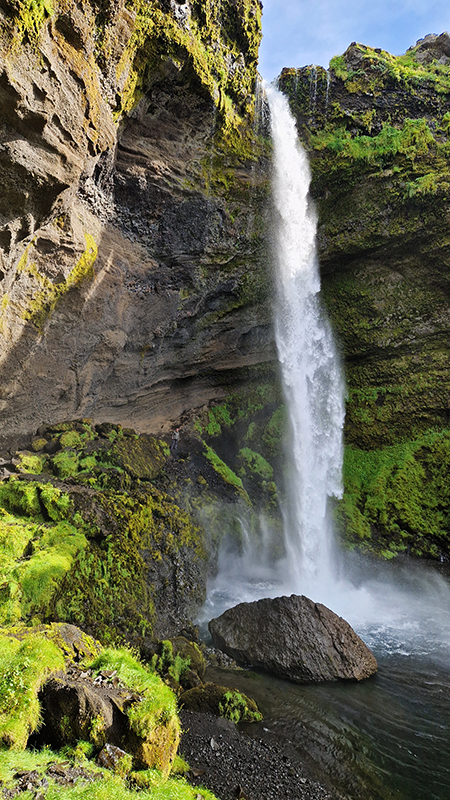
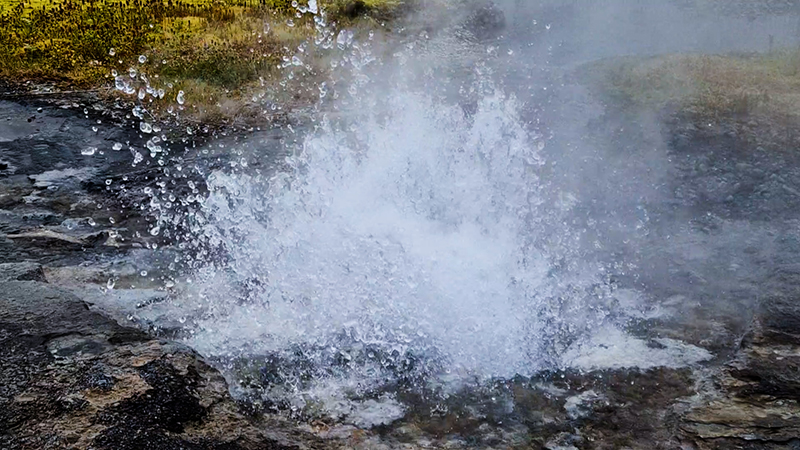
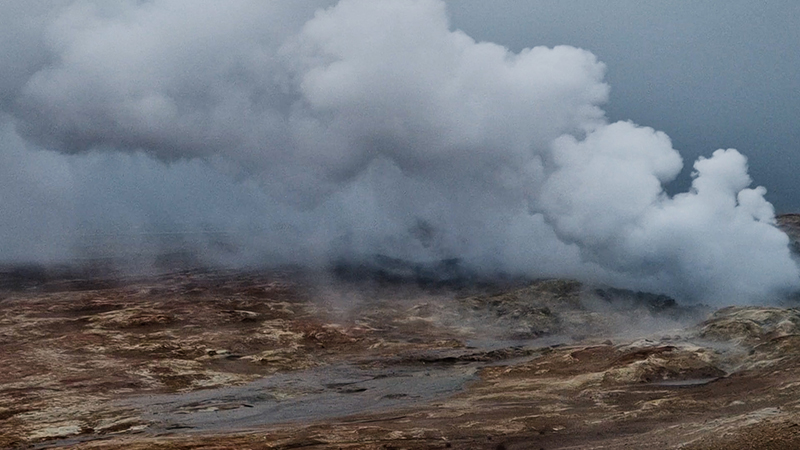
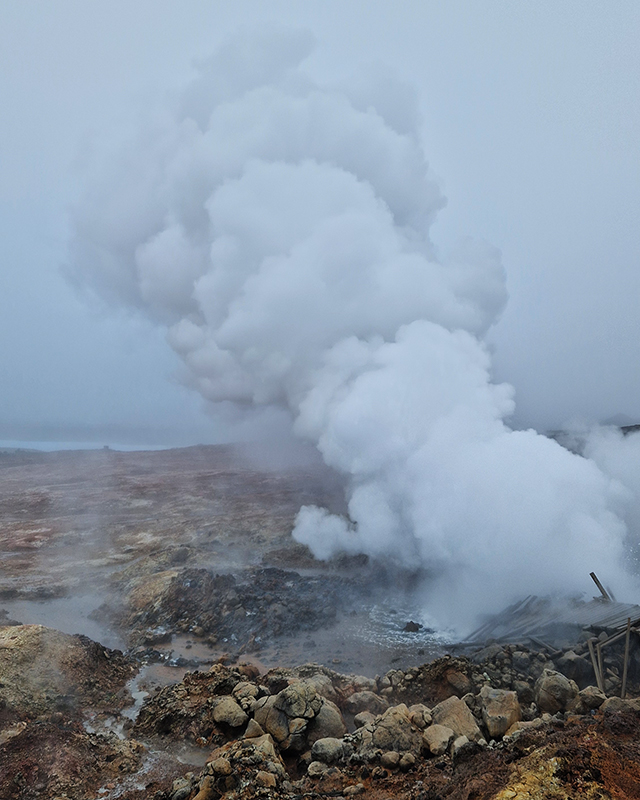
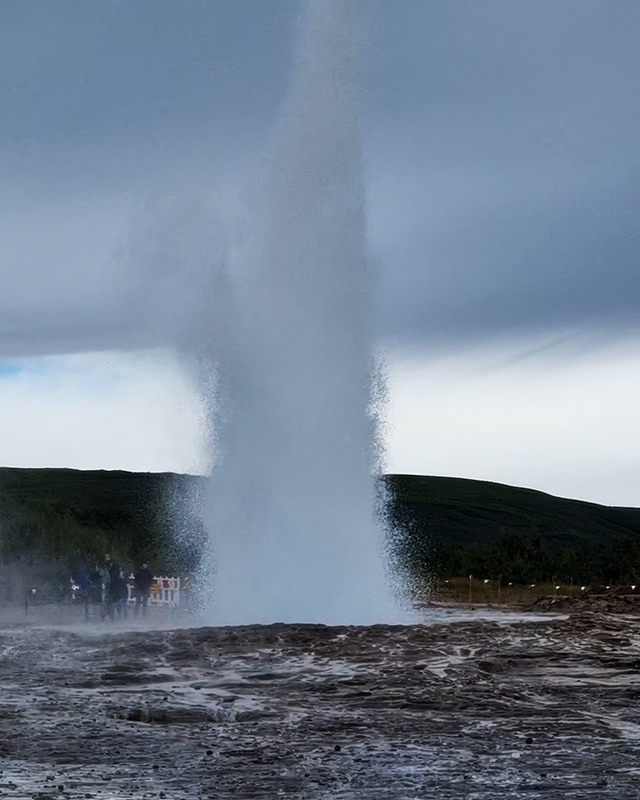
Water also soaks deep down through the porous volcanic rocks into the earth’s crust, where hot magma and bedrock heat the water to very high temperatures. As the water warms, it rises back up through cracks, faults, and fissures in the earth to emerge as a natural hot spring. Some springs are gently bubbling with escaping gases but at places like Gunnuhver, intense geothermal activity causes boiling mud pools and powerful steam vents. Sometimes water fills deep underground chambers, getting super hot until steam bubbles rise and push a small amount of water out of at the top, releasing pressure and causing the superheated water below to instantly turn into expanding steam, blasting boiling water and steam upwards in an exhilarating geyser. The chamber then refills and repeats.
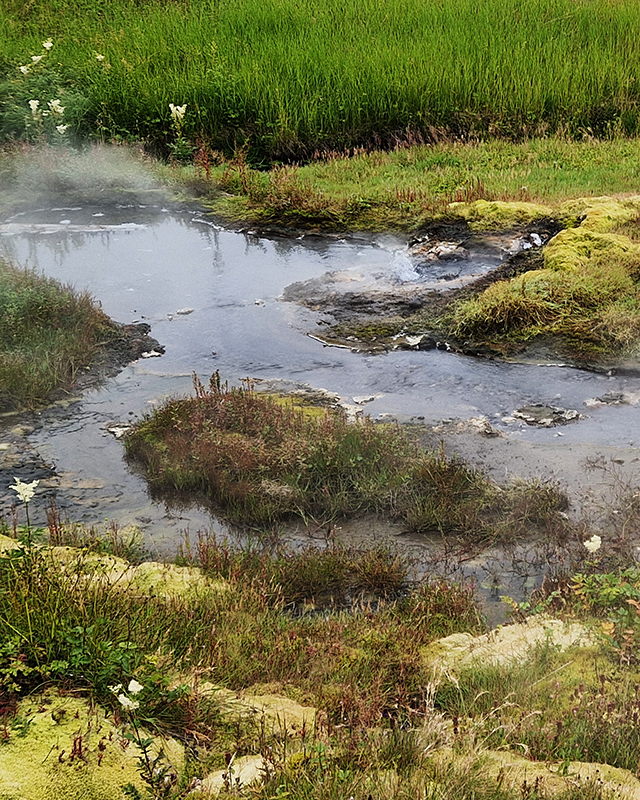
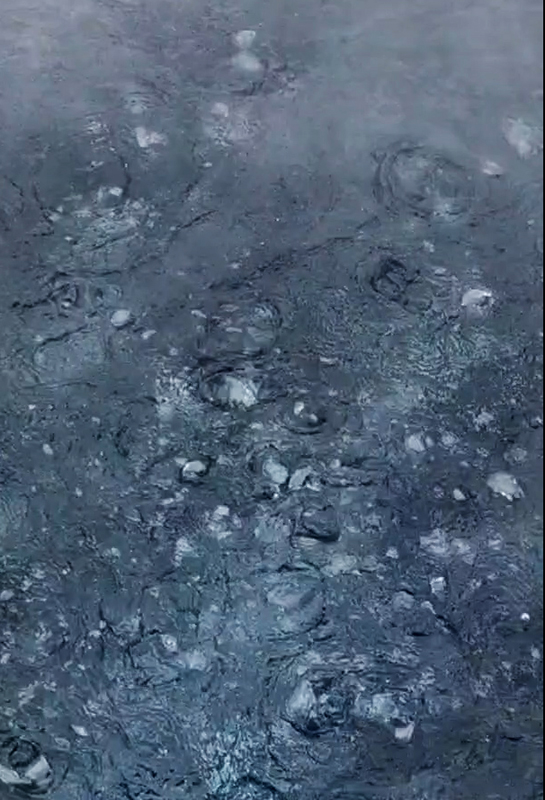
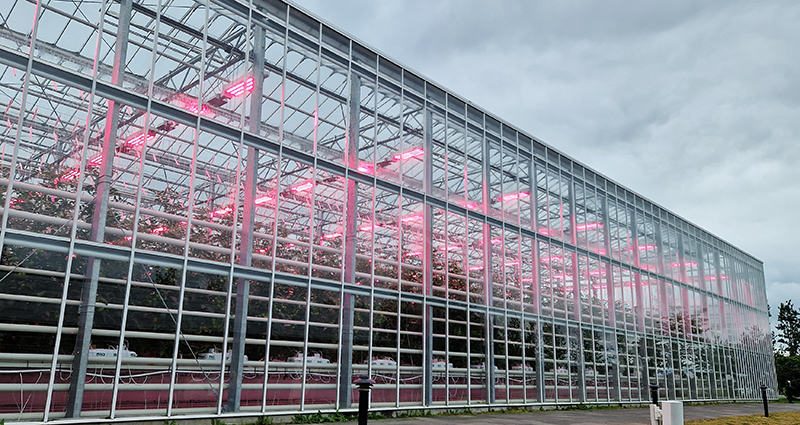
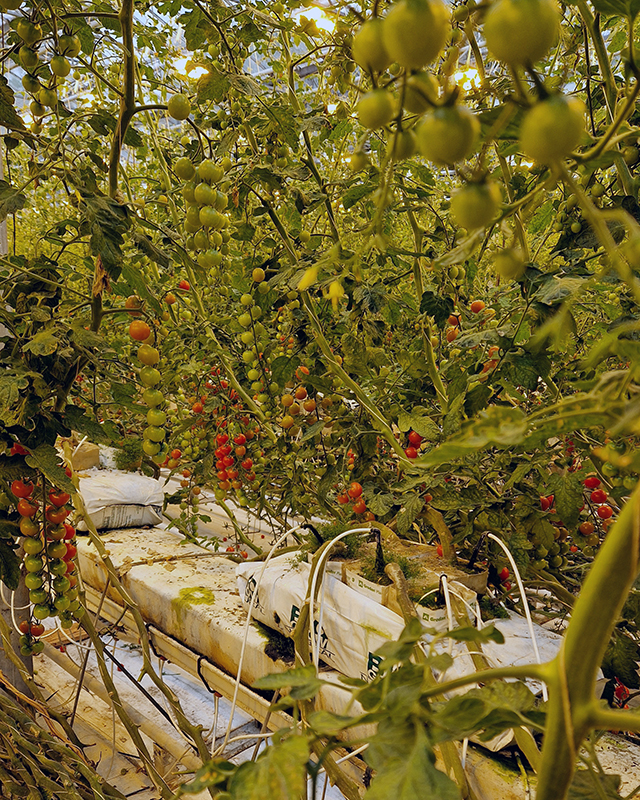
Iceland’s unique active geology and location over a mantle plume means that it can harness geothermal energy which provides around 30% of the island’s electricity with the rest generated by hydropower. Hot water is fed directly into heating systems and the run off from power plants is used to fill swimming pools, hot tubs and keep city pavements ice free. Crops that would not normally thrive in the Iceland climate are grown in huge commercial greenhouses using geothermal water to regulate temperatures – we had delicious fresh tomato soup here.
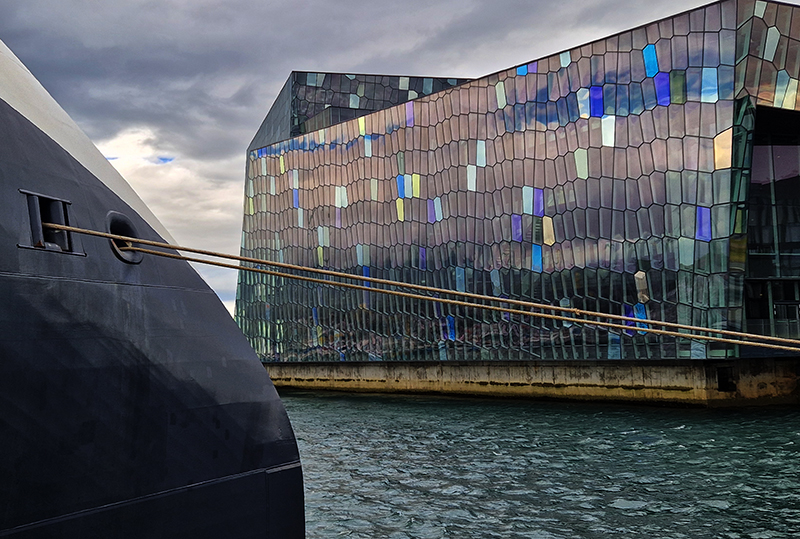
We sailed from Reykjavik to Kalaallit Nunaat (Greenland) aboard the Sylvia Earle ship, leaving as the evening lights played over the iridescent geometric glass façade of Harpa, architecturally designed in collaboration with artist Olafur Eliasson to reflect the basalt landscape of Iceland.
The ship is named after the amazing marine biologist, conservationist, oceanographer and explorer Dr Sylvia Earle who holds the record for deepest walk on the sea floor. Richard Powers loosely based his glass ceiling breaking, female character, Evelyne Beaulieu, in his excellent  novel Playground on the extraordinary real life of Dr. Sylvia Earle. A recommended read.

Settling onto the ship we were issued with life vests, taken through a practice lifeboat drill and given a bio-check, hoovering all our kit that we might take off the ship with us when landing in Greenland. Mud boots were issued which would be scrubbed and disinfected after every landing.

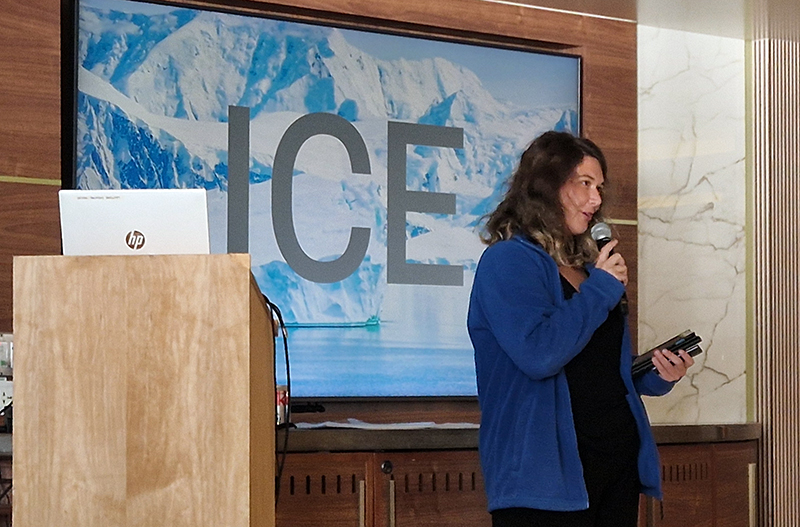
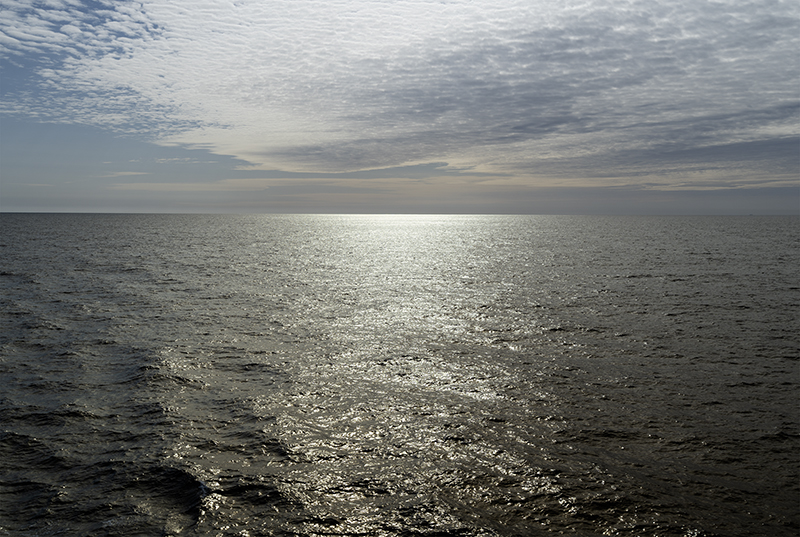
The first day was spent crossing the Denmark Strait. On board we had briefings on Zodiac cruising, polar bear safety and lectures introducing Greenland and the Arctic skies. There were citizen science cloud surveys that feed into NASA satellite data to help monitor clouds in remote regions and give a perspective looking up rather than down. We were given charts to identify clouds at different heights and estimated coverage percentages to feed into a central database.

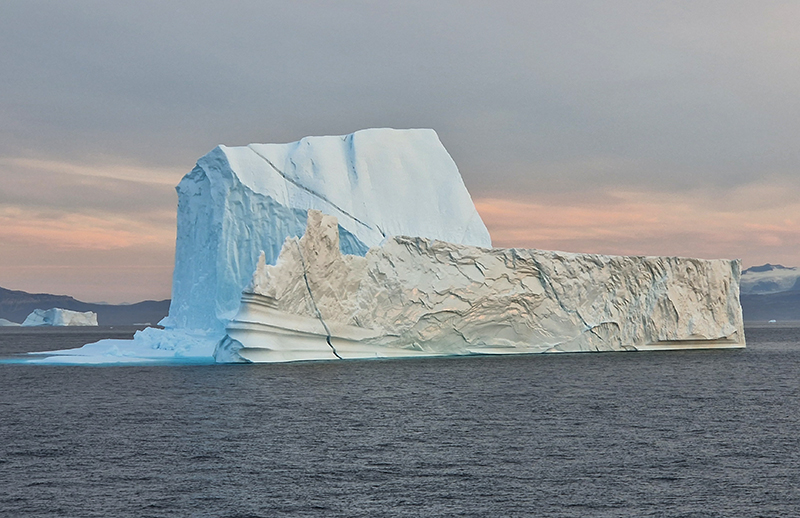
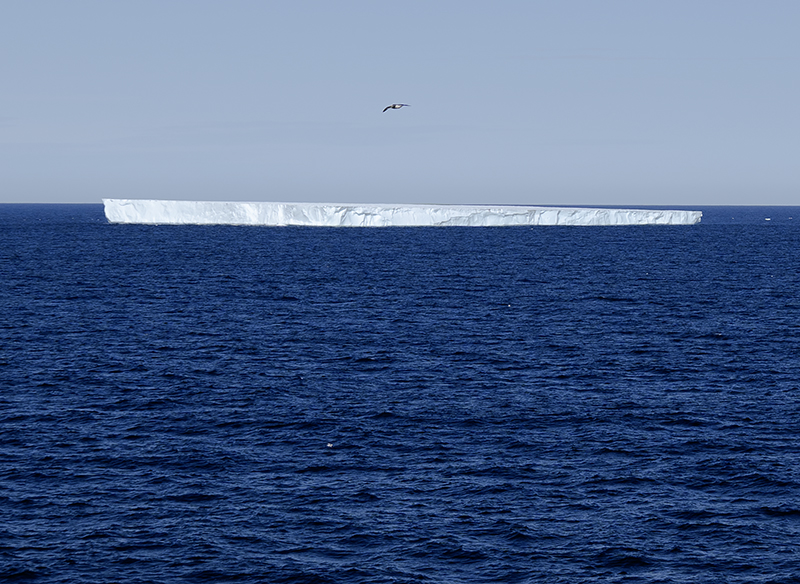
A solitary massive iceberg, met us just as we crossed into the arctic circle.
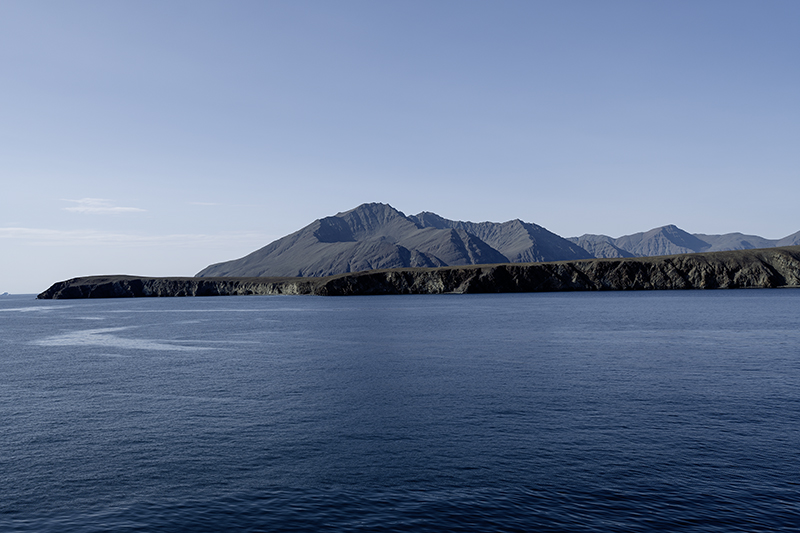
Fist sight of Greenland land.
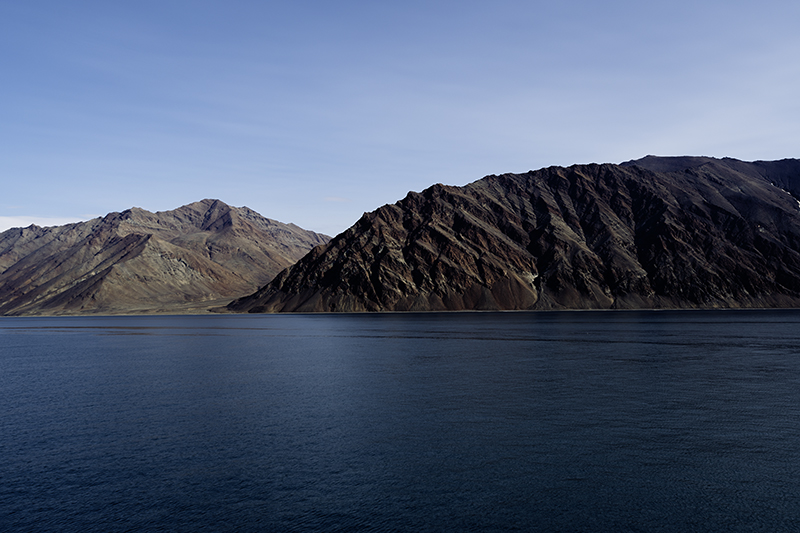
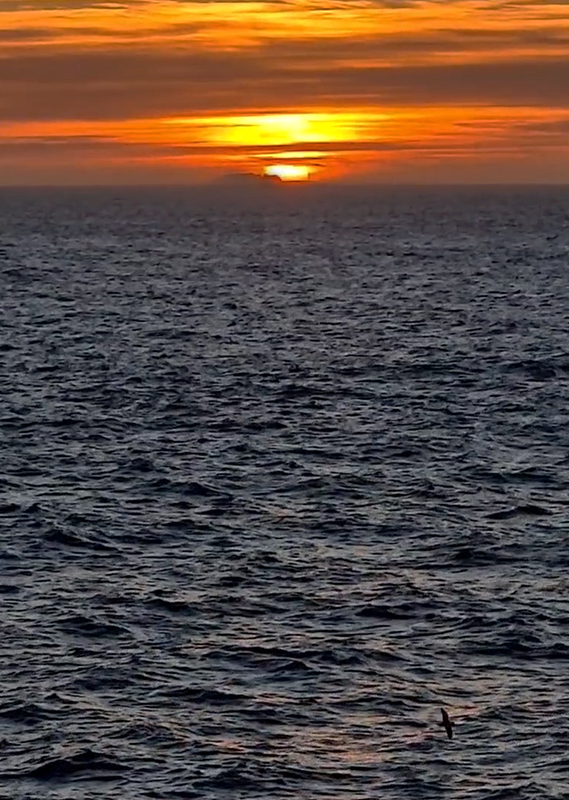
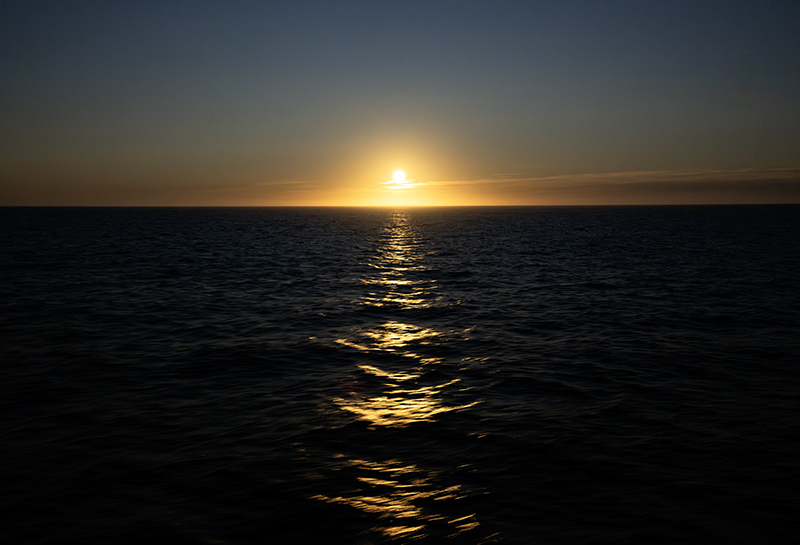
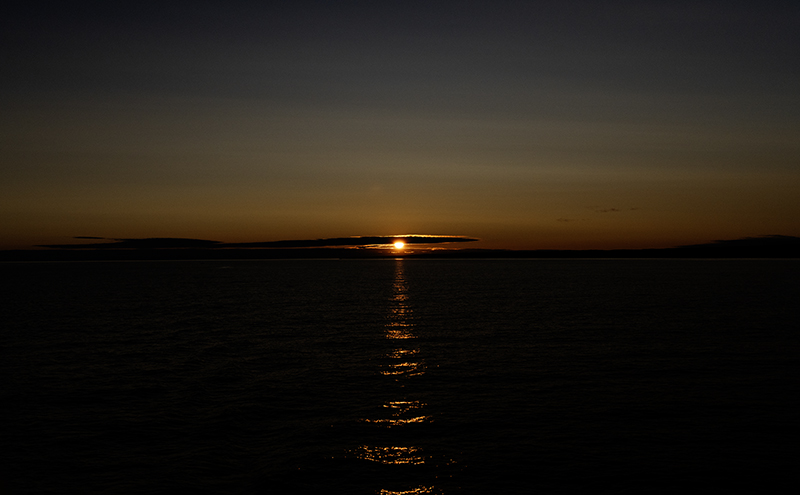
At this time of year lingering arctic sunsets hover above the horizon, the sky never fully dark before the sun rises again.
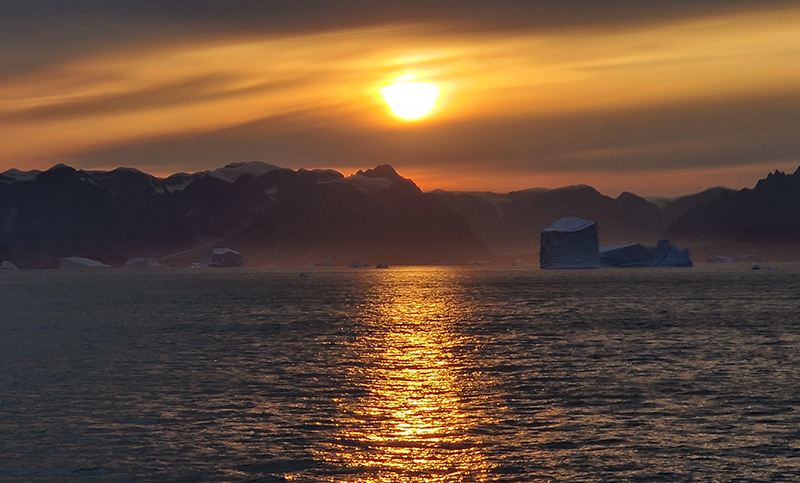
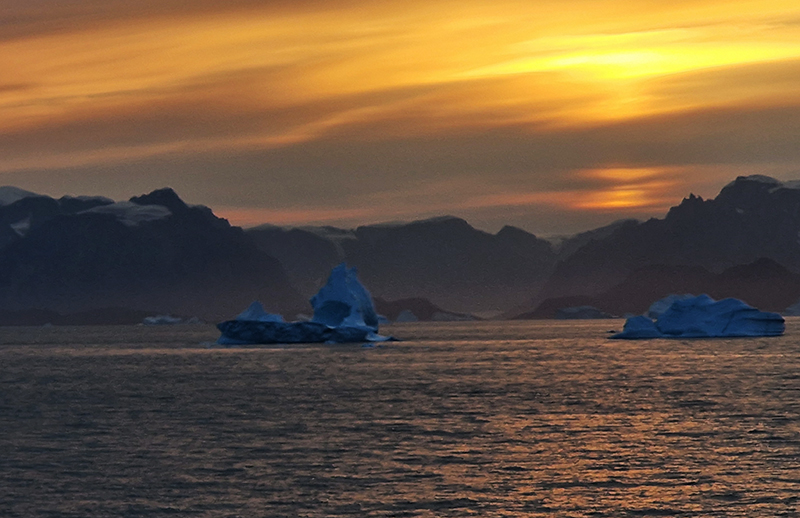
It wasn’t dark enough for us to see any aurora that might be occurring but New Scientist reporter Chelsea Whyte gave a fascinating presentation on the quest to create artificial auroras by Finnish physicist Karl Lemström and other 19thC science pioneers when the cause of auroras was still unknown.

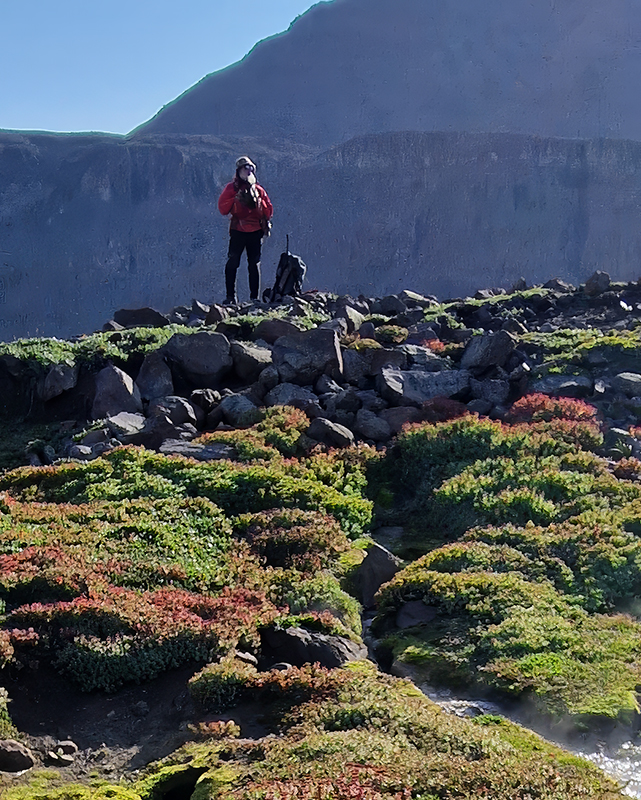
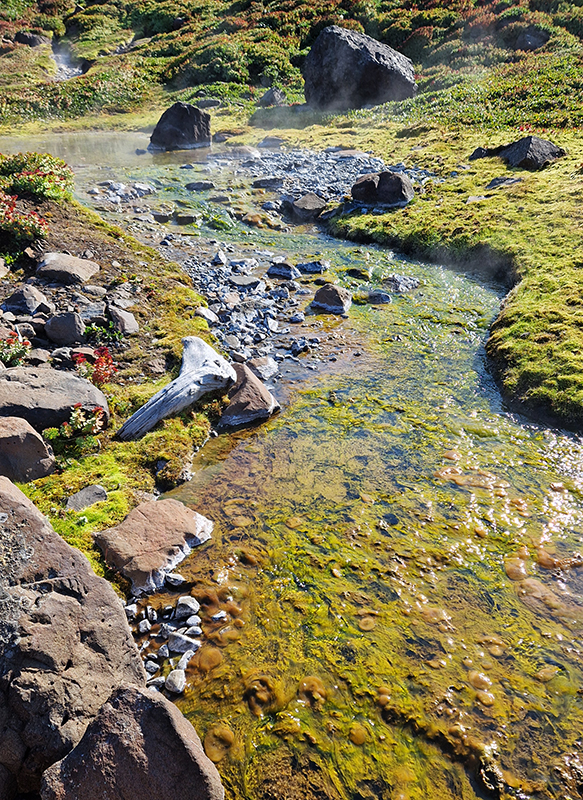
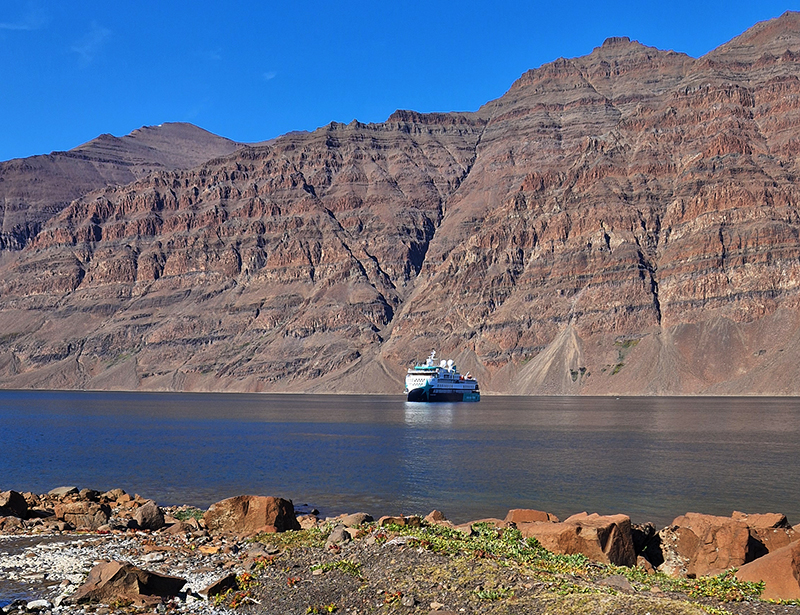
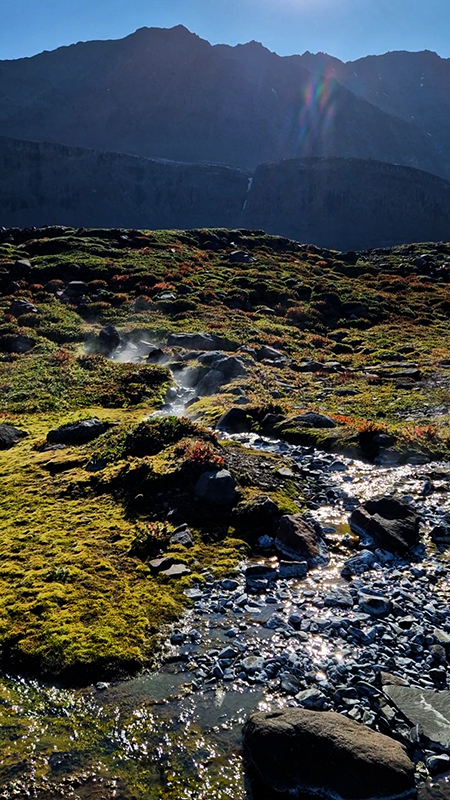
Our first landing via Zodiac boat was in Rømer Fjord. Surrounded by 55 million year old red basalt cliffs we explored bubbling hot springs and magical green oases, kept safe by a perimeter of expedition team leaders equipped with flares and rifles who constantly scan the horizon and shore line for approaching polar bears.
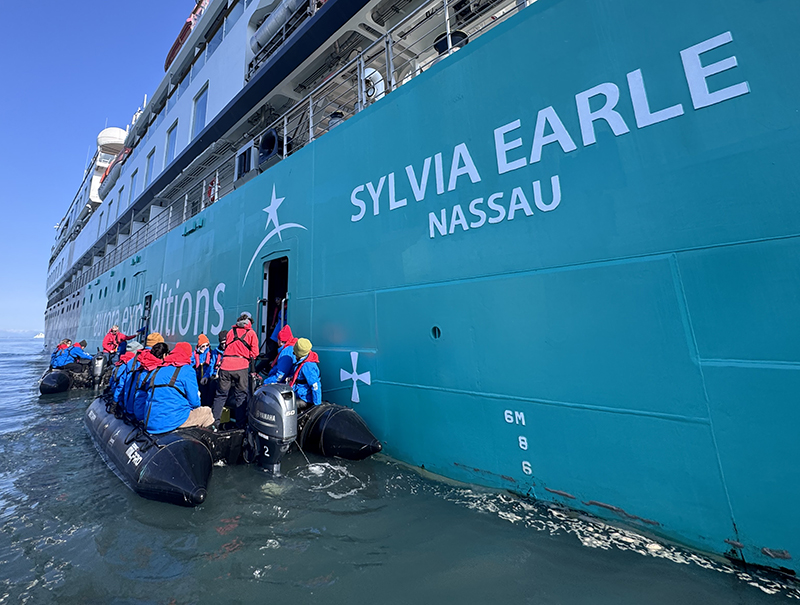
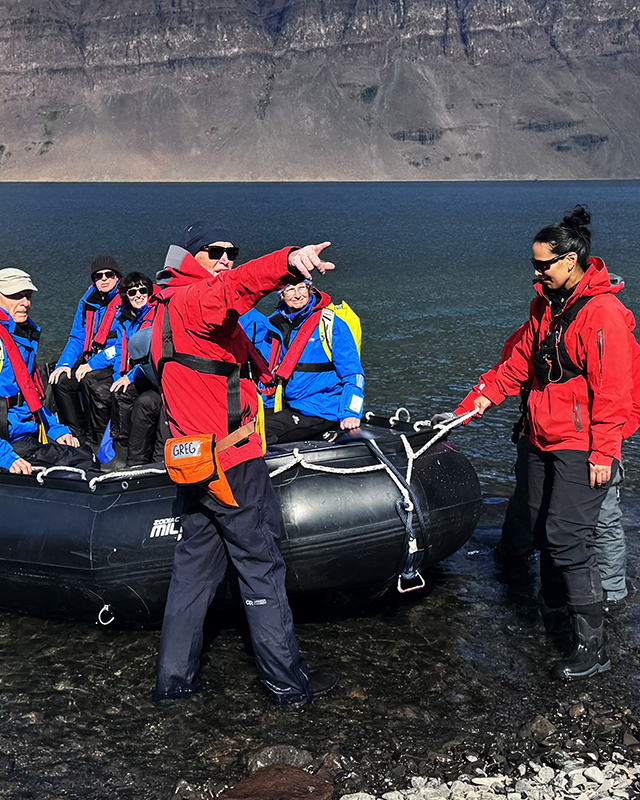
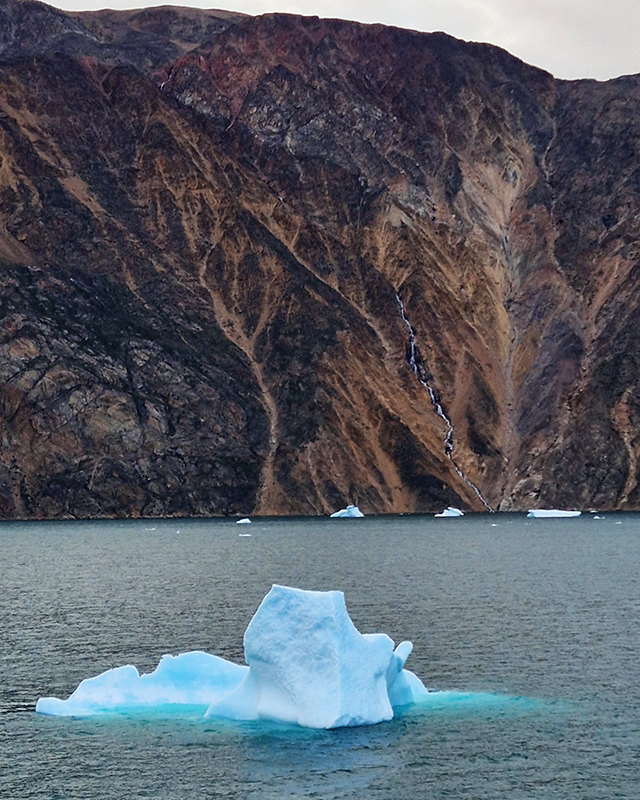
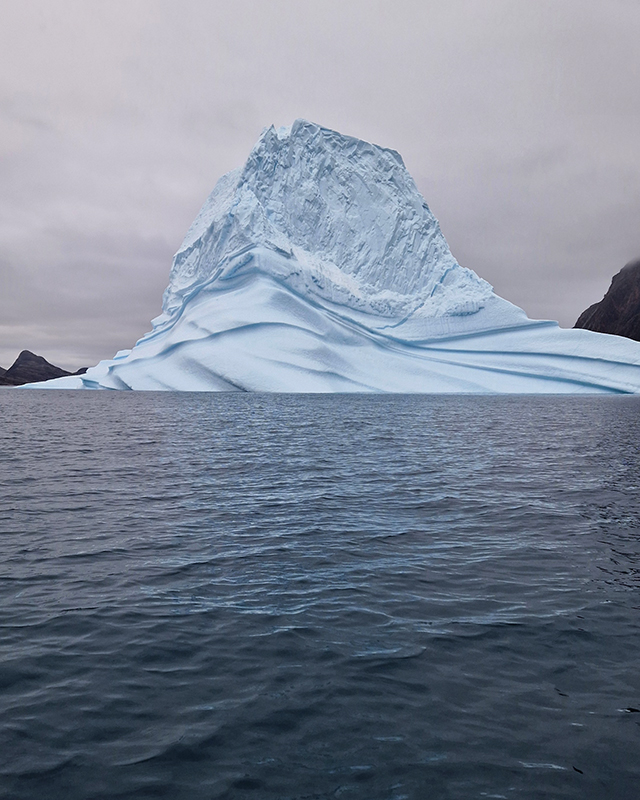
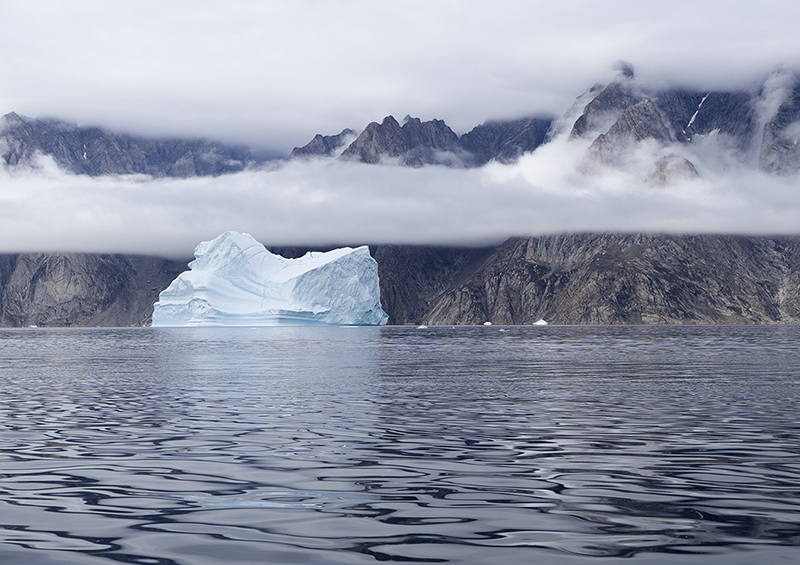
We saw Greenland under a dazzling sun that intensified the vibrant blues and startling whites of majestic icebergs and imposing walls of glaciers, throwing up rainbows over waterfalls and tinting the ice pink and gold, morning and evening. Even under cloud cover the ice has a radiant glow, as any light here bounces around the many reflective surfaces.

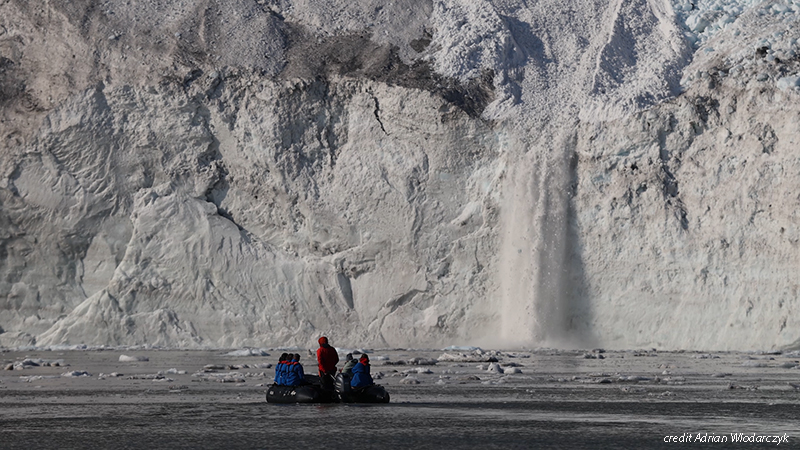
The silence of the fjords is broken dramatically by thunder claps of collapsing glaciers, near and far, as they shift, crack and calve.

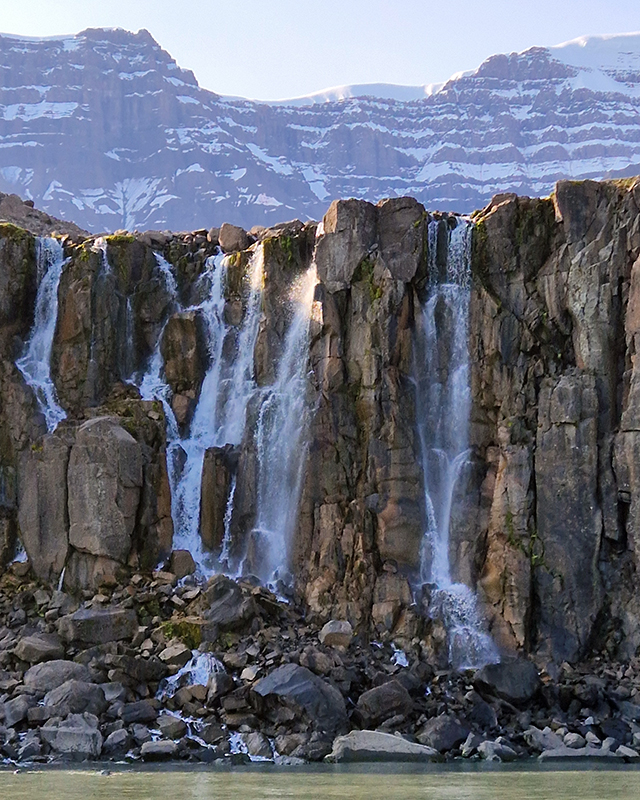
Riding on the zodiac boats was great fun and our expert drivers took us around icebergs and to glacier walls and sheer cliffs threaded with waterfalls allowing us to really get a sense of the size of these edifices. We saw great ice falls from the cliffs and even an iceberg roll at one point, sending out concentric waves across the fjord, a warning not to get too close.
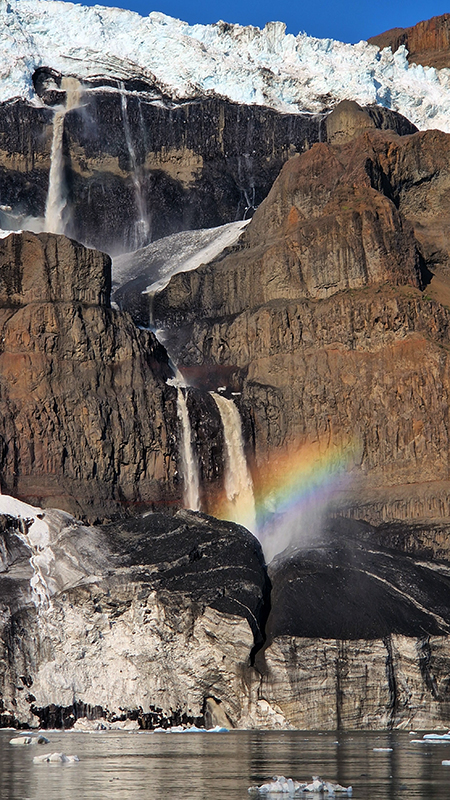
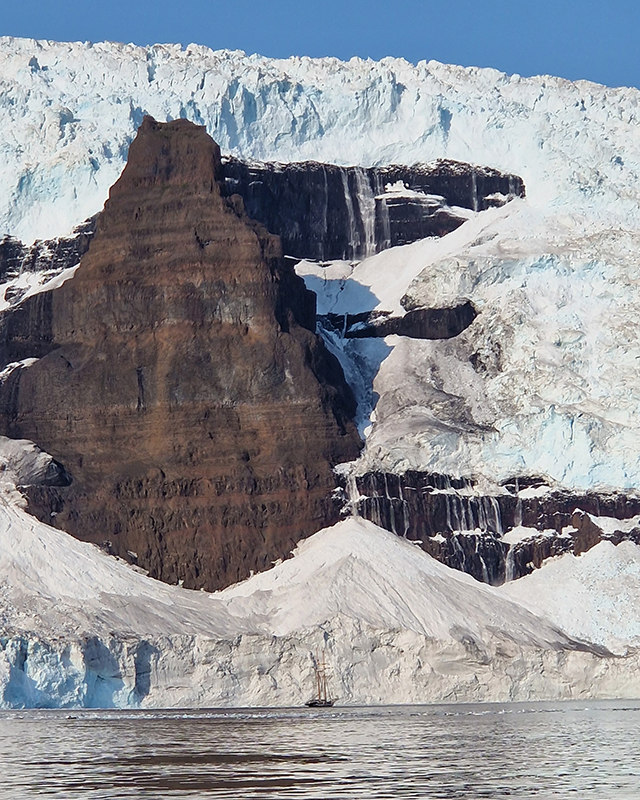
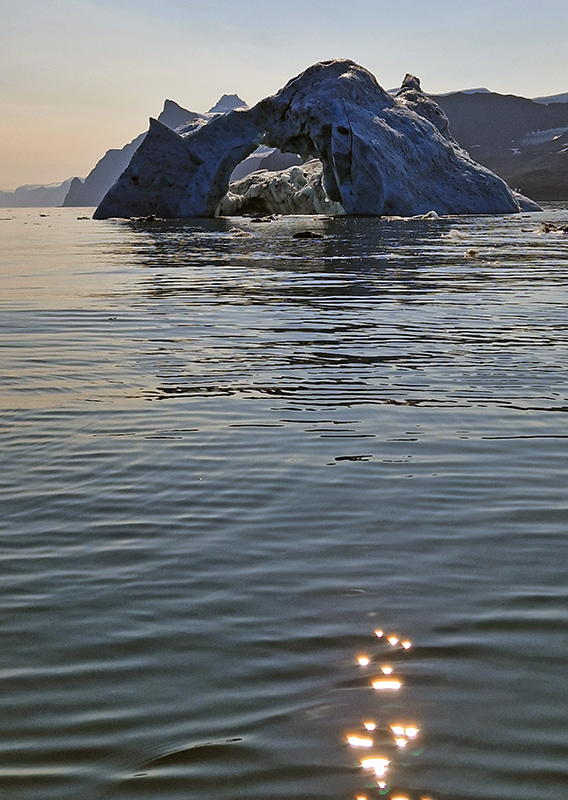
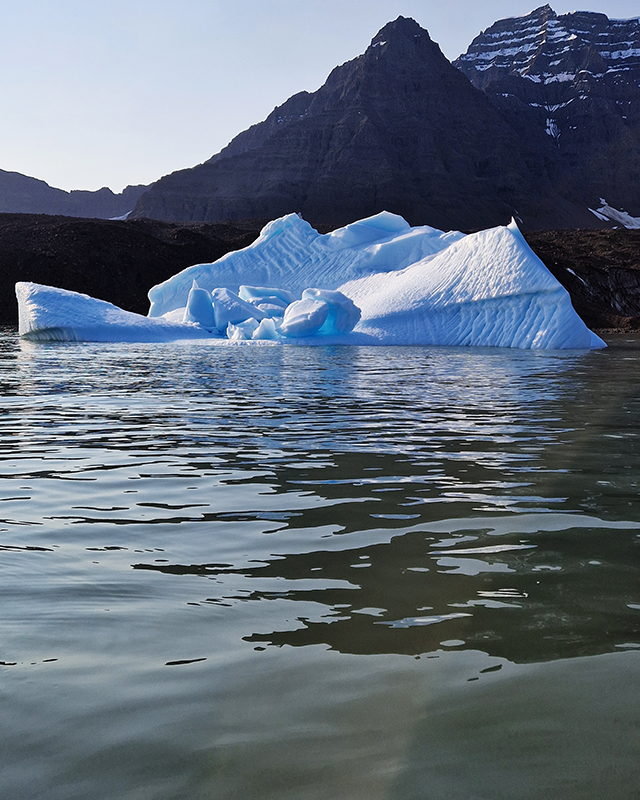
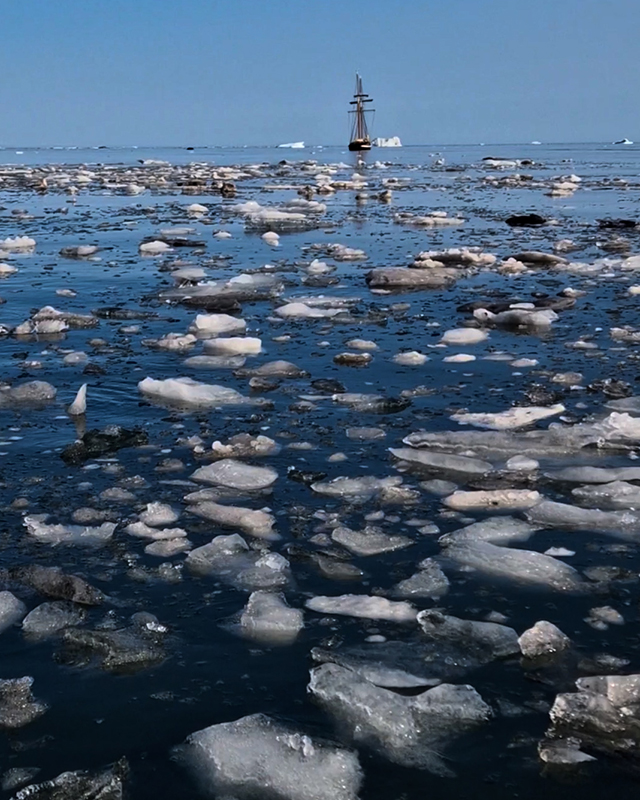
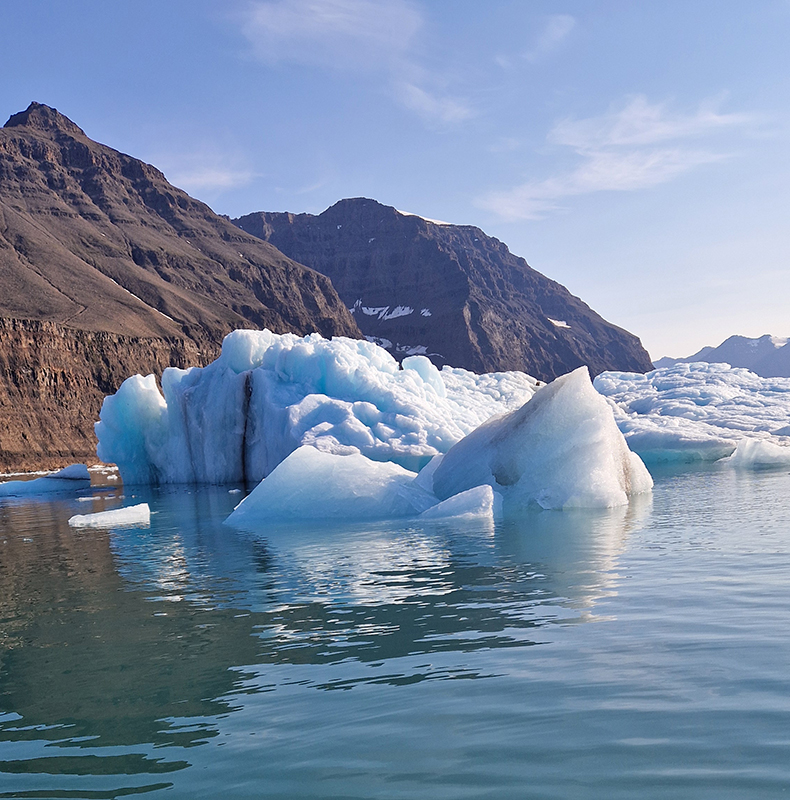
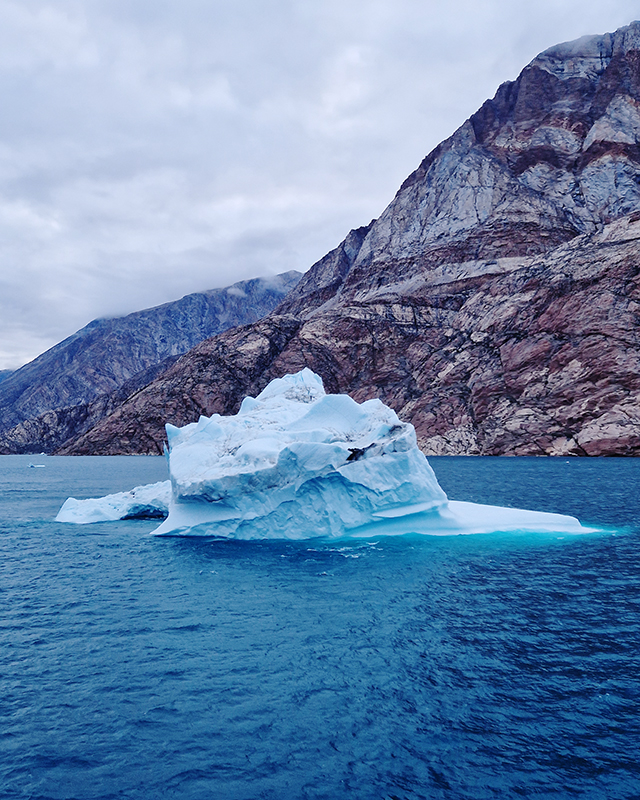
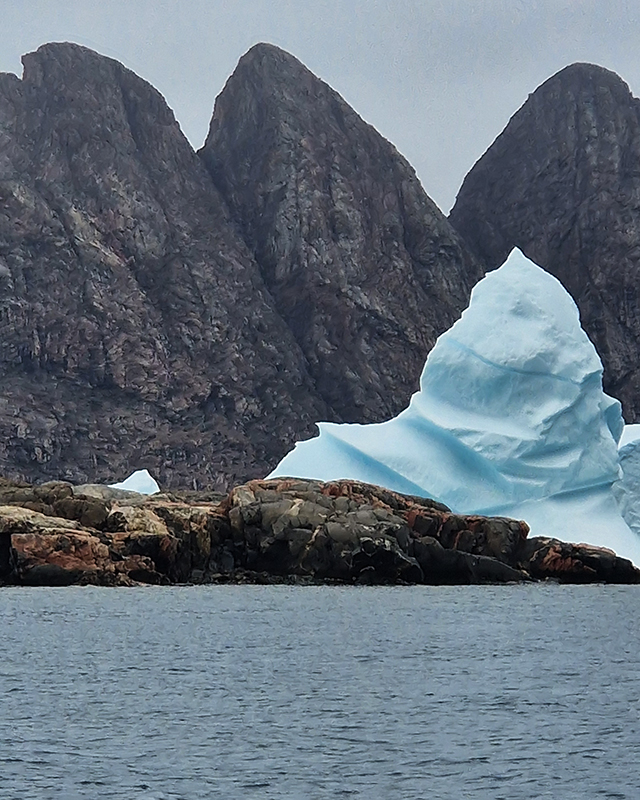
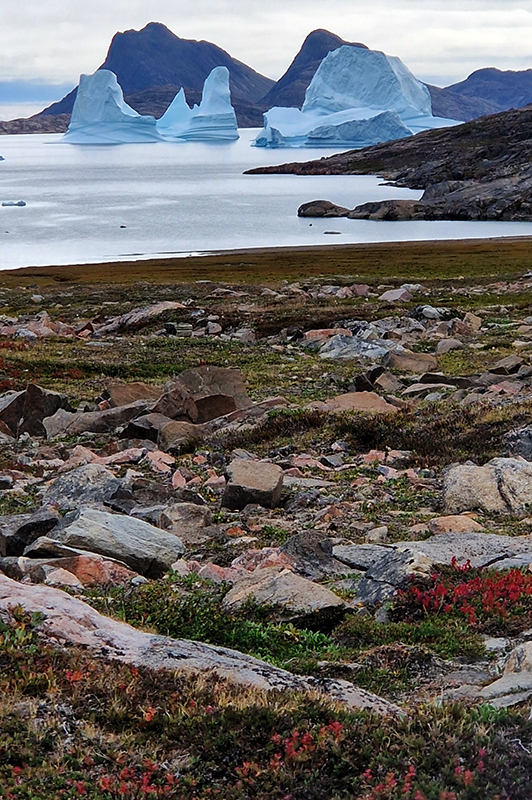
Our journey through the fjords was met by a long procession of floating ice palaces, giant ice sculptures in sublime shapes, striped in turquoise and teal glittering as the ship negotiated a seemingly impossible route through this otherworldy carnival.
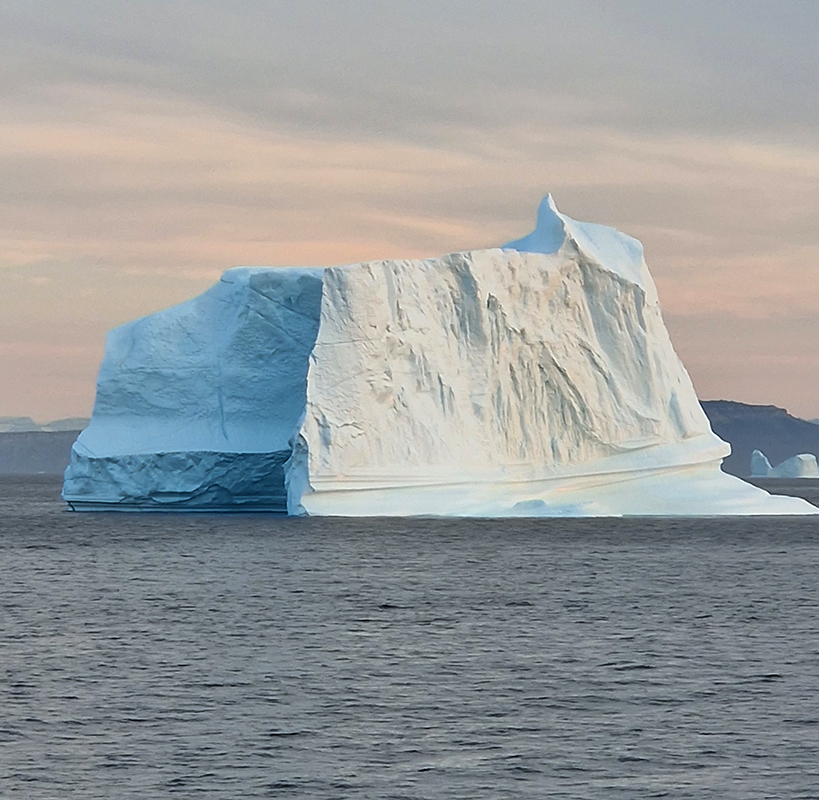
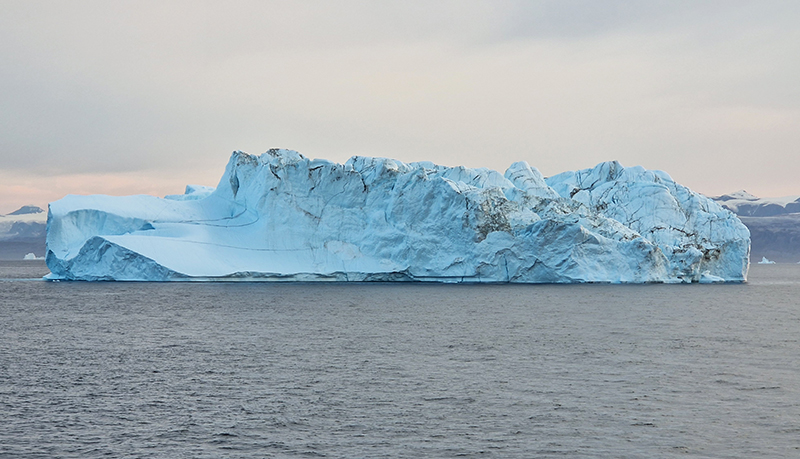
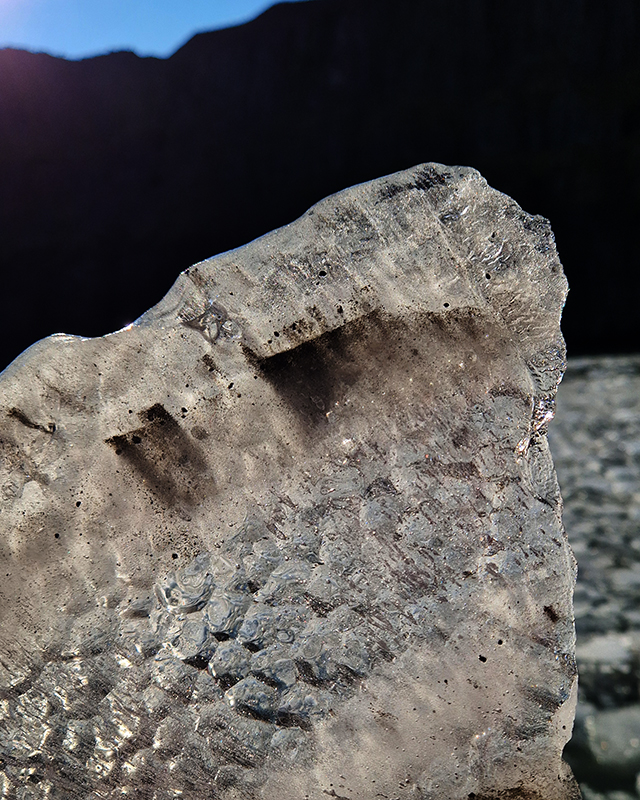
The luminous blue icebergs are from very old glacial ice. As more layers of snow are deposited onto a glacier, the snow beneath gradually transforms into ice. The sheer weight of the upper part of the glacier slowly squeezes air bubbles from its lower levels of ice to form clear ice. Light penetrates deeper into clear ice and all but blue wavelengths of light are absorbed. Deep blue streaks and lines within icebergs are formed when crevices in the ice fill with melt water and then refreeze.
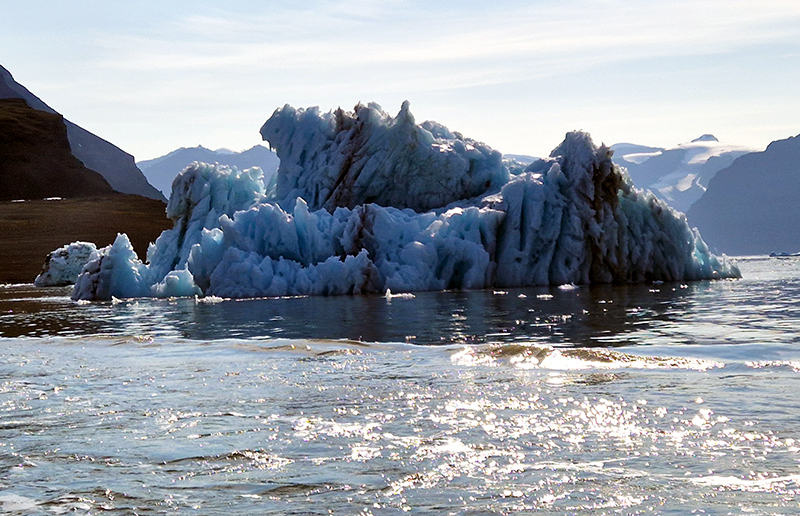
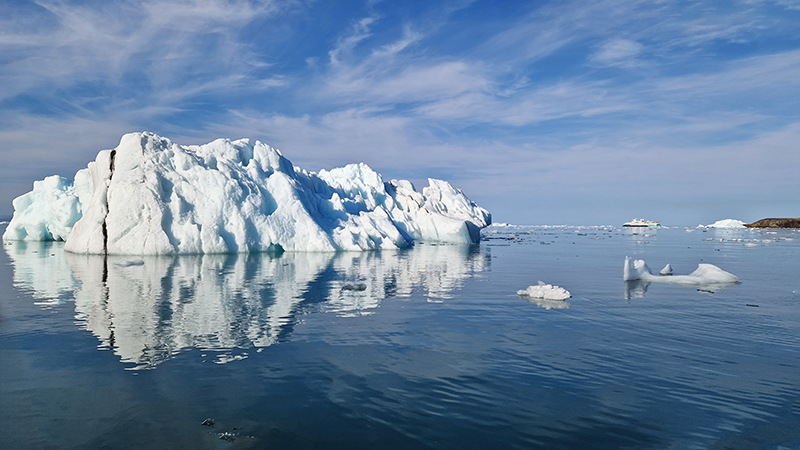
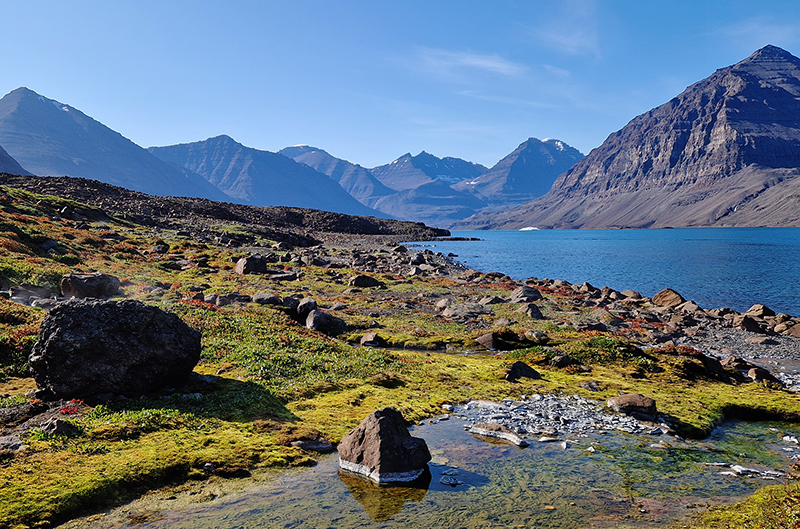
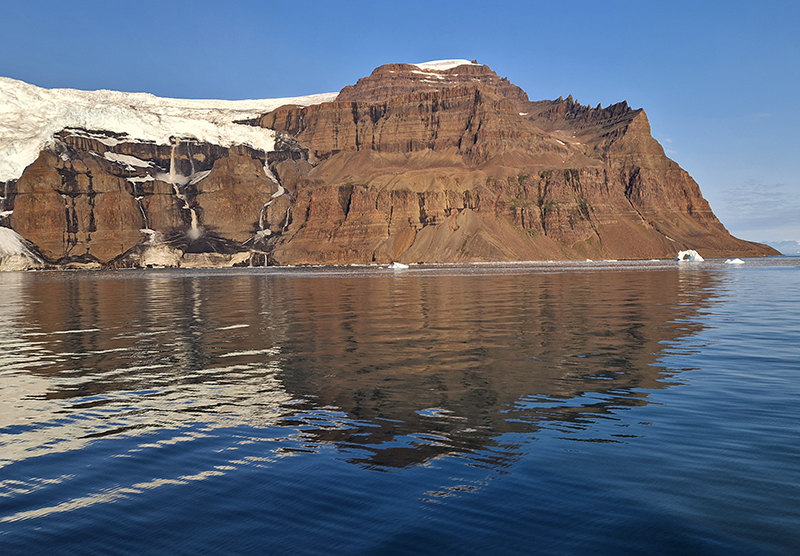
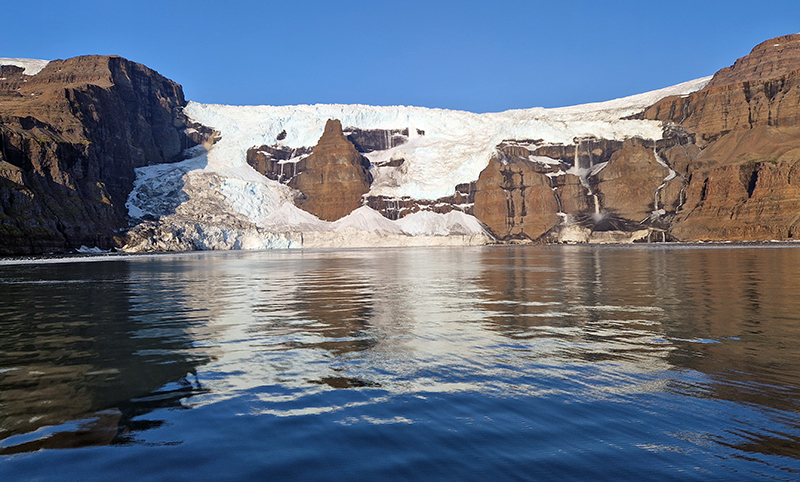
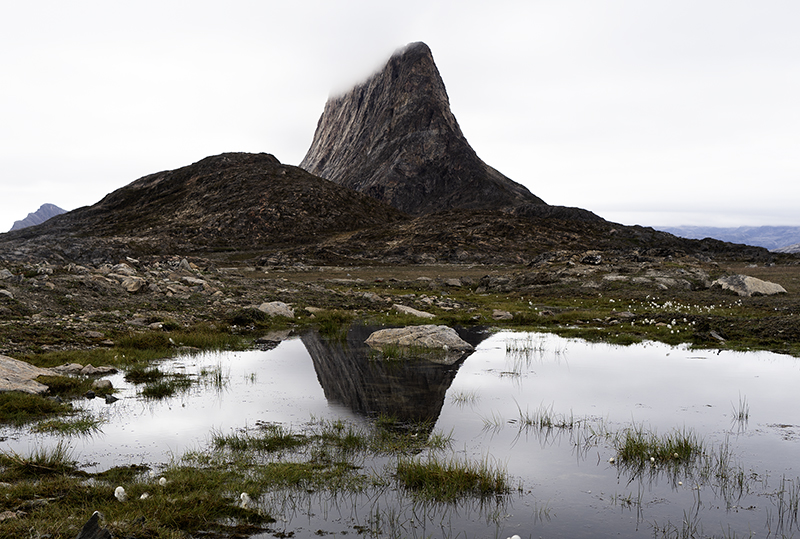
The majority of Greenland is covered in ice but we entered its grand fjord system in summer and so much of our experience of the country is dominated by the warm earth colours and magnitude of its cliffs and mountain ranges mirrored in the glassy surfaces of deep glacial lakes which overwhelm all sense of scale.
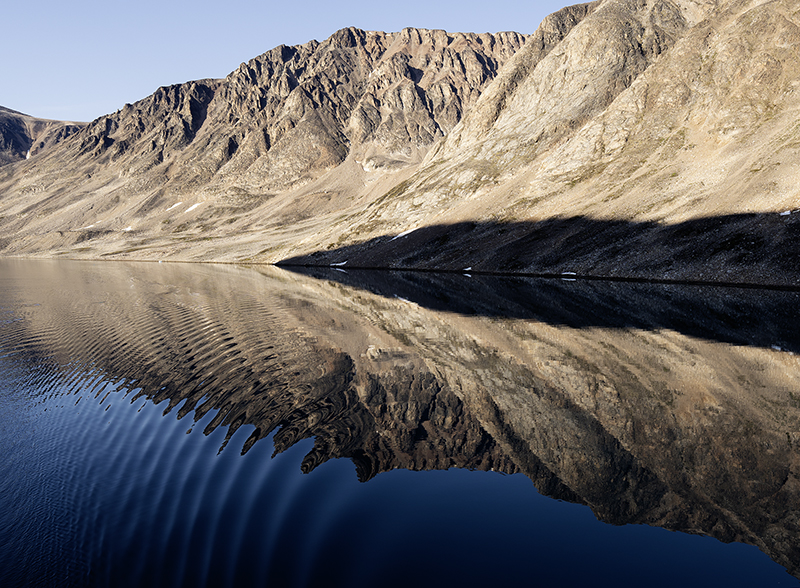
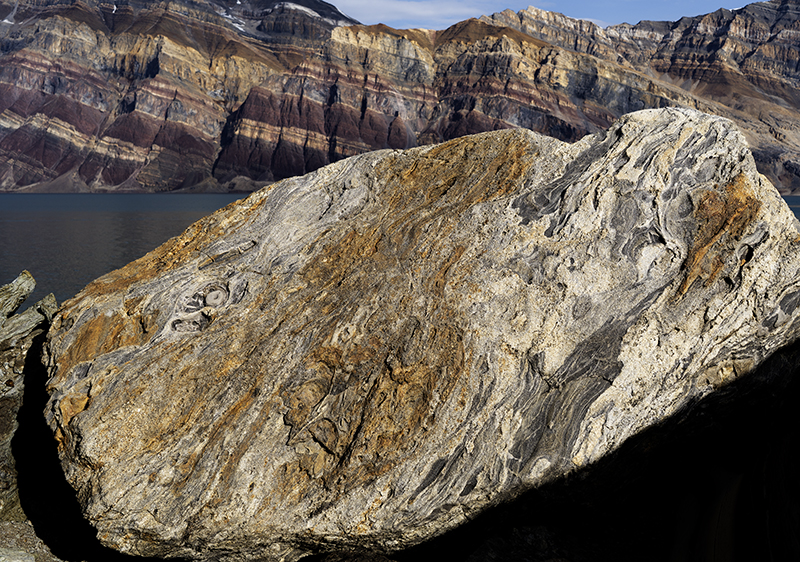
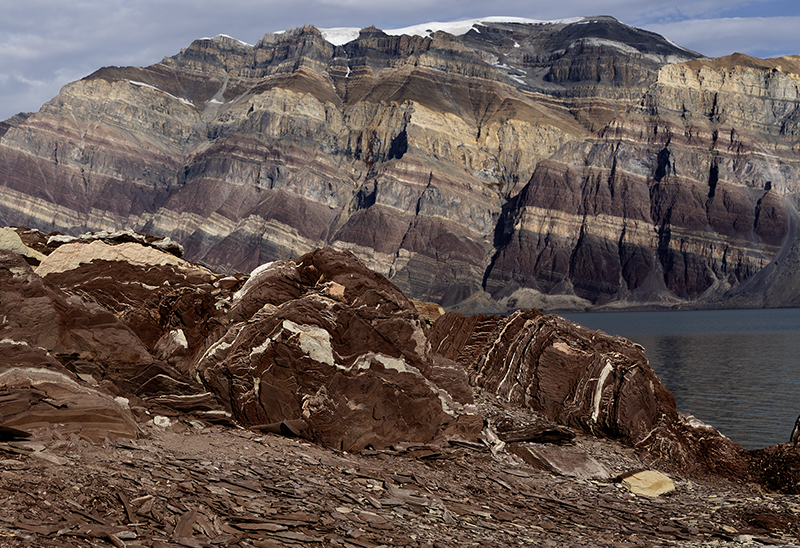
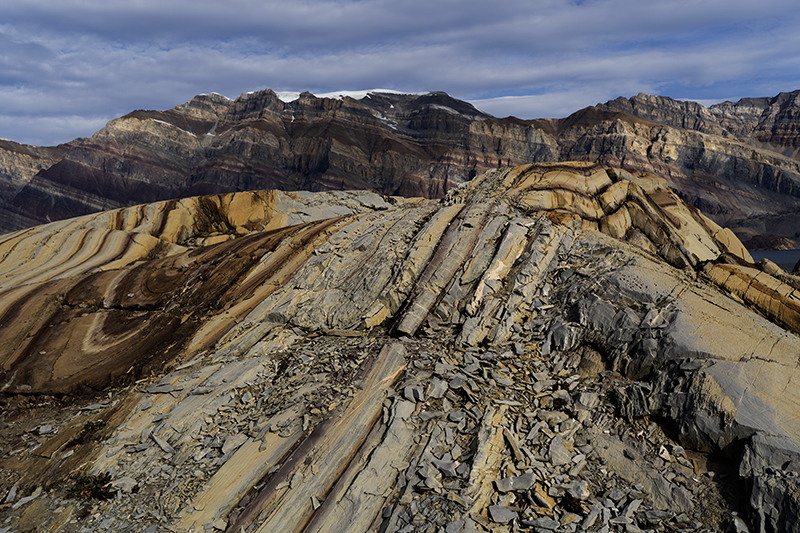
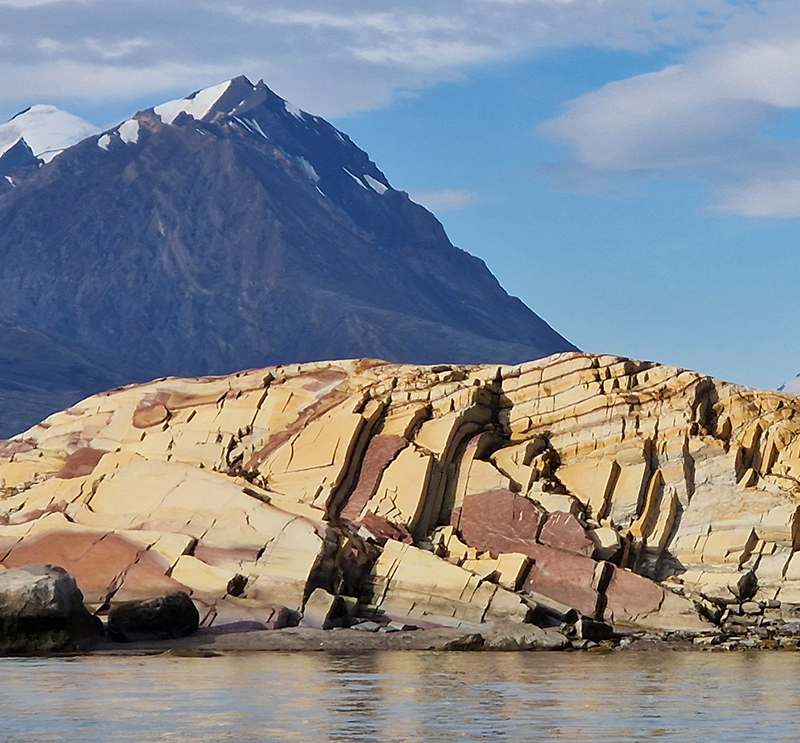
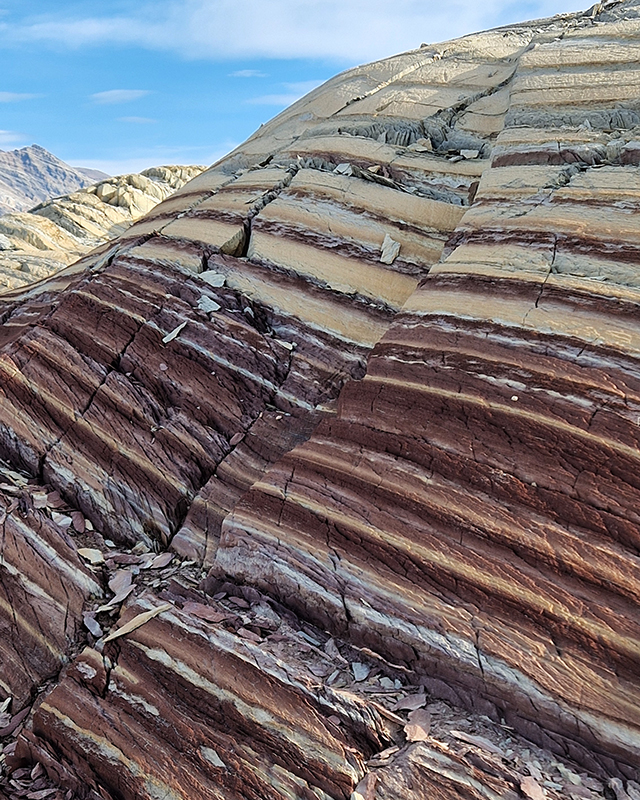
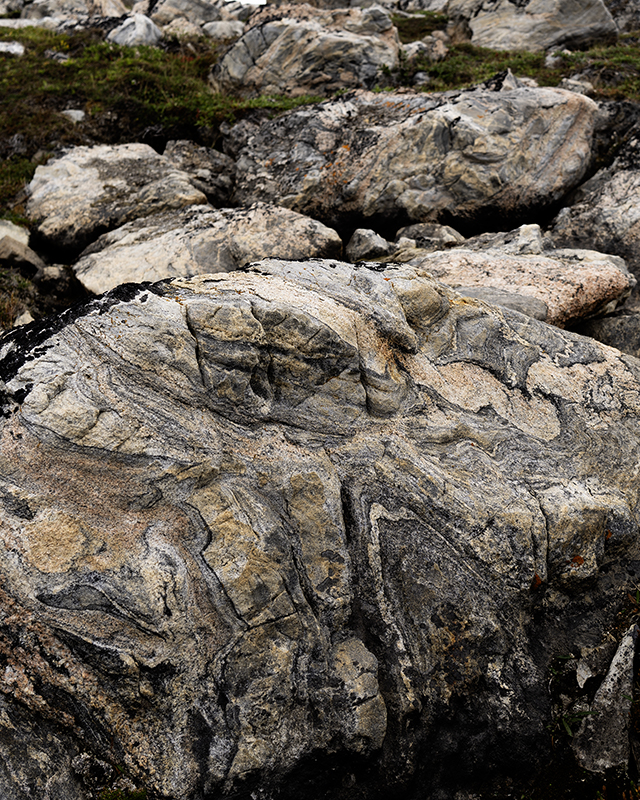
Greenland geology differs from Iceland in that it doesn’t have active volcanoes, mountains are made from sedimentary rocks and ancient tectonic movement. Greenland has some of the oldest rocks on Earth, dating back billions of years whereas Iceland is one of the youngest landmasses, still actively changing with surface rocks no older than 16 to 18 million years.

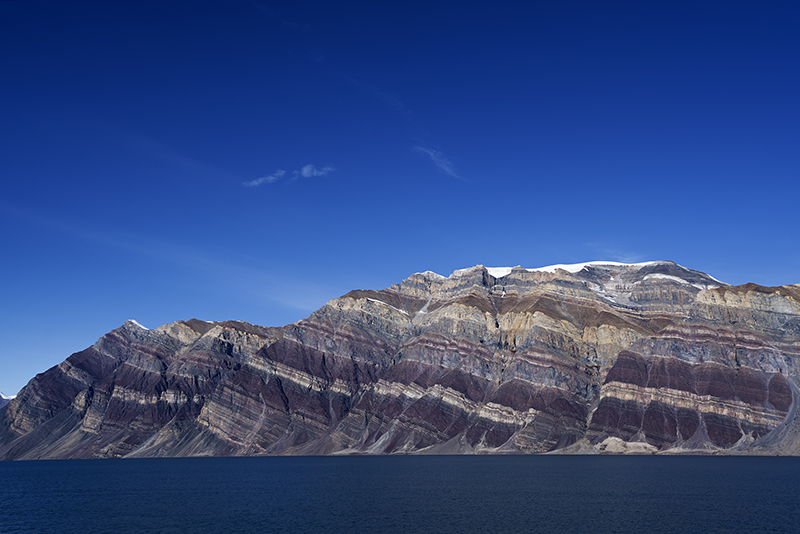
The distinct layering of rock, most obvious at Gateaux Point, are from ancient marine sediments deposited in a shallow calm seas roughly 900 to 600 million years ago. These alternating bands of limestone, mudstone and quartzite were later uplifted and twisted during a major mountain-building era around 490 to 390 million years ago, and further sculpted by glacial erosion leaving this extraordinarily beautiful landscape.
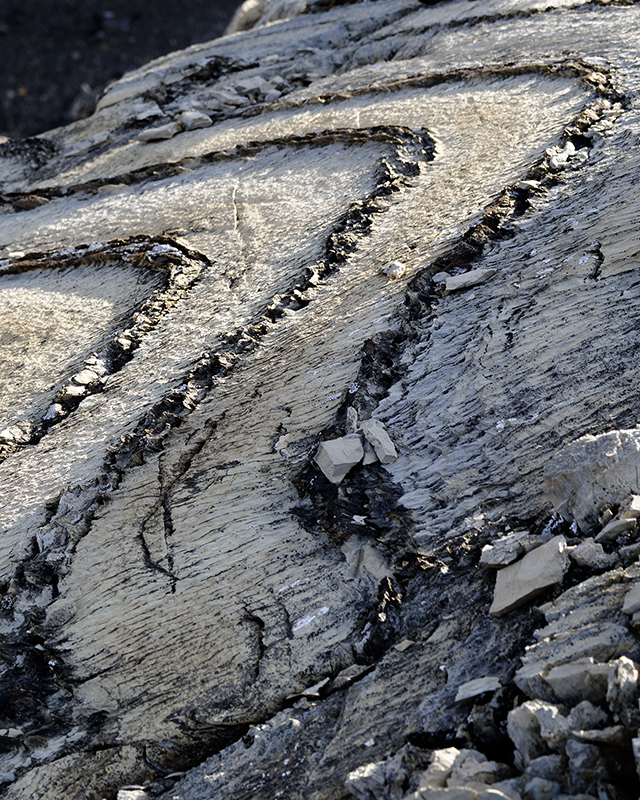
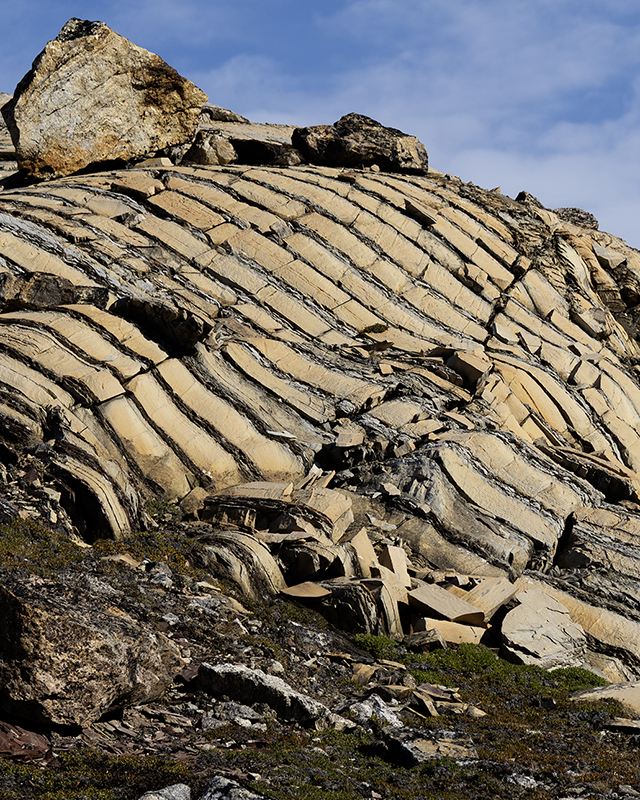
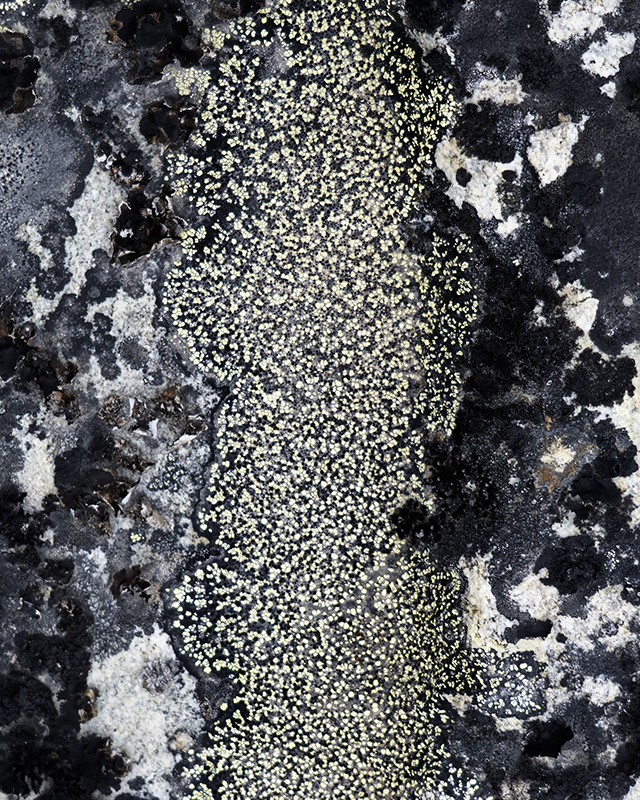
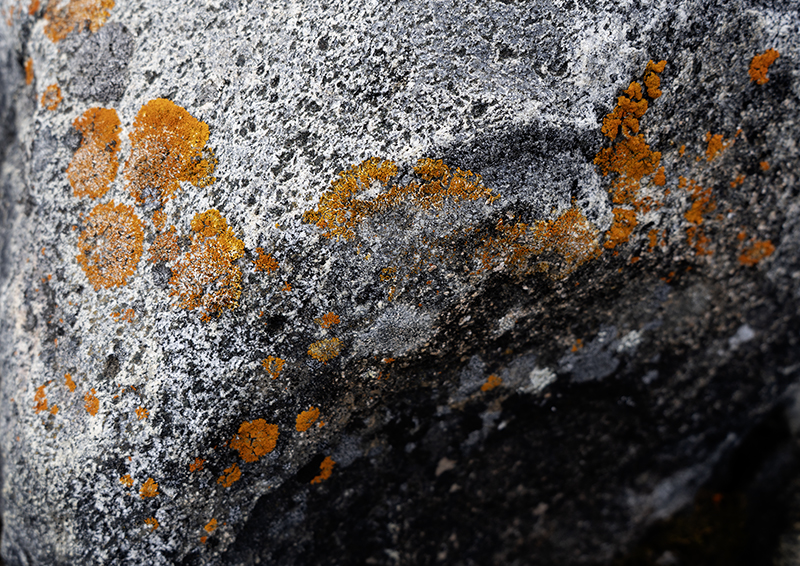
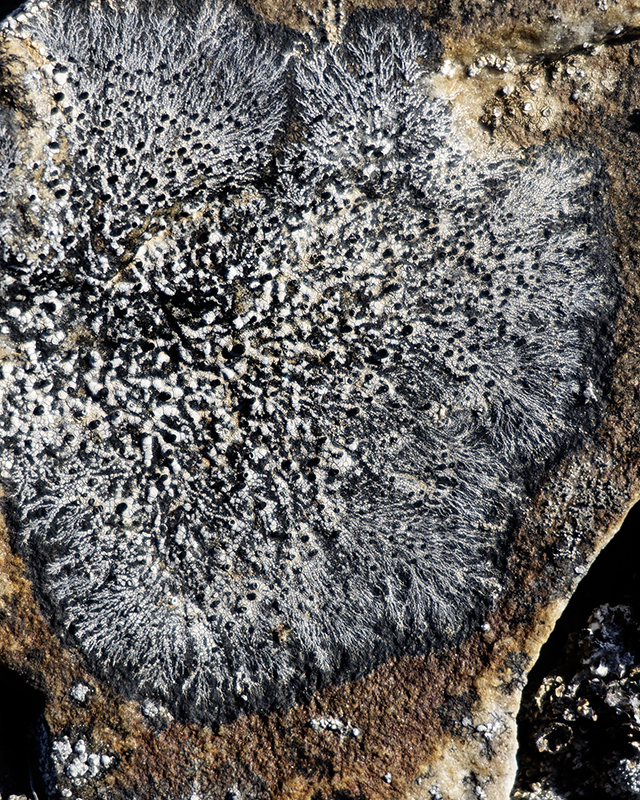
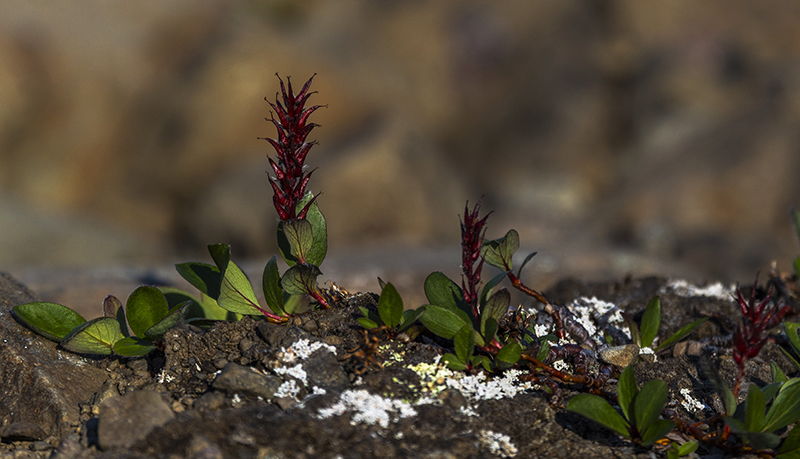
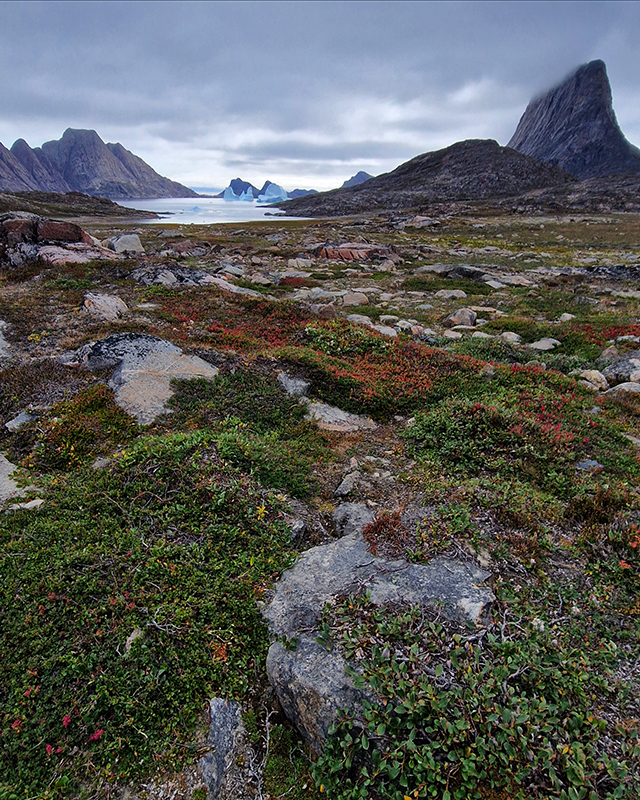
We walked on Arctic tundra. From a distance the land looks barren but up close we found micro forests, springy moss and delicate plant life. Black and vibrant lichens speckle the rocks. Freshwater shrimp can be seen darting in the streams.
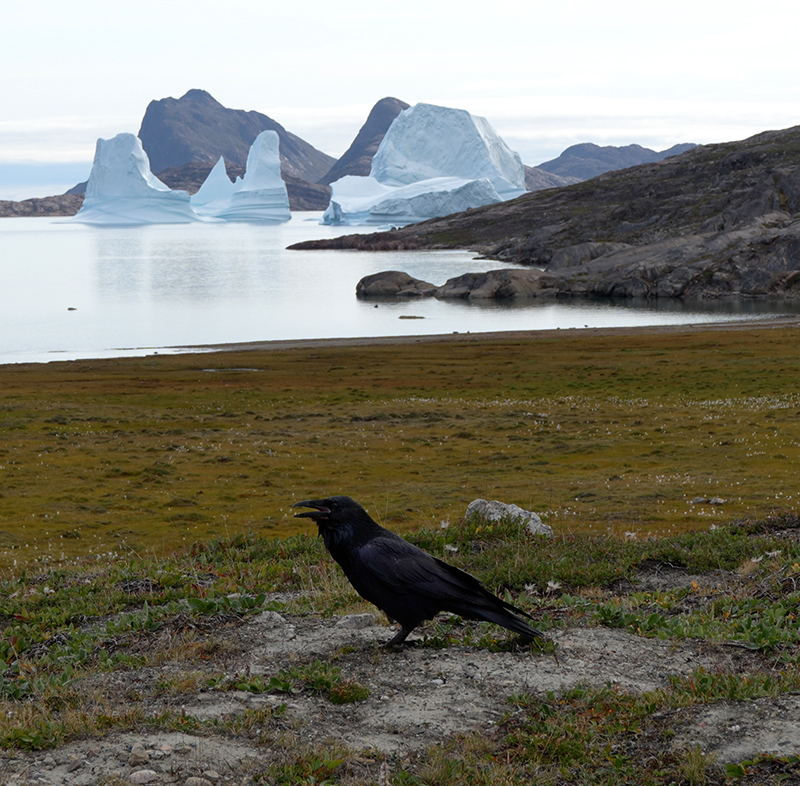
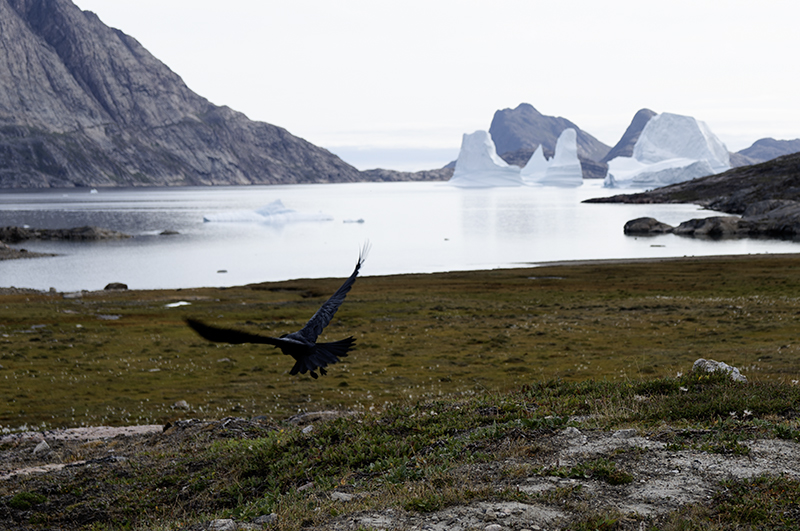
While out on the tundra, a raven circled us and landed very close by, all the while loudly cawing. It felt very much like a message was being delivered. The raven (tulugaq) is a powerful symbol in Greenlandic Inuit culture which credits the raven with helping to bring light and order to the world out of primordial darkness.
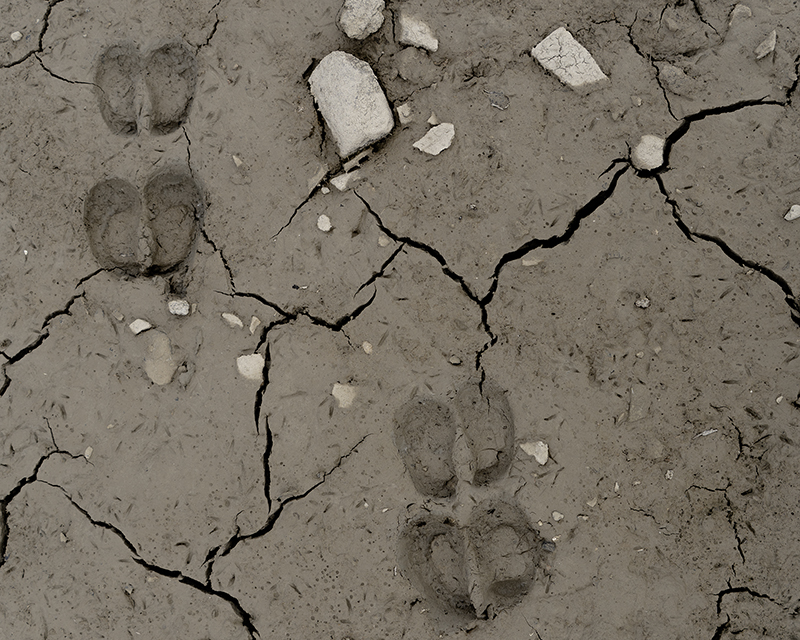
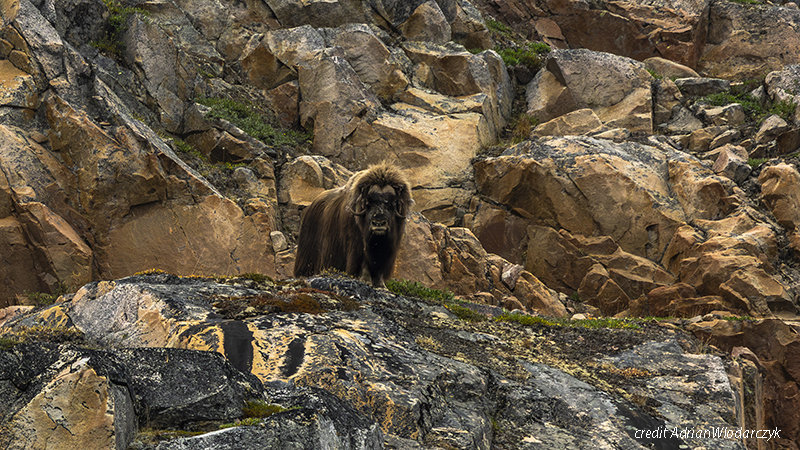
We saw muskox footprints in hardened mud and entangled silky soft muskox hair caught on the rough boulders they rub against and at last caught distant sight of one solitary beast surveying the fjord from on high. They stand still and slow their breathing to conserve energy to survive the extreme temperatures of the exposed arctic tundra. Muskox image credit to Adrian Wlodarczyk with the mega zoom.
There were also lots of seabirds skimming the water around the ship and diving into the water. Expedition team member JB gave a presentation on the ability of seabirds to see underwater due to the flat shape of their cornea which focuses the light more directly onto the retina – a bit like when peering through a tiny hole without your glasses.

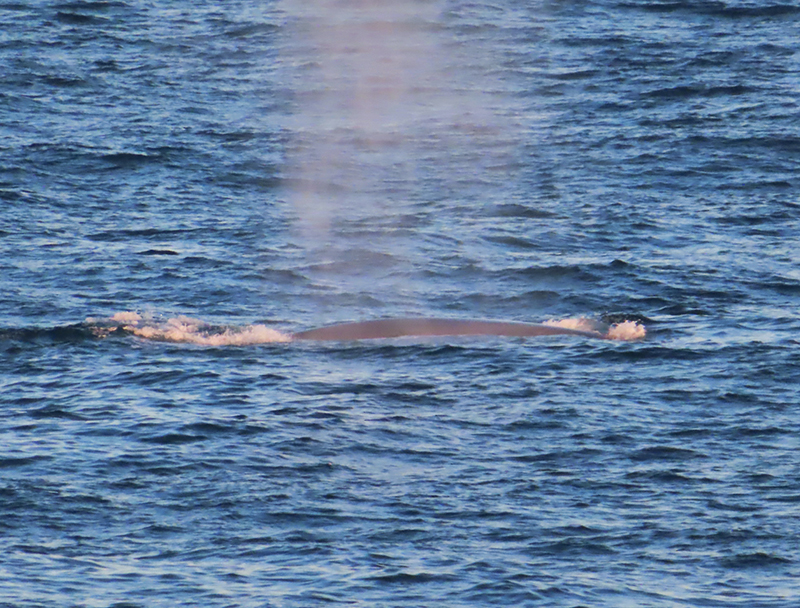
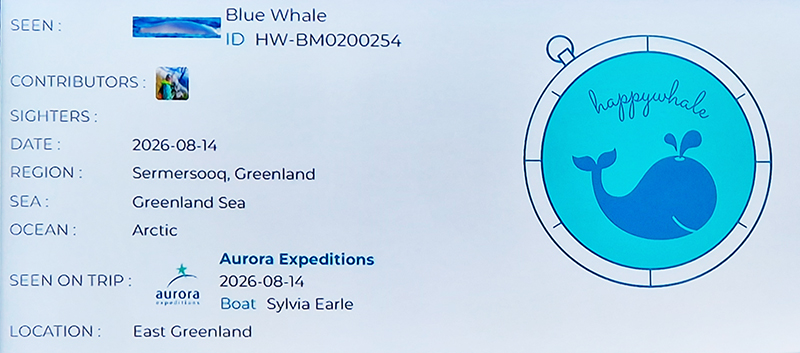
Other wildlife encounters included a blue whale, later identified by Happy Whale, as one not seen before.
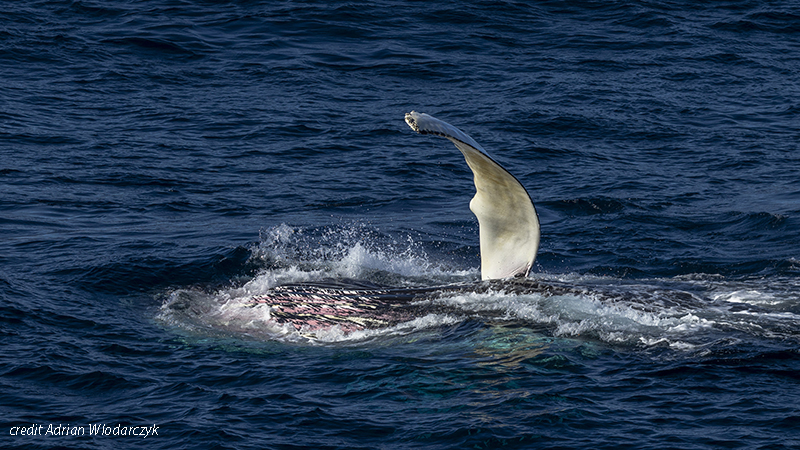
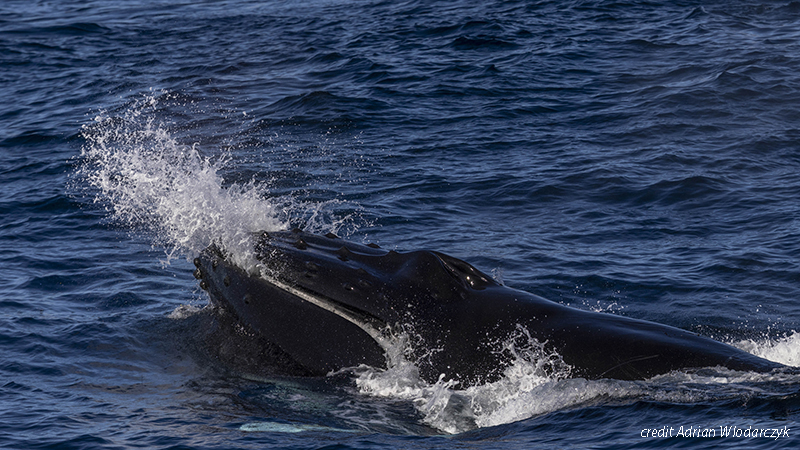
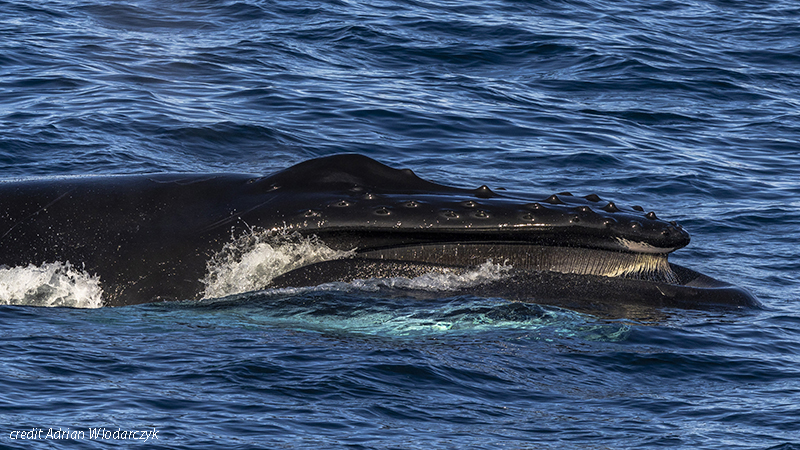
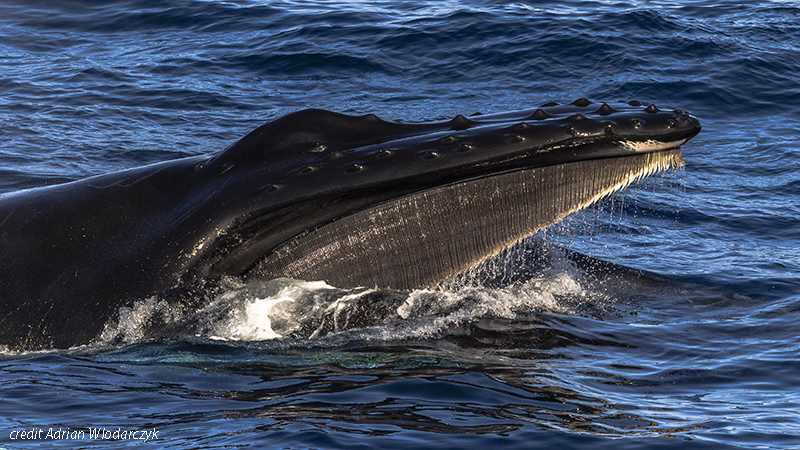
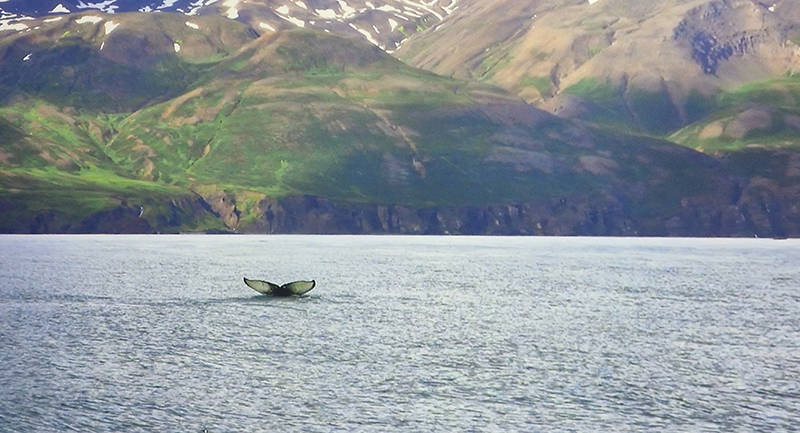
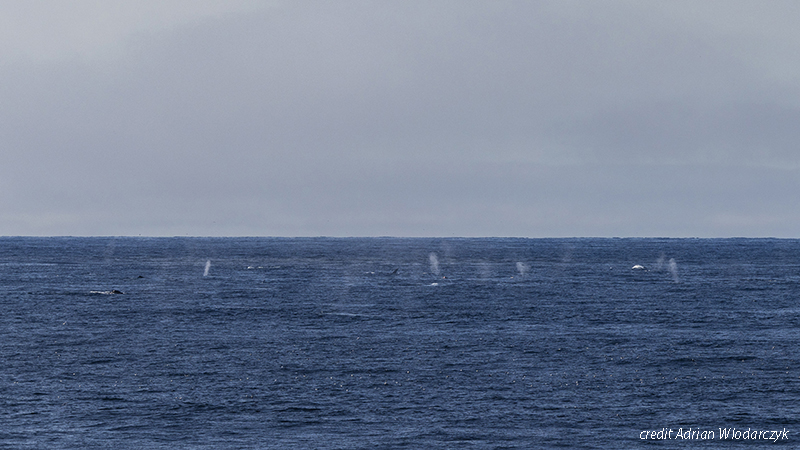
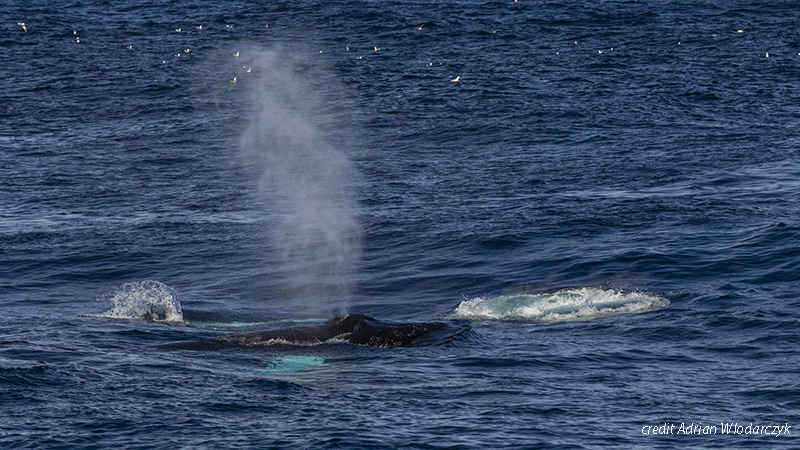
The most remarkable encounter was a gathering of hundreds and hundreds of humpback and fin whales engaged in a feeding frenzy. We were back out at sea and could see many plumes pfiffing up across the horizon. As the ship approached and slowed, the whales not only seemed unconcerned by our presence but appeared to actively use the ship to corral the krill into their gaping baleens. They were so close and so many and so energetic, it was very special. Those on board who had spent a lifetime at sea said they had neve seen anything like it. It even made the BBC news. . I messed up trying to film this experience so I have to credit Adrian Wlodarczyk again for saving the day.
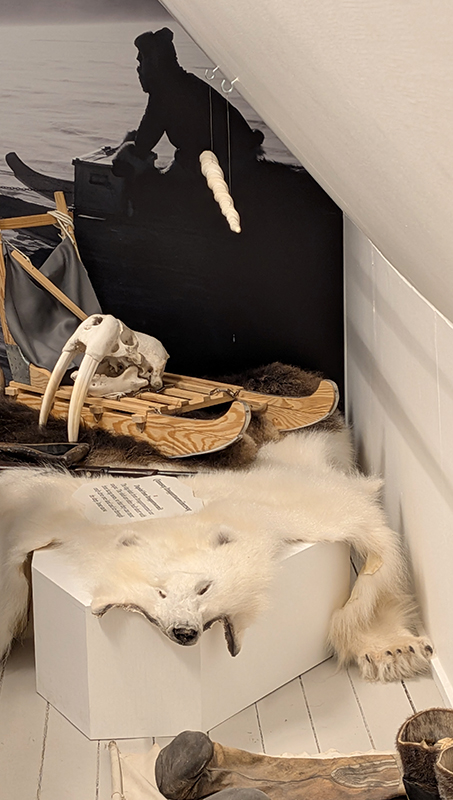
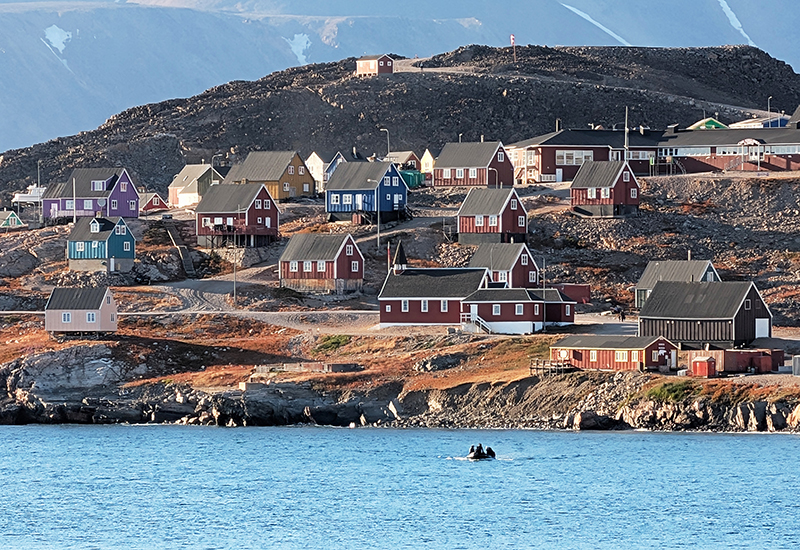
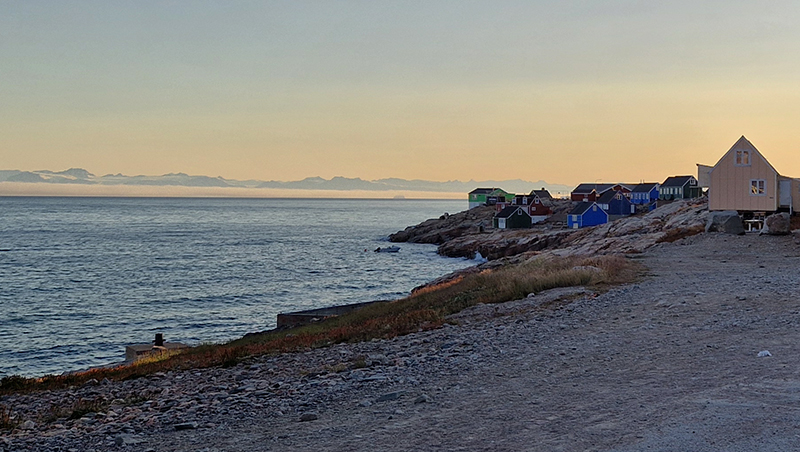
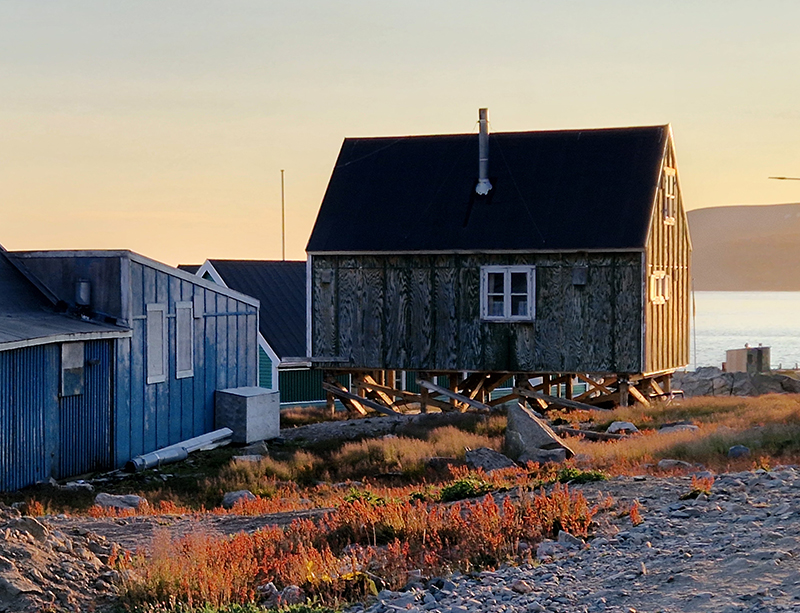
Our only contact with the people of Greenland was a visit to Ittoqqortoormiit, one of the most remote settlements anywhere, 500 miles form the nearest town it has a population of about 330 people. The people here are hunters and when we arrived a whale had been killed and brought ashore to stock the larders of the villagers, so most local people were down at the harbour on the other side to the quay where we came ashore via the Zodiac boats. We were advised to keep away from the harbour where this was happening and spent our time visiting the museum and enjoying the evening light on the colourful houses. This small settlement is at the forefront of climate change as they lose surrounding sea ice which is vital for travelling over to hunt seals, a problem shared by polar bears and so it also brings hungry bears to the village looking for an easier source of food.
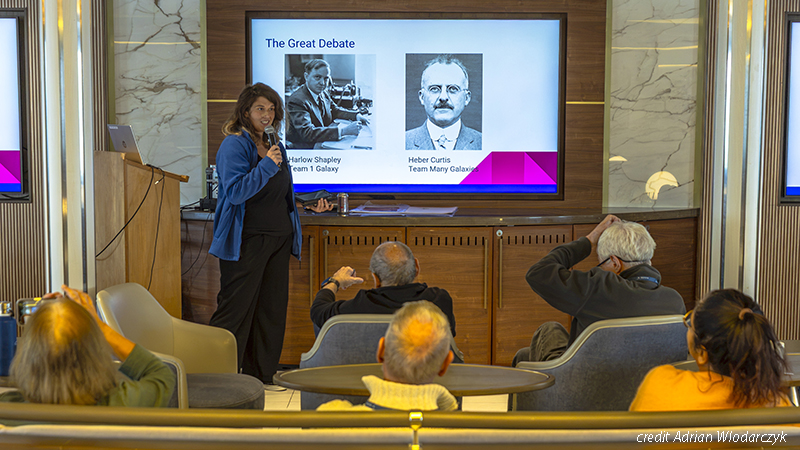
New Scientist reporter Chelsea Whyte gave a lecture on Animal Astronomy which I found fascinating. She talked about the many animals that use celestial navigation and the research has been done in this field. Thinking of my longlisted Artangel proposal involving creating a star gazing platform for sheep on the North Yorkshire moors as part of a sculptural intervention to commemorate the Haverah Park cosmic ray detector huts that have been abandoned here, it made me wonder if anyone has looked at how sheep experience the night sky. This is something I am excited to look into further.

Greg Mortimer was happy to say that all his crew were all trained in the use of a sexton which is used to measure the angle between the horizon and an object in the sky, such as the sun, moon, or stars, to help determine a ship’s position at sea. I spoke with a young officer who said that a lot of the new recruits from India took their exams in the UK now because they didn’t insist on training using a sexton but India did, so the qualification was much harder to attain. I wonder if that will change after the Royal Institute of Navigation recommends teaching sailors to navigate by the stars again as a top priority. I heard about this on the Inside Science podcast Should we rethink navigating by GPS?
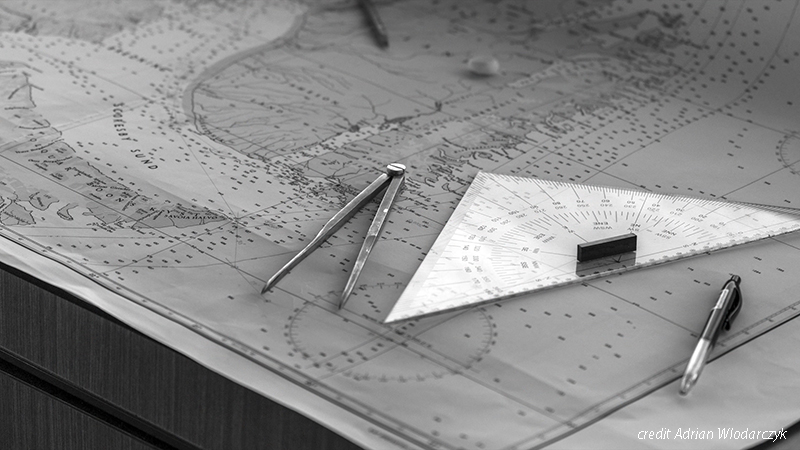
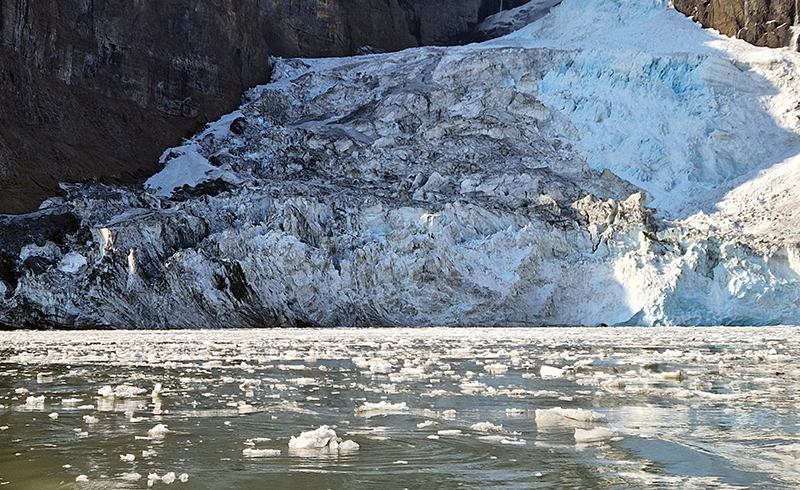
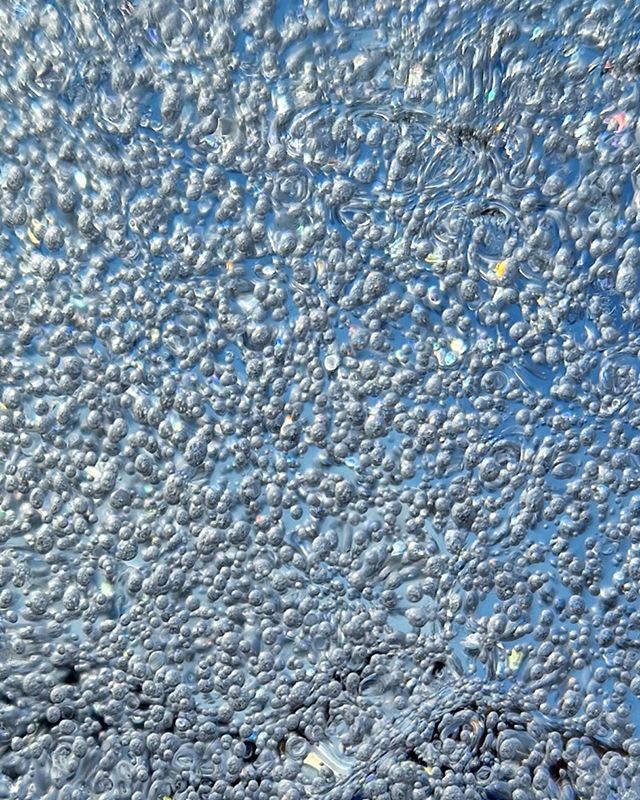
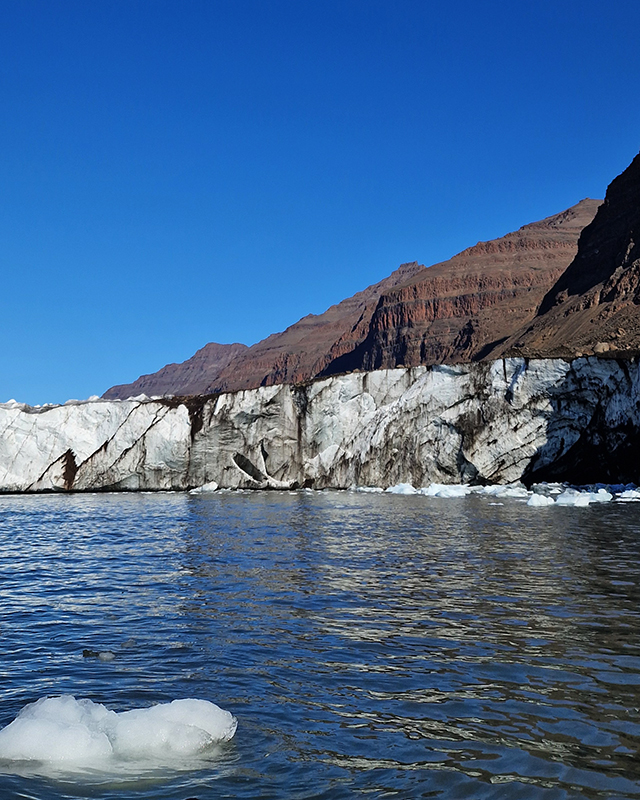
The final Zodiac cruise was to Bartholin Glacier. Out on ice strewn water the fizz and crackle of ancient air escaping its frozen enclosures can be heard as bubbles are released from the melting ice.
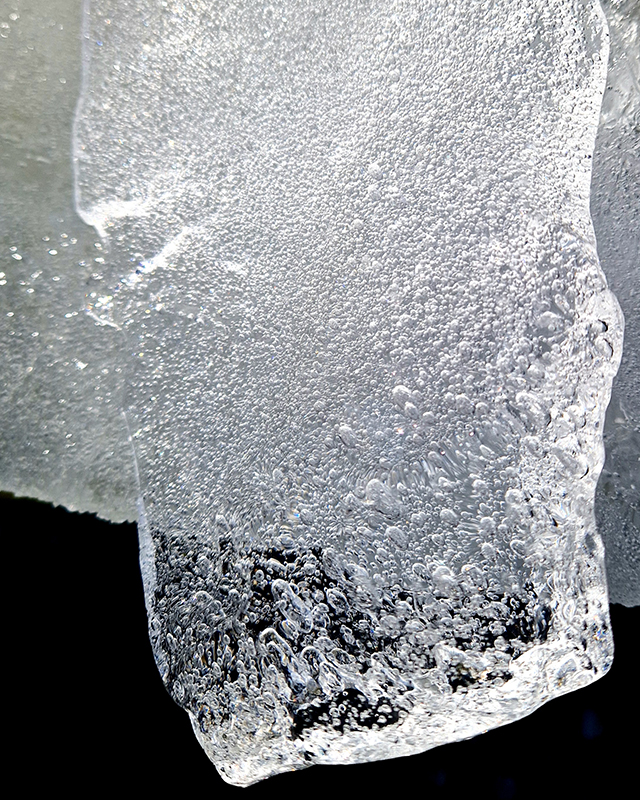
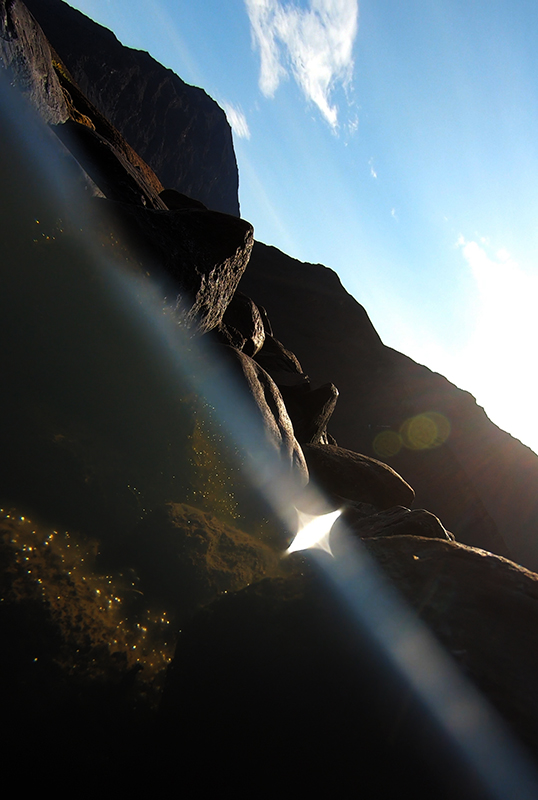
I attempted to record the sounds of the glacial ice and film underwater with the help of New Scientist reporter Leah Crane.
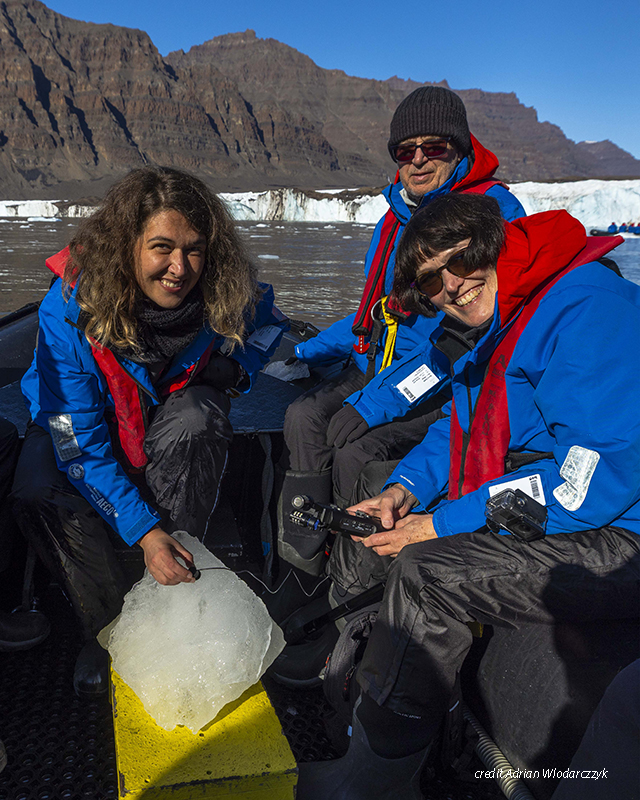
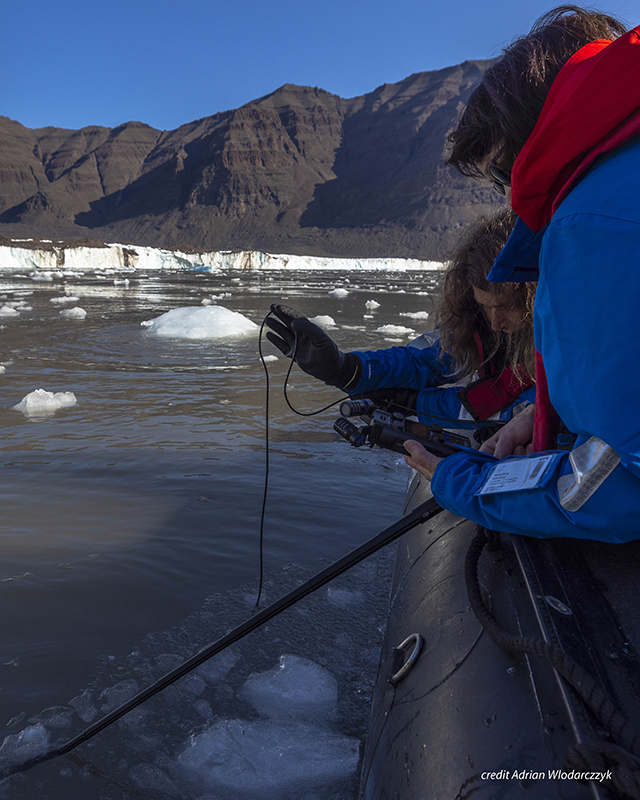
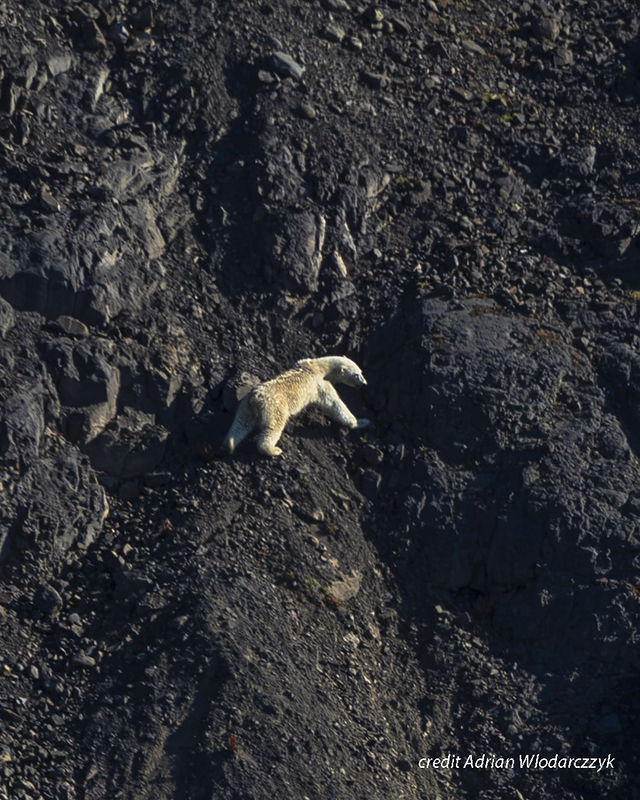
We had become used to the protective measures of polar bear scouts whenever we landed but it was when we were out in the Zodiac recording ice that a message over the walkie talkie alerted us to a polar bear in the water 200m from the ship. We held back and waited for news from the bridge. Eventually the bear swam over to the shore and we could quickly return to the ship for a distant view of its lone form traversing the steep banks of the cliff. Thanks to Aurora expeditions photographer Adrian Wlodarczyk for the images with Leah and of the polar bear.

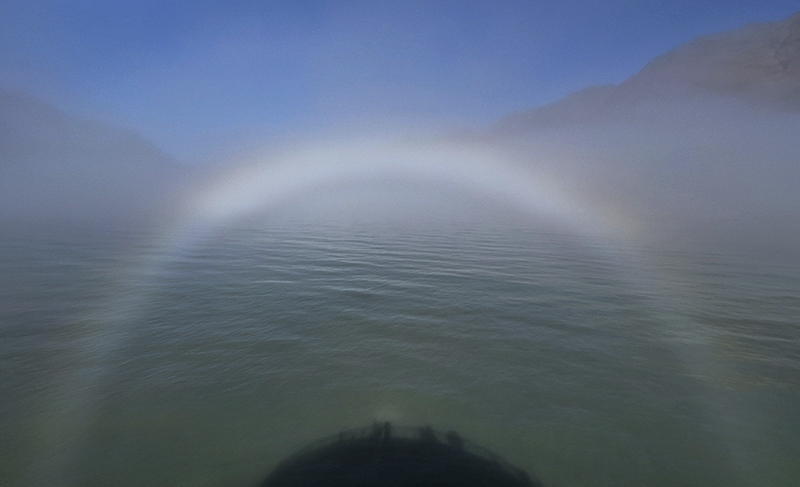
As the polar bear wandered off, fog descended over the glacier and a magical fog bow appeared. Fog droplets are much smaller than raindrops so they scatter light through diffraction rather than refraction blending the spectrum of colours to produce white light unlike a rainbow which splits the colours.
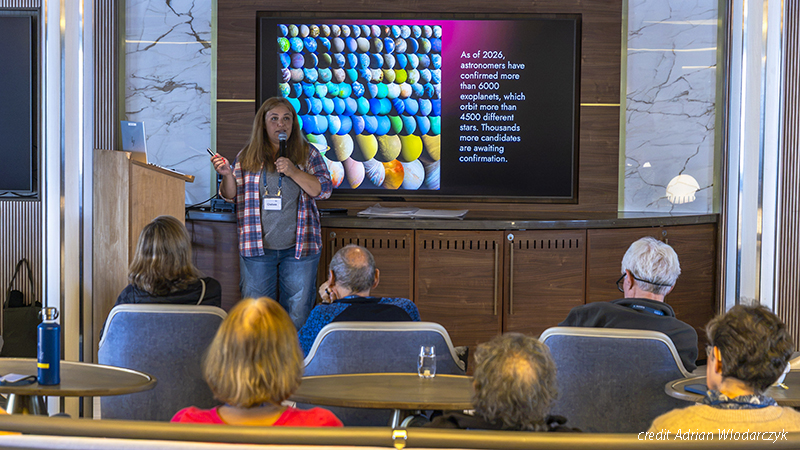
During the cruise there were many other talks, discussions and citizen science activities which covered Eclipses and Astronomy, the past and future of Greenland’s Glaciers, Wildlife and the Arctic environment, The Science of Awe, Whales as Ecosystem Engineers, Geology, Ice on Other Planets and Moons and what Ice Cores on Earth can tell us. I have so much information and overwhelming sensory experiences to process from this expedition. I am sure all that I have absorbed will surface in my work over time.
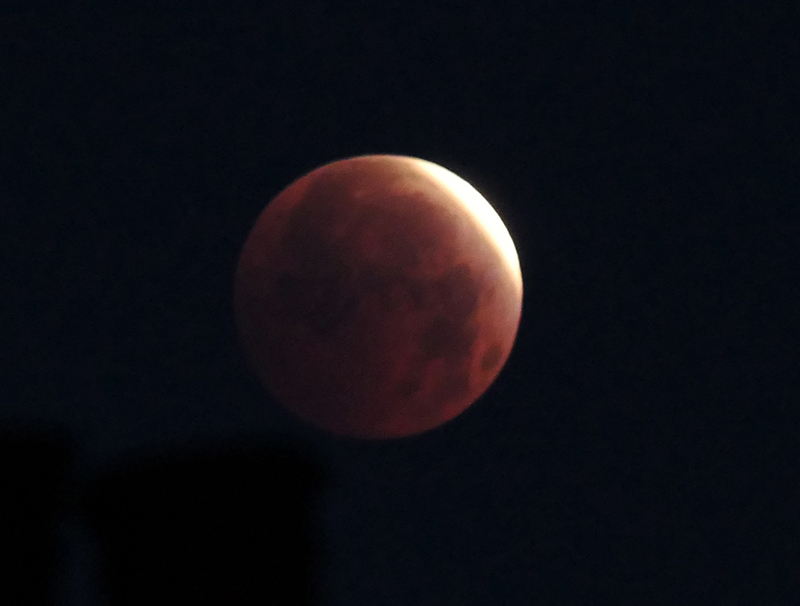
Back in London, I woke early to see the partial lunar eclipse which was rather lovely.
Gallery Visits

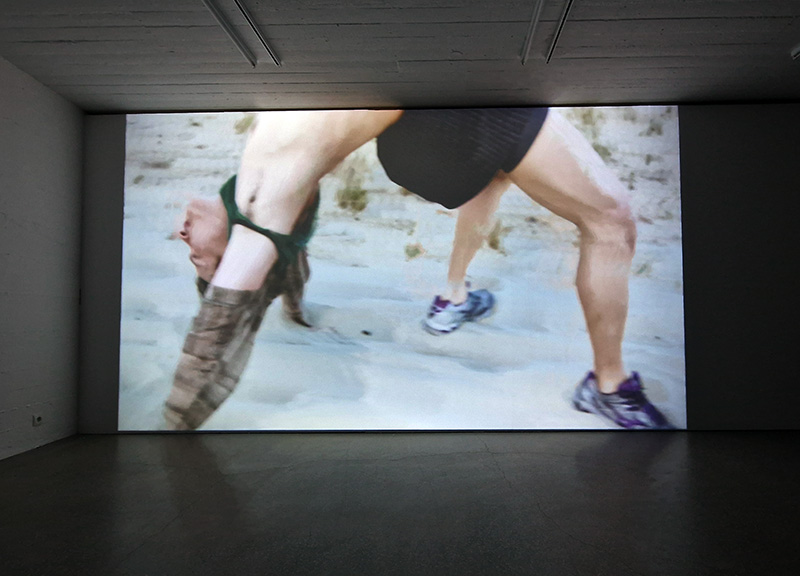
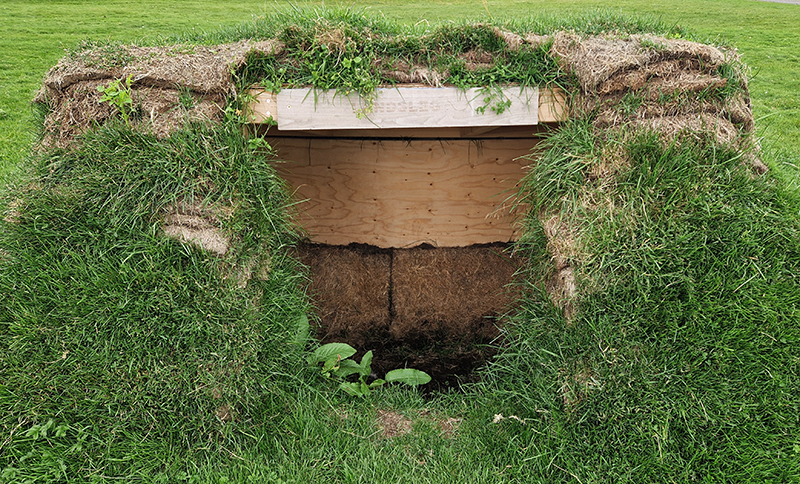
Group show, The Dead Cat and Everything Else at APT curated by Cecilia Sjoholm and Iain Hales, had a tantalizing title for me and I really liked the concept of showing works that could be seen to exist in multiple states at once, to oscillate between reality and thought experiment and consider if the act of viewing the work brings about a definitive perspective. It was asking a lot.
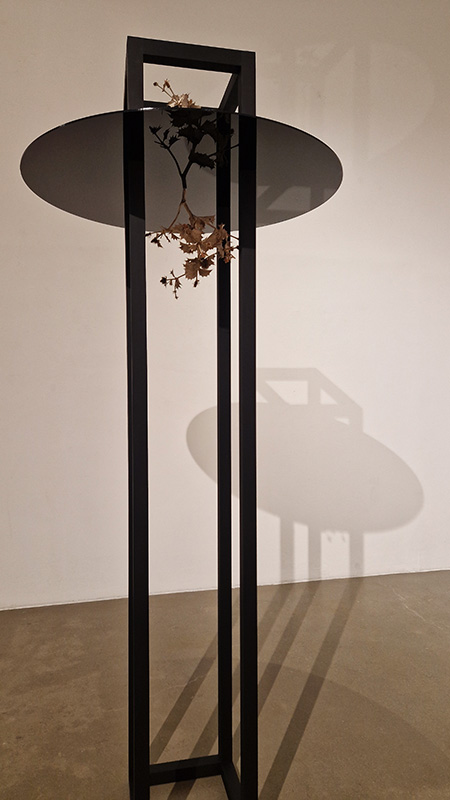
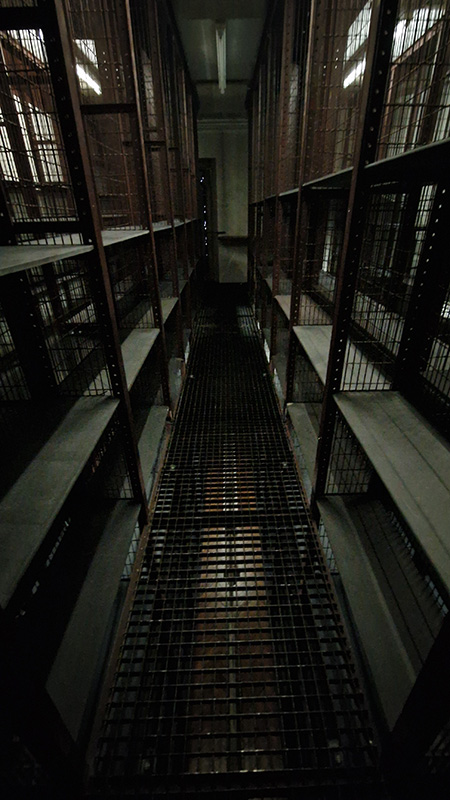
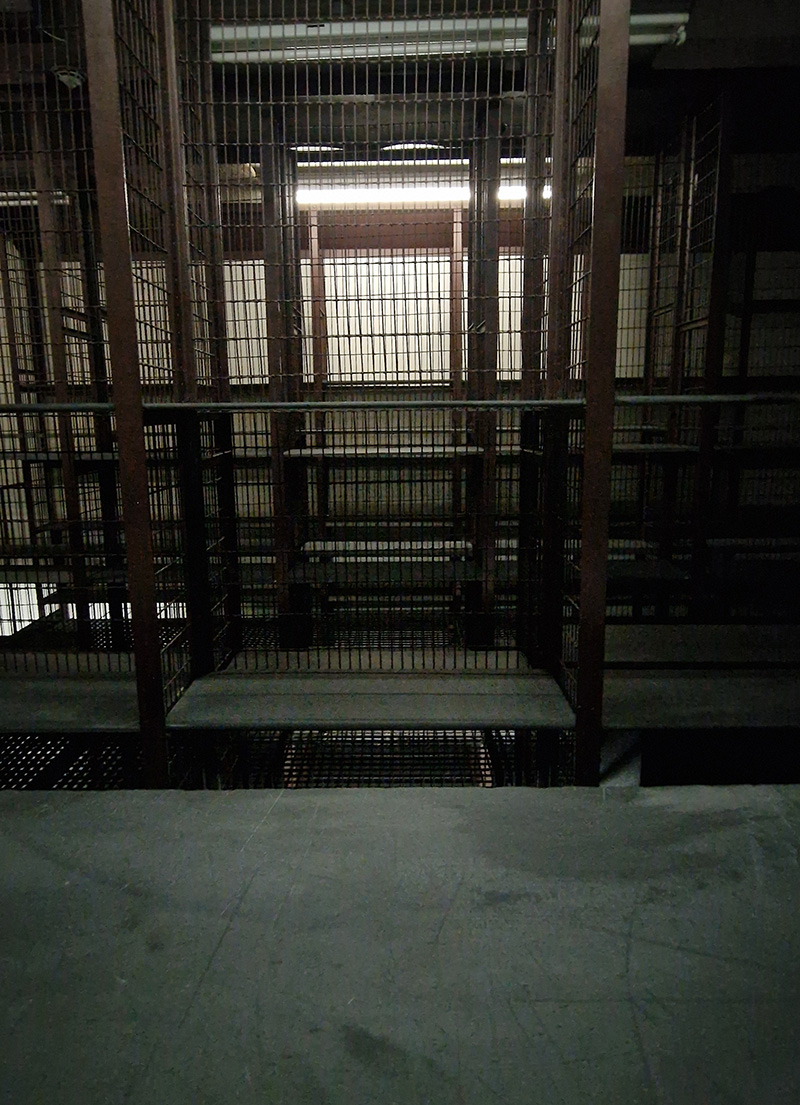
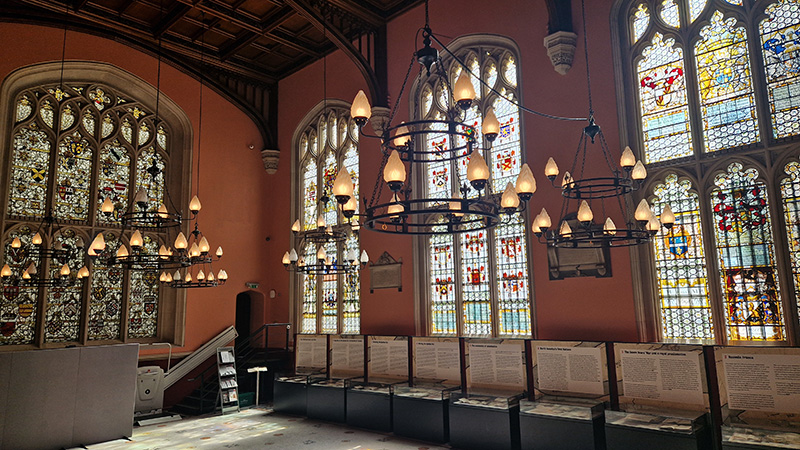
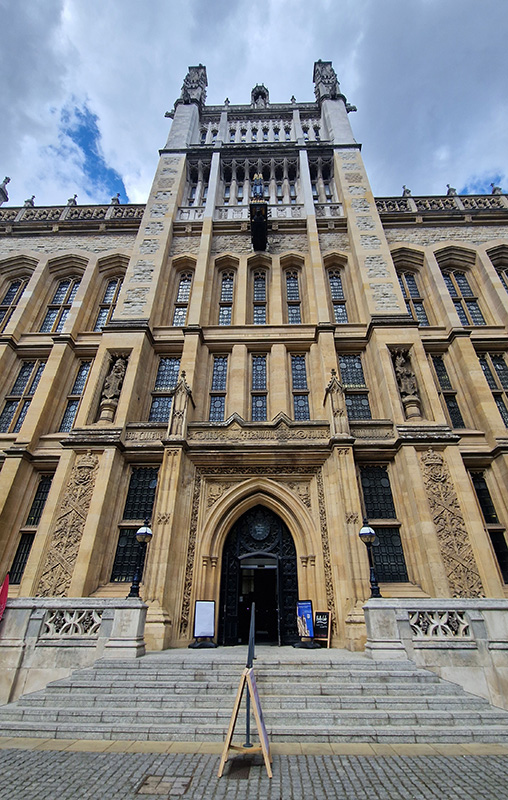
Terrence Gower Enemies and Rascals supported by Artangel and installed in the Original Cell in the Maughan Library, Kings College London, the first purpose built fire-proof building for housing public records and where the records were held for the tale that Gower unfolds within this cloistered space. The narration using transcripts from historical records tells the story of the newly formed America’s failed attempt to seize Canada from the British. Notable is the indigenous perspective who watch with horror as what they deem to be brothers ferociously fight each other for territory which had always been theirs and their plea for peace.
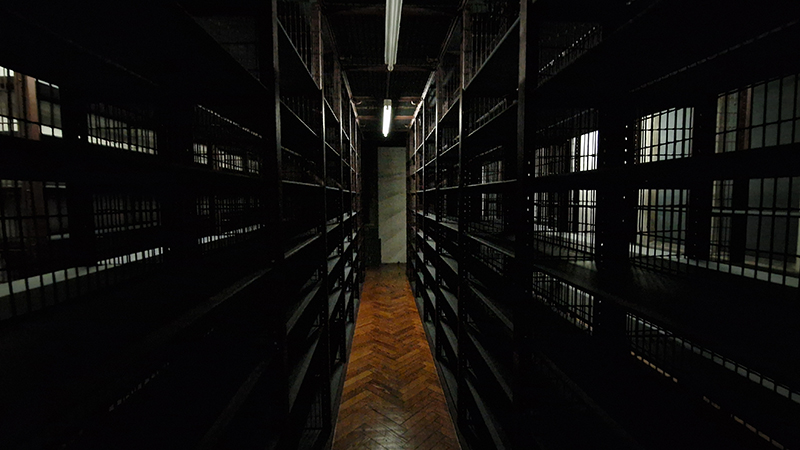
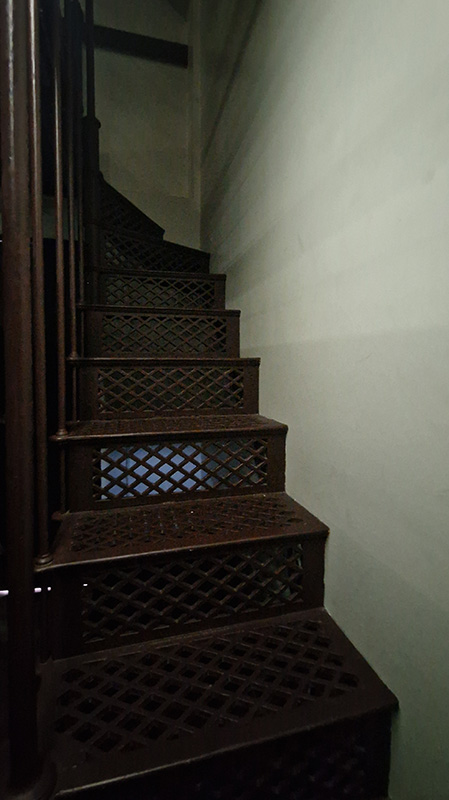
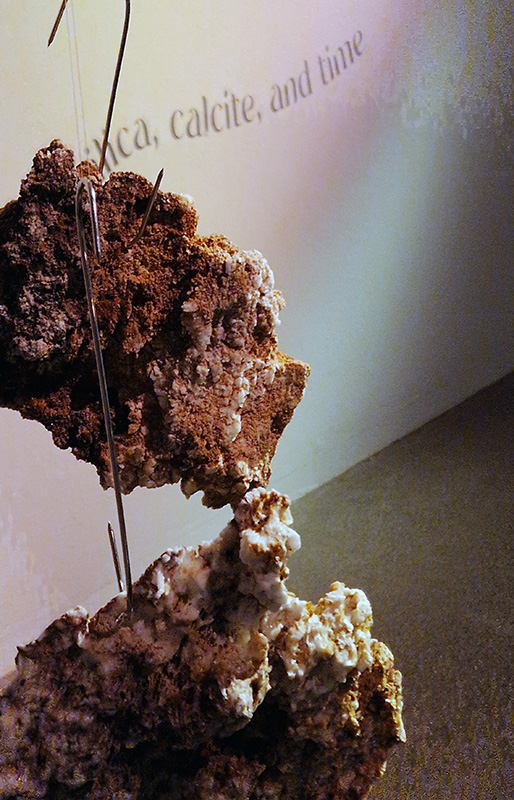
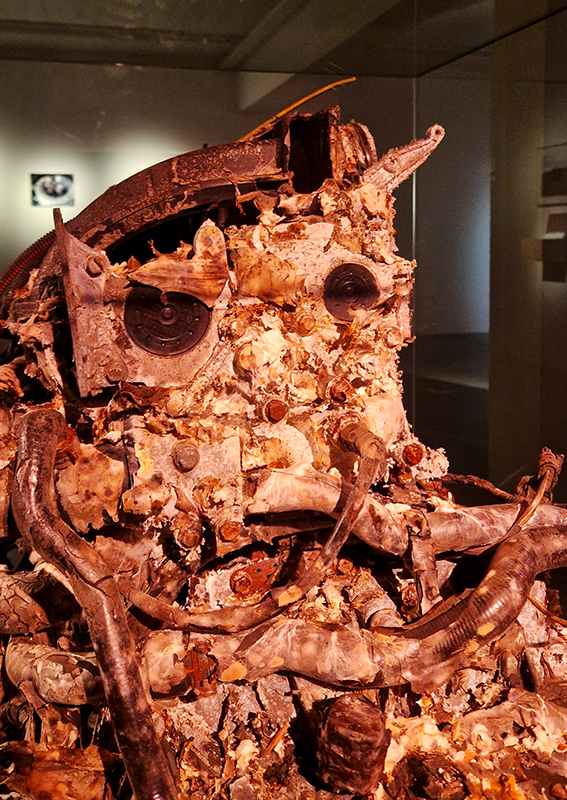
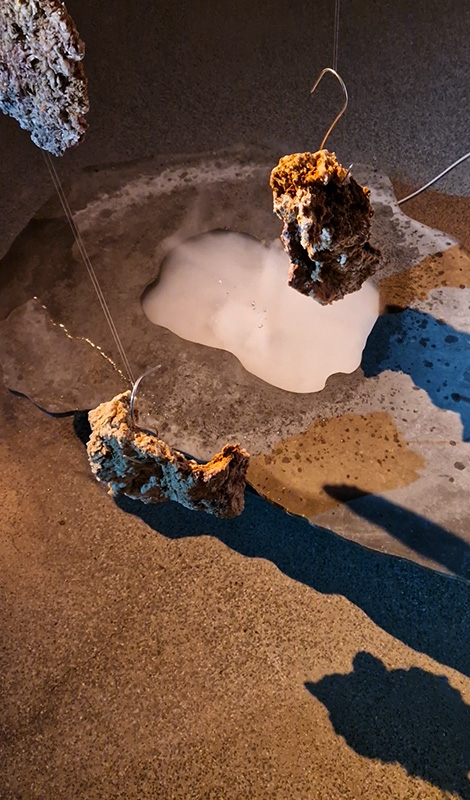
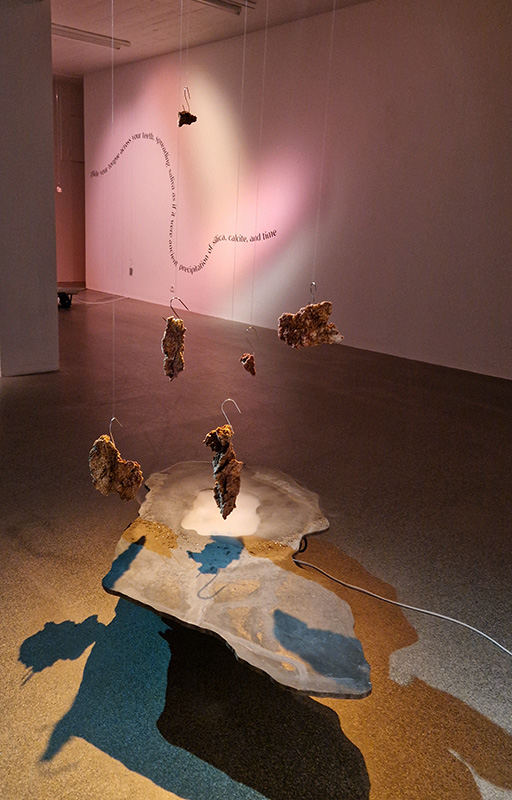
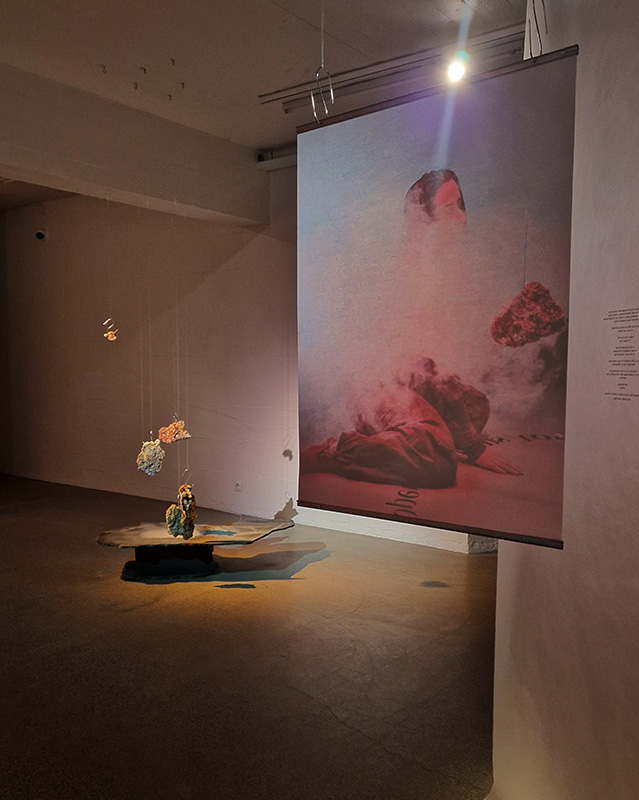
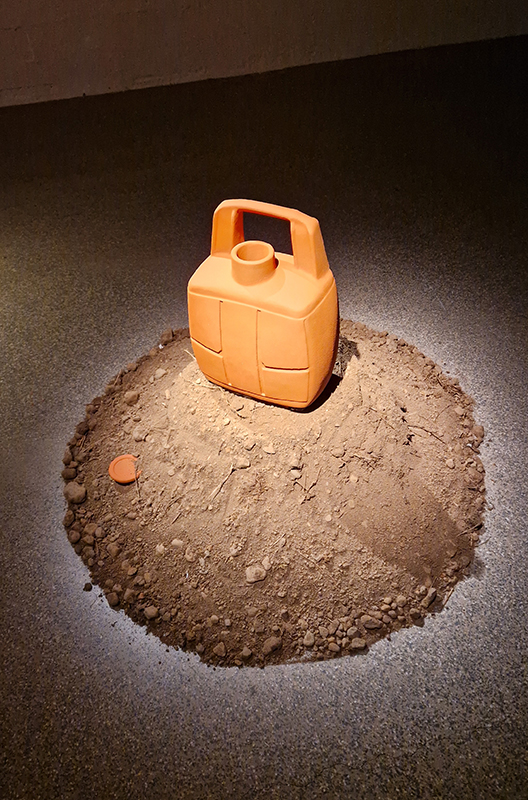
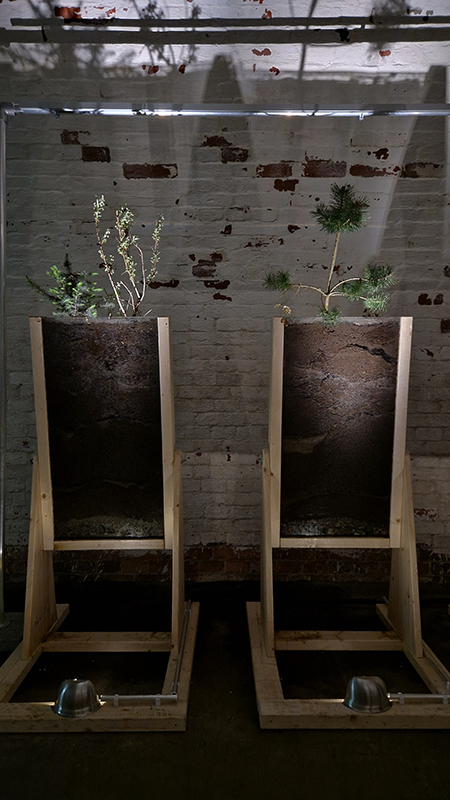
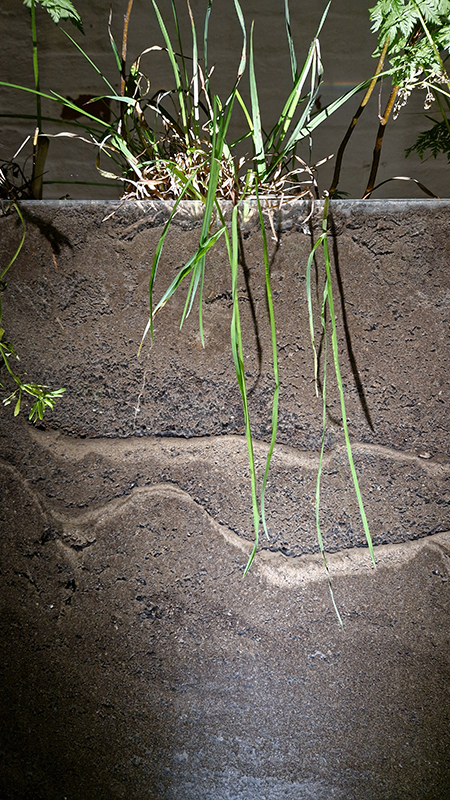
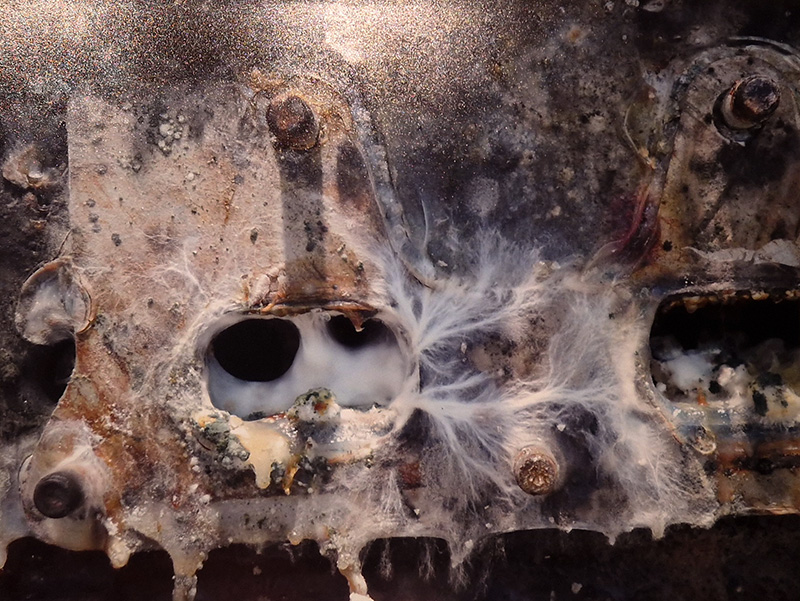
Membrane / Himna at The Nordic House, Reykjavik beautifully curated by Thomas Pausz presents seven artists whose works expand on ecological awareness of soil-making processes.
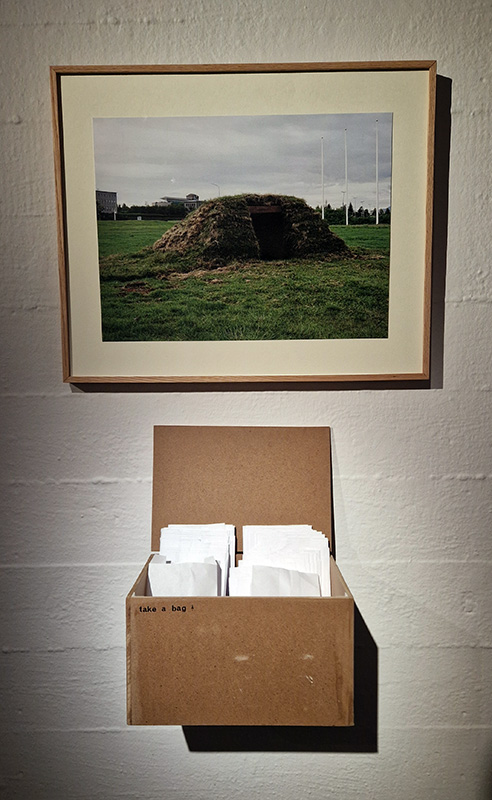
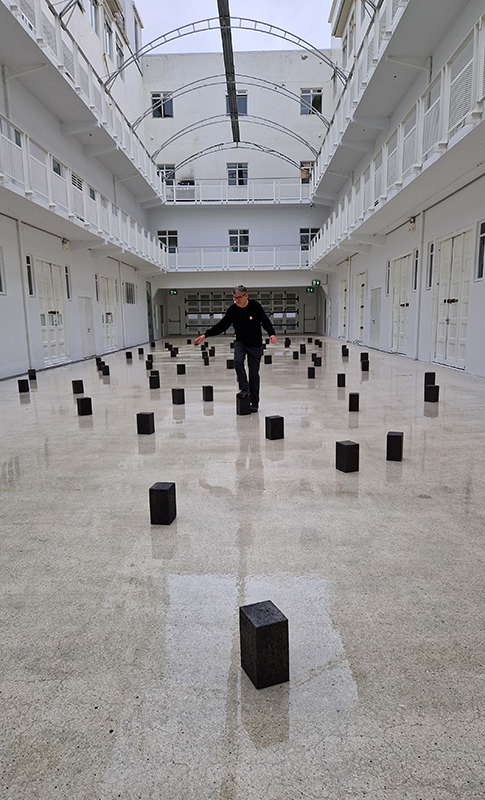
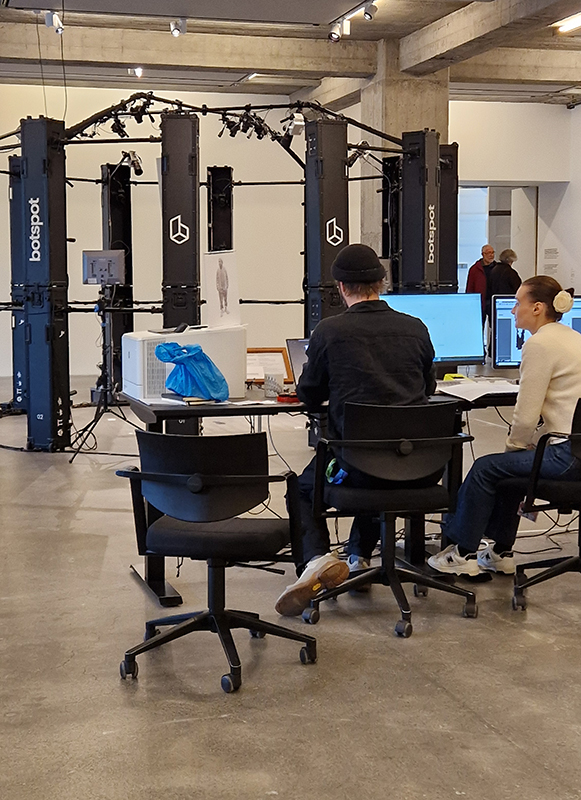
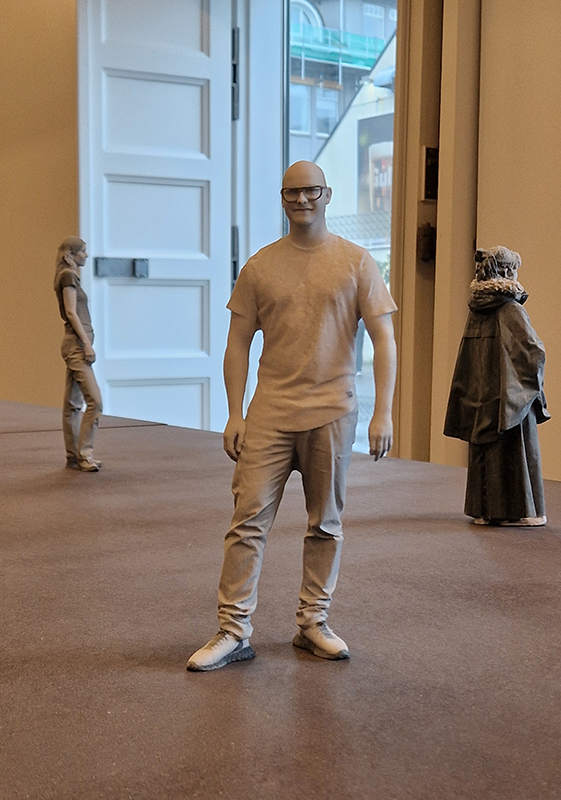
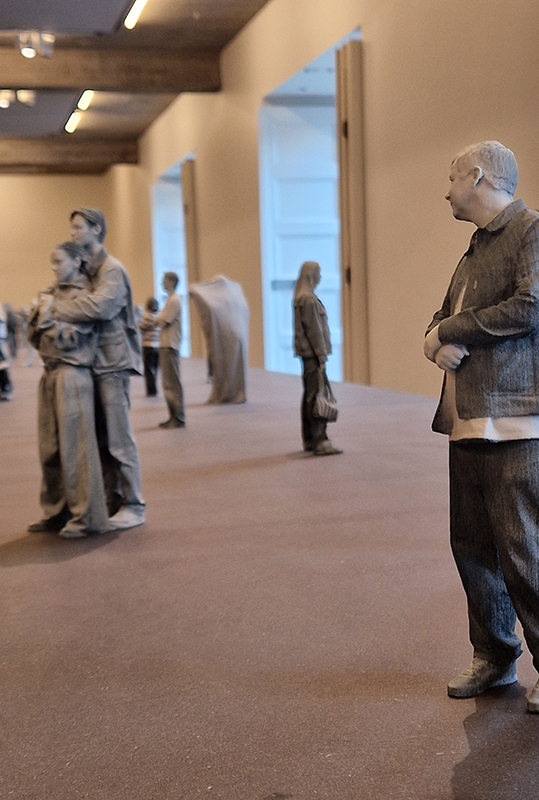
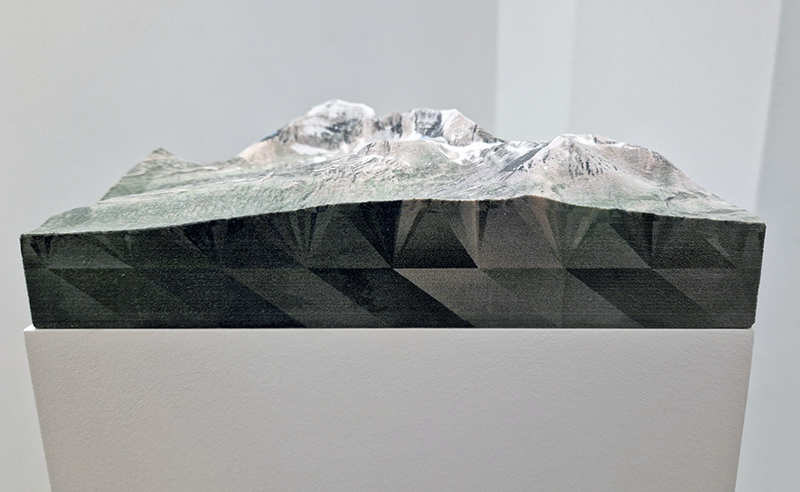
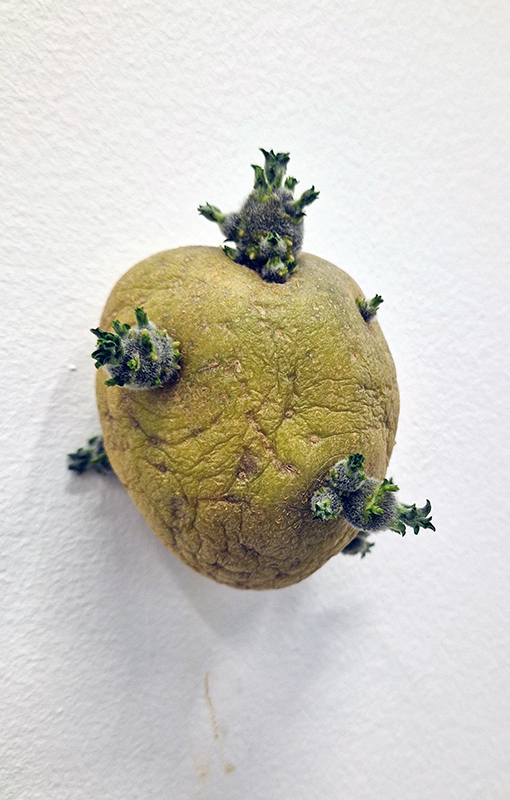
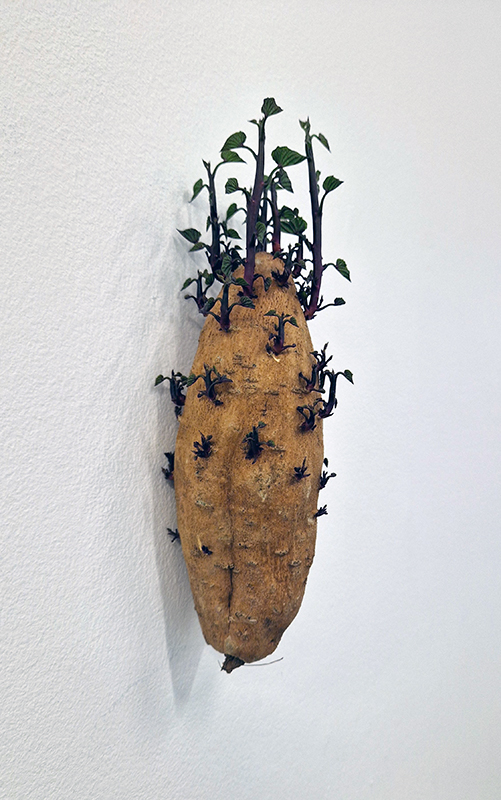
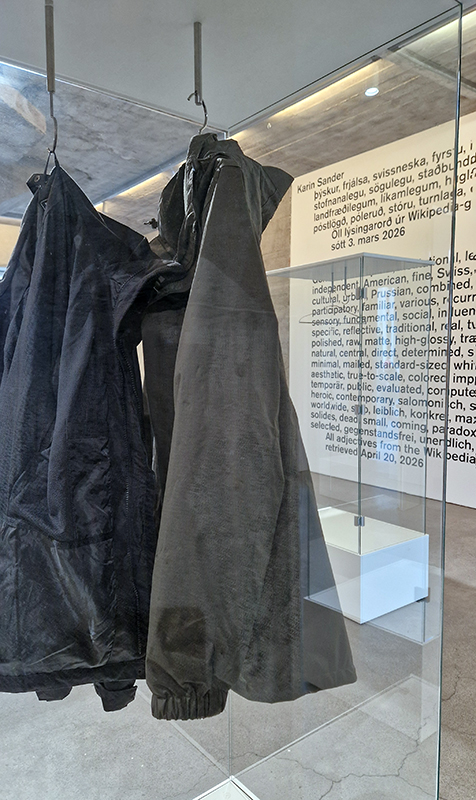
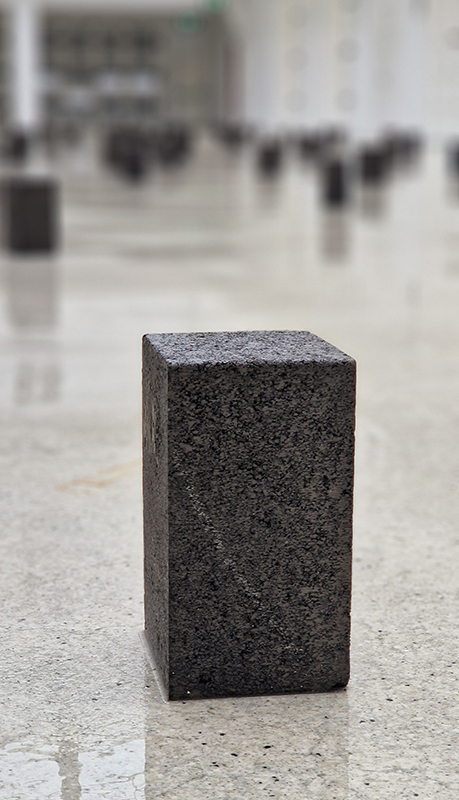
Karin Sander 1957 – 2057 at Reykjavik Art Museum. Many of her works rely on the participation of exhibition visitors or the influence of the surrounding environment, and her subtle interventions into the museum space invite reflection on the purpose and nature of the place itself. We hung our coats in a glass vitrine and became living sculptures balanced on plinths in a dangerously slippy courtyard. The exhibition explores notions of site-specificity in geographical, physical, and conceptual terms. Visitors are invited to have themselves scanned and 3D printed as freakily realistic small figurines. I liked the potatoes.
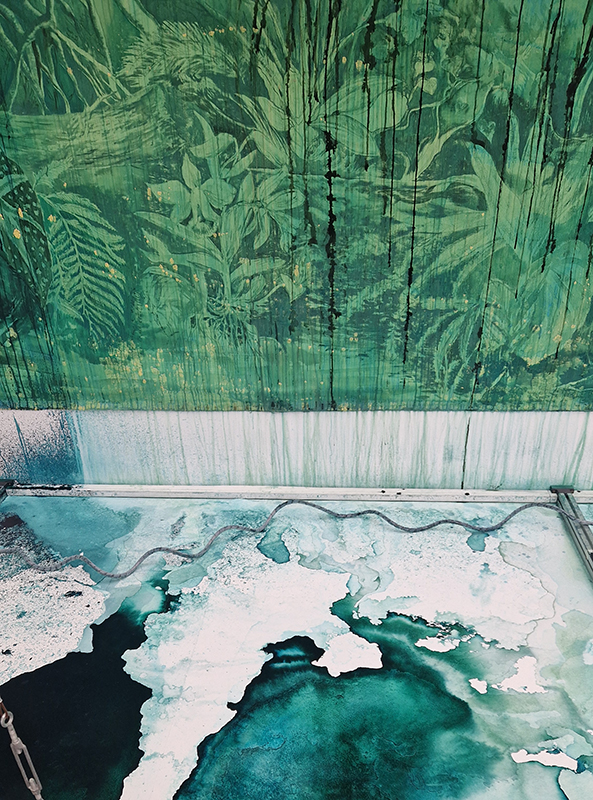
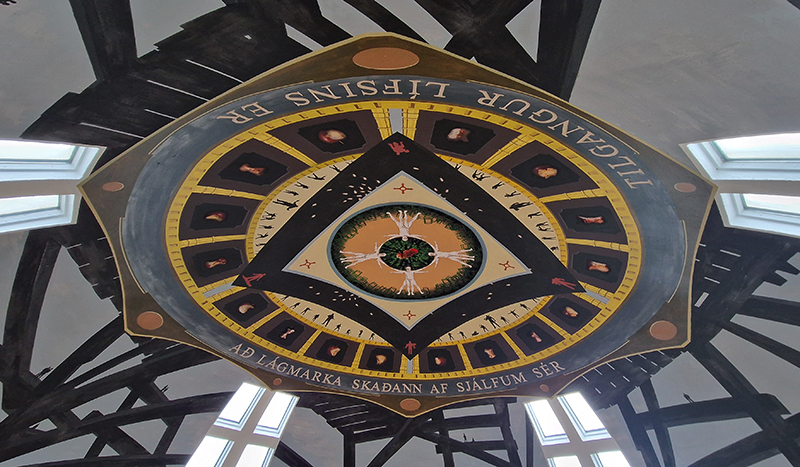
Wonderland, an exhibition series at Ásmundarsafn (Reykjavík Art Museum) where artists are invited to temporarily relocate their studios into the museum, offering the public an insight into their work and creative process. For his residency, Finnur Arnar Arnarsson moved both his studio and personal belongings into the museum, staying and working there continuously for nine weeks. The imagery he painted onto the building dome draws on notions of masculinity as shaped by societal concepts, prompting reflections on creation and destruction, the digital and ever-connected world, power, responsibility, and influence. The text translates as – The purpose of life is to minimise the harm you make.
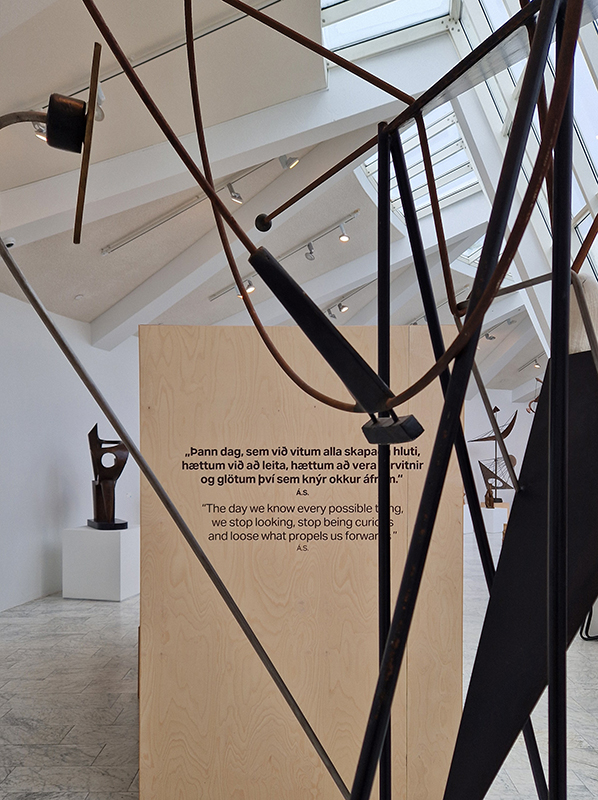
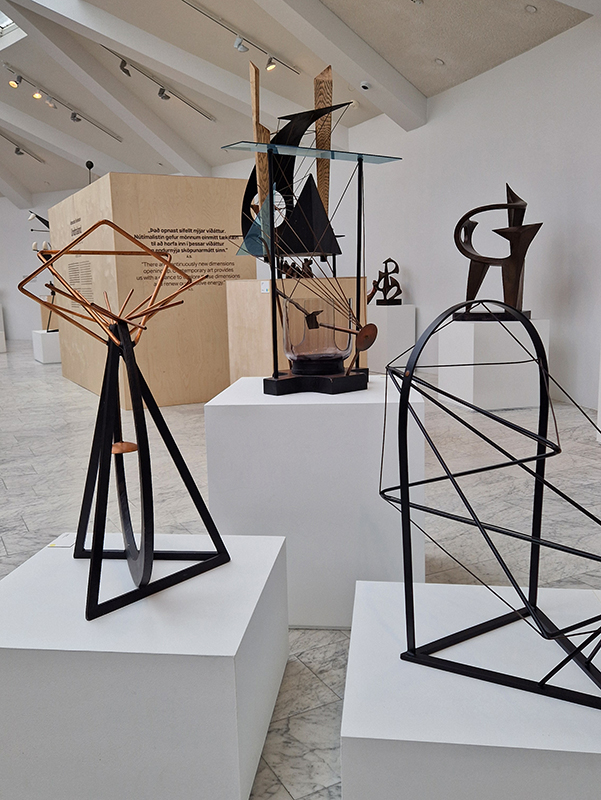
Sculpture Museum Ásmundursafn is dedicated to the works of the sculptor Ásmundur Sveinsson (1893-1982). The striking modernist building he designed was once his home and studio.
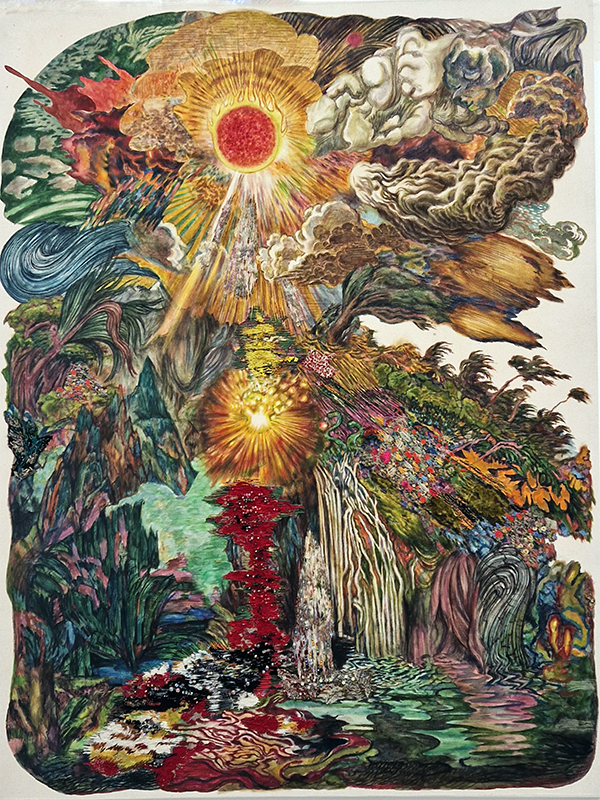
Dominic Shepherd The Hollow Hill, curated by Charlie Smith Gallery in appropriately subterranean and labyrinthine office basement.

Shepherd and his wife now live on The Hollow Hill, a place with its own histories, myths, and hidden currents. Their home sits at the original entrance to an Iron Age hill fort, built directly into the ancient ramparts high above the Dorset vales. The hill is a place shaped by time and disappearance. Beneath its surface lies a network of hidden waters, where springs emerge around and above the summit. Once the site of a holy well, reputed to contain a golden tablet with healing powers, the hill was also home to an anchorite’s chapel. Following the Reformation, these disappeared, though pilgrimage continued with the great agricultural fair held each Autumn equinox. The site later entered literary history through Thomas Hardy’s Far from the Madding Crowd. Where a hamlet once stood on the hill, before gradually vanishing in the late twentieth century, only the house where the Shepherds now live and a derelict farm building remain.
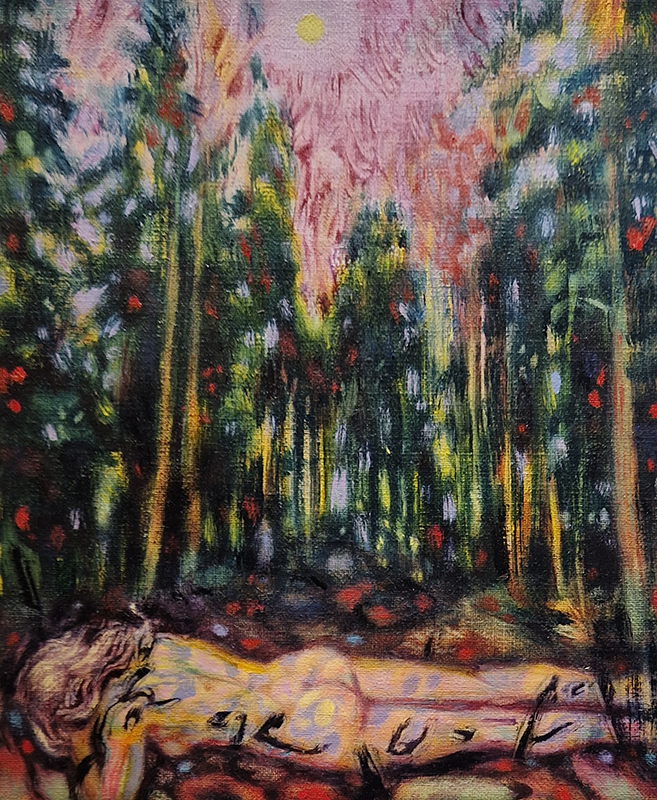
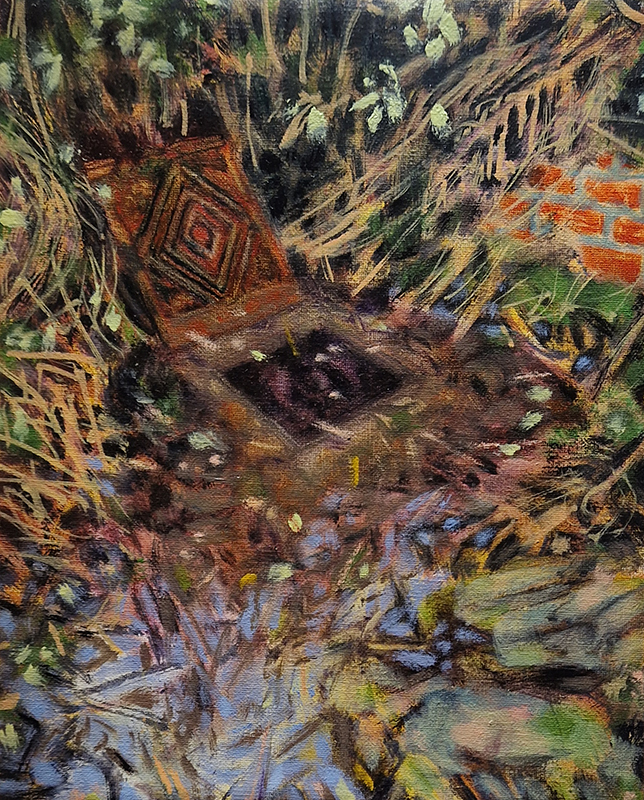
I wanted to see these new works as I had quoted Shepherd in my dissertation Finding Paradise (ROYAL COLLEGE OF ART
Printmaking 2014 words10,440).

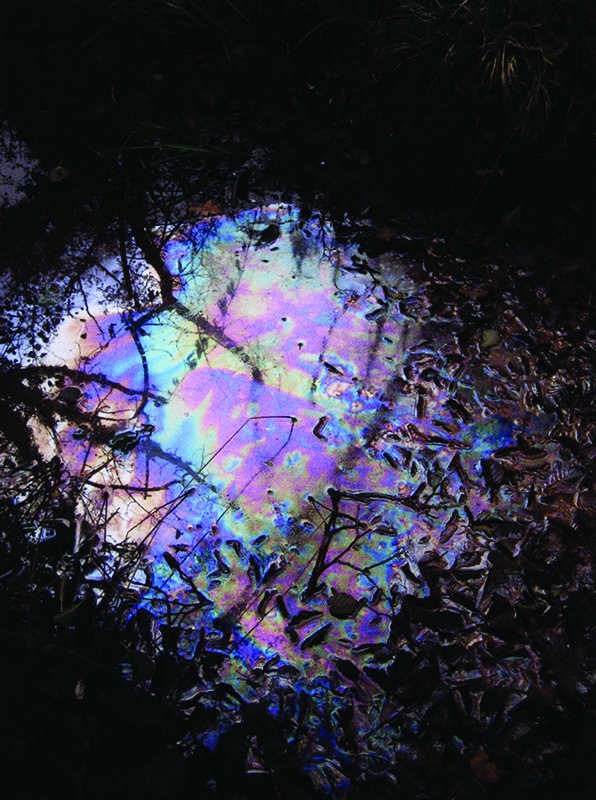
By following the path of the poet “finding resonances and poetic contemplation in the forgotten zones”[1] we leave the confines of the everyday. As an example of the sacred emerging from the profane, Dominic Shepherd offers us a black mirror for our time in his digital photograph ‘The Puddle’. He doesn’t present the 21st century dark screen of a smart phone or tablet to scry the future but suggests we gaze into the murky depths of water slicked with oil on waste land. He points us in the direction of “the edgelands” to locate our dreams.

“It is within our imagination that one sees the invisible, the unformed, the possible. It is here, in the garden of the mind, that one can mentally contrast and bring to bud the ‘pastoral’ for our present and future age.”[2]

[1] Dominic Shepherd refers to poets Paul Farley and Michael Symmons Roberts, ’Edgelands: Journeys into England’s True Wilderness (London: Jonathan Cape, 2011). “The Golden Age, Between Wilderness and Utopia” in The New Pastoralism: landscape into architecture. Architectural Design May/ June 2013. (Chichester: Wiley, 2013) p.30. [2] Dominic Shepherd. “The Golden Age, Between Wilderness and Utopia” in The New Pastoralism: landscape into architecture. Architectural Design May/ June 2013. (Chichester: Wiley, 2013) p.31.

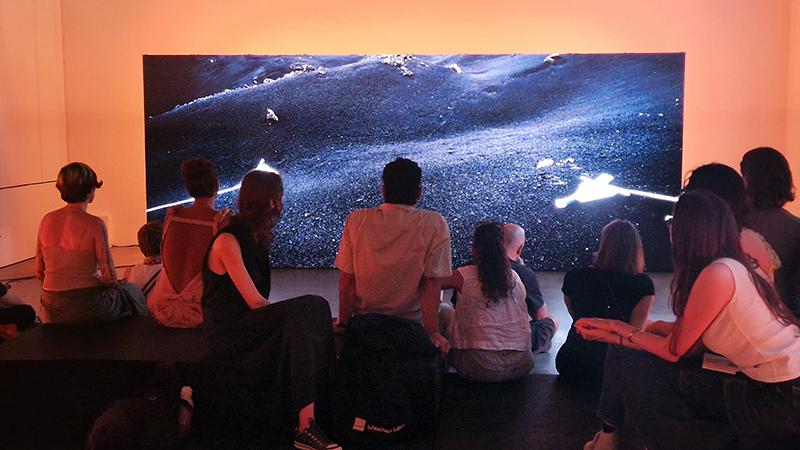
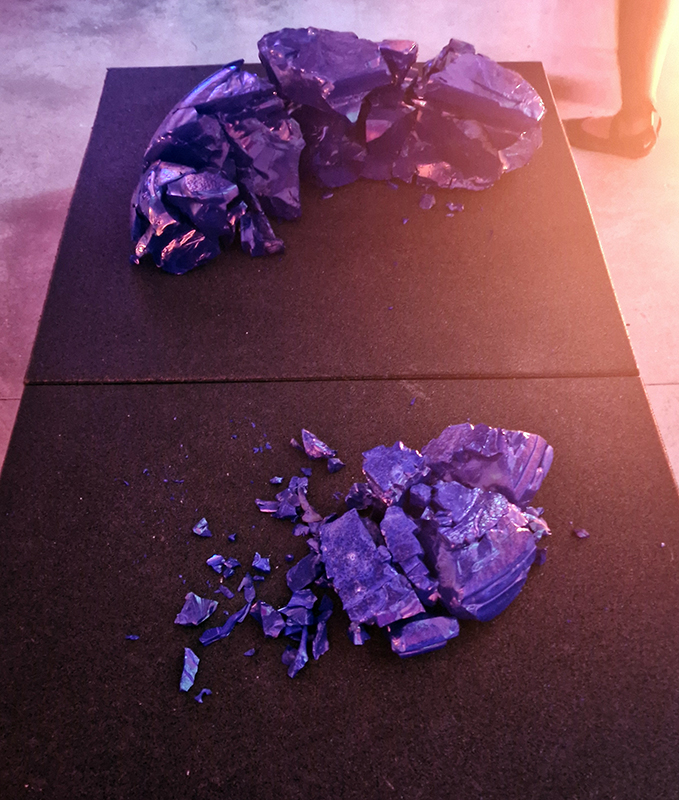
I enjoyed the opening of Elisa Giardini Papa video installation She Flickered  In and Out of History at the ICA. A great precursor to my trip to Iceland to experience the volcanic landscape there. It’s a beautifully put together film drawing from an underwater volcanic eruption in 1831 that gave rise to a new landform between Tunisia and Sicily, sparking a violent sovereignty dispute among European powers. Six months later, the island vanished beneath the surface. Historical observations of the altered colour of the sun, caused by the release of volcanic particles and sulphur aerosols into the atmosphere, are also referenced where observers from the Mediterranean to the Middle East and the Caribbean reported seeing blue, green, and purple suns. The exhibition also featured shattered pieces of obsidian which is created when rhyolite lava is cooled quickly.
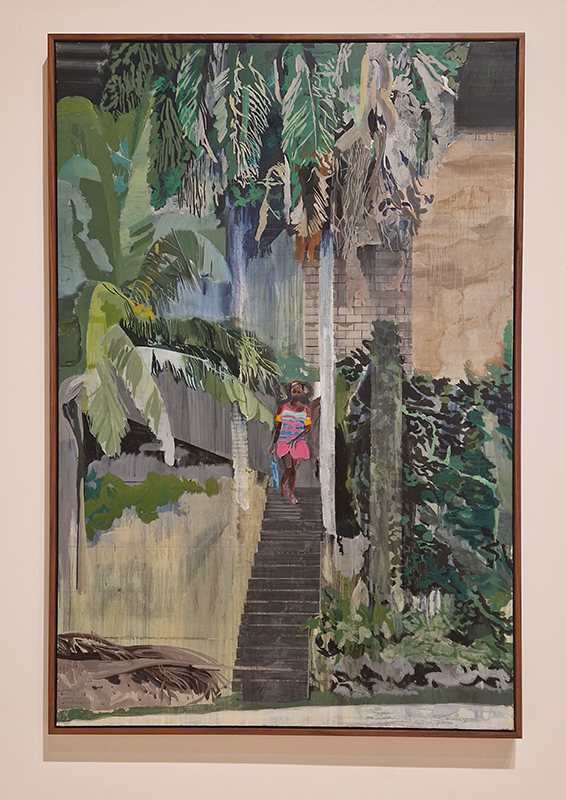
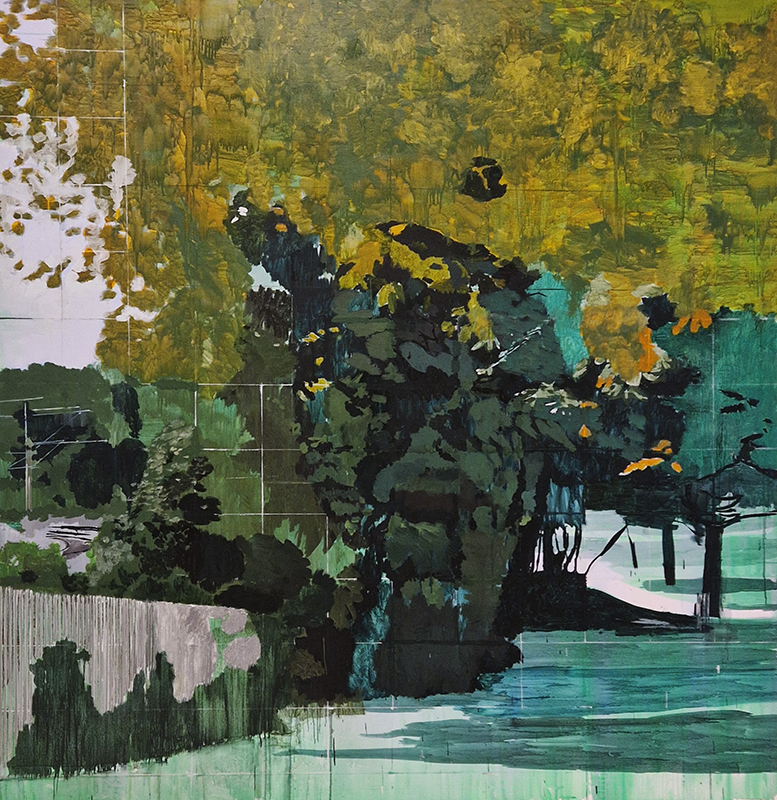
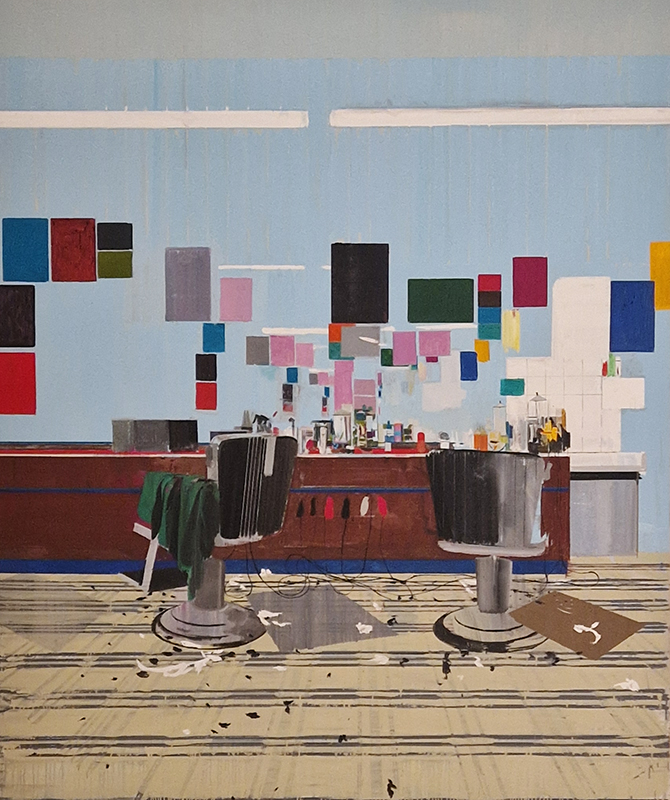
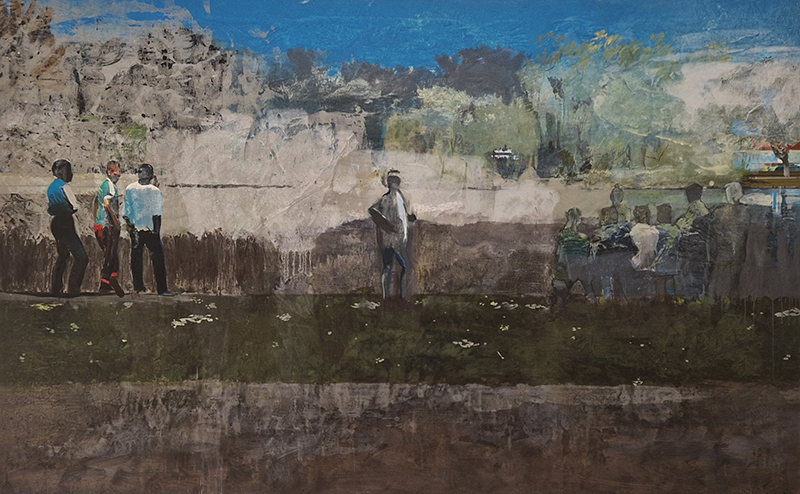
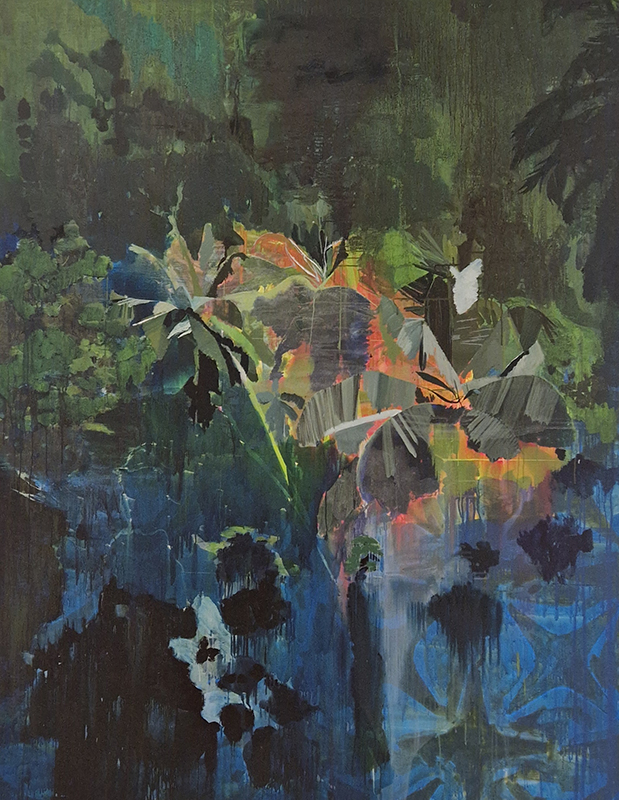
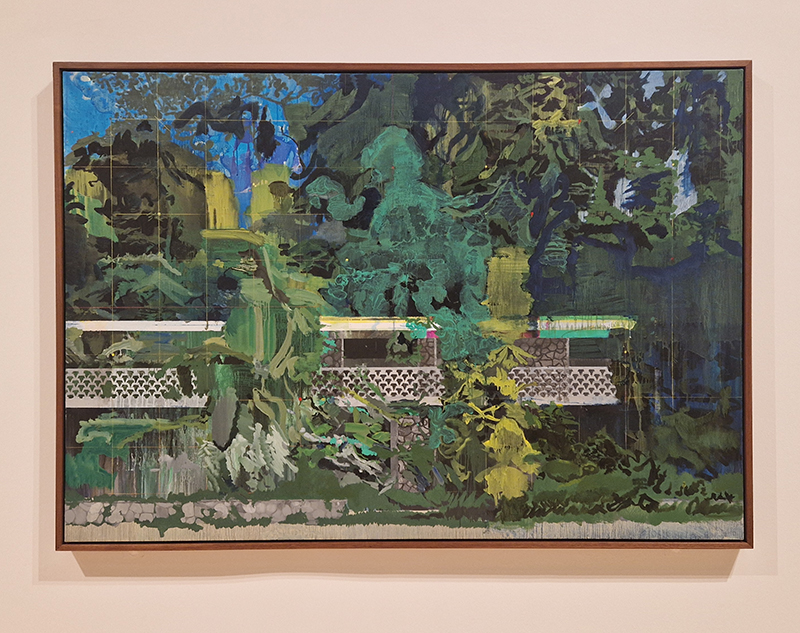
Hurvin Anderson at Tate Britain. I know these paintings originated from trauma and dislocation and feeling an outsider but they are so seductive. Sensory overload.
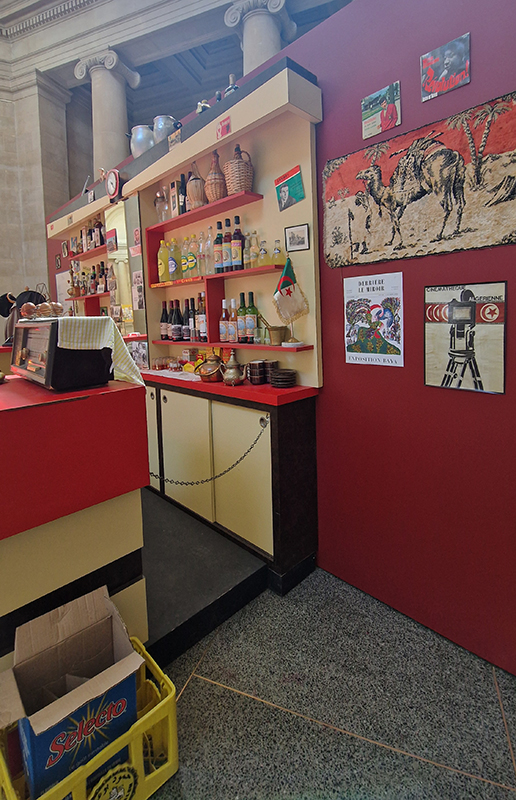
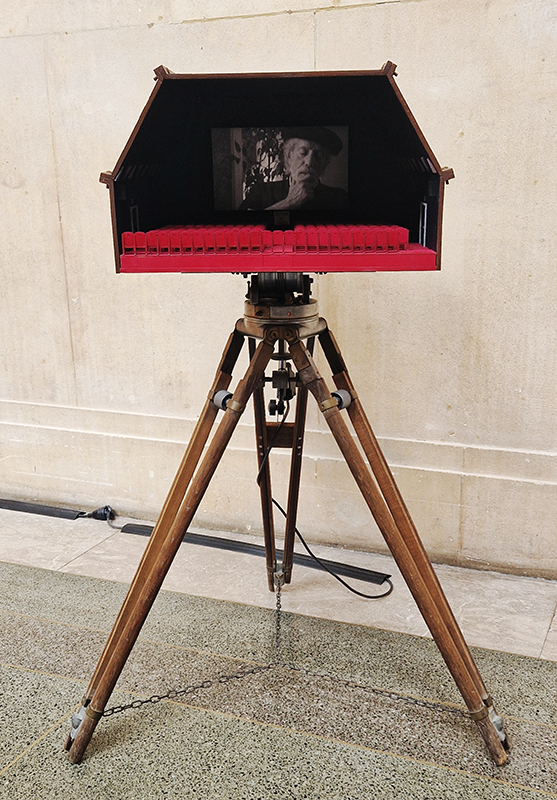
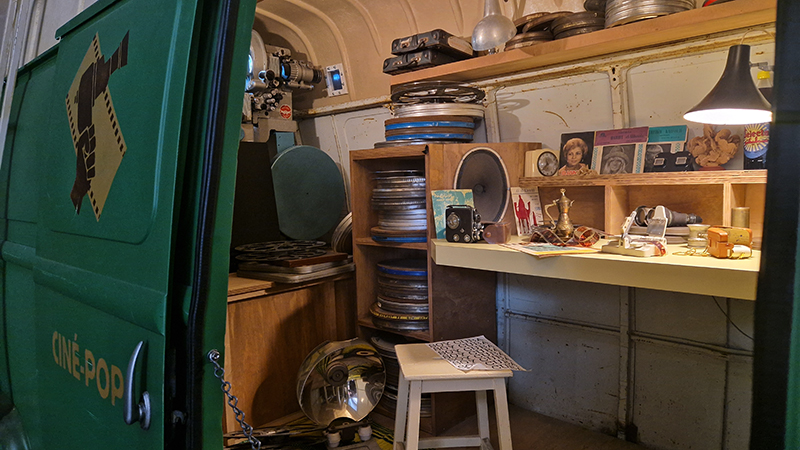
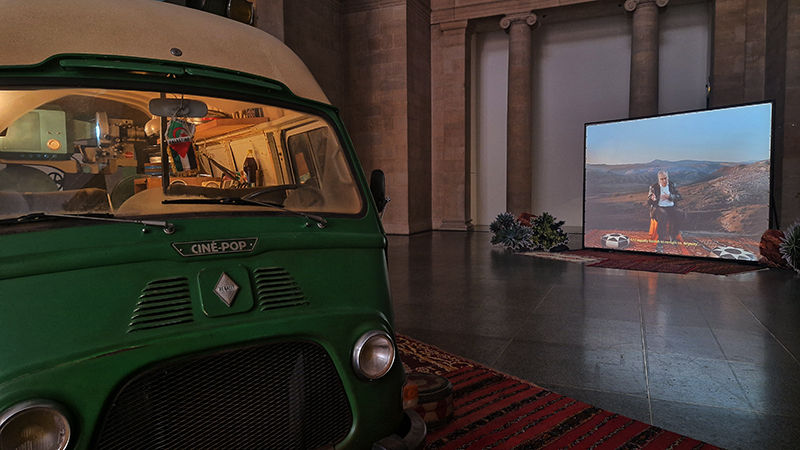
Zineb Sedira, When Words Fall Silent, Cinema Speaks at Tate Britain. Sedira’s work draws on personal encounters within the Algerian diaspora of Africa. Taking inspiration from family archives and the history of cinema. I loved the mini cinema on a tripod and was fascinated by the ‘Magnetic Secretary’.
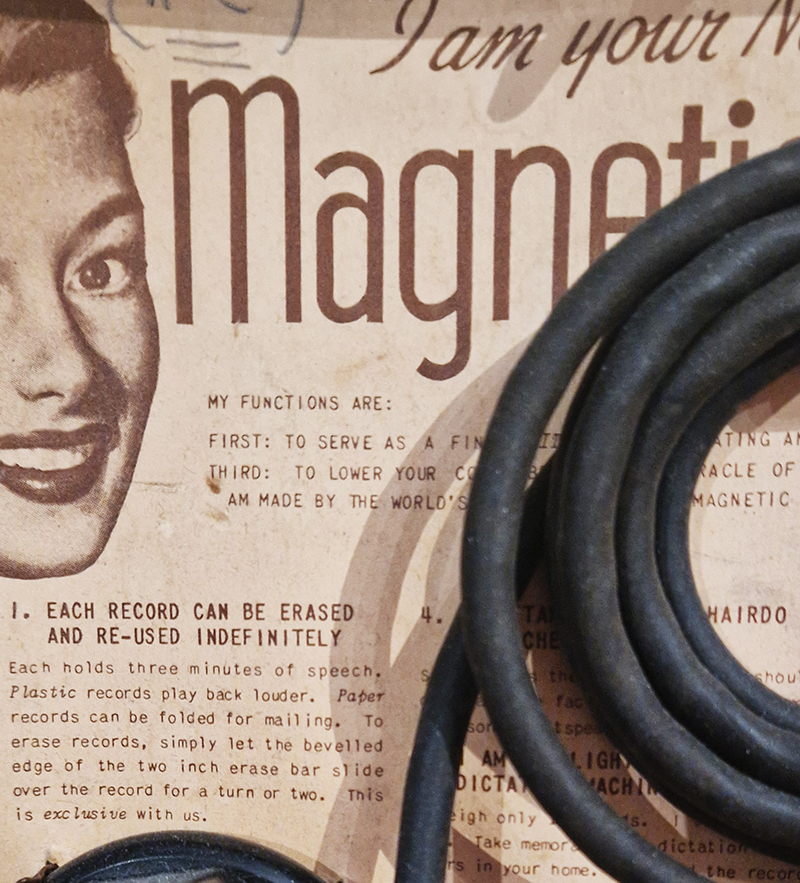
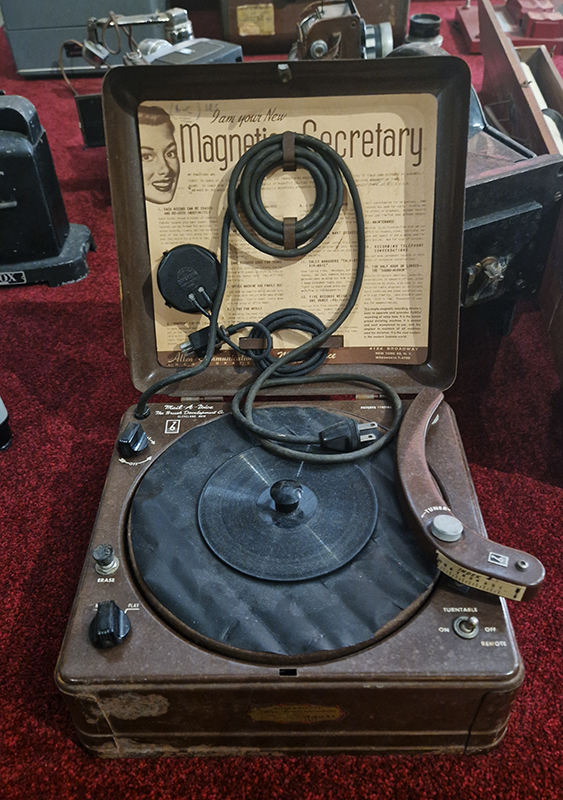
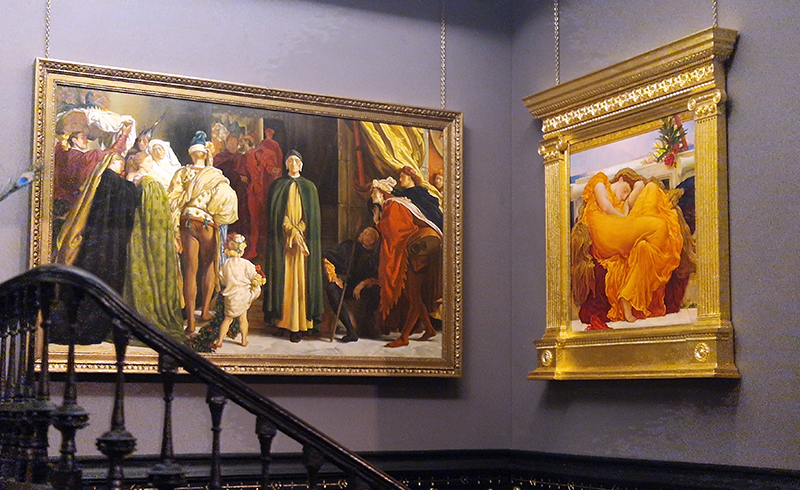
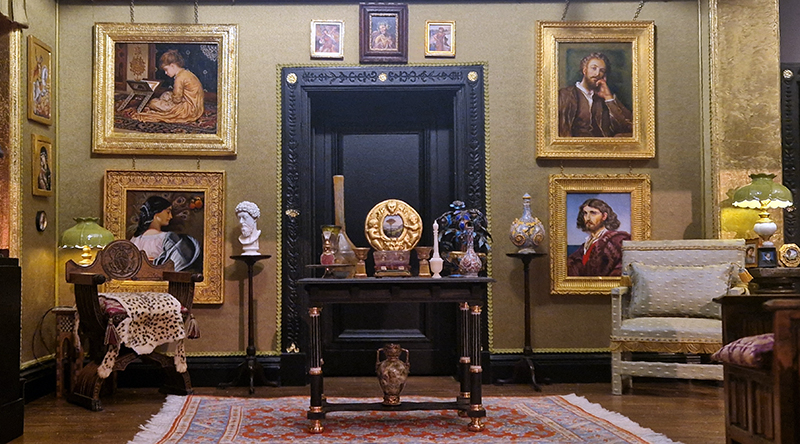
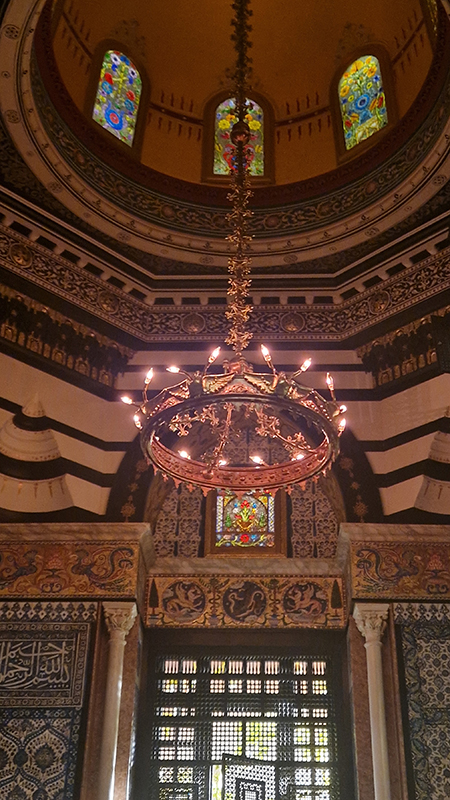
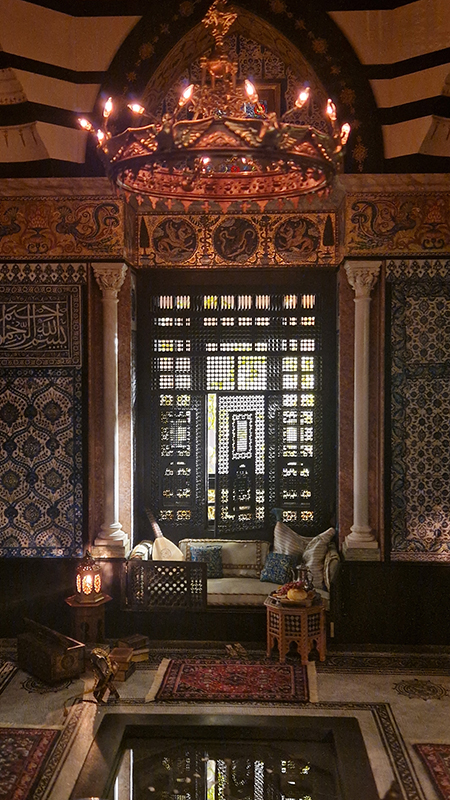
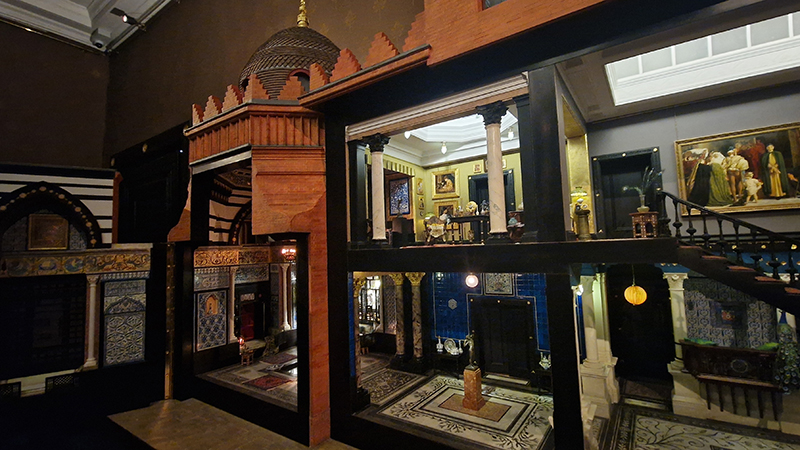
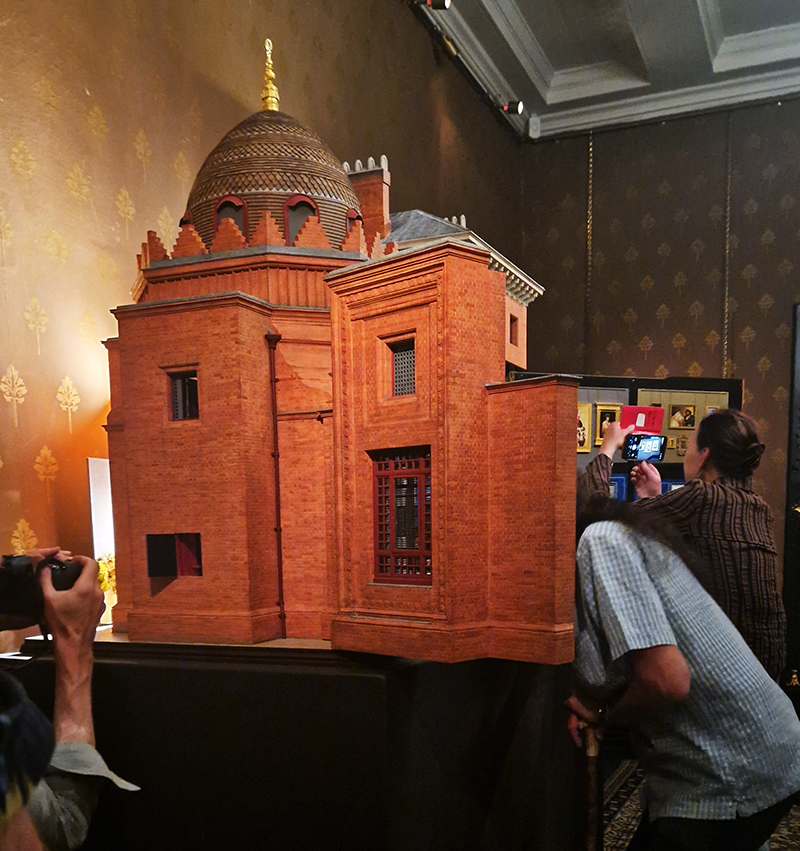
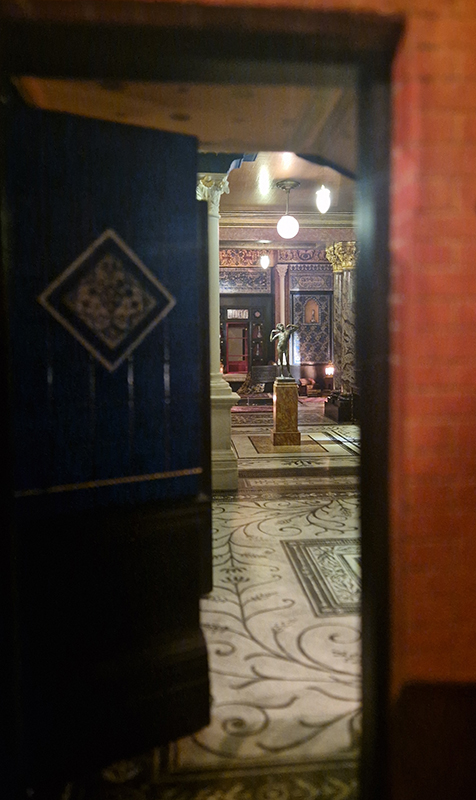
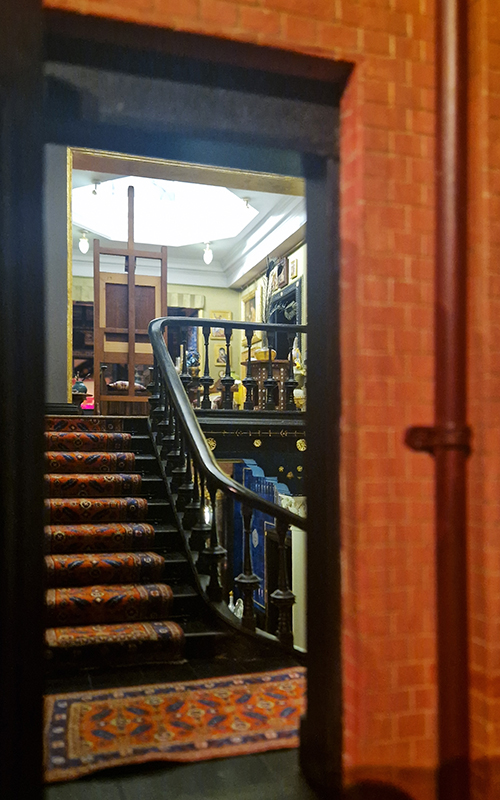
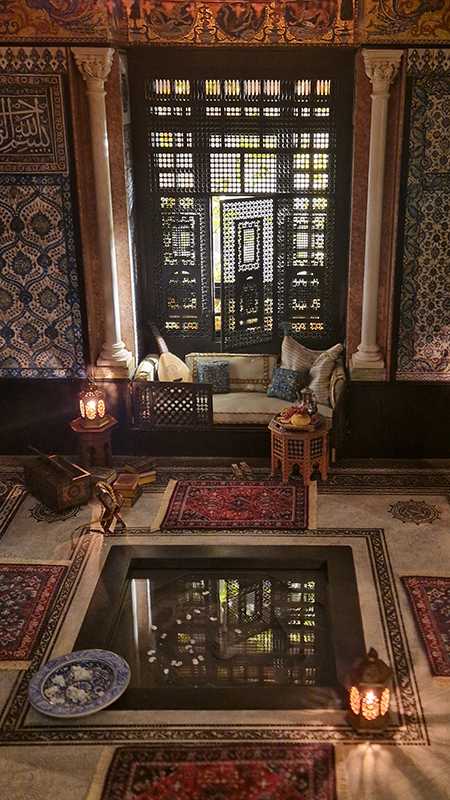
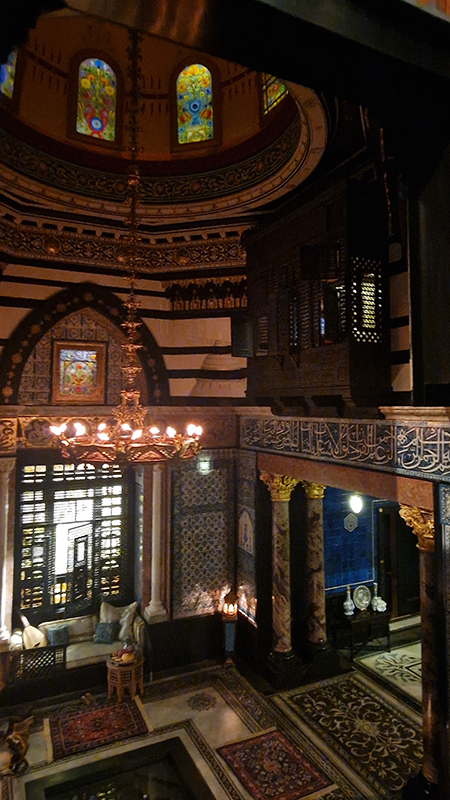
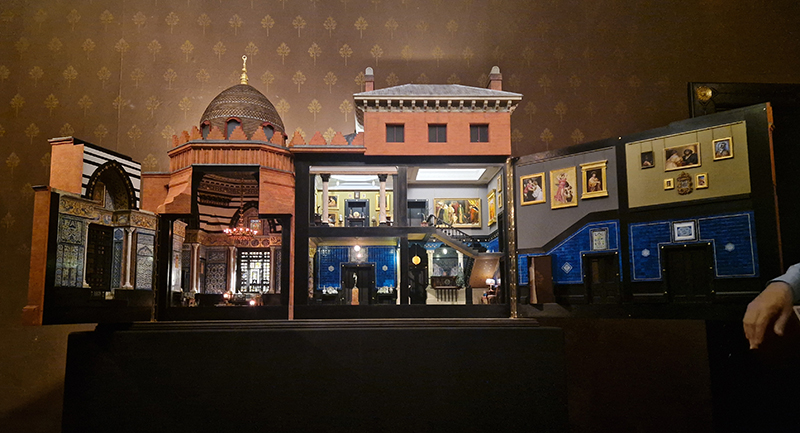
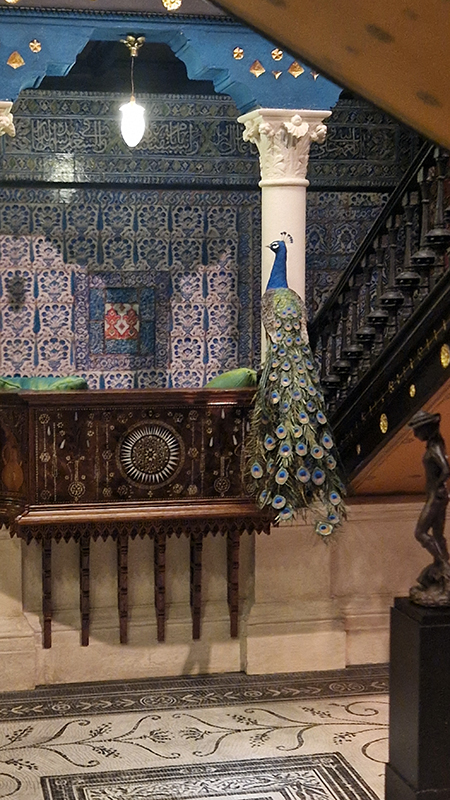
In sorting out my photos from the visit to Leighton House to see the 1/12th scale model by Susie Mulvany and Kevin Rogers I had trouble deciding which were of the full size house and which were of the model. Their excellence in creating miniatures is astounding. Leighton House is the former studio-home of Victorian artist and President of the Royal Academy, Frederic, Lord Leighton (1830 – 1896). He is most famous for painting Flaming June, which doesn’t hang here but is included in the model which aims to capture the essence of the house, rather an exact replica. Every painting is an oil painting, every carpet is woven, the dome is lined with real miniature gold leaf sheets, the windows are Victorian glass, the cabinet is inlaid….and so it goes on, every piece is meticulously made to match the original, just in miniature.
Reading

The Age of Miracles was the choice for the Greenland expedition book club aboard the Sylvia Earle. I can see why it was chosen for its speculation on what would happen if the Earth’s spinning slowed and days became longer and longer, but as the novel is aimed at a teen market with a coming of age saga dominating the storyline, there was a general consensus of disappointment that the science didn’t feature strongly enough and this catastrophic cosmic event wasn’t followed through convincingly. It begins with quite a gripping plot and I found some parallels that chimed with the covid pandemic interesting as it was written in 2012 but was not good for an audience looking for a more science based debate about the sun and circadian cycles.
In Pliny’s Natural History (published after his death in the AD 79 eruption of Vesuvius, when, ever curious, he had gone to investigate the strange cloud rising), he marvels at the powers of the magnet ‘For what, in fact, is there endowed with more marvellous properties than this?’; ‘What is there in existence more inert than a piece of rigid stone? And yet, behold! Nature has endowed stone with both sense and hands! He goes on to assert that ‘it received its name “magnes”, Nicander informs us, by the person who was the first to discover it, upon Ida’. ‘Magnes, it is said, made this discovery, when, upon taking his herds to pasture, he found that the nails of his shoes and the iron ferrel of his staff adhered to the ground.’

Nicander was a 2nd century BC Greek poet, physician, and grammarian and there is no surviving record of his claim. Gillian Turner, in her book North Pole, South Pole, admits that this story will have been embellished over time but acknowledges that if an electrical storm took place on Mount Ida and the naturally magnetic magnetite was struck by lightning, it would be permanently magnetised into lodestone and would therefore attract the nails of Magnes’s shoes.

The legend is not impossible but it is also possible the stone is named after the region where it was first found. In ancient Greek, magnetite was known as magnes lithos. There were two ancient regions called Magnesia and so the true provenance of the first discovery of the lodestone is hard to determine. In Greece, ancient Magnesia was a long and narrow slip of country in Thessaly between Mounts Ossa and Pelion. Around the 4th Century BC, the people known as Magnetes, migrated and settled in Ionian cities which were named after them as Magnesia on the Maeander and the neighbouring Magnesia ad Sipylum, currently in Aydın Province near Ephesus, Turkey.

I decided to follow the footsteps of Magnes.

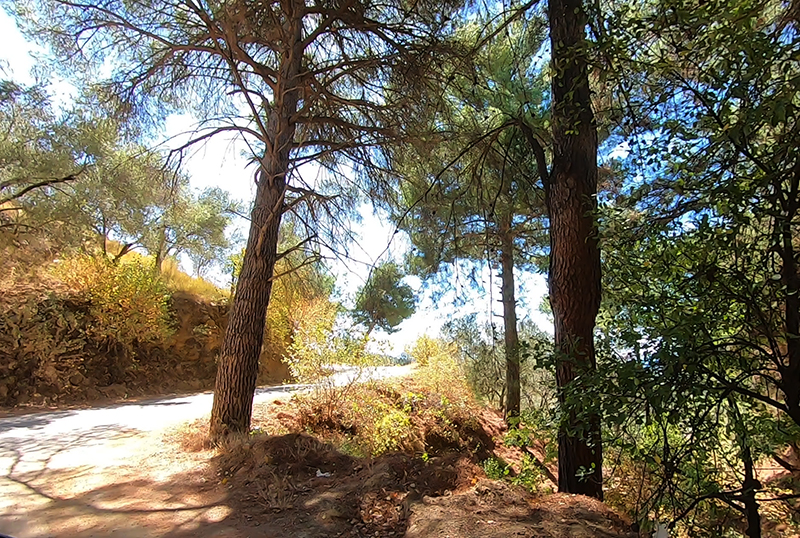
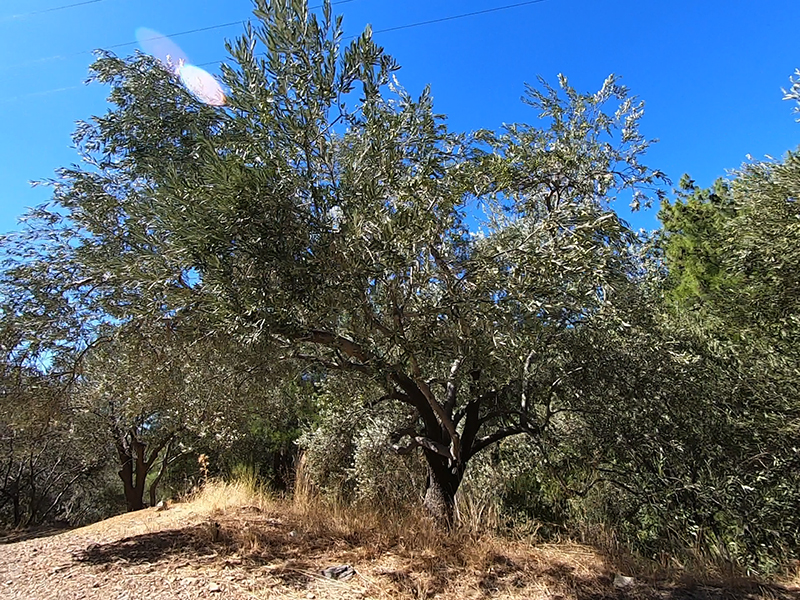
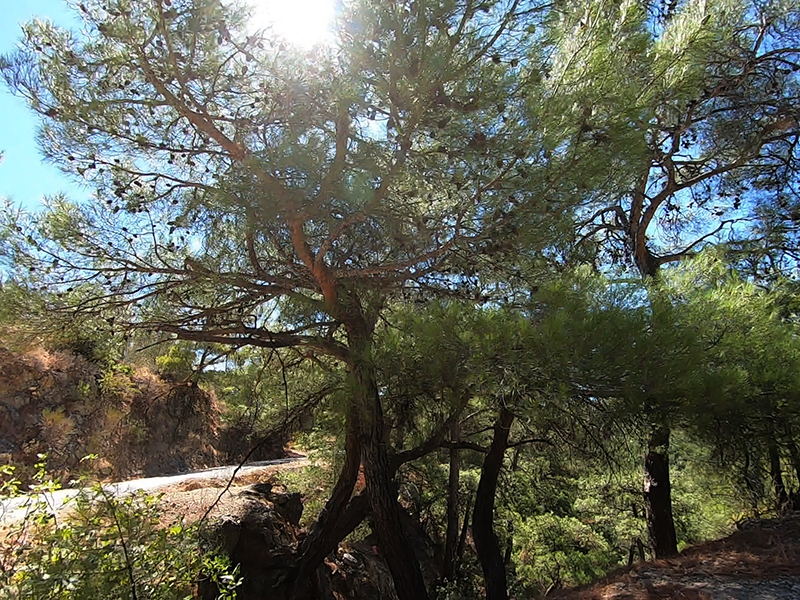
Mount Ida is famous in Greek Mythology as the location for the Judgement of Paris, where he fatefully chose Aphrodite as the most beautiful goddess, setting in motion the events of the Trojan War which the gods watched from its summit while its fir trees were felled to build the Trojan Horse. It was also an ancient sacred site for worship of the mother goddess Cybele, an embodiment of a universal Mother Earth. Its name was changed to Kazdağı (Goose Mountain) as the goose holds sacred significance in Turkish mythology. The landscape is literally breath-taking with very high oxygen levels due to the extensive pine forests and unique geographic features that funnel ionised air up from the sea to mix with the clear mountain air.

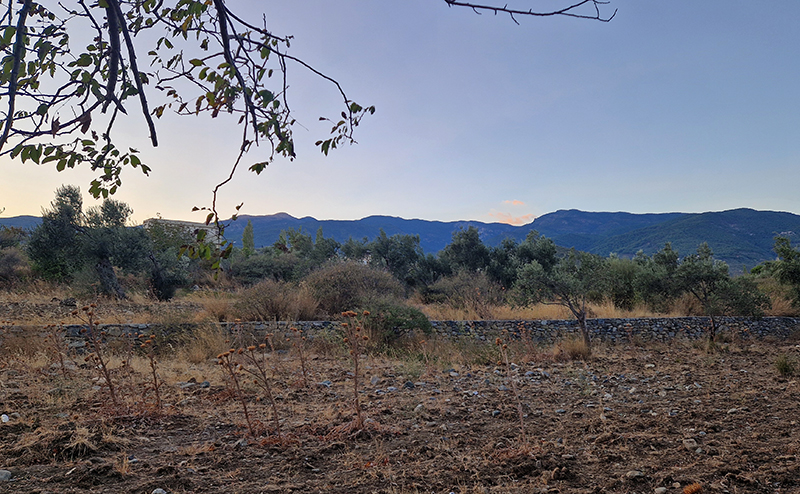
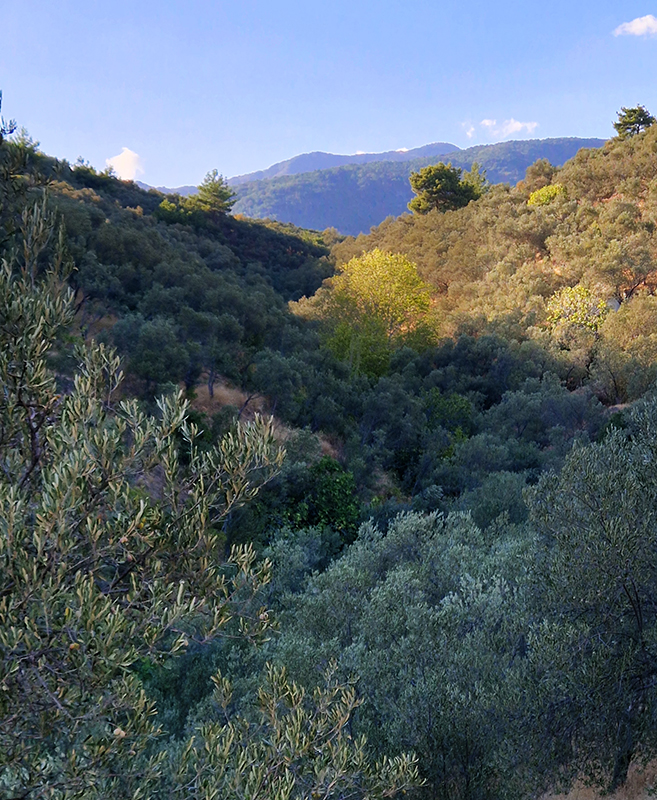
Setting out on the first evening the walk to view the mountain brought home the vastness of the landscape to negotiate.

After dinner, the owner of our hotel in Zeytinli said he would find a guide to the area if we gave him 5 minutes. Thinking he would come back with a book of hiking trails, I was surprised when he returned with a Kazdağı National Park Ranger. We arranged to meet the next day when he led us up the dusty mountain tracks with his old school friend as driver.

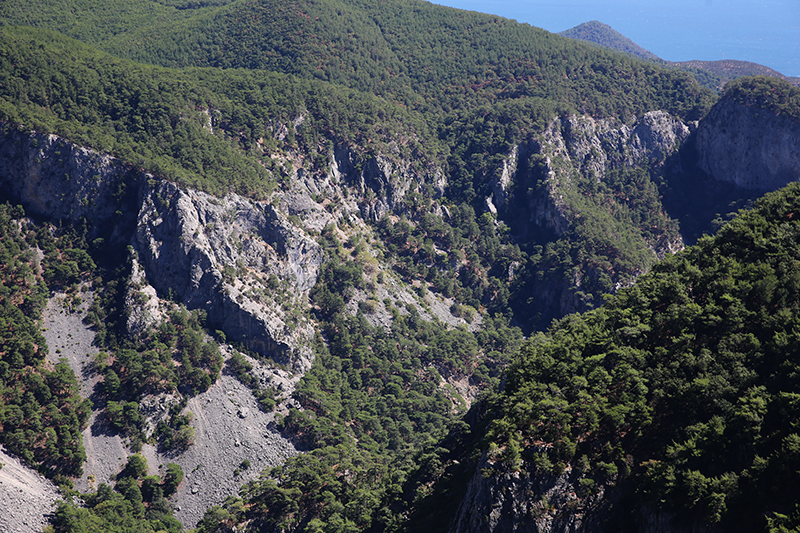
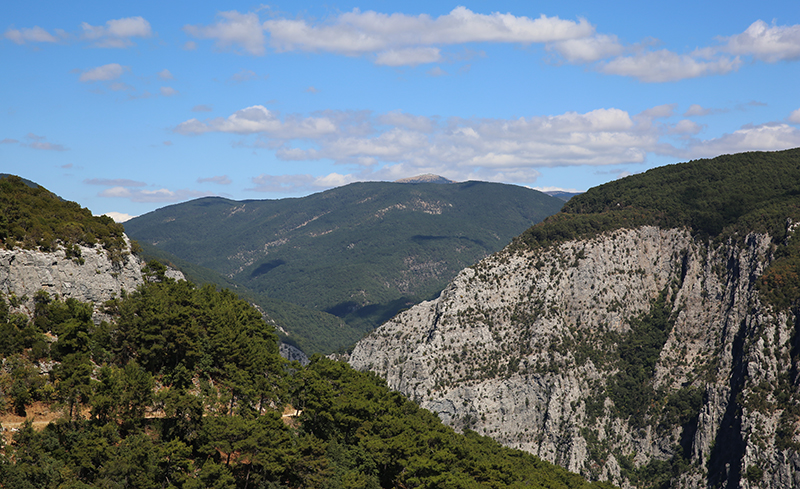
The summit of Mount Ida was always in the distance and it is not possible to walk unaccompanied in the National Park during the summer season. We drove up to a height of 800m to view the spectacular Sahinderesi Canyon.

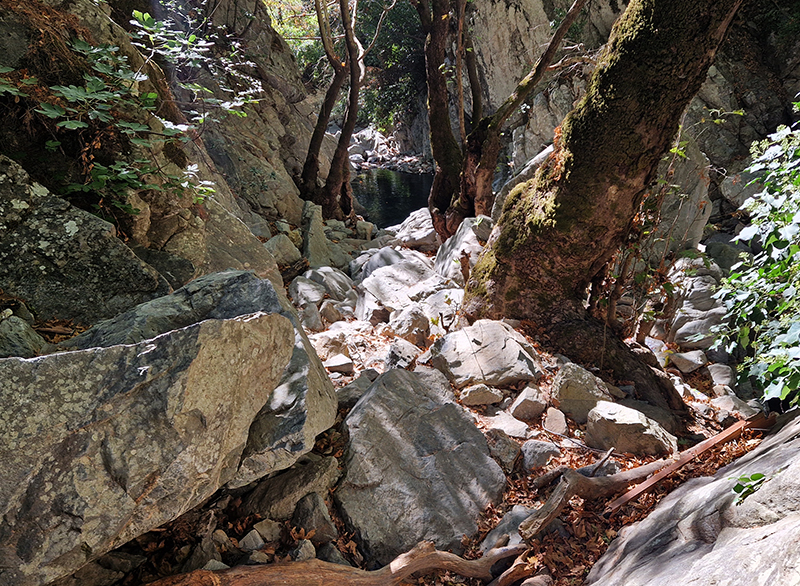
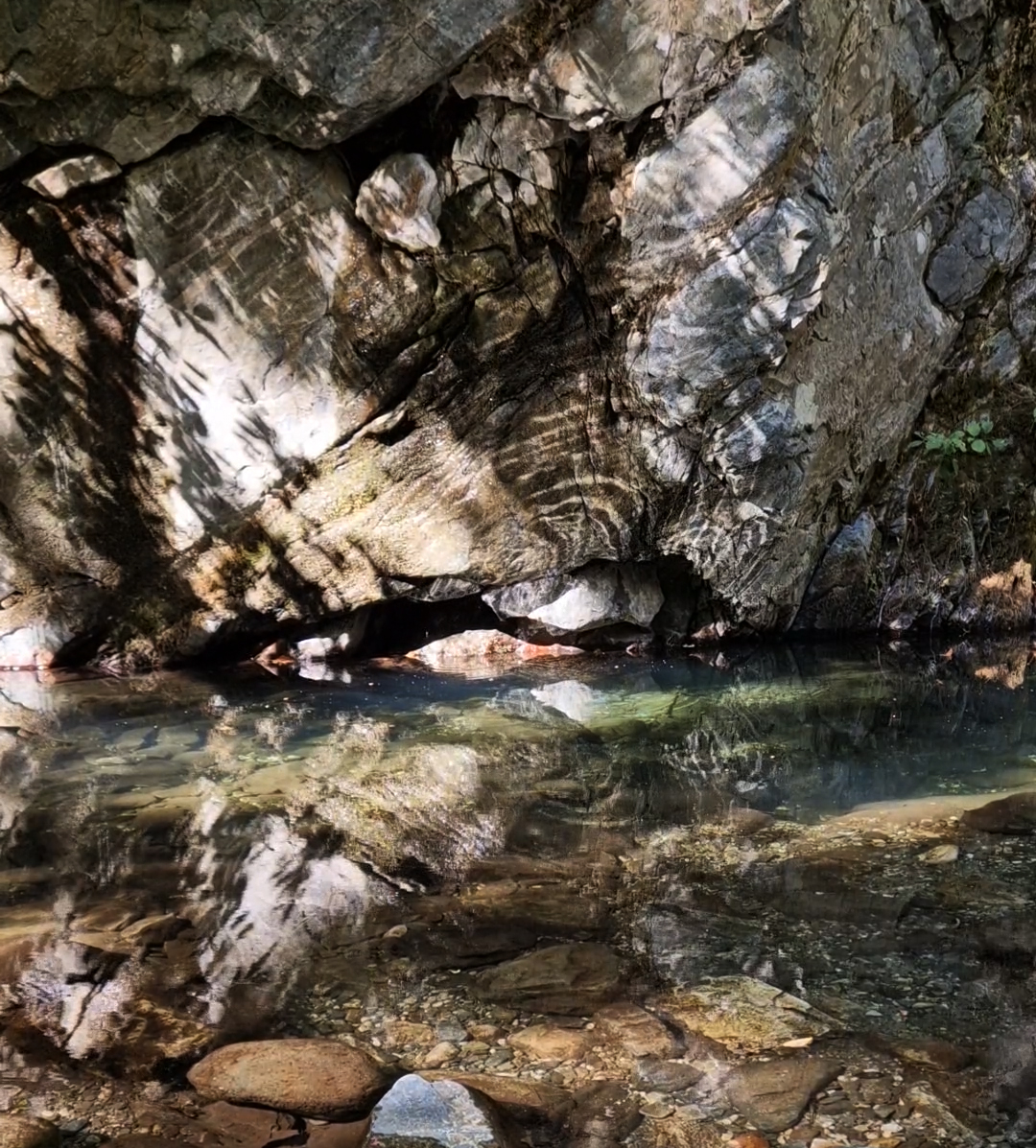
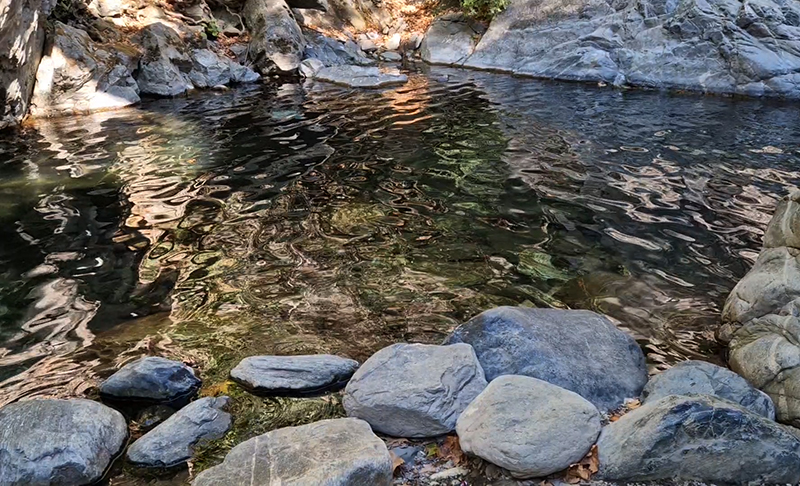
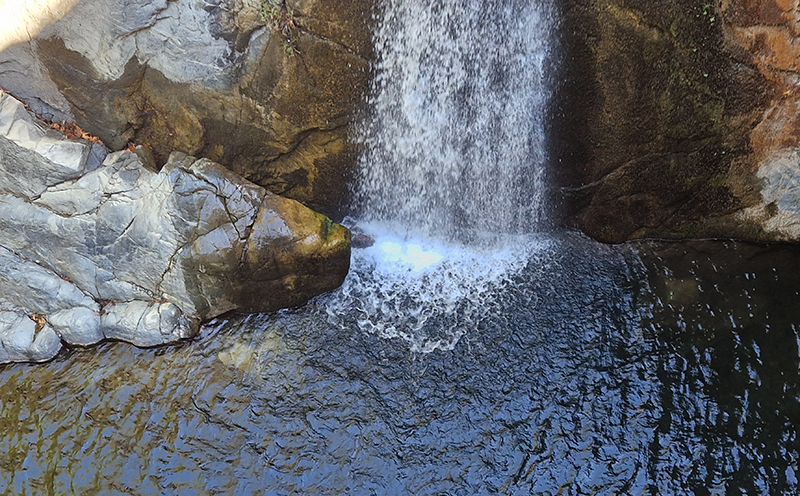
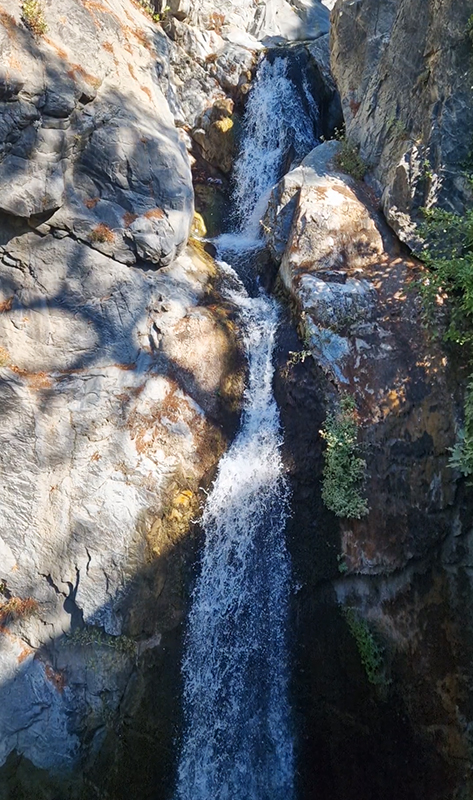
Mount Ida abounds with fresh water springs, rivers, ponds and waterfalls including the Sütüven Waterfall which we visited.

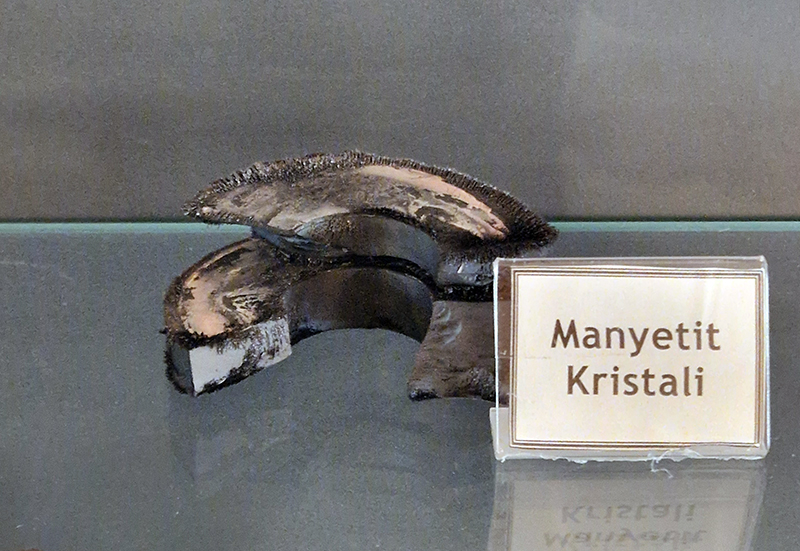
We visited the Ida Madra Geopark Museum which displayed tantalising exhibits of magnetite crystal and volcanic rock but there was only a security guard on duty who could offer no information about the collection or the local geology. The magnetite crystal does look like a broken magnet rather than raw crystal.

Fascinating choice of sentence to describe magnetite in the Turkish-English online dictionary – ‘Category, Turkish, English. Technical. 1, Technical, manyetit · magnetite n. The enzyme dissolved the brain tissue and left the magnetite particles intact.

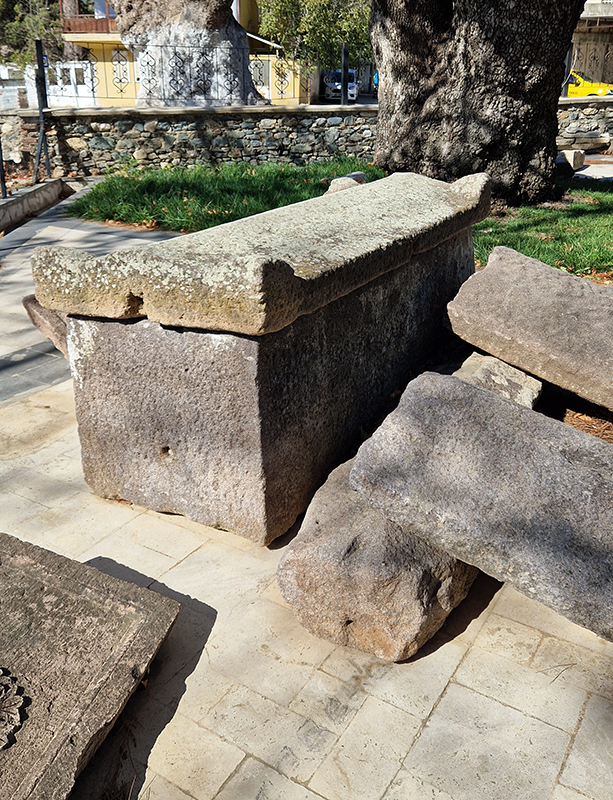
Outside the museum was a tomb that our guide told us is called ‘the man eating stone’. Pliny also talks about a stone called sarcophagus (stone of Assos) of which he says ‘It is a well-known fact, that dead bodies, when buried in this stone, are consumed in the course of forty days, which the sole exception of the teeth.’ There was also a magnificent Oriental Plane Tree, over 570 years old.

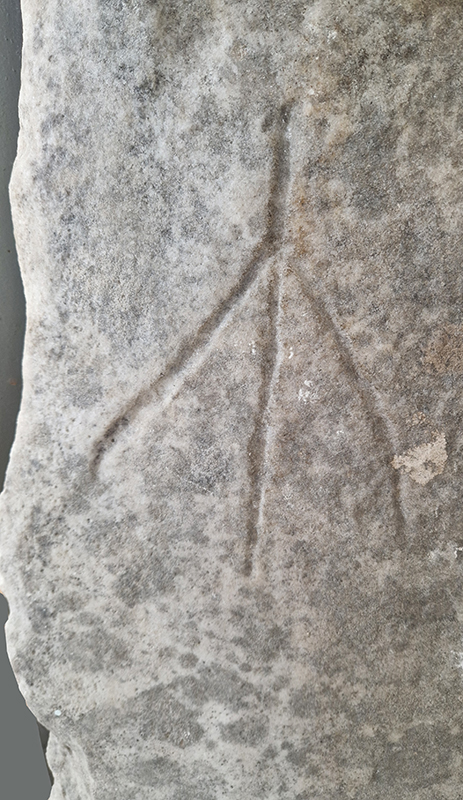
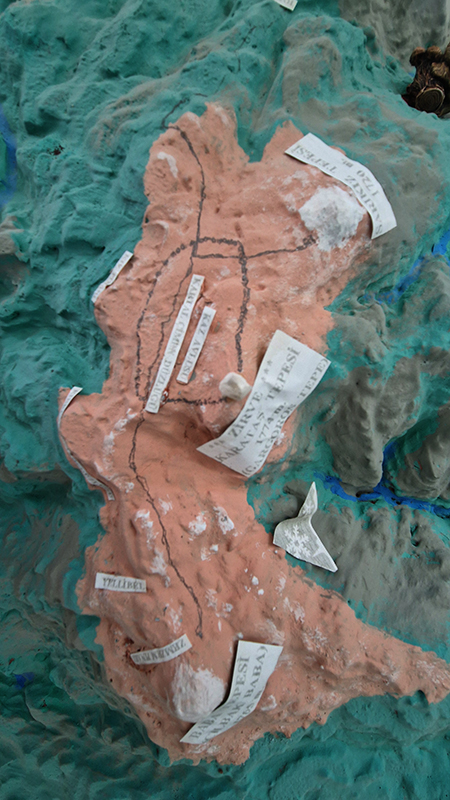
We visited the wonderfully eccentric Tahtakuşlar Ethnographic Museum which celebrates the cultural heritage of nomadic Turkish tribes and displays a stone tablet inscribed with the symbol of a goose foot reflecting the veneration of the goose by the Turkmen people. There is a rather faded model of Mount Ida which apparently shows the line of a mysterious ancient structure that circles the summit.

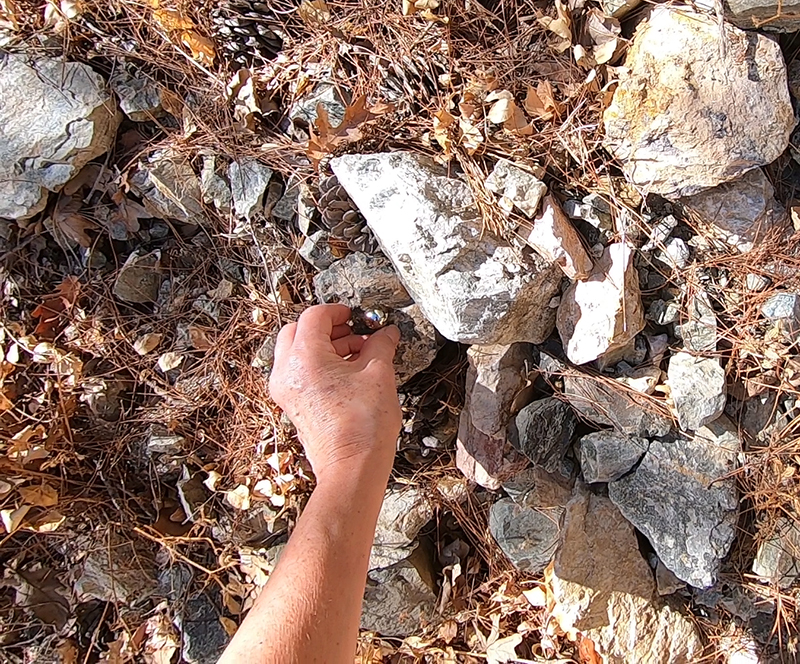
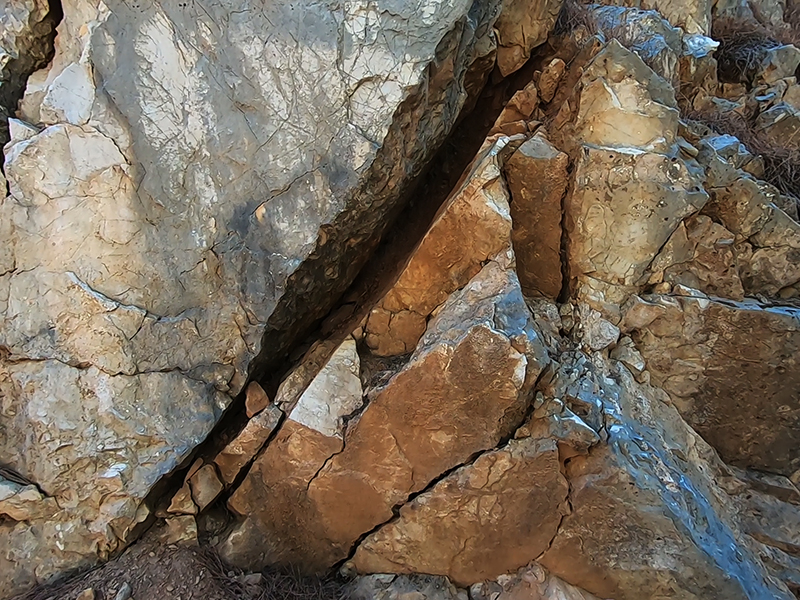
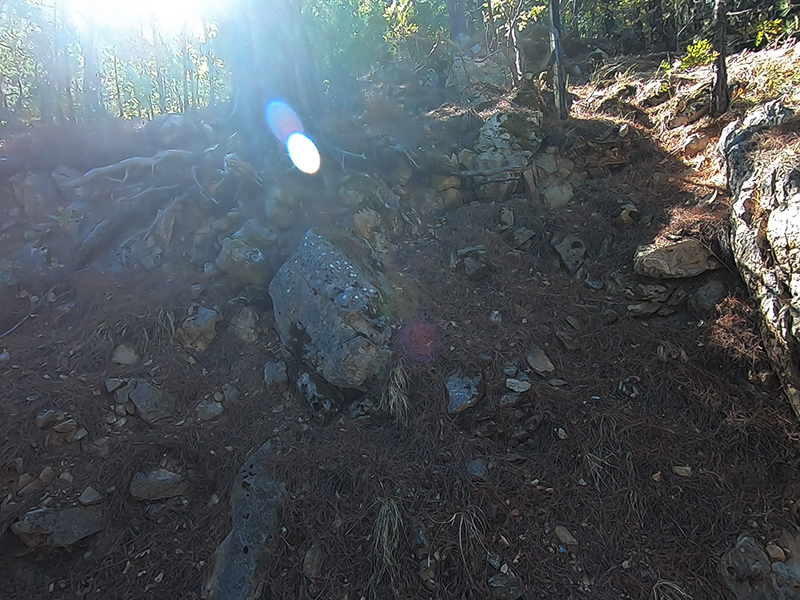
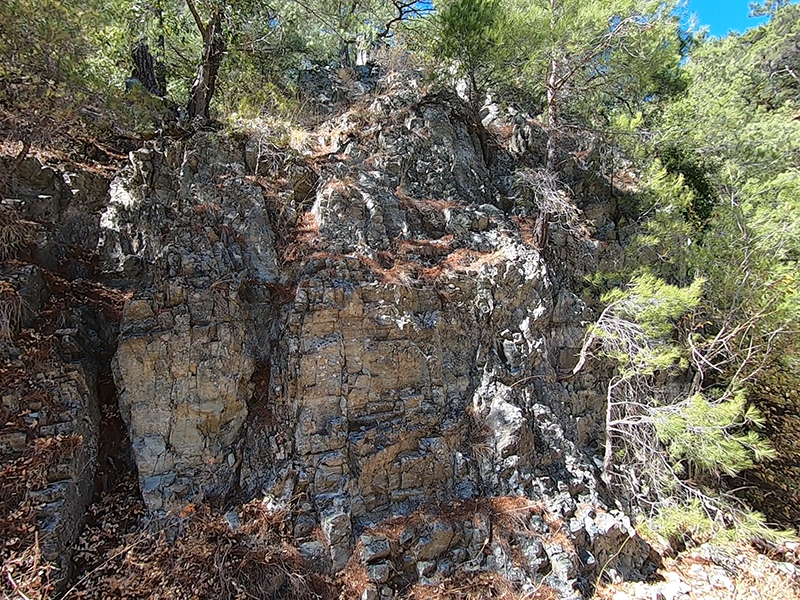
The next day we made another winding ascent. Equipped with my own magnet sphere (terrella) I went in search of magnetite on the foothills of Mount Ida. I was thrilled to discover some rocks that were magnetic.

The final evening in northwest Turkey was spent watching the light fade over Mount Ida as bats and hedgehogs made an appearance along with quite a lot of street dogs that were thankfully more interested in barking at each other.

On to the urban geology of Istanbul and a number of monolithic erections. In the Hippodrome, once a vast public arena for chariot races, imperial ceremonies, and public events, there are several examples of phallic architecture.

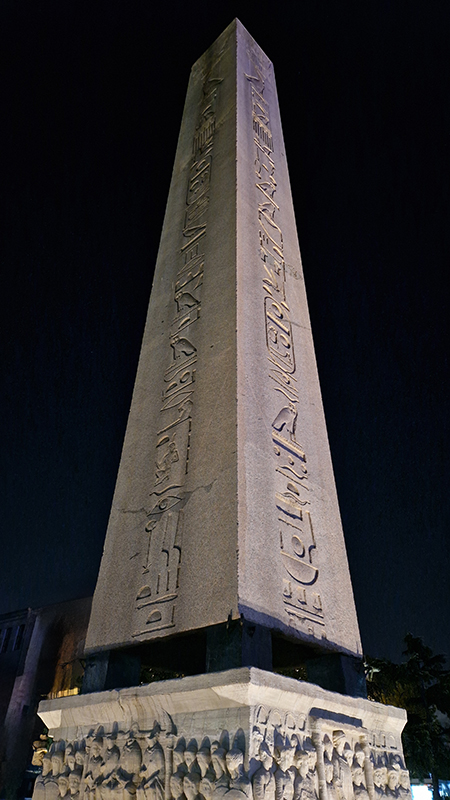
The towering red granite Obelisk of Theodosius, originally 30m tall, is an ancient Egyptian obelisk of Pharaoh Thutmose III (1479–1425 BC), first erected at Karnak to celebrate victory in battle. It was removed from Karnak and transported along the river Nile to Alexandria by the Roman emperor Constantias II in 357 and just 33 years later Theodosius I had it transported to Constantinople and erected on the spina of the Hippodrome, the relocation upheavals having reduced its height by a number of metres.

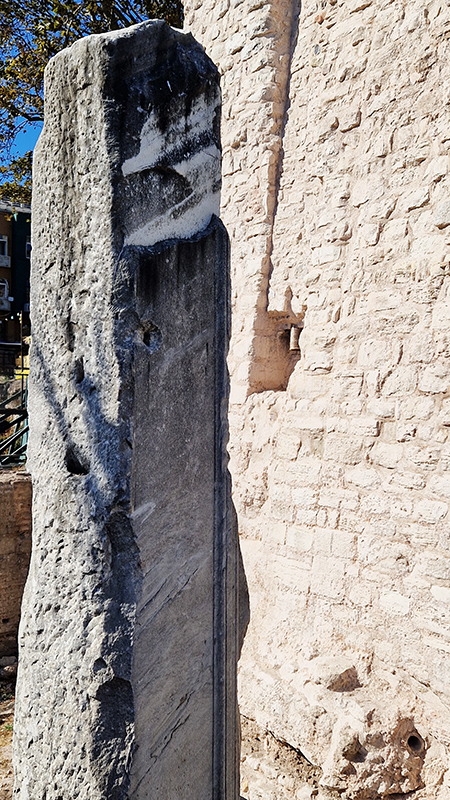
It is not known exactly when The Walled Obelisk was constructed but was probably built to mirror the Obelisk of Theodosius in the Hippodrome. Obelisks were often erected in symmetrical pairs. It was originally decorated with gilded bronze plaques (maybe to hide the fact that it wasn’t a true obelisk which should be hewn from a single piece of rock) but these were removed and melted down by Christian crusaders in 1204.

The Serpent Column is the remains of an ancient bronze column that was part of a Greek sacrificial tripod originally built in Delphi 478 BC as an offering to Apollo but relocated to Constantinople in 324.

The stone Milion was a marker from which all distances across the Roman Empire were measured. Erected by Septimius Severus upon the re-founding of Byzantium as Constantinople in 330 AD it became the starting-place for the measurement of distances for all roads leading to the cities of the Eastern Roman Empire.

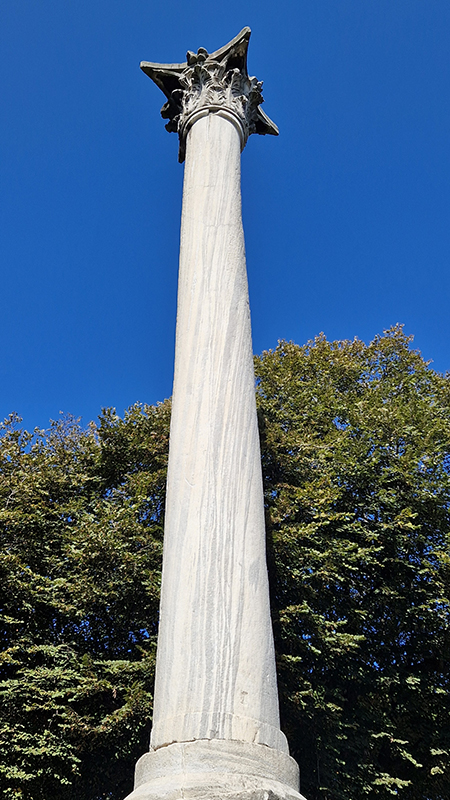
The Column of the Goths, a single block of marble 18.5 metres high, erected in Gulhane Park, is the oldest monument still standing from Roman times.

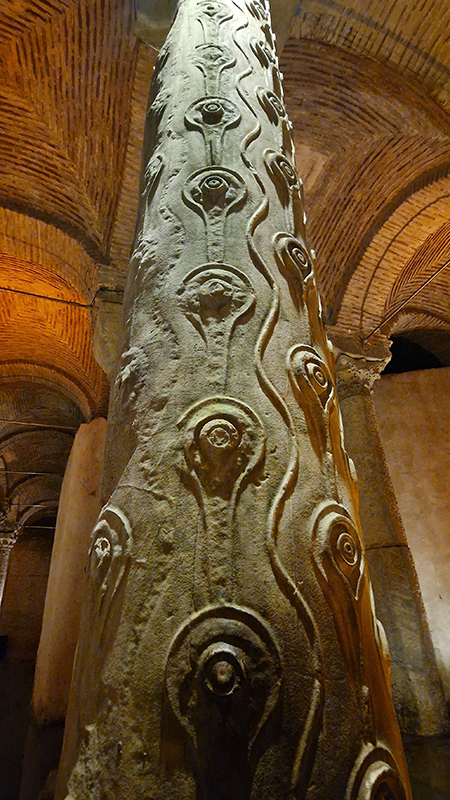
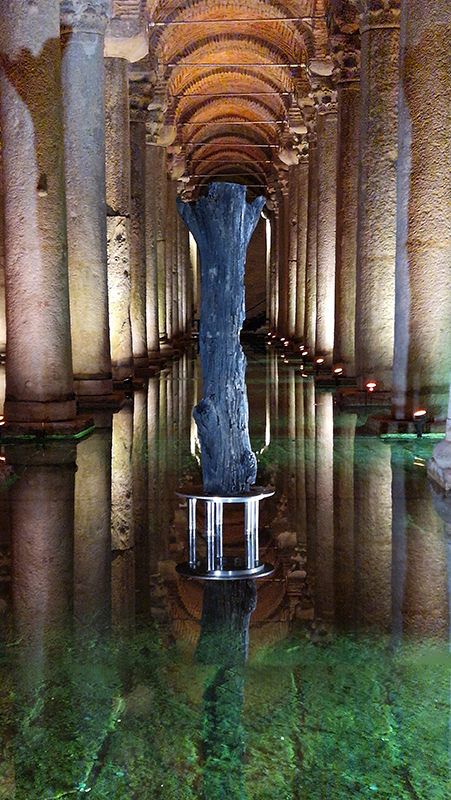
The Basilica Cistern is a vast subterranean forest of columns with the 4th Century ‘Tear Column’ standing out for its unique patterns which are often thought of as tears but may actually be a stylised representation of a tree.

The Basilica Cistern is the largest of several hundred ancient cisterns that lie beneath Istanbul, built in the 6th century during the reign of Byzantine emperor Justinian I to supply the city with drinking water. The ceiling is supported by a 336 marble columns, each 9 metres high which appear to have been recycled from the ruins of older buildings and are carved out of different types of marble and granite.

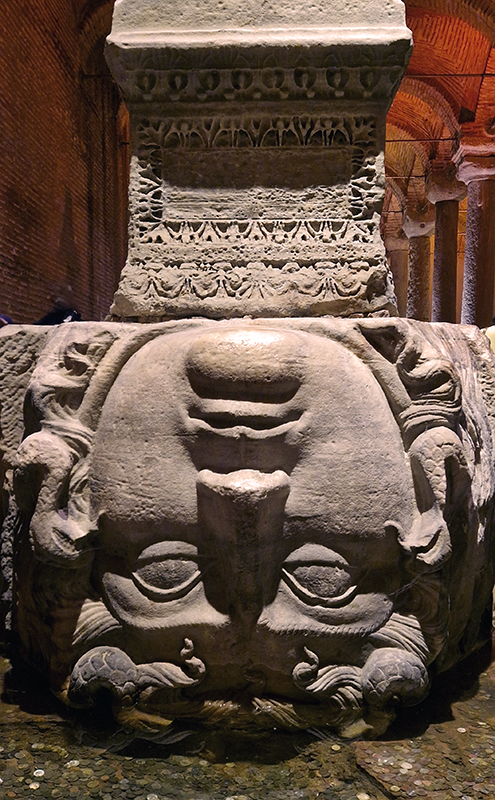
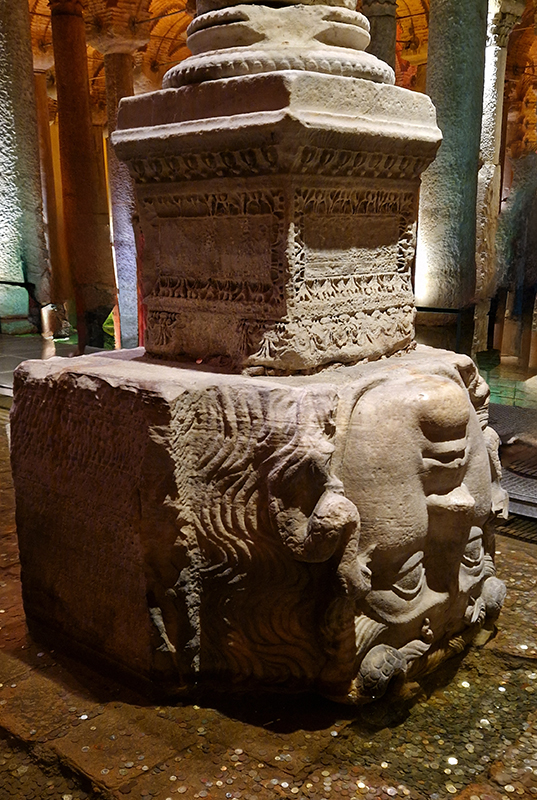
Two columns reuse blocks carved with the face of Medusa. Tradition has it that the blocks are oriented sideways and inverted in order to negate the power of the Gorgon which held that anyone who looked upon her was turned to stone.

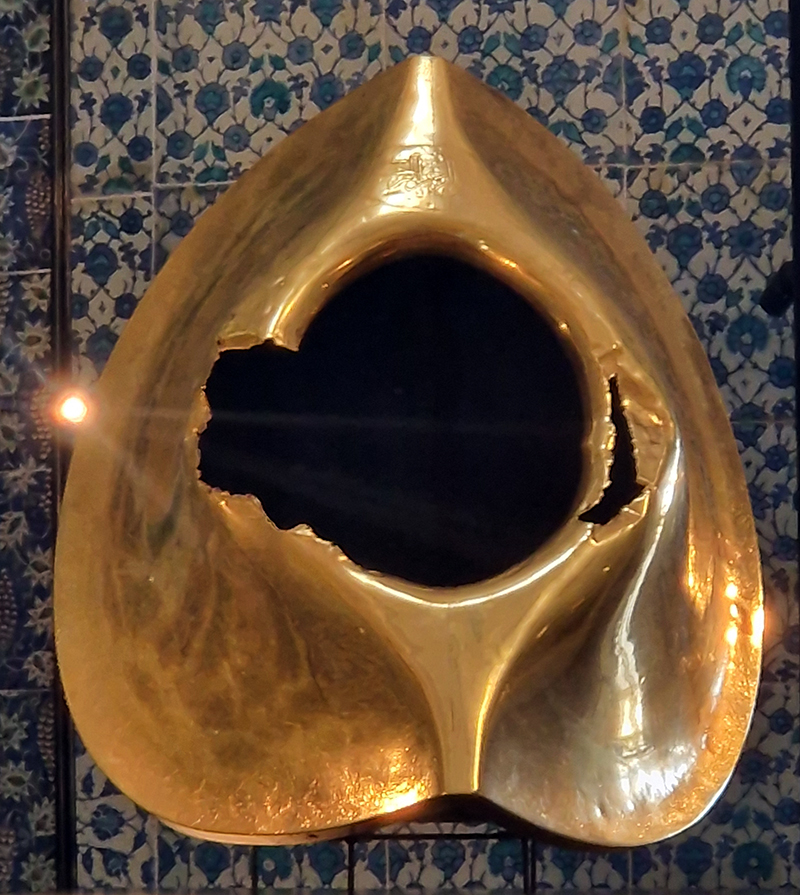
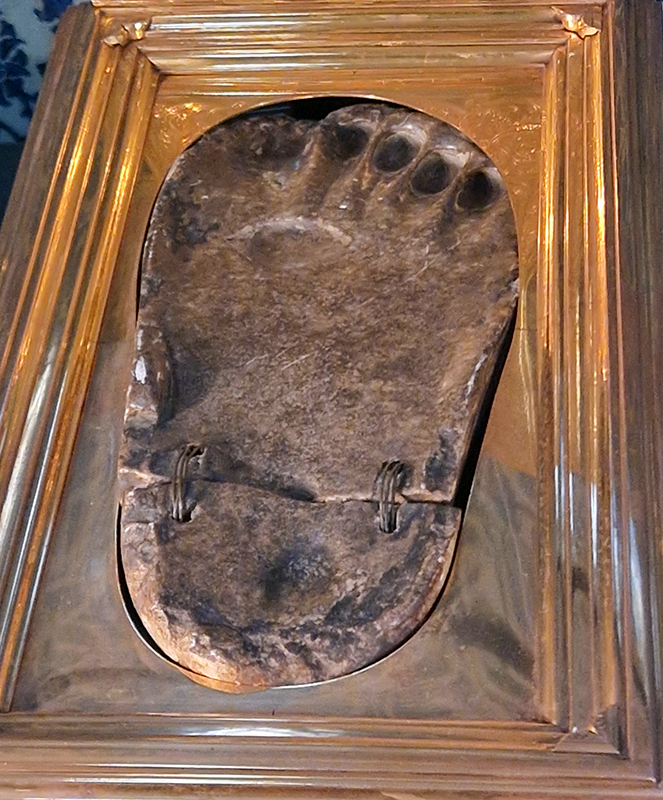
The Sacred Trust, of Islamic religious relics kept at the Topkapi Palace includes the Casing for the Black Stone, a rock set into the eastern corner of the Kaaba, in Mecca, Saudi Arabia. Revered by Muslims as an relic which, according to tradition, was set intact into the Kaaba’s wall by Muhammad before he became a prophet. It has had a turbulent history, being stolen, taken hostage and smashed. Today its fragments can be seen set in cement, encased in a silver frame on the side of the Kaaba, polished smooth by the hands and kisses of pilgrims. Although idolatry is forbidden in the Hebrew Bible and the Quran the use of aniconic stones, or baetyls, which are sacred stones stones venerated for their connection to the divine, without needing human-crafted images, were permitted. There has been speculation The Black Stone is a meteorite, but it has never been scientifically analysed to ascertain its physical origin. Also on display are footprints in stone (Kadem-i Şerif) attributed to the prophet Muhammad. An Ottoman scholar, Mehmed Münib Ayıntâbî (d. 1823) wrote a treatise to explain that this footprint was one of the miracles of the Prophet for otherwise how could it be possible to leave the impression of a foot on hard ground like stones. This was reiterated by a guide at the palace. There are six Kadem-i Şerif of the Prophet four of which are on stone and two of which are on brick, the most significant is the one in a gold frame believed to be left on his ascension to heaven from the Dome of the Rock.

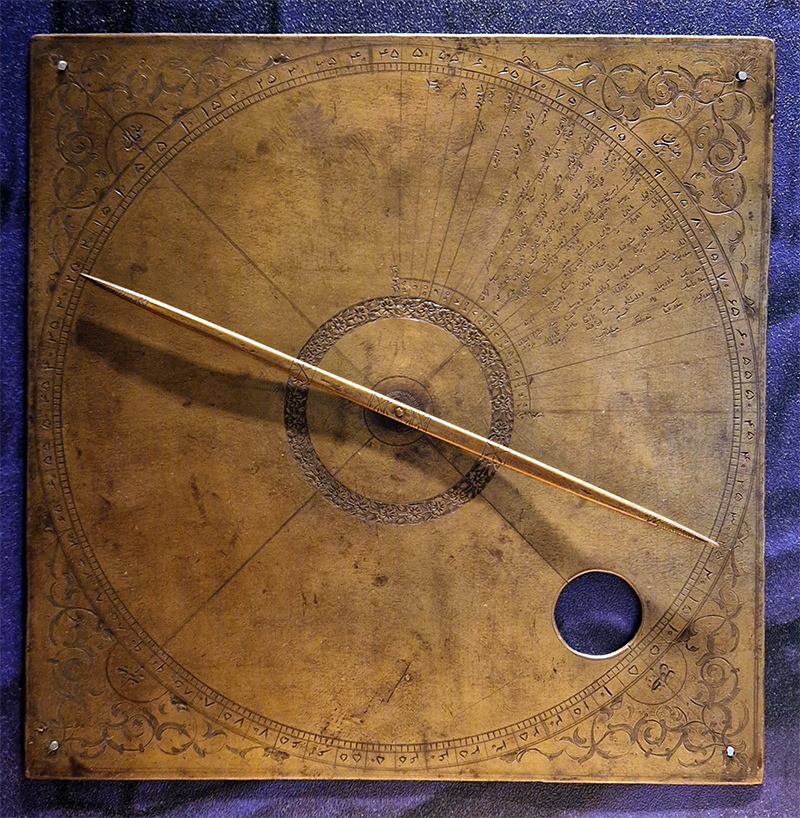
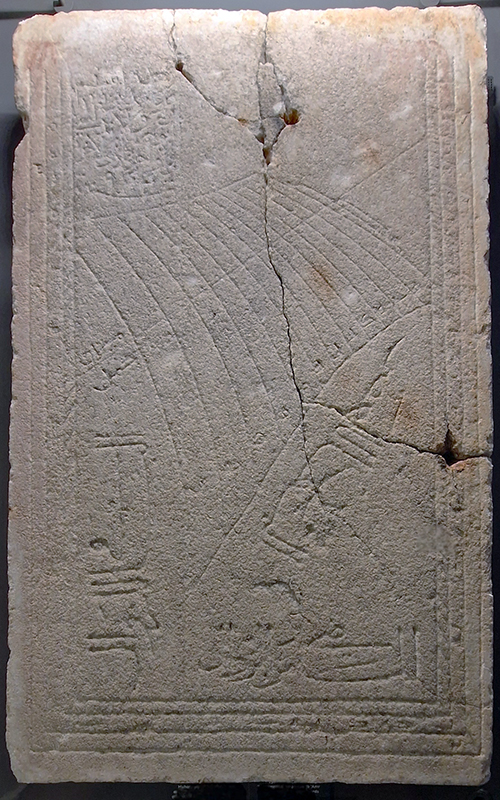
Mechanical clocks didn’t arrive in Ottoman lands until the 15th Century, 200 years after their initial invention. Chief astronomer to Sultan Selim II, Taqi al-Din, bemoaned the new instruments as ‘the most burdensome to construct, which demanded modest workers’. The qibla compass was used to determine the direction for prayer. This Ottoman marble sundial is from 1526.

‘Were man to look up from the ground, he’d see a starry sky, were he to look down from the heavens – a wavy sea’ Tursun Beg. (15th century Ottoman historian who wrote a detailed account of Mehmed the Conqueror’s reign.)

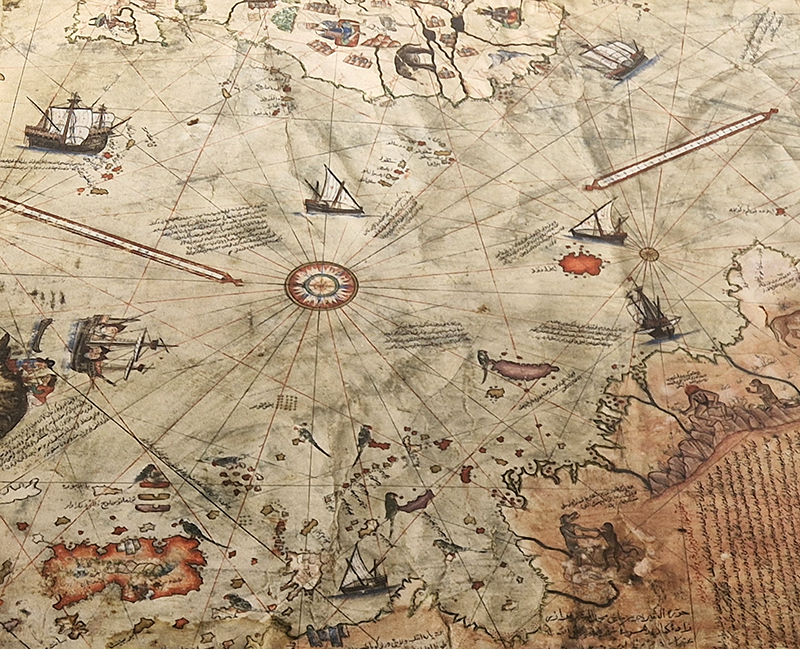
The 1513 world map made by Turkish cartographer Pîrî Reis was discovered in the Topkapı Palace Library in 1929. Pîrî Reis created an impressively accurate depiction of the newly discovered regions of the world using a circular design based on a hypothetical centre. This map is the earliest cartographic record of Columbus’s oceanic voyages and the first to show the unique fauna of Terra Australis.

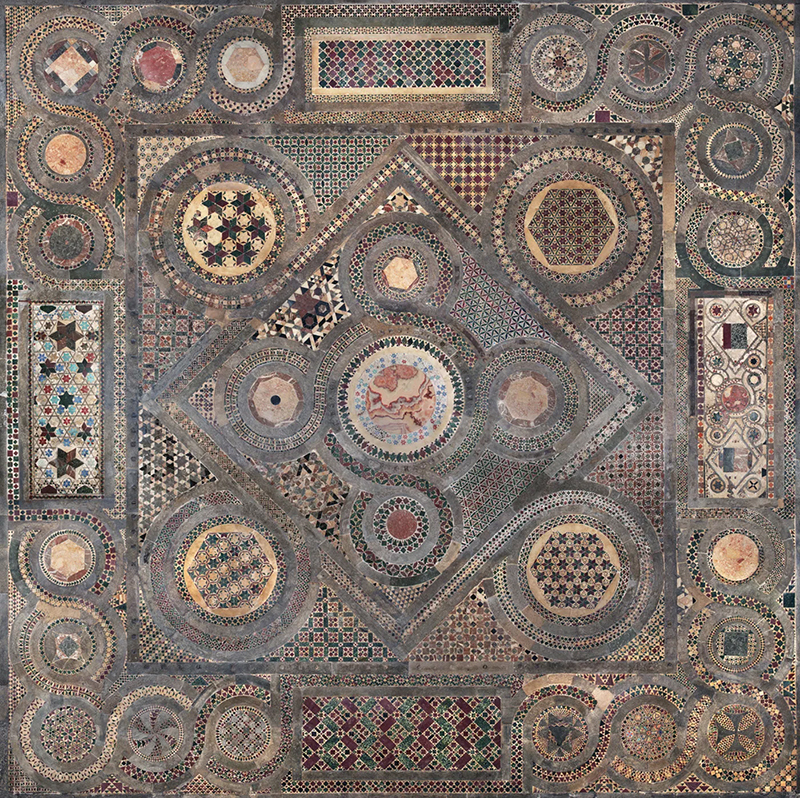
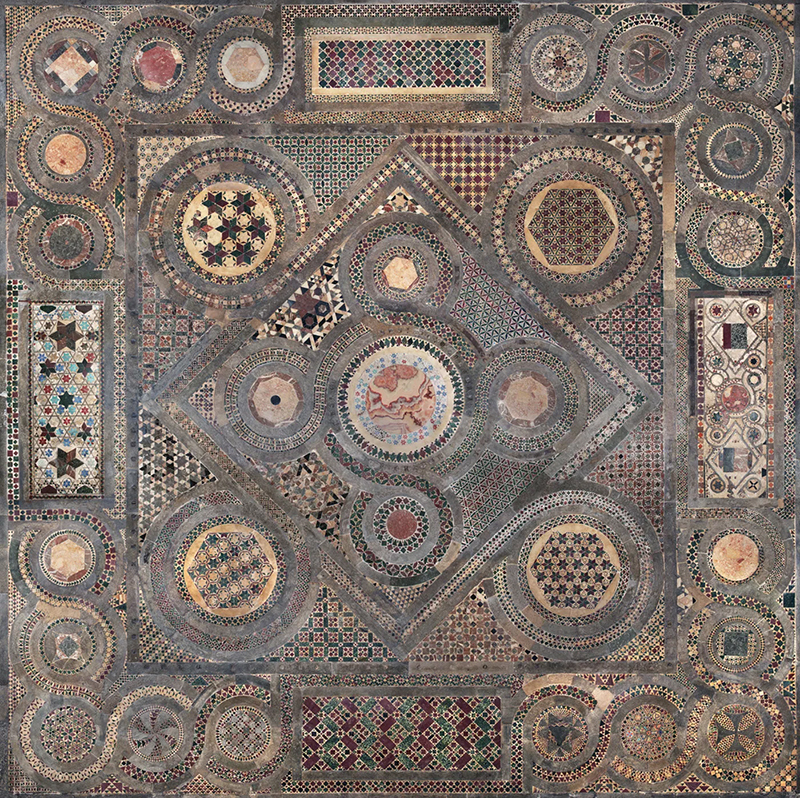
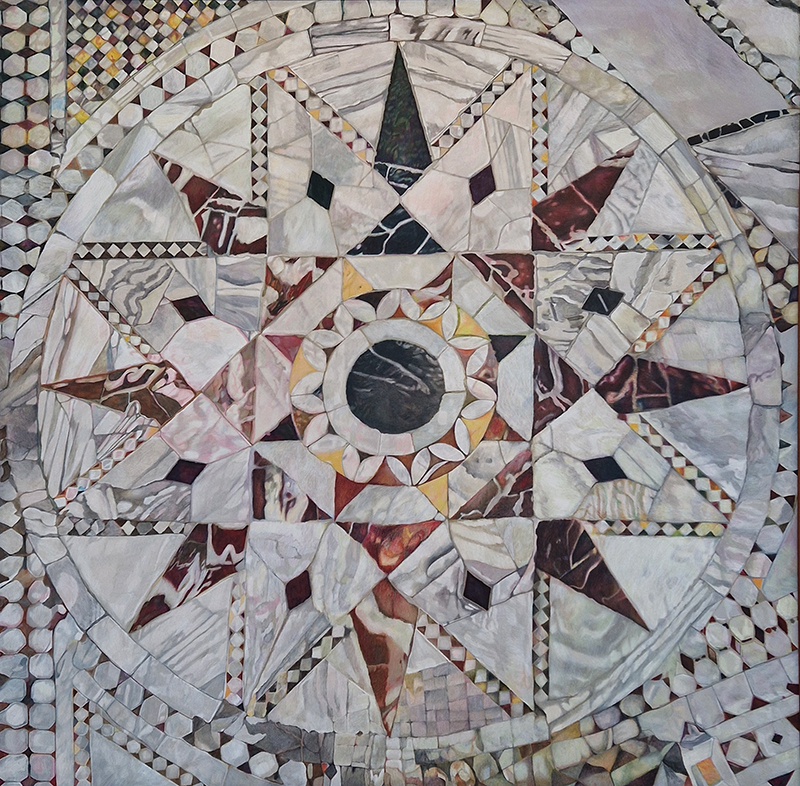
Beginning new work. Learning about the symbolism of sacred geometry in the Westminster Abbey Cosmati Pavement has inspired me to think about how I could relate ancient symbolism and contemporary iconography to think about changing relationships to fire, water, earth, air and the cosmos. Plato imagined the universe was created as a living creature in the shape of a sphere, perfect and complete in itself. Patterns of Thought author Richard Foster suggests that ‘as our minds become progressively tuned to ecological and global concerns, so the Platonic image of the world as a living creature is re-awakened from its sleep.’

In the symbolism of the Cosmati Pavement, the journey from earthly materialism to spirituality is seen as a progression from multiplicity and diversity towards unity and uniformity. The tiles show a transition from a variety of patterns through to simplified regular polygons, the archetypes of form representing a perfection that we only experience as a shadow on Earth. Random patterns at the centre of the design describe the elements in an undifferentiated state of matter, the primal chaos before the division of spirit and matter when the breath of the creator swept over the ‘turbulent waters’ or ‘silva’ bringing forth the differentiation of matter into the forms of the four elements. The medieval mind never took the world at face value and always sought to see the coexistent and equally valid layers of meaning in everything.

In medieval cosmology the separation of the elements happened before the advent of time which began with the creation of the sun, the moon and the planets as astronomical time, the timelessness of eternity is alluded to by the number 60 + 1. The end of the world was imagined as a reversal of creation. All will return into the four elements which return to the primal chaos and are reabsorbed into the divine mind and eternity.

The four elements are linked by pairs of opposing qualities: Fire is dry and hot; Air is hot and moist; Water is moist and cold; Earth is cold and dry. Each element shares a quality with two others and elements with a shared quality combine more easily. Fire is sharp, tenuous and mobile, reflected in a quick tempered choleric human temperament, it gives vision and belongs to the heavenly race of gods. Earth is blunt, weighty and immobile reflected in a heavy melancholic human temperament. Earth resides with the sense of touch and those that walk on the ground. It has stability facing to the north, south, east, west, zenith and nadir. Air is sharp, mobile and weighty reflected in a breezy optimistic human temperament. Air amplifies hearing and smell, it supports the flying creatures and is synonymous with breath and spirit. Water is mobile, blunt and weighty reflected in a dissolute easy-going human temperament. Water amplifies taste and supports the creatures that swim.

I was interested to read that in the kitchens of the Topkapi Palace (1459) in Istanbul, the four humours (blood, phlegm, black bile and yellow bile) were taken into account when designing the menus. Different foods were recommended depending on their qualities to restore good health for those suffering sickness which was attributed to an imbalance of the humours. The seasons were also taken into account in relation to the humours when deciding which foods to cook.

Gallery Visits

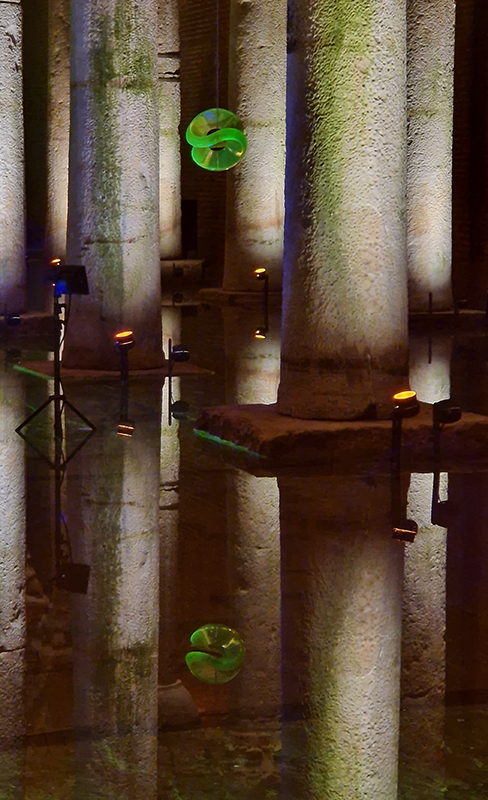
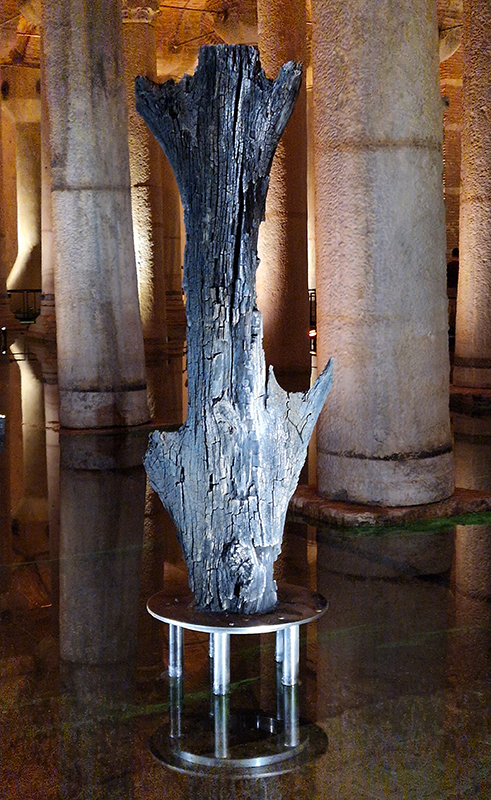
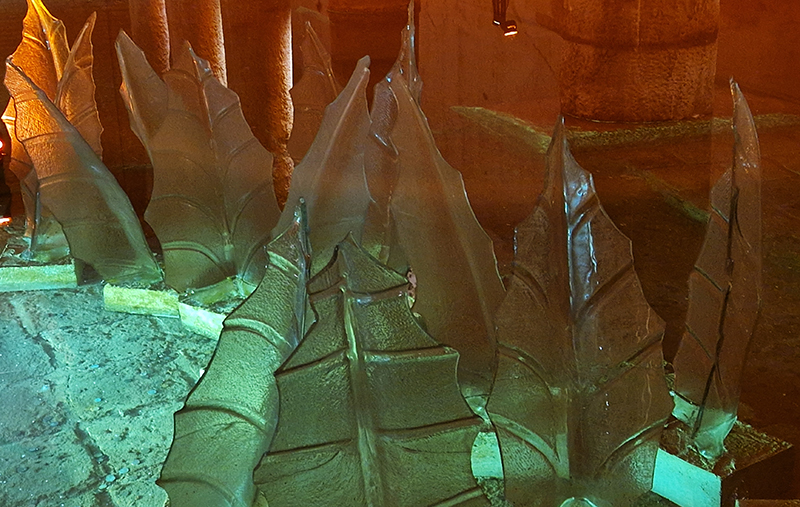
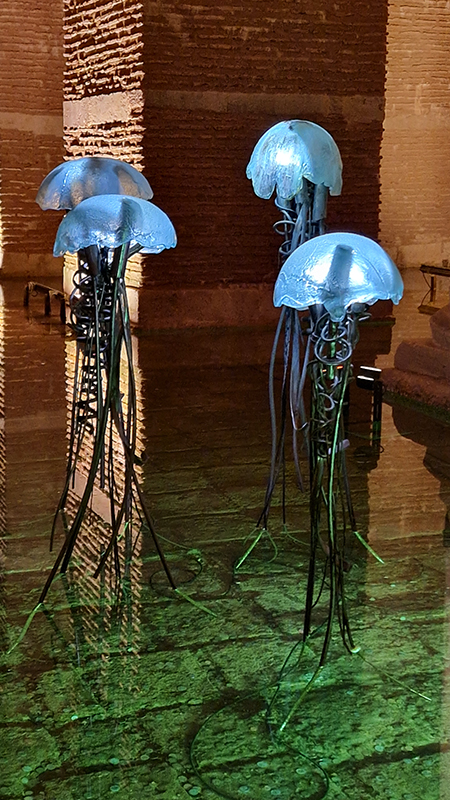
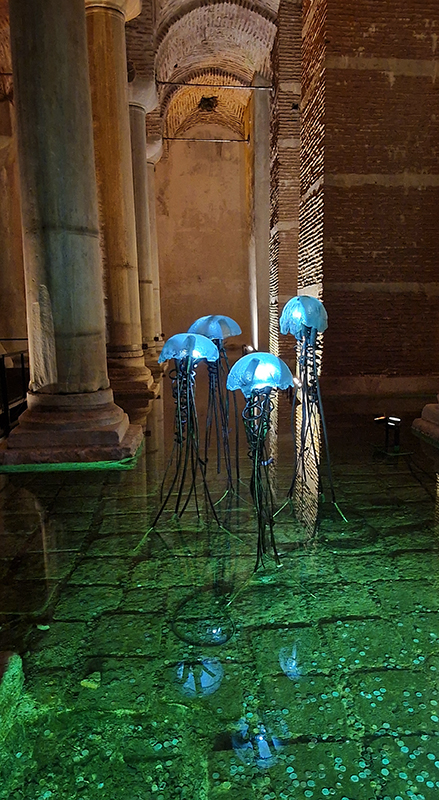
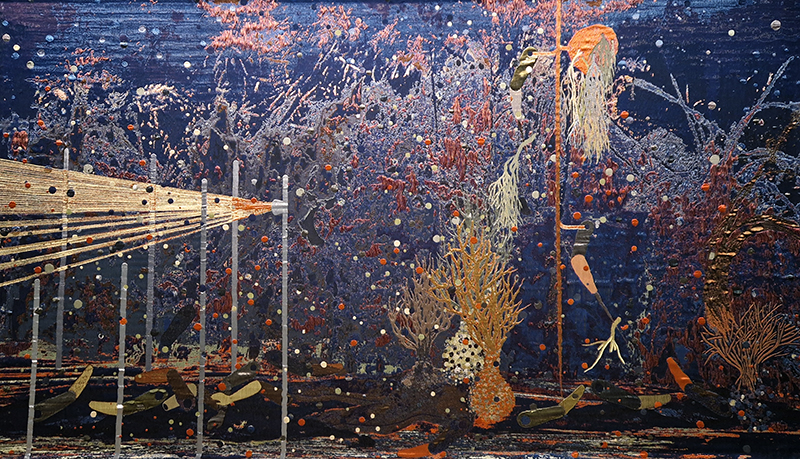
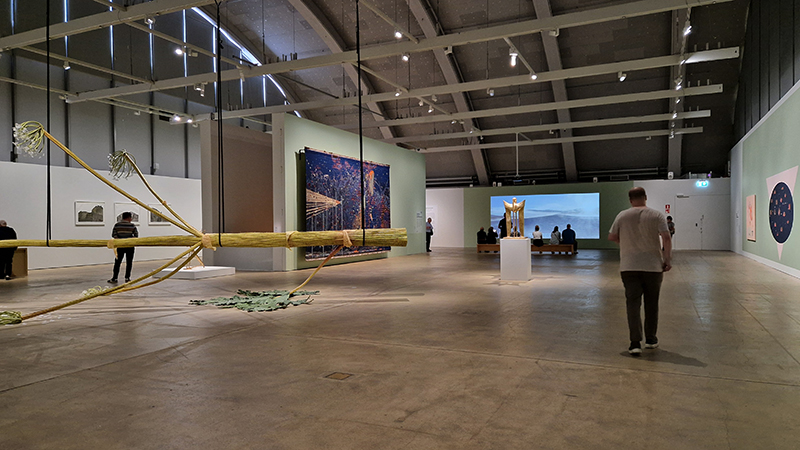
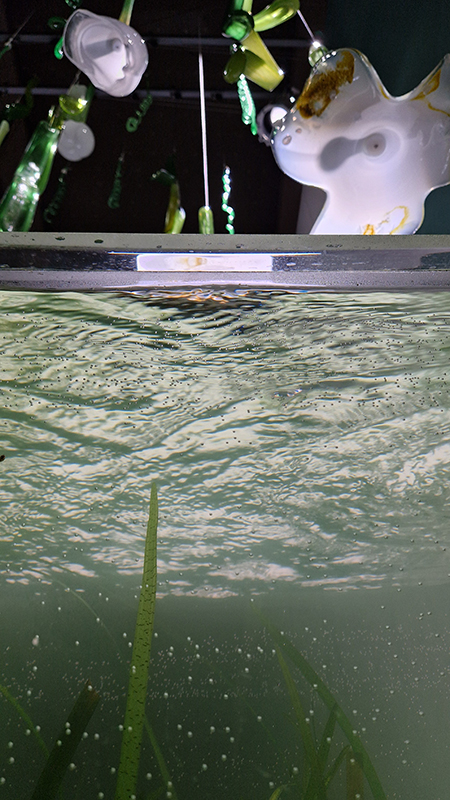
Deeper Beneath at the stunning 1500 year old Basilica Cistern Museum includes work by Vlastimil Beranek (Aqua One- Yellow – made from Bohemian Crystal), Jaroslav Prosek ( 6500 year old subfossil oak), Ali Abayoğlu (Glass Leaves and Jellyfish) and Muzaffer Tuncer (Seclusion)

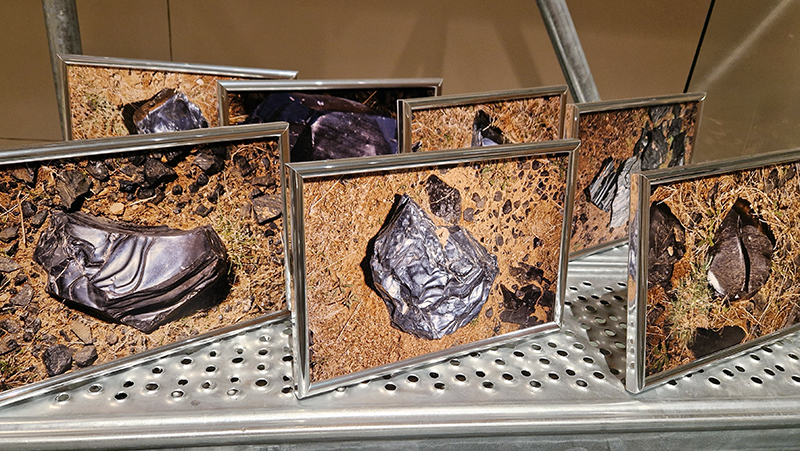
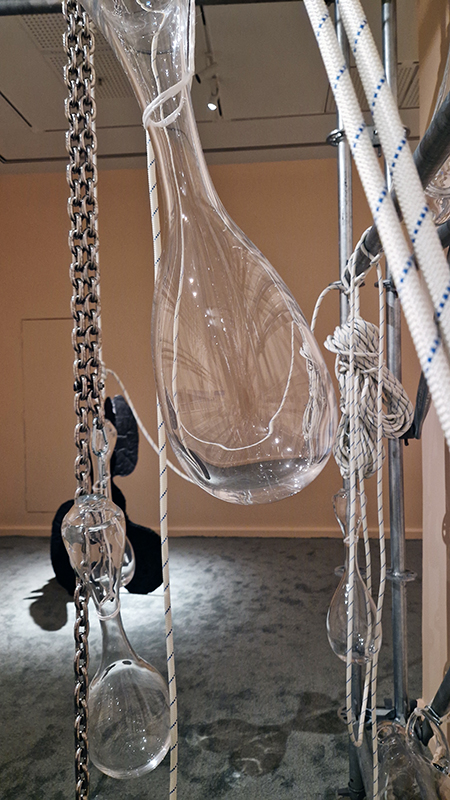
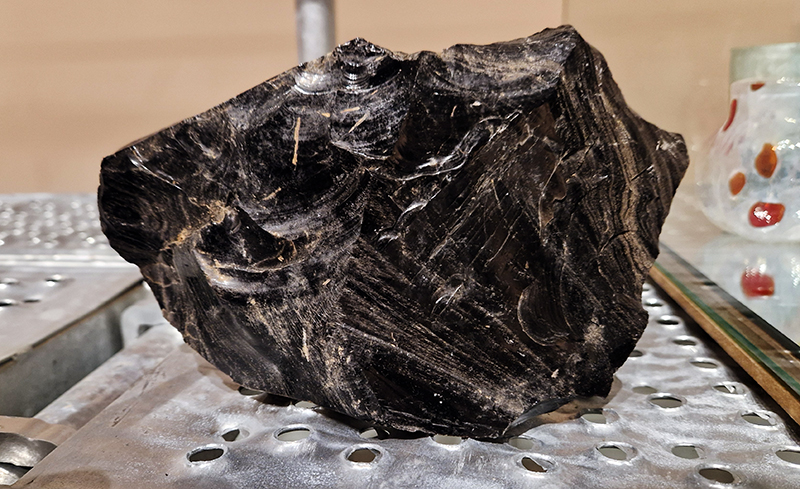
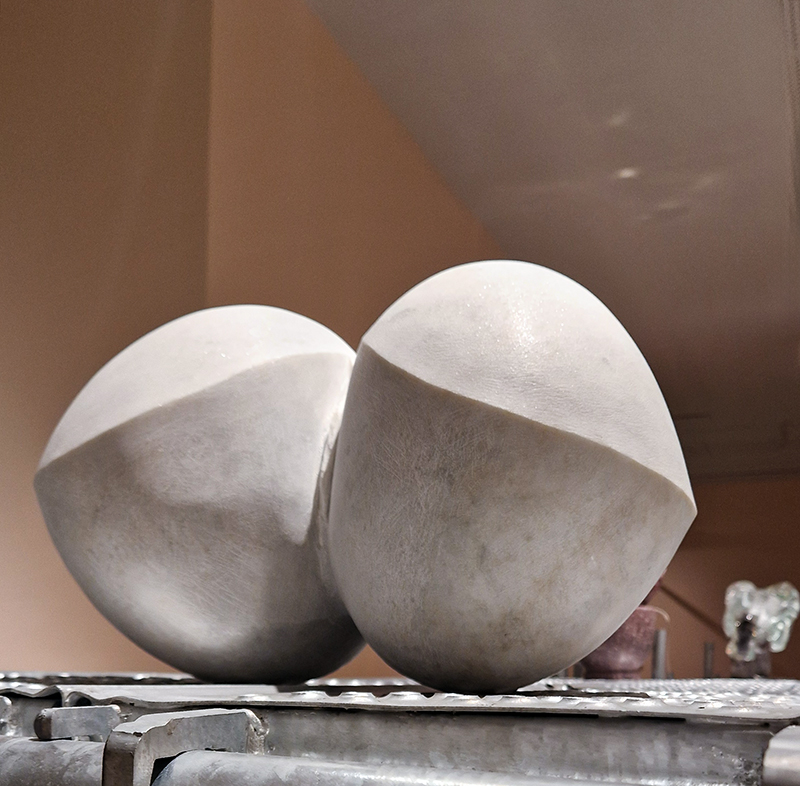
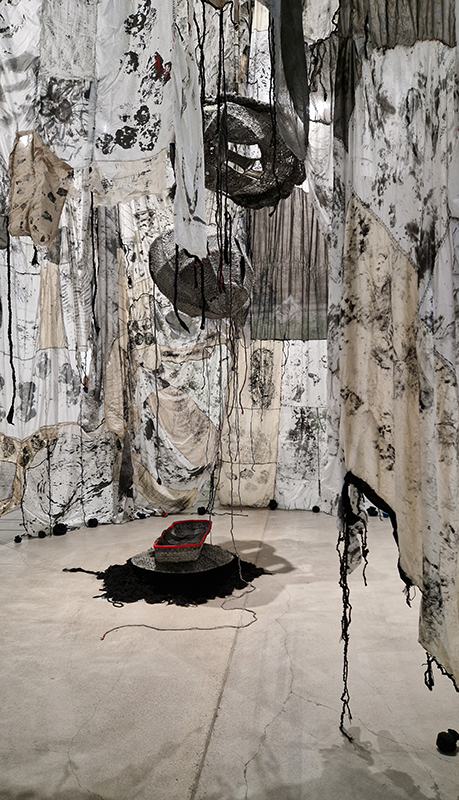
Åsa Jungnelius A Verse, Written with Earth, Fire, Water and Air at Pera Museum, Istanbul. The exhibition brings together the results of time spent in the obsidian fields of Eastern Anatolia collecting natural glass formed by the rapid cooling of volcanic lava and working in the glass furnaces of Denizli along with reflections on marble steeped in Byzantine history. Archaeological finds, glass objects, materials, and handwoven cords rooted in nomadic traditions are displayed alongside photographs by Swedish photographer Peo Olsson documenting the artist’s research. There is a strange juxtaposition of the installation scaffolding set against thick carpet in the gallery.

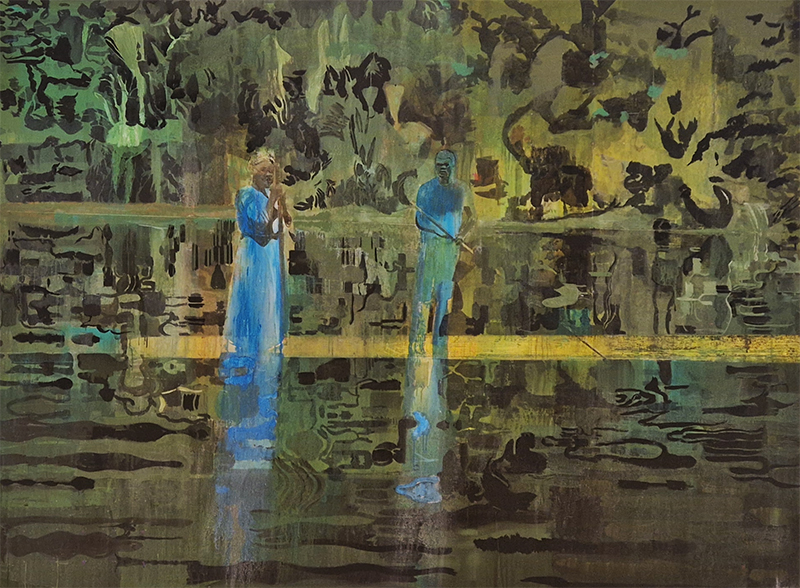
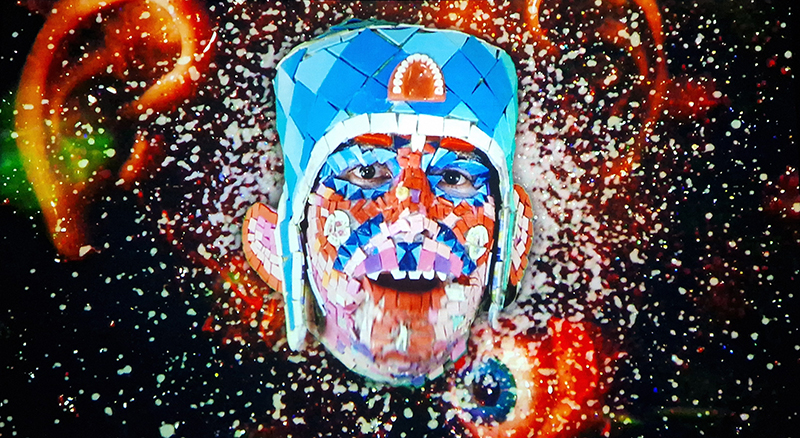
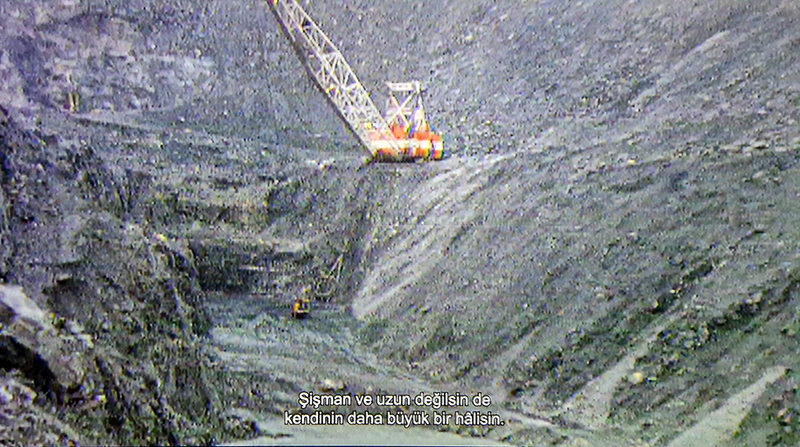
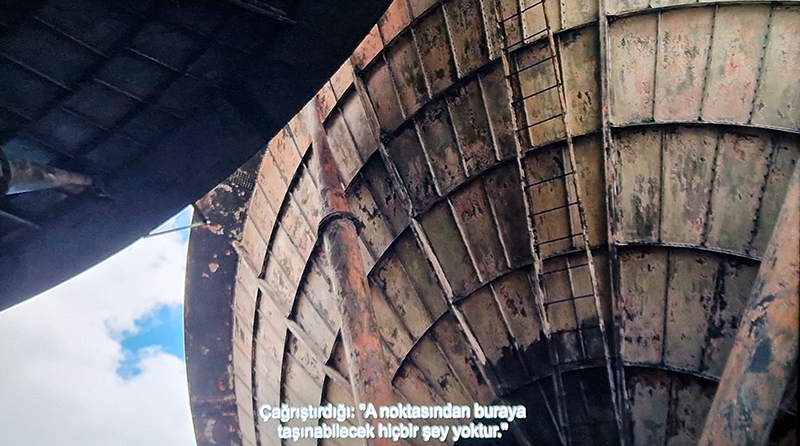
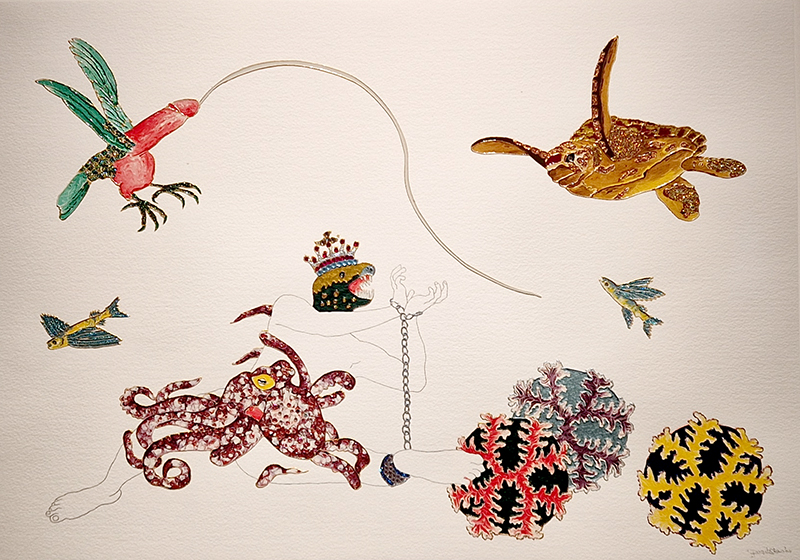
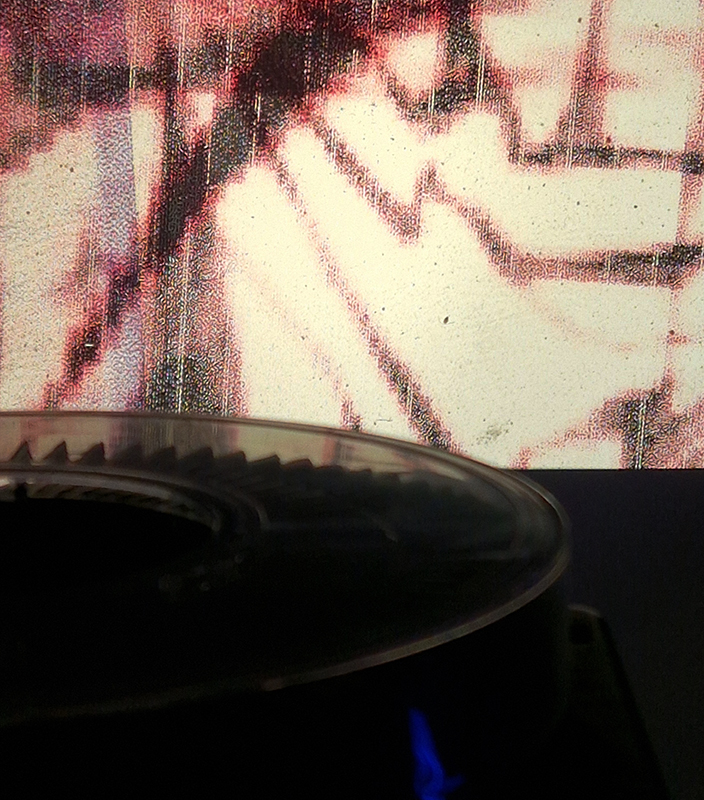
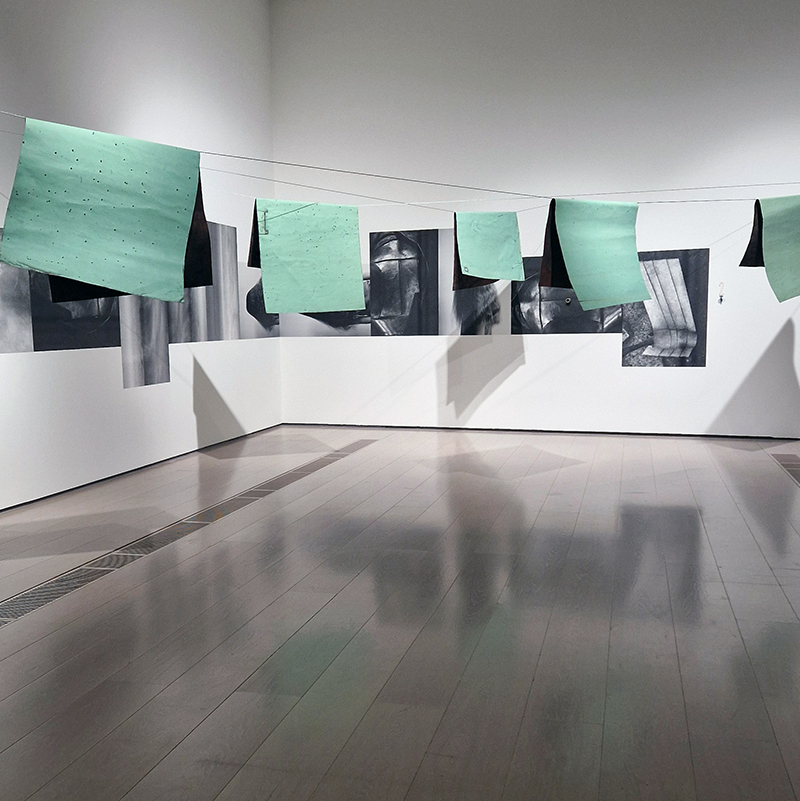
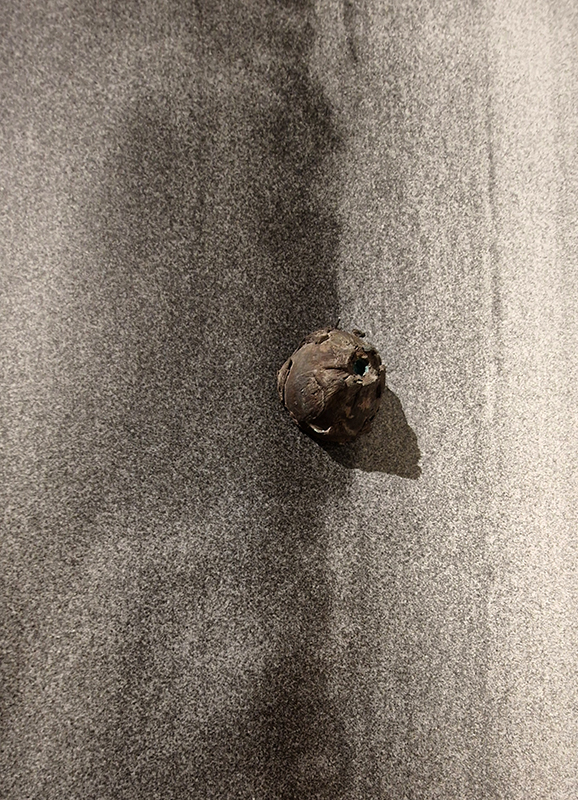
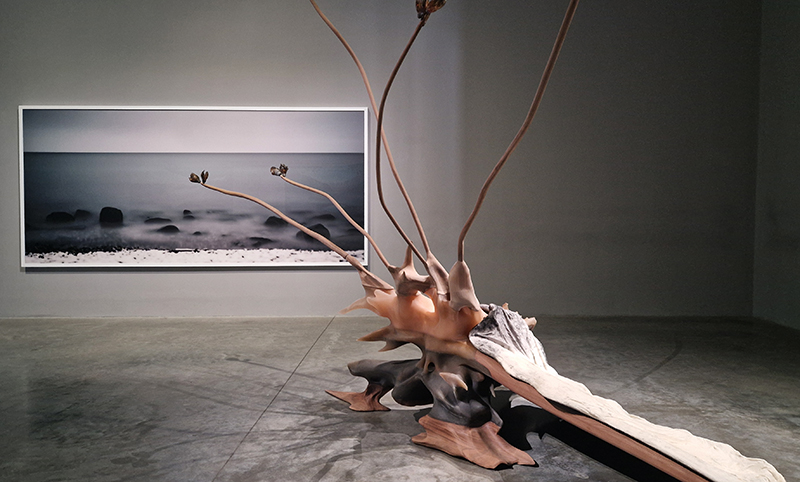
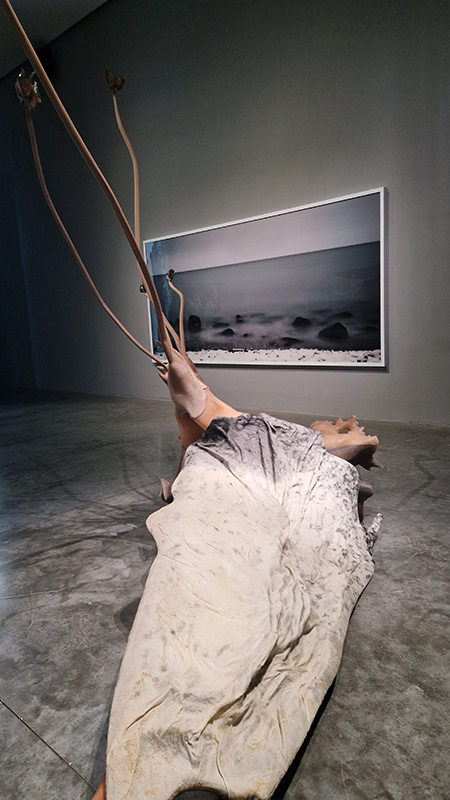
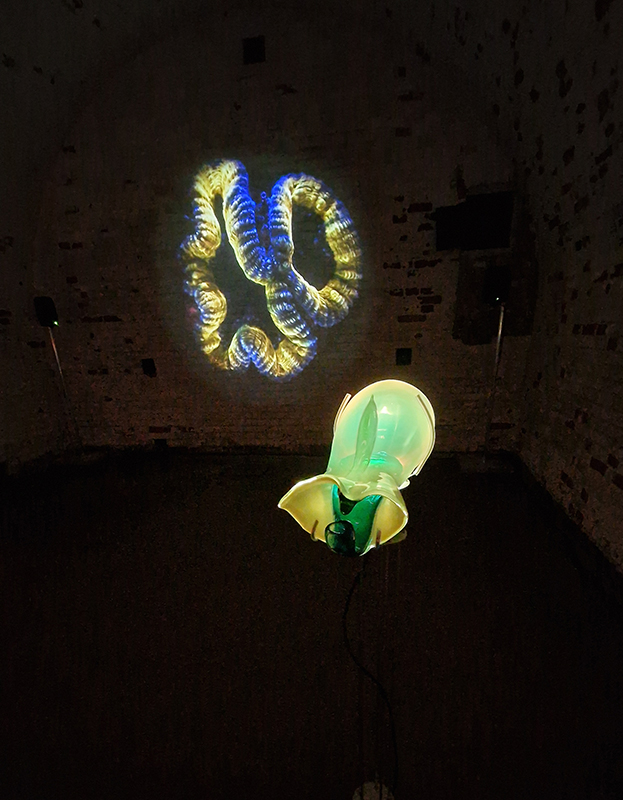
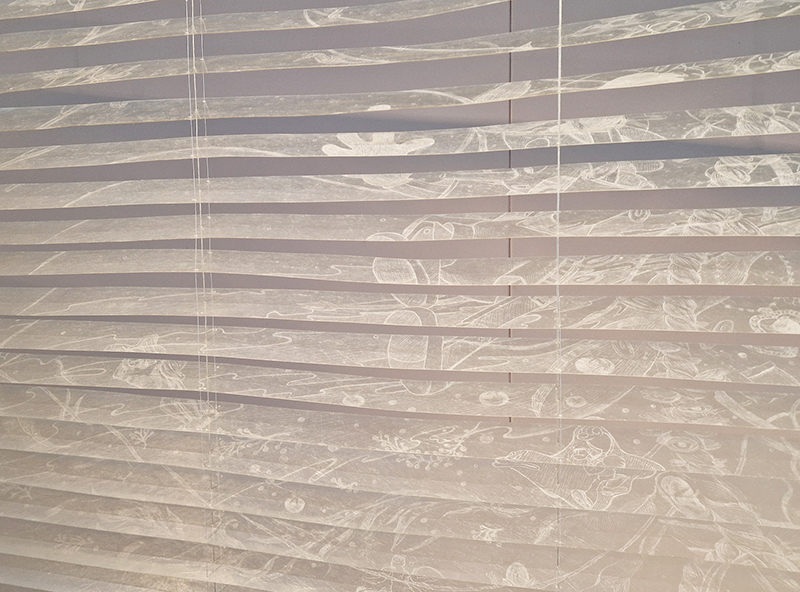
Also at the Pera Museum was Feelings in Common: Works from the British Council Collection. The exhibition is striving to form a zone where feelings in common are shared amidst uncertainties and transformations regarding the future. Happy to see Bedwyr Williams The Starry Messenger again (image 1 + 2 – the poignant geological story of a mosaic dentist which alludes to the micro macro scales of the universe ) and Larry Achiampong’s Relic 2 (an Afrofuturist exploration of postcolonial identities, imagined futures, and ancestral memory) along with a small work from Raqib Shaw from his Garden of Earthly Delights series amongst other works.

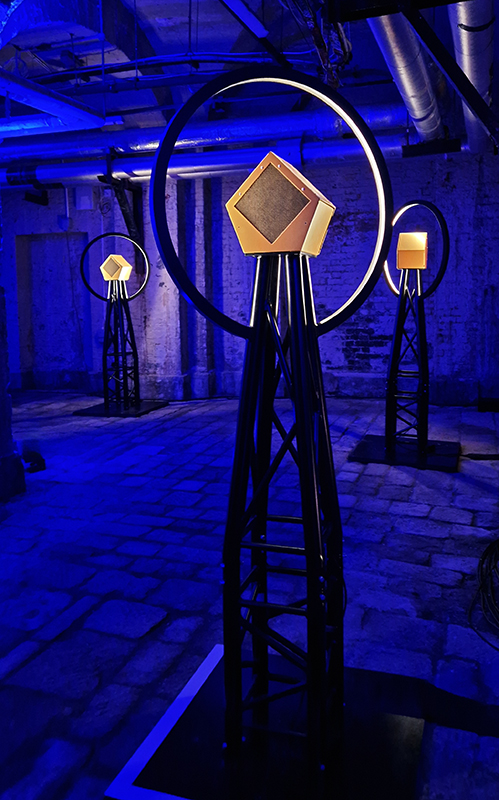
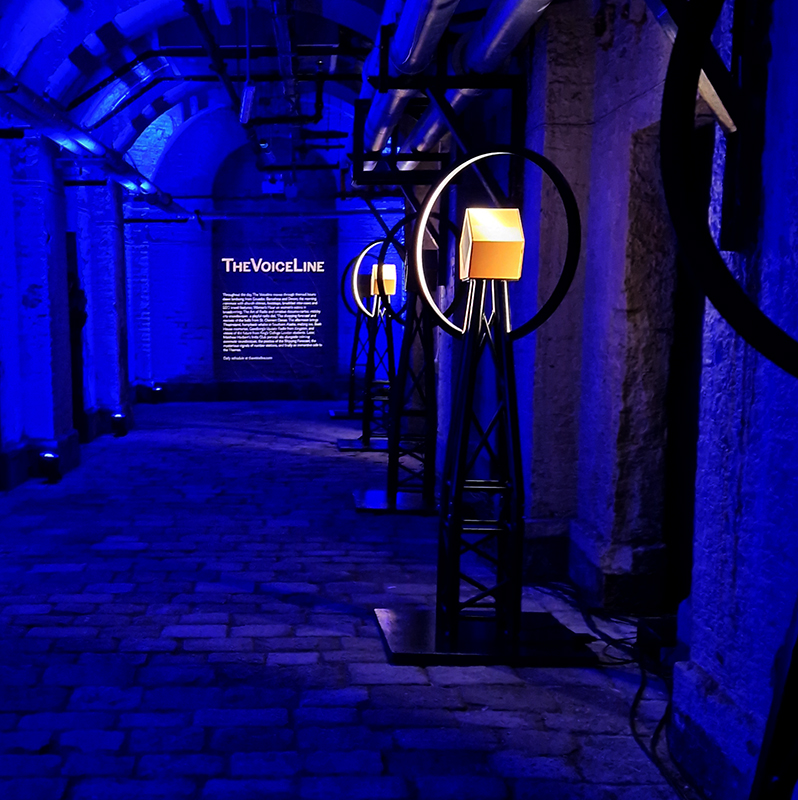
The VoiceLine by composer and sound artist Nick Ryan installed in the atmospheric Deadhouse, Somerset House. 39 precisely aligned speakers, creating an evolving pathway of sound reflecting the histories of radio and listening that began on the Strand more than a century ago.

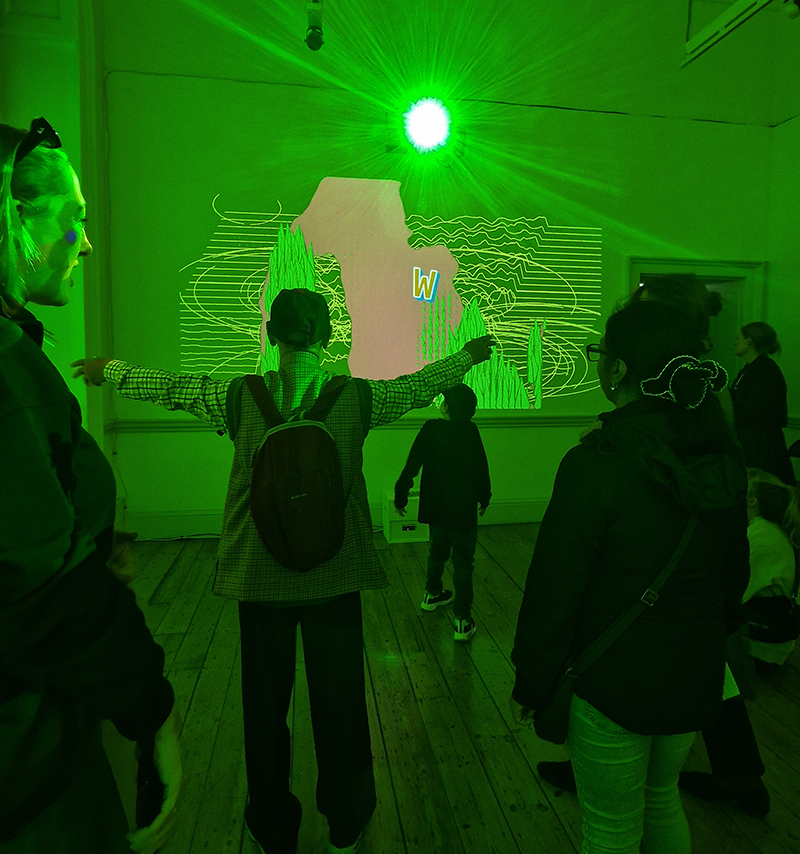
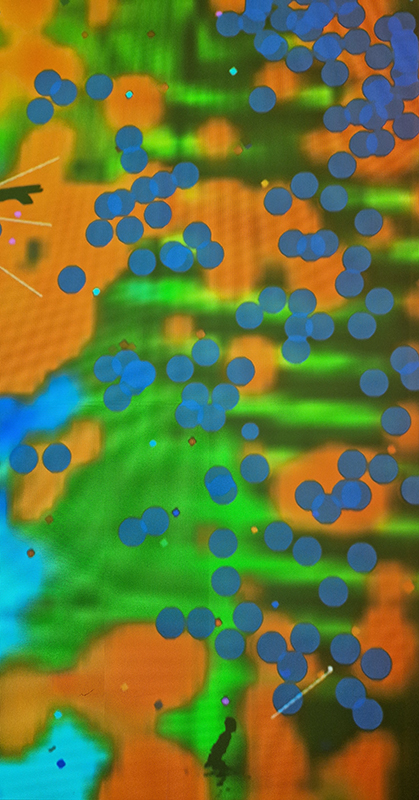
An exhibition by KitMapper, an artist led production company, Along More Latent Lines at Somerset House to showcase new and recent works of the team and creatives based here including the interactive and immersive Genetic Moo: Magic by Genetic Moo.

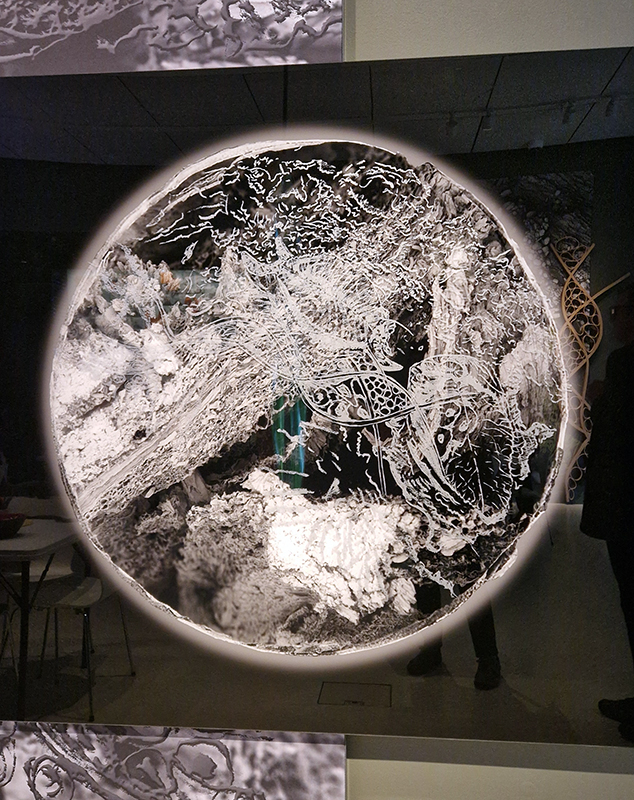
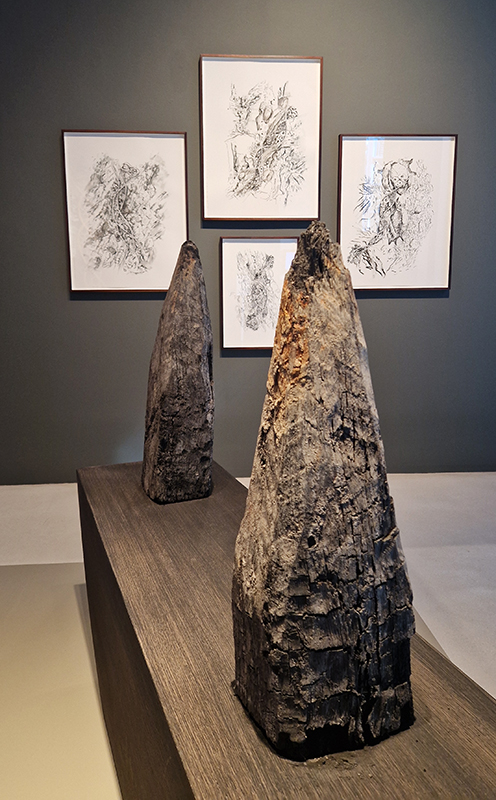
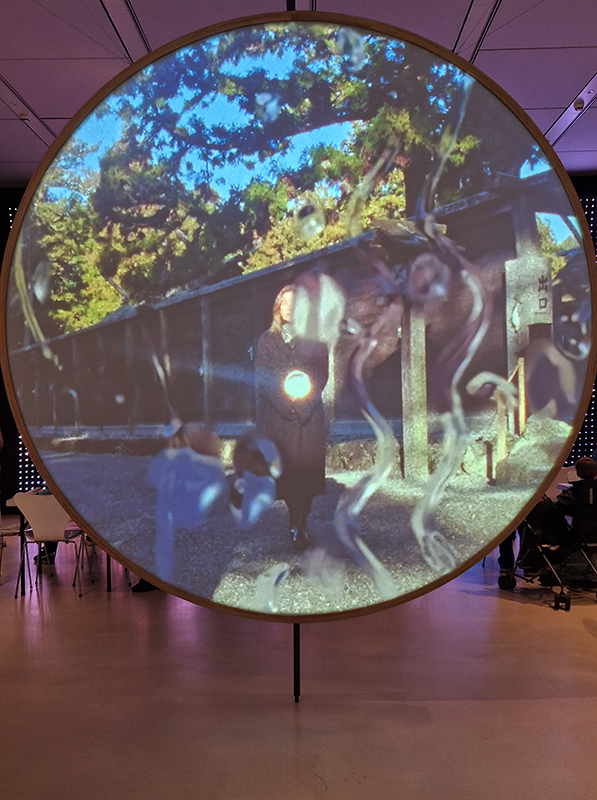
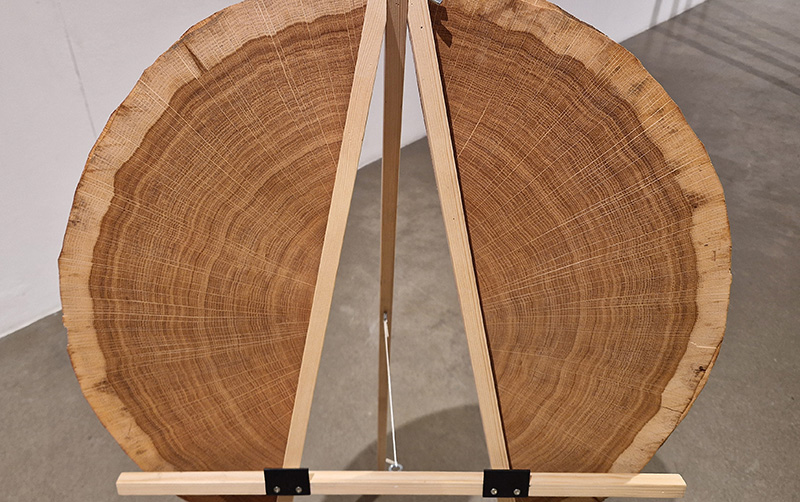
Jane and Louise Wilson Performance of Entrapment at The London Mithraeum Bloomberg Space featuring 2,000 year old oak stakes that inspired imagery looking at structure and ritual. The works investigates parallels between the sacred sites of Mithras and Japan’s Ise Jingu Shrine.

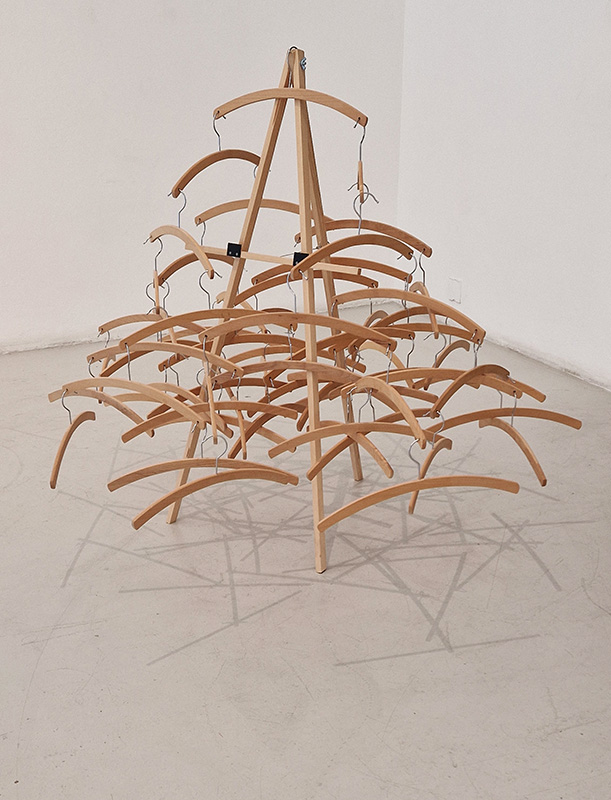
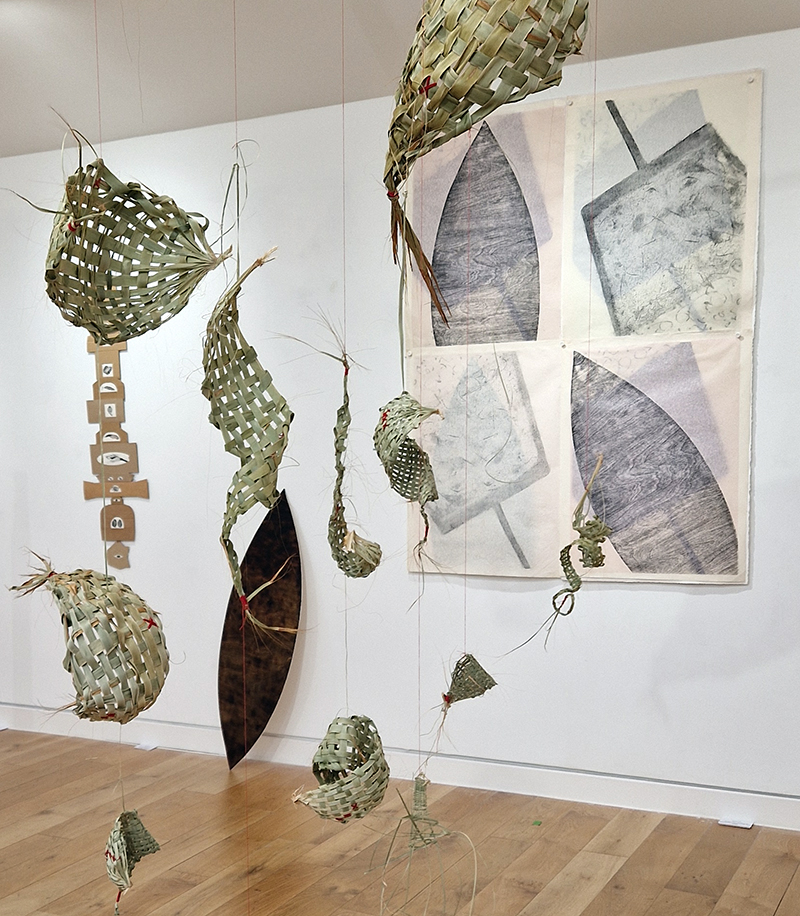
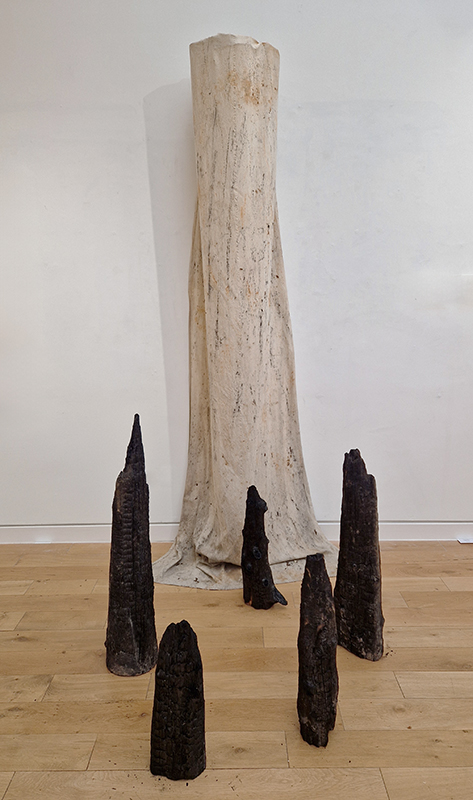
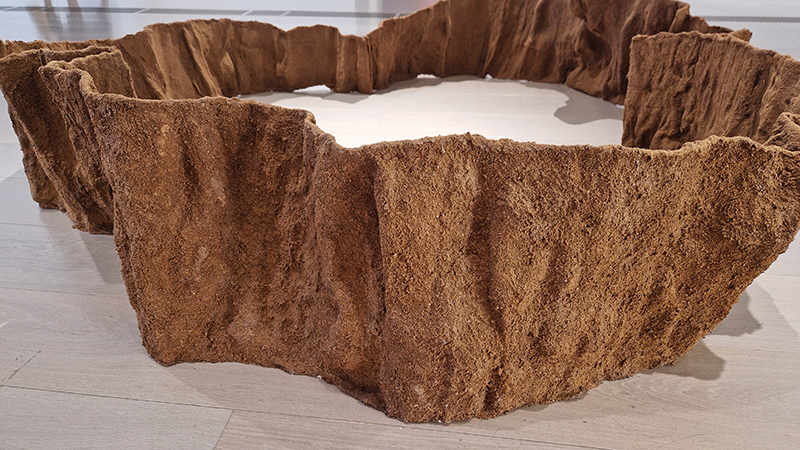
Treen (of a tree) was a collaborative event between Liz Botterill, Sevenoaks museum curator and the Kaleidoscope Gallery co-curators Rosalind Barker and Sue Evans, with the artists of Sevenoaks Visual Arts Forum. The artists were invited to respond to items in Sevenoaks Museum that are made of wood. Participating artists: Colin Anderson, Carole Aston, Jocelyn Bailey, Rosalind Barker, Susanne Beard, Sarah Cliff, Christina Crews, Louisa Crispin, Margaret Devitt, Louisa Donovan, Duncan Dwinell, Sally Eldars, Sue Evans, Deborah Farquarson, Victoria Granville, Kate Grimes, Amanda Hopkins, Marilyn Kyle, Keith Lovegrove, Venetia Nevill, Clare Revolta, Franny Swann and Irene Vaughan. Venetia Nevill worked outside the remit to create ‘Memories of a tree’ to honour a plantation of spruce trees that have been felled, because they were infected by the spruce beetle. Her process of wrapping a cloth around a tree, and rubbing the burnt soil, ash and charcoal into it, memorialises and commemorates the trees. Over a few months the cloth absorbed the sunlight, birdsong and passing of time, allowing the elements to leave their mark, and create a cloak of protection. The cloth is exhibited along with burnt remains of trees.

Reading

North Pole, South Pole: The Epic Quest to Solve the Great Mystery of Earth’s Magnetism by Gillian Turner. A very readable account of all the philosophers, explorers and scientists fascinated by the origin of Earth’s magnetism, from the earliest speculations of lodestone mountains, magnetic polar stars to seismology and deep ocean core sampling revealing the inner working of the planet.

Turning to Stone by Marcia Bjornerud. This book is the antithesis of the idiom ‘as cold as a stone’. It is a passionate and candid account of relationships between humans and rocks. Human to human, human to rock, rock to human and rock to rock. Along the way we learn a lot about geology and the human condition.

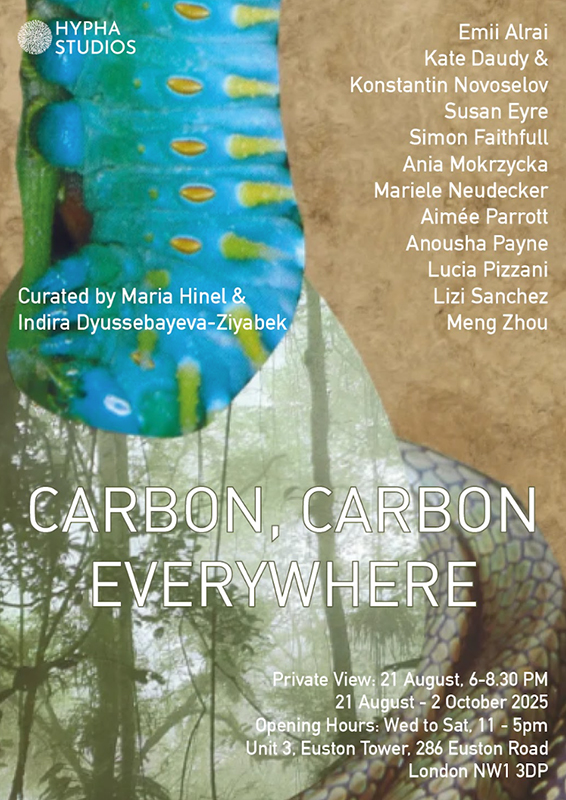
Carbon, Carbon Everywhere opened at Hypha HQ co-curated by Maria Hinel & Indira Dyussebayeva-Ziyabek with exhibiting artists Emii Alrai, Kate Daudy, Konstantin Novoselov, Susan Eyre, Ania Mokrzycka, Simon Faithfull, Nissa Nishikawa, Mariele Neudecker, Anousha Payne, Aimée Parrott, Lucia Pizzani, Lizi Sanchez, Meng Zhou.

The title of the exhibition is taken from the chapter Carbon in the book The Periodic Table by the writer and chemist Primo Levi. Levi traces a journey of a single atom of carbon across distinct states and beings, from resting in a bed of limestone for hundreds of millions of years, to entering the world of ‘things that change’ – swiftly shifting from the atmosphere to the lungs of a falcon, to the sea, to the trunk of a cedar, and eventually entering the writer’s own body from a glass of milk on his desk. Resolutely specific yet universal, Levi’s story highlights the singularity of carbon as an element that inherently connects all things through its relentless transformation. It fossilises, mutates, preserves, pollutes and nourishes. From its ancient geological formations to its current atmospheric volatility, carbon is never still, shifting between forms and contexts in an ongoing process of exchange.

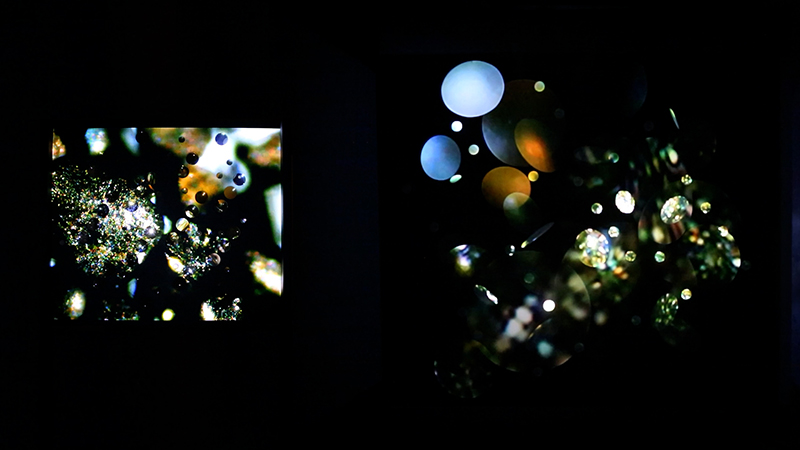
I am very happy to be exhibiting my video Cosmic Chiasmus: crossing the universe alongside the work of the other amazing artists.

Not only is all life physically permeated by cosmic rays with the potential for nuclei collisions but some cascading particles smash into atoms of nitrogen to create carbon-14 which combines with oxygen in the atmosphere to create radioactive carbon-dioxide. Carbon-14 enters the food cycle via photosynthesis as plants absorb it from the atmosphere. It is constantly renewed in all living organisms. On death, the amount of carbon-14 in the tissues begins to decay at a known rate which can be measured to determine the time of death. Cosmic ray activity therefore allows us to perform carbon dating techniques offering insights into Earth’s past climate and magnetic field, solar activity, and changes in the carbon cycle, helping us to understand historical patterns and establish timelines for ancient human history. Understanding the past can help us plan for the future.

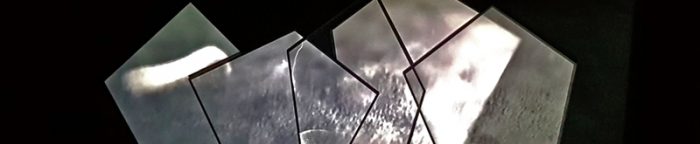
Installation shot: Cosmic Chiasmus: crossing the universe 2021, video 05:25 min

Gallery Visits

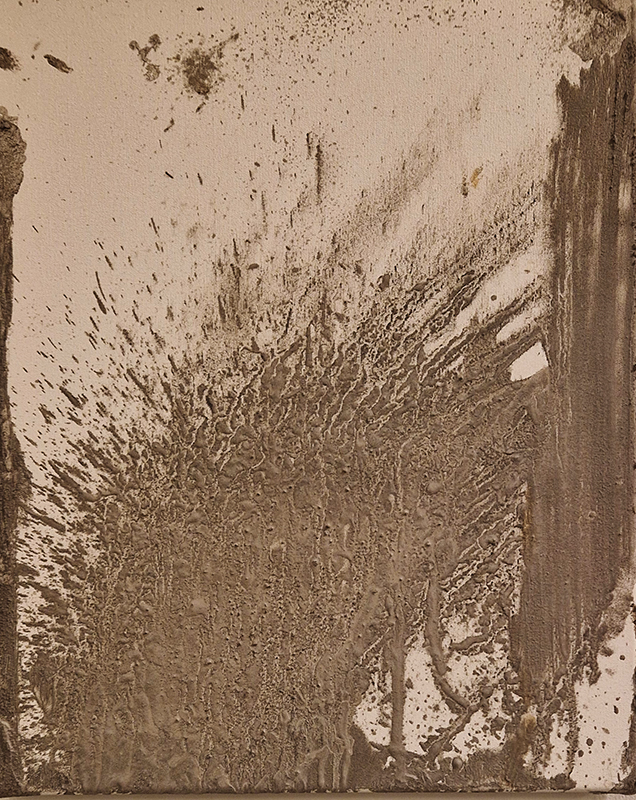
I loved the textures of the sandy cementy surface of the mixed media painting by Antoni Tàpies in Point and Counterpoint at Centro Botin, Santander.

ENREDOS (entanglements) II at Centro Botin, Santander. Nuno da Luz amplifies the frequencies of the waves and the winds felt in the Bay of Santander, interweaving them with their oscillations of the building itself. The sound installations generate shared listening spaces, converting the environmental data of the Santander coast into vibrations and amplifying the building’s own vibrations, extending and intensifying their intrinsic energies.

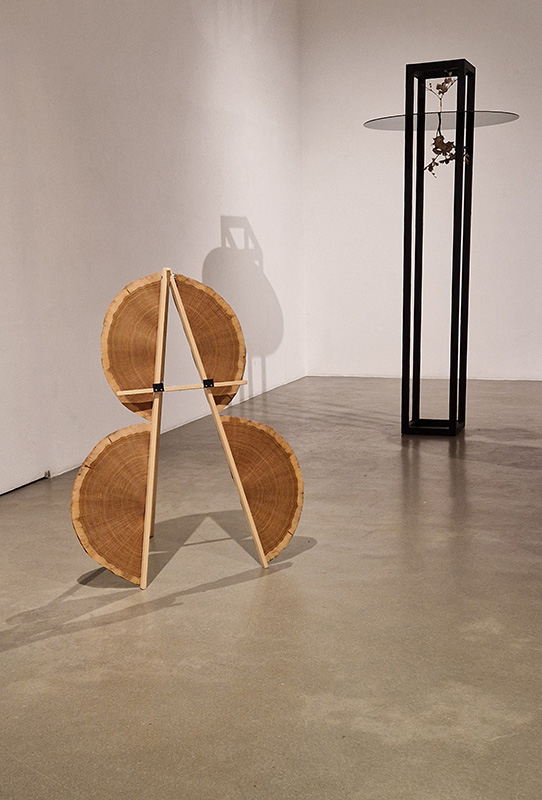
The exhibition also includes works by Javier Arce: a series of oil paintings titled On What is Nearby and the sculpture Cambium – cast from the last ring of a tree stump – this is the most recent ring under the bark where new wood cells are formed as the tree grows.

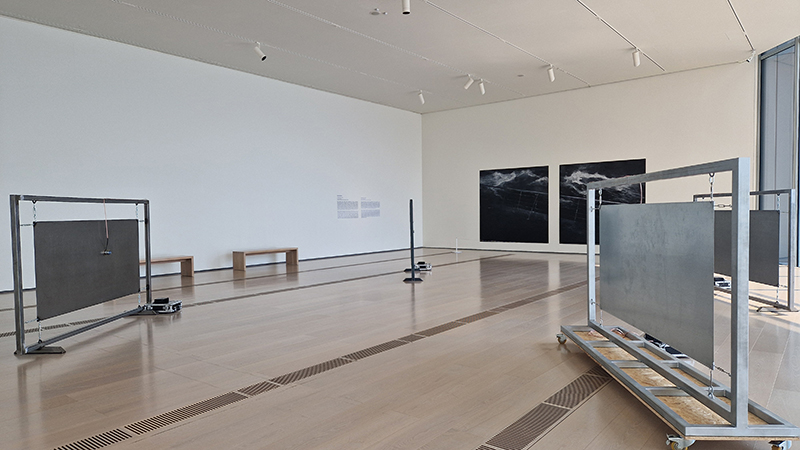
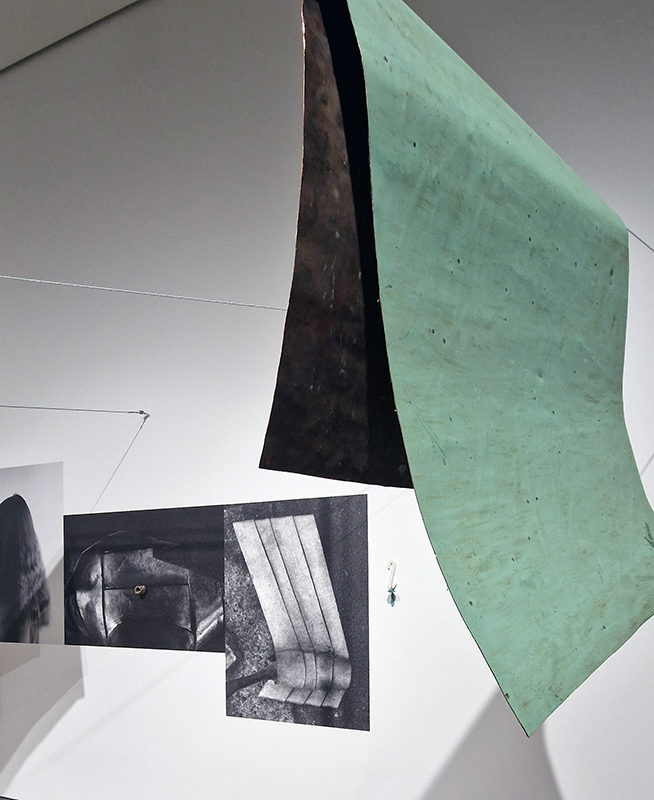
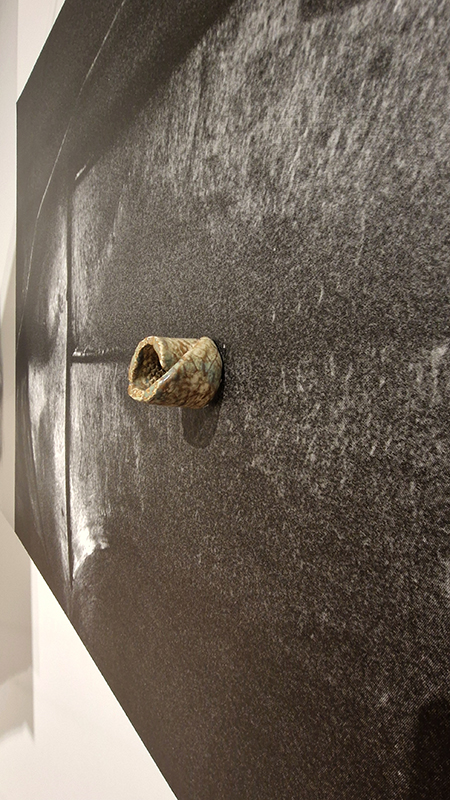
Katinka Bock: A striking installation Feuilles de temperatures which incorporates weather patinated copper sheets rescued from the dome of Anzeiger-Hochhaus in Hannover a legendary site of editorial histories, alongside Some and any, fleeting, an installation of large digital prints set with tiny bronze, ceramic and copper sculptures.

The video Core, a collaboration between sculptor June Crespo and cinematographer Maddi Barber which documents the different states through which the sculptor’s material passes: rock, dust, liquid, and solid. Connecting the processes of hands that touch and manipulate the cement sculptures, and the rock extraction and transformation process in a quarry.

Tacita Dean The Wet Prayer in reference to the final plea of Saint Paul as he was shipwrecked off the coast of Malta. In this exhibition the ephemeral chalk of Dean’s ocean waves resonate with the sound waves recorded from the bay outside and played back within the gallery space.

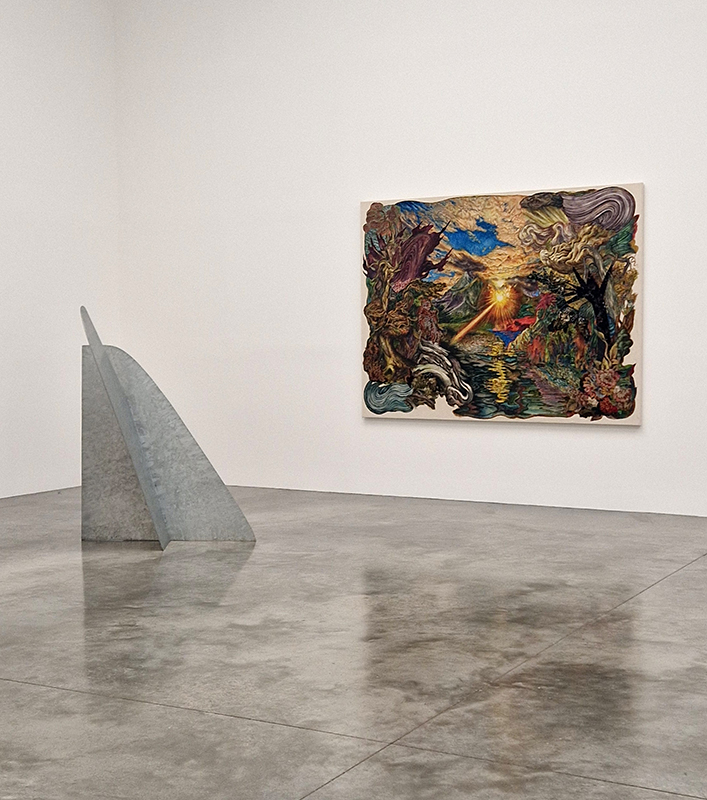
Great curation by Susanna Greeves of engaging works in Alien Shores at White Cube Bermondsey. In every depiction of landscape is a reflection of the values and beliefs of the society that created it. Landscape is not the world, but the world through human eyes.

Exhibiting artists included: Michael Armitage A kind of belief, oil on Lubugo bark cloth.

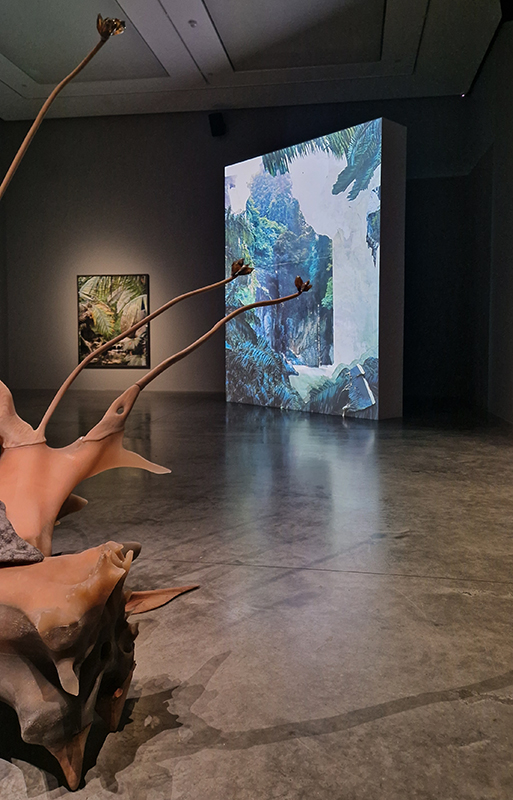
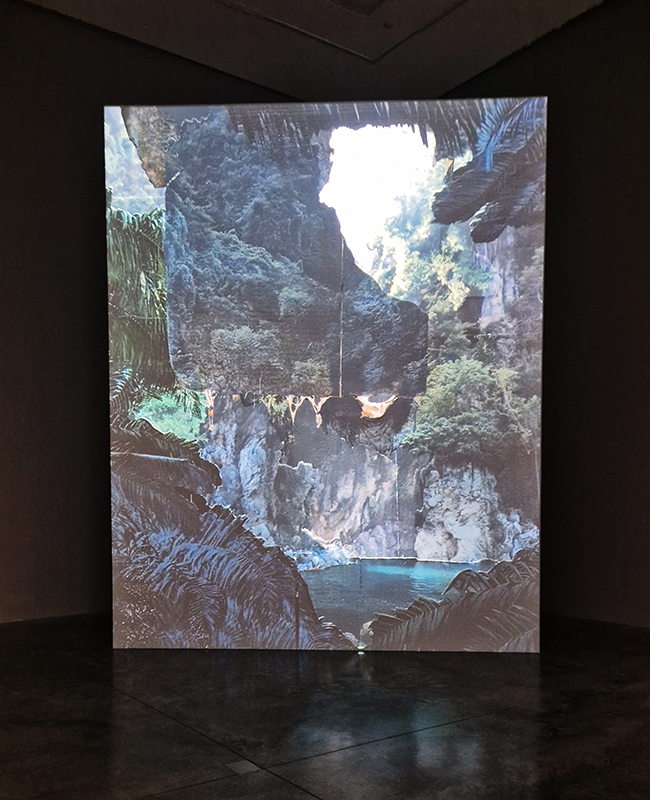
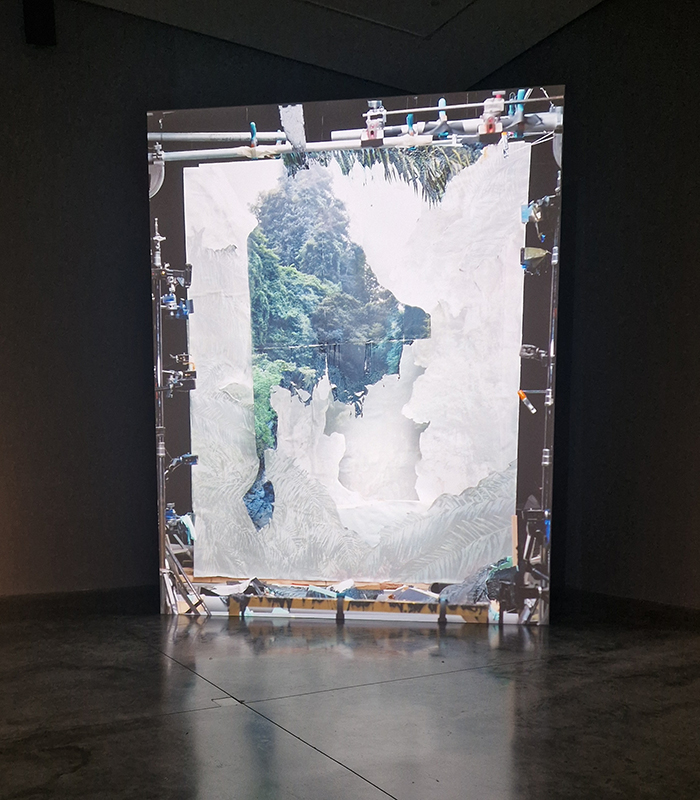
Noémie Goudal Tropiques IV, inkjet print and the mesmerizing collapse of dissolving landscapes in Supra Strata, HD video as layer after layer warps, stetches, tears and falls until there is nothing.

Sky Hopinka shapeshifting video Mnemonics of Shape and Reason

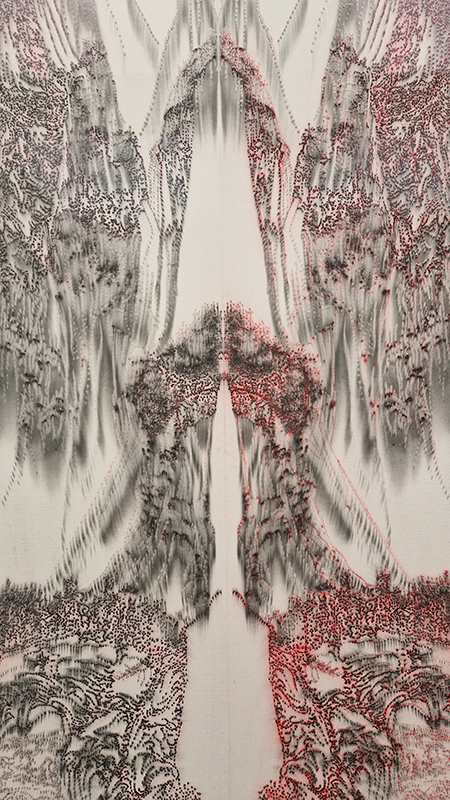
Marguerite Humeau Skero ( the dormant), embellished silk double organza, cast rubber, sediments, pigments, handblown glass, milled walnut, polyurethane foam, epoxy resin and stainless steel paired with Darren Almond’s haunting Fullmoon@Baltic Coastline, latex print.

Hung Fai, optically intriguing The Six Principles of Chinese Painting: Transmission XXII (with Hung Hoi), ink and colour on paper.

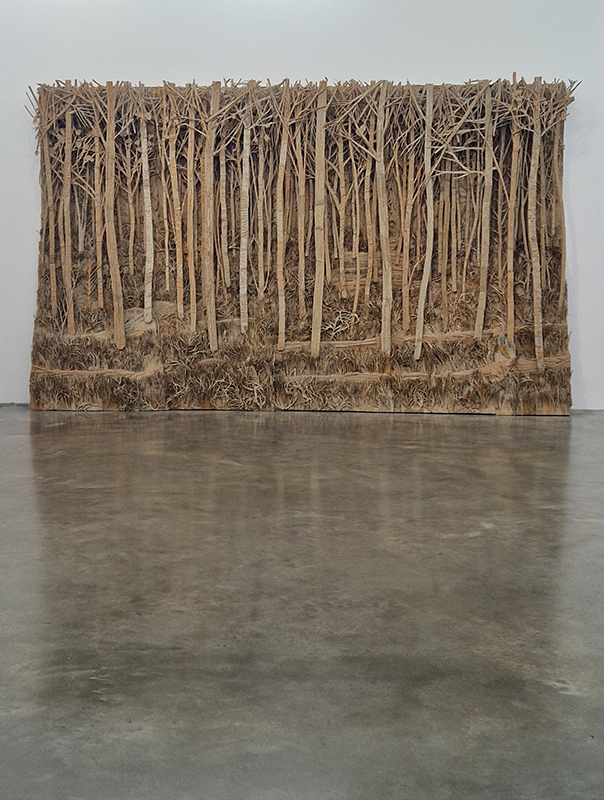
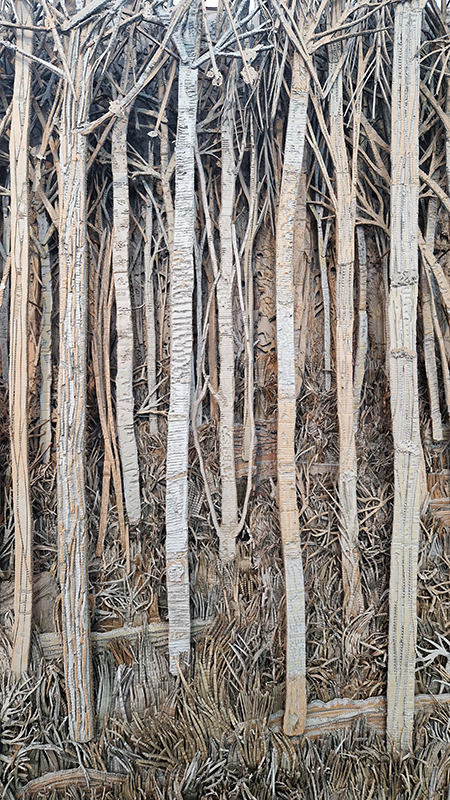
Eva Jospin, Forêt, cardboard and wood.

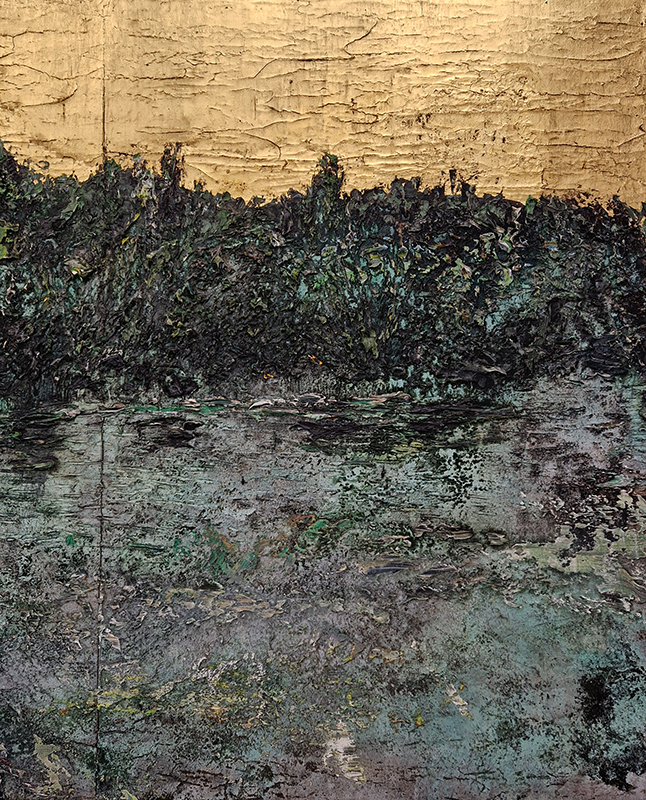
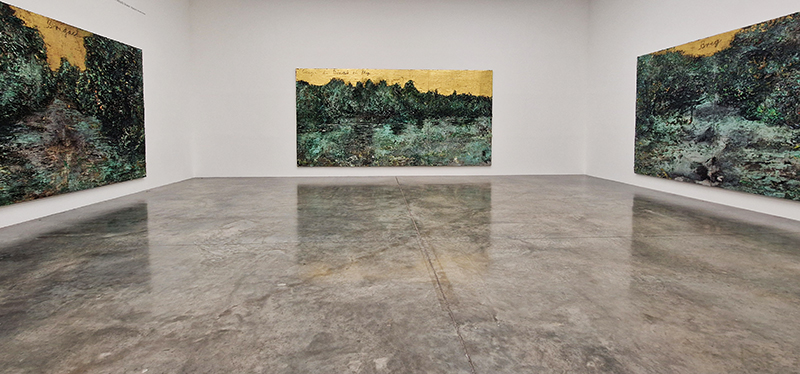
Anselm Kiefer Brigach und Breg bringen die Donau zu Weg, three panels emulsion, oil, acrylic, shellac, gold leaf and sediment of electrolysis on canvas.

Ken Gun Min Everything We Can Imagine As Light Baroque pearl, crystal, assorted gemstones, vintage beads, Korean pigment, silk embroidery, thread, found fabrics and oil paint on canvas. I love exuberance of his painting and the title made me think of the epic Anthony Doerr book All The Light We Cannot See and the beautiful film All We Imagine As Light written and directed by Payal Kapadia both of which I found deeply moving.

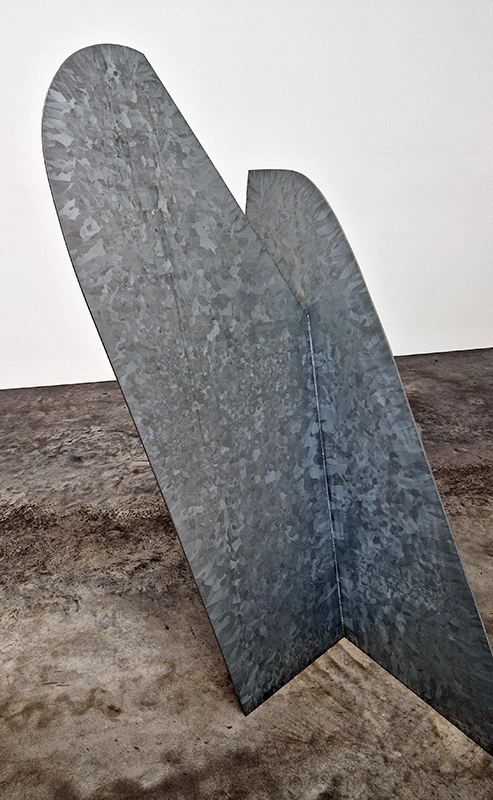
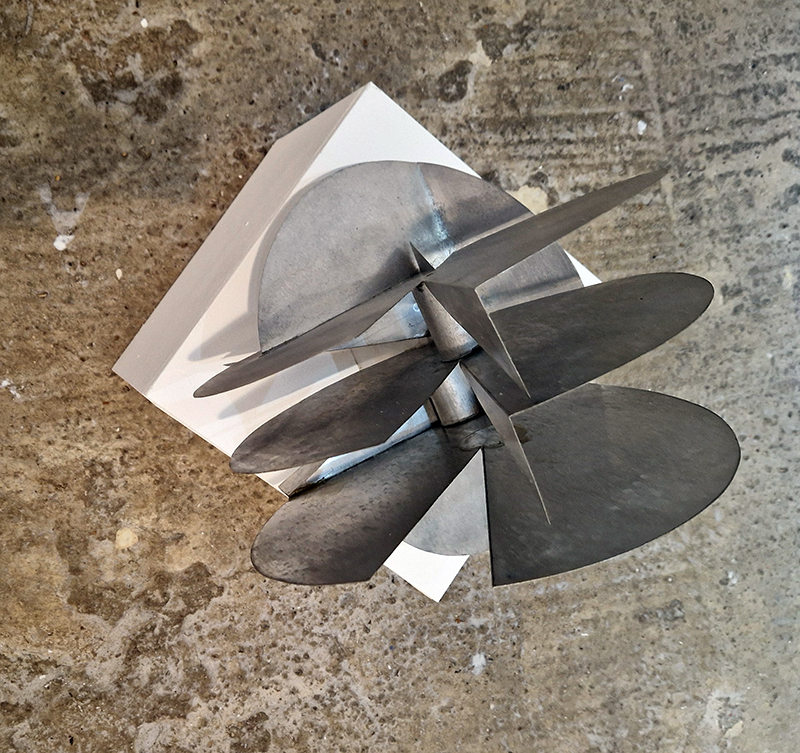
Isamu Noguchi Mountains Forming hot dipped galvanised steel.

Bagus Pandega and Kei Imazu, Artificial Green by Nature Green 4.1, Painting and erasing machine, water based paint on linen canvas, modular synthesiser, LED screen, PC and jelly palm tree. This was not in action when I visited.

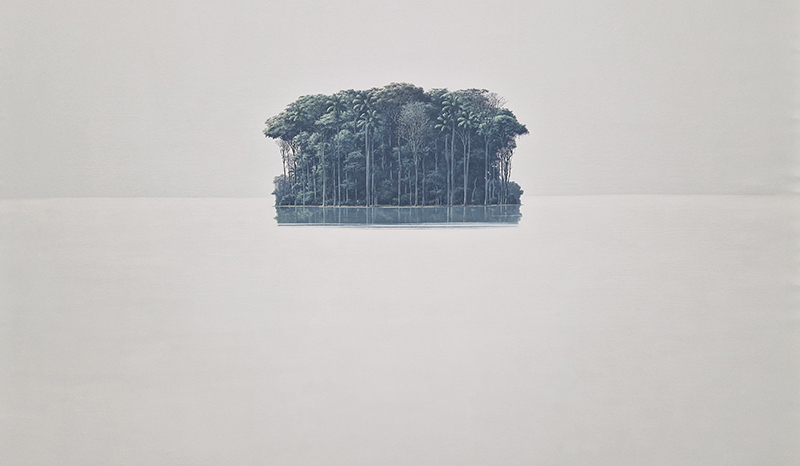
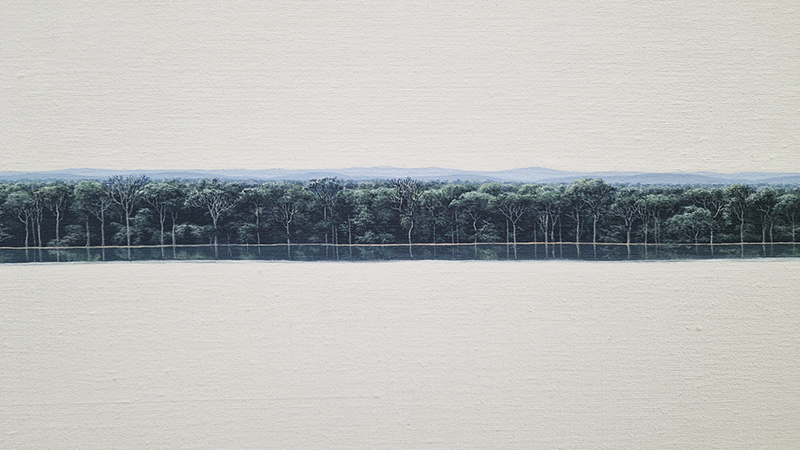
The delicate detailed forests on the cusp of erasure of Tomás Sánchez

Emma Webster mega painting Borrow Every Forest which has echoes of Noemi Goudall’s video in it’s staged nod to artifice.

Robert Zehnder Hip Bone, oil on canvas on panel.

Out and About

Not to forget that as backdrop to everything that occurs at the moment is the horrific genocide being perpetrated in Gaza. It seems impossible that such cruelty can happen, is still happening and the powers that could stop it do nothing. Santander beach protest for a free Palestine that I was able to walk alongside.

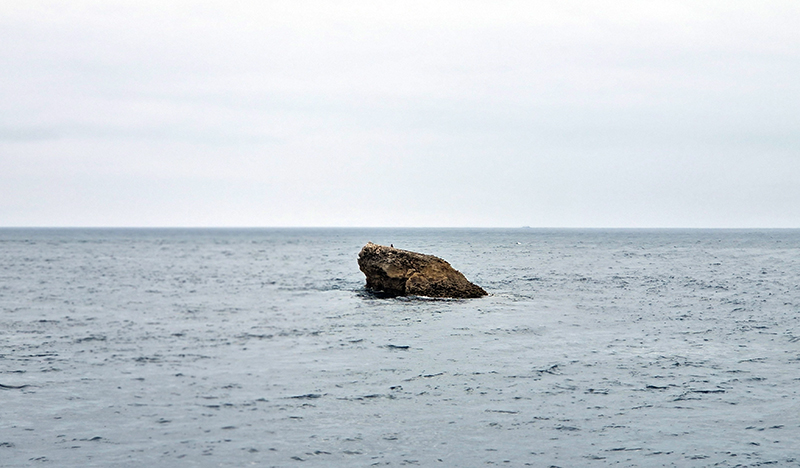
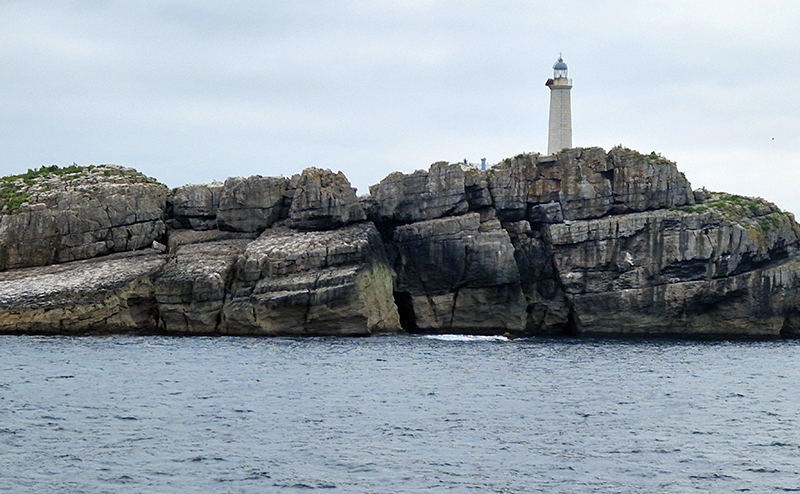
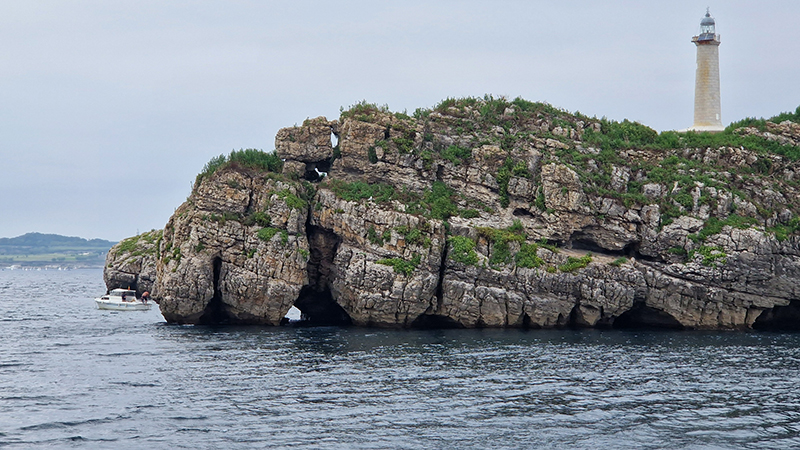
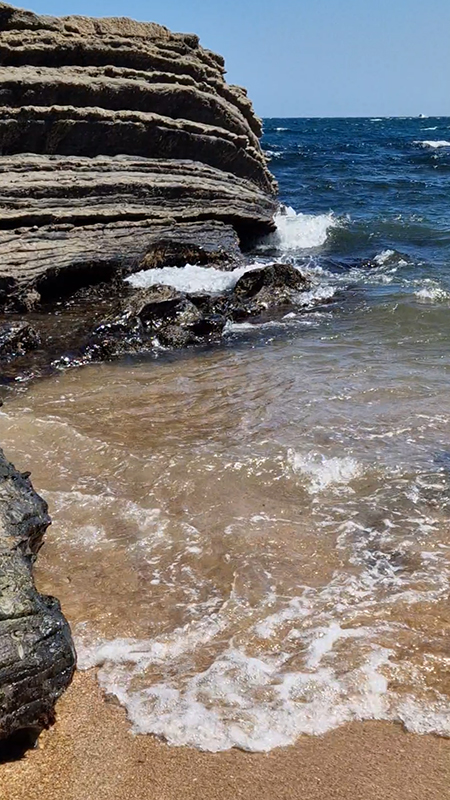
Contemplating geological time, rock gazing along the Santander coast.

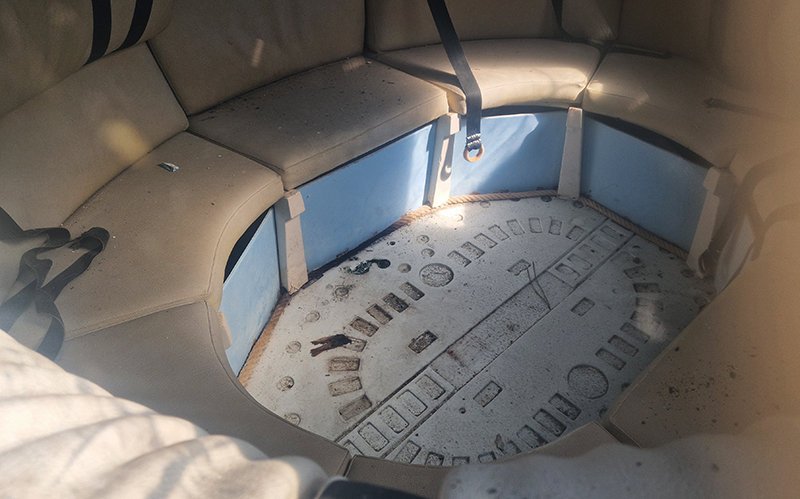
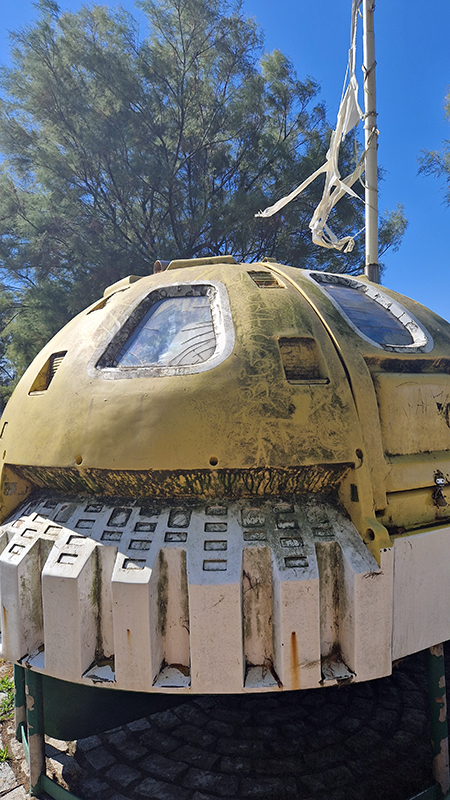
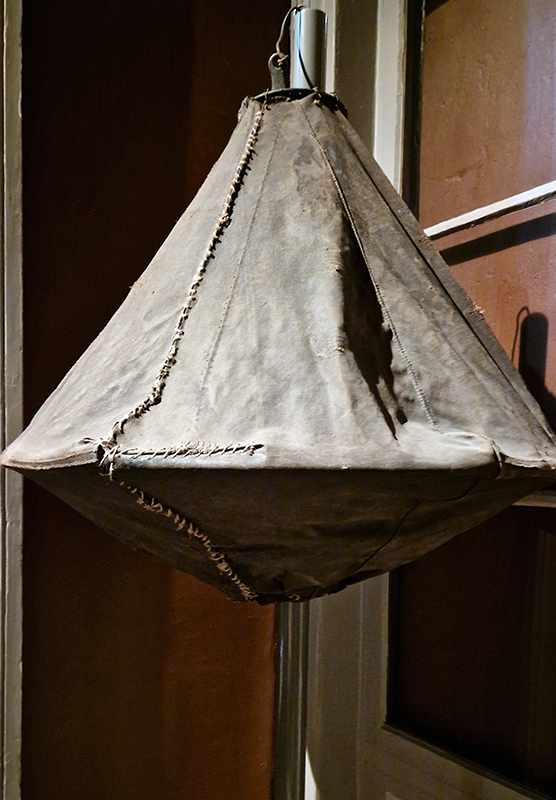
This sci-fi looking experimental lifeboat was designed by Spanish explorer Vital Alsar as part of his project El Hombre y la Mar. It has a capacity for 12 castaways and was towed across the Atlantic from Mexico to Santander in 1978, the culmination of his expedition to emulate the one undertaken in 1542 by Francisco de Orellana from Ecuador on foot across the Andes to navigate the length of the Amazon to the ocean. Through his expeditions, including the longest crossing of the Pacific Ocean by raft, Alsar wanted to prove that by respect for, and harmony with nature, humans can cross oceans, feed themselves and live sustainably.

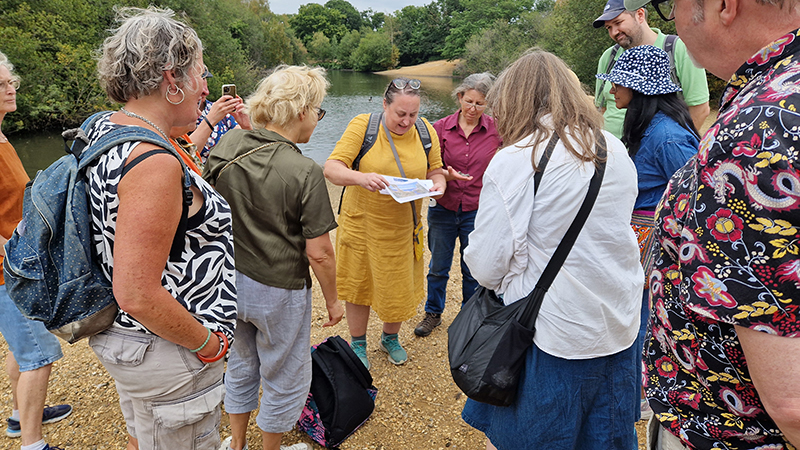
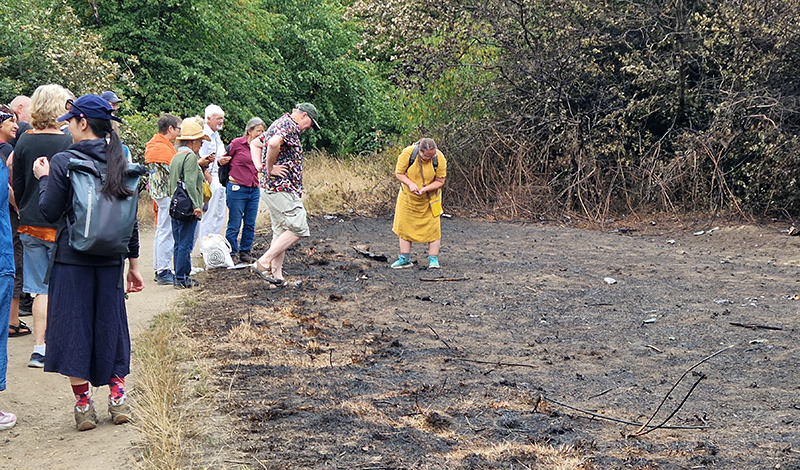
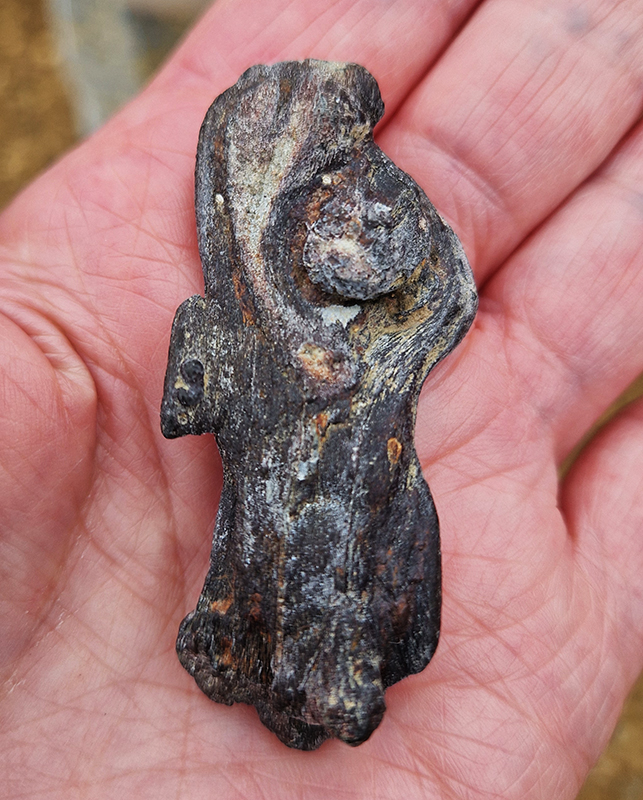
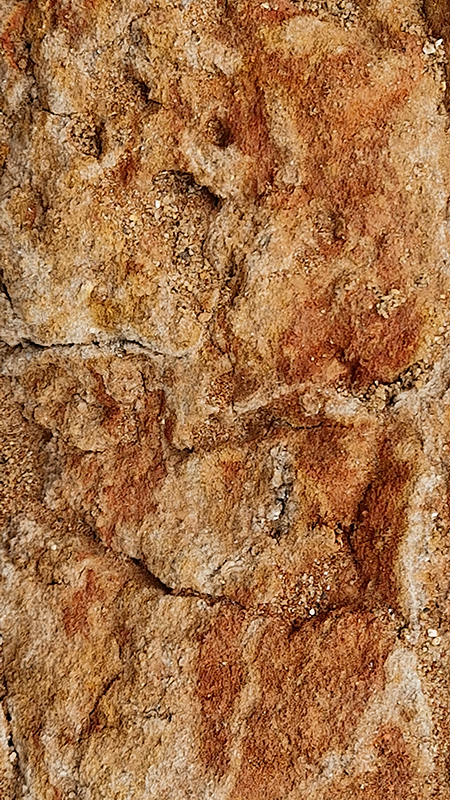
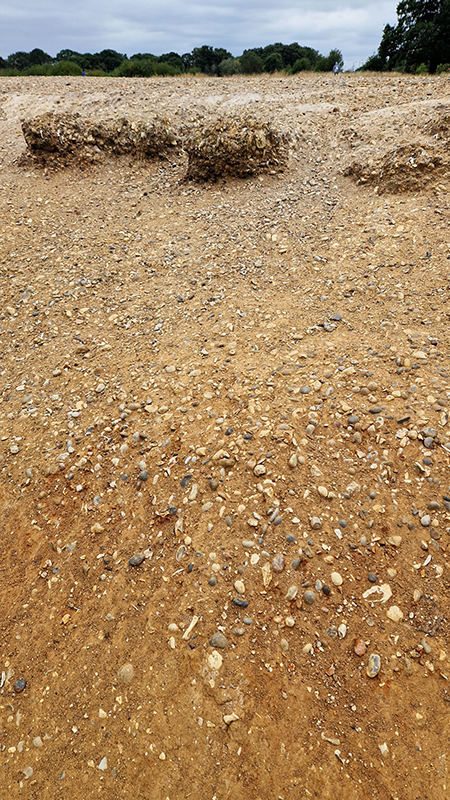
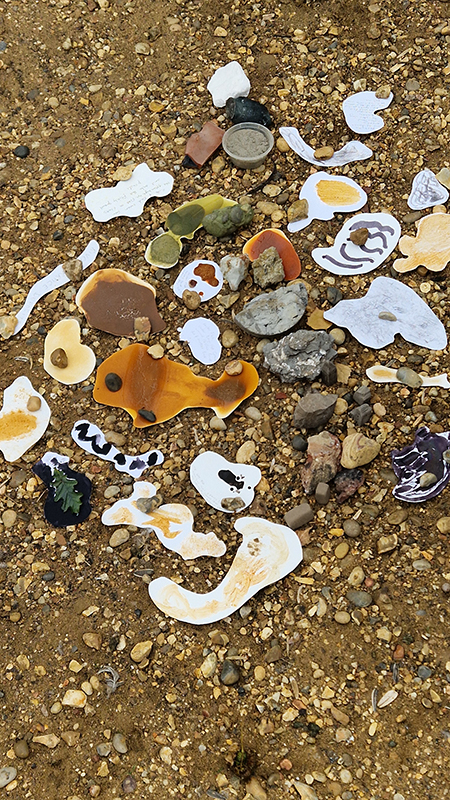
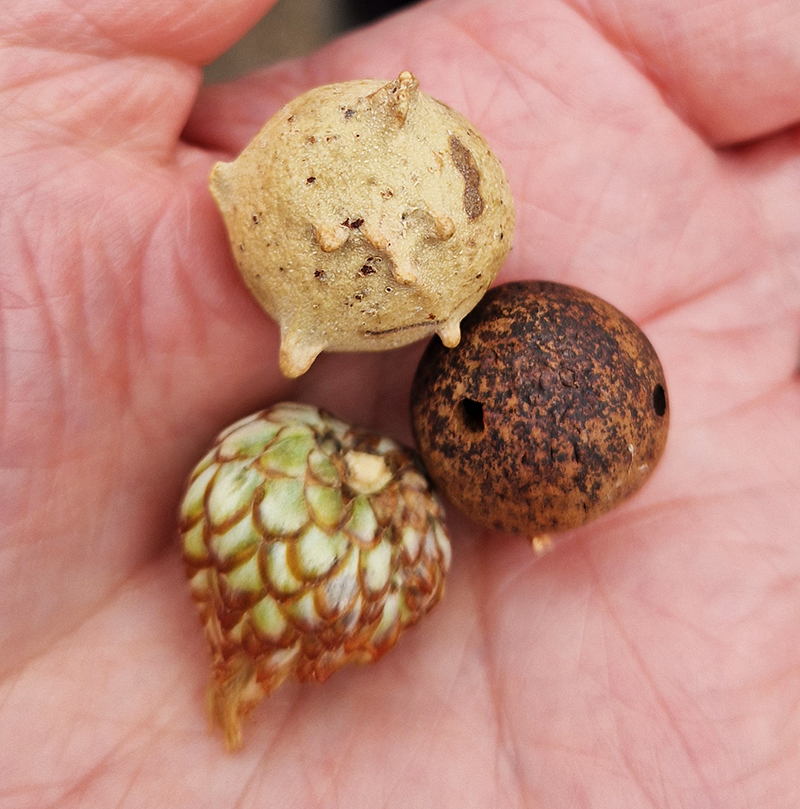
Inspiral London; Re/Walk Festival: Rivers, Reservoirs, Ice and Sea. The colours and layers of Walthamstow revealed by artist Gail Dickerson and geologist Ruth Siddall both members of London Geodiversity a group concerned with the natural and human aspects of landscape, focused on the rocks, sediments, soils, the landscape topography and the processes that act on the landscape. We were not only enlightened on the deep time history of this urban landscape as we stood and imagined when glaciers reached as far as Epping and woolly mammoths wandered the land here but were instructed on how to make shimmering ink from galls, how to make charcoal in a bonfire and use earth’s rich pigments to paint with. Galls form when an organism (like an insect) penetrates or irritates plant tissue, triggering the plant to grow and enclose the organism. 

Something I recently found out, amid the hype of the new movie, was that the Fantastic Four super hero characters got their powers from exposure to cosmic rays on an ill fated/serendipitous (depending on how you look at it) space mission. The original story was from 1961, the year Yuri Gagarin was the first human to orbit in space. Cosmic rays are a real danger to astronauts as these high energy radioactive particles can cause cell damage. Astronauts also experience directs hits on the retina from cosmic rays which they see as tiny flashes of light but this wouldn’t have been knowledge in 1961.

Reading

Patterns of Thought: The hidden meaning of the great pavement of Westminster Abbey by Richard Foster. The book offers a thorough investigation into of what is known as the Cosmati Pavement; a unique work laid down in 1268 by order of Henry III who commissioned workmen from Rome, led by Odoricus, who were skilled in a type of inlaid stone decoration known as Cosmati work.

The provenance of the stones and the history of the pavement is interesting but the most compelling aspect of the pavement is its intriguing inscription in Latin which promises the reader disclosure of the end of time. It translates as

Four years before this Year of Our Lord 1272,                                                                                             King Henry III, the Court of Rome, Odoricus and the Abbot                                                                            set in place these porphyry stones.                                                                                                                   If the reader wittingly reflects upon all that is laid down,                                                                               he will discover here the measure of the primum mobile:                                                                                              the hedge stands for three years,                                                                                                                             add in turn dogs, and horses and men,                                                                                                       stags and ravens, eagles, huge sea monsters, the world:                                                                             each that follows triples the years of the one before.                                                                                    Here is the perfectly rounded sphere which reveals                                                                                                    the eternal pattern of the universe.

The fateful day expressed in terms of the multiplied life-spans of various creatures apparently arrives at the sum of 19,683. The book offers fascinating insight into the beliefs of medieval cosmology, Christian philosophy and sacred geometry that together formed the thoughts that were meticulously laid down in stone.

Thrilled to be invited to exhibit in Carbon, Carbon Everywhere at Hypha HQ co-curated by Indira Dyussebayeva-Ziyabek and Maria Hinel including artists Emii Alrai, Kate Daudy & Konstantin Novoselov, Simon Faithfull, Ania Mokrzycka, Nissa Nishikawa, Mariele Neudecker, Anousha Payne, Aimée Parrott, Lucia Pizzani, Lizi Sanchez, and Meng Zhou.

Integral to the constitution of our bodies, soil, air and some rocks, carbon is a highly bonding element that incessantly transmutes from state to state, each particle challenging the boundaries between life and non-life. Bringing together works by twelve international artists, Carbon, Carbon Everywhere explores the shifting states of carbon, an element that threads through organic and inorganic matter, linking bodies, environments, and temporal scales.

I have updated my website with documentation on the video installation Lithos Panoptes recently shown at Hypha HQ in The Geological Unconscious which can be viewed here. Referencing a many-eyed giant of Greek mythology, Argos Panoptes (always eyes still awake), the work considers the perpetual vigilance of rock as record keeper and witness.

Lithos Panoptes, optical lenses, wood, steel, two-way projection; Sculpture H172 x W170 x D50 cm, Rear projection screen H180 x W180 cm.

Great to be mentioned in an Art Newspaper article.

Magnetic News

Interesting to hear about new magnetic materials being developed that will hopefully have a less harmful ecological impact and offer more technological efficiency. The magnetic materials that are so heavily relied upon for computer memory and microelectronic devices include rare and toxic heavy elements whose energy-intensive production creates significant global carbon emissions. Previously, two primary types of magnetism had been identified, ferromagnetic (regular magnetism that we are familiar with) and antiferromagnetic (which are internally magnetic, but their opposing spin orientations make them appear non-magnetic externally).  A third form known as altermagnetism has recently been confirmed with around 200 altermagnetic materials already being identified. These materials have a distinct magnetic order where tiny magnetic fields created by electrons are in anti-parallel alignment within a rotation of the host crystal structure leading to unique electronic properties. Altermagnetic materials have the potential for technological advancements offering huge increases in speed and efficiency especially in spintronics, an advanced technology that leverages both the charge and spin of electrons to store and process information.

A permanent magnet, MagNex that does not use the rare earth elements which have sustainability and supply chain issues, was developed in just three months with the help of AI analysing thousands of potential alloys. ‍‍ “This could have a significant future impact on our net-zero ambitions, through renewable energy and low-carbon transport, by removing the need for rare earth elements in high-performance permanent magnets.”

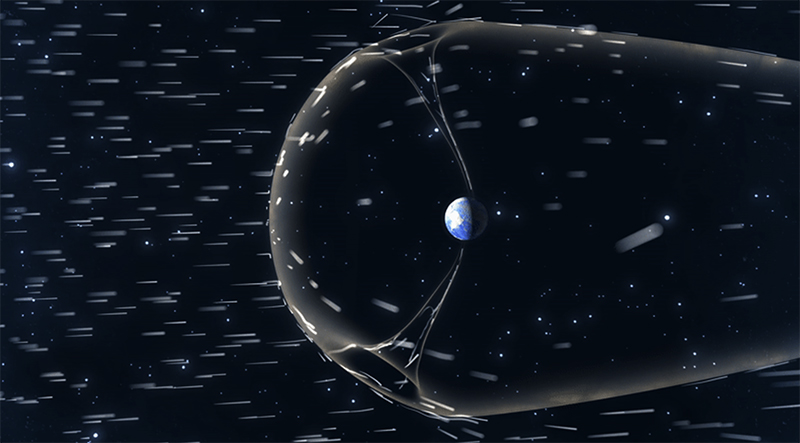
Recently launched, NASA’s TRACERS mission satellites fly in low Earth orbit through the polar cusps, funnel-shaped holes in the magnetic field where solar activity causes magnetic field lines to disconnect and reconnect creating disruption in the magnetosphere. By strategic placing of the twin TRACERS spacecraft in Sun-synchronous orbit, so that they always pass through the Earth’s dayside, thousands of dayside reconnection events can be observed and compared between spacecraft to see how quickly the process changes and evolves. Better understanding magnetic reconnection and its effects in Earth’s atmosphere will help prepare for impacts of solar activity on Earth. The magnetosphere protects Earth from the constant bombardment of solar particles from the Sun, but when magnetic field lines are disrupted by the solar wind, particles rain down into Earth’s atmosphere not only causing beautiful phenomena, like the aurora, but also impacting infrastructure, like satellites and GPS systems.
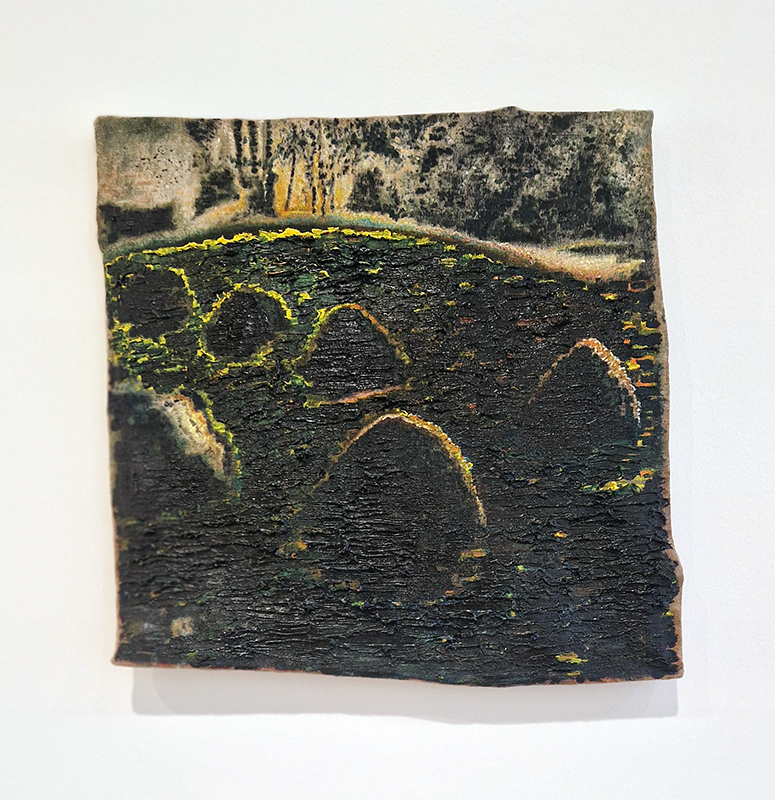
Out and About

I have been lucky to visit exhibitions in Finland and Norfolk to see works that interrogate human impact on the environment and other living beings that share our planet.
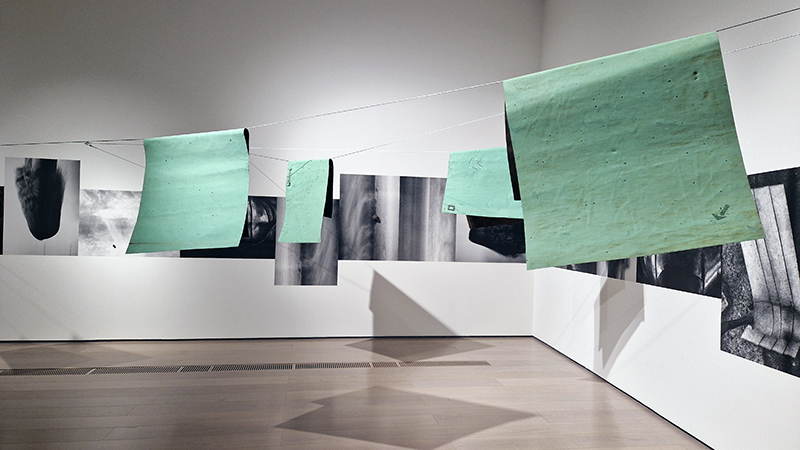
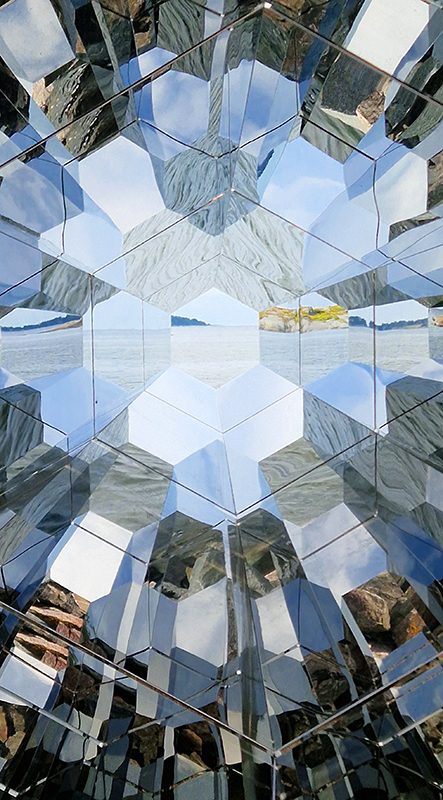
Helsinki Biennial 2025 Shelter: Below and Beyond, Becoming and Belonging brings together 37 artists and collectives on Vallisaari Island (which has been off-limits for human habitation for decades), in Esplanade Park, and at HAM (Helsinki Art Museum). It explores the significance of shelter and turns the gaze towards non-human nature. In the works, the focus shifts from humans to animals, water, plants, insects, minerals, and other living beings and their role as contributors to our planet’s wellbeing.

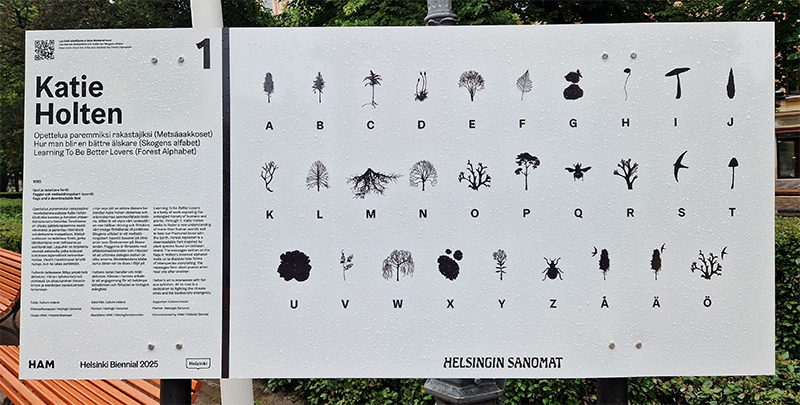
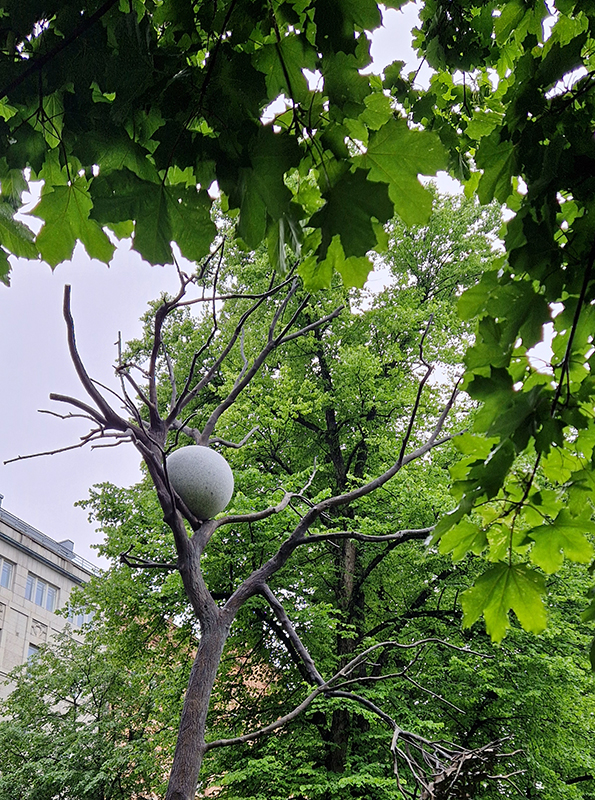
Artists with work installed in the Esplanade Park included Katie Holten (inventing a forest alphabet) and Guiseppe Penone (inseparable connections between humans and nature).

Artists at HAM (Helsinki Art Museum) included Jenni Laiti & Carl-Johan Utsi (precarity of survival), Regina de Miguel (technofossils), Aluaiy Kaumakan (displaced community), Otobong Nkanga (ownership of resources), Ingela Ihrman (invasive species), Locus/Thale Blix Fastvold & Tanja Thorjussen (eelgrass conservation), Sissel M Bergh (Sami cosmology), Edgar Calel (more than human agencies).

Artists with work installed around the beautiful Vallisaari Island included Hans Rosenström (petrified wood soundscape), Tue Greenfort (species evolution), Nomeda & Gediminas Urbonas (amplifying non-human voices), Pia Sirén (human modified environments), LOCUS / Thale Blix Fastvold & Tanja Thorjussen (water health), Tania Candiani (hidden networks of the forest), Sara Bjarland (discarded inflatables), Kati Roover (humans and whales), Juan Zamora (bioluminescence), Band of Weeds (vegetal distress), Kristiina Koskentola (friendship of crows), Tamara Henderson (hidden realm of worms), Ernesto Neto (shapeshifting), Theresa Traore Dahlberg (invisible frequencies), Ana Teresa Barboza (plant narratives), Carola Grahn (colonialism legacy on estrangement from nature), nabbteeri (parasitism), Olafur Eliasson (more than human ways of seeing).

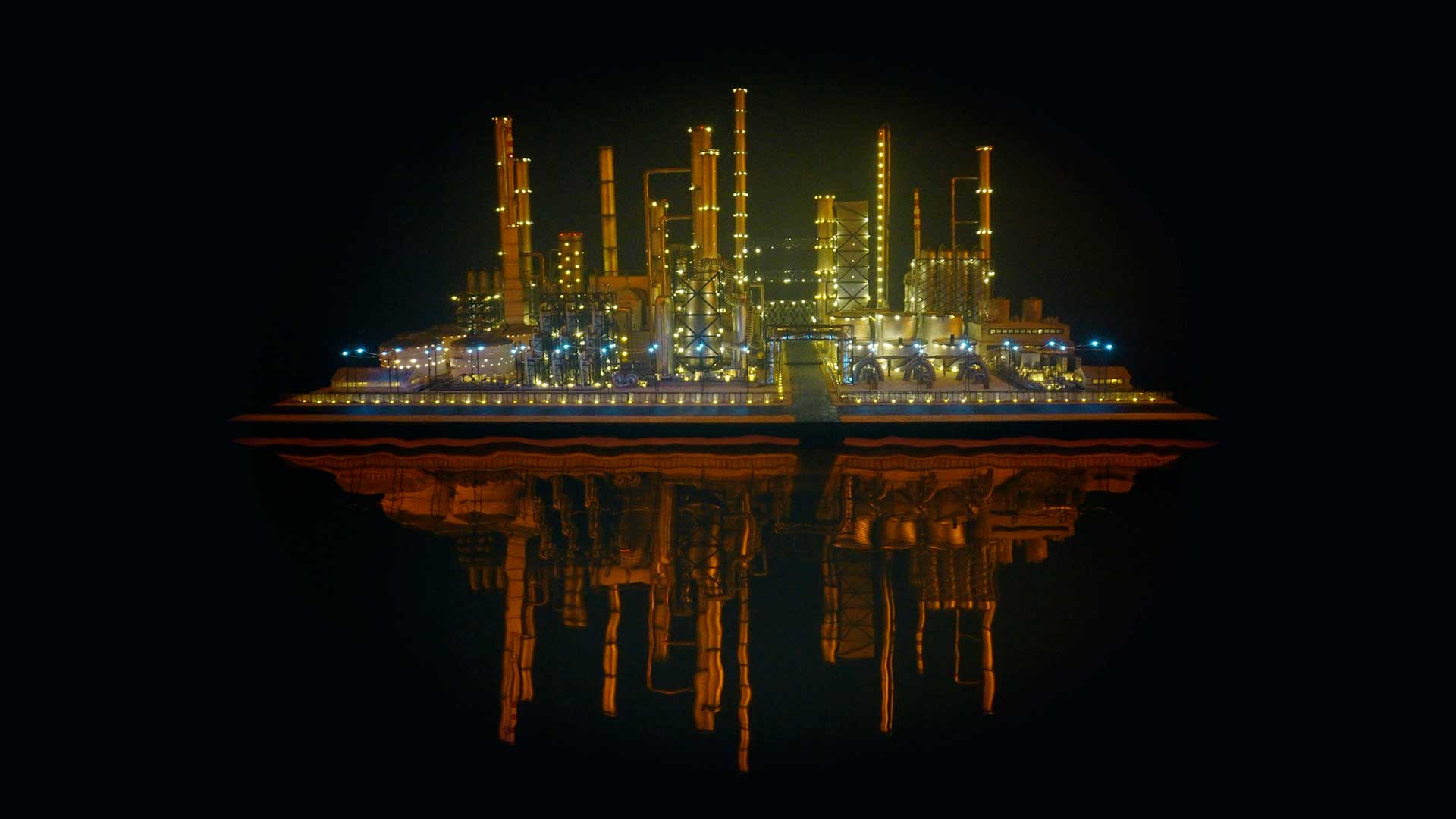
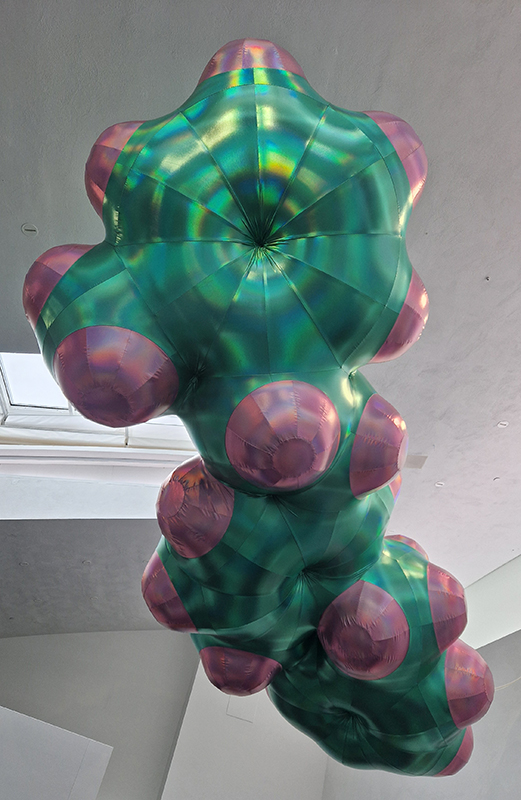
Excellent Monira Al Qadiri exhibition Deep Fate at the Museum of Contemporary Art Kiasma, Helsinki. Addressing the dichotomy of enjoying contemporary life made possible by oil during the accelerating climate crisis. Deep Fate, refers to the origins of oil deep in the earth and also to the way that dependence on oil and breaking that dependence are a matter of life and death for humankind. Al Qadiri grew up next door to oil refineries in Kuwait and experienced the Gulf War as a child. This personal experience is drawn upon in the haunting video Crude Eye which attempts to reconcile childhood memories of the oil refinery as a romantic glowing metropolis with its true nature as a site of environmental destruction. The demise of the local pearl-diving industry, a source of income superseded by the oil boom, is referenced by sculptures echoing the molecular structures of the chemicals used in oil drilling with iridescent rainbow colours that are reminiscent of oil and the shimmering surface of pearls.

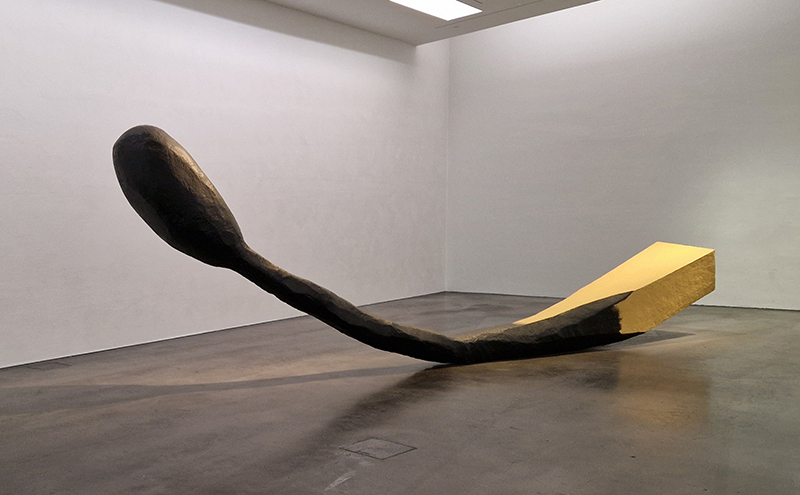
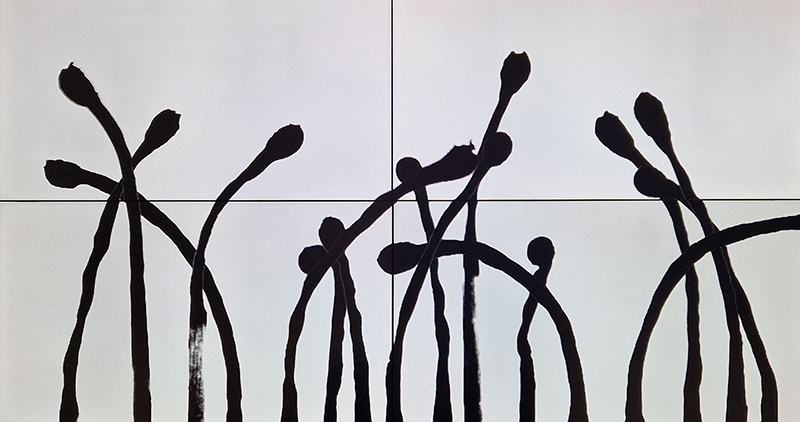
Also at the Museum of Contemporary Art Kiasma was Rock, Paper, Scissors an anthology of diverse materials in contemporary art. Claes Oldenburg’s giant Extinguished Match which plays with scale brought to mind the video by David Hochgatterer Streichhölzer (Matches) where matches appear to spontaneously combust shown in the Carbon: Under Pressure exhibition recent tour to Glasgow ARC.

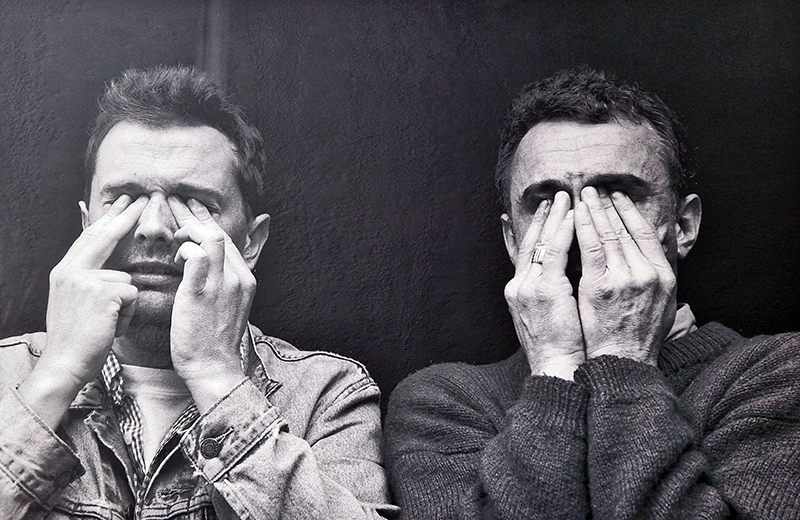
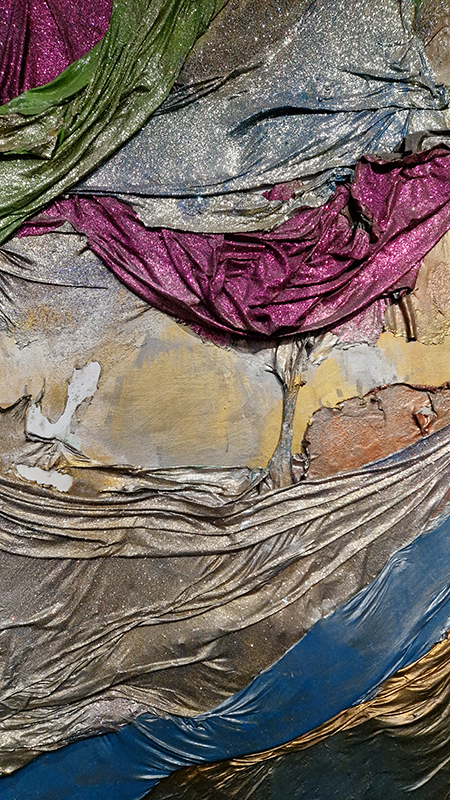
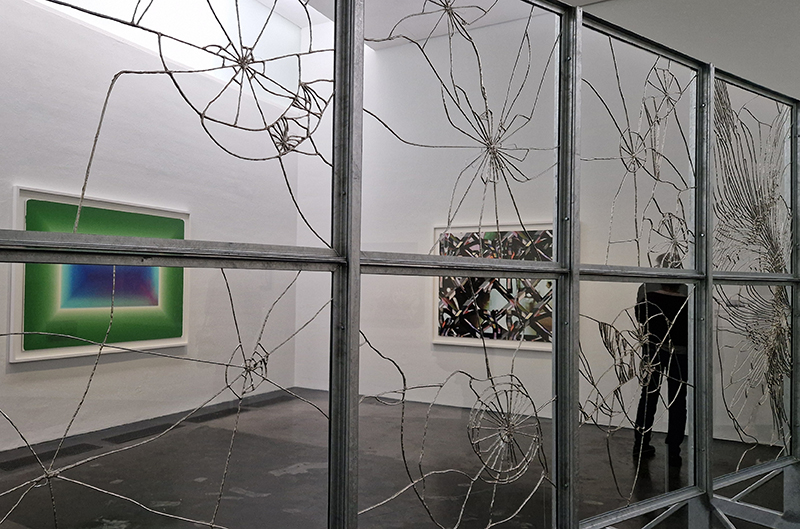
Materials celebrated through this exhibition included neural pathways stimulation of the visual system by pressure on the eyelids to see phosphenes, glittery thick folds of acrylic on canvas, leaded glass breakages, ephemeral copper wire net, faux marble that is actually hair on the barbers concrete floor.

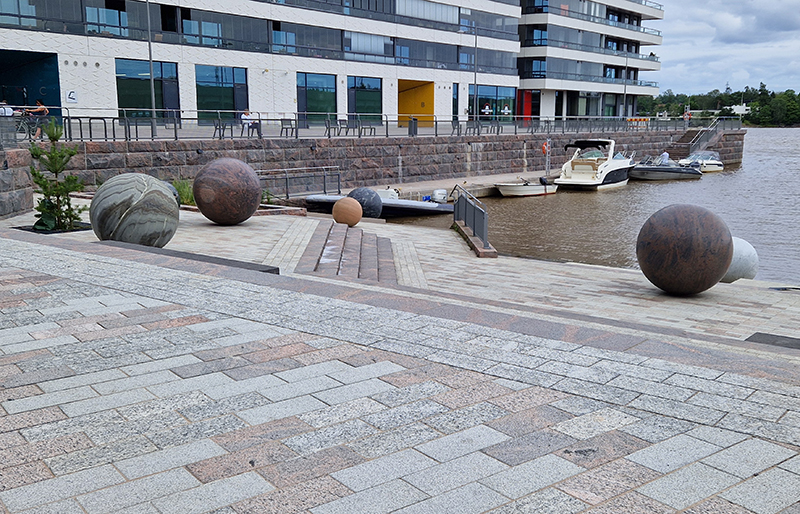
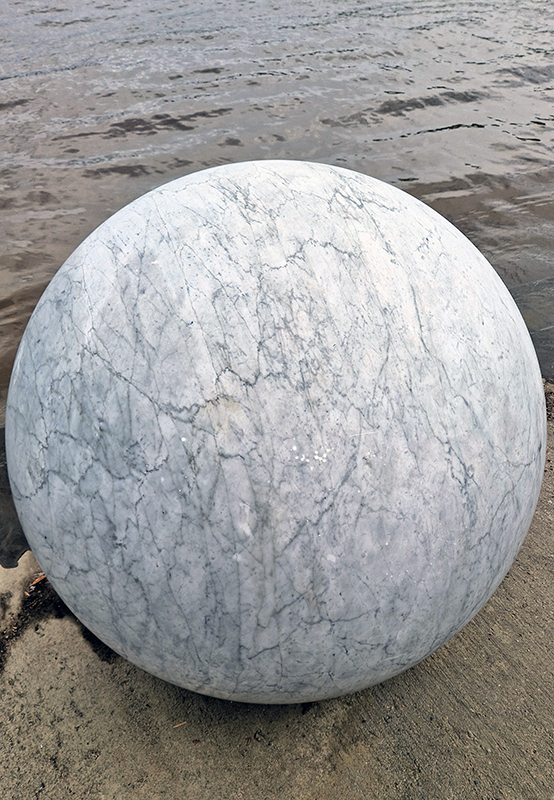
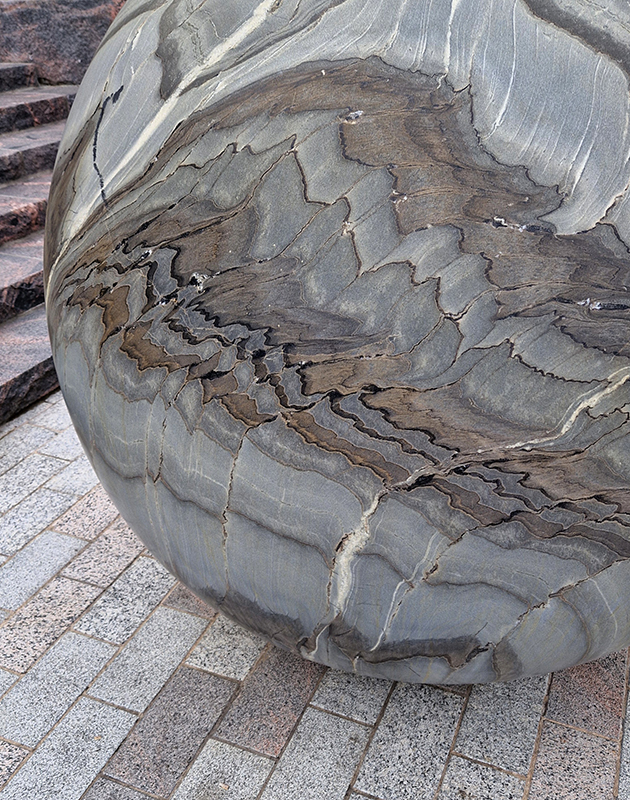
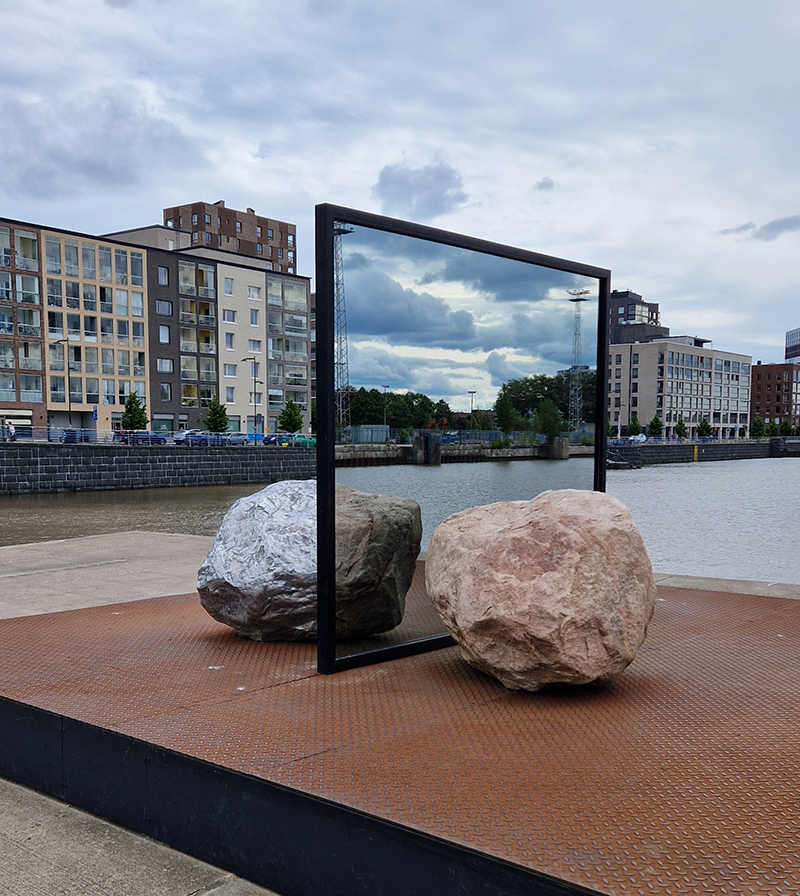
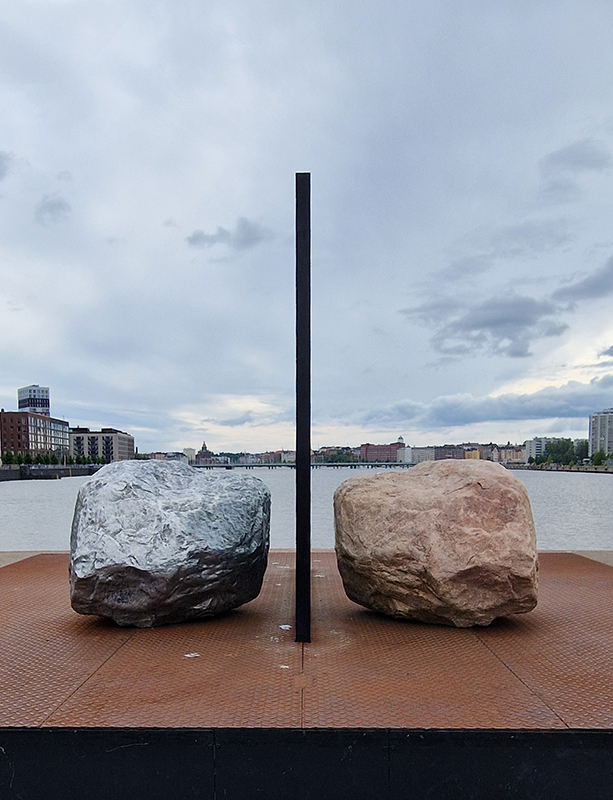
With my head still full of the geological (unconscious) it was great to see the works of Alicja Kwade, Big Be-Hide (parallel universes – natural rock and a metallic copy either side of a two-way mirror) and Pars pro Toto (a part for the whole – stone planet like spheres) from the 2021 Biennial now installed in Helsinki’s Kalasatama district.

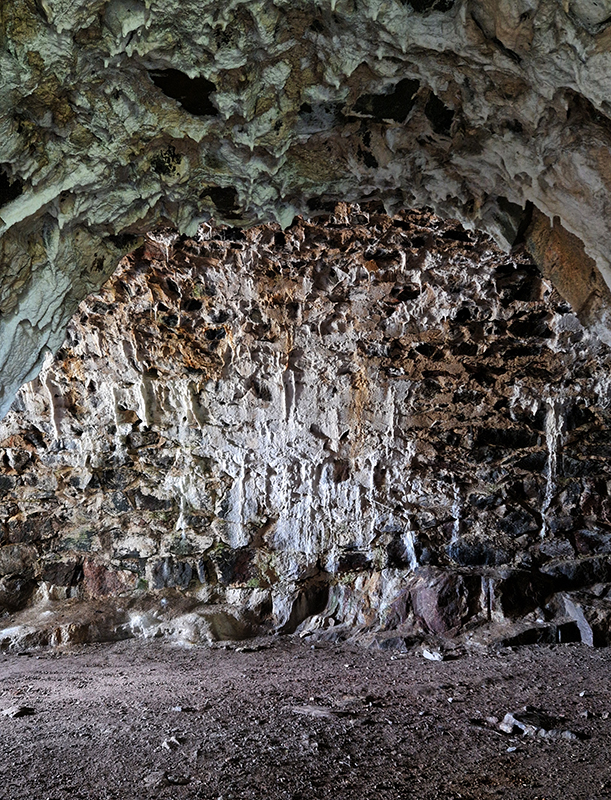
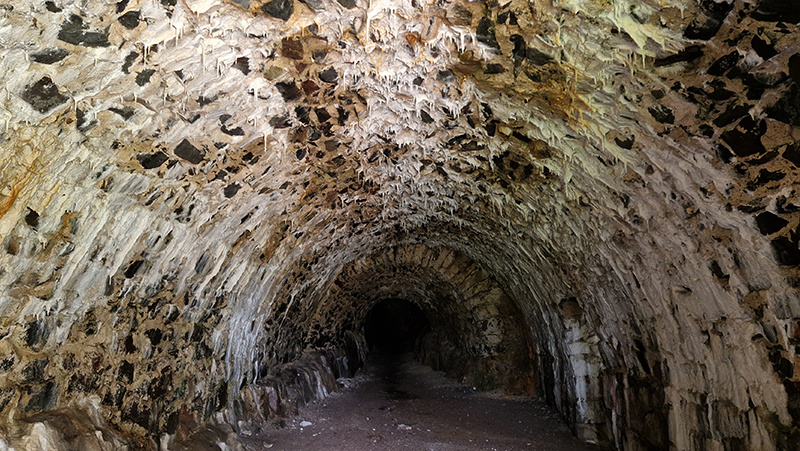
Another ‘geological’ delight was the unexpected appearance of stalactite’s forming in the tunnels of the military sea fortress built in the 1700’s on the island of Suomenlinna, a UNESCO World Heritage site.

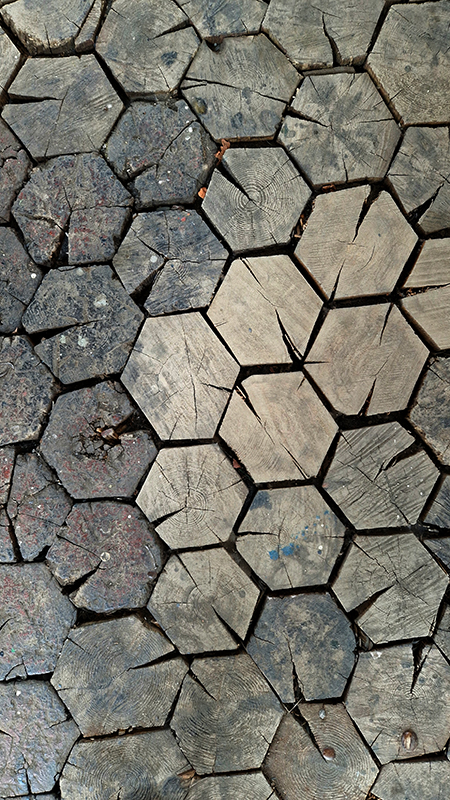
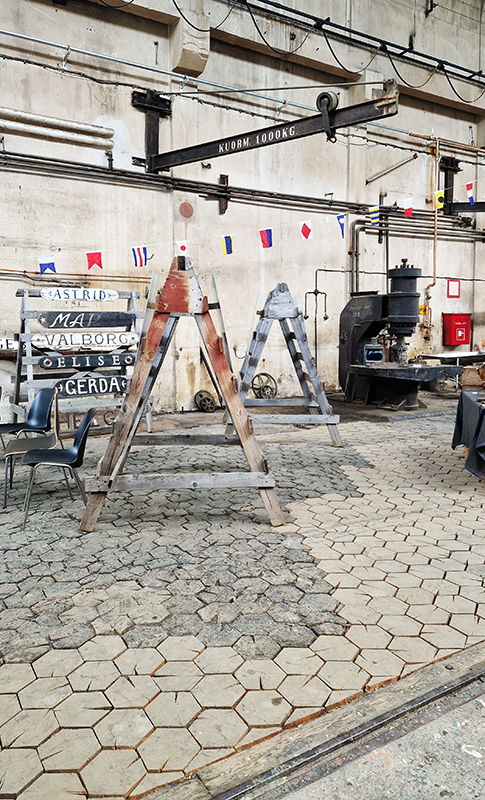
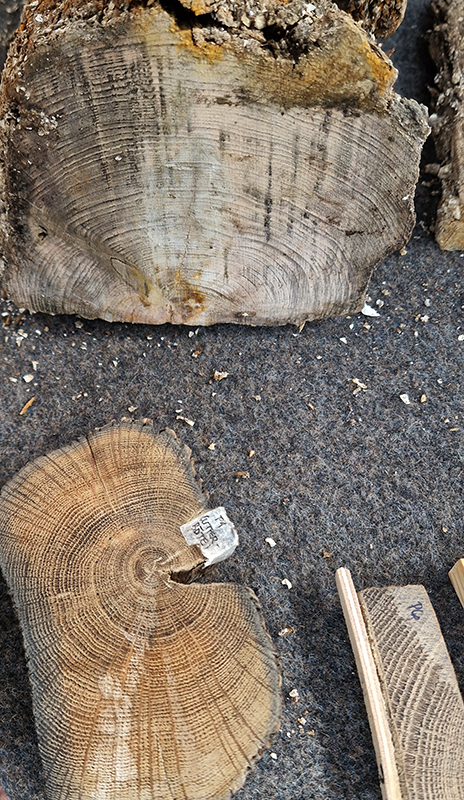
I loved the amazing hive like wood floor at Suomenlinna boatyard. Every tree carries a memory of the past, recording the weather and conditions of each season. Dendrochronologists can work out exactly when a tree was cut down which is very helpful in underwater archaeology. Around Suomenlinna there are shipwrecks beneath the sea with no identifying features except their wooden timbers which incredibly hold clues to when and where the trees used were felled. Marine archaeologists, shipbuilders and forest scientists are working together to discover the stories behind the lost ships.

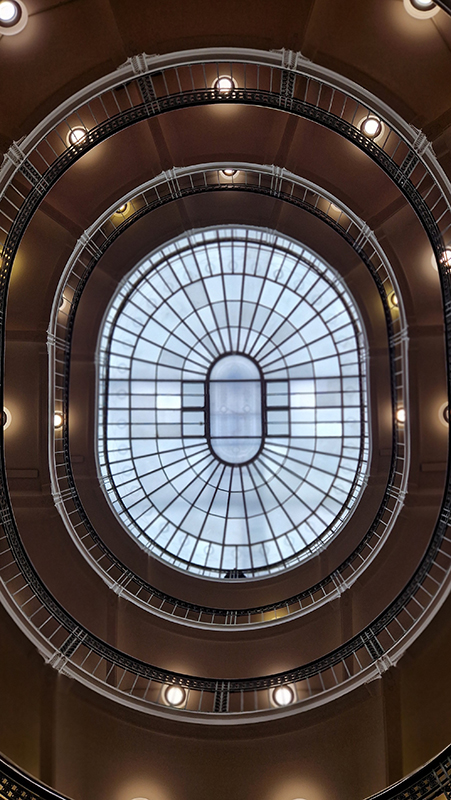
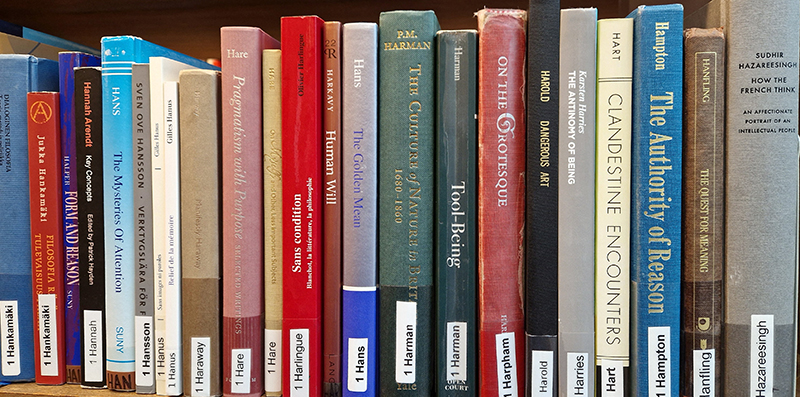
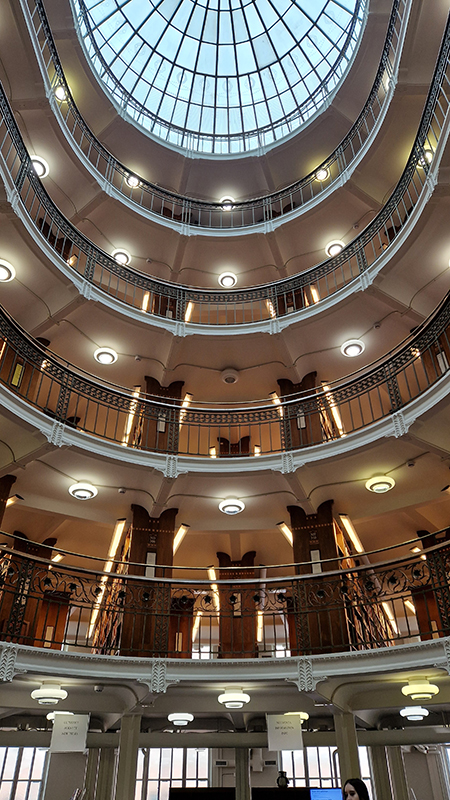
Helsinki is big on amazing libraries. The National Library of Finland is stunning and bursting with tantalizing books to explore, and the new Helsinki Central Library Oodi takes your breath away in its scale and sweeping curves.

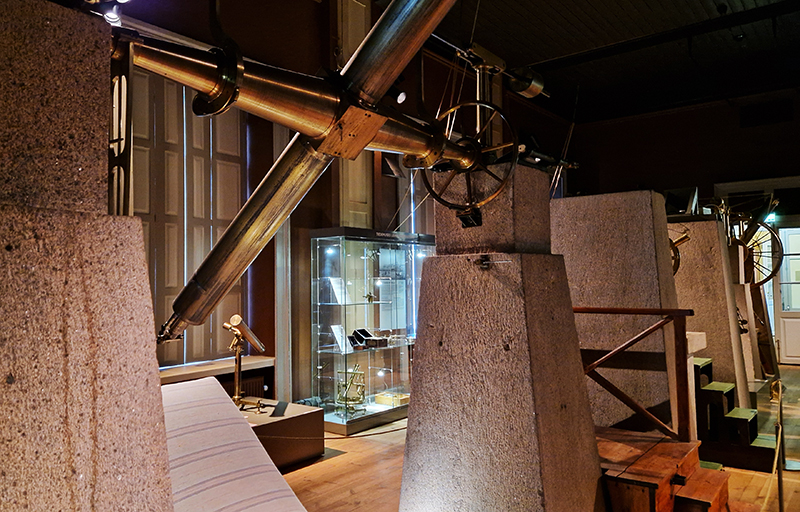
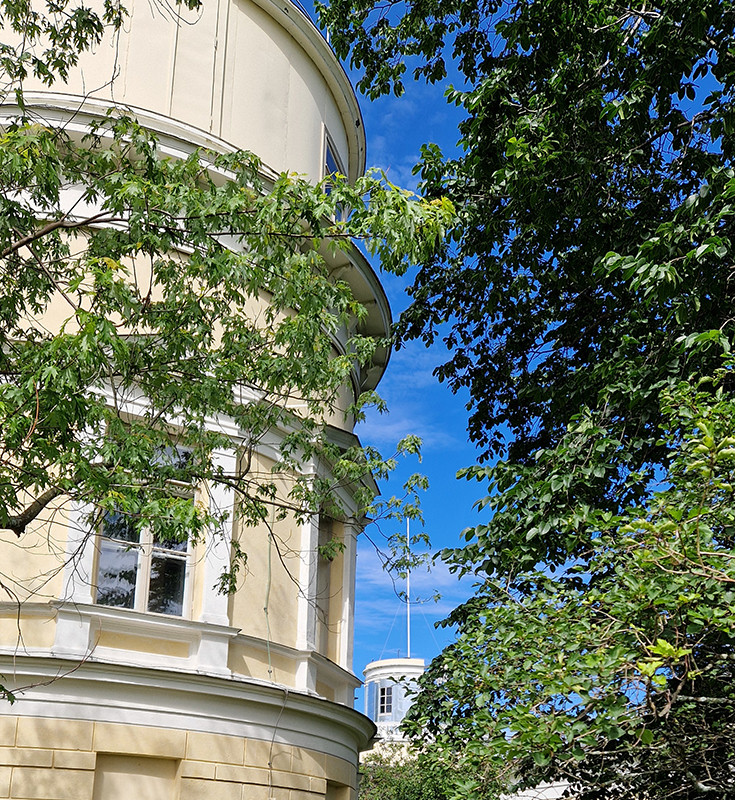
Sadly Helsinki Observatory has long since stopped functioning as a place for active astronomical research (2009) and is now a museum. It was disappointing that the electronic cloud chamber they possess wasn’t switched on but there were some interesting instruments to wonder about in the meridian room.

Each day the time signal bag was hoisted to the top of a mast on the roof of the observatory just before noon and dropped down exactly at noon. The correct time having been determined by an astronomer observing the stars at night. This event could be seen from Helsinki Central Railway Station where the station clock was then synchronised. This method of time keeping for Helsinki residents was in use until the 1920’s.

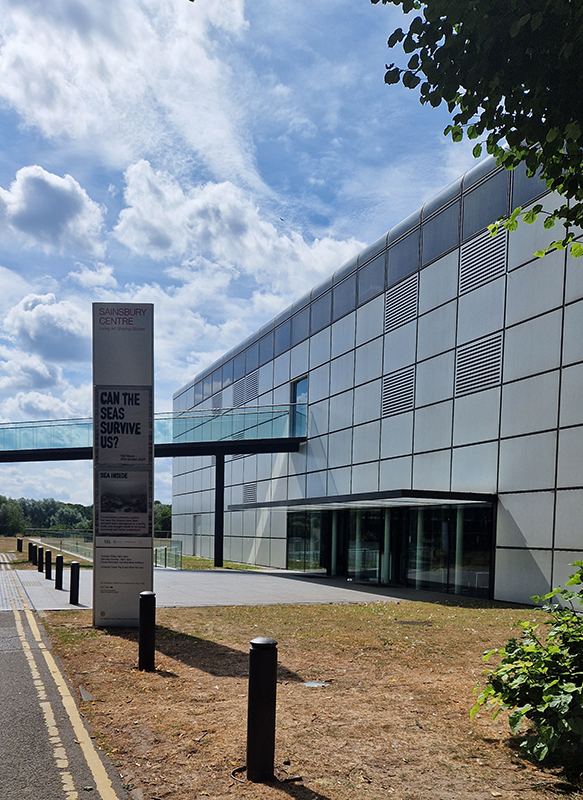
The future of our oceans is explored in the Sainsbury Centre’s Can The Seas Survive Us?

The sea has often been viewed as a mysterious ‘other’, with its expansive surface and seemingly infinite depths dominating marine imagery in the history of Western art. Artworks in this exhibition explore the ways the oceans have been domesticated, reimagined on a bodily scale and brought inside to be tamed, contained or better understood. Sea Inside turns our oceanic gaze towards the sea’s more intimate spaces – whether physical, psychological or imaginary – and dives into shared watery origins, Indigenous ways of life and the items we remove from the sea to display on land.

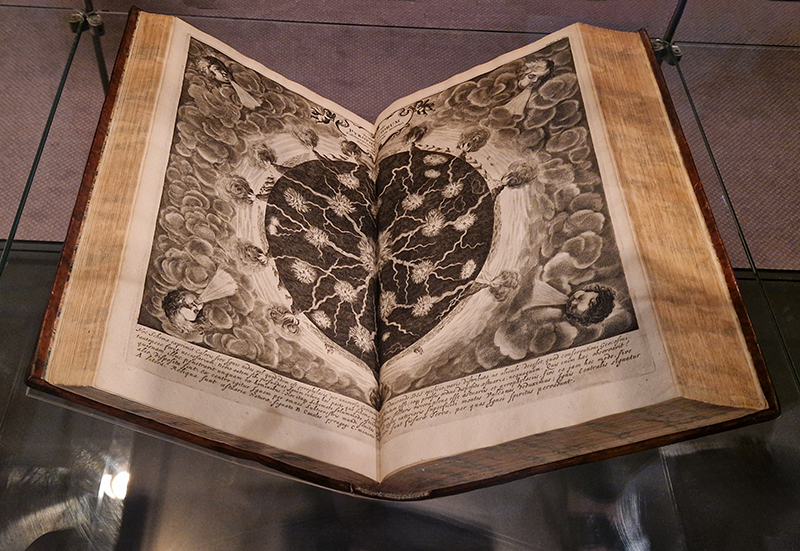
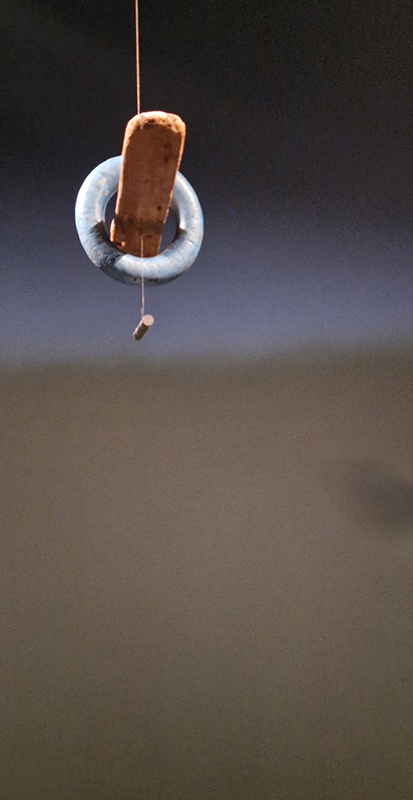
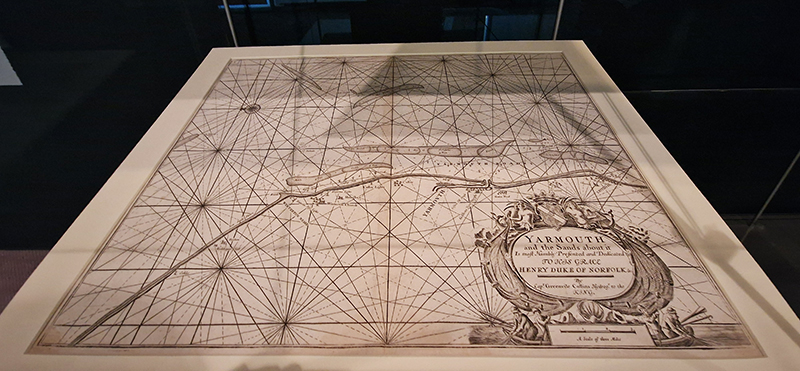
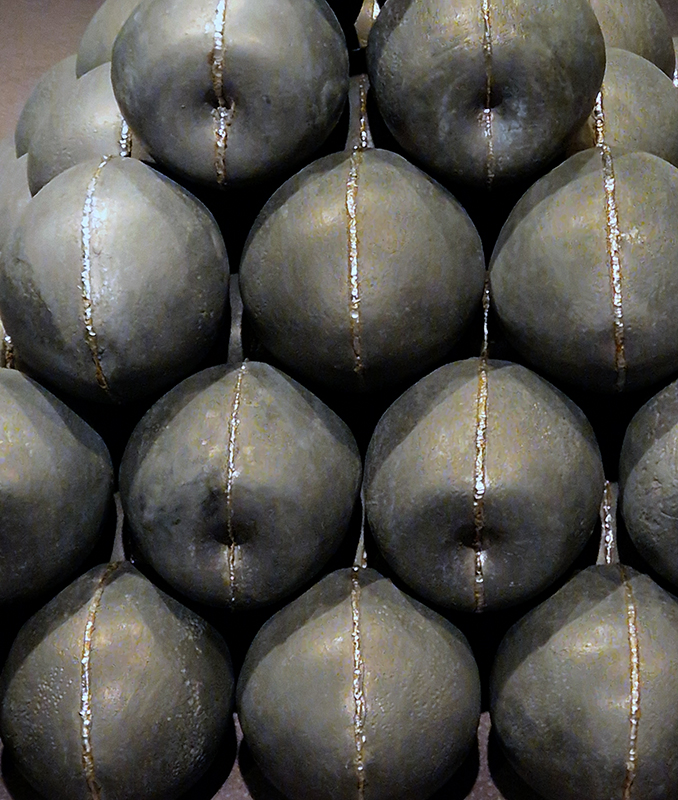
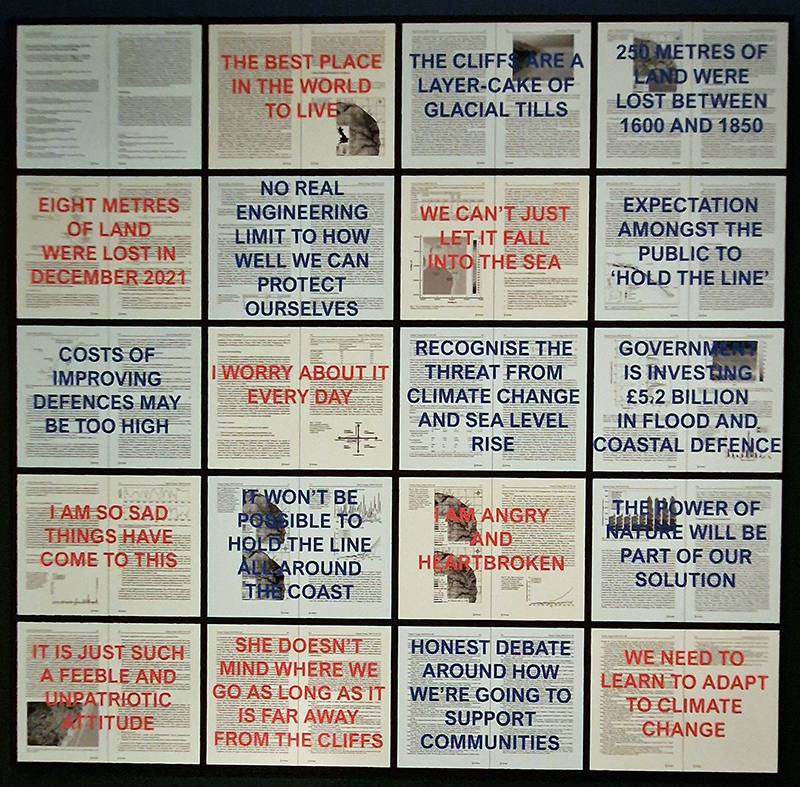
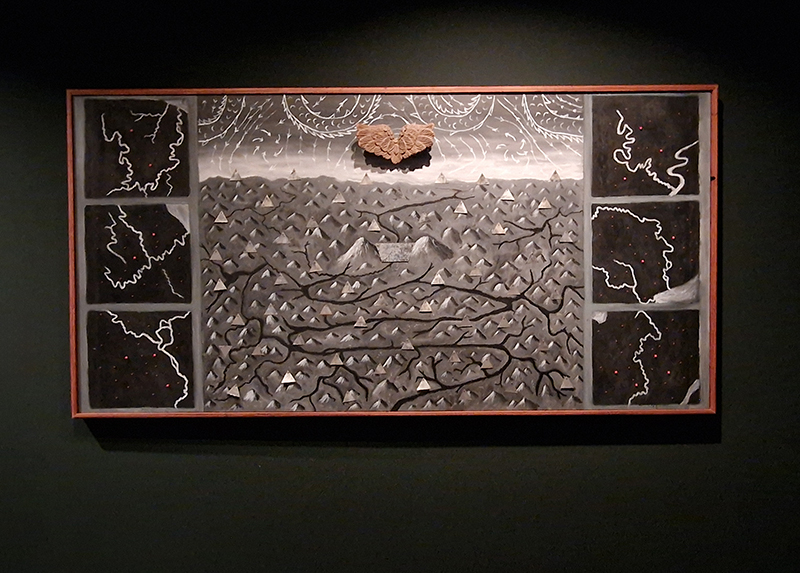
A World of Water takes the North Sea and the historical relationship between Norfolk and the Netherlands as its starting point to look at the human impact on the sea. It was wonderful to see the original book Mundus Subterraneous from 1664 by Athanasius Kirschner whose geological illustrations and speculations I have been fascinated by. Olafur Eliasson’s suspended Shore Compass uses driftwood to reflect on navigation of an uncertain world. Some great maps in this exhibition including the intriguing map of sandbanks off the coast around Great Yarmouth. I have enjoyed following Julian Charriere’s visually dramatic work on Instagram so it was good to see these images scaled up. Andrew Watkinson’s montage based on research from the Tyndall Centre for Climate Change about coastal erosion in Norfolk swerves from resignation to resistance, hope to despair and took me back to my BA dissertation (The Communication Of Ecological Concerns Through Contemporary Artistic Practice, 2007) writing about climate change warnings coming from the Tyndall Centre and the frustration of researchers about distorted media coverage that made it hard for the public to understand the facts. Suffolk too has lost a lot of land to the sea since I was a child there. Although dreams of tidal waves are common anxiety dreams I believe mine were also influenced by overheard stories of the North Sea flood of 1953 when a storm surge coincided with a high spring tide, which my parents and local villagers remembered vividly, it was the worst flood of the 20th century in England and Scotland and many lives were lost. Maggi Hambling’s sublime Wall of Water holds frozen the terrifying waves that may threaten us while Cian Dayrit’s Dam Nation examines the impact to communities and ecosystems when water is held back or re-routed.

Darwin in Paradise Camp by Japanese-Sāmoan artist Yuki Kihara calls out that ” a reconsideration of what it means to be human requires a re-evaluation of the origin of the species.”

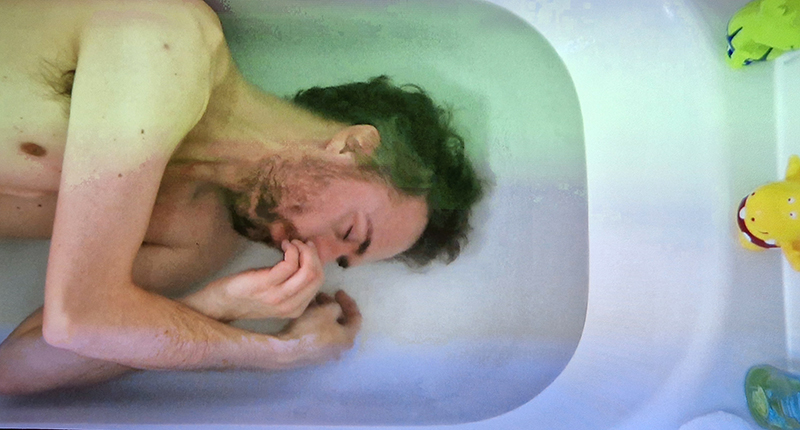
Sea Inside turns our oceanic gaze towards the sea’s more intimate spaces – whether physical, psychological or imaginary including work by Marcus Coates (attempts to create the call of the humpback whale in a bathtub), Kasia Molga (How to make an Ocean – the artist’s salt tears fill miniature glass capsules where algae is cultivated), Gabriella Hirst (ethereal images on hand etched fibreglass in a slatted structure that echoes the baleen inside a whale’s mouth).

At London galleries I saw work about tuning in to invisible forces, the importance of how we treat our fellow humans (dead or alive) and an assessment of the influence of past and present technology on hope for the future.

Islington Gallery Weekend is a great idea, just the heat while out walking that weekend meant I didn’t make it to all the galleries participating.

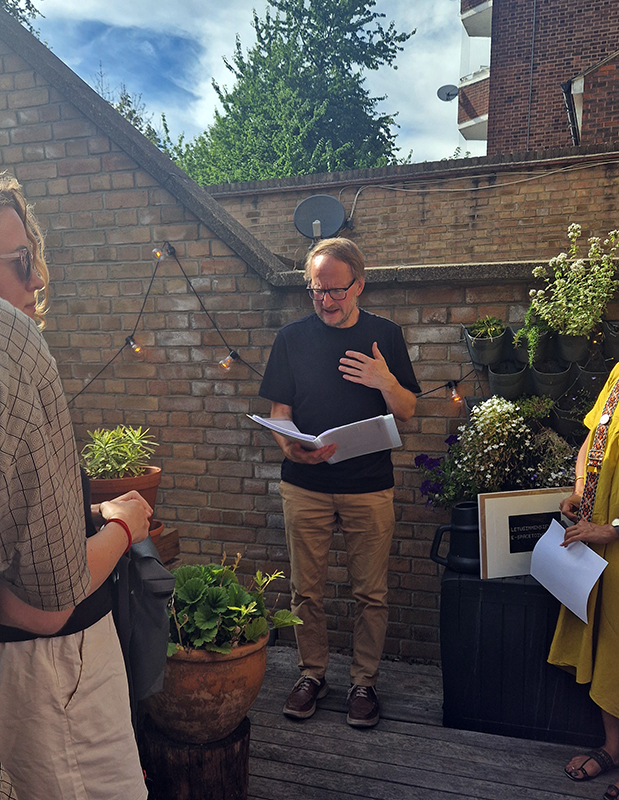
The Observatory at Bobinska Brownlee New River, presented abstract and textural works by Claudio del Sole, an artist and amateur astronomer who co-founded the ‘Astralist’ movement in 1959 inspired by the dawn of the space age. These cosmic inspired works are shown alongside those made in response to the Astralist manifesto by contemporary artists James Brooks, Robert Good and D J Roberts. Cocktails and an incredible performance on the piano of unique work by composer Edward Henderson were also part of the afternoon.

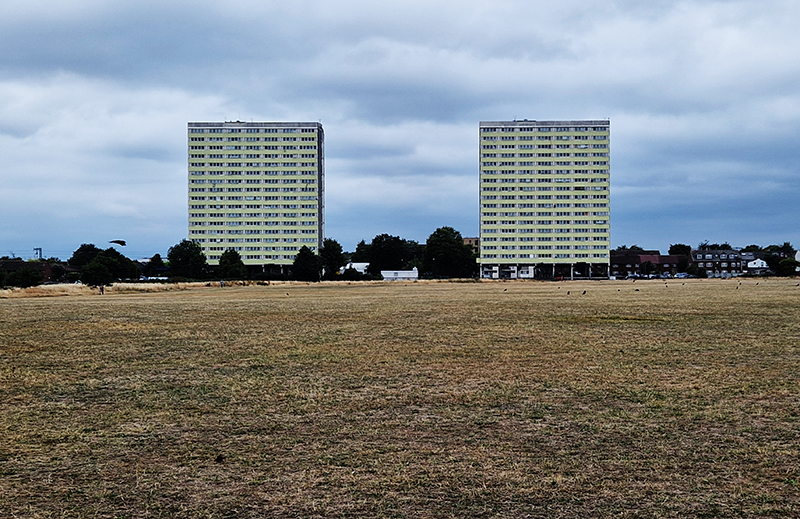
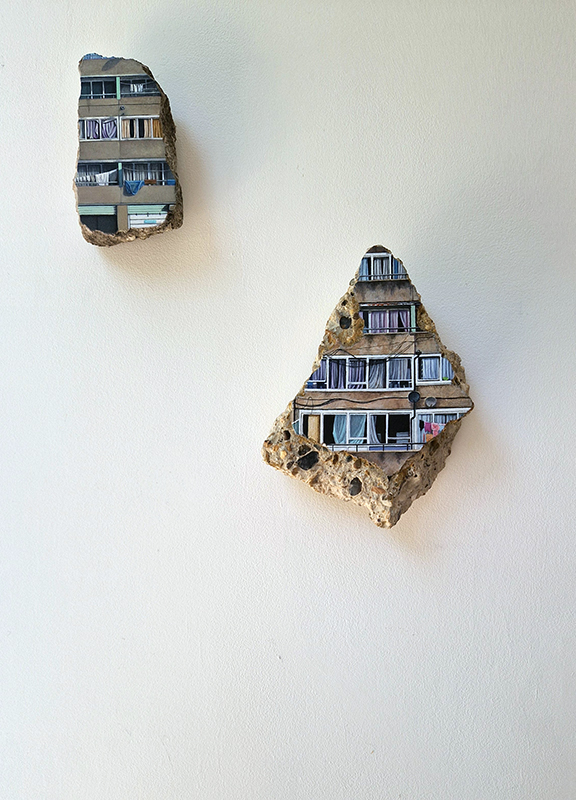
Poignant work from Harriet Mena Hill in Curtains at PostROOM Gallery. Fragments collected from demolition of the Aylesbury Estate in South East London are meticulously painted with details of the buildings that once were home to a community. An accompanying film gives voice to those who enjoyed life here before lack of maintenance and social care slowly stripped away the heart and soul.

Fascinating listening to Tracy Hill speak about her work in Natural Frequencies at White Conduit Projects which explores ways of being sensitive to invisible energies that move through us and our landscapes. Her experience of working with a water diviner feeds into her intuitive drawing processes and cut paper works.

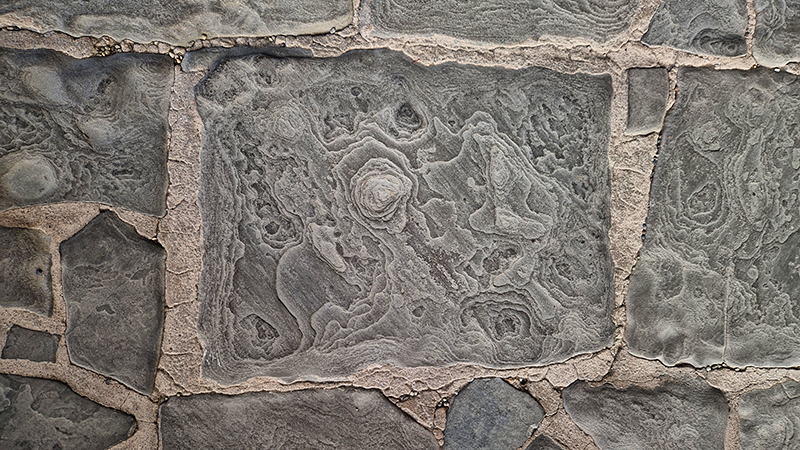
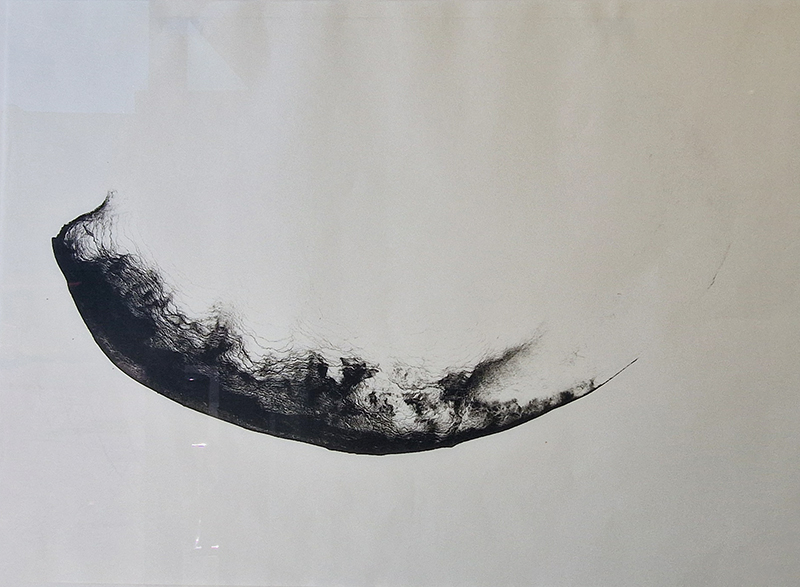
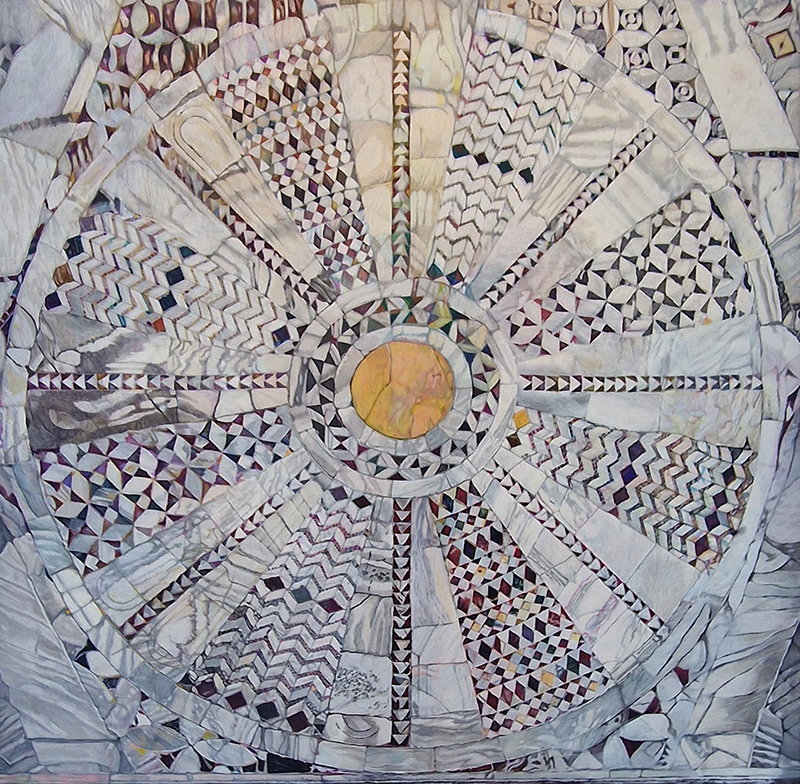
I was drawn to visit Gala Porras-Kim The categorical bind at Sprüth Magers to see these images which reminded me of the large hadron collider but made from marble. They are actually an examination of the conservation of marble tiled floors in Italy.

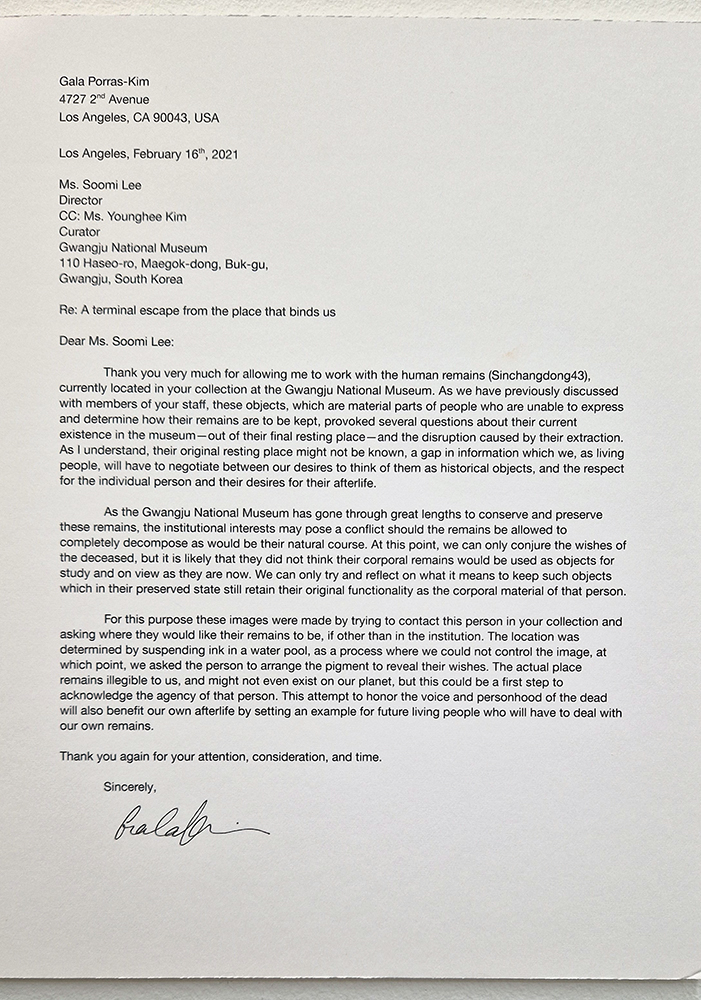
I remembered I had seen her work before at Gasworks and found it really interesting. In this piece she attempts to commune with the dead whose remains have ended up in a museum collection, possibly not where the living person had expected or would want.

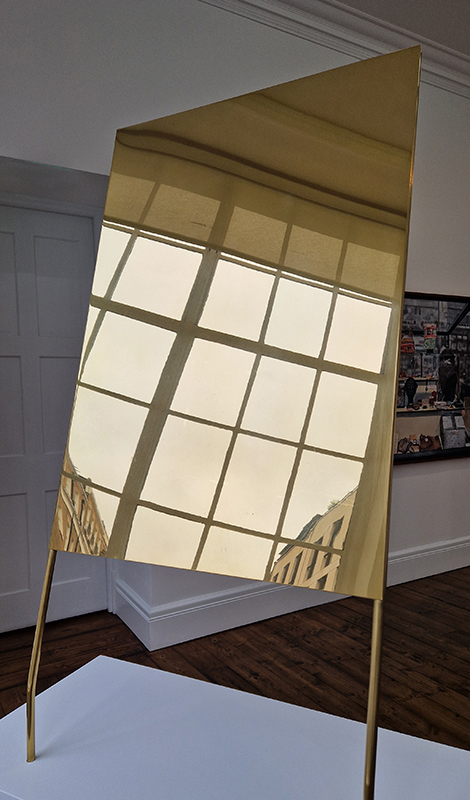
Gala Porras-Kim

All Earth energy sources are known to come from the Sun

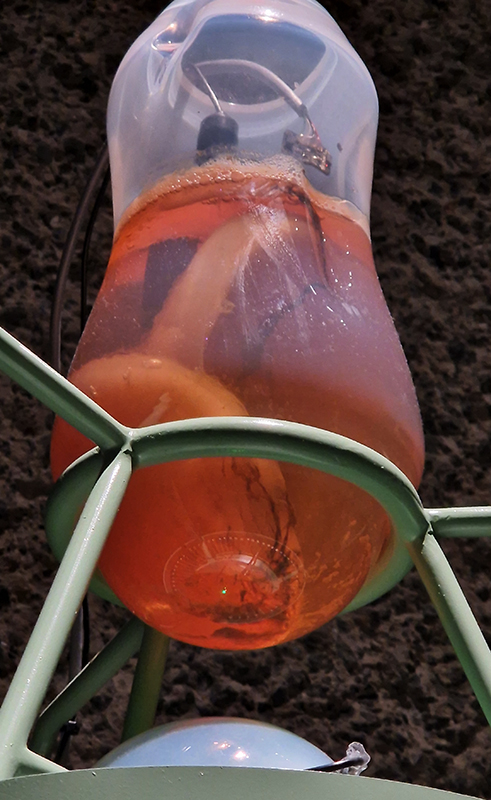
Brass, sunlight

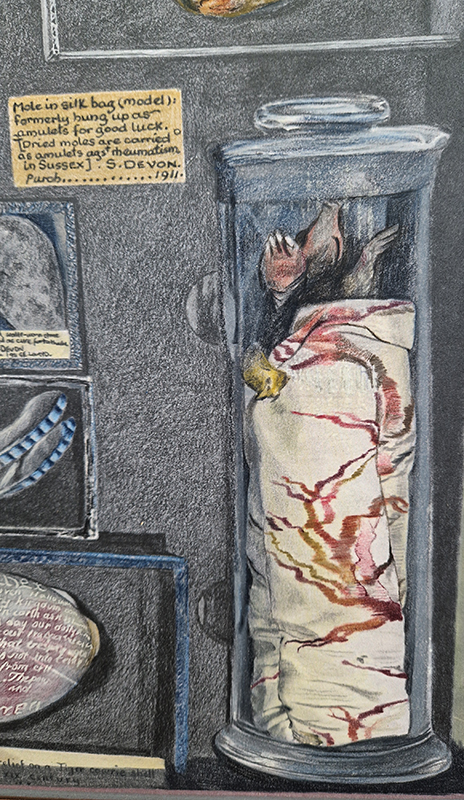
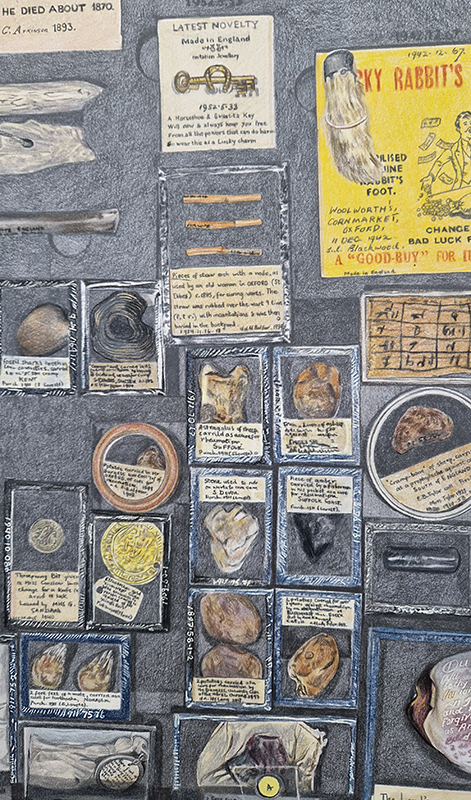
Most of the works were coloured pencil drawings of museum collections, giving agency to objects and questioning categorisation – this one of the poor mole amulet made me think of my mole killer brother who suffers from arthritis.

It is fascinating to think about how humans experience sound and consider frequencies occurring outside the human spectrum of sensitivity that other animals may be able to hear. Also to think about sound as vibrating bodily rather than auditory sensation. Barbican Feel the Sound requires a willingness for interactivity to experience most of the exhibits. The instructions weren’t always clear and so it was at times a bit of a frustrating journey through the space.