Archives for posts with tag: lithomancy

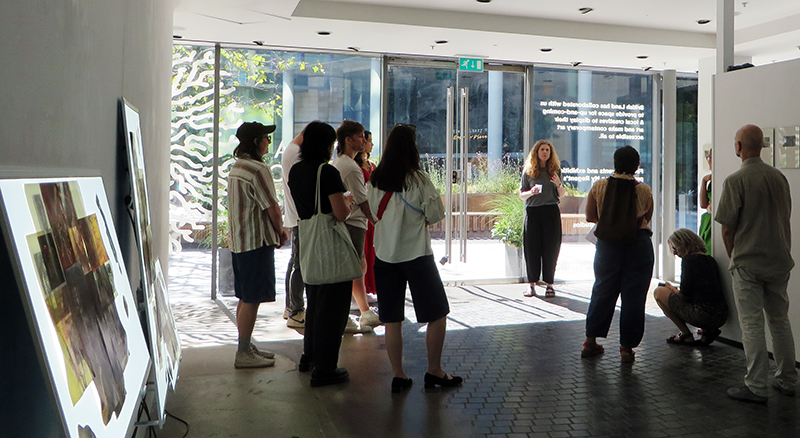
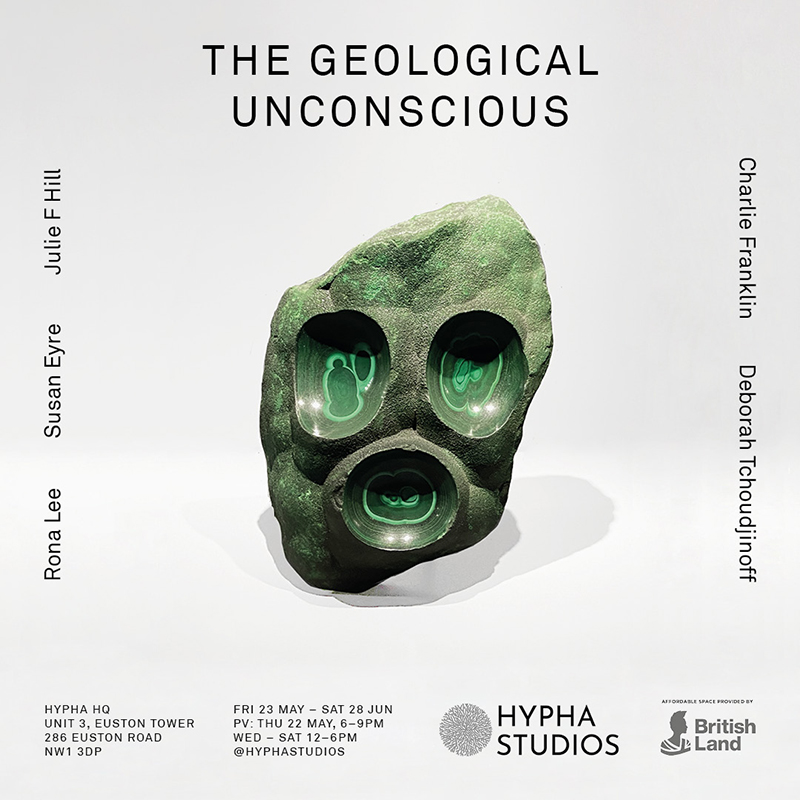
The Geological Unconscious had a wonderful six week run at Hypha HQ, Euston. Responding to Jason Groves’ inquiry into the mineral imaginary in his eponymous book, as well as the ‘Writing of Stones’ as proposed by writer and mineral collector Roger Caillois, the exhibition exposes the complex entanglements between the organic and the inorganic; the human and the lithic. 

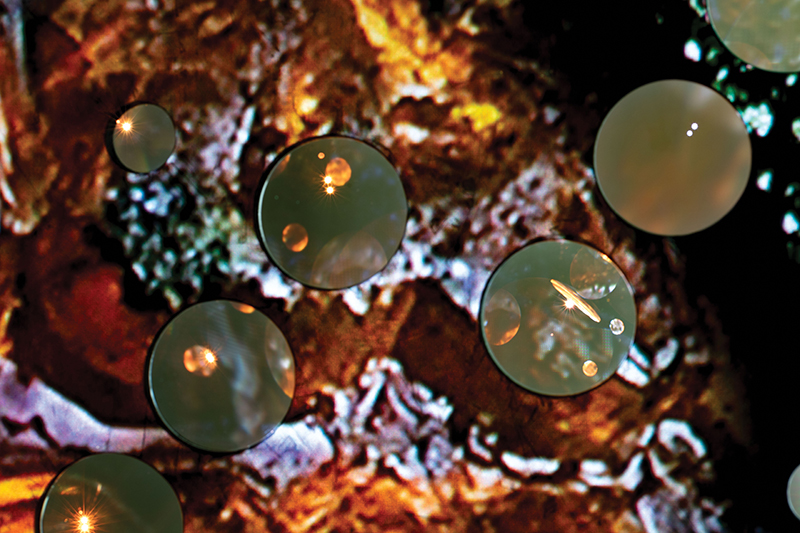
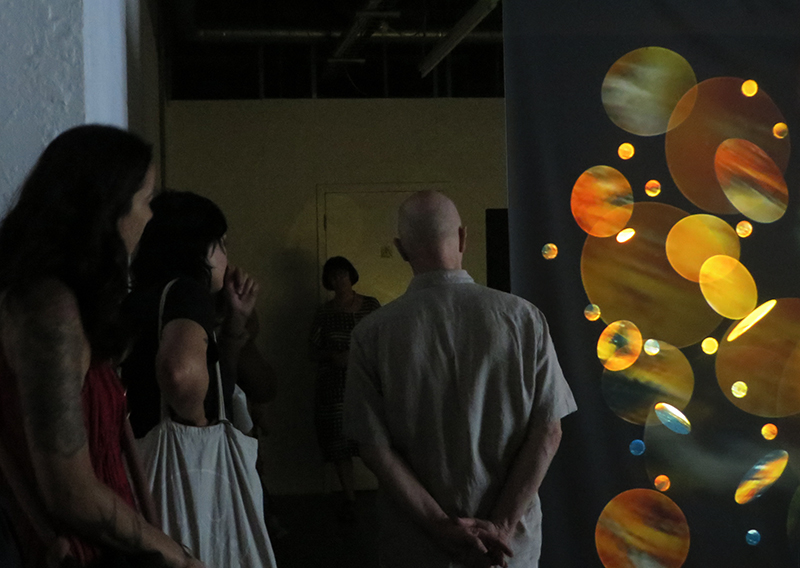
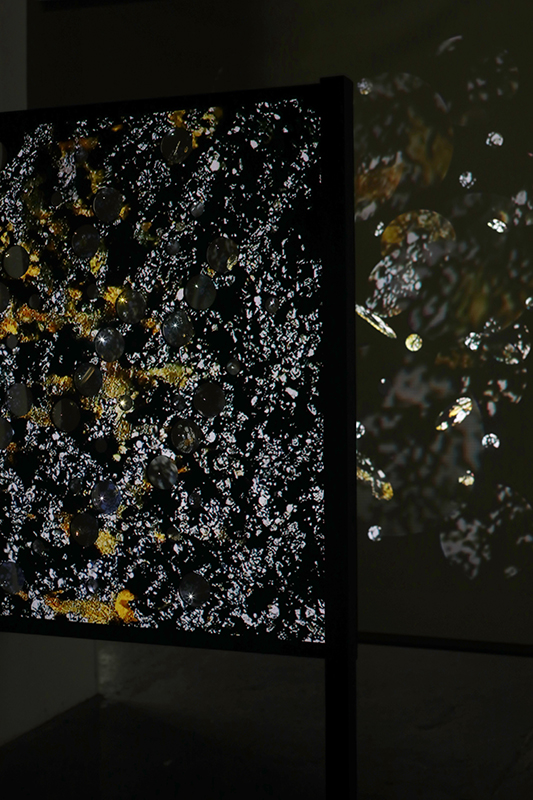
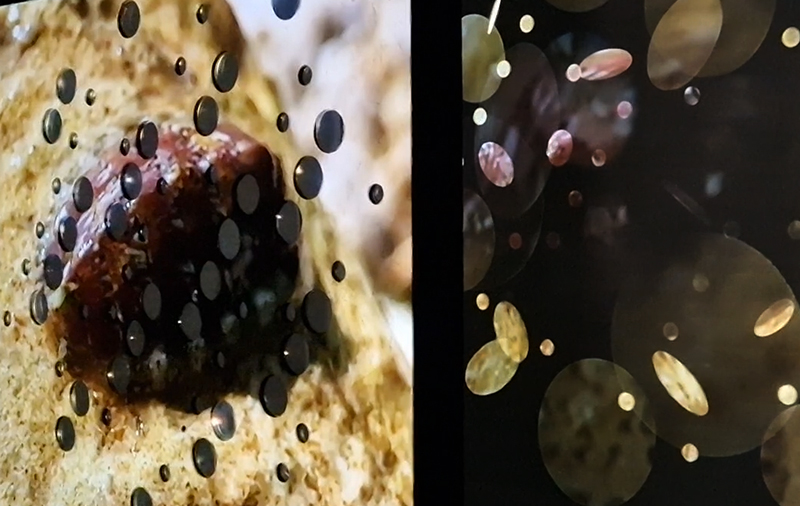
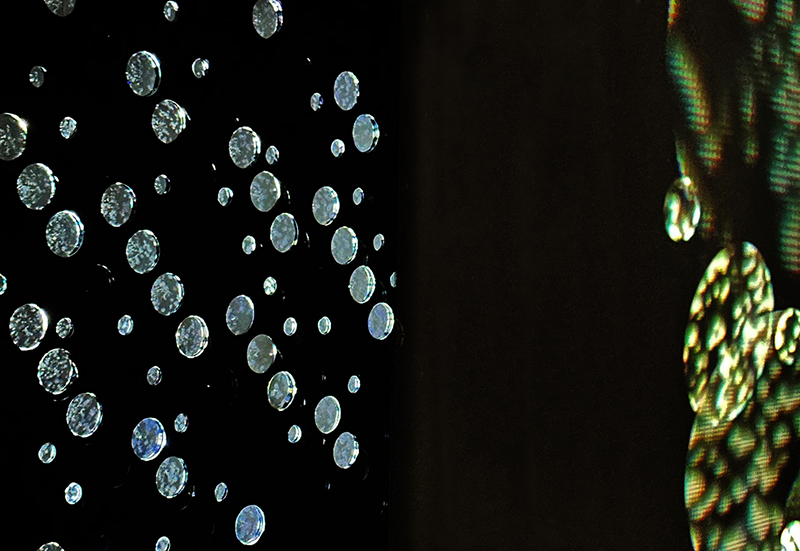
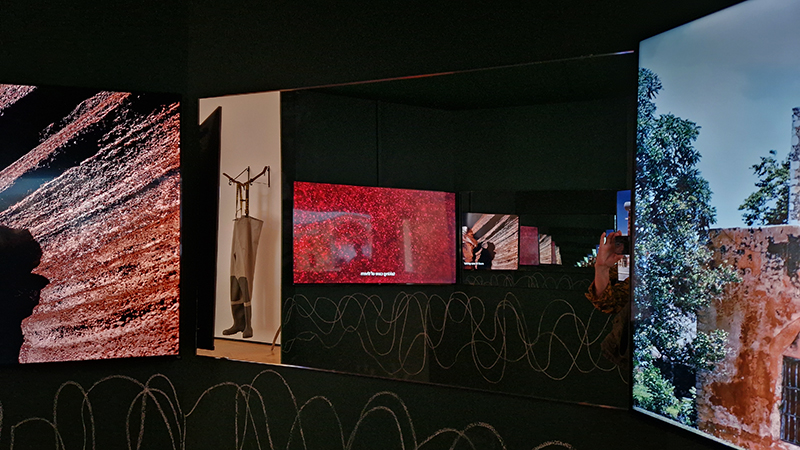
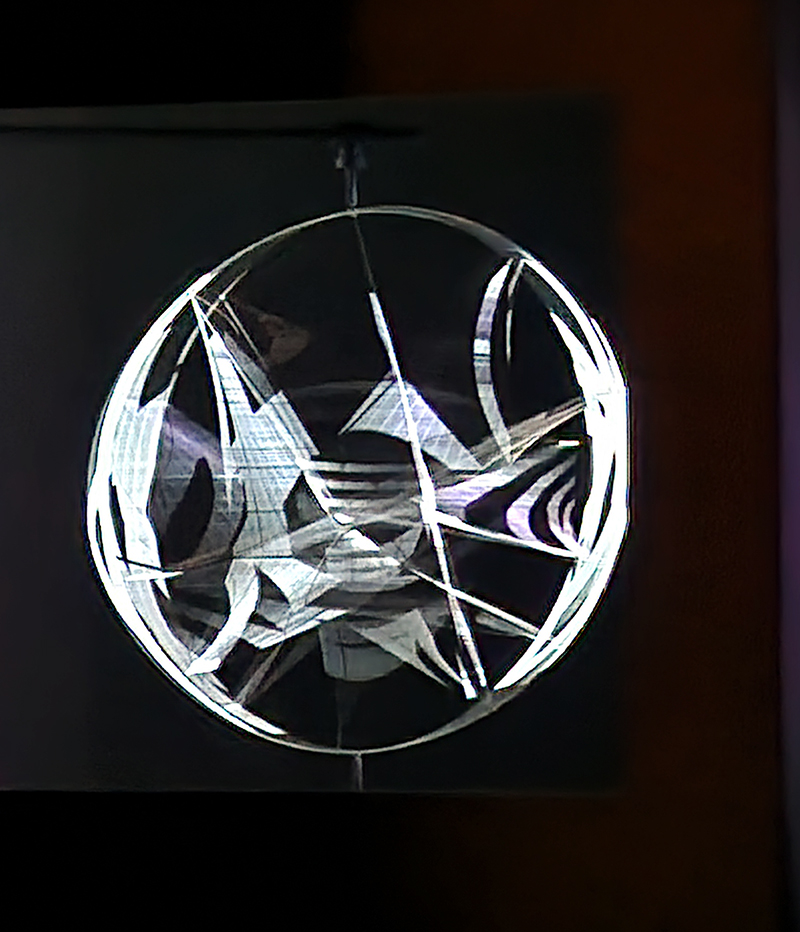
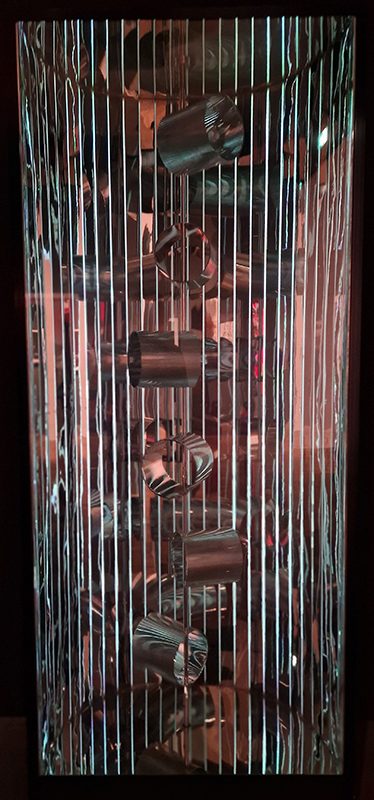
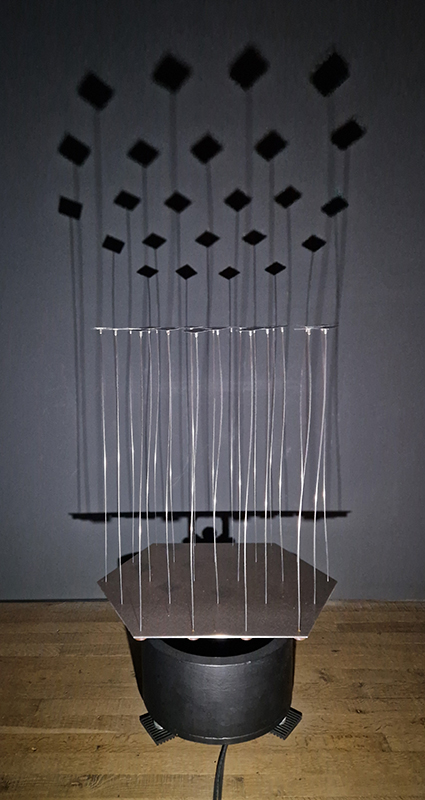
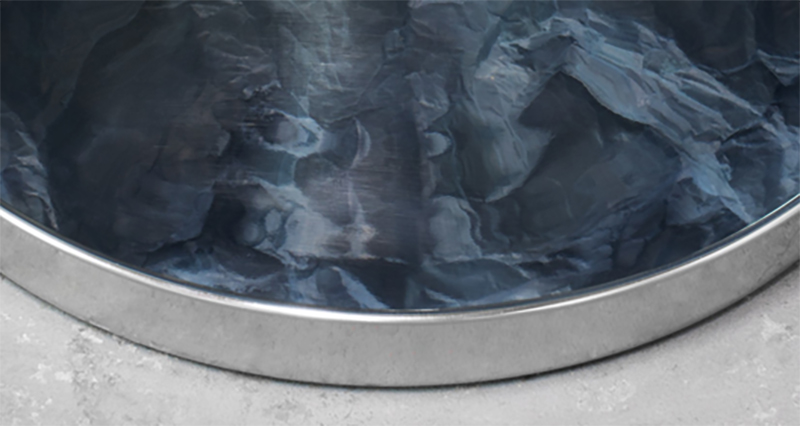
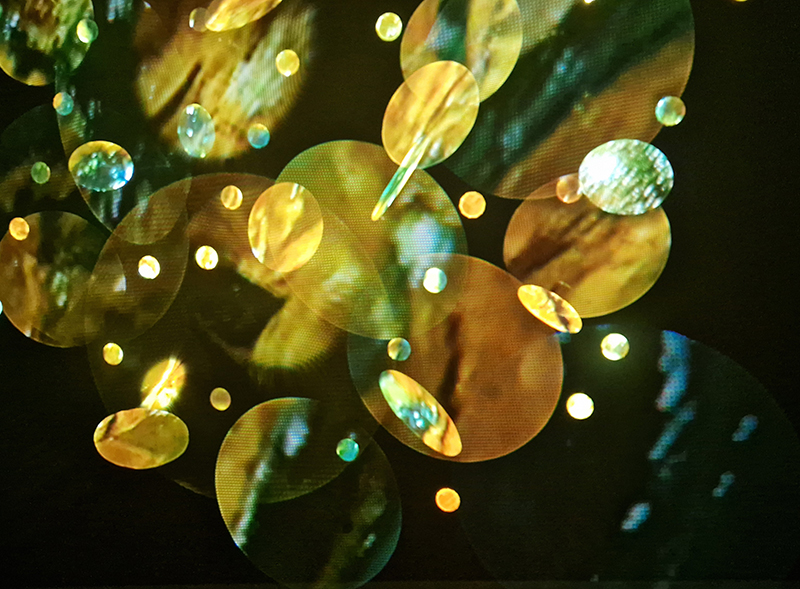
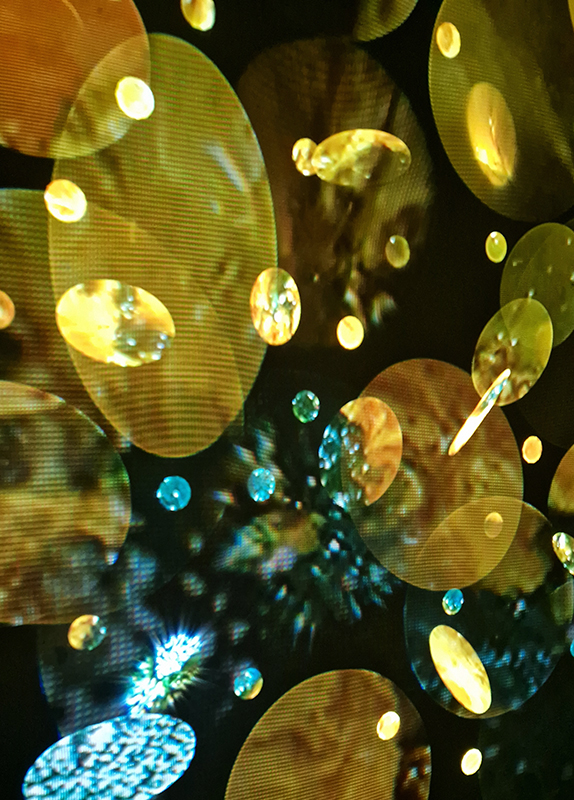
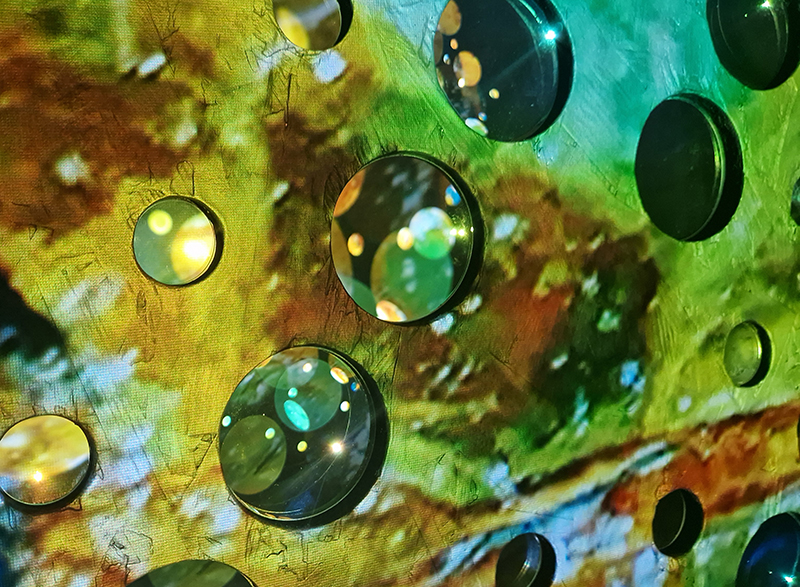
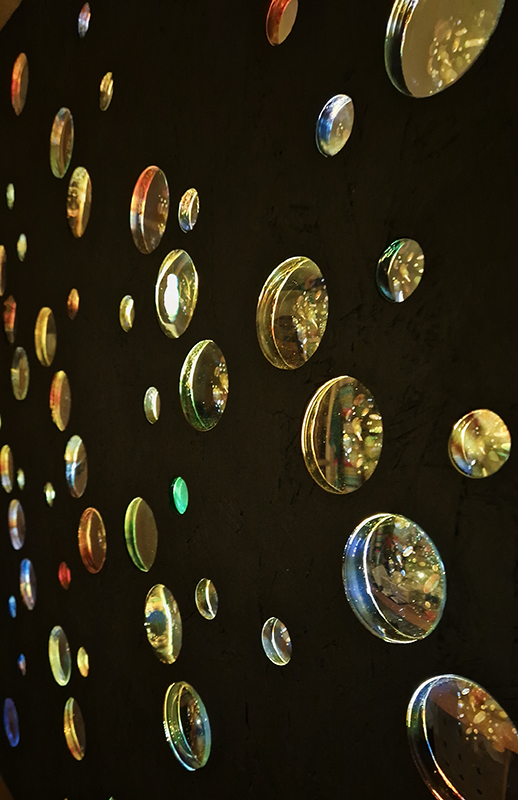
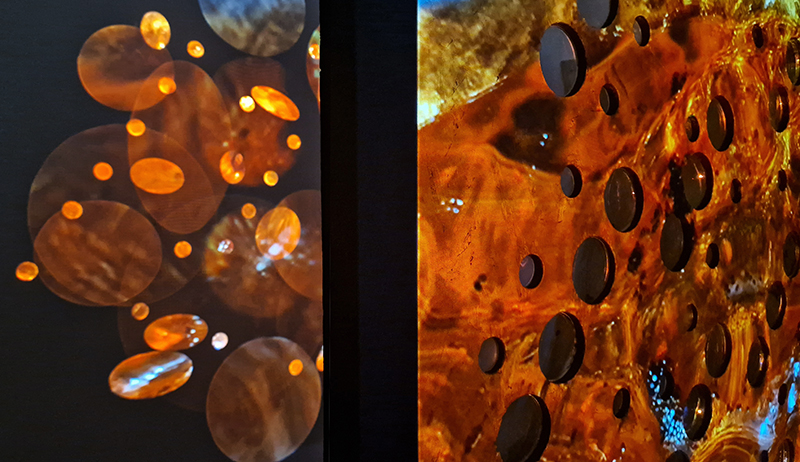
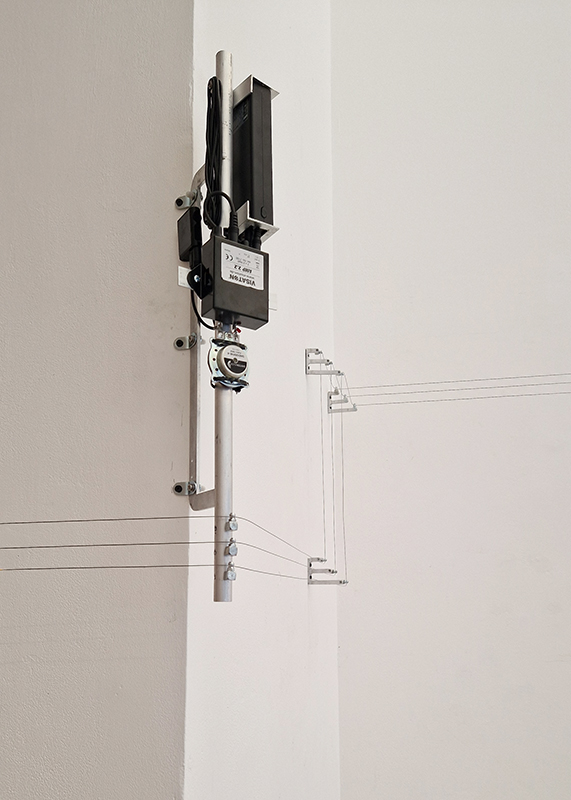
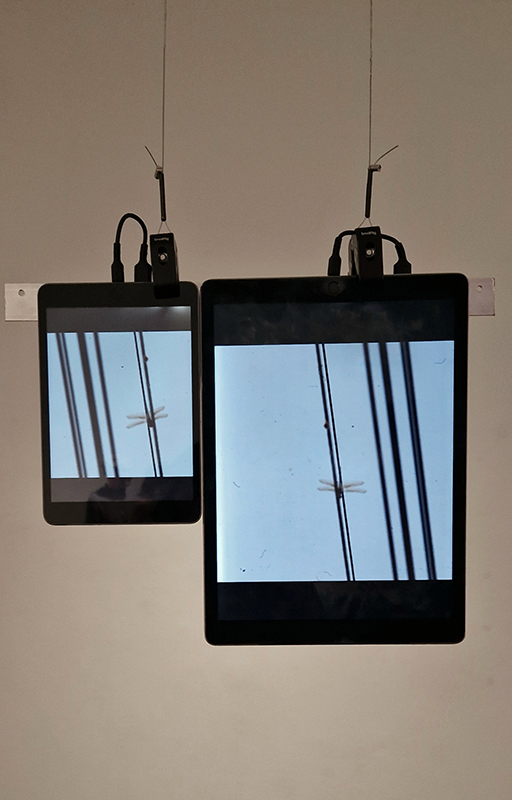
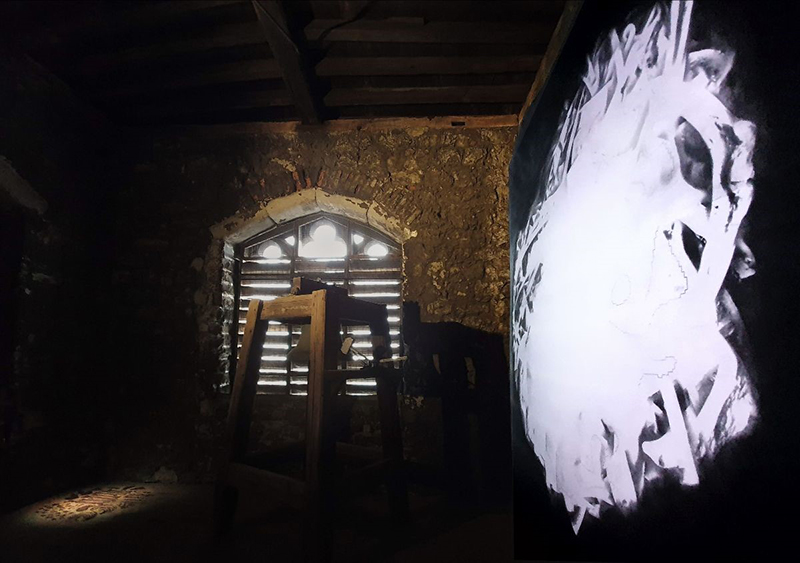
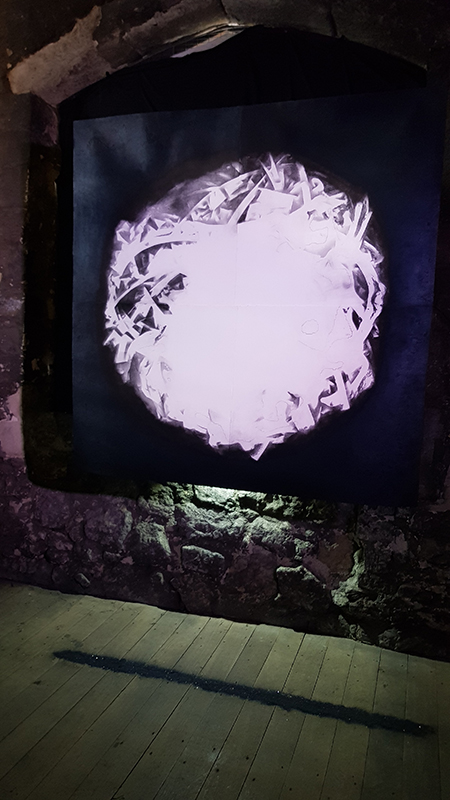
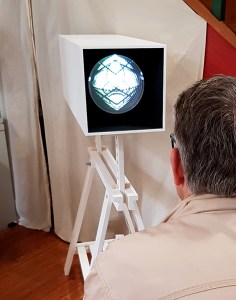
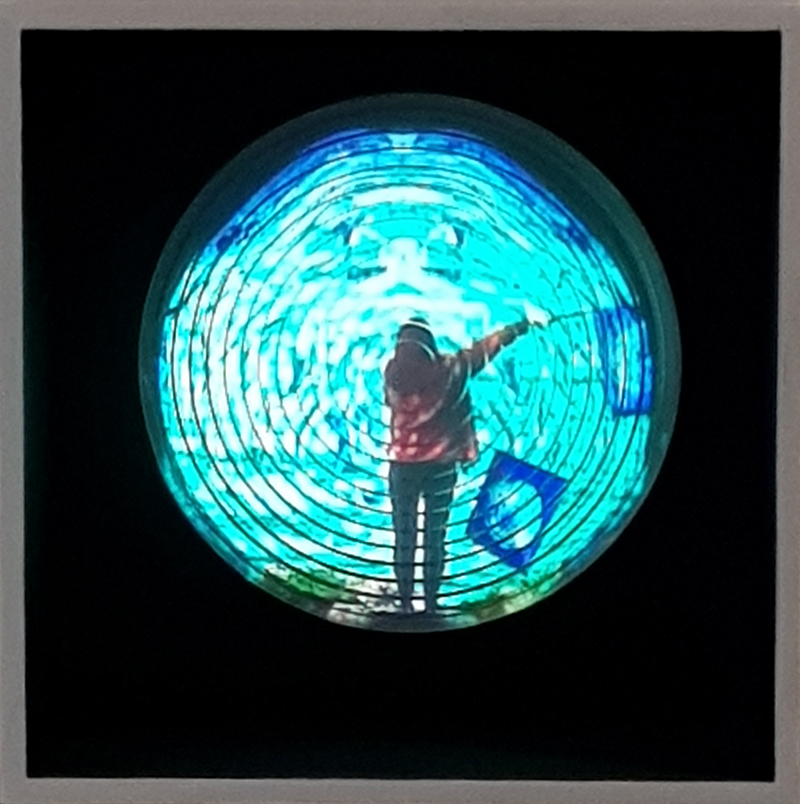
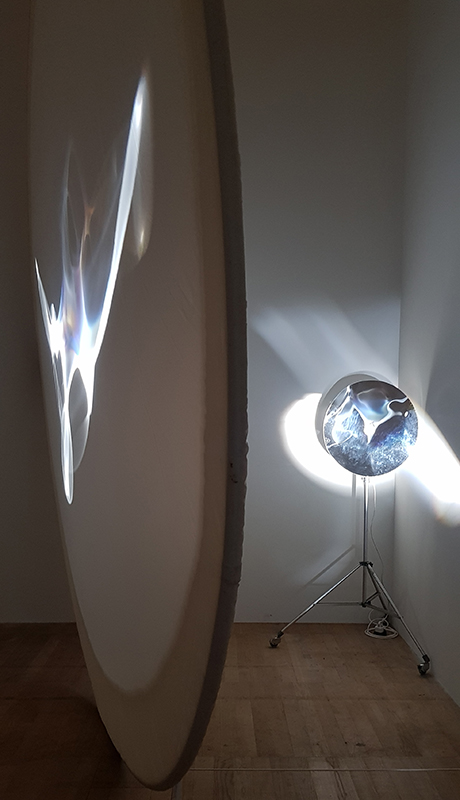
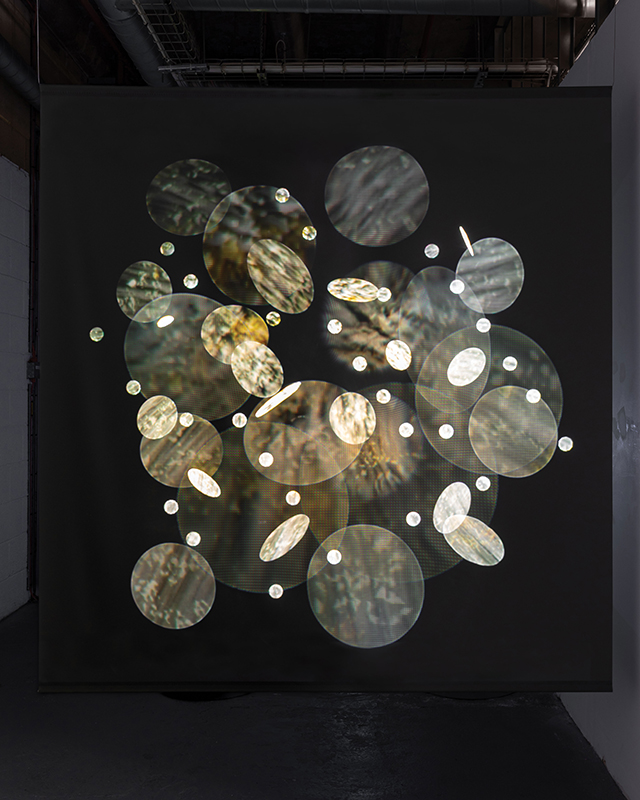
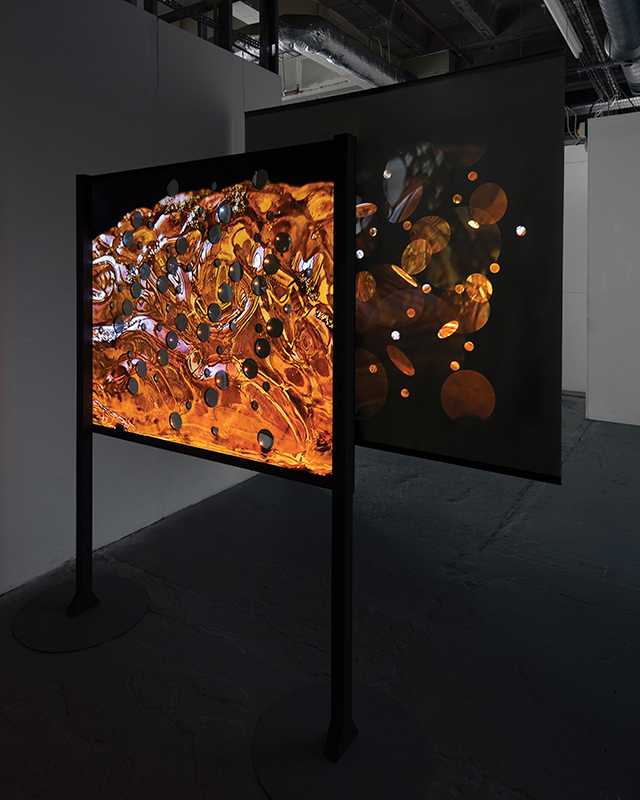
Very happy to receive lots of positive feedback for my video installation Lithos Panoptes. People were very engaged with how the work reveals itself in stages, from the kaleidoscopic imagery displaying on the two way suspended screen to discovering the board of distorting lenses behind the screen and finally stepping back to see the original film from the human perspective before it is transformed by the lenses.

Referencing a many-eyed giant of Greek mythology, Argos Panoptes (always eyes still awake), the work considers the perpetual vigilance of rock as record keeper and witness. Video of human activity projected through distorting optical lenses transforms the anthropocentric position to imagine the perspective of the rock.

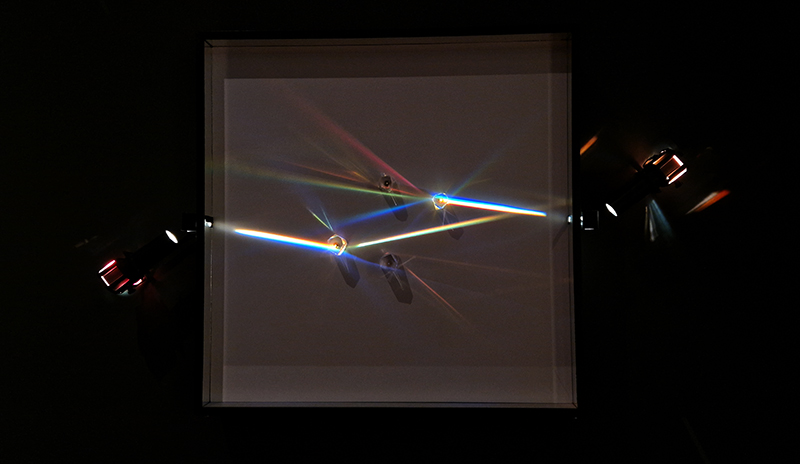
The pattern of lenses is informed by the molecular structure of magnetite, a mineral found in magma and metamorphic rock in Earth’s crust as well as in meteorites and the cells of organisms.
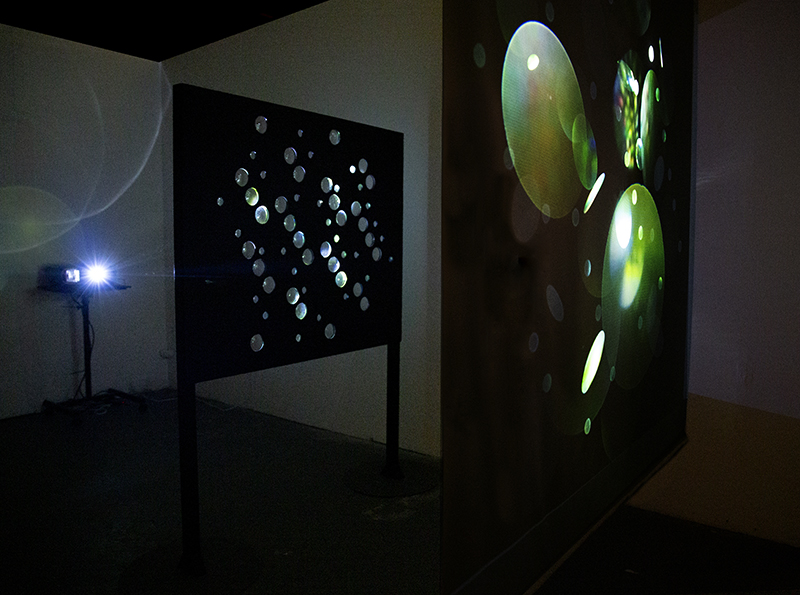
Through actual and metaphoric lenses, the relationship between the organic and non-organic is explored.

Lithos Panoptes 2025, Optical lenses, wood, steel, projector. Video 09:27 min Sculpture: H172 × W170 × D50 cm, Rear projection screen: H180 × W180 cm.
Photography by Benjamin Deakin

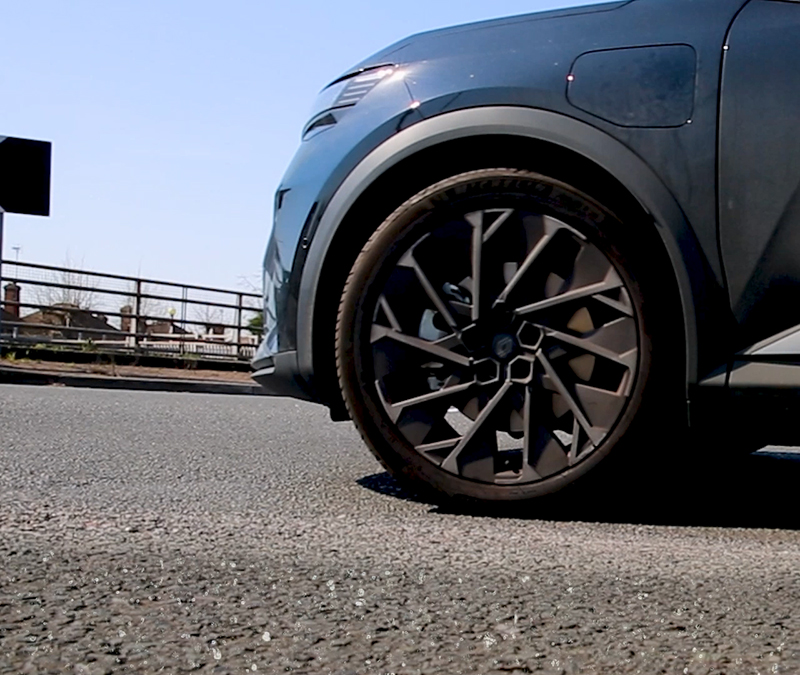
Mined magnetite is used in industrial and mechanical processes and its use in combustion engines and vehicle braking systems is releasing nanoscale pollutant particles into the air which are finding their way into human brain cells, vastly overwhelming the innate magnetite present, causing concerns linked to the development of degenerative brain diseases.
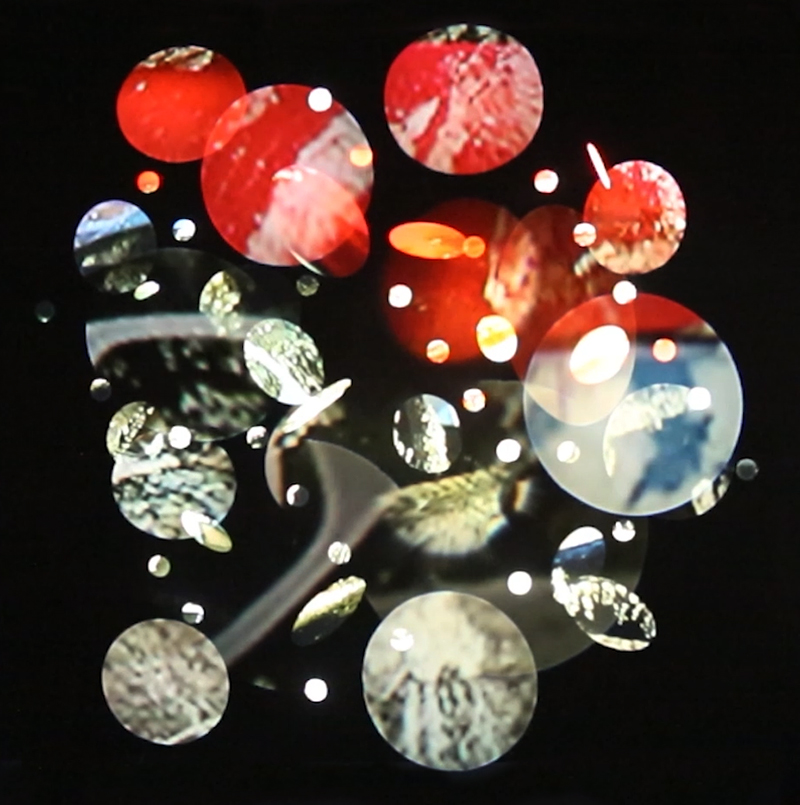
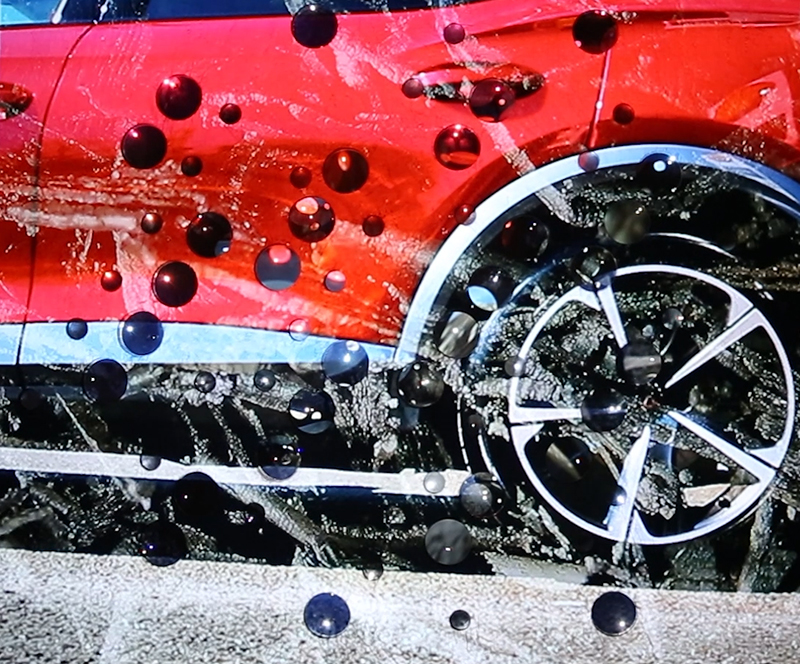
As well as referencing an ever watchful, many-eyed giant of Greek mythology, Lithos Panoptes also considers the numerous eyes (ocelli) of the chiton (a species of mollusc) whose rock crystal lenses have evolved over many millions of years to keep watch along rocky coastlines across the globe.

The only creature with eye lenses made of mineral and not protein, the chiton is also unique in having rows of teeth primed with magnetite which allow chomping on the hard rock surfaces it clings to. Some chiton’s teeth also contain the recently discovered mineral santabarbaraite, named after the mining district Santa Barbara in Italy where it was found – it is one of the few minerals named after a woman.
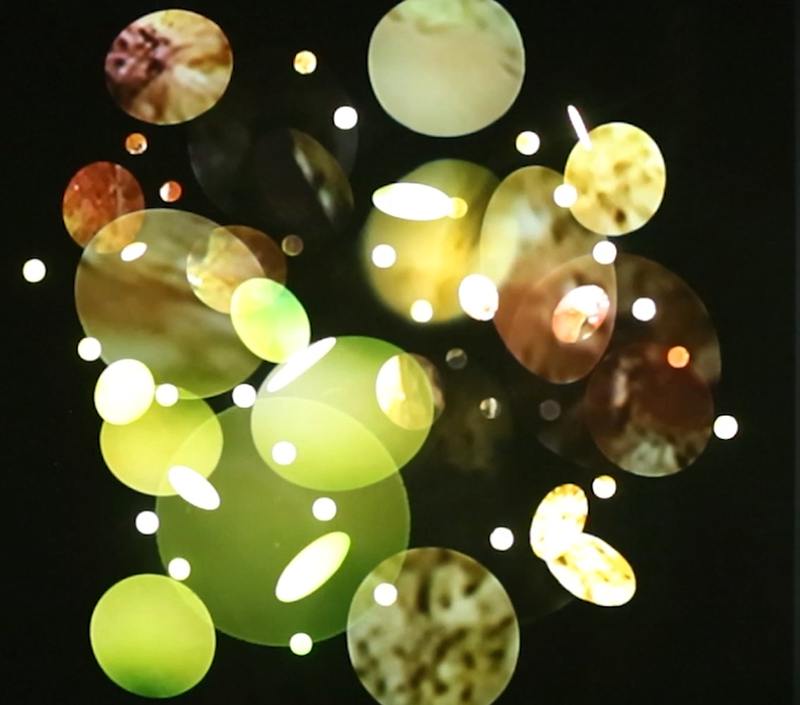
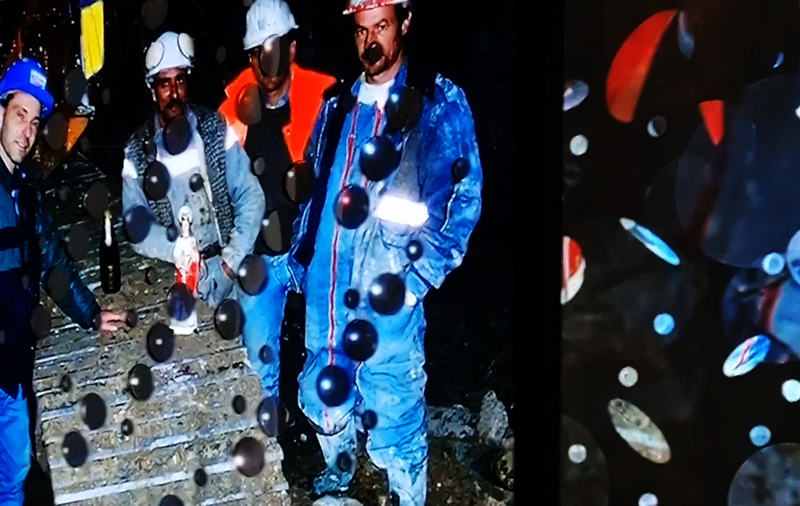
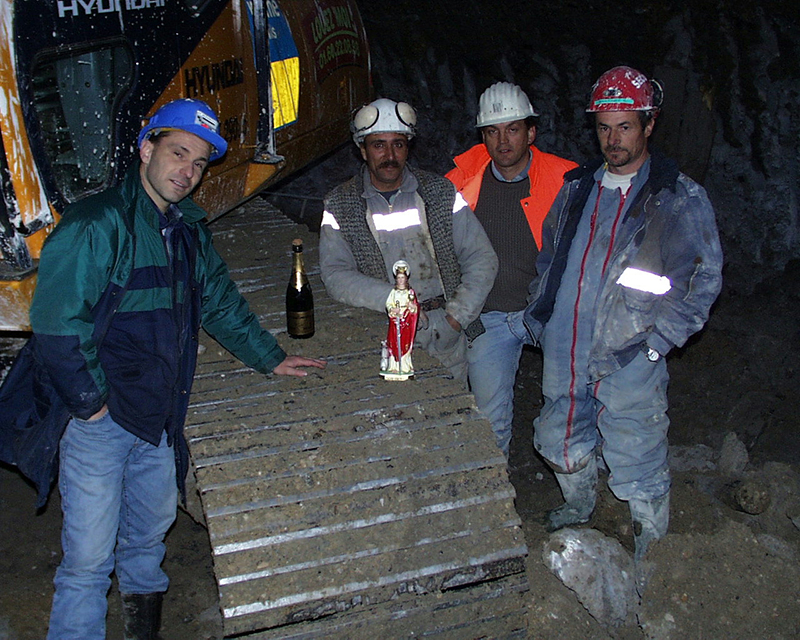
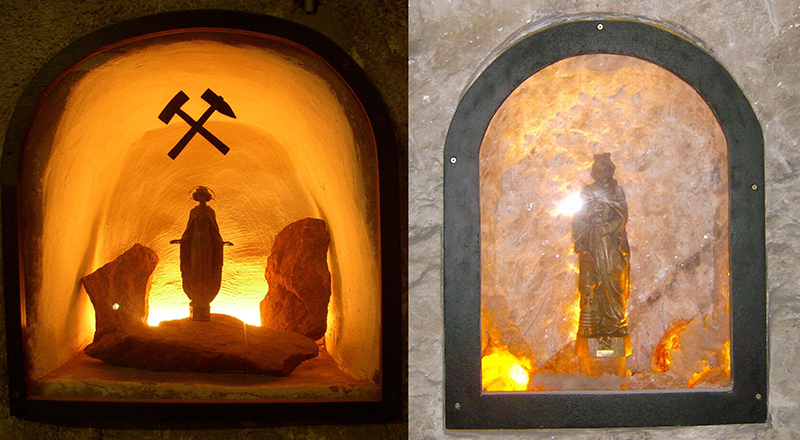
I was surprised to discover that the benedictions of Saint Barbara are still sought today, with shrines installed at tunnel entrances at Crossrail and even at CERN, the epicentre of scientific rigour. Before the boring machines were set in motion, services seeking her blessings were performed by local priests, with some even being winched down excavation shafts to carry out their duties.

Saint Barbara, who is associated with sudden death from fire, lightning and explosions, including military armaments, was adopted as patron saint of miners and tunnellers when the use of explosives in mining escalated during the 1600’s.

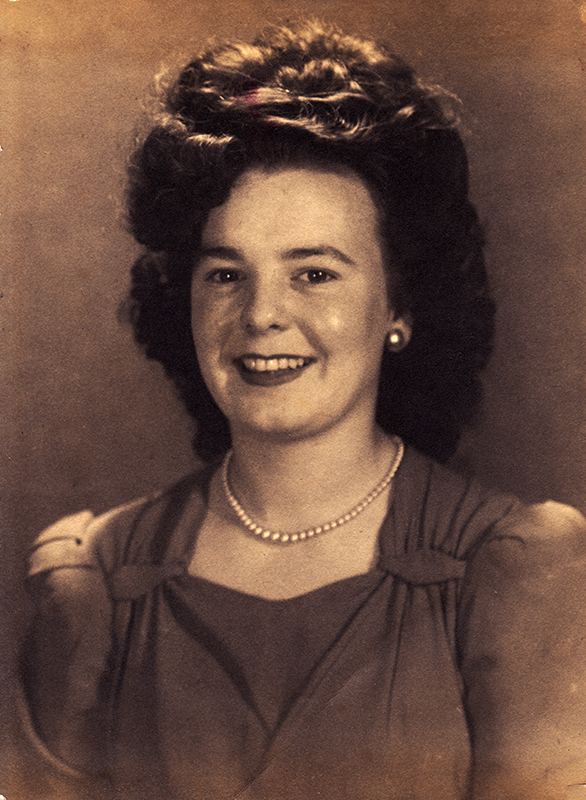
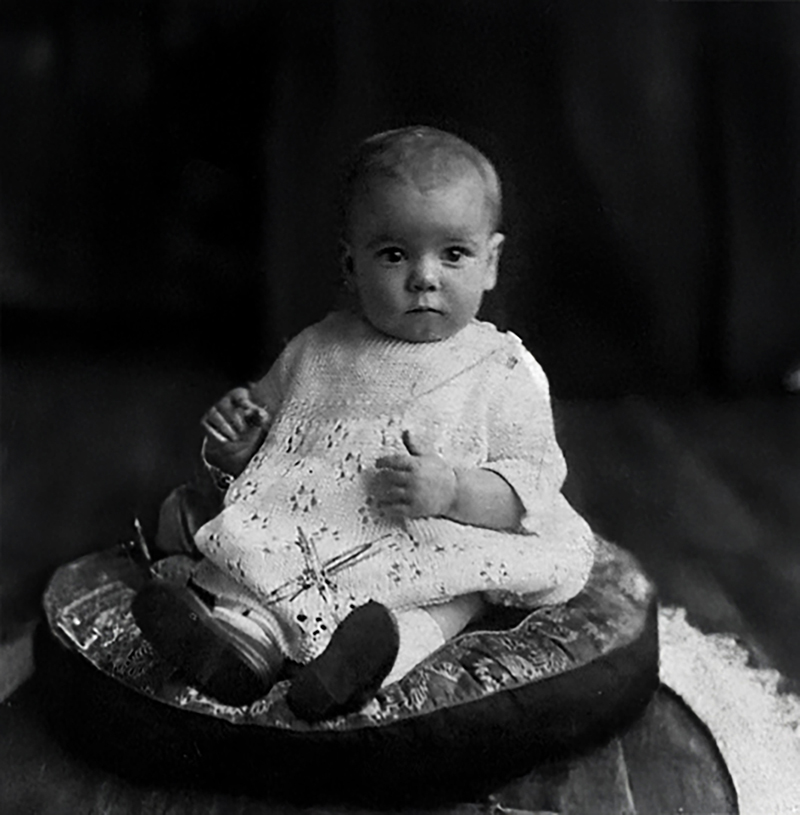
As the statues of Saint Barbara installed at these tunnel entrances are now buried, I have substituted images of my mother Barbara, coincidently born within hours of this Saint’s Day, in my video installation Lithos Panoptes.

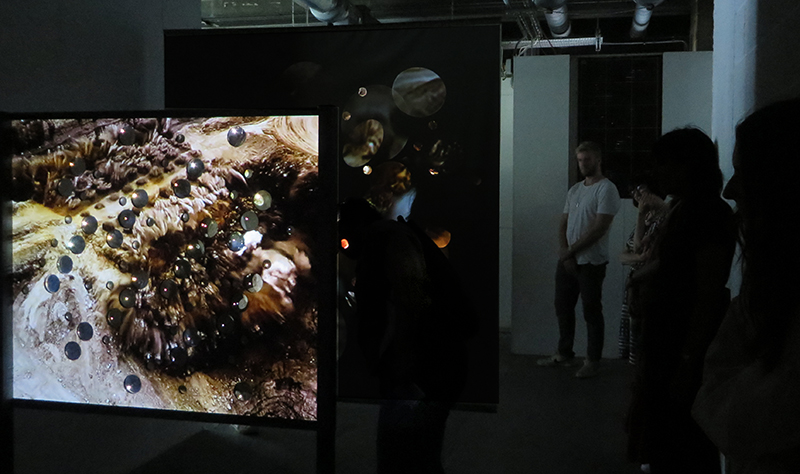
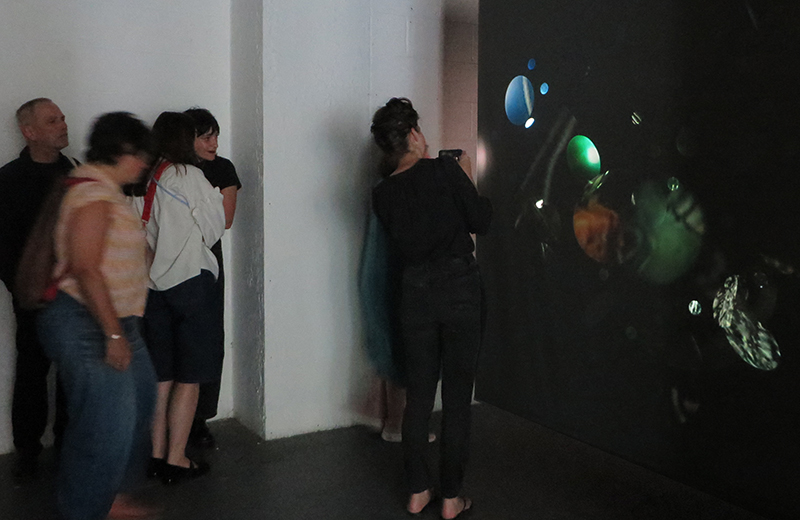
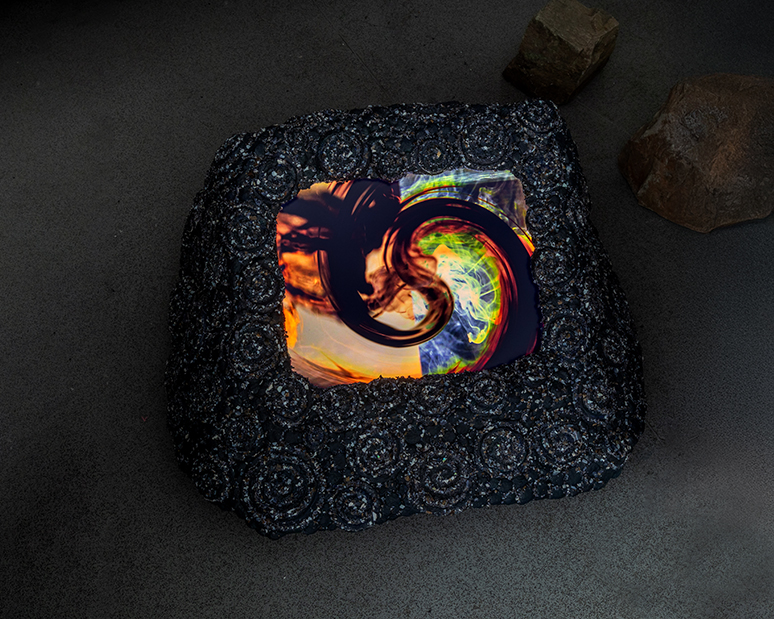
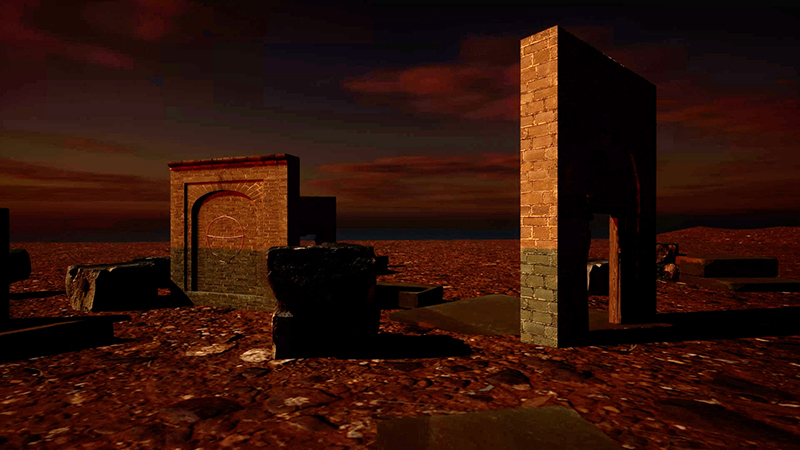
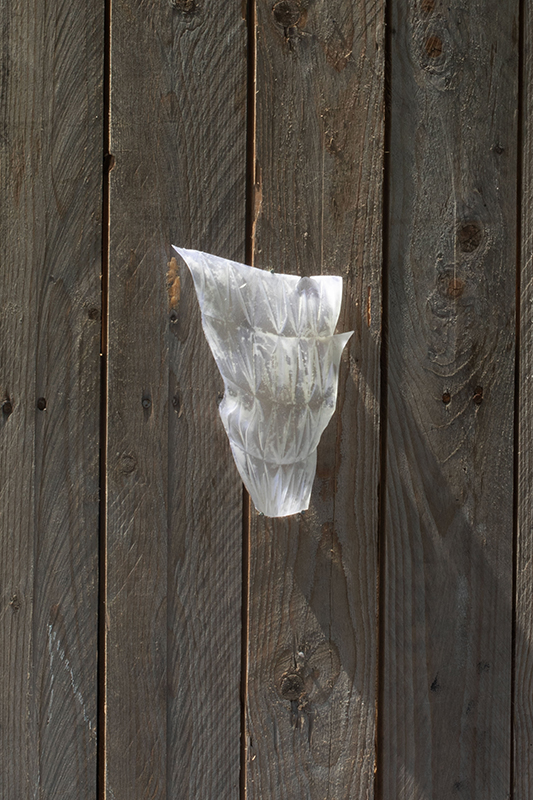
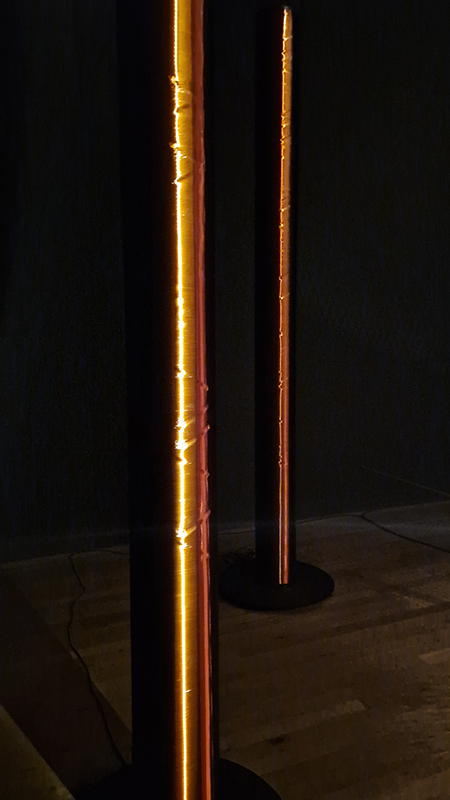
Tucked into a dark recess of the gallery, Belly of a Rock suggests an imagined place of chemical conversations at the intersection of the organic and inorganic. A hybrid between rock, mollusc and technology this video sculpture responds to an early lifeform’s emerging self-awareness, desire to communicate and urge to create as described by Italo Calvino in his story ‘The Spiral’. We don’t always know what we are creating.
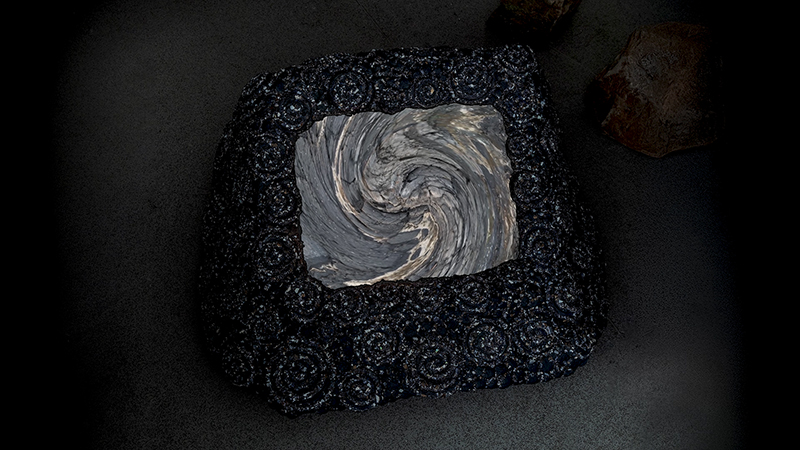
Thrilled to show these works alongside Julie F Hill @juliefhill, Rona Lee @ronaleeartist, Charlie Franklin @charlie__franklin and Deborah Tchoudjinoff @deboraht_ff

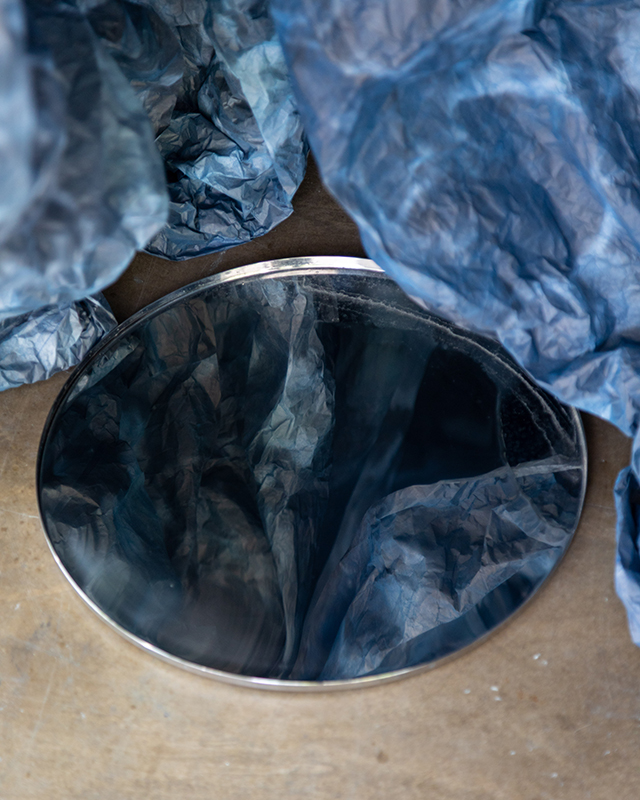
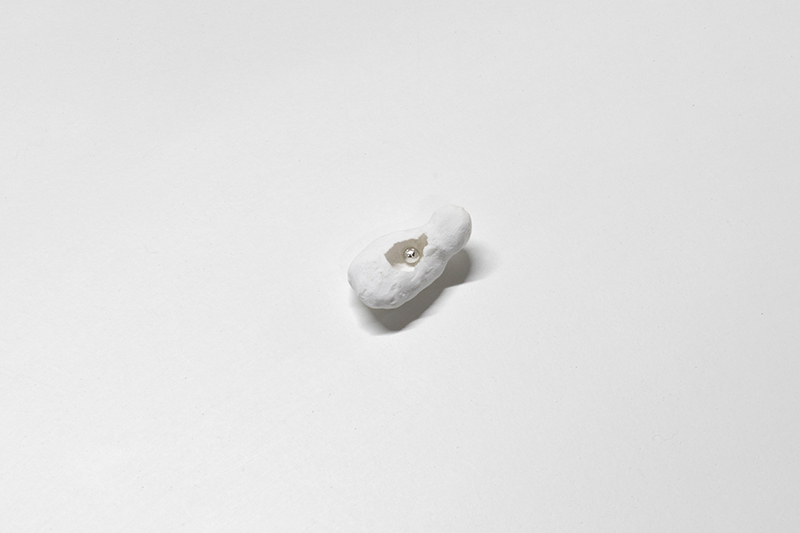
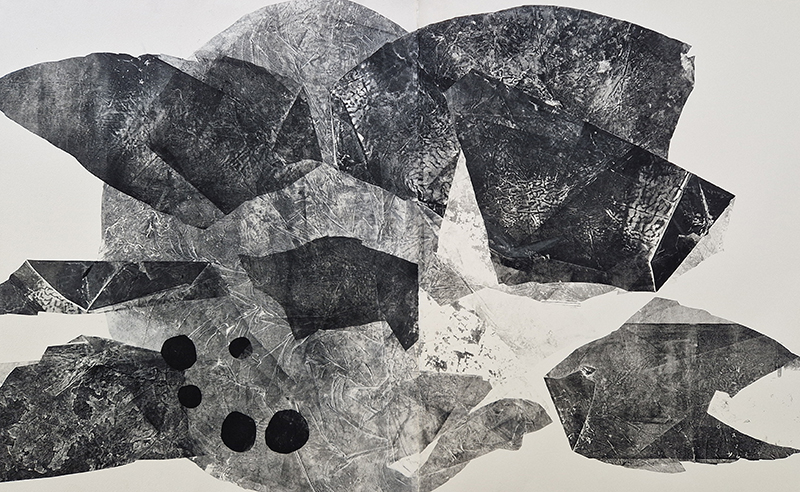
Julie F Hill’s sculptural print installation Parent Body uses scanning electron microscope imagery of samples recently returned from asteroid Bennu. The cave-like entrance, provides an embodied experience of the data and invites intimate contemplation of expanded scales. The ambiguous rock-like yet flowing forms echo the words of Jeffrey Jerome Cohen ‘stone is fluid when viewed within its proper duration’. Hill’s miniature work Return, considers the chemical and molecular cross exchanges between earth and space and in a gesture of reverse sample return (scientific missions and human extractive processes both take), a bead of Iridium is returned to the belly of asteroid Itokawa. Her small-scale embroidery work Water and Night, is based on observational studies of moonlight on water, continuing her explorations of water as the eye of landscape as proposed by Gaston Bachelard.

Julie F Hill, Parent Body, physically manipulated soy-ink print on tissue, chalk and clay pigments, chrome metal, water, clamp, funnel. c. W3 × H2.2 × D2.5m. 2025. Return, 3d print of asteroid Itokawa cast in plaster-of-paris, Iridium, 20 ×11× 8mm. 2024. Water and Night, silver metalized embroidery thread, 5.3 ×11 cm. 2025

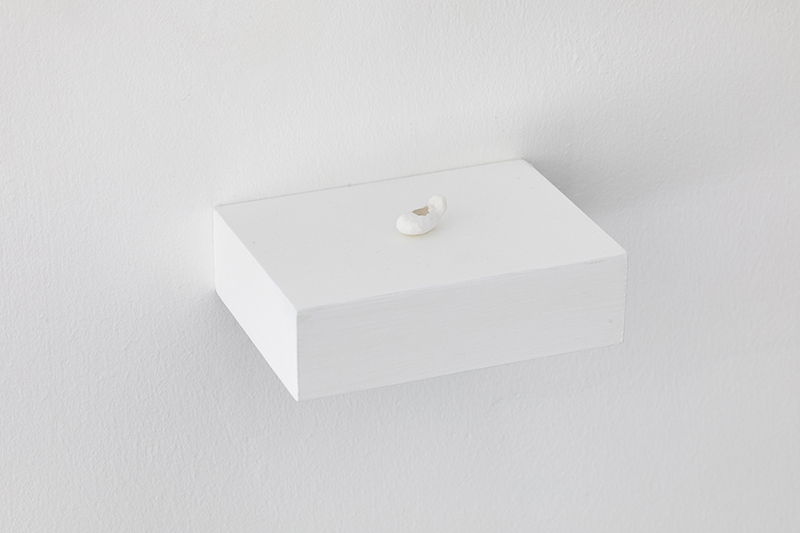
 Photography Julie F Hill (1+3) Benjamin Deakin (2)

Deborah Tchoudjinoff’s moving image installation work The City of Gold (with sound in collaboration with Joe Farley) considers vast, beyond human, geological timescales when continents have once again become as one. Starting as a short fiction text, Deborah began to form an imagined world of cities in a future Amasia. The fictional cities are named after minerals that are heavily sought – rare earths, copper, uranium, gold, and coal – hinting at a narrative of an Earth depleted of the resources we rely on. The City of Gold is one of the five imagined cities. In a world where these natural resources are no longer, she questions what it would look like and who would be the inhabitants.

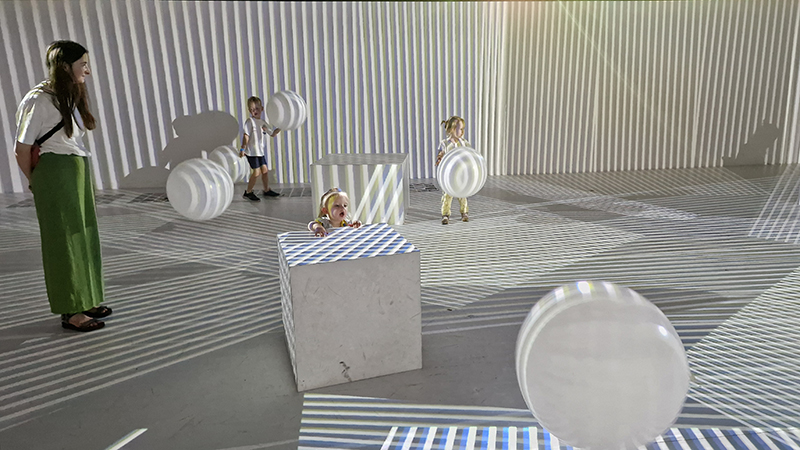
Deborah Tchoudjinoff, The City of Gold, video with sound, sculptural installation, 2m × 4m × 2m. 2025.

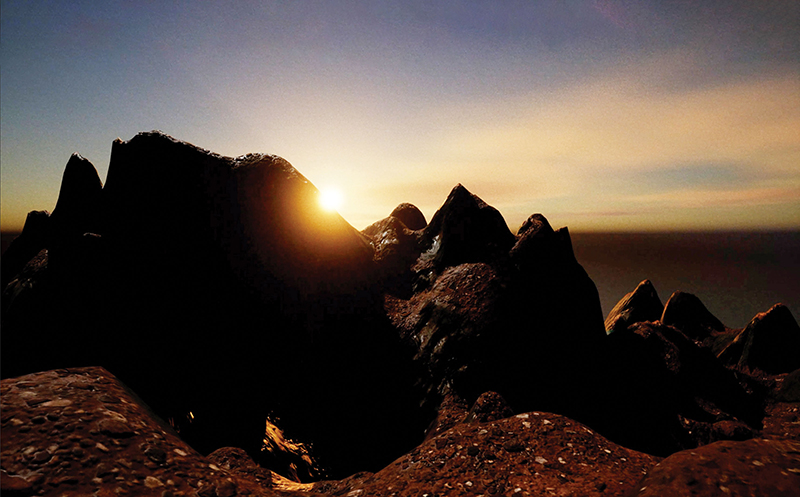
Photography B J Deakin (1) Julie F Hill (3)

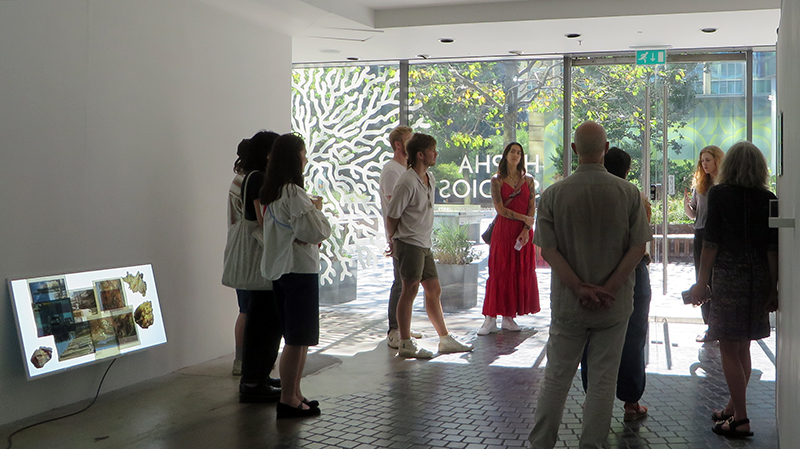
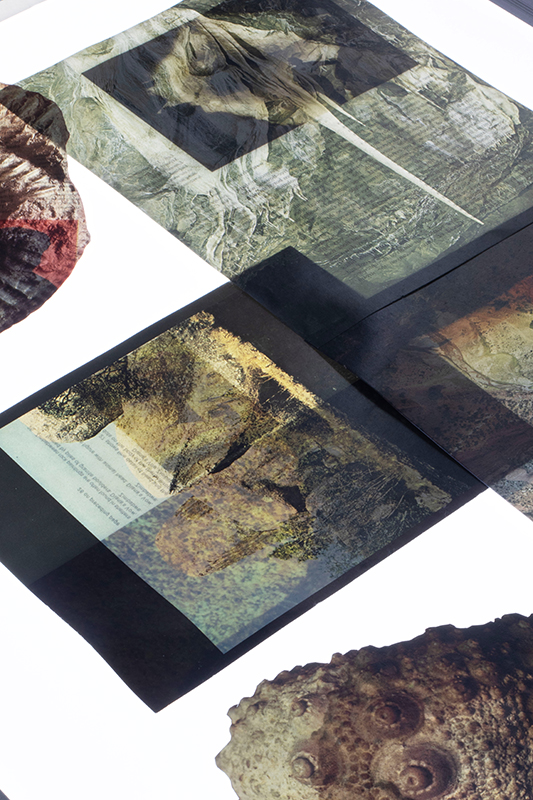
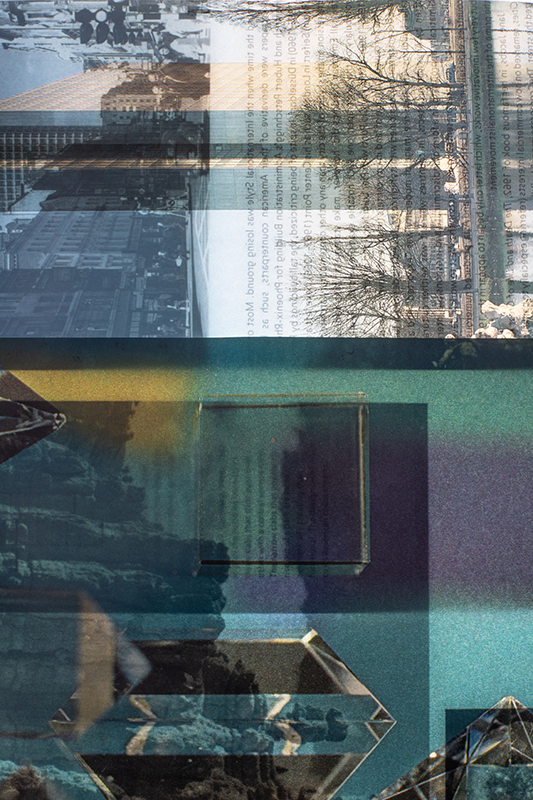
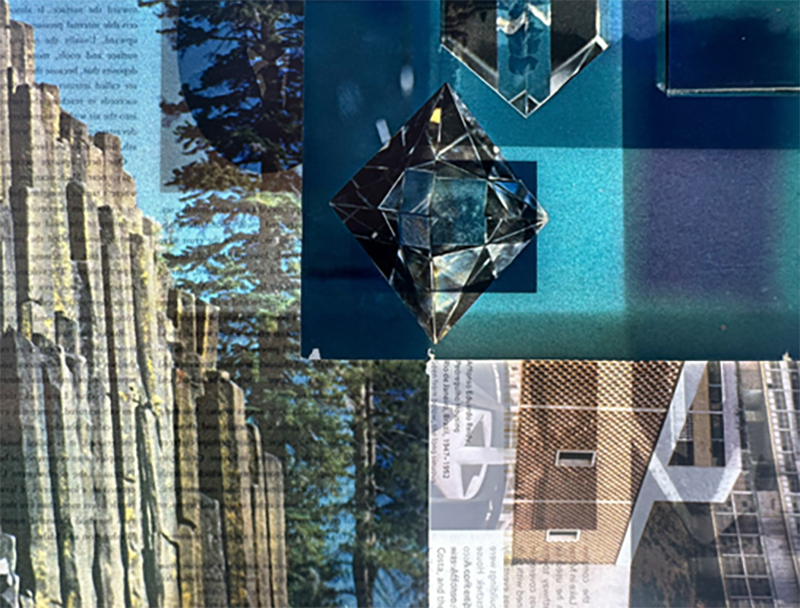
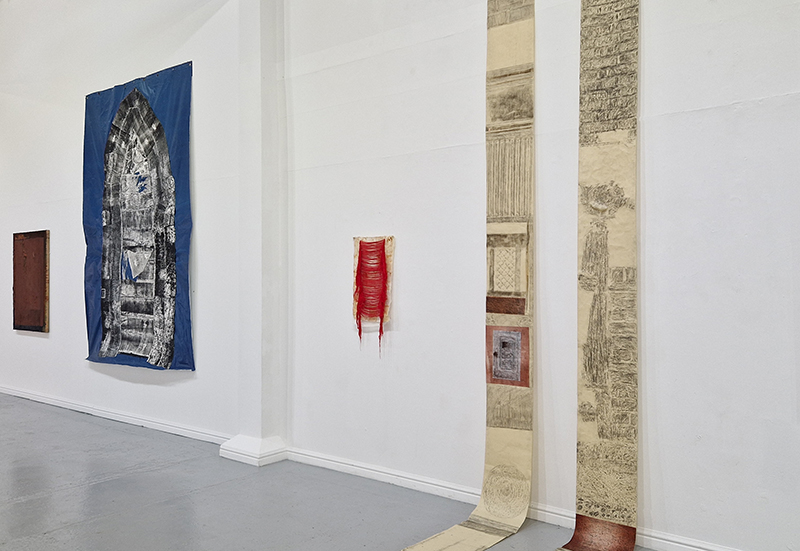
For Litho/Domous Rona Lee has chosen to work with book plates originating in the post-war period of the ‘great acceleration’ – a time in which population numbers, use of natural resources, popular consumerism, technological dependency and environmental degeneration burgeoned. Unified in their varying representations of the geologic but broking no contradiction between their celebration of extractive processes such as tourism and industrialisation and idealisation of the ‘wild’, the images selected by Lee conjure a pre-fall world in which imaginaries of lithic instability are firmly suppressed.

Two handfuls of silt (the residue of scientific samples collected at a depth of 4,000 meters), squeezed into the artist’s hands, fired and then gilded, form Rona Lee’s I want, I want, I want (2012), the title of which references William Blake’s engraving of the same name, wryly conjures the possibility of reaching down into the ocean’s depth, as though into a rock pool, while simultaneously cautioning against the folly and voracity of such ambitions.

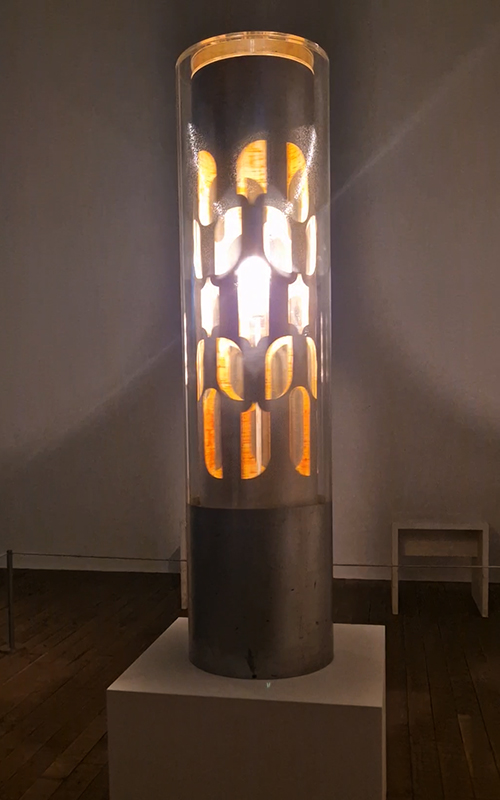
Rona Lee, Litho/Domous, light panels, bookplates. 2025. I want, I want, I want, fired and chromed handfuls of sediment, 2012.

Photography B J Deakin

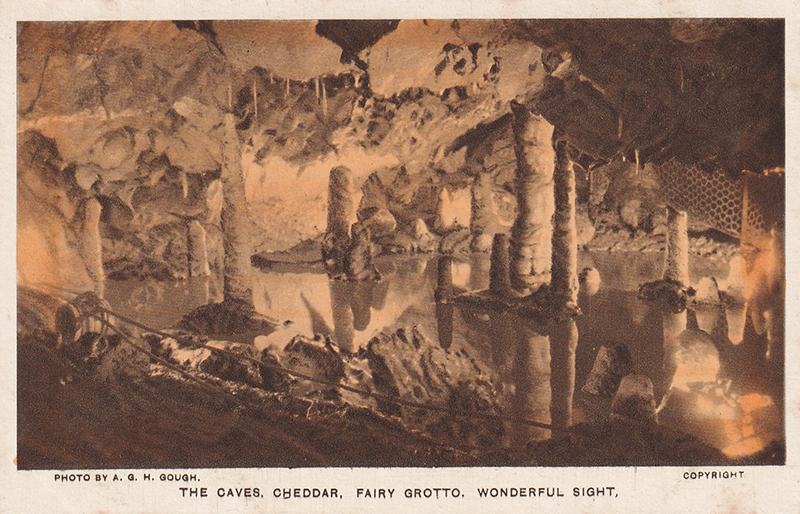
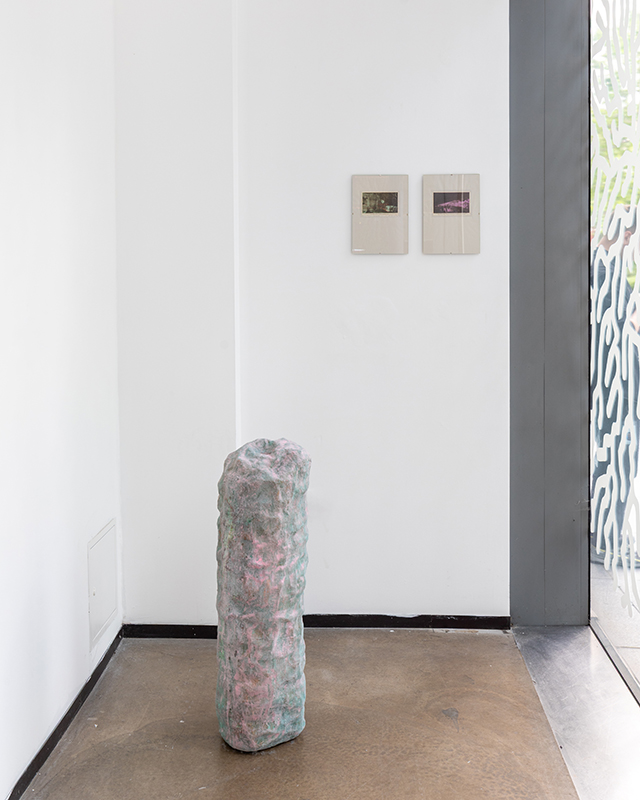
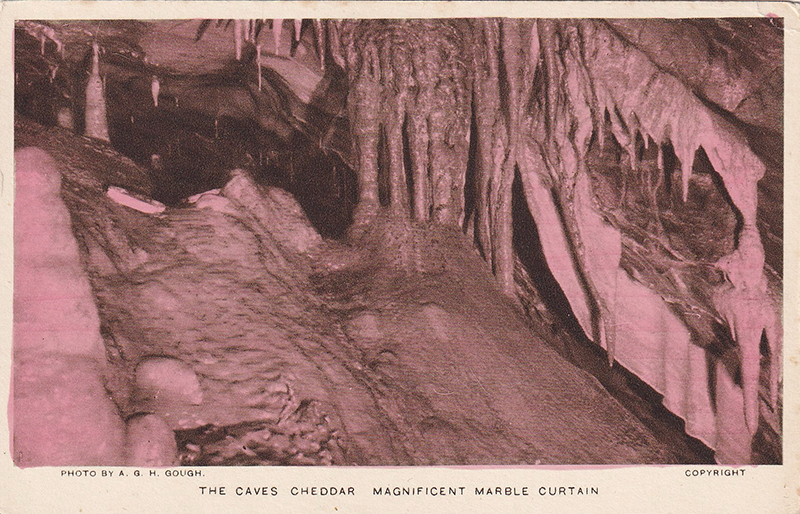
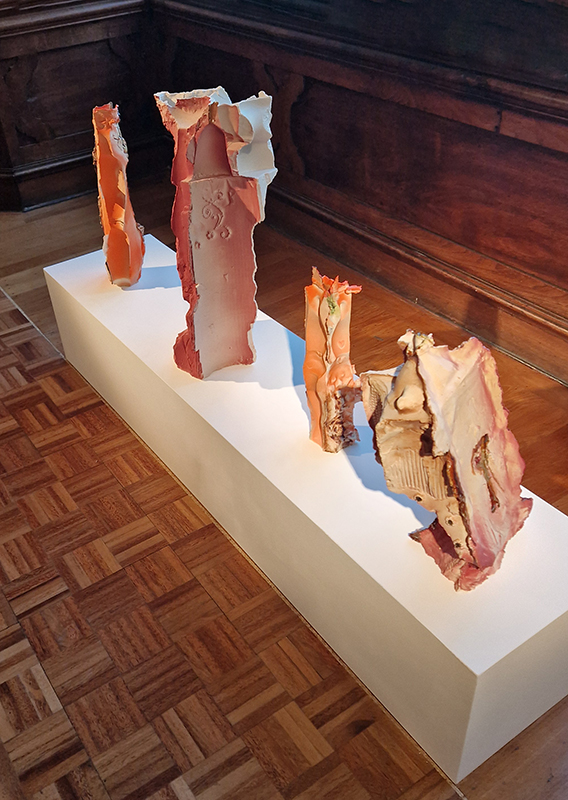
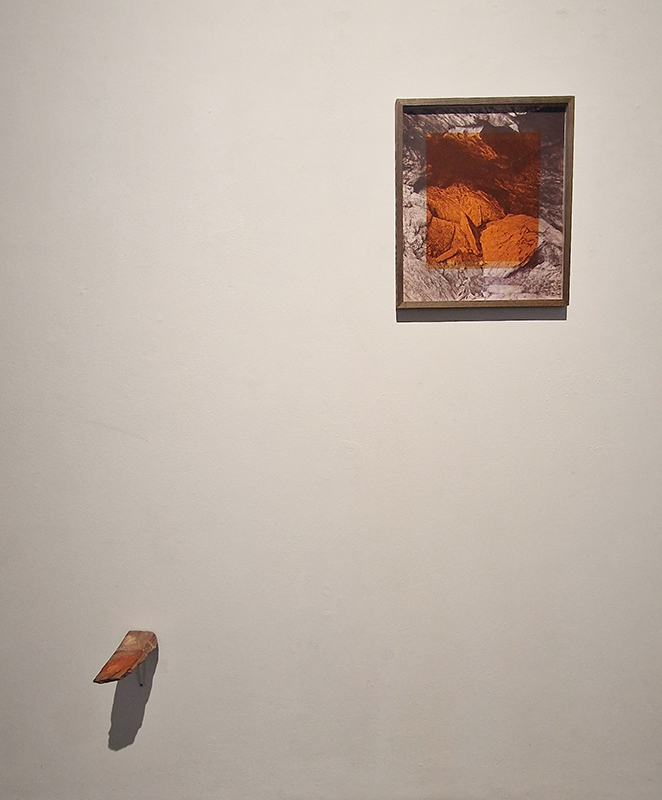
The sculptures presented by Charlie Franklin, Landform and FRAGS, are lumpy, solid looking forms that speak of geological debris or ruins. All three pieces were soaked in the waters of the North Sea, on the easterly edge of the UK. This process allowed the natural elements to determine their individual patination or colouring, along with indentations and scuffs, where materials have been worn away by salt and stone. Cave Drawings (Aladdin’s Cave, Series of Grottos, Marble Curtain, Fairy Grotto, and Solomon’s Temple) are a series of five found postcards depicting the caves at Cheddar Gorge in Somerset, UK which have been hand coloured by the artist. Franklin is interested in how the addition of colour can provoke a personality or aura within each cave interior, allowing for grand experiments to be realised on an intimate scale.

Charlie Franklin, Landform, Cardboard, found fabric, gaffer tape, gouache, scrim, plaster, adhesive, acrylic paint, copper leaf, sea water residue, 87 × 26 × 30cm. 2025. Cave Drawings, felt tip on found postcards, 14 × 9cm. 2025. FRAGS, cardboard, rope, gaffer tape, scrim, oil paint, aluminium leaf, plaster, adhesive, acrylic paint, copper leaf, seawater residue, work in two parts, 29 × 22 × 28cm / 12 × 29 × 23cm. 2025.

Photography B J Deakin, Julie F Hill

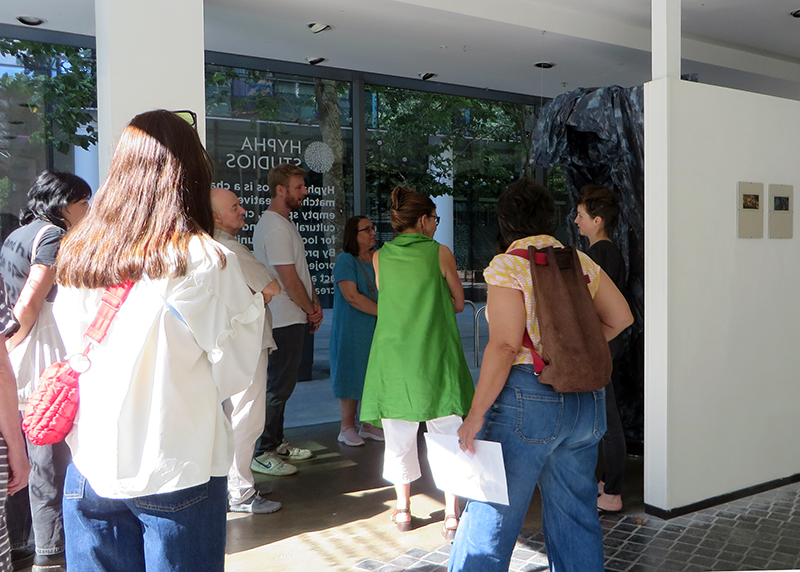
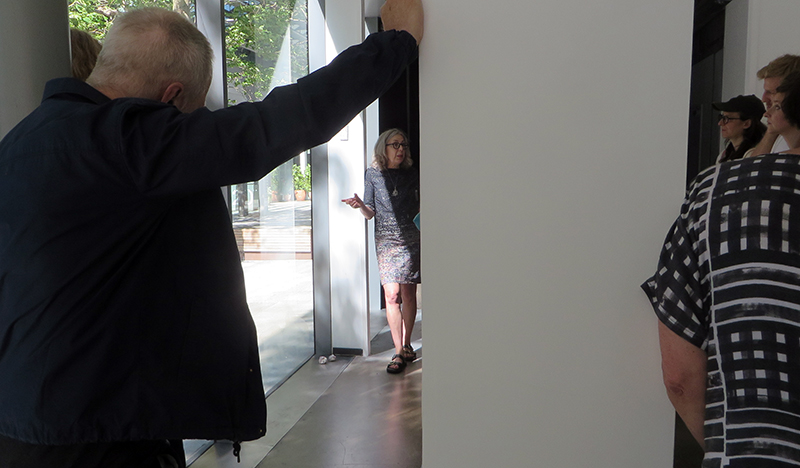
A highlight of our events was an Urban Geology Walk led by geologist Ruth Siddall.

“The gravel pit, like other mining holes, is the reverse image of the cityscape it creates — extraction in the aid of erection.” Lucy Lippard

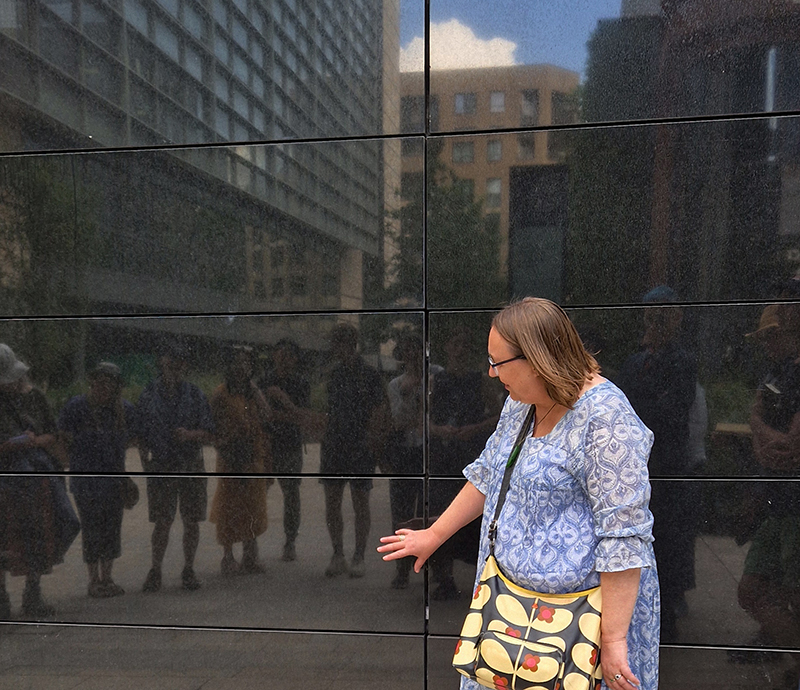
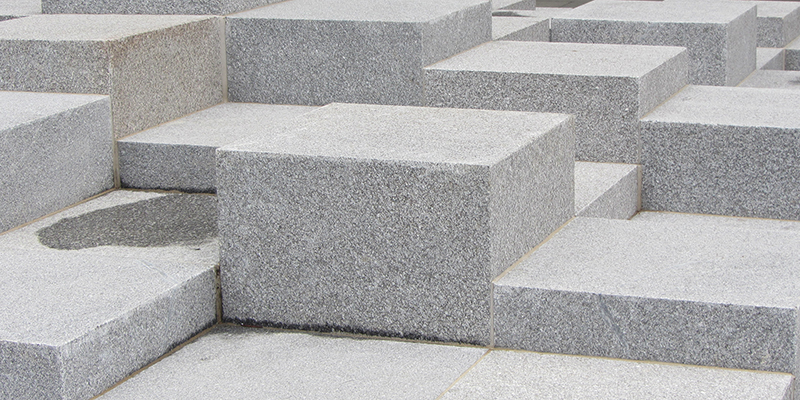
Ruth lead a group walk to explore the geology of the local built environment around Regent’s Place and Fitzrovia. Her knowledge of geology is astounding and her passion for stone infectious. Everyone came away incredulous, having their eyes opened to the deep time history of the rocks that build our city. The deep, black, Archaean dolerite from Mashonaland in Zimbabwe that Ruth points to is 2.2 billion years old. The large block of polished stone shaped like a giant pebble, itself crammed with pebbles of other rocks, is a sculpture by John Aiken, Monolith & Shadow. A patchwork of Jurassic limestone from southern Spain is crowded with the spire-shaped fossil shells of the gastropod Nerinea, stained red and yellow with ochres.

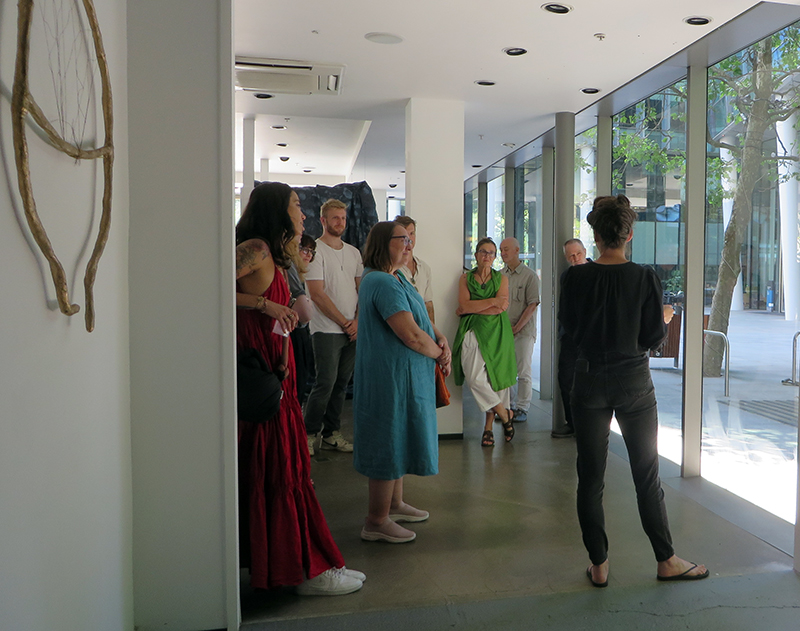
After the walk Ruth joined us for a tour of the gallery – it was fantastic to hear her insight and corroboration on some of the research that fed into the artworks.
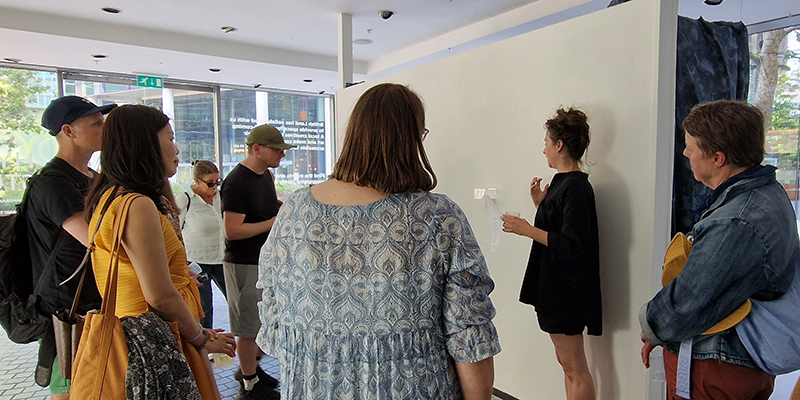
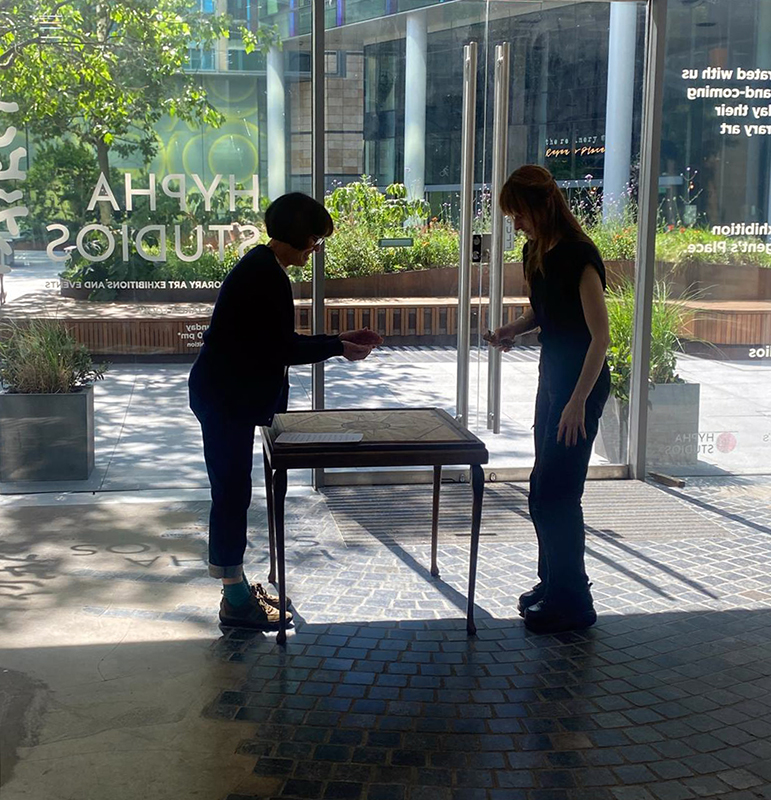
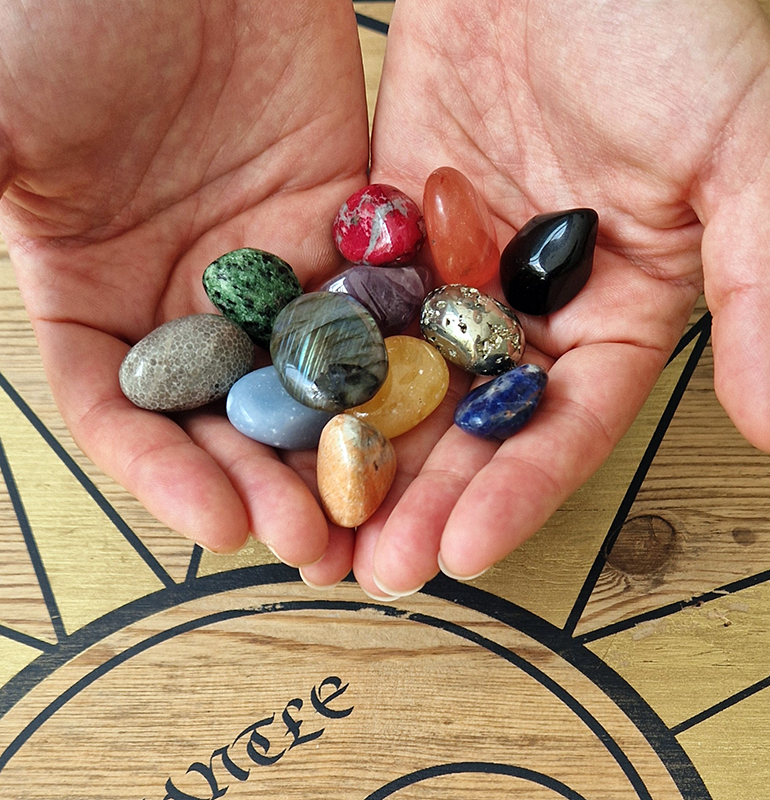
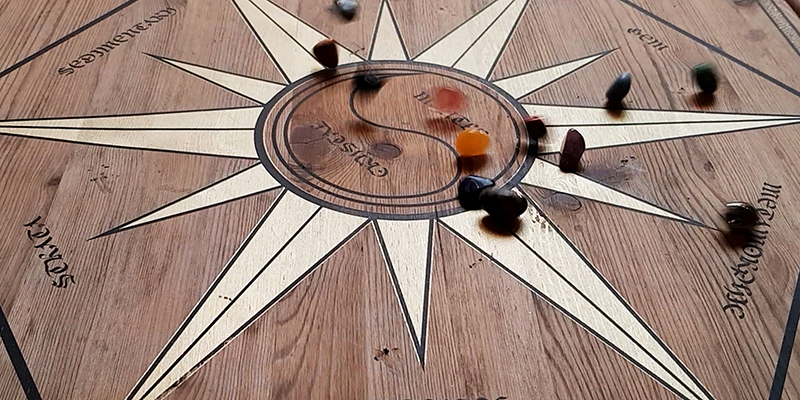
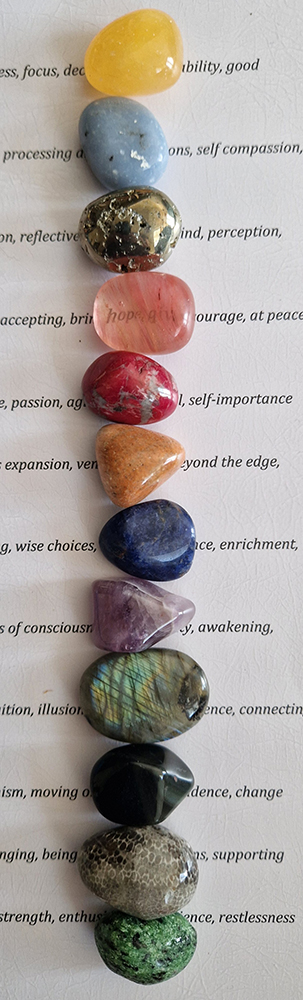
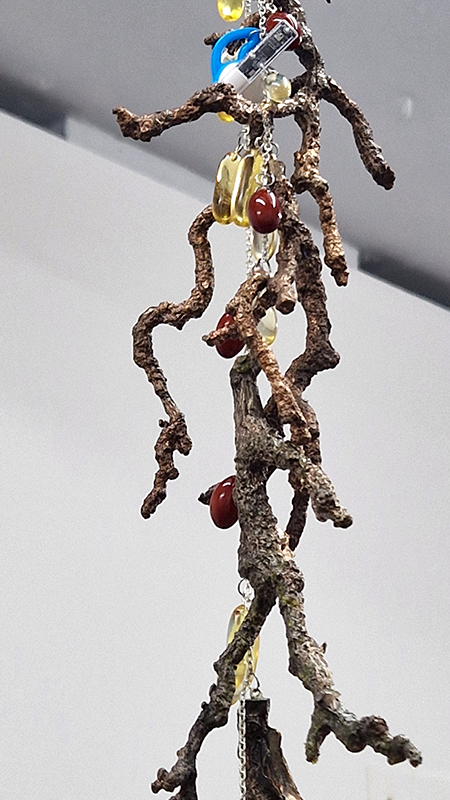
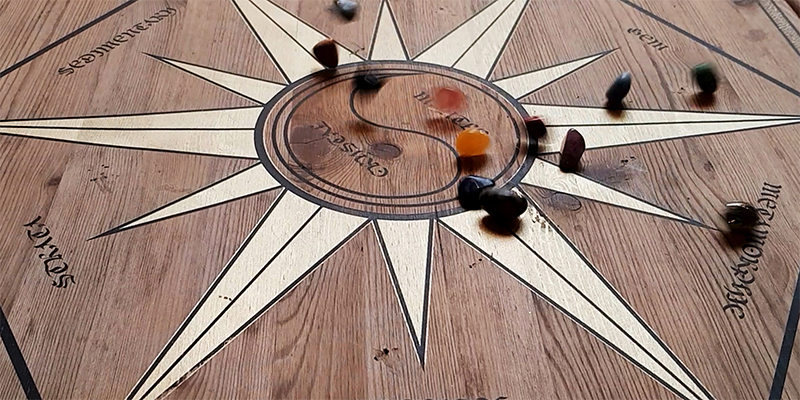
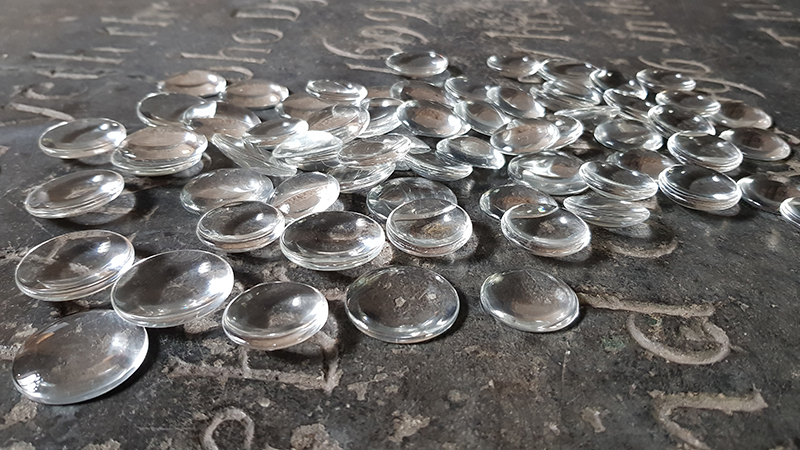
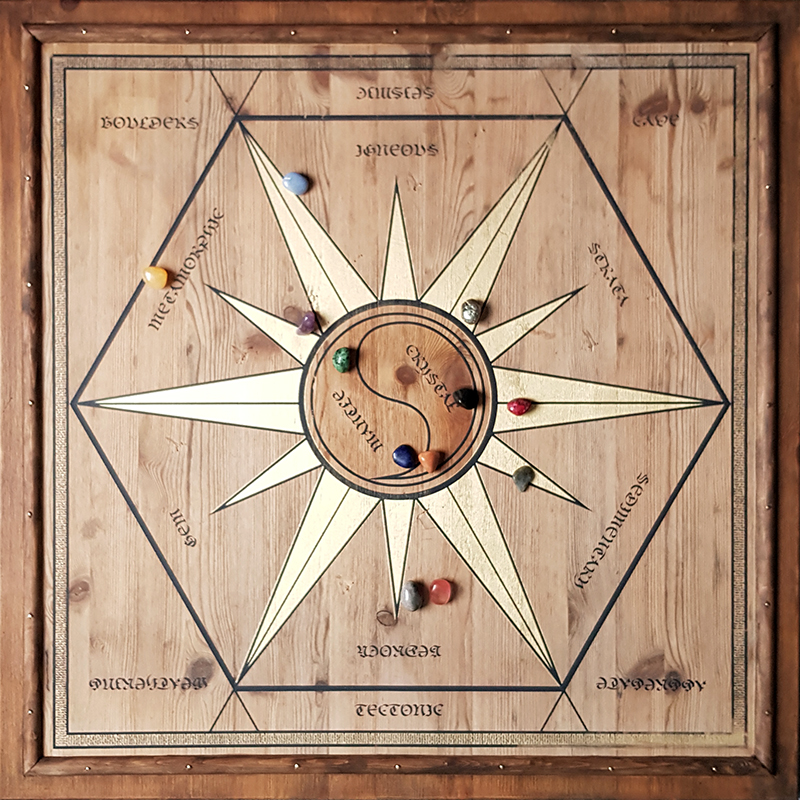
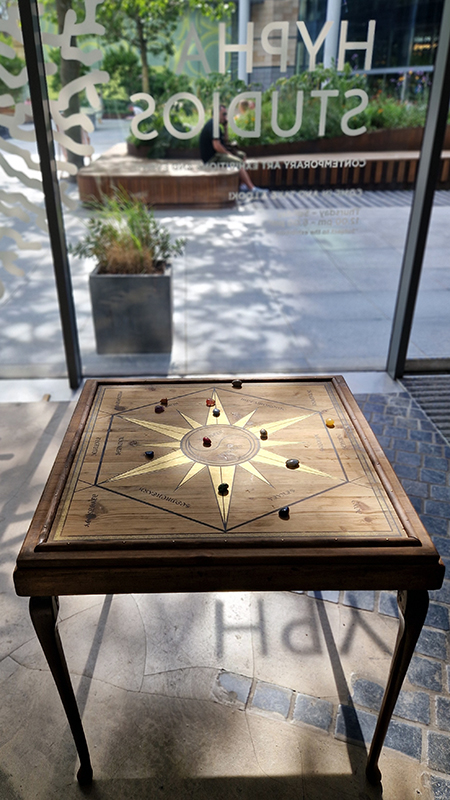
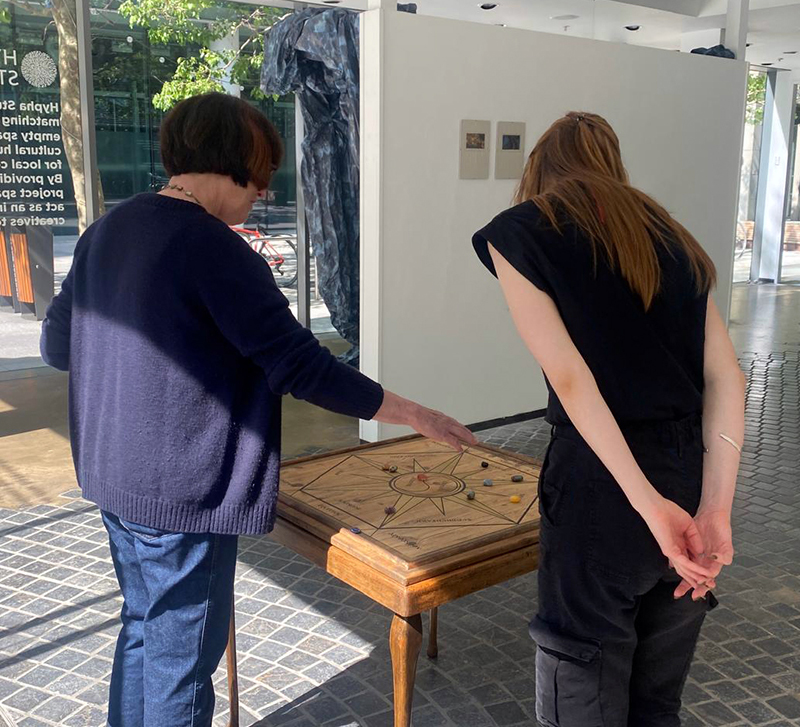
I offered Lithomancy drop-in sessions on Friday afternoons as part of a programme of events for The Geological Unconscious. Visitors were invited to throw gemstones with specially assigned characteristics onto a wooden board divided into geologically themed sections. They are then given personal interpretations based on the position of the cast stones by drawing from the esoteric ritual of lithomancy which seeks to divine the future from the reading of stones.

This performative experience proposes insights into the power and allure of stones emanating from the symbolic meanings attributed to them and exposes the entangled relations between the human and the geologic found in our language and desire to align the human condition with the lithic.

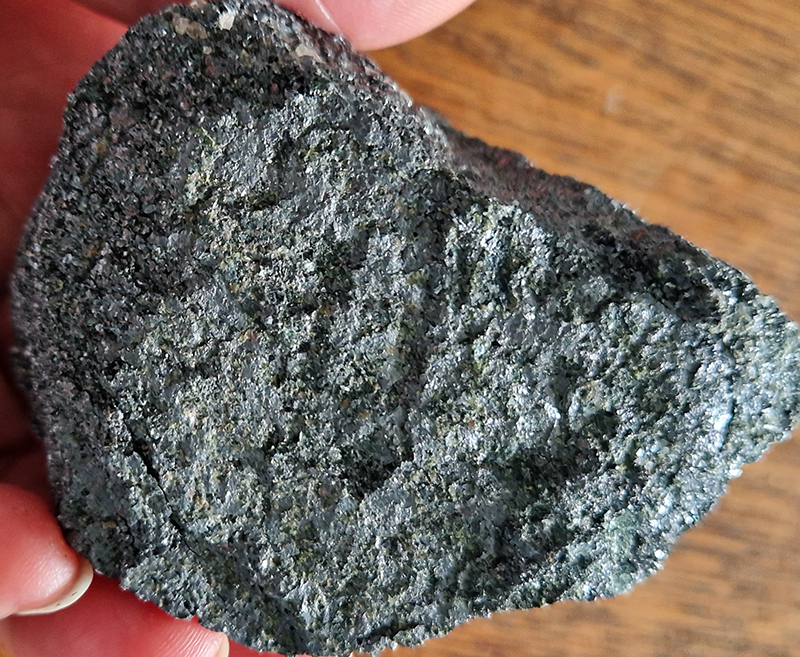
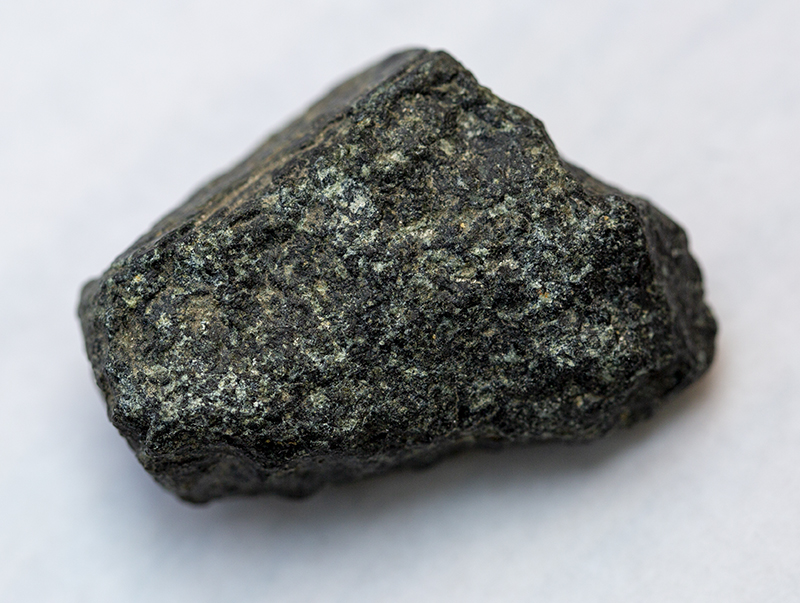
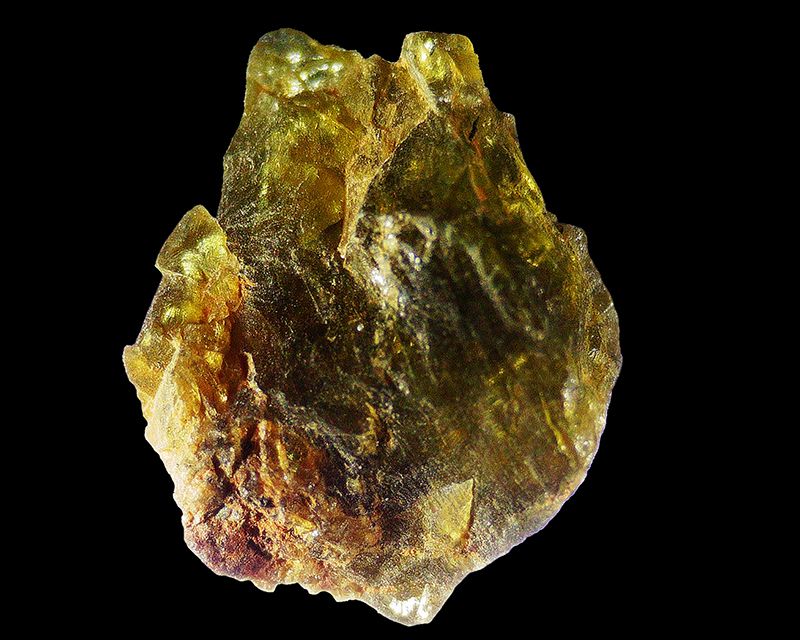
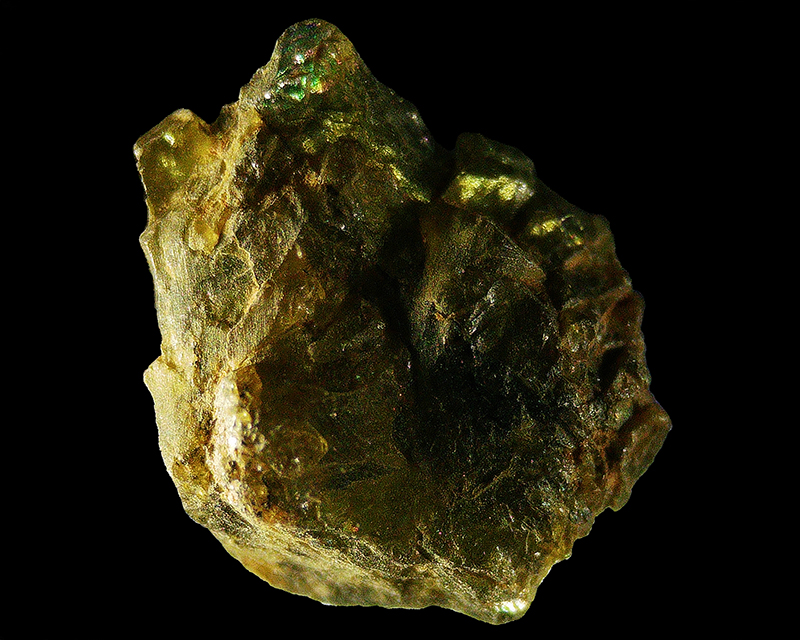
We had many interesting visitors to The Geological Unconscious and have made some wonderful new contacts. Not least among these was meeting Melanie Wheeler who has recently completed a residency in the UCL Geology Department where she worked with the technician to re-curate the rock room. Julie and I were lucky to be taken on a tour of the newly curated collection and receive gifts. So excited to have a beautiful sample of magnetite.

In ancient Greek, magnetite was known as “magnes lithos,” meaning “stone from Magnesia” – the region in Thessaly, Greece, where magnetite was first discovered, supposedly by a shepherd who noticed the nails in his boots were sticking to the rock under his feet.

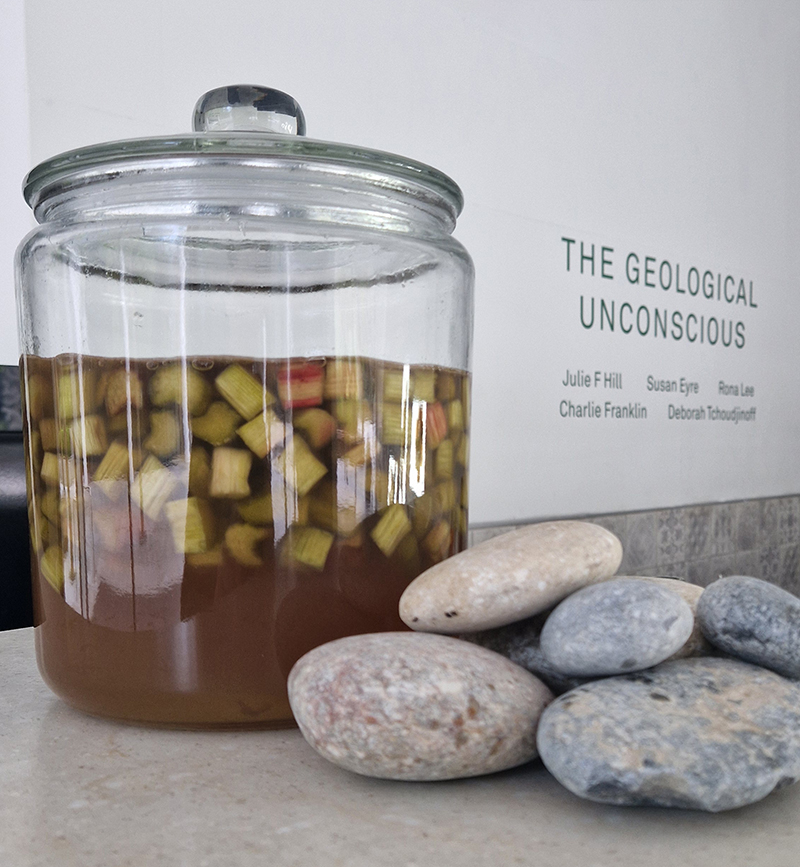
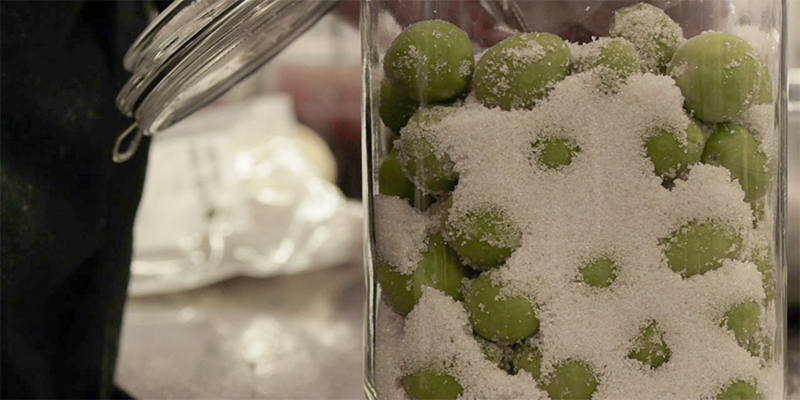
As an additional daily drop in activity during The Geological Unconscious we offered cheong tasting. Chef Moonhyung Lee explored human-mineral entanglements through digestion using stones to create cheong (Korean fermented syrup). The use of weighing stones helps create the environment for preservation, a process which amplifies the bioavailability of minerals in food. Moonhyung Lee is a food designer with a background in graphics. She is currently based in London and works at zero waste restaurant Silo.

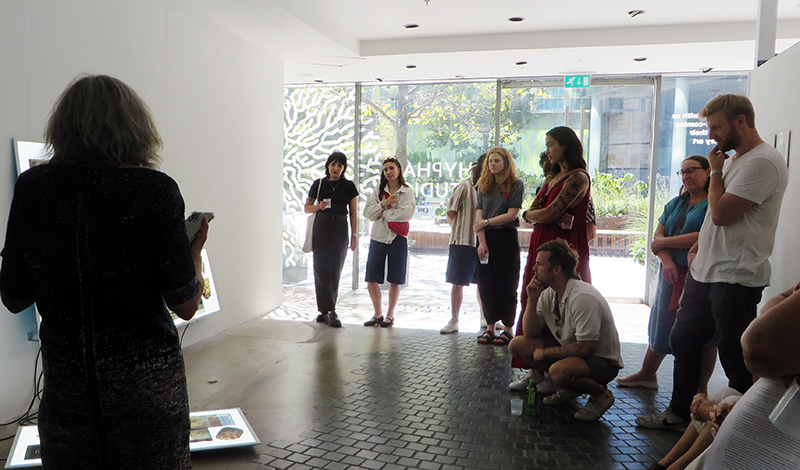
It was great to have so many people join us for our Closing Event artist talks and the launch of the exhibition publication with preface by Jason Groves and short essay by Ruth Siddall.

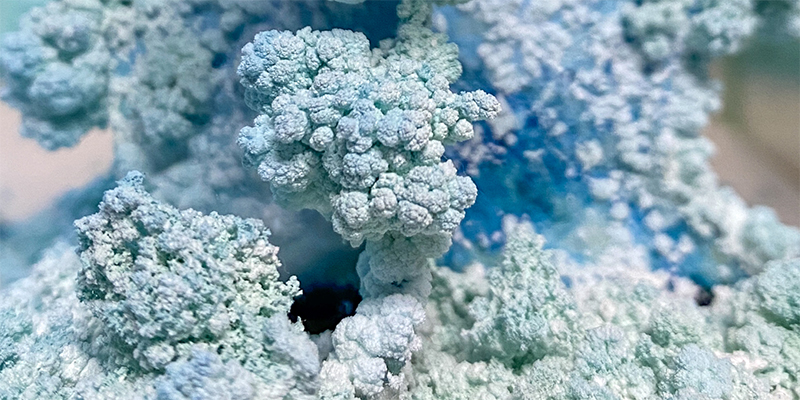
We also had the microscope set up at the closing event to look at some crystal growth in solutions prepared by Julie who works extensively with crystals.

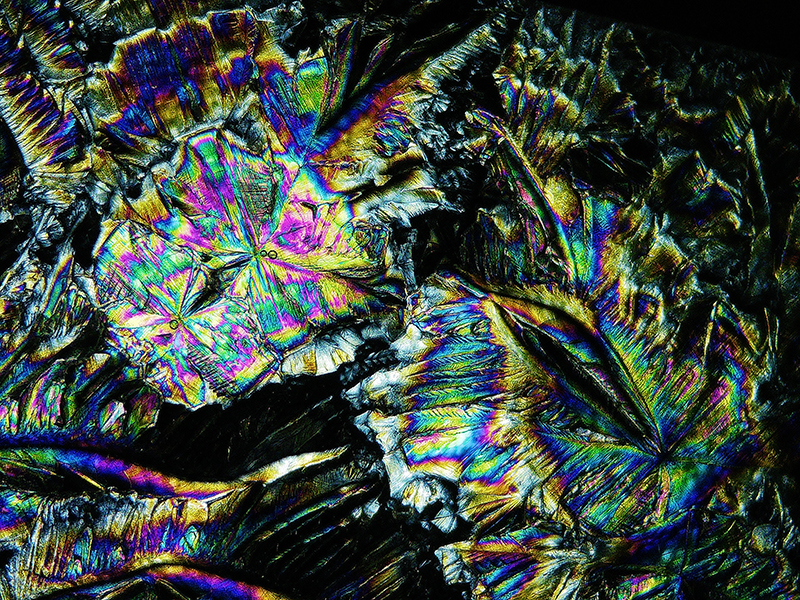
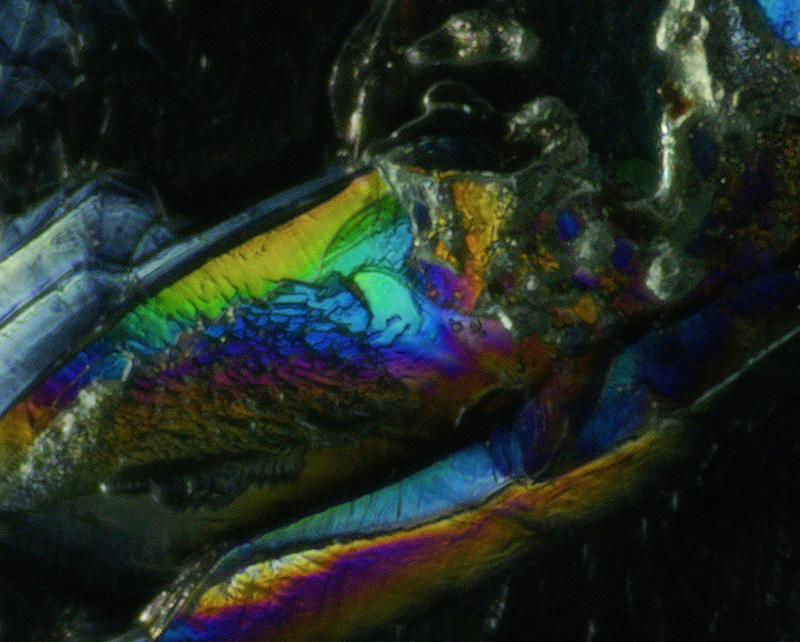
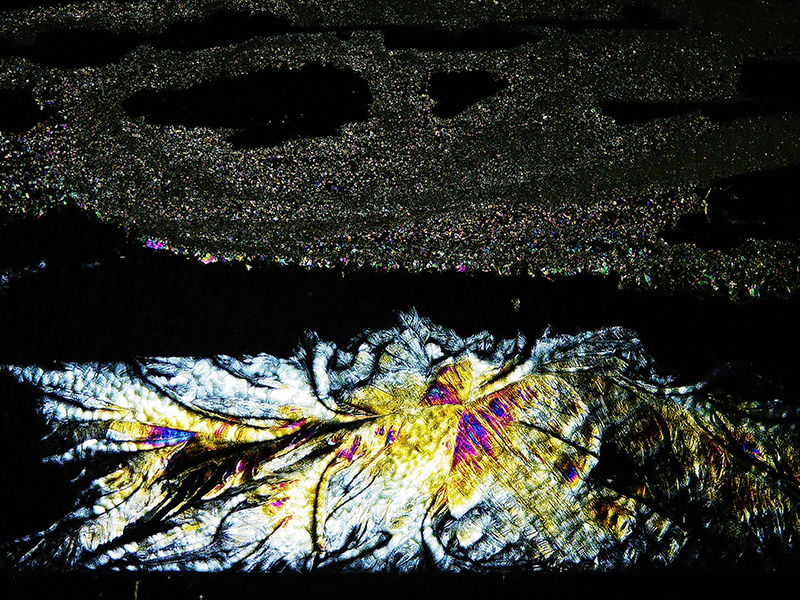
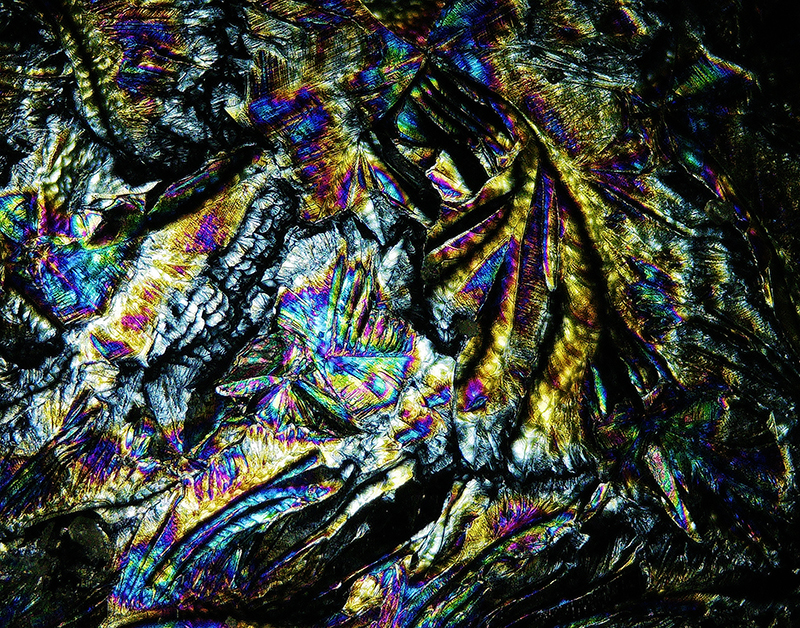
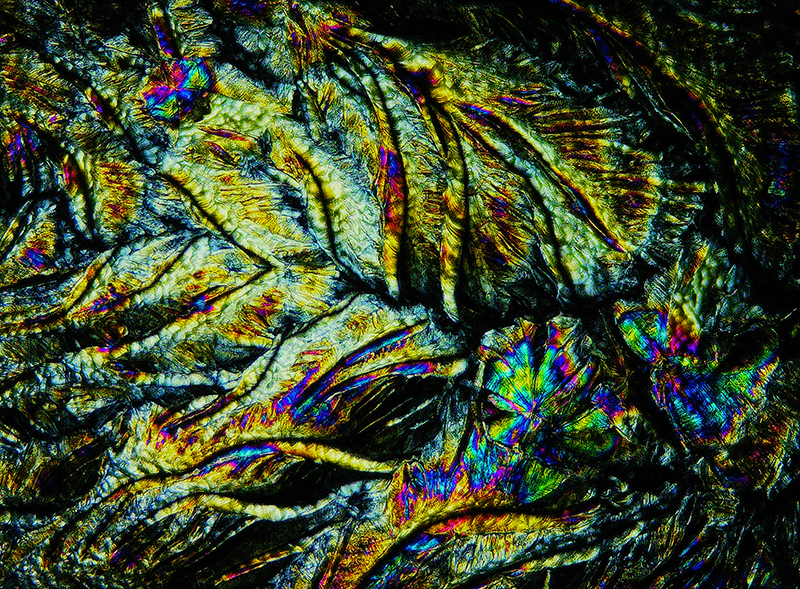
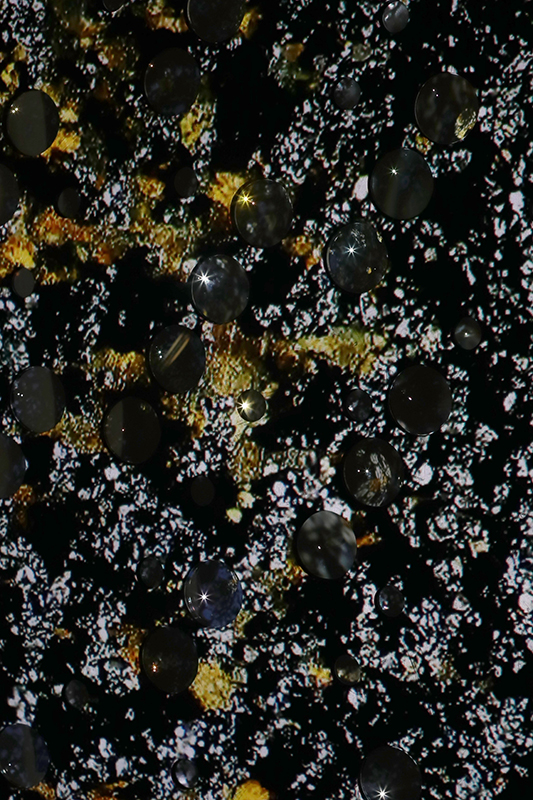
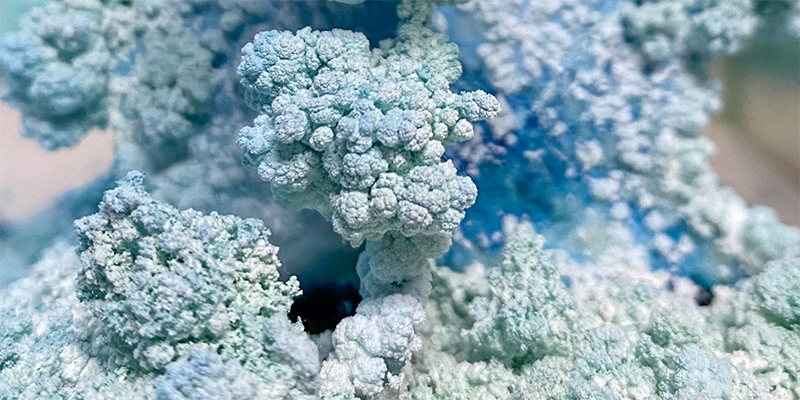
I had tried some ‘Vitamin C’ crystal growing microscopy experiments at home. These images use a polarising filter under the microscope to reveal the vibrant colours. Next step will be to set up a timelapse of the crystals growing.

Summer Solstice 2025. The shortest night of the longest day brought an awful darkness. Collected the last two solargraphs I had installed at the Hogsmill Nature Reserve. These have been collecting light from the sun for a whole year, recording every sunrise and sunset. May the light shine through.

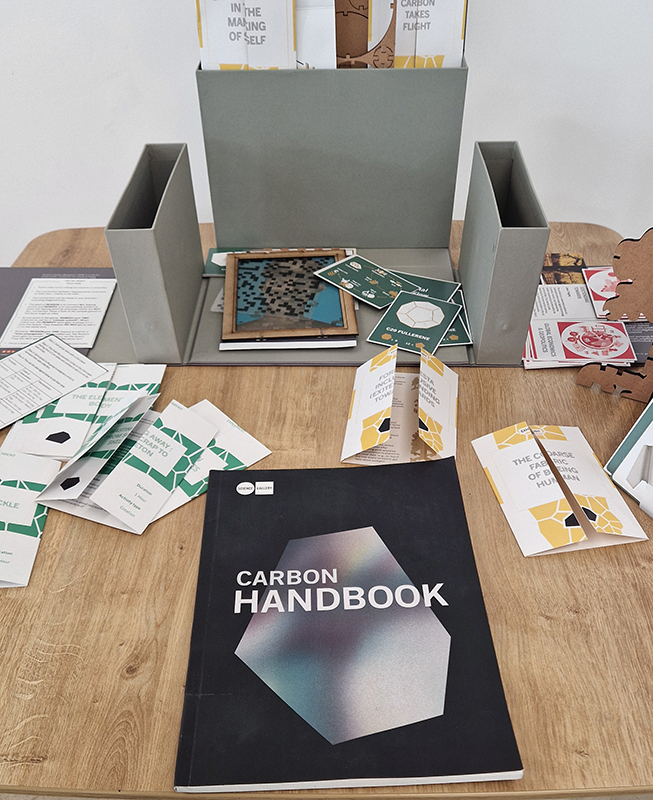
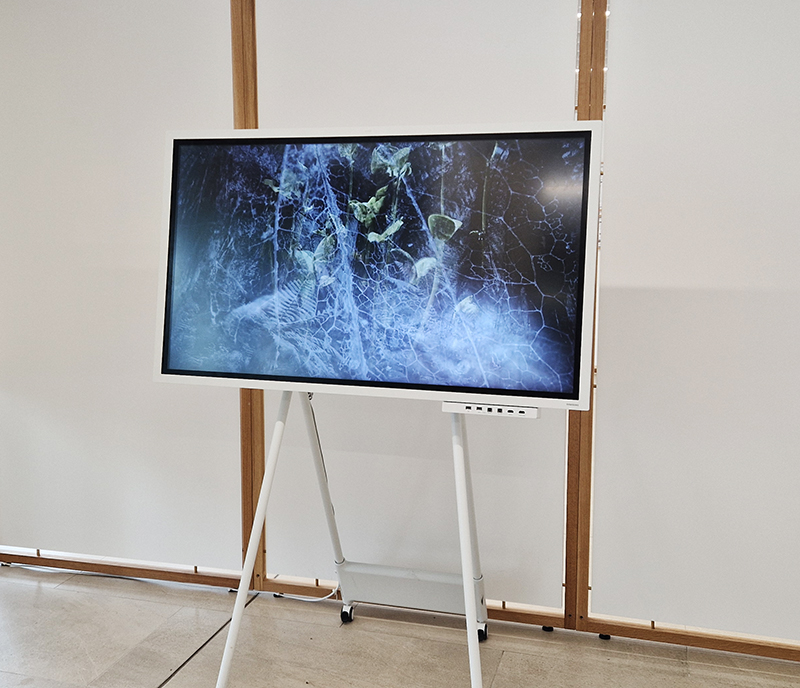
I was delighted that my video Cosmic Chiasmus: crossing the universe was included in CARBON: Under Pressure, at the Mazumdar-Shaw Advanced Research Centre as part of Glasgow Science Festival 2025, in a special exhibition partnership with Science Gallery Bengaluru.

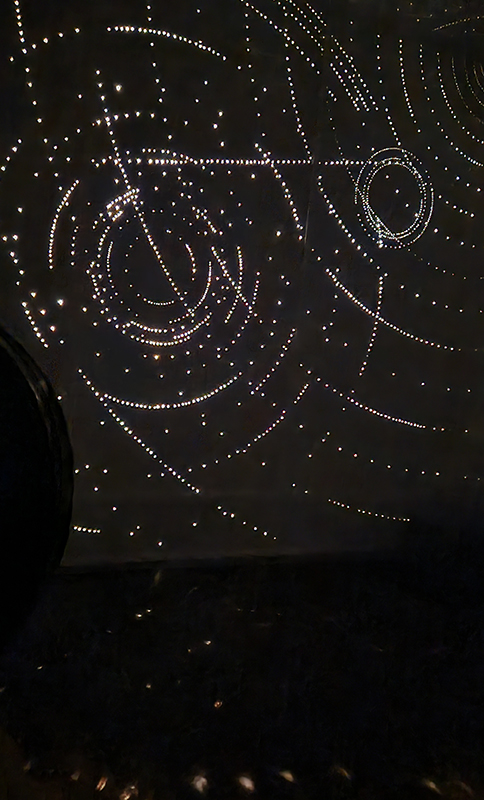
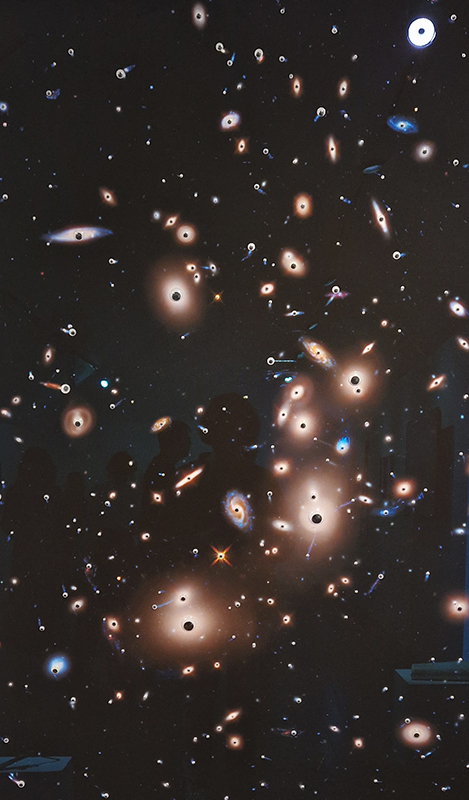
The video offers a glimpse into a subatomic world where cosmic rays travel from distant galaxies to collide and silently interact with atoms and technology on Earth. Alongside the screening of the video I was also invited to give an artist talk and cloud chamber demonstration. It was great to share the wonders of the cloud chamber with visitors who were able to see cosmic ray trails for themselves.

It is an incredible journey that cosmic rays make, blasted across space, spiralling along magnetic field lines to end up entangled with carbon in our bodies.

Not only is all life physically permeated by cosmic rays with the potential for nuclei collisions, but some cascading particles smash into atoms of nitrogen and combine with oxygen to create radioactive carbon-14 which enters our atmosphere. Plants absorb it during photosynthesis, and it is incorporated into their carbon skeleton, which we then eat. While plants and animals are alive, carbon-14 is continually replenished as the organism takes in air or food. But when an organism dies no more carbon-14 is absorbed and that which is present starts to decay at a constant rate. By measuring the radioactivity of dead organic matter, the current carbon-14 content can be determined and the time of death established. Cosmic ray activity gives us carbon dating techniques.

Reading

The Geological Unconscious – Jason Groves. Returning to this book that sparked the ideas we explored in our exhibition. A redirection of geology to consider a type of connection between things that are not in themselves geologic. Stones that stare, stones that speak. An image of the human could develop through geologic processes, becoming part of the mineral consciousness. Quoting Heather Sullivan ‘There is a difficulty for biology and philosophy to maintain a reliable distinction between life and non-life.’

The Writing of Stones – Roger Caillois. A paean to the capacity of minerals to form images within the imagination, which in turn is considered to be nothing more than an extension of matter.

The Performances of Sacred Places: crossing, breathing, resisting – edited by Silvia Battista. I read this for some background research while thinking about how I might make work responding to the abandoned sites of the cosmic ray detector huts at Haverah Park on the North Yorkshire Moors.

‘An horizon stands, in modern hermeneutics, for what is possible to see from the position of a specific observer. That is, not only a location in space but also a position in the cultural and historical apprehension of the world.’ Silvia Battista

The book opens by questioning relationships between the site and its ascribed attributes, which may be mercurial qualities not easy to define or quantify. It reflects on the performativity theories of Karen Barad which argue that matter, in its complexity, is an active participant in our relationship to the world and Jane Bennet’s call to recognise the ‘vitality of matter’ that crosses the human non human divide. In the section on ‘crossing’ the sensitive work of Louise Ann Wilson explores ritual around death, grief and loss through walking in rural locations echoing walking an interior landscape of memory. Walking the labyrinth and the pilgrimage are also considered as journeys that take place in physical and metaphysical space.

‘What truth could be more unexpected ….than the one in which the mineral envisions while also being envisioned.’ Jason Groves, The Geological Unconscious

‘This is the blueprint of nature itself; both hidden and revealed in a nodule of silica.’
Roger Caillois, The Writing of Stones

The Geological Unconscious opened with an exceptionally busy Private View. It was a fantastic evening with lots of great feedback. With a multi-disciplinary approach, large-scale installations and sculptural works sit alongside embroidery, video, expanded print and photographic work, to create material intimacies that help situate us in scales beyond the human.

My video installation Lithos Panoptes imagines a view of the world from the perspective of the rock via the molecular structure of magnetite. Referencing a many-eyed giant of Greek mythology, Argos Panoptes (always eyes still awake), the work considers the perpetual vigilance of rock as record keeper and witness.

Video of human activity projected through distorting optical lenses transforms the anthropocentric position to imagine the perspective of the rock.

Magnetite is a mineral found in magma and metamorphic rock in Earth’s crust as well as in meteorites. Magnetite nanoparticles are also found naturally in organisms and are known to aid magnetoreception, a
means whereby animals and birds orientate themselves by sensing polar direction.
Through these actual and metaphoric lenses the relationship between the organic and non-organic is explored. Imagery includes allusions to scientific research into the dramatic overwhelming of innate magnetite in human brain cells by nanoscale pollutant particles of magnetite released into the air by traffic; the unique qualities of the chiton, a mollusc with hundreds of tiny eyes made from rock rather than biological material and teeth primed with magnetite and containing recently discovered mineral santabarbaraite; Saint Barbara, patron saint of miners and tunnellers, adopted when the use of explosives in mining escalated in the 1600’s and whose benedictions are still sought today with shrines installed at tunnel entrances at Crossrail and even at CERN, the epicentre of scientific rigour.

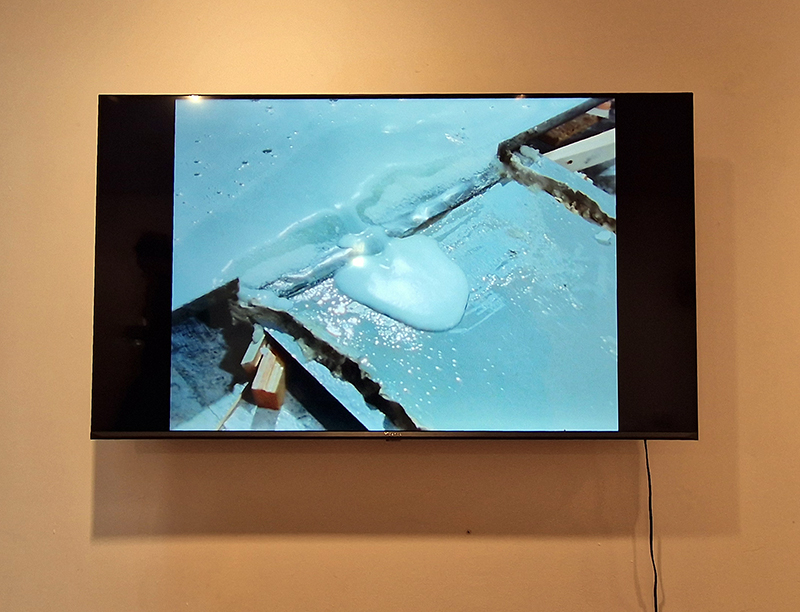
Also showing the video sculpture Belly of a Rock – describing an imagined place of chemical conversations at the intersection of the animate and inanimate. Under a crusted shell, surfaces slide and scrape along lines of fissure, distended innards ooze and rocks moan as they are distorted by untold pressure. The turbulent spiralling of the molten core births rock and lifeforms which are acted upon by the drag of an oscillating magnetic field.

Julie F Hill’s large-scale sculptural print installation Parent Body, uses scanning electron microscope imagery of samples recently returned from asteroid Bennu. The data features detail of carbon-rich and organic ‘nano-globules’ which have been theorised as ‘proto-cells’. The sculpture evokes astro-geological-biological material lineages across deep space and cosmological time. In a contrast of scale, Julie is also showing Return, 3d print of asteroid Itokawa cast in plaster-of-paris with a bead of Iridium. Iridium is an rare-earth element more abundant in asteroids than the Earth’s crust. This miniature work considers the cross exchanges between space and earth and in a gesture of reverse sample return (scientific missions and human extractive processes both take), a bead of Iridium is returned to the belly of asteroid Itokawa.

Charlie Franklin’s work considers control, physical experience and memory within the natural landscape. Her research includes how formations such as standing stones, grottos and geological debris remain or change across time. With a particular interest in materials and the properties they hold, she is experimental in her approach to making. Everyday items including cardboard, plastic sheeting and gaffer tape are repurposed to build the foundations of her sculptural work. Franklin also collects found imagery such as postcards and photographs, which she reworks to become something else.


In Litho/Domous, Rona Lee layers photographic plates from mass produced ‘coffee table’ books onto lighting panels, utilising the ‘bleed’ between them that this reveals, to evoke the tectonic instabilities of
contemporary eco relations. Originating in the post war ‘golden age of capitalism’, and designed as statement pieces for home display, the aspirational focus of these image-rich publications on culture, travel, landscape, can be said to prefigure the arc of the smartphone in making the world consumable. At the same time titles such as The Mineral Kingdom and Library of Nations speak to the legacies of the Enlightenment project, offering up an order of things in which Mankind / the Anglophone world is positioned as ascendant and Nature – along with ‘other’ cultures – is ‘put on the table’.

Deborah Tchoudjinoff’s video installation The City of Gold takes a speculative look at Earth in the far future. Her work considers vast, beyond human, geological timescales where continents have once again become one. Past supercontinents create room to speculate upon future ones if we understand Earth as shifting, moving matter. Starting as a short fiction text Tchoudjinoff began to form an imagined world of cities in a future supercontinent of Amasia. The fictional cities named after the minerals that are heavily sought – rare earths, copper, uranium, gold, and coal – hinting at the narrative of an Earth depleted of the resources we rely on. The City of Gold is one of five imagined cities.

An accompanying events programme includes an urban geology walk with Geologist Ruth Siddall, discussing the origins of the local built environment; Cheong tasting by chef Moonhyung Lee who explores human-mineral entanglements through digestion; a crystal growing workshop led by Julie F Hill and I will be offering visitors lithomancy readings every Friday afternoon. The reading of stones proposes insights into the power and allure of stones emanating from the symbolic meanings attributed to them and exposes the entangled relations between the human and the geologic found in our language and desire to align the human condition with the lithic.
Once I start thinking of minerals as something we swallow to make our body function, I also start to think of how our body comes to be composed of these minerals, and that when we gradually decay after death we become mineral components again. So, the gesture of swallowing a tablet or vitamin pill is as magical, or let’s say as supernatural, as we want, because we really are swallowing a stone. – Otobong Nkanga

Link to Marina Walker essay The Writing of Stones published by Cabinet Magazine.

London once had many stones. They made convenient landmarks for gatherings and councils, or else marked boundaries or distances. As a result, they often crop up in place names – Link to The Londonist ‘Lost Stones of London’.

Gallery visits

Mónica Alcázar-Duarte in Cultural Reforesting Exhibition at Orleans House Gallery. In this exhibition, the artists remind us that we not only have a relationship with nature but also that we are nature. We are human animals. Together, with our more-than-human neighbours, we are a growing, singing, howling forest. 

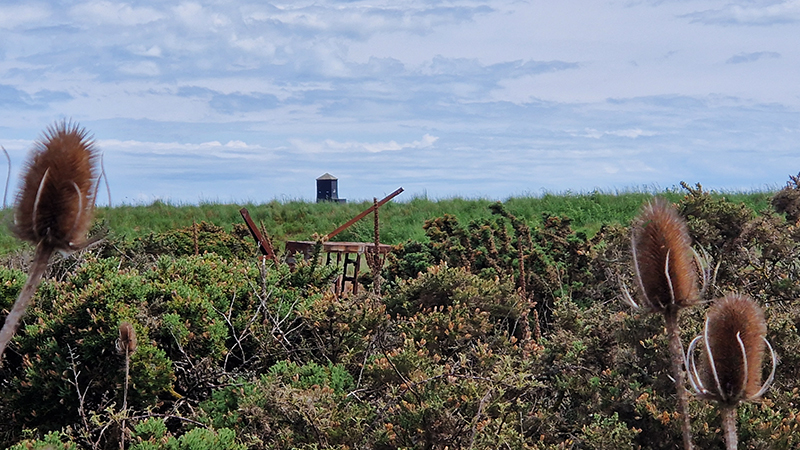
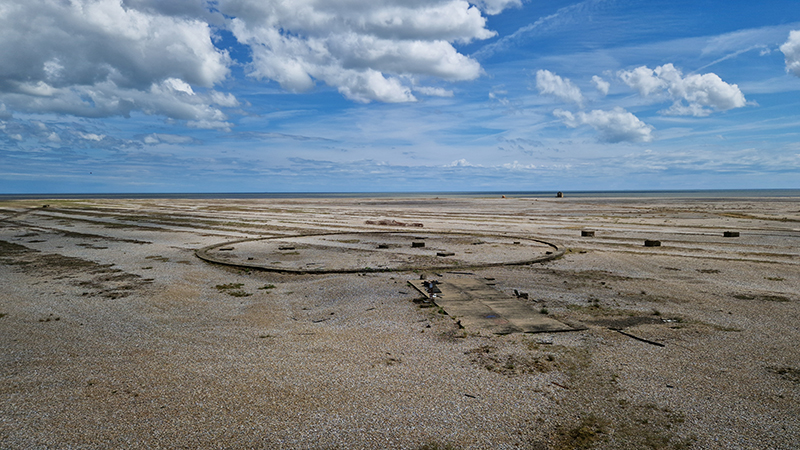
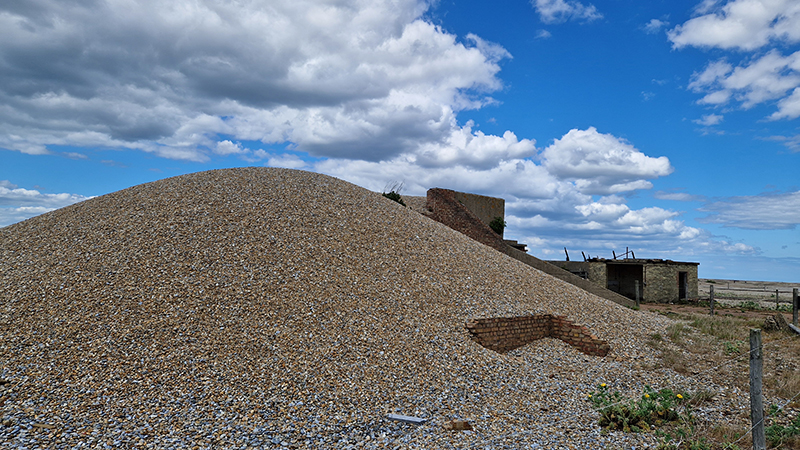
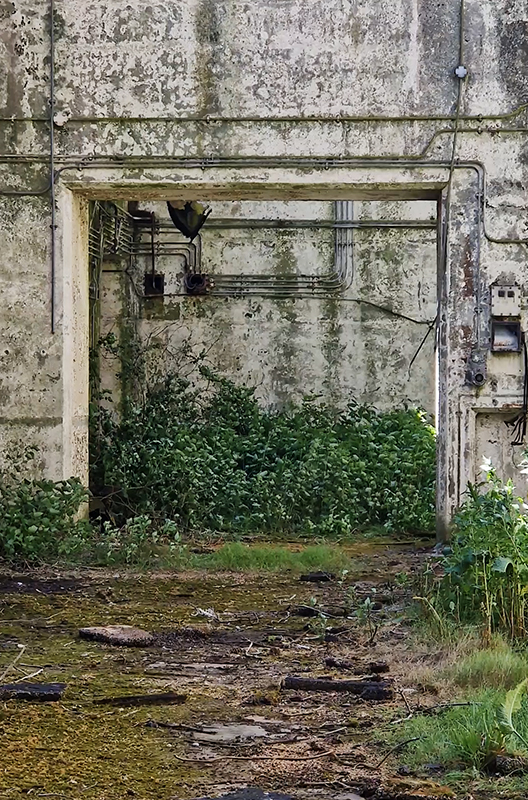
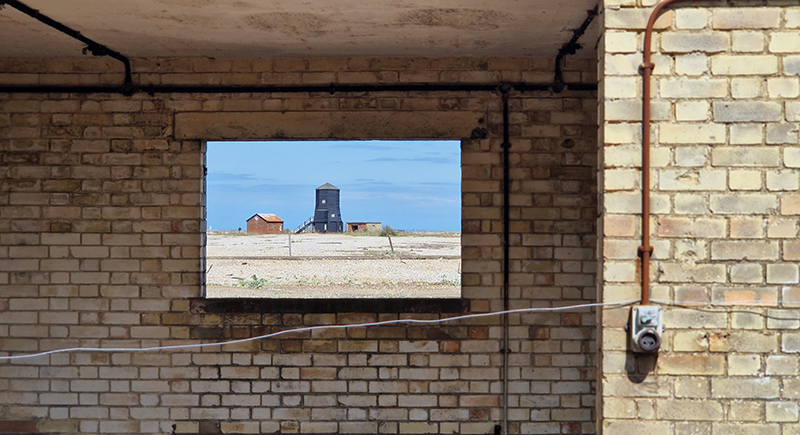
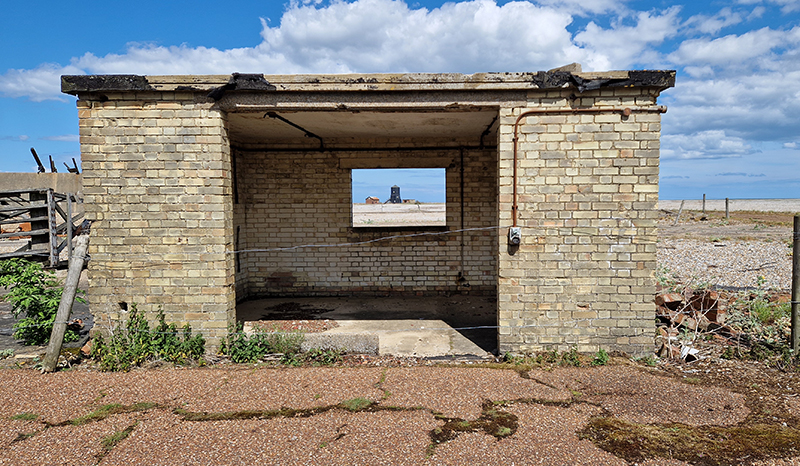
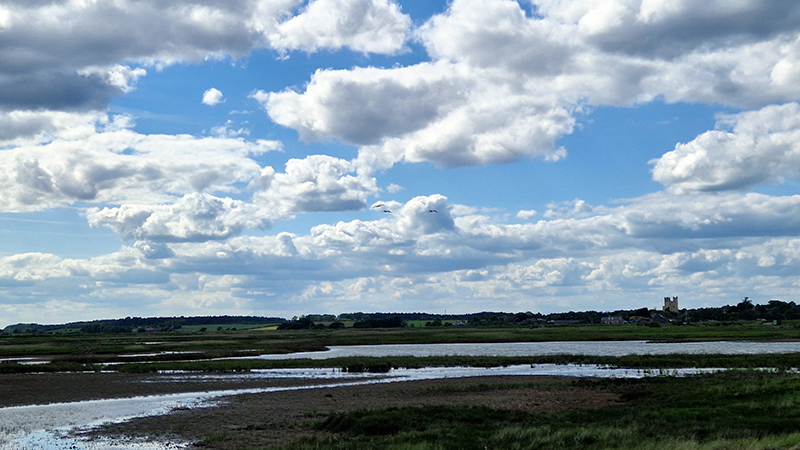
Under the big Suffolk skies of Orford Ness. Walking landscape that bears the scars, physical and emotionally resonant, of years of intense military top secret experiments. Here radar was developed, the aiming of bombs was refined, material vulnerability was tested with destructive, explosive projectiles under simulations of attack and famously it is the site of environmental tests during the late 50’s, early 60’s, in the development for detonation of the atomic bomb. 

The weight of the shingle shored up around the buildings and on the roofs used to dampen the explosions.

There is a lot to respond to. It is now a spectacular nature reserve but apparently not so many birds here this year. We were lucky to see a short eared owl hunting and some gangly spoonbills in flight.

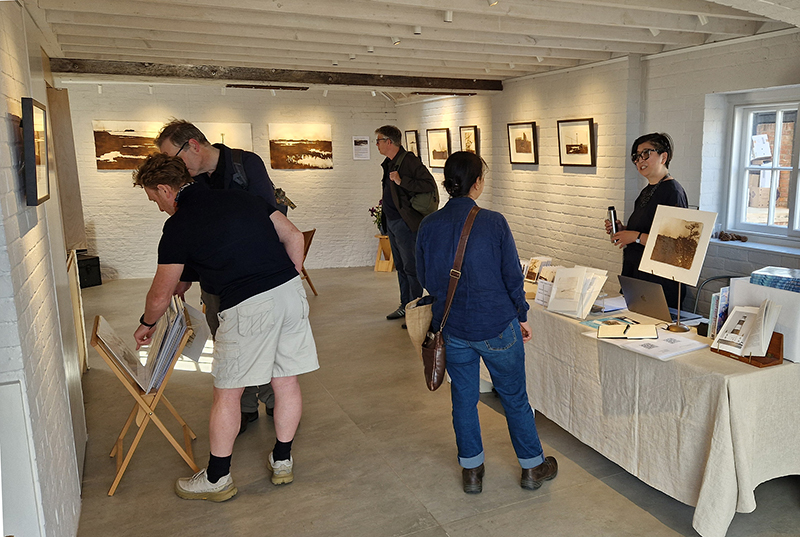
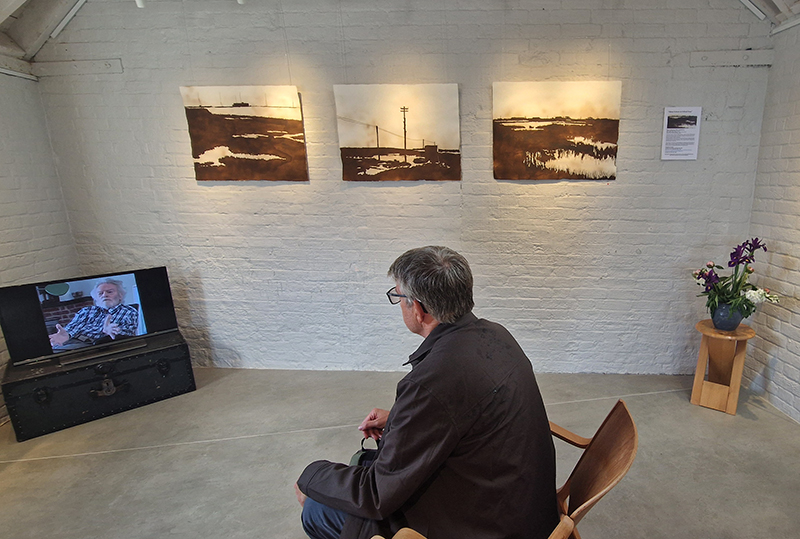
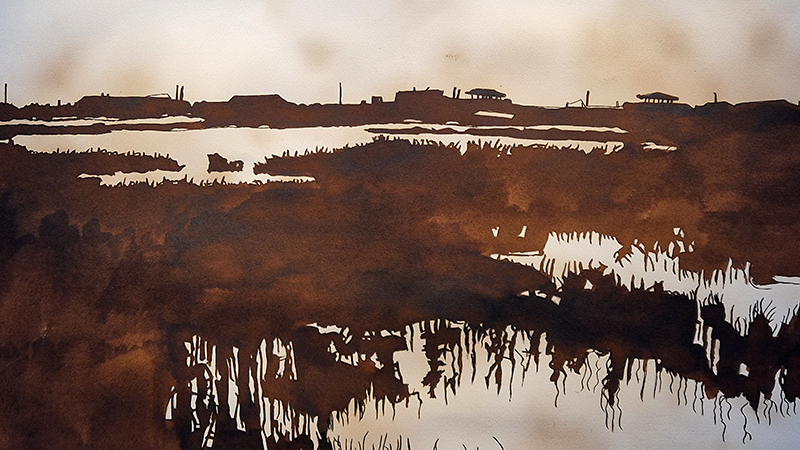
Kaori Homma Silent Echoes at The Watch House, Orford Quay – Inspired by Orford Ness, the UK’s only site of atomic experimentation, this exhibition explores the hidden histories and lingering memories within its landscape. Through the unconventional method of Aburi dashi or fire etching, the artist explores not only the visible remnants of the secret history of Orford Ness, but also the unspoken memories that linger in the air. Unlike ordinary drawings made by the pigments on the surface of paper, Homma’s works are made by fire which etches the images into the body of paper as a burn mark.

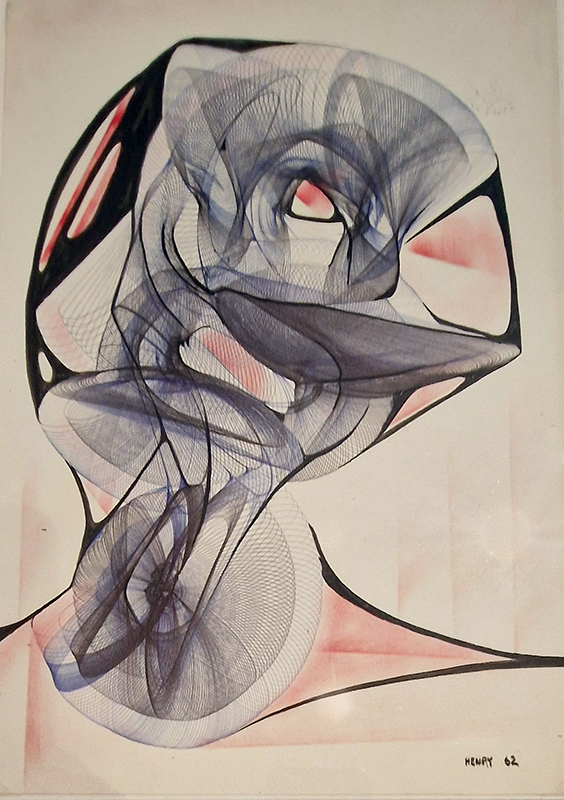
Electric Dreams at Tate Modern celebrates the early innovators of optical, kinetic, programmed and digital art, who pioneered a new era of immersive sensory installations and automatically-generated works. This major exhibition brings together ground breaking works by a wide range of international artists who engaged with science, technology and material innovation. 

Desmond Paul Henry used a repurposed bombsight computer, designed to drop bombs more accurately, as developed at Orford Ness, to make a drawing machine which he then hand embellished.

The Pleasure of Misuse curated by Indira Dyussebayeva-Ziyabek and Maria Hinel at Royal Society of Sculptors. ‘The humour that springs from manipulating or referencing the mundane is paradoxically self-reflexive – appropriated objects suddenly appear anthropomorphic, our laughter becomes directed at ourselves and the intermittent absurdity of the human condition. The Pleasure of Misuse explores the mechanics and psychology of humour in the everyday, considering its potential to heal and its power to disarm, creating the sense of complicity and the space for self-reflection amid these anxious times.’

Images – Andy Holden, Ty Locke, Peter Fischli & David Weiss, Cornelia Parker, Richard Wentworth

Samuel Zealey, Angela Eames, Tony Fleming, Charlotte Guerard, John Strutton and Kate Fahey in Heavenly Skeletons at Coleman Project Spacesix contemporary artists whose work repositions drawing as an expanded multidisciplinary field.  Heavenly Skeletons is a dynamic investigation of how drawing translates abstract concepts into tangible form… 

Gorgeous show with thoughtfully chosen works that like Samuel Zealey’s vertiginous sculpture balance perfectly.

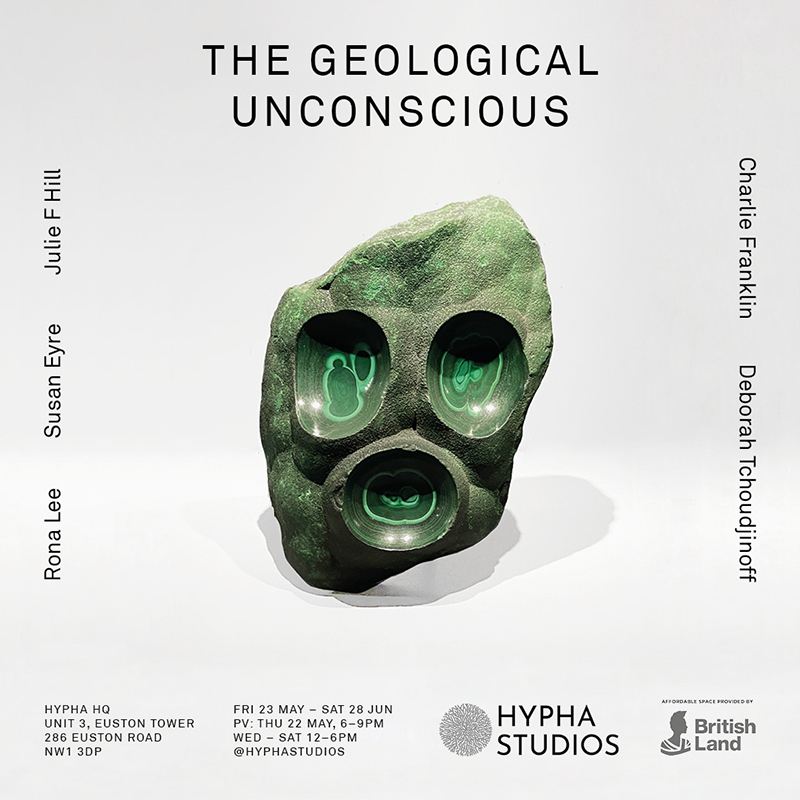
It has been a busy few weeks preparing for The Geological Unconscious at Hypha HQ – a group exhibition, co-curated by Julie F Hill and myself, exploring themes of stone consciousness and human-mineral encounters, destabilising assumptions about passive matter and a stable Earth.

Image: From Roger Caillois’ stone collection: Malachite, masque africain, République démocratique du
Congo, 14 × 20.5 × 6 cm. Photographed in the Museum of Natural History, Paris by Julie F Hill.


Responding to Jason Groves’ inquiry into the mineral imaginary in his eponymous book, as well as the ‘Writing of Stones’ as proposed by writer and mineral collector Roger Caillois, the exhibition exposes the complex entanglements between the organic and the inorganic; the human and the lithic. The Geological Unconscious is viewed through disruptive Surrealist strategies, engagements with the aesthetics of geo-materiality and material processes that attend to the growth and transformation of matter. These artistic ‘excavations’ highlight the toll of extractive industries on our planet, whilst inspiring reverence for the geological lineages of deep, cosmic time. Theories of Animism and Panpsychism are also brought to
bear on ways of attributing agency to inorganic realms.

I am thrilled to be exhibiting with Julie F Hill, Charlie Franklin, Rona Lee and Deborah Tchoudjinoff.


An accompanying events programme includes an urban geology walk with Geologist Ruth Siddall, discussing the origins of the local built environment; an installation and tasting by chef Moonhyung Lee who explores human-mineral entanglements through digestion; a crystal growing workshop led by Julie F Hill and I will be offering visitors lithomancy readings every Friday afternoon.

Investigating human/mineral entanglements for new work to be installed at Hypha HQ for The Geological Unconscious. Video of human activity projected through distorting optical lenses transforms the anthropocentric position to imagine the perspective of the rock. The pattern of lenses is informed by the molecular structure of magnetite,

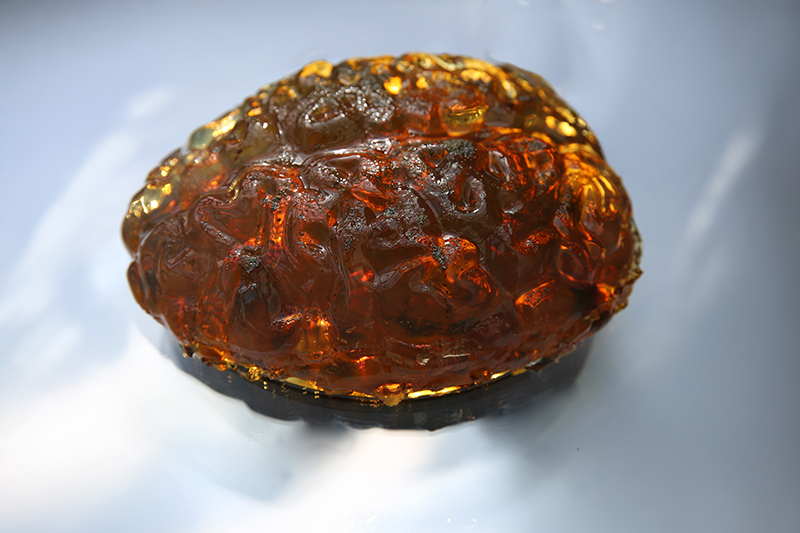
Magnetite is a naturally magnetic mineral found in many organism’s cells including human brain cells. Mined magnetite is used in industrial and mechanical processes and its use in combustion engines and braking systems is releasing nanoscale pollutant particles from traffic into the air which are finding their way into brain cells in high percentages causing concerns with links to degenerative brain diseases. I have been filming the stop start constant stream of traffic at a local roundabout and made a cast of a brain in gelatine with suspended iron filings. The filings oxidised and so the brain took on an iron red tinge and after a few days it cleaved down the centre and gradually as it dried became more and more chiton like.

Chitons are remarkable molluscs that have changed little in hundreds of millions of years. The chiton has hundreds of tiny eyes in its shell, which is made of eight articulating plates. It is the only known creature with lenses made of minerals rather than protein. Another distinctive feature of the chiton is having rows of teeth primed with magnetite, which aid its homing capabilities through magnetoreception and allow chomping on the hard rock surfaces it clings to. Inside the teeth of some species, the mineral santabarbaraite has been found, named after Santa Barbara, a mining district in Italy where it was first discovered and that honours Saint Barbara, who is the patron saint of mining and tunnelling. Santabarbaraite is also one of the few minerals named after a woman.

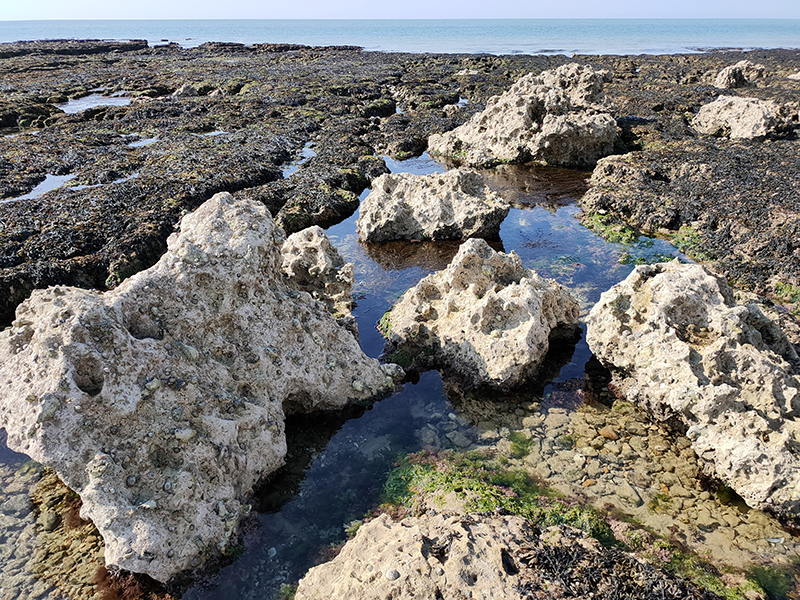
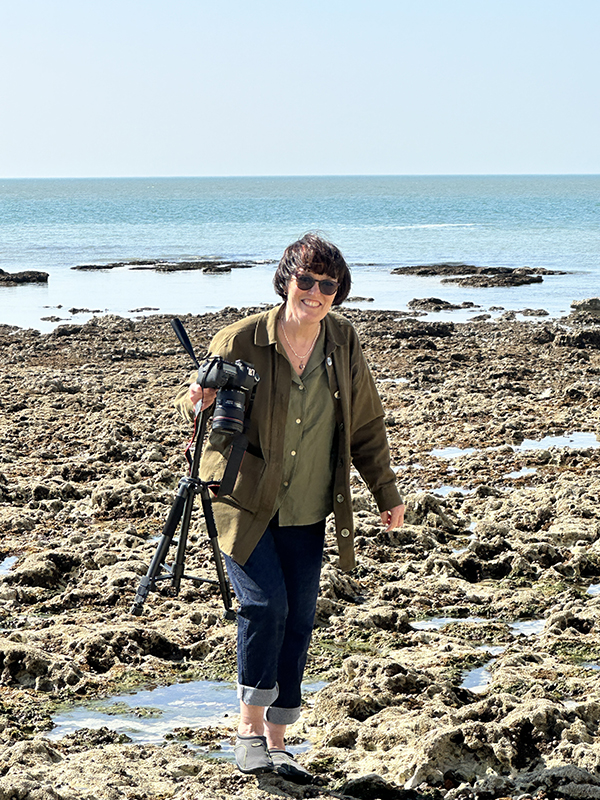
Fantastic day chiton hunting in the rockpools on the stunning East Sussex coast. Thanks to family who helped find these well camouflaged unique creatures.

Saint Barbara, was adopted by miners and underground workers as patron saint after the pursuit of geology and the widespread use of gunpowder in mining escalated in the 1600’s. She may have a dubious authenticity but her benedictions are still sought today with many statues installed at the entrances to Crossrail and a large ceremony on her saints day, 4th December, performed by local priests before tunnelling went ahead. Even at CERN the epicentre of scientific rigour, a shrine to Saint Barbara was established at every shaft site of the Large Hadron Collider requiring excavation and a blessing performed even if the priest had to be lowered by crane down the shaft to achieve this.

My mother’s name was Barbara and her birthday 6th December is very close to Saint Barbara’s day on the 4th. It would be great to discover she arrived two days late but there is no one alive now to ask.

Small grains of magnetite are common in igneous rocks, formed from magma having cooled and solidified within the Earth’s crust, and also in metamorphic rock, formed when existing rock is transformed physically or chemically at extreme temperatures. 

These processes happen on other planets as well as Earth and so magnetite has also been found in meteorites.

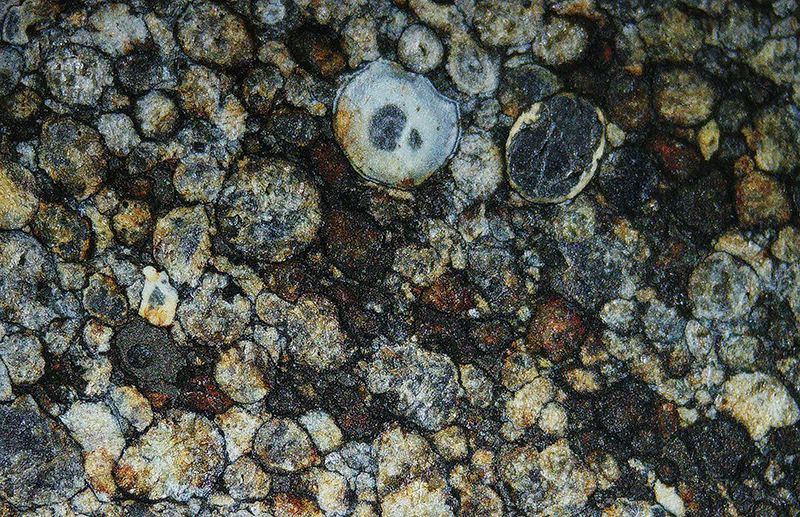
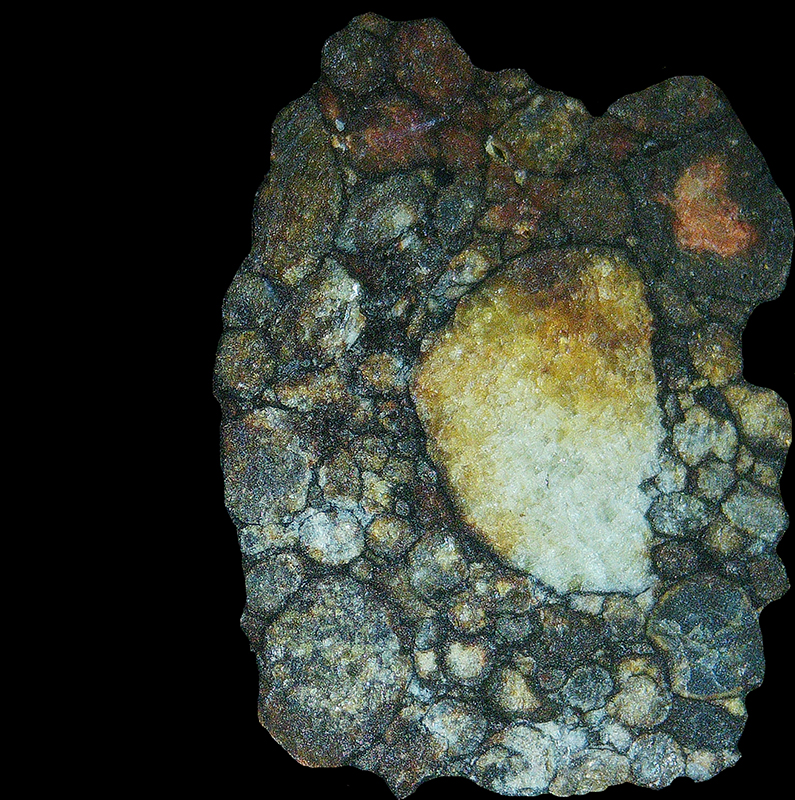
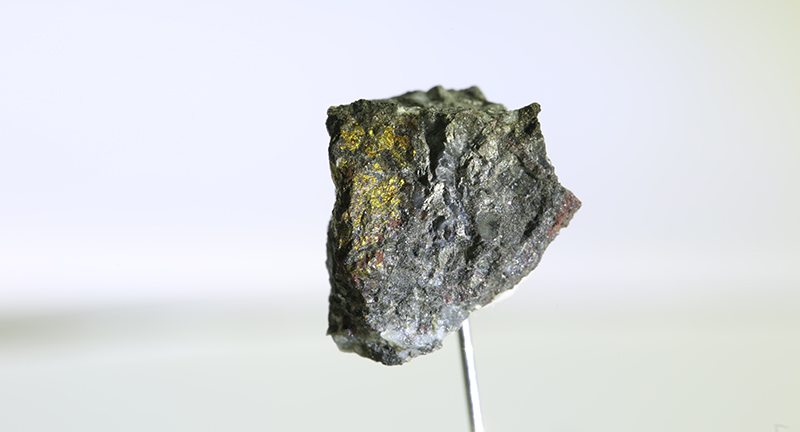
Using a digital microscope to look at the structure of the chondrite meteorite NWA 16975 discovered in the Sahara in 2024 which displays numerous and obvious chondrules and flecks of nickel iron in a fine grained matrix.

Also the fragment I have from the Diogenite meteorite NWA 7831 found in Morocco in 2013.

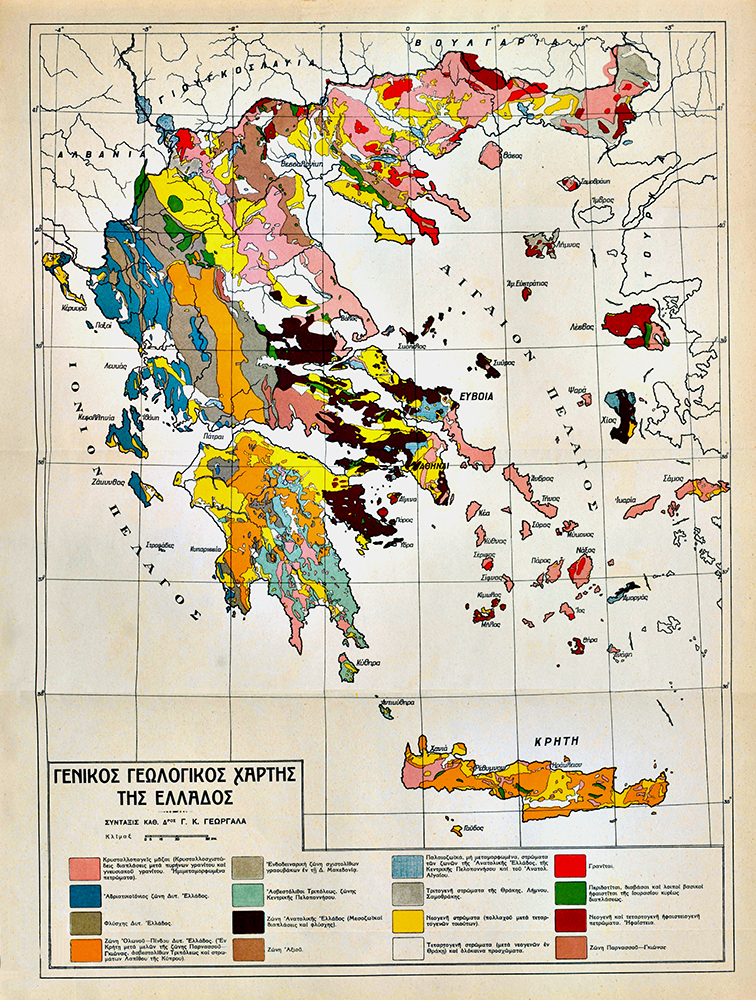
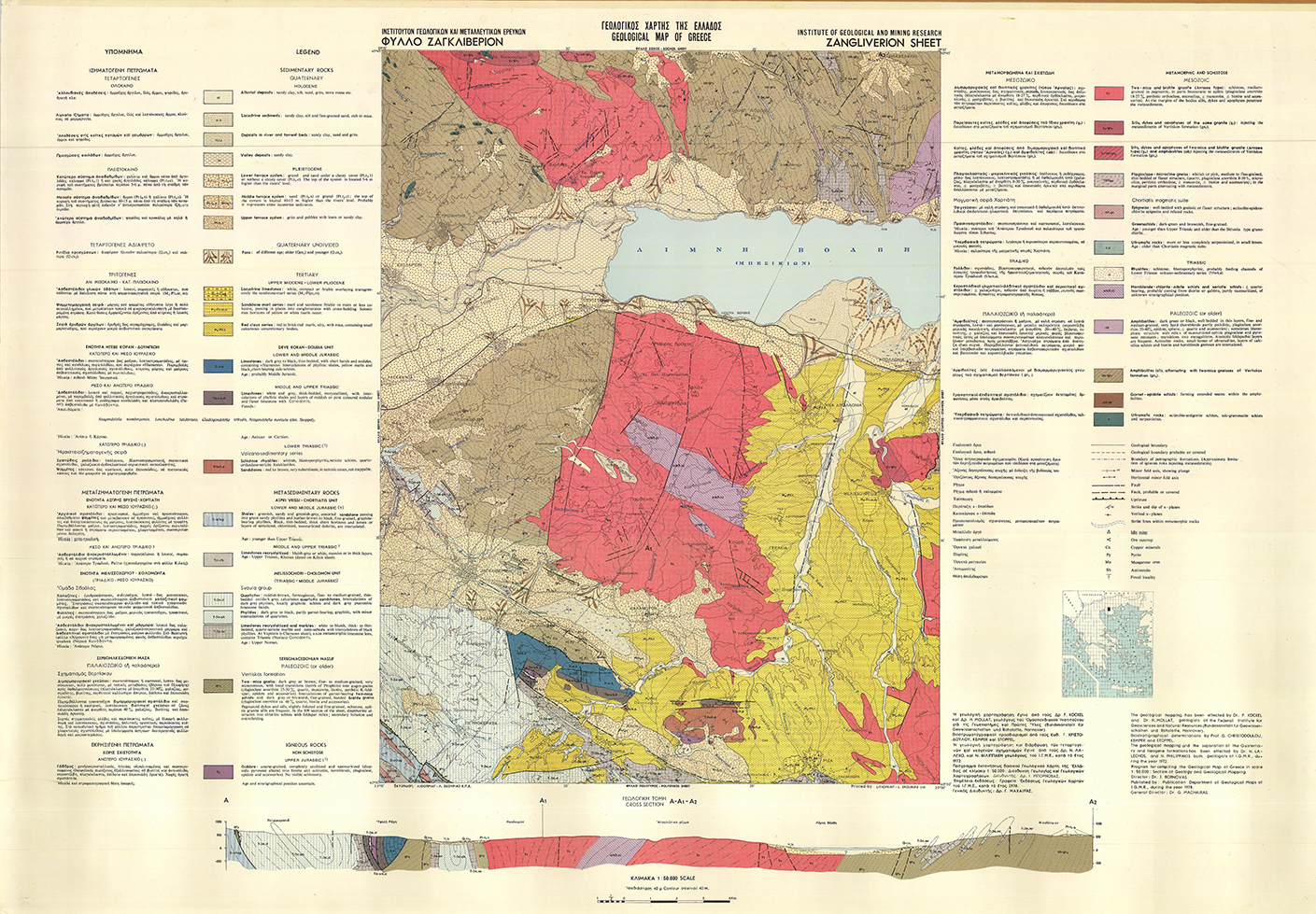
Looking at wonderfully colourful geological maps of Greece to locate the ancient area of Magnesia – the region where magnetite was first discovered and where its name has derived from – known as “magnes lithos” (stone from Magnesia). Definitely want to plan a research trip to this beautiful region around Thessaloniki.

Exhibitions

Whatshesaid collective of artists present Terra Incognita at Thames-side Studios Gallery – charting and cataloguing the disregarded, the everyday, its surface textures, accumulations, sedimentations.

Joao Villas and Victoria Ahrens showing in Spectral Matters at APT Gallery An understated beautifully curated show whose work references the ephemeral materiality of sound, video, photography and print. The work overlaps and crosses over, both artists responding to the other’s practice. The images create matter, as spectral matter gives agency to the materiality of its own making, while haunting the space with its frequency- it vibrates. The exhibition explores memory, technology and the Anthropocene- and how the disappearing materiality of the world is captured through ephemeral means. 

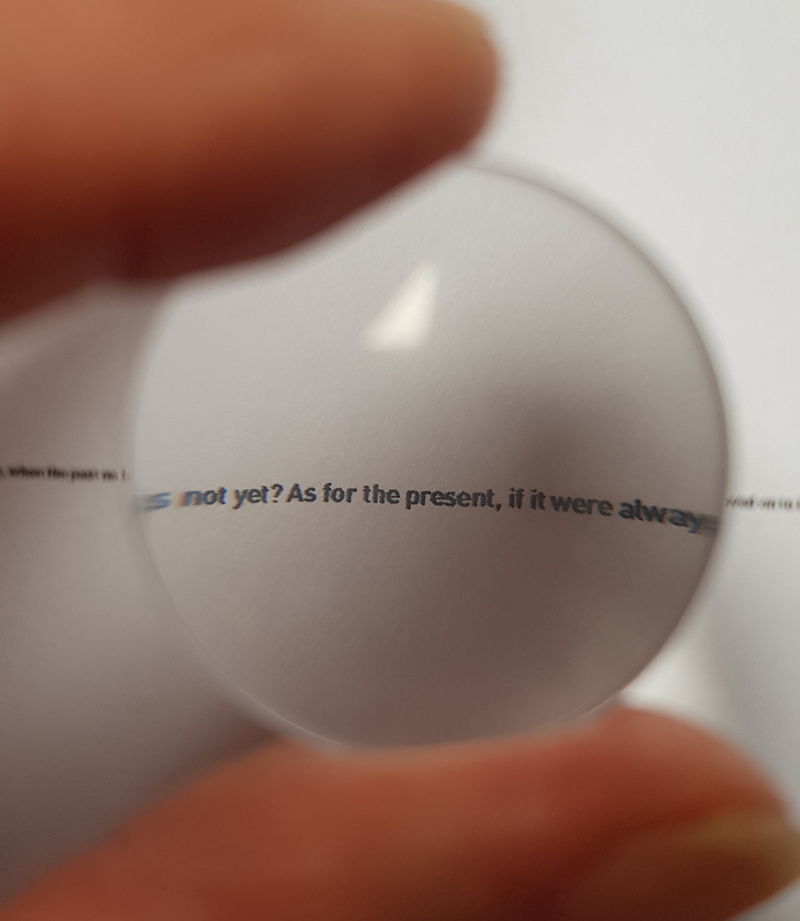
Reading stones could be considered the first instruments used to create an enhanced sensory experience. Originally made from ground and polished rock crystal or beryl, they were placed over texts to magnify them.

1909 reading stones

This early optical technology paved the way toward observation of the furthest reaches of the universe and its minutest components.

1909 Baetylus 2.jpg

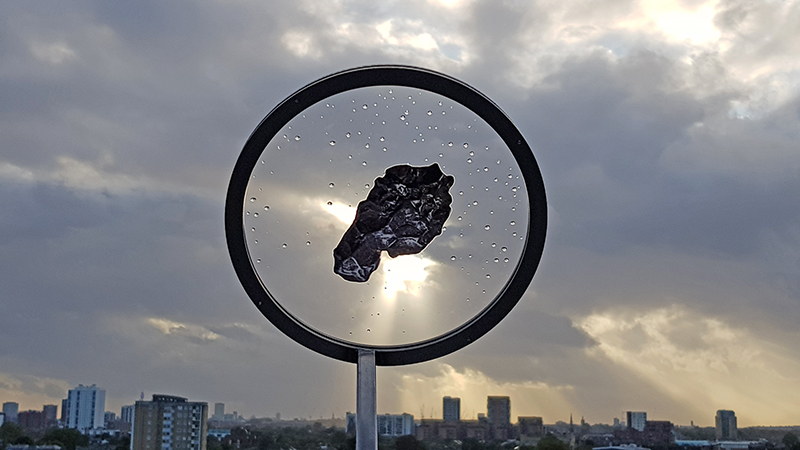
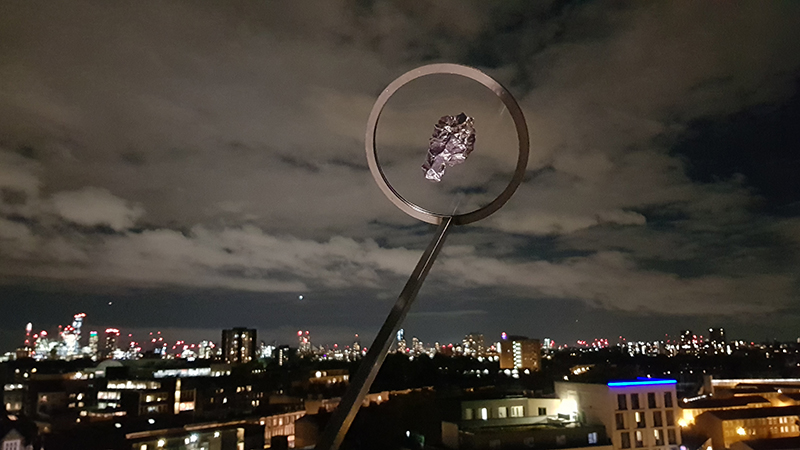
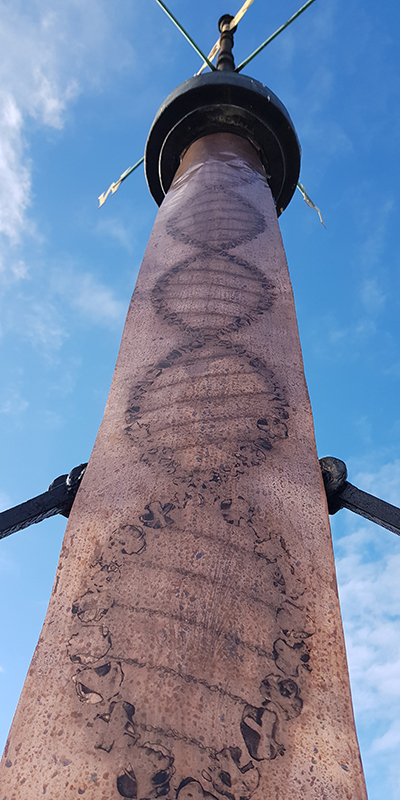
Both the telescope and microscope are referenced by the sculpture Baetylus installed on St. Augustine’s Tower roof for the exhibition Reading Stones.

1909 Baetylus installed St Augustines Tower

Baetylus (meaning from the house of god), are sacred stones/meteorites of divine origin.

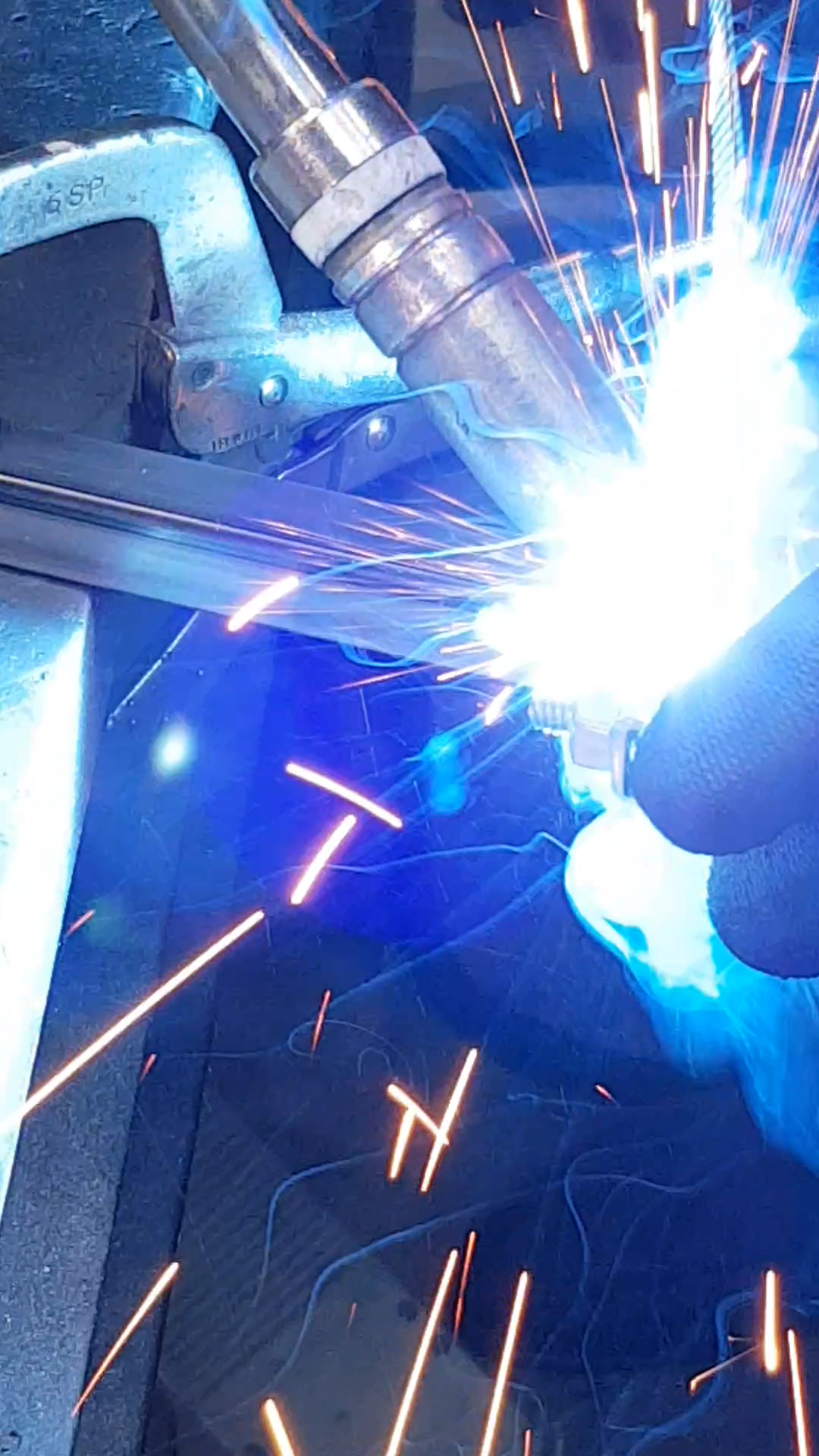
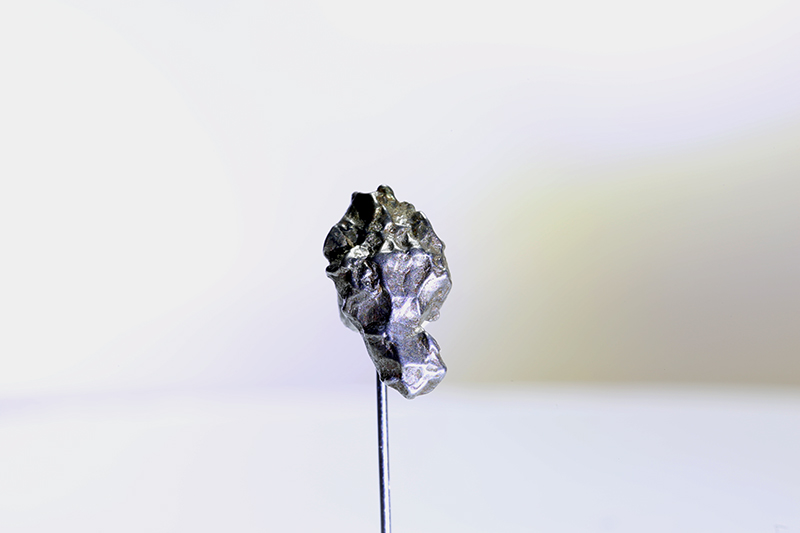
In this case sold to me for £6, a 15mm Nickel Iron Meteorite from Campo Del Cielo Argentina, falling 5000-6000 years ago. Photographed with a macro lens and direct to media printed onto acrylic by Genesis printing. The steel frame expertly welded by Nick Amott of J.& R. Precision Engineers.

1909 welding

The wind and rain on the roof soon added to the piece.

1909 Baetylus meteor shower

rain + meteor = meteor shower

An object falling through space distorts not only the space it travels through but also time as space and time are inexorably linked.

Each visit to the roof gave a different experience of the work.

1909 Baetylus 1

The act of “reading stones” can refer to both the scientific practice of geological investigation and the ritual of lithomancy which seeks to interpret the patterns of stones cast by those wishing to divine the future.

1909 Lithomancy reading

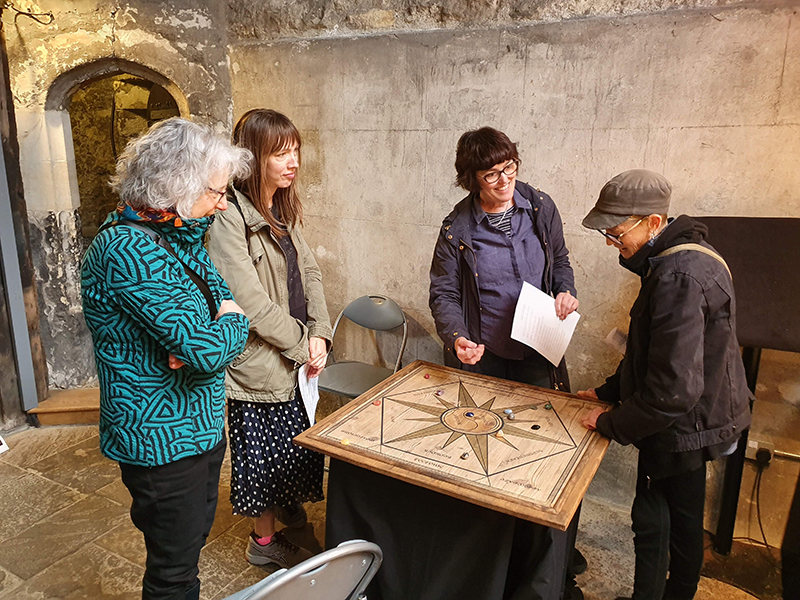
Offering ‘readings’ gave visitors a personal perspective to consider when thinking about how we experience time and negotiate the future. The board, a salvaged old table top was screen printed with a design created after researching the ancient art of lithomancy and prevalent variations. I gave the board a geological emphasis and aligned the areas of activity with traditional associations such as sedimentary = home, boulders = obstacles and challenges, strata = knowledge and experience.

1909 lithomancy board

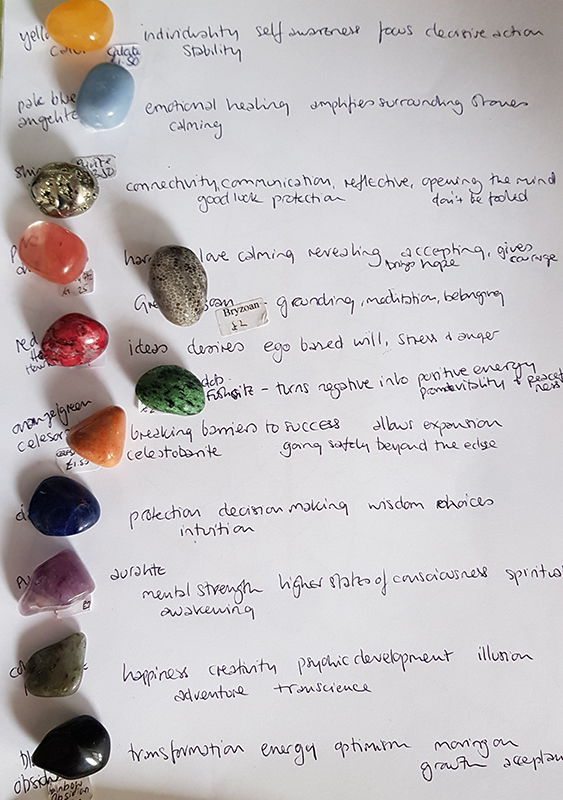
The gemstones were assigned properties according to traditional meanings.

1909 assigning stones

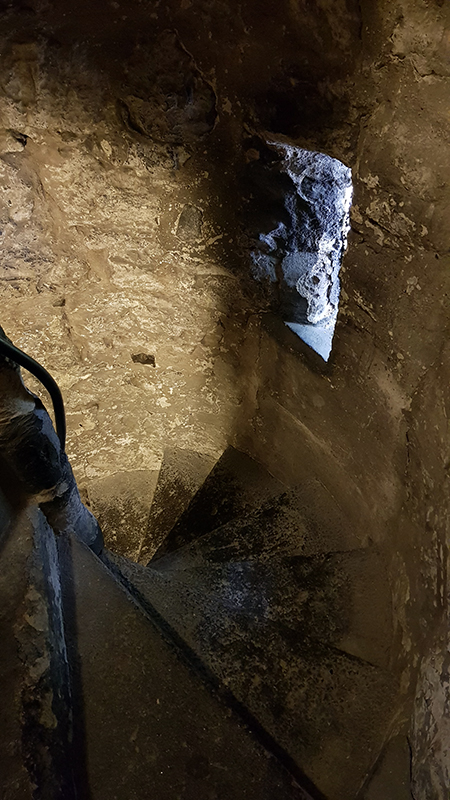
It was magical to spend so much time within the thick stone walls of St. Augustine’s Tower, ascending and descending the steep narrow spiral stairs adding yet another infinitesimal trace to the worn history of the steps.

1909 St Augustine tower stairs

Working with Carol Wyss and Anne Krinsky on this project was a pleasure and we were delighted with the public response to the exhibition.

1909 Carol Wyss All that remains

Carol Wyss All That Remains 

“My aim is to re-create the original ‘UR’ bone which has neither gender nor race, the first ever bone which existed, the one which fell from heaven or space. It is an attempt at merging all the bones of the human skeleton into one entity, which then becomes the common denominator, the starting point from which all bones and consequently all humans came. I am referring to the bible story of Eve’s creation from Adam’s rib, the Greek myth of Pyrrha with the creation of humans from the stones / bones of the earth and Da Vinci’s perfectly proportional Vitruvian man, as well as to science’s search for the ultimate building blocks of our universe.” Carol Wyss

1909 Carol Wyss

1909 Carol Wyss Os

Carol Wyss Os

Deucalion and his wife Pyrrha were the only survivors of the great deluge and landed on Mount Parnassus, the only place spared by the flood.
Deucalion consulted an oracle of Themis about how to repopulate the earth. He was told to throw the bones of his mother behind his shoulder.
Deucalion and Pyrrha understood the “mother” to be Gaia, the mother of all living things, and the “bones” to be rocks.
They threw the rocks behind their shoulders, which soon began to lose their hardness and change form.
Their mass grew greater, and the beginnings of human form emerged.
The parts that were soft and moist became skin, the veins of the rock became people’s veins, and the hardest parts of the rocks became bones.
The stones thrown by Pyrrha became women; those thrown by Deucalion became men.

1909 Carol Wyss Osmosis

Carol Wyss Osmosis

All the sons of Adam are part of
One single body,
They are of the same essence.
When time afflicts us with pain
In one part of that body
All the other parts feel it too.
If you fail to feel the pain of others
You do not deserve the name of man.
― Saadi Shirazi 1258

1909 Anne Krinsky Ephemera Scrolls 2

Anne Krinsky Ephemera Scrolls

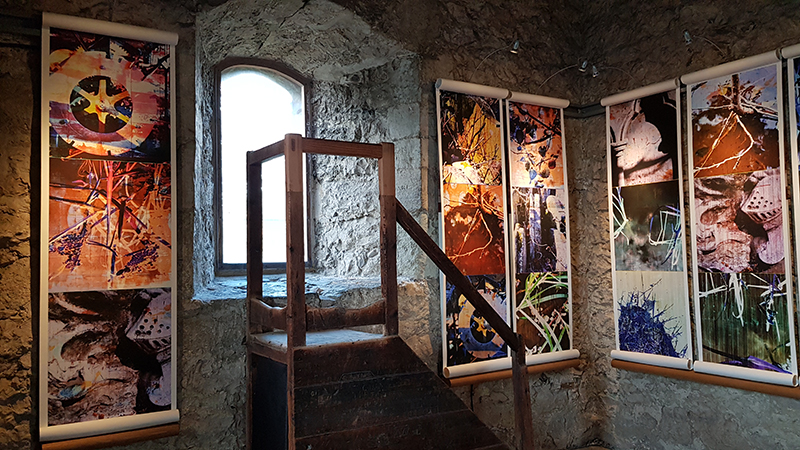
“I am interested in the ephemeral nature of the physical world – in the transformation of terrains and in the erosion of stone, wood and metal over time. In developing imagery for the Ephemera scrolls, I wanted to create visual relationships across time and space. I photographed the Tower’s clock mechanism and gravestones from the surrounding garden and other London churchyards. During a recent residency at Oberpfalzer Kunstlerhaus in Schwandorf, Germany, I photographed the River Naab, as its water levels dropped during the hottest June on record. I feel impelled to document changes to wetlands and waterways in this time of accelerating climate change.” Anne Krinsky
1909 Anne Krinsky Ephemera Scrolls 1

Anne Krinsky Ephemera Scrolls

Time Crystals video work installed alongside the tower’s ancient clock builds on an interest in the mystery of time viewed across human, cosmological and quantum scales.

1909 St Augustines Tower Clock

The clock by which we measure time on our watches and digital devices is very misleading;
it is determined by the daily rotation of the Earth around its axis and its annual rotation around the sun.
This astronomical time is linear and regular.
But the actual clock by which we live our socioeconomic lives is an emergent phenomenon determined by the collective forces of social interaction:
it is continually and systematically speeding up relative to objective astronomical time.
– Geoffrey West, 2017

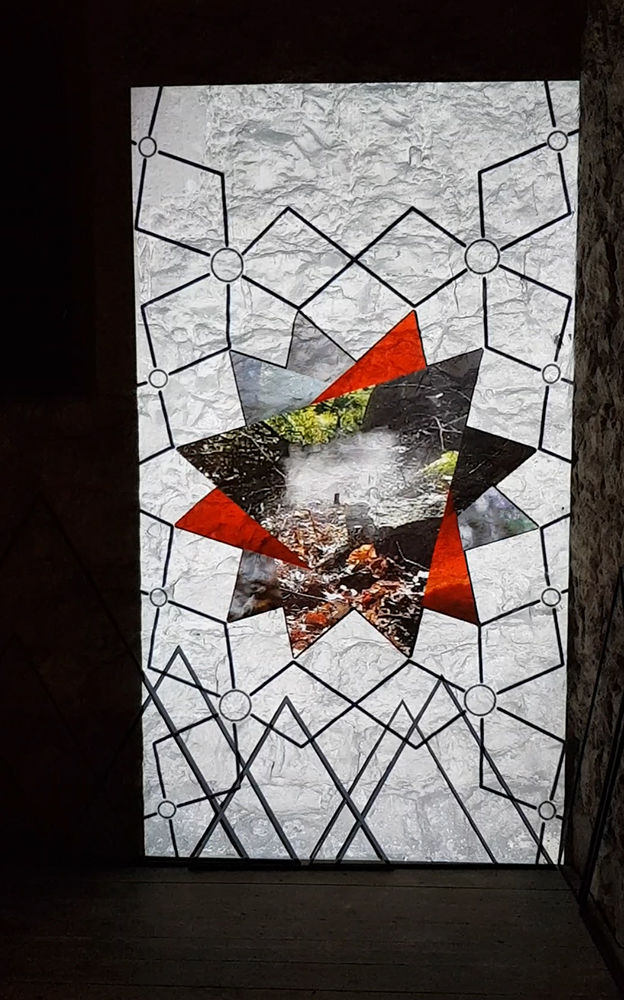
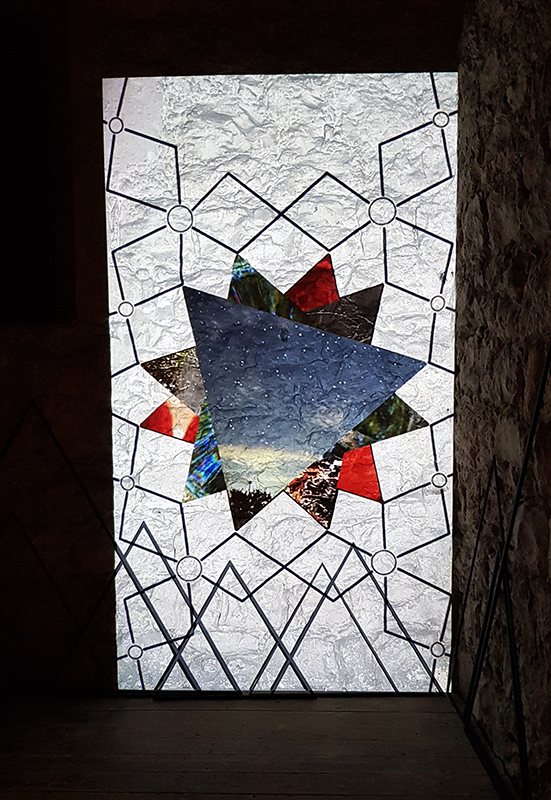
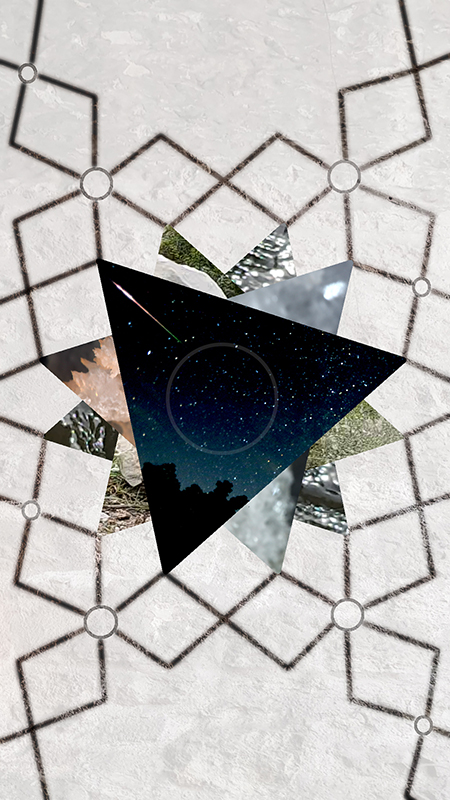
The patterns employed within the film and spilling out from the projection as 3D triangles mirror the crystal structure of the mineral beryl, commonly used to fashion the original reading stones.

1909 time crystals video still

The work also makes reference to the scientific theory of time crystals; a model which proposes a structure that repeats in time, as well as in space. Variations in perspective are manipulated through the speeding up, slowing down and overlapping of events to deconstruct a linear flow of time and interrogate the methods by which humans measure and experience this phenomenon.
It is within my mind then, that I measure time. I must not allow my mind to insist that time is something objective.
When I measure time, I am measuring something in the present of my mind. Either this is time, or I have no idea what time is.
― St. Augustine of Hippo, 397

1909 Time Crystals

How can the past and future be, when the past no longer is, and the future is not yet?
As for the present, if it were always present and never moved on to become the past, it would not be time, but eternity.
― St. Augustine of Hippo, 397

Using Carlo Rovelli’s book The Order Of Time as a reference guide and the quotes of St. Augustine as points of enquiry the repeating layered films were made using time lapse and slow motion; recording the exchange of energy as objects collide, heat up, cool down, travel at speed, transform, reflect and absorb, display traces of past events and embark on supposedly predictable trajectories. How we experience time is relative to where we are in the universe, our proximity to a larger mass and how fast we are moving.


A crystal is like a class of children arranged for drill, but standing at ease,
so that while the class as a whole has regularity both in time and space, each individual child is a little fidgety.
– Dame Kathleen Lonsdale, 1948

The fabric of the ancient building also helped determine the work installed. The 3D element of my video installation needed to be built in situ. One challenge was projecting in portrait mode to neatly fit the wall space between window and clock mechanism. Projectors are not supposed to be set on their side but with an adapted ceiling mount allowing clear air vents for the fan it all worked out fine.

1909 making triangles

Clamps, weights, stitching, balancing and non invasive means of installing had to be employed not to harm the Grade I listed heritage site.

1909 time crystals video installation detail

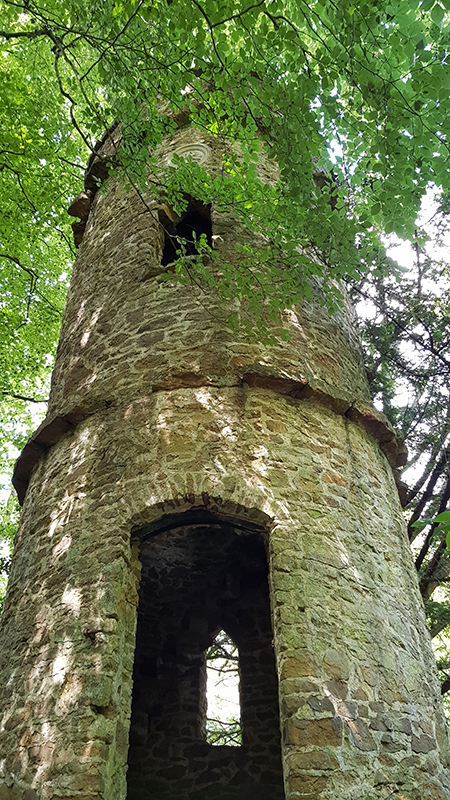
On location. After much searching a secret tower in the woods was found, knotted within dense undergrowth. Hidden in time and space.

1909 secret tower

Artlyst review of Reading Stones. by Jude Cowan Montague.

A pleasure to be asked back to Guest Projects for a filmed interview about my experience during the residency Laboratory of Dark Matters for a promotional video to launch Yinka Shonibare’s new residency programme opening in Lagos.


I attended the UK High Altitude Society Conference 2019 to give an update on the project aiming to launch a cloud chamber in a high altitude balloon.

1909 UKHAS 2019 2.JPG

Live Stream of conference presentations – my presentation at 3:30 in.

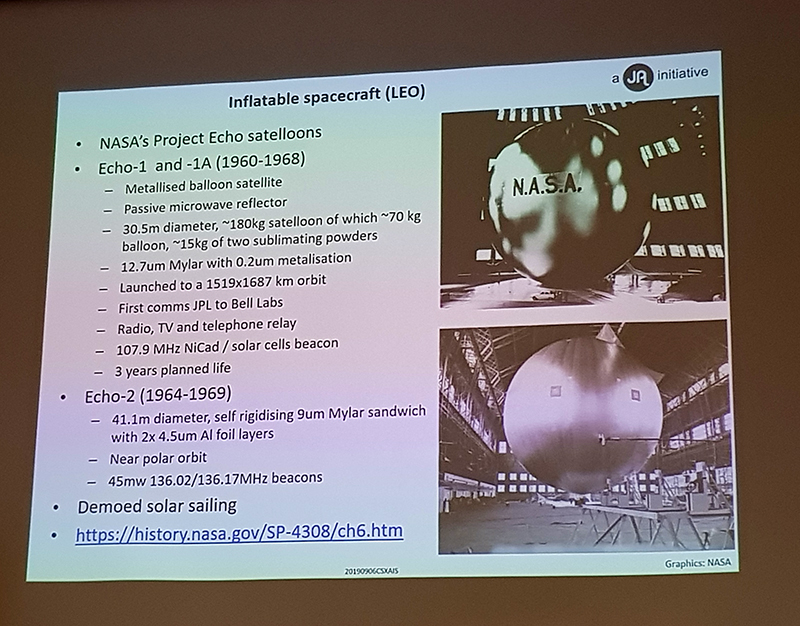
Very interesting talk from Michael Johnson on citizen space exploration & inflatable spacecraft, building on past developments of inflatable spacecraft from NASA new technology could see thousands of tiny spacecraft launched within days as opposed to decades.

1909 pocket spacecraft 3

1909 pocket spacecraft 4

He also allowed us to hold the tiny spacecraft.

Finished working on video sculpture At a distance which has been installed at The Museum of Cornish Life, Helston for the Lizard Point Residency Touring Exhibition.

1909 at a distance install

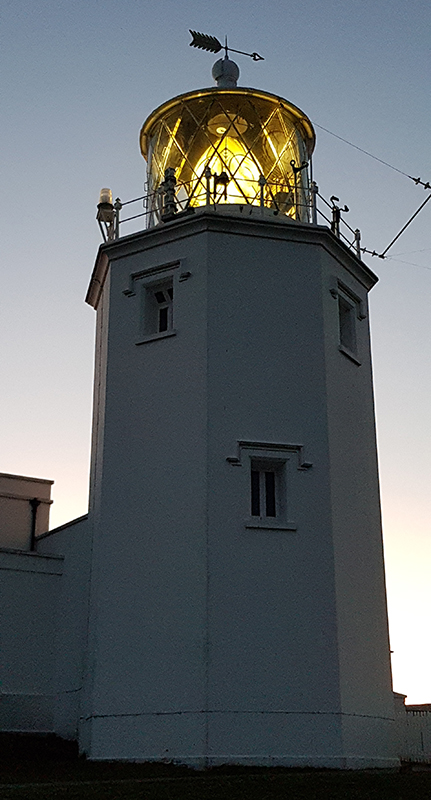
This residency was inspired by an incredible communications double anniversary in 2019, for Lizard Lighthouse (400 years) and Goonhilly Earth Station (50 years: transmission of the first lunar landings), considering the importance of life-saving lighthouse beacons and internationally important transmissions across the sea and sky.

1909 Lizard Lighthouse

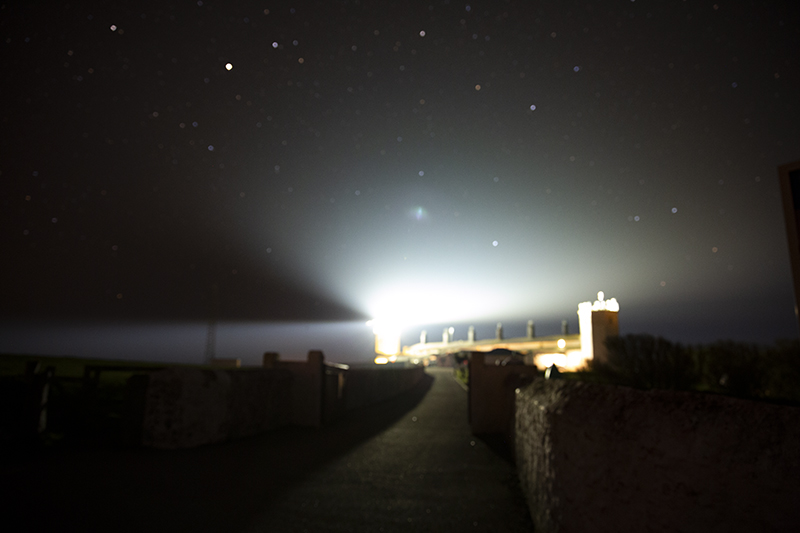
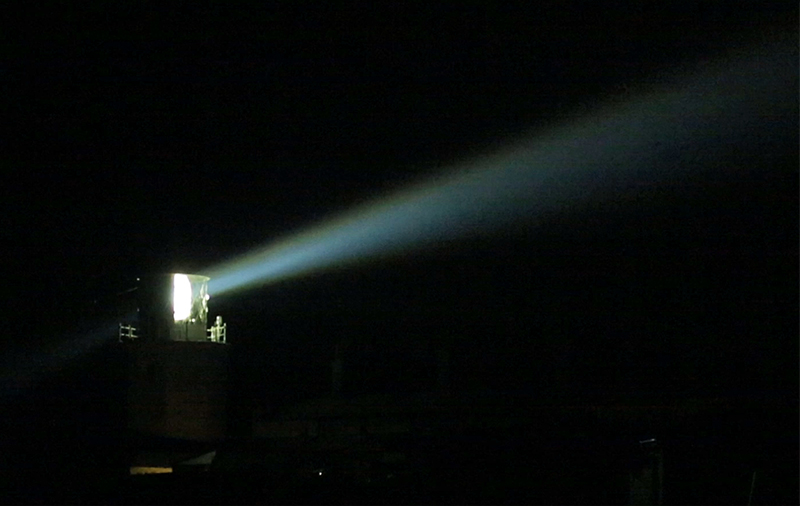
Lizard Point, overlooking the Atlantic, benefits from natural darkness, natural beauty and is a great spot for viewing the Moon, stars and meteor showers.

1909 Lizard Lighthouse 21909 LIGHTHOUSE beam

Staying on site, next door to the famous Lizard Lighthouse, artists had the opportunity to create works responding to the variety of astronomical sights found there, as well as be inspired by the rich communications heritage along this very special part of the SW coastal path.

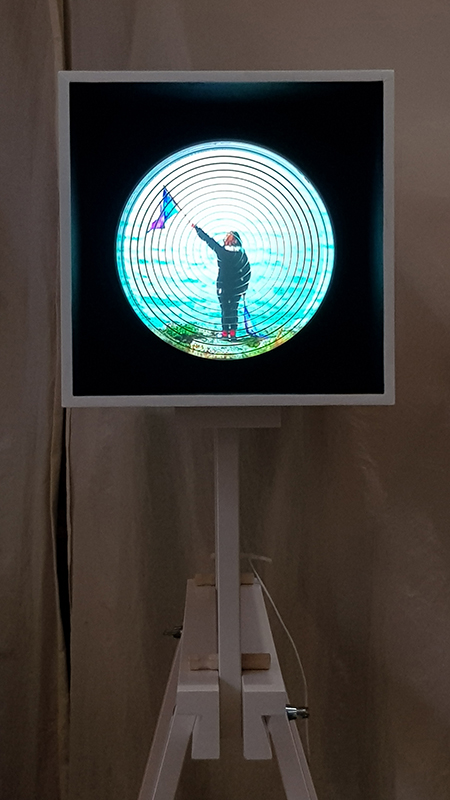
Solitary figures using semaphore flags sign ‘We Are One’ out across the ocean; filmed on 29th March 2019 (the first date the UK was supposed to leave the EU).

1909 At a distance 1

As in entanglement theory where two paired electrons mirror each other at a distance it is hoped the message will be echoed back. The work looks at methods of communication over distance. It relates this to the mysterious twinning of electrons in quantum entanglement where particles link in a way that they instantly affect each other, even over vast distances, and which Einstein famously called ‘spooky action at a distance’. The video is back projected onto a Fresnel lens, the type found in lighthouses to increase luminosity of the lamps beam, another form of messaging over distance.
1909 At a distance 2

The video sequences through five sets of semaphore messages. Each message is echoed back within a swirling force field emanating from across the ocean repeating the pattern of the flag representing entanglement. This is interspersed with imagery from video captured of the Lizard Point Lighthouse Lamp slowly waking and powering up from dim to dazzling light, split and mirrored in a circle of sending and receiving messages.
 

The Museum of Cornish Life is surprisingly vast and crowded with innumerable artefacts at every scale. A fearsome cider press the size of a lorry included. The long passage through the museum to the exhibition rooms encounters an overwhelming volume of items jostling for attention.

1909 Helston museum

Here are the records of events from which we infer the past.

While in Cornwall there was time for a quick visit to Tate St. Ives. An unexpected treat to find Otobong Nkanga’s excellent exhibition From Where I Stand looking at the glittery desirability of minerals and the scars left on the landscape and people by it’s extraction.

What could a monument be? Is it the thing we build or the thing we have taken away from? A place of emptiness is the monument to remind us there is no possibility of getting back to what has been – Otobong Nkanga

Work underway for the upcoming Reading Stones exhibition with artists Anne Krinsky and Carol Wyss. We will be installing site-specific works in response to the history and architecture of the ancient stone Tower of Saint Augustine, Hackney’s oldest building. Built in the 13th century, the tower houses a magnificent 16th century clock whose mechanisms still strike the hours, occupying three floors connected by steep spiral stone stairs.

1908 clock.jpg

The nature of time itself was a concept that St Augustine of Hippo grappled with in his philosophical texts sixteen centuries ago and is still perplexing us today; namely, how to equate the subjective experience of time with an objective understanding.

I am working on a video which makes reference to the scientific theory of time crystals; a model which proposes a structure that repeats in time, as well as in space.

1908 Time Crystal 2 wip

Patterns used in the film aim to mirror the crystal structure of the mineral beryl, commonly used to fashion the original reading stones which were used to magnify texts before the invention of optical glass. Reading Stones could be considered the first instruments used to create an enhanced sensory experience.

1907 reading stones WIP 1

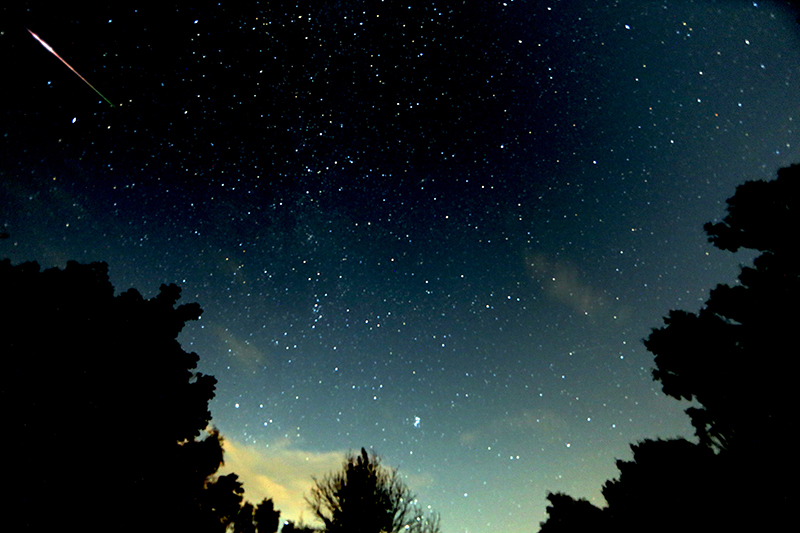
I am playing with speeding up, slowing down and overlapping events to deconstruct a linear flow of time and interrogate the methods used to measure and experience time. I  spent a couple of nights in remote car parks setting up a time lapse sequence under darkish skies in anticipation of  the Perseids Meteor Shower and was rewarded with my first experience of live meteor action.

1908 perseids

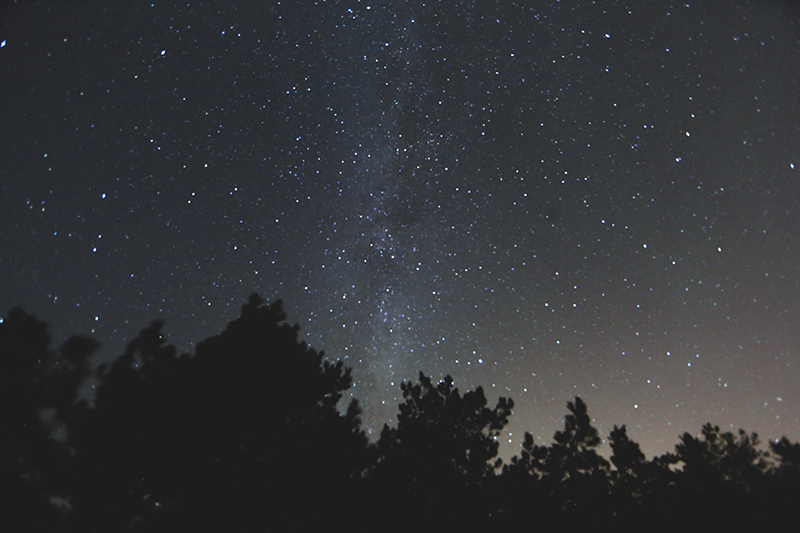
I also think there was a faint glimmer of the Milky Way. These weren’t true dark sky areas but not bad for an hour to two hour drive from London.

1908 milky way

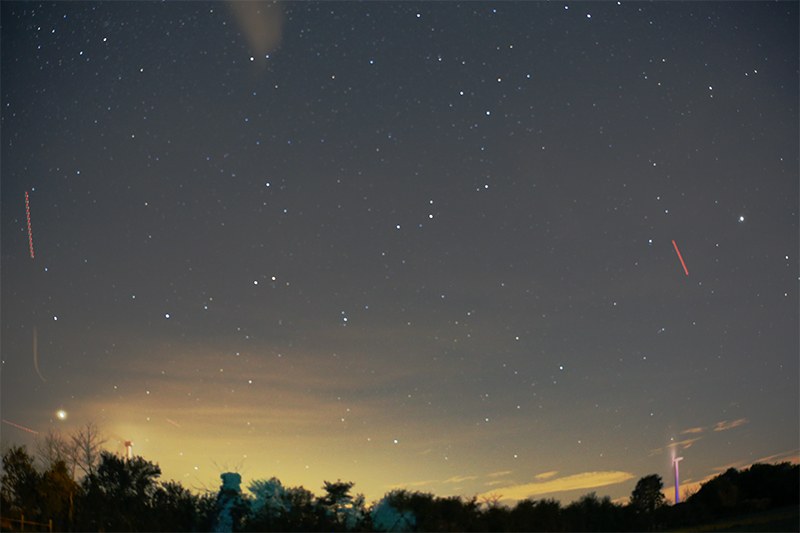
Also set up a time lapse station overnight on the Suffolk coast with the two wind turbine’s in view that dominate the Kessingland village skyline. I was surprised to see how much aerial activity goes on usually unnoticed.

1908 wind turbines

Another times lapse experiment focused on crystal growing over a week period.

1908 crystal growing
Filming slowing down time with a Go Pro set at 240 frames per second to record smashing rocks.

1908 stone smash

I made some earth meteorites to collide with the ground but the results not so great.

1908 earth meteorites

1908 earth collision.JPG

Beautiful light in Richmond Park when photographing the tree clock’s I plan to make into spinning time portals

1908 tree rings

Hot Sunday morning traipsing around a car boot sale for ceramic atrocities to line up for an energy exchange experience.

1908 time is up


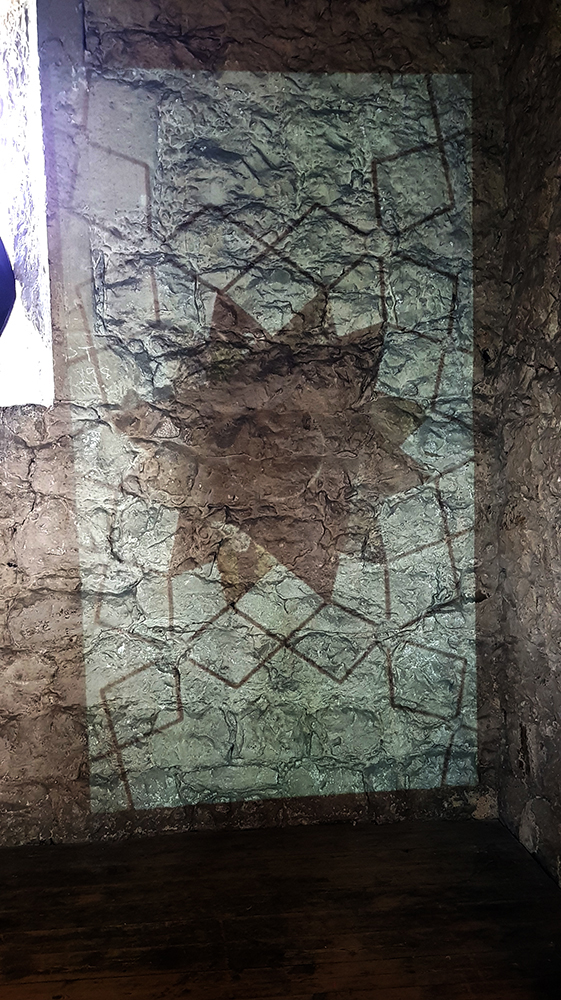
A site visit to St. Augustine’s Tower gave me pause for thought over the hanging sculpture I had planned which would possibly be dangerous to attempt. So looking at projecting directly onto the brickwork in that corner instead. This is giving me all sorts of issues over projecting in portrait mode and whether the projector will cope being on its side.

1908 projection test

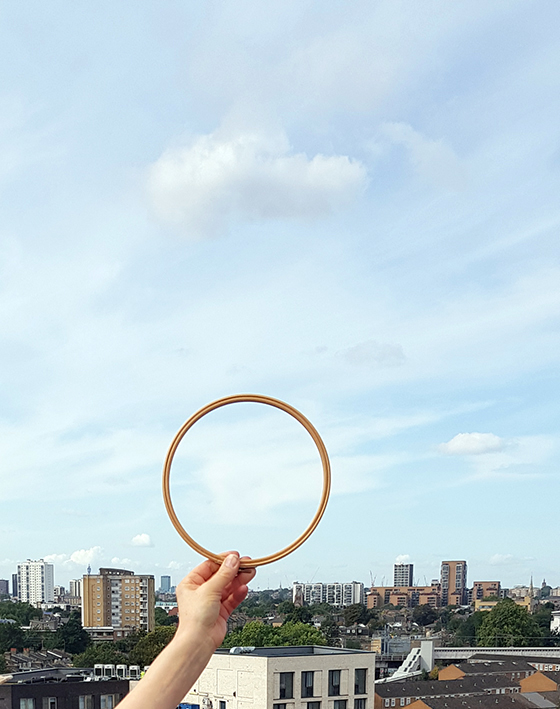
Testing ideas for a viewing circle on the tower roof.

1908 viewing circle test

Inside the circle will be the image of a rock or meteorite.

I have been auditioning candidates.

1908 rock candidate

1908 meteorite

On the final day of the exhibition we will have extra activities which will include a lithomancy board and the chance to have your fortune told by the fall of the stones.

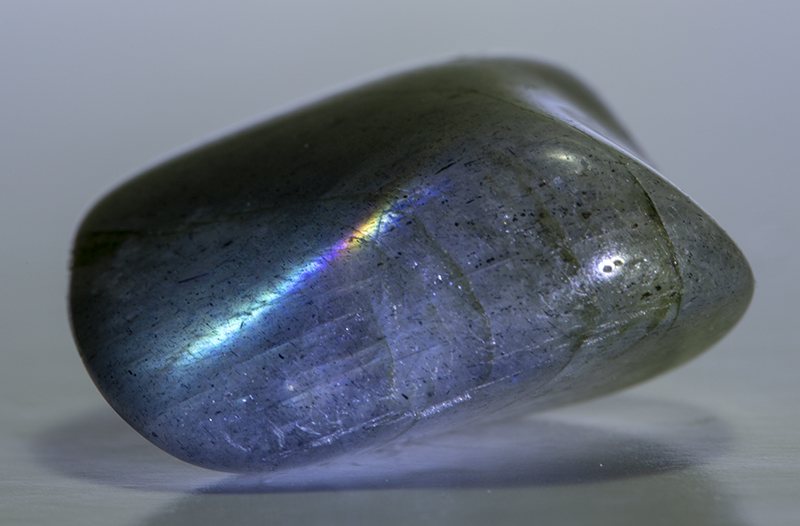
The act of “reading stones” can refer to both the scientific practice of geological investigation and the ritual of lithomancy which seeks to interpret the patterns of stones cast by those wishing to divine the future.

1908 laboradite

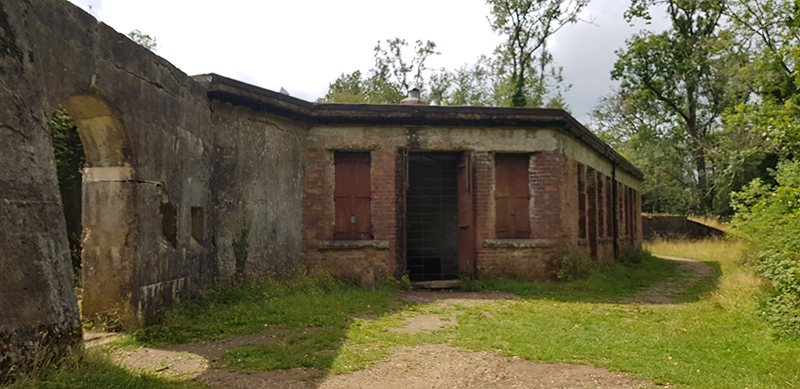
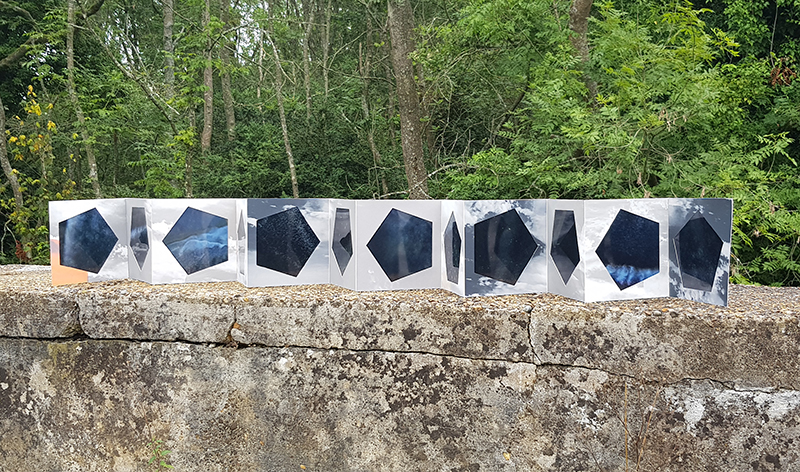
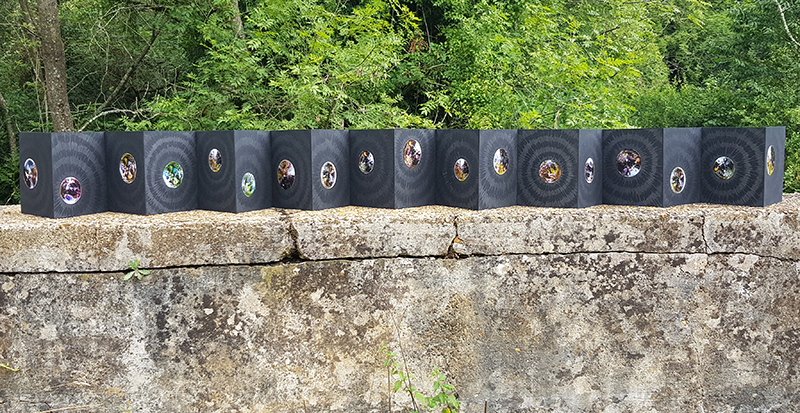
Made a trip to Box Hill Fort for a photo shoot of the artists books I had made for the Insatiable Mind Exhibition. The Fort is one of a line of 13 mobilisation centres built in the 1890’s to protect London from the threat of invasion from continental Europe. Never used for its intended purpose, it is now part of the National Trust Box Hill property and home to three species of bats that have taken up residence in the tunnels originally built for ammunition storage.

1908 old fort box hill

1908 unbound detail

‘Unbound’ depicts images taken from my cloud chamber. A cloud chamber is a supersaturated sealed environment that enables us to see the trails of cosmic rays. These high energy particles know no boundaries, travel at high speed across the universe and continuously pass unseen through us and our world. The twelve pentagons form a dodecahedron, the solid described by Plato as ‘the fifth construction, which the god used for embroidering the constellations on the whole heaven.’

1908 unbound

1908 InOUT detail

‘In/Out’ expresses the energy and randomness of quantum fluctuation as particles pop in-and-out of existence in empty space. At this tiny scale the universe is mysterious and unpredictable. Originating from a large crystal ball which reflects and absorbs its surrounding landscape, the bright spheres act as a series of portals to alternative perspectives.
1908 InOUT

Chilled evening at the Science Gallery for Zen-On a collaborative presentation from artist Ansuman Biswas and astroparticle physicist Chamkaur Ghag.

‘We have many tools at our disposal to gather information about the world. Physicists are tuning their instruments to an unprecedented level of sensitivity. Even burying super-cooled xenon under a mountain in the hope of detecting the faintest, most elusive particles of matter.

Ultimately, however, whatever external instruments we use, all data is experienced by our bodily senses. These senses turn out to be more finely tuned and calibrated than anything we have yet invented. And they are available to all of us, for free.

In this interactive performance we will draw parallels between the physical world around us and the physical experience of the body. We will explore the instrumentation we have available to us and discover its limits and possibilities in search of the subtlest and most elusive elements of reality.’

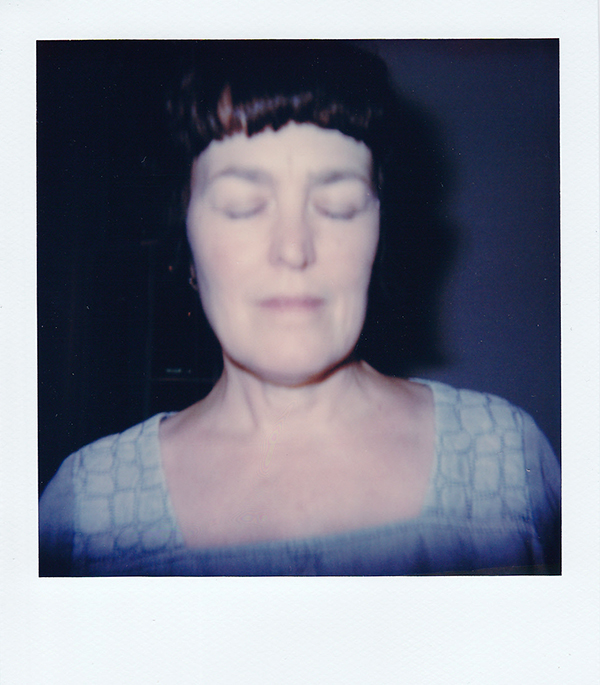
1908 zen-on polaroid

I enjoyed the parallels drawn between the search for dark matter and the search for inner peace, both of which require PURITY, QUIET and SENSITIVITY in processing data, looking for patterns and understanding knowledge.

The Dark Matter exhibition at Science Gallery was not so inspiring in its curation but there were a few nuggets to be gleaned.

Through the AEgIS from Semiconductor

1908 Science gallery semiconductor

Images gathered from data captured from the AEGIS experiment based at CERN of violent collisions between matter and antimatter, along with tracks of newly created particles, all of which are too small to see with the human eye reveal the chaos of the unseen.  The artists call it a “space time-lapse” work, showing an animation created from around 100,000 still images.

Mirror Matter by Emilija Škarnulytė

1908 Science gallery Emilija Škarnulytė
In thousands of years, how will the gigantic structures dedicated to the pursuit of science be viewed? Will their remains be viewed the same way we think of Stonehenge or the pyramids – relics of a previous civilisation? Mirror Matter is set 10,000 years from now, with an all-seeing alien eye surveying the ruins of scientific machines that once probed and measured the Universe.

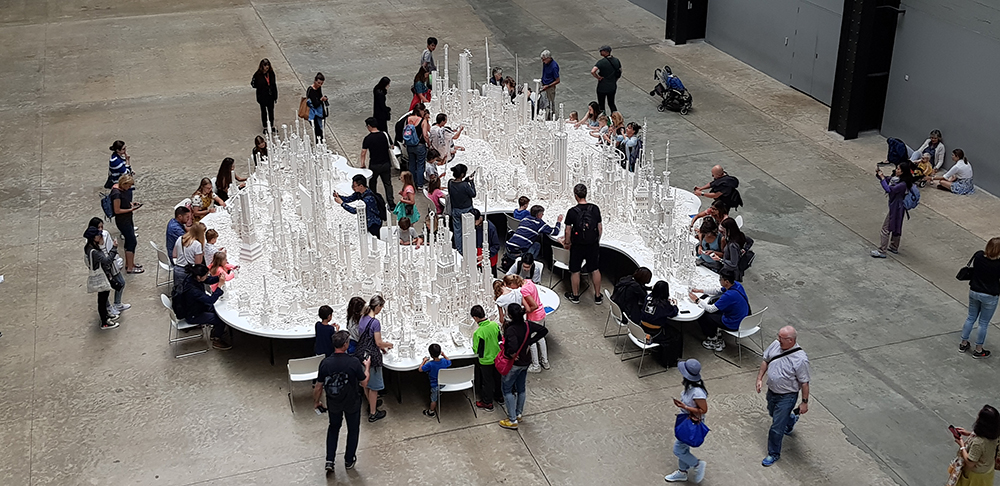
The public engrossed in building Utopia at Tate Modern Turbine Hall

1908 Tate Turbine Hall lego

Olafur Eliasson In Real LIfe at Tate Modern works well for social media posts but on the day I felt mostly disappointed with one or three exceptions, this may be because it was like an unruly crèche or being swamped with spectacle.

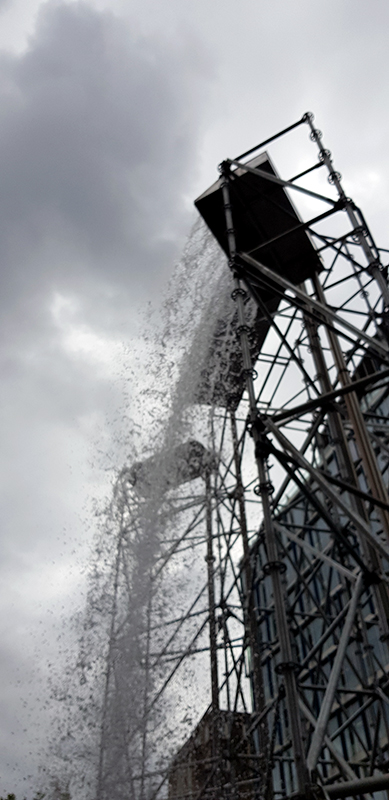
  1. Waterfall 2019 against a grey London sky

1908 Olafur Eliasson Waterfall 2019

2. Model Room 2003

1908 Olafur Eliason model room

3. Glacial Currents 2018


and A description of a reflection 1995

1908 Olafur Eliason description reflection

Loved this idea

1908 Olafur Eliason magnetic field

Went on to see Takis Sculptor of Magnetism, Light and Sound which was great (also no babies)

1908 Takis magnetism

‘Plato speaks of an artist turning the invisible world into the visible. I hope that someone seeing my sculpture is lifted out of his ordinary state’

1908 Takis Telelumiere No 4

‘I cannot think of my work as entirely my work, I’m only a transmitter, I simply bathe in energy’

1908 Takis sound and silence

‘We have chased the sacred symbols into the desert and replaced them with electronic eyes’

1908 Takis Music of the Spheres

Reading Timothy Morton ‘Being Ecological’ I started off thinking I am going to love this book but after a chapter of multiple examples of how to look at ‘being ecological’ this way or that way I was a bit frustrated. I missed the reading group to see how everyone else got on.

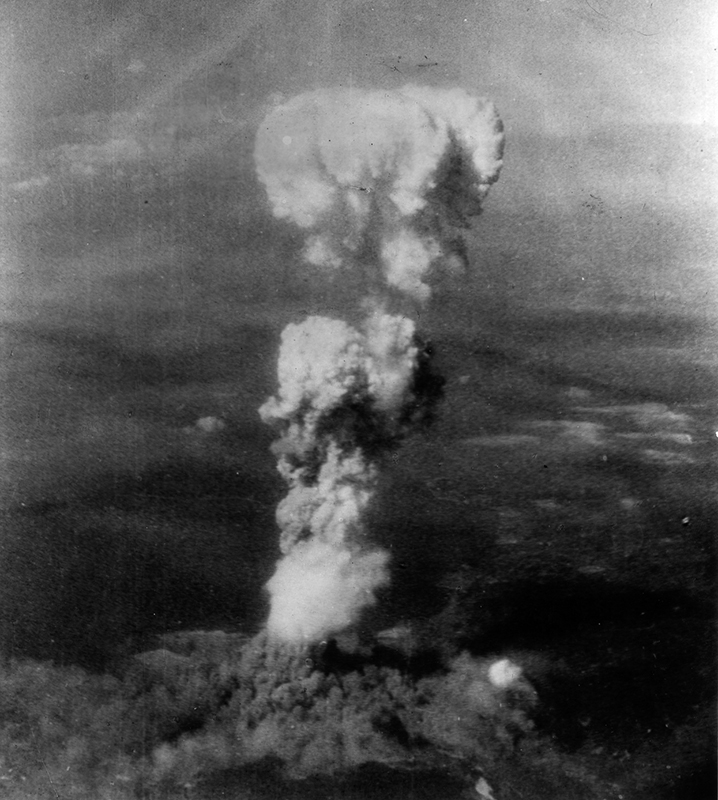
I did find it interesting to discover that the Anthropocene has a proposed official start date and it’s very recent – 1945 – the time when the first atomic bomb was detonated.

1908 nuclear explosion 1945.jpg

In January 2015, 26 of the 38 members of the International Anthropocene Working Group published a paper suggesting the Trinity test on 16 July 1945 as the starting point of the proposed new epoch.