Archives for posts with tag: Maps

It has been a busy few weeks preparing for The Geological Unconscious at Hypha HQ – a group exhibition, co-curated by Julie F Hill and myself, exploring themes of stone consciousness and human-mineral encounters, destabilising assumptions about passive matter and a stable Earth.
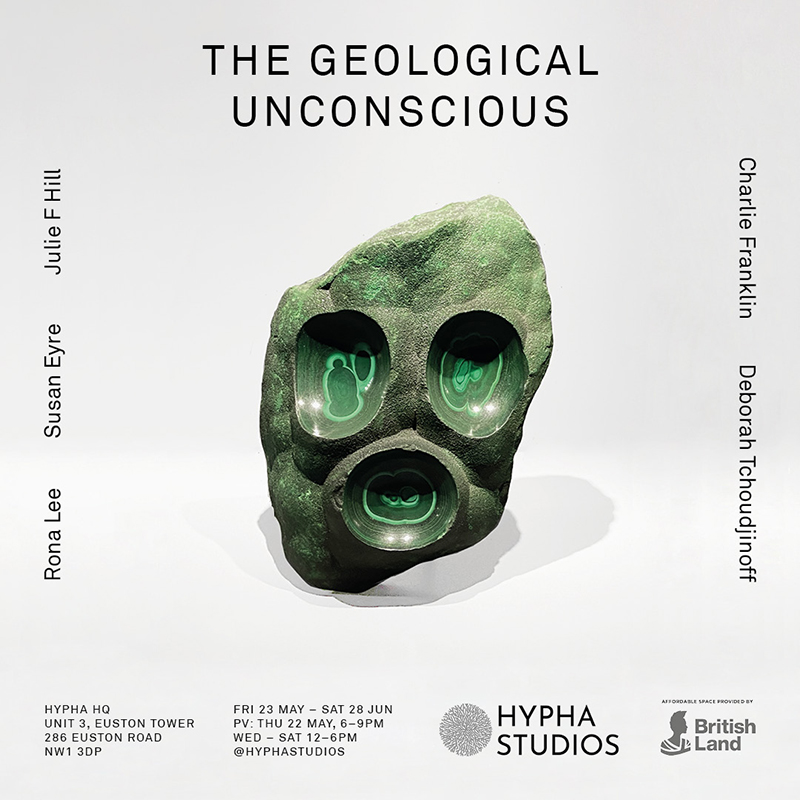
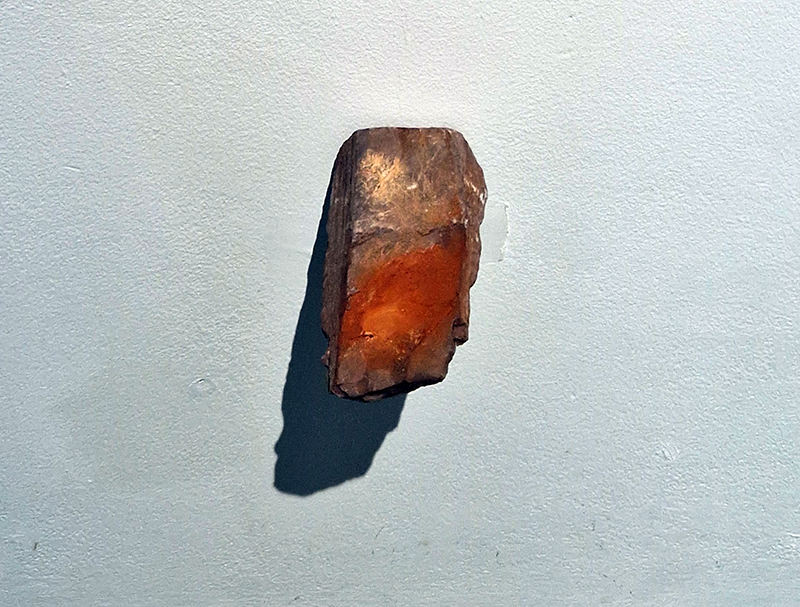
Image: From Roger Caillois’ stone collection: Malachite, masque africain, République démocratique du
Congo, 14 × 20.5 × 6 cm. Photographed in the Museum of Natural History, Paris by Julie F Hill.


Responding to Jason Groves’ inquiry into the mineral imaginary in his eponymous book, as well as the ‘Writing of Stones’ as proposed by writer and mineral collector Roger Caillois, the exhibition exposes the complex entanglements between the organic and the inorganic; the human and the lithic. The Geological Unconscious is viewed through disruptive Surrealist strategies, engagements with the aesthetics of geo-materiality and material processes that attend to the growth and transformation of matter. These artistic ‘excavations’ highlight the toll of extractive industries on our planet, whilst inspiring reverence for the geological lineages of deep, cosmic time. Theories of Animism and Panpsychism are also brought to
bear on ways of attributing agency to inorganic realms.

I am thrilled to be exhibiting with Julie F Hill, Charlie Franklin, Rona Lee and Deborah Tchoudjinoff.

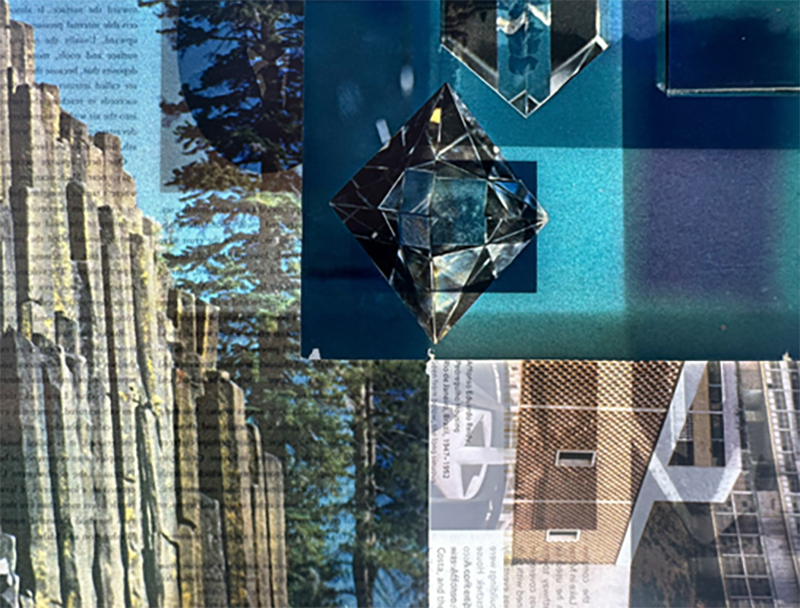
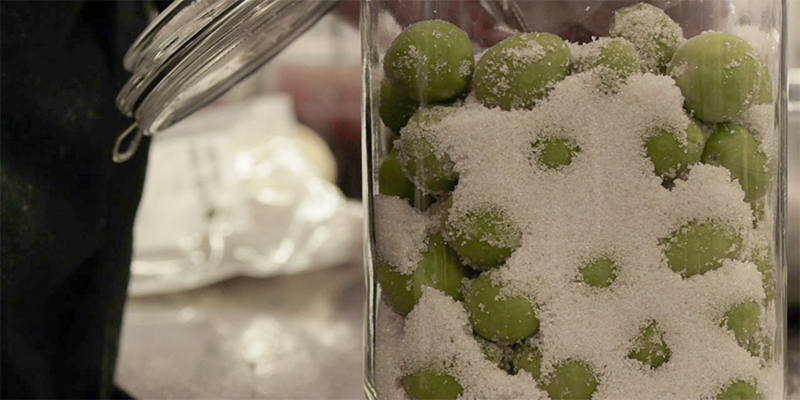
An accompanying events programme includes an urban geology walk with Geologist Ruth Siddall, discussing the origins of the local built environment; an installation and tasting by chef Moonhyung Lee who explores human-mineral entanglements through digestion; a crystal growing workshop led by Julie F Hill and I will be offering visitors lithomancy readings every Friday afternoon.

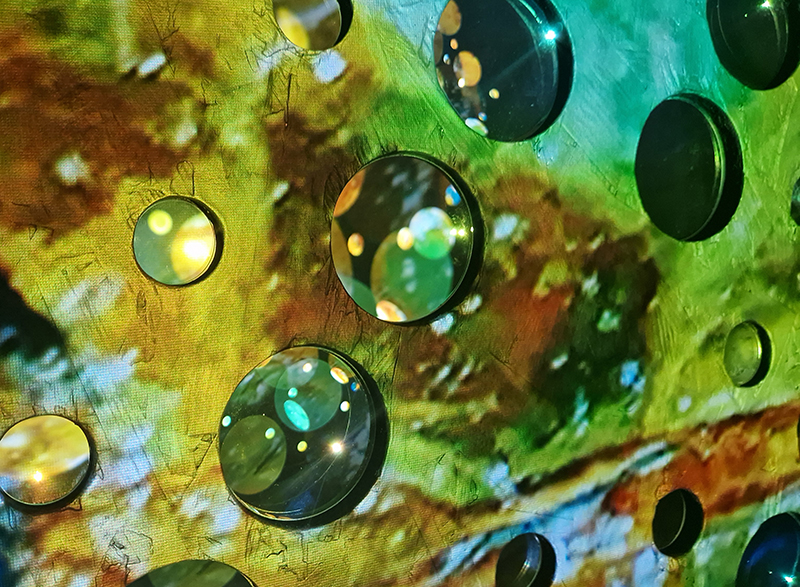
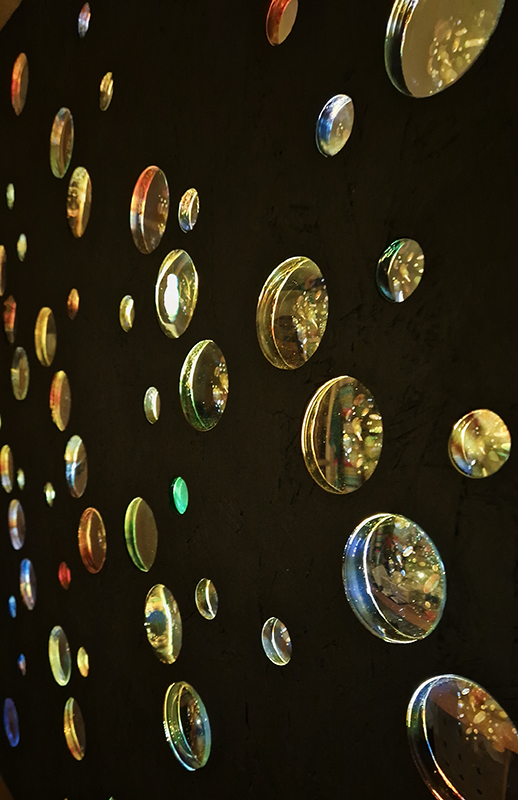
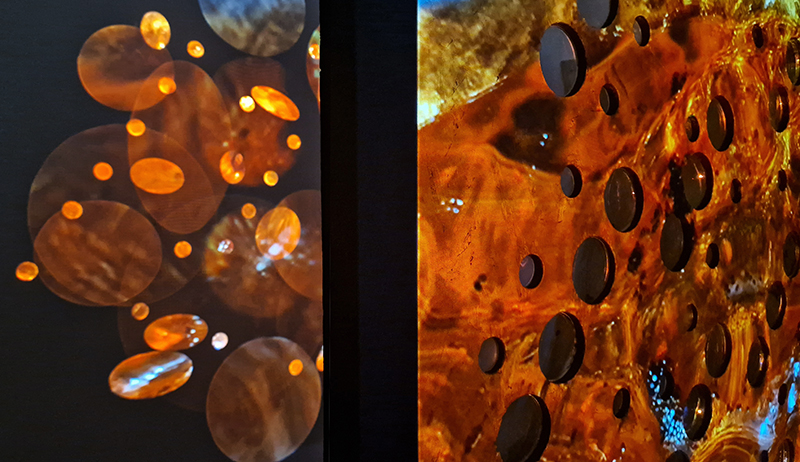
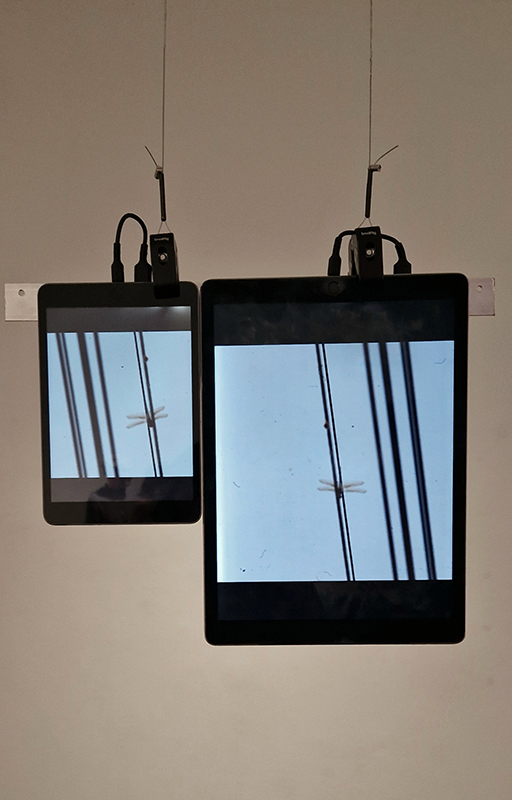
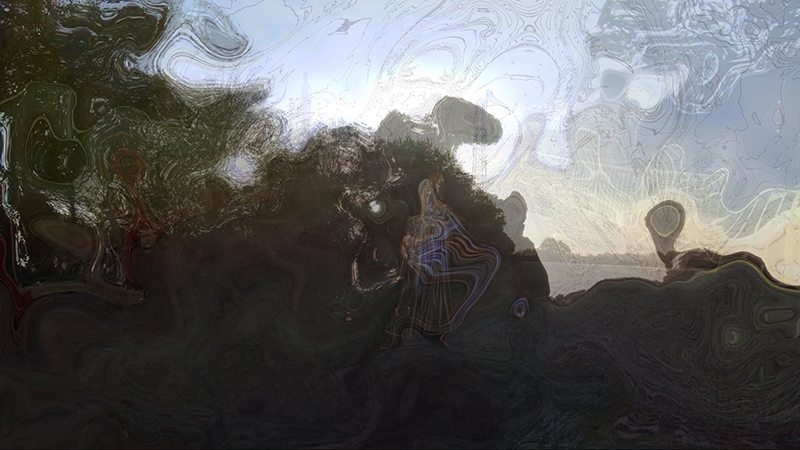
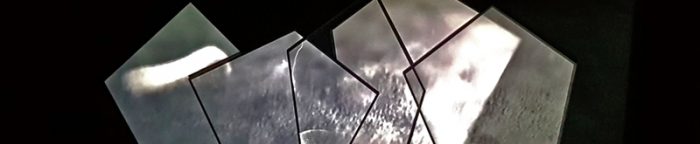
Investigating human/mineral entanglements for new work to be installed at Hypha HQ for The Geological Unconscious. Video of human activity projected through distorting optical lenses transforms the anthropocentric position to imagine the perspective of the rock. The pattern of lenses is informed by the molecular structure of magnetite,
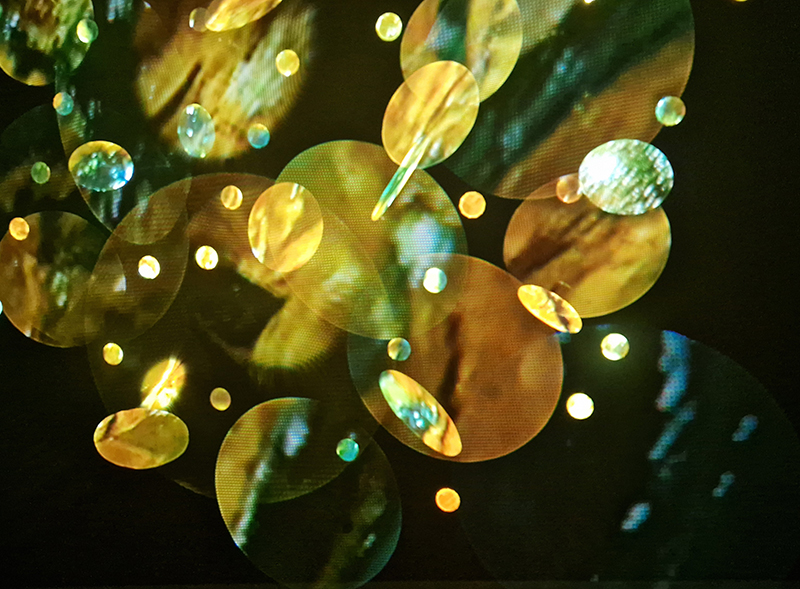
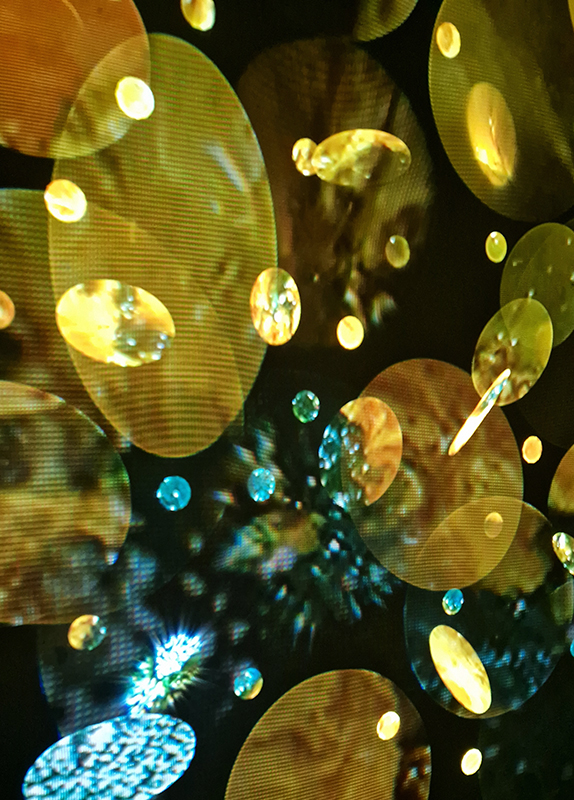
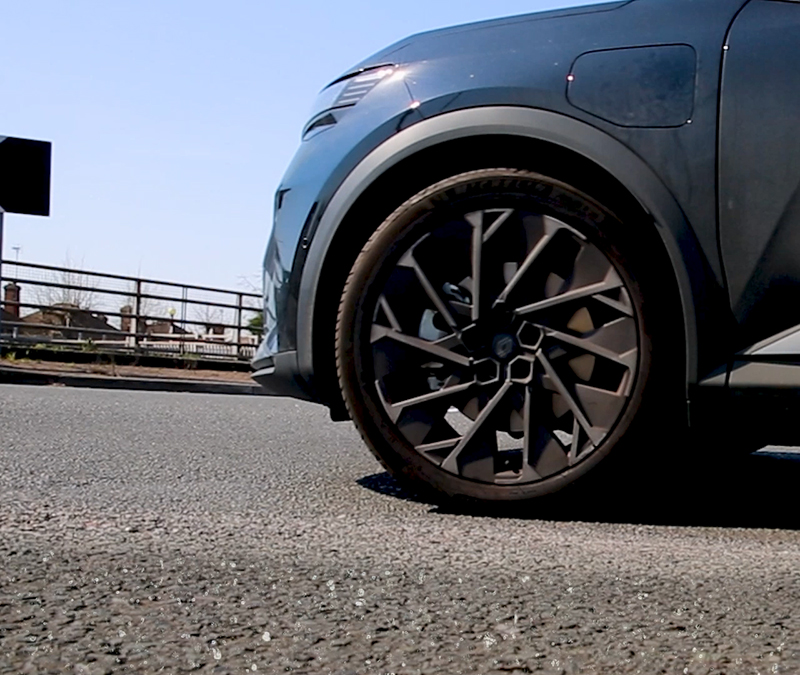
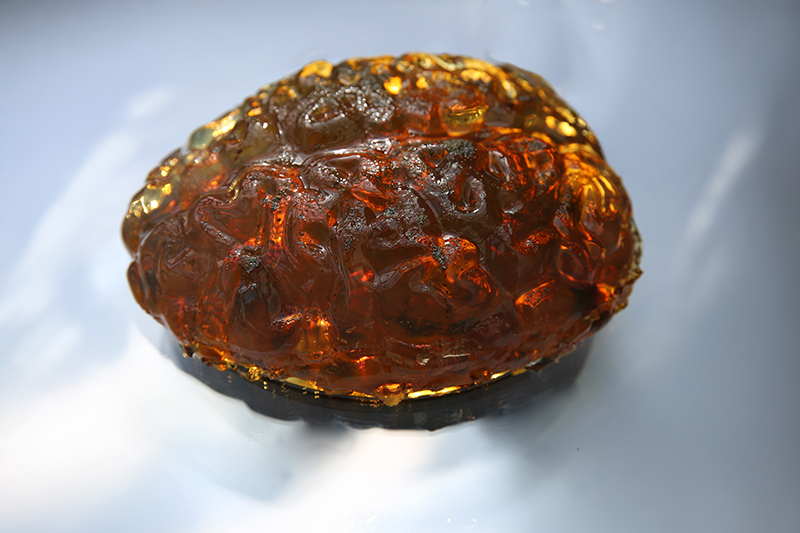
Magnetite is a naturally magnetic mineral found in many organism’s cells including human brain cells. Mined magnetite is used in industrial and mechanical processes and its use in combustion engines and braking systems is releasing nanoscale pollutant particles from traffic into the air which are finding their way into brain cells in high percentages causing concerns with links to degenerative brain diseases. I have been filming the stop start constant stream of traffic at a local roundabout and made a cast of a brain in gelatine with suspended iron filings. The filings oxidised and so the brain took on an iron red tinge and after a few days it cleaved down the centre and gradually as it dried became more and more chiton like.
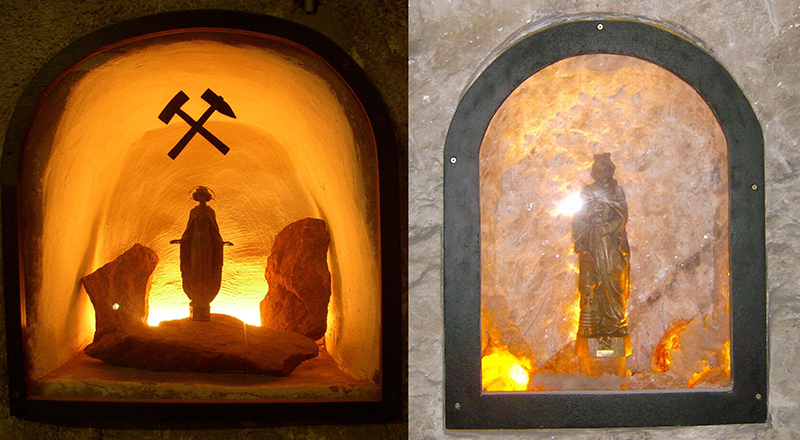
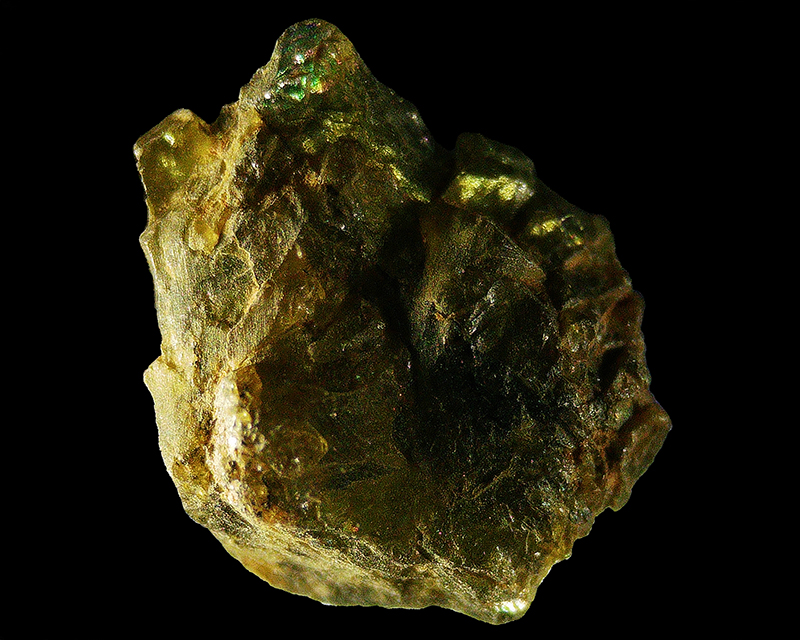
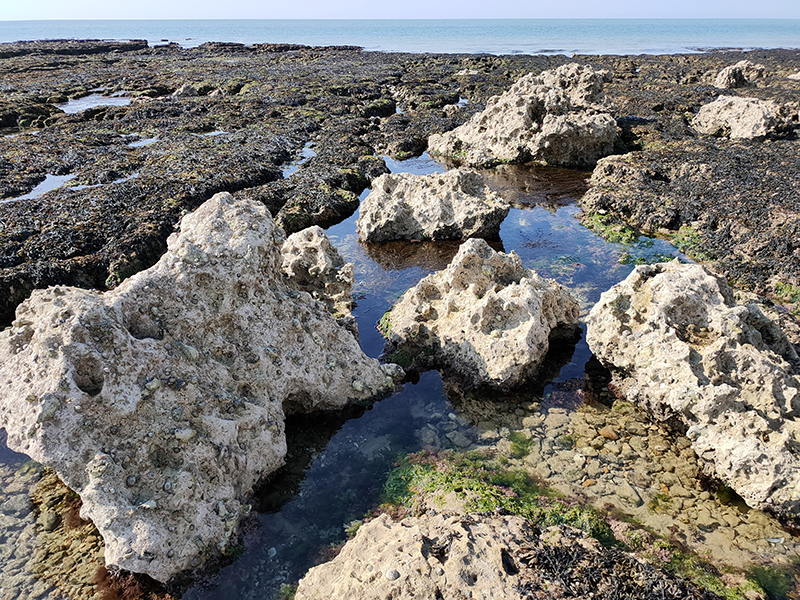
Chitons are remarkable molluscs that have changed little in hundreds of millions of years. The chiton has hundreds of tiny eyes in its shell, which is made of eight articulating plates. It is the only known creature with lenses made of minerals rather than protein. Another distinctive feature of the chiton is having rows of teeth primed with magnetite, which aid its homing capabilities through magnetoreception and allow chomping on the hard rock surfaces it clings to. Inside the teeth of some species, the mineral santabarbaraite has been found, named after Santa Barbara, a mining district in Italy where it was first discovered and that honours Saint Barbara, who is the patron saint of mining and tunnelling. Santabarbaraite is also one of the few minerals named after a woman.

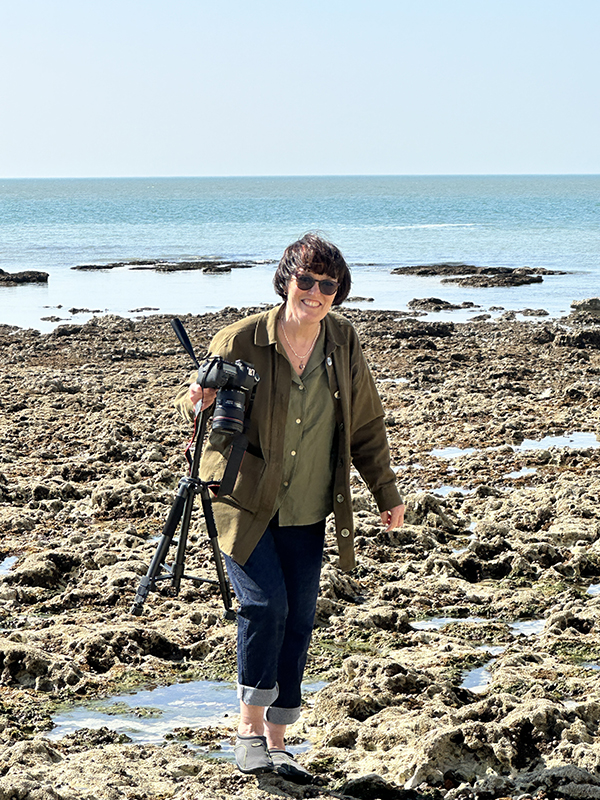
Fantastic day chiton hunting in the rockpools on the stunning East Sussex coast. Thanks to family who helped find these well camouflaged unique creatures.
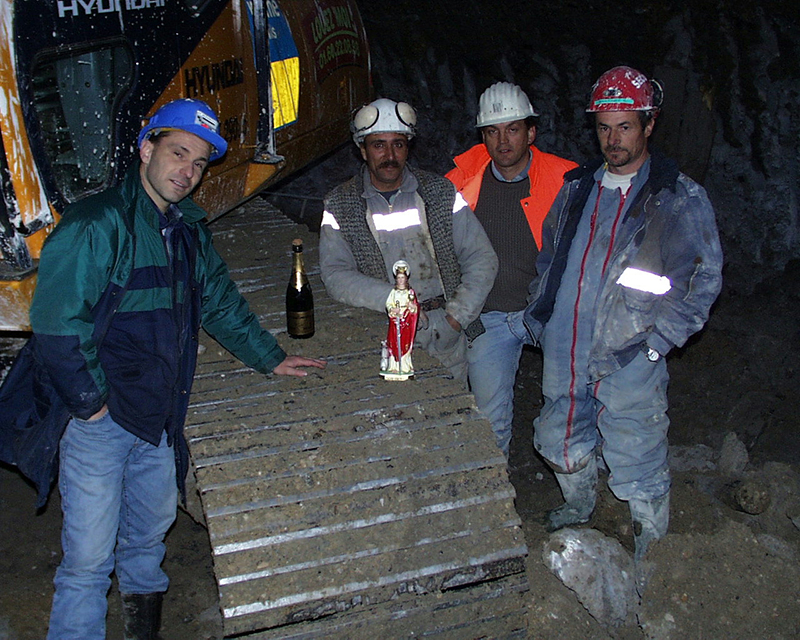
Saint Barbara, was adopted by miners and underground workers as patron saint after the pursuit of geology and the widespread use of gunpowder in mining escalated in the 1600’s. She may have a dubious authenticity but her benedictions are still sought today with many statues installed at the entrances to Crossrail and a large ceremony on her saints day, 4th December, performed by local priests before tunnelling went ahead. Even at CERN the epicentre of scientific rigour, a shrine to Saint Barbara was established at every shaft site of the Large Hadron Collider requiring excavation and a blessing performed even if the priest had to be lowered by crane down the shaft to achieve this.

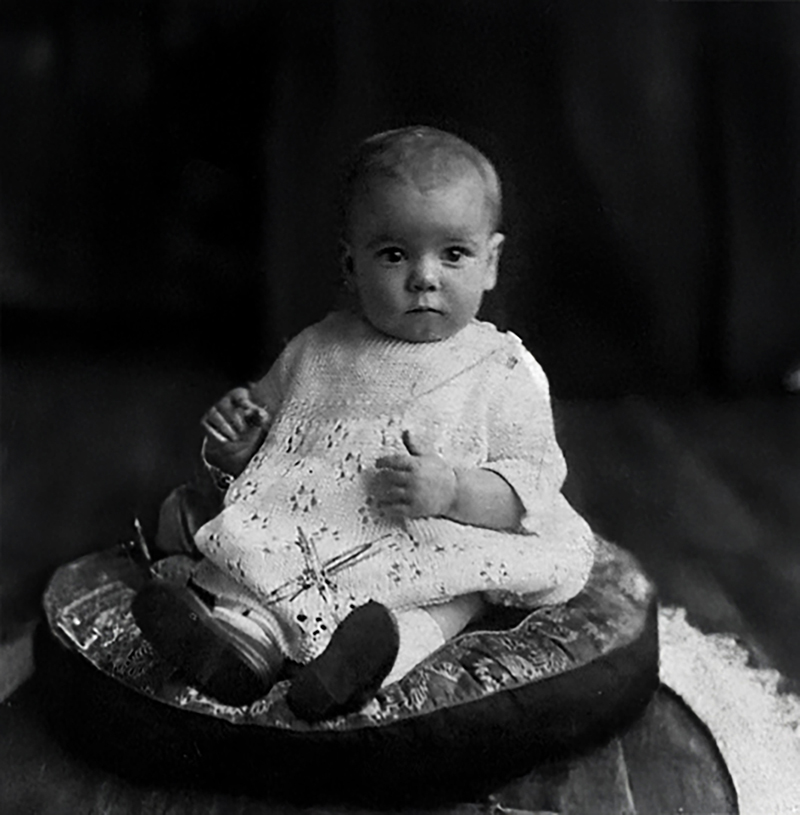
My mother’s name was Barbara and her birthday 6th December is very close to Saint Barbara’s day on the 4th. It would be great to discover she arrived two days late but there is no one alive now to ask.
Small grains of magnetite are common in igneous rocks, formed from magma having cooled and solidified within the Earth’s crust, and also in metamorphic rock, formed when existing rock is transformed physically or chemically at extreme temperatures. 
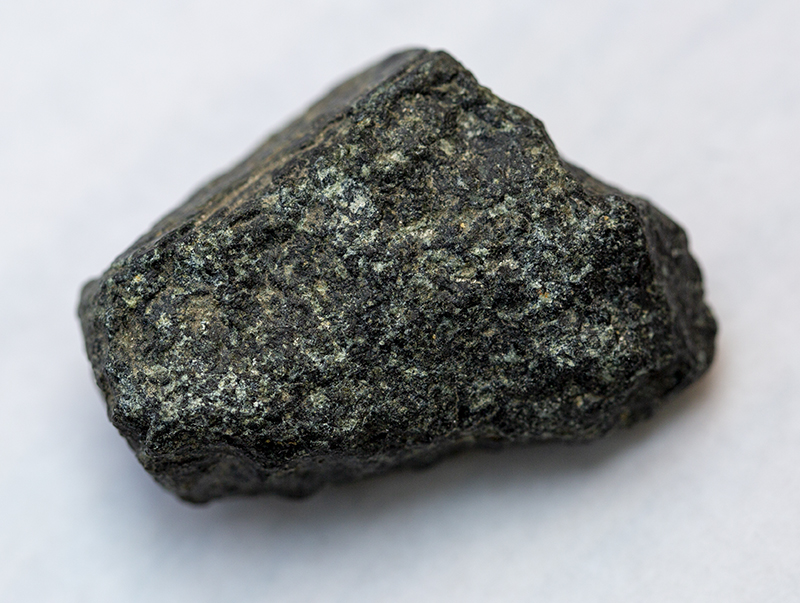
These processes happen on other planets as well as Earth and so magnetite has also been found in meteorites.

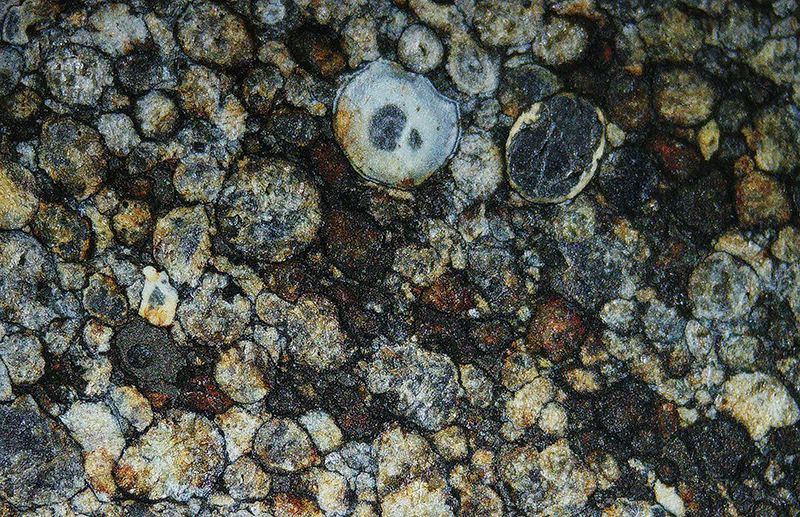
Using a digital microscope to look at the structure of the chondrite meteorite NWA 16975 discovered in the Sahara in 2024 which displays numerous and obvious chondrules and flecks of nickel iron in a fine grained matrix.
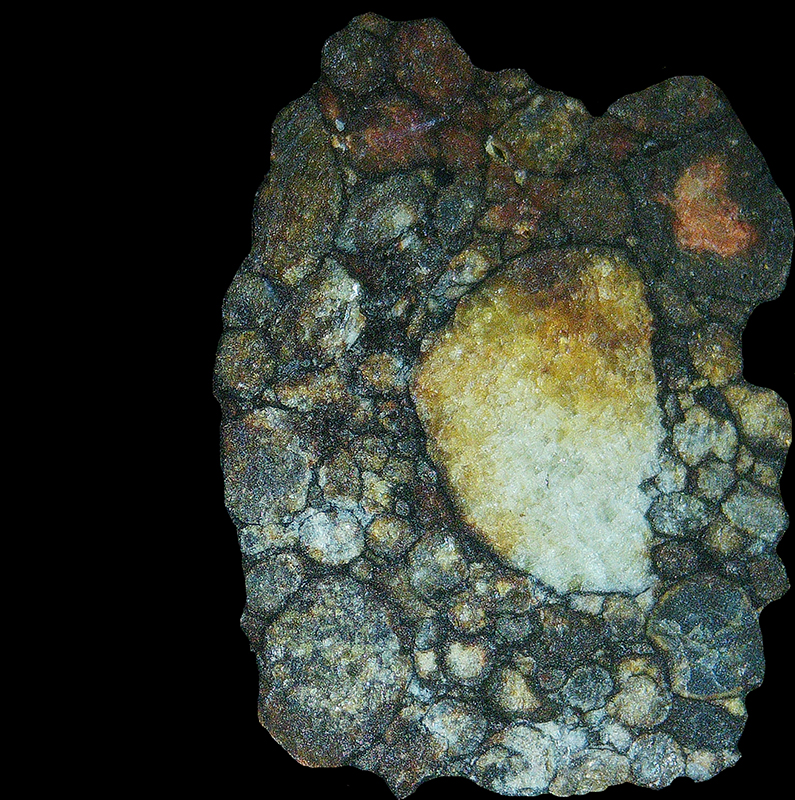
Also the fragment I have from the Diogenite meteorite NWA 7831 found in Morocco in 2013.
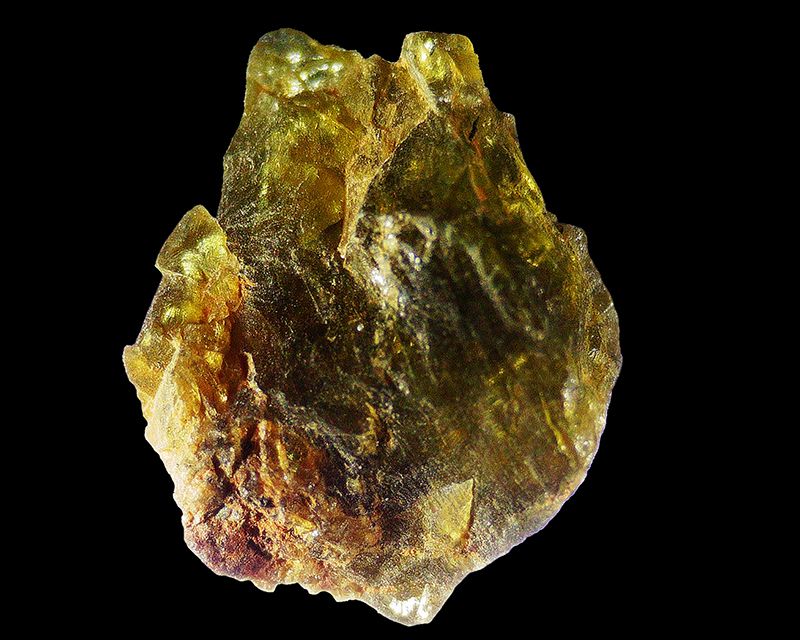
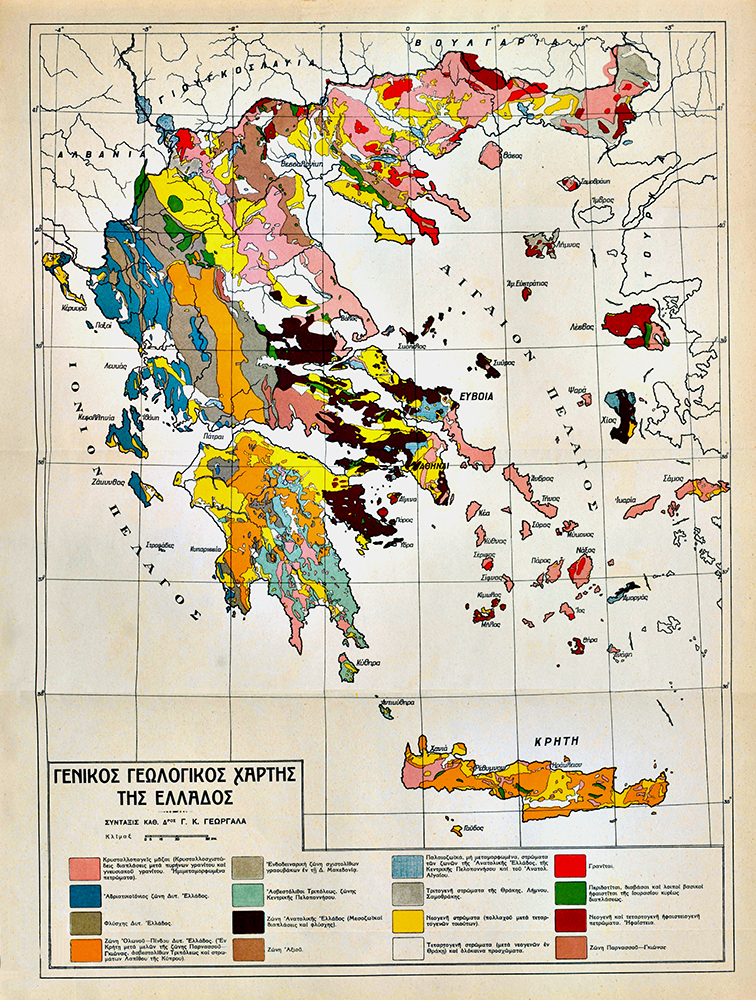
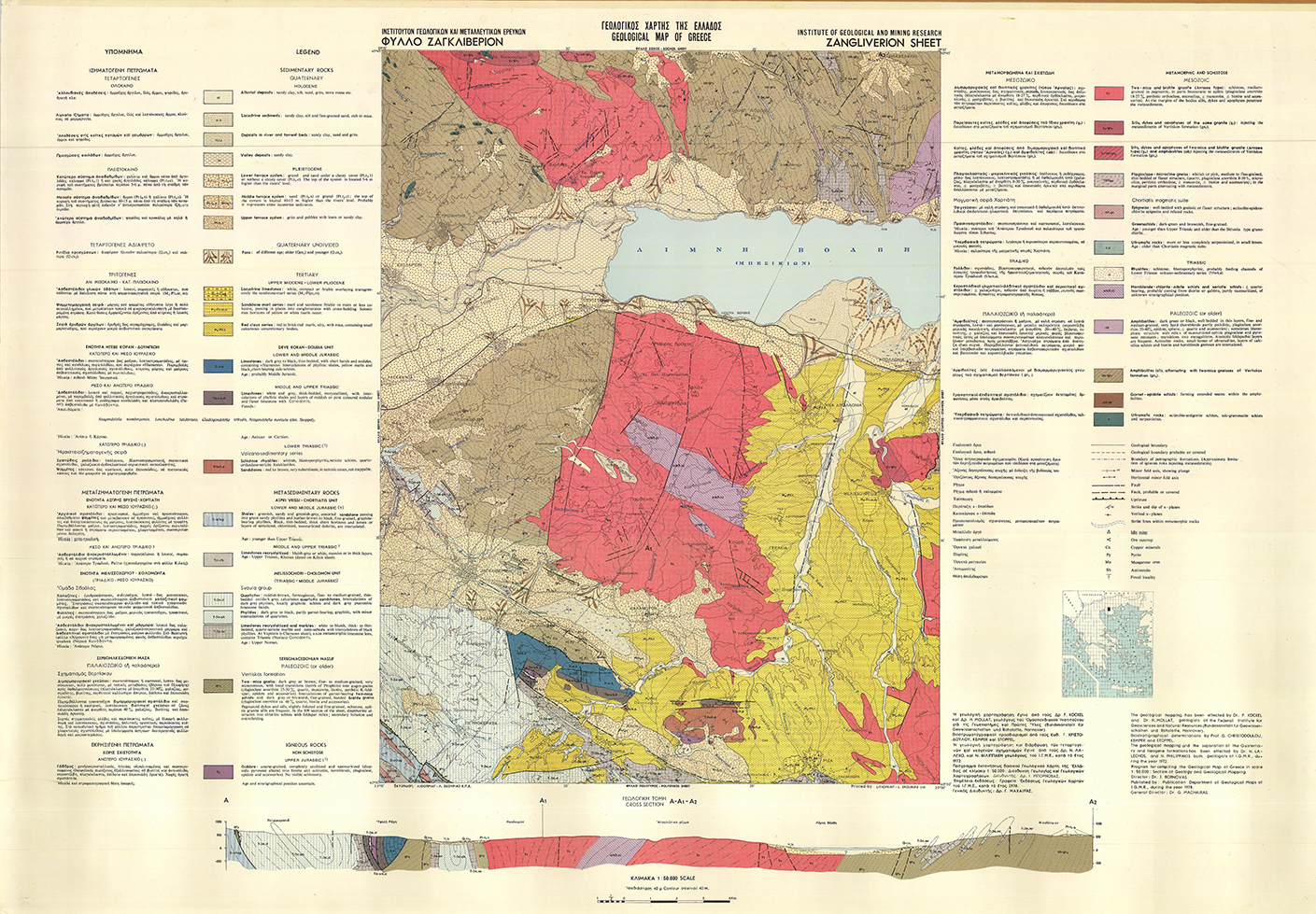
Looking at wonderfully colourful geological maps of Greece to locate the ancient area of Magnesia – the region where magnetite was first discovered and where its name has derived from – known as “magnes lithos” (stone from Magnesia). Definitely want to plan a research trip to this beautiful region around Thessaloniki.
Exhibitions

Whatshesaid collective of artists present Terra Incognita at Thames-side Studios Gallery – charting and cataloguing the disregarded, the everyday, its surface textures, accumulations, sedimentations.

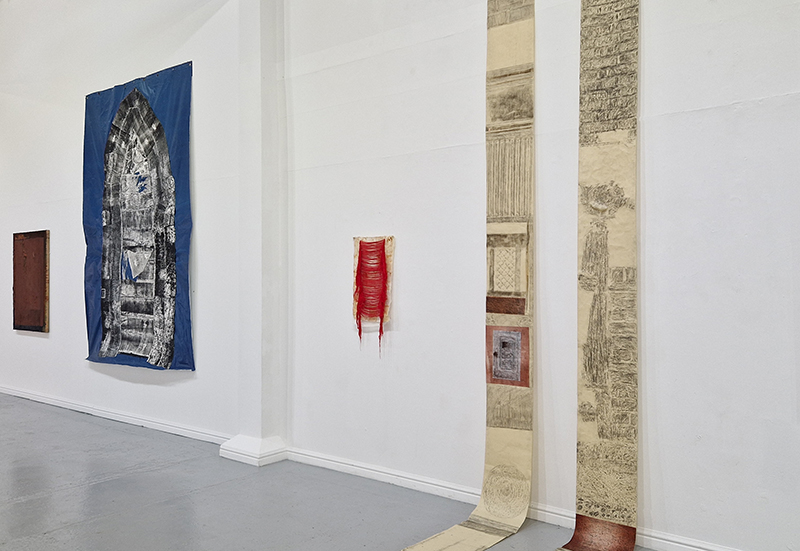
Joao Villas and Victoria Ahrens showing in Spectral Matters at APT Gallery An understated beautifully curated show whose work references the ephemeral materiality of sound, video, photography and print. The work overlaps and crosses over, both artists responding to the other’s practice. The images create matter, as spectral matter gives agency to the materiality of its own making, while haunting the space with its frequency- it vibrates. The exhibition explores memory, technology and the Anthropocene- and how the disappearing materiality of the world is captured through ephemeral means. 
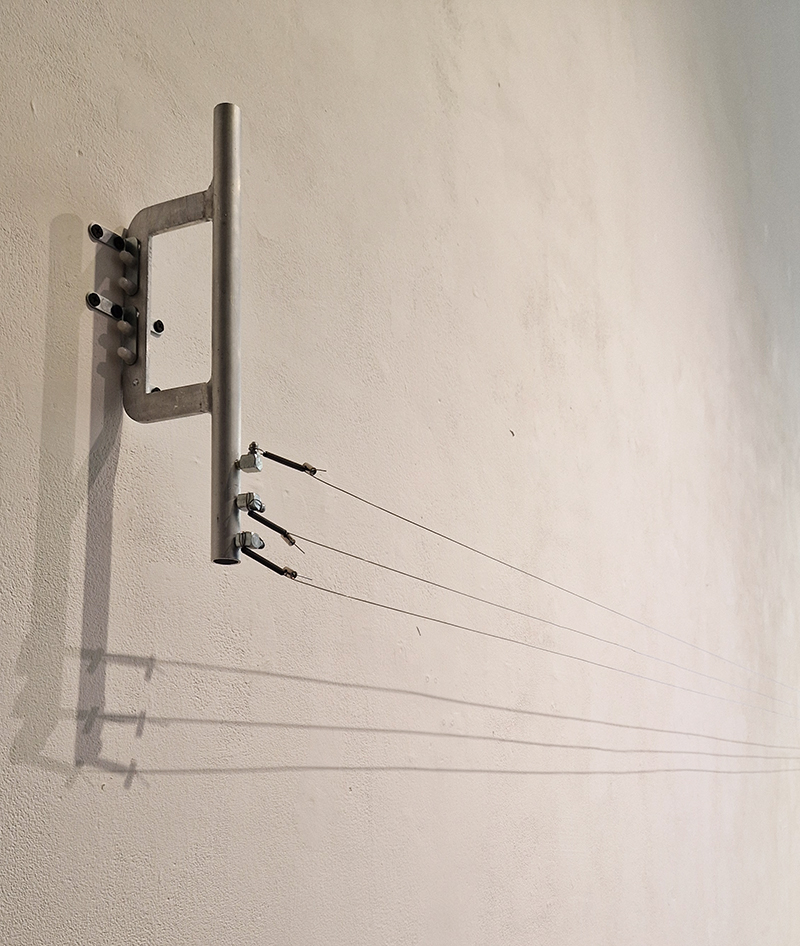
‘And here is one of the map’s most important characteristics: the viewer is positioned simultaneously inside and outside it. In the act of locating themselves on it, the viewer is at the same moment imaginatively rising above (and outside) it in a transcendent moment of contemplation, beyond time and space, seeing everywhere from nowhere.’ Jerry Brotton in A History of the World in 12 maps

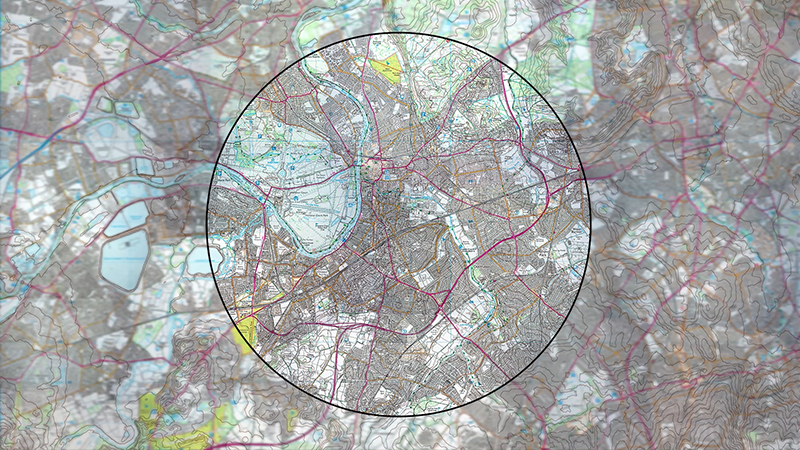
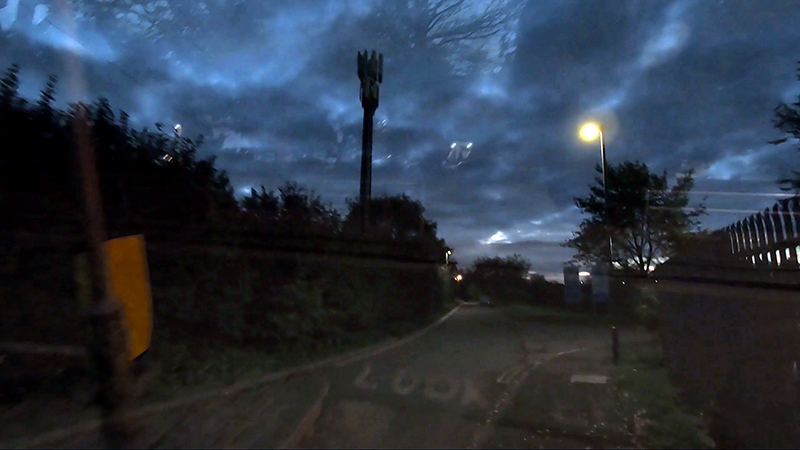
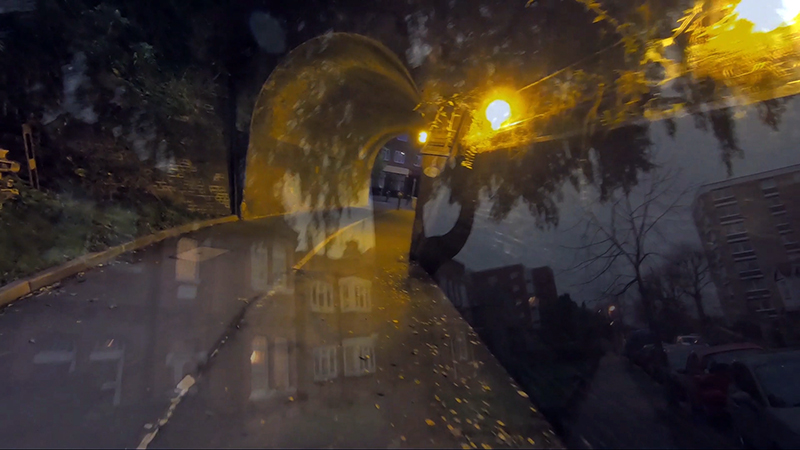
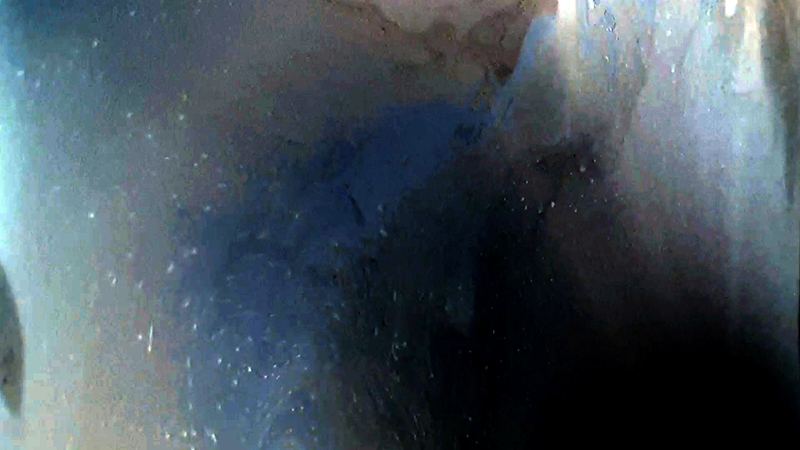
Locked down editing video work. Setting off at dawn and wearing a headcam I walked the most direct route to each of the four points due North, East, South and West of my home. I chose a three mile radius as this approximates the distance to my horizon at sea level.

I am interested in how space is perceived as a plotted dimension, as abstract space calculated mathematically but perhaps not something we can visualise and as imagined space.

I aim to relate these different perspectives on space to broader knowledge. In my film there are three speculative viewpoints; ‘the seeker’ who wishes to discover what is beyond the horizon, ‘the seer’ who imagines what might be beyond and ‘the scientist’ who offers abstract theories.

In the film I explore connections and hierarchies of physical dimensions and perception, the use of contour lines on maps, foliation and patterns in soap film membranes or marbling.

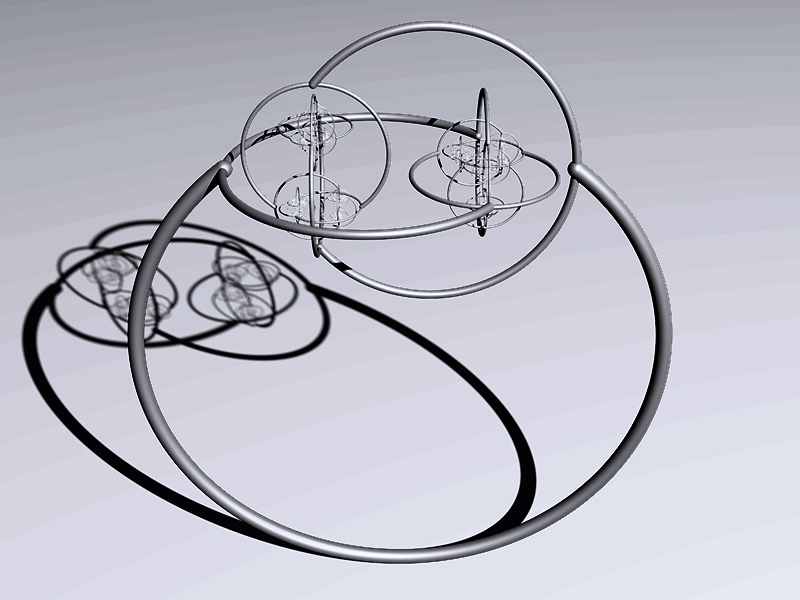
Foliation is the decomposition of shape into lines and circles. It occurs in geology as repetitive layering in metamorphic rocks and in mathematics as the analysis of curves and surfaces. The math’s language is way beyond what I can understand but it does have connections with holonomy and manifolds and Poincaré which I am interested in though I am yet to get to grips with any firm understanding. The notion of leaves (slices) allows for an intuitive way of thinking about a foliation. In mathematics, topology compares shapes to see if they have the same number of holes and handles and can therefore be moulded from one shape into the other by stretching, twisting, crumpling and bending, but not tearing or gluing.

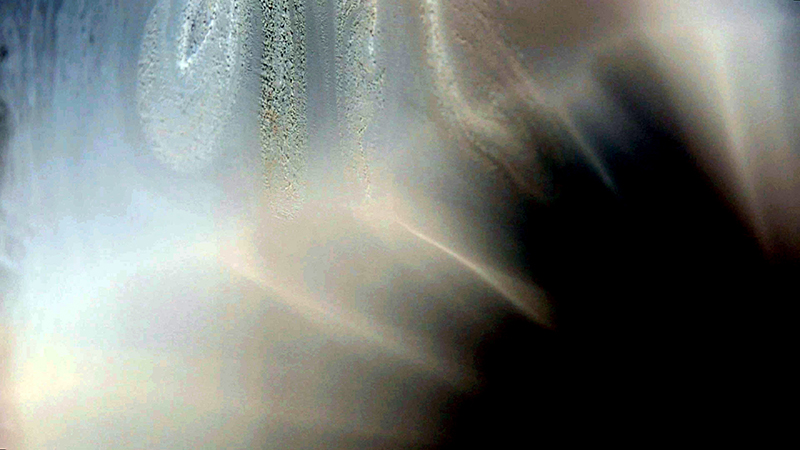
I took many films of soap film membranes and have been exporting the final single frame at the moment the bubble bursts. I have used these frames to create sequences of collated membrane bursts. We may live in a multiverse of bubbles each with wildly different laws of physics. String theory allows for many universes with different physical laws. It may be possible our universe could suddenly transform into a universe with different properties. If it did happen it would be so fast we wouldn’t even register it.

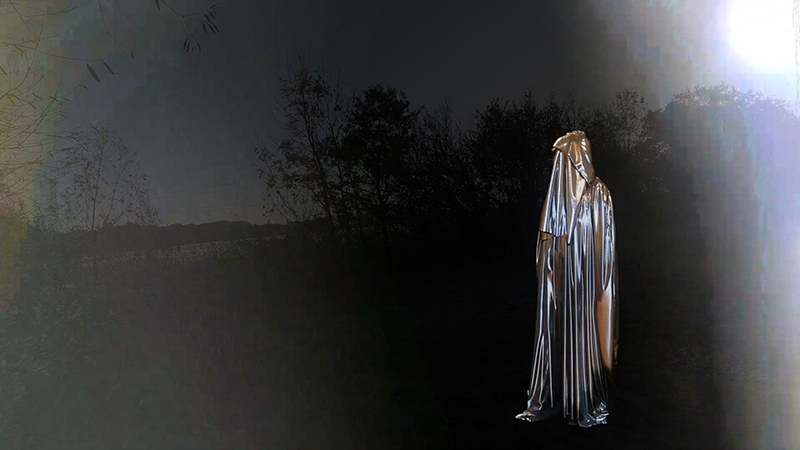
I made a silver cape for some green screen filming in character as the seer. Learning lots about Adobe After Effects so if the editing requires I drop this section then the hours put in won’t be entirely wasted and the cape will come in for when next door can have their parties again.

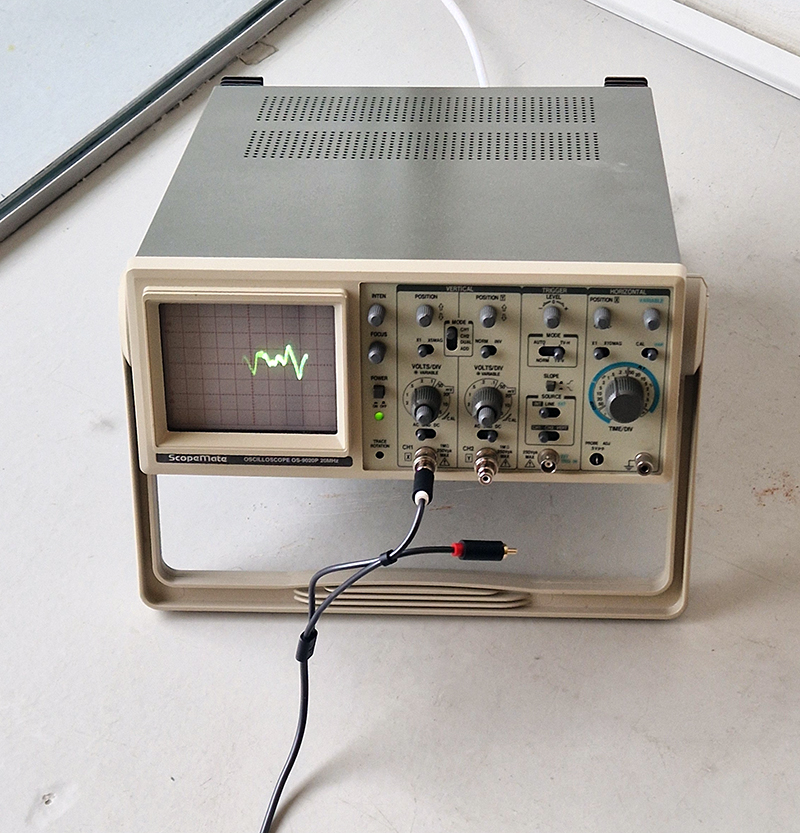
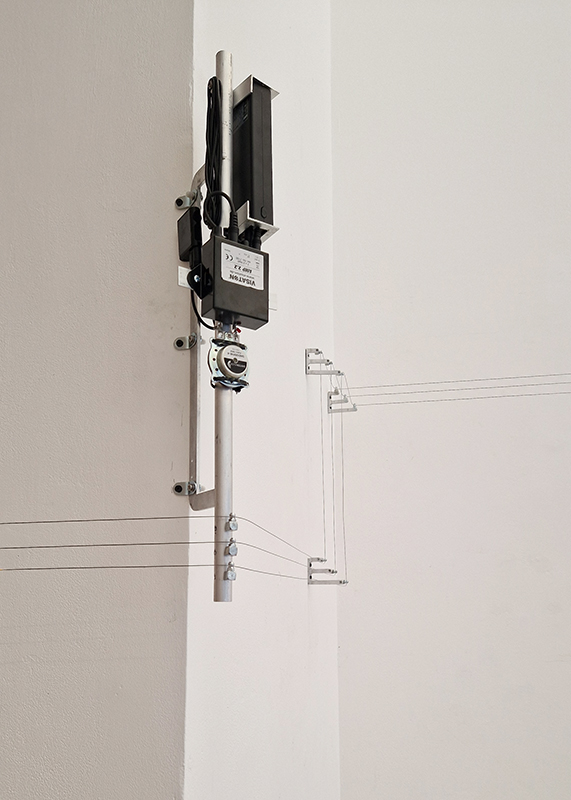
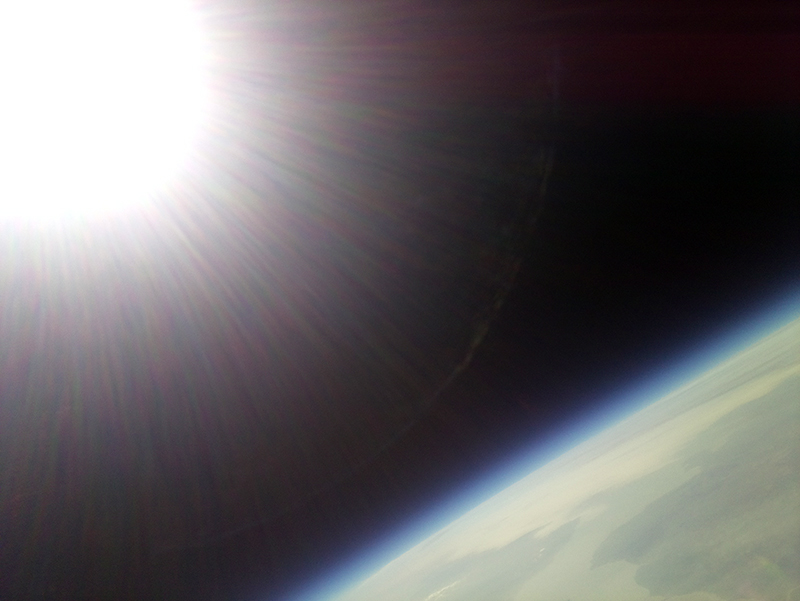
Thinking about making new work that interacts in real time with cosmic rays as they hit the Earth’s atmosphere and shower down upon us.

Cosmic rays, some travelling from other galaxies, pass through us and our world continuously, creating an almost tangible contact with outer space. Witnessing this incredible activity helps us look beyond what our immediate senses tell us exists and consider the interconnectedness of our universe.

We are made of carbon. Most of the carbon in the world is carbon-12 which contains six neutrons and six protons. Protons and atomic nuclei created by events such as exploding stars speed across space and collide violently with the Earth’s atmosphere creating a chain reaction of cascading particles. Some of these particles created are neutrons which can smash into atoms of nitrogen to create carbon-14 which has six protons and eight neutrons.

Cosmic ray activity gives us carbon dating techniques. Carbon-14 is unstable and therefore radioactive. It has a half-life of 5,730 years. This means if a sample of a tree contains 64 g of radioactive carbon, then after 5,730 years it will contain 32 g, after another 5,730 years that will have halved again to 16 g. Radioactive decay is random but in a sample there are enough atoms to work out an average time it will take for the nucleus to lose the extra neutrons.

Carbon-14 atoms in the atmosphere combine with oxygen to create radioactive carbon-dioxide. This radioactive carbon-dioxide is absorbed by plants which are eaten by animals. When an organism dies no more carbon-14 will be absorbed. The existing carbon-14 will start to decay. By measuring the radioactivity, the current carbon-14 content can be determined and the time of death established.

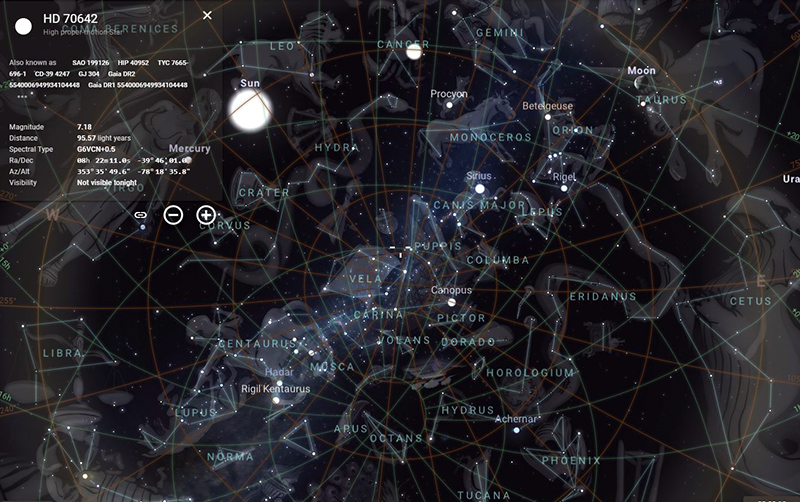
A planet with twice the mass of Jupiter has been discovered orbiting HD70642 in an almost circular orbit. This means it is possible that Earth-type planets may be orbiting further in. In all other planetary systems discovered with massive planets they usually have disruptive closer elliptical orbits which would destroy any smaller planets on a circular orbit. Hope to return to my studio soon to continue work on ’90 light years home’ which will use a raster pattern on folded paper looking at mapping out a space ship as a star map using 137 points. As physicist Laurence Eaves states – ‘The number 137 would be the one you’d signal to aliens to indicate that we have some measure of mastery over our planet and understand quantum mechanics.’

137 comes from the fine-structure constant, also known as Sommerfeld’s constant and is represented by the alpha symbol α. Using several fundamental constants found in nature to give a fundamental physical constant. This number represents the strength of electromagnetic interaction between elementary charged particles which is the probability that an electron will absorb a photon.

I watched the Hito Steyerl lecture as part of the Dramaturgies of Resistance online event series.  ‘At this unprecedented time, when it seems as if “everything is canceled,” Steyerl’s most recent work explores the complex relation between spread (of conspiracy theories no less than viral contagion) and simulation (from the automization of performance to our capacities for virtual interaction with statistical probability of human risk).’

I was excited to find the lecture covered topics very relevant to my research into abstract space at the moment such as objects in topology. The Alexander horned sphere is a pathological object in topology. It is formed by starting with a standard torus, removing a radial slice of the torus and connecting a standard punctured torus to each side of the cut, interlinked with the torus on the other side. A pathological object is one which possesses deviant, irregular or a counterintuitive property, in such a way that distinguishes it from what is conceived as a typical object in the same category.

The opposite of pathological is well-behaved.

Mathematician Shing-Tung Yau set out to discover if there could be a spacetime which contains no matter but in which there is still gravity caused by the topology of the space. In 1977 he solved the Calabi Conjecture posed by Eugenio Calibi in 1954 who was interested in whether a certain type of topology guarantees a certain type of geometry. Topology looks at the overall form of an object and recognizes shapes that have an equivalent topology but different geometry such as a doughnut and a coffee cup as they can be morphed from one to the other. Topologists generally study manifolds. Manifolds are shapes that could be flat when looked at close up such as the earth’s surface or a ball if you were an ant. Each point on the surface can be mapped using two coordinates onto a 2 D plane and the shape is finite. Taking the average of all the curvatures at every point on the surface gives what’s called the Ricci curvature. A doughnut which is a 2D manifold mapped in this way has a Ricci curvature of zero which shows that a manifold can have a zero Ricci curvature at every point without being flat. There are also shapes which look 3D when seen up close and need 3 coordinates to map them. In mathematics it is possible to think of Euclidean (flat) space in any number of dimensions by increasing the number of coordinates you use giving manifolds in many dimensions. Transferring this equation to physics Ricci curvature describes the curvature of spacetime that’s induced by matter being present if this curvature is zero then it describes a spacetime with no matter. Yau proved that this type of manifold could exist in all dimensions. This type of manifold is known as the Calabi-Yau manifold. Particularly in superstring theory, the extra dimensions of spacetime are sometimes conjectured to take the form of a 6-dimensional Calabi–Yau manifold, which led to the idea of mirror symmetry.

Hidden in the future.

Grow the space of cooperation.

I took a couple of online geometry courses with The Princes School of Traditional Arts.

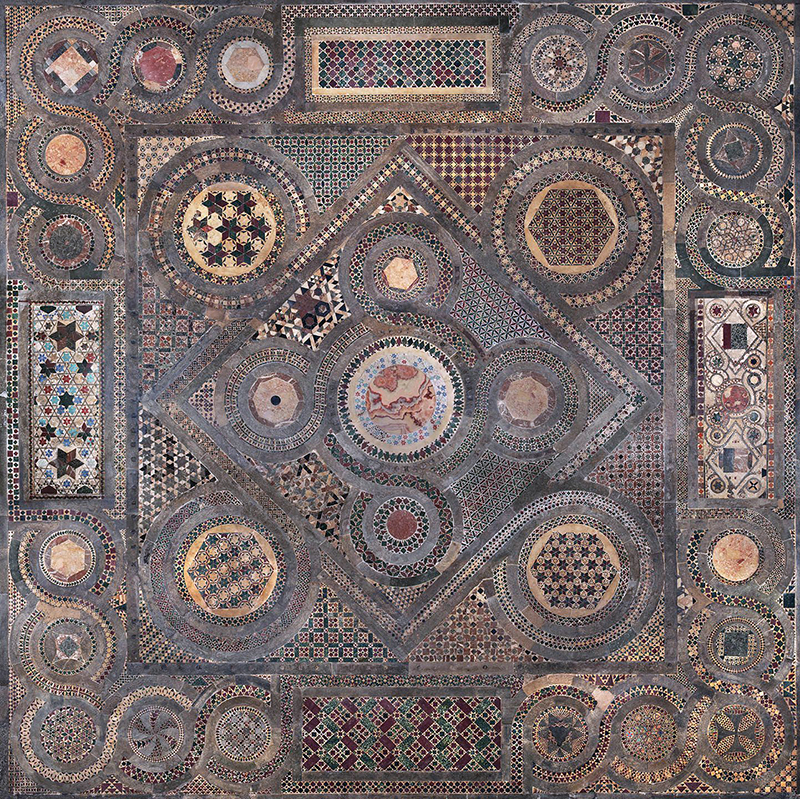
Mapping the Cosmos class was based on the geometry and symbolism of the Cosmati Pavement at Westminster Abbey which was laid in 1268.

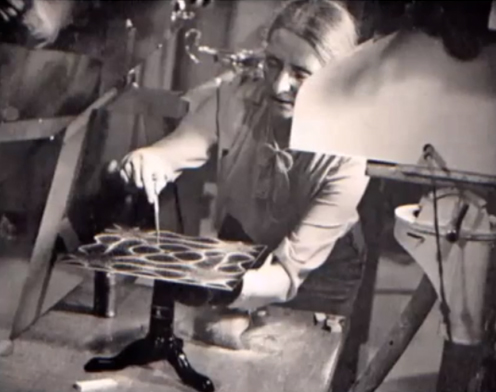
The Geometry of Sound class looked at Chladni patterns which occur on a rigid surface caused by various modes of vibration.

We begin each drawing with a circle intersecting a horizontal line. The horizon where heaven and earth touch.

I am about to follow up on some of the recommended further reading.

Other reading has provided some mind blowing facts. Thanks Jim Al-Khalili.

There are scientists measuring time in attoseconds. There are more attoseconds in a single second than there have been seconds since the big bang.

Atoms are incredible tiny; you can fit more atoms into a single glass of water than there are glasses of water in all the oceans of the world.

“Which is older, day or night? “Night is the older, by one day.” — Thales

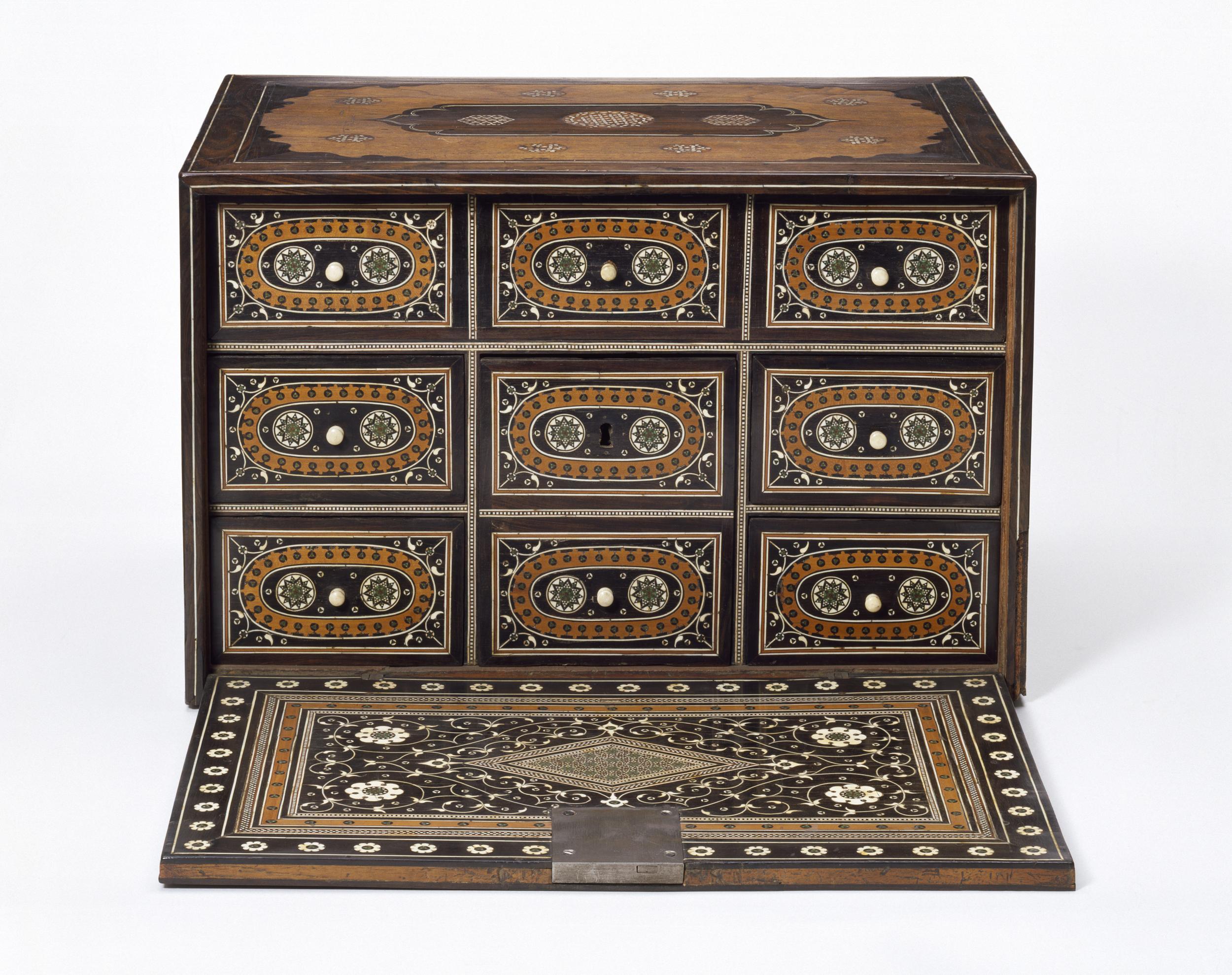
I have been looking at A History Of The World in Twelve Maps by Jerry Brotton again, this time in connection with the work I am making as part of The Matter of Objects collaboration between artists and historians. The little fall front cabinet that I am responding to took the journey from India to Portugal around 500 years ago, possibly following the same route as the spice trade.
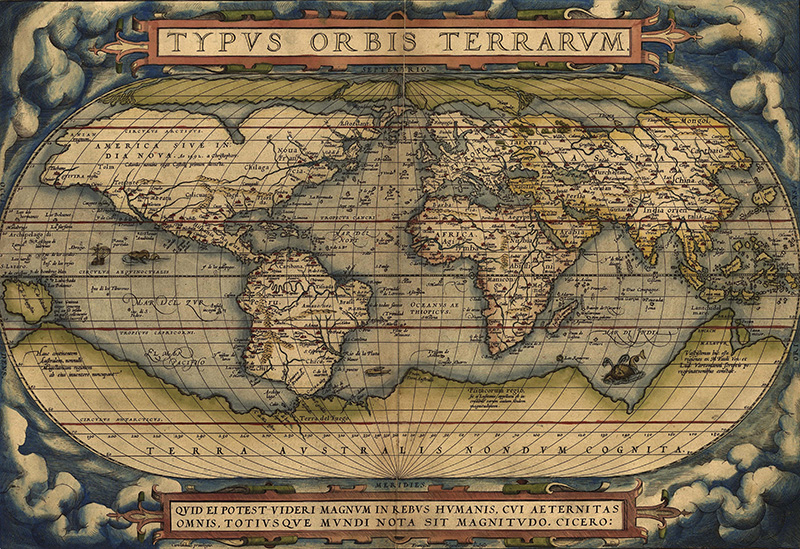
1605 Mercator World Map 1569

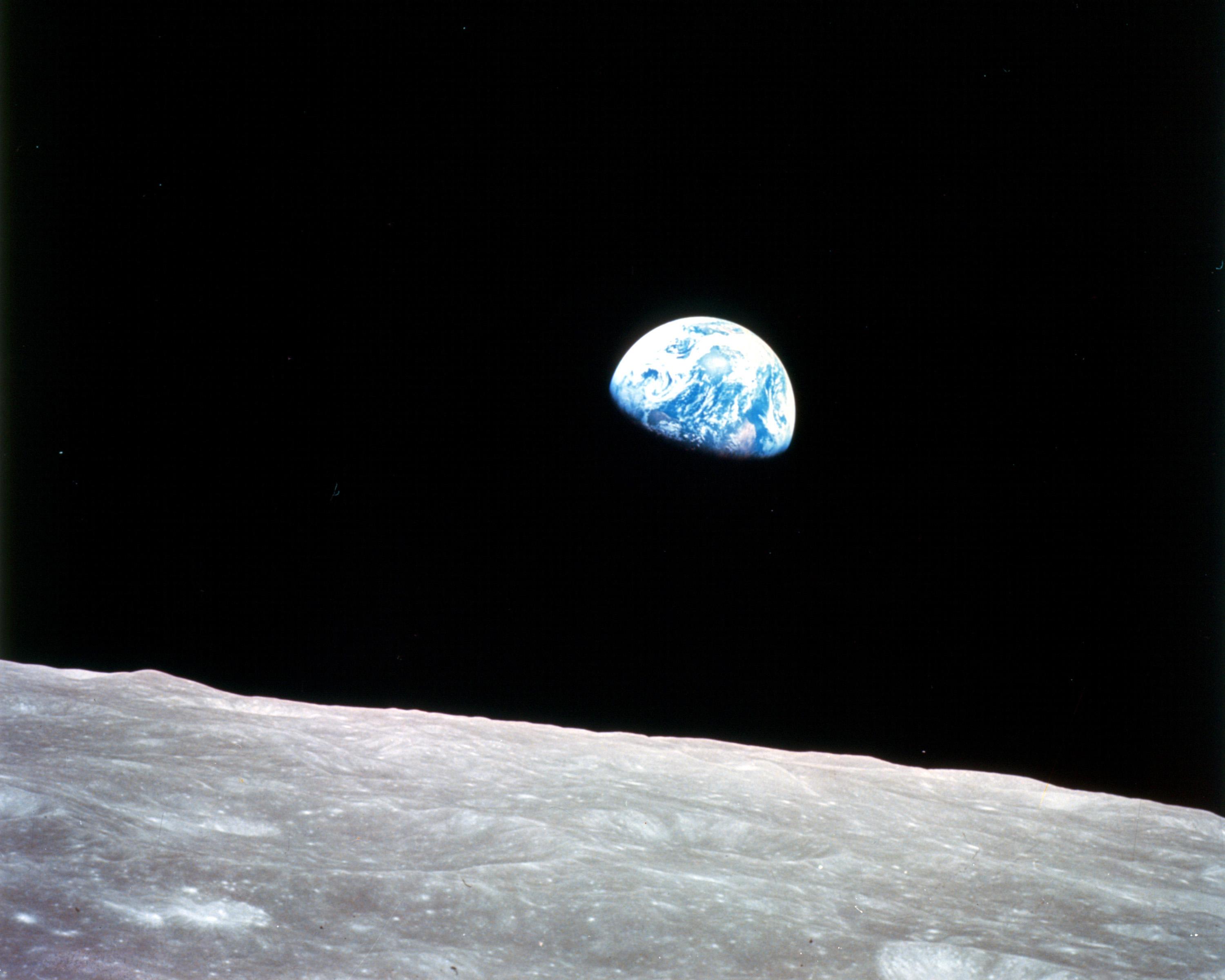
I have been looking at maps created around that time and reading about Gerardus Mercator and Abraham Ortelius both renowned cosmographers. I particularly like Ortelius view of his atlas as the Theatre of the World – ‘a place for viewing a spectacle’. Maps present a creative version of a reality we think we know but transform it into something different. Both men expressed a cosmographical philosophy of peace and harmony and hoped their world maps would give mankind pause for thought much as the 1968 earthrise image embodies.

1604 earthrise

Ortelius added the quote from Seneca to his maps –

‘Is this that pinpoint which is divided by sword and fire among so many nations?  How ridiculous are the boundaries of mortals.’

And from Cicero –

‘what can seem of moment in human occurrences to a man who keeps all eternity before his eyes and knows the vastness of the universe?’

1605 Ortelius World Map1570

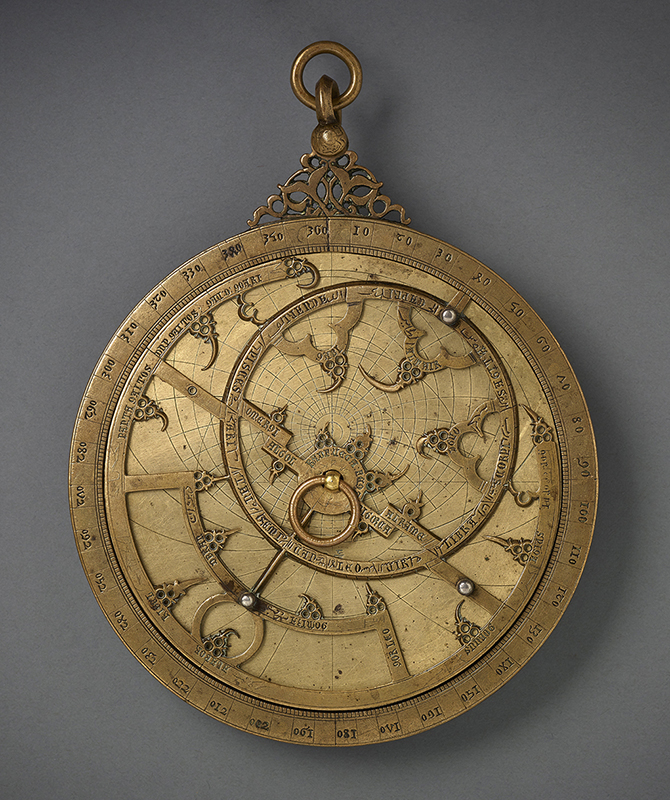
Another point of reference for me is the astrolabe, a complex and beautiful instrument used by early astronomers and cosmographers to determine time and the movement of celestial objects.

1605 astrolabe

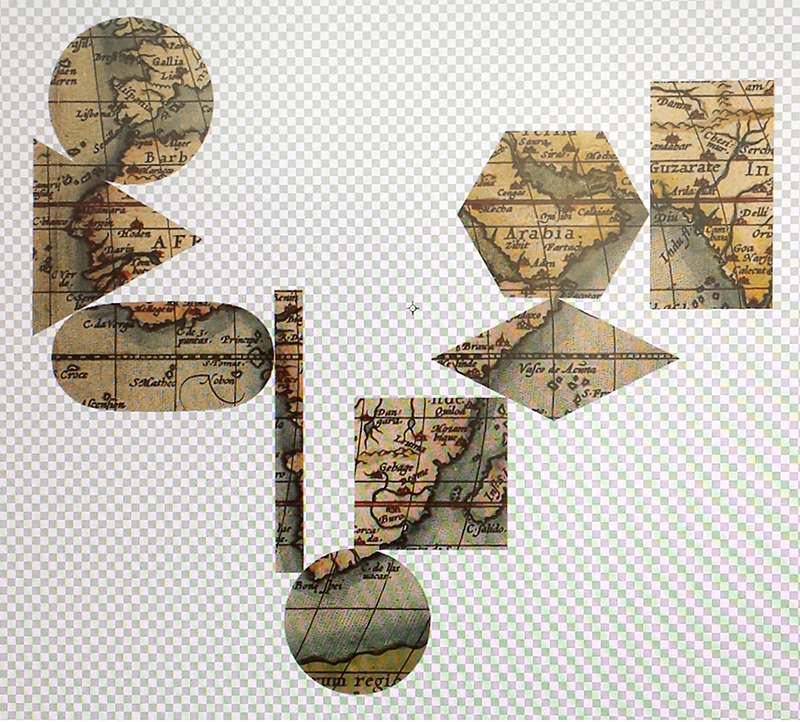
I have been making ‘markers’ from aluminium. The shapes and patterns relate to those on the cabinet and the materiality of the etched metal which will be filled with ink and spices relates to the objects kept in the drawers of the cabinet and the trade that circulated the wealth of the merchants who owned these exotic objects.

I screen printed sugar lift solution onto the aluminium shapes before coating with stop out.

These are etched and then inked up with spices and will be laid out in a sequence that follows the route from India to the Iberian Peninsula and ultimately London where this little cabinet now sits in the V&A.

1605 trade route

2006AN0914_2500

I am in love with this Boyd and Evans lithograph. I was very jealous of the lady who bought a copy from our RCA stand at Christies Multiplied print fair.

1603 Boyd Evans Insignificance.jpg

Boyd and Evans Insignificance

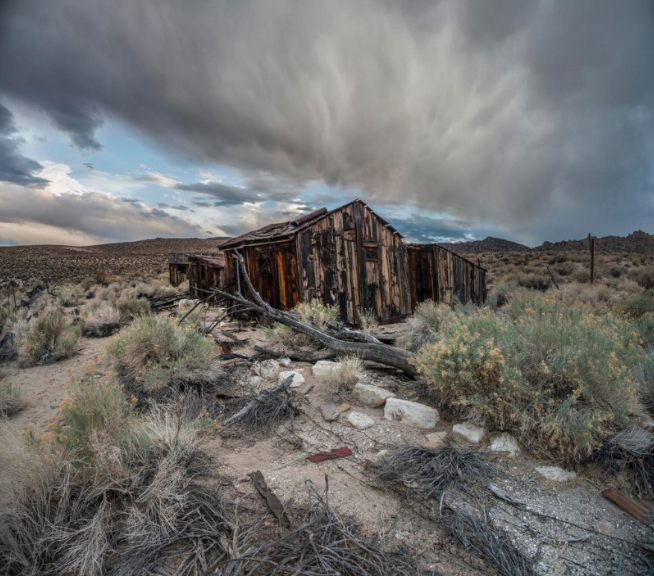
I went to hear them talk about their practice at Flowers Gallery where they had an exhibition of panoramic photographs in Overland. These vast moody skies, rocky barren vistas and abandoned structures are a record to their travels across the American South-West.

1603 boyd and evans.jpg

Boyd and Evans Benton Springs, California

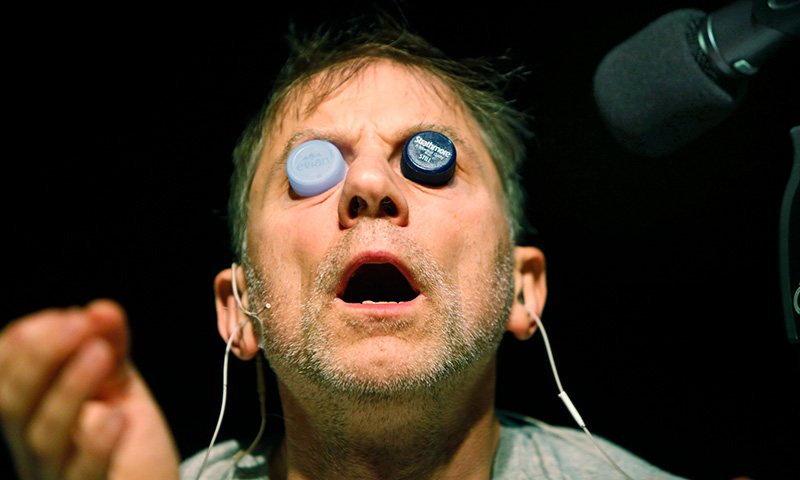
Inspired by the book Amazon Beaming by Petru Popescu the latest production from Simon McBurney’s Complicite  is an extraordinary journey in consciousness, questioning reality and its constructs.

1604 The Encounter

The Encounter tells the story of a National Geographic photographer, Loren McIntyre who in 1969 found himself adrift among the Mayoruna people of the remote Javari Valley in Brazil. Following his desire to discover and record he enters uncharted jungle putting himself at the mercy of the people he was trying to capture on film. He develops a close relationship with the head tribesman and shaman he calls Barnacle and begins to feel they are communicating through thought as they share no common language. The old language is not something you learn it is something you remember.

The tribe are on the move. Distraught at the impact of the sacking of resources of the forest and diseases introduced by outsiders they are heading back to the beginning.

In order to return to a time before the bad things happened they must destroy all their possessions that are holding them in the present. Everything is thrown onto massive bonfires. The journalist is  distraught as he fears the ritual will involve death but the chief is calm, he doesn’t worry what time is, he is just concerned with what he can do with it.

The beginning lies at the inception of time but is also everywhere at once. Going back to the beginning is not really a return, but rather a form of exiting from history proper, into the mythical time of renewal.

There is a powerful message here about matter and its hold on us and our experience of history. The concepts that these shaman were expressing are the same as the problems physicists struggle over today – what is the present?  ‘Time sits at the centre of the tangle of problems raised by the intersection of gravity, quantum mechanics and thermodynamics.’ – Carlo Rovelli

1604 The Encounter 2

In the audience we are wearing headphones, the sound of the forest is all around, voices appear in our head, just as they did for Loren, beautifully demonstrated by the use of binaural speakers. Reality is an illusion, all our constructs are fictions and exist only in our imagination.

Creating the sort of places where the Mayoruna people might live…Dean Melbourne paints the places where myth still lives deep in the forests. Shadowy figures, totems and ritual mingle in thick glutinous surfaces.

His exhibition This Myth at Coates and Scarrry’s gallery invites you to step into a sensual and primordial world.

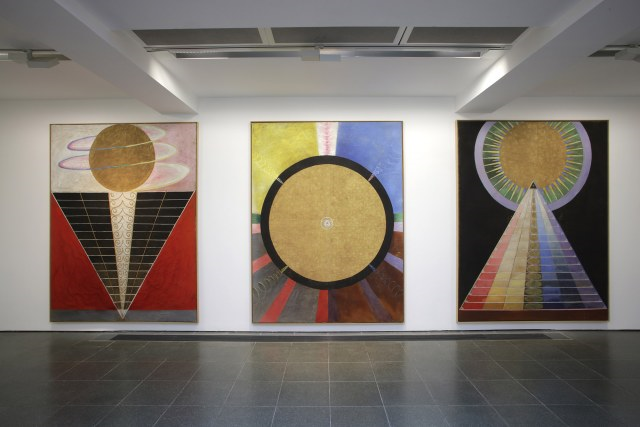
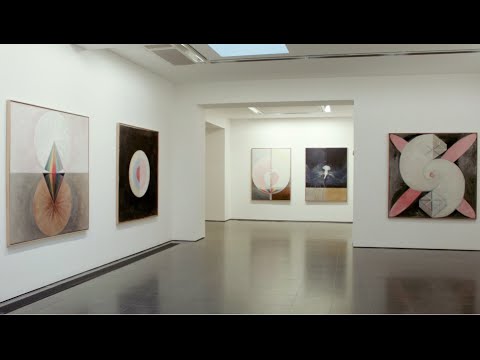
Hilma af Klint was also making connections with the spiritual world. Her public face during her lifetime was of a figurative painter but in the late 1880’s she began painting in secret and created a huge body of work that explored her private interests in the nature of the universe and the relationship between matter and the spiritual. Believing that perfect unity was lost at the point of creation she sought to reconnect the dualities that had arisen from the primordial chaos. Entering Painting the Unseen at The Serpentine Gallery I was immediately awed by the three large works The Paintings For The Temple.

1604 Hilma af Klint

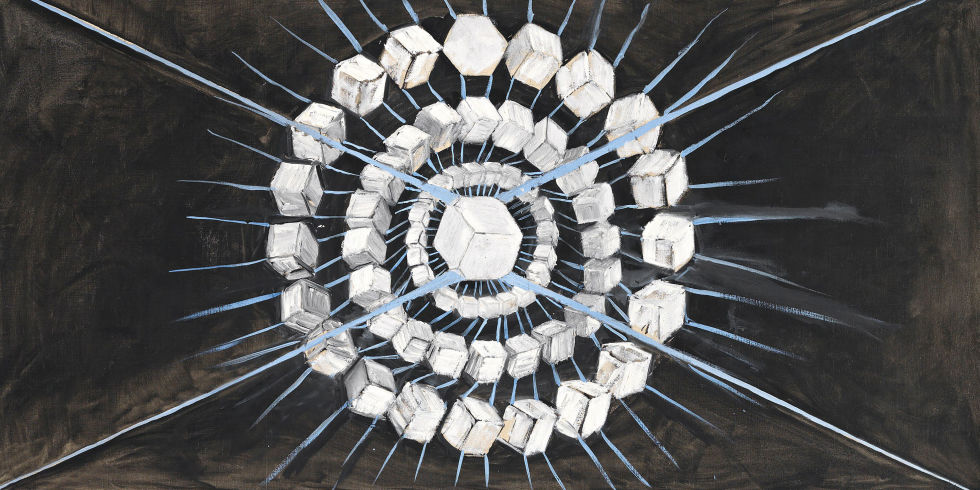
Inspired by the experiments with séances and automatic drawing that she engaged with as part of a small group of women artists she called The Five (De Fem) she felt herself led by a spirit counsel. Motifs and symbols appear in her paintings that she then interrogates for meaning.

1604 Hilma af Klint (2)

Her use of colour allows for contemplation in works that have a calm sensuality.

1604 Hilma af Klint (1)

Her notebooks reflect her dedication to her continuing search for meaning within matter and the extent of the work she produced which  is all the more remarkable for her desire to keep her spiritual work hidden until 20 years after her death. Did she believe the world wasn’t ready for her questions, let’s hope she is pleased with the attention it is getting a hundred years on.

1604 Hilma af Klimt

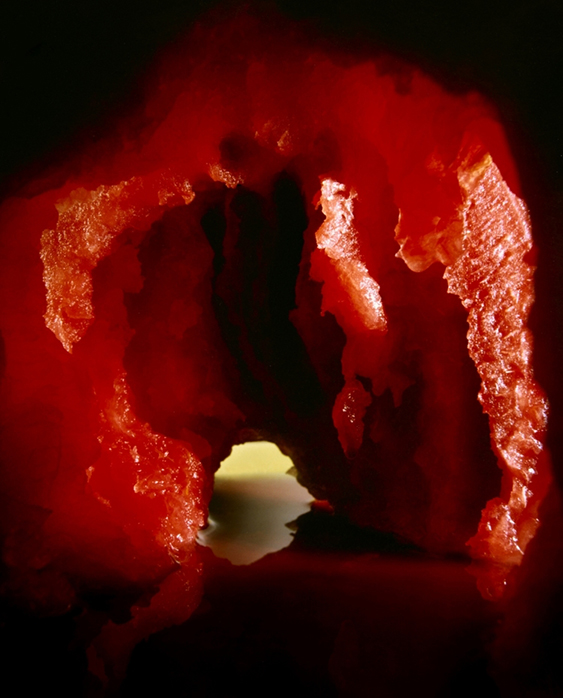
Good to see RCA printmaking alumni Wieland Payer’s work showing at The House of St. Barnabas with Man and Eve Gallery and to discover the beautiful work of Nadege Meriau. These artists both take you to another world that is just a step from reality and intriguing for that mix of the familiar with the strange.

1602 Wieland Payer Drift

Wieland Payer DRIFT   Photo: Herbert Boswank


1602 Nadege Meriau Grotto

Nadage Meriau Grotto

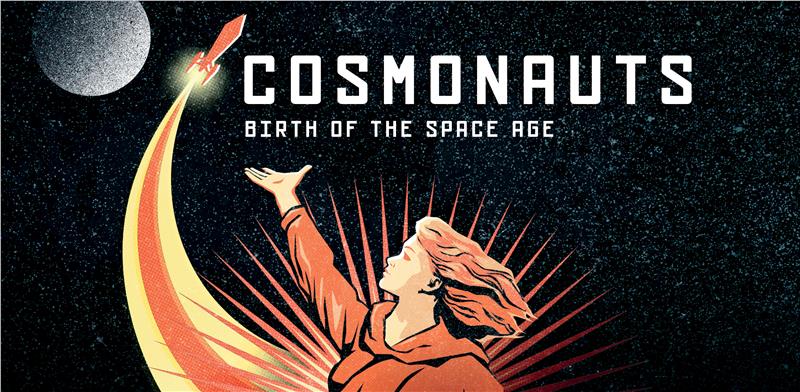
The cosmonaut exhibition at the science museum was a window to the world of space exploration. The risks and competition in the race to be the first. The wonderful graphics that heralded a new era of exploration.

1602 space age

The romantic quest going beyond the rugged landscapes and sublime vista of previous generations. What was most striking I think was how low tech it all looked and so cramped. The bravery and optimism of these people to get into something so small and basic to hurtle across space is to be admired.
cosmonaut. astronaut. nautilus.

1602 paper nautilus

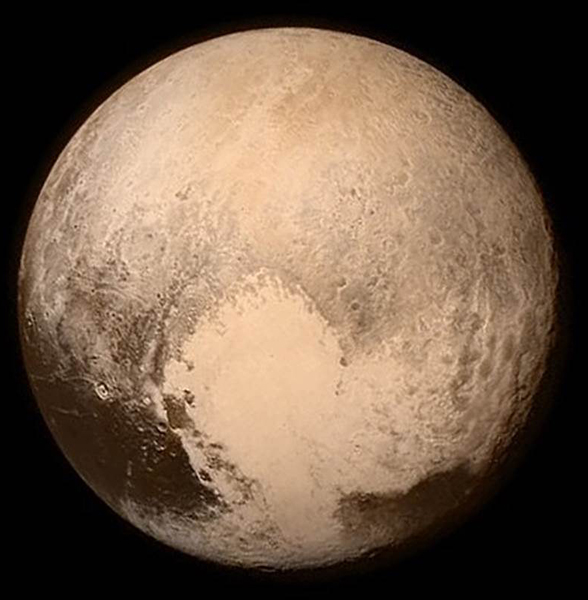
Alistair McDowall’s play X at the Royal Court is set in a future where four astronauts are stranded in their spaceship on Pluto.

1605 Pluto-NASA-New-Horizons

Unable to communicate with earth they await rescue that never arrives. It felt more reality TV show where four unredeemed characters are flung together for eternity than exploration of a new frontier for humankind as Pluto barely gets a mention and we suffer endless ranting as each character loses grip on reality before ending up in the freezer.

1605 x

Finally rescue did arrive, for the audience anyway in the form of Dr.Mike Goldsmith who gave a very informed post play talk about the possibilities and potential of Life on Pluto.

Astrophysicist Dr. Roberto Trotta was out campaigning for ‘Why Society Needs Astronomy and Cosmology’ with his Gresham Lecture at The Museum of London. He was making a case for public funding to support what is increasingly becoming big science big money projects that involve many hundreds of scientists across the world. Detectors and image capturing devices are scaling up and new sophisticated technology means the amount of data captured is beyond human undertaking to analyse and requires huge resources to process all the information. We can reach further and further out into the unknown searching for answers to the big questions of existence. This vastness is awe inspiring but also daunting and so he aims to bring the human scale back into space exploration and make accessible a world that is often described with unfamiliar and obtuse language. He has written a book ‘The Edge of the Sky’ using only the 1,000 most common English words. 1603 Trotta .jpgThis approach not only simplifies huge concepts for a younger audience but gives everyone a pause to think about language.  The tourist visiting new places may not have the word to describe an unfamiliar object and so must find a way to describe it using known language. This is an effective way of opening up new interpretations and perspectives and encouraging curiosity to discover and explore the unknown.
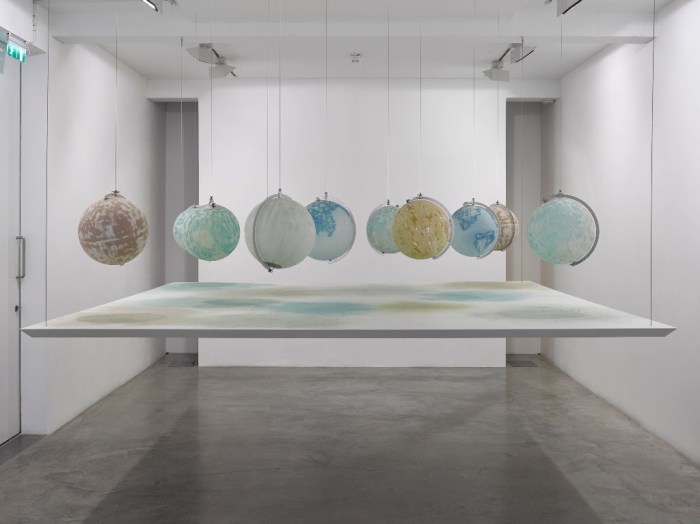
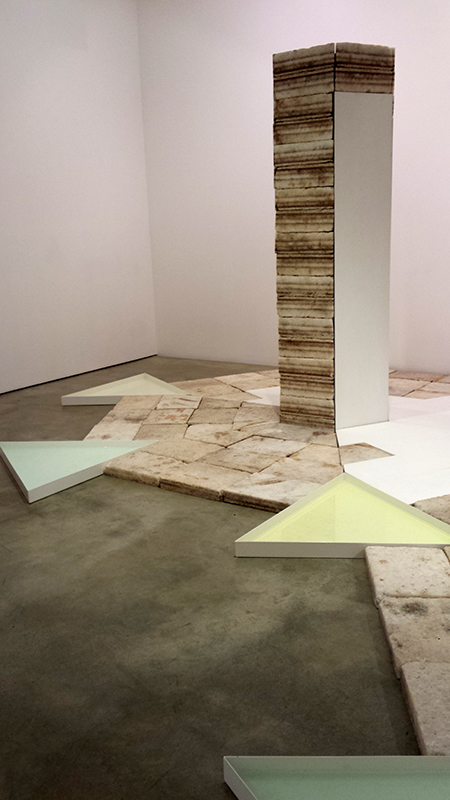
Moving in unknown territories borders are blurred. Julien Charriére has erased all borders in his installation We Are All Astronauts. Using an international sandpaper made from mineral samples taken from the member states of the United Nations he has carefully eroded any geopolitical demarcations mingling the dust of our homelands. We have the same origins and the same destiny.

1603 Julien Charriere We Are all Astronauts

His solo show at Parasol Unit For They That Sow the Wind was an eloquent exploration of our relationship to the world of matter, its exploitation and ultimately our insignificance in the wake of  our destruction.

Towers of salt bricks mined from the ‘lithium triangle’ in Bolivia sit in geometric patterns like the remnants of an ancient civilization.

1603 Julian Charriere Future Fossil Spaces

Julian Charriere Future Fossil Spaces

Structures break down.

1603 Julian Charriere

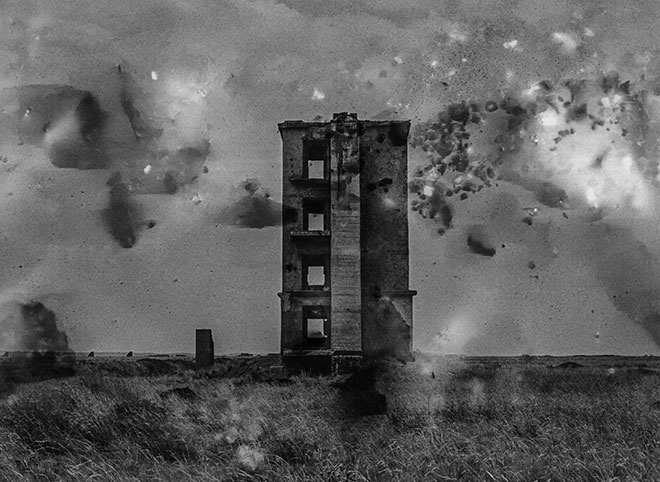
The haze of devastation burnt into the landscape; a legacy from 456 nuclear tests carried out by the Soviet Union between 1949 and 1989 in Kazakhstan.

1603 Julian Charriere Polygon

Julien Charriere Polygon

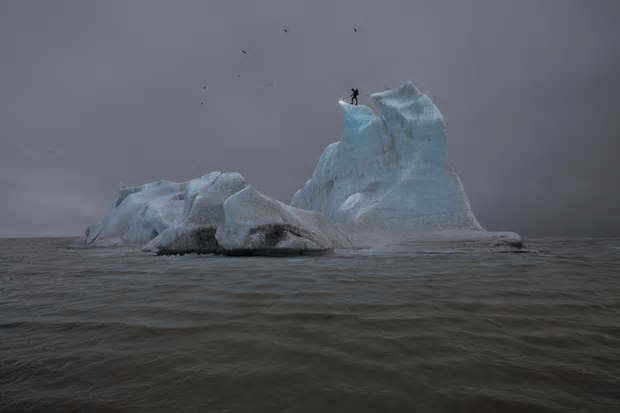
A solitary Charrière stands for all of us as he actively melts ice beneath his feet with a blowtorch.

1603 Julien Charriere The Blue Fossil Entropic Series

Julien Charriere The Blue Fossil Entropic Stories

It may be too late to protect the environment, now we must put our energy into creating protected environments.

1603 Julien Charriere Tropisme

Julien Charriere Tropisme

Plant species around since the Cretaceous period are shock-frozen in liquid nitrogen and preserved in refrigerated containers. The ice patterns appearing over the inside glass of the vitrines cast beautiful veils that threaten to obscure our view. Nature is blocking us out.

It hardly seems any time since I was setting up our RCA interim show at Café gallery Projects and yet here I am visiting the current second years exhibition DIS PLAY having stepped on out into the wider world. This year because they have taken on so many more students the show was mixed across the years to balance numbers.

Great texture and pallid colour from Emma-Jane Whitton where the tight aqueous skin of the succulent makes haptic connections with the tight skin of the salami, bursting oozing and barely contained this structure is like plastic surgery in meltdown.

This work sat well next to Randy Bretzin’s assemblage of works relating to the body and its skin at the point of rupture.

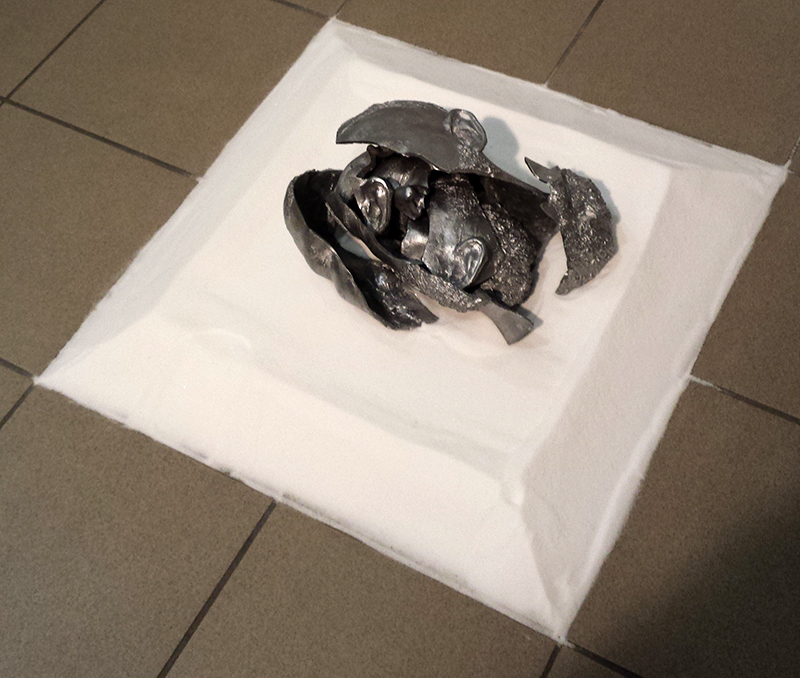
Further body references from Fei Fei Yu whose casts in aluminium of Randy Bretzin’s head lay empty and shattered. No bodily fluids here just a bed of salt left like the residue from some alchemical reduction experiment.

1603 Fei Fei Yu

The body and psyche exposed. Nothing like descending the spiral stairs to the museum at The Last Tuesday Society for a delve into the realm of mortality, sex and the fabulous.

Danson House – an amazing setting for ‘Couriers of Taste’ curated by Day + Gluckman.

Danson House

Danson House

‘Couriers of Taste’ explores trade routes, global consumerism and cross-cultural influences. Danson House was built for leisure and decadence but that lifestyle was supported by a dark history in colonial exploitation.

The works shown are by artists who are interested in how the history of trade and cultural appropriation influences our understanding of the world today.

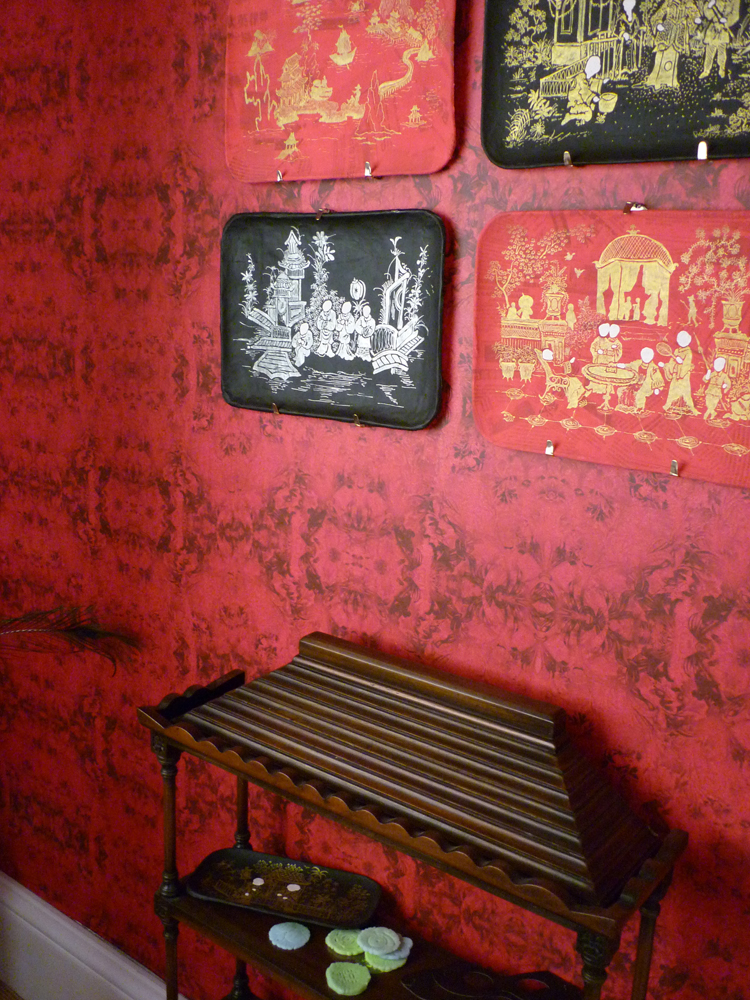
The fascination with the East dates back to the days of the China export trade and Silk Road. Even at the height of chinoiserie, as the Western market was being flooded with Chinese products the Chinese people themselves were unwelcome aliens and were targeted overseas by racist laws.

Karen Tam’s work looks at the infiltration of chinoiserie, and the continuing, conflicted relationships between “East” and “West”.

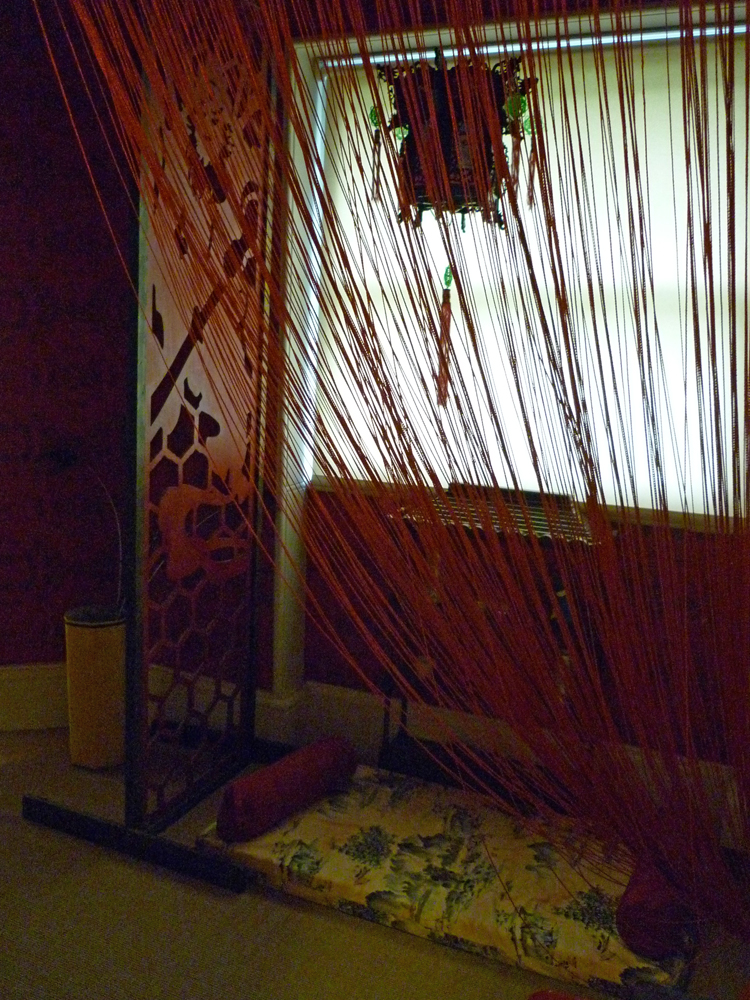
Karen Tam's recreation of an opium den

Karen Tam’s recreation of an opium den

Karen Tam believes the fear of China’s rising status as a superpower, its economic strength, position as the world’s manufacturer, and host of the 2008 Olympics is causing a current recurrence of racist attitudes towards Chinese people today.

Karen Tam's recreation of an opium den

Karen Tam’s recreation of an opium den

I think she is right that there is a lot of uncertainty around and this can fuel fears that might result in negative attitudes. The balance of economic power has shifted entirely since the term Oriental was first coined but China remains a mystery to most westerners. The fears we have are a lot to do with the messages we receive about life in China and its political system such as the treatment of Ai Wei Wei.

Vivien Qu

Vivien Qu

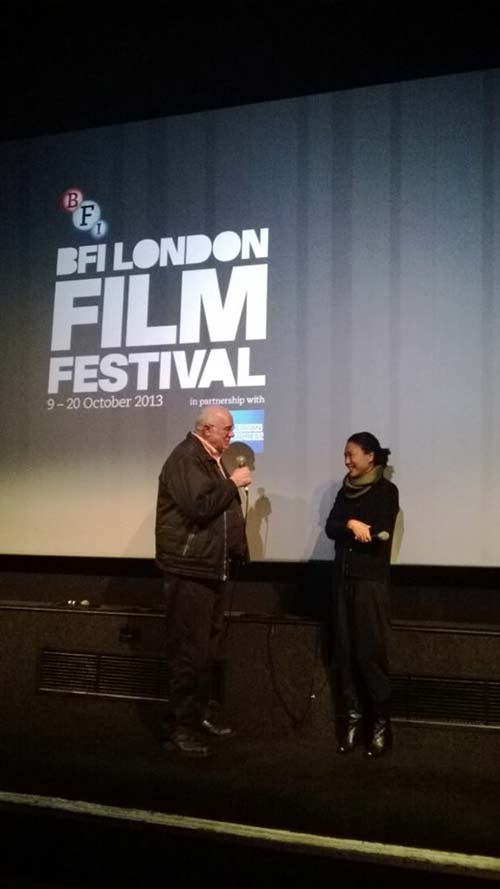
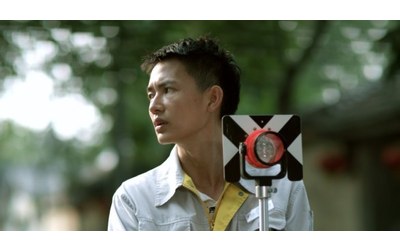
The film Trap Street an independent film directed by Vivien Qu showing at the London Film Festival about the authorities detaining and torturing innocent/naive people who’s lives can be suddenly destroyed with no recourse, not that this doesn’t happen in every other country up to a point, but Qu says these detentions in China are on the increase and the possibility to make independent films about such matters is declining. The reasons for this seem to be economic to some degree as Qu explained that investors now have the opportunity to make big money in commercial films so there is less for the small independent companies. As to the increase in detentions could this be down to more technology, more surveillance, more paranoia.

Trap Street

Trap Street

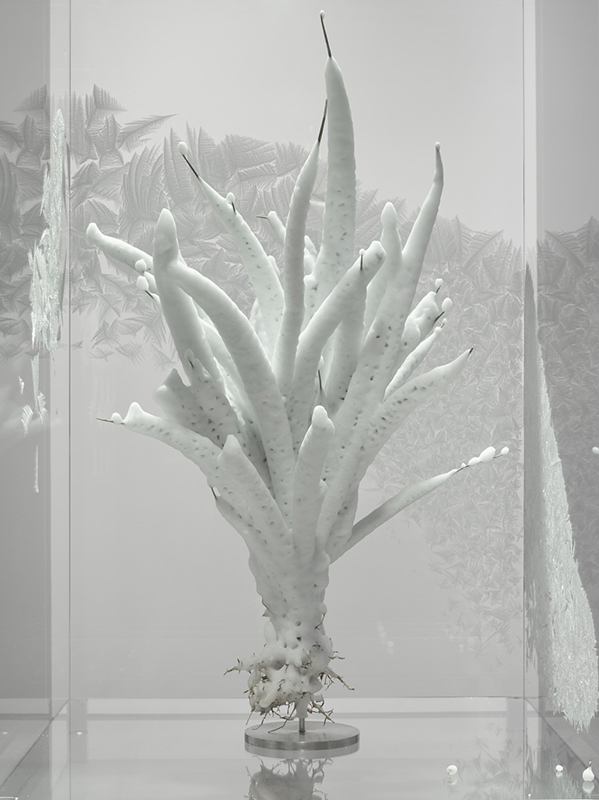
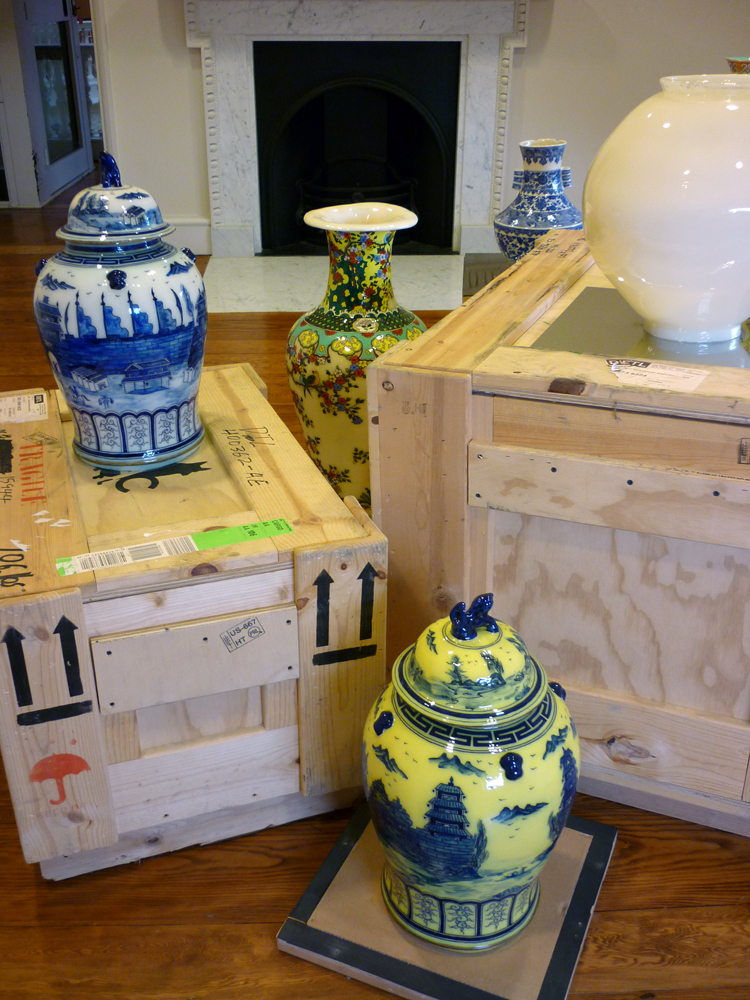
Meekyoung Shin copies Chinese porcelain vases. She transplants a foreign cultural tradition not only geographically from east to west but also in terms of media (from marble or porcelain to soap).

Meekyoung Shin Translation

Meekyoung Shin Translation

Shin’s use of soap, a transient and unstable material, questions the authority and originality that the original vases demand. Presenting the vases on the packing crates in which they are shipped from location to location, further emphasizes the sense of dislocation and transformation.

Like most 18th century houses Danson House would have housed ceramics and possibly wall papers from China, and would almost certainly have housed furniture and collectible items which borrowed chinoiserie elements.

Meekyoung Shin Translation

Meekyoung Shin Translation

In the 18th century new goods from around the world were influencing consumption, tea, coffee, sugar, tobacco, spices, cottons and silks, changing the habits and fashions of society.

Stephanie Douet is interested in chinoiserie as the birth of leisure in Europe.

Stephanie Douet

Stephanie Douet

The fractured, fictional, idyllic life of the aristocracy in Europe imitating China is explored in Douet’s sculptures. She sees a similar distance in Europe’s understanding of the country today and a continuation of trade and misunderstanding from that of the seventeenth and eighteenth century.

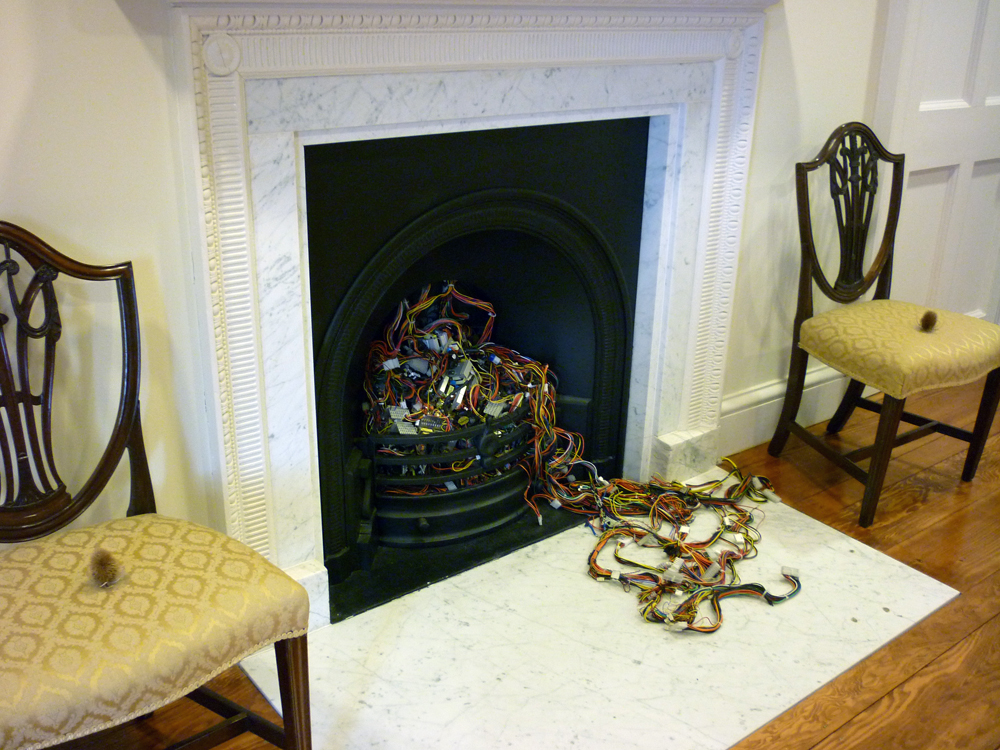
Rapid growth in contemporary hi-tech consumerism and global manufacture is epitomised by Susan Stockwell’s installation of computer cables tumbling down through an antique Western fireplace.

Susan Stockwell

Susan Stockwell ‘Firewire’

Our reliance on technology and the huge impact that online shopping has had on production and global trade creeps into the imaginary trader’s bedroom at Danson House and begins to encroach on every aspect of his world.

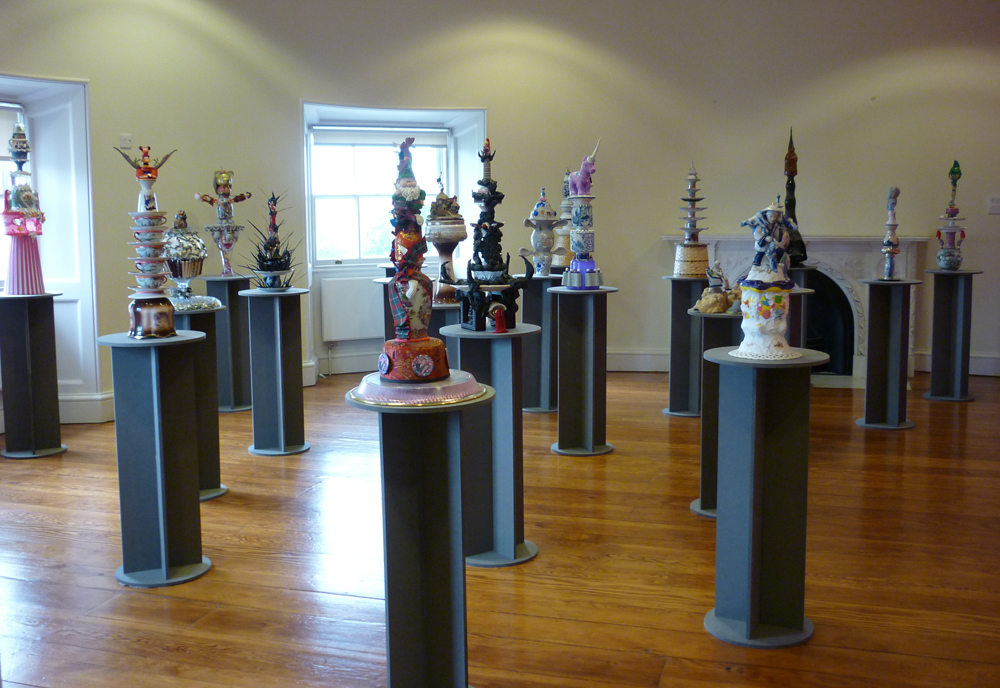
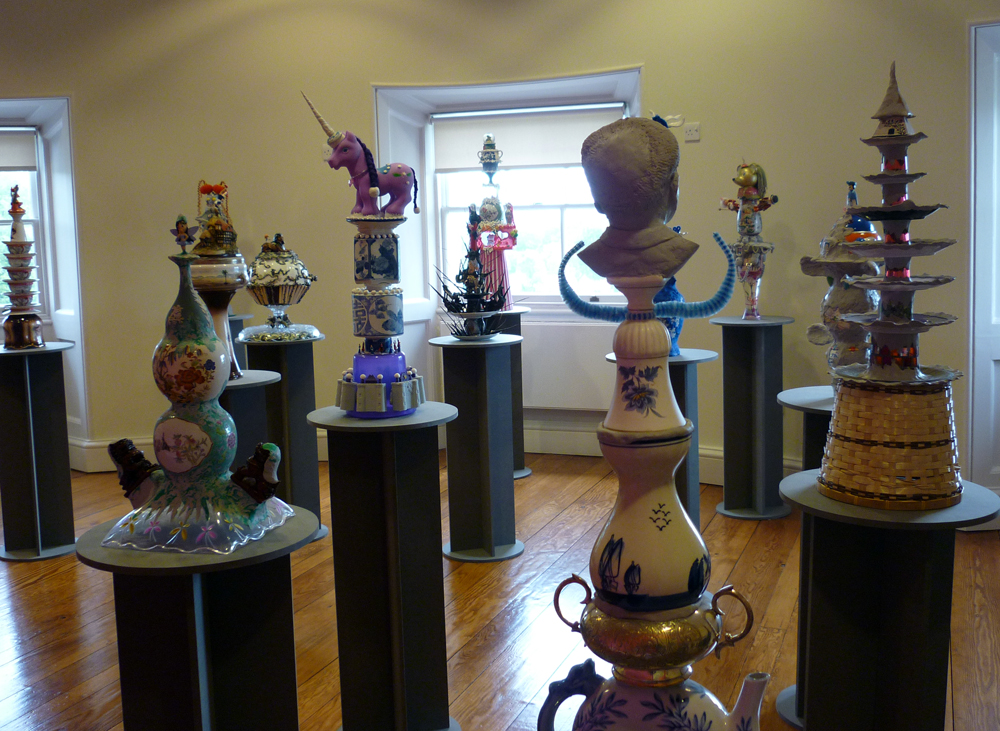
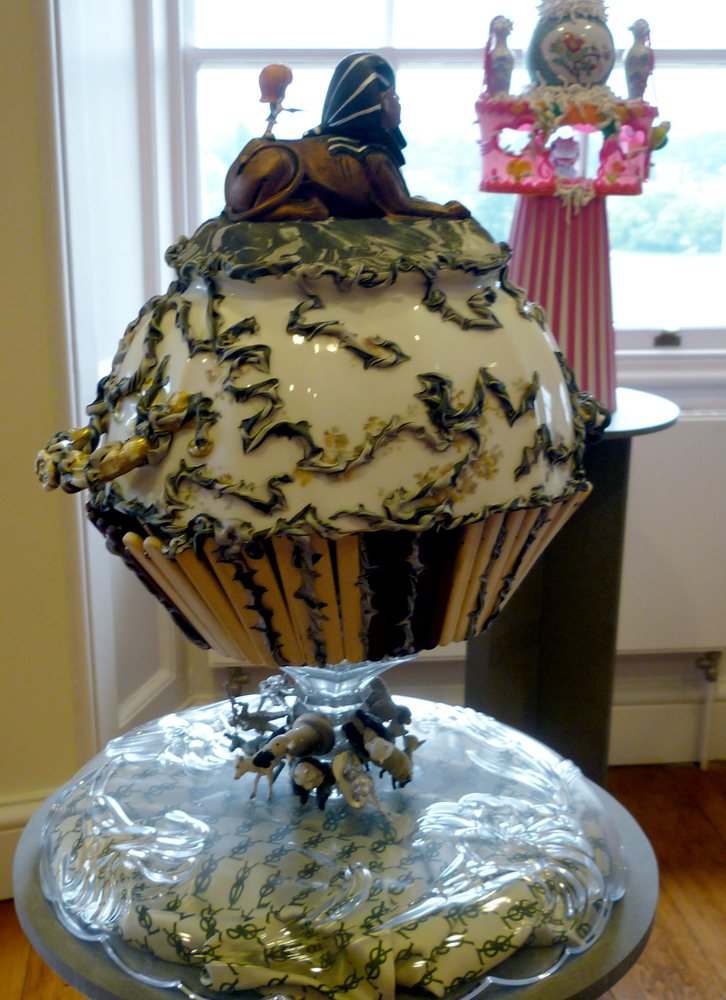
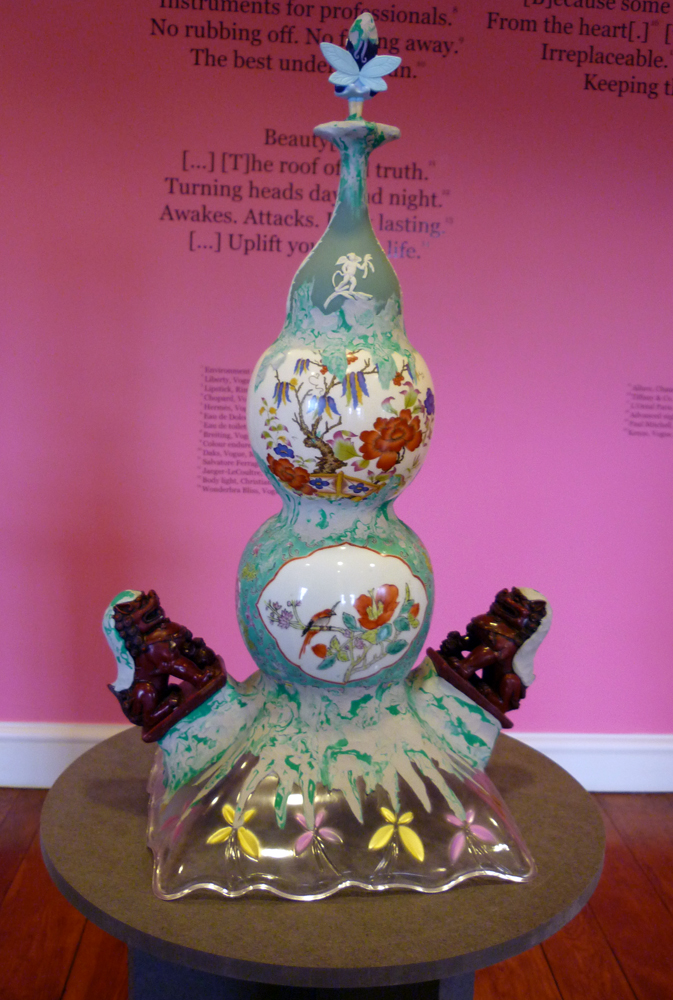
The spectacle of Laura White’s ‘Esque Collection’ of sculptures pulls together ideas of hybridity, the pagoda dotted landscape, porcelain ware, shop display stands and the seduction of opulence.

Laura White

Laura White

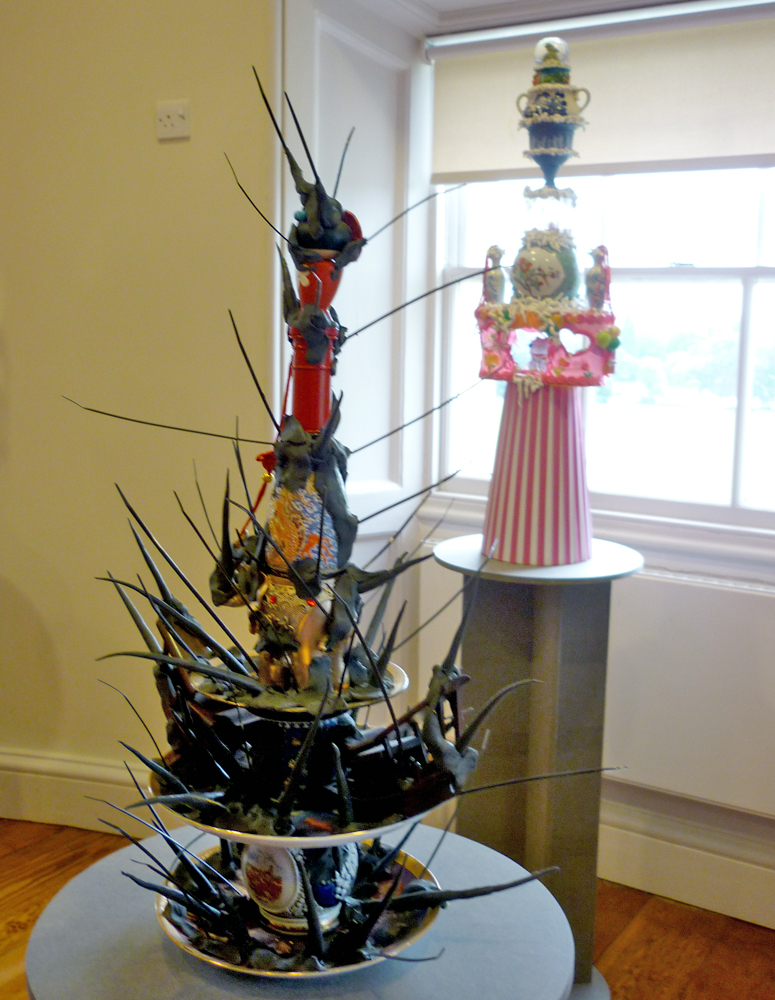
These look magnificent highly prized items but close up it is apparent they are constructed from the back self of a charity shop and held together with plasticine.

Laura White

Laura White

They are confections.

Laura White

Laura White

Little towers to consumerism.

Laura White

Laura White

I found them joyful. They have a happy Frankenstein quality.

Laura White

Laura White

A tangle of origins melded together to create something new.

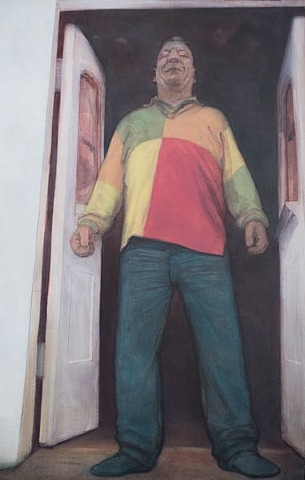
Ray Richardson is an artist whose roots in East London are very important to him. His work features his local landscape, his friends and family and a lot of dogs.

Ray Richardson

Ray Richardson

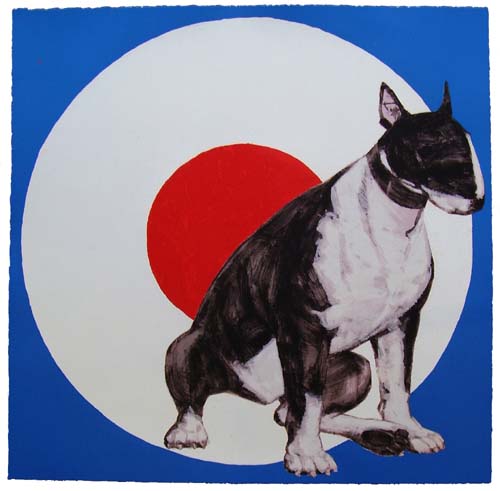
English bull terrier dogs who he sees as representing himself.

Ray Richardson Irish Frank

Ray Richardson Irish Frank

At his talk at Ochre Print Studio he told us about the local characters in his life and how his love of soul music and football influences his work.

It was hard to imagine him teaching at a public school but he spent a year in residency at Eton College.

He had a very philosophical attitude to his experience and as he said he was paid.

As he was to do this commission.

Ray Richardson

Ray Richardson

A another clash of cultures.

I have just started reading A History of the World in Twelve Maps by Jerry Brotton.

Came across this wonderful quote in it from Oscar Wilde –

‘a map of the world that does not include Utopia is not even worth glancing at, for it leaves out the one country at which Humanity is always landing. And when Humanity lands there, it looks out, and seeing a better country, sets sail’.