Archives for posts with tag: solar flare

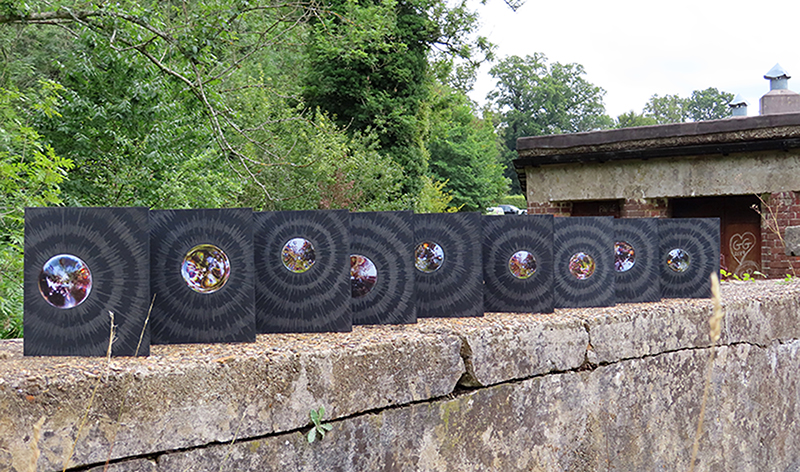
Delighted to have both my artists books In/Out and Unbound accepted into the Art, Science and Creativity exhibition curated by Liverpool Book Art at Liverpool Central Library in the autumn. The starting point for this exhibition is a quote from Albert Einstein:

“Where the world ceases to be a stage for personal hopes, aspirations, and desires, and we stand before it as free creatures, full of admirations, questions and contemplation, we enter the realm of art and science. If we describe what we see and experience in the language of logic, we do science; if we convey connections through forms that are inaccessible to the rational mind, but intuitively recognisable as making sense, we do art.”
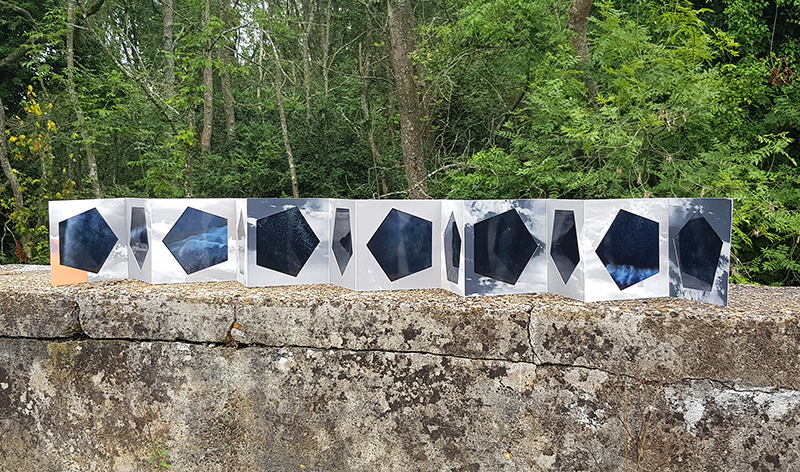
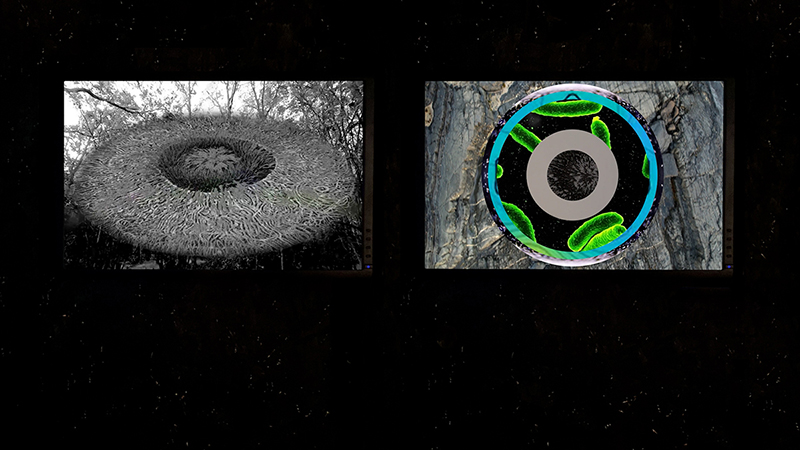
Open Studios 2024 – showing the two channel video installation Radical Pair in my studio.

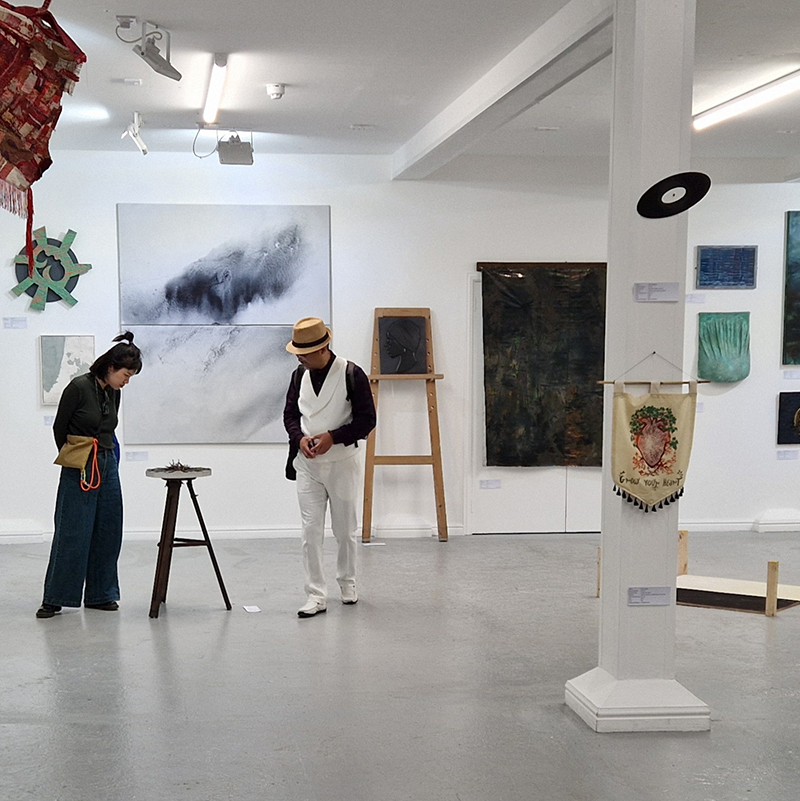
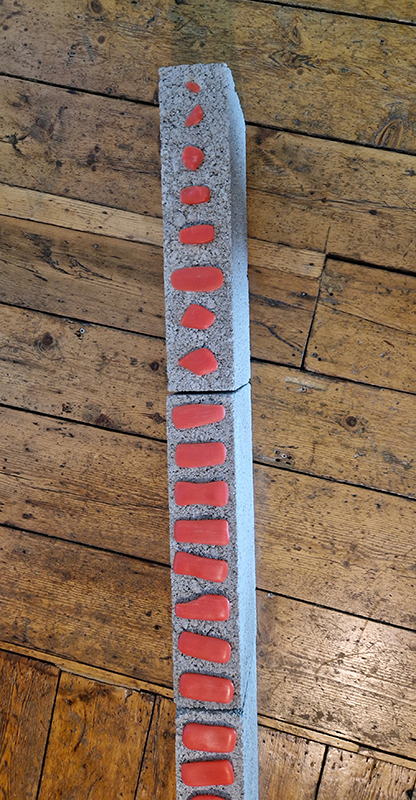
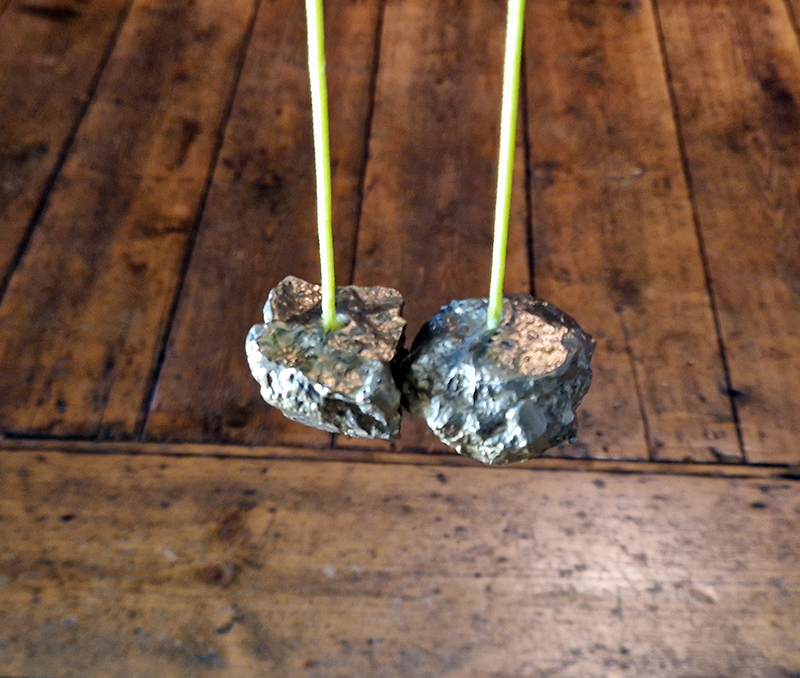
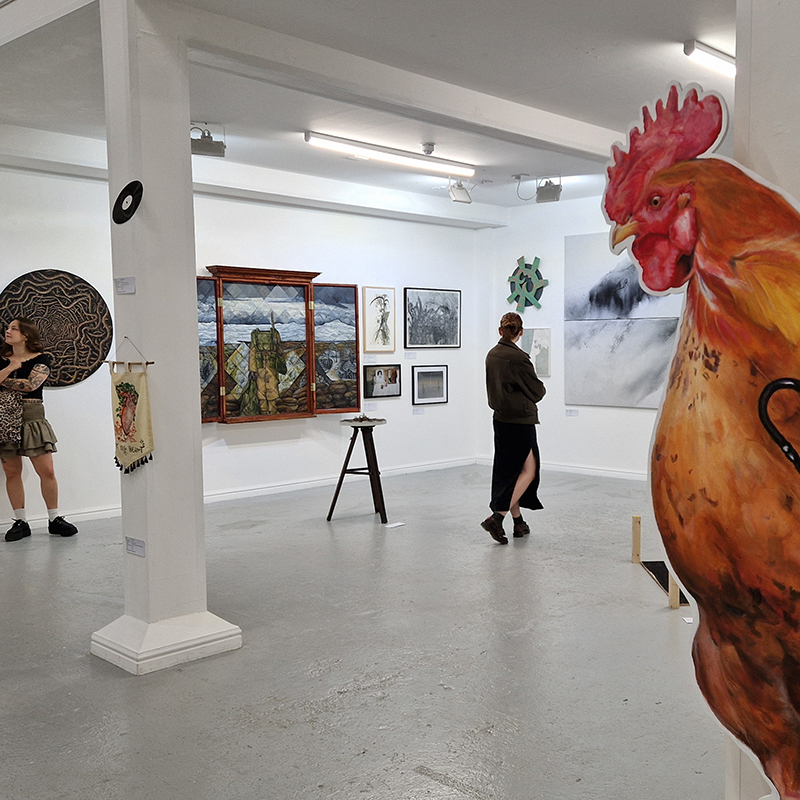
In Thames-side Studios Gallery showcase of studio holders works I presented one of the sculptures from the Instruments of the Anemoi series.
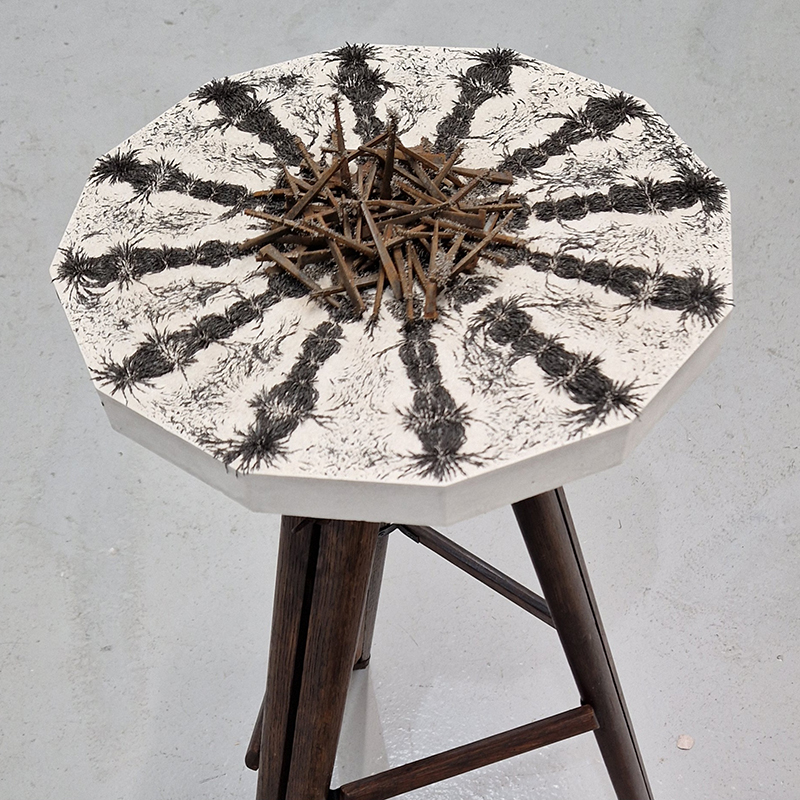
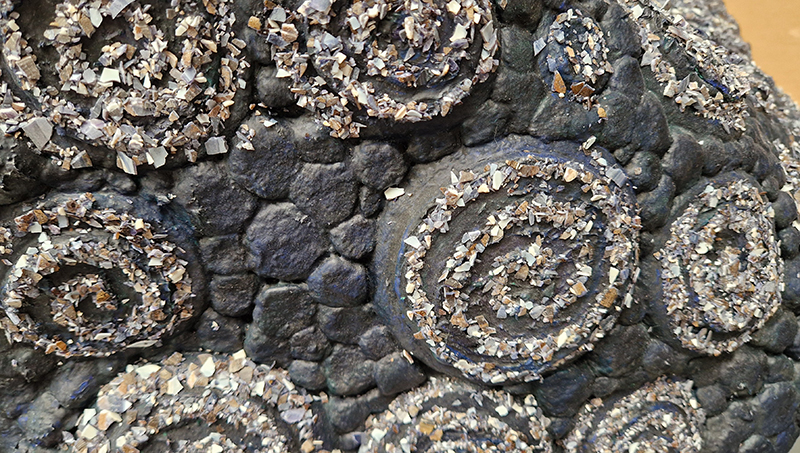
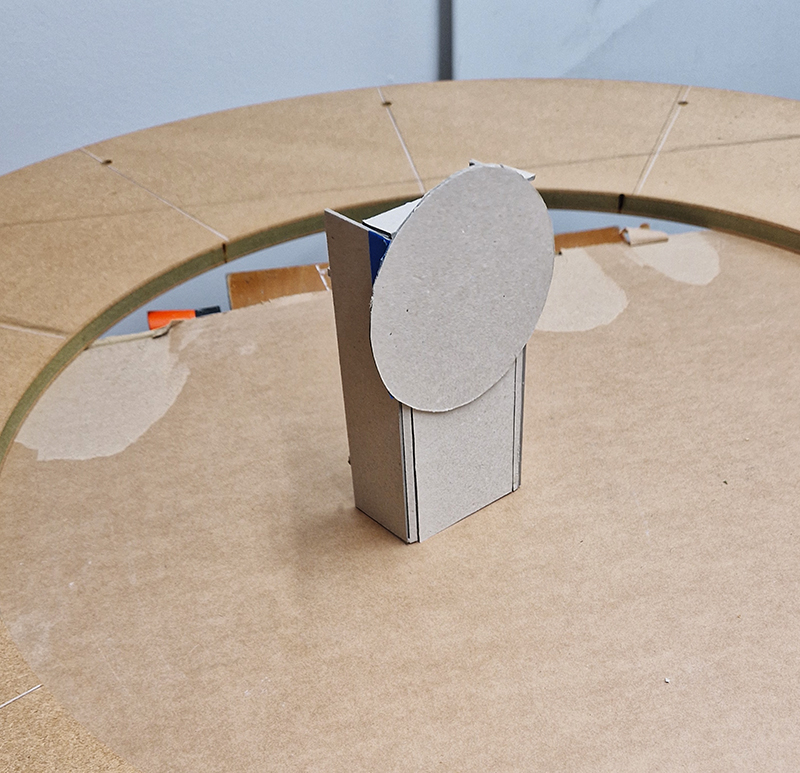
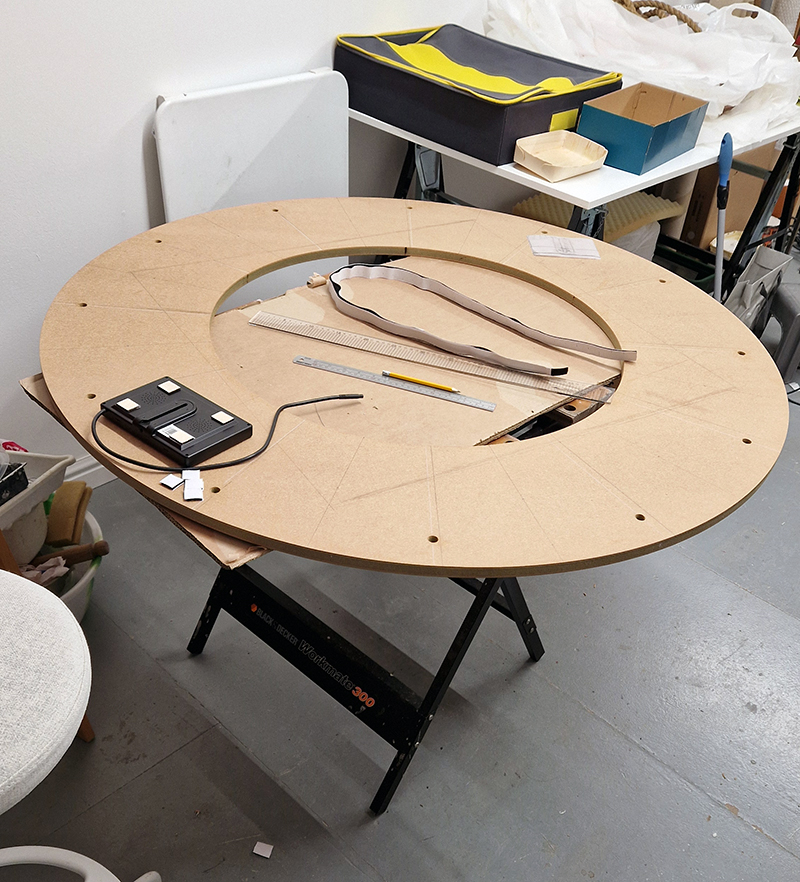
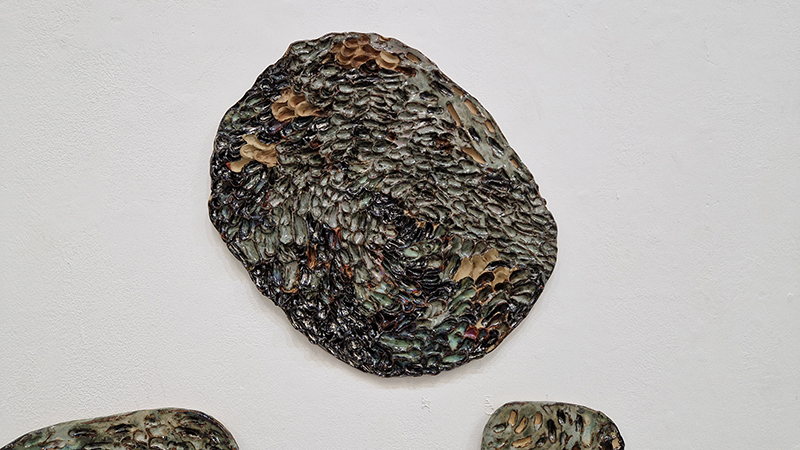
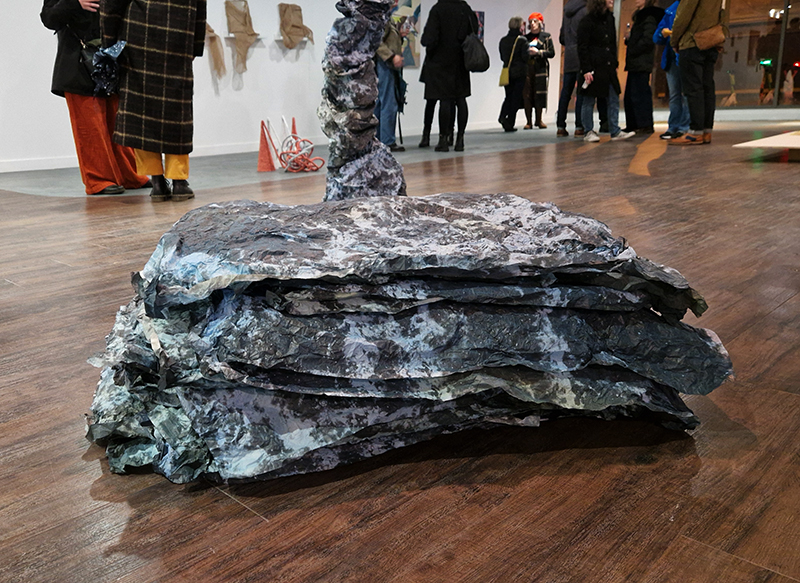
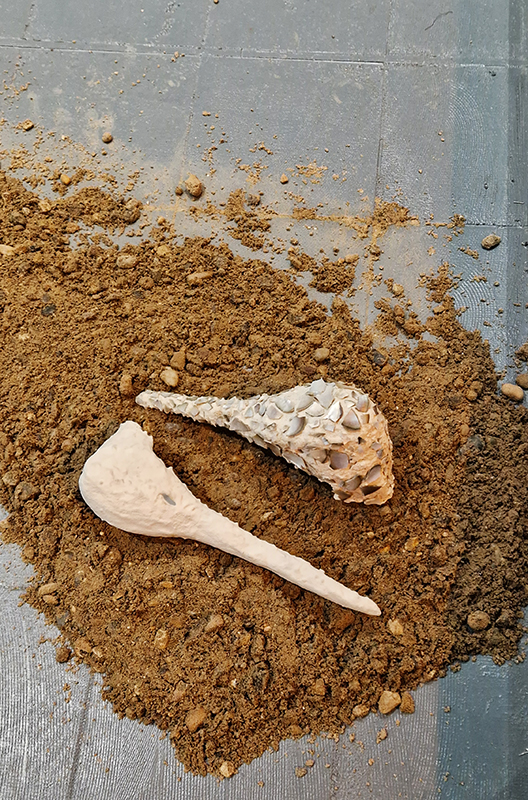
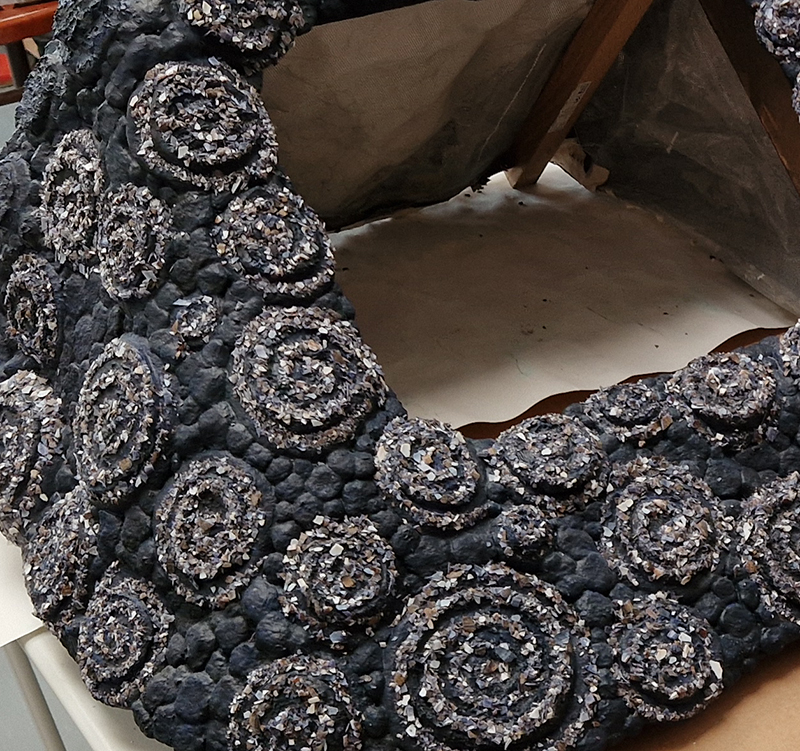
Work in progress on hybrid sculpture Belly of a Rock adding spirals of crushed mussel shells to the crusted casing that will house a monitor screen. Earth rotates faster at the Equator than it does at the poles causing spiral convection currents in the liquid iron outer core. Earth’s magnetic field is created in this swirling outer core where magnetism is about fifty times stronger than it is on the rocky surface of the Earth.
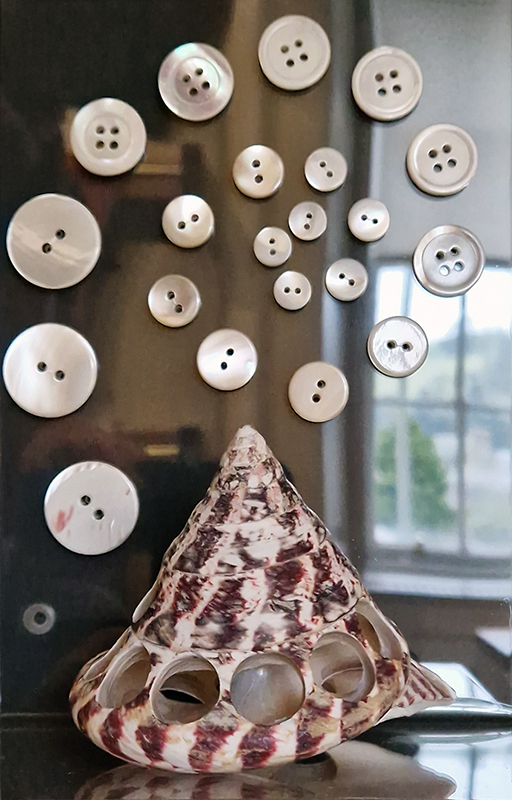
Trochus (sea snail) shell buttons seen at Borders Textile Towerhouse, Hawick. The buttons made from these molluscs found in warm waters are used for the Borders quality knitwear industry. Genuine shell can apparently be identified from imitation by touch, it always feels cool even in hot temperatures.
We do not yet know another form of life other than carbonaceous life. All life on Earth uses the same biochemistry of carbon.

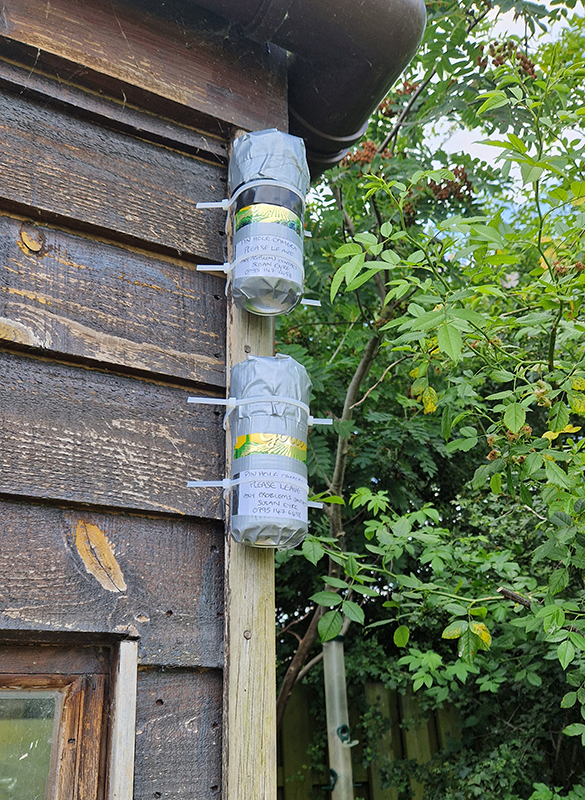
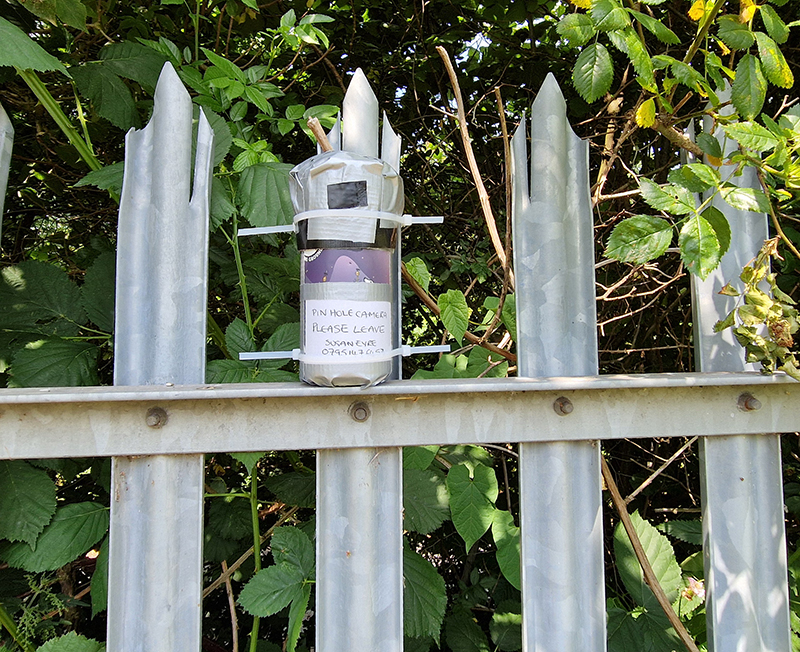
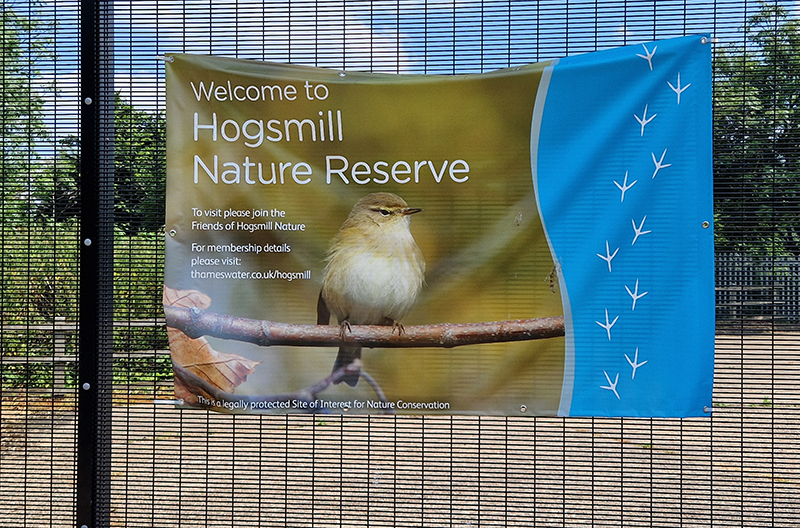
Reminded by the solstice, I finally installed some solargraph pin hole cameras at Hogsmill Nature Reserve. I have had the tins prepared for a long while so not sure if they will work. The lagoon was worryingly green.

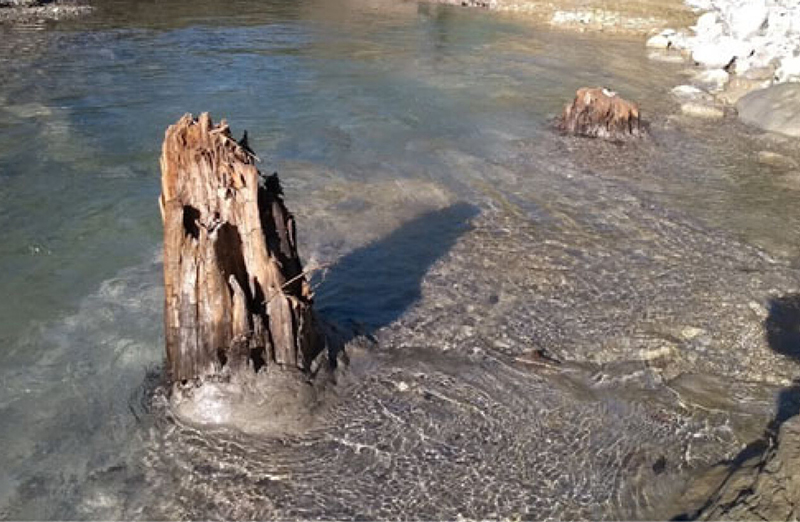
A recent Royal Society research article reveals that extreme solar events such as solar flares and coronal mass ejections can release bursts of energetic particles towards Earth which are found preserved in the rings of partially fossilized trees as huge spikes in carbon-14. Through the individual analysis of ancient tree rings from subfossils found in the Drouzet River in the Southern French Alps, scientists discovered evidence of a giant solar storm dated to around 14,300 years ago. This event appears to have been enormously more powerful than the Carrington Event of 1859 when fires broke out in telegraph offices.
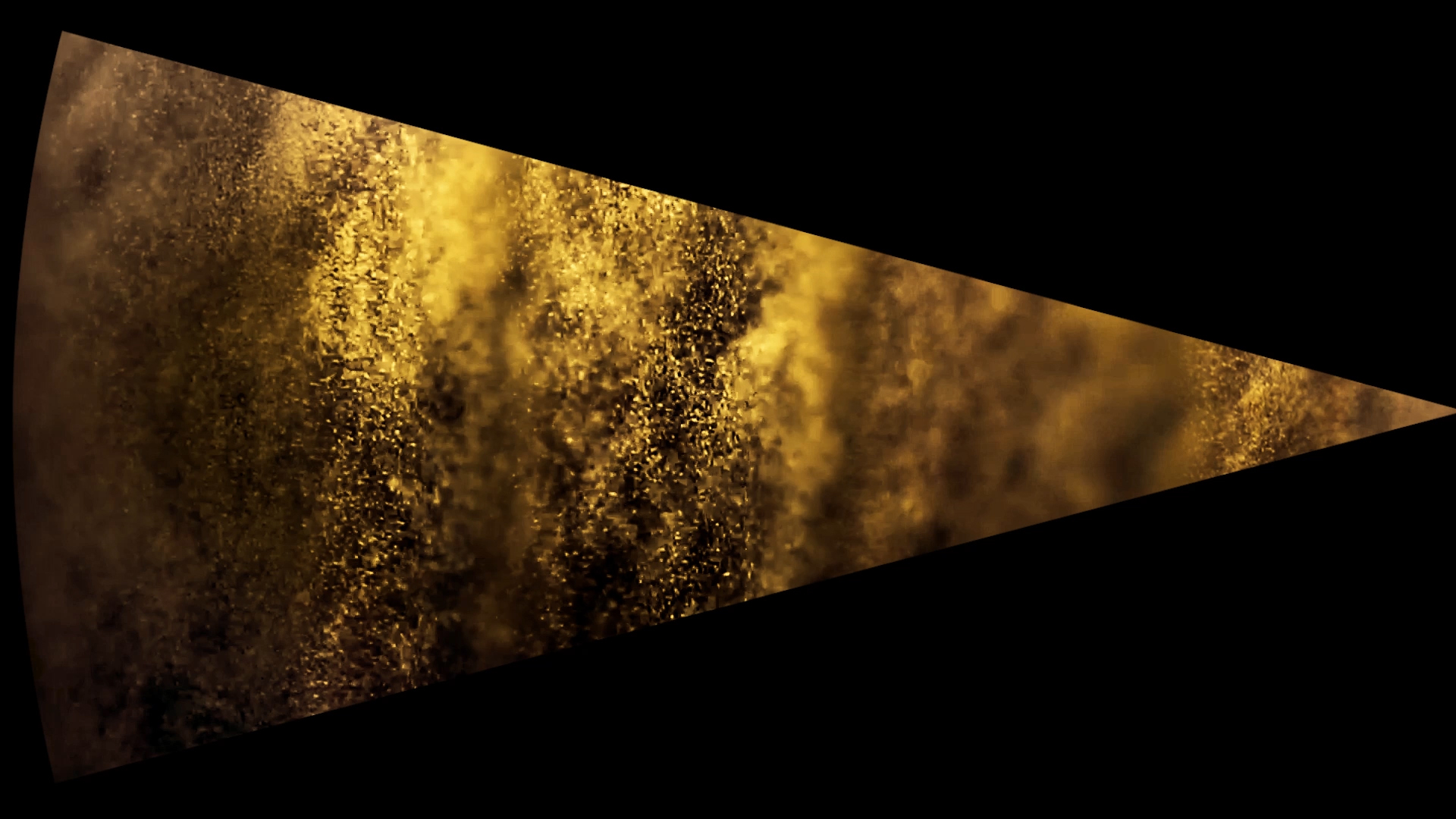
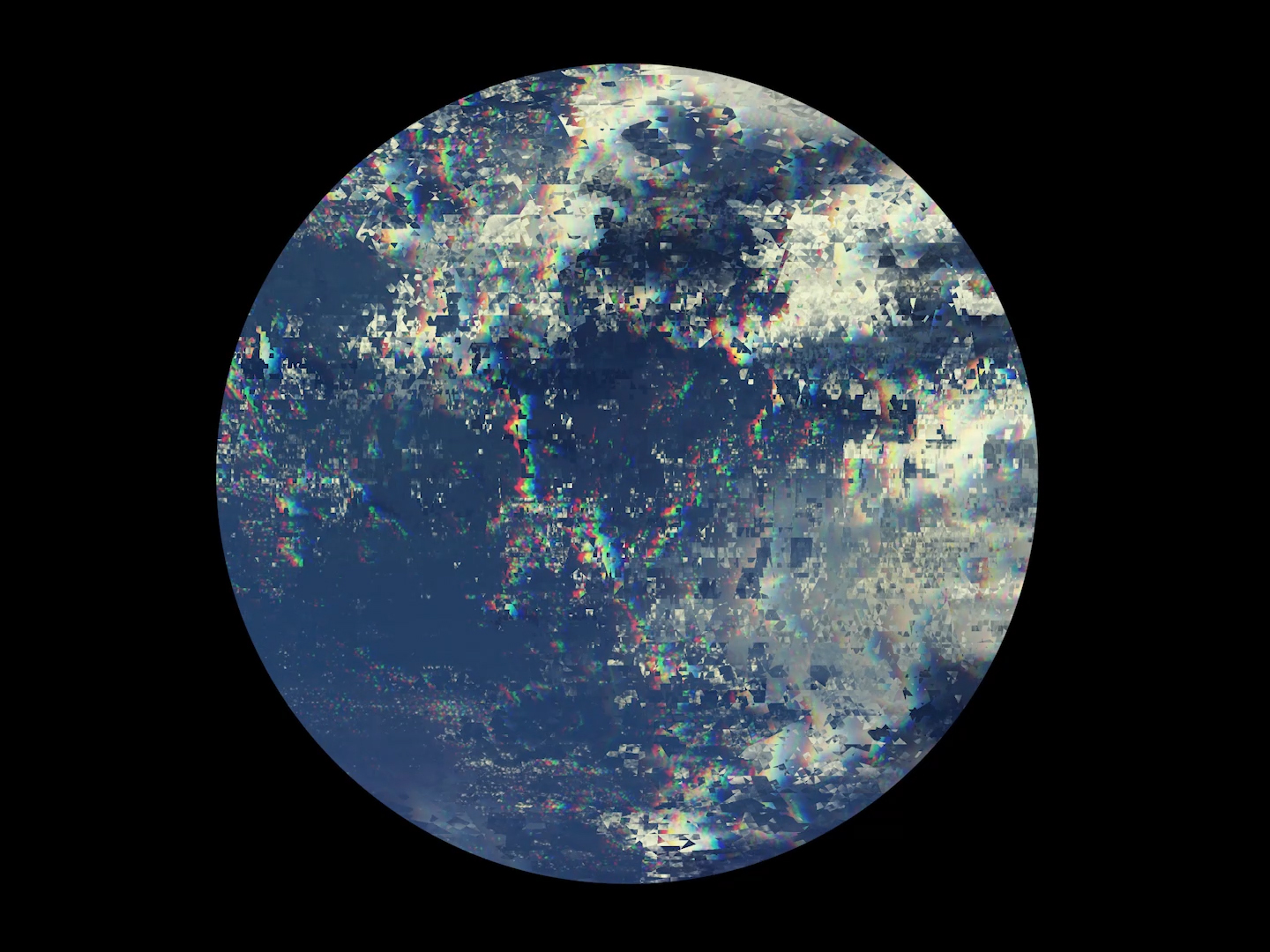
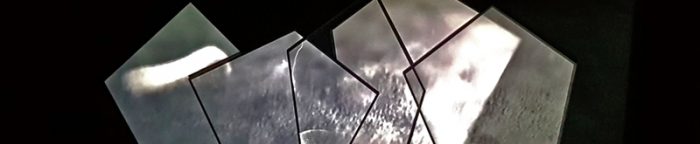
Radiocarbon is produced in the upper atmosphere as cosmic rays collide with particles in the atmosphere. It is absorbed by plants during photosynthesis and enters the food chain of organisms and because it decays at a known rate, scientists can use it to determine when the organism died using carbon dating processes. Solar storms tend to deflect the number of energetic particles coming from outer space but a violent storm will create much more radioactive carbon-14 which will subsequently be absorbed by life on Earth. Radiocarbon dating is not exact because the atmospheric 14C/12C ratio varies due to cosmic ray activity, nuclear explosions and solar activity. Still from Cosmic Chiasmus: crossing the universe.
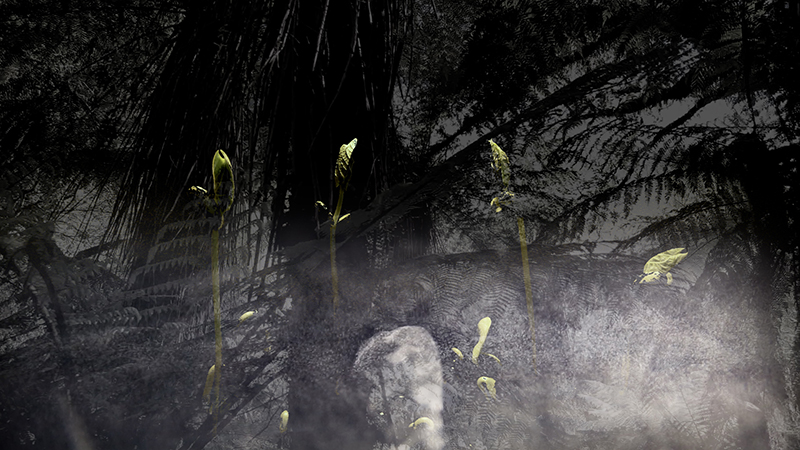
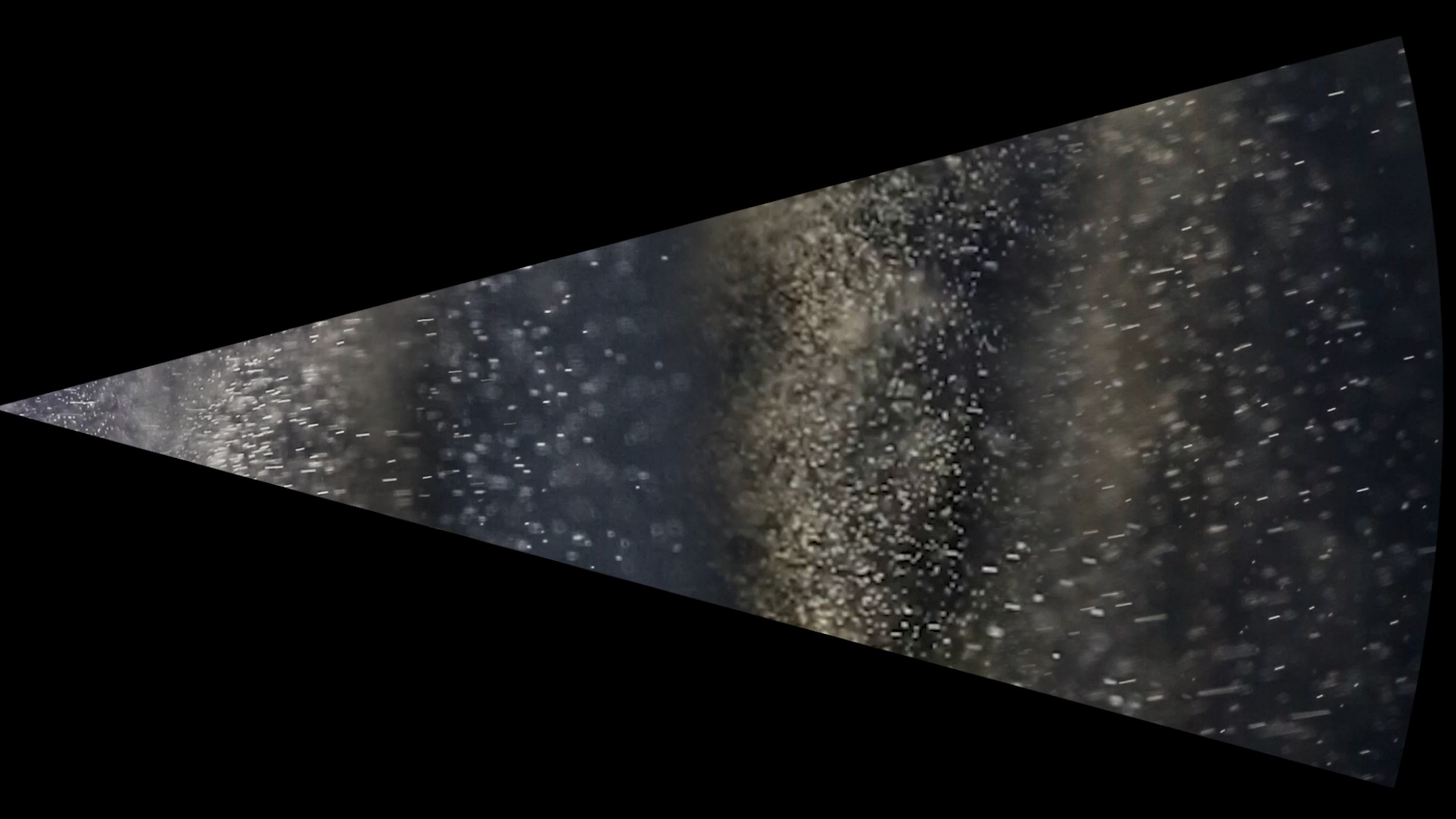
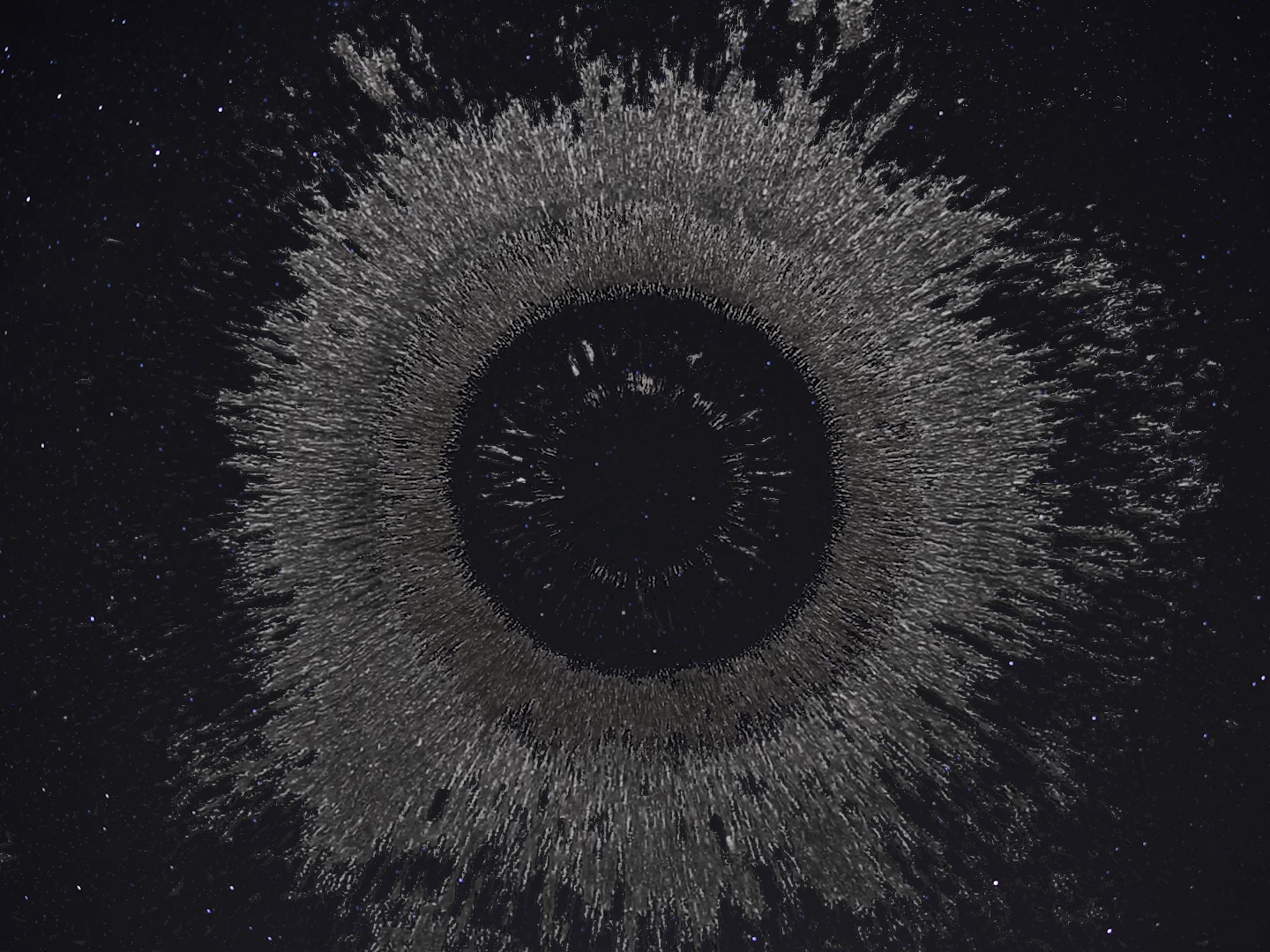
For scientists using the radiocarbon dating technique it is important to know the carbon-12 content of the contemporary atmosphere. A calibration curve of carbon-12 in the atmosphere is provided by an international body using many archive records but the most precise and accurate are based on dendrochronologically dated tree-ring series. Stills from Time Crystals.
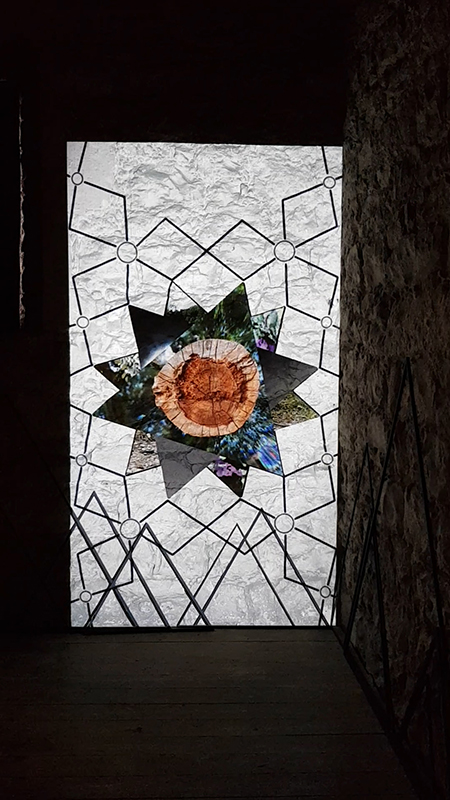
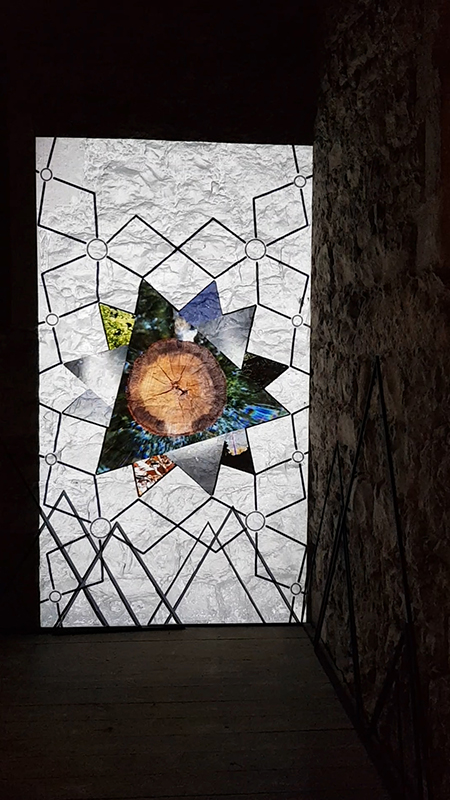
Other evidence of this major radiation storm 14,300 years ago is also seen in ice cores having a higher concentration of an isotope of beryllium extracted from Greenland. These incredibly powerful geomagnetic storms are known as Miyake events. Nine Miyake events have been identified in the last 15,000 years, the most recent being around 774 CE.

Radioactivity was discovered by Henri Becquerel while working on a series of experiments on phosphorescent materials in 1896. Cosmic Rays were discovered by balloon enthusiast Victor Hess in August 1912. He went almost 5.5km up in a hydrogen filled balloon with a balloonist and a meteorologist equipped with an electrometer which could read the level of radiation. This expedition was to determine the source of radiation which was bewildering scientists working on radiation such as Marie Curie who found some radiation registered on their equipment when they removed the source of radiation and even when instruments were shielded by a lead casing. C.T.R. Wilson was also baffled by apparent radiation seen in his cloud chamber, which he had developed to study atmospheric phenomena. One of the first images from Wilson’s cloud chamber –
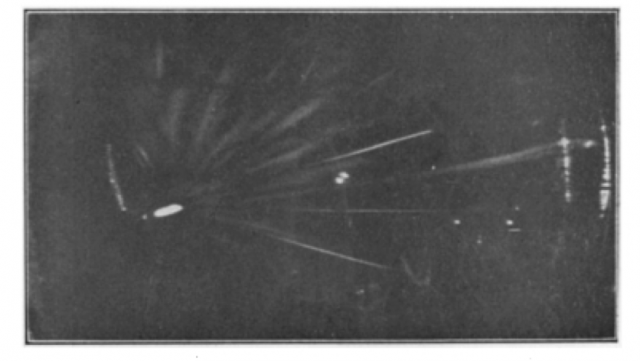
A cloud chamber is a box containing a supersaturated vapor. As charged particles pass through, they ionize the vapor, which condenses to form droplets on the ions. The tracks of the particles become visible as trails of droplets, which can be photographed. In 1911 Wilson presented his first rough photographs of particle tracks at the Royal Society in London. In 1929 Hans Geiger and Walter Müller developed a gas filled ionization detector that registers individual charged particles and was ideal for studying high-energy cosmic rays. Bruno Rossi further developed the Geiger counter and demonstrated that the Earth’s magnetic field bends incoming charged particle showers. In 1936 Seth H. Neddermeyer and Carl D. Anderson discovered the Muon as most common cosmic particle in cosmic ray showers. In 1938 Pierre Auger observed showers with energies of 1015 eV – 10 million times higher than any known before.

In 1947 Patrick Blackett presented a paper in which he suggested that Pierre Auger emitted by high-energy cosmic rays contributed to the light in the night sky. In September 1952 a simple experiment by Bill Galbraith and John Jelley allowed the first observation of Cherenkov light produced by cosmic rays passing through the atmosphere. By the end of the decade, observation of Cherenkov radiation in the atmosphere had been developed further as a means for studying cosmic rays. I will be looking further at Cherenkov radiation in the coming weeks as I begin research on the historical site of Haverah Park in North Yorkshire, the site of an extensive cosmic ray air shower detection array which led the world for two decades in studies of cosmic rays of the highest energies. Haverah Park array used water Cherenkov detectors. I will also be looking at the cosmic ray detection innovations of Astronomer Royal Sir Arnold Wolfendale

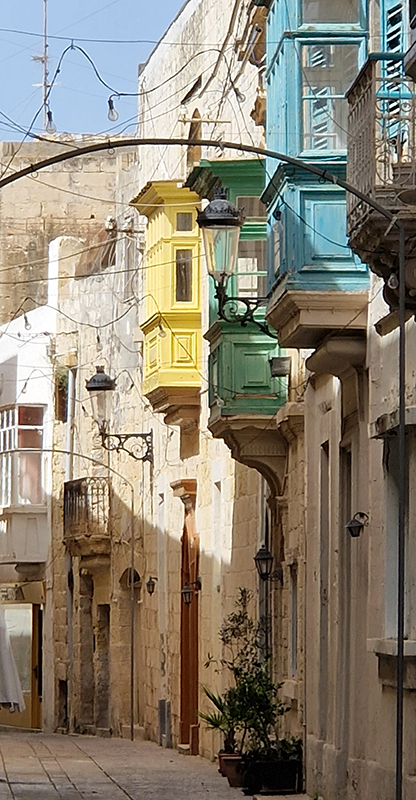
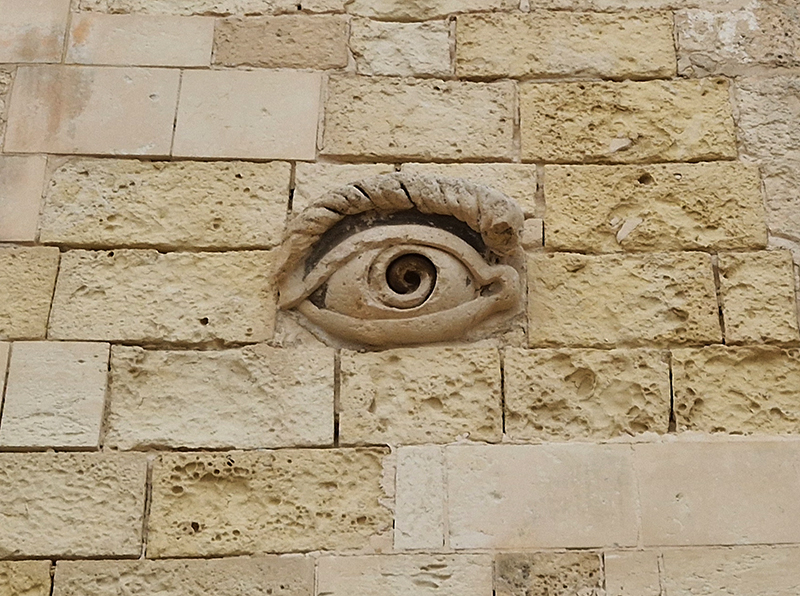
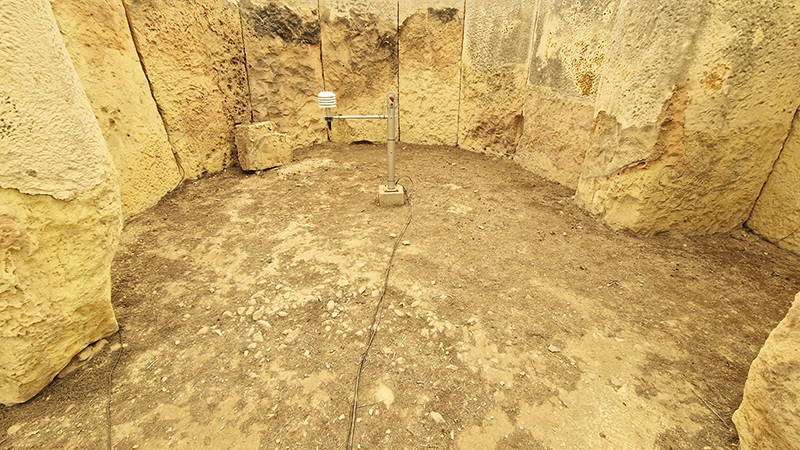
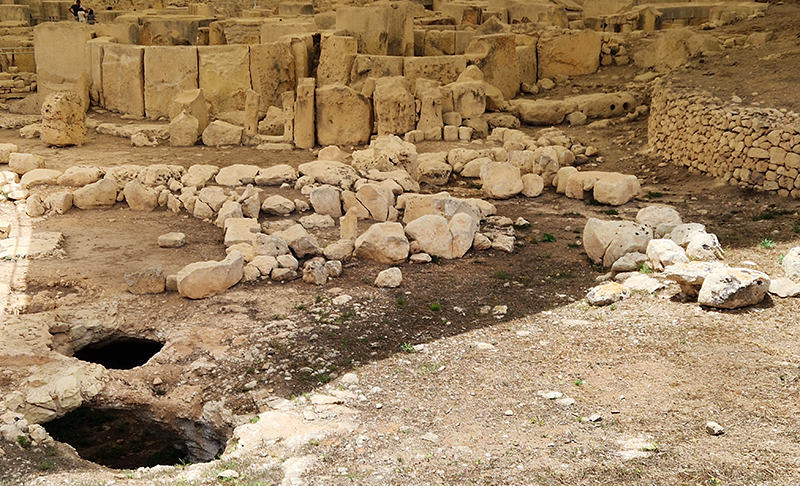
A visit to Malta. Architecturally beautiful, bathed in golden light, the palimpsest of Malta’s history is fascinating to uncover. 20,000 years ago after the last Ice Age, the sea level in the Mediterranean was 130 metres lower than today and Malta was one land mass connected to Sicily.
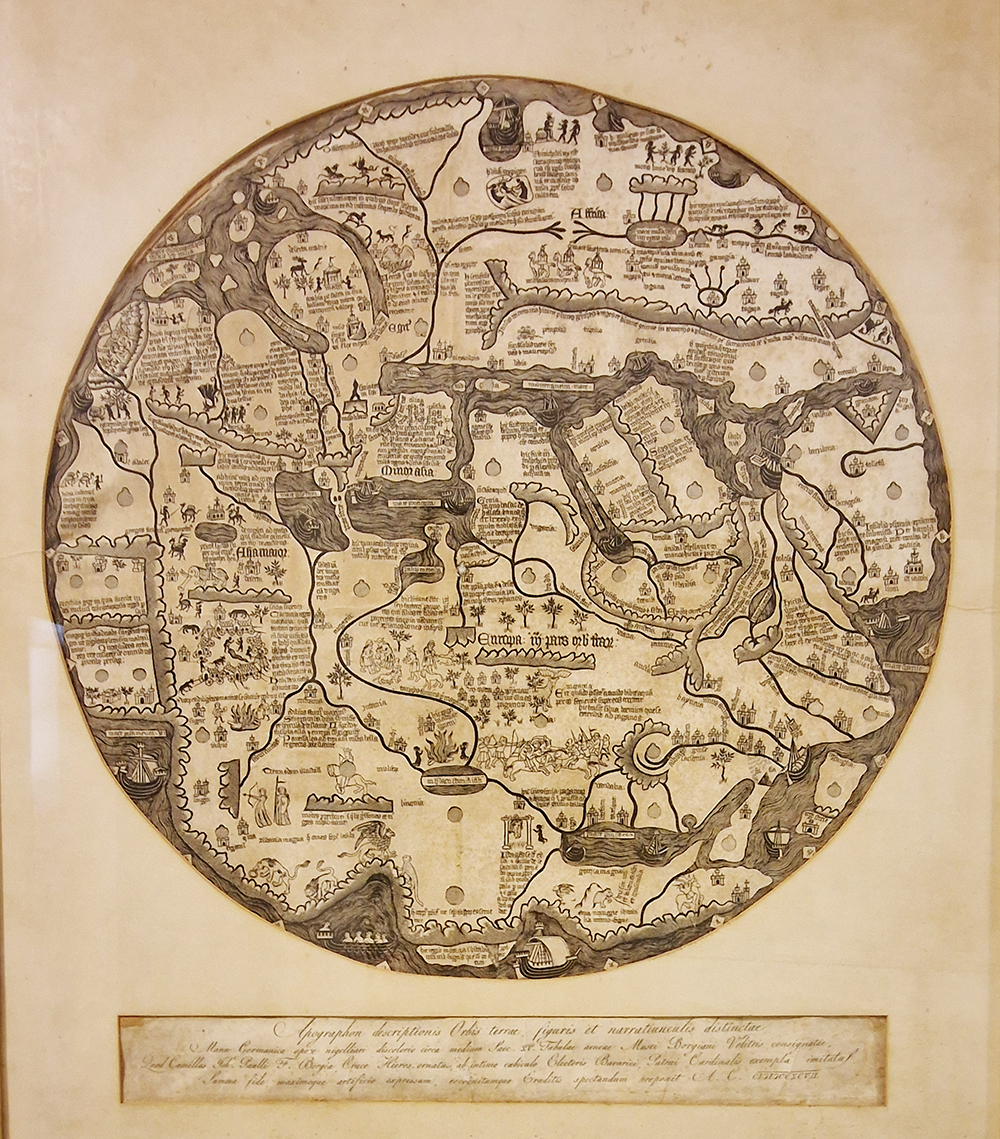
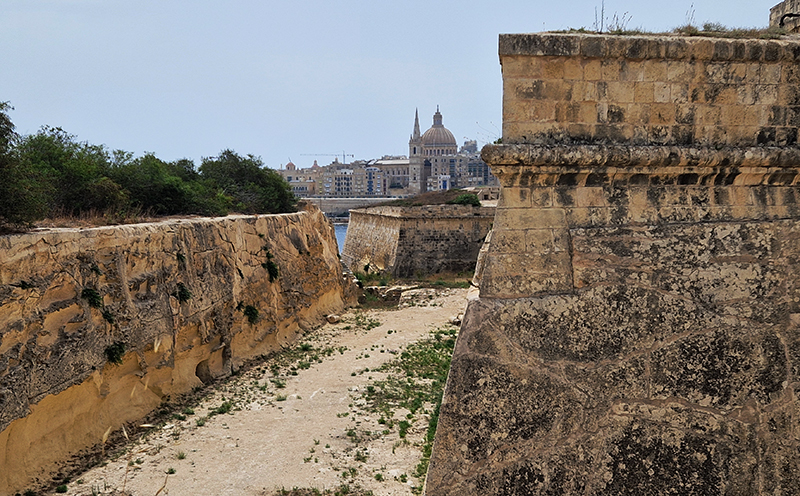
Due to its geographic location Malta was a contested site for naval and trade powers for hundreds of years, yet before the first empire builders arrived there is no evidence of conflict between communities found at the archaeological sites for the first 5000 years of settlement.

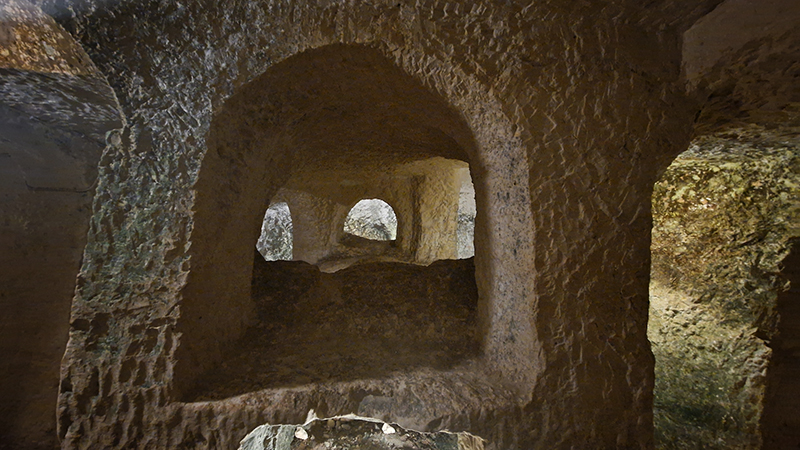
Evidence of first settlers dates to about 5900 BC. These people were hunters and farmers who kept domestic cattle and built temples. The earliest remains found at the Neolithic subterranean temple and burial site of about 7,000 individuals – The Ħal Saflieni Hypogeum – the only known European example of a subterranean ‘labyrinth’ date from about 4000 BC.
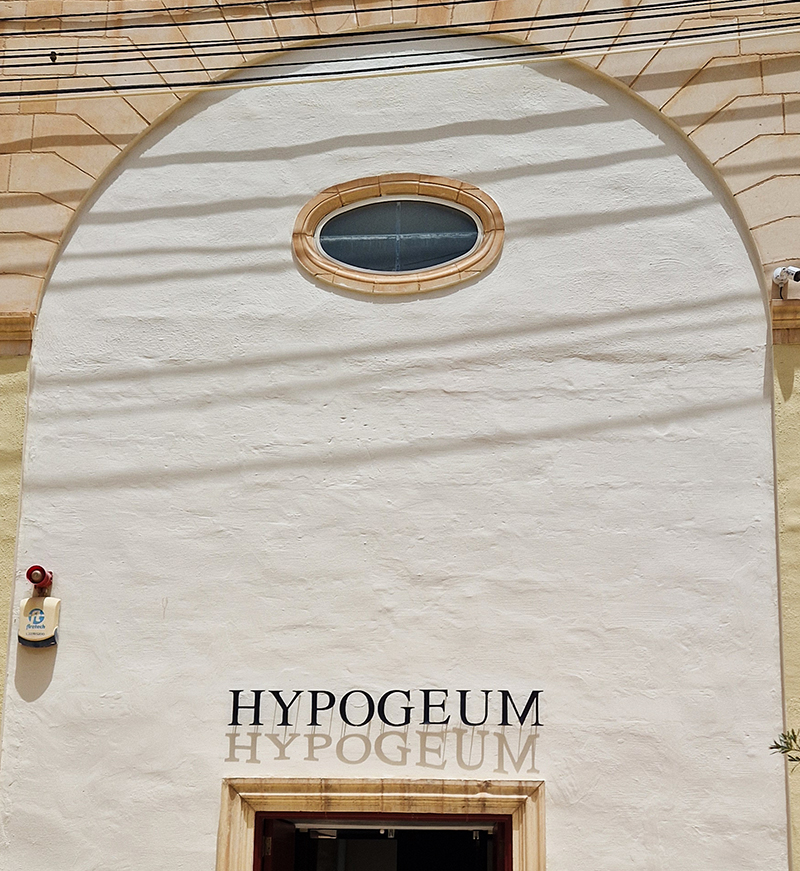
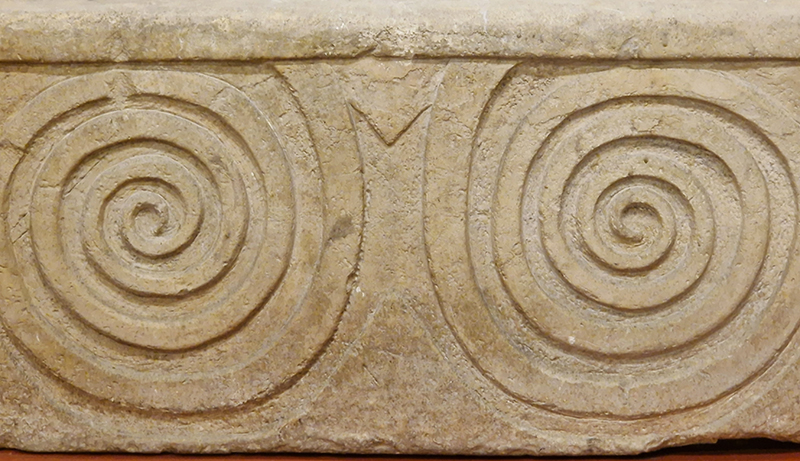
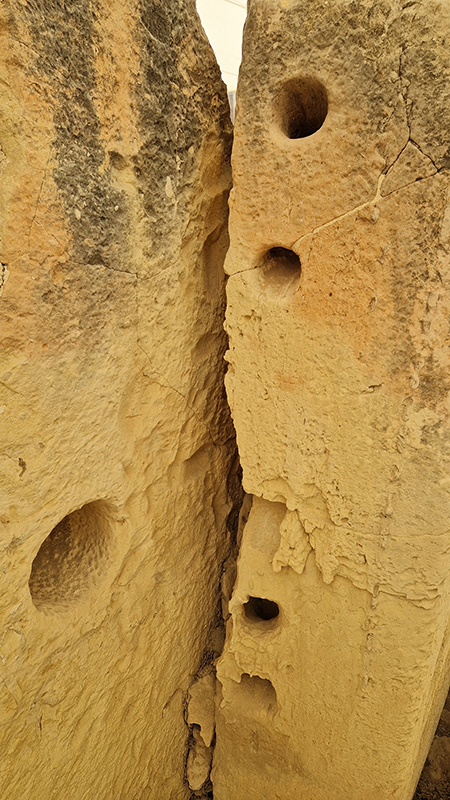
The whole system, which in places replicates the architecture of temples above ground, was cut into the limestone using just stone or antler tools. Some of these deep underground chambers are decorated with spiral and chequerboard patterns in red ochre. A highlight of the visit is the acoustic demonstration of a deep resounding echo filling the chamber when someone with a low voice speaks softly into a small, excavated niche. The particular acoustic frequencies measured throughout the chambers suggests a deliberate design and a potentially important cultural role for making music. Archaeologists believe the dead were probably left exposed until the flesh had decomposed and fallen off before the bones were buried in mass graves along with copious amounts of red ochre but so much is unknown.

Photography is not allowed in the labyrinth of tunnels, so I have no images inside the ancient site where so many people were buried, but saw skulls found here, known as the long skulls, at the Museum of Archaeology.
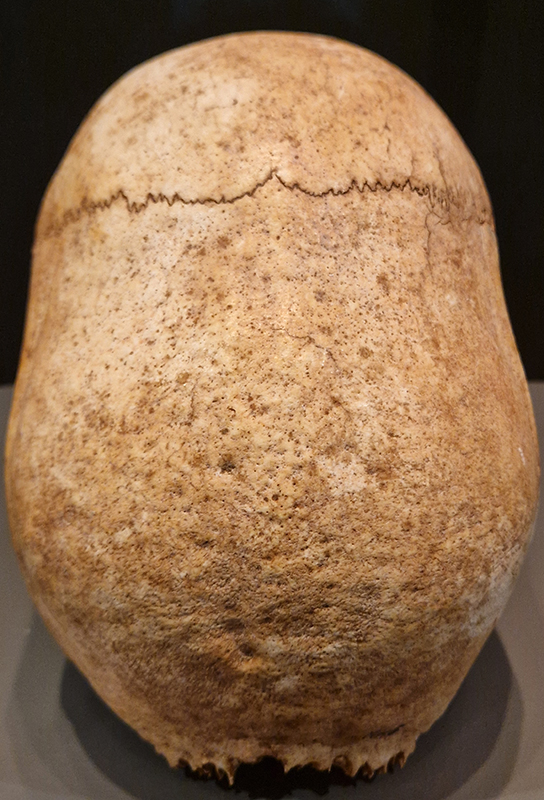
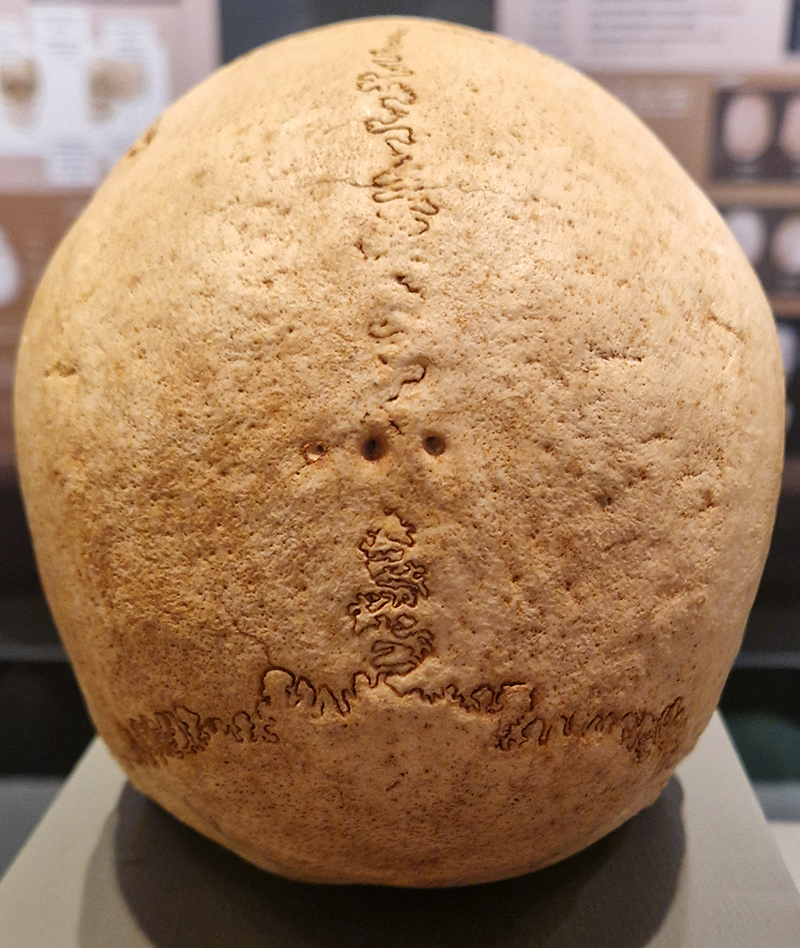
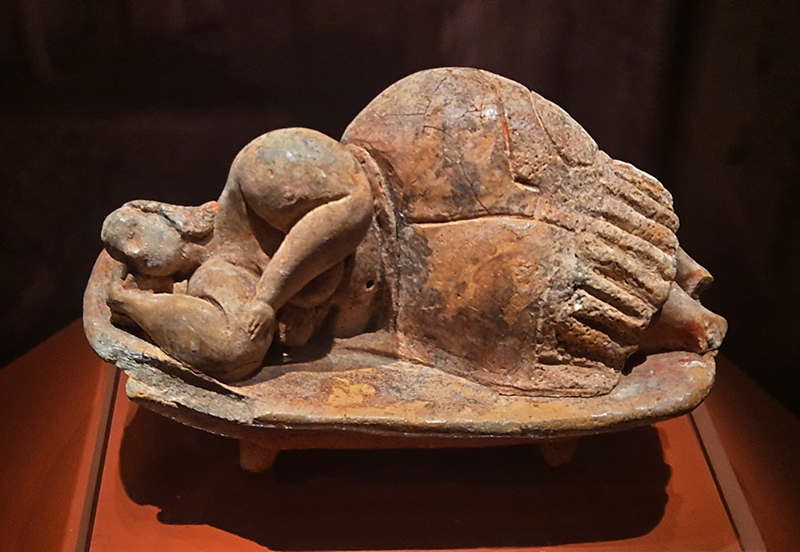
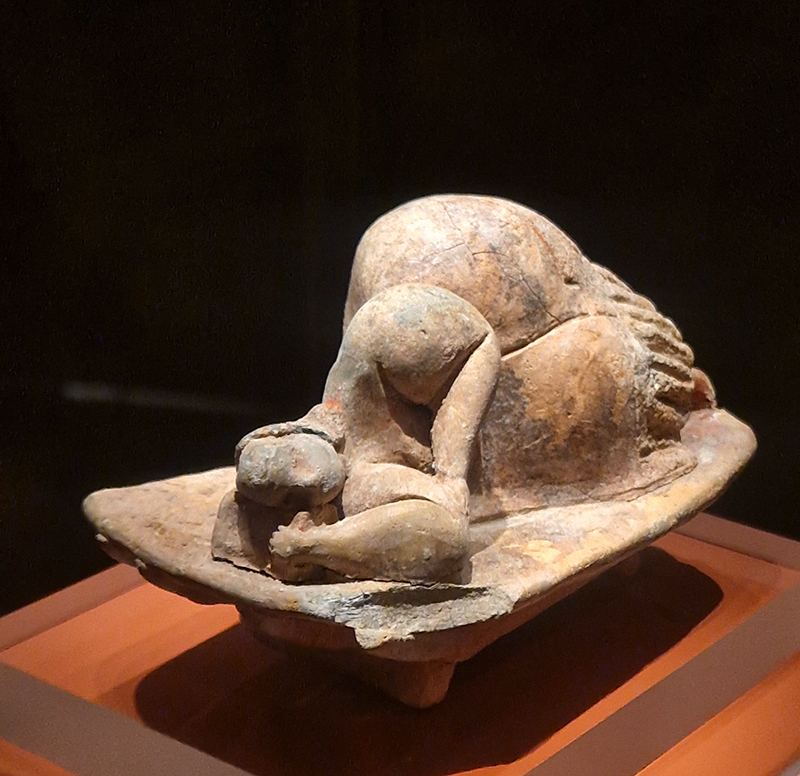
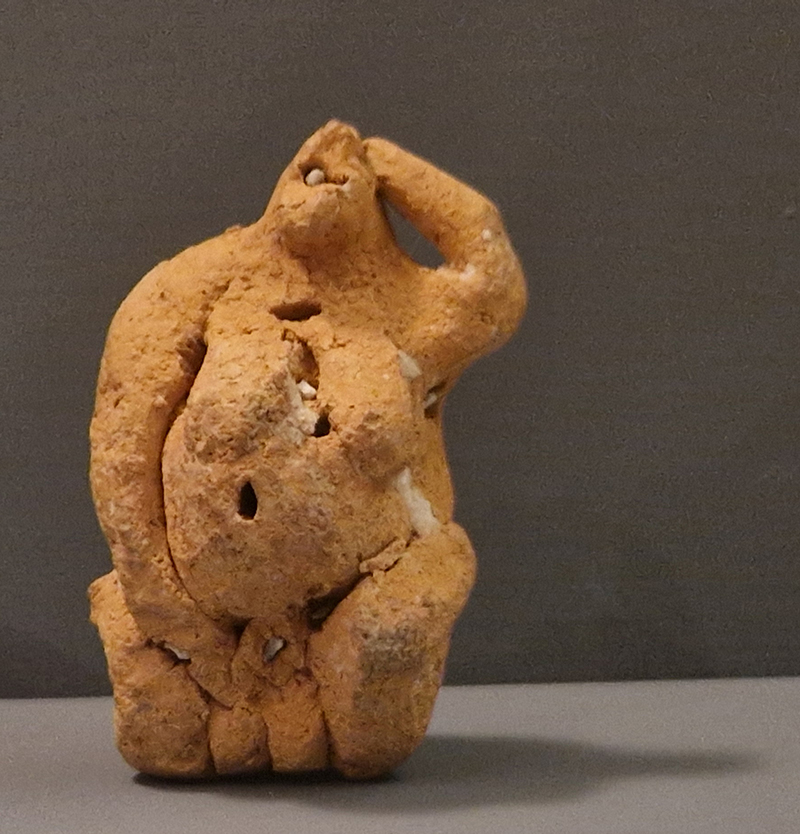
Also at the museum is the famed clay figurine of a ‘sleeping woman’ discovered in the Hypogeum.

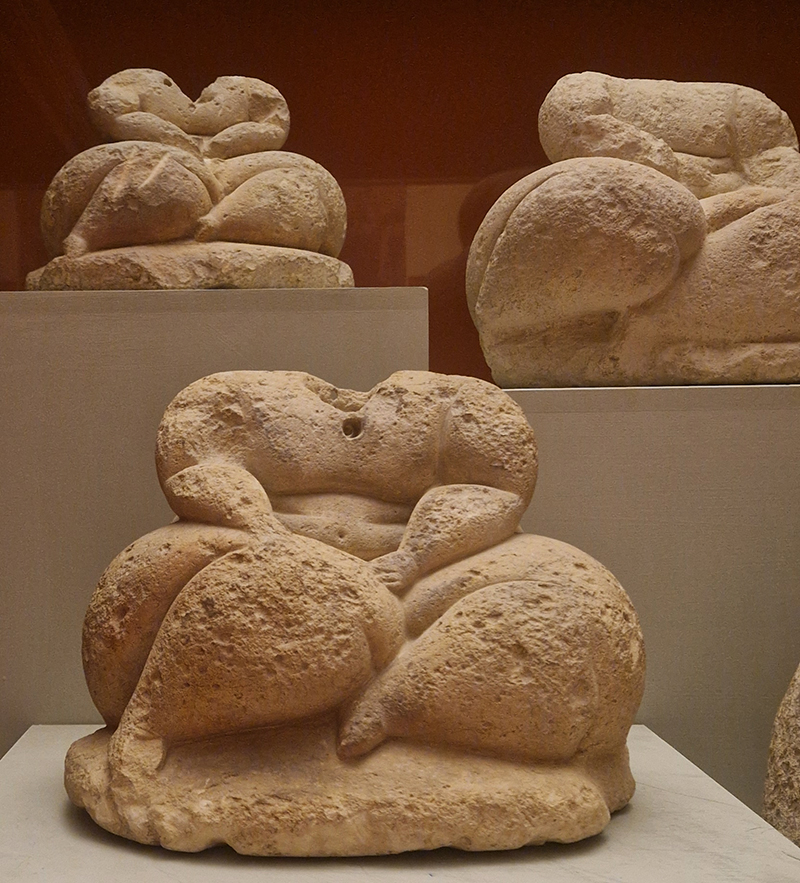
The ancient temples and early artworks hint at past cultures we have no way of understanding.

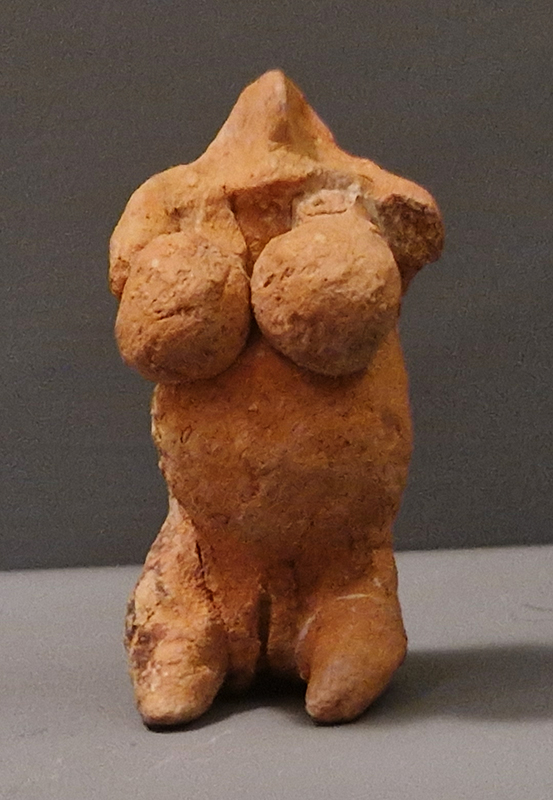
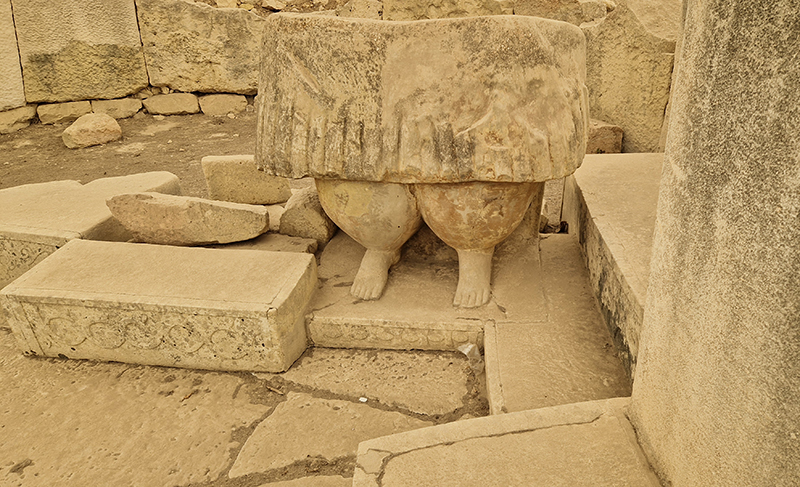
Many figures were found at other temple sites. Although some figures are female and there are many phallic figures, it is not clear of the gender of the ‘fat’ figures some of which appear to allow for interchangeable heads.
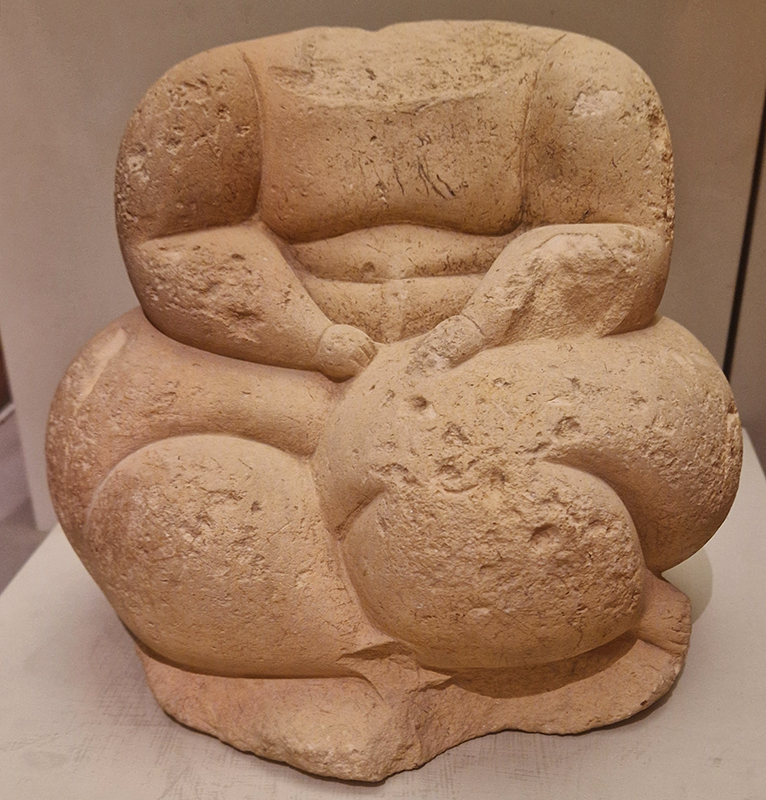
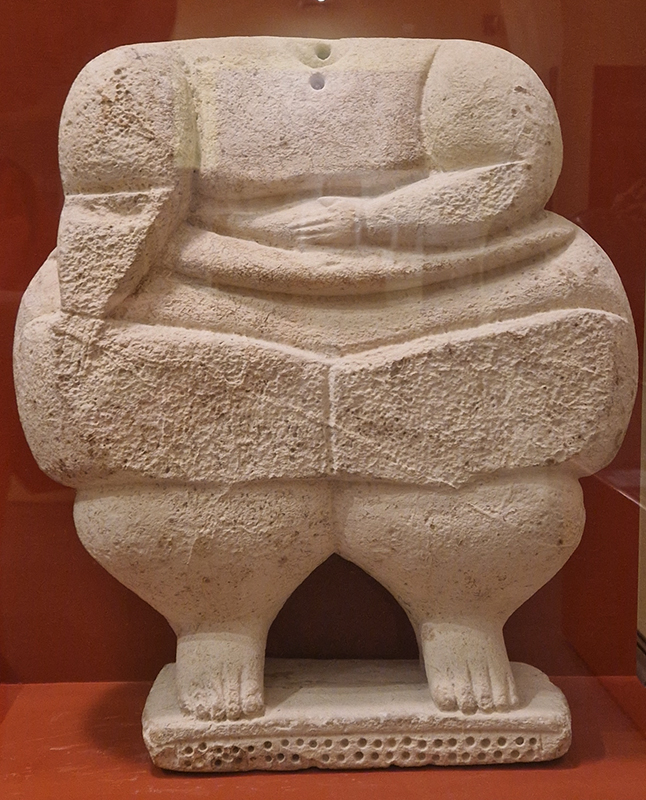
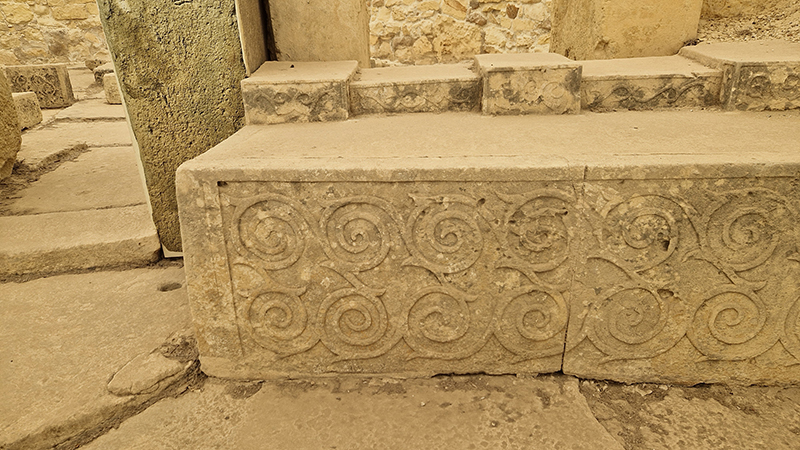
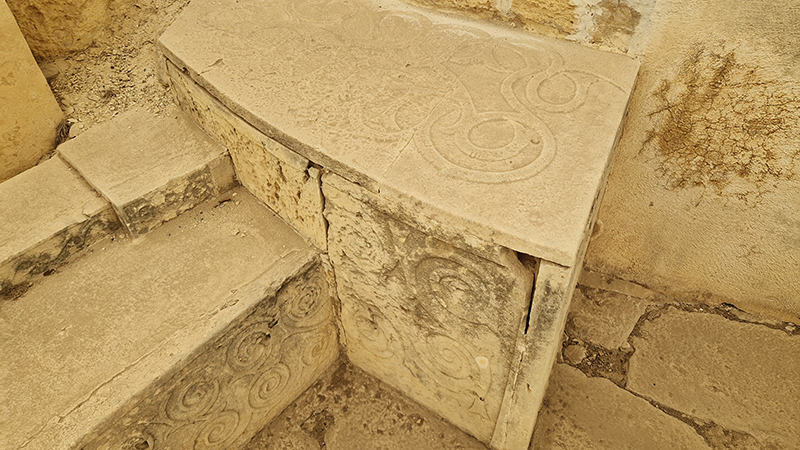
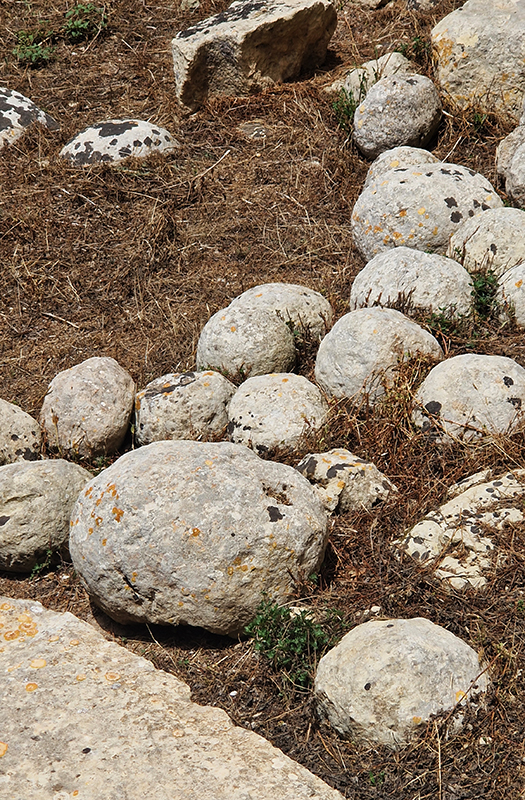
The Tarxien Temples complex of megalithic monuments with intricate stonework date to approximately 3150 BC.
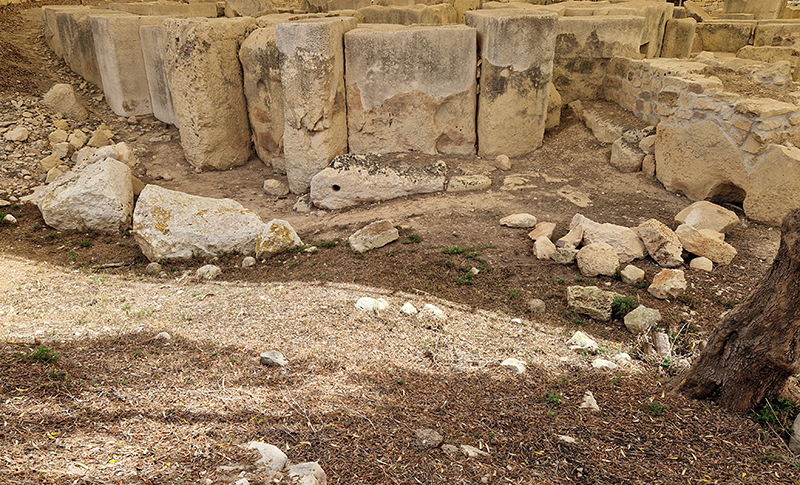
In about 3850 BC new settlers arrived, also farming and building temples but after 1,500 years suddenly disappeared from the landscape. New research using carbon dating, pollen from earth cores, tree ring and human bone analysis, and the location of sediment embedded molluscs, suggests a society battling with soil erosion from felling all the trees, subsequent dietary deficiencies, and a major climate catastrophe around 2350 BC, possibly a dust cloud from volcanic eruptions, which may have led to their ultimate demise.

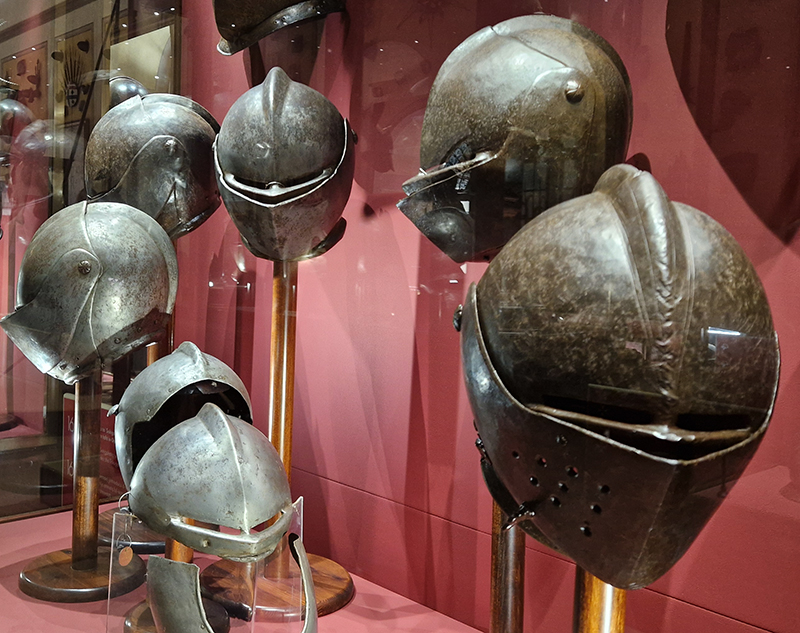
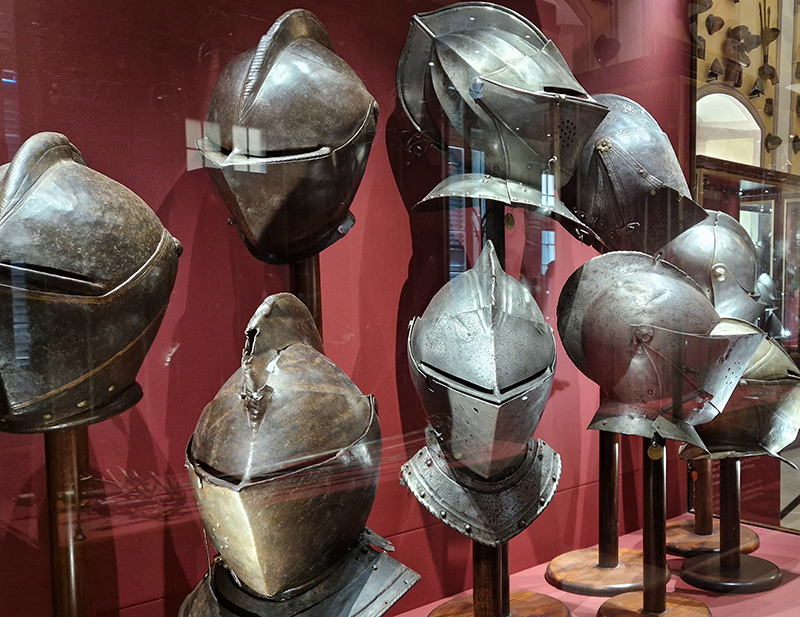
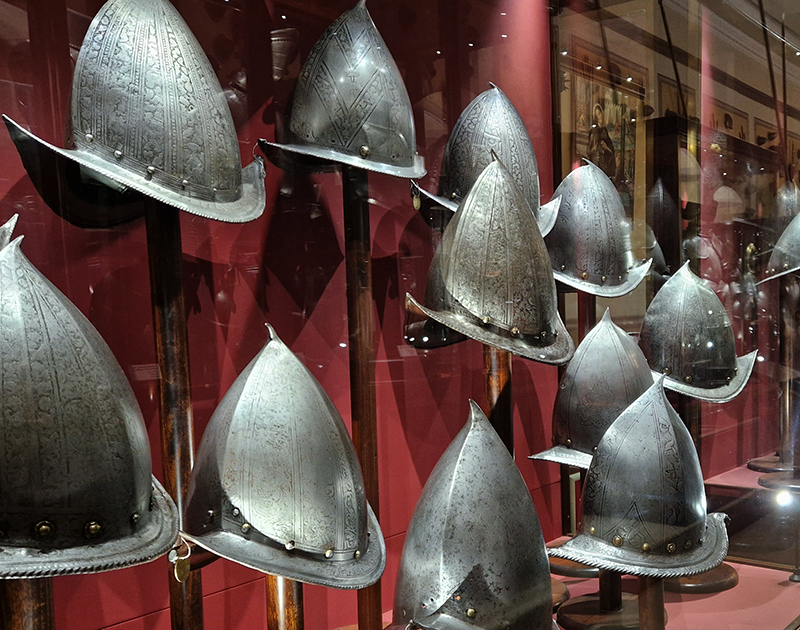
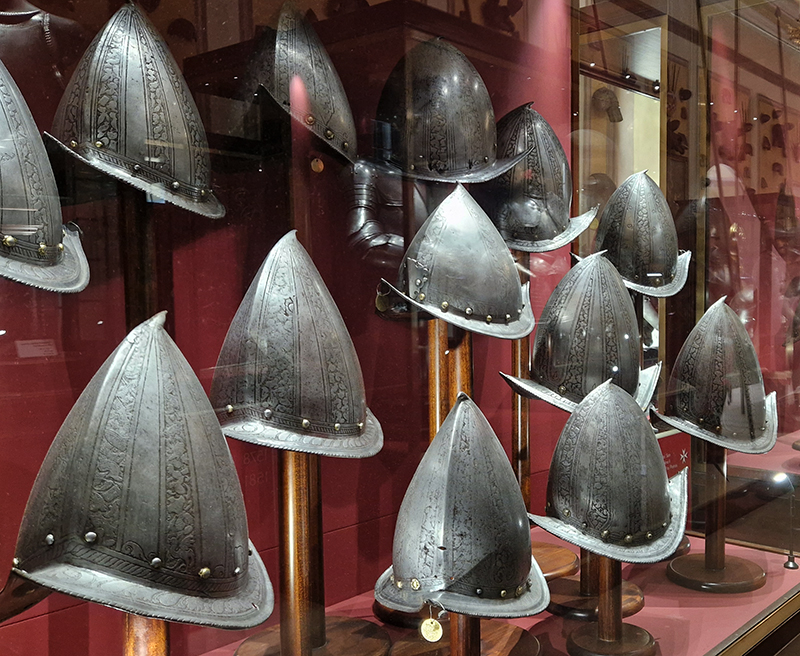
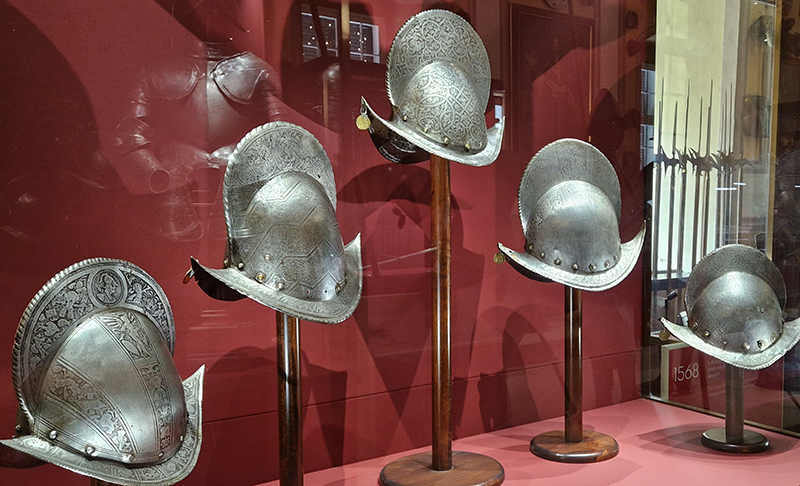
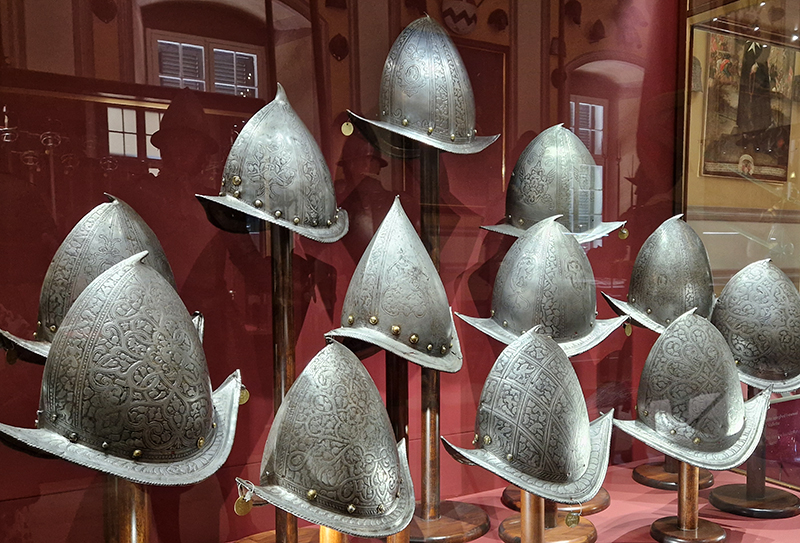
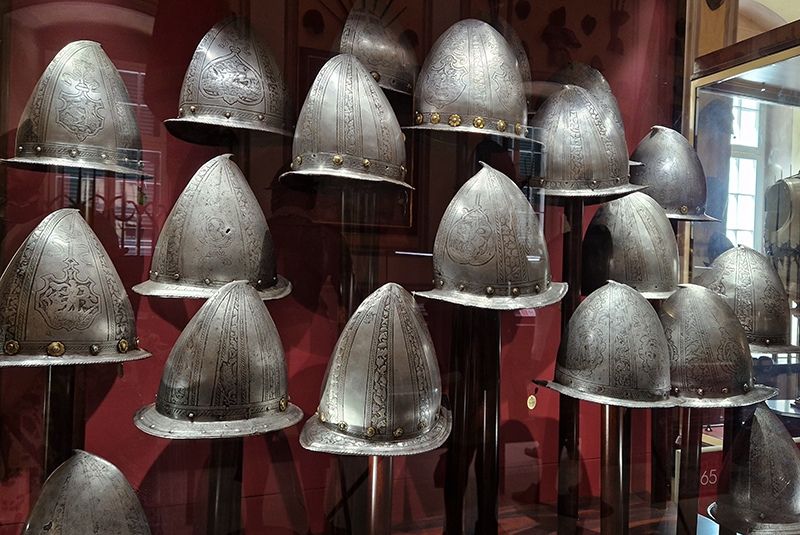
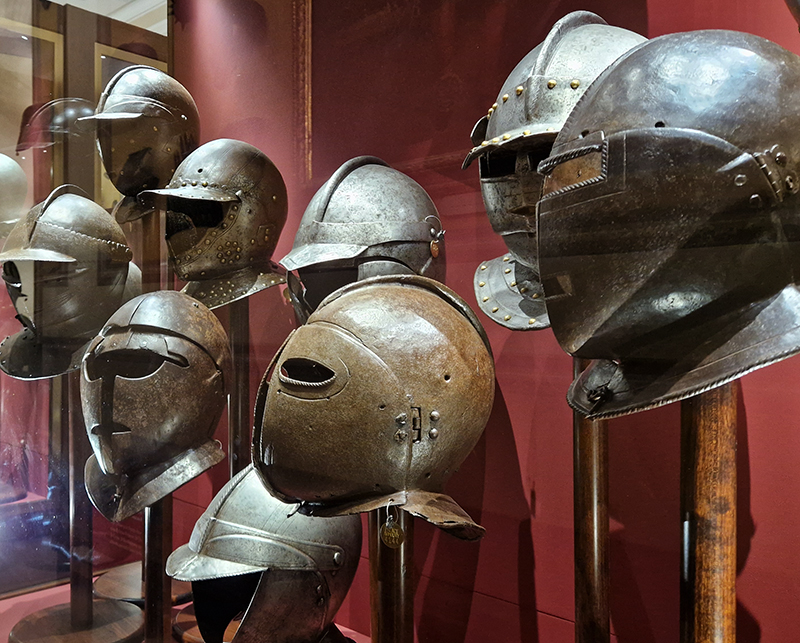
Malta suffered so much war, stretching back hundreds of years, war after war, so many wars, so depressing. A colossal amount of armour, some so intricately detailed, is held at the Grandmasters Palace Museum.

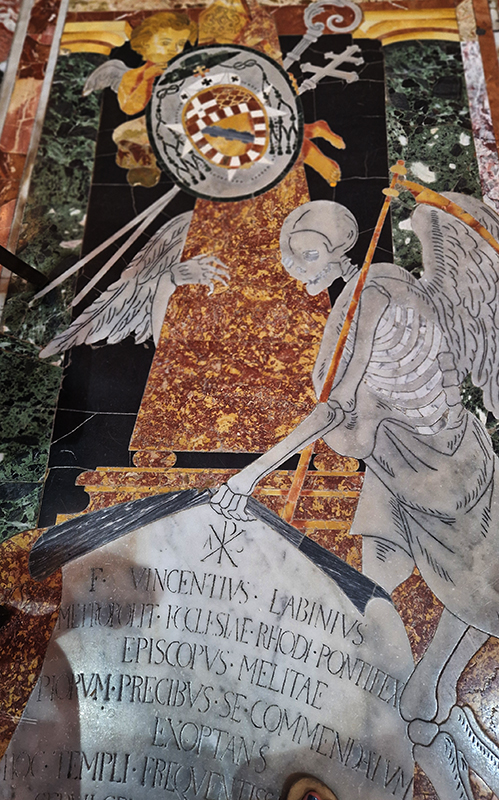
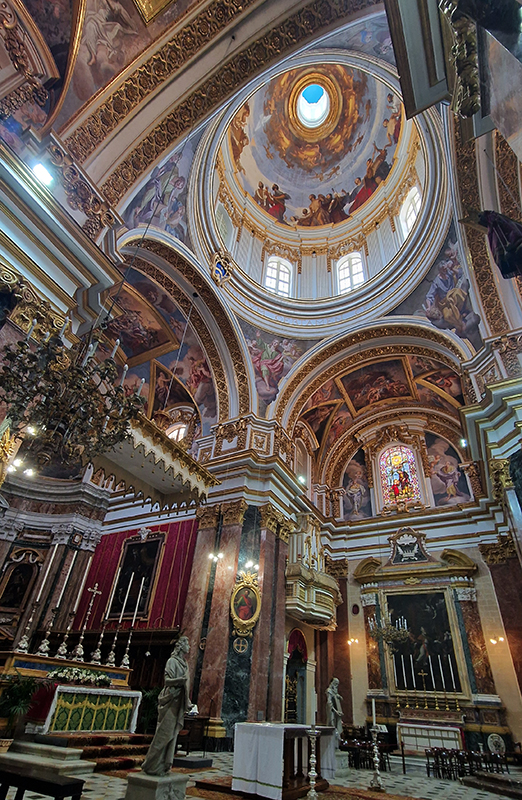
The Phoenicians arrived in Malta around 870 BC from Lebanon, and Malta subsequently came under the control of the ancient city of Carthage as a strategic trading post right up until the Romans take it in 255 BC bringing with them the Roman Catholic religion. A Cathedral was founded in the 12th century (according to legend it was built on the site where the Roman Governor met St. Paul when he was ship wrecked on Malta) was damaged by a huge earthquake in 1693 and rebuilt in the opulent Baroque style.
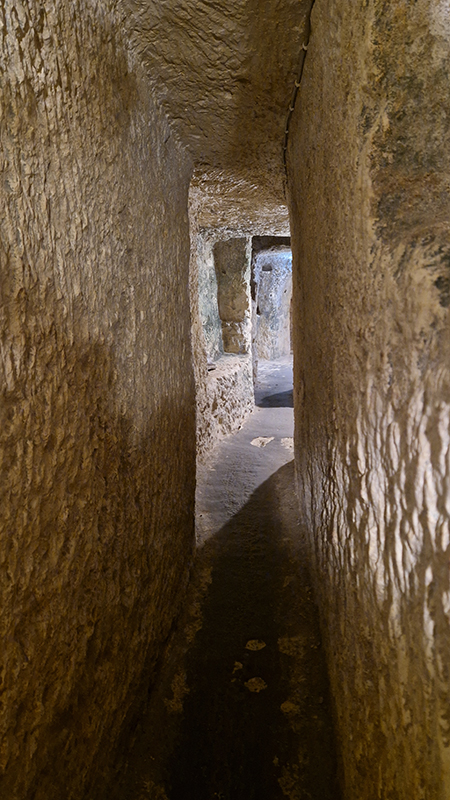
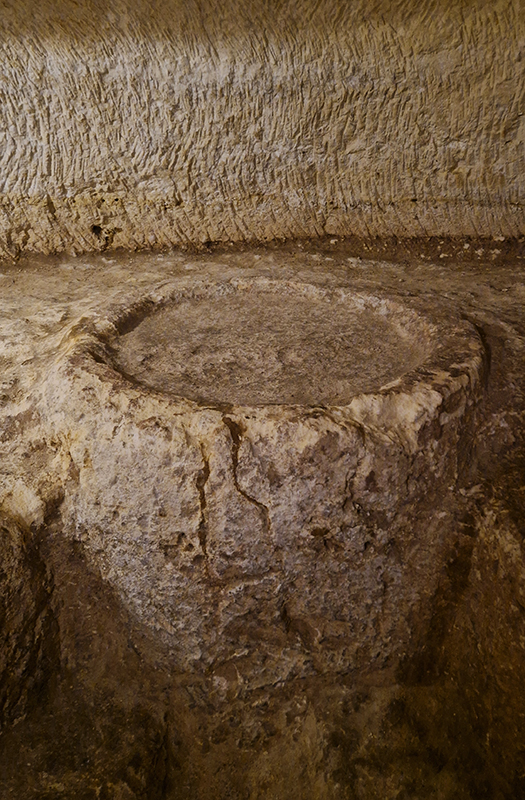
St. Paul’s catacombs located outside the walls of the ancient city of Melite is a system of underground galleries and tombs dating from the third to the eighth centuries CE.
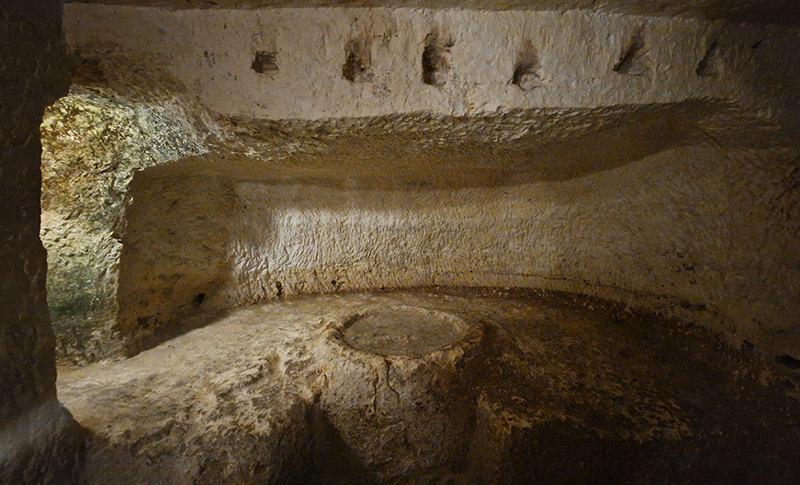
The Byzantines of Malta fought off an invading Arab army for many weeks but the capital city of Melite fell in 870AD and all inhabitants were massacred. The city was rebuilt as Mdina by the Muslim conquerors. The Normans invaded Malta in 1091 to little resistance and this paved the way for the reintroduction of Christianity. Next came the Order of Knights of the Hospital of Saint John of Jerusalem, colonising Malta in 1530. The Order of St John was given Malta as a fief for the annual donation of a peregrine falcon, better known as the Maltese falcon. It was kept and trained in a great hall of the Grandmasters Palace where owls, song birds and other exotic birds were kept.
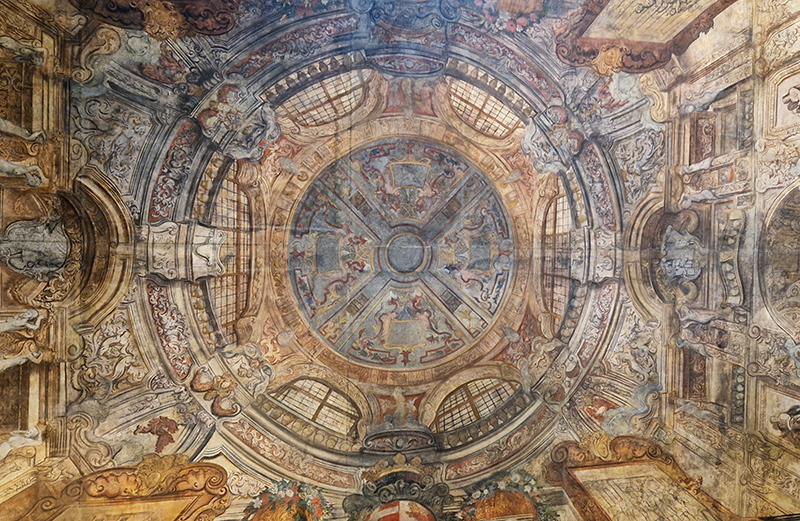
The Knights ran a strong naval fleet and knew the importance of astronomy for navigation. They established an astronomical observatory at the Grandmaster’s Palace. Also a meridian line, inlaid in marble, ran across the floor of one room with a hole in the ceiling above – noon was marked as the sun crossed the line.

The Order of St John capitulated on the arrival of Napoleon Bonaparte in 1798. During his week on Malta Napoleon abolished slavery and instigated free education but there were other changes not so beneficial to the population and after two years of French rule an uprising led to Malta becoming a protectorate of the British. The magnificent printing press in the administrative hub of the Grandmasters Palace was manufactured by Londoners Harrild and Sons (founded 1809) of Farringdon.
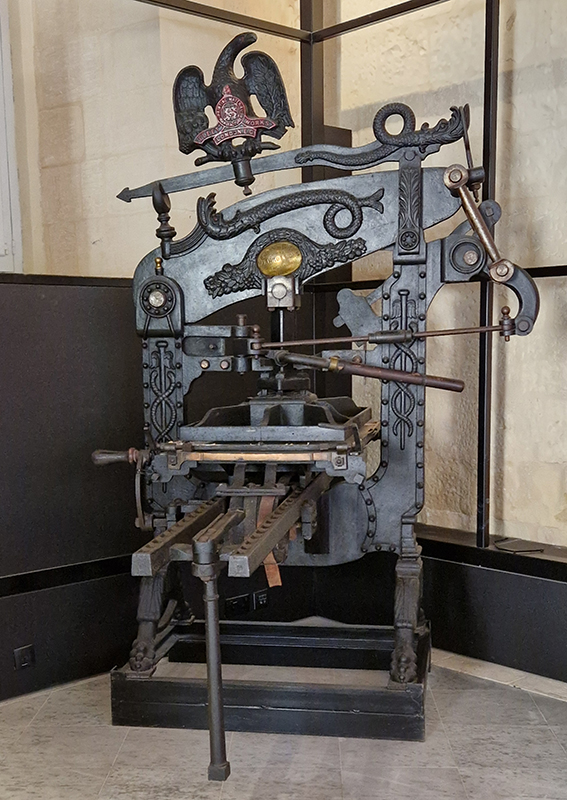
Malta played a vital role providing a strategic location for hospitals during the first world war and was heavily bombed during the second world war. Discontent on British commitment to supporting Malta’s economy and hikes in imported food prices eventually led to riots by the population and came to a head on 7th June 1919 when British troops fired into the crowd, killing four and injuring 50. Relationship souring, Malta finally gains independence in 1964, becoming a republic in 1974.

While in Malta I was reading Cloud Cuckoo Land by Anthony Doerr, a novel that whisks you across time and space as characters inhabit times from the 1453 Ottoman siege of Constantinople to a spaceship escaping future Earth. It resonated with a land whose history is still so present and helped set markers across the centuries to cross reference what was happening in different parts of the world at the same time.

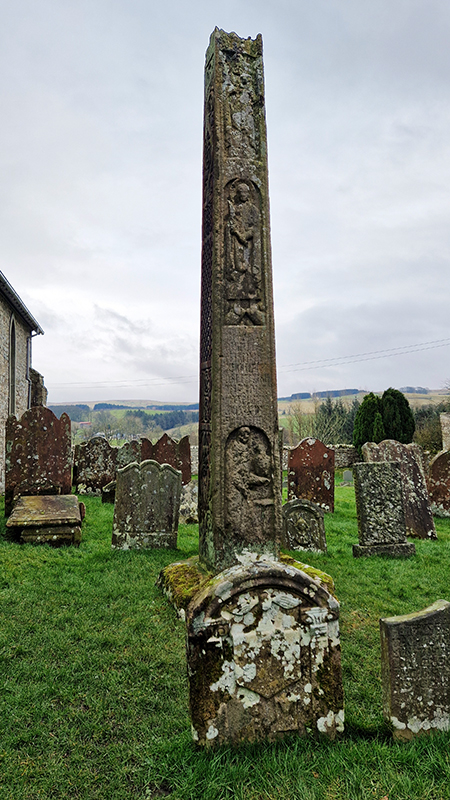
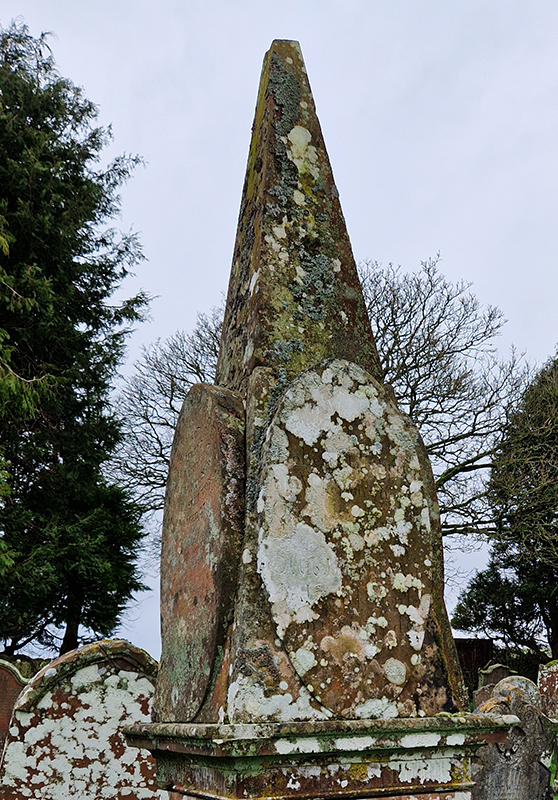
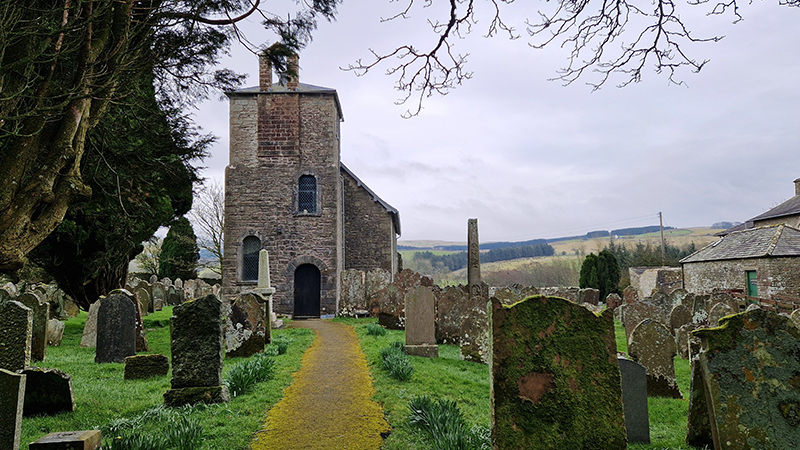
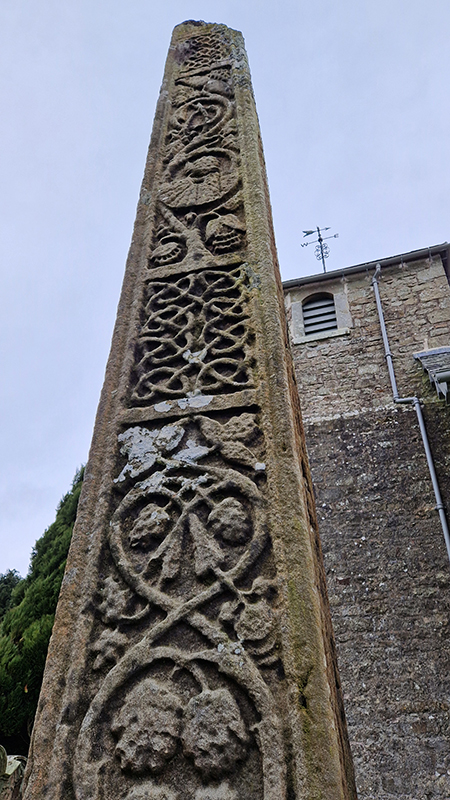
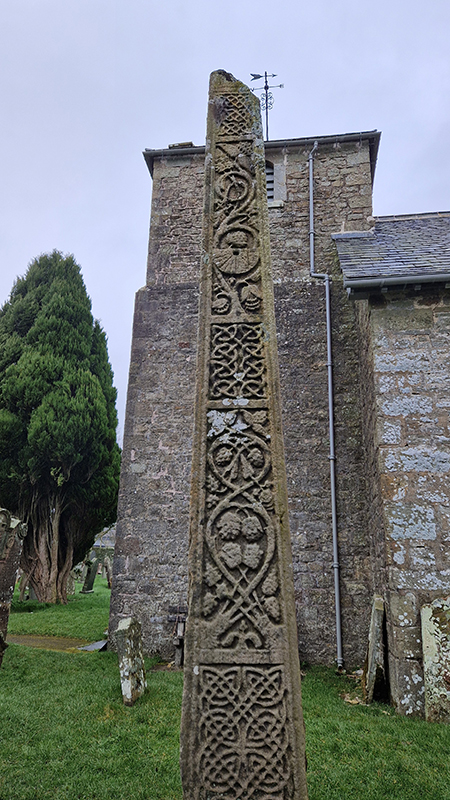
In Cumbria earlier in the year I visited Bewcastle, site of a Roman out post fort. The Anglo-Saxon Bewcastle Cross from the 7/8th century, hewn from a single piece of sandstone stands at 4.5m in the splendid village churchyard of St. Cuthbert’s Church. The head of the cross is missing and the carving very worn but features an intriguing mix of religious and non-religious figures, reliefs and inscriptions in a runic alphabet. The oldest carved sundial in Britain can be seen on the south face of the shaft, this medieval timepiece was carved at a later date, after the cross was erected, and is missing the indicator. From the late 7th century, around when this cross was being commissioned the Byzantines were busy building defence walls around Malta to counter a growing Muslim threat they feared.
Gallery Visits

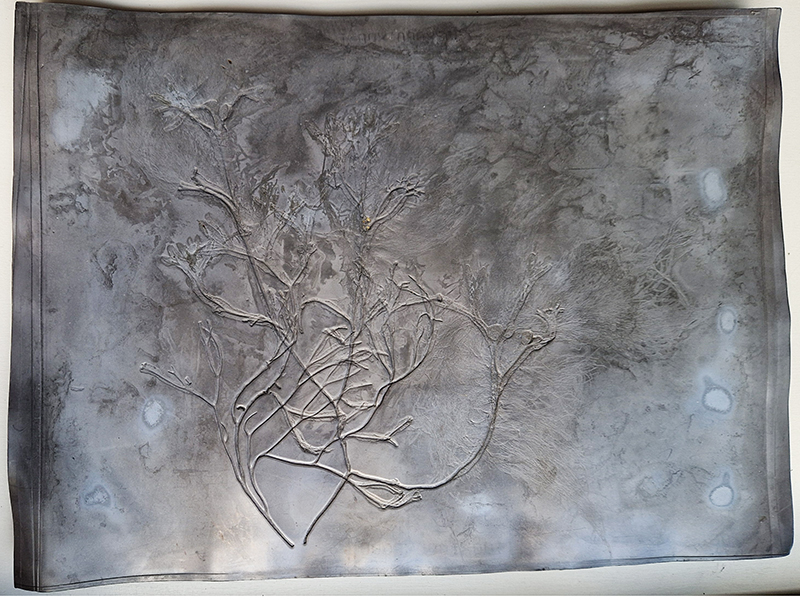
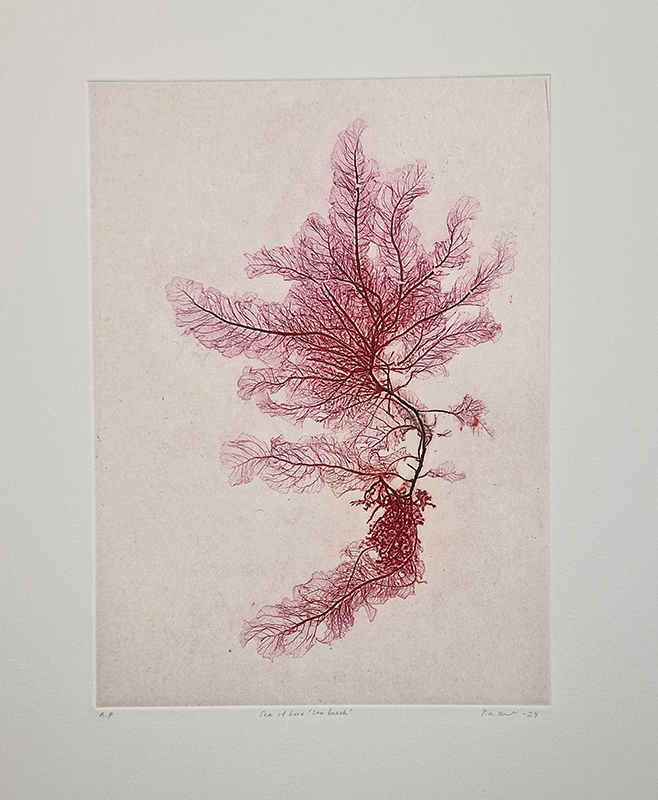
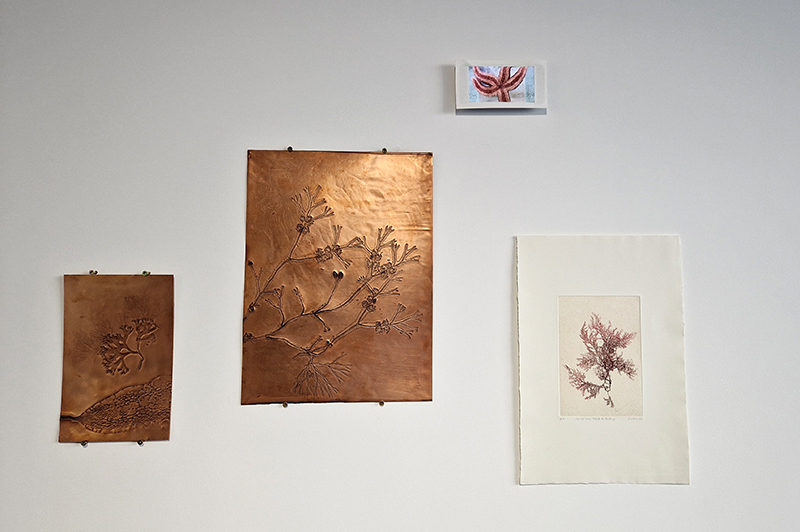
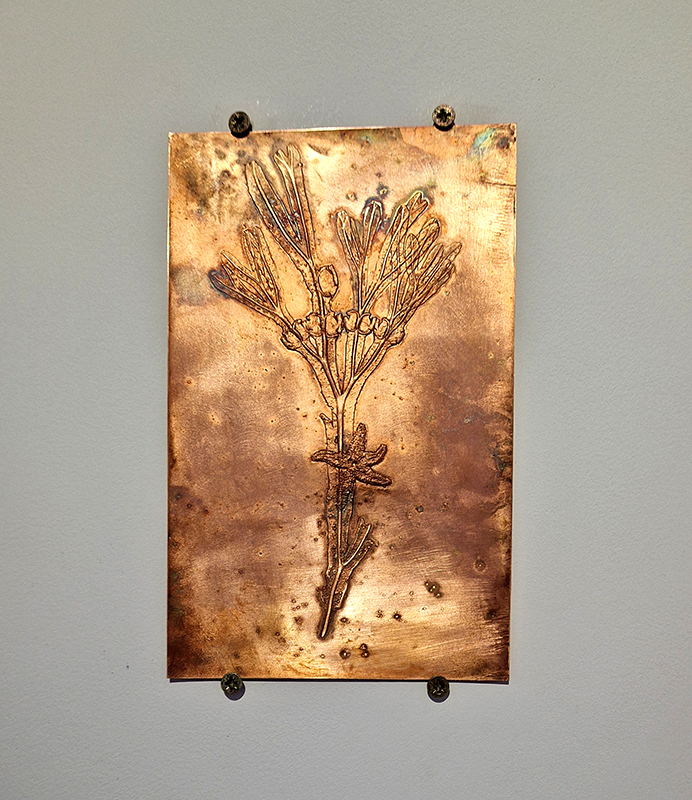
Pia Östlund Sea of Love at No Show Space. Really enjoyed my visit to this beautifully curated exhibition. So nice to have a gallerist take time to talk about the work. The nature printing explored in this show is an involved process of imprinting dried seaweed under pressure between polished lead sheets, taking latex moulds from the imprints which are then made conductive by coating in graphite and electroplated with copper to make a printing plate. Pia Östlund spent two months at BORCH Editions in Copenhagen, working with the master printers on refining the platemaking process of nature printing. Nature printing is an intaglio printing technique from the mid-19th century that makes it possible to make direct impressions of the surface of natural objects.

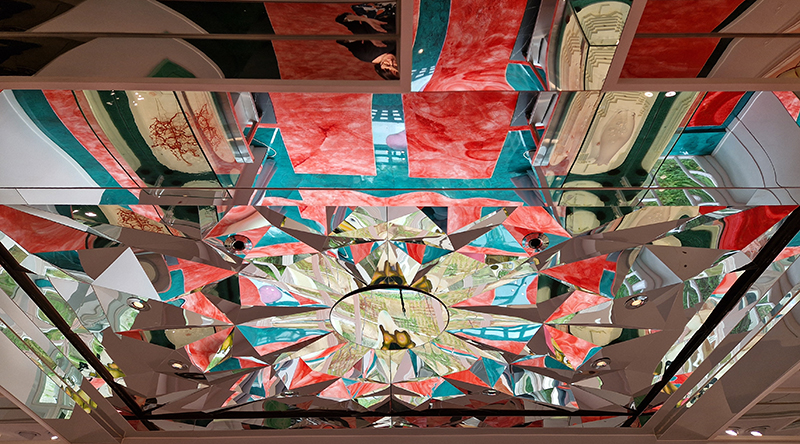
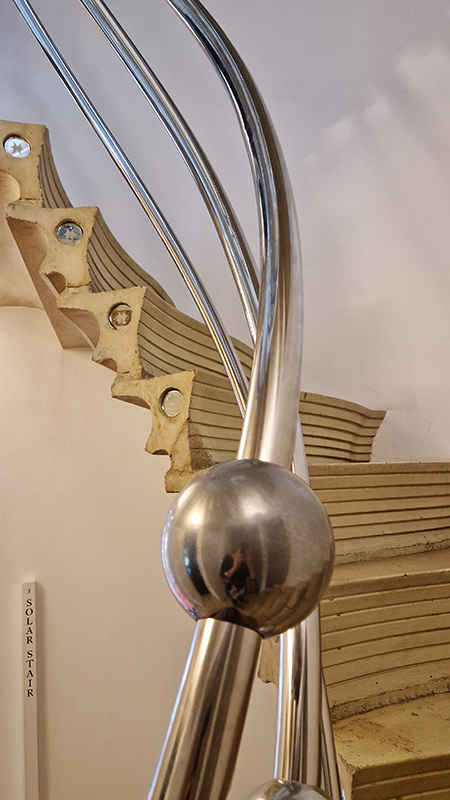
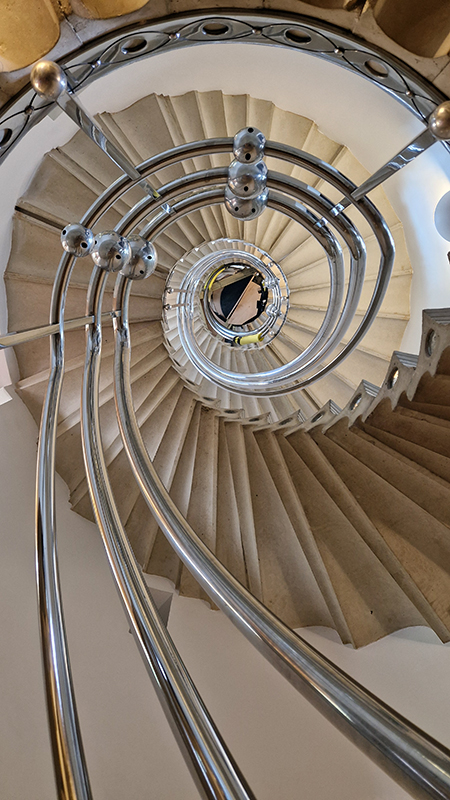
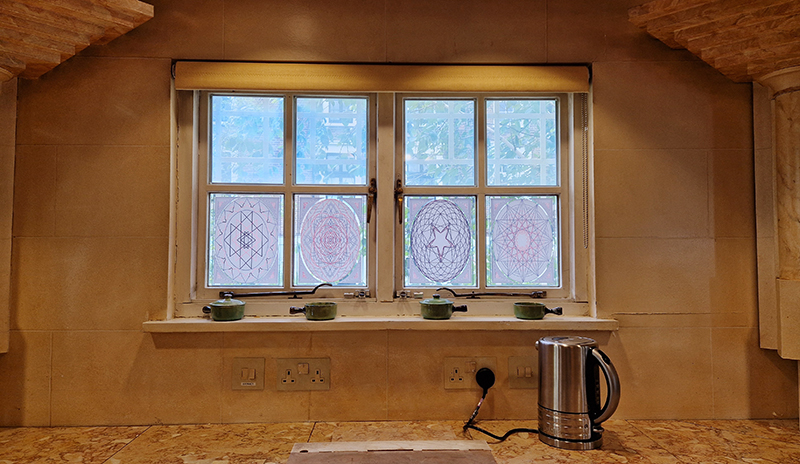
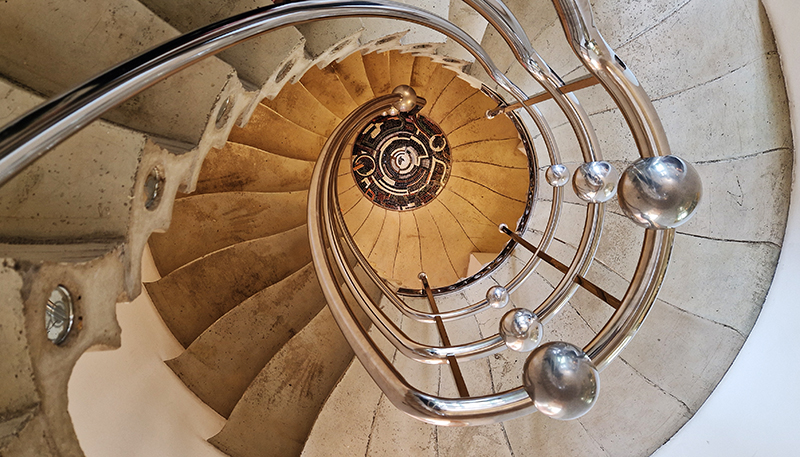
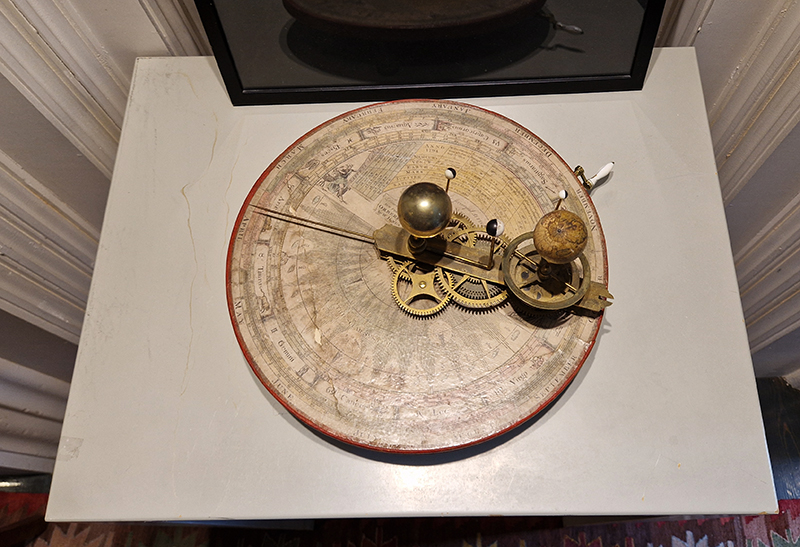
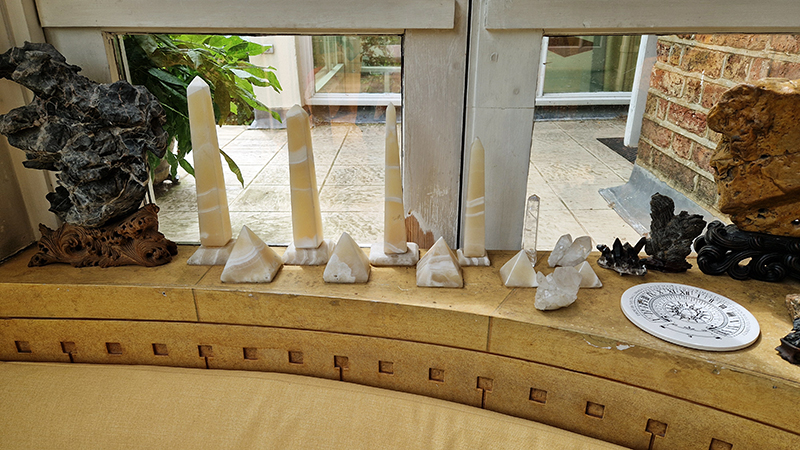
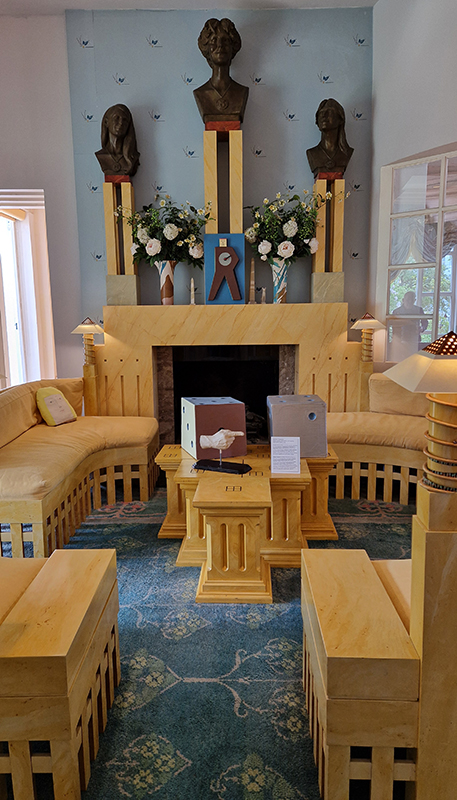
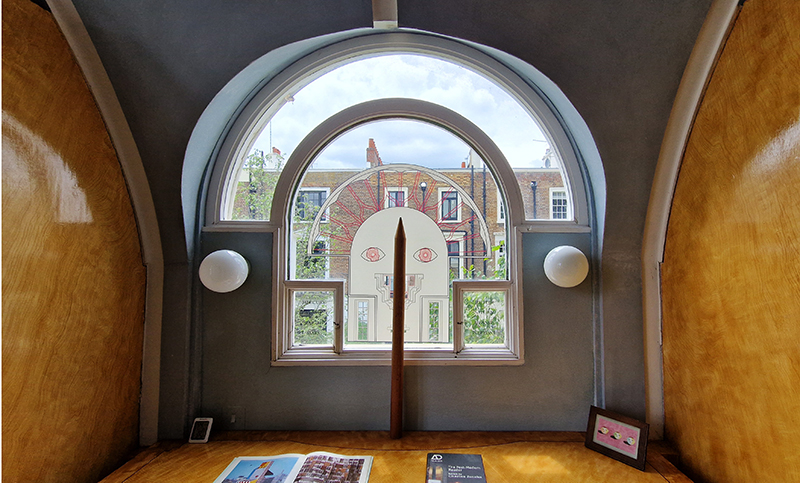
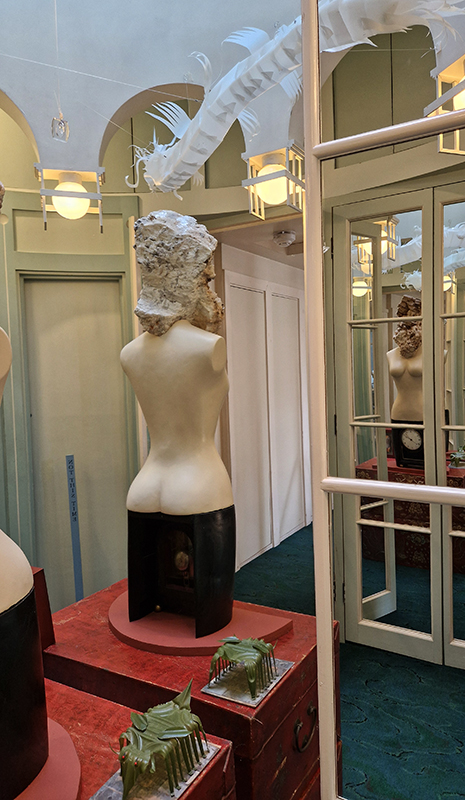
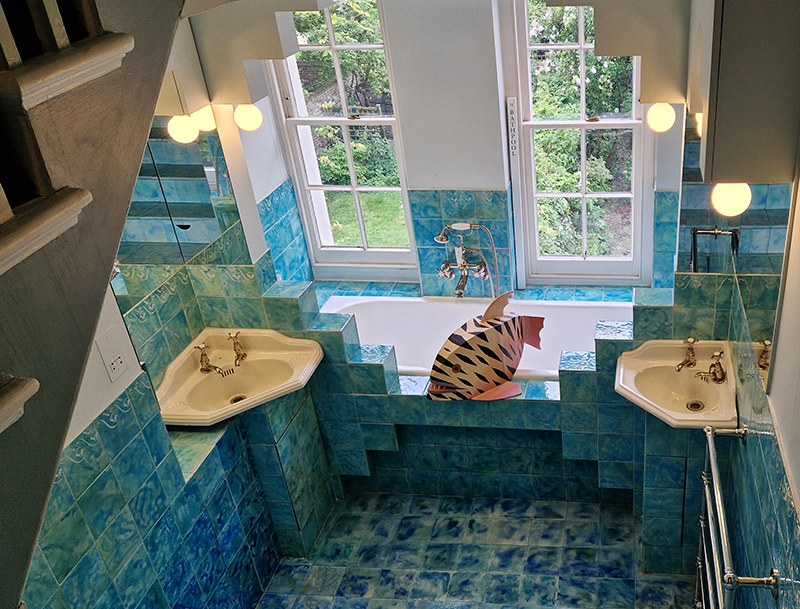
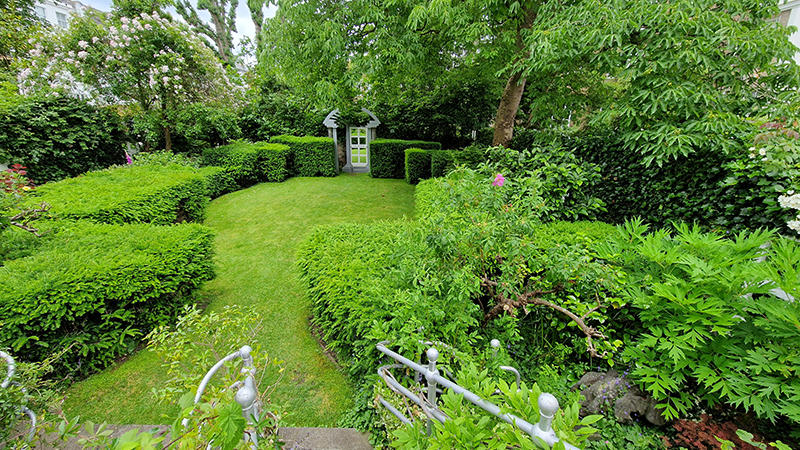
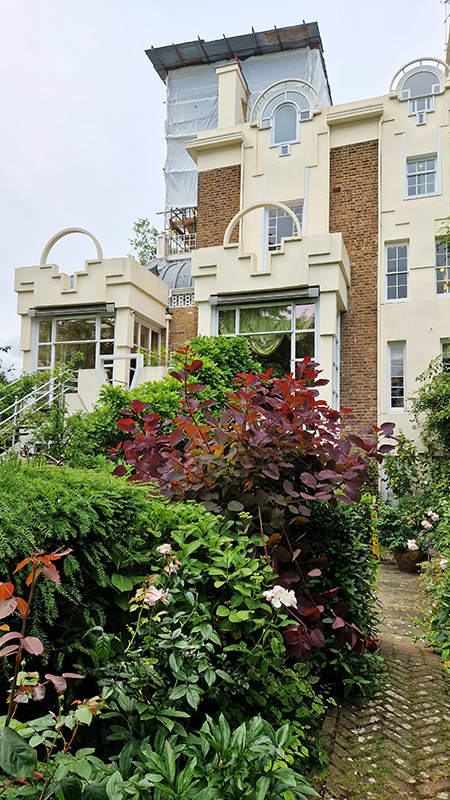
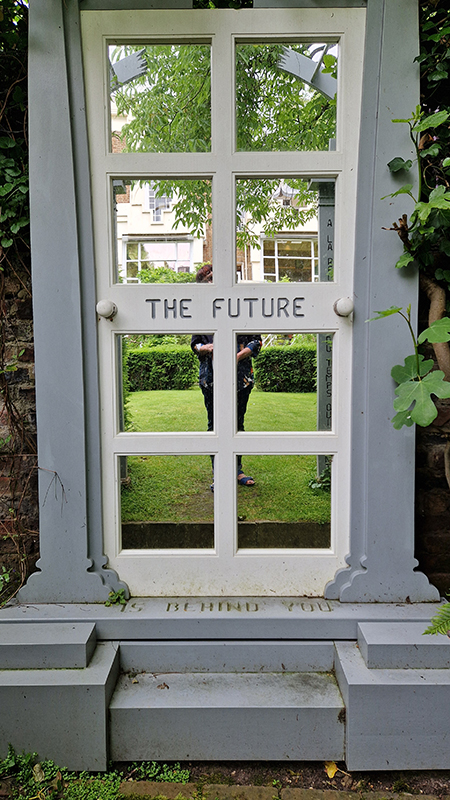
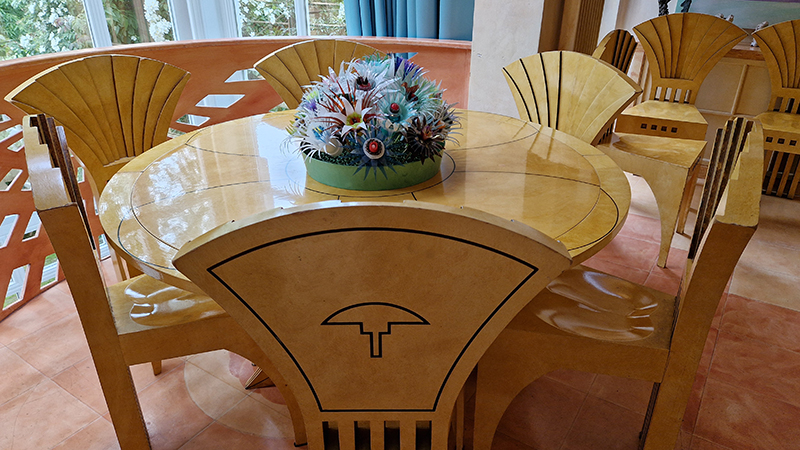
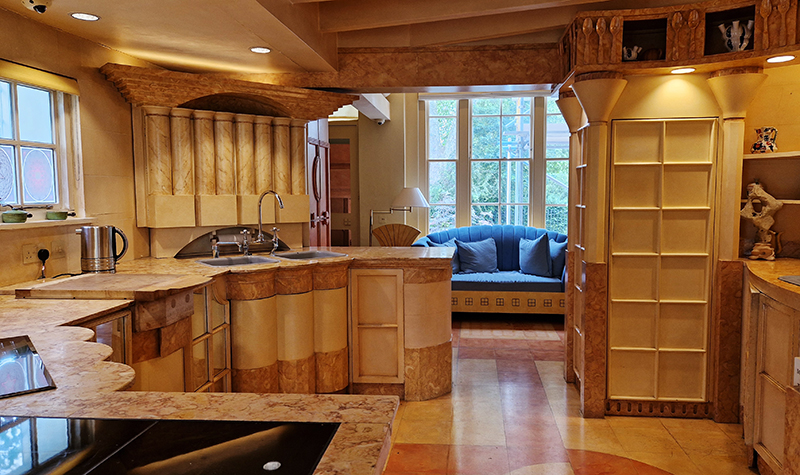
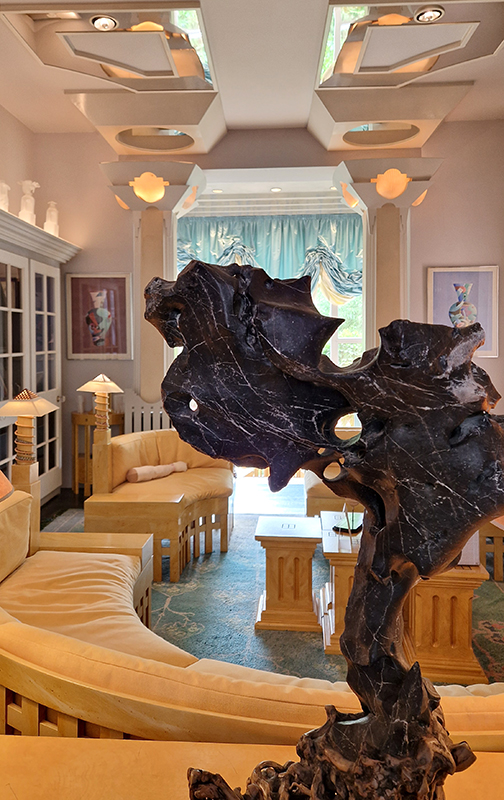
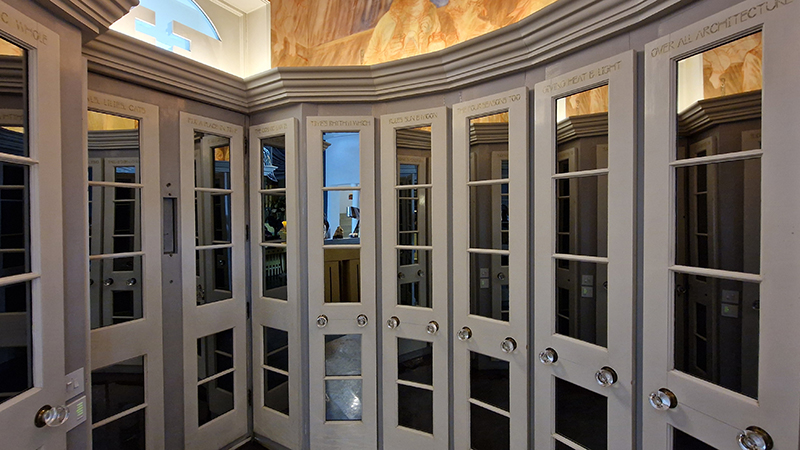
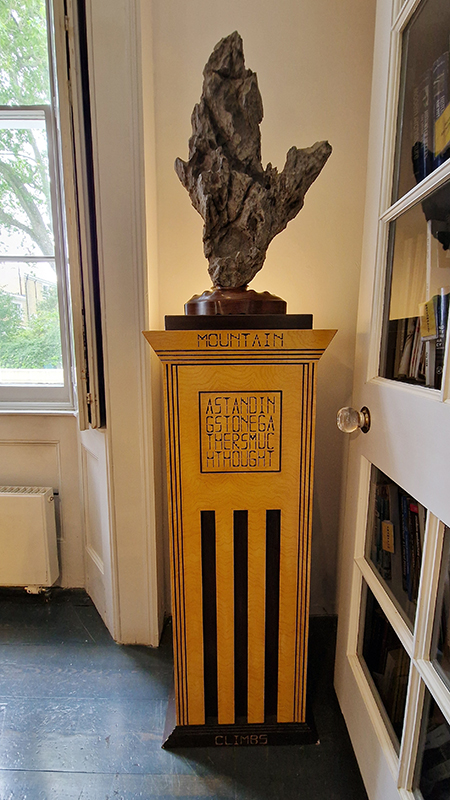
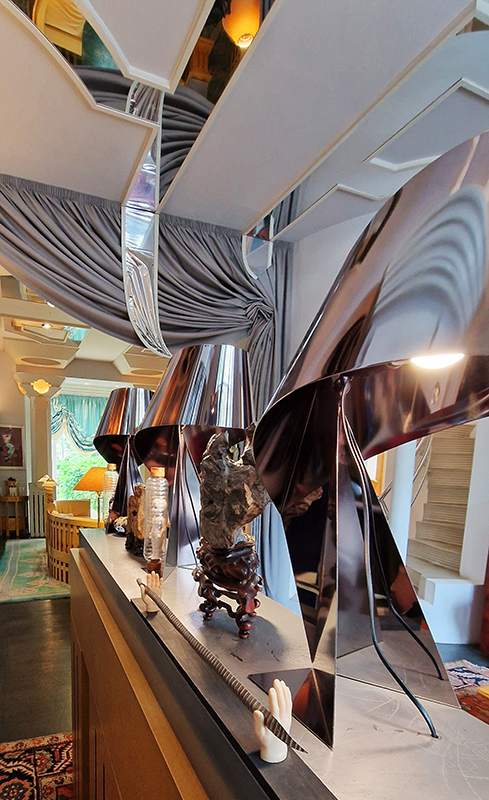
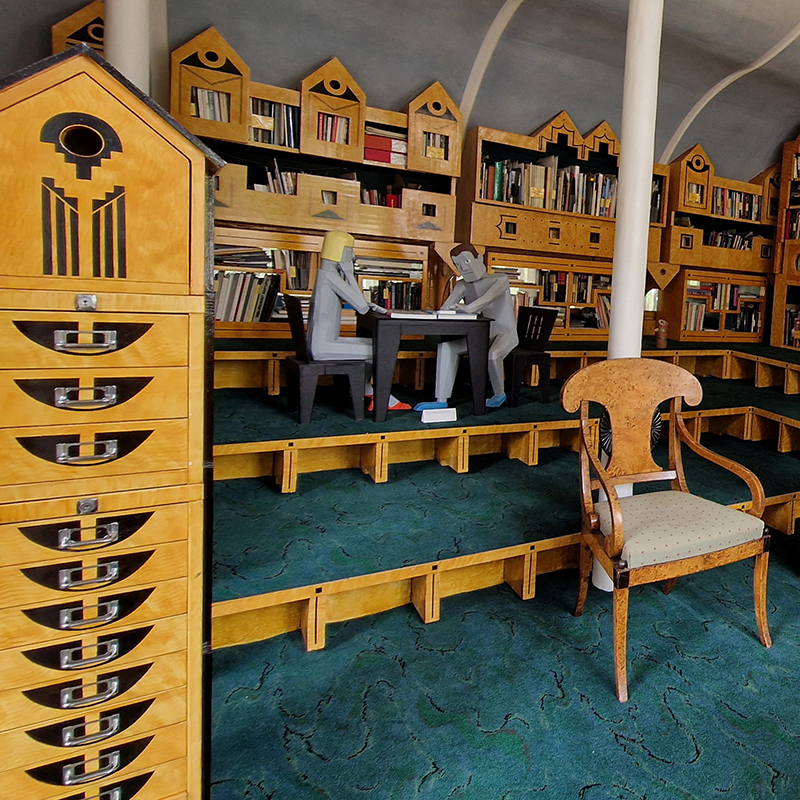
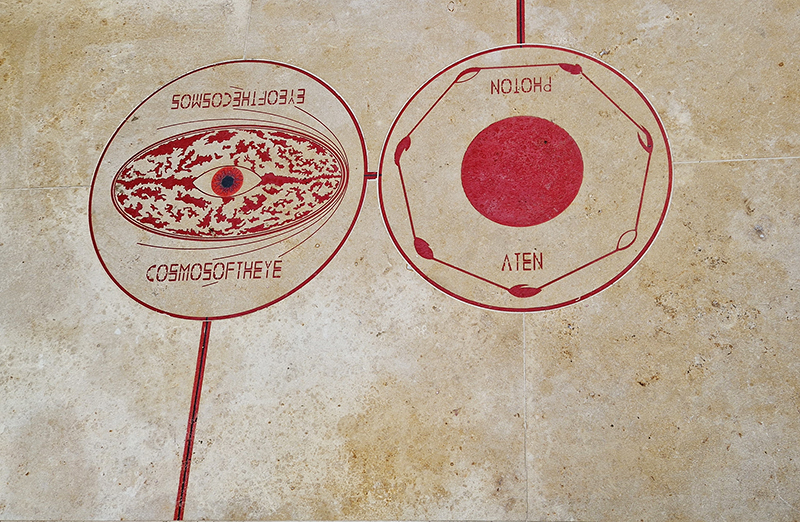
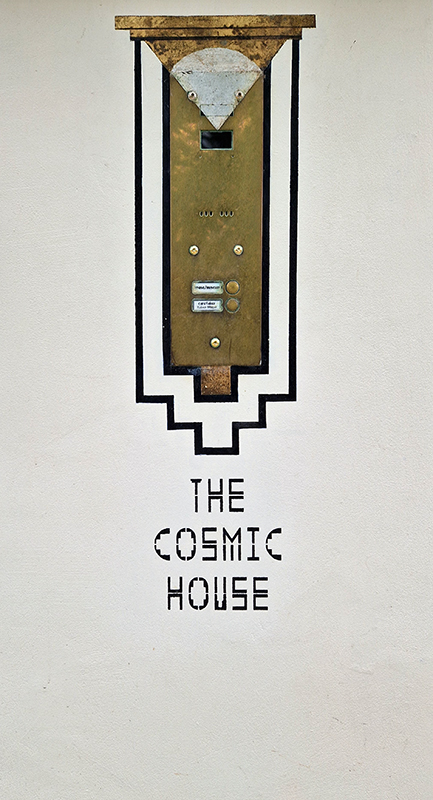
Sensory overload at The Cosmic House, a ‘built manifesto for Post-Modernism’. The original 1840’s residence has been remodelled by Charles Jencks into a complex system of symbols that embrace the creation of the universe, the rotation of the Earth around the Sun, day and night, the seasons, the elements, the understanding of science, and the history of architecture.

It’s like entering a kaleidoscope, mirrors everywhere, shifting perspectives, glimpses through to other spaces, optical illusions, and all saturated with vibrating colour.

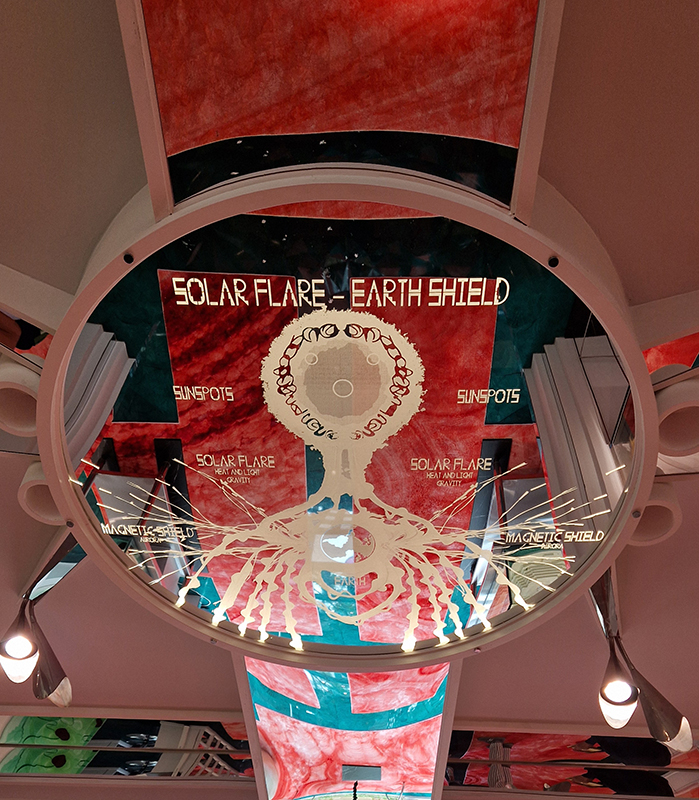
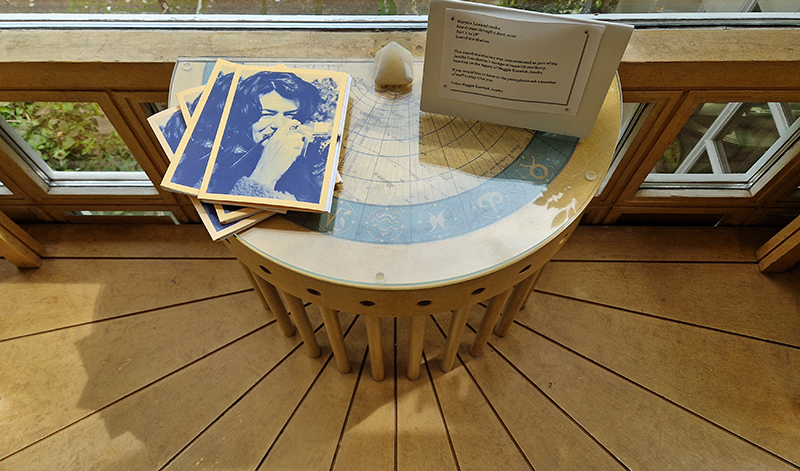
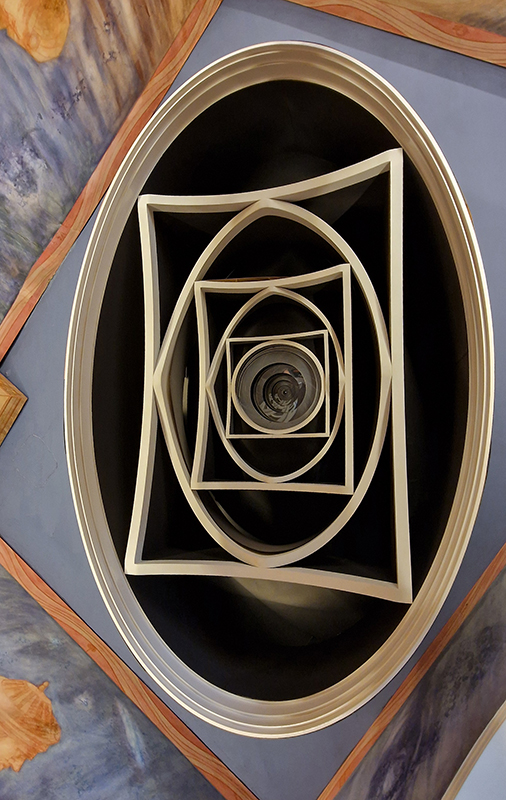
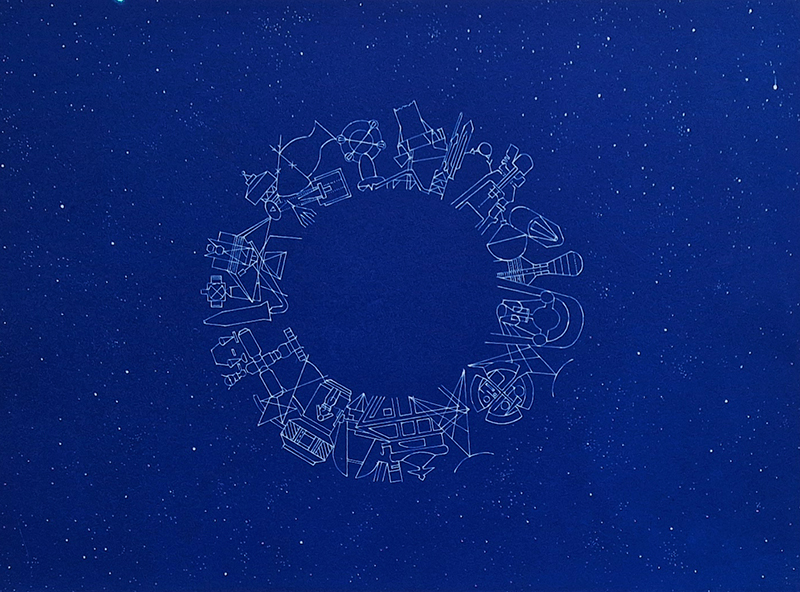
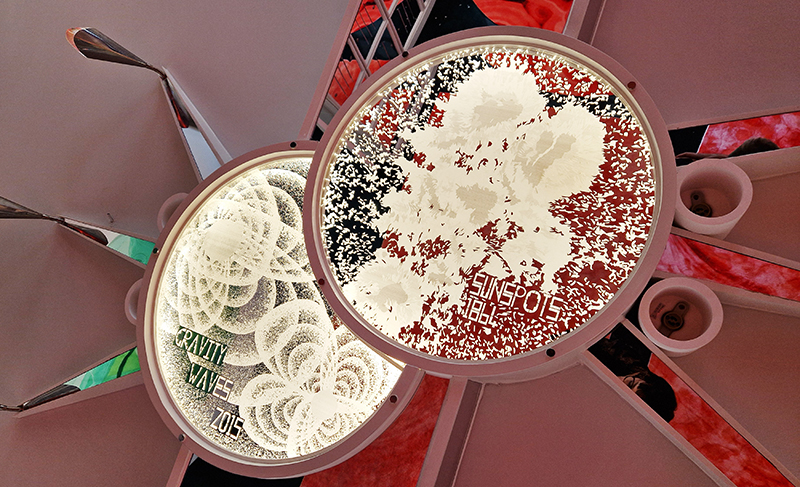
The latest addition to the house is the museum gallery, which Jencks designed but did not live to see completed, with mirrored ceiling plaques on all my favourite things like magnetic fields, solar flares and gravity waves. Amazing place to visit.
There is currently an exhibition THE WORLD TO ME WAS A SECRET: CAESIOUS, ZINNOBER, CELADON, AND VIRESCENT by Tai Shani here whose theatrical colourful works suit this setting.

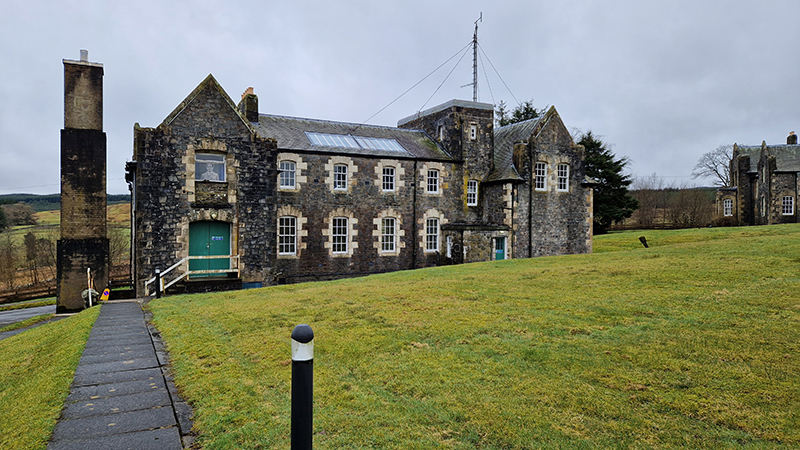
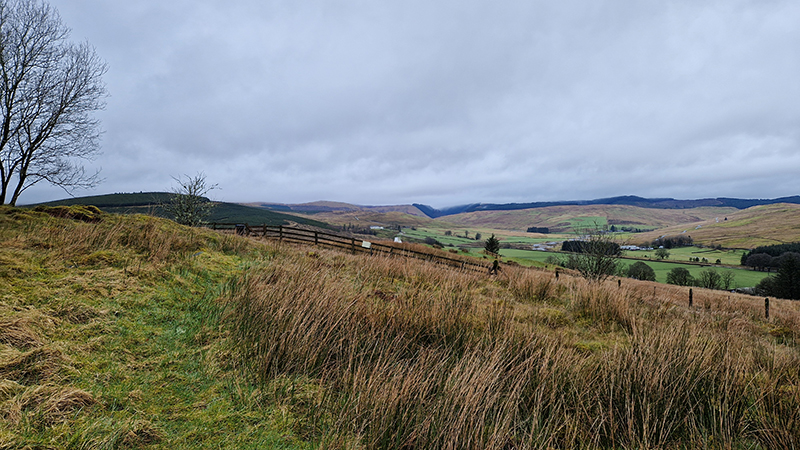
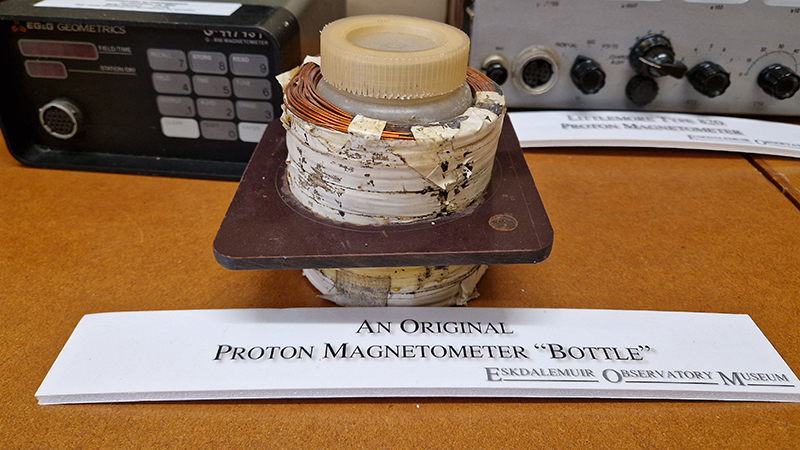
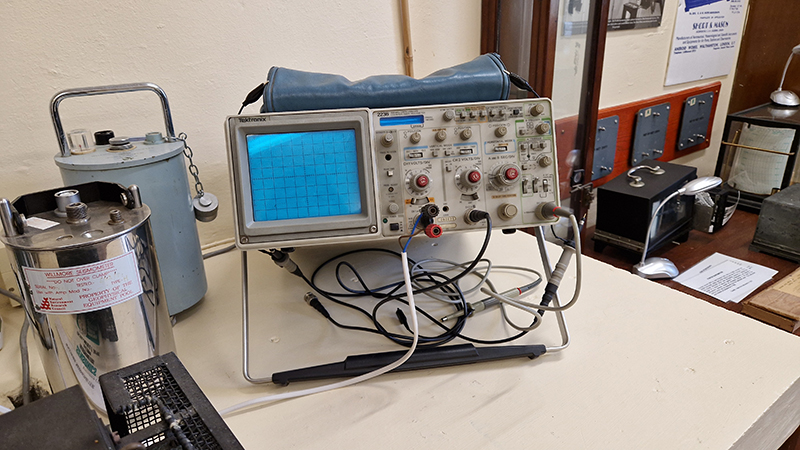
I am extremely grateful to a-n Artists Newsletter for the professional practice and creative development bursary that allowed me to visit Kielder Observatory in Northumberland and Eskdalemuir Observatory, Dumfriesshire to research how space weather impacts Earth’s magnetic field. I am also grateful to Claire Brown, site manager at Eskdalemuir Magnetic Observatory, for her time showing me around the site and explaining the many measurement processes that happen here. Despite the first survey of the site at Eskdalemuir, by the National Physical Laboratory in 1903, reporting back that “the weather was wet and stormy, and somewhat unfavourable to “field work” an observatory was established in this remote location, and recordings monitoring Earth’s magnetic field have been made from this site for 120 years.

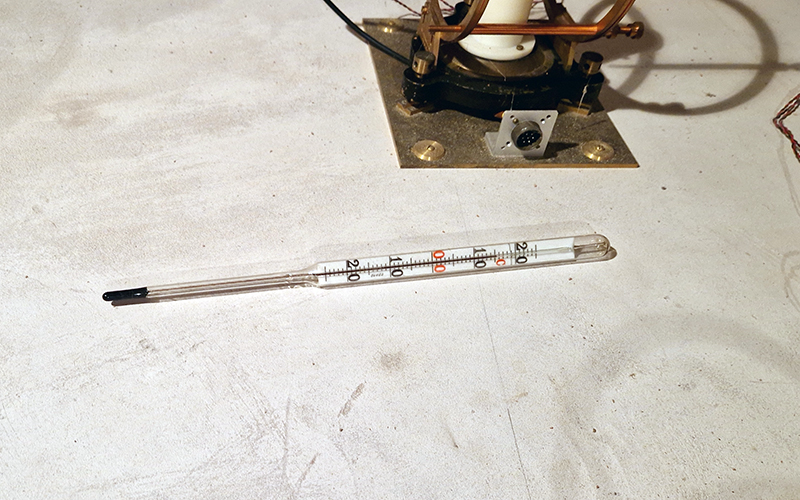
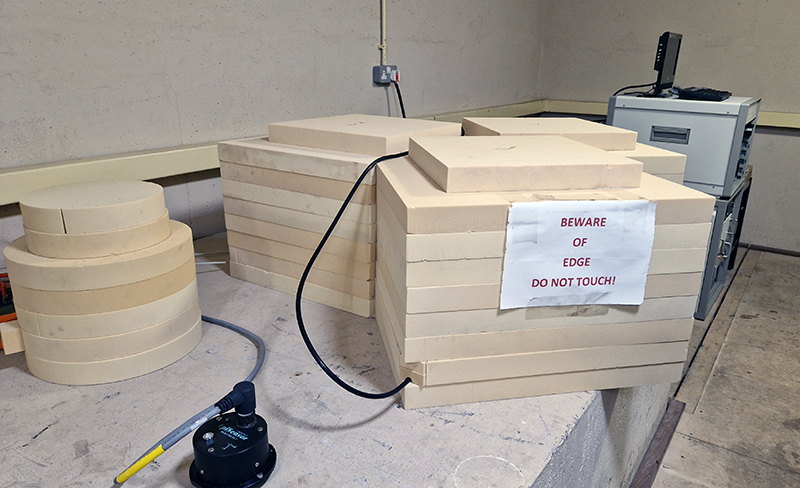
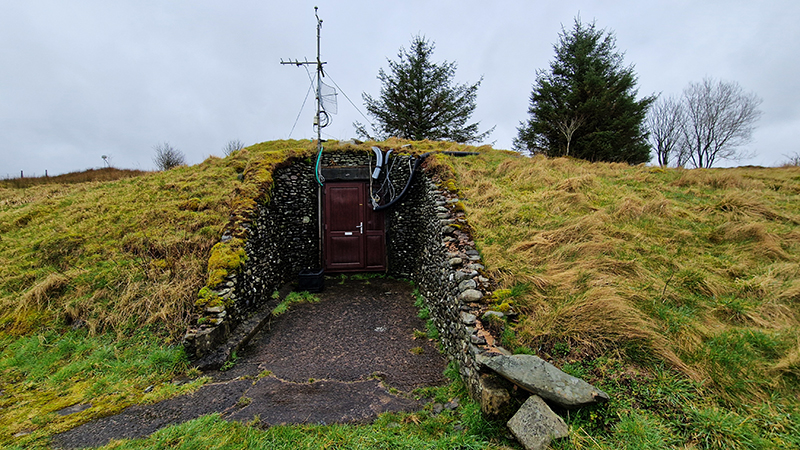
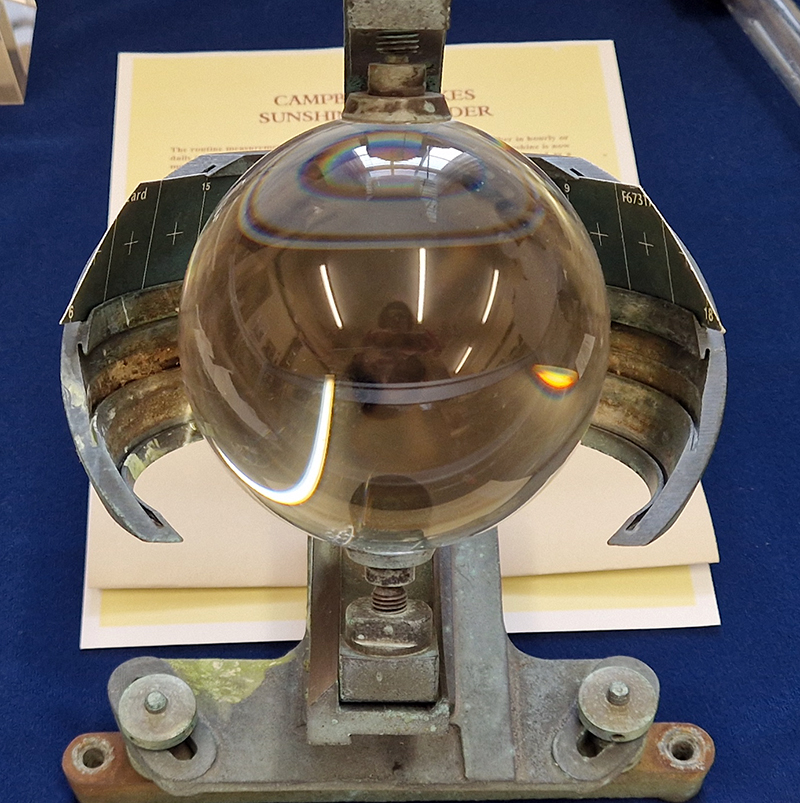
I was able to visit the East Absolute Hut, the Underground Chamber, and the Seismic Vault along with the main building and museum rooms. The interaction of space weather with magnetic currents in the surface of the Earth is monitored here, and there is a camera on the roof to record visual aurora on a loop which is then sent to the British Geological Survey research teams in Edinburgh for analysis. Meteorological observations are also made here, along with solar radiation, atmospheric pollution, and seismological activity. The monitoring of radiation pollution was inaugurated here after the Chernobyl incident in 1986 when explosions at the nuclear plant scattered radioactive elements over a wide area across Europe.

95% of Earth’s magnetic field comes from the swirling outer core of the Earth and changes are due to convection pattern turbulence. As compasses have been used for over 400 years, and records kept of magnetic declination, there is a long history of measurements to refer to. The magnetic north pole had been drifting westwards at about 55km a year up until 2020 but has recently slowed to 45km. Consistency of observations is very important for magnetic field modelling, which is why many of the instruments at Eskdalemuir are located underground to maintain an even temperature.

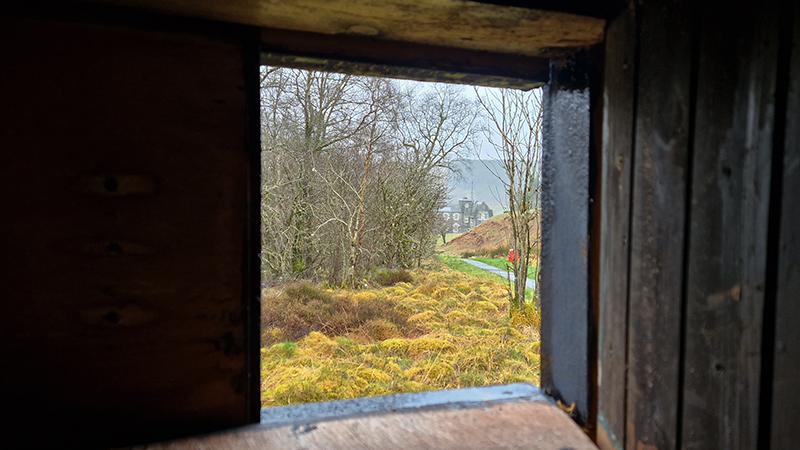
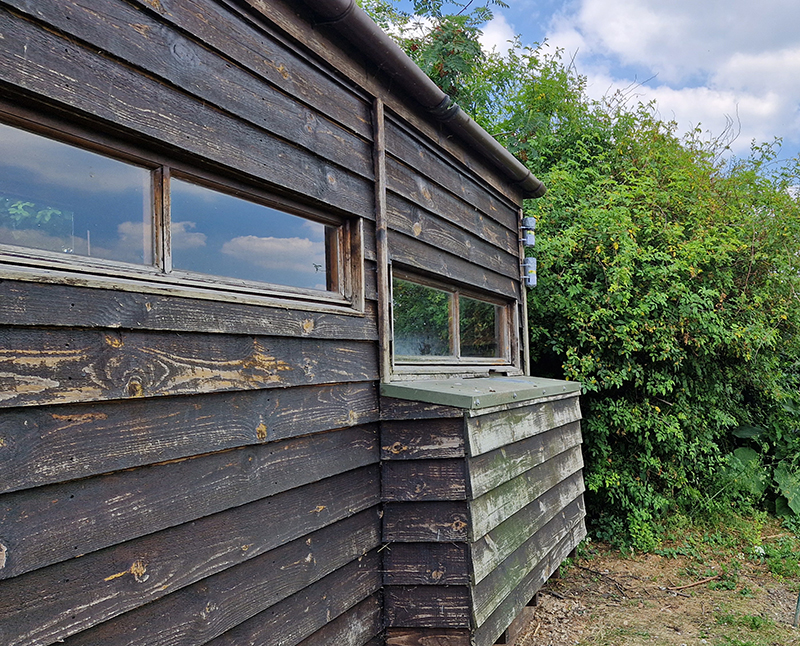
Manual observations of the direction of the magnetic field are taken once a week from the East Absolute Hut. A small sliding window in the wooden hut is pulled back to reveal a distant fixed azimuth mark, not always easily visible during inclement weather. The mark, viewed through the fluxgate theodolite, must be lined up with the north south meridian line until the reading on the digital recorder is at zero. At the same time the digital clock must read zero. These numbers fluctuate rapidly but once both machines read zero a measurement of the position of the magnetic north pole can be recorded. A separate recording is taken through a series of 12 angles on the theodolite to give an accurate position. The instrument is very sensitive and the operator wears the same clothes each time with no metal fixings etc to ensure consistency in the records. The measurements are then plotted on a graph which usually follows a smooth line describing the drift of the magnetic north pole. Sudden deviations alert the operator to errors in the recordings or dramatic movement in the field known as a geomagnetic jerk.

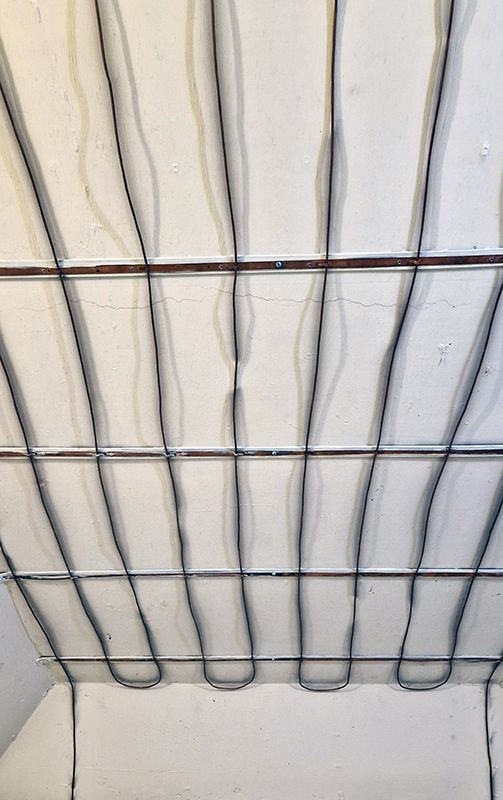
The instruments in the underground chamber measure the strength of the magnetic field in three directions.

Surface readings are also taken automatically from instruments in small enclosures in the back field. During my visit these instruments were used to record data rather than those I came in close contact with.

In the vault, seismograph readings are made of vibrations in the bedrock. Seismic activity around the UK is fairly low level but sensitive structures can still be effected. These instruments pinpointed the magnitude 4.7 Longtown earthquake on Boxing Day 1979, and a swarm of tremors in the Dumfries area in 2001. The network also detected the air crash at Lockerbie in 1988, accurately recording the time of impact for crash investigators.

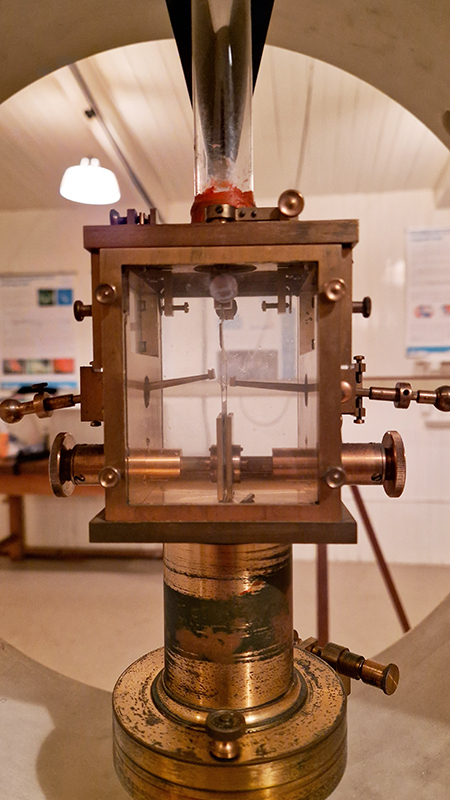
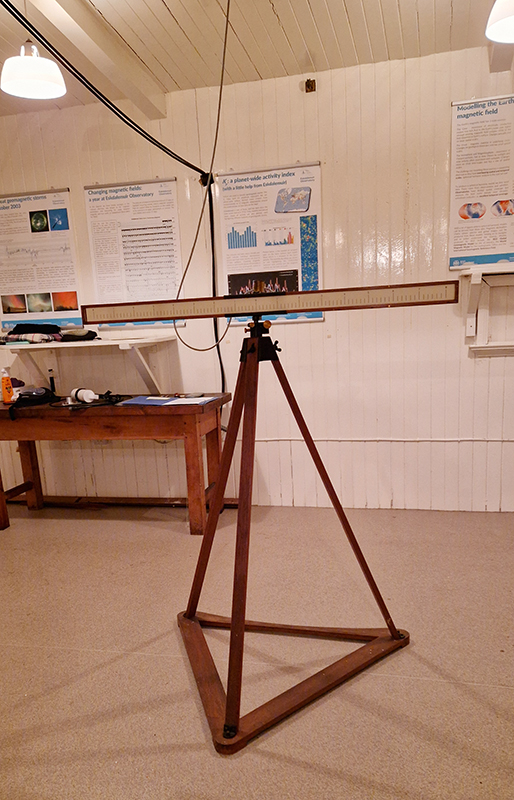
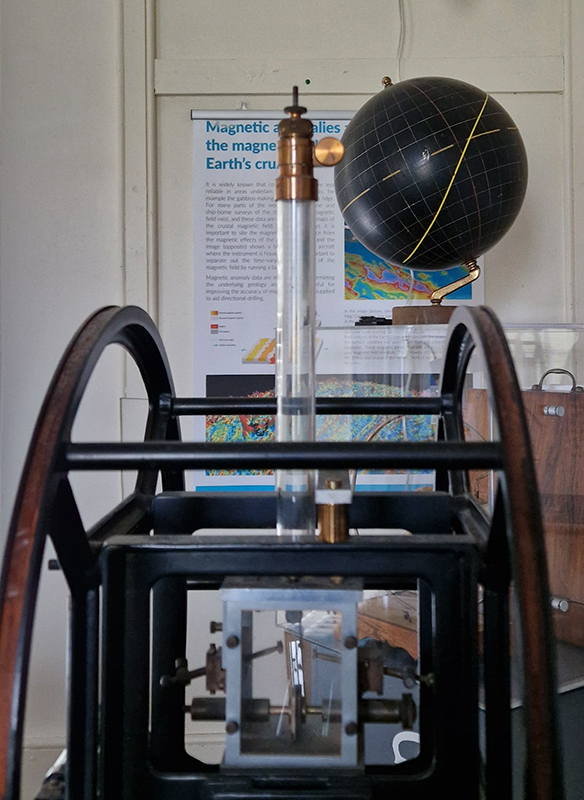
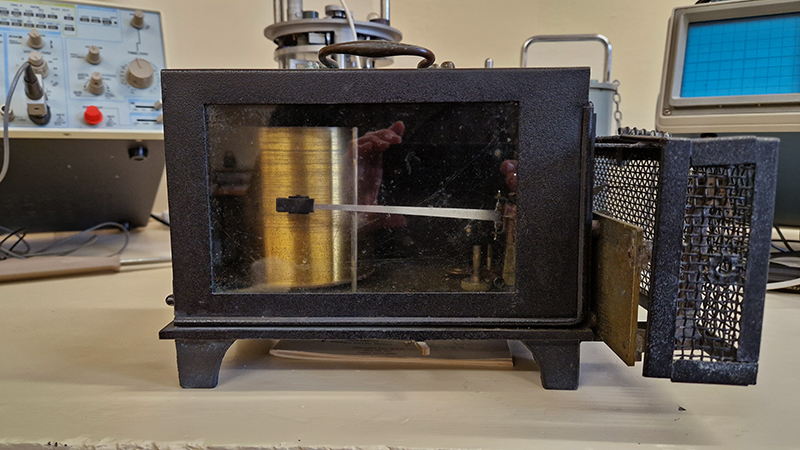
The museum holds a wonderful collection of mysterious instruments.

I attended Aurora Night at Kielder Observatory, established in 2008 under some of the darkest skies in Europe, to learn about how solar activity interacts with Earth’s atmosphere and creates the Aurora. The skies were very dark but also cloudy, and the sun was quiet, so no chance of seeing any aurora or even stargazing. However, we were given fascinating presentations on what causes the ethereal coloured lights seen at Earth’s poles and further towards the equator when solar activity is peaking.

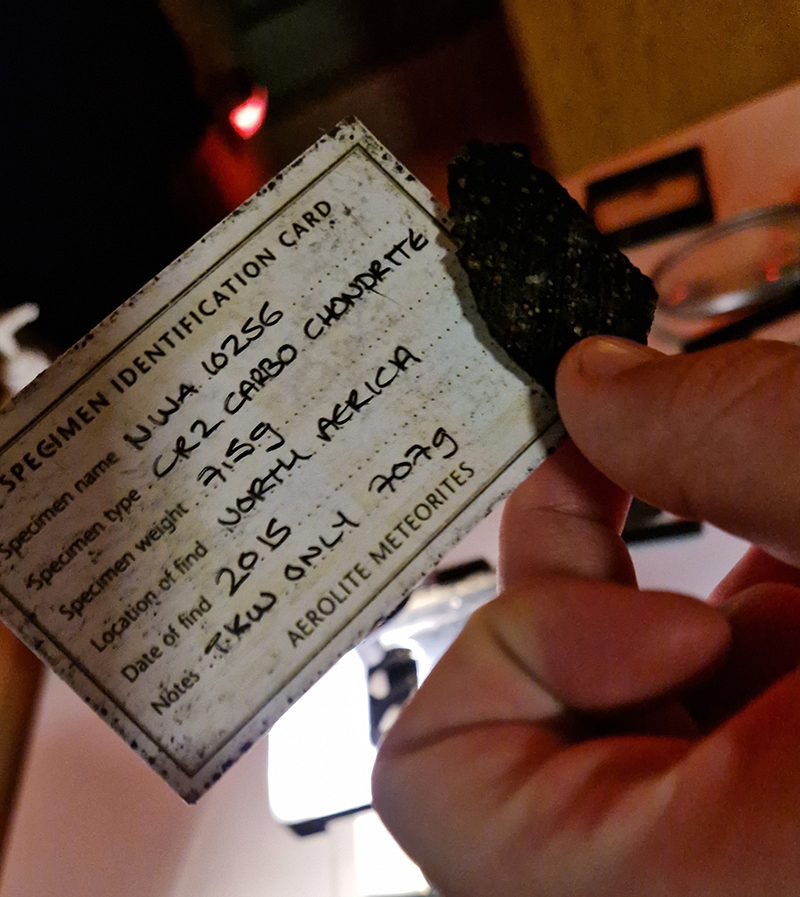
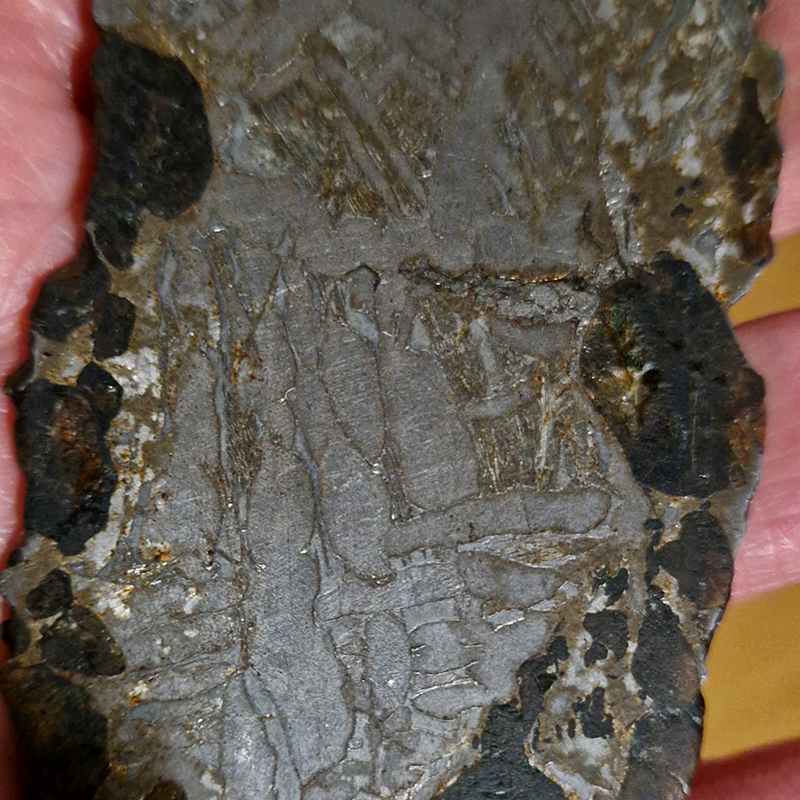
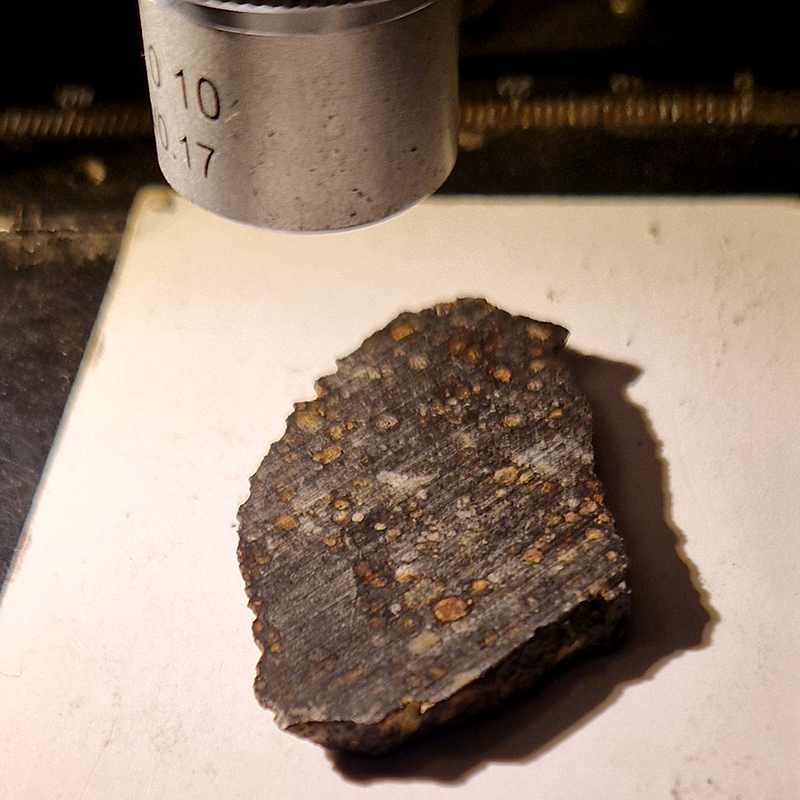
We were also given some cool meteorites to handle including a carbonaceous chondrite, one of the most primitive objects in our solar system.

The sun rotates faster at the equator than at the poles and this causes disruption in its magnetic field. The solar flares that we see loop out from the surface of the Sun are caused by localised incidents of polarity, where plasma and particles loop around what could be thought of as areas acting like independent bar magnets. Millions of tons of plasma and chunks of magnetic field can be ejected during one coronal mass ejection and this matter hurtles out into space, if we are in the line of fire we will be bombarded with energetic particles and Earth’s magnetic field will be disrupted. The solar wind brings the particles from the Sun that envelop Earth and are drawn to the polar regions by the geomagnetic field. The aurora is caused by the interaction of these high energy particles (usually electrons) with neutral atoms in the earth’s upper atmosphere. The particle collisions that occur in the upper atmosphere cause photons of light to be emitted. The Earth’s geomagnetic field is not symmetrical and changes as the Earth rotates, it responds to the disturbance of particles coming from the Sun and as the field adjusts to this disturbance, magnetic energy is released, thereby accelerating charged particles to high energies. These charged particles are forced to stream along the geomagnetic field lines which is why the aurora lights can appear in vertical columns or other dancing shapes depending on where in the magnetosphere they entered the atmosphere. The colours of the lights are dependent on which atmospheric gas is being excited by the solar particles, oxygen emits either a greenish or a red light and nitrogen gives off a blue light.

Solar activity is monitored and space weather forecasts are posted online. To be in with a chance of seeing the Aurora in the UK, the KP level should be 5 or above as this index increases as the aurora’s southern edge moves southward. It can take up to three days for the particles ejected from the Sun in a CME to reach the Earth. The lights are fainter than sunlight so a dark night sky is needed to see them. It is also often the case that the greater photo sensitivity of a camera can capture lights that are barely visible to the human eye. The aurora is more likely to be visible during the spring and autumn equinox because of the angle of the Earth’s magnetic field in relation to the Sun, not because storms are more frequent.

2024 is predicted to have a high number of solar storms so there may be opportunities to see the Aurora but it also comes with the risk of severe space weather that could cause havoc with our reliance on satellites and related technologies.

The connection between solar activity and the impact on technology was made during the 1859 Carrington Event, the most intense geomagnetic storm in recorded history. Strong auroral displays were reported globally and even seen in London, while sparking and fires occurred in multiple telegraph stations.

Satellites are vulnerable to space weather which can cause ongoing degradation or single event upsets where a charged particle can trigger a command in the satellite. During space weather events the ionosphere can become enhanced making it harder to communicate with satellites. Errors can occur in precision navigation and timing situations. Aviation crews are at risk to higher doses of radiation during solar activity and the HF radio communication system can have interference. Induced geoelectric fields in the ground can cause currents to flow in power grids and railway lines damaging transformers.

During the 2003 ‘Hallowe’en’ solar storms, when the largest single solar flare ever recorded was followed by severe storms, over half of all Earth-orbiting spacecrafts were impacted, disrupting satellite TV and radio services, GPS systems, damaging a Japanese scientific satellite beyond repair, sending several deep-space missions into safe mode or complete shutdown, and destroying the Martian Radiation Environment Experiment. The solar storms also led to communication problems for flights passing over the North Pole and Antarctic science groups had a full communications blackout for several days.

In acknowledging these risks we can gain an awareness of our vulnerability to the forces of nature and a respect for the power of the sun, the protection offered by our home planet and the interconnectedness of the universe.

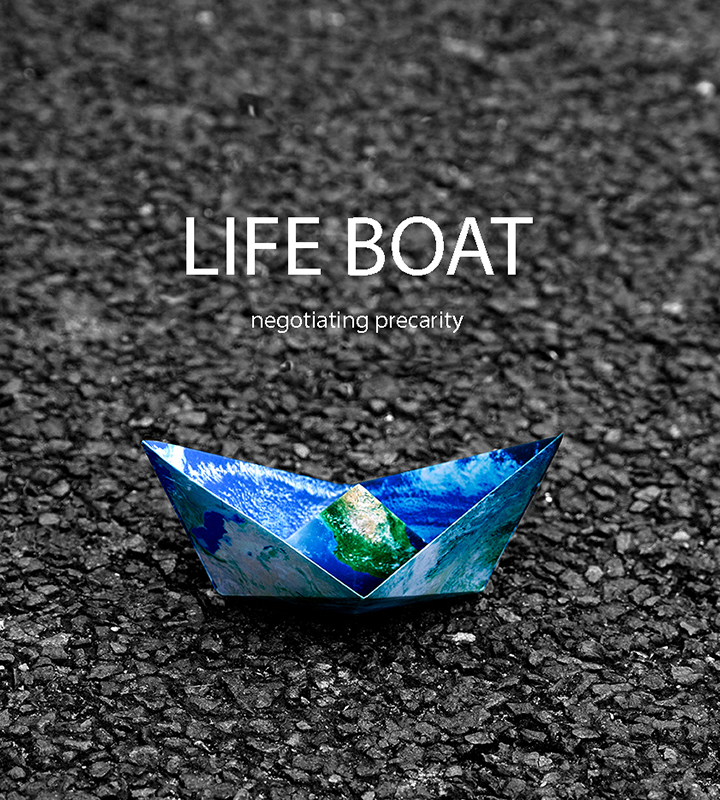
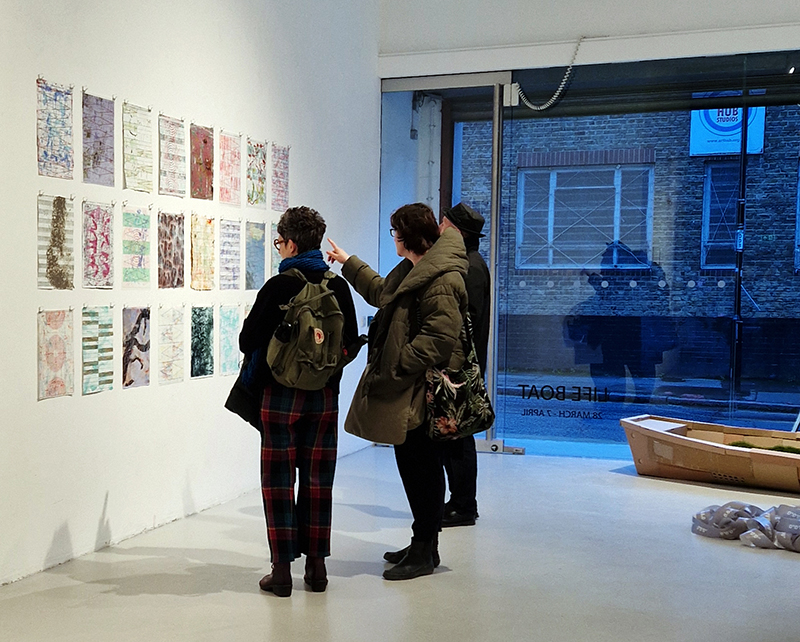
Life Boat at APT Gallery

Life Boat brings together artists with a shared interest in exploring precarity as a site of dynamic transition. Each takes an investigative approach to the environmental, social and historical themes evoked by the lifeboat, as a means of addressing ecological crisis, liminal landscapes, close and distant horizons, boundaries and displacement, lines of rescue, navigation and transformation.

Very happy to be exhibiting with Rachael Allain, Caroline AreskogJones, Beverley Duckworth, Liz Elton, Kathleen Herbert, Kaori Homma and Anne Krinsky.

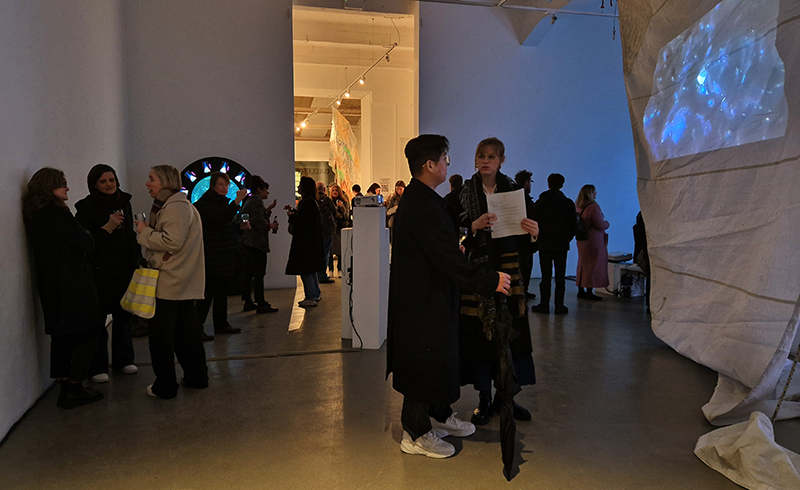
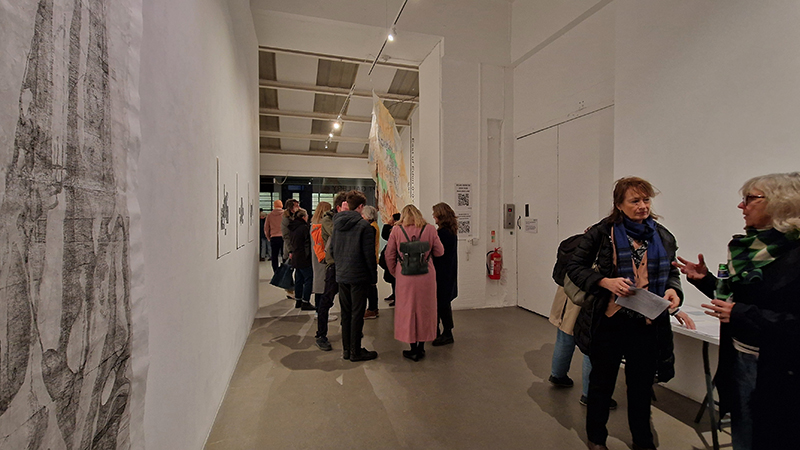
We had a fantastic opening night.

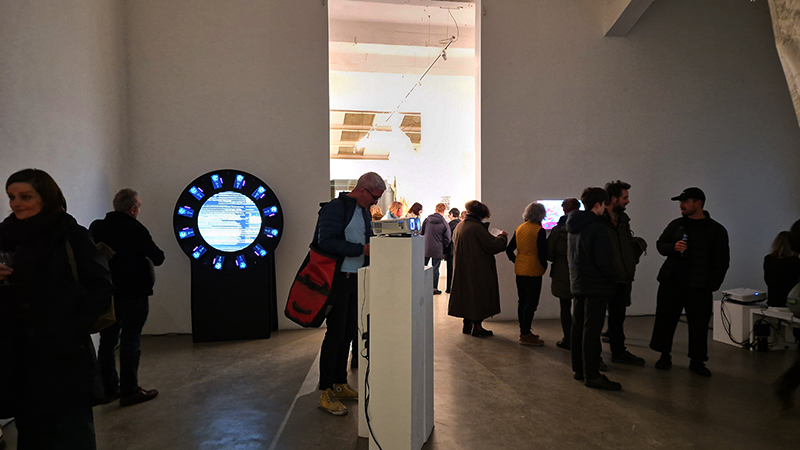
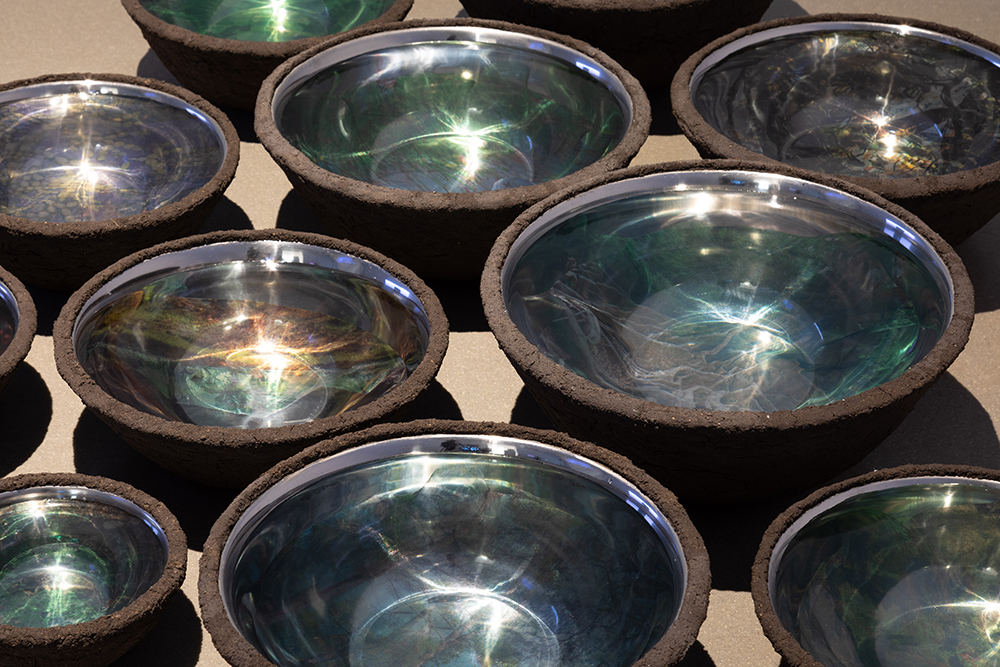
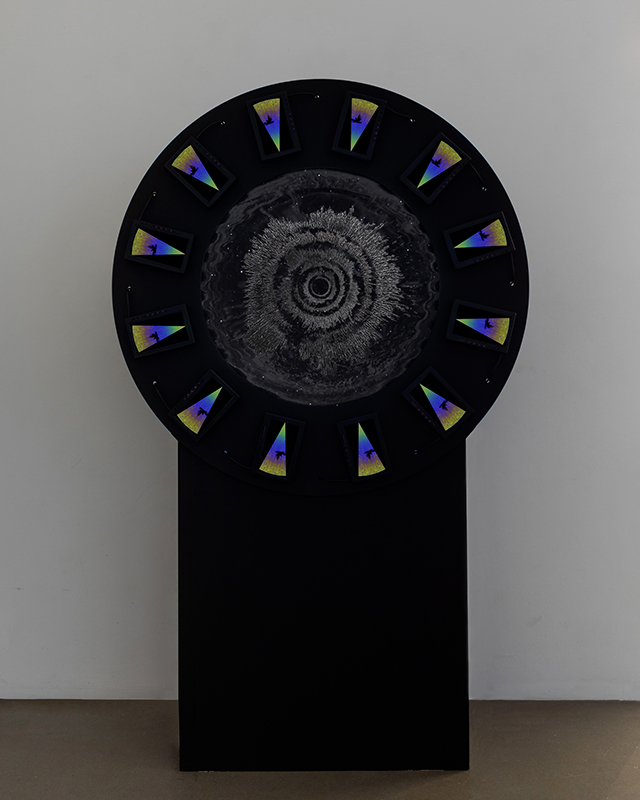
I was showing submīrārī (earthbound) and a new video installation Orbital – these works both consider transient landscapes, ecological landscapes on the cusp of disappearance and the digital landscape at risk from obliteration by an extreme solar storm.

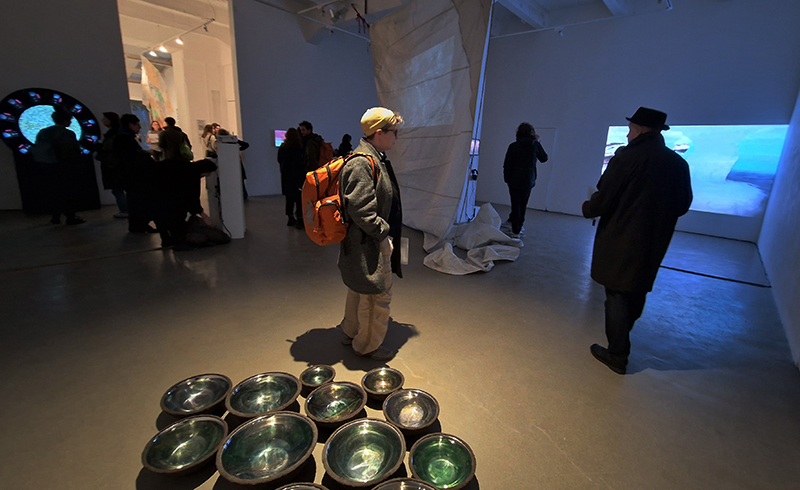
submīrārī (earthbound), 2018, steel, earth, water, sublimation printed textile, 12 pieces dimensions variable approx. 200 x 200 cm. Reflections of a no longer certain world hover in pools fluctuating on the cusp of disappearance. The ethereal images float or submerge revealing the hidden activity of water which also refracts light across the surface prompting the viewer to repeatedly shift perspective. Donna Haraway, drawing from Latour, proposes the ‘Earthbound’ as those humans who are ready to rethink and create new narratives with Gaia at the centre, who recognise the entanglement of society and nature and aim to pursue a ‘nonarrogant collaboration with all those in the muddle’. The shift in perspective embraced by the ‘Earthbound’ embodies a grief shared with other species at loss of habitat and disappearing landscapes. It is not a nostalgia for paradise lost but a reappraisal of what paradise could be.

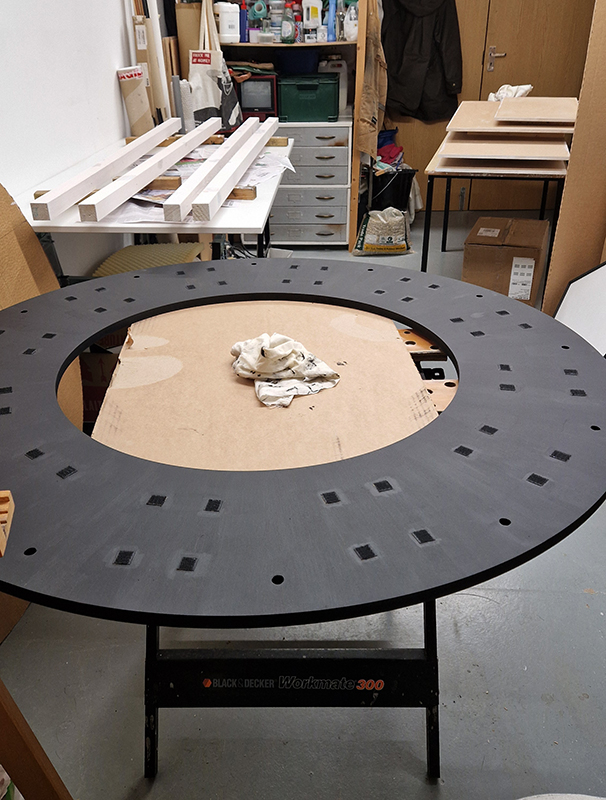
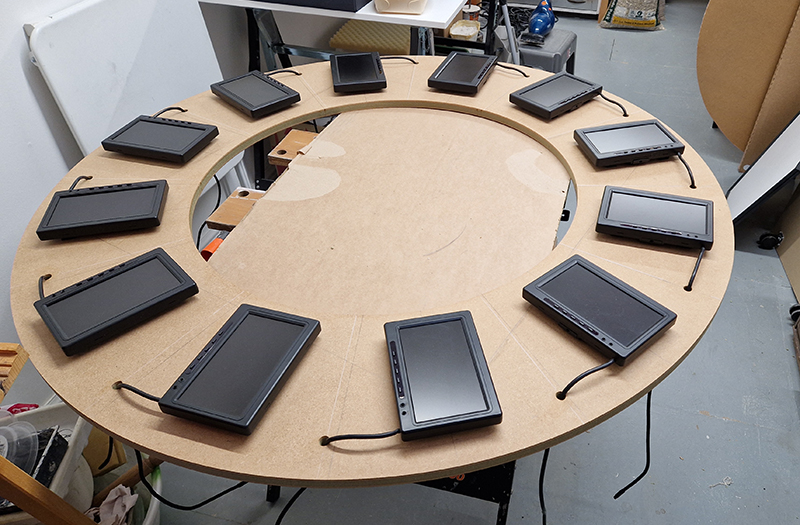
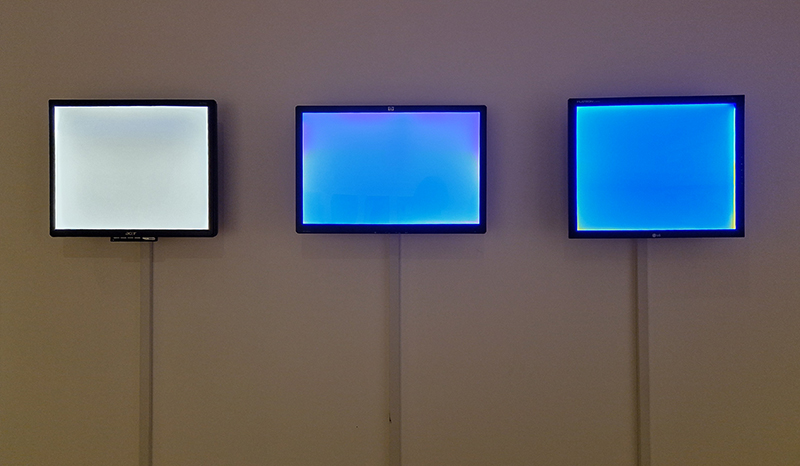
Orbital, 2024, Back projection video, mini screen array, board, installation 122 x 200 x 50 cm, video 05:44 min. An exploration of the potential risks of space weather on human technology and infrastructure and non-human navigation.

The Sun is about 150 million kilometres (93 million miles) from Earth, but space weather can affect Earth and the rest of the solar system. It can cause damage to satellites and electrical blackouts on Earth. Small satellites have come to dominate low Earth orbit, and we have become reliant on this technology for communication, military strategy, and data gathering.

A blast of high energy particles hitting Earth during a solar storm can interfere with Earth’s magnetic field, confusing birds that use this for navigation. In America, pigeon racers postpone the big race if bad space weather is predicted. There is also new research that might suggest the number of satellites orbiting Earth and the growing satellite space junk graveyard could weaken Earth’s protective magnetic field, making us even more vulnerable to space weather and cosmic radiation.

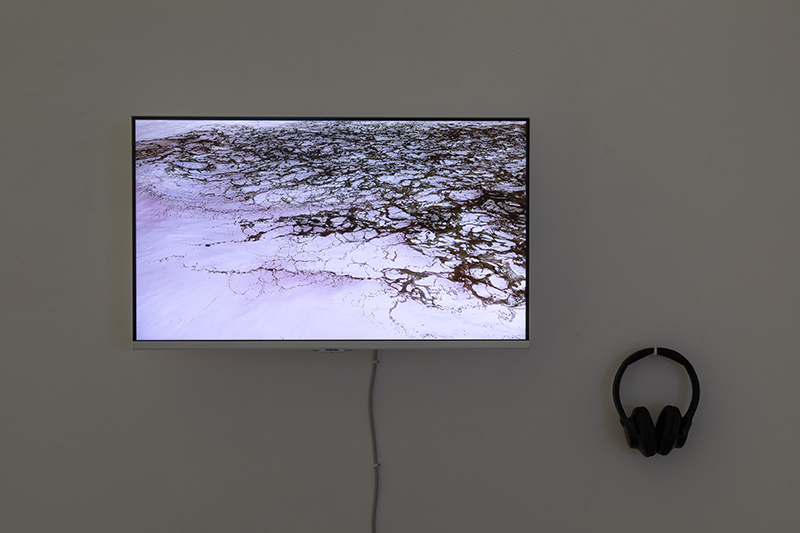
Rachael Allain’s current doctoral project ‘Above and Below the Horizon: A practice-led investigation into liminal thresholds of bodies of water’ has been undertaken in response to various aquatic locations. The work shown in this exhibition documents mapping aspects of an unexpected journey of discovery made in the upper reaches of the Arctic Ocean during an international art and science expeditionary residency in the Svalbard Archipelago during midsummer 2022. ‘Circumnavigation of a ‘Bergy Bit’’ is a film with sound of a close and intimate encounter with a section of an iceberg, calved from its mass and found beached and melting close to shore in Eolusneset, Sorgfjorden in the Bay of Grief.

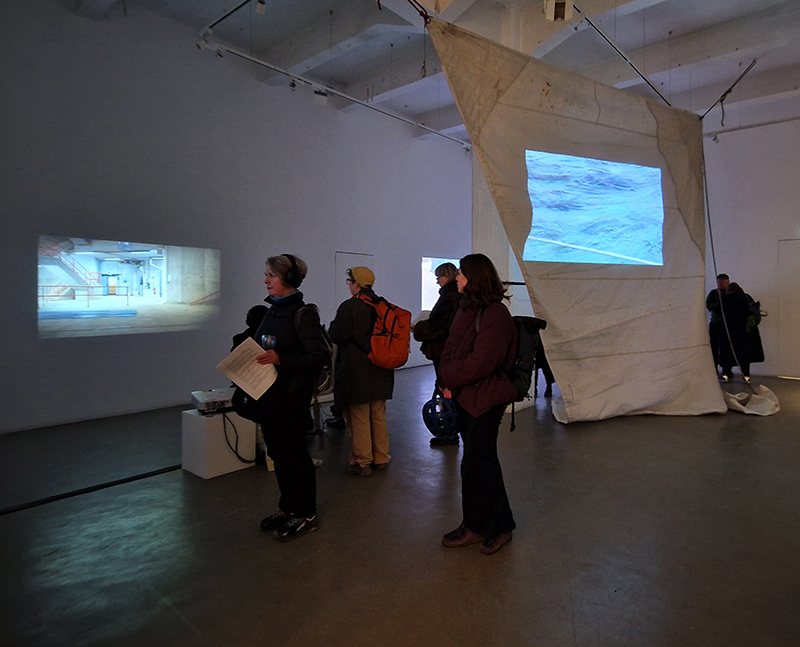
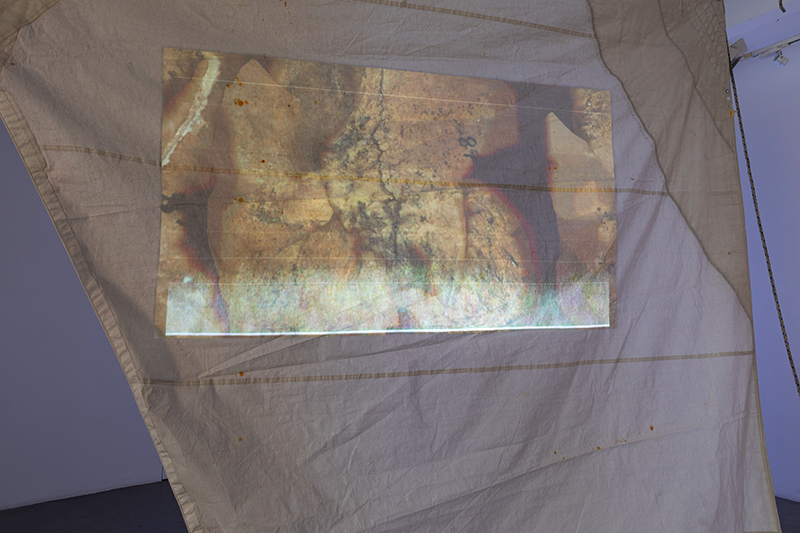
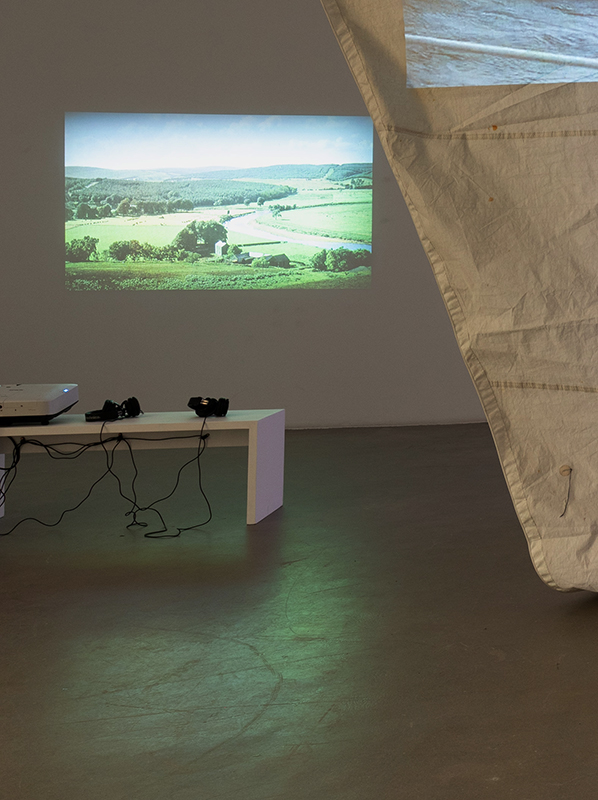
In 2019 Caroline AreskogJones spent time on the Sea of Hebrides making a series of responses whilst researching more viscerally the ocean as a site of ‘field research’ and gathering recordings. ‘Sounding Line’ (2024, sail, audio/video single channel as projection 07:32 min. Sail courtesy of Sail Britain) was created in deliberate wave format being inspired by Jean Painleve, whose hybrid films overlaid with jazz soundtracks occupy the uncertain space between art and science. Oskar Jones was invited to create the sonic composition in response – the saxophone being a wind instrument of extraordinary virtuosity.  Since 2023 Caroline has been visiting the Natural History Museum Cetacean Archive – at the invitation of Principal Curator, Richard Sabin. Through conversations including those with environmental historian Sophia Nicolov, her research has broadened and this updated presentation includes recordings of the two remaining Orcas who inhabit the Sea of Hebrides courtesy of the Hebridean Whale and Dolphin Trust.

Anne Krinsky Boiling Seas Acid Seas (Work-in-progress), 2024, Video, 12:26 min, filmed on location at Long Beach Peninsula in the Pacific Northwest.

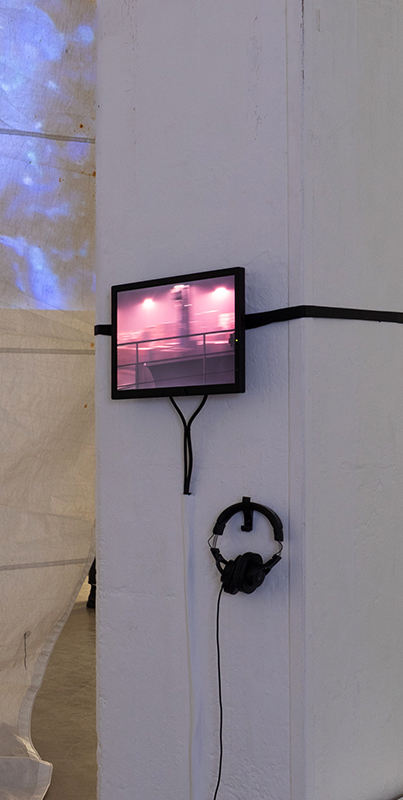
A History Of The Receding Horizon (2015, HD Video, 16:9, sound, projection, 28 min) is a digital film installation by Kathleen Herbert, exploring different concepts of time within the landscape. Based upon Kielder in Northumberland, the narrator whose script was developed from the artists research interviews with environmental historians, astronomers at Kielder Observatory and local people from the area, leads the viewer through the film weaving together past, present and future timelines. The Chaplin (2006,  standard HD video, 4:3, sound, monitor, 07: 20 min) is a film installation recalling a conversation held between the artist, Kathleen Herbert, and the Port Chaplin based at the Mission to Seafarers centre in Avonmouth docks. The Port Chaplin boards every ship as it enters the docks, his role is to provide emotional and practical support to seafarers while they are in port. The piece was produced while Kathleen was based at the centre researching for a new commission by Picture This Moving Image and Situations Bristol. Her research at the centre culminated in a 3 day voyage aboard a cargo ship in which she took her camera and the extracts of film from this journey provide the visual background of the film.

Fragility and vulnerability are embodied in layered works on paper, a large suspended sculpture made from delicate compostable material and living installations incorporating transient elements that transform over the exhibition period.

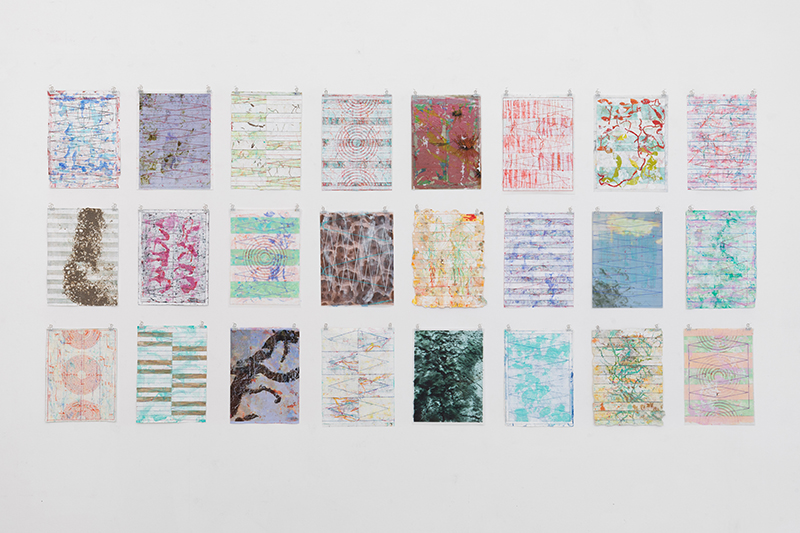
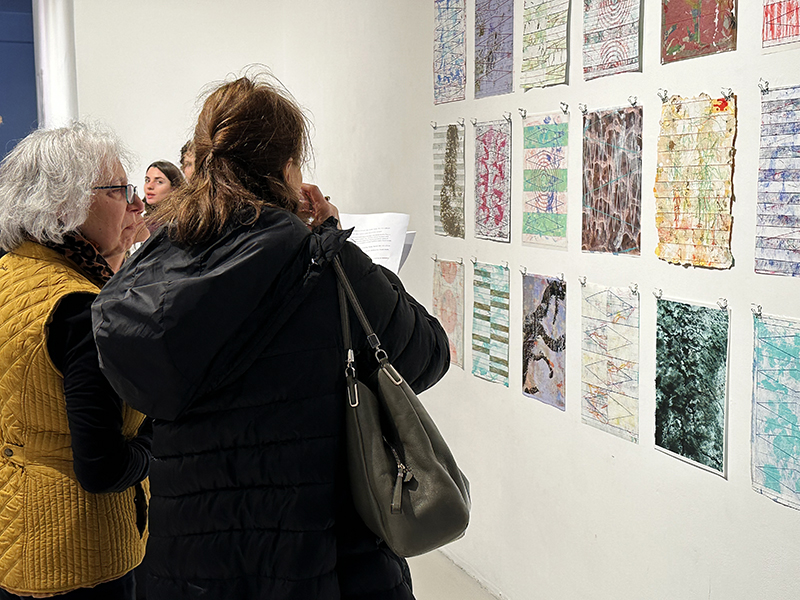
Anne Krinsky has been working on a research-based project about vulnerable wetlands and climate change since 2018. Coastal wetlands worldwide are at risk from rising sea levels caused by climate change, while inland watersheds are threatened by heat, drought and agricultural runoff. These ecosystems are critical to the plants and animals that inhabit them and to human survival. She is drawn to biodiverse habitat edges – where water meets land or where fresh water meets the sea and is interested in recording both the beauty of – and human impacts on – fragile habitats. She uses documentation as an archive of raw materials to generate work in other media, including site-responsive print and video installation and tactile work on paper. In responding creatively to wetlands and watersheds, she wants to raise public awareness of climate threats to these life-sustaining habitats. Before They Vanish, 2024, 24 small works: paper, mylar, acrylic, digital print, mixed media, 150 x 300 cm.

Caroline AreskogJones Float 2023, Paper lithography on shoji, 60 x 120 cm forms part of a series of works inspired by the Natural History Museum Cetacean Archive, rendered onto Shoji paper, used in museum conservation.

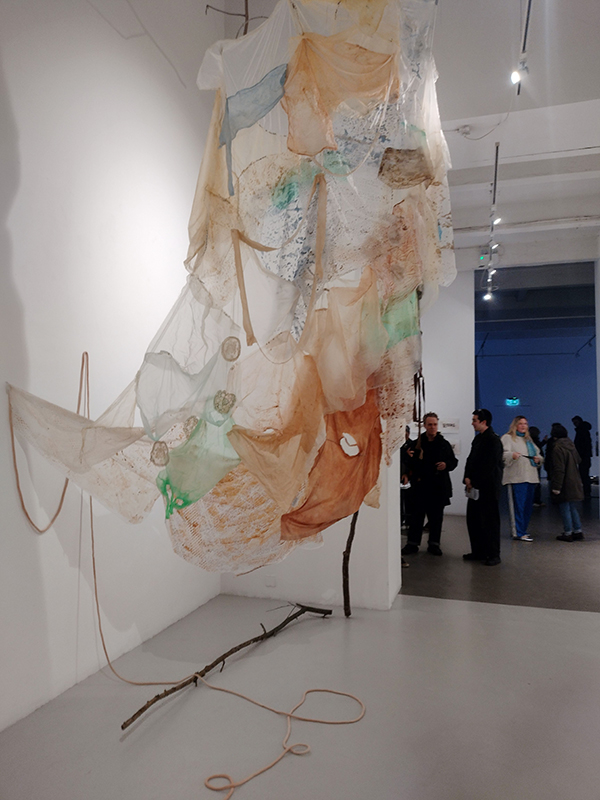
Liz Elton begins in landscape and still-life painting to explore the potential of waste and the recycling of matter.  Her ephemeral work is often made on compostable ground, coloured with kitchen waste and embedded with seeds. Showing Habitat, 2024, Compostable cornstarch food waste recycling bags, household textiles from a house clearance, vegetable dyes from kitchen waste, water colour, silk, soil from various locations and gleaned from vegetables bought in the market, vegetable seeds saved from food preparation, seeds of varieties of self-seeding edible plants typically found on the wasteland around Deptford creek, found wood, Approx. 360 x 250 x 150 cm (variable).

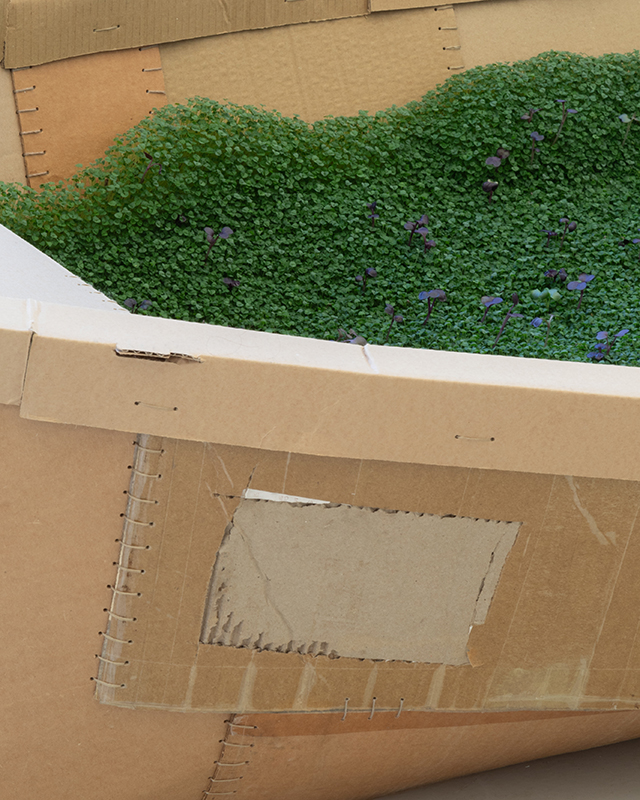
Working with living sculpture and installation, Beverley Duckworth creates spaces and moments which connect the smallest, poetic actions of plants with precarious issues facing humanity. Her practice centres on the afterlife of the discarded and is rooted in small acts of reparation – sewing scraps together, watering fragile seedlings and nurturing the regenerative power of composting from waste materials. Works include Husk, 2024, Discarded cardboard, thread, flax, seeds, water, 90 x 70 x 280 cm; Raze, 2023, Discarded clothes, binder, 48 x 51 x 10 cm.

Etchings and spatial interventions explore the use of the natural world as human resource and land as a site of geopolitical conflict.

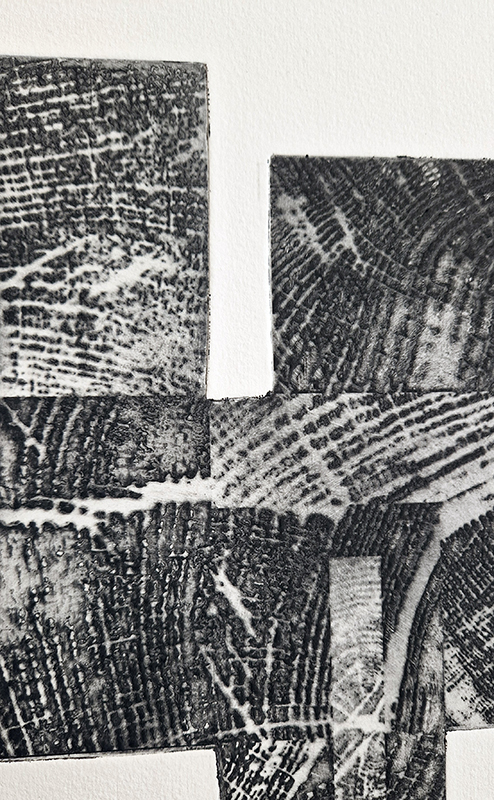
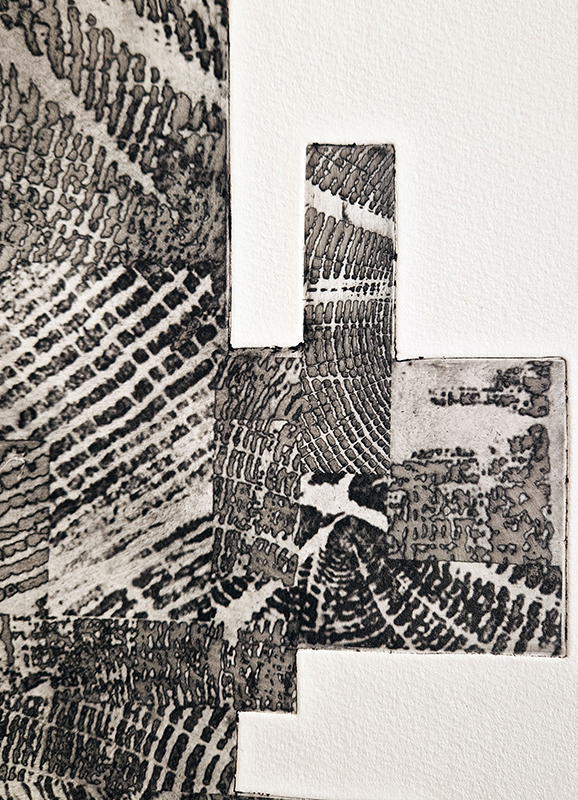
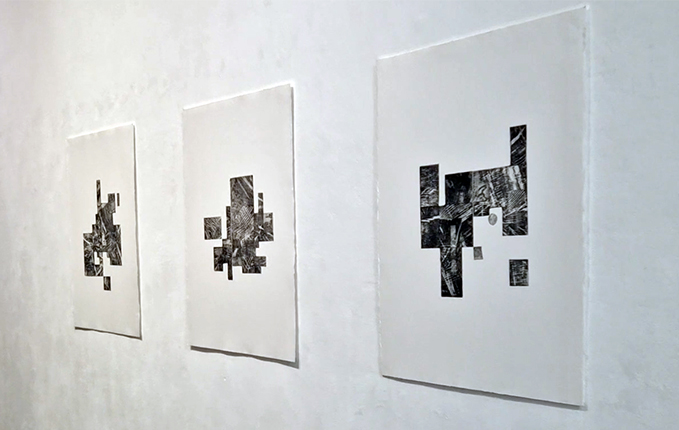
Kathleen Herbert Lost Dimensions I, II, III, 2022-23, Photopolymer Etching on Somerset Satin Paper, 75 x 57 cm.

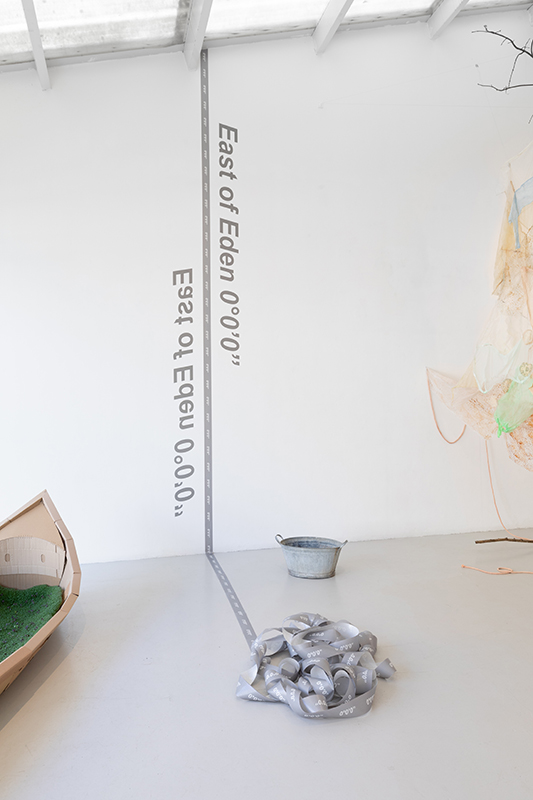
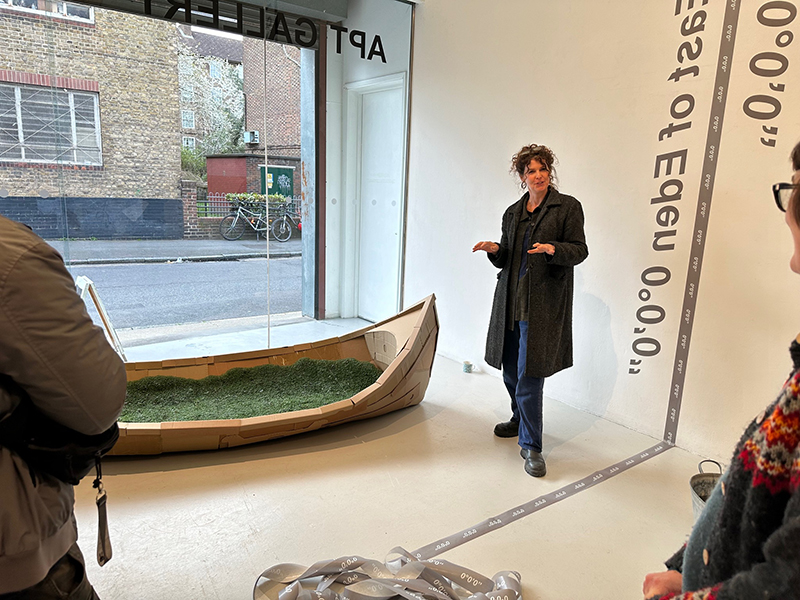
Kaori Homma’s multi-site Homma Meridian project asks us to reconsider and to challenge the cartographic demarcations that govern so much of our world and that we so frequently take for granted. With the deceptively simple move of ‘repositioning’ the Greenwich Prime Meridian, the artist radically shifts our perspective, as well as our sure footing, both figuratively and even literally. At each of its iterations (which have included Budapest, Margate, Wales, Paris, London and Pennsylvania) the artist and participating audiences draw an impermanent line running north-south, always using ephemeral materials, as a substitute for the ‘Prime’ meridian. The project’s act of displacement and its ephemerality work to highlight the imaginary nature of boundaries and to shake up our perception of our position on the earth as it spins on its titled axis. Works include Homma Meridian, Deptford, 2024, Vinyl Letters, tape, dimensions variable; Floating 0 degree Longitude, 2024, Abrudashi Fire Etching, Water, Bucket, 60 x 38 x 25 cm; Four corners of the earth, 2024, Aburidashi Fire Etching on Paper, 50 x 80 x 3 cm

Alongside the exhibition we held a series of events including a Low Tide Walk in Deptford Creek – led by Anne Krinsky in partnership with Creekside Discovery Centre followed by refreshments and a tour of the Life Boat exhibition at APT Gallery just two minutes from this amazing natural habitat in Deptford.

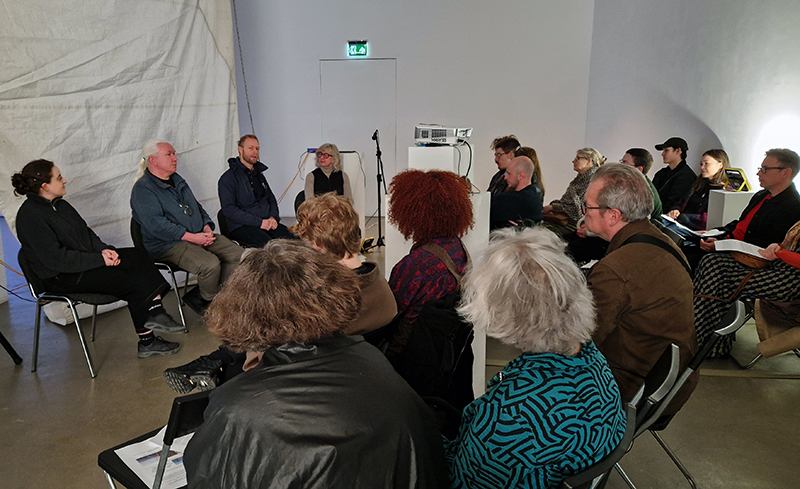
FIELDWORK AS PRACTICE – A live sonic performance by Oskar Jones and a conversation led by Caroline AreskogJones bringing together Oliver Beardon (Founder and Skipper of ‘Sail Britain’) Richard Sabin (Principal Curator of Mammals at the Natural History Museum, London) and Sophie Nicolov (AHRC Early Career Research Fellow, Natural History Museum, London) for a discussion around the potential overlaps between ‘field’ and research, artistic practice and ecological activism.

Homma Meridian and the Secret of Invisible Ink/Fire Etching Workshop where Kaori Homma shared her technique using Invisible Ink as part of the Aburidashi/Fire Etching process, historically used for espionage, she also gave a fascinating presentation on the history of this process and how it relates to her own art practice and her Homma Meridian Project.

In tackling concepts of the perilous, the vulnerable and the lost, Life Boat raises the alarm on the passive position of waiting for rescue and encourages urgent action in troubled waters.

Gallery Visits

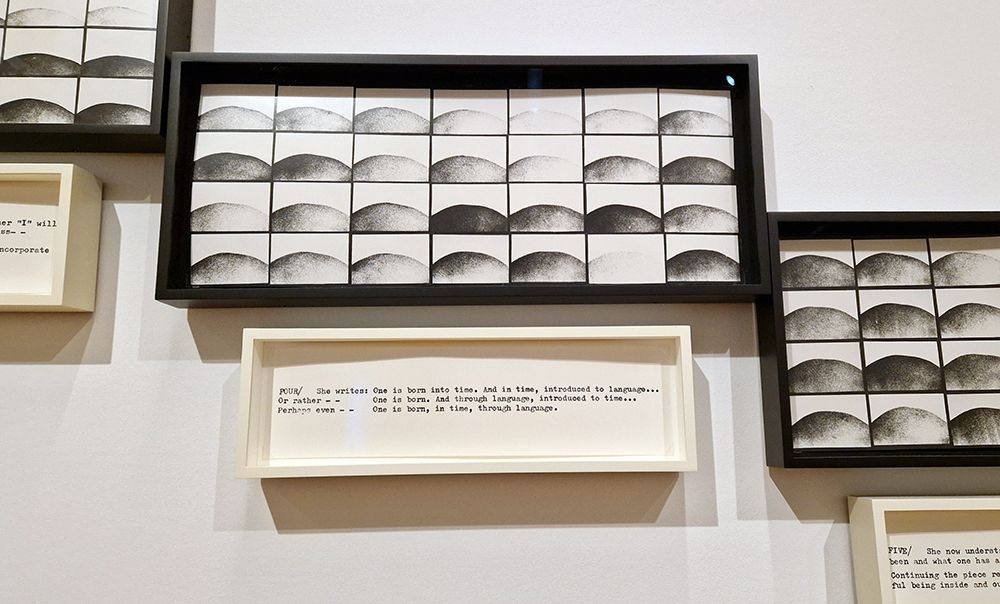
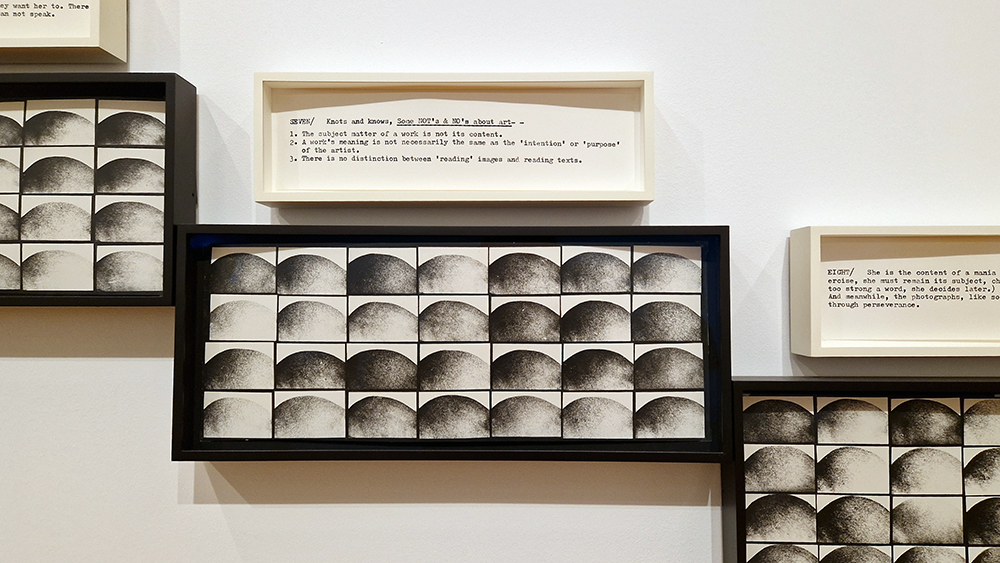
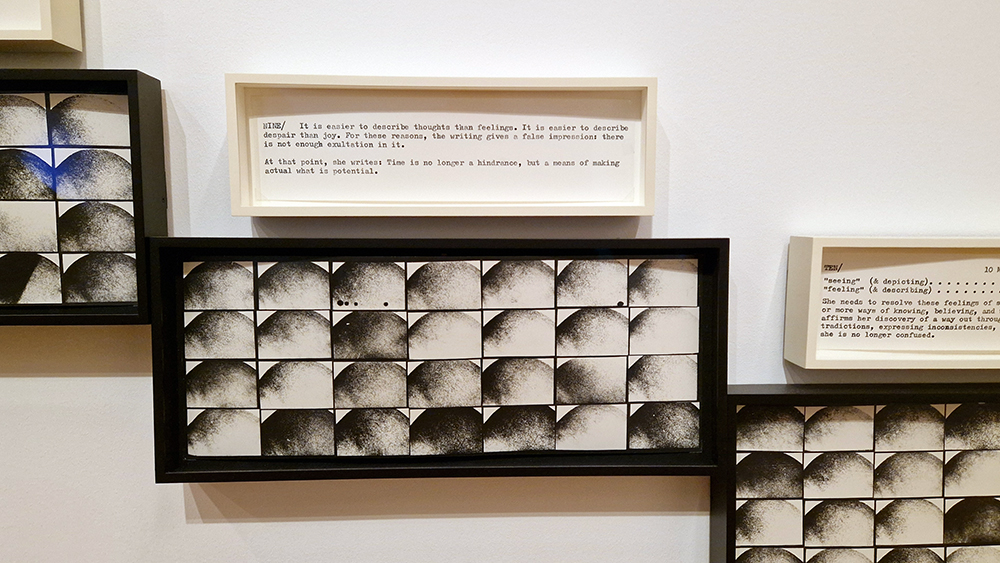
Women In Revolt at Tate Britain. A lot of documentation here of social history. Many texts, posters, zines, not so much art but a great piece from the inimitable Susan Hiller, with personal incites accompanying images of her ever increasing pregnant belly such as: – She writes, one is born into time. And in time introduced to language….Or rather — one is born. And through language, introduced to time…Perhaps even — one is born, in time, through language.

Mary Yacoob, captivates with astonishing precision of detail as always in Brutal Space at Bobinska Brownlee exploring the subject of future adaptations to life in space.

Listening

A webinar from British Geological Survey on how we measure the magnetic field, everyday applications and mitigating the threats of space weather. From the Earth’s core to outer space: understanding the magnetic field

“A powerful solar flare hitting Earth is entirely plausible, and in the Internet Age would have a massive immediate effect that would go on to wreck the world economy. Satellites in low Earth orbit as well as communication devices on Earth would be destroyed – the ‘Internet Apocalypse’, causing blackouts, riots and supply-chain disruption, as well as ruining your last-second eBay bid”. Tim Marshall The Future of Geography

The dramatic increase in the number of satellites being launched into low Earth orbit unfortunately coincides with the current Solar Cycle 25, which is predicted to peak between January and October of 2024, with more solar storms of greater intensity and therefore a larger hazard for critical technologies and services. A growing risk awareness is evident as three new geomagnetic observatories have been installed across the UK in the last year to monitor space weather. They hope to predict solar storms and alert operatives to manage situations such as that in February 2022 when a Coronal Mass Ejection led to 38 commercial satellites being lost. Solar plasma from a geomagnetic storm heated the atmosphere, causing denser gases to expand into the satellites’ orbit, which increased atmospheric drag on the satellites and caused them to de-orbit.

Despite the unpredictability of our star’s activity, national space agencies and an increasing number of private companies are forging ahead with space based technology. There is a joint plan between space agencies (not including China or Russia) to construct a Lunar Gateway Space Station near to the moon where astronauts will live and conduct experiments for up to 90 days between visits to the moon. Gateway will be exposed to much higher levels of radiation than the ISS which is in low Earth orbit and so must be built to shield against higher levels of cosmic ray bombardment.

As of January 3rd 2024, the satellite tracking website “Orbiting Now” lists 8,377 active satellites in various Earth orbits. Communication and Earth observation make up the majority. The USA still outstrips all other operators but other nations are eager to catch up and within the past two decades, satellites from 91 new space-faring countries reached orbit.

It is not only radiation from space weather that is a threat to satellite dependent infrastructure. As witnessed following the largest nuclear test conducted in outer space by the USA in 1962, which lit up the sky with Auroras, knocked out electricity in Hawaii 900 miles away, created significant magnetic field disturbances and an artificial radiation belt which damaged or destroyed several satellites and persisted for a decade. Nuclear detonations in space could make space unusable for satellites.

Work in progress on a new video installation for upcoming exhibition Life Boat at APT Gallery. Taking the lifeboat as a metaphor for precarity, eight artists respond to current uncertain times of ecological and social change and shifting landscapes from both local and global perspectives.

The video looks at the interaction between space weather and Earth’s magnetic field and the risk solar storms pose to satellites and related infrastructure.

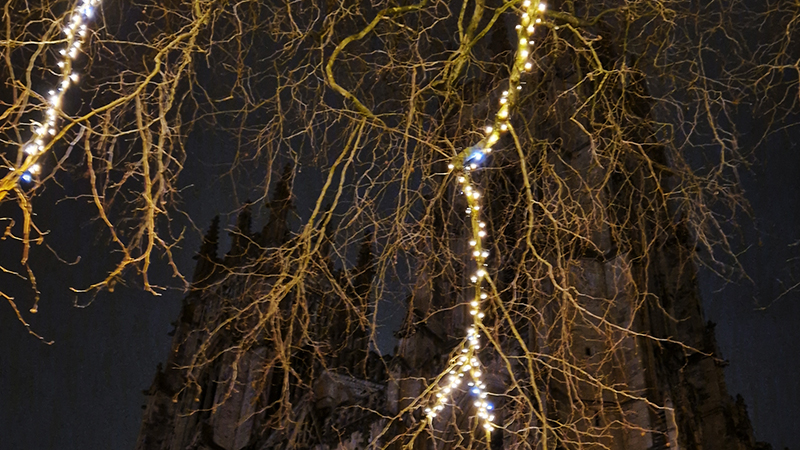
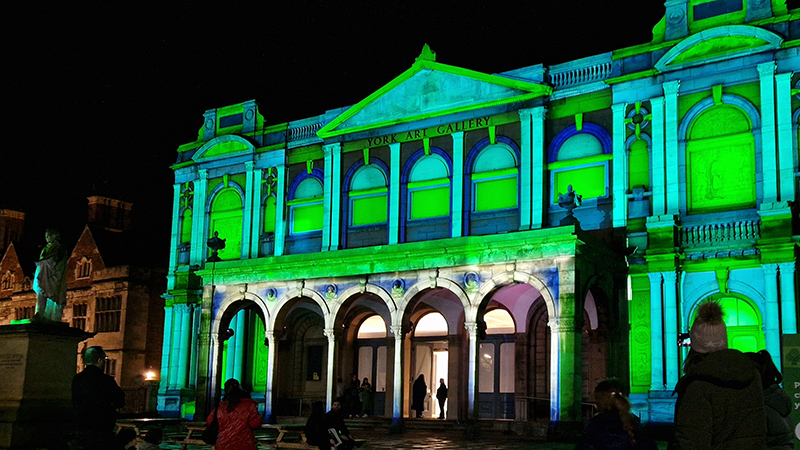
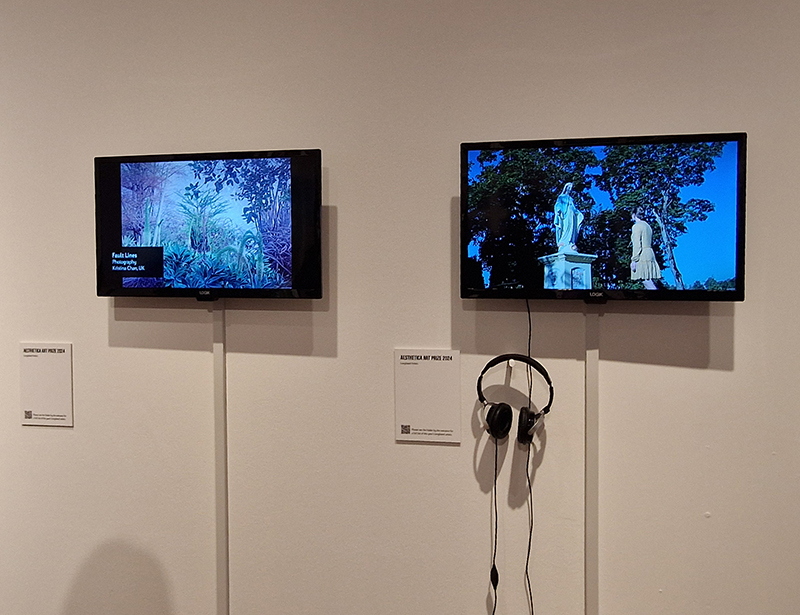
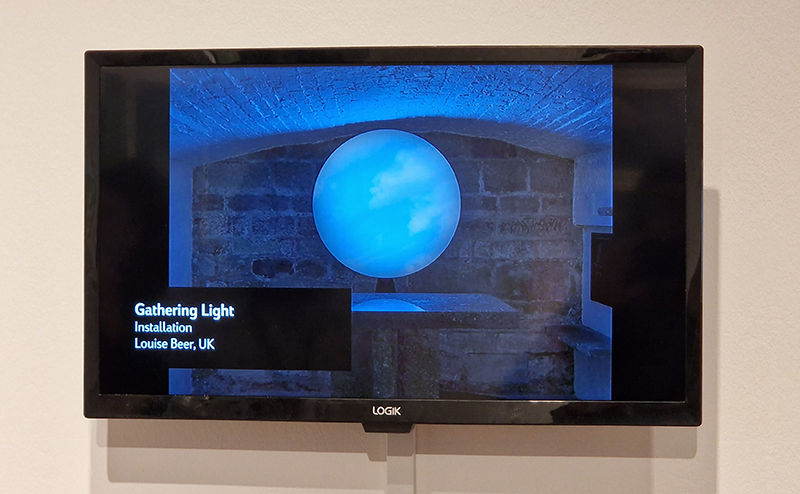
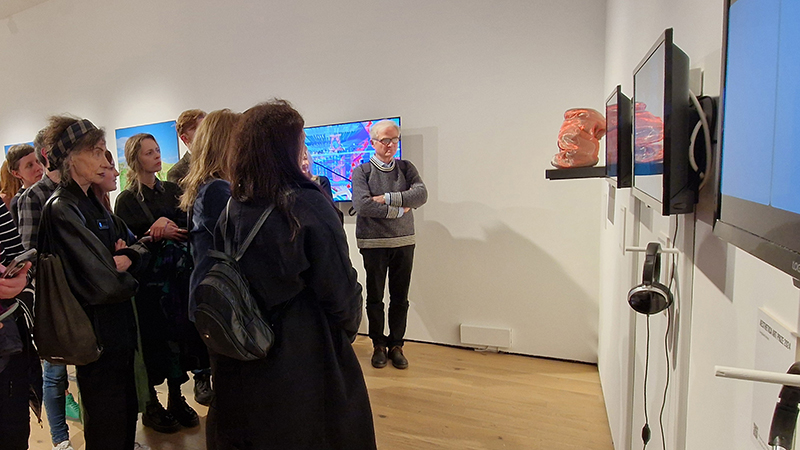
The ancient walled city of York was a great host venue for the Aesthetica Art Prize 2024 exhibition and the Future Now Symposium. Grey February is dispelled by the inspired decision of the local council and shops to keep the Christmas lights on.

There are many artists alongside myself in the Aesthetica Art Prize longlist, and it was great to meet up with familiar faces as well as make new contacts at this event. With so many artists, the digital showcase of our work in York Gallery was on quite a long loop, but I felt happy to be in such good company.

A link to my Aesthetica 2024 longlisted artist online profile is here

Private view of finalists work. Shortlist here

The winners of the main prizes, Maryam Tafakory for Nazarbazi [the play of glances]which explores love and desire in Iranian cinema, where depictions of intimacy between women and men are prohibited. and  Emerging Prize-winner Gala Hernández López, were well deserved with powerful, timely work.

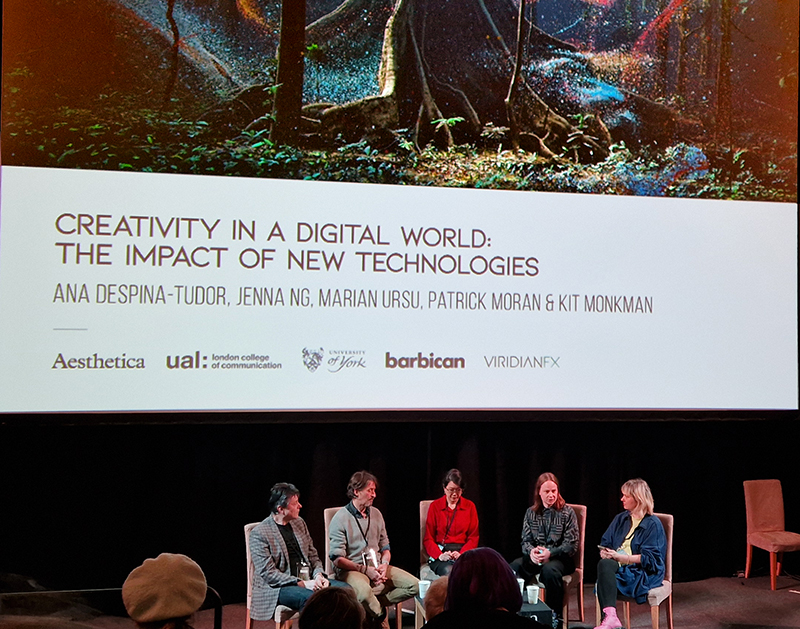
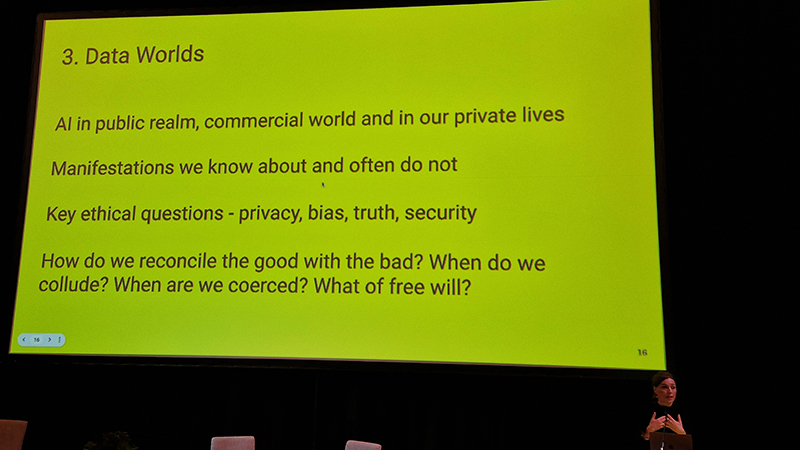
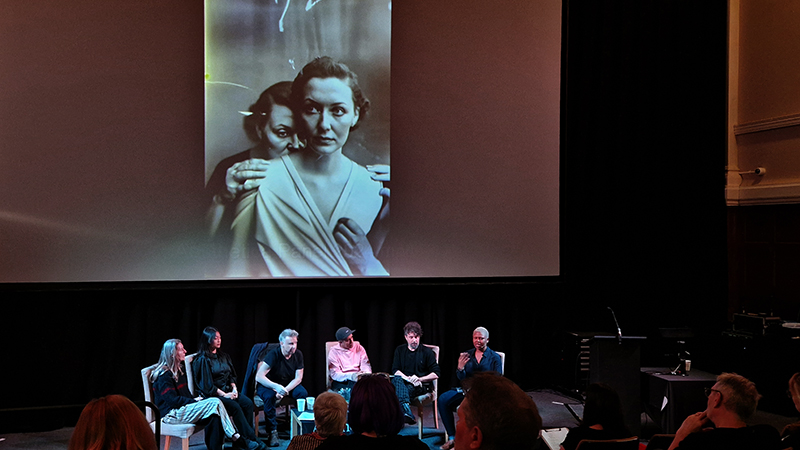
The Future Now Symposium threw up some interesting and potentially disturbing questions about AI despite some speakers such as Dr Suzanne Livingston and Marian Ursu, positive spin that AI could herald a new utopia of knowledge production and collaboration to solve the world’s problems. The panel discussing ‘The Impact of New Technologies’ were all in agreement that it is already too late to change or avert the learning bias of AI systems reflecting and perpetuating human biases, as the early modelling is embedded too deep in systems that no one really understands or can control. There was encouragement to welcome the new technologies such as chatGTP and text prompt generative fill software as new tools to be used to expand on what we can create rather than seeing these as taking over the creative thought process.

The myth surrounding the deception of the judges by Boris Eldagsen’s now-infamous AI-generated piece, The Electrician, which won a Sony World Photography Award in 2023, was laid to rest by Edgar Martins on the ‘Photography in Focus’ panel. The winning image had been entered to the competition as an AI generated image and was judged on that basis, there was no cover up but certain media sources sparked heated debates around our trust in images, giving the impression that the judges had been misled. This doesn’t mean to say that there isn’t a problem with image authenticity in the news and especially on social media as AI generated images are shared ubiquitously without the relevant acknowledgement.

I very much enjoyed Sarah Perks in conversation with Heather Phillipson who describes her works as “quantum thought experiments,” which unfold in absurd and complex ways. Interesting to hear how her ideas develop from 2D sketchbook/collages, straight to full large scale 3D installation with no small scale models in between. Making such large work is a problem when it comes to storage, so some pieces have to be relinquished and then recreated if necessary, as it was for her Turner Prize nomination.

Margaret Salmon was another fascinating speaker with her quietly moving films that expose and elevate the minutiae of human experience. She showed a short film zooming in on the invasive ravaging nature of trawling the sea bed, indiscriminately gathering up everything in the haul, interspersed with a Whitstable trawlerman speaking about his life on the boats where this was just seen in terms of hard or easy work and how the day played out. It reminded me of the taped interview I have of Aunt Millie, a close elderly neighbour from my Suffolk childhood, who talked about mending the fishing nets piecemeal as a young woman when the village still had an active fishing industry. Fragile histories to be remembered.

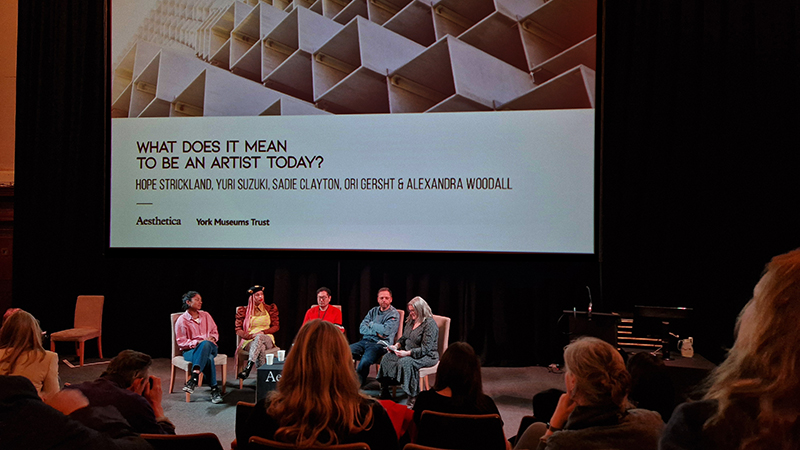
The panel discussion ‘What does it mean to be an artist today?’ was tempered by Ori Gersht accounts of his personal experience as a jew during the current conflict, both here and as witness to atrocities in Israel. How to respond.

Gallery Visits

Freya Gabie Duet at Danielle Arnaud. Great to hear Freya’s own account of her time spent as artist in residence on the Mexican/U.S border at one of the teatime talks hosted at the gallery. The shocking inequalities and water poverty that she witnessed are sensitively explored through her work. The ease with which she could cross back and forth was denied those indigenous to the Mexican side who live in the shadow of a shiny wealthy city that they would never visit.
The exhibition explores the landscape of El Paso and Ciudad Juarez as a repository of shared connections and experience. Giving the land voice to both remember and carry the complications, contradictions, and beauty of the place; the way these nuances act in harmony, and the notes of discord they strike. For this exhibition, Freya Gabie draws out threads that weave the two cities of Ciudad Juarez and El Paso together. Approaching the intricate back and forth of economic, social, and medical journeys that take place between the people and objects of the border, and examining how the border both generates the flow of goods, services, and people and dams it, revealing the ways the resulting impacts are felt.

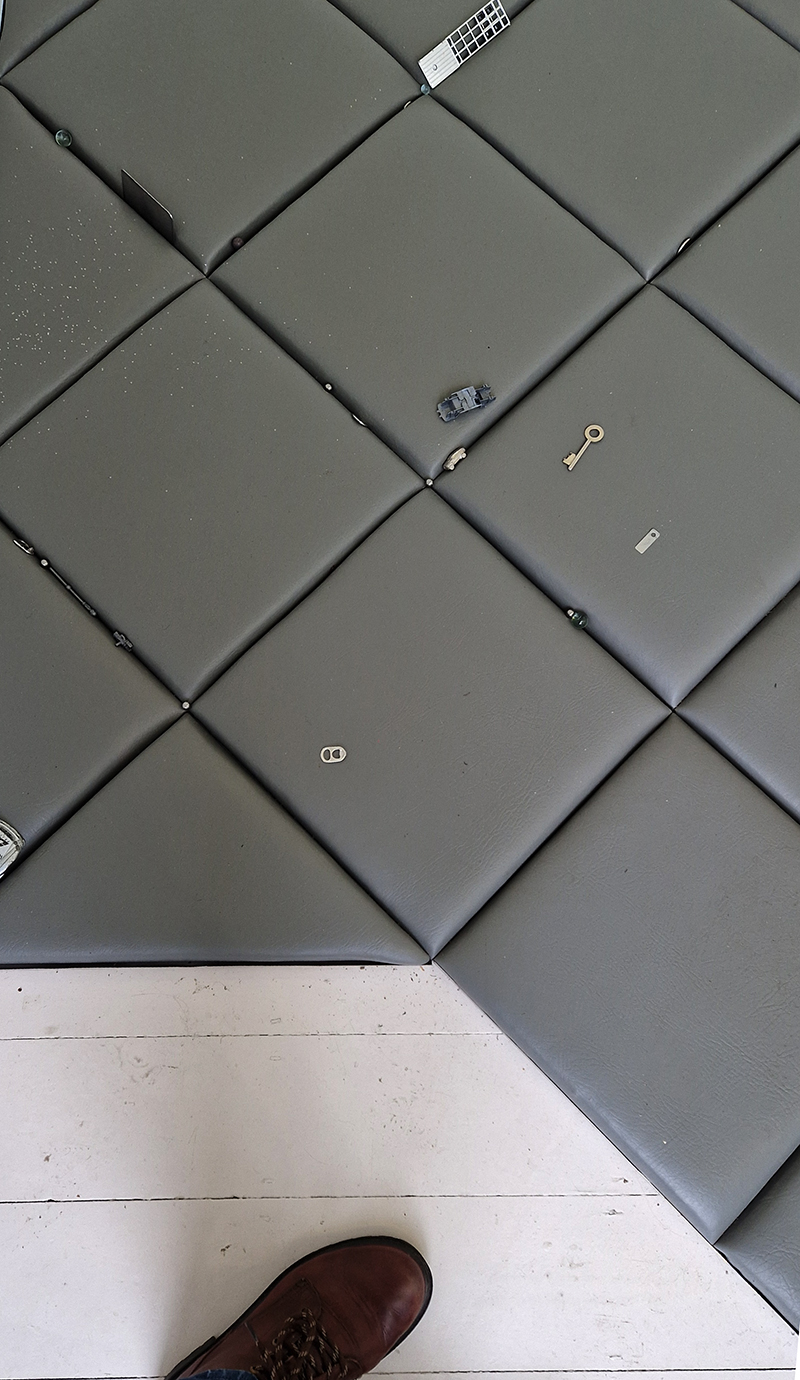
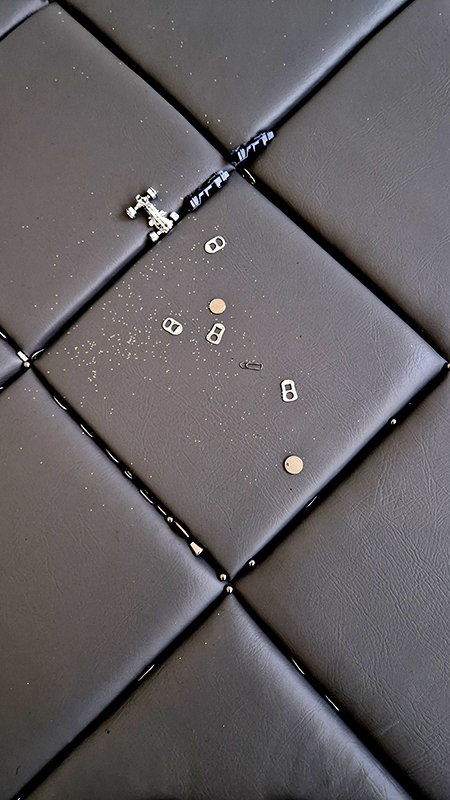
Agata Madejska Grand Habitat Horror Vacui at Flat Time House. The works evoke the personal intimacy and mess of domestic life lived at odds with prevalent power structures. They embody feelings of fragility, and exposure when a home must be constructed from fragments as seen in the small personal objects secreted in pockets or spilling across the floor, an accumulation of detritus that together makes a life, chafing against the world like grit in Vaseline. Due to my own current preoccupations, the dark padded grid of the entry room floor, that gave under the weight of mass and was strewn with discarded silver objects, read as low earth orbit littered with space junk, but was in fact a reference to the Chanel brand handbag.
DISSONANT BLOOM a group show with works by Nancy Allen, Mauro Bonacina and Héloïse Chassepot at Sundy. Enjoyable tactile sculptures with interesting materials and painting to get lost in with no point of focus.

As a concept ‘Dissonant Bloom’ refers to our vexed relationship with nature but it also suggests that growth and flourishing are possible amidst unfavourable conditions. In the same way that the coexistence of competing species ultimately fosters biodiversity and ecological resilience. In the same way every work in this exhibition embodies aspects of blooming, either aesthetically or conceptually, but they do not necessarily do so in harmony with each other.

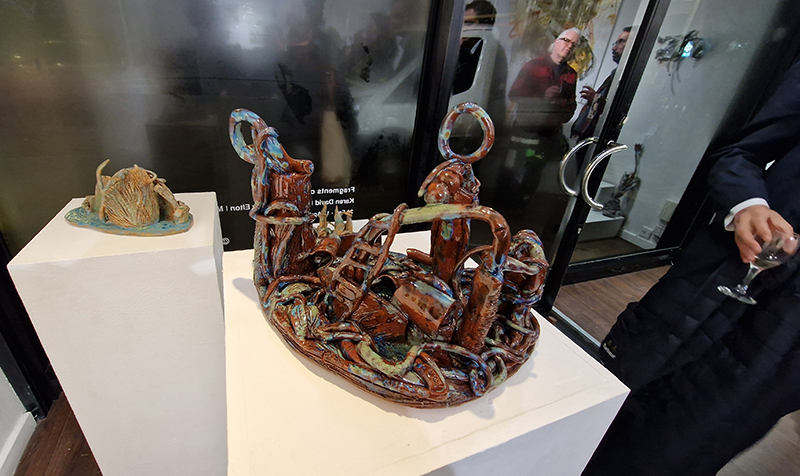
Fragments of a Lost Future with Karen David, Lana Locke, Liz Elton, Mimei Thompson, Susie Olczac at White Conduit Projects. In a time of climate crisis the works question hope for the future as a fantasy, or only for the non-human.

The Planet’s mineral, energy and agriculture resources have been efficiently, and even ruthlessly, exploited… They have harnessed energy of the atom, deciphered the molecular codes that oversee their own reproduction… Despite these achievements the people of this planet have in other respects scarcely raised themselves above the lowest level of barbarism. The enjoyment of pain and violence is as natural to them as the air they breathe. J.G. Ballard [“Report From an Obscure Planet”, 1992]

The fears of the near future described in J.G. Ballard’s science fiction novels are now our reality.

When corporations and politicians are busy monopolising airspace and arguing amongst themselves, whose voice will communicate this urgent crisis. We go about our daily lives with our heads partly buried in the sand, often too busy to fully engage with our current polycrisis. Activists rightly convey outrage, but can we embed these urgencies into our everyday lives? In ‘Report from an Obscure Planet’, Ballard describes the critical state of the Earth as viewed from another place. White Conduit Projects brings together these five artists who bravely and playfully incorporate this sense of crisis into the core and surface of their work. Starting with their everyday surroundings, they attempt new ways of communication, quietly bringing a Ballardian nuance to artworks that inhabit our domestic space.

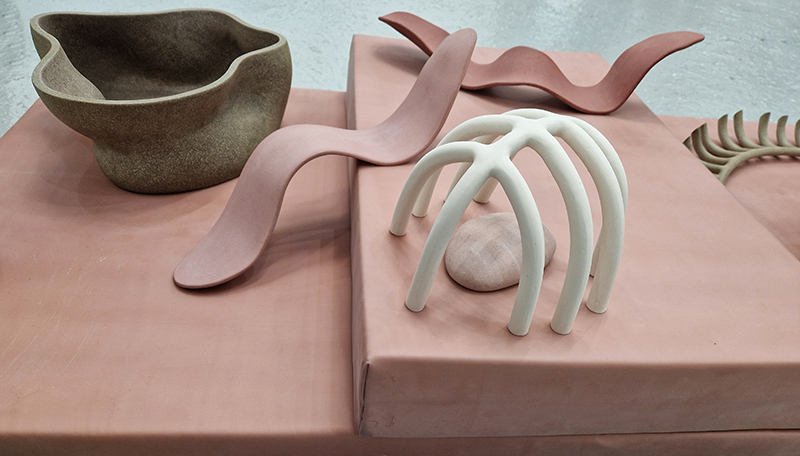
Loose Ends is a group exhibition at Thames-side Studios Gallery exploring connections and the interwoven poetics of material and the body by ten artists working across ceramics, textiles and performance.

Blown away by the sheer elegant beauty of  Alex Simpson‘s impressive new ceramic work traversing across latex covered foam blocks.

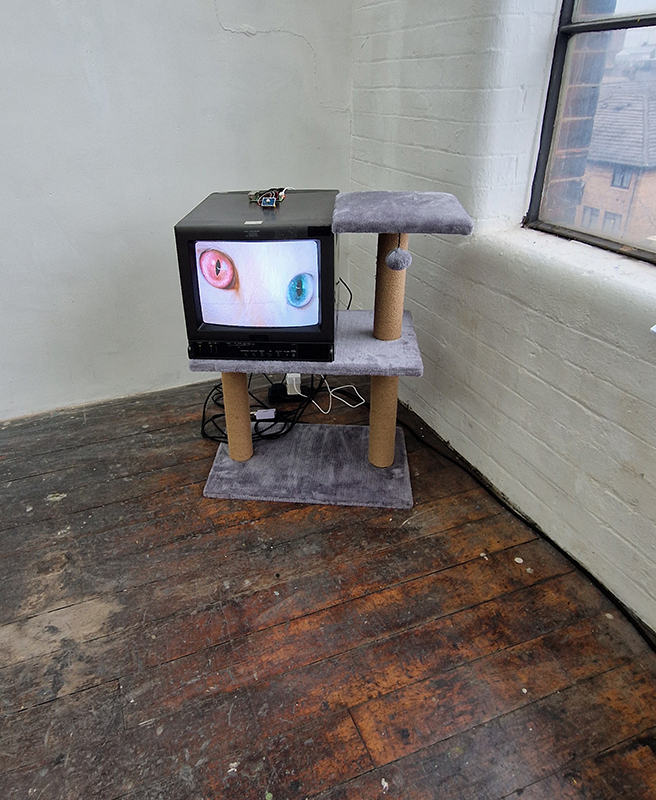
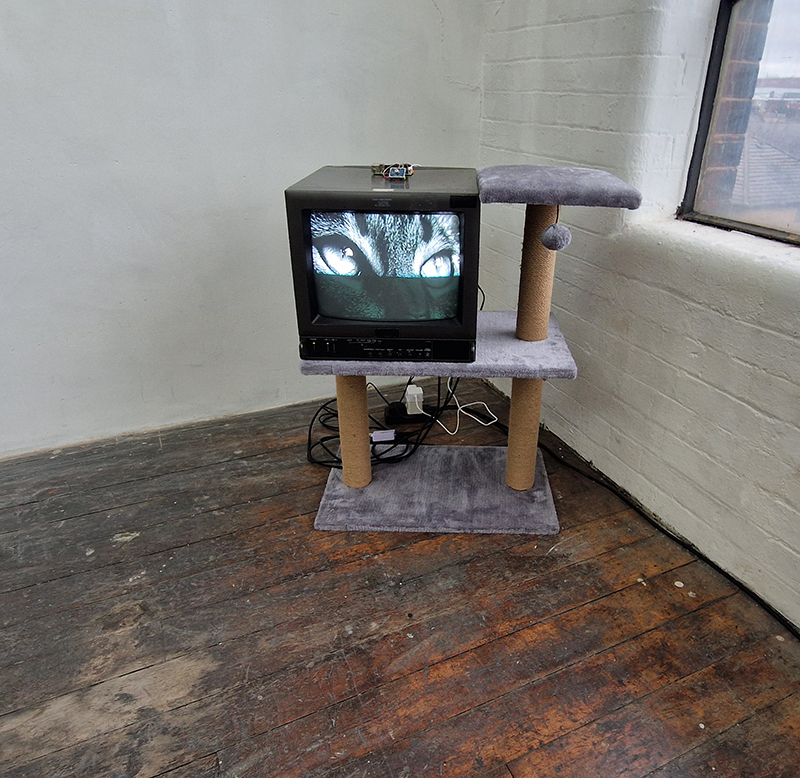
Robert Good Saturation Point Sunday Salon 29. Responding to Richard Brautigan’s 1967 ode to a coming technological utopia ‘All Watched Over by Machines of Loving Grace’ Robert explores what a cybernetic meadow might look like. Here he presents six digital artworks that hum, whirr, click and miaow with the first stirrings of a new digital landscape – one of computer vision, compromised identity and permanent connectivity. This meadow is not brought about by the unfathomable AI but is hand sown and nurtured with the level of technology we can still engage with; it is a human scale materialization of the inner workings of the digital world.

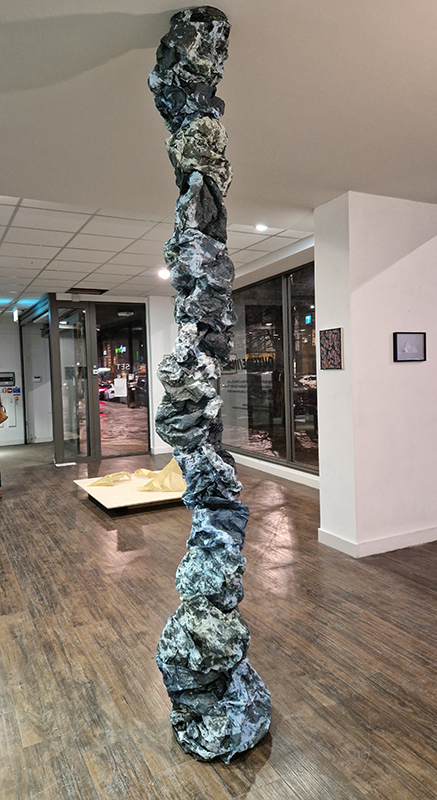
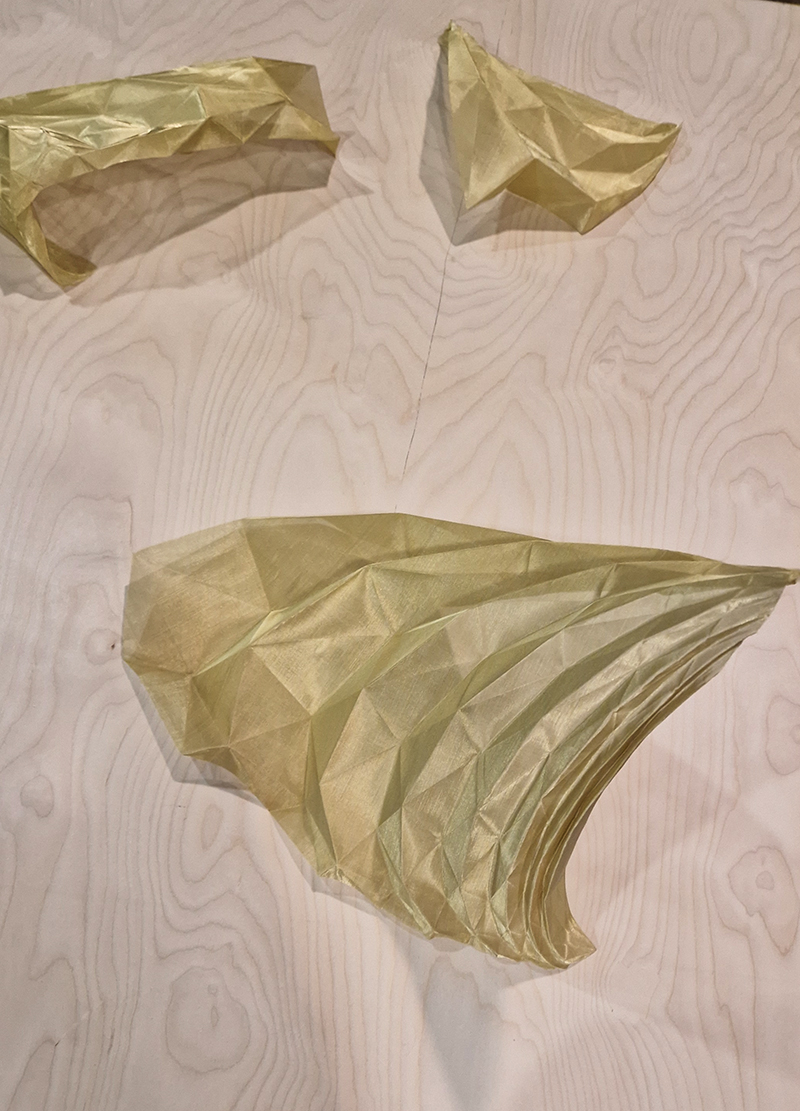
OUTSIDE IN at SET Ealing, a dynamic group show curated and including beautiful, stitched painting by Anna Lytridou, with works by Anja Aichinger, coloured paper clay forms by Eleanor Bedlow, fossil like forms by Anna Joy Reading, delicate folded brass mesh geometric forms by Brigitte Parusel, paintings of collapsed breasts by Jennifer Nieuwland, explorations of genealogy through painting by Jillian Knipe, abstract and evocative paintings by Linda Hemmersbach and Stacie McCormick and subtly coloured sculpted paper forms oscillating between stone and the night sky by Julie F Hill contemplating interconnections between the organic and the inorganic.

Listening

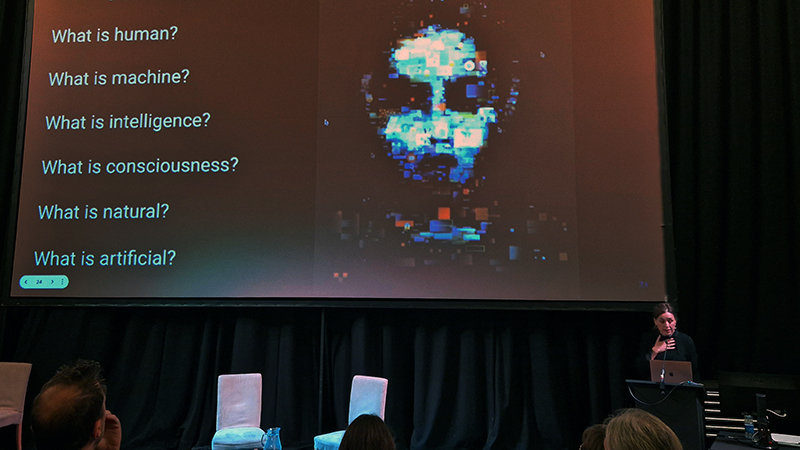
In Our Time Panpsychism – Melvyn Bragg and guests discuss the idea that some kind of consciousness is present not just in our human brains but throughout the universe, right down to cells or even electrons. This is panpsychism and its proponents argue it offers a compelling alternative to those who say we are nothing but matter, like machines, and to those who say we are both matter and something else we might call soul. It is a third way. Critics argue panpsychism is implausible, an example of how not to approach this problem, yet interest has been growing widely in recent decades partly for the idea itself and partly in the broader context of understanding how consciousness arises.

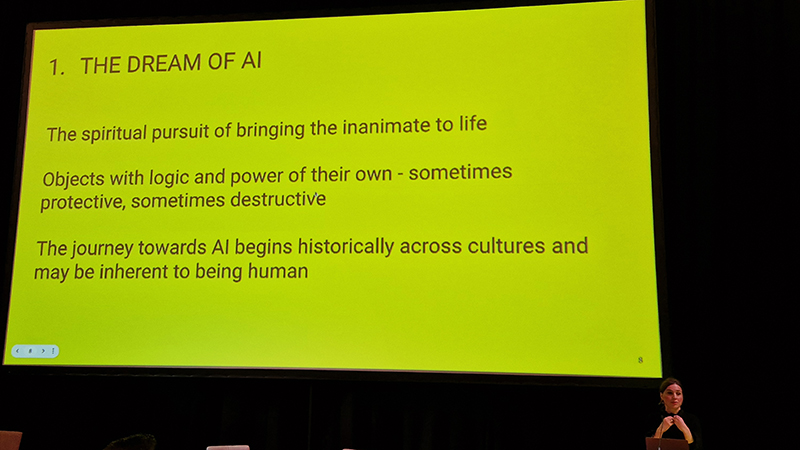
The Life Scientific – Professor of Computer Science at the University of Oxford, and the Director of Foundational AI Research at the Alan Turing Institute Michael Wooldridge on AI and sentient robots – Humans have a long-held fascination with animating an inanimate object, but the idea of Artificial Intelligence (AI) is often perceived as a dystopian threat: from Mary Shelley’s Frankenstein, through to the Terminator movies. We still often think of this technology as ‘futuristic’: whereas in fact, it’s already woven into the fabric of our daily lives, from facial recognition software to translator apps. He believes this will be a watershed year for AI development.

It might be interesting to consider if and how AI and technology might impact human evolution. Medical advances may already have influence. A 300,000-Year History of Human Evolution – Robin May The species we recognise as our own – anatomically modern humans – has existed for only 300,000 years, a blink of an eye in evolutionary terms. And yet during that time our species has been shaped by strong evolutionary forces, often unwittingly as an indirect result of human activities.