Archives for posts with tag: suminagashi

‘A stone sky rotated above our heads’ – Italo Calvino, Cosmicomics

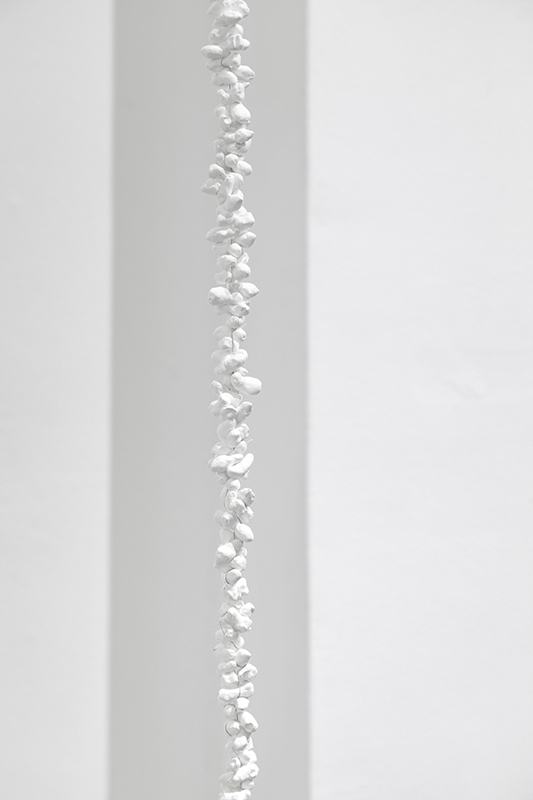
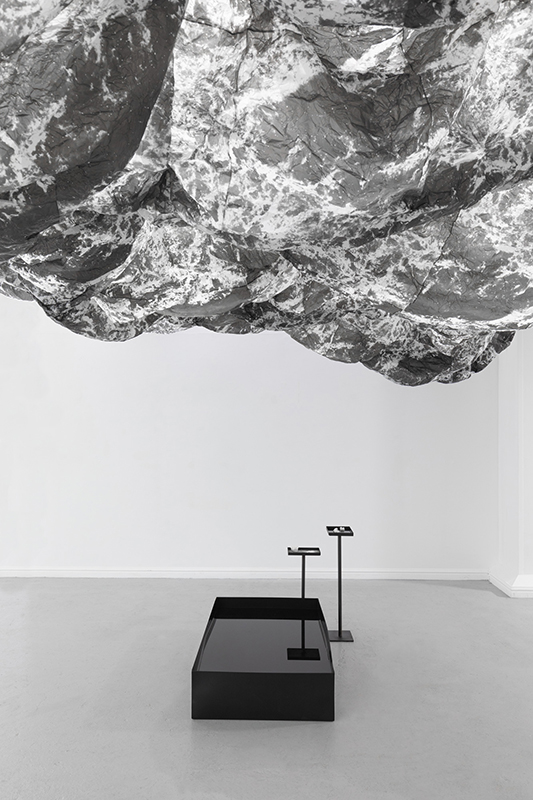
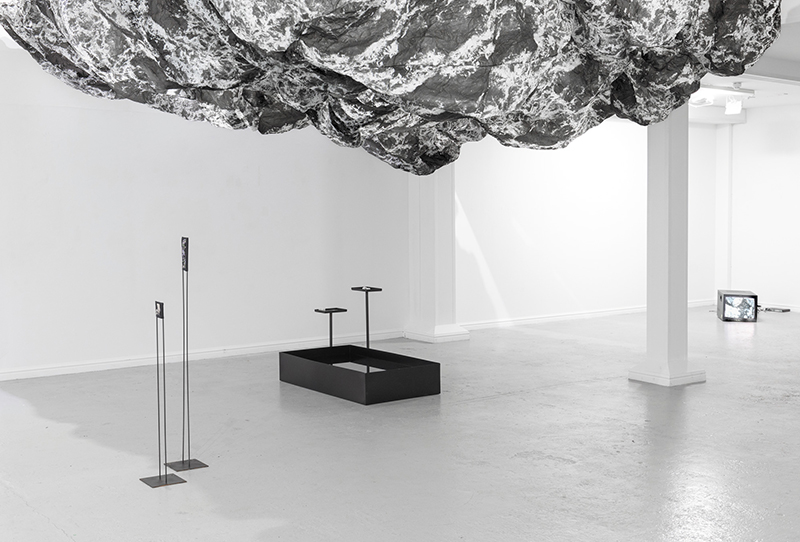
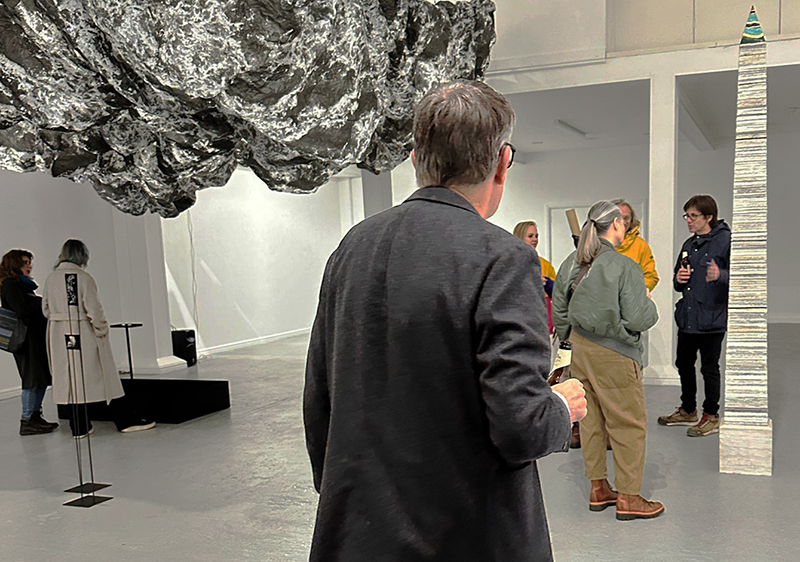
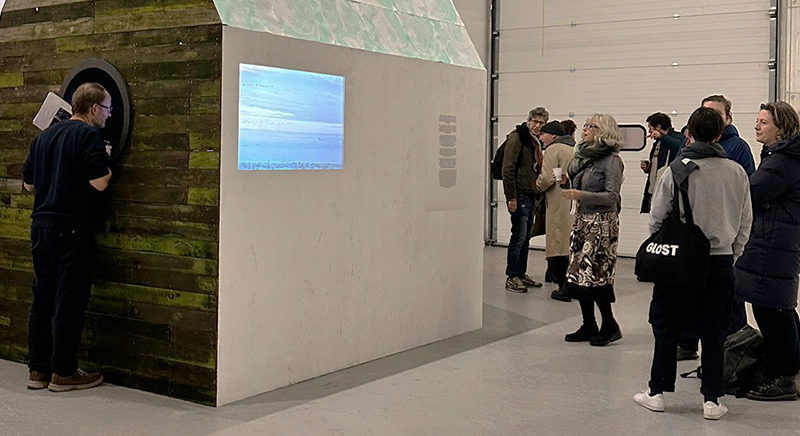
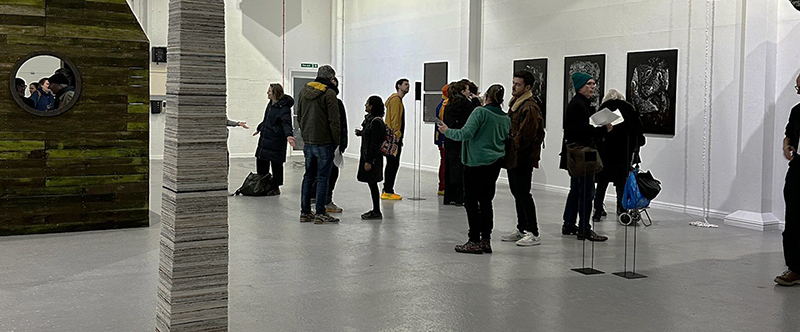
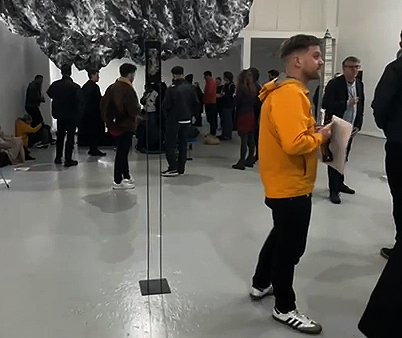
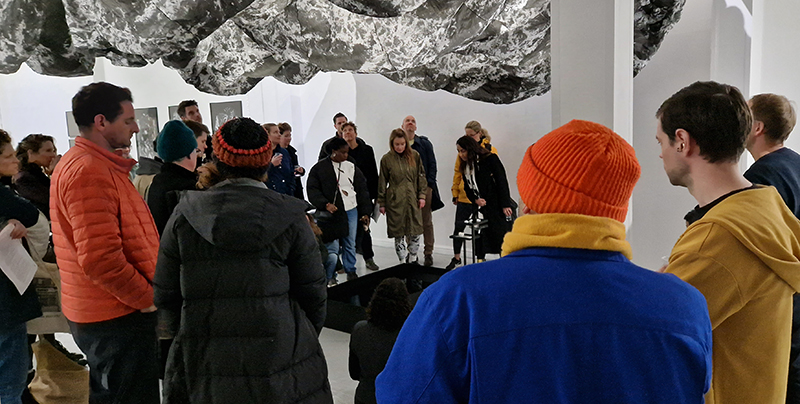
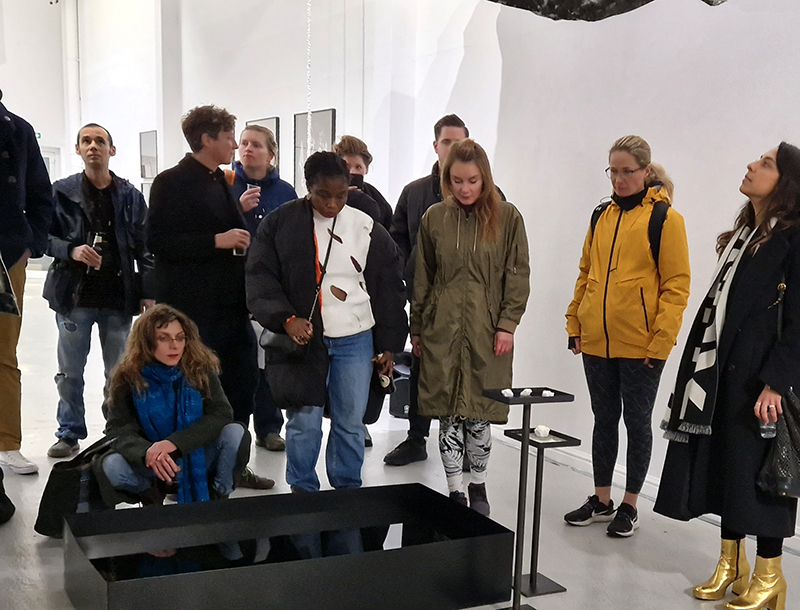
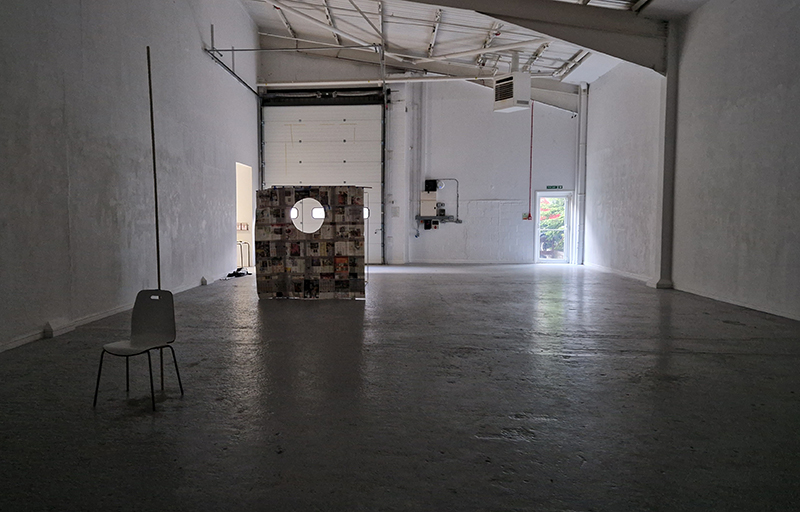
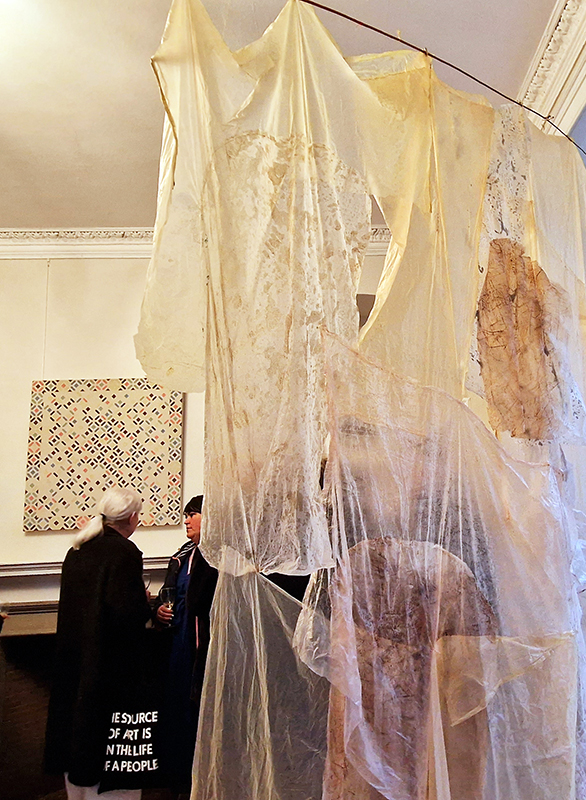
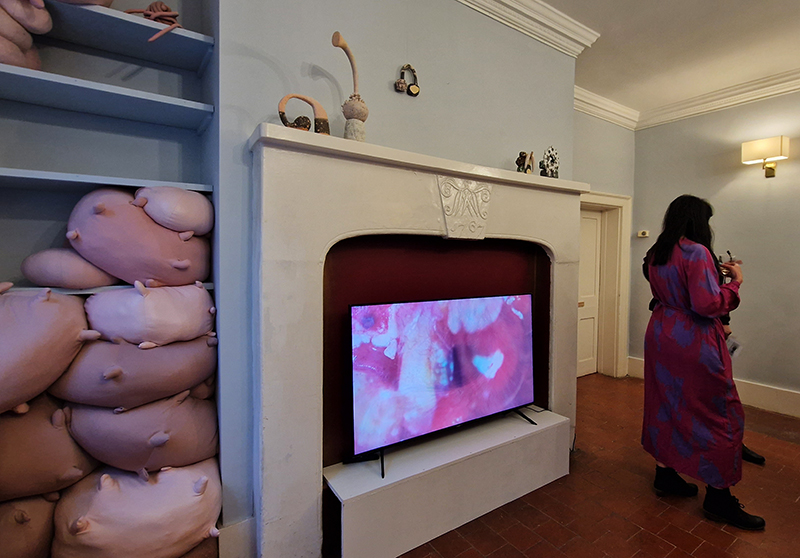
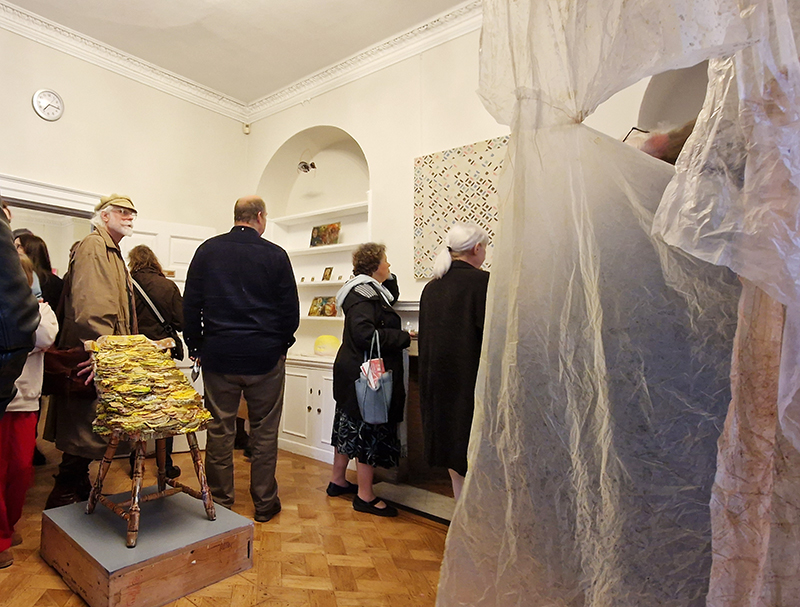
The culmination of two years work – A STONE SKY duo exhibition with Julie F Hill opened at Thames-side Studios GalleryReimagining the idea of an observatory – the exhibition proposes a cavernous realm of real and speculative possibilities that arise from beyond the limits of human perception. Engaging with the extended sensory range offered by technologies such as orbiting space telescopes through to the ability of birds to ‘see’ the Earth’s magnetic field, the artists’ reveal intimate connections between earth and space.

Installation shot by Ben Deakin Photography.
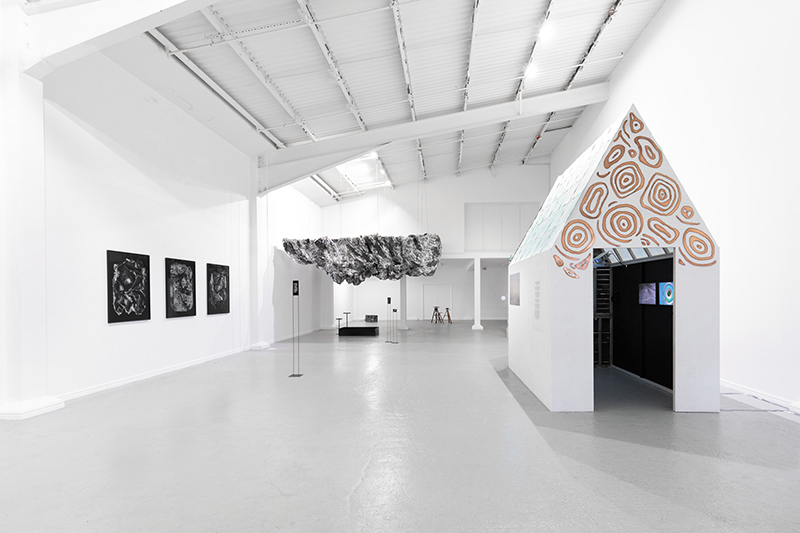
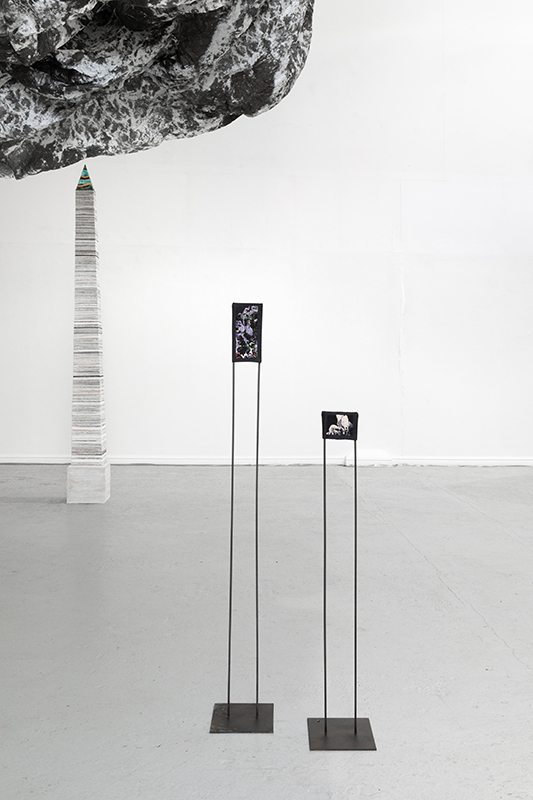
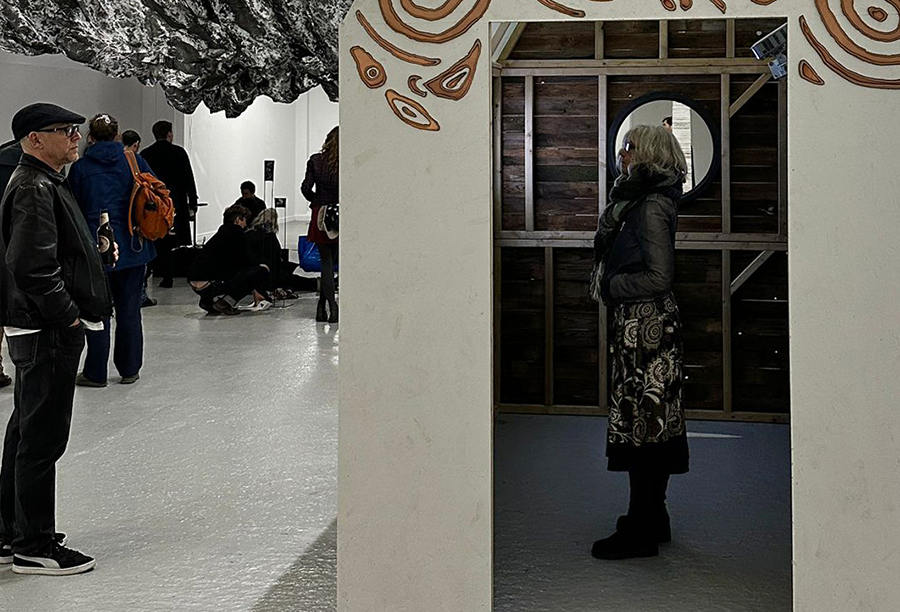
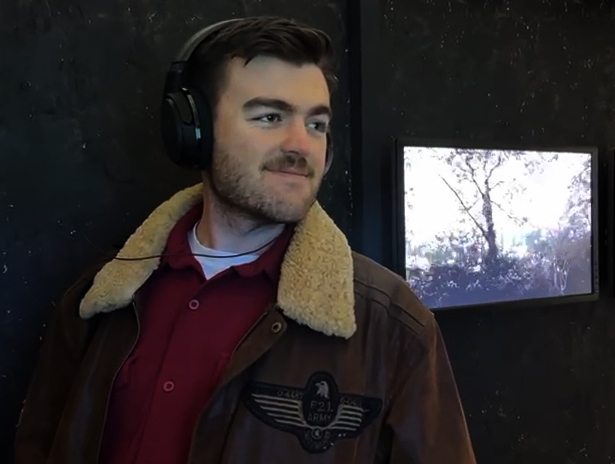
Susan Eyre seeks to navigate a path across time from the first human encounter with the magical qualities of the lodestone to current understanding of the interaction of the magnetic field with terrestrial life. Her works respond to the architecture, instruments and materials, found at a magnetic observatory while scientific objectives are expanded to include natural navigation techniques and extra-sensory methods used by the non-human realm, to form the basis of speculation as to the ability for humans to perceive the Earth’s magnetic field. Installation, sculpture and moving image works include a reimagined observation hut operating as a sensory hub with video screens suggesting portals into a web of neural pathways; an obelisk of layered recycled paper echoing Earth’s geological and magnetic history secreted in sedimentary strata of rock and a digital video work activated in real time by the passage of cosmic rays through a scintillator detector.

Images by Ben Deakin Photography
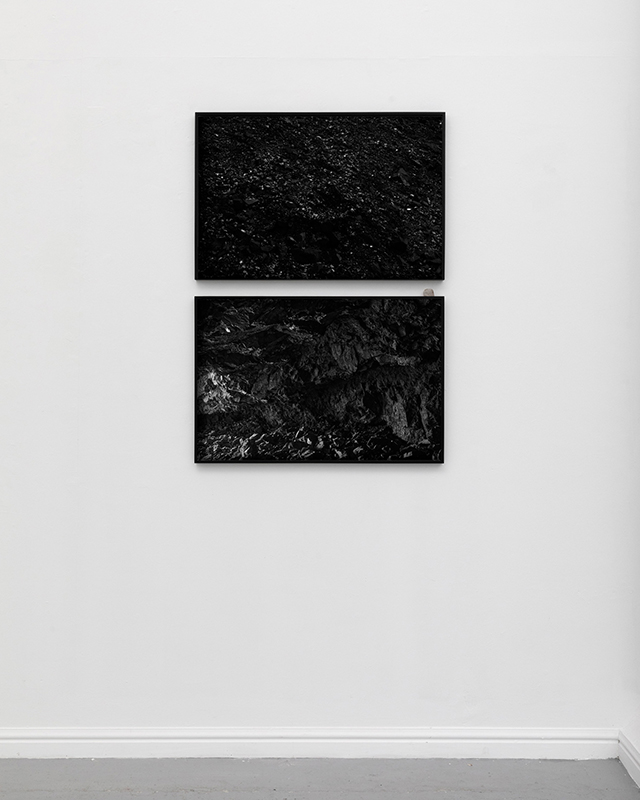
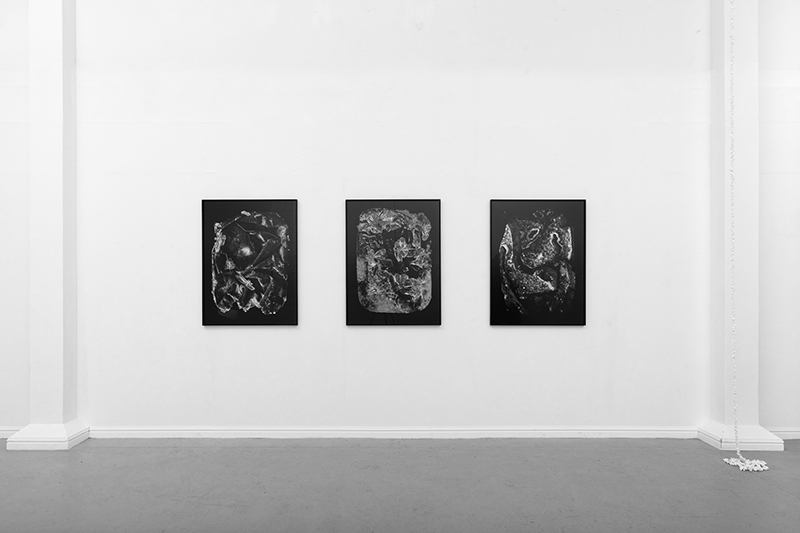
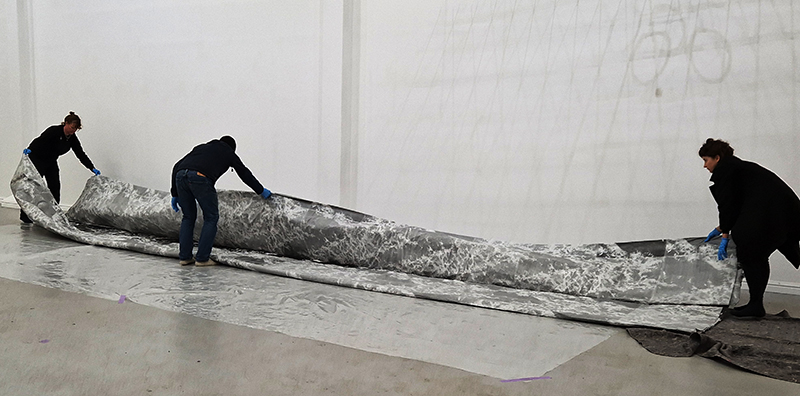
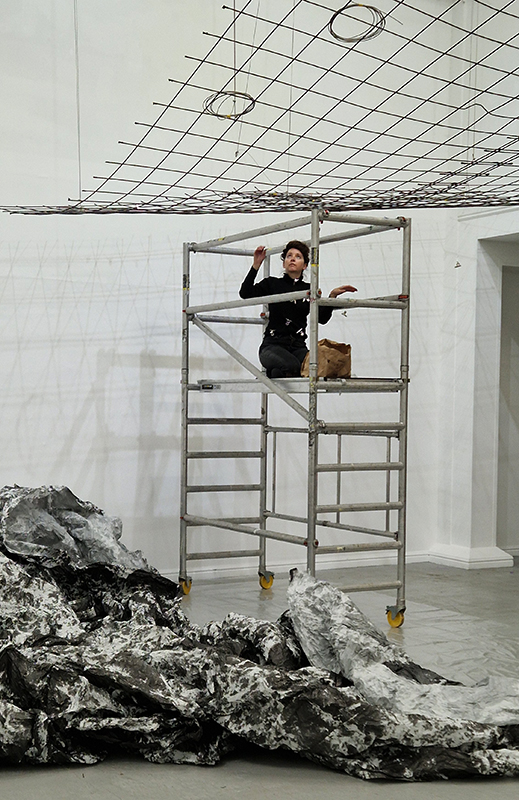
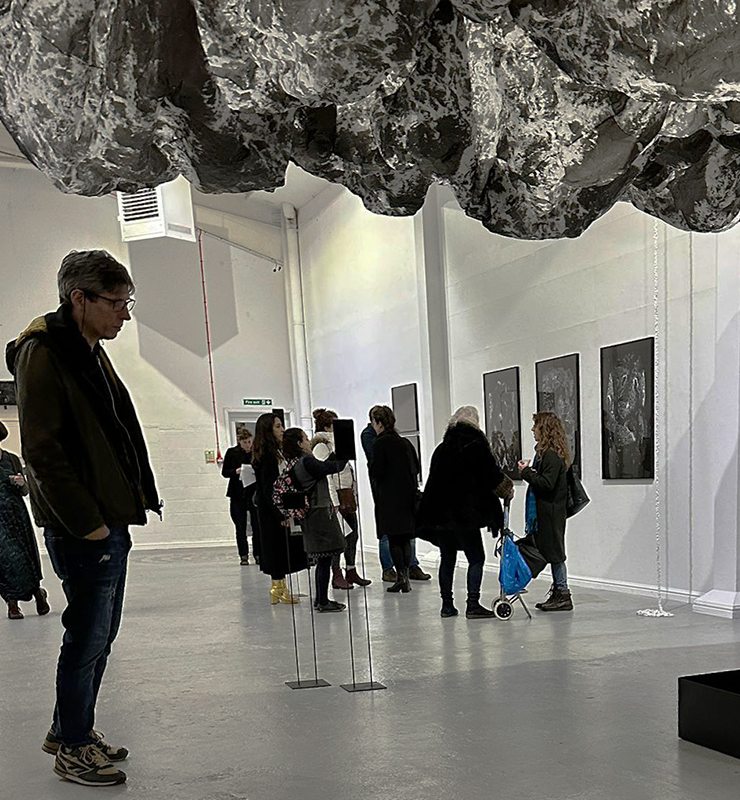
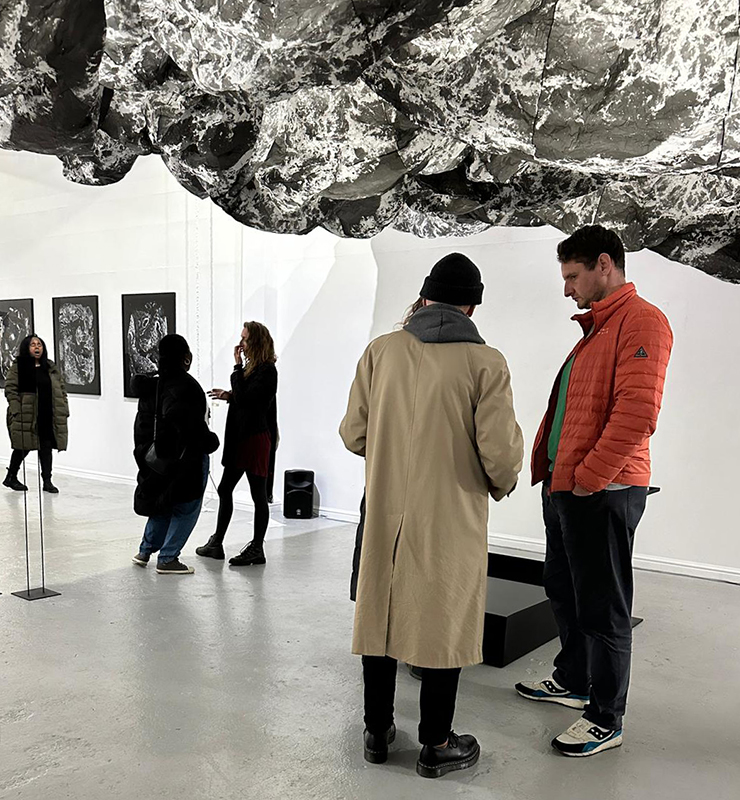
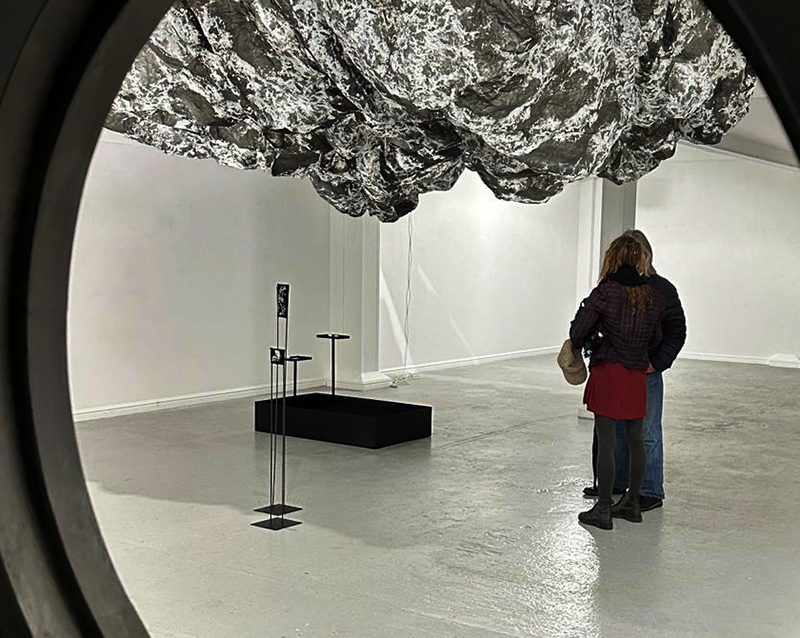
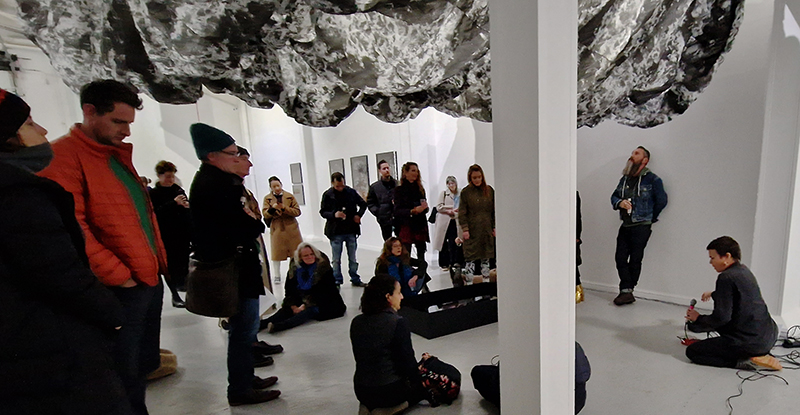
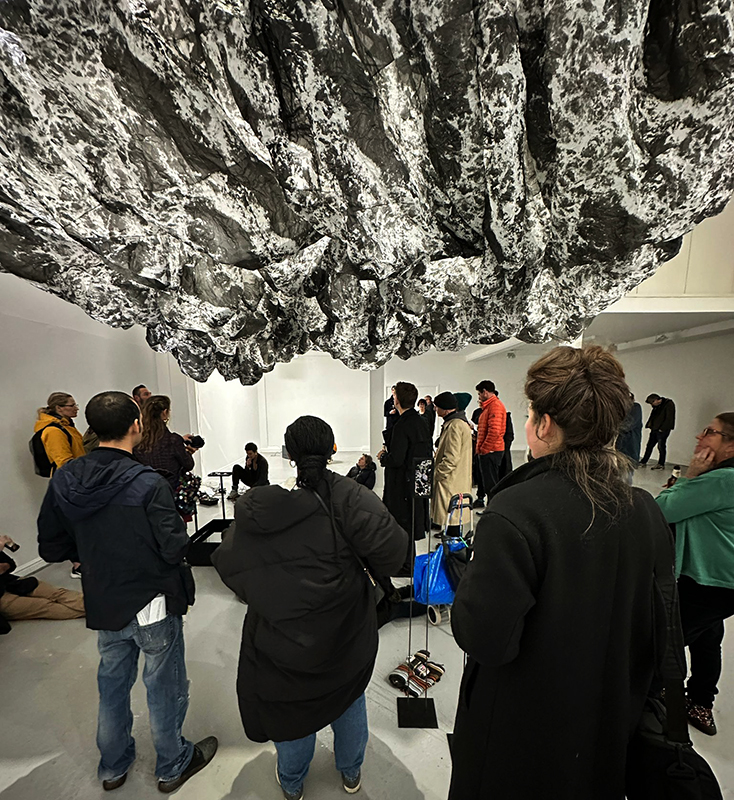
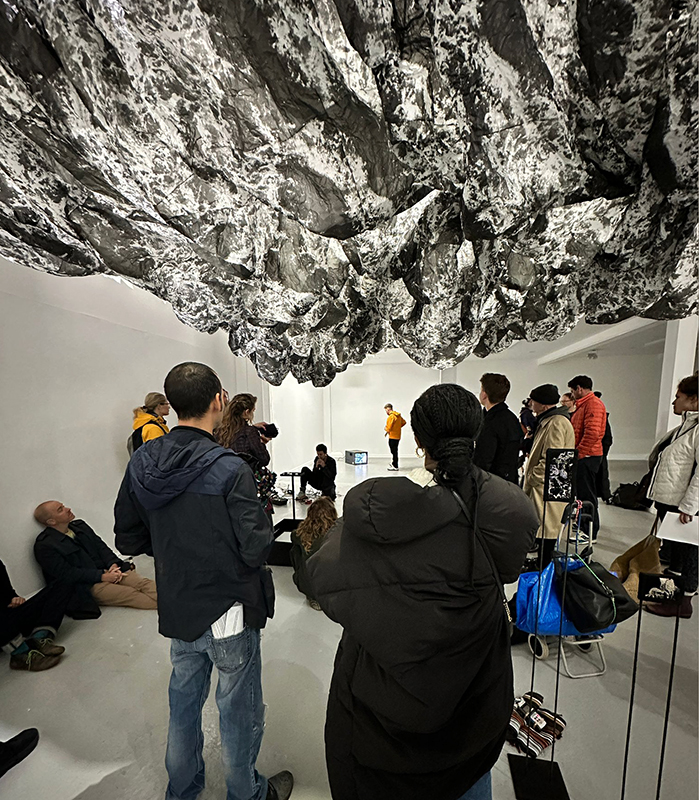
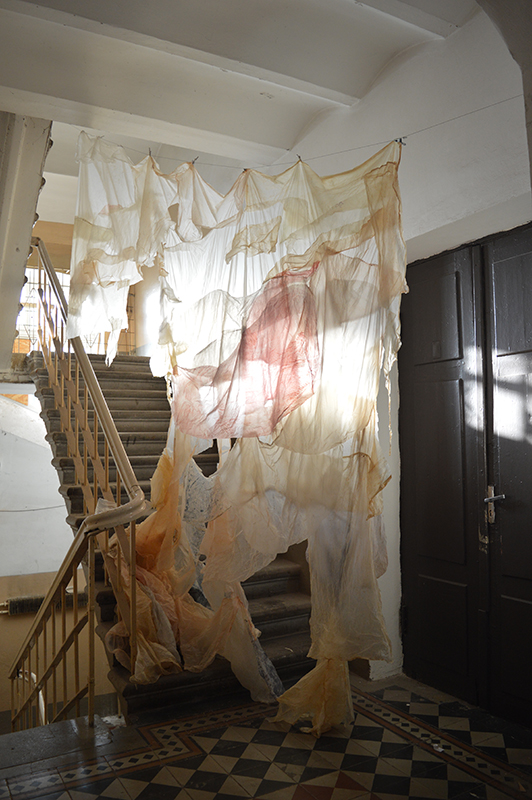
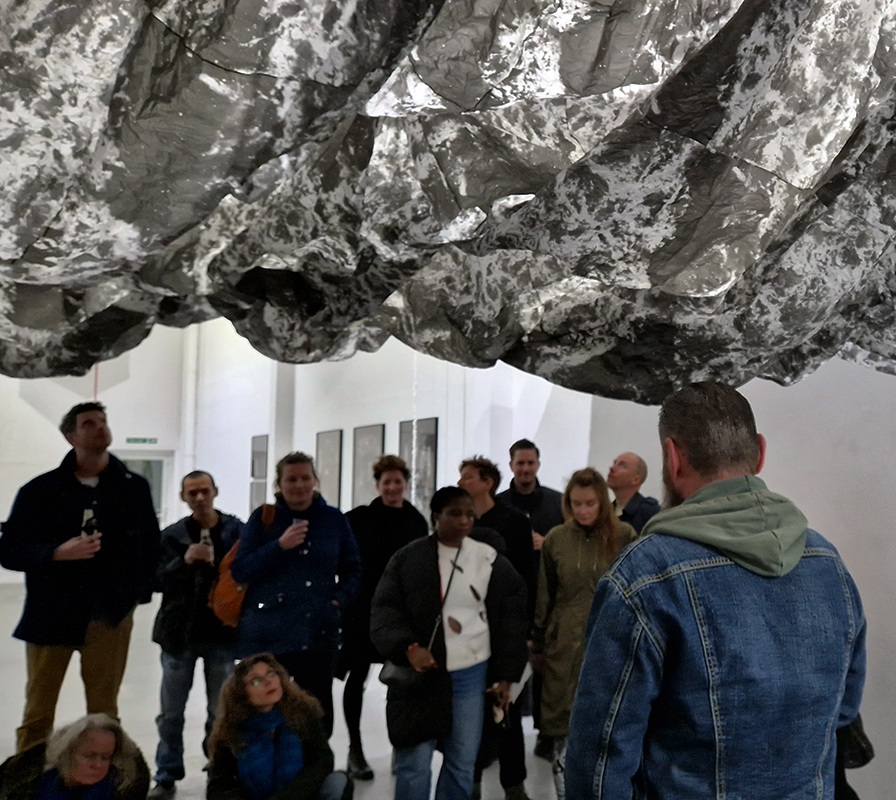
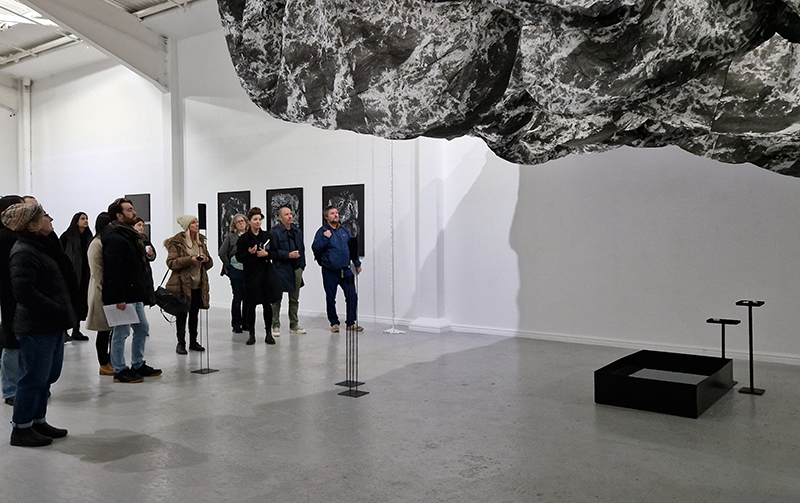
Julie F Hill explores the entwined darknesses of earth and cosmos. Crystalline and mineral substances from the deep earth fuse with astronomical data to suggest the deep-earth as an instrument for coming to know the cosmos. Crystalline and mineral substances formed in the continuum of deep earth and deep space allow us to peer back into cosmic time, both through the technologies created with them and the geological record they hold. Whilst darkness often indicates uncertainty and lack of knowledge, Hill asserts that it’s through darkness when we can be most perceptive to the interconnectedness between earth and cosmos. Through it we are able to extend our kinship with the inorganic and expand consciousness of what constitutes nature. Works include a large-scale sculptural print installation made from James Webb Space Telescope data that is reworked into a cavernous space, providing an experience of intimate immensity alongside more smaller sculptural and photographic works.

Images by Ben Deakin Photography
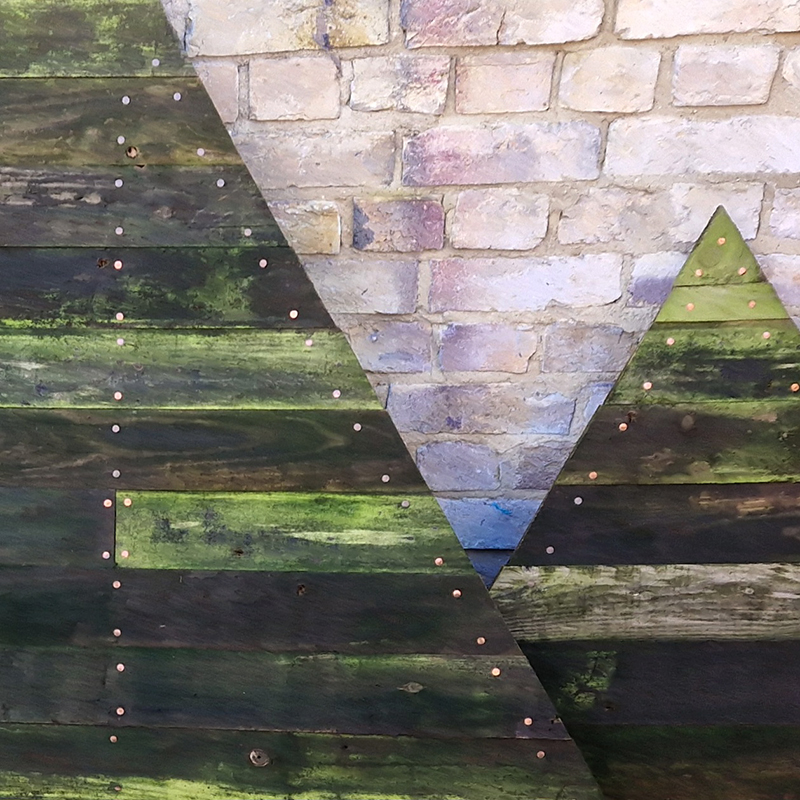
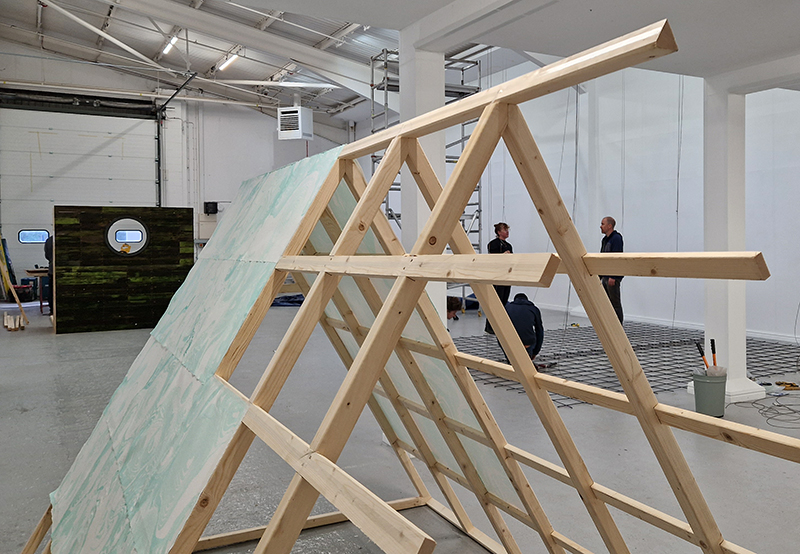
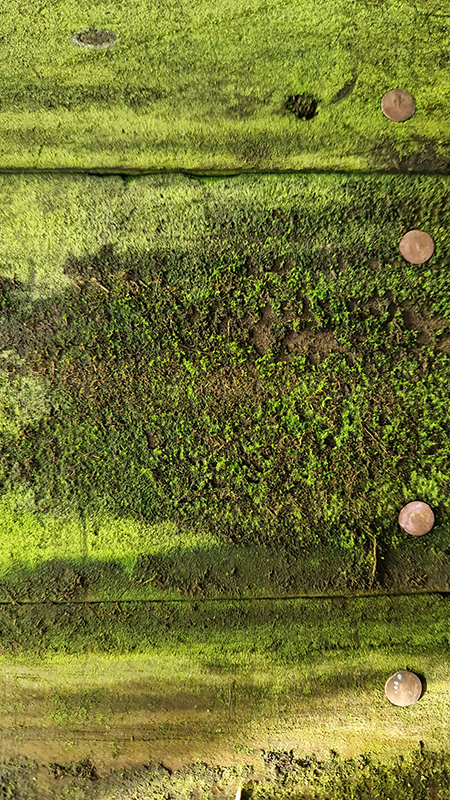
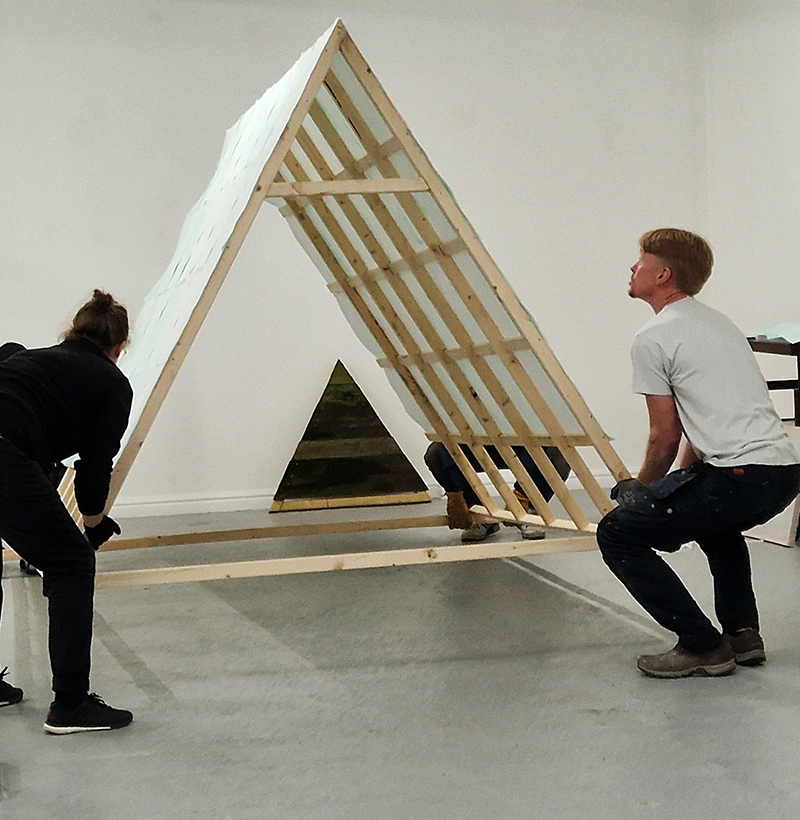
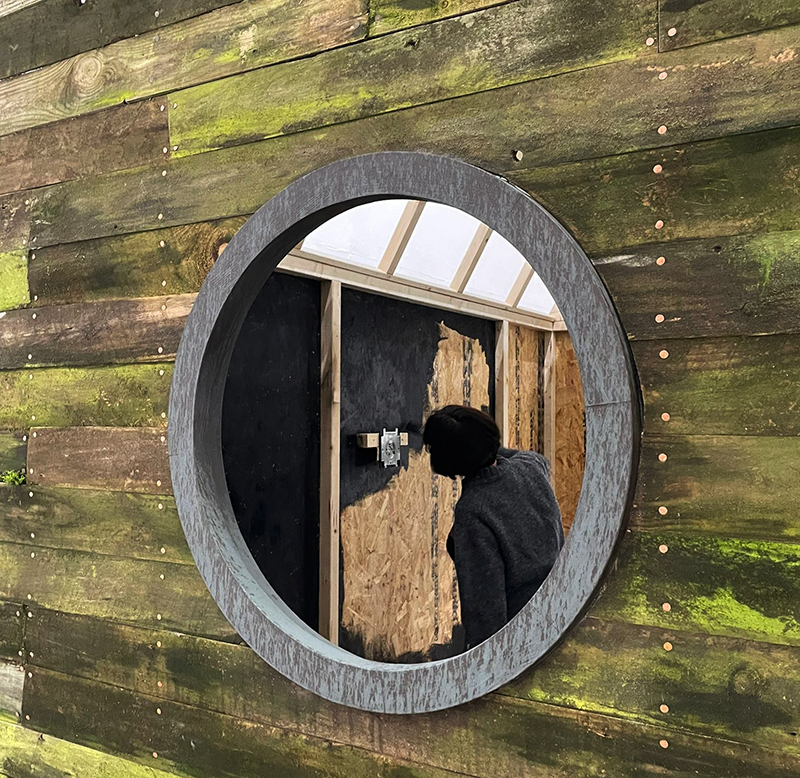
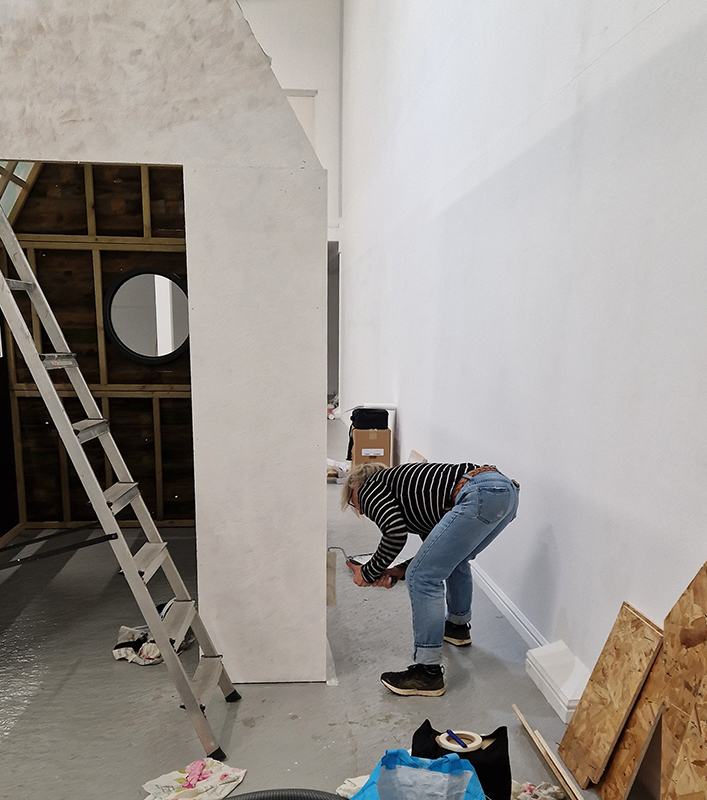
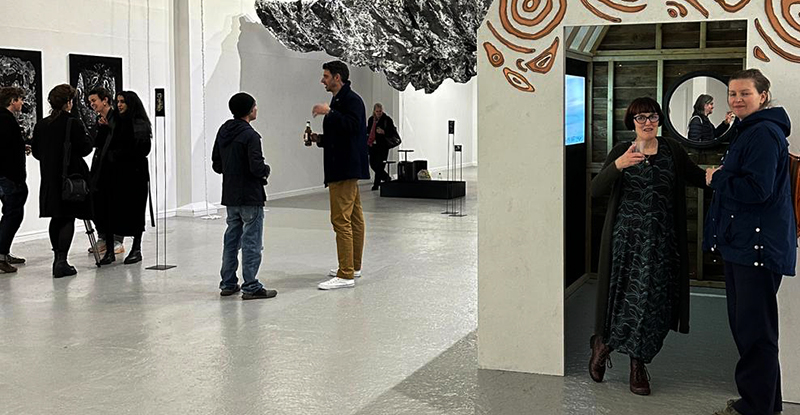
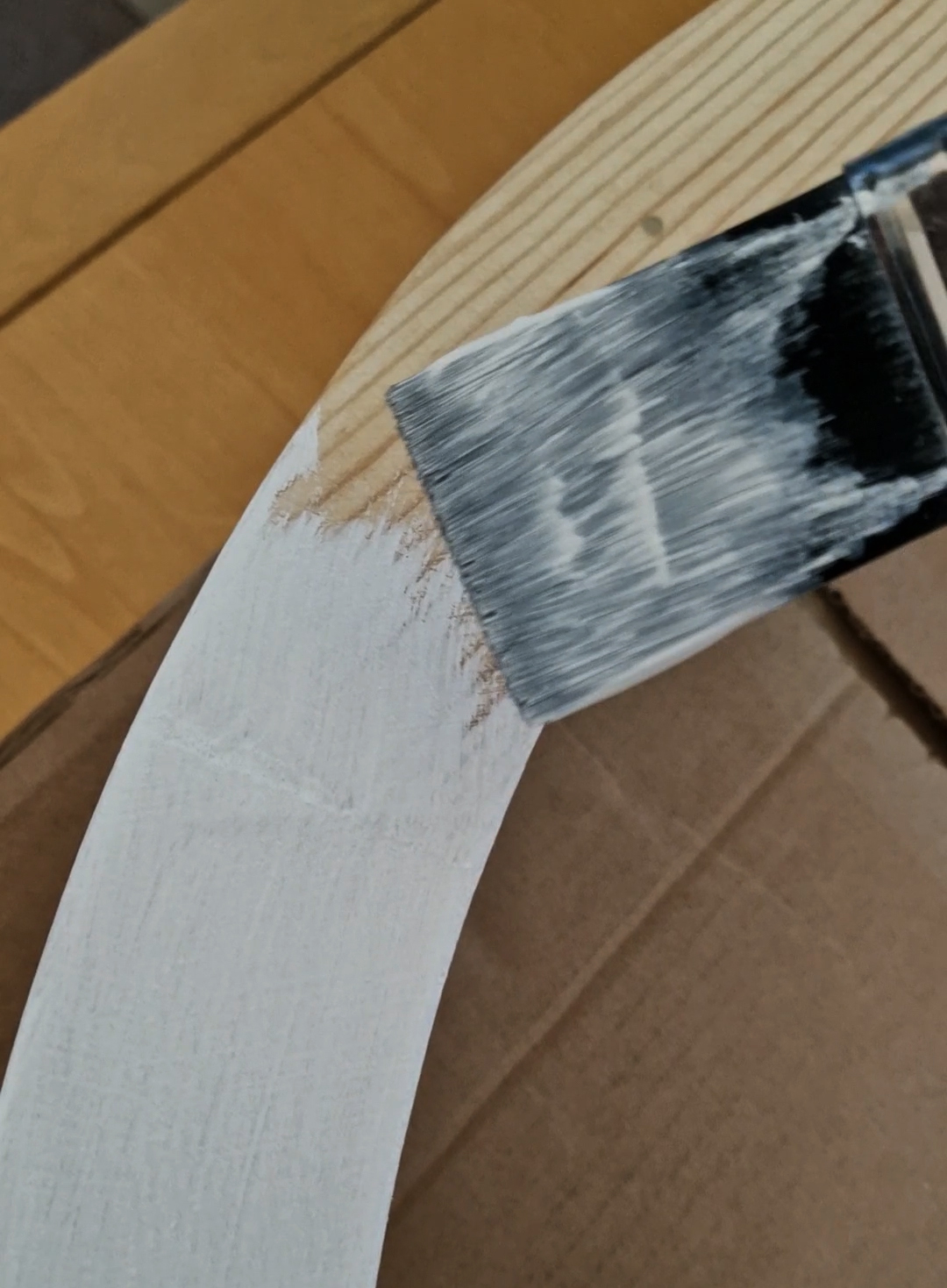
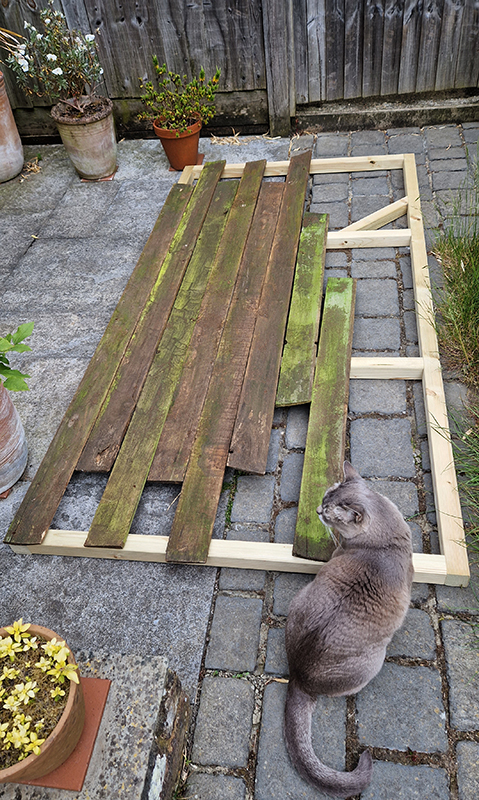
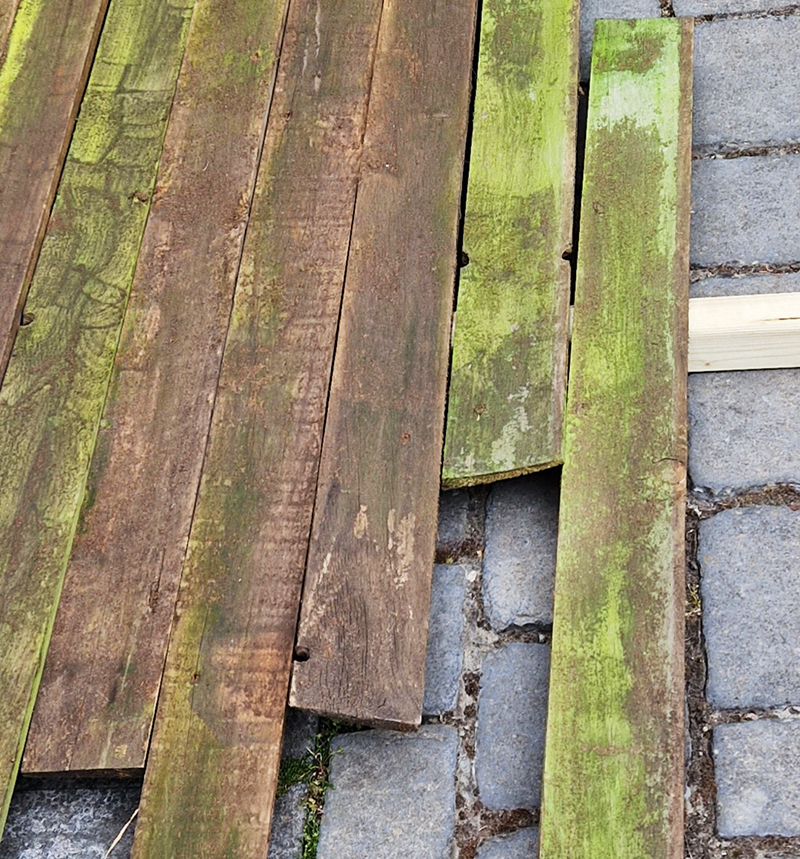
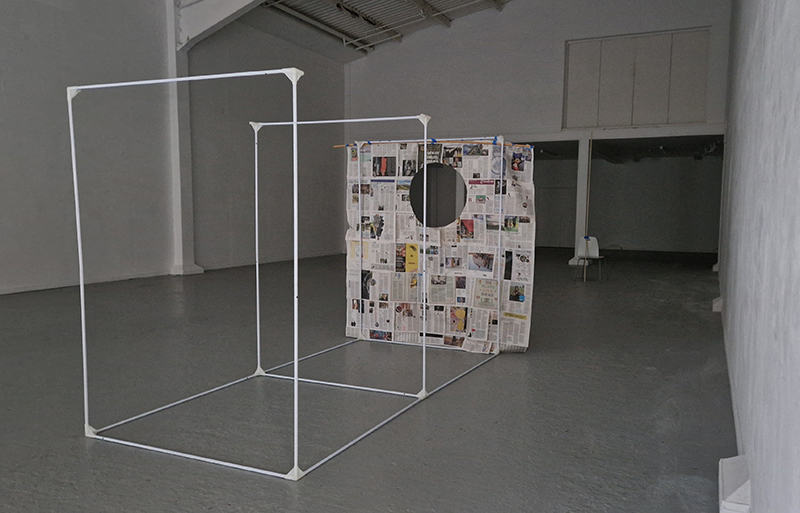
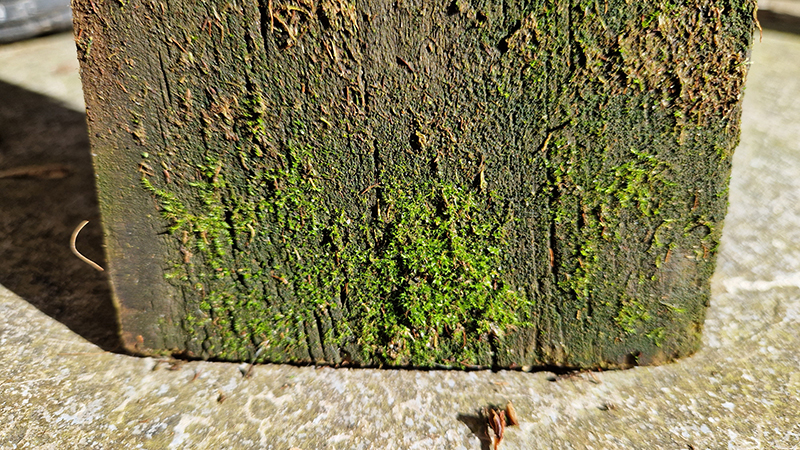
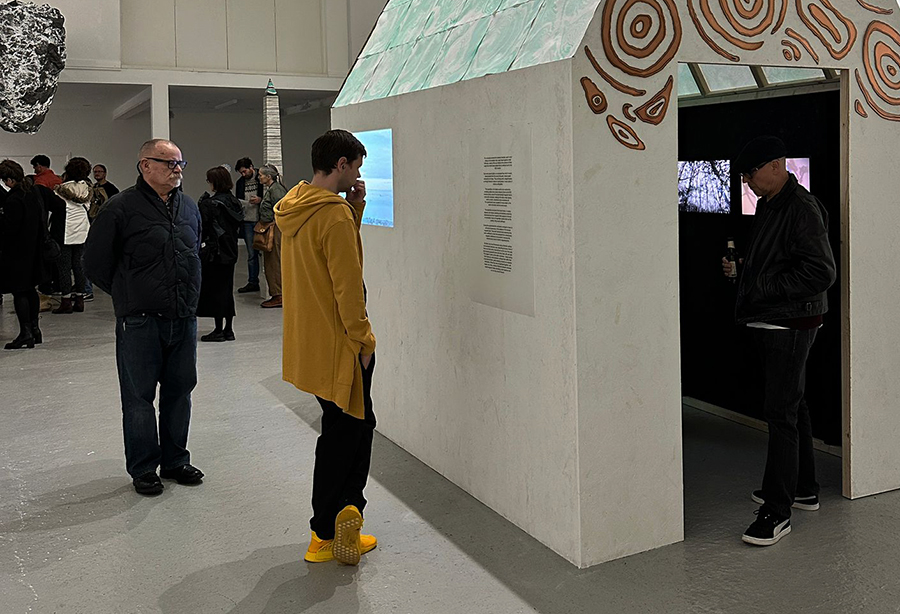
We both had ambitious large scale works to install and were grateful for the help we received from our partners (both Kevins), friends and technicians. Trevor Neale was magnificent in constructing The Absolute Hut. Anne Krinsky patiently helped apply double sided tape to the roof structure ready for the Suminagashi paper tiles and Caroline AreskogJones energetically painted the hut white and neatly edged the two way projection window. I was thrilled that, as a result of a wet few weeks, moss had started to grow on the wooden boards of the north facing wall in time for installation.

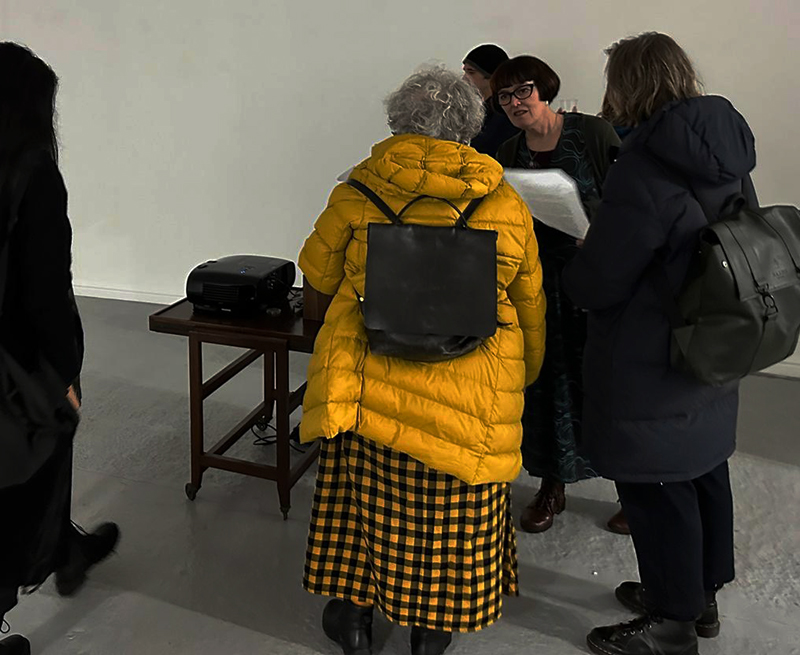
A big thank you to everyone that made it to the opening night, we were super chuffed with the positive responses.
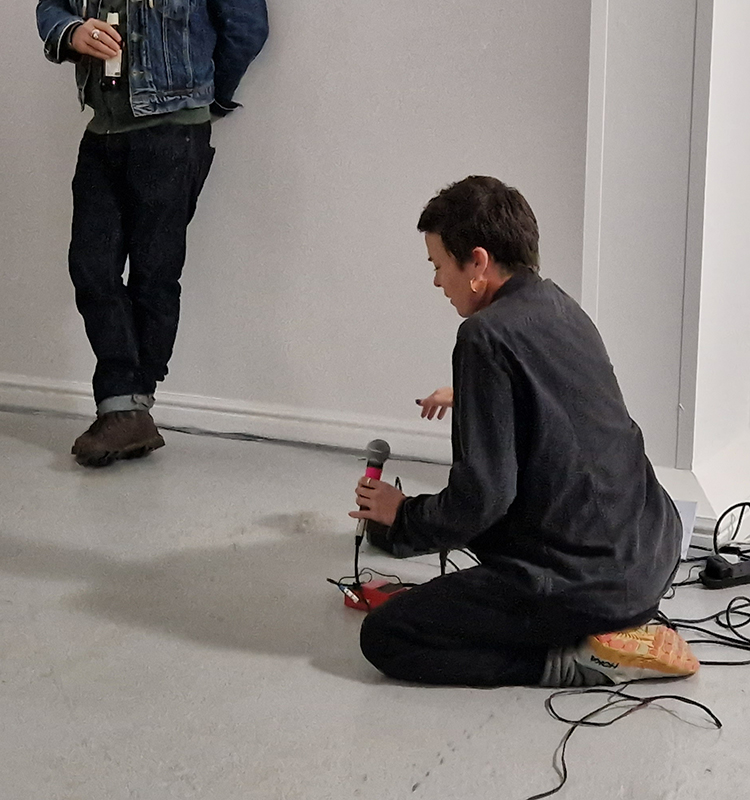
At the private view Julie’s large scale print installation was activated by a vocal performance conjuring abyssal voices of deep, cosmic time, performed and devised with Eleanor Westbrook whose voice produces incredible hauntingly beautiful sound.
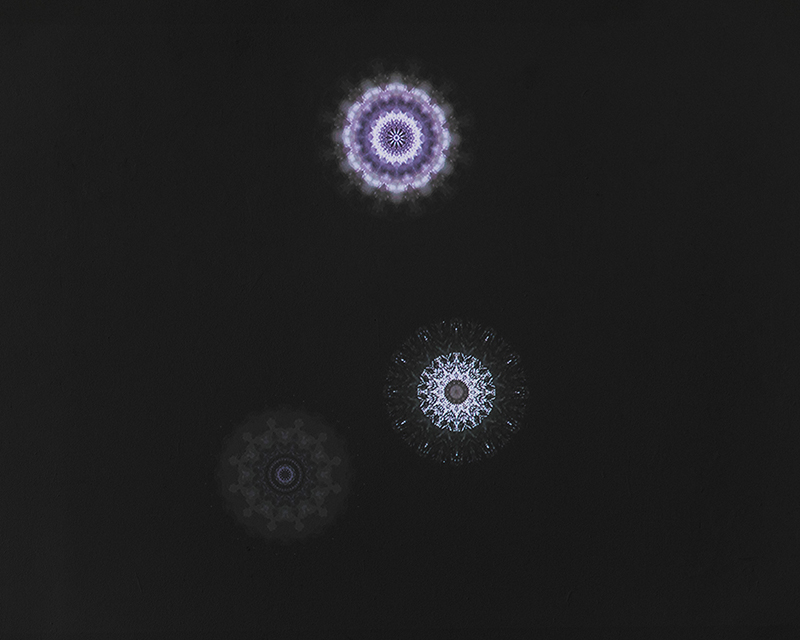
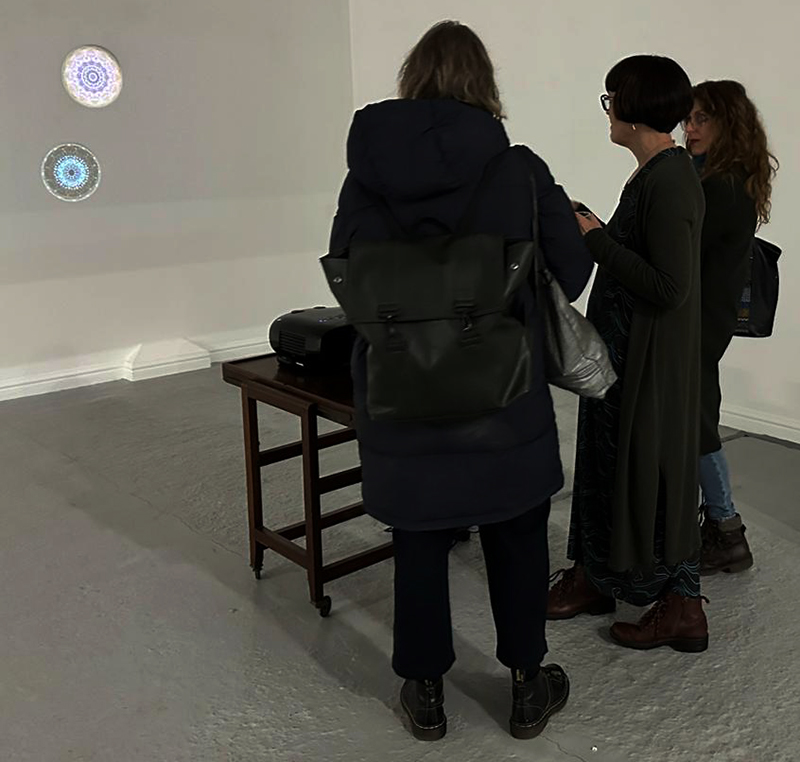
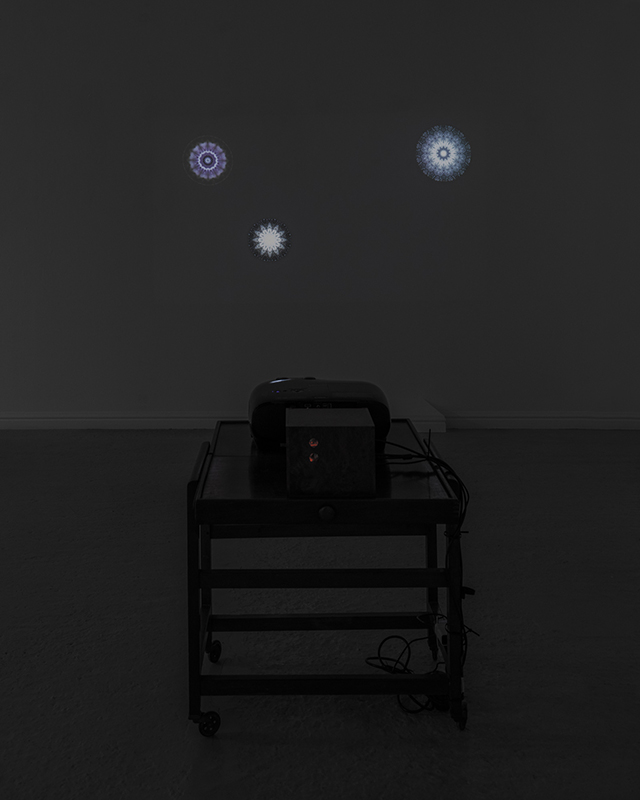
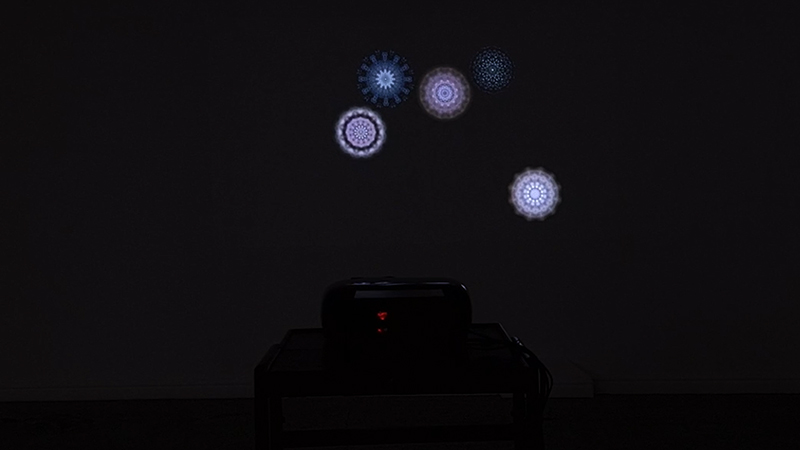
I was particularly excited to share The Breath of Stars, digital video work activated in real time by the passage of cosmic rays through a scintillator detector. After two years in development it was so exciting to watch the random starbursts appear in real time as witness to the unseen activity of cosmic rays passing through the gallery.
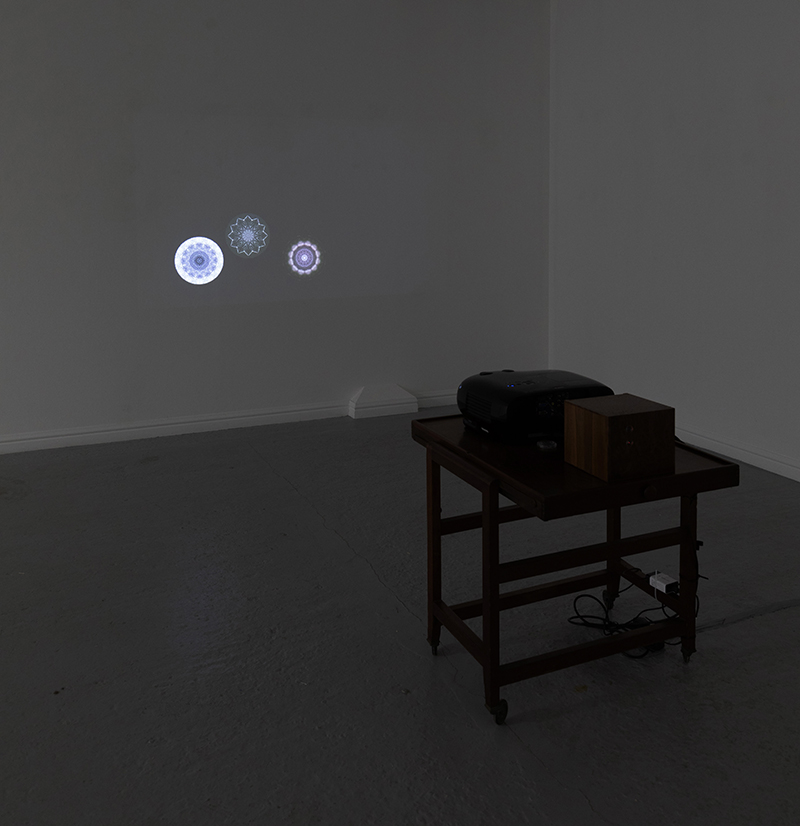
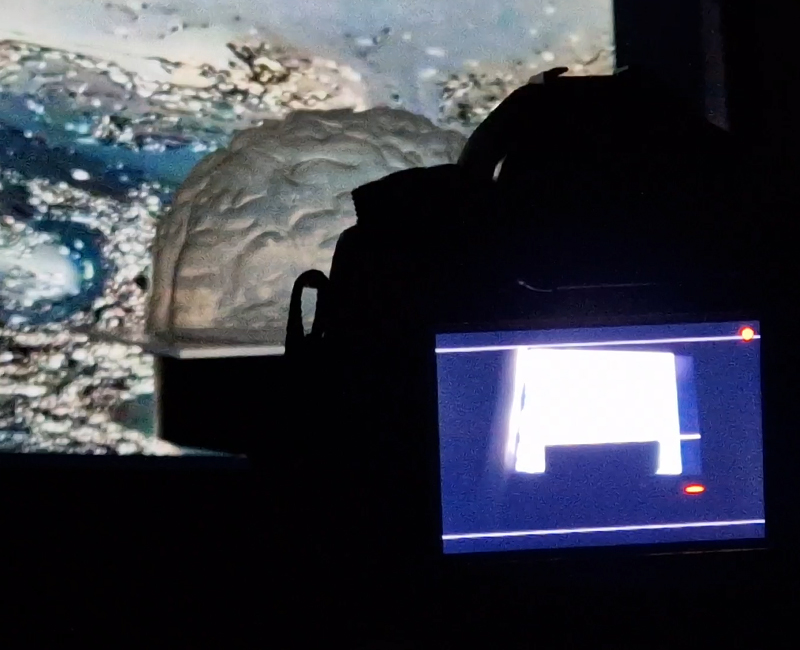
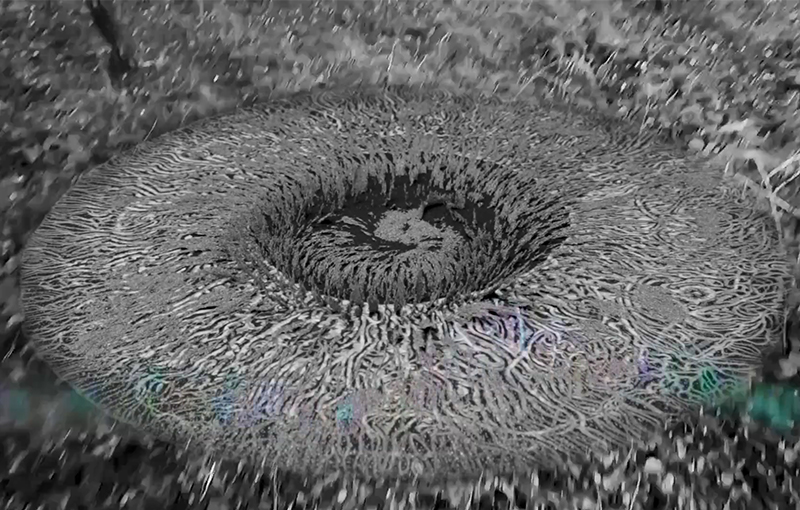
The kaleidoscopic video images that appear for every particle recorded by the detector, are created from footage of cosmic ray trails filmed in a cloud chamber.
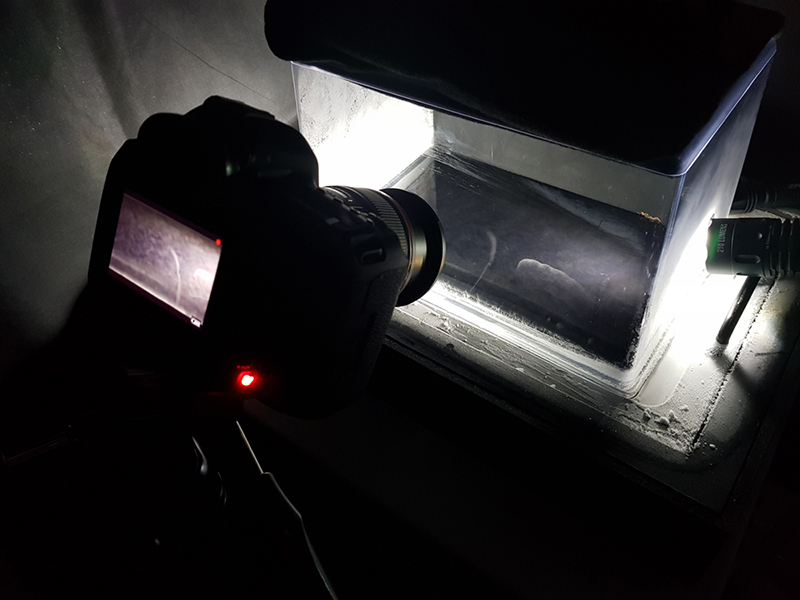
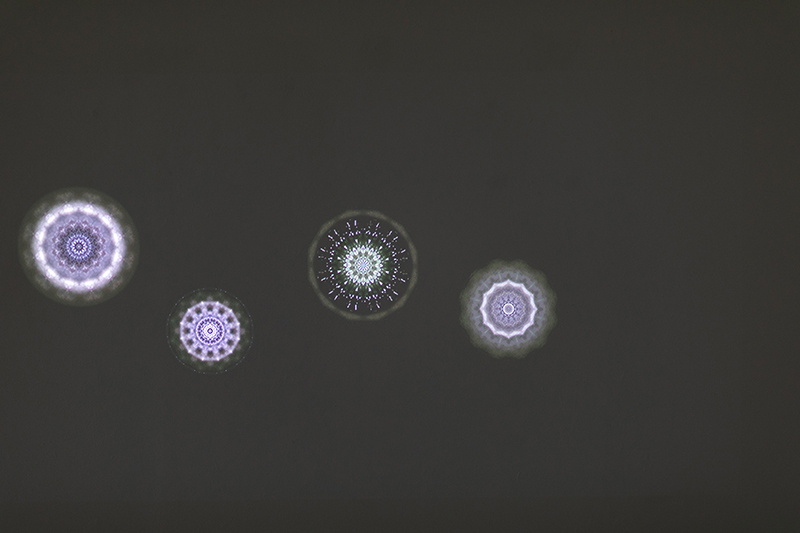
The interaction of cosmic rays with atmospheric electrical fields influences the unpredictability of the magnetosphere and this random activity can be witnessed by the sudden flurries and silent gaps of the live video imagery.
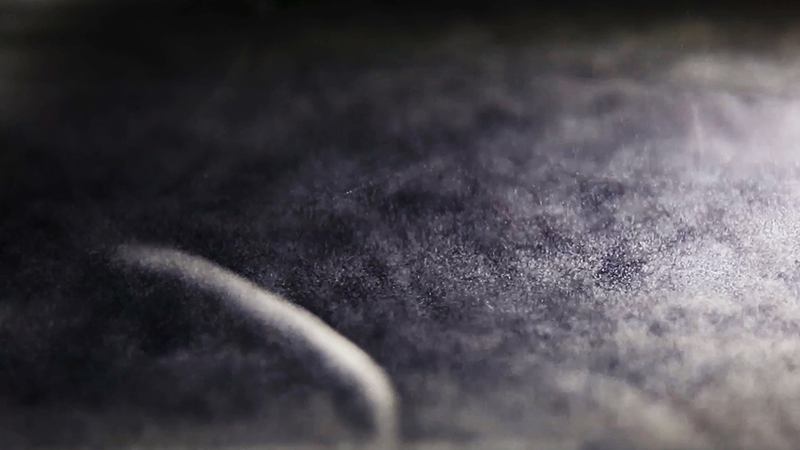
These subatomic visitors from outer space power across the universe with unimaginable energy, coming from the heart of exploding stars or the depths of black holes; some may come from phenomena yet to be discovered or even from other dimensions. Travelling at close to the speed of light cosmic rays spiral along magnetic field lines, strike the edge of the Earth’s atmosphere, break apart and shower down upon us. Some particles collide and silently interact with atoms and technology on Earth. Most cosmic rays heading for Earth are deflected by the planet’s magnetic field and without this protection life on Earth could not survive this bombardment of radioactive matter. The interaction of cosmic rays and the solar wind with atmospheric electrical fields combines to influence the unpredictability of Earth’s magnetosphere, impacting the functioning of GPS satellite technology and computer processors on which humans have come to rely in daily life.
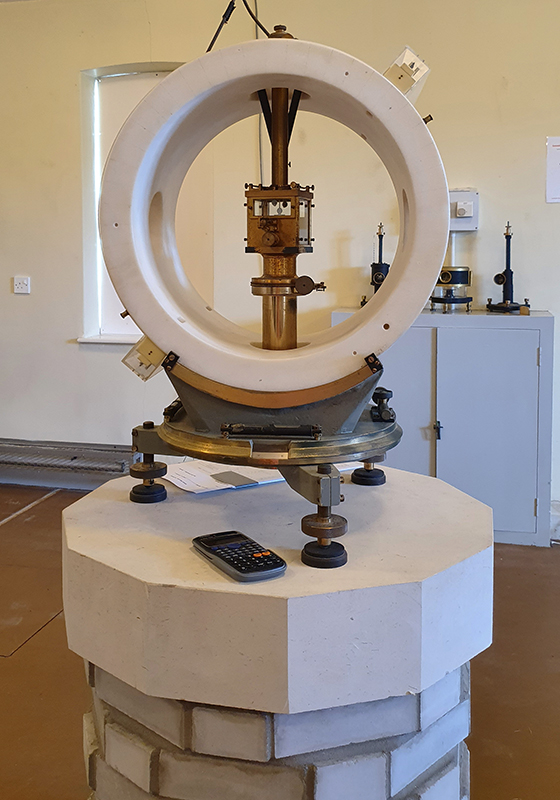
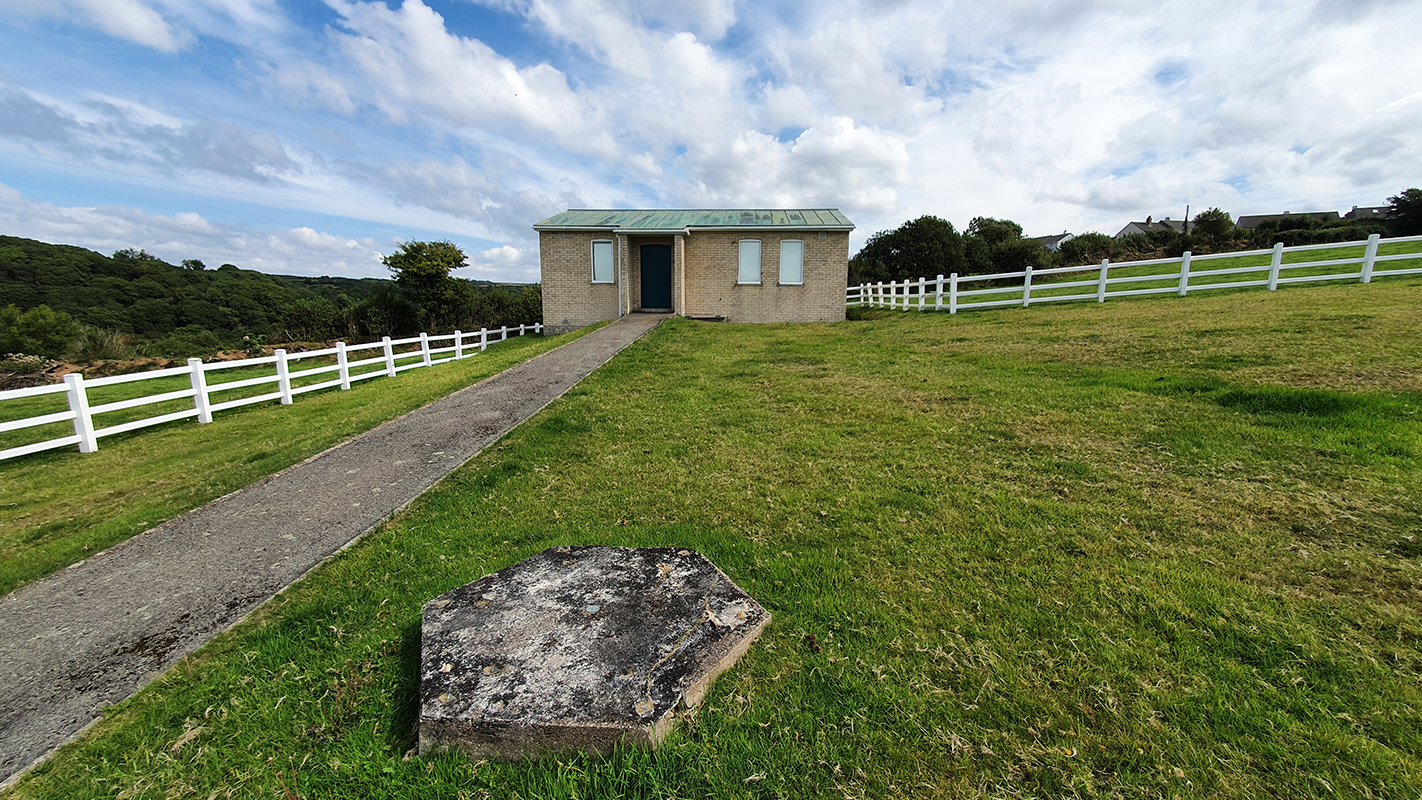
My research trip to Hartland Magnetic Observatory in North Devon was a catalyst for this body of work centring around a north facing observation hut aligned with an obelisk as a fixed azimuth mark. I am very grateful to The British Geological Survey for allowing me access to the site and particularly to Tom Martyn who shared his knowledge and gave a fascinating tour of the observatory.
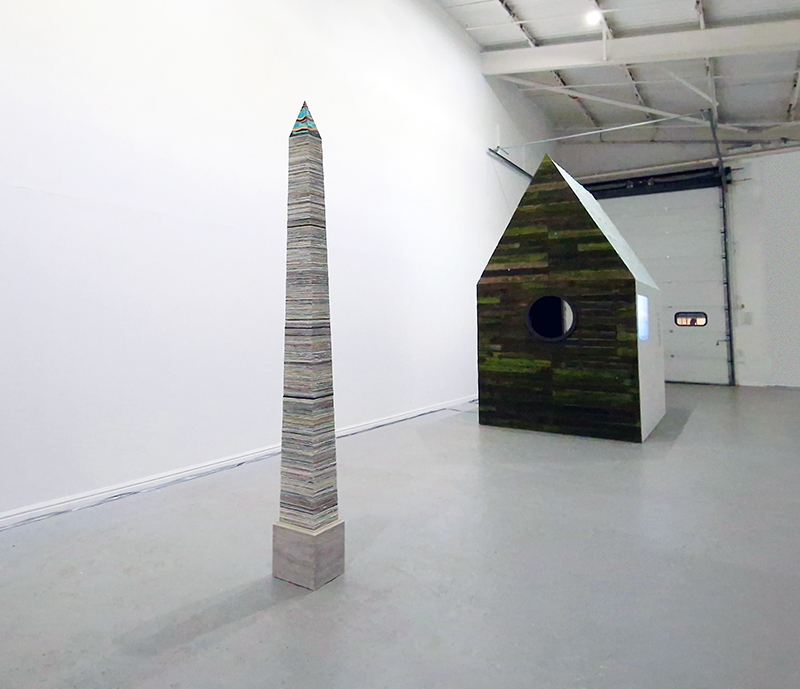
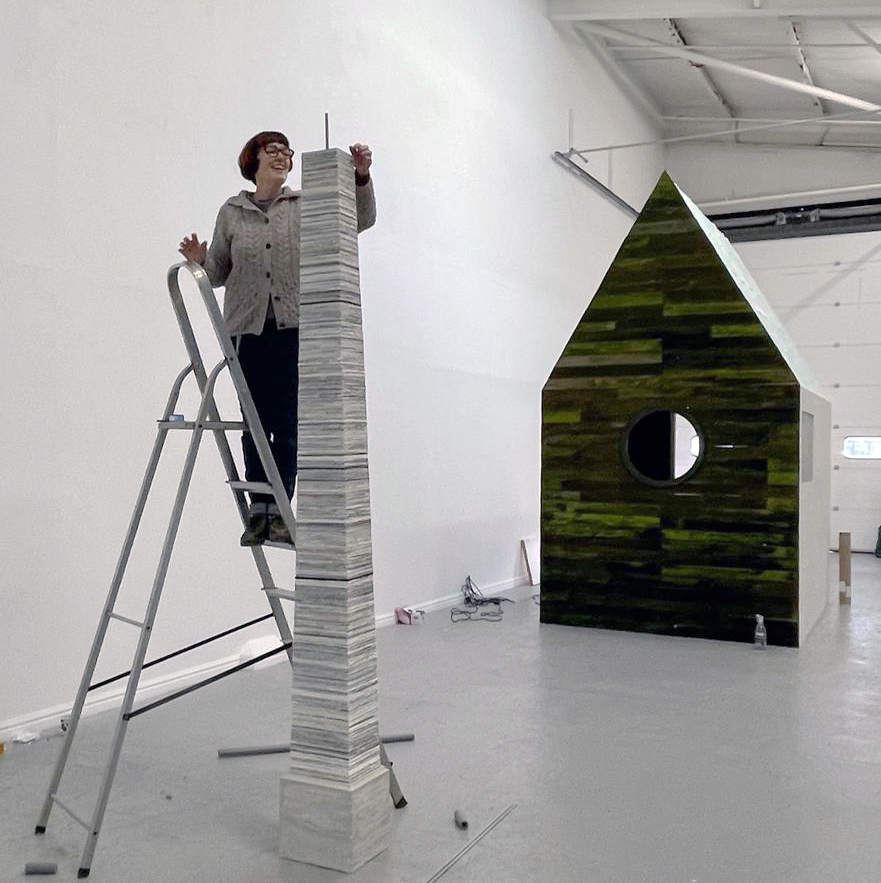
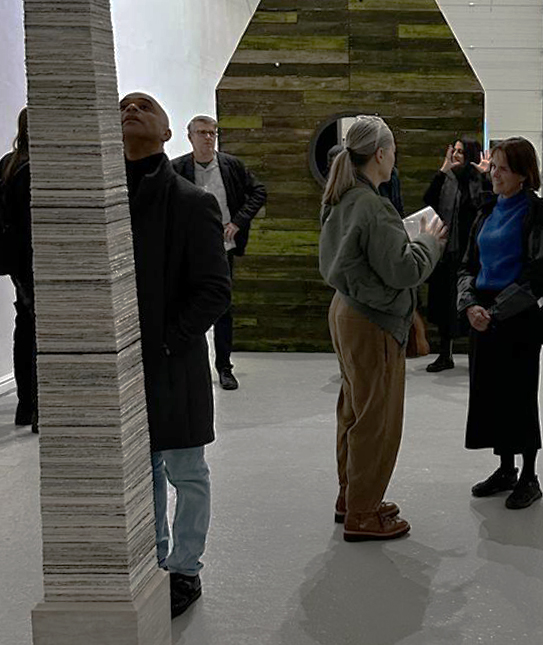
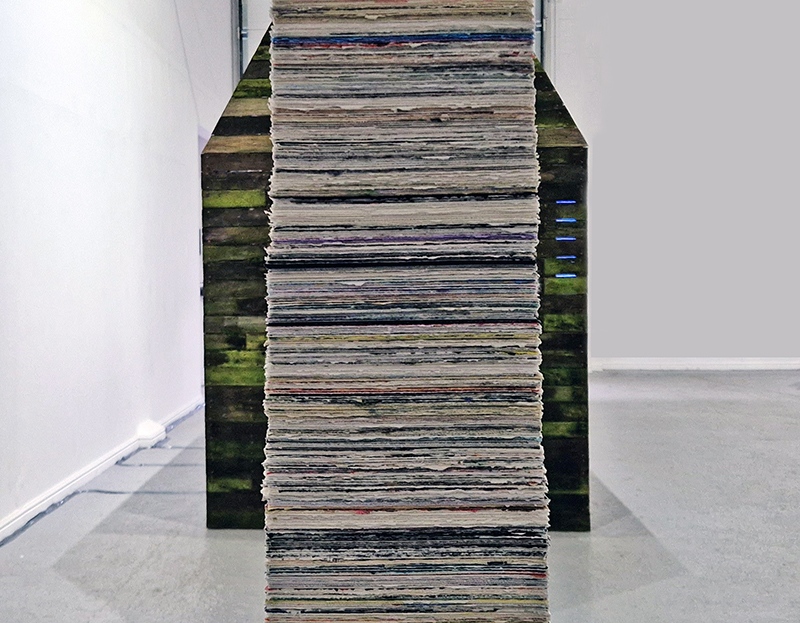
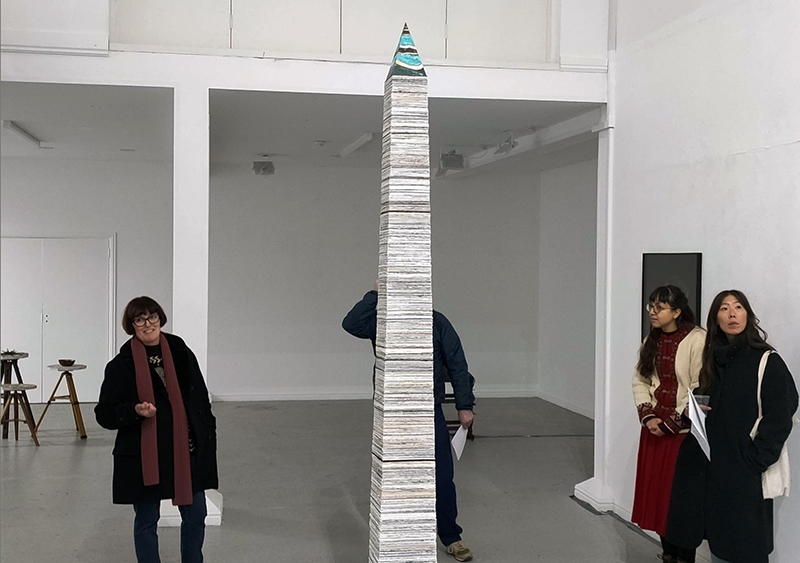
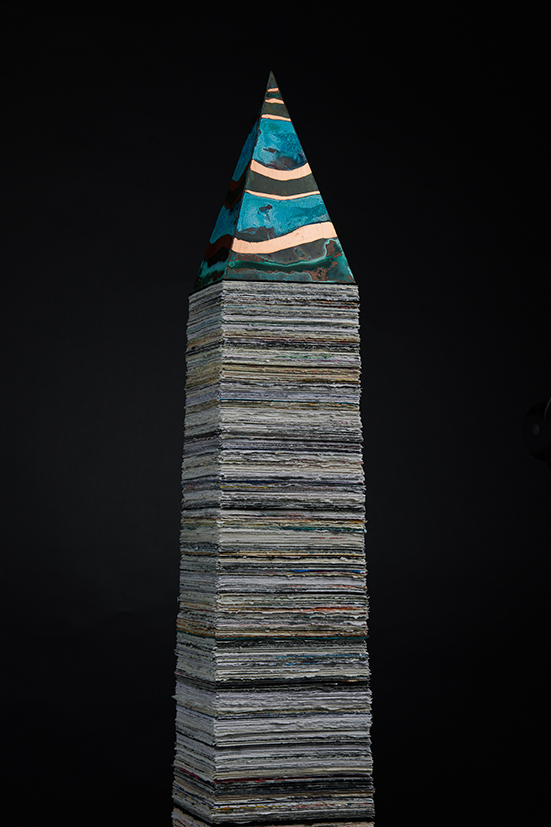
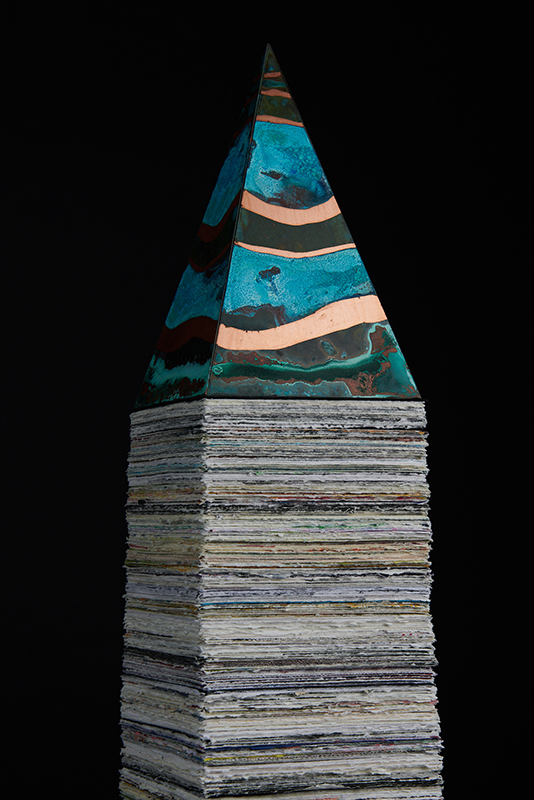
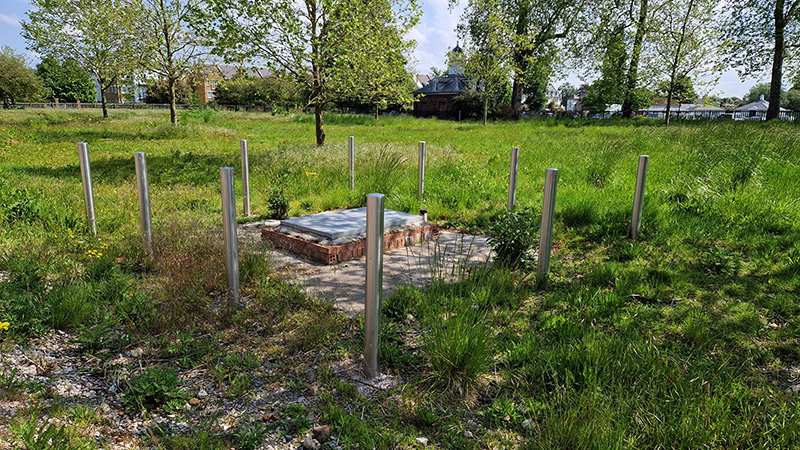
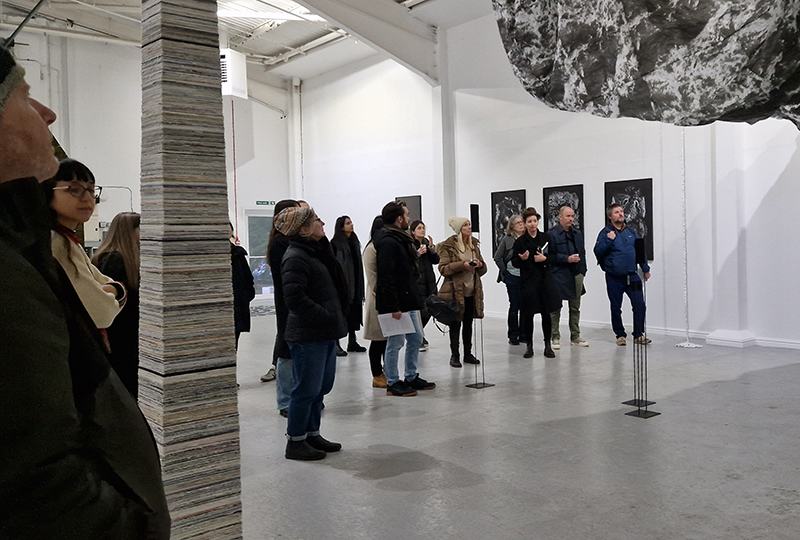
The Azimuth Obelisk (of sedimentary knowledge) is a reimagining of an obelisk erected at Hartland Magnetic Observatory in the late 1950’s near the site’s northern boundary. Viewed through the window in the north wall of The Observing Building (also known as the Absolute Hut) it acts as a permanent azimuth mark from which the drift of the magnetic north pole is monitored. Currently almost hidden by undergrowth, the observatory’s concrete azimuth mark has been replaced by a digital GPS position. Much as the Earth’s geological and magnetic history is secreted into the strata of sedimentary rock, this sculpture also expresses the passage of time through the layering of recycled paper prints and drawings whose history becomes embedded within the stacked layers.

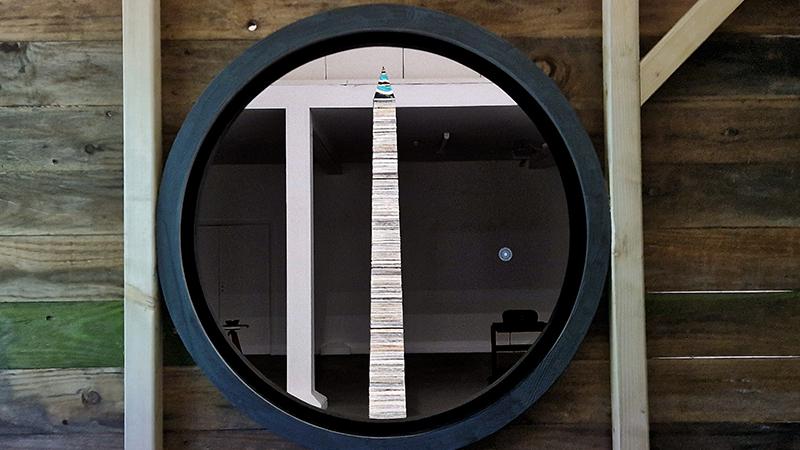
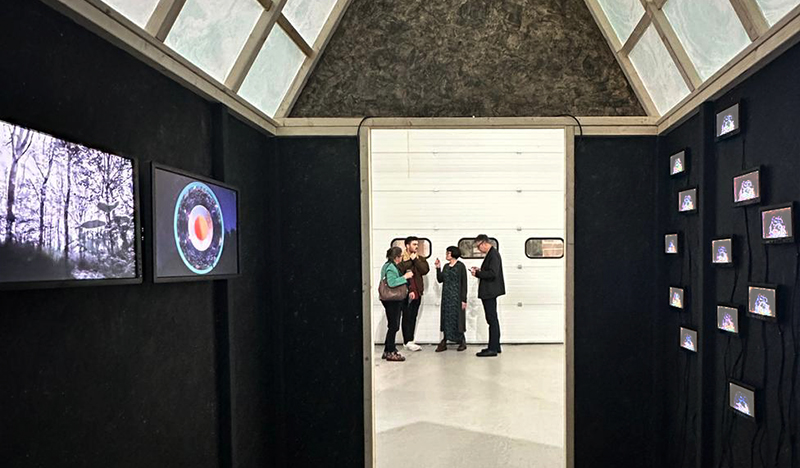
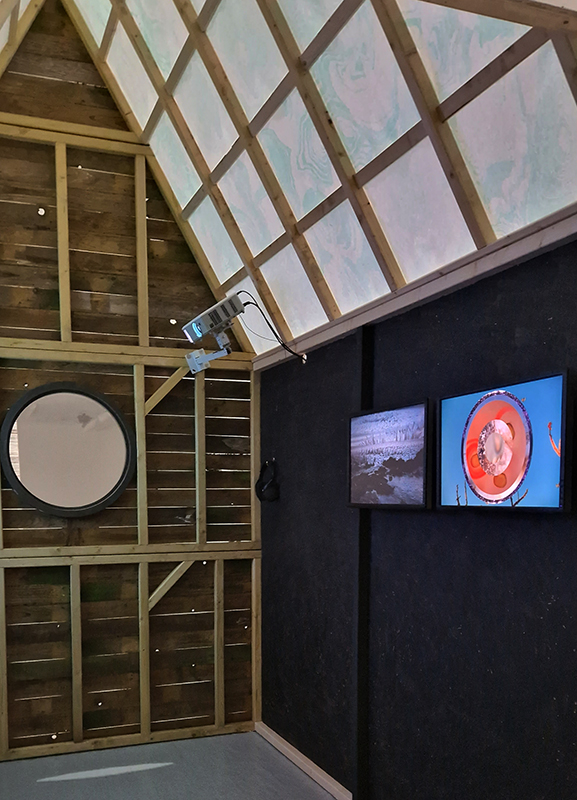
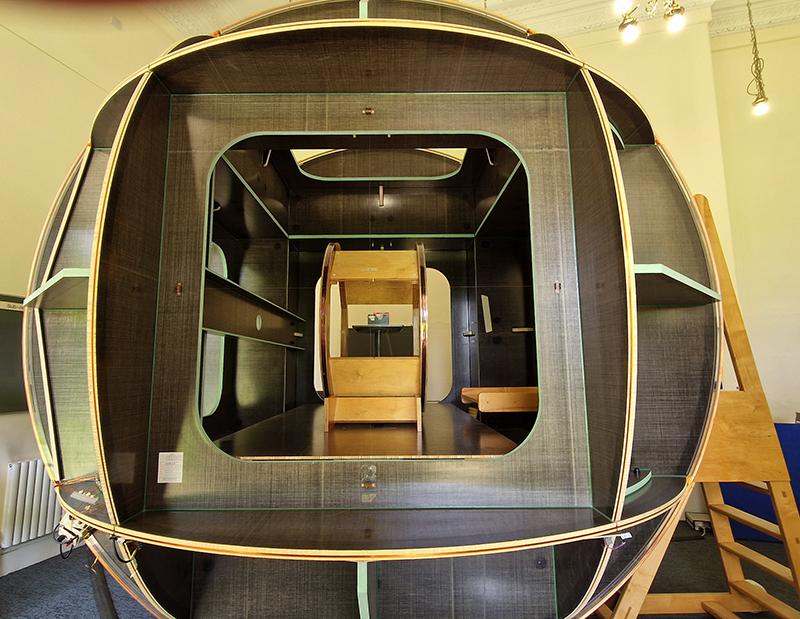
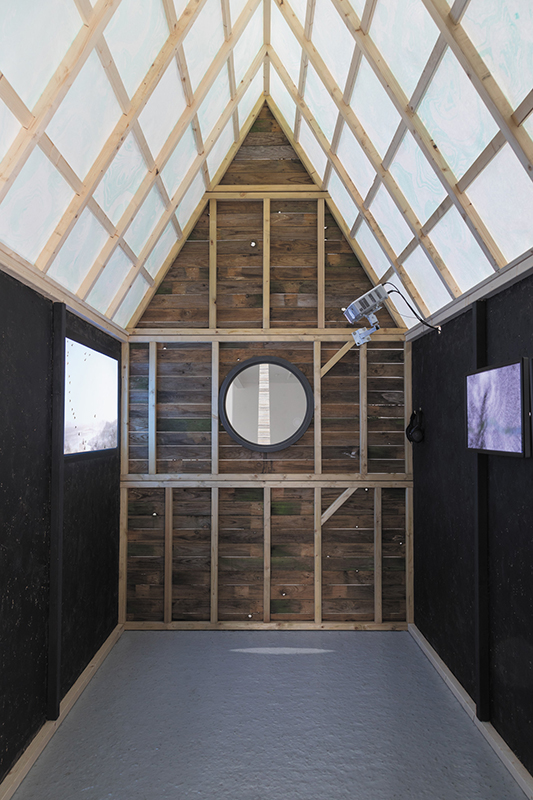
The Absolute Hut (of action potential) operates as a sensory hub with video screens suggesting portals into a web of neural pathways where a range of actions and processes are running concurrently reflecting on the dynamics between the Earth’s geologic structure and navigation using the magnetic field.

The title refers to the way neurons send information electrochemically around the body. The signals they send are called action potentials which is a temporary shift from negative to positive within the cell caused by certain ions entering the cell. Action potentials can be triggered by an interaction with the magnetic field causing a reaction in the body.

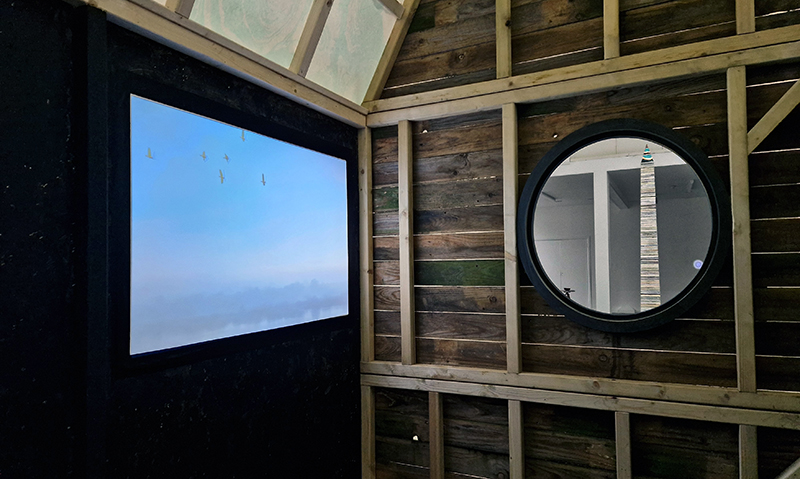
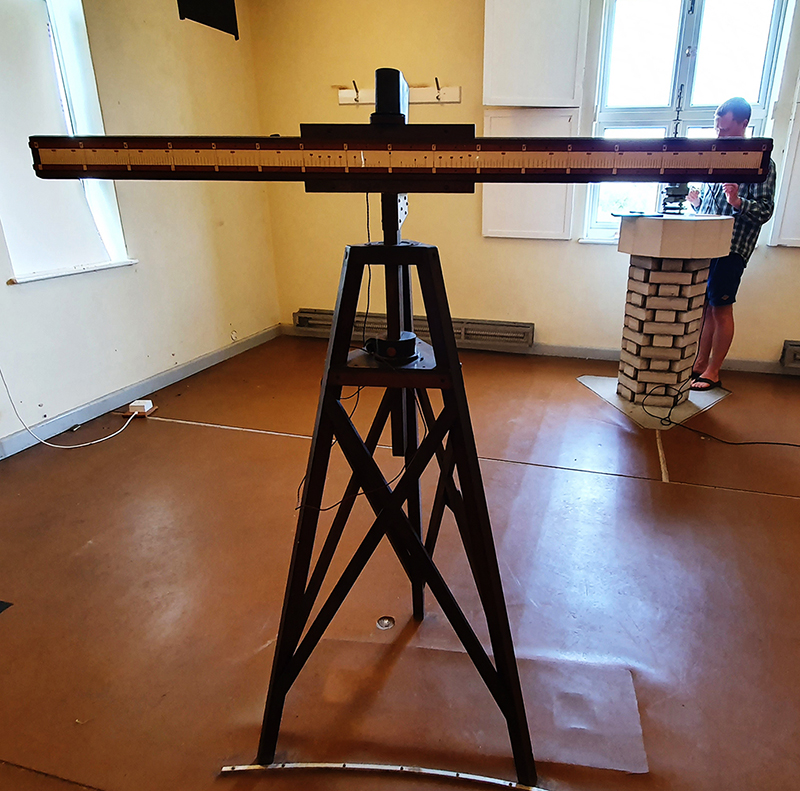
The installation is conceived from a combination of features, impressions and functions of the observing building and instruments at Hartland Magnetic Observatory in North Devon and the observation huts built in the 18th century at The Kings Observatory in Kew for meteorological and magnetic observations.
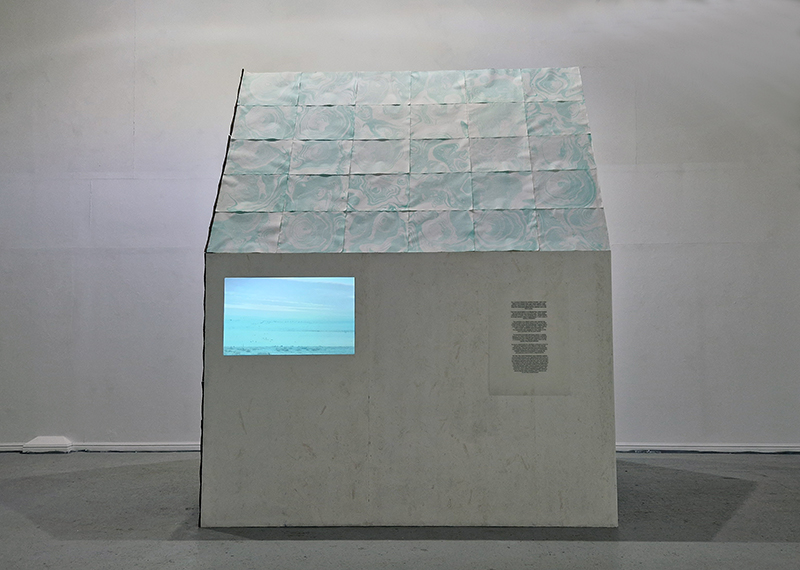
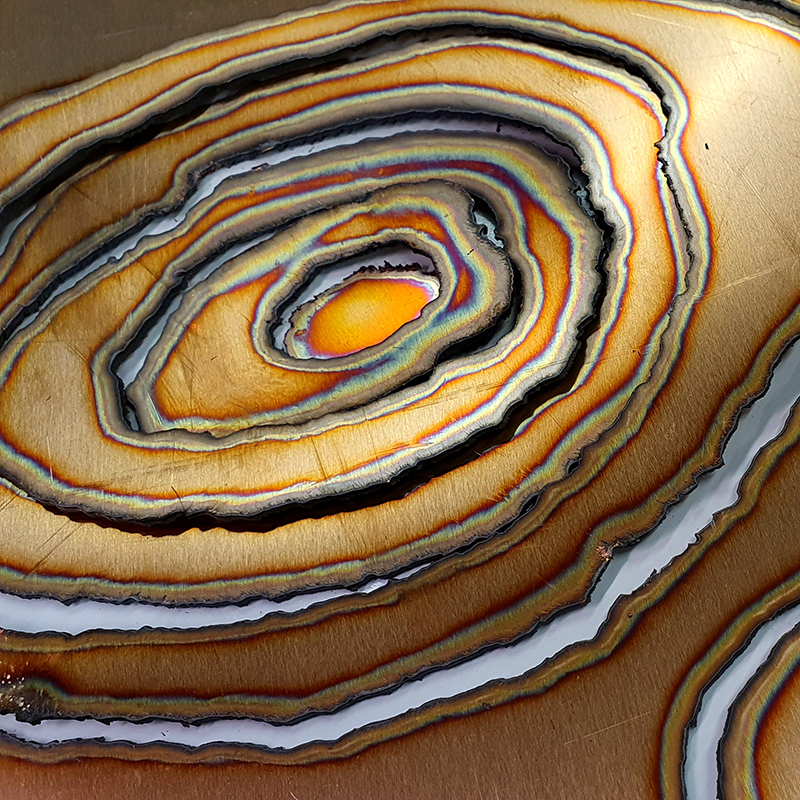
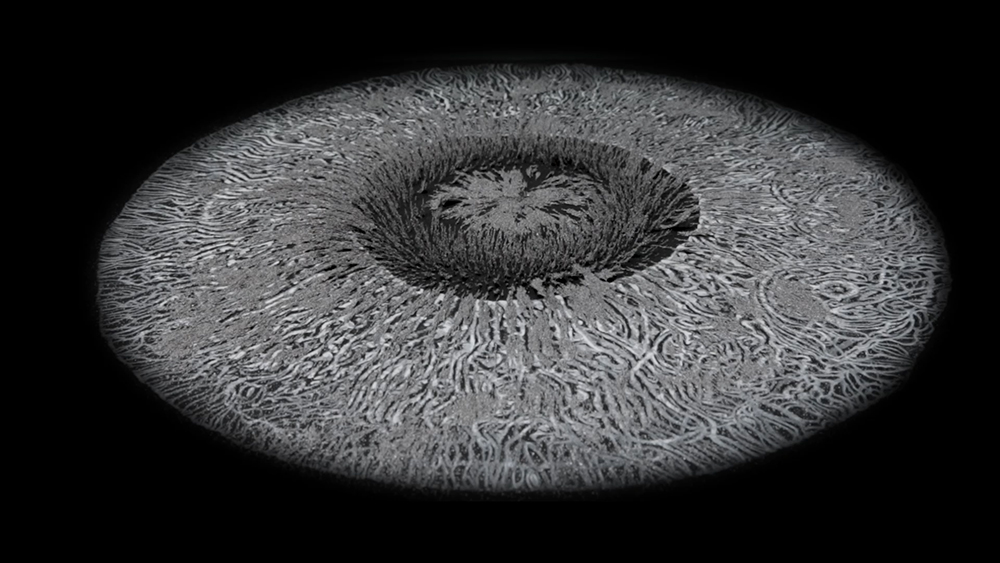
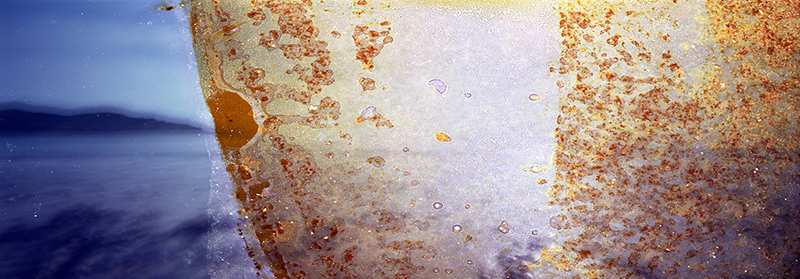
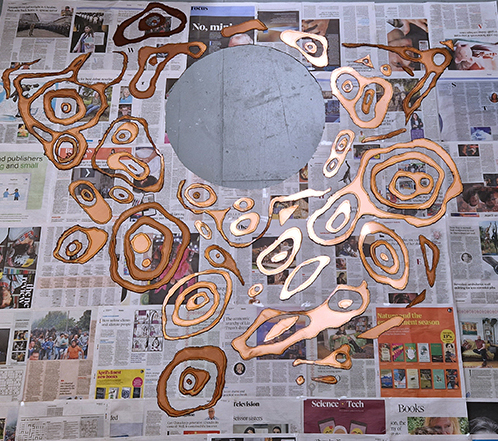
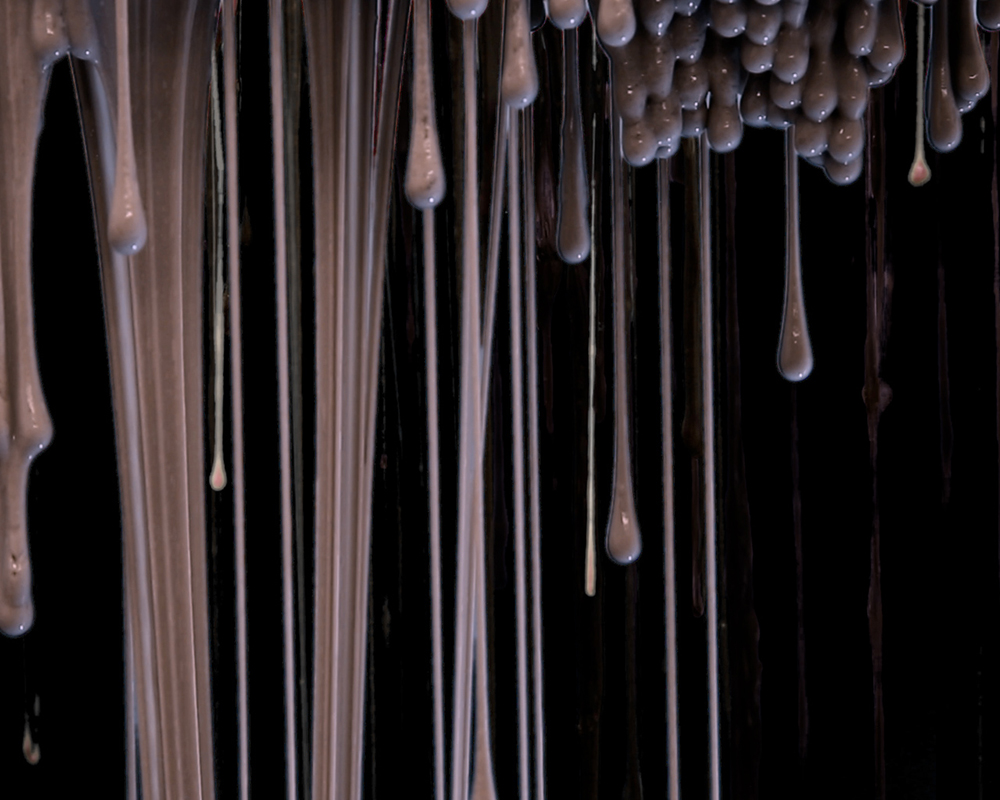
Topological contours of suminagashi marbling and plasma cut copper reflect the fluid motion of the Earth’s molten iron core and the pulsating alpha waves of the human brain when subjected to magnetic fields.

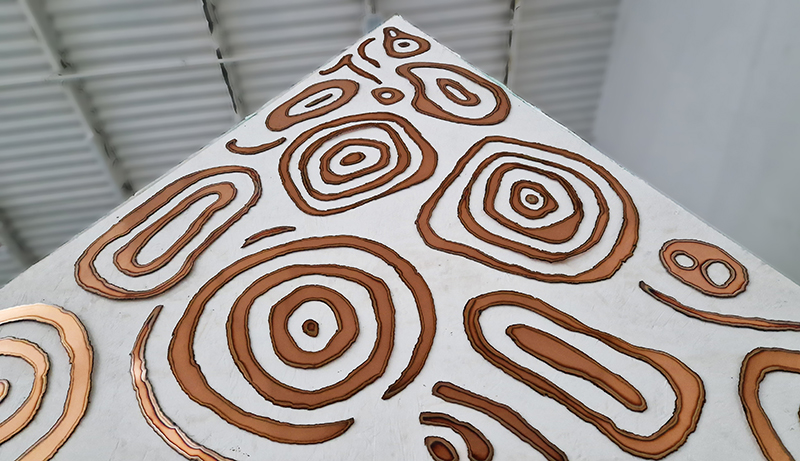
‘the internal skies have their own birds’ Italo Calvino Cosmicomics

The fascinating and perilous journeys made by migrating birds has been a natural wonder for centuries with the first records of this phenomena made more than 3,000 years ago. The innate knowledge of migratory birds is mentioned in Job and Jeremiah and the ancient Greek writers Homer, Hesiod and Aristotle noted their passage.

Job 39:26 Doth the hawk fly by thy wisdom and stretch her wings towards the south?

Wintering light two way video projection of migratory pink footed geese filmed at RSPB Snettisham on the North Norfolk coast.
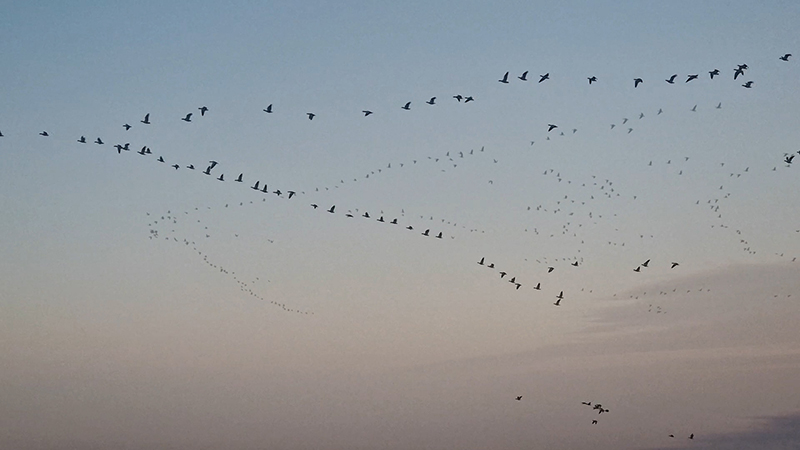
Research has proven that birds and many other animals can use the earth’s magnetic field for navigation. There are two ways this happens. In birds there is a protein in the retina of the eye – (cryptochrome molecules) which trigger action potentials enabling them to visualise the magnetic field. In other animals and magnetotactic bacteria tiny crystals of magnetite respond to the field. This may also be true of humans as we do have these crystals in our brain cells.

Birds use three different compasses to navigate across the globe; the sun, the stars and the magnetic field.
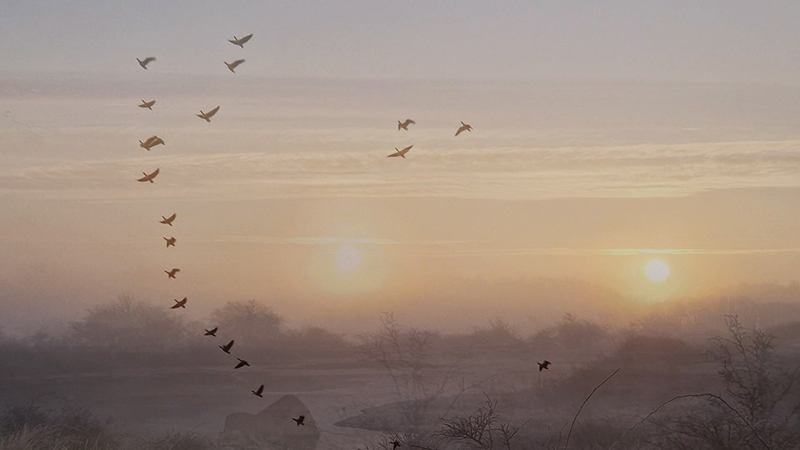
Birds are also able to detect rapid movement such as individual flashes or flickering of a fluorescent light which humans see as a continuous light. Hawks which pursue other birds through dense forests at high speeds, follow the movement of their prey while avoiding branches and other obstacles. To humans travelling at this speed, the fleeing prey, branches and obstacles would just be a blur.

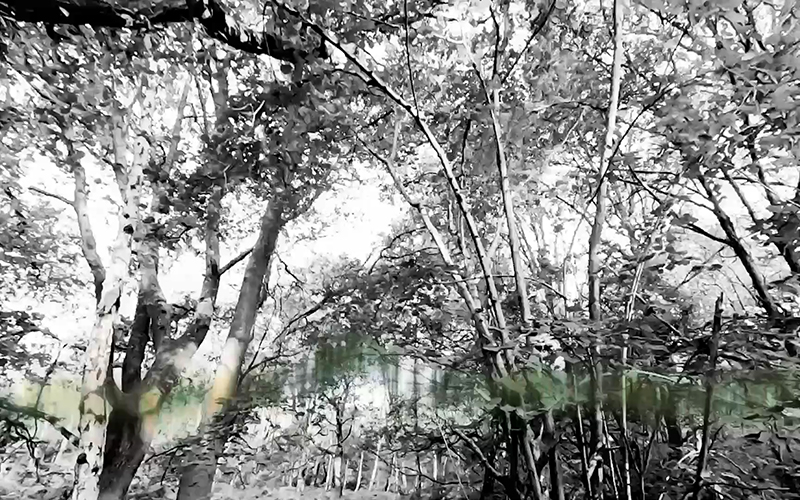
Degrees of Variation considers what it might be like to have the sensory powers of a bird where a protein in the eye is excited by polarised light making it possible to see the magnetic field and follow a visual navigatory cue in an accelerated world. The video imagines flight over water and through woods while being guided by the force of a magnetic field.
Calvino’s story The Stone Sky is wonderfully descriptive of the volatile geological structure of the Earth. This fluidity is what makes life on Earth possible. Only planets with fluid cores have magnetic fields. The geological interior generates a field that reaches into outer space offering a protective shield.

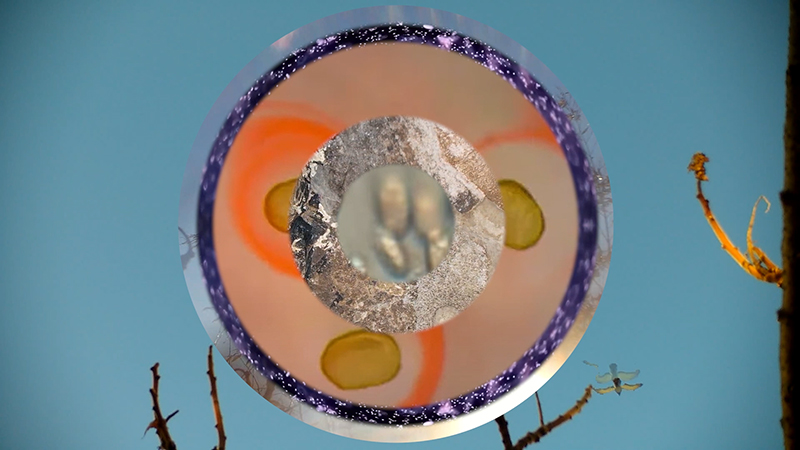
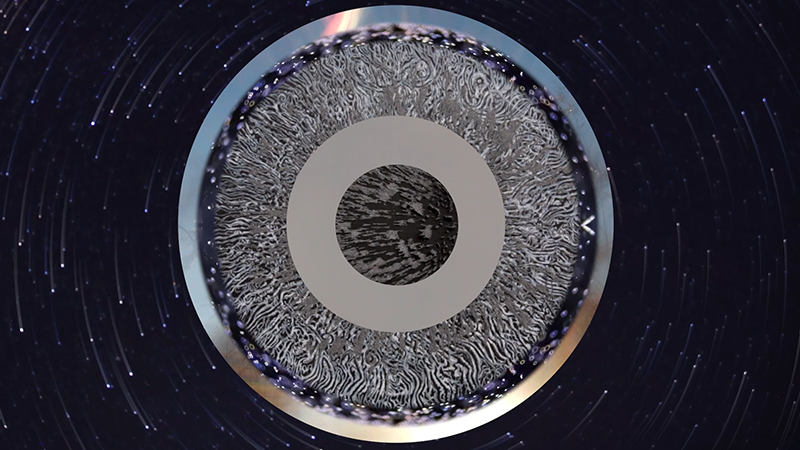
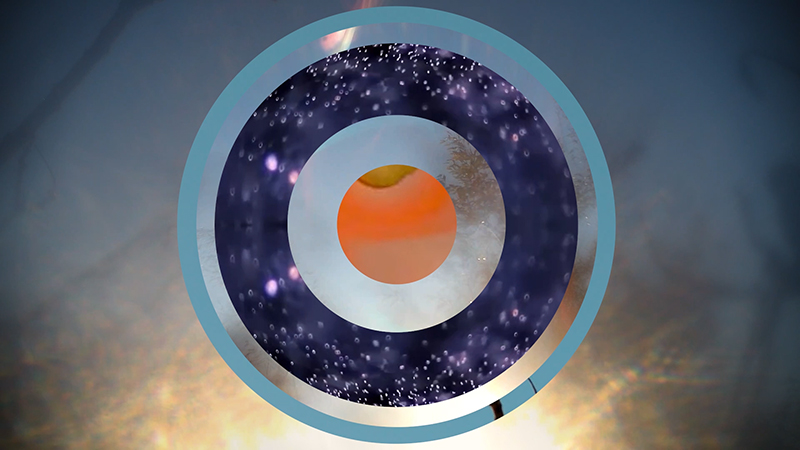
internal skies : external spheres video sequences within concentric circles mimic the geological structure of the Earth to explore the relationship between Earth’s magnetic field and various methods of navigation including via magnetoreception and celestial observation. Sequences include star trails around Polaris (the current north star), birds and bees that use the magnetic field for navigation, magnetotactic bacteria, magnetised iron filings, aerial views of the coastline around Hartland and early morning polarised light which excites the cryptochrome protein in a birds eye.

The Earth’s geomagnetic field is created by a combination of three separate fields and timescales. The main field is generated in the earth’s molten iron core.  Observing the field gives clues to the planet’s deep interior which is inaccessible to direct observations. Changes are measured in the annual drifting of magnetic poles. Secondly electrical currents caused by solar weather and cosmic rays bouncing off the Earth’s main  field charge the surrounding ionosphere causing fluctuations in the field. This field changes by the micro second as we orbit the sun. The Earth’s magnetic field also acts as a shield against most potentially harmful charged particles from outer space. Finally the residual magnetisation of the geology of the rocky mantle and crust, measured in deep geological time also offers clues to the geological history of Earth.
The understanding of the world surrounding us forms in the darkness of our skulls. 
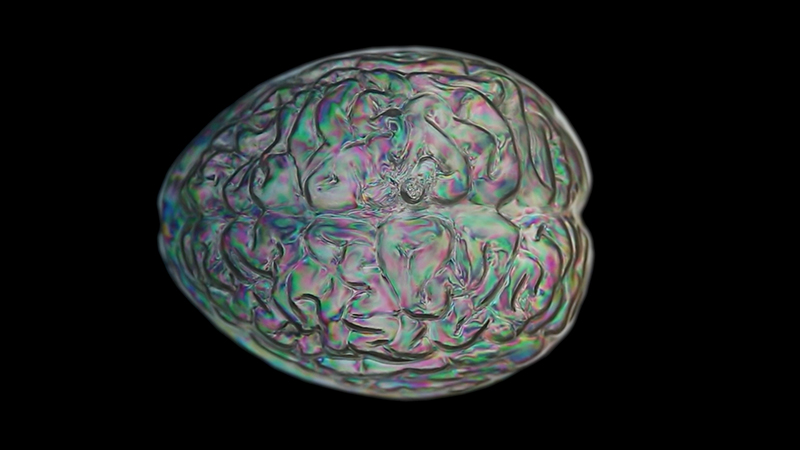
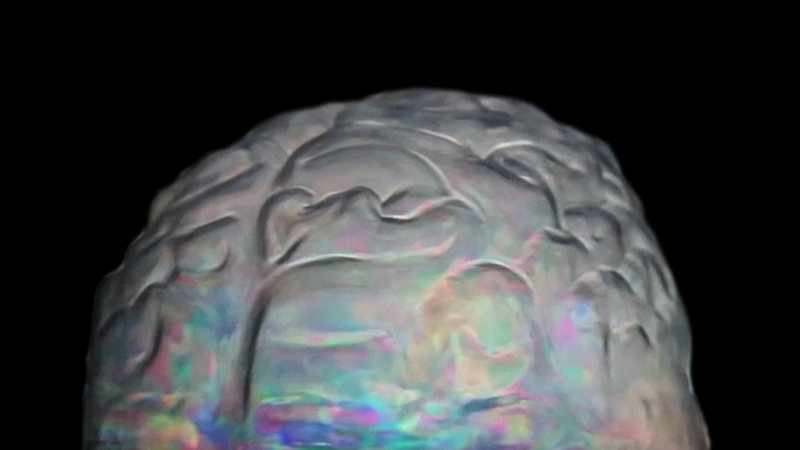
interference – a panel of 12 small video screens inside The Absolute Hut (of action potential), showing images of the human brain filmed by using polarizing filters to create pulsating birefringence colours, relate to the narrative pinned to the outside of the hut.
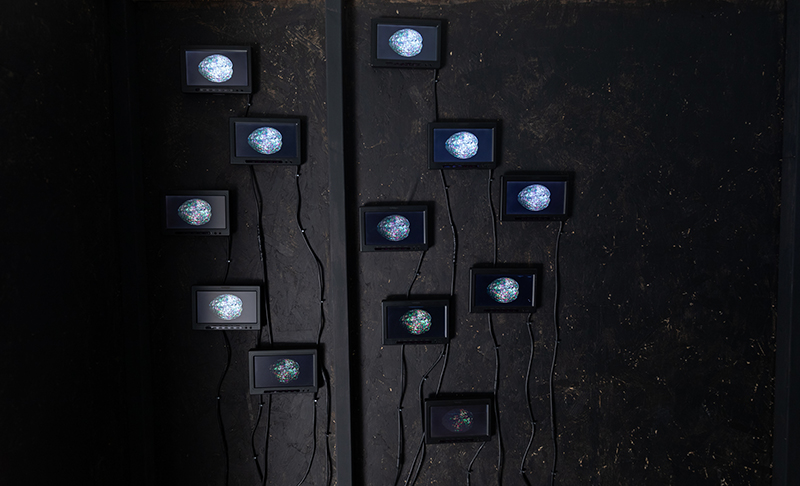
The narrative is a mix of fact and fiction based on a real experiment carried out at Caltech where scientists found Alpha waves in the human brain do respond to Earth’s magnetic field and other research suggesting that it could be possible for the magnetic field in one animal’s brain to transmit information to another animal’s brain by triggering action potentials creating the same thoughts and emotions.

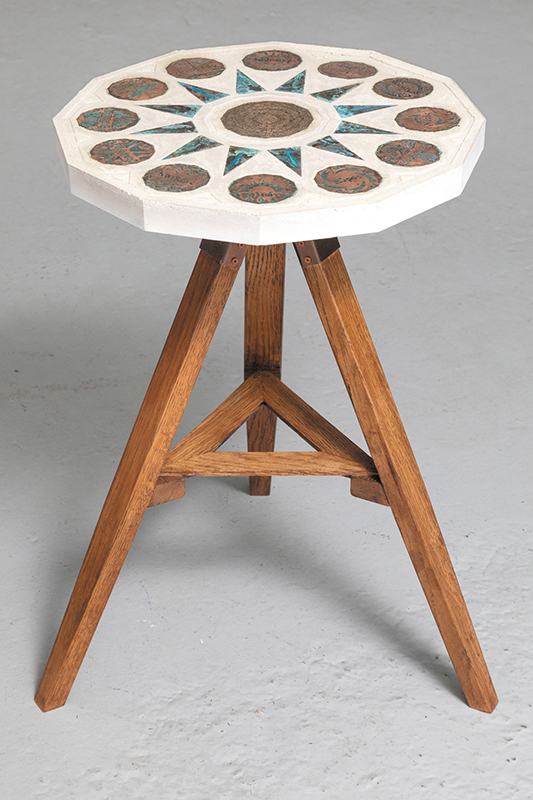
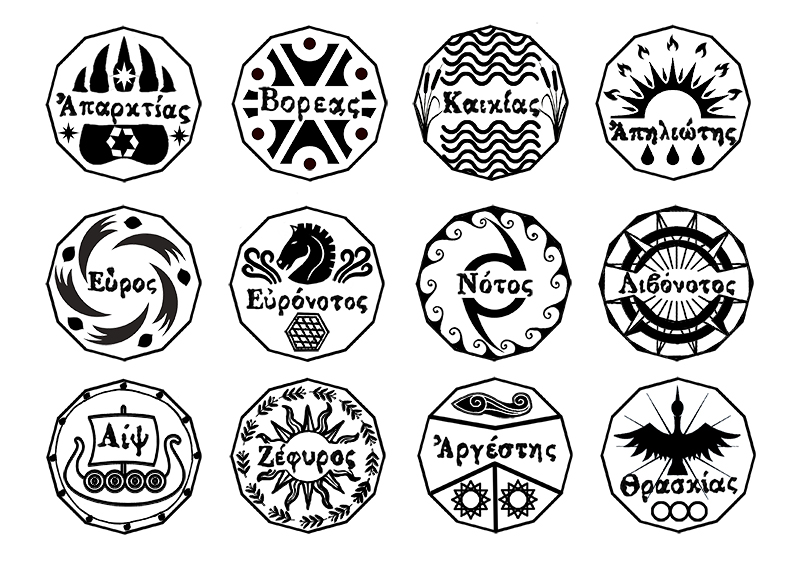
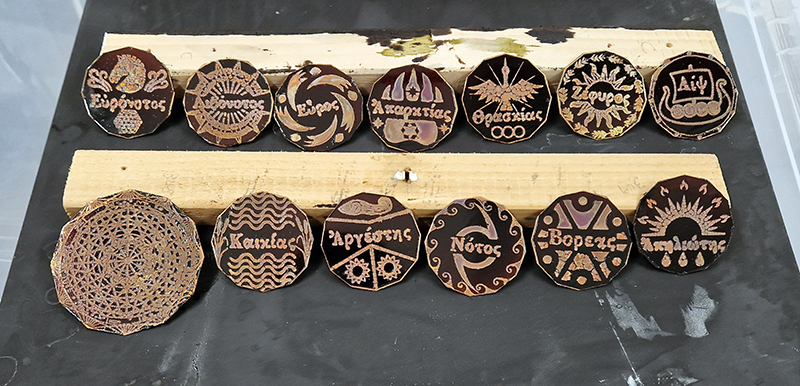
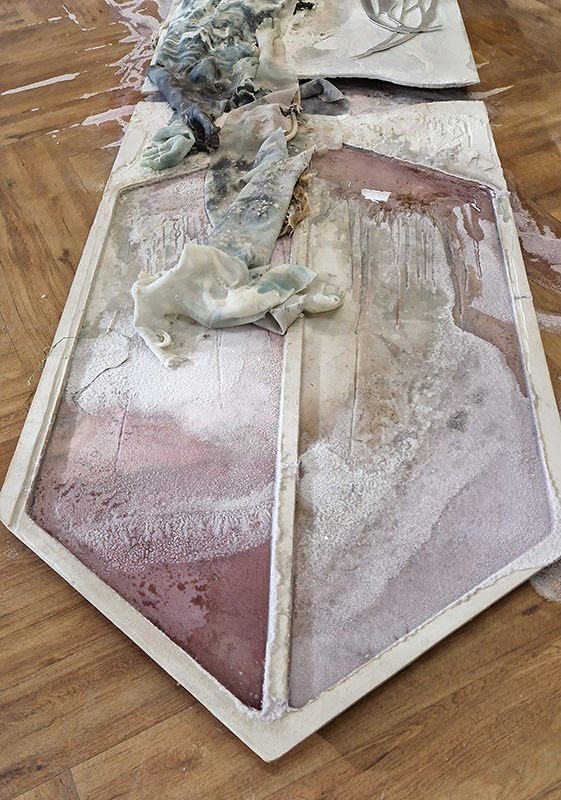
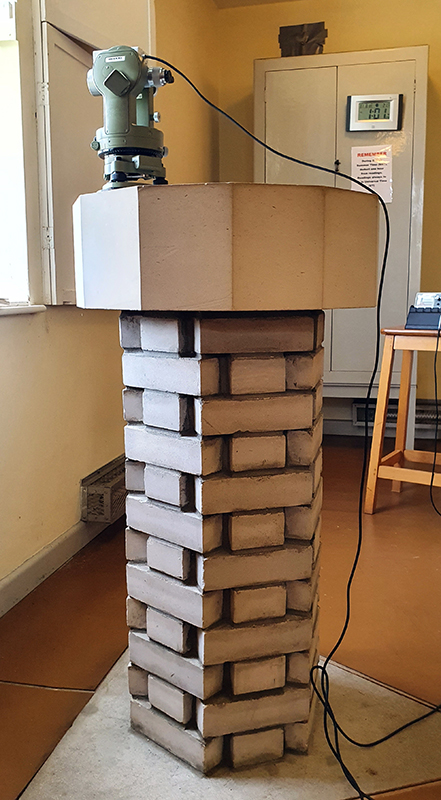
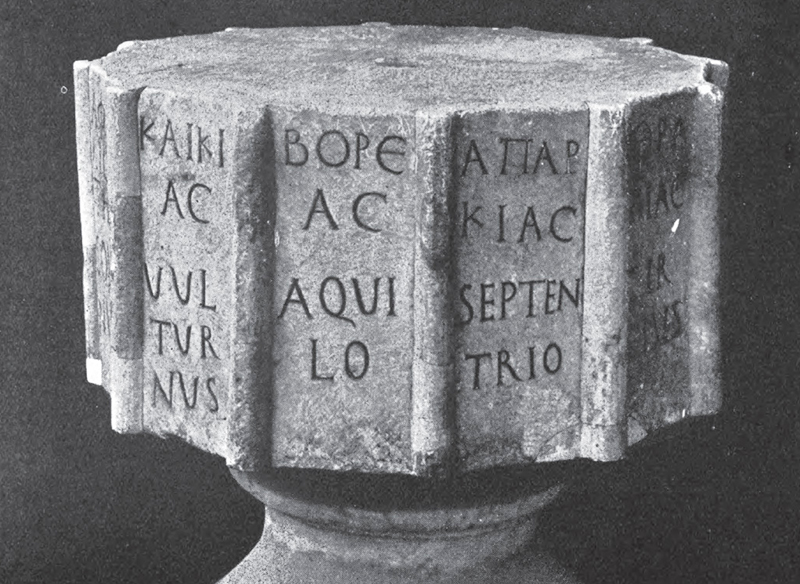
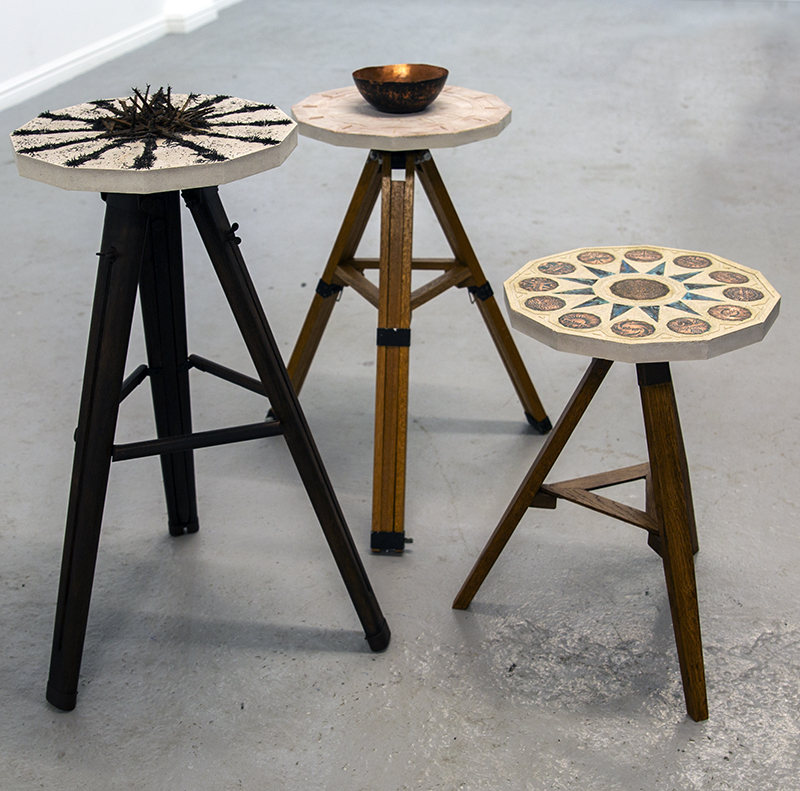
Instruments of the Anemoi are a set of dodecagon tablets cast in Snowcrete, a non-magnetic cement, as used in a magnetic observatory. Suggestive of the pedestals that support various instruments used in monitoring the Earths’ magnetic field they also respond to an ancient anemoscope “table of the winds” carved in marble around eighteen hundred years ago and inscribed with the Greek and Latin names of classical winds on each of its twelve sides. Envisaged here as speculative objects, instruments and schematics wrought by the wind gods, the first emissaries of navigation and orientation.
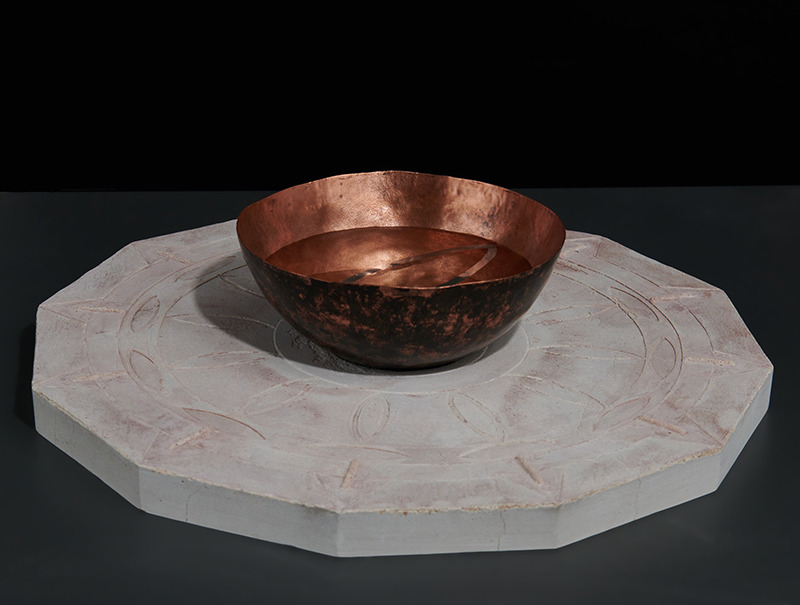
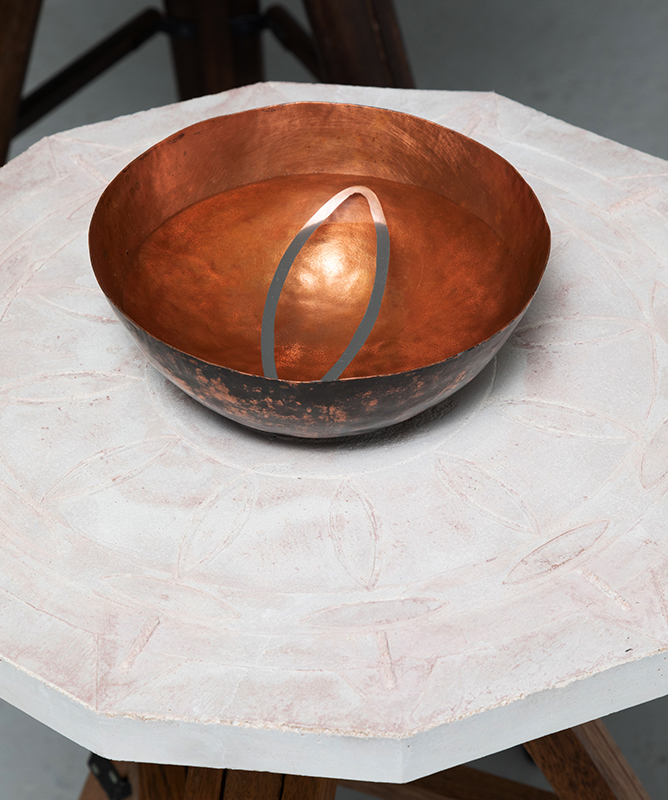
One tablet holds a copper bowl with a ‘silver fish’ floating in water. The shape of the ‘silver fish’ is based on the oval shaped compass needle (illustrated in Breve Compendio de la Sphera de la arte Navegar by Martin Cortes 1551)  and refers back to wafer thin fish shaped iron leaves used by 11th century Chinese geomancers.
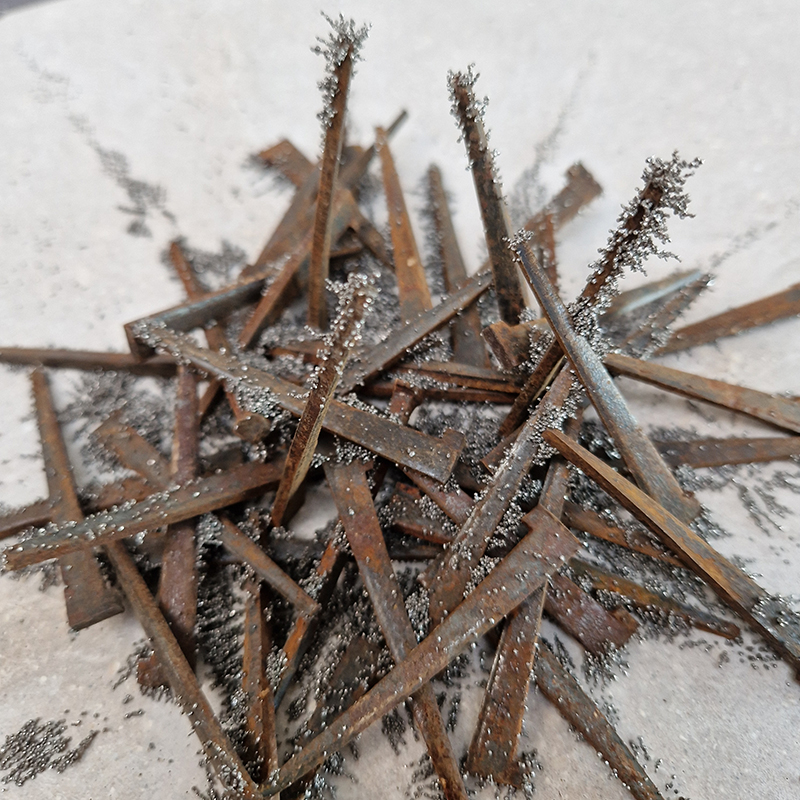
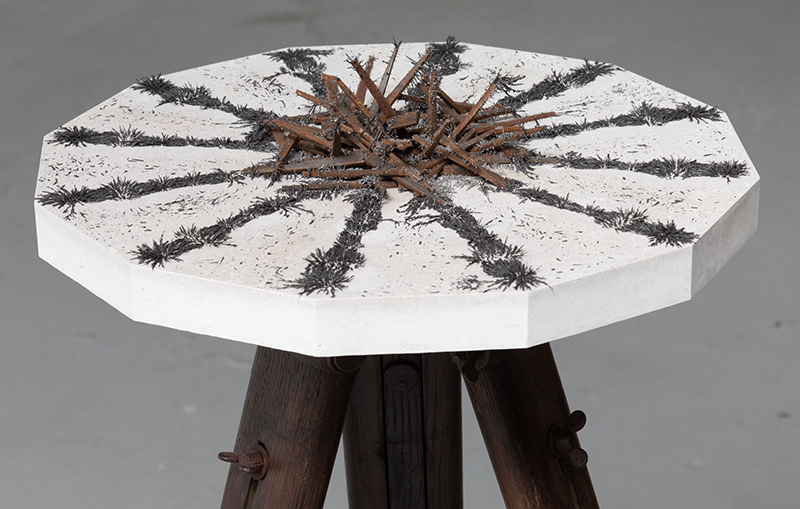
Nails and iron filings on the second tablet reveal an embedded magnetic field recalling a legend that the discovery of the lodestone was made by a Greek shepherd who noticed the nails in his boots were attracted to the rock (magnetite) beneath his feet.
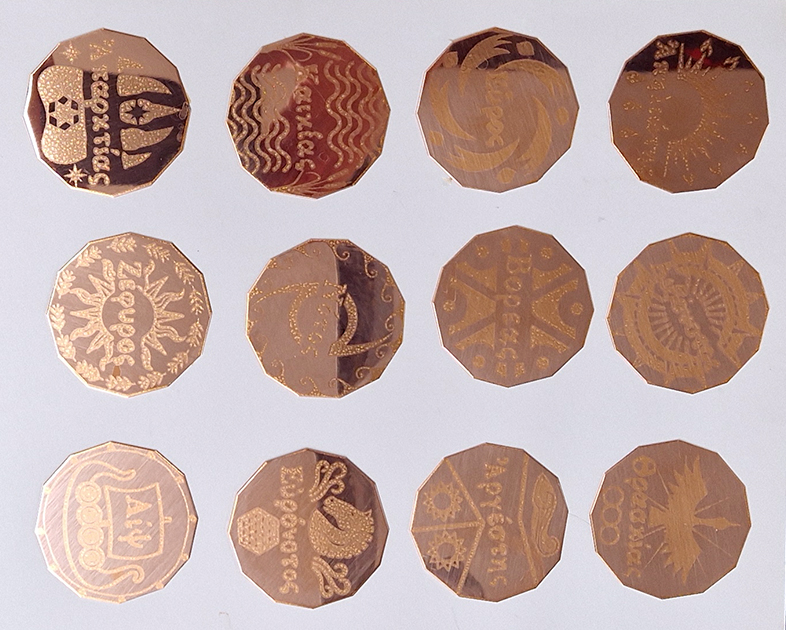
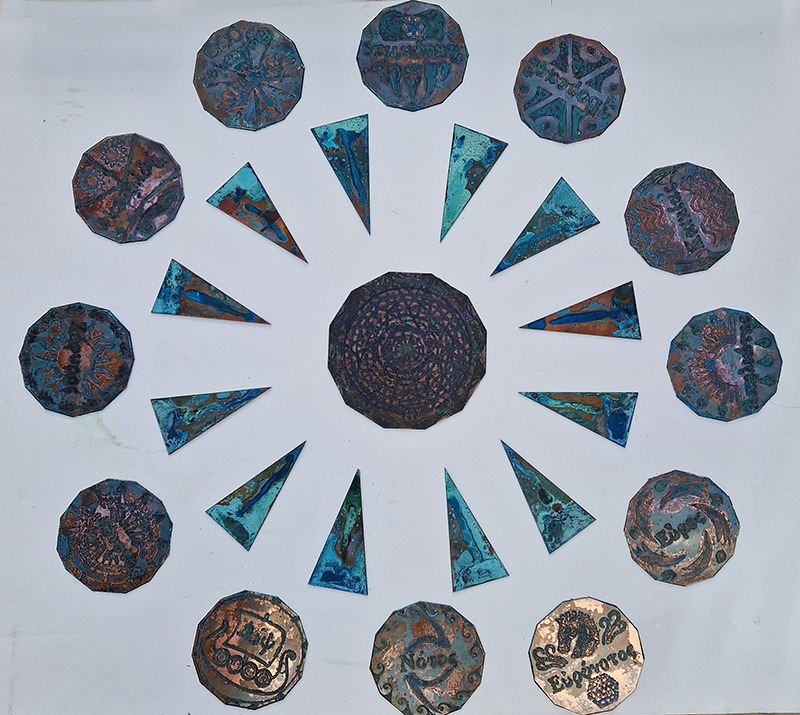
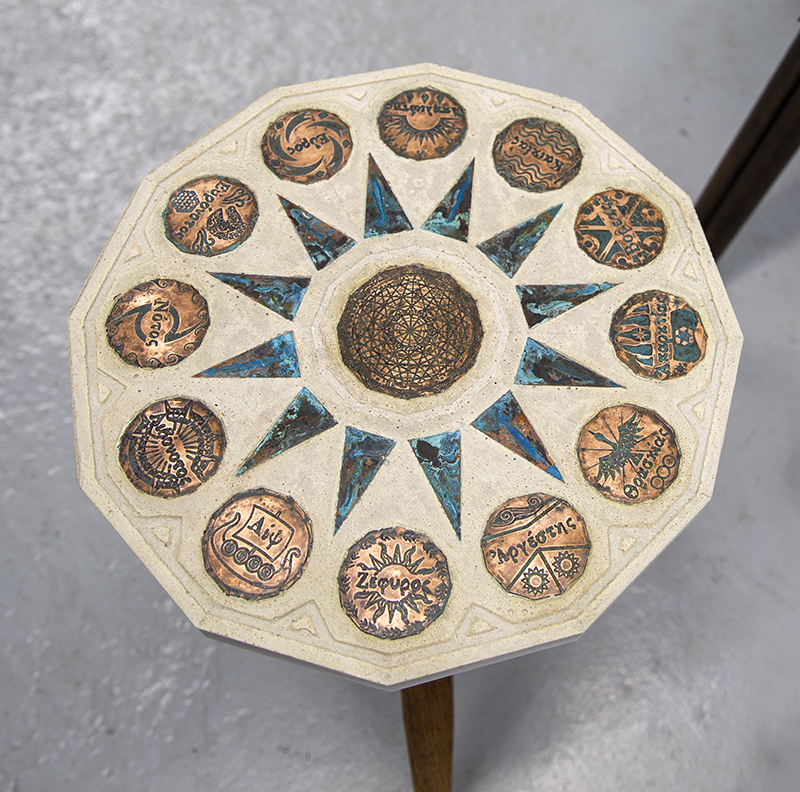
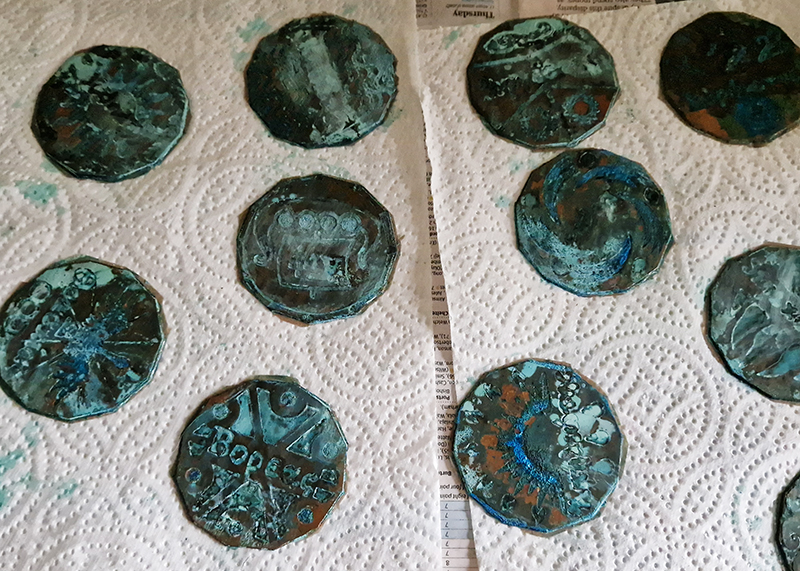
The third tablet is embedded with copper etched with images and names based on associations and attributes of the twelve Greek wind gods set in a traditional compass rose.
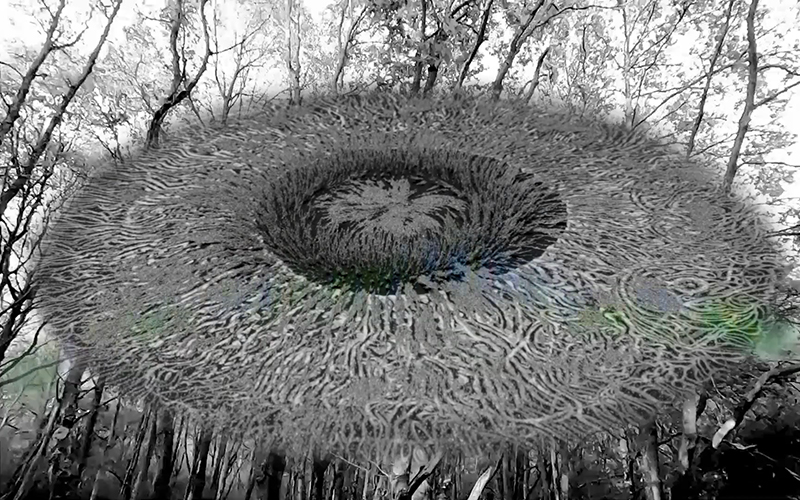
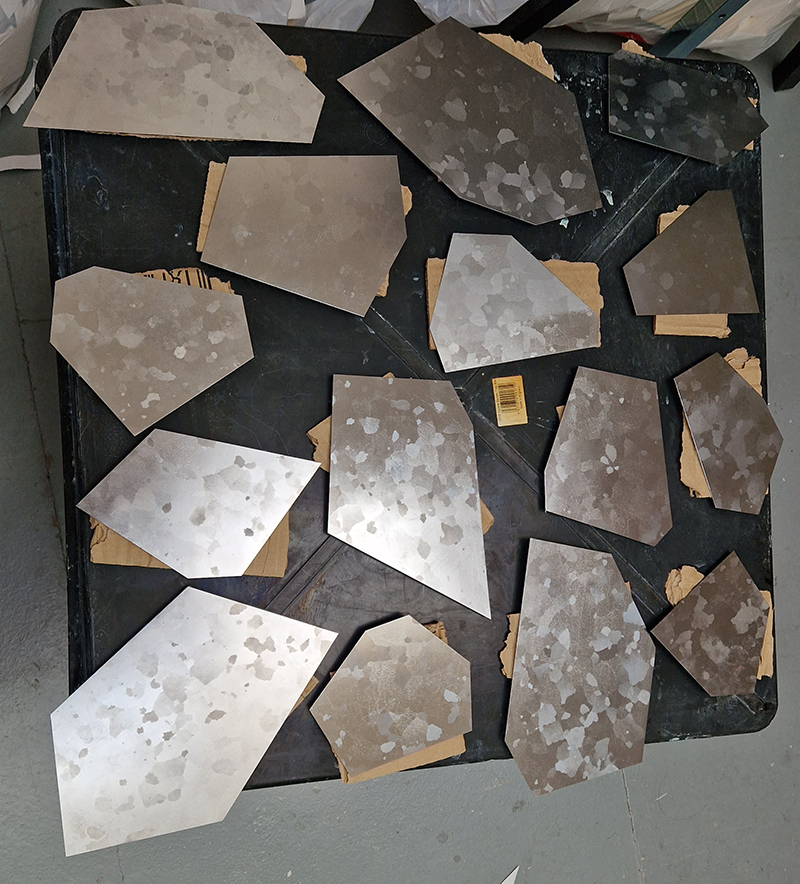
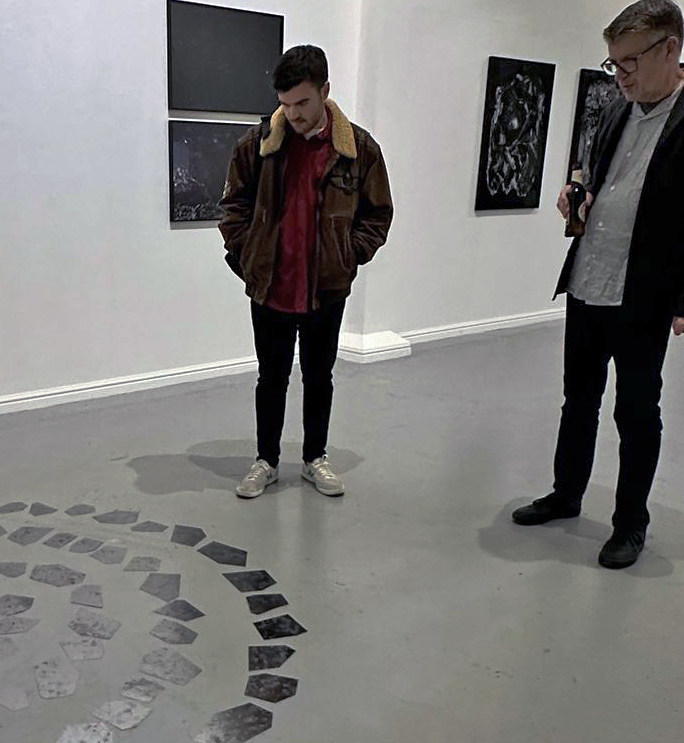
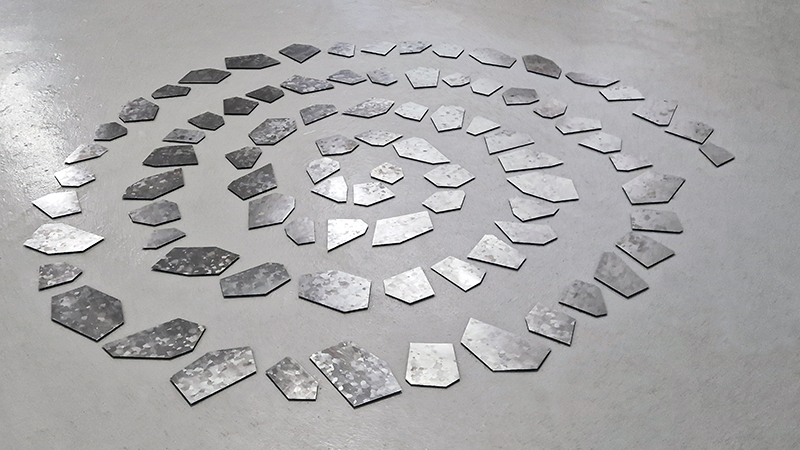
Domain of the Devil Valley Master uses industrial directional magnetic steel, sanded and etched to reveal the Goss texture of rolled iron silicon alloy crystals. The jigsaw pattern of magnetic domains give this material exceptional magnetic properties. The simple evocation of a spiral described in geologically informed polygons draws upon many references, from the shape of our own Milky Way Galaxy sculpted by vast cosmological magnetic fields and the spiralling molten dynamo generating Earth’s magnetic field, to the inner pathway of spiritual growth and the route to the symbolic omphalos (navel) at the centre of the world where the sky entrance and the underworld meet. The title of this work originates from an ancient Chinese manual on the skills of persuasion, The Book of the Devil Valley Master, containing the first known mention of a compass, known at the time as a south-pointer.
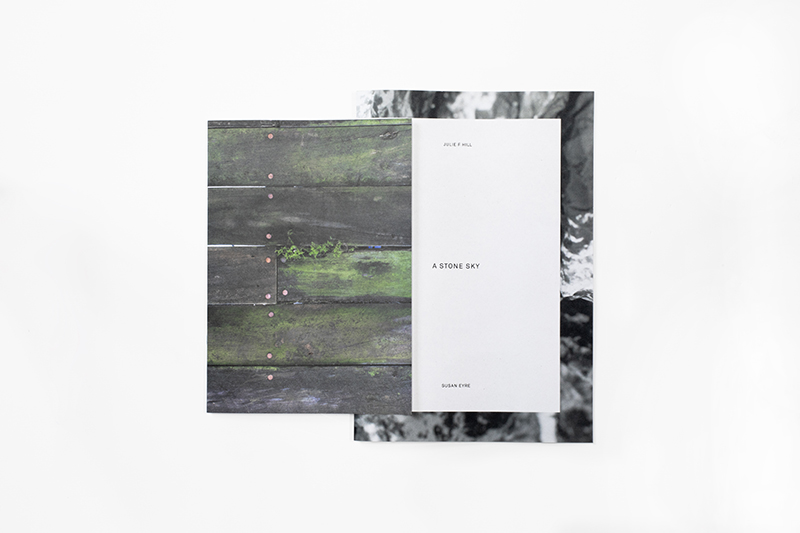
The exhibition closed with an afternoon event launching our publication which includes the essay Dark Nights and Signs of Unseen Things by Anjana Janardhan. There was also a live cloud chamber demonstration of mesmerising cosmic ray trails, artist tours and informal readings.
Publication available – DM via blog comments box for more details or visit Julie’s shop
Photoshoot with Warren King Photography resulted in some great images of my work ready for the press release and promotion of A STONE SKY – the upcoming joint exhibition, with Julie F Hill, that we have been working towards for many months. The exhibition will be at Thames-side Studios Gallery 11th – 26th November 2023 with a private view on 10th November 6-9pm.

Susan Eyre, Azimuth Obelisk (of sedimentary knowledge), paper, concrete, patinated copper, 2023 (detail) Photo Warren King Photography
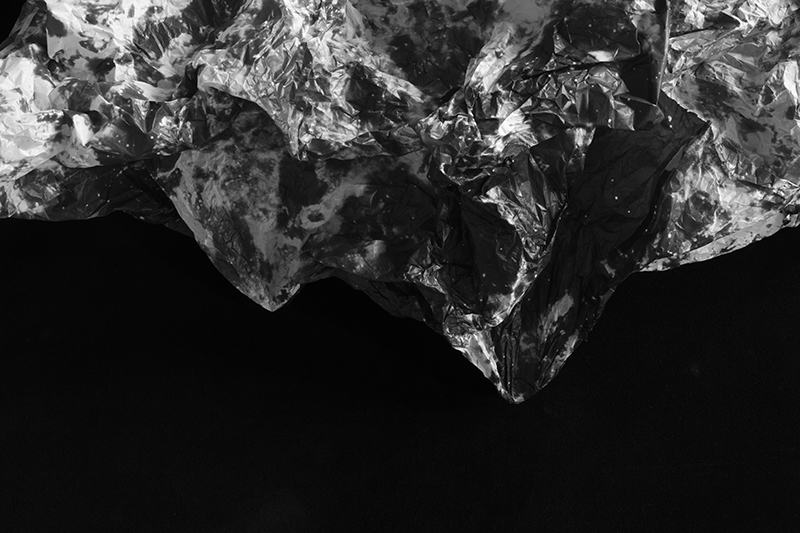
Julie F Hill, Cave, physically manipulated print of infrared James Webb data of barred, spiral galaxy NGC 5068, 2023 (detail).
Photo Julie F Hill

A Stone Sky brings together the works of multi-disciplinary artists Julie F Hill and Susan Eyre who traverse cosmic layers from the deep earth to deep space, exploring manifestations of darkness and its associations with the unknown and undiscovered. Reimagining the idea of an observatory, their sculptures and installations reach for scales and orders that surpass the human, revealing the cosmic at our feet. The exhibition proposes a cavernous realm of real and speculative possibilities that arise from beyond the limits of human perception. Engaging with the extended sensory range offered by technologies such as orbiting space telescopes through to the ability of birds to ‘see’ the Earth’s magnetic field, the artists’ reveal intimate connections between earth and space.
It was great to meet Anjana Janardhan who we have commissioned to write an essay for a publication which will be launched on the final weekend of the exhibition. We are also planning to give some informal readings, tours of the work and I will be running the cloud chamber so visitors can see the trails of cosmic rays – a way of visualising these unseen visitors from the stars.

The Azimuth Obelisk (of sedimentary knowledge) sculpture is an almost 3m tall reimagining of the obelisk erected at Hartland Magnetic Observatory in 1955 as an azimuth mark to be viewed from the Observing Room or Absolute Hut to monitor the drift of the magnetic north pole.

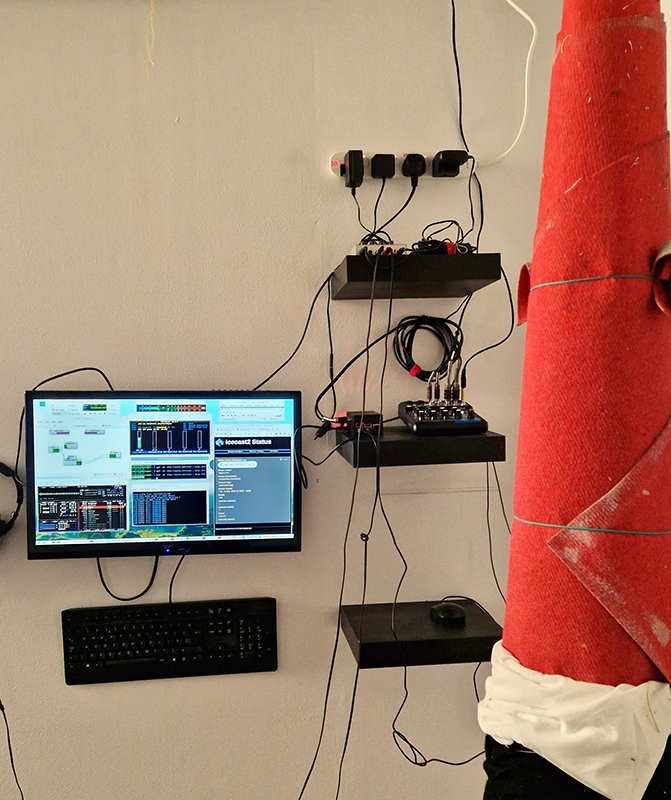
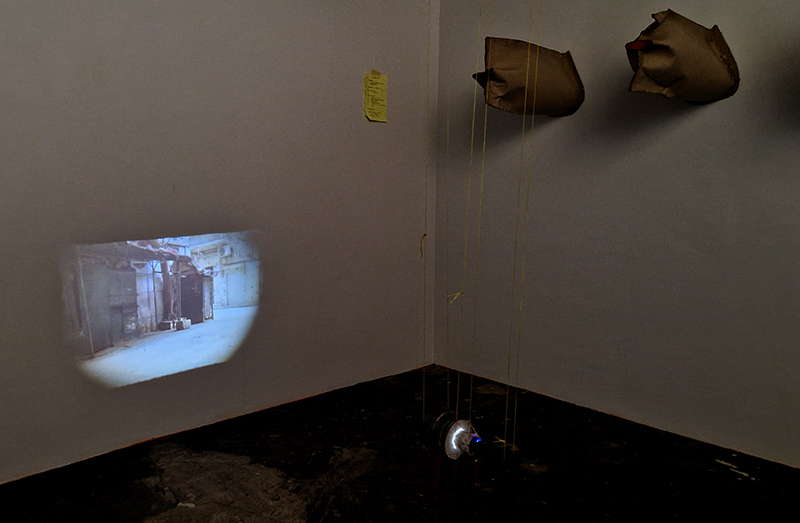
I have obtained an old wooden trolley to put the cosmic ray detectors and projector on for the digital video work The Breath of Stars. This feels in keeping with the original furniture used at Hartland Magnetic Observatory. The Breath of Stars directly interacts with cosmic rays – as each cosmic ray particle strikes a plastic scintillator its energy is recorded and a starburst image video is projected. The interaction of cosmic rays and the solar wind with atmospheric electrical fields combines to influence the unpredictability of the magnetosphere. Most radioactive particles heading for Earth are deflected by the magnetosphere. Without the Earth’s magnetic field deflecting the majority of cosmic rays, life on this planet could not survive.

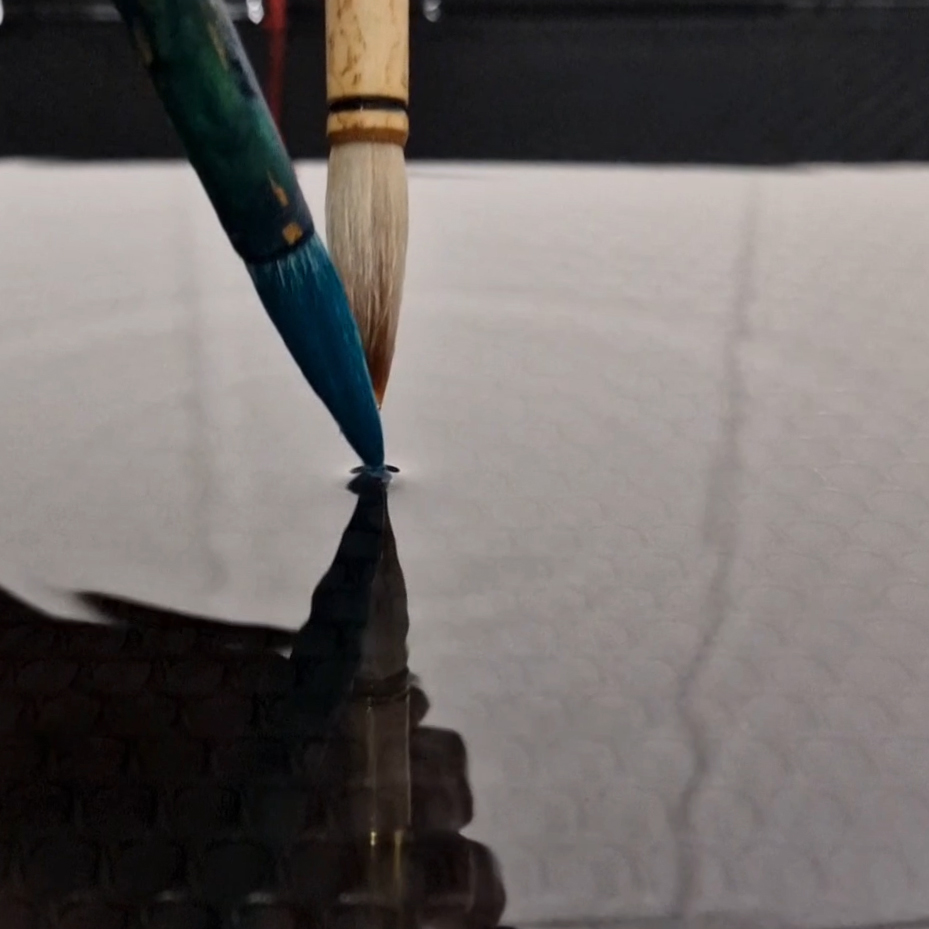
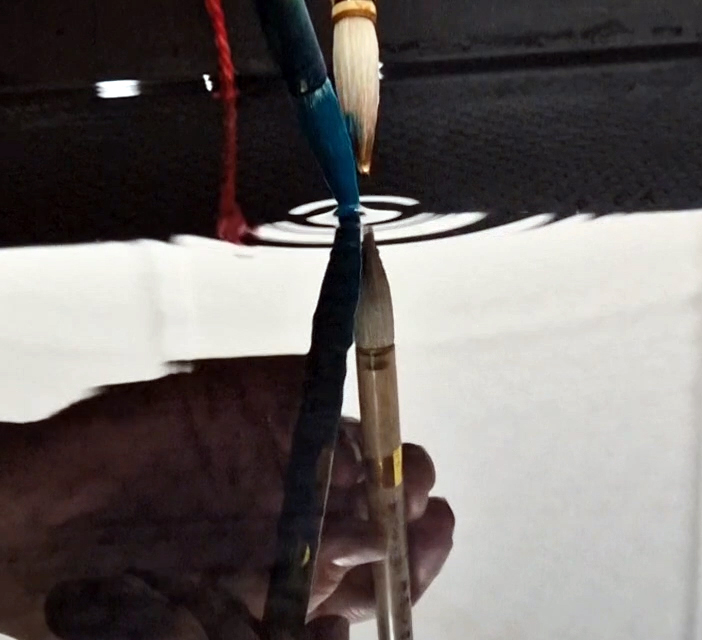
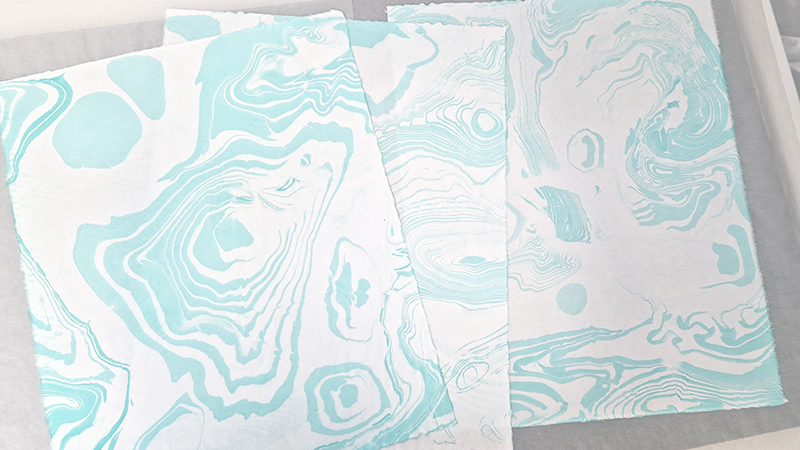
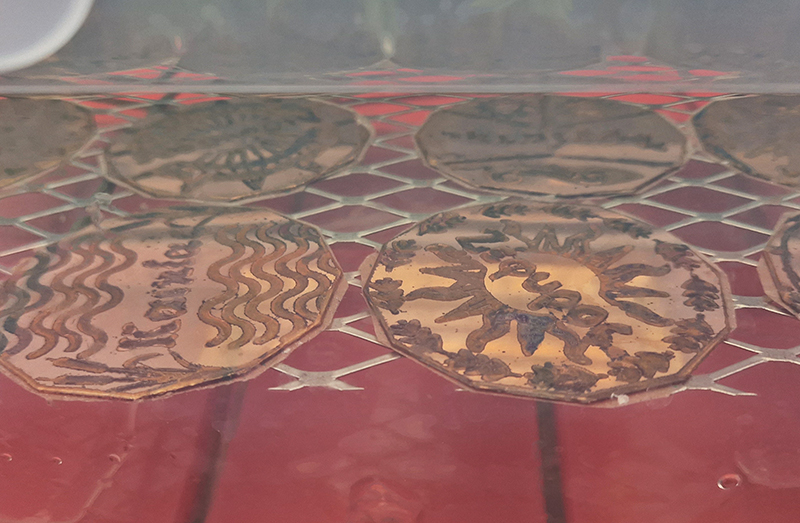
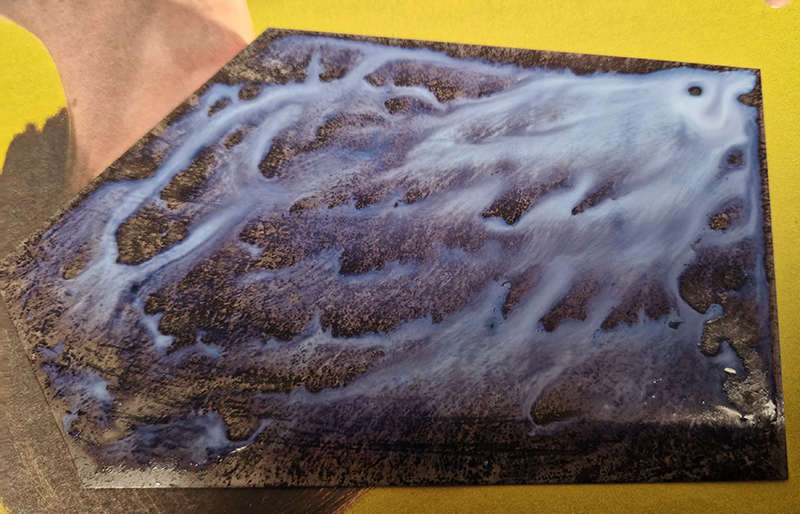
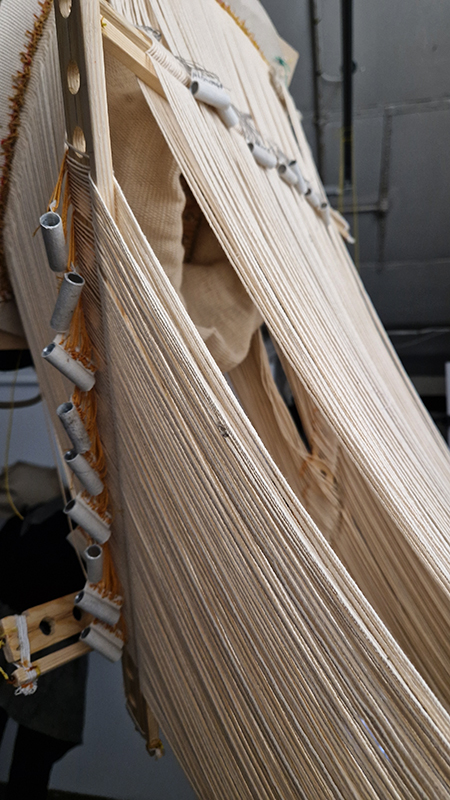
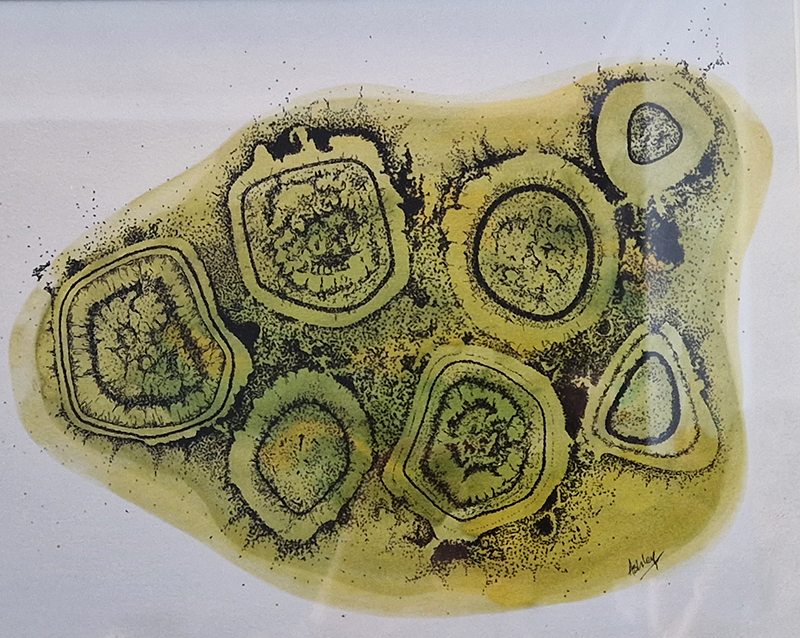
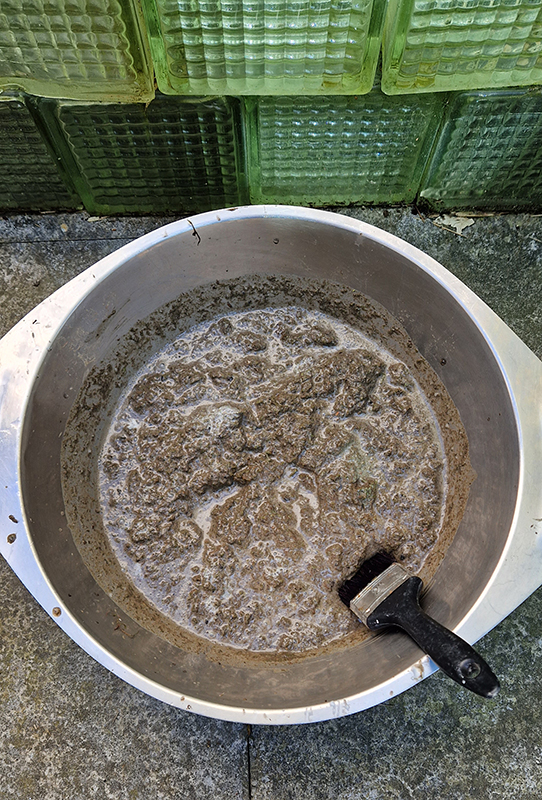
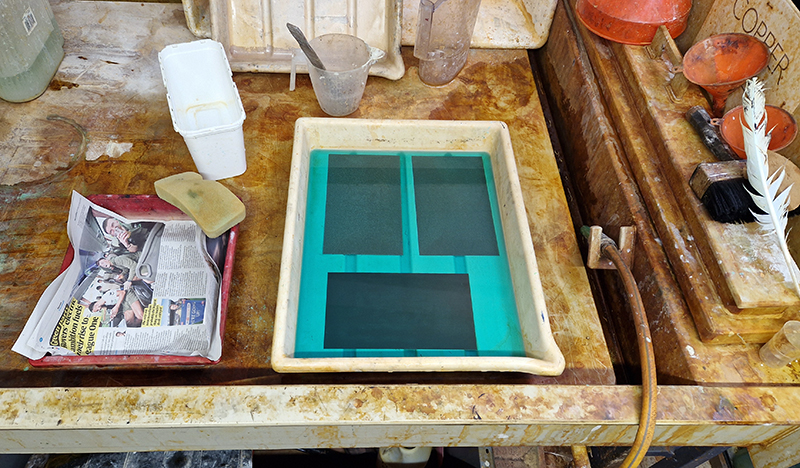
The 48 paper tiles for the roof of The Absolute Hut (of action potential) are made using the suminagashi technique of marbling with a colour to reflect both the sky and the patinated copper roof tiles of the Observation Hut at Hartland Magnetic Observatory. The paper is Japanese Osho Select and is very fragile when wet so has to be pulled from the water tray using a supporting mesh. Topological contours of suminagashi marbling reflect the fluid motion of the Earth’s magnetic dynamo and the pulsating alpha waves of the human brain when subjected to magnetic fields.

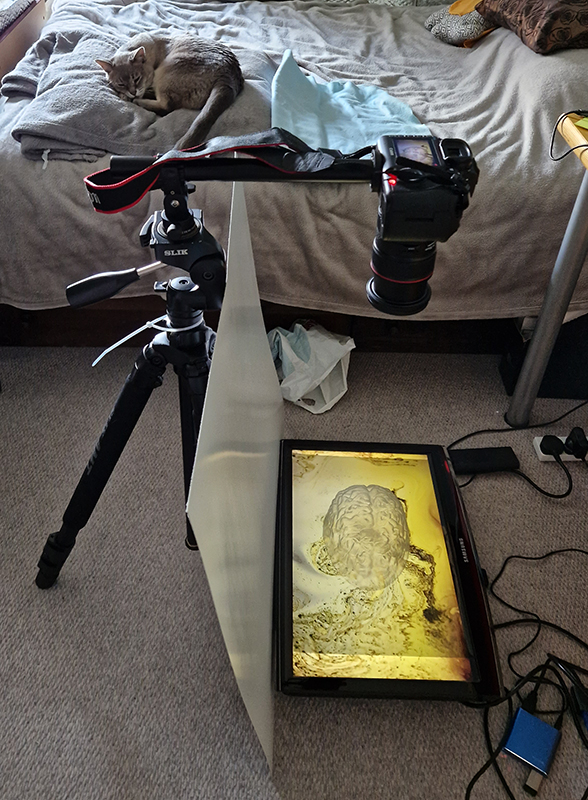
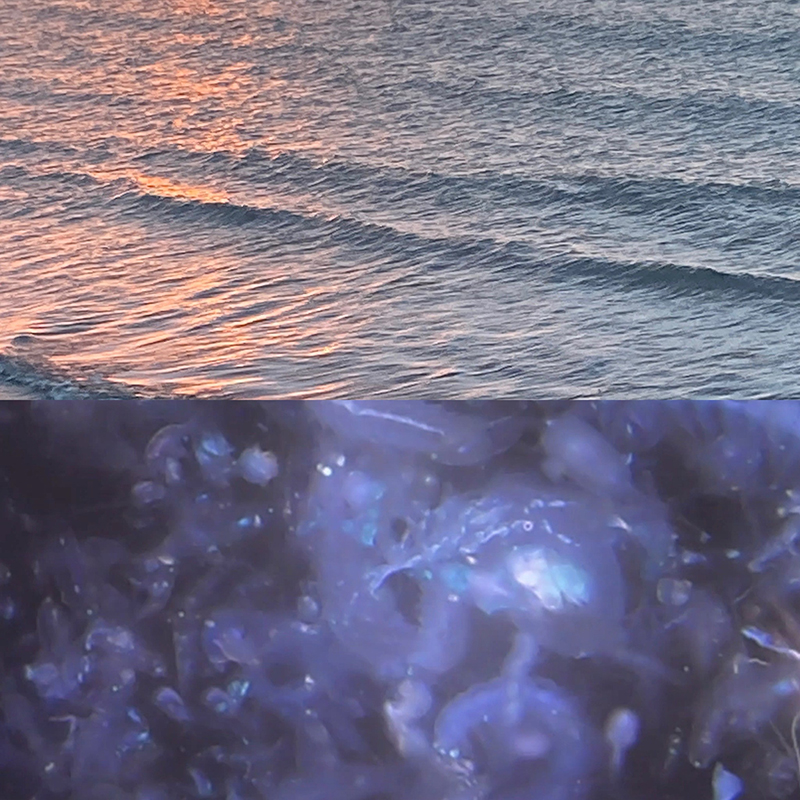
If you place a polarising filter over a screen that emits polarised light and use a polarising lens on the camera, then any plastic, photographed in this method, especially injection-moulded plastic, reveals stress points with a kaleidoscope of colours known as birefringence. Cryptochrome, the protein molecule found in a birds eye that enables birds to ‘see’ the magnetic field is excited by polarised light. Polarisation may also reveal the existence and properties of magnetic fields in the space medium light has travelled through. Research suggests that human alpha brainwaves react to a changing magnetic field. These ideas are brought together in a video work speculating on human magnetoreception via magnetite crystals in brain cells.

This video work will be shown on multiple small screens inside The Absolute Hut (of action potential) alongside two larger monitors showing companion video pieces exploring dynamics between the Earth’s geologic structure and navigation using the magnetic field.

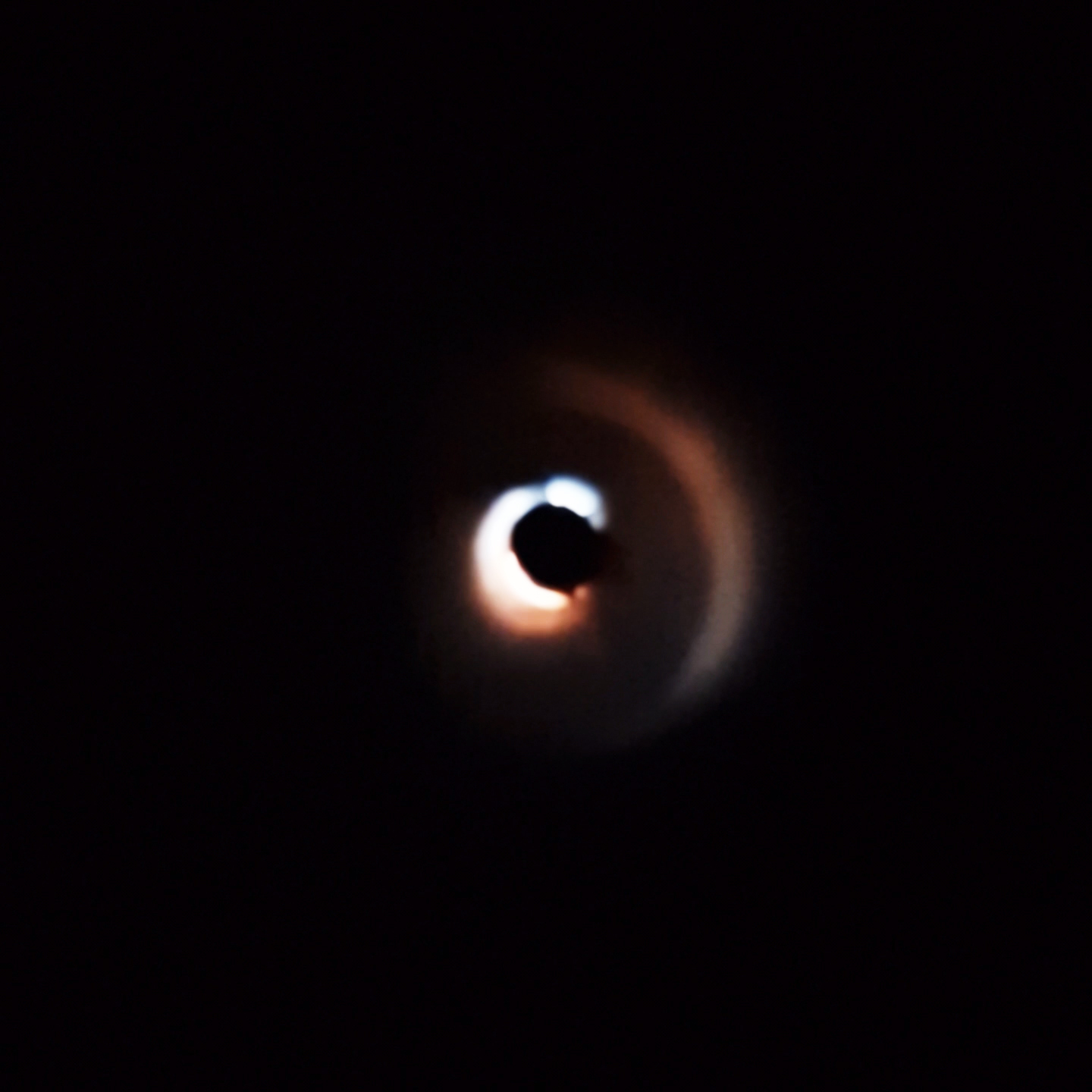
I have replicated the experiment I saw at the National Physical Laboratory, dropping a magnet down a copper pipe to see how the magnetic field generated slows the magnet down considerably. I filmed this and added a tiny led light with the magnet.

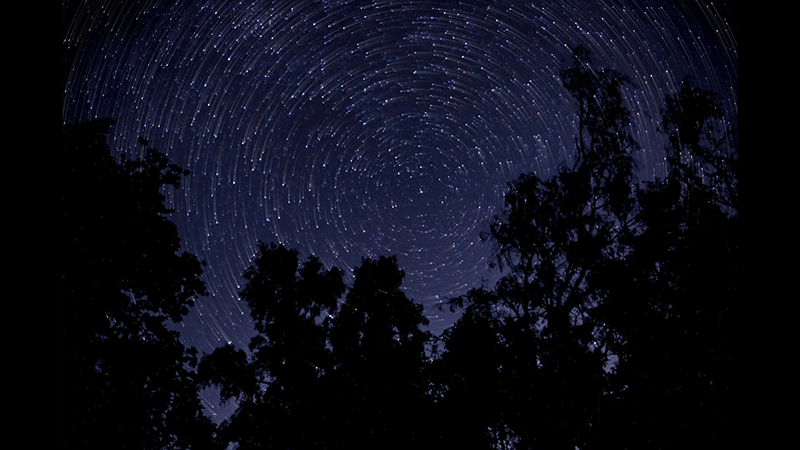
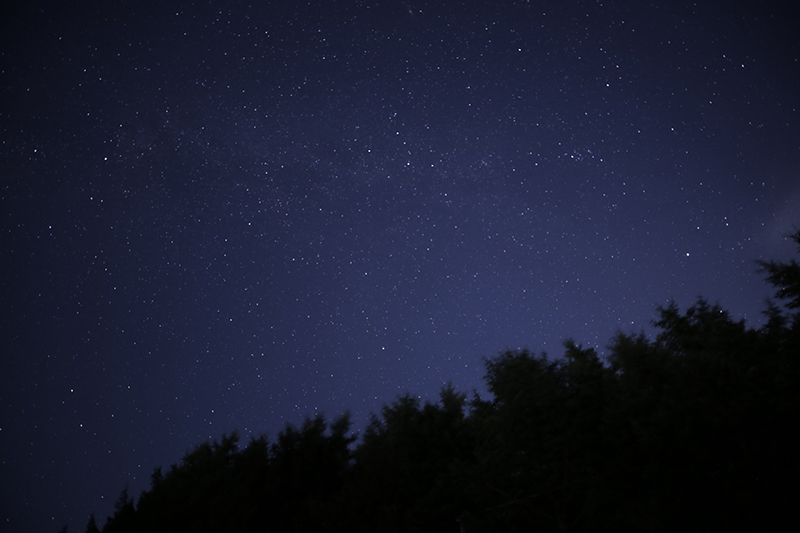
Finally dark skies and fine weather coincided so I was able to go and make a time lapse of the stars rotating around Polaris.

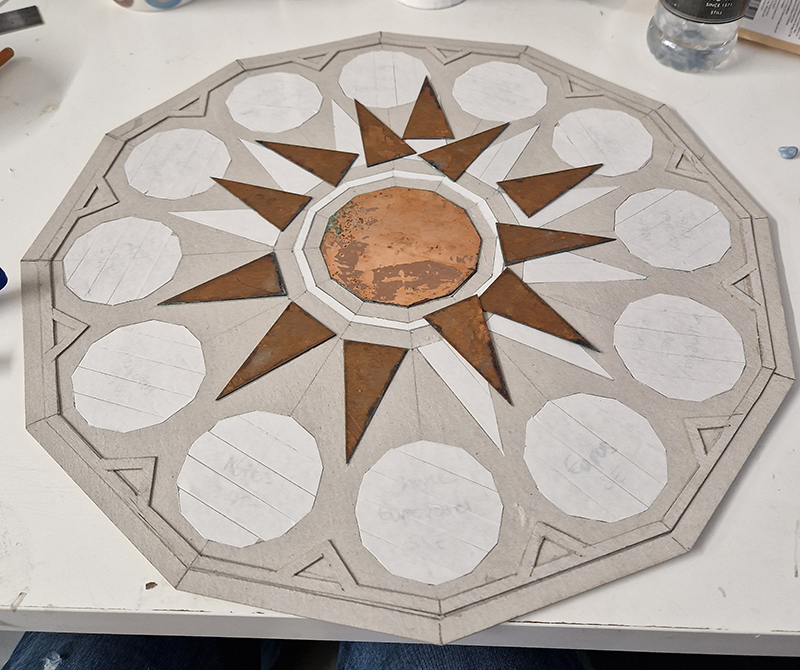
Instruments of the Anemoi is a set of three dodecagon tablets cast in Snowcrete, a non-magnetic cement, as used in a magnetic observatory. Suggestive of the pedestals that support various instruments used in monitoring the Earths’ magnetic field they also respond to an ancient anemoscope “table of the winds” inscribed with the Greek and Latin names of classical winds on each of its twelve sides.

Hand cut copper pieces to be etched with images based on associations and attributes of the twelve Greek wind gods.

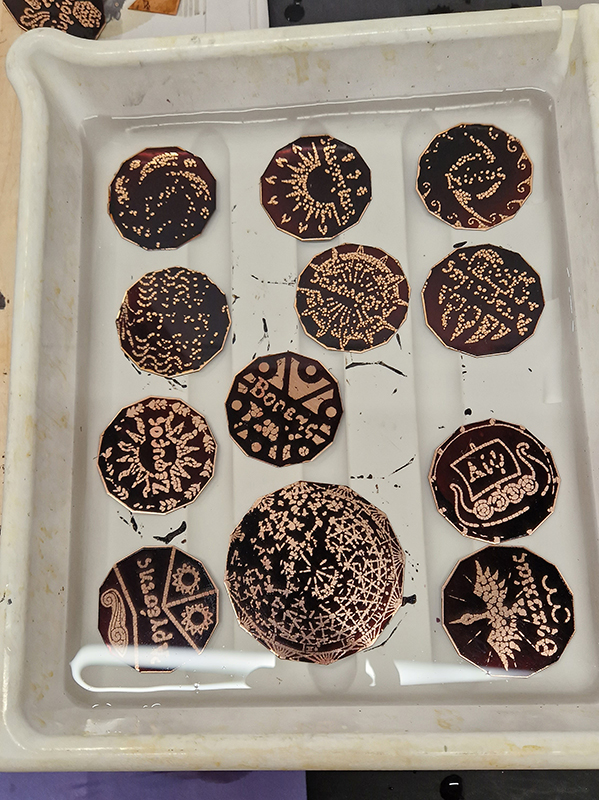
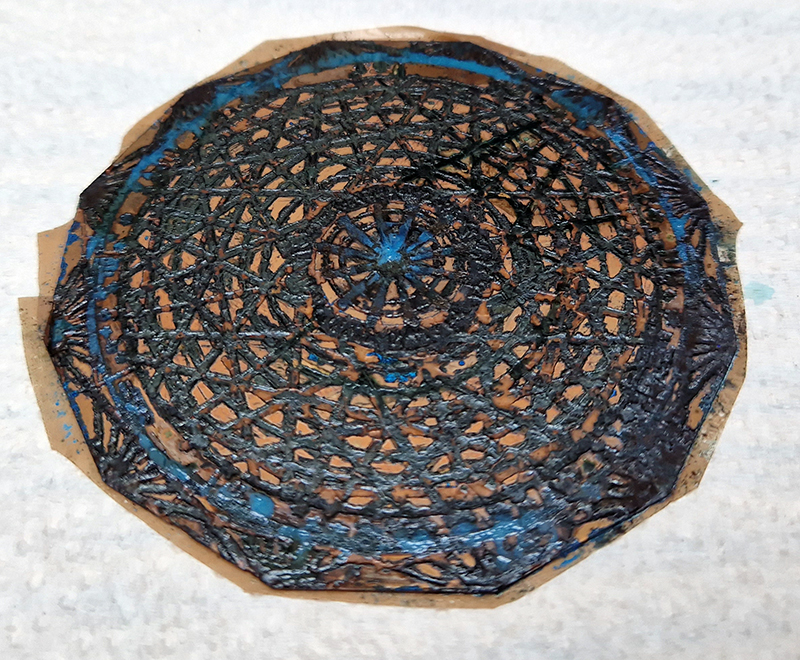
Sugar lift solution is screen printed onto the copper pieces.

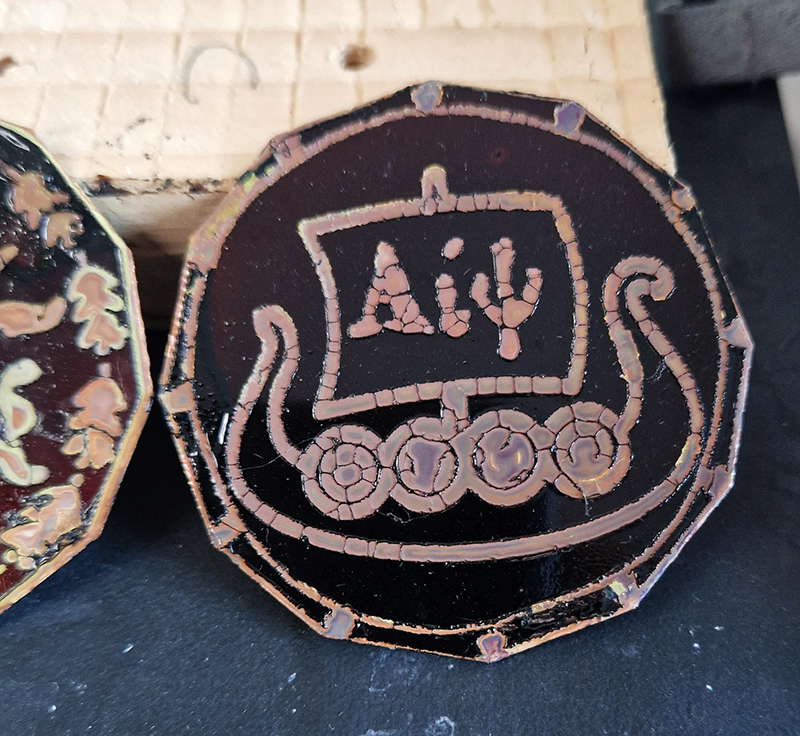
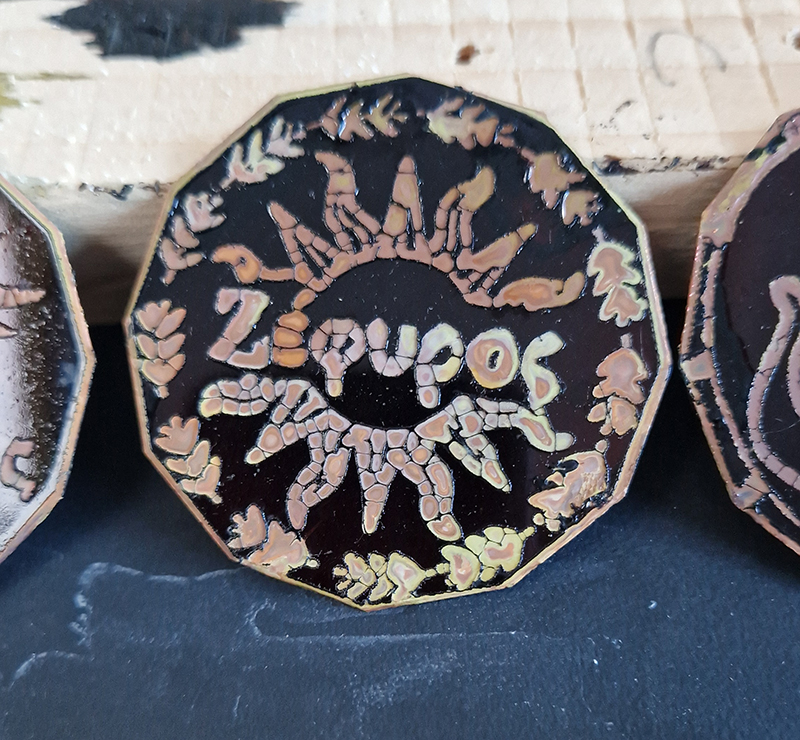
These are then dipped in bitumen and immersed in hot water where the sugar slowly dissolves to reveal the image.

They are then left to dry before being etched.

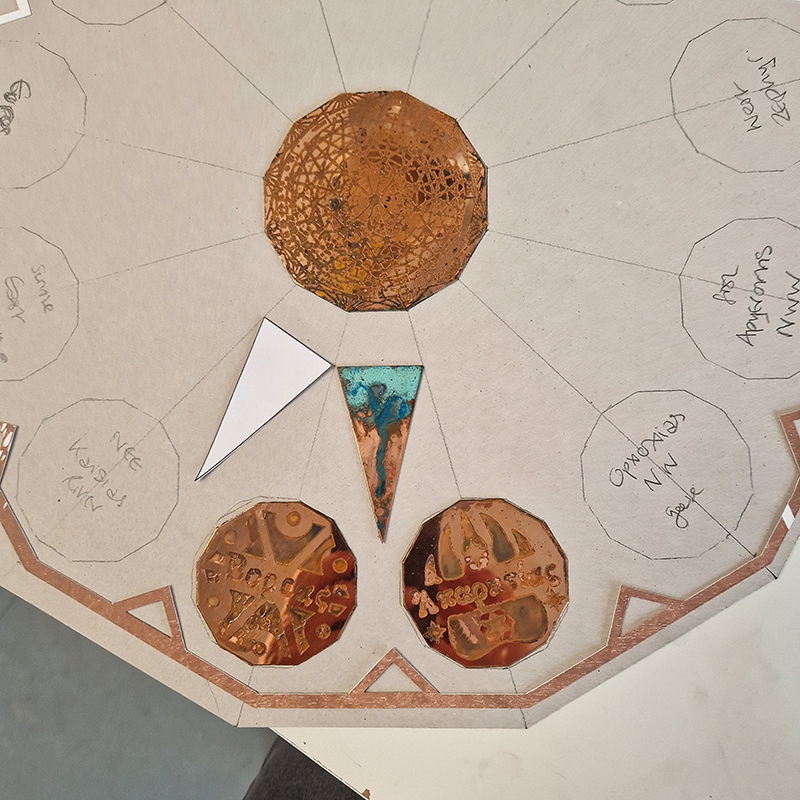
These were etched for 2 hours in an Edinburgh Etch solution, made with ferric chloride, citric acid and water to get a deep etch. The detail in the bitumen held very well. I constructed a collagraph from card to attach them to for casting in concrete. Once etched the detail areas were painted with a soy sauce solution before being placed in an ammonia vapour bath.

After a few hours patinating they are removed to dry before being cleaned up.

Positions are marked out on the collagraph and double sided tape is used to secure the pieces in place face down. The collagraph is then placed in the silicon mould ready for casting with Snowcrete – the same non-magnetic concrete used at a magnetic observatory.

This is the third of the tablets to be cast for the work Instruments of the Anemoi. The first holds a copper bowl with a ‘silver fish’ floating in water based on the oval shaped compass needle (illustrated in Breve Compendio de la Sphera de la arte Navegar by Martin Cortes 1551) as symbol of the silver fish – wafer thin fish shaped iron leaves used by 11th century Chinese geomancers.

Photo Warren King Photography

The second has embedded magnets in a pattern revealed by old nails and iron filings over the surface. One legend on the discovery of the lodestone recalls a Greek shepherd who noticed the nails in his boots were attracted to the lodestone (also known as magnetite a naturally occurring mineral).

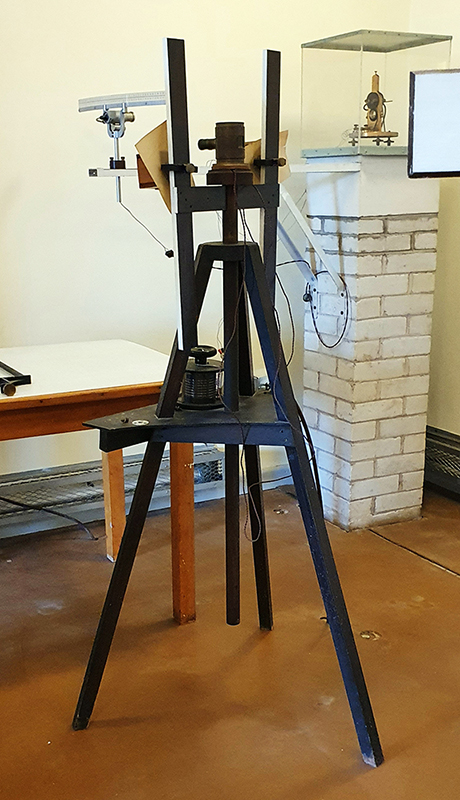
The tablets will be shown on adapted wooden theodolite or telescope tripods in the spirit of equipment seen below during my research trip to Hartland Magnetic Observatory.

Gallery Visits

Seismic Mother curated by Charly Blackburn and Holly Birtles at Hypha Space – an exhibition of 20 artists whose work attempts to communicate the seemingly incomprehensible nature of the earth’s magnitude and magnificence, temerity and resilience as it endures, regenerates and struggles to survive through the slow violence of ecological catastrophe. I visited for the book launch and performative reading from Stephen Cornford whose book, Petrified Matter, I bought. It’s an enlightening read on the links between photography and fossils through mineral, chemical and data recording processes, going on to speculate on future geology and the impossibility of reversing the extraction process by separating minerals used in mobile phones and other technology to return these back to the soil.

I am very grateful to a-n The Artists Information Co for awarding me a professional practice and creative development bursary to expand on my research and respond to the many ways Earth’s magnetic field impacts life on earth. The award will be used for a research trip to the remote location of Eskdalemuir Magnetic Observatory and Kielder Dark Skies Observatory. Fingers crossed for an Aurora experience. I will also gain expert tuition in concrete casting and mould making from Anna Hughes and make use of the facilities at The London Sculpture Workshop.

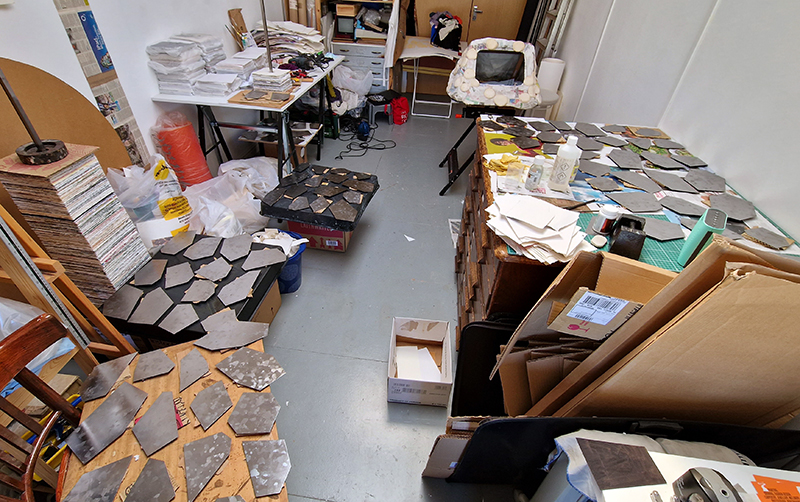
Domain of the Devil Valley Master – work in progress. It is likely that compasses were first used in China to divine an alignment of order and harmony for important sites and rituals. Jade hunters discovered they could also help to keep them from getting lost long before Europeans used them for navigation. The first mention of a south-pointer is in a fourth-century BCE text – The Book of the Devil Valley Master, and it is this that I am referencing in the title of this sculpture. Other references in the work are the rotation of the Earth’s core and geological formations of polygonal prisms. A magnetic domain is a region within a magnetic material in which the individual magnetic strength and orientation of the atoms are aligned with one another and they point in the same direction. The work uses directional magnetic steel stripped of its industrial coating to reveal the jigsaw pattern which comes from rolling single crystals of an iron silicon alloy into thin sheets to minimise magnetic losses for use in industry. The sheets have been sanded, etched, guillotined, treated for rust and sealed.

The Earth’s core is made almost entirely of iron and nickel. Siderophiles are elements that form alloys easily with iron and are concentrated in the Earth’s core. When the Earth formed about 4.5 billion years ago from the collision, accretion and compression of matter it was rock all the way through. Heat from the massive violence of formation and radioactive decay caused the planet to get hotter and hotter. After about 500 million years of heating up it finally reached the melting point of iron. As the iron liquified lighter material rose to the surface becoming the mantle and crust and the heavy metals like iron and nickel fell towards the centre becoming the core. The siderophiles that descended into the core are gold, platinum, and cobalt along with around 90% of the Earth’s sulphur. Hence the smelly sulphur vents around the volcanic regions.

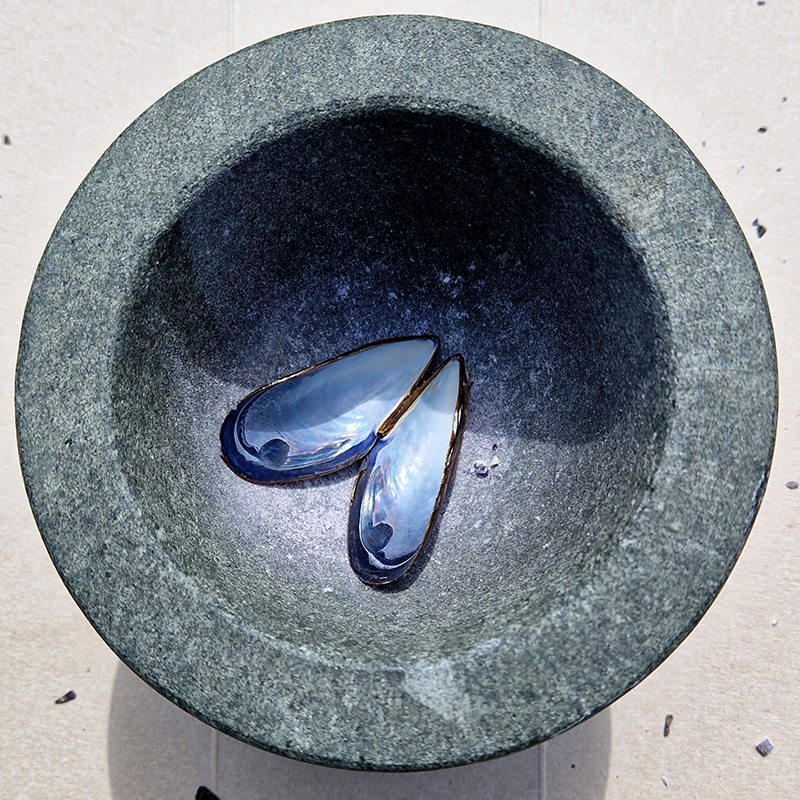
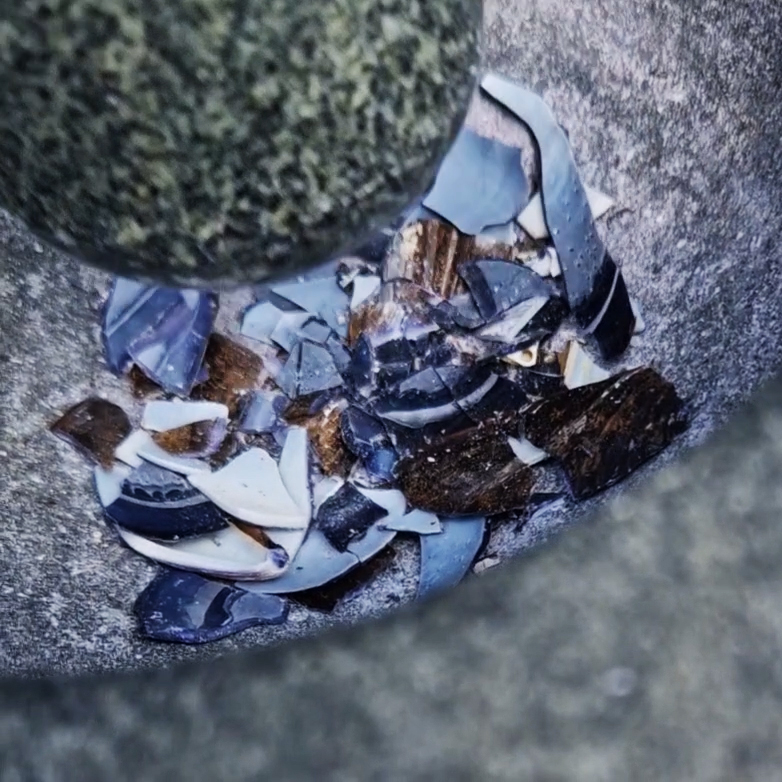
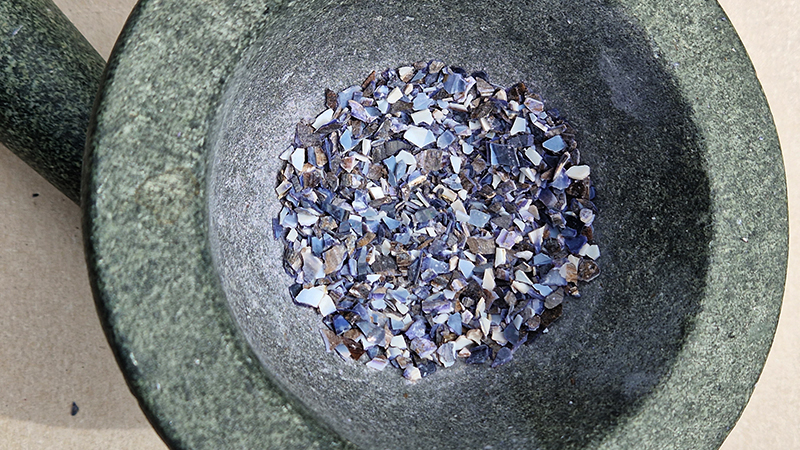
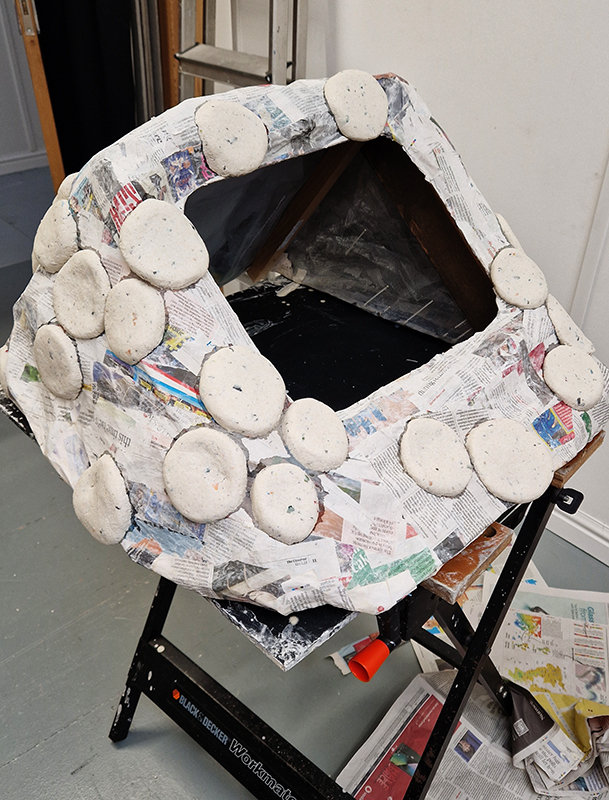
Belly of a Rock – work in progress. Making paper clay discs to build the surface of this hybrid sculpture and crushing mussel and oyster shells to use as texture.

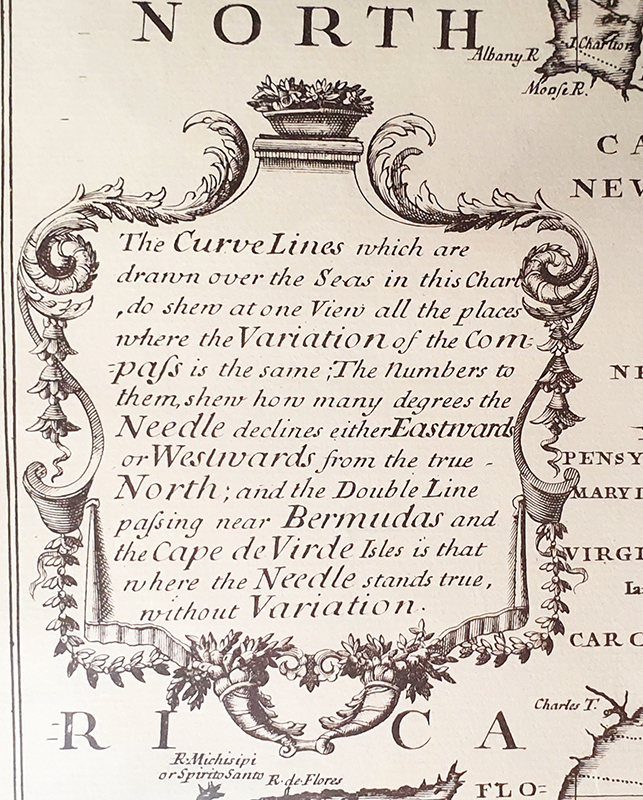
The geographic north pole lies in the middle of the Arctic Ocean, covered in shifting sea ice, where the sun rises and sets only once per year. All lines of longitude converge here and hence all time zones. It is known as true north to distinguish it from the magnetic north pole. However, as the Earth’s axis of rotation wobbles slightly in an irregular circle, even this pole is not fixed. The magnetic north pole, also called the magnetic dip pole, is where the planet’s magnetic field is vertical and a compass needle here would dip and try to point straight down. The north and south dip poles are not found directly opposite each other. These dip poles are located by experiment in the field but as they are found in the most remote and harsh regions of the planet they are not easy to track. Also they can move around over considerable distances during each day, tracing out oval shapes as they are acted upon by dynamic electrical current systems of the magnetosphere, which are in turn defined by the activity of the solar wind. There is an equivalent (but fictional) magnetic dipole at the centre of the Earth assigned from global modelling of the geomagnetic field. These geomagnetic poles are an approximation arrived at by reducing Earth’s complex and varied magnetic field to that of a simple bar magnet. The north dip pole lies in Northern Canada, the northern dipole is roughly off the northwest coast of Greenland.

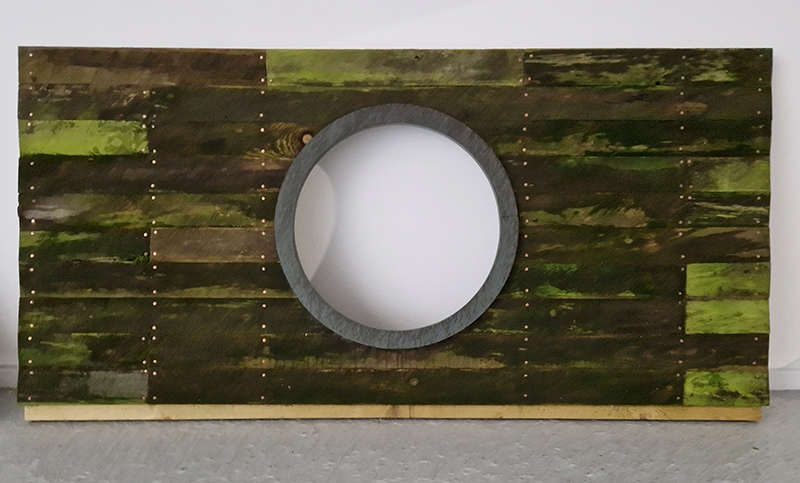
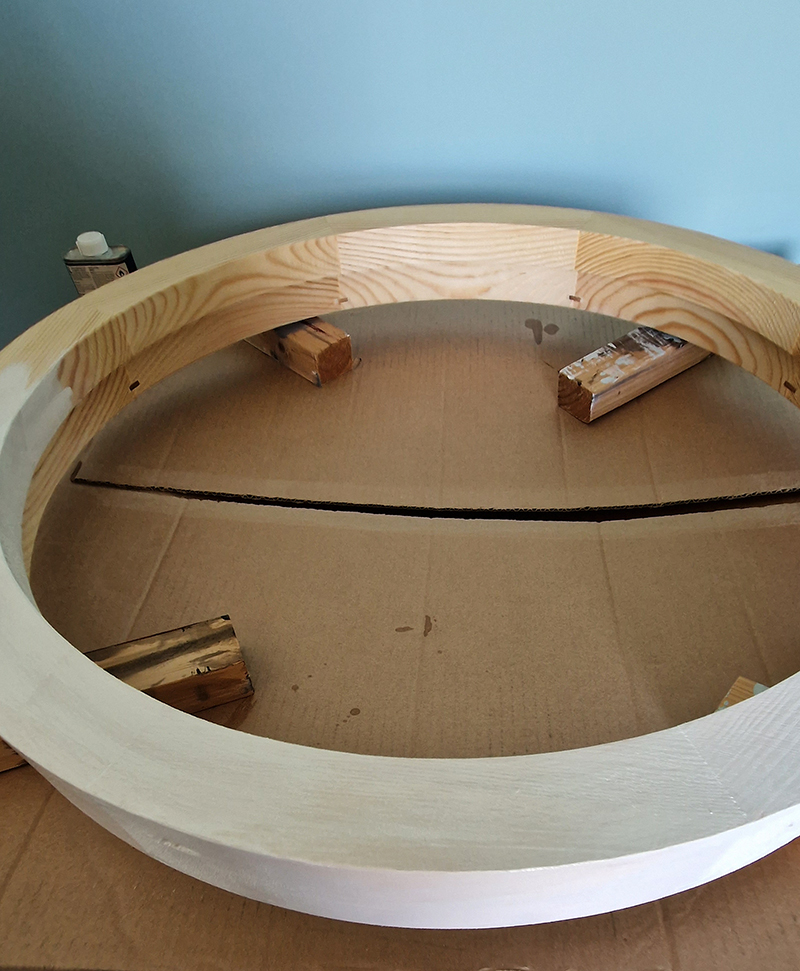
The Absolute Hut – work in progress. This installation is a reimagining of the Absolute Hut at Hartland Magnetic Observatory where monitoring of the Earth’s magnetic field takes place. Topological contours of suminagashi marbling also echo fluid magnetic field lines. Testing scale and alignment in the gallery space. Collecting planks for the north facing wall. Prepping the round window. Suminagashi experiments on different Japanese papers. I want to consider the hut as a sensory hub.

Other exciting news is that APT Gallery have selected a proposal for an exhibition which will take place in March 2024. The exhibition will consider the lifeboat as a metaphor in relation to uncertain times, ecological and social change and shifting landscapes as viewed from the land and the sea. The artists in this group show share an interest in exploring precarity as a site of dynamic transition. I am so happy to be working with these wonderful artists – Rachael Allain, Caroline AreskogJones, Beverley Duckworth, Liz Elton, Kathleen Herbert, Kaori Homma, Anne Krinsky.          

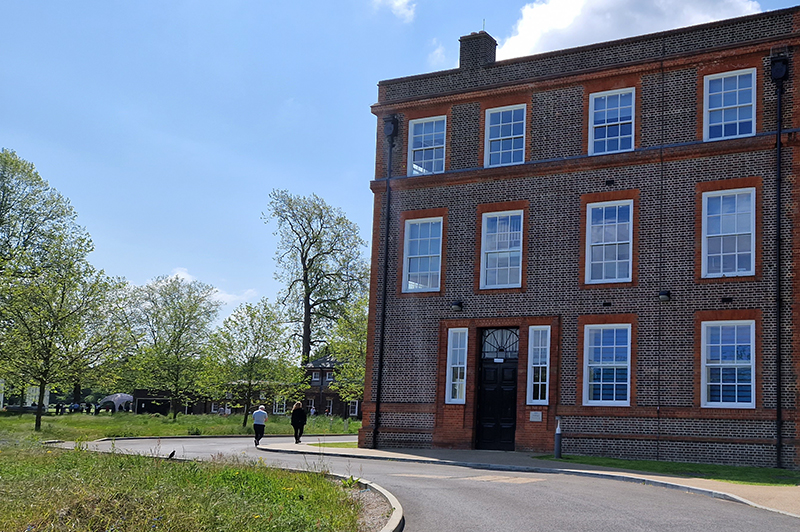
In celebration of World Metrology Day, NPL opened Bushy House and gardens to the public. A chance to see and hear about ever more accurate ways of measuring the physical world. Bushy House was the residence of William, Duke of Clarence (William IV) and his mistress Dora Jordan from 1797, and was offered to the Royal Society by Queen Victoria in 1900 as a location to establish The National Physical Laboratory. The impressive apple tree is from an offcut of one from Newton’s home estate. The magnetic laboratory here is concerned with devising and standardising the instruments used by magnetic observatories such as the one at Hartland that I visited last summer. I saw the 1kg sphere of single crystal silicon, with the smoothest polished surface of any made object and notoriously hard to photograph. The application of a strong magnetic field during the crystal growth process reduces contaminants giving a purer silicon crystal. Developments in technology bring new units and definitions of measurements.

From early concepts of number, patterns in nature (symmetry, branching, spirals, cracks, spots, stripes, chaos, flows, meanders, waves, dunes, bubbles, foam, arrays, crystals, and tilings) magnitude, and form came mathematics, meaning subject of instruction. This has evolved into complex theory from an understanding of negative numbers to imaginary numbers which combined with real numbers have been found necessary to describe quantum mechanics.

The colour coding of Saturn’s rings according to particle size used radio occultation to determine the different regions. Radio signals were sent from the Cassini spacecraft during orbits which placed Earth and Cassini on opposite sides of Saturn’s rings. This remote sensing technique measures how the radio waves bend around the matter they encounter to assess the physical properties of a planetary atmosphere or ring system. The purple colour indicates regions where most particles are larger than 5 centimeters. Green and blue shades indicate regions where there are mostly particles smaller than 5 centimeters and 1 centimeter. The white band is the densest region where radio signals were blocked preventing accurate representation in this area. The radio observations showed that all rings appear to have a mix of particle size distribution right up to boulder sizes, with several many meters across.

Gallery Visits

It’s Coming From Inside at Bell House, Dulwich. Curated by Sarah Sparkes and Jane Millar. In their thinking about the Impressionist Berthe Morisot, and the exhibitions broader theme of ‘Windows and Thresholds’, the curators see the two different domestic spaces, and the liminal corridors between them, as places expressive of dialogues in both Morisot’s and their invited artists’ works: of confines, dreams of escape, of external inscrutability and internal passion. Exhibiting artists: Fran Burden | Ruth Calland | Helen Carr | Mikey Cuddihy | Janet Currier | Robert Dawson | Andrew Ekins | Liz Elton | Lisa Fielding-Smith | Deborah Gardner | Caroline Gregory | Birgitta Hosea | Mindy Lee | Wayne Lucas | Julia Maddison | Jane Millar | Darren O’Brien | Kim Pace | Sarah Sparkes | Geraldine Swayne

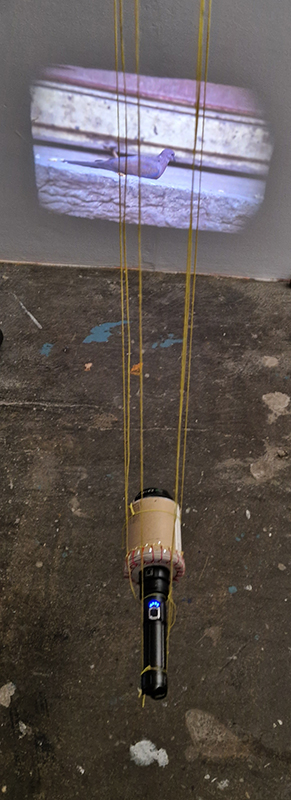
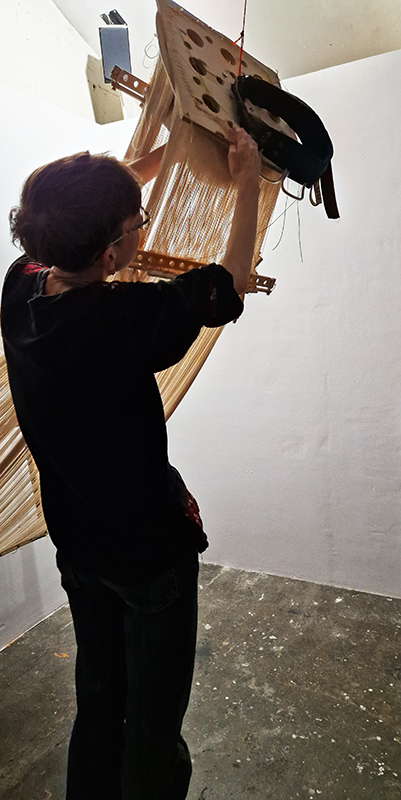
Georgina Sleap Now and here and there together at Cable Depot. A residency undertaken in collaboration with Neil Cheshire, Olive Hardy, Mercedes Melchor, Agnieszka Szczotka, Derek Horton, Farida Youssef and Niamh Riordan. A wonderful installation conjured from simple materials and experimental technology, both analogue and digital that blur the here and there of time and space. Sounds of everyday street noise live from the artist’s Cairo balcony are streamed into the gallery where suspended torches project still slide images onto the wall or inside elongated sculptural forms. A loom for weaving a plain coffin shaped carpet hangs like a hammock next to CCTV recordings of yogic performance while a camera obscura style intervention casts shadows, bringing the local outside in.

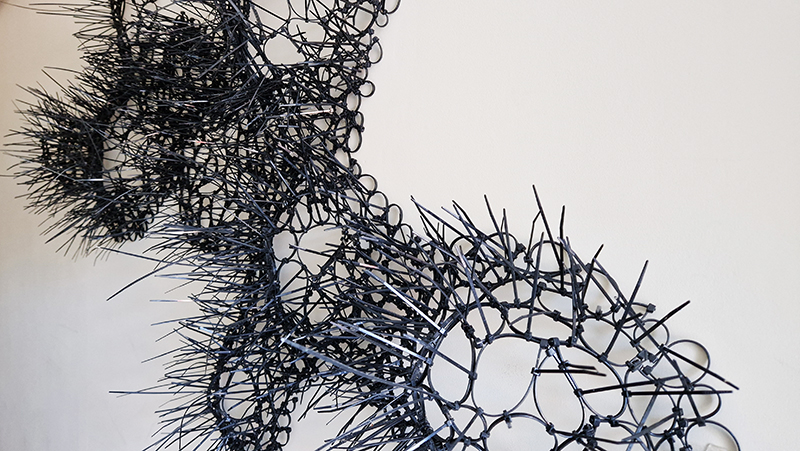
The Shape of Things by Clan, a collective of multidisciplinary artists – Caroline Penn, Liz Lowe, Ashley Goldman, Nicky O’Donnell at Gallery 3, a delightful Georgian property in Margate. The artists examine issues of loss, both personal and environmental, that are balanced by ideas of hope and regeneration. A nice use of recycled and sustainable materials including netting from fruit and cable ties.

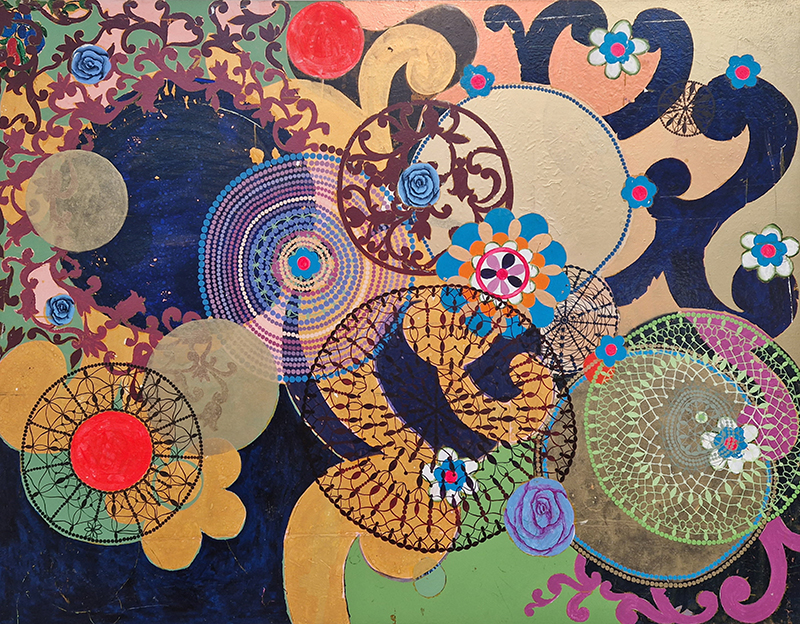
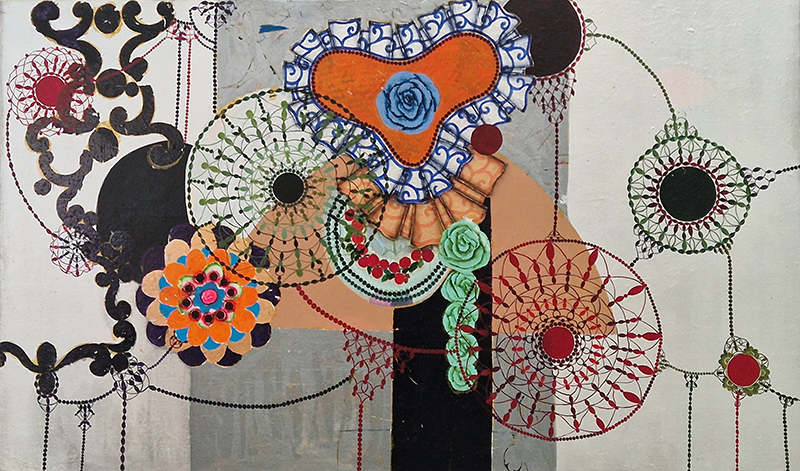
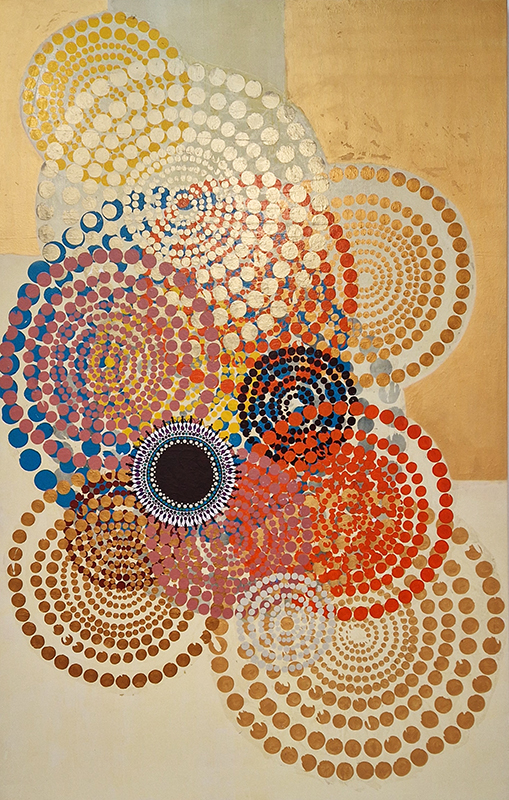
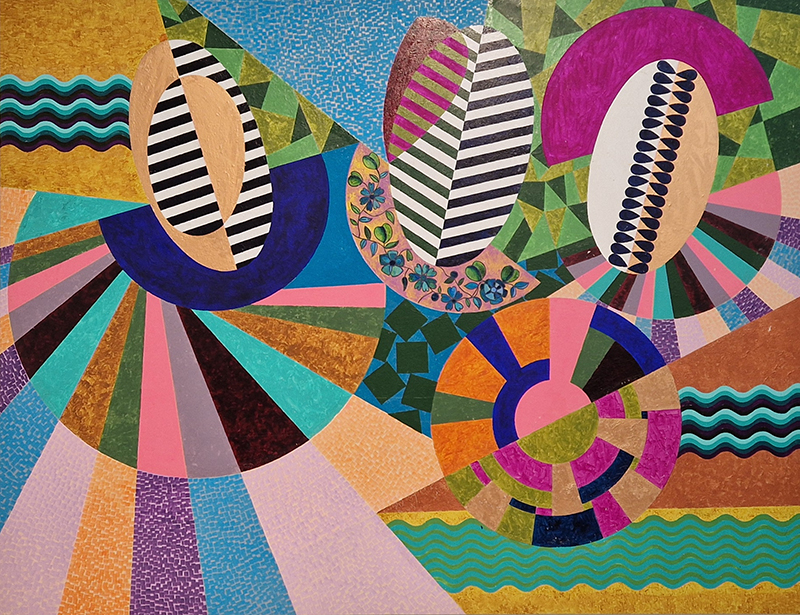
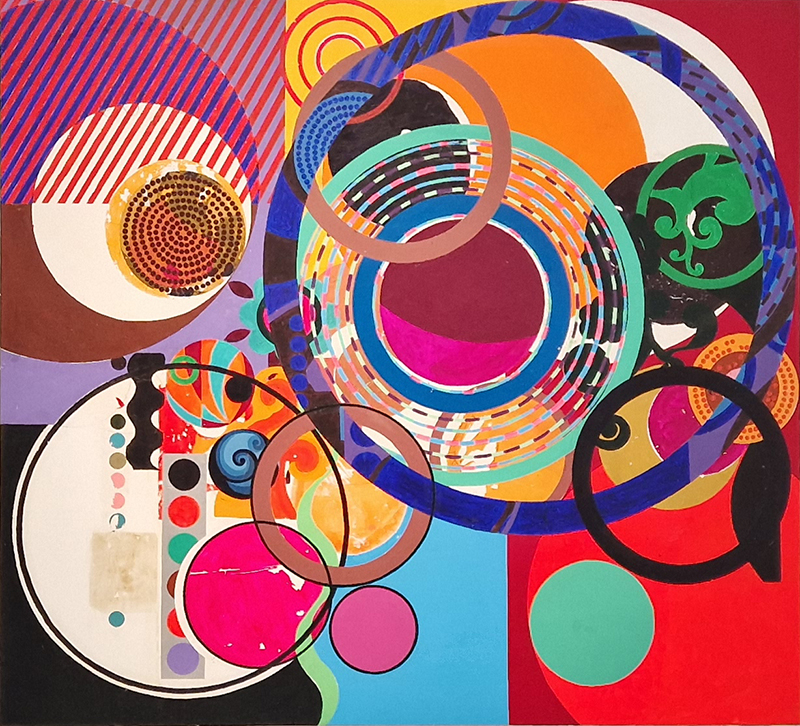
Beatriz Milhazes at Turner Contemporary. Perfect for a summer’s day at the seaside. Exuberant.

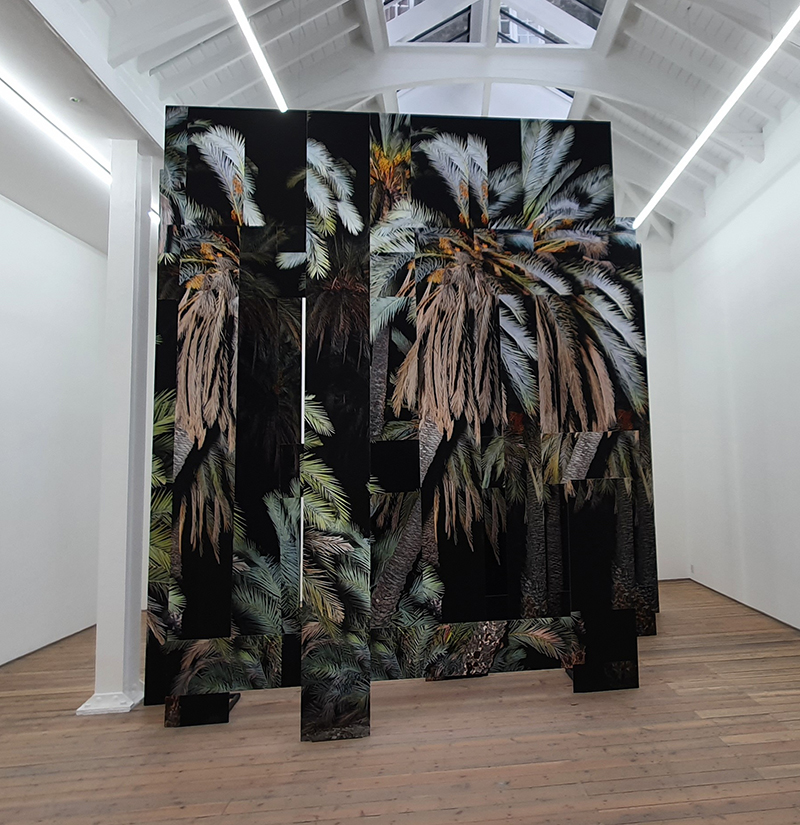
Opening event for the new photography centre at the Victoria and Albert Museum. Interesting to hear about the process Noémie Goudal undertakes to create her ambitious illusionist photographic sculptures such as Giant Phoenix VI from the series ‘Post Atlantica’ which has been acquired by the Victoria and Albert Museum for their photography collection, housed in a new dedicated gallery. This work was inspired by her interest in shifting landscapes, the movement of tectonic plates and how landmasses join and separate over millennia. There was also the chance to see her video Inhale Exhale along with behind the scenes footage of her technical team and the scale of the resources involved. Tarrah Krajnak has also had work acquired by the museum and read some of her poetry at the event. Her interests are also in discontinuity, severance and cataclysmic events but on a human scale. Being born from an act of violence she puts her own identity forward to explore power relationships.


Reading

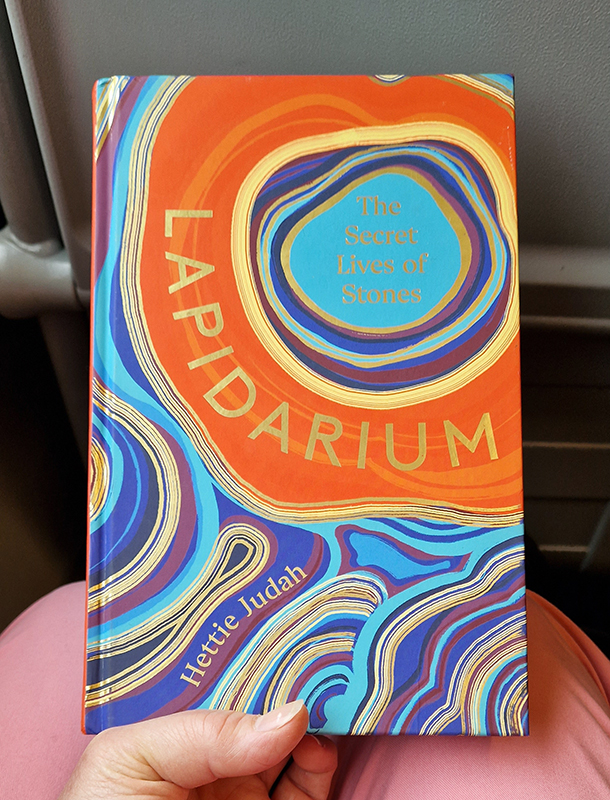
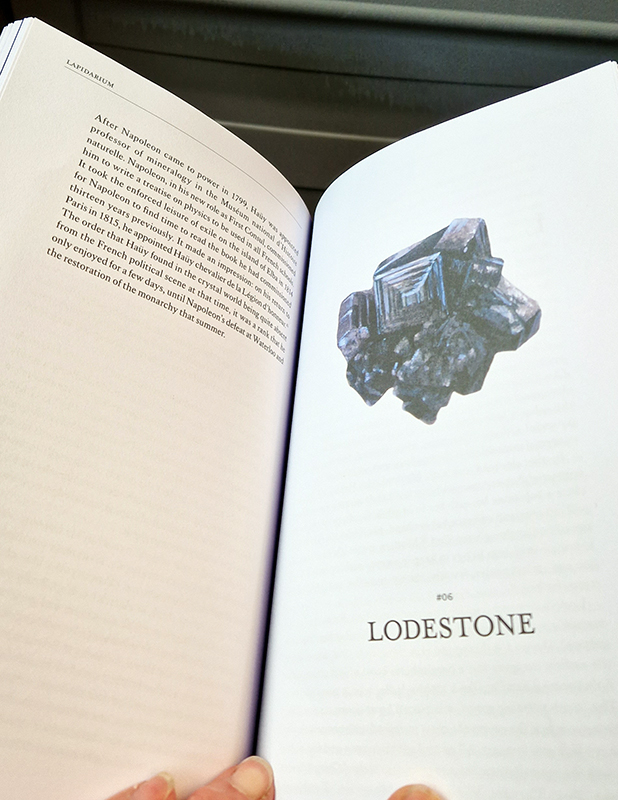
I have really enjoyed the breadth of information delivered so beautifully by Hettie Judah in her book Lapidarium – The Secret Lives of Stones. The character described and stories told of each geological layer, formation, rock and gem brings to life a world often perceived as static, perpetual and dry. This book is a great resource and has been particularly appropriate for me in the run up to the exhibition A Stone Sky with Julie F. Hill as we explore the intimate connections between the rocky planet earth and space.

 “How do you calculate upon the unforeseen? It seems to be an art of recognizing the role of the unforeseen, of keeping your balance amid surprises, of collaborating with chance, of recognizing that there are some essential mysteries in the world and thereby a limit to calculation, to plan, to control.”  Rebecca Solnit, A Field Guide to Getting Lost

At Hartland Magnetic Observatory and other magnetic observatories around the world solar activity is examined daily and forecasts are given if this is likely to have any geomagnetic effect on Earth. The main geomagnetic field is also constantly changing due to convection flows and waves in the Earth’s core. As this change cannot be predicted, uncertainty slowly increases over time.

Most of my work at the moment is towards the exhibition A Stone Sky, with Julie F. Hill at Thames-side Studios Gallery later in the year. Very excited to be working alongside Julie and to have space to be ambitious in scale.

The Absolute Hut installation, reimagining the magnetic observatory room, will be a combination of planning to build the structure and unpredictability through processes used for the surfaces. Measuring for the north facing wall to be built in sections for easier transportation. Testing scale and coverage of field contour shapes cut in copper with a plasma gun.

I am hoping the north wall structure can be made up soon and the boards attached. I will then keep it outside facing north until the exhibition in an attempt to grow some moss on its surface. I have only had some very small success so far growing moss, despite trying a new culture recipe and being very diligent misting every morning and evening.

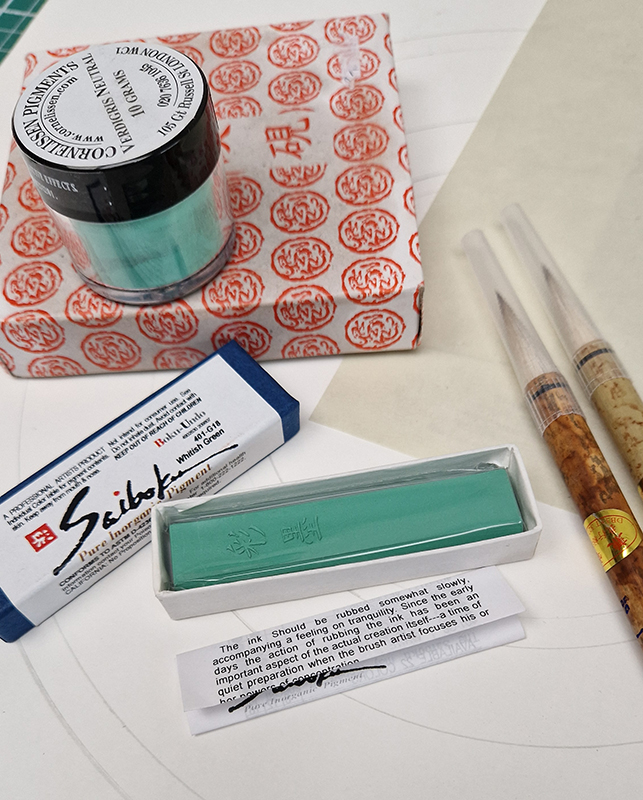
The topological contours of suminagashi marbling, which also echo fluid magnetic field lines, have inspired me to experiment with this idea for The Absolute Hut roofing. I have bought a sumi ink stick in whiteish green, an ink grinding stone and some verdigris pigment from Cornelissen in preparation to try this idea out. In this process the magnetic field lines appear embedded into the fabric of the hut that monitors (senses) the emanations from the Earth’s core.

Through the north facing window of The Absolute Hut, The Azimuth Obelisk (Obelisk of sedimentary knowledge) will be viewed. The sculpture is formed by tearing, drilling and layering sheets of paper. As sedimentary rocks build over time, so the obelisk has a lot of time invested in its making and conceals the history of past events in the hidden layers of the recycled prints and drawings.

I am still working on etching the Directional Magnetic Steel pieces. It can be a frustrating process as some batches work well and some do not etch well at all but come out dull and patchy and I’m not sure why. My idea was to use these pieces to draw a line across the gallery floor signifying the westward drift of the magnetic field from geographical north but now I am thinking more about mapping out a spiral shape in shaped pieces to echo the rotation of the Earth’s molten core.

All information about the Earth’s core has come from studying seismic data, analysis of meteorites, lab experiments with temperature and pressure, and computer modelling. Seismometers convert vibrations due to seismic waves into electrical signals. The velocity and frequency of seismic waves changes with pressure, temperature, and rock composition. The discovery that Earth has a liquid layer beneath the crust and a solid inner core has come from detailed analysis of the different types of waves that pass through the body of the Earth. Looking at the composition of meteorites, fragments of asteroids, formed about the same time, and from about the same material, as Earth provides clues to what minerals the core might contain. Diamond anvil cells are instruments used to recreate the pressure existing deep inside the planet by squeezing materials between two diamonds surfaces. A combination of this data is used to in complex computer modelling programs resulting in detailed animations of the geodynamo, a process powered by the convection of heat in the outer core along with the rotation of the planet.

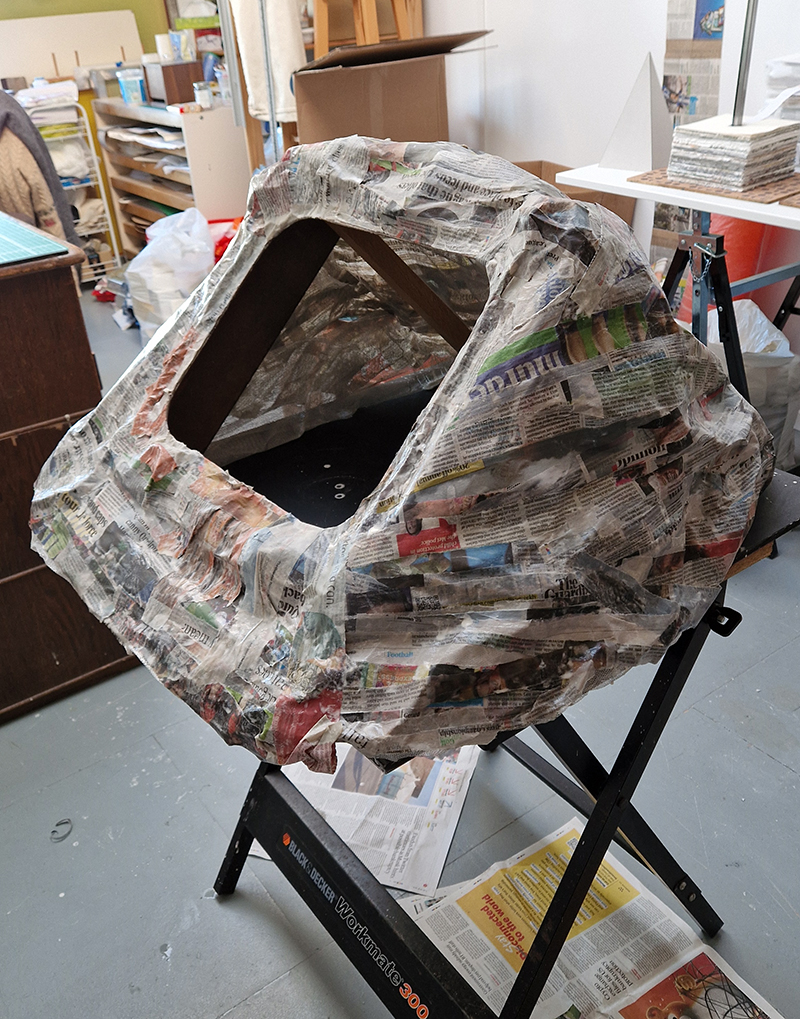
Also a few more layers of papier mâché have been applied to the sculpture that will house a screen with video for the work Belly of a Rock.

Other work in the research stage looks at the first use of a magnetic compass, the cardinal points of navigation and the compass predecessor the wind rose.

In classical antiquity, a time stretching from Homer to the early middle ages, geographic orientation usually referred to landmarks or astral phenomena to determine direction. Eos meaning dawn, and Hesperus, evening were named for sunrise and sunset with north (arctos) being marked by the constellation Ursa Major and later the Pole Star. The winds also became associated with direction, and named in accordance with their qualities such as hot and humid or cold and dry. In Greek mythology Astraeus, the god of dusk, and Eos, the goddess of dawn, gave birth to many sons of the twilight including the Anemoi, the four gods of the winds, each ascribed a cardinal direction. Boreas being the god of the cold north wind,  Notus the god of the hot south wind, Eurus from the east and gentle Zephyrus from the west.

The number of points on a wind rose began with the four cardinal points which were added to and refined over time. The winds were often given names that referred to a particular locality from where they seem to blow, so different places came up with various local names. Aristotle designed an asymmetrical 10 point wind rose which was later refigured by Timosthenes who is credited with inventing the system of twelve winds and using this more for navigation than for “the study of things high in the air.

Classical wind roses were eventually replaced by the modern compass rose during the middle ages.

The “Vatican table” is a marble Roman anemoscope dating from the 2nd or 3rd Century CE, held by the Vatican Museums. Usually an anemoscope would be topped with a weather vane. Divided into twelve equal sides, each one is inscribed with the names of the classical winds, both in Greek and in Latin. 

At a quantum scale, all matter is underpinned by uncertainty. My fascination with particle physics began from simply wondering what everything was made of when you looked really closely. I looked up ‘fundamental building blocks of the universe’ and was blown away by this mysterious other world, so far away in terms of scale I can comprehend, yet a part of me and everything I interact with.

Quanta is a discrete unit that cannot be divided. Quantum physics is the study of energy and matter at the most fundamental level. The chemical reactions in a birds eye that allow it to ‘see’ Earth’s magnetic field involves the quantum entanglement of radical pairs of electrons. These electrons are excited by light, particularly the blue of twilight.

Photography was the first available demonstration that light could indeed exert an action sufficient to cause changes in material bodies. William Henry Fox Talbot 

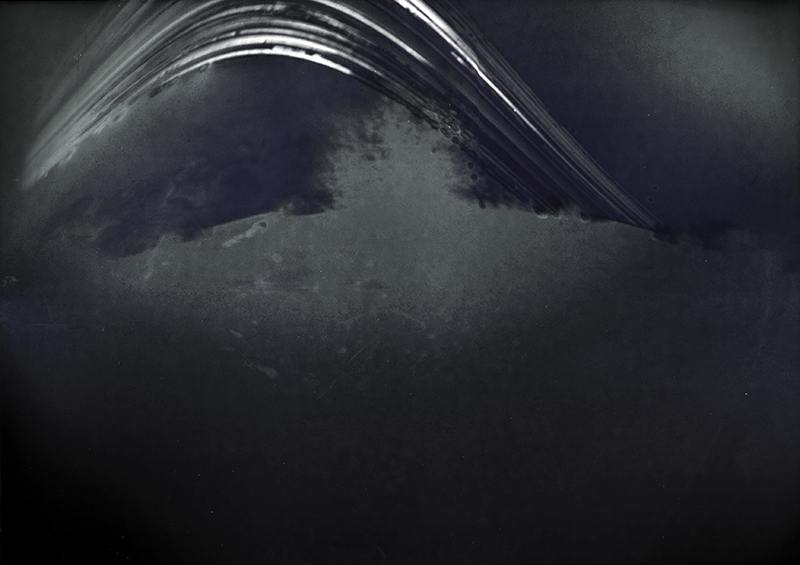
The subject of the photograph (the sun) has transcended the idea that a photograph is simple a representation of reality,  and has physically come through the lens and put it’s hand onto the final piece. Sunburn Chris McCaw

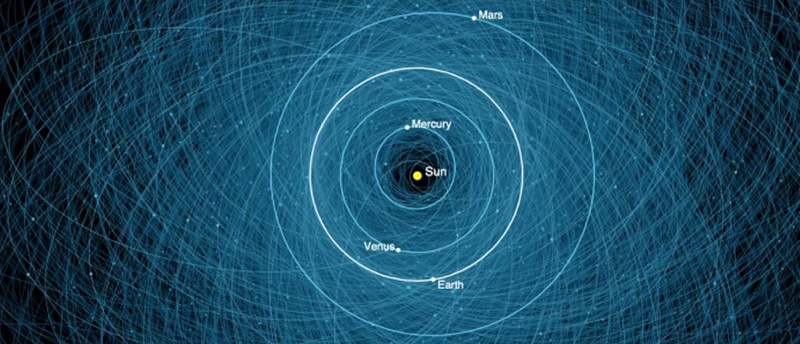
This month NASA announced a new planetary defence strategy to protect Earth from an asteroid impact. NASA’s Double Asteroid Redirection Test (DART) on 11th October 2022, changed the orbit of the Dimorphos Asteroid in the first full-scale demonstration of asteroid deflection technology.

This marks humanity’s first time purposely changing the motion of a celestial object.

“An asteroid impact with Earth has potential for catastrophic devastation, and it is also the only natural disaster humanity now has sufficient technology to completely prevent,” Lindley Johnson, NASA’s planetary defense officer. First any potential collision objects must be identified. This will be the job of the Near Earth Object Surveyor, along with ground-based optical telescope capabilities, to find the still undiscovered population of asteroids and comets that could impact our planet.

A magnetometer is being sent on an eight year journey to Jupiter. It was launched this month from Europe’s Spaceport in French Guiana.

ESA’s Jupiter Icy Moons Explorer (Juice) has magnetic and electric field sensors on the end of the magnetometer boom. The boom is folded in three parts and packed against the side of the spacecraft for launch. Once unfolded in space, the sensors will extend clear of the main body of the spacecraft, allowing very accurate measurements without magnetic interference from the spacecraft itself.

The boom’s instruments will measure Jupiter’s magnetic field, its interaction with the internal magnetic field of Ganymede, and will help study the subsurface oceans of the icy moons.

Ganymede is the only moon in the solar system known to have its own magnetic field. The magnetic field causes auroras, which are ribbons of glowing, hot, electrified gas, in regions circling the north and south poles of the moon. Because Ganymede is close to Jupiter, its magnetic field is embedded in, or lies within, Jupiter’s magnetic field.

The discovery of the moons orbiting Jupiter by Galileo Galilei in 1610 was the first time a moon was discovered orbiting a planet other than Earth. The discovery eventually led to the understanding that planets in our solar system orbit the Sun, instead of our solar system revolving around Earth.

Gallery Visits

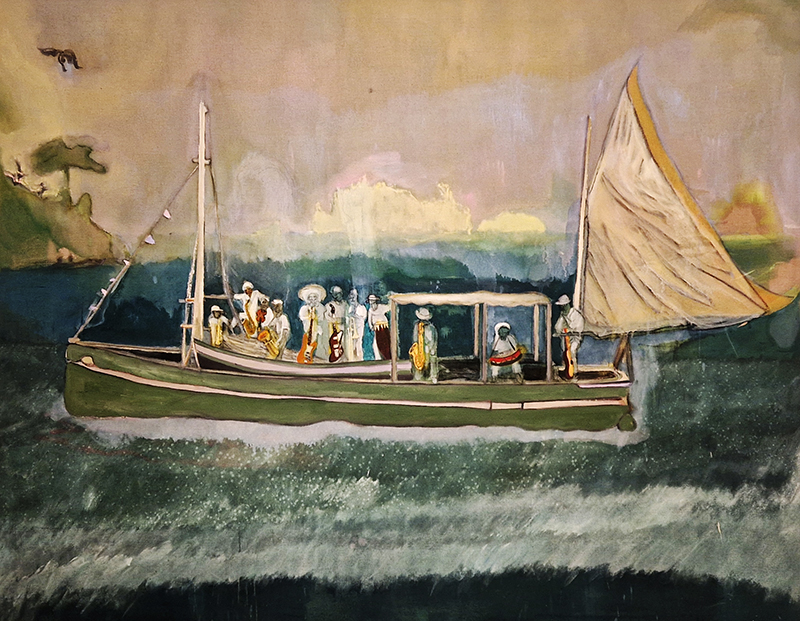
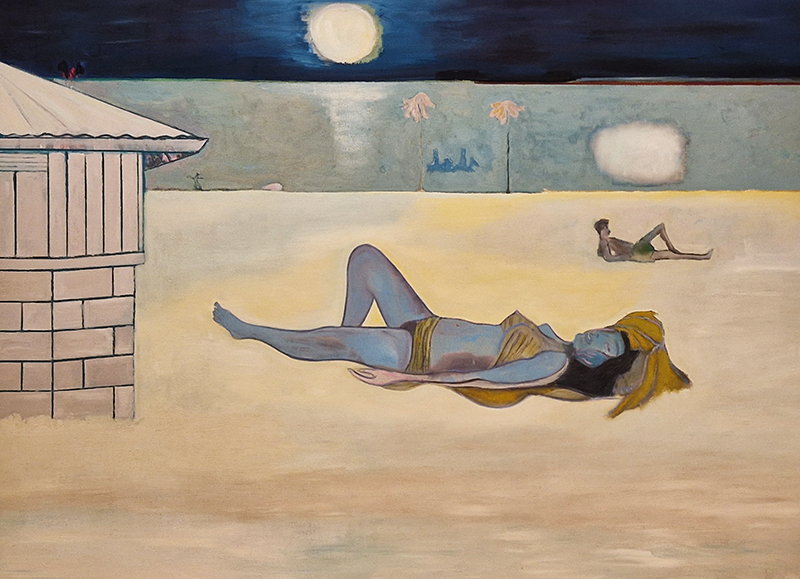
Peter Doig at The Courtauld. My highlights were the luminous moons, moon bathing and an etching of a cave.

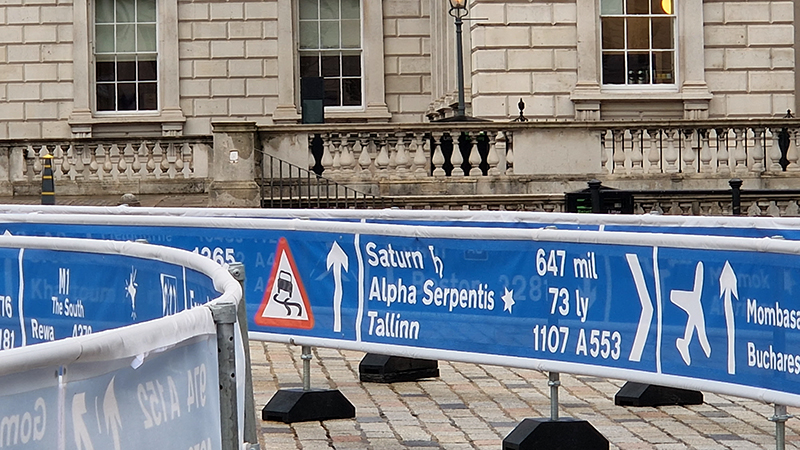
Jitish Kallat Whorled (Here After Here After Here) at Somerset House had a romantic premise with a prosaic aesthetic. I love the concept and the theory and it’s certainly a jarring juxtaposition to be directed to celestial destinations by motorway signage. Routes through the work map circular movements through space and time. Is this the Hitchhiker’s guide to the galaxy?

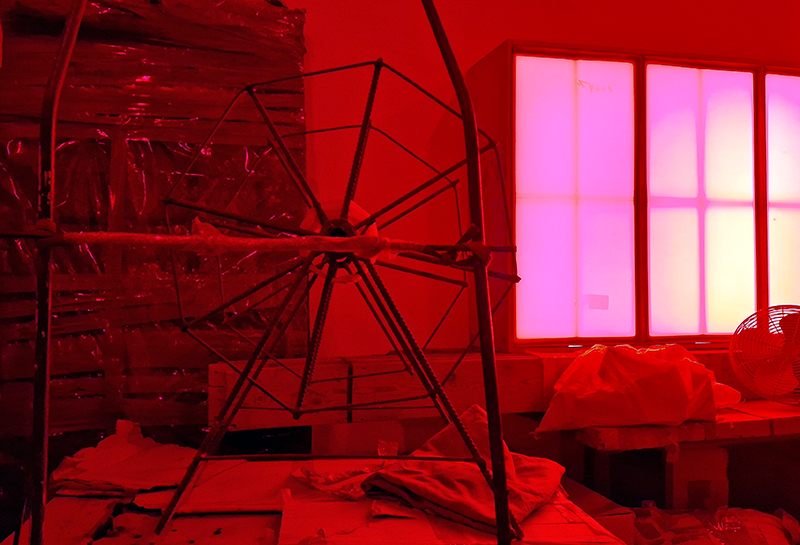
Mike Nelson Extinction Beckons at Hayward Gallery.

The impact is in the SCALE. Punchdrunk meets abandoned engineering.