Archives for posts with tag: urban geology

In Pliny’s Natural History (published after his death in the AD 79 eruption of Vesuvius, when, ever curious, he had gone to investigate the strange cloud rising), he marvels at the powers of the magnet ‘For what, in fact, is there endowed with more marvellous properties than this?’; ‘What is there in existence more inert than a piece of rigid stone? And yet, behold! Nature has endowed stone with both sense and hands! He goes on to assert that ‘it received its name “magnes”, Nicander informs us, by the person who was the first to discover it, upon Ida’. ‘Magnes, it is said, made this discovery, when, upon taking his herds to pasture, he found that the nails of his shoes and the iron ferrel of his staff adhered to the ground.’
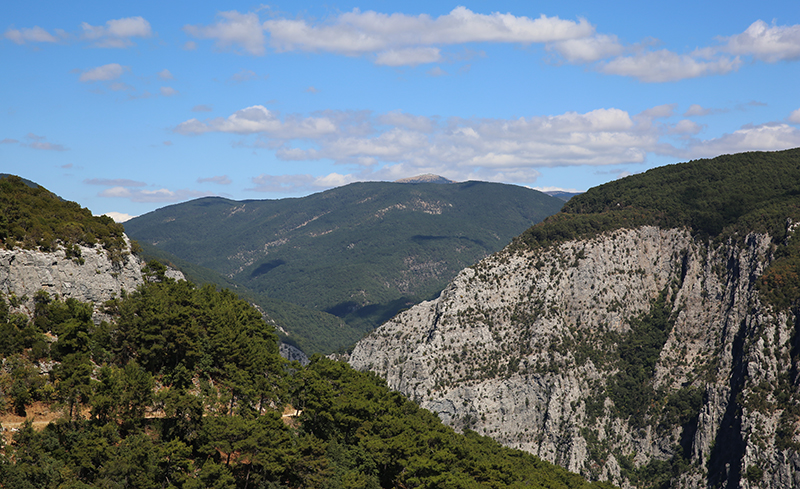
Nicander was a 2nd century BC Greek poet, physician, and grammarian and there is no surviving record of his claim. Gillian Turner, in her book North Pole, South Pole, admits that this story will have been embellished over time but acknowledges that if an electrical storm took place on Mount Ida and the naturally magnetic magnetite was struck by lightning, it would be permanently magnetised into lodestone and would therefore attract the nails of Magnes’s shoes.

The legend is not impossible but it is also possible the stone is named after the region where it was first found. In ancient Greek, magnetite was known as magnes lithos. There were two ancient regions called Magnesia and so the true provenance of the first discovery of the lodestone is hard to determine. In Greece, ancient Magnesia was a long and narrow slip of country in Thessaly between Mounts Ossa and Pelion. Around the 4th Century BC, the people known as Magnetes, migrated and settled in Ionian cities which were named after them as Magnesia on the Maeander and the neighbouring Magnesia ad Sipylum, currently in Aydın Province near Ephesus, Turkey.

I decided to follow the footsteps of Magnes.

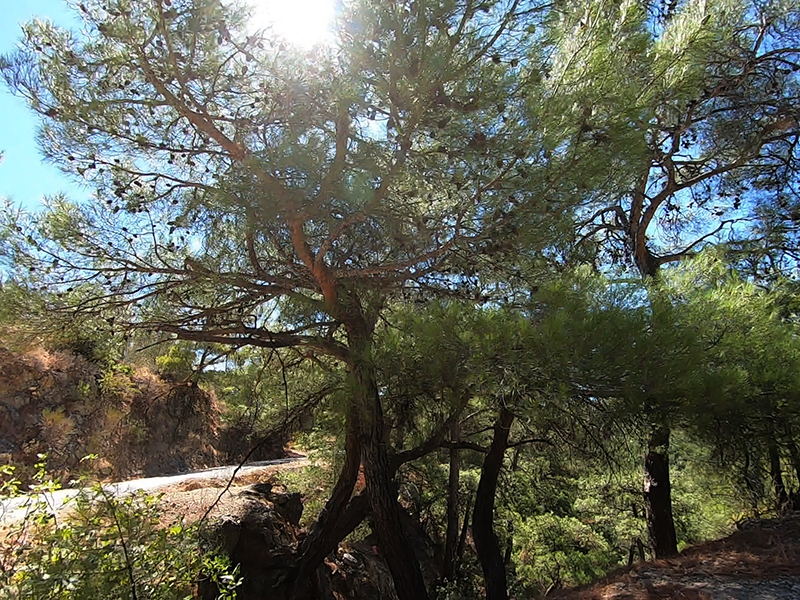
Mount Ida is famous in Greek Mythology as the location for the Judgement of Paris, where he fatefully chose Aphrodite as the most beautiful goddess, setting in motion the events of the Trojan War which the gods watched from its summit while its fir trees were felled to build the Trojan Horse. It was also an ancient sacred site for worship of the mother goddess Cybele, an embodiment of a universal Mother Earth. Its name was changed to Kazdağı (Goose Mountain) as the goose holds sacred significance in Turkish mythology. The landscape is literally breath-taking with very high oxygen levels due to the extensive pine forests and unique geographic features that funnel ionised air up from the sea to mix with the clear mountain air.

Setting out on the first evening the walk to view the mountain brought home the vastness of the landscape to negotiate.
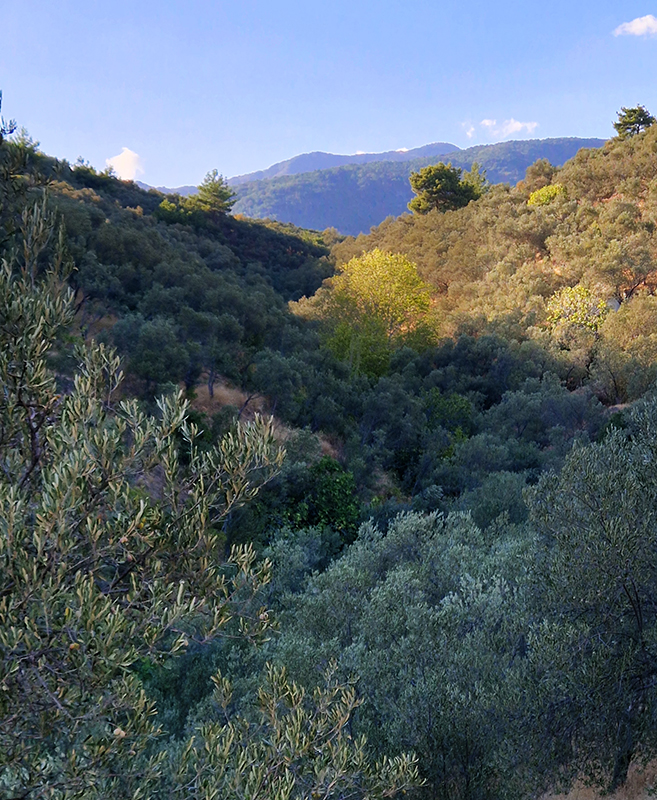
After dinner, the owner of our hotel in Zeytinli said he would find a guide to the area if we gave him 5 minutes. Thinking he would come back with a book of hiking trails, I was surprised when he returned with a Kazdağı National Park Ranger. We arranged to meet the next day when he led us up the dusty mountain tracks with his old school friend as driver.
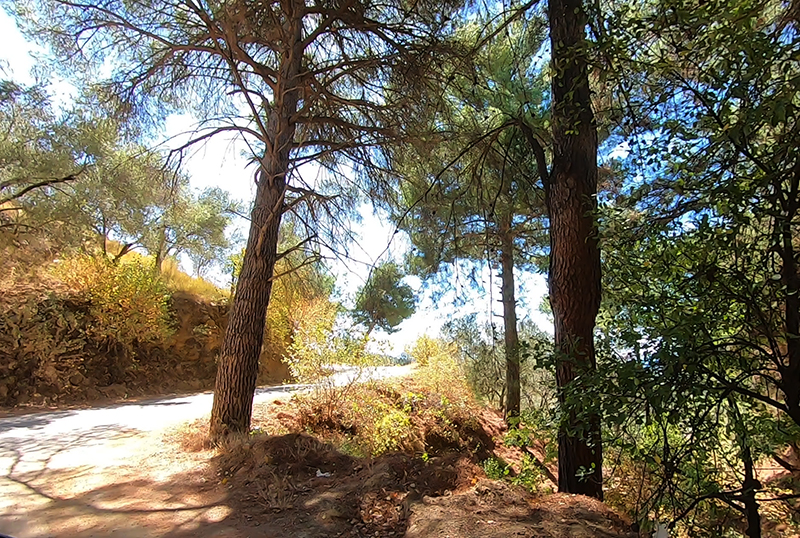
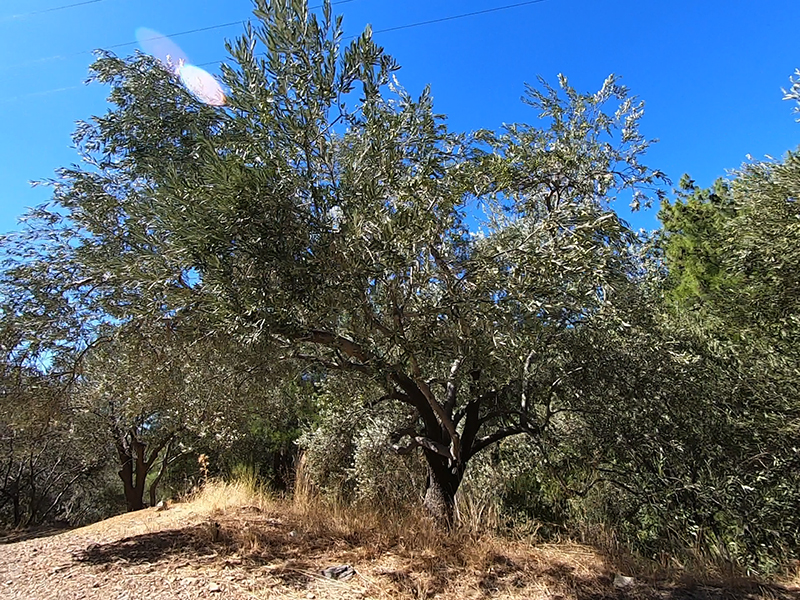
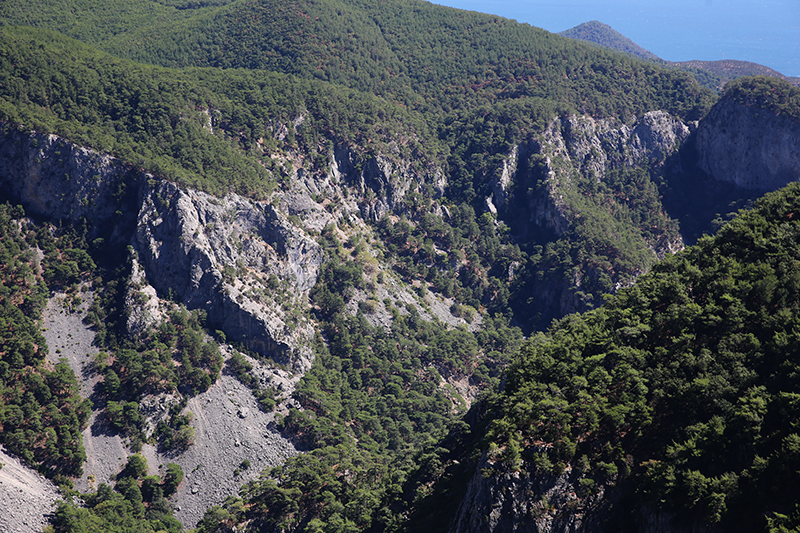
The summit of Mount Ida was always in the distance and it is not possible to walk unaccompanied in the National Park during the summer season. We drove up to a height of 800m to view the spectacular Sahinderesi Canyon.
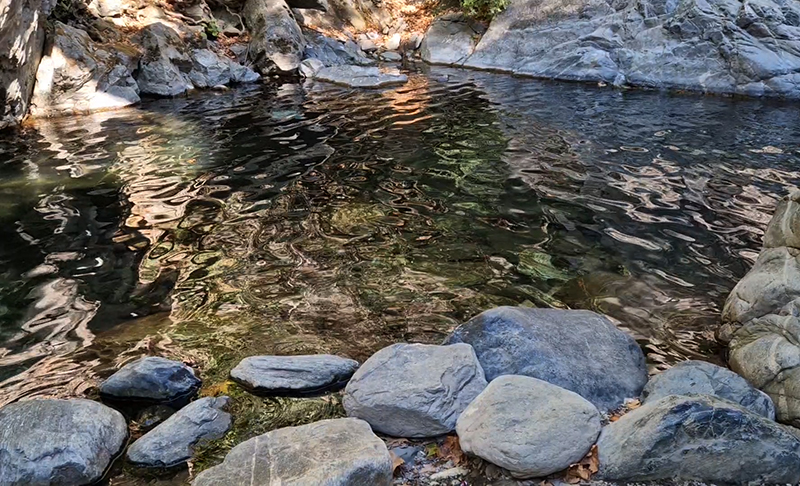
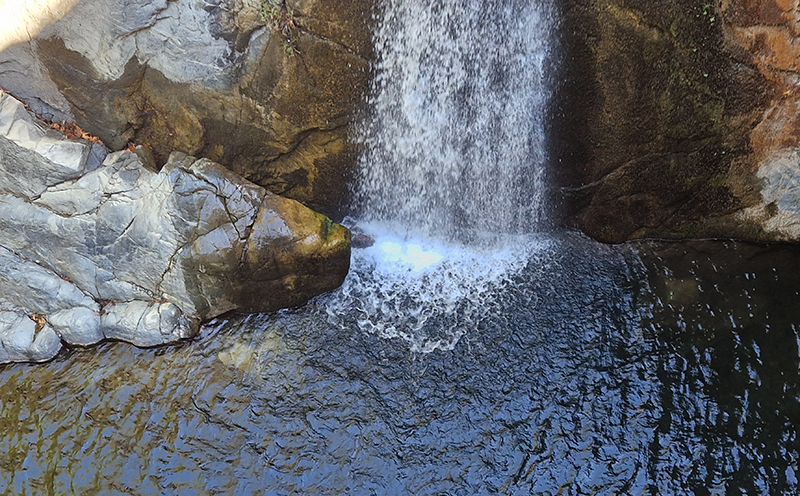
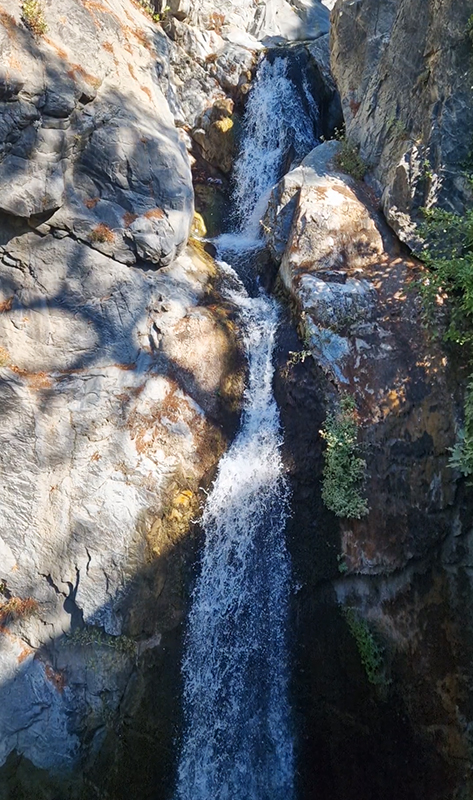
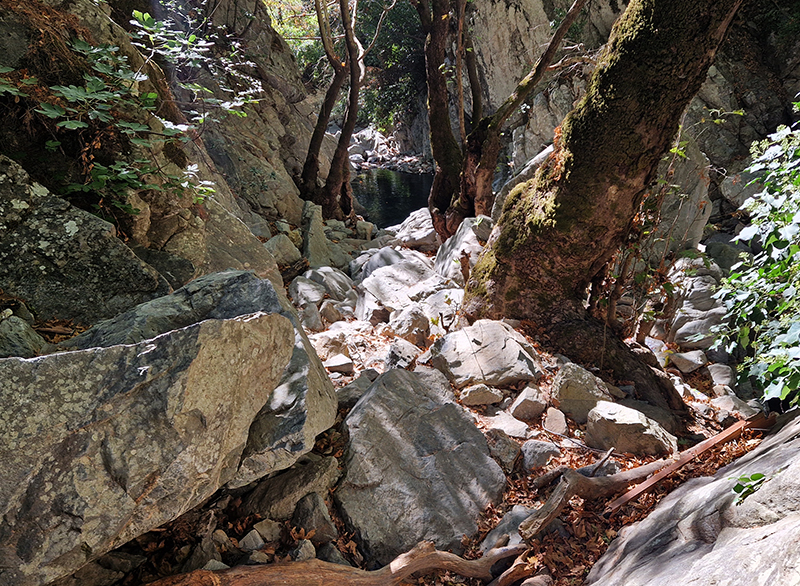
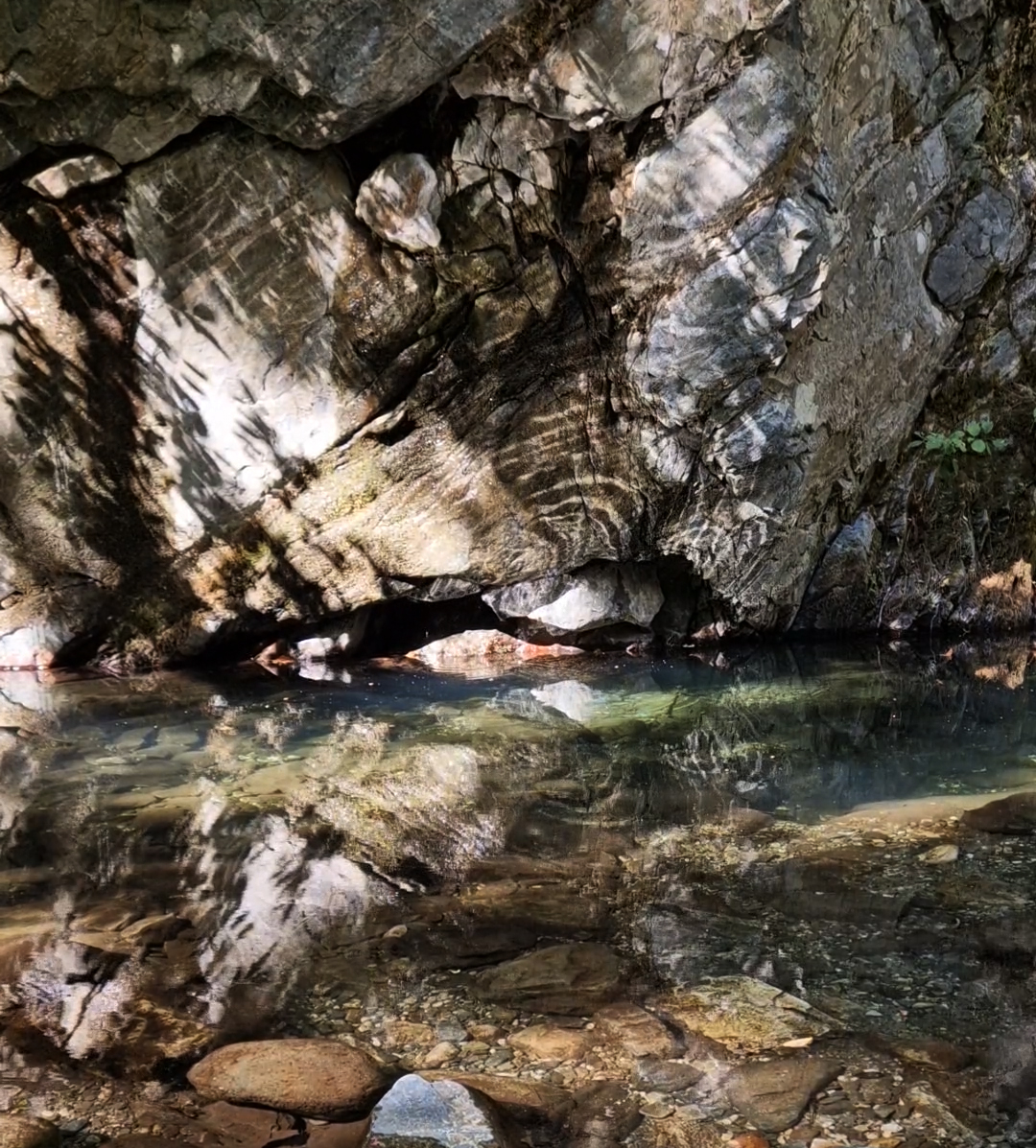
Mount Ida abounds with fresh water springs, rivers, ponds and waterfalls including the Sütüven Waterfall which we visited.
We visited the Ida Madra Geopark Museum which displayed tantalising exhibits of magnetite crystal and volcanic rock but there was only a security guard on duty who could offer no information about the collection or the local geology. The magnetite crystal does look like a broken magnet rather than raw crystal.
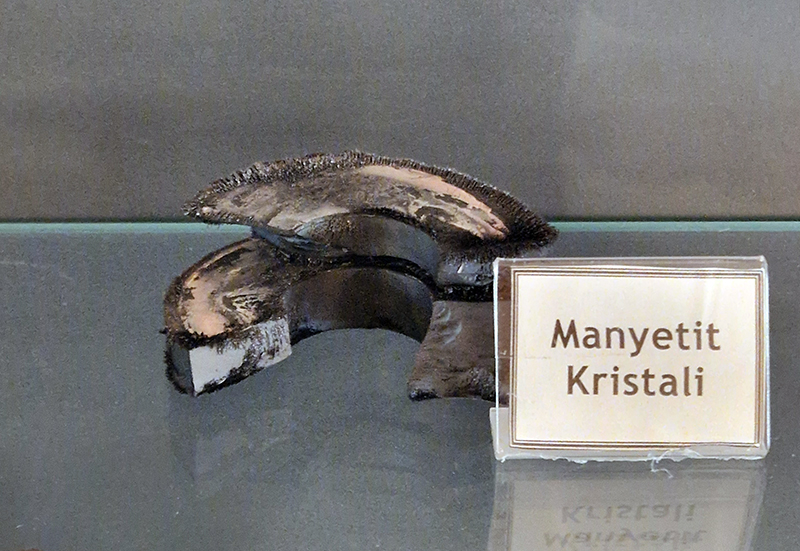
Fascinating choice of sentence to describe magnetite in the Turkish-English online dictionary – ‘Category, Turkish, English. Technical. 1, Technical, manyetit · magnetite n. The enzyme dissolved the brain tissue and left the magnetite particles intact.

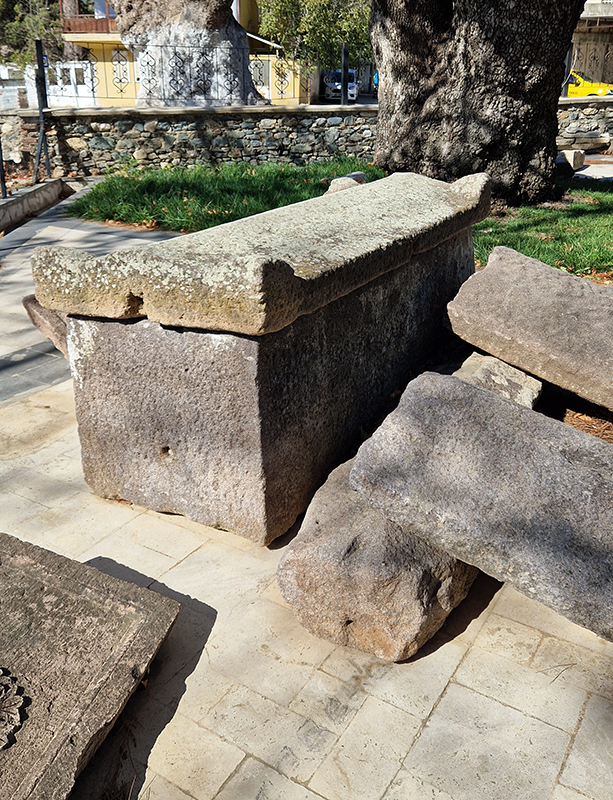
Outside the museum was a tomb that our guide told us is called ‘the man eating stone’. Pliny also talks about a stone called sarcophagus (stone of Assos) of which he says ‘It is a well-known fact, that dead bodies, when buried in this stone, are consumed in the course of forty days, which the sole exception of the teeth.’ There was also a magnificent Oriental Plane Tree, over 570 years old.
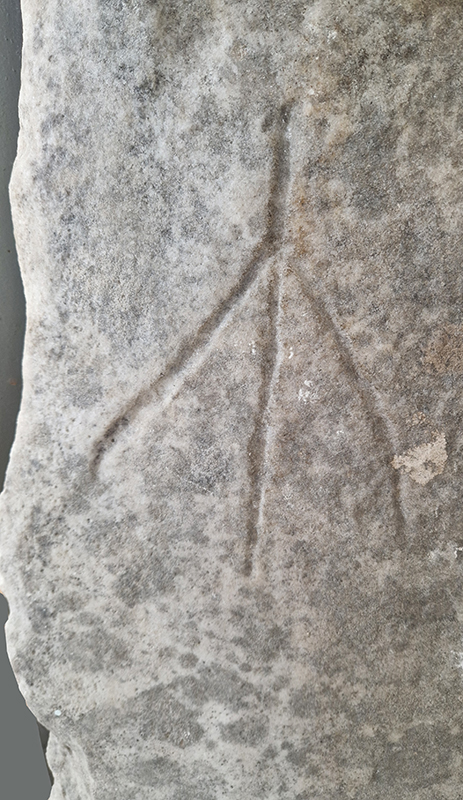
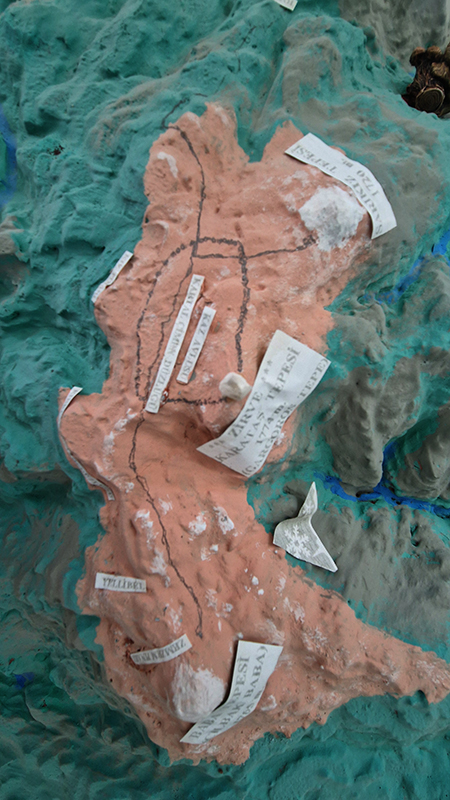
We visited the wonderfully eccentric Tahtakuşlar Ethnographic Museum which celebrates the cultural heritage of nomadic Turkish tribes and displays a stone tablet inscribed with the symbol of a goose foot reflecting the veneration of the goose by the Turkmen people. There is a rather faded model of Mount Ida which apparently shows the line of a mysterious ancient structure that circles the summit.
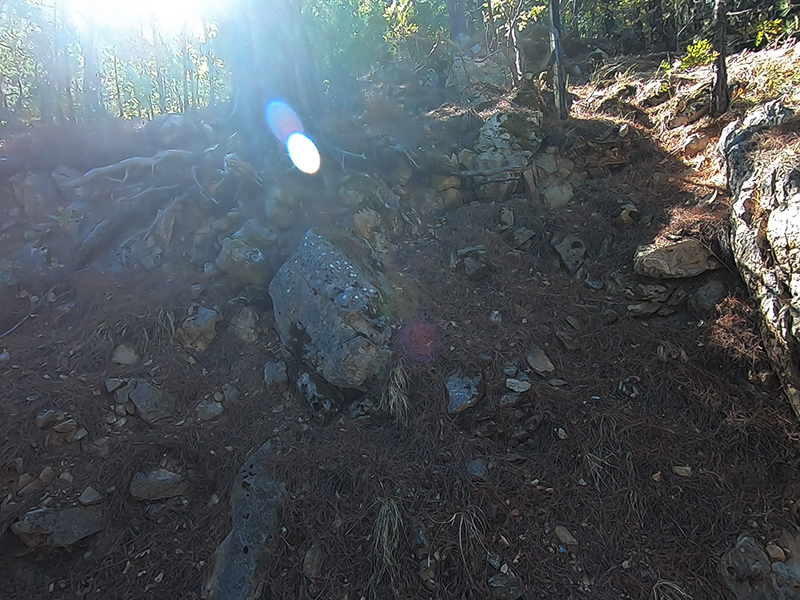
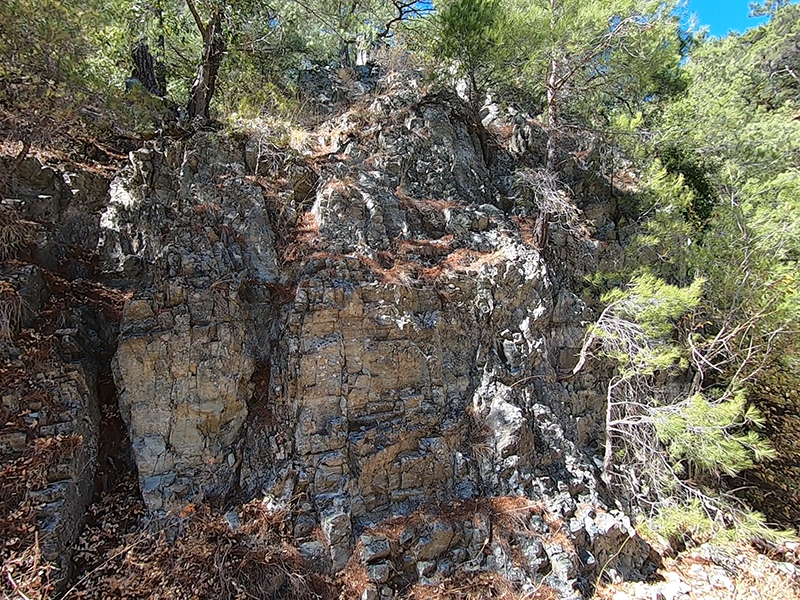
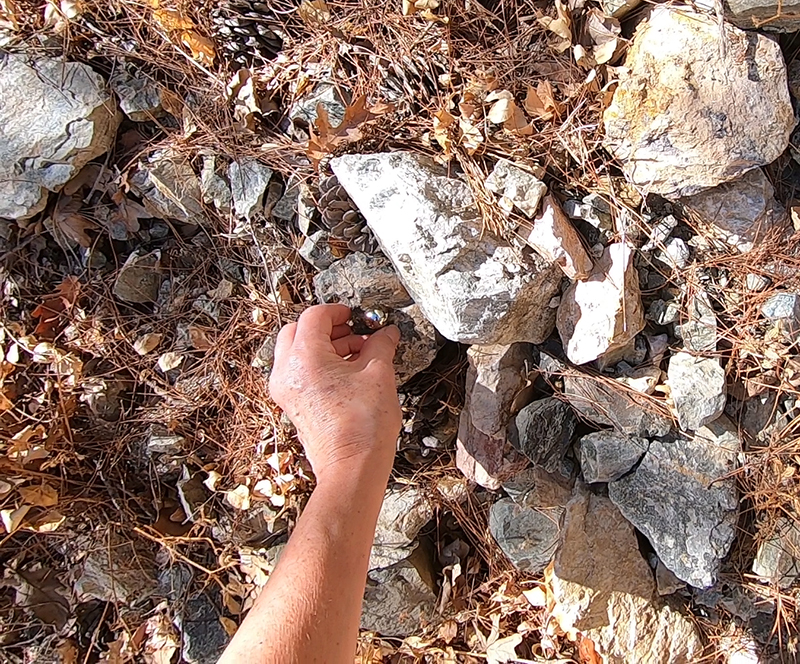
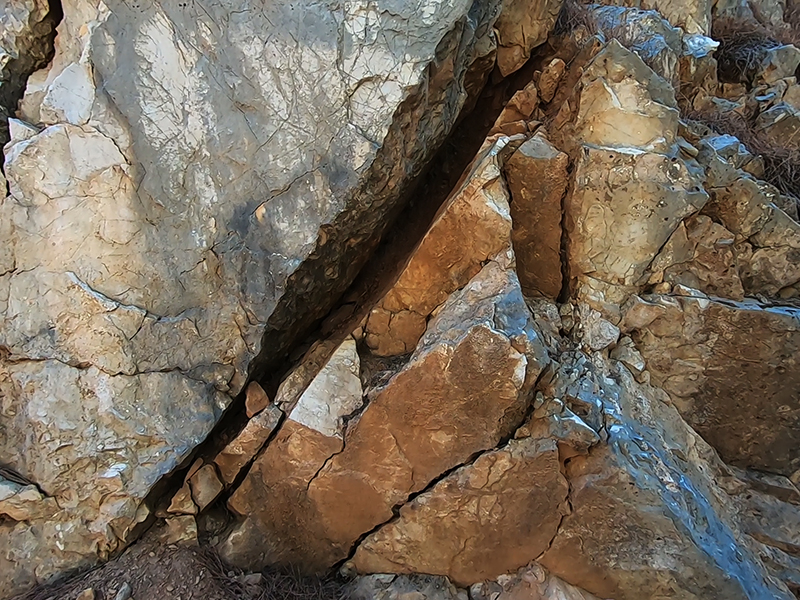
The next day we made another winding ascent. Equipped with my own magnet sphere (terrella) I went in search of magnetite on the foothills of Mount Ida. I was thrilled to discover some rocks that were magnetic.
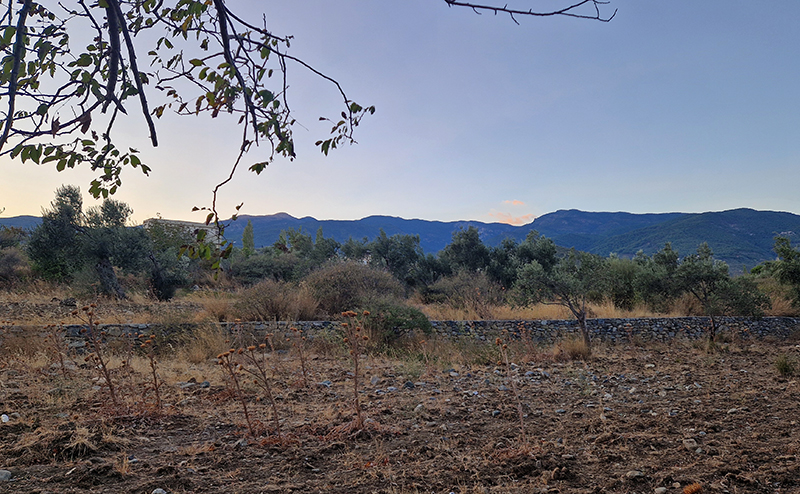
The final evening in northwest Turkey was spent watching the light fade over Mount Ida as bats and hedgehogs made an appearance along with quite a lot of street dogs that were thankfully more interested in barking at each other.
On to the urban geology of Istanbul and a number of monolithic erections. In the Hippodrome, once a vast public arena for chariot races, imperial ceremonies, and public events, there are several examples of phallic architecture.
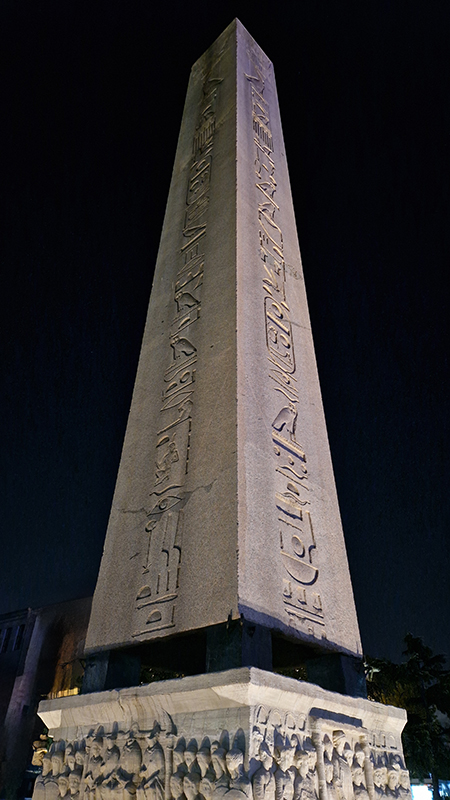
The towering red granite Obelisk of Theodosius, originally 30m tall, is an ancient Egyptian obelisk of Pharaoh Thutmose III (1479–1425 BC), first erected at Karnak to celebrate victory in battle. It was removed from Karnak and transported along the river Nile to Alexandria by the Roman emperor Constantias II in 357 and just 33 years later Theodosius I had it transported to Constantinople and erected on the spina of the Hippodrome, the relocation upheavals having reduced its height by a number of metres.

It is not known exactly when The Walled Obelisk was constructed but was probably built to mirror the Obelisk of Theodosius in the Hippodrome. Obelisks were often erected in symmetrical pairs. It was originally decorated with gilded bronze plaques (maybe to hide the fact that it wasn’t a true obelisk which should be hewn from a single piece of rock) but these were removed and melted down by Christian crusaders in 1204.

The Serpent Column is the remains of an ancient bronze column that was part of a Greek sacrificial tripod originally built in Delphi 478 BC as an offering to Apollo but relocated to Constantinople in 324.
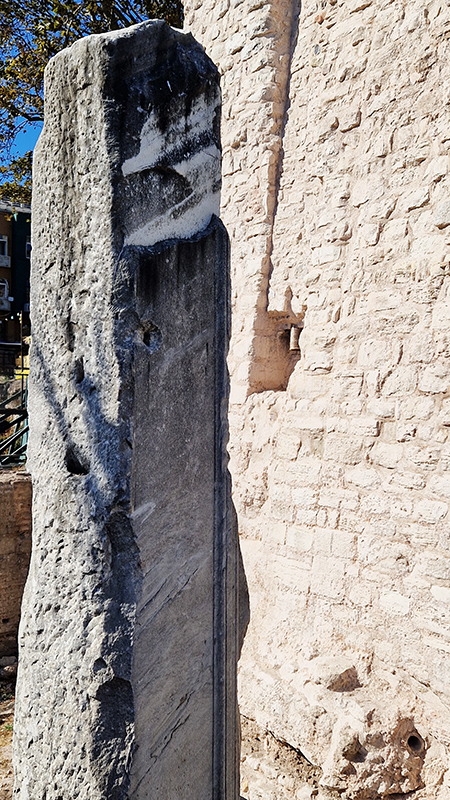
The stone Milion was a marker from which all distances across the Roman Empire were measured. Erected by Septimius Severus upon the re-founding of Byzantium as Constantinople in 330 AD it became the starting-place for the measurement of distances for all roads leading to the cities of the Eastern Roman Empire.
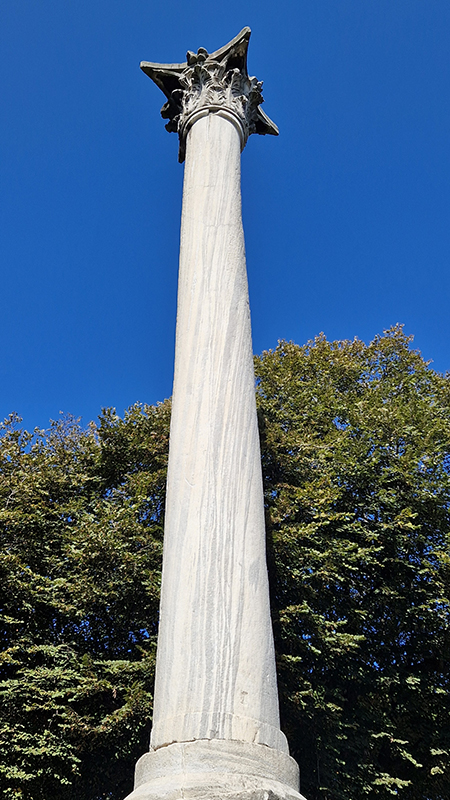
The Column of the Goths, a single block of marble 18.5 metres high, erected in Gulhane Park, is the oldest monument still standing from Roman times.
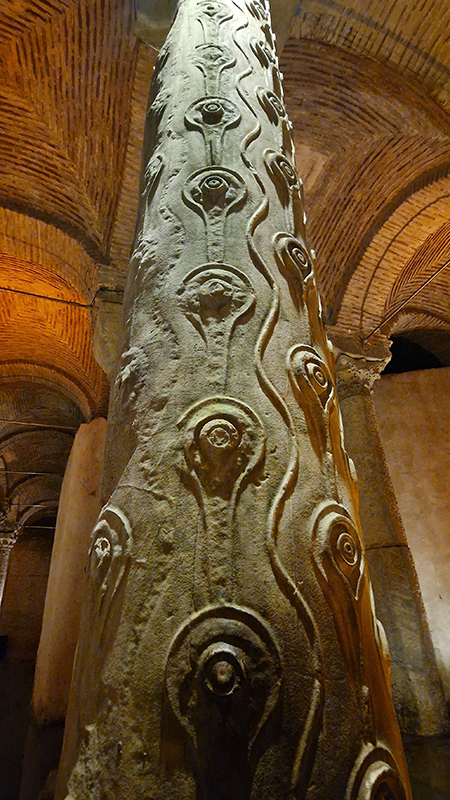
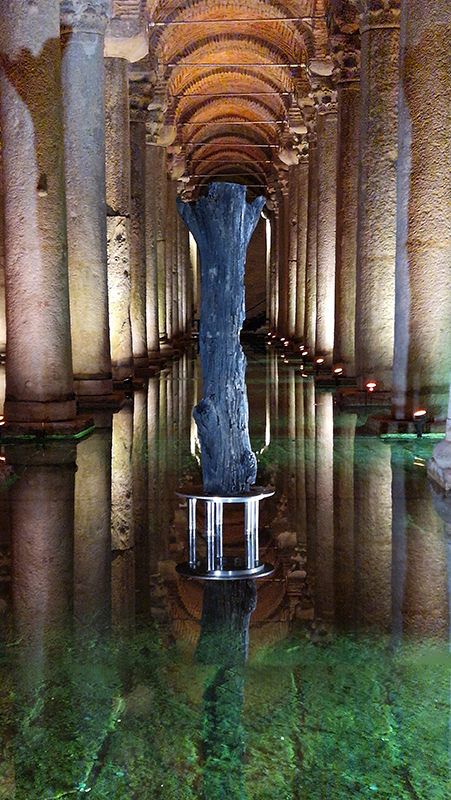
The Basilica Cistern is a vast subterranean forest of columns with the 4th Century ‘Tear Column’ standing out for its unique patterns which are often thought of as tears but may actually be a stylised representation of a tree.

The Basilica Cistern is the largest of several hundred ancient cisterns that lie beneath Istanbul, built in the 6th century during the reign of Byzantine emperor Justinian I to supply the city with drinking water. The ceiling is supported by a 336 marble columns, each 9 metres high which appear to have been recycled from the ruins of older buildings and are carved out of different types of marble and granite.

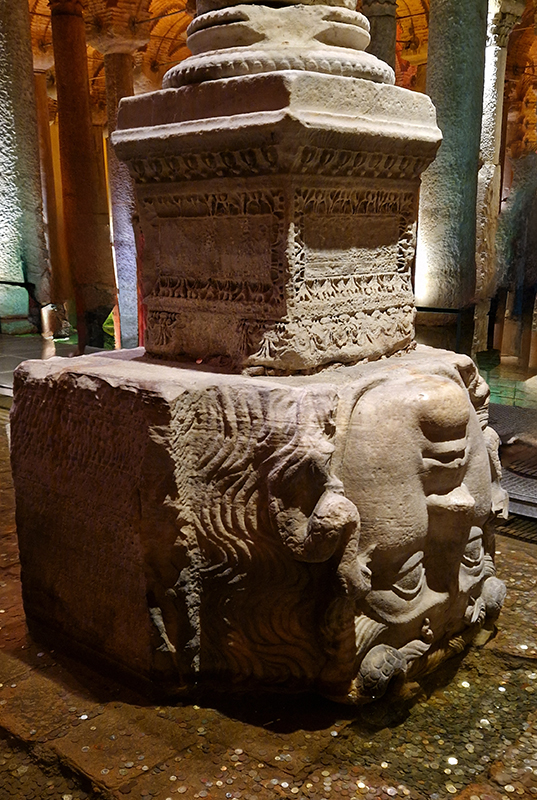
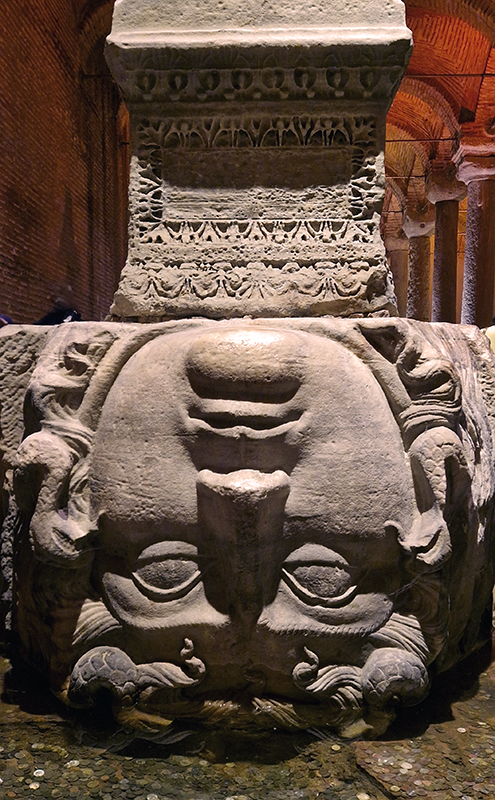
Two columns reuse blocks carved with the face of Medusa. Tradition has it that the blocks are oriented sideways and inverted in order to negate the power of the Gorgon which held that anyone who looked upon her was turned to stone.

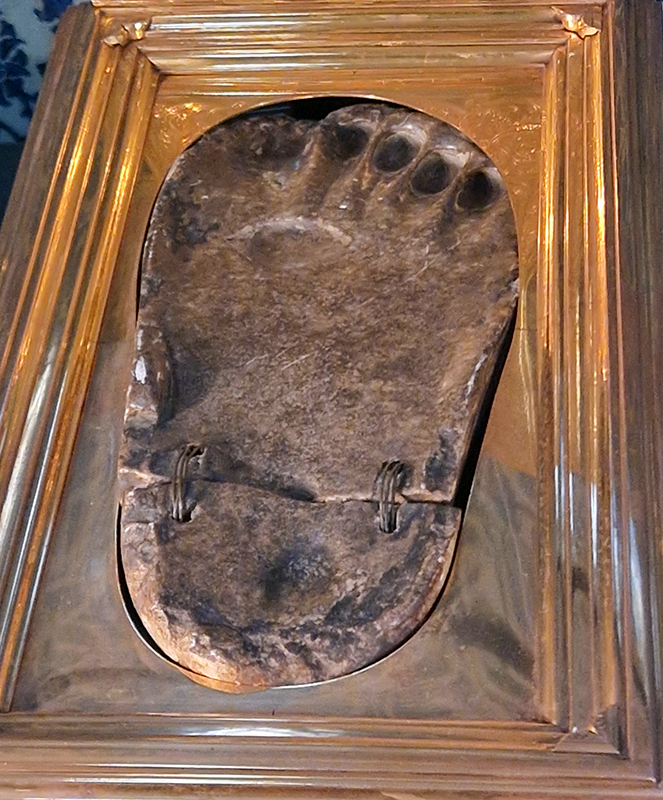
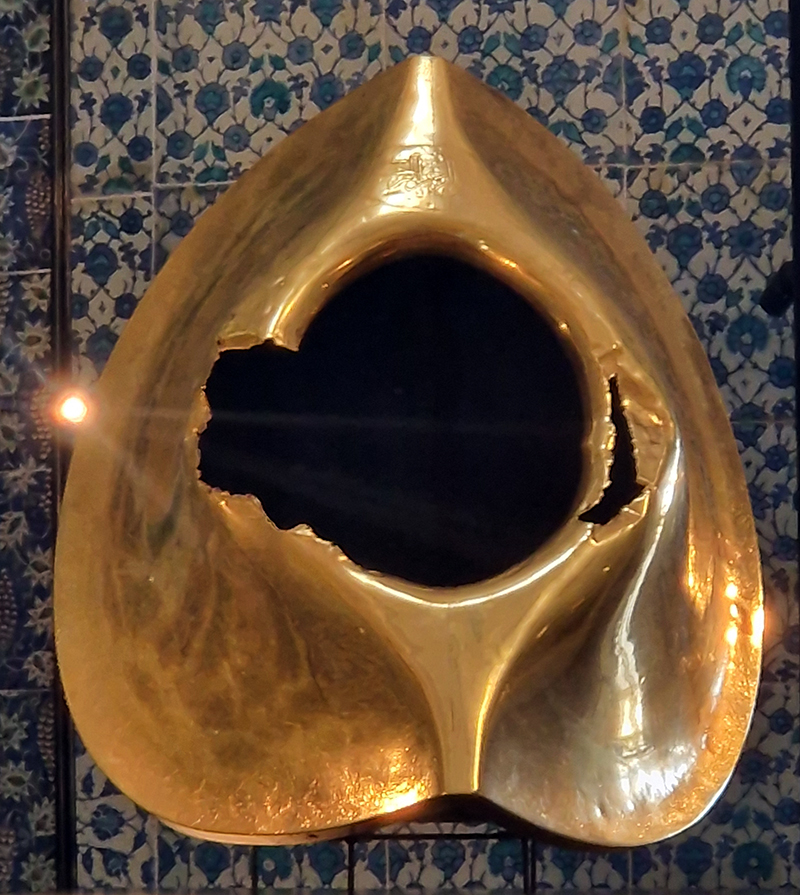
The Sacred Trust, of Islamic religious relics kept at the Topkapi Palace includes the Casing for the Black Stone, a rock set into the eastern corner of the Kaaba, in Mecca, Saudi Arabia. Revered by Muslims as an relic which, according to tradition, was set intact into the Kaaba’s wall by Muhammad before he became a prophet. It has had a turbulent history, being stolen, taken hostage and smashed. Today its fragments can be seen set in cement, encased in a silver frame on the side of the Kaaba, polished smooth by the hands and kisses of pilgrims. Although idolatry is forbidden in the Hebrew Bible and the Quran the use of aniconic stones, or baetyls, which are sacred stones stones venerated for their connection to the divine, without needing human-crafted images, were permitted. There has been speculation The Black Stone is a meteorite, but it has never been scientifically analysed to ascertain its physical origin. Also on display are footprints in stone (Kadem-i Şerif) attributed to the prophet Muhammad. An Ottoman scholar, Mehmed Münib Ayıntâbî (d. 1823) wrote a treatise to explain that this footprint was one of the miracles of the Prophet for otherwise how could it be possible to leave the impression of a foot on hard ground like stones. This was reiterated by a guide at the palace. There are six Kadem-i Şerif of the Prophet four of which are on stone and two of which are on brick, the most significant is the one in a gold frame believed to be left on his ascension to heaven from the Dome of the Rock.
Mechanical clocks didn’t arrive in Ottoman lands until the 15th Century, 200 years after their initial invention. Chief astronomer to Sultan Selim II, Taqi al-Din, bemoaned the new instruments as ‘the most burdensome to construct, which demanded modest workers’. The qibla compass was used to determine the direction for prayer. This Ottoman marble sundial is from 1526.
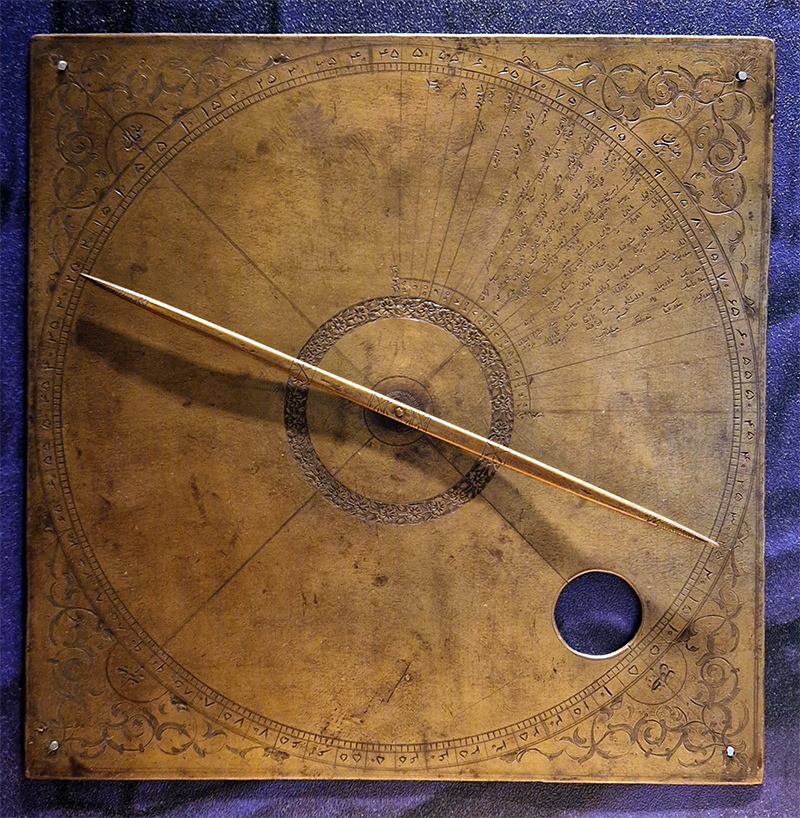
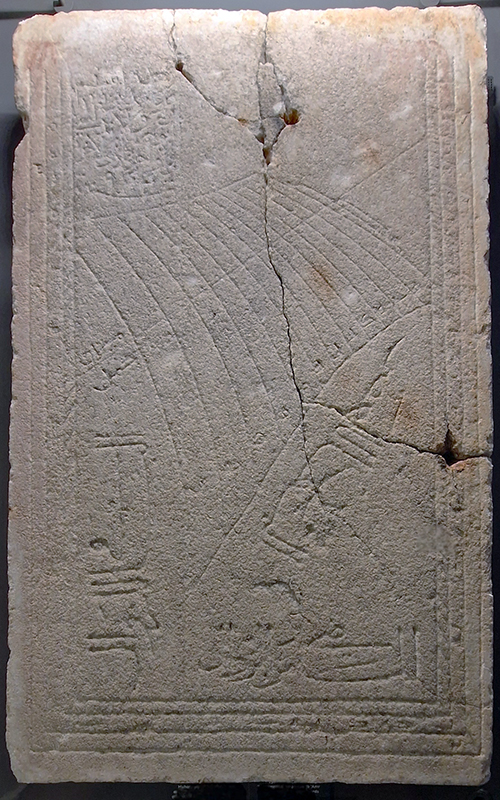
‘Were man to look up from the ground, he’d see a starry sky, were he to look down from the heavens – a wavy sea’ Tursun Beg. (15th century Ottoman historian who wrote a detailed account of Mehmed the Conqueror’s reign.)

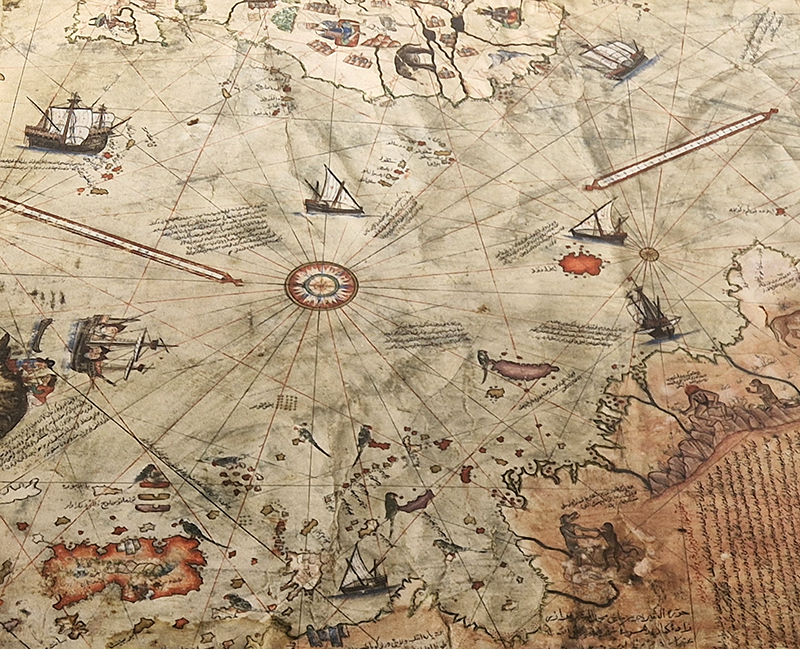
The 1513 world map made by Turkish cartographer Pîrî Reis was discovered in the Topkapı Palace Library in 1929. Pîrî Reis created an impressively accurate depiction of the newly discovered regions of the world using a circular design based on a hypothetical centre. This map is the earliest cartographic record of Columbus’s oceanic voyages and the first to show the unique fauna of Terra Australis.
Beginning new work. Learning about the symbolism of sacred geometry in the Westminster Abbey Cosmati Pavement has inspired me to think about how I could relate ancient symbolism and contemporary iconography to think about changing relationships to fire, water, earth, air and the cosmos. Plato imagined the universe was created as a living creature in the shape of a sphere, perfect and complete in itself. Patterns of Thought author Richard Foster suggests that ‘as our minds become progressively tuned to ecological and global concerns, so the Platonic image of the world as a living creature is re-awakened from its sleep.’
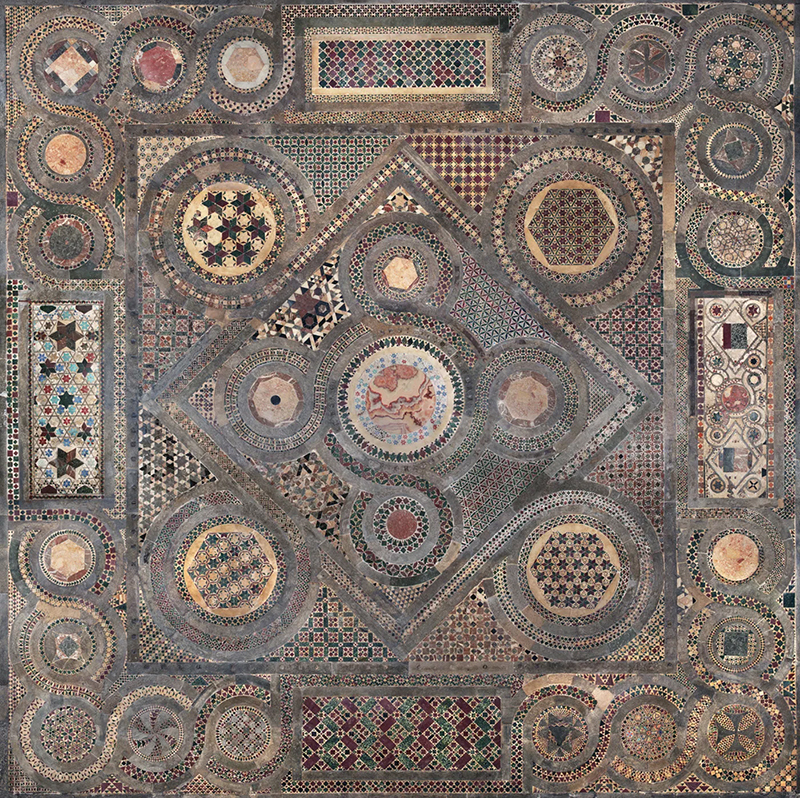
In the symbolism of the Cosmati Pavement, the journey from earthly materialism to spirituality is seen as a progression from multiplicity and diversity towards unity and uniformity. The tiles show a transition from a variety of patterns through to simplified regular polygons, the archetypes of form representing a perfection that we only experience as a shadow on Earth. Random patterns at the centre of the design describe the elements in an undifferentiated state of matter, the primal chaos before the division of spirit and matter when the breath of the creator swept over the ‘turbulent waters’ or ‘silva’ bringing forth the differentiation of matter into the forms of the four elements. The medieval mind never took the world at face value and always sought to see the coexistent and equally valid layers of meaning in everything.

In medieval cosmology the separation of the elements happened before the advent of time which began with the creation of the sun, the moon and the planets as astronomical time, the timelessness of eternity is alluded to by the number 60 + 1. The end of the world was imagined as a reversal of creation. All will return into the four elements which return to the primal chaos and are reabsorbed into the divine mind and eternity.

The four elements are linked by pairs of opposing qualities: Fire is dry and hot; Air is hot and moist; Water is moist and cold; Earth is cold and dry. Each element shares a quality with two others and elements with a shared quality combine more easily. Fire is sharp, tenuous and mobile, reflected in a quick tempered choleric human temperament, it gives vision and belongs to the heavenly race of gods. Earth is blunt, weighty and immobile reflected in a heavy melancholic human temperament. Earth resides with the sense of touch and those that walk on the ground. It has stability facing to the north, south, east, west, zenith and nadir. Air is sharp, mobile and weighty reflected in a breezy optimistic human temperament. Air amplifies hearing and smell, it supports the flying creatures and is synonymous with breath and spirit. Water is mobile, blunt and weighty reflected in a dissolute easy-going human temperament. Water amplifies taste and supports the creatures that swim.
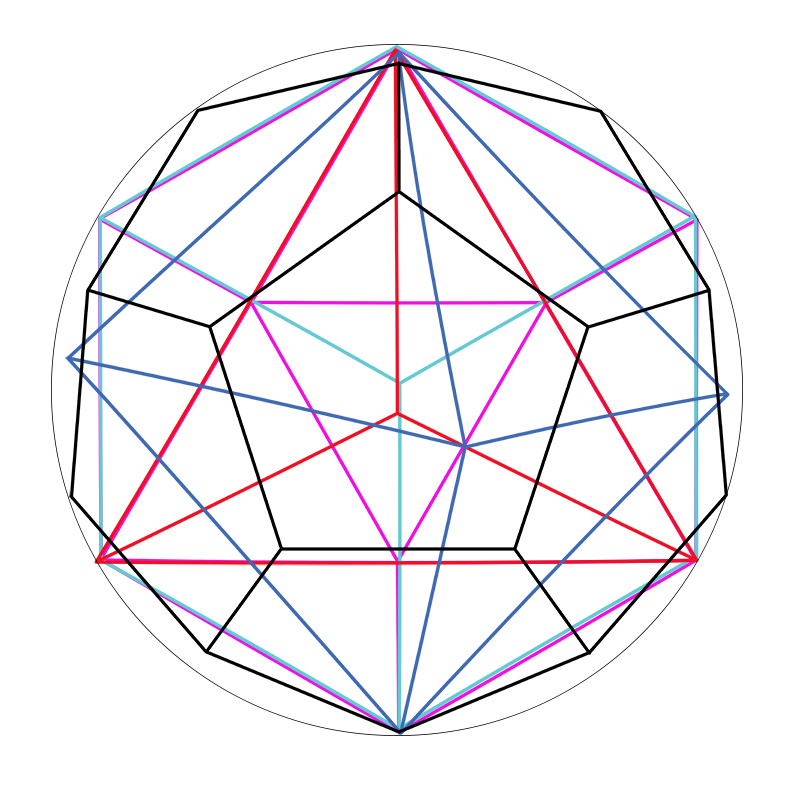
I was interested to read that in the kitchens of the Topkapi Palace (1459) in Istanbul, the four humours (blood, phlegm, black bile and yellow bile) were taken into account when designing the menus. Different foods were recommended depending on their qualities to restore good health for those suffering sickness which was attributed to an imbalance of the humours. The seasons were also taken into account in relation to the humours when deciding which foods to cook.
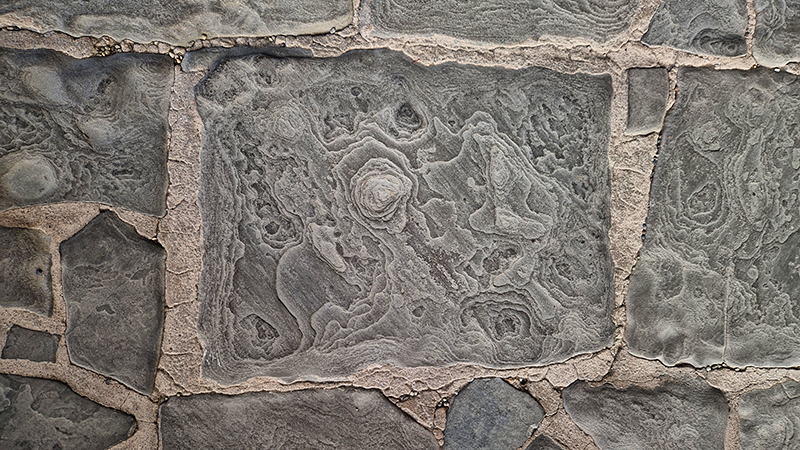
Gallery Visits

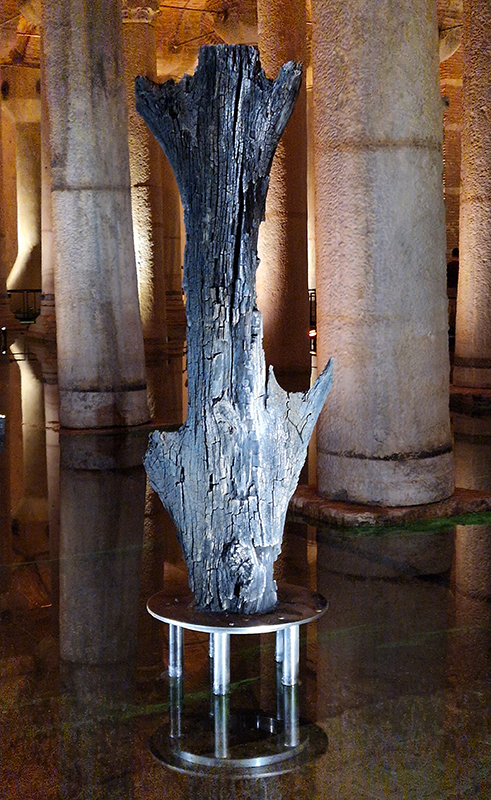
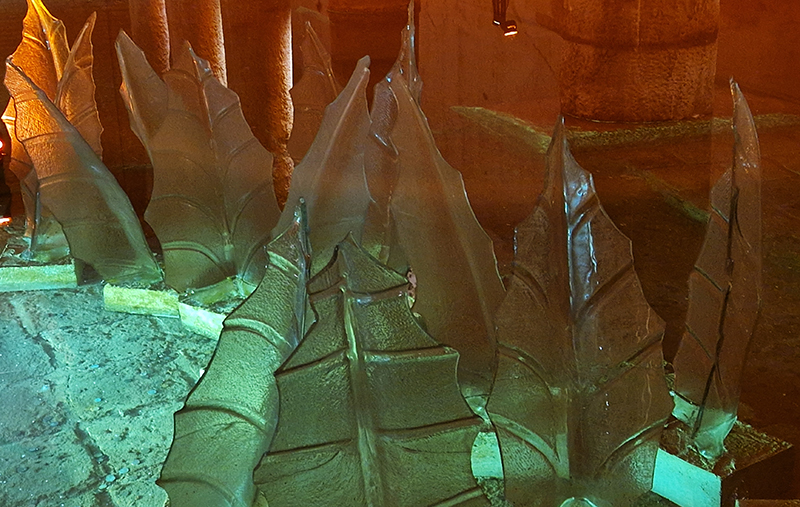
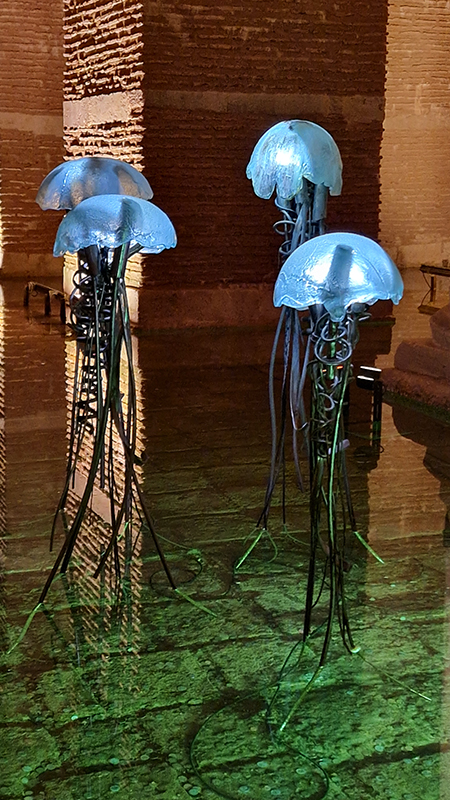
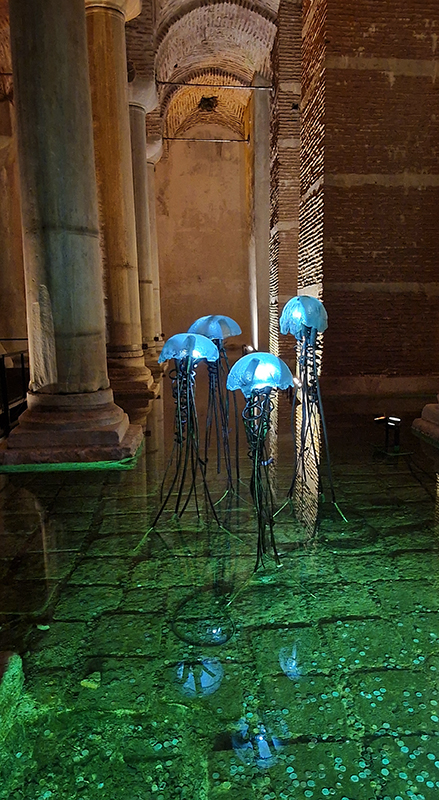
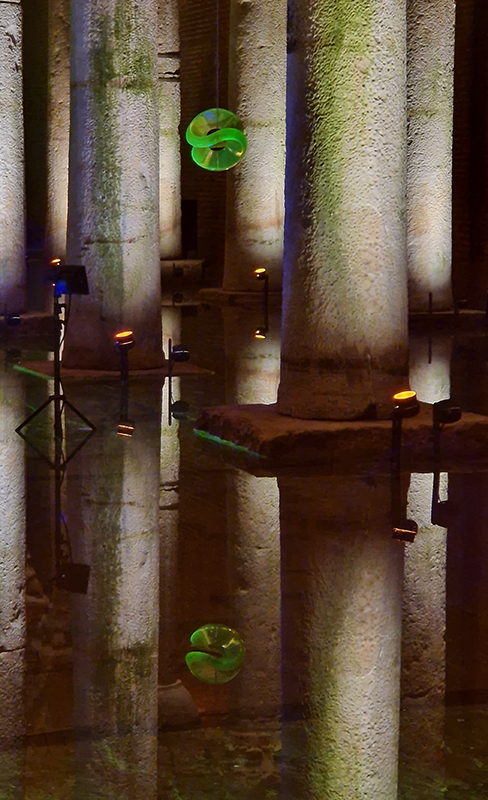
Deeper Beneath at the stunning 1500 year old Basilica Cistern Museum includes work by Vlastimil Beranek (Aqua One- Yellow – made from Bohemian Crystal), Jaroslav Prosek ( 6500 year old subfossil oak), Ali Abayoğlu (Glass Leaves and Jellyfish) and Muzaffer Tuncer (Seclusion)
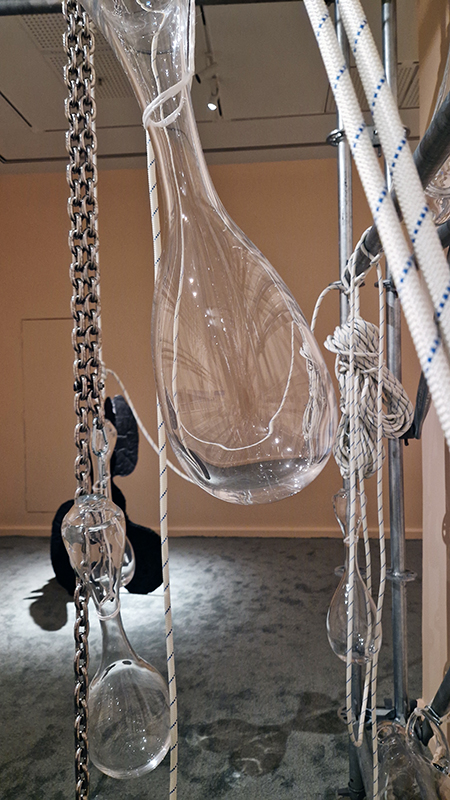
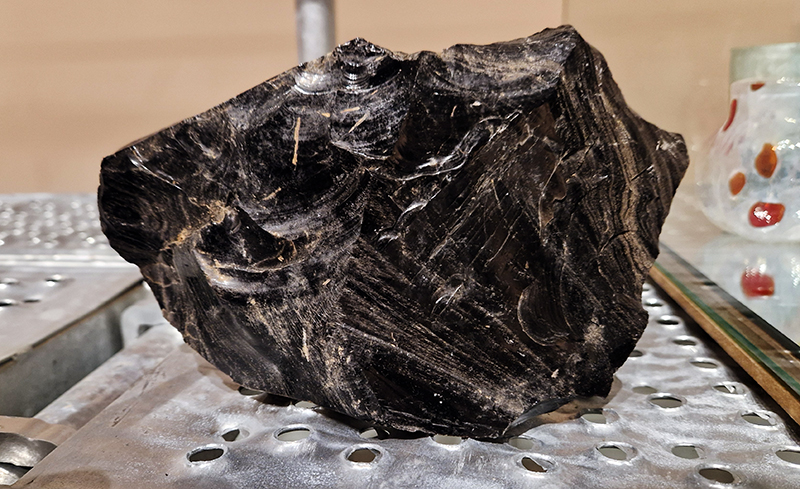
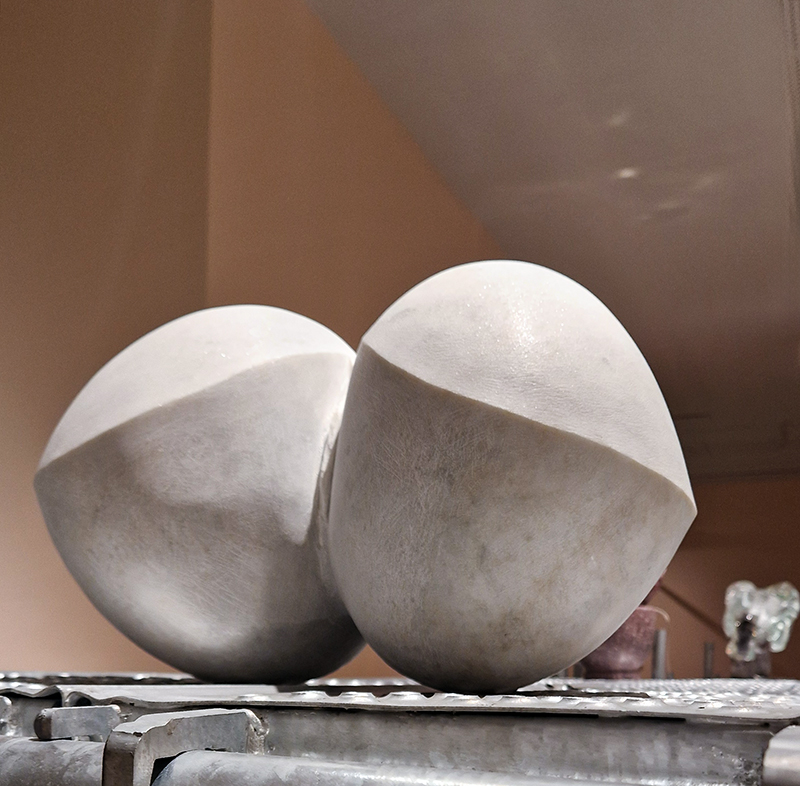
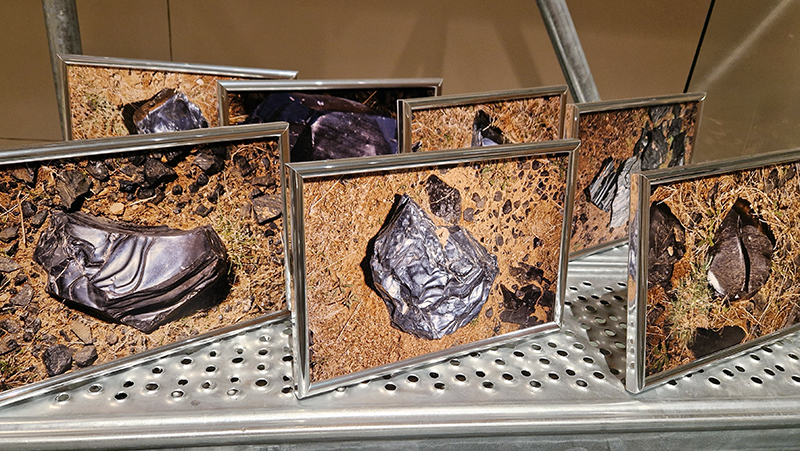
Åsa Jungnelius A Verse, Written with Earth, Fire, Water and Air at Pera Museum, Istanbul. The exhibition brings together the results of time spent in the obsidian fields of Eastern Anatolia collecting natural glass formed by the rapid cooling of volcanic lava and working in the glass furnaces of Denizli along with reflections on marble steeped in Byzantine history. Archaeological finds, glass objects, materials, and handwoven cords rooted in nomadic traditions are displayed alongside photographs by Swedish photographer Peo Olsson documenting the artist’s research. There is a strange juxtaposition of the installation scaffolding set against thick carpet in the gallery.

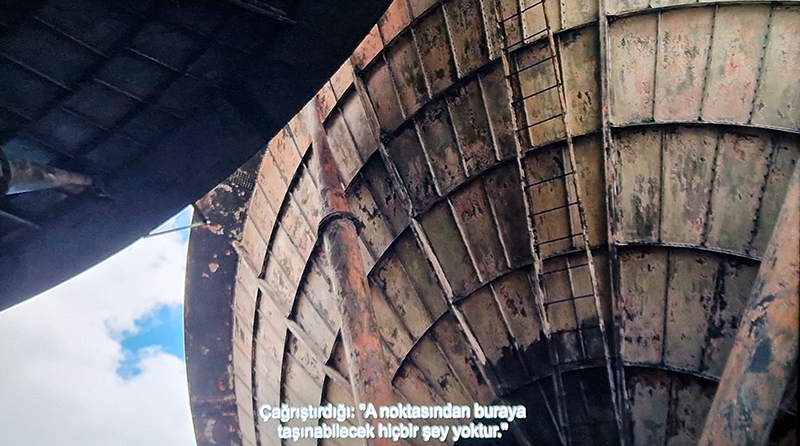
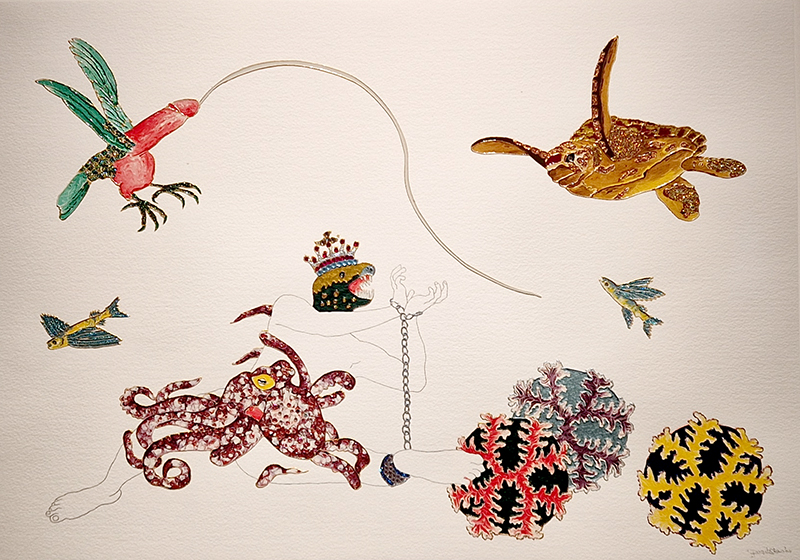
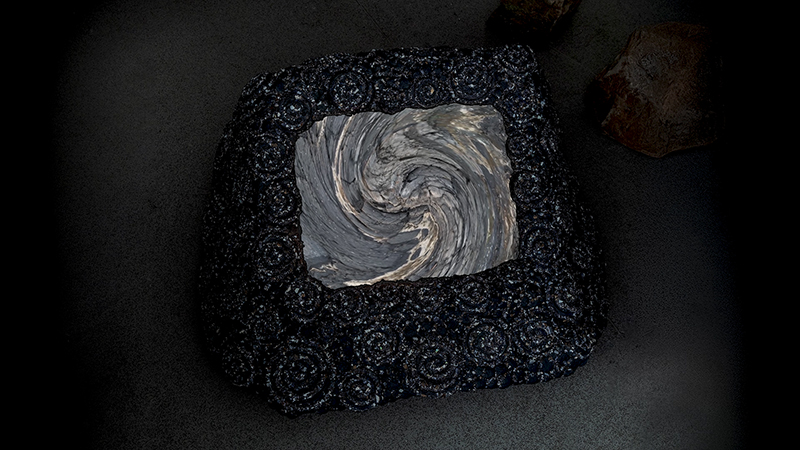
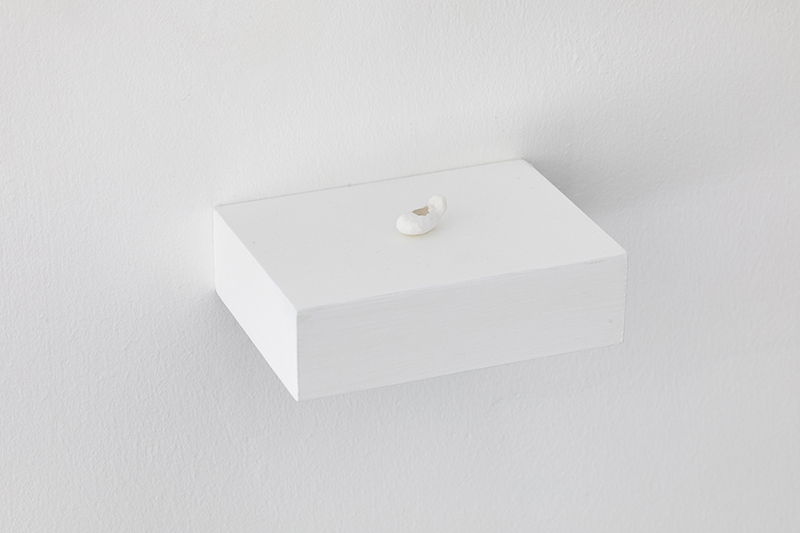
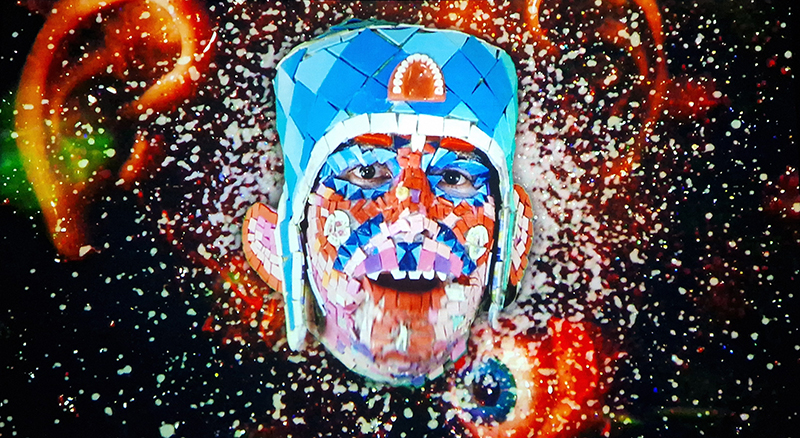
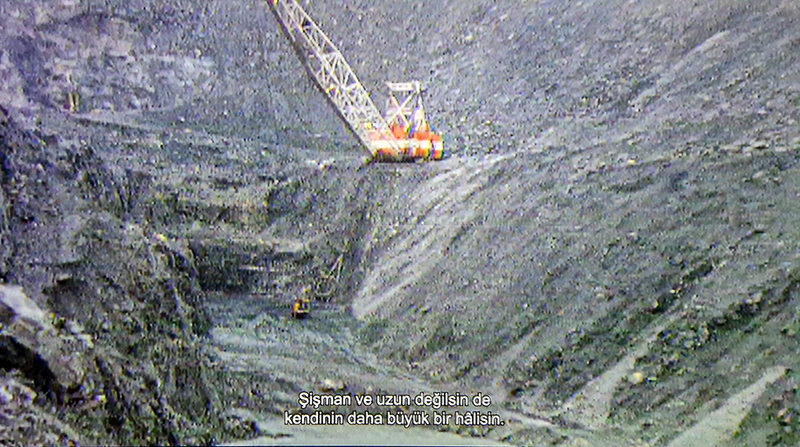
Also at the Pera Museum was Feelings in Common: Works from the British Council Collection. The exhibition is striving to form a zone where feelings in common are shared amidst uncertainties and transformations regarding the future. Happy to see Bedwyr Williams The Starry Messenger again (image 1 + 2 – the poignant geological story of a mosaic dentist which alludes to the micro macro scales of the universe ) and Larry Achiampong’s Relic 2 (an Afrofuturist exploration of postcolonial identities, imagined futures, and ancestral memory) along with a small work from Raqib Shaw from his Garden of Earthly Delights series amongst other works.
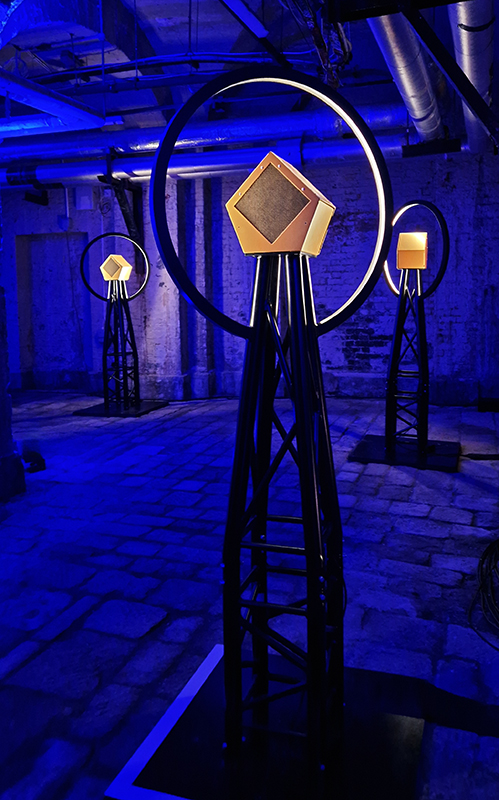
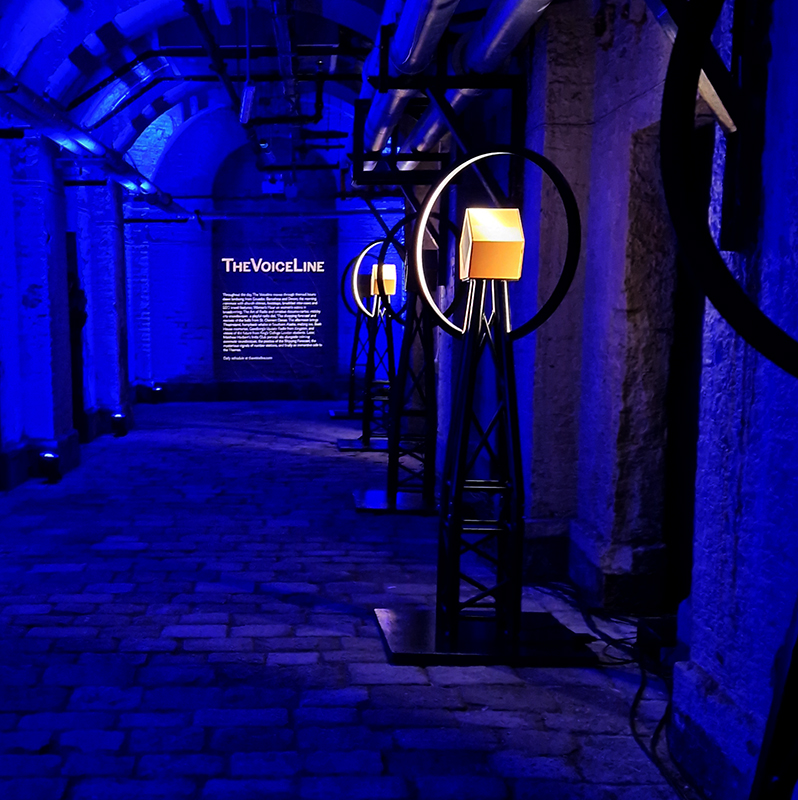
The VoiceLine by composer and sound artist Nick Ryan installed in the atmospheric Deadhouse, Somerset House. 39 precisely aligned speakers, creating an evolving pathway of sound reflecting the histories of radio and listening that began on the Strand more than a century ago.
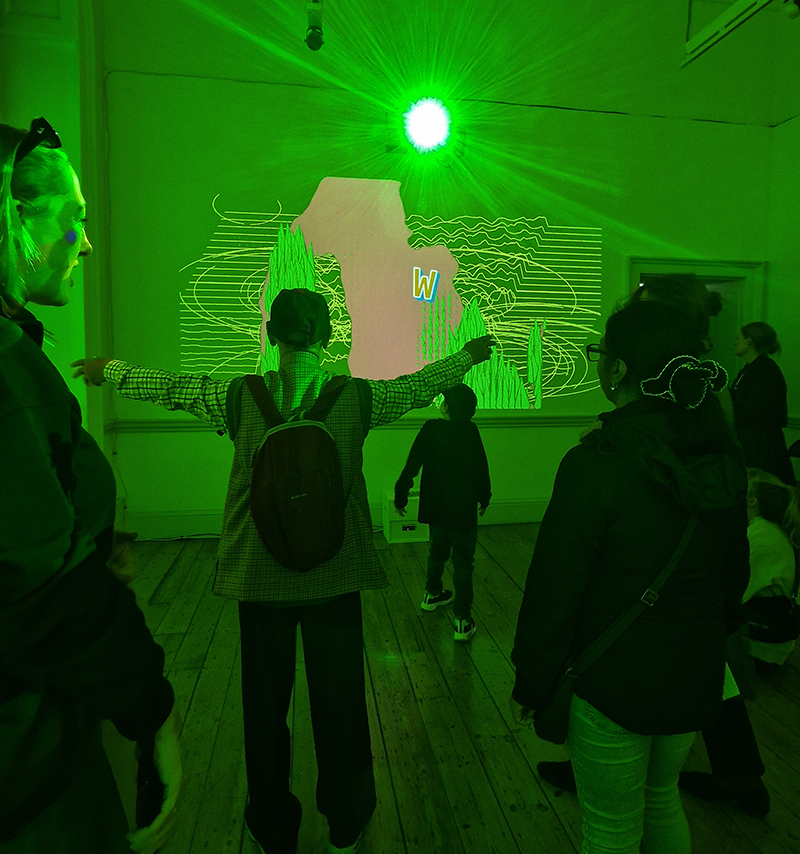
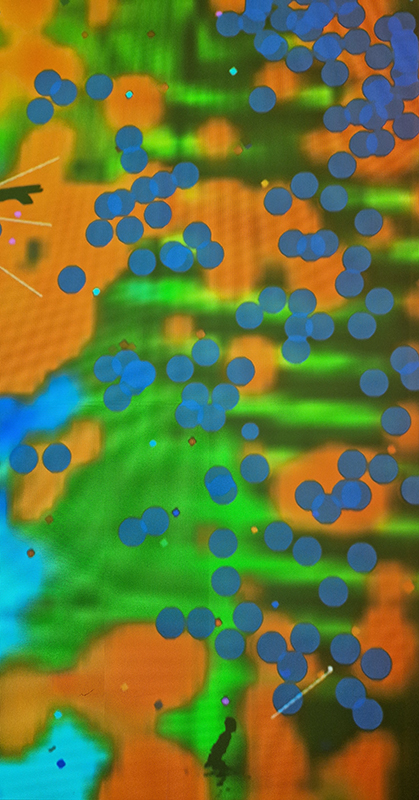
An exhibition by KitMapper, an artist led production company, Along More Latent Lines at Somerset House to showcase new and recent works of the team and creatives based here including the interactive and immersive Genetic Moo: Magic by Genetic Moo.
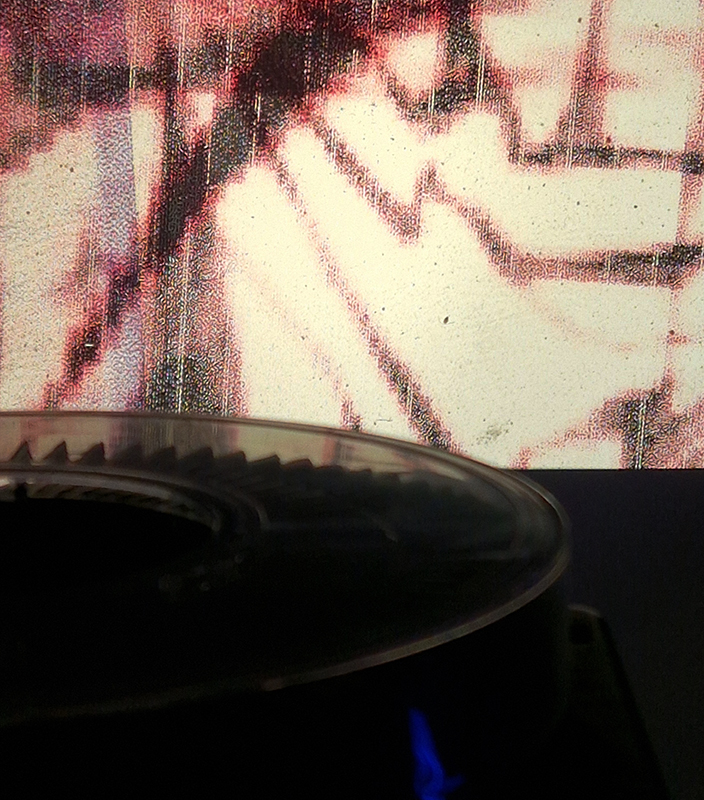
Jane and Louise Wilson Performance of Entrapment at The London Mithraeum Bloomberg Space featuring 2,000 year old oak stakes that inspired imagery looking at structure and ritual. The works investigates parallels between the sacred sites of Mithras and Japan’s Ise Jingu Shrine.
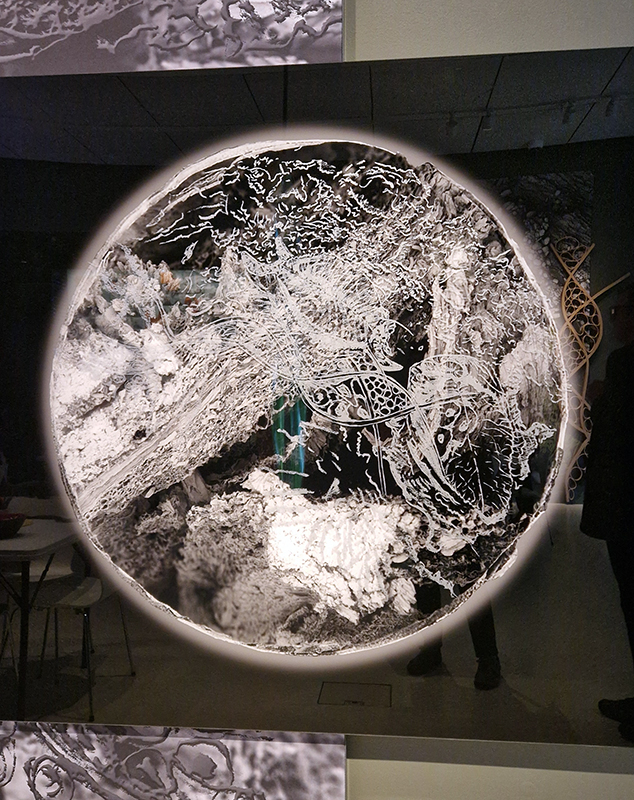
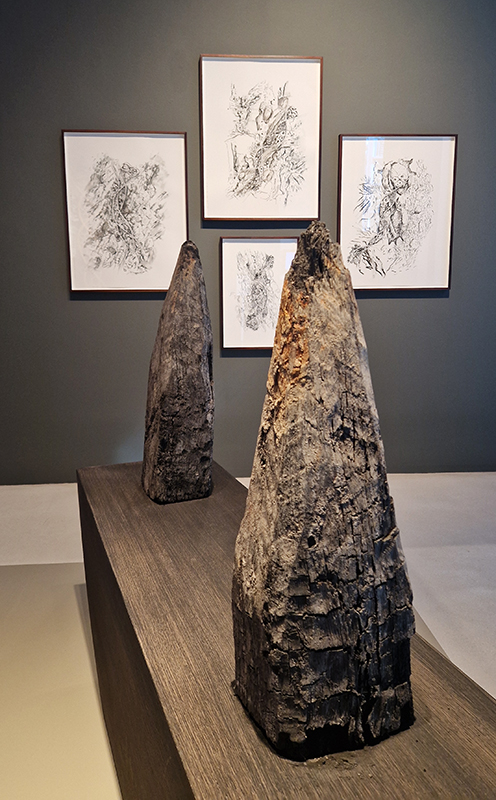
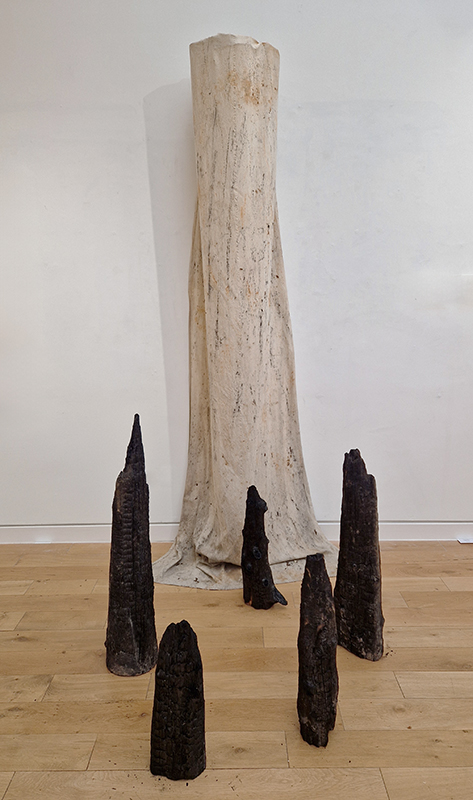
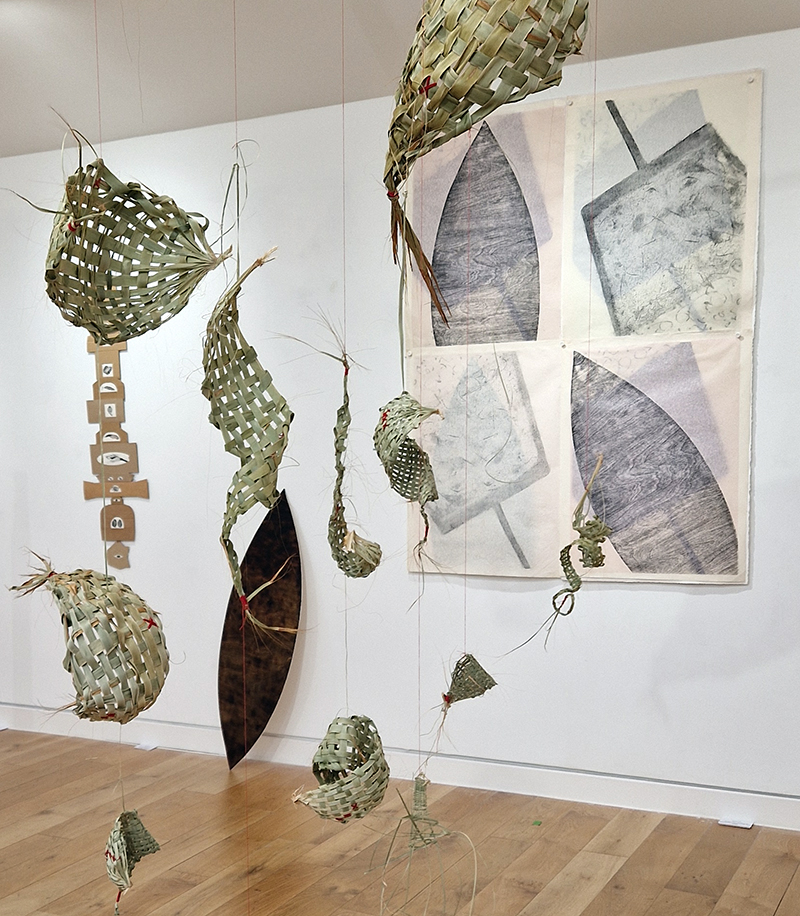
Treen (of a tree) was a collaborative event between Liz Botterill, Sevenoaks museum curator and the Kaleidoscope Gallery co-curators Rosalind Barker and Sue Evans, with the artists of Sevenoaks Visual Arts Forum. The artists were invited to respond to items in Sevenoaks Museum that are made of wood. Participating artists: Colin Anderson, Carole Aston, Jocelyn Bailey, Rosalind Barker, Susanne Beard, Sarah Cliff, Christina Crews, Louisa Crispin, Margaret Devitt, Louisa Donovan, Duncan Dwinell, Sally Eldars, Sue Evans, Deborah Farquarson, Victoria Granville, Kate Grimes, Amanda Hopkins, Marilyn Kyle, Keith Lovegrove, Venetia Nevill, Clare Revolta, Franny Swann and Irene Vaughan. Venetia Nevill worked outside the remit to create ‘Memories of a tree’ to honour a plantation of spruce trees that have been felled, because they were infected by the spruce beetle. Her process of wrapping a cloth around a tree, and rubbing the burnt soil, ash and charcoal into it, memorialises and commemorates the trees. Over a few months the cloth absorbed the sunlight, birdsong and passing of time, allowing the elements to leave their mark, and create a cloak of protection. The cloth is exhibited along with burnt remains of trees.
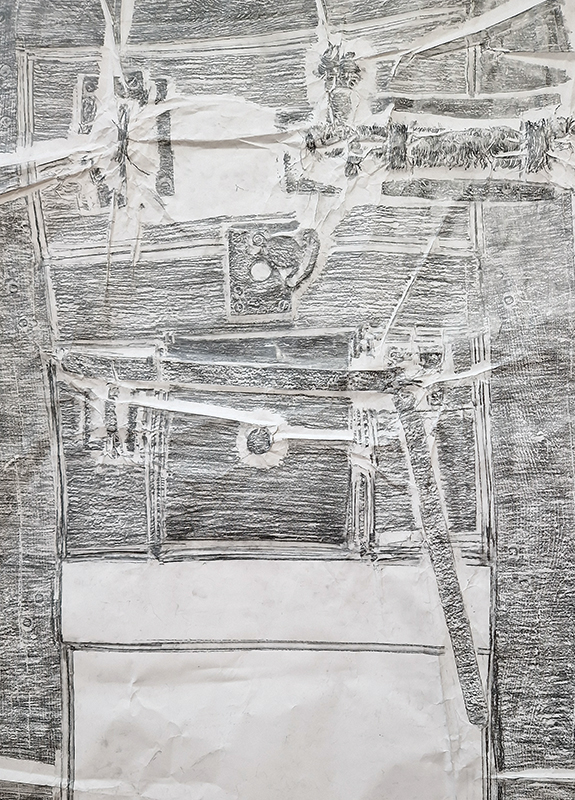
Reading

North Pole, South Pole: The Epic Quest to Solve the Great Mystery of Earth’s Magnetism by Gillian Turner. A very readable account of all the philosophers, explorers and scientists fascinated by the origin of Earth’s magnetism, from the earliest speculations of lodestone mountains, magnetic polar stars to seismology and deep ocean core sampling revealing the inner working of the planet.

Turning to Stone by Marcia Bjornerud. This book is the antithesis of the idiom ‘as cold as a stone’. It is a passionate and candid account of relationships between humans and rocks. Human to human, human to rock, rock to human and rock to rock. Along the way we learn a lot about geology and the human condition.
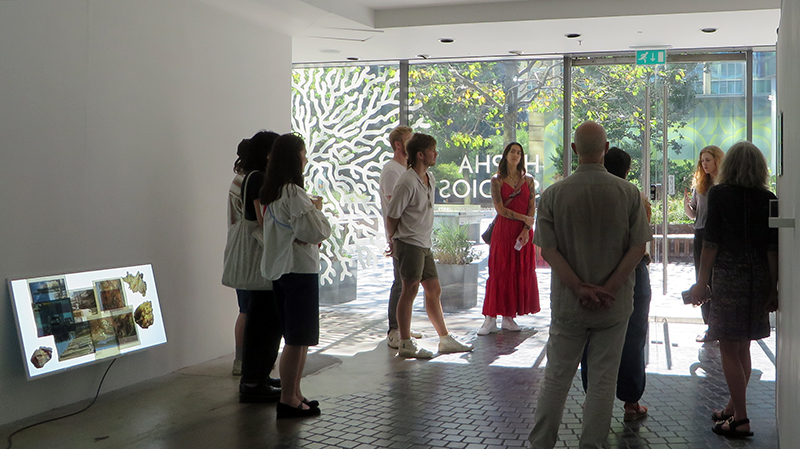
The Geological Unconscious had a wonderful six week run at Hypha HQ, Euston. Responding to Jason Groves’ inquiry into the mineral imaginary in his eponymous book, as well as the ‘Writing of Stones’ as proposed by writer and mineral collector Roger Caillois, the exhibition exposes the complex entanglements between the organic and the inorganic; the human and the lithic. 

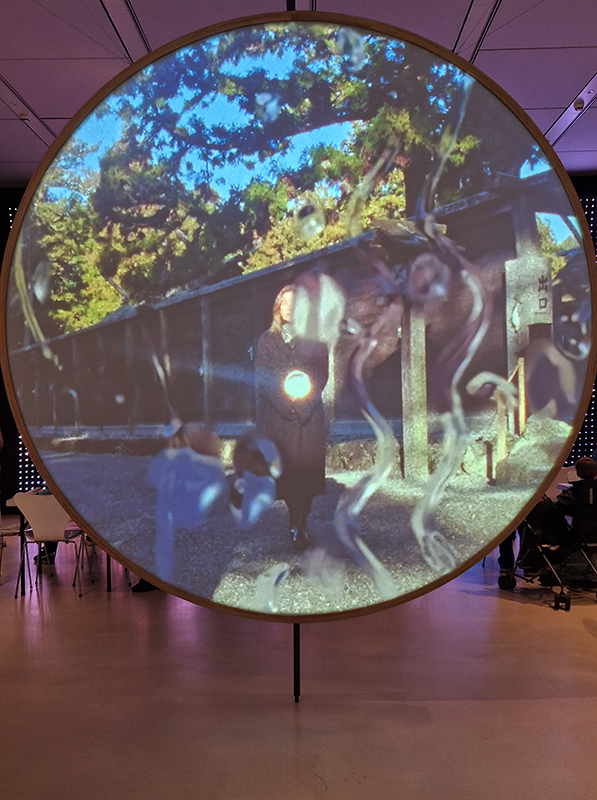
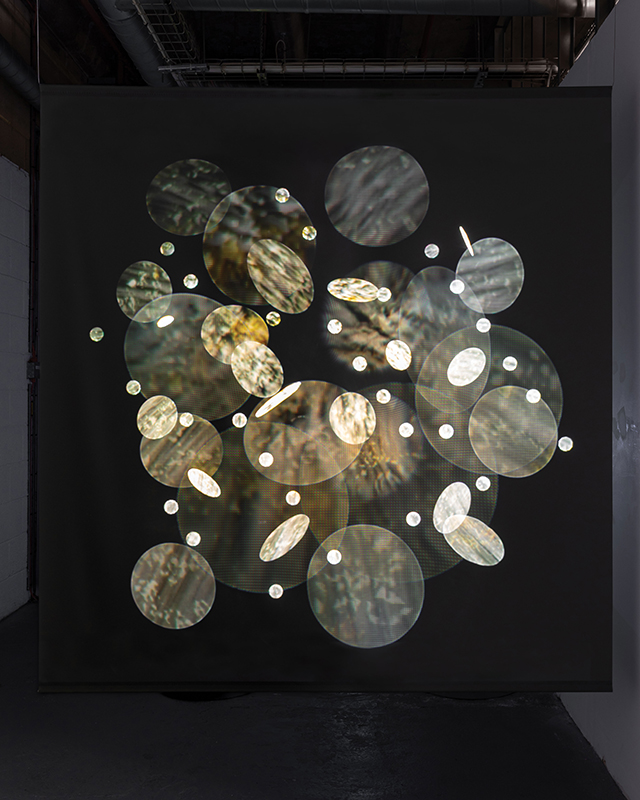
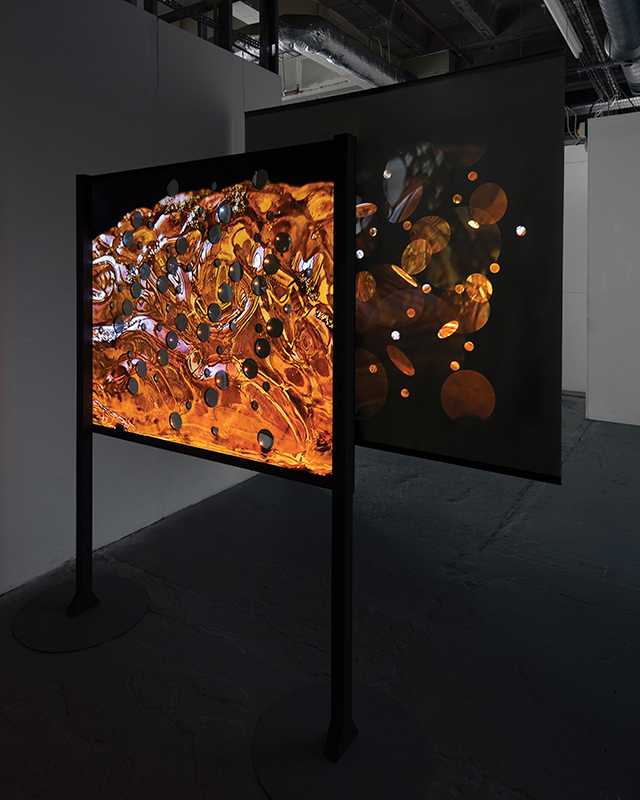
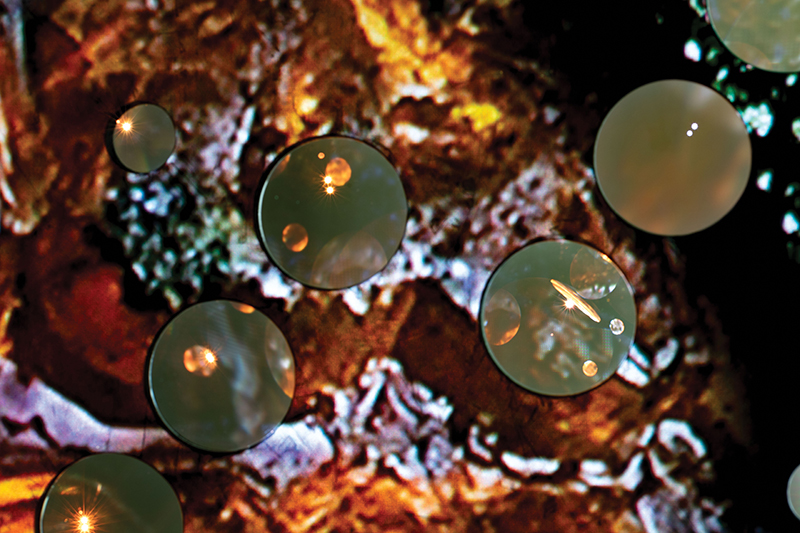
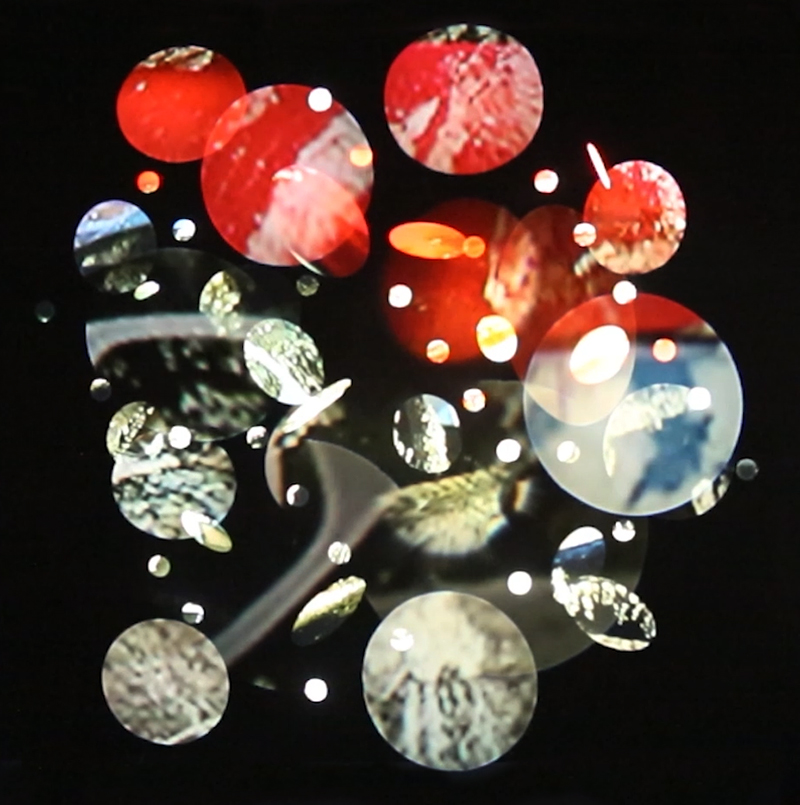
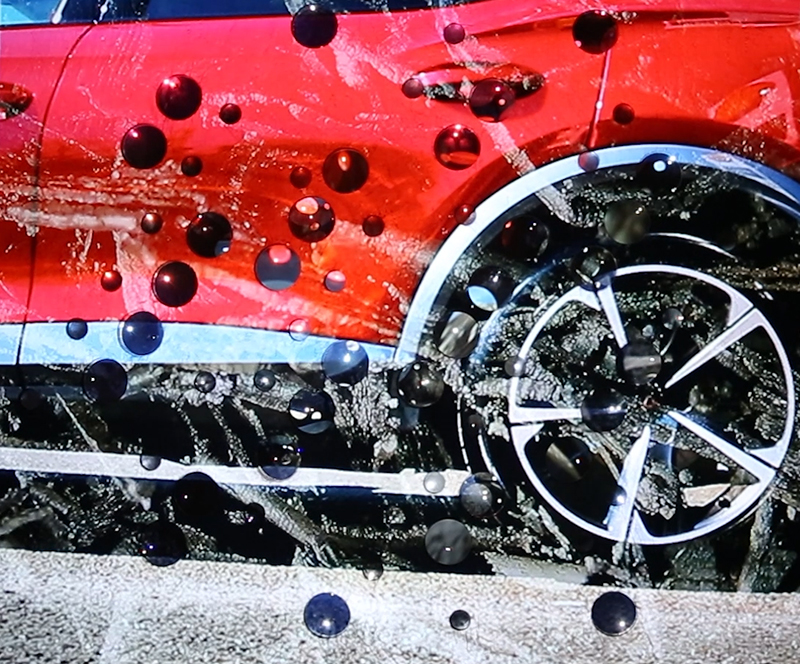
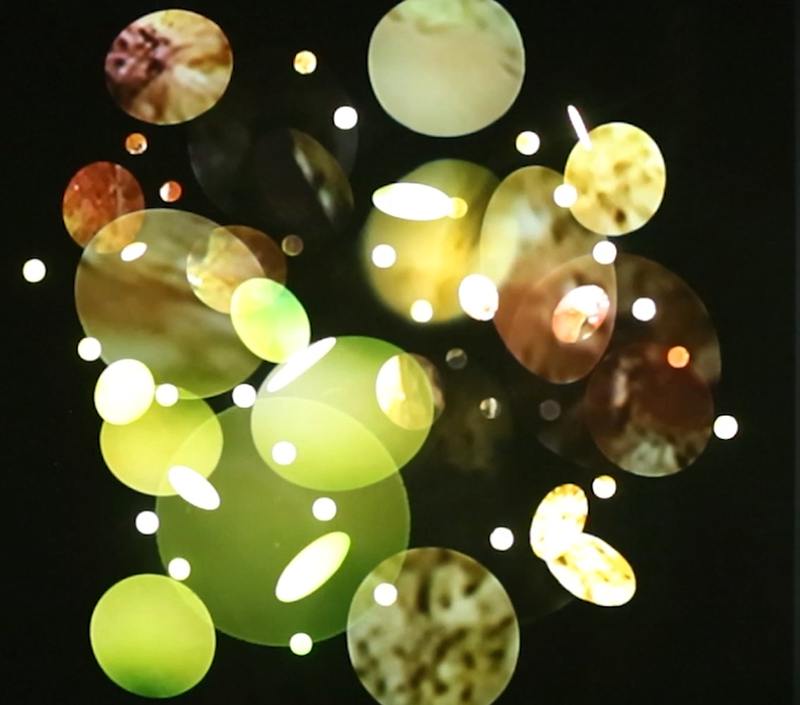
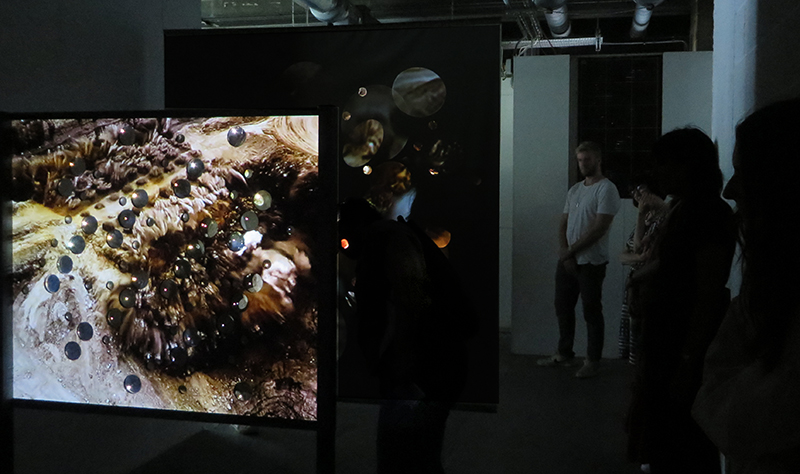
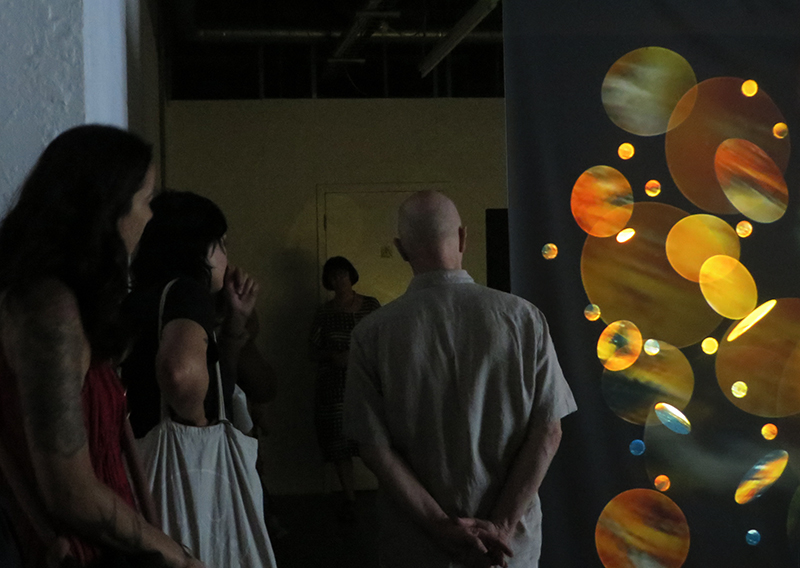
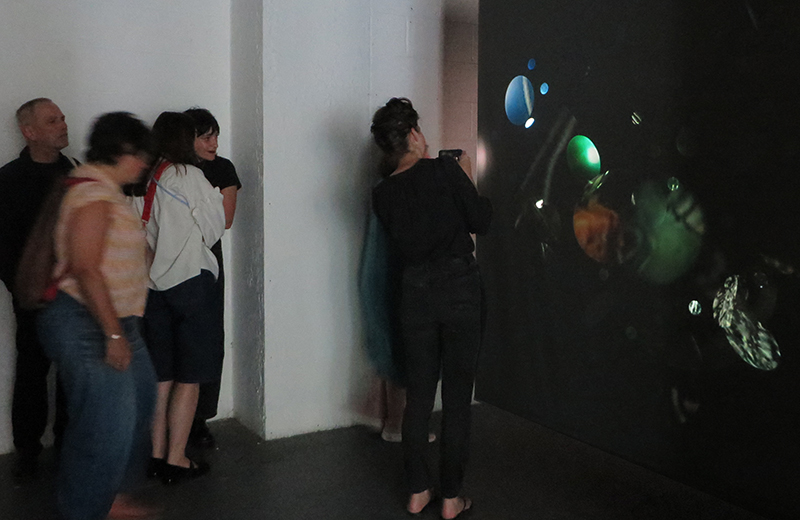
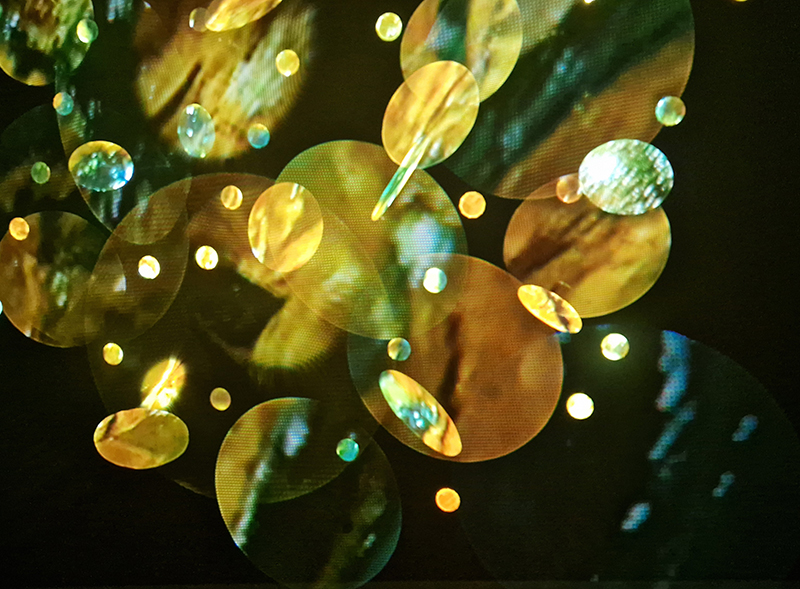
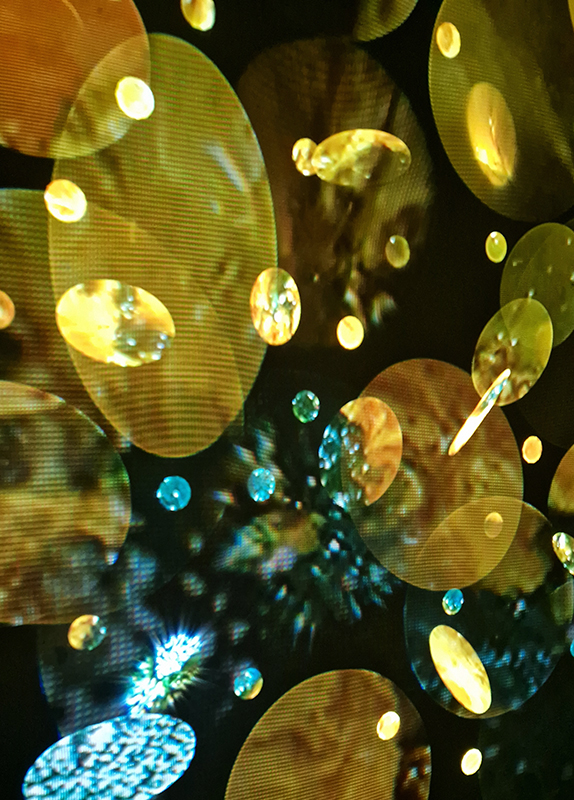
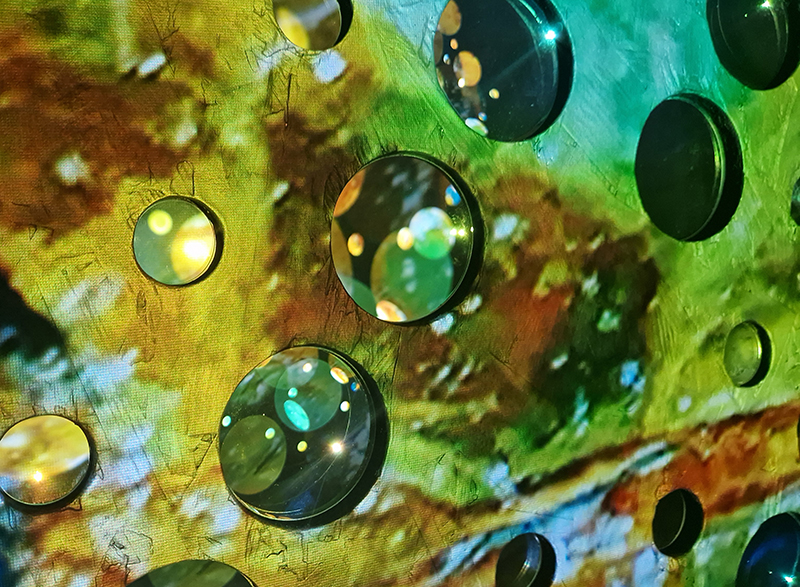
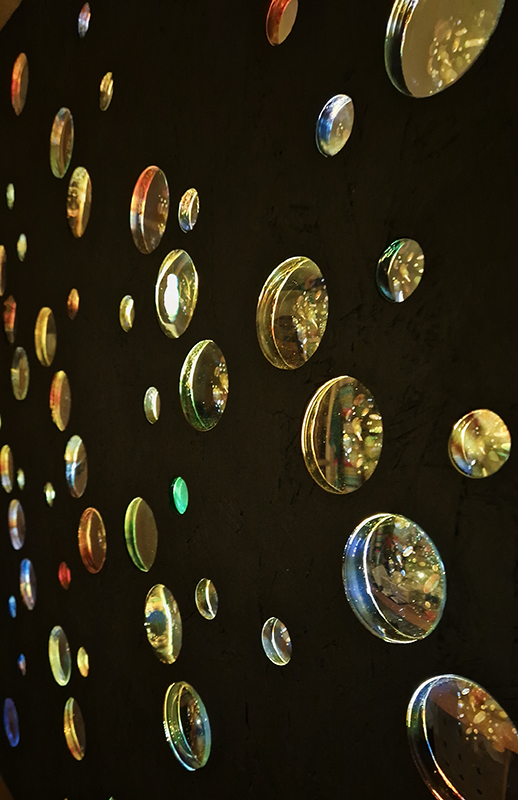
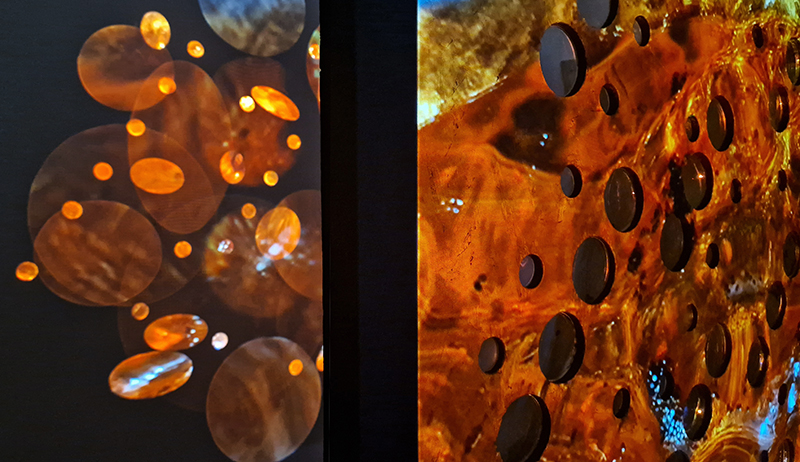
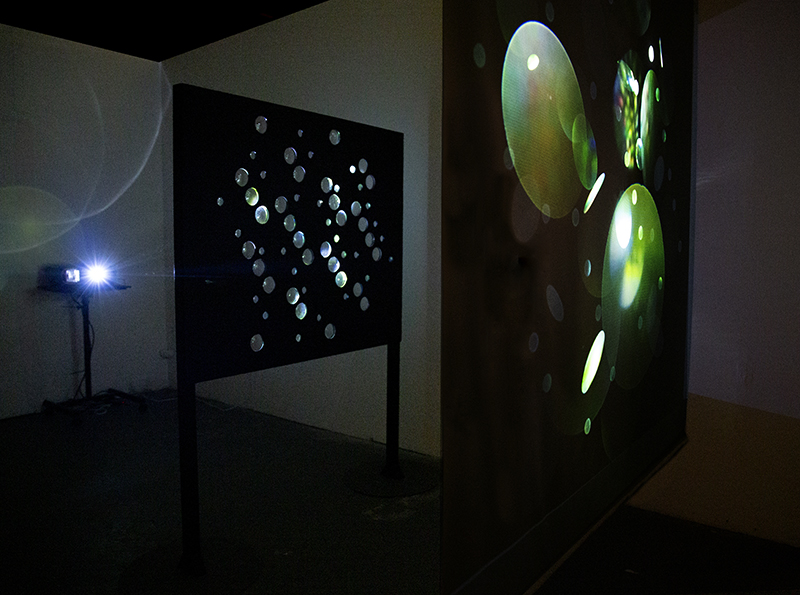
Very happy to receive lots of positive feedback for my video installation Lithos Panoptes. People were very engaged with how the work reveals itself in stages, from the kaleidoscopic imagery displaying on the two way suspended screen to discovering the board of distorting lenses behind the screen and finally stepping back to see the original film from the human perspective before it is transformed by the lenses.

Referencing a many-eyed giant of Greek mythology, Argos Panoptes (always eyes still awake), the work considers the perpetual vigilance of rock as record keeper and witness. Video of human activity projected through distorting optical lenses transforms the anthropocentric position to imagine the perspective of the rock.

The pattern of lenses is informed by the molecular structure of magnetite, a mineral found in magma and metamorphic rock in Earth’s crust as well as in meteorites and the cells of organisms.

Through actual and metaphoric lenses, the relationship between the organic and non-organic is explored.

Lithos Panoptes 2025, Optical lenses, wood, steel, projector. Video 09:27 min Sculpture: H172 × W170 × D50 cm, Rear projection screen: H180 × W180 cm.

Photography by Benjamin Deakin

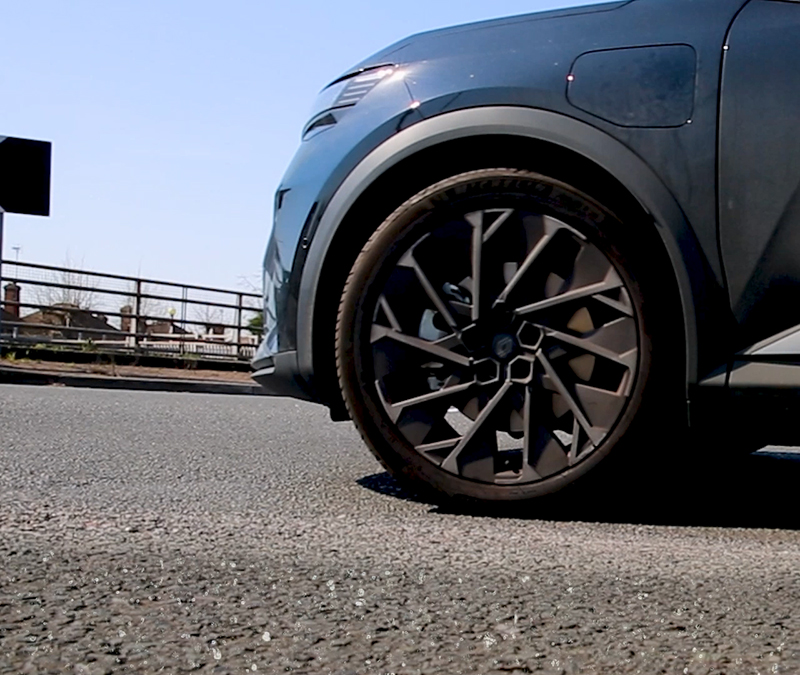
Mined magnetite is used in industrial and mechanical processes and its use in combustion engines and vehicle braking systems is releasing nanoscale pollutant particles into the air which are finding their way into human brain cells, vastly overwhelming the innate magnetite present, causing concerns linked to the development of degenerative brain diseases.

As well as referencing an ever watchful, many-eyed giant of Greek mythology, Lithos Panoptes also considers the numerous eyes (ocelli) of the chiton (a species of mollusc) whose rock crystal lenses have evolved over many millions of years to keep watch along rocky coastlines across the globe.

The only creature with eye lenses made of mineral and not protein, the chiton is also unique in having rows of teeth primed with magnetite which allow chomping on the hard rock surfaces it clings to. Some chiton’s teeth also contain the recently discovered mineral santabarbaraite, named after the mining district Santa Barbara in Italy where it was found – it is one of the few minerals named after a woman.

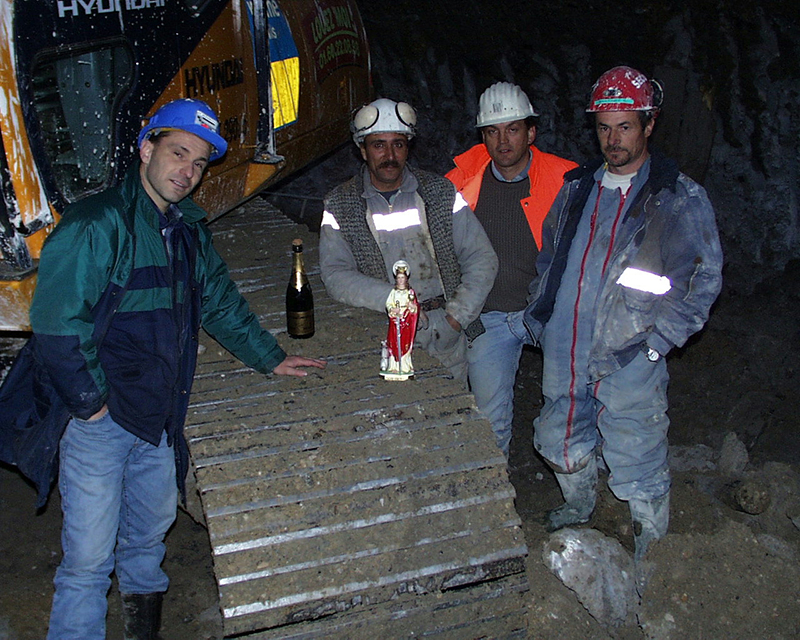
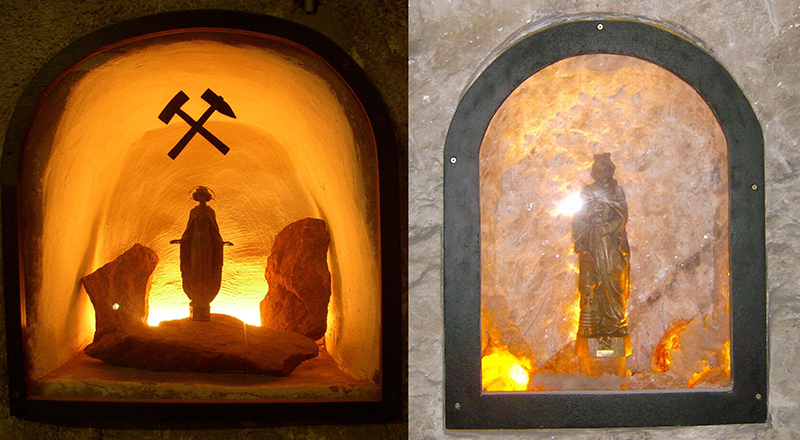
I was surprised to discover that the benedictions of Saint Barbara are still sought today, with shrines installed at tunnel entrances at Crossrail and even at CERN, the epicentre of scientific rigour. Before the boring machines were set in motion, services seeking her blessings were performed by local priests, with some even being winched down excavation shafts to carry out their duties.

Saint Barbara, who is associated with sudden death from fire, lightning and explosions, including military armaments, was adopted as patron saint of miners and tunnellers when the use of explosives in mining escalated during the 1600’s.

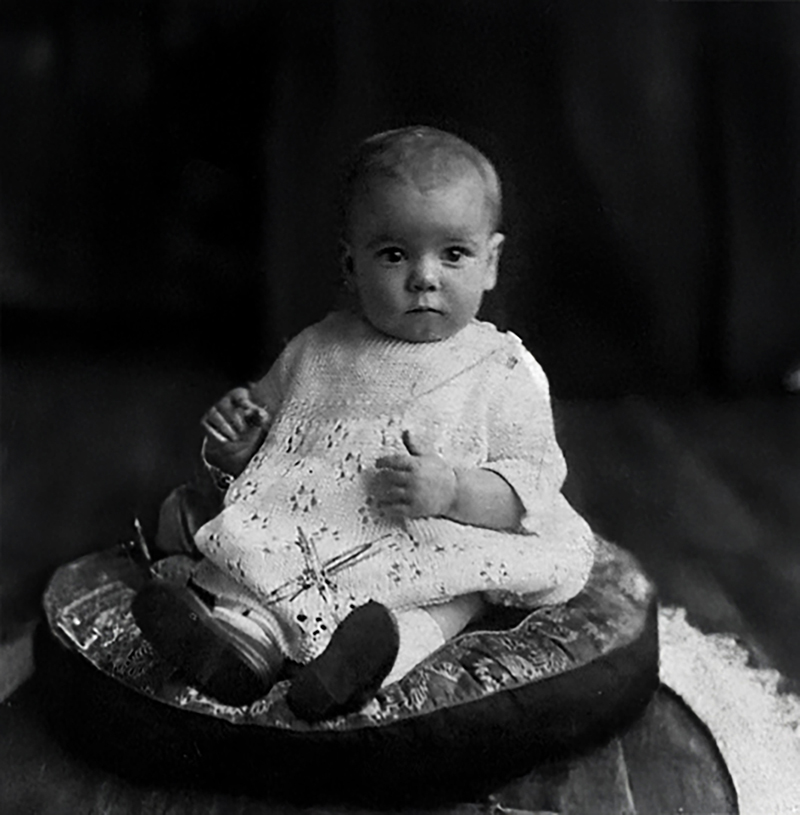
As the statues of Saint Barbara installed at these tunnel entrances are now buried, I have substituted images of my mother Barbara, coincidently born within hours of this Saint’s Day, in my video installation Lithos Panoptes.

Tucked into a dark recess of the gallery, Belly of a Rock suggests an imagined place of chemical conversations at the intersection of the organic and inorganic. A hybrid between rock, mollusc and technology this video sculpture responds to an early lifeform’s emerging self-awareness, desire to communicate and urge to create as described by Italo Calvino in his story ‘The Spiral’. We don’t always know what we are creating.

Thrilled to show these works alongside Julie F Hill @juliefhill, Rona Lee @ronaleeartist, Charlie Franklin @charlie__franklin and Deborah Tchoudjinoff @deboraht_ff

Julie F Hill’s sculptural print installation Parent Body uses scanning electron microscope imagery of samples recently returned from asteroid Bennu. The cave-like entrance, provides an embodied experience of the data and invites intimate contemplation of expanded scales. The ambiguous rock-like yet flowing forms echo the words of Jeffrey Jerome Cohen ‘stone is fluid when viewed within its proper duration’. Hill’s miniature work Return, considers the chemical and molecular cross exchanges between earth and space and in a gesture of reverse sample return (scientific missions and human extractive processes both take), a bead of Iridium is returned to the belly of asteroid Itokawa. Her small-scale embroidery work Water and Night, is based on observational studies of moonlight on water, continuing her explorations of water as the eye of landscape as proposed by Gaston Bachelard.

Julie F Hill, Parent Body, physically manipulated soy-ink print on tissue, chalk and clay pigments, chrome metal, water, clamp, funnel. c. W3 × H2.2 × D2.5m. 2025. Return, 3d print of asteroid Itokawa cast in plaster-of-paris, Iridium, 20 ×11× 8mm. 2024. Water and Night, silver metalized embroidery thread, 5.3 ×11 cm. 2025

 Photography Julie F Hill (1+3) Benjamin Deakin (2)

Deborah Tchoudjinoff’s moving image installation work The City of Gold (with sound in collaboration with Joe Farley) considers vast, beyond human, geological timescales when continents have once again become as one. Starting as a short fiction text, Deborah began to form an imagined world of cities in a future Amasia. The fictional cities are named after minerals that are heavily sought – rare earths, copper, uranium, gold, and coal – hinting at a narrative of an Earth depleted of the resources we rely on. The City of Gold is one of the five imagined cities. In a world where these natural resources are no longer, she questions what it would look like and who would be the inhabitants.

Deborah Tchoudjinoff, The City of Gold, video with sound, sculptural installation, 2m × 4m × 2m. 2025.

Photography B J Deakin (1) Julie F Hill (3)

For Litho/Domous Rona Lee has chosen to work with book plates originating in the post-war period of the ‘great acceleration’ – a time in which population numbers, use of natural resources, popular consumerism, technological dependency and environmental degeneration burgeoned. Unified in their varying representations of the geologic but broking no contradiction between their celebration of extractive processes such as tourism and industrialisation and idealisation of the ‘wild’, the images selected by Lee conjure a pre-fall world in which imaginaries of lithic instability are firmly suppressed.

Two handfuls of silt (the residue of scientific samples collected at a depth of 4,000 meters), squeezed into the artist’s hands, fired and then gilded, form Rona Lee’s I want, I want, I want (2012), the title of which references William Blake’s engraving of the same name, wryly conjures the possibility of reaching down into the ocean’s depth, as though into a rock pool, while simultaneously cautioning against the folly and voracity of such ambitions.

Rona Lee, Litho/Domous, light panels, bookplates. 2025. I want, I want, I want, fired and chromed handfuls of sediment, 2012.

Photography B J Deakin

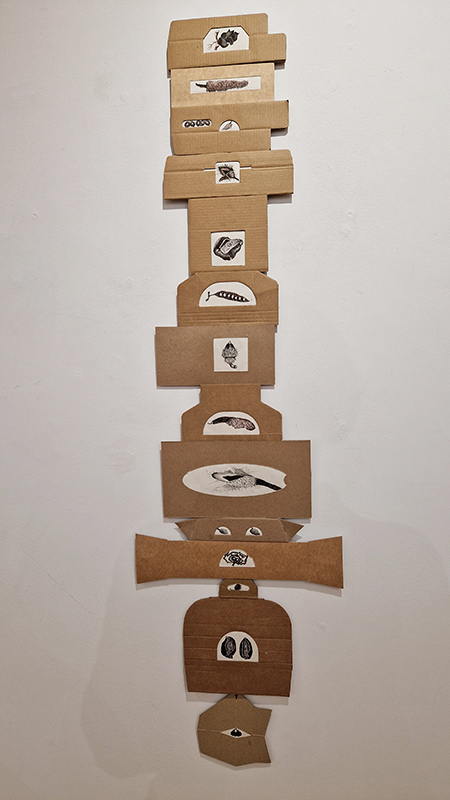
The sculptures presented by Charlie Franklin, Landform and FRAGS, are lumpy, solid looking forms that speak of geological debris or ruins. All three pieces were soaked in the waters of the North Sea, on the easterly edge of the UK. This process allowed the natural elements to determine their individual patination or colouring, along with indentations and scuffs, where materials have been worn away by salt and stone. Cave Drawings (Aladdin’s Cave, Series of Grottos, Marble Curtain, Fairy Grotto, and Solomon’s Temple) are a series of five found postcards depicting the caves at Cheddar Gorge in Somerset, UK which have been hand coloured by the artist. Franklin is interested in how the addition of colour can provoke a personality or aura within each cave interior, allowing for grand experiments to be realised on an intimate scale.

Charlie Franklin, Landform, Cardboard, found fabric, gaffer tape, gouache, scrim, plaster, adhesive, acrylic paint, copper leaf, sea water residue, 87 × 26 × 30cm. 2025. Cave Drawings, felt tip on found postcards, 14 × 9cm. 2025. FRAGS, cardboard, rope, gaffer tape, scrim, oil paint, aluminium leaf, plaster, adhesive, acrylic paint, copper leaf, seawater residue, work in two parts, 29 × 22 × 28cm / 12 × 29 × 23cm. 2025.

Photography B J Deakin, Julie F Hill

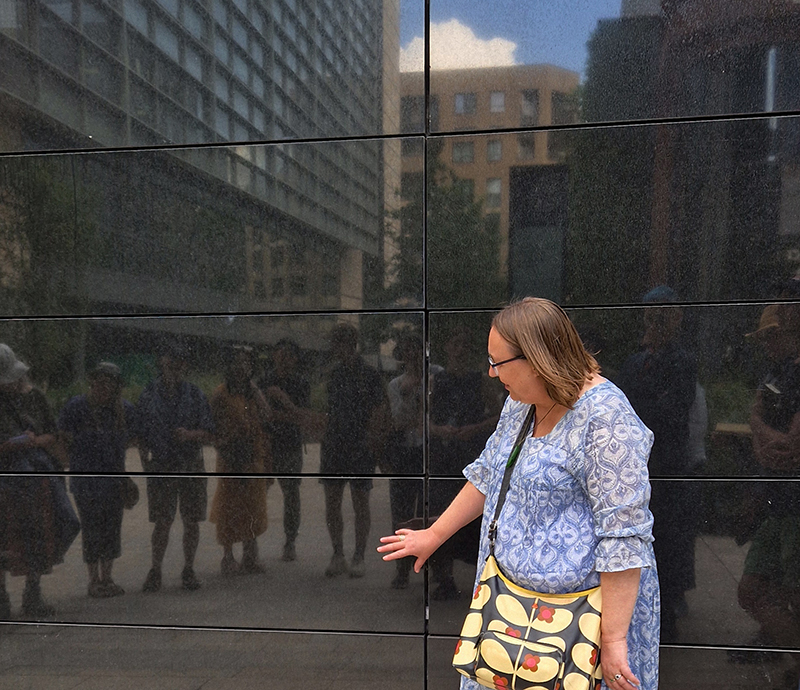
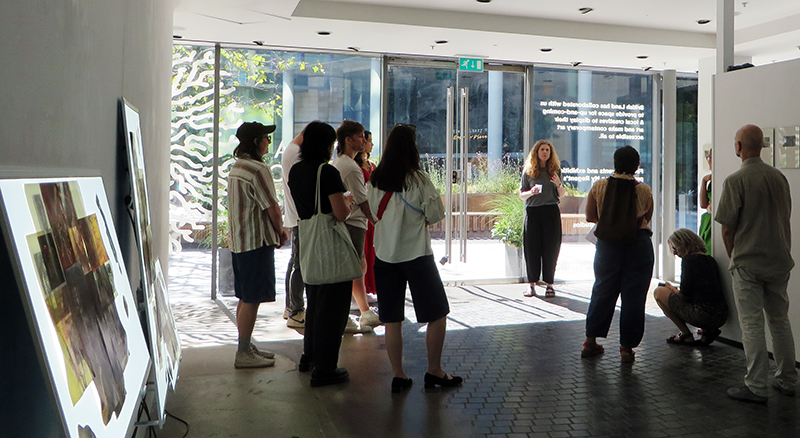
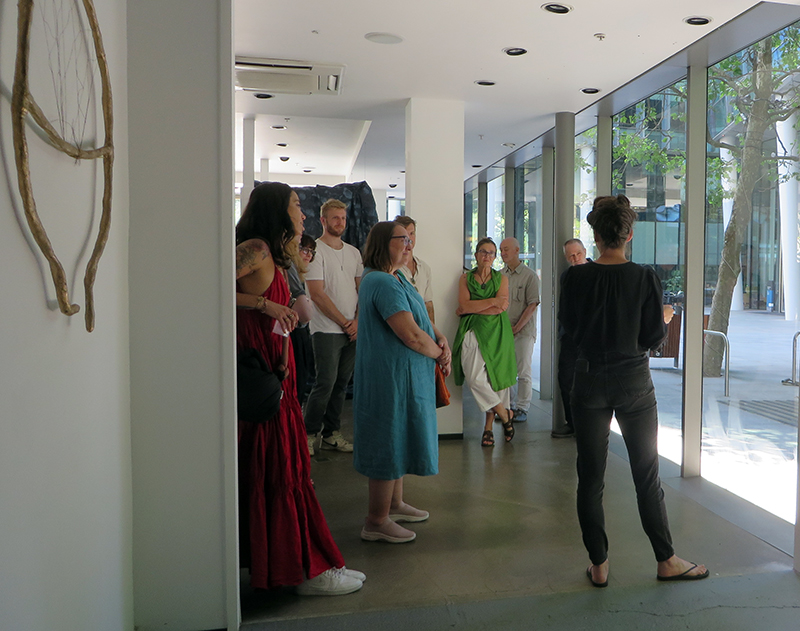
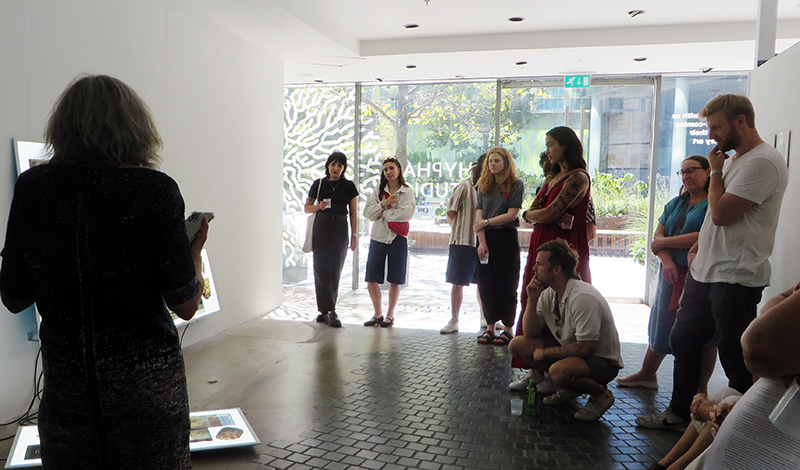
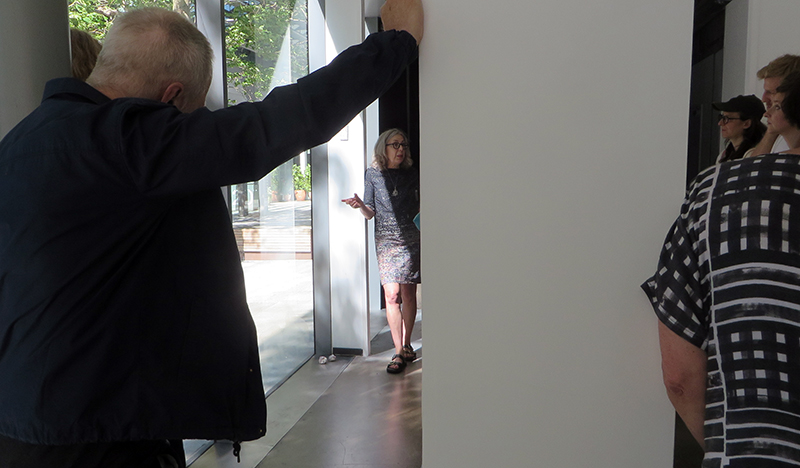
A highlight of our events was an Urban Geology Walk led by geologist Ruth Siddall.

“The gravel pit, like other mining holes, is the reverse image of the cityscape it creates — extraction in the aid of erection.” Lucy Lippard

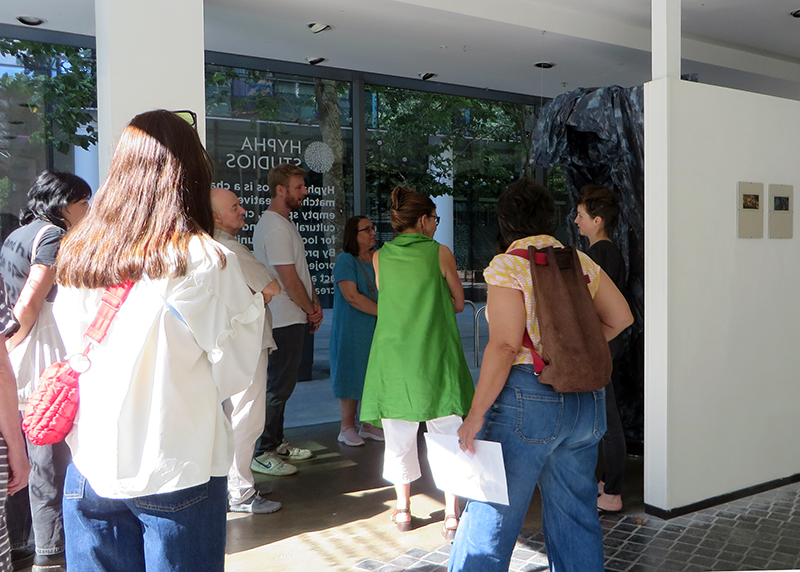
Ruth lead a group walk to explore the geology of the local built environment around Regent’s Place and Fitzrovia. Her knowledge of geology is astounding and her passion for stone infectious. Everyone came away incredulous, having their eyes opened to the deep time history of the rocks that build our city. The deep, black, Archaean dolerite from Mashonaland in Zimbabwe that Ruth points to is 2.2 billion years old. The large block of polished stone shaped like a giant pebble, itself crammed with pebbles of other rocks, is a sculpture by John Aiken, Monolith & Shadow. A patchwork of Jurassic limestone from southern Spain is crowded with the spire-shaped fossil shells of the gastropod Nerinea, stained red and yellow with ochres.

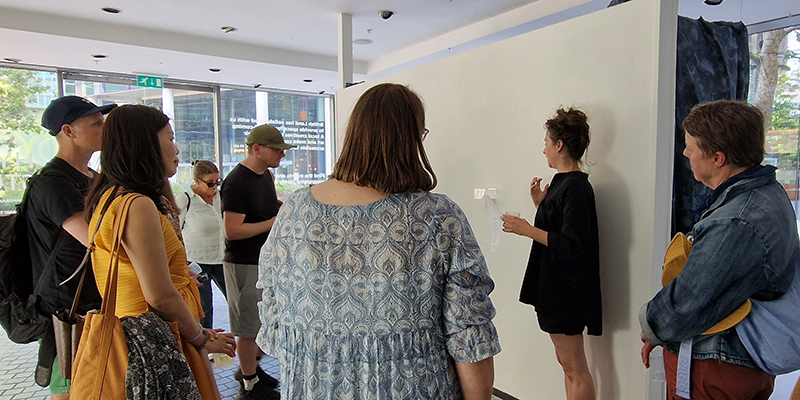
After the walk Ruth joined us for a tour of the gallery – it was fantastic to hear her insight and corroboration on some of the research that fed into the artworks.

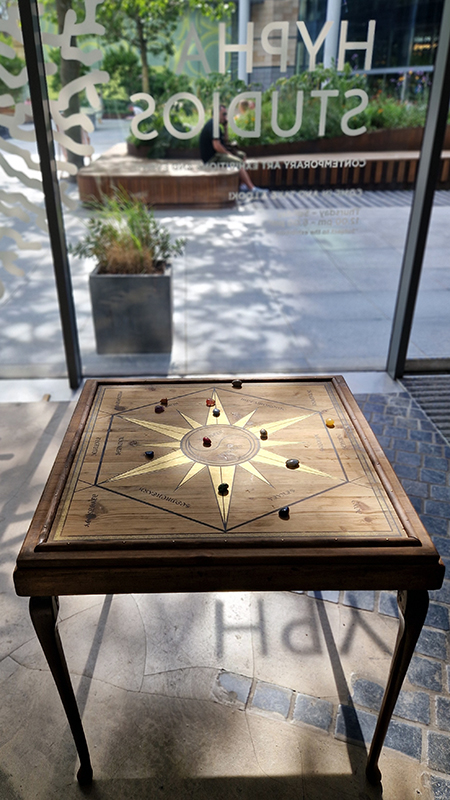
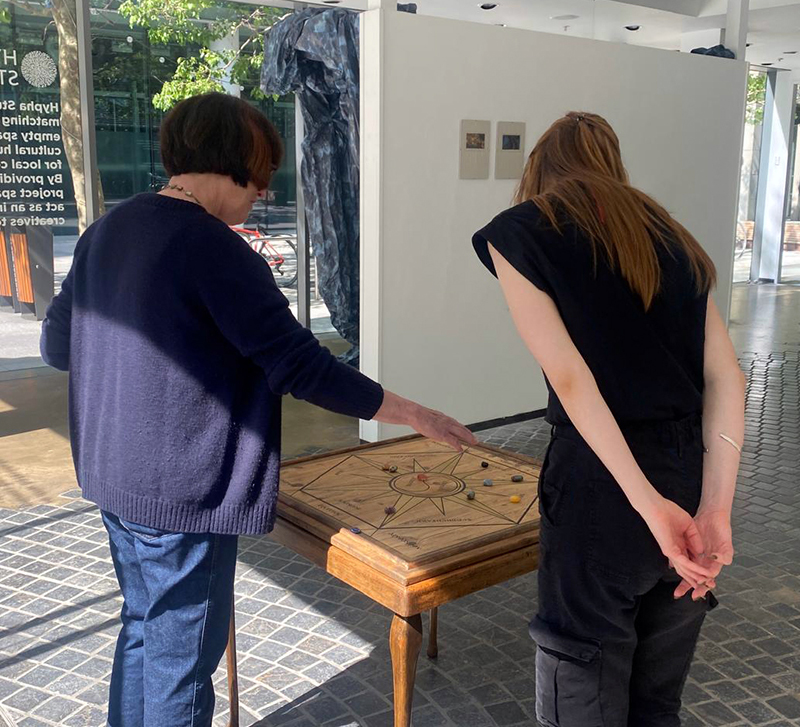
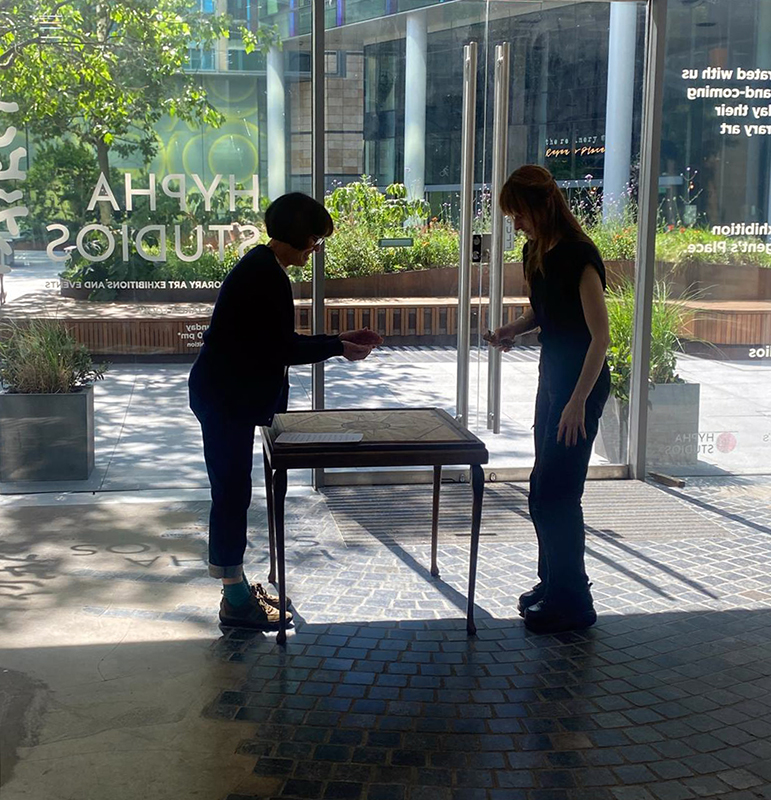
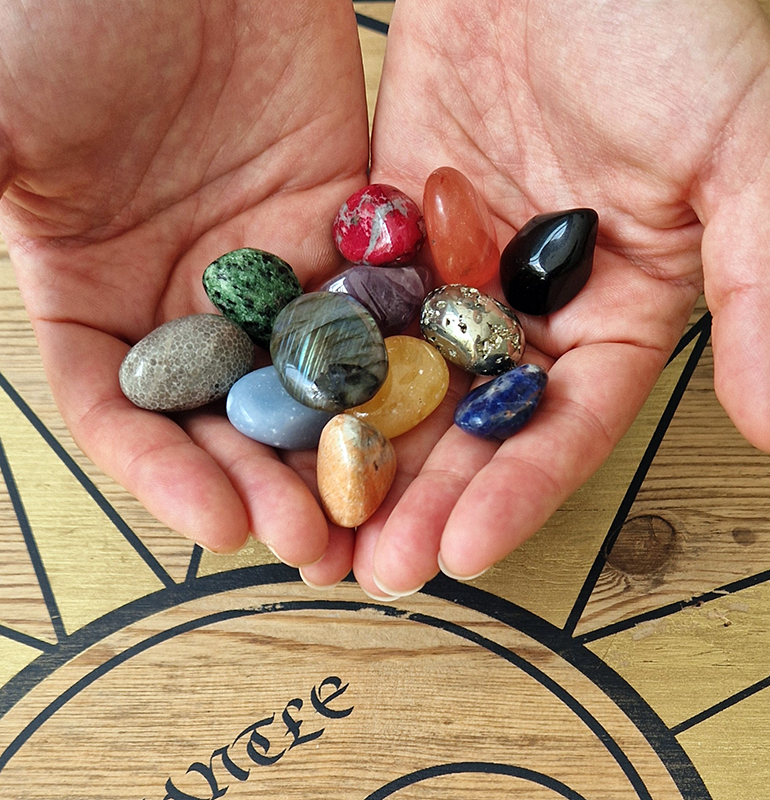
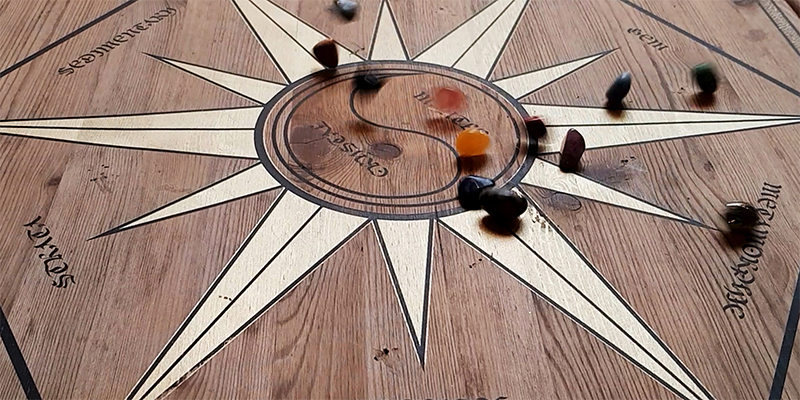
I offered Lithomancy drop-in sessions on Friday afternoons as part of a programme of events for The Geological Unconscious. Visitors were invited to throw gemstones with specially assigned characteristics onto a wooden board divided into geologically themed sections. They are then given personal interpretations based on the position of the cast stones by drawing from the esoteric ritual of lithomancy which seeks to divine the future from the reading of stones.

This performative experience proposes insights into the power and allure of stones emanating from the symbolic meanings attributed to them and exposes the entangled relations between the human and the geologic found in our language and desire to align the human condition with the lithic.

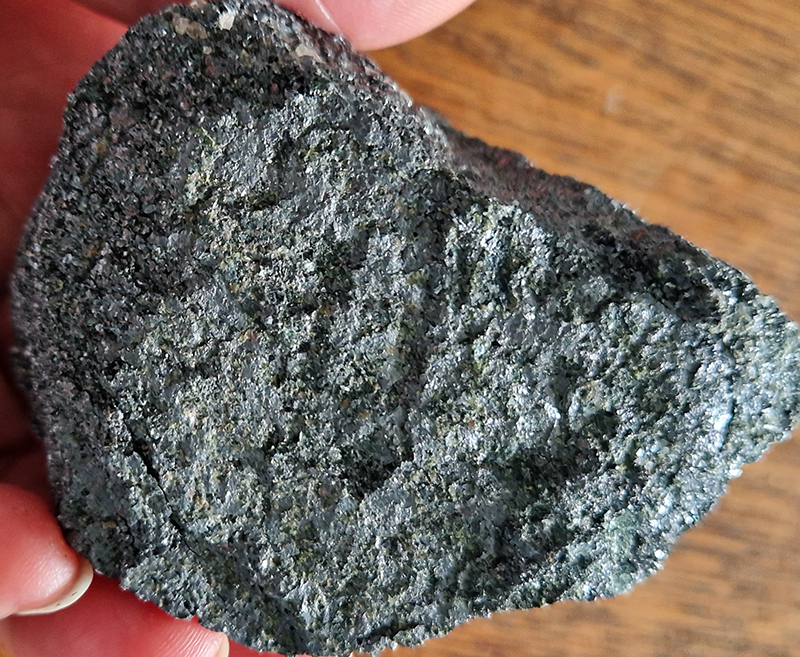
We had many interesting visitors to The Geological Unconscious and have made some wonderful new contacts. Not least among these was meeting Melanie Wheeler who has recently completed a residency in the UCL Geology Department where she worked with the technician to re-curate the rock room. Julie and I were lucky to be taken on a tour of the newly curated collection and receive gifts. So excited to have a beautiful sample of magnetite.

In ancient Greek, magnetite was known as “magnes lithos,” meaning “stone from Magnesia” – the region in Thessaly, Greece, where magnetite was first discovered, supposedly by a shepherd who noticed the nails in his boots were sticking to the rock under his feet.

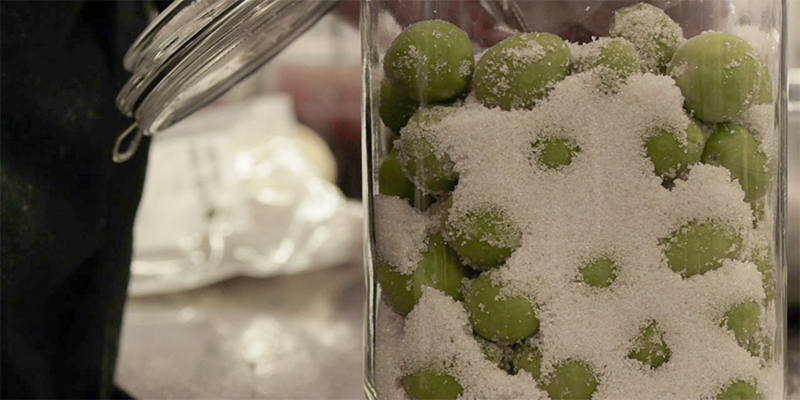
As an additional daily drop in activity during The Geological Unconscious we offered cheong tasting. Chef Moonhyung Lee explored human-mineral entanglements through digestion using stones to create cheong (Korean fermented syrup). The use of weighing stones helps create the environment for preservation, a process which amplifies the bioavailability of minerals in food. Moonhyung Lee is a food designer with a background in graphics. She is currently based in London and works at zero waste restaurant Silo.

It was great to have so many people join us for our Closing Event artist talks and the launch of the exhibition publication with preface by Jason Groves and short essay by Ruth Siddall.

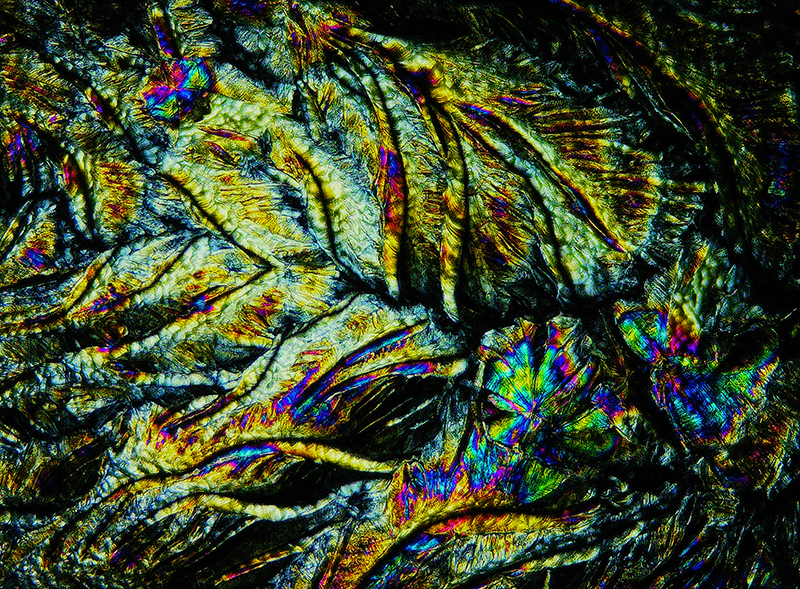
We also had the microscope set up at the closing event to look at some crystal growth in solutions prepared by Julie who works extensively with crystals.

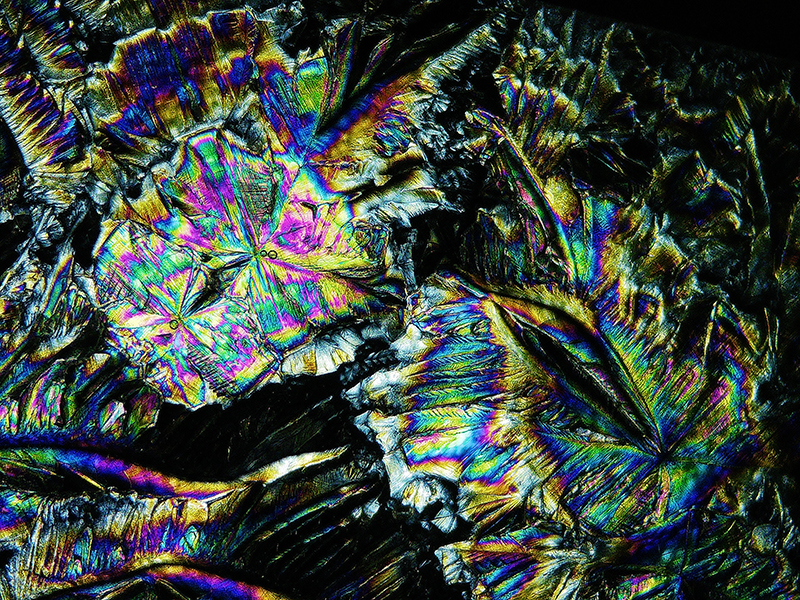
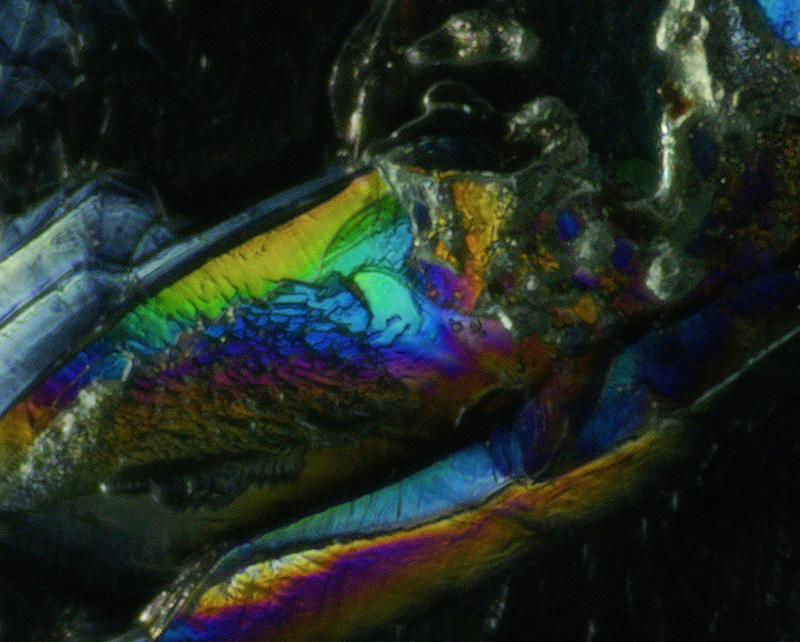
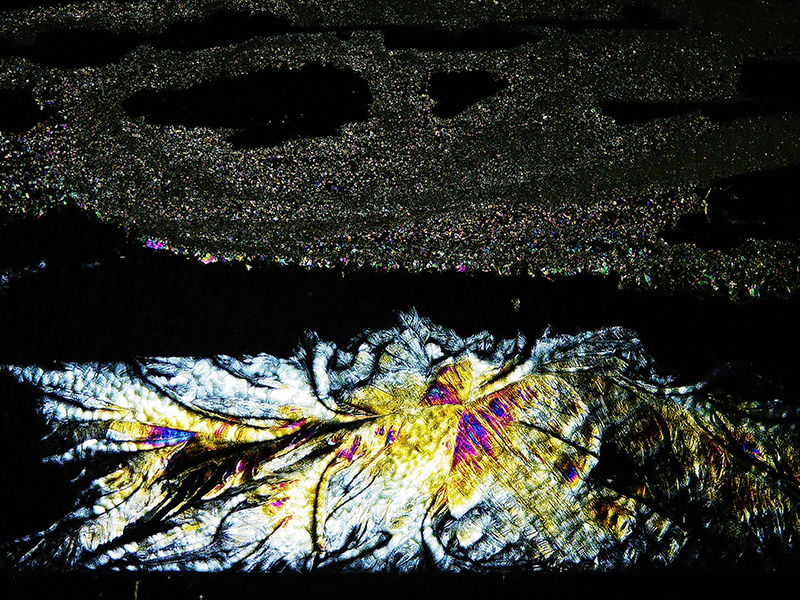
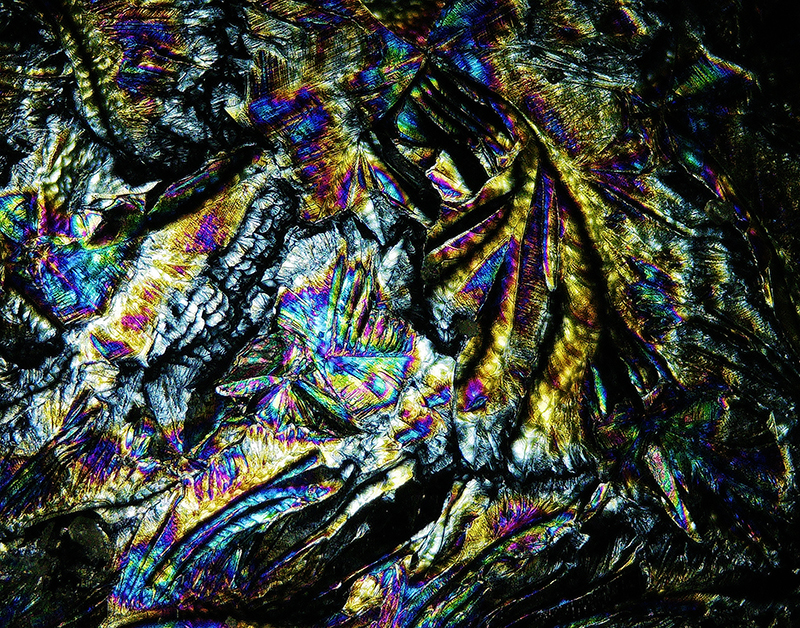
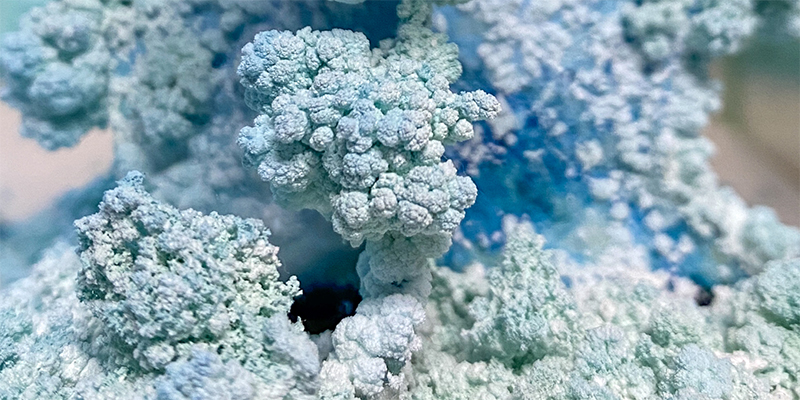
I had tried some ‘Vitamin C’ crystal growing microscopy experiments at home. These images use a polarising filter under the microscope to reveal the vibrant colours. Next step will be to set up a timelapse of the crystals growing.

Summer Solstice 2025. The shortest night of the longest day brought an awful darkness. Collected the last two solargraphs I had installed at the Hogsmill Nature Reserve. These have been collecting light from the sun for a whole year, recording every sunrise and sunset. May the light shine through.

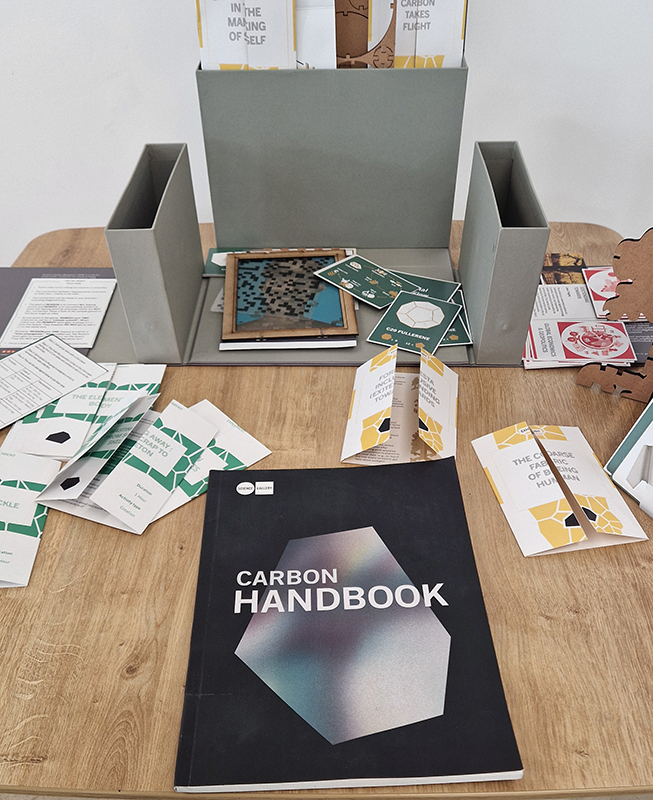
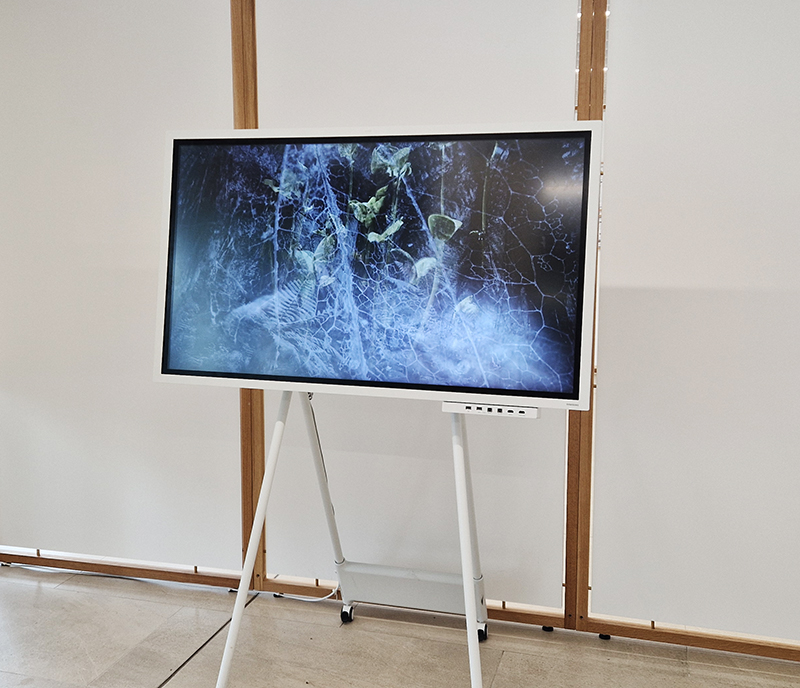
I was delighted that my video Cosmic Chiasmus: crossing the universe was included in CARBON: Under Pressure, at the Mazumdar-Shaw Advanced Research Centre as part of Glasgow Science Festival 2025, in a special exhibition partnership with Science Gallery Bengaluru.

The video offers a glimpse into a subatomic world where cosmic rays travel from distant galaxies to collide and silently interact with atoms and technology on Earth. Alongside the screening of the video I was also invited to give an artist talk and cloud chamber demonstration. It was great to share the wonders of the cloud chamber with visitors who were able to see cosmic ray trails for themselves.

It is an incredible journey that cosmic rays make, blasted across space, spiralling along magnetic field lines to end up entangled with carbon in our bodies.

Not only is all life physically permeated by cosmic rays with the potential for nuclei collisions, but some cascading particles smash into atoms of nitrogen and combine with oxygen to create radioactive carbon-14 which enters our atmosphere. Plants absorb it during photosynthesis, and it is incorporated into their carbon skeleton, which we then eat. While plants and animals are alive, carbon-14 is continually replenished as the organism takes in air or food. But when an organism dies no more carbon-14 is absorbed and that which is present starts to decay at a constant rate. By measuring the radioactivity of dead organic matter, the current carbon-14 content can be determined and the time of death established. Cosmic ray activity gives us carbon dating techniques.

Reading

The Geological Unconscious – Jason Groves. Returning to this book that sparked the ideas we explored in our exhibition. A redirection of geology to consider a type of connection between things that are not in themselves geologic. Stones that stare, stones that speak. An image of the human could develop through geologic processes, becoming part of the mineral consciousness. Quoting Heather Sullivan ‘There is a difficulty for biology and philosophy to maintain a reliable distinction between life and non-life.’
The Writing of Stones – Roger Caillois. A paean to the capacity of minerals to form images within the imagination, which in turn is considered to be nothing more than an extension of matter.

The Performances of Sacred Places: crossing, breathing, resisting – edited by Silvia Battista. I read this for some background research while thinking about how I might make work responding to the abandoned sites of the cosmic ray detector huts at Haverah Park on the North Yorkshire Moors.

‘An horizon stands, in modern hermeneutics, for what is possible to see from the position of a specific observer. That is, not only a location in space but also a position in the cultural and historical apprehension of the world.’ Silvia Battista

The book opens by questioning relationships between the site and its ascribed attributes, which may be mercurial qualities not easy to define or quantify. It reflects on the performativity theories of Karen Barad which argue that matter, in its complexity, is an active participant in our relationship to the world and Jane Bennet’s call to recognise the ‘vitality of matter’ that crosses the human non human divide. In the section on ‘crossing’ the sensitive work of Louise Ann Wilson explores ritual around death, grief and loss through walking in rural locations echoing walking an interior landscape of memory. Walking the labyrinth and the pilgrimage are also considered as journeys that take place in physical and metaphysical space.

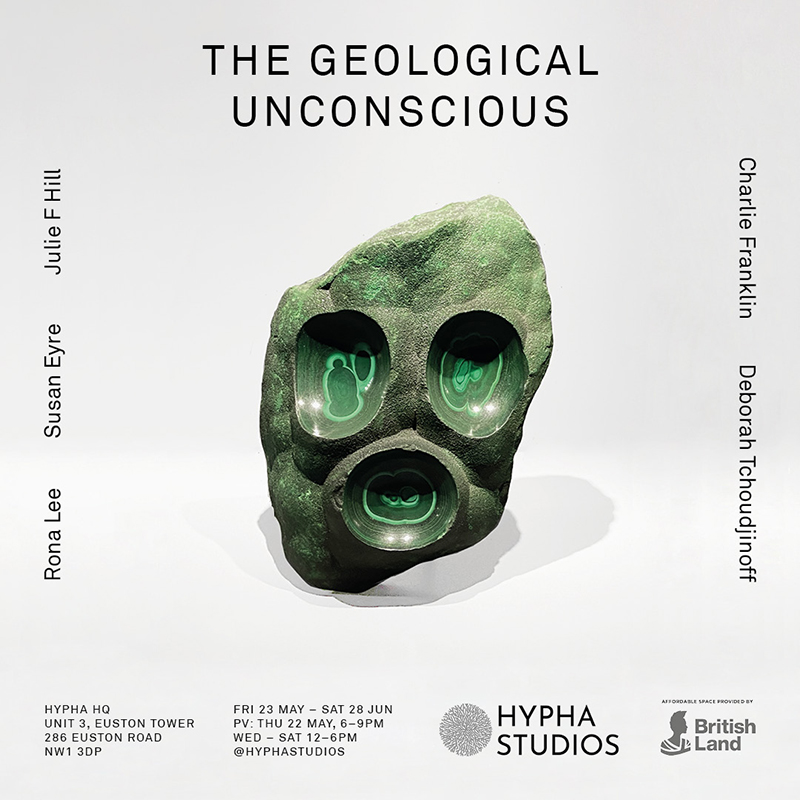
It has been a busy few weeks preparing for The Geological Unconscious at Hypha HQ – a group exhibition, co-curated by Julie F Hill and myself, exploring themes of stone consciousness and human-mineral encounters, destabilising assumptions about passive matter and a stable Earth.

Image: From Roger Caillois’ stone collection: Malachite, masque africain, République démocratique du
Congo, 14 × 20.5 × 6 cm. Photographed in the Museum of Natural History, Paris by Julie F Hill.


Responding to Jason Groves’ inquiry into the mineral imaginary in his eponymous book, as well as the ‘Writing of Stones’ as proposed by writer and mineral collector Roger Caillois, the exhibition exposes the complex entanglements between the organic and the inorganic; the human and the lithic. The Geological Unconscious is viewed through disruptive Surrealist strategies, engagements with the aesthetics of geo-materiality and material processes that attend to the growth and transformation of matter. These artistic ‘excavations’ highlight the toll of extractive industries on our planet, whilst inspiring reverence for the geological lineages of deep, cosmic time. Theories of Animism and Panpsychism are also brought to
bear on ways of attributing agency to inorganic realms.

I am thrilled to be exhibiting with Julie F Hill, Charlie Franklin, Rona Lee and Deborah Tchoudjinoff.


An accompanying events programme includes an urban geology walk with Geologist Ruth Siddall, discussing the origins of the local built environment; an installation and tasting by chef Moonhyung Lee who explores human-mineral entanglements through digestion; a crystal growing workshop led by Julie F Hill and I will be offering visitors lithomancy readings every Friday afternoon.
Investigating human/mineral entanglements for new work to be installed at Hypha HQ for The Geological Unconscious. Video of human activity projected through distorting optical lenses transforms the anthropocentric position to imagine the perspective of the rock. The pattern of lenses is informed by the molecular structure of magnetite,

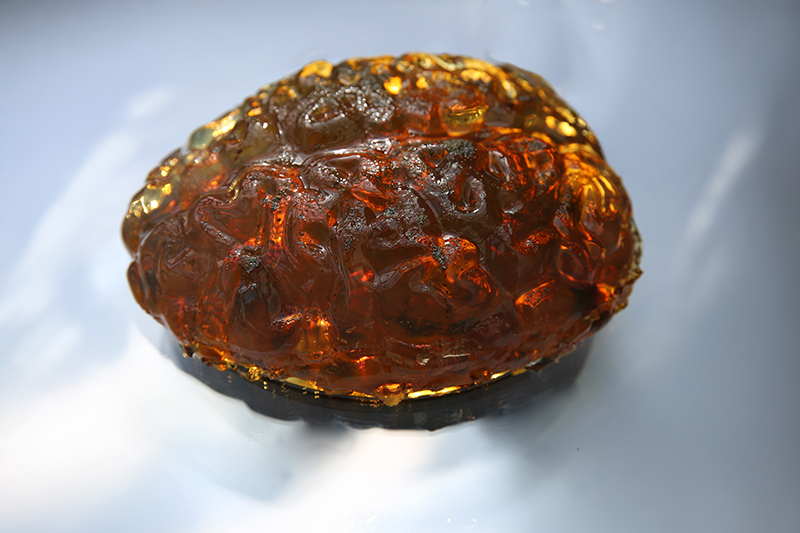
Magnetite is a naturally magnetic mineral found in many organism’s cells including human brain cells. Mined magnetite is used in industrial and mechanical processes and its use in combustion engines and braking systems is releasing nanoscale pollutant particles from traffic into the air which are finding their way into brain cells in high percentages causing concerns with links to degenerative brain diseases. I have been filming the stop start constant stream of traffic at a local roundabout and made a cast of a brain in gelatine with suspended iron filings. The filings oxidised and so the brain took on an iron red tinge and after a few days it cleaved down the centre and gradually as it dried became more and more chiton like.

Chitons are remarkable molluscs that have changed little in hundreds of millions of years. The chiton has hundreds of tiny eyes in its shell, which is made of eight articulating plates. It is the only known creature with lenses made of minerals rather than protein. Another distinctive feature of the chiton is having rows of teeth primed with magnetite, which aid its homing capabilities through magnetoreception and allow chomping on the hard rock surfaces it clings to. Inside the teeth of some species, the mineral santabarbaraite has been found, named after Santa Barbara, a mining district in Italy where it was first discovered and that honours Saint Barbara, who is the patron saint of mining and tunnelling. Santabarbaraite is also one of the few minerals named after a woman.
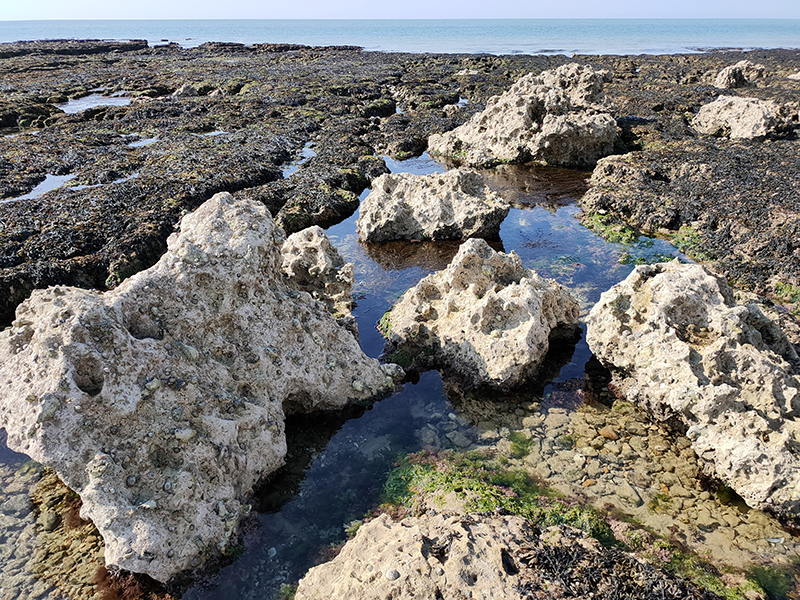
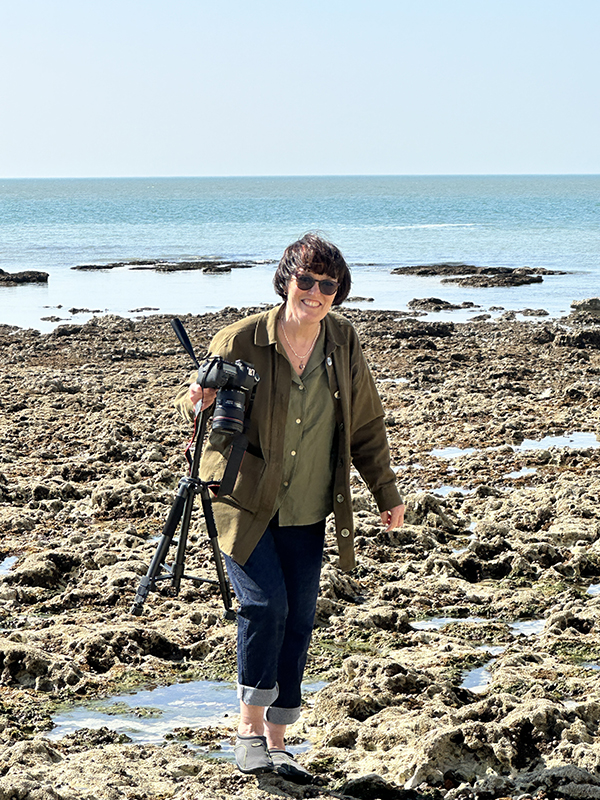
Fantastic day chiton hunting in the rockpools on the stunning East Sussex coast. Thanks to family who helped find these well camouflaged unique creatures.
Saint Barbara, was adopted by miners and underground workers as patron saint after the pursuit of geology and the widespread use of gunpowder in mining escalated in the 1600’s. She may have a dubious authenticity but her benedictions are still sought today with many statues installed at the entrances to Crossrail and a large ceremony on her saints day, 4th December, performed by local priests before tunnelling went ahead. Even at CERN the epicentre of scientific rigour, a shrine to Saint Barbara was established at every shaft site of the Large Hadron Collider requiring excavation and a blessing performed even if the priest had to be lowered by crane down the shaft to achieve this.

My mother’s name was Barbara and her birthday 6th December is very close to Saint Barbara’s day on the 4th. It would be great to discover she arrived two days late but there is no one alive now to ask.

Small grains of magnetite are common in igneous rocks, formed from magma having cooled and solidified within the Earth’s crust, and also in metamorphic rock, formed when existing rock is transformed physically or chemically at extreme temperatures. 

These processes happen on other planets as well as Earth and so magnetite has also been found in meteorites.

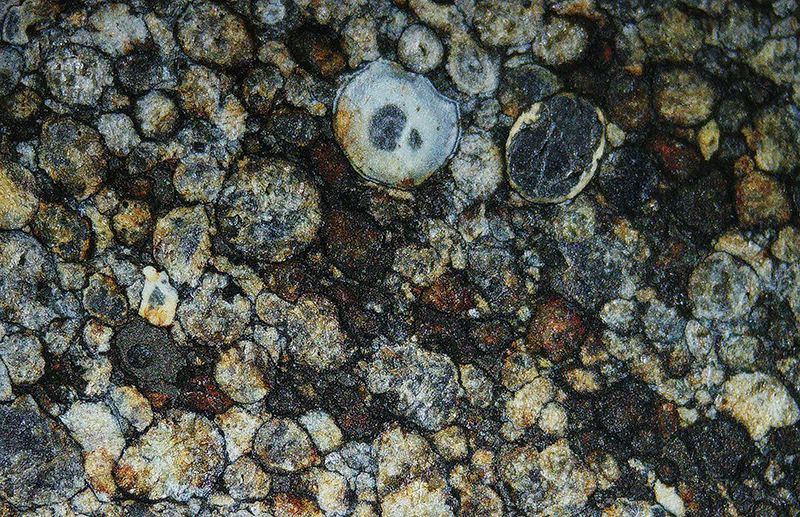
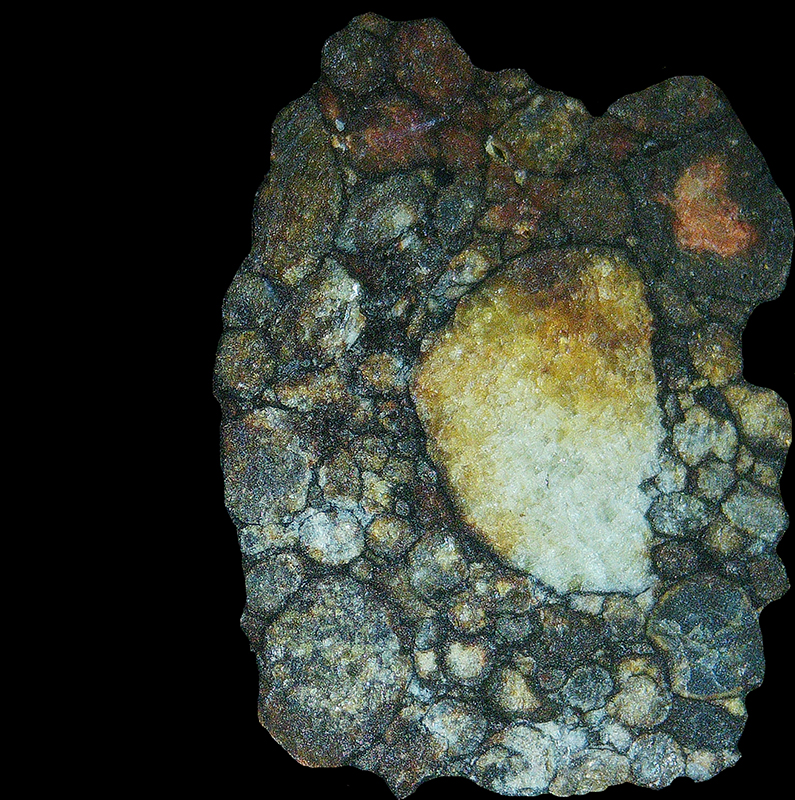
Using a digital microscope to look at the structure of the chondrite meteorite NWA 16975 discovered in the Sahara in 2024 which displays numerous and obvious chondrules and flecks of nickel iron in a fine grained matrix.

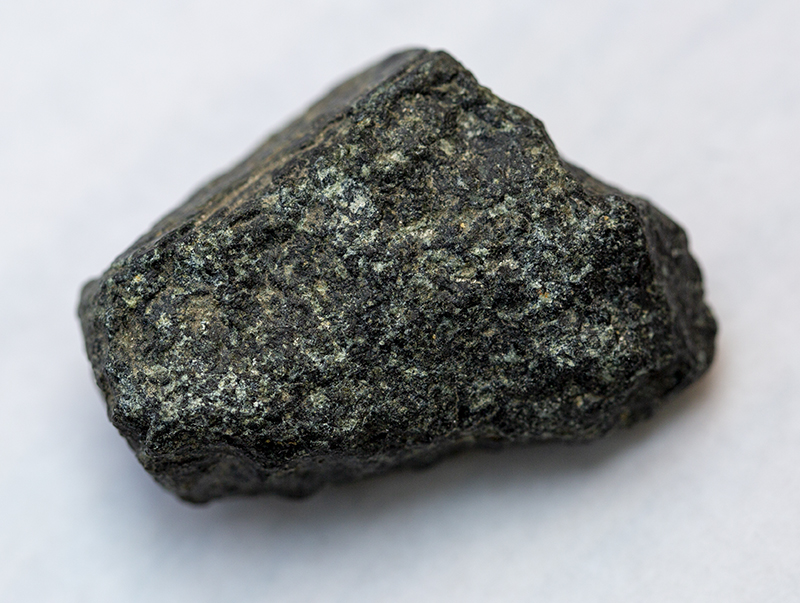
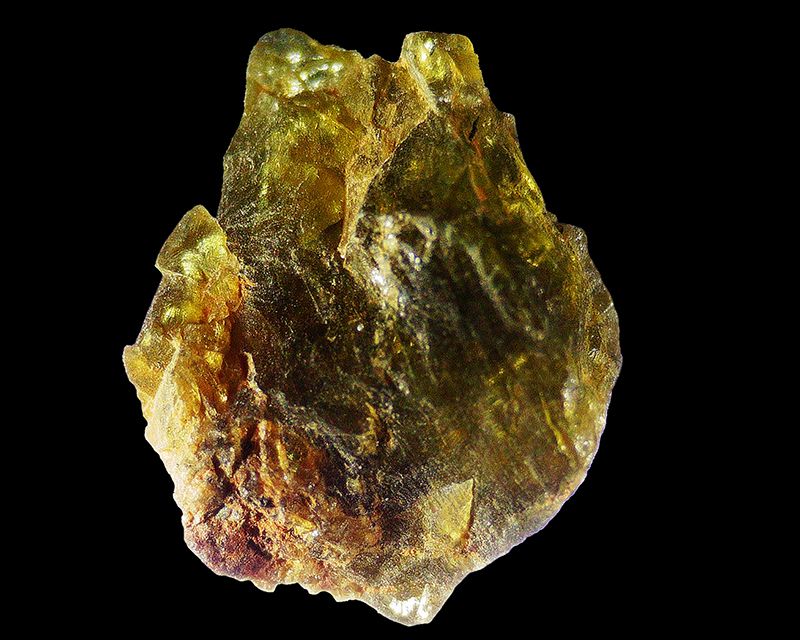
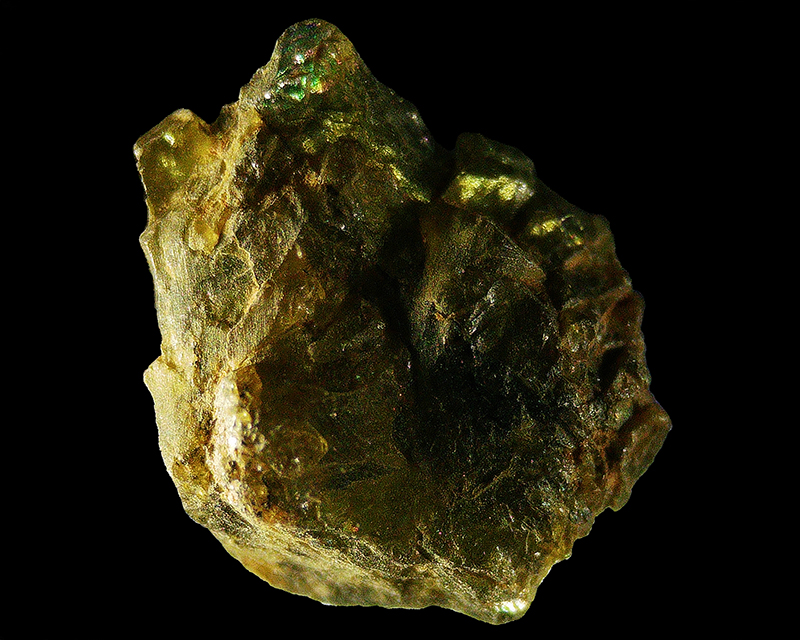
Also the fragment I have from the Diogenite meteorite NWA 7831 found in Morocco in 2013.

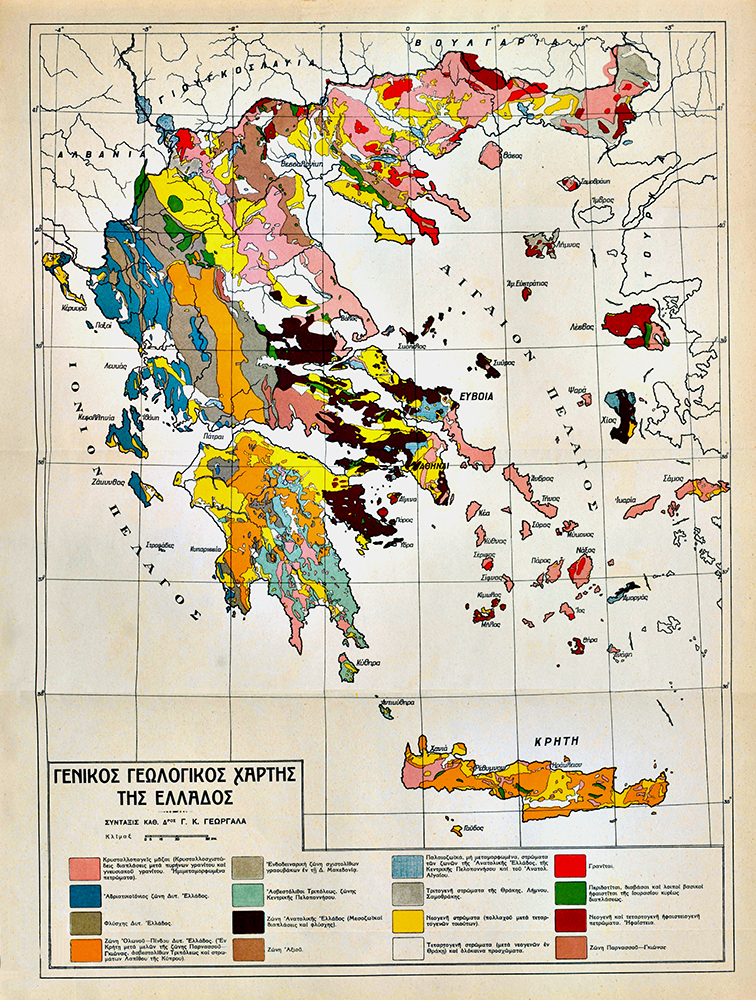
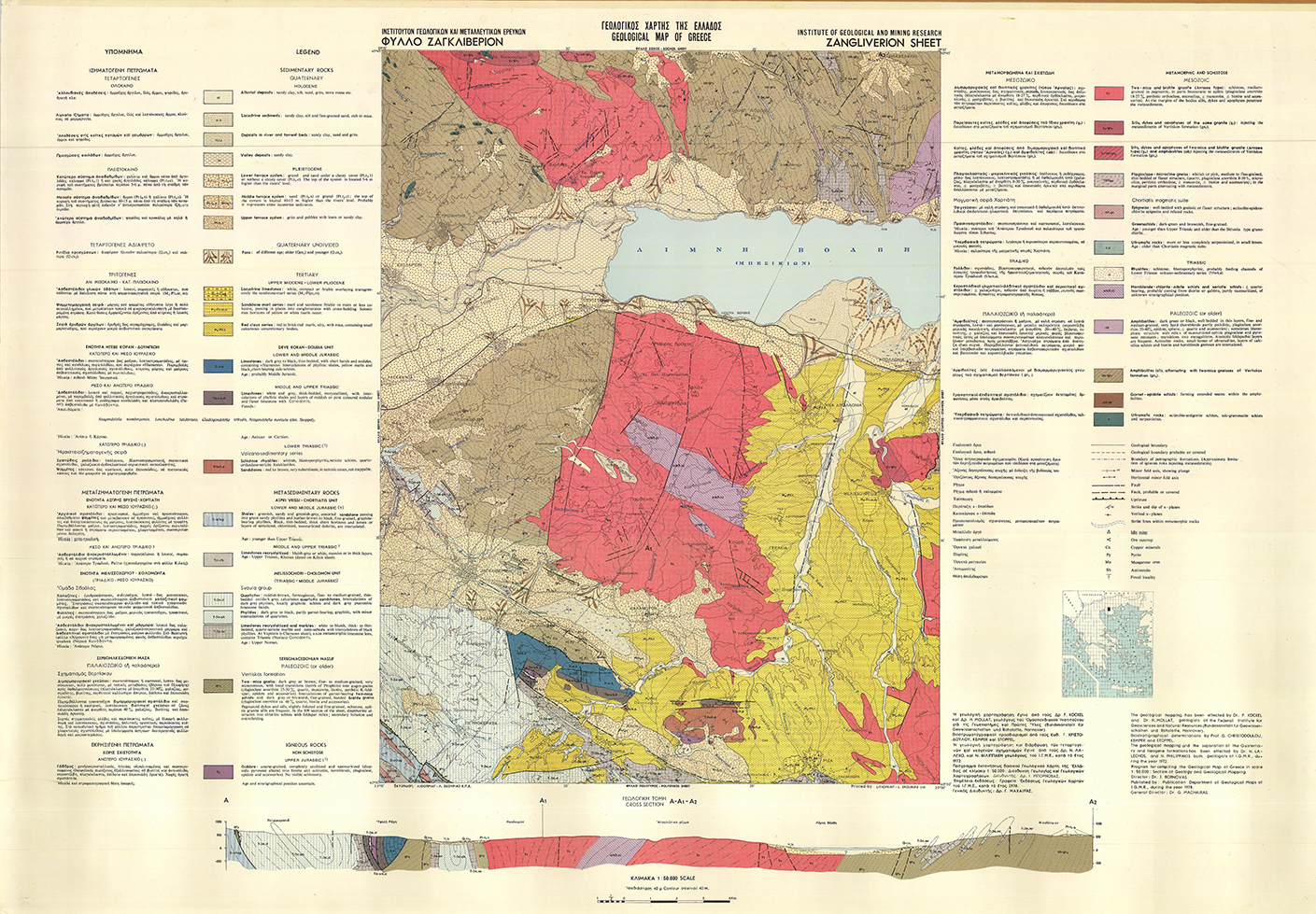
Looking at wonderfully colourful geological maps of Greece to locate the ancient area of Magnesia – the region where magnetite was first discovered and where its name has derived from – known as “magnes lithos” (stone from Magnesia). Definitely want to plan a research trip to this beautiful region around Thessaloniki.

Exhibitions

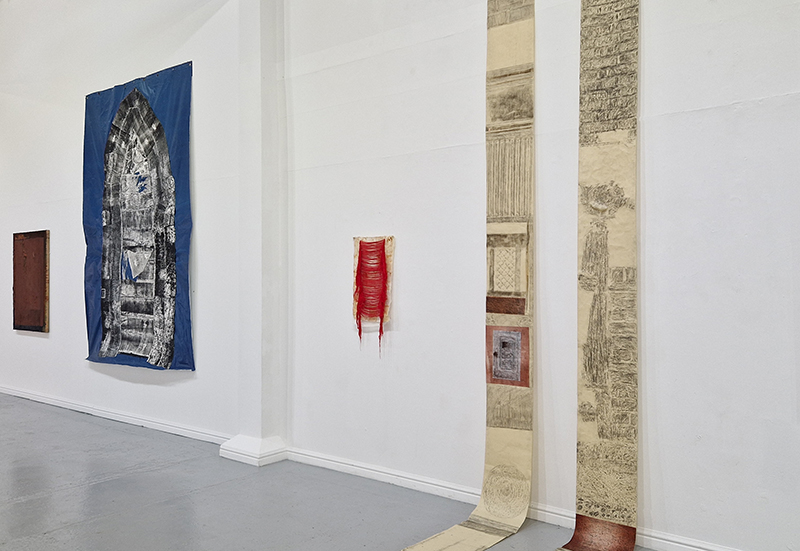
Whatshesaid collective of artists present Terra Incognita at Thames-side Studios Gallery – charting and cataloguing the disregarded, the everyday, its surface textures, accumulations, sedimentations.

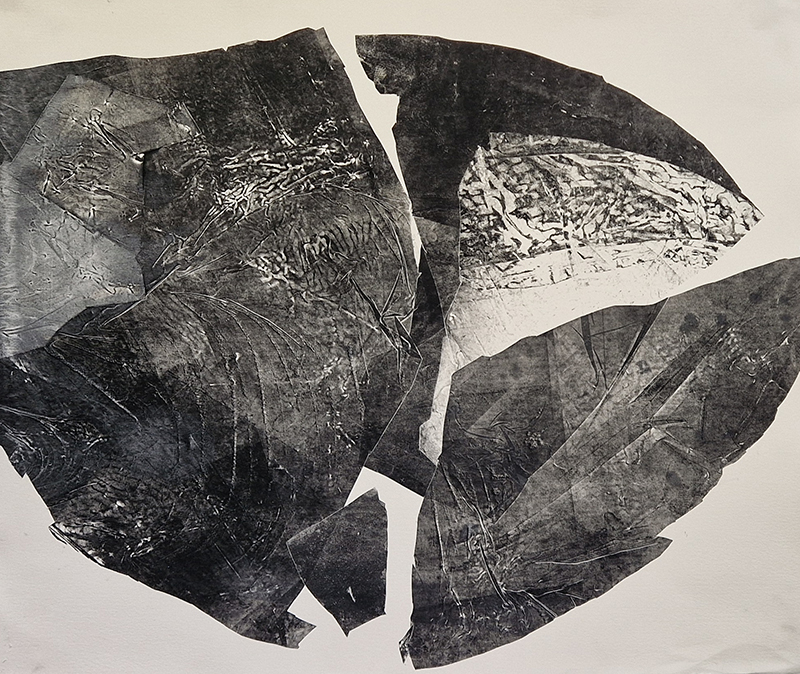
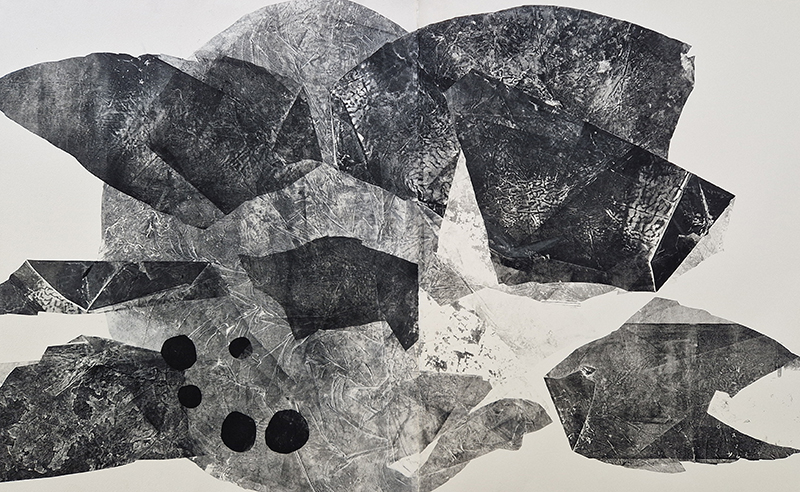
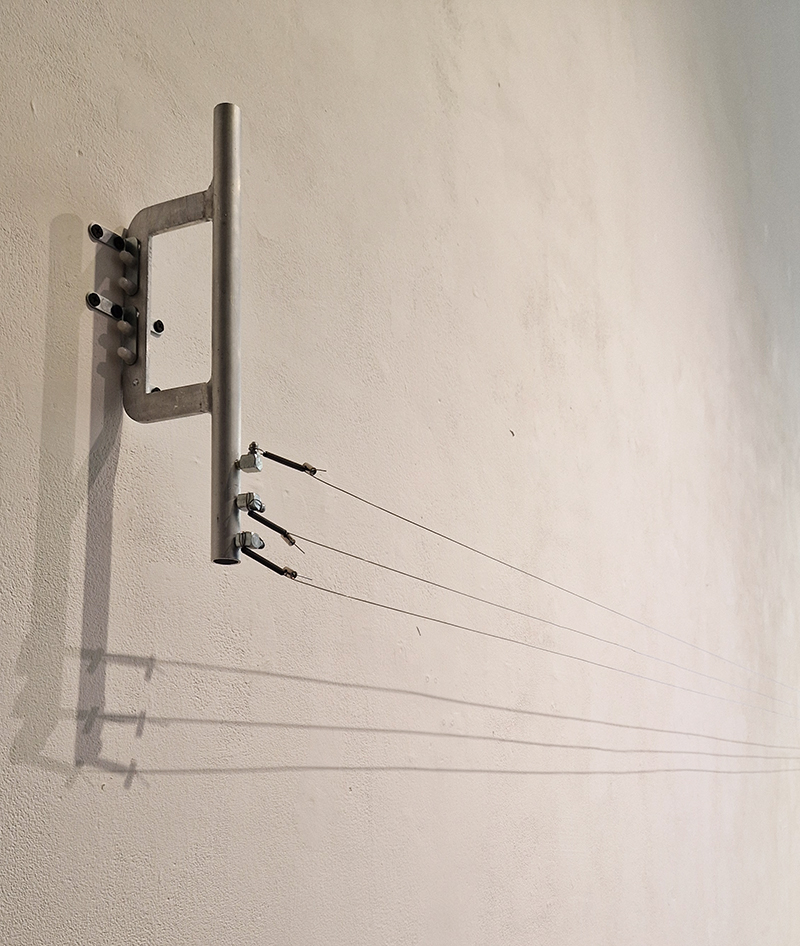
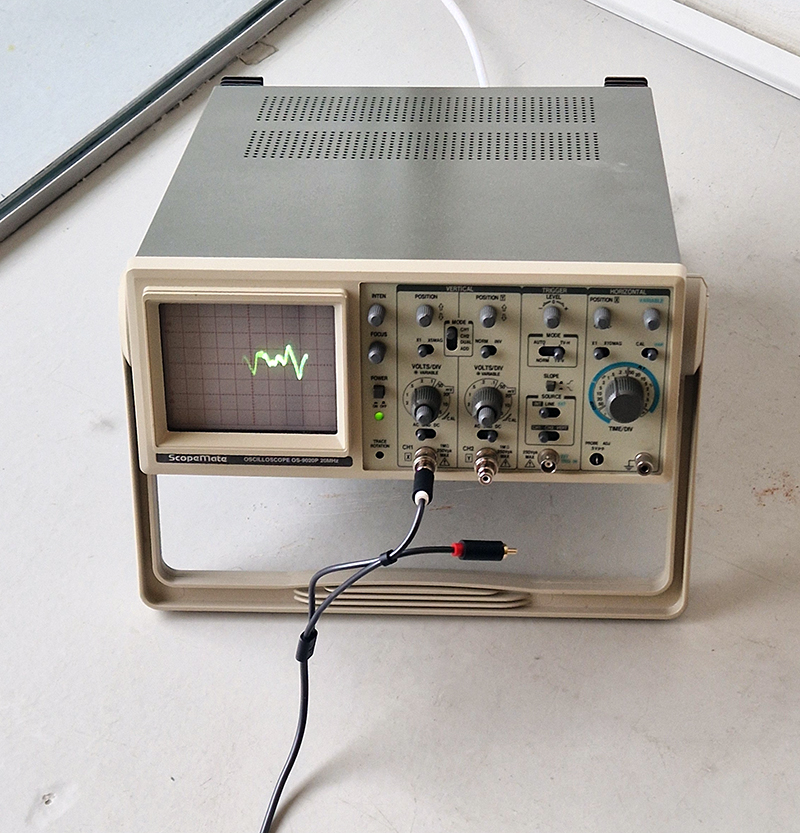
Joao Villas and Victoria Ahrens showing in Spectral Matters at APT Gallery An understated beautifully curated show whose work references the ephemeral materiality of sound, video, photography and print. The work overlaps and crosses over, both artists responding to the other’s practice. The images create matter, as spectral matter gives agency to the materiality of its own making, while haunting the space with its frequency- it vibrates. The exhibition explores memory, technology and the Anthropocene- and how the disappearing materiality of the world is captured through ephemeral means.