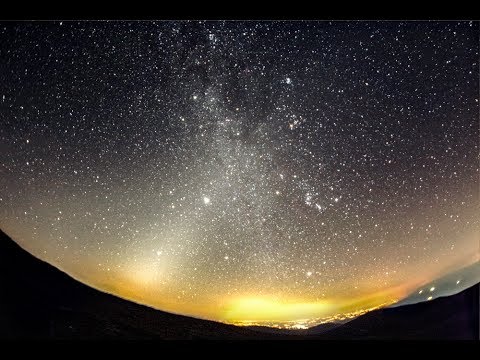
Archives for category: Uncategorized

My interest in what we can and can’t see in our environment led me to think about the substance of matter.

1601 sphere

At the Shadow without Object symposium the idea of a dematerialized world and how we record it was raised in Duncan Wooldridge’s paper Some Notes on a New Realism: Relocating Representation in the Technical Image. Once when we learnt to negotiate our relationship with the world visibility equalled presence. When representing the world it was with graphite, paint, film and emulsions that were all material objects. Now the world has dematerialized. The digital image is not made or transposed in the same way. This opens up other ways of visualising the world. To visualise through transformation.

We can tap into new technologies to see things that previously were obscured from us.

1601 Trevor Paglen

Trevor Paglen

STSS-1 and Two Unidentified Spacecraft over Carson City (Space Tracking and Surveillance System; USA 205) C-Print

Trevor Paglen’s The Other Night Sky is a project to collect evidence of classified American satellites, space debris, and other obscure objects in orbit around the earth with the help of an international network of amateur satellite observers. The position and timing of overhead transits are calculated, observed and photographed with telescopes and large-format cameras and other imaging devices.

For what we can see we are dependent on photons bouncing off some matter and hitting a receptor, in our eyes or in our equipment. For what we can’t see we rely on recording some disruption in the path of those photons.

Erik Kessels work is a reminder of how dependent we are on the technical abilities of our eyes or equipment. In almost every picture #9 is a collection of found photographs of one family’s endearing attempts to photograph the family pet, a black Alsatian. Their camera’s limitations meant that the dog always appeared as a black featureless shape.

As technology advances we are able to record more accurately. But we still find instabilities, no process is error free.

Matter refuses to be reliable. Giacomo Raffaelli has been researching how weights and measures are standardised across the globe and presented his discoveries in a paper Non-standard Uncertainties: Experiments in Current Visual Conditions of the Kilogram Standards.

1601 Standard kg

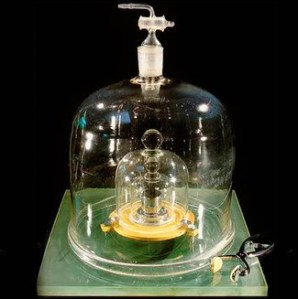
In the late 1800’s identical cylinders were manufactured from Platinum Iridium and stored across the world encapsulated under three bell jars. These were to act as standard units of mass. Britain holds model no 18. Periodically these units are tested for mass and compared with those stored in other countries. Some have been found to be gaining mass at different rates to others. This is fascinating to think these sealed solid objects have all this activity going on that can’t be seen but becomes evident when measured. In response to this discovery the National Physical Laboratory is doing research to redefine the kilogram as a standard number of atoms.

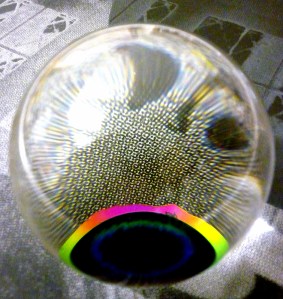
Within their laboratories NPL hold a polished silicon crystal sphere – the most perfect sphere on earth.  Raffaelli wanted to relocate this seductive object from the laboratory where it functioned simply as a measure. The only way he would be allowed to achieve this reimagining would be via an image. First he tried green screen, then 3D imaging, then an optical scanner, then a nautical scanner in the dark and finally a laser scanner that detects points of volume but none of these technologies could capture the sphere.

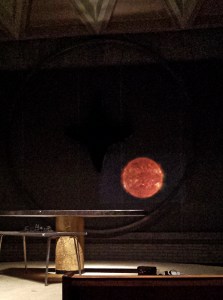
1601 shadow without object

Giacomo Raffaelli With Relative Uncertainty

Hand crafted and hand polished to perfection this crystal ball completely resisted the process of digitization.

Reporters from The Londonist website had a similar problem ;

1601 John Dee at British Museum

John Dee’s mystical artefacts at the British Museum

At the front of the picture above, you can see Dee’s crystal ball. We tried several times to take a close-up shot, but neither of our cameras could get a sharp fix. It is obviously haunted.

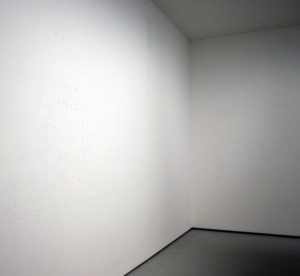
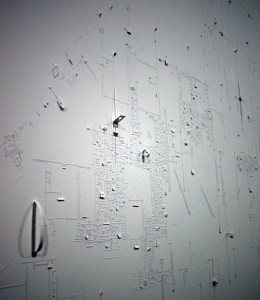
The ability to focus is something Marco Maggi encourages in his installation Global Myopia II.  The ability to see from very close allows one to focus on what at a distant glance may be missed. At first the room might look empty.

1601 Uruguay (2)

Marco Maggi

Close up, a world in miniature appears in the form of grids and geometric shapes like paper circuitry which can read as encoded information, routes of transmission, architectural plans or space age archaeological sites.

1601 Uruguay (1)

Marco Maggi

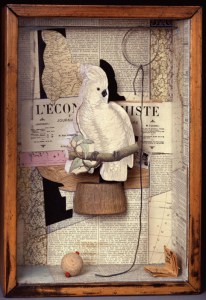
Joseph Cornell was able to poetically record places he never visited. He was a collector of journeys captured in little boxes. I was very inspired by the Wanderlust exhibition at the Royal Academy having always been keen on small worlds to peer into.

1601 Jospeh Cornell A Parrot For Juan Gris

Joseph Cornell
A Parrot for Juan Gris

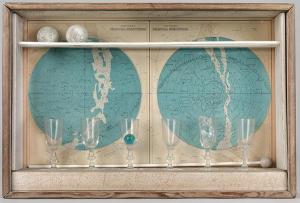
Constructed with found artefacts, maps and letters these enigmatic worlds are catalysts to the exotic, that which is always just out of reach.

1601 Joseph Cornell The Clockwork Utopia

Joseph Cornell Clockwork Utopia

On opening an atlas or looking at a map you must interpret the information and relate it to the world at large. Through her series Victory Atlas Elena Damiani aids us in those leaps we make in our minds to the tropical shores or glacial rocks which are signified by a few lines and coloured shapes. I found her work really interesting.

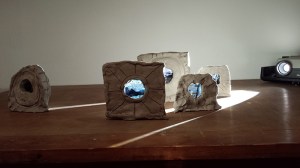
The group show COLLABORATORS 4 presented by Roaming Room at their current mews premises was a beautifully curated invitation to ponder materiality and the many ways we record the world and visualise our responses to it. Participating artists can be found here. I was particularly drawn to the small installation of Alexandra Hughes which beamed light through tiny images roughly embedded in clay portals.

1601 Roaming Room Alexandra Hughes

Alexandra Hughes East’s Blue Clayoto

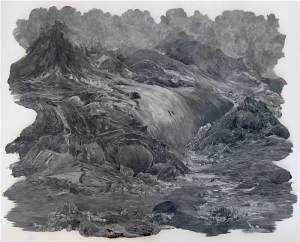
I have always liked Ambrosine Allen’s intricate assemblages  constructed from slicing up national geographic publications.

1601 Ambrosine-Allen Retreating Glacier

Ambrosine Allen Retreating Glacier

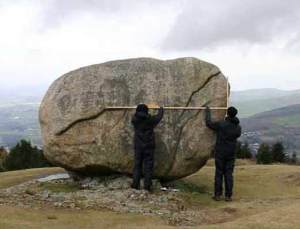
The piece by Dunhill and O’Brien made me think of those first measurers that Raymond Williams writes about in his novel People of The Black Mountains who took a rod and every night went out to the hills to watch the rise and set of the moon.

1601 Dunhill-and-OBrien Stone Appreciation

Dunhill and O’Brien Stone Appreciation (Rostrevor)


First came the sound and the sign, then came the word – which turned into image and overtook the gaze. The sign, turned into figure, sought ways to become perpetual – quipus, incisions in clay boards, traces left by chisels on rocks, ink on papyrus or paper, then neon signs, LEDs, and many other technologies.  – Oscar Sotillo Meneses writing on the work of Argelia Bravo which celebrates the words, signs, gestures and poetry that interweave the historical evolution of the Bolivarian Republic of Venezuela but can be recognised the world over.

1601 Venice venezuala


A short blog on natural and unnatural things.

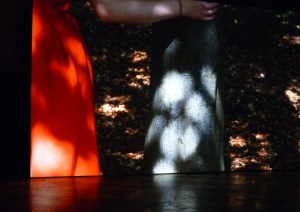
Helen Sear’s video Company of Trees leads you deep into the forest.

0912 Venice Wales Helen Sear (2)

In the forest the straight line becomes a circle. We are following a girl in a red dress who is glimpsed between the trees, part here part there, never a complete picture, always fading away, and counting. Numbers appear. The title Company of Trees of course makes you think of wolves as does the red dress. We are in a fairy tale, lost in a dreamlike state.

0912 Venice Wales Helen Sear (6)

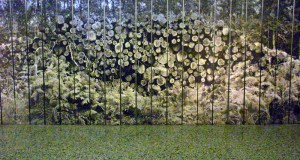
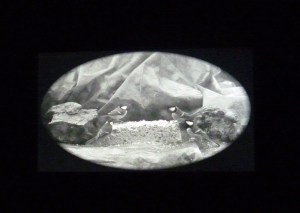
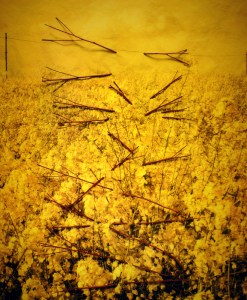
In other rooms are other images from the countryside, the stacked chopped wood of the woodcutter, small birds and blinding golden fields interwoven with symbols.

0912 Venice Wales Helen Sear (4)

Human presence is here as in the fairy tale it is a human story but how much control do we have even in chopping and harvesting.

0912 Venice Wales Helen Sear (9)

This countryside is not a sentimental place to stray in.

0912 Venice Wales Helen Sear (8)

….the rest is smoke

We gaze down but see the sky. The image ripples but the water stays still.  Helen Sears uses video after effects imaging to create an illusion of movement in an elliptical pool The Beginning and End of Things.  

0912 Venice Wales Helen Sear (5)

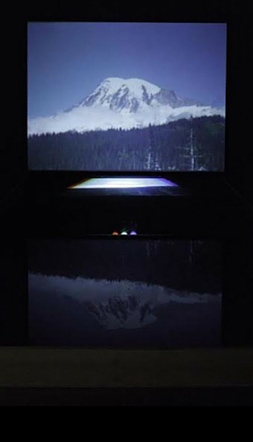
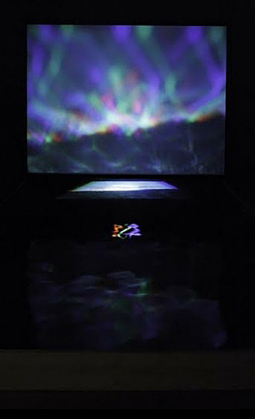
Another illusory reflection; Bill Viola’s installation Moving Stillness (Mt. Rainier), 1979 at Blain Southern. Even after 35 years this piece is still captivating in its mystery.

1601 Bill Viola 1

We see a reflection of the mountain in a large pool of water, every so often the water is disturbed and the image dissolves into undulating patterns of light which very slowly restore themselves to equilibrium and the image reappears. The mountain and its reflection do not appear to correspond. 1601 Bill Viola 2

Nothing is hidden from us, through technology we experience the magic of physics which is the magic of nature. Viola’s works open space in this way for a spiritual engagement which is a vital part of his ideology.  To alter materially as we pass in and out of life is something we have no control over but to transform our minds is our challenge. He is an admirer of the philosopher Ananda Coomaraswarmy whose writings  embrace mythology and metaphysics – Art is nothing tangible. We cannot call a painting ‘art’ as the words ‘artifact’ and ‘artificial’ imply. The thing made is a work of art made by art, but not itself art. The art remains in the artist and is the knowledge by which things are made.

Viola produces meditative spaces. Another pioneering early work was presented by Blain Southern and The Vinyl Factory at Brewer Street Car Park.  The Talking Drum an early sound composition  that explores resonance in an empty swimming pool using drums and pipes.

It was an uncanny experience entering the vast shadowy space of the underground car park to what felt like the eerie soundtrack of a noir thriller.

In Venice I had another opportunity to walk through the pulsating glow of Joana Vasconcelas’ Garden of Eden. This fibre optic maze has all the false trappings of the biblical Eden in its hypnotic draw.

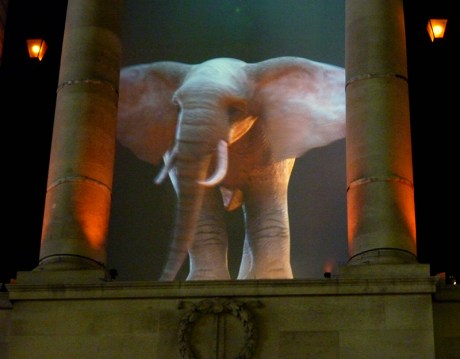
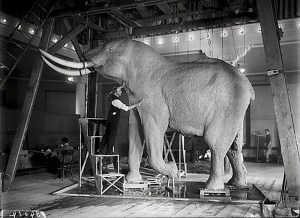
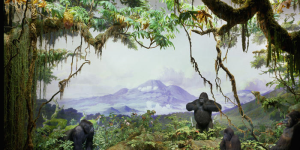
I’d never really thought about how concrete was applied to our landscape. At UAL’s Shadow Without Object Symposium Bernd Behr introduced us to the Victorian polymath inventor of sprayed concrete Karl Akeley. Sprayed concrete takes on the shape of what it covers, like a skin.1601 Carl AkeleyAkeley was also a pioneering taxidermist and creator of natural history dioramas, he also devised a motion picture camera to take on location. In his presentation  Akeley in the elephant Skull  Bern Behr makes connections between this liquid concrete film that holds an image of what it covers and photographic emulsion. The desire to reconstruct, to capture and present an accurate representation of reality are questioned. Akeley worked hard to perfect his models as being true to life. 1601 Carl Akeley gorillasHe made many expeditions to Africa to collect his own specimens, make drawings and take photographs so he could transpose the African plains to urban New York. He was of course presenting an idealised view to the awestruck New Yorkers adding to the distorted representation of faraway lands much like the holiday postcard photograph.


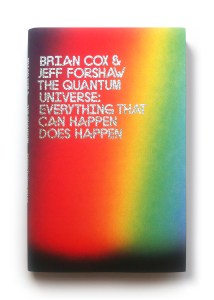
In my first brush with particle physics I discovered the language to be quite like that of mythology, full of mysterious characters like the charm quark and strange quark, the muon neutrino and the tau. These characters are governed by fundamental forces like the strong force and the weak force that cannot be seen or explained other than by their attributes – just like the mythical gods.  I have recently been working my way through The Quantum Universe: Everything That Can Happen Does Happen by Brian Cox and Jeff Forshaw. It attempts to explain the theories of quantum physics.

1512 The quantum UniverseI’m not sure how this will ultimately feed into my work and the maths is way beyond me but I am excited by the possibilities it explores. I find this unpredictable world that operates on an unimaginably tiny scale fascinating. It is hard to grasp certain concepts as the theories cannot be visualized. Subatomic particles, physicist Richard Feynman tells us, do not behave like waves, they do not behave like particles, they do not behave like clouds, or billiard balls, or weights on springs, or like anything that you have ever seen.

Back in 1927 scientists Davisson and Germer did an experiment firing electrons through two slits in a screen. They expected a certain pattern to appear on the screen on the other side as the electrons hit that surface. The interference pattern that did appear gave the impression that a wave had passed through the two slits rather than a series of particles yet on the collecting screen were tiny dots not a continuous wave like surface. Something very strange was happening – and from then on physicists have had to rethink how things move around the universe.

1512 bubbles

Anders Jonas Ångström discovered in 1853 that each element emits its own unique spectrum of coloured light when heated. This is spectroscopy. There is a handbook on this by Heinrich Kayser – Handbuch der Spectroscopie which is online but not the simple colour chart I was hoping for. Quantum physics has been able to explain why these coloured lights are unique to each element and astronomers have been able to use these codes to work out the chemical composition of the stars.

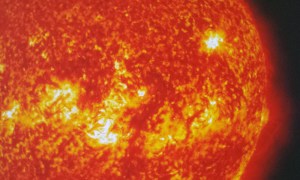
I signed up for a sunrise walk with Royal Society Research Fellow Lucie Green as part of Tate Modern’s weekend of events – Light and Dark Matters. Lucie researches the activity and atmosphere of our nearest star. The walk however was marked by the extreme absence of sun. Horizontal sleet whipped at us as we stood on the millennium bridge, blustery snow forced us to huddle under the arches of the Bank of England.

1512 Sunrise walk (2)

Soaked through and bitterly cold we contemplated the effects on our economy of the massive hot plasma ball and the space weather it produces.1512 Sunrise walk (1)

Geomagnetic storms with massive solar flares can send huge surges of electric currents to course through the earth and knock out the electric grid of cities that sit on a solid rock base where the current is trapped.

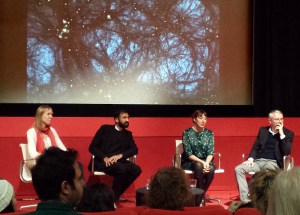
In the afternoon was a panel discussion Are we darkened by the light? with Catherine Heymans, Katie Paterson and Marek Kukula chaired by Asif Khan.

1512 darkened by light (2)

The artificial light that floods our lives hides from us the magnitude of the night sky. Astrophysicist Catherine Heymans gave a moving account of how a chance internship in the Australian outback opened her eyes to the stars and began her love of astronomy.

1512 dark sky

There were so so many stars – she, like many of us, had been robbed of this amazing experience for years, so yes we are darkened by the light.  The universe is an arena of extremes; the longest timescales the hottest temperatures, the largest voids of utter emptiness. An astronomer can only observe what the universe chooses to reveal through light. For most people darkness is the absence of light, it is light being absorbed by something. For scientists darkness means that the object doesn’t emit light. Dark matter does not emit light, it should really be called invisible matter. Millions of dark matter particles flood though us all the time yet we still haven’t managed to identify even one particle.

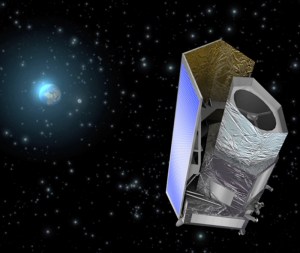
There is so much unknown about the fundamental truths of our universe but with new technology more and more is revealed to us. The gravitational bending of light is one way to ‘see’ dark matter. In the next few years the European Space Agency are launching a new super powerful telescope Euclid that will image the whole sky in its quest for Dark Matter.

1512 new technology

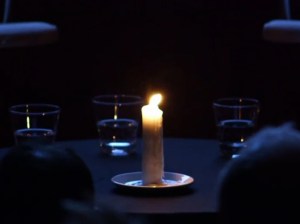
Katie Paterson spoke about her work while burning a candle that released scents in ever disturbing layers beginning with wet basement as we projected through our atmosphere towards interstellar space.

1512 candle 1

The candle’s 12 hour olfactory journey though earth smells includes geraniums, tar, old pennies, raspberries, rum and sulphuric acid finally snuffing itself out on reaching the scentless void of a black hole. Katie Paterson was the first artist to launch a piece of art into space.1512 melting

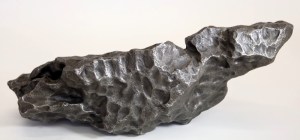
Working at the sort of extreme temperatures found in the conditions of creation within the universe  she undertook melting and re-casting a meteorite. She was resetting the meteorite’s inner cosmic clock.

1512 meteorite recast

Reformed, the meteorite was launched back into space to reach the International Space Station returning once again to earth perhaps this time burning up in the atmosphere on re-entry.1512 launch

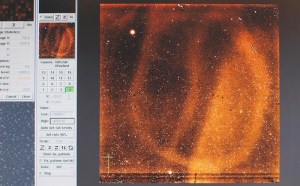
It is usual to think about what is revealed to us by light but Marek Kukula also wanted to show what can be revealed through shadow and darkness.  In Dark Frame, made by Woolfgang Tillmans while visiting the European Space Observatory in Chile, the image displayed on the screen is of the digital camera chip before an image is captured.

1512 dark frame camera chip

It reveals the flaws and aberrations in the dark space of the camera itself. Darkness is not always as dark as we expect.

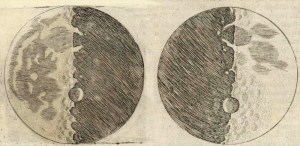
Galileo Galilei shocked 17th Century society when he pointed a telescope at the moon and made drawings of the shadows he observed. His drawings demonstrated that the moon was not the smooth and perfect celestial object set in the sky that people had believed.1512 galileoThe movement of the shadows showed a lumpy pitted surface rather like earth. Maybe we weren’t so special after all.

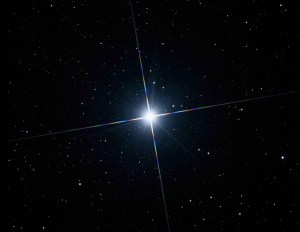
We still use darkness and shadow today to understand what the universe is like.1512 starWith ever more powerful telescopes we have been able to determine that all the visible stars in the universe have their own solar system. We know this because as a planet moves across a star the light dips by a tiny amount, enough to be registered. The shadow of the planet gives it away.

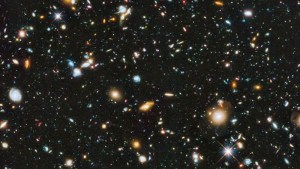
What he told us next I found quite hard to grasp and I keep thinking about how can this be true and what does it mean for us. Astronomers chose a tiny piece of sky that looked black with no stars in it – from earth it would be the size of a grain of sand.  They pointed the Hubble telescope at this piece of sky for 10 days. It cost £50,000 an hour to do this. It collected light for 10 days and this is what it saw….

1512 galaxies

This tiny fragment of sky was full of galaxies. In extrapolation this means there are at least One Hundred Thousand Million galaxies in the observable universe.

The scale is beyond imagining yet in this image there is still blackness between the galaxies, this tells us something fundamental. If the universe was infinite and had been around for ever then every part of sky would be filled with stars – the image would be would be completely bright. So as there are still black parts we can deduce that the universe hasn’t been around forever and is not infinite. We understand that our universe hasn’t been around for ever from the big bang theory but does this prove there was nothing before?  Does this prove there is an  edge with nothing beyond? It is hard to grasp as the distances are so vast.  Would light from so far away have got here by now – was 10 days long enough to look?  I keep thinking about it.

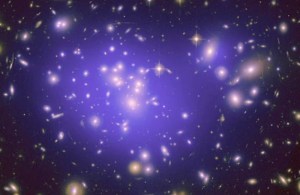
In the image of all the galaxies we see some areas of distortion caused by gravitational lensing that is the clue to dark matter existing. How do we represent what we can’t see? Here dark matter is shaded in as a blue haze but it gives a false impression of what dark matter is.1512 blue dark matter

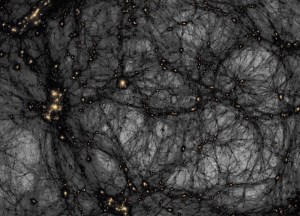
Scientists often colour space images using black and orange as the human eye is good at seeing detail in this combination. For the Planetarium Show Dark Universe at the Greenwich Observatory the American scientists decided to use a different colour scheme. Inverting the black sky to white and the dark matter to black the bright conglomerations of galaxies are shown nestling within filaments and tendrils of dark matter. 1512 dark matter

This new image gives a poetic insight into how our universe is bound together by unseen forces. Marek ended his talk quoting a poem by dark matter research astronomer Rebecca Elsen who died in 1999.

Let there Always be Light (Searching for Dark Matter)

For this we go out dark nights, searching
For the dimmest stars,
For signs of unseen things:

To weigh us down.
To stop the universe
From rushing on and on:

Into its own beyond
Till it exhausts itself and lies down cold,
Its last star going out.

Whatever they turn out to be,
Let there be swarms of them,
Enough for immortality,
Always a star where we can warm ourselves.

Let there be enough to bring it back
From its own edges,
To bring us all so close we ignite
The bright spark of resurrection.

Rebecca was hoping for a rebirth of the universe but it’s not what looks like will happen. Dark energy is causing the universe to expand at a faster and faster rate. Dark matter doesn’t look like it will be able to prevent it reaching a point of collapse.

Dark energy is not a force but it is having an effect.

How do we explain these phenomena of the universe when we do not have the words?  Physicist Werner Heisenburg replied – fortunately mathematics isn’t subject to this limitation. Marek Kukula concluded – Perhaps art is not subject to this limitation either?

It was good to see an exhibition of works entirely devoted to finding ways of expression for our experiences of the universe.
1512 Lumens iii 1.jpg

Mahal de Man

Melanie King and Louise Beer not only collaborate as super/collider with Chris Hatherill but also run Lumen with Raymond Hemson  – an artists collective based in Bethnal Green that once a year heads up a residency in the small village of Atina, Italy away from light pollution that hides the stars from Londoners.

1512 Lumens iii 4

Nettie Edwards

They aim to inspire a dialogue about how humanity understands existence in providing an opportunity for artists to encounter the night skies and make work in response to their experiences.

1512 Lumens iii 6

Peiwen Li

Lumen iii LA LUCE DELLE STELLE at the Crypt Gallery, Kings Cross was the result of the last residency.

1512 Lumens iii 2

Eva Rudlinger

Exhibiting artists: Naomi Avsec, Louise Beer, Molly Behagg, Samuel Brzeski, Alice Dunseath, Nettie Edwards, Jaden Hastings, Osheen Harruthoonyan, Raymond Hemson, Emilia Izquierdo, Elena Karakitsou, Melanie King, Claire Krouzecky, Peiwen Li, Mahal de Man, Yaz Norris, Lisa Pettibone, Marta Pinilla, Natasha Sabatini, Alice Serraino, Joshua Space, Eva Rudlinger, Sisetta Zappone, Qing Zhou

1512 Lumens iii 7

Melanie King

I am hoping I have put the right name to the right work but I couldn’t quite get to grip with the map so apologies if I got any wrong.

1512 Lumens iii 3

Sisetta Zappone

As I learnt at the Princes School of Traditional Arts looking for patterns in nature leads to geometry.

1512 Venice Manifold Design (1)

Manifold Design ‘345 in RGB’

Manifold Design exhibiting at the 56th Venice Biennale are an architects studio that questions the relationship of physical materials and properties to conceptual constructions.

1512 Venice Manifold Design (2)

Manifold Design ‘345 in RGB’

‘345 in RGB’ supposes a landscape composed of fundamental elements.

In the context of interconnectedness Eduardo Basualdo makes work that tests our understanding of material. Generating  elements that work together to reflect the way the universe  connects through opposing forces and results in a precarious act of balance. As in quantum physics we must look at the world differently.

1512 Venice Eduardo Basualdo

Eduardo Basualdo Grito

These quotes from Eduardo Basualdo about his work Grito are taken from an interview with Javier Villa

“The pieces shown in Venice are practical exercises to test strengths we humans have to interact with the material world and modify it. In this case the question was how to break an iron bar using pencil and paper, and where to do it…this happens, from my point of view, in the plane of the imagination”

1512 Venice Eduardo Basualdo 2

Eduardo Basualdo Grito

“The paper is an X­ray, it becomes a lens through which we view that metal and we see it as a different state of matter, as in a dimensional leap. The Biennial spoke of the possible futures and the actions that we may exert on matter, the violence on the material is a way you have of building your own future. Of nor depositing it either in the hands of religion, or of technology, or of politics.”

A piece from my series everydaymatters was selected to show in Space Between at The Stone Space, Leytonstone. This was a group show of work which inhabits the space between perceived reality and abstraction.

1510 everydaymatters (palm SW4)

Susan Eyre everydaymatters (palm SW4)

The gallery also hosted an afternoon of artist talks. A good chance to explain and exchange ideas.1512 Space Between

My interest in the origins of the idea of paradise and wondering what exactly I was looking at when I went out to photograph locations led me to the CERN website. From reading about the standard model and dark matter I discovered some amazing theories about what we can and can’t see. Now I have been reading about how electrons leap about exploring the entire universe in an instant on their journey. I have a lot of questions.


Dr. Chamkaur Ghag’s talk Dark Matter presented by super/collider at Second Home was inspirational in many ways. It was fascinating to hear a first hand account of how the search for dark matter is conducted and the challenges that face scientists looking for something so elusive. We learnt that there are underground laboratories around the world where research takes place away from background radiation which makes it harder to isolate any particles that might be dark matter.

The occurrence of dark matter was first theorized through the pioneering research of Swiss astronomer Fritz Zwicky who in 1933 looked at galaxy rotation curves and decided there was more going on than could be accounted for by the mass of the matter we could see. Something mysterious was holding the galaxies together. It is dark matter that allows structures in the universe to form by pulling matter into the gravitational field of pools of dark matter.

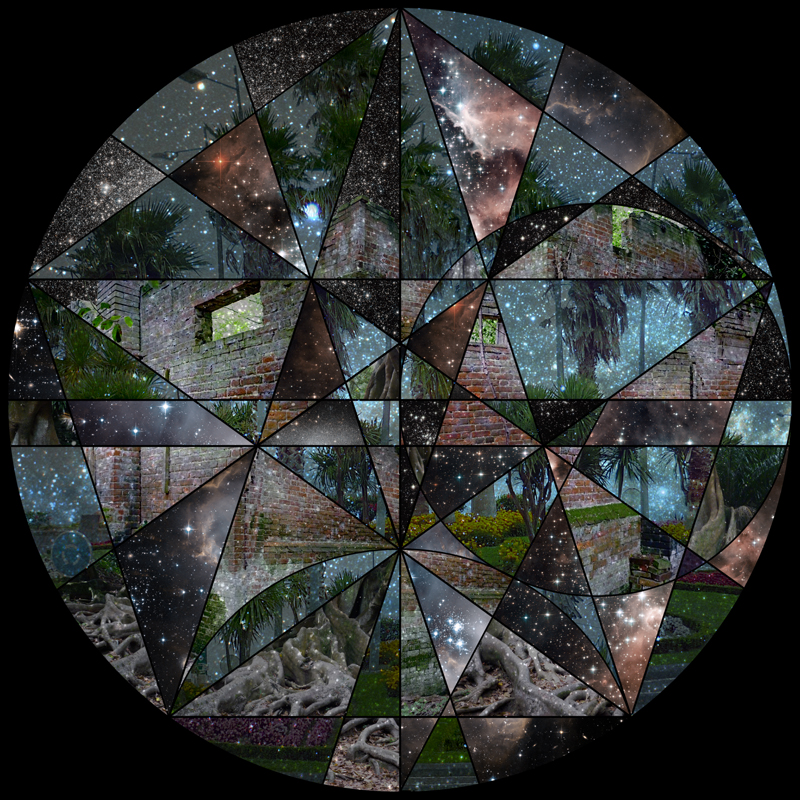
It could be that Plato accounted for dark matter when he assigned this role to the fifth platonic solid – the dodecahedron as ‘a fifth construction which God used for embroidering the constellations on the whole heaven’ – a concept that I used as a framework for Pairi Daêza

1511 pairi daeza

Susan Eyre Pairi Daêza

Using the net pattern that is used to construct a dodecahedron to mesh together images of constellations, an abandoned walled garden and a roundabout.  Recent imaging of dark matter derived from the way it distorts light shows it as a web like structure.

It is still not known what dark matter is, it does not reflect or emit light and doesn’t interact with the fundamental forces except gravity. At present there is speculation that it might be a WIMP – a weakly interacting massive particle and the difficulty in confirming this theory is in witnessing a particle collision with the nucleus of an atom. The majority of these particles pass through the earth without even hitting an atom.

It was exciting to find out we have one of these underground laboratories in the UK set in a working salt mine north of Whitby. The Boulby Underground Laboratory is a special place for science – ‘a quiet place in the Universe’. The ZEPLIN dark matter experiment ran here until 2011 using a liquid Xenon target. Xenon is a liquid gas that glows with a very pure light. Should a dark matter particle hit the atom nucleus there is a scintillation in the crystals and light is given off, also a little heat and ionisation. Only the dark matter particle will hit the nucleus of the atom, other particles, gamma rays etc will hit the electrons first giving a faint flash that can identify them. The detector must be very sensitive which is why they need to go deep underground away from background radiation. The program moved to LUX at a disused gold mine in the USA but is due to return to Boulby for work on a much larger scale.

1511 Underground Xenon detector

Studies at Boulby range from the search for Dark Matter in the Universe, to studies of cosmic rays and climate, astrobiology and life in extreme environments, development of techniques for deep 3D geological monitoring and studies of radioactivity in the environment.

The most exciting part is that a group of RCA graduates, myself included, will be able to visit the facilities early next year with a view to making work in response to the research taking place there. I am really hoping that we can organise a touring exhibition of work made in relation to this and engage people in these fascinating concepts, to think about our place in the universe and the extraordinary nature of everyday matter.

Elizabeth Murton who runs the peer crit group Engine ChatChat organised an artists sharing dinner at Bow Arts and invited along artists who use textiles in their work so we could chat and exchange ideas about our work. The guests included Kirsty Lowry, Lizzie Cannon, Katherine May, Jessica Hemmings, Jessica Smulder-Cohen, Ruby Hoette, Angela Maddock, Malina Busch, Jodie Carey, Lauren Jetty Howells-Green. We all gave a little presentation and chatted over dinner about our interests and the different reasons why we might use textiles in our work.

Lizzie Cannon meticulously repairs the cracks and decay of the material world.

Lizzie Cannon Corrosion (study with beads)

Lizzie Cannon Corrosion (study with beads)

Angela Maddock investigates how we might use craft practice, especially knitting, to question ideas about our relationships with people and objects.

Diana Springall has a passion for embroidery and hopes to instigate a major retrospective of embroidered works.

Diana Springall

Diana Springall

Jessica Hemmings is a writer who has researched textiles as a distinctive area of cultural practice and a developing field of scholarly research.

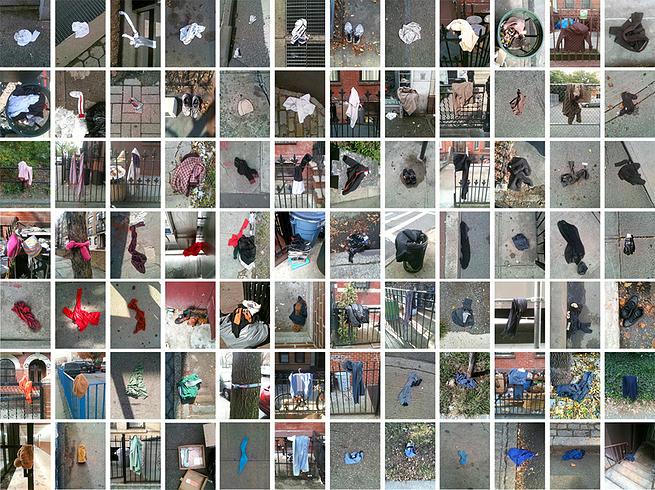
Ruby Hoette proposes alternate modes of accessing and engaging with fashion. She frames the garment as a unique artefact carrying traces of social and cultural interactions and transactions.

Ruby Hoette Lost and Collected

Ruby Hoette Lost and Collected

Lost and Collected is an ongoing project that documents and maps lost and discarde clothing and proposes an alternate understanding of the value of a garment.

Jessica Smulders Cohen’s passion is creating a sustainable textile and fashion industry her film is watchable via  the password is “fibreshed” https://vimeo.com/136830440

Kirsty Lowry is interested in psychological space and also makes work with light and I particularly like her electric prints using the conductive qualities of graphite.

Kirsty Lowry Gravis: Electric Print

Kirsty Lowry Gravis: Electric Print

Hannah Collins showing at Camden Arts Centre also investigates the emotional and psychological aspects of space. Her exhibition presented the open spaces of the dessert and the dense closure of the rain forest.

Hannah Collins The Fertile Forest

Hannah Collins The Fertile Forest

The poetry of the wall plaques was at odds with the clinical display of the photographs of medicinal plants of the rainforest. Two perspectives brought crashing together.

Hannah Collins The Fertile Forest

Hannah Collins The Fertile Forest

The Fertile Forest shared a resonance with the Taryn Simon exhibit at the Venice Bienalle. In Hannah Collins work it was power of knowledge that is being lost whereas Taryn Simon looked at displays of power in the corporate and political world, documenting the flowers used in the bouquets and arrangements that were the backdrop to moments in history.  Coming from very different places both artists show the diverse ways we use plants in our culture.

Taryn Simon

Taryn Simon Paperwork and the Will of Capital

Formal formality

Taryn Simon at Venice Biennale

Taryn Simon Paperwork and the Will of Capital

Katherine May is interested in plants as a resource for dyes and perfumes

Katherine May The Nature of Colour underground installation at a perfume factory in Floris

Katherine May The Nature of Colour underground installation at a perfume factory in Floris

Jodie Carey painstakingly extracts dyes from flowers to colour the yarn for her crochet. Flowers here are a metaphor for the fragility of life.

Jodie Carey Untitled(Bouquet)

Jodie Carey Untitled(Bouquet)

The bouquet of cut flowers prepared as a gift of love is already a symbol of death.

Danh Vo

Danh Vo

We are all flowers growing on this earth, picked by God at some point, a little earlier for some, a little later for others. One is crimson rose, another the virginal lily, another the humble violet. Let us all try to please the Lord and Master, with the perfume or radiance we were given.    from a letter written to his father by the soon to be executed J.Theophane Venard 1861.

Danh vo

Danh vo

Danh Vo invokes demons in the Danish Pavilion. Fragments of belief. A whiff of the Catholic Church, cherubs, polished wood. A mostly empty space, calm yet from these symbols we do not receive comfort but a jolt as we read lines spoken by the demon in The Exorcist (1973)

Danh Vo

Danh Vo

Do you know what she did, your cunting daughter?

Danh Vo

Danh Vo

I was lucky to meet Imogen Stidworthy as a visiting tutor at the RCA. I had a very inspiring tutorial with her which really helped me make decisions about my final show. She was showing some very moving work at the Imperial War Museum – a sculptural sound installation developed through interviewing two former British soldiers who suffer from post-traumatic stress disorder, and the wife of one of the soldiers, who lives with the effects of war at home.

Imogen Stidworthy The Work v5

Imogen Stidworthy The Work v5

She uses the voice as a sculptural material, engrained with traces of experience and transmits these voices through objects associated with conflict, exploring memory and the difficulty of communicating traumatic experience. We feel we are eavesdropping on a private perhaps internal conversation; echoing through the layered voices is each persons isolating pain.

It seemed appropriate for me to go and see Finding Paradise at Lacey Contemporary as this was the title of my dissertation.

1511 finding paradise

The gallery was vibrant with paintings of lush landscapes, forgotten pasts, and the ever-changing patterns of nature by Gemma Billington, Orlanda Broom and Ylva Kunze.

We can never inhabit paradise for more than a fleeting moment. It can be glimpsed on the edges of our vision and drive our passions but to find paradise is to experience ecstasy and a perpetuity of heightened bliss would actually be torturous to endure. Its power and attraction lies in its being momentary.

These fleeting moments and sensations which are not fully understood because they are only briefly glimpsed or experienced are what inspires the work of Malina Busch who explores material possibilities looking for traces of memory.

Malina Busch Curl Up

Malina Busch Curl Up

There was a political edge to this years Venice Biennale with the theme All The World’s Futures.

1511 Venice 2

It added a serious undercurrent to a lot of work which drew on documentary and news footage. Apart from Sean Lynch representing Ireland I didn’t have a list of must sees this year. At the last Biennale so many of my favourite people were showing, this was a chance to come across new names.

1511 Venice

I was keen to see what Sean Lynch would present as I had enjoyed meeting him during his workshop at Flat Time House and really like the way he works.

Sean Lynch

Sean Lynch Adventure:Capital

His installation Adventure:Capital encompasses his interests in stone carving and storytelling. He manages to pull mythology into London’s contemporary financial district. A narrated video sweeps through history from the pits and quarries to the monuments and symbols of power that are made from the stones pulled from the earth.

1511 Sean Lynch (3)

Sean Lynch Adventure:Capital

This inversion of material is dusted with magic as the narrator traces the polished stone of the corporate world back to the rocks of prehistory.

The gods, swollen with symbolism are everywhere, causing havoc with their greed, gluttony, fertility and abundance.

1511 Sean Lynch (2)

Sean Lynch Adventure:Capital

There was striking work in the Nordic Pavillion by Camille Norment.

In Rapture eerie sounds emanate from a thrusting bank of speakers on the ceiling.

Camille Norment Rapture

Camille Norment Rapture

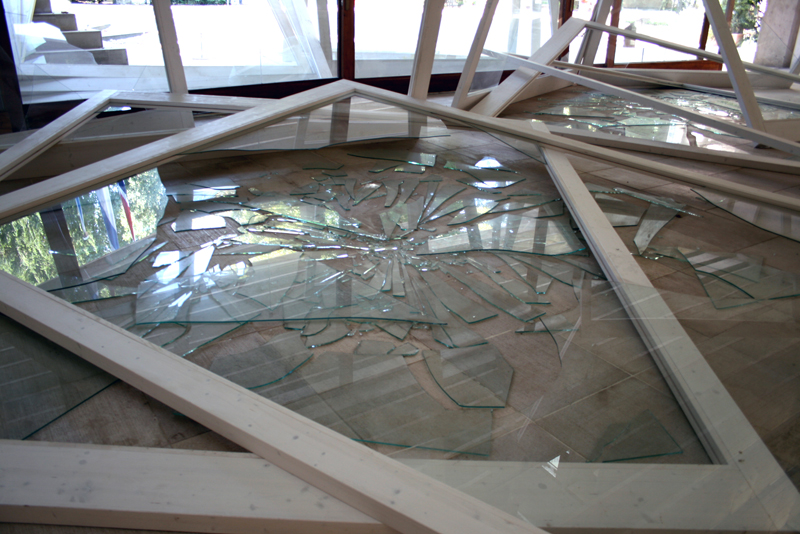
The large empty space is skewed with shattered billboard sized glass windows. It looks like the aftermath of a cataclysmic disaster and holds you in the moment when the ringing in your ears could be shockwaves of an explosion that segue into the voices of angels heralding the appearance of the saviour.

Camille Norment Rapture

Camille Norment Rapture

The sounds could be coming from the fragmented glass as they have that quality of a finger across a wet goblet rim. It is at the pitch of angels and voices do join the chorus. In fact Norment has used a glass armonica to compose this soundscape, an 18th century instrument that creates ethereal music from glass and water and was invented by Benjamin Franklin.

Camille Norment Rapture

Camille Norment Rapture

The glass armonica was used to cure many ailments with its entrancing sounds but was later banned for fear it aroused sexual excitement in women bringing them to a state of rapture that might overstimulate and ultimately kill them.


My thoughts have been directed to change, counting time and mapping data, the aura of place and sacred sites, and the lure of the apocalypse.

1510 wells clock

As Utopia is no place so Uchronia is no time.

Helga Schmid gave a very interesting presentation on Uchronia at the Material Environments Symposium, University of Greenwich. First used by Charles Renouvier in the title of his 1876 novel which translates as Uchronia (Utopia in History), an Apocryphal Sketch of the Development of European Civilization Not as It Was But as It Might Have Been.

Uchronia suggests an alternative history, a what if scenario. Helga is interested in the possibility of changing the time constraints society forces upon us to allow us a more natural experience of time in tune with circadian rhythms and our natural sleep patterns. Her research looks at the transition from agricultural to urban society, the temporal fragmentation from punctuality to flexibility and the ongoing pressures of speed and acceleration which conflict with the human biological clock. She conducts experiments with groups of people removed from clocks and natural light to explore biological and societal constraints with a view to advocating a new lived experience of time which does not conform to the temporal structure of contemporary technology driven life.

1510 burning man

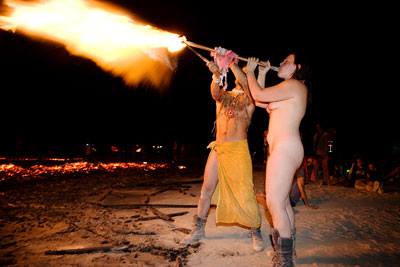
Creative group Uchronia at Burning Man 2006 http://www.uchronians.org

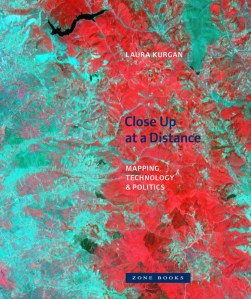
Another speaker at the symposium, Laura Kurgan uses new technologies to chronicle social change with a view to influencing political ideologies. She has written on the subject of mapping data in Close Up at a Distance.
1510 Laura Kurgan

Satellite data images are built from pixels radioed from outer space. These statistics often record situations of intense conflict and can express fundamental transformations in our ways of seeing and of experiencing space. This data was intended for military and governmental uses but Laura Kurgan repurposed it to open up new spaces and present new views.  Technology has brought about a revolutionary shift in our ability to navigate, inhabit, and define the spatial realm. The traces of interactions, both physical and virtual, charted by the maps in Close Up at a Distance define this shift.

Laura Kurgan presents two of her projects which map the movement of people in this link: Human Geographies

1510 Laura Kurgan 2

Native Land looks at economical migration and money transfers, migration due to natural disasters exacerbated by climate change, loss of forests and loss of native language. Through a series of animated maps and graphs she shows major social change happening on a global scale in an easy to grasp visual format.

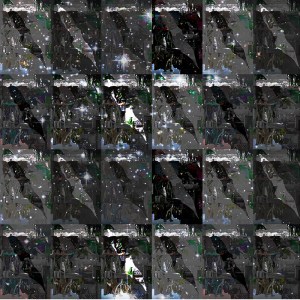
What we’ve traditionally called “the universe” — the aftermath of “our” big bang — may be just one island, just one patch of space, in a perhaps-infinite archipelago. There may have been an infinity of big bangs, not just one. Each constituent of this “multiverse” cooled down differently, ending up governed by different laws. – Lord Martin Rees

Current theories in physics that debate the possibility of us living in a multiverse challenge our perceptions of space and time.
1510 multiverse

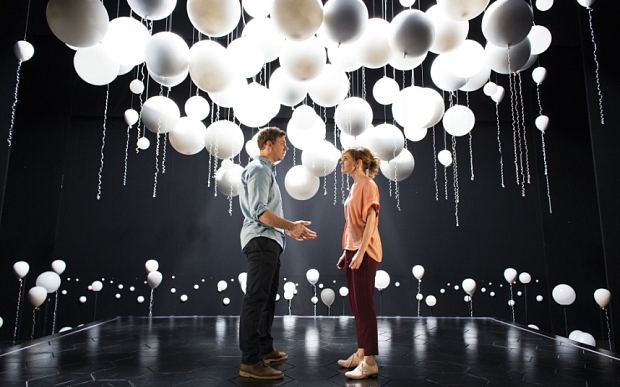
This subject was tackled in Constellations a play by Nick Payne.  It was superb theatre acted impeccably by Louise Brealey and Joe Armstrong and powerfully directed by Michael Longhurst.

Constellations by Nick Payne

Constellations by Nick Payne

Constellations takes one relationship and looks at alternative scenarios and the possible outcomes of infinite possibilities. What if we live in a multiverse and every decision we make is somewhere else happening just slightly different? The twists and turns and subtleties that these actors brought to life in funny and heart rending moments was astonishing in itself and then the ideas that this play throws up about the big questions of our place in the universe and our relationship to death added depth and resonance to a play that stays in your heart. It helped to analyse the concept of a multiverse in very human terms.

We are fascinated by the disaster. The allure of the sublime always contains some element of death.

Shown by curators Coates and Scarry in Complicit Kate MccGwire’s sleek feathered sculptures and Juliette Losq’s muted watercolour landscapes take you to the edge where beauty slides into a sort of dissonance.
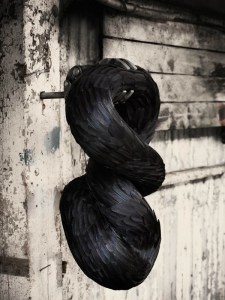
Kate MccGwire Taunt

Kate MccGwire Taunt

MccGwire’s amorphous shapes that gleam and curl in upon themselves sit well with the lost spaces Losq creates in both 2D and 3D where she physically tears through the paper landscape drawing you further in to a world falling apart around you.
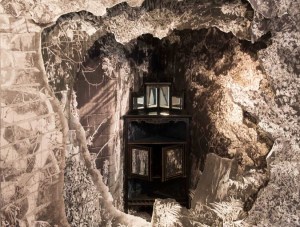
Juliette Losq Covert

Juliette Losq Covert

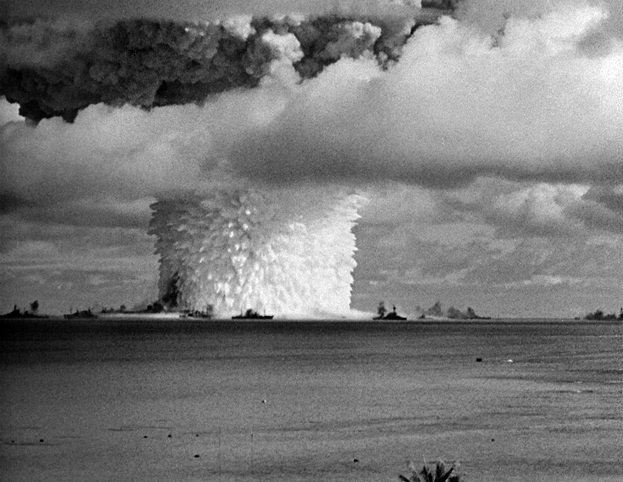
The beauty of destruction on an epic scale was showing at Thomas Dane in a screening of Bruce Conner’s thirty-seven-minute film CROSSROADS produced in 1976 from archival footage of the first nuclear tests conducted in 1946 at Bikini Atoll.
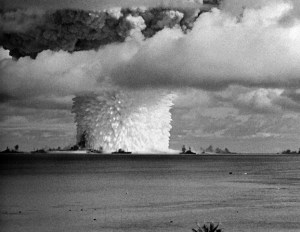
Bruce Conner Crossroads

Bruce Conner Crossroads

As terrifying as it is beautiful, CROSSROADS plays witness to the detonation of a nuclear weapon as powerful as the atomic bomb dropped on Nagasaki, ninety feet below the surface of the ocean, under a fleet of decommissioned naval ships as test subjects for the bomb’s destructive powers.

Sixty-four aircraft with 328 cameras (some of which were radio-controlled drones) circled the detonation site using high speed film and equipment that would take a million pictures in the first few seconds of the explosion. This event was to be the most comprehensively photographed moment in history.

Conner was able to draw upon this extensive footage allowing the viewer to experience the detonation repeatedly in a constant succession of waves, overwhelming in its beauty and tragedy creating an unbearable ecstasy.

Bikini Atoll caught in the crossfire symbolises the dawn of the nuclear age, despite its paradoxical image of an earthly paradise.

Bikini children leaving the island 1946

Bikini children leaving the island 1946

The terrible legacy of the nuclear tests lives on through the forced displacement of the indigenous people of these islands whose homes and health were sacrificed.
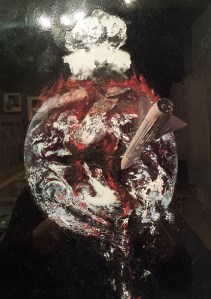
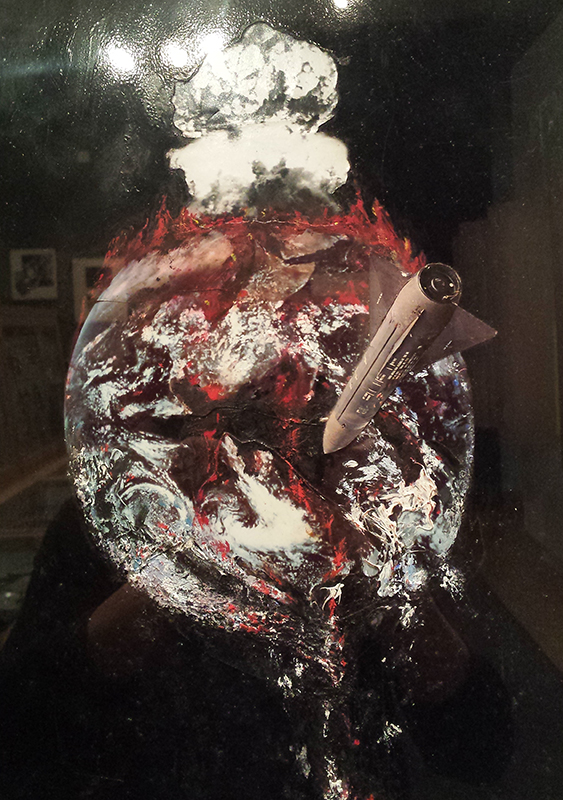
Peter Kennard

Peter Kennard

The politics of Peter Kennard are blatantly siphoned into his art with no apologies.

I visited his major retrospective at the Imperial War Museum which I found moving in its directness.
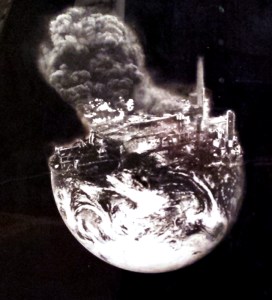
Peter Kennard

Peter Kennard

I was interested in Matt Gee’s exhibition Nutri-Artifice at  Gallery 286 for his use of crystals and human intervention in landscape. He shows us an unreal beauty. Chemical colours and textures mingle in an unclear divide between the artificial and the organic.
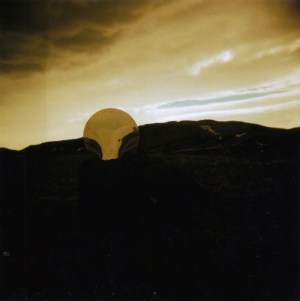
Matt Gee Mountain Bend

Matt Gee Mountain Bend

Marc Quinn was also exploring desire and the artificial in The Toxic Sublime at White Cube, Bermondsey. In his Toxic Sublime series the use of sugary colours echoes the formulaic image of the sun rising over the ocean that he takes as his starting point and then the sickly sweet is attacked, frottaged with municipal street architecture, blasted to aluminium before finally being bent and geometrically distorted.
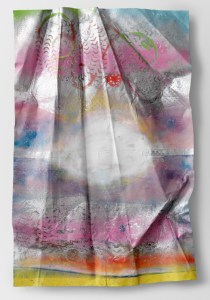
Marc Quinn The Toxic Sublime

Marc Quinn The Toxic Sublime

If it was the vulgar Quinn wanted to expose with this process then it works and the repetition in the gallery adds to this toxic overload. The sculptures in the same show vary dramatically from a similar overdone crudeness to the sublime.

Marc Quinn Frozen Wave

Marc Quinn at White Cube

Frozen Wave, in highly polished stainless steel, has all the magnificence of a weight of water about to crash. It embodies the frisson of disaster that holds you in awe of its power and beauty. Vast and primordial Frozen Wave (The Conservation of Energy) makes connections between nature and humanity that resonate deep within us.
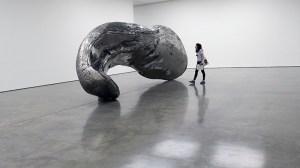
Marc Quinn

Marc Quinn Frozen Wave (The conservation of energy)
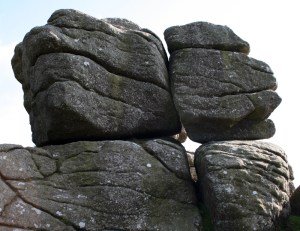
1510 Dartmoor

I was pleased to be invited to take part in the Rising Stars exhibition at Coombe Gallery, Dartmouth, Devon.
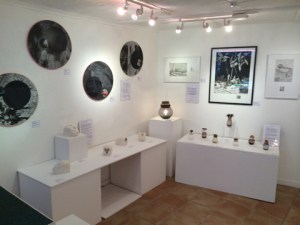
Coombe Gallery

Coombe Gallery

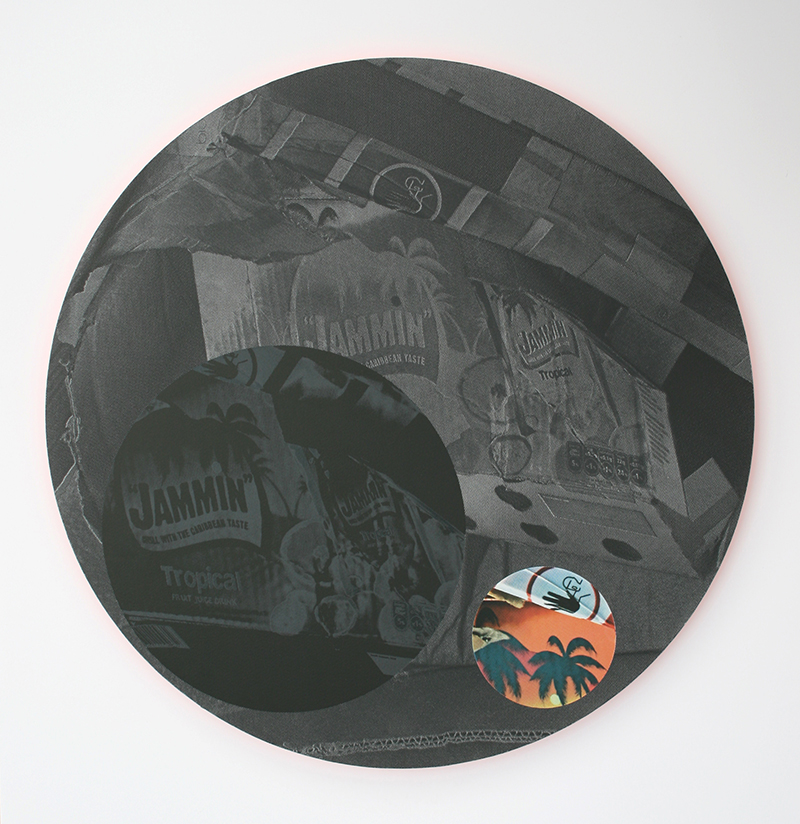
For this show I mounted some of the screenprints I had made on paper from the everydaymatters series.
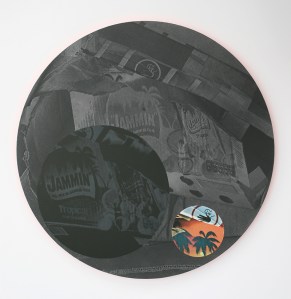
Susan Eyre everydaymatters (tropical SE16)

Susan Eyre everydaymatters (tropical SE16)

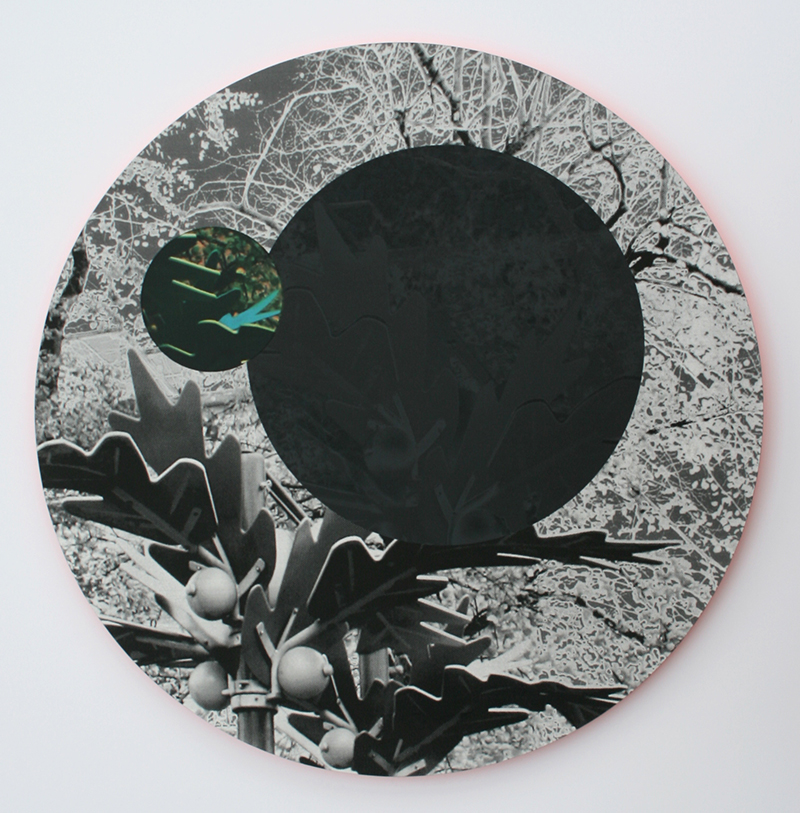
I used laser cut mdf circles and painted the backs with fluorescent paint so they radiate a glow on the wall behind.

1510 fluorescent

One step to my independence has been the purchase of a power saw to cut mitre joints for sub-frames to hang work. Not very exciting but I was able to make my own subframes for this work so they can sit a little out from the wall.
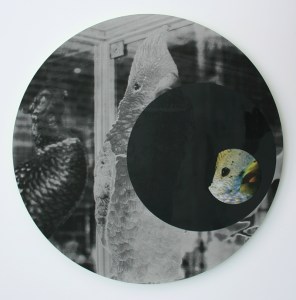
Susan Eyre everydaymatters(tropicalia SW3)

Susan Eyre everydaymatters (tropicalia SW3)

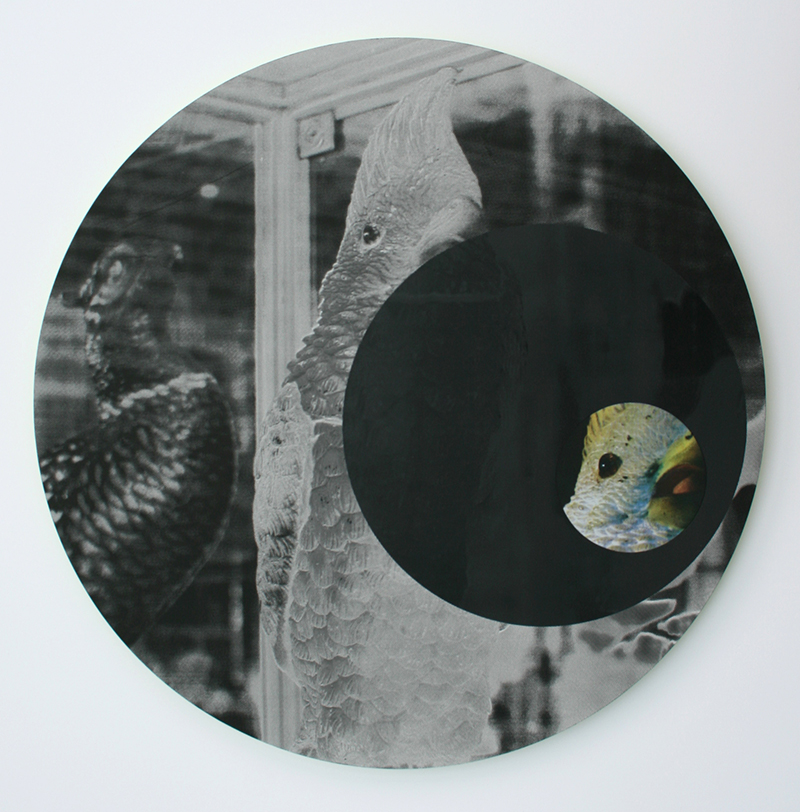
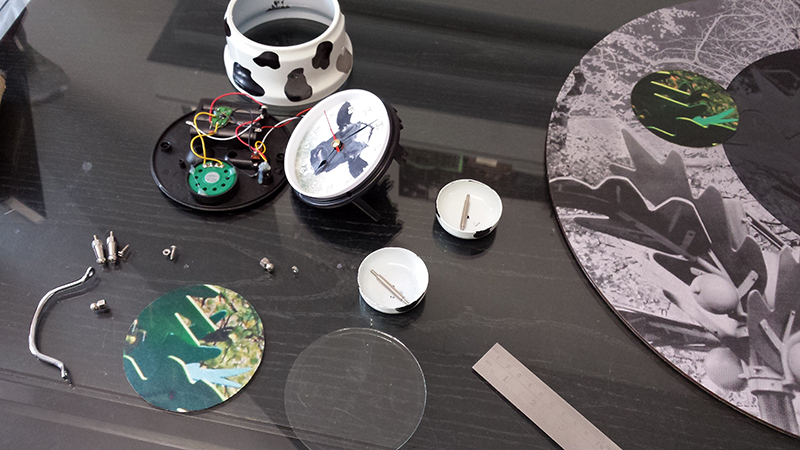
I have been pleased that I was able to transfer the screenprints I had made on fabric onto mdf too. I have been able to collage these with new sublimation prints and am quite pleased with the outcome.
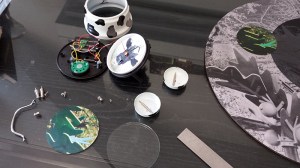
1510 clock

A lot of my time since leaving the RCA seems to have been taken up by admin, submitting proposals, writing statements, framing up or mounting work, delivering and picking up.

Susan Eyre everydaymatters (palm SW4)

Susan Eyre everydaymatters (palm SW4)

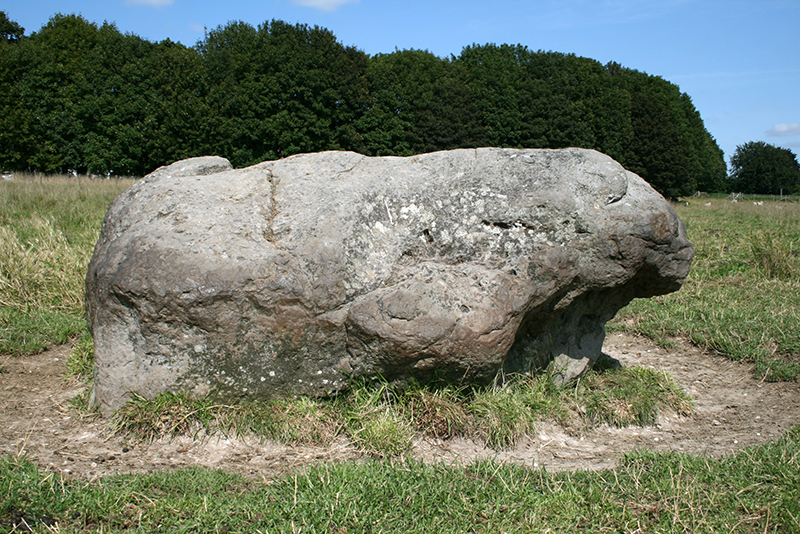
I used the trip delivering work to Dartmouth to stop off and look at some Neolithic landscape as part of my research looking at ancient rituals and then considering their modern equivalent.
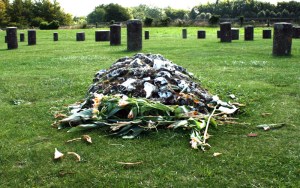
1510 Wood Henge grave

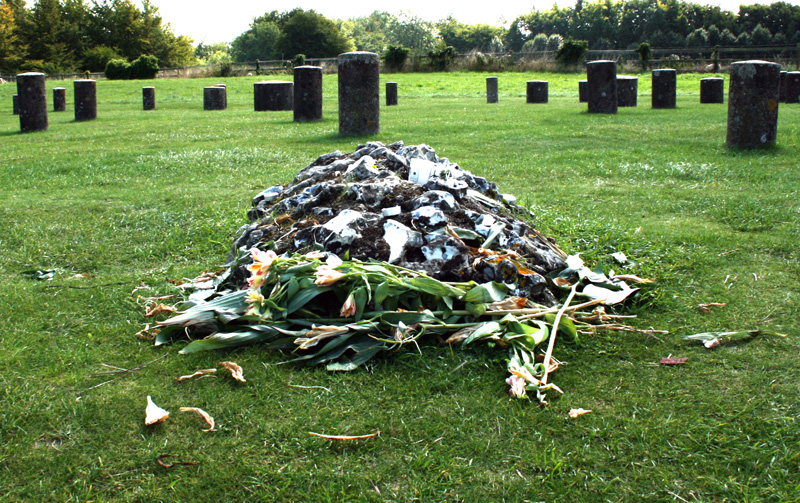
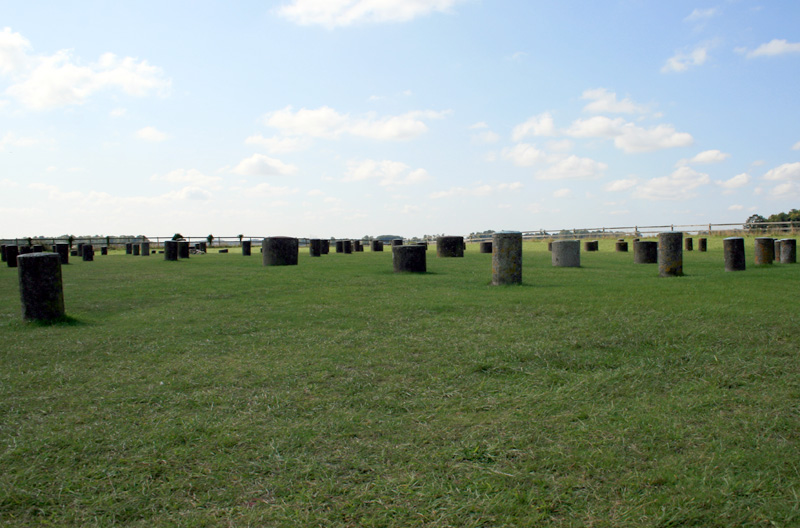
Dating from 2300 BC, Woodhenge is thought to have marked a particular stage in the evolution of human religious belief and community organisation. Originally believed to be the remains of a large burial mound the concrete markers that stand there today replace the six concentric rings of timber posts which are believed to have once supported a ring-shaped building. The small grave in the centre believed to be of a child is still paid homage to with candles and flowers today.
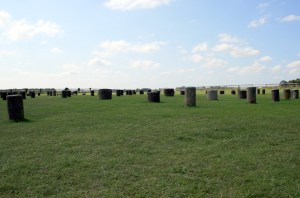
1510 Wood Henge

On the day I visited there were TV cameras and helicopters overhead as news was broadcast that archeologists have discovered evidence of the hidden remains of  a massive Neolithic stone monument, thought to have been hauled into position more than 4,500 years ago completely rewriting the history of Stonehenge and the surrounding area.

1510 Cuckoo Stone

While I was in Devon I was also able to visit Widecombe Fair famed for the ditty from which this verse is taken…

When the wind whistles cold on the moor of the night.
All along, down along, out along lea.
Tom Pearce’s old mare doth appear ghastly white,
With Bill Brewer, Jan Stewer, Peter Gurney,
Peter Davy, Dan’l Whiddon, Harry Hawke,
Old Uncle Tom Cobley and all,
Old Uncle Tom Cobley and all.
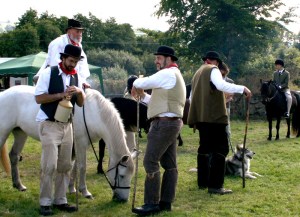
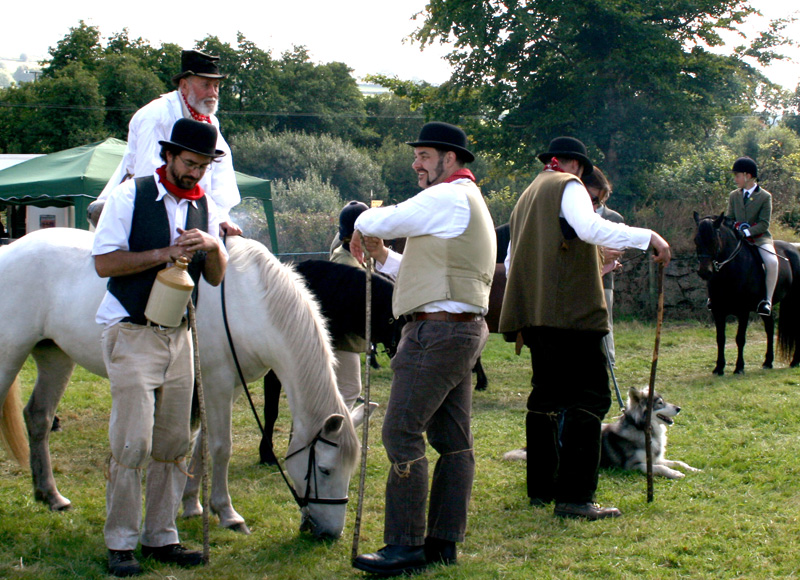
Widecombe Fair

Widecombe Fair

I was interested to see if I could identify any ancient rituals being passed on and adapted

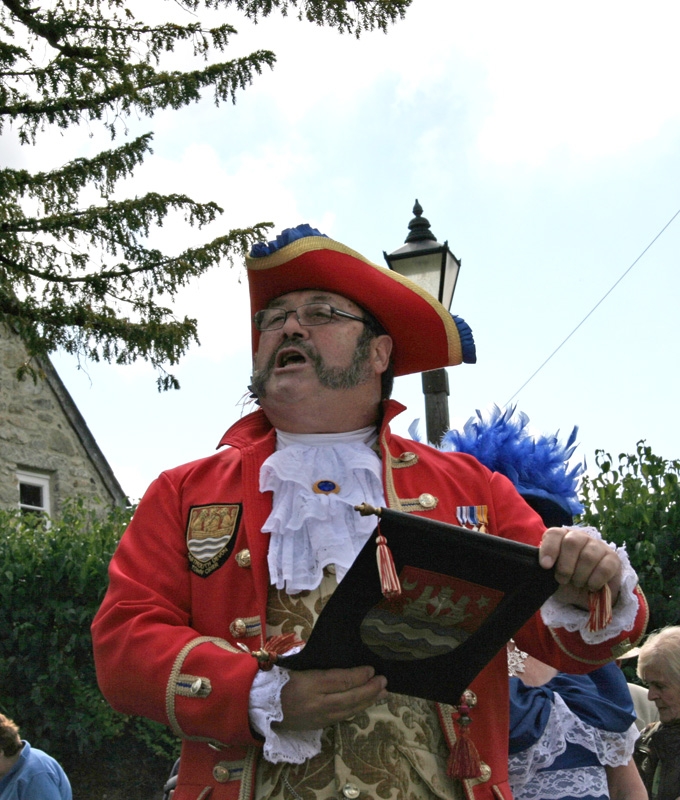
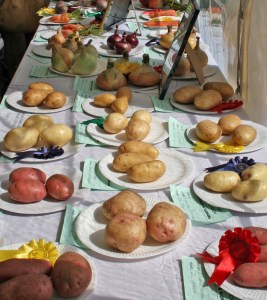
Widecombe Fair Town Cryer competition
Widecombe Fair Town Cryer competition

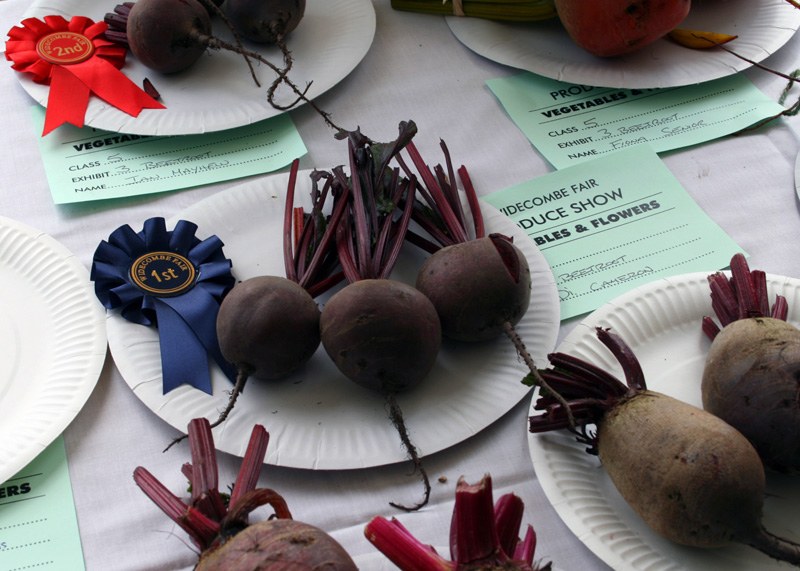
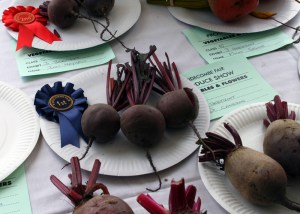
Widecombe Fair Prize Vegetables
Widecombe Fair Prize Vegetables

1510 Widecombe Fair beetroot

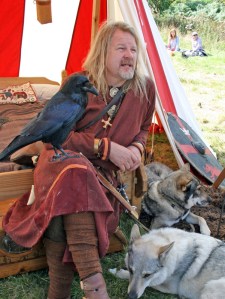
Widecombe Fair Viking

Viking re-enactment with mystic raven

Widecombe Fair

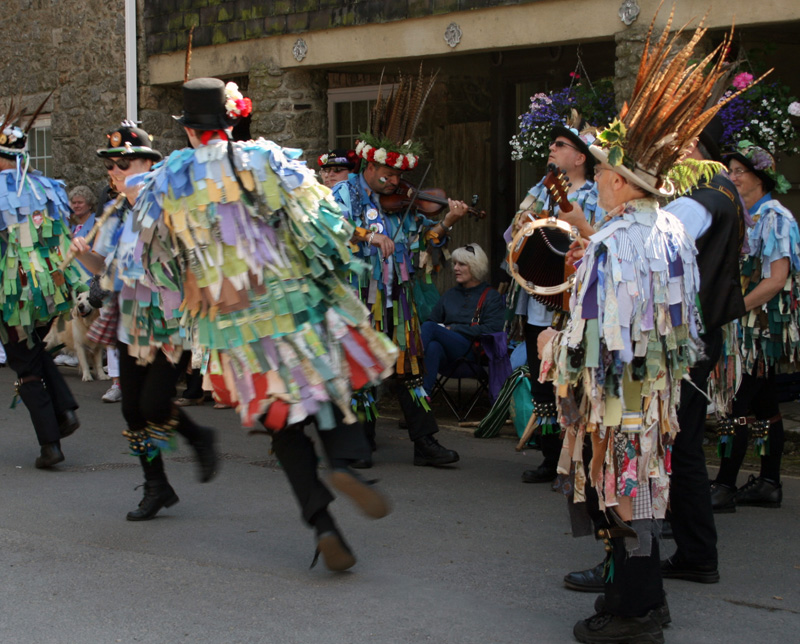
Widecombe Fair Morris Dancers

In another excursion west I was pleased to have my sculptures everydaymatters selected for the Wells Art Contemporary by judges Richard Wentworth, Mariele Neudecker and Donald Smith.

Susan Eyre everydaymatters

Susan Eyre everydaymatters

Susan Eyre everydaymatters

Susan Eyre everydaymatters

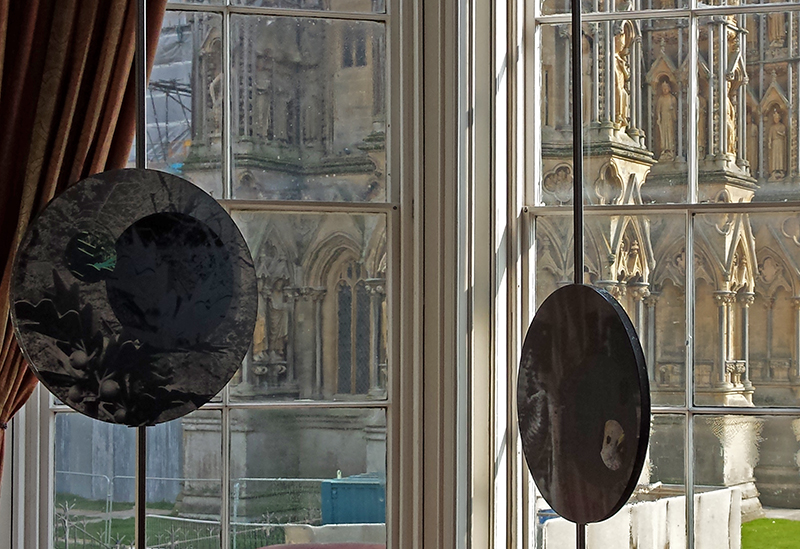
As space was tight in the Wells and Mendip Museum where the exhibition takes place it was only possible to show three of the seven but I did have a great backdrop in Wells Cathedral.
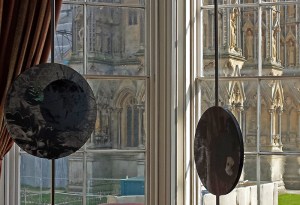
Susan Eyre everydaymatters

Susan Eyre everydaymatters

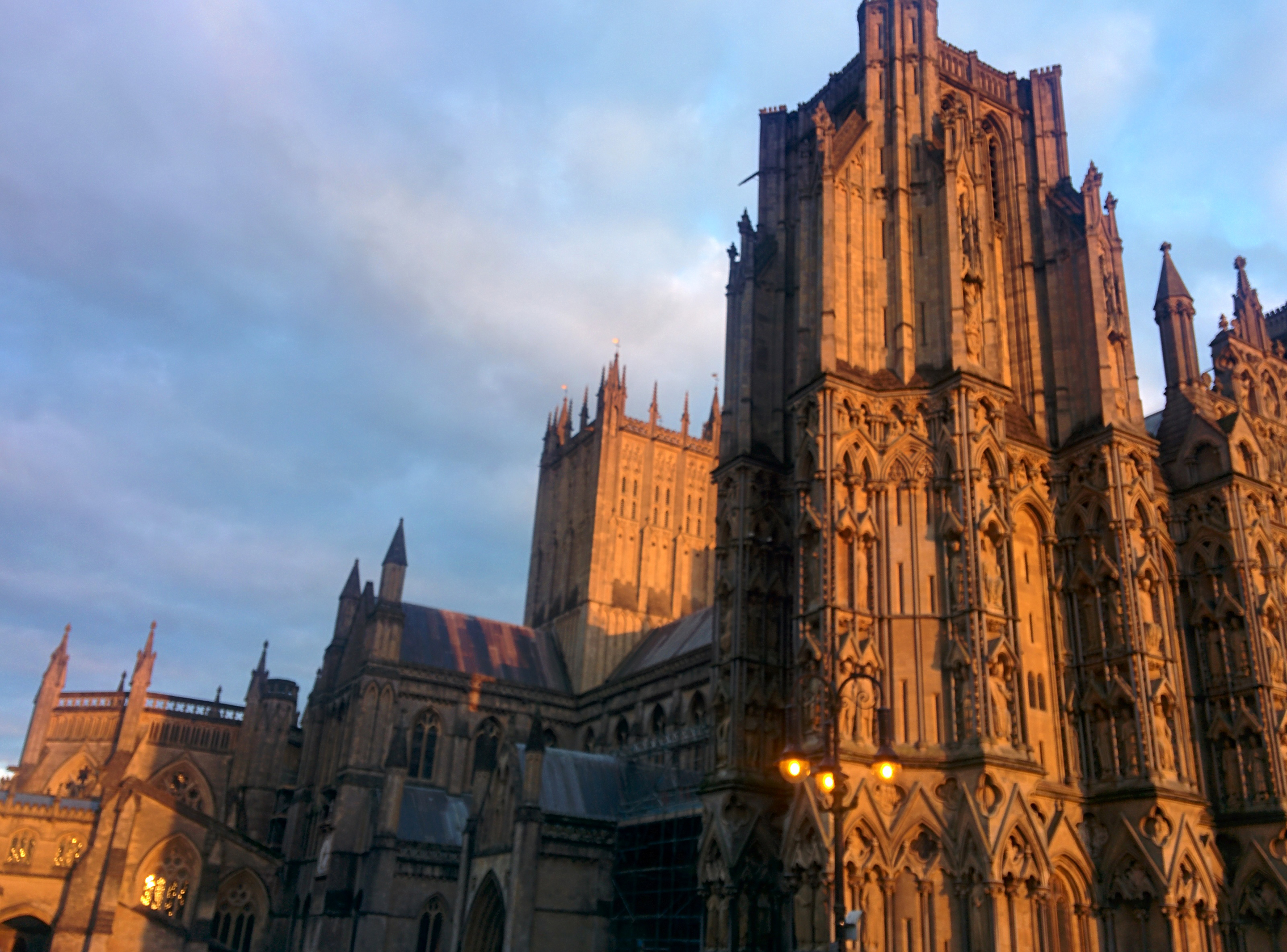
While in Wells I took the opportunity to visit their impressive Cathedral. Set upon the source of ancient springs (or wells) there has been a sacred site here since the first human settlements.
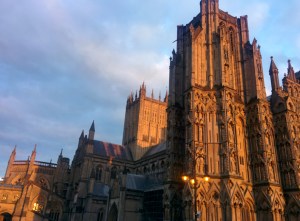
1510 Wells Cathedral

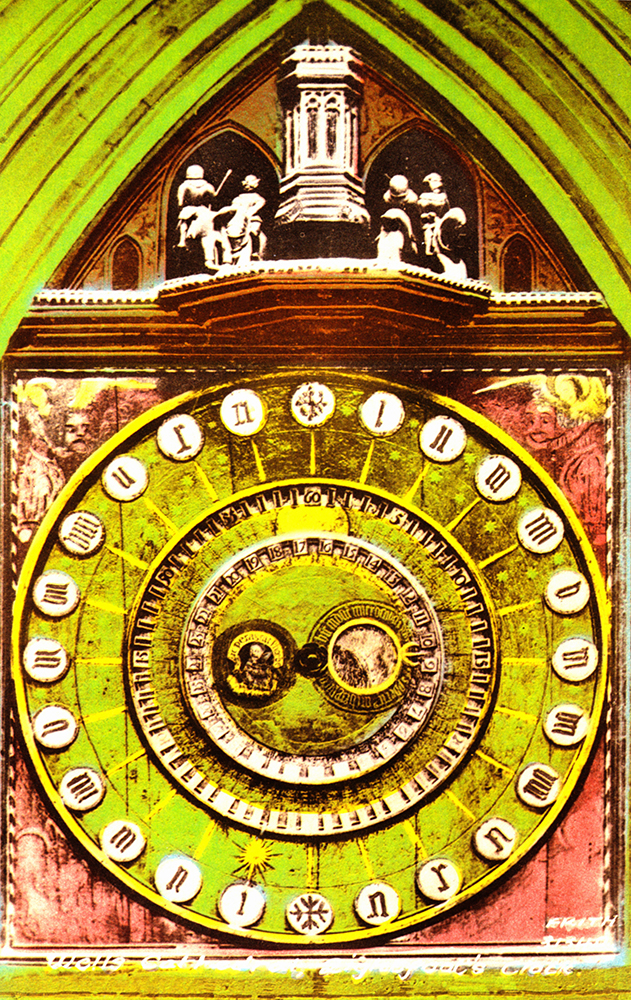
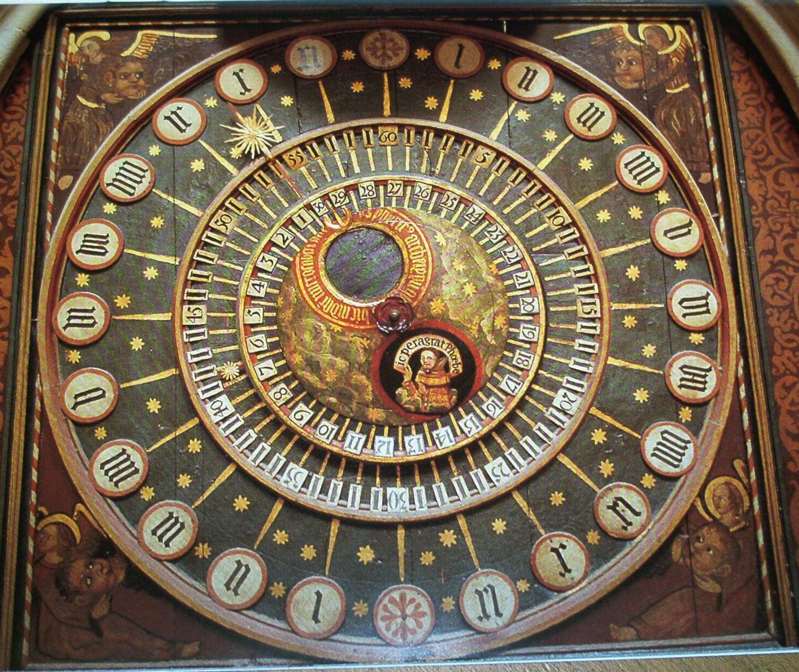
This most ancient Cathedral is also famous for its astronomical clock and it was a real treat to see it theatrically strike the hour.

The clock is inspiring not only for its immense age but the intricacies of its design and mechanisms. The ornamental dial depicts the pre Copernican geocentric view of the universe, with the sun and moon revolving around earth at the centre.
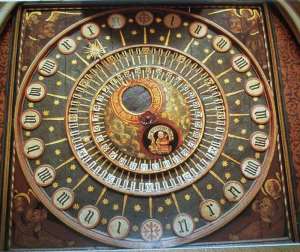
1510 Wells_cathedral_clock_dial

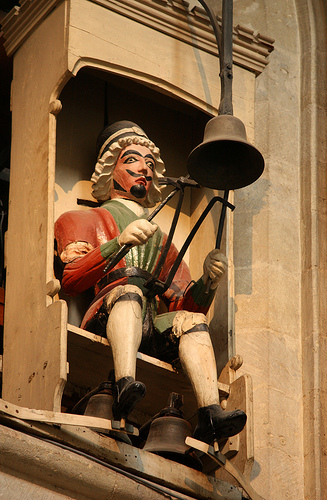
Above the clock sitting in the corner is a figure, known as Jack Blandifers, who has been counting time for over 600 years. Every 15 minutes he hits a bell with a hammer and two bells with his heels while above the clock a troupe of jousting knights hurtle around a podium.

1510 Jack Blandifer

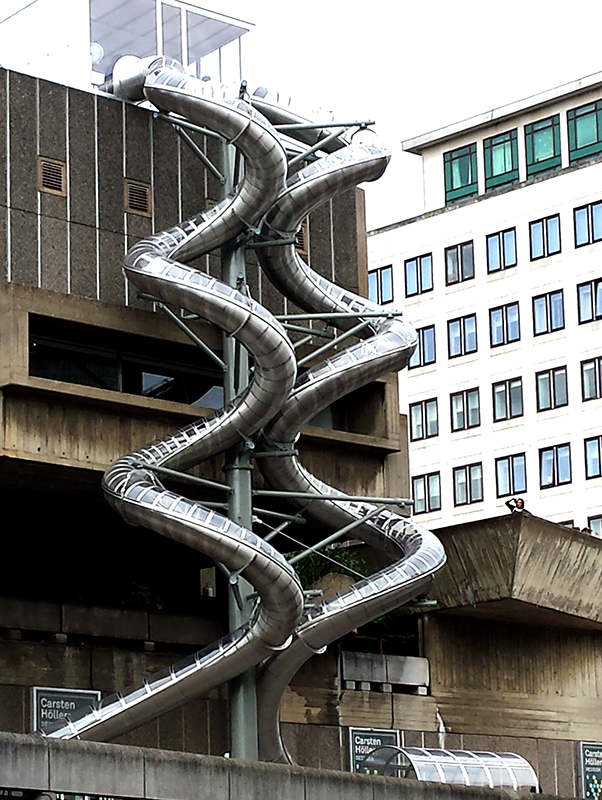
Carsten Höller intends for his work to bring about ‘moments of not knowing.’ For his exhibition at the Hayward Gallery Decision you enter through Decision Corridors a dark tunnel which twists and turns and divides. It is a hesitant journey made by feeling along the walls and punctuated by screaming teenagers careering though at speed.

Carsten Holler Flying Mushrooms

Carsten Höller Flying Mushrooms

I liked the Flying Mushrooms mechanisms of interconnecting cogs and rotating orbs which seemed to represent an alternative solar system. There was the opportunity to push a bar which in turn moved the cogs.
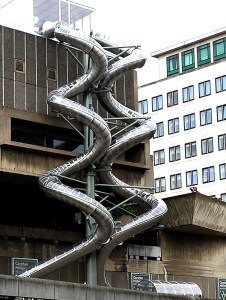
Haywood Gallery
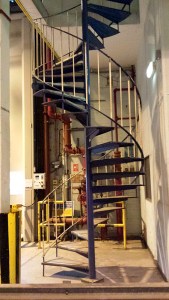
Haywood Gallery

BBC Drama Block

BBC Drama Block

Most of the exhibits in this show were participative in some way and the decisions were much about whether to push the bar, take the pill, or ride the slide but some did interfere with perception in an uncomfortable squeaky chalkboard sort of way.
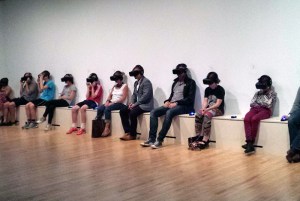
Carsten Holler The Forests

Carsten Höller The Forests

I found I couldn’t cope with The Forests a dual screen video shown on a headset that splits your vision in two as one eye takes a route in the forest one way and the other eye another. This made me squirm as I felt my brain trying to cope and reconnect to one single image made from both eyes.

1510 Ben Rivers 3

The mysterious title of Ben Rivers cinematic installation The Two Eyes Are Not Brothers  originates from a whispered warning overheard in a Tangiers café by Paul Bowles.
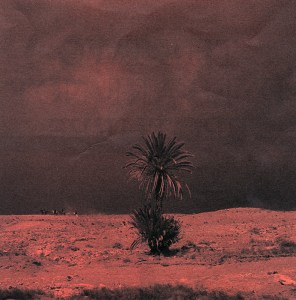
Ben Rivers

Composer and novelist Bowles and his wife Jane settled in Morocco in the forties. In turn inspired by this landscape Ben Rivers films weave in and out of fiction and reality layering the violent narrative from Bowles short story A Distant Episode of a European abducted by bandits though re-enactment by non actors using the abandoned film sets that litter the Atlas Mountains.  By chance while in Tangier, Rivers meets and subsequently films Mohammed Mrabet now 79 who once inspired the Bowles couple with his stories of local folklore.
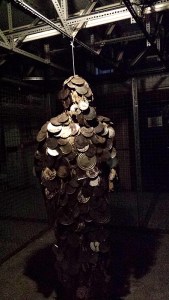
Ben Rivers The Two Eyes Are Not Brothers

Ben Rivers The Two Eyes Are Not Brothers

Another serendipitous opportunity  for Rivers to add yet another layer was meeting artist Shezad Dawood on location independently filming for his own work.
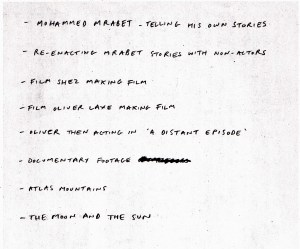
1510 ben rivers 1

This palimpsest of stories, real and fictional, is then appositely presented in the former BBC Drama Block at White City currently due for demolition.

Ben Rivers installation at BBC White City

Ben Rivers installation at BBC White City

Led into a world that has moved on there is the chance to explore the vast BBC studios before they are erased.
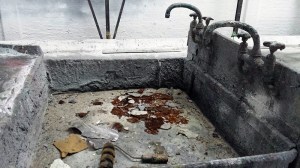
1510 bbc centre 5

1510 bbc centre

In an interview in the Paris Review 1981 Paul Bowles responds to the question of violence in his work

“Yes, I suppose the violence served a therapeutic purpose. It’s unsettling to think that at any moment life can flare up into senseless violence. But it can and does, and people need to be ready for it. What you make for others is first of all what you make for yourself. If I’m persuaded that our life is predicated upon violence, that the entire structure of what we call civilization, the scaffolding that we’ve built up over the millennia, can collapse at any moment, then whatever I write is going to be affected by that assumption. The process of life presupposes violence, in the plant world the same as the animal world. But among the animals only man can conceptualize violence. Only man can enjoy the idea of destruction.”

1510 bbc centre 6

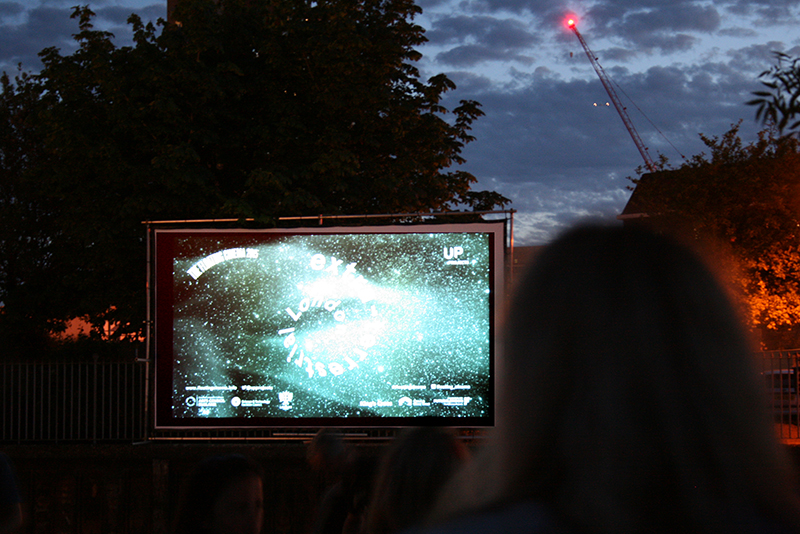
Up Projects with The Floating Cinema presented a series of events for Extra-Terrestrial London a highlight of which was the screening of Shezad Dawood’s Piercing Brightness.
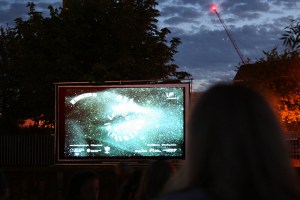
1510 up projects

Before the screening Shezad gave an informal talk aboard a canal boat to explain how the film had come about and how he found Preston to be the perfect setting for a film about what it means to be alien.
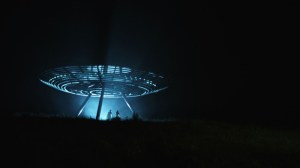
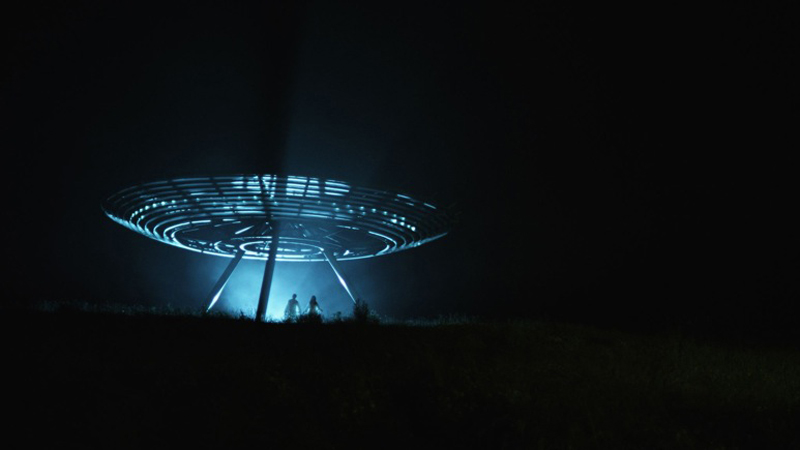
Shezad Dawood Piercing Brightness

Shezad Dawood Piercing Brightness

There is a loose narrative to the film. Two alien youths land in a spaceship outside Preston. Their mission is to re-establish contact with the ‘Glorious 100’ sent to earth millennia ago in human form to study and observe the development of another race.
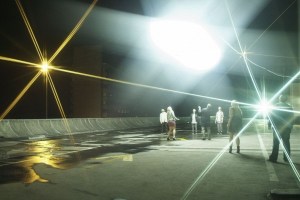
Shezad Dawood Piercing Brightness

Shezad Dawood Piercing Brightness

After making contact with one of the 100,  they discover that many of their kind have forgotten their original purpose and have slowly become integrated into their adopted home and no longer want to return to their home planet.
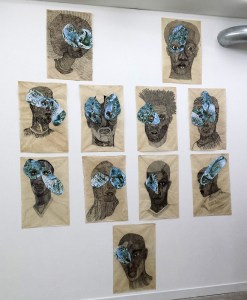
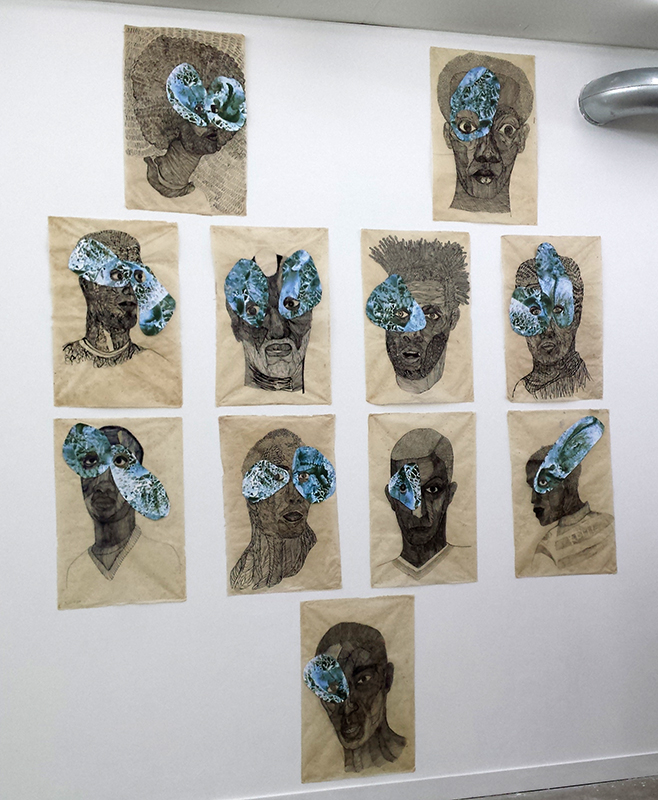
Chudamani Clowes White City

Chudamani Clowes White City

Migration and integration both current and historical were addressed by Chudamani Clowes in her solo show at the Griffin Gallery White City.
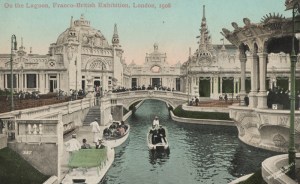
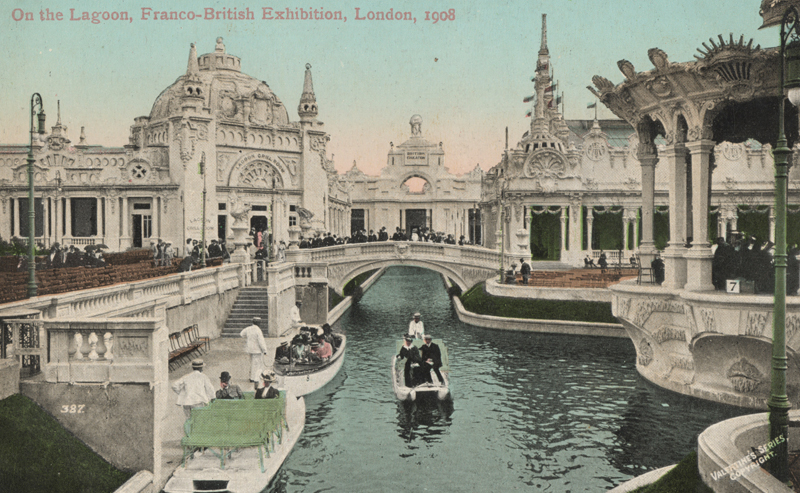
1510 Franco-British_Exhibition

White City is the area local to the Griffin Gallery and gained its name from the white painted buildings of the Franco-British exhibition of 1908. At the time it was the largest exhibition of its kind in Britain and presented a number of model villages reconstructed to celebrate imperial achievements. This included Ballymaclinton, a ‘genuine’ Irish village. At the French Senegalese village, complete with imported ‘natives’, visitors could watch traditional dance performances. And at the Indian Arena,  Bollywood-style spectaculars were performed.

Chudamani Clowes White City

Chudamani Clowes White City

Chud, moved by news of the current migrant crisis uses the analogy of the jellyfish as migrant without borders caught in the ebb and flow of life to offer us the chance to rethink what it means to be other.
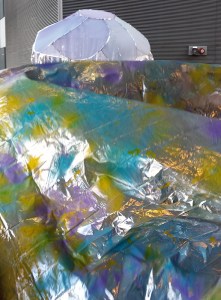
Chudamina Clowes Jellyfish dance

Chudamani Clowes Jellyfish Dance

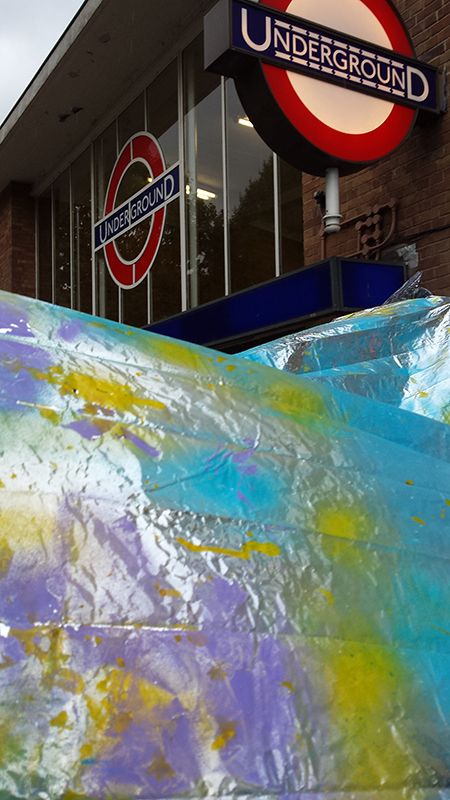
For the opening event the audience took part in a jellyfish procession from Griffin Gallery to White City tube station via the modern monolith of Westfields shopping centre and the current redevelopment of the BBC studios.
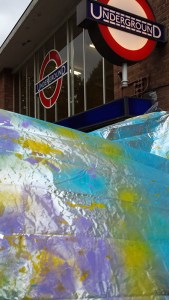
1510 Chud White City 4

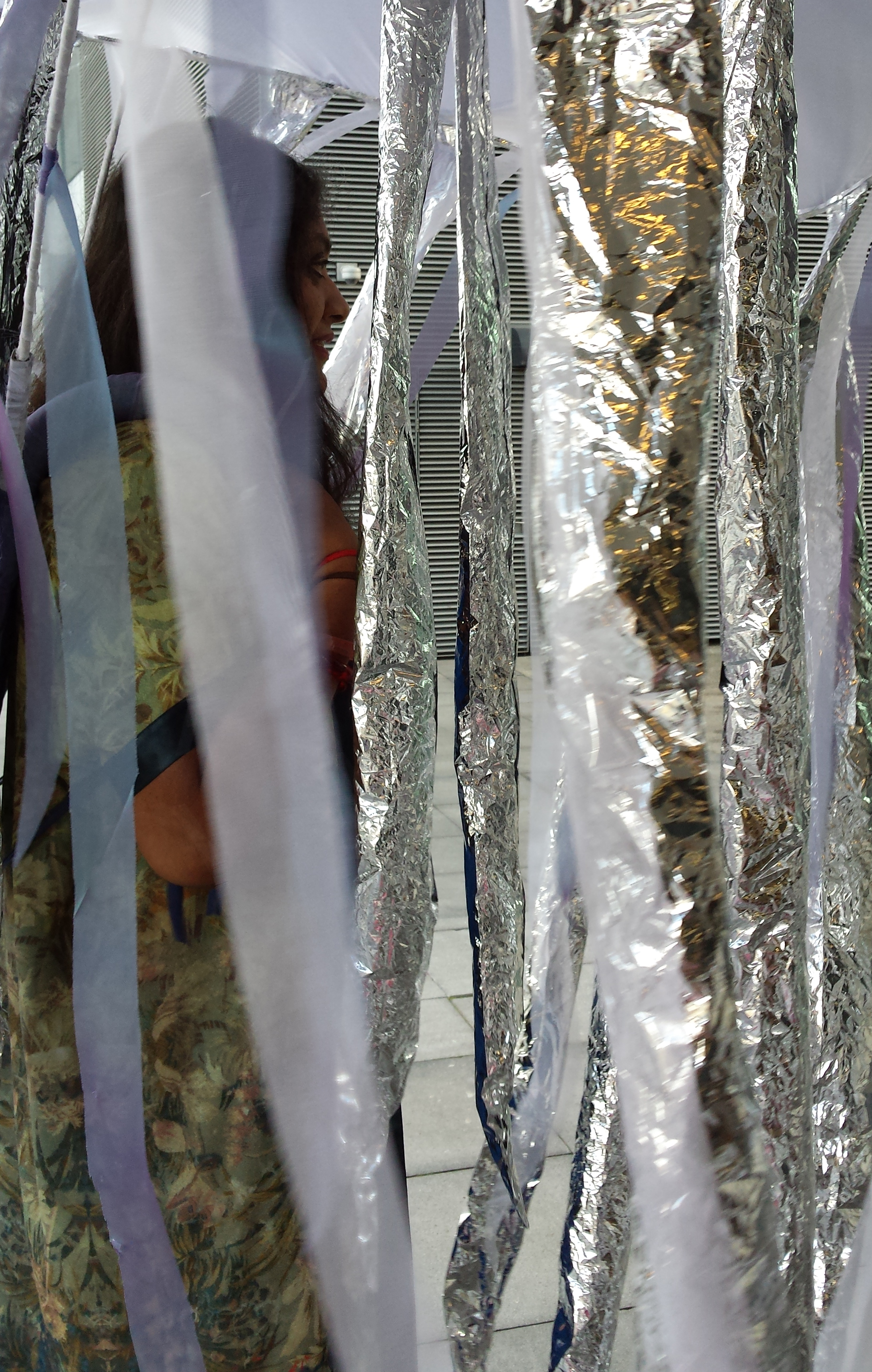
As colourful and spirited as her work Chud led the procession majestically trailing silver tentacles as we followed wearing Chud’s trademark bonnets creating the sparkling seas from undulating survival blankets in unison.

1510 Chud White City 7

In an Interview. about her work she talks of how she saw desperate migrants on the news having nothing yet looking almost regal wrapped in gold rescue blankets.
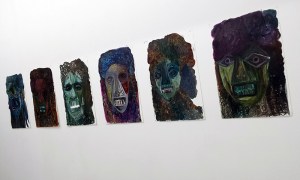
Chudamani Clowes White City

Chudamani Clowes White City

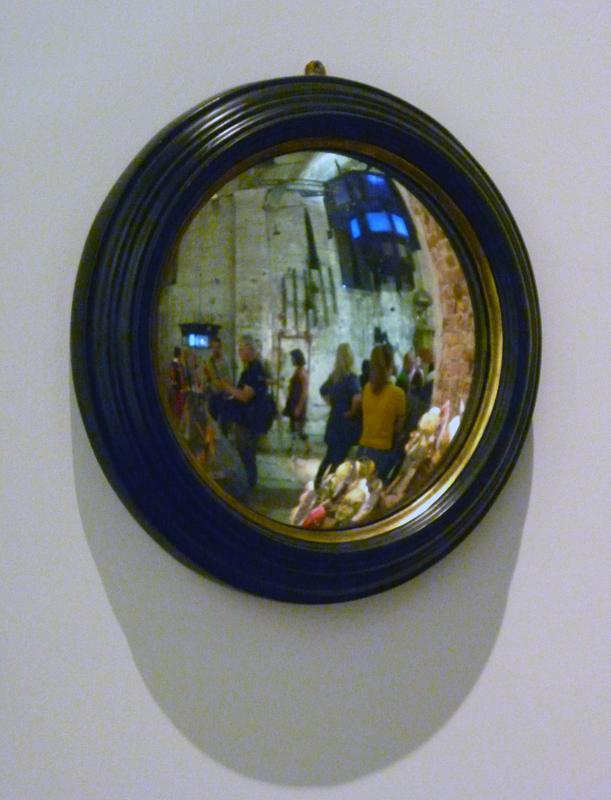
Her work aims to highlight perception and distortion and so she used these blankets to make a shelter in which see yourself reflected and distorted, you become other.
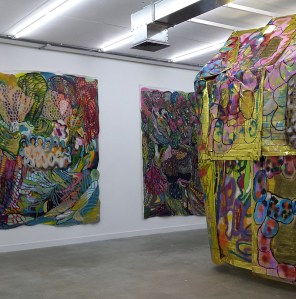
Chudamani Clowes White City

Chudamani Clowes White City

Chud talks about how important it is to tell our stories and keep our memories alive. To look at local history and appreciate that the oasis’ of culture we enjoy today are the hubs where migrants settled in the past.

Whenever you go down the roads in Britain, you travel not in three dimensions but in four. The fourth dimension is the past. And as we move to and fro in this fourth dimension, we see not only landscape but the economic, political and social forces at work behind the landscape, shaping it, forever changing it…

Travis Elborough and Bob Stanley

1510 st etienne

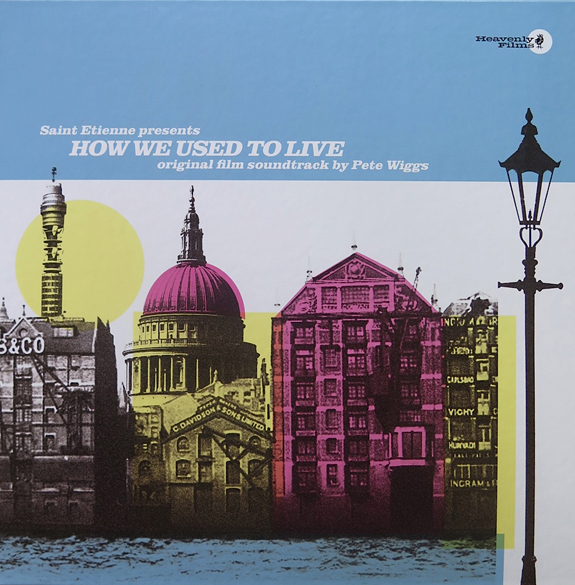
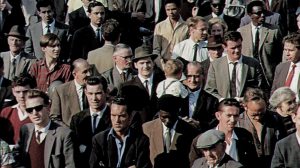
My second viewing of the film How We Used to Live was further enhanced by the live accompaniment of Saint Etienne playing the beautifully beguiling soundtrack.
1510 how we used to live

Splicing old BFI colour film footage of a lost London we are transported back to a pre digital world to witness the change from capital of industry to financial hub.
1510 light

I am interested in the aura of place and how this is defined.  I joined The London Occult Walk led by practising witch Delianne Forget who promised to point out the haunts and meeting places of magicians, witches and secret societies. Following a route from Embankment to Covent Garden we were encouraged to speculate on what might have occurred at certain sites along the way. We were asked to imagine the grand houses that once lined the embankment where nobility of the 16th and 17th centuries lived and the beliefs they held regarding the supernatural.

We began the walk on Villiers Road. I have had lots to research from this walk as many historical names and events were mentioned along the way.

There were stories of George Villiers  (1592-1628) who became the favourite of James I and then Charles I and who was a big influence on the royals but not popular with the government due to some of the other company he kept such as John Lamb who was accused of performing black magic. Both George Villiers who became The Duke of Buckingham and John Lamb were murdered, the first ambushed by a peeved army officer and the second stoned to death by a mob angry that due to his noble friends influence he had escaped justice for the violent rape of a young girl.
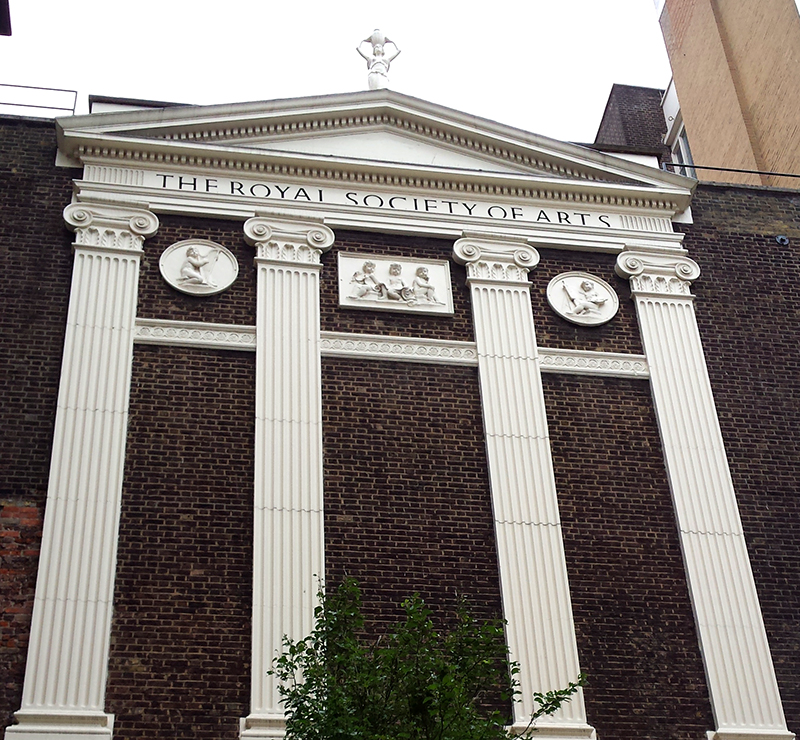
1510 Occult Walk RSA

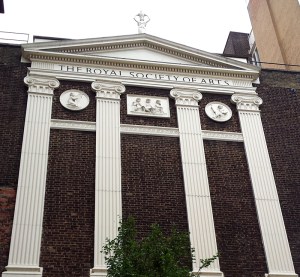
We stopped at the grand Royal Society of Artists building.  Founded in a Covent Garden coffee house in 1755 the RSA moved in 1774 to this purpose built home set on the ancient site where the episcopal palace of Durham House once stood.  Durham House dated from 1345 and was home to Sir Walter Raleigh while he was a favourite of Elizabeth I.

Around 1592 Sir Walter Raleigh led the esoteric group The School of Atheism later nicknamed The School of Night  where alchemists, astronomers, astrologers, mathematicians and poets met and mingled their philosophies. This sort of debate was disapproved of by the church who wished to stamp out any interest in the sciences and preserve a geocentric view of the world.
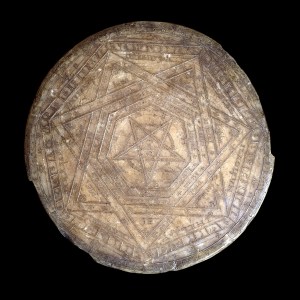
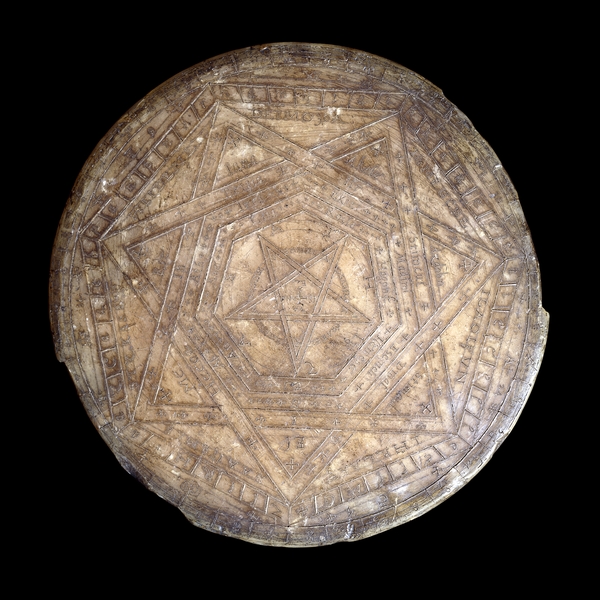
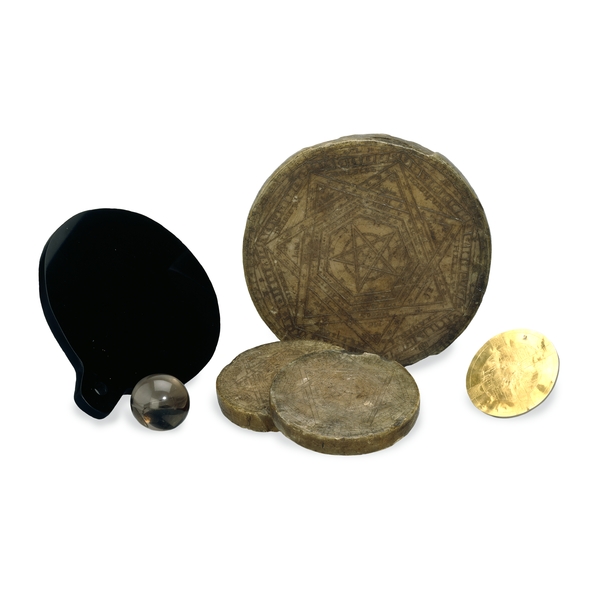
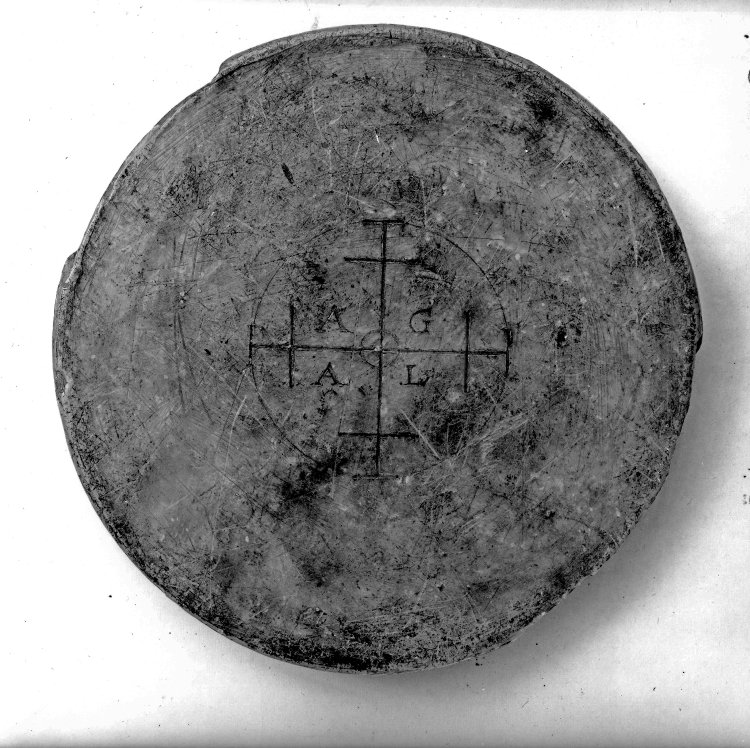
1510 Dee wax disc

This trace from the past led us from Sir Walter Raleigh and Elizabeth I to the famed astrologer and occult philosopher John Dee who was the Queen’s trusted advisor and interpreter of the heavenly auspices. He would be summoned to Windsor for his opinion at the sudden appearance of a comet. There was no delineation between science and magic at the time. John Dee believed contact could be made with the spirit world via his crystal ball and obsidian scrying mirror.
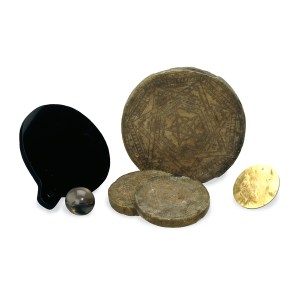
John Dee's magical artefatcs held at The British Museum

John Dee’s magical items held at The British Museum

He was keen to work alongside other mediums who could contact the dead and thought he had found the ideal partner in Edward Kelly. There is a tale of the pair visiting Preston to raise a body dug up in St. Leonards graveyard from the dead with incantations. Relations with Kelly didn’t go so well after he forced Dee into a wife sharing co-op and the once famed alchemist pair split. Kelly ended up falling to his death from a window in an attempt to escape prison and Dee returned to his home at Mortlake out of favour now the Queen was dead, never quite having made his fortune and dying penniless in 1608.
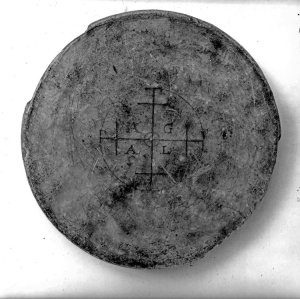
1510 Dee disc

Stopping to look at the 1512 building of Queens Chapel of the Savoy, a tiny church owned by the crown we were told this was the ideal place for an Elizabethan grave robber’s work. What went on and who visited where was much speculated upon and the stories encompassed the past and spread to other figures who are remembered in history for their occultist interests.

Simon Forman was another Elizabethan astrologer who gained fame and notoriety studying the occult arts and practising as a physician until he was banned for not having a license. Despite his creepy and lecherous reputation he was able to get a license from Cambridge university and continue his practise and many of his fascinating case studies are held at the Bodlein Library on Oxford. William Lilly followed in this line of astrology publishing the Christian Astrology in 1647 and even gaining the approval of Oliver Cromwell.
1510 Thames high tide

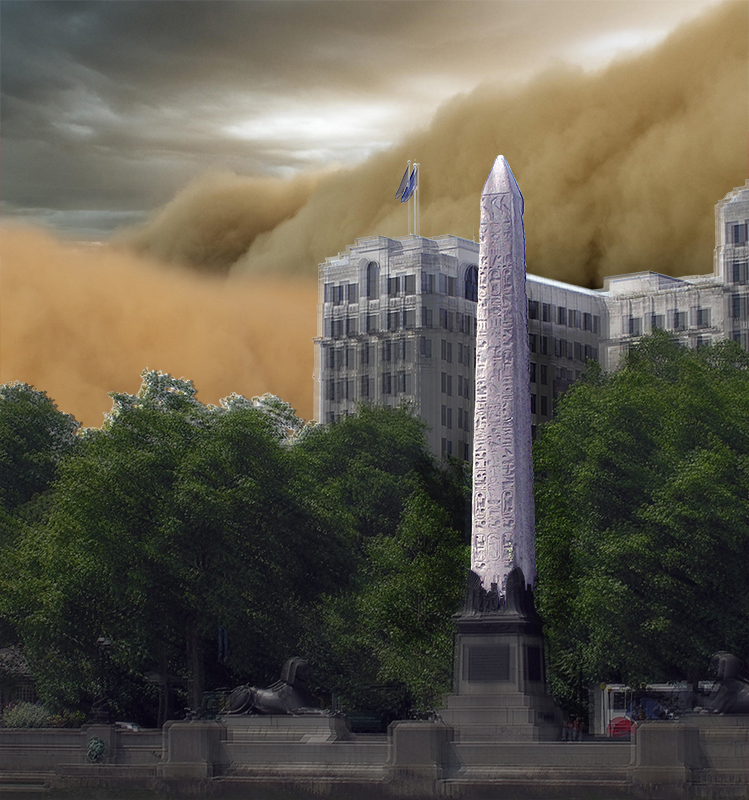
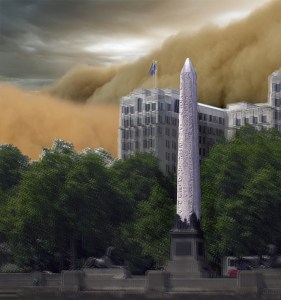
We walked along the Thames to the incongruously sited ancient Egyptian obelisk known as Cleopatra’s Needle.
1510 obelisk

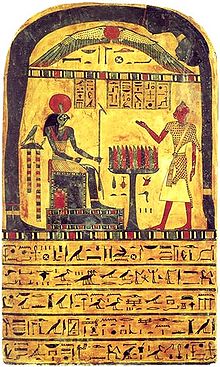
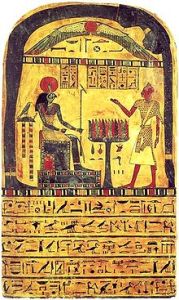
Here early on a December morning in 1937 as the sun entered Capricorn  Aleister Crowley gathered a small crowd representative of each race of mankind and gave each one a copy of his book The Equinox of the Gods. He gave a short speech including his mantra – Do what thou wilt shall be the whole of the law.  The book contains an image of the Stele of Revealing held in the Egyptian Museum in Cairo whose significance for Crowley is the depiction of the three chief deities of Thelema.
1510 stele of revealing

The origins of the Lyceum Theatre date to 1765 and we stopped to gaze up at a window where Bram Stoker worked as assistant to actor manager Henry Irving at the end of the 1800’s. Dracula was published in 1897. Stoker had an interest in the study of the occult and knew members of the Hermetic Order of the Golden Dawn but there is some dispute as to whether he was a member himself.

Our walk ended in Covent Garden where the original Hell Fire Club was founded by the Duke of Wharton to engage in the popular new pastimes of satire and blasphemy. These clubs were banned in 1721 by George I in a  Bill “against ‘horrid impieties”.  The most notorious Hell Fire Club set up by Sir Francis Dashwood in 1746 was known at the time as The Order of the Friars of St. Francis of Wycombe. I am reading a history of this club written by Donald McCormick published in 1958 which seems to seek to defend the ‘amorous knights of Wycombe’ as mere sensualists perfectly able to hold respected public office despite their recourse to excessive drinking and ‘wenching’. The sexist and homophobic 1950’s views in this book are just as repugnant as the 1750’s behaviour they defend.

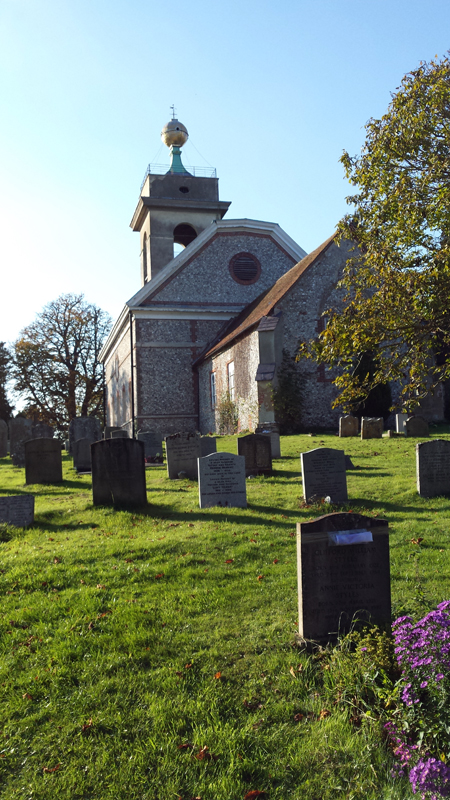
Rich and powerful these men created their own playground and their own rules. The striking golden globe on top of the tower of St. Lawrence’s Church built by Dashwood in 1761 can comfortably seat 4 men and was according to John Wilkes ‘the best Globe Tavern I was ever in.”
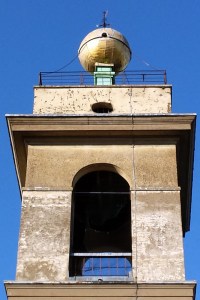
St. Lawrence's Church West Wycombe

St. Lawrence’s Church West Wycombe

Recently passing West Wycombe I stopped off to have a look at the Church.
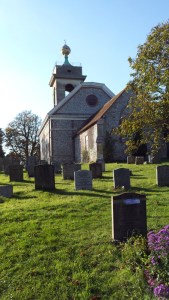
St. Lawrence's Church West Wycombe

St. Lawrence’s Church West Wycombe

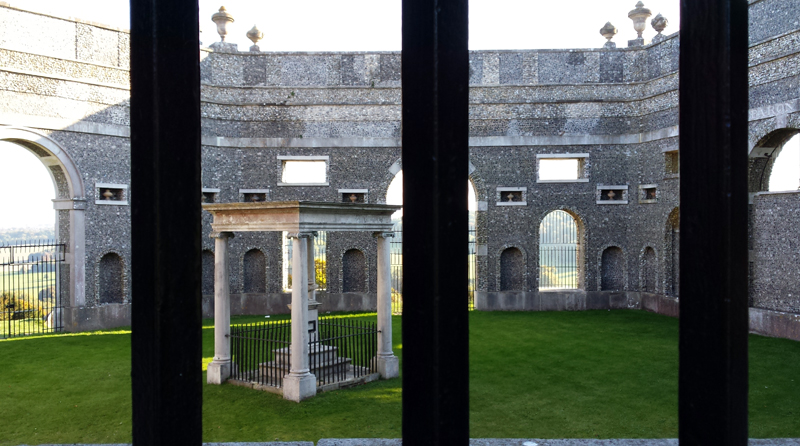
The Dashwood family mausoleum also on the hill overlooking West Wycombe Park is another flamboyant statement.
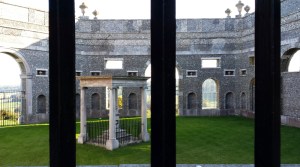
Dashwood Mausoleum

Dashwood Mausoleum

A visit to the caves where the brotherhood met will have to wait for another day.

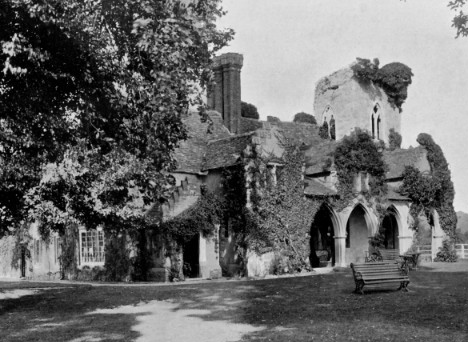
Medmenham Abbey was the headquarters for the Knights of Saint Francis of Wycombe before the caves which became their home were dug out and Dashwood based its refurbishment to his purposes on the Abbey of Thélème inspired by his love of the works of Rabelais and embracing the Thélème motto “FAY CE QUE VOUDRAS” (Do as you please)
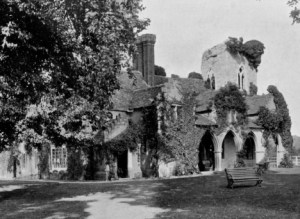
Medmenham Abbey

Medmenham Abbey

I was interested to note that the Abbey of Thélème has no clocks as Gargantua believed  ” the greatest loss of time that I know is to count the hours.”

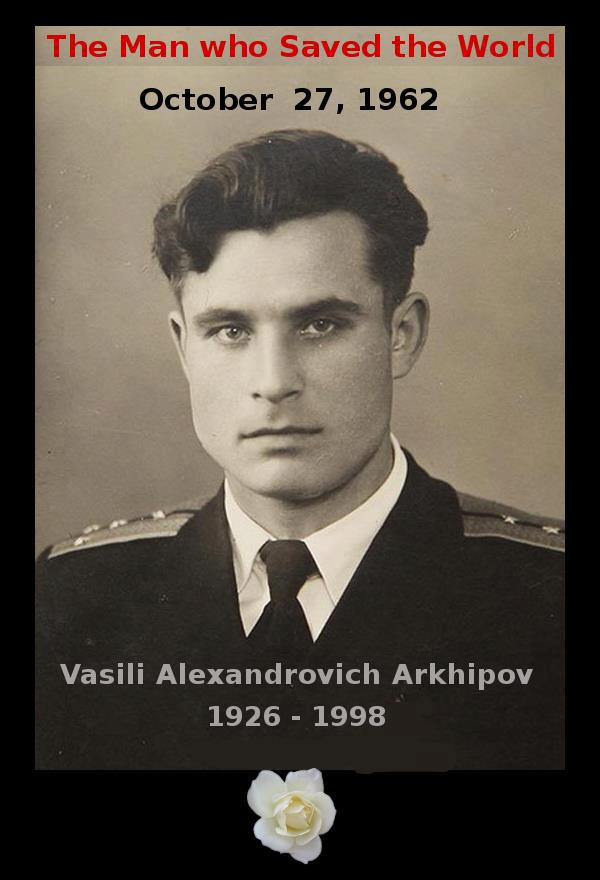
Going through my old sketchbooks I came across a cutting from the Sunday Times Culture Section dated 22/10/2006 written by Bryan Appleyard who quotes royal astronomer Martin Rees as predicting that we have no better than a 50/50 chance of surviving the 21st century.
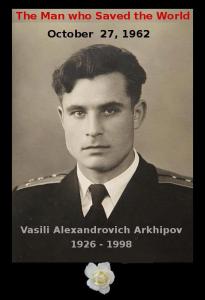
1510 Archipov

It has always been the case that every culture and age sees the End of the World as imminent as though it were hard wired into our species to live in anticipation of destruction. The article Headlong into the Flames is actually a scathing book review of James Martin’s The Meaning of the 21st Century. Appleyard’s own analysis is that there is absolutely no prospect of people ever overcoming enough of their differences even to start to save the planet.
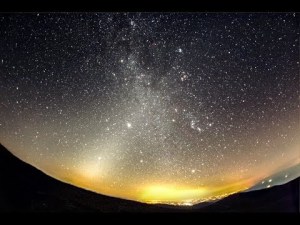
1510 mars to the multiverse

Hearing Lord Martin Rees recently speak at Second Home his analysis of our odds to survive might not have changed but if we do survive he thinks “Evolution will not follow the Darwinian timeline, but instead a new, technological trajectory…..Those who witness the explosion of the sun in four billion years time will be as different to us now as we are to insects”
Lots of interesting things are happening urging us to cast our eyes and thoughts skyward. A Blood Moon Lunar eclipse. Salty water on Mars.

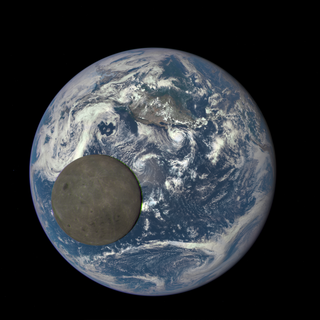
I have to include this image of the dark side of the moon captured by a NASA camera aboard the Deep Space Climate Observatory (DSCOVR) satellite  showing a view of the moon we don’t get to see from earth.

1509 dark side of the moon

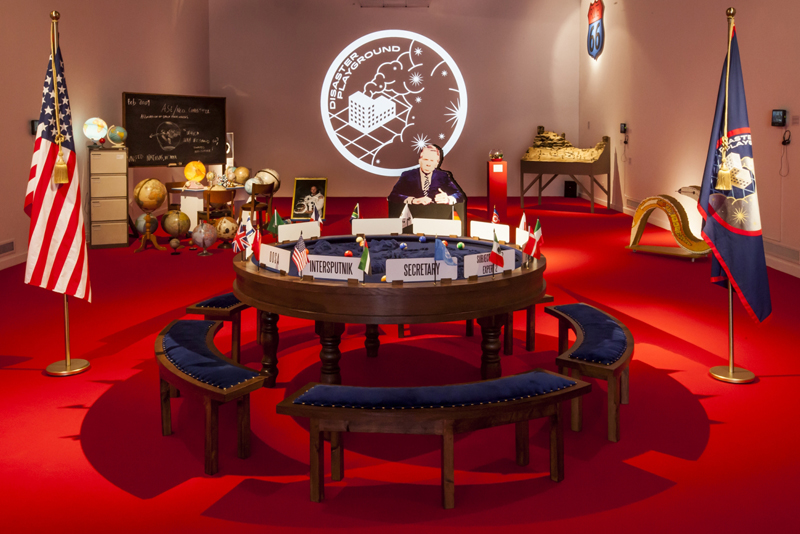
I went to see the London Premiere of Disaster Playground – Nelly Ben Hayoun’s wonderful investigation into who is watching the skies for us.

1509 Disaster playground

Through a series of talking heads and re-enactments we meet the real scientists from NASA and SETI (Search for Extra Terrestrial Intelligence) whose daily job is to scan the skies for possible objects that might collide with earth.

Nelly Ben Hayoun Disaster Playground

Nelly Ben Hayoun Disaster Playground

The difficulty is not so much spotting the object but negotiating the appropriate response in time to avert disaster. Through this documentary we come to understand that technology is way ahead of the machinations of the committees who tread the delicate path of ultimate responsibility.

Nelly Ben Hayoun Disaster Playground

Nelly Ben Hayoun Disaster Playground

Which nations are actually accurately capable of blasting an asteroid  off its course. A minute error could mean one nation is obliterated instead of another. We leave the film feeling a little anxious that for all the good intentions of these scientists the safety net has not been properly hoisted just yet.

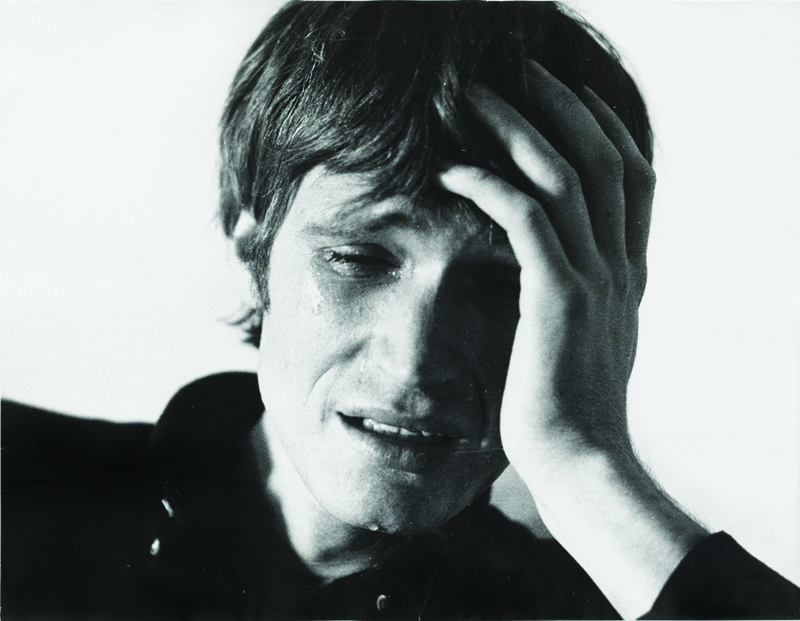
Bas Jan Ader Falling

Bas Jan Ader Fall

The Whitechapel Gallery hosted a touching tribute to Bas Jan Ader marking the 40th anniversary of his disappearance at sea.

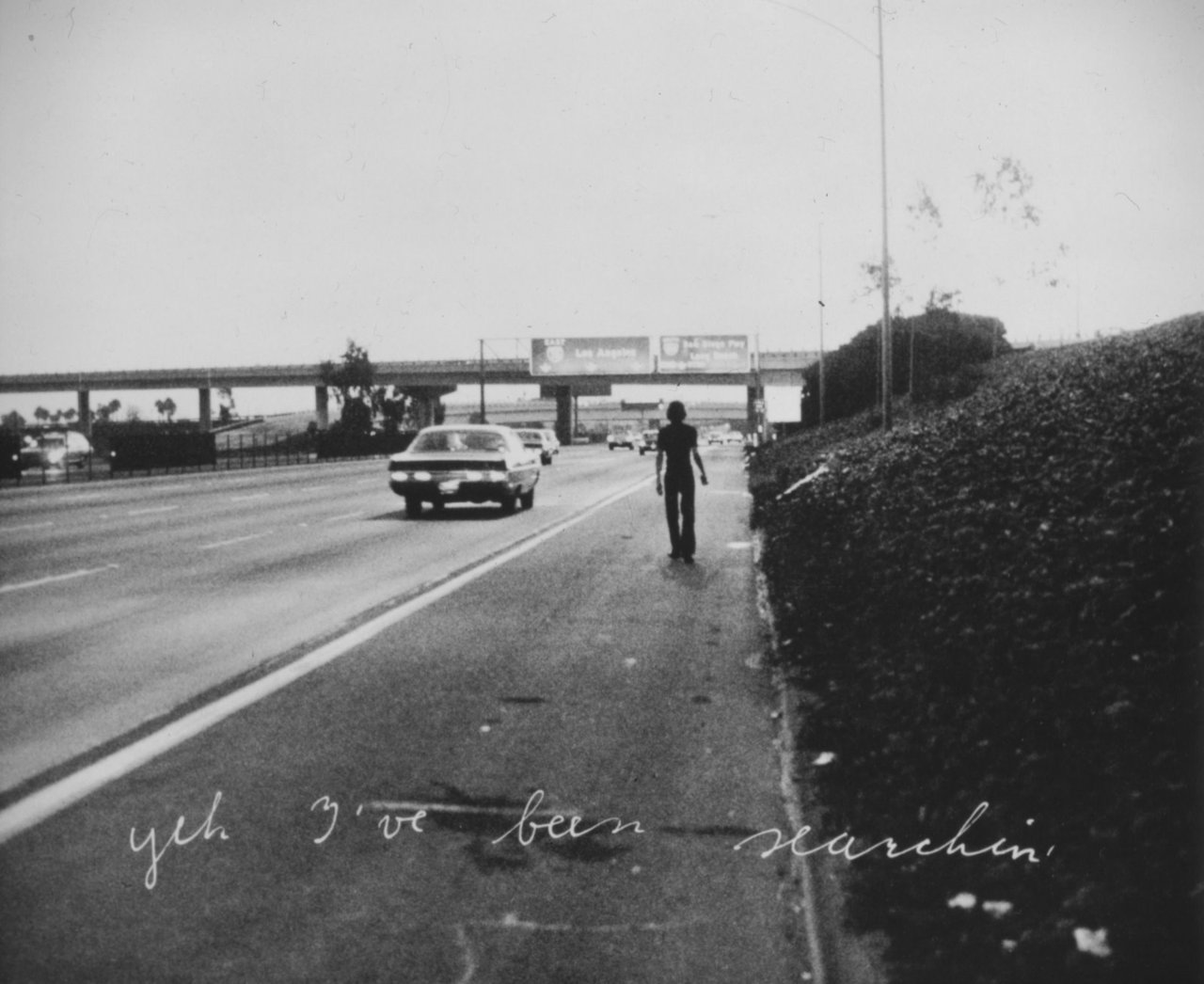
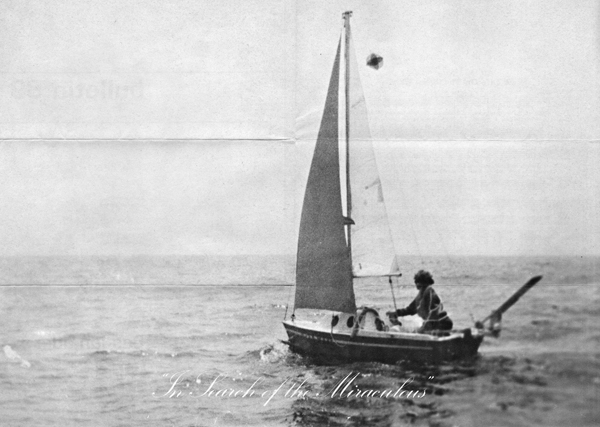
In 1973 Bas Jan Ader took a solitary walk through the city of Los Angeles towards the ocean. The journey was documented in a series of 18 indistinct black and white photos subtitled with the lyrics from a trashy 50’s pop song ‘Searchin’.

Bas Jan Ader In search of the Miraculous

Bas Jan Ader In Search of the Miraculous

Ader borrowed the title of this work ‘In Search of The Miraculous’ from Ouspensky’s book on occult theory which promotes self improvement as the destiny of man. He uses this epithet as subtext for man’s eternally unsatisfied desire for some unknown missing element. He intended the work to have three parts, planning to continue his search across the ocean, to leave the limits of society and go beyond into the unknown. The solitary journey over the sea was to culminate with another night time walk, this time across Amsterdam. It would be a homecoming. In his preparations and framing of the work he deliberately used the iconography of the romantic quest and chose signifiers which denoted a prefabricated romanticism, one that has been commoditized and packaged. He appeared to be searching for the sublime in its very opposite; the banal. Throughout his practise Ader interrogated conditions of pain and endurance; the prerequisites to experience ecstasy.

 Bas Jan Ader I'm too sad to tell you

Bas Jan Ader I’m too sad to tell you

The tragic elements in Ader’s work are presented in a way to highlight pure emotion and offer no explanation for the scenarios he performs. As in reality when we experience grief there is no explanation able to comfort us.

On 9 July 1975, Bas Jan Ader set sail in a 12 foot dinghy called Ocean Wave. He was shipwrecked and his body never found.

Bas Jan Ader In Search of the Miraculous

Bas Jan Ader In Search of the Miraculous

On the evening before his departure, a student choir sang sea shanties in the gallery of his Los Angeles dealer.  He was to be received by a shanty choir in Falmouth.

Forty years later this Whitechapel event celebrated his all too short life and extraordinary work. Poet Stephen Watts read beautifully on the discovery of Ouspensky before we watched a poignant interview with Jan Bas Ader’s widow followed by  a rare 16mm screening of six of his films: Fall I; Fall II; I’m Too Sad to Tell You; Broken Fall (Geometric); Broken Fall (Organic) and Nightfall. As the horizon faded on the screen we quietly filed out to be met by the stirring songs from the London Trad Academy Sea Shanty Choir.

Celebrating current artists The Whitechapel Gallery was packed and buzzing for the Private View of the London Open.  I had to return another day to be able see the works. As a cross section of what is going on in London studios you expect diversity, yet themes do emerge, though selection and curation. So good our RCA classmate Julie Roch- Cuerrier was selected for this exciting show.

Julie Roche-

Julie Roche-Cuerrier

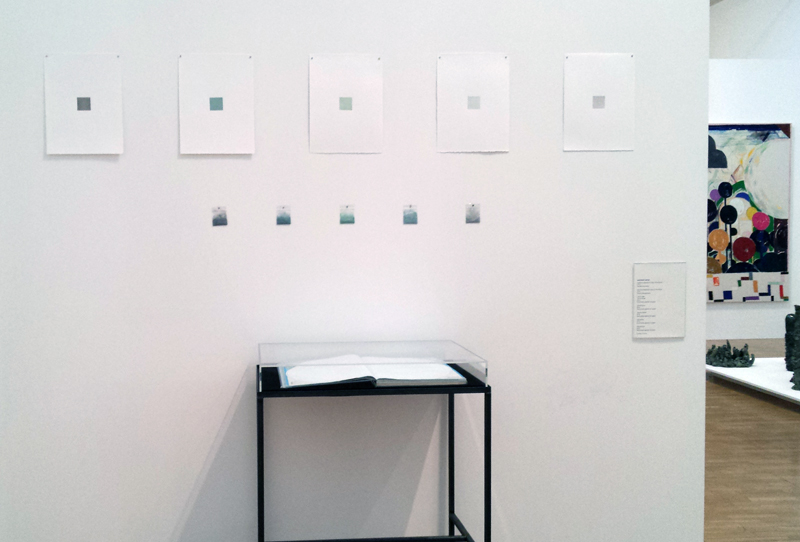
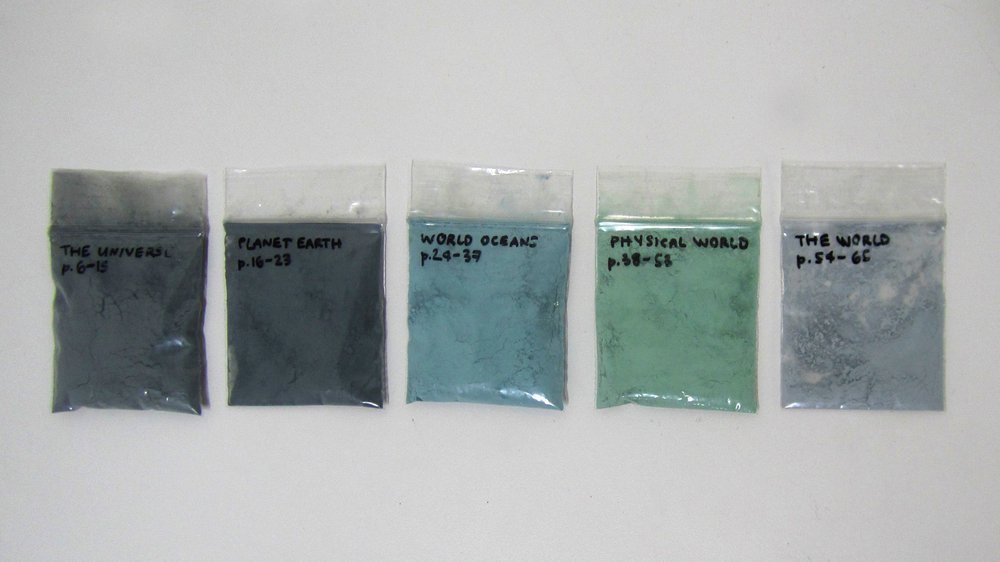
Her subtle intervention of sanding away the detail from every page of a world atlas, just leaving the titles and borders pulls on the strings of displacement and loss while her carefully capturing the dust from each page brings an alchemical magic to the work.

Julie

Julie Roche-Cuerrier

Displayed in little plastic bags are the ingredients of the oceans or the universe. The delicate blue and green powders speaking of matter and its transformation, precious and mysterious.

Having lost access to the print facilities at the RCA its time to start thinking about where I can continue making work. I paid a visit to Thames Barrier Print Studios. It all looks wonderful here, loads of space, etching presses and screen-beds, digital printing, exposure units and an aquatint box.  First I need to get some new work started. I am looking at Obelisks and Standing Stones, ritual places and also thinking about ideas of the multi-verse. Brain loading.

1509 Glitch

Called in to see Delta at Five Years, Regents Studios where RCA tutor Oona Grimes was showing alongside Mark Jackson, James Lowne, Clare Mitten and Mia Taylor.

Oona Grimes Slightly Foxed

Oona Grimes Slightly Foxed

‘Worlds collide, meet, touch, overlap and become absorbed. Worlds become world; expanded, inconsistent and multi faceted. Some don’t stop, don’t crash, they keep moving, a sign in space, until they are singular and alone. No matter, we are only concerned with what remains. We built this world top down and outside-in, we chose the planets and engineered the collision; a shared universe intended to be used by many authors.’

1509 Delta

1509 Delta 2

James Lowne’s very funny video, a kind of in joke for artists explores the constant lure of the prize – the open call – scrubbing around for the opportunity. It has an air of subjugation I think. As artists we have to play a game we’d rather not, putting ourselves up for a fall, laying ourselves bare, in competition with our peers, the fear of missing out is BIG, do we know about the next opportunity will someone else get there first, we don’t want to be played like this, we want to opt out but we can’t. It’s a bit addictive.

The owners of  a stripped and soon to be refurbished Victorian house in Brockley gave their premises over to host Bread and Jam I an exhibition of site specific work by 11 artists.

Joby Williamson

Joby Williamson

Each artist was given free rein of their chosen space in the house to make new work in response to the dilapidated surroundings.  The concept of Bread and Jam is to take basic staple ingredients and make a meal that transports you somewhere else, that can be shared at any time of day and continues to sustain after consumption.

Fritha Jenkins

Fritha Jenkins Reception

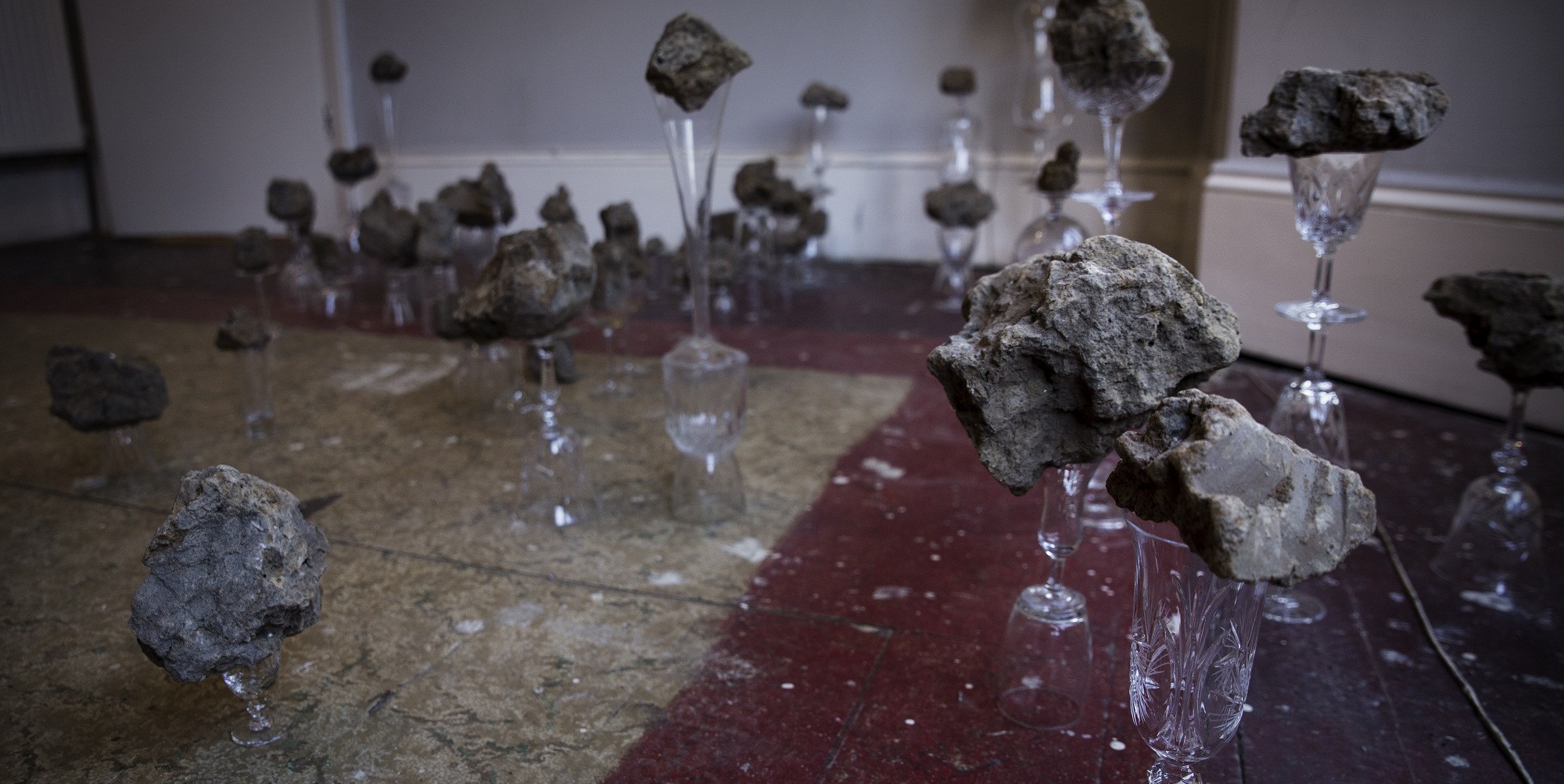
Fritha Jenkin’s work Reception looking like a meteorite storm  frozen in free fall turns the living room into a site of physical negotiation with hundreds of carefully balanced glasses topped with lumps of clay dug from the basement foundations of the house.

Kate Murdoch

Kate Murdoch Poor Lamb

Kate Murdoch creates an unsettling atmosphere with carefully chosen objects that act as signifiers for trauma and vulnerability.

I attended the Material Environments Symposium : Sensing Time and Matter in Digital and Visual Culture at The University of Greenwich.  It felt good to be in an academic environment again and wonderful to know there is free access opportunities to high quality events like this. I enjoyed Sarah Cefai’s references to primordial time and the affect sensation that arises from rain, earth, heat and light experienced though landscape. Her concerns are about how these sensations are mediated and politicised particularly in relation to indigenous as opposed to colonial Australia.

1509 ten canoes

She uses the films of Rolf de Heer (Charlie’s Country, The Tracker, Ten Canoes) as examples of truth to materials, the rain must be real rain. Made me want to see Ten Canoes again.

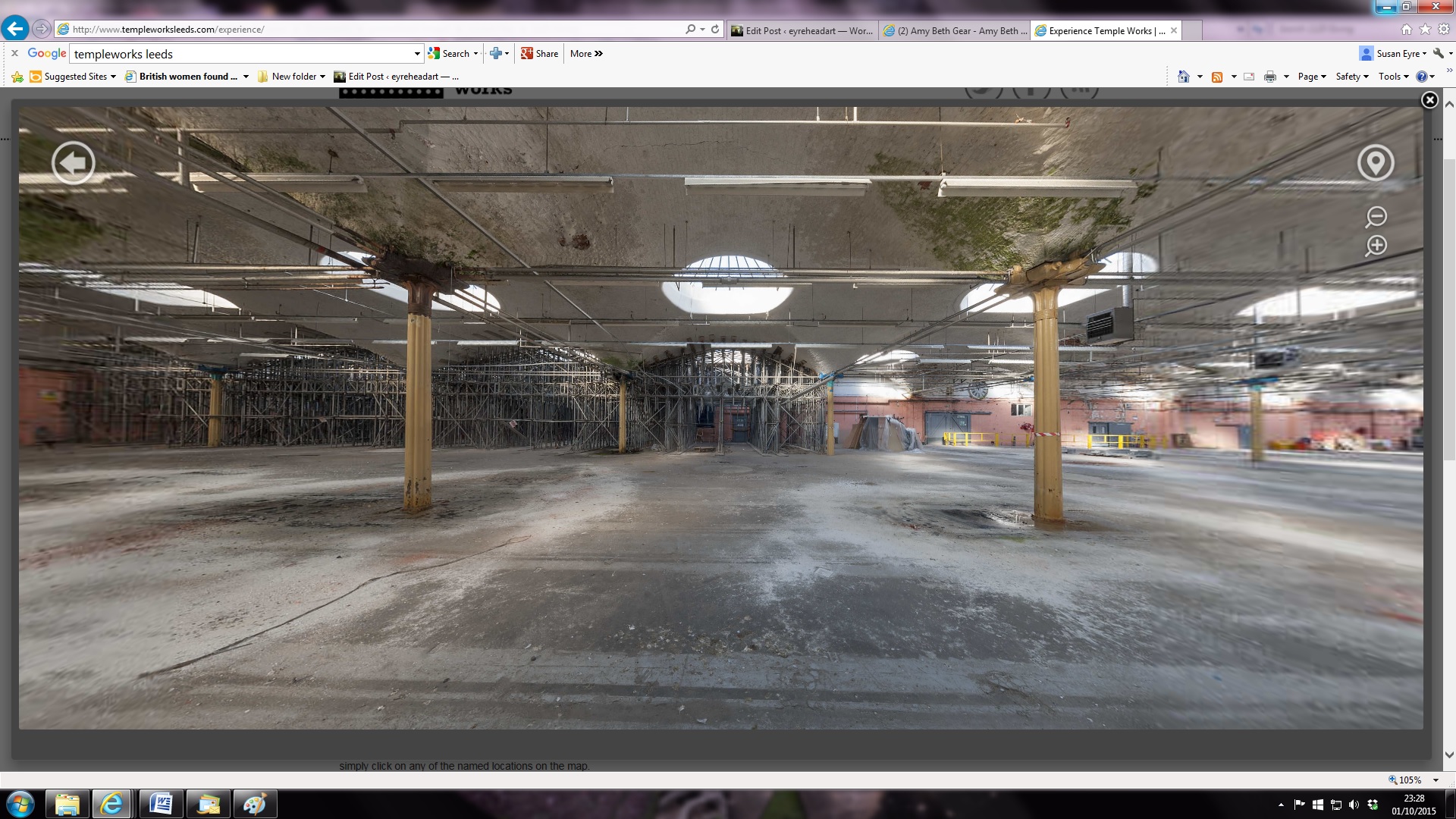
Tom Jackson also spoke about mediated sensation. His use of environment as archive demonstrated at Temple Works Leeds offers a 360º enplaced experience of space in high resolution with pioneering new design binaural audio recordings.

Temple Works

Temple Works

Not only does this combination of technology offer a haptic experience of a removed space, but also a temporal, one as searches can be made through the palimpsest of activities, interventions and architectural changes that have occurred in a given location. Using this method, virtual access to privileged spaces can be offered to the public.

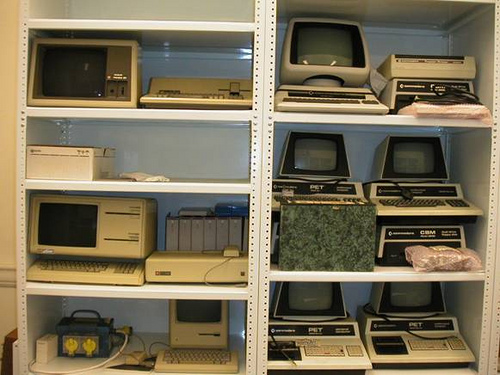
Blythe House Archive

Blythe House Archive

The physical archive such as that of the Victoria and Albert Museum stored at Blythe House can be archived and viewed remotely and there is the opportunity of archiving objects without having to remove them from the context of their original environment thereby retaining a layer of history usually destroyed as objects are moved to storage facilities or museums.

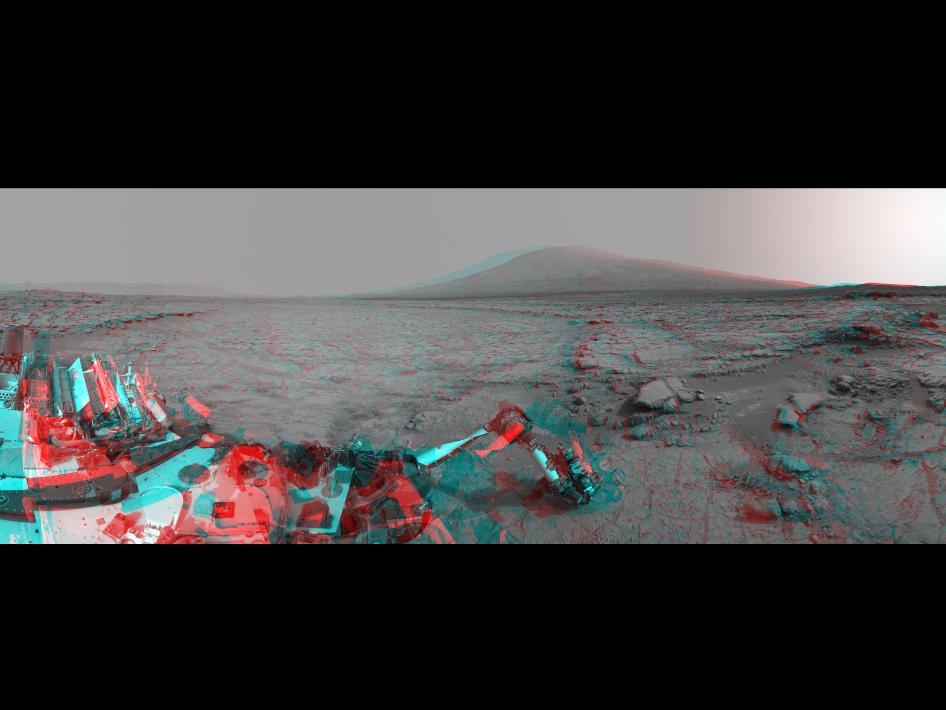
Luci Eldridge found comparisons between the analogue and the digital in the material decay of  archived images she has viewed and the disrupting imperfection of the digital glitch. Analysing the composite landscape images of Mars patchworked together from data retrieved by non human space explorers she draws awareness to the construction of landscapes that are only ever viewed remotely via technology that does not relay a sense of scale and perspective that we naturally relate to.

Mars Stereo View from 'John Klein' to Mount Sharp

Mars Stereo View from ‘John Klein’ to Mount Sharp

Seams have been eliminated from the sky portion of the mosaic to better simulate the vista a person standing on Mars would see.

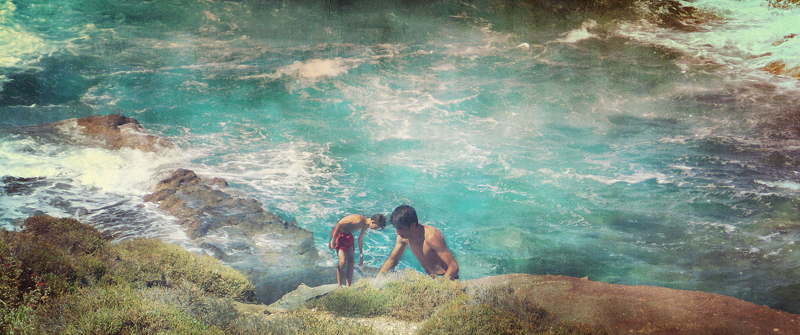
Laurel Johannesson makes work that does not conform to the current passion for speed and instantaneous gratification.

Laurel Johannesson

Laurel Johannesson

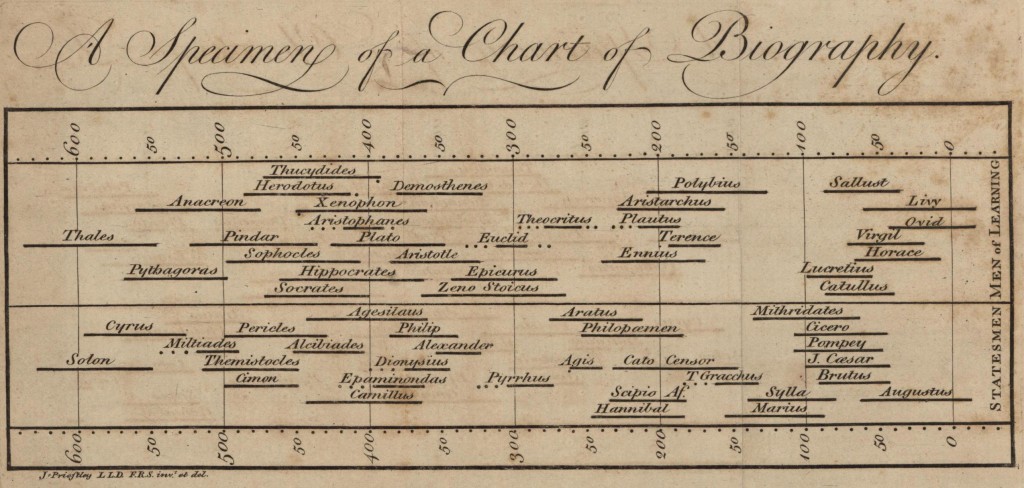
Her generative digital images coalless slowly and in reaction to her audience. The viewer that spends time with her work is rewarded, the swift passer by misses out. She is interested in how we perceive time and the visualization of time. She cites Joseph Priestley who published A Chart of Biography in 1765 and has had a profound influence on our visualization of time as linear, travelling along a horizontal line, ever moving forward.

1509 Joseph Priestley

She also talked about other visualisations of time as being circular and represented by the ouroboros, the ancient symbol of a serpent eating its own tail in perpetual motion of renewal and destruction signifying eternal return.

1509 Theodoros Pelecanos 1478 copy

Using Nobuhiro Nakaishi as an example of an artist who mediates the temporal experience through his work she reflects on how the understanding of time is challenged by new technology and the ways artists are exploiting technology to create work but also the need for a direct interaction with materials.

Nobuhiro Nakanishi

Nobuhiro Nakanishi

In his layer drawings Nobuhiro Nakanishi captures the passage of time in a series of still photographs which he then layers in series on acrylic sheets so the movement of time passes through the images. He is looking to evoke a common sensation in his audience. The acknowledgement of the passage of time is universal, it is one of the primordial senses and also personal as we see our own entropy come to pass.

Nobuhiro Nakanishi

Nobuhiro Nakanishi

Laurel Johannesson is interested in art that offers a multiplicity of possible orders and disturbs the accepted time based narrative. Another of her examples is the collective AES+F a group of four Russian artists: Tatiana Arzamasova, Lev Evzovich, Evgeny Svyatsky, and Vladimir Fridkes working with video and digital generation.

AES+F

AES+F

Their films have a balletic quality that create a hypnotic rhythm as time is slowed, drawing you in to a world of beautiful people with smooth supple bodies moving trance like though exaggerated motions. It is like being gently suffocated with silk having been given the most delicious sleeping draught. Willingly falling into the embrace of this clean and perfect world as into a dream before realising there is an unsettling undercurrent that drags you under and it is too late to swim to the surface and escape. Mesmerizing.

AES+F

AES+F

A link here to a trailer for Trimalchio.

Other interesting speakers were Marisa Gomez who is interested in the re-presentation of time and the new technologies that facilitate new approaches to temporality such as the Khronos Projector which allows the user to sculpt time through a screen interface. By touching the screen the user can send parts of an image backwards or forwards in time.

Alvaro Cassinelli Khronos Projector

Alvaro Cassinelli Khronos Projector

Joanna Zylinska’s paper Sensing Deep Time: Photography after Extinction drew parallels between photography and fossils as recording mechanisms of time. She recommended the book The Sixth Extinction; an unnatural history by Elizabeth Kolbert which documents the past five mass extinctions of species on earth turning the spotlight on us humans as we watch the sixth mass extinction unfold before us, unable to act.  Transfixed by affective facts, those overwhelming concepts that are so huge to comprehend that we ignore them.

1509 Sixth-extinction

She is interested in how time is recorded through natural phenomenon such as the deep time of geology. Charles Lyell’s Principles of Geology (1830-33)  was an early radical attempt to explain the geological state of modern Earth by considering the effects of observable natural phenomena over time. By exploring the evidence for changes in climate and geography across the ages  Lyell speculated on the progressive development of life, transforming science with depictions of the powerful forces that shape the natural world.

1509 Lyell

Light, energy from the sun is used in the photographic process. Our perceptions and familiarity with recording phenomenon changes with each new technology. When Photography first appeared and Henry Fox Talbot published the first  wholly photographically illustrated book The Pencil of Nature in 1844 he felt it necessary  to insert the following notice into his book: The plates of the present work are impressed by the agency of Light alone, without any aid whatever from the artist’s pencil. They are the sun-pictures themselves, and not, as some persons have imagined, engravings in imitation

Henry Fox Talbot The Pencil of Nature

Henry Fox Talbot  The Ladder  in The Pencil of Nature

Hiroshi Sugimoto’s Lost Human Genetic Archive at Palais de Tokyo was a poignant look at what remains after devastation.  Over thirty notices, all beginning ‘Today, the world died’, offered explanations by characters from all walks of life as to why everything ended, and these relate to the otherwise random objects beside them. An astronaut, for example, tells of how Earth had become encircled by orbiting human shit, next to a display containing the cosmonaut’s space-food and urine collector.

Hiroshi Sugimoto Lost Human Genetic Archive

Hiroshi Sugimoto Lost Human Genetic Archive

The exhibition Club Disminución (“Club of Diminishing Returns”) was instigated by Alexa Horochowski’s artist residency at Casa Poli, Coliumo, Chile, 2012/2013. Designed by architects Maurizio Pezo and Sofía Von Ellrichshausen, Casa Poli, a minimalist, cement cube, functions as a cultural art center/artist studio.  In this environment the separation between landscape and architecture is indistinct.

Horochowski aims to depict the struggle between the human drive to create lasting symbols of culture, and Nature’s indifferent, persistent erasure of these symbols. His work explores entropy and the passing of time by imitating the natural processes of accretion and aggregation found in caves or the persistent impression left by fauna and water on architecture and the landscape.

Alexa Horochowski: Club Disminución

Alexa Horochowski: Club Disminución

“Horochowski suggests a posthuman future, where assorted beach debris attests to the former glory of human civilization. In enlarged black-and-white digital scans of barnacles, minerals, and wasp nests, a quasi-organic architecture takes shape, poised to outlast us all. A Gothic sensibility reverberates throughout: evocative, sinister, and auguring the fall of the Anthropocene.” — Christina Schmid

Penelope Umbrico found 541,795 pictures of sunsets when searching the word “sunset” on Flickr. This became the basis for her installations Flickr suns.

Penelope Umbrico Flickr Suns

Penelope Umbrico Flickr Suns

Another body of work by Penelope Umbrico is her Sun/Screen series.

Penelope Umbrico Sunscreen

Penelope Umbrico Sunscreen

She uses an iPhone to re-photograph images of the sun she has cropped from thousands of sunset images shared on the web.  The process of photographing images directly from the computer screen creates a moiré pattern – an optical illusion, which is the consequence of the pixel grids, meshes or dot patterns being superimposed. They draw attention to the materiality of the screen and further distance us from the natural sunlight source of the original images.

It has been an RCA MA printmaking department tradition for each graduating year to produce a box set. In our year we questioned the purpose of a set which was inevitably split. The cost of the whole set being prohibitive to most people. We wondered how we could reinvent this idea to make it exciting and relevant. It was an exercise sometimes lacking in diplomacy but eventually it was decided that collaboration and a theme would help to create a more cohesive edition.

The result was Lean to, an interpretation of the traditional printmaking box set, it acts as a site of investigation that questions what a box set can be.

RCA Printmaking MA 2015 collaboration Lean To

RCA Printmaking MA 2015 collaboration Lean to

We chose to respond to a ‘house’ of print matter. Interested in the house as a fluid concept, we expanded it to mean anything alluding to a habitat: a home, shelter, bunker, shed, commune, boundary…

This structure allowed us to make collaboration a defining feature – people worked together on areas or ‘rooms’, responding thematically, materially and conceptually. One group worked with text to create a written 3D structure, another explored the construction of space through sound. The defining of outside space was considered through a collaboration that explored the garden, and another investigated the overlooked details via the life of dust. There were also individual responses: a digital scanning room where walls threaten to melt into the night sky, contorted vessels that appear at once frozen and shifting, a sweeping gesture of an arch promising (or threatening) an arrival.

I worked with Amanda Wieczorek, Jilly Roberts and Gloria Ceballos.

1508 Battersea Park 3

We looked at structures found on the allotment or in a garden.

1508 Battersea Park 2

We went to Battersea Park for inspiration.

1508 Battersea Park

The symbiosis of the synthetic and the organic became key to our thinking and resulted in transfer printed handmade paper embedded with seeds contained in a protective screenprinted plastic sleeve.

1508 shed

For a box set that responds to the notion of being housed, it is necessary that the skin, the home stake its place.

design by Meg Ferguson

design by Meg Ferguson


It does this by being both a folder of precious deeds, and a site of shelter and display.

RCA Printmaking MA 2015 collaboration Lean To

RCA Printmaking 2015 collaboration lean-to

The cover, complete with guy ropes and support poles, unfurls into a simple structure that acts as both site to view and shelter for its contents.

RCA Printmaking MA 2015 collaboration Lean To

RCA Printmaking 2015 collaboration lean- to

The team that installed the work for the launch night did an excellent job and we all ended up very proud.

lean to 11

The volume was launched at Tenderbooks with an evening of performance and readings.

Launch of Lean-To at Tender Books

Launch of lean-to at Tender Books

While learning about geometry and the platonic solids at The Princes School of Traditional Arts I was intrigued by Plato’s description of the fifth platonic solid – the dodecahedron – as ‘a fifth construction which God used for embroidering the constellations on the whole heaven’.

Susan Eyre Pairi Daêza

Susan Eyre Pairi Daêza

In this work I have taken the net which is used as the pattern to make a 3D dodecahedron when cut and folded into shape and used this as a structure meshing together images of constellations, an abandoned walled garden and a roundabout. I wanted to make connections between origins, structure, and belief systems. My original plan for this idea was to screenprint the images on individual segments of laser cut mdf – each piece would then be pulled slightly apart – the expanding universe. In the end it was a combination of time and feasibility that meant this idea was realised as a c-type print on metallic paper mounted on aluminium.

Susan Eyre everydaymatters

Susan Eyre everydaymatters

It became an integral part and focal point of my MA degree show installation.

I was invited to The Collective at The House of St. Barnabas in Soho. Dark Matter Studio were hosting Matt Collishaw’s Last Supper prints in the Bazalgette Room. These images transferred onto goatskin parchment recreate the final meals requested by men condemned on death row in the style of 17th century vanitas paintings.

Matt Collishaw Last Meal on Death Row, Velma Barfield, 2012

Matt Collishaw Last Meal on Death Row, Velma Barfield, 2012


Güler Ates had work appropriately showing in the Silk Room. Taken just before the club at  opened in 2013, her photographs confront the intense dialogue between the past and present that is unescapable in such a space. Güler comments on the presence of the past; ‘They were absent; however, through the objects in the rooms, the interiors and the exterior of the building, I wanted to trace the “present” of some of the previous occupiers.’

Guler Ates Departure into darkness

Guler Ates Departure into darkness

I had a tutorial with her while at the RCA  when she had suggested I should scale up my fabric pieces and take then to the sea – I think this is something I could try  when I visit a clear  sea but also I would like to try under a waterfall or in a brook.  She also talked about the importance of the structure for the display of the circles which I was still struggling with.

The House of St Barnabas is an impressive building it even has its own chapel where ARTinTRA  presented PARAMENTRONOMICON  a site-specific, computer animated video and sound installation by the Finnish duo Pink Twins (Juha and Vesa Vehvilainen) , curated by Vassiliki Tzanakou.

1508 Pink Twins

Pink Twins PARAMENTRONOMICON

Within the dark space of the chapel lit by a faint glow from narrow stained glass windows a large screen takes the place of the altar. The sci-fi imagery in high saturation colour is dazzling in a perpetual cycle of abstracted motion, forming and reforming. There is a nice play between the deconstructed images of the stained glass – once this technology was awe inspiring in itself – and the similar breakdown of form in the swirling images on the screen. We are similarly held enthralled by this mesmerizing experience as were the first visitors to encounter the delights of light through coloured glass.

In retrospect I can see that Pairi Daêza has a structure similar to that of a stained glass window.

Susan Eyre Pairi Daêza

Susan Eyre everydaymatters / Pairi Daêza

Looking for structures and patterns in the matter of landscape and breaking those down is something I am interested in. When installing the circle sculptures I learnt how hard it is to be consciously random. I wanted to place the pieces randomly with the idea that these were slices of space that could appear anywhere but my instincts kept drawing me to balance and pattern.

Susan Eyre everydaymatters

Susan Eyre everydaymatters

After the show when trying to clear space in my studio at home I came across some very old samples I had forgotten about. It’s fascinating the way ideas form over time with threads emerging and submerging.  When I made these I was thinking about geology  and the human effect on the formation of rock strata, how all our rubbish in landfill would create the gemstones of the future.

1508 earth crystal

Here on these layered plastic carrier bags was the universe with digitally embroidered geometrical patterns of crystal structures.

1508 earth structure

Another sample of layered plastic with machine free stitched geometrical patterns, melted to reveal images of human life. These pieces were a bit clunky but it feels there is a connection in my thinking here that has carried through. I have been thinking about black holes and disruptions in space and this old work has given me some new ideas to carry forward.

I went to see Dark Universe at Greenwich Planetarium. As I had previously learnt on the CERN website the planets, stars and everything you can see make up less than 5% of the Universe. Dark Universe is a new planetarium show exploring what we know – and what we don’t know – about the structure and history of the Universe.

1508 dark universe

I don’t think I learnt anything new from this show but the visual experience of being blasted through space was worth the trip.

The space theme continued with a trip to Breese Little Gallery  to see the exhibition dark frame / deep field  and a collection of Vintage NASA Photographs.

The most arresting piece was Dan Holdworth’s giant c-type of a mountain range inverted into an ethereal alien scape.

Dan Holdsworth, Blackout 13

Dan Holdsworth, Blackout 13

The NASA photos were also fascinating. The strange light, the staged self-consciousness.  These images share the style of the cinema flyer from the same era and so the amazing achievement and experience of these men standing on alien soil seems to get diluted by the association with fantasy making it even harder to comprehend what we are looking at.

Alan Shepard and the U.S. flag, Apollo 14, February 1971

Alan Shepard and the U.S. flag,  Apollo 14                February 1971


I enjoy visiting artists studios, seeing the debris from the workings of the mind. I am envious of these spaces. I went to see what Elizabeth Murton and Lizzie Cannon have been working on at Bow Arts Open Studios Event. Elizabeth is also interested in structures and was showing her experiments with nets and the malleable nature of space.

Elizabeth Murton worked net

Elizabeth Murton worked net

Lizzie has hauled a giant portion of rusting pipe from a Suffolk beach into her studio. She had already started to discreetly embellish the rust encrusted surface with tiny stitches and glass beads. She is interested in accretion of matter and repair. Repair can also contribute to the deterioration as the tiny perforations from the stitching break down the surface. In the case of her mended leaves the repairs appear as scars.  Both artists had work in the Structure, Texture, Future exhibition, an investigation into ruin and repair the substance of matter and our relationship to it,  curated by Shahida Bari and Rosamond Murdoch.

Lizzie Cannon Mended Leaf (Hosta)

Lizzie Cannon Mended Leaf (Hosta)


I have had to say goodbye to my studio space and all the other wonderful facilities and people at the RCA.

1507 studio

Lots of ideas were formulated in this little corner and I will miss it very much.

1507 studio2

I spent the last six months pretty much in the screenprinting room

1507 screenprinting

working on the mirror circles for my final show.

1507 circle

There wasn’t much time out but I did try to see some exhibitions that felt were relevant to my own concerns.

I hadn’t come across the work of Michelle Stuart before and I found her exhibition at Parafin Gallery very inspiring.

Michelle Stuart Night Over Alice Springs

Michelle Stuart Night Over Alice Springs

I was drawn to her spiritual aesthetic. The subtle use of colour and juxtaposition of images set within a grid structure bind themes together to create a whole from fragments. I like the way she uses objects, incorporating natural materials and sacred symbolism, referencing alters and rituals.

Michelle Stuart Ring of Fire

Michelle Stuart Ring of Fire

I was excited to see Diana Thater at Hauser and Wirth mostly because of the promise of seven holy ‘kunds’ – or water tanks- and waterfalls that create two tiered pools within her projected installations. I thought this might relate to my own ideas using water in my work giving some insight into water as a sacred medium.

I was disappointed. Due to poor light levels and projected image quality what should have been an immersive experience was frustrated by an awareness of ineffectual technology exacerbated by the front door repeatedly opening and  flooding the space with even more light. There were no ‘kunds’ visible. The gallery assistant thought the pools may be projected onto the floor but with the light levels too high it was not so much that ‘…the pools of water occupy a liminal state between reality and imagination’ but must be totally conjured by the imagination.

Diana Thater Life is a Time-Based Medium

Diana Thater Life is a Time-Based Medium

Online you can find an image more akin to the promises of the press release.

Galtaji Temple near Jaipur

Galtaji Temple near Jaipu

For my second year at the RCA I had David Blandy as my tutor. I think we have quite a few crossover interests in our investigation of contemporary society which manifest themselves in very different ways. He works with video and references music trends and gaming aesthetics and is quite performative. It’s very engaging and has a fine humour.

1507 David Blandy

He screened his video How To Make A Short Video About Extinction for us in the lecture theatre, it was good to see it on a big screen and appreciate the disaster movie genre it plays off though the DIY amateurism invoked does perhaps mean the small screen is its home. Eitherway it’s very funny (while obviously trying to make some serious points too). He put me onto Miranda July, also funny while highlighting some cultural idiosyncrasies , whose book of short stories No-one Deserves To Be Here More Than You I am enjoying at the moment.

I have visited his exhibition showing the video hercules-rough-cut at the Bloomberg Space.

David Blandy

David Blandy

It has huge presence. Ominous and mesmerizing it engulfs you in a kaleidoscopic bombardment of image and dialogue tracing the history of civilisation on its frenzied trajectory to what must be an inevitable implosion. Surrounded by rotating images and screens and immersed in continuous rap-speak that fills your head there is no space to escape.

David Blandy Hercules:Rough Cut

David Blandy Hercules:Rough Cut

It captures the obsessions that are driving our civilisation over the edge into oblivion employing the same seductions that hypnotise us as we are carried along unable to resist.

I have long been a fan of Gordon Cheung’s work so was excited to be able to chat with him about my work when he visited the RCA on what was described as an artists promenade. His interest in relating ancient mythologies to present day financial trading and historical markets such as tulip mania to current boom and bust economics are fascinating subjects.

Gordon Cheung island

Gordon Cheung Island

We also attempted to discuss quantum and particle physics. He had been key in selecting my etching Forest of Eden for the neo:print prize award that I received last year so I was able to go into more detail about what had inspired me to make this work. Originally it was Giambattista Vico’s story of wild men inventing the gods as they cowered in the forest under thunderous skies that led to my research into the myth of the wild man. This myth stretches back to the tale of Gilgamesh’s quest for immortality. In history the wild man’s characteristics reflect topical fears and aspirations, violating the taboos of civilization and symbolizing the repressed desires of society. They oscillate between horror and fantasy.

Susan Eyre Forest of Eden

Susan Eyre Forest of Eden

I wondered who a contemporary wild man might be. Someone on the edges of society, both fascinating and repulsive. I had come across images on the internet of this person who posts photos of himself posing almost naked with guns strapped to his body. He had become an internet meme, shared with equal disgust and fascination. In this etching I placed him back in the ancient forest of all our origins.

The most recent of work I made while at the RCA was Sun Factor. This work allows an alternative access point to my ideas about escape from reality and the search for something outside the ordinary. It explores ancient and modern ideas on sun worship and the rituals that are part of these cultures.

Susan Eyre Sun Factor

Susan Eyre Sun Factor

I used etching for the ancient cliffs and gold pigments on chine colle for the obelisk. The figures are screen printed in high saturation, a reminder of the early days of package holidays and glossy postcards and also of skin damage and loss of connection to the powers of nature. The sun as apocalyptic fireball is a reminder of its true nature which we often forget to acknowledge.

Sun Factor has been selected as a finalist for the HIX award.

I had been experimenting with images printed on translucent fabric submerged in water with a view to using this in my final show.

Susan Eyre submīrārī

Susan Eyre submīrārī

This came from the idea of looking through a surface to consider what is there but unseen by our limited senses   Sometimes the images in the water float and sometimes they sink or fold according to the otherwise unseen movement within the water. The activity in the matter of the universe is going on around us unseen – other intangible things like the aura of place and the dream of paradise cannot be pinned down or explained in terms of materiality.

Susan Eyre submīrārī

Susan Eyre submīrārī

I spent a long time searching for the right bowls for the images floating in water. I had in mind something you might find in the world of Jonathan Strange and Mr Norrell but ended up using the same simple very shiny ones as I had originally found for Café Gallery – Objects Of.

1507 dry clay bowl

I tried giving them a clay outer shell – it didn’t work but the cracked result was inspiring for future work.

I chose to exhibit the water pieces in a cluster for the RCA MA Show rather than each one placed at the base of the individual sculptures as I had previously.

1507 veiwing submirari

submīrārī installation

mīrārī  comes from the latin miror whose etymology is to gaze in wonder.

Now that I had 7 sculptures (one for every day of the week) I felt each work had more weight holding their own space.

Susan Eyre everydaymatters

Susan Eyre everydaymatters

There is a similarity in the way an image is experienced as a surface to look through and be absorbed into connecting the pieces in the installation.

The images in the bowls are more dreamlike, idealised landscapes whereas the images on the mirrors come from the everyday locations that happen to be called paradise.

Susan Eyre everydaymatters (6/7 escapism  - the life)

Susan Eyre everydaymatters (6/7 escapism – the life)

In conjunction with the MA degree show I led the organisation of our event WHAT WAS I THINKING. This was a chance to look back at the thinking behind our degree show and the ways in which decisions get made and also the alarm we sometimes feel at what we have embarked upon.

1507 what-was-i-thinking

We invited David Cross as our guest speaker. David Cross has an international reputation as a lecturer and academic. As an artist, he began collaborating with Matthew Cornford, in the partnership Cornford and Cross, while studying at St Martin’s School of Art in 1987, and graduated from the Royal College of Art in 1991. In addition to producing aesthetic experiences, he maintains that a key function of contemporary art is to test concepts, assumptions and boundaries.

David Cross

David Cross

Looking at global economics and systems of value which govern the art world as well as wider issues of capitalism and our blind commitment to material consumption fuelling economic growth he poses the question  – can we reclaim the vanishing point and reconnect our individual perspective with our collective capacity to envision and plan for a more ecologically stable future?

Early in our first year at RCA we had a seminar with the provocative title Why Print? This caused a lot of argument at the time as we found there were very many opinions on what was and what was not considered print, the value of craft and the place of the multiple or cheap reproduction. As we progressed we learnt to respect each others approaches and realised that the diversity of our group was a strength from which we could all learn.

Rob Miles Cmd shift 3

Rob Miles Cmd shift 3

Rob Miles was our MC for the event and gave an introduction which set out the challenges we faced during our MA and will continue to tackle as artists.  He explained that in such a programme as printmaking there are many processes we could choose from to express our ideas and it was through this exposure and interrogation that we found our own individual affinities from digital media to etching and many combinations in between. New reproduction technologies offer opportunities for exploration,  the old techniques feed into the new, and the new reinvigorates the old. To study Fine Art today is to navigate a plethora of possibilities across an ever widening field of possibilities, often dauntingly so but this also offers us a new representational freedom as artists.

Navigating these new possibilities is something we had discussed in seminars which led us to authors who write about the impact of the web, image saturation/appropriation, and new ways in which we view the world that lead on to questions of reality and representation.

As a point of focus for our event we referred to the politics of the image theories of Hito Steryl in the e-flux journal The Wretched of the Screen.
Her comments on the condition of groundlessness in her essay free fall a thought experiment on vertical perspective seemed particularly relevant.
          ‘Imagine you are falling. But there is no ground.
          Many contemporary philosophers have pointed out that the present moment is distinguished by a prevailing condition of groundlessness.
          We cannot assume any stable ground on which to base metaphysical claims or foundational political myths.
          At best, we are faced with temporary, contingent, and partial attempts at grounding.’
Peter Glasgow spoke about ways that material might be gathered, piled up, held onto and left over to form a body of work.
Peter Glasgow

Peter Glasgow

Using American TV series as his research material he used this analogy to look at work in the degree show as a gathering of material.
Peter Glasgow I'm dead in the water here

Peter Glasgow I’m dead in the water here

 Jilly Roberts narrated The Case Study, a story which explores her ideas of how perspectives can get influenced and altered depending on their content and origin.
Jilly Roberts

Jilly Roberts

Mixing factual accounts with her own experiences out in the field researching architectural landscapes and the invention of the Wardian Case.
Jilly Roberts

Jilly Roberts

 Daniel Clark discussed his research into the cross section between sound and printmaking
Daniel Clark

Daniel Clark

 covering the strange sensations we experience when exposed to very low frequency vibrations  the mysteries of the aquatint box and the sensory drama of the eruption of Krakatoa.
Daniel Clark Volcano

Daniel Clark Volcano

 Amy Gear brought our attention to the link between landscape, language and the shape of words, focusing on the rich history of her native Shetland
Amy Gear

Amy Gear

and how we mimic through language and also through our work.
Amy Gear Stack

Amy Gear Stack

 Meg Ferguson and Maito Jobbe Duval who both work with text and moving image discussed the ideas of French Philosopher Maurice Blanchot to explore their experience of uncertainty in the creative process.
Meg Ferguson

Meg Ferguson

Meg spoke about the ‘leap’ of faith necessary to make work and its value as a catalyst to move forward, letting go of control and falling into the unknown of the unconscious mind.
Maito Jobbe Duval can you see it

Maito Jobbe Duval can you see it

Maito read from Blanchot’s Thomas the Obscure while screening her video work Can You See It encouraging us to think the image of the thought.
Sarah Gillett read a story from her book which accompanied her work in the degree show.
Sarah Gillett

Sarah Gillett

We were transported to a suburban Mum’s night in which was suddenly impacted by the enormity and chaos of the universe both physically as a meteorite hits the conservatory and poetically as we contemplate the points in our lives when new perspectives open up to us.


I have been immersed in the final preparations for my Royal College of Art MA degree show. Consequently the updates to my thoughts here have not happened recently.

Along with tidying my studio after this intense period of activity I need to tidy my thoughts.

The last time I posted here I had just been to Paradise Park Lane, Cheshunt, looking for clues.

It was muddy but illuminated.

1504 paradise bridle path

I found Paradise Nursery was not lavishly planted with beautiful trees, shrubs and flowers. It was Eden after the expulsion.

1504

It was those outside the walls, for whom it was unattainable, who called it Paradise.

1504 paradise nursery

Those inside found it a confinement.

Susan Eyre everydaymatters

Susan Eyre everydaymatters

I found the waters of Paradise feeding into a glutinous green pond

Susan Eyre everydaymatters

Susan Eyre everydaymatters

and a touching roadside tribute to a lost son. These ideas fed into my work. I spent many weeks in the screenprint room.

Printing the circles took up all of my time, each one has 14 layers. They are on 50cm diameter mirrored acrylic.

Susan Eyre everydaymatters

Susan Eyre everydaymatters

I had found the tree of life in Paradise Park, Bethnal Green.

Susan Eyre everydaymatters

Susan Eyre everydaymatters

The fruits of temptation in Paradise Walk, Chelsea.

Susan Eyre everydaymatters

Susan Eyre everydaymatters

There were promised riches in Rue du Paradis, Paris

Susan Eyre everydaymatters

Susan Eyre everydaymatters

as in Paradise Row –  will it be riches on earth or in heaven?

Susan Eyre everydaymatters

Susan Eyre everydaymatters

Jacobs Ladder was found in Paradise Industrial Estate, Hemel Hempstead.

Susan Eyre everydaymatters

Susan Eyre everydaymatters

Holiday dreaming in Holloway’s Paradise Park

Susan Eyre everydaymatters

Susan Eyre everydaymatters

and a taste of the tropical in Paradise Street, Southwark

Susan Eyre everydaymatters

Susan Eyre everydaymatters

where there was also the tender nurturing of a garden, however small.

I did manage to see a couple of shows. The First Humans exhibition at Pump House Gallery had some interesting work. The curator Angela Kingston was interested in the number of artists in recent years who are investigating the prehistoric and the primeval and wonders if this is a return to raw materiality, a response to ecological crisis or a dystopic analysis of what might be the last humans – us.

I enjoyed the playful nature of Jack Strange’s primitive boulder with video insert where Doctor Who type aliens peer back out at you.

Jack Strange

Jack Strange

Andy Harper’s The Threefold Law looks like a mash up of insect, tribal mask and tropicalia.

Andy Harper

Andy Harper

Ben Rivers’ film, The Creation As We Saw It, recounts the myths of a village where straw huts exist alongside mobile phones.

It cuts scenes of geological activity with mythological tales and contemporary images of people, tracing a line from spectacular eruptions to present day mundanity.

Ben Rivers

Ben Rivers film still from The Creation as we saw it

Adams Hut, Paradise Park Lane

‘Adams Hut’ Paradise Park Lane

Nicky Coutts look at mimicry in her exhibition My Previous Life as an Ape at Danielle Arnoud threw a light on our animalistic tendencies and questioned our evolution and the commonalities we share with fellow living creatures. Through film, staged photography and commissioned portraits from a court artist she explored our need to fit in, our use of guises and disguises, the lies and deceptions evolved to hide from predators and the predatory nature of the lies and deceptions practised in our courts of law. Her series of photo etchings Mimics were stunning.

Nicky Coutts Mimics

Nicky Coutts Mimics series 1


I have been working hard on my new piece everydaymatters.

Within an ordinary space are hidden the building blocks of the structure of the universe – intangible and unseen. I am exploring the similarities in our search for a spiritual encounter and the urge to understand the origins of our universe.

1502 Everydaymatters 6

The RCA Second Year MA interim show at Café Gallery Projects in Southwark Park was a chance to test out ideas to take forward for the upcoming final show.

It was also a chance to be in the park in early morning sunshine with the first hints of spring in the air and the sounds of waterfowl and birdsong.

1502 Everydaymatters 1

This bird is a bronze ornament seen in the antique shop at the corner of Paradise Walk in Chelsea, a bit of imported tropicalia. I used images taken around the various paradise locations I visit that I felt had some connection to an idea of paradise; exotic birds, palm trees, sunshine, plants, spiritual reflections.

It had been a marathon of screen printing to get my work ready in time for Café Gallery; 6 mirrored circles to print with 11 layers on each one.

1502 Everydaymatters 2

With no straight edges to register to and often printing black on black it felt impossible at times to line it all up. The mirrored surfaces are very vulnerable so I  became rather precious about the whole thing.

1502 Everydaymatters 5

The fear that the structures I had ready to hold the circles may just lean to one side or even topple over once the mirror was attached added to the stress and my heart was thumping when I finally slotted the circles over the steel upright. It was an exhausting experience and a huge relief to find they stood straight. (like sentinels – thanks Zoe)

1502 Everydaymatters 3

Placing the bowls with the disperse images at the base of the stands was a last minute decision but it suddenly seemed that they belonged there to complete the work. One image of the everyday scattered into matter, dark and otherwise, and one paradisiacal image hovering illusively, both are about looking for something, an aura, an understanding of origins.

1502 Everydaymatters 4

In my crit there were comments about the small punctum of colour being an entry point to the work, a little view of the world or another world. Of being drawn into the image, looking through the surface and finding yourself absorbed into the work. The slightly runic quality of the placement looking religious or ritualistic but also having a cinematic quality. Exploded moments of arrested movement. The idea of trying to solidify a glimmer of a partial thought.

1502 Everydaymatters 8

The Sarah Sze exhibition at Victoria Miro fully repaid the effort required to traipse over there in a bitter wind. The first gallery downstairs was all grids and space, a bit like Tron, creating mazes of perspective as line and depth moved as you circumnavigated.

Sarah Sze

Sarah Sze

So much detail, held together by dashes of  repeating colour. The long studio where Siobhan Davies dancers used to limber up was strewn with lichen crusted boulders in vibrant shades.

Sarah Sze

Sarah Sze

Some real, some not. Finally the grand arena upstairs laid out a response to all matter and all questions.

Sarah Sze

Sarah Sze

The Times newspaper, the everyday, a record of time passing with every image scalpeled out, leaving a high definition replacement showing the real news; the elements, the forces of nature. Ice, fire, earth all spotlit in the grand experiment of life.

Sarah Sze

Sarah Sze

Stripped back to basics, revealing the true beauty and complexity of the universe. Everyone who saw the show was awed and everyone felt it spoke to them and their practice.

Sarah Sze

Sarah Sze

Back at school there was a general consensus that Sarah Sze has cracked it, should we even bother to continue our pursuits.

The French writer Xavier de Maistre suggested back in 1790 in his essay ‘Journey Around My Bedroom’ that is was possible to enjoy the thrill of discovery without having to embark on a long voyage, travel to foreign parts or even leave the confines of your own room. To look with tourists eyes upon the familiar would reveal hitherto unnoticed phenomena offering an equally rich experience.

I have recently been playing the tourist on my visits to Paradise Row in Bethnal Green and Paradise Passage which runs alongside Paradise Park in Holloway.

1502 Paradise Row 2

Delighted to discover an appropriate spiritual behest above a more direct pursuit of happiness in one frame

1502 Paradise Row 3

and a personal reminder of old bosses from chefing days – Balls Brothers legacy

1502 Paradise Row 1

Paradise Passage is worth a visit at dusk

1502 Paradise Passage2

for the ethereal light of the sports pitches

1502 Paradise Passage 3

turning Holloway into holiday destination

1502 Paradise Passage 1

Any exhibition involving Esther Teichmann is going to be a sensual experience. We Come From the Water at Jonathan Miles new project space/gallery Lychee 1 submerses you in its dialogues like the water it speaks of in terms of a weight, an origin.

Esther Teichmann

Esther Teichmann

It was wonderful to encounter Chantal Faust’s work for the first time, her Plantlife series is stunning.

Chantal Faust

Chantal Faust

Carol Mavor weaves language and image to create weighted slippery moments.

Had the pleasure of attending Mark Ferelli’s Magic Lantern Show : Devil Daddy

1502 Ferelliweb

A ritual flame is brought to light the oil burner of a nineteenth century magic lantern.  A twist of fume travels out the painted tin chimney as a slow disc of warm, broad light illuminates on screen.  Within its orbit develops the image of a ruined chapel, alone, deep in the hills of a cruel heath-land landscape stricken by winter.

Weaving original film stills, contemporary location shots, bird song and spoken word, Ferelli re-imagines both time and setting of the ‘lost’ british folk horror film classic ‘Blood on Satan’s Claw’ (g.b.1970) evoking, prompting, the ethereal return of the film’s central character, ‘Angel Blake’, seductress, priestess and idiot savant to the monstrous, blood-thirsty hunger of an old pagan god. The ritual operation of lantern image, sound and spoken text navigate uneasy layers of simultaneity, born of the past film location and ever present film story, a performance crossing this uncanny landscape.

This event was prefaced by a selection of Edison’s Black Maria films and an excerpt from Hans Jurgen Syberberg’s 1977 seven and a half hour epic, Hitler: A Film From Germany.

Hans Jürgen Syberberg Hitler - A film from Germany

Hans Jürgen Syberberg Hitler – A film from Germany

I may never get beyond the opening credits of this surreal film but was captivated by the romantic backdrop and the voiceover which sets the premise on which the film evolves as an investigation into evil and guilt stating that if man is offered any amount of material wealth or the paradise of the imagination he will always choose paradise even when he knows it is false.
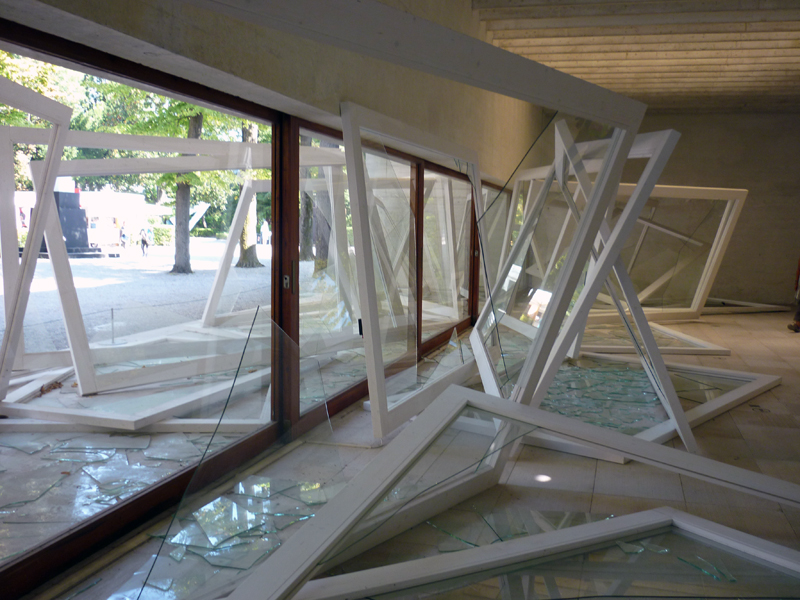
Our relationship to nature is close to the heart of one of my classmates, Gloria Ceballos who has just had an impressive solo show – Nature: a cultural artefact open at the Instituto Cervantes. Her work explores our experiences of nature in an urban environment focusing on the idea of three natures. 
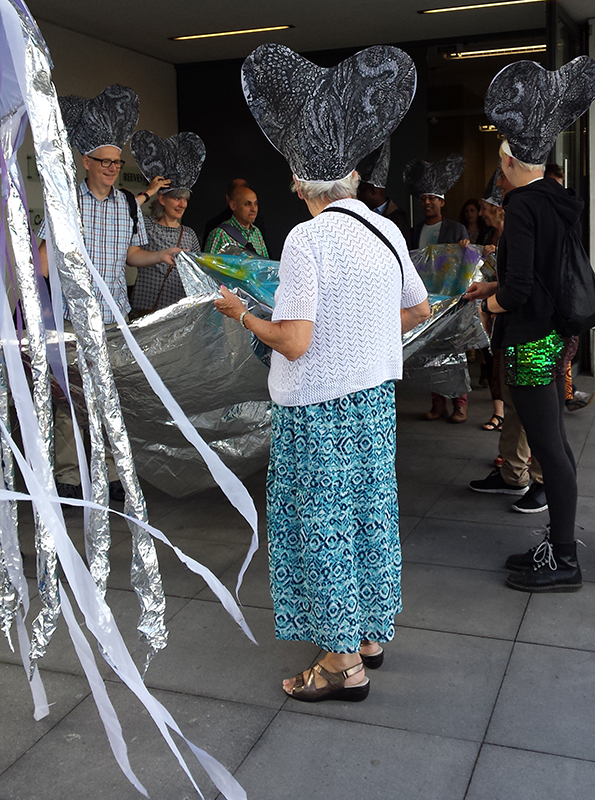
Gloria Ceballos The Three Natures

Gloria Ceballos The Three Natures

I was recently asked by a male visitor at an exhibition if spiritual concerns were predominantly a female pursuit.

For Ana Mendieta in the 1970’s when a lot of land art was being made by artists such as Robert Smithson she felt her works were more spiritual and in tune with nature as opposed to the brutality of the industrial spirit. She left little trace in the landscape unlike her male contemporaries who were interested in the earth as material. She was interested in the earth’s sensual qualities, exploring the primary relationship of humanity with the earth as mother.  Through tapping into the ancient spirits of a primordial age and using the same elements of earth, fire and blood in her art as her ancestors used in their rituals she hoped to infuse her work with power and magic. She was often aligned with feminist and goddess groups but held firm that her work should not be tethered to gender issues, it was more universal.

Exploring the complexity of the female perspective today Disturbance was an exhibition culminating on International Women’s Day featuring Hermione Allsop, Alexandra Drawbridge, AnnaMaria Kardos, Paula MacArthur, Kate Murdoch, Mitra Saboury, Wendy Saunders, Susan Sluglett and Geraldine Swayne at Atom Gallery in Finsbury Park.

Kate Murdoch

Kate Murdoch

Kate Murdoch’s silent gathering bears witness to those unheard voices from the past when a girl was not expected to speak out.

My time at the RCA will soon be over. It’s been an incredible experience that I never imagined I would participate in.

After spending last summer wholly immersed in writing my dissertation I have had the honour of receiving a distinction. It wasn’t an easy birth so it’s really rewarding to find my energies were worthwhile and I ended up with something I can be proud of that will be archived at the Royal College of Art.

1502 Cover dissertation

The visions of paradise that we conjure in our imaginations will be influenced by our culture, personal aspirations and spiritual beliefs but however paradise manifests itself in our consciousness it will symbolize the promise of bliss.

Formed from joining the ancient Iranian words pairi, ‘around’ and daêza, ‘wall’, paradise was first used to describe a walled enclosure. Over time its meaning expanded to include the landscaped parks local nobles created to hunt animals trapped within their walls. These royal parks were lavishly planted with beautiful trees, shrubs and flowers and so paradise came to refer to any delightful garden. Ultimately used as epithet for the Garden of Eden, imagined as the most exquisite garden of them all,  its meaning became ever more sacred, taking on the very idea of Heaven itself.

Also I have met some personal challenges so am feeling good about that too.

One of the reasons I initially hesitated over applying to the RCA was the knowledge that as part of the MA I would be sent on a teaching placement. This terrifying possibility is now in the past. I went to Manchester School of Art and was made very welcome.

1502 circle of influences

My fears were unfounded and I was able to give a talk and tutorials which although an intense and exhausting experience was not the horrific one I imagined it would be. So I feel ready now to set a new challenge.