Archives for category: Uncategorized

I wondered what the building blocks of the universe looked like and found myself on the Cern website reading about Quarks and Leptons. I discovered the language of particle physics to be quite like that of mythology – inhabited with mysterious characters like the charm quark and strange quark, the muon neutrino and the tau governed by fundamental forces that cannot be seen or explained other than by their attributes – like the mythical gods. I am intrigued by this mysterious world.

The name “quarks“ was chosen for the three fundamental particles of all matter from a nonsense word used by James Joyce in the novel Finnegan’s Wake:“Three quarks for Muster Mark!“ – the first sentence of Finnegans Wake completes the end of the last sentence – the book’s circular structure reflects the theories of the philosopher Giambattista Vico (1668–1744) a major source of inspiration for me this past year. Vico published his theories for a new approach to the study of human history in Scienza Nuova, he viewed human history as cyclical along with the natural cycles of the earth – night and day, life and death, rise and fall, civilization and breakdown.

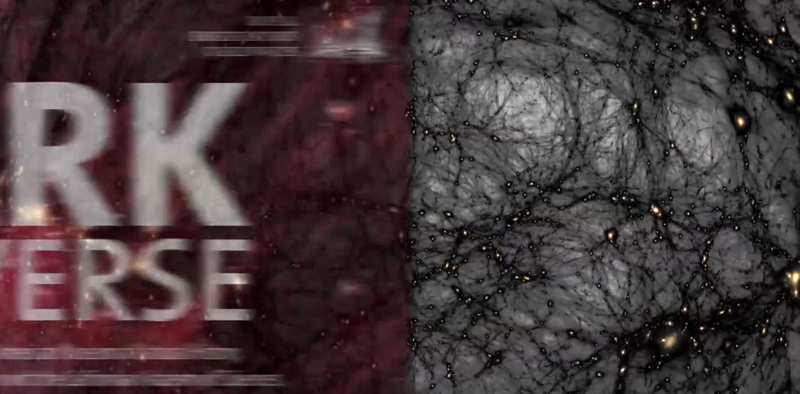
Quarks are explained in the theory of the standard model – a mathematical formula which explains how the basic building blocks of matter interact – it provides the best explanation so far but does not explain everything. According to current theory the matter we know which is what makes up all stars and galaxies is only 4% of the content of the universe. Dark matter makes up about 26% of all matter and the remaining 70% is referred to as dark energy, it is even more mysterious than dark matter but it may be what is causing the expansion of the universe. I found these statistics extraordinary. This has led to a new piece of work I am beginning work on.

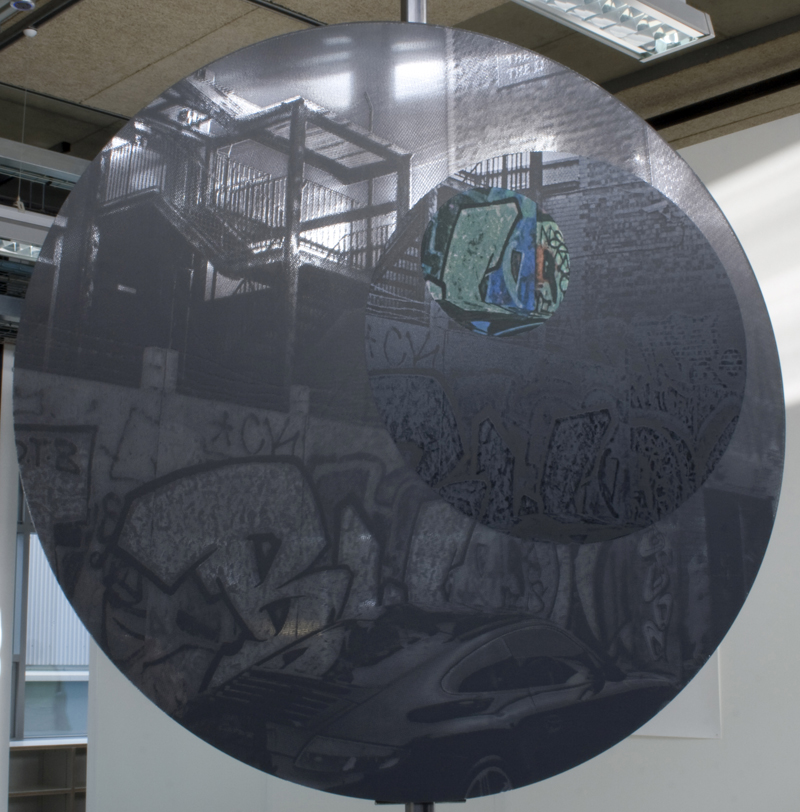
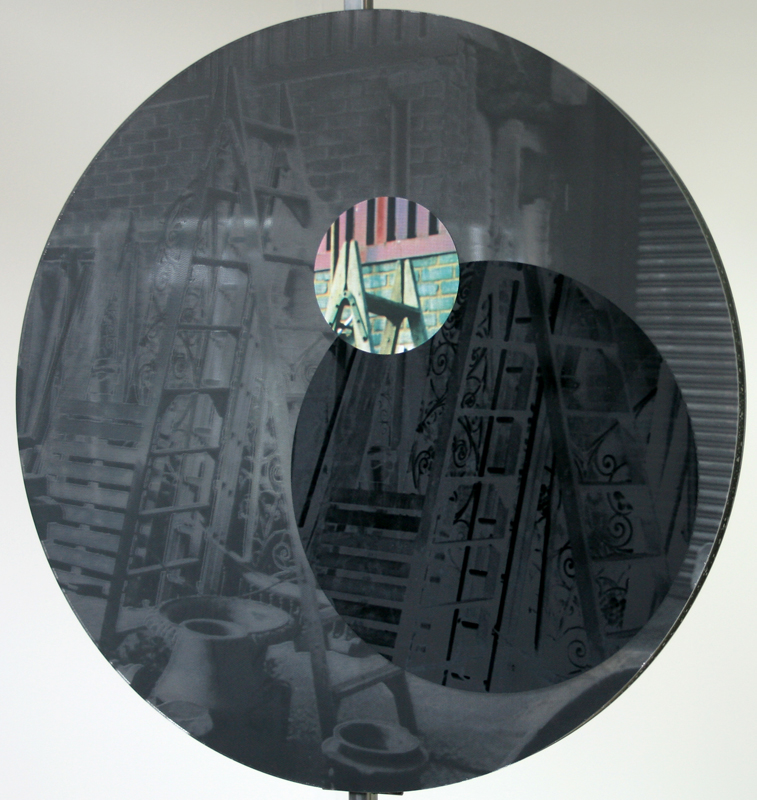
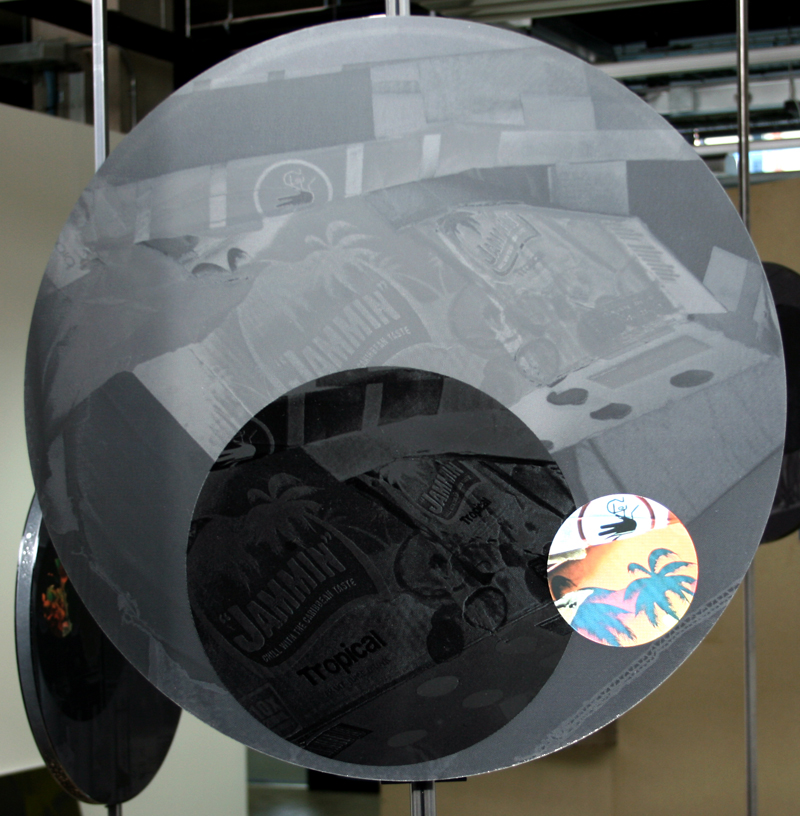
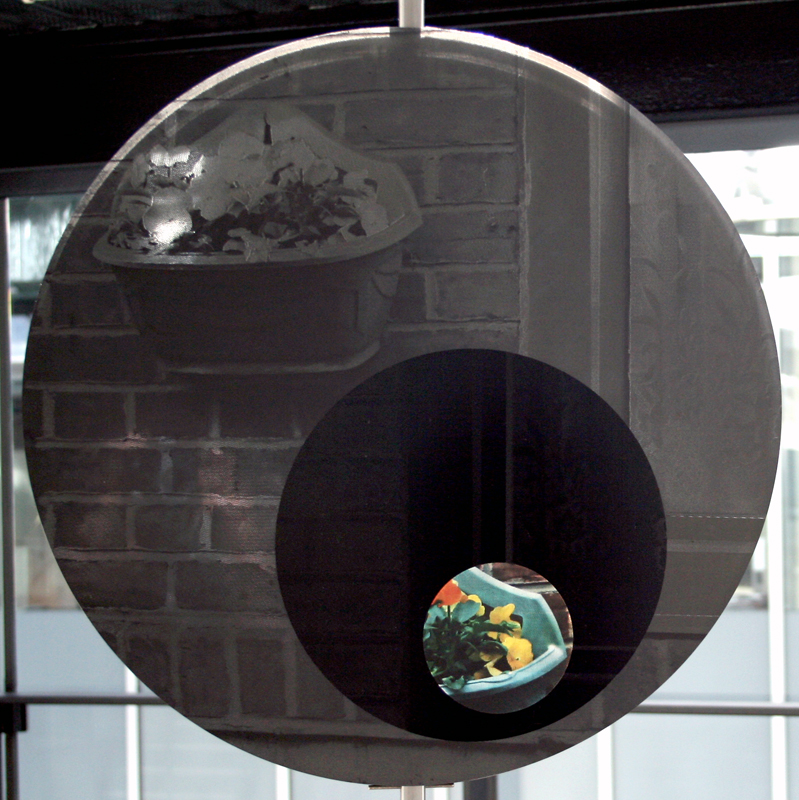
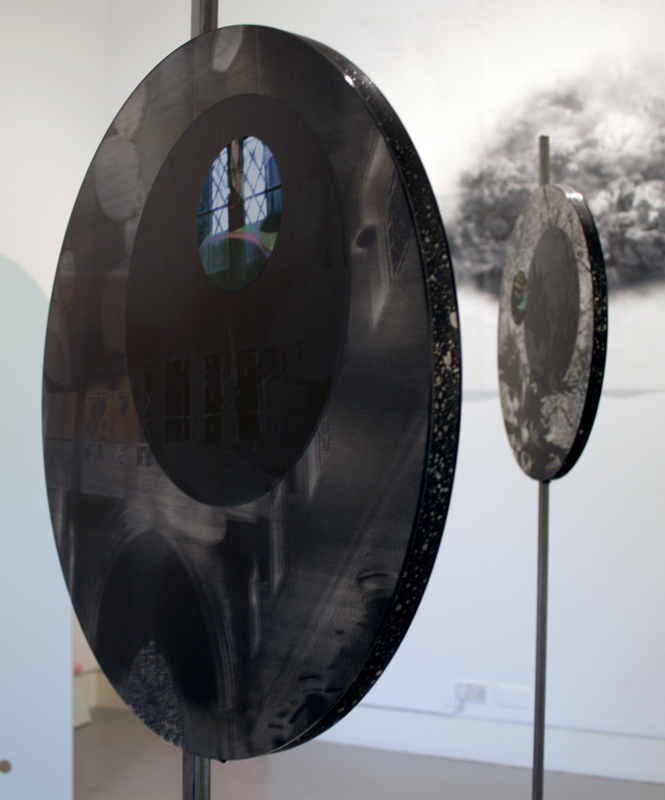
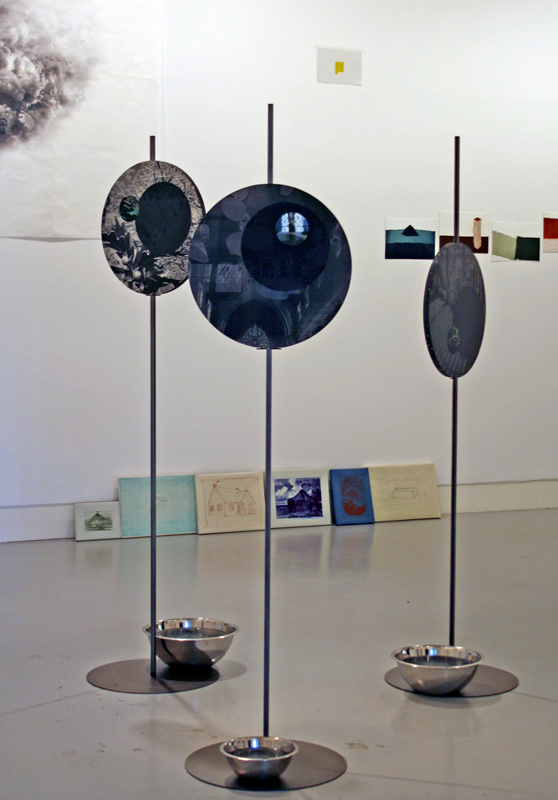
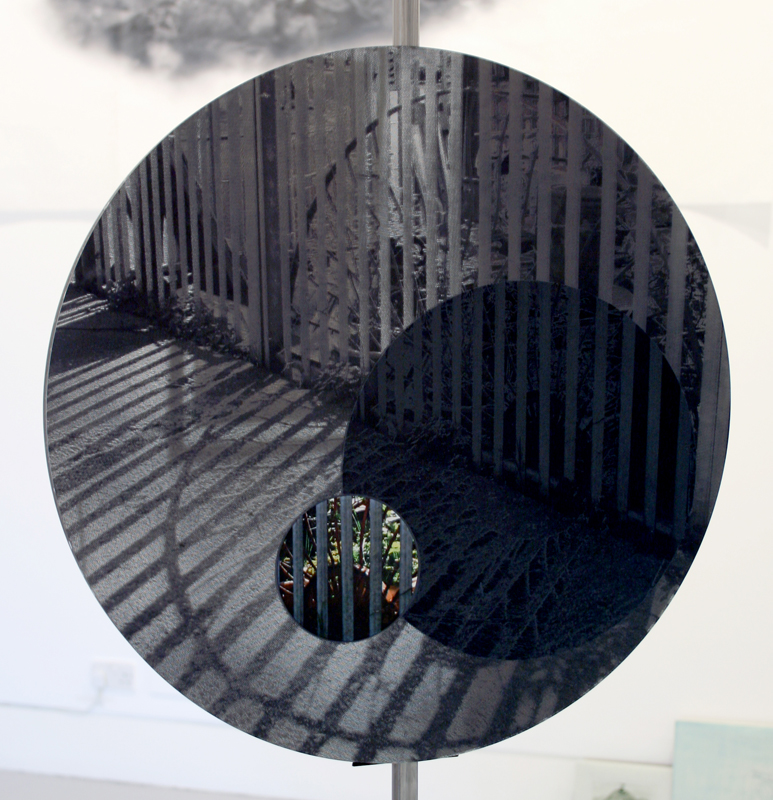
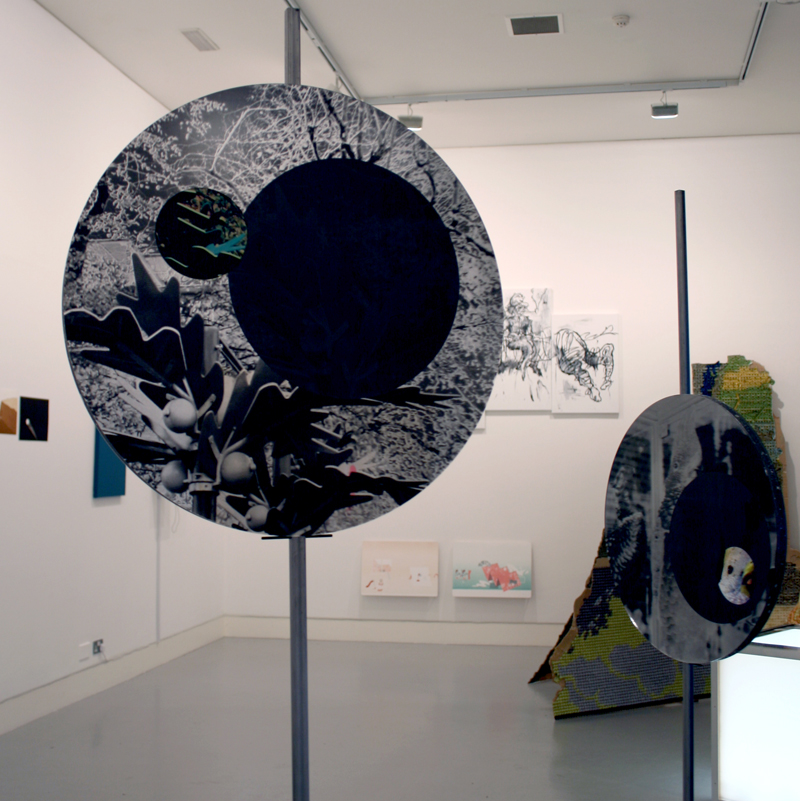
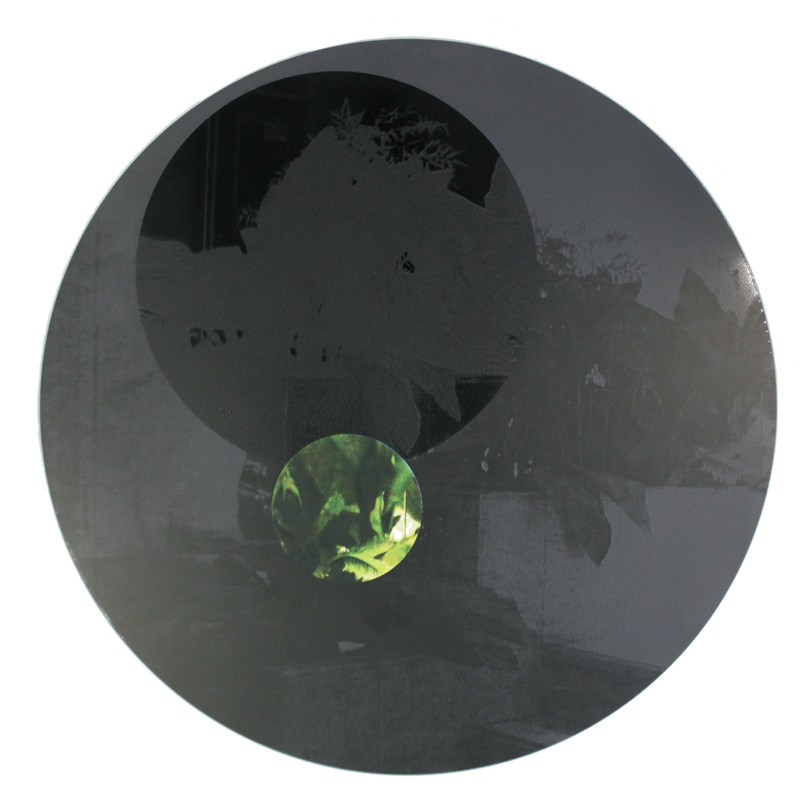
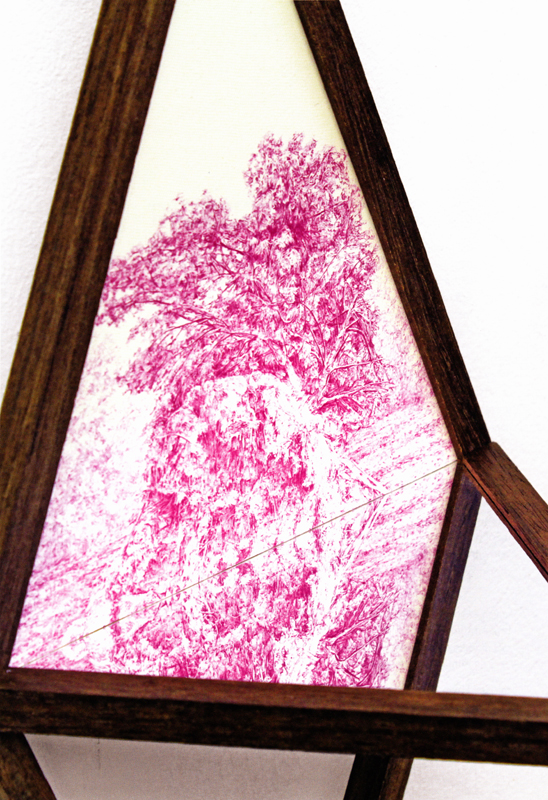
Every Day Matters 1

Susan Eyre Every Day Matters 1

I have been reading ‘Impossibility – the limits of science and the science of limits’ by John Barrow about how what we don’t understand has defined society as much as by what we do. That we can know what we cannot know is one of the most striking consequences of human consciousness.  All human experience is an edited account of full reality – our senses prune information – our eyes do not see the full spectrum – we summarize, compress and abbreviate the world around us. Religious and Mystical explanations do a similar thing, they make the world manageable.

Despite warnings in mythology that to possess all knowledge will lead to no good we still try to understand the unknowable.

According to current debate we may now be at an impasse where science can no longer offer us an answer. It might be that not everything in the world can be explained through materiality and there are some things we will never understand. The answers may be hidden deep in the subatomic world or the dark recesses of the universe, or we may never answer the big questions about the origin of matter and human consciousness.

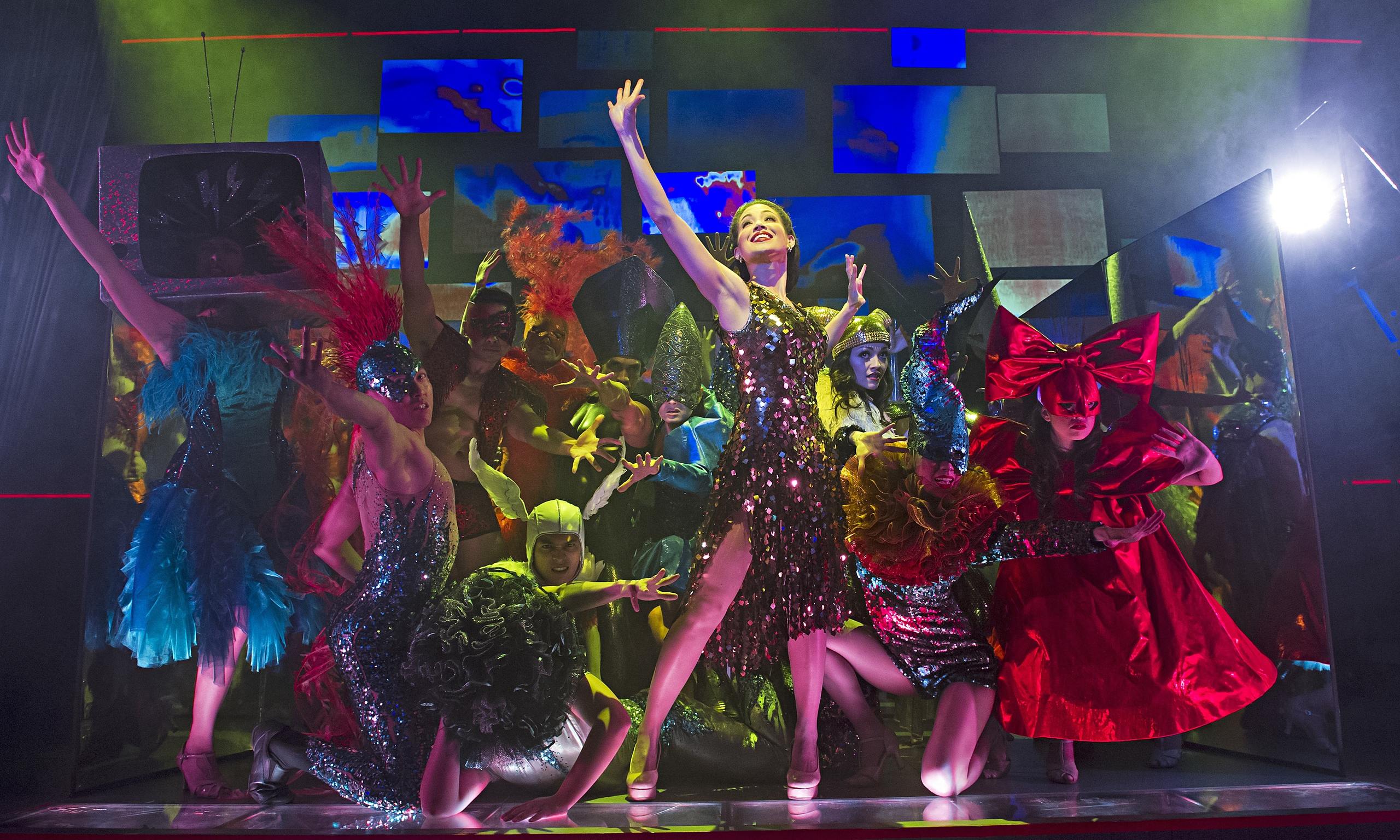
Reading Robert Pogue-Harrison’s book Forests – the shadow of civilization, introduced me to Giambattista Vico and his speculation on the myth of forest dwelling bestial giants primordial fear of thunder which led me to reading about the Tasaday Tribe of the Philipines  – modern day forest dwellers who also feared thunder. The controversy over the authenticity of the tribe has raged since the first media revelation of their existence with implications that the corrupt Marcos regime were involved in the debunking of the story in order to plunder the Tasaday forest home for resources. I then find myself immersed in the midst of the most powerful musical rendition based on the remarkable life of Imelda Marcos  – Here Lies Love – at the National Theatre.

David Byrne and Fat Boy Slim - Here Lies Love

David Byrne and Fat Boy Slim – Here Lies Love

Also colourful and immersive, I loved A.S. Byatt’s Ragnarok – The End of The Gods  – a delicious imagining of Norse mythology full of lavish imagery. There are many ways for the world to end.

Nietzsche wrote ‘Every culture that has lost myth has lost, by the same token, its natural healthy creativity.’

I have just started A.S. Byatt’s novel Possession to find Vico popping up again as a main thread in the storyline. It seems he is everywhere I look at the moment.

Visited Bloomberg New Contemporaries at the ICA. There is a particular flavour here but I’m not sure I can articulate what it is.

So pleased for the talented Ben Zawalich and Alice Gauthier 2014 graduates who were among several RCA printmaking graduates in this show.

Alice Gauthier Tourne  video still

Alice Gauthier  video still

Ben Zawalich

Ben Zawalich

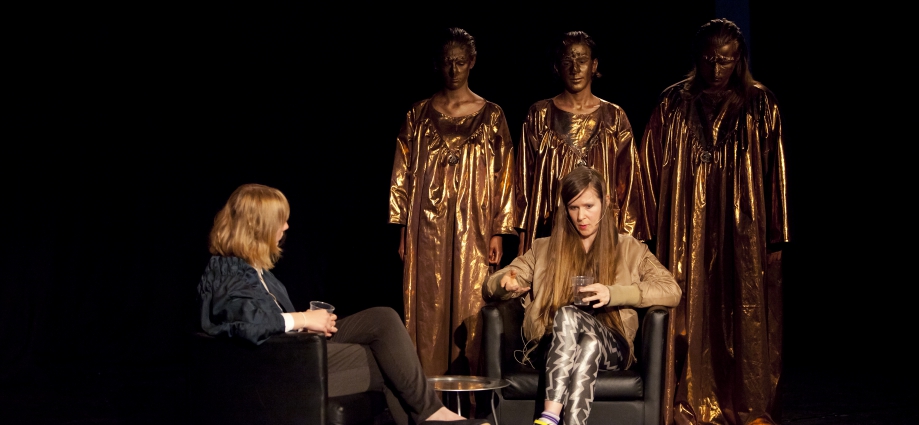
I did enjoy the video piece by Emely Neu though not sure if it was on any other level than how I enjoy the absurdity in Big Train.

Emely Neu

Emely Neu

There appeared to be a serious interview going on, while three characters in golden robes and painted faces would from time to time make Tourette’s like interjections of nonsense or the sort of noises a bored toddler might make waiting for a parent to finish talking to a friend and divert their attention back to them.

Visited Constructing Worlds: Photography and Architecture in the Modern Age at the Barbican Gallery. I liked the title, Constructing Worlds.

Some work was interesting as documentation of place and other work offered an interpretation or an opening to somewhere else.

The Becher’s water tower collection is a favourite piece. Similarities and differences unite us as individuals.

Bernd and Hilla Becher

Bernd and Hilla Becher

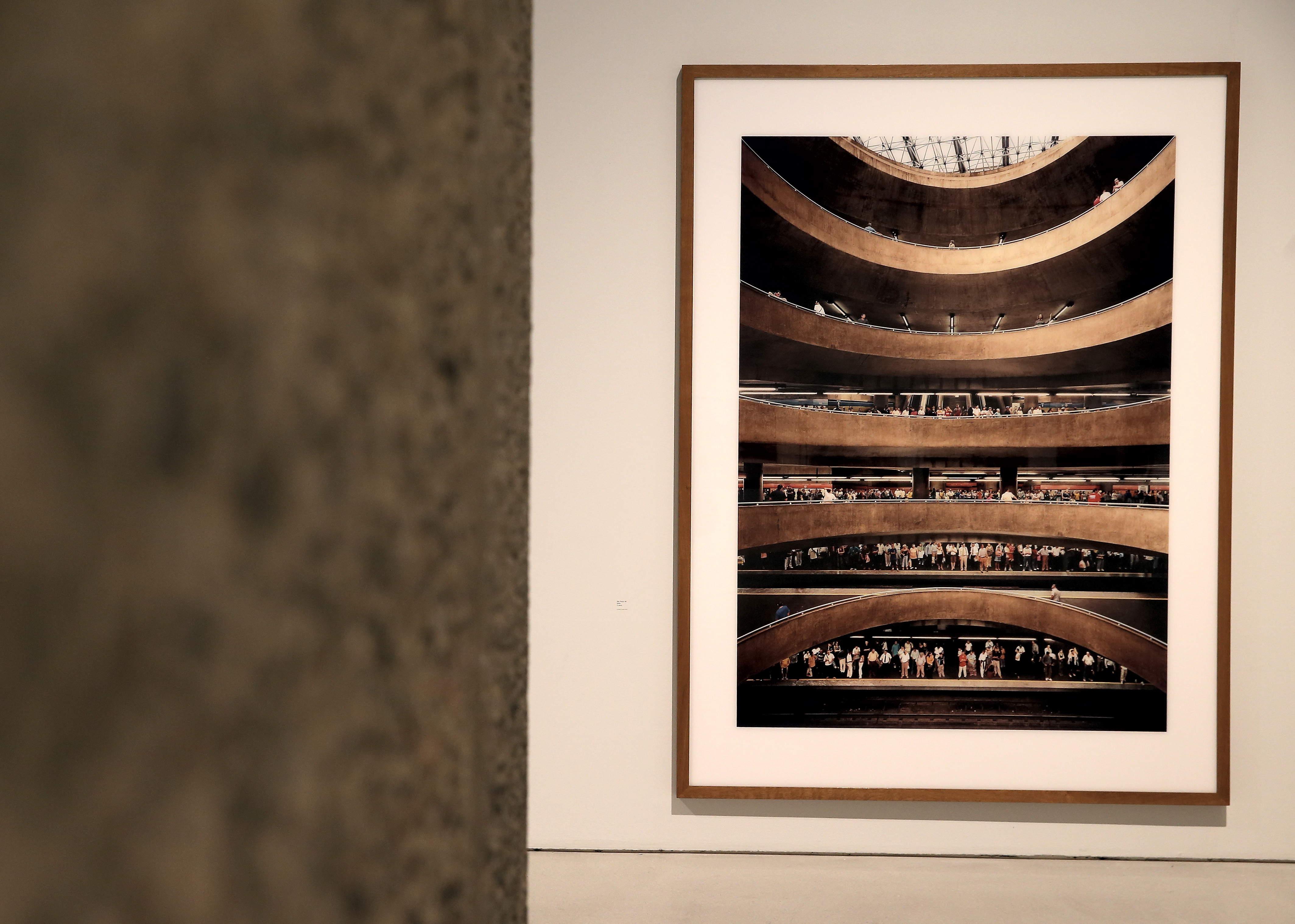
The sheer scale and drama of a Gursky image is always mindblowing. Its like we stand back and go wow, we made this, we have impressed ourselves, and he captures that awe.

Andreas Gursky

Andreas Gursky

Iwan Baan’s images of Torre David, an abandoned skyscraper in Caracas, home to thousands of squatters until last year,  had added interest because we had seen it on Homeland, also these were the only images in the show with no white borders.

Iwan Baan

Iwan Baan

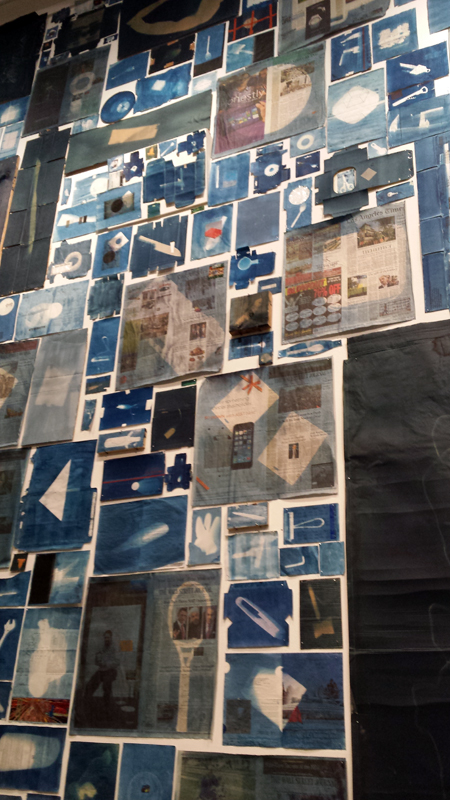
While at the Barbican had a look at Walead Beshty’s impressively scaled visual diary in the Curve.

Walead Beshty

Walead Beshty

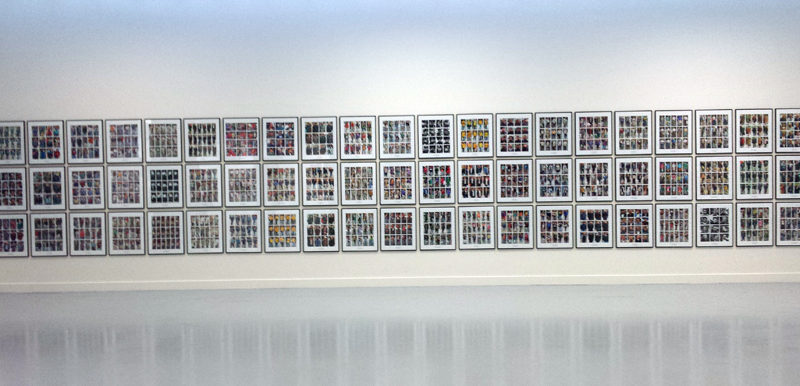
Over 12,000 cyanotype prints pasted to the wall. Surprising detail captured in some of the prints while others were simple silouhettes. It looked like a satisfying project to fill so much space through a process.

As part of a series of events surrounding the RA exhibition ‘Anselm Kiefer’, novelists A.S. Byatt and Lawrence Norfolk lead a discussion on the Brothers Grimm Fairy Tales in this Podcast: – venture together into Germany’s dark woods.

The forest as dark, dangerous and profane, on the edges of civilization. It once surrounded the city, now it is removed. The dark inner space is inviting yet fearful. In history it is the separation between earth and sky. In Vico’s myth it is the heavy branches of the forest that hide the sky – the home of the gods, from the wild men of the forest. The deep recesses of the forest hide danger and wild beasts in their mazes. The laws are those of survival.

Grimm Tales staged at the Oxo Wharf were given the Philip Pullman treatment.

Grimm Tales

Grimm Tales

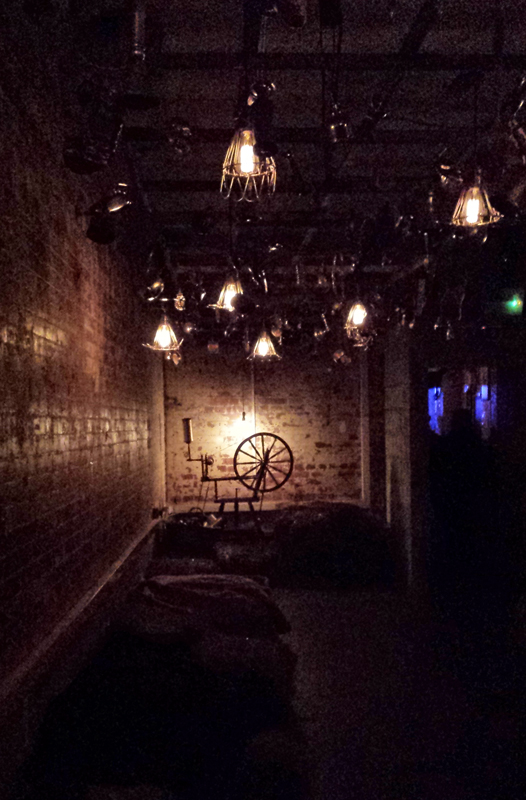
Led from one set to another in the theatrically dressed wharf building a series of Fairy Tales were acted out.

Grimm Tales

Grimm Tales

The setting was magical enough and the actors enthusiastic

Grimm Tales

Grimm Tales

but the pace was a bit too slow and disjointed to really carry the audience through

Grimm Tales

Grimm Tales

I heard Philip Pullman on the radio the other day talking about His Dark Materials. There seems a lot of ideas explored in his novels that I would find interesting in connection with my work at the moment.

The Golden Compass that God used to set a circular boundary around all creation mentioned in Milton’s Paradise Lost:

Then staid the fervid wheels, and in his hand
He took the golden compasses, prepared
In God’s eternal store, to circumscribe
This universe, and all created things:
One foot he centred, and the other turned
Round through the vast profundity obscure

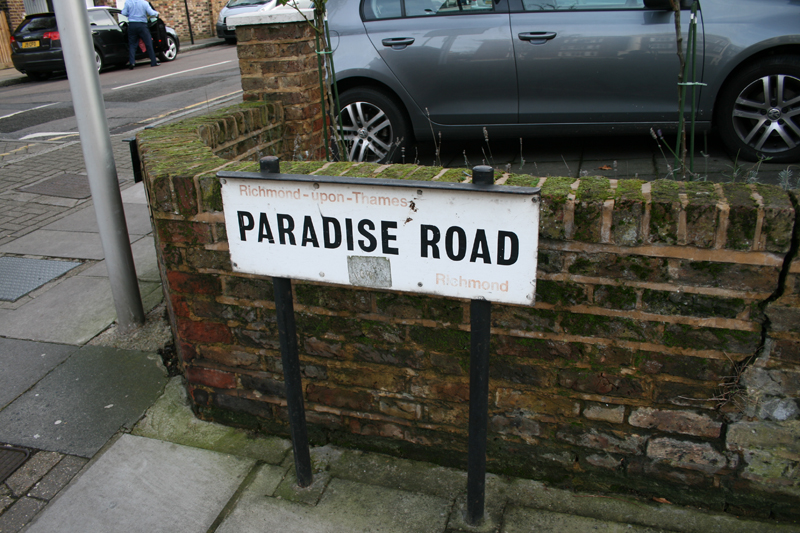
I have been on another paradise location exploration. This was to Paradise Road in Richmond.

1501 road sign

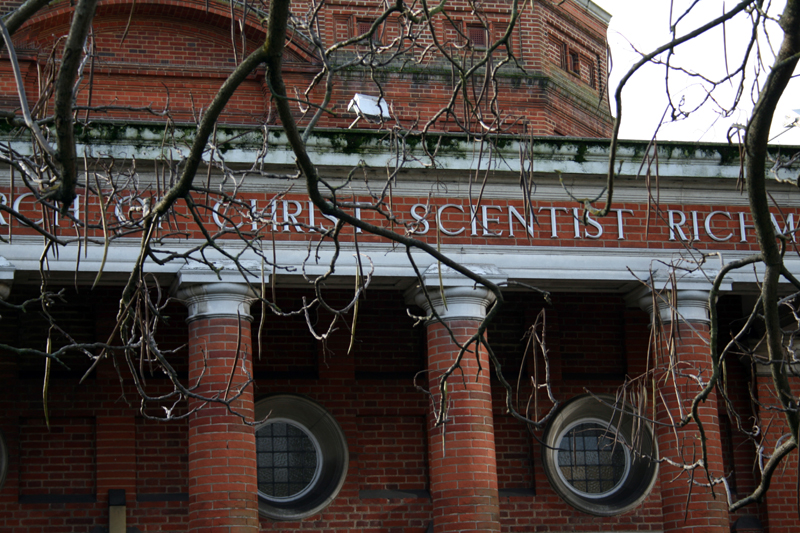
I was delighted to find The Church of Christ Scientist at one end

1501 Church of Christ Scientist

and St Mary Magdalene Church of England at the other

1501 St Mary Magdelene's

– alternative routes to paradise?

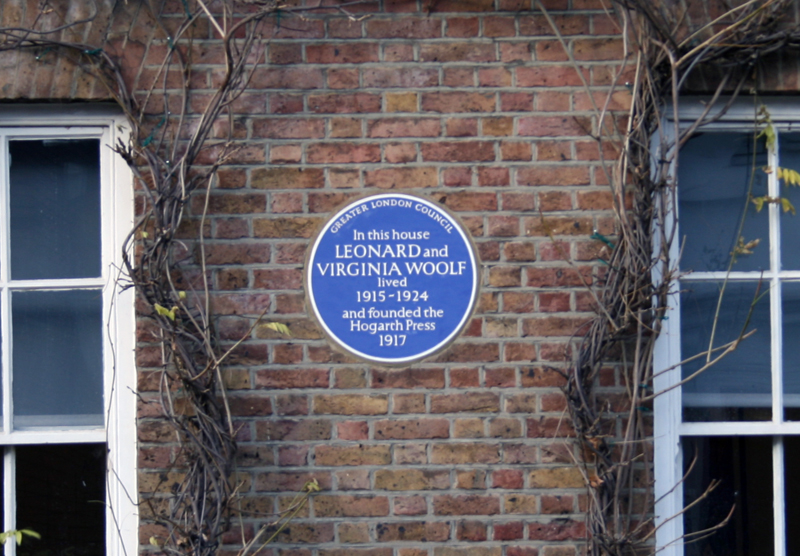
A bit of print history in the road as well.

1501 Paradise Road Richmond

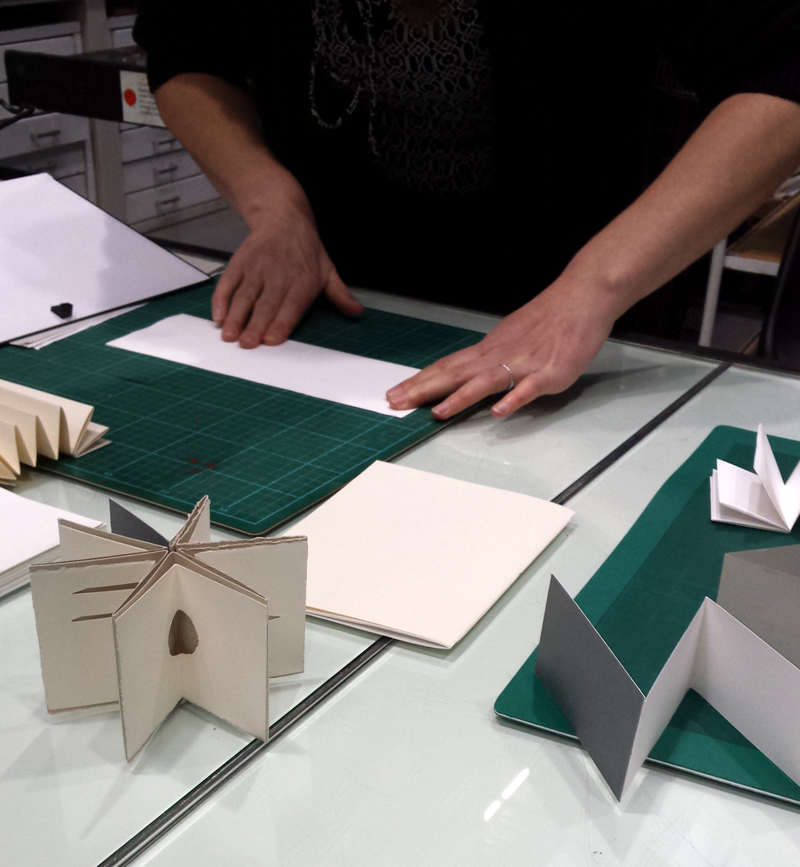
The Hogarth Press was started in 1917 by Leonard and Virginia Woolf, named after their house on Paradise Road. They began by hand-printing books of their own books and then stories from others in the Bloomsbury Group.I had a chance to make some simple books in a workshop at school.

simple bookbinding workshop at RCA

simple bookbinding workshop at RCA

When the intensity of the MA is over come July then I might have a go at this.

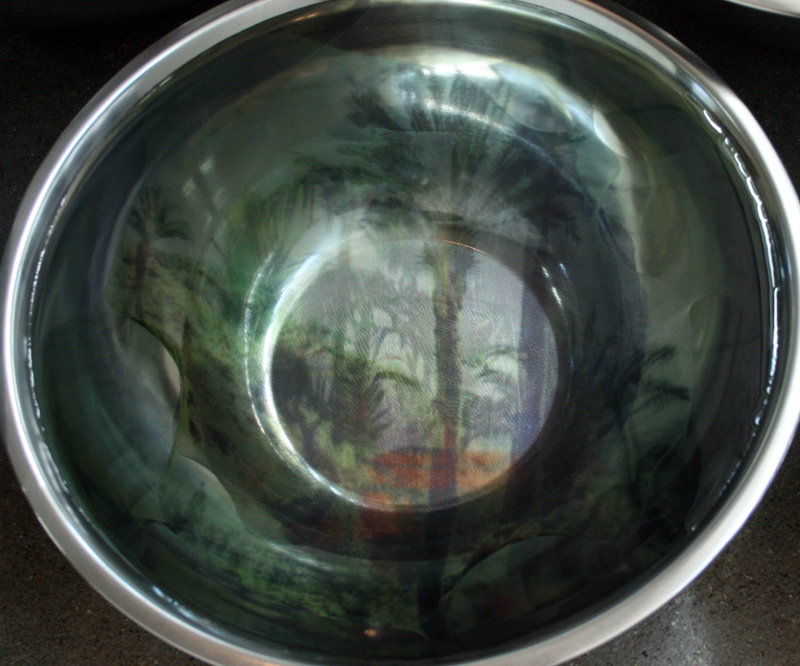
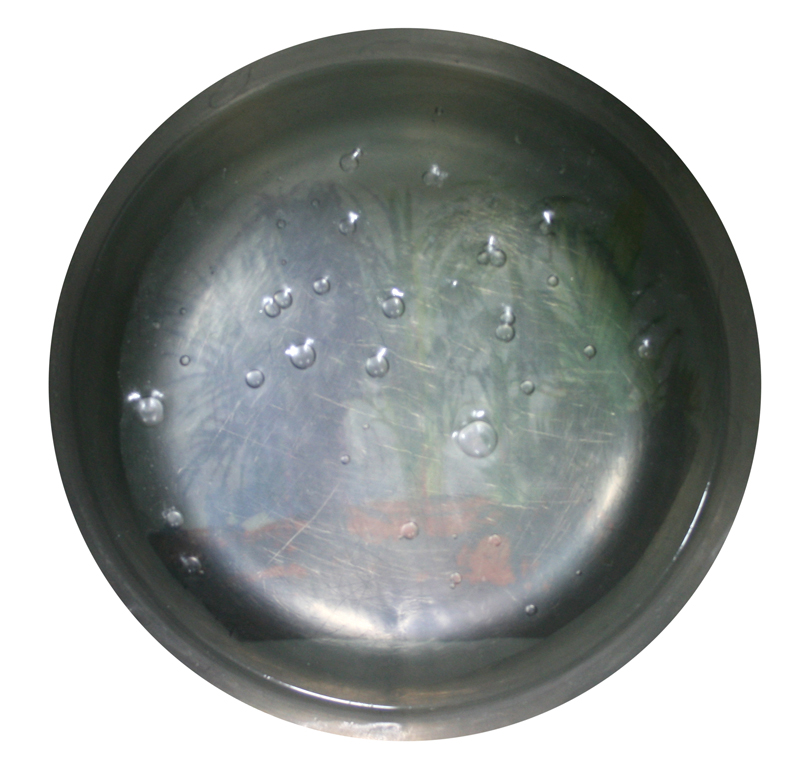
Thinking about portals to other dimensions I decided to try submerging an image in water. At first I wanted the fabric to stay on the bottom of the bowl but it refused to do so – so I left it floating, wondering if it would eventually sink, after a while bubbles appeared on the surface trapped by the fabric – I have found this evidence of unseen activity intriguing – like the activity in the matter of the universe going on around us unseen –  some unseen activity we can understand,  other intangible things like the aura of place and the dream of paradise cannot be pinned down or explained in terms of materiality.

1501 pool

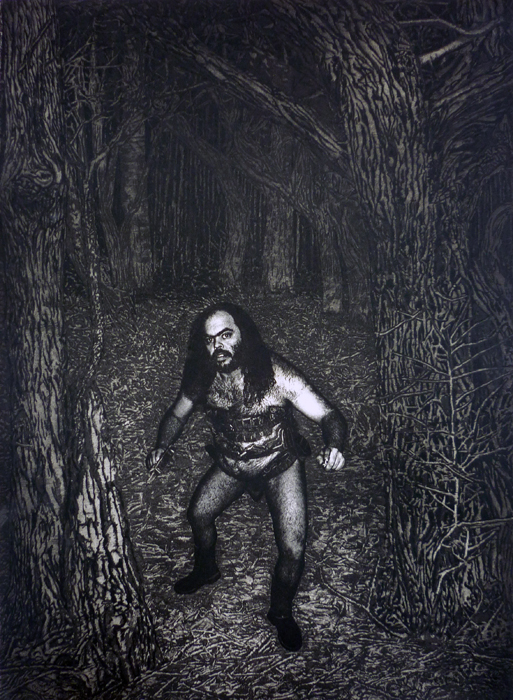
The myth of the wild man stretches back to the ancient tablets inscribed with the tale of Gilgamesh’s quest for immortality. As a barometer of the mores of society the wild man’s characteristics reflect topical fears and aspirations. If society is perceived to be corrupt the wild man symbolises natural wisdom, if society embraces convention the wild man represents anarchy. His character can also be assessed from the landscape he purportedly inhabits, a pastoral setting reveals an ideal to be strived for whereas the dark forest conceals the untamed savage.

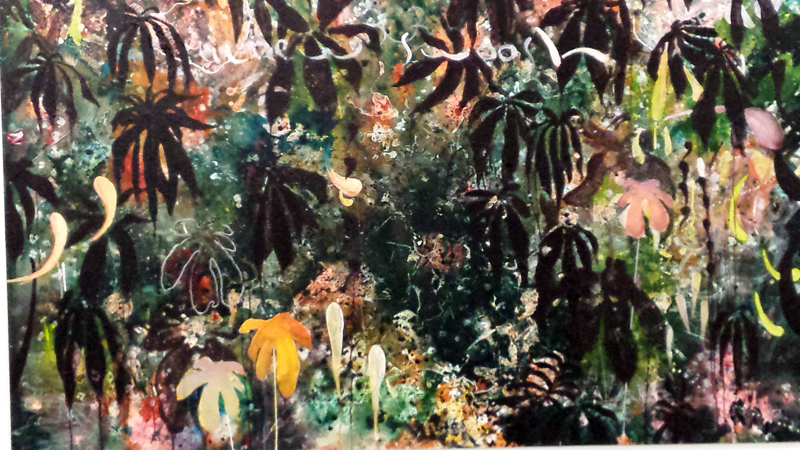
Forest of Eden

Susan Eyre Forest of Eden

I wanted to discover a female counterpart to the contemporary wild man (an internet meme) I had placed back in the ancient forest.

Rather than a female on the edge of society I wanted a female at the centre of society.

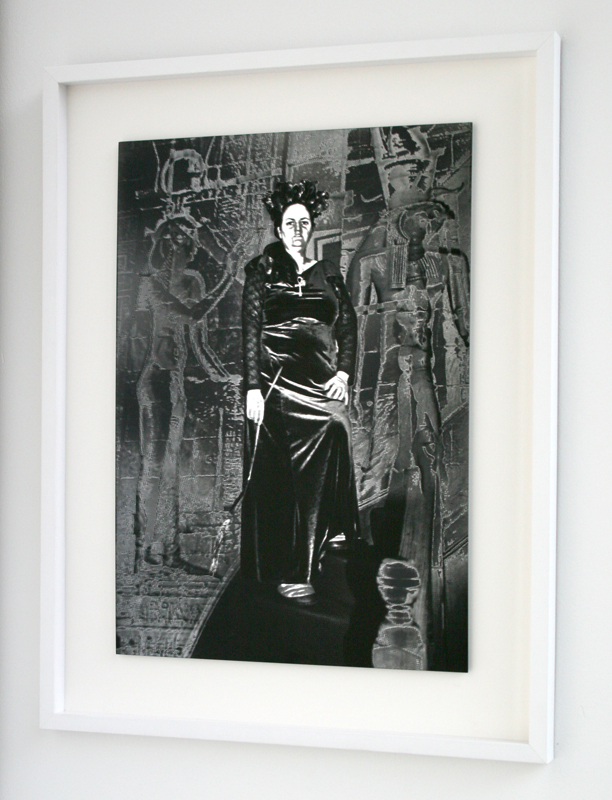
Wondering who a contemporary goddess might be I was introduced to Bernadette by a mutual friend.

I spent some time with Bernadette, listening to her stories.  She is very proactive person in the local community and has had an impact as a campaigner for the Green Fair, uplifting some dark neglected spaces with vibrant mosaics, and more recently setting up the choir Shakti Sings recognisable in red with flowers in their hair who honour the earth through song and have become a mainstay at Glastonbury encouraging the crowds to keep the site clean. She has also established the Beacon Temple as a place of worship to honour the many goddesses in her own home. She kindly agreed to my taking some photos of her at home which I have used as basis for work focusing on connections between ancient spiritual beliefs and contemporary society. Her spiritual life requires that she gives up stimulants such as alcohol and caffeine as well as any contact with money. One of her missions is to uncover and document the ancient sites of goddess worship that have become hidden within the palimpsest of the city. The goddess Isis cropped up a lot in our conversations and so for one piece I used imagery from the ancient temple to Isis at Philae in Egypt, placing Bernadette within the sphere of the ancients yet maintaining her contemporary domesticity with her carpet and slippers. I was inspired by the exhibition Mirror City at the Hayward Gallery which refers to Jean Cocteau’s Film Orphée and the significance of a mirror as a portal to another world.

Considering Bernadette’s positioning as a portal between this world and the spirit world I screenprinted onto mirrored acrylic.

I am a portal

Susan Eyre I am a portal

In a second piece of work I took inspiration from the storytelling of Xanthe Gresham-Knight who weaves tales of ancient mythology into contemporary scenarios.  I used images conjured from her goddess tales such as the song of the white snake and the ear of corn she gives out at the end of her performances combined with wall paintings from Bernadette’s home to weave together the ancient with the everyday in a rich multi layered screenprint worthy of a goddess.

Her

Susan Eyre Her

At the RCA I was extremely lucky to be selected to have a masterclass with Susan Hiller who coincidently featured in the Mirror City exhibition at the Hayward Gallery. I have appreciated her work for a long time and share many of her interests.  It was an exciting and nerve wracking proposition to present my work to her. I had prepared a 10 minute power point as requested but after attending her lecture the week before felt this wasn’t perhaps the approach she would approve of. She seemed to find both the Powerpoint presentation and her in conversation partner for the lecture irritating. With her depth and breadth of experience she was going to be a difficult woman to impress.

She began by telling me that she finds printmaking to be an unsatisfactory medium to convey ideas. As I stuttered though my presentation I could feel her impatience growing.

I had used a favourite quote from artist Sergio Vega

“the concrete texture of perspiration” [ ] “that intimate battle with humidity – the monumentality of spaces, the exuberance of vegetation with that smell of ripe fruits, the exotic flowers in the never-ending heat, those sunburned colours, and the buzzing of mosquitoes, which, like fat angels of a tropical rococo, rue without mercy in the sky of Eden.”

She stopped me there and asked how the work I have produced so far addressed this problem of conveying such an experience.

I admitted I had not so far resolved this issue but have been thinking about this since. Sergio Vega also struggles with the problem of conveying an atmosphere, for example an experience of the forest rather than a depiction of the forest. The thing about the Tropicalia exported in the rococo style was its cleanness, its reduction to aesthetic – the mosquitoes  were not exported too. In his work Vega aims to show the sweat, the grotesque dictatorships, the poverty. It may not be possible to show all this in one piece of work but in a body of work over time maybe some of these issues can be addressed, even in printmaking. This is my challenge.

It was wonderful to spend a morning with Susan Hiller, she has an amazing mind – acute and resourceful. She did see a glimmer of hope in my etching Paradise HP2 and also in the spectrum print that was a chance discovery along the way.

Susan Eyre

Susan Eyre

Stephanie Rosenthal the curator of Mirror City describes the mirror as an unreal space, a virtual space like the world behind the screen where we spend more and more time. There was a lot of information to take in at this extensive show so the magical simplicity of Mohammed Qasim Ashfaq’s imaginings of objects from other worlds was memorable and his intense geometric black hole did pull you in.

Mohammed Qasim Ashfaq Black Hole III

Mohammed Qasim Ashfaq Black Hole III

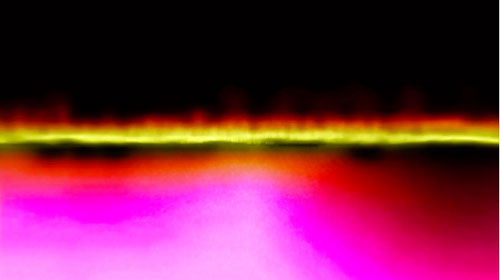
Susan Hiller’s audio-visual installation Resounding (Infrared) relayed earthly accounts of possible extra terrestrial sightings mingled with recordings of static still audible from the big bang while the screen quivered and pulsed with coloured light waves.

Susan Hiller Resounding (infrared)

Susan Hiller Resounding (infrared)

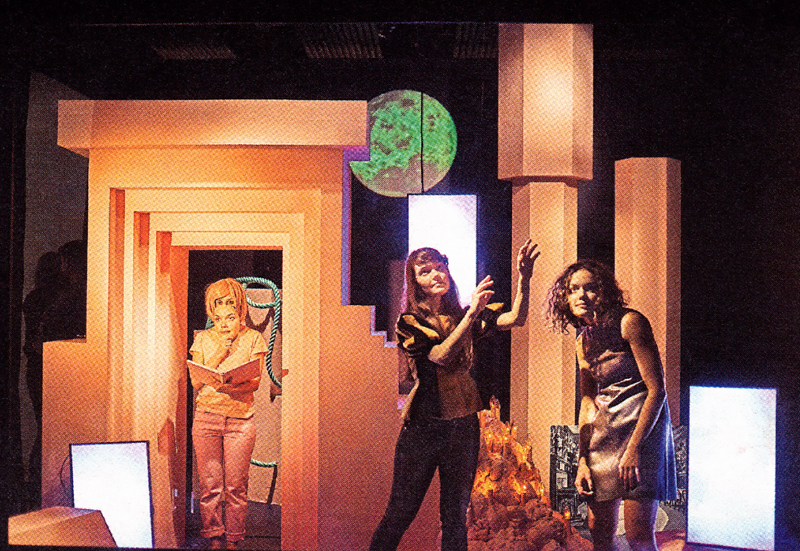
The theatrical setting for Tai Shani’s performance pieces was set behind glass creating a sort of time capsule effect.

Tai Shani Dark Continent

Tai Shani Dark Continent

A world we cannot enter only dream of. In Dark Continent she fantasizes a utopian city of women, different characters in history represented by the Neanderthal Hermaphrodite, The Medieval Mystic and The Woman on the Edge of Time, all bearing the same face.

Tai Shani Dark Continent

Tai Shani Dark Continent

A pink fantasy of a genderless society.

Inspired to learn more about medieval mystics I signed up for an RCA reading group with Tai Shani. The text we were looking at was a section from Amy Hollywood, ‘Mysticism, Trauma, and catastrophe in Angela of Foligno’s Book and Bataille’s Atheological Summa’. Bataille identifies with Angela and seeks to experience the ecstasy she purports  to achieve  from a concentrated identification with the suffering of Christ on the cross.

Excerpt from the text …

It is impossible for me to read – at least most books. I don’t have the desire. Too much work tires me. My nerves are shattered. I get drunk a lot. I feel faithful to life if I eat and drink what I want. Life is an enchantment, a feast, a festival: an oppressing, unintelligible dream, adorned nevertheless with a charm that I enjoy. The sentiment of chance demands that I look a difficult fate in the face. It would not be about chance if there were not an incontestable madness. I began to read, standing on a crowded train, Angela of Foligno’ s Book of Visions. I’m copying it out, not knowing how to say how fiercely I burn  – the veil is torn in two, I emerge from the fog in which my impotence flails. (OC V 245; G 11)

Bataille opens his exploration of ecstatic anguish at the moment when World War II begins and claims that the war itself necessitates his text. Bataille finds his own tormented desire the very anguish that compels him to write reflected in Angela’s pages. Angela, the most important of the Christian mystics for Bataille, surpasses him in the pursuit of abjection and ecstasy.  He wants to be like her in her desire for and proximity to death: “I suffer from not myself burning to the point of coming close to death, so close that I inhale it like the breath of a loved being” (Oe V 246; G 12).

The discussion revolves around the idea of the rapture and how this ultimate dissolution of self over to ecstasy might be achieved.

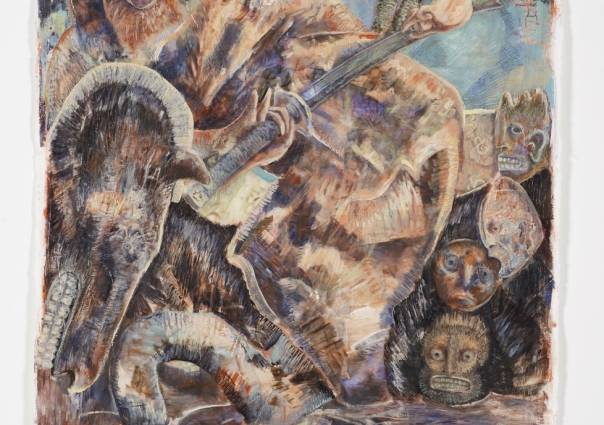
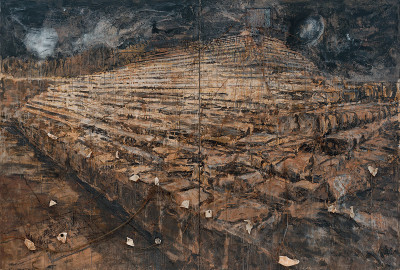
Anselm Keifer had a major exhibition at the Royal Academy of Arts. I find his work very inspiring, the scale and exuberance of his paintings carved from the substance of the earth with all the pain and trauma of geological and social evolution. The gallery guide tells us he seeks to understand our purpose here on earth, our relationship with the celestial, the spiritual, and the weight of human history. He also has a fascination with the civilization of Mesopotamia and the story of Osiris and Isis.

1412 keifer Osiris and Isis

Anselm Kiefer, Osiris and Isis, 1985-87

At the summit of the pyramid is an extruded old television circuit board emanating golden wires and shards of pottery over the ancient steps to heaven.

I was intrigued by his use of geometry and references to ancient beliefs and mythologies.

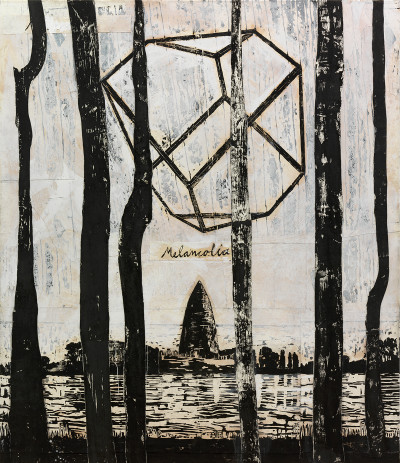
Anselm Kiefer, The Rhine (Melancholia) (Der Rhein (Melancholia)), 1982-2013. Collage of woodcut on canvas with acrylic and shellac
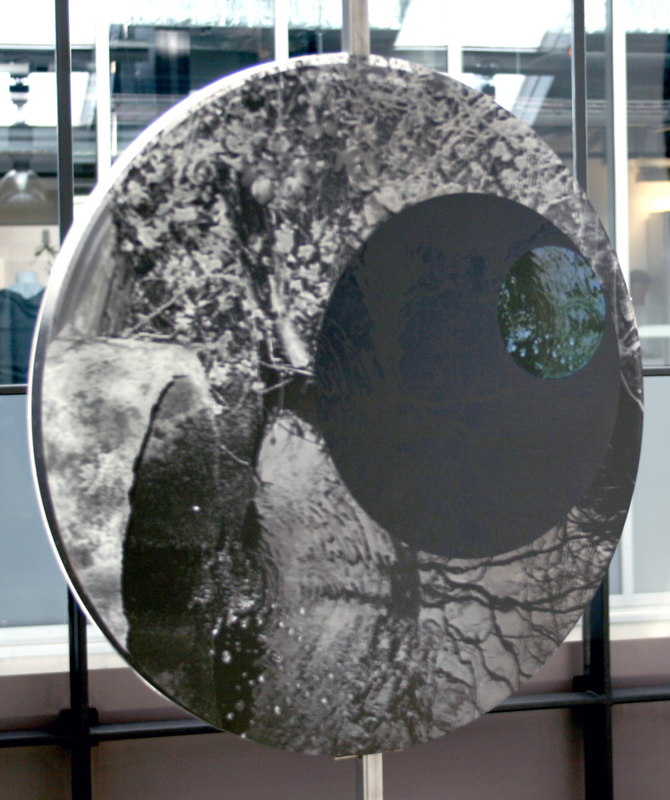
Anselm Kiefer, The Rhine (Melancholia) (Der Rhein (Melancholia)), 1982-2013.
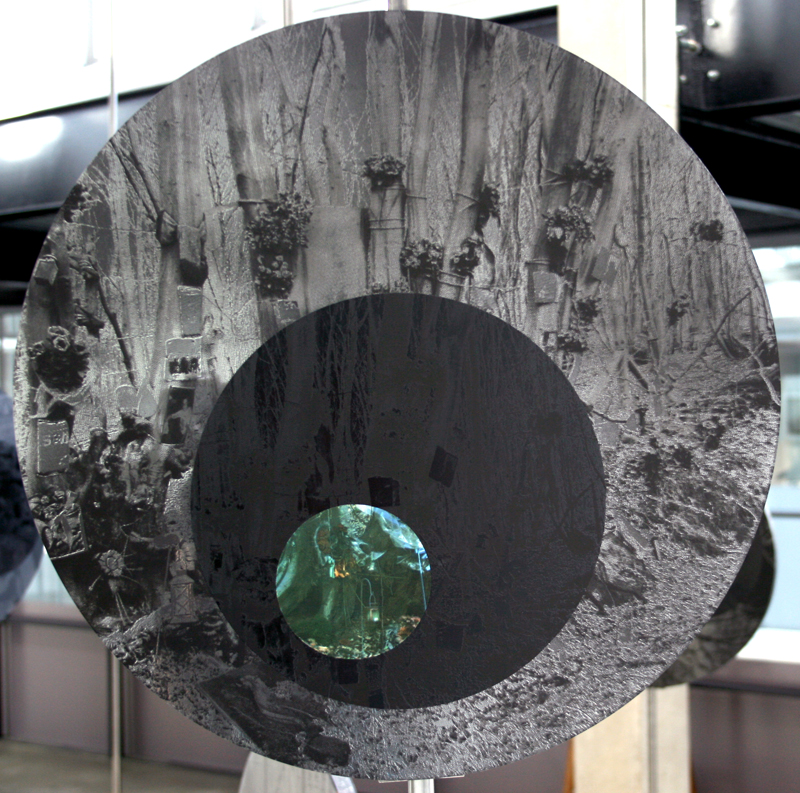
Collage of woodcut on canvas with acrylic and shellac

The Rhine (Melancholia) references Albrecht Dürer’s Melencolia, an engraving dated from 1514 which appears to lay before us clues to the puzzles of the universe.
1412 Durur Melencolia

Albrecht Dürer’s Melencolia

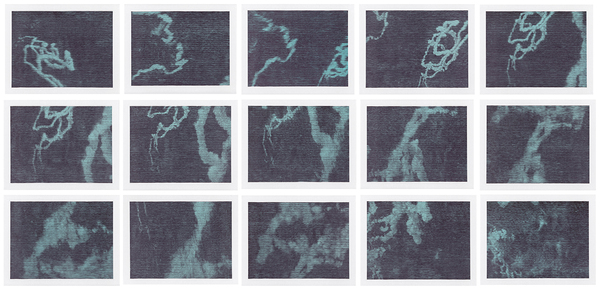
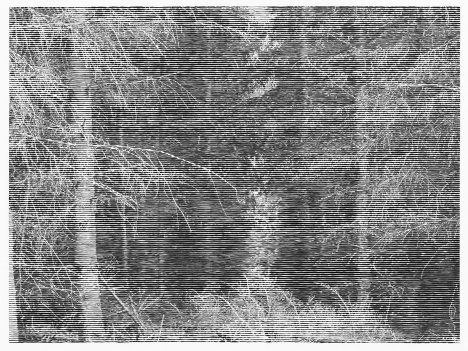
It was encouraging to hear Christiane Baumgartner talk about her work at Alan Cristea Gallery in such a down to earth manner, giving credence to intuition in her feel for colour and composition. She takes photographs of her TV screen and through diligence of process captures the flickering screen in a frozen moment. In her series Totentanz she witnesses the smoky death dance of a plane shot from the sky. Her work holds melancholia within it.

Christiane Baumgartner Totentanz 2013 series of 15 woodcuts on paper

Christiane Baumgartner Totentanz 2013 series of 15 woodcuts on paper

She seemed surprised herself to discover so much of her work references the war. Often her images may appear innocuous without their title which is what ultimately adds the layer of pathos removing it from sentimentality.

Chrisitane Baumgartner Wood near Colditz

Chrisitane Baumgartner Wood near Colditz

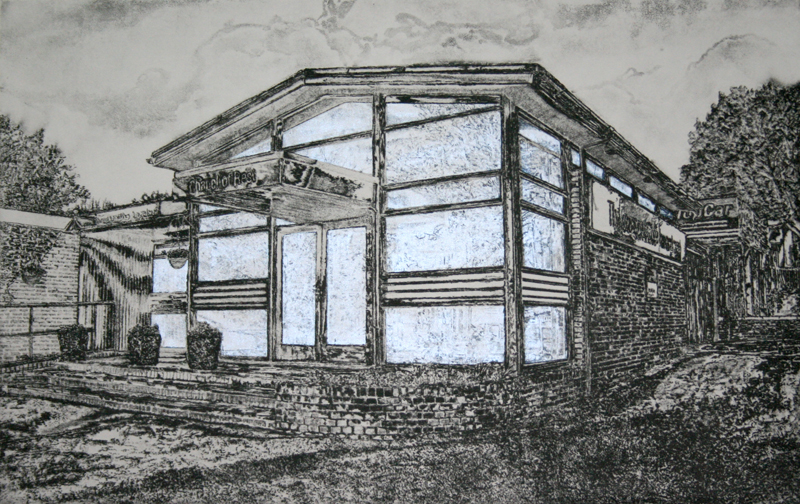
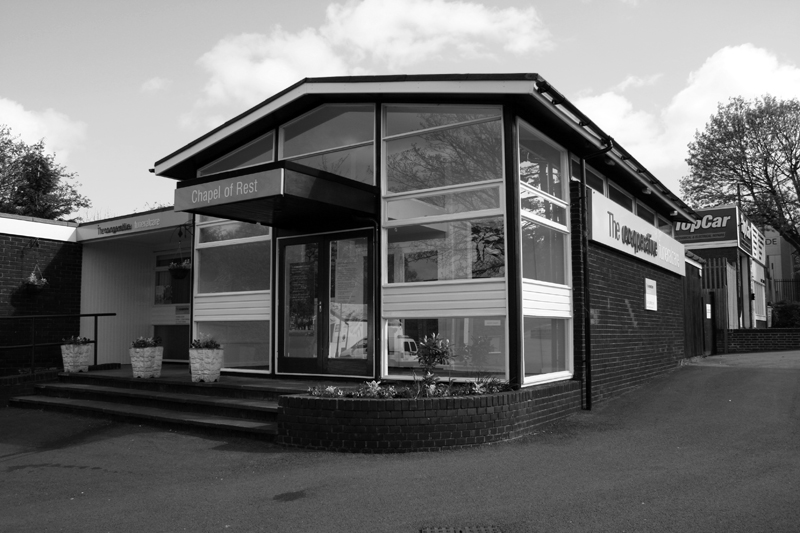
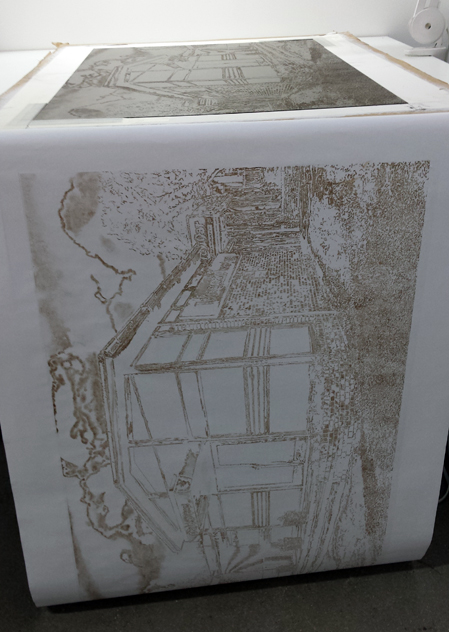
It is interesting how subtle shifts in the colour of paper and ink can change the atmosphere of an image. For the softground etching of the Chapel of Rest in Paradise Industrial Estate, Hemel Hempstead  I found a soft grey paper worked well with chine collé added over the windows. The grainy etching aged the building and using a lustre powder on the chine collé  reflecting opalescent when viewed at different angles gave the interior an other worldly aura that felt appropriate.

1412 Paradise HP2

Susan Eyre Paradise HP2


I aimed to take a piece of soulless architecture and give it some gravitas worthy of a resting place for souls.


Thinking in shapes.

Across RCA is a great scheme where students get to do something completely different for a week.

I went to the Princes School of Traditional Arts and joined the current talented MA students for lessons in geometry and biomorphic patterns.

1411 geometry class 2

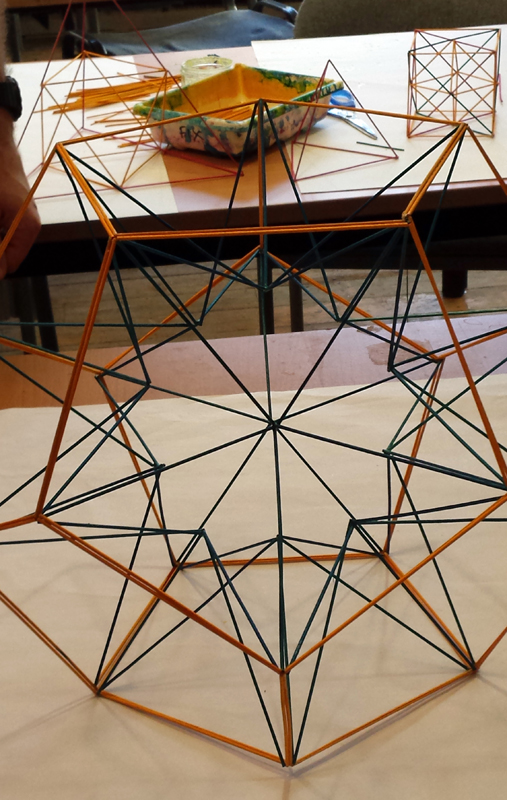
We made platonic solids from sticks and thin card.

1411 Geometry class

Geo = earth, metry = measure.

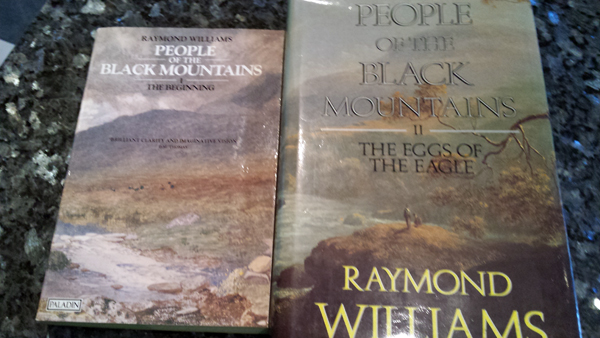
Having recently read Raymond Williams ‘People of the Black Mountains’ which tells stories of a burgeoning civilization spanning thousands of years it was interesting to connect the theories of the early measurers in his book with what I was learning, to think about this knowledge in terms of history.

The teaching was very much from a spiritual perspective, highlighting the balance and harmony in the universe present in mathematical relationships.

I found these ideas quite relevant to the ways I have been thinking about my work. I am thinking of introducing pattern into my work and I want the shapes to have meaning, to be from the very structures that the world is built from. If I am searching for paradise in the everyday then looking at the construction of the universe seems a good place to start.

Heaven and earth linked by consciousness.

1411 gallerie Nadine Feront (1)
This painting, done using a brush with just a single hair, makes me think of stone circles.

Writing this blog helps me pin my thoughts down. To pause and consider what I have recently seen or read or discovered feeds my practice.

Coming back to think about the history of clearing our space in the forest.

Building – burial – marriage – ancestors – (wild men)

The forest as dark, dangerous and profane as opposed to enchanted, sacred, shelter.

I haven’t made this work yet.

This year the RCA Printmaking study trip was to Belgium.

We visited Anne-Mie Van Kerckhoven at her studio in Antwerp.

Anne-Mie Van Kerckhoven

Anne-Mie Van Kerckhoven

Her interests are in the intertwining of the female body, mysticism and technology.

Anne-Mie Van Kerckhoven

Anne-Mie Van Kerckhoven

She believes she could almost be a reincarnation of the mystic Marguerite Porete in that she shares so many mutual concerns.

Porete was executed for heresy as a result of her poetic mysticism in  Le Miroir des âmes simples anéanties (The Mirror of the Simple Souls Who Are Annihilated and Remain Only in Will and Desire of Love) which lists seven stages of annihilation of the soul necessary to become one with God which fell foul of current Christian thinking.

Again the mirror.

We visited Museum Plantin Moretus home of the oldest printing presses in the world.

1411 Museum Plantin Moretus (1)

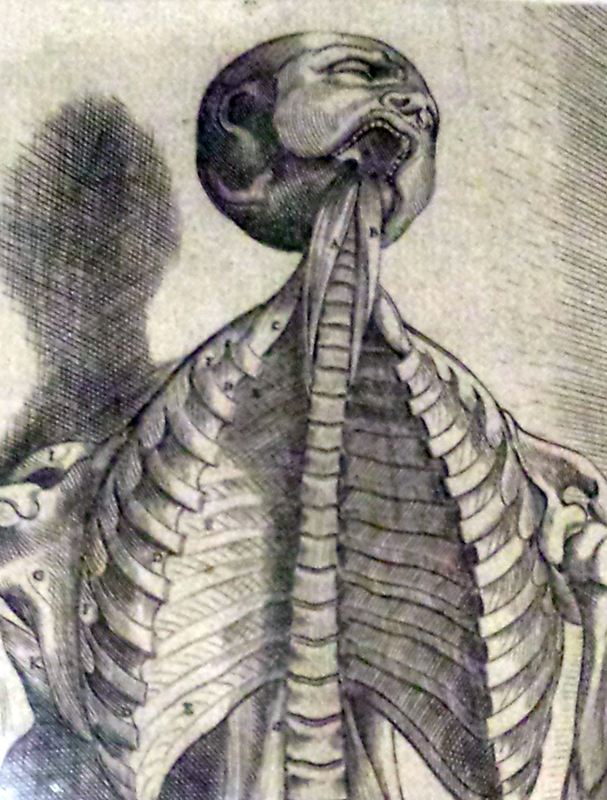
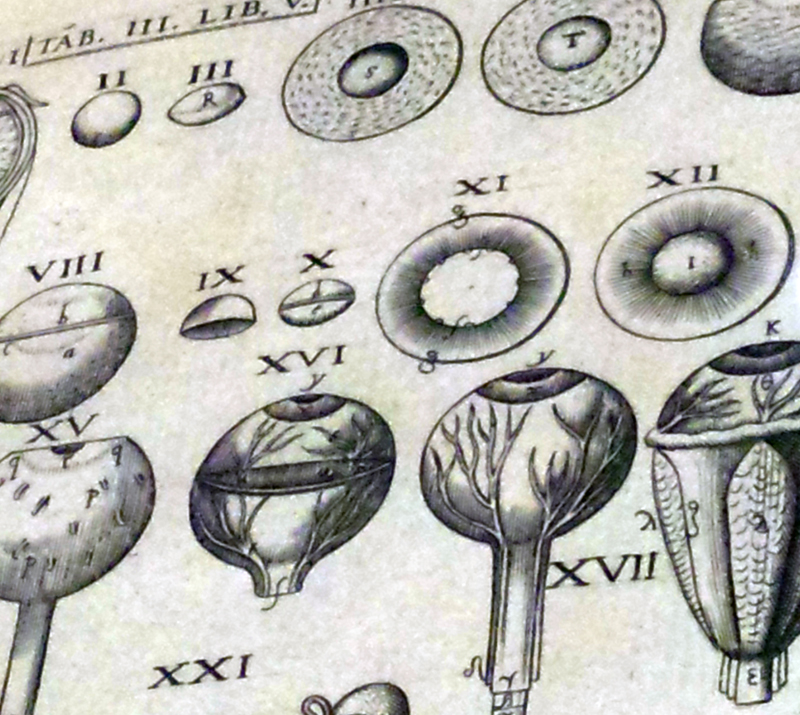
The current exhibition was Dissected Anatomy

1411 Museum Plantin Moretus 3

The sphere is a symbol of unity and completeness

1411 Museum Plantin Moretus 2

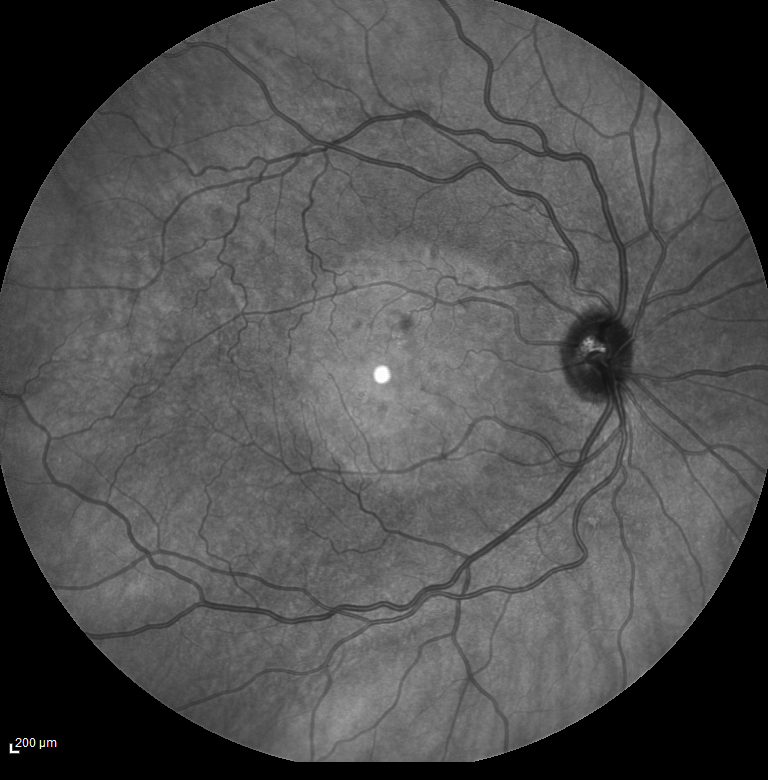
I have asked my optician for the scan images of my eye to use in my work

1411 eye

Always searching.

We visited M HKA Museum of Modern Art Antwerp

There were beautiful evocative photographs taken in Moscow’s Museum of Natural History by Russian artist Olga Chernysheva. The illumination of the light boxes emphasized the illumination of the museum display cases within, making the images ethereal and other worldly.

Olga Chernysheva Cactus Seller 2009

Olga Chernysheva Cactus Seller 2009

Social realism. Hans Eijkelboom set himself very clear rules about what he would photograph each day.

Hans Eijkelboom Fotonotities  (1992 - 2007)

Hans Eijkelboom Fotonotities (1992 – 2007)

From the swarming figures on the streets he picks out the individual and then places them back in the group setting up taxonomies and cultural relationships

Hans Eijkelboom Fotonotities

Hans Eijkelboom Fotonotities

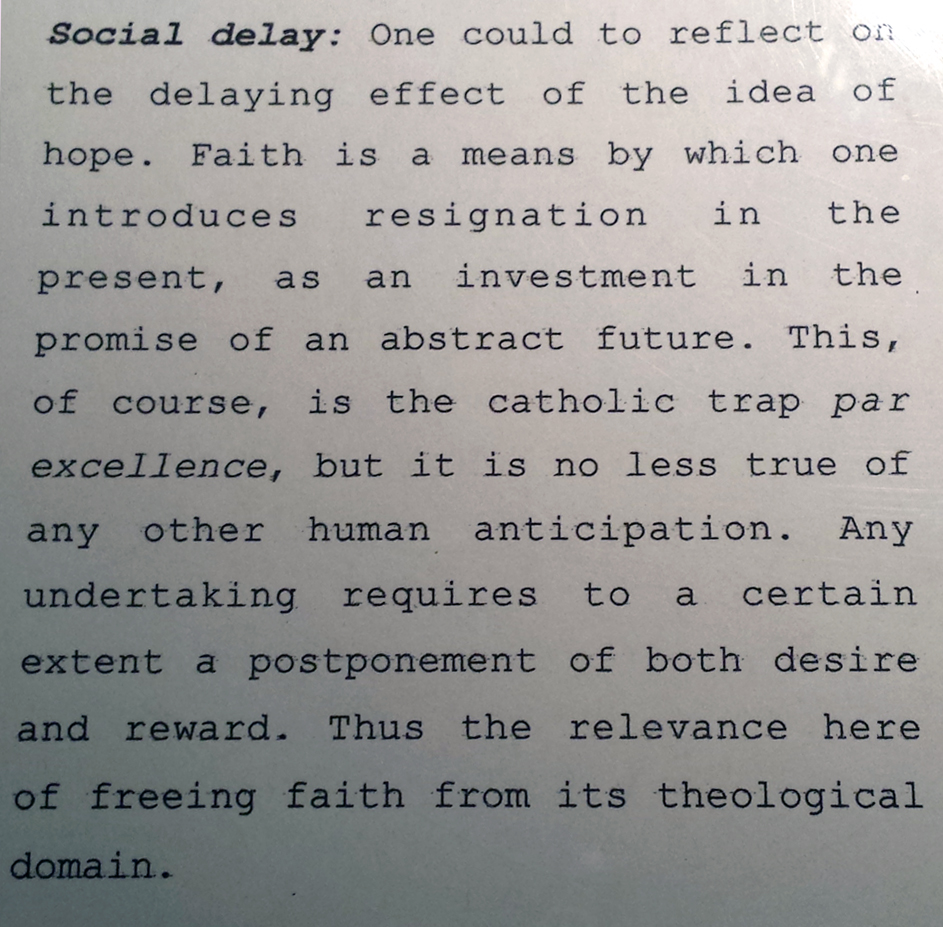
Faith and hope – the fulfilment of desire must never happen – it must always be in the future

Francis Alys When Faith Moves Mountains: Lima, Peru

Francis Alys When Faith Moves Mountains: Lima, Peru

We had a trip to La Centre de la Gravure et de l’Image Imprimee in Louviere. A soulless print archive in a soulless place.

Like a crematorium built for function on the outskirts of town, it seemed displaced from locality and devoid of the spirituality of the temple or shrine. An archive seems a sad place somehow.

The theory is, it’s only a resting place.

1411 first proof chapel

First proof of soft ground etching – Chapel of Rest

Wiels Contemporary Art Centre had a big retrospective of Mark Leckey with the wonderful title –  Lending Enchantment to Vulgar Materials

There was a new interpretation of the Universal Addressability of Dumb Things. This time the material icons had been 3D printed. The status of the object has been questioned throughout the various incarnations of this exhibition. Where does the aura lie?

Mark Leckey Lending Enchantment to Vulgar Materials

Mark Leckey

Ana Torfs ‘Echolalia’ exhibition also at Wiels Contemporary Art Centre was tantalising for me. It contained research and imagery that I am drawn to yet the presentation of so much factual text alongside turned it into something a bit dry.

Ana Torfs

Ana Torfs

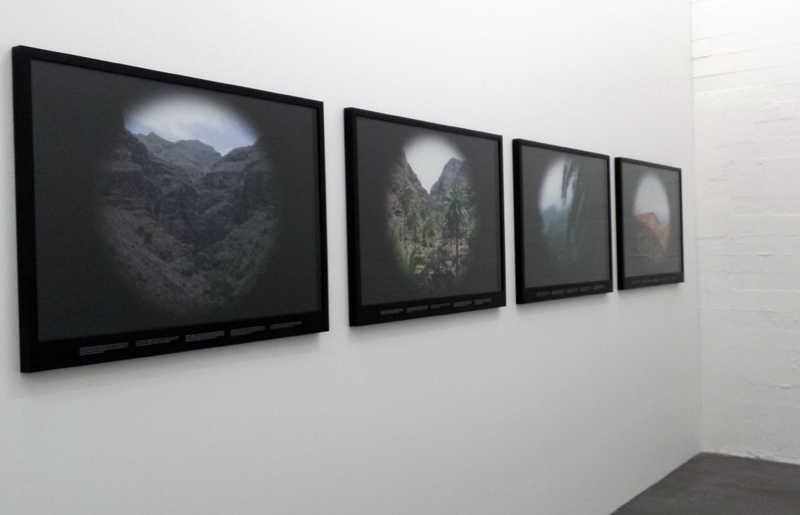
The installation piece ‘The Parrot and the Nightingale, a Phantasmagoria’ worked well

and I liked the vignette images of islands like the view through a telescope but the text was intrusive

Ana Torfs

Ana Torfs

I can understand why you might want to include all your research, she talks about an archaeology of knowledge

Ana Torfs

Ana Torfs

I have a similar problem, I am grappling with how to make known my research and narrative in my own work

It’s hard to make it evident in the image but I don’t think it matters that everything should be disclosed, ideas should be sparked and then threads can be followed that may lead elsewhere even.

French artist Emmanuelle Laine at c-o-m-p-o-s-i-t-e gallery in Brussels had made a colourful intervention creating a sculpture on site that she then photographed and repeated around the gallery walls. She has found a way to include her research and incidental thoughts in her work, her tools both for process and inspiration are left scattered around the space in evidence

Emmanuelle Laine

Emmanuelle Laine

The traces of construction and thought processes are not discarded or hidden – the sculpture becomes an exploded view of the artists brain during the creative process

Emmanuelle Laine

Emmanuelle Laine

Great to see some more video work of Philippa Kuligowski at New Sensations.

She has a wonderful way of collaging imagery and media in original ways to create engaging magical narratives.

Philippa Kuligowski The Plover and the Crocodile

Philippa Kuligowski The Plover and the Crocodile

The Plover and the Crocodile link to film

Other work I liked also at New Sensations –

Vivien Zhang Porcupine Hair

Vivien Zhang Porcupine Hair

Nicholas Johnson Mildew Swoosh

Nicholas Johnson Mildew Swoosh

Felicity Hammond Restore to Factory Settings

Felicity Hammond Restore to Factory Settings


Ben Woodeson  That Bit From the Omen, Yes That Bit

Ben Woodeson That Bit From The Omen, Yes That Bit

I haven’t seen The Omen so I don’t know that bit.

I am looking at invisible planes made visible, the threat of collapse and the possibility of violence.

The new media animation by Charles Richardson was intriguing. It was not a hologram. The figure turned and writhed out of the screen in 3D but no glasses were  involved –  it was like a ghost had entered the room  – it was uncanny

Charles Richardson Rehearsal

Charles Richardson Rehearsal

In an inspiring lecture Esther Teichmann made suggestions of work to check out including Marie Darrieussecq ‘My Phantom Husband’, Claire Denis ‘Beau Travail’ and Janet Cardiff and George Bures Millar ‘Blue Hawaii Bar’ link here – Searching for the light in an evocative installation in a Victorian water reservoir.

All the time I thought I was looking at landscape but maybe I was looking for what was held within the landscape. The nooks and crannies where the myths hide.


Beguile the Night exhibition at Dark Matter Studio had quite a spiritual ambience.

Gary Colclough Uprooted

Gary Colclough Uprooted

The quiet and solitude of after dark meanderings in creative processes came across in a collection of work imbued with mystery.

Patrick Jackson Companion of Odysseus, Fleeing the Blinded Polyphemus

Patrick Jackson Companion of Odysseus, Fleeing the Blinded Polyphemus

The intensity of a directed concentration was evident in an opening up of space to reflect and wonder.

Mary Yacoub Proposal for Modernist Teepee in Poured Concrete

Mary Yacoub Proposal for Modernist Teepee in Poured Concrete

Marianne Walker Grotta (Neo-Delphic)

Marianne Walker Grotta (Neo-Delphic)

Zoe Dorelli The Division of the Waters

Zoe Dorelli The Division of the Waters

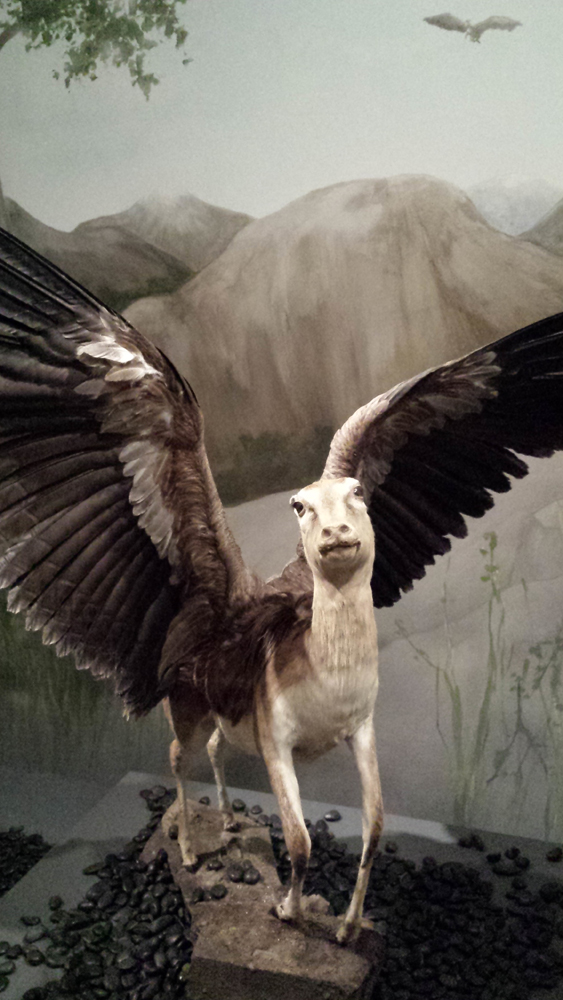
The exhibition Stranger than Fiction at the Science Museum was billed as questioning the truth and reliability of photographs.

Fauna - Joan Fontcuberta

Fauna – Joan Fontcuberta

Joan Fontcuberta is supposedly setting up a fiction that, through documentation, the viewer is lulled into believing.

The fauna series is both visually striking and disappointing. Bad taxidermy and impossible juxtapositions create sad undignified rather then magical creatures.

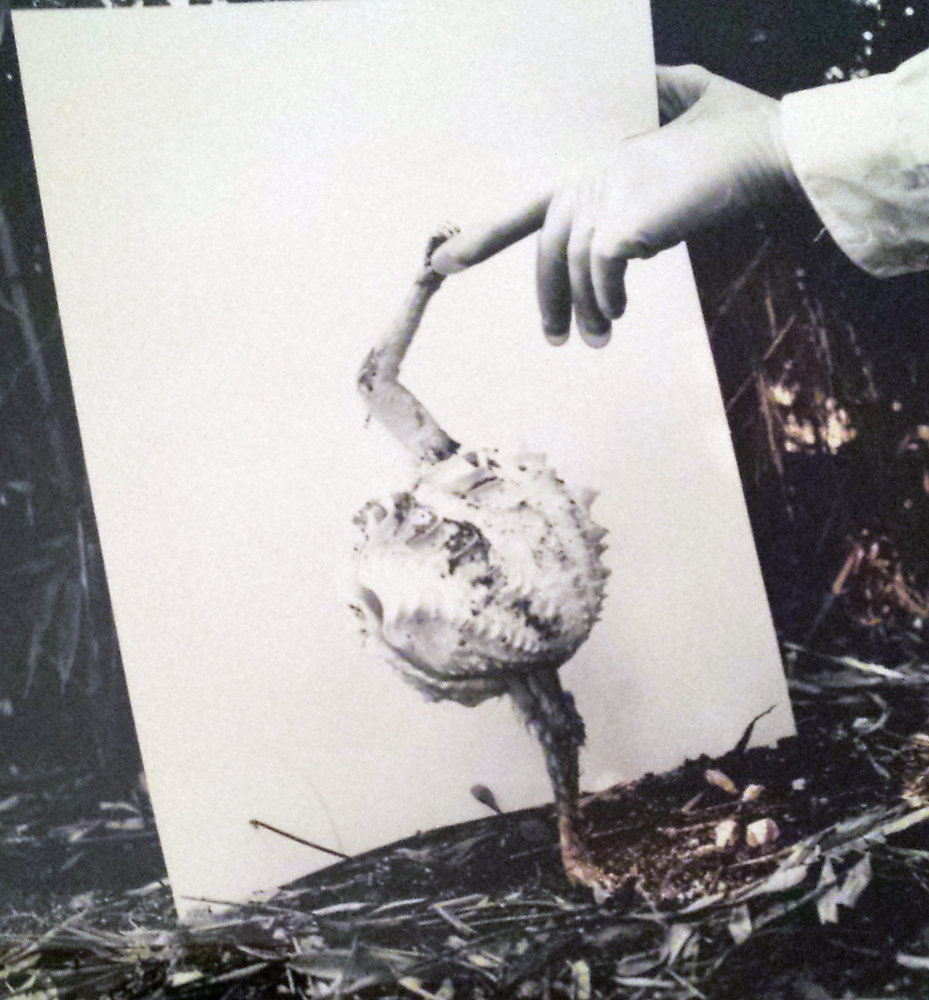
In some of the black and white aged photographs there might be something fantastical to be grasped at

Joan Fontcuberta

Joan Fontcuberta

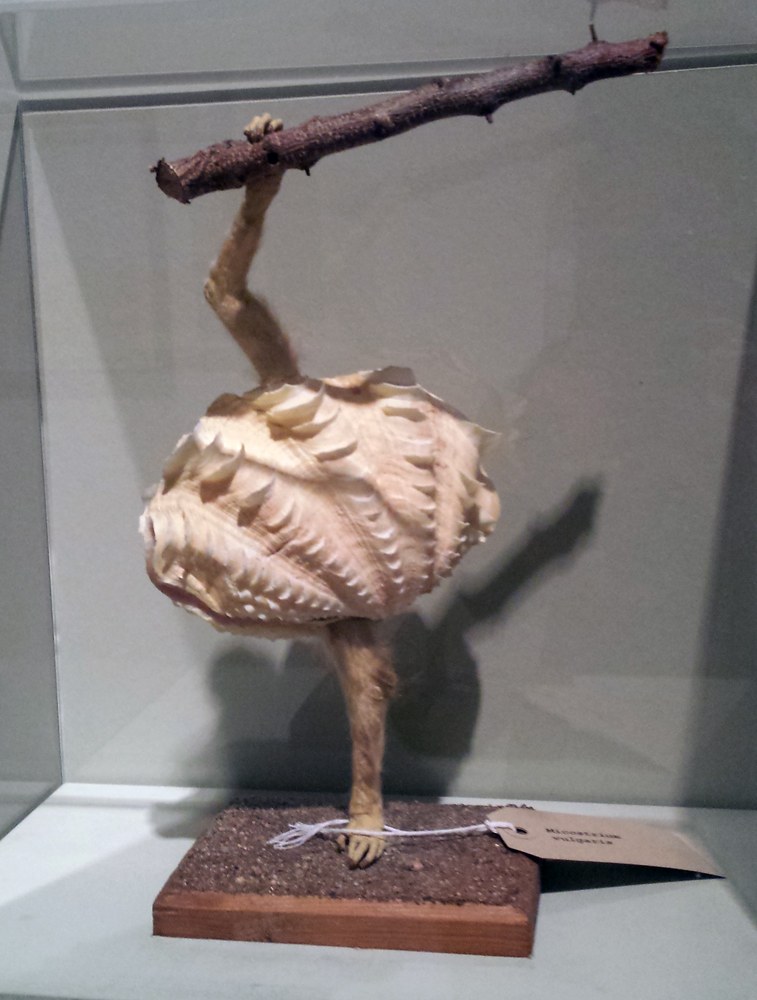
but placing the evidence of the constructed enigma next to the documentation means all illusion vanishes.

This may be the intention.

Joan Fontcuberta

Joan Fontcuberta

The Orogenesis and Constallations seires were more rewarding for me, using a more subtle intervention in photography resulted in dramatic landscapes that you could get lost in.

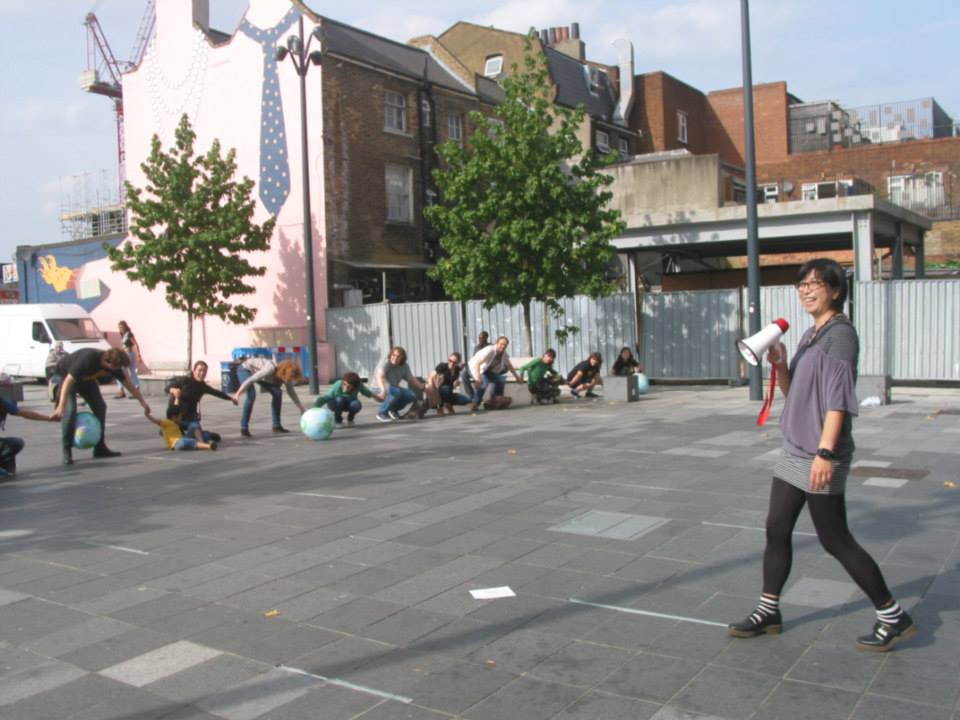
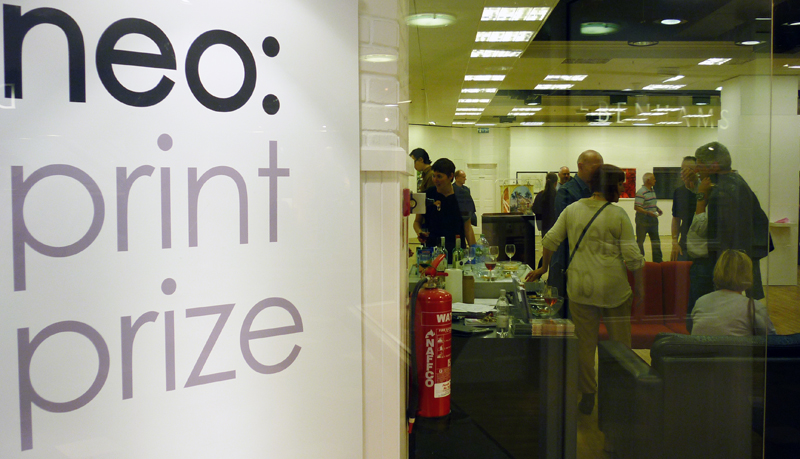
The annual Deptford X festival proved an opportunity to catch up with new friends met though the neo:print prize.

Kaori Homma presented an interactive performance in the square as part of her ongoing interest in the conventions of the east/west divide set by the meridian line at Greenwich.

Homma Meridian

Homma Meridian – Deptford X

Carol Wyss was showing her beautiful large etchings in a summer house in the green and tangled setting of Old Tidemill Wildlife garden.

Carol Wyss

Carol Wyss

Carol constructs her etchings from images of human bones, building up the form with multiples of shoulder blades or tibia.

Also in the wild garden was artist Anita Gwynn with her detailed mono prints installed inside a polytunnel.

Anita Gwynn

Anita Gwynn

In the crypt of the magnificent St. Pauls Church in Deptford were 2014 Art Action UK award winners Komori & Seo showing their moving new work derived from working among the victims of the 2011 Tsunami and nuclear fallout disaster in Japan ‘Moving the Mountain’

Seo and Kamori Moving the Mountain

Seo and Kamori Moving the Mountain

We watch a woman returning to where her childhood town once stood, where her parents were swept away along with her neighbours and all the buildings, but not her memories. She washes and folds her parents clothes over and over, trying to dislodge all the sand from the fibres knowing every tear and abrasion in the fabric represents a trauma to her parents bodies during their violent death.

Read more here Art Action.

The magnitude of the loss has the same incredulity as a myth, how can a whole community be swept away so suddenly and with such force. The machinations of the gods seen in the power of nature.

The stories that Xanthe Gresham-Knight tells also hold you in awe. In her stories people are searching too. Searching for truth, searching for paradise.

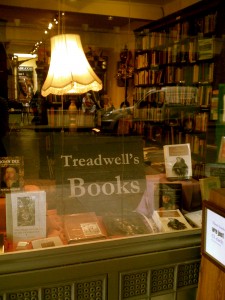
I have been introduced to the wonderful Treadwell’s Bookshop. A bit late for my dissertation research but for future interests it promises information on any aspect of Western pagan spirituality or the esoteric traditions of Europe.

1410 Treadwells

Downstairs with wine and snacks Xanthe gave an amazing physical performance of hypnotic singing, playing the accordion and morphing into a myriad of characaters.

She tells of Celtic poets who would make a boat from the flash of a teardrop and sail out to the Land of the Ever Young in search of a goddess.

Centuries later, a man, desperately googling for a Paradise Bride accidentally summons ‘Her’ again. …  ancient myths of Britain and Ireland collide with the modern world.

It couldn’t have been more apt, a collision of ancient and modern still searching for paradise.

More storytelling at Holborn Library with Jose Damasceno’s PLOT an Artangel commission.

Local authority libraries on the whole are not very inspiring environments. On the ground floor the architectural figures on the ceiling and decimated encyclopeadias did not manage to compete with the setting.

It wasn’t until we reached the fourth floor that we were suddenly transported into the drama of a possible plot.

1410 Jose Damasceno 2

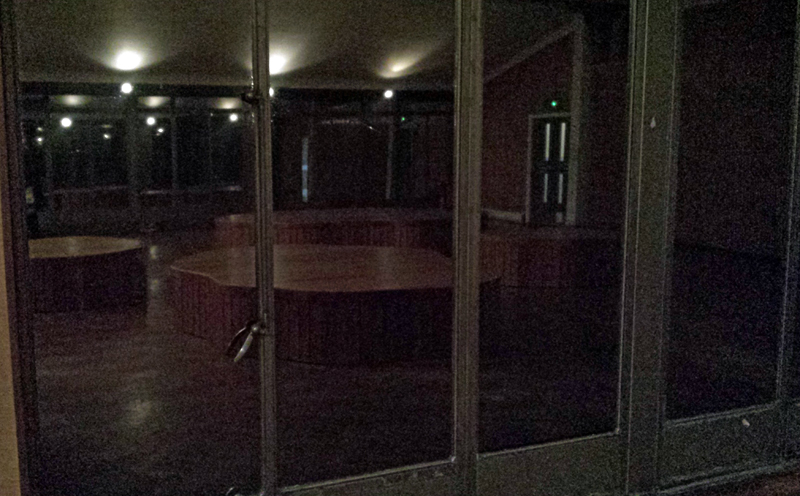
A bizarre empty theatre space of panelled wood and reflections

Jose Damasceno

Jose Damasceno

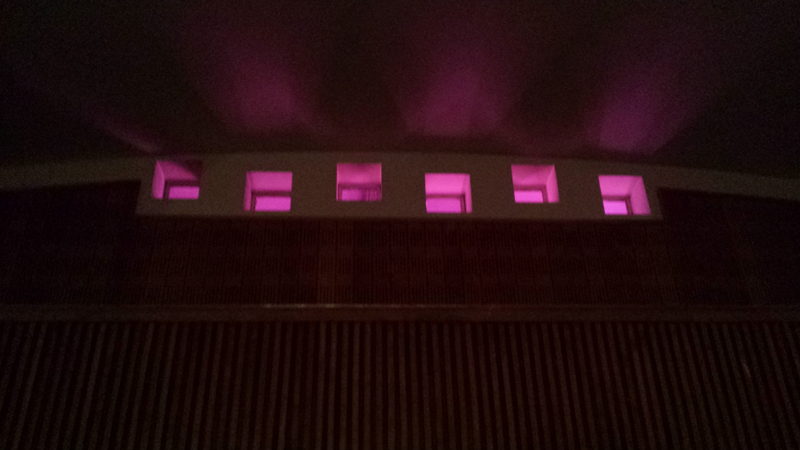
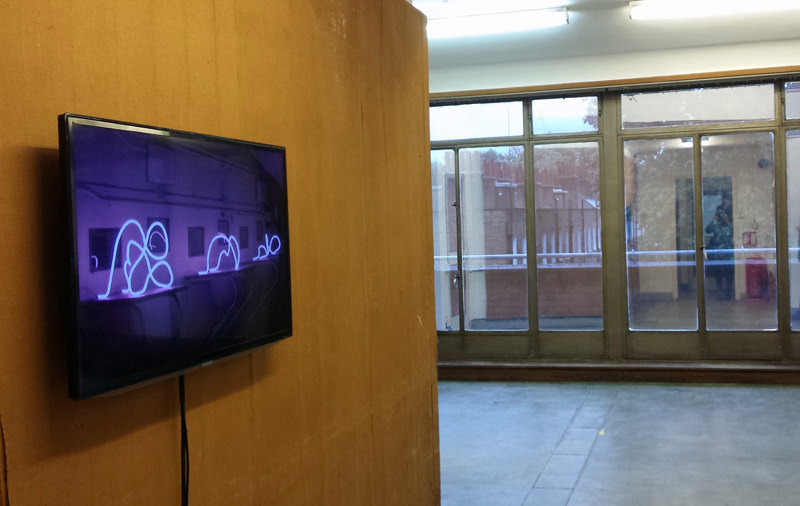
lit with the pink fluoerescne escaping from the small high windows of a room where a neon sculpture is held and is only made visible via a monitor in the outside corridor.

Jose Damasceno

Jose Damasceno

Another world  where the laws of physics appear overturned is the digital space.

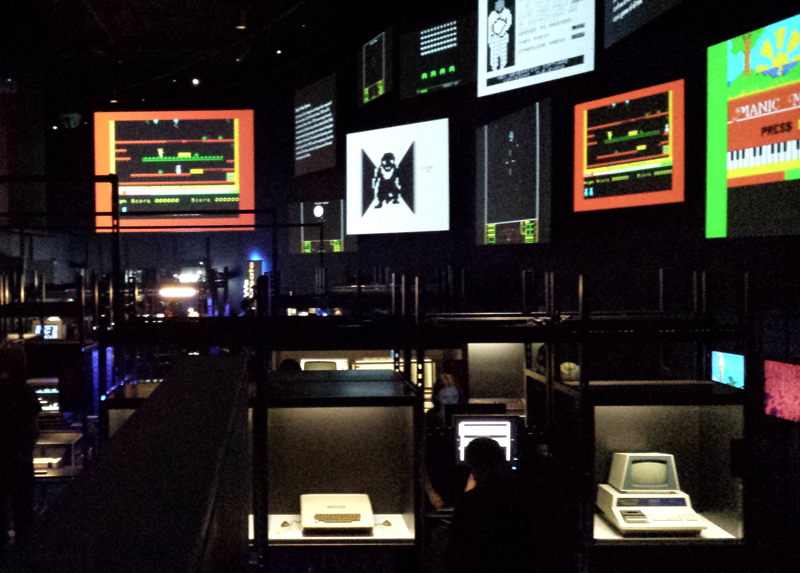
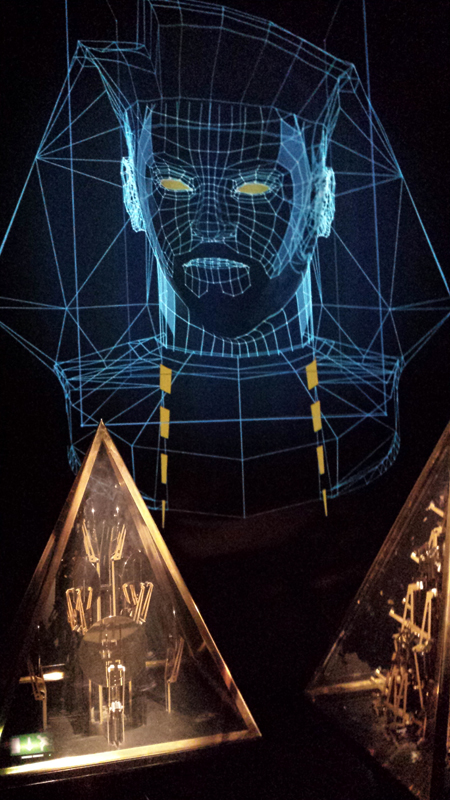
Digital Revolution at The Barbican

Digital Revolution at The Barbican

Our known perceptions of landscape are challenged here.

will.i.am debut artwork with Yuri Suzuki

will.i.am debut artwork with Yuri Suzuki

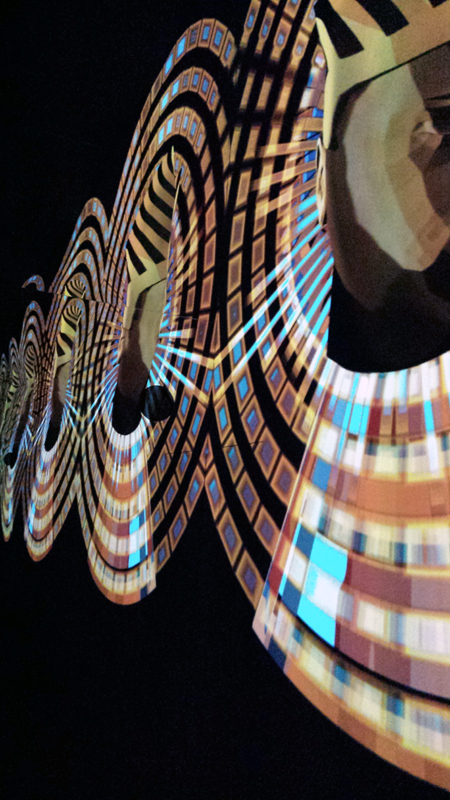
There was spectacle in immersive scale allowing you to physically enter the space

1410 Digital Revolution 2

and engage with common fantasies

communicating with other species

1410 Digital Revolution 1410 Digital Revolution 1

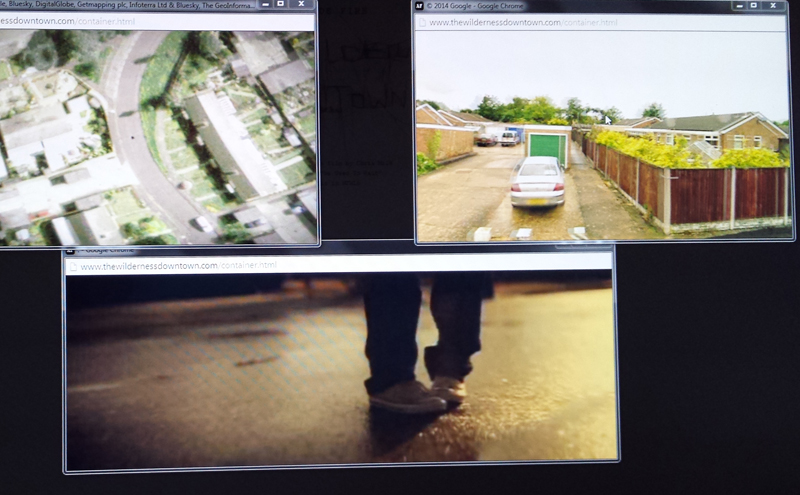
being plunged into a drama set in the place of your birth

even Kessingland

1410 Digital Revolution 7

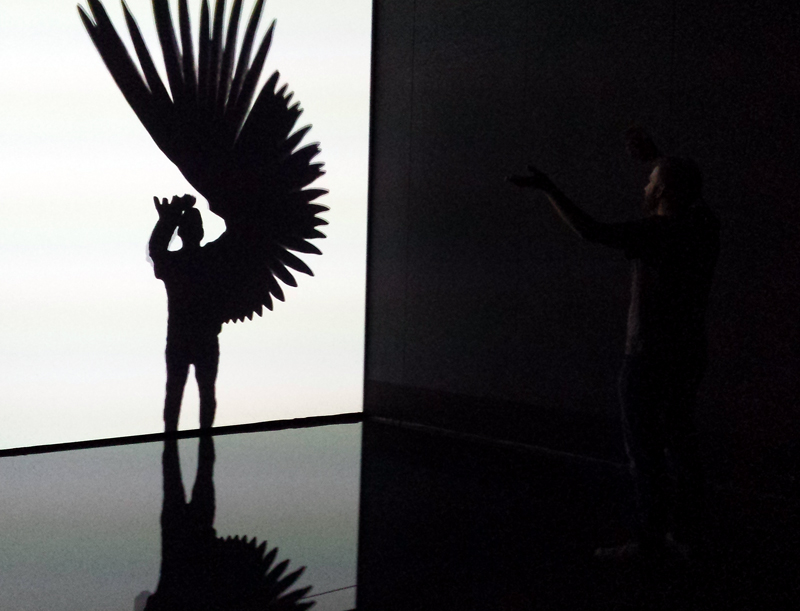
or being transformed into a bird and flying

Chris Milk The Treachery of Sanctuary

Chris Milk The Treachery of Sanctuary

There was a reminder of research from my dissertation –

1410 Digital Revolution 0

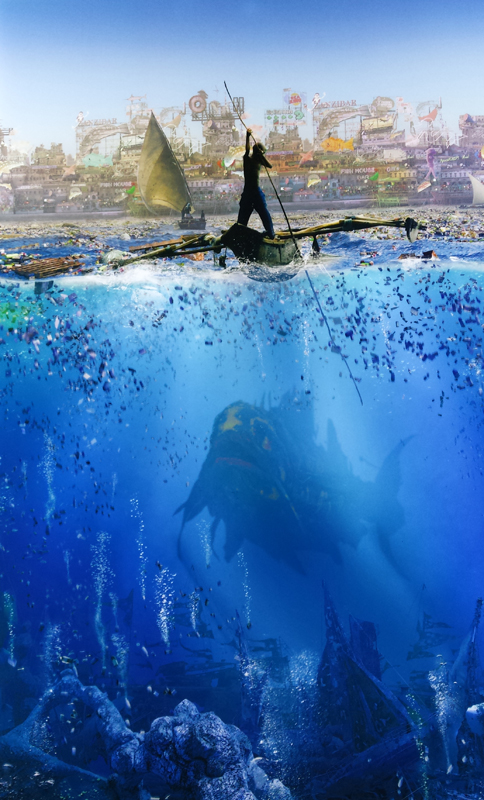
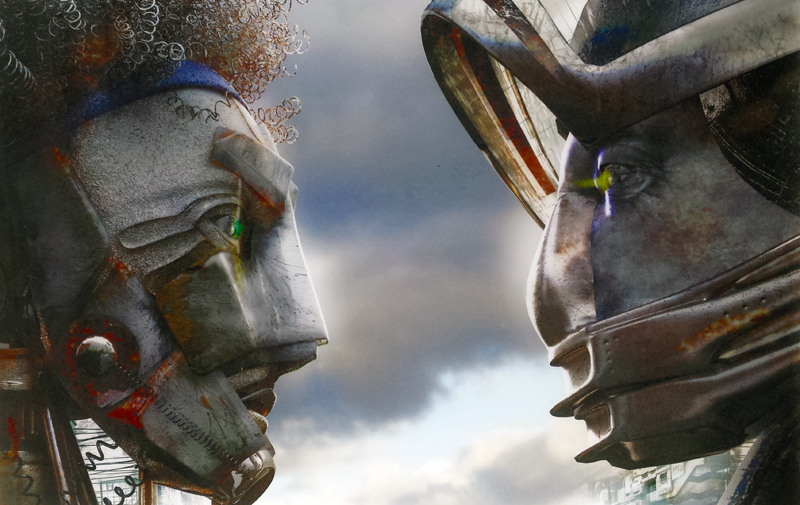
the dystopian future of London in Kibwe Tavare’s short film, Robots of Brixton

Robots of Brixton

Robots of Brixton

I didn’t end up writing about the film but it made me want to see it and it kind of fitted with ideas of urban bad/rural good that abound through the ages.

The mythologizing of the rural began even before Virgil’s ‘Bucolics’ and continues today massaged by technological spectacle in mass entertainments such as ‘Avatar’.

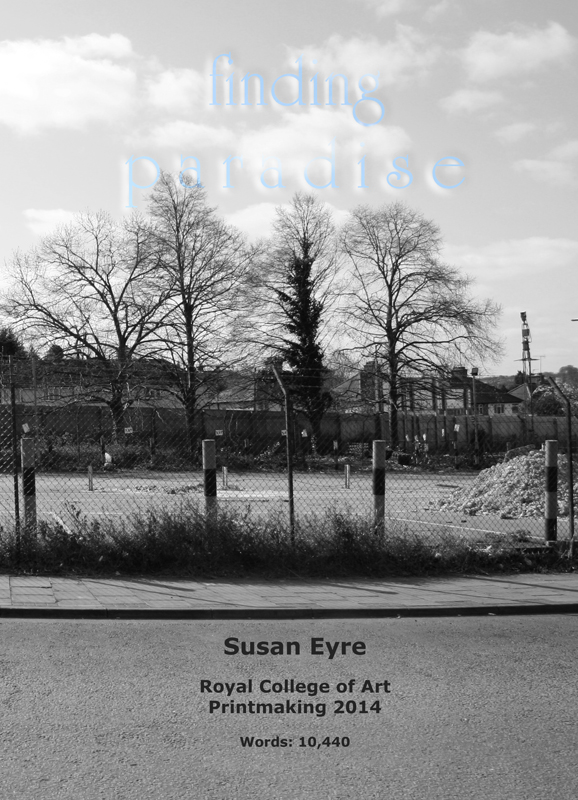
Handing in the final document of my dissertation ‘Finding Paradise’ unleashed a new energy.

Back for my second year at the RCA its time to put all that thinking into my work.

1410 Chapel of Rest

After such a break from making over the summer spent at the computer screen I thought the best thing to do was to just get on with something.

I started a soft ground etching of the Chapel of Rest in Paradise Industrial Estate, Hemel Hempstead.

1410 softground peel

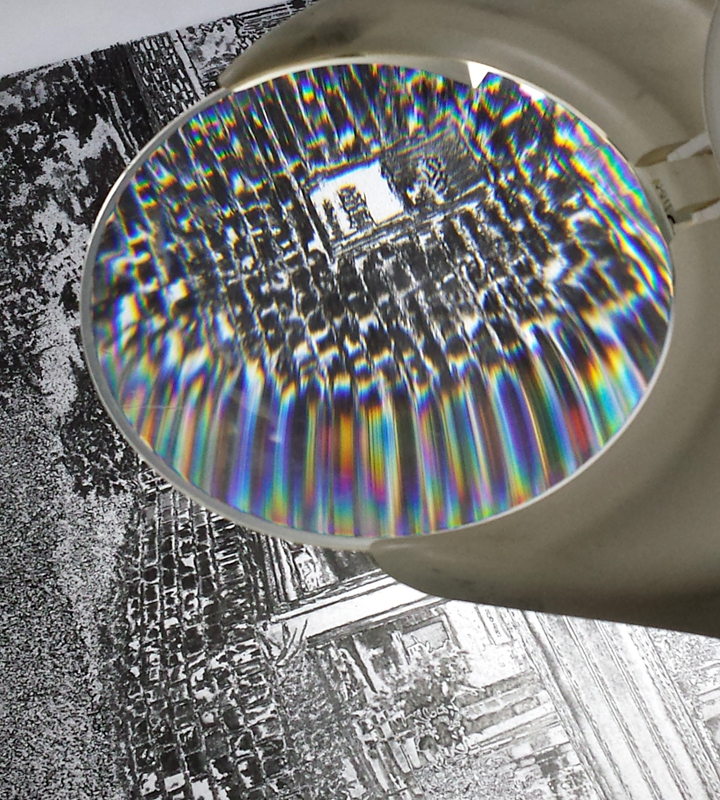
While working with my magnifying lens there was a moment of euphoria – a bit like finding that illusive paradise

1410 spectrum

I am excited by this new development


“the lamps are going out all over Europe, we shall not see them lit again in our life-time”

Sir Edward Grey, foreign secretary 1914

Ryoji Ikeda Spectra

Ryoji Ikeda Spectra

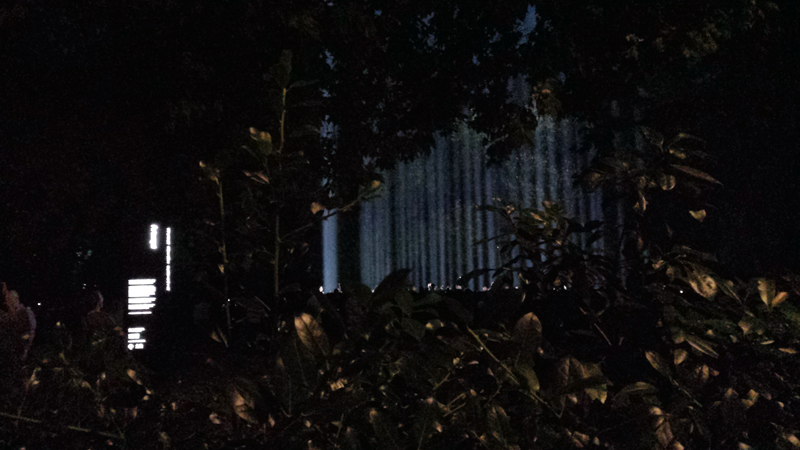
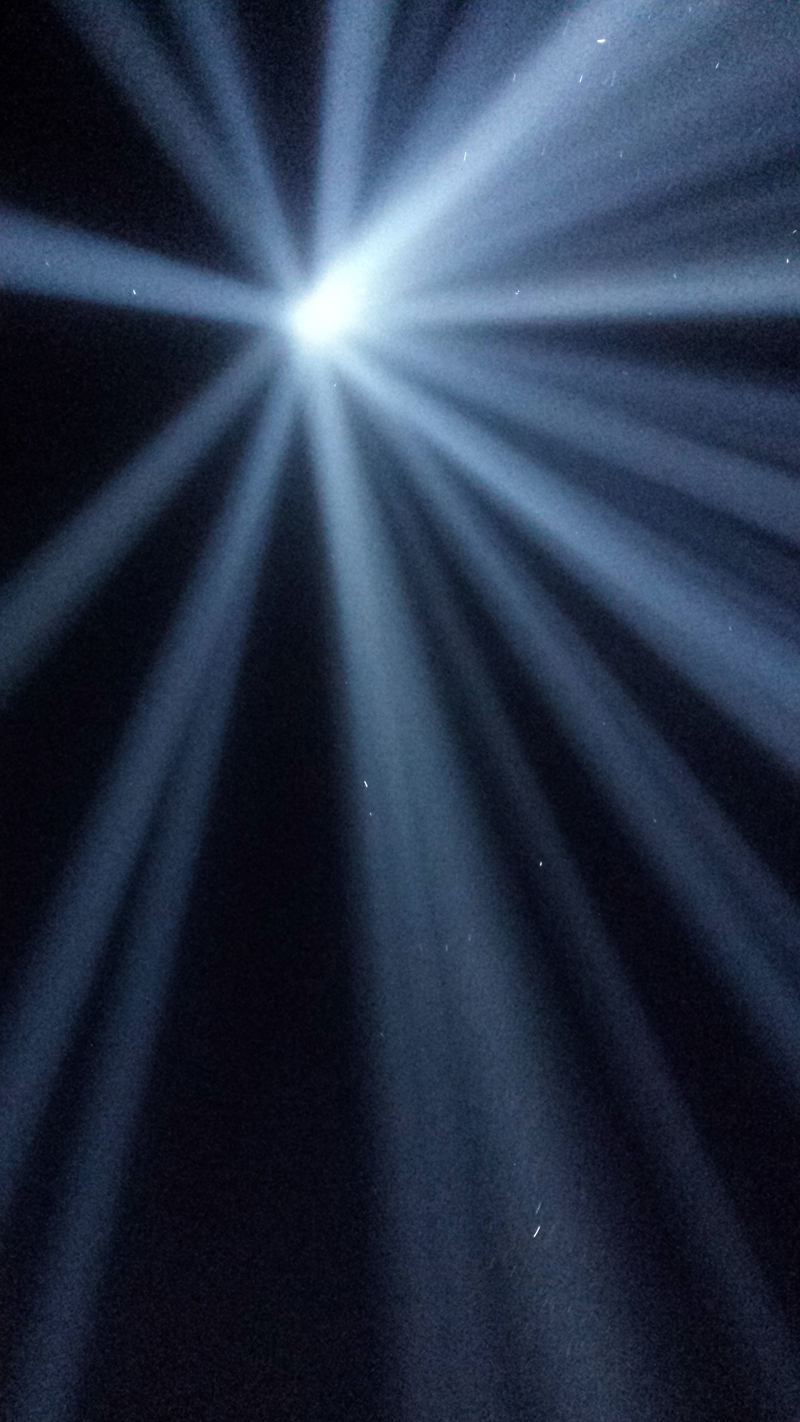
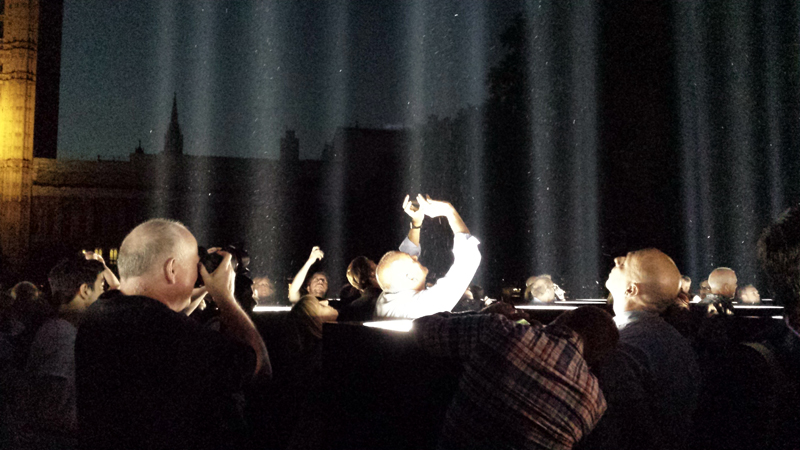
Seven days of light piercing the London sky to commemorate the anniversary of WWI

Ryoji Ikeda Spectra

Ryoji Ikeda Spectra

Artangel commission by Ryoji Ikeda acted as the beacon it represented

Ryoji Ikeda Spectra

Ryoji Ikeda Spectra

We are drawn to the light

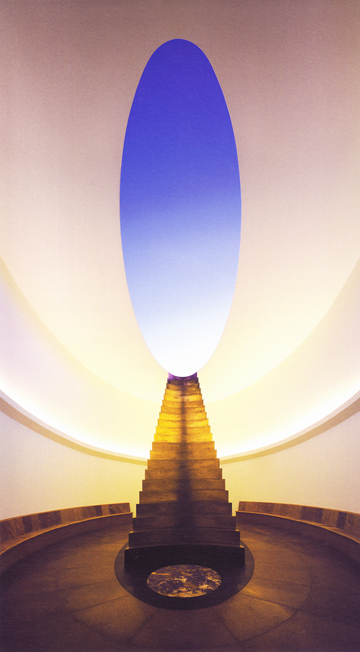
I have been writing and reading about James Turrell for my dissertation. His use of light as medium for his work is poetic and magical.

James Turrell - Roden Crater

James Turrell – Roden Crater

Light is the materialization of energy. We are naturally eaters of light, our whole body is scattered with stray rods and cones outside of the retinal area which makes our relationship to light very primal.

Our bodies are made from matter fed by the fruits of photosynthesis.

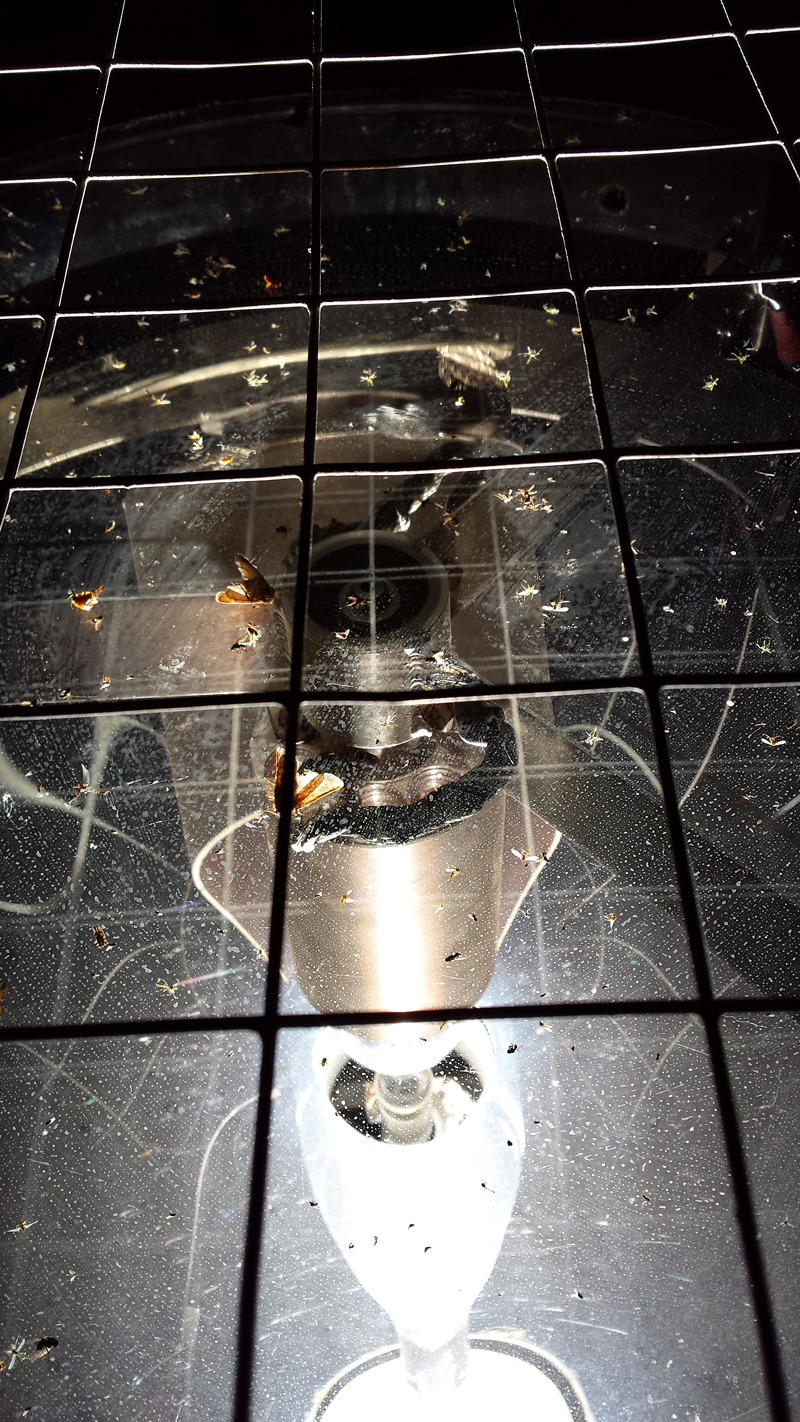
Luckily we don’t suffer instant death like all the moths and flying insects

Ryoji Ikeda Spectra

Ryoji Ikeda Spectra

but it was a chance to think about the brutality of war and those that did suffer a terrible fate

With all that is happening now in Palestine, Iraq, Ukraine and elsewhere those words spoken a hundred years ago resonate, what progress have we made

when will the lamps be lit again

Social adhesion was a topic in our discussions during a workshop run by Sean Lynch at Flat Time House.

Flat Time House was the studio home of John Latham  who died in 2006. Before he died he declared the house a living sculpture, naming it FTHo after his theory of time, ‘Flat Time’.

Flat Time House aims to make a wider audience aware of Latham’s work and ideas, his spirit of discovery, and through his example to understand and appreciate the crucial role of art and the artist in society.

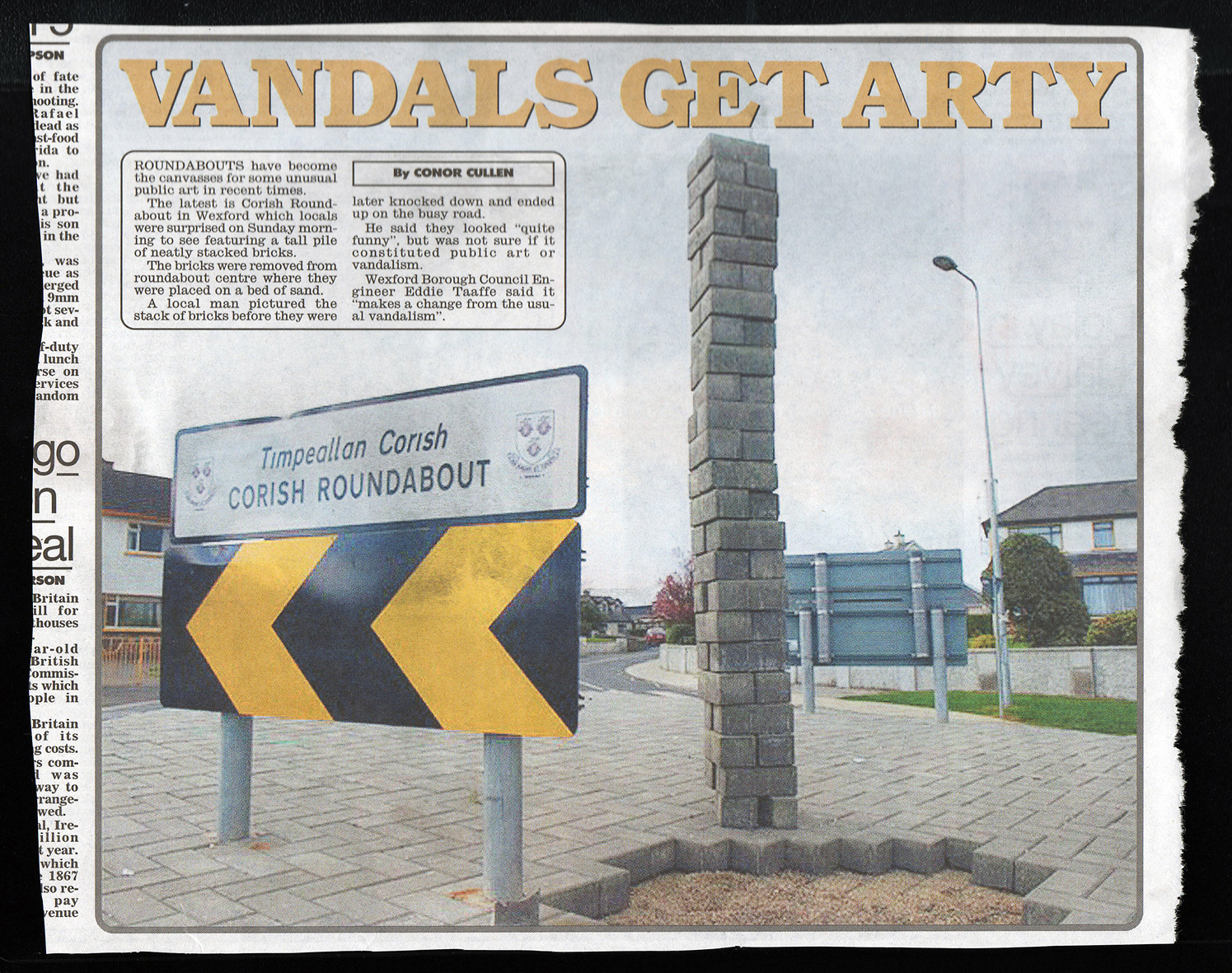
Starting from a series of photographs of Bellenden Road taken by John Latham in 1986 a weekend workshop led by the generous and entertaining artist Sean Lynch aimed to speculate about how urban space and environment is constructed, and what allegories and associations we can draw from it. It was purely about discussion of ideas and sharing stories. Sean’s own work is about urban environments and interventions, looking at the crafts people involved in construction as well as how art is received within a community. He has extensive knowledge of the O’Shea brothers who were stone carvers in Oxford revered at one moment and shunned the next. Details of his exhibition on the subject at Modern Art Oxford here

Sean is brimming with idiosyncratic stories gleaned from newspapers or local characters telling of encounters with faeries and magic bushes or pub crawls as performance art.

1409 vandals

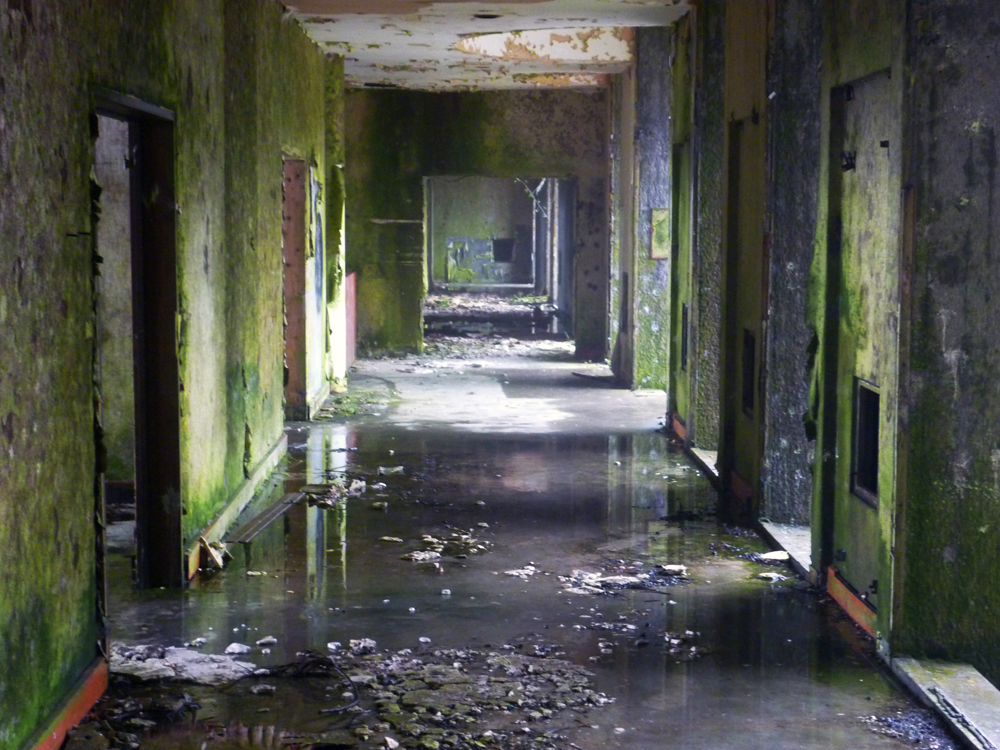
Sean also talked about Robert Smithson who went to Mexico and was captivated by the delapidation of his hotel rather than the Mayan Ruins that most people would expect to be the focus of such an expedition.

Read the enigmatic essay ‘Yucatan is Elsewhere’ at this link – essay

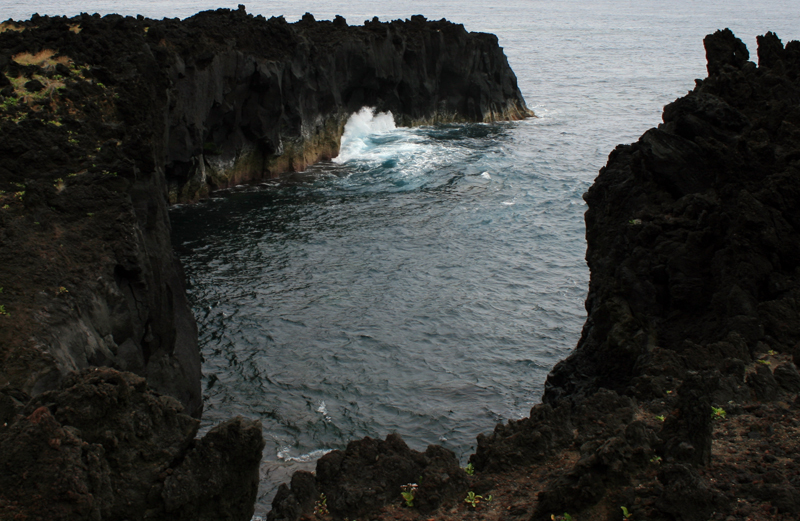
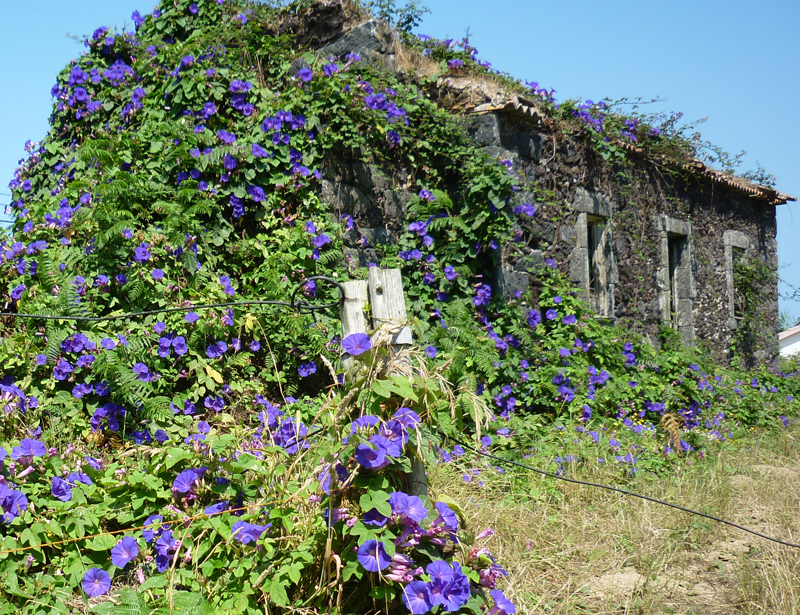
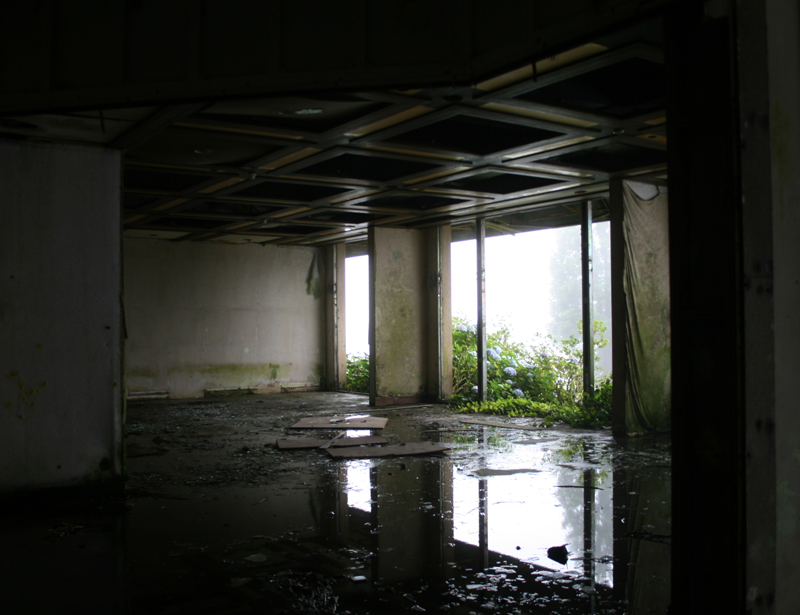
Reminded me of visiting the ruins of a hotel on the Azores earlier this year

1409 Azores

For the workshop we were asked to bring along our own thoughts on public space.

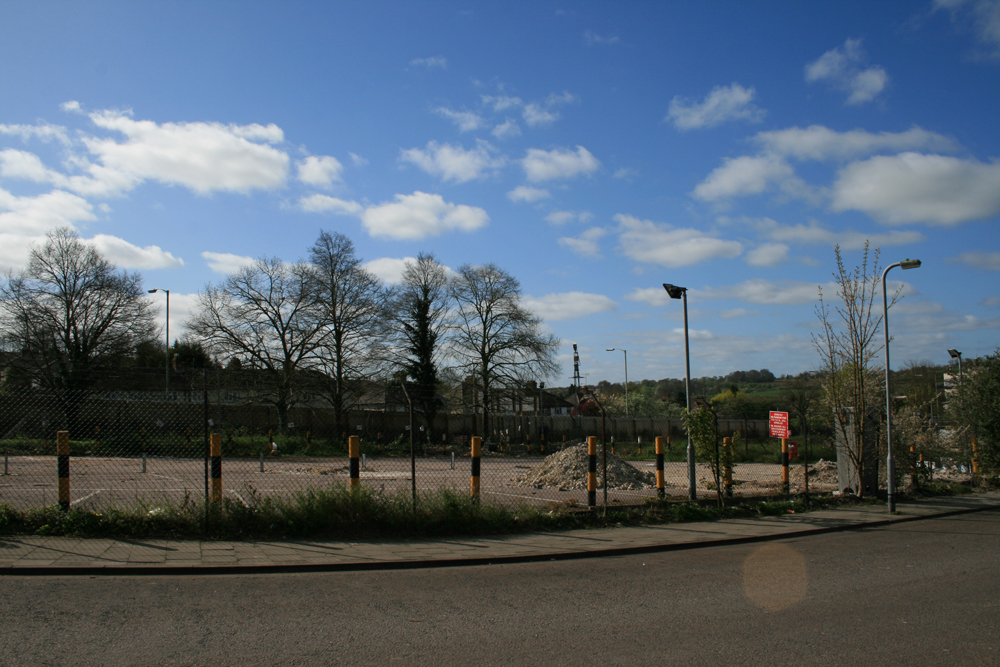
I read a section from my in progress dissertation about my visit to Paradise Industrial Estate.

1409 paradise

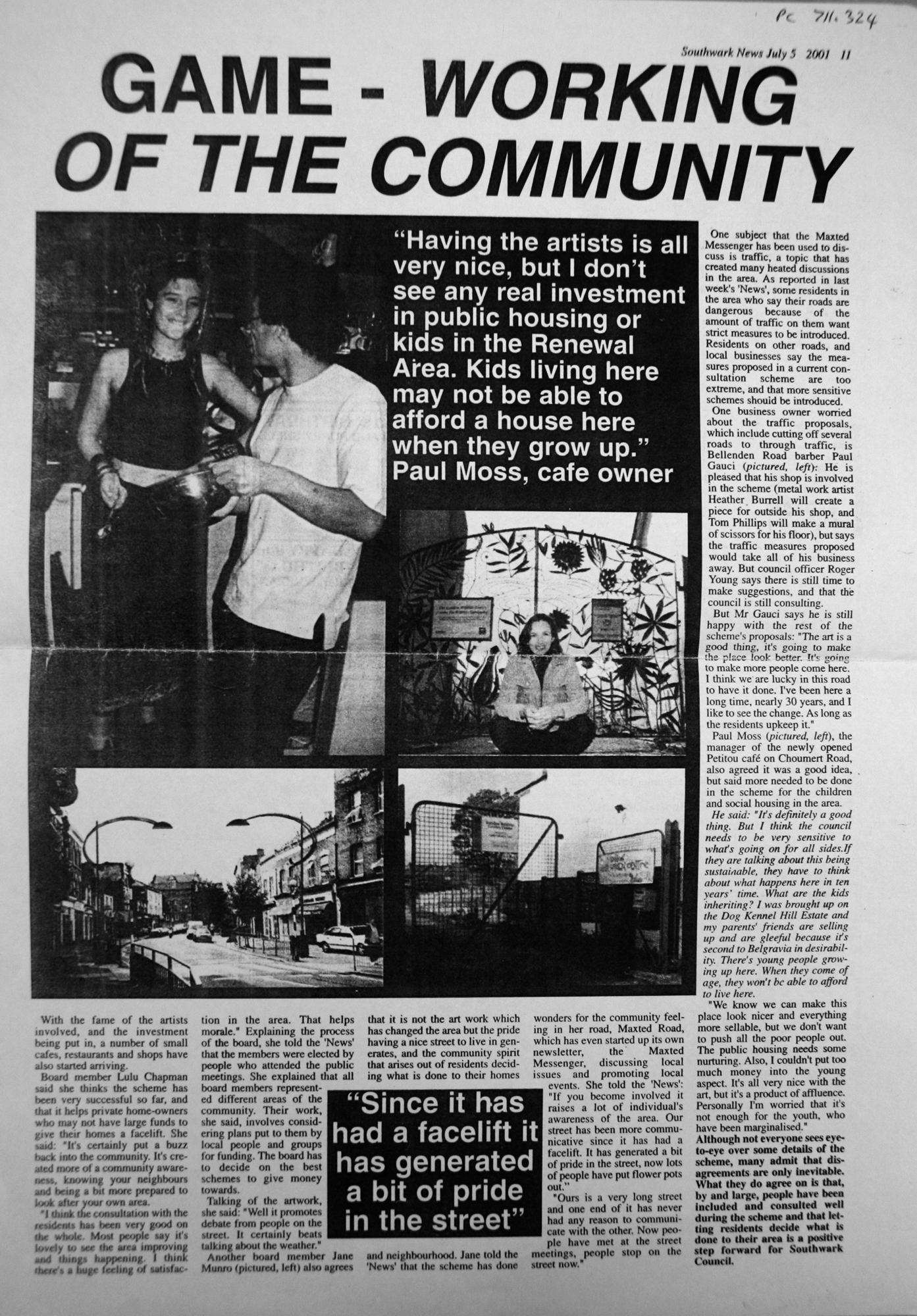
We went for a couple of walks around Peckham looking at the local architecture and the council interventions.

1409 Bellenden Road

We were joined on one walk by vocal local campaigner Eileen Conn who has a dream for a new society based on community and gave us the low down on the Bellenden Road area make over.

John Latham’s wife Barbara turned up too with more stories.

1409 Peckham Mural (2)

We walked down to the green to look at where in the 1760’s William Blake had his vision of shining angels in the tree.

For a local community project Artist, The Guy – created a mural on the side of a house for the Dulwich Festival 1993 with the help of local volunteers.

 1409 Peckham Mural (1)

Great news –  Sean Lynch will be representing Ireland at the 2015 Venice Biennale.

Also interested in how the values of society are articulated in public spaces is 2014 RCA graduate James Seow.

His beautiful inked etching plates on show at Anise Gallery depict iconic public squares such as 9/11 Memorial Plaza, Tiananmen Square and Paternoster Square in extruded structural form giving them the aura of sacred space.

James Seow  Always Feel Safe

James Seow Always feel safe…

The gallery exhibits chosen artists that capture architecture through a variety of architectural forms.

1409 neoprintprize

Delighted to have work selected by Gordon Cheung, Paul Coldwell, David Cleaton-Roberts and Eileen Cooper for the neo:print prize in Bolton.

Paradise Road SW4

Paradise Road SW4

A great team of selectors so feel really proud.

An extra bonus was to win an award sponsored by Hawthorn Printmaker Supplies for my etching ‘Forest of Eden’

Forest of Eden

Forest of Eden

Rei Matsushima who has just graduated from the RCA also won a prize for her wonderful print ‘Mentaiko (cod roe)’

Rei Matsushima

Rei Matsushima

A series of events were held as a celebration of ‘Myth’ at the Royal Opera House.

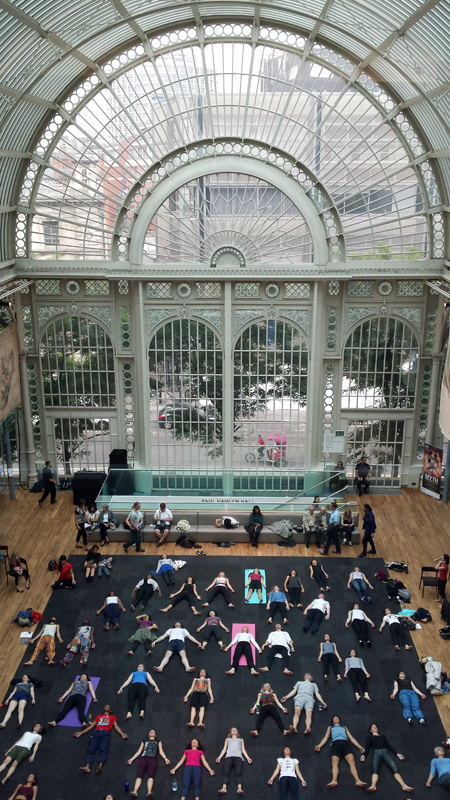
The ‘breath of life’ and ‘the sacred fire within’ could be experienced through yoga in the great hall

1409 ROH

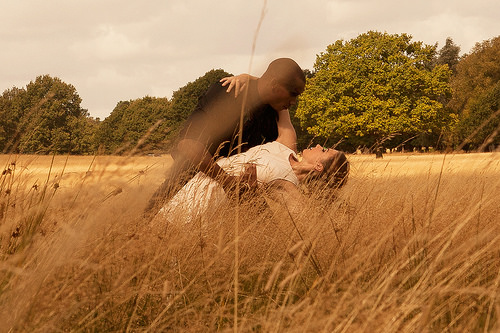
A screening of the stunning film interpretation of Leda and the Swan featuring Eric Underwood and Claire Calvert dancing in Richmond Park

Leda and The  Swan

The Indifferent Beak

A sudden blow: the great wings beating still

Above the staggering girl, her thighs caressed

By the dark webs, her nape caught in his bill, He holds her helpless breast upon his breast.


How can those terrified vague fingers push

The feathered glory from her loosening thighs?

And how can body, laid in that white rush,

But feel the strange heart beating where it lies?


A shudder in the loins engenders there

The broken wall, the burning roof and tower

And Agamemnon dead.

Being so caught up,

So mastered by the brute blood of the air,

Did she put on his knowledge with his power

Before the indifferent beak could let her drop?


Inspired by Yeats 1923 poem, choreographer Charlotte Edmonds wanted to convey the entwining bodies and passion of the encounter

Leda and the Swan

The Indifferent Beak

Matt Collishaw also sought to convey burning passions

Matt Collishaw

Matt Collishaw

The dangers of desire.

Bill Viola gave us suffering for transcendence.

Bill Viola - Fire Martyr

Bill Viola – Fire Martyr

Andrea Büttner is interested in ideas of spirituality on a quieter scale.

The ‘Little Works’  of the Carmelite nuns of Notting Hill, ‘The Little Way’ of St. Thérèse of Lisieux, a carmelite saint which influenced the delicate drawings of Gwen John.

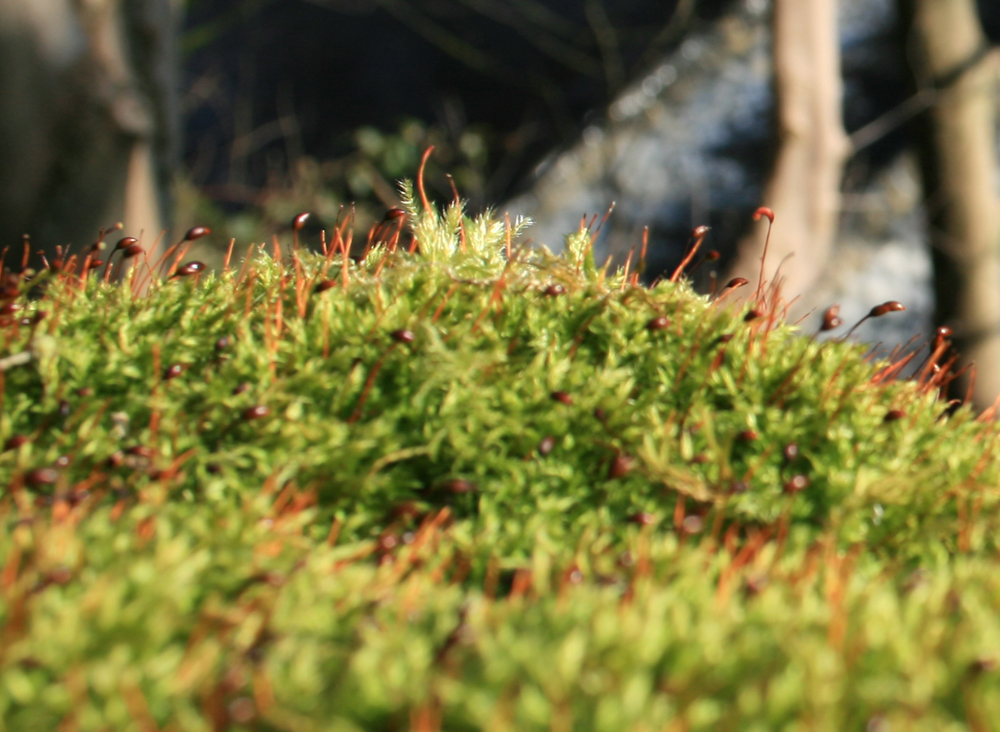
Noticing the small and lowly she makes connections between the humility of the nuns with the unobtrusive yet persistent spreading of moss.

Lives lived in the background.

She discussed her ideas with insightful curator Chus Martinez, Head of the Art Institute, Basel at Tate Britain. She was launching her book Hidden Marriages which draws inspiration from the National Museum of Wales collection of drawings by Gwen John (1876–1939) and the extensive collection of mosses preserved in its herbarium.

Much of her work makes connections between art history and social or ethical issues, with a particular interest in notions of poverty, shame, vulnerability and sexuality, and the belief systems that underpin them. Although working a hundred years apart, Gwen John and Andrea Büttner share an interest in the spiritual, social and aesthetic notions of ‘littleness.’

Mosses fall under the term cryptogam (meaning hidden sexuality). Moss is also described as a ‘lower plant’— implying a lesser, or more primitive, evolutionary development than flowering or ‘higher plants.’ Hidden Marriages: Gwen John and Moss draws these two seemingly unconnected collection areas together, making links between the reproductive processes of ‘lower plants’ and the contested sexuality of Gwen John; between littleness as an aesthetic, biological, and social discourse; between the scientific ordering of the Museum and the harmony and beauty that John sought in her work; and, ultimately, the way institutions ascribe relative importance to objects, ideas and people.

Büttner makes large woodcuts about lowly things like tents.

Andrea Buttner Tent

Andrea Büttner Tent

She said she views her woodcuts almost as brochures or advertisements to her videos.

Andrea Büttner Piano

Andrea Büttner Piano

She had some great duo scope images on slides and in her book of moss collectors intently surveying the ground, heads down, eyes lowered, kneeling as though in prayer

1306 Moss


I so loved Nick Abrahams exhibition at The Horse Hospital.

“Lions and Tigers and Bears” – the fears of the forest that haunted Dorothy and her companions as they followed the yellow brick road

1408 nick abrahams_0001

Nick Abrahams makes short films, sculptural and installation pieces.

A wild man sings power ballads around Hampstead Heath and explores the suburban streets by night

Nick Abrahams 'The Wild Man'

Nick Abrahams ‘The Wild Man’

Dogs perform dance routines to the music of Iggy Pop

Nick Abrahams - Doghouse

Nick Abrahams – Doghouse

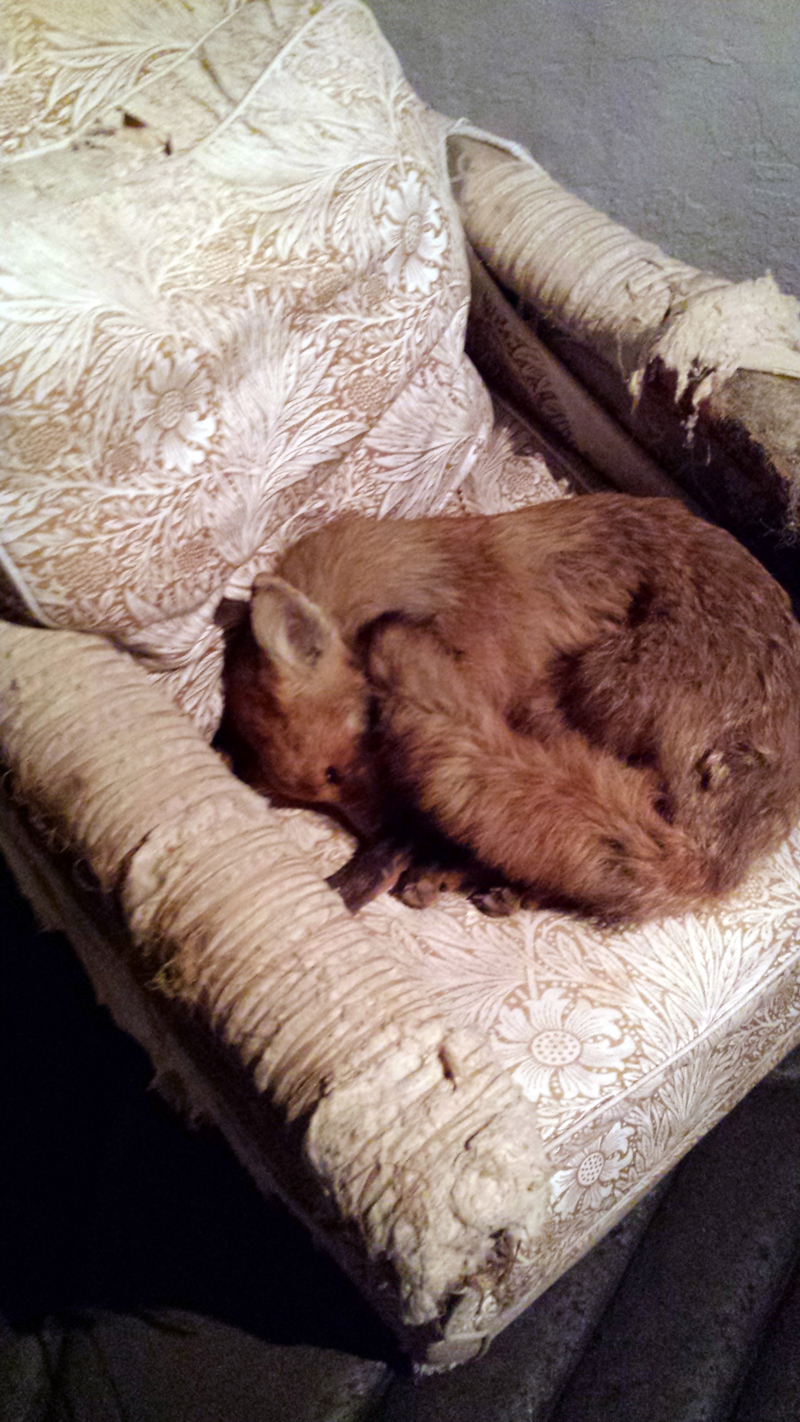
His award winning film Ekki Mukk is a beautiful and poignant story of a man, a snail and a fox.

I bought the 7″ single with recordings of a snail eating, a fox sleeping and sounds recorded of nature under the Tolpuddle Tree, the site of the birth of the first trade union.

Shirley Collins the film narrator tells a magical tale.

Nick Abrahams 7" single

Nick Abrahams 7″ single

These pieces are suggesting a way to look with your eyes shut,

Nick Abrahams - Fox Sleeping

Nick Abrahams – Fox Sleeping

bearing witness to the British countryside that you may not always be able to notice, a landscape that is both political and mystical, alive as it is with ‘animal magick’.

Nick Abrahams - wild man illustations

Nick Abrahams – wild man illustrations

Rachel Champion looks at urban architecture and energy in her installation at Hales gallery.

Pools of green algae sit in what might have been an abandoned attempt at some suburban municipal space.

Rachel Champion - Primary Producers

Rachel Champion – Primary Producers

Pebbledash has such resonance of the cheap and ugly that walking around this work is a bit of a dour experience.

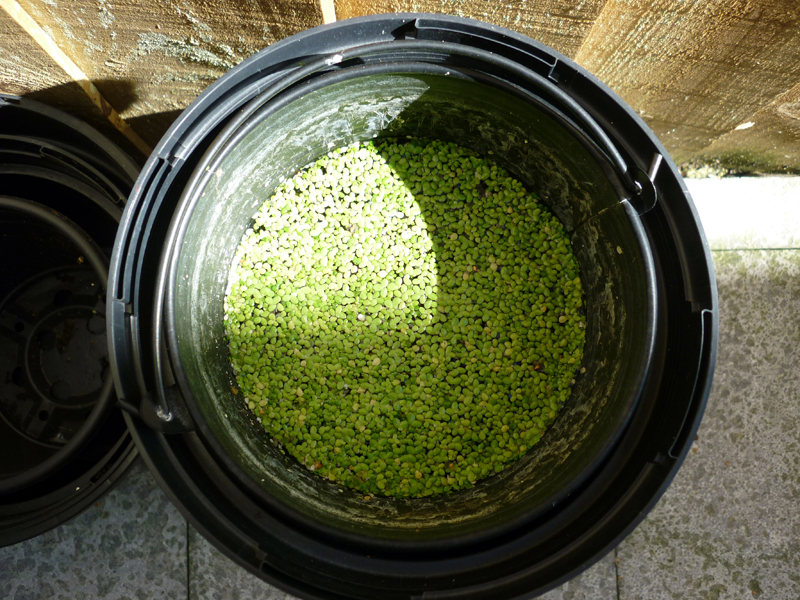
The punched out circles glinting with the promise of little worlds, maybe offering the wonder of the rock pool, instead present a prosaic stagnant puddle more reminiscent of the back yard bucket.

Or flowerpot in my case.

1408 back yard algae

In its aim to highlight the successes and failures of the cheap fix and reassess materials it is an effective installation. The artist is hoping that we will look with new eyes for unexpected saviours to our urban afflicted energy crisis.

I went to the WYSIWYG? (What you see is what you get?) discussion evening at South London Gallery to hear more about What happens to Art in a Digital World.

Too many speakers had been booked for the time available so it was a shame they had to rush, rather like me in my end of year exam with 58 images in 15 minutes.

I was hoping for a bit more discussion about the immersive possibilities of virtual gallery spaces but the focus was more how technology is used in institutions or by artists rather than the experience of entering a new space online.

It was still interesting and we could try out some technological innovations.

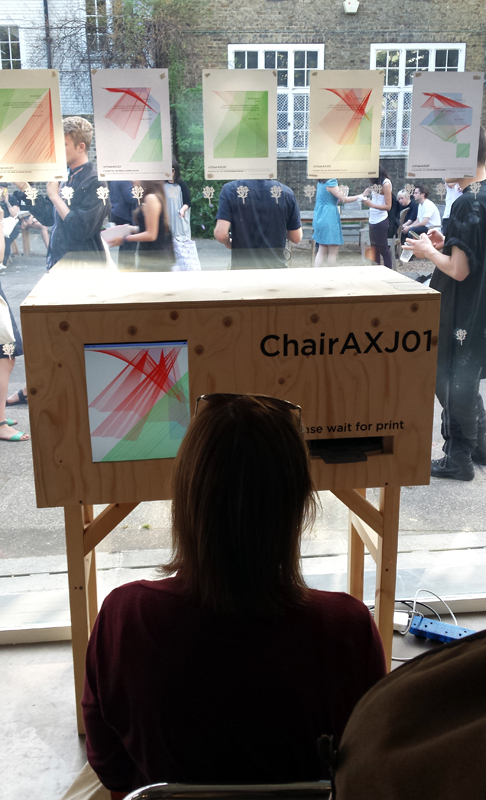
ChairAXJ01 designed by Joe Want and Andrea Concha

ChairAXJ01 designed by Joe Want and Andrea Concha

Joe Want and Andrea Concha have designed a chair that records the unique movements of the sitter and creates a graphic depiction that can be controlled a bit by wriggling around  in your seat.

My personal graphic made by sitting in ChairAXJ01

My personal graphic made by sitting in ChairAXJ01

Melanie Lenz from the V&A talked about the difficulties of archiving digital art due to commercial upgrades of the necessary hardware and software.

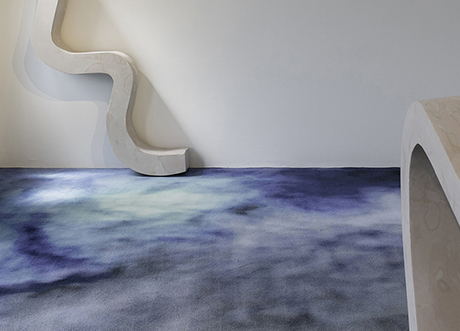
Julia Crabtree and William Evans spoke about their exhibition at South London Gallery made by using 3d imaging techniques to create digital smoke then capturing the image and finally printing it onto carpet so in fact the image begins digitally and then ends up in a physical form.

Julia Crabtree and William Evans

Julia Crabtree and William Evans

Natalie Kane spoke about the power of  algorithms in connection with the artist Jonus Lund and his exhibition Fear of Missing Out, and TED talks from Christopher Steiner and Kevin Slater.

An essay by Christopher Pinney – Future Travel: Anthropology and Cultural Distance in an age of Virtual Reality; Or, A Past Seen From a Possible Future which was recommended to me by Esther Teichmann is interesting reading on the possible effects of digital technologies on everyday life. Thinking about cyberspace in terms of a space for a new paradise tailored to your own specification. Pinney’s view, looking back from an imagined future, sees physical and moral boundaries being broken with total sensual experiences allowing unlimited sex and no need to travel.

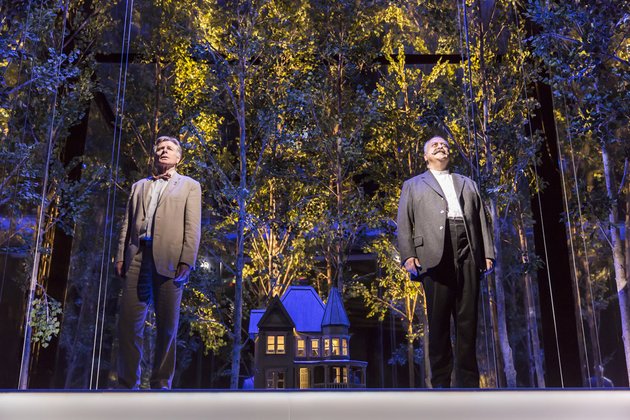
‘The Nether’ a new play by Jennifer Haley at The Royal Court Theatre tackles similar issues.

The Nether

The Nether

Popa has created his own dream space, a house populated by young children in Victorian dress with whom he and the guests to his world can have sex and then axe to death.

An argument unfolds on stage about the need for the same moral codes we employ in reality to be enforced in cyberspace. Popa’s plea is that no real children are harmed, the characters are avatars of adult participants in this world.

The Nether

The Nether

This virtual world felt very visceral when reaction to such a dilemma is sort.

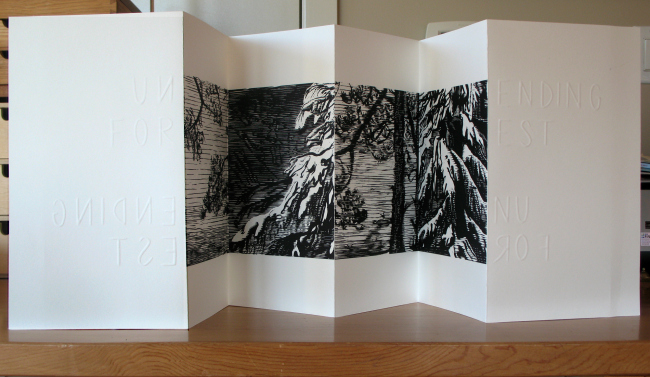
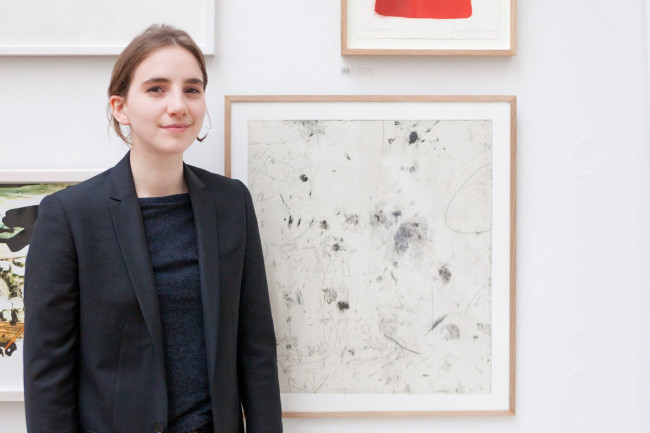
Entering a very different staged environment I finally stepped over the threshold of the RA annual summer exhibition  My first visit to this annual institution  was in the belief that things are changing backstage, its updating and bringing in new blood. Also two of my RCA classmates had won a prize and a few other people I know were in it. Time to stop being sniffy. It was good to see Pauline Emond’s etching and Wuon-Geon Ho’s artist book.

Wuon-Gean Ho receiving her prize for 'unending forest'

Wuon-Gean Ho receiving her prize for ‘Unending Forest’

Wuon-Gean Ho - unending forest

Wuon-Gean Ho – Unending Forest

Pauline Emond with her winning work Regarde De Tous Tes Yeux

Pauline Emond with her winning work ‘Regarde De Tous Tes Yeux’

I was surprised how many names I recognised in the selection and how many red dots there were.

Maybe I’ll even have a go in future.

1408 Azores 9

It seemed appropriate to be reading Raymond Williams ‘People of the Black Mountains’ in the Azores even though the book is set in Wales.

1408 Raymond Williams

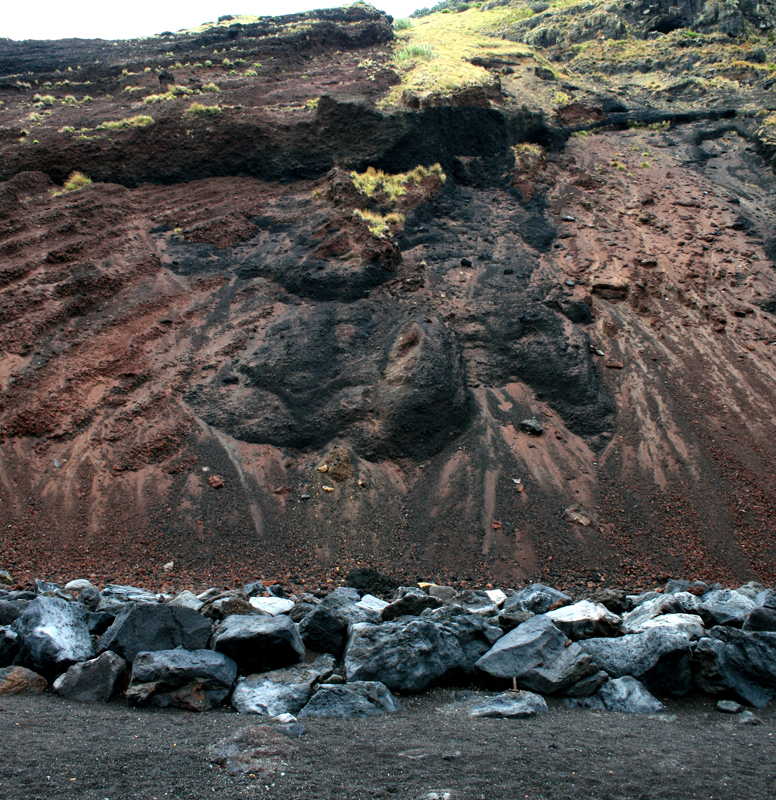
The islands have a black volcanic landscape, still very primeval in parts with bubbling hot springs and paralysed lava flows.


1408 Azores 7

These tiny islands are also a mixture of the pastoral

1408 Azores 6

and the tropical – in a garden setting

1408 Azores 8

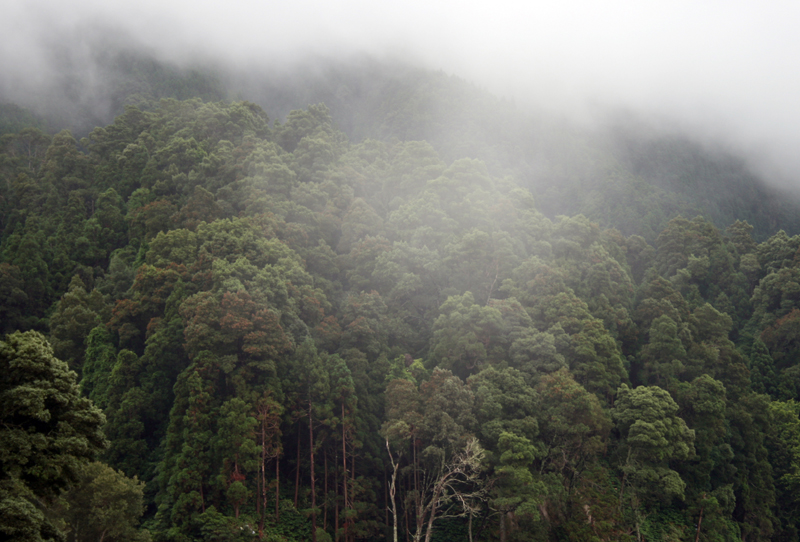
there are inaccessible forest covered mountains

1408 Azores 3

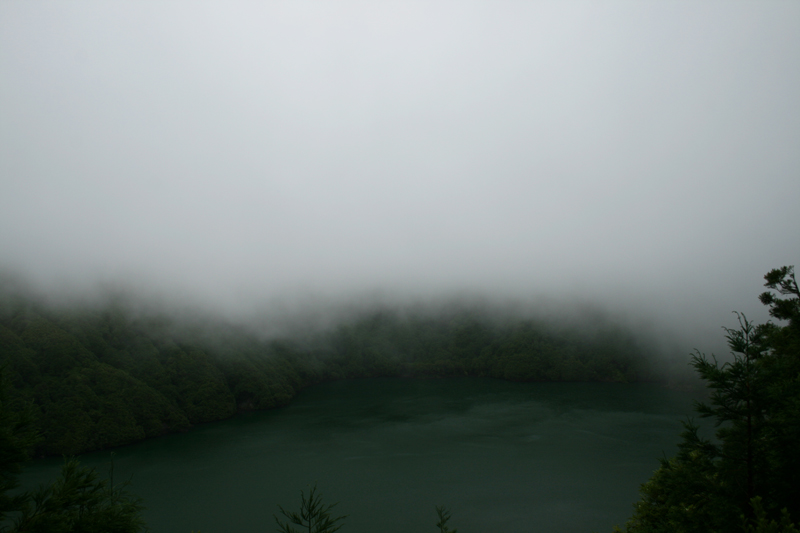
and the blazing sun can turn to thick fog in minutes

1408 Azores 4

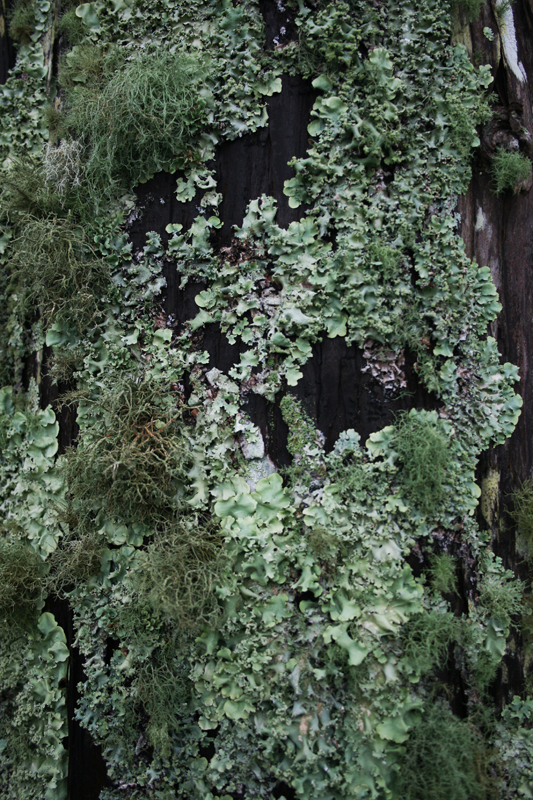
With all the rain and fog it’s moist and things grow

1408 Azores 2

everywhere

1408 Azores 1

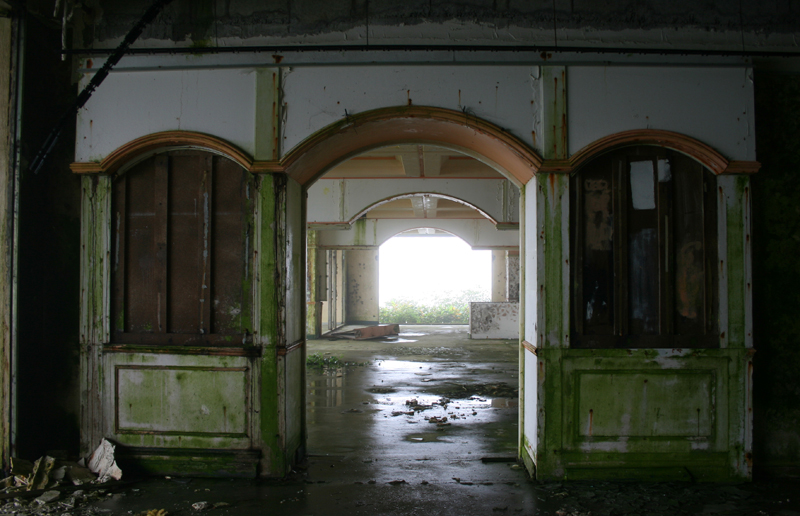
best discovery was the crumbling ruin of 5* Hotel Monte Palace high on a volcanic ridge

1408 Azores 11

emerging from thick fog at the end of a tortuous jeep ride along tiny precipitous roads

1408 Azores 5

built only 30 years ago it never fulfilled its owner’s dream and has been left to rot

1408 Azores 10

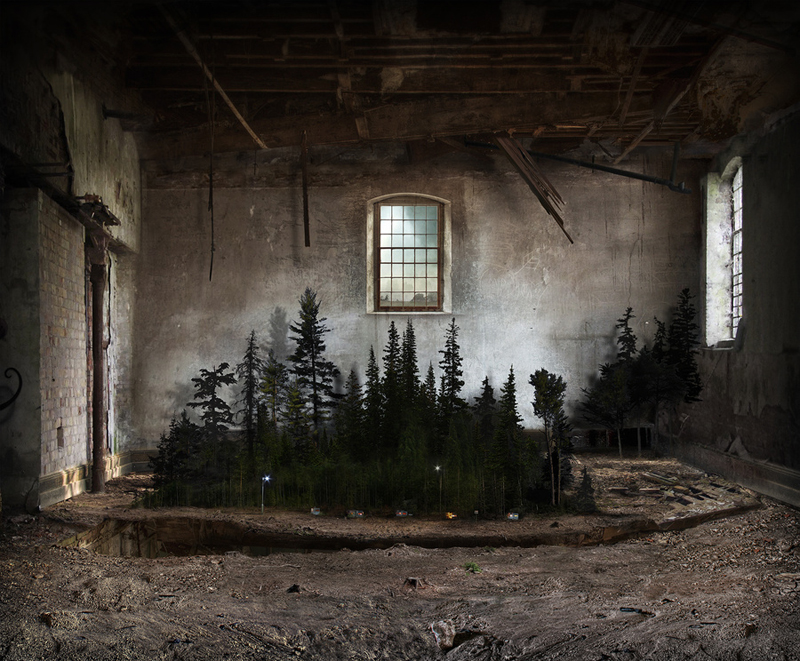
The eerie atmosphere of abandoned space is echoed in Suzanne Moxhay’s constructed images

Suzanne Moxhay  - Copse

Suzanne Moxhay – Copse

Her work was part of ‘The Combinational’ at Studio 1.1 curated by Paul Carey-Kent, last years gallery fund-raiser ‘lottery winner’

'The Combinational' at Studio 1.1

‘The Combinational’ at Studio 1.1

I was drawn to the ethos of the show-

“The found and the collaged are dominant modern modes; what artists choose to use, and how and why they present or combine them, count for more than their ability with traditional techniques.

One could also say that life in most of the world is less about individual survival than it would have been in pre-modern eras, more about how we live together and whether we can survive that.”

I bought a ticket for this years lottery, so fingers crossed.

Despite a raging thunder storm the opening of Ochre Originals showing two pieces of my work at New Ashgate Gallery was really busy.

My work at New Ashgate Gallery

Rainforest Section 1 and 2

I have been reading in my research about paradise how the botanical garden emulates ideas of Eden with its mix of species cultivated together in a garden.

It offers a tame nature, we look like we are in control

and then this happened

Collapse of paradise

Collapse of paradise

Enclosure is a word that has connotations of the comfort of an embrace and also the isolation of the prison yard.

In my thinking around ideas of paradise it reflects the dilemma of accepting sanctuary but also confinement.

Expulsion from Eden was surely a release not a punishment, for in reality the delights of an earthly paradise where all is provided and nothing changes would not satisfy our hungry curiosity and need for stimulation.

The exhibition ‘Enclosure’ at Danielle Arnaud covered similar opposing themes.

Gabriela Schutz’s wall sized graphite drawings ‘Holyland’ capture the bleak beauty of a territory divided by religious belief.

Gabriela Schutz - Holyland (Beit Arye)

Gabriela Schutz – Holyland (Beit Arye)

Particularly emotionally charged at the moment with the terrifying escalation of animosity and violence that the people caught between these fragile borders are suffering.

From stark realism to enchanted fantasy. Sarah Woodfine seduces us with glitter and glass in a sealed world.

Sarah Woodfine Castle

Sarah Woodfine Castle

But this is a grey landscape, a place of possibly macabre incarceration.

Also alluringly claustrophobic are Stephen Walter’s dense drawings of woodland. The eye scans the scene for an opening, as if you were within the wood hearing a sudden crack in the undergrowth…

Stephen Walter - Of This Wood Men Shall Know Nothing

Stephen Walter – Of This Wood Men Shall Know Nothing

Walter’s witty idea of using a hagioscope to scan the intensely detailed map of his invented ‘Nova Utopia’ is good fun.

The back history that he has established in his conception of this world is obsessive.

It has some of the same social and cultural grammatics  that Grayson Perry uses in his contemporary commentaries on society.

Stephen Walter - Nova Utopia

Stephen Walter – Nova Utopia

The circular peephole can be manually slid across the map revealing new zones and topographies. It is not a world view but a segmented journey across the land as through an ancient voyagers telescope.

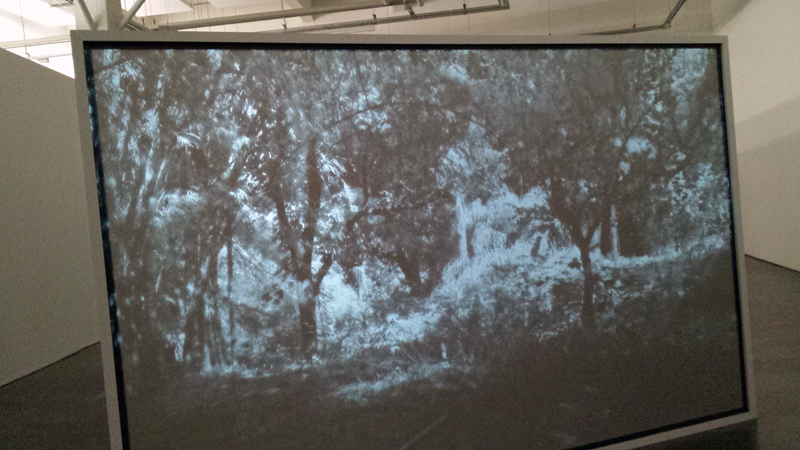
Marion Coutts also edits her landscape to a vignette. With laborious care she removes the borders from the frame of the film leaving behind a floating island.

Marion Coutts - Everglade

Marion Coutts – Everglade

Only subtle movement within the image reveals it to be a film rather than a static projection.

My pieces ‘Would’ (1&2) hung for the Summer exhibition at Ochre Print Studio have a layered translucent surface which adds suggested movement.

1407 SAOS

This work reflects the aura of an imagined event.

2014 Would

A magical space, like an abandoned walled garden.

1407 Henstead Garden

The remnants from an age of explorers who brought back the first examples of exotic flora now thriving in the Suffolk landscape.

1407 Henstead Garden 3

Just a few miles from where I was born is the Henstead Exotic Garden.

Planted 10 years ago by Andrew Brogan it seems impossible that these sun worshippers would survive those icy easterly winds from Siberia that gave us all chilblains.

1407 Henstead Garden 2

I have met a lot of special people at the RCA – the graduates of printmaking 2014 are ALL amazing people

Here is some of their work

Vangeli Moschopoulos

Vangeli Moschopoulos

Sophia Jones

Sophia Jones

Rei Matsushima

Rei Matsushima

Pauline Emond

Pauline Emond

Pauline Emond

Pauline Emond

Jian Zhou

Jian Zhou

James Seow

James Seow

Holly Graham

Holly Graham

Hadas Auerbach

Hadas Auerbach

Gabriele Dini

Gabriele Dini

Danny Augustine

Danny Augustine

Chud Clowes

Chud Clowes

Lisa Lee

Lisa Lee

Christian Jaskolka

Christian Jaskolka

Ben Zawalich

Ben Zawalich

Theo Eriera-Guyer

Theo Eriera-Guyer

Anastasia Mina

Anastasia Mina

Alice Gauthier

Alice Gauthier

Weixin Chong

Weixin Chong

Sad to see them move on but hopefully to amazing new adventures.

It was a privilege to help with all the prep work involved in setting up the show. Now we know what to expect next year…

1407 Show prep

Such a buzz when the whole college comes together

1407 Team work

A strange bubble of expectation is created

1407 Show 2014

To see a short film of SHOW2014 click on this link

One room which stood out for me at Show2014 was a collaboration between two artists Marlene Steyn and Abraham Kritzman

1407 Abraham Kritzman Marlene Steyn 3

Abraham Kritzman and Marlene Steyn

It wasn’t clear who made which pieces but the room worked as a whole

1407 Abraham Kritzman Marlene Steyn 1

Abraham Kritzman and Marlene Steyn

1407 Abraham Kritzman Marlene Steyn 6

Abraham Kritzman and Marlene Steyn

1407 Abraham Kritzman Marlene Steyn 2

Abraham Kritzman and Marlene Steyn

1407 Abraham Kritzman Marlene Steyn 4

so much to engage with

Abraham Kritzman and Marlene Steyn

Abraham Kritzman and Marlene Steyn

and from the RCA jewellery department the talent of Max Danger –

Max Danger

Max Danger

Bees are precious as demonstrated in these beautiful pieces

Max Danger - Bees

Max Danger – Worker Bees

with an eye on the ecological importance of bees as well as a sense of humour

Max Danger  - Robot Bee

Max Danger – Robot Bee

Confinement. I don’t like boundaries that restrict and I don’t want to lose being an artist to being a printmaker.

I don’t really like a show that is put together based on process yet I seem to be more and more being involved with such projects.

I went to see IMPRESS at the Courtauld Gallery Somerset House – the strapline was Print Making expanded in contemporary art.

Some works were as clunky as the premise, and no show transports you when there are wires marking your viewing boundaries and officious invigilators watching your every move.

Nicky Hirst - Wall 1

Nicky Hirst – Wall 1

Filigree in silver onto a printed circuit board – Cornelia Parker and silver work well together

Cornelia Parker - Small Thought

Cornelia Parker – Small Thought

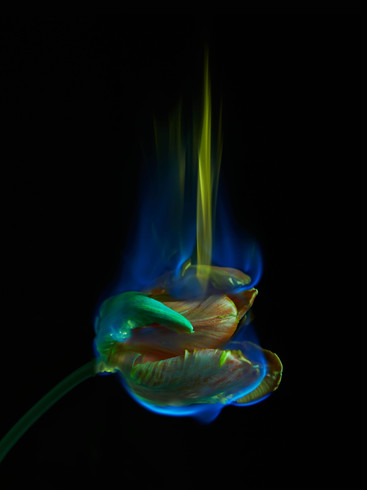
A favourite was the impressions of controlled combustions taken onto photo-sensitive paper of spores from lycopodium plants.

Raphael Hefti - from the Lycopodium Series

Raphael Hefti – from the Lycopodium Series

Definitely an opening here for the imagination.


Gaining knowledge is a thread woven through my current thinking for my dissertation. From the first knowledge of conscious thought – that we are separate from nature, the temptation of the tree of knowledge and its consequences, to self knowledge through the grand Romantic quest and the furthering of knowledge to pass on to future generations.

Kadar Attia – Continuum of Repair: The Light of Jacob’s Ladder at Whitechapel Gallery was interesting to me because of the focus given to the value of knowledge.

Books as receptacles of history.

Kader Attia _ The Light of Jacob's Ladder

Kader Attia   The Light of Jacob’s Ladder

The shelves which rise up to the gallery ceiling are full of books with evocative titles and inspiring covers from science, anthropology, politics and physics – they are mostly in French though so for me the knowledge they contain is frustratingly inaccessible. Attia talks about repair as a principle of evolution and development – that we plug holes and fill gaps – holding it all together with sticky tape. I enjoyed seeing the physical manifestation of knowledge. The internet holds so much and offers so much so quickly but the material sight of so many books is uplifting.

Kader Attia

Kader Attia

The installation at Whitechapel is about conveying knowledge from different ideologies, it refers to Michel Foucault – The Archeology of Knowledge and uses the symbolism from Christian, Islamic and Judaic traditions of a ladder of light – a link between the terrestrial nad the celestial. Within the installation the telescope and the microscope embody two alternative ways of looking at the world.

Revelation through scale.

Simmons and McCollum 'The Actual Photos'

Simmons and McCollum ‘The Actual Photos’

This collection of portraits by Laurie Simmons and Allan McCollum manipulate scale through photography – enlarging the tiny to life size.

These melting features are portraits of model railroad figures used to add human presence to the constructed landscapes of the hobbyist.

Simmons and McCollum 'The Actual Photos'

Simmons and McCollum ‘The Actual Photos’

A land of the disfigured is revealed. Disrupting the symmetry and expectations of the human face.

Hannah Hoch also uses this approach of disruption of the human form to pose questions about our inner humanity – it’s amazing to think when she was making this work – the early work, particularly in the 1920’s how different the world was and yet how the same. Like the ever on-going topicality of Shakespeare – we struggle with the same issues in every generation – money/power, image, gender. It still seems so fresh though I found the volume of works at her Whitechapel  retrospective a bit overwhelming.

Hannah Hoch

Hannah Hoch

I joined the RCA school trip to see The Negligent Eye exhibition at The Bluecoat Gallery in Liverpool curated by our own RCA head of printmaking Jo Stockham

– she questions;  ‘scanning is riddled with an internal contradiction: is it a close reading or a glance?’

The artists in this show all use some form of scanning, experimenting with translations across digital media into various print processes

Maurice Carlin

Maurice Carlin

Endless Pageless is performance screen printing on a vast scale. The surface of the gallery floor is recorded though an analogue scan; the pressure of the screen over paper on the floor gradually building up the image in coded blocks.

Rebecca Gossling

Elizabeth Gossling

Gossling scans from a computer or tv screen with a hand held recording device which results in a distorted image that highlights the waves of transmission – like the image on the edge of tuning in to a channel, you are aware of the process.

A feeling reminiscent of having one of those little tellys with a bent wire ariel – not going to happen with a digital signal.

Christiane Baumgartner

Christiane Baumgartner

Also taken from the screen Baumgartner translates the media image from tiny pixels to giant woodcut

Juneau Projects

Juneau Projects

Hand held scanners traversing the lawn

Helen Chadwick

Helen Chadwick

viral attack

Bob Matthews

Bob Matthews

A reimagining of the landscape, Bob Matthews  explores architecture within the environment, painting by pixels

Jo Stockham

Jo Stockham

value, discarded and reborn

Jo Stockham

Jo Stockham

Some good thoughts on the show at
http://www.furtherfield.org/features/reviews/digital-autopsies-negligent-eye-bluecoat

The book ‘Keywords’ by Raymond Williams was recommended to me by my tutor Faisal Abdu’Allah when we were discussing the etymology of words and personal interpretations of paradise or utopia.

The guiding principle in the composition of Keywords was to look at historical changes in the meaning of 109 key words, in order to bring out the significance of the facts of these changes. As Williams put it in the book’s Introduction:

This is not a neutral review of meanings. It is an exploration of the vocabulary of a crucial area of social and cultural discussion, which has been inherited within precise historical and social conditions and which has to be made at once conscious and critical – subject to change as well as to continuity.

While in  Liverpool we visited the Keywords exhibition at the Tate. The idea offered really interesting possibilities, juxtaposing works from the Tate’s collection with keywords from the book.

Some good work but the strange display with blocks of carpet and the words in giant cursive script on the walls destroyed any magic the theme evoked.

Keywords Tate Liverpool

Keywords Tate Liverpool

Another school trip was to see the David Hockney prints at Dulwich Picture Gallery.

It wasn’t something I would have gone along to myself but I enjoyed the humour in his early etchings done while at the RCA and our technician Alan Smith was able to show off his knowledge of the etching process

David Hockney - A Rake's Progress

David Hockney – A Rake’s Progress

Some fragments of Rue de Paradis

1406 Rue de Paradis 1

Paradise – prison

1406 Rue de Paradis 2

or sanctuary

1406 Rue de Paradis 3

discover

1406 Rue de Paradis 4

a place of false riches

1406 Rue de Paradis 5

a place to be wary who you trust

1406 Rue de Paradis 6

like reaching for a reflection

1406 Rue de Paradis 7

always unattainable

1406 Rue de Paradis 8

While in Paris also had a look at the Unedited History of Iran exhibition at The Musee D’art Moderne

1406 Unedited History


Behdjat Sadr

Behdjat Sadr

Was captivated by the surreal images in the video installation of Parviz Kimiavi – a mixture of Oz and world pollution, will the good fairy come to save us all from drowning in our own filth

Parviz Kimiavi

Parviz Kimiavi

Parviz Kimiavi

Parviz Kimiavi

Parviz Kimiavi

Parviz Kimiavi

does the yellow brick road end here

Parviz Kimiavi

Parviz Kimiavi

‘Office of Investigation into Diverted Trajectories’ – the dead birds

Narmine Sadeg

Narmine Sadeg

This was poetic

Narmine Sadeg

Narmine Sadeg

Also while in Paris visited the vast installation at the Grand Palais” by Ilya and Emilia Kabakov.

We came across the exhibition by chance but it turned out to explore many of the themes I am currently interested in.

Ilya’s background is questioning the totalitarian regime of his childhood in soviet society – in the end he believes every -ism ends in disaster so there is no point in trying to build Utopia in reality – better to keep it in the realm of the art-world.

Ilya and Emilia Kabakov  'Strange City'

Ilya and Emilia Kabakov
‘Strange City’

In exploring the maze of the city the viewer is exploring the dreams of individuals that are shared across all nations

'Stange City'

‘Strange City’

The installation is made up of many buildings. There is the empty museum reflecting a yearning towards the sacred as a shrine to our values.

There is the model mythical Tibetan city where the world is in duplicate – one celestial, one terrestrial but it is not known which is heaven and which is earth.

'Strange City'

‘Strange City’

There is the centre for cosmic energy built on an archaeological dig uncovering a time when contact was established with alien life.

'Strange City'

‘Strange City’

Instructions on how to meet an angel.

'Starnage City'

‘Strange City’

The artists are not religious but like many people still hope for miracles.

Axisweb ran a competition for curators to select work from their database for a theorectical exhibition.

It was a nice surprise to find Laura Dennis won the competition with one of my pieces included in her selection for her proposal ‘Synthetic Landscapes’

StrataGem(ii)

StrataGem(ii)

She writes: ‘In the screen print StrataGem(ii), Susan Eyre has created a mesmerising image of geological strata using items of plastic landfill. Shimmering, iridescent layers of waste packaging form the imagined rock structures and gemstones of a distant future. Despite its apparent beauty, the image is unsettling: it prompts us to contemplate the far-reaching impact of human activity upon the earth, and a legacy in which the man-made and natural worlds have become indistinguishable.’

My themes have shifted slightly since I made work with a more ecological slant. Still interested in the human connection to nature I have been looking at a more emotional relationship.

From my research into the stimulus for the first conscious thought, when man looked at nature and found it ‘other’ I have been thinking about basic instincts. The line between civilization and savagery.

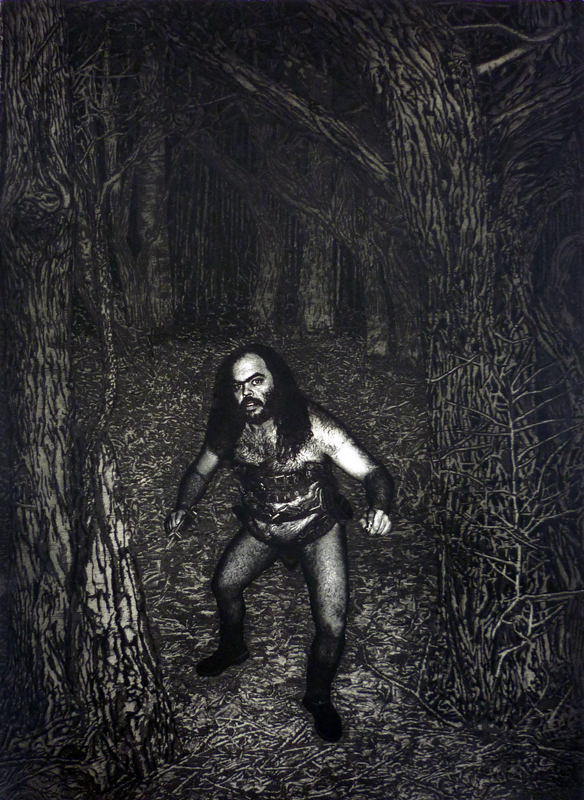
I went back to an image I found on the internet a couple of years ago when I was making the installation ‘Syndrome’ of a guy in his room posing almost naked with guns and weapons strapped to his body.

I felt he might embody the contemporary wild man. I have gone back to the source of the image and found he has become a meme with many postings and comments.

This furthers the idea of identity and illusion. Someone on the edges of society.

Through a laborious process of drawing and soft-ground etching with aquatint I have placed him into the ancient forest of all our origins.

Forst drawing printed onto thin paper

Final drawing printed onto thin paper

I polished a steel plate and added the photo etching around which I would draw the forest.

Soft ground (a sort of wax) is rolled onto the plate and the paper drawing is placed on top.

The pressure of the pencil on the paper pushes into the wax beneath. I used coloured pencils to see where I had drawn.

Drawing into soft ground using coloured pencils

Drawing into soft ground using coloured pencils

After the dark areas are drawn over, the paper is peeled away, the wax sticks to the paper leaving the metal exposed for etching.

The plate is etched in acid, then placed back under the paper and drawing continues to add midtones.

Soft Ground Peel

Soft Ground Peel

The paper is peeled away and more drawing is done and etched until the range of tone is acheived

Peeling away paper from plate

Peeling away paper from plate

Between each drawing and etching the plate is printed to see how the tones are looking and which areas need more work.

A dusting of aquatint added a final depth of tone.

Test print

Test print

I wanted the forest to appear dark and primordial, the forest of Grimm brothers imaginination

Final print - Forest of Eden

Final print – Forest of Eden

Not the Garden of Eden but the land before, of after, the garden existed.

Dissertation sickness. Gaining knowledge should be enriching – Bill Viola talks about a pollution of the mind from too much information, he means a flooding from advertising and media and such like that has a negative impact on our well being. Walter Benjamin was also concerned that post industrial life was overwhelming our senses in such a way that we couldn’t process the volume of experiences we had in order to gain any knowledge or understanding. I think I may be overloading my mind with too many books – too many threads to follow – so that I can no longer process meaningfully.
Nostalgia – the wounds of returning.
Ruin Lust at Tate Britain was a chance to revel in the beauty of decay – to feed desire for the lost idyll. Desire is such that it is eternal.

Jane and Louise Wilson - Azeville

Jane and Louise Wilson – Azeville

I have just been reading about critic Neil Hertz comments on Gustave Coubet’s La Grotte de la Loue 1864 as an example of the move from the romantic sublime to the post modern sublime.

Gustave Courbet - La Grotte de la Loue

Gustave Courbet – La Grotte de la Loue

The Wilson’s photograph Azeville seems to share the same unnerving dark space where there is no escape into infinity only a reflection back to self meditation.

John Martin the master of the fantastical sublime shows the devastation of Pompeii.

John Martin - The Destruction of Pompeii and Herculaneum

John Martin – The Destruction of Pompeii and Herculaneum

With the sublime there is always the possibility of death.

If a dark space of contemplation is post modern sublime what is this …

1405 Pompeii

feels like a brash disrespect for the dead to me.

Finlay Taylor, tutor in printmaking at RCA, brought together an impressive selection of works for an exhibition at Camberwell Space – Against Nature.

In his introductory speech at the symposium held in conjunction with the show he spoke about cause and effect of environmental interventions.

The extinction of the Large Blue Butterfly in Britain as habitat is eroded as land use changes and the introduction of a butterfly from Scandinavia as replacement – a near match.

The high mercury levels at the top of Mount Fuji brought on the winds from China’s expanding coal mining industry.

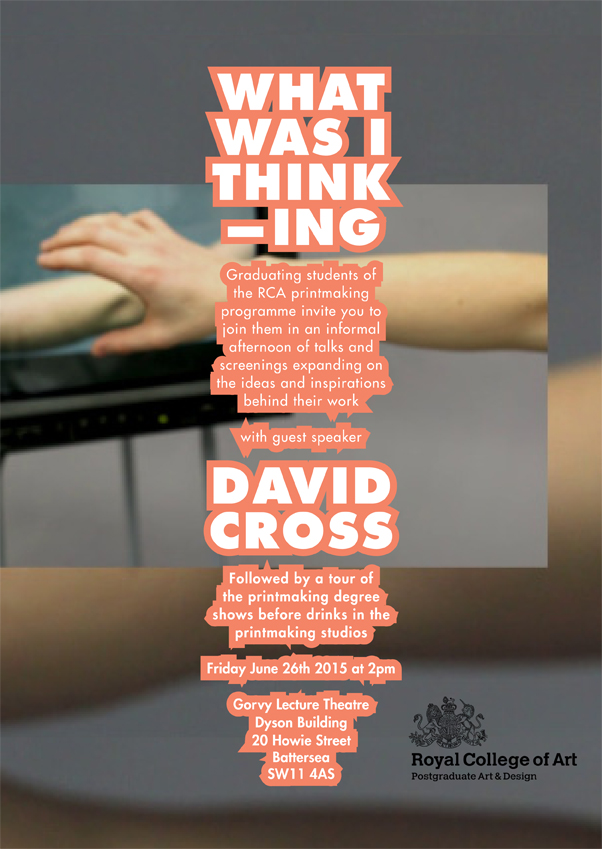
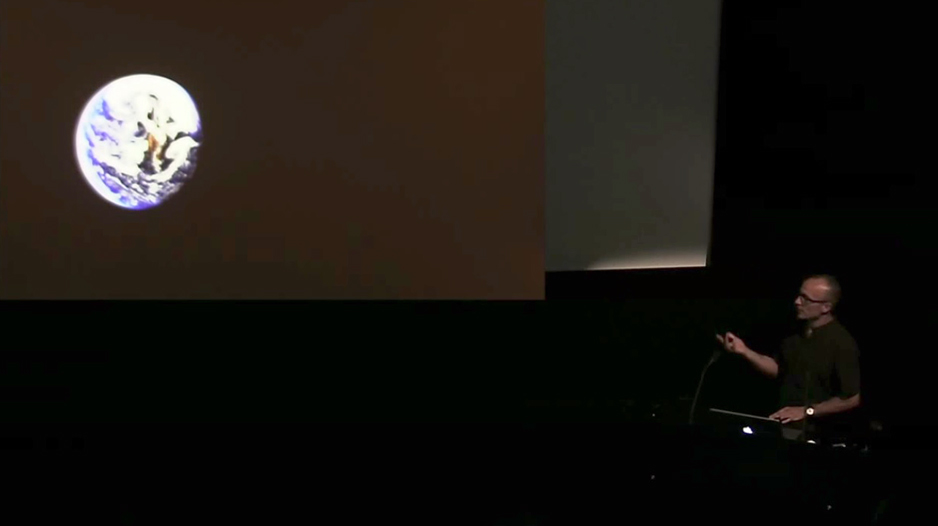
Dr Joy Sleeman and David Cross, speakers at the symposium, discussed our shift in perception of landscape after the moon landings.

The iconic image earthrise – looking back at earth from space apparently very nearly didn’t happen.

The highly trained military scientists had been instructed to only photograph the surface of the moon with the precious amount of film that they had taken into space with them.

1405 earthrise

However, when they saw the earth as it had never been seen before and it was so beautiful they disobeyed command and pressed the shutter.

Optimum selfie.  It’s been a while now since the reverberations of that image were first felt, it was supposed to unite us as a planet, to position us within the enormity of the universe so that we could appreciate our lives as being part of something amazing and vast.

Our skies, flooded with artificial light means we can no longer see the stars. Our territory has shrunk. James Turrell makes work to try and open up our skies to us again. By creating an enclosure to look out from, a vaulting occurs in our perception, bringing the sky closer, and as the light changes throughout the day and the seasons a myriad range of colours can be observed.

James Turrell - Roden Crater

James Turrell – Roden Crater

His friend and art collector Count Giuseppe Panza di Biumo believes that if everyone could visit The Roden Crater then all violence would stop.

Also we wouldn’t need any hallucinogens.

Crossing the channel to see Bill Viola in Paris. Dissertation research isn’t all sitting in the library.

Bill Viola - Fire Woman

Bill Viola – Fire Woman

Enjoyed some favourite pieces and saw some new ones.

I found ‘Three Women’ very hypnotic and moving. For me it was about cycles of separation.

The mother figure steps out from a grey mist through a wall of water, with all the wetness and rupture of birth, she emerges glistening into full colour.

Bill Viola - Three Women

Bill Viola – Three Women

She reaches back for the older girl and guides her on her journey through the baptism of water to be at her side, the older girl in turn then takes her sister by the hand to join them.

Bill Viola - Three Women

Bill Viola – Three Women

No sooner are they all together than the mother figure steps back through the veil, the older girl soon follows, leaving the young girl suddenly alone.

As she reaches back and takes her older sister’s hand to return from where she came, she turns directly to the viewer, her gaze holds us in a grief of separation.

Bill Viola - Three Women

Bill Viola – Three Women

Who steps over the threshold willingly?

Crossing Oceans – ‘The Stuart Hall Project’ film is a poetic collage of archive footage set to the music of Miles Davis, directed by John Akomfrah. Stuart Hall emigrated from Jamaica to the UK in 1951 to take up a place at Oxford University, and became a founding figure of cultural studies in Britain.

Stuart Hall

I have Jo Stockham (head of printmaking at the RCA) to thank for screening this film of a wonderful man sadly no longer with us.

This film is now part of an exhibition at the Stanley Picker Gallery in Kingston Upon Thames – Your Tongue in My Mouth

1405 Standing on the Frontier (22)

Honoured to be invited to join the artists in Standing on the Frontier, a group show at Unit 24 Gallery curated by Takayuki Hari and Noa Edwards.

“One of the tasks art has assumed is making forays into and taking up positions on the frontiers of consciousness (….) and reporting back what’s there.” –Susan Sontag, ‘The Pornographic Imagination’.

Takayuki Hara with his work

Takayuki Hara with his work

The images presented by the artists in Standing on the Frontier depict views taken on a redefining the frontier between reality and the imagination. On this meandering journey the viewer weaves his or her way across the line that demarcates the boundary between the mundane scenery of familiar places and the surreal landscapes of the individual mind.

Noa Edwards paintings

Noa Edwards paintings

A review can be read here

Susan Eyre - Yellow Sky

Susan Eyre – Yellow Sky

The boundary I was thinking about here was the one between outside and inside a controlled environment.

A dystopian future where all life is sheltered in a sort of Eden project.

Coming up soon –

I have some work in the Ochre Print Studio Summer exhibition

Would 1/2 ve

Would 1/2 ve

Some exhibitions I hope to visit –

Arkipelagos at Beaconsfield

Fleursdumal at Charlie Smith

Suky Best at Danielle Arnoud

Laurence Kavanagh at Marlborough Contemporary

Chris Marker at Whitechapel

TTTT at Jerwood Space

Daniel Malva at ArtEco

and of course Royal College of Art SHOW 2014


I have been lucky enough to be assigned Esther Teichmann as my dissertation supervisor.
I fell in love with Esther’s work when I first saw it at the ArtSway Open 2008.

She was showing hand coloured photographs from the Mythologies series.

Esther Teichmann - Mythologies

Esther Teichmann – Mythologies

It has been inspiring to able to talk with her and discover a mutual interest in lightning and the remarkable Litchenberg Figures that are left by a strike on skin

Litchenberg Figure

Litchenberg Figure

Also inspiring to see her sensuous show Fractal Scars, Salt Water and Tears at Flowers Gallery.

Esther Teichmann installation view at Flowers Gallery

Esther Teichmann installation view at Flowers Gallery

In a gallery talk Carol Mavor, in response to Esther’s work, spoke of shells, grottoes, sleeping beauty (someone who has forgotten her clitoris) and the proposition to ‘Let your lids drop the fall is always worth it’ .

Esther Teichmann

Esther Teichmann

We are taken deep inside the grotto, the dark space of desire.

I have been re- reading through the journal of Sergio Vega who ends up in a grotto at the centre of Paradise as defined by the mapping of Don Antonio de Leon Pinelo undertaken in 1650.

Sergio Vega followed the ancient map to a location in Brazil and finds himself having a transcendental experience in the cool waters of a secluded cavern.

Sergio Vega Windows on the Sublime 1

Sergio Vega Windows on the Sublime 1

I have spent my first day in the British Library Reading Room soaking in the atmosphere of investigative minds.

My first enquiry has been to try and find out who decided to name Paradise Road, Paradise Walk etc with such aplomb.

Paradise Road SW4

Paradise Road SW4

One book cites a profusion of Paradise Rows springing up in Victorian times so named by mendatious developers to attract customers to their mews squatting in not so desirable locations such as along railway embankments. Another book dates the Paradises to the 1700’s. The Victorian’s maybe just ran with the theme, the advertisers sleight of hand to gloss over the facts with hyperbole. Paradise Road in Islington had previously been Named Love Walk – this usually meant where the prostitutes hung out.  A day can easily slip by in the library and maybe only one small paragraph might be gleaned for the dissertation.

I really like these drawings by Patrick Van Caeckenbergh. I have ancient forests in my head at the moment and I like his little interventions.

Patrick Van Caeckenbergh

Patrick Van Caeckenbergh


Patrick Van Caeckenbergh

Patrick Van Caeckenbergh

I think he has a sense of humour

Patrick Van Caekenbergh

Patrick Van Caekenbergh

Also obsessive as he lived in a piece of art for 4 years.

This is a link to the website of Cristobel Leon and Joaquin Cocina – they make amazing inventive films

http://leoncocina.com/los-andes/

In ‘Los Andes’, a restless primal spirit takes possession of an office room.

Cristóbal León and Joaquín Cociña Los Andes

Cristóbal León and Joaquín Cociña Los Andes