Archives for category: Uncategorized

The pleasure of live performance.
It can have the feeling of a fiesta or a therapy group or a sinister encounter, there is so much to experience.

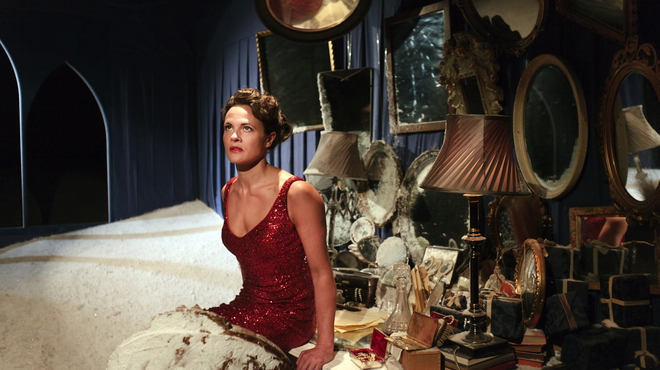
With Punchdrunk’s ‘The Drowned Man’ it was like being dropped into the middle of a David Lynch film.

Punchdrunk's The Drowned Man

Punchdrunk’s The Drowned Man

Bewildering yet sexy and beguiling.

Punchdrunk's The Drowned man

Punchdrunk’s The Drowned man

If there was a linear plot I didn’t follow it. Stories were told through dance and physical theatre with a little dialogue and a fair amount of miming to sultry soundtracks,

The dance was extraordinary, fast and furious as characters appeared, flung each other around and ran off before you could catch your breath.

I spent a lot of time wandering around deserted corridors, entering mysterious rooms labelled prosthetics or suchlike, seeing other masked figures slide into the gloom.

Suddenly a door would open onto a scene, sometimes disturbing, descending into violence as we stood anonymously and silently circling the victim.

Punchdrunk's The Drowned Man

Punchdrunk’s The Drowned Man

Through some subtle kettling the audience were amassed in one vast space for the final explosion of dance.

Separated at entry we were able to meet up in the bar with our friends to share impressions and find that we had all experienced something completely different.

I missed a whole floor of this vast space – maybe two even.

It’s running for a bit longer and I would love to go back.

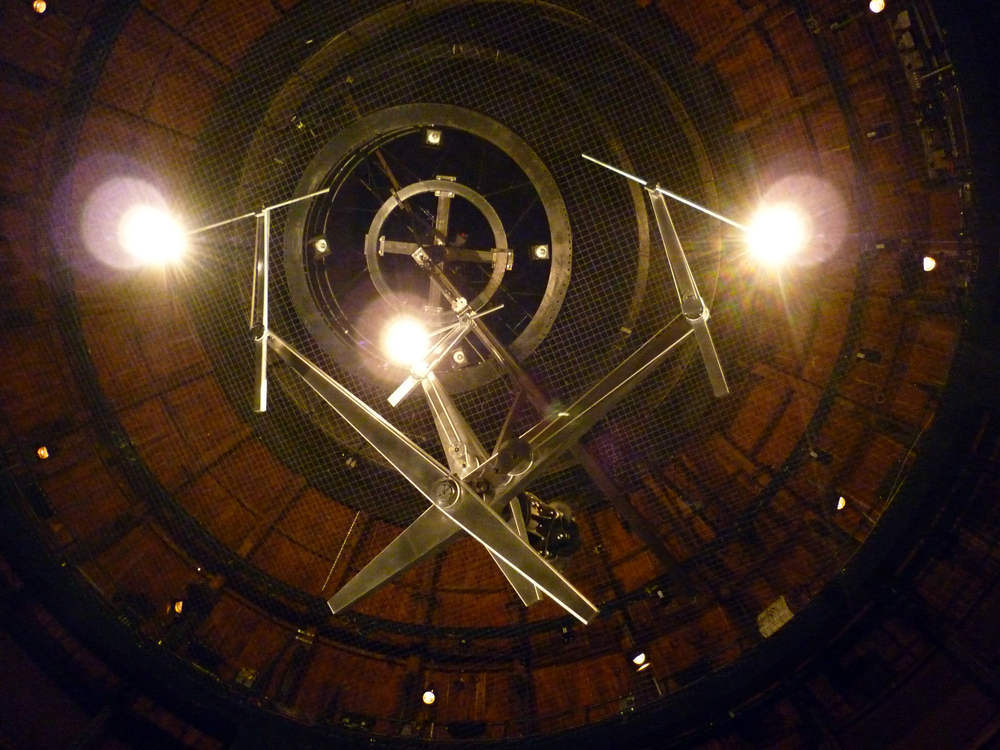
Timepiece from Conrad Shawcross at The Roundhouse was a more controlled affair.

Conrad Shawcross 'Timepiece'

Conrad Shawcross ‘Timepiece’

Seeking to reimagine our experience of time passing through the mechanical movements and shadows passing across the huge dome.

I wanted to try to make the familiar the peculiar again; to turn
time and the clock back into the celestial, primeval experience that it once was
for us all.

Conrad Shawcross

It was kind of meditative.

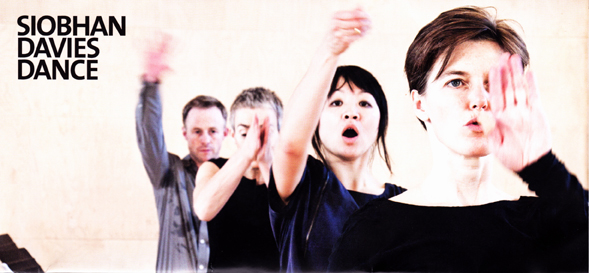
Siobhan Davies Dance Studio performers responded to the space with a reworking of Rotor.

While wheels and arms shifted above the four dancers mirrored the movements of a clock hand walking in concentric circles.

Siobhan Davies Dance ROTOR

Siobhan Davies Dance ROTOR

The concentration was intense.

There was a follow up wonderful idiosyncratic piece Songbook composed by Matteo Fargion. The performers stood in line making expressive sounds with accompanying physical expression.

1309 Siobhan Davies Dance
Like a human instrument. An investigation into how and why we make sound. It was fun and slightly ridiculous.

The complete giving over to the production of a sound, feeling its shape as it leaves the body.

Much like Bjork sings. Every nuance is felt.

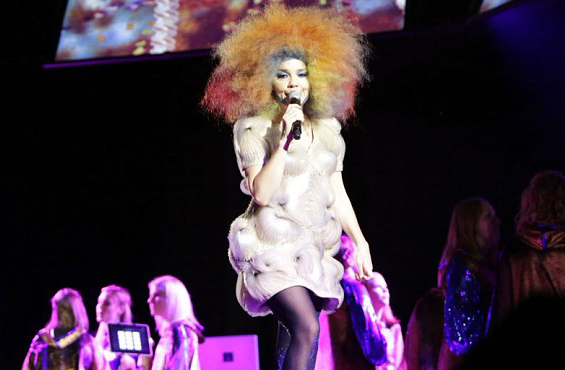
Amazing to see the very last performance of the touring show Biophilia at Alexandra Palace.

Bjork Biophilia

Bjork Biophilia

In a dress that looked like a multitude of breasts, Bjork charmed us with the intense beauty of a performance that makes you cry it’s so perfect.

‘This is kind of without humans and both zooming out like the planets but also zooming in into the atoms and in that way aesthetically sympathising with sound and how sound moves and physics of sound and how notes in a room behave, how they bounce off walls and between objects and its kind of more similar to how planets and microscopic things work.’ Bjork

Each section is introduced by the familiar tones of Sir David Attenborough giving insight into the infinite connections of the biosphere.

With bolts of electricity triggering sound and handcrafted instruments that ranged from a combination fusing the Celesta and the gamelan, a traditional Indonesian percussion ensemble to a giant pendulum contraption designed and programmed by musical robot maker from MIT, Andy Cavatorta, the ancient crafts collided with futuristic  technology.

The spectacle was completed by the soaring voices of her Icelandic choir drumming their bare feet like frenzied maenads.

Bjork Biophilia

Bjork Biophilia

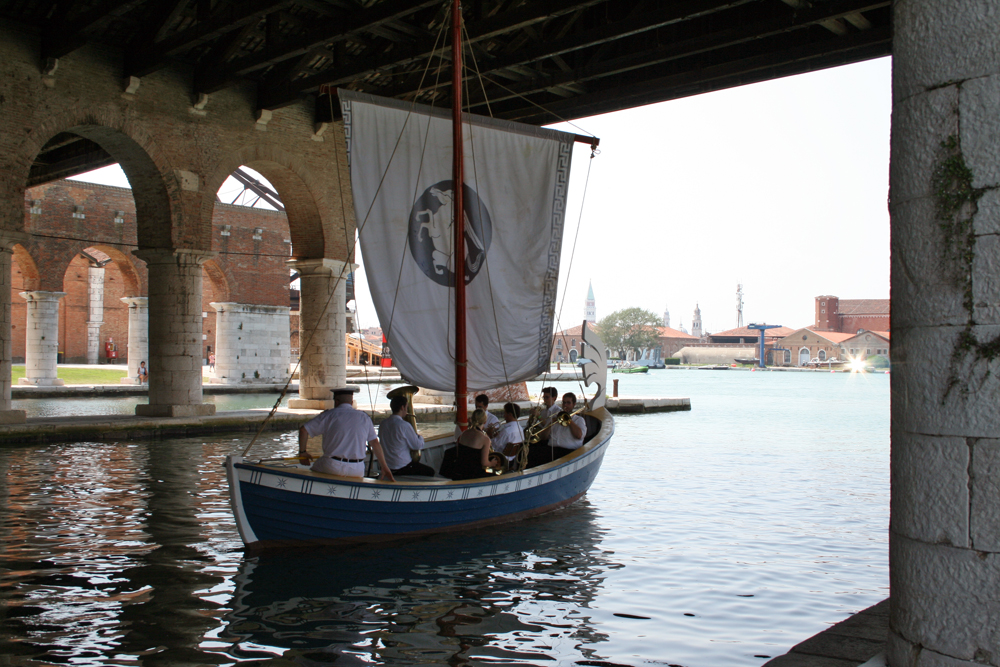
Icelandic artist Ragnar Kjartansson stages large scale durational performances which can become feats of endurance for his performers and audience.

Ragnar Kjatansson

Ragnar Kjatansson

At the Venice Biennale he turns an old fishing boat into a floating stage carrying a troupe of musicians sending plaintive notes across the water. It has a rather comedic appearance as it traverses slowly back and forth across the docks at the Arsenale.  A deflated sort of pomp and circumstance.

A more introspective performance is seen in Tino Sehgal’ s Golden Lion Award winning piece at The Venice Biennale.

Tino Sehgal

Tino Sehgal’s perfomance piece

We witness communication from a new perspective.

Animalistic, primeval it takes us away from our known language of words. The performers were immersed in the dialogue between themselves.

Using song, beatboxing, humming the piece develops freely between the participants like any conversation might.

Tino Sehgal

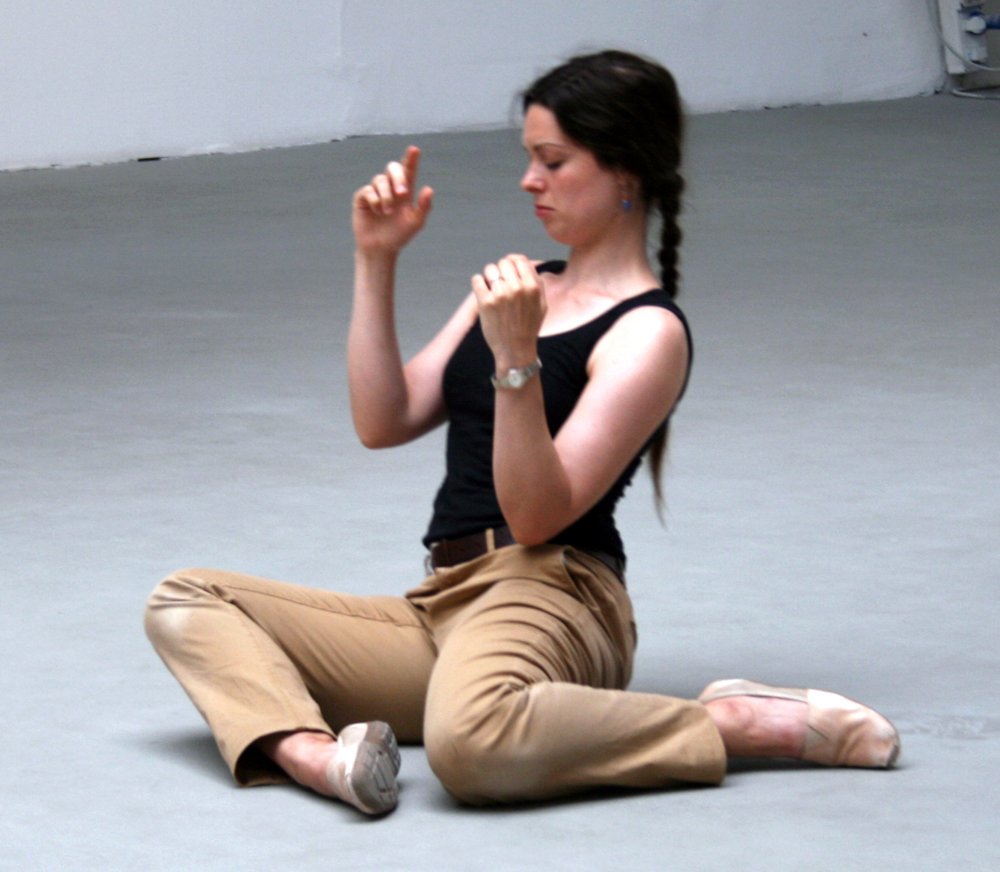
Lizzie Sells and Frank performing for Tino Sehgal in the Central Pavilion Venice

It was like watching someone being massaged by sound as one body responded in movement to the sounds from the other.

Tino Sehgal

Lizzie Sells performing in Tino Sehgal’s piece at the Venice Biennale

Speaking to Lizzie Sells afterwards she explained how she becomes so involved in her performance that she is unaware of the audience around her, even when they are being loud and intrusive.

An oasis of calm.

Illusion, as in the romantic notion, suggested in Ibsen’s play The Master Builder, of building ‘castles in the air’ as a refuge from reality is something I am trying to capture in new work.

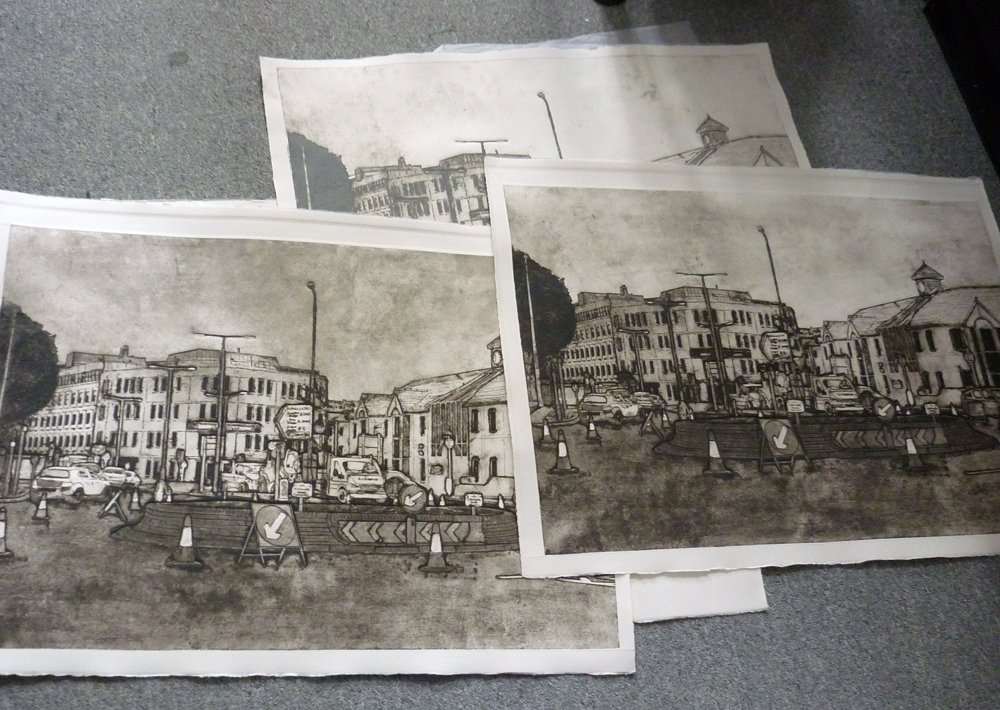
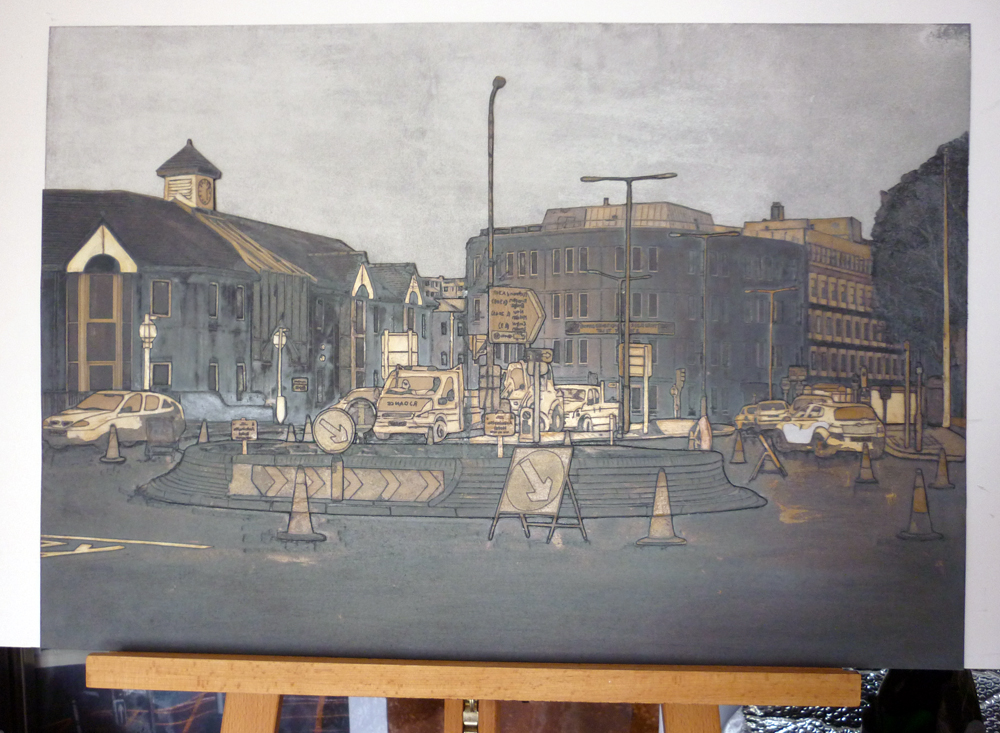
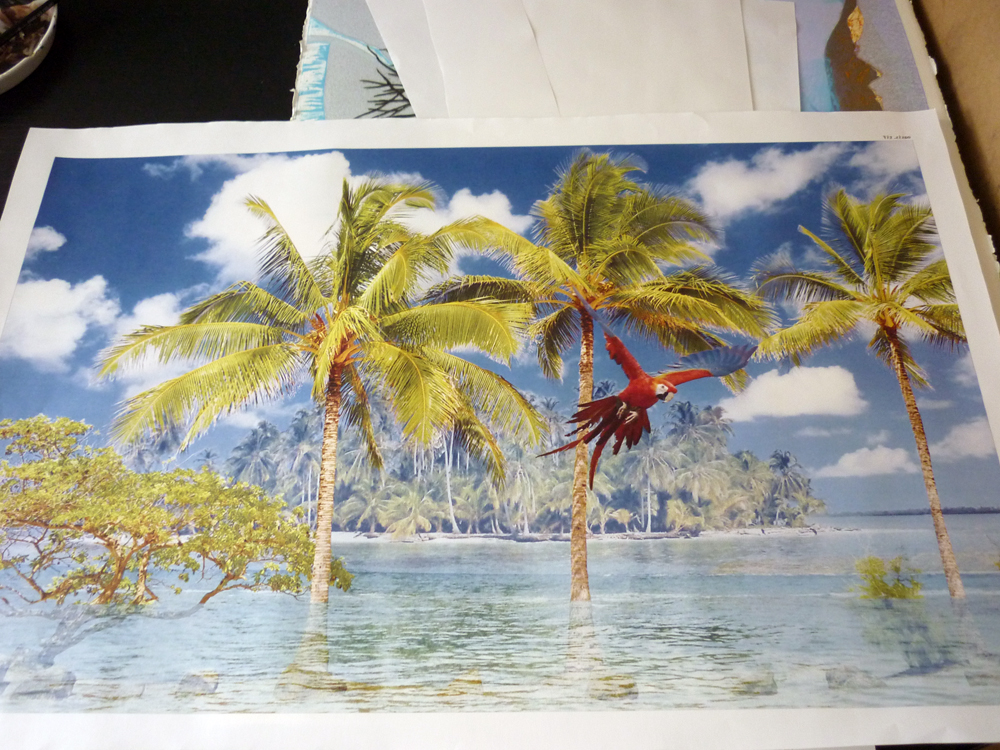
I have not settled on a title yet but the work involves an urban roundabout scene and a tear through reality to a paradise behind.

The first few prints from a collagraph are not very successful as the plate must settle and mature so I have used one of the unsuccessful prints to test the tear.

1309 roundabout tear

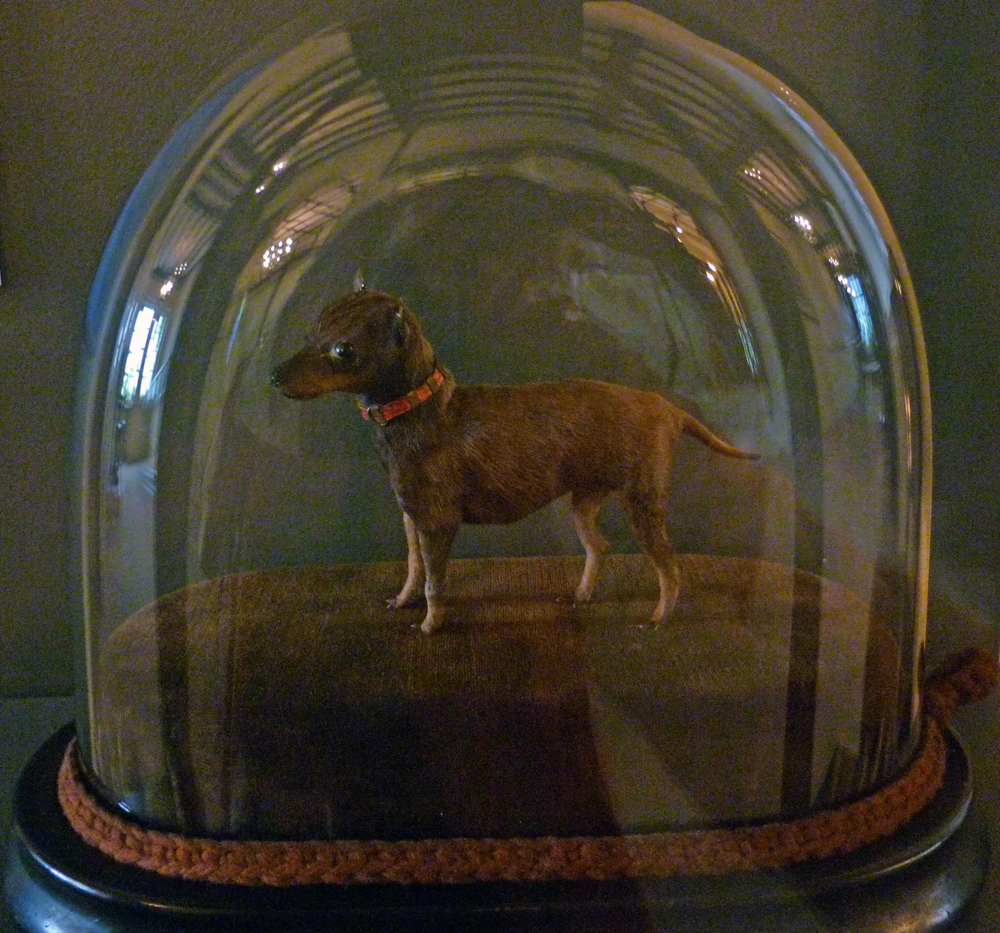
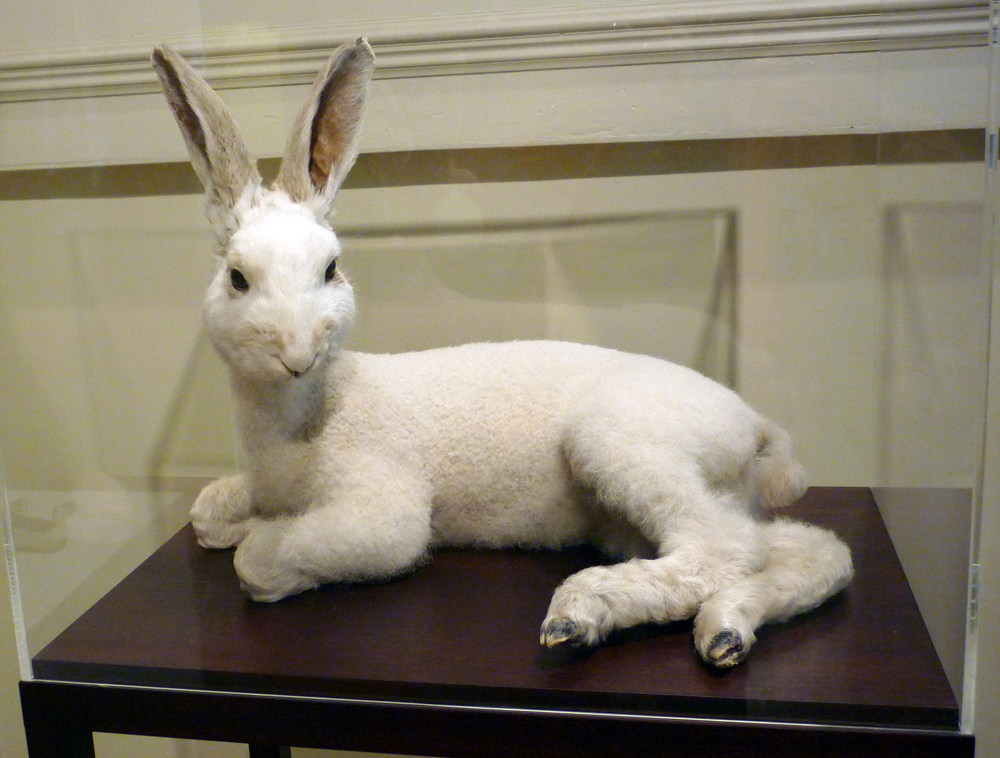
These tiny dogs, examples of Victorian taxidermy, were on display at Hall Place in Bexley, Kent.

There is something so appealing about the miniature, but it questions our expectations when scale is distorted beyond what feels natural.

1309 Victorian Taxidermy (1)

Although there were attempts by the Victorians to breed such minute specimens these particular ones are fakes. An X-ray proves a lack of skeleton.

VictorianTaxidermy

VictorianTaxidermy

These strange little creatures were an appropriate taster for the exhibition ‘Beastly Hall’, inspired by the resident  topiary of the Queen’s Beasts.

The Queen's Beasts

The Queen’s Beasts

Originally carved in stone to commemorate the Queen’s coronation in 1953, these living sentinels are based on real and mythical creatures.

Artists had been selected for the exhibition who explored all aspects of what might be considered something ‘beastly’.

HyungKoo Lee works in reverse to the Victorian taxidermist – he creates a fake skeleton.

Hyungkoo Lee 'Ridicularis'

Hyungkoo Lee ‘Ridicularis’

Transporting Goofy from popular culture to natural history.

Carsten Holler’s Red Walrus has a cartoon appearance with its plasticised body and unnatural colouring.

Carsten Holler 'Red Walrus'

Carsten Holler ‘Red Walrus’

It has however been given human eyes which gaze out from within a fabricated world.

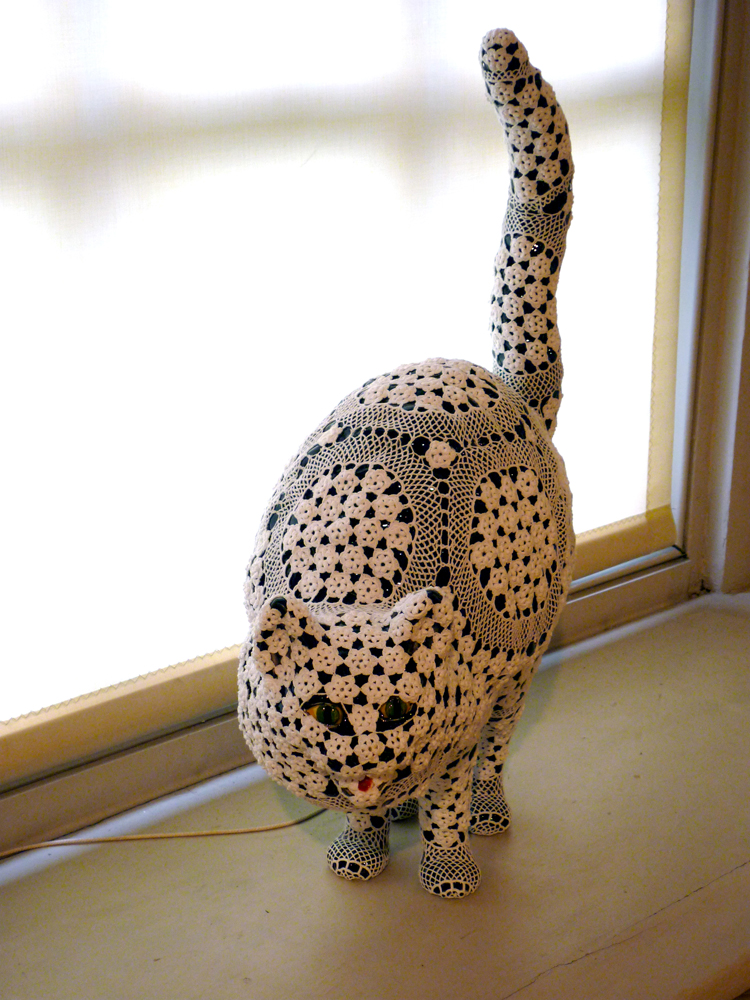
Joana Vasconcelos takes a kitsch ornament and adds another skin, a layer of decoration.

Joana Vasconcelos 'Flibbertigibbet'

Joana Vasconcelos ‘Flibbertigibbet’

We were told when we got our cat – it is not an ornament, don’t expect it to behave like one.

Thomas Grunfeld has created a whole series of ‘Misfits’ through mixing species.

1309 Thomas Grunfeld 2

Thomas Grunfeld ‘Misfits’

Questioning our manipulation of nature.

1309 Thomas Grunfeld 1

Thomas Grunfeld ‘Misfits’

Creating a modern mythology.

Thomas Grunfeld 'Misfits'

Thomas Grunfeld ‘Misfits’

Exploring the fear of genetic engineering and what it might create.

Polly Morgan doesn’t always deal in horror but in ‘Blue Fever’ the melding together of so many bodies through a thrashing of wings creates something disturbing.

Polly Morgan 'Blue Fever'

Polly Morgan ‘Blue Fever’

An entity that cannot breathe, suspended in continuous flight with no escape.

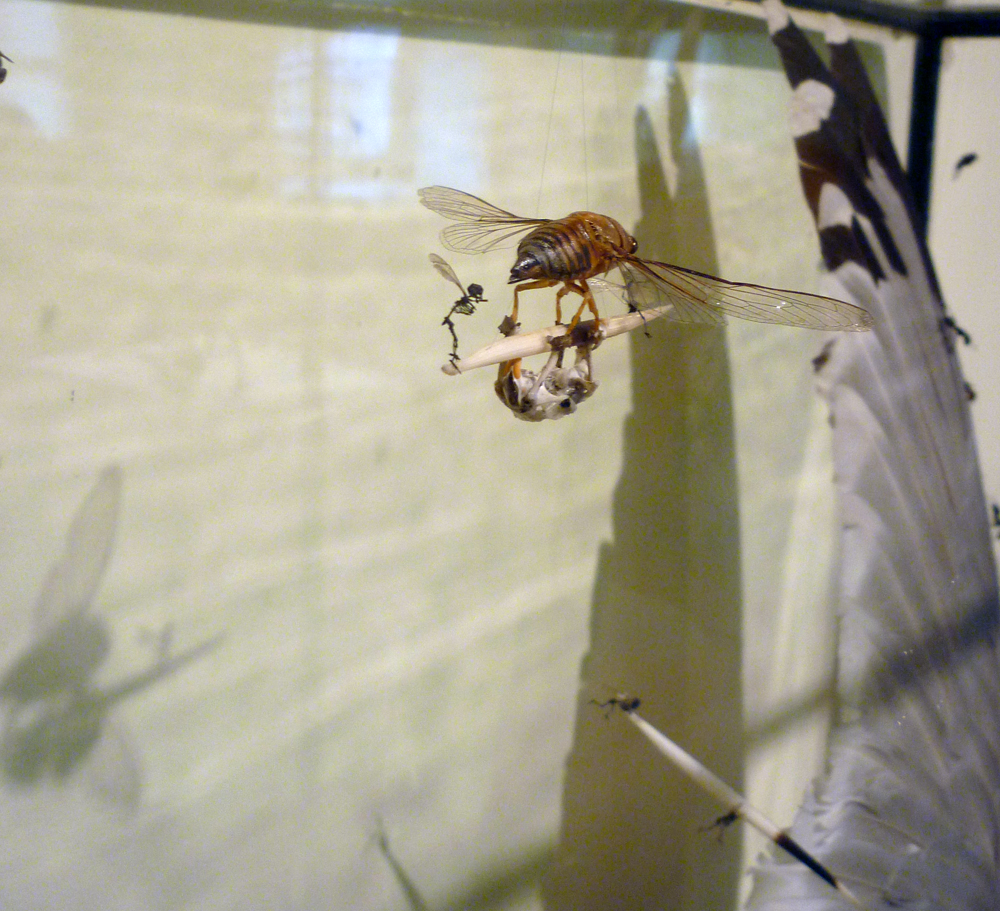
Tessa Farmer explores flesh under attack.

Tessa Farmer 'A wounded Herring Gull'

Tessa Farmer ‘A wounded Herring Gull’

Her trademark tiny skeletons in league with the insect world bring down a much larger life force.

Tessa Farmer

Tessa Farmer

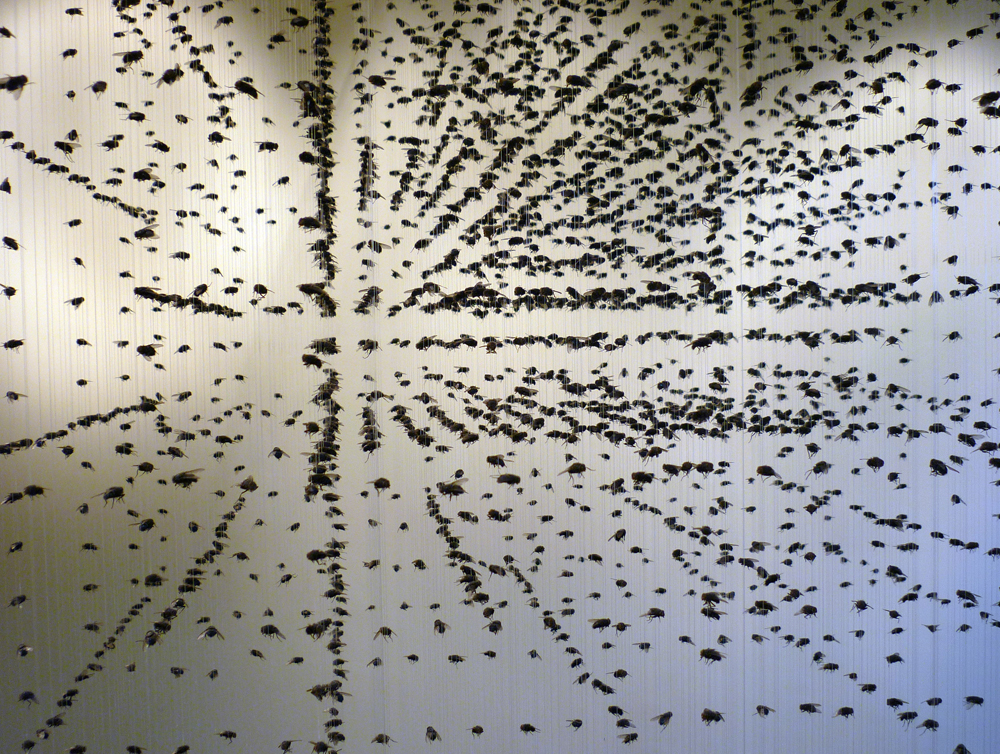
Claire Morgan’s installation of blue bottles suspended in flight creates  a geometric order from an association of disgust, germs and disease.

Claire Morgan 'Heart of Darkness'

Claire Morgan ‘Heart of Darkness’

Damien Hirst puts the visceral into the kitsch.

Damien Hirst 'Sacred Heart (with hope)'

Damien Hirst ‘Sacred Heart (with hope)’

Hope and treachery are preserved in perpetual limbo.

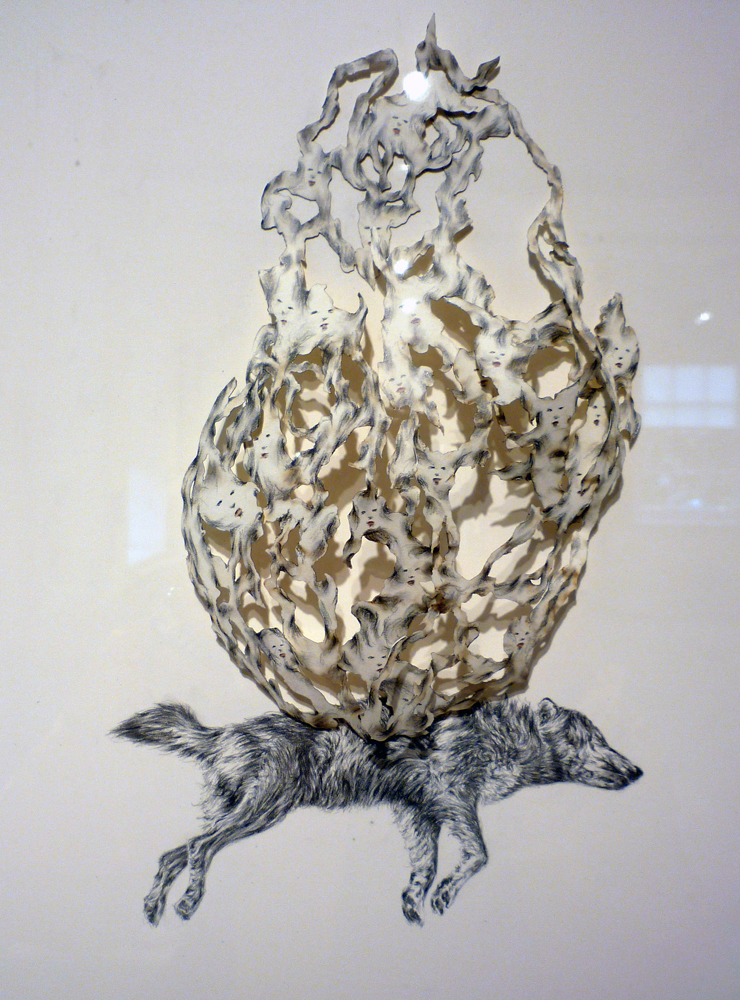
I really liked Rachel Goodyear’s delicate drawings of spirits escaping earthly vessels.

Rachel Goodyear

Rachel Goodyear

Her drawings incorporate 3D paper cuts which flow out from and off the page.

Rachel Goodyear

Rachel Goodyear

Her organic ceramic pieces hold strange images, transitory moments like worrisome memories best tucked away.

Rachel Goodyear 'curling up into more comfortable positions'

Rachel Goodyear ‘curling up into more comfortable positions’

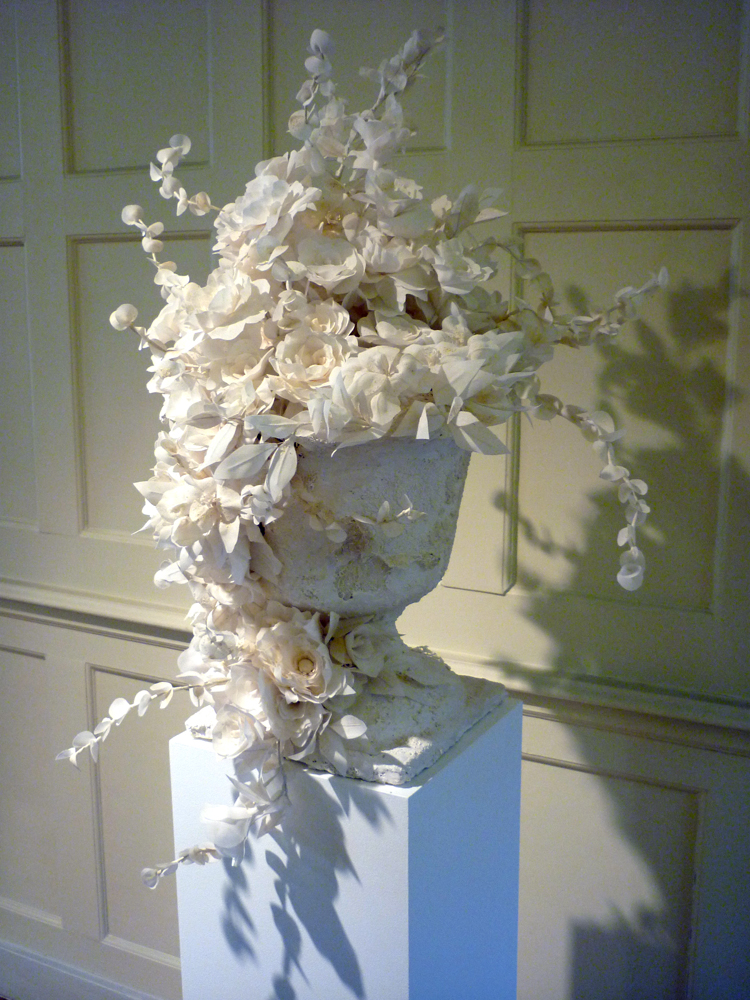
The spiritual theme is continued with Jodie Carey’s funeral flowers bleached of colour.

Jodie Carey

Jodie Carey

These flowers are made of plaster, chiffon and ground up bone,

Throughout the exhibition there is the uplifting sound of birdsong.

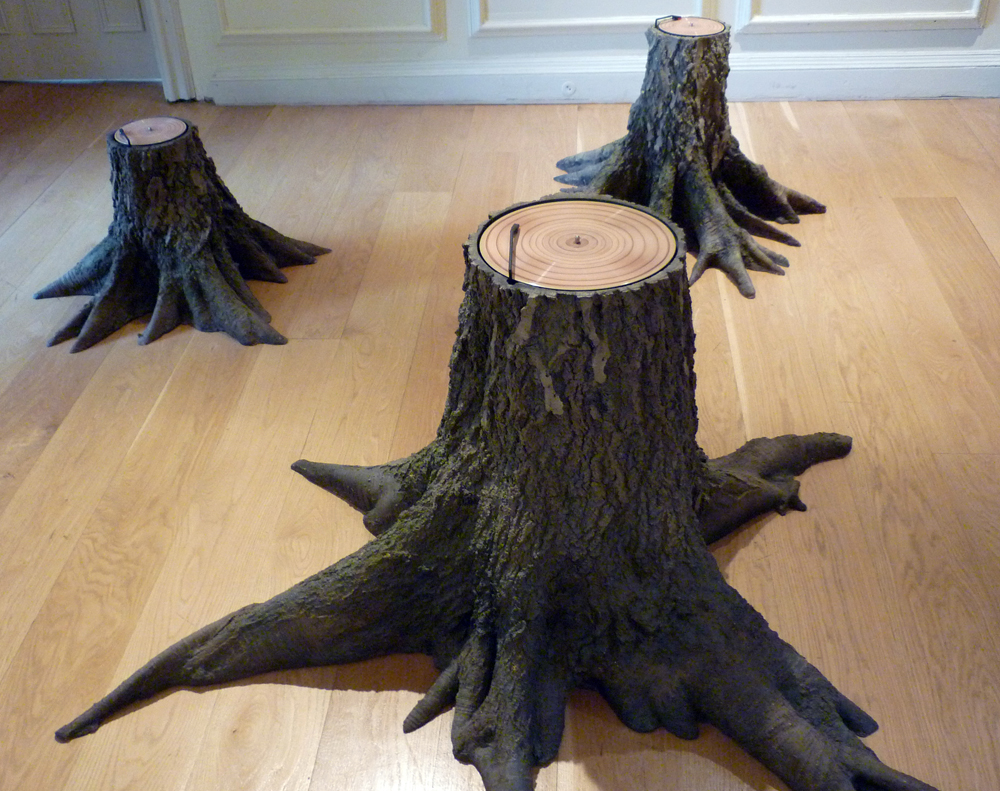
It comes from Matt Collishaw’s truncated tree trunks where LP’s mimicking the age rings of trees spin and fill the space with the sounds of woodland.

Matt Collishaw 'Total Recall'

Matt Collishaw ‘Total Recall’

The birds recorded are actually mimicking chain saws. With this knowledge the jolly suddenly becomes sinister.

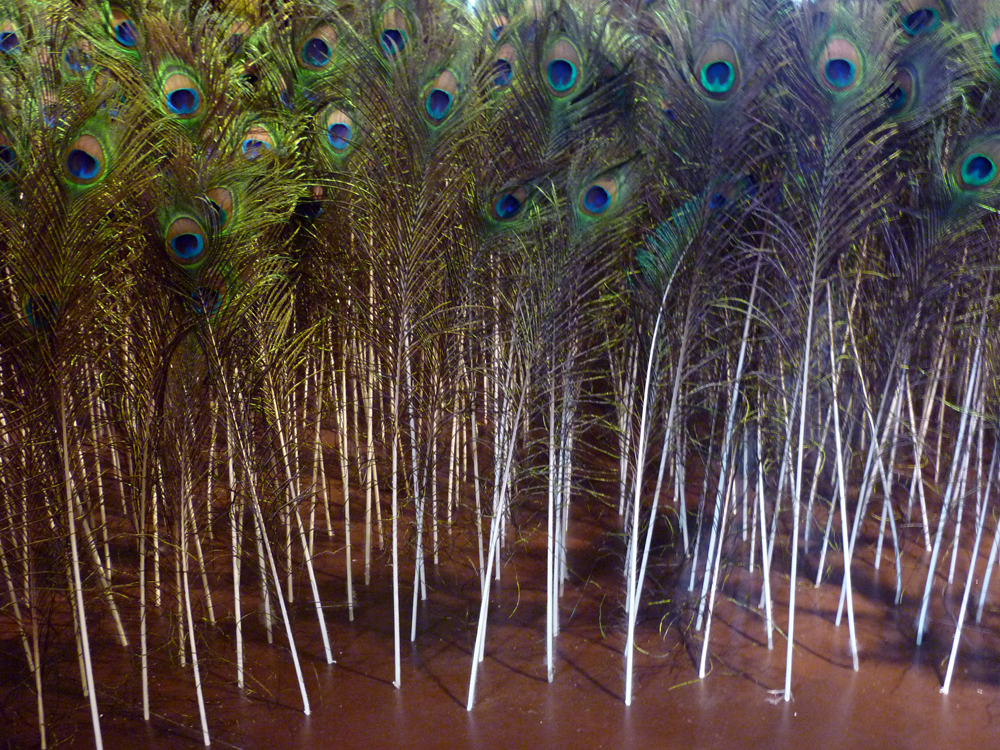
Susie MacMurray filled a room with peacock feathers echoing the crowds drawn to watch the spectacle of the coronation.

Susie MacMurray 'Spectacle'

Susie MacMurray ‘Spectacle’

These fragile remains of the male peacocks display act as an unexpected barrier.

Susie MacMurray 'Spectacle'

Susie MacMurray ‘Spectacle’

The idea of the voyeur is further expressed by Francis Alys in his footage of a fox let loose in The National Portrait Gallery.

Francis Alys 'The Nightwatch'

Francis Alys ‘The Nightwatch’

Trapped and confined to relentless meanderings the fox is exposed to the sort of CCTV surveillance that we are subject to as we traverse the city while similarly unaware of our voyeurs.

Peter Blake’s ‘Tarzan Box’ from 1965 expresses a clash of cultures and clichéd fears of what the exotic might hold.

Peter Blake 'Tarzan Box'

Peter Blake ‘Tarzan Box’

The exploration of dark spaces could reveal fantastical creatures of horror.

Charles Avery 'Duculi (The Indescribable)'

Charles Avery ‘Duculi (The Indescribable)’

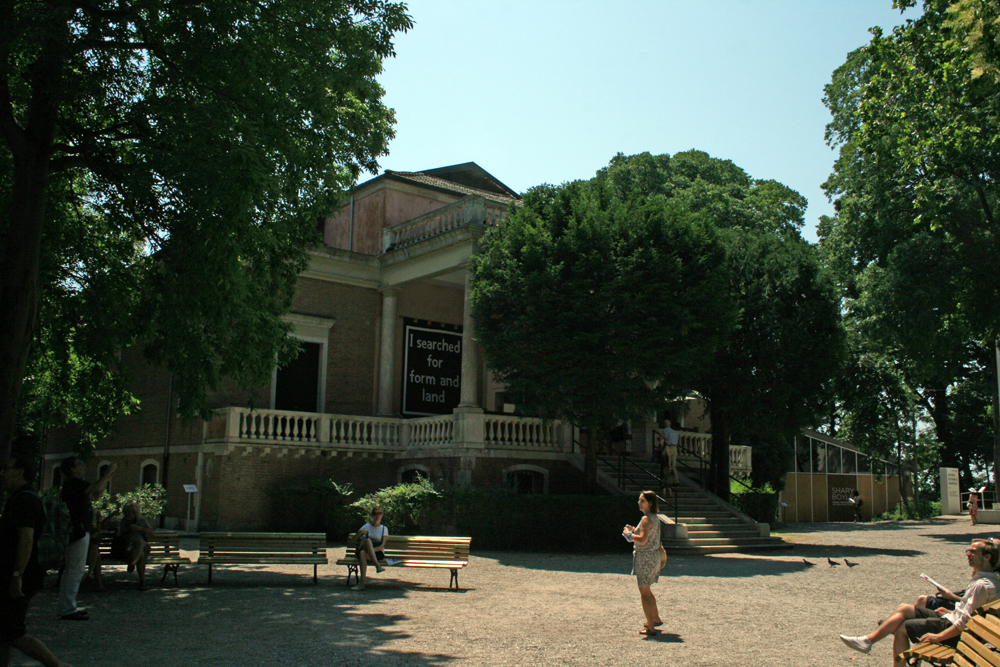
There were also lots of artists showing at the Venice Biennale who engage in fantasy and myth.

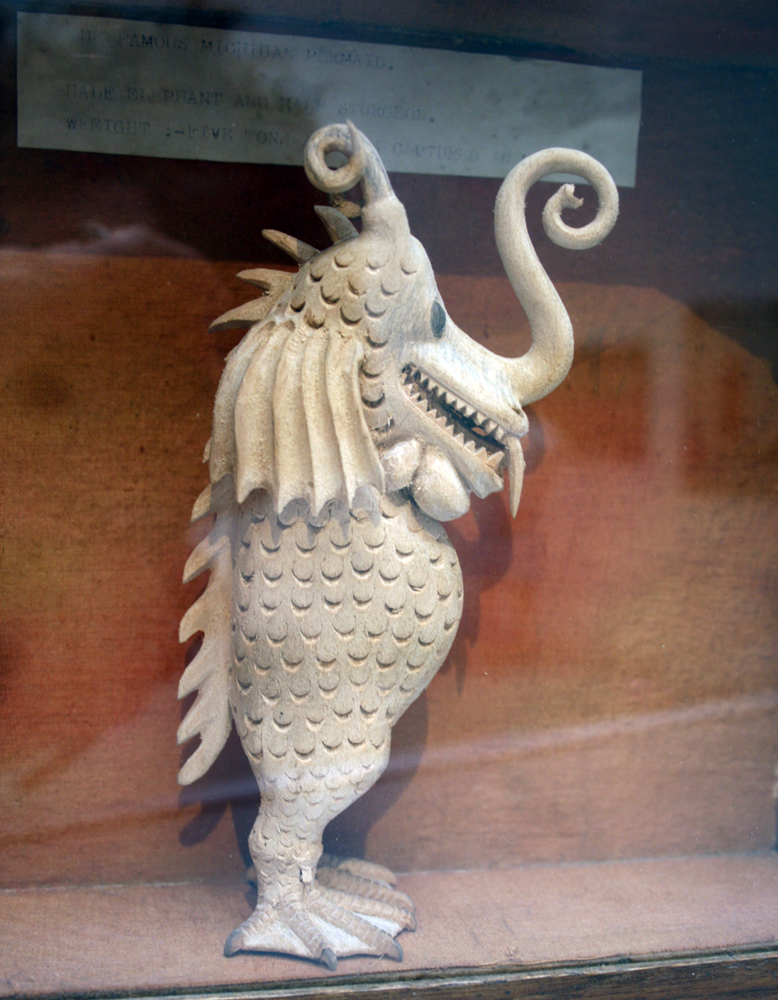
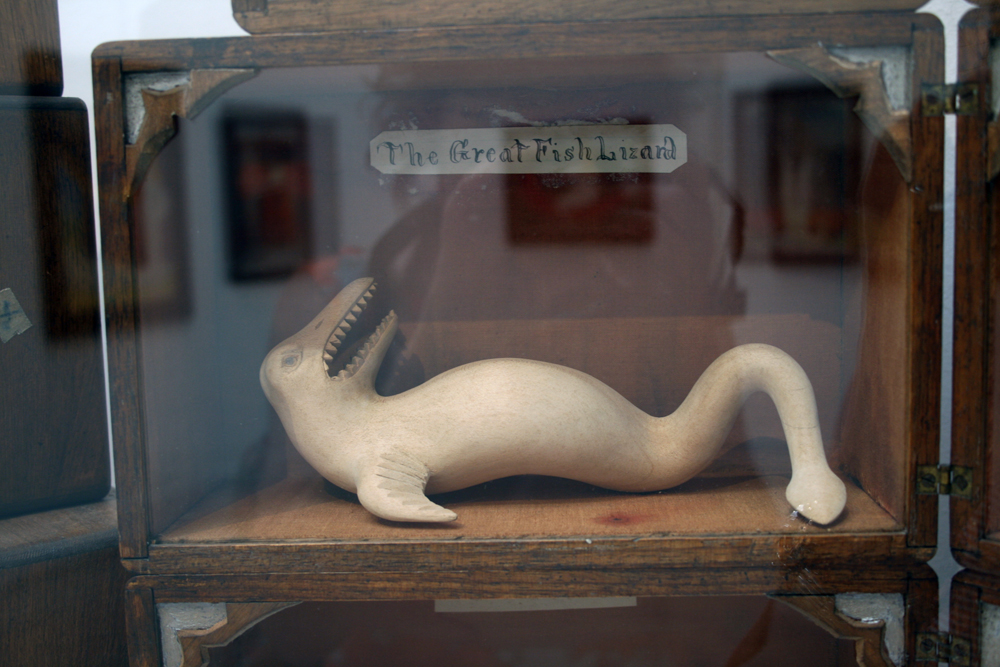
Levi Fisher Ames sculpted his fantastical creatures in wood and displayed them as specimens in glass cases.

Levi Fisher Ames

Levi Fisher Ames

‘Animals Wild and Tame – Whittled Out of Wood – Nothing Like It Shown Anywhere’

Levi Fisher Ames

Levi Fisher Ames

Ames took his collection on tour around Wisconsin in the 1880’s telling outlandish tales about his creatures to his audience while simultaneously  carving more figures.

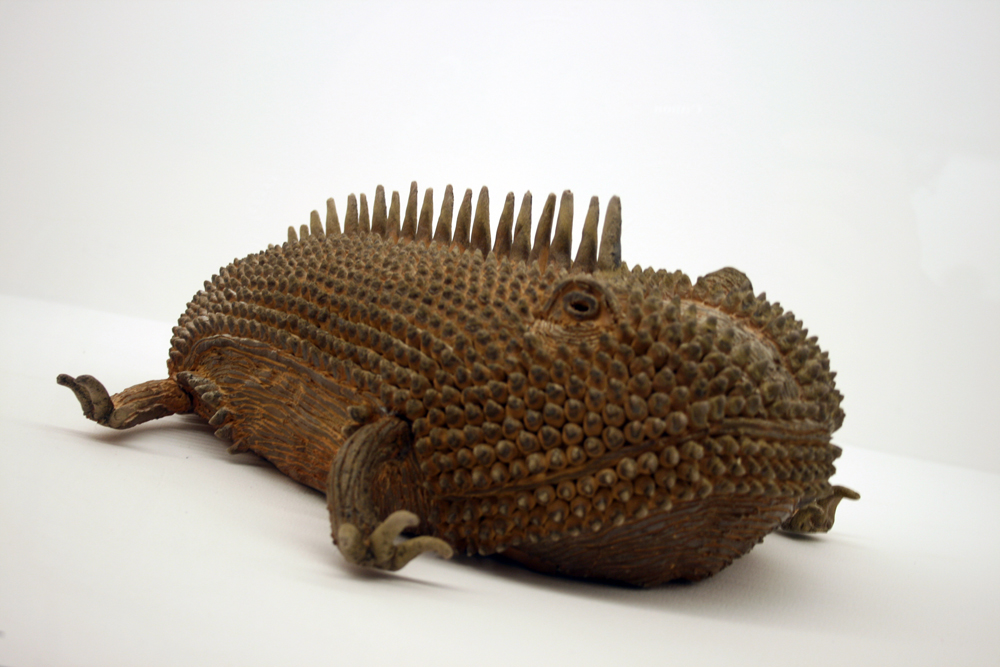
Severely autistic Shinichi Sawada has created a very personal mythology with his clay figures.

Shinichi Sawada

Shinichi Sawada

These beasts look like they come from a ritualistic and totemic past, but are recent creations, combining spiky defence in a fragile form.

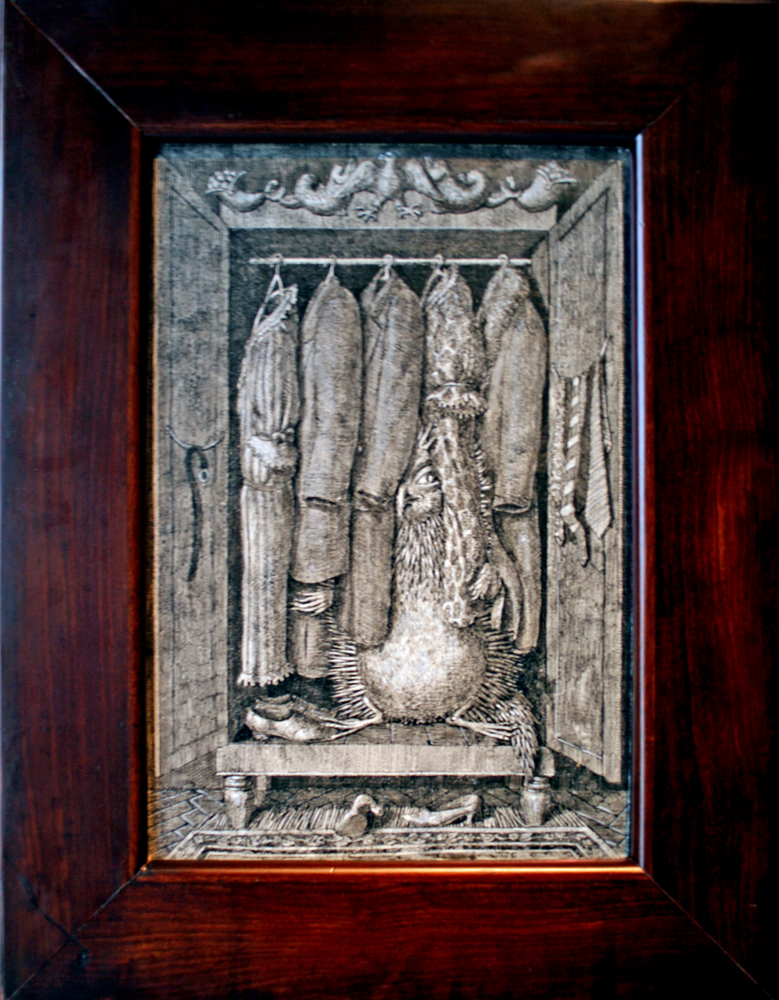
Domenico Gnoli’s beasts also ‘hail from a vast storehouse in the human imagination’.

Domenico Gnoli

Domenico Gnoli

His series of drawings ‘What is a Monster’ from 1967 place surrealist creatures into everyday settings.

Anna Zemankova is growing flowers that are not grown anywhere else.

Anna Zemankova

Anna Zemankova

Produced during frantic early morning reveries she allowed her mind to flow freely recalling cultural influences entwined in her fantasies.

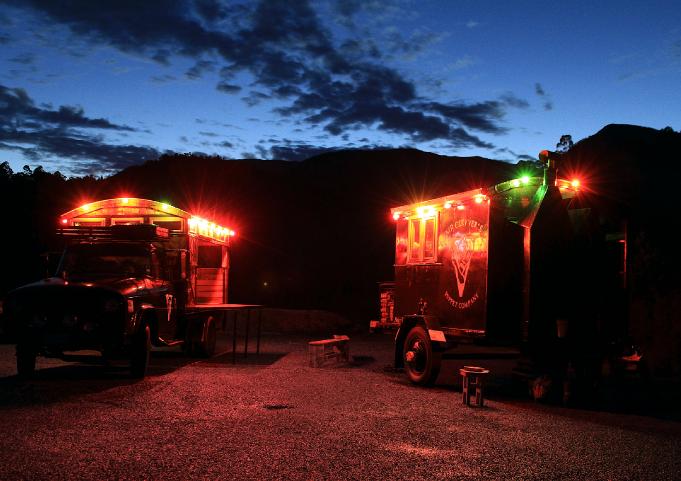
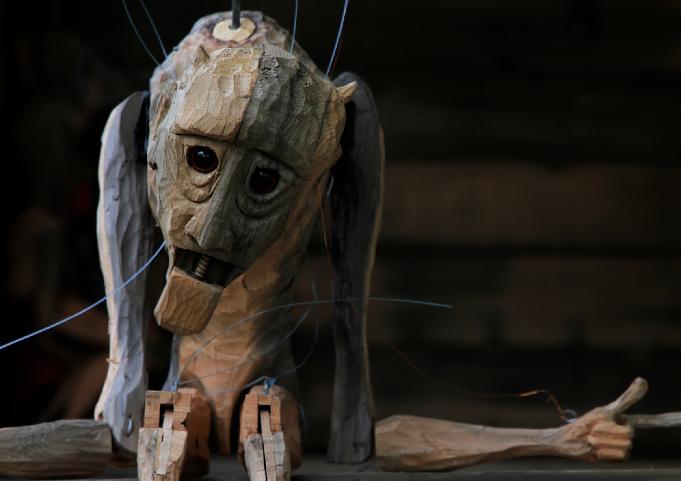
Ivan Morison also loves to create myths. His talk at the Whitechapel Gallery was peppered with stories of the fantastical, almost believable sort. Is there really a village in Italy that strings goats up from a tree and shoots at them? Was the world’s biggest dinosaur really the victim of arson?    Storytelling is part of the work and has been formalised in the traveling puppet theatre of Mr Clevver, based on a character from the post-apocalyptic novel, Riddley Walker by Russell Hoban.

Heather and Ivan Morrison

Heather and Ivan Morrison

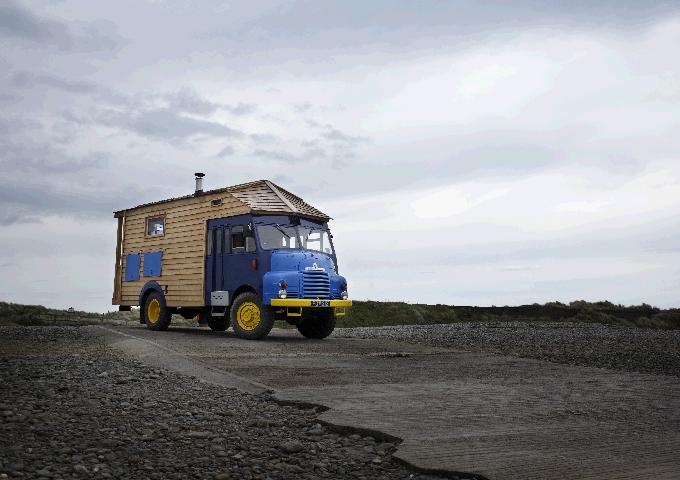
Another of the Morrison’s escape vehicles. They travel through rural landscapes setting up camp unannounced and putting on a show to whichever locals turn up..

Heather and Ivan Morrison

Heather and Ivan Morrison

Telling stories that blend factual recall with fiction, merging information into a narrative that builds on the mythology of their own lives and also the lives of people they encounter.
Out of its time, part medieval part futuristic, Mr Clevver is an evolving work about the coming together of different people in differing places.

'Mr Clevver' Ivan and Heather Morrison

‘Mr Clevver’ Ivan and Heather Morrison

Kay Harwood showing at Simon Oldfield Gallery also deals in mystery and suggestion.

Kay Harwood

Kay Harwood

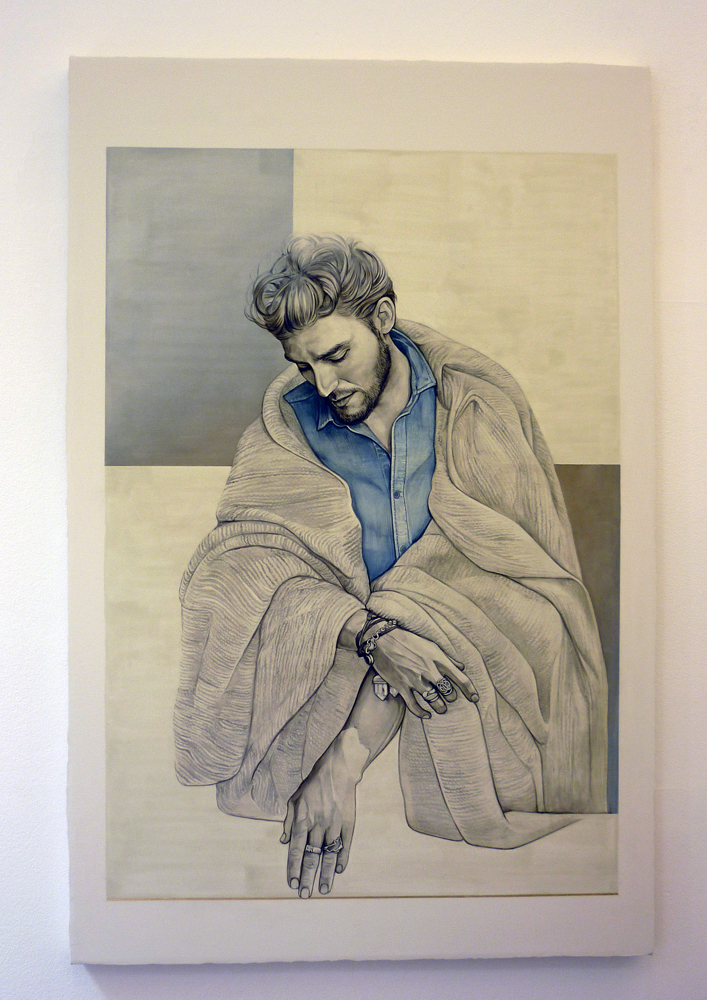
Exploring iconography and mythology her paintings have a wonderful pure surface, like porcelain. The muted and restricted palette gives a timeless quality.

Kay Harwood

Kay Harwood

These men look like contemporary apostles in meditation on some spiritual truth.

The quest for inner retrospection. A solitary wanderer.

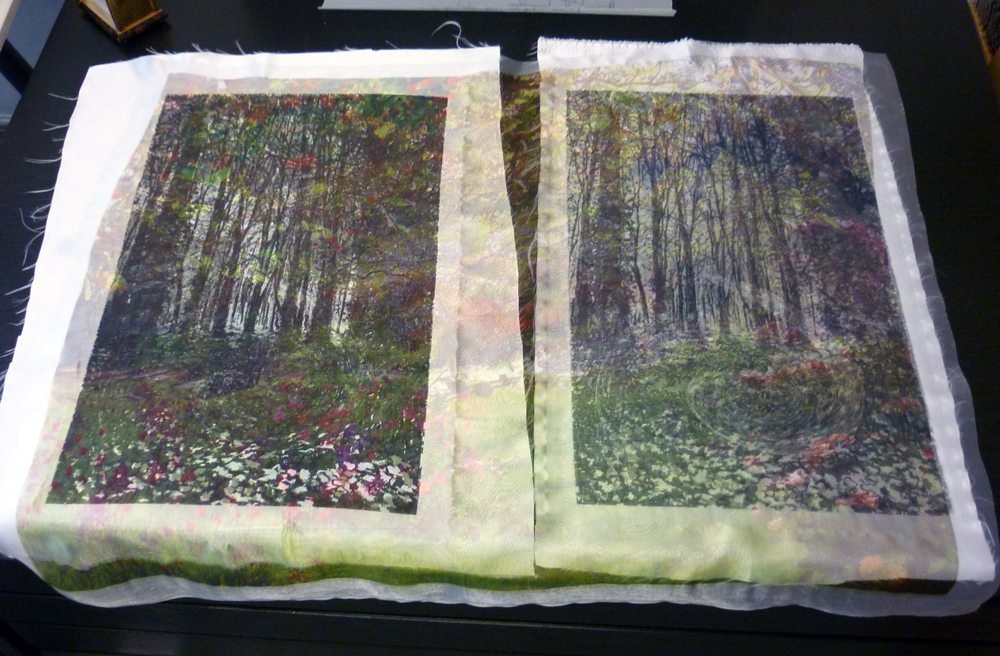
I wanted to capture something of an enchanted wood in these images.

These are screen prints with sublimation inks transferred onto polyester. I printed 3 layers separately onto paper and then heat-pressed them on top of each other blending the colours.

1309 woods

Layering the shadow of a rose garden on organza over the grey woods.
I have been thinking about whether to add a figure in the woods.

Also have been working on one ‘return of the forest ‘ collagraph, cutting sublimation printed organza onto the collagraph.

The forests disappeared under the advancing ice and then reappeared as the ice retreated.

Going back to a time before civilization, before religion. Right back to the beginning to see where the first dislocation took place, looking back for the myth of living in harmony with nature in some idyllic context and the start of nostalgia.

1309 return of the forest

Thinking about fantastical creatures and myth has been helpful for the new work I am planning about beasts of the forest.

The final talk in the Whitechapel Gallery programme ‘To Make a Tree’ was from Ivan Morrison (Heather was busy in rehearsals for their travelling puppet show tour of Wales)
A great raconteur Ivan presented an overview of their practise concentrating on key interests and their overriding belief in the importance of integrity of materials.
Making something have more depth by doing it the long way even if the end result looks the same, he strongly believes that the commitment to an object though a long making process imbues it with a value beyond the visual.
He is also a great believer in the importance of failure –  natural entropy. From the ashes of disaster…

He decided the best way of forming a direct engagement with nature within an urban environment was to become involved in gardening.
This involvement was to become one of his first projects; the documentation of his gardening experience in Birmingham.

Postcards were printed and sent out to selected people stating the progress of his gardening endeavours.

Heather and Ivan Morrison

Ivan Morrison

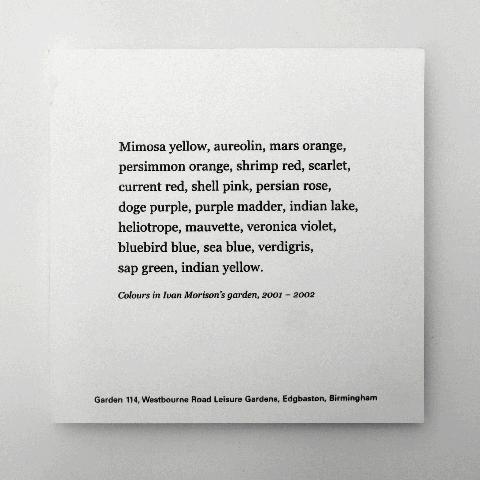
He listed the colours to be found in the garden at certain times of the year.

Ivan Morrison

Ivan Morrison

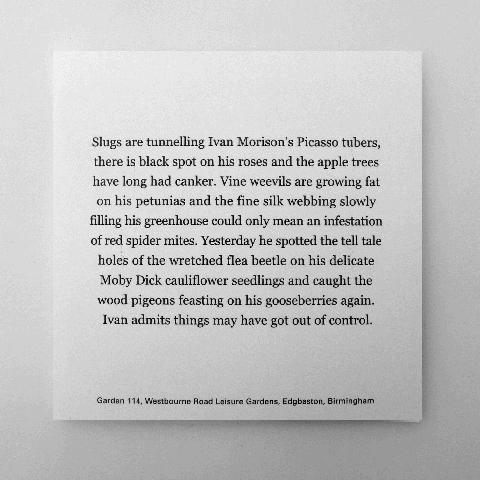
As time went on the success and more often the failures were documented in what became an ongoing narrative of the battle every gardener faces in order to maintain control and defy attack.

Ivan Morrison

Ivan Morrison

The Morrisons are inspired by the passions of other people, the importance of family and ancestors, of staking a claim in the soil by planting an arboretum tended through generations, or the spirit of the idealist who builds an escape vehicle on the back of a truck and heads for the open road.

Heather and Ivan Morrison Tales of Space and Time

Heather and Ivan Morrison ‘Tales of Space and Time’. Converted Bedford Green Goddess, Douglas Fir, books, other media

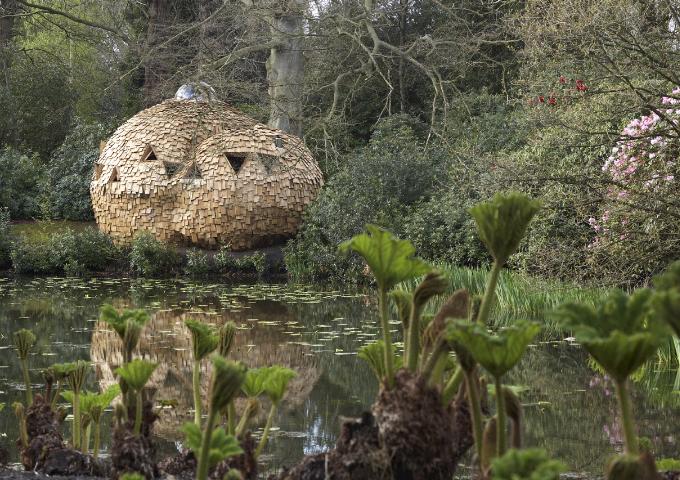
This idea of an escape vehicle became translated into other forms of refuge.

Heather and Ivan Morrison 'I am so sorry, Goodbye'

Heather and Ivan Morrison ‘I am so sorry, Goodbye’

Ivan Morison explains; ‘The conjoined domes of ‘I am so sorry. Goodbye.’ are inhabited by a guardian whose task it is to keep the stove lit, water boiled and visitors supplied with hibiscus tea. The guardian has the vocabulary of the words: I, am, so, sorry and goodbye. These words were first conveyed to us whilst staying in an old upmarket hotel on Alexandria’s corniche. Late one night I received a call in which the only words that were said, by the slow doleful male foreign voice, were ” I am so sorry sir… I am so sorry sir… Goodbye sir.” After putting the phone down I felt witness to something I didn’t fully understand, but felt that we had been given the task to pass on this cryptic message.’
The refuge is hand built from naturally fallen trees in Tatton Park. Made from its own environment it looks both archaic and futuristic. Dystopian or utopian it could come from any era. An apocalyptic future or the idealisms of a hippy commune. The Morrisons are interested in social architecture and how architecture impacts social behaviour. These thoughts are also influenced by science fiction and dystopian novels such as  J.G. Ballard’s 1975 novel, High-Rise. The idea of the building design having a direct effect on the social relationships of the inhabitants was part of the thought process for the Morrisons in creating a site specific structure ‘Plaza’ in Vancouver.

Heather and Ivan Morrison Plaza

Heather and Ivan Morrison Plaza

‘Plaza’ looks about to fall down. It is made of reclaimed dark heavy wood, burnt black. In contrast to the pale linear city it looks like the bones exposed at the moment of collapse.

A reminder of all the great cities that have fallen over time. It is an exciting place because it is dynamic. It creates a shift in perception.

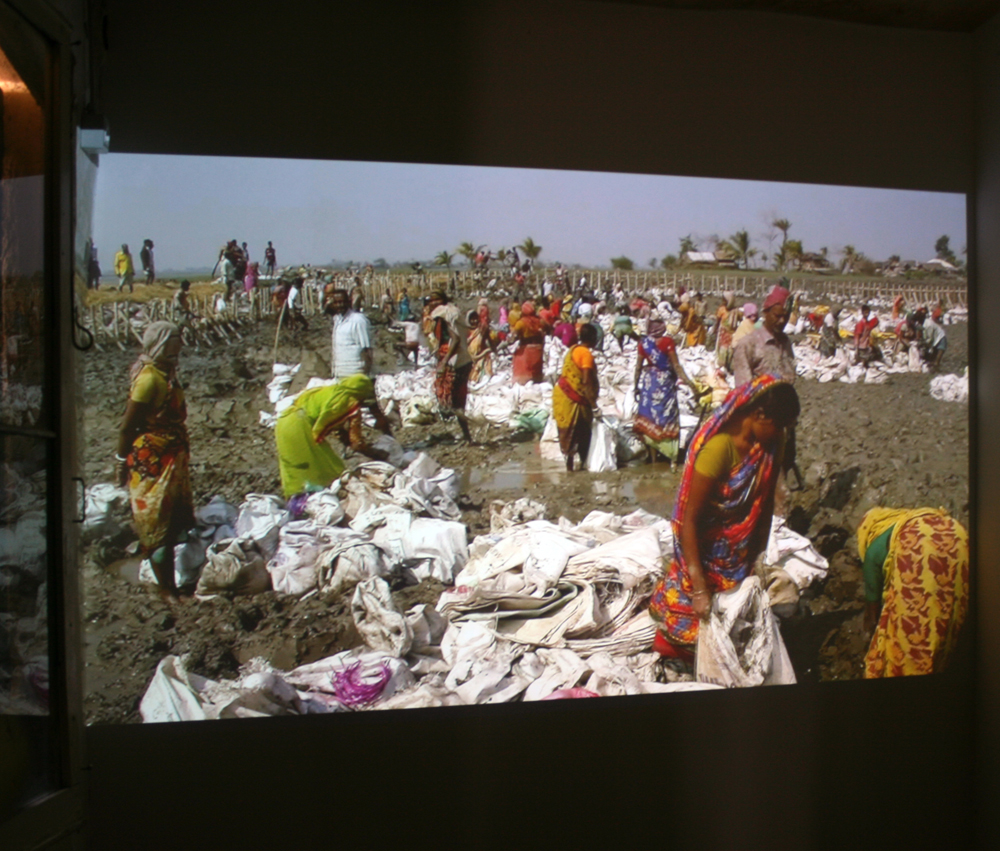
The Maldives are facing a very direct impact on their environment from climate change, not a natural entropy.

Communities come together to build sandbanks to try to keep the sea at bay.

Portable Nation

Portable Nation

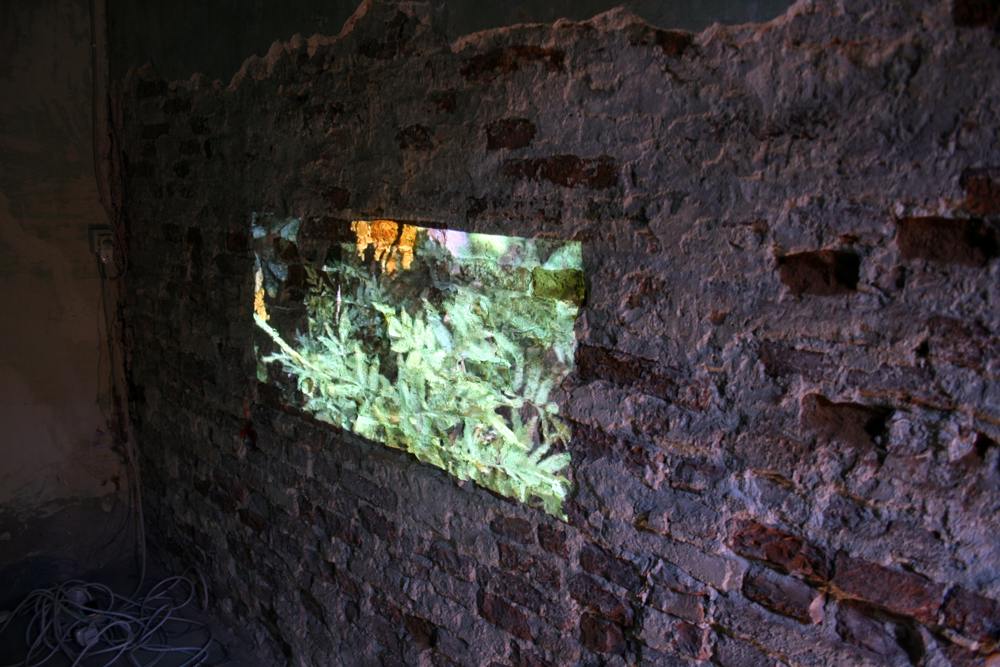
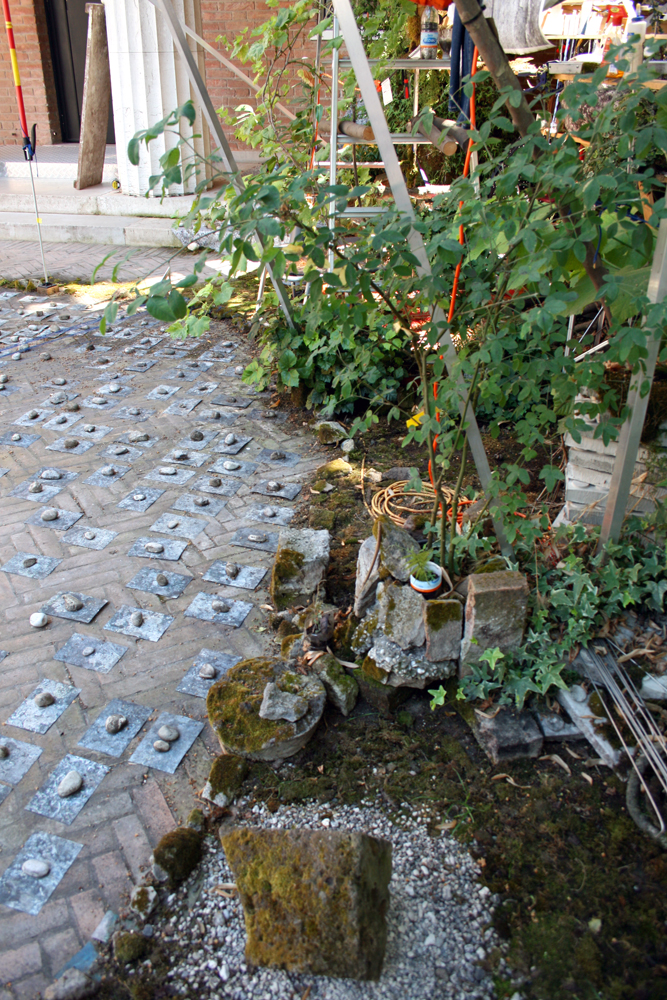
At the Venice Biennale the art collective Chamber of Public Secrets explored east west views of nature. Where western thought considers nature and culture to be in opposition, eastern thought considers nature as a guide, a source of inspiration and harmony.

Portable Nation

Portable Nation

For the pavilion they presented the culture and nature of the Maldives as one aesthetic experience in line with the concept of contemporary Environmental Romanticism.

Portable Nation

Portable Nation

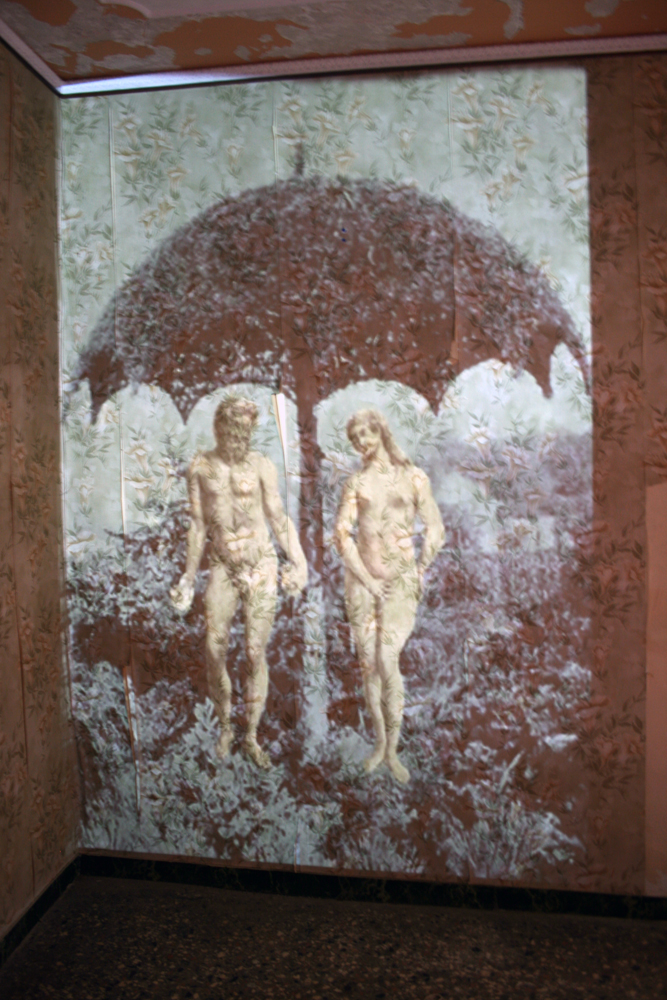
The crumbling brickwork of the pavilion was a perfect backdrop to the video projections of nature giving an ethereal ghostlike quality to the images – a disappearing landscape.

Portable Nation

Portable Nation

For many the Maldives is synonymous with paradise.

Portable Nation

Portable Nation

A place for the western romantic to escape to has become a place that its own people want to escape from.

Portable Nation

Portable Nation

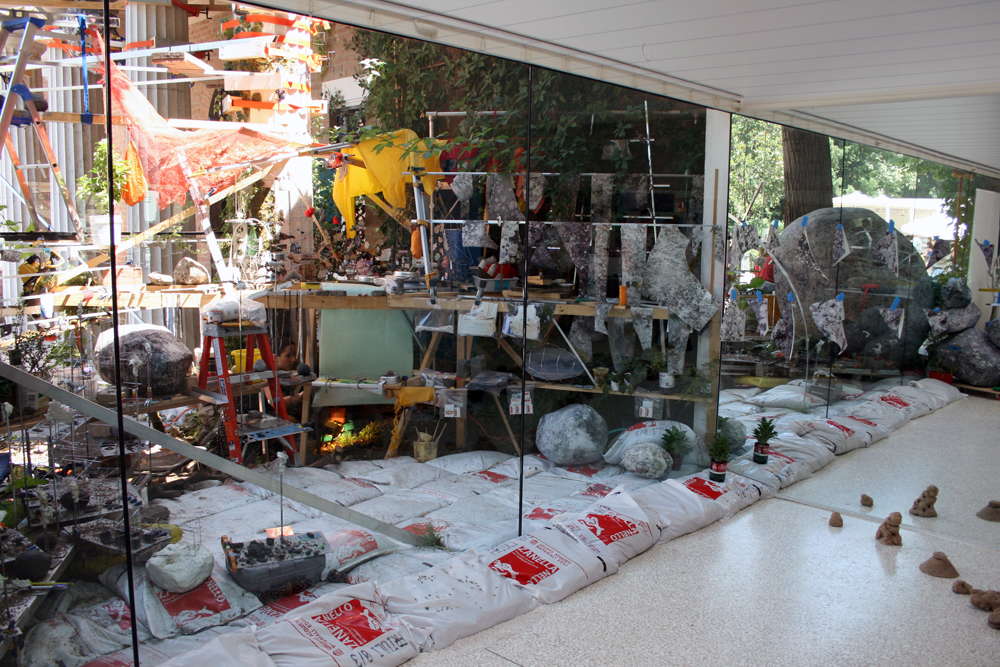
Simryn Gill for the Australian pavilion fully embraced entropy in her work.

Australian Pavillion

Australian Pavilion

‘Here art grows on trees’  allows the elements into the Pavilion.

The drawings of insects on paper made from the pulp of decayed plants will over the seasons return to a state of decay, exposed to the rain and sun and insects of the Giardini.

The work is about the passage through time of paper, the artwork, the pavilion, the artist.

Simryn Gill Eyes and Storms

Simryn Gill ‘Eyes and Storms’

Looking at cycles, at circles. Eyes and Storms are photographs of mines. Huge circles carved into the earth.

It will be interesting to see how the work has changed when I return in November with the RCA study trip.

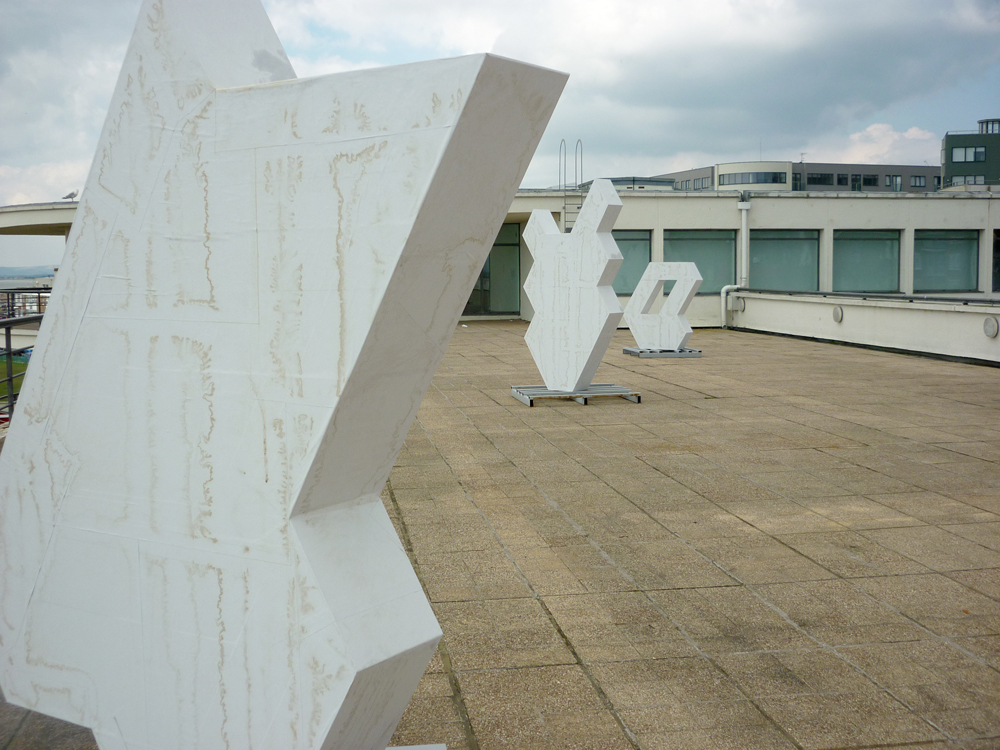
Another artist undertaking a similar project at the moment is Matt Calderwood on the roof of the De La Warr Pavilion in Bexhill.

Matt Calderwood Exposure Sculpture

Matt Calderwood Exposure Sculpture

The paper covered steel frames of ‘Exposure Sculpture’ will remain on the roof, at the mercy of the elements, over the summer period to be taken into the gallery and reconfigured later in the year.

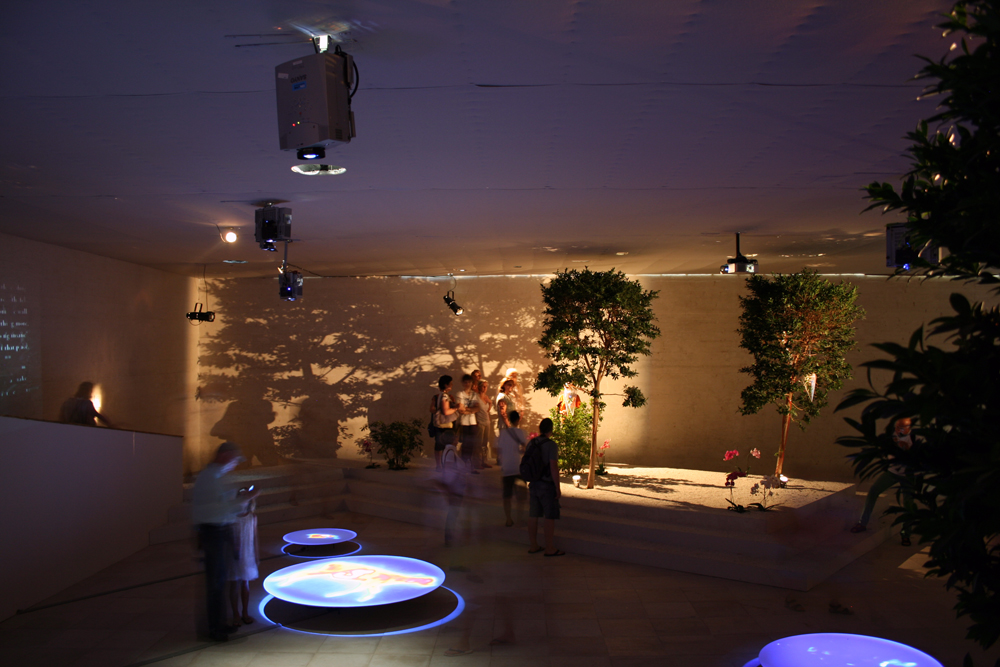
Terike Haapoja in the Nordic Pavillion at the Biennale questioned the human view of nature and wanted to express the interdependency of all living things, the energy passing between us and through us.

Nordic Pavillion

Nordic Pavillion

By talking or breathing to the CO2 sensor next to a branch on the trees in the Pavilion the visitor can activate the lights and open the glass chambers.

Terike Haapoja

Terike Haapoja

Breathing together.

Nordic Pavillion

Nordic Pavillion

The loss of heat from a body at the moment of death is recorded. It is a poignant witness to the warmth of life slowly dispersing.

Terike Haapoja

Terike Haapoja

Thinking about the natural processes of life and death can lead to thoughts of the spiritual.

Our ancestors had other than scientific explanations for things they didn’t understand and believed in spirits.

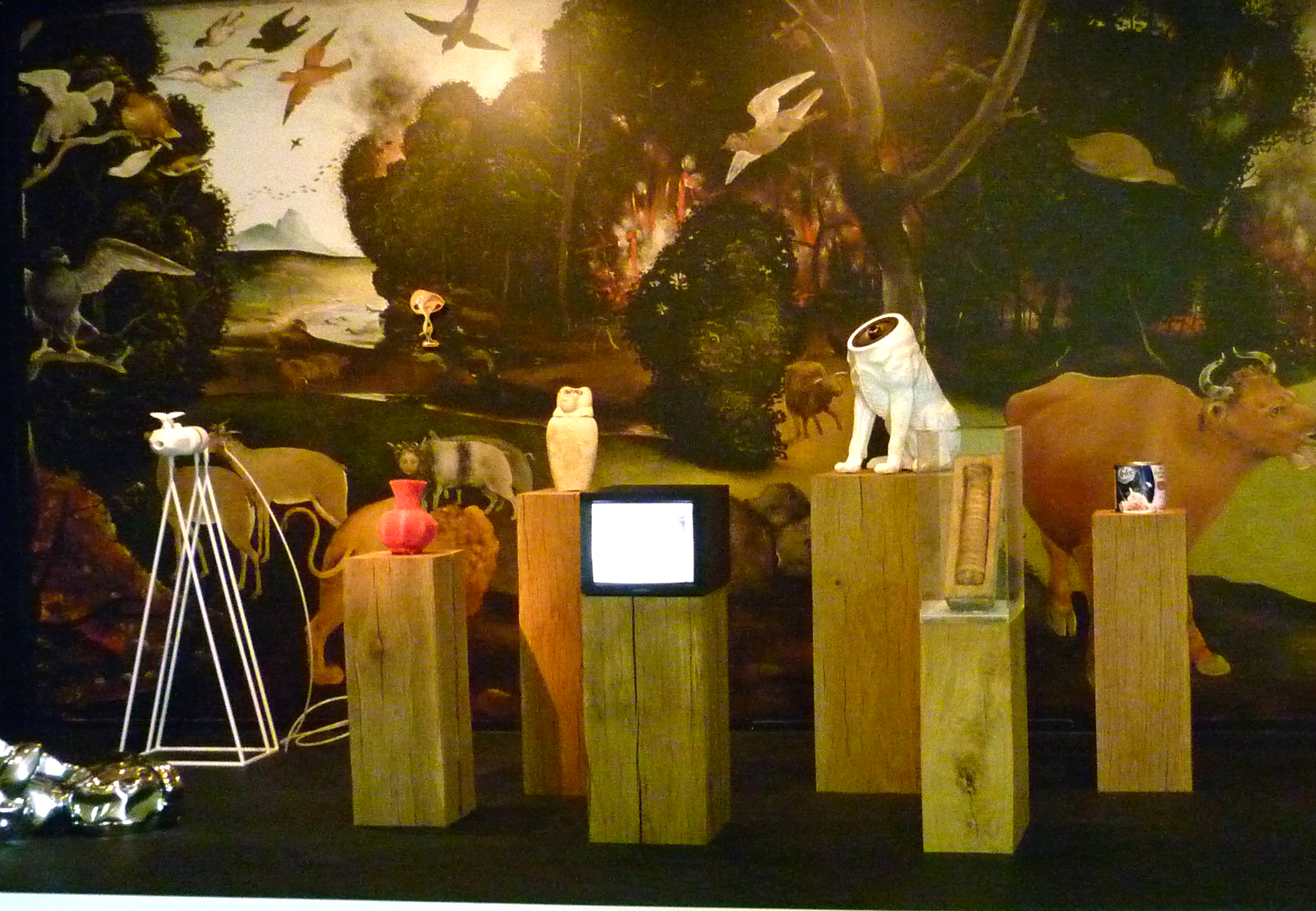
Mark Leckey’s exhibition ‘The Universal Addressability of Dumb Things’  looks at the objects we interact with today in a similar vein. As things possessed.

His concept is of ‘techno-animism’ – the blurring of the animate and the inanimate.

Mark Leckey

Mark Leckey

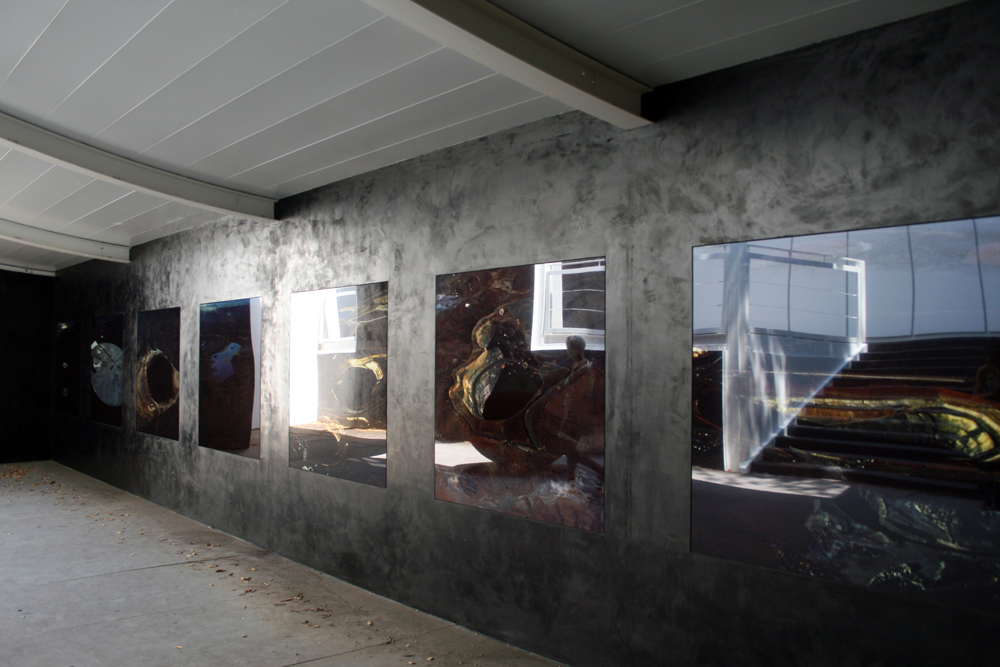
At the Biennale a digital taster was showing of the main exhibition held at the De La Warr pavilion in Bexhill on Sea.

Mark Leckey at The De La Warr Pavilion

Mark Leckey at The De La Warr Pavilion

Felix the Cat – the first image ever transmitted on TV

Mark Leckey The Universal Addressability of Dumb Things

Mark Leckey The Universal Addressability of Dumb Things

The exhibition was presented as a collection of objects that all talk, literally or metaphorically, to each other.

Mark Leckey The Universal Addressability of Dumb Things

Mark Leckey The Universal Addressability of Dumb Things

I was interested in the backdrop image which is Piero di Cosimo The Forest Fire c1495-1508.

The painting is thought to show the birth of civilization as man gained supremacy over the animals through the use of fire and language.

Concerned with the history of early man, inspired by passages from Book 5 of De Rerum Natura by Lucretius (98–c.55 BC), who traces the origins of life on earth and the birth of community life, emphasizing the role of fire as a catalyst for change.

Roger Hiorns

Roger Hiorns

The machine encrusted with crystals making its original purpose defunct it becomes something else.

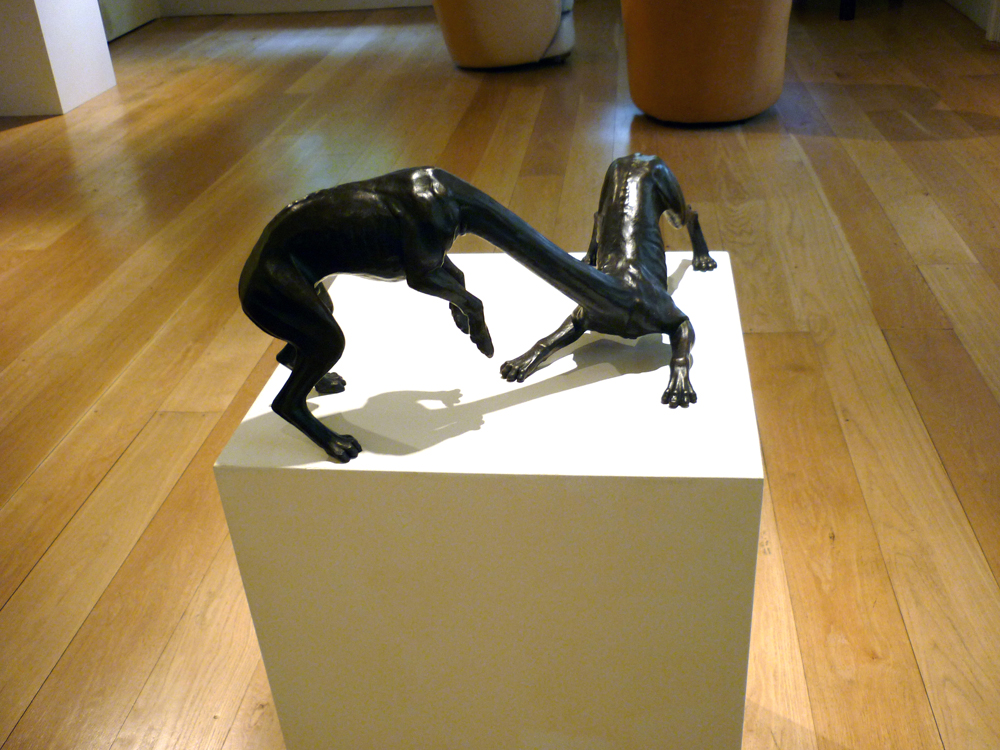
Nicola Hicks Maquette for Crouching Minotaur

Nicola Hicks Maquette for Crouching Minotaur

Imposing presence of a minotaur skull, a symbol of the unnatural. A monster created from desire that cannot be controlled.

Doesn’t feel impossible.

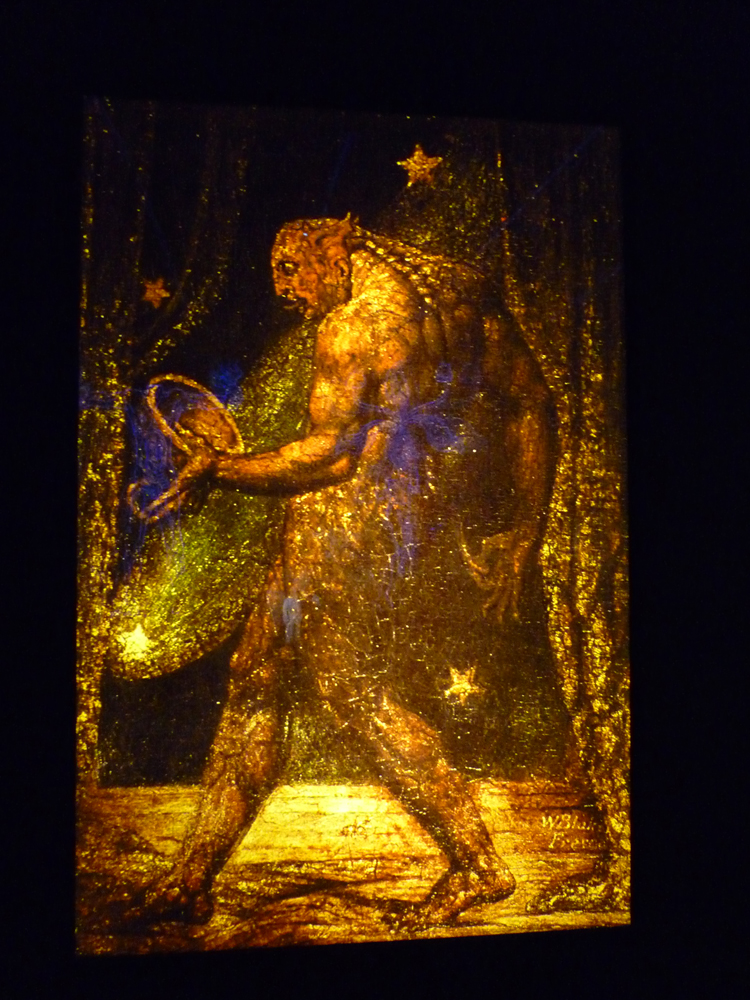
William Blake believed he was visited by spirits from other worlds in his imagination.

William Blake The Ghost of a Flea

William Blake The Ghost of a Flea

This is his record of the spirit of a flea which has undergone a demonic transformation inhabited by the souls of bloodthirsty men.

Possession.

At the Biennale in the Belgium pavilion Berlinde De Bruyckere created a mausoleum.

Berlinde De Bruyckere's 'Cripplewood'

Berlinde De Bruyckere’s ‘Cripplewood’

A tree is cast in wax, it is then traced with blood red veins and pink mottled flesh. A process of metamorphosis has begun.

Berlinde De Bruyckere's 'Cripplewood'

Berlinde De Bruyckere’s ‘Cripplewood’

Bound with what appears to be bloodied bandages and laying on its side, the trees limbs take on the fragile nature of the bones of a giant disfigured human corpse.

The circle of life, the exchange of energy is something that Lin Xue wanted to convey in his detailed fantastical landscape drawings made with sharpened bamboo and ink.

Lin Xue

Lin Xue

The “Treasuries of Knowledge” exhibition by Khaled Zaki and Muhammad Banaw for Egypt looked at the two cycles of the universe – the first infinite cycle of nature and the second cycle of humanity continuously walking the earth.

“Treasure of Knowledge”  Khaled Zaki and Muhammad Banaw

“Treasuries of Knowledge” Khaled Zaki and Muhammad Banaw

At the point where the two cycles overlap is the point of creation, of wisdom and where such mysteries as knowledge of the afterlife might be found.

Lara Almarcegui is also interested in renewal.

Lara Almarcegui

Lara Almarcegui

Working at the boundary of urban regeneration and natural decay she filled the Spanish pavilion with builders rubble.

Mirroring the unpredictable power of a landslide the mounds of rock look like they could keep pouring into the room.

There is a strong smell of brick dust also filling the space and adding to the slight sense of claustrophobia, that you might be trapped, or can’t breathe.

Lara Almarcegui

Lara Almarcegui

The mound of smashed glass though is quite seductive, it sparkles like ice. You want to make crunching footsteps over it and gather it up to see the light play on its shattered surface.

The materials of construction are presented in their raw form. Buildings mechanically broken down to be reused and dispersed into other landscapes.

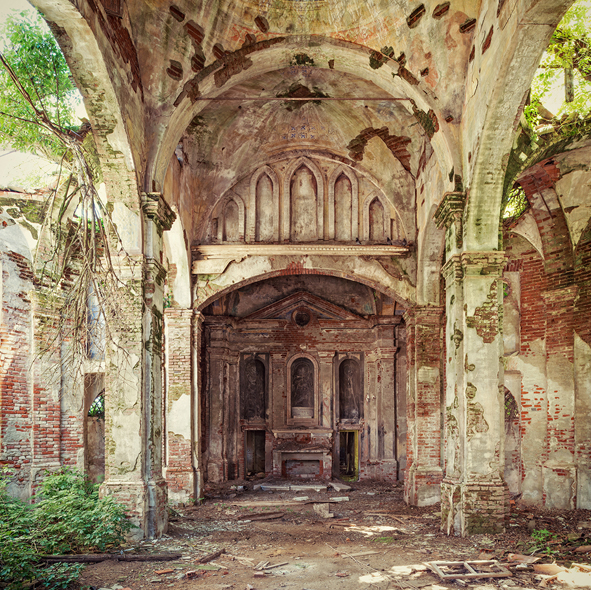
Gina Soden’s painterly photographs on the other hand depict nature slowly reclaiming abandoned and derelict buildings left to ruin.

Gina Soden

Gina Soden

Showing at ‘Natural Selection’ at The Fine Art Society she captures the beauty of decay. There is a nostalgia here, a sense of the past crumbling away before us, returning to the earth.

Where Gina Soden looks at nature reclaiming ancient buildings, Paul Davies celebrates the dynamic juxtaposition of the clean lines of architecture in an organic setting.

Paul Davies

Paul Davies Modern Cathedral Invert

The balance of power between nature and the manmade is explored in his highly textured paintings of modernist buildings in dramatic landscapes.

The forest becomes the cathedral.

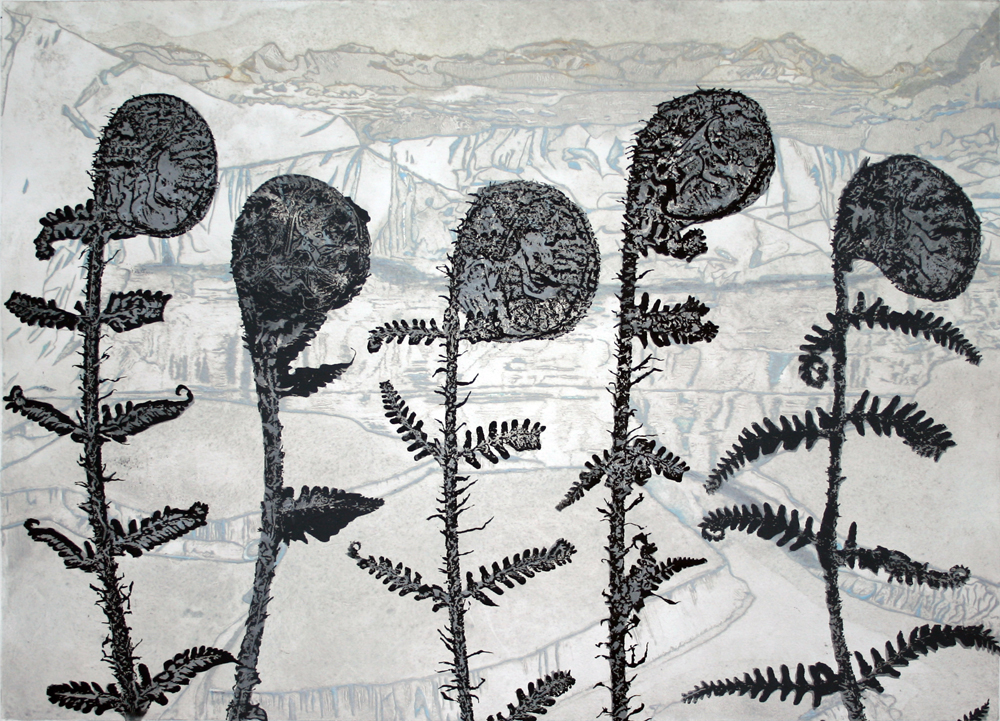
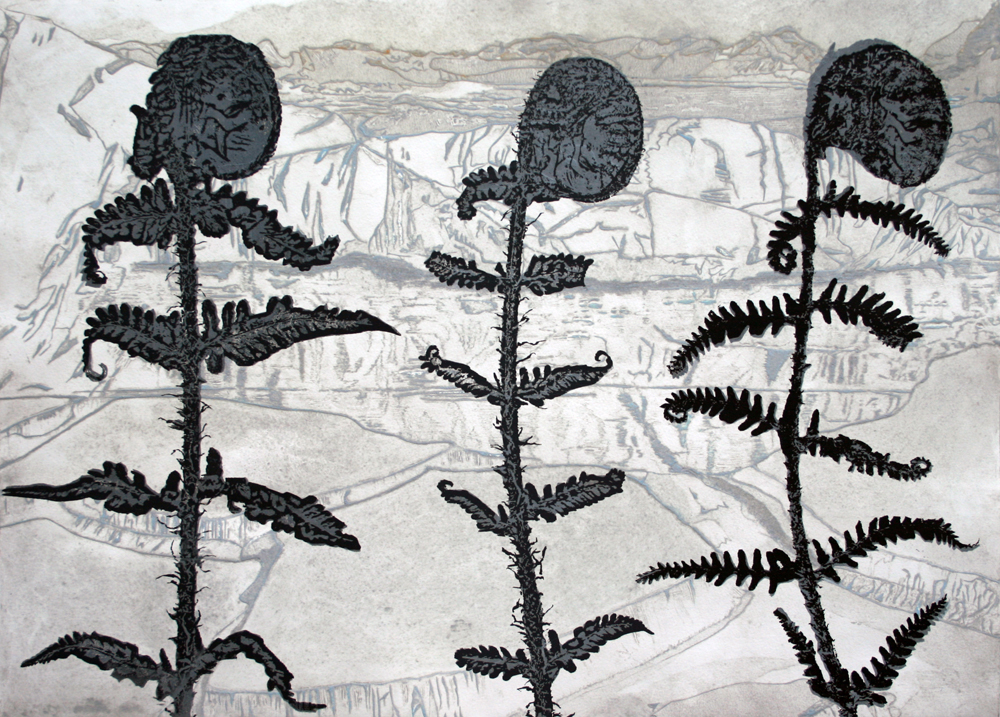
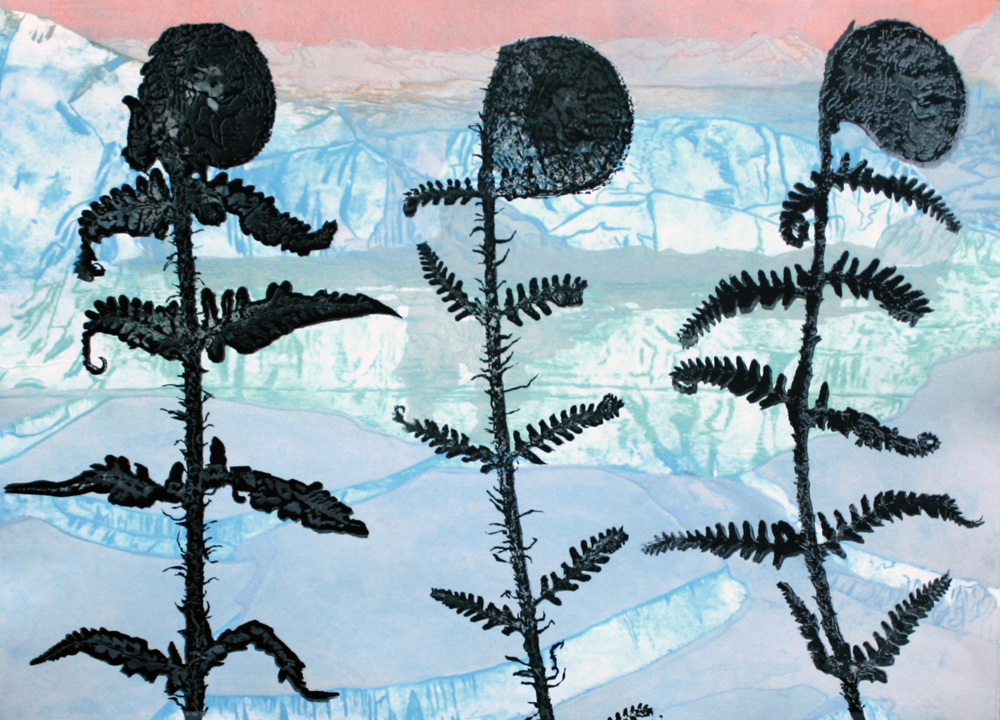
I was intrigued to find that the name for the unfurled heads of fern is shared by a Bishop’s staff of office – Crosier.

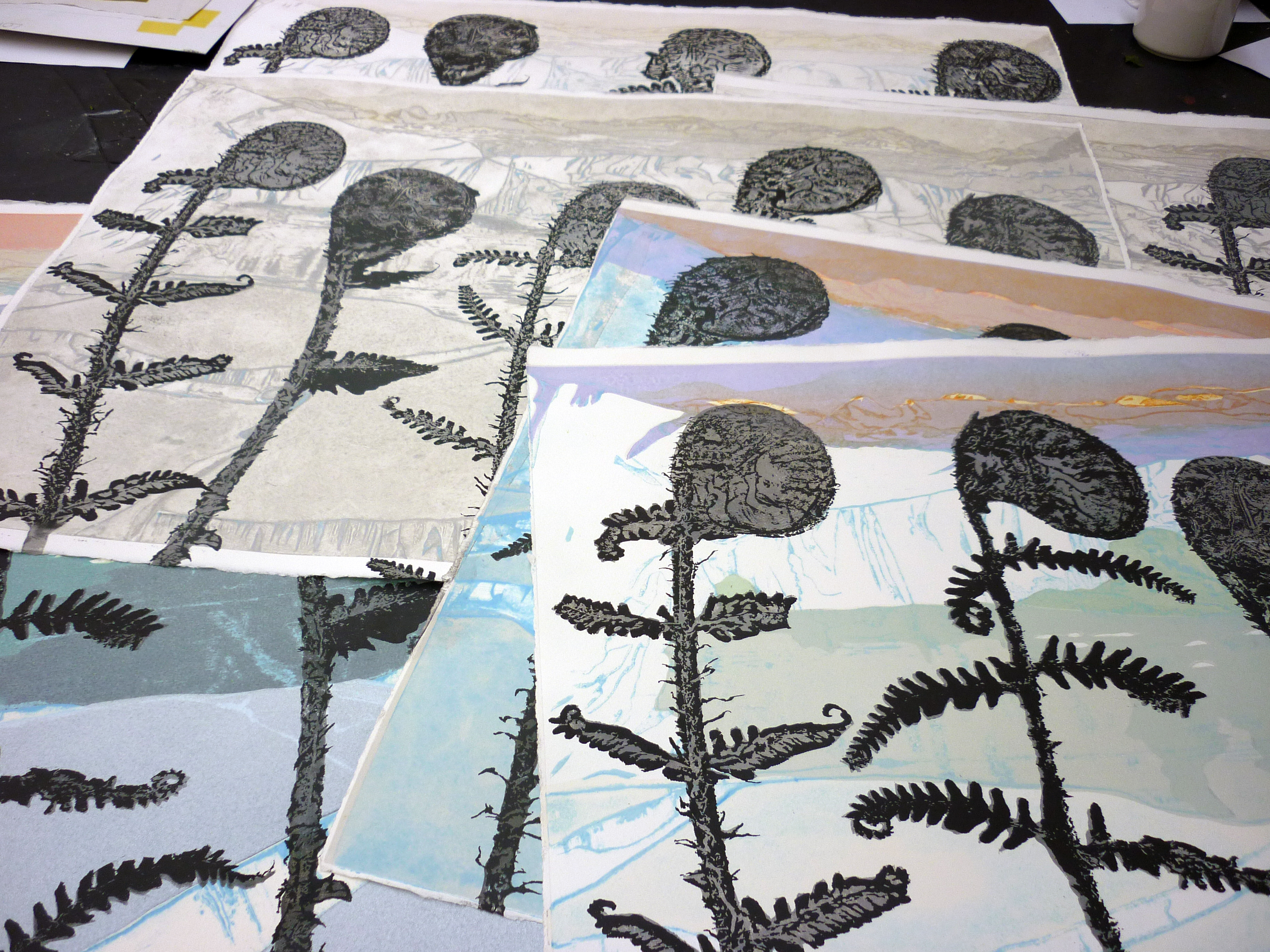
1308 Succession ve 1 1308 Succession ve 3 1308 Succession ve 6

I have finished this set of prints. The title is ‘Succession’.

As the ice retreats; from first life to ferns to first trees to forests to man to religion.

A few people have seen the prints now, the majority do not spot the embryos tucked in the furls of the fern unless I push them to look harder.

I like things to be hidden so I think it’s OK this is the case.

I also did some with more colour but am happiest with the grey tone ones.

1308 Succession ve 2 1308 Succession ve 4 1308 Succession ve 5

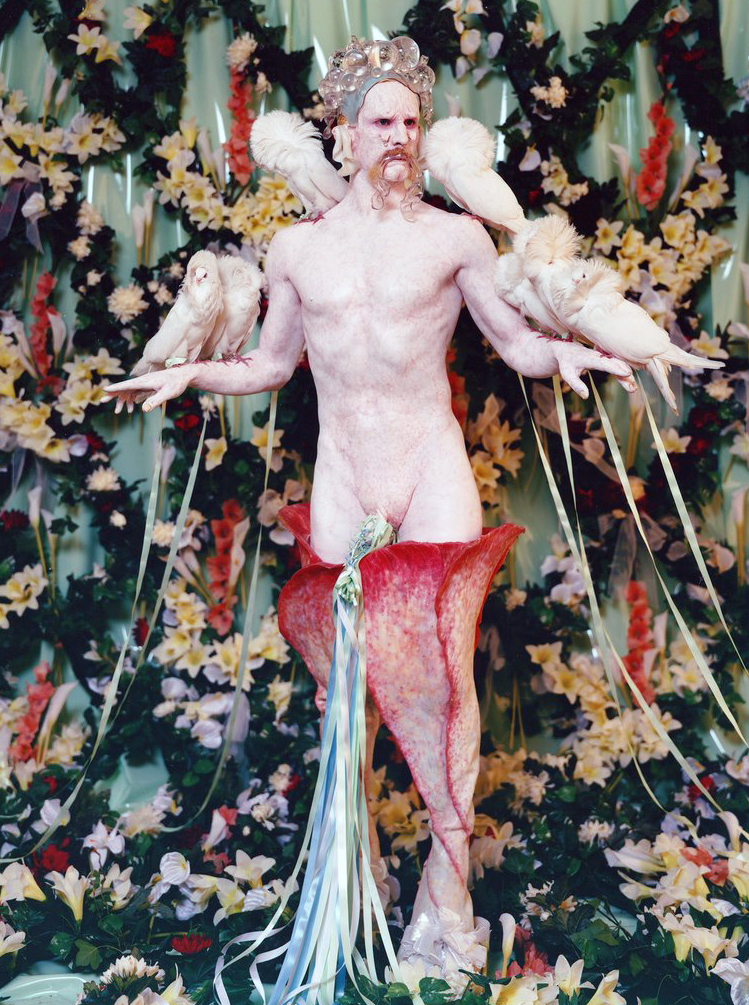
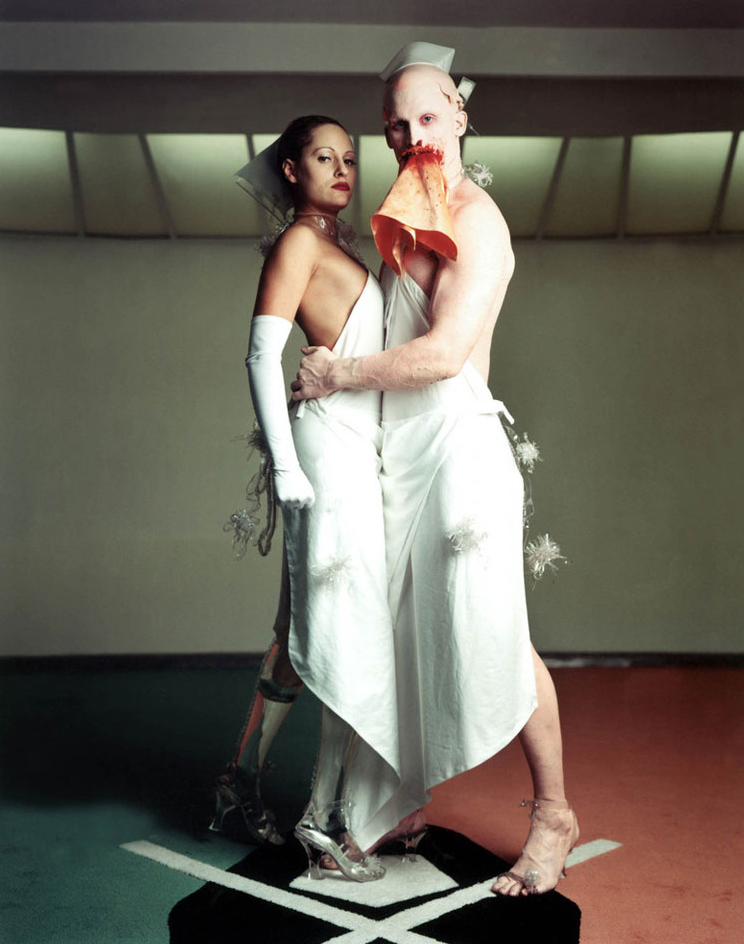
Who gets more visceral than Matthew Barney.

Matthew Barney 'Cremaster'

Matthew Barney ‘Cremaster’

I went to hear him in conversation with Jonathan Bepler. Together they are developing a new film project ‘River of Fundament’.

River of Fundament

River of Fundament

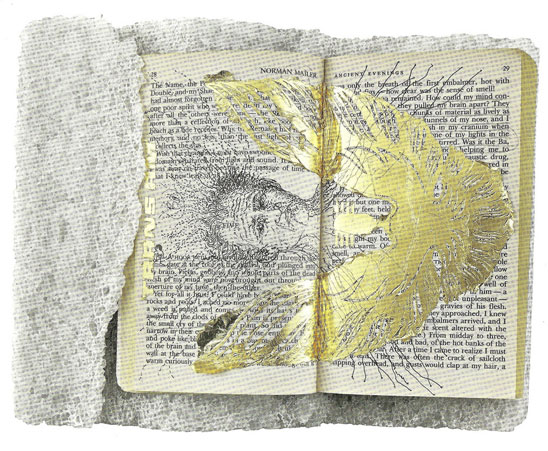
The starting point for this project is Norman Mailers 1983 novel ‘Ancient Evenings’ which tells stories of reincarnation, mythology, violent and hyper sexual gods from the age of the pharaohs in Egypt. I haven’t read this book but it is described by readers as anything from a literary masterpiece of astounding brilliance, the greatest gay love story ever told though to disgusting grotesque violence and simply masturbating shit onto the page.

Matthew Barney, Ancient Evenings: Ba Libretto, 2009, Ink, graphite and gold leaf on paperback copy of Ancient Evenings by Norman Mailer, on carved salt base

Matthew Barney, Ancient Evenings: Ba Libretto, 2009, Ink, graphite and gold leaf on paperback copy of Ancient Evenings by Norman Mailer, on carved salt base

Matthew Barney always appears so serious and deliberating. He doesn’t give the impression that the work he will produce will be messy and sticky and barely possible to look at.
Unphased by a question from the audience about his feelings regarding an afterlife he replied in the same thoughtful manner giving respect to an off the wall interjection from someone recently bereaved.
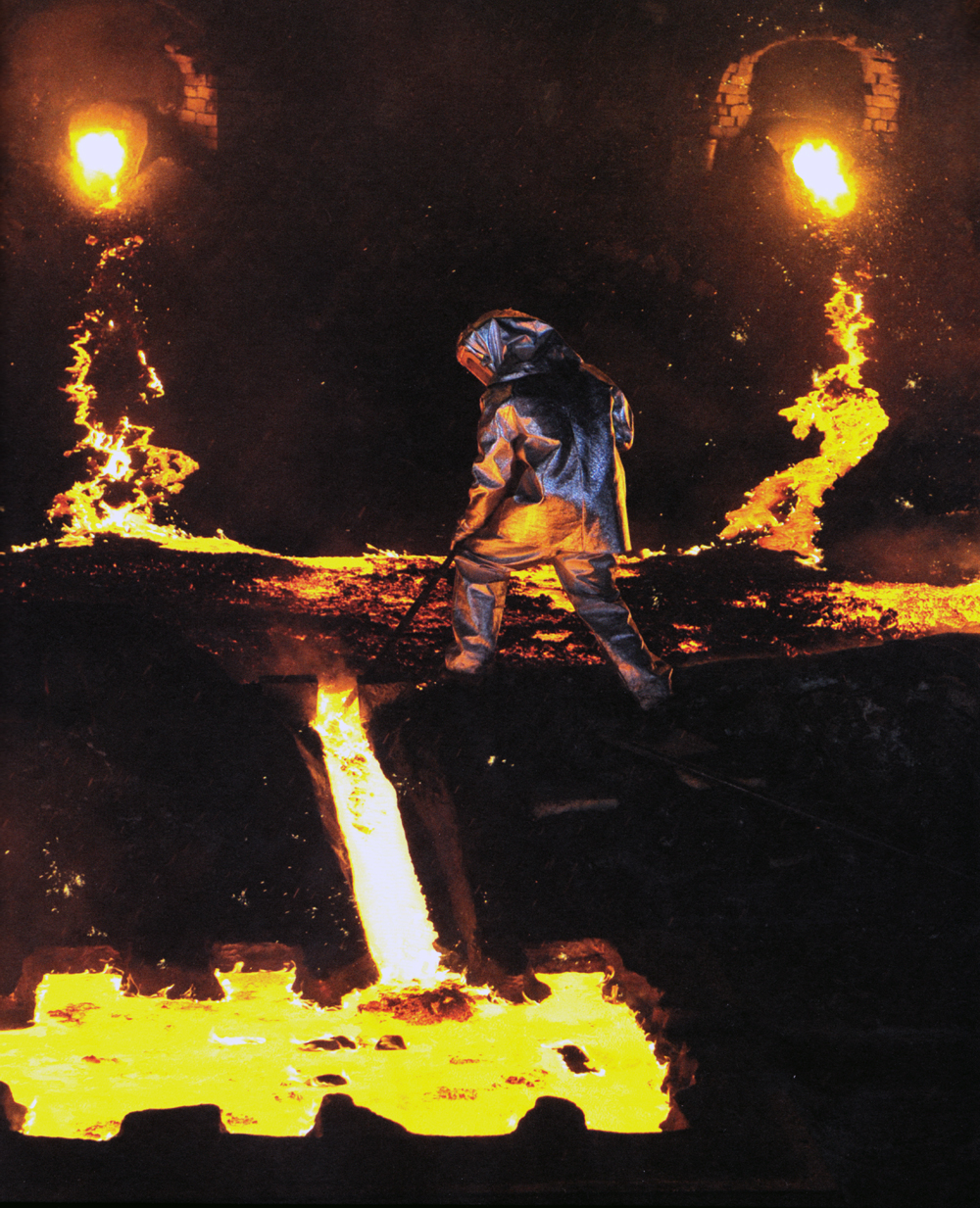
We were shown unedited film excerpts from the work so far. They get under your skin.
There is beauty and majesty in shots filmed at a steel foundry and there are the basest bodily functions performed as ritual celebrations. It is operatic in conception and mixes the filming of live performance with more choreographed staging a scene to be filmed.
His response to why he chose such a character as Norman Mailer as inspiration is that he prefers to work with a subject that repels as well as attracts him.
He believes this dichotomy of feelings gives his work an edge, a challenge – like the artist Andrew Salgado explained when asked why he chose to paint a serial killer.
Don’t make it easy.
Those feelings are translated in to the work and the audience becomes challenged too.

Matthew Barney 'Cremaster'

Matthew Barney ‘Cremaster’

The definition of visceral – relating to deep inner feelings rather than the intellect.
So a deep spiritual experience could be visceral but not unsettling.
I think ‘River of Fundament’ will be intellectually challenging and visceral and quite unsettling.
There will also be moments of wonder that will be the reward for having to watch some of it squinting through your fingers.

Also as part of The Manchester International Festival was a Tino Sehgal performance piece ‘This Variation’ which tapped into the visceral.

Mayfield Depot

Mayfield Depot

Directed into a dark space of the Mayfield Depot the first reaction is to reach out – when these tentative approaches touch another body the reaction is to pull back.
The lighting level is so low that on entering the space the new participant is blind. In the space are an unknown number of performers beat boxing, singing, or calling out questions.
In the pitch black I decided the best policy was to remain immobile. Voices chanted and bodies began to move, dancing and stamping and sweeping past so close the air was alive, brushing my body so close while I stood, not believing they could see me, waiting for a major impact. I imagined I had been captured in the forest and was at the mercy of a wild and uncontrolled people, unable to escape. It went on long enough to worry how I would ever get out but eventually my eyes or the light levels adjusted and I was able to witness more people stumbling into the space before I left feeling I had truly been transported elsewhere.

In Venice at the Biennale there were more artists who delivered work that also had a visceral impact.
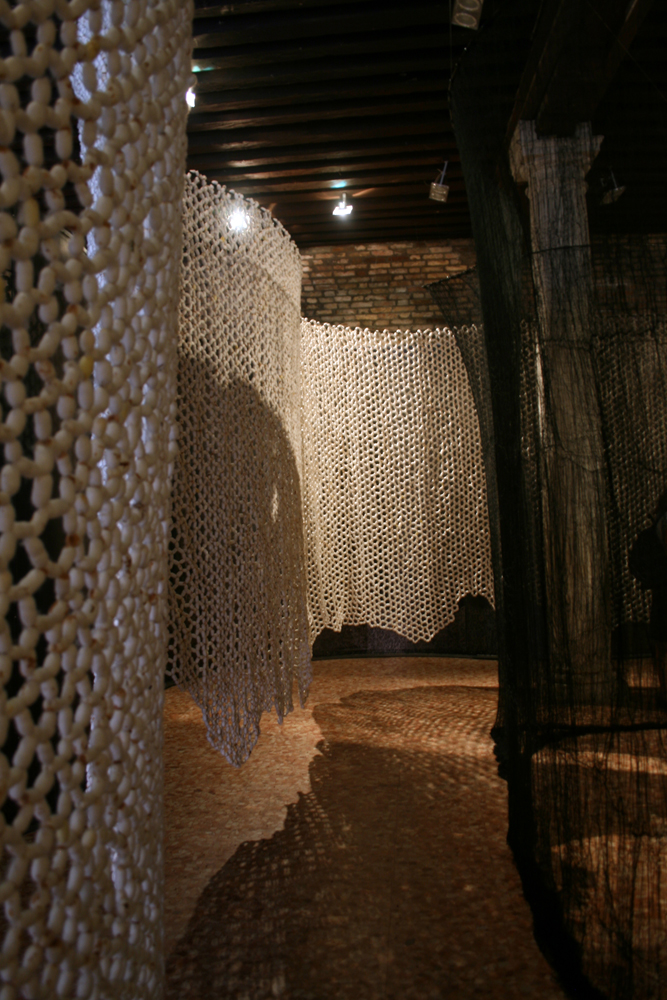
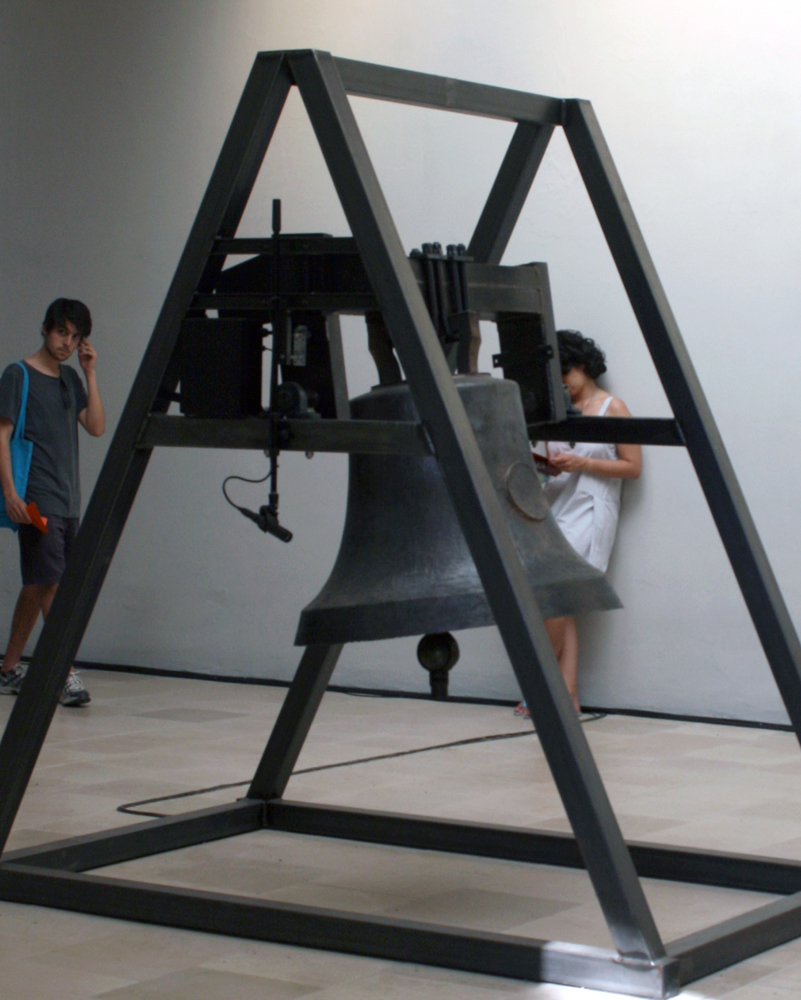
The most unsettling was perhaps at the pavilion of the Former Yugoslav Republic of Macedonia.  Elpida Hadzi-Vasileva was ‘exploring the effects of the silk route and how mobility can spread disease as well as commerce.

Elpida Hadzi-Vasileva  'Silentio Pathologia'

Elpida Hadzi-Vasileva ‘Silentio Pathologia’

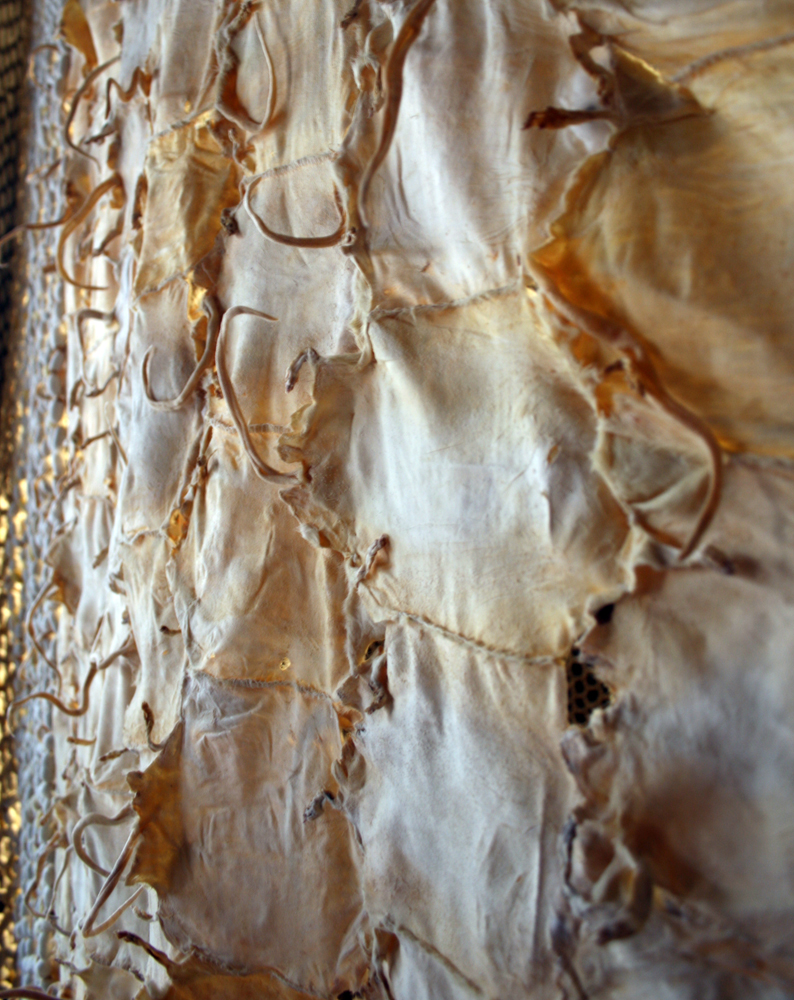
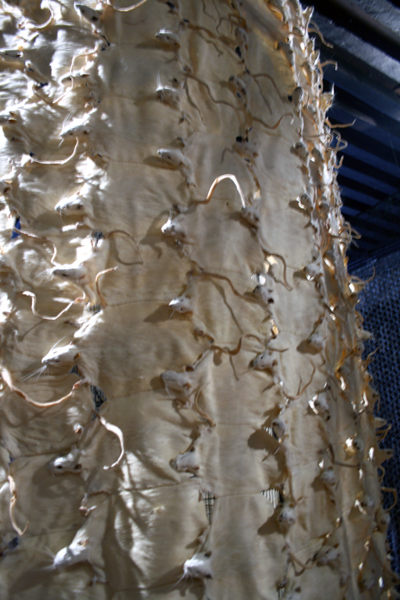
A route through the pavilion was mapped out in curtains made from the flayed skins of albino rats and the woven cocoons of silk worms.

Elpida Hadzi-Vasileva 'Silentio Patho;ogia'

Elpida Hadzi-Vasileva ‘Silentio Pathologia’

It was the smell that was most powerful and also the sight of some live rats in wire cages trapped amid the stench of the death of their own kind.

Elpida Hadzi-Vasileva 'Silentio Patho;ogia'

Elpida Hadzi-Vasileva ‘Silentio Pathologia’

Another but very different bodily impact came from Poland.

Konrad Smolenski created a sound installation which was so loud as to be unbearable to approach.

Konrad Smolenski 'Everything was forever, Until it was no more'

Konrad Smolenski ‘Everything was forever, Until it was no more’

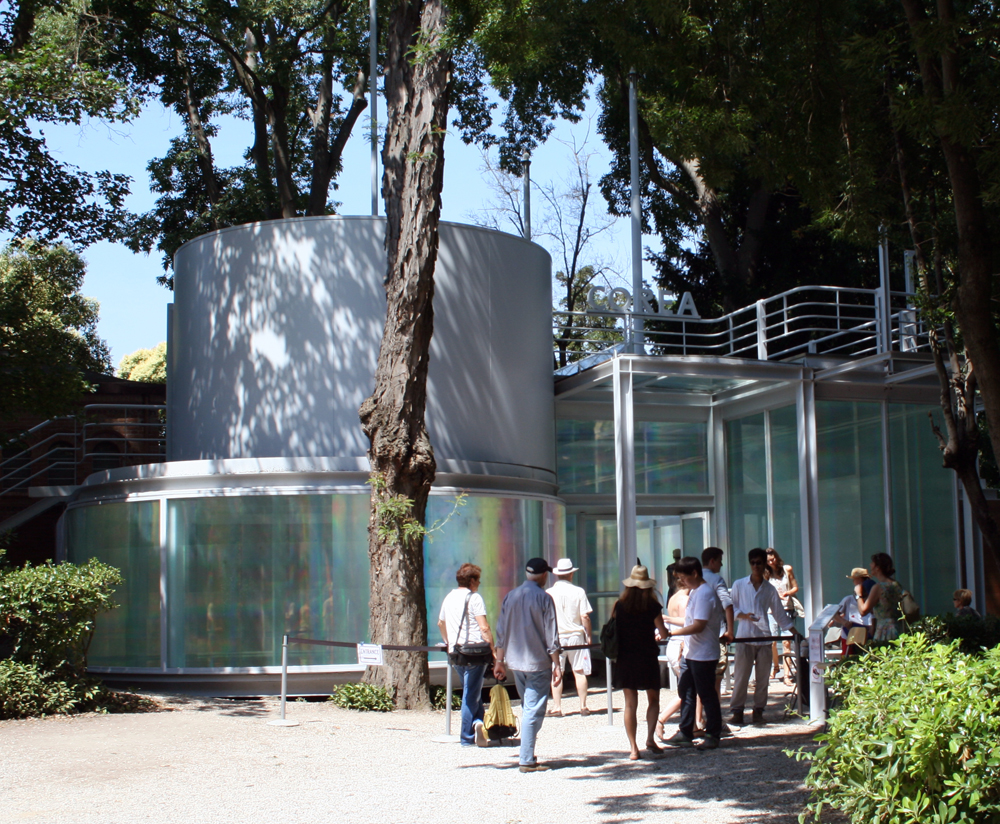
Kimsooja in the Korean Pavilion also plunged the visitors into darkness but it was not a threatening space, aware of the other people who had entered the small space alongside you by number system it was not isolated or long enough to develop any real sense of displacement.

Korean Pavilion

Korean Pavilion

The entrance however was a more alarming experience, supposedly a kaleidoscopic light diffraction experience it was in fact an embarrassing realisation that the mirror flooring showed right up your skirt.

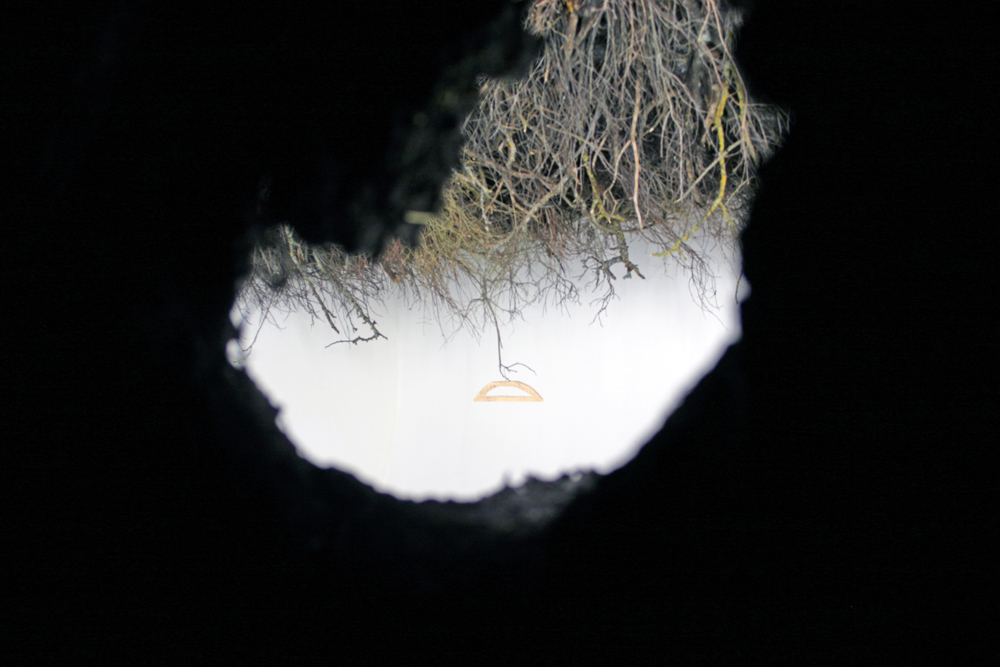
Petrit Halilaj for Kosovo used memory to dig into the psyche of everyone who grew up able to dig and play in the soil.

Petrit Halilaj

Petrit Halilaj

He created an earth tunnel inspired by memories of a rural childhood before displacement, destruction and exodus reshaped his world.

Petrit Halilaj

Petrit Halilaj

Able to enter this dark space sprouting with twigs and roots like the lair of some large beast I was glad to exit without encountering some living thing to make me shriek.

I might have had a rural childhood too but now I am firmly urban and terrified of those tiny creatures that inhabit the wild.

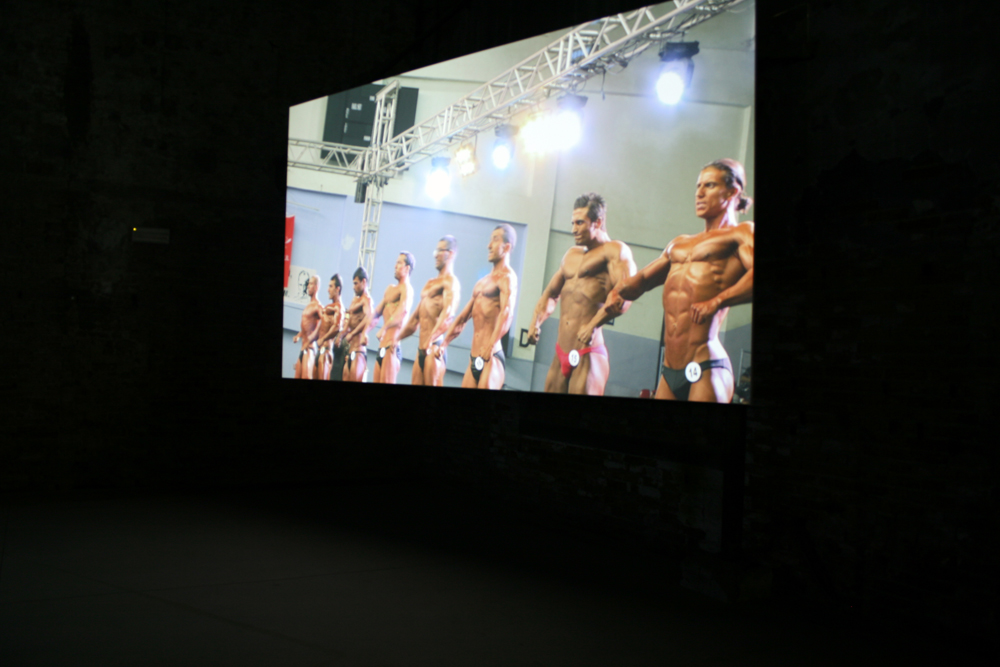
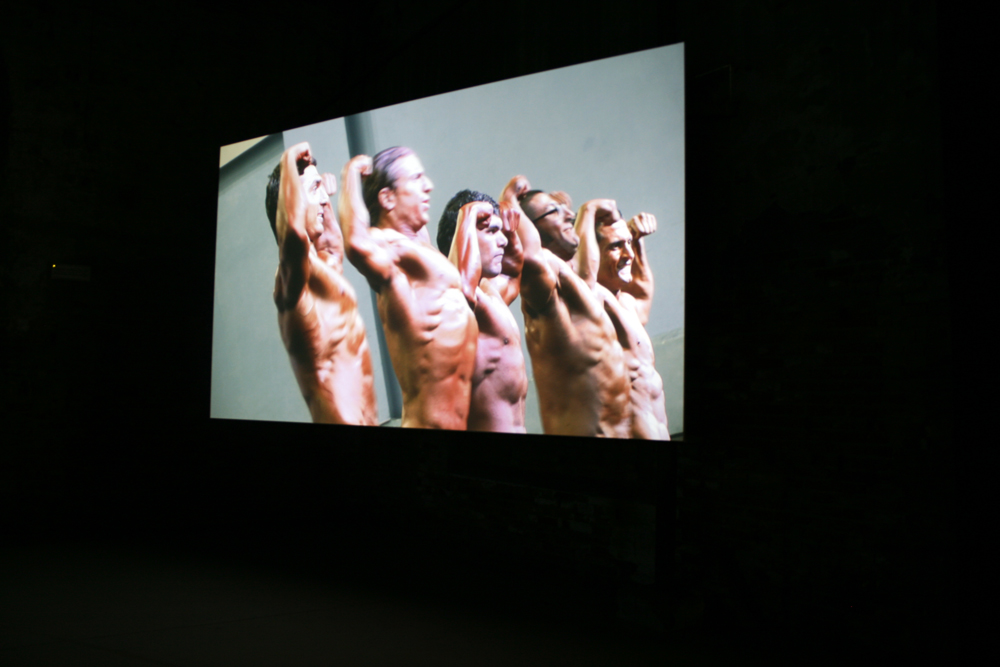
Ali Kazma for Turkey explored the reactions we have to our own body in his video installation ‘Resistance’.

Ali Kazma 'Resistance'

Ali Kazma ‘Resistance’

A line of body builders flex their muscles on the giant screen; a group of young girls in the audience squirm in disgust.

Ali Kazma 'Resistence'

Ali Kazma ‘Resistence’

Not sure how I would bring these sorts of feelings into my own work but it is an interesting exercise to think about.

These feelings which are so fundamental, so deep within that to stir them is to feel alive, be conscious of mortality.

130731 (2)

work in progress

Thinking on an international scale can be daunting.
I have been trying to imagine a world before religion which must of course be a world without man but how long was man around first, as religion in some form seems to have been something that emerged very early in our development.

When I think about snowball earth and the coming of the forests I do think globally. Those seeds growing and spreading.

Cross pollination. No borders.

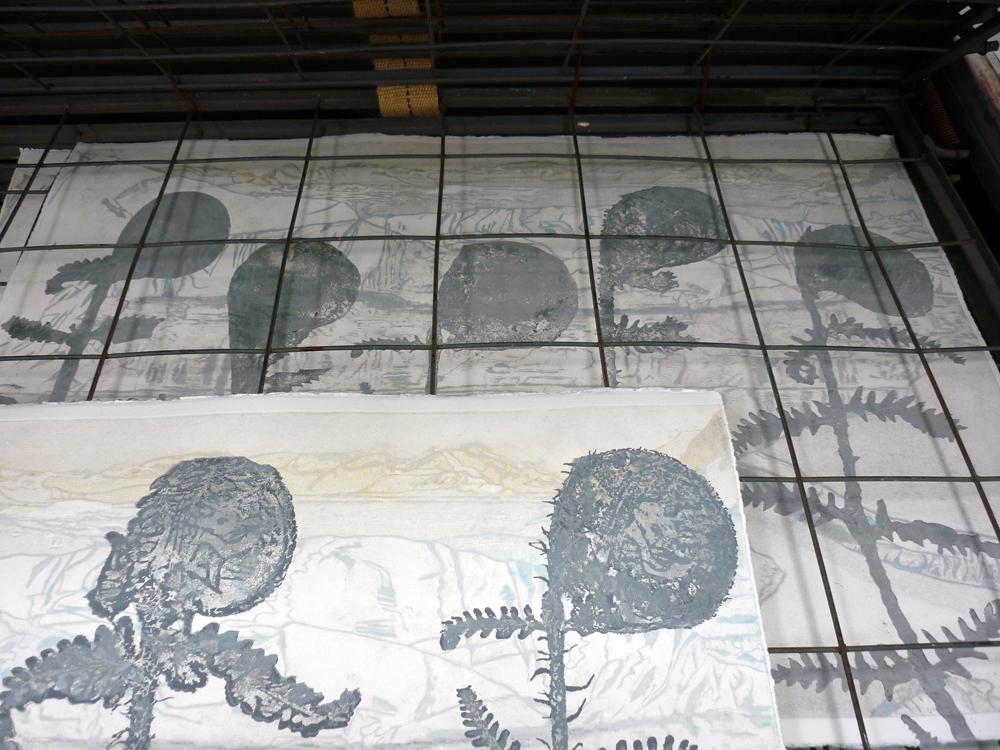
I have been working on adding the fern embryos to the iceberg landscape.
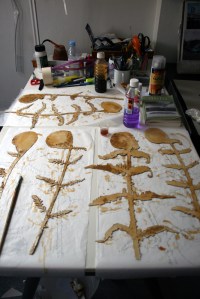
1308 Fern Collagraphs

I made some relief plates of the ferns from cardboard and gave them a bit of texture with acrylic medium and carborundum.

Then I gave them a coat of shellac to give them a bit of strength.

1308 Precursor in progress

I am using them to give a background texture to the fern images.

I will then screen print on top of these to add detail.

What was so great about visiting the Venice Biennale this year was that I found so many of the artists I really like were showing there.
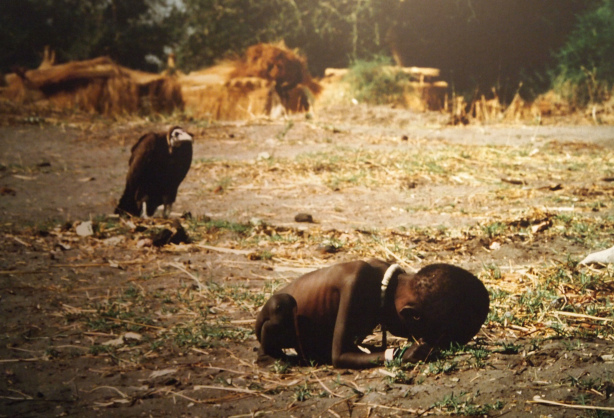
Alfredo Jaar makes work that hits you bodily. I can still feel the power of his work I saw in Brighton years ago about the photo journalist Kevin Carter.

The Sound of Silence, tells the story of one photograph taken in Sudan 1993. You sit in a dark space and the story is told in simple sentences, on a black screen.
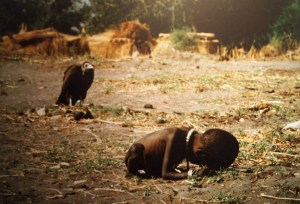
Alfredo Jaar 'The Sound of Silence'

Alfredo Jaar ‘The Sound of Silence’

The photograph is shown briefly before a blinding flash of light scores into your retina.

You are left blinking in the afterglow. I can still feel the sadness.

Kevin Carter’s suicide at just 33 is so poignant, he had just seen too much suffering to cope with his own problems.

Should you intervene?  Lucy Kirkwood’s play Chimerica also addresses this issue. On the Headlong website is a link to a bbc interview with war photographer Don McCullin who discusses how ‘ there came a natural limit to looking at what others can’t bear to see.’

In Venice Alfredo Jaar looked at the Giardini and its political and economic posturing of pavilions built before the second world war. He then made a model of the Giardini which gets submerged underwater – we see it disappear into obscurity then emerge, green and dripping only to vanish again.
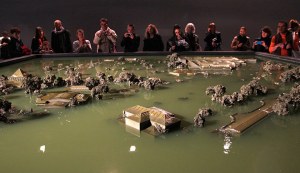
Alfrdo Jaar 'Venezia, Venezia'

Alfredo Jaar ‘Venezia, Venezia’

It might signify the highs and lows of economic powers but of course being in Venice the water rising is a very real threat.

The whole idea of a national pavilion in the art world is questioned now that artists work internationally, moving and exhibiting around the world.

France and Germany have swapped pavilions and to push the international crossover further Ai Weiwei is showing along with 3 other non-German artists in the German Pavilion.
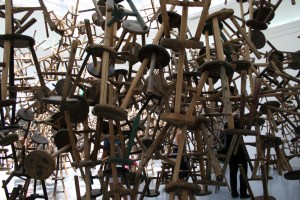
Ai Wei Wei 'Bang'
Ai Wei Wei ‘Bang’

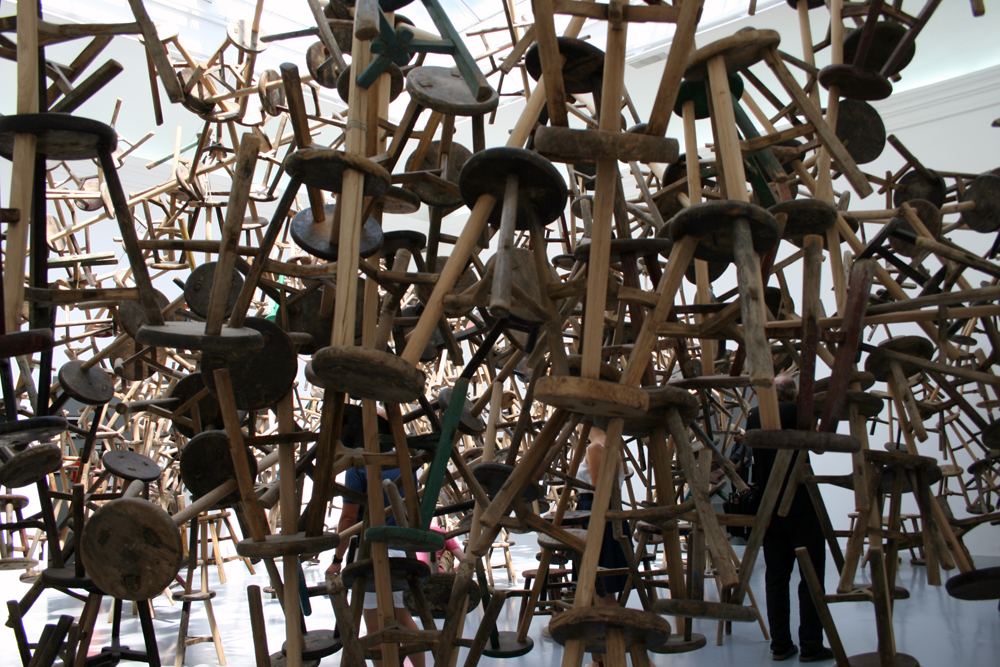
BANG is an expanding,  rhizomatic structure made from the once ubiquitous wooden stool which has now been superseded in China by manufactured models in metal and plastic.  These simple objects that hold the traces of their life in the patina of years, are part of the cultural identity of a nation being lost to globalisation, just as the individual is swallowed up and forced to conform.

Gilad Ratman for Israel also wanted to question the national boundaries that such a setting as the Biennale constructs and he also made work about  transgressing boundaries.

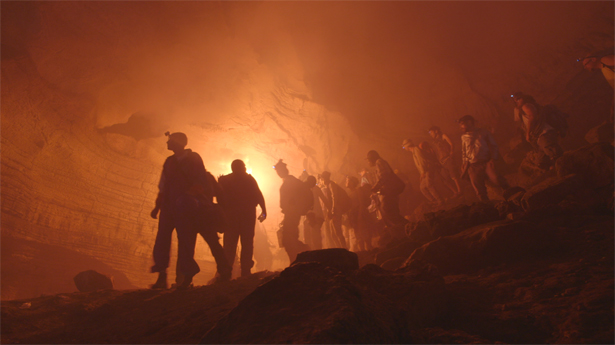
We see a group of people making their way though underground passages, crawling and dragging themselves through the earth.
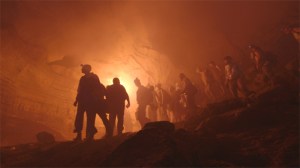
Gilad Ratman 'The Workshop'

Gilad Ratman ‘The Workshop’

Eventually they emerge into the light from a hole in the ground straight into the gallery space.

Gilad Ratman 'The Workshop'

Gilad Ratman ‘The Workshop’

Underground there are no borders.
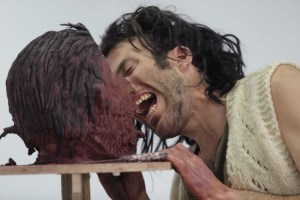
Gilad Ratman 'The Workshop'

Gilad Ratman ‘The Workshop’

Once in the gallery each member of the group begins to sculpt a self portrait in clay.

Like a birth, some new body is forged and given voice.

Joana Vasconcelos also looks at the journey, navigation and passage.
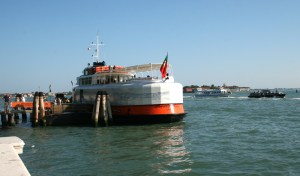
Joana Vasconcelos 'Trafaria Praia'

Joana Vasconcelos ‘Trafaria Praia’

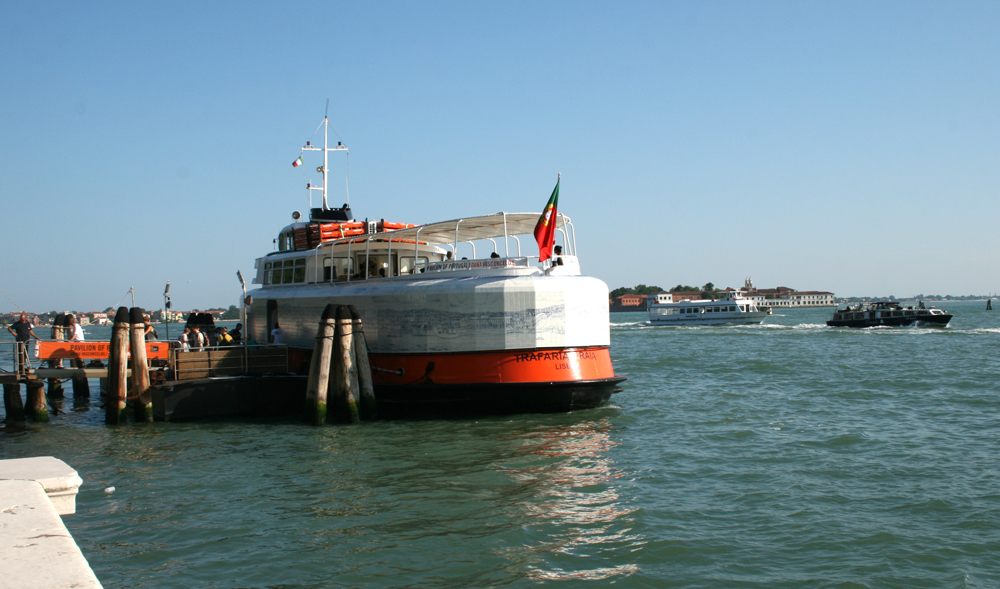
Addressing common themes that Lisbon and Venice share she created a floating pavilion – well a boat.

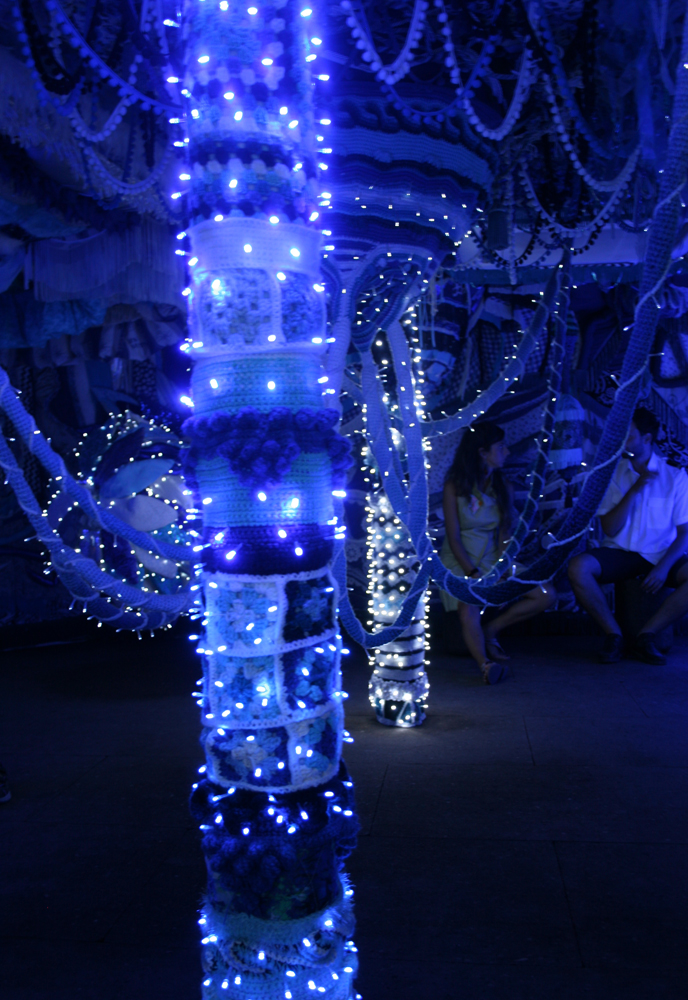
It has a gift shop and art books, cultural history and then in the depths you can climb down into a dark and warm space, soft and feminine and full of wonder.
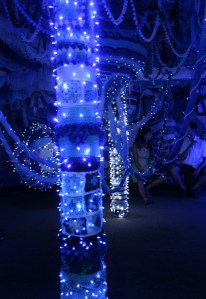
Joana Vasconcelos

Joana Vasconcelos

Reduced to basic sensory levels of pleasure like a baby in the womb, soft dark warmth, gentle undulation.

The Instituto Italo-Latino Americano a forum for cultural exchange between Europe and Latin America  is all about how cross fertilization can impact cultural identity.

The cavernous pavilion is scented with spice.
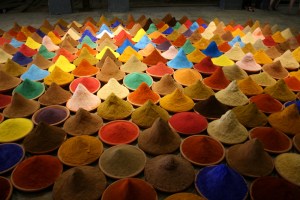
Latin American Institute

Latin American Institute

I loved the animation ‘Los Andes’ by Cristóbal León & Joaquín Cociña.

A primal spirit possess an office causing drawings to appear on the wall and plants to emerge from the furniture.
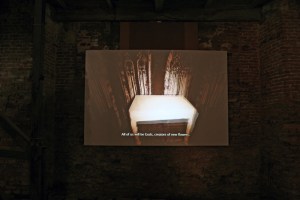
Latin American Institute

Latin American Institute

The spirit appears in the form of a giant growing in size and then crumpling away.
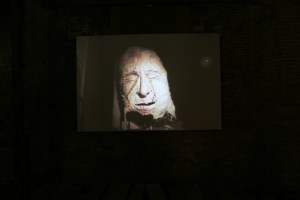
Leon & Cocina Loa Andes

Leon & Cocina Los Andes

Jasmina Cibic for Slovenia looked at how national identity is portrayed and guided by the state into what is acceptable.

Her project ‘For Our Economy and Culture’  looks at art as a token of national identity and how the integrity of the art commissioned for public arenas may be compromised by institutional hierarchies intent on influencing its presentation..
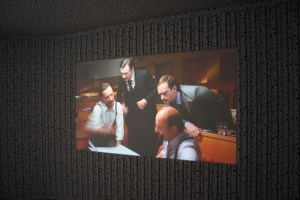
Jasmina Cibic 'For Our Economy and Culture'

Jasmina Cibic ‘For Our Economy and Culture’

Art by committee.

The Pavilion is lined with wallpaper depicting a beetle which has become endangered because of its ideologically charged name – Anophthalmus hitleri.

Anophthalmus hitleri

Anophthalmus hitleri

The beetle which is only found in caves in Slovenia could have been a national cause celebre were it not for it being named by a fascist species collector.

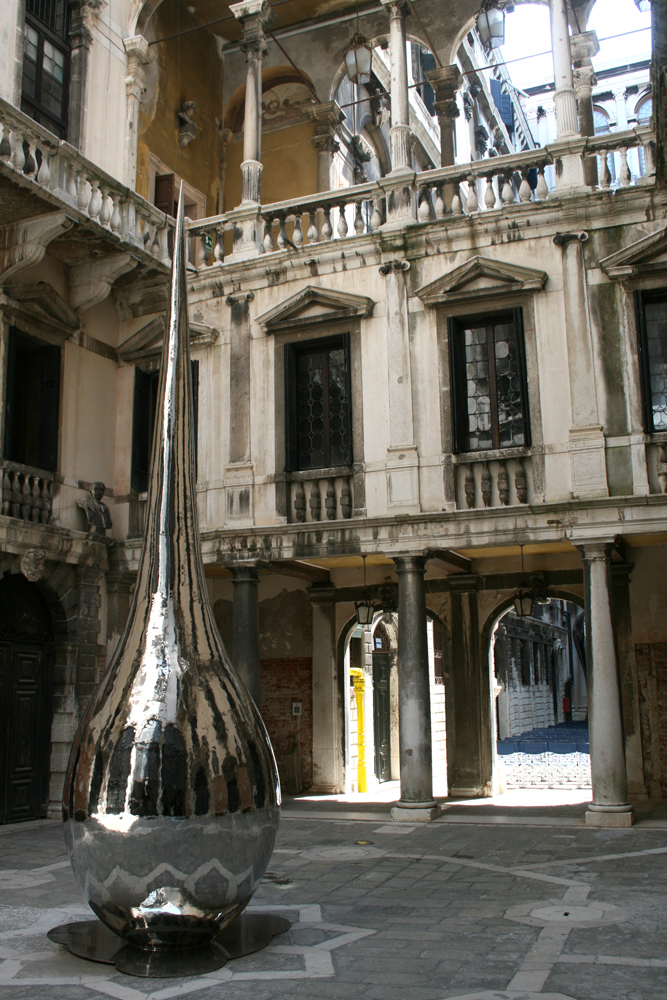
The official Chinese representative Simon Ma had been to the rainforest of Southern China and come back to a life in the city that now was too grey.

He had been inspired by the dramatic landscape, the colours of the forest and the magnificent height of the trees.

Feeling overwhelmed by the power of these colossal living forms he was aware of how deep the roots much reach to support such heights which in turn made him think about the scale of the cities sprouting up all over China

and the need for people to also have roots.

Simon Ma

Simon Ma

His oversized rain drop sculptures gave a good photo opportunity against the dramatic architecture of an ancient palazzo.
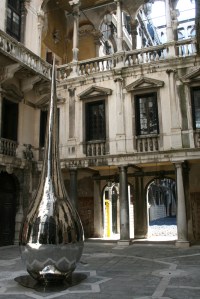
Simon Ma

Simon Ma

Simon Ma

Simon Ma

These plastic raindrops were left over form a performance piece.

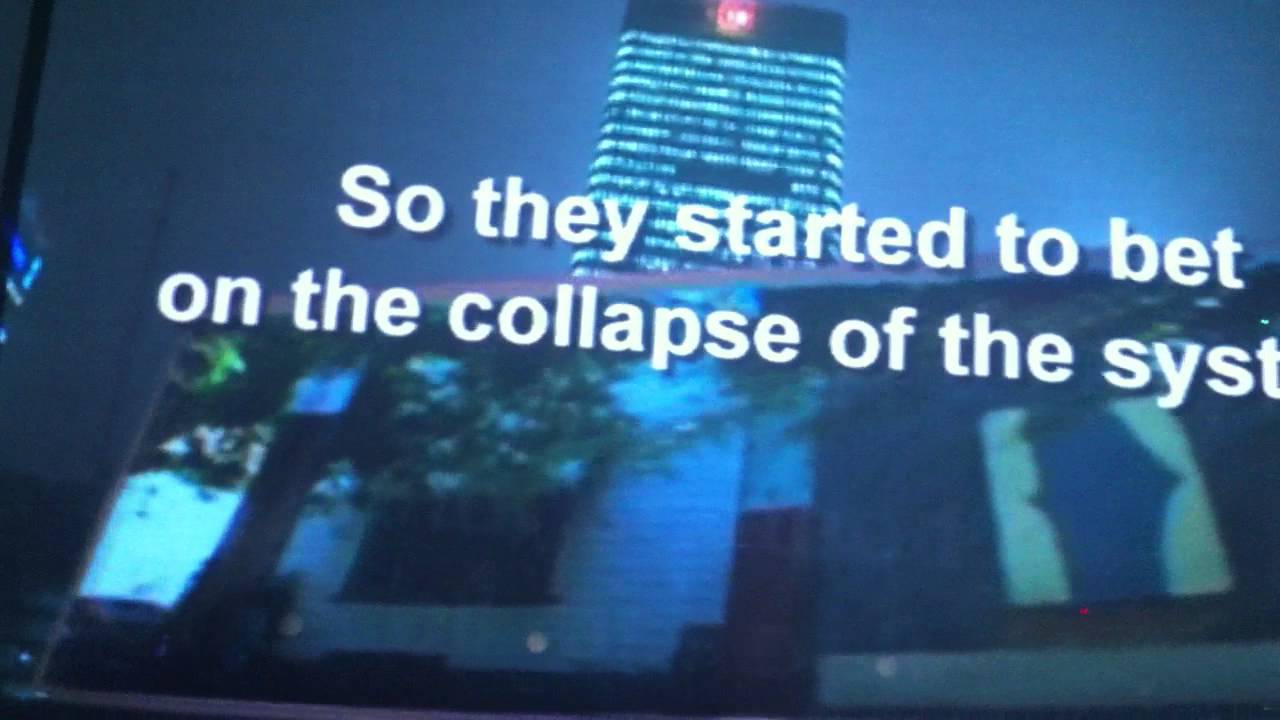
At the Manchester International Festival Robert Del Naja of Massive Attack and film maker Adam Curtis got together to create a new kind of media experience combining film and music on a mega scale.

The result of their collaboration tells the story of a new system of power that has risen up in the modern world to manage and control us. It is a fake, but enchanting world which we all live in today – but which has also become a new kind of prison that prevents us moving forward into the future.
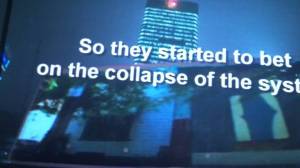
Massive Attack v Adam Curtis

Massive Attack v Adam Curtis

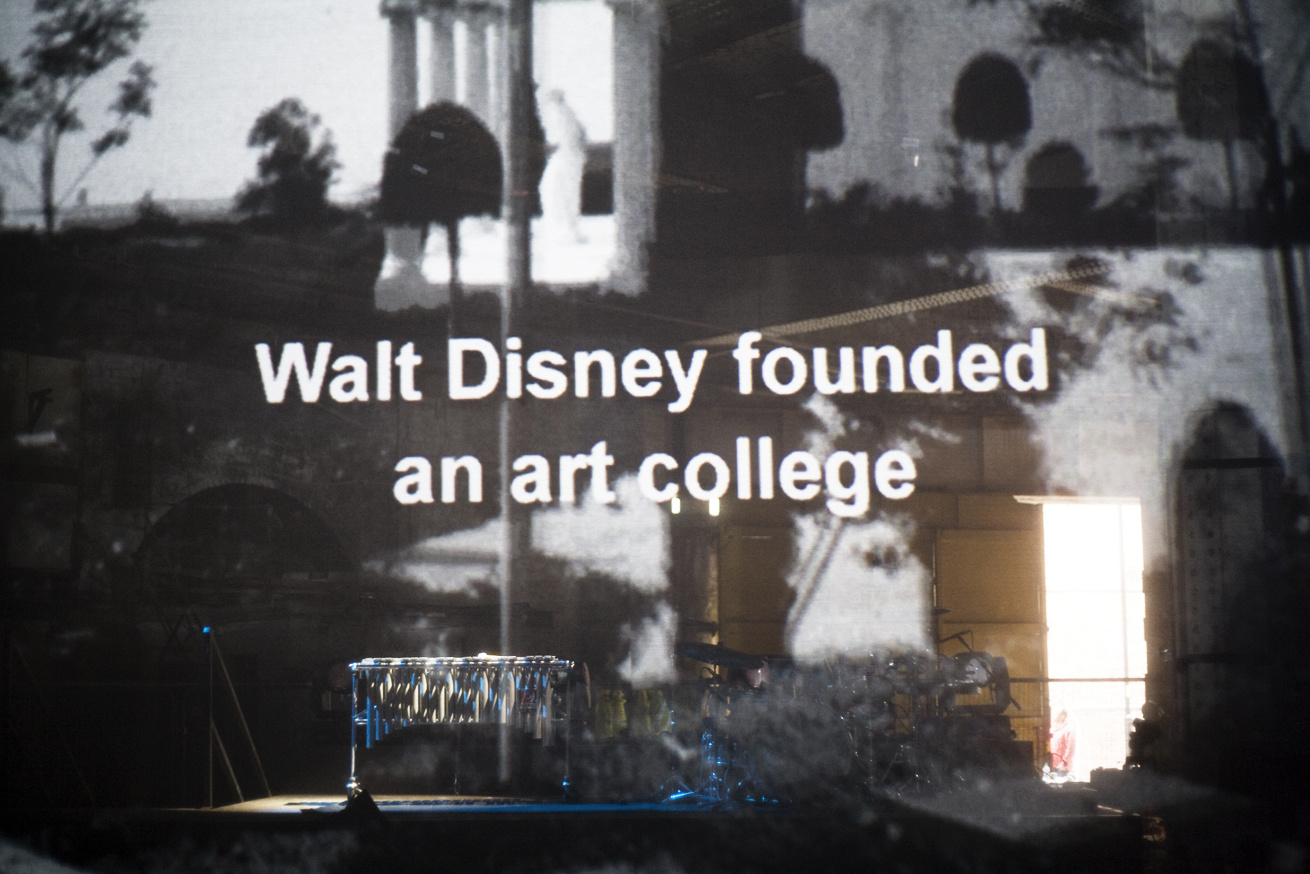
So many ideas are set off by this ‘gilm’ as they called it. I was spellbound by the scale, the decibels vibrating through my chest, the wonderful eclectic music set, the pure voice of Elizabeth Fraser and the stream of images – my era in soundbites. There were mixed reviews but I loved it. It wasn’t all news but there was a lot of things I didn’t know about –  Russian Punk Yegor Letov for instance though whether the story we were spun was actually true or not I can’t quite work out. The history is mapped out in personal stories such as the tragic case of Pauline Boty who died at 28 after she refused cancer treatments that would have harmed her unborn daughter.

Pauline Boty

1308 MIF 2

The daughter, Katy ‘Boty’ Goodwin went on to study at the California Institute of the Arts, Walt Disney’s idealist art college, but she became obsessed with her appearance, developed an eating disorder, took heroin and died.

The Japanese gambler Akio Kashiwagi known as ‘The Warrior’ got into a row with Donald Trump’s casino when his system finally failed and he left owing 10 million dollars. Trump never got the money however as the gambler was stabbed to death with a samurai sword before the debts were paid.

Risk management.

1308 MIF

Lots more info about this and other ideas of Adam Curtis can be found on his blog
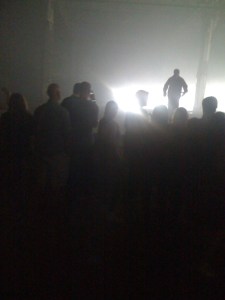
Mayfield Depot

Mayfield Depot

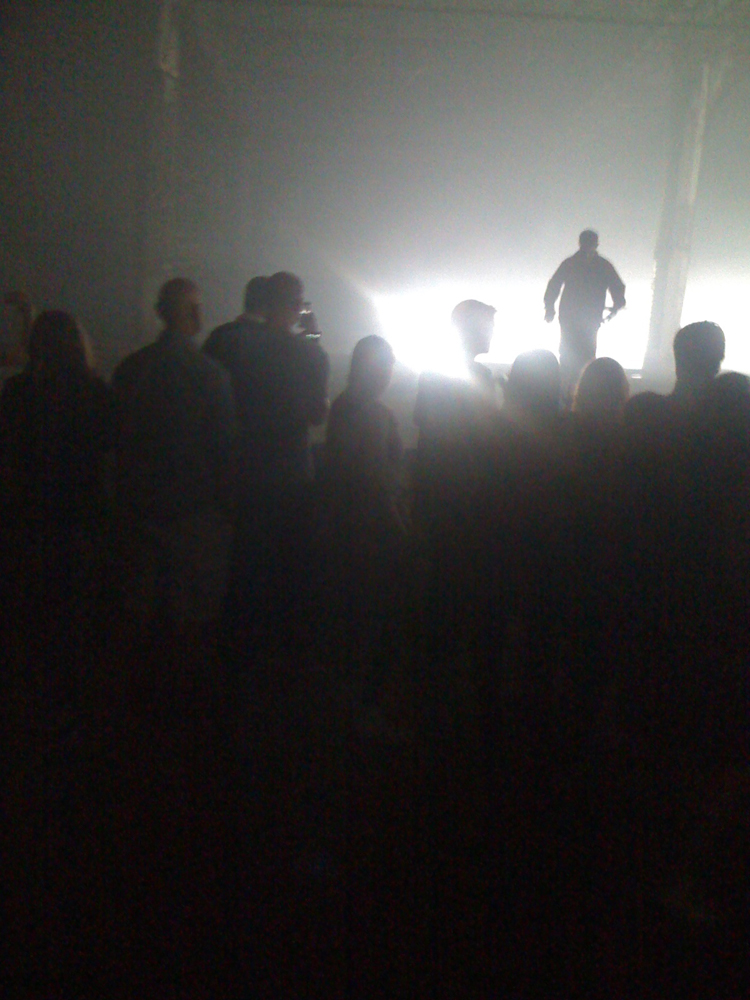
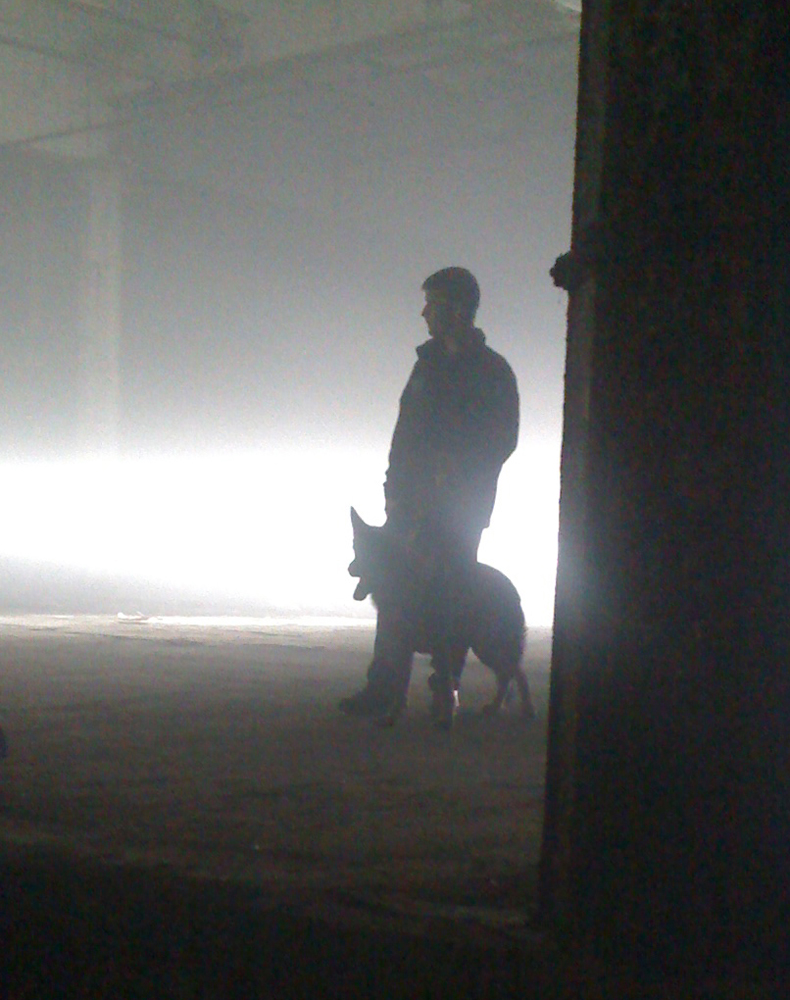
After a chilling look at the recent past and the nature of control and illusion the crowd is channeled through a subterranean world under intense spotlight to the ferocious barking of the guard’s dog.
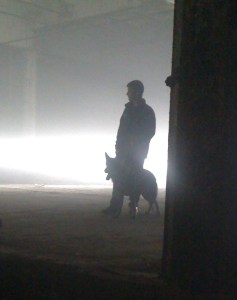
Mayfield Depot

Mayfield Depot

Despite the dystopian exit route we were left with the message that now it’s up to us to change the world.

Artist Maria Cristina Finucci is having a go.

There are huge patches of rubbish floating in seas around the world like islands and so to bring something tangible to the debate she has got the U.N. culture agency UNESCO  to grant the “Garbage Patch State” symbolic statehood. This brings them onto the world stage. They are a global problem.

These “garbage patches” are areas of high marine debris concentrated in the North Pacific Ocean, the exact size and content of which are hard to define.

The patches are mostly invisible to the naked eye as the debris – chiefly plastic – breaks down over time, without ever fully disappearing.

In Venice there was an immersive installation using plastic bottle tops to highlight the problem.

Maria Cristina Finucci 'Garbage Patch State'

Maria Cristina Finucci ‘Garbage Patch State’

Every time you throw away a bottle top you are part of the problem.

She is hoping to give direction for good behaviour rather than an apocalyptic message.

In the Emergency Pavilion, a multinational event took on the topic ‘Rebuilding Utopia.’

40 years have gone by without us realizing it.

This exhibition will be a game, what happened during
the last forty years? What worked, what didn’t, what
appeared and what disappeared? When did the world
begin to change? Was it 1973 or 1989? When did
“imagination in power” die, was it in ‘68 or 2012?
Or was it on the first of January, 2013?
Jota Castro ' Here comes the rain again'

Jota Castro ‘ Here comes the rain again’

It didn’t really offer much optimism for a better world it felt full of sadness and lost hopes.

However, these artists from all parts of the world are thinking about a better world, and how art can contribute to imagining such a world.
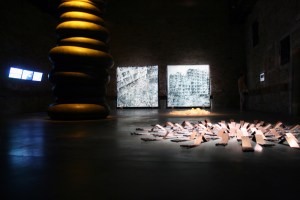
Emergency Pavilion - Rebuilding Utopia

Emergency Pavilion – Rebuilding Utopia

During the early 60’s when Pauline Boty was studying at the RCA and involved in the anti capiltalist students movements of the time she followed the ideas of the german political theorist Herbert Marcuse.

A year after her death he gave a speech titled “The End of Utopia”. Marcuse said he didn’t mean that utopia was impossible but now we had the technical and scientific means to achieve what had only once been dreamed of, utopia was a real possibility no longer an imagined idea. Poverty and hunger could be solved.

I’m not sure that anyone any longer believes utopia is a real possibility certainly not on a global scale. Even Jesus said there will be poor always.

We have to try though.

Adam Curtis encourages us to look to the future and to think about what sort of a world we want to live in. Our origins are important too.
How much changes how much we learn is debatable.
Pauline Boty is posthumously going to have retrospective of her paintings this year – the show is to be called Pauline Boty: Pop artist and Woman
I suppose that has to be taken in the context of history.
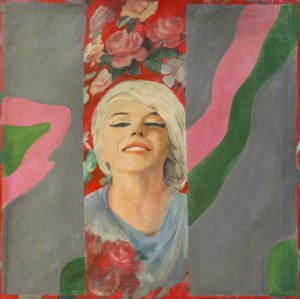
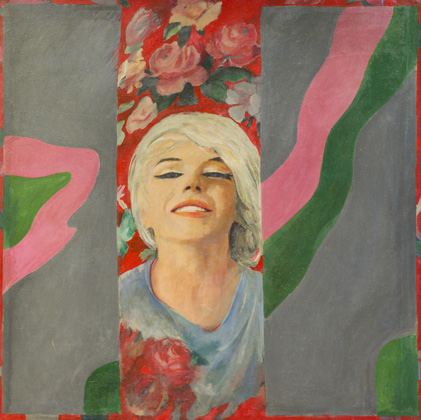
Pauline Boty 'Colour Her Gone'

Pauline Boty ‘Colour Her Gone’
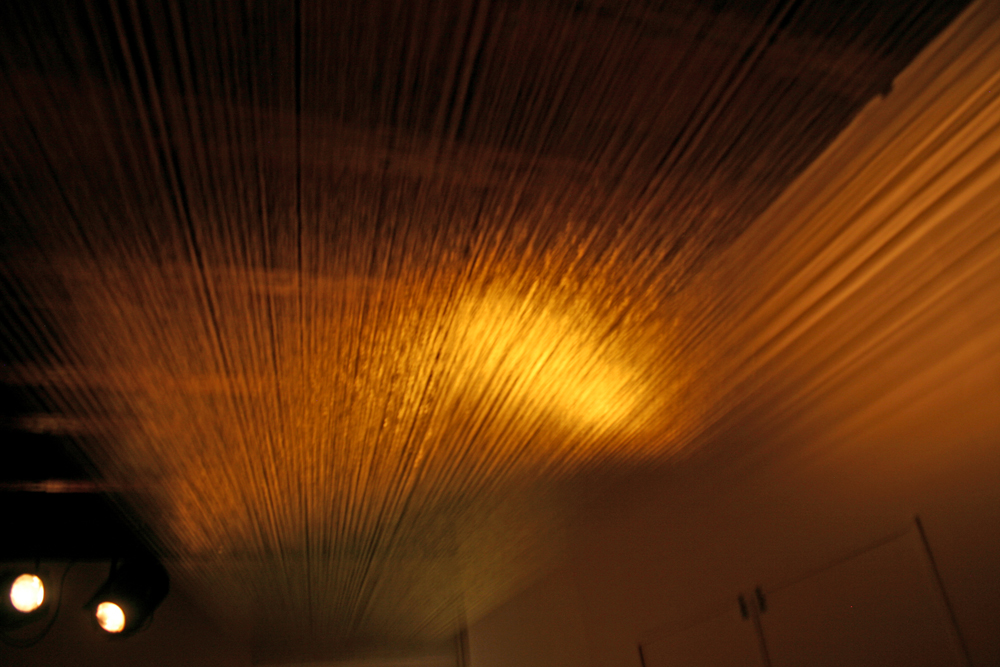
Thinking about being a part of something, how we view and treat others.

Inclusion and exclusion are themes here.

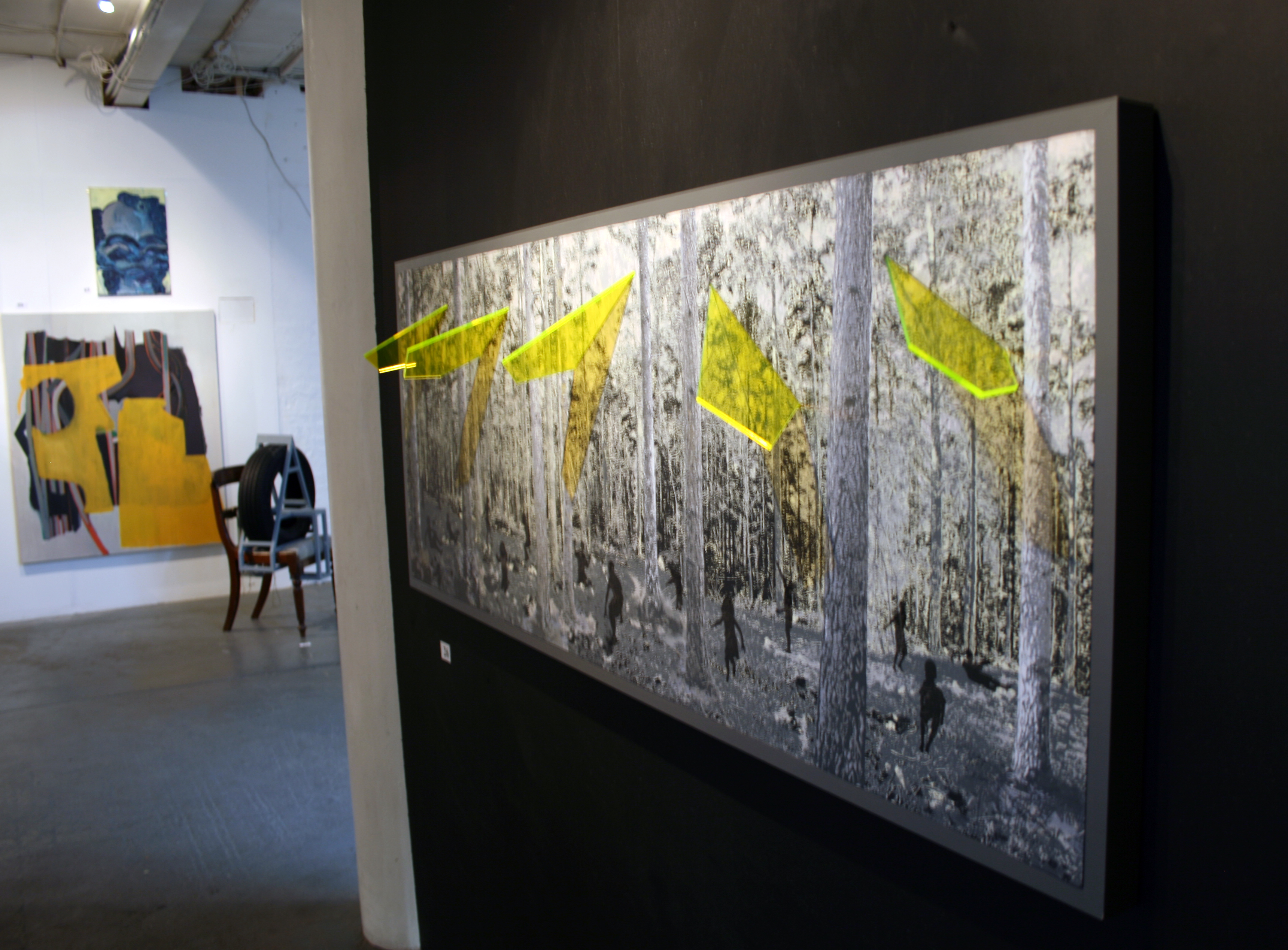
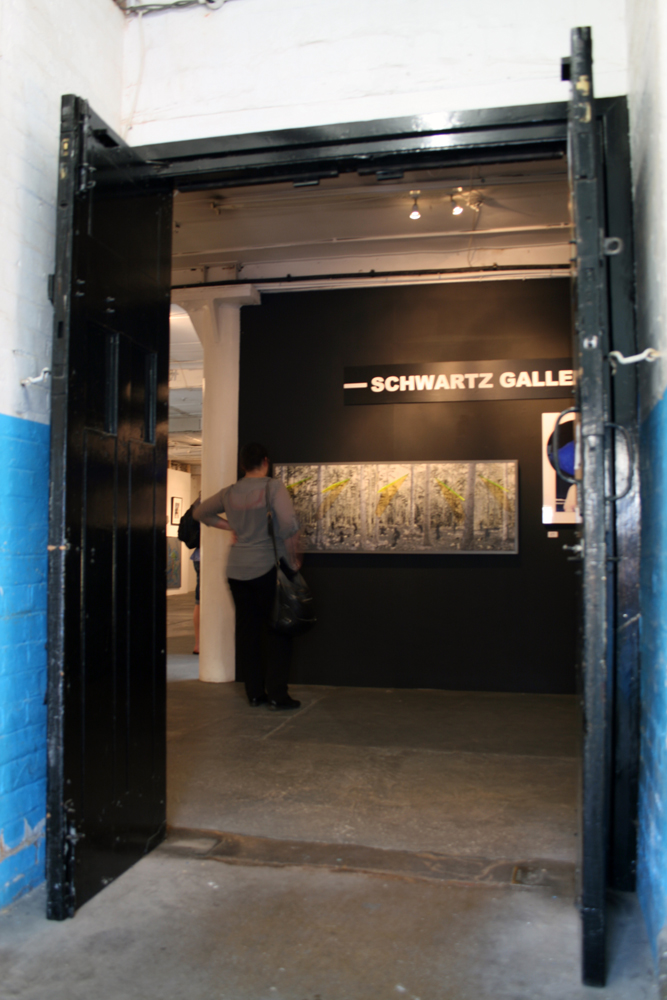
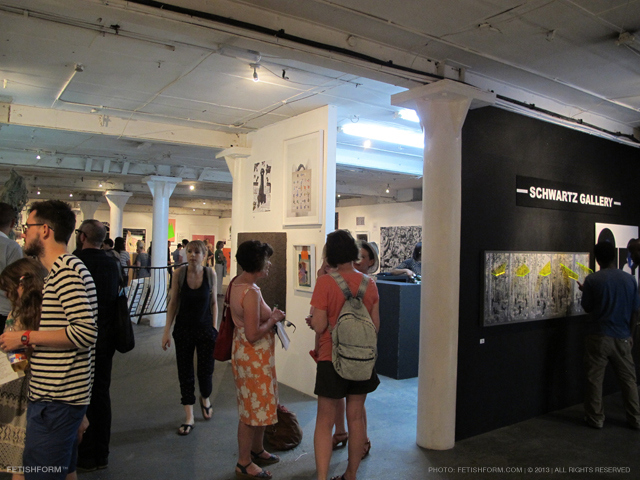
Starting with the exciting news that ‘Incidence’ had been selected to be a part of the HOT-ONE-HUNDRED show at Schwartz Gallery.

IMG_7571

Despite the fact that the gallery quite clearly states the show title is an ironic comment on the trend for power lists to create hype, it does as they also say, perpetuate the phenomenon.

It was a nice buzz to be part of.

1308 Hot One Hundred

‘Incidence’ had been hung at the entrance. I was really pleased with how it looked, hung low against black and the shadows were working.

With 100 artists it could seem packed in but it worked well and with every circuit of the space something new would catch your eye.

1308 Hot One Hundred 2

It was great to find Hannah Williamson also had a piece selected.

Hannah Williamson 'MM Dreaming'

Hannah Williamson ‘MM Dreaming’

Another favourite was a painting by Simone Fontana Reis.

Simone Fontana Reis 'Water Inside the Room'

Simone Fontana Reis ‘Water Inside the Room’

Jeremy Deller representing Britain at the Venice Biennale with his ‘English Magic’ exhibition was very popular.

Jeremy Deller English Magic

Jeremy Deller English Magic

He is not afraid to appeal to the masses and to celebrate ordinary people.

It was amazing he managed to pack so much into this pavilion.

Class status symbols, tax injustices, ancient history, Russian oligarch’s, warfare, media corruption, escapism and the idiosyncrasies of the public.
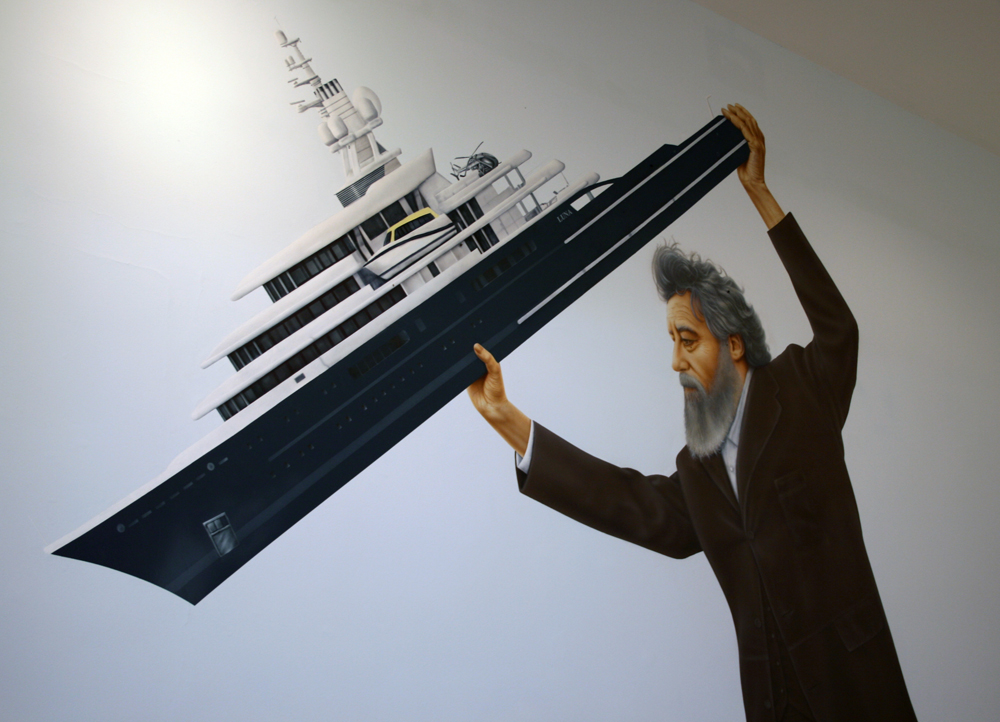
He used the socialist beliefs of William Morris as a motif in opposition to the arrogance and greed of Roman Abramovich who selfishly moored his yacht at the 2011 Biennale restricting others access to the site.

Morris comes back from his grave to cast the oligarch’s luxuary yacht asunder.

Jeremy Deller English Magic

Jeremy Deller English Magic

The status symbol of the Range Rover suffers a similar ignoble fate, being crushed to a cube at the scrapyard, and also being subjected to a hen harrier taking its revenge for a pair of these extremely rare birds being shot at Sandringham with all evidence pointing to Prince Harry and his friend.

Jeremy Deller English Magic

Jeremy Deller English Magic

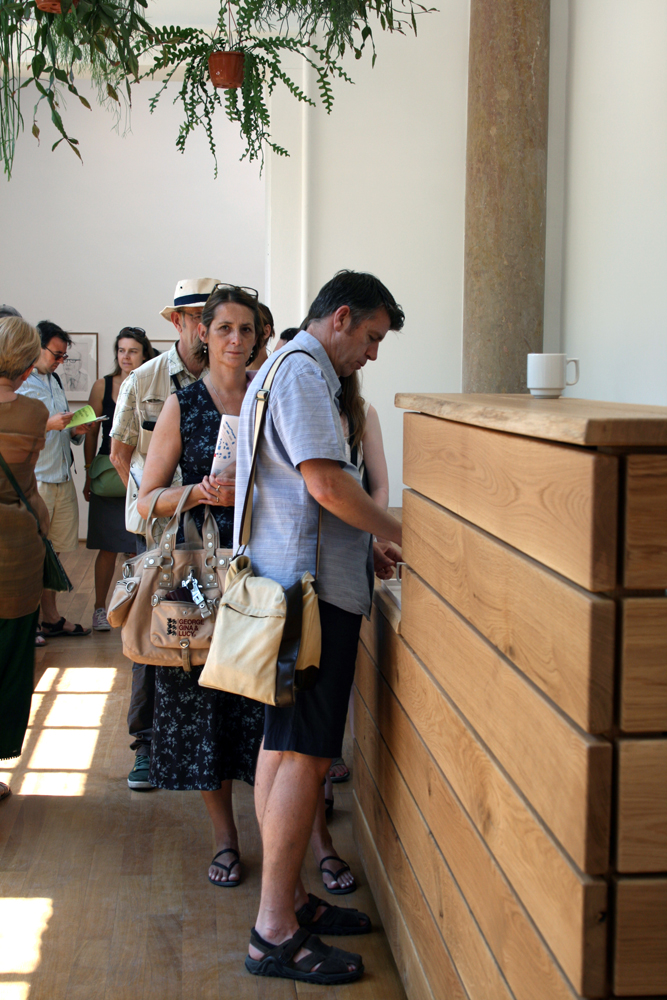
Tea is free for all and an orderly queue forms.

Jeremy Deller English Magic

Jeremy Deller English Magic

A diverse picture of England is presented through film in “English Magic” and is reflected in the accompanying soundtrack; that draws on three episodes in UK music history. Recorded at the iconic Abbey Road studios in London, the South London The Melodians Steel Orchestra were asked to interpret Vaughan Williams’ ‘Symphony in D minor’, UK acid house track “Voodoo Ray” by A Guy Called Gerald and David Bowie’s 1971 pop refrain “The Man Who Sold The World” all songs from different eras and generations but all products of British culture. Listen here.

Birds of prey swoop. swivel and focus their eyes on us,  the public are unleashed on a bouncy Stone Henge, and a ceremonial procession with banners of all trades marches through the city.

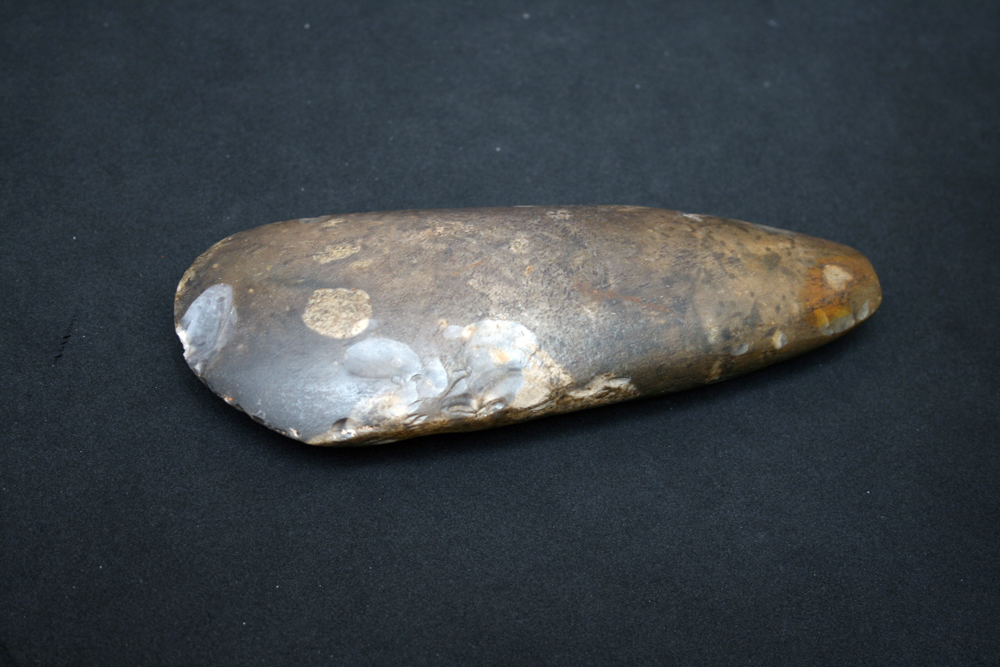
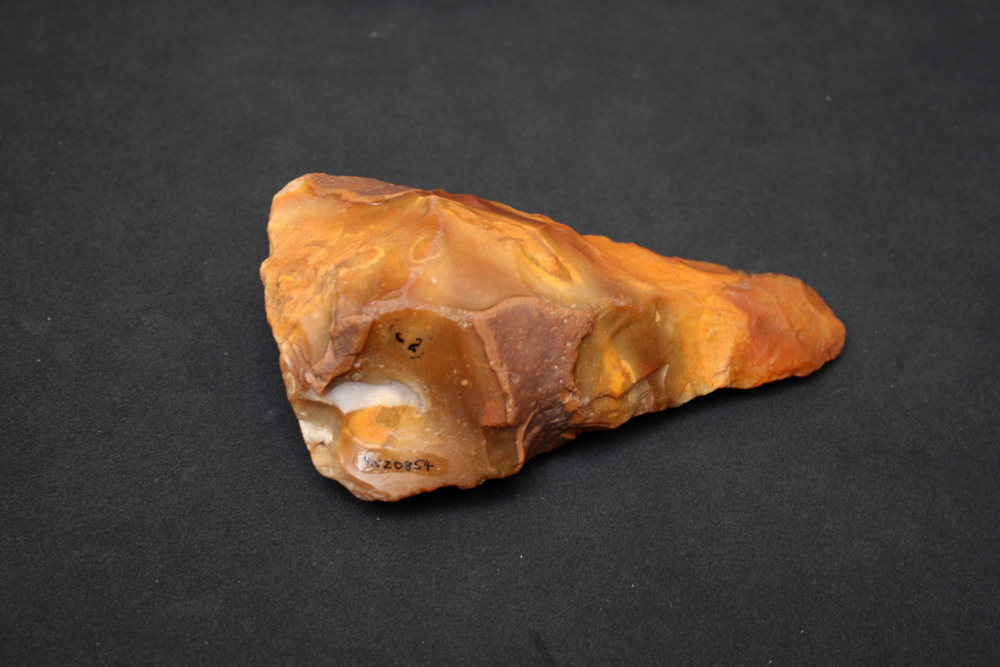
We were able to handle a 6,000 year old and 250,000 year old hand axe, to feel the weight and balance and contemplate who spent the 100 hours or so chipping this stone into shape.

Jeremy Deller English Magic

Jeremy Deller English Magic

It is believed these axes were for ceremonial use, cast into the Thames as offerings to a god which could signify an ancient sense of community and early religion.

Jeremy Deller English Magic

Jeremy Deller English Magic

Much of this exhibition is about social justice all woven together with cultural icons, and the British public.

Photos taken throughout Britain on days when David Bowie conducting his 1972 tour map out a country of economic depression, industrial action and IRA bombings in contrast to the colourful escapism that Bowie offered.

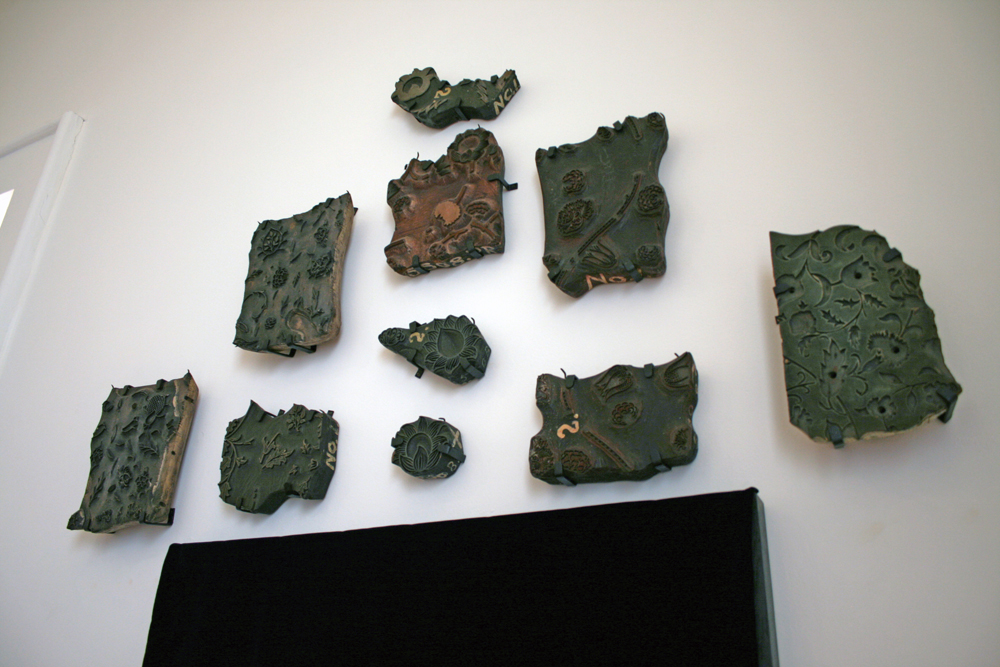
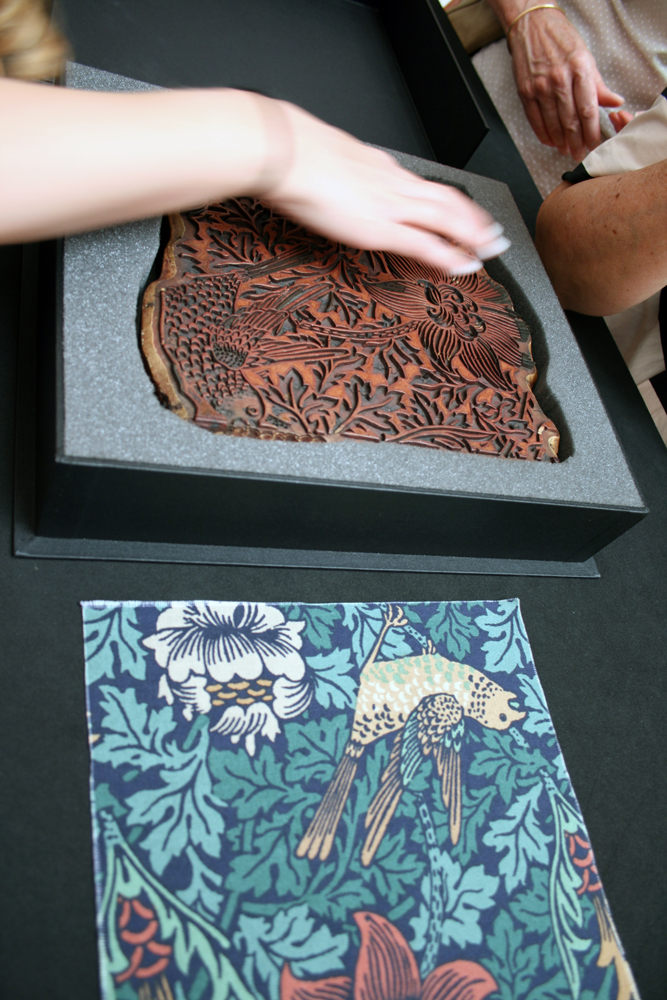
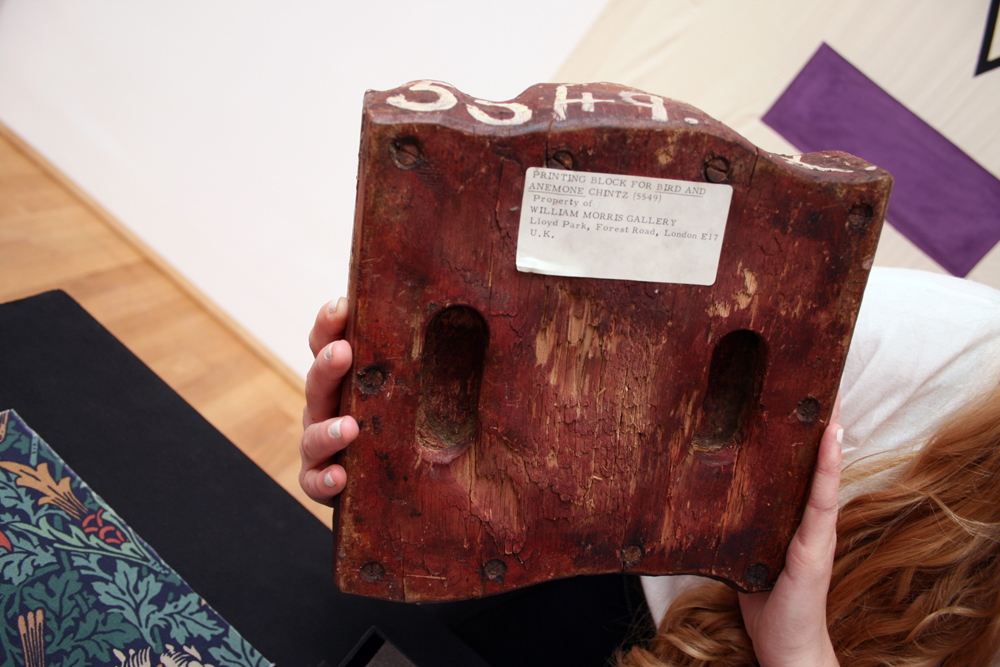
Not only are William Morris’s beliefs acknowledged but his beautiful woodblocks and sample prints are on show.

Jeremy Deller English Magic

Jeremy Deller English Magic

There is a hands on opportunity

Jeremy Deller English Magic

Jeremy Deller English Magic

Only allowed out for 2 hours a day due to the humidity in Venice we were lucky to be able to get up so close and see the detail and craftsmanship.

Jeremy Deller English Magic

Jeremy Deller English Magic

Definitely came out smiling and proud.

British Pavilion

British Pavilion

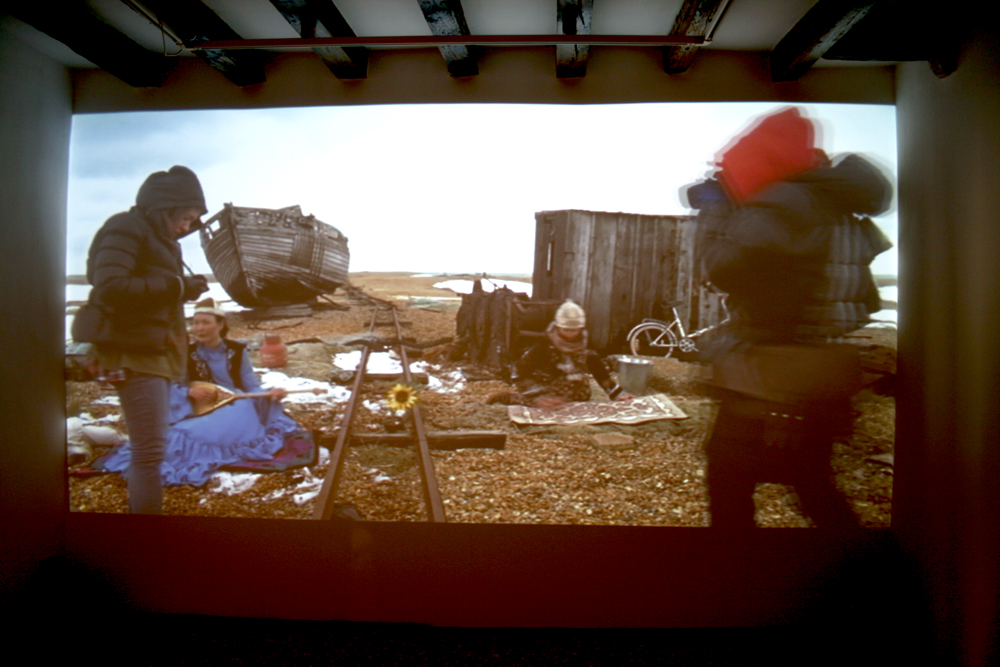
The Central Asian Pavilion explored ideas of community and voyeurism. Cultural boundaries and social justice.

The title of the show was WINTER – to describe a cultural climate in which public discourse is frozen but also one that offers the potential to develop into spring.

The yurt is usually a social structure but here it is made into a transitory space for an isolated journey.

Kamilla Kurmanbekova & Erlan Tuyakov 'The Way'

Kamilla Kurmanbekova & Erlan Tuyakov ‘The Way’

The role of the contemporary female and regional identity are explored in the video work by Aza Shade.

Aza Shade 'The Disappearing City' video still

Aza Shade ‘The Disappearing City’ video still

A mother stages a traditional environment specifically to sell to tourists in search of exoticism while the daughter expresses her frustration at being held in stasis and battles to trade her indigenous clothes for short western styles.

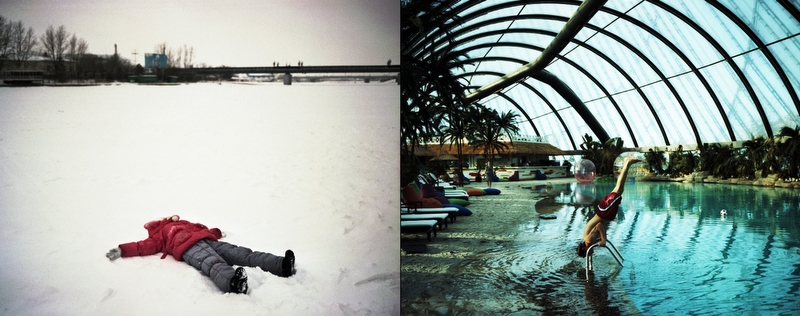
The extraordinary development of Astana the new capital of Kazakhstan built in 1997 the second coldest capital in the world is captured in Ikuru Kuwajima’s photographs.

Ikuru Kuwajima Astana Winter Urbanscapes

Ikuru Kuwajima Astana Winter Urbanscapes

Showing the stark contrast of the icy steppe with the tropically themed resorts, recreational facilities and opulent monumental government buildings these Winter Urbanscapes reveal a government with a strong man over nature statement and a lot of oil.

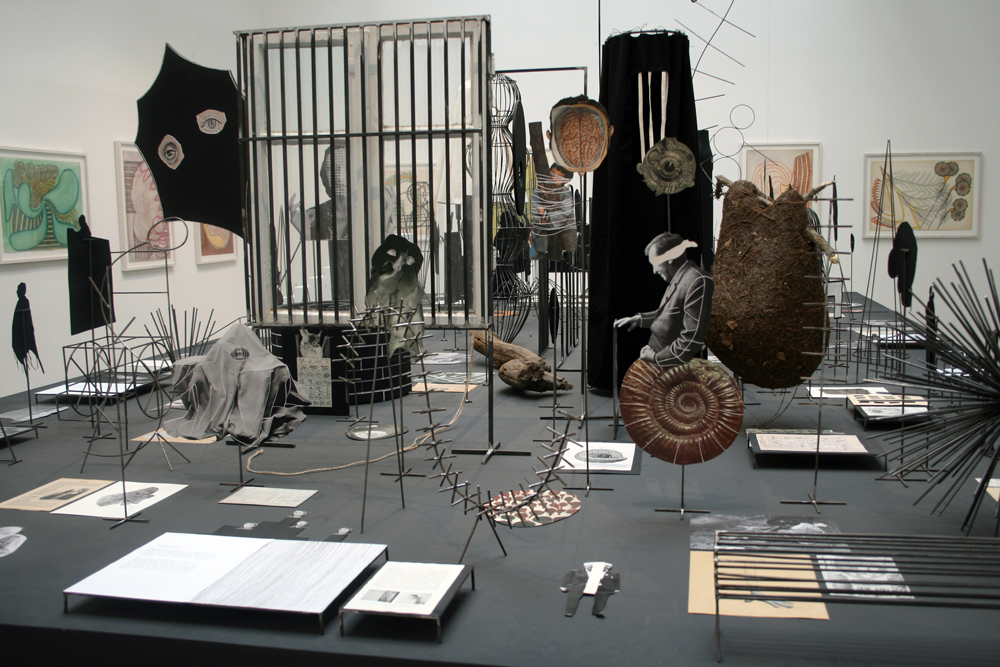
Eva Kotatkova looks at institutions and their effect on social behaviour. The nature of a country’s prisons, schools and mental health facilities are explored in her work.

Eva Kotatkova 'Asylum'

Eva Kotatkova ‘Asylum’

In ‘Asylum’ she collaborated with psychiatric patients to look at the social hierarchies of people who live outside the normal social order.

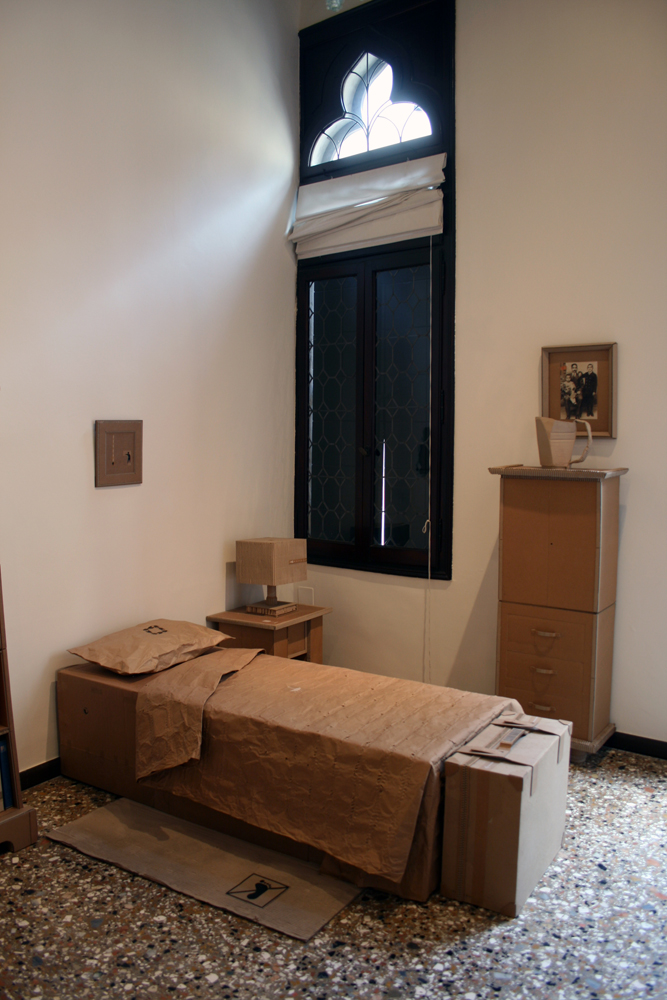
In the Iraq Pavilion the artists are attempting to establish some idea of normality through performing simple everyday tasks.

Welcome To Iraq

Welcome To Iraq

A determination to make positive use of what they have, and to begin a free cultural exchange with the rest of the world. There is a moving film of young alcohol smugglers risking death on the borders trying to make a living in an extreme and harsh environment while in the kitchen tea is offered.

Maxine Peake’s timely reading of Shelley’s political poem The Masque of Anarchy at the Manchester International Festival was beautiful and passionate.

Stand ye calm and resolute,

Like a forest close and mute,

With folded arms and looks which are

Weapons of unvanquished war.

Maxine Peake The Masque of Anarchy

Maxine Peake The Masque of Anarchy

On 16th August 1819  a peaceful rally of 60,000 pro-democracy reformers, men, women and children, was attacked by armed cavalry resulting in 15 deaths and over 600 injuries.

This was the Peterloo Massacre described in Shelley’s poem that shocked the nation.

As Sarah Frankcom the director of this recital says ‘It continues to be such an uncompromising reminder that collectively, even in the most difficult of times, we have the power to change the world in which we live.’

Rise like Lions after slumber

In unvanquishable number,

Shake your chains to earth like dew

Which in sleep had fallen on you-

Ye are many — they are few.

My visit to the Venice Biennale was marked by my receiving news that I had a place at the Royal College of Art for the Autumn.  A great start to a very inspiring few days.

It does feel a bit like I am going to be launched into space. Exciting and an amazing opportunity but also not knowing what to expect with anxieties that I will be lost or unable to cope.

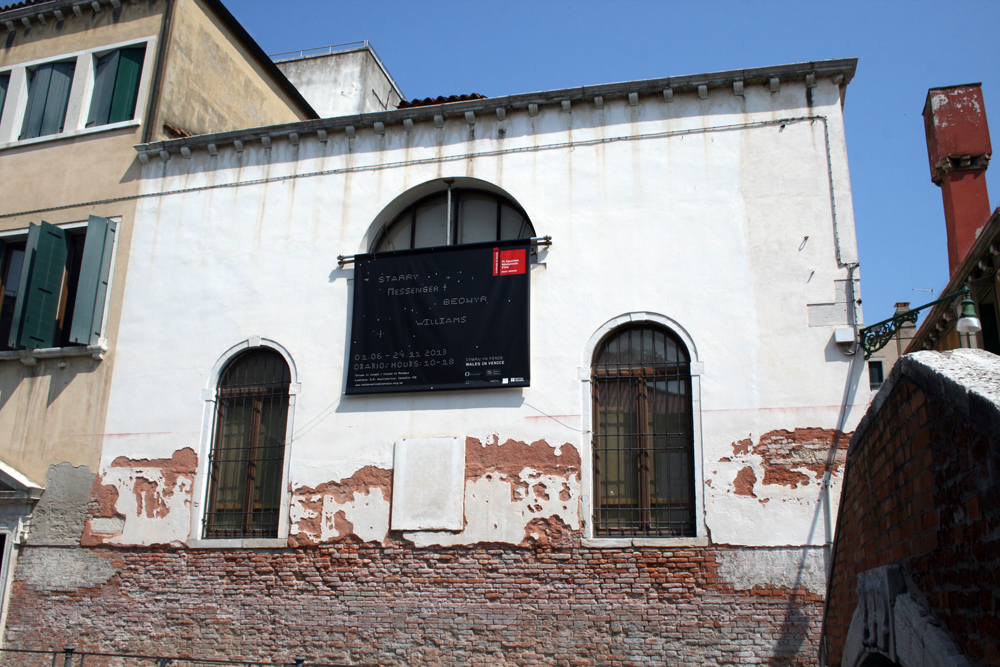
Bedwyr Williams ‘The Starry Messenger’ and Sarah Sze’s Triple Point both explore feelings of place within the universe. Very apt for my frame of mind.

Wales in Venice

Wales in Venice

‘The Starry Messenger’ explores the relationships between stargazing and the individual, the cosmos, and the role of the amateur in a professional world.

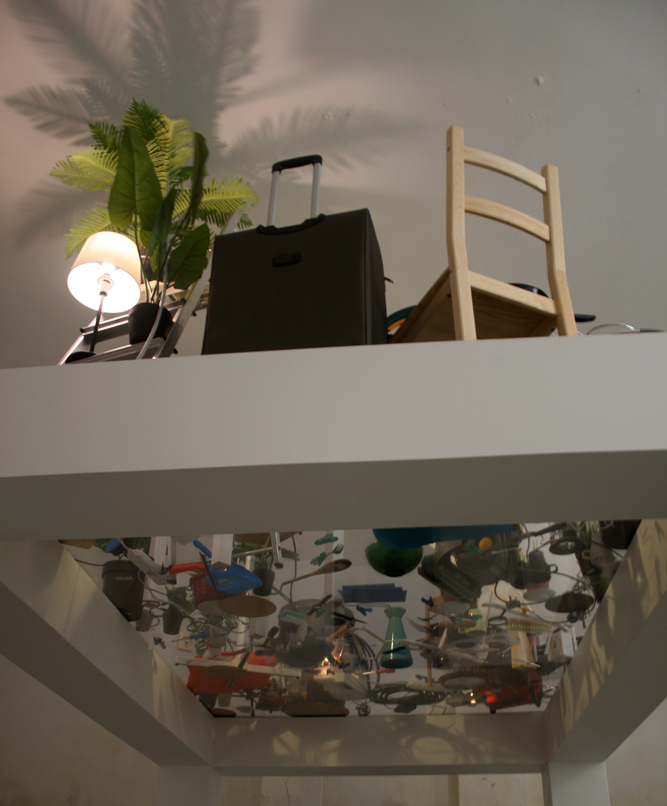
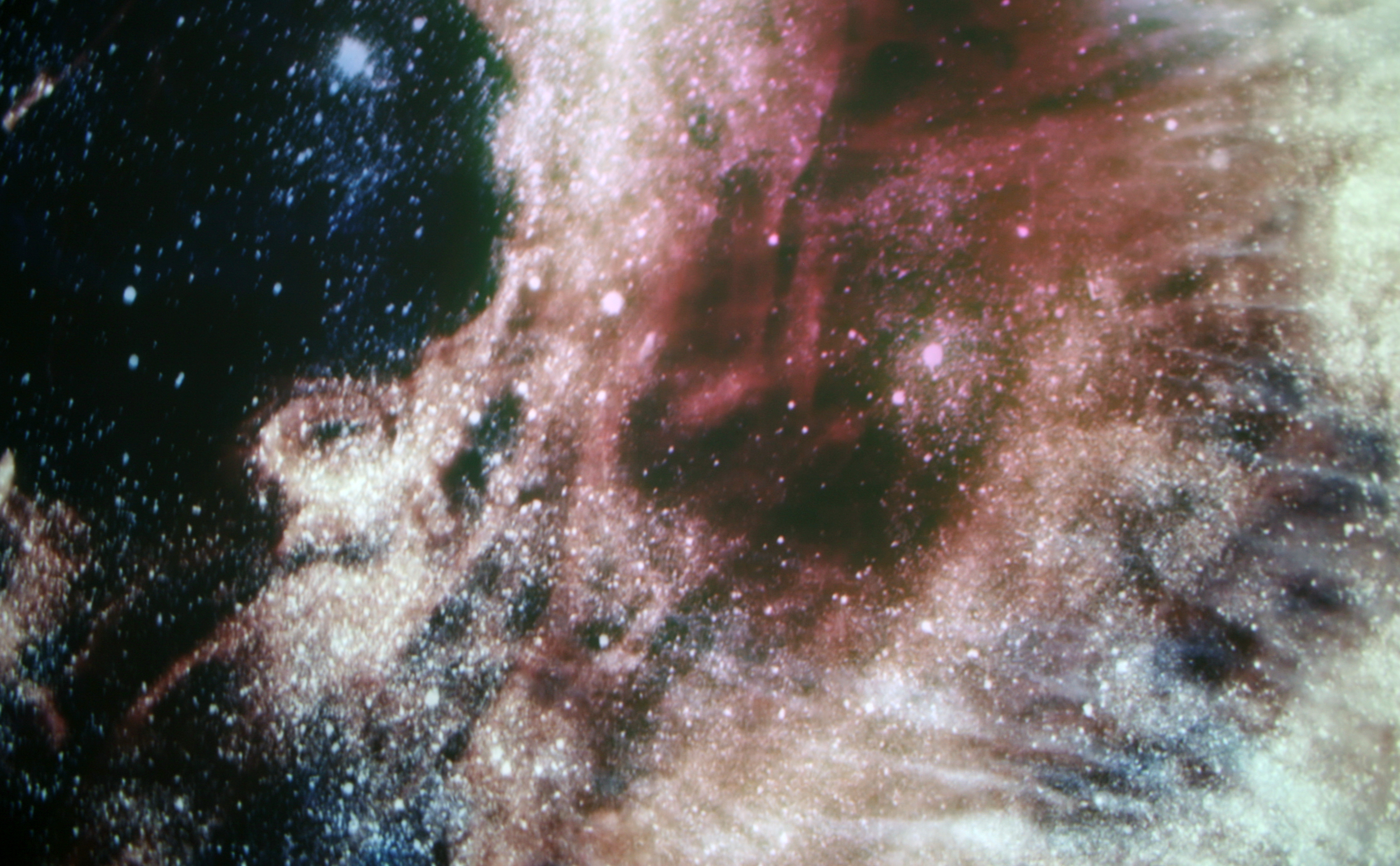
Inside the former church and convent in a darkened room there is a small observatory with a door ajar through which we can see the starry cosmos. There is the sound of a man weeping, just like Kevin does when he thinks about the vastness of space and his own insignificance. Moving through the installation you walk under glass with household objects placed on its surface above your head which I took as a possible reference to Leonardo Da Vinci’s drawing ‘A cloudburst of material possessions’. Maybe it is space debris.

Bedwyr Williams The Starry Messenger

Bedwyr Williams The Starry Messenger

There is a film with a Mighty Boosh style protagonist who represents a character trapped within a mosaic mural.

Bedwyr Williams The Starry Messenger

Bedwyr Williams The Starry Messenger

From the geological formation of stone out of oozing mud through its journey and subsequent use in a mural to the demolition of the building and its return to the earth. From looking out at the stars through a telescope to ‘staring into space’ the outer and inner worlds collide in a wonderfully amusing narrative encompassing the life the universe and everything dialogue.
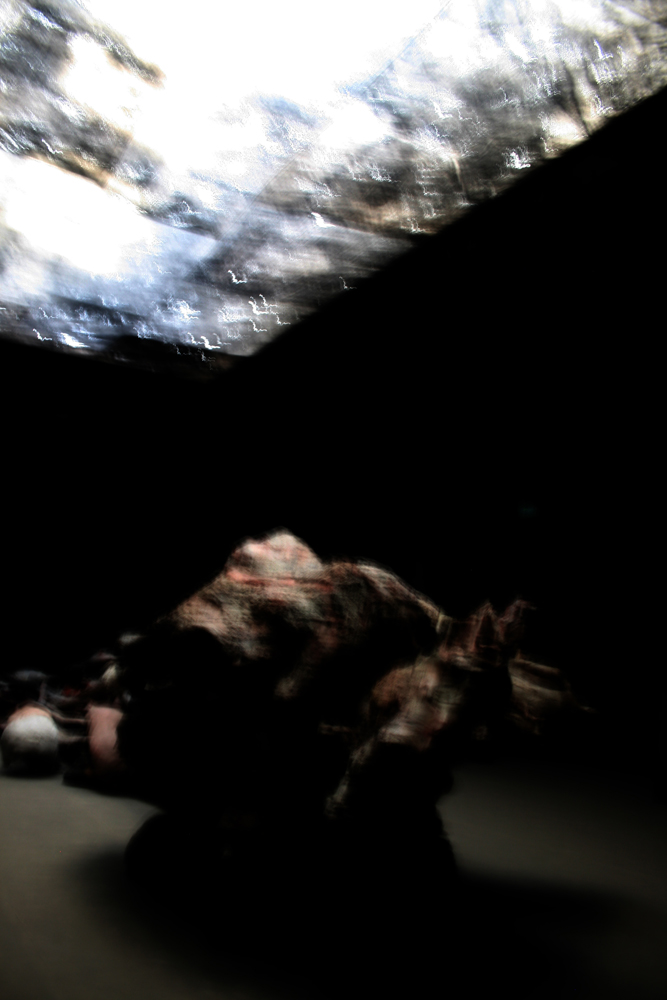
Bedwyr Williams The Starry Messenger

Bedwyr Williams The Starry Messenger

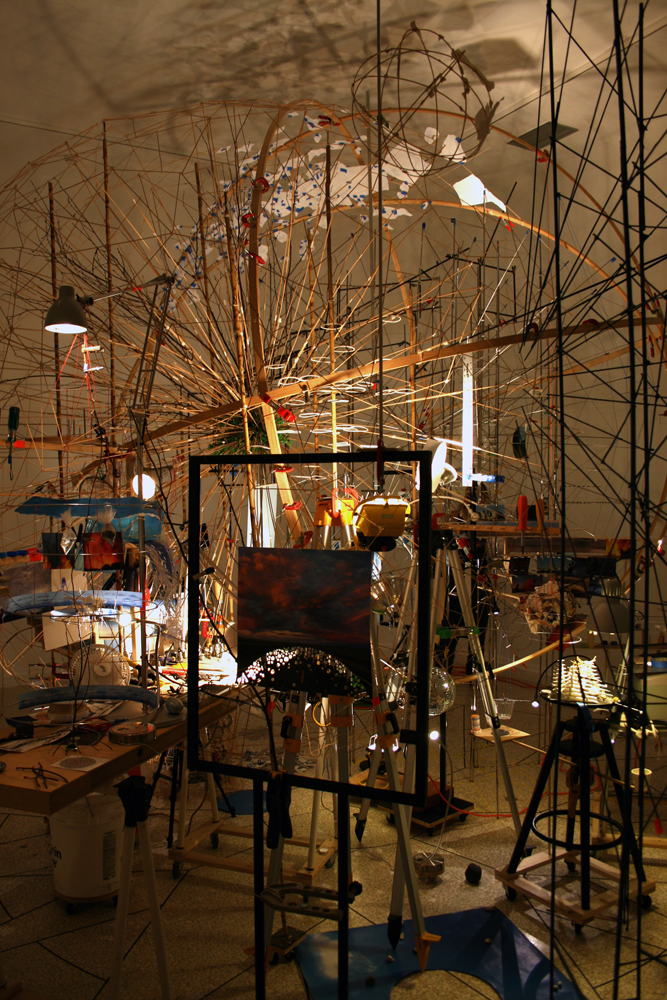
Sarah Sze explores the desire to locate our place within a disorienting world.

Sarah Sze Triple Ponit

Sarah Sze Triple Point

Her fragile sculptures echo the balance and chaos of the world around us.

Sarah Sze Triple Point

Sarah Sze Triple Point

They appear to spin or be in the process of expansion, beautifully mysterious like the working of the atom or the universe they are full of wonder.

Sarah Sze Triple Point

Sarah Sze Triple Point

Playing with pattern, order and taxonomy she creates a laboratory busy in its own pursuits which makes us feel we are close to understanding something great.

Sarah Sze Triple Point

Sarah Sze Triple Point

I was excited to see she had used moss a lot throughout this installation, even turning its image into wallpaper.

Sarah Sze Triple Point

Sarah Sze Triple Point

Triple Point refers to the phase when gas, liquid and solid form of a substance are all in equilibrium, her use of natural forms keep our ideas grounded in our surroundings while drawing us into the mysteries of evolution.

The extraordinary collection of stones once owned by artist Roger Caillois were on display in the Central Pavillion.

Roger Caillois Stones

Roger Caillois Stones

Caillois believed that nature should be examined as something other than as the utilitarian force that Darwin purported and that aesthetics and the need for decoration should be considered integral to our understanding of the natural world.

Roger Caillois Stones

Roger Caillois Stones

He considered the beautiful patterns within ancient natural forms were a sort of cryptic ‘universal syntax’, a unifying aesthetic language.

Roger Caillois Stones

Roger Caillois Stones

He wanted to understand the mysteries of the subjective experience through its relationship to factual reality.

I find it fascinating trying to understand the aesthetic experience.

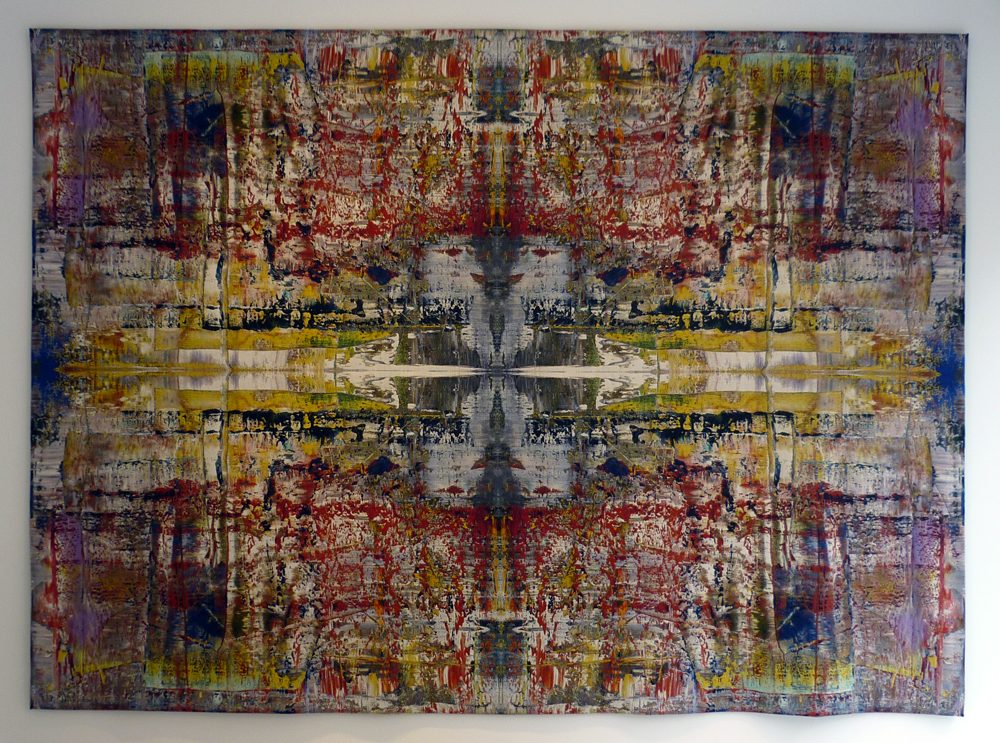
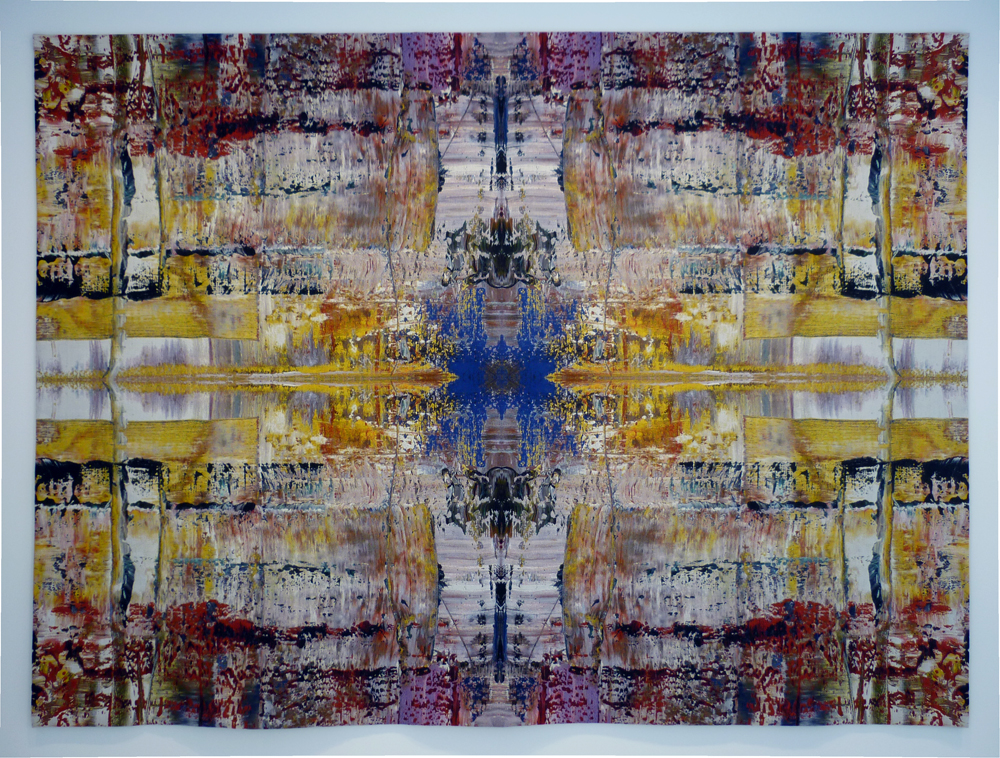
Gerhard Richter’s tapestries at Gagosian, Davies Street emanate pure aesthetic pleasure, colours and form coalesce erupt and fade.

These works are based on Abstract Painting (724-4) (1990). The visual effect of the tapestries is a Rorschach-like multiplying of the forms and colours of the original canvas.

Gerhard Richter

Gerhard Richter

Like entering a hypnotic state, like staring into space both literally and metaphorically you are transported to a place where it feels familiar and strange at the same time.

Gerhard Richter

Gerhard Richter

Venice was a perfect location to think about mysteries, the sacred and the wonders of the world.

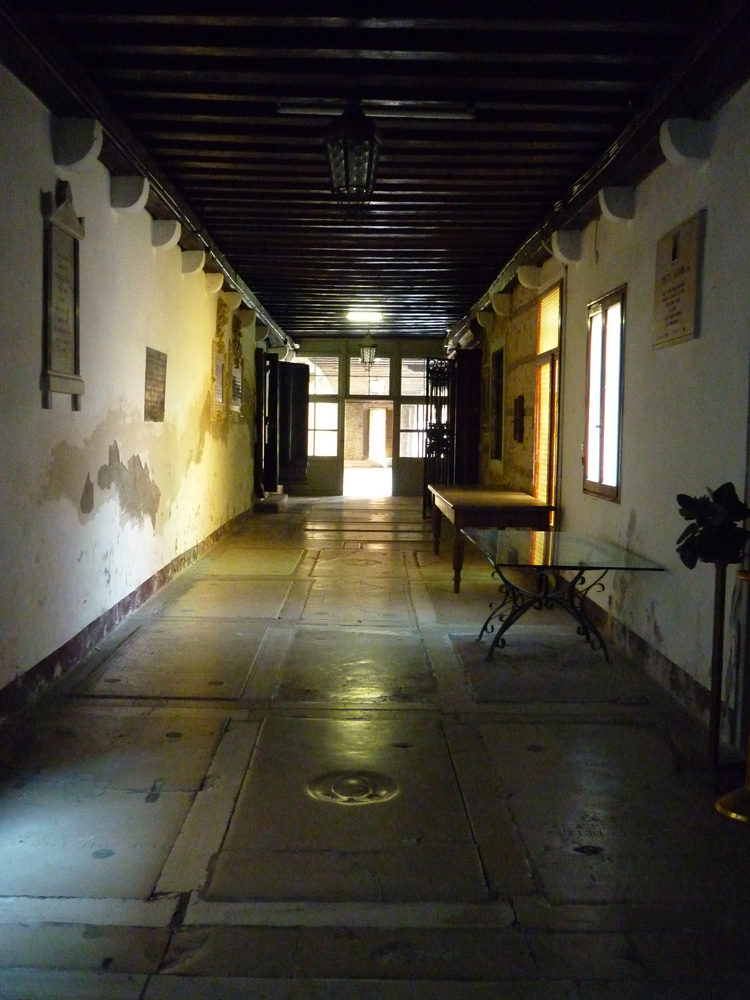
1307 Monastry

I have been getting up close to mud and matter and thinking about the makeup of the environment around us.

It’s hard to look at a cup say and imagine the structure of its atoms. To think about the solid and then the squishy and how it all works.

From thinking about the origins of things, like the first plants and forests. Evolution and yet how all matter existed from the beginning and it’s just a huge process of recycling.

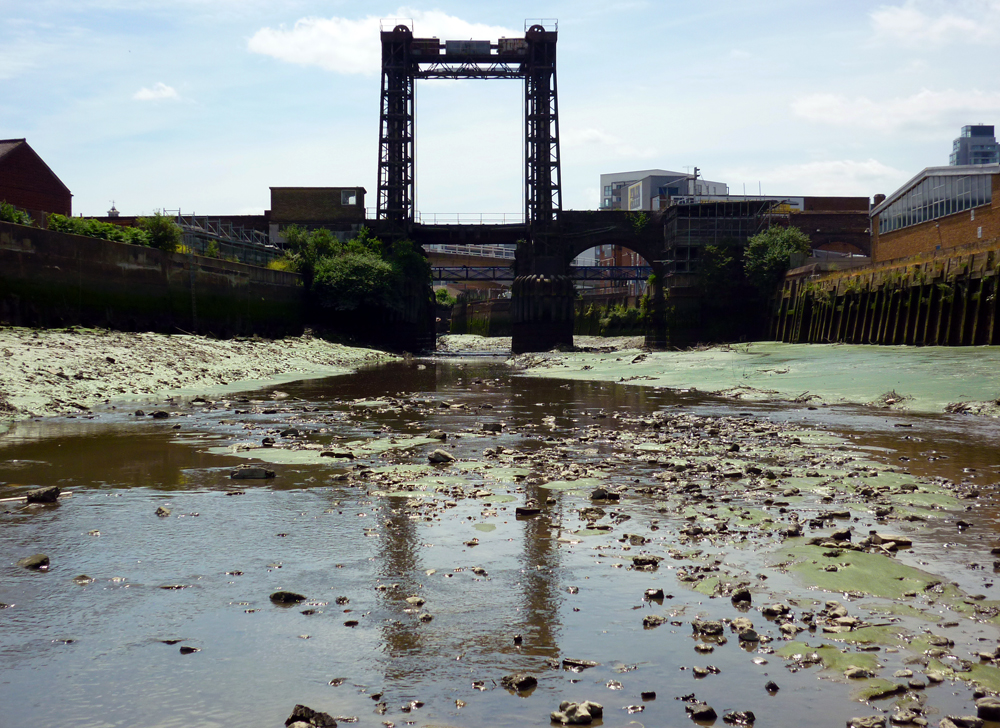
Deptford creek

Deptford creek

A great place for a new perspective on your surroundings is the Deptford Creekside Centre where you can join a low tide walk.

Low Tide Walk

Low Tide Walk

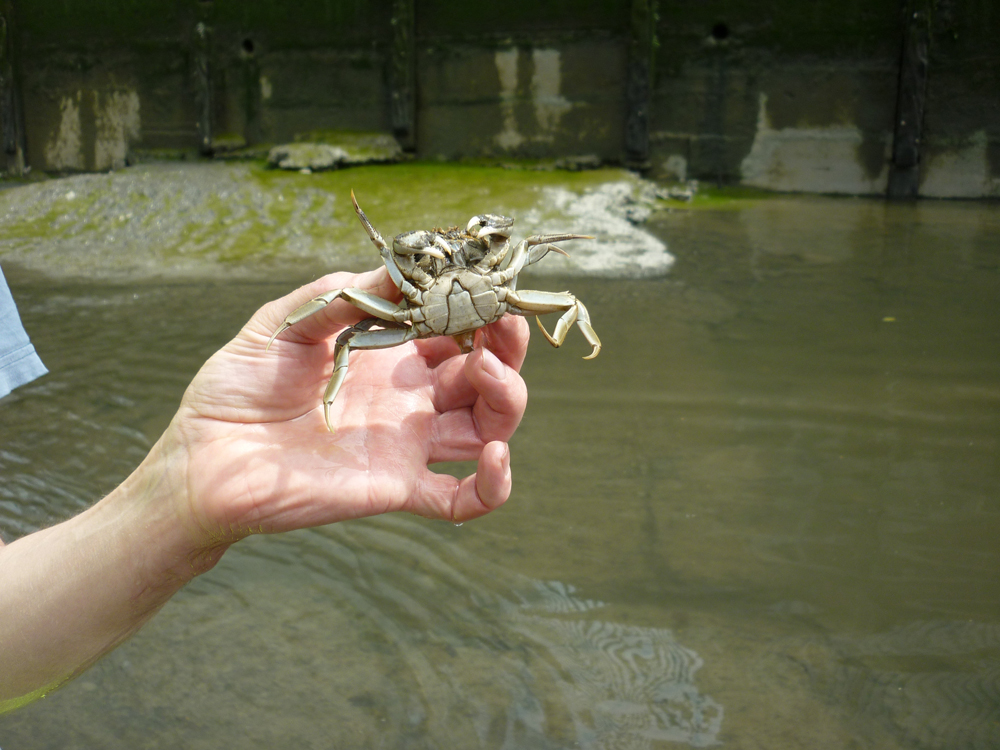
Equipped with thigh length waders and a long stick you are led down to the creek and given lots of insight into the history and wildlife of the creek.

Deptford Creek Crab

Deptford Creek Crab

It is stunningly beautiful and feels a real privilege to enter this world below the horizon.

Deptford Creek

Deptford Creek

The river has carved intricate sculptures into the wooden posts along the banks.

Deptford Creek

Deptford Creek

The look posts look totemic and hung with vibrant algae quite primordial.

Deptford Creek

Deptford Creek

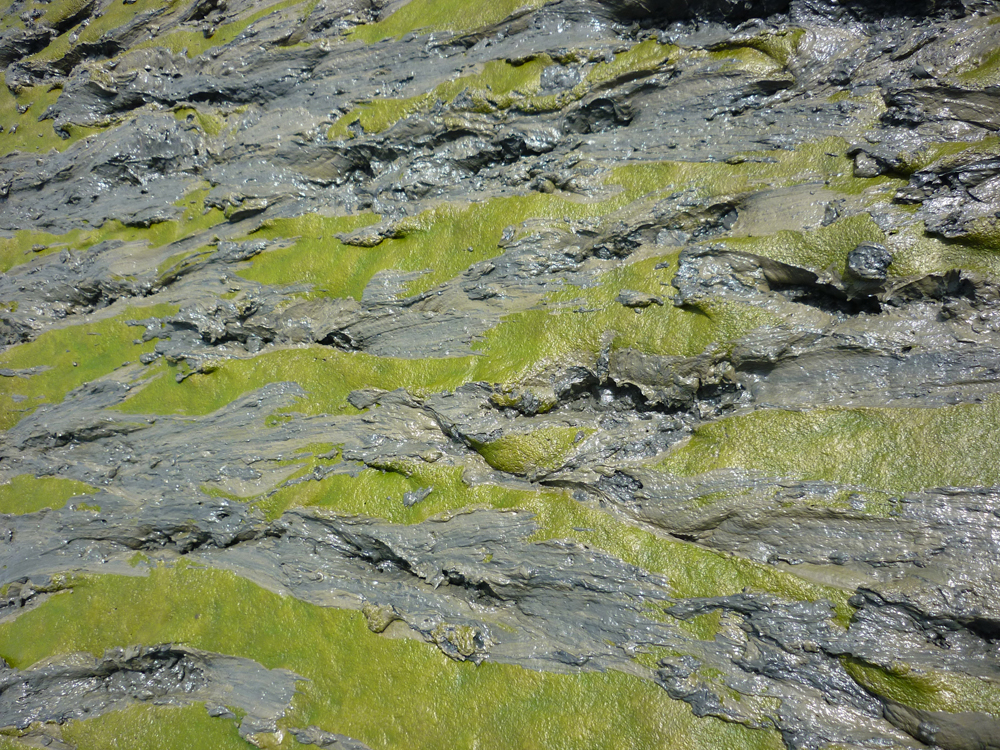
The creek bed is thick with mud and slime creating wonderful patterns as the water recedes.

Deptford Creek

Deptford Creek

There is the possibility of finding treasure swept along and revealed after each tide but you must ask if you want to take anything away. They have quite a collection of finds they like to add to at the discovery centre.

Deptford Creek

Deptford Creek

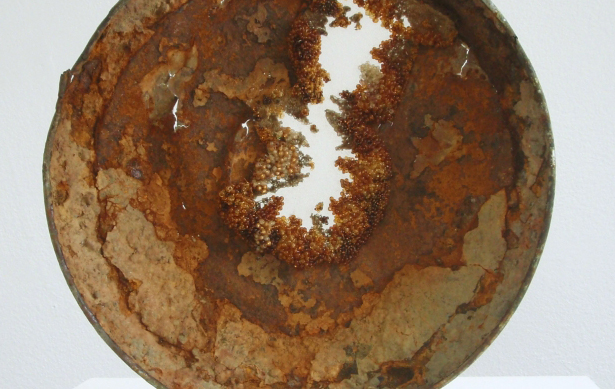
On a previous trip artist Lizzie Cannon had been lucky to find a wonderful rusty object which she has since embroidered with threads and beads to continue the growth of the rust giving the object a new organic dimension

Lizzie Cannon - Corrosion

Lizzie Cannon – Corrosion

A Matter of Substance exhibition and salon curated by Caroline Lambard and Elizabeth Murton at APT Gallery encouraged their audience to look beyond the surface of the material to the very structure of the crystals, atoms and particles that form them.

1307 A Matter of Substance

Catherine Jacobs beautiful photographs show tensions of surface sometimes broken by an indeterminate object that works as a disruption to the surface and our perceptions of what we are looking at.

Catherine Jacobs Uncertainties

Catherine Jacobs Uncertainties

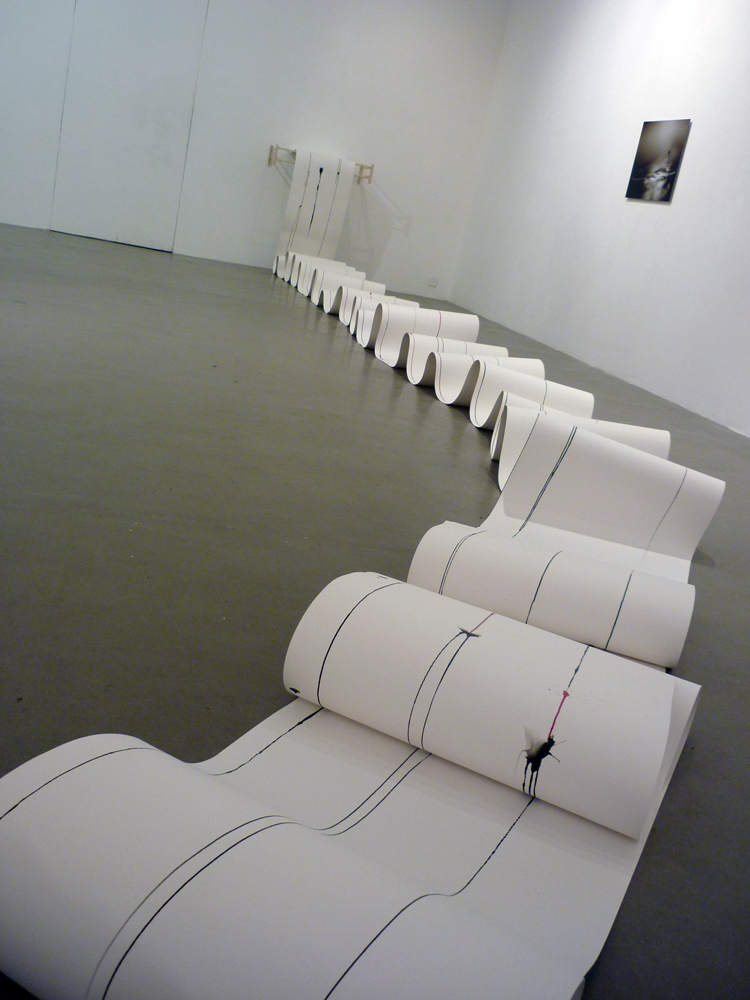
Elizabeth Murton’s scroll flows out across the floor in symbiosis with the marks upon it like a cascade of data presenting itself as a record of the inks journey.

Elizabeth Murton

Elizabeth Murton

Cool work for a hot day.

Phillip Hall-Patch

Phillip Hall-Patch / Caroline Lambard

There were salt crystals that sparkled like snow in magnified form like Icelandic landscapes and in salt block form eroded by a constant drip of water.

Phillip Hall-Patch Salt LIcks

Phillip Hall-Patch Salt LIcks

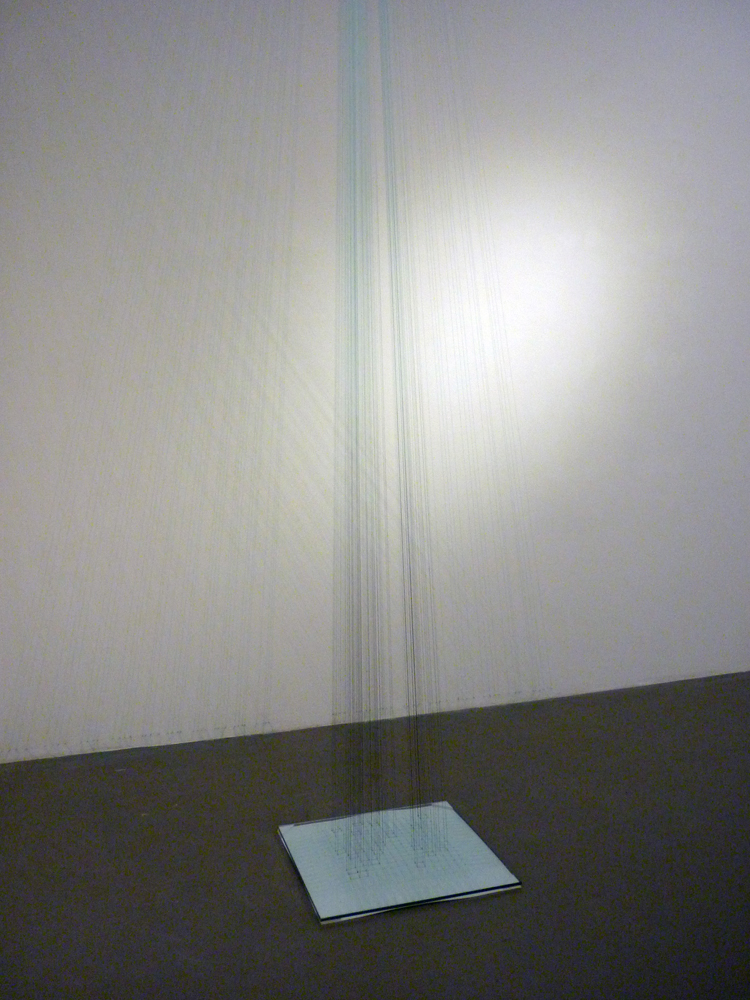
Caroline Lambard’s ethereal sculptures help to imagine 3D form from all perspectives through their delicate drawing in thread to delineate a space.

Caroline Lambard

Caroline Lambard

I have started on a new piece of work, the idea of an oasis, an escape, a view through to another place so it has been interesting to think about form and space.

A solid outer that hides a world inside.

1307 Oasis collagraph 1

It starts with the construction of a collagraph which I am slowly building up from cut card and carborundum.

1307 Oasis collagraph 2

Once made the idea will be to rip a section out to reveal an internal space.

Tumbling through time
1307 Tardis-in-Space

Space has been a bit of a theme in my recent excursions – in a sense of delineating a space architecturally as Charles Avery does in his precise drawings of an imagined world; in the exploration of space examined through Cristina De Middel’s photographs of ‘Afronauts’ which also play into ideas of sci-fi as does Jess Littlewood in her fictional landscapes; in attempting to make the unknowable palpable, Luci Eldrige has used radar imaging of Venus undertaken by NASA and translated it into richly coloured etchings. Then there is the space where the making takes place – the art institution.
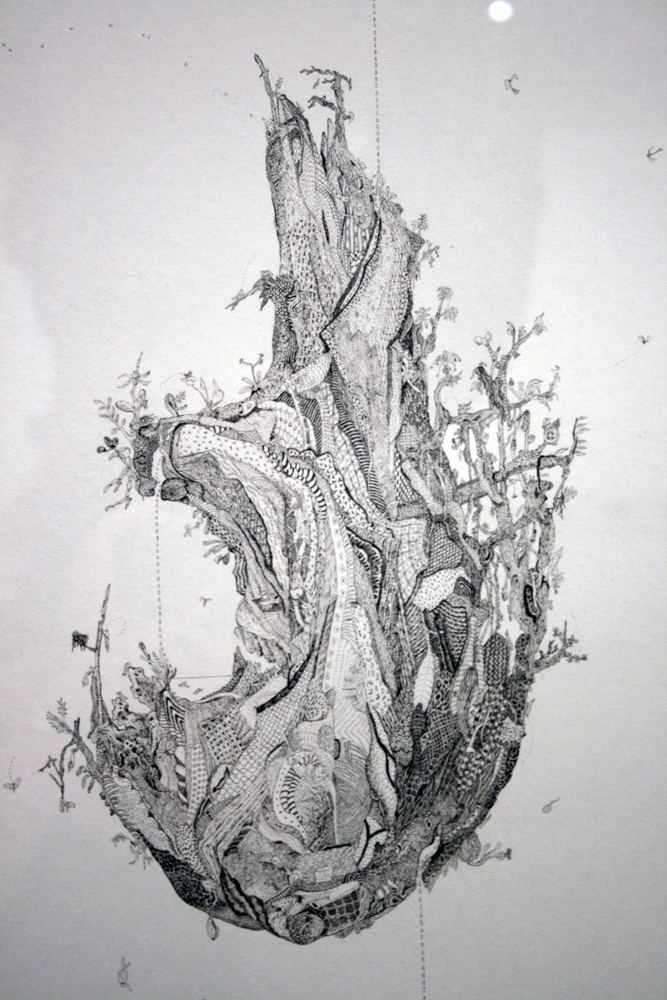
The RCA SHOW has come around again.

RCA SHOW 2013

RCA SHOW 2013

This year the experience was heightened by the possibility that I may one day get the chance to participate in the creative dialogue of this institution.

Look at that amazing space for making.

RCA printroom

RCA print room

Since my application and interview in March I have received some really positive feedback from Jo Stockham the head of the printmaking course.
I have been encouraged to apply again next year if a place doesn’t become available for me this year so I was keen to see what the current graduates were exhibiting and if I could see progression from the exhibition they had in spring at Café Gallery Projects.

A favourite was Luci Eldridge. Fascinated by the ‘invisible visions’ acquired through the use of science’s cybernetic eye, she is captivated by images of lands we cannot empirically experience.

Luci Eldrige - four colour photo etching

Luci Eldrige – four colour photo etching

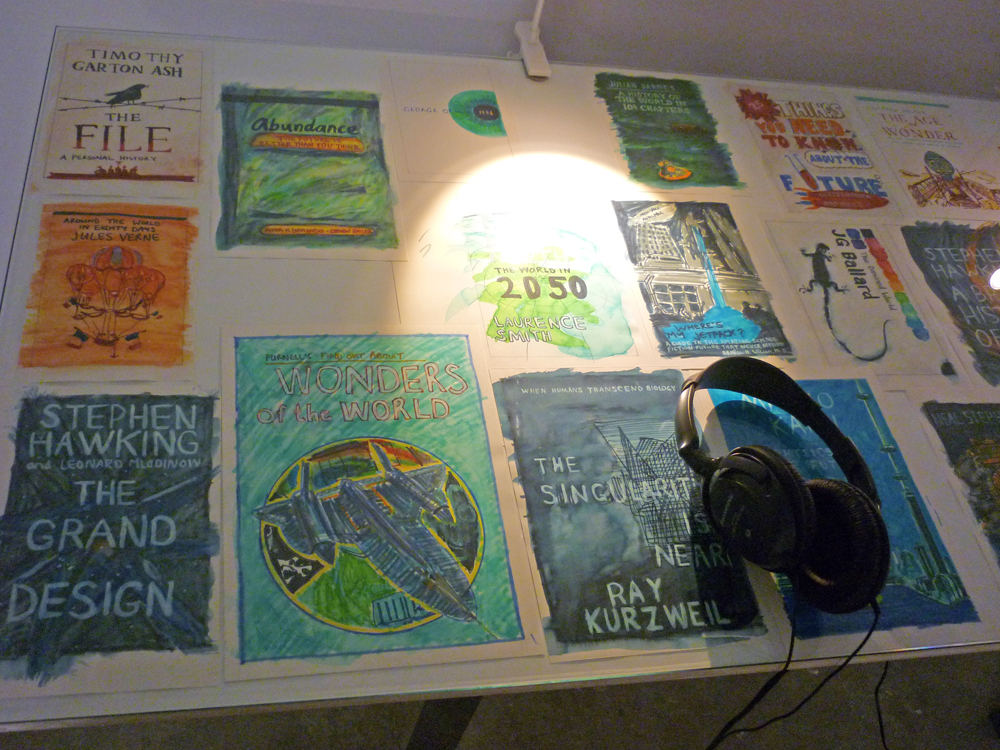
I also identified with the work of Jessica Wallis ‘The History of the End of the World’

Jessica Wallis - Book Cover Series

Jessica Wallis – Book Cover Series

Jessica Wallis - Formula for disaster DVD

Jessica Wallis – Formula for disaster DVD

Jessica Wallis - Formula for disaster dvd

Jessica Wallis – Formula for disaster dvd

I was intrigued by the films of Nicola Thomas – ‘Imitation’ and ‘ Dancing with Monk’ and her etched prints from The Look Series were captivating.

Nicola Thomas - Carole #3 etched print

Nicola Thomas – Carole #3
etched print

Bee Flowers work has a feel of the mausoleum

Bee Flowers - plaster acrylic

Bee Flowers – plaster acrylic

Alice Hartley must have had some upsetting school reports

Alice Hartley - screenprint on blue black paper

Alice Hartley – screen print on blue black paper

Elizabeth Hayley’s prints on brass had a wonderful quality of time passed

Elizabeth Hayley - silver gelatin on brass

Elizabeth Hayley – silver gelatin on brass

Yanna Soares - Loom of Neith - silk embroidery on etchings, cotton thread, wood

Yanna Soares – Loom of Neith – silk embroidery on etchings, cotton thread, wood

Liz Lake - run aground

Liz Lake – run aground

Hannah Thual - between exposed and concealed

Hannah Thual – between exposed and concealed

I realise I must have missed some of the printmaking exhibits.

From Painting I really related to the work of Zoe De Soumagnat

Zoe De Soumagnat - Al Fresco

Zoe De Soumagnat – Al Fresco

Zoe De Soumagnat - Black Painting. tasty

Zoe De Soumagnat – Black Painting. tasty

Tomie Seo - All in a vision and Court of Regulation

Tomie Seo – All in a vision and Court of Regulation

Lian Zhang - oil on board

Lian Zhang – oil on board

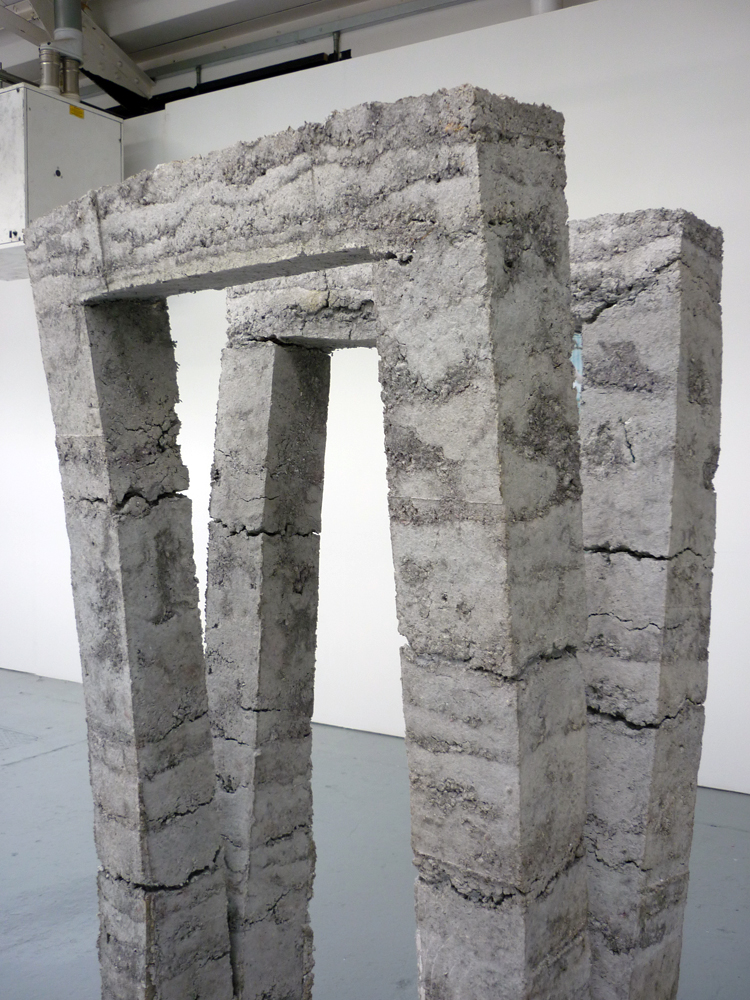
From Sculpture discipline I really liked how the paper constructions of Yana Naidenov looked like concrete

Yana Naidenov - rammed paper pulp

Yana Naidenov – rammed paper pulp

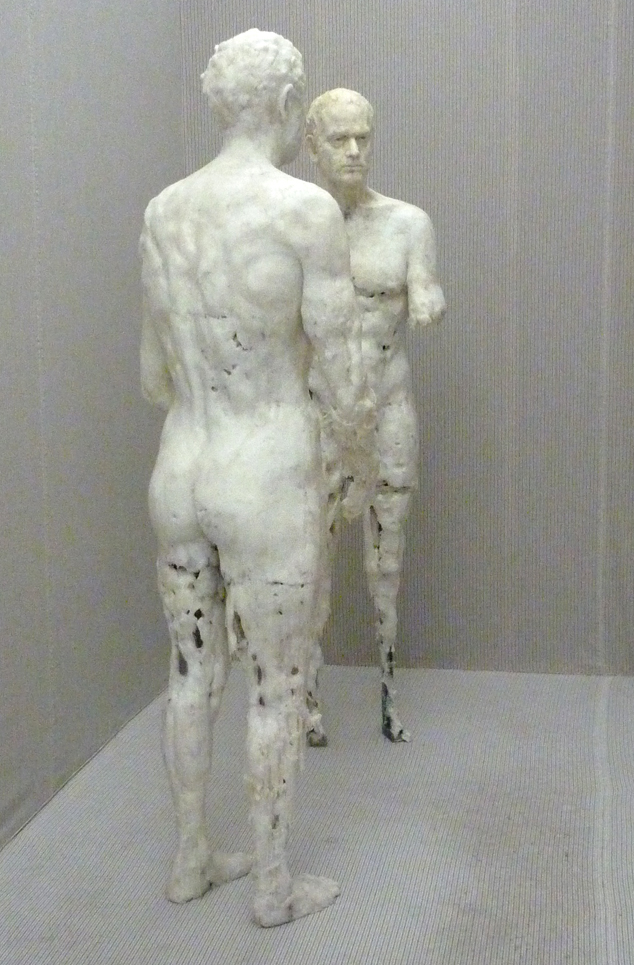
The materiality of Virgile Ittah’s sculptures were also intriguing, and rather unsettling

Virgile Ittah - For man would remember each murmur - fabric, mixed wax

Virgile Ittah – For man would remember each murmur – fabric, mixed wax

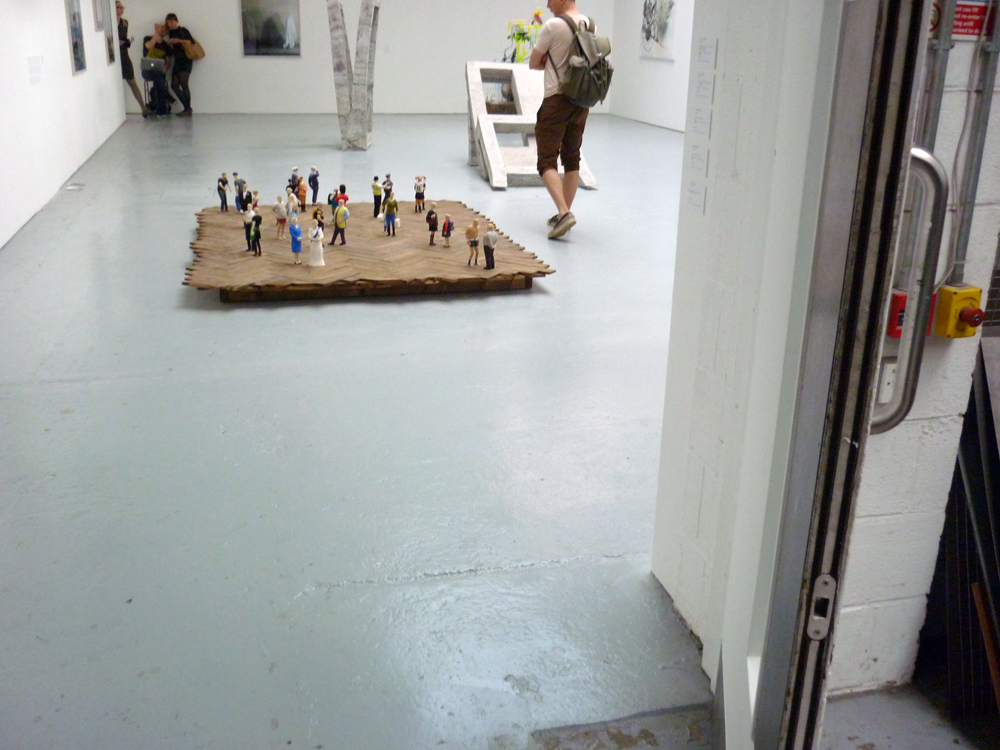
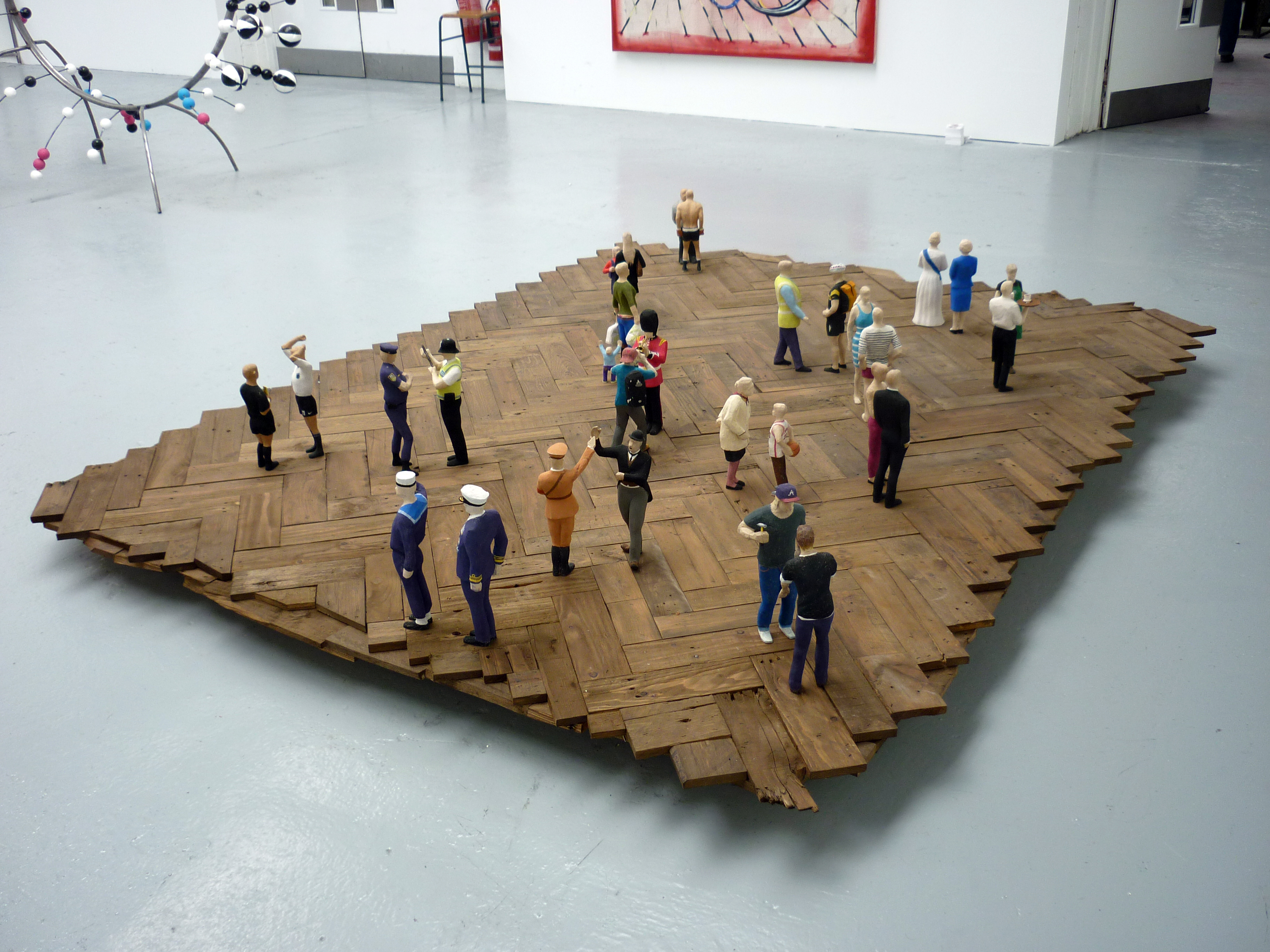
The Lilliputian sculptures of Sun Lah stood out

Sun Lah - wood and pastel

Sun Lah – wood and pastel

Observing from a distance

Sun Lah

Sun Lah

Loved this little projection from Lucy Joyce

Lucy Joyce - Gold House - video

Lucy Joyce – Gold House – video

Lina Lapelyte - Candy Shop

Lina Lapelyte – Candy Shop

I liked photography student Julio Galeote’s work

Julio Galeote - excess

Julio Galeote – excess

The Charlie Dutton Photo and Print Open Salon had a really strong selection of work, it was tightly hung but as the work was all so strong it wasn’t a case of your eye skimming the wall and only taking in one or two pieces.

I was fascinated by a lot of the work showing and noticed Luci Eldridge had a couple of pieces in the show.

Luci Eldridge - The Invisible Sky

Luci Eldridge – The Invisible Sky

Hannah Williamson

Hannah Williamson

Adam Dix - Be As One - screenprint

Adam Dix – Be As One – screenprint

Frances Disley - Little Boy Lost - reduction lino cut

Frances Disley – Little Boy Lost – reduction lino cut

Alex Lawler - Celestial Navigation  - print on chiffon

Alex Lawler – Celestial Navigation – print on chiffon

Harry Meadows - Medallion

Harry Meadows – Medallion

I have often found that in the Deutsche Borse Photography Prize show there is one clear winner for me but this year all 4 candidates drew me in and inspired me.

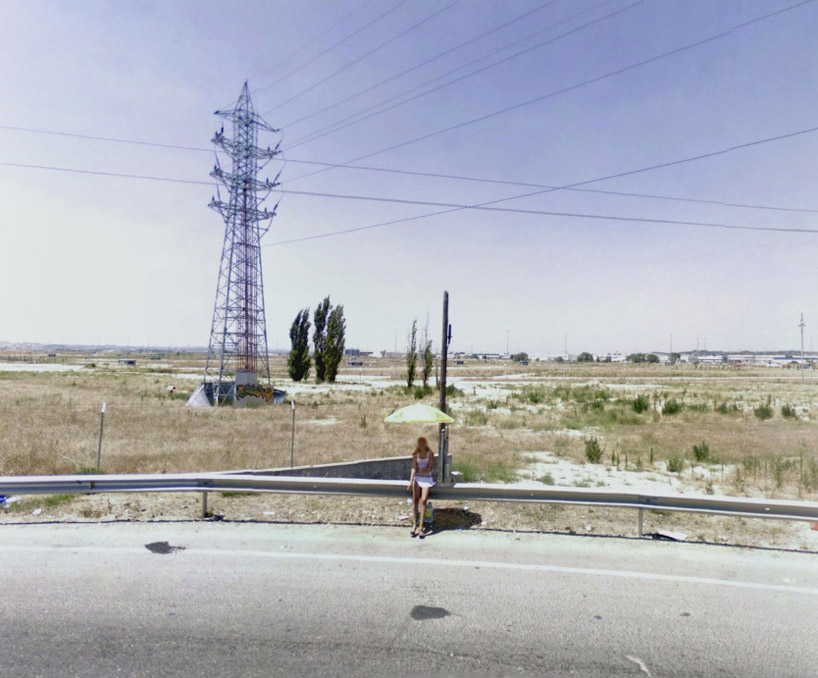
No Man’s Land is shot entirely with Google Street View. The coordinates for prostitutes operating in remote locations were picked up from internet chat rooms.

Henner’s method of online intelligence-gathering results in an unsettling reflection on surveillance, voyeurism and the contemporary landscape.

Mishka Henner - No Man's Land

Mishka Henner – No Man’s Land

Chris Killip documents the disintegration of the industrial landscape through the people that live there.

Chris Killip- What Happened - Great Britain 1970 - 1990

Chris Killip- What Happened – Great Britain 1970 – 1990

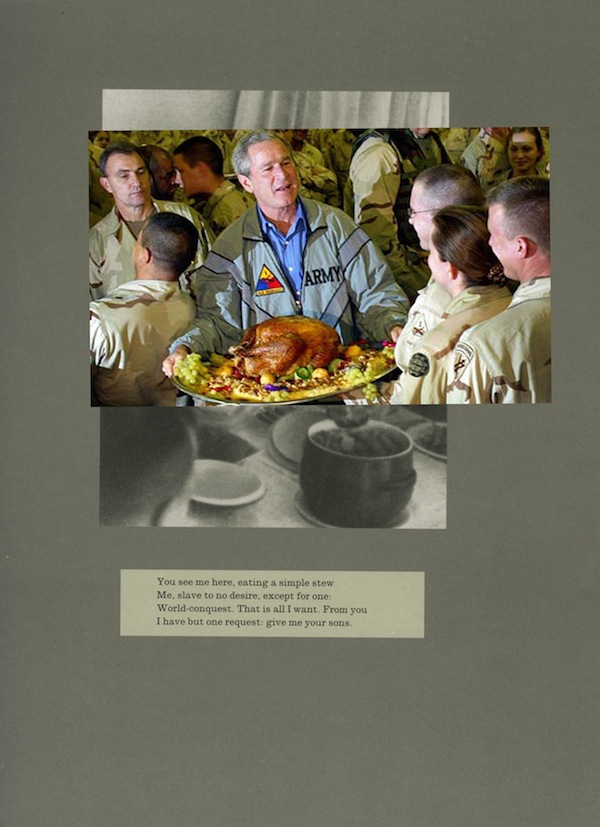
‘War Primer 2’ reimagines the pages of Bertold Brecht’s 1955 publication ‘War Primer’. Brecht’s book was a collection of photos and newspaper clippings that were paired with a four line poem.

Broomberg and Chanarin have layered google search results for the poems over the original images. The results are extraordinary.

Adam Broomberg and Oliver Chanarin - War Primer 2

Adam Broomberg and Oliver Chanarin – War Primer 2

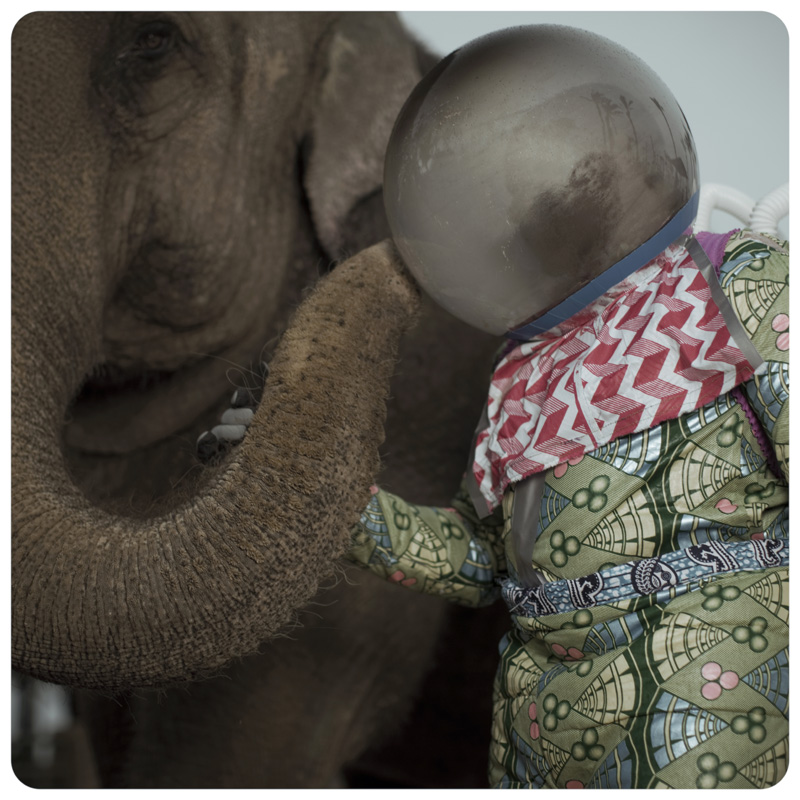
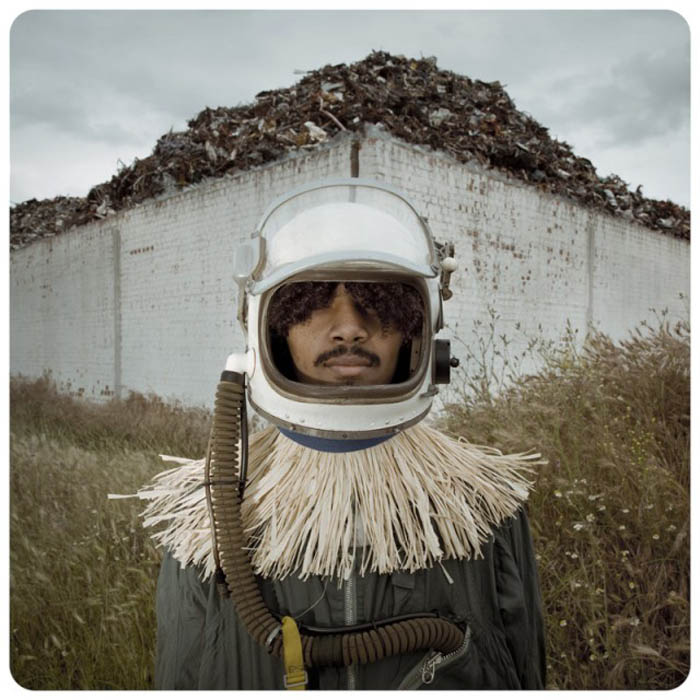
In 1964 Zambia started a space programme to send the first African astronaut to the moon.

Cristina De Middel - The Afronauts

Cristina De Middel – The Afronauts

Through photographs, manipulated documents, drawings and letters  De Middel presents a folkloric tale which blurs myths and truths. Great costumes and funky fabrics.

Cristina De Middel

Cristina De Middel

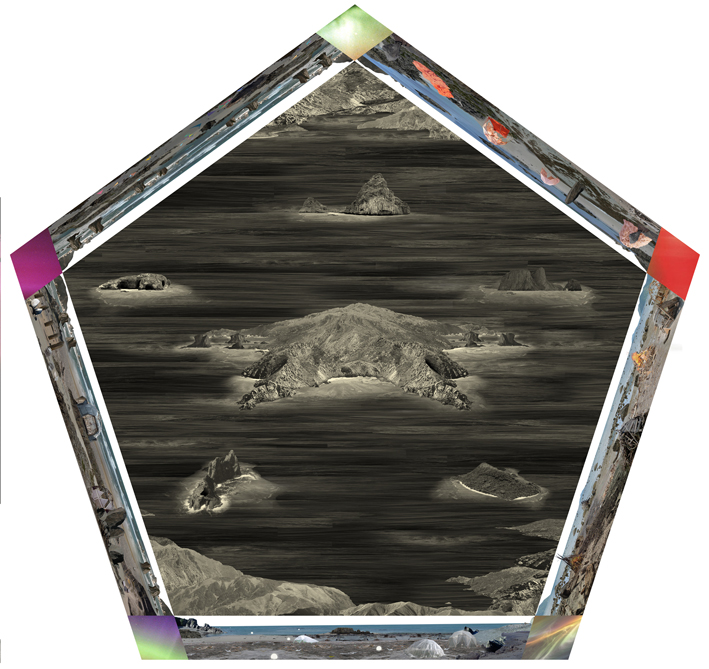
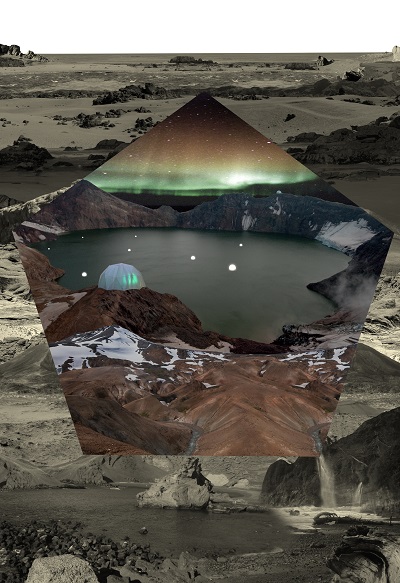
Jess Littlewood’s prints showing at BEARSPACE have a wonderful sci-fi quality without them being too unbelievable. There is a common motif of a pentagon, a makeshift habitat and an opening through to a stellar sky. They speak of new beginnings from dystopian endings.

Jess Littlewood - The Dissolution of Mother Island

Jess Littlewood – The Dissolution of Mother Island

Central to the exhibition, The Dissolution of Mother Island maps the inevitable collapse of the founding commune and the emergence of a new epoch, defined by five new derivative sects. Each sect inhabits a new island, and looking to the future each attempt to establish a unique society whilst never achieving true autonomy.

The further five exhibited works act as chapter headings, describing each sect and their specific obsessions. All maintain a fixation with the shrine like shelters of their past, highlighting futility in their attempts for individualism. These five new islands will now act as anthropological testing grounds in which Littlewood can explore the parameters and tendencies of human behaviour.

Littlewoods otherworldly landscapes are the product of extensive collecting, collating and archiving of images. Working digitally Littlewood builds layer upon layer of found imagery, the final outcome a window into an alternative world.

Jess Littlewood - Island Folly

Jess Littlewood – Island Folly

Wow, what a mind Charles Avery has.

Charles Avery View of the Port - from The Islanders

Charles Avery View of the Port – from The Islanders

He talks at a fast pace about the world that he describes through his expressive drawings, writing and sculptures. He has considered so much more about his imaginary world than most people ever consider about the one they actually inhabit. He has models of the island in his studio so that when drawing a new scene he is aware whether there should be a tower in the background or not. He knows where the toilets , the kitchens, the lifts are in buildings that are never more described than as background facade in a scene. This world is built on mathematical principles and animated with philosophical debate. Space is mapped out precisely in both the built environment and the geographical relationships but time in the concept as we understand it does not apply – events happen, time is not linear.

It was fascinating to hear about his process of creation at Whitechapel Gallery as part of the To Make A Tree programme.

Charles Avery

Charles Avery

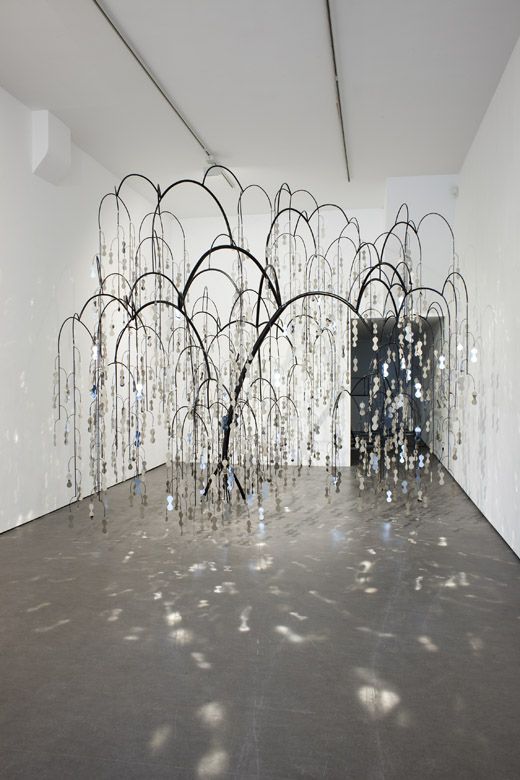
The trees in jardindagade are based on a mathematical formula.  He told us how hard it was to devise a formula for a willow tree to be well balanced and the leaves not to fall and tangle with each other. He decided to go outside and see how a real tree coped with this problem and found that it didn’t, it was messy and tangled, but it didn’t fall over.

He has ambitions to build the whole of jardindagade as an immersive installation –  let’s hope someone with some money was listening.

Saw Chimerica, an amazing new play by Lucy Kirkwood. It is a powerful exploration of two cultures – China and America.
We are taken back to the student protests of 1989 in Tiananmen Square and follow the search of an American photographer, who took the iconic shot of the student standing with his shopping bags in front of the tank, as he tries to discover the identity of  ‘tank man’.

The fate still remains unknown of the unarmed man who blocked a column of tanks as they moved along Chang’an Avenue towards Tiananmen Square.

1306 Chimerica 3

The script is very tight, funny and moving, playing out  a touching relationship between the photographer and his Chinese contact as they question their roles in history.

There are questions about cultural identity and personal responsibility.

Chimerica by Lucy Kirkwood

Chimerica by Lucy Kirkwood

Who is a hero and how can one voice rage against the machine.  I found it a little scary to contemplate the future in this context as China is such a hard country to relate to and it’s influence is spreading quietly across the world.

In China there seems little compassion for the individual.

Yet obviously there are individuals who raise their voices, people we can relate to in their desire for justice, for free speech and for clean air.

Chimerica by Lucy Kirkwood

Chimerica by Lucy Kirkwood

Chimerica explores the courage required to step outside the control of the state and the security of a job.

It also makes us wonder about the dramatic changes to the landscape, the explosion of consumerism and urbanisation and the sources of energy to power this explosion in growth.

1306 China coal

The ideas behind Chimerica can be found at  http://headlong.co.uk/work/chimerica/explore/

1306 smog

I have always loved the work of Antii Laitinen since being introduced to his work by Nettie Horn Gallery.

I went to listen to him at the ICA in conversation with Elizabeth Neilson, Director of Zabludowicz Collection, and Harri Laakso, a co-curator of the Finnish Pavilion at this year’s Venice Biennale.

He undertakes extraordinary feats of endurance to make his art such as building his own island from bags of sand, only to have it swept away by a storm and then starting again.

Antii Laitinen 'It's my Island'

Antii Laitinen
‘It’s my Island’

In his talk  he stressed that he uses nature as his material and his studio space and what he is exploring is the nature of human existence. He questions the value of effort which stems from his native Finnish culture and its Lutheran attitude to the benefits of hard labour. In ‘Sweat work’ he constructed a human sized hamster wheel and ran until he was dripping in sweat, he then removed his clothes and laid down onto photographic paper.

Antii Laitinen 'Sweat Work'

Antii Laitinen
‘Sweat Work’

The photographs were then hung on the wall where the image of his body slowly faded and disappeared.

Antii Laitinen 'Sweat work'

Antii Laitinen ‘Sweat work’

Each of his pieces has required physical exertion in often futile exercises. Originally training as a photographer he moved into performative work which he then documents himself through photography.

He likes to be in control. He prefers if possible to perform all the hard labour himself.

There was an interesting discussion on the reaction of different cultures to his sawing up of a tree into many pieces and then trying to fix it back together again like a puzzle. In Finland where there are vast forests and there is a pragmatic relationship to a tree and he had no problem getting any number of trees to chop down. In Vienna he caused an outcry at the stupidity of his endeavour. In Bristol he had real trouble getting a tree at all, and the tree he was finally given was a very small tree, barely a tree at all, weak and diseased. What is it that makes it hard for us to chop down a tree. The shortage of trees or the love of the old, a national instinct to preserve maybe.
What was it that mobilised the nation into protest recently – the threat to the forests. We might never visit them – but it’s good to know they are there. Our cultural history is tied up in the forests not as a source of fuel and income but as a refuge, as a source of myths and legends.

Antii Laitinen

Antii Laitinen

For the project “FOREST SQUARE”, new work made for the Venice Biennale 2013, Laitinen chopped down a ten meters square section of forest and sorted the entire found material such as the soil, moss, wood, pines, etc into various categories. He then reorganized the forest according to different colours – the composition referring to the pure abstraction and utopian ideal of spiritual harmony and order from the De Stijl movement.

Antii Laitinen 'Forest Square'

Antii Laitinen ‘Forest Square’

I am still working on the collagraphs  ‘return of the forest’ and still not entirely happy with the way it is going.

I have been painting trees with sublimation inks to print onto organza which I will then cut onto the iceberg collagraphs I have made.

The thing about sublimation inks is you can’t quite tell what colour they will print until you put them in the heat press.

130701 (2)

I was upset to find out that London Printworks Trust had closed in February.

It is so sad that such a great resource is lost. I did think it bad though that as a paying member I hadn’t been told it was closing, I guess as they were in financial difficulties they weren’t going to refund memberships.

Now I have to find another large heat press to use.

The Ochre Print Studio Summer Exhibition had lots of good feedback. Shame I had to miss the Private View this year.

Susan Eyre 'Yellow Sky'

Susan Eyre ‘Yellow Sky’

‘Yellow Sky’ is about looking for refuge and reliance on a controlled environment to survive

Susan Eyre 'Graft i'

Susan Eyre ‘Graft i’

‘Graft I’ explores ideas about the changing landscape, the urban and the cultivated space, the hybrid landscapes and the empty inbetween spaces where imagination can flourish if nothing else.

Lots to see from other members and guest artists. It’s a good opportunity to bring the community at Ochre together.
Tom Hammick

Guest artists -Tom Hammick – woodcuts

Richenda Court's lino cut

Richenda Court’s lino cuts

Julie Hoyle

Julie Hoyle screen prints on wood

Lockwood Group

Lockwood Group artists with learning disabilities

Anna Hennings - artist in residence

Anna Hennings – artist in residence

Guest Artist - David Dragon - monoprints

Guest Artist – David Dragon – monoprints


Susan Eyre 'Subluna'

Susan Eyre ‘Subluna’


Sold ‘Subluna’ at Ochre and also some of my ‘Collected Thoughts’ sold at the Surrey Contemporary.
Always a strange mixed feeling of loss and pleasure.