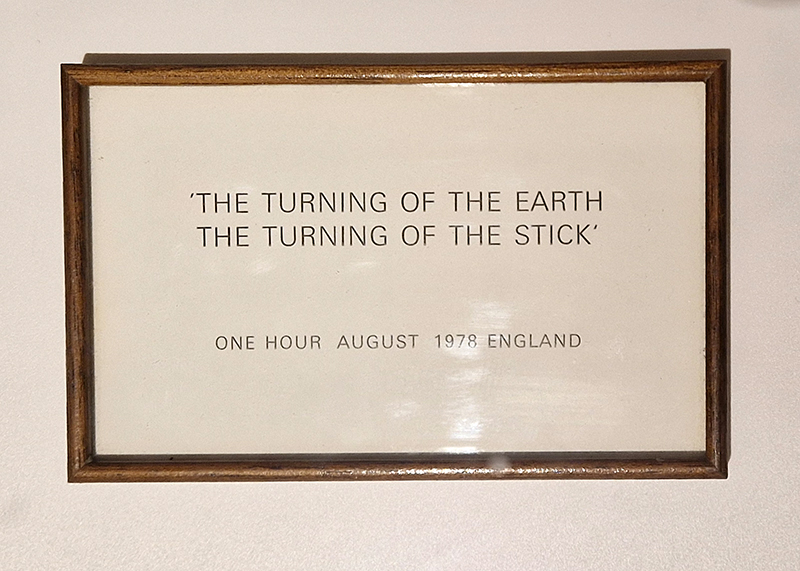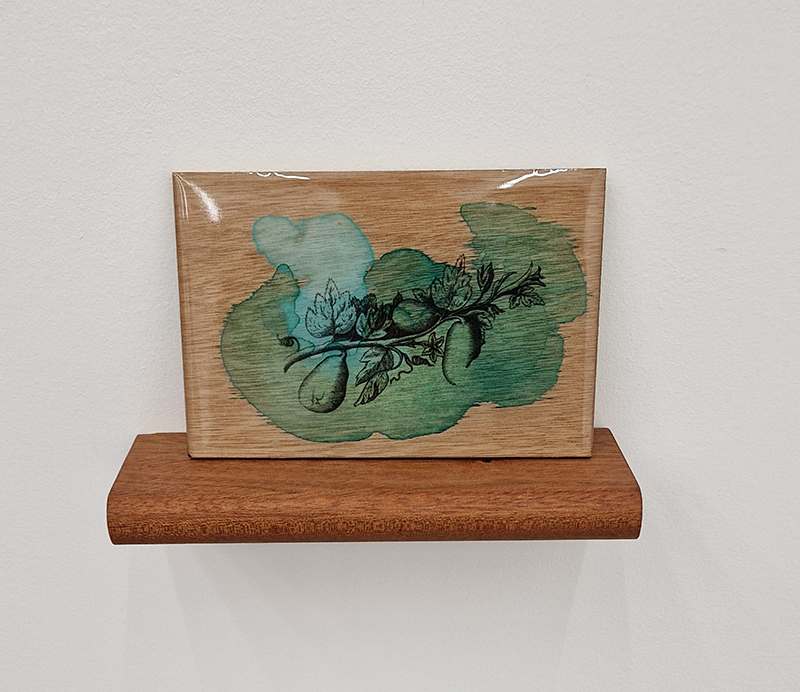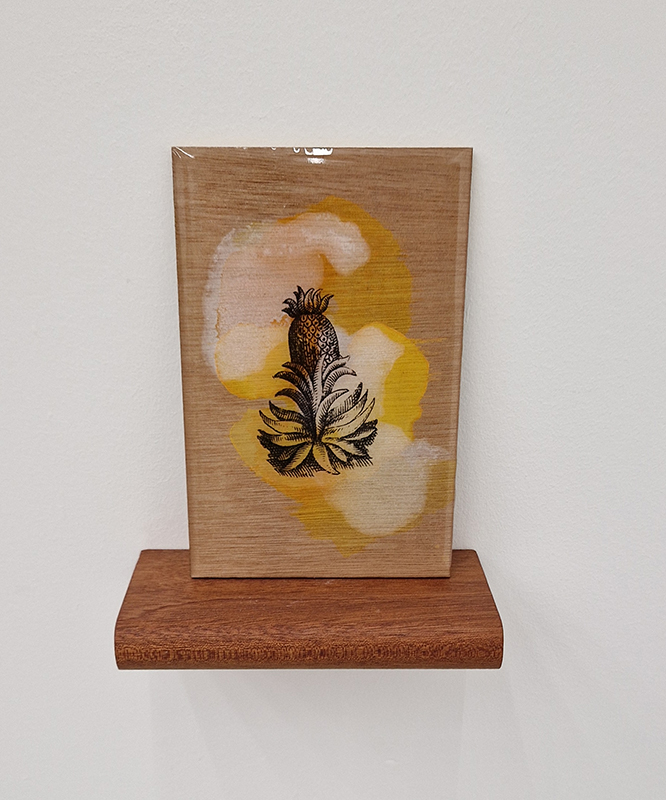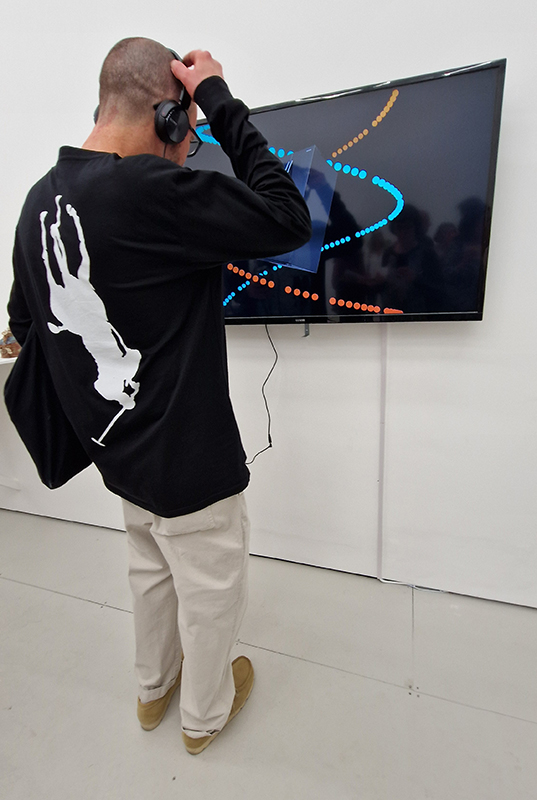
Archives for posts with tag: Andy Holden

‘What truth could be more unexpected ….than the one in which the mineral envisions while also being envisioned.’ Jason Groves, The Geological Unconscious

‘This is the blueprint of nature itself; both hidden and revealed in a nodule of silica.’
Roger Caillois, The Writing of Stones

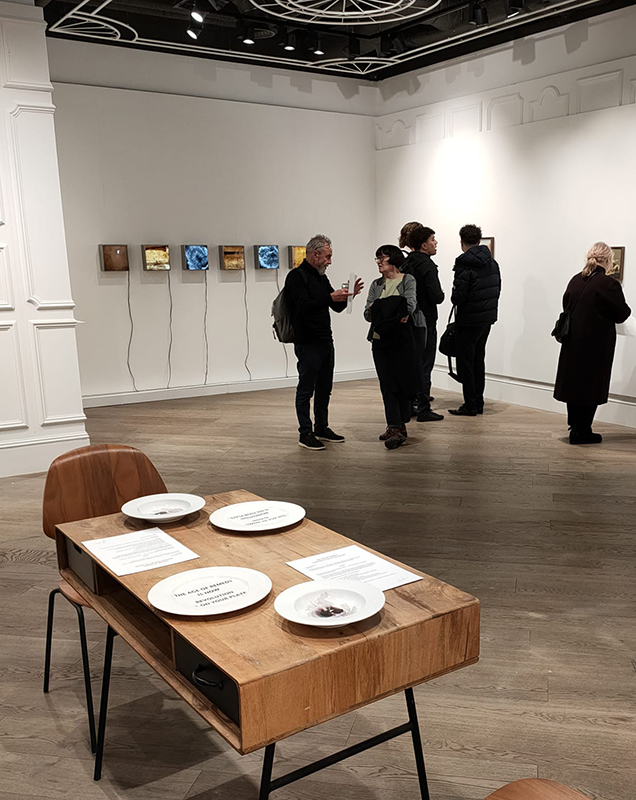
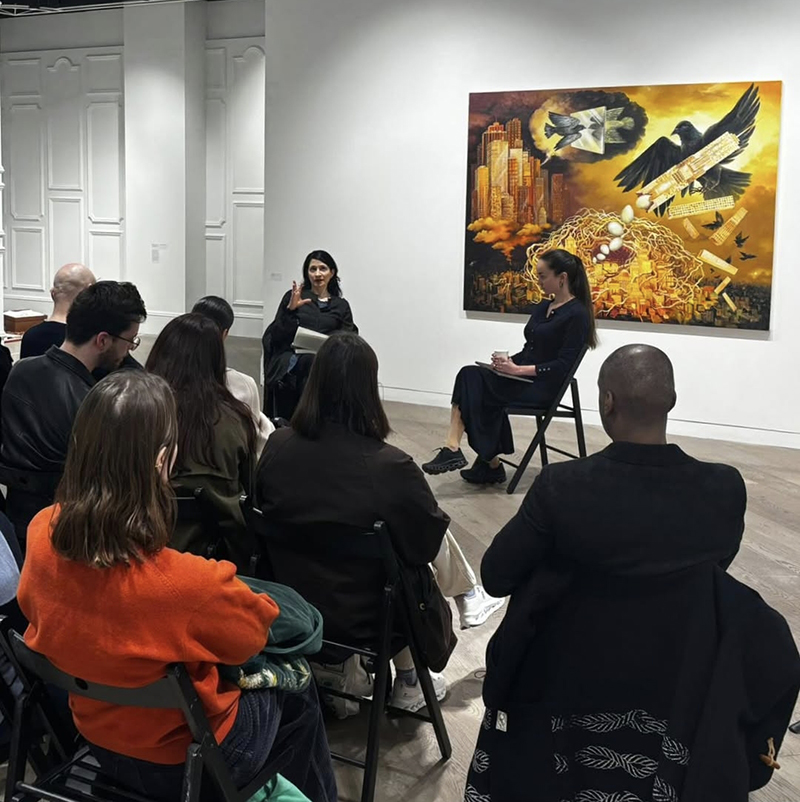
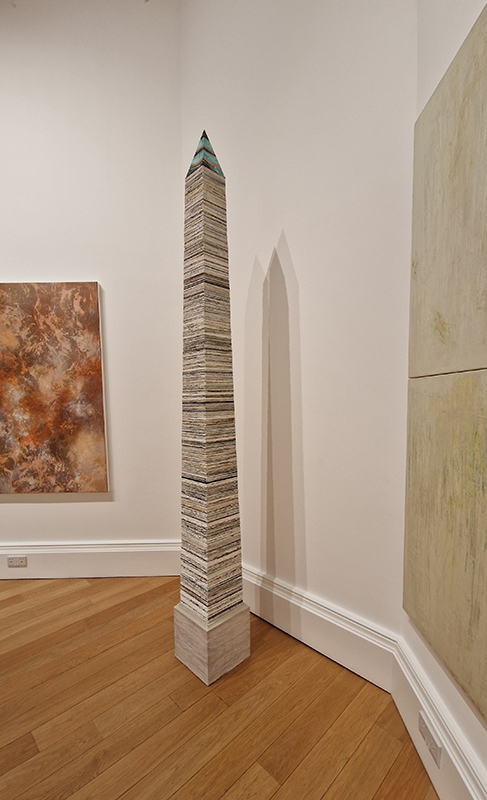
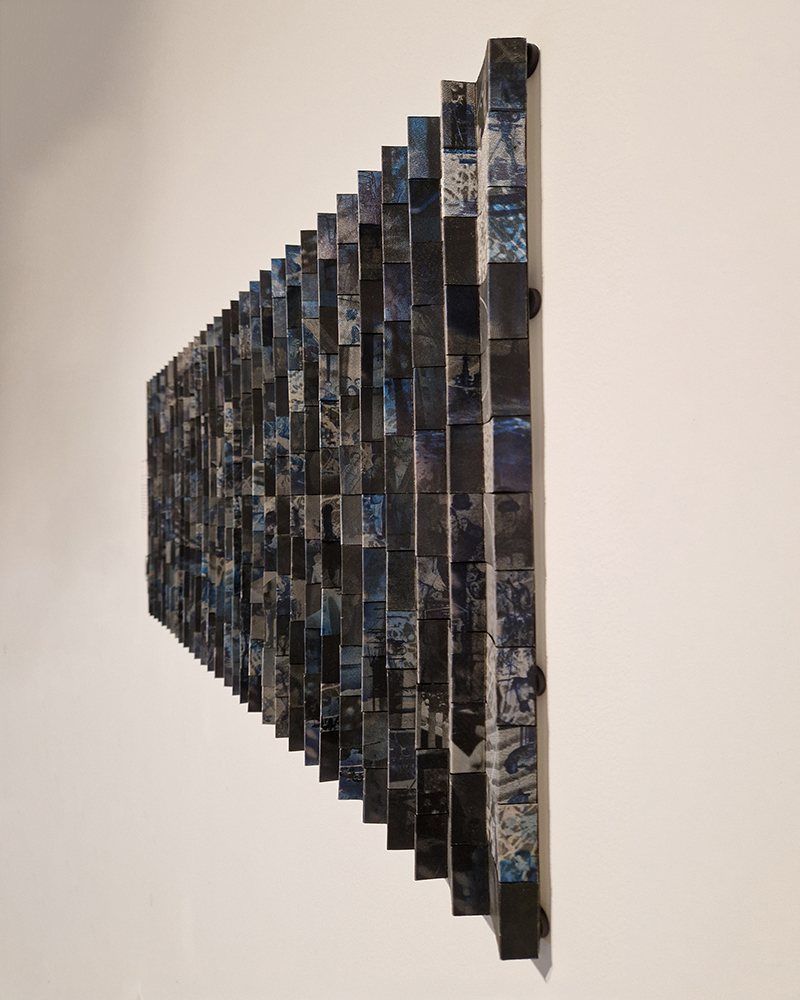
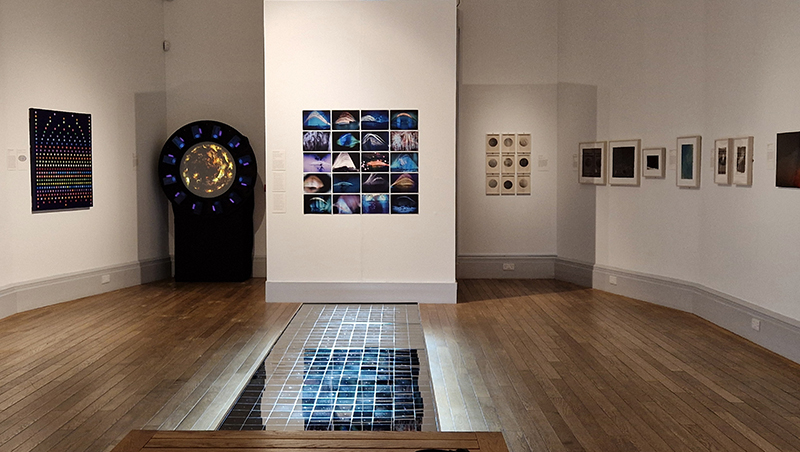
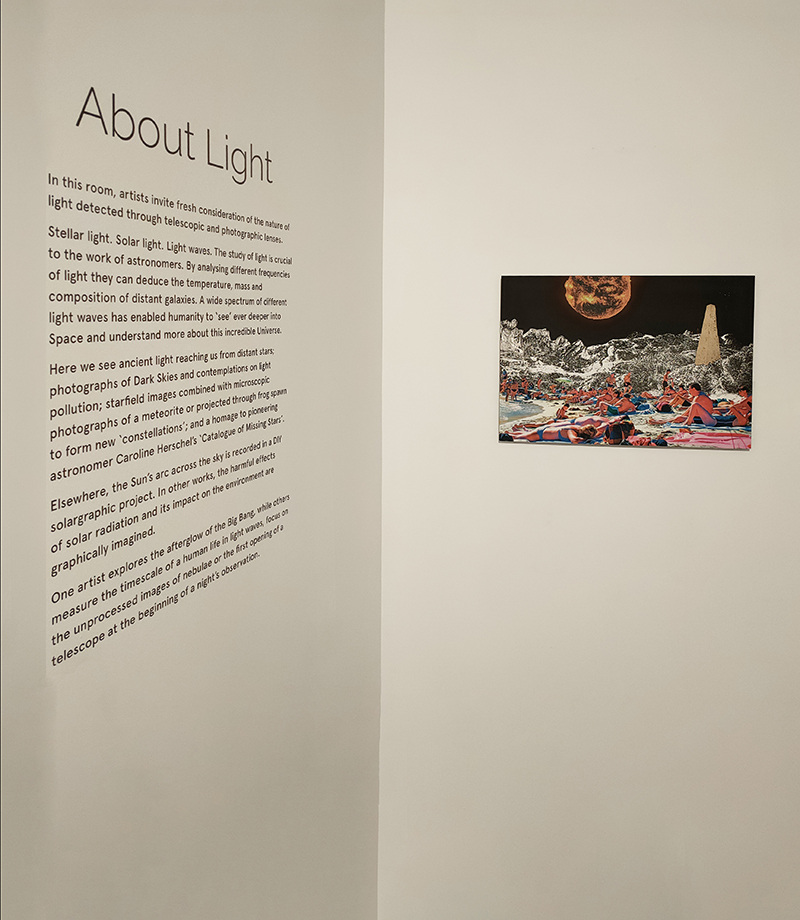
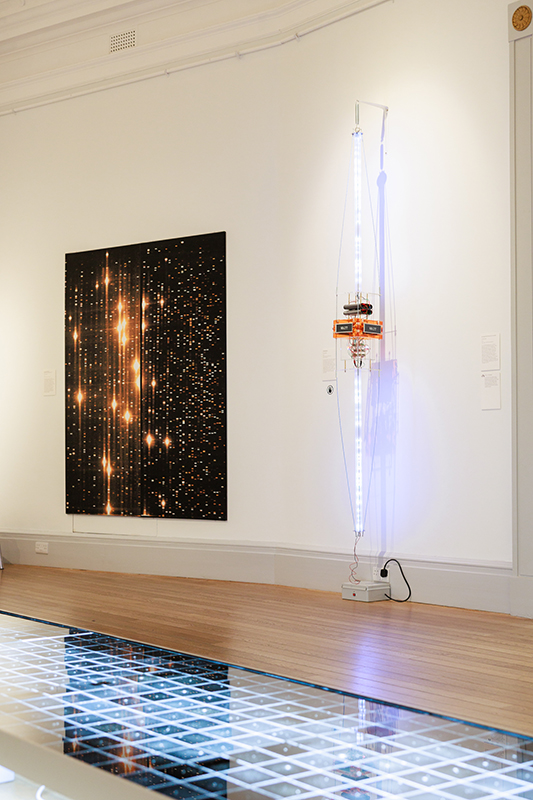
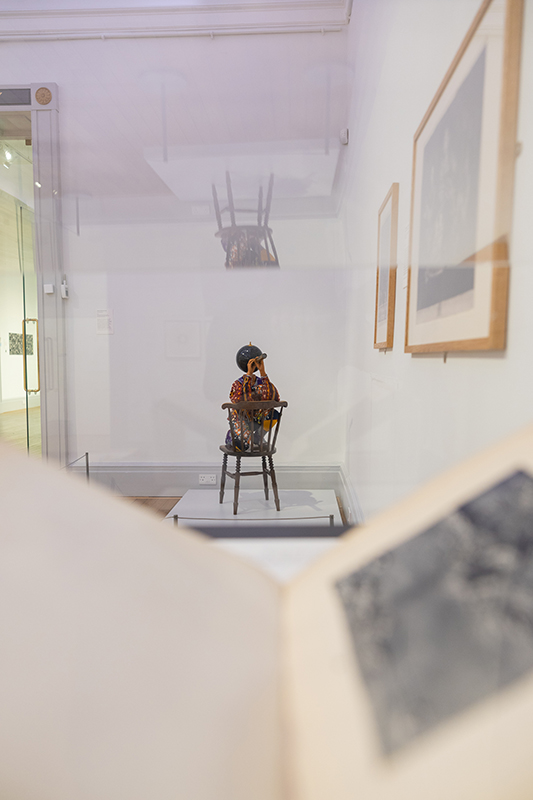
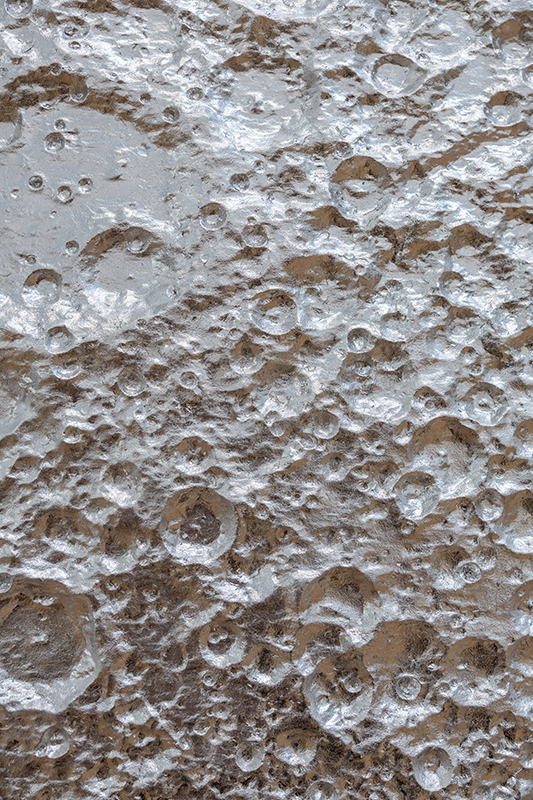
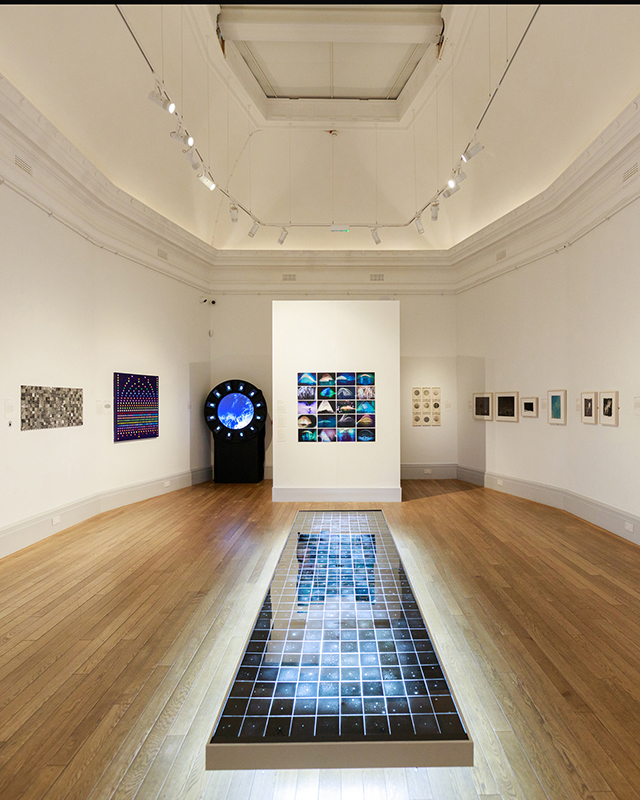
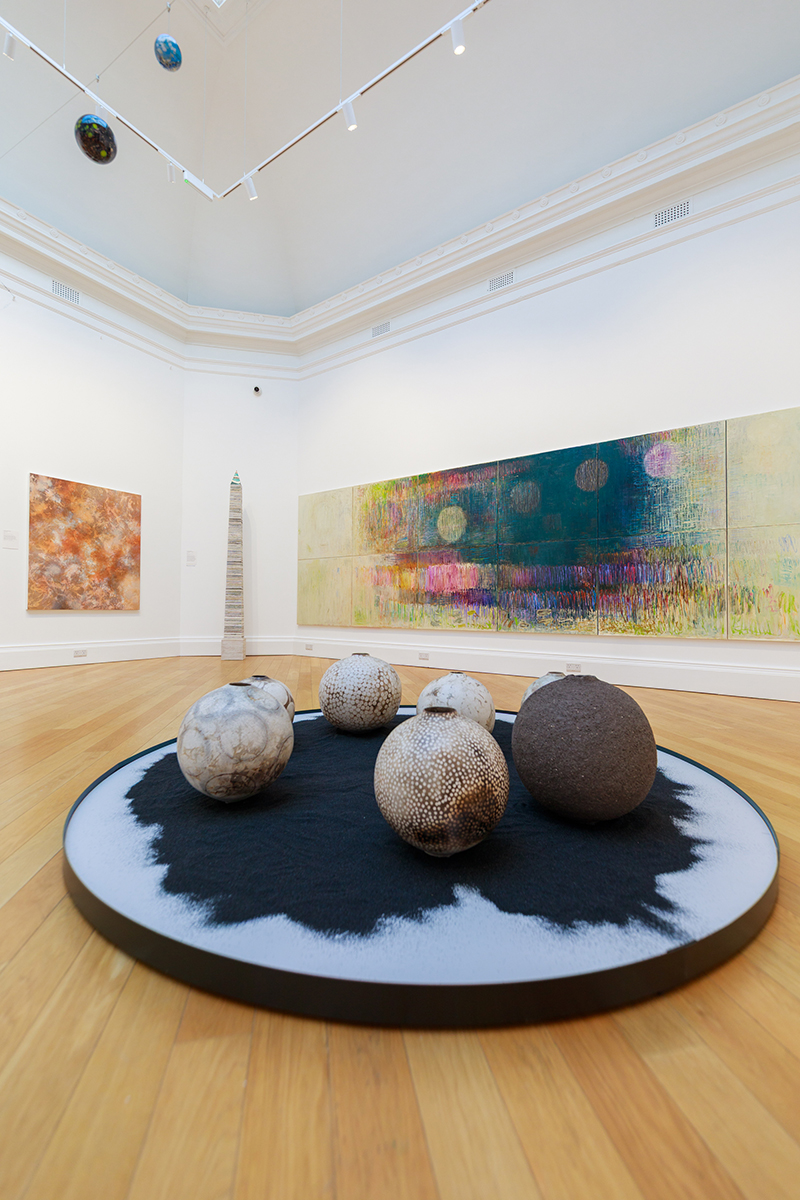
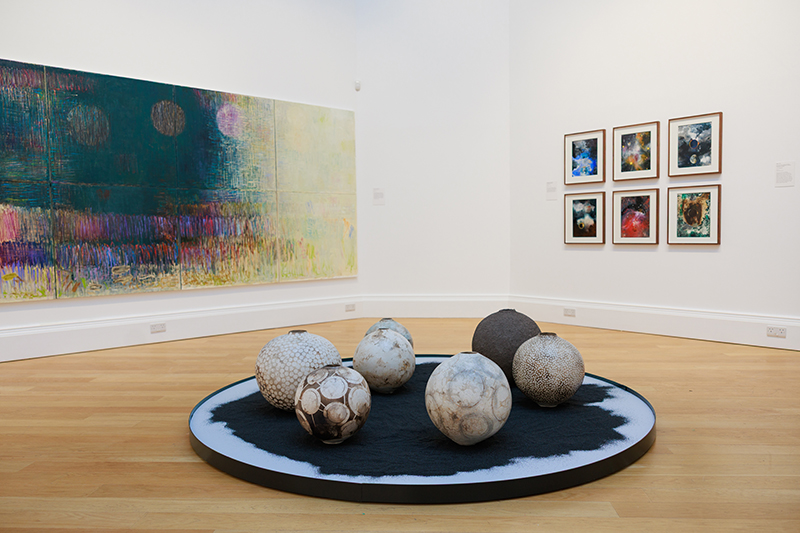
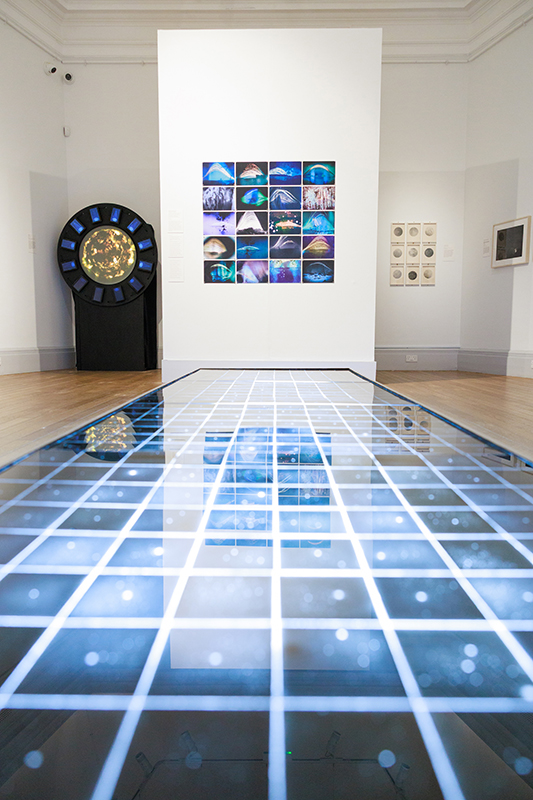
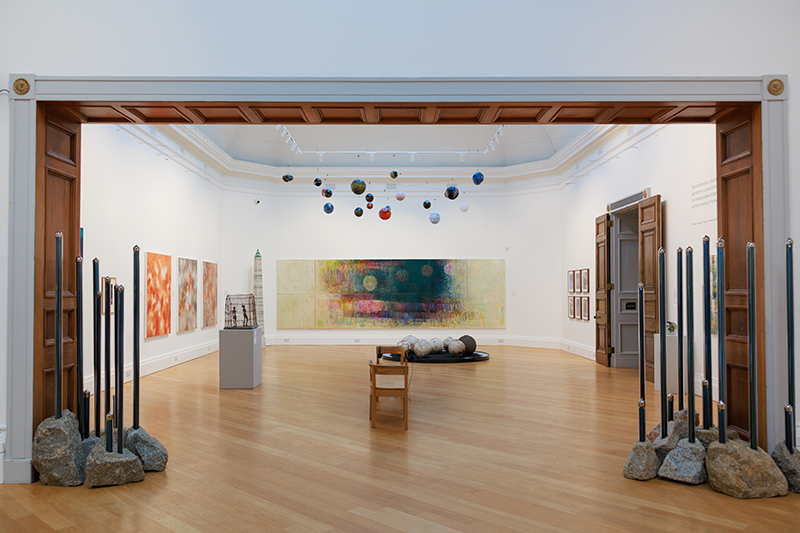
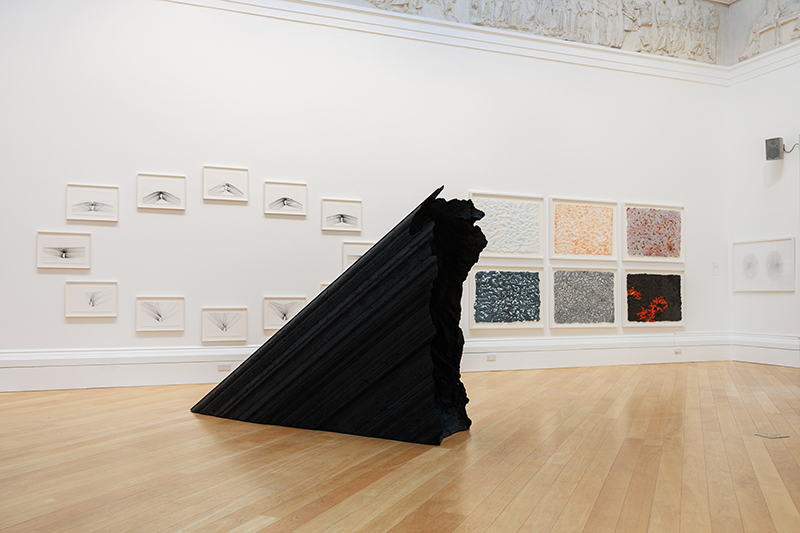
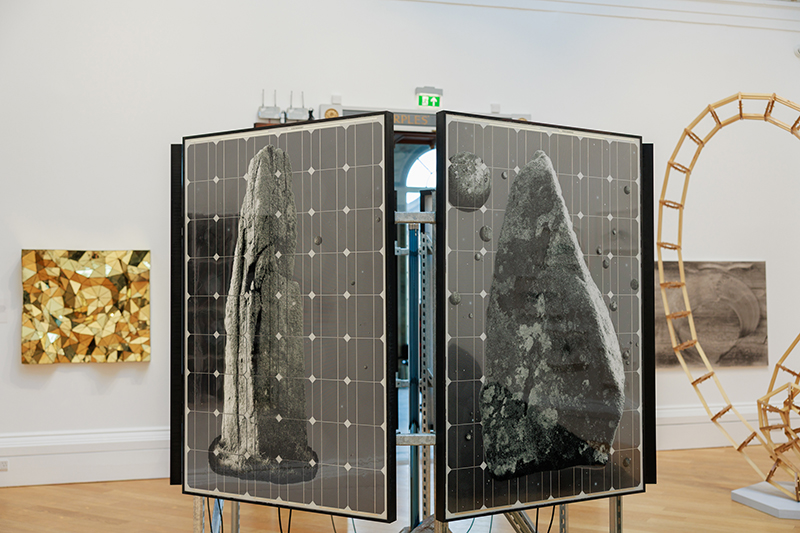
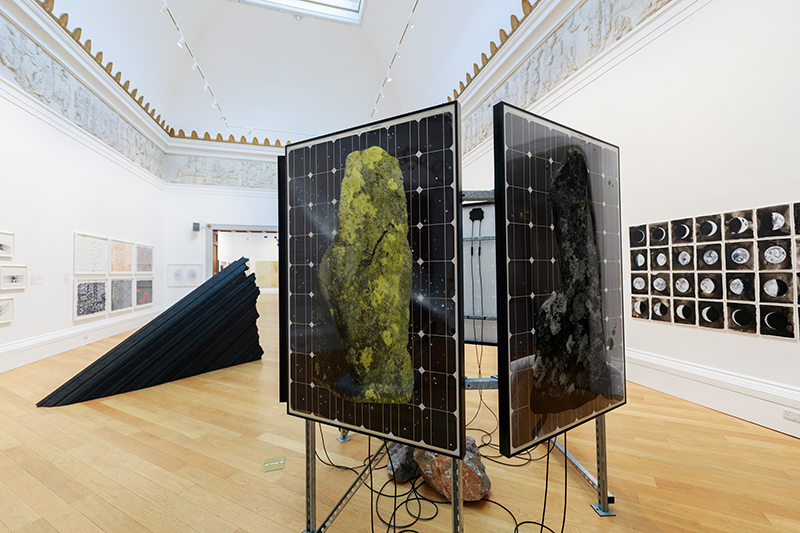
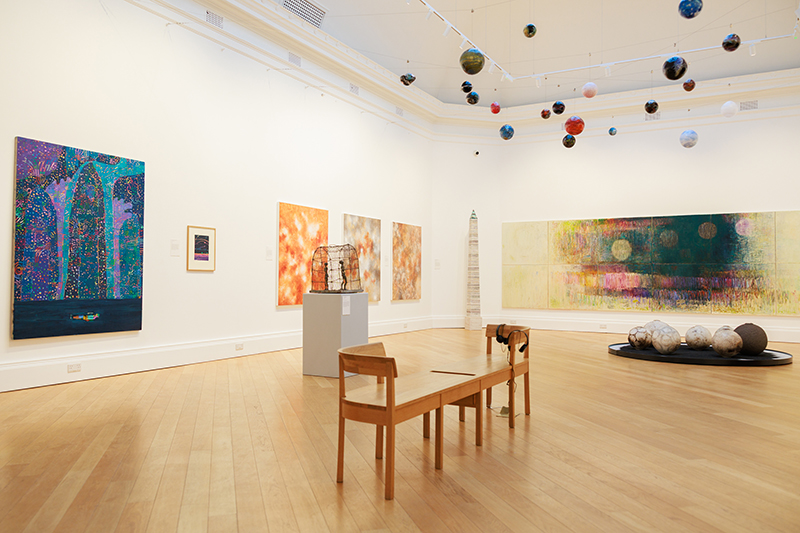
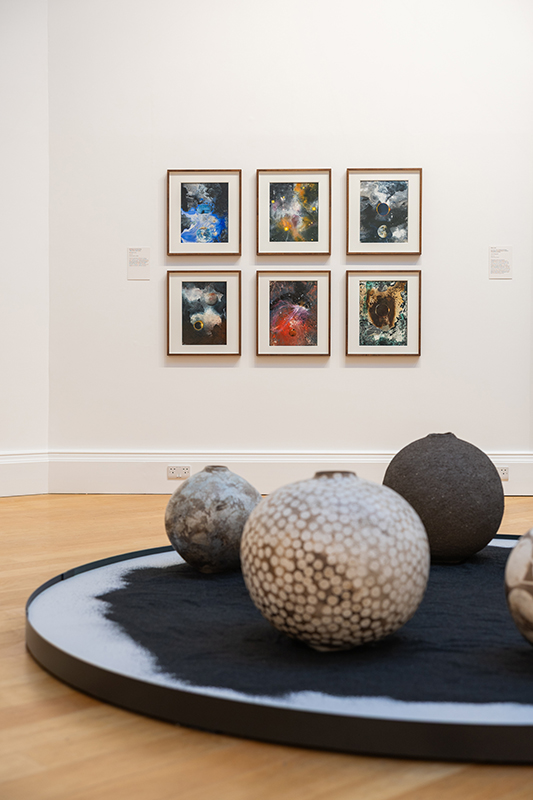
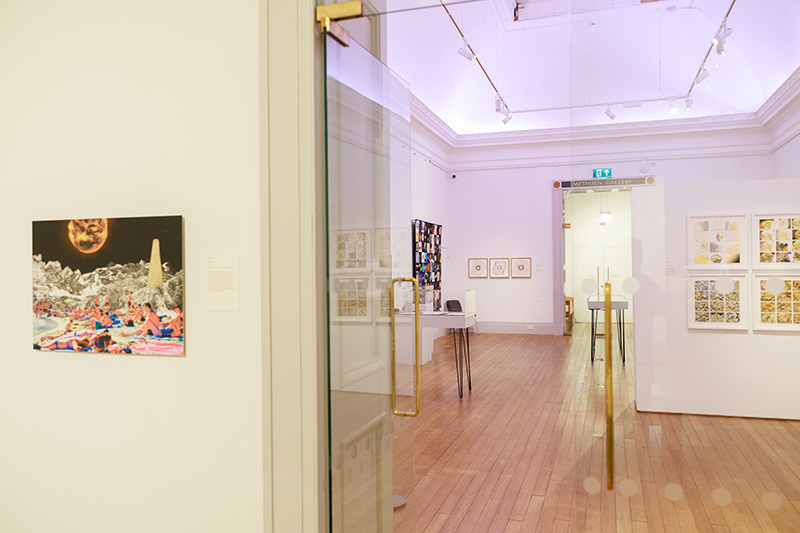
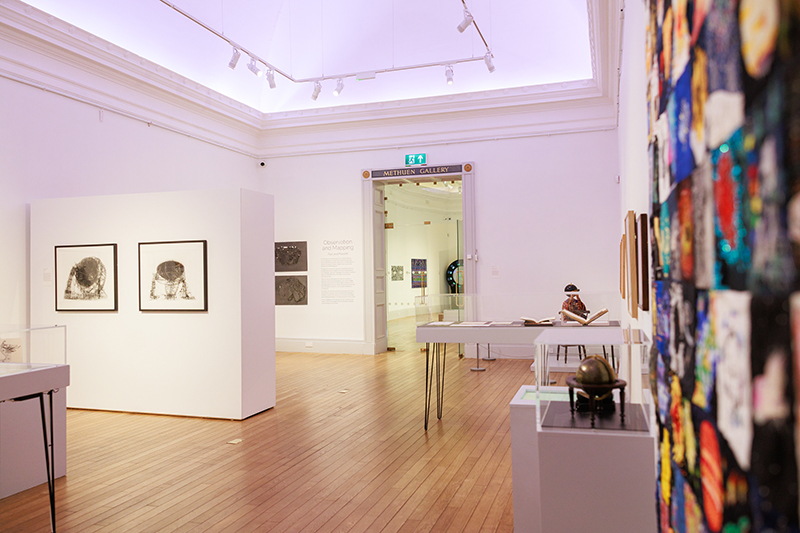
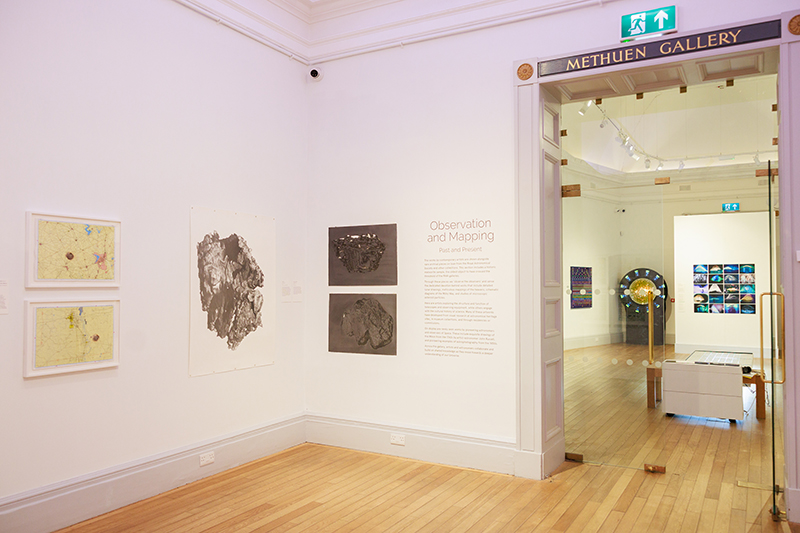
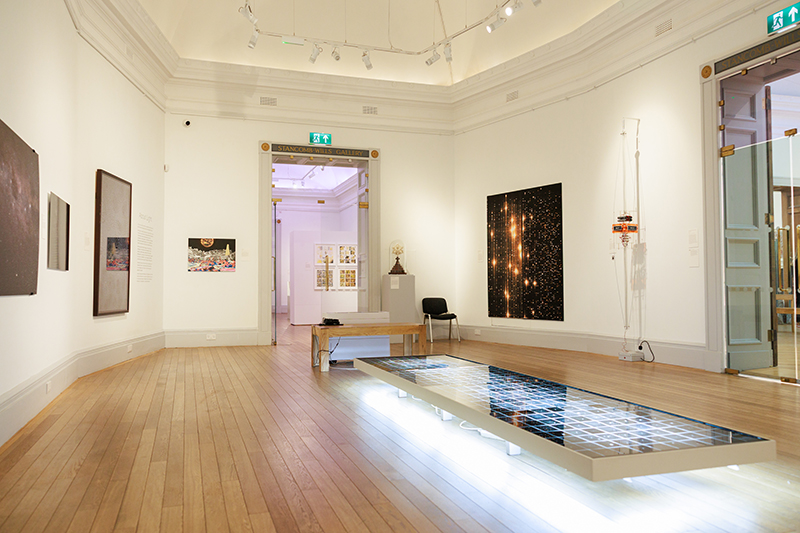
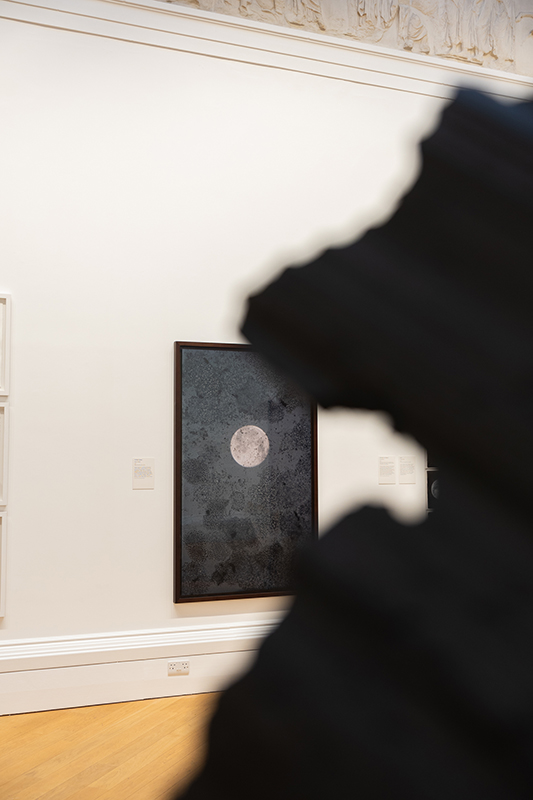
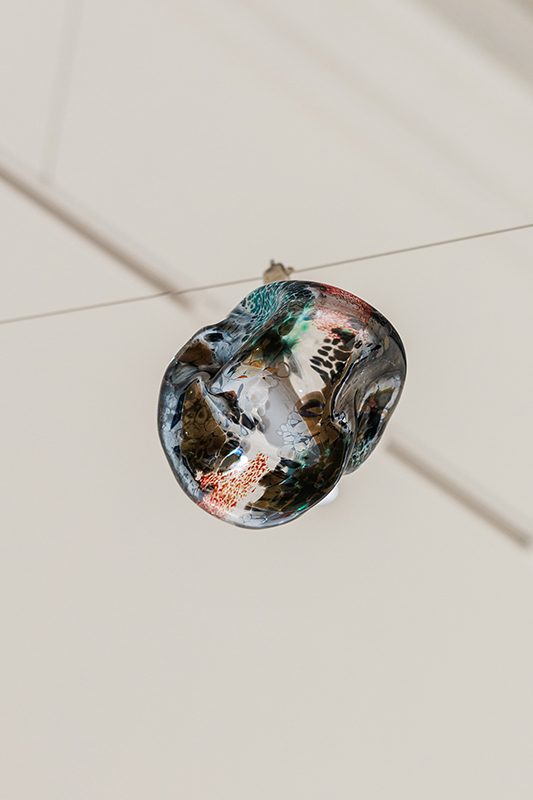
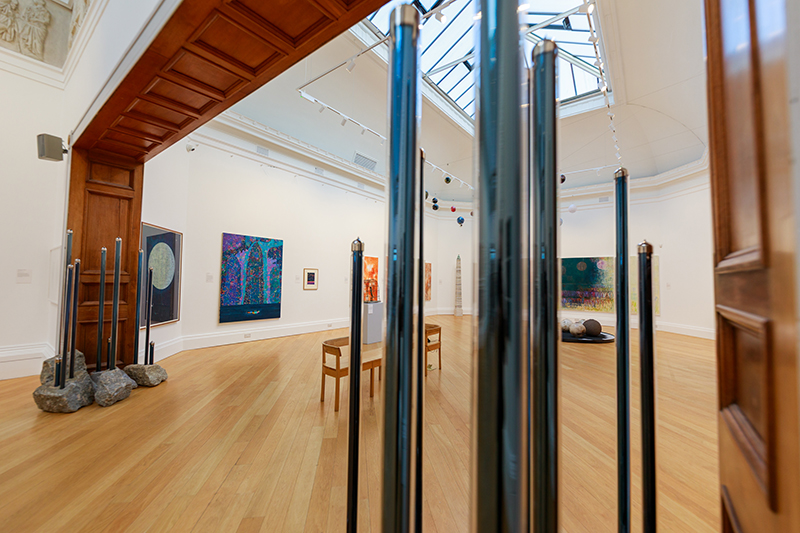
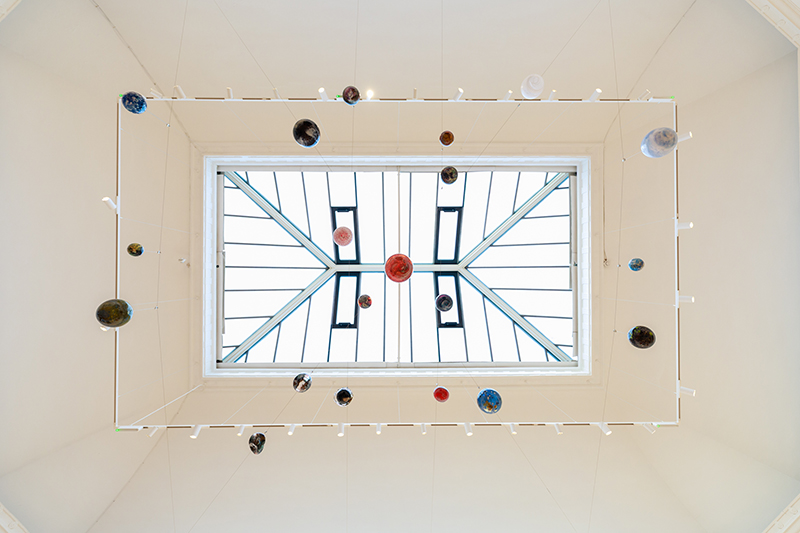
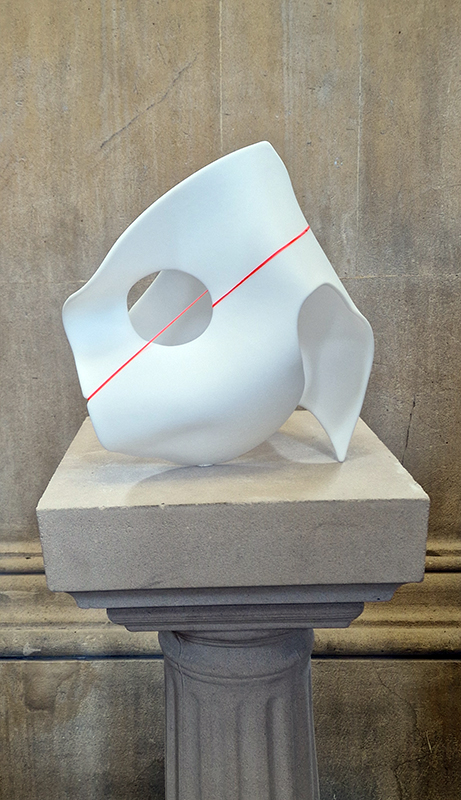
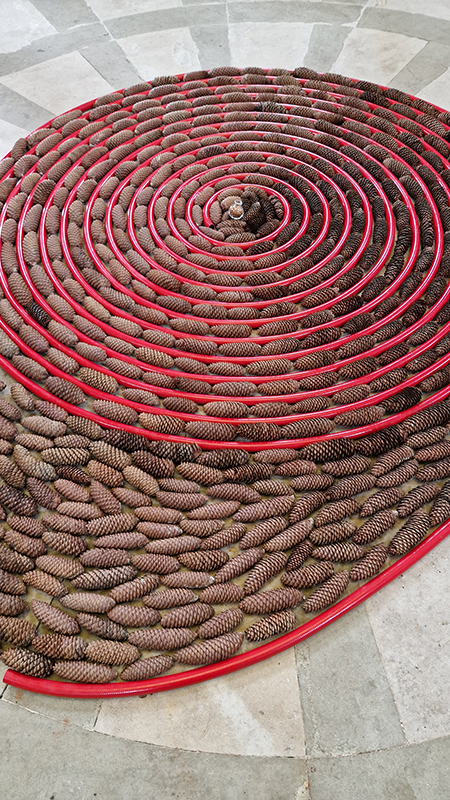
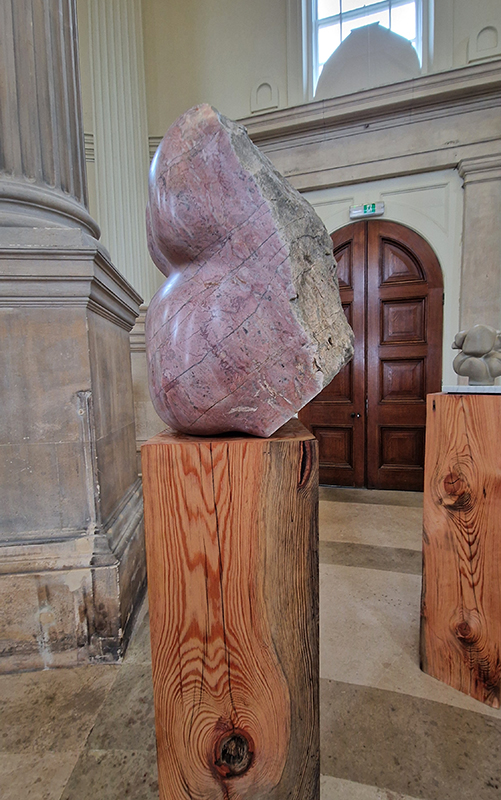
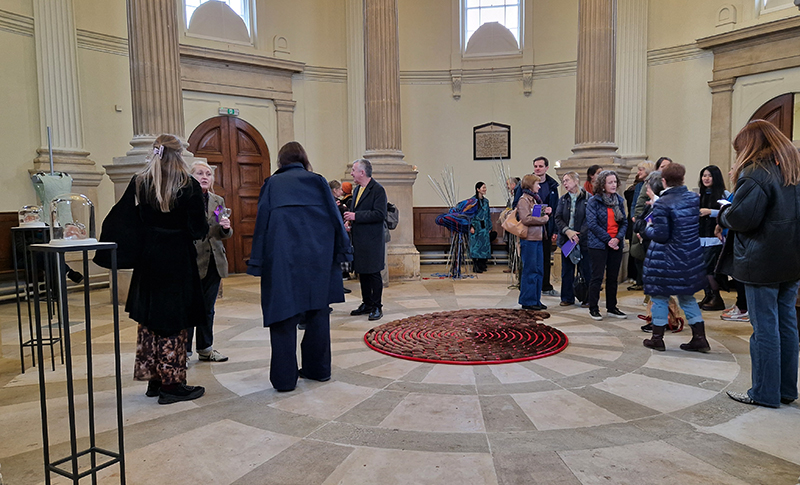
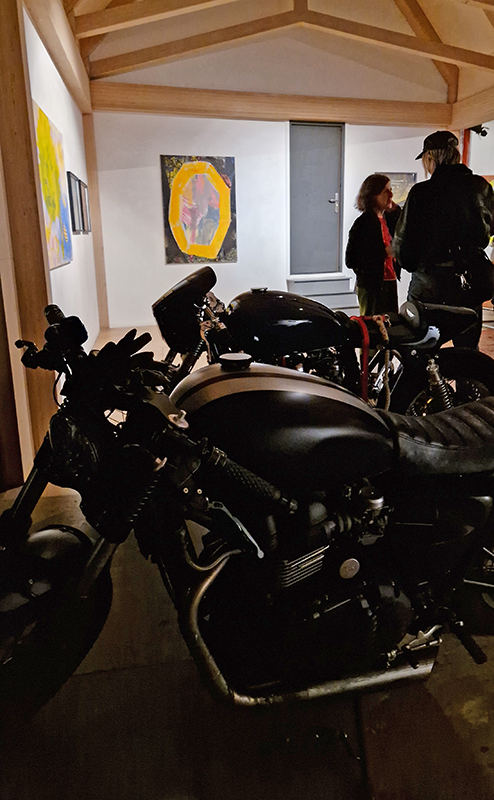
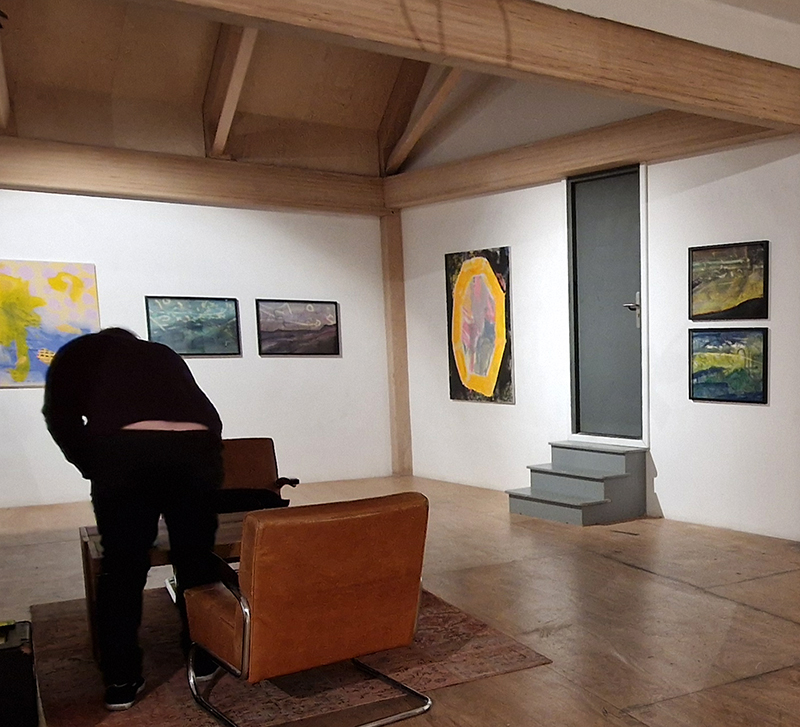
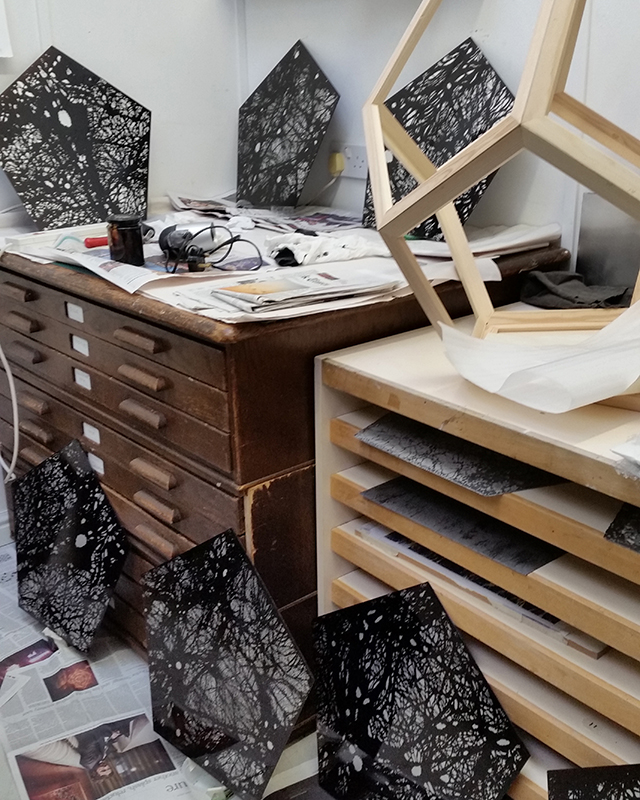
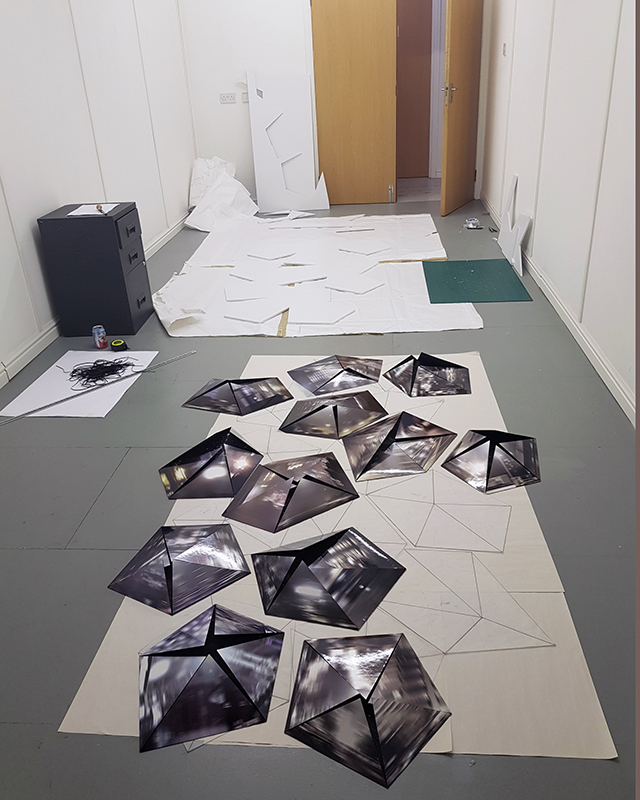
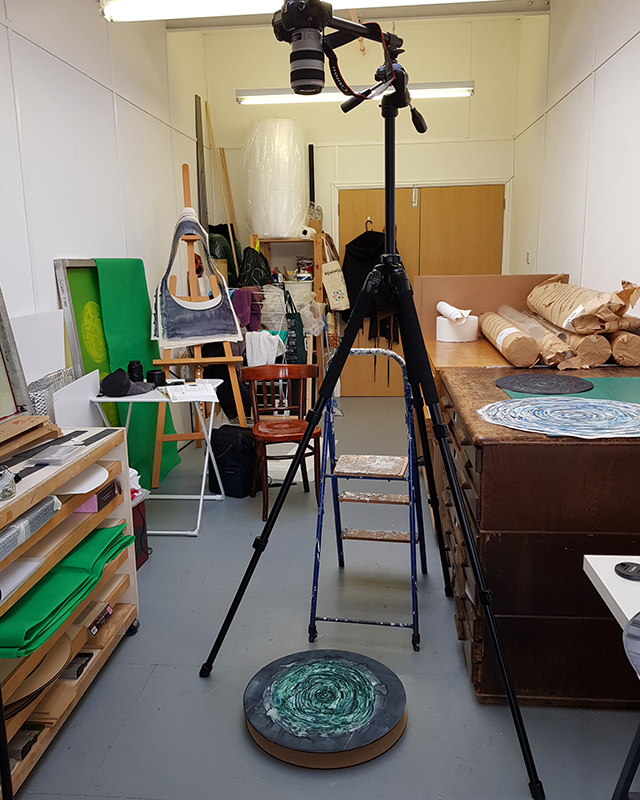
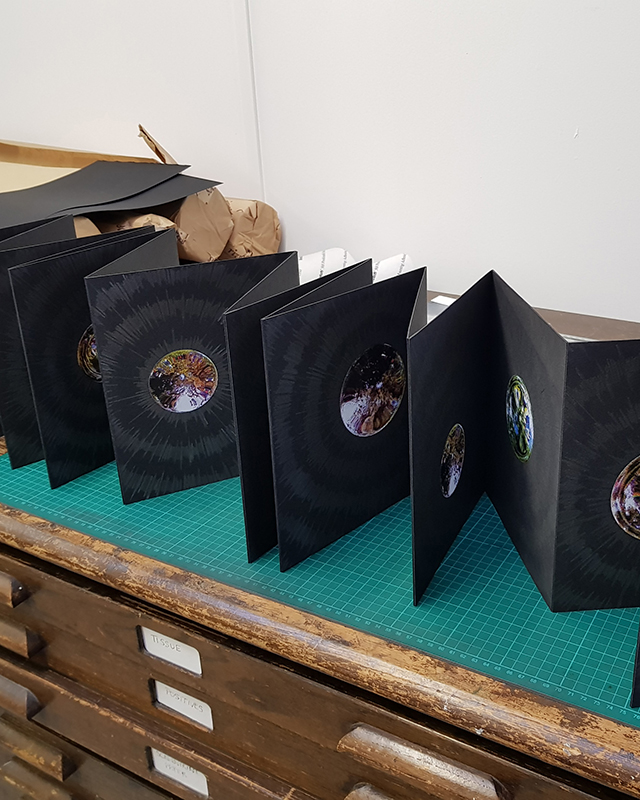
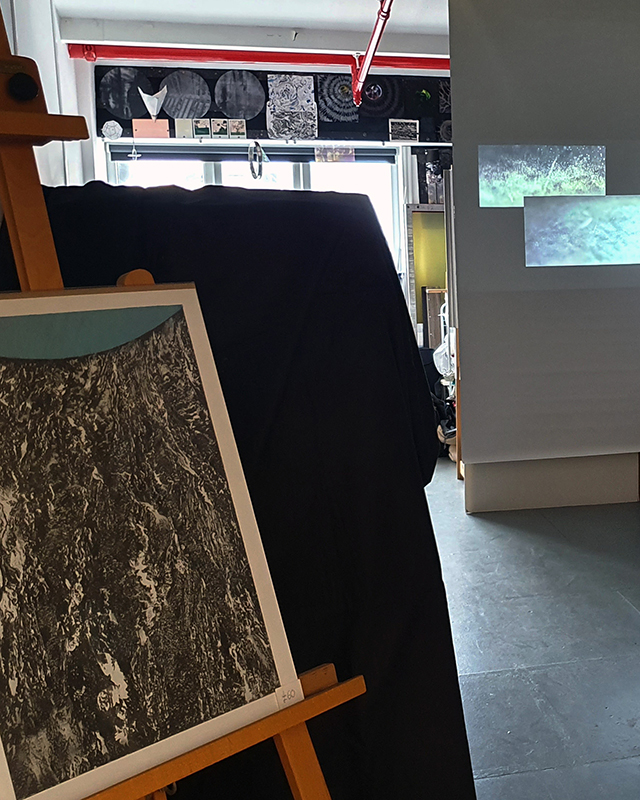
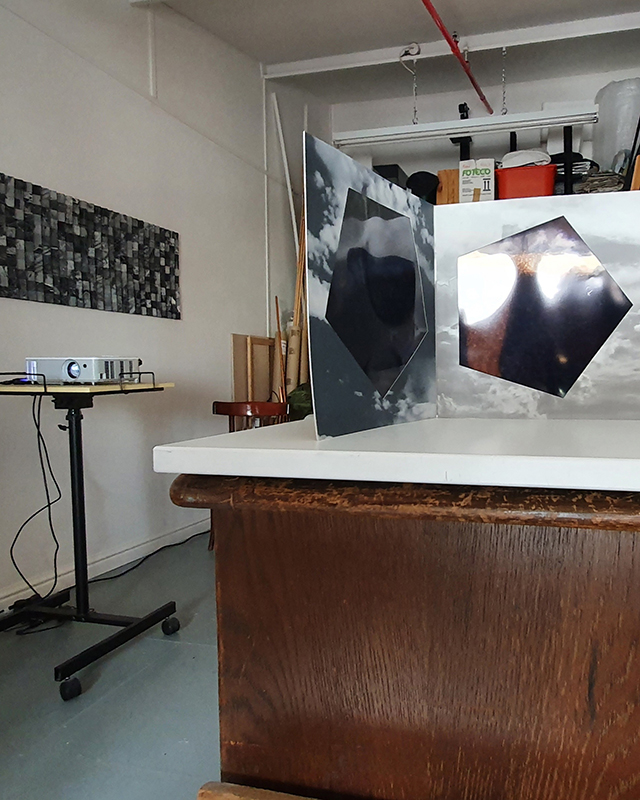
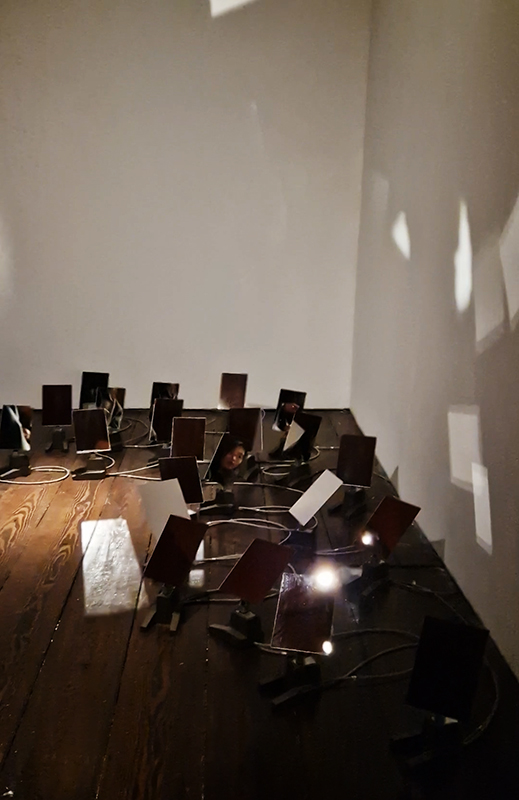
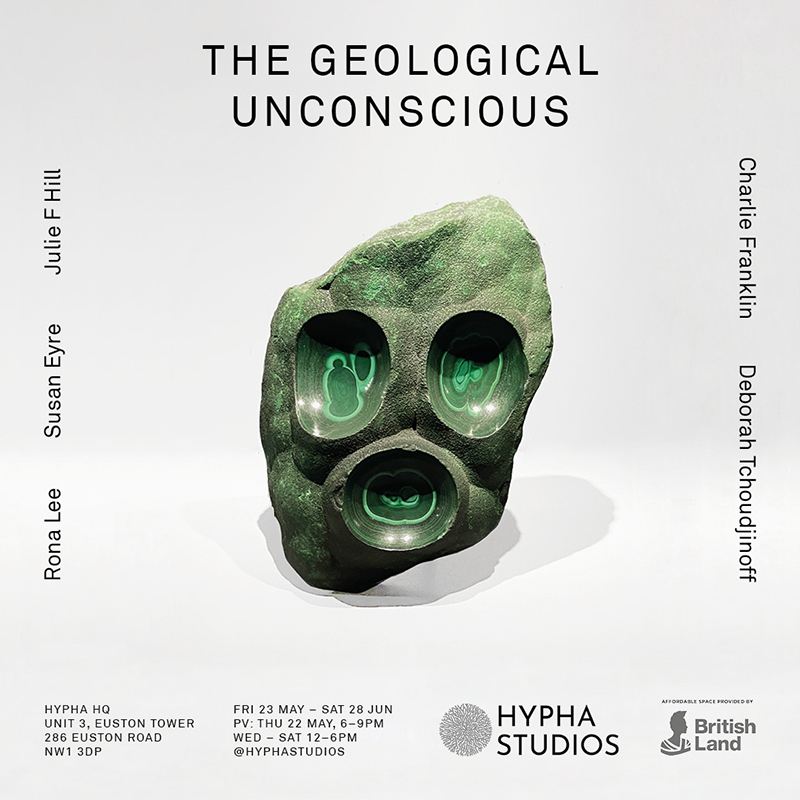
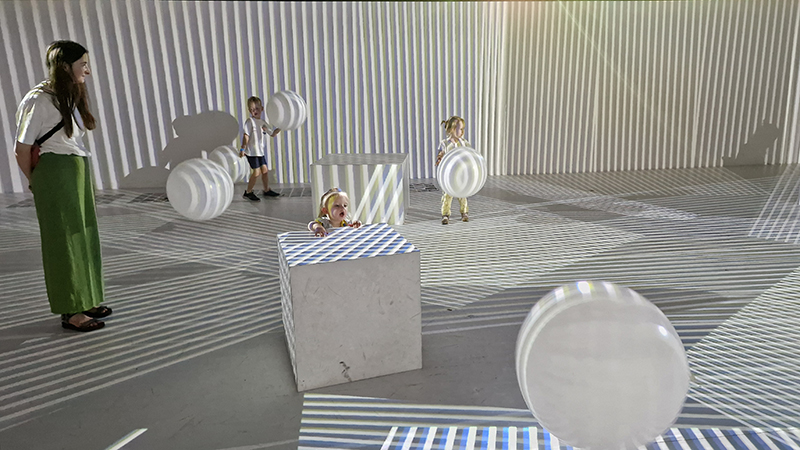
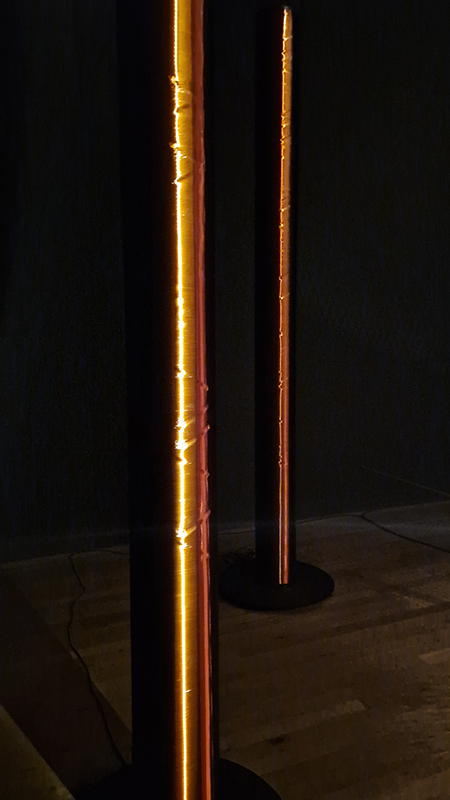
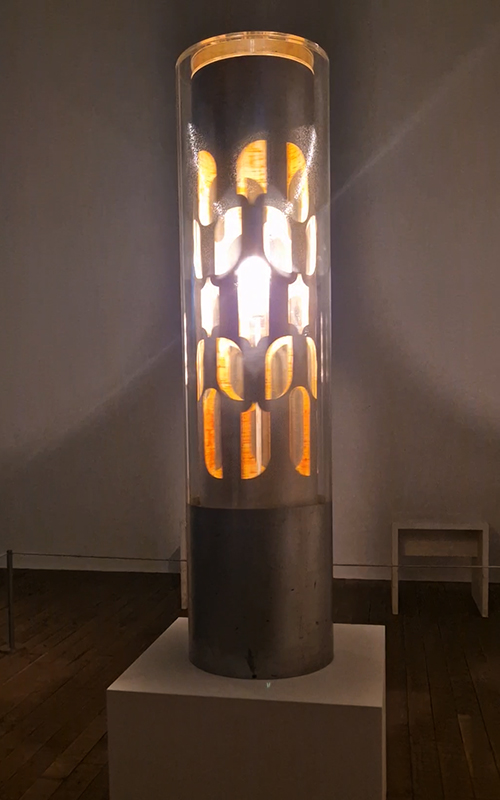
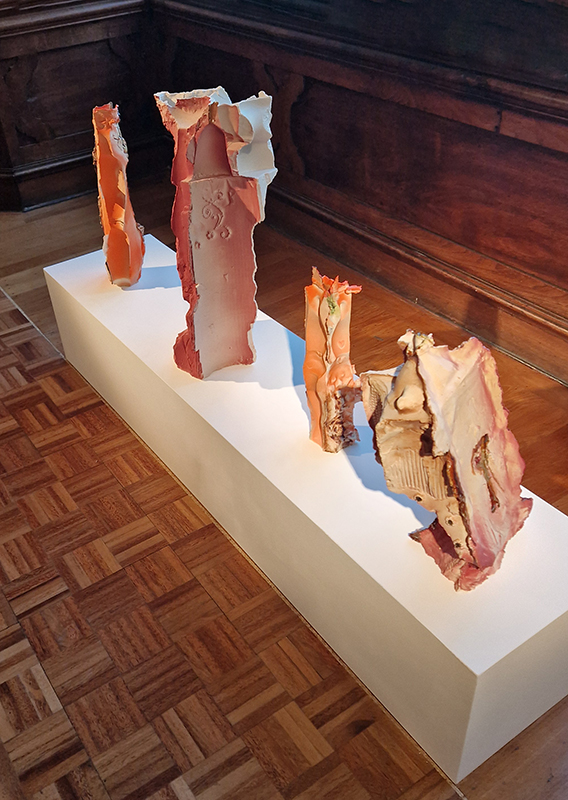
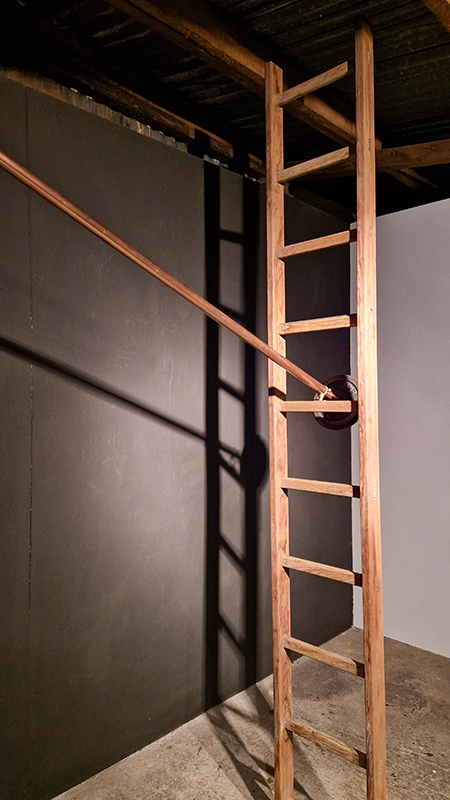
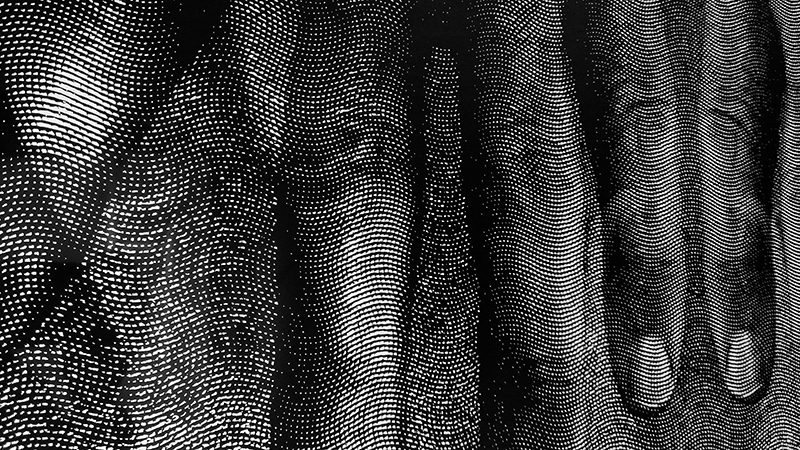
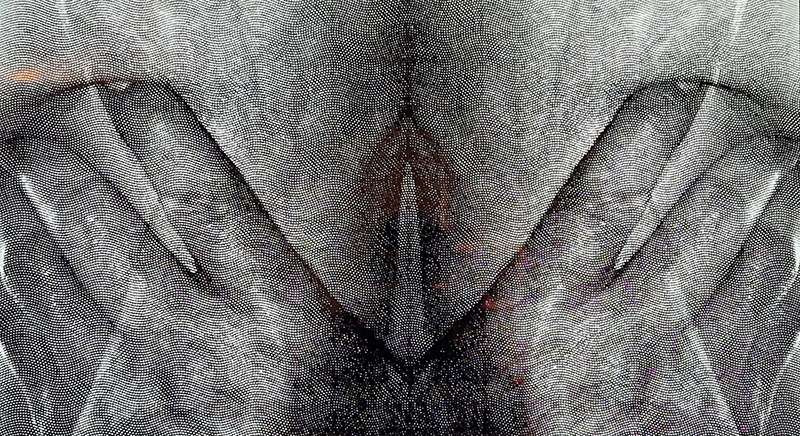
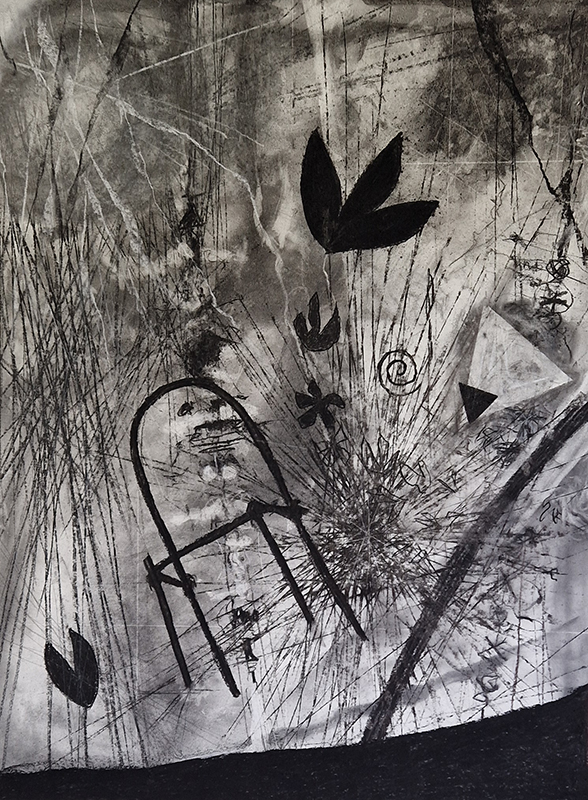
The Geological Unconscious opened with an exceptionally busy Private View. It was a fantastic evening with lots of great feedback. With a multi-disciplinary approach, large-scale installations and sculptural works sit alongside embroidery, video, expanded print and photographic work, to create material intimacies that help situate us in scales beyond the human.

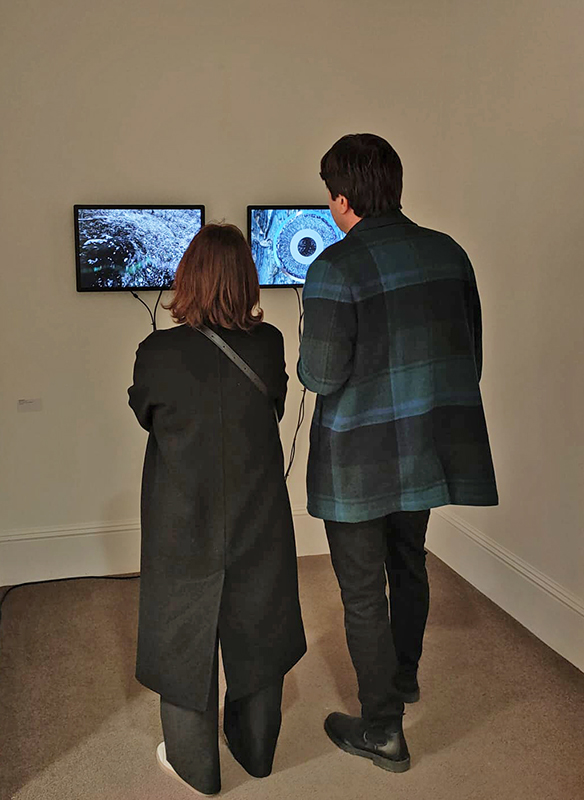
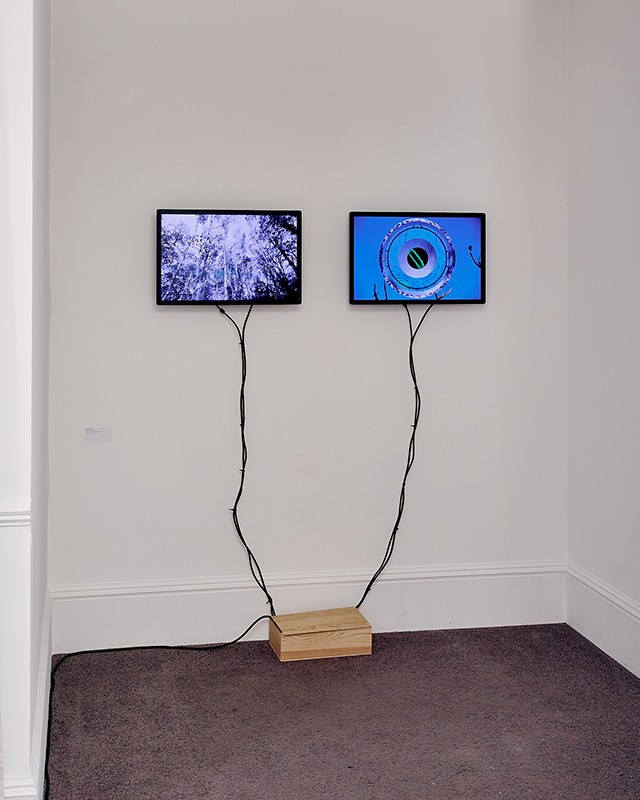
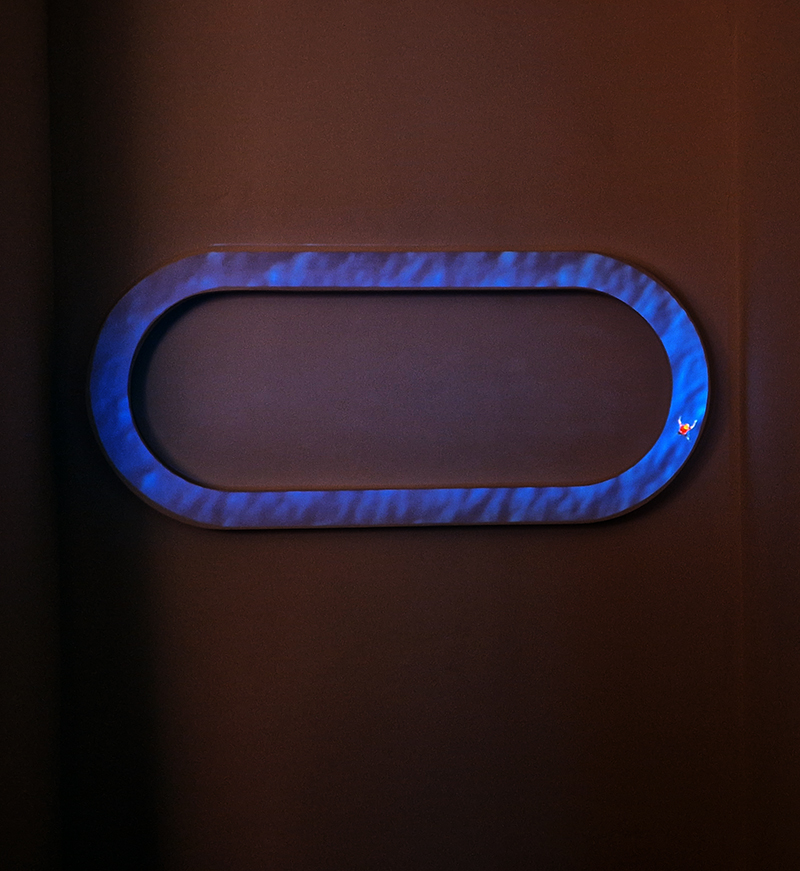
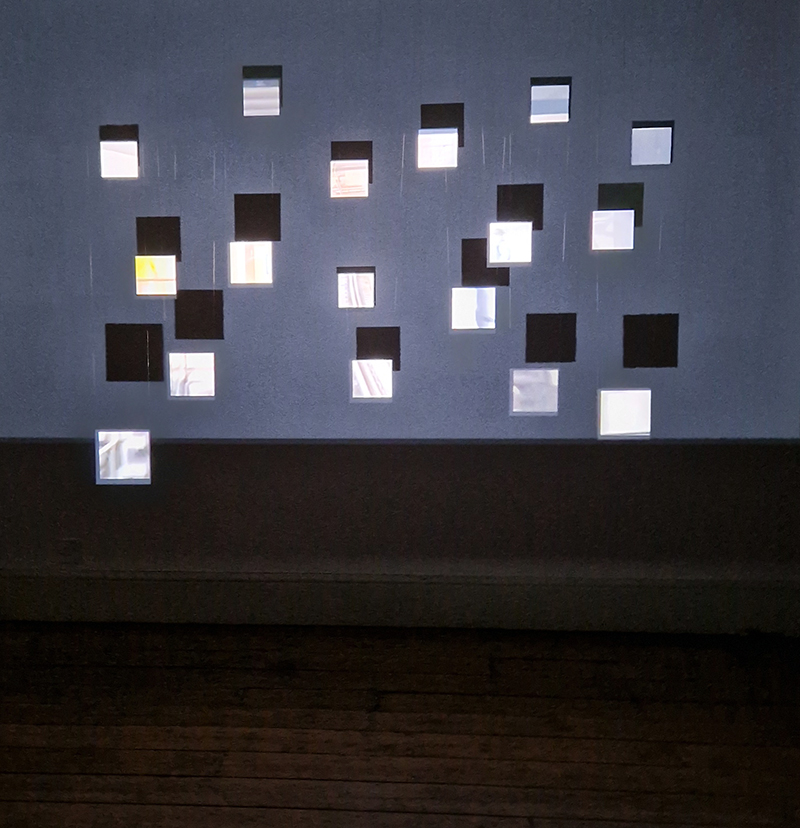
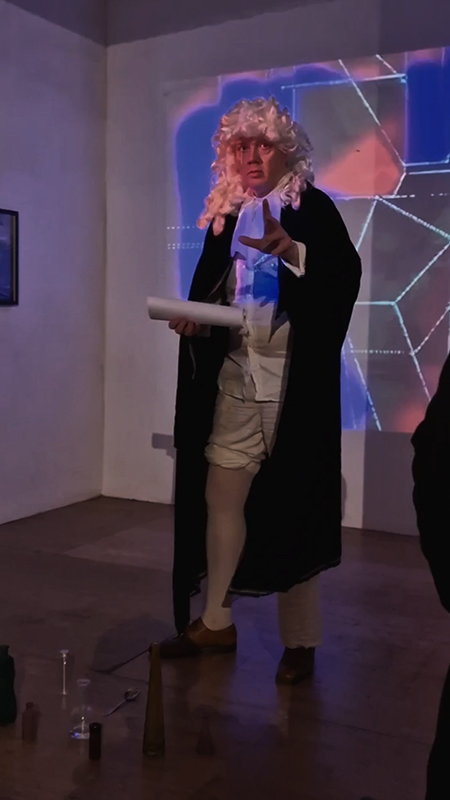
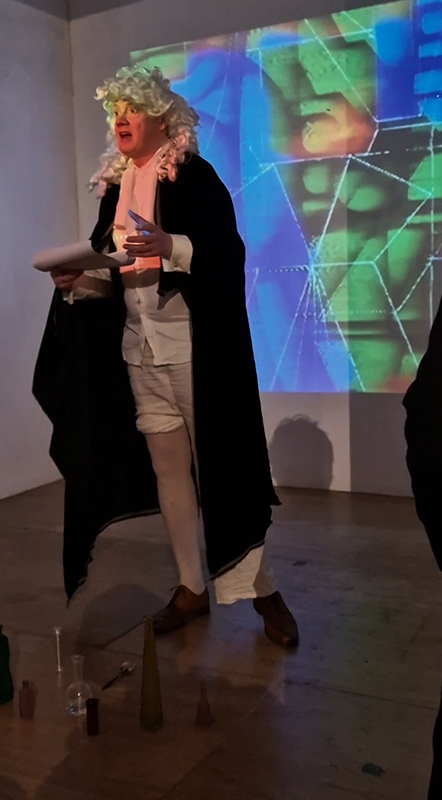
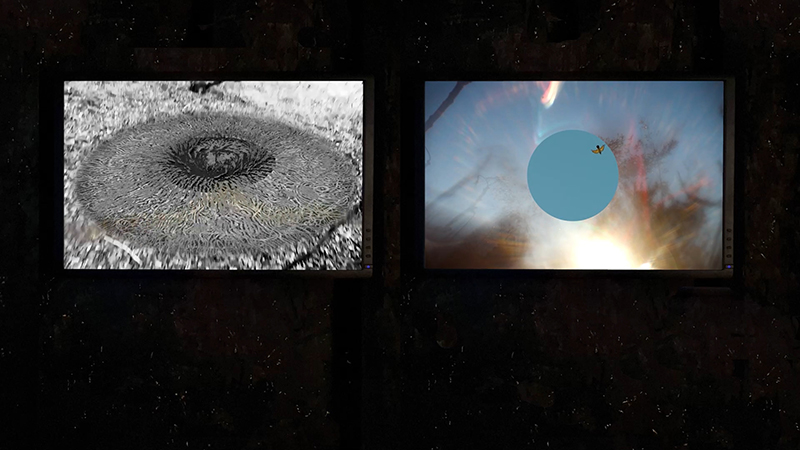
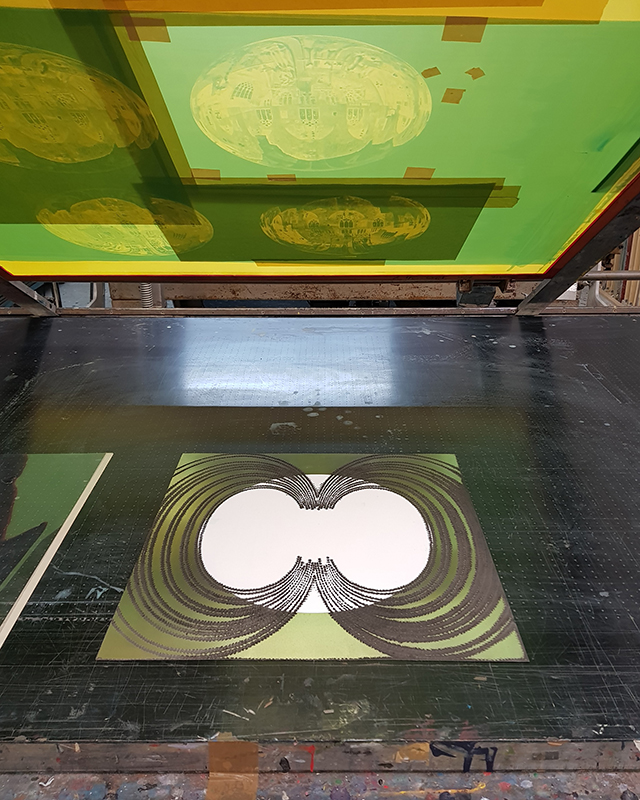
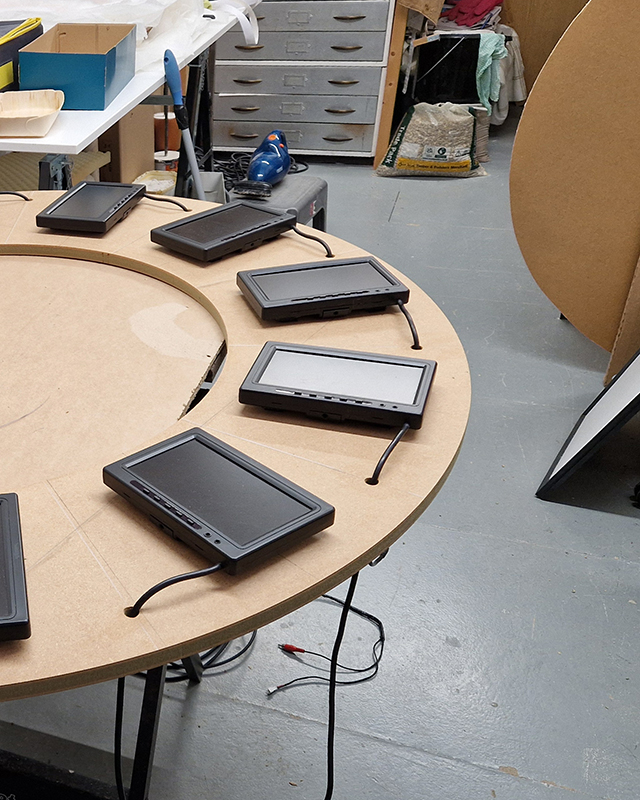
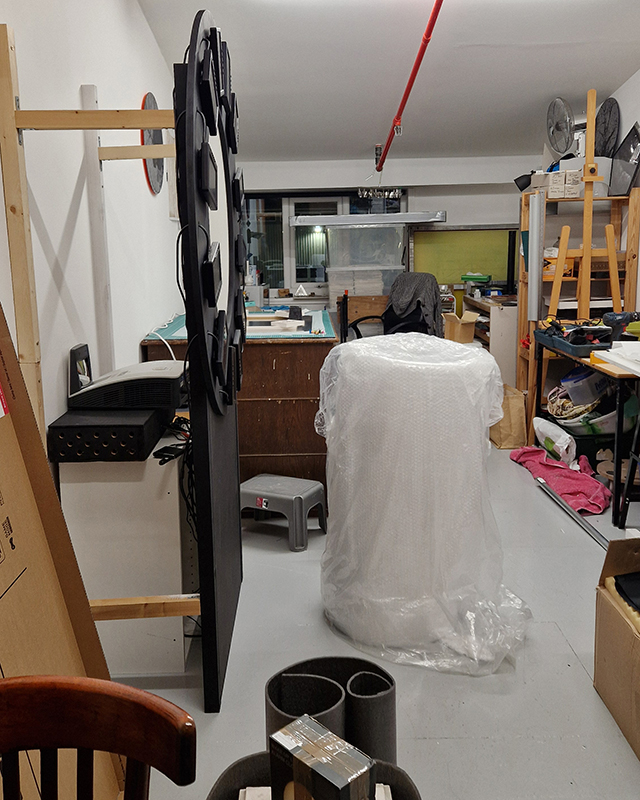
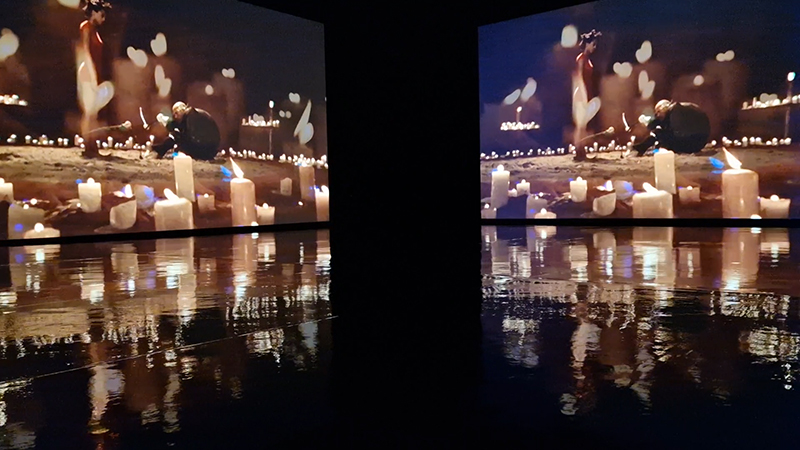
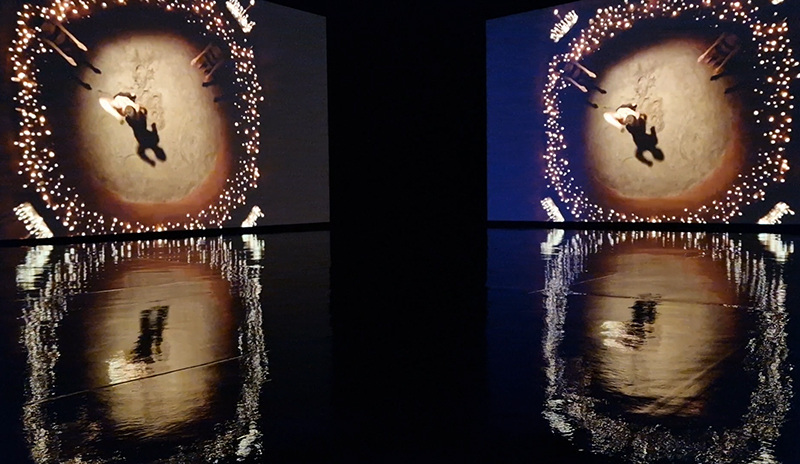
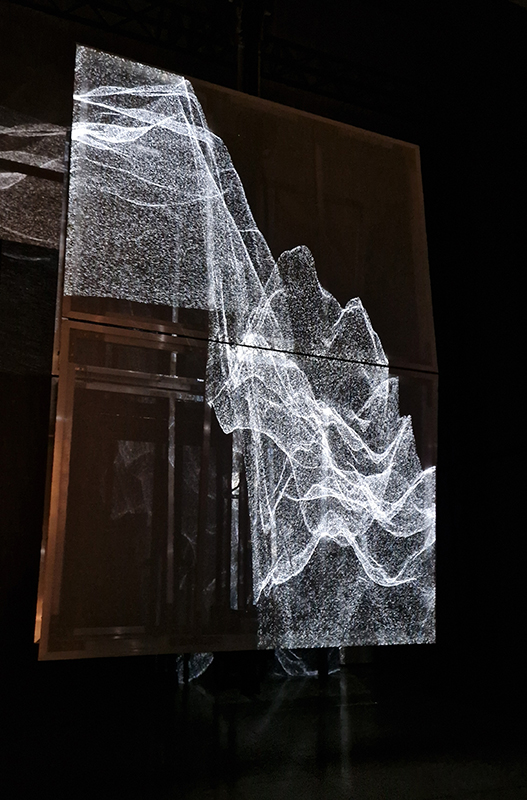
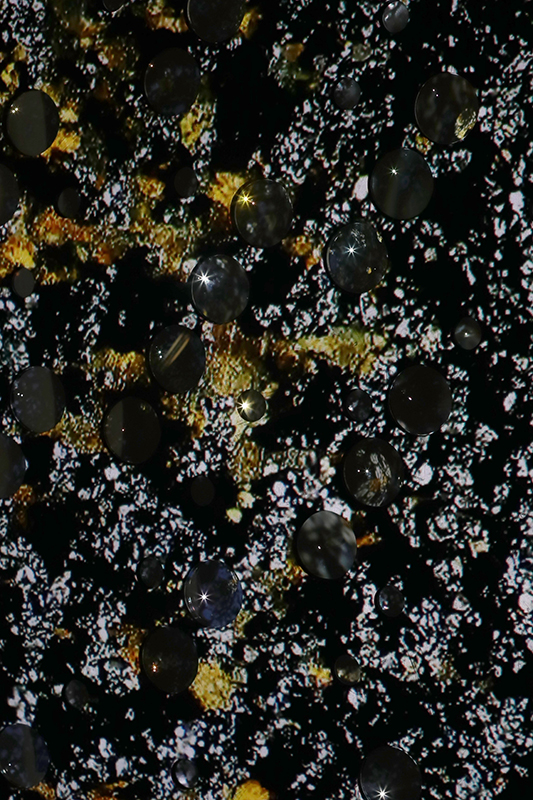
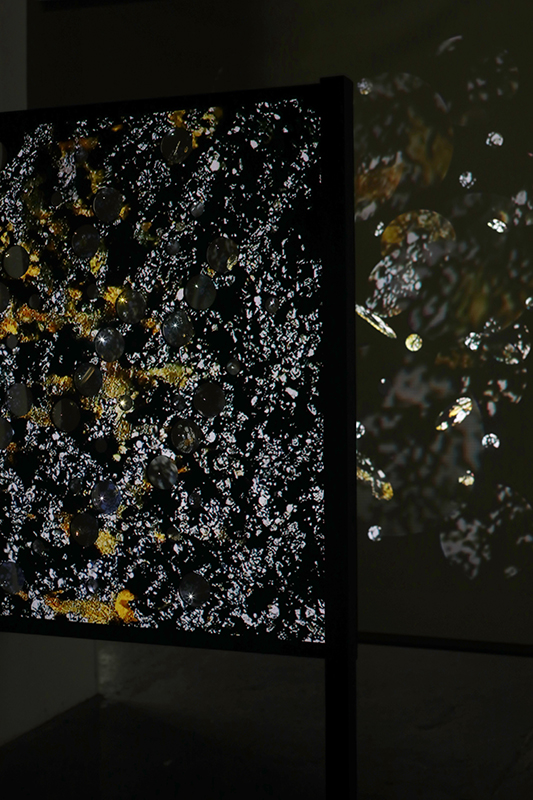
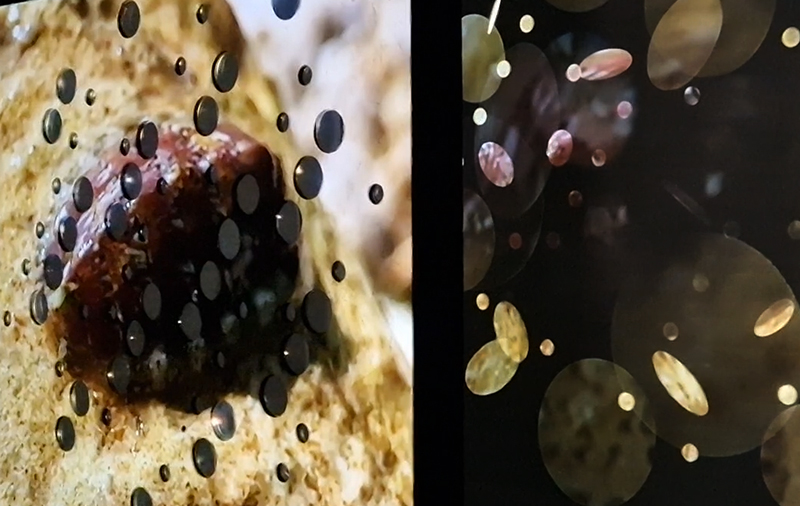
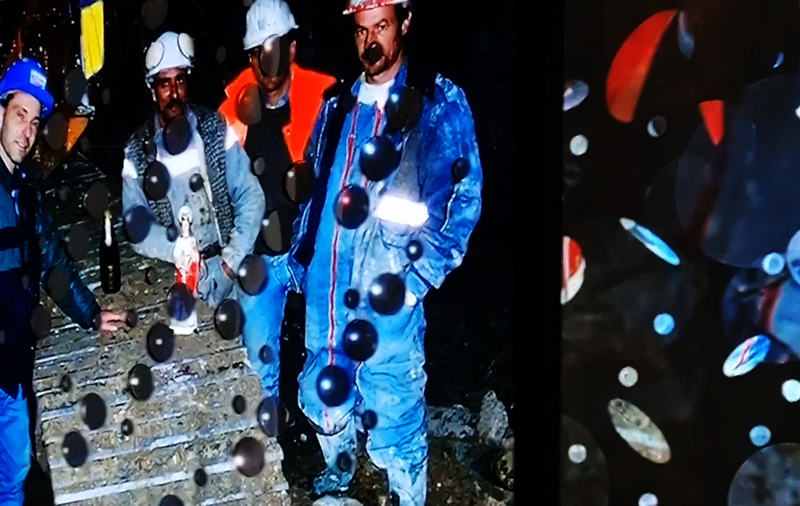
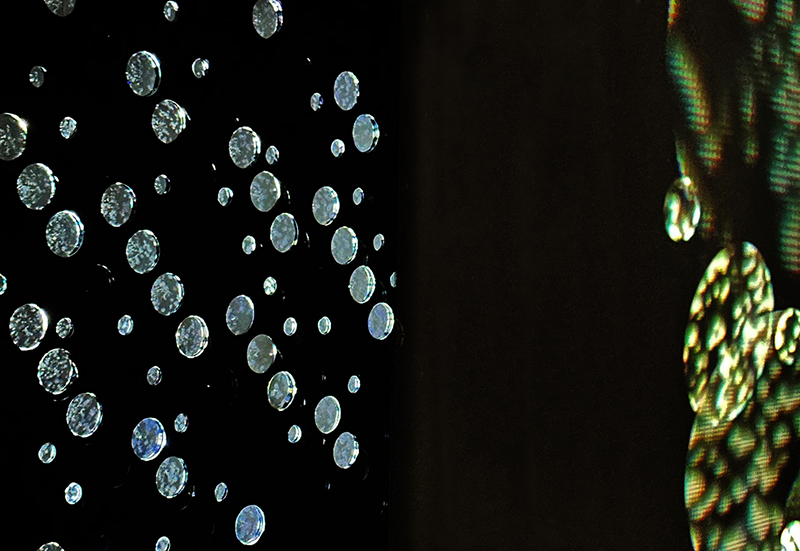
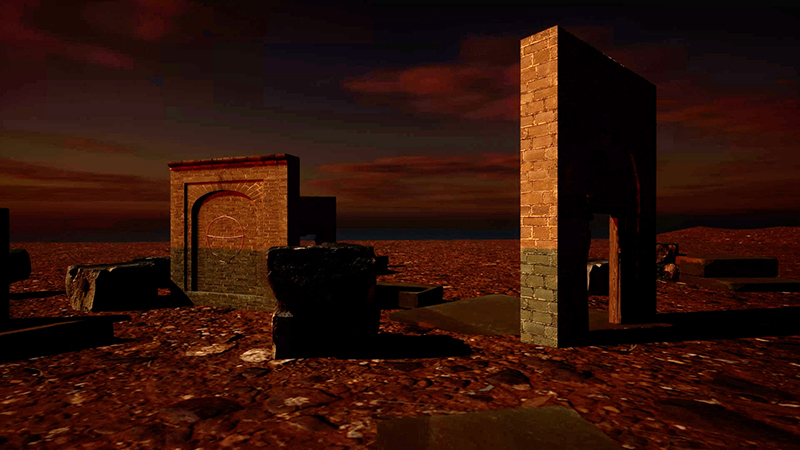
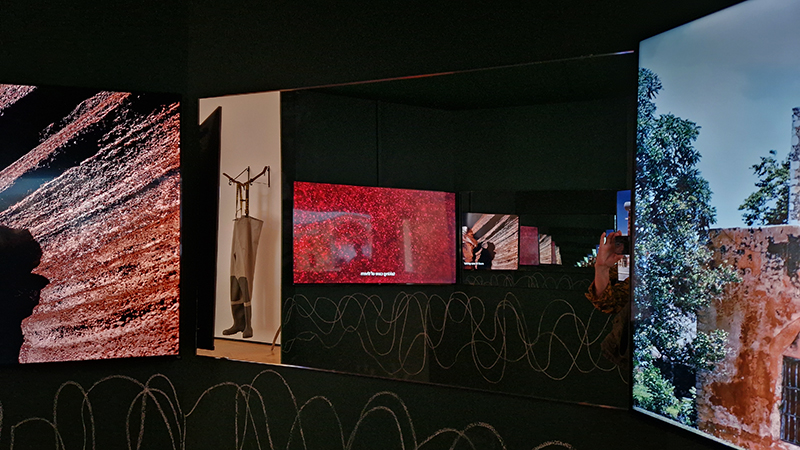
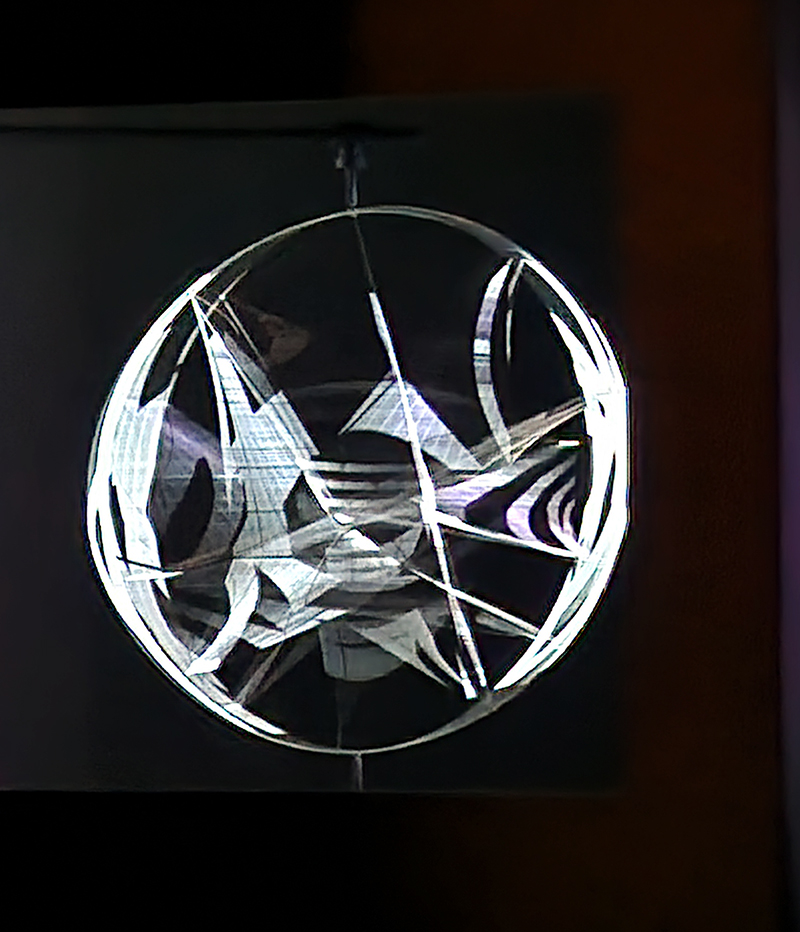
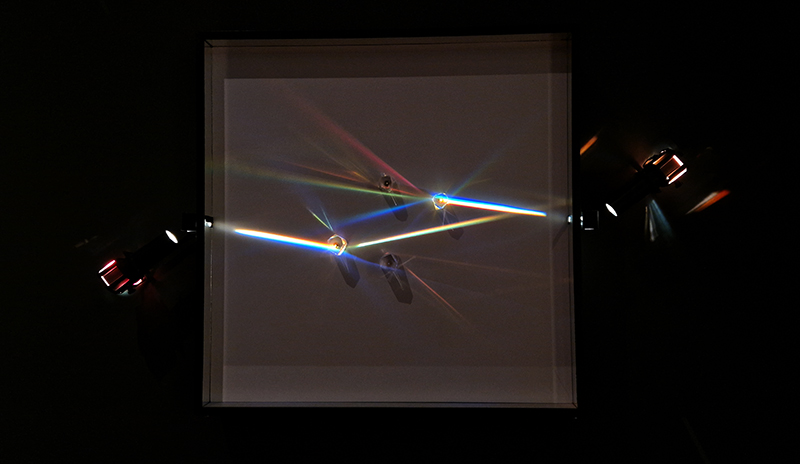
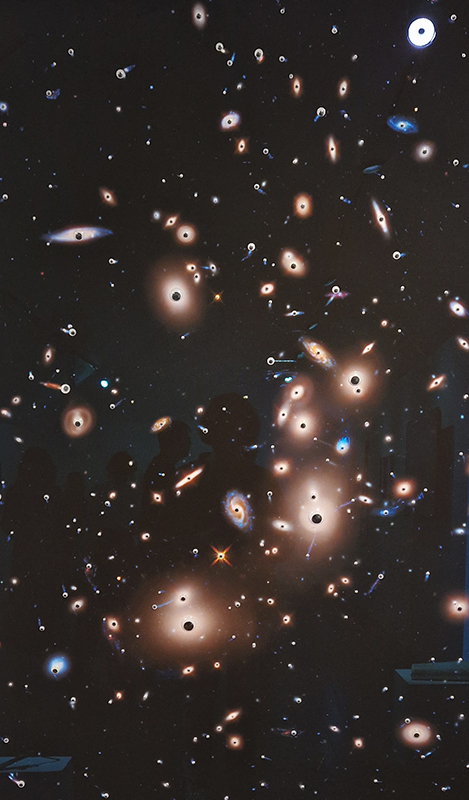
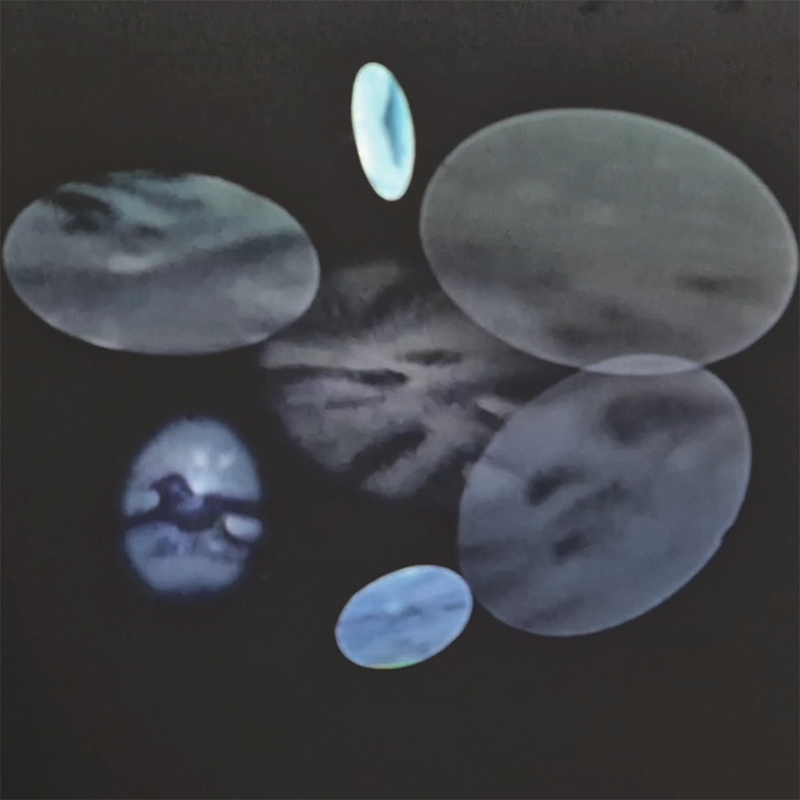
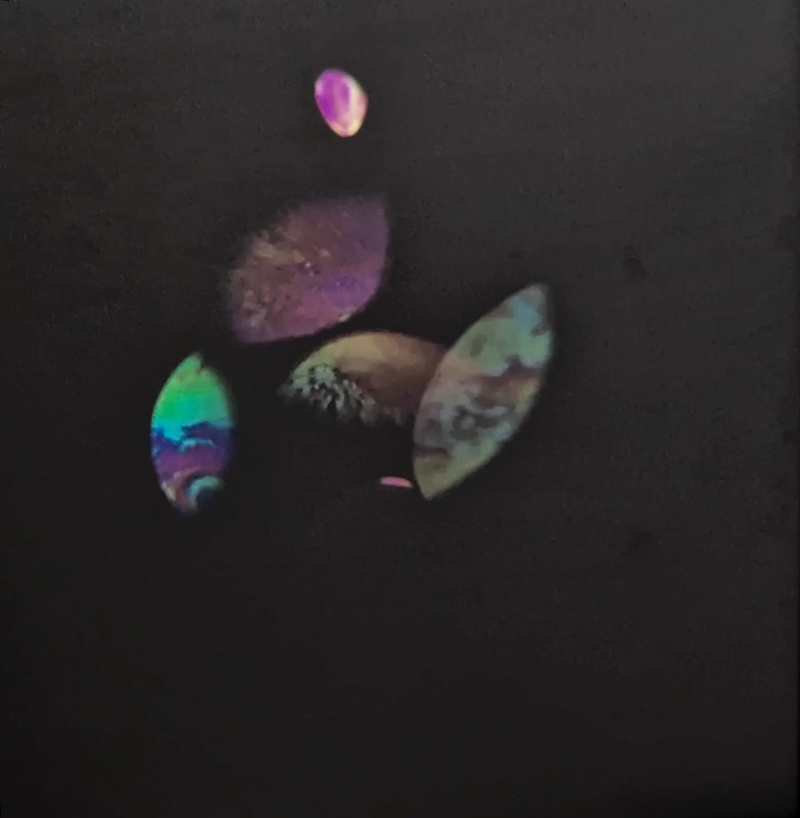
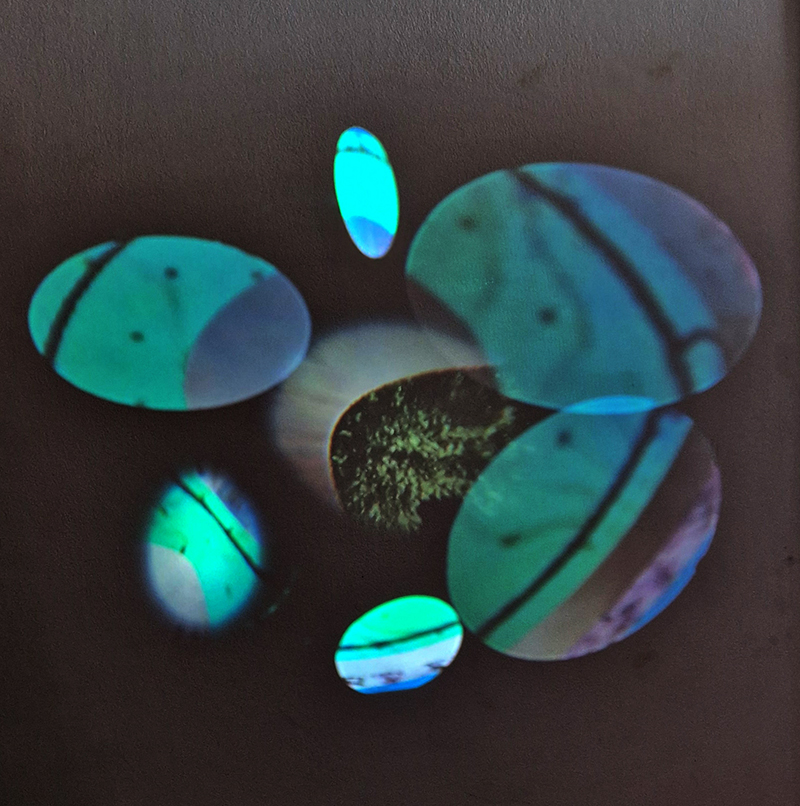
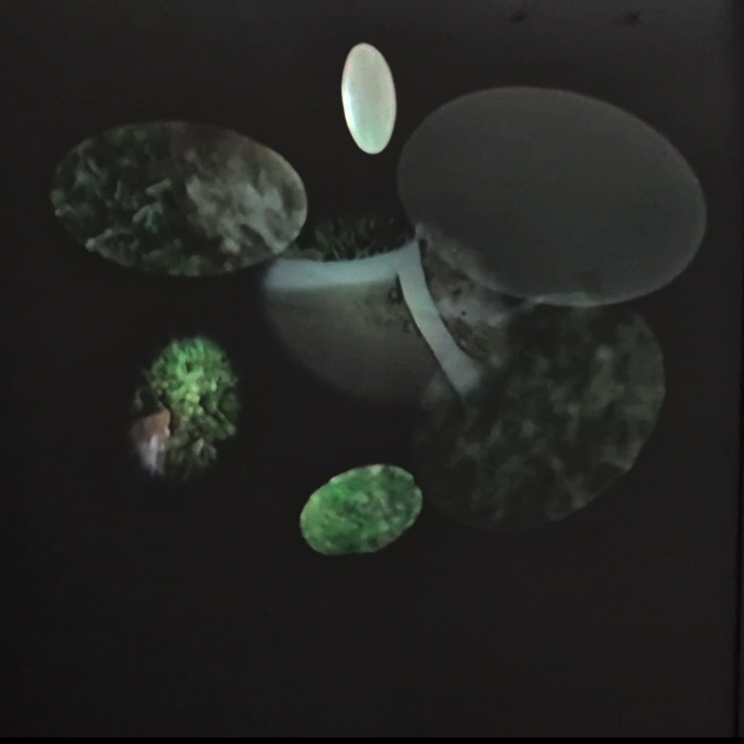
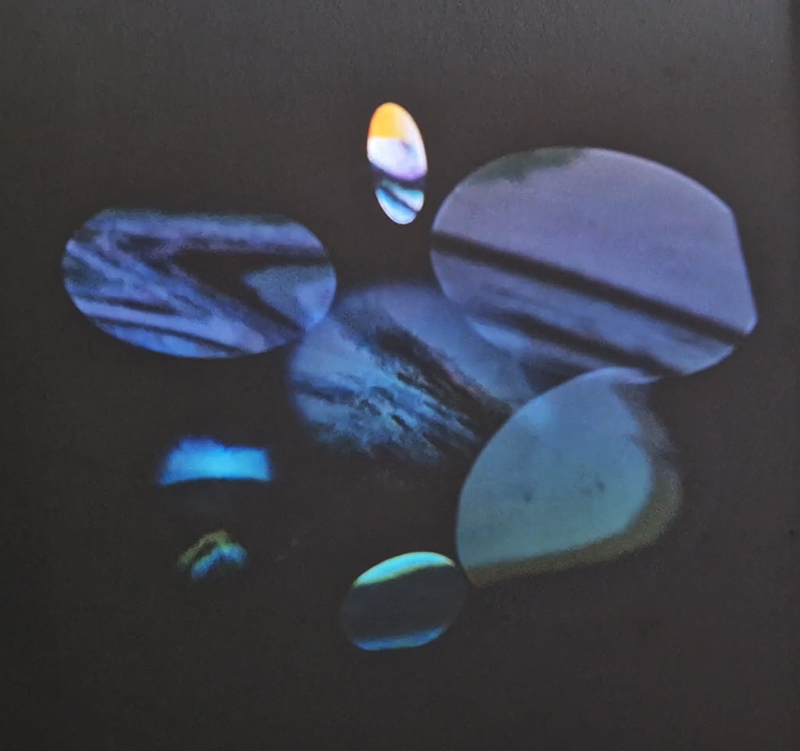
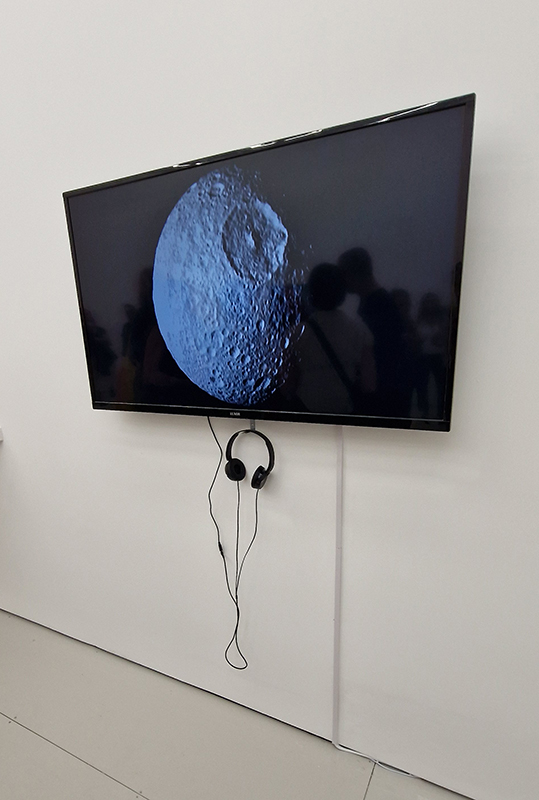
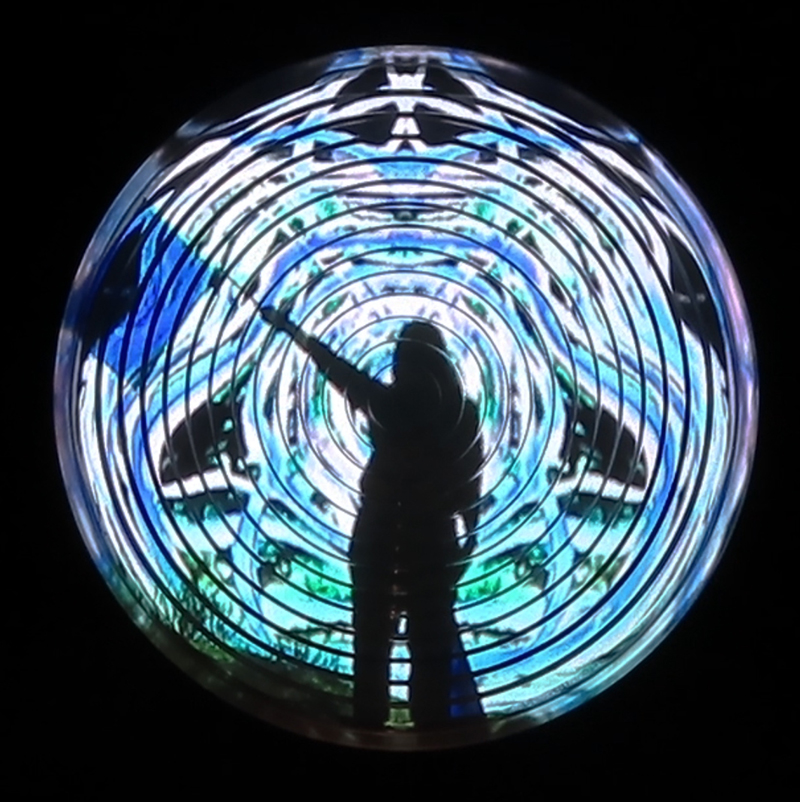
My video installation Lithos Panoptes imagines a view of the world from the perspective of the rock via the molecular structure of magnetite. Referencing a many-eyed giant of Greek mythology, Argos Panoptes (always eyes still awake), the work considers the perpetual vigilance of rock as record keeper and witness.

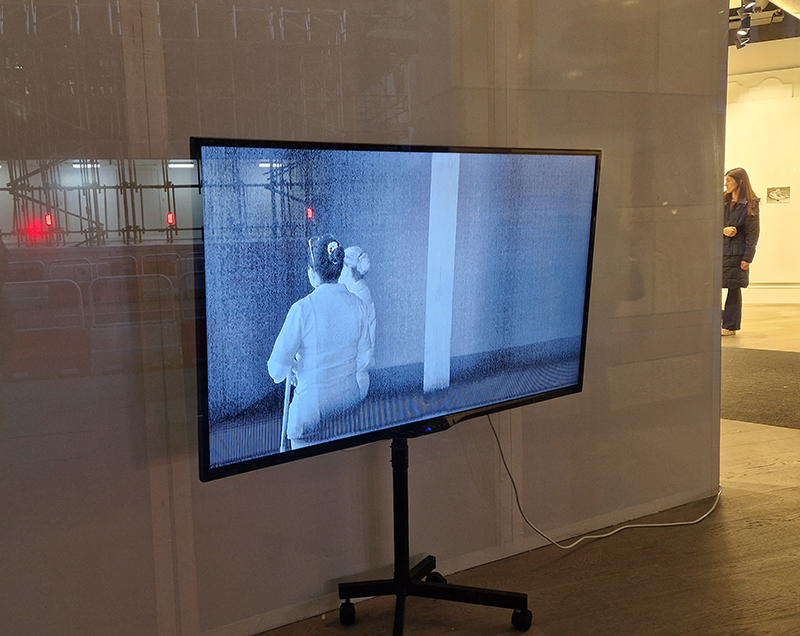
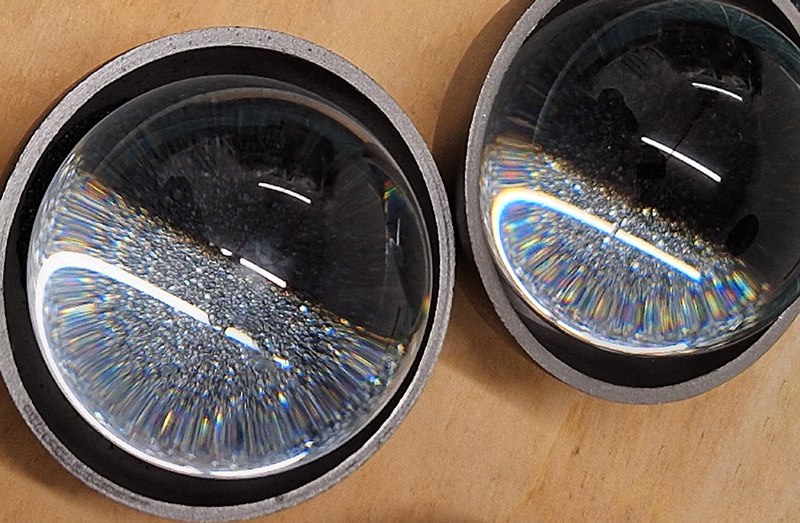
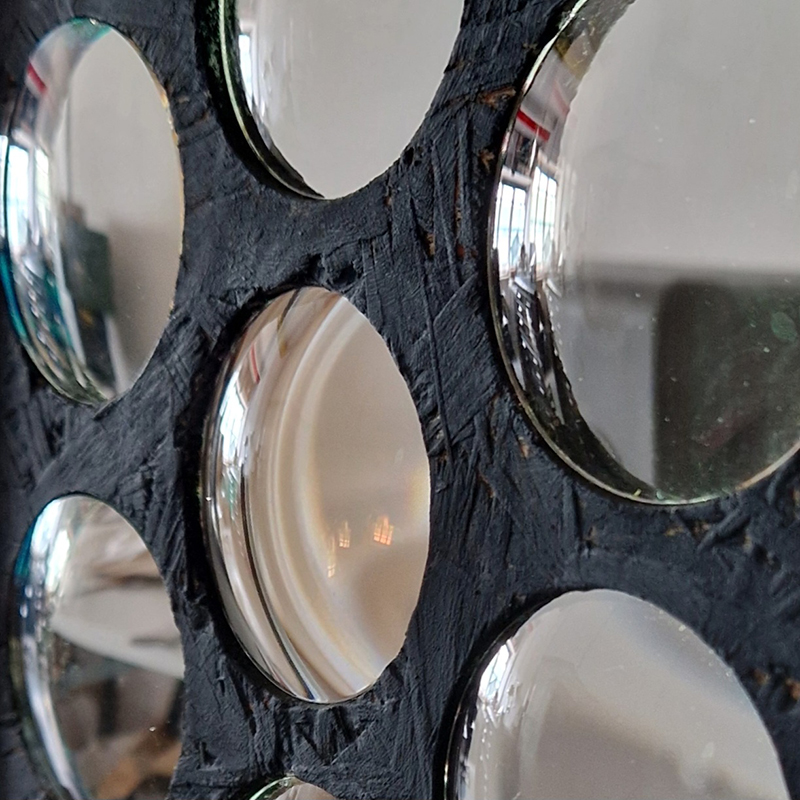
Video of human activity projected through distorting optical lenses transforms the anthropocentric position to imagine the perspective of the rock.

Magnetite is a mineral found in magma and metamorphic rock in Earth’s crust as well as in meteorites. Magnetite nanoparticles are also found naturally in organisms and are known to aid magnetoreception, a
means whereby animals and birds orientate themselves by sensing polar direction.
Through these actual and metaphoric lenses the relationship between the organic and non-organic is explored. Imagery includes allusions to scientific research into the dramatic overwhelming of innate magnetite in human brain cells by nanoscale pollutant particles of magnetite released into the air by traffic; the unique qualities of the chiton, a mollusc with hundreds of tiny eyes made from rock rather than biological material and teeth primed with magnetite and containing recently discovered mineral santabarbaraite; Saint Barbara, patron saint of miners and tunnellers, adopted when the use of explosives in mining escalated in the 1600’s and whose benedictions are still sought today with shrines installed at tunnel entrances at Crossrail and even at CERN, the epicentre of scientific rigour.

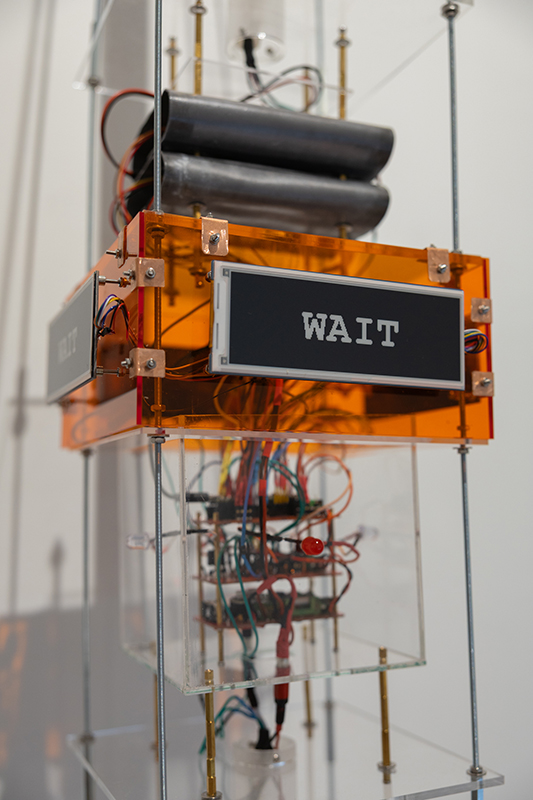
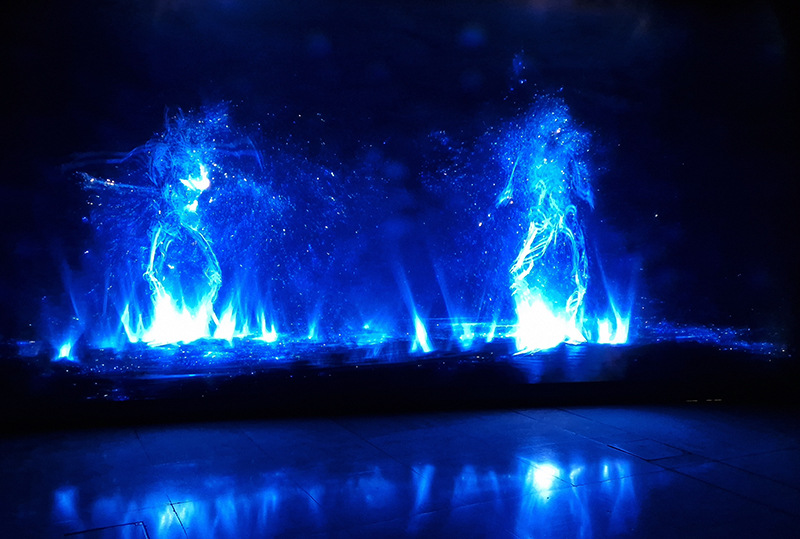
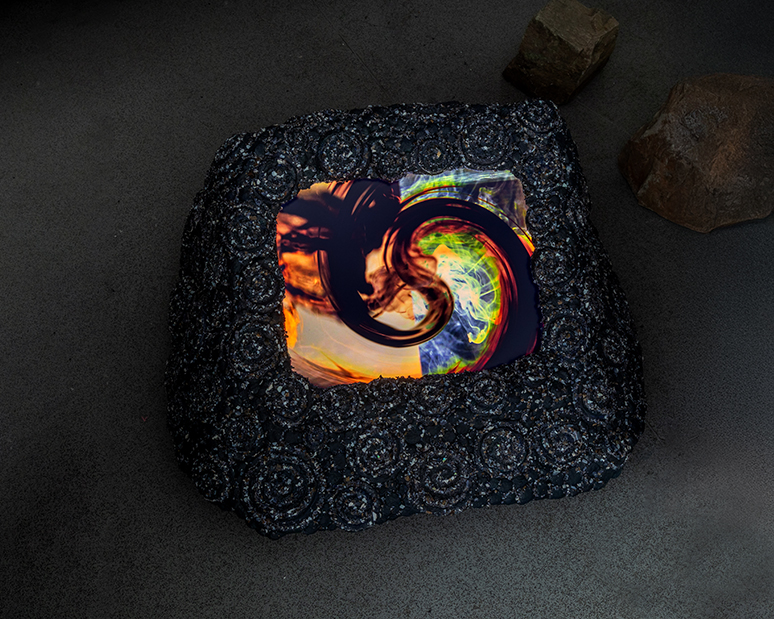
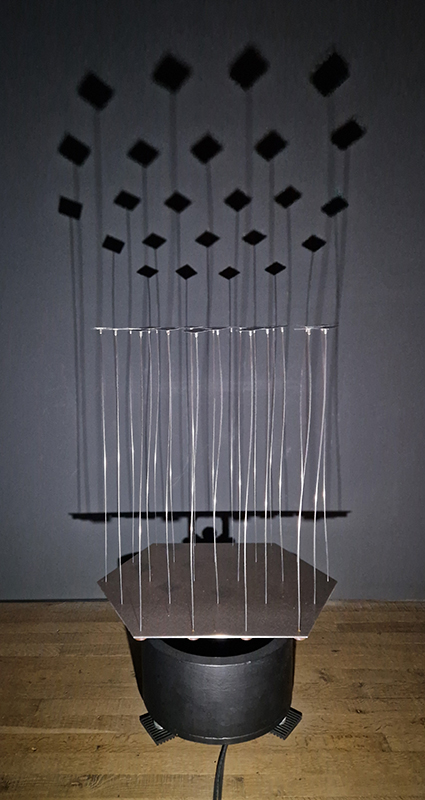
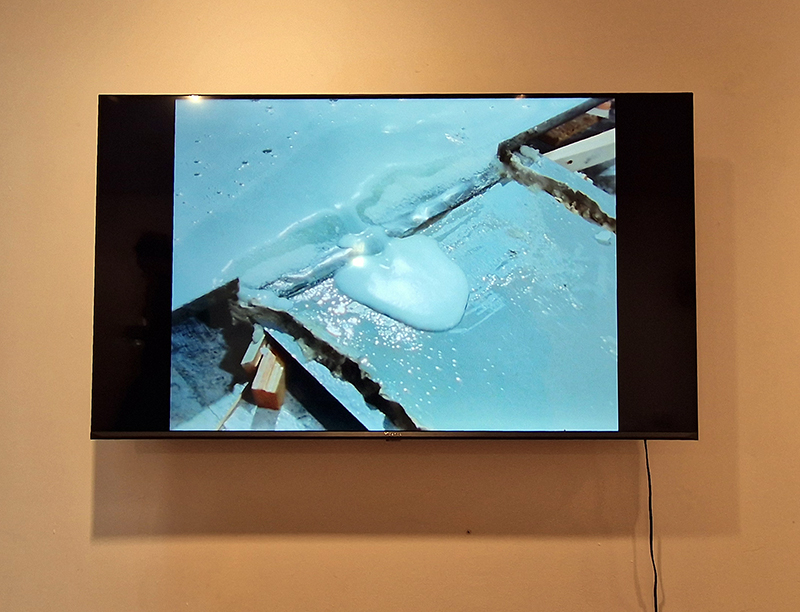
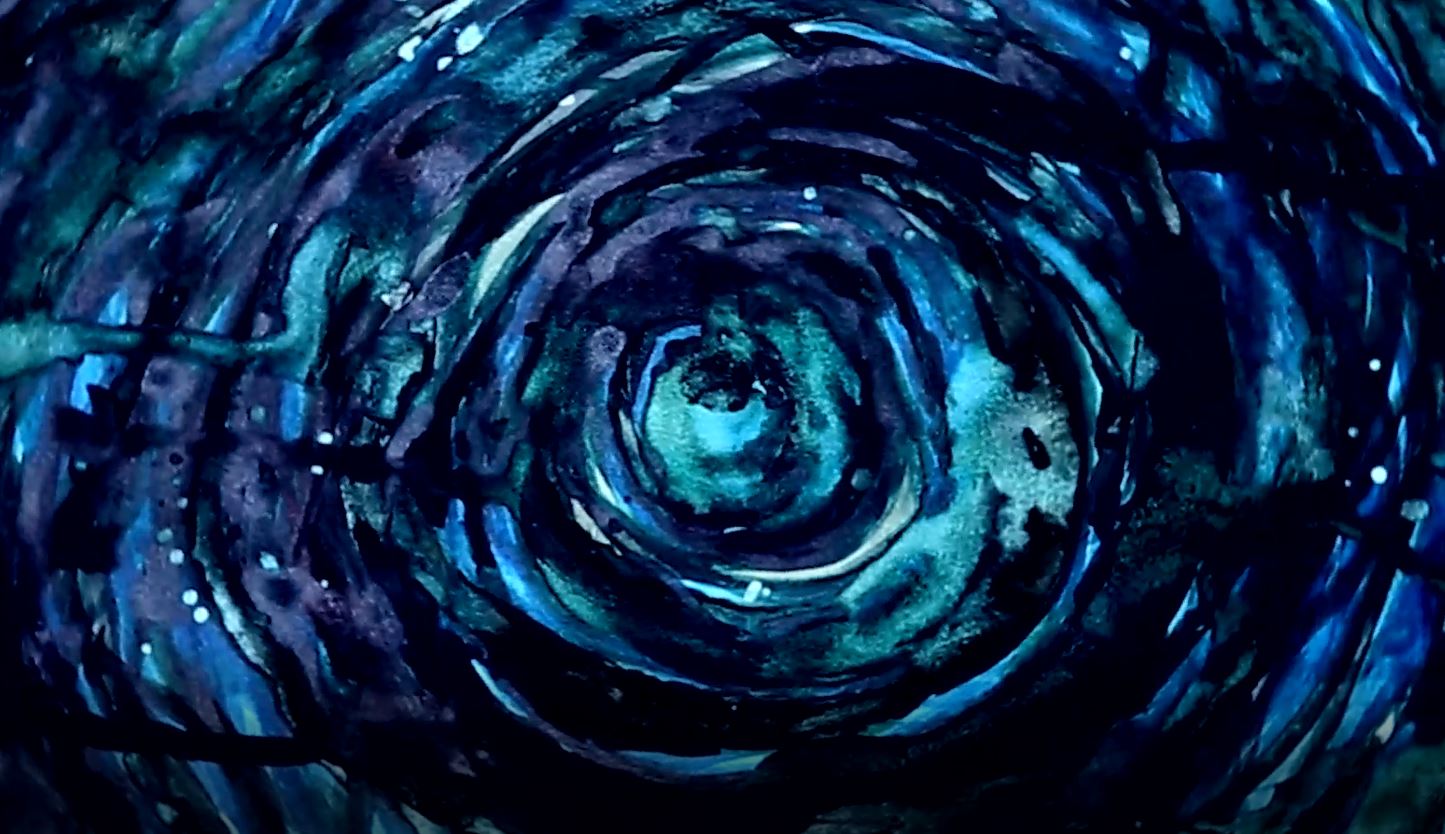
Also showing the video sculpture Belly of a Rock – describing an imagined place of chemical conversations at the intersection of the animate and inanimate. Under a crusted shell, surfaces slide and scrape along lines of fissure, distended innards ooze and rocks moan as they are distorted by untold pressure. The turbulent spiralling of the molten core births rock and lifeforms which are acted upon by the drag of an oscillating magnetic field.

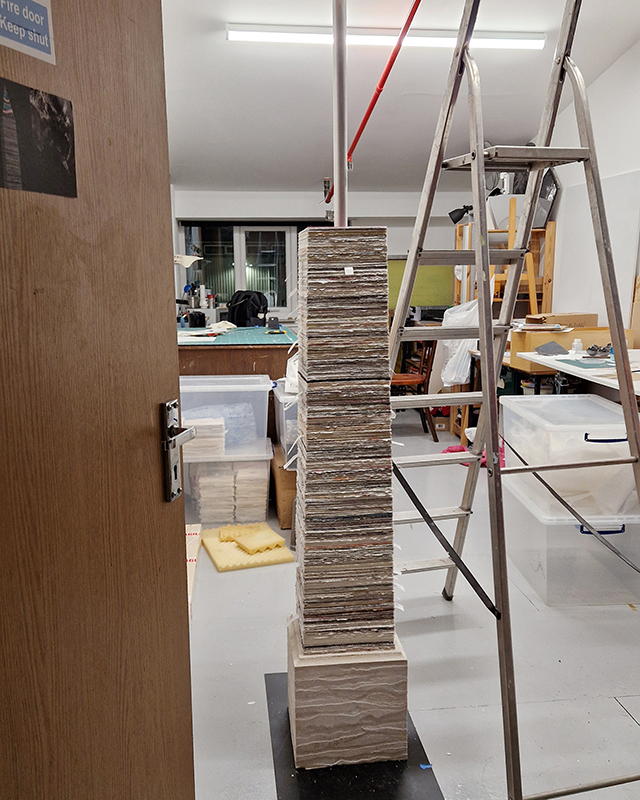
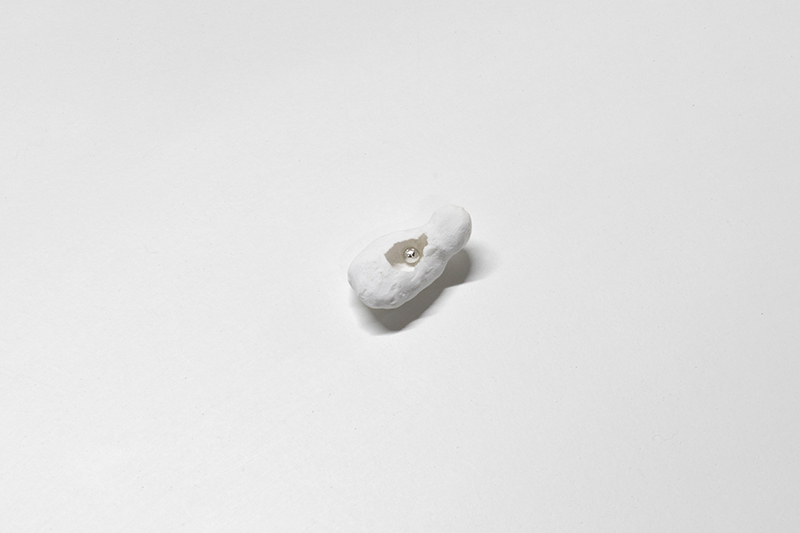
Julie F Hill’s large-scale sculptural print installation Parent Body, uses scanning electron microscope imagery of samples recently returned from asteroid Bennu. The data features detail of carbon-rich and organic ‘nano-globules’ which have been theorised as ‘proto-cells’. The sculpture evokes astro-geological-biological material lineages across deep space and cosmological time. In a contrast of scale, Julie is also showing Return, 3d print of asteroid Itokawa cast in plaster-of-paris with a bead of Iridium. Iridium is an rare-earth element more abundant in asteroids than the Earth’s crust. This miniature work considers the cross exchanges between space and earth and in a gesture of reverse sample return (scientific missions and human extractive processes both take), a bead of Iridium is returned to the belly of asteroid Itokawa.

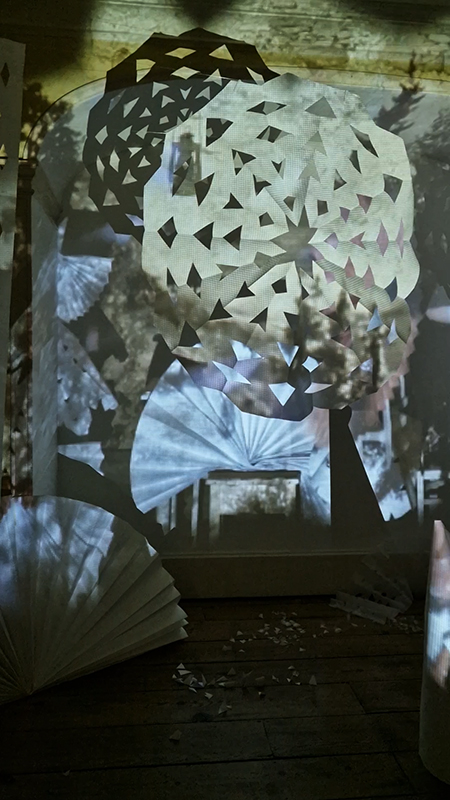
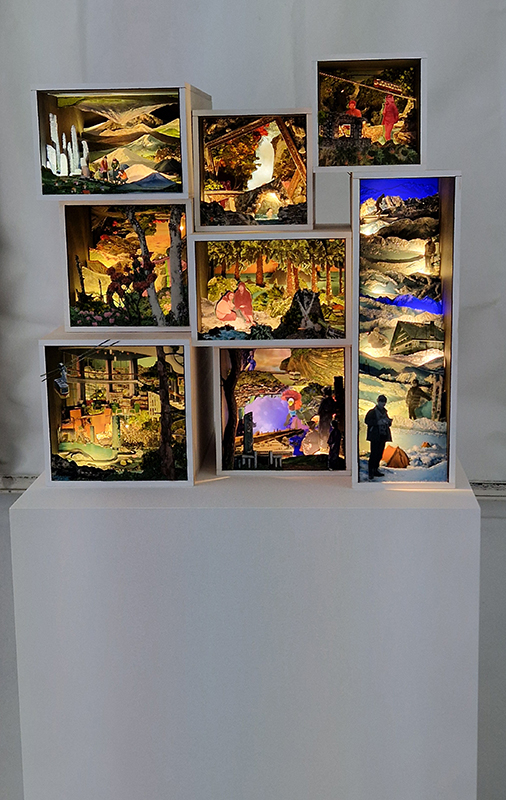
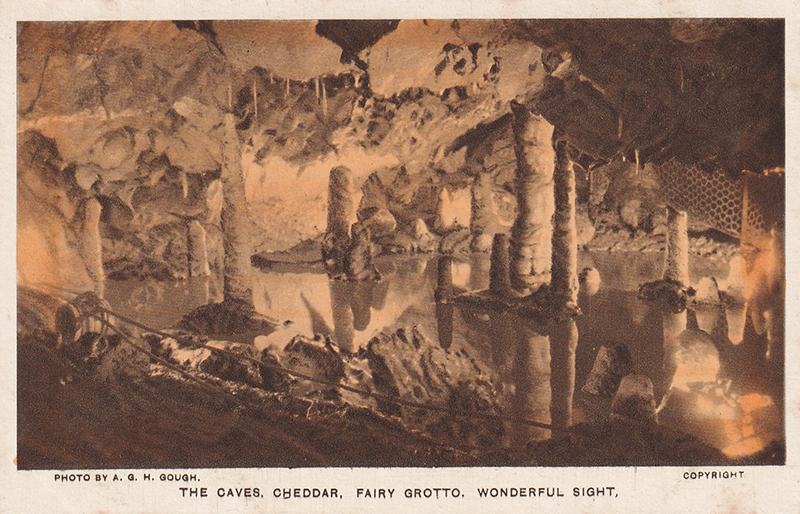
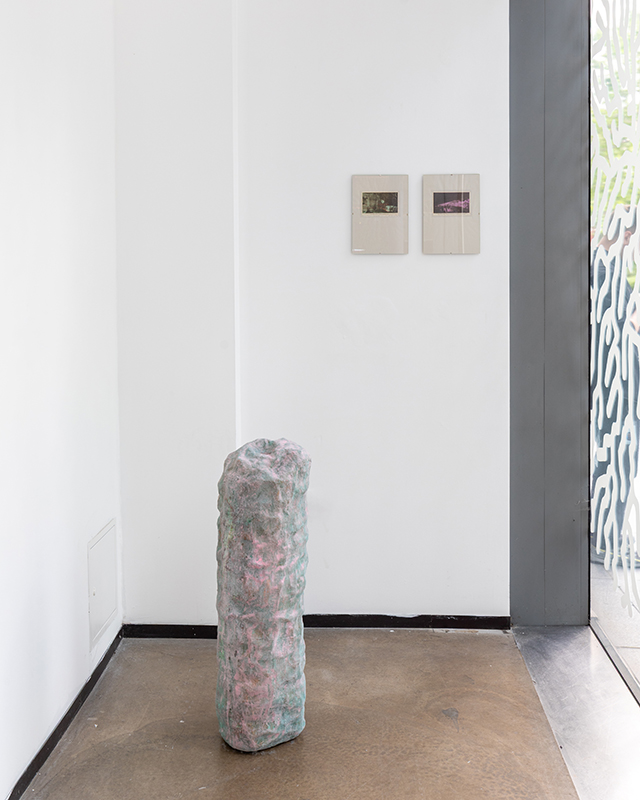
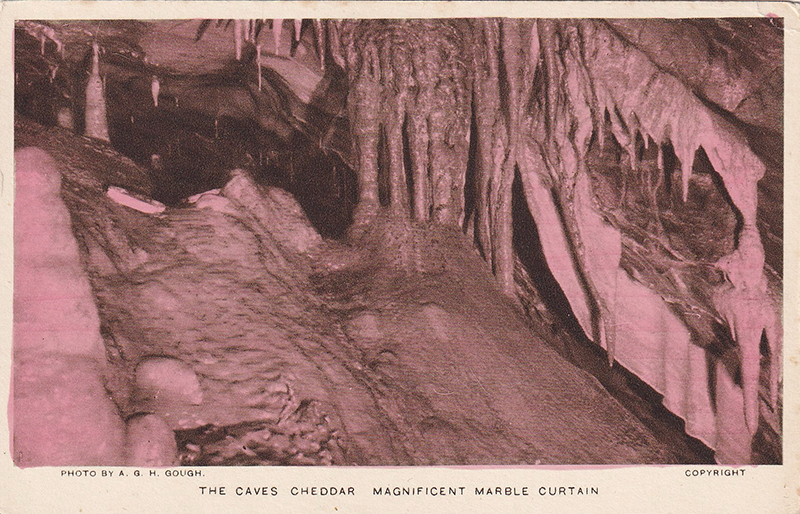
Charlie Franklin’s work considers control, physical experience and memory within the natural landscape. Her research includes how formations such as standing stones, grottos and geological debris remain or change across time. With a particular interest in materials and the properties they hold, she is experimental in her approach to making. Everyday items including cardboard, plastic sheeting and gaffer tape are repurposed to build the foundations of her sculptural work. Franklin also collects found imagery such as postcards and photographs, which she reworks to become something else.


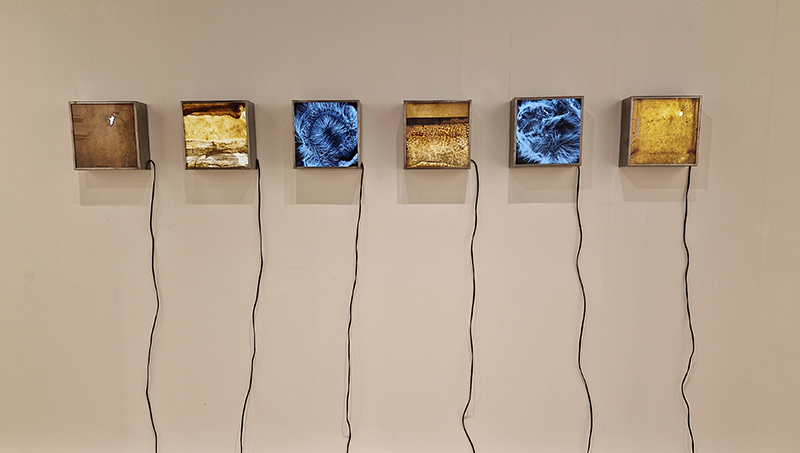
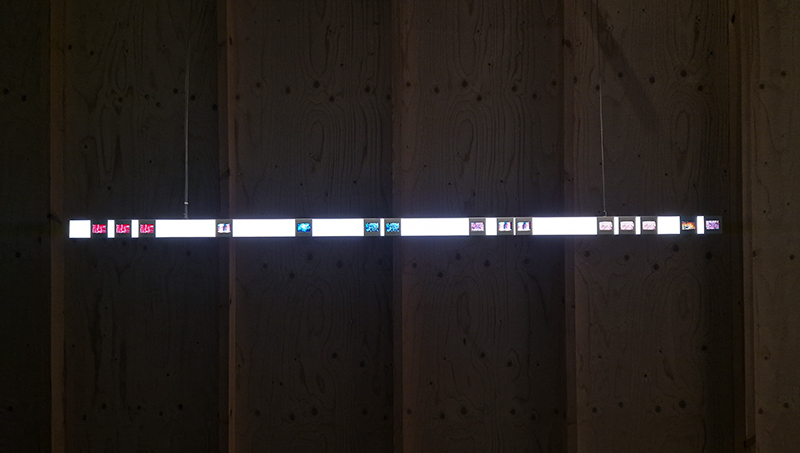
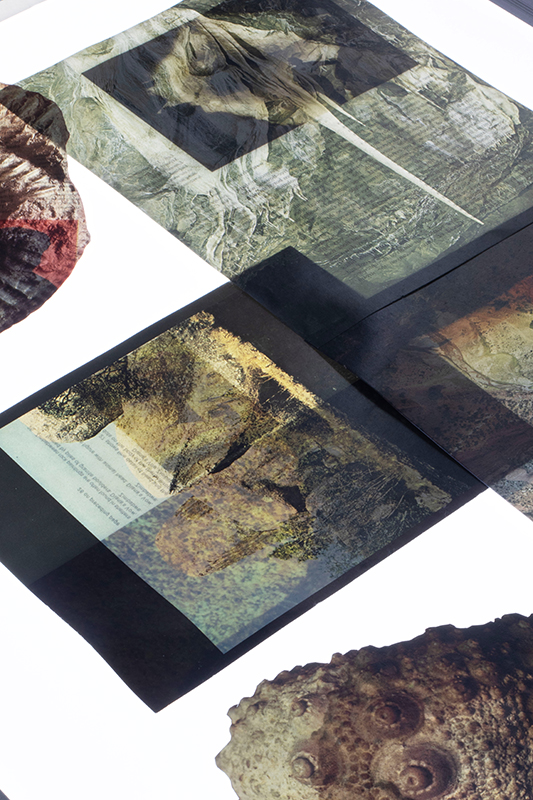
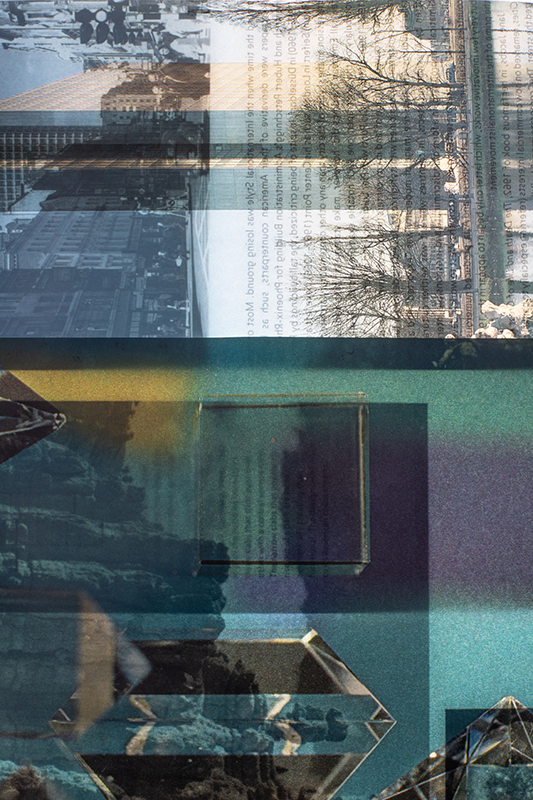
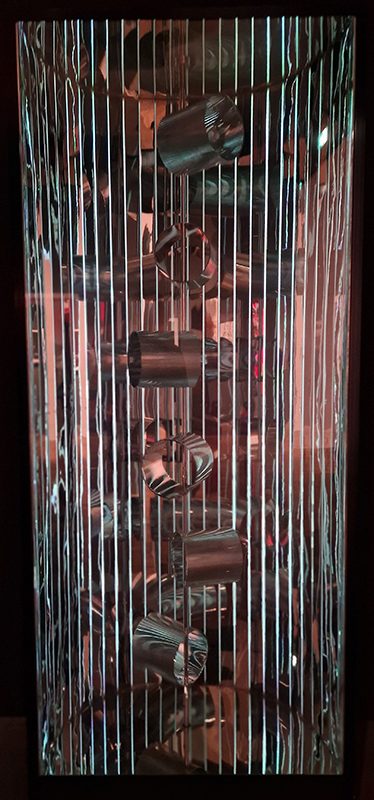
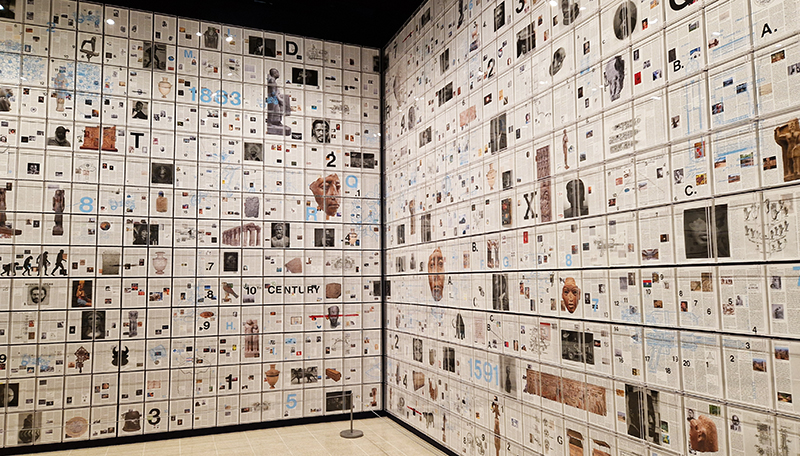
In Litho/Domous, Rona Lee layers photographic plates from mass produced ‘coffee table’ books onto lighting panels, utilising the ‘bleed’ between them that this reveals, to evoke the tectonic instabilities of
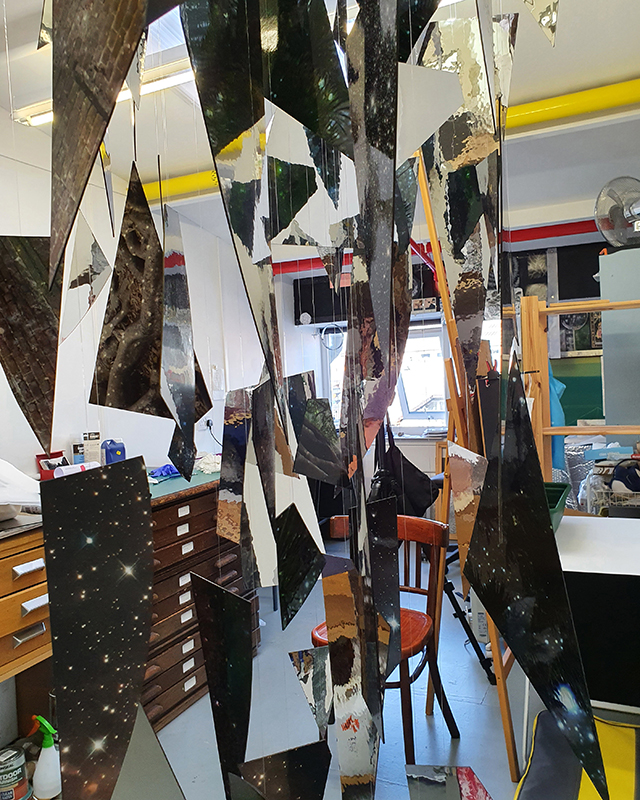
contemporary eco relations. Originating in the post war ‘golden age of capitalism’, and designed as statement pieces for home display, the aspirational focus of these image-rich publications on culture, travel, landscape, can be said to prefigure the arc of the smartphone in making the world consumable. At the same time titles such as The Mineral Kingdom and Library of Nations speak to the legacies of the Enlightenment project, offering up an order of things in which Mankind / the Anglophone world is positioned as ascendant and Nature – along with ‘other’ cultures – is ‘put on the table’.

Deborah Tchoudjinoff’s video installation The City of Gold takes a speculative look at Earth in the far future. Her work considers vast, beyond human, geological timescales where continents have once again become one. Past supercontinents create room to speculate upon future ones if we understand Earth as shifting, moving matter. Starting as a short fiction text Tchoudjinoff began to form an imagined world of cities in a future supercontinent of Amasia. The fictional cities named after the minerals that are heavily sought – rare earths, copper, uranium, gold, and coal – hinting at the narrative of an Earth depleted of the resources we rely on. The City of Gold is one of five imagined cities.

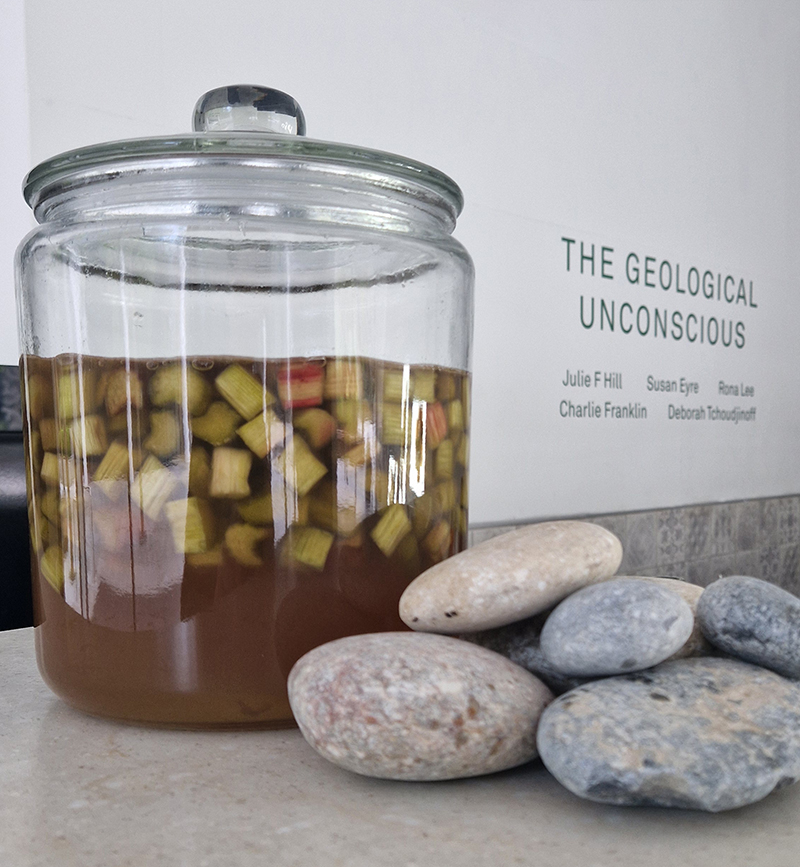
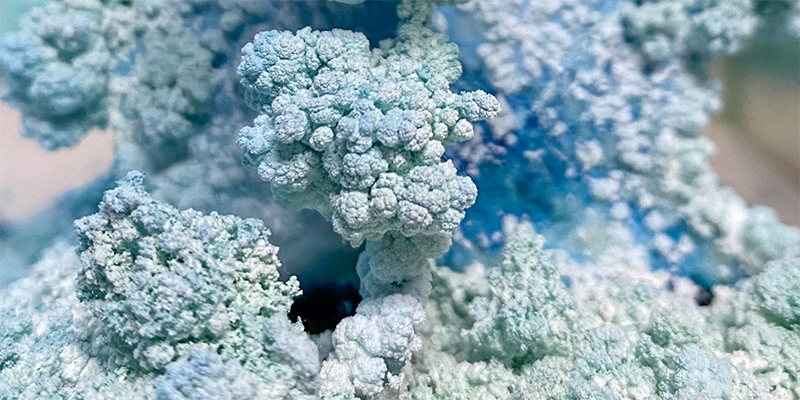
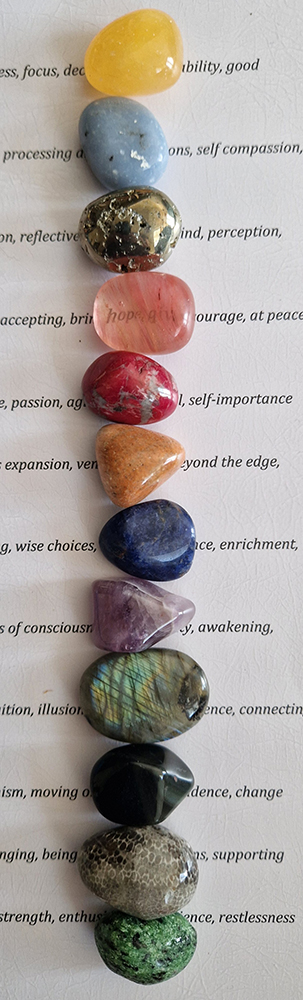
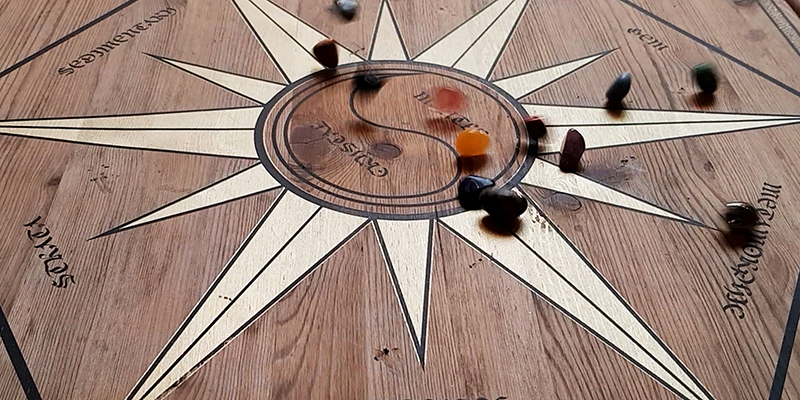
An accompanying events programme includes an urban geology walk with Geologist Ruth Siddall, discussing the origins of the local built environment; Cheong tasting by chef Moonhyung Lee who explores human-mineral entanglements through digestion; a crystal growing workshop led by Julie F Hill and I will be offering visitors lithomancy readings every Friday afternoon. The reading of stones proposes insights into the power and allure of stones emanating from the symbolic meanings attributed to them and exposes the entangled relations between the human and the geologic found in our language and desire to align the human condition with the lithic.

Once I start thinking of minerals as something we swallow to make our body function, I also start to think of how our body comes to be composed of these minerals, and that when we gradually decay after death we become mineral components again. So, the gesture of swallowing a tablet or vitamin pill is as magical, or let’s say as supernatural, as we want, because we really are swallowing a stone. – Otobong Nkanga

Link to Marina Walker essay The Writing of Stones published by Cabinet Magazine.

London once had many stones. They made convenient landmarks for gatherings and councils, or else marked boundaries or distances. As a result, they often crop up in place names – Link to The Londonist ‘Lost Stones of London’.

Gallery visits

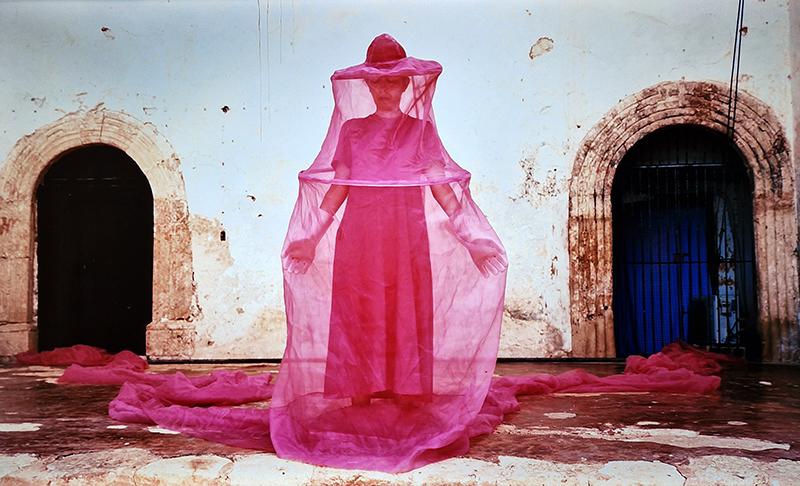
Mónica Alcázar-Duarte in Cultural Reforesting Exhibition at Orleans House Gallery. In this exhibition, the artists remind us that we not only have a relationship with nature but also that we are nature. We are human animals. Together, with our more-than-human neighbours, we are a growing, singing, howling forest. 

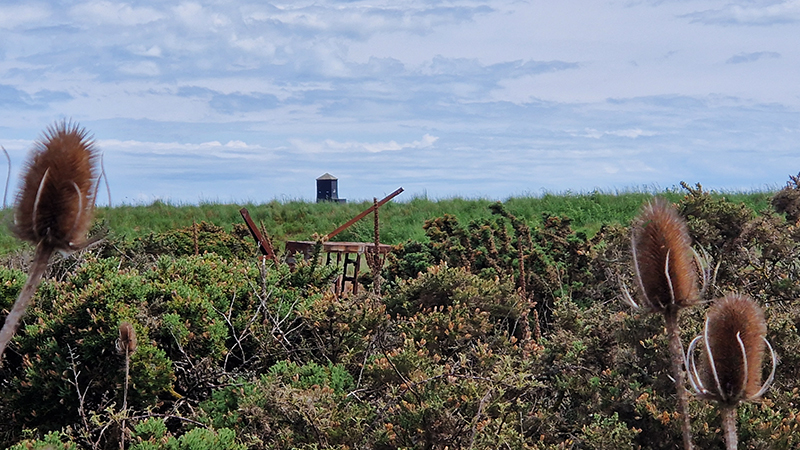
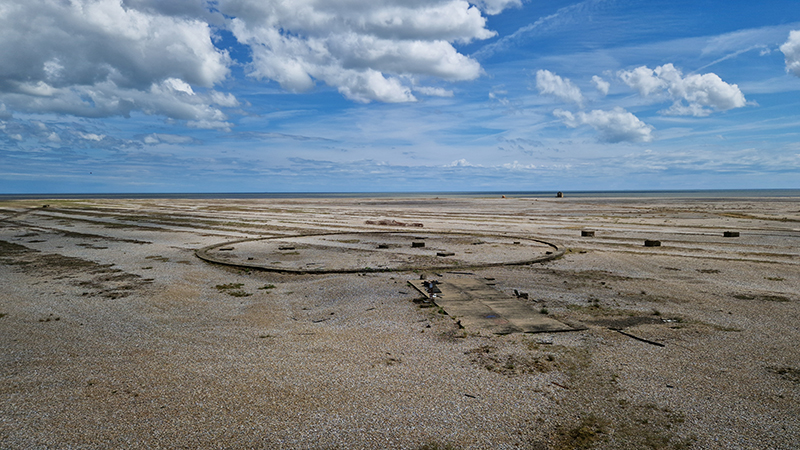
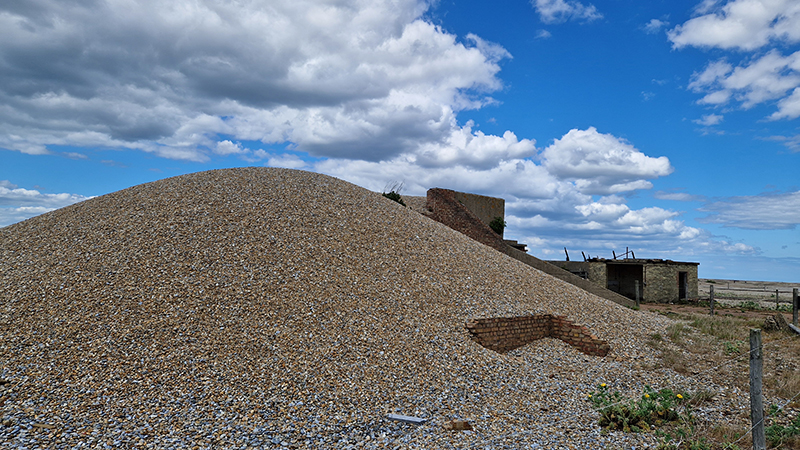
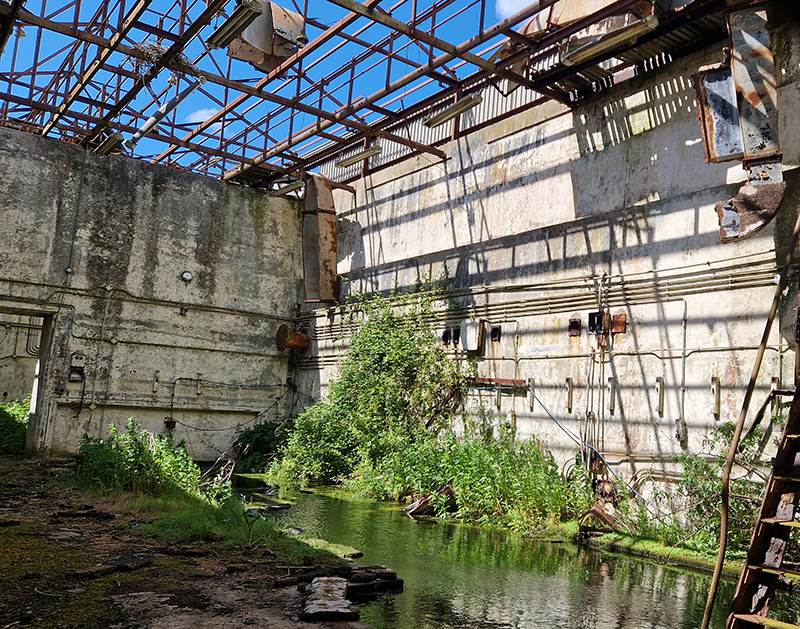
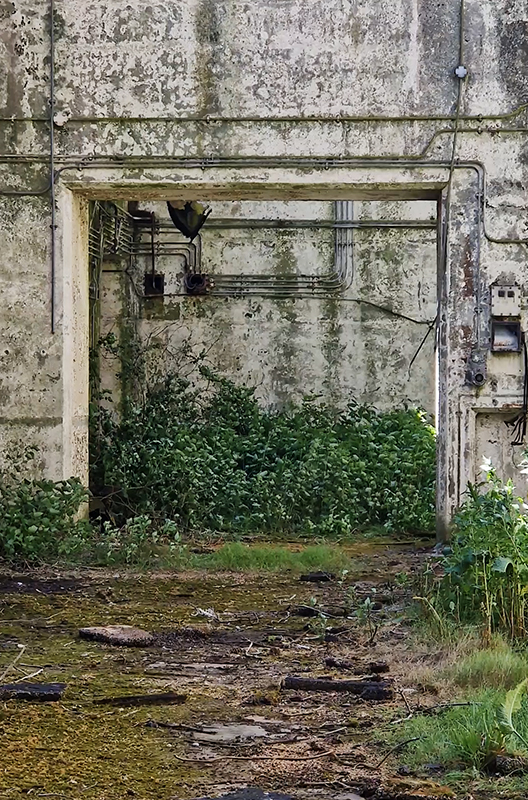
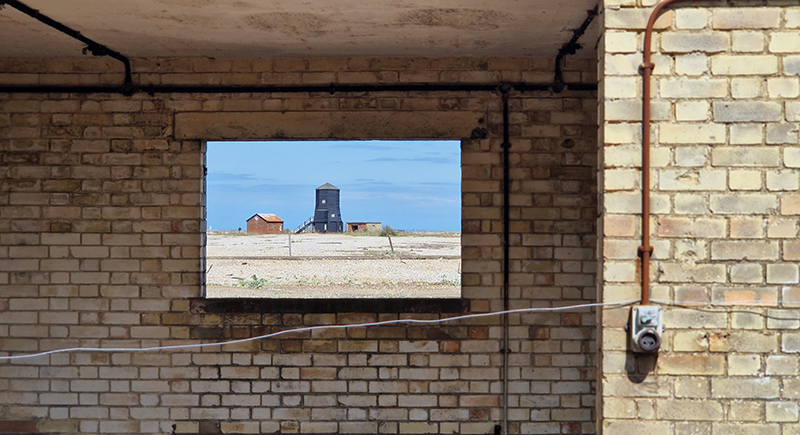
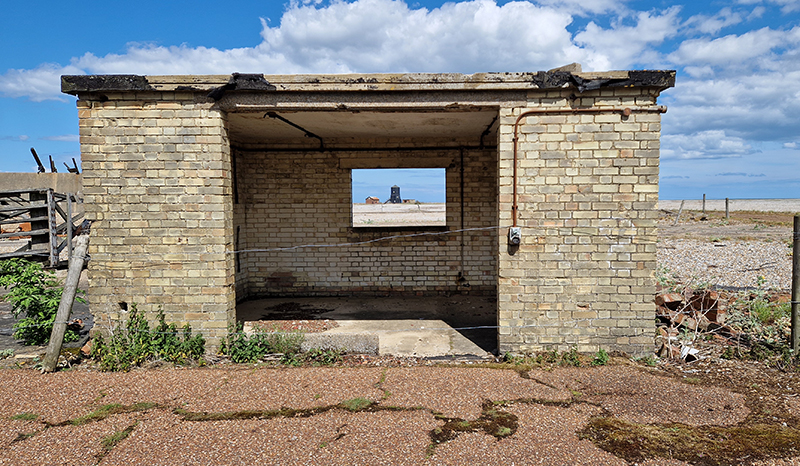
Under the big Suffolk skies of Orford Ness. Walking landscape that bears the scars, physical and emotionally resonant, of years of intense military top secret experiments. Here radar was developed, the aiming of bombs was refined, material vulnerability was tested with destructive, explosive projectiles under simulations of attack and famously it is the site of environmental tests during the late 50’s, early 60’s, in the development for detonation of the atomic bomb. 

The weight of the shingle shored up around the buildings and on the roofs used to dampen the explosions.

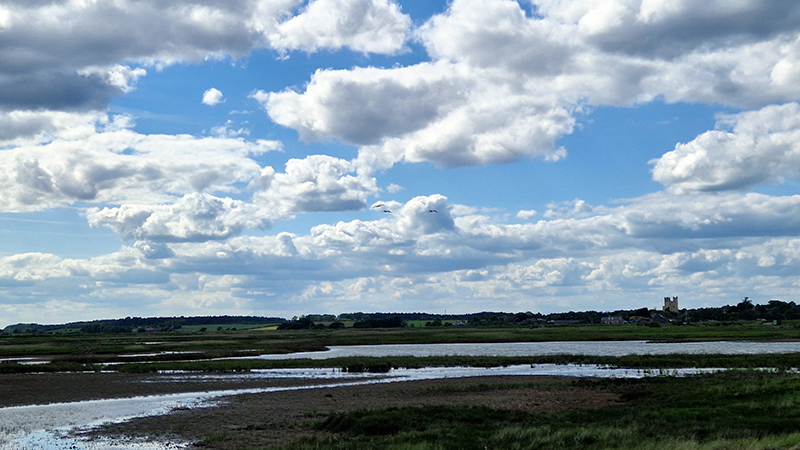
There is a lot to respond to. It is now a spectacular nature reserve but apparently not so many birds here this year. We were lucky to see a short eared owl hunting and some gangly spoonbills in flight.

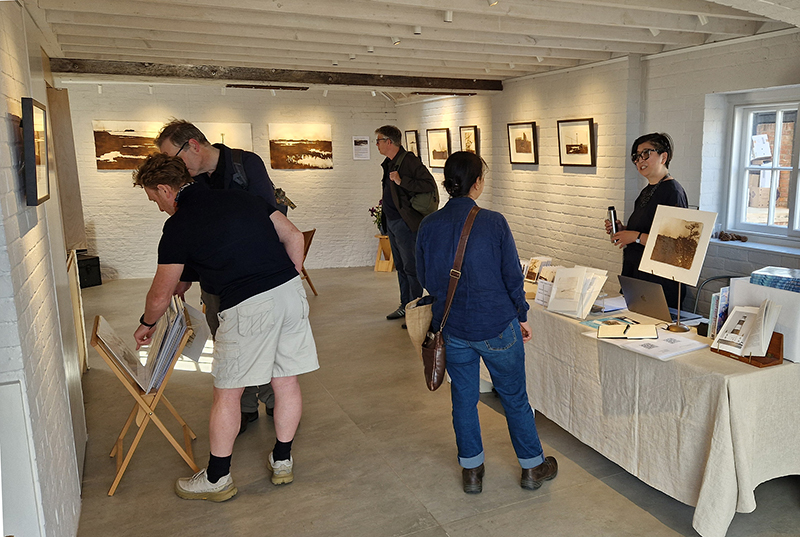
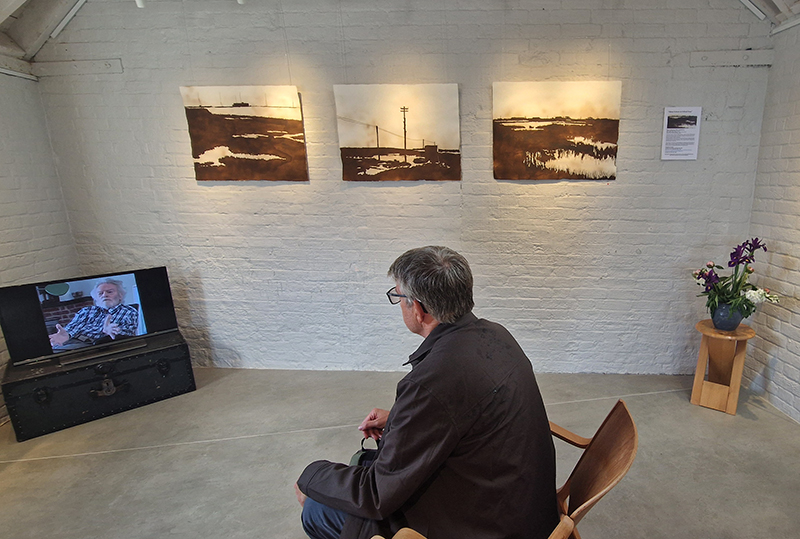
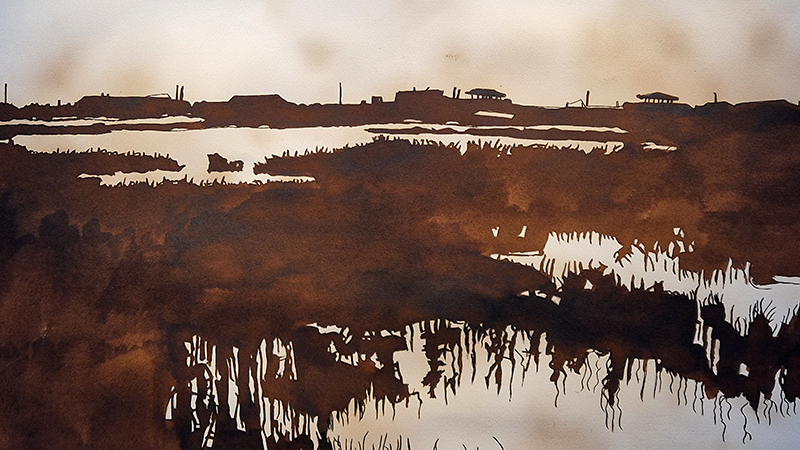
Kaori Homma Silent Echoes at The Watch House, Orford Quay – Inspired by Orford Ness, the UK’s only site of atomic experimentation, this exhibition explores the hidden histories and lingering memories within its landscape. Through the unconventional method of Aburi dashi or fire etching, the artist explores not only the visible remnants of the secret history of Orford Ness, but also the unspoken memories that linger in the air. Unlike ordinary drawings made by the pigments on the surface of paper, Homma’s works are made by fire which etches the images into the body of paper as a burn mark.

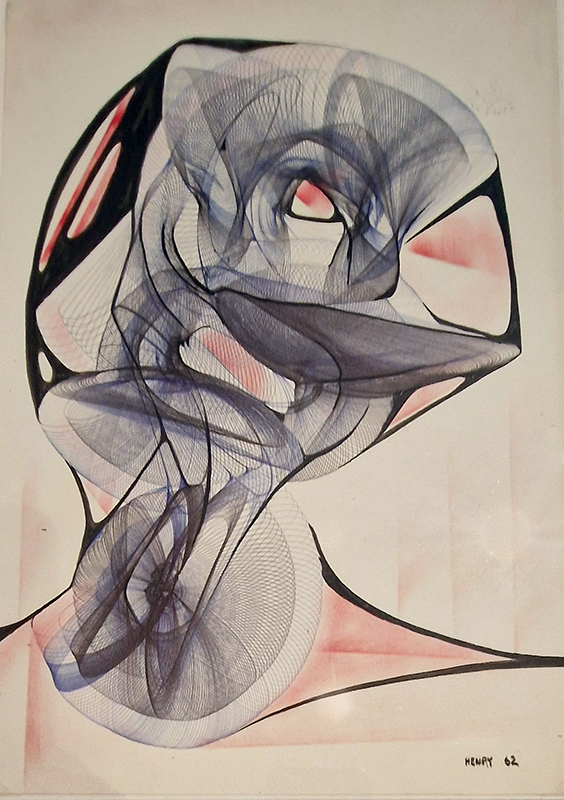
Electric Dreams at Tate Modern celebrates the early innovators of optical, kinetic, programmed and digital art, who pioneered a new era of immersive sensory installations and automatically-generated works. This major exhibition brings together ground breaking works by a wide range of international artists who engaged with science, technology and material innovation. 

Desmond Paul Henry used a repurposed bombsight computer, designed to drop bombs more accurately, as developed at Orford Ness, to make a drawing machine which he then hand embellished.

The Pleasure of Misuse curated by Indira Dyussebayeva-Ziyabek and Maria Hinel at Royal Society of Sculptors. ‘The humour that springs from manipulating or referencing the mundane is paradoxically self-reflexive – appropriated objects suddenly appear anthropomorphic, our laughter becomes directed at ourselves and the intermittent absurdity of the human condition. The Pleasure of Misuse explores the mechanics and psychology of humour in the everyday, considering its potential to heal and its power to disarm, creating the sense of complicity and the space for self-reflection amid these anxious times.’

Images – Andy Holden, Ty Locke, Peter Fischli & David Weiss, Cornelia Parker, Richard Wentworth

Samuel Zealey, Angela Eames, Tony Fleming, Charlotte Guerard, John Strutton and Kate Fahey in Heavenly Skeletons at Coleman Project Spacesix contemporary artists whose work repositions drawing as an expanded multidisciplinary field.  Heavenly Skeletons is a dynamic investigation of how drawing translates abstract concepts into tangible form… 

Gorgeous show with thoughtfully chosen works that like Samuel Zealey’s vertiginous sculpture balance perfectly.

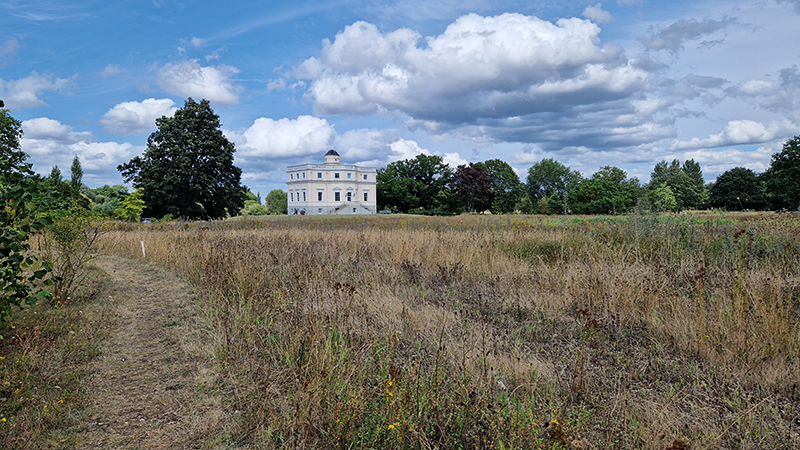
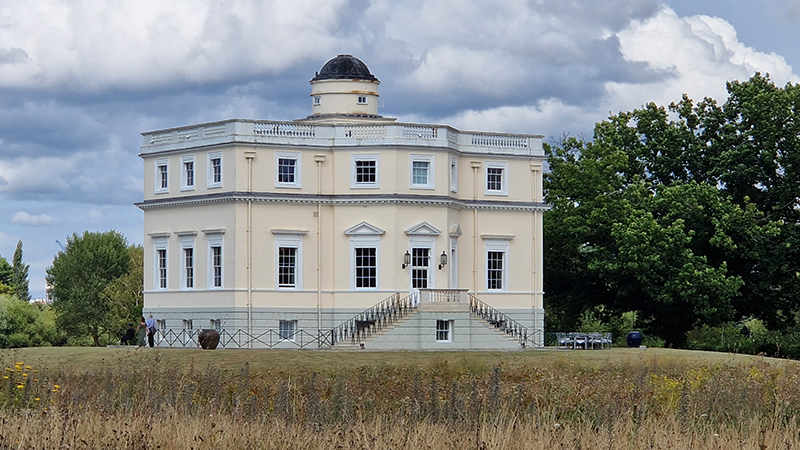
Research trip to The King’s Observatory, The Old Deer Park, Richmond.

The observatory was commissioned by King George III to observe the transit of Venus across the face of the Sun in 1769. This celestial event allowed astronomers to estimate the size of the solar system and the distance between Earth and the Sun. The telescope cupola remains the oldest of its kind worldwide and can still be wound open but the large reflecting telescope, made by James Short in 1745, and used to view the historic event in 1769, was sent to the Royal Observatory of Ireland at Armagh in 1840 when Queen Victoria planned to dismantle the observatory. Many of the instruments were dispersed but the building was saved by The British Association for the Advancement of Science.

Over its long history the observatory undertook a multitude of astronomical, meteorological, magnetic and electric observations. Observing sunspots began in 1819, with a revolutionary photo-heliograph being installed in the dome roof in 1856 to photograph sun spots using the first instantaneous photographic shutter ever made. The observation of solar radiation started in 1875 when ‘black bulb’ thermometers were set up in the garden.

Underground ‘magnetic’ chambers were built at one time to keep the equipment at a constant temperature, but these have since collapsed or become inaccessible.

‘The chamber in which most of these instruments [magnetographs] are situated is a somewhat eery [sic ] place. It is underground, in order to be kept constantly at the same temperature, and as care must be taken to shield the sensitive photographic paper from all light other than the line or spots it is intended to record, the chamber is all but totally dark. If you are standing in it you see nothing, but you hear the measured beat of the clocks driving the several drums. The barograph is in the same chamber as the magnetographs. The thermograph and electrograph are upstairs, as they must be kept in close proximity to the outer air’. (Article ‘The Kew Observatory’ by R. H. Scott in Good Words 1889).

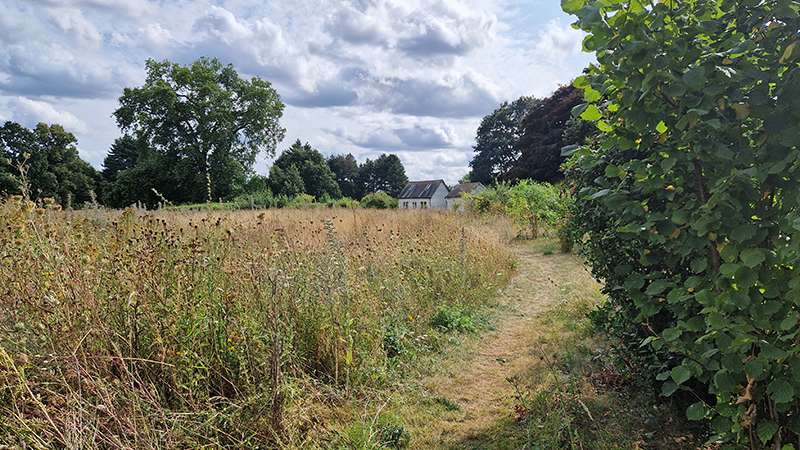
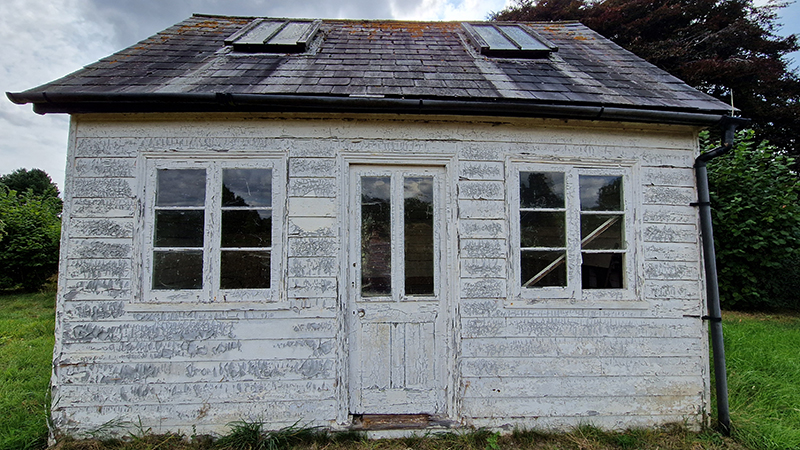
I first went to see the observatory in 2022 during one of the open day tours, but this time I went specifically to see the magnetic observation huts located in the grounds.

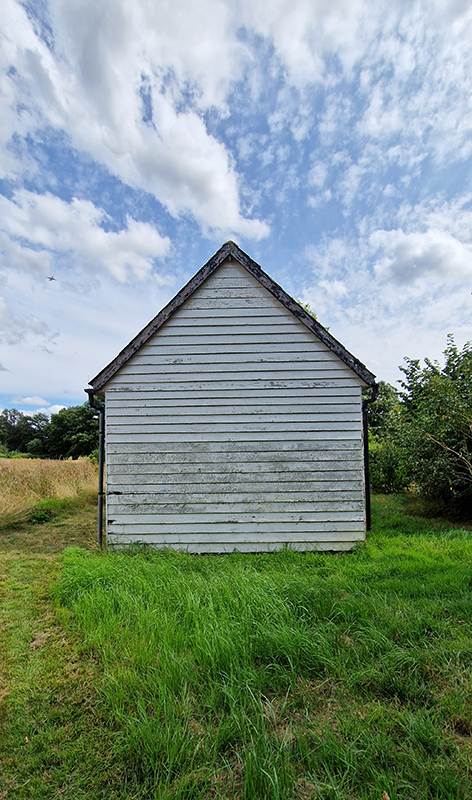
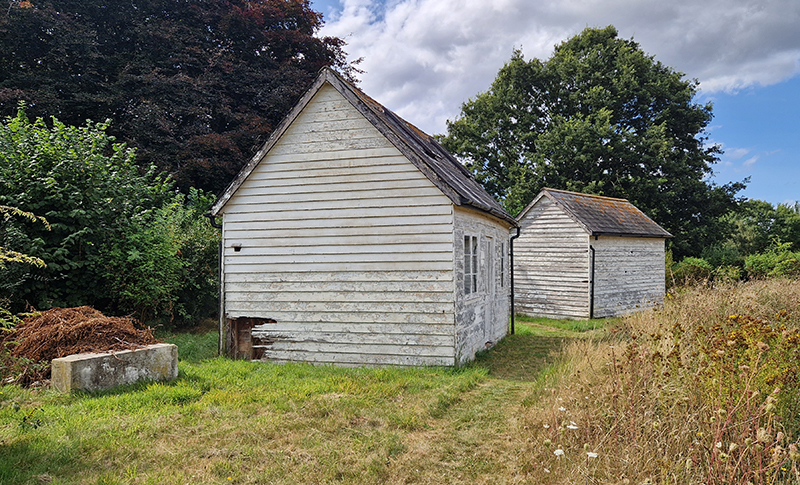
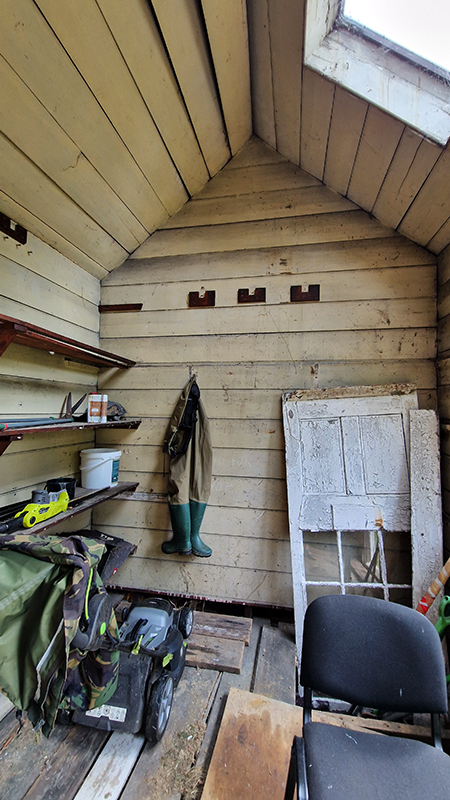
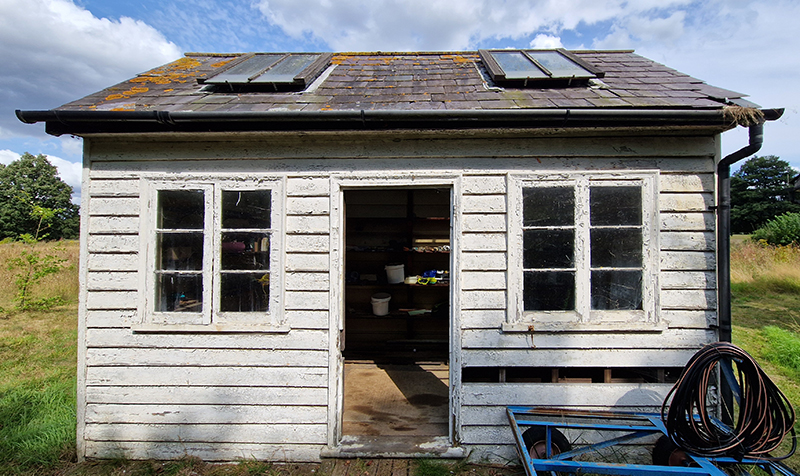
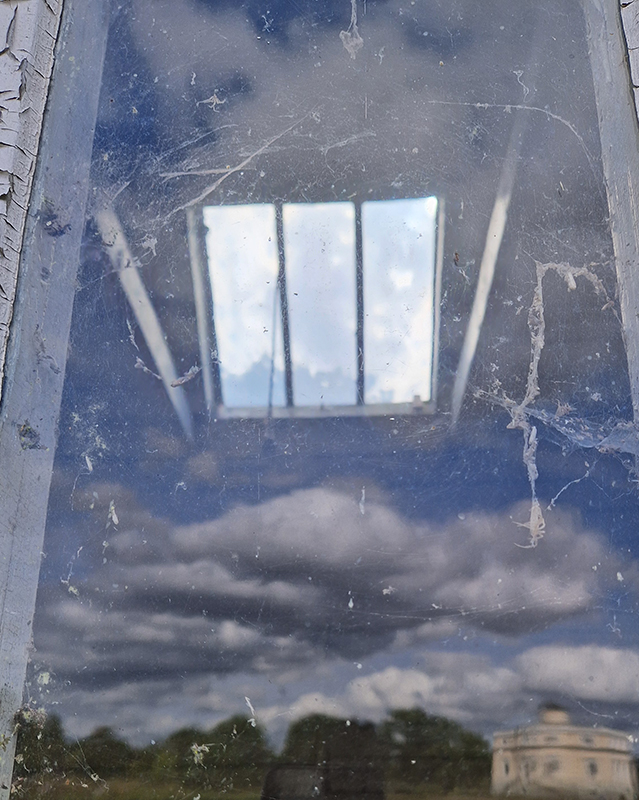
One of the trustees told me they are aiming to have the huts restored as they are Grade II listed and are in very poor condition. They are used for garden equipment at the moment.

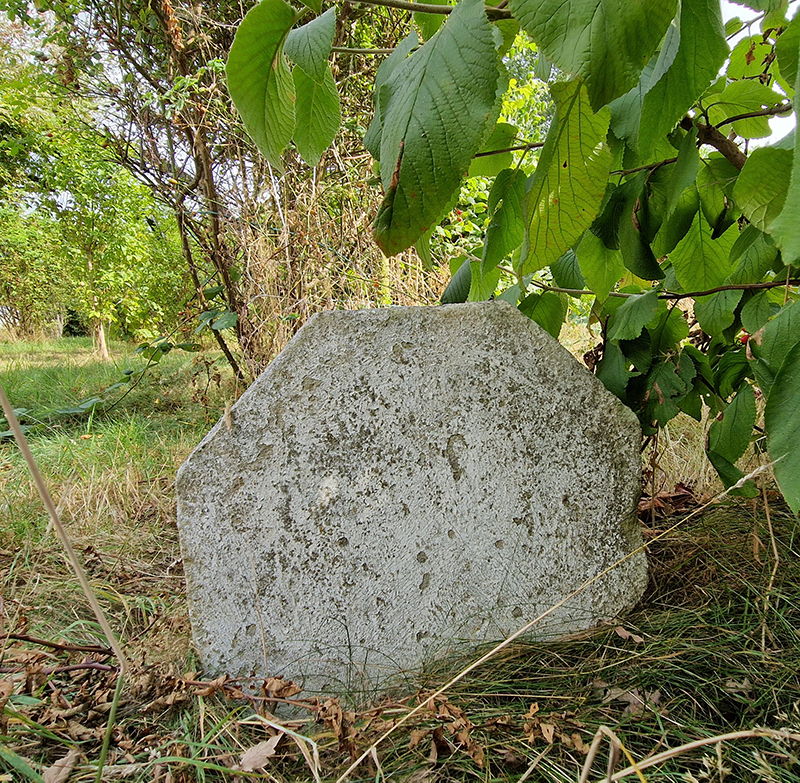
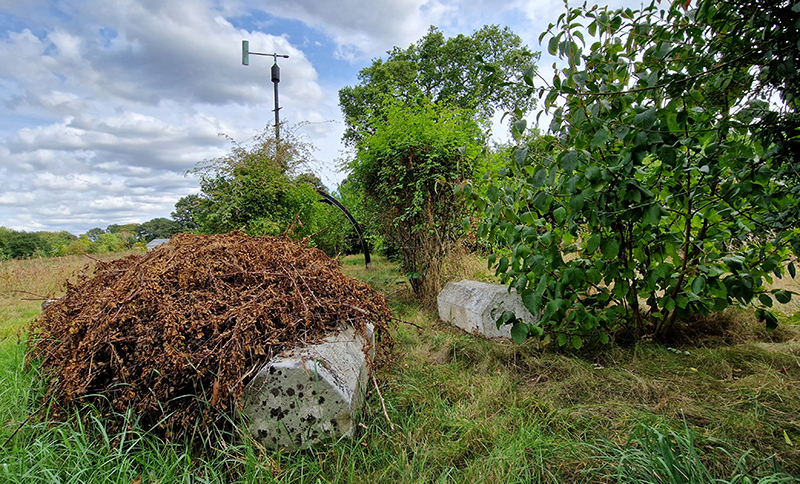
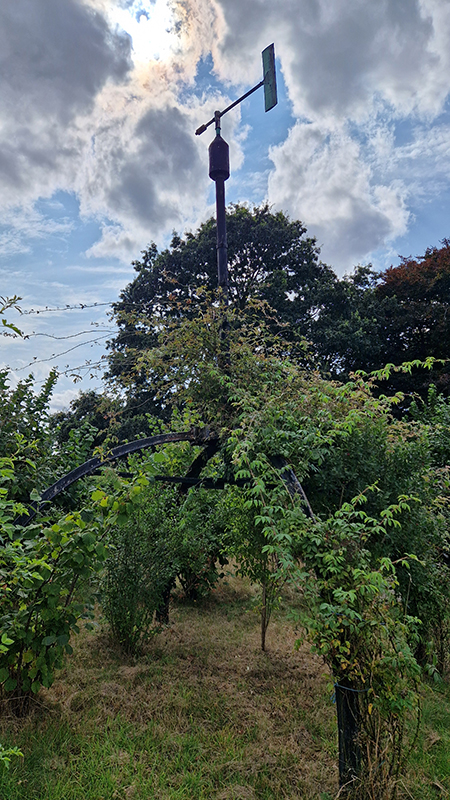
The first hut was built around 1854 by Colonel (later General Sir Edward) Sabine who had an interest in magnetism. The second hut came much later maybe not until 1911. From early maps and photographs it looks like the huts have changed positions and are now much closer together. Some of the original concrete pillars are on their sides in the grass next to an overgrown anemometer.

Lots of pioneering meteorological and magnetic experiments took place here.

The development of electric tramways locally impacted the sensitive magnetic work at what became known as Kew Observatory and so a new magnetic observatory was established at Eskdalemuir in Scotland (which I visited earlier this year) to continue this work away from industrial interference.

From 1959 Kew began work on rocket and satellite equipment, designing instruments to be sent up in American satellites, including a spectrometer designed and made at Kew in the former ‘calibration hut’, and in 1961 the ‘Skylark’ rocket. The balloon winch hut was built in 1963. In the late 1970s the work at Kew was gradually being phased out. In 1974 many of the instruments were distributed to the Science Museum and the National Maritime Museum. In 1980 the Observatory was finally closed down.

Work in progress

Very excited by the possibilities for using the optical lenses I have to project through in multiple configurations.

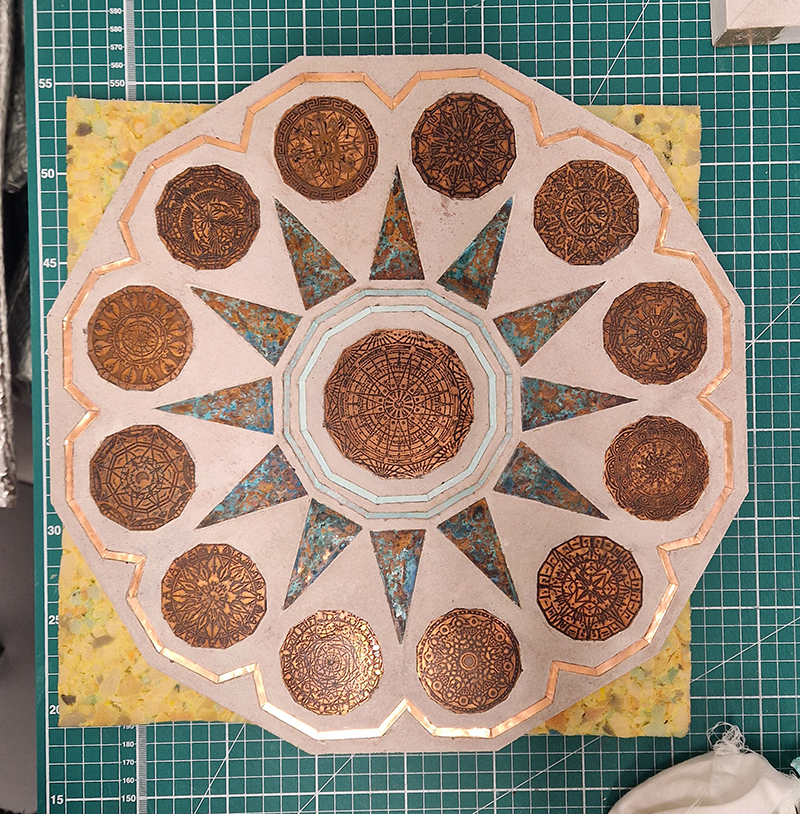
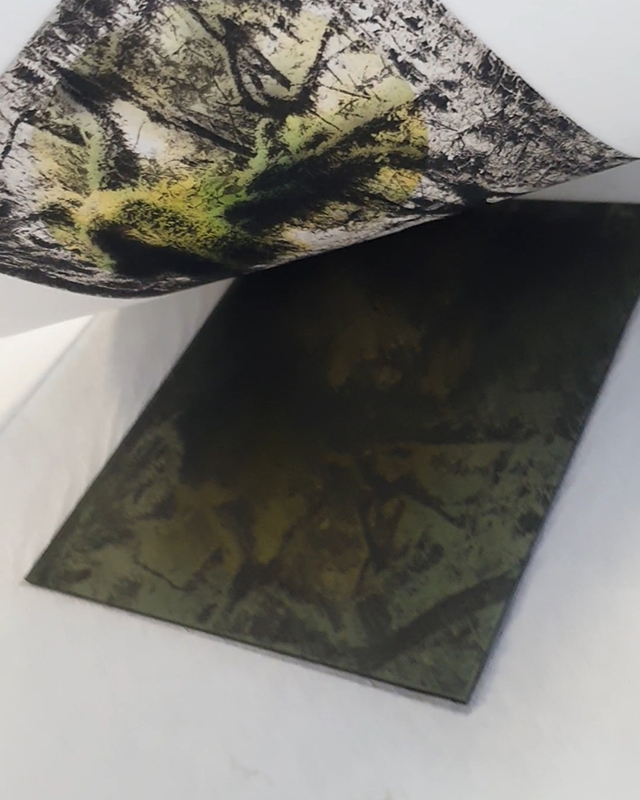
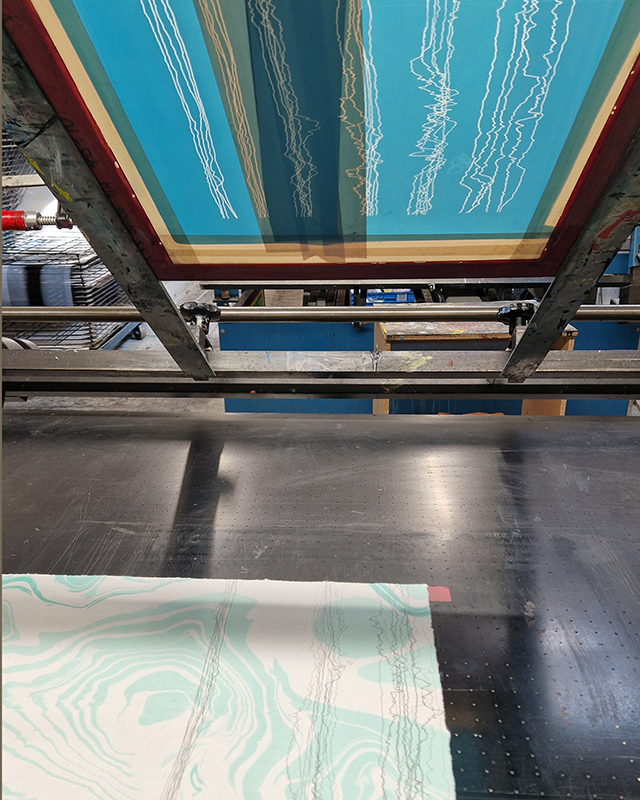
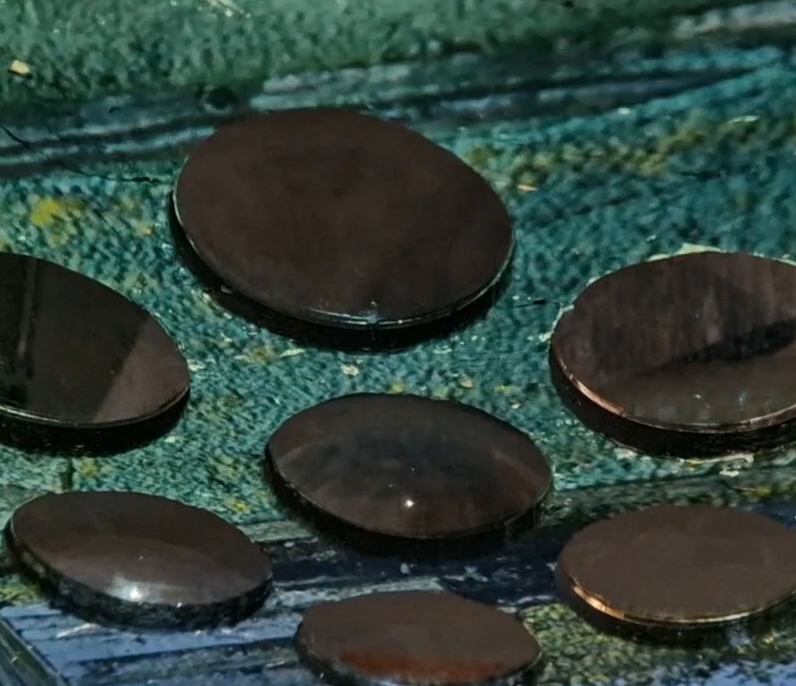
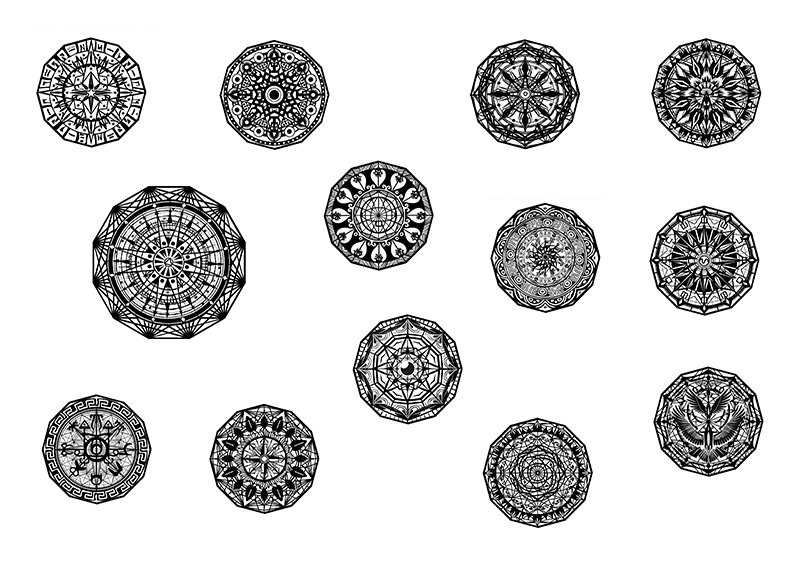
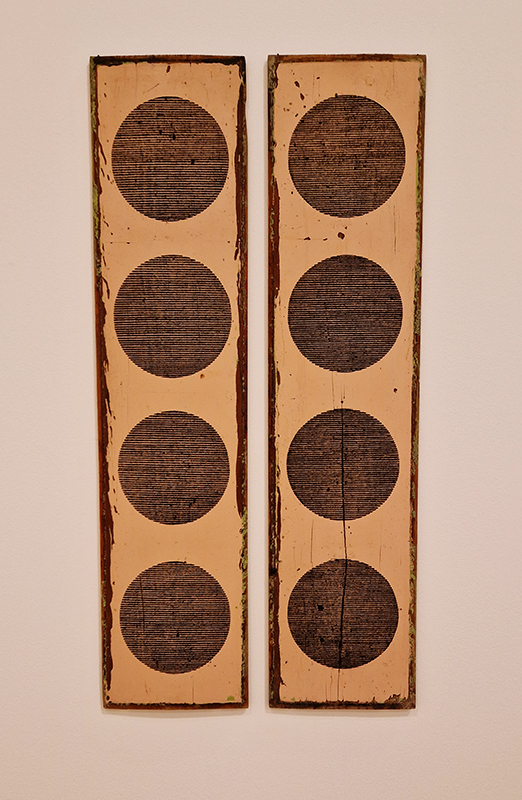
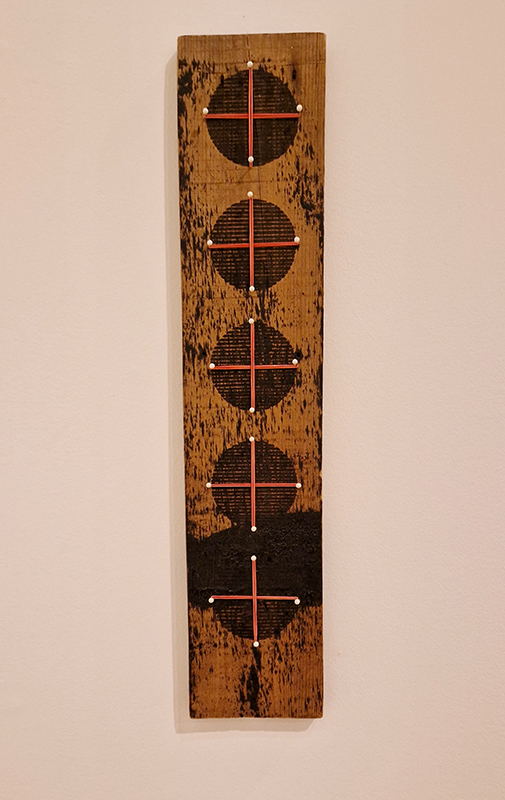
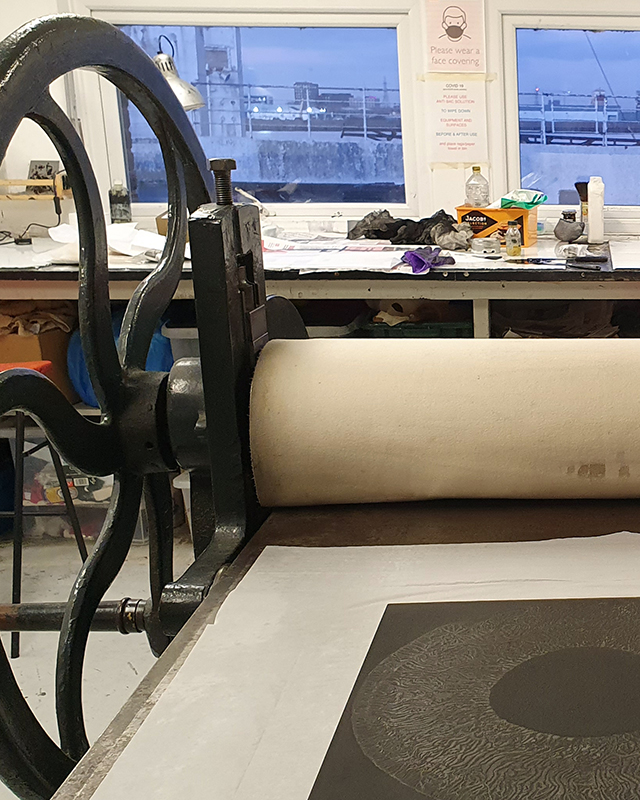
I have also been working on creating new positives for etching into copper which will be inset into a new tablet for the Instruments of the Anemoi series. The tablets are partly inspired by the concrete pillars used at a magnetic observatory – similar to the ones laying in the grass at The King’s Observatory. I am pushing the amount of detail I can get from a sugar lift solution for these new pieces.

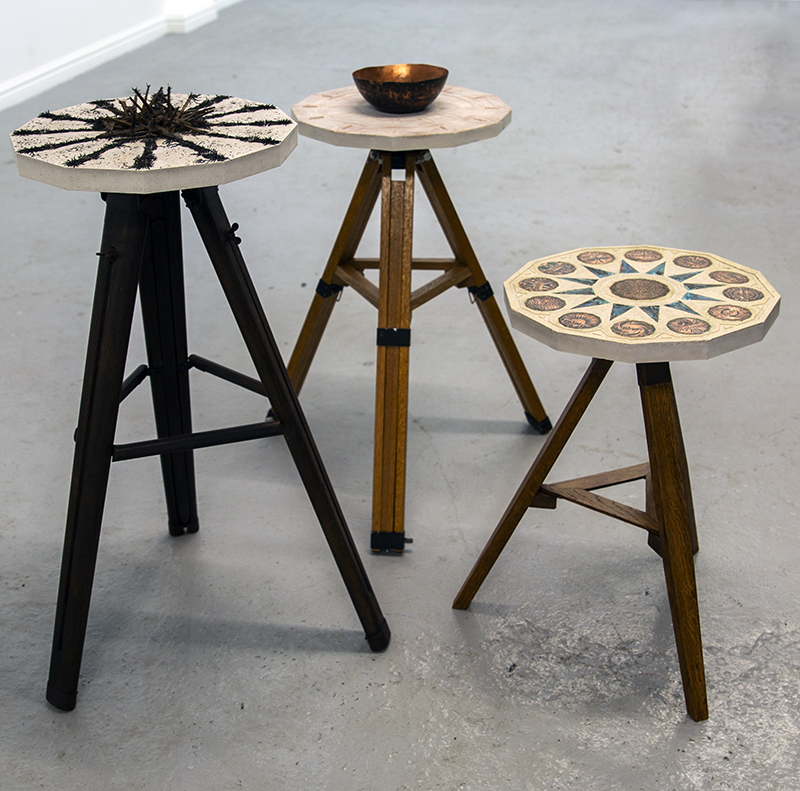
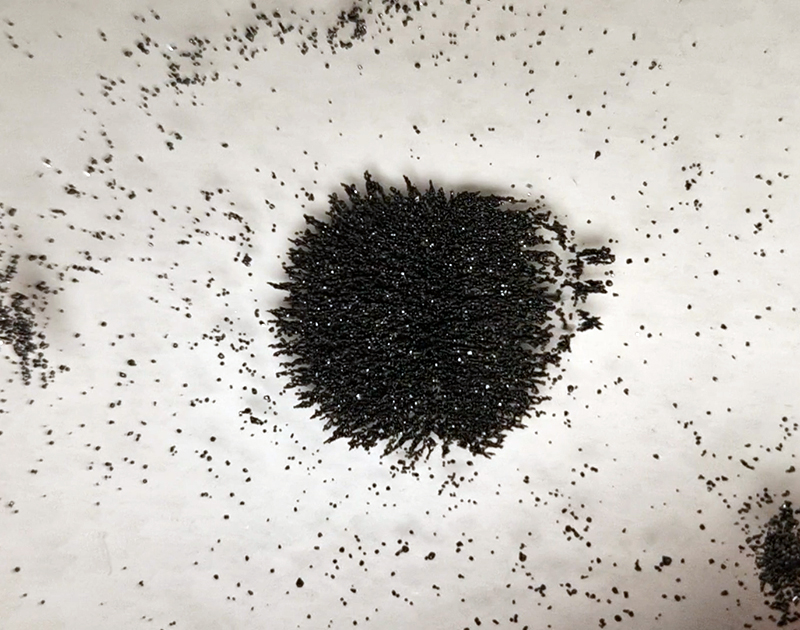
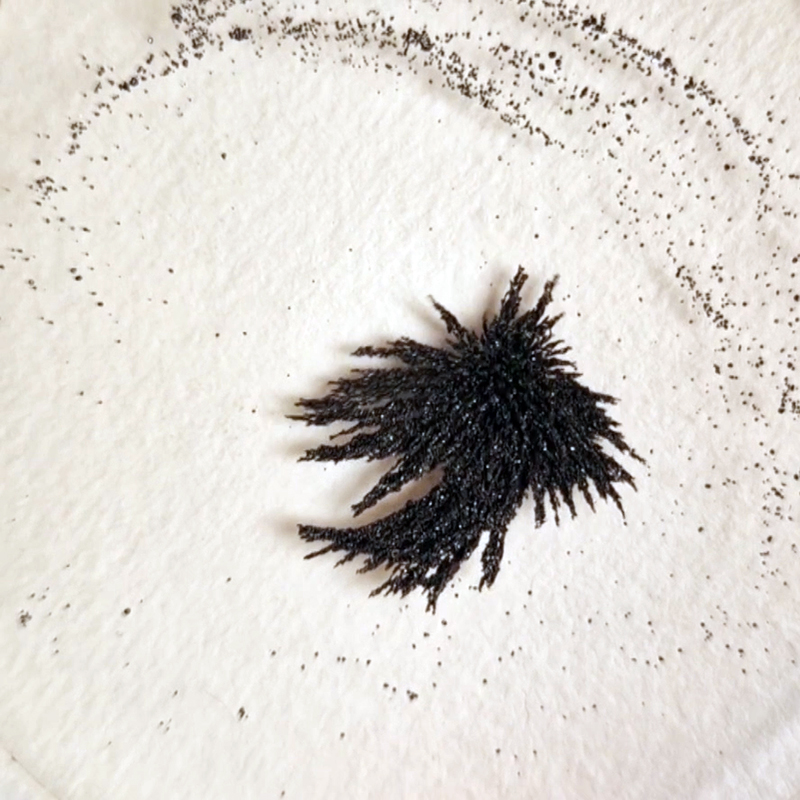
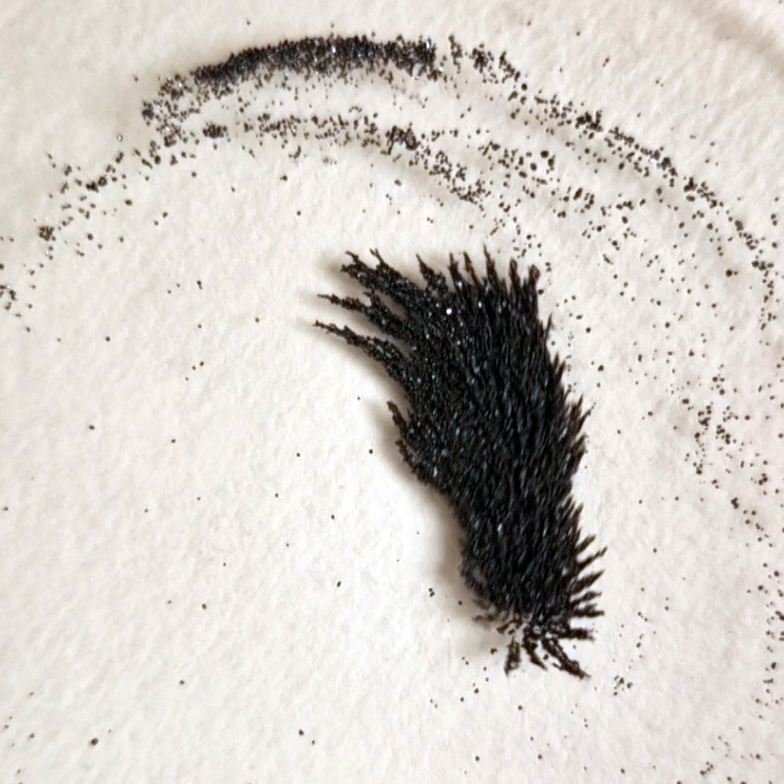
Experimenting with black magnetic sand to create a sculpture that will fit in a 1cm cube.

It’s also great fun to play with. I can’t get over how glittery and magnetic it is.

Gallery Visits

Roger Ackling Sunlight at Norwich Castle. So pleased I was able to visit this understated but emotionally gripping exhibition – a tribute to the power of the sun and the relationship between star and artist. Scales of time burnt into card and wood. Imperceptible to the sun, a life’s work for the artist.

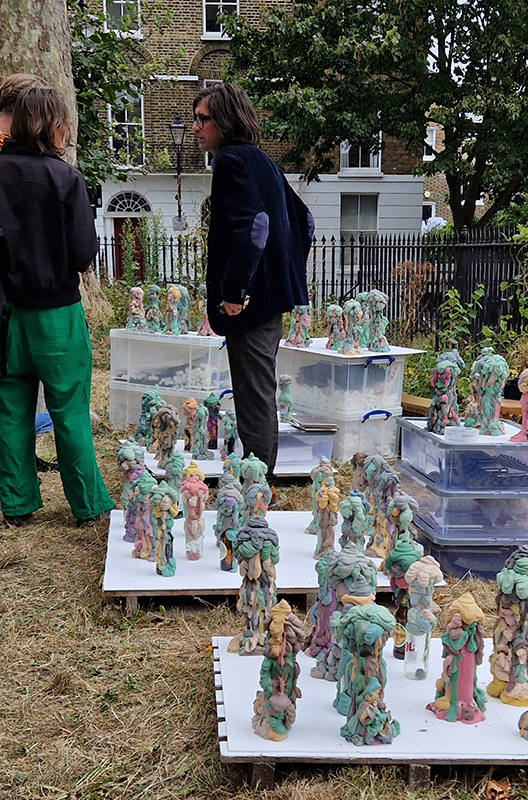
The Nature of Things curated by Jane Hayes Greenwood at Castor Gallery in its new location of a grade II listed church building. Inside, however, is a bright white cube. An interesting mix of work with a surreal bent. Andy Holden was out front selling small beer bottle sculptures at affordable prices though I didn’t enquire as to what this was.

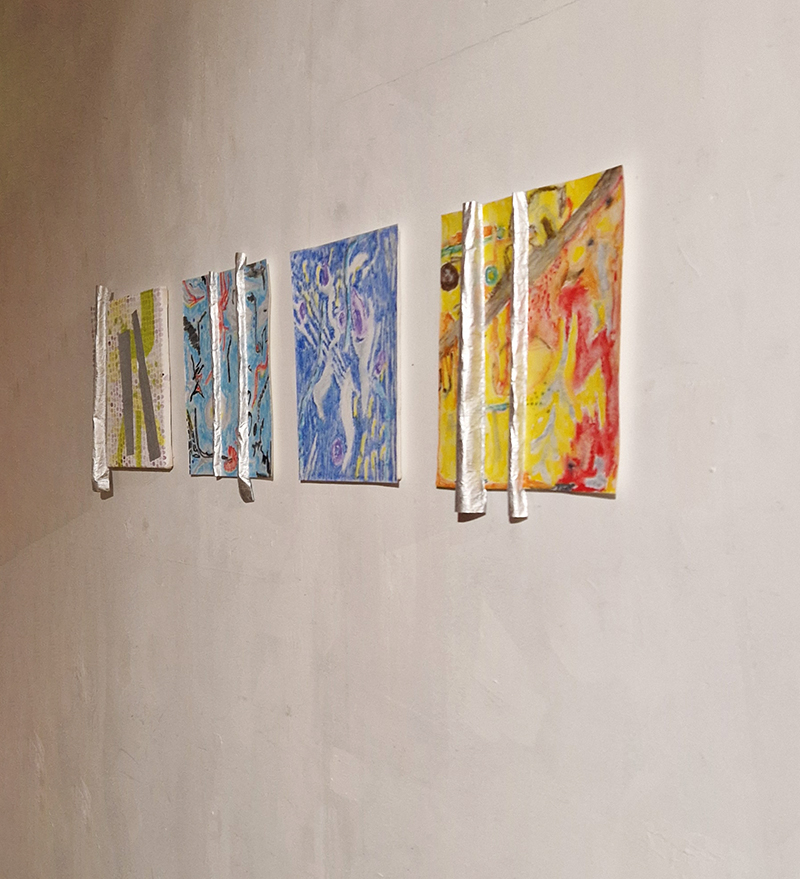
Dumping Ground at Hypha Studios HQ curated by Andrew Kernan, Mariette Moor and Noelle Turner – a group show of artists interested in recycling unwanted physical and psychological material. All light from the generous expanse of glass windows on this corner site amid the office towers of Euston had been blocked with crumpled aluminium foil insulation. Inside it was more than dark as eyes struggled to adjust rapidly from the summer sun. Even after the 20 minutes it takes for dark adaptation to take effect it was still hard to navigate. It did mean taking time to search out the works, which was engaging, but some were just lost in the shadows.

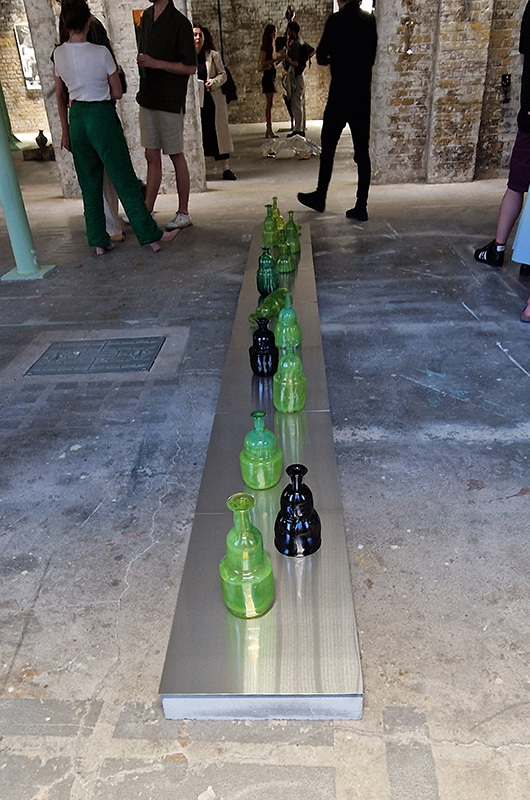
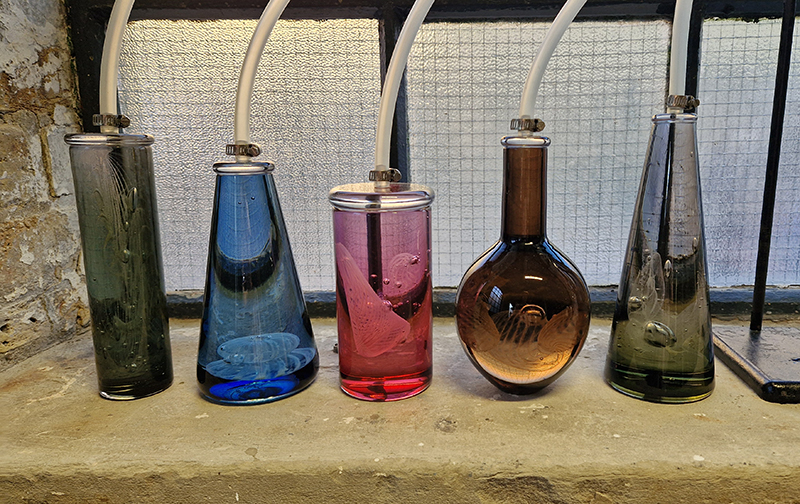
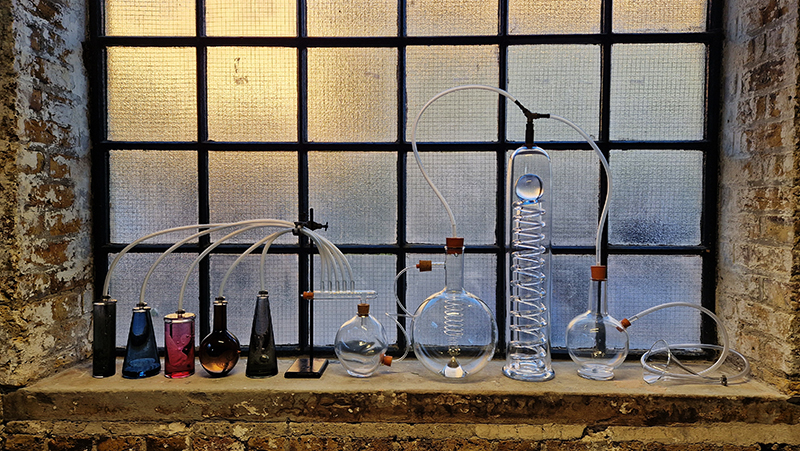
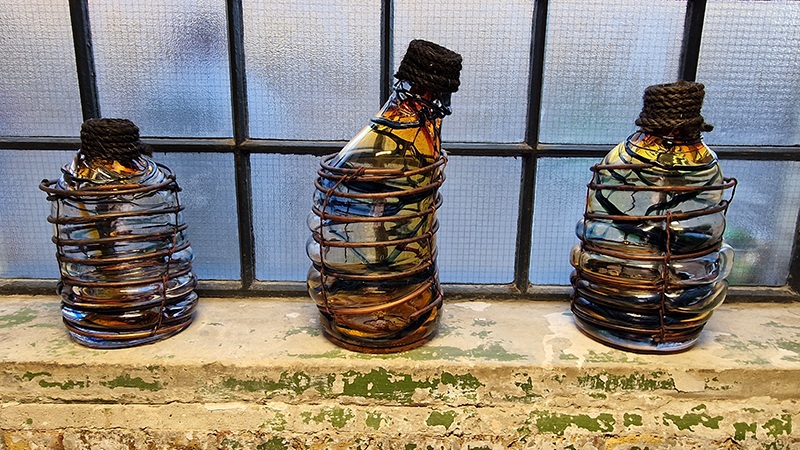
Vessel at The Bottle Factory curated by OHSH projects – drawing on the industrial heritage of the site and the vessel as protector, container, body, giver and taker, fragile, disposable, functional, ornamental or sacred. A stunning space beautifully curated with inventive materials for low plinths and glass objects set to glow against frosted windows.

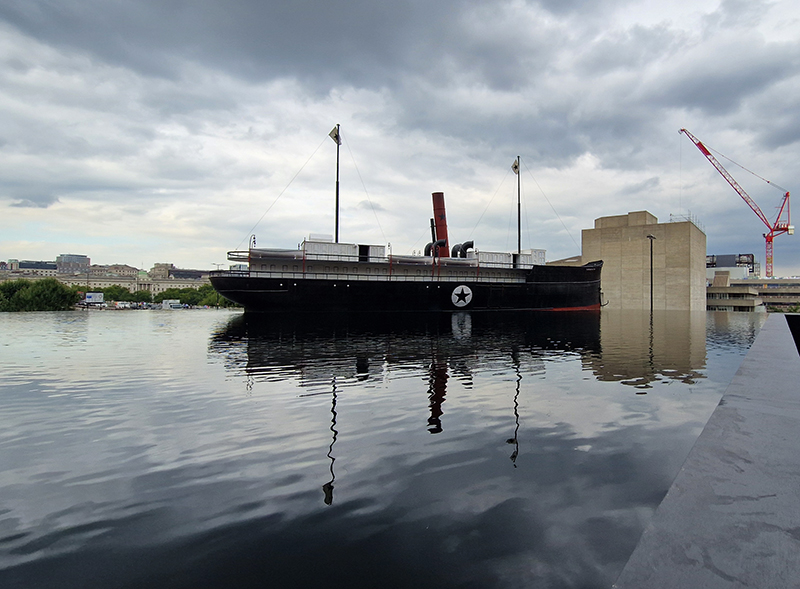
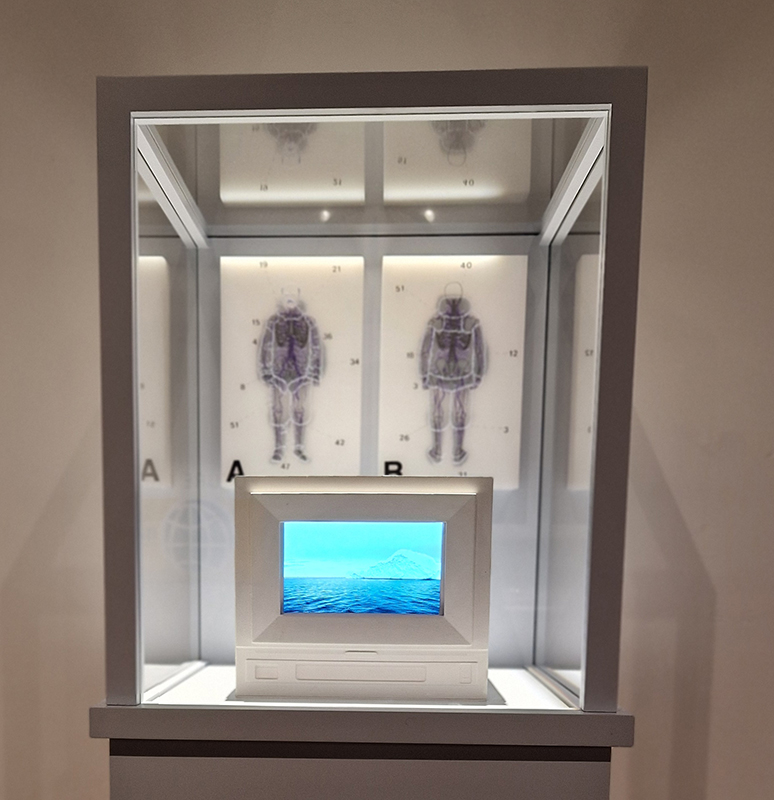
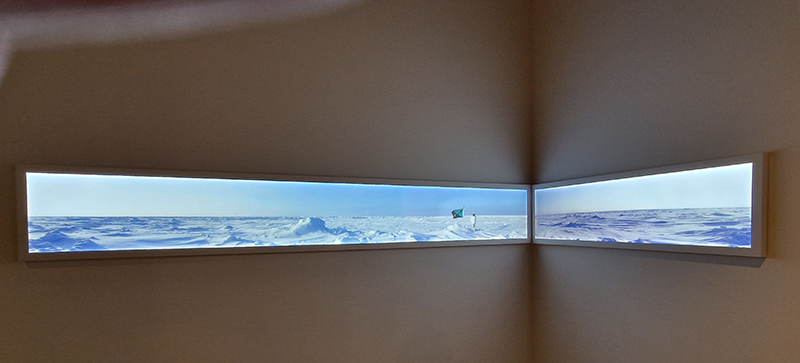
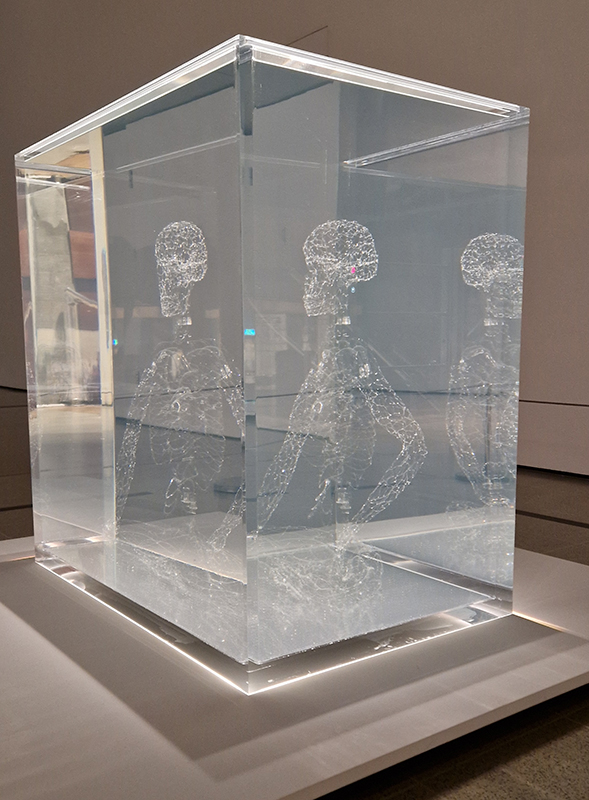
Tavares Strachan There Is Light Somewhere at Hayward Gallery. Immense scale and scope. This show really was epic. A 14-metre-long Black Star Liner on the flooded roof pumping out music live from a Jamaican radio station. Human figures made of glass and submerged in tanks of mineral oil to make ‘invisible’ sculptures. From space exploration to the North Pole, a timely light is shone on the explorers and cultural pioneers that have not received due recognition.

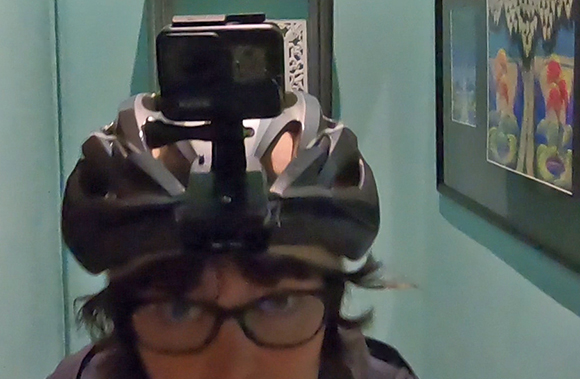
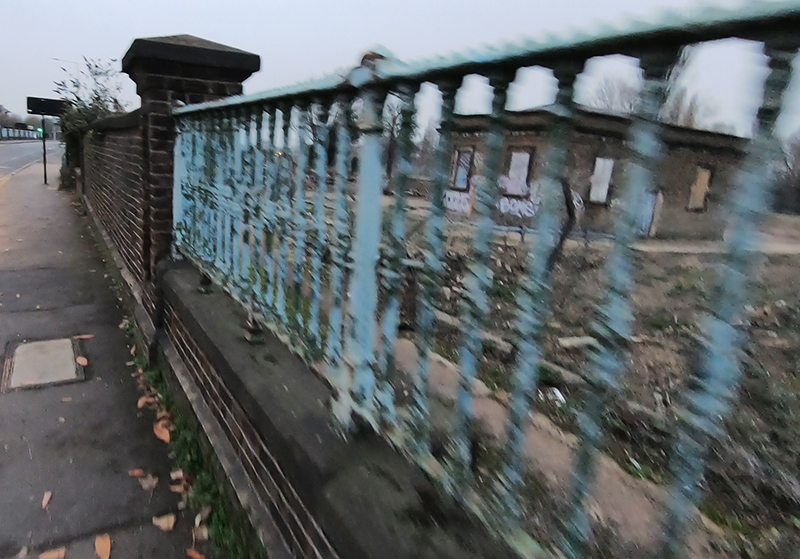
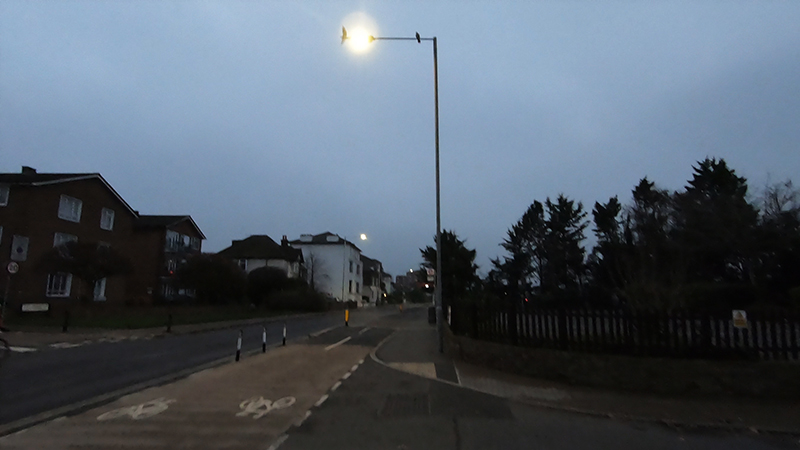
Progressing new work Seeker Seer Scientist. I have completed walks to my south and west horizon points wearing a head camera.

2011 south walk

Each walk starts at dawn and takes the most direct route to a point on the map 3 miles from my home. For an average height observer, the visible horizon is approximately 3 miles distant. The true horizon is usually hidden.

2011 south map

‘Horizon’ derives from the Greek ‘horizōn kyklos’ meaning “separating circle” which in turn comes from the verb to divide as in creating a boundary. 

2011 South 1

2011 south destination

The walk west was the longest of the four as the winding River Thames disrupted a very direct route.

2011 west 1

2011 west 2

After walking to each of the four compass points NESW I have about 5 hours of footage which I have edited down to about a 6 minute journey to the horizon edge. I am aiming for the final film to be viewed while on a treadmill to experience the meditative rhythm created by walking which heightens creative thought processes. The work will consider the existence of many more dimensions than we are aware of in our known and knowable universe from the perspective of mathematical theory and levels of consciousness.

‘We have many tools at our disposal to gather information about the world. Physicists are tuning their instruments to an unprecedented level of sensitivity. Ultimately, however, whatever external instruments we use, all data is experienced by our bodily senses. These senses turn out to be more finely tuned and calibrated than anything we have yet invented.‘ Ansuman Biswas

My friend has leant me her grandfather’s beautiful compass to use in the film. The magnetic compass was first invented as a device for divination as early as the Chinese Han Dynasty.

‘Scales of Intangibility’ an installation using cosmic trail projections within a velvet lined chamber was planned to be included at the 2020 Hidden Door Festival in Edinburgh. Due to the ongoing pandemic this was to be postponed until late spring 2021 but could now be postponed further.

In readiness I am running my cloud chamber to get some new footage.

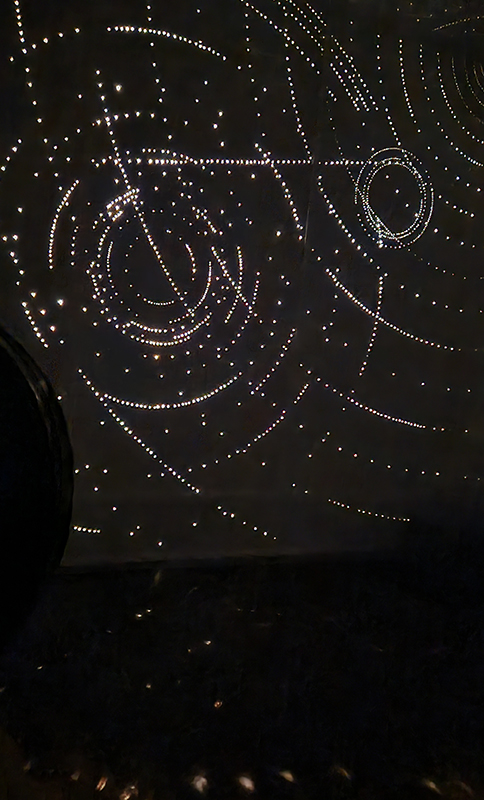
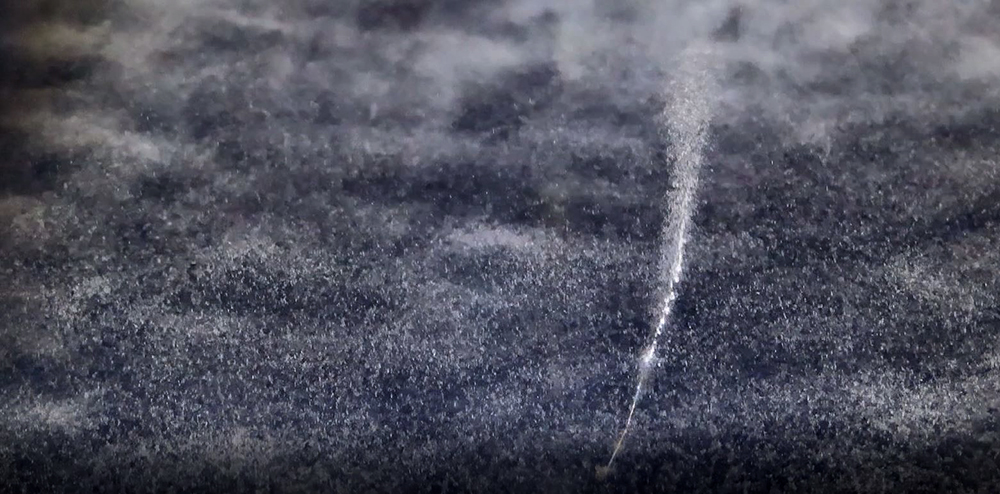
The cloud chamber gives us a glimpse into the invisible world of particles produced in the radioactive decay of naturally occurring elements and those generated when cosmic rays strike the top of the earth’s atmosphere. The interactive experience brings alive the fact that these visitors from outer space are everywhere. Filmed on 4th November, the day of the American Presidential Election, this V for victory was an encouraging message from the stars.

2011 cosmic trail V

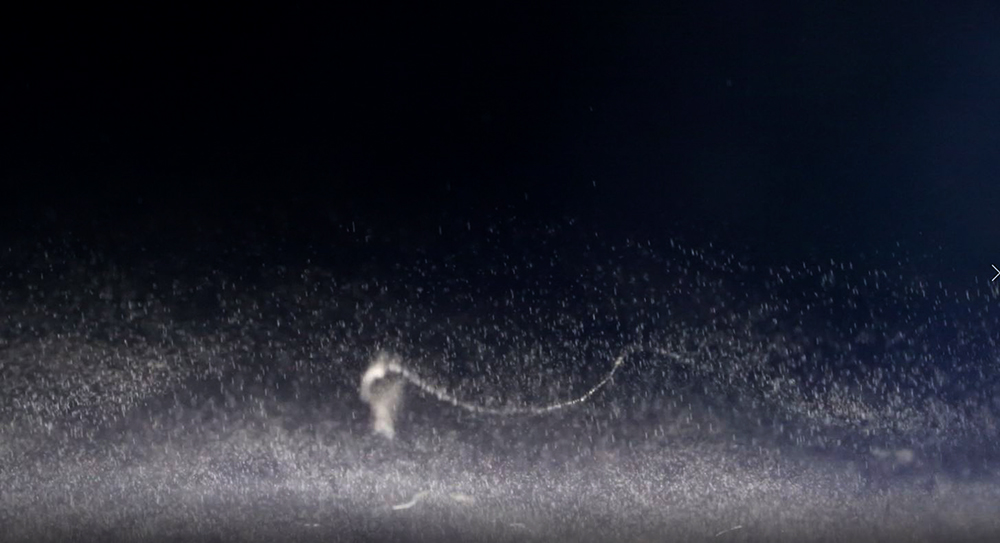
It’s also quite cool when a puff of air gets into the chamber.

2011 cloud chamber

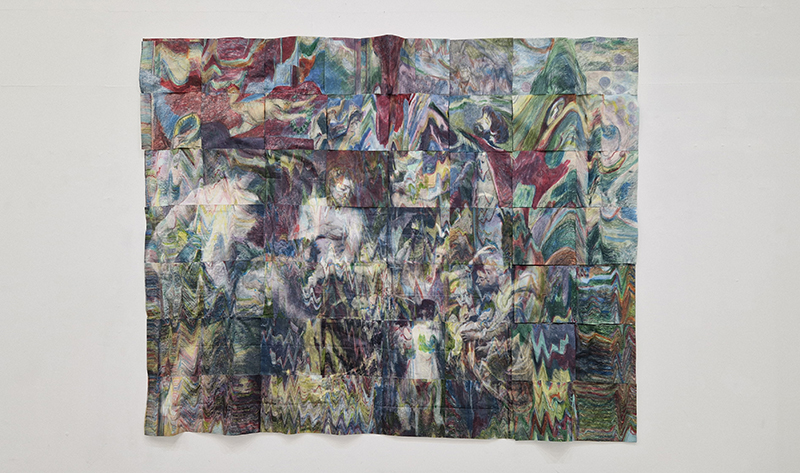
Watched the London Screen Archives film about Woolwich which shows clips from Paradise Place. This has given me an idea for new work taking rubbings from the walls of paradise once I can travel about again in London.

Also testing the raster folding for the work 90 light years home. A raster scan, is the line by line pattern of image capture and reconstruction used in early television transmission. Work based on the idea that there may be a habitable planet orbiting HD 70642, a yellow dwarf star in the constellation of Puppis. At 90 light years away, extremely faint early broadcasts from Earth are now passing this planetary system. Representing the Stern, or Poop deck, of the Argo Navis, Puppis is one of the three constellations that once formed the huge constellation Argo Navis (the ship of the Argonauts). Looking at a contemporary (space) ship symbolizing adventures into the unknown that could be transmitted as raster image.

I found participating in Robbie Coleman and Jo Hodge’s Shoreline to Shoreline a very moving experience. This collective pilgrimage in the time of Covid to stand at the edge of any significant nearby body of water at 3pm on 20th December 2020 to remember, mark or memorialise loss was an invitation to feel grief without suppression and feel a connection through commonality.

Every droplet of rain, every snowflake that falls is on a circular journey. Water that evaporates from the surface of a puddle may arrive on the other side of the world as part of a wave crashing onto a beach. The journey may have taken a few days carried in clouds across the sky or a thousand years trapped in a glacier creeping through the Northern darkness.

2012 shoreline to shoreline

This coincided with the Winter solstice return of the light. Grief like a wave, swelling and rolling over you, making you gasp for air. We struggle against it but here I let it wash over me a little. I stood on the bank of the little Hogsmill river which is our nearest body of water and somewhere I visited often during lockdown and also on the day my Mother died when it seemed particularly vibrant.

Also checking on the progress of ‘stumpy’ in winter guise.

2012 stumpy

As night fell Saturn and Jupiter edged closer together. The 2020 great conjunction of Jupiter and Saturn is the closest these planets appear since 1623 and the closest observable since 1226.

2012 great conjunction

The winter solstice is the precise moment at which the Northern Hemisphere is at maximum tilt away from the Sun. At that moment, the sun’s rays are directly over the Tropic of Capricorn (my birth sign). It is the day with the shortest period of daylight and longest night of the year. The shadow at noon is the longest a noontime shadow can be.
‘There’s something wrong! There’s something wrong – It’s high noon and my shadow’s long!’ Was Not Was One White Crow

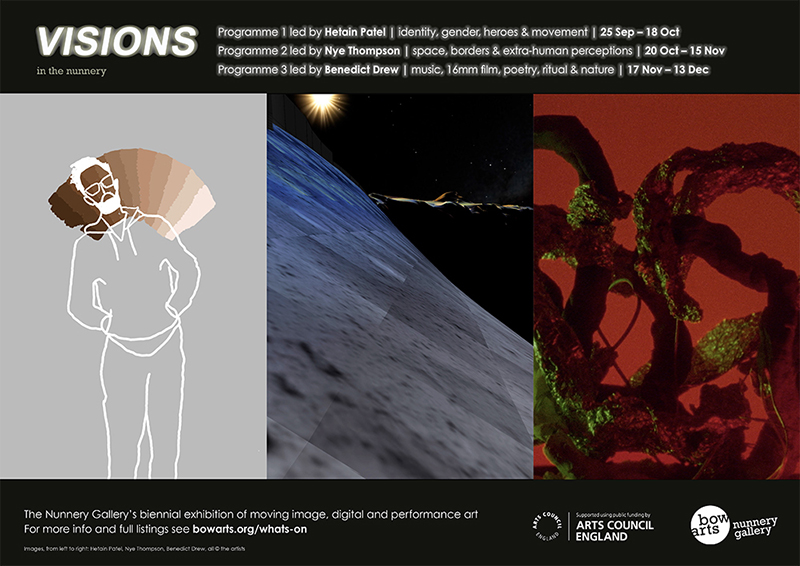
After an exciting fun packed real life opening event, a stop and start exhibition between lockdowns Bow Arts Nye Thompson led Visions II programme at the Nunnery Gallery closed. It is still possible to view the films on the Nunnery Gallery YouTube Channel

During the window of opportunity between lockdowns I was able to enjoy a journey through Andy Holden’s cartoon world of existential angst The Structure of Feeling (A Ghost Train Ride) at Block 336.

Also an up close visit to the winding labyrinth of Terra Nexus, a network of interconnected installations questioning the role of the human as part of ecology at Proposition Studios and was lucky to be guided through by curator Gabriella Sonabend. Excellent poetic film One Day As I Was Driving Home by WR Saunders, which simultaneously condenses and stretches the experience of time exposing the unrelenting power of entropy. Great to see the congealed organicly industrial cavern Swimming in the Mud by Emma Jane Whitton. Whole show ambitiously moving to South Bank in New year.

Just squeezed in a trip to The Botanical Mind at Camden Art Centre.

The ceremonial use of entheogenic, or mind altering plants is closely associated with the shamanic tradition and many different cultures and traditions work with plant medicines for psycho-spiritual transformation. It has been suggested by academics and researchers that the evolution of human consciousness was catalysed by psychoactive plants. In the Amazon rainforest, the patterns found in nature are the basis of sacred geometries that indigenous people incorporate into their everyday world through their art and which trace a connection to a primordial reality where the material, immaterial, visible and invisible planes of existence were once unified and whole.

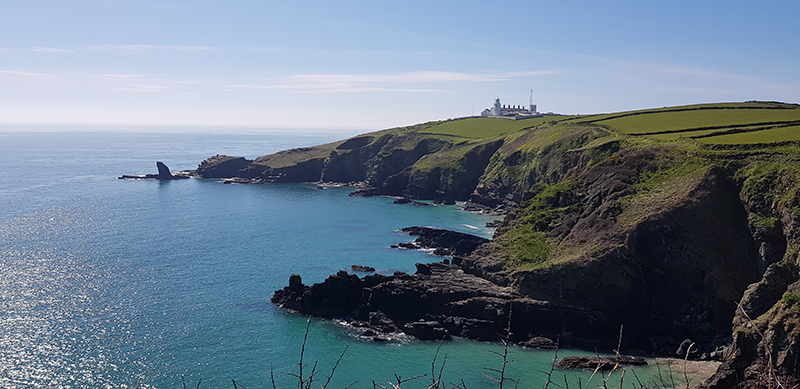
Sensory overload on the Lizard Point Artist Residency hosted by Mayes Creative and Lumen London. Serpentine rocks, wide horizons, sparkling sea, dark starry skies swept by the dazzling beam of Lizard Lighthouse.

1903 lighthouse beam

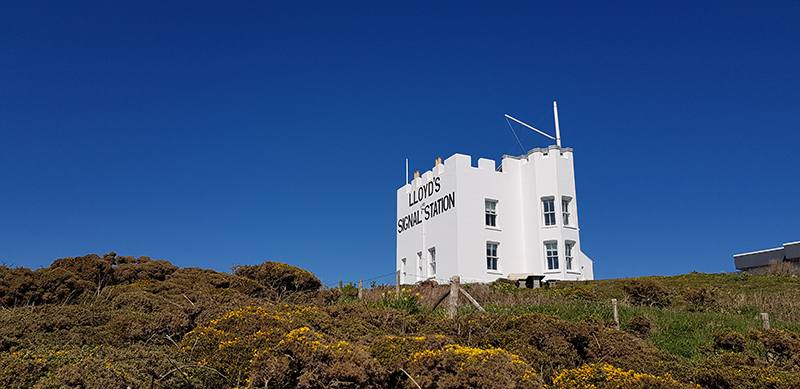
We are here to research the communication heritage of this dramatic coastline once plagued by shipwrecks and pirates.

1903 lizard lighthoouse

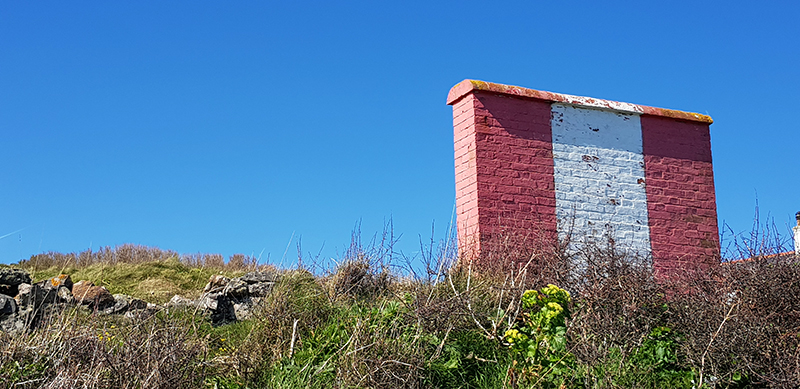
Rachel Holder from the National Trust guided us along the cliff path and told stories of the treacherous seas and lives lost on the hidden rocks. We heard about the history of Lizard Lighthouse and other methods of communication across distances.

1903 lighthouse lens 21903 semaphore station1903 triangulation point1903 radio station

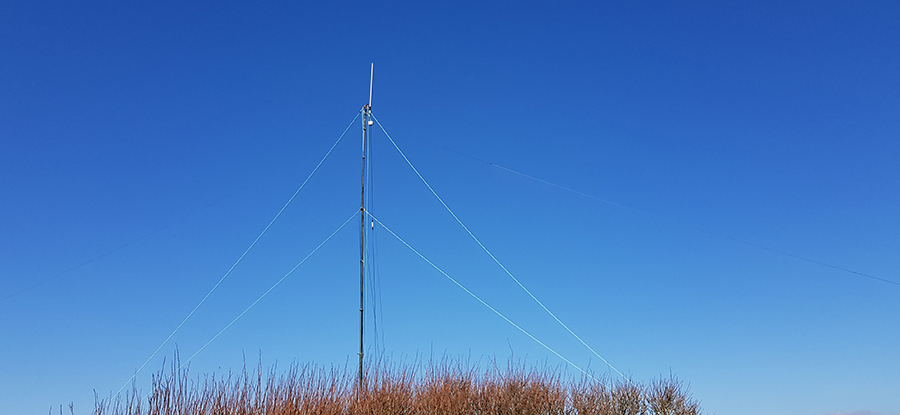
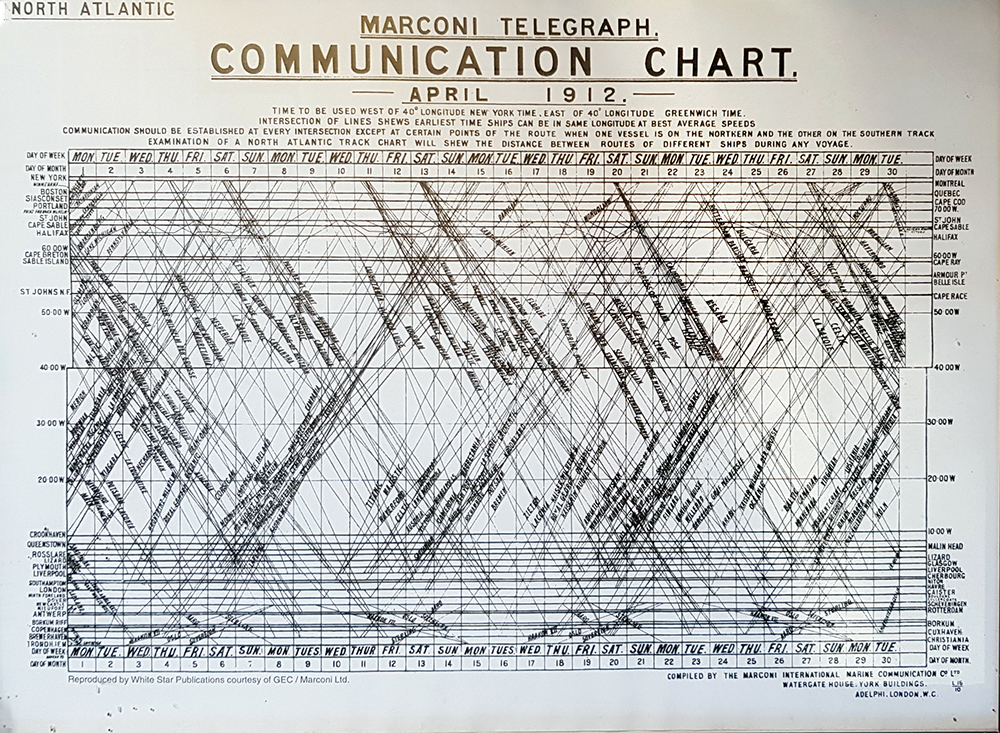
We visited Marconi’s radio station hut which was full of wonderful scientific equipment like spark transmitters and Morse code machines. In the early 1890s, Marconi began working on the transmission of telegraph messages without connecting wires. An early experiment was a storm alarm made up of a battery, a coherer (an early form of radio detector consisting of a glass tube loosely filled with metal filings whose bulk electrical resistance decreased in the presence of radio waves), and an electric bell, which went off when it picked up the radio waves generated by lightning.

1903 marconi chart

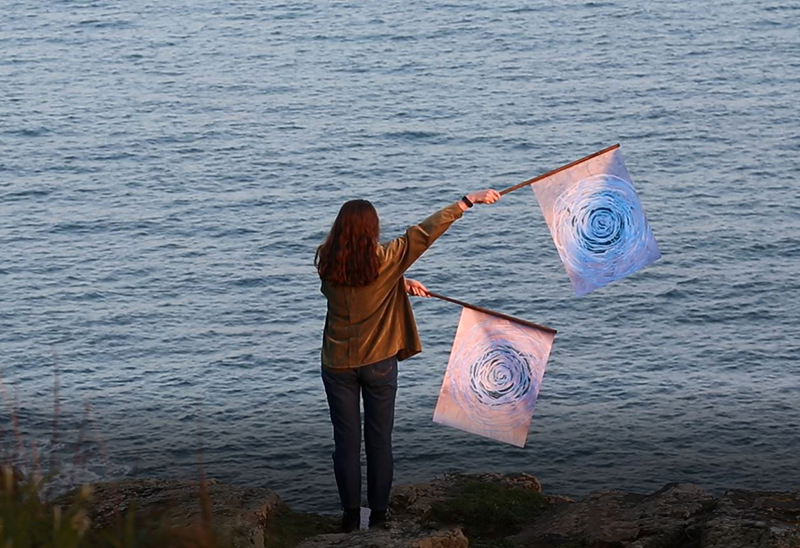
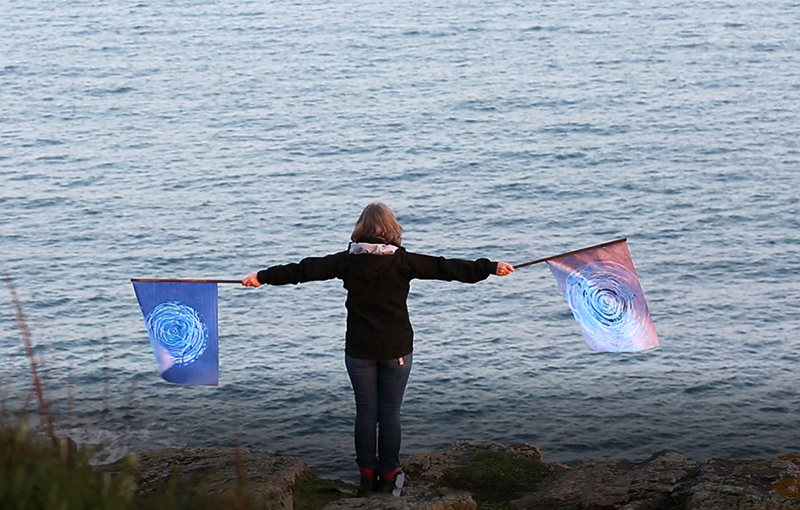
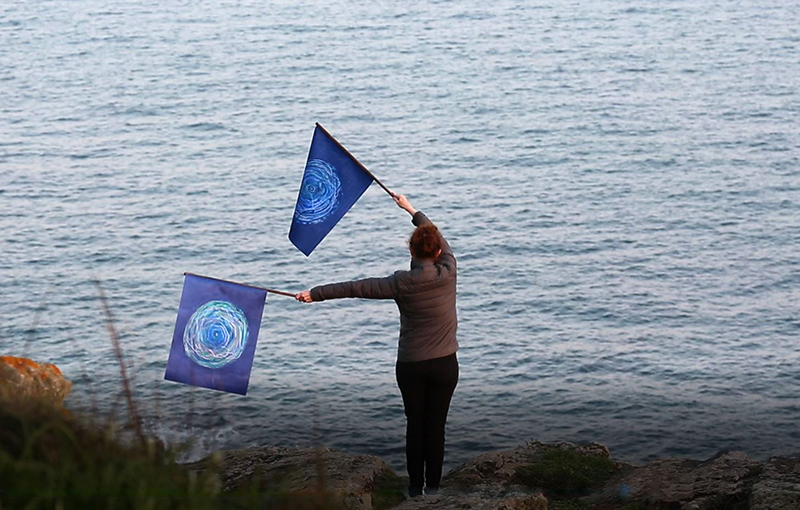
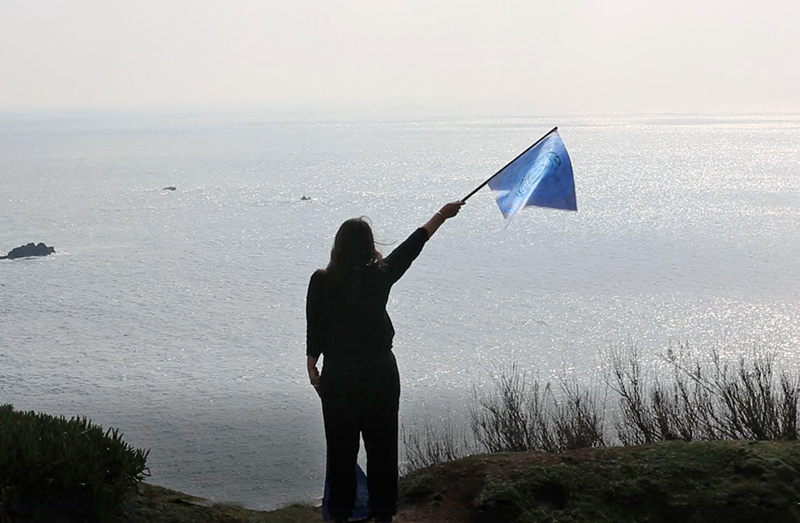
The message ‘WE ARE ONE’ was filmed on 29th March {non} Brexit Day signing with entanglement semaphore flags across the ocean

1903 semaphore 11903 semaphore 31903 semaphore 41903 semaphore 2

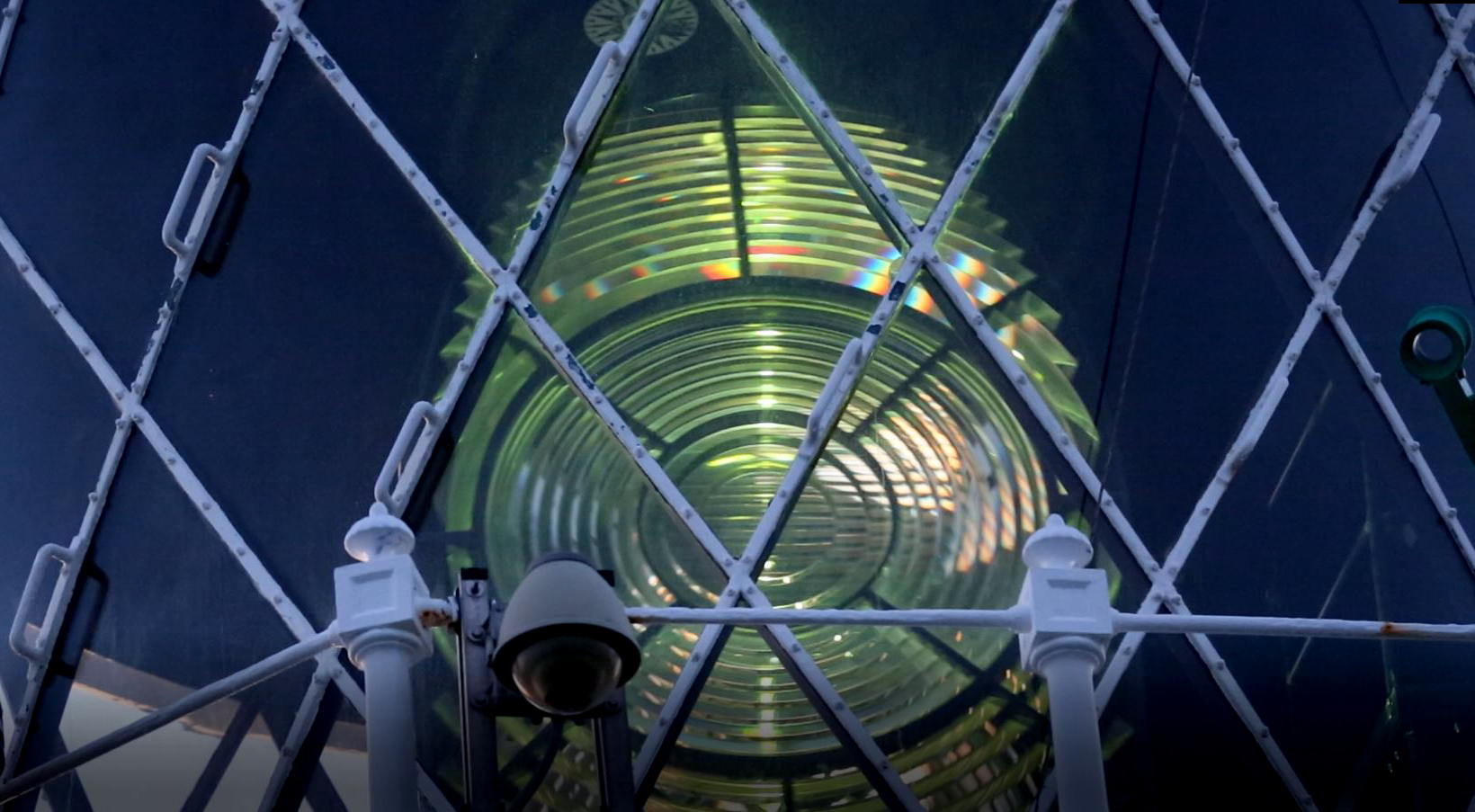
The plan is to make a film exploring communication across distances, relating it to entanglement theory where two paired electrons mirror each other. This will then be back projected onto a frosted Fresnel lens as used by lighthouses.

1903 fresnel lens 3

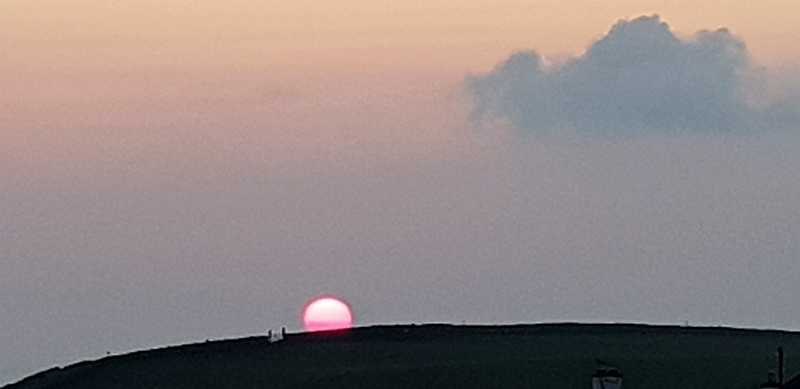
Joanna Mayes gave us a warm welcome to Cornwall on arrival as we witnessed the molten sun colour the whole sky before dropping out of sight.

1903 sunset

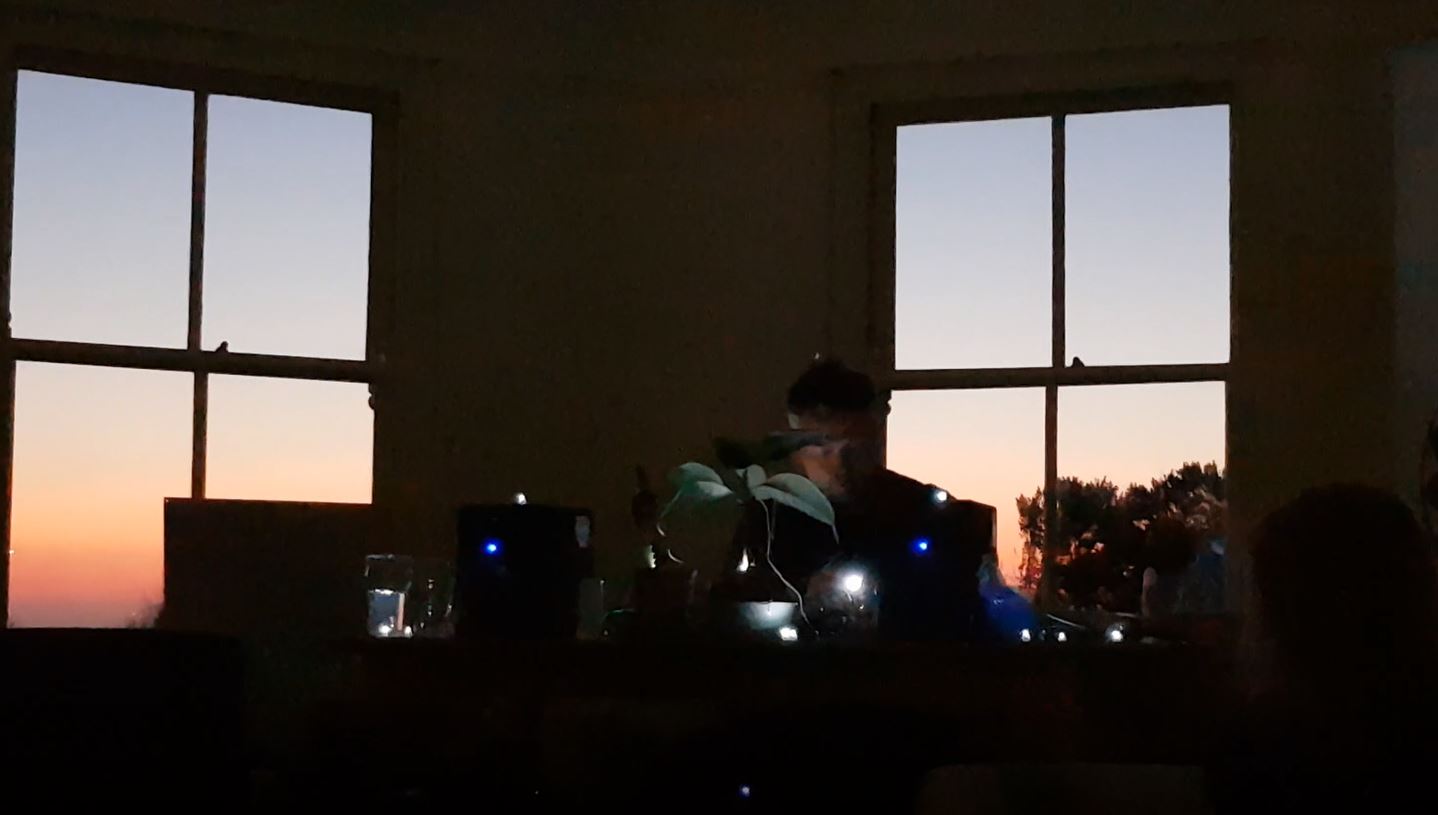
Sitting in the receding warm glow of the sunset we listened to the electromagnetic musical collaboration between sound artist Justin Wiggan and some house plants.

1903 plant biometric sounds

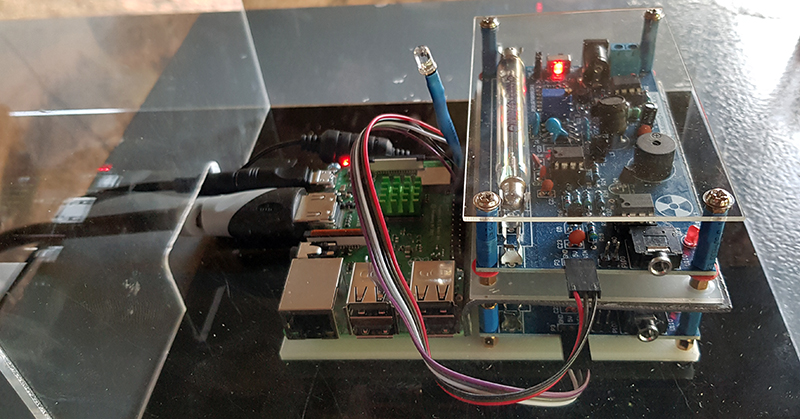
The meteor viewing pod created by artists Andrew Bird and Christina Romero-Cross was installed in the YHA grounds where a series of Deep Time films commissioned by Mayes Creative were screened with the sequence to be controlled by a cosmic ray detector.

1903 meteor pod

Two Geiger counters with lead between them identify those particles coming from outer space.

1903 cosmic ray detector

Astroarchaeologist Carolyn Kennett led us along a section of the Southwest Coast Path from Ruan Minor to Cadgwith via Poltesco Old Serpentine Works.

1903 Kuggar bay

Carleon Cove is full of Kennack gneiss, giant pebbles of pale pink granite and dark grey basalt banded together during enormous geological upheavals as the Lizard was thrust northwards and the melted rocks were fused together.

1903 pink geology

Constant swirling sea sculpting

1903 sea water1903 sea water 2

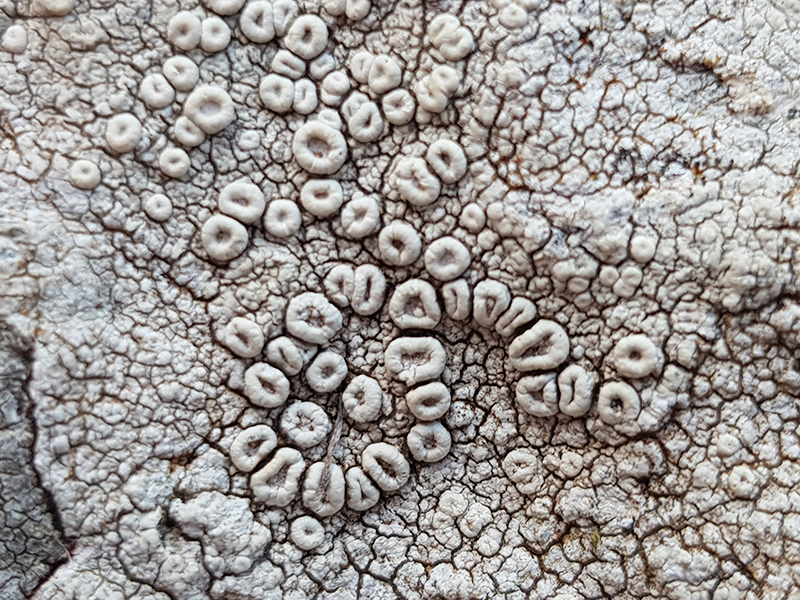
organic micro rock constellations

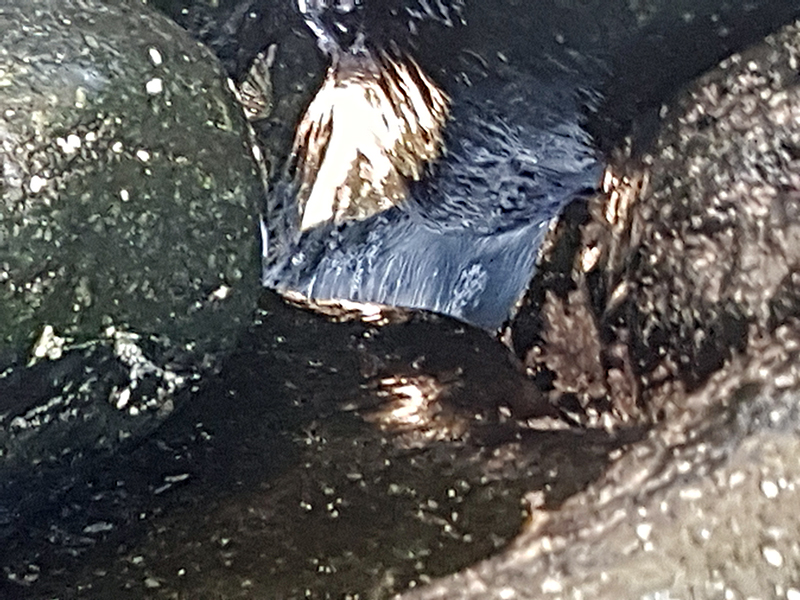
1903 beach barnacles

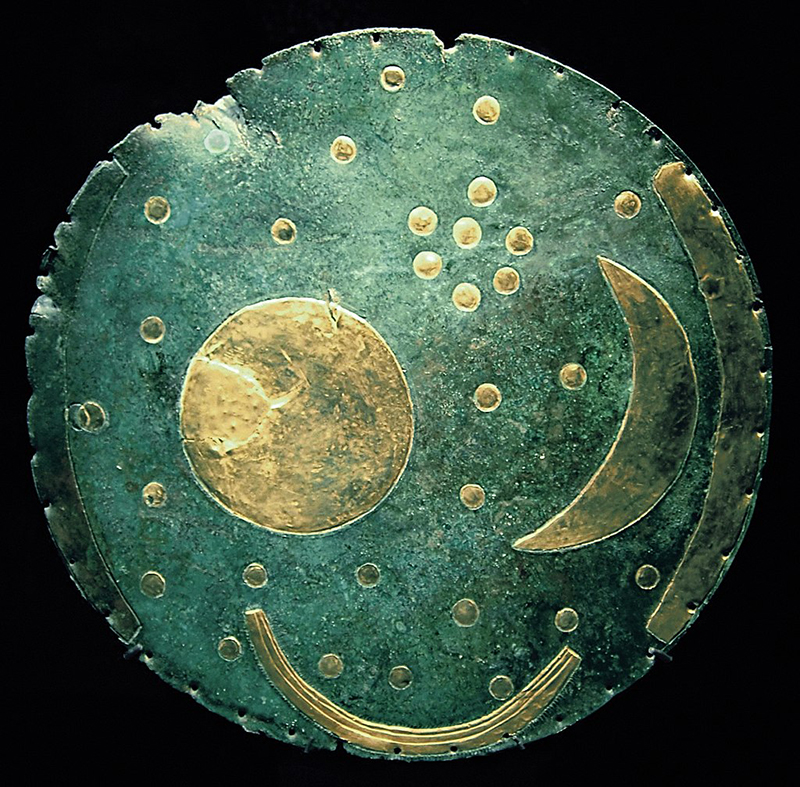
The Sky Disc of Nebra is a Bronze-age astronomical disc possibly used to determine the seasons for sowing and harvesting in the Halle area of Saxony-Anhalt, Germany. It is the oldest depiction of the cosmos yet known from anywhere in the world. It was discovered in 1999 by metal detectorists working illegally who sold it onto the black market where  it was later recovered in a police sting operation. Analysis shows the gold and tin used in the disk were from the Carnon Valley in Cornwall. Evidence of ancient links between communities.

Digital StillCamera

Workshops during the residency included looking at found matter under the microscope

1903 microscope silver foil
A Chemigram workshop which involves painting various resist materials such as toothpaste, suncream and honey onto photographic paper before exposing to sunlight, fixing and developing.


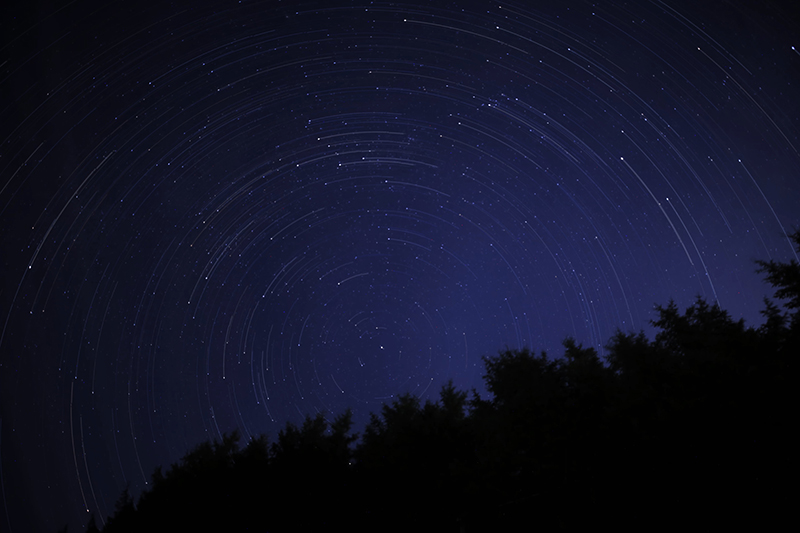
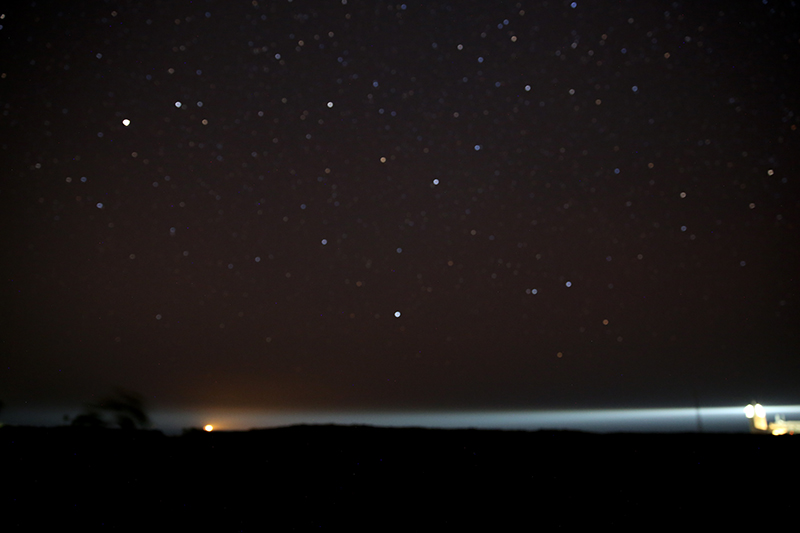
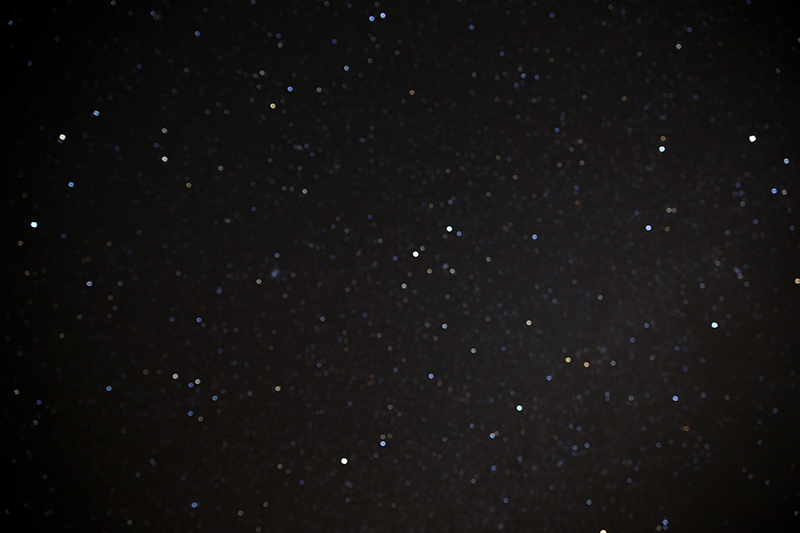
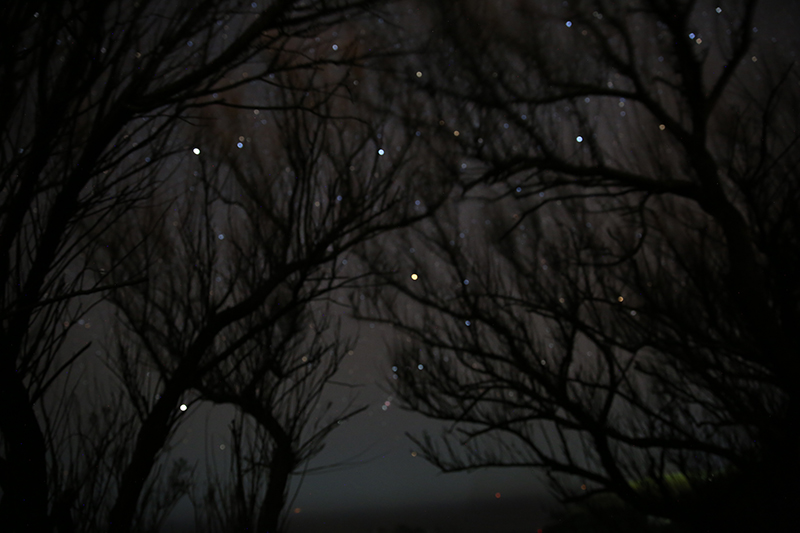
Astrophotography; learning the camera settings to use to capture the extraordinarily starry night sky we were fortunate to experience. This shot was using bulb mode, focus infinity, 2.8 aperture, 3200 ISO, 30 sec exposure.

1903 stargazing

We did have to try and escape the sweeping beam of the Lizard Lighthouse but for some shots the added exposure gave some interesting results.

1903 astrophotography

On the trip down to join the art and science Lizard Point artist residency we found ourselves serendipitously having a delicious afternoon tea at The Cornubian Arts & Science Trust (CAST)

The original Science and Art School was built in 1897 by Cornish philanthropist John Passmore Edwards at the request of local people.

1903 Helston Art and Science school.jpg

The disperse papers left over from making the entanglement semaphore flags have good wormhole portal potential

1903 portal

Two great resources discovered:

Design Me print studio where I have tracked down a large format heat press available for open access.

Fat Llama a rental resource for practically anything and everything.

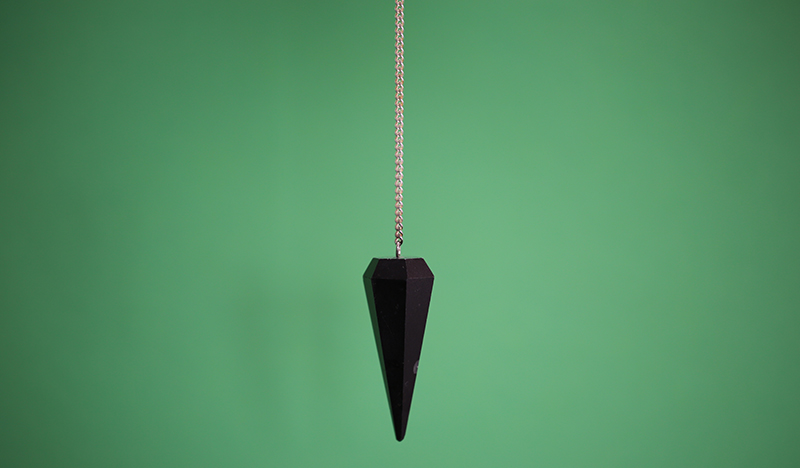
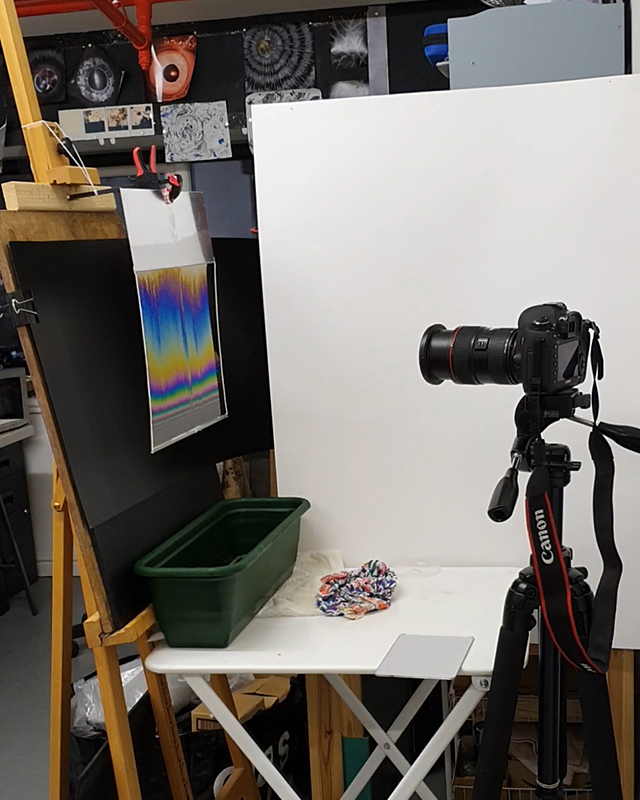
I rented an EF 100 f2.8 USM macro lens and set up a mini green screen in the studio. Apparently black tourmaline is good at cleansing negative energy so I sourced a pendant to use to create a hypnotic state of relaxation encouraging the release of negative energy to power the transformation wormhole. Have changed the chain to leather thong.

1903 black tourmaline

Not sure what the backdrop will be yet. Also tested the movement of iron filings against the green screen.

1903 iron filings green screen

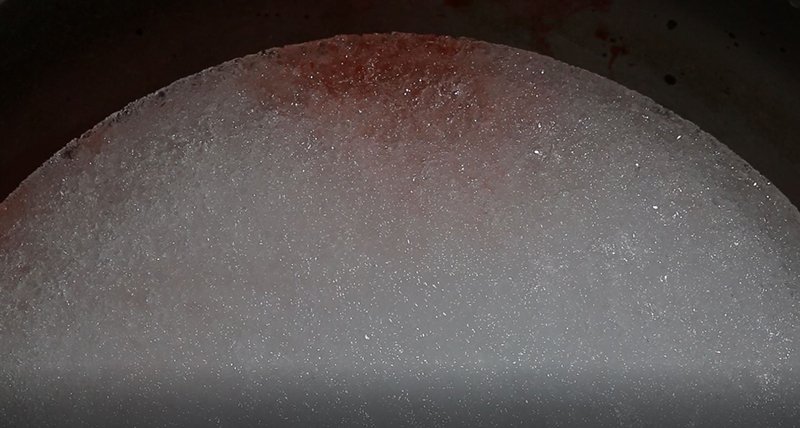
I made a frozen ice disk and tested back projecting particle trails onto it. This was tricky to film as rather slippy but I can see this could be a good effect showing the detail in the ice.

1903 projections on ice

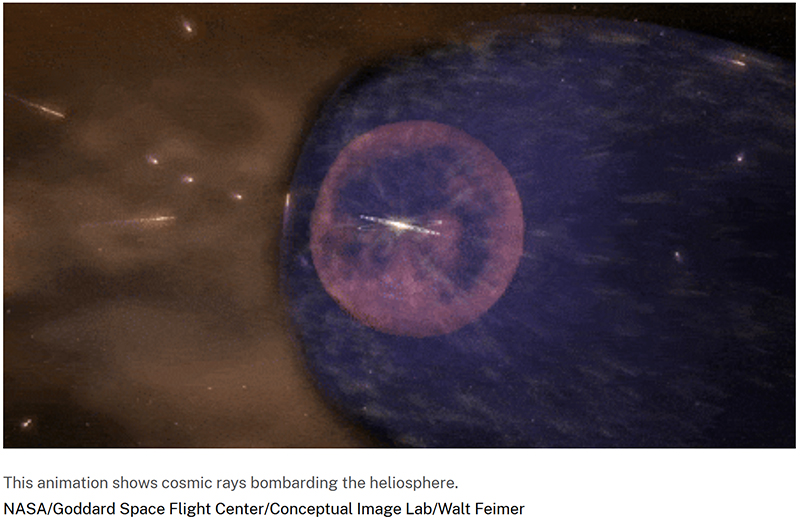
Cosmic rays stain icey asteroids red.

1903 ice stain

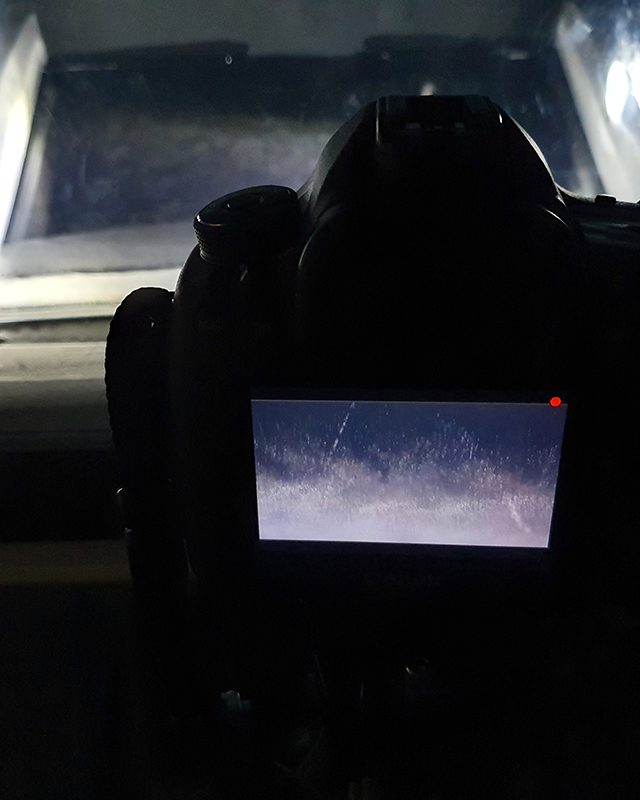
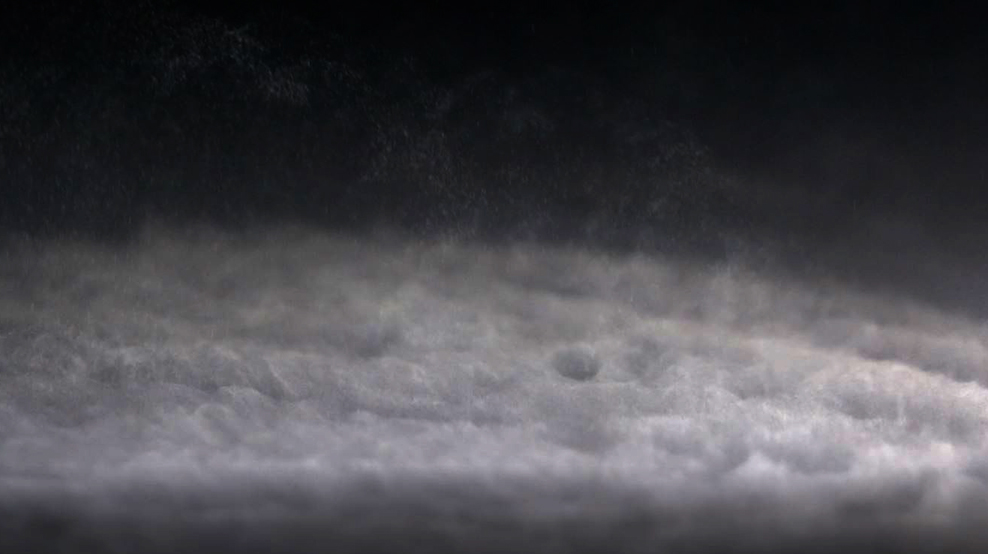
Tested filming the cloud chamber with the macro lens and although the depth of field maybe better because it’s such a small area in the viewfinder I didn’t capture many trails.

1903 particle trail 5

I’m not sure the result was better.

1903 particle trail 3

Got some good air turbulence though

1903 turbulence

The plan here was to have dry ice vapour coming through the perforations

1903 perforations

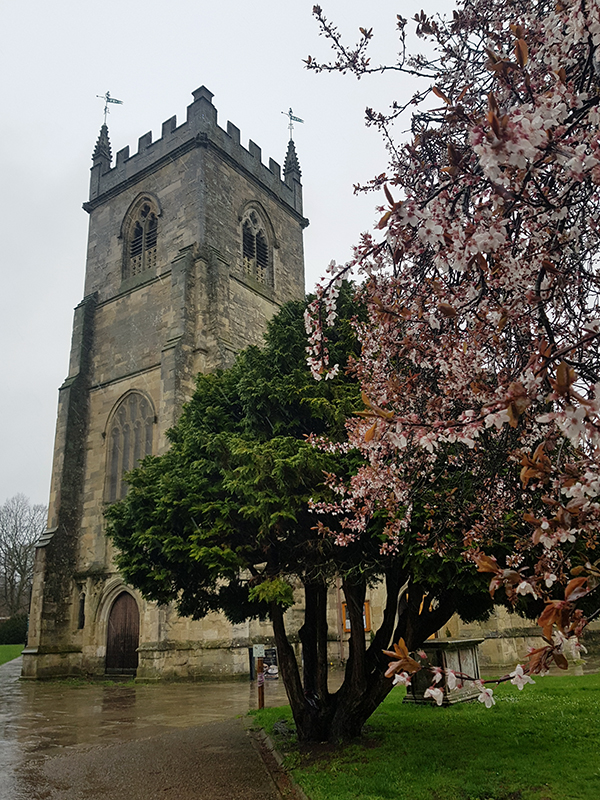
I made a site visit in heavy rain to Salisbury Arts Centre

1903 Salisbury Arts Centre 1.jpg

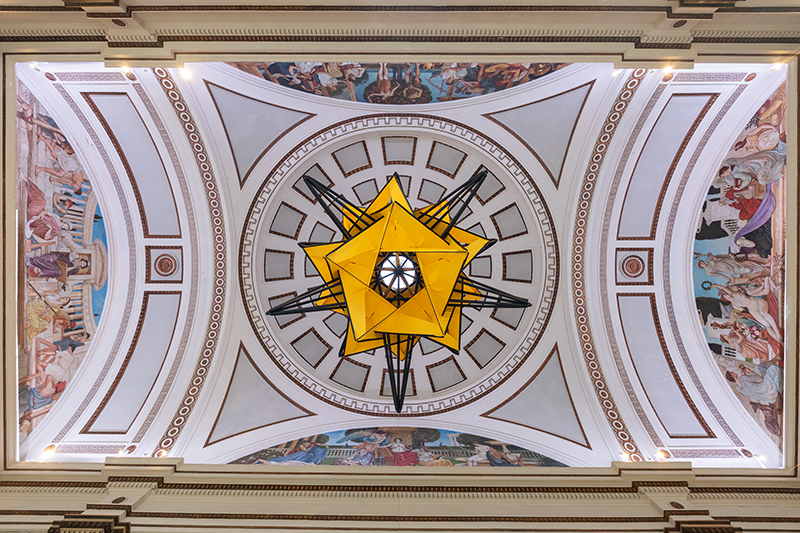
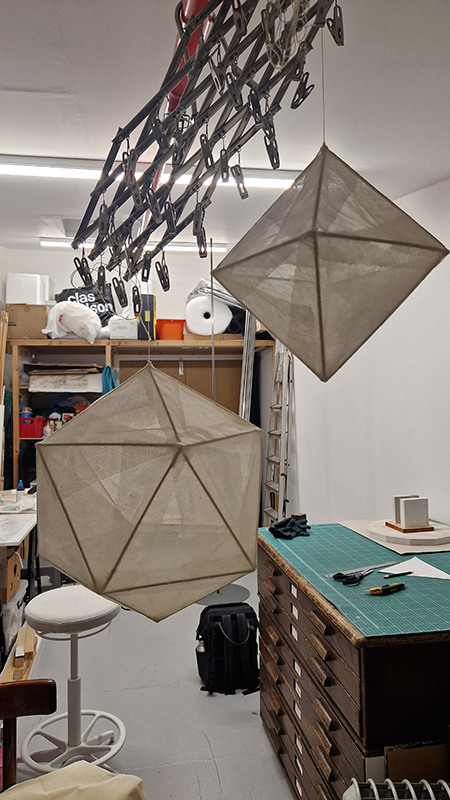
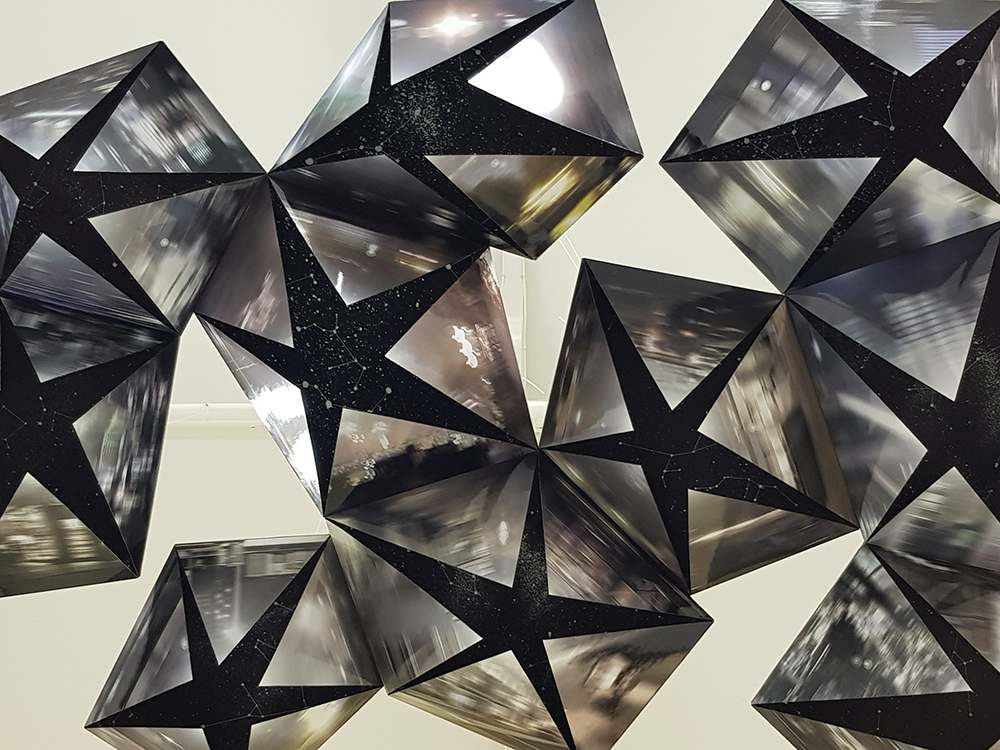
I will be installing Pentacoronae hanging sculpture for the Insatiable Mind exhibition as part of Salisbury International Festival.

1809 Pentacoronae

It was great to meet everyone and hear about their ambitions for the space. Being an old Church the ceilings are very high. It’s going to be a challenge but they do have their own cherrypicker.

1903 Salisbury Arts Centre

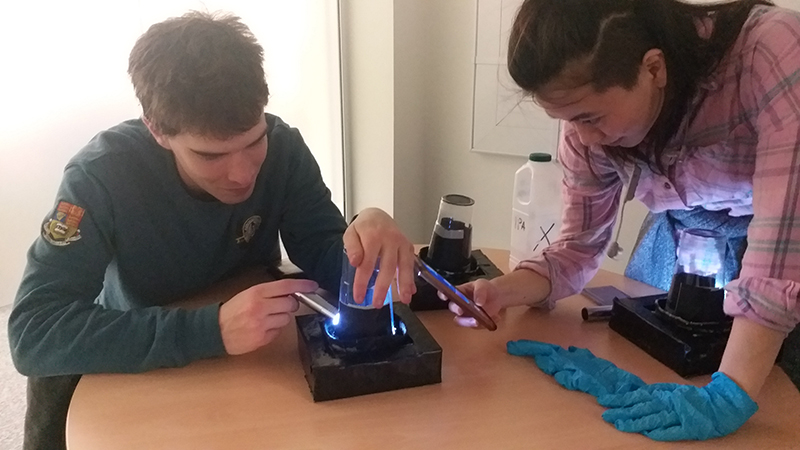
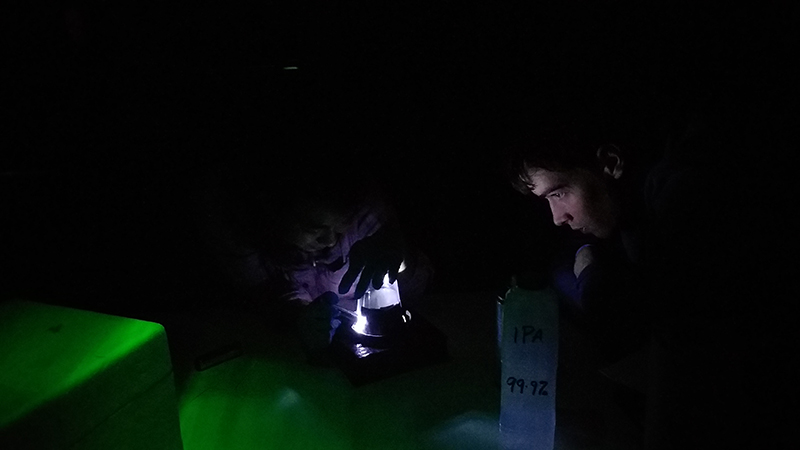
In preparation for the launch of the high altitude balloon with a cloud chamber in the payload students from Imperial College Space Society experimented with the mini DIY Cloud Chamber kits I provided.

1903 testing mini chamber 2

They are testing outcomes to design a prototype chamber that can withstand low pressure at high altitude, also they must ensure the base plate is kept extremely cold to create the supersaturated environment but any batteries onboard are kept warm enough to function and that turbulence doesn’t cause a whirlpool effect in the cloud.

1903 testing mini chamber 1

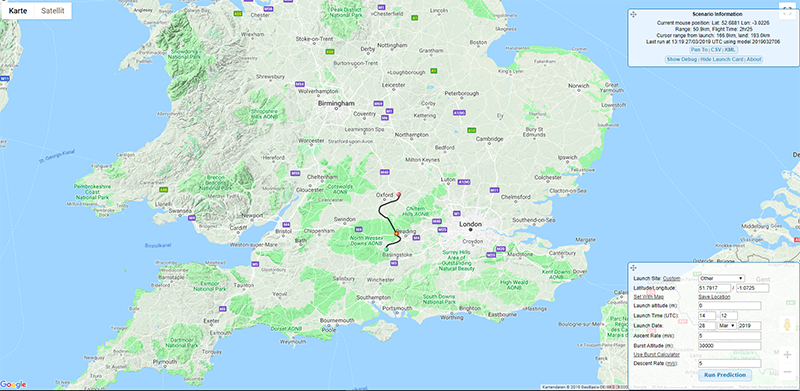
It looks like we might be launching from an airfield near Oxford.

1903 balloon path.png

The New Materialisms Reading Group I attend are currently reading Scale. Geoffrey West’s research centres on a quest to find unifying principles and patterns connecting everything, from cells and ecosystems to cities, social networks and businesses. Full of interesting facts about heartbeats and energy, lifespans and growth cycles.

1903 tree rings

It has been alarming to read about the terrifying unpredictable phenomenon of exponential growth. At the beginning growth is slow, but this soon accelerates to such a rate that it becomes out of control, unstoppable and then collapses under its own weight.

I am also still trying to understand entropy as explained by Carlo Rovelli in The Order of Time. So, the universe began with low entropy and it has been increasing ever since, the past leaves traces in the present caused by the irreversible process of energy degrading into heat from which our brains create extensive maps of past events and this is what gives us the sensation of time passing.

1903 Braeg sundial.jpg

Out of Studio

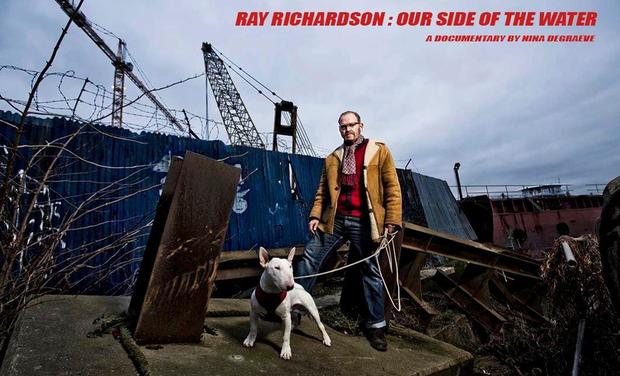
A packed gallery for Ray Richardson‘s entertaining talk and screening of award winning Our Side of the Water at Thames-side Studios shows how much he is held in our mutual esteem.

1903 Ray Richardson.jpg

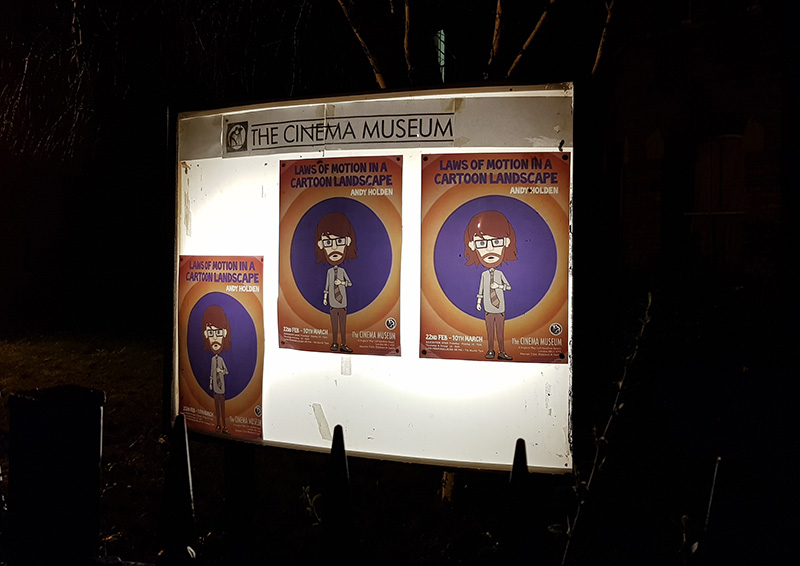
Fun night with Andy Holden at The Cinema Museum.

1903 Andy Holden Cinema Museum

Laws of Motion in a Cartoon Landscape uses live green screen filming allowing the narrator to interact with clips from hundreds of cartoons. The film proposes the world is best understood as a cartoon through examining the formation of ‘laws’ within cartoons as a way of making sense of the world we inhabit, a space where anything could potentially happen.

1903 Andy Holden Cinema Museum 1

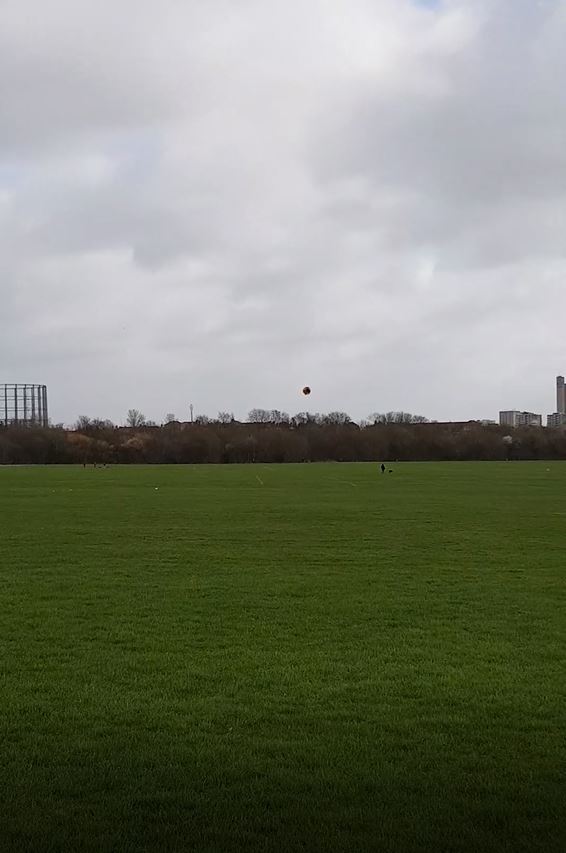
I joined some students from Imperial College Space Society and other High Altitude Balloon enthusiasts at Wormwood Scrubs for the launch of a couple of Pico balloons that they are testing tracking with the aim of making a complete circuit of Earth.

1903 pico launch 1

Anxious moments as the balloon barely gains height but soon it has vanished from sight

1903 pico launch

The next couple of hours are spent listening in for the tracker system transmissions which can drop in and out of range; travelling at something like 60metres/second both balloons made it to Belgium before the transmissions ceased.

1903 pico launch 2

Work resulting from an unexpected encounter that demands attention in By The Way at Lewisham Art House had some ephemeral photopolymer etchings of found seashore plastic by Sam Hodge.

1903 Sam Hodge.jpg

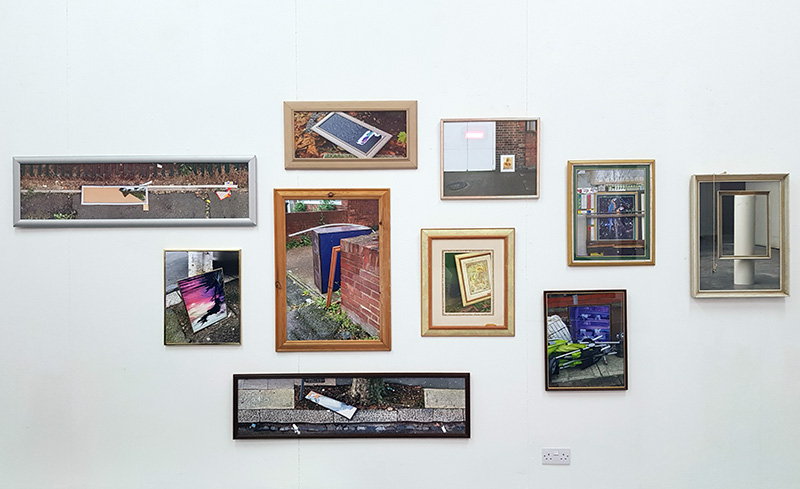
I also liked this work by Mark Sowden who photographed found frames and then mounts the resulting image in the frame.

1903 Mark Sowden.jpg

Great show Undertow at Sluice HQ. When prevailing discourses tip towards hyperbole, generalisations or simplification, there is a need to swim against the current, to carve out a space that allows for ambiguity, correspondence and a quieter voice. In the employment of few words, a scale of action or use of minimal materials, understatement can be both a way of confronting moments of crisis, or of evading them.

Alex Simpson Scratching the surface    /    Lauren Ilsley Fluvial Additions


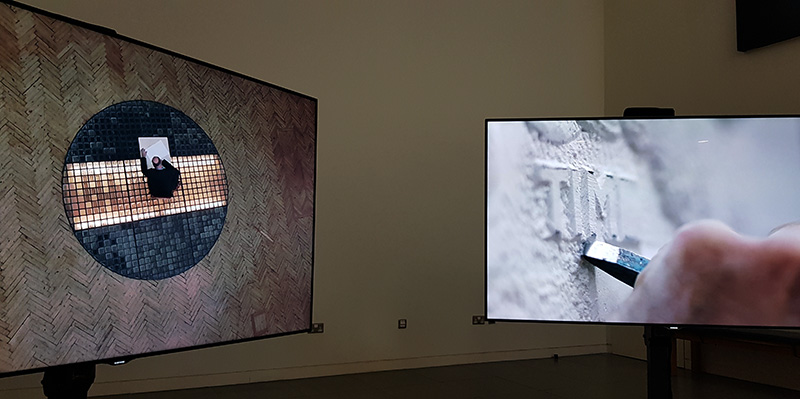
Time Tries All Things video installation at the Institute of Physics by Grace Weir explored time and our human relationship with it.

1903 Grace Weir Time Tries All Things

Two narrators consider time from different perspectives against the backdrop of a stone carver replicating a plaque, repeating time.

DAVID:
I think when people talk about time they often confuse two sorts of thing.
There is time itself and there is what’s called the arrow of time, which is
direction, and its perceived nature as a human being.

FAY:
Being or becoming is an ancient question.
Ever since we have records of people thinking about the world, in ancient
Greek philosophy for example, there have been people on both sides of
this debate.

The complete audio transcript is available here.

There is a very impressive diffusion Cloud Chamber in the foyer at The Institute of Physics. Lots of activity but it was hard to see the particle trails clearly through all the reflections. 1903 Diffusion cloud chamber

They also have a cosmic ray detector on the roof which has scintillator plates containing molecules of a substance which emit a tiny flash of light when they are hit by a high-energy particle.

1903 scintillating sea.JPG