Archives for posts with tag: Laboratory of Dark Matters

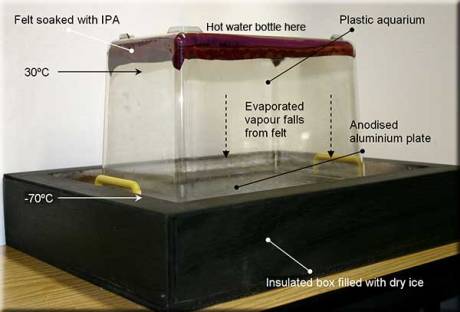
I have been gathering tips and components to build a cloud chamber for viewing cosmic particles but mostly my time has been spent in funding application form filling.

1611-cloud-chamber

Feeling the admin has been taking over. Not a creative time and am also finding the ground is not so firm beneath our feet when it comes to securing the promise of a grant.

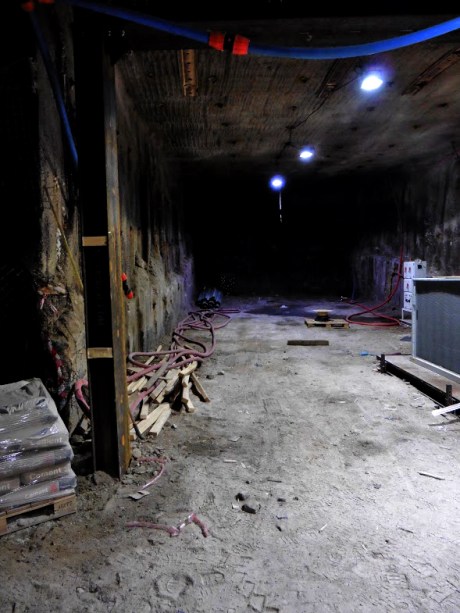
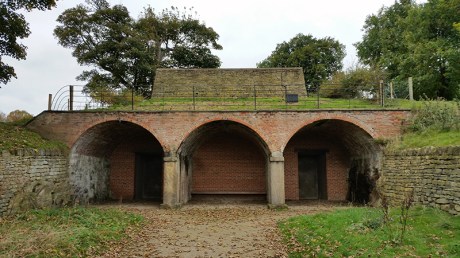
1605 dm boulby tunnel

Challenges ahead but Laboratory of Dark Matters is taking shape and we are listed on Guest Projects website link here.

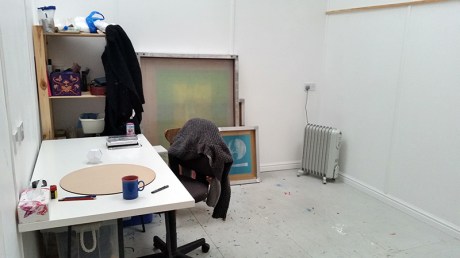
1612-new-studio

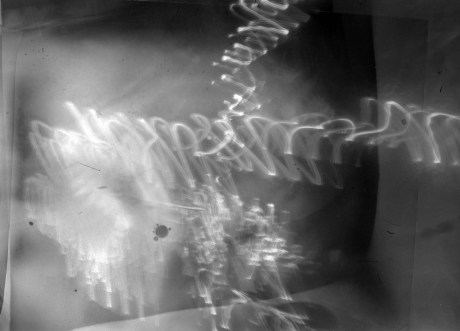
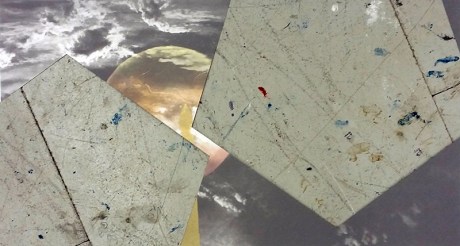
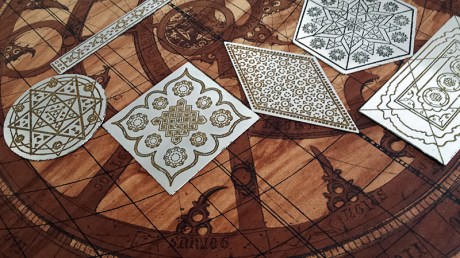
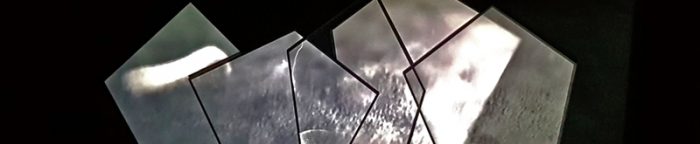
I have moved studio once again, only a very short distance but into my own space. This is so I can film the cosmic particles I hope to see in the cloud chamber in low lighting and mess about with dry ice. I am starting to plan work using imagery of the cosmic trails. Looking at pentagon facets of the dodecahedron.

1612-template

Made a trip to Allenheads Contemporary Arts for the final weekend of events of their major project As Above So Below that saw artists come together to explore a shared curiosity and quest to answer questions about our existence and relationship to our planet. Iron River was a beautiful live sound performance synched to a video installation from Bennett Hog and Sabine Vogel using an exposed piano frame, pebbles and bass flute to describe the extraction process of iron ore abundant in the local water.

1612-neal-willis

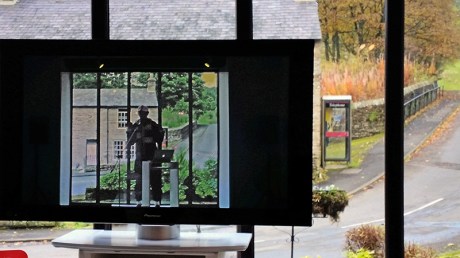
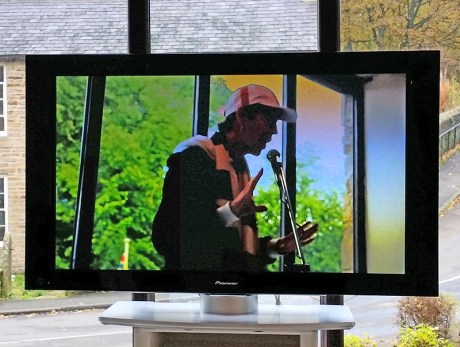
Eerie sounds, almost words, deep and earthy boomed from the woods and echoed around the valley in Neal Willis’ coded interpretation of barbed wire patterns What Language of the Fox? I thought Bill Aitchison’s Stuck In The Middle With You was brilliant. The recording of his performance was positioned in the spot where the original delivery took place during the summer – the view on the screen and out through the window was the same, just browner outside now.

1611-as-above-so-below-10

Listening to Bill make connections, set up a scenario only to knock it down became mesmerizing and addictive, I was swept away.  Listen to this work at the link above.

1611-as-above-so-below-1

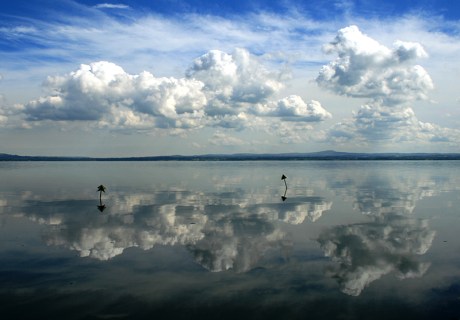
Lucien Anderson’s Prototype 2, or Splashdown floats in enigmatic isolation on the Allenheads reservoir.

1611-as-above-so-below-3

There is video relay to an observatory tent but it looks like contact may be lost…

1611-as-above-so-below-6

Thresholds (Proximity, Distance and Loss) a poignant video installation from Jo Hodges and Robbie Coleman was running in the coal shed featuring sound from Lost Cosmonaut a recording from 1962 purporting to be broadcast from a damaged, State abandoned, Russian spacecraft overlaid onto imagery from a remote and subsequently abandoned Northumbrian village.

Pat Naldi’s research unearthed song lyrics written in criticism of the local mine owner during the early 19thC which the local Dale Singers performed on the green for Assembly 2016

1611-as-above-so-below-4

Alan Smith From NVC 100 to 10 Thoughts both reduces and expands inquiry as he condenses big questions into a series of 10 thoughts. Set in the cosy cosmos of his caravan it is a personal exploration of the very wide world we are invited to share in.

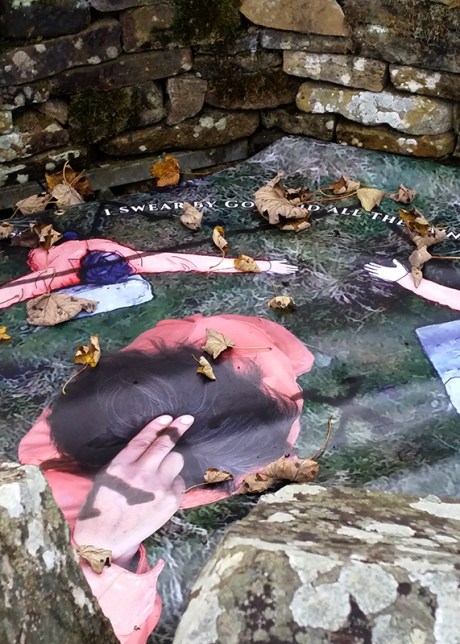
Bridget Kennedy installed The Measure Of It over the opening to Gin Hill Mine Shaft referencing the opening of seams for mining in medieval times when a prescribed square measure was termed an Ancient Meer and an oath was taken to claim ownership.

1611-as-above-so-below-2

“I swear by God and all the saints, and I call them all to witness, this is my vein; moreover if it’s not mine, I neither this my head or these my hands henceforth perform their functions” from De Re Metallica by Georgius Agricola.

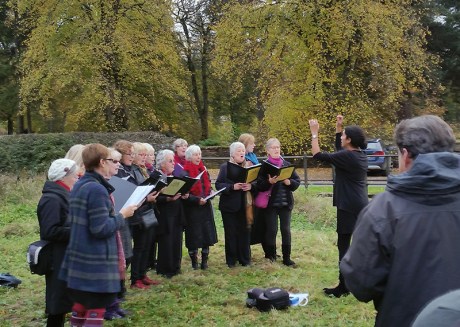
Also made a visit to Yorkshire Sculpture Park

1611-not-vital-yorkshire-sculpture-park

The current headline show was from Not Vital – big shiny heavyweight sculpture, inside & outside. A lot of metal.

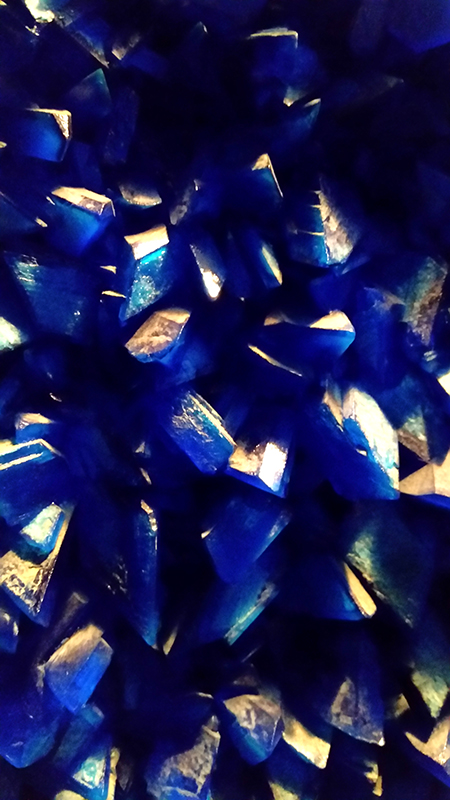
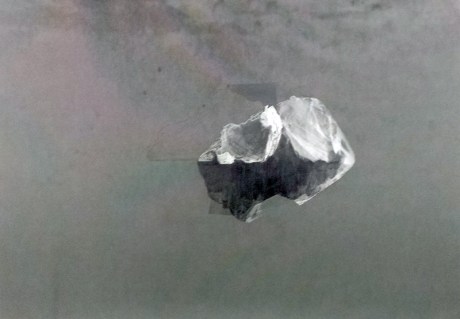
Was a nice surprise to discover Roger Hiorns Seizure has found a home here. Just as dazzling inside but a shame its place of genesis, the totally incongruous London estate setting is lost.

1611-roger-hiorns-yorkshire-sculpture-park

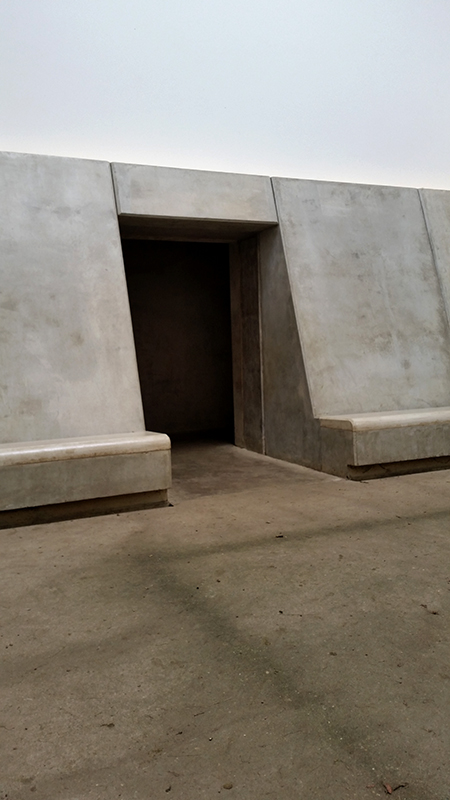
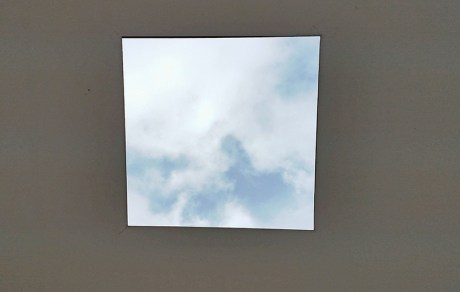
Excited to experience James Turrell’s Deer Shelter Skyspace.

1611-james-turrell-yorkshire-sculpture-park-4

The elements have left their mark on the floor.

1611-james-turrell-yorkshire-sculpture-park-3

Incredible how the light changes the space, and framing the sky in this way makes it so luminous and almost tangible at the same time.

1611-james-turrell-yorkshire-sculpture-park

When gazing up through the aperture of a ‘Skyspace’  it’s important to give your eyes time to adjust to gain the full reward. The contemplative state, like fire watching, that Turrell induces in his audience is common to all people through all time. He is fascinated by early cultures in which the position of the sun, moon and stars are responded to through environment. He appreciates light has a strong connection to our spiritual beliefs. Light is the materialization of energy. We are naturally eaters of light, our whole body is scattered with stray rods and cones outside of the retinal area which makes our relationship to light very primal. Our bodies are made from matter fed by the fruits of photosynthesis. Light is life. In using the stuff of nature as medium a direct connection is made between our body and the universe.

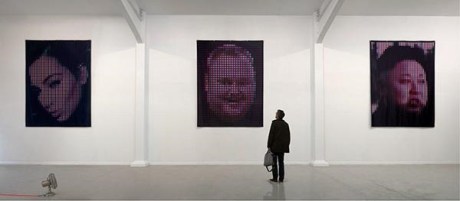
Caspar Sawyer’s exhibition Gamut at Thames-side Studios Gallery was another way of considering how our brains decipher the light messages that are fed to them, this show was about the pixilation of our world.

1611-caspar-sawyer

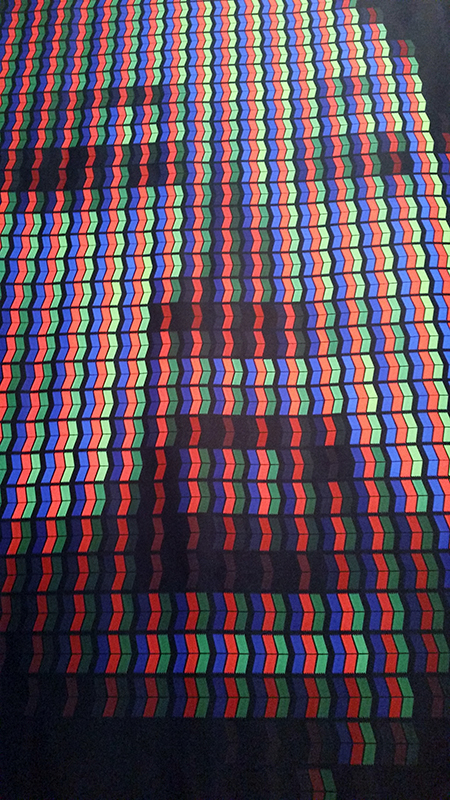
Most striking are the giant heads of the 3 Kims triptych, leering in and out of focus as the angle and distance of perspective varies as you move around the gallery. The camera however, reverts the image back to tiny pixels and into focus. They are really not that clear to the naked eye when you are in the gallery.

The media construction of the larger than life characters made evident in oversized pixels.

1611-caspar-sawyer-2

The sublime dissolving into sub-pixel RGB grids as we move too close.

Vibrant colour blocks as pixelated studies of constructed titles – internet searches for an image that best represents one word,

1611-caspar-sawyer-1

reduced to pixels and blended with other word searches until the image represents the title – the source images never known even to the artist.

1611-caspar-sawyer-7

And my favourite – This Moment is the Most Profound Experience You Will Ever Have in Your Whole Life (in progress)

1611-caspar-sawyer-8

The image is revealed as a moving reflection of your body as you traverse the space, a shadow that casts light. Quite profound really. I am light.

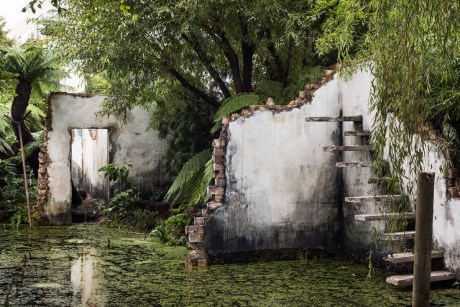
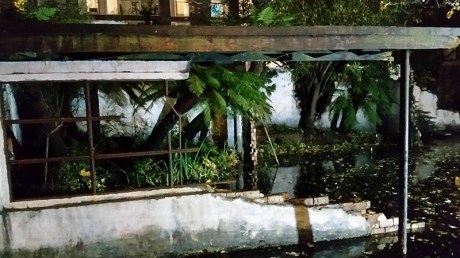
Total takeover -Alex Hartley’s ‘architectural intervention’ A Gentle Collapsing II at Victoria Miro is wonderfully indulgent romanticism

1611-aex-hartley-5

Stepping though the gallery doors to the garden becomes stepping though a portal to another time and place.

1611-aex-hartley-2

The edges of reality blur as it isn’t clear where fantasy begins and ends. It is a place to enact and dream and enjoy its unreal realness.

1611-alex-hartley-1

Other works inside are just as bewitching; paintings like translucent marble slabs  with hidden inner lives.

1611-aex-hartley-3

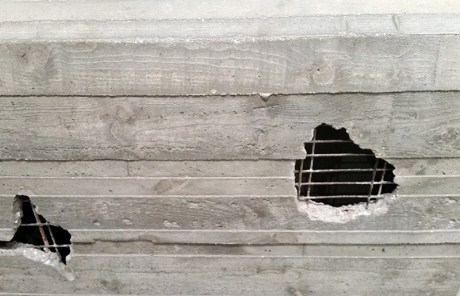
Frosty surfaces shielding mysterious landscapes. Concrete pretending to be wood.

1611-aex-hartley-4

I am always impressed by Alex Hartley.

Holly Graham showing After Harry Jacobs: The Studio and hypnotic looped animation After Harry Jacobs: Basket in Backdrop at ASC Studios as part of Artlicks weekend. ‘the works in the exhibition engage the backdrop as a context for action and seek to question the perception of its neutral or auxiliary role.’

1611-holly-graham-1

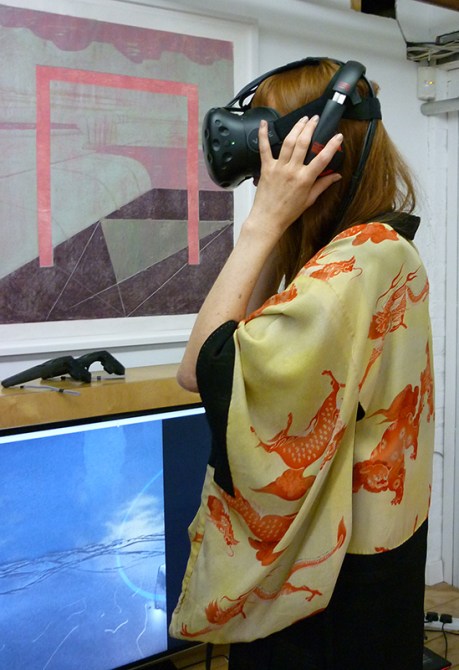
Scarlett Mueller creates her stunning hand printed woodcuts through layering techniques. At Anise Gallery for I Saw it Whole her work had been deconstructed and reimagined in a VR experience allowing the viewer to digitally enter the image. It was fun but unnecessary, her work has space for the viewer to enter without digital enhancement.

1611-scarlett-mueller

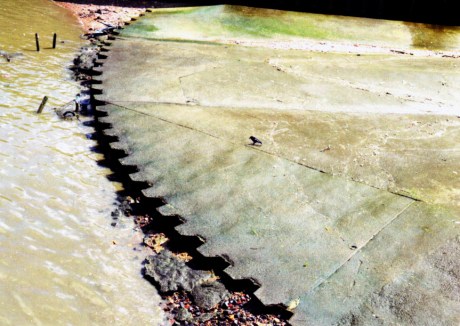
There is something extra green about the green that is exposed on the river banks at low tide.  These glistening and gelatinous edges are captured by Anne Krinsky  in Tide Line Thames along with distressed defences like scabs barely holding together the banks of the old river. (old not ancient).

1611-anne-krinsky

Mysterious architecture, cogs, slippery steps, lengths and measures map out a life that dissects London, is passed over again and again without thinking. This exhibition is a pause in that momentum to look at the environment in the raw.

1611 Anne Krinsky 2.jpg

Adding layers. Infinite Mix an off-site iteration from the Hayward Gallery. Sound and moving image. Some very raw and powerful images drilled into the mind with earworm rhythms and stanzas. Excellent stuff.

1611-cyprien-gaillard-still-from-nightlife

Cyprien Gaillard Nightlife 


We have our second venue confirmed and the first of our funding applications submitted for Laboratory of Dark Matters.

1610-mining-museum-3

I have been to see the lovely people at Cleveland Ironstone Mining Museum who will be hosting our exhibition from July to September 2017.

1610-mining-museum

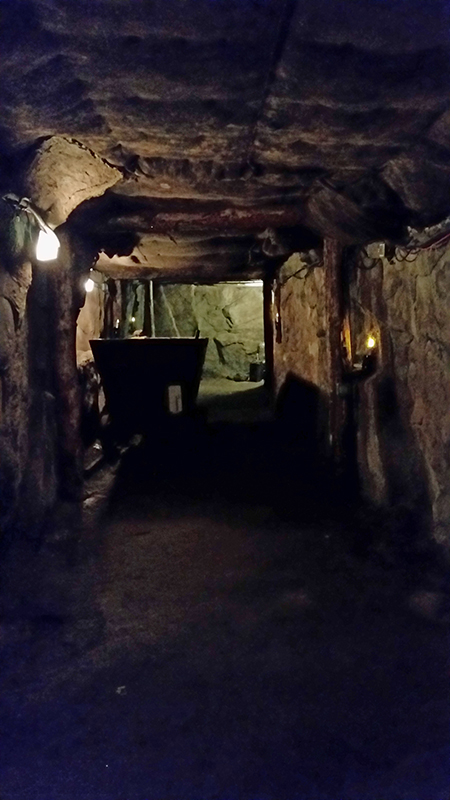
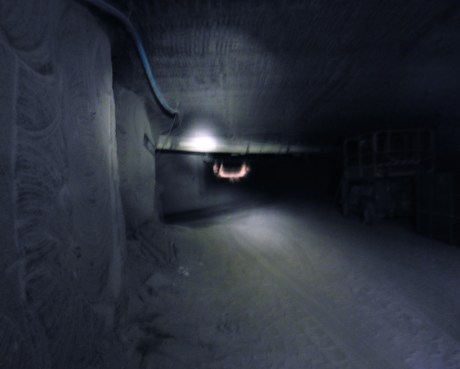
We are very pleased to be able to install Laboratory of Dark Matters so close to Boulby Mine, in the North East of England. This is a working mine that is also home to the underground laboratory we visited in spring to see for ourselves where scientists conduct research into dark matter and other projects that benefit from this extreme environment.

Cleveland Ironstone Mining Museum has secured funding for major expansion over the next year with the whole site being redeveloped. This period of change gives us the opportunity to be inventive with the spaces that are available.

1610-mining-museum-2

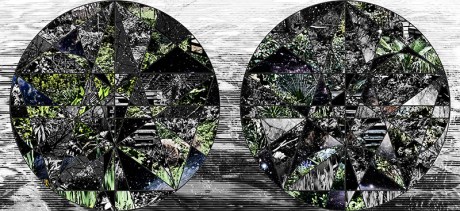
Chatting with our dark matter consultant astro-physicist Dr. Cham Ghag about the different work the artists will be making for Laboratory of Dark Matters I was explaining my own interest in the symbolism Plato assigned to the dodecahedron as the shape that holds the constellations in the heavens and how I might use this as a metaphor for dark matter as the substance holding the universe together;

1610 reflect dodecahedron.jpg

Cham recommended I read some essays by Erwin Schrödinger that explore the thoughts of ancients and how they have gone on to impact our understanding of the universe. As Roger Penrose says in his forward to Nature and the Greeks and Science and Humanism ‘Schrödinger clearly believes that there is more to the study of ancient history than mere factual curiosity and a concern with the origins of present-day thinking.’  He is looking back to a time before science and the metaphysical parted company and set out on different paths to answer the same questions about matter and consciousness. Schrödinger explains the history of this rift and the consequences of separating reason from the senses; the paradox of an objective perspective and the limitations of science that excludes the imagination. I read What is Life? followed by Nature and the Greeks, while in Greece which seemed appropriate.

I also read Plato A Very Short Introduction by Julia Annas and have learnt more about his ideas and what was really meant by platonic relationships.

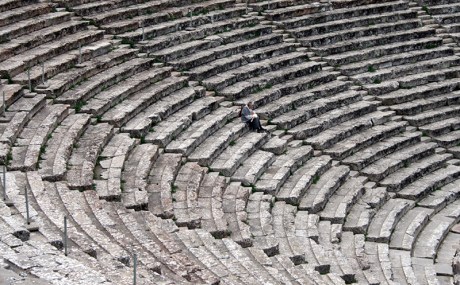
Plato was very concerned about what it meant to have knowledge and how people can be misled or manipulated by others.  From this standpoint he was not keen on the theatre or the popular epic poetry of the time that used seductive methods to persuade an audience of things that were not true. 1610-amphitheatre

He believed philosophy was a search for truth and his academy was a place to learn how to think for oneself through debate and come to your own conclusions. Not great as an artist to find Plato had no time to indulge the imagination but going back over what he was saying I think he had a valid concern over the sort of entertainment that is spoon fed to society and becomes part of a culture that then has influence on the way people live. It is the pap of the media that does not challenge but anaesthetises society. I am hoping he would approve of our endeavours to question the origins of faith and our relationship to matter.
1610-temple-of-zeus

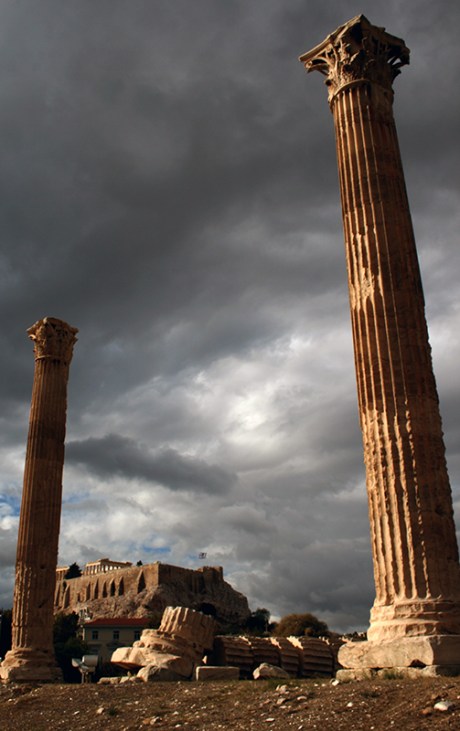
Visiting Athens I had the opportunity to experience the majesty of the Parthenon and Temple of Zeus while trying to imagine the people I was reading about spending their days here debating the most fundamental and difficult questions about existence.

1610-gertrude-bell

An interest in history and archaeology led the progressive and pioneering Gertrude Bell, born 1868 in County Durham in the North East, to visit and fall in love with the lands and people of the middle east. She led an extraordinary life at the centre of middle eastern politics at a time when women were rarely conceded any powers at all. Letters From Baghdad, premiering at the London Film Festival, was a moving portrayal of her life told in her own words and those of her contemporaries recorded in evocative letters and archive film footage. This wonderful tribute to a woman previously written out of history was researched and directed by Zeva Oelbaum and Sabine Krayenbühl, founders of  Between the Rivers Productions, a name derived from the ancient word “Mesopotamia.”

1610-dawson-city-frozen-time

Another brilliant film documentary was Dawson City: Frozen Time; the bizarre true history of a collection of around 500 silver nitrate movie films from the 1910s – 1920s, which were lost for over 50 years until being discovered buried in a sub-arctic swimming pool deep in the Yukon Territory.

1610-dawson-city-frozen-time-2

Meticulously brought to us by Bill Morrison, clips from the reclaimed  films form the backdrop to the history of Dawson City, a once important hunting and fishing camp for a nomadic First Nation tribe known as Tr’ondëk Hwëch’in that became the centre of the Klondike gold rush displacing the native people as the area was swamped with 100,000 prospectors hoping to make their fortune.

The talk Going Round in Circles – from the roundabout to the quark delivered at Manchester University and the RCA as part of the final year of my MA programme was a reflection on the development of my practice and brought home the themes that repeat themselves within my work.

1610 roundabout.jpg

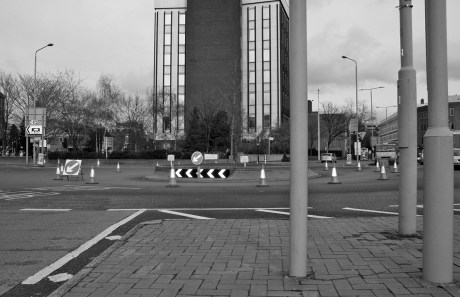
The circle appears in the  banality of a grey suburban roundabout that seemed a metaphor for a routine existence, becoming a catalyst in the search for paradise and its origins of Pairi Daêza and going on to question the matter that these dreams are made of.

1610-wlliam-blake-europe-a-prophecy

William Blake The Ancient of Days frontispiece to Europe a Prophecy depicting Urizen separating light and darkness

I was therefore interested to visit Seeing Round Corners at Turner Contemporary Margate. They had thrown the net wide in drawing together artists that have used the circle in their work or responded to its significance as  symbol.  I am often disappointed by this scale of exhibition that packs so much in. Too much information at once. Annoyingly there was no catalogue and no photography allowed. I have to rely on remembering what I saw.

More circles to be seen in the beautiful collection of works in  Romanticism and the Sublime curated by Jonty Levin at Lubmirov/Angus-Hughes.

1610-mohammed-ashfaq-1

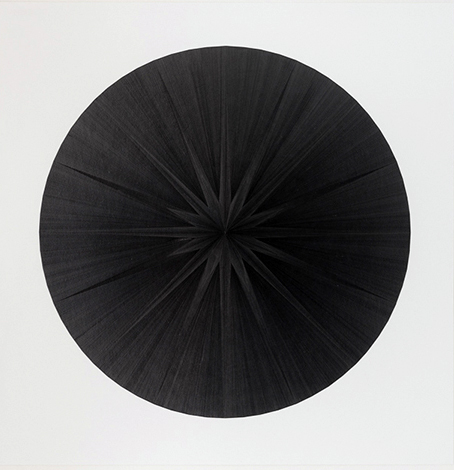
Mohammed Ashfaq Black Hole III

The most mysterious circle of them all, the black hole was the subject of Professor Joseph Silk’s Gresham College lecture. We learnt there are two types of black hole – stellar black holes formed when massive stars die and supermassive black holes which sit at the centre of galaxies and probably formed along with the galaxies. The existence of black holes was first proposed by clergyman and philosopher John Mitchell in 1783. Einstein predicted the existence of gravitational waves in 1916 and in 2016 this phenomena was finally observed providing direct evidence for the existence of black holes.

1610-mysterious-holes

The spiritual vs physical human needs- Mike Kelley showing at Hauser and Wirth, recreates a piece of social architecture from the Chinese-America community of LA, reflecting a unique cultural collision in Framed and Frame.

1610-mike-kelley-1

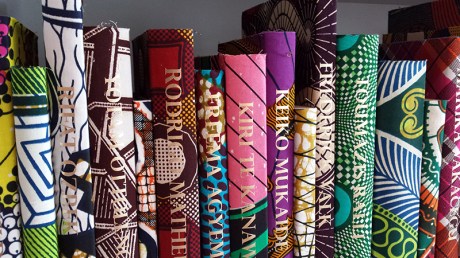
Also at Turner Contemproary Margate was Yinka Shonibare’s The British Library, a seductively beautiful celebration of all that we have gained from first and second generation immigrants who have enriched British society with brilliant literature.

1610-yinka-shonibare

‘Is this that pinpoint which is divided by sword and fire among so many nations?  How ridiculous are the boundaries of mortals.’ Seneca AD 65

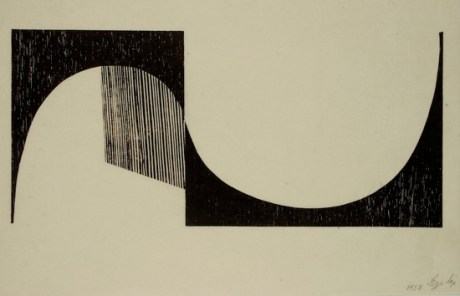
Haunting work by Lygia Pape at Hauser and Wirth exploring the relationship between reason and nature through geometric shapes.

1610-lygia-pape-4

I was interested to read how she followed intuition when creating her woodcuts; to let relationships between shapes be guided by an underlying sense of ‘magnetisation’. The artworks created then embody and emanate energy which creates ‘magnetised space’ into which the viewer is drawn adding another dimension to the field.

1610-lygia-pape-3

Forces are at play but gently held, as in the fragile balance of pigment particles, cascading and spreading in Ttéia n.7

1610-lygia-pape-1

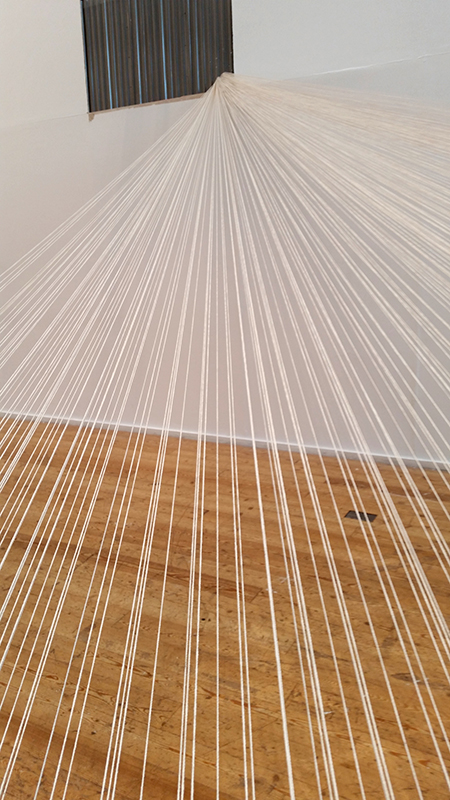
and the silver threads of Ttéia 1C that appear and disappear as ephemerally as a shaft of sunlight.

Between Materials and Mechanisms from Elizabeth Murton; an exhibition with associated events and symposium was hosted by UH Galleries at The University of Hertfordshire. This work looked at connectivity and the structures that physically bind us together, spanning our body, architecture and space to explore how interactions of ourselves with matter reflect in our consciousness and effect our emotions.

1610-elizabeth-murton-4

Bringing together ideas and experts from fields including anatomy, philosophy, dance, visual arts and Zen Buddhism we enjoyed a day of theory and physical engagement which really brought home these relationships through dynamic experience.

1610-elizabeth-murton-2

Prof. Diana Cooles’  keynote speech Dirt- A New Materialist Approach helped set the background to the history of materialism from the old materialism of the first thinkers like Plato where consciousness and matter are separate to Freud and Marx where theory and matter are integrated. New materialism rejects the duality of mind and matter and believes that agency is not just a human capacity. Bruno Latour is a prime exponent of flat ontology where everything is equal in its capacity to be an actant. Prof. Coole went on to give examples of the agency of matter, looking at dirt and our relationship to it. She drew on the writing of social anthropologist Mary Douglas who classified dirt as matter out of place. Dirt is associated with pollution and waste but also soil and nutrients.

1610 inside outside.jpg

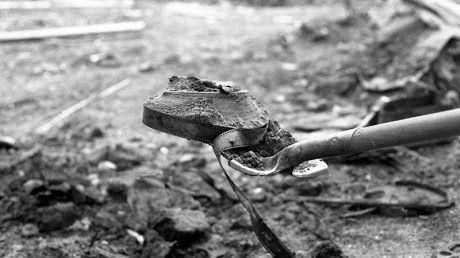
It changes agency depending on its location; inside/outside. She also looked at artists who use dirt in their work not as a material to comment on society or value but as a co-collaborator, allowing the dirt its transgressive qualities to create a visceral experience for the viewer.

1610-avoiding

Interestingly I have found Mary Douglas has also written an essay that examines circular thought patterns from ancient texts, Thinking in Circles: An Essay on Ring Composition. The abstract is as follows – ‘Many famous antique texts are misunderstood and many others have been completely dismissed, all because the literary style in which they were written is unfamiliar today. So argues Mary Douglas in this controversial study of ring composition, a technique which places the meaning of a text in the middle, framed by a beginning and ending in parallel. To read a ring composition in the modern linear fashion is to misinterpret it, Douglas contends, and today’s scholars must re-evaluate important antique texts from around the world.’


1610-mona-hatoum-plusandminus

Mona Hatoum +and-


Another experience of dirt was the excellent broadcasts from DIRT collective including  Peter Glasgow It’s not the Digging it’s the Dirt as part of ArtLicks Weekend which can be listened to via above links.

1610-antti-laitinen_7_7_7

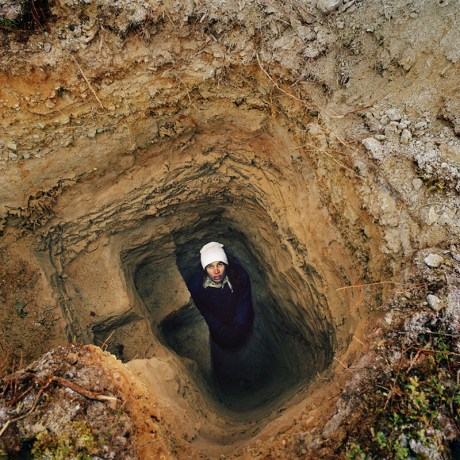
 All of which reminded me of this work “THREE STONES” (2004) Antti Laitinen dug a hole and collected the stones he found after seven minutes of digging, seven hours and seven days.


Amazing News Update – Laboratory of Dark Matters has been awarded a month long residency at Guest Projects for April 2017. Exciting times ahead.

Image - Laboratory of Dark Matters.jpg

Laboratory of Dark Matters is a response by artists to scientific investigations into the unknown nature of the Universe; opening a dialogue between scientists and artists who are each driven by curiosity and seek answers to fundamental questions about matter and consciousness.

“All visible matter in the entire Universe, including all the stars, cosmic objects, black holes and intergalactic gases, amounts to less than 5% of the mass we know to be present.”  

The search for dark matter is a scientific endeavour but also requires a large degree of faith in both the existence of these elusive particles and in the scientists’ ability to eventually detect and identify them. For artists, creating work is often about searching for some unknown and embracing an unexpected outcome.

The participating artists will be Amy Gear, Daniel Clark, Elizabeth Murton, Kate Fahey, Luci Eldridge, Melanie King, Peter Glasgow, Sarah Gillett, Susan Eyre.

Unexpectedly found myself trailing Game of Thrones fans location hunting.

1609-dark-hedges

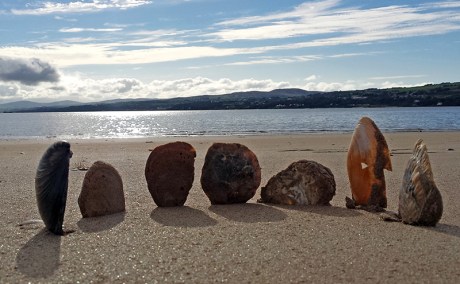
Visiting Northern Ireland’s dramatic coast and spiritual heartlands. Brooding ruins and primeval earthworks, geological anomalies and wide windswept bays. I was on the lookout for saints and sacred wells.

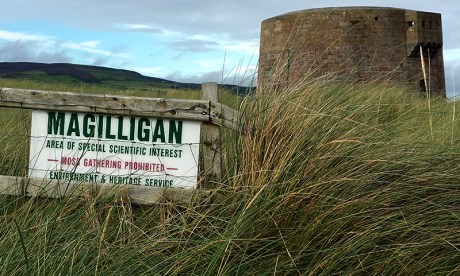
1609-magilligan-point

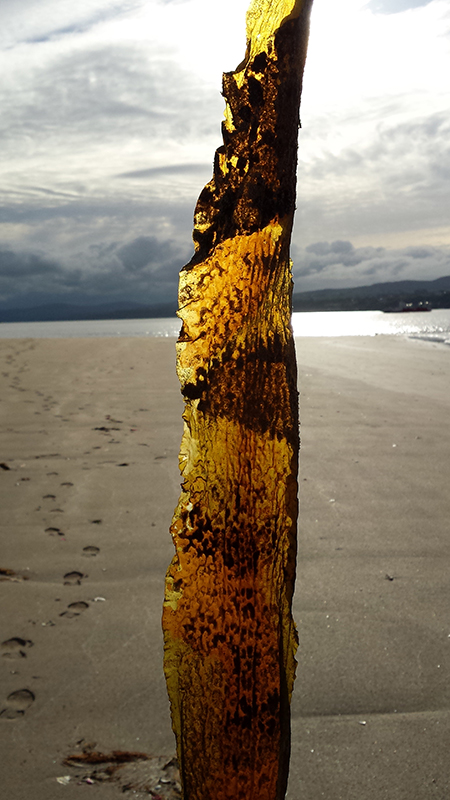
breathing it in

1609-magilligan-point-2

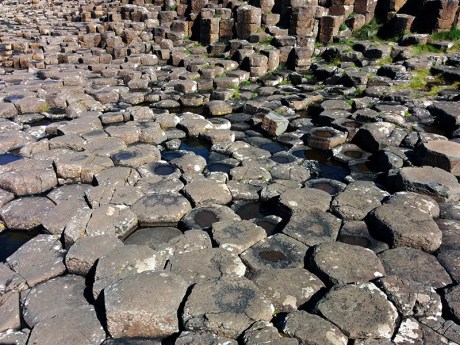
1609-giants-causeway

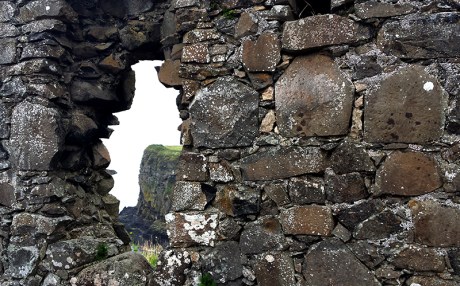
The walls of Dunluce Castle – struck through with the local geometric formations

1609-dunluce-castle

1609giants-causeway-2

1609-knockmany-forest

mossy glade – moss prohibition

1609-martello-tower

1609-churchtown-point

‘The Armagh Astropark – where Heaven comes down to Earth…’

1609-astro-park-armagh


1609-st-patricks-armagh-rc

faith and ritual

1609-cranfield-holy-well

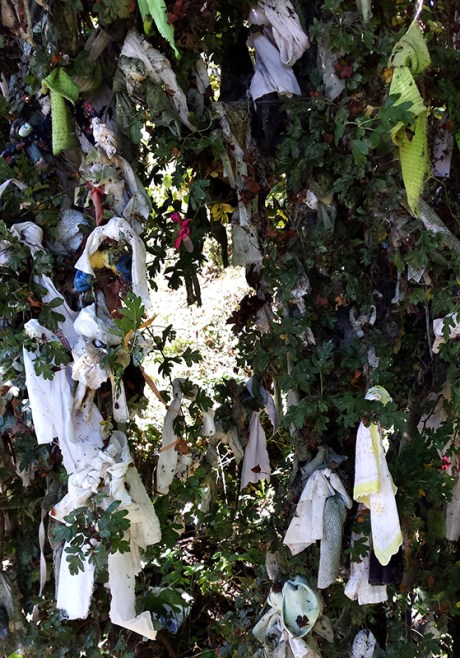
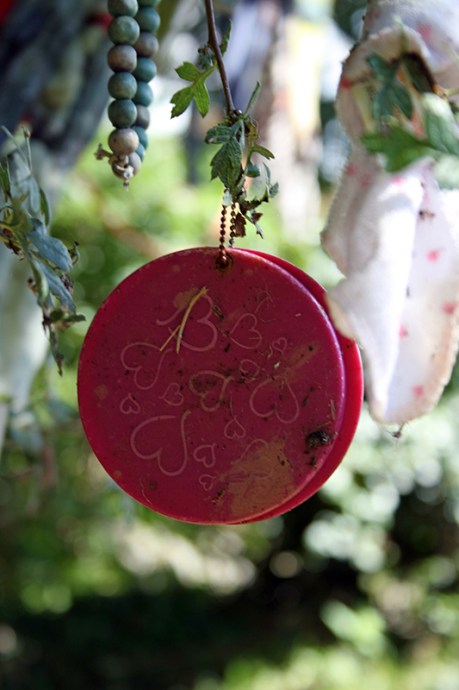
At Cranfield Holy Well there was no evidence of fine spring water and amber coloured crystals, it looked dank and more pestilent than healing. Still it is festooned with personal items tied to the overhanging branches, each one a little prayer. According to  custom, one must bathe the infected part of the body with a rag dipped in the well, pray and then tie the rag to a large overhanging tree, as the rag decays the affliction is supposed to disappear. Judging from the preservation of these items, for some, the cure is a long way off.
1609 Cranfield Holy Well 2.jpg

County Antrim wears its heart on its sleeve.

1609-armagh

1609-downhill-house

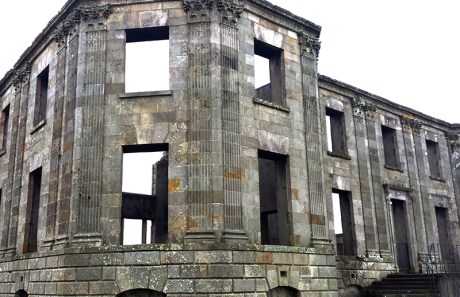
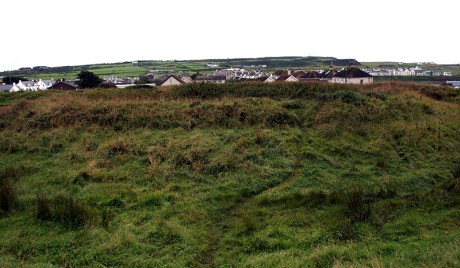
Settlements past and present – Downhill House a recent ruin and the grassy banks of Lissenden Earthworks

1609-lissanduff-earthworks

The enigmatic nun, dark Julia’s grave stone at the ancient Bonamargy Friary

1609-bonamargy-friary-dark-julia

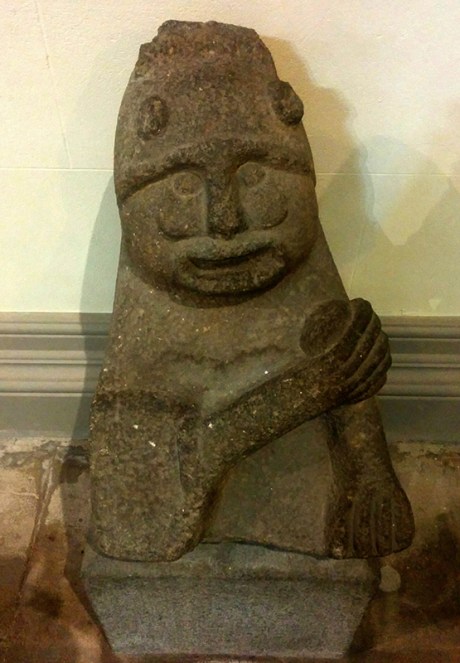
The bronze age Tandragee Man brandishing  his legendary silver prosthetic limb

1609-tandragee-man

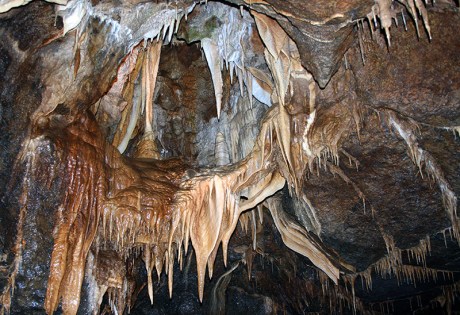
The even more ancient belly of the earth at Marble Arch caves

1609-marble-arch-caves

Containment slotted nicely into the Plastic Propaganda curated exhibition Sugar and Spice at St. Katherine’s Dock.

1609-containment-3

Made in response to the trade of exotic objects by merchants who journeyed across the globe five hundred years ago when navigation was reliant on the stars.

1609-containment-1

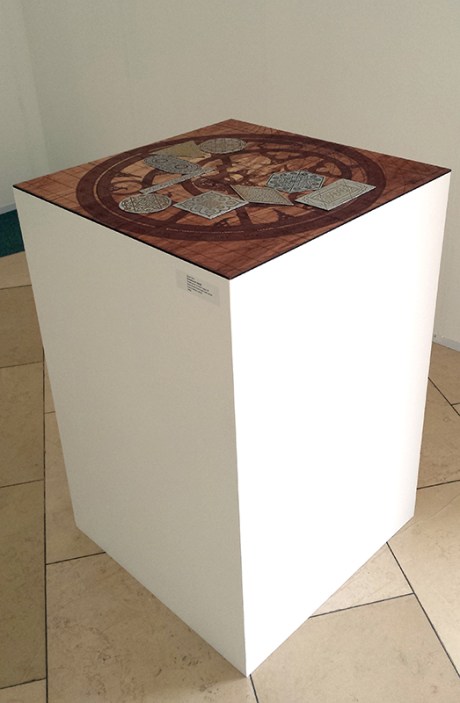
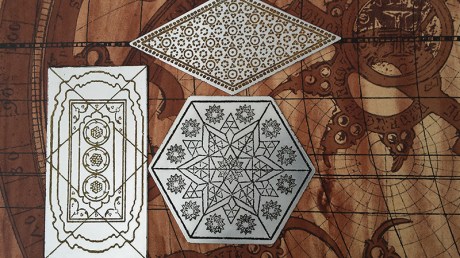
Shaped plates, etched using a sugar lift technique, are filled with inks made from ground spices and copperplate oils wafting traces of their origins in to the gallery space –  turmeric, coriander, cumin, paprika…

1609-containment-2

These operate as markers plotting the spice route from India around Africa to Europe according to the latitude and longitude lines taken from C16th maps of Mercator and Ortelius. The patterns combine ideologies of origins with destinations reflecting the breadth and mix of cultures that came together. I like how viewing becomes a ritual.

Sugar and Spice explored ideas of trade, hybridization and inter-cultural exchange and the legacy of the rich mercantile history of the docks. Looking back informs, educates and gives us the platform for continuous debate…

 …all more poignant post referendum.

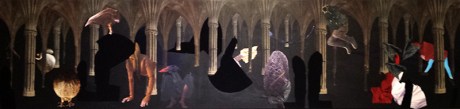
Sarah Gillet’s magical show Quarry at Brocket Gallery was in itself a process of quarrying – exhuming material from a forensic analysis of Paolo Uccello’s painting   ‘The Hunt in the Forest (1470). The pursuit of quarry. This inversion of meanings repeats itself in the work as do the shapes and shadows of a forest that extends beyond the boundaries of any canvas into the dark depths of dream spaces where strange creatures abound.

1609-sarah-gillett

In such a space where would you turn to escape.

1609-sarah-gillett-2

It’s how I imagine the labyrinths of Venice should be during the carnival. Full of intriguing theatrical creatures appearing out of the void; playful menace.

I have long enjoyed the work of Raqib Shaw and the dazzling paintings he creates with intricate enamelled surfaces glistening with gemstones and gold; the chaos of  battle played out to the personal beat of shamanic drums; the quest for unattainable perfection.  His obsession with self, pitted against the world, seems to have reached a melancholic peak with Self-Portraits at White Cube. This reimagining of old masters heavily laden with references to his own worlds of Peckham and Kashmir appear as premature reliquaries to a life saturated in self immolation.

1609-raqib-shawHe looks weary.

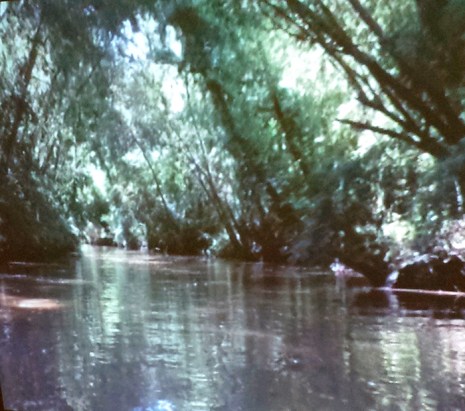
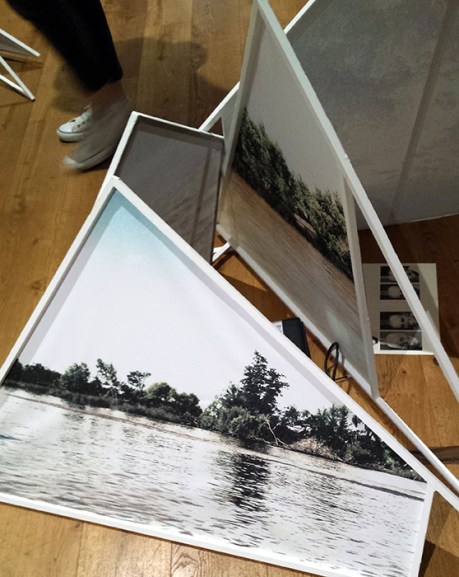
Hidden undercurrents of surface beauty are exposed in Victoria Ahrens thoughtful presentation of her PhD research ABSORB. A meditation on the history of the Paranà River in Argentina. From a mystical place of leisure for her Grandfather to the brutal grave of those who ‘disappeared’ during the military junta, thrown to their deaths to be slowly and anonymously absorbed into the landscape.

160908-victoria-ahrens-2

By allowing the waters of the river to wash over the plates and images that she creates the alchemical processes continue and those lost into the waters imbue the work with a gentle pathos.

1609-victoria-ahrens-3

From shards of shattered time an image is built that hovers between past and present.

Alex Simpson’s exploration of material in Through Viscera at Barbican Arts Group Trust was fresh and almost vibrating with energy.

Like a virus spreading across all surfaces, into the core of matter that lay extruded across the floor, eaten into and vein like, globular and thick with fungal felt, drying and dropping, leaving prints as scars.


In Lichtlose Luft, at PARCspace the LCC’s photographic archive resource centre,  Johanna Love’s lithographic prints and drawings on digital prints of tiny specks of matter magnified to reveal the sublime contours reminiscent of a mountain landscape were a very successful exploration of finding the human relationship in a scientifically generated image.

1609-johanna-love-1

The technical image is a starting point for the work, either obtained through the electron microscope or the digital scanner. Through the process of drawing and digital manipulation, there is an attempt to bring the image back into the physical, material world of the living and imagination, for as Merleau Ponty (1964) states, ‘science manipulates things and gives up living in them.’

1609-johanna-love-2

Isolated like meteorites falling through a grey space that vibrates with the blurred colours we see on the back surface of the eyelid; these drawings capture the imagination.

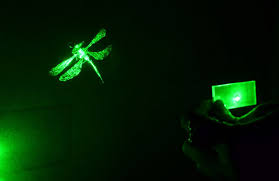
Super/collider once again brought us a mind blowing yet entertaining talk at Second Home.  Dr. Andrew O’Bannon has been studying Holography for 15 years. He proposes a bold idea that all the information in our 3D universe may be contained in a mysterious 2D image, like a hologram. Promising not only to unite Einstein’s relativity with quantum physics, holography also has the potential to provide us with cleaner energy, faster computers, and novel electronics. Using ideas from string theory he studies holography and strongly interacting systems.

In everyday life, a hologram is a two-dimensional image containing enough information to reconstruct a three-dimensional object. In theoretical physics, holography proposes that some strongly-interacting systems are equivalent to Einstein’s theory of gravity in one higher dimension.

1609-dragonfly-hologram

“Many experiments to detect proposed dark matter particles through non-gravitational means are under way. On 25 August 2016, astronomers reported that Dragonfly 44, an ultra diffuse galaxy (UDG) with the mass of the Milky Way galaxy, but with nearly no discernible stars or galactic structure, may be made almost entirely of dark matter.” From BBC science

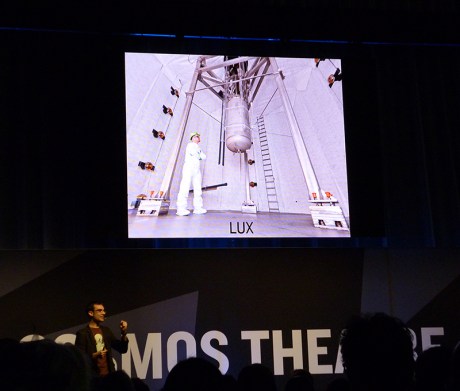
There were two talks at New Scientist Live that I found particularly interesting. The first was from Dr Andrew Pontzen a theoretical cosmologist explaining the evidence that dark matter exists and why it is proving so hard to detect. He spends his time working through theories that are then passed on to someone like Cham Ghag, an astrophysicist who will devise strategies to test theories in direct detection projects such as ZEPLIN and LUX.

1609-new-scientist-live-2

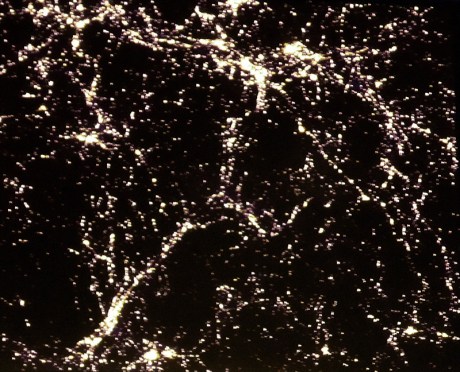
It’s not only the calculations from gravitational lensing that suggests way more mass is present than can be seen but also large computer modelling samples of how galaxies form and rotate. Removing a few stars from the model galaxy ends in a chaotic breakdown, but making a few stars ‘dark’ so that the mass remains but we cannot see them does not change the rotation of the remaining stars we can still see. The distribution of dark matter across the universe appears like a fibrous net, imaged from the cosmic microwave background, an echo still reverberating from the first few seconds at the birth of the universe. The second talk ‘Beyond the Higgs’ was from particle physicist Professor Tara Shears who inspects the data produced from the experiments colliding proton beams to create fundamental particles at CERN, for anomalies that might turn out to be evidence of an interaction with a new particle. The search goes on.

1609 New Scientist Live dark matter.jpg