Archives for posts with tag: London Sculpture Workshop

It is within my mind then, that I measure time. I must not allow my mind to insist that time is something objective.  When I measure time, I am measuring something in the present of my mind. St. Augustine of Hippo, 397

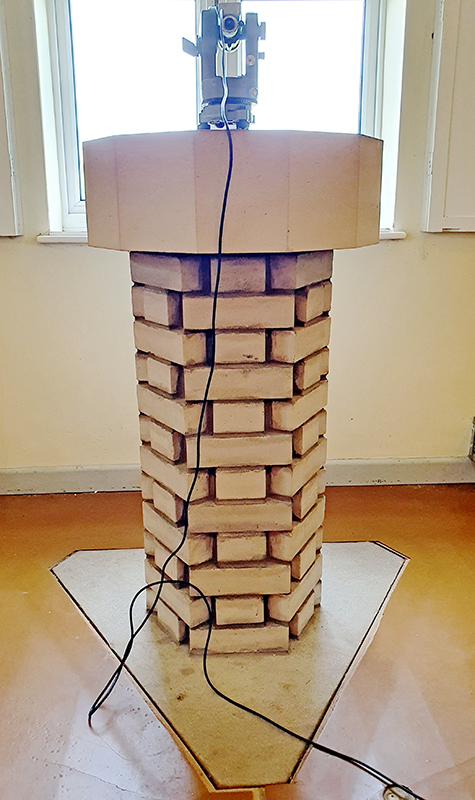
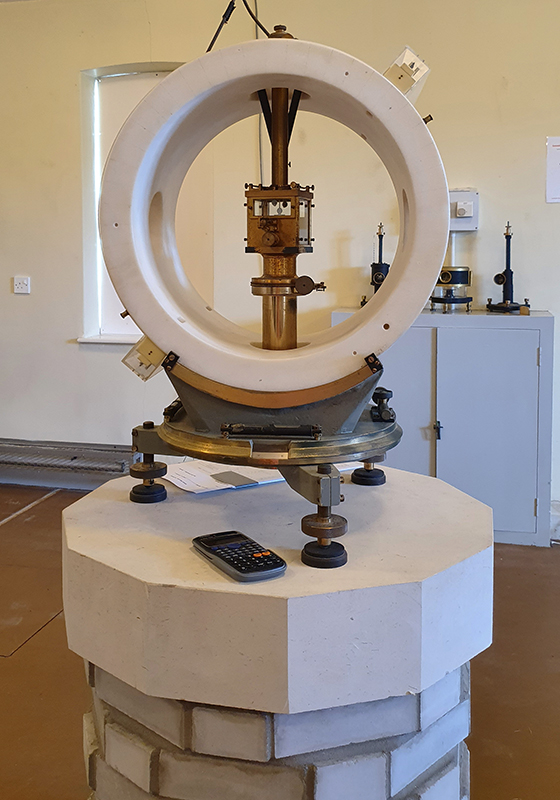
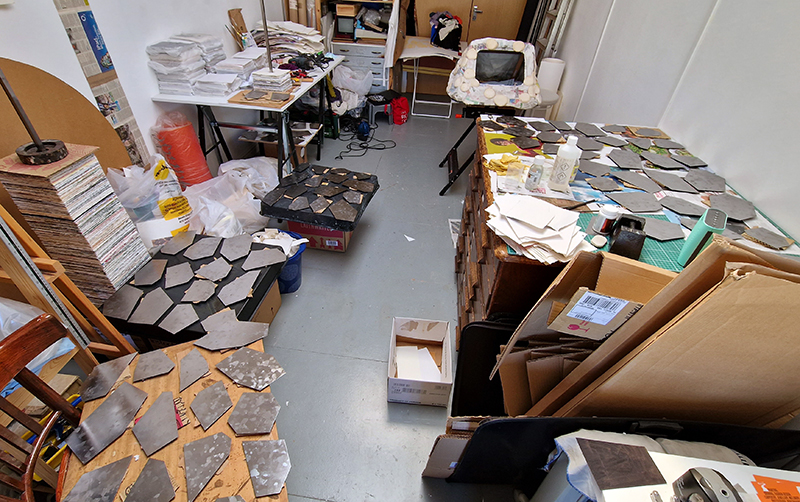
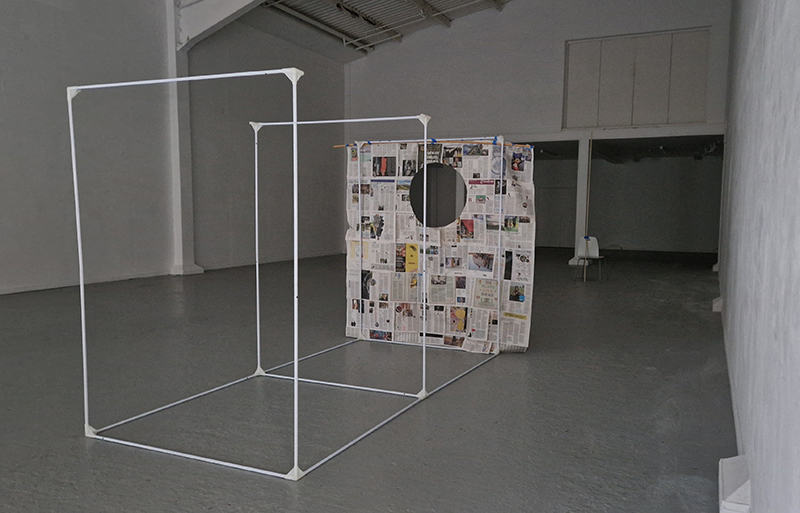
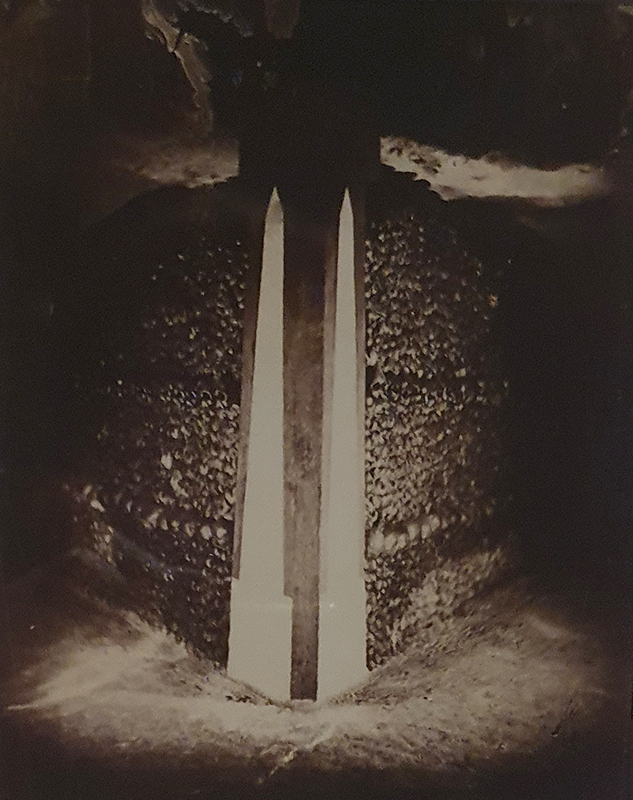
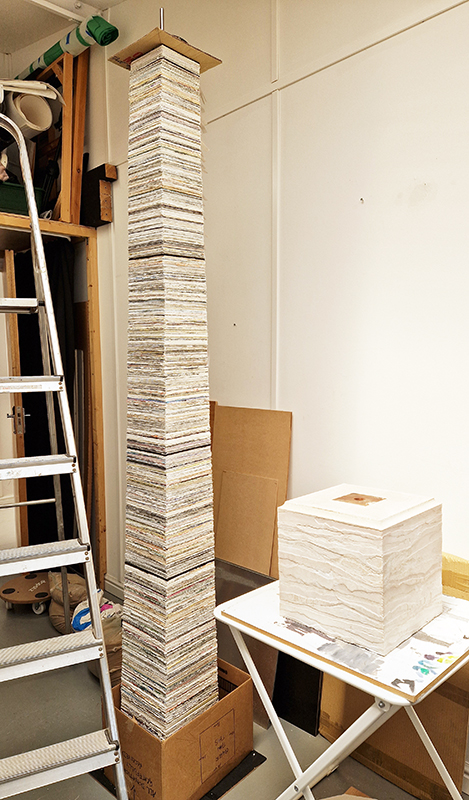
The many layers of paper comprising The Azimuth Obelisk (of sedimentary knowledge) sculpture have been prepared ready for final assembly. The next step will be patinating and assembling the copper pyramidion. This sculpture is a reimagining of the obelisk erected at Hartland Magnetic Observatory in 1955 which is now almost hidden by undergrowth. Although manual readings via a theodolite are still taken from the Observing Building north facing window, this concrete permanent azimuth mark has been replaced by a GPS position. The sculpture expresses the passage of time, made from recycled paper prints and drawings whose history is embedded in the stacked layers, much as the Earth’s geological and magnetic history is secreted into sedimentary strata of rock.
What is below our feet can be as much of a mystery as what is above our heads. The furthest humans have drilled below the surface of the Earth is just over 12 km but it is 6,370 km to the centre of the Earth. One way of exploring the Earth’s core is by studying geoneutrinos. Geoneutrinos are neutrinos, the lightest subatomic particle, released by the natural radioactive decay of potassium, thorium, and uranium in Earth’s interior. By studying geoneutrinos, scientists can better understand the composition and spatial distribution of materials in the mantle and core. Neutrinos can pass through matter uninhibited and are not affected by magnetism. Geoneutrinos are low-energy electron antineutrinos, and scientists need to use large detectors to record them but because they  are so elusive, they don’t capture very many events each year. Some of the heat emanating from the interior of our planet comes from this radioactive decay and is responsible for everything from creating the molten iron core that generates Earth’s magnetic field to the spread of the sea floor and motion of the continents.
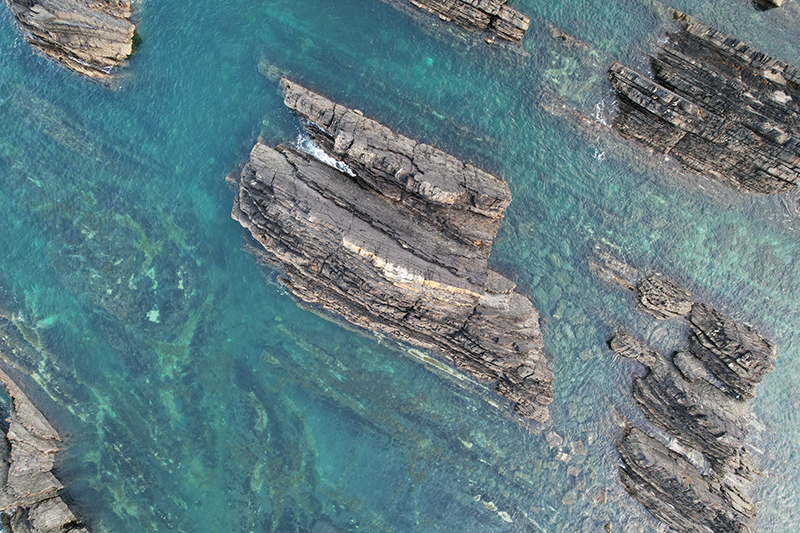
At the centre of the Earth is a hot sphere of solid iron which has its own ocean of molten iron, surging and churning with hurricanes and whirlpools powered by the Coriolis forces of Earth’s rotation. These complex motions generate our planet’s magnetosphere. The turbulent dynamo process also means the magnetic field is in a constant state of change and the poles are always on the move. From James Clark Ross first locating the magnetic north pole in 1831 to when Roald Amundsen found the pole again almost a century later it had moved at least 50 km since the days of Ross. Both poles continue to wander as varying speeds. Magnetic stripes around mid-ocean ridges reveal the history of Earth’s magnetic field for millions of years and record magnetic field reversals in the magnetism of ancient rocks. Field reversals come at irregular intervals averaging about 300,000 years with the last one 780,000 years ago. Reversals take a few thousand years to complete, and during that time the magnetic field does not vanish but becomes twisted and tangled with magnetic poles appearing in unaccustomed places. Although in a state of turmoil with possible weak areas it can still protect us from space radiation and solar storms.
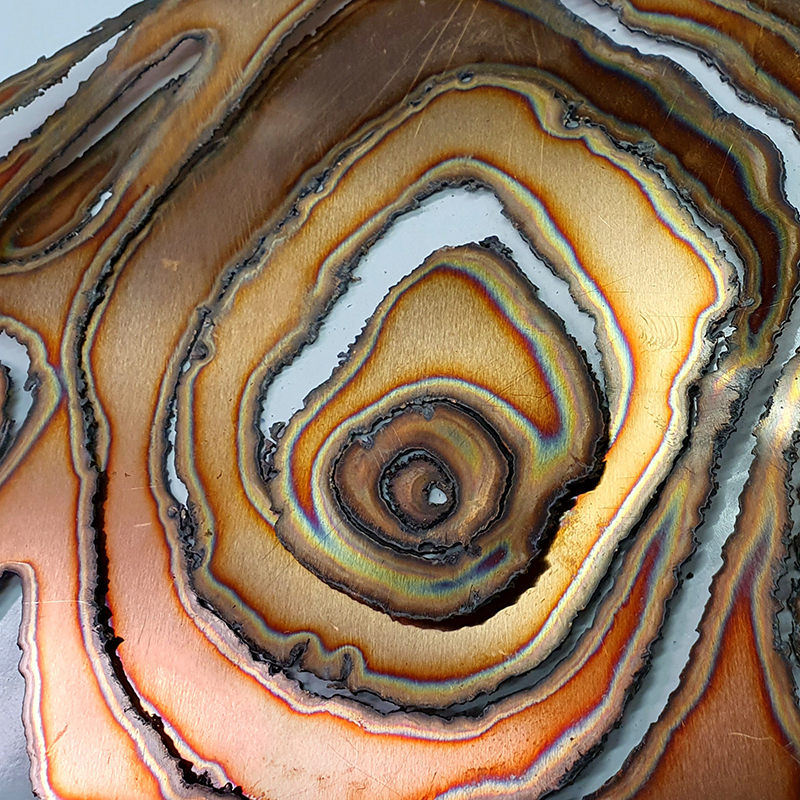
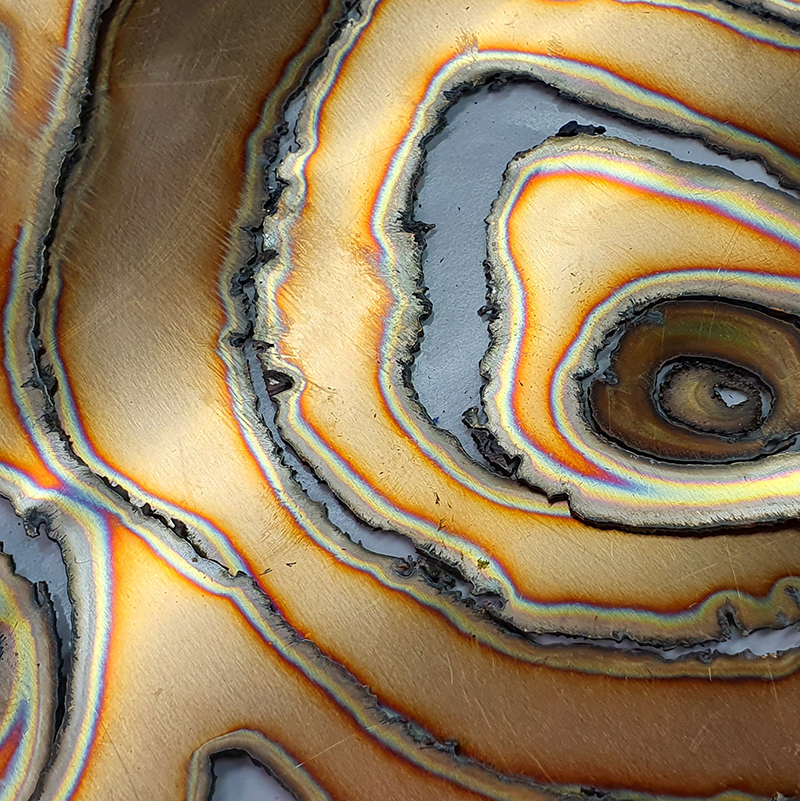
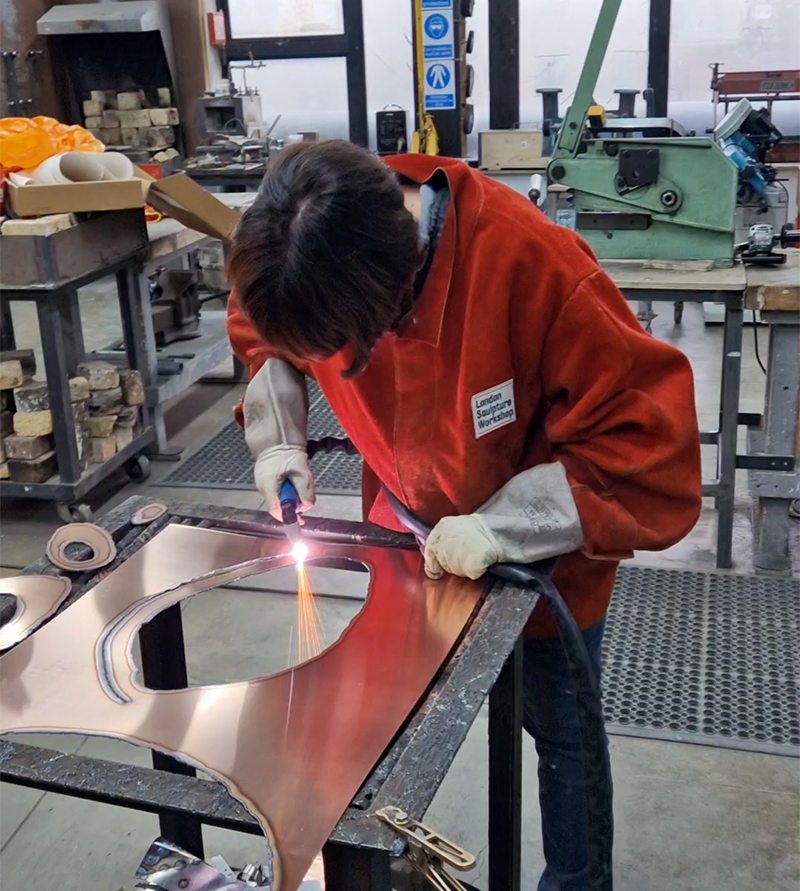
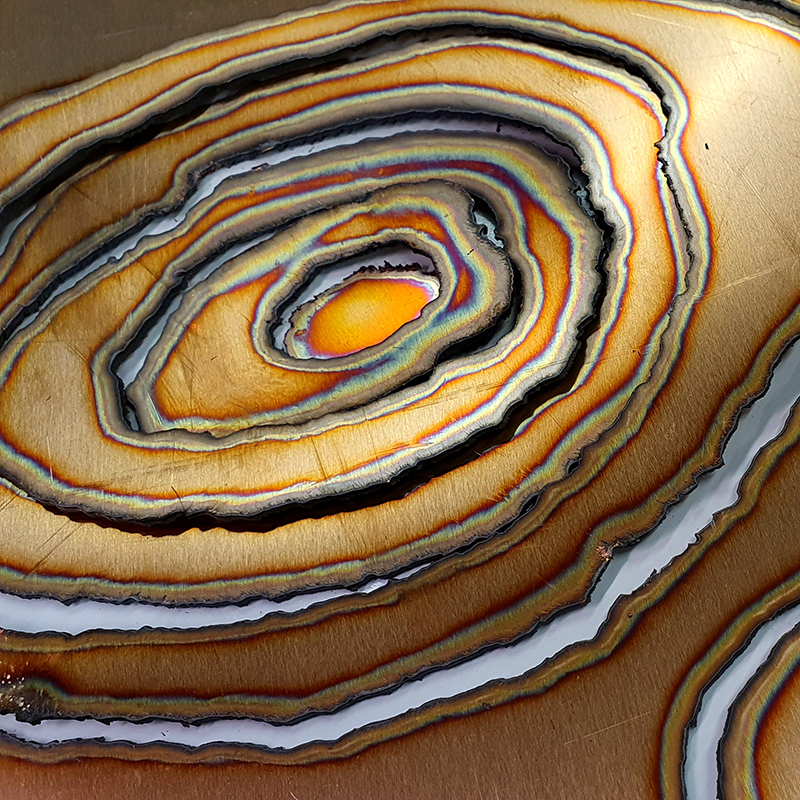
I took up membership of London Sculpture Workshop supported by a professional practice and creative development bursary from The Artists Information Company. Great to have access to the facilities here to work on sculptures responding to research visits to magnetic observatories. I had a couple of sessions cutting copper with a plasma gun. The intense heat colours the edges of the metal with blues, yellows and crimsons. Unfortunately some of the colour gets lost when they are lacquered so I have left some without coating this time to see if they lose the colour anyway. These topographical contours which are destined for the installation The Absolute Hut (of action potential), reflect the fluid motion of the Earth’s interior and also the pulsating alpha waves emanating from the human brain subjected to magnetic fields.
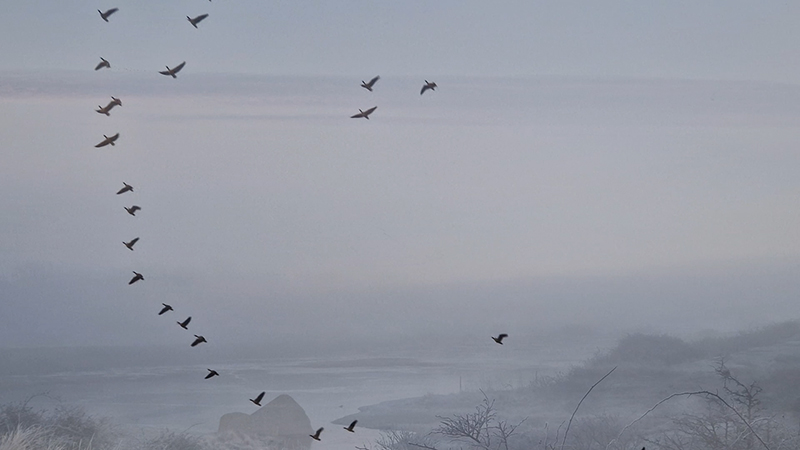
I have started editing and gathering together video footage for The Absolute Hut installation. Inside the hut I am planning to have video screens suggesting portals into a modulated web of neural pathways and one larger window with a two way projection film of the migratory pink footed geese at Snettisham in Norfolk. Natural navigation techniques and extra-sensory methods used by the non-human realm will form the basis for speculation as to the ability for humans to perceive the Earth’s magnetic field. 
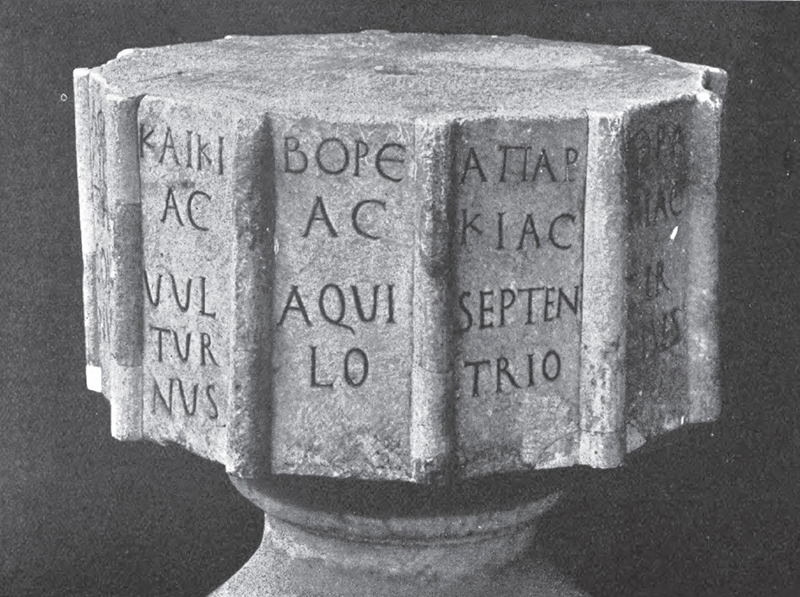
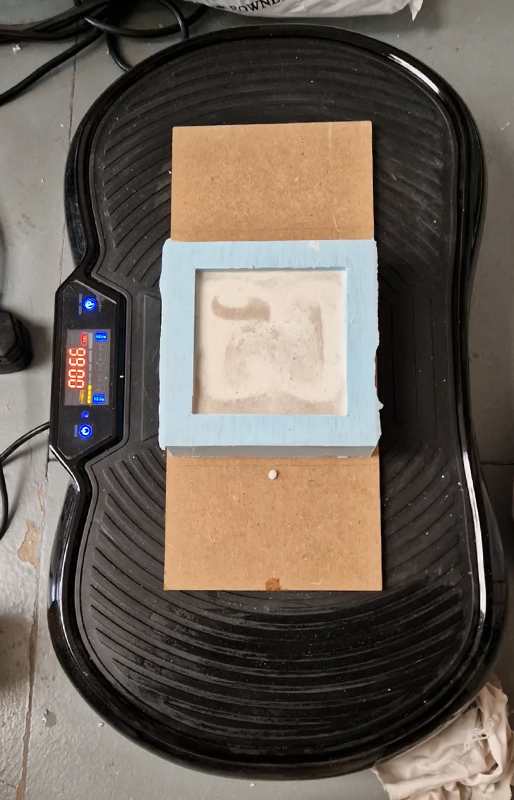
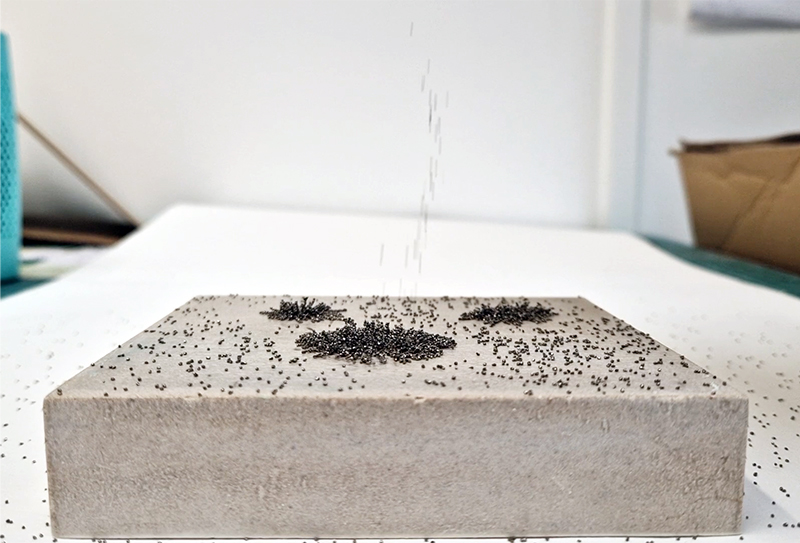
Following on from concrete casting tuition with Anna Hughes as part of my a-n creative development bursary I have been testing casting concrete with embedded magnets. I had an idea to try removing bubbles from the concrete by putting it on an exercise vibrating plate. The motion is quite violent and undulating and my mix was quite loose so it had an effect like a small wave machine sloshing side to side – there were no bubbles in the results though. These tests are towards making a series of dodecagon tablets cast in Snowcrete, a non-magnetic cement, as used in a magnetic observatory. Suggestive of the pedestals that support various instruments used in monitoring the Earths’ magnetic field they also respond to an ancient anemoscope “table of the winds” carved in marble around eighteen hundred years ago and inscribed with the Greek and Latin names of classical winds on each of its twelve sides.
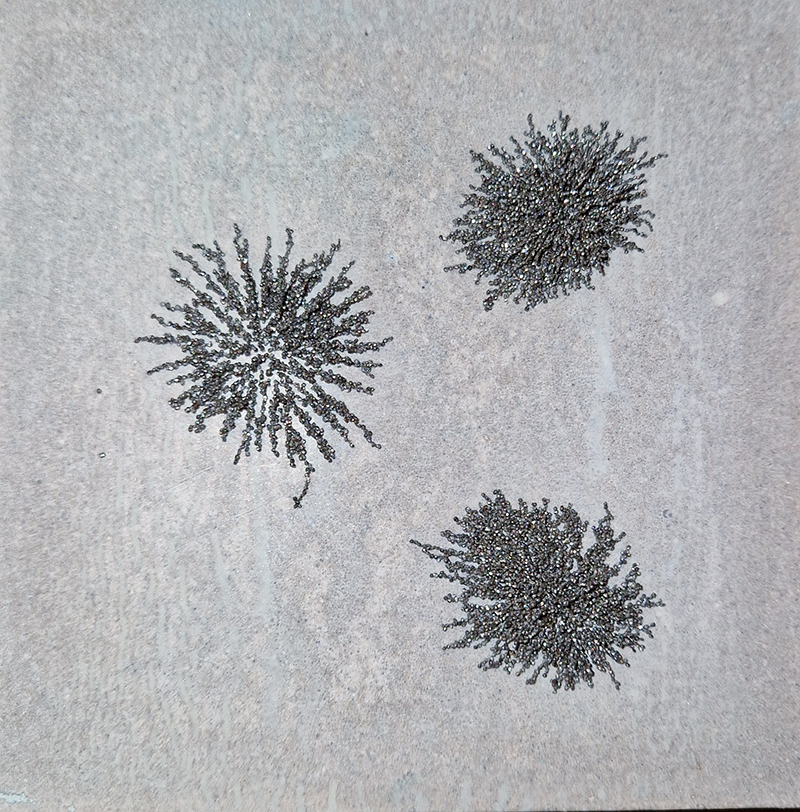
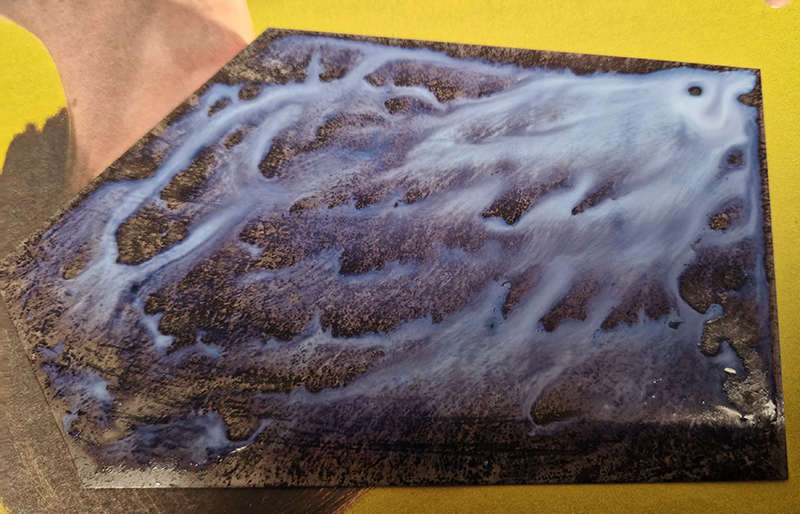
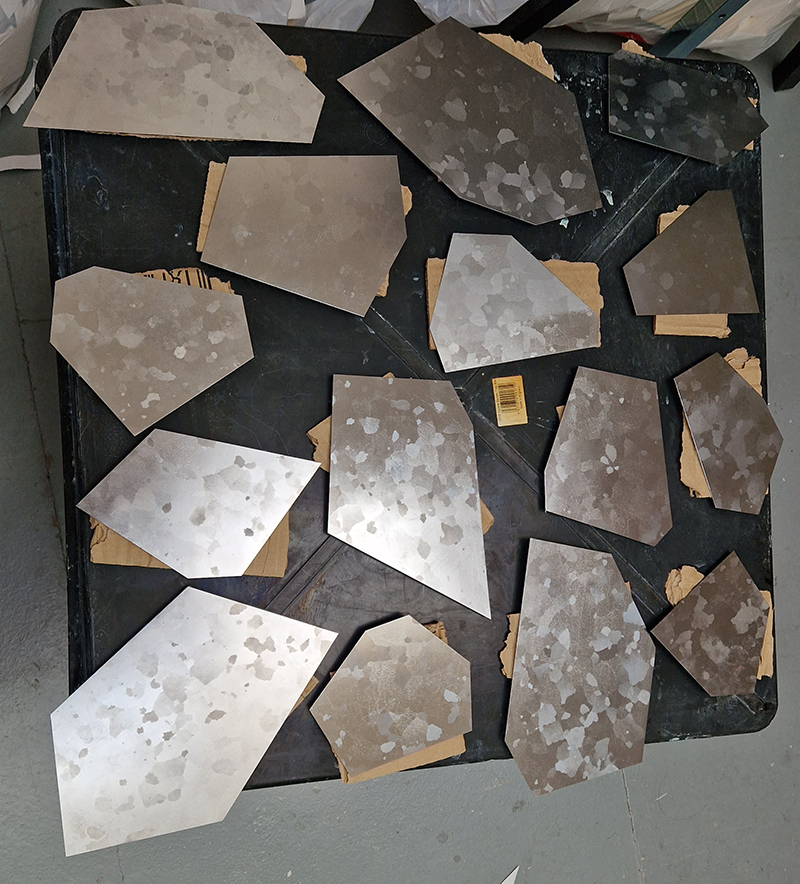
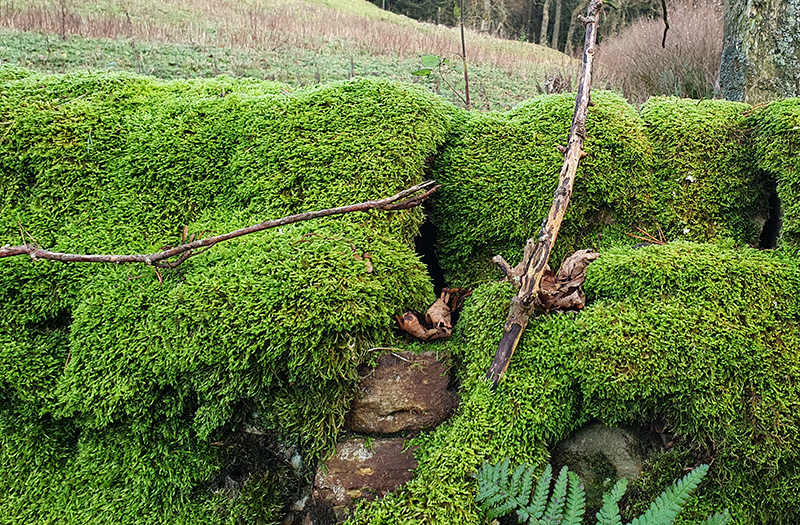
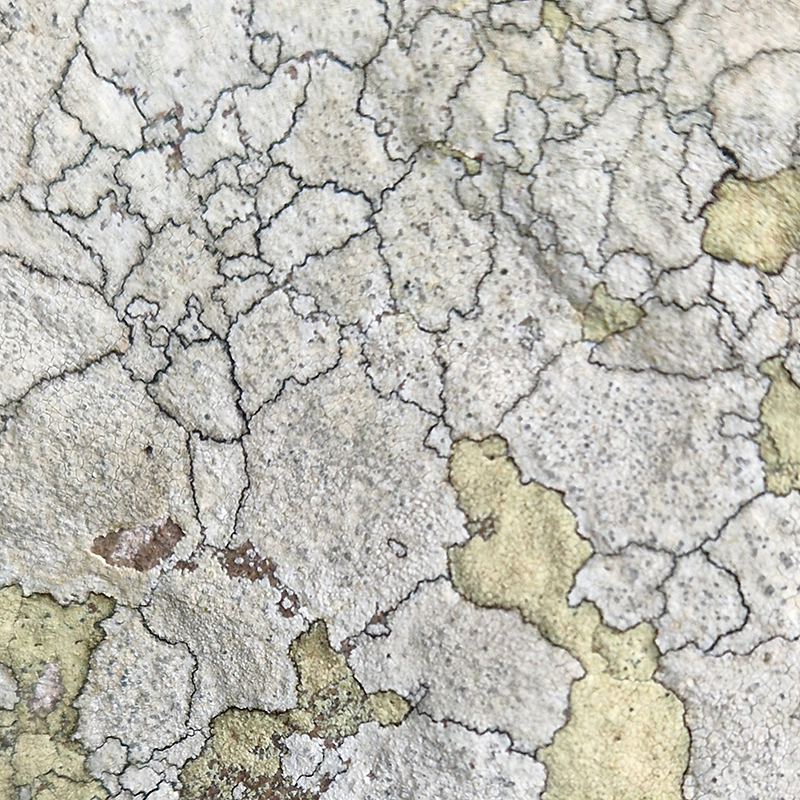
Lichen boundaries seen on a trip to Somerset reminded me of the magnetic domains of the directional magnetic steel when sanded and etched to reveal the Goss texture of rolled iron silicon alloy crystals. The jigsaw pattern of magnetic domains give this material exceptional magnetic properties.
I had a great time interacting via zoom with volunteer mediators who will serve as conversationalists for visitors who come to the Carbon exhibition at Science Gallery Bengaluru where my video Cosmic Chiasmus: crossing the universe will be shown later in the year. Mediators are an integral part of each exhibition-season at Science Gallery Bengaluru (SGB). By providing each visitor the unique opportunity to deeply engage with the exhibits, events, and programmes, the mediators are at the backbone of our commitment to public engagement at SGB.

The session was designed to gain an understanding of the work to be shown, the process behind its creation, and the key concepts explored in it. Cosmic Chiasmus: crossing the universe offers a glimpse into a subatomic world where cosmic rays travel from distant galaxies to collide and silently interact with atoms and technology on Earth. Not only is all life physically permeated by cosmic rays with the potential for nuclei collisions but some cascading particles smash into atoms of nitrogen to create carbon-14. Carbon-14 then combines with oxygen in the atmosphere to create radioactive carbon-dioxide  – this is ingested by plants and animals through the food cycle. In making the film I was interested in exploring the interconnectedness of ourselves to our wider environment, even outer space and the influence intangible phenomena such as cosmic rays can have on everyday life and human technology.  It is an incredible journey that cosmic rays make, blasted across space, spiralling along magnetic field lines to end up entangled with carbon in our bodies.

Most years have twelve full moons, but as our calendar is not perfectly synchronized with astronomical events, every now and then there is more than one full moon in a month which can be known as a blue moon. It takes the moon 27.3 days to orbit the Earth but about 29.5 days to go through all of its eight phases waxing from new to full and waning back again. We can hope to see a super blue moon next month.
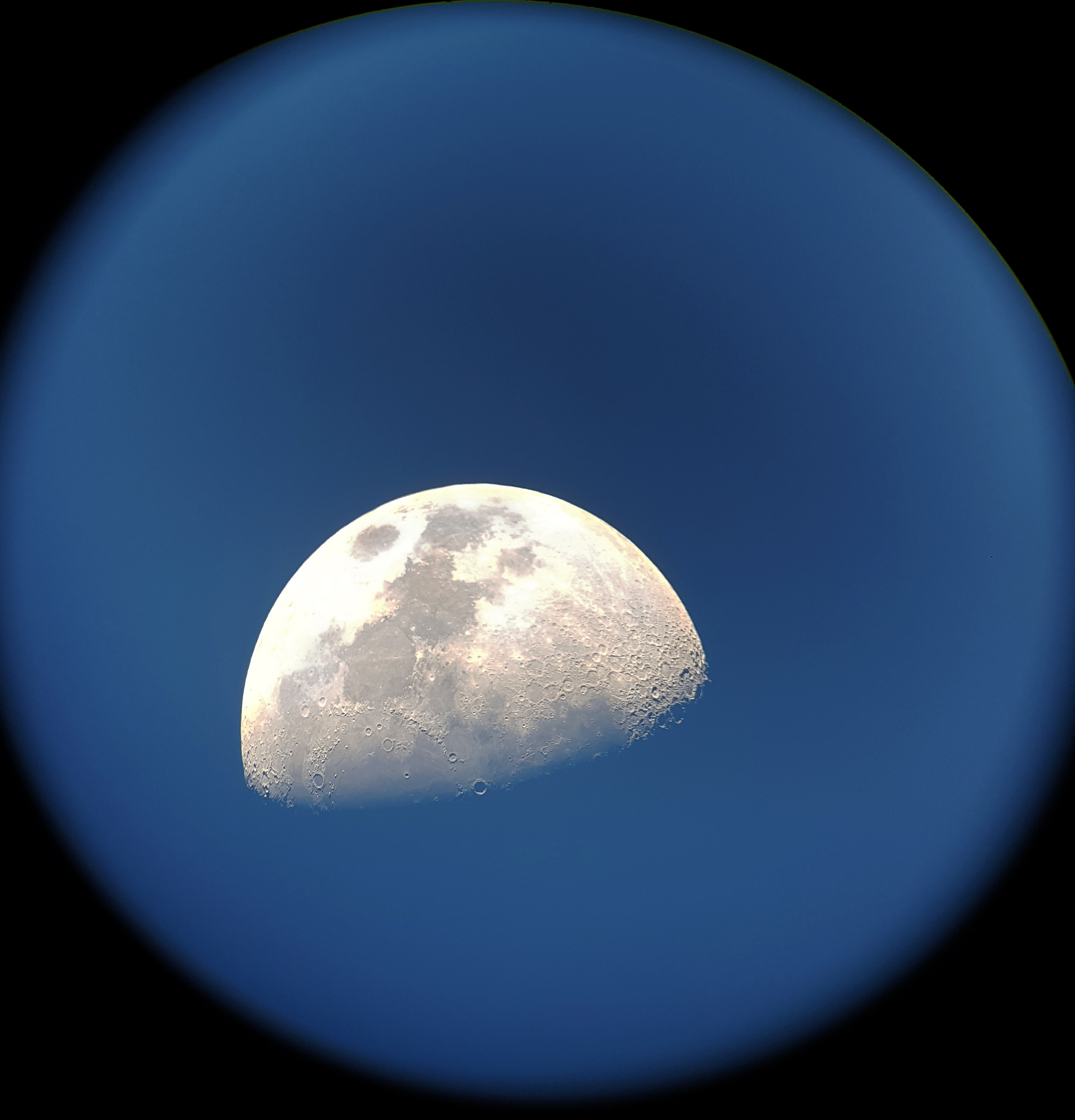
Carey Young’s Plato Contract – only gains status as an artwork once it has been installed, following explicit instructions, in the impact crater, Plato, on the moon.

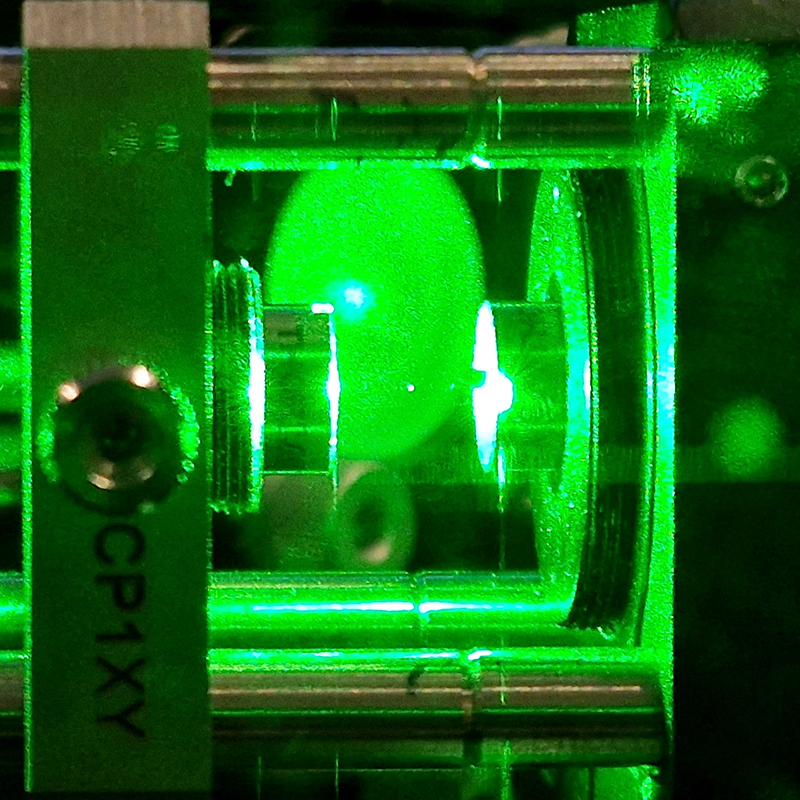
Royal Society Summer Lates – Interesting new research in the search for dark matter from UCL High Energy Physics team using quantum sensors. Tiny glass spheres levitated in a vacuum and super cooled means these are extremely sensitive to any slight gravitational interaction should dark matter be made of very light particles. Instead of a vast tank of Xenon installed in a disused goldmine this new search for dark matter is quite a contrast in scale.

Also got to cause gravitational lensing with my own body mass and enjoy some splendid cocktails with surreal smoke bubble topping. Love Royal Society events.
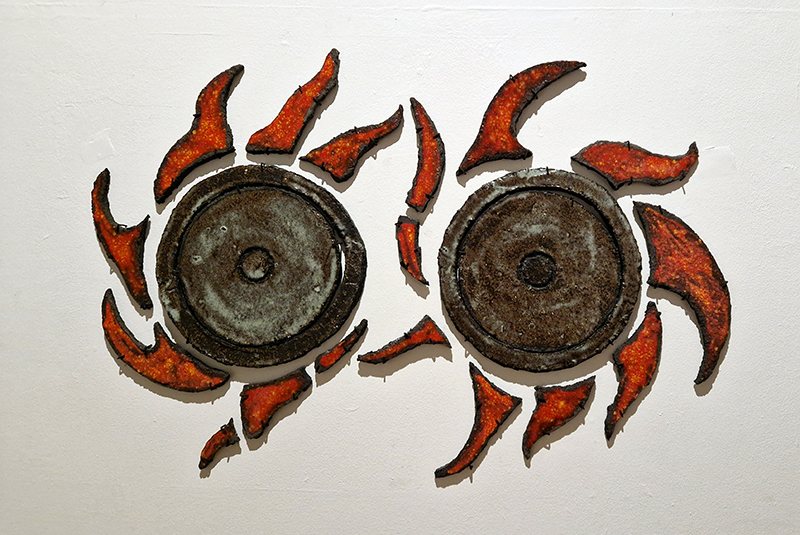
Melanie Jackson Rouge Flambé at San Mei Gallery with a fascinating accompanying essay by Esther Leslie. Rouge flambé is a red oxide ceramic glaze with a long history of use, spreading across the globe from its origins in China. Together these works celebrate forces that hold a primordial fascination – fire, colour, alchemy which bridge the scientific with the mythological.

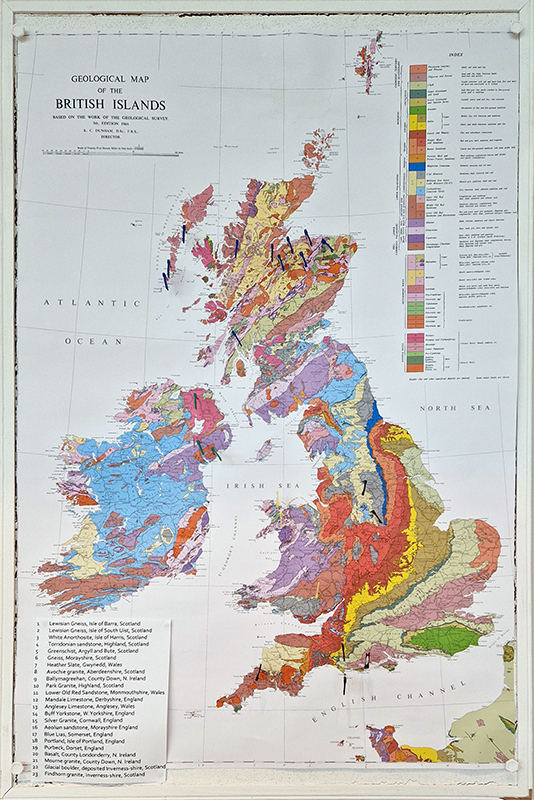
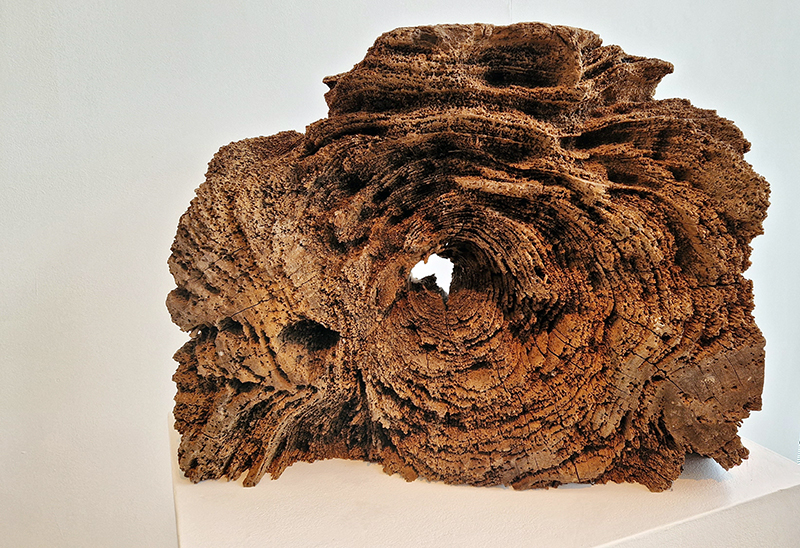
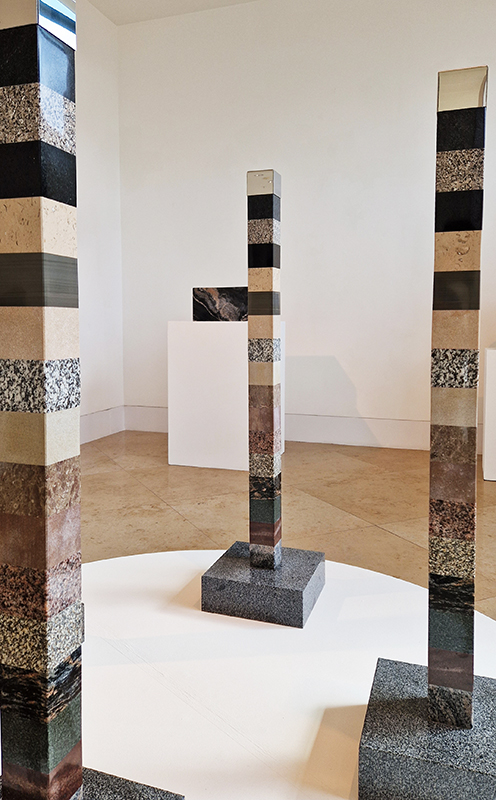
Angela Palmer Deep Time: uncovering our hidden past at Pangolin London. The exhibition explores time through the material history of Great Britain – charting its 3-billion-year lithic timeline to arrive in our current age of the Anthropocene. Featuring the UK’s 16 geological periods, starting with one of the world’s most ancient rocks, the 3-billion-year-old Lewisian Gneiss from the Outer Hebrides. Further stones include 2.5-billion-year-old White Anorthosite sourced in the Outer Hebrides that was also found on the Moon by the astronauts of Apollo 15 in 1971, as well as 66-milion-year-old Northern Irish Black Basalt marking the extinction of the dinosaur. The exhibition also includes teak sculptures salvaged from the ocean where it lay for a century while marine boring insects carved into its surfaces. Many of these works have minimal intervention from the artist in their presentation. The work has been done in the sourcing and extraction.
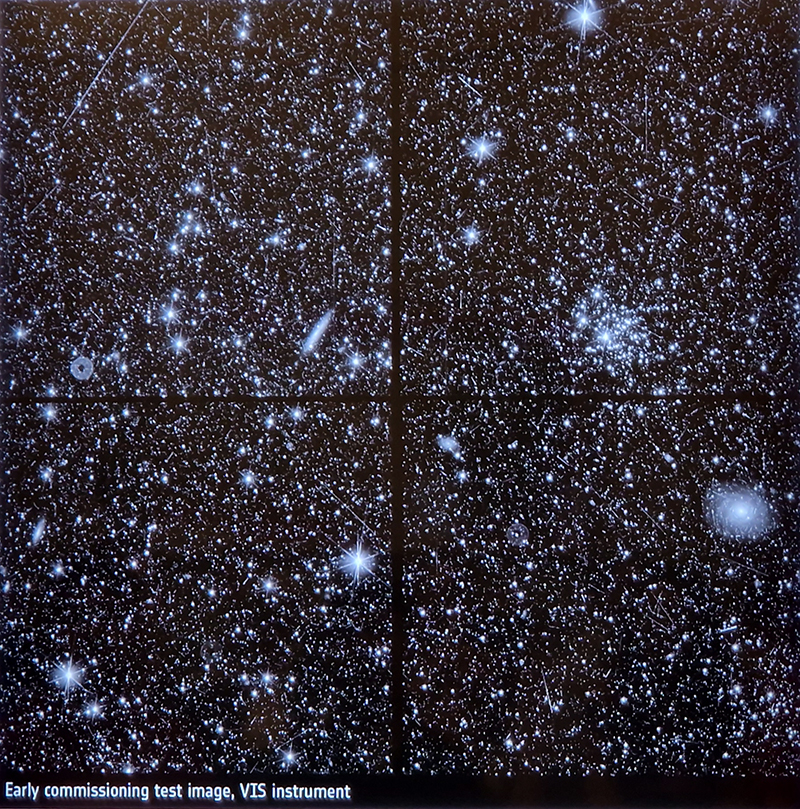
I attended the UCL Space Domain Summer Celebration. The event was introduced by Victor Buchli – Co-Chair of the UCL Space Domain which draws in researchers from across disciplines whose work touches on space exploration in some way. Guest speakers, artist Lisa Pettibone and poet Simon Barraclough, gave presentations on their work and involvement with the Mullard Space Science Laboratory and subsequent inclusion of work on the Euclid Spacecraft (launched on 1st July 2023) in the form of a plaque depicting ‘The Fingertip Galaxy’ a collaborative project created with hundreds of mission scientists and engineers’ painted fingertips, along with specially commissioned lines from Simon’s poetry. We were privileged to see the very first image sent back from the Euclid Space Telescope whose mission is to map out the dark side of our universe by analyzing billions of galaxies that reside up to about 10 billion light-years away. Every point of light is a galaxy.
Reading

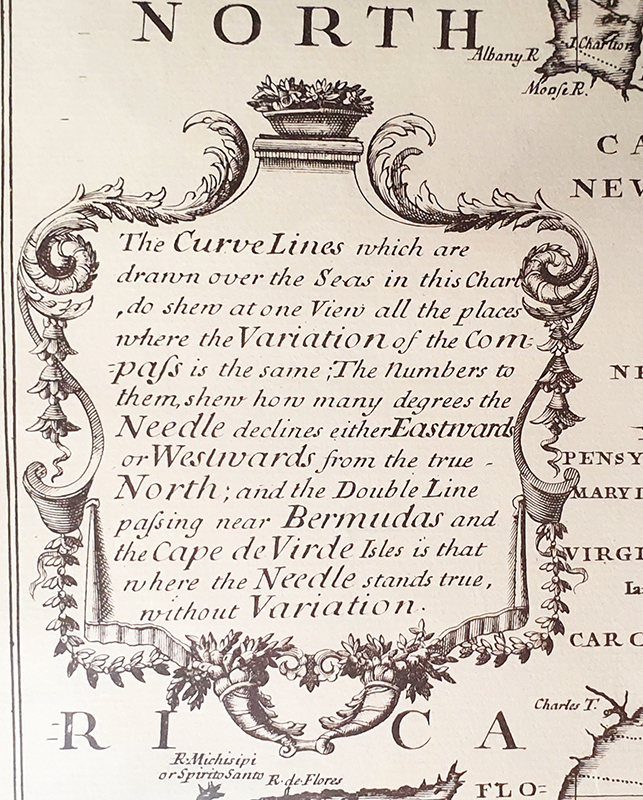
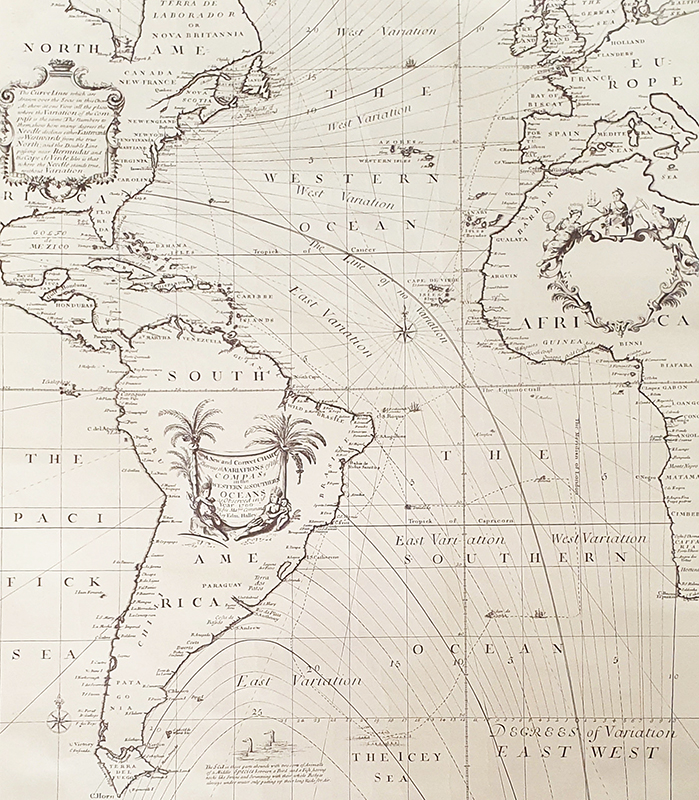
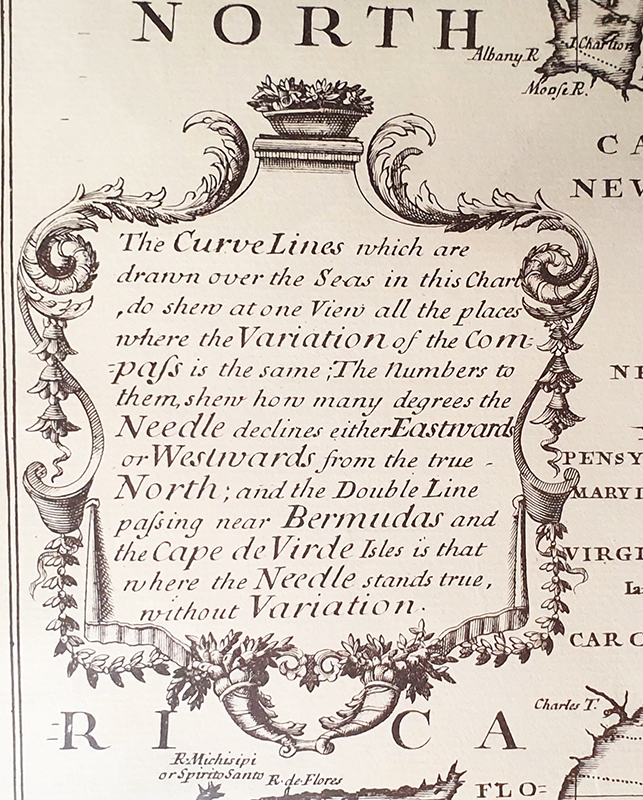
Compass – a story of exploration and innovation by Alan Gurney. Full of fascinating historical anecdotes charting the invention of the magnetic compass for navigation at sea from lodestone floating in a bowl of water to the precision marine liquid compass, gyrocompass and fluxgate compass used today. Although early experiments came under the auspices of scientific expeditions the compass cannot be untangled from its commercial propagation and employment in colonialism and the slave trade. The first ship charted solely for a scientific expedition, The Paramore, launched from The Royal Dockyard at Deptford in 1694, to compass the globe and measure magnetic variation. It was however approved for funding by The Royal Society, Queen Mary and The Admiralty based on the benefits it would bring for navigation and trade. One of the many delays in launching the Paramore was the novel decision of how many guns should be fitted in a ship bound for scientific research. Pirates were at large and nation wars would flare up while ships were out at sea so a friend at launch might be a hostile force at the next harbour without the means for the crew to receive this news before it was too late. Many many lives were lost at sea during these turbulent times through aggression but also shipwrecks from the poor quality, misuse or misinterpretation of the ship’s compass. Magnetic variation, deviation and iron introduced onto the ships meant the compass needle could not be relied upon to show true north. It took centuries to comprehend the unpredictable power of magnetism and the Earth’s magnetic field.
Listening

The End of the Universe Gresham Lecture from Professor Katherine Blundell. The relocation of matter. Spacetime is expanding ever faster due to dark energy. Galaxies do not expand as they are held together by gravity. It is the space between galaxies that is getting bigger and will continue until in some distant future astronomers in one galaxy will not be able to see any other galaxies. Black holes eventually evaporate.

Also from Professor Katherine Blundell Cosmic Vision: Fast & Furious.

Cosmic rays are particles that move extremely fast. They are raining down on planet earth all the time. Although they are called rays they are not like photons, as light is made of, as they have mass but they do travel at nearly the speed of light. The kinetic energy in just one particle can be equivalent to the energy of a cricket ball bowled by the fastest bowler on the planet  – so much energy squeezed into one tiny particle gives it a huge velocity. Light travels a thousand billion kilometres in one year – a light year – no object with mass can travel at the speed of light but an ultra-high energy cosmic ray would only lag behind the photon by 100th of the diameter of human hair. Some ultra high energy cosmic ray particles that arrive on Earth have 1000 billion times more energy than particle colliders on earth can generate. These ultra high energy particles are very rare – with only about 1 per square metre per century. We know many cosmic rays come from supernova explosions in distant galaxies especially from what are called starburst galaxies where lots of supernovae are happening. Supernovae expand very very fast into the interstellar medium of their galaxy – this causes shocks as the plasma expands and where there are compressed magnetic fields particles can be accelerated to very high speeds. There is a formula called the Hillas Criterion which states – the maximum velocity a particle can be accelerated to depends on three things –  the strength of the magnetic field  – the speed of the plasma –  and the size of the region over which the acceleration can take place. New research shows that ancient Radio Galaxies such as Centaurus A – which is over 1 million light years across or the smaller Fornax A Galaxy are good candidates for the propagation of the ultra high energy particles as these galaxies have the huge size necessary to allow the particles to gather speed in the giant regions of radio emission which extend well beyond the galaxies visible structure.

I am very grateful to a-n The Artists Information Co for awarding me a professional practice and creative development bursary to expand on my research and respond to the many ways Earth’s magnetic field impacts life on earth. The award will be used for a research trip to the remote location of Eskdalemuir Magnetic Observatory and Kielder Dark Skies Observatory. Fingers crossed for an Aurora experience. I will also gain expert tuition in concrete casting and mould making from Anna Hughes and make use of the facilities at The London Sculpture Workshop.

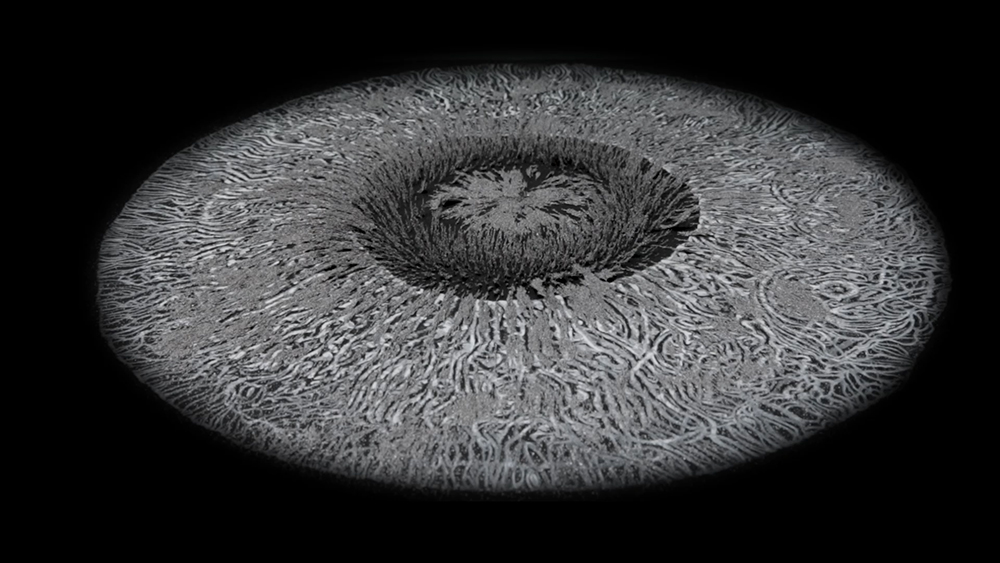
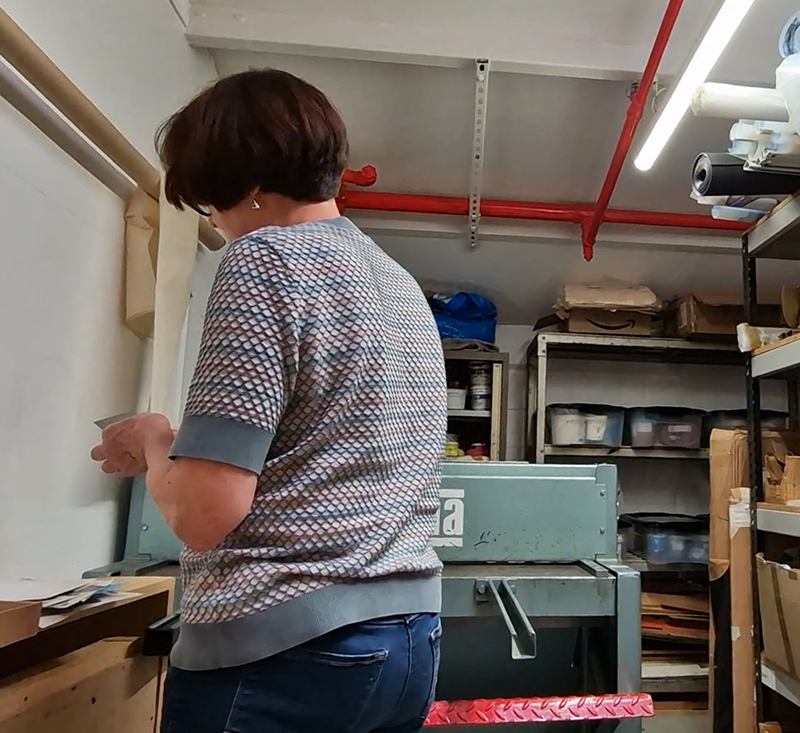
Domain of the Devil Valley Master – work in progress. It is likely that compasses were first used in China to divine an alignment of order and harmony for important sites and rituals. Jade hunters discovered they could also help to keep them from getting lost long before Europeans used them for navigation. The first mention of a south-pointer is in a fourth-century BCE text – The Book of the Devil Valley Master, and it is this that I am referencing in the title of this sculpture. Other references in the work are the rotation of the Earth’s core and geological formations of polygonal prisms. A magnetic domain is a region within a magnetic material in which the individual magnetic strength and orientation of the atoms are aligned with one another and they point in the same direction. The work uses directional magnetic steel stripped of its industrial coating to reveal the jigsaw pattern which comes from rolling single crystals of an iron silicon alloy into thin sheets to minimise magnetic losses for use in industry. The sheets have been sanded, etched, guillotined, treated for rust and sealed.

The Earth’s core is made almost entirely of iron and nickel. Siderophiles are elements that form alloys easily with iron and are concentrated in the Earth’s core. When the Earth formed about 4.5 billion years ago from the collision, accretion and compression of matter it was rock all the way through. Heat from the massive violence of formation and radioactive decay caused the planet to get hotter and hotter. After about 500 million years of heating up it finally reached the melting point of iron. As the iron liquified lighter material rose to the surface becoming the mantle and crust and the heavy metals like iron and nickel fell towards the centre becoming the core. The siderophiles that descended into the core are gold, platinum, and cobalt along with around 90% of the Earth’s sulphur. Hence the smelly sulphur vents around the volcanic regions.

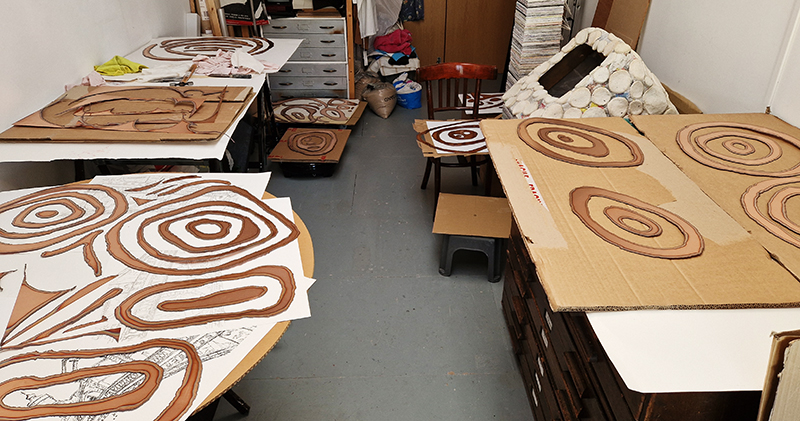
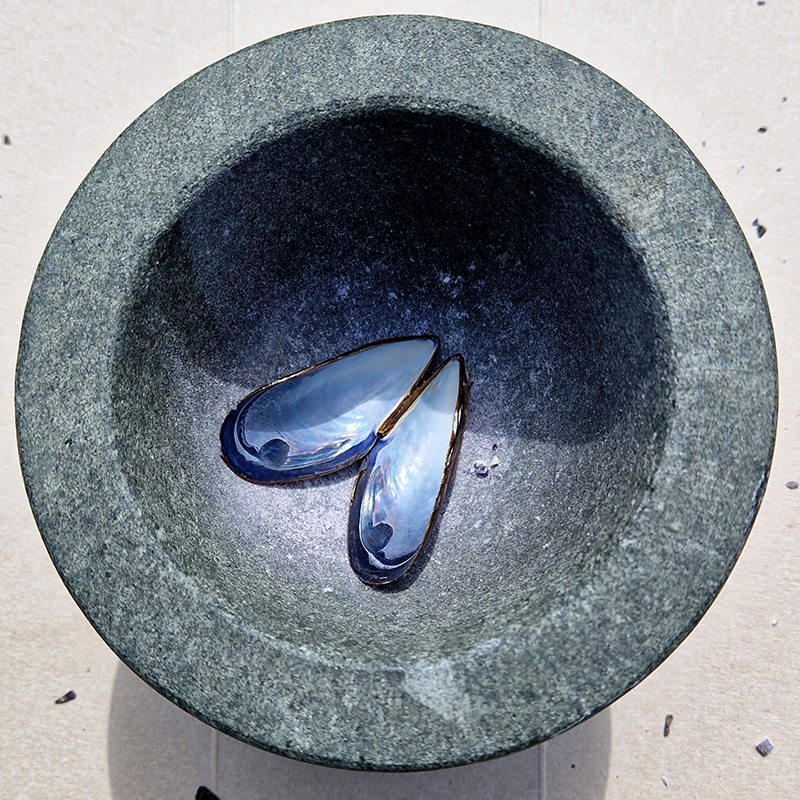
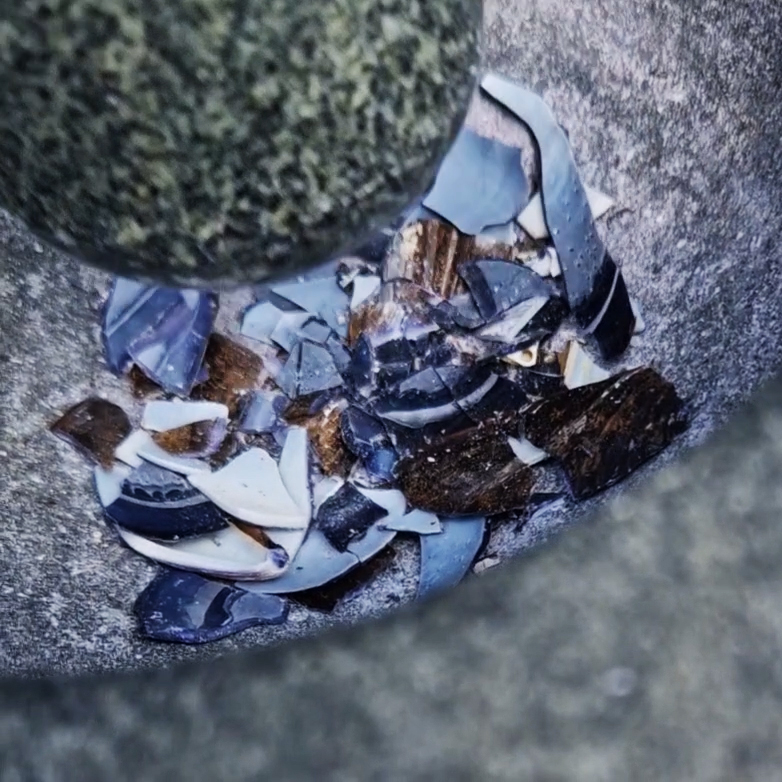
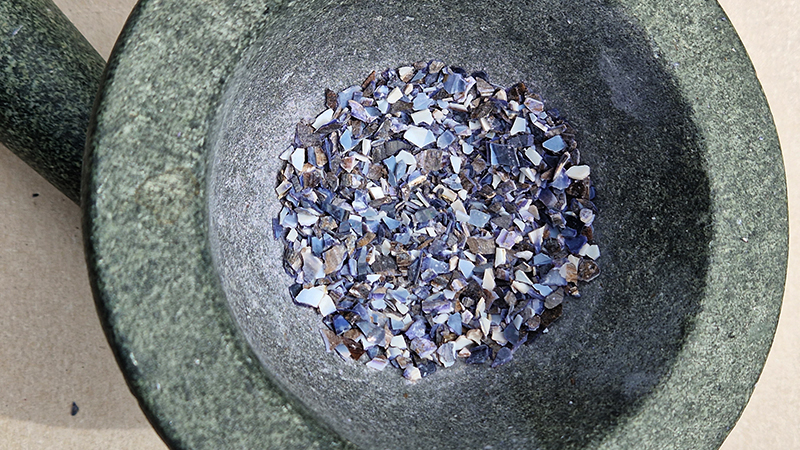
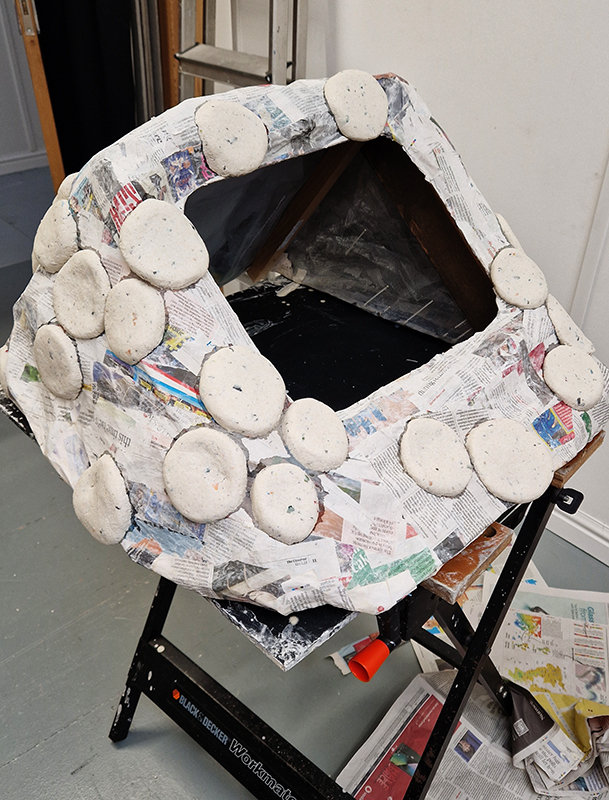
Belly of a Rock – work in progress. Making paper clay discs to build the surface of this hybrid sculpture and crushing mussel and oyster shells to use as texture.

The geographic north pole lies in the middle of the Arctic Ocean, covered in shifting sea ice, where the sun rises and sets only once per year. All lines of longitude converge here and hence all time zones. It is known as true north to distinguish it from the magnetic north pole. However, as the Earth’s axis of rotation wobbles slightly in an irregular circle, even this pole is not fixed. The magnetic north pole, also called the magnetic dip pole, is where the planet’s magnetic field is vertical and a compass needle here would dip and try to point straight down. The north and south dip poles are not found directly opposite each other. These dip poles are located by experiment in the field but as they are found in the most remote and harsh regions of the planet they are not easy to track. Also they can move around over considerable distances during each day, tracing out oval shapes as they are acted upon by dynamic electrical current systems of the magnetosphere, which are in turn defined by the activity of the solar wind. There is an equivalent (but fictional) magnetic dipole at the centre of the Earth assigned from global modelling of the geomagnetic field. These geomagnetic poles are an approximation arrived at by reducing Earth’s complex and varied magnetic field to that of a simple bar magnet. The north dip pole lies in Northern Canada, the northern dipole is roughly off the northwest coast of Greenland.

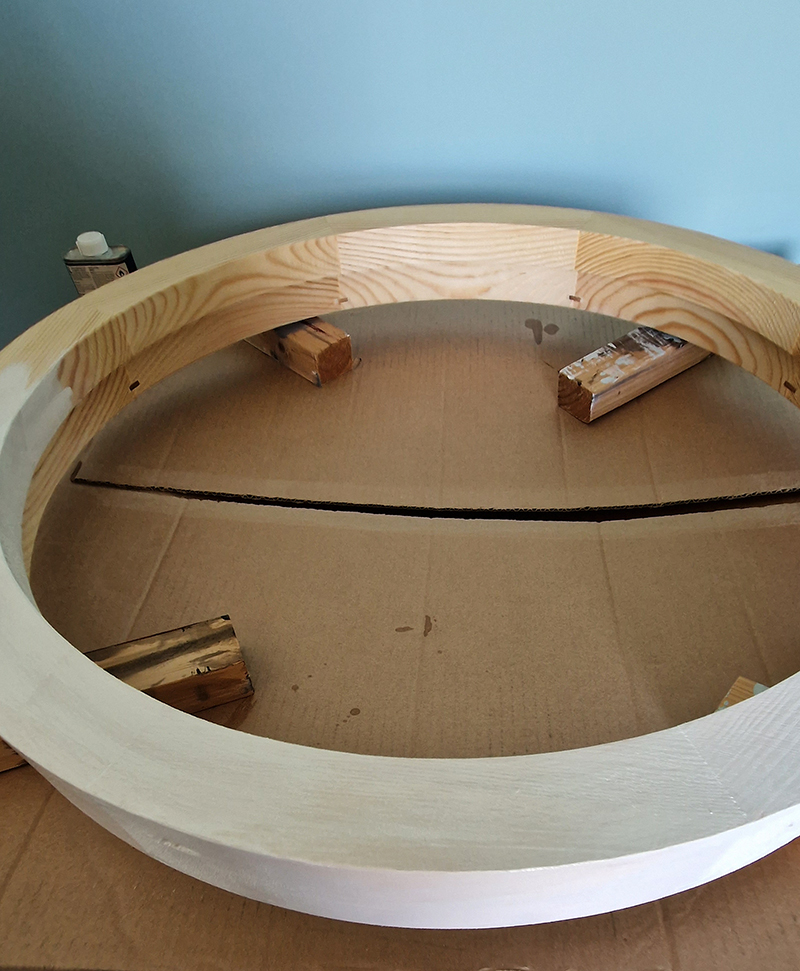
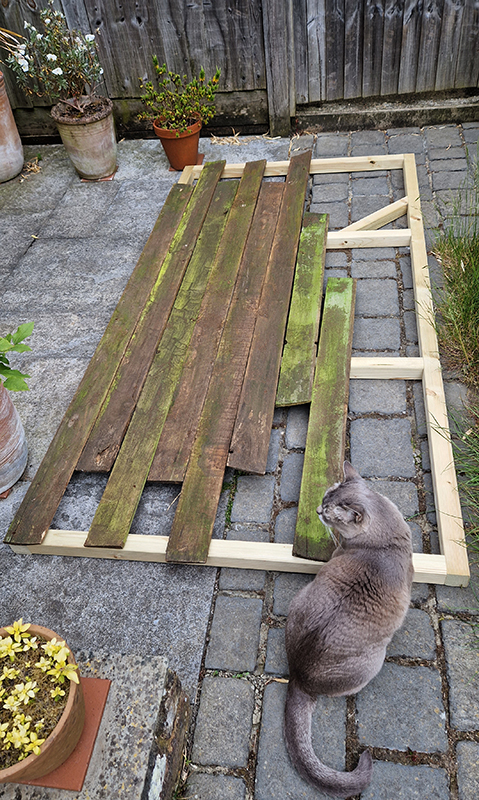
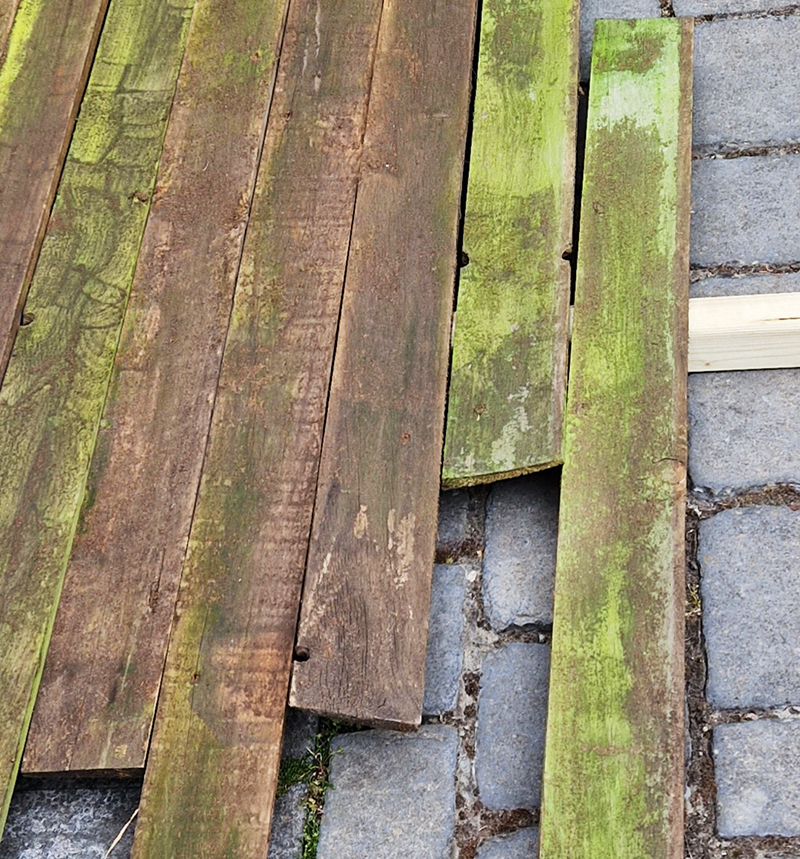
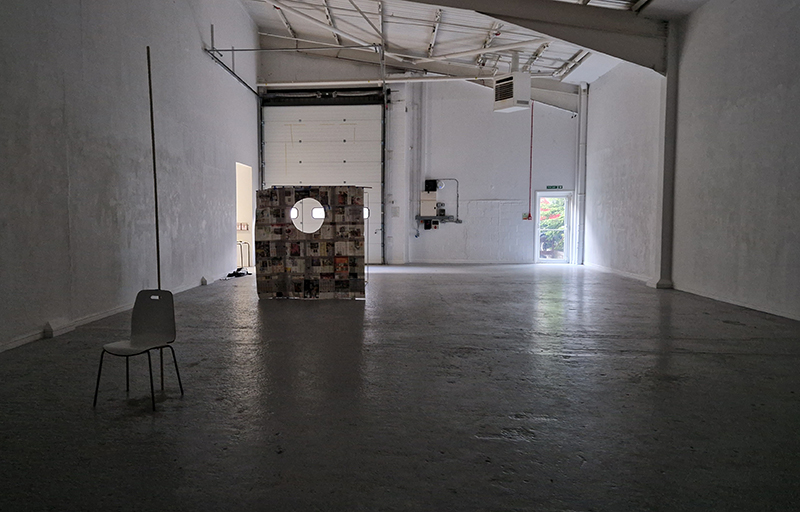
The Absolute Hut – work in progress. This installation is a reimagining of the Absolute Hut at Hartland Magnetic Observatory where monitoring of the Earth’s magnetic field takes place. Topological contours of suminagashi marbling also echo fluid magnetic field lines. Testing scale and alignment in the gallery space. Collecting planks for the north facing wall. Prepping the round window. Suminagashi experiments on different Japanese papers. I want to consider the hut as a sensory hub.

Other exciting news is that APT Gallery have selected a proposal for an exhibition which will take place in March 2024. The exhibition will consider the lifeboat as a metaphor in relation to uncertain times, ecological and social change and shifting landscapes as viewed from the land and the sea. The artists in this group show share an interest in exploring precarity as a site of dynamic transition. I am so happy to be working with these wonderful artists – Rachael Allain, Caroline AreskogJones, Beverley Duckworth, Liz Elton, Kathleen Herbert, Kaori Homma, Anne Krinsky.          

In celebration of World Metrology Day, NPL opened Bushy House and gardens to the public. A chance to see and hear about ever more accurate ways of measuring the physical world. Bushy House was the residence of William, Duke of Clarence (William IV) and his mistress Dora Jordan from 1797, and was offered to the Royal Society by Queen Victoria in 1900 as a location to establish The National Physical Laboratory. The impressive apple tree is from an offcut of one from Newton’s home estate. The magnetic laboratory here is concerned with devising and standardising the instruments used by magnetic observatories such as the one at Hartland that I visited last summer. I saw the 1kg sphere of single crystal silicon, with the smoothest polished surface of any made object and notoriously hard to photograph. The application of a strong magnetic field during the crystal growth process reduces contaminants giving a purer silicon crystal. Developments in technology bring new units and definitions of measurements.

From early concepts of number, patterns in nature (symmetry, branching, spirals, cracks, spots, stripes, chaos, flows, meanders, waves, dunes, bubbles, foam, arrays, crystals, and tilings) magnitude, and form came mathematics, meaning subject of instruction. This has evolved into complex theory from an understanding of negative numbers to imaginary numbers which combined with real numbers have been found necessary to describe quantum mechanics.

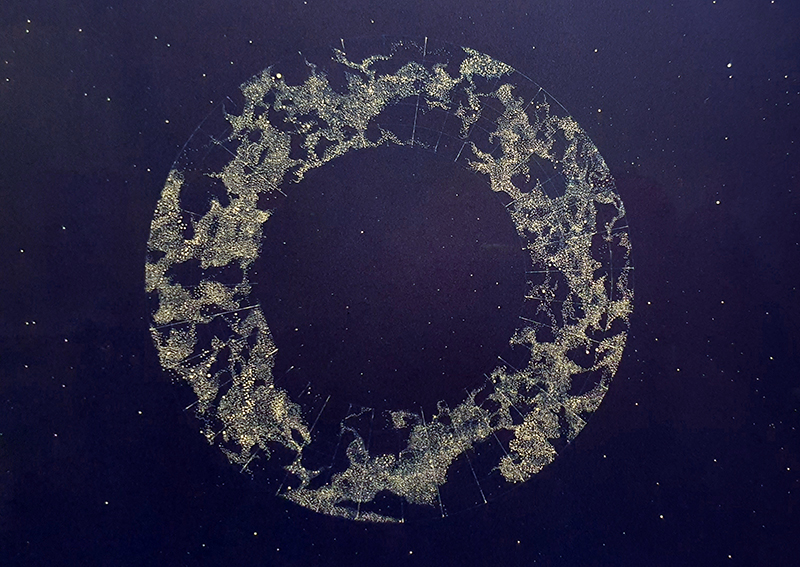
The colour coding of Saturn’s rings according to particle size used radio occultation to determine the different regions. Radio signals were sent from the Cassini spacecraft during orbits which placed Earth and Cassini on opposite sides of Saturn’s rings. This remote sensing technique measures how the radio waves bend around the matter they encounter to assess the physical properties of a planetary atmosphere or ring system. The purple colour indicates regions where most particles are larger than 5 centimeters. Green and blue shades indicate regions where there are mostly particles smaller than 5 centimeters and 1 centimeter. The white band is the densest region where radio signals were blocked preventing accurate representation in this area. The radio observations showed that all rings appear to have a mix of particle size distribution right up to boulder sizes, with several many meters across.

Gallery Visits

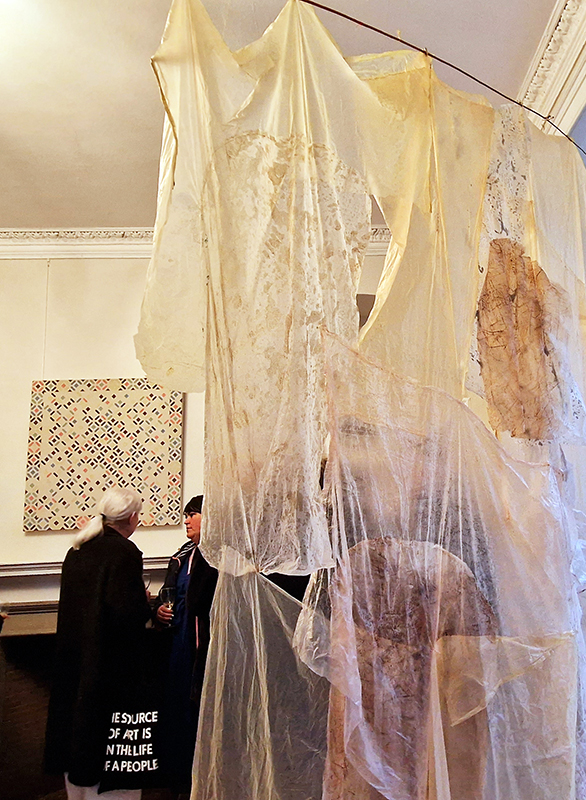
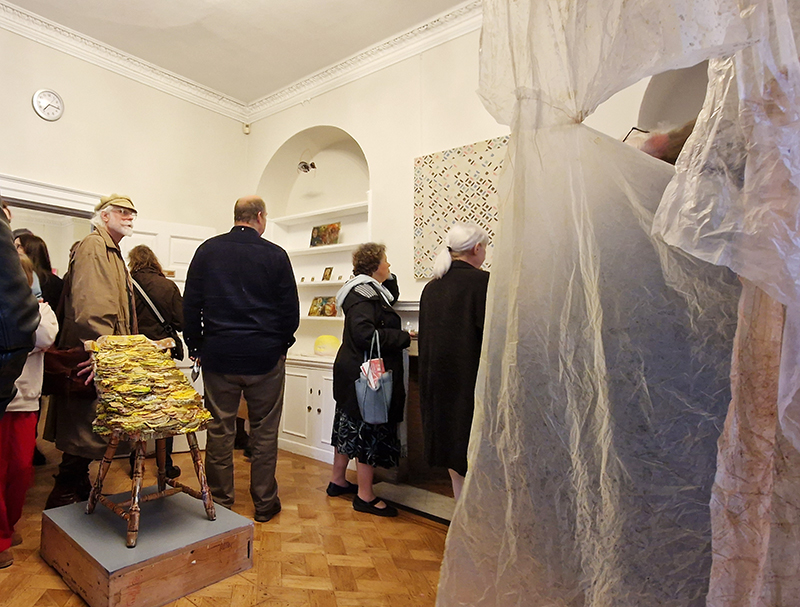
It’s Coming From Inside at Bell House, Dulwich. Curated by Sarah Sparkes and Jane Millar. In their thinking about the Impressionist Berthe Morisot, and the exhibitions broader theme of ‘Windows and Thresholds’, the curators see the two different domestic spaces, and the liminal corridors between them, as places expressive of dialogues in both Morisot’s and their invited artists’ works: of confines, dreams of escape, of external inscrutability and internal passion. Exhibiting artists: Fran Burden | Ruth Calland | Helen Carr | Mikey Cuddihy | Janet Currier | Robert Dawson | Andrew Ekins | Liz Elton | Lisa Fielding-Smith | Deborah Gardner | Caroline Gregory | Birgitta Hosea | Mindy Lee | Wayne Lucas | Julia Maddison | Jane Millar | Darren O’Brien | Kim Pace | Sarah Sparkes | Geraldine Swayne

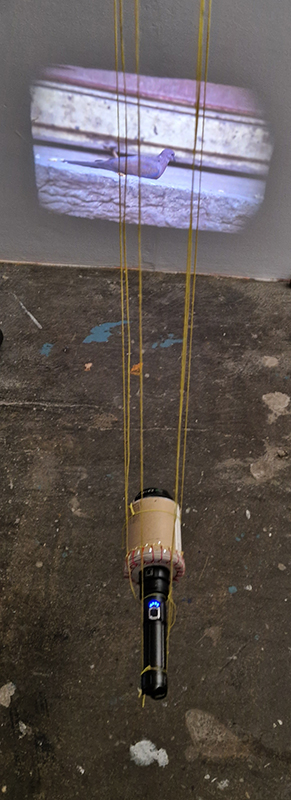
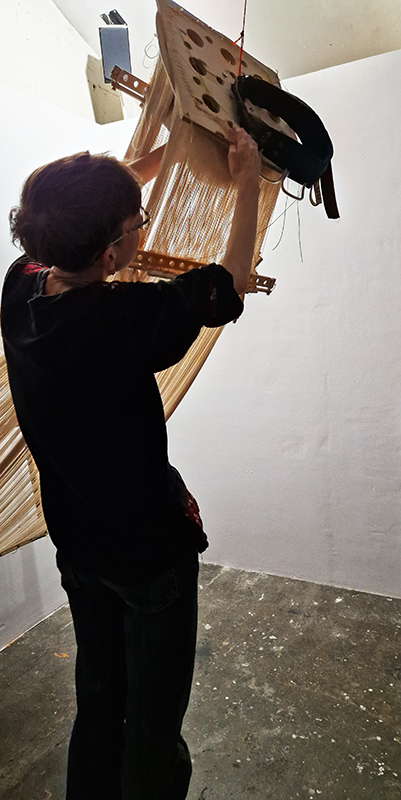
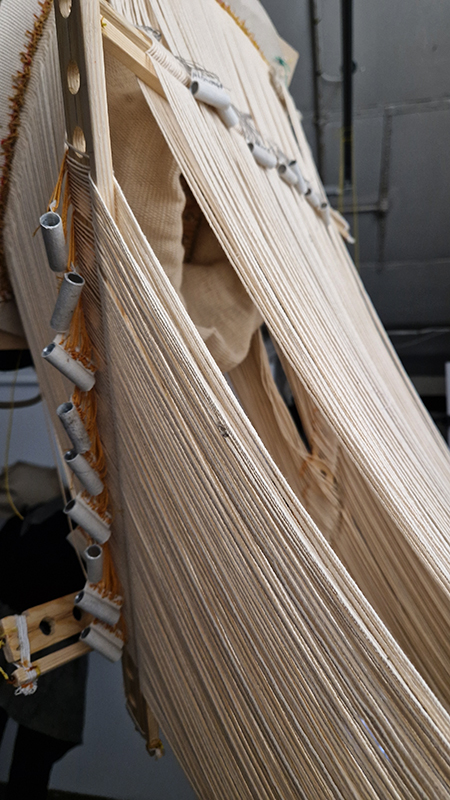
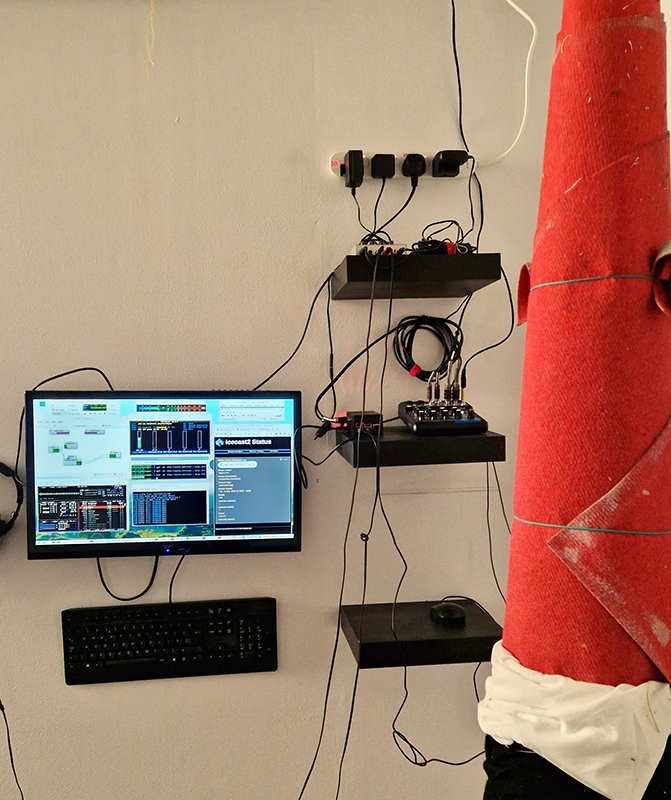
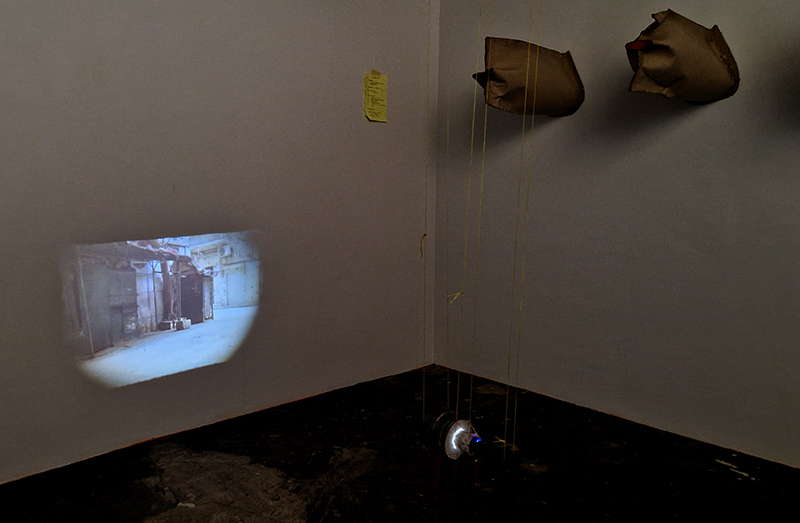
Georgina Sleap Now and here and there together at Cable Depot. A residency undertaken in collaboration with Neil Cheshire, Olive Hardy, Mercedes Melchor, Agnieszka Szczotka, Derek Horton, Farida Youssef and Niamh Riordan. A wonderful installation conjured from simple materials and experimental technology, both analogue and digital that blur the here and there of time and space. Sounds of everyday street noise live from the artist’s Cairo balcony are streamed into the gallery where suspended torches project still slide images onto the wall or inside elongated sculptural forms. A loom for weaving a plain coffin shaped carpet hangs like a hammock next to CCTV recordings of yogic performance while a camera obscura style intervention casts shadows, bringing the local outside in.

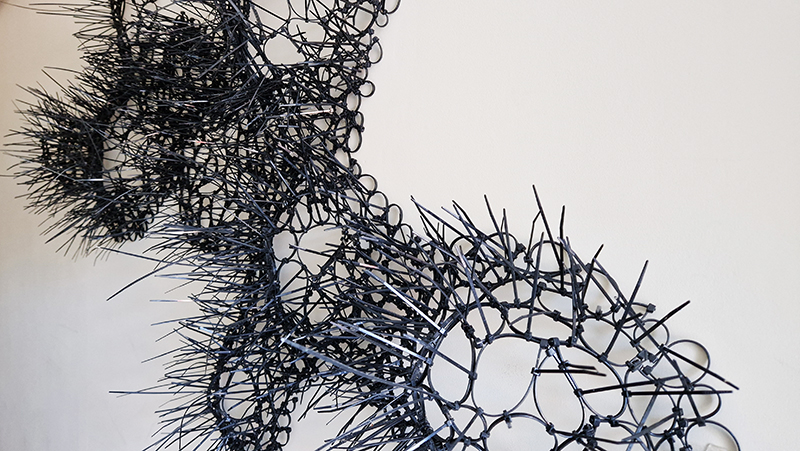
The Shape of Things by Clan, a collective of multidisciplinary artists – Caroline Penn, Liz Lowe, Ashley Goldman, Nicky O’Donnell at Gallery 3, a delightful Georgian property in Margate. The artists examine issues of loss, both personal and environmental, that are balanced by ideas of hope and regeneration. A nice use of recycled and sustainable materials including netting from fruit and cable ties.

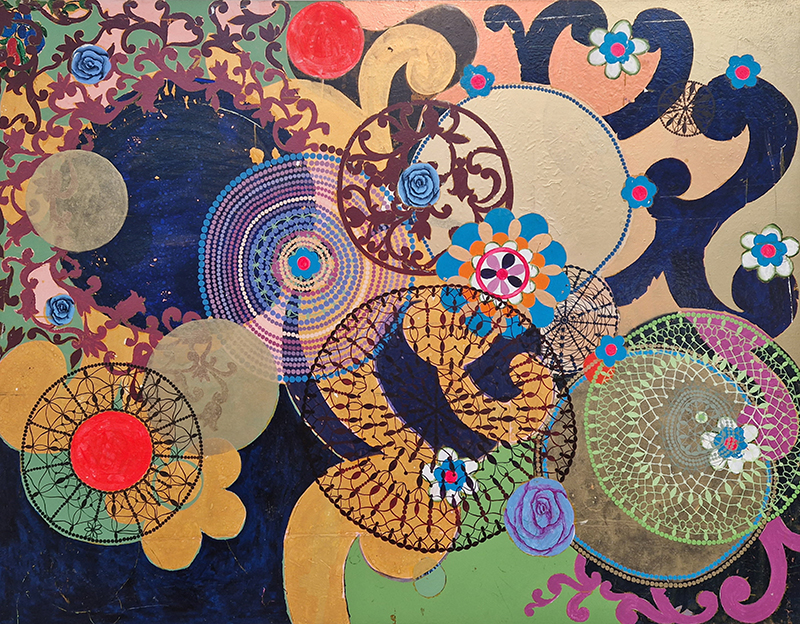
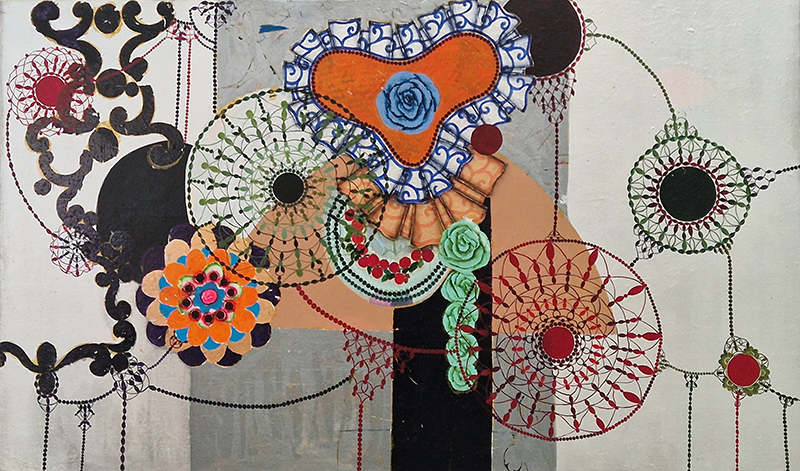
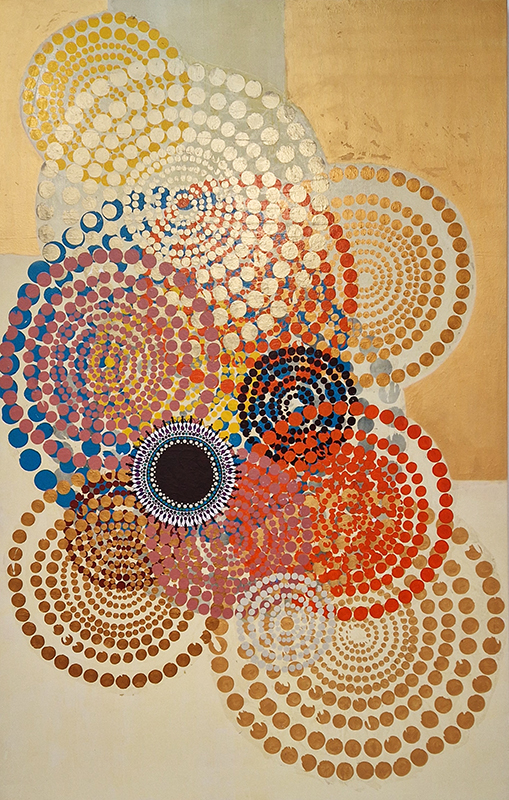
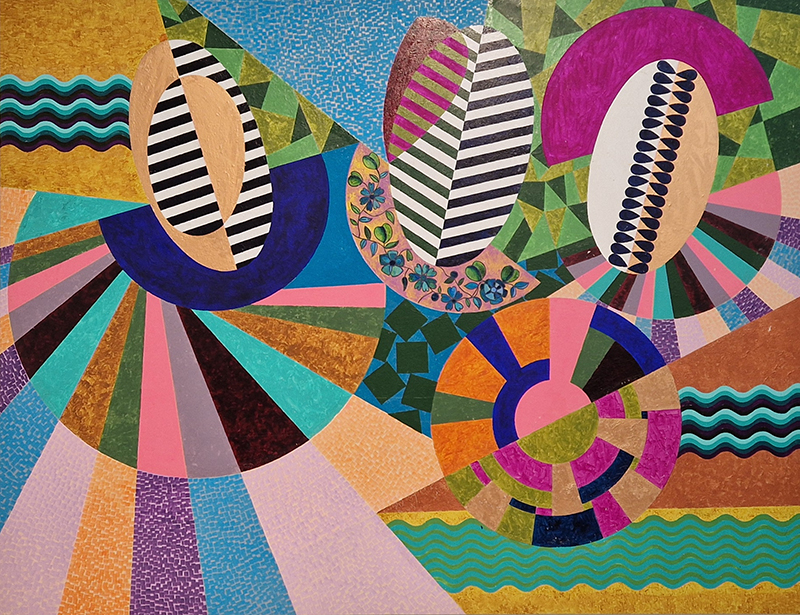
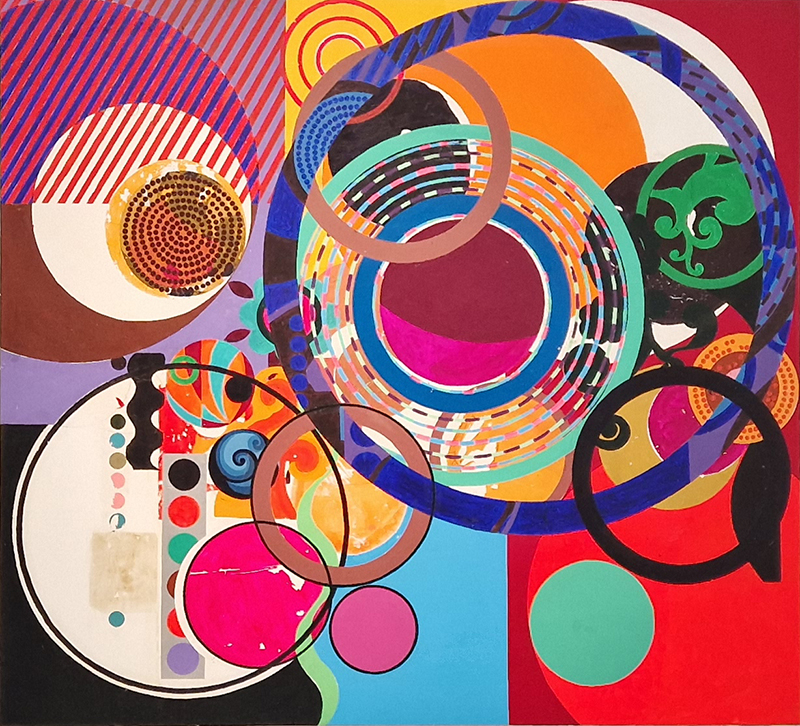
Beatriz Milhazes at Turner Contemporary. Perfect for a summer’s day at the seaside. Exuberant.

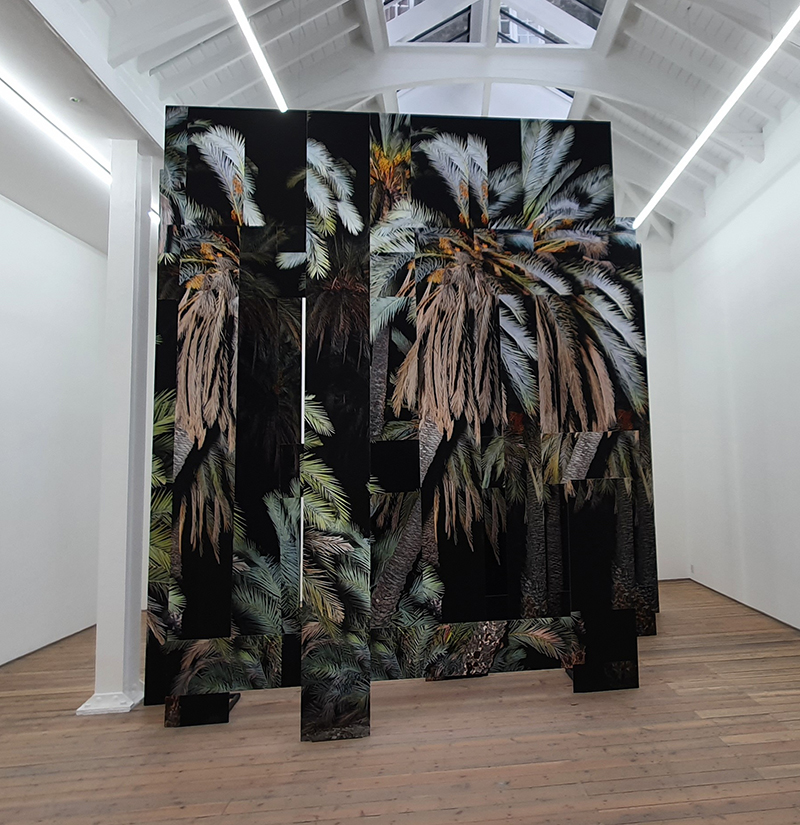
Opening event for the new photography centre at the Victoria and Albert Museum. Interesting to hear about the process Noémie Goudal undertakes to create her ambitious illusionist photographic sculptures such as Giant Phoenix VI from the series ‘Post Atlantica’ which has been acquired by the Victoria and Albert Museum for their photography collection, housed in a new dedicated gallery. This work was inspired by her interest in shifting landscapes, the movement of tectonic plates and how landmasses join and separate over millennia. There was also the chance to see her video Inhale Exhale along with behind the scenes footage of her technical team and the scale of the resources involved. Tarrah Krajnak has also had work acquired by the museum and read some of her poetry at the event. Her interests are also in discontinuity, severance and cataclysmic events but on a human scale. Being born from an act of violence she puts her own identity forward to explore power relationships.


Reading

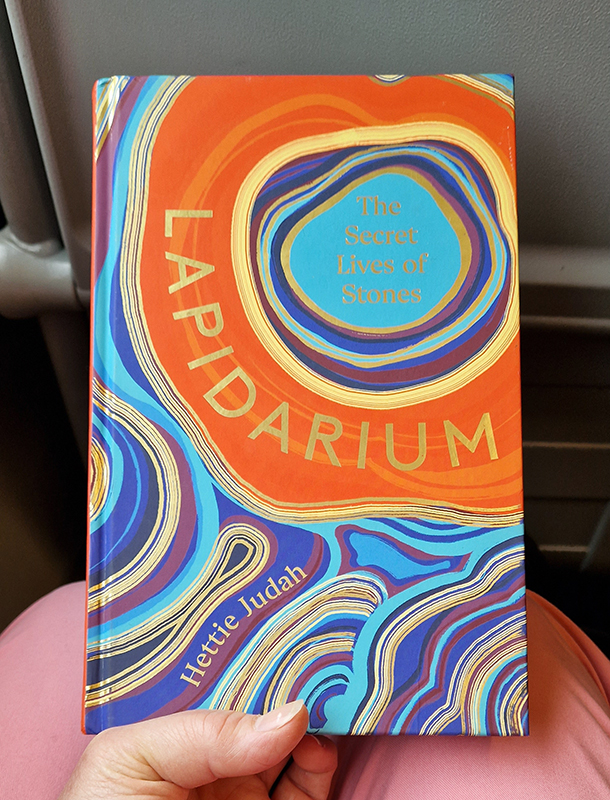
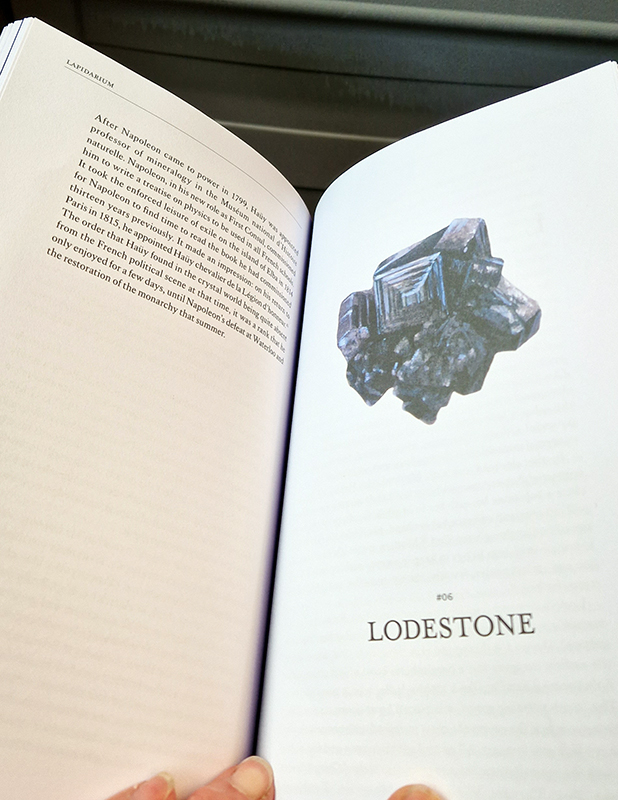
I have really enjoyed the breadth of information delivered so beautifully by Hettie Judah in her book Lapidarium – The Secret Lives of Stones. The character described and stories told of each geological layer, formation, rock and gem brings to life a world often perceived as static, perpetual and dry. This book is a great resource and has been particularly appropriate for me in the run up to the exhibition A Stone Sky with Julie F. Hill as we explore the intimate connections between the rocky planet earth and space.

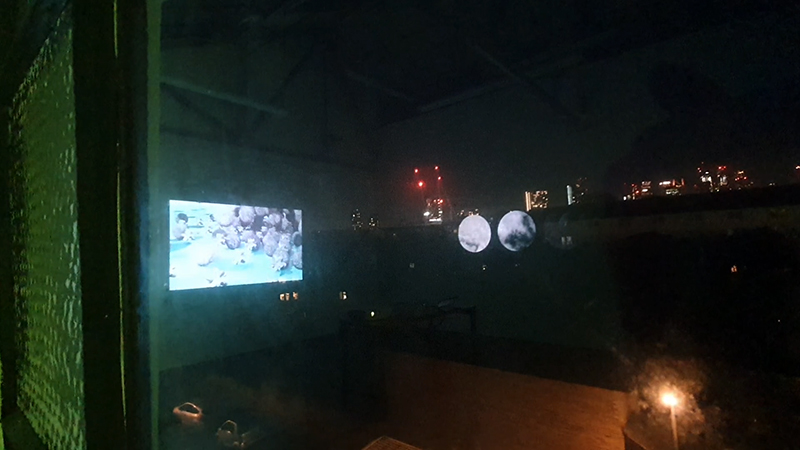
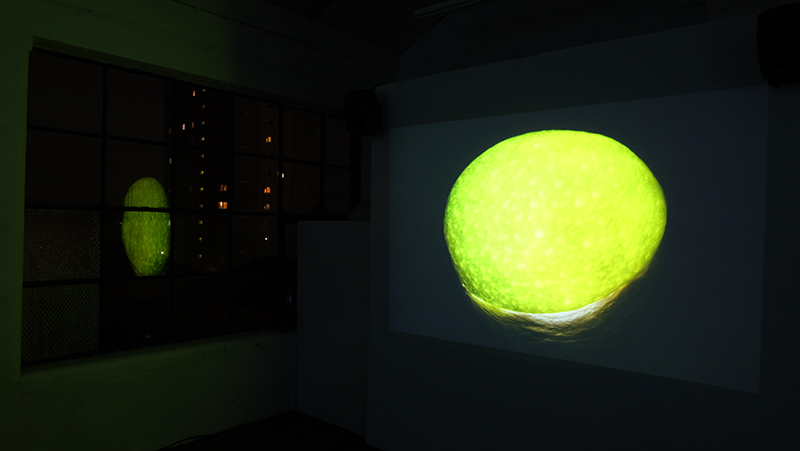
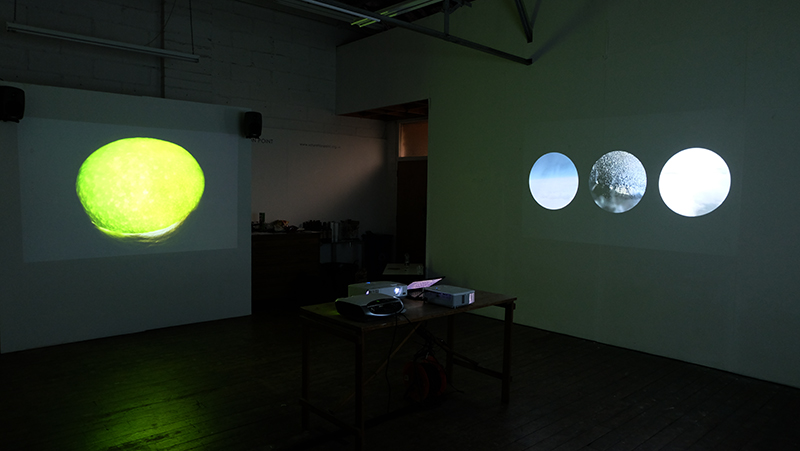
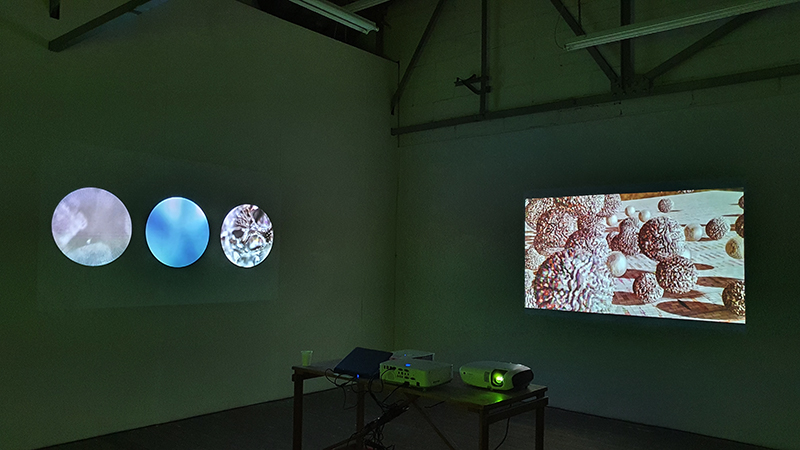
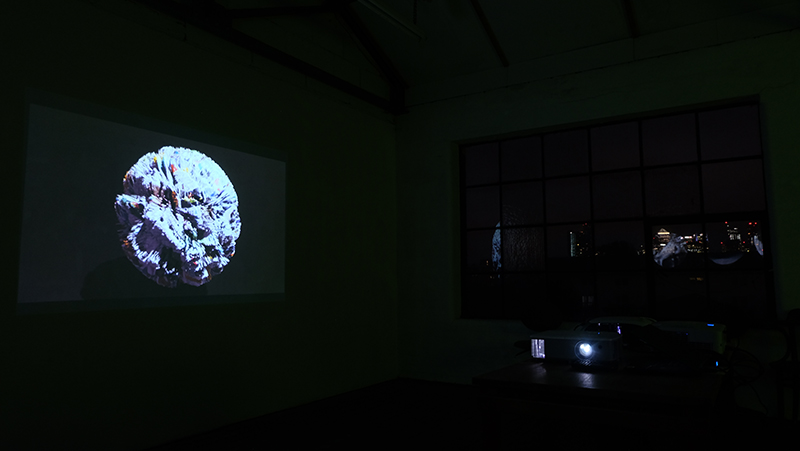
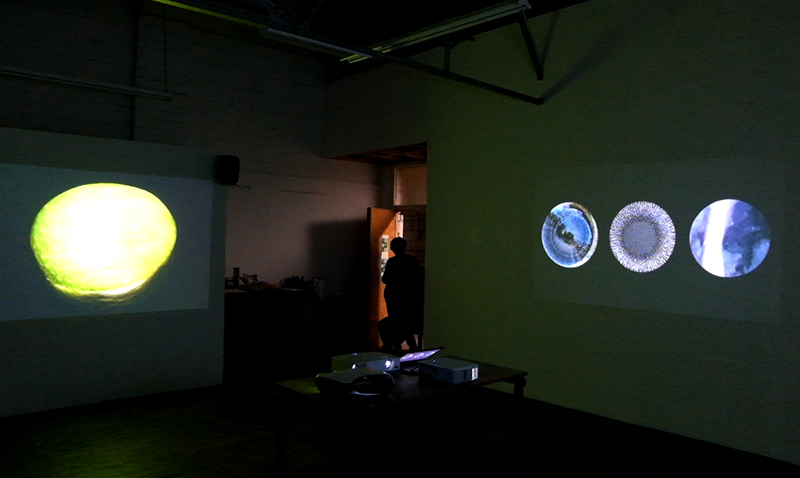
It was such a pleasure to show with Sandra Crisp and Jockel Liess at Saturation Point. We were very pleased with how our films worked together in Projected Topographies and reflected out into the night skies of London.

Sandra Crisp: E_Life uses 3D generated animation, presenting intensely textured and dynamic geometry sequenced over time.

Multiple constantly transforming organic forms, each originating from a simple 3D sphere are mapped with eclectic visuals such as emojis, fragmented images borrowed from 24-hour online rolling-news media and others downloaded via a search engine. Particle systems generate repeated, yet varied objects throughout the film which appear to have a life of their own. Overall suggesting the possibility of a simulated future/ nature.

Jockel Liess: Variations on a theme is a generative audiovisual system which starts from a point of fascination with the aesthetics of irregular organic patterns.

Visually as well as sonically the aesthetic of natural patterns thrives on their intrinsic imperfection which are never distributed even or orderly, are never replications of themselves. They are rather reoccurring variations that form a recognisable tapestry of familiarity across an otherwise chaotic and unpredictable structure. Prospering from the tension that arises between repetition and asymmetry, and playfully inhabit the border region between order and randomness.

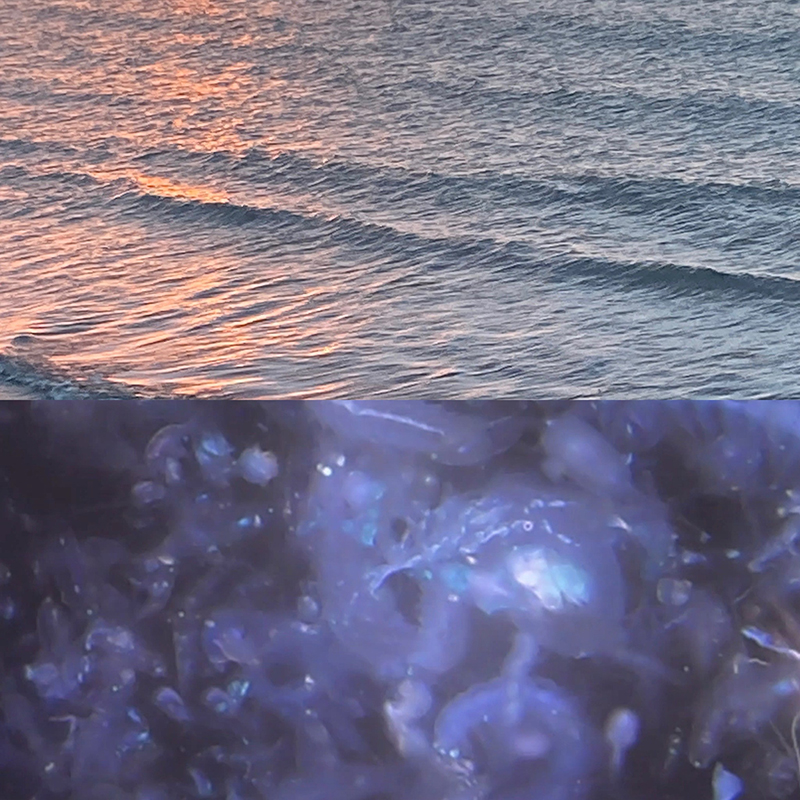
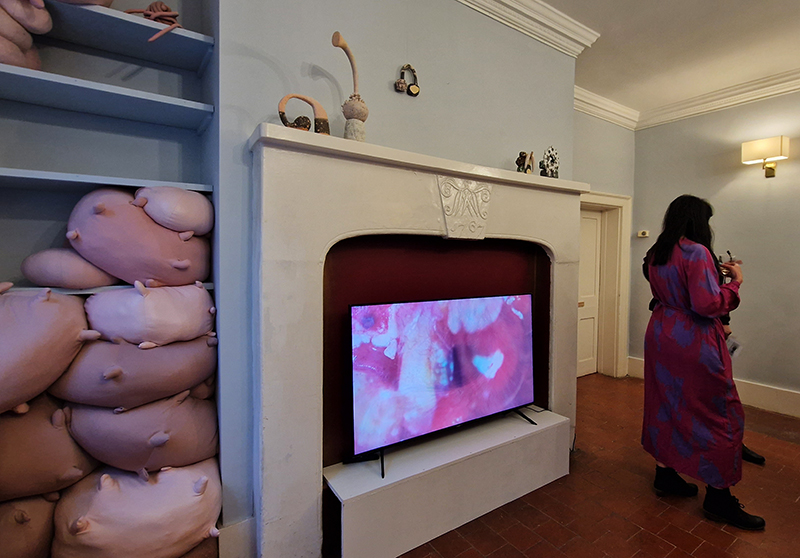
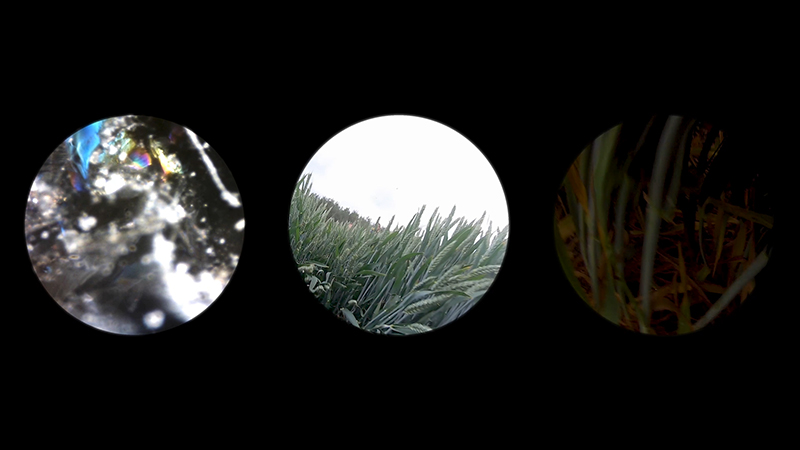
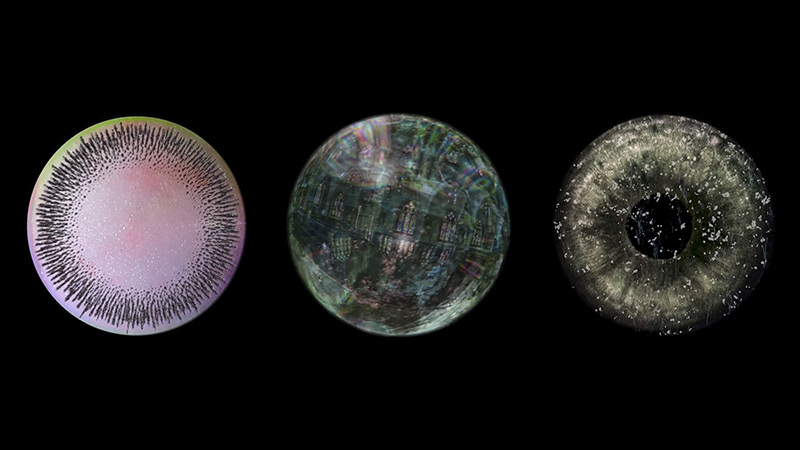
Susan Eyre: Aóratos transports the viewer between everyday locations and terrains visually transformed via use of an endoscope, a microscope,and cameras launched in a high altitude balloon.

It is not impossible that wormholes exist in our universe.

Aóratos imagines journeying through hidden landscapes, distorted spacetime and alternative perspectives. Envisaging potential encounters with cosmic strings, space foam, primordial chemistry, radioactive particles and escaping gravity the work conjectures on the enduring allure of traversing a wormhole.

Black holes were once thought to be pure science fiction but in recent decades scientists have discovered that these extraordinary objects exist throughout our universe in all shapes and sizes and  astoundingly have even produced images of them.

Einstein’s theory of general relativity written in 1915 predicted the existence of black holes and is also consistent with the possibility of gravitational tunnels known as wormholes. It could be that there is a hidden web of planck scale wormholes linking all points in space. Theoretically, threaded through these tiny holes would be filaments of cosmic strings created in the primitive goo of early matter and flung across space when the universe burst into existence.

To traverse space by means of a wormhole would require vast amounts of negative energy, not something usually found on Earth yet in the current political climate in no short supply.

The risks and obstacles of entering a wormhole include creating enough negative energy to open the wormhole mouth wide enough to weaken the gravitational tidal forces which would rip travellers apart; keeping it from collapsing so travellers are not indefinitely trapped inside; exceeding the speed of light and avoiding incineration from deadly high radiation.

The video work explores hidden landscapes, the distortion of space and the permeability of barriers such as force fields and human skin to the unseen particles that constantly teem at near light speed across the universe.

Edge of atmosphere footage was achieved with the help of Sena Harayama, Romain Clement De Givry and Medad Newman from Imperial College Space Society supervised by senior lecturer in spacecraft engineering Dr Aaron Knoll. We also had help from the UK High Altitude Society. My ambition was to film cosmic particles at the point where most of the activity of collisions takes place, about 15km up and so we launched a cloud chamber in the payload of a high-altitude balloon. Unfortunately the prepared chamber was broken the night before the launch and the replacement was not really adequate. Also due to a turbulent launch the camera inside the payload was knocked to one side so we were unable to film this cosmic activity but did get amazing footage above the clouds, gained a height of 35km and successfully retrieved the payload from a field of horses.

Space travellers can ‘see’ cosmic rays as they pass through the retina and cause the rods and cones to fire, triggering a flash of light that is really not there. The retina functions as a mini cloud chamber where the recording of a cosmic ray is displayed by a trail left in its wake.
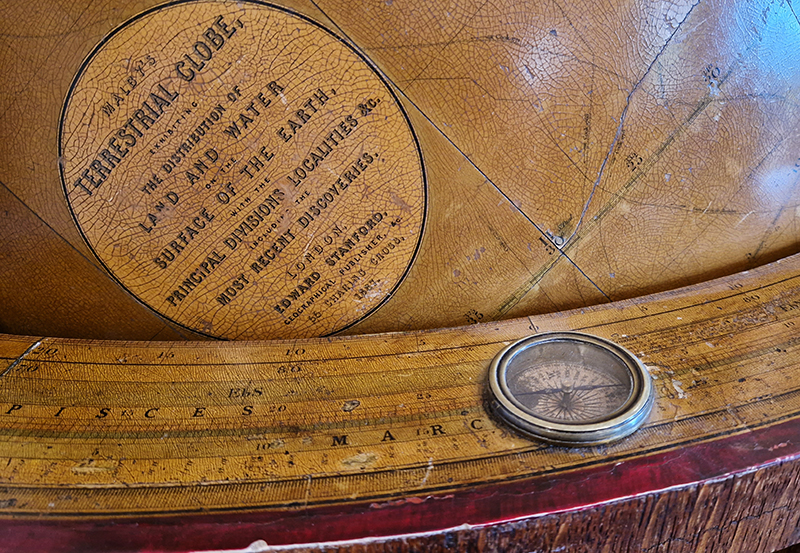
Aóratos translates as ‘unseen’.
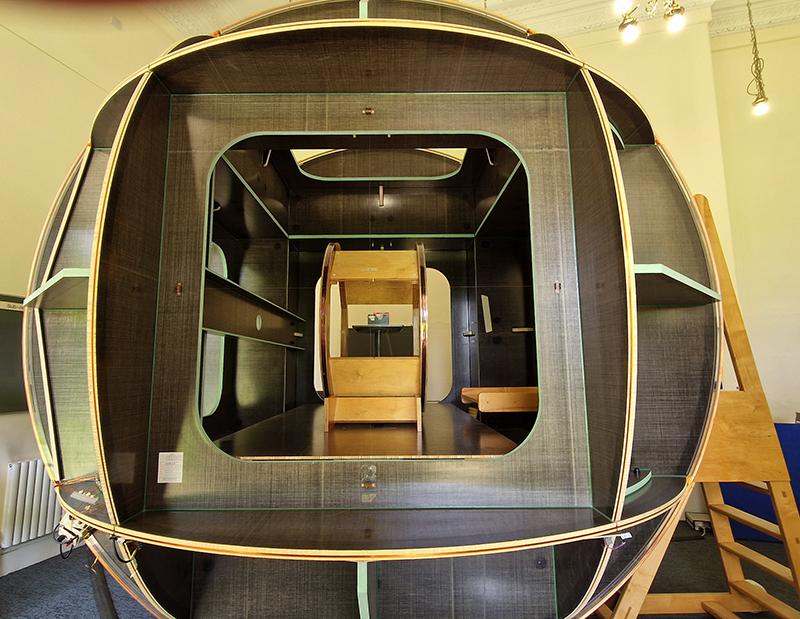
It was a real treat to be invited by Alan Smith and Helen Ratcliff for a short residency at Allenheads Contemporary Arts in Northumberland as part of the Being Human Festival – a celebration of humanities research through public engagement with North Pennines Observatory at Allenheads Contemporary Arts partnering with Durham University to present an evening of discussion and potential stargazing. After a few days of conversations, preparing presentations and meeting the other speakers we were looking forward to the event but unfortunately this was cancelled at the last minute due to flood warnings in the area. We are hoping it can be rescheduled.

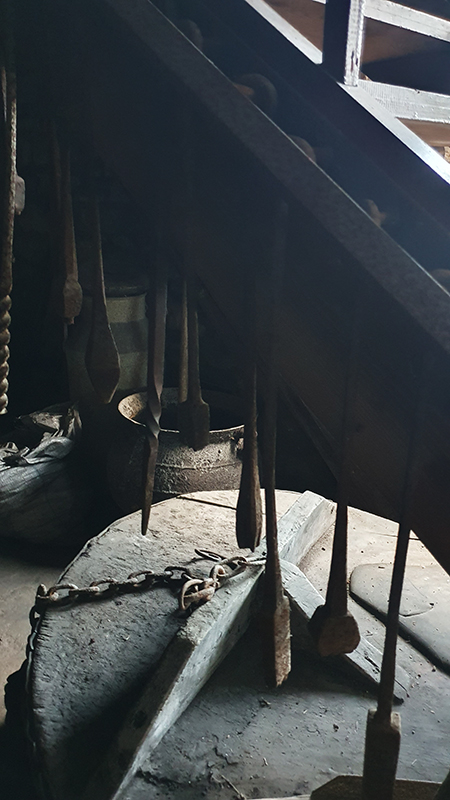
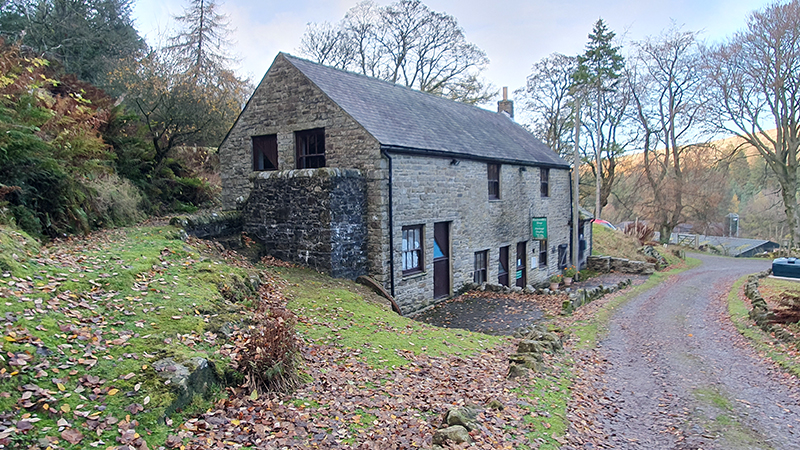
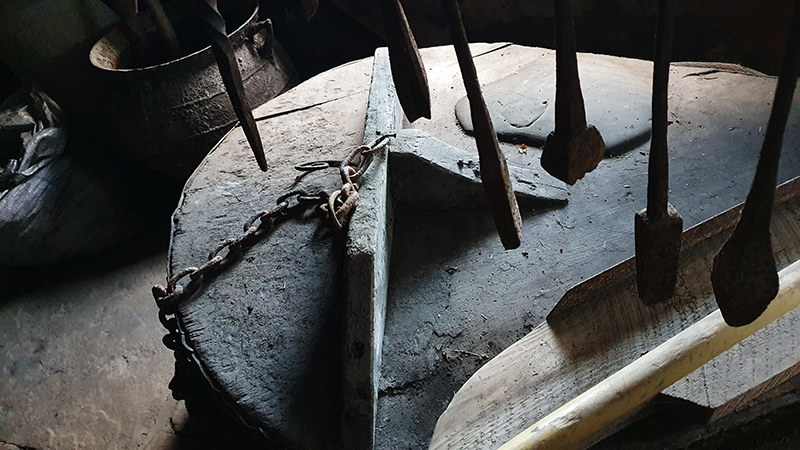
While the weather was clear I headed to Allenheads village for a walk and called in at the Blacksmith’s forge where I had previously shown Aóratos as a site specific participatory installation.

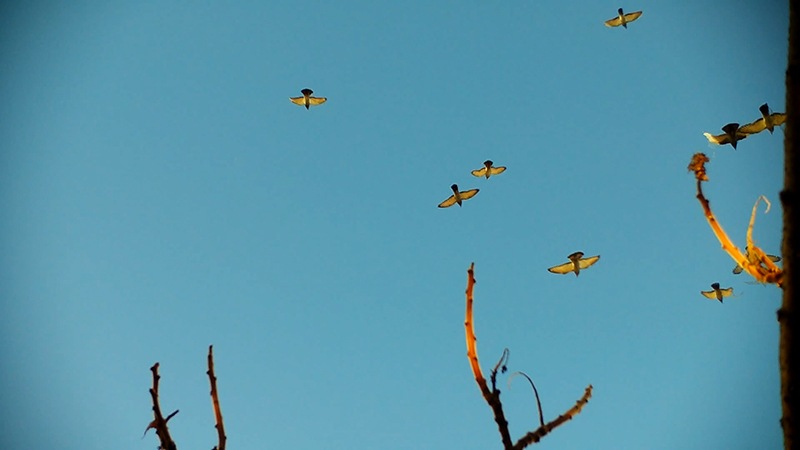
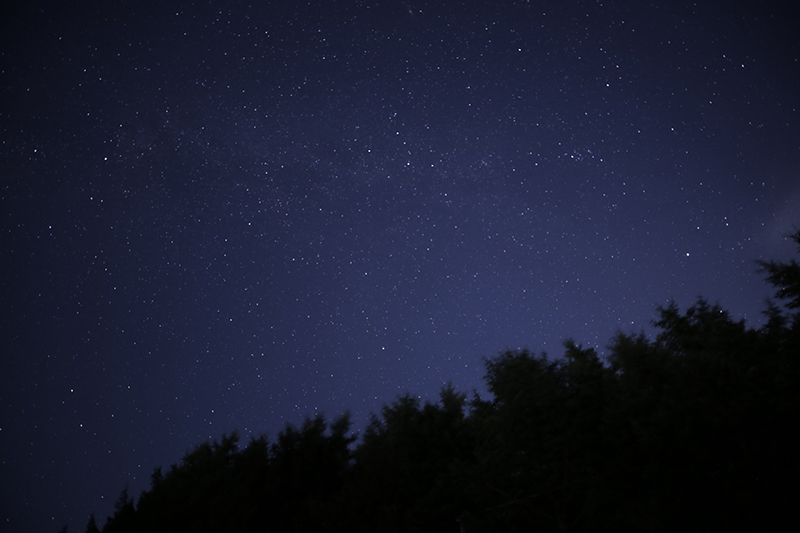
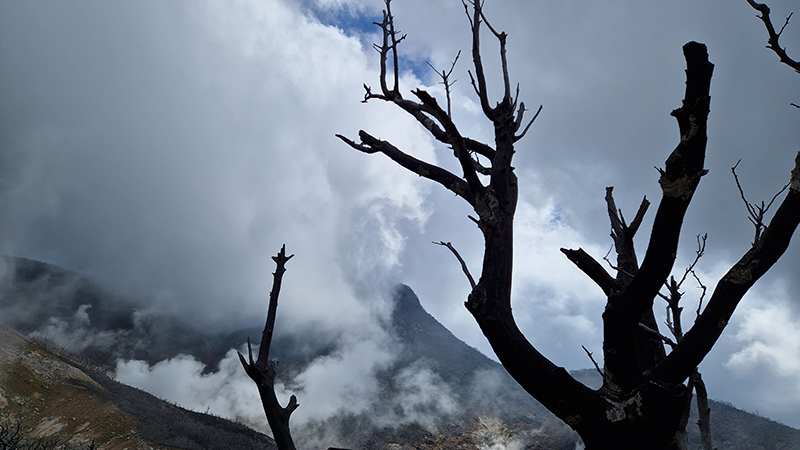
I am appreciative of the dark skies in this location which feels like it is on top of the planet and therefore closer to the sky. I live in south west London so it is a real treat to be away from light pollution. While there, I was keen to make some time lapse film of the stars circling Polaris as research for work about the earth’s magnetic field and magnetoreception. Birds can see the magnetic field and use this extra sense as well as the sun, the moon and the stars to navigate on their migration routes. I am also speculating about the possibility for humans to sense the magnetic field

As the centuries go by, the North Celestial Pole shifts and different stars become the North Star. It takes about 25,800 years for the Earth’s axis to complete a single wobble. Polaris became the north star in about the fifth century and will get closer to straight above the Earth’s north pole until sometime in 2102. Before Polaris was the North Star it was Thuban and next up is Vega.

The skies were clear for a few hours when I first arrived at ACA so I was able to build a short star trail sequence but after that the fog and then the rain settled in.

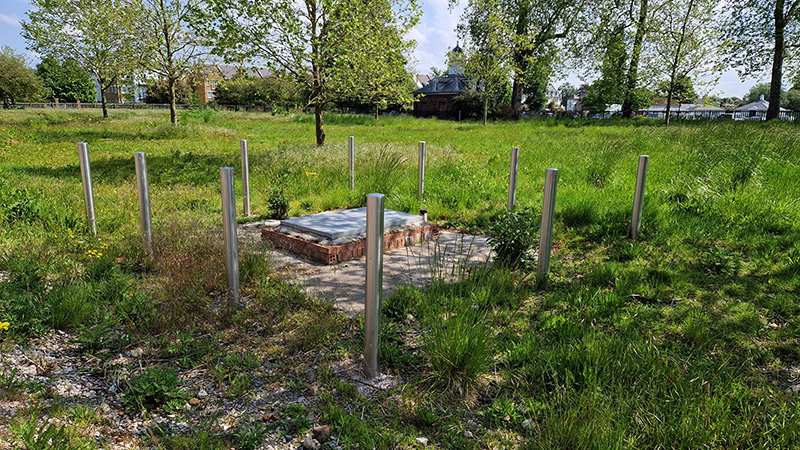
When reading about the history of Hartland Magnetic Observatory, established in 1955, it mentions ‘A permanent distant mark or azimuth mark was erected on a concrete obelisk 7 or 8 feet high near the site’s northern boundary. Viewed through the window in the north wall of the Absolute Hut, its azimuth is 11º27’54” E of N. It is still in use today.’ I was intrigued that an obelisk should be used for the azimuth mark. I had hoped to see it on my research trip to Hartland but found it is currently inaccessible with just the tip protruding from dense undergrowth.

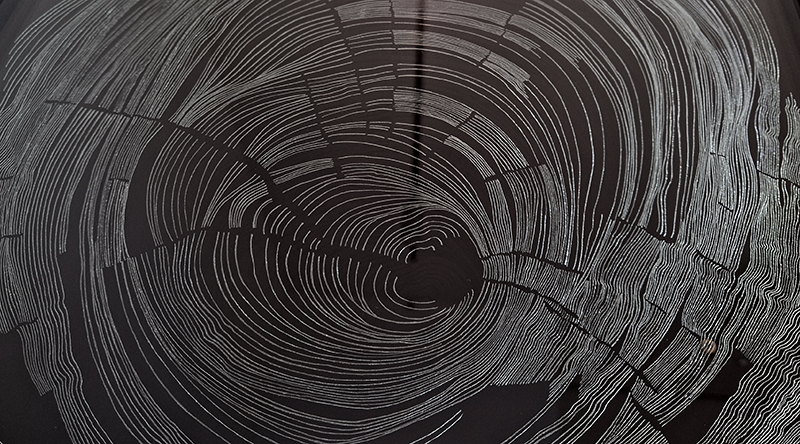
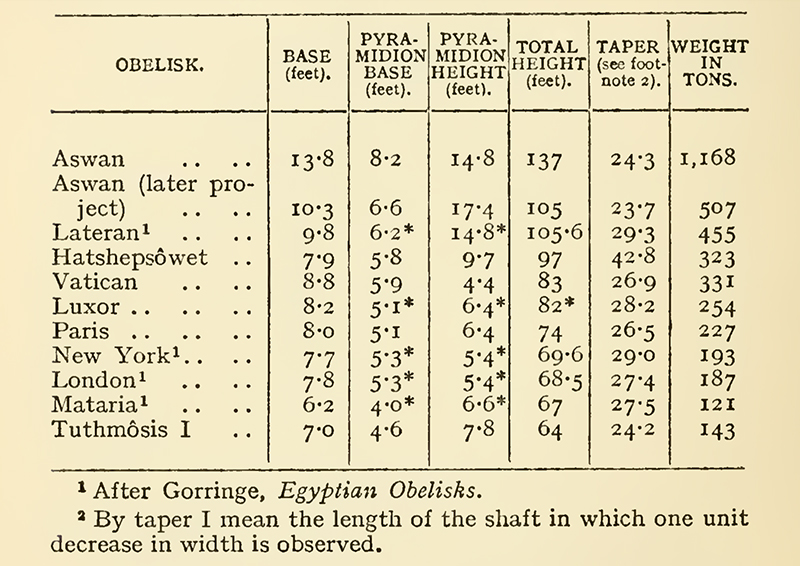
I am reimagining this object as a sculpture made from stacked recycled paper to appear stratified like the sedimentary rock that holds clues to the Earth’s magnetic field reversals and am working to the dimension ratios recommended to avoid emotional unrest.

Obelisk dimensions from “The Problem of Obelisks” catalogued by Egyptologist with the Cairo Museum Reginald Engelbach, 1923.

Before the Meridian Line was moved to Greenwich, London time was calculated from the King’s Observatory at Kew.
There are three obelisks in the Old Deer Park used as meridian marks to adjust the instruments at the Observatory built by George III to observe the transit of Venus in 1769.

As I plan to make the obelisk pyramidion in copper I signed up for the Sheet Copper Sculpture Worksop taught by Robert Worley at The London Sculpture Workshop. To begin we were shown how to beat out a bowl shape and apply a dark patina using chemicals and heat.

I was introduced to the plasma gun. Very satisfying cutting with the fourth state of matter. These shapes are based on the fluid fluctuations of the Earth’s geomagnetic field and I plan to use these on the north wall of The Absolute Hut sculpture in my show next year, tacked over moss with copper pins.

Magnetism is caused by the motion of electric charges. Electrons spinning around the nucleus in atoms generate an electric current and cause each electron to act like a tiny magnet. In most substances, equal numbers of electrons spin in opposite directions, which cancels out their magnetism. In iron, cobalt, and nickel, most of the electrons spin in the same direction which makes the atoms in these substances strongly magnetic. By rubbing a piece of iron along a magnet, the north-seeking poles of the atoms in the iron line up in the same direction creating a magnetic field and turning the iron into a magnet. A magnetic field can also be created by running electricity through a coil of wire, but the field will disappear when the electric current is turned off.

Work in progress on Breath of Stars (the cosmic ray detector interactive video) has been to convert all the .avi star burst video files to VP8.webm using Shutter Encoder software. Jamie, the programmer, has code working now to display video files with transparency so they can be layered.
Gallery Visits

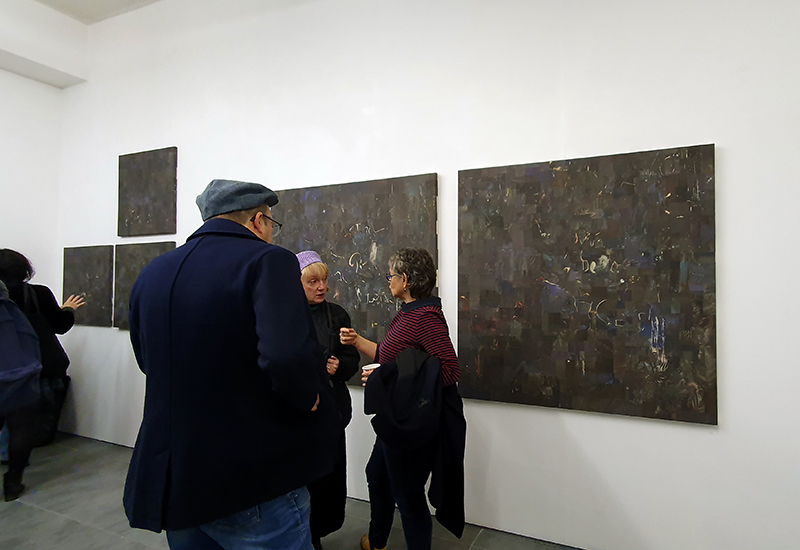
Simon Leahy-Clark solo show FEED at Artworks Project Space. Painterly surfaces made from newspaper clippings have unexpected depth in palette, flow and cosmic imagery, considering the origin of each segment. Mesmerizing to study the forms like spotting patterns in the constellations. Really liked this work.

Caroline AreskogJones Tonight Rain, Tomorrow Mud at Filet Space with live sonic response from Oskar Jones incorporating field recordings gathered whilst walking in Andalucía and captured acoustics whilst making the drawings.

A thoughtfully crafted exhibition capturing the fragile landscape that turns to dust without water and mud when the rains come. The beautiful audio accompaniment from Oskar added to the meditative experience of being transported elsewhere while having time to focus of the works installed with a resonant delicacy.

Lisa Chang Lee showing HZ-0 at Enclave Projects Lake, a sensory device created in collaboration with James Wilkie that creates soundscapes responding to the void around it. Equipped with seven sensors measuring temperature, light, air pollution, sound etc data is fed into an algorithmic software based on the Lydian scale. I hadn’t heard of this scale but am interested to discover it’s connections to gravity and magnetism. The Lydian Chromatic Scale is the most complete expression of the total self-organized tonal gravity field with which all tones relate on the basis of their close to distant magnetism to a Lydian tonic. Tonal gravity is the heart of the Lydian Chromatic Concept. Simply put, the basic building block of tonal gravity is the interval of the perfect fifth. Every tone within Western music’s equal tempered tuning relates to every other tone by either being close to – or distant from – the center of gravity, which is the tonic (or “DO”) of the Lydian Scale. There are 3 states of tonal gravity: Vertical, Horizontal, and Supra-Vertical.

This is a fascinating work thinking about other ways to experience a space.

Hollow Earth: Art, Caves & The Subterranean Imaginary at Nottingham Contemporary.

Inspired by the hundreds of caves hand carved into the rock beneath the city of Nottingham this exhibition explores questions of thresholds, darkness and prehistory. ‘Every culture and religion has told stories about what lies beneath. Caves are where extraordinary events come to pass, the domain of gods and monsters, of births, burial and rebirth. Dark, dangerous and unstable, caves are places of visions and experiences both sacred and profane. More recently, they have become home to data farms, seed vaults and doomsday bunkers.’

Artists include: Hamed Abdalla, Lee Bontecou, Sofia Borges, Brassaï, The Center for Land Use Interpretation, Steven Claydon, Matt Copson, Juan Downey, Chioma Ebinama, Mary Beth Edelson, Laura Emsley, Barry Flanagan, Ilana Halperin, Frank Heath, Ed Herring, Michael Ho, Hans Hollein, Peter Hujar, Athanasius Kircher, Alison Knowles, Antti Lovag, Goshka Macuga, René Magritte, Gordon Matta-Clark, Emma McCormick-Goodhart, Santu Mofokeng, Henry Moore, Nadar, Ailbhe Ní Bhriain, Pauline Oliveros, Lydia Ourahmane, Gordon Parks, Flora Parrott, Walter Pichler, Giuseppe Pinot-Gallizio, Liv Preston, Ben Rivers, Robert Smithson, Michelle Stuart, N.H. Stubbing, Caragh Thuring, Kaari Upson, Jeff Wall, Aubrey Williams, Joseph Wright of Derby.

This was a research trip with Julie Hill towards our joint show next year. The geological resonates through both our work, for Julie through the deep chasms of geology echoing those occurring cosmologically and for myself in the generation of the geomagnetic field deep in the earth which emanates out, reaching into space.

EVERY CLOUD at Bruce Castle Museum.

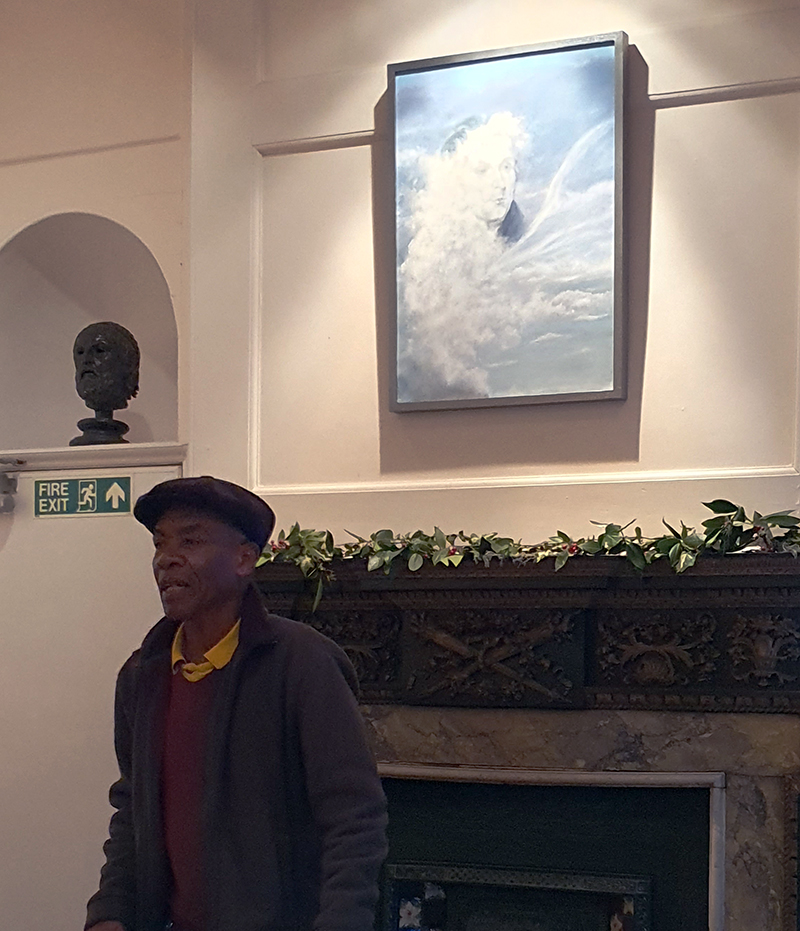
Nine artists celebrate the life and work of the Namer of Clouds and Tottenham resident, Luke Howard (1772 – 1864) to mark the 250th Anniversary of his birth.

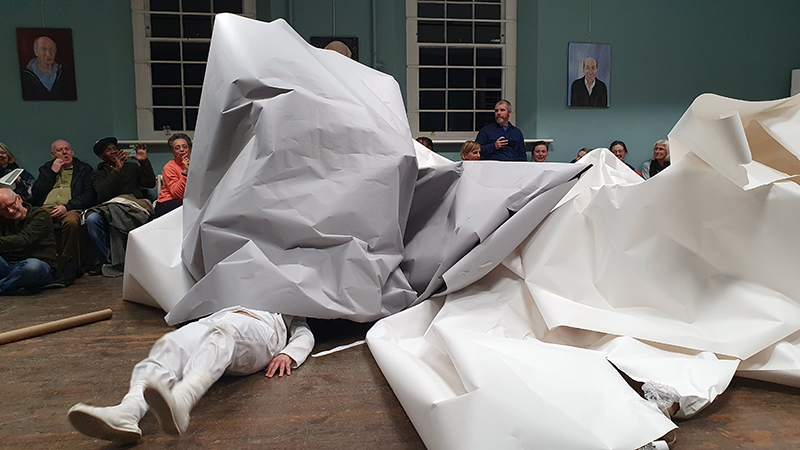
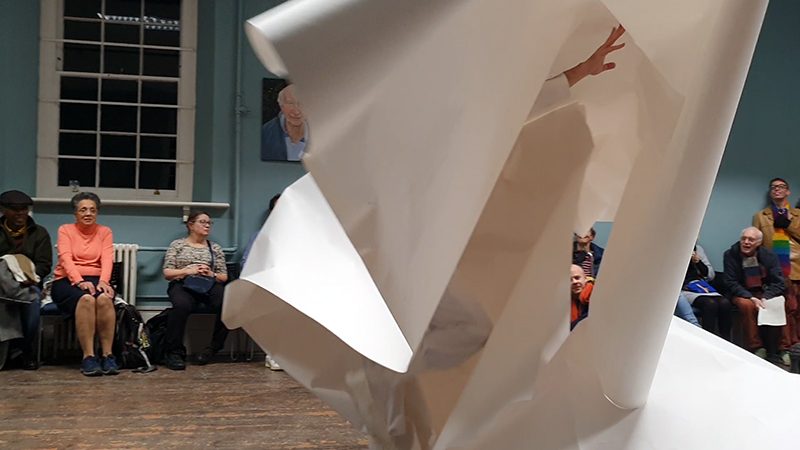
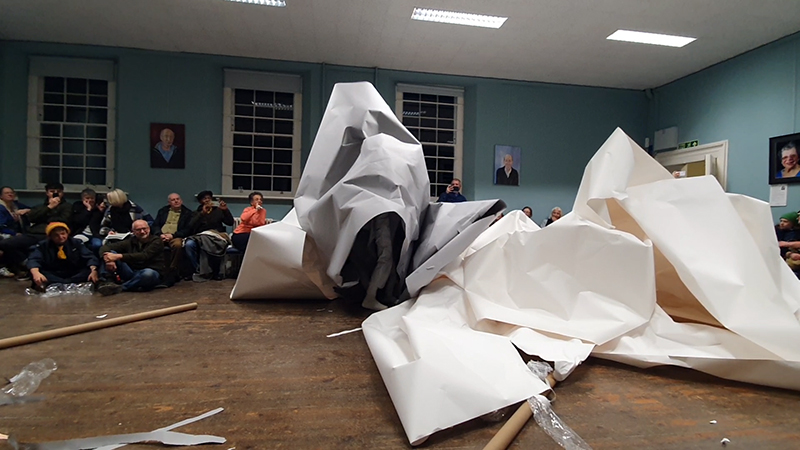
Artists include Tam Joseph, Andrew Miller, Doodleganger, Gabriela Schutz, Helen Currie, Kerry Duggan, Lisa-Marie Price, Mary Yacoob, Siân Dorman with a live cloud sculpture performance from Alexander Costello.

Tam Joseph gave a heartfelt speech about his discovery of Luke Howard from seeing a blue plaque with the citation ‘Namer of Clouds’ which to him spoke of first nation peoples connection to nature and piqued his curiosity to learn more about this poetic origin; the difficulty of painting clouds – never from a photograph – a cloud is never still and a photograph loses the inherent transience; and the shared passion for the shapes and patterns found in the ocean of air above our heads.

Reading

Some history of early speculation, experiments and discoveries of three men who respectively broke new ground in understanding the Earth’s magnetic field, measuring time mechanically and mapping the hidden strata of the Earth.

Latitude and The Magnetic Earth by Stephen Pumfrey. The story of William Gilbert (1544 – 1603), a radical new thinker who questioned the perceived Aristotelian philosophy of the day, developing his own theory of magnetic philosophy of the Earth. His book On the Magnet and Magnetic Bodies, and on the Great Magnet the Earth was published in 1600 in which he concluded that the Earth was itself magnetic.

The lines of latitude and longitude remain fixed as the world flexes and shifts beneath them. Extraordinary to think these lines were drawn centuries BCC and mapped by Ptolemy in the second century on his many atlases.

The zero degree line of latitude is fixed by nature whereas that of longitude is a political decision. The founding philosophy of the Greenwich Observatory viewed astronomy as a means to an end – all the stars needed to be catalogued to chart a course for sailors to cross the globe. Ptolemy first set the meridian off the northwest coast of Africa and many countries set their own starting point for 0 longitude. Eventually, after publication of a series of star charts beginning in 1767, made by the then Royal Astronomer, that became used world wide for nautical navigation, Greenwich was declared prime meridian of the world in 1884 (except by France who took another 27 years to accept the decision).

Longitude by Dava Sobel tells the story of the battle between proponents of the lunar distance method and the mechanical clock to solve the problem of determining longitude at sea. Astronomers and engineers became adversaries spurred by a financial reward offered to the one who came up the most accurate and reliable method. John Harrison (1693 – 1776) carpenter turned clockmaker spent his life perfecting the marine chronometer.

The Map That Changed The World by Simon Winchester might have some historical merit in telling the story of William ‘Strata’ Smith (1769 – 1839) but I found it over perambulatory in the telling.