Archives for posts with tag: magnetic

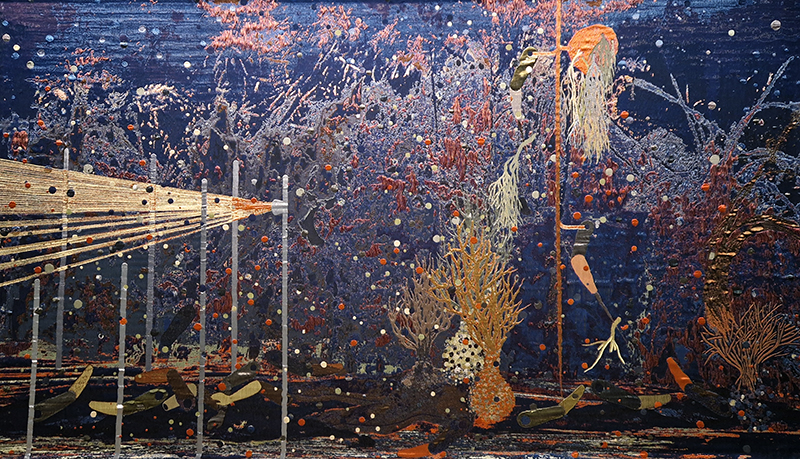
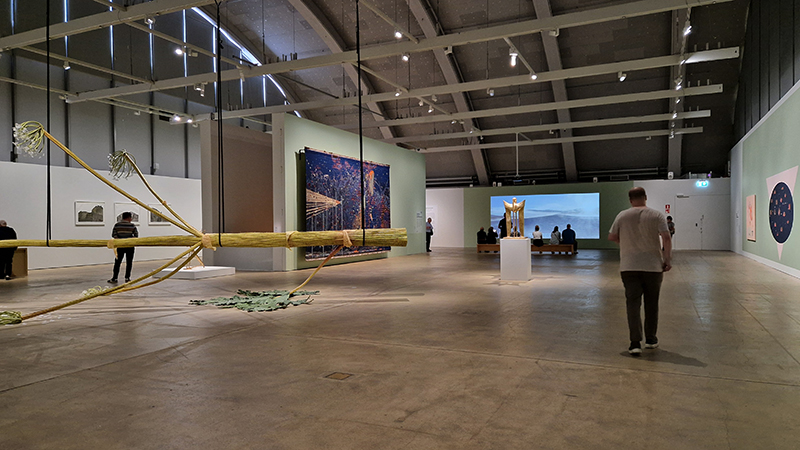
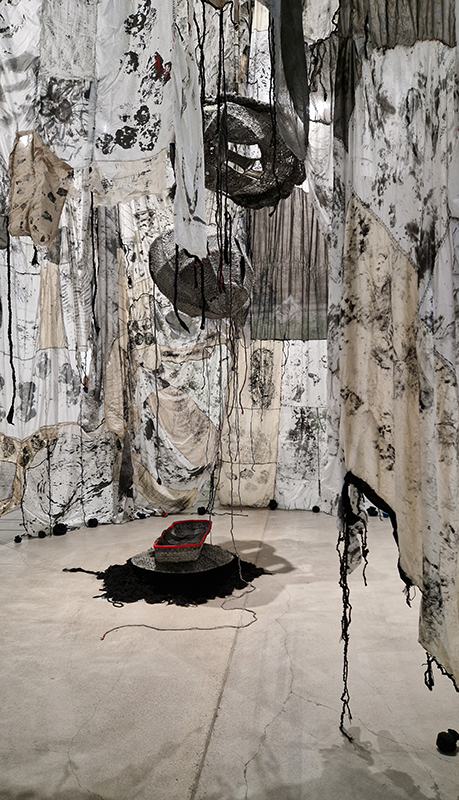
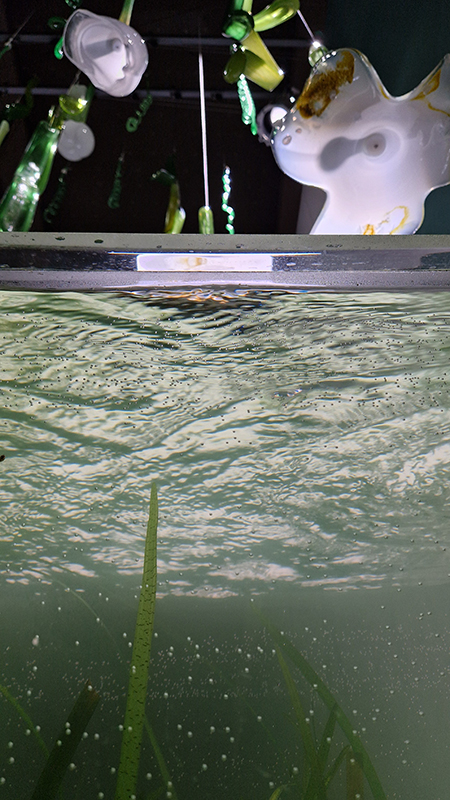
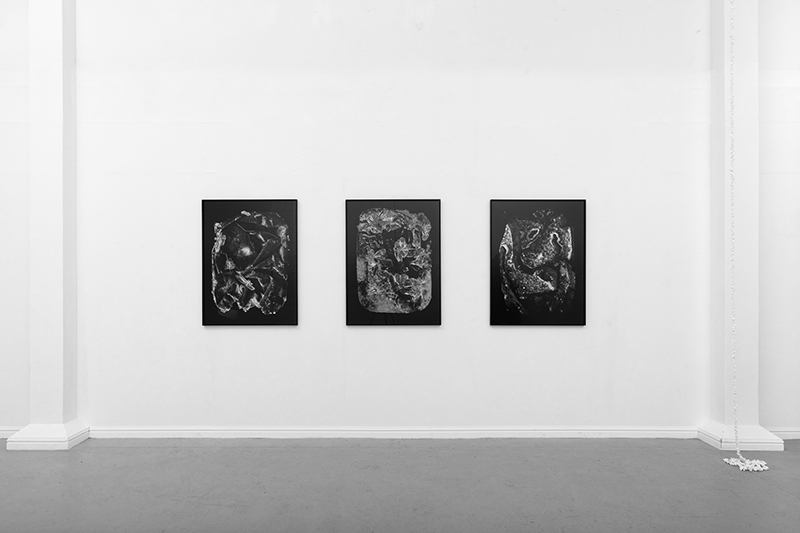
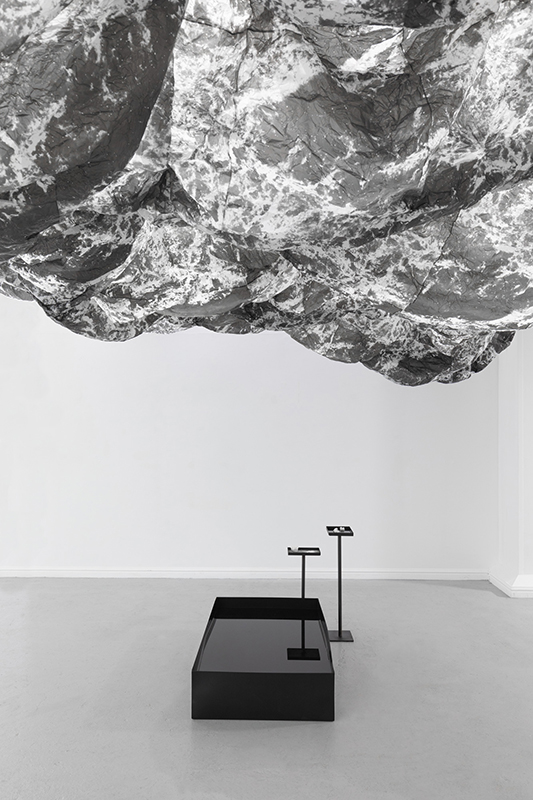
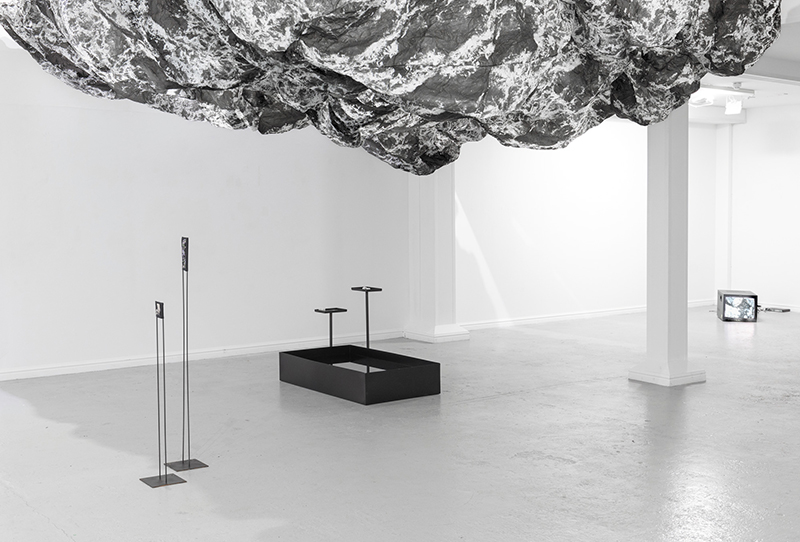
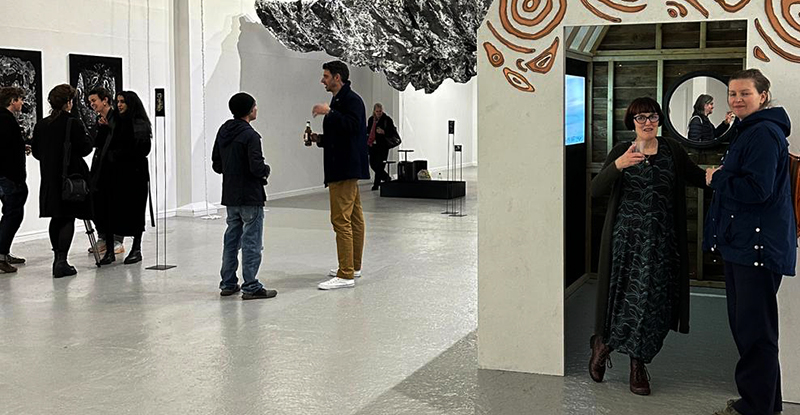
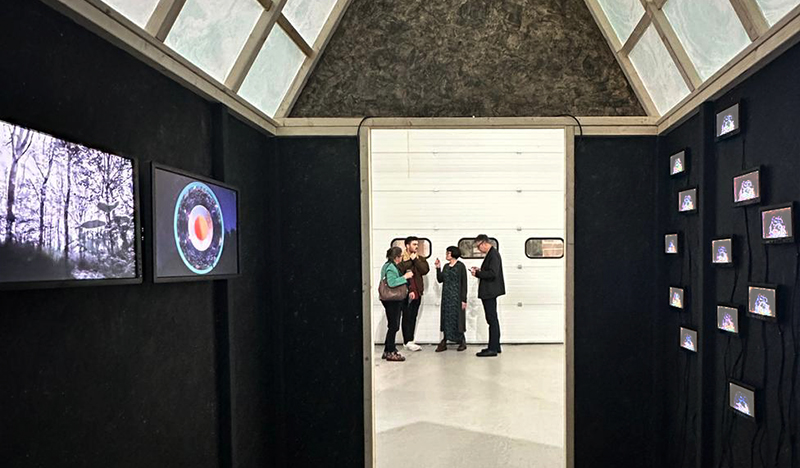
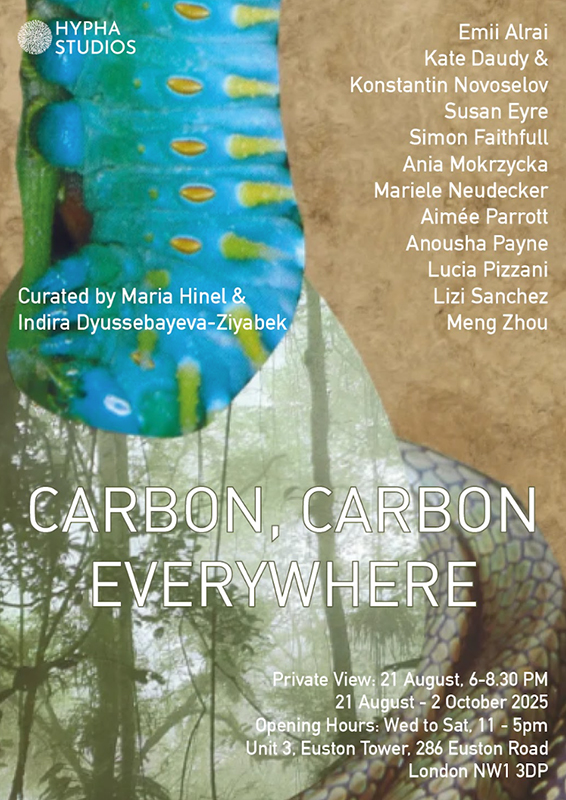
Thrilled to be invited to exhibit in Carbon, Carbon Everywhere at Hypha HQ co-curated by Indira Dyussebayeva-Ziyabek and Maria Hinel including artists Emii Alrai, Kate Daudy & Konstantin Novoselov, Simon Faithfull, Ania Mokrzycka, Nissa Nishikawa, Mariele Neudecker, Anousha Payne, Aimée Parrott, Lucia Pizzani, Lizi Sanchez, and Meng Zhou.

Integral to the constitution of our bodies, soil, air and some rocks, carbon is a highly bonding element that incessantly transmutes from state to state, each particle challenging the boundaries between life and non-life. Bringing together works by twelve international artists, Carbon, Carbon Everywhere explores the shifting states of carbon, an element that threads through organic and inorganic matter, linking bodies, environments, and temporal scales.
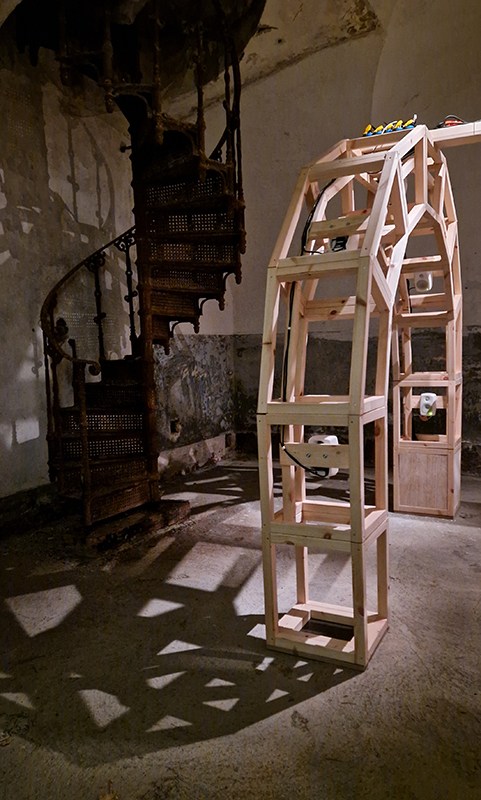
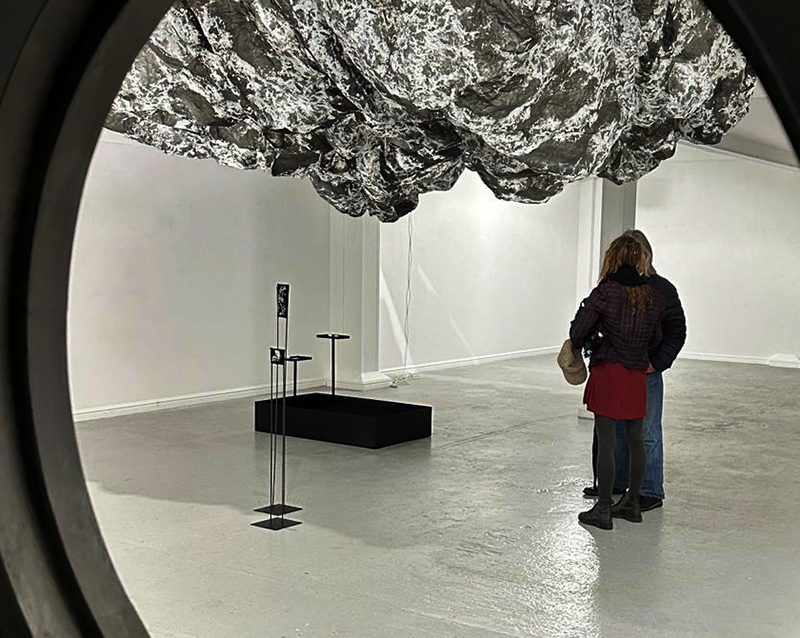
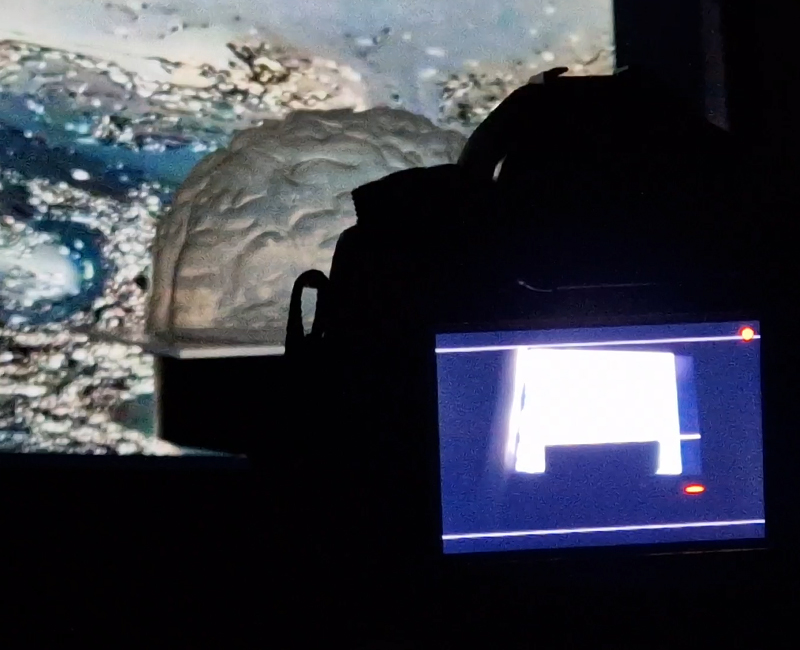
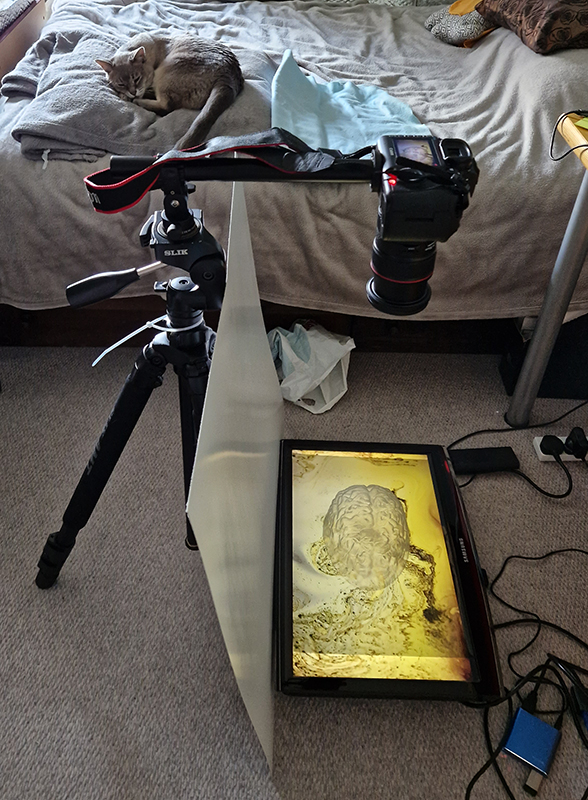
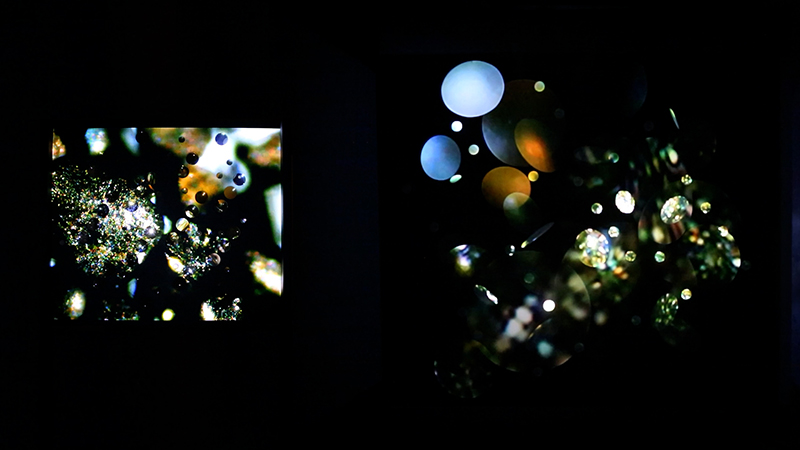
I have updated my website with documentation on the video installation Lithos Panoptes recently shown at Hypha HQ in The Geological Unconscious which can be viewed here. Referencing a many-eyed giant of Greek mythology, Argos Panoptes (always eyes still awake), the work considers the perpetual vigilance of rock as record keeper and witness.

Lithos Panoptes, optical lenses, wood, steel, two-way projection; Sculpture H172 x W170 x D50 cm, Rear projection screen H180 x W180 cm.
Great to be mentioned in an Art Newspaper article.

Magnetic News

Interesting to hear about new magnetic materials being developed that will hopefully have a less harmful ecological impact and offer more technological efficiency. The magnetic materials that are so heavily relied upon for computer memory and microelectronic devices include rare and toxic heavy elements whose energy-intensive production creates significant global carbon emissions. Previously, two primary types of magnetism had been identified, ferromagnetic (regular magnetism that we are familiar with) and antiferromagnetic (which are internally magnetic, but their opposing spin orientations make them appear non-magnetic externally).  A third form known as altermagnetism has recently been confirmed with around 200 altermagnetic materials already being identified. These materials have a distinct magnetic order where tiny magnetic fields created by electrons are in anti-parallel alignment within a rotation of the host crystal structure leading to unique electronic properties. Altermagnetic materials have the potential for technological advancements offering huge increases in speed and efficiency especially in spintronics, an advanced technology that leverages both the charge and spin of electrons to store and process information.

A permanent magnet, MagNex that does not use the rare earth elements which have sustainability and supply chain issues, was developed in just three months with the help of AI analysing thousands of potential alloys. ‍‍ “This could have a significant future impact on our net-zero ambitions, through renewable energy and low-carbon transport, by removing the need for rare earth elements in high-performance permanent magnets.”

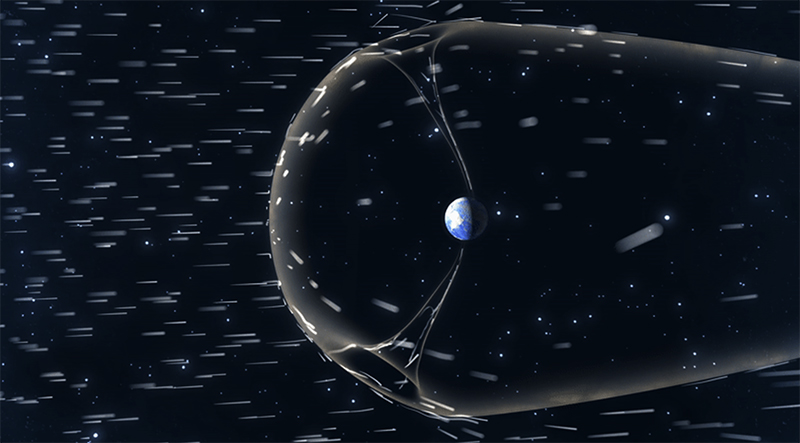
Recently launched, NASA’s TRACERS mission satellites fly in low Earth orbit through the polar cusps, funnel-shaped holes in the magnetic field where solar activity causes magnetic field lines to disconnect and reconnect creating disruption in the magnetosphere. By strategic placing of the twin TRACERS spacecraft in Sun-synchronous orbit, so that they always pass through the Earth’s dayside, thousands of dayside reconnection events can be observed and compared between spacecraft to see how quickly the process changes and evolves. Better understanding magnetic reconnection and its effects in Earth’s atmosphere will help prepare for impacts of solar activity on Earth. The magnetosphere protects Earth from the constant bombardment of solar particles from the Sun, but when magnetic field lines are disrupted by the solar wind, particles rain down into Earth’s atmosphere not only causing beautiful phenomena, like the aurora, but also impacting infrastructure, like satellites and GPS systems.
Out and About

I have been lucky to visit exhibitions in Finland and Norfolk to see works that interrogate human impact on the environment and other living beings that share our planet.

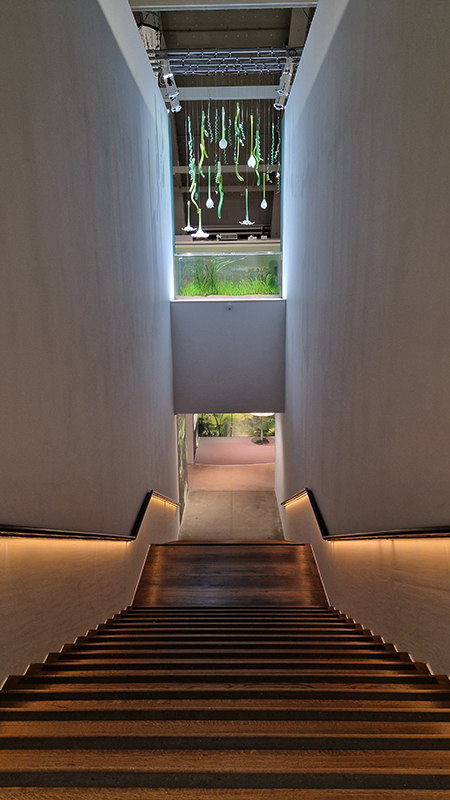
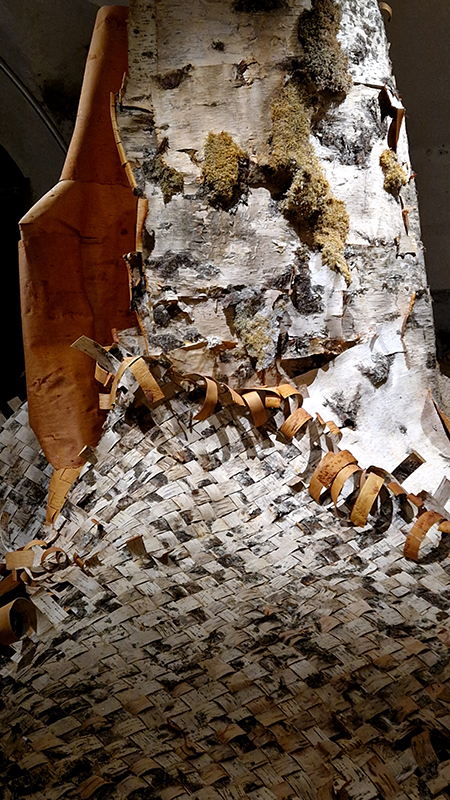
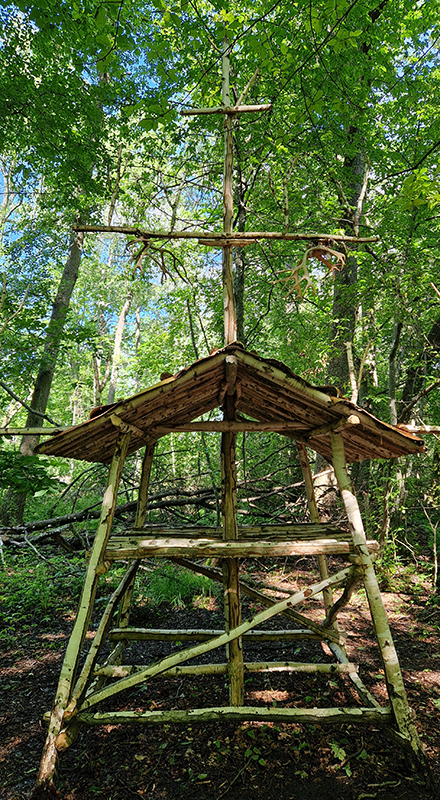
Helsinki Biennial 2025 Shelter: Below and Beyond, Becoming and Belonging brings together 37 artists and collectives on Vallisaari Island (which has been off-limits for human habitation for decades), in Esplanade Park, and at HAM (Helsinki Art Museum). It explores the significance of shelter and turns the gaze towards non-human nature. In the works, the focus shifts from humans to animals, water, plants, insects, minerals, and other living beings and their role as contributors to our planet’s wellbeing.

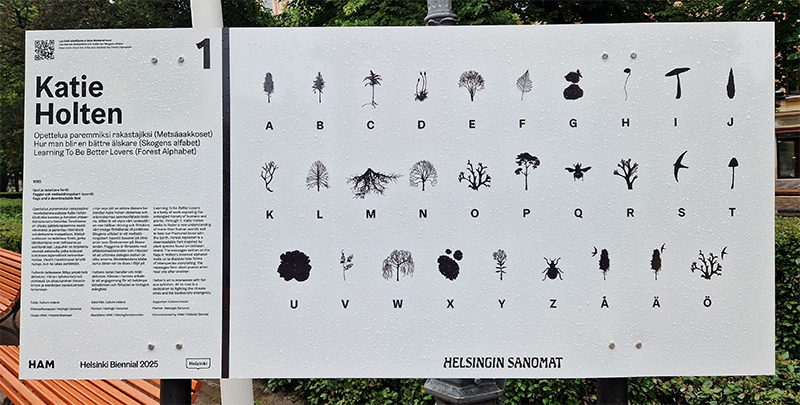
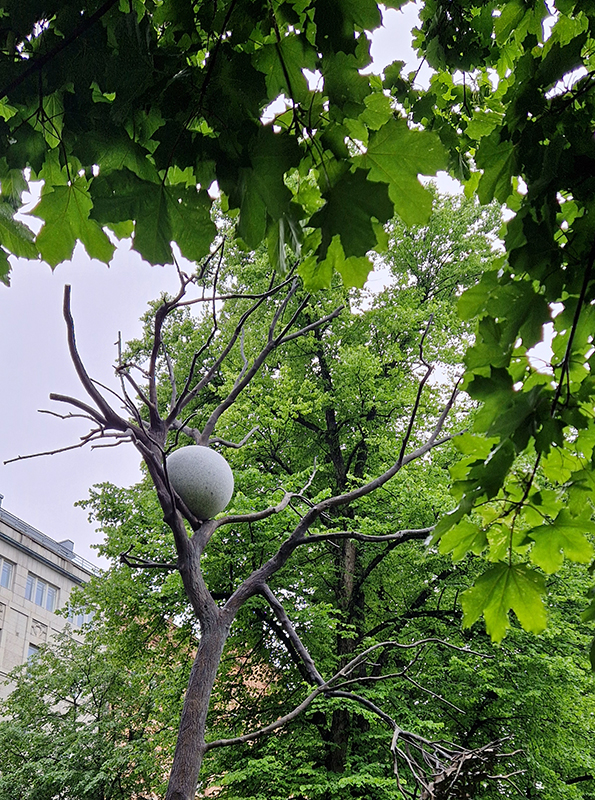
Artists with work installed in the Esplanade Park included Katie Holten (inventing a forest alphabet) and Guiseppe Penone (inseparable connections between humans and nature).
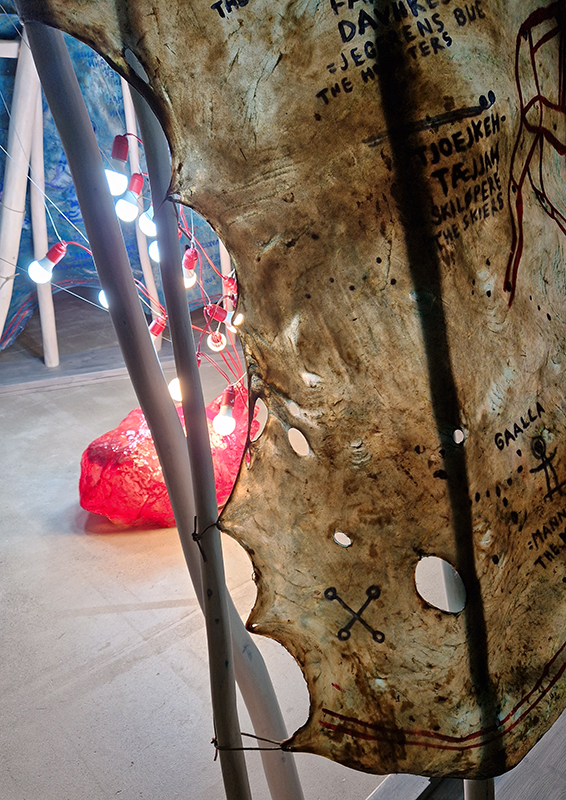
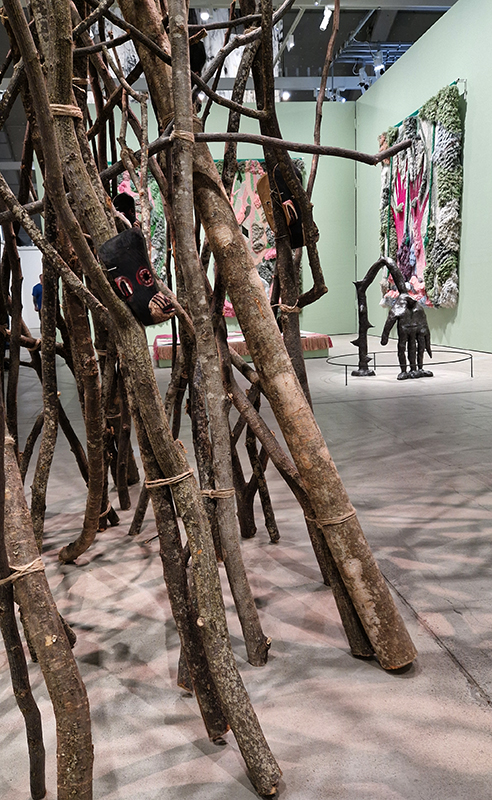
Artists at HAM (Helsinki Art Museum) included Jenni Laiti & Carl-Johan Utsi (precarity of survival), Regina de Miguel (technofossils), Aluaiy Kaumakan (displaced community), Otobong Nkanga (ownership of resources), Ingela Ihrman (invasive species), Locus/Thale Blix Fastvold & Tanja Thorjussen (eelgrass conservation), Sissel M Bergh (Sami cosmology), Edgar Calel (more than human agencies).
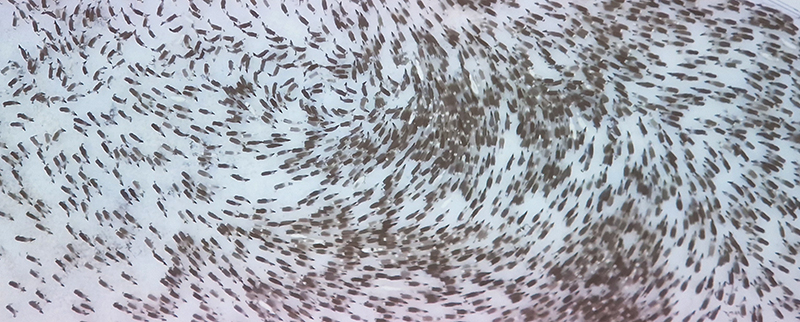
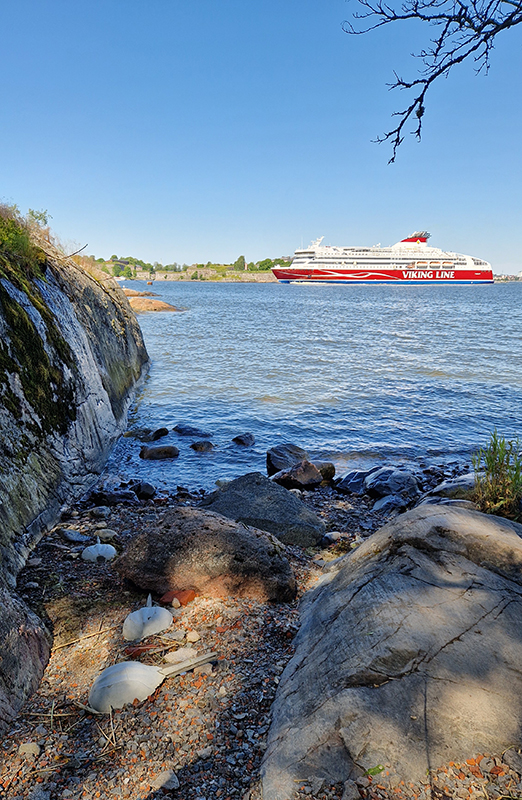
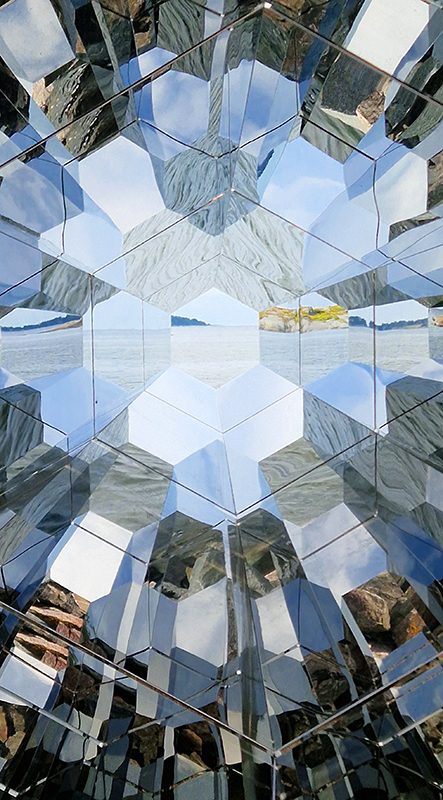
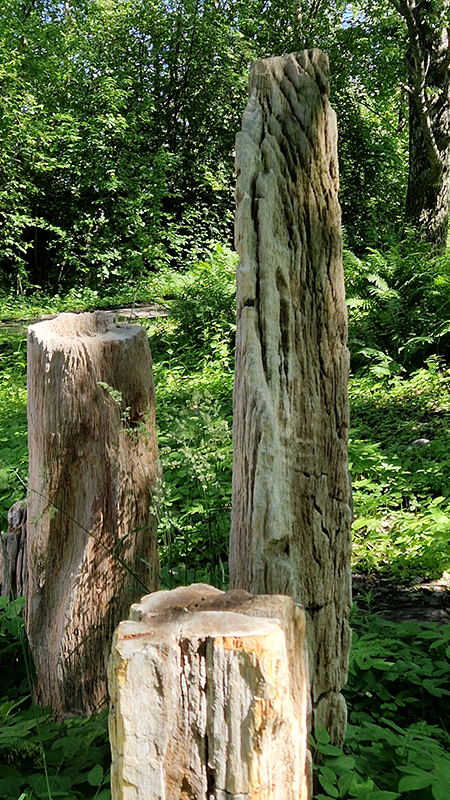
Artists with work installed around the beautiful Vallisaari Island included Hans Rosenström (petrified wood soundscape), Tue Greenfort (species evolution), Nomeda & Gediminas Urbonas (amplifying non-human voices), Pia Sirén (human modified environments), LOCUS / Thale Blix Fastvold & Tanja Thorjussen (water health), Tania Candiani (hidden networks of the forest), Sara Bjarland (discarded inflatables), Kati Roover (humans and whales), Juan Zamora (bioluminescence), Band of Weeds (vegetal distress), Kristiina Koskentola (friendship of crows), Tamara Henderson (hidden realm of worms), Ernesto Neto (shapeshifting), Theresa Traore Dahlberg (invisible frequencies), Ana Teresa Barboza (plant narratives), Carola Grahn (colonialism legacy on estrangement from nature), nabbteeri (parasitism), Olafur Eliasson (more than human ways of seeing).
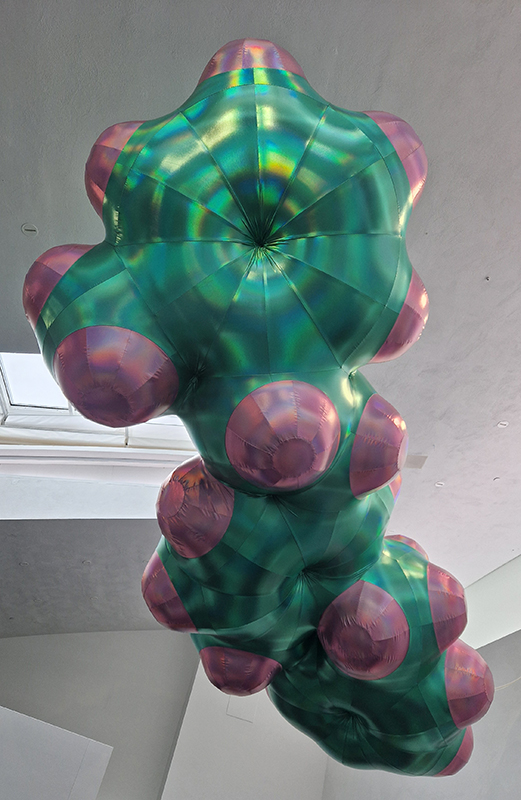
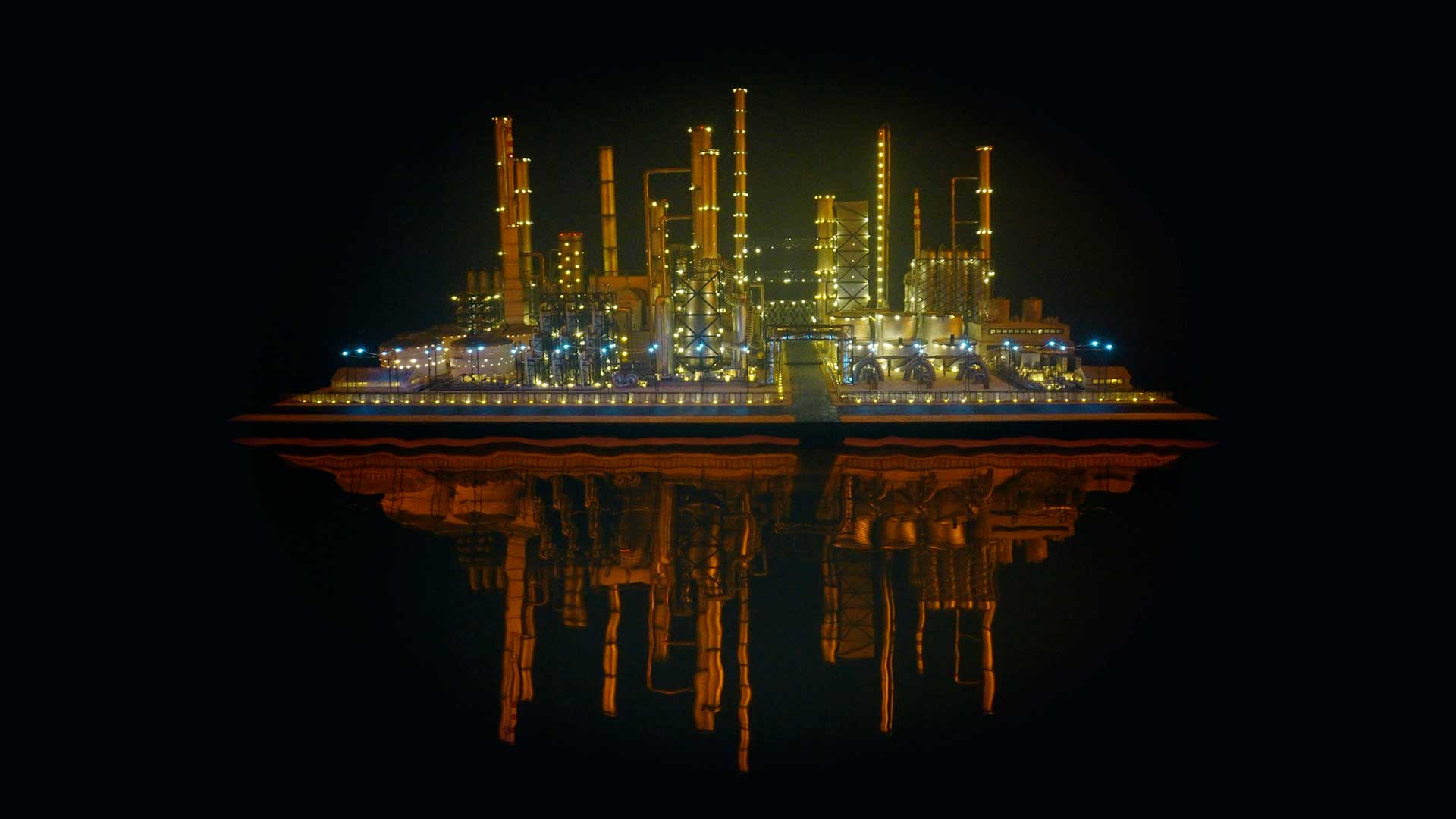
Excellent Monira Al Qadiri exhibition Deep Fate at the Museum of Contemporary Art Kiasma, Helsinki. Addressing the dichotomy of enjoying contemporary life made possible by oil during the accelerating climate crisis. Deep Fate, refers to the origins of oil deep in the earth and also to the way that dependence on oil and breaking that dependence are a matter of life and death for humankind. Al Qadiri grew up next door to oil refineries in Kuwait and experienced the Gulf War as a child. This personal experience is drawn upon in the haunting video Crude Eye which attempts to reconcile childhood memories of the oil refinery as a romantic glowing metropolis with its true nature as a site of environmental destruction. The demise of the local pearl-diving industry, a source of income superseded by the oil boom, is referenced by sculptures echoing the molecular structures of the chemicals used in oil drilling with iridescent rainbow colours that are reminiscent of oil and the shimmering surface of pearls.
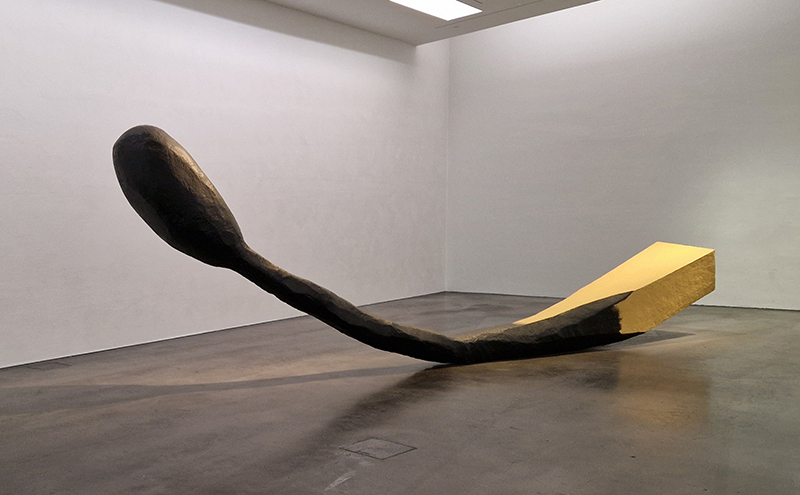
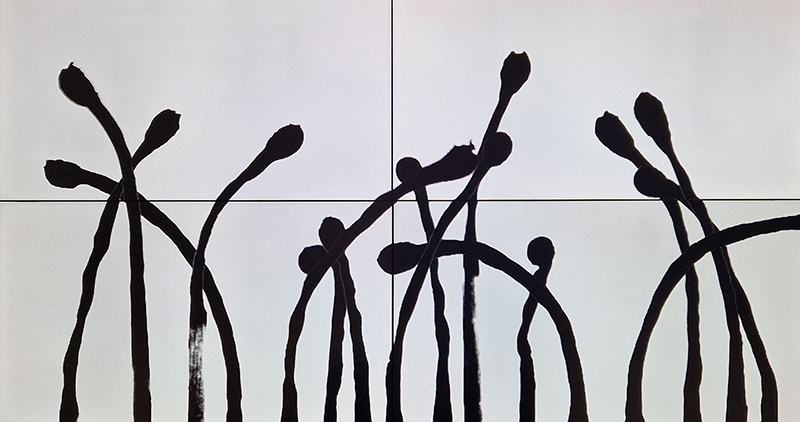
Also at the Museum of Contemporary Art Kiasma was Rock, Paper, Scissors an anthology of diverse materials in contemporary art. Claes Oldenburg’s giant Extinguished Match which plays with scale brought to mind the video by David Hochgatterer Streichhölzer (Matches) where matches appear to spontaneously combust shown in the Carbon: Under Pressure exhibition recent tour to Glasgow ARC.
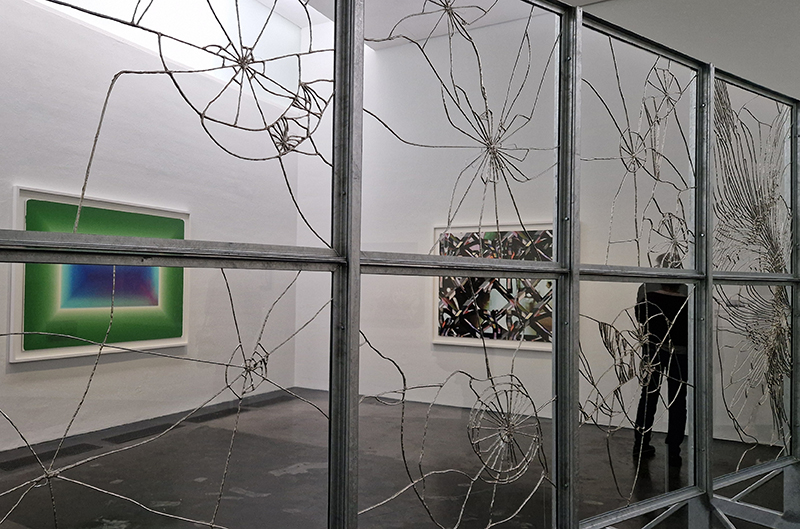
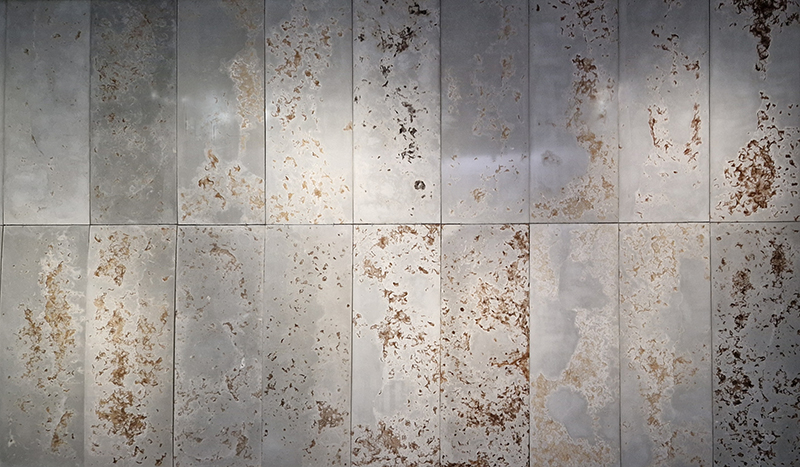
Materials celebrated through this exhibition included neural pathways stimulation of the visual system by pressure on the eyelids to see phosphenes, glittery thick folds of acrylic on canvas, leaded glass breakages, ephemeral copper wire net, faux marble that is actually hair on the barbers concrete floor.
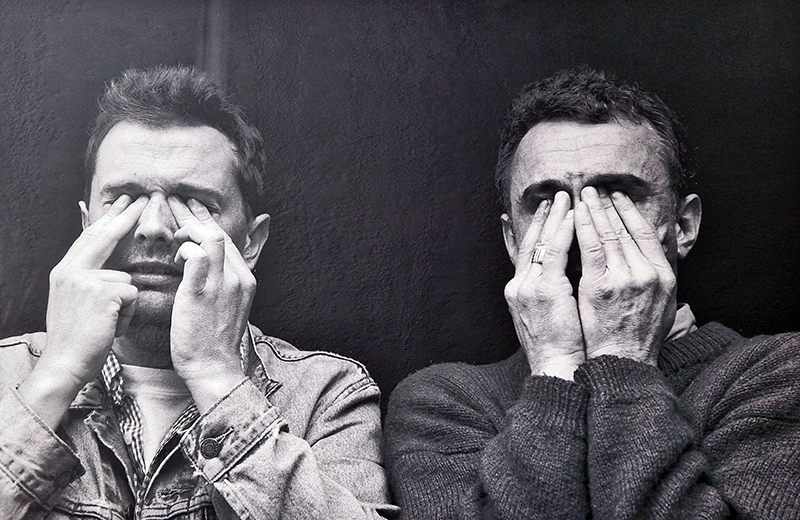
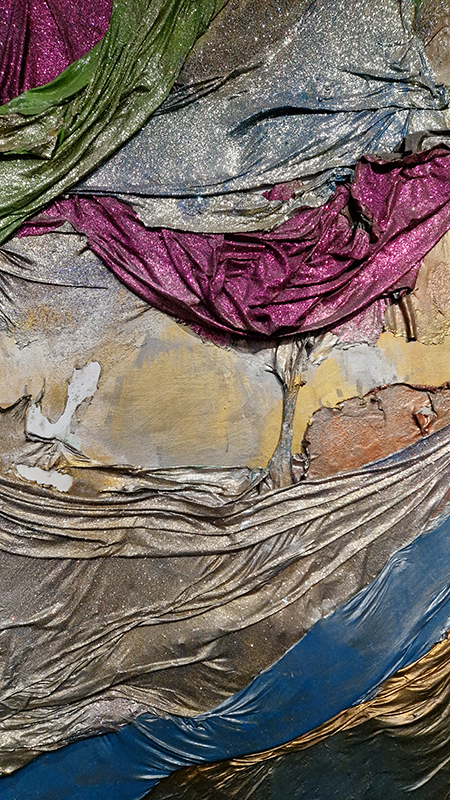
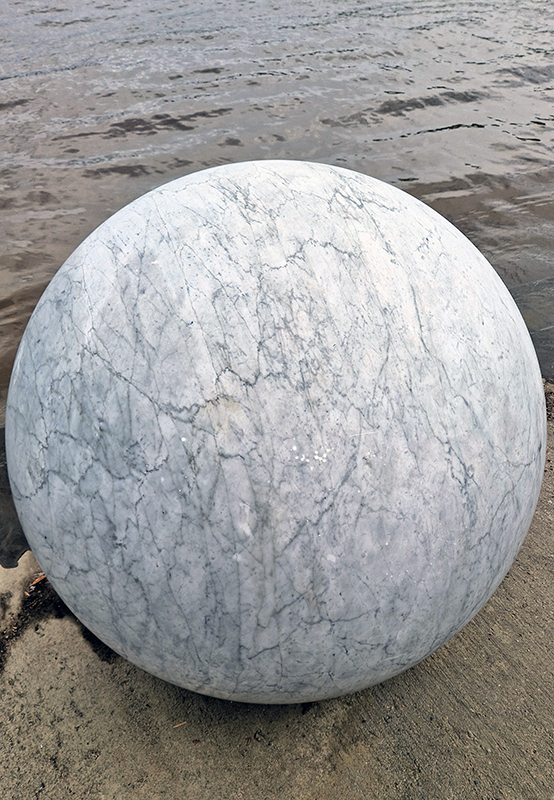
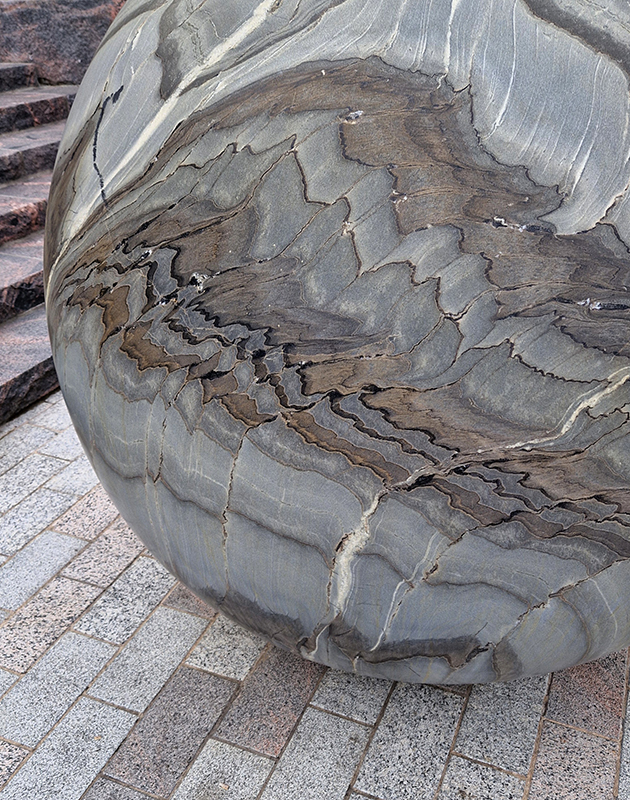
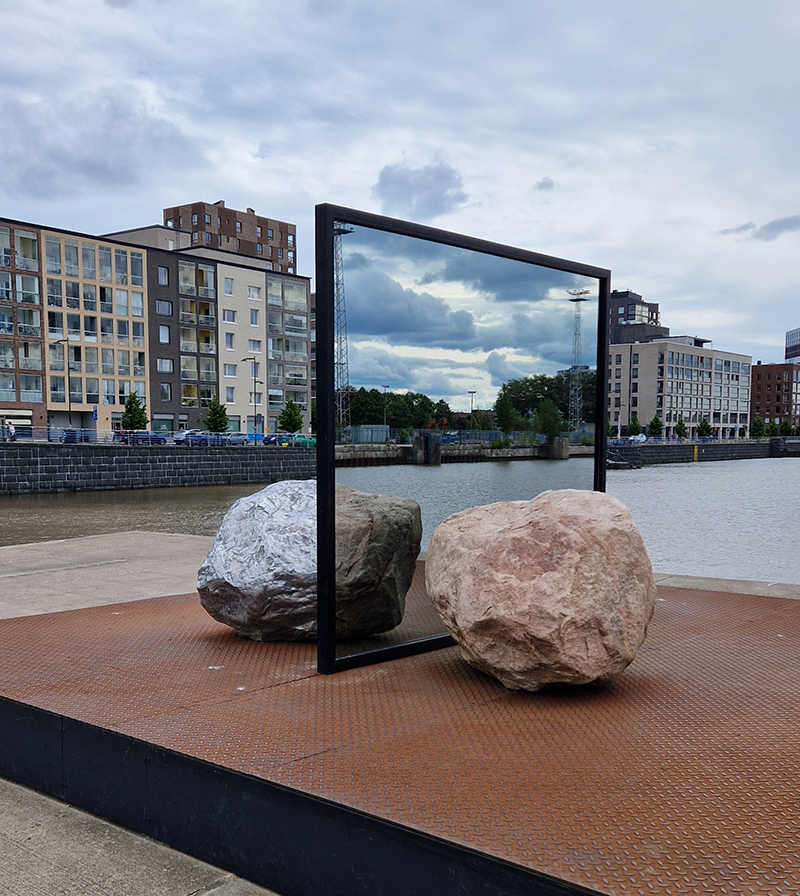
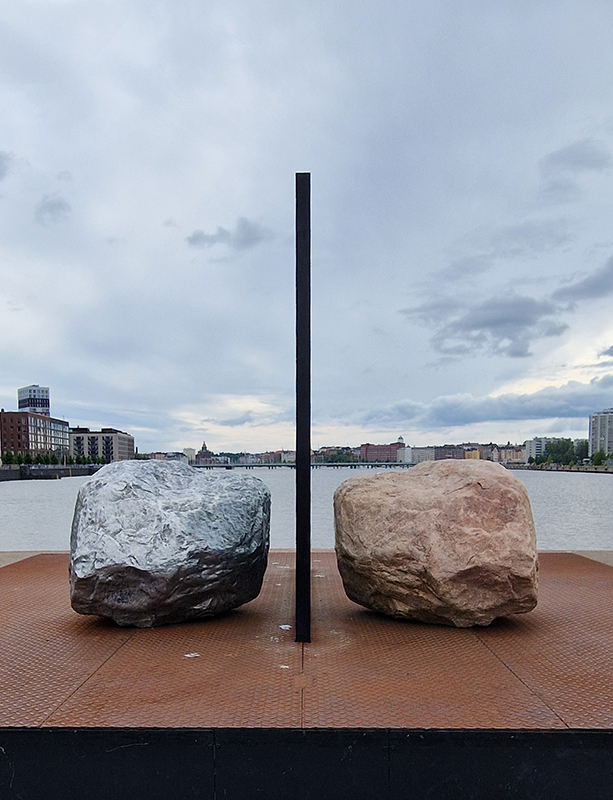
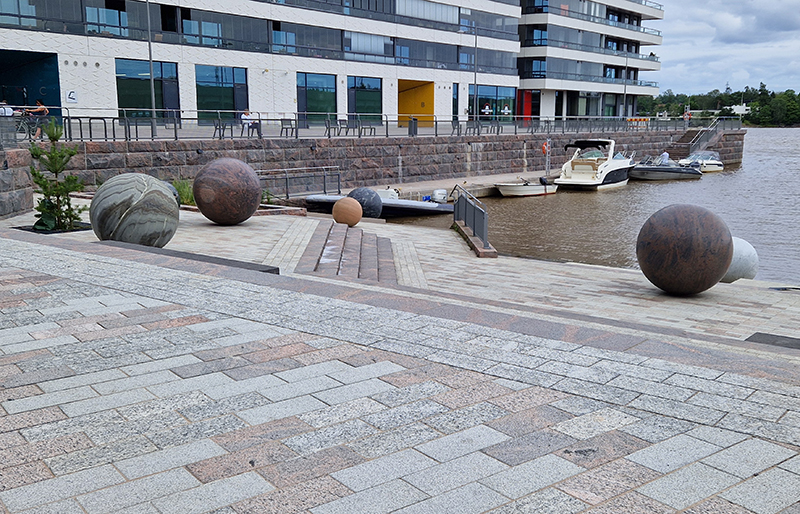
With my head still full of the geological (unconscious) it was great to see the works of Alicja Kwade, Big Be-Hide (parallel universes – natural rock and a metallic copy either side of a two-way mirror) and Pars pro Toto (a part for the whole – stone planet like spheres) from the 2021 Biennial now installed in Helsinki’s Kalasatama district.

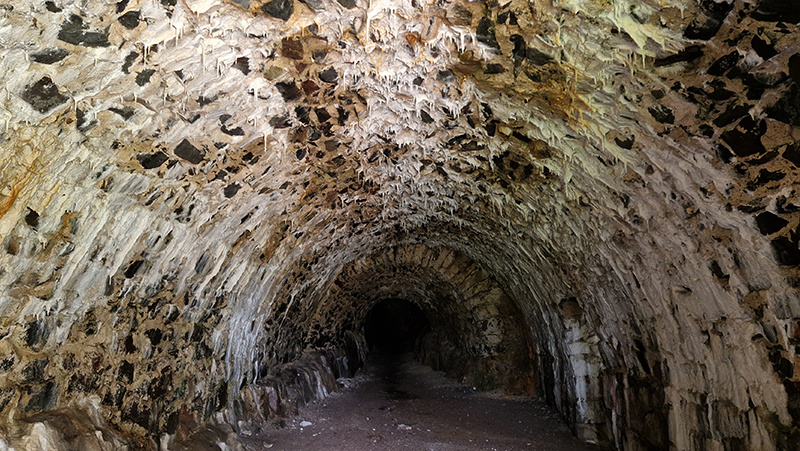
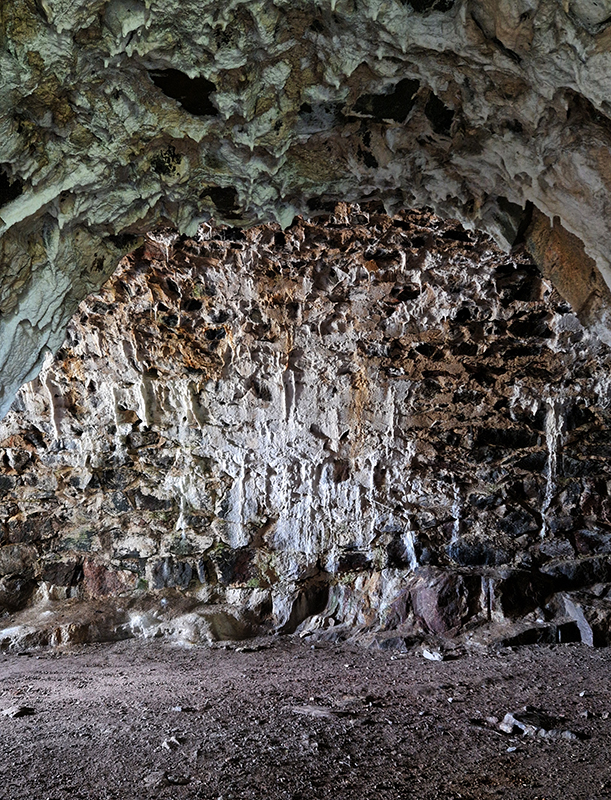
Another ‘geological’ delight was the unexpected appearance of stalactite’s forming in the tunnels of the military sea fortress built in the 1700’s on the island of Suomenlinna, a UNESCO World Heritage site.
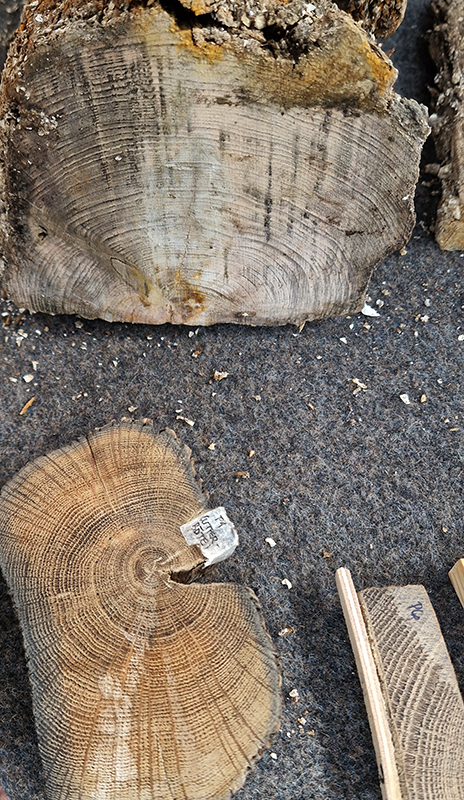
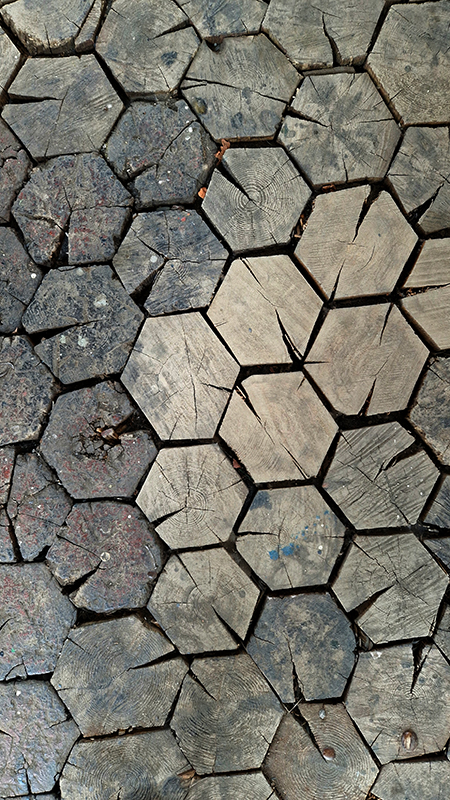
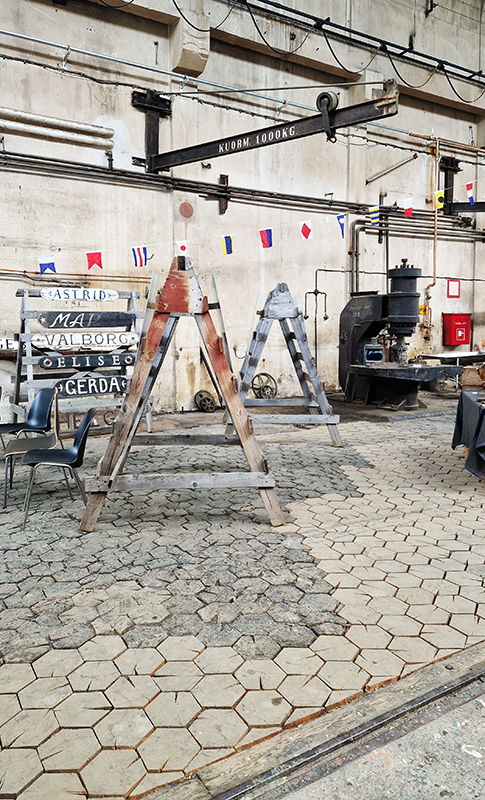
I loved the amazing hive like wood floor at Suomenlinna boatyard. Every tree carries a memory of the past, recording the weather and conditions of each season. Dendrochronologists can work out exactly when a tree was cut down which is very helpful in underwater archaeology. Around Suomenlinna there are shipwrecks beneath the sea with no identifying features except their wooden timbers which incredibly hold clues to when and where the trees used were felled. Marine archaeologists, shipbuilders and forest scientists are working together to discover the stories behind the lost ships.
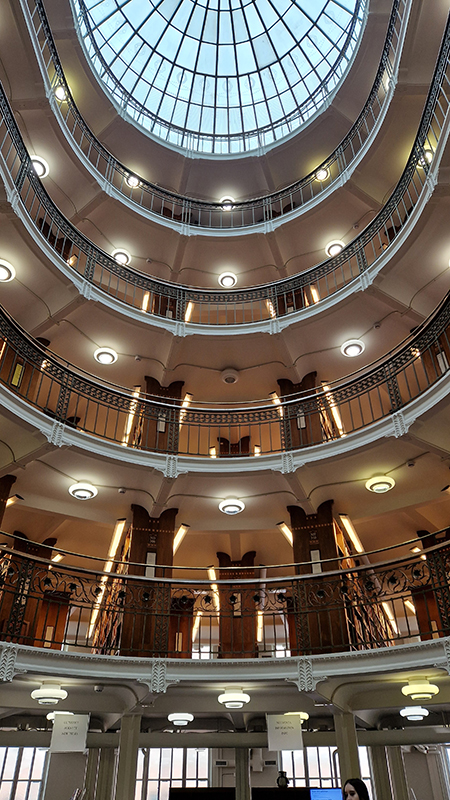
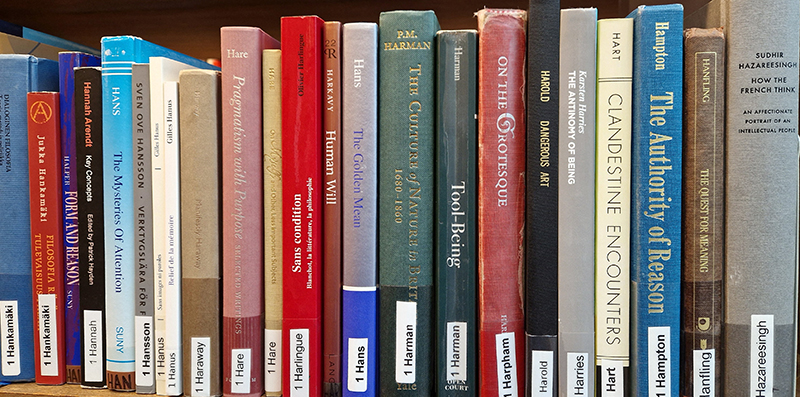
Helsinki is big on amazing libraries. The National Library of Finland is stunning and bursting with tantalizing books to explore, and the new Helsinki Central Library Oodi takes your breath away in its scale and sweeping curves.
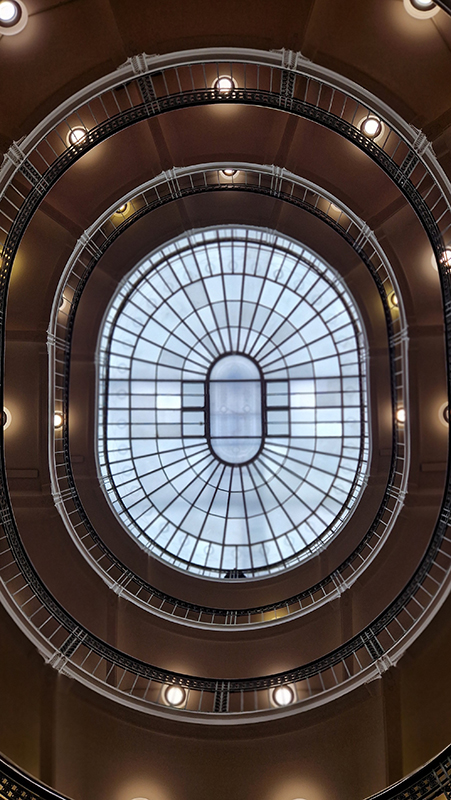
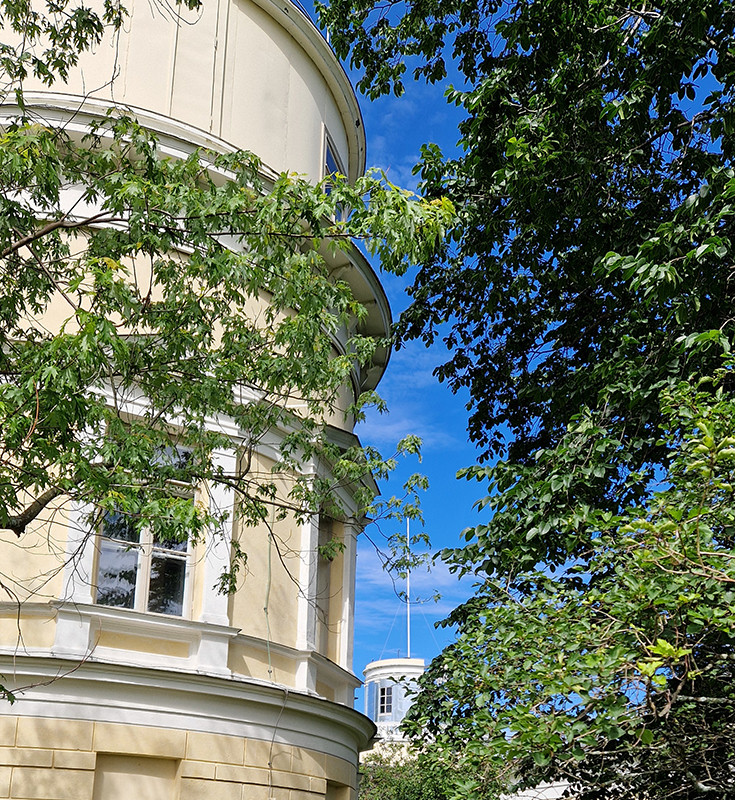
Sadly Helsinki Observatory has long since stopped functioning as a place for active astronomical research (2009) and is now a museum. It was disappointing that the electronic cloud chamber they possess wasn’t switched on but there were some interesting instruments to wonder about in the meridian room.
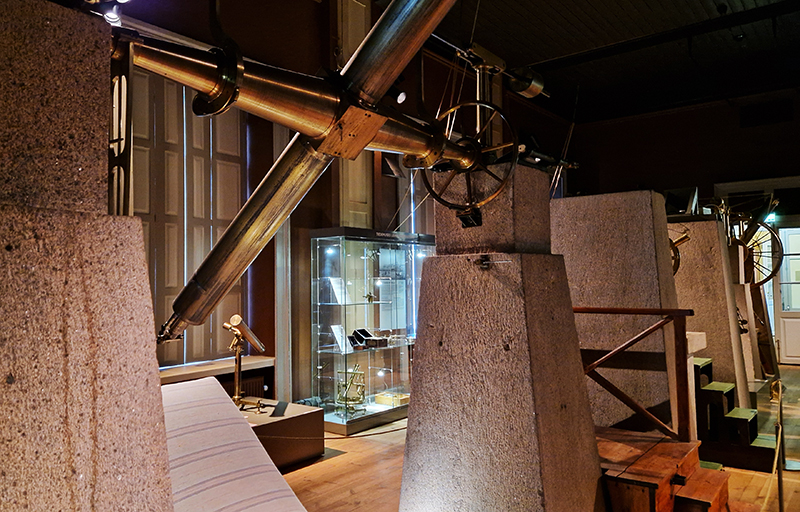
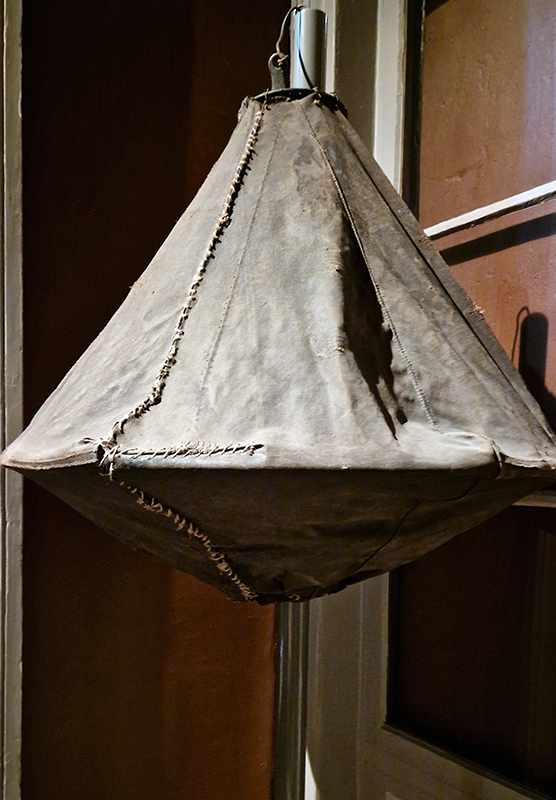
Each day the time signal bag was hoisted to the top of a mast on the roof of the observatory just before noon and dropped down exactly at noon. The correct time having been determined by an astronomer observing the stars at night. This event could be seen from Helsinki Central Railway Station where the station clock was then synchronised. This method of time keeping for Helsinki residents was in use until the 1920’s.

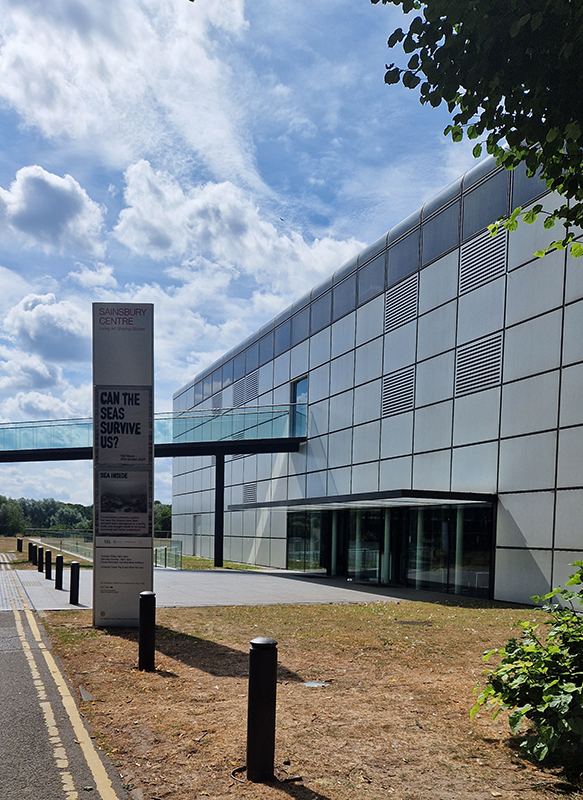
The future of our oceans is explored in the Sainsbury Centre’s Can The Seas Survive Us?

The sea has often been viewed as a mysterious ‘other’, with its expansive surface and seemingly infinite depths dominating marine imagery in the history of Western art. Artworks in this exhibition explore the ways the oceans have been domesticated, reimagined on a bodily scale and brought inside to be tamed, contained or better understood. Sea Inside turns our oceanic gaze towards the sea’s more intimate spaces – whether physical, psychological or imaginary – and dives into shared watery origins, Indigenous ways of life and the items we remove from the sea to display on land.

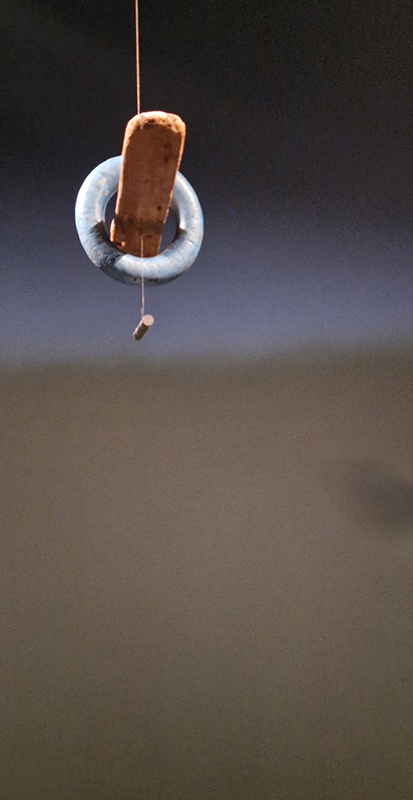
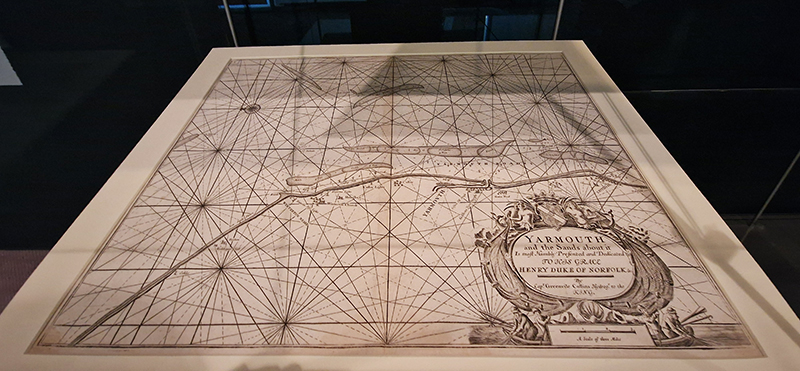
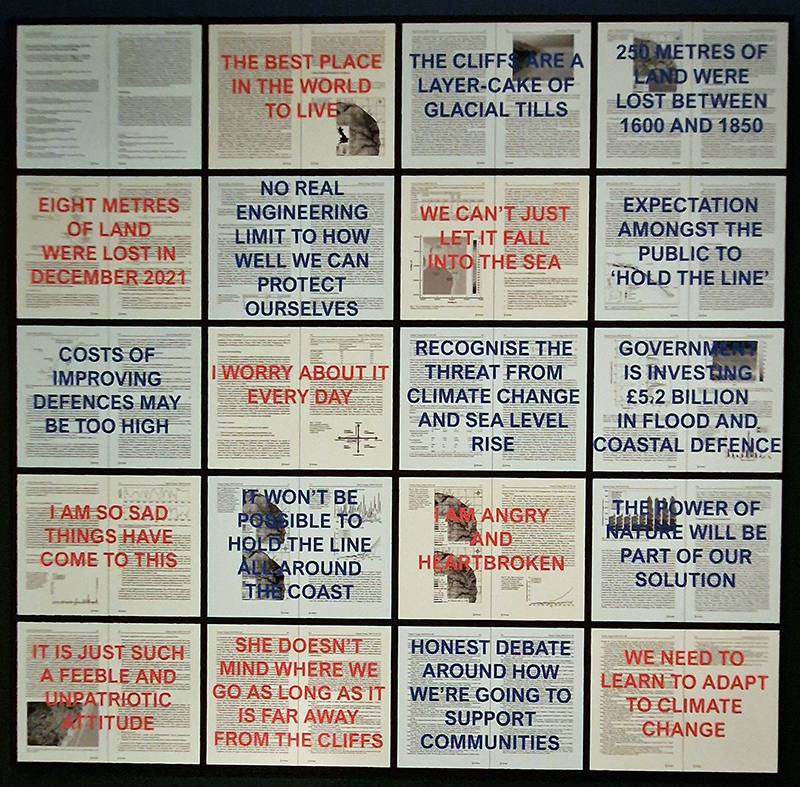
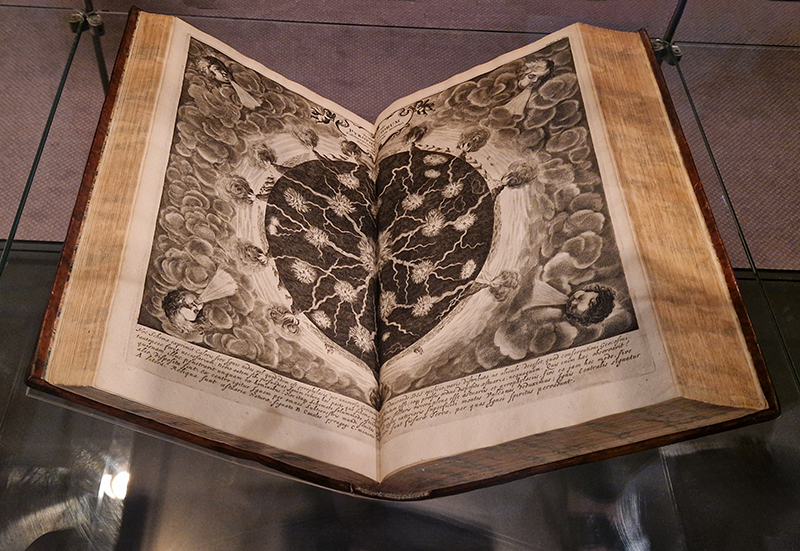
A World of Water takes the North Sea and the historical relationship between Norfolk and the Netherlands as its starting point to look at the human impact on the sea. It was wonderful to see the original book Mundus Subterraneous from 1664 by Athanasius Kirschner whose geological illustrations and speculations I have been fascinated by. Olafur Eliasson’s suspended Shore Compass uses driftwood to reflect on navigation of an uncertain world. Some great maps in this exhibition including the intriguing map of sandbanks off the coast around Great Yarmouth. I have enjoyed following Julian Charriere’s visually dramatic work on Instagram so it was good to see these images scaled up. Andrew Watkinson’s montage based on research from the Tyndall Centre for Climate Change about coastal erosion in Norfolk swerves from resignation to resistance, hope to despair and took me back to my BA dissertation (The Communication Of Ecological Concerns Through Contemporary Artistic Practice, 2007) writing about climate change warnings coming from the Tyndall Centre and the frustration of researchers about distorted media coverage that made it hard for the public to understand the facts. Suffolk too has lost a lot of land to the sea since I was a child there. Although dreams of tidal waves are common anxiety dreams I believe mine were also influenced by overheard stories of the North Sea flood of 1953 when a storm surge coincided with a high spring tide, which my parents and local villagers remembered vividly, it was the worst flood of the 20th century in England and Scotland and many lives were lost. Maggi Hambling’s sublime Wall of Water holds frozen the terrifying waves that may threaten us while Cian Dayrit’s Dam Nation examines the impact to communities and ecosystems when water is held back or re-routed.
Darwin in Paradise Camp by Japanese-Sāmoan artist Yuki Kihara calls out that ” a reconsideration of what it means to be human requires a re-evaluation of the origin of the species.”

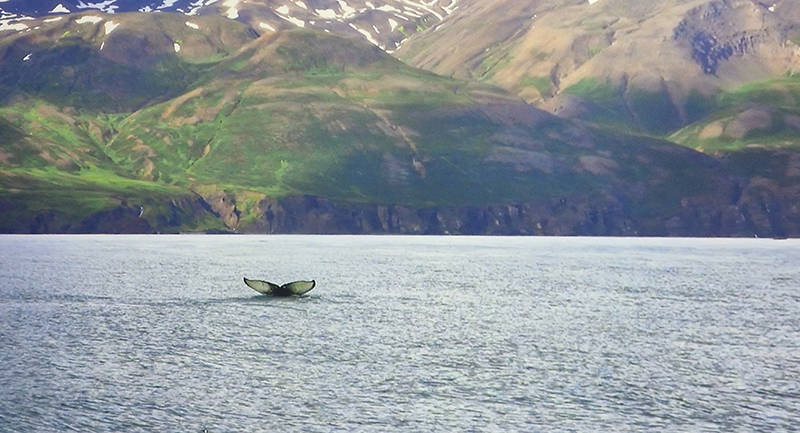
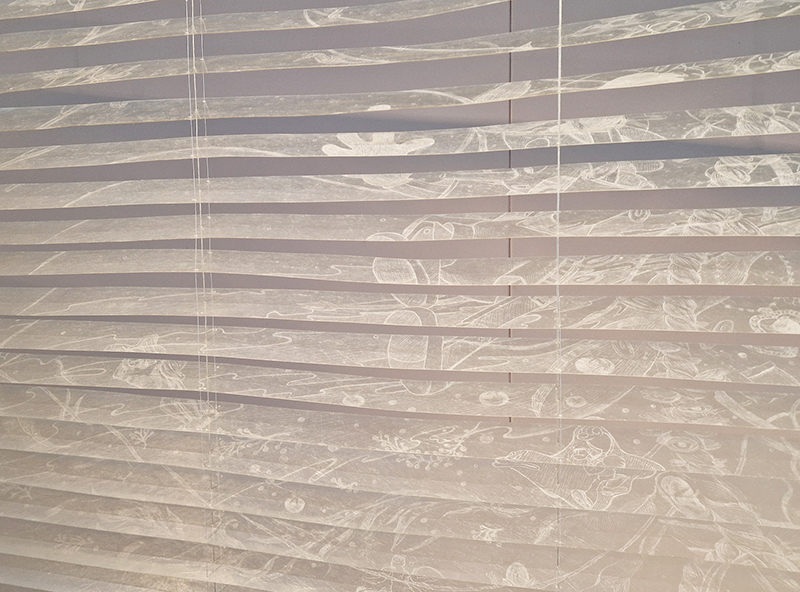
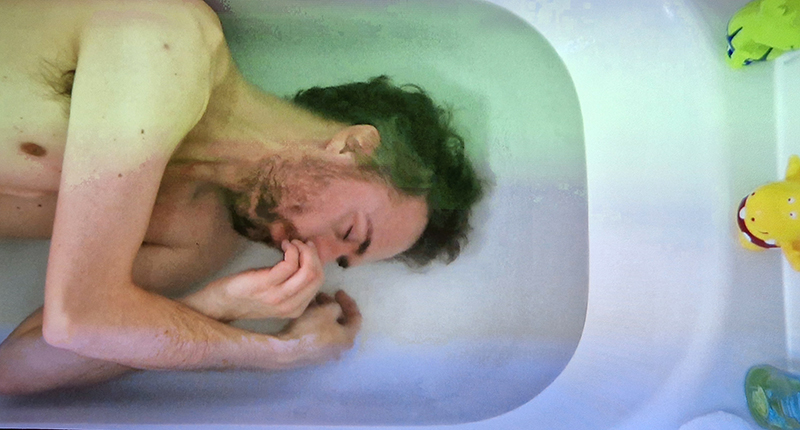
Sea Inside turns our oceanic gaze towards the sea’s more intimate spaces – whether physical, psychological or imaginary including work by Marcus Coates (attempts to create the call of the humpback whale in a bathtub), Kasia Molga (How to make an Ocean – the artist’s salt tears fill miniature glass capsules where algae is cultivated), Gabriella Hirst (ethereal images on hand etched fibreglass in a slatted structure that echoes the baleen inside a whale’s mouth).

At London galleries I saw work about tuning in to invisible forces, the importance of how we treat our fellow humans (dead or alive) and an assessment of the influence of past and present technology on hope for the future.

Islington Gallery Weekend is a great idea, just the heat while out walking that weekend meant I didn’t make it to all the galleries participating.

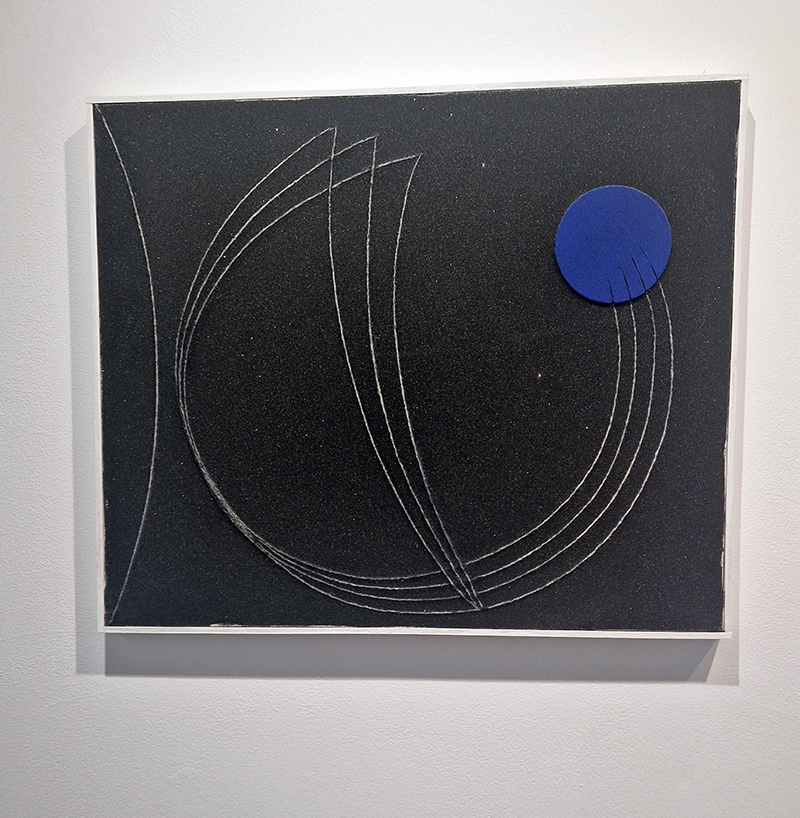
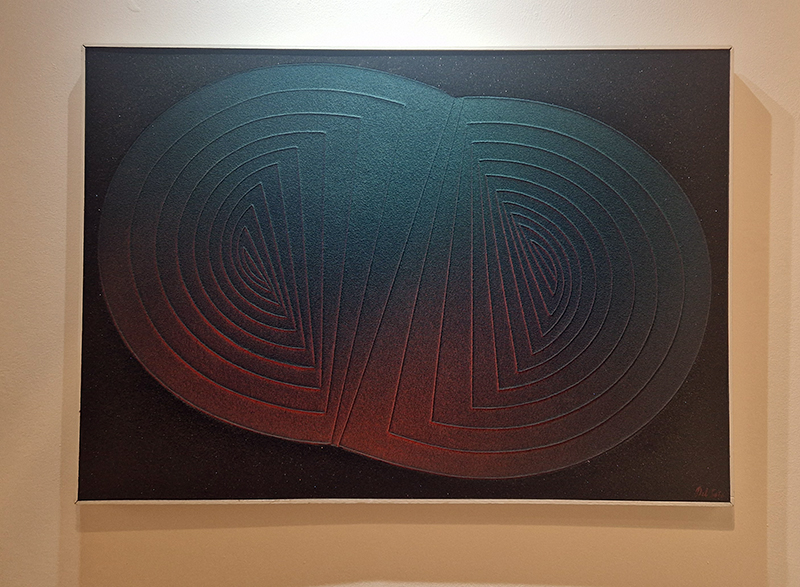
The Observatory at Bobinska Brownlee New River, presented abstract and textural works by Claudio del Sole, an artist and amateur astronomer who co-founded the ‘Astralist’ movement in 1959 inspired by the dawn of the space age. These cosmic inspired works are shown alongside those made in response to the Astralist manifesto by contemporary artists James Brooks, Robert Good and D J Roberts. Cocktails and an incredible performance on the piano of unique work by composer Edward Henderson were also part of the afternoon.
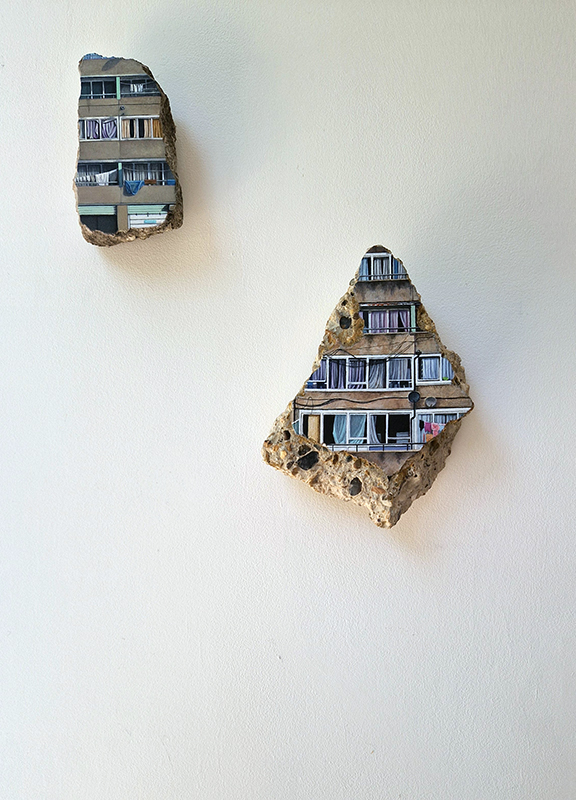
Poignant work from Harriet Mena Hill in Curtains at PostROOM Gallery. Fragments collected from demolition of the Aylesbury Estate in South East London are meticulously painted with details of the buildings that once were home to a community. An accompanying film gives voice to those who enjoyed life here before lack of maintenance and social care slowly stripped away the heart and soul.
Fascinating listening to Tracy Hill speak about her work in Natural Frequencies at White Conduit Projects which explores ways of being sensitive to invisible energies that move through us and our landscapes. Her experience of working with a water diviner feeds into her intuitive drawing processes and cut paper works.
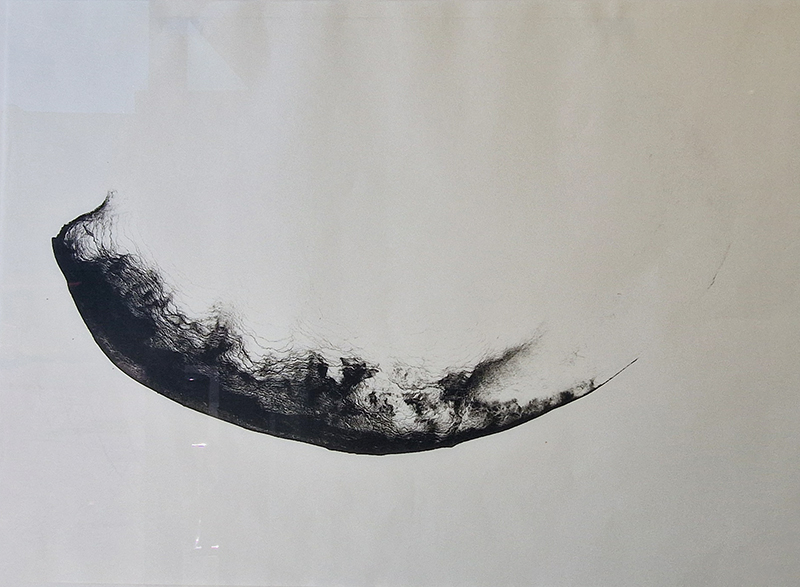
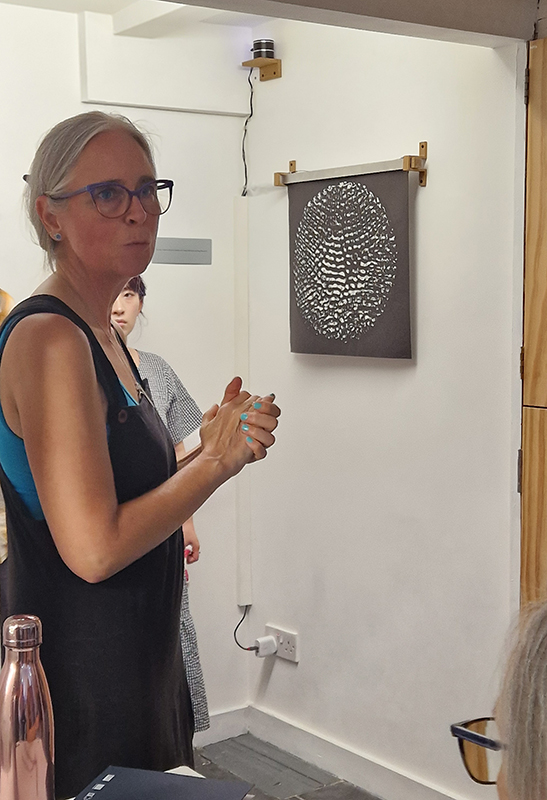
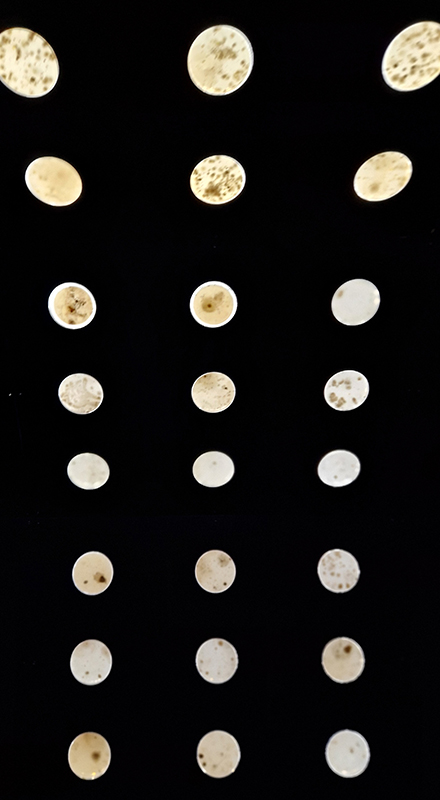
I was drawn to visit Gala Porras-Kim The categorical bind at Sprüth Magers to see these images which reminded me of the large hadron collider but made from marble. They are actually an examination of the conservation of marble tiled floors in Italy.
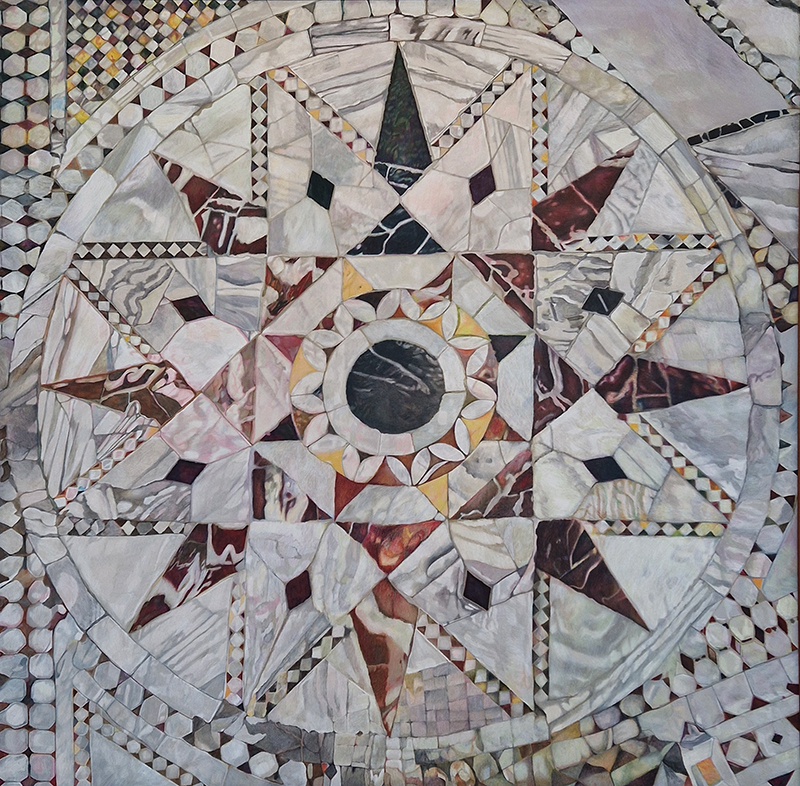
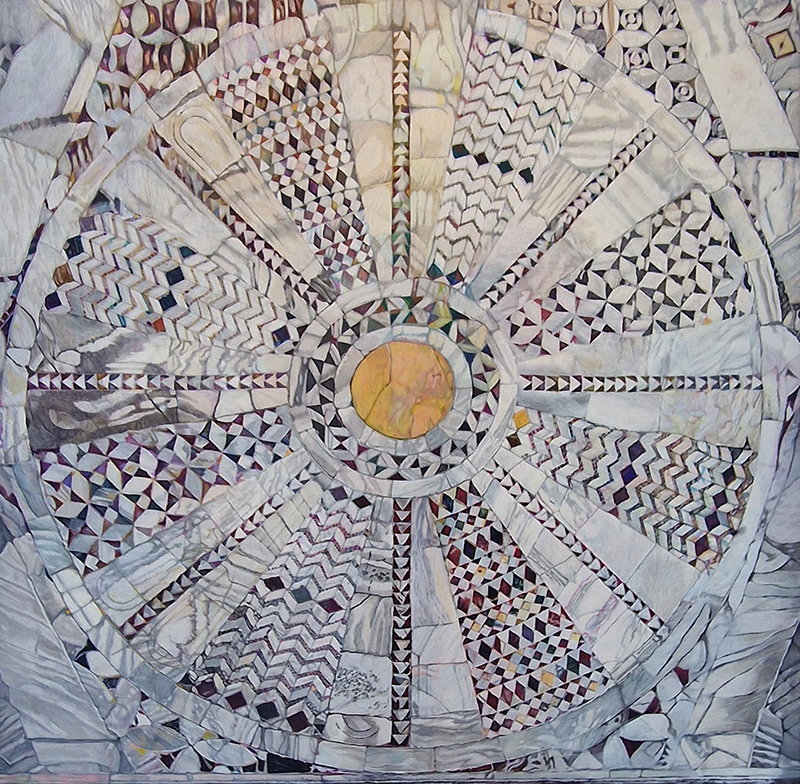
I remembered I had seen her work before at Gasworks and found it really interesting. In this piece she attempts to commune with the dead whose remains have ended up in a museum collection, possibly not where the living person had expected or would want.
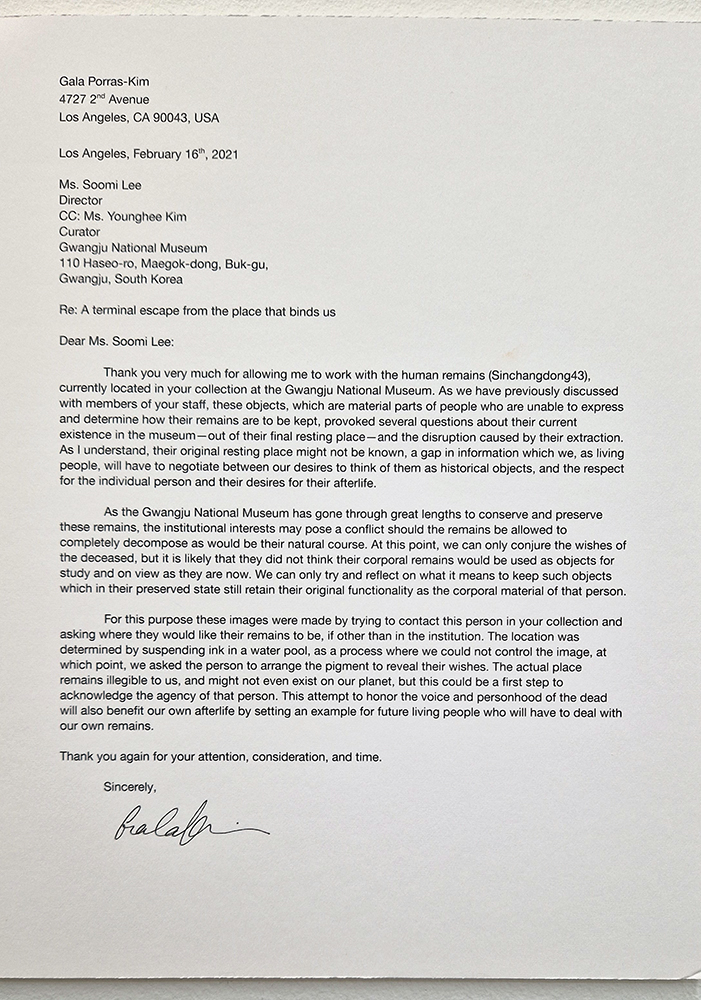
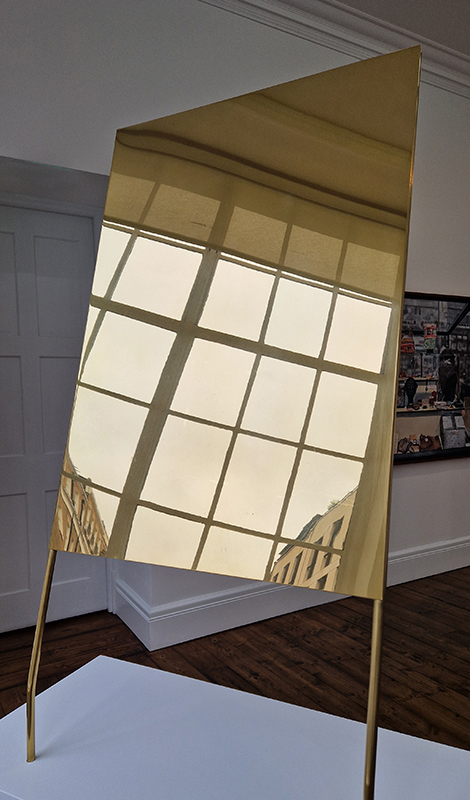
Gala Porras-Kim

All Earth energy sources are known to come from the Sun

Brass, sunlight
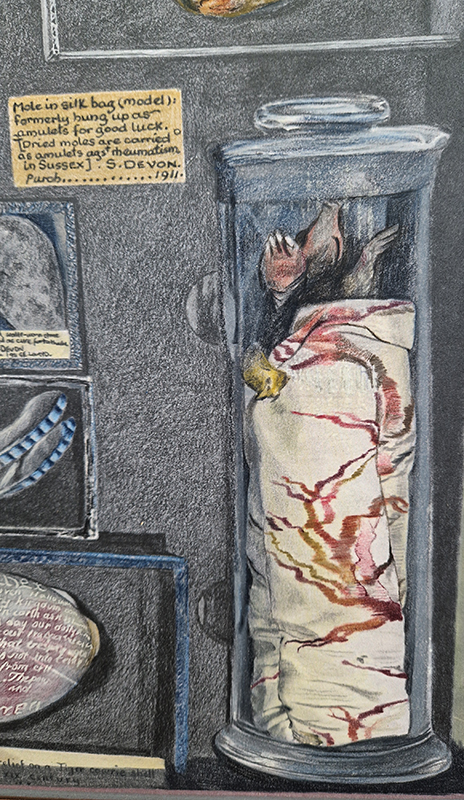
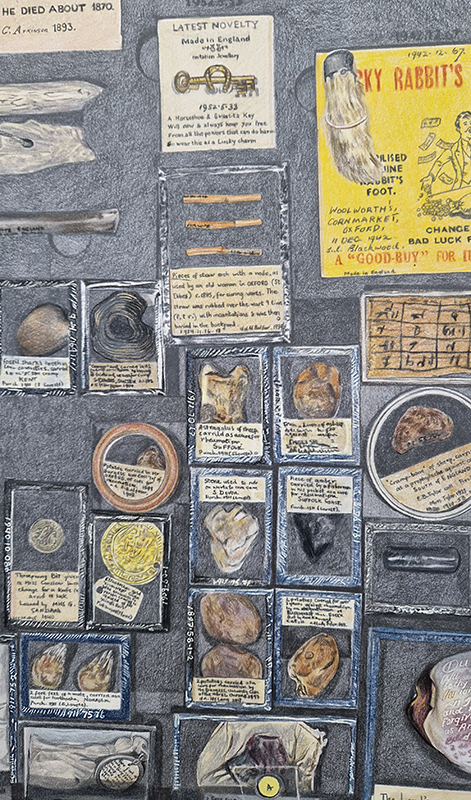
Most of the works were coloured pencil drawings of museum collections, giving agency to objects and questioning categorisation – this one of the poor mole amulet made me think of my mole killer brother who suffers from arthritis.
It is fascinating to think about how humans experience sound and consider frequencies occurring outside the human spectrum of sensitivity that other animals may be able to hear. Also to think about sound as vibrating bodily rather than auditory sensation. Barbican Feel the Sound requires a willingness for interactivity to experience most of the exhibits. The instructions weren’t always clear and so it was at times a bit of a frustrating journey through the space.

‘A stone sky rotated above our heads’ – Italo Calvino, Cosmicomics

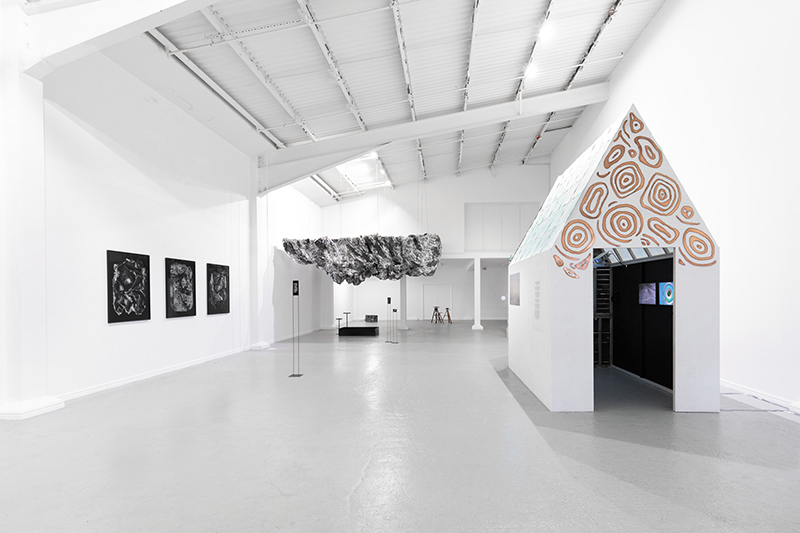
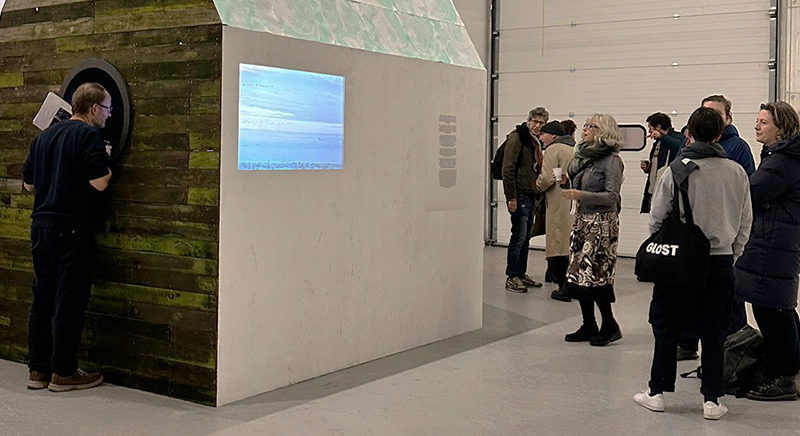
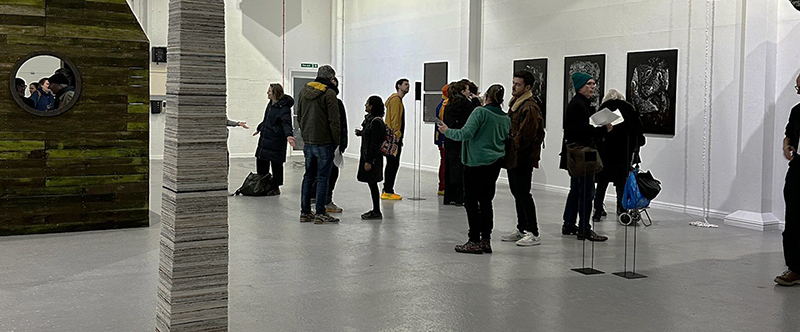
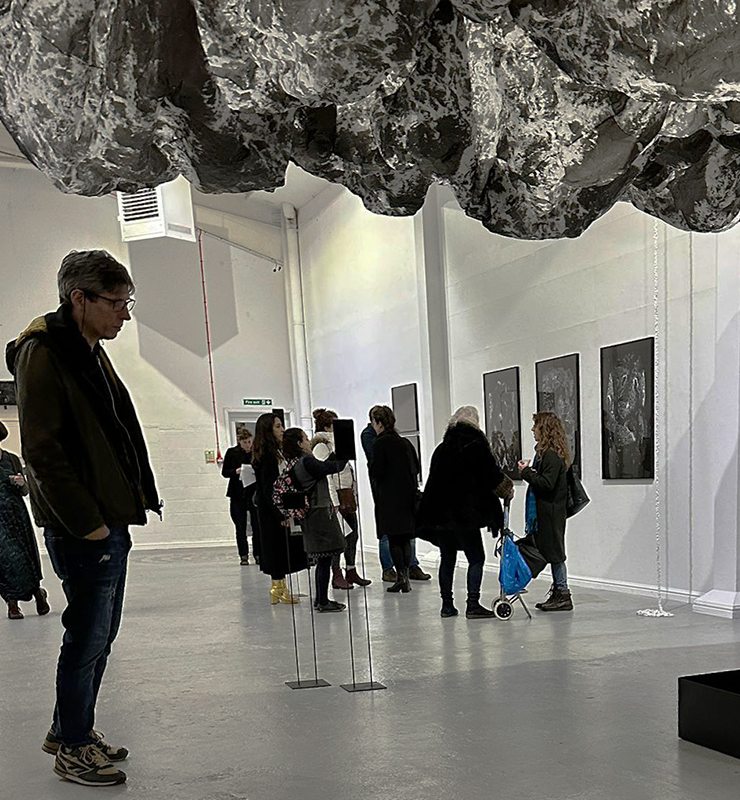
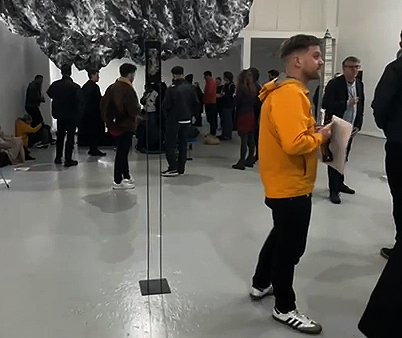
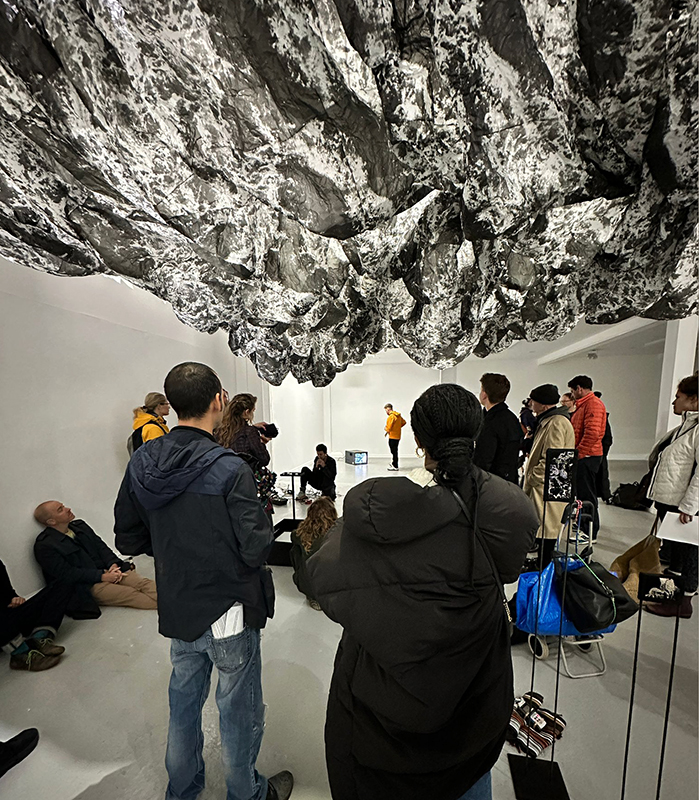
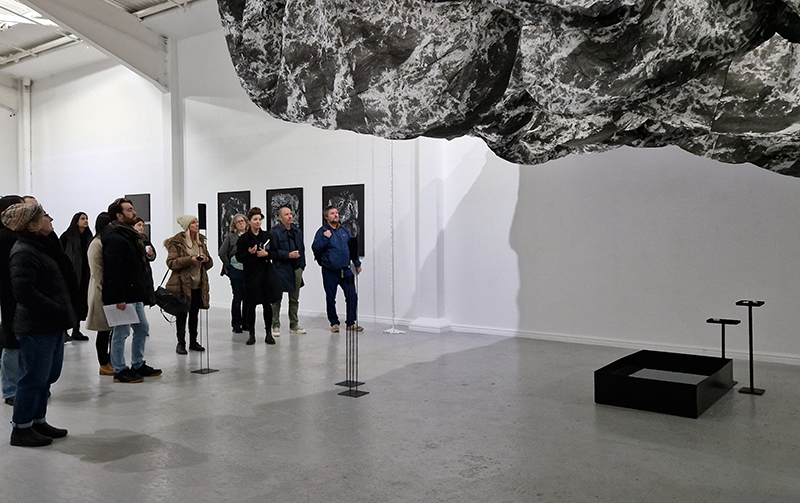
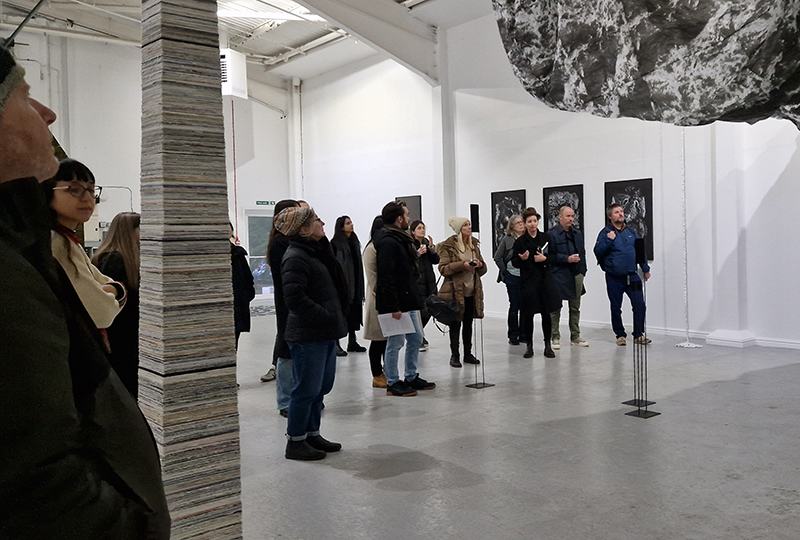
The culmination of two years work – A STONE SKY duo exhibition with Julie F Hill opened at Thames-side Studios GalleryReimagining the idea of an observatory – the exhibition proposes a cavernous realm of real and speculative possibilities that arise from beyond the limits of human perception. Engaging with the extended sensory range offered by technologies such as orbiting space telescopes through to the ability of birds to ‘see’ the Earth’s magnetic field, the artists’ reveal intimate connections between earth and space.

Installation shot by Ben Deakin Photography.

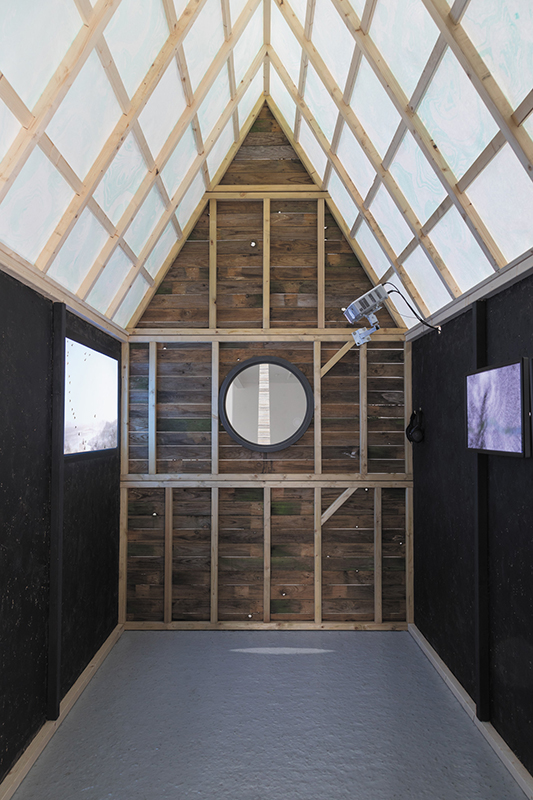
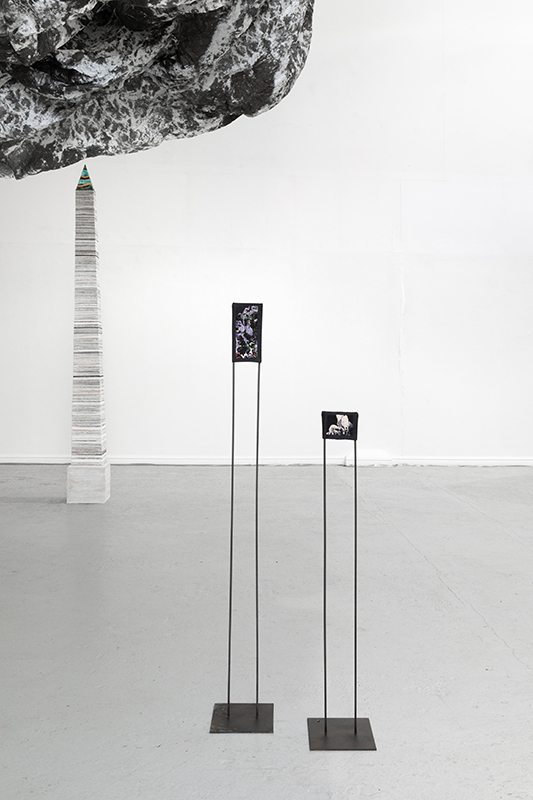
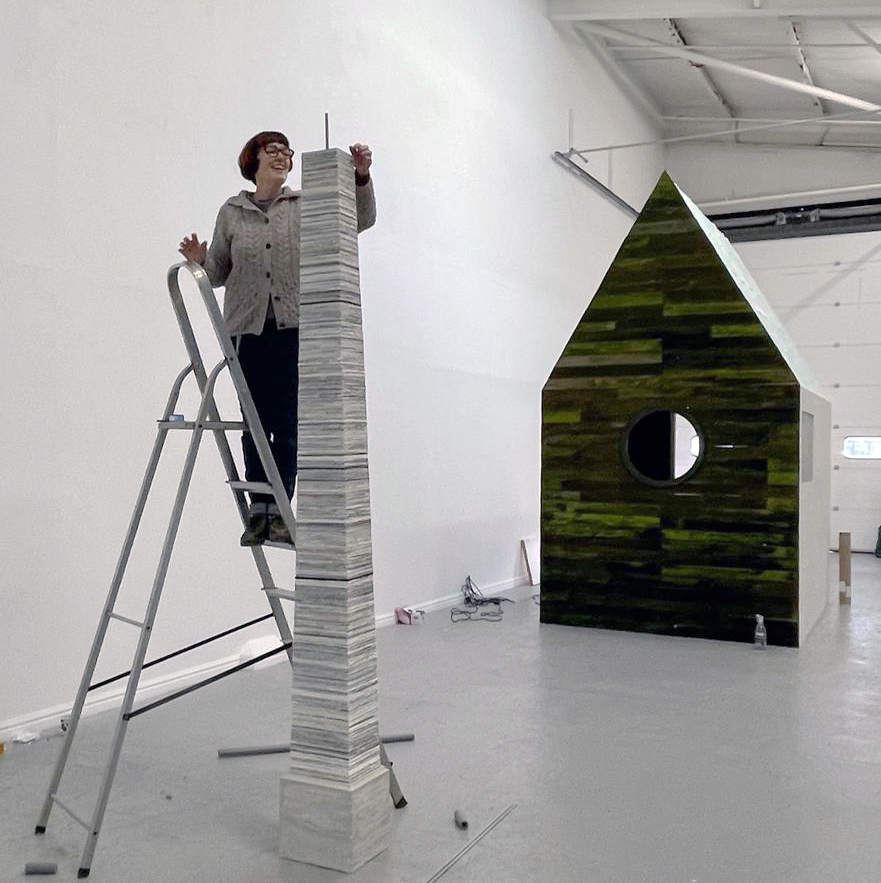
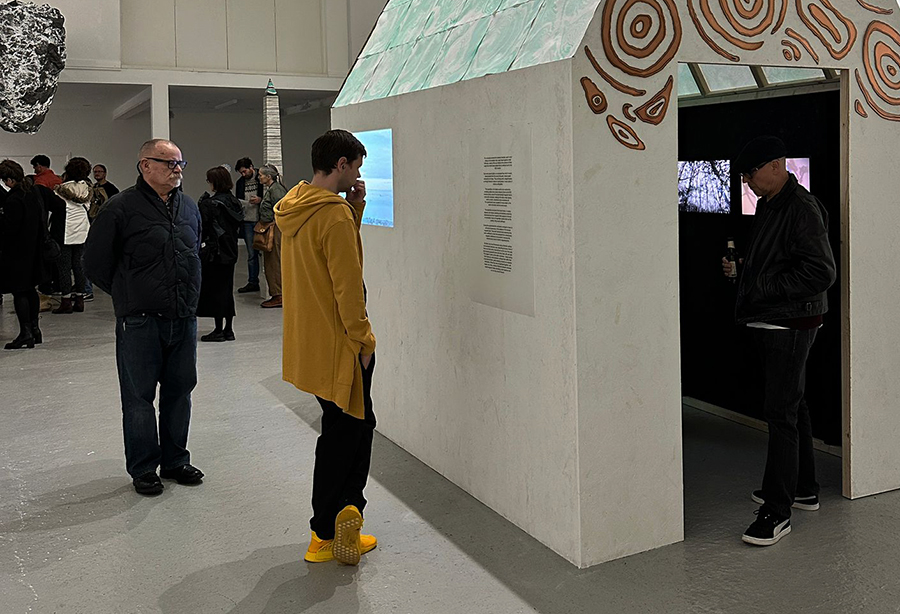
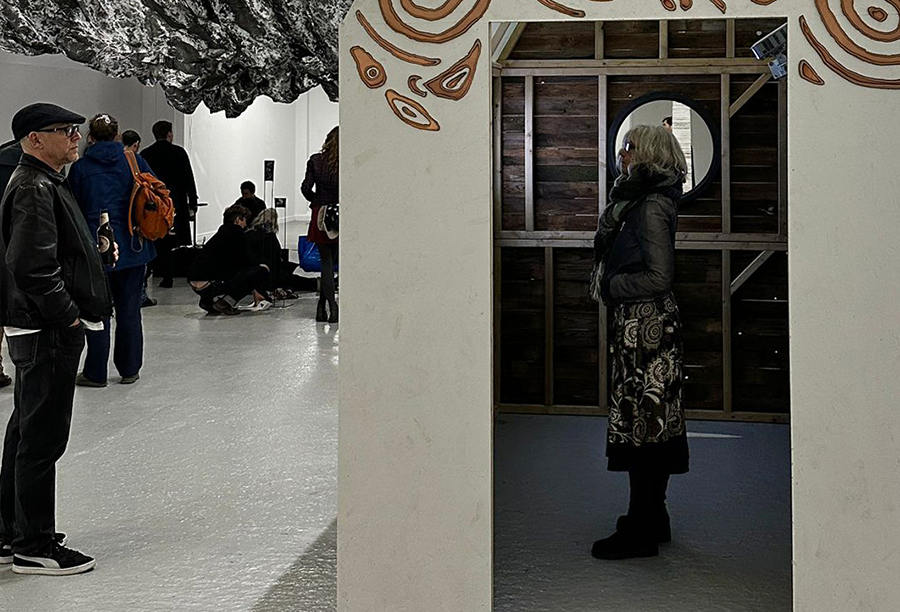
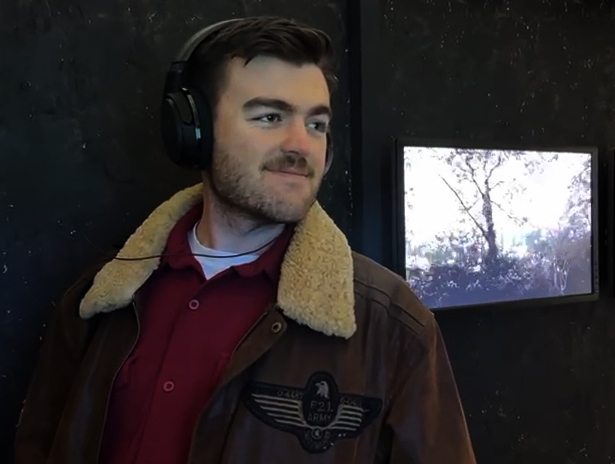
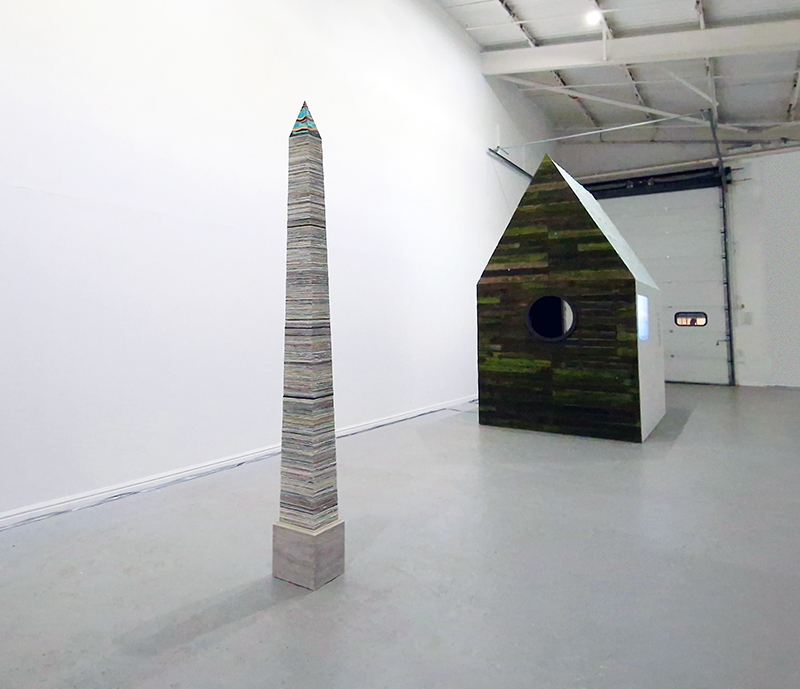
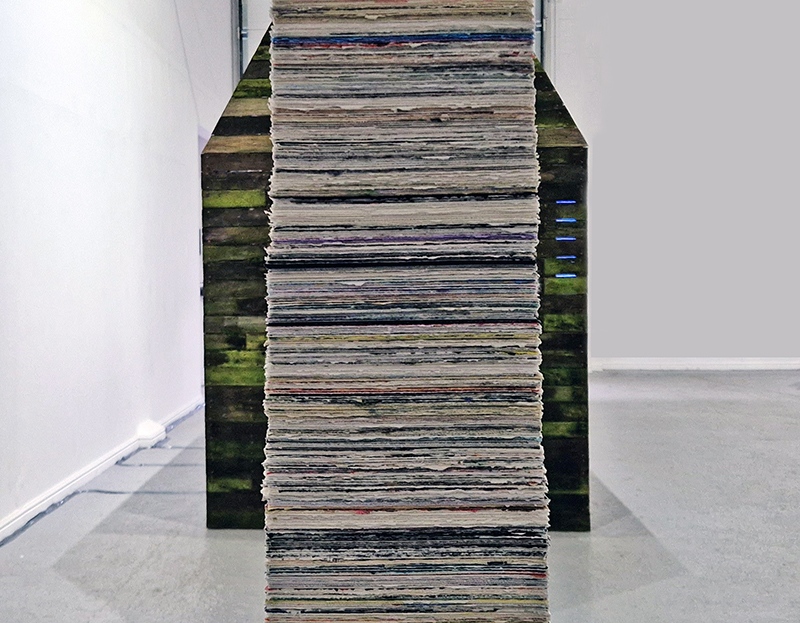
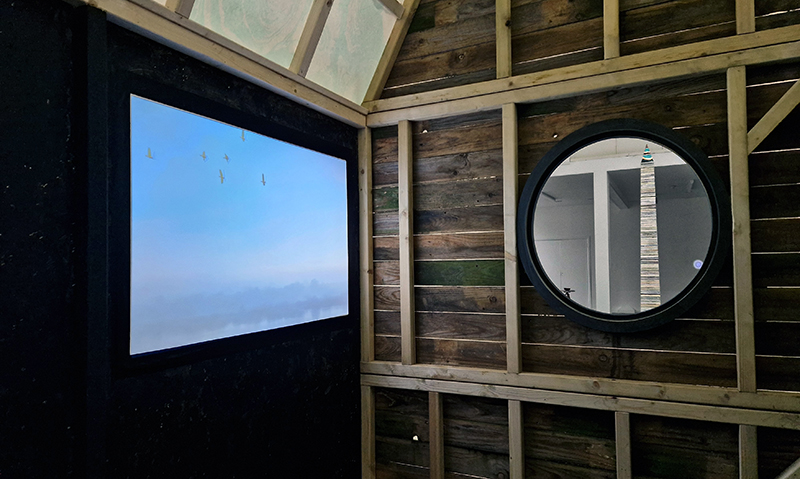
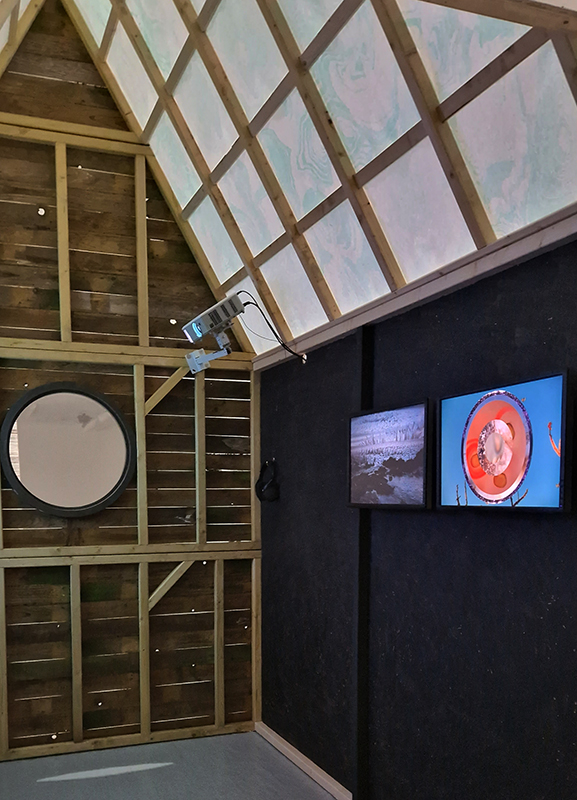
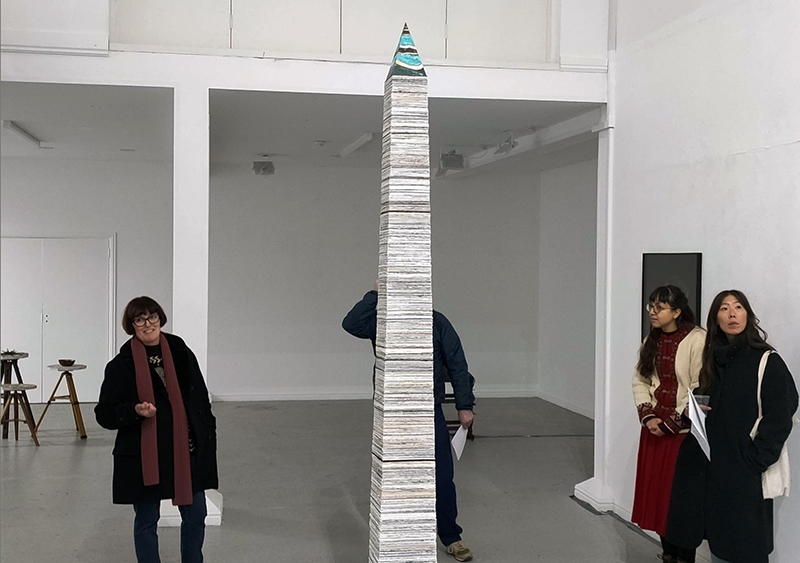
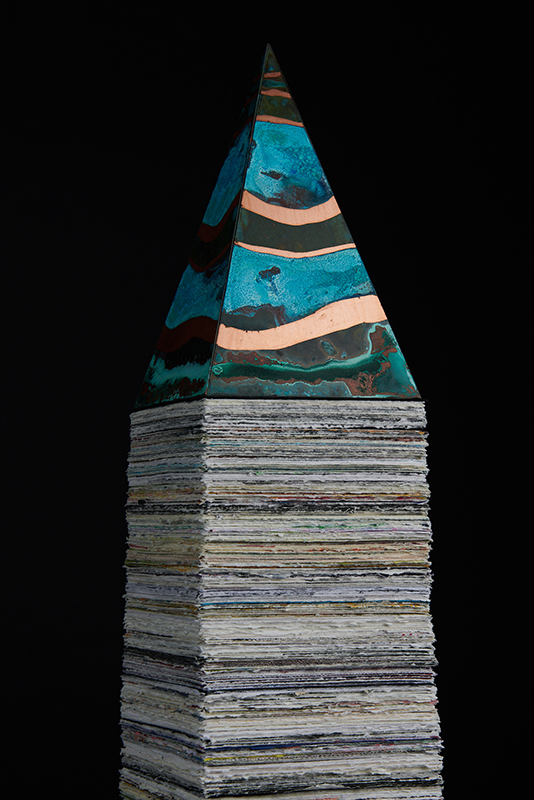
Susan Eyre seeks to navigate a path across time from the first human encounter with the magical qualities of the lodestone to current understanding of the interaction of the magnetic field with terrestrial life. Her works respond to the architecture, instruments and materials, found at a magnetic observatory while scientific objectives are expanded to include natural navigation techniques and extra-sensory methods used by the non-human realm, to form the basis of speculation as to the ability for humans to perceive the Earth’s magnetic field. Installation, sculpture and moving image works include a reimagined observation hut operating as a sensory hub with video screens suggesting portals into a web of neural pathways; an obelisk of layered recycled paper echoing Earth’s geological and magnetic history secreted in sedimentary strata of rock and a digital video work activated in real time by the passage of cosmic rays through a scintillator detector.

Images by Ben Deakin Photography

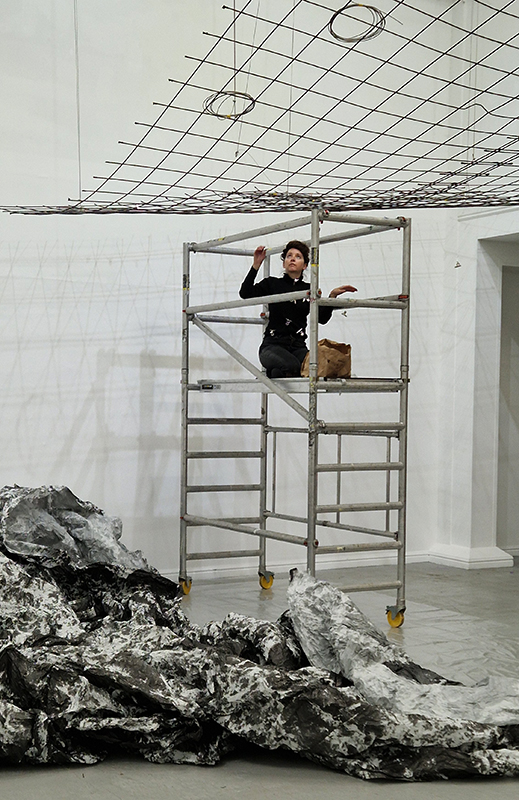
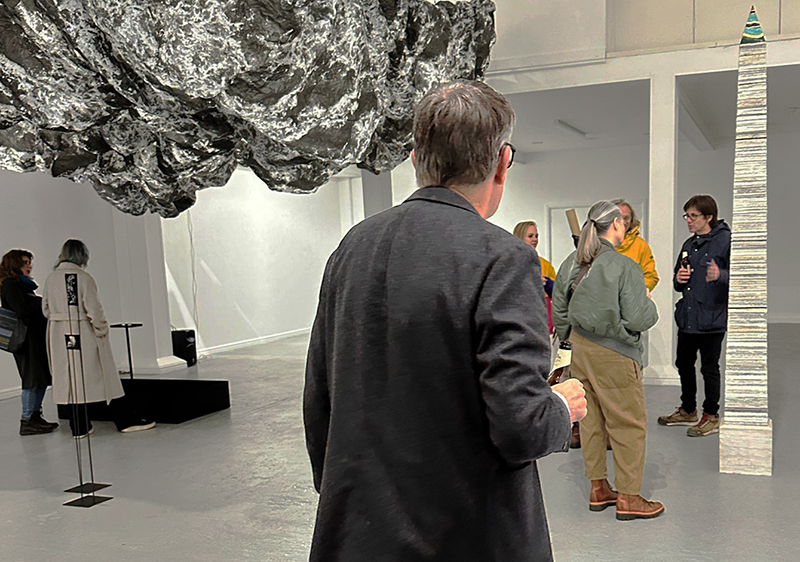
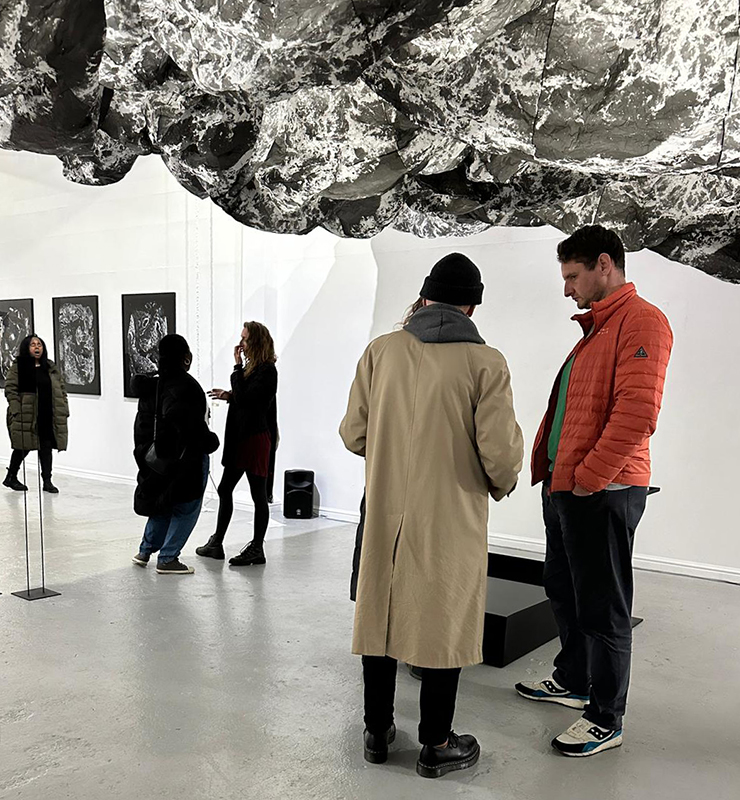
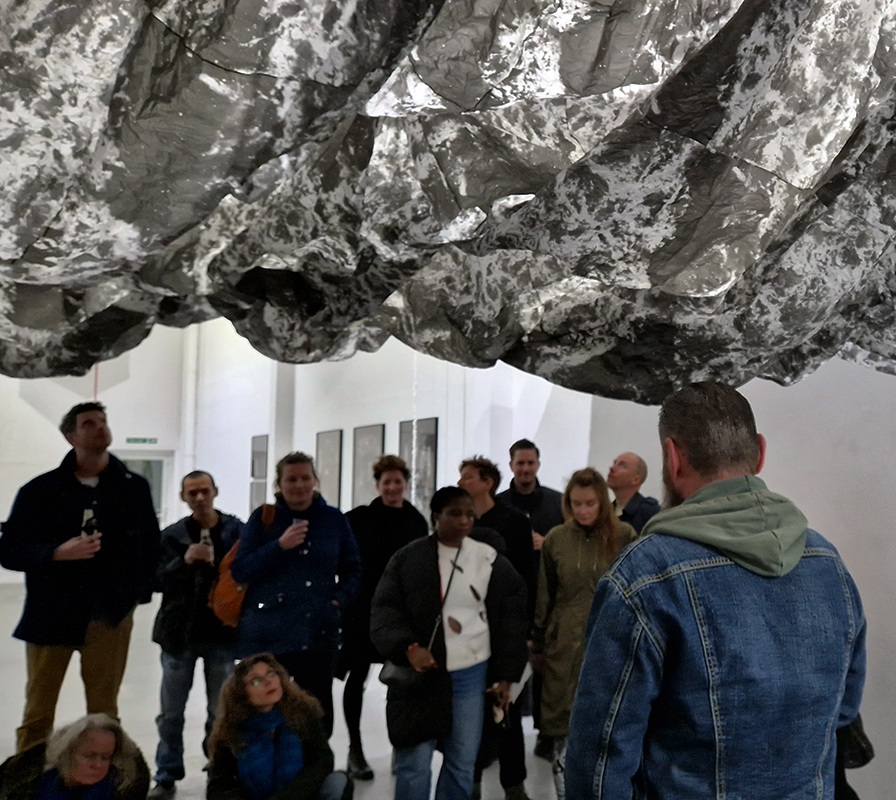
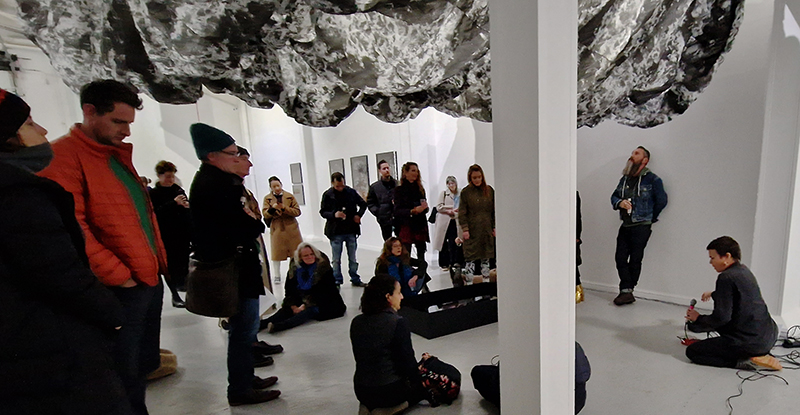
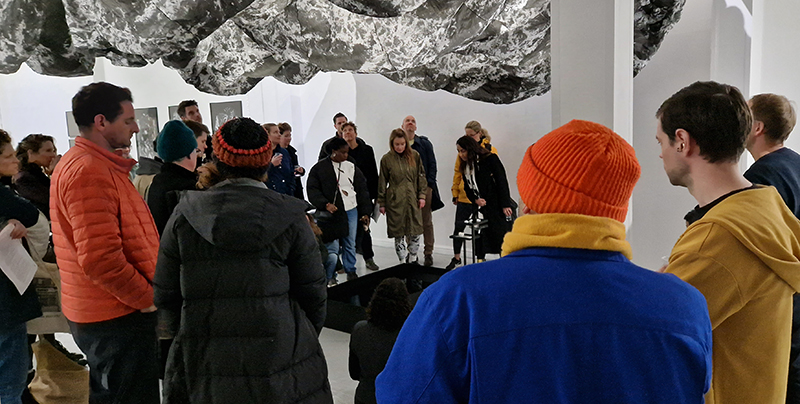
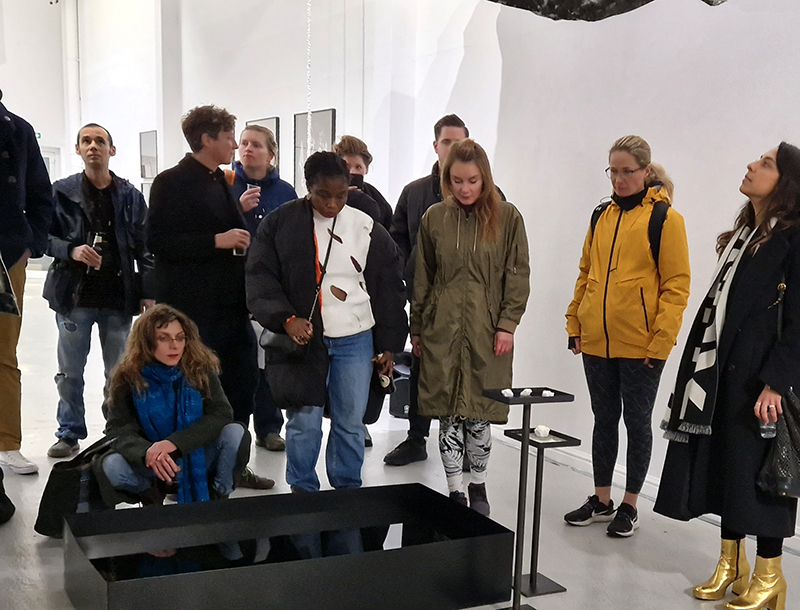
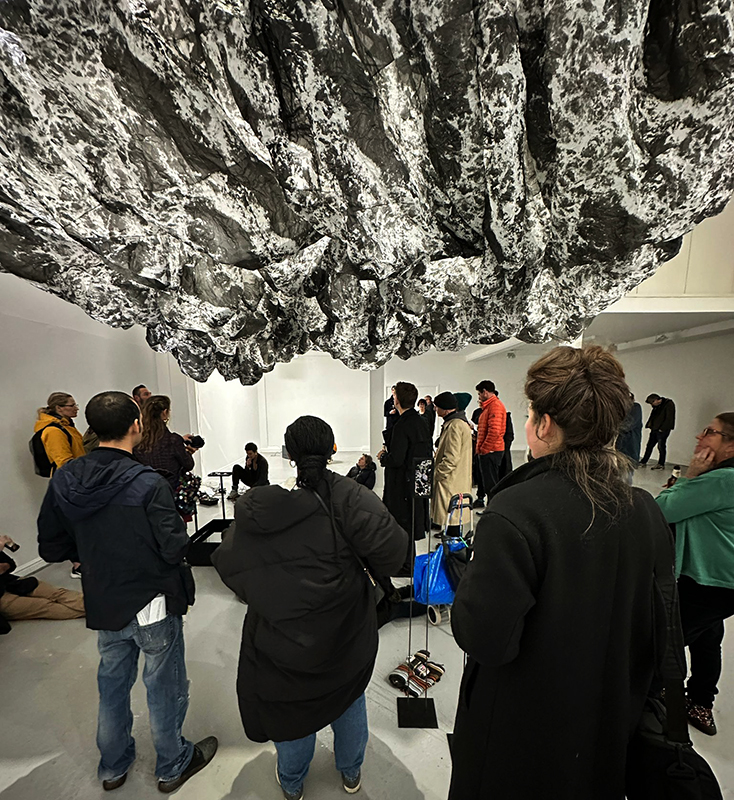
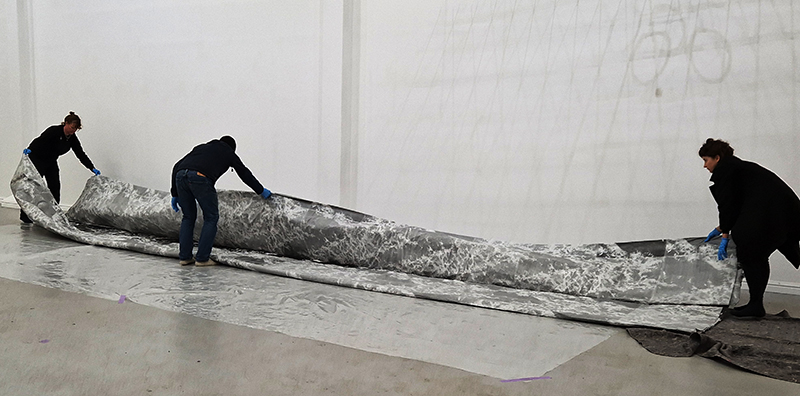
Julie F Hill explores the entwined darknesses of earth and cosmos. Crystalline and mineral substances from the deep earth fuse with astronomical data to suggest the deep-earth as an instrument for coming to know the cosmos. Crystalline and mineral substances formed in the continuum of deep earth and deep space allow us to peer back into cosmic time, both through the technologies created with them and the geological record they hold. Whilst darkness often indicates uncertainty and lack of knowledge, Hill asserts that it’s through darkness when we can be most perceptive to the interconnectedness between earth and cosmos. Through it we are able to extend our kinship with the inorganic and expand consciousness of what constitutes nature. Works include a large-scale sculptural print installation made from James Webb Space Telescope data that is reworked into a cavernous space, providing an experience of intimate immensity alongside more smaller sculptural and photographic works.

Images by Ben Deakin Photography

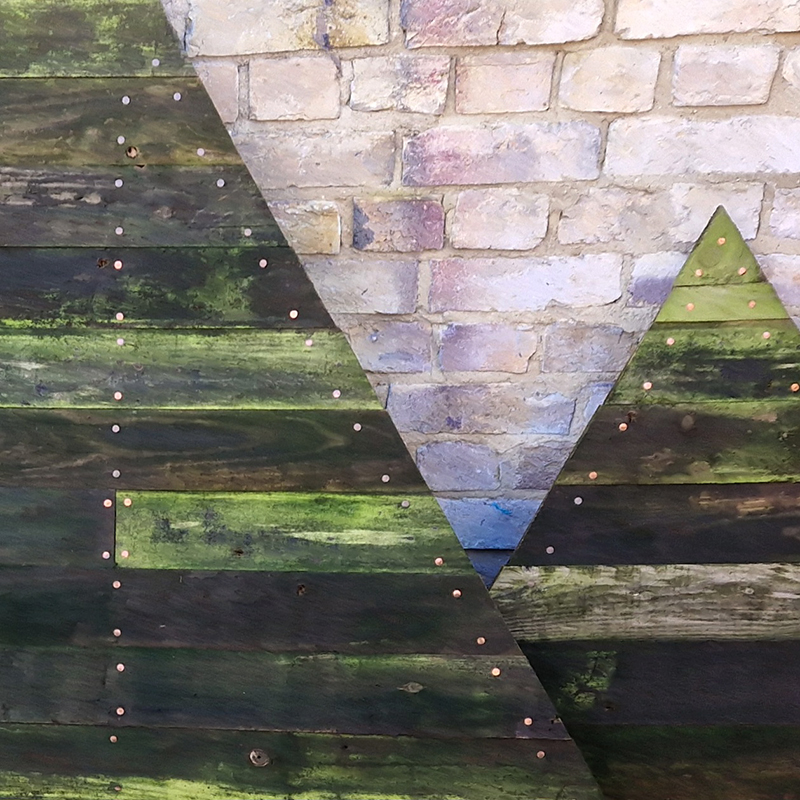
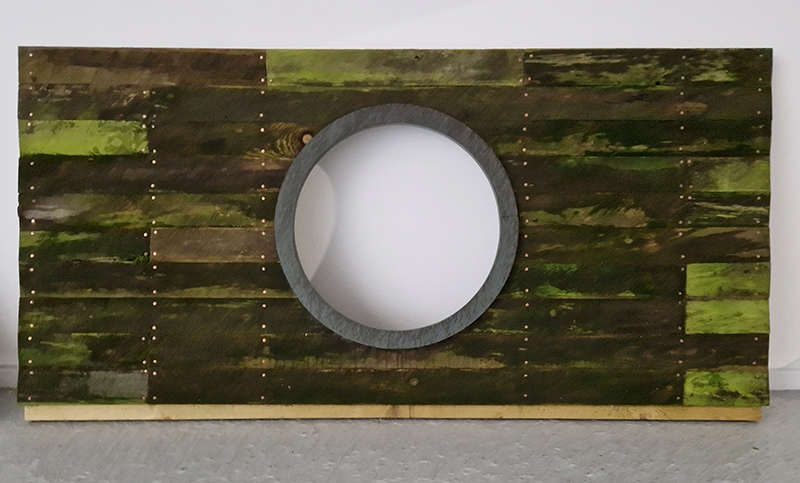
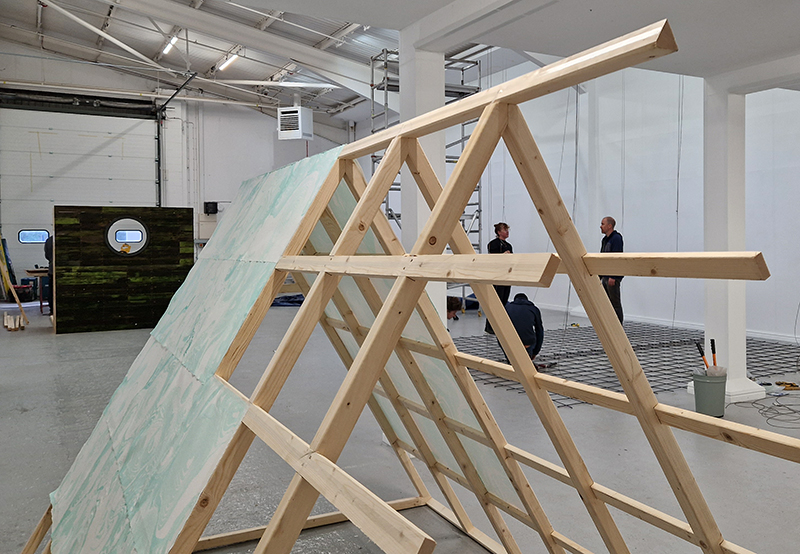
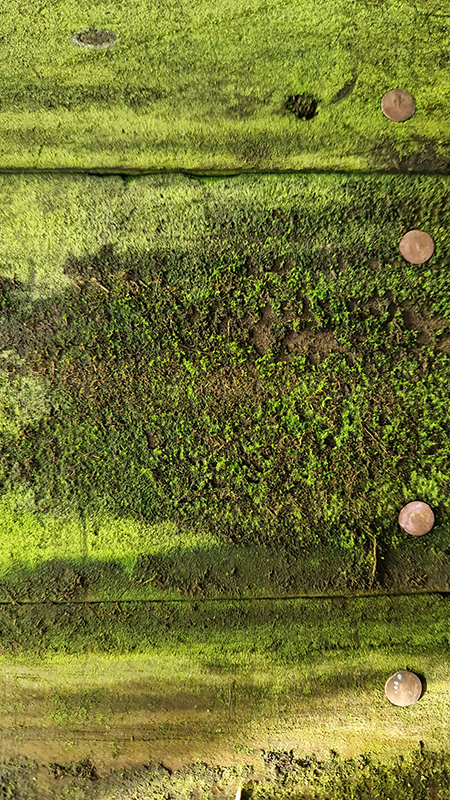
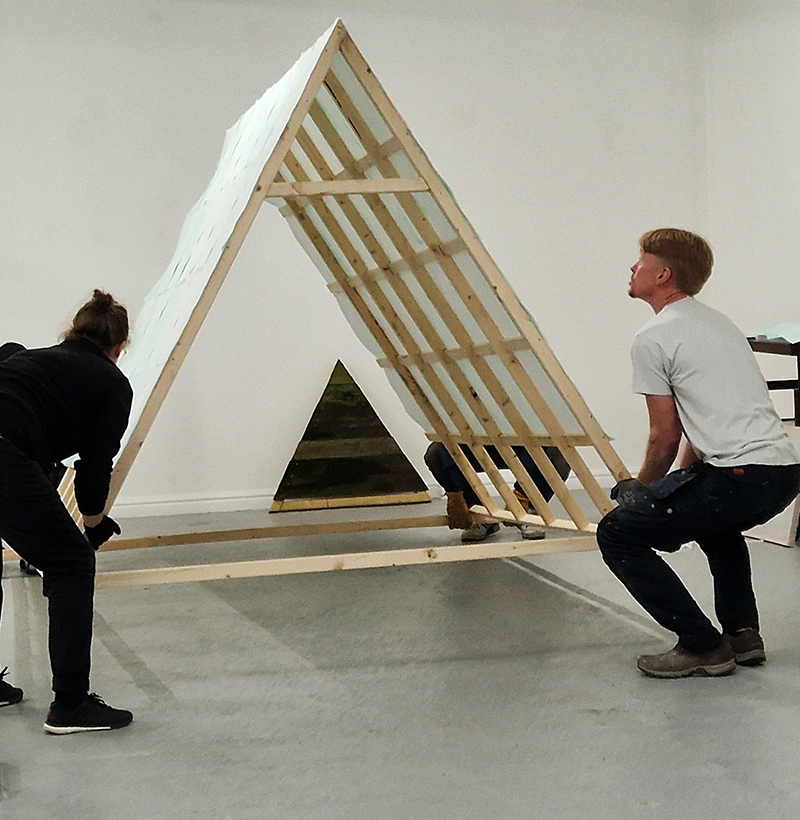
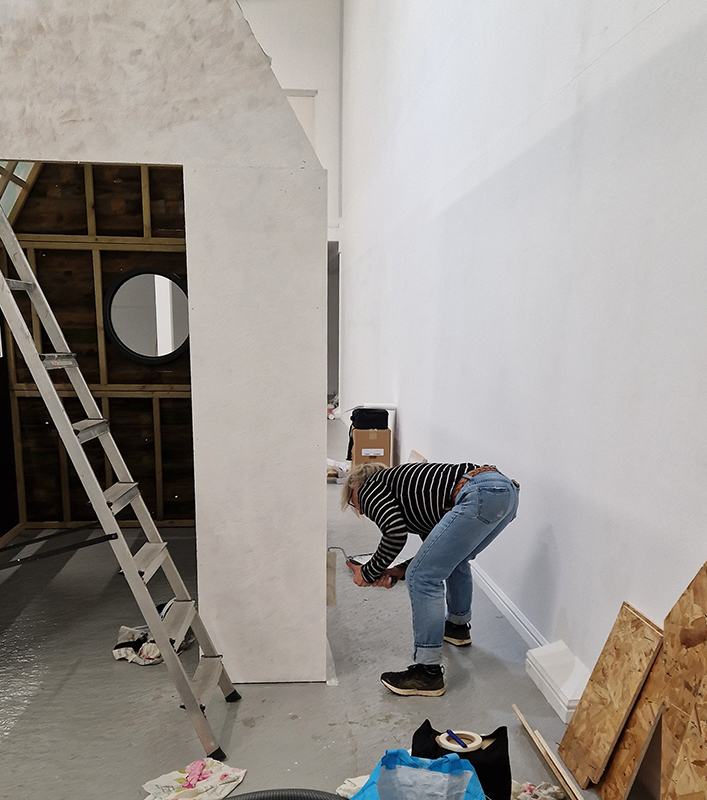
We both had ambitious large scale works to install and were grateful for the help we received from our partners (both Kevins), friends and technicians. Trevor Neale was magnificent in constructing The Absolute Hut. Anne Krinsky patiently helped apply double sided tape to the roof structure ready for the Suminagashi paper tiles and Caroline AreskogJones energetically painted the hut white and neatly edged the two way projection window. I was thrilled that, as a result of a wet few weeks, moss had started to grow on the wooden boards of the north facing wall in time for installation.

A big thank you to everyone that made it to the opening night, we were super chuffed with the positive responses.

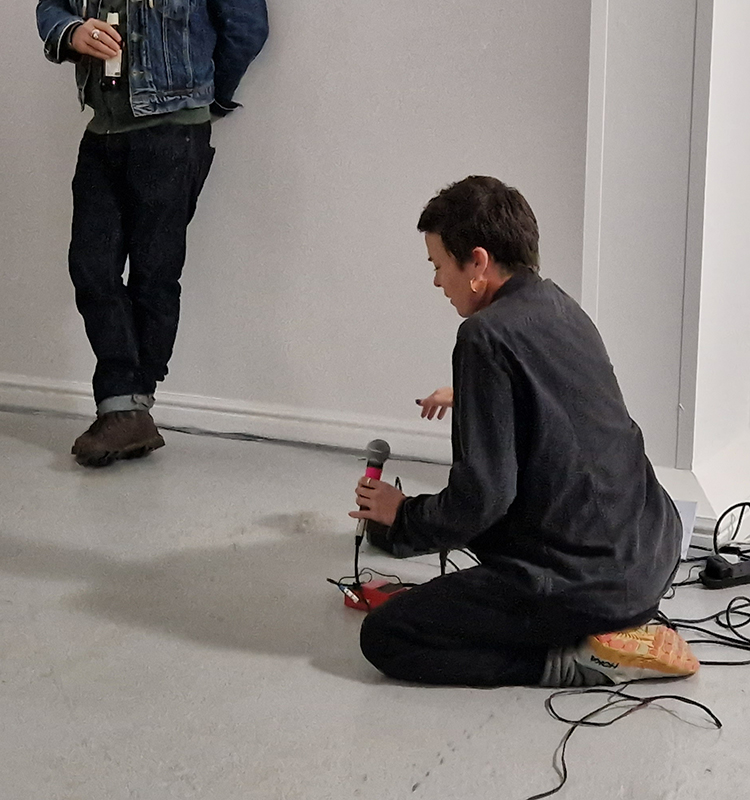
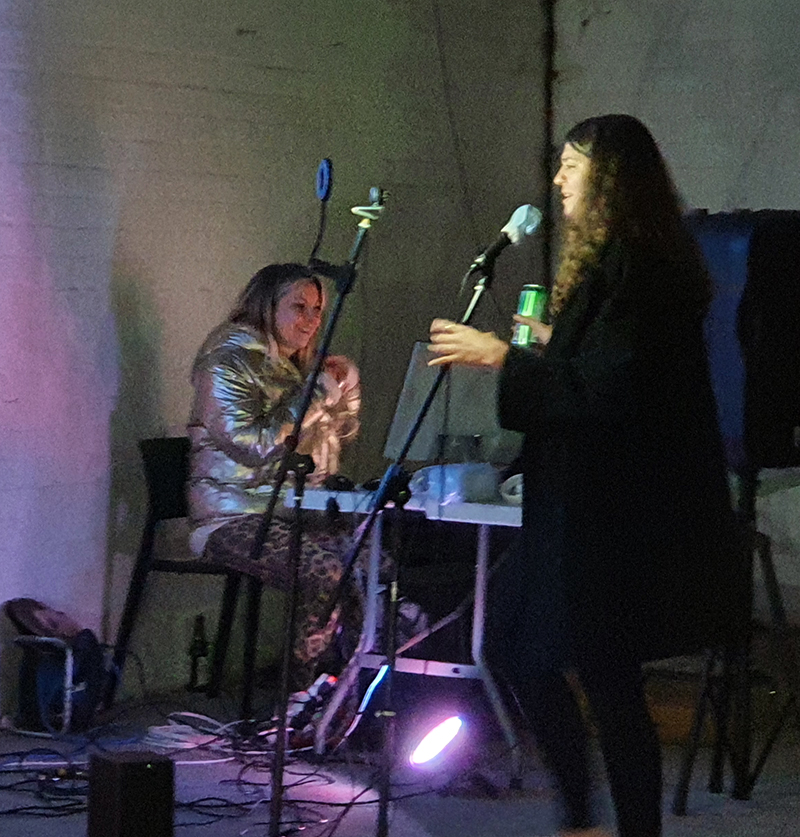
At the private view Julie’s large scale print installation was activated by a vocal performance conjuring abyssal voices of deep, cosmic time, performed and devised with Eleanor Westbrook whose voice produces incredible hauntingly beautiful sound.

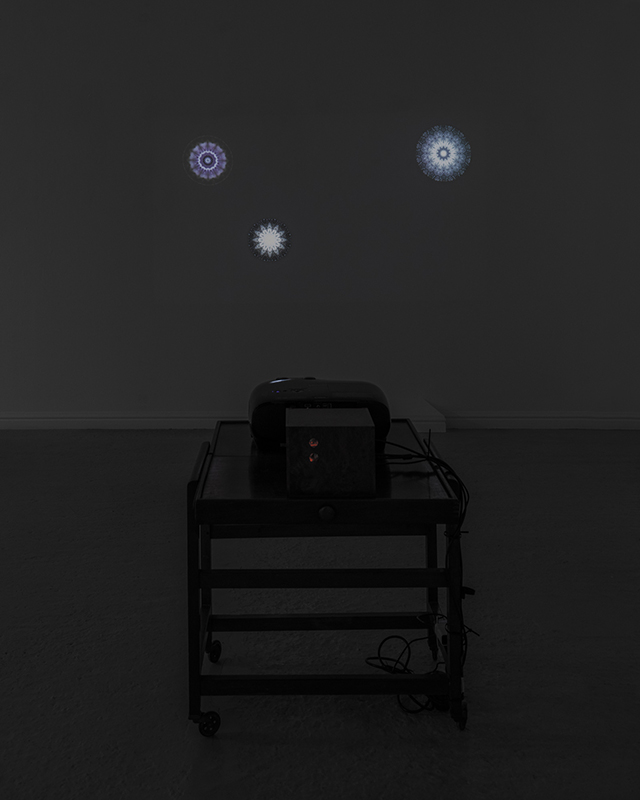
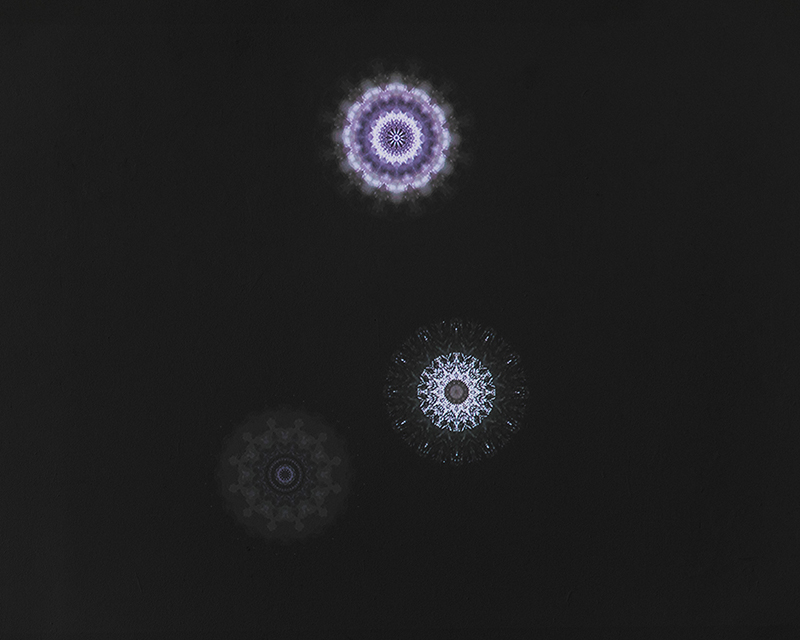
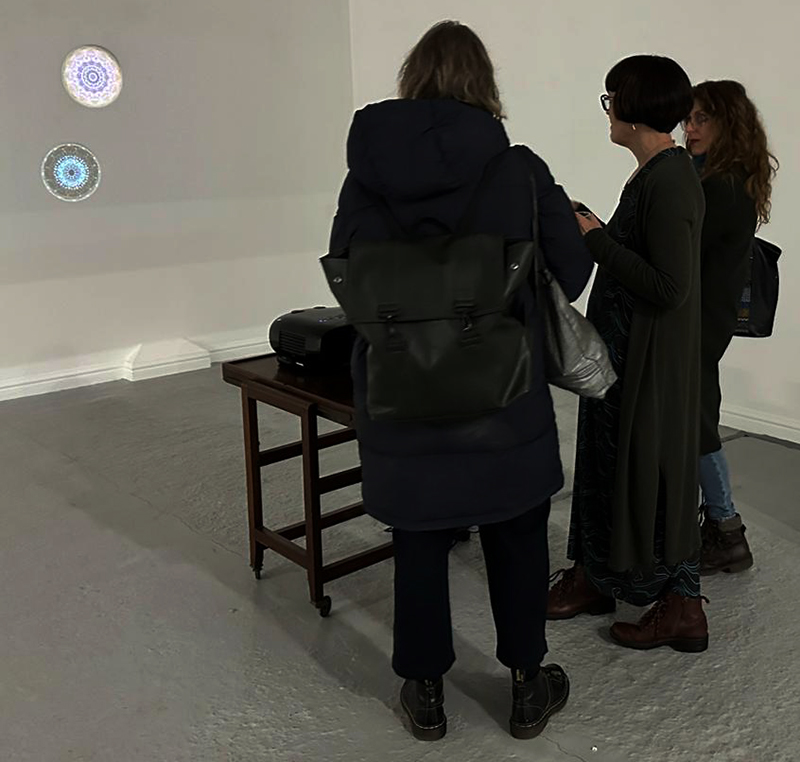
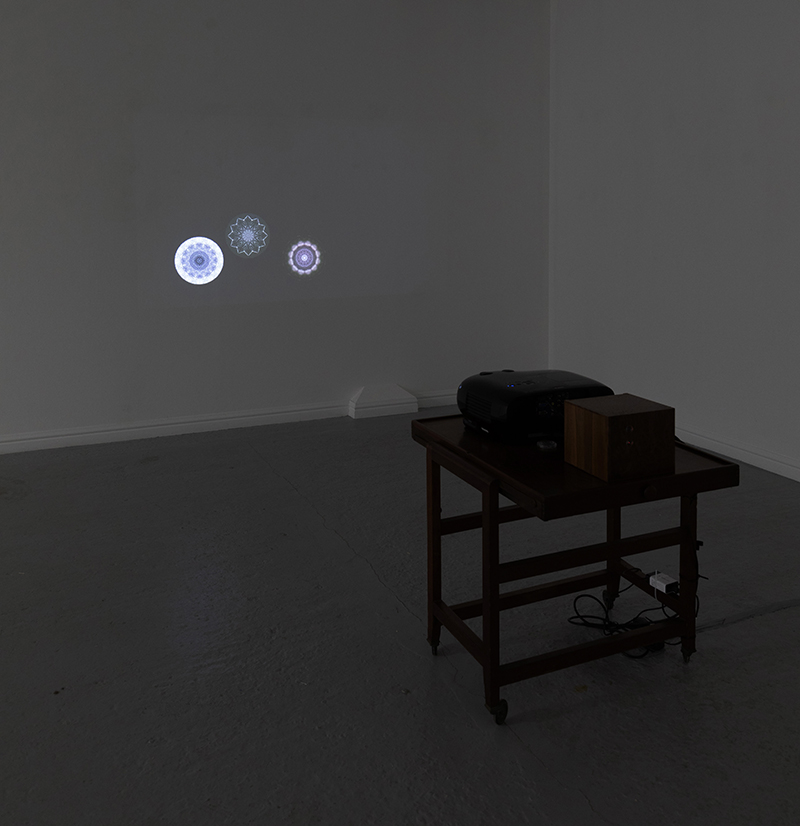
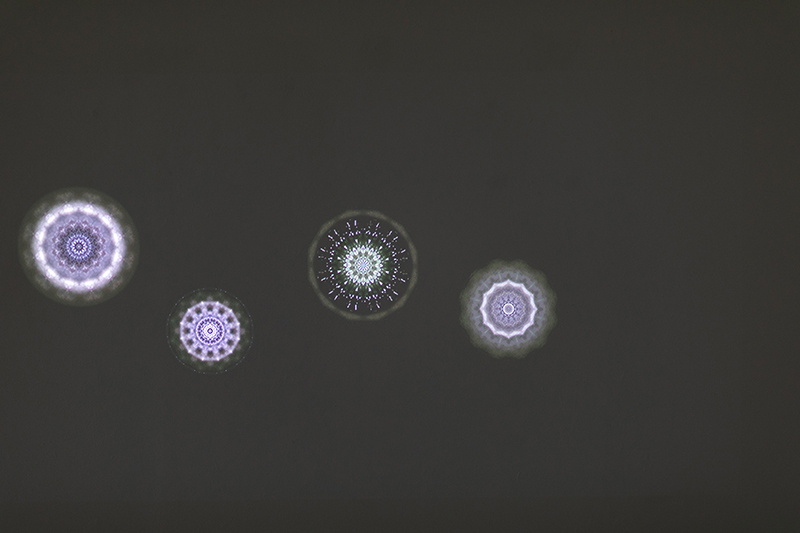
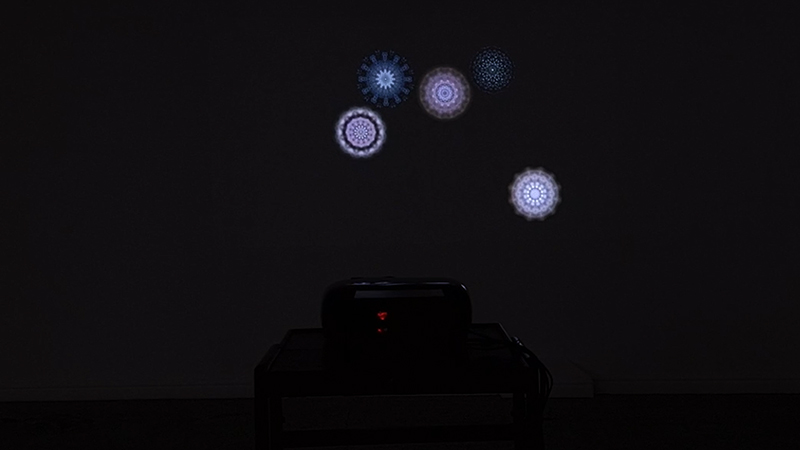
I was particularly excited to share The Breath of Stars, digital video work activated in real time by the passage of cosmic rays through a scintillator detector. After two years in development it was so exciting to watch the random starbursts appear in real time as witness to the unseen activity of cosmic rays passing through the gallery.

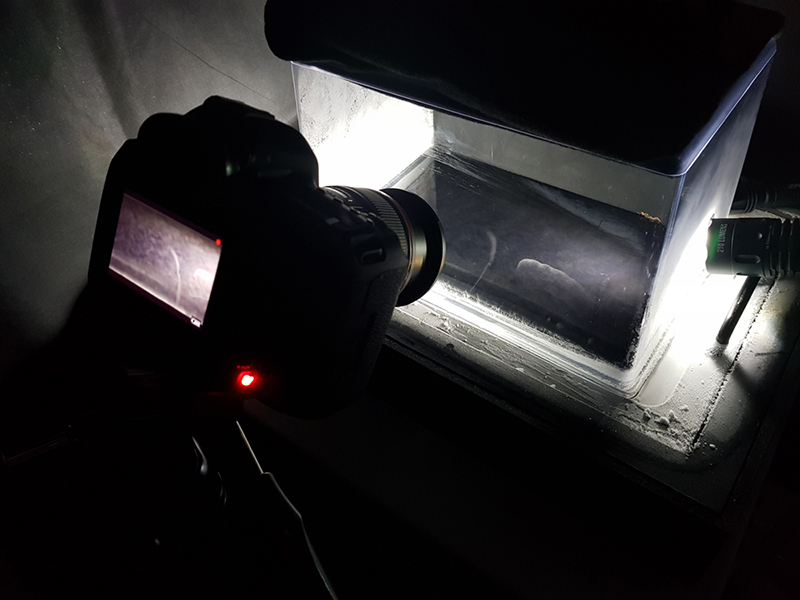
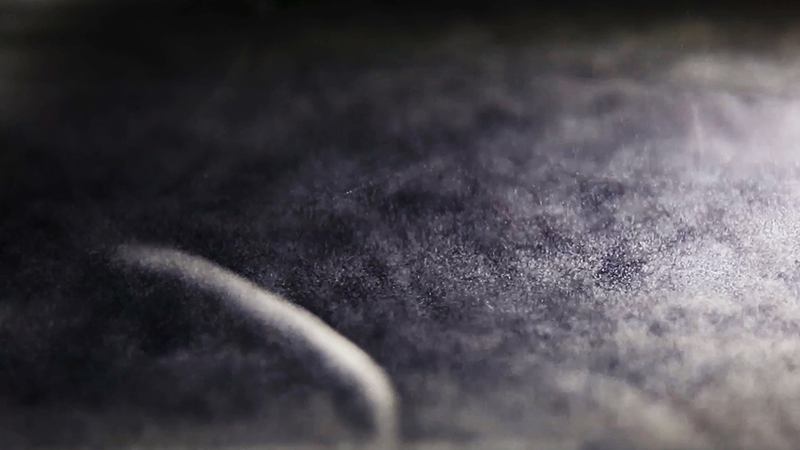
The kaleidoscopic video images that appear for every particle recorded by the detector, are created from footage of cosmic ray trails filmed in a cloud chamber.

The interaction of cosmic rays with atmospheric electrical fields influences the unpredictability of the magnetosphere and this random activity can be witnessed by the sudden flurries and silent gaps of the live video imagery.

These subatomic visitors from outer space power across the universe with unimaginable energy, coming from the heart of exploding stars or the depths of black holes; some may come from phenomena yet to be discovered or even from other dimensions. Travelling at close to the speed of light cosmic rays spiral along magnetic field lines, strike the edge of the Earth’s atmosphere, break apart and shower down upon us. Some particles collide and silently interact with atoms and technology on Earth. Most cosmic rays heading for Earth are deflected by the planet’s magnetic field and without this protection life on Earth could not survive this bombardment of radioactive matter. The interaction of cosmic rays and the solar wind with atmospheric electrical fields combines to influence the unpredictability of Earth’s magnetosphere, impacting the functioning of GPS satellite technology and computer processors on which humans have come to rely in daily life.

My research trip to Hartland Magnetic Observatory in North Devon was a catalyst for this body of work centring around a north facing observation hut aligned with an obelisk as a fixed azimuth mark. I am very grateful to The British Geological Survey for allowing me access to the site and particularly to Tom Martyn who shared his knowledge and gave a fascinating tour of the observatory.

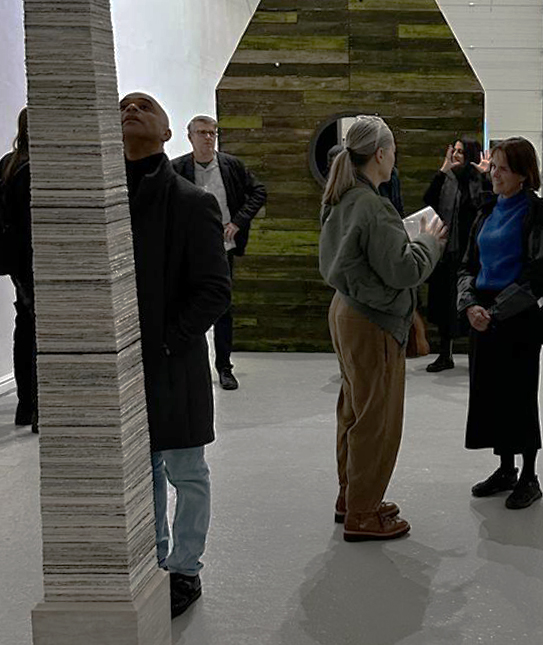
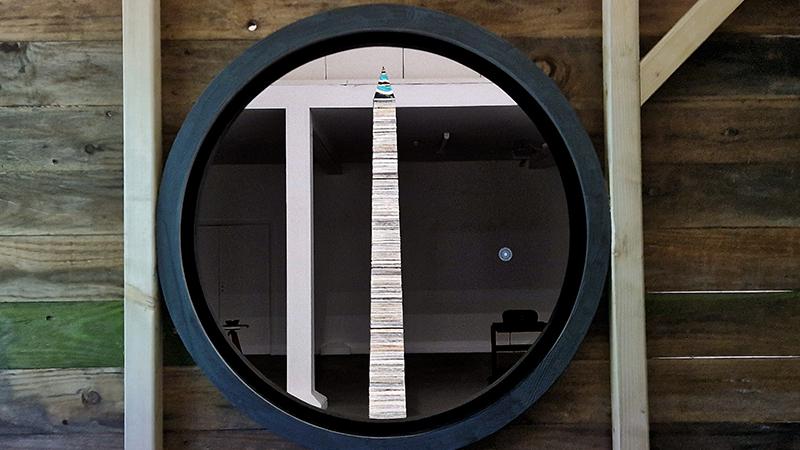
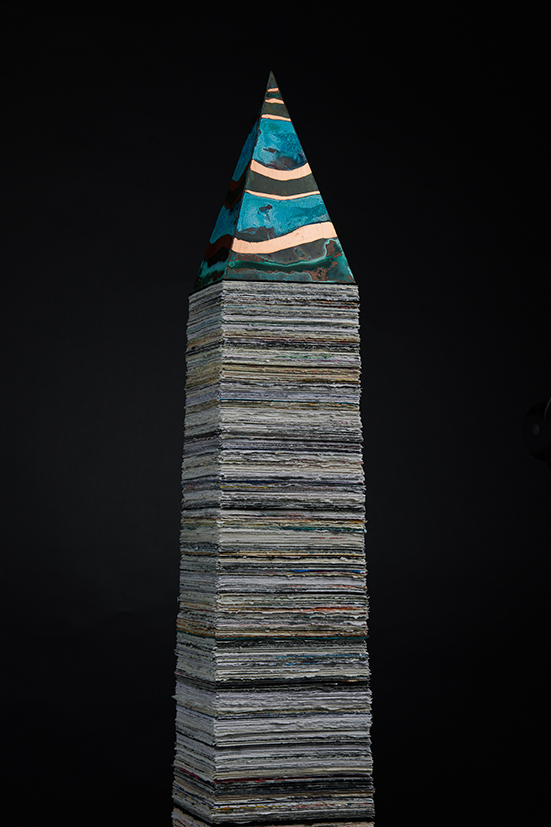
The Azimuth Obelisk (of sedimentary knowledge) is a reimagining of an obelisk erected at Hartland Magnetic Observatory in the late 1950’s near the site’s northern boundary. Viewed through the window in the north wall of The Observing Building (also known as the Absolute Hut) it acts as a permanent azimuth mark from which the drift of the magnetic north pole is monitored. Currently almost hidden by undergrowth, the observatory’s concrete azimuth mark has been replaced by a digital GPS position. Much as the Earth’s geological and magnetic history is secreted into the strata of sedimentary rock, this sculpture also expresses the passage of time through the layering of recycled paper prints and drawings whose history becomes embedded within the stacked layers.

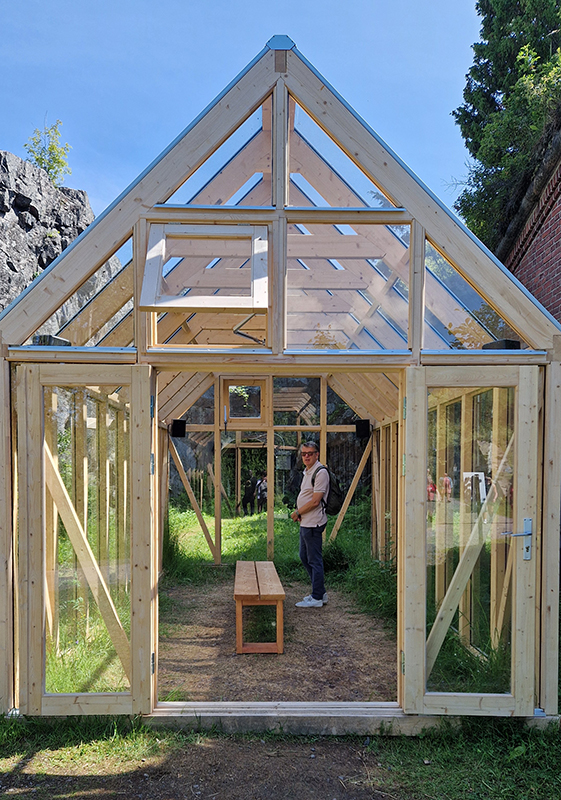
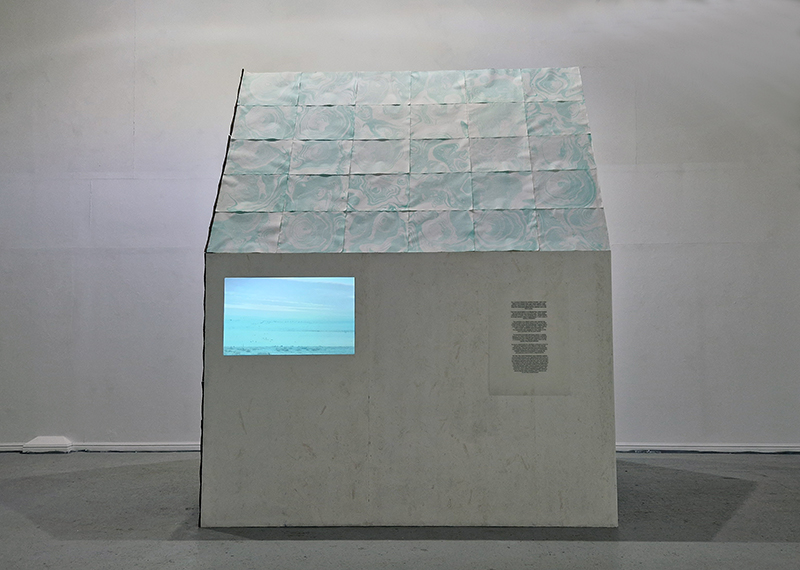
The Absolute Hut (of action potential) operates as a sensory hub with video screens suggesting portals into a web of neural pathways where a range of actions and processes are running concurrently reflecting on the dynamics between the Earth’s geologic structure and navigation using the magnetic field.

The title refers to the way neurons send information electrochemically around the body. The signals they send are called action potentials which is a temporary shift from negative to positive within the cell caused by certain ions entering the cell. Action potentials can be triggered by an interaction with the magnetic field causing a reaction in the body.

The installation is conceived from a combination of features, impressions and functions of the observing building and instruments at Hartland Magnetic Observatory in North Devon and the observation huts built in the 18th century at The Kings Observatory in Kew for meteorological and magnetic observations.

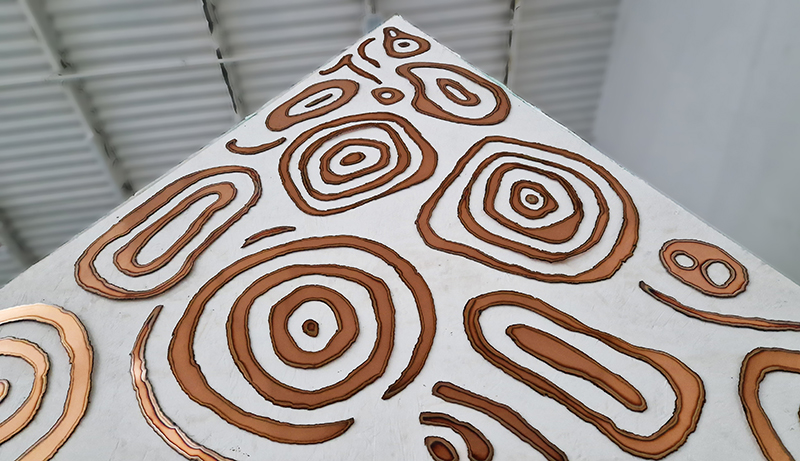
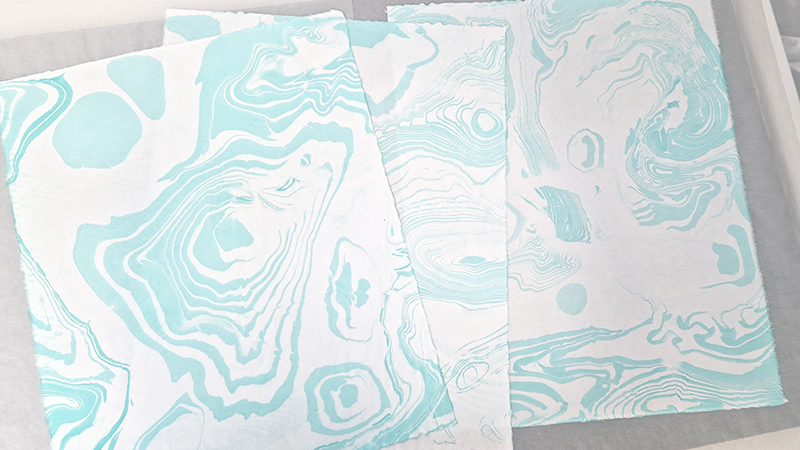
Topological contours of suminagashi marbling and plasma cut copper reflect the fluid motion of the Earth’s molten iron core and the pulsating alpha waves of the human brain when subjected to magnetic fields.

‘the internal skies have their own birds’ Italo Calvino Cosmicomics

The fascinating and perilous journeys made by migrating birds has been a natural wonder for centuries with the first records of this phenomena made more than 3,000 years ago. The innate knowledge of migratory birds is mentioned in Job and Jeremiah and the ancient Greek writers Homer, Hesiod and Aristotle noted their passage.

Job 39:26 Doth the hawk fly by thy wisdom and stretch her wings towards the south?

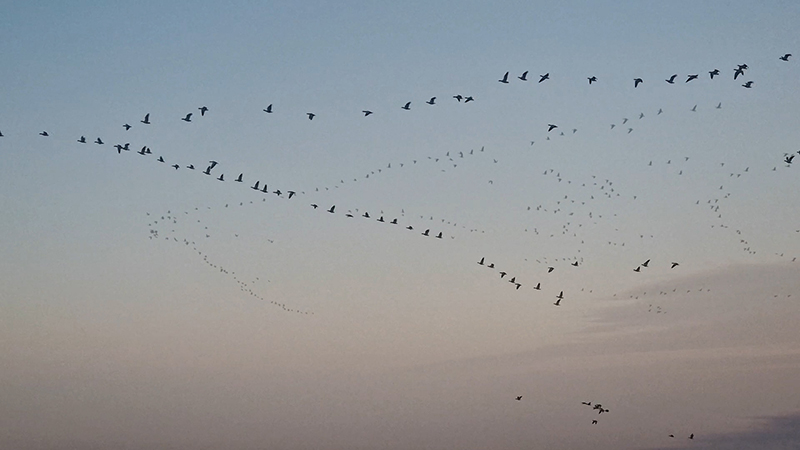
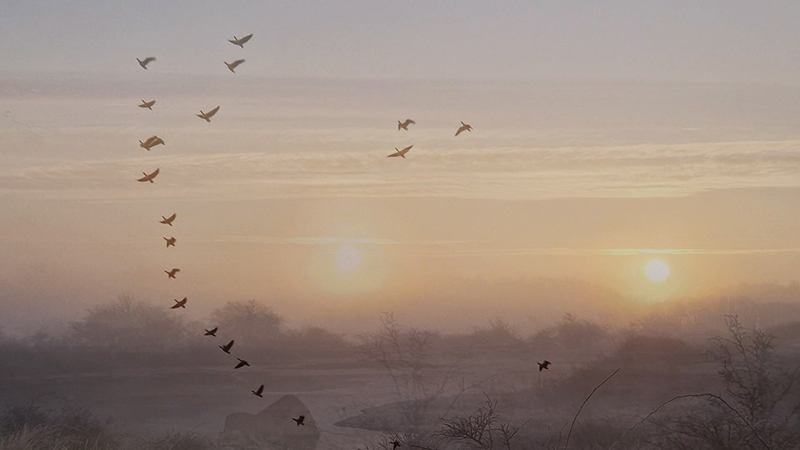
Wintering light two way video projection of migratory pink footed geese filmed at RSPB Snettisham on the North Norfolk coast.

Research has proven that birds and many other animals can use the earth’s magnetic field for navigation. There are two ways this happens. In birds there is a protein in the retina of the eye – (cryptochrome molecules) which trigger action potentials enabling them to visualise the magnetic field. In other animals and magnetotactic bacteria tiny crystals of magnetite respond to the field. This may also be true of humans as we do have these crystals in our brain cells.

Birds use three different compasses to navigate across the globe; the sun, the stars and the magnetic field.

Birds are also able to detect rapid movement such as individual flashes or flickering of a fluorescent light which humans see as a continuous light. Hawks which pursue other birds through dense forests at high speeds, follow the movement of their prey while avoiding branches and other obstacles. To humans travelling at this speed, the fleeing prey, branches and obstacles would just be a blur.

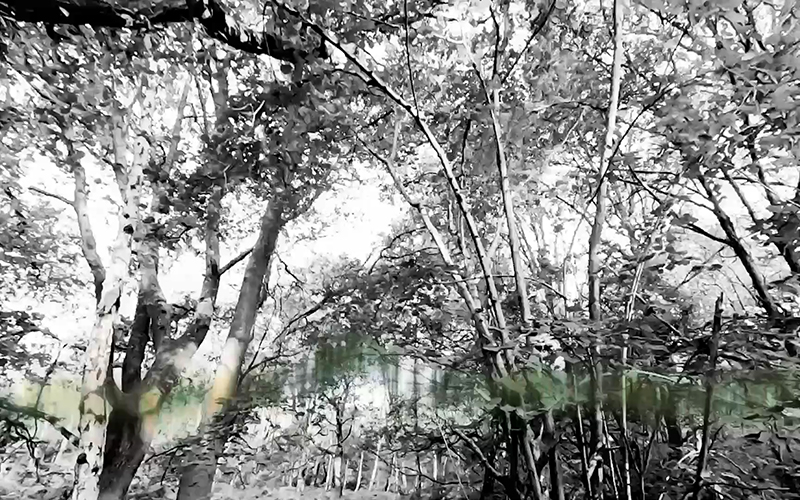
Degrees of Variation considers what it might be like to have the sensory powers of a bird where a protein in the eye is excited by polarised light making it possible to see the magnetic field and follow a visual navigatory cue in an accelerated world. The video imagines flight over water and through woods while being guided by the force of a magnetic field.

Calvino’s story The Stone Sky is wonderfully descriptive of the volatile geological structure of the Earth. This fluidity is what makes life on Earth possible. Only planets with fluid cores have magnetic fields. The geological interior generates a field that reaches into outer space offering a protective shield.

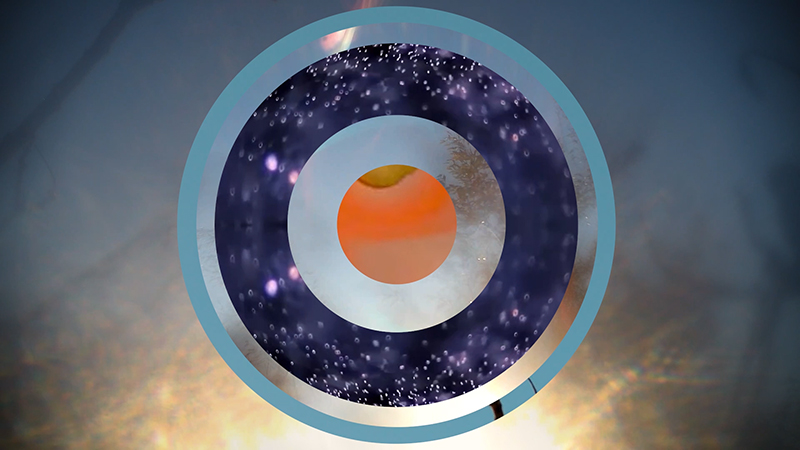
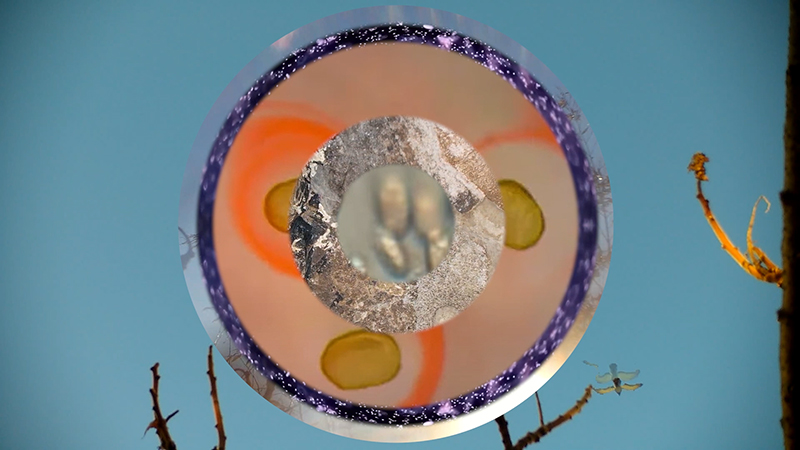
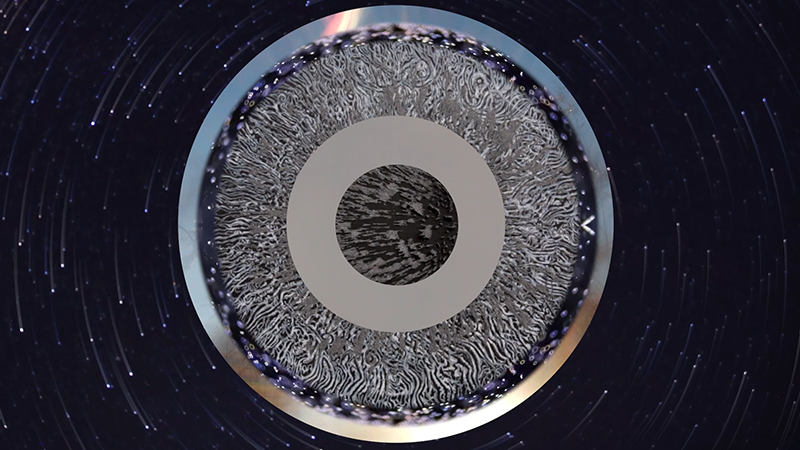
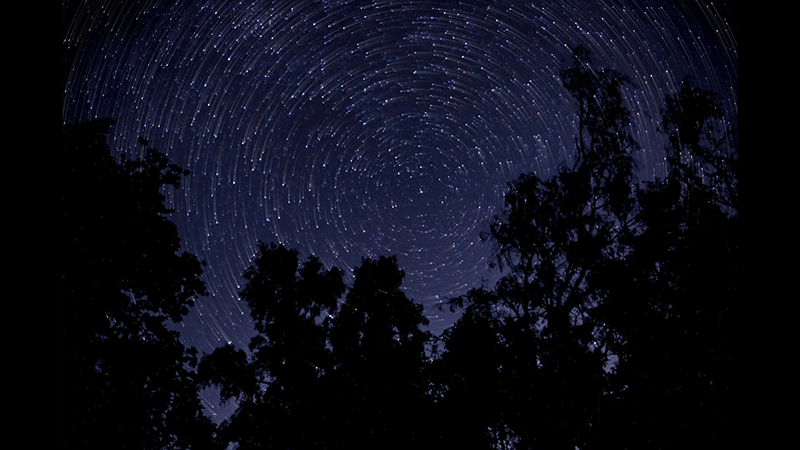
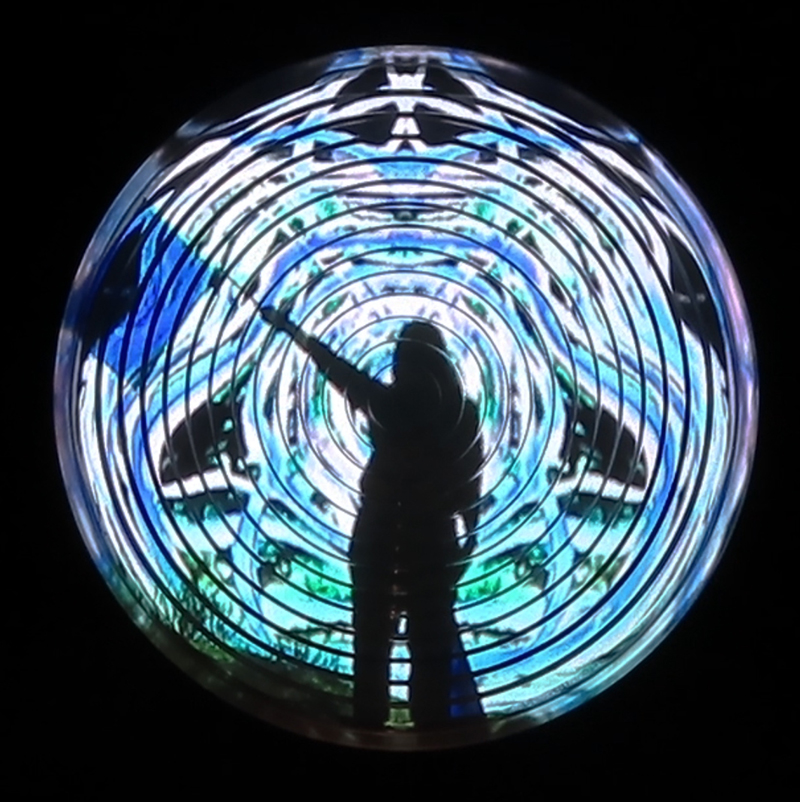
internal skies : external spheres video sequences within concentric circles mimic the geological structure of the Earth to explore the relationship between Earth’s magnetic field and various methods of navigation including via magnetoreception and celestial observation. Sequences include star trails around Polaris (the current north star), birds and bees that use the magnetic field for navigation, magnetotactic bacteria, magnetised iron filings, aerial views of the coastline around Hartland and early morning polarised light which excites the cryptochrome protein in a birds eye.

The Earth’s geomagnetic field is created by a combination of three separate fields and timescales. The main field is generated in the earth’s molten iron core.  Observing the field gives clues to the planet’s deep interior which is inaccessible to direct observations. Changes are measured in the annual drifting of magnetic poles. Secondly electrical currents caused by solar weather and cosmic rays bouncing off the Earth’s main  field charge the surrounding ionosphere causing fluctuations in the field. This field changes by the micro second as we orbit the sun. The Earth’s magnetic field also acts as a shield against most potentially harmful charged particles from outer space. Finally the residual magnetisation of the geology of the rocky mantle and crust, measured in deep geological time also offers clues to the geological history of Earth.
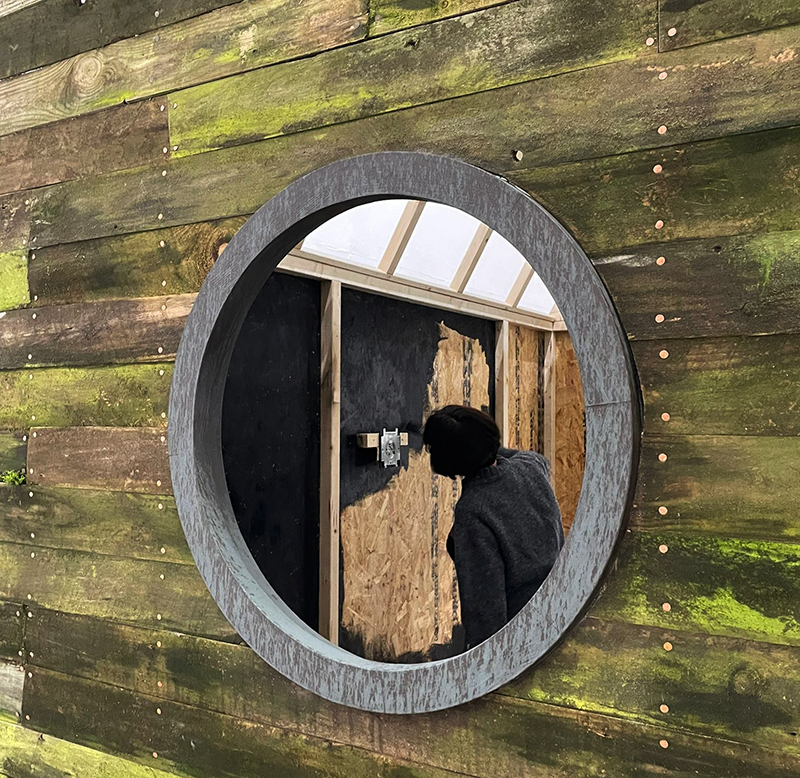
The understanding of the world surrounding us forms in the darkness of our skulls. 

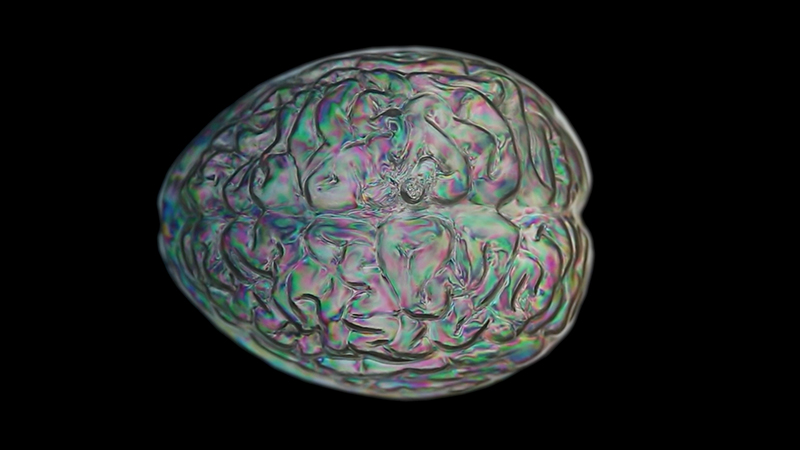
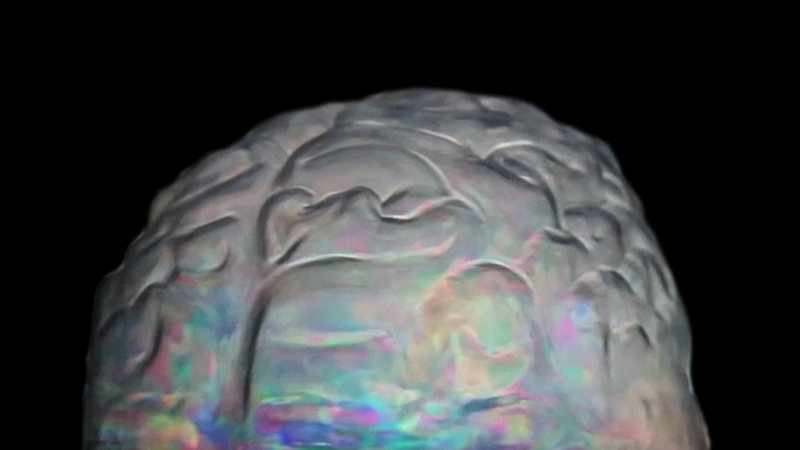
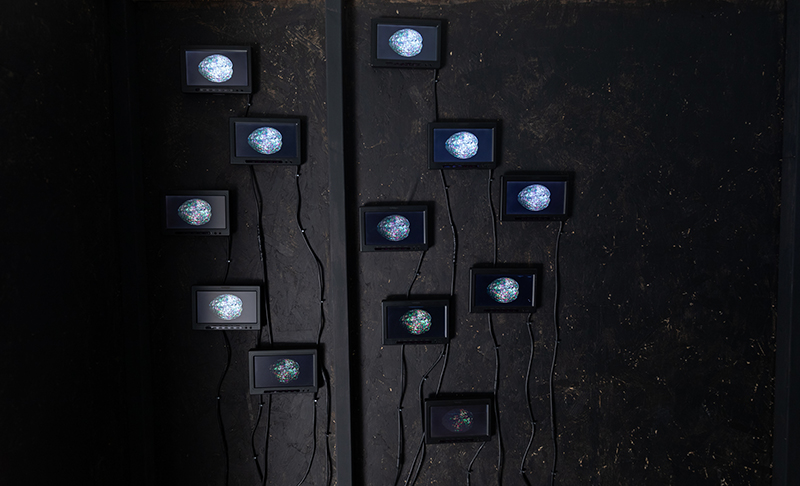
interference – a panel of 12 small video screens inside The Absolute Hut (of action potential), showing images of the human brain filmed by using polarizing filters to create pulsating birefringence colours, relate to the narrative pinned to the outside of the hut.

The narrative is a mix of fact and fiction based on a real experiment carried out at Caltech where scientists found Alpha waves in the human brain do respond to Earth’s magnetic field and other research suggesting that it could be possible for the magnetic field in one animal’s brain to transmit information to another animal’s brain by triggering action potentials creating the same thoughts and emotions.

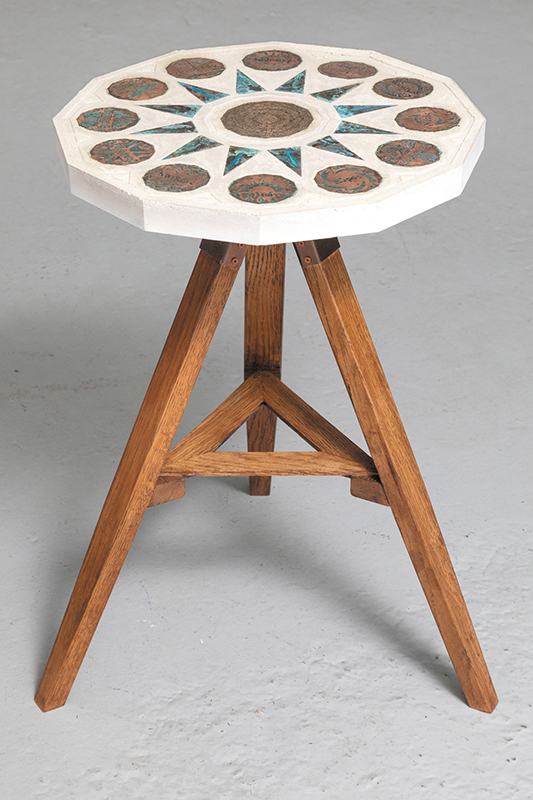
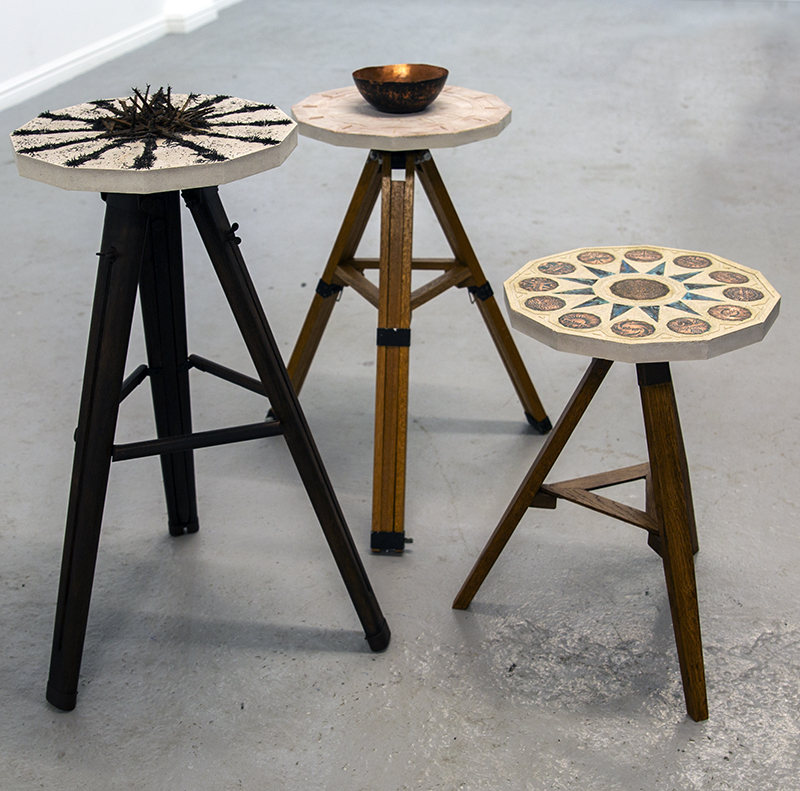
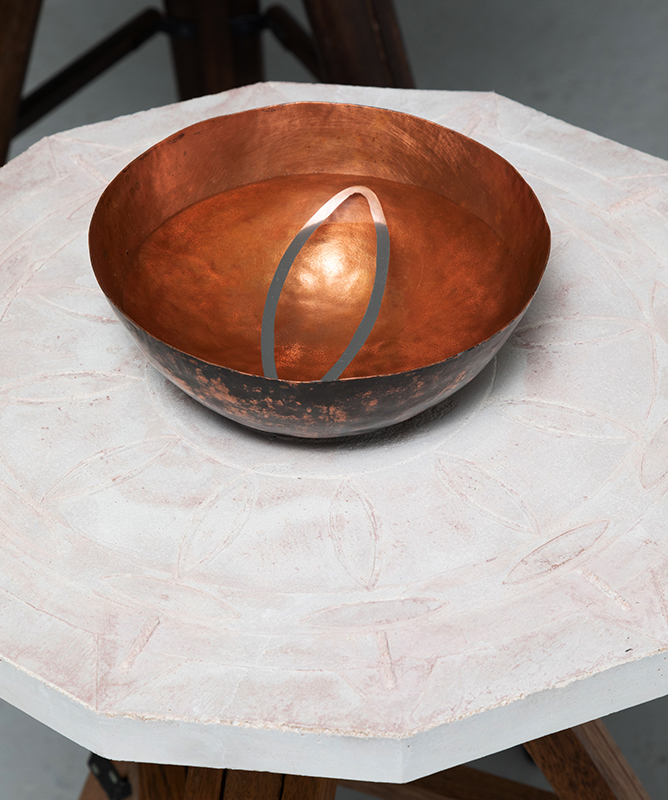
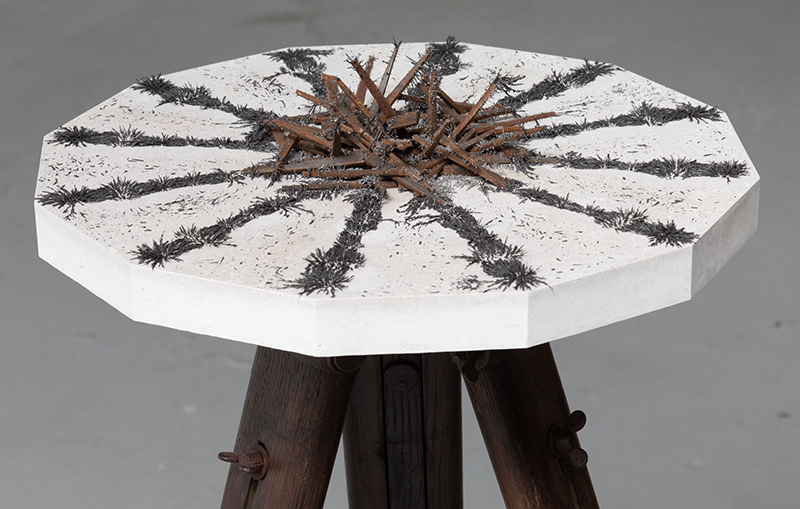
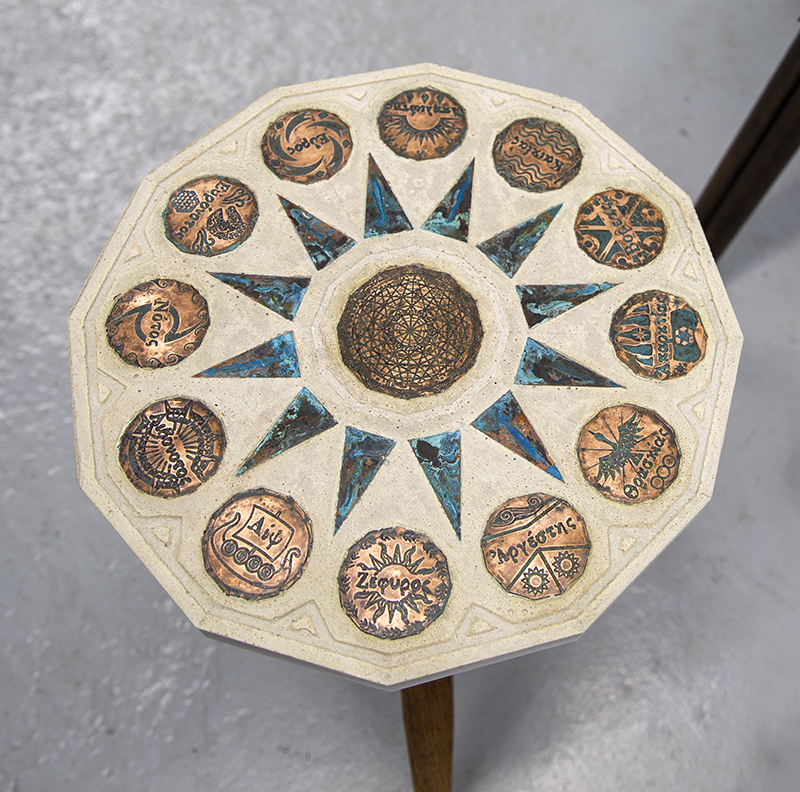
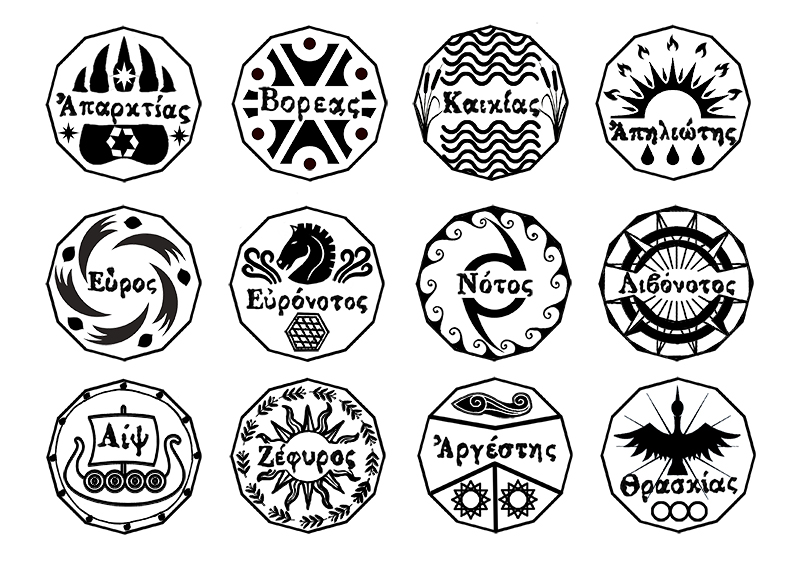
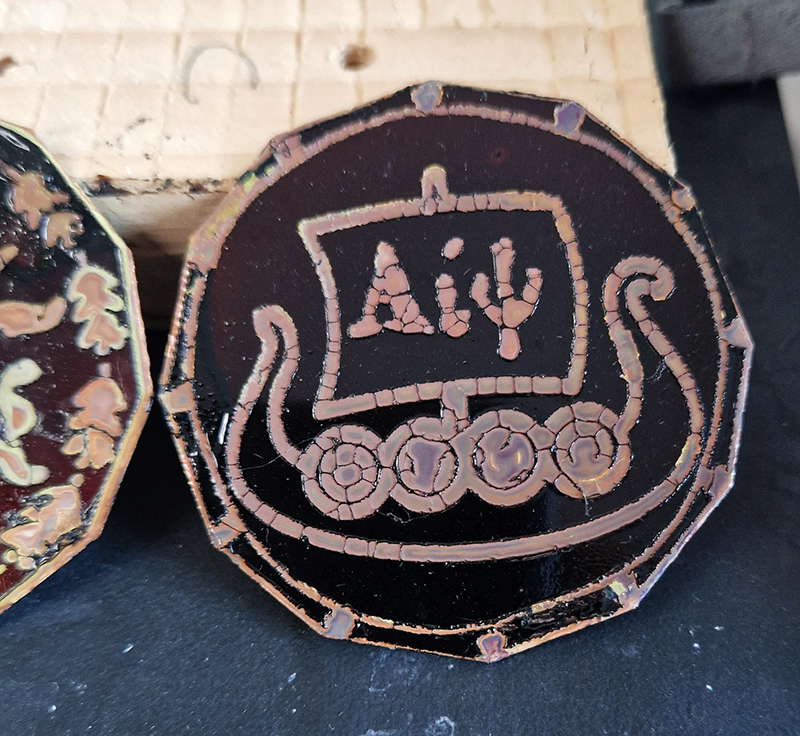
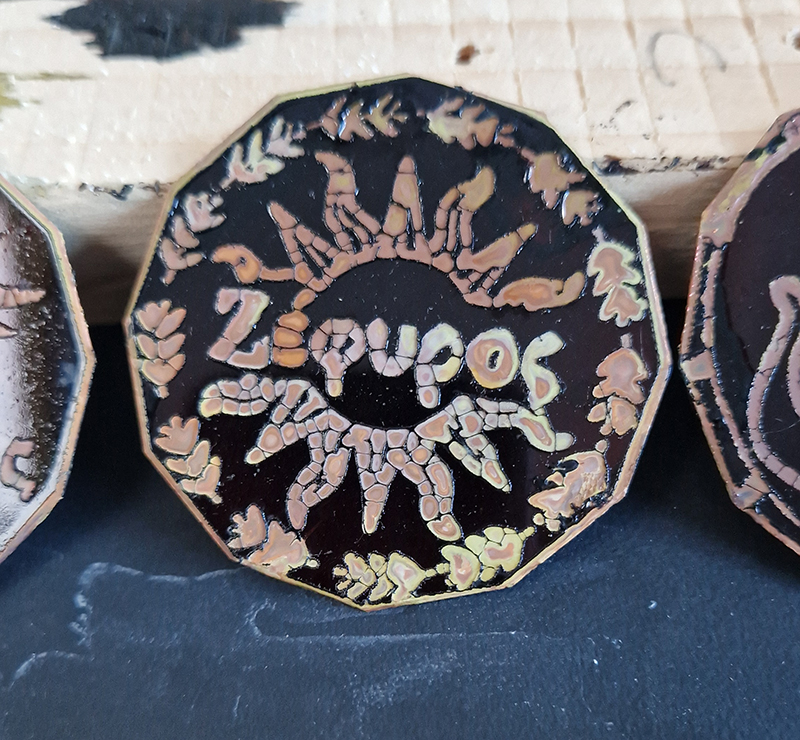
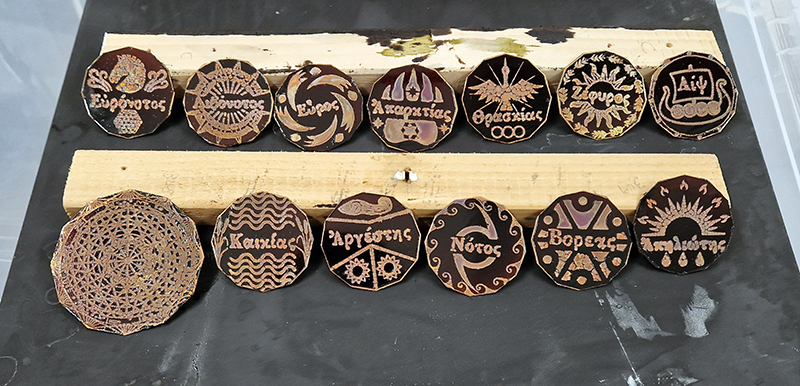
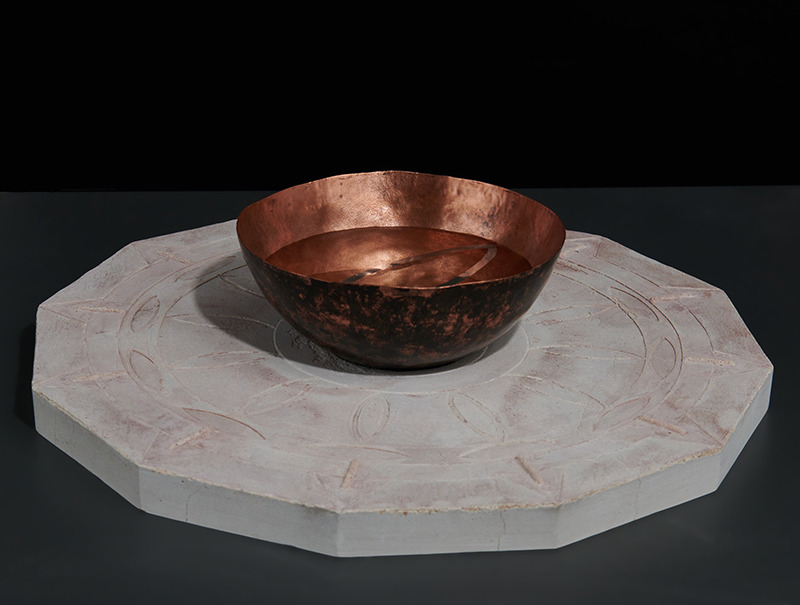
Instruments of the Anemoi are a set of dodecagon tablets cast in Snowcrete, a non-magnetic cement, as used in a magnetic observatory. Suggestive of the pedestals that support various instruments used in monitoring the Earths’ magnetic field they also respond to an ancient anemoscope “table of the winds” carved in marble around eighteen hundred years ago and inscribed with the Greek and Latin names of classical winds on each of its twelve sides. Envisaged here as speculative objects, instruments and schematics wrought by the wind gods, the first emissaries of navigation and orientation.

One tablet holds a copper bowl with a ‘silver fish’ floating in water. The shape of the ‘silver fish’ is based on the oval shaped compass needle (illustrated in Breve Compendio de la Sphera de la arte Navegar by Martin Cortes 1551)  and refers back to wafer thin fish shaped iron leaves used by 11th century Chinese geomancers.

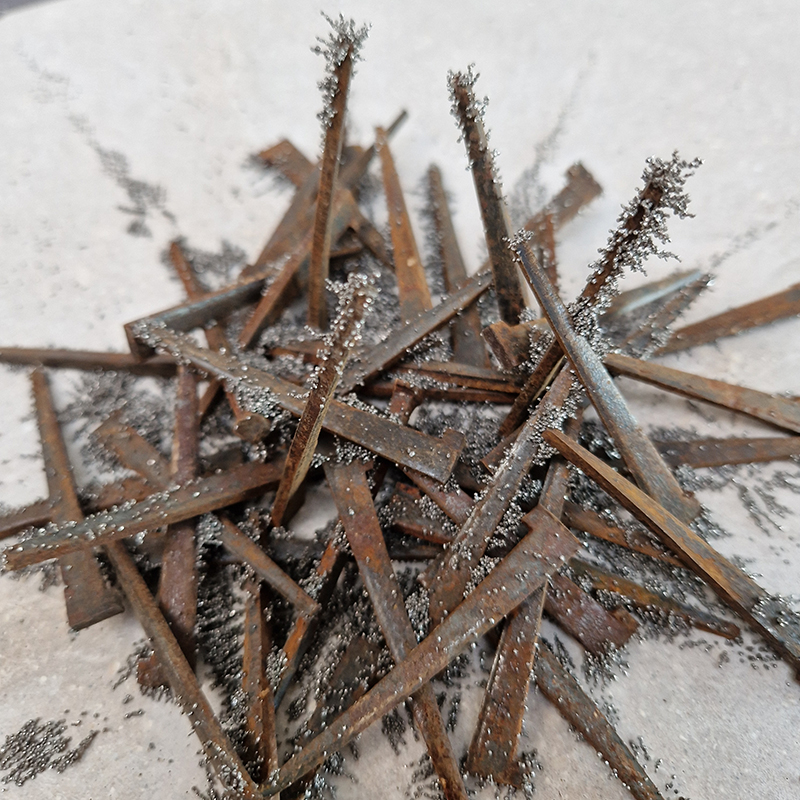
Nails and iron filings on the second tablet reveal an embedded magnetic field recalling a legend that the discovery of the lodestone was made by a Greek shepherd who noticed the nails in his boots were attracted to the rock (magnetite) beneath his feet.

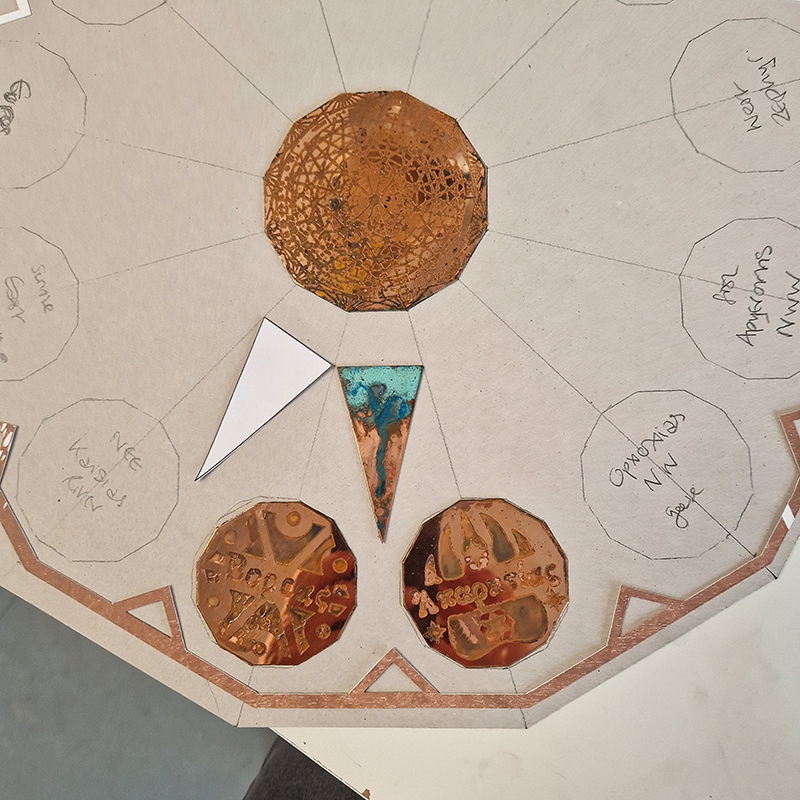
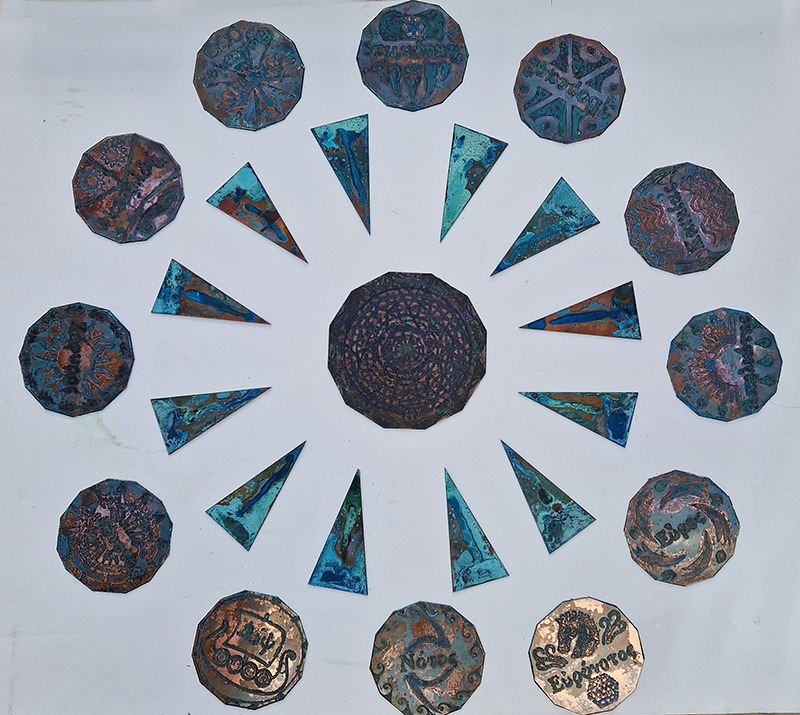
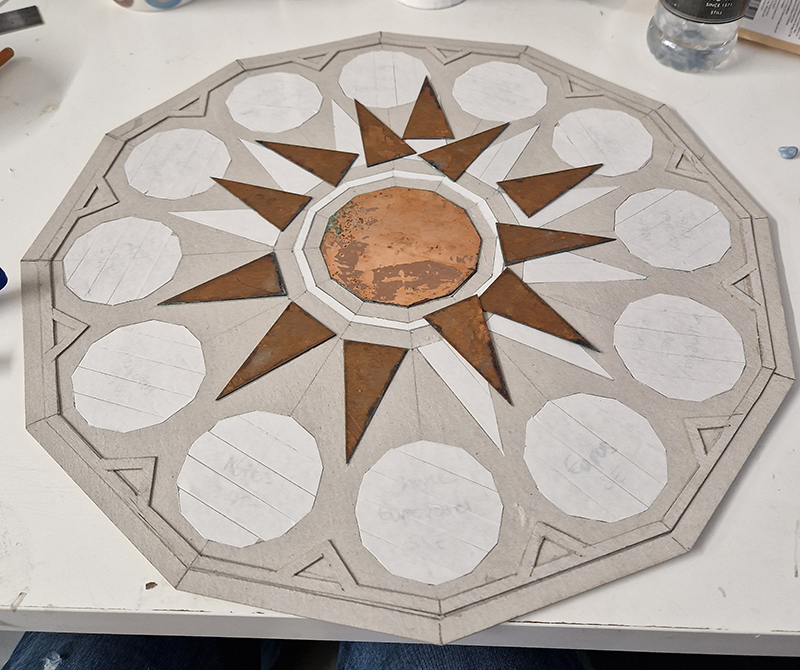
The third tablet is embedded with copper etched with images and names based on associations and attributes of the twelve Greek wind gods set in a traditional compass rose.

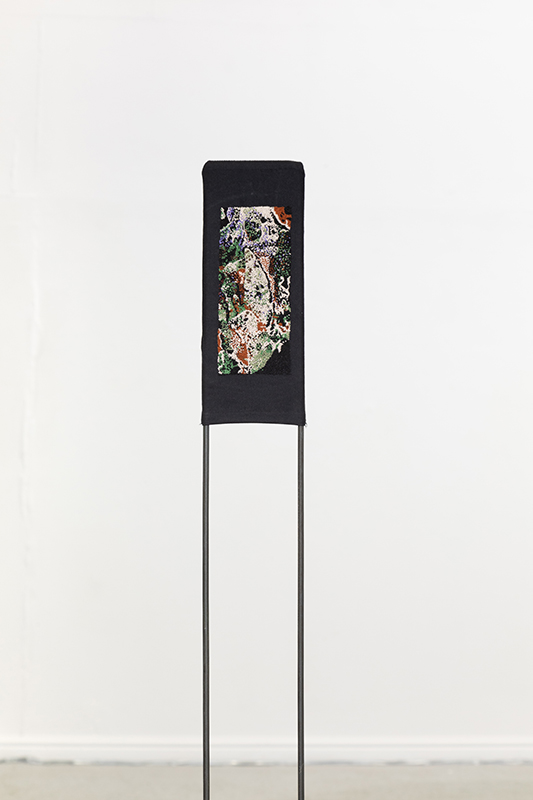
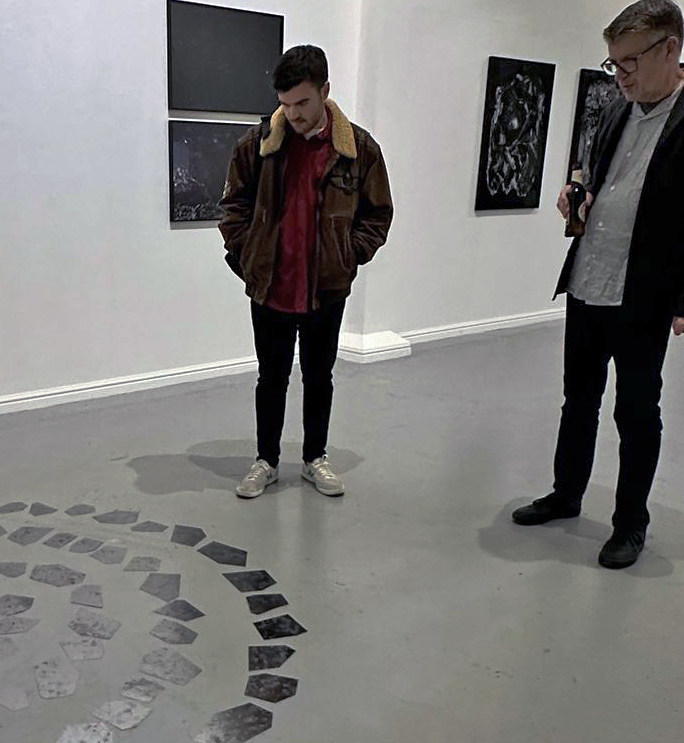
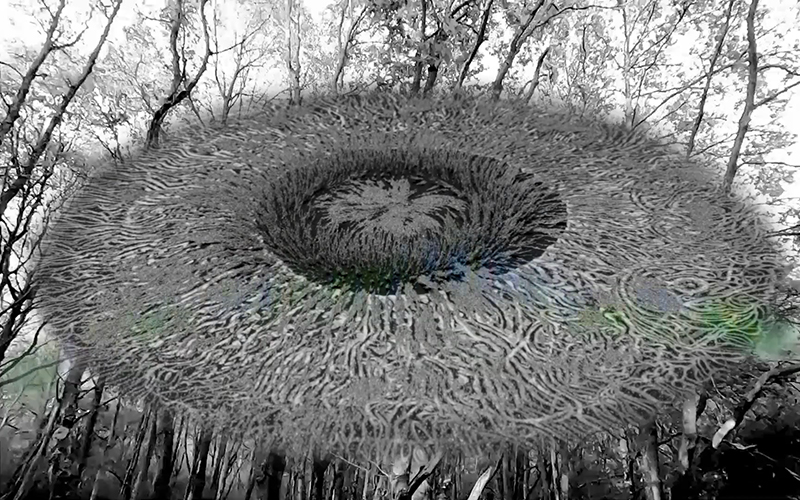
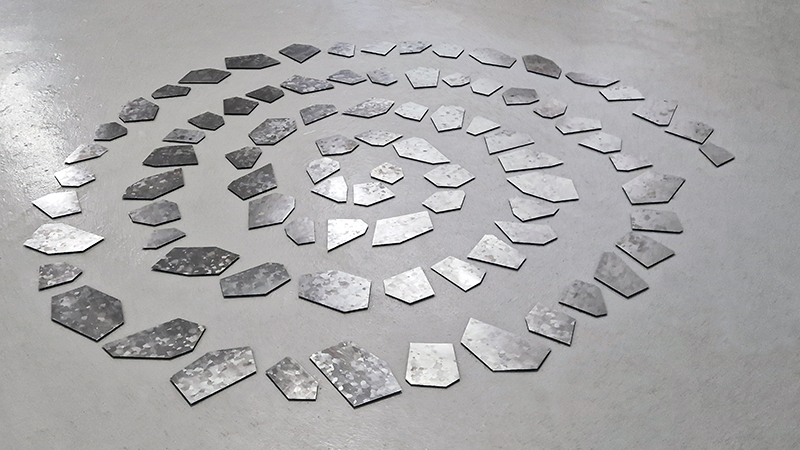
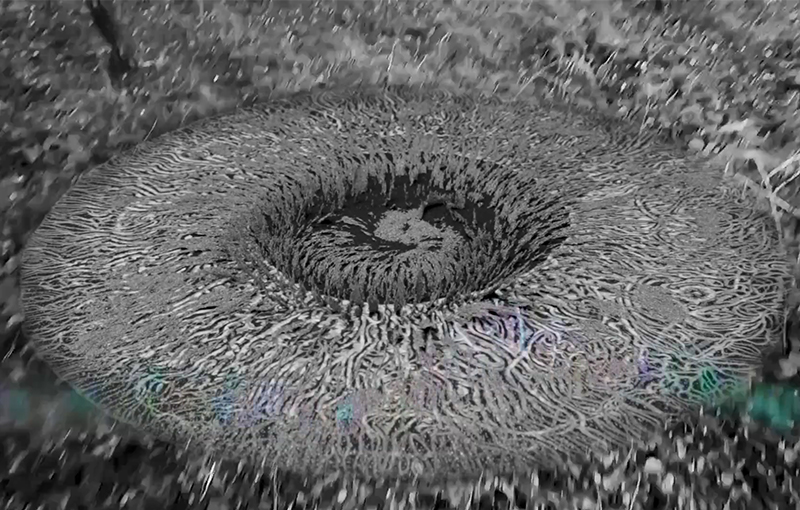
Domain of the Devil Valley Master uses industrial directional magnetic steel, sanded and etched to reveal the Goss texture of rolled iron silicon alloy crystals. The jigsaw pattern of magnetic domains give this material exceptional magnetic properties. The simple evocation of a spiral described in geologically informed polygons draws upon many references, from the shape of our own Milky Way Galaxy sculpted by vast cosmological magnetic fields and the spiralling molten dynamo generating Earth’s magnetic field, to the inner pathway of spiritual growth and the route to the symbolic omphalos (navel) at the centre of the world where the sky entrance and the underworld meet. The title of this work originates from an ancient Chinese manual on the skills of persuasion, The Book of the Devil Valley Master, containing the first known mention of a compass, known at the time as a south-pointer.

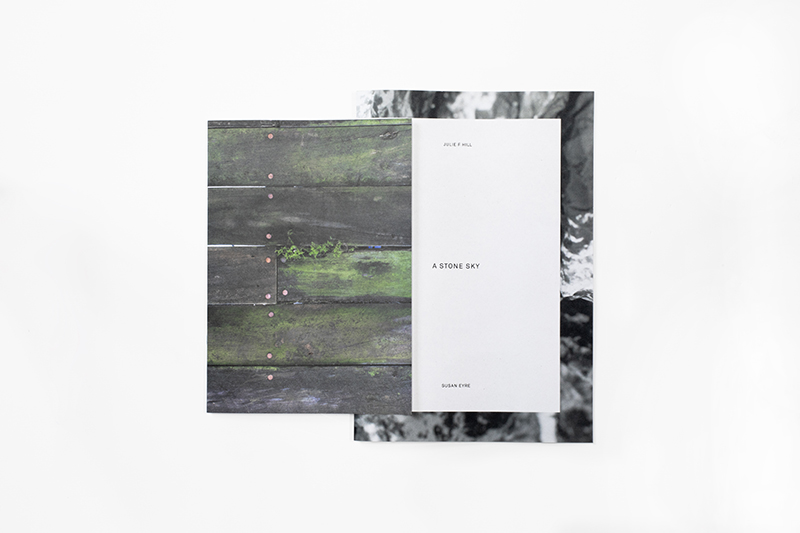
The exhibition closed with an afternoon event launching our publication which includes the essay Dark Nights and Signs of Unseen Things by Anjana Janardhan. There was also a live cloud chamber demonstration of mesmerising cosmic ray trails, artist tours and informal readings.

Publication available – DM via blog comments box for more details or visit Julie’s shop

Photoshoot with Warren King Photography resulted in some great images of my work ready for the press release and promotion of A STONE SKY – the upcoming joint exhibition, with Julie F Hill, that we have been working towards for many months. The exhibition will be at Thames-side Studios Gallery 11th – 26th November 2023 with a private view on 10th November 6-9pm.

Susan Eyre, Azimuth Obelisk (of sedimentary knowledge), paper, concrete, patinated copper, 2023 (detail) Photo Warren King Photography
Julie F Hill, Cave, physically manipulated print of infrared James Webb data of barred, spiral galaxy NGC 5068, 2023 (detail).
Photo Julie F Hill

A Stone Sky brings together the works of multi-disciplinary artists Julie F Hill and Susan Eyre who traverse cosmic layers from the deep earth to deep space, exploring manifestations of darkness and its associations with the unknown and undiscovered. Reimagining the idea of an observatory, their sculptures and installations reach for scales and orders that surpass the human, revealing the cosmic at our feet. The exhibition proposes a cavernous realm of real and speculative possibilities that arise from beyond the limits of human perception. Engaging with the extended sensory range offered by technologies such as orbiting space telescopes through to the ability of birds to ‘see’ the Earth’s magnetic field, the artists’ reveal intimate connections between earth and space.
It was great to meet Anjana Janardhan who we have commissioned to write an essay for a publication which will be launched on the final weekend of the exhibition. We are also planning to give some informal readings, tours of the work and I will be running the cloud chamber so visitors can see the trails of cosmic rays – a way of visualising these unseen visitors from the stars.

The Azimuth Obelisk (of sedimentary knowledge) sculpture is an almost 3m tall reimagining of the obelisk erected at Hartland Magnetic Observatory in 1955 as an azimuth mark to be viewed from the Observing Room or Absolute Hut to monitor the drift of the magnetic north pole.

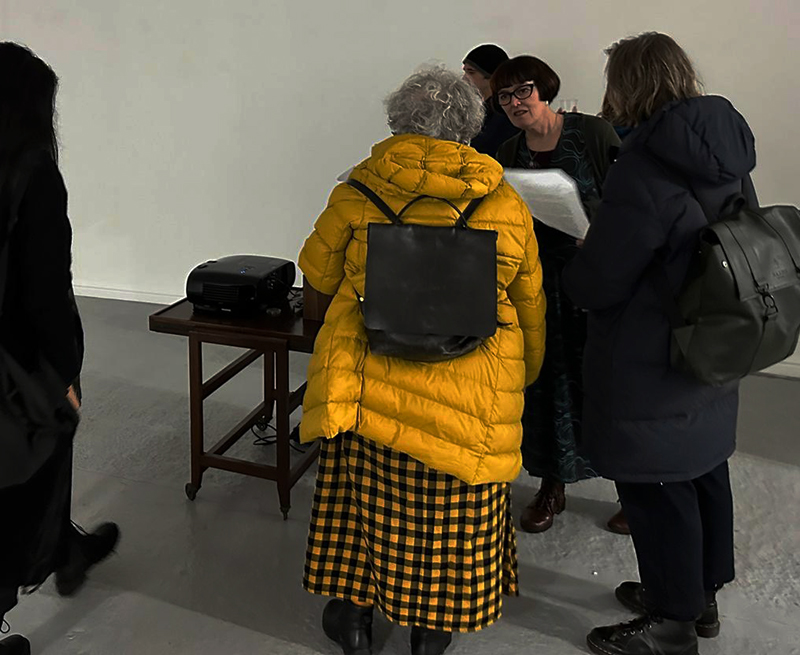
I have obtained an old wooden trolley to put the cosmic ray detectors and projector on for the digital video work The Breath of Stars. This feels in keeping with the original furniture used at Hartland Magnetic Observatory. The Breath of Stars directly interacts with cosmic rays – as each cosmic ray particle strikes a plastic scintillator its energy is recorded and a starburst image video is projected. The interaction of cosmic rays and the solar wind with atmospheric electrical fields combines to influence the unpredictability of the magnetosphere. Most radioactive particles heading for Earth are deflected by the magnetosphere. Without the Earth’s magnetic field deflecting the majority of cosmic rays, life on this planet could not survive.

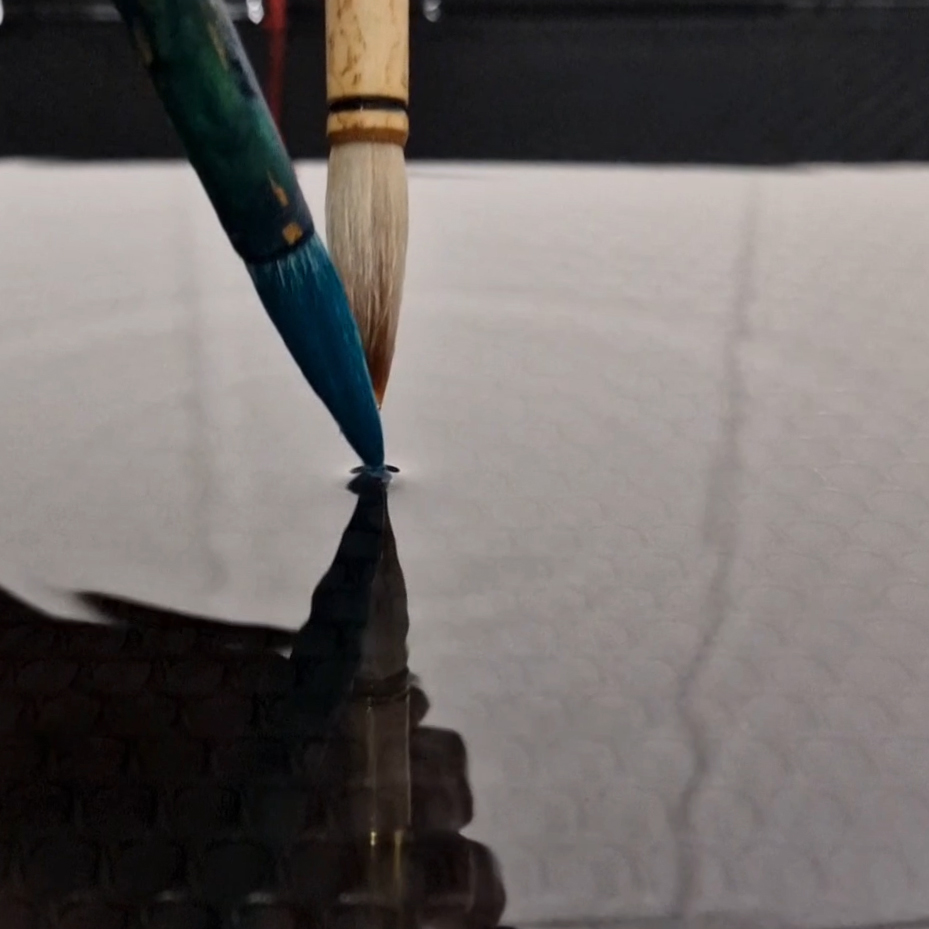
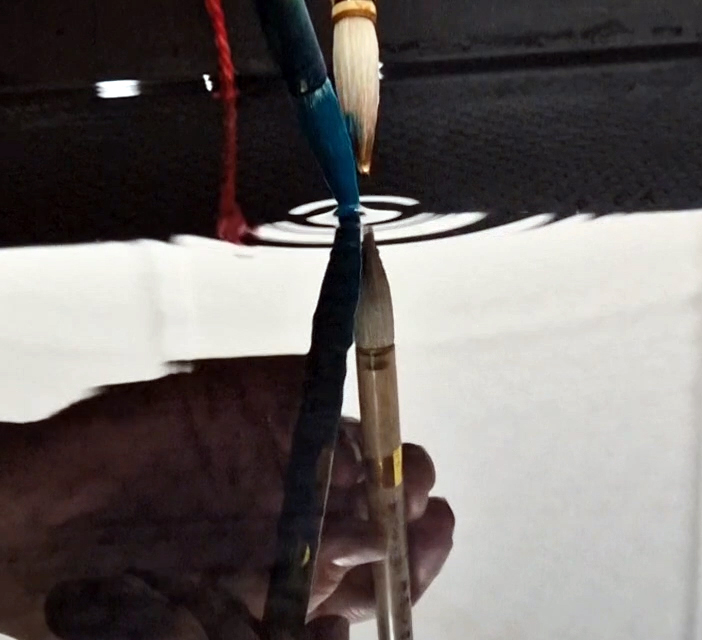
The 48 paper tiles for the roof of The Absolute Hut (of action potential) are made using the suminagashi technique of marbling with a colour to reflect both the sky and the patinated copper roof tiles of the Observation Hut at Hartland Magnetic Observatory. The paper is Japanese Osho Select and is very fragile when wet so has to be pulled from the water tray using a supporting mesh. Topological contours of suminagashi marbling reflect the fluid motion of the Earth’s magnetic dynamo and the pulsating alpha waves of the human brain when subjected to magnetic fields.

If you place a polarising filter over a screen that emits polarised light and use a polarising lens on the camera, then any plastic, photographed in this method, especially injection-moulded plastic, reveals stress points with a kaleidoscope of colours known as birefringence. Cryptochrome, the protein molecule found in a birds eye that enables birds to ‘see’ the magnetic field is excited by polarised light. Polarisation may also reveal the existence and properties of magnetic fields in the space medium light has travelled through. Research suggests that human alpha brainwaves react to a changing magnetic field. These ideas are brought together in a video work speculating on human magnetoreception via magnetite crystals in brain cells.

This video work will be shown on multiple small screens inside The Absolute Hut (of action potential) alongside two larger monitors showing companion video pieces exploring dynamics between the Earth’s geologic structure and navigation using the magnetic field.

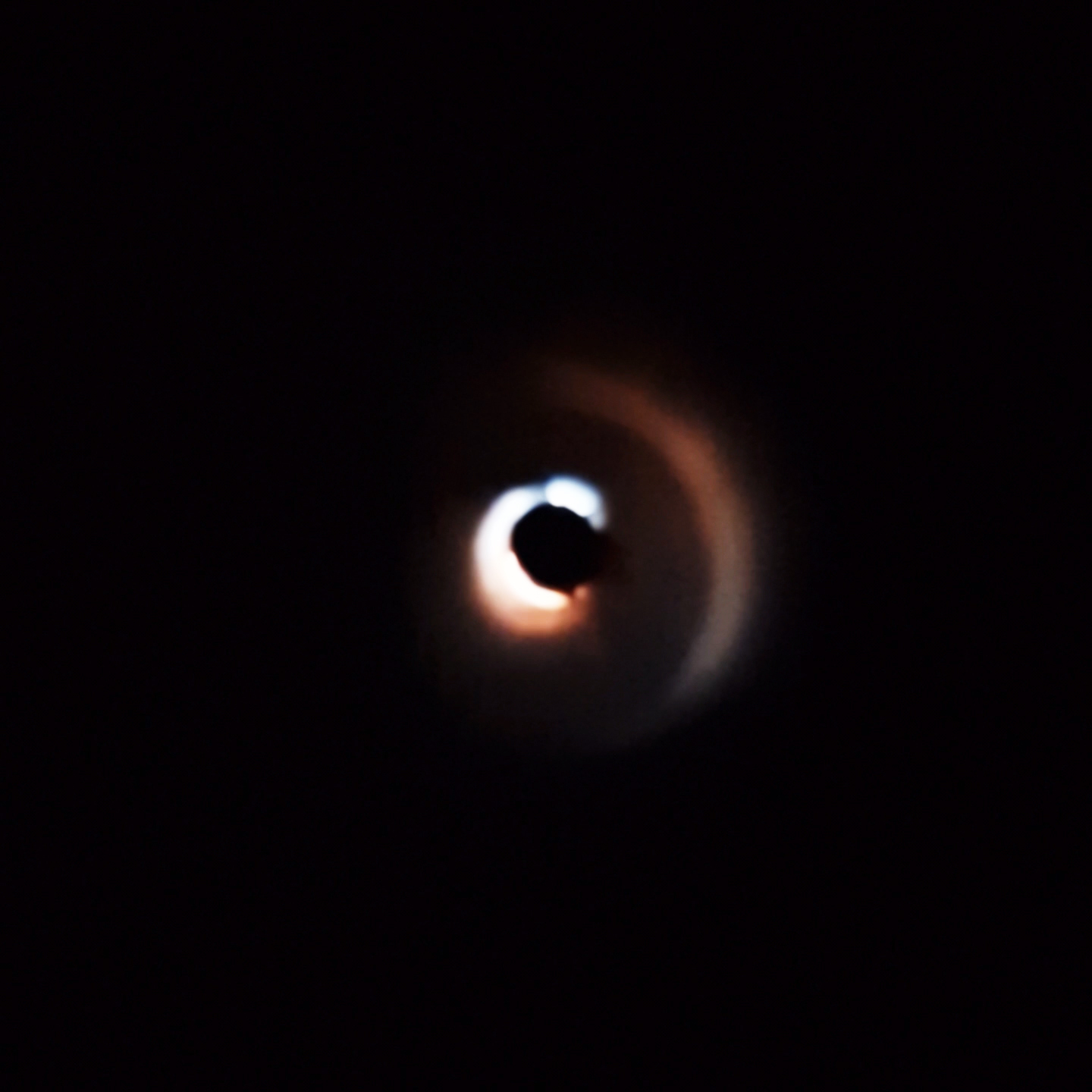
I have replicated the experiment I saw at the National Physical Laboratory, dropping a magnet down a copper pipe to see how the magnetic field generated slows the magnet down considerably. I filmed this and added a tiny led light with the magnet.

Finally dark skies and fine weather coincided so I was able to go and make a time lapse of the stars rotating around Polaris.

Instruments of the Anemoi is a set of three dodecagon tablets cast in Snowcrete, a non-magnetic cement, as used in a magnetic observatory. Suggestive of the pedestals that support various instruments used in monitoring the Earths’ magnetic field they also respond to an ancient anemoscope “table of the winds” inscribed with the Greek and Latin names of classical winds on each of its twelve sides.

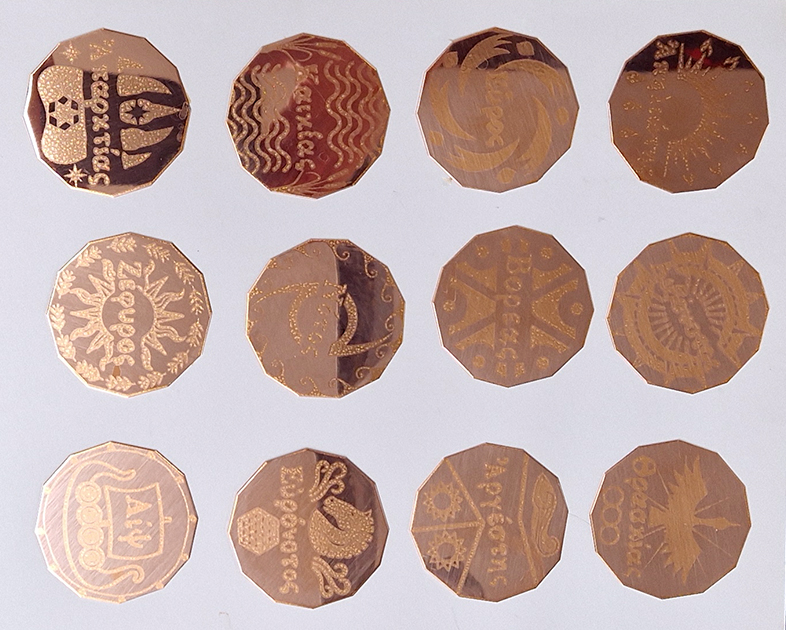
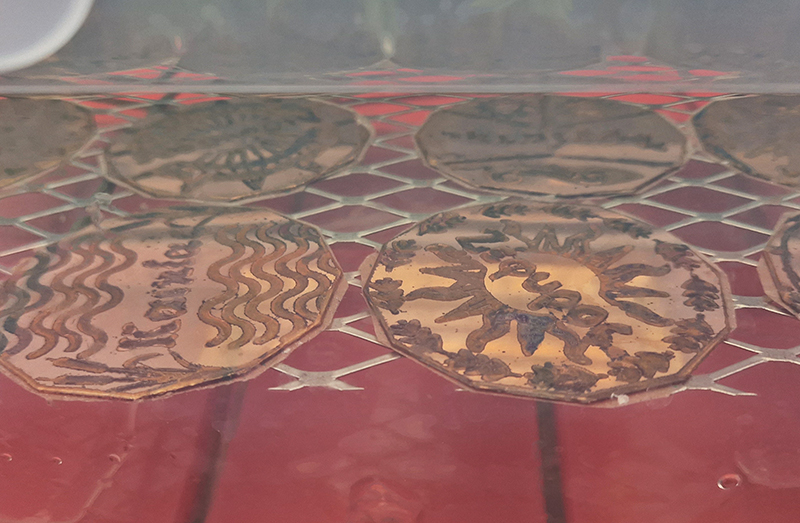
Hand cut copper pieces to be etched with images based on associations and attributes of the twelve Greek wind gods.

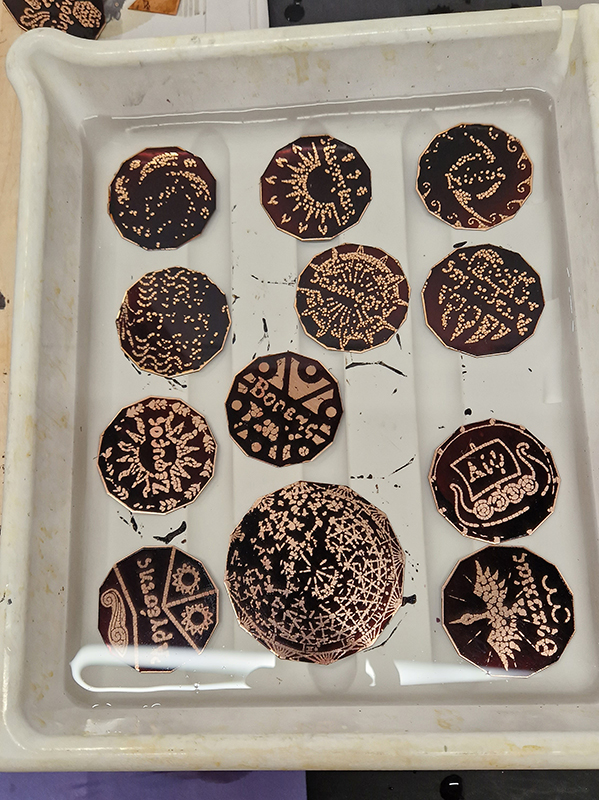
Sugar lift solution is screen printed onto the copper pieces.

These are then dipped in bitumen and immersed in hot water where the sugar slowly dissolves to reveal the image.

They are then left to dry before being etched.

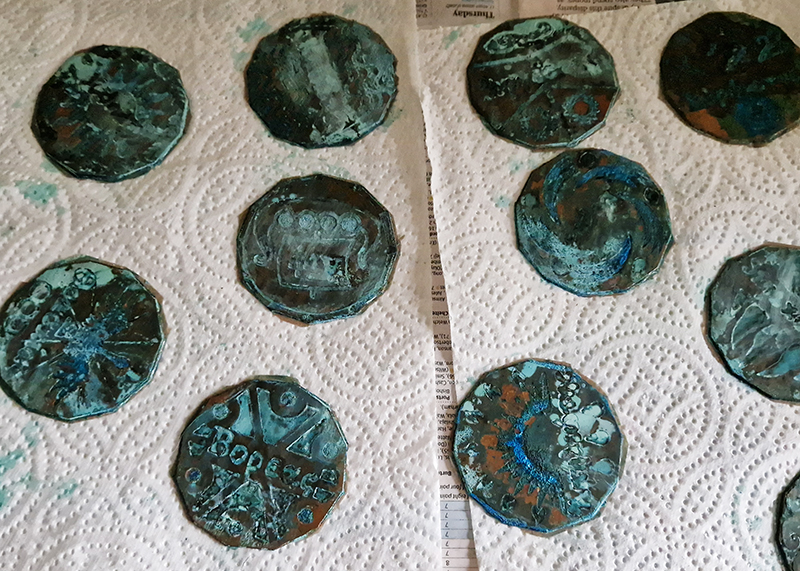
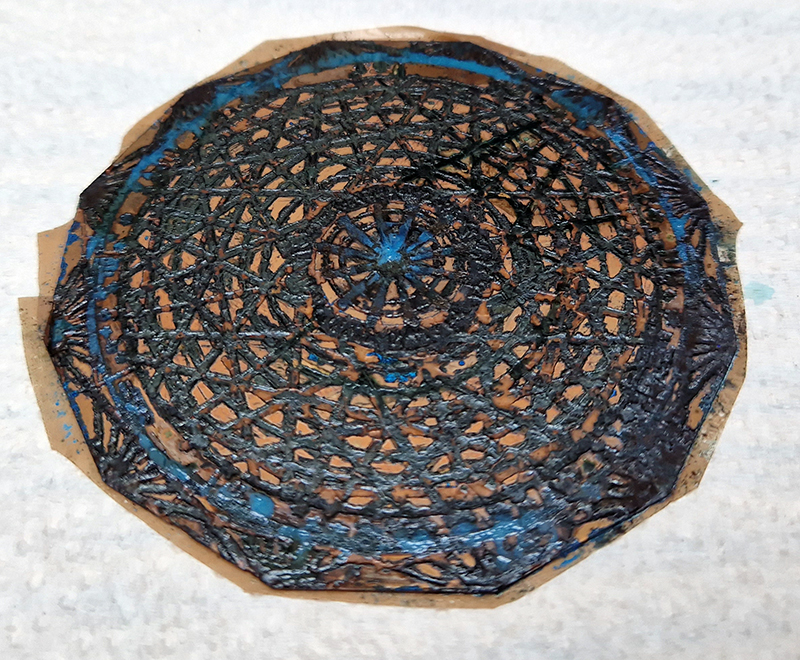
These were etched for 2 hours in an Edinburgh Etch solution, made with ferric chloride, citric acid and water to get a deep etch. The detail in the bitumen held very well. I constructed a collagraph from card to attach them to for casting in concrete. Once etched the detail areas were painted with a soy sauce solution before being placed in an ammonia vapour bath.

After a few hours patinating they are removed to dry before being cleaned up.

Positions are marked out on the collagraph and double sided tape is used to secure the pieces in place face down. The collagraph is then placed in the silicon mould ready for casting with Snowcrete – the same non-magnetic concrete used at a magnetic observatory.

This is the third of the tablets to be cast for the work Instruments of the Anemoi. The first holds a copper bowl with a ‘silver fish’ floating in water based on the oval shaped compass needle (illustrated in Breve Compendio de la Sphera de la arte Navegar by Martin Cortes 1551) as symbol of the silver fish – wafer thin fish shaped iron leaves used by 11th century Chinese geomancers.

Photo Warren King Photography

The second has embedded magnets in a pattern revealed by old nails and iron filings over the surface. One legend on the discovery of the lodestone recalls a Greek shepherd who noticed the nails in his boots were attracted to the lodestone (also known as magnetite a naturally occurring mineral).

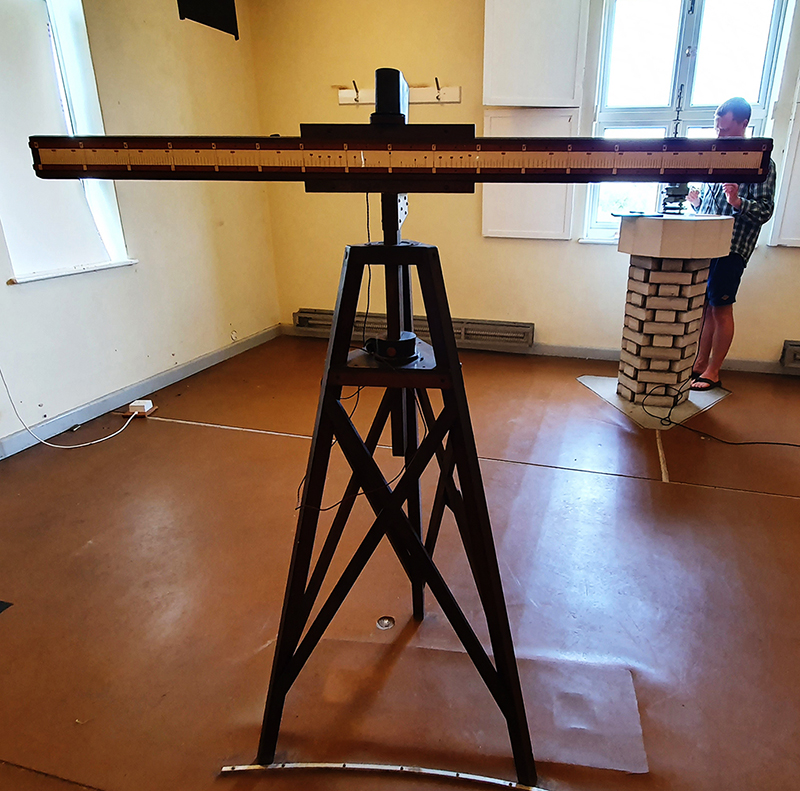
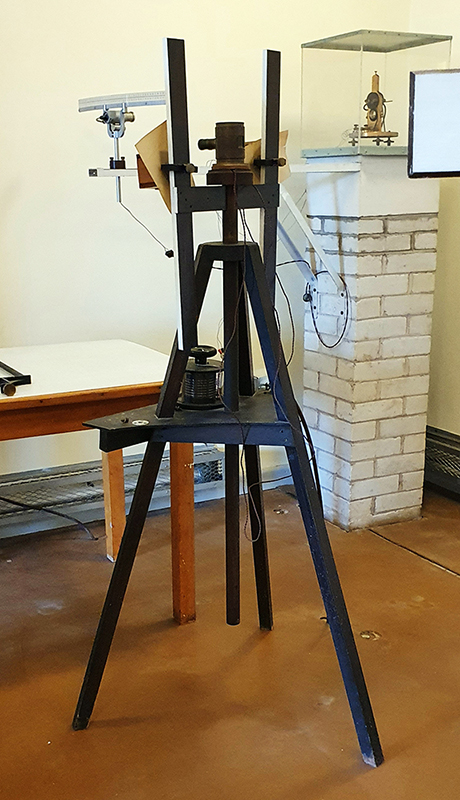
The tablets will be shown on adapted wooden theodolite or telescope tripods in the spirit of equipment seen below during my research trip to Hartland Magnetic Observatory.

Gallery Visits

Seismic Mother curated by Charly Blackburn and Holly Birtles at Hypha Space – an exhibition of 20 artists whose work attempts to communicate the seemingly incomprehensible nature of the earth’s magnitude and magnificence, temerity and resilience as it endures, regenerates and struggles to survive through the slow violence of ecological catastrophe. I visited for the book launch and performative reading from Stephen Cornford whose book, Petrified Matter, I bought. It’s an enlightening read on the links between photography and fossils through mineral, chemical and data recording processes, going on to speculate on future geology and the impossibility of reversing the extraction process by separating minerals used in mobile phones and other technology to return these back to the soil.

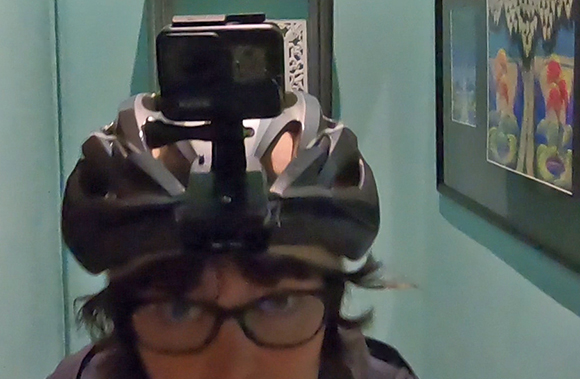
Progressing new work Seeker Seer Scientist. I have completed walks to my south and west horizon points wearing a head camera.

2011 south walk

Each walk starts at dawn and takes the most direct route to a point on the map 3 miles from my home. For an average height observer, the visible horizon is approximately 3 miles distant. The true horizon is usually hidden.

2011 south map

‘Horizon’ derives from the Greek ‘horizōn kyklos’ meaning “separating circle” which in turn comes from the verb to divide as in creating a boundary. 

2011 South 1

2011 south destination

The walk west was the longest of the four as the winding River Thames disrupted a very direct route.

2011 west 1

2011 west 2

After walking to each of the four compass points NESW I have about 5 hours of footage which I have edited down to about a 6 minute journey to the horizon edge. I am aiming for the final film to be viewed while on a treadmill to experience the meditative rhythm created by walking which heightens creative thought processes. The work will consider the existence of many more dimensions than we are aware of in our known and knowable universe from the perspective of mathematical theory and levels of consciousness.

‘We have many tools at our disposal to gather information about the world. Physicists are tuning their instruments to an unprecedented level of sensitivity. Ultimately, however, whatever external instruments we use, all data is experienced by our bodily senses. These senses turn out to be more finely tuned and calibrated than anything we have yet invented.‘ Ansuman Biswas

My friend has leant me her grandfather’s beautiful compass to use in the film. The magnetic compass was first invented as a device for divination as early as the Chinese Han Dynasty.

‘Scales of Intangibility’ an installation using cosmic trail projections within a velvet lined chamber was planned to be included at the 2020 Hidden Door Festival in Edinburgh. Due to the ongoing pandemic this was to be postponed until late spring 2021 but could now be postponed further.

In readiness I am running my cloud chamber to get some new footage.

The cloud chamber gives us a glimpse into the invisible world of particles produced in the radioactive decay of naturally occurring elements and those generated when cosmic rays strike the top of the earth’s atmosphere. The interactive experience brings alive the fact that these visitors from outer space are everywhere. Filmed on 4th November, the day of the American Presidential Election, this V for victory was an encouraging message from the stars.

2011 cosmic trail V

It’s also quite cool when a puff of air gets into the chamber.

2011 cloud chamber

Watched the London Screen Archives film about Woolwich which shows clips from Paradise Place. This has given me an idea for new work taking rubbings from the walls of paradise once I can travel about again in London.

Also testing the raster folding for the work 90 light years home. A raster scan, is the line by line pattern of image capture and reconstruction used in early television transmission. Work based on the idea that there may be a habitable planet orbiting HD 70642, a yellow dwarf star in the constellation of Puppis. At 90 light years away, extremely faint early broadcasts from Earth are now passing this planetary system. Representing the Stern, or Poop deck, of the Argo Navis, Puppis is one of the three constellations that once formed the huge constellation Argo Navis (the ship of the Argonauts). Looking at a contemporary (space) ship symbolizing adventures into the unknown that could be transmitted as raster image.
I found participating in Robbie Coleman and Jo Hodge’s Shoreline to Shoreline a very moving experience. This collective pilgrimage in the time of Covid to stand at the edge of any significant nearby body of water at 3pm on 20th December 2020 to remember, mark or memorialise loss was an invitation to feel grief without suppression and feel a connection through commonality.
Every droplet of rain, every snowflake that falls is on a circular journey. Water that evaporates from the surface of a puddle may arrive on the other side of the world as part of a wave crashing onto a beach. The journey may have taken a few days carried in clouds across the sky or a thousand years trapped in a glacier creeping through the Northern darkness.

2012 shoreline to shoreline

This coincided with the Winter solstice return of the light. Grief like a wave, swelling and rolling over you, making you gasp for air. We struggle against it but here I let it wash over me a little. I stood on the bank of the little Hogsmill river which is our nearest body of water and somewhere I visited often during lockdown and also on the day my Mother died when it seemed particularly vibrant.
Also checking on the progress of ‘stumpy’ in winter guise.

2012 stumpy

As night fell Saturn and Jupiter edged closer together. The 2020 great conjunction of Jupiter and Saturn is the closest these planets appear since 1623 and the closest observable since 1226.

2012 great conjunction

The winter solstice is the precise moment at which the Northern Hemisphere is at maximum tilt away from the Sun. At that moment, the sun’s rays are directly over the Tropic of Capricorn (my birth sign). It is the day with the shortest period of daylight and longest night of the year. The shadow at noon is the longest a noontime shadow can be.

‘There’s something wrong! There’s something wrong – It’s high noon and my shadow’s long!’ Was Not Was One White Crow

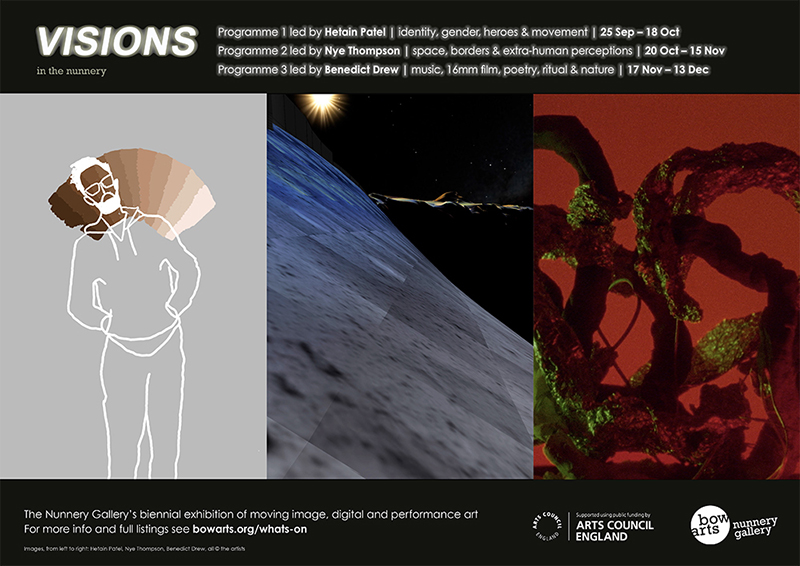
After an exciting fun packed real life opening event, a stop and start exhibition between lockdowns Bow Arts Nye Thompson led Visions II programme at the Nunnery Gallery closed. It is still possible to view the films on the Nunnery Gallery YouTube Channel

During the window of opportunity between lockdowns I was able to enjoy a journey through Andy Holden’s cartoon world of existential angst The Structure of Feeling (A Ghost Train Ride) at Block 336.

Also an up close visit to the winding labyrinth of Terra Nexus, a network of interconnected installations questioning the role of the human as part of ecology at Proposition Studios and was lucky to be guided through by curator Gabriella Sonabend. Excellent poetic film One Day As I Was Driving Home by WR Saunders, which simultaneously condenses and stretches the experience of time exposing the unrelenting power of entropy. Great to see the congealed organicly industrial cavern Swimming in the Mud by Emma Jane Whitton. Whole show ambitiously moving to South Bank in New year.

Just squeezed in a trip to The Botanical Mind at Camden Art Centre.

The ceremonial use of entheogenic, or mind altering plants is closely associated with the shamanic tradition and many different cultures and traditions work with plant medicines for psycho-spiritual transformation. It has been suggested by academics and researchers that the evolution of human consciousness was catalysed by psychoactive plants. In the Amazon rainforest, the patterns found in nature are the basis of sacred geometries that indigenous people incorporate into their everyday world through their art and which trace a connection to a primordial reality where the material, immaterial, visible and invisible planes of existence were once unified and whole.