Archives for posts with tag: pallasite

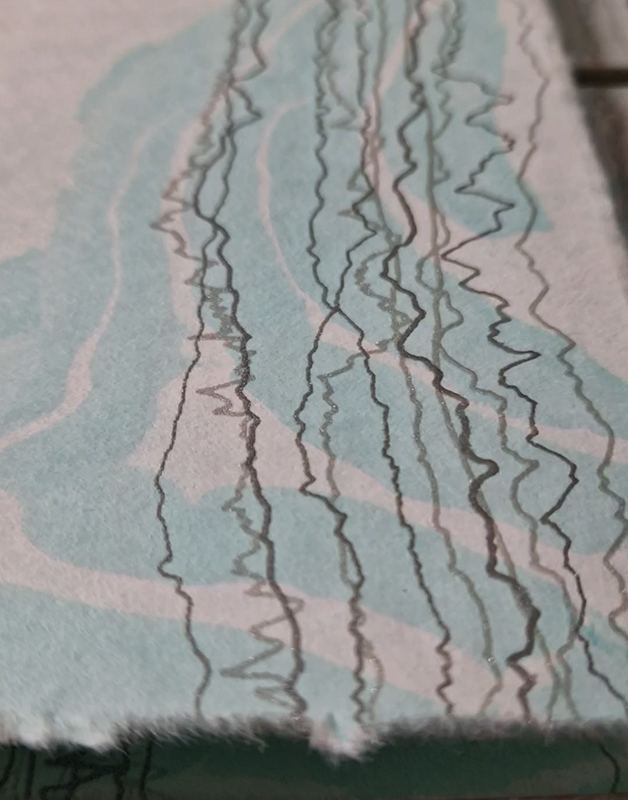
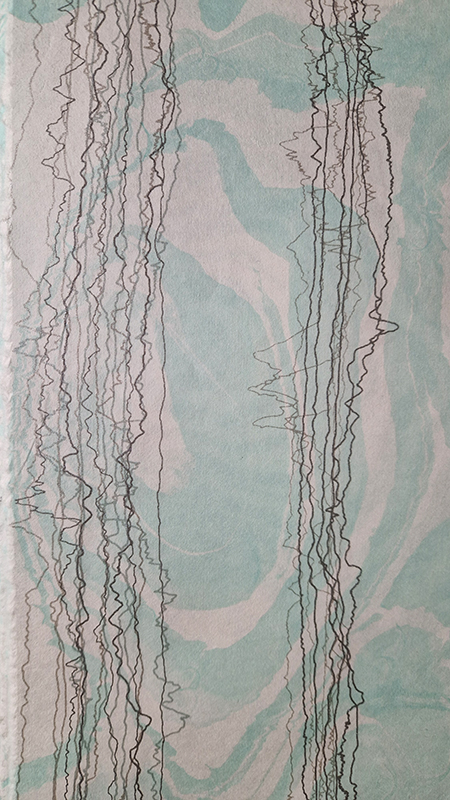
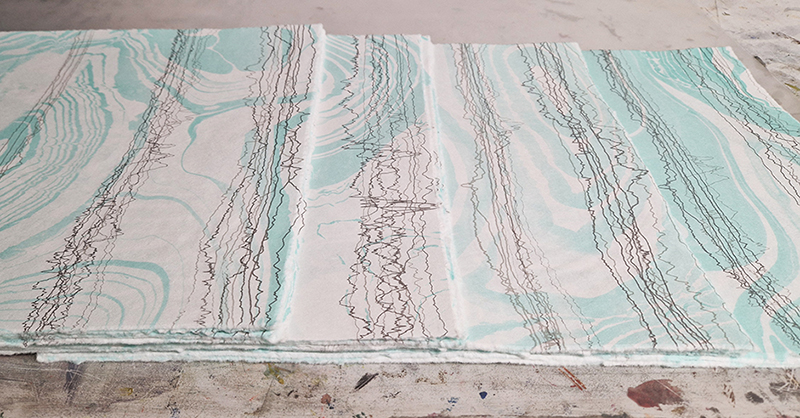
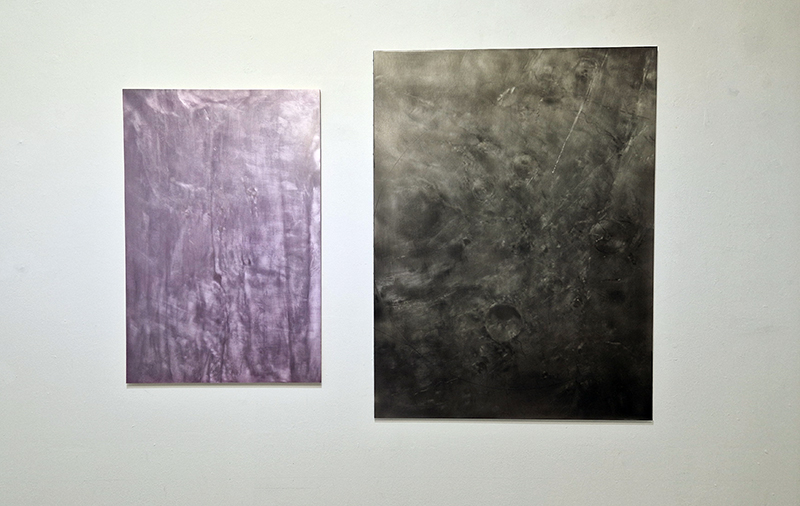
Spending time in the print studio layering up magnetometer lines describing fluctuations in the Earth’s magnetic field. Using sheets of Japanese paper with Suminagashi ink swirls to evoke both ocean and magnetic currents. The lines are printed in metallic inks, relating to the idea of a lode, which in geology is a deposit of metalliferous ore that is embedded in a fracture in a rock formation or a vein of ore that is deposited between layers of rock.

The bands of magnetometer lines are used to signify the last three magnetic pole reversals. The most recent at 42,000 years ago (a short 500 year blip), then 780,000 years ago (continued for 22,000 years) and 1,000,000 years ago (continued for 40,000 years). This history of these reversals is stored in the ocean floor as magma flows up between cracks in the Earth’s crust, spreads and solidifies, capturing the direction of the poles in the orientation of the minerals.

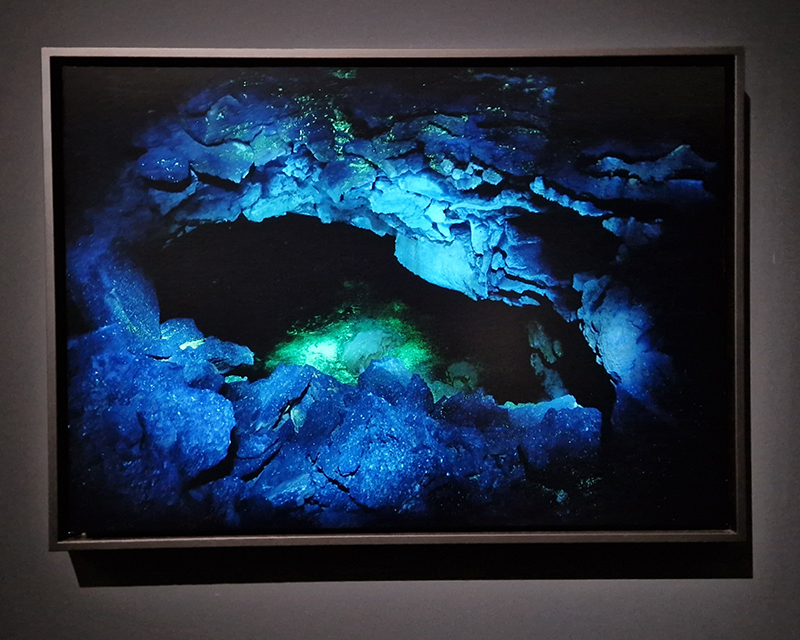
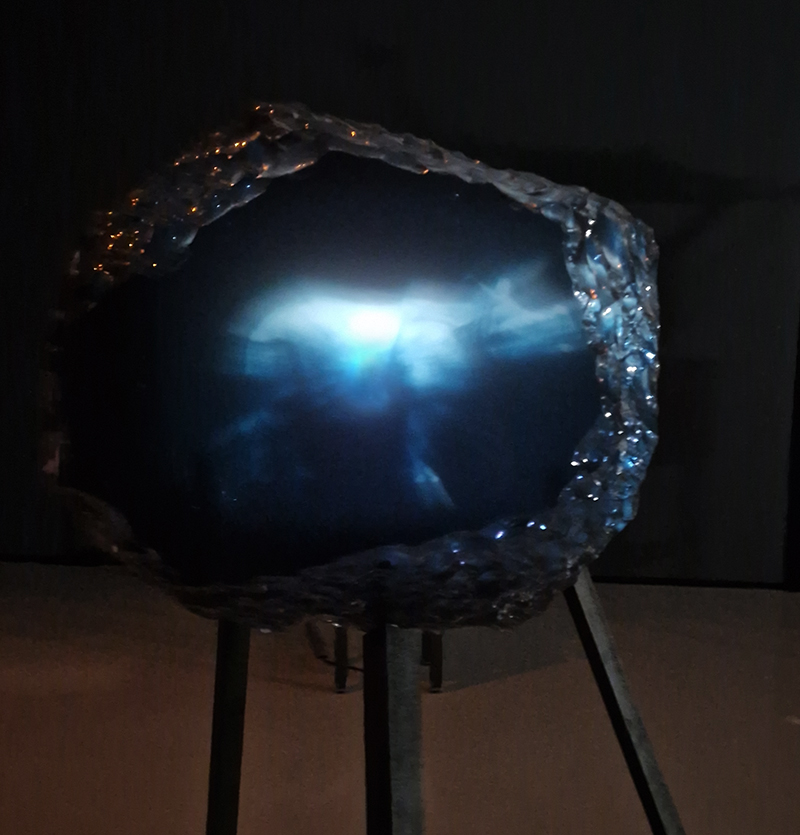
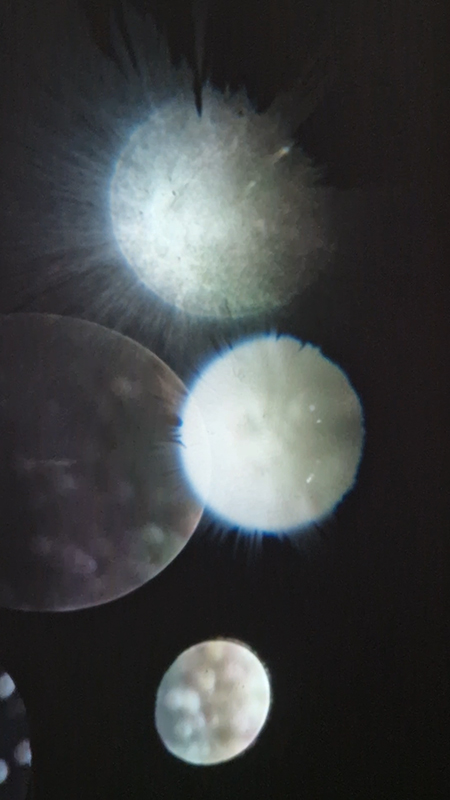
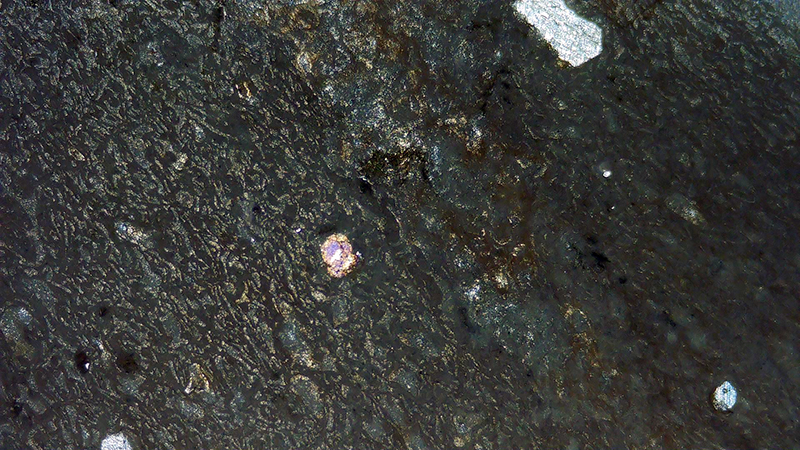
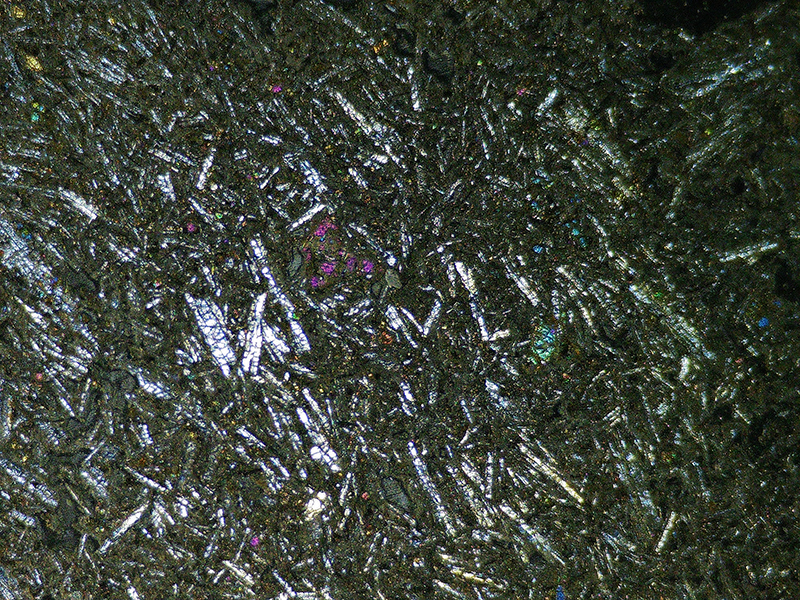
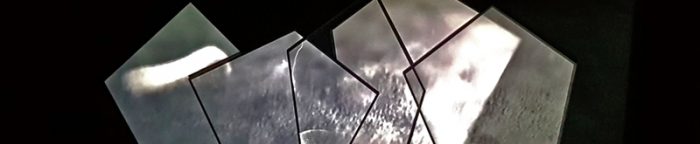
Work in progress on Mineral Visions, a video sculpture with a particular focus on magnetite/magnetism and human relations. Editing video of Jepara seen under the microscope. This is a magnetic pallasite meteorite with an interior structure of densely packed olivine and iron-nickel, discovered in Indonesia in 2008. Pallasite meteorites formed in the asteroid belt between Mars and Jupiter. They’re made up of minerals and remnant materials from the first few million years of the solar system, forming at a time when planets were only just coming together.

A very special research trip with fellow artists exhibiting in the upcoming show at Hypha HQ, The Geological Unconscious, to visit la Galerie de Géologie et de Minéralogie, Muséum National d’Histoire Naturelle, Paris. Hosted by the curator of minerology we were privileged to see a selection of stones in the museum vault. The museum holds Roger Caillois’ stone collection as featured in his book The Writing of Stones. The photographs of this extraordinary collection do not compare to seeing them up close, from every angle. Must larger than anticipated, they are extracted from their snug foam packaging for yet another scrutiny of the human gaze. Caillois wrote at length about each stone, allowing his imagination to conjure metaphor and analogy from the syntax of the ancient crystal and sediment. He was fascinated by his own fascination with the stones which he saw as a desire to connect with the more than human and lose oneself in the enormity of the universe.
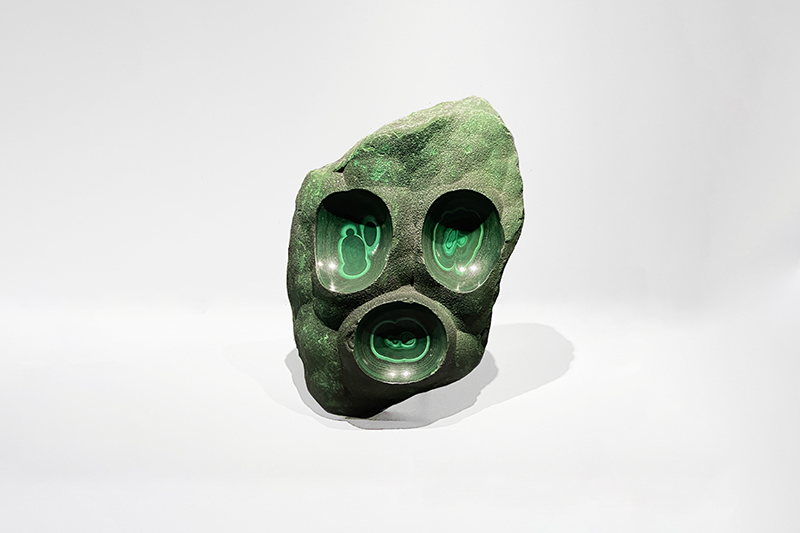
Roger-Caillois Malachite Photo Julie F. Hill

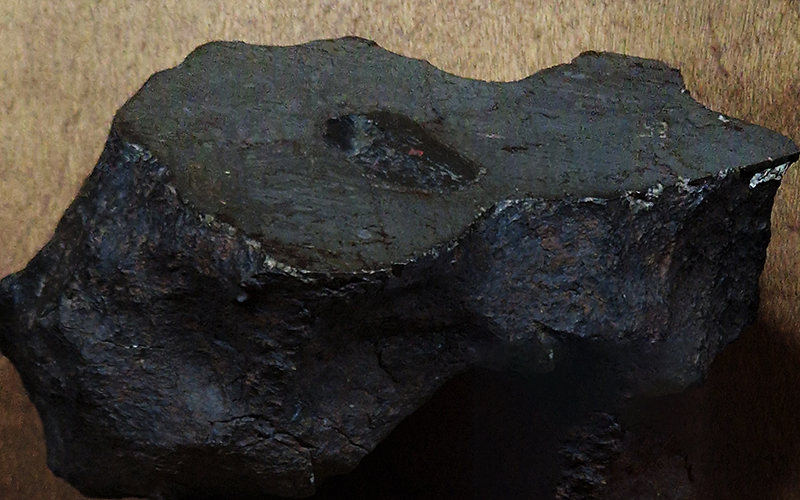
We also got to see some meteorites in the collection including a large one containing diamonds that had belonged to Caillois. The Canyon Diablo meteorite originated in the asteroid belt between Mars and Jupiter and crash landed into the Arizona desert approximately 49,000 years ago, with the force of more than 100 atomic bombs. The crater it left is nearly a mile across and 600 feet deep. Fragments were flung over an area of over 11 sqm from the point of impact where the main mass vaporized on contact. In the force of collision small diamonds formed from graphite and are found inside the highly recrystallized meteorite fragments at the rim of the crater. 
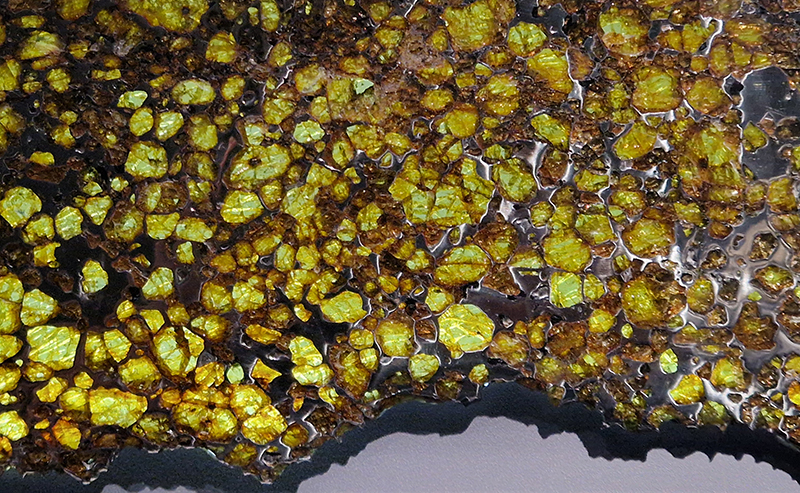
I was also interested to a slice from one of the world’s largest specimens of pallasite, the Imilac pallasite discovered in 1822 which exploded over the Atacama Desert in northern Chile, possibly in the fourteenth century.
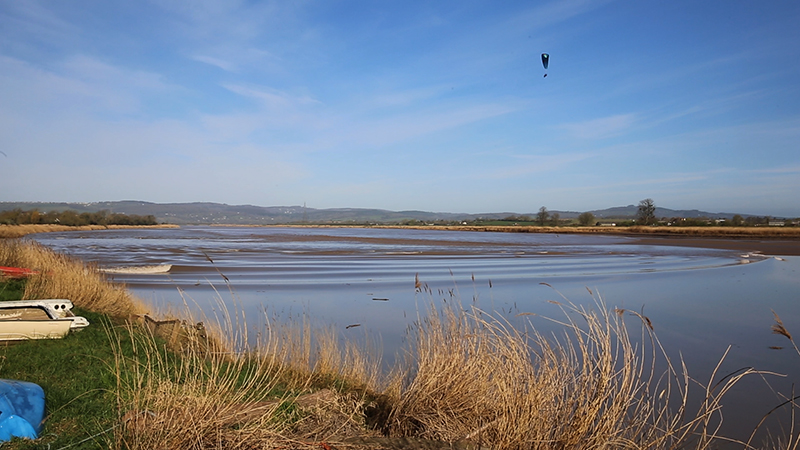
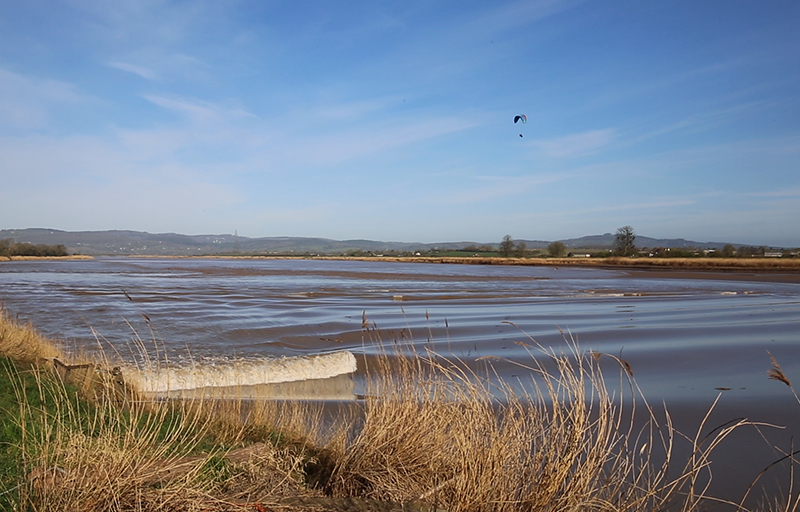
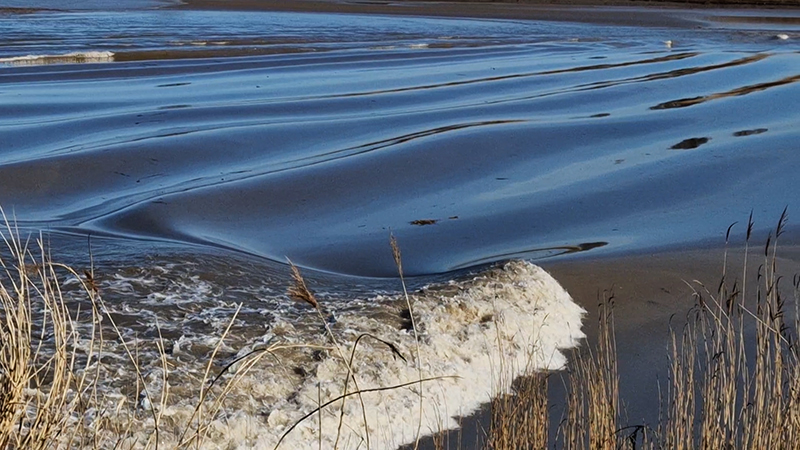
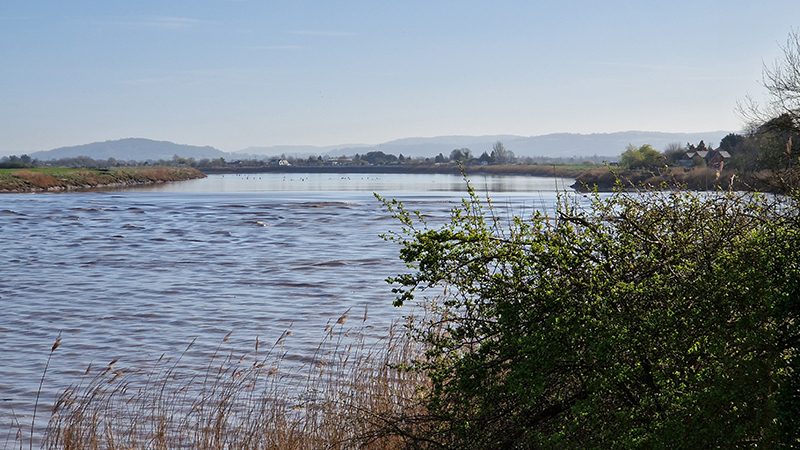
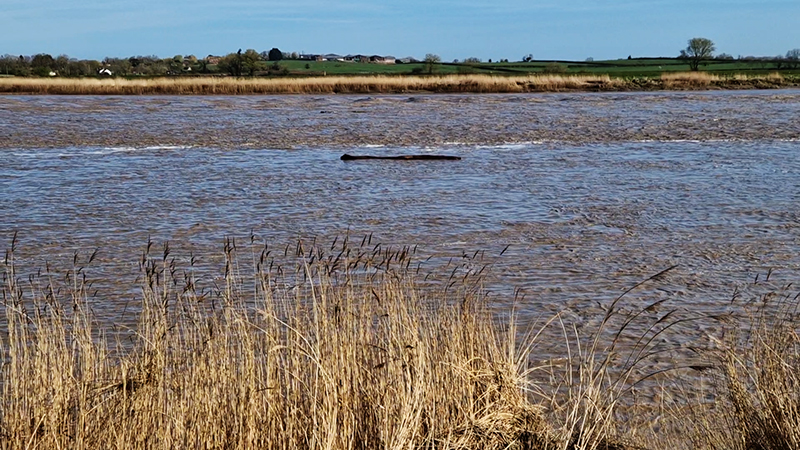
This spring Severn bore had been forecast to be a 4* event but arrived earlier than expected as more of a ripple. Not enough rain from the Welsh hills and no uplifting wind meant it was a more gentle, leisurely wave. It was still exciting to witness the change in the river from the slow glassy seaward flow to choppy, muddy turbulence carrying logs and assorted debris inland as the tidal wave rose into the channel. Such a beautiful morning to be on the river bank.

Gallery Visits

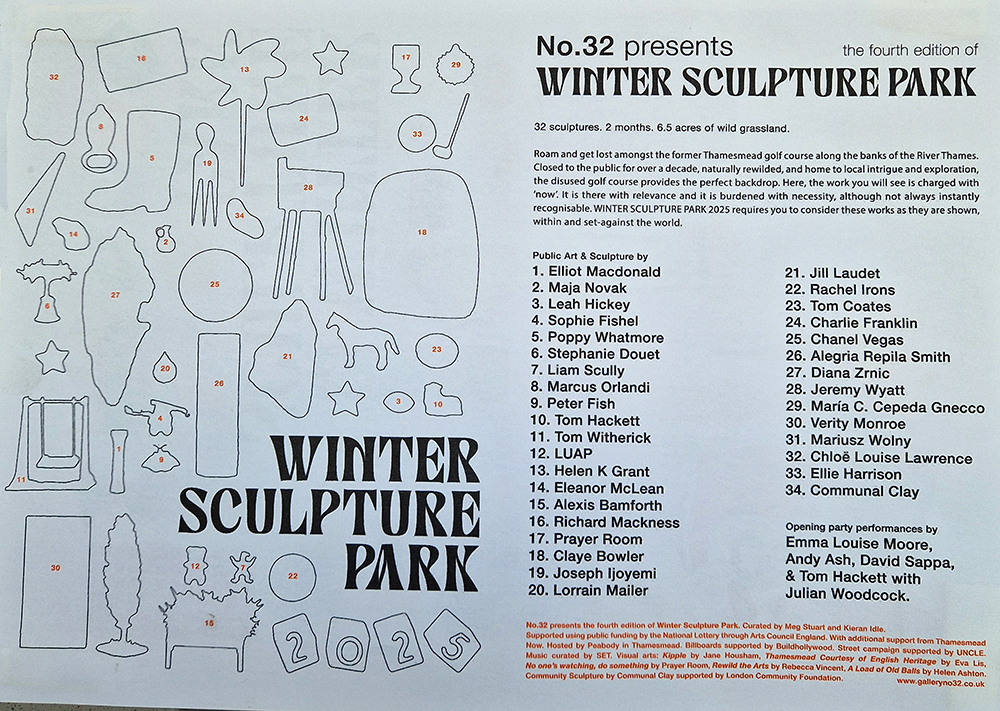
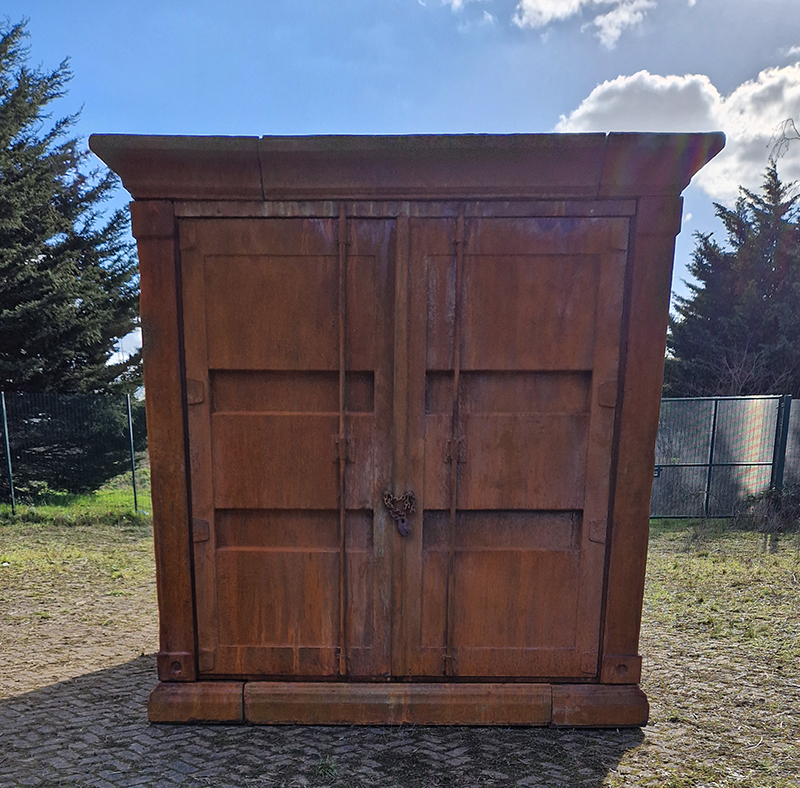
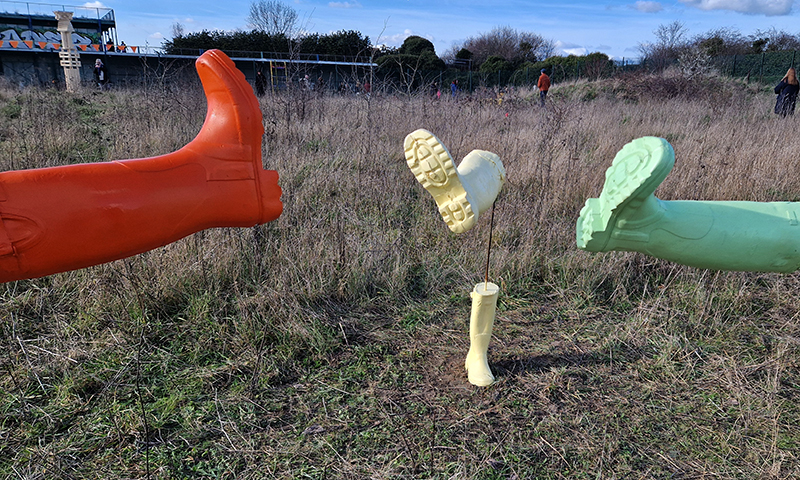
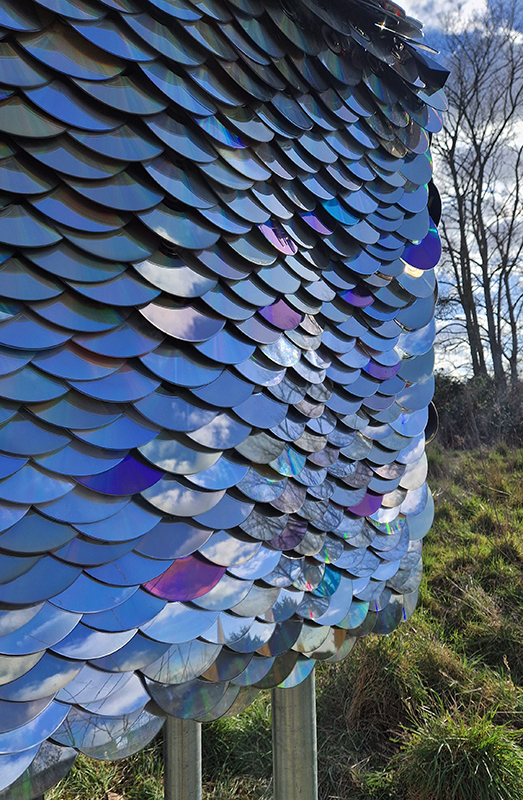
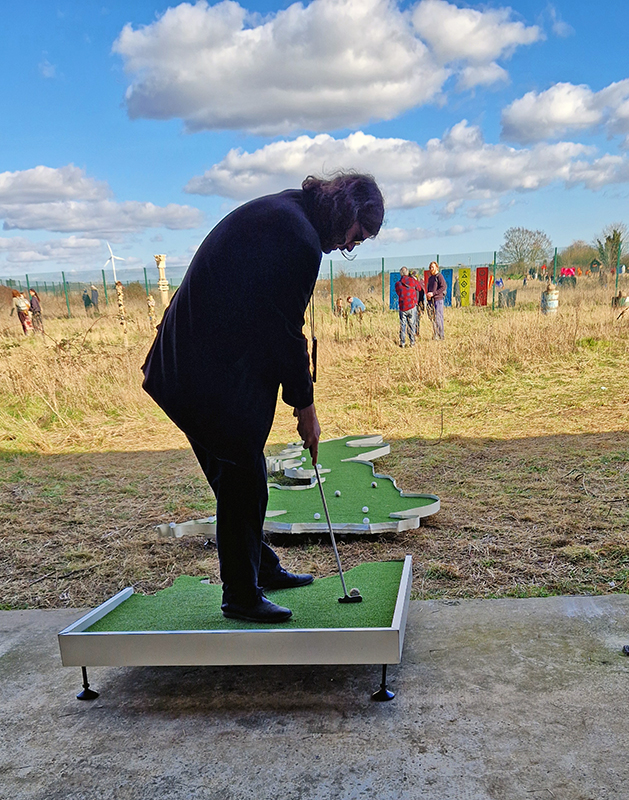
Glorious sunshine spot lit exuberant work at the Winter Sculpture Park hosted by Gallery No32 at a former Thamesmead golf course along the banks of the River Thames.
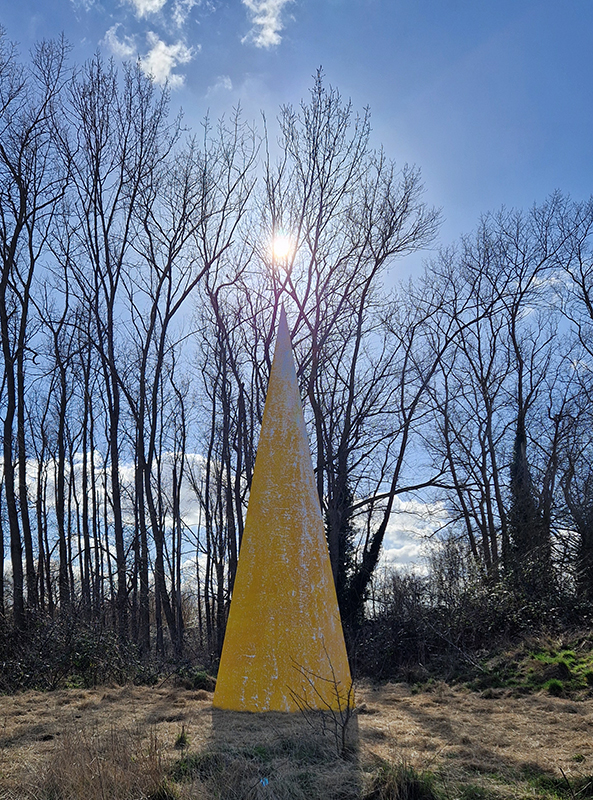
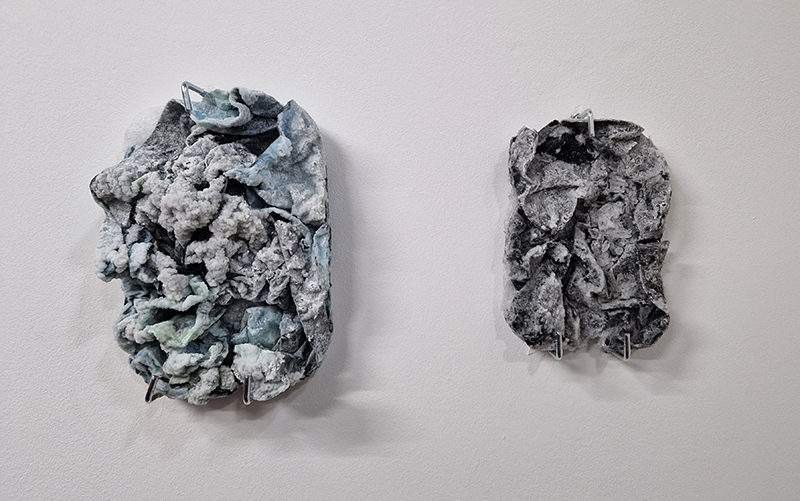
Clinging On, an exhibition of wall based sculptures curated by Poppy Whatmore at Glassyard Studios SW9. Instability is growing across the world, as we cling to liberal norms, ideas and values; these works connect a feeling of uncertainty to the physical, defying a gravitational pull or some internal force. These are physical, material or conceptual investigations of precariousness and the accompanying need to hold on. A packed PV means I have few images but I did capture the excellent Ocean Chasms/Crystal Chasms by Julie F. Hill and Caught Moon by Jane Millar.
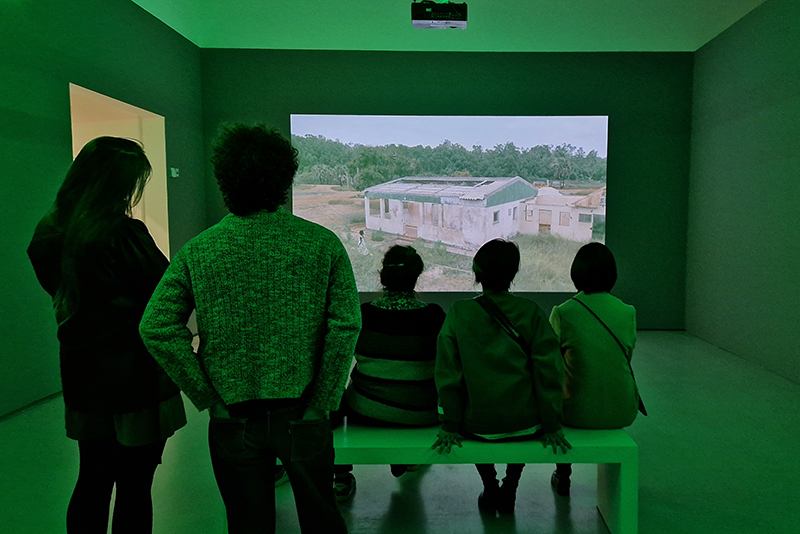
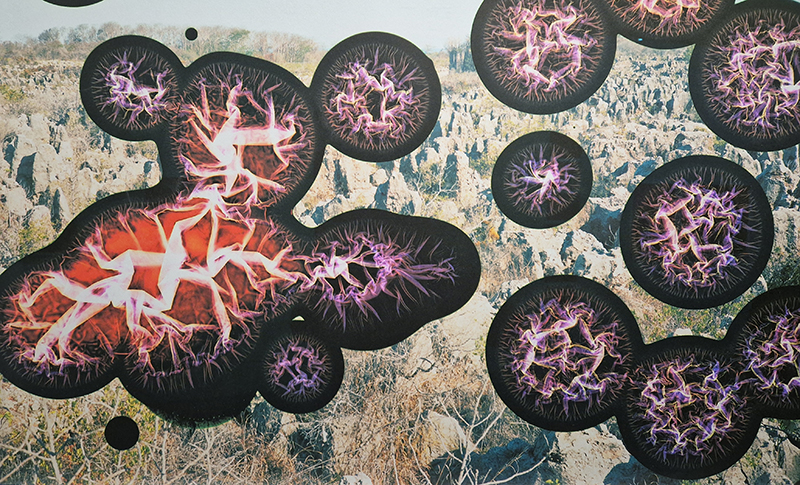
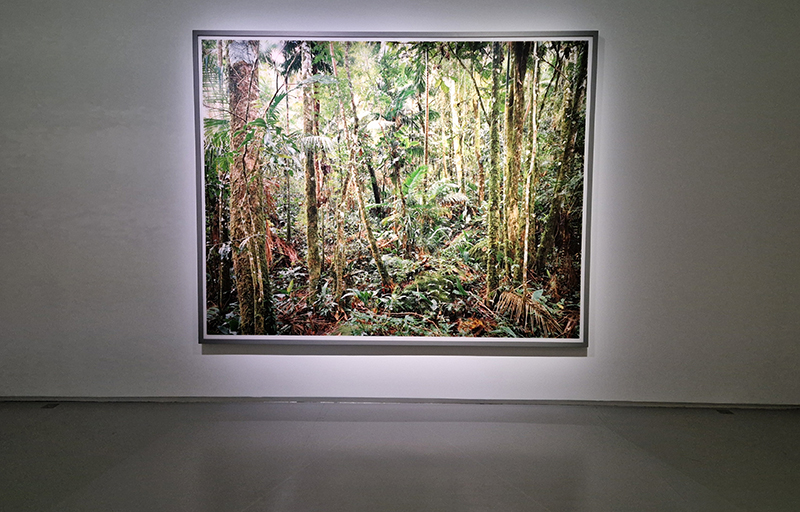
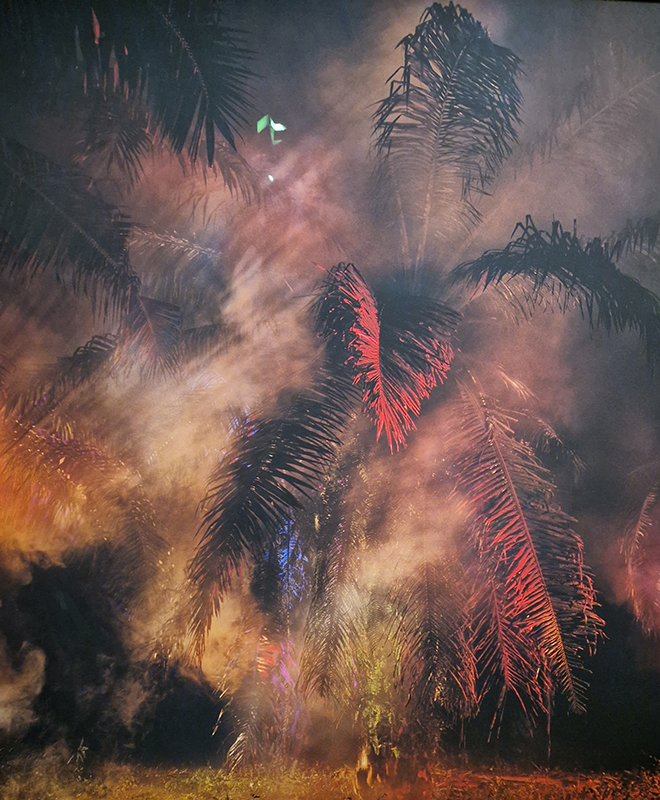
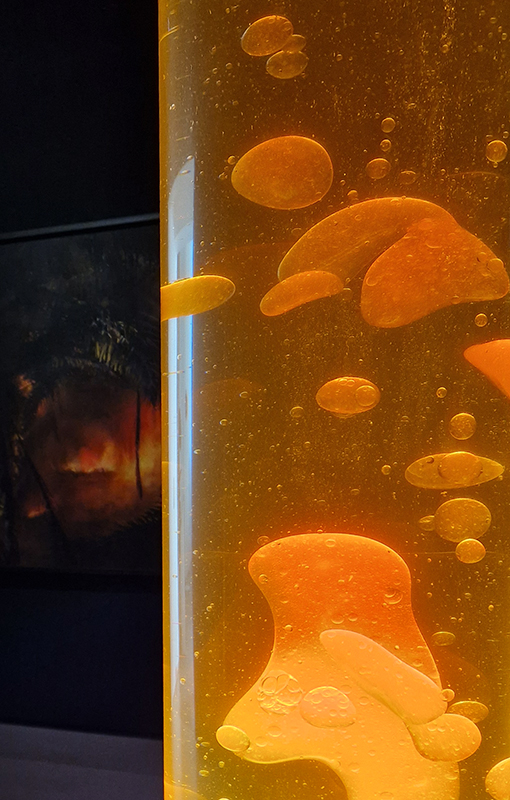
Moving Landscapes at Jeu de Paume, Paris. This exhibition brings together photography, literature and science to address environmental questions but also those of identity or migratory flows; the landscape thus becomes a living and constantly changing territory. Artists include Mounir Ayache, Julian Charrière, Edgar Cleijne, Ellen Gallagher, Yo-Yo Gonthier, Laila Hida, Eliza Levy, Julien Lombardi, Andrea Olga Mantovani,Mónica De Miranda, Richard Pak, Mathieu Pernot, Prune Phi, Léonard Pongoa and Thomas Struth.
Events

More Life By Lauren Mooney and James Yeatman at Royal Court Theatre. Asking the question ‘what is life?’ but also what is the quality of life you would accept if you discovered you were a computer file. What constitutes real human experience? A brain sliced, scanned and rebuilt in the future to be transplanted into a new synthetic body holds memories of a past life and feels emotion but has limited access to new physical sensory experience – no need to eat or sleep. Does the urge to live, live on? Is it possible the first person to live forever has already been born?


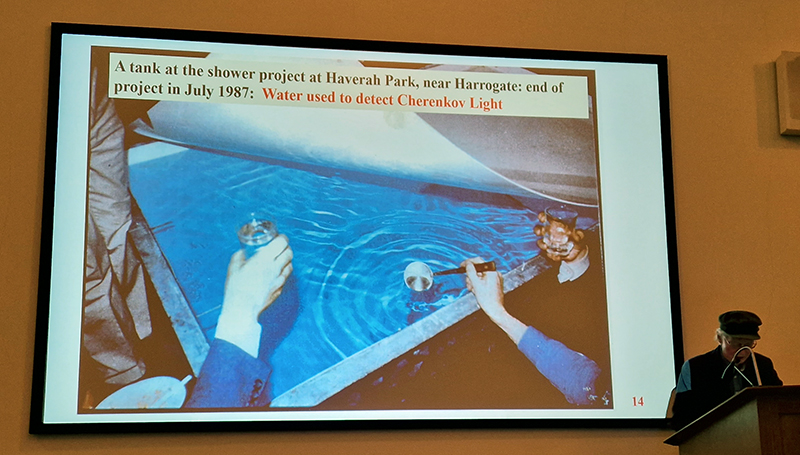
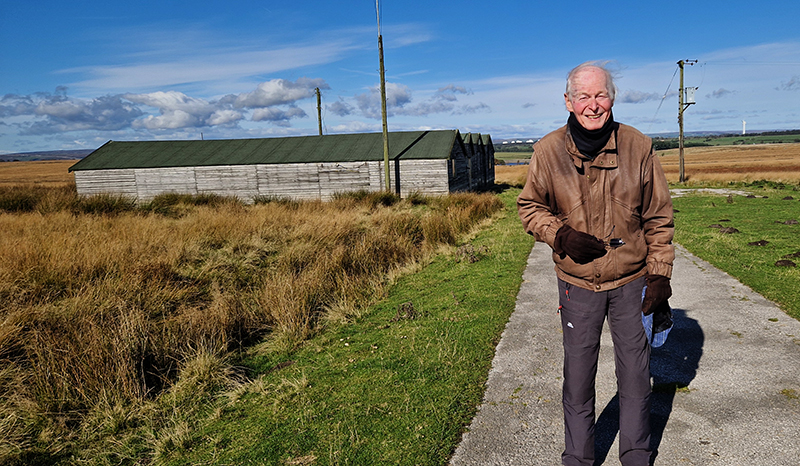
Great to see Alan Watson again, after visiting Haverah Park with him last year, to hear more about Searching for the Origin of the Highest Energy Particles in Nature. This water being sampled in the image below had been in the tank for nearly 30 years yet was still clear and drinkable.
He began his lecture at The Royal Astronomical Society with a short history on the discovery of cosmic rays, taking us right back to 1785 and Charles-Augustin de Coulomb who discovered that bodies with like electrical charges repel and if they have different signs, the force between them makes them attract. In his experiments testing electrical charge with two metal balls suspended on silk threads to easily repel or attract he was surprised to find that even if his experiment was very well insulated the charge still leaked away. It took over a century before it was realised that the air was being ionised which spurred physicists to discover the source of this ionization. In 1912 Victor Hess made his famous balloon flight to over 5km with a rudimentary Geiger counter and no oxygen to discover that ionization increased with altitude and must have an extra-terrestrial source. Over another century on and cosmic rays still present a mystery as to their origin and how they gain their enormous energies.

Alan is interested in the ultra high energy subatomic particles from extragalactic sources with energies about a million times as high as the energy reached by human-made particle accelerators. To put these energy scales in context – a laser pointer has an energy of about 3 electron volts, which is also typical of the photons that come from the sun. The molecules in the air are rushing around at 300m per second with an energy of 1/40 eV. A low energy cosmic ray, the sort that passes through your body a million times in a night, has an energy of 1 giga-electron volts, a proton created at CERN ( the European Organization for Nuclear Research) has around 7 tera-electron volts. If there was a race between a CERN proton and a high energy cosmic ray (over 1018 eV ) starting at the centre of the galaxy, by the time the cosmic ray had reached Earth the CERN proton would not even have reached the moon.

The ultra high energy rays are very rare. To detect these particles physicists rely on observing extensive air shower arrays to amplify the arrival of the particle. By recording the secondary particles that are produced when a cosmic ray hits the upper atmosphere the energy of the particle can be calculated. The showers arrive is a disc like formation with footprints of around 1sqkm so it is necessary to have detectors spread over a large area. The detectors measure the arrival time of the secondary particles and this can help determine the direction of the particle to within 1 degree. The trajectory of the cosmic ray is affected by galactic and intergalactic magnetic fields making it very difficult to find the origin of the particle.

The shadow of the moon can be seen in data recordings of cosmic ray arrivals.

There are a few different methods of detecting cosmic rays. This can be done using scintillator plastic which gives off a flash of light when a particle passes through the medium. Using Cherenkov radiation is another method – this takes advantage of a naturally occurring electromagnetic shock wave giving off energy as light when a particle passes through a medium faster than light can travel through the same medium. The speed of light through water is only 3/4 as fast as when it passes through air, a cosmic ray with much more energy will travel through water at almost the speed of light. This phenomenon can even be seen with the naked eye if the location is dark enough. Astronauts experience flashes of light in the eyes from particles directly hitting the retina but also from particles passing through the vitreous fluid and causing Cherenkov radiation.

Another method is to detect the excitation of nitrogen, the same process that produces the aurora. This light is in the ultra violet spectrum.

By the end of the 1980’s when Haverah Park closed the discovery of the origin of high energy cosmic rays was still a long way off. What had been established was that at the very high energies, only one particle would fall within one km per century. To make further progress a much larger area of detection would be needed. The Pierre Auger Observatory in Argentina at 3000 sq km is about twice the size of Surrey with many hundreds of water tanks. These tanks hold 10 tonnes of water but are the same depth as those at Haverah Park at 1.3m which turned out to be the optimal depth for the water tanks. Charged particles generated during the development of extensive air showers excite atmospheric nitrogen molecules, and these molecules then emit fluorescence light. The Cherenkov detectors at Pierre Auger are supplemented by fluorescence detectors installed at four elevated observation sites with 24 large telescopes specialized for measuring the nitrogen fluorescence in the atmosphere above the array.

The most exciting discovery came in 2017 when a convincing anisotropy in the arrival direction of cosmic rays of a certain energy was determined with some evidence that Centaurus A might be a source of these cosmic rays. There was also evidence of particles clustering close to the super galactic plane, an enormous, flattened structure extending nearly a billion light years across.

The galactic year is the duration of time required for the Sun to orbit once around the centre of the Milky Way Galaxy equivalent to approximately 225 million Earth years.

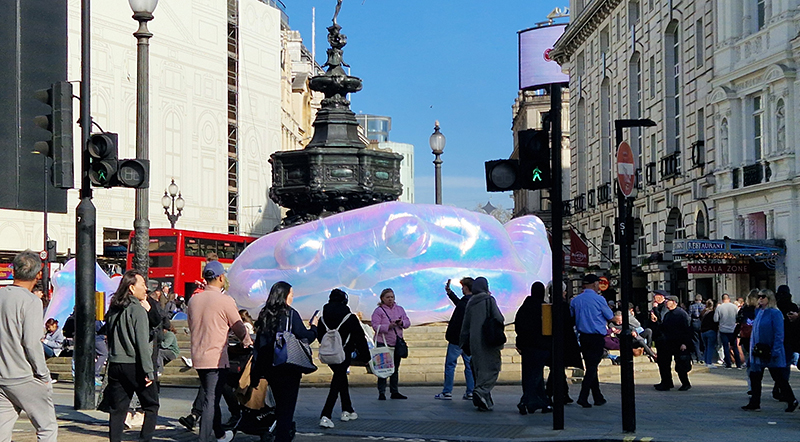
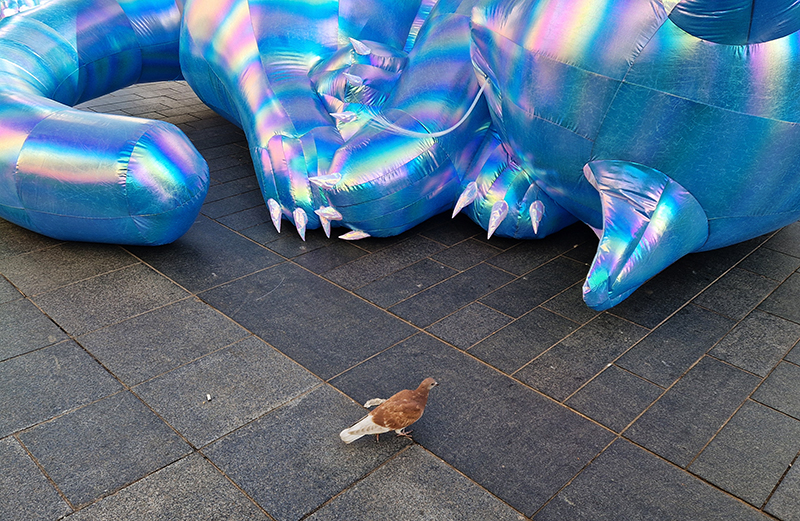
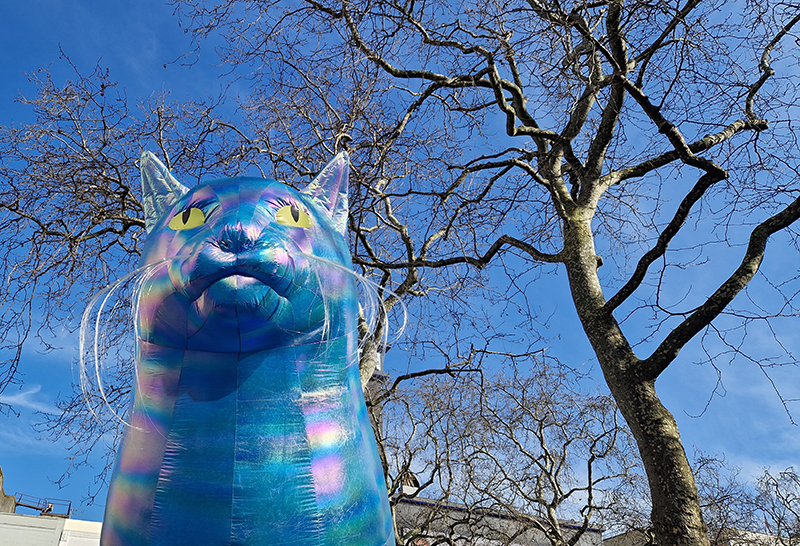
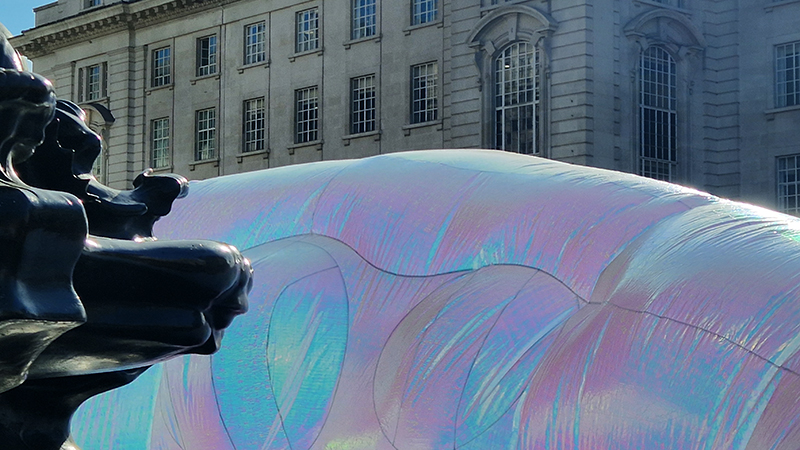
Art After Dark cosmic takeover around Piccadilly and Leicester Square from Nelly Ben Hayoun-Stépanian. I saw the iridescent asteroid-sized moon rocks and inflatable UV reactive sculptures inspired by Schrödinger’s famous quantum physics paradox in bright sunshine

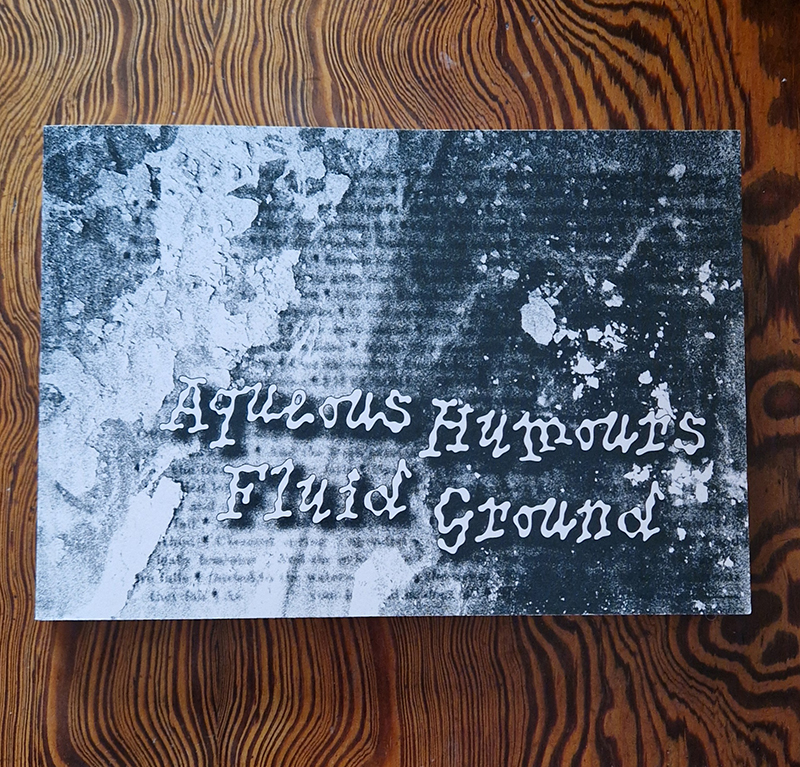
Book launch at Matt’s Gallery – Aqueous Humours Fluid Ground, edited by Kirsten Cooke published by Matt’s Gallery and the Poorhouse Reading Rooms. A night of experimental nonfiction, fiction, diagram, scent and moving image. An evening that activates a watery mapping, which denatures cartography through practices of immersion, aquatics, time travel and the posthuman lenses of geological, animal and machine vision. With contributions from Linda Stupart, Harun Morrison, Ezra-Lloyd Jackson, Melanie Jackson, Joseph Noonan-Ganley, Charlie Franklin, Michelle Williams Gamaker, Lucy A. Sames, Maggie Roberts, Carl Gent. I was only able to stay for the first half of the evening but this gave a wonderful flavour of the book which I look forward to dipping into.
Listening

Journey to the Centre of the Earth – an Infinite Monkey Cage podcast with guests seismologist Ana Ferreira, geologist Chris Jackson and comedian Phil Wang. The immense pressures and searing temperatures that present engineering difficulties of ‘going into the Earth’s crust’ to explore what lies beneath are discussed along with the relationship between the tectonic plates and a stable atmosphere and new evidence of hidden subterranean shifting globular continents.

Reading

The Periodic Table by Primo Levi. My initial reaction to this book was surprise that it was so engaging, but a few elements in, I was surprised to find the chapters shifted from autobiography to fiction with dubious and misogynistic content. I have persevered as the chapter on Carbon, which was recommended to me, is the last chapter in the book and I thought I should start at the beginning not the end. This final chapter is written with a different emphasis, with the explanation that carbon cannot be treated like other elements as it is not specific to one story but is everything to everyone. ‘Every two hundred years, every atom of carbon that is not congealed in materials by now stable (such as, precisely, limestone, or coal, or diamond, or certain plastics) enters and renters the cycle of life, through the narrow door of photosynthesis.’ The story of one atom of carbon is relayed but it is noted that the author ‘could tell innumerable other stories and they would all be true…. the number of atoms is so great that one could always be found whose story coincides with any capriciously invented story’.

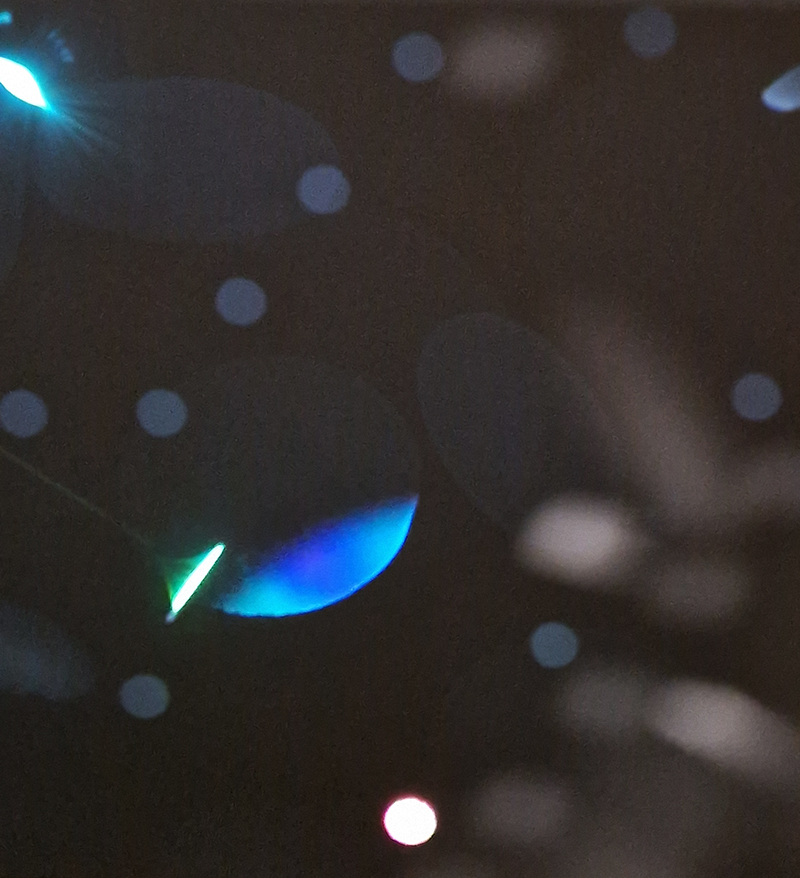
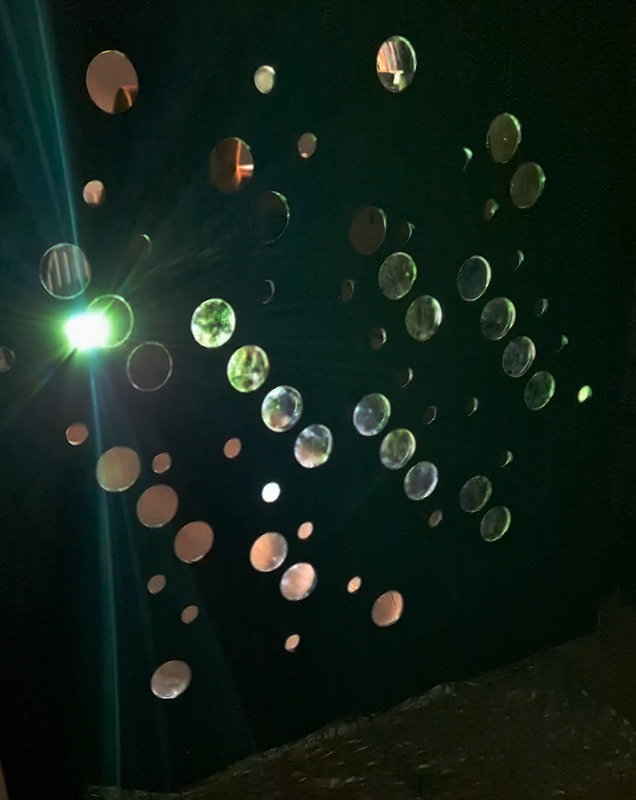
Speculating on a view of the world projected from the perspective of the rock. In the studio drilling more holes for optical lenses set out in a pattern based on the crystal structure of the naturally magnetic mineral magnetite which was determined in 1915 as one of the first crystal structures to be obtained using X-ray diffraction. Found in igneous rocks, sedimentary deposits and sand across the globe in many locations, magnetite is also found in the cells of organisms from bacteria to humans. Magnetite contains both ferrous (divalent) and ferric (trivalent) iron along with oxygen.

Testing projecting through the optical lenses I’m excited to see how the different lenses cause images to overlap and distort.

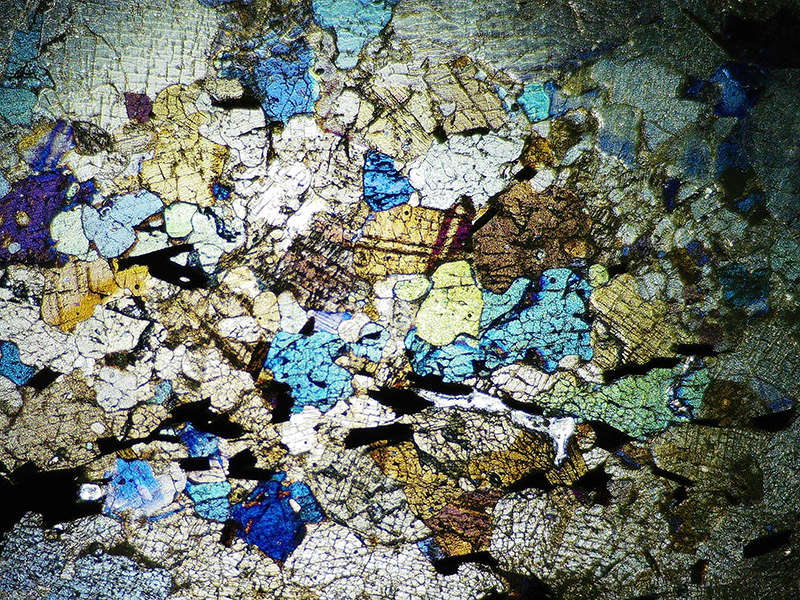
I received a Digital Microscope for my birthday and a selection of rocks and meteorites to look at. So far I have only used the lens with the least magnification capabilities yet this is revealing wonderful detail in the rocks which are further enhanced by using a polarising filter. I have chosen to look at rocks which originate near areas of tectonic activity or that may have magnetite in them.

Images on left have no filter, those on the right have a polarising filter.

This thin slice of Deep Ocean Pebble was collected in 1979 three miles deep in the Pacific Ocean Clarion Clipperton Fracture Zone. This zone is regularly considered for deep-sea mining due to the abundant presence of manganese nodules. In 2016, investigation of the seafloor in the zone was found to contain an abundance and diversity of life – more than half of the species collected were new to science.

This slice of Lewisian Gneiss is 3 billion years old. These ancient rocks from the Isle of Lewis were caught up in a mountain building cycle roughly 490–390 million years ago and were pushed above younger rocks formed during the late stages of this tectonic event.

This slice of Olivine Basalt comes from Þingvallavatn, a rift valley lake in southwestern Iceland. The area is covered by lava. The cracks and faults around the lake is where the Eurasian and North American tectonic plates meet. This may be the only place where one can stand with two feet on two different tectonic plates. The sample is a mid oceanic ridge basalt (MORB) fine grained but consisting of small olivine, clinopyroxene fragments in ground mass dominated by plagioclase laths, an opaque magnetite.

This slice of Vesicular Basalt Lava – a type of lava that solidifies into a rock with trapped gas bubbles leaving small holes as the lava cools, comes from the Mid Atlantic Ridge near the Azores Islands.

I also have a piece of Jepara taken from a pallasite, a class of stony–iron meteorite, discovered in Indonesia in 2008 during building excavations. The outside is heavily weathered but when cut and polished the inside reveals a translucent structure of densely packed olivine and magnetite. The sample has been coated with acrylic which has surface scratches so I think some of the detail has been compromised but it is still beautiful. No filters used here.

I am making use of public access to historical magnetograms recording of Earth’s magnetic declination to feed into new work inspired by palaeomagnetism. Magnetic studies of the ocean in the 1950’s had determined that the ocean floor was covered by bands of magnetic stripes that varied between normal polarity and reversed polarity. The Earth’s magnetic field has reversed polarity many times over the past hundreds of millions of years. These magnetic stripes were found to be symmetrical on the ocean floor about the mid-oceanic ridge. In 1963 British scientists, Fred Vine and D. H. Matthews proposed that the magnetic striping was caused by paleomagnetism, the storing of Earth’s ancient magnetic field in the sedimentary rocks that were forming as lava spewed up and spread across the ocean floor setting the history of pole reversals in stone.

I have embarked on some crystal growing experiments using a seed crystal in a saturated solution of mono-ammonium phosphate and aluminium potassium sulphate. I am hoping these might become objects to view through a lovely old wooden magnifying box I have. The last time I experimented with crystals was when I was amazed by the speed and glut of salt crystals overwhelming the test area. Before that made a time lapse video over 5 days of crystal growth for the installation Time Crystals in Reading Stones at St. Augustine’s Tower 2019. I will be learning more about this as workshops are developed for The Geological Unconscious public engagement programme which will run alongside the exhibition at Hypha HQ Euston this coming spring. Both Julie F Hill and Sophie Mei Birkin work with crystal structures and growth in their own practices and will be leading on the workshops we will run in partnership with a local primary school.

A crystal is like a class of children arranged for drill, but standing at ease, so that while the class as a whole has regularity both in time and space, each individual child is a little fidgety. Dame Kathleen Lonsdale, 1948

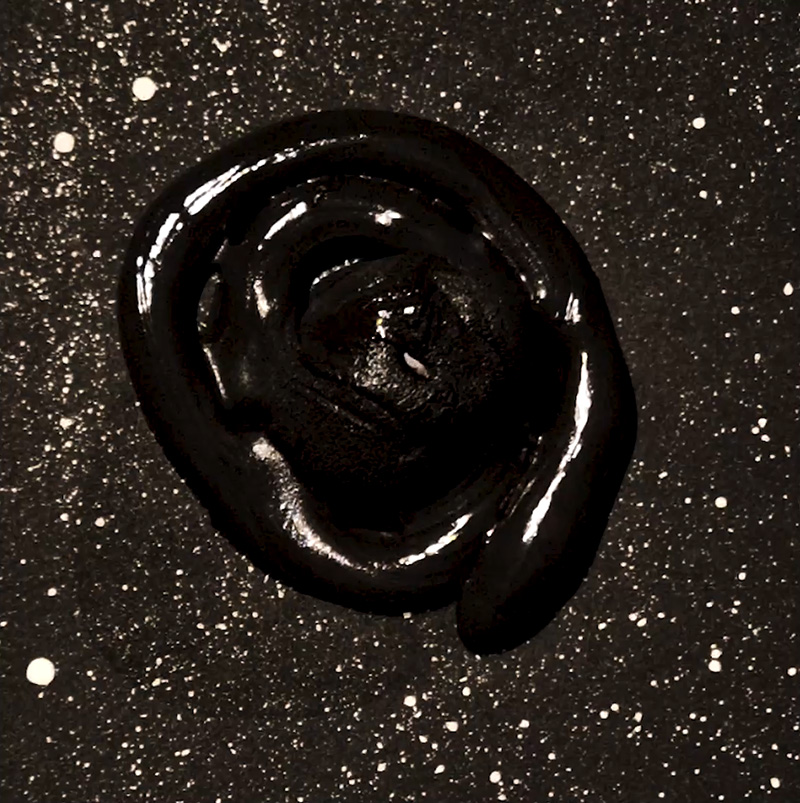
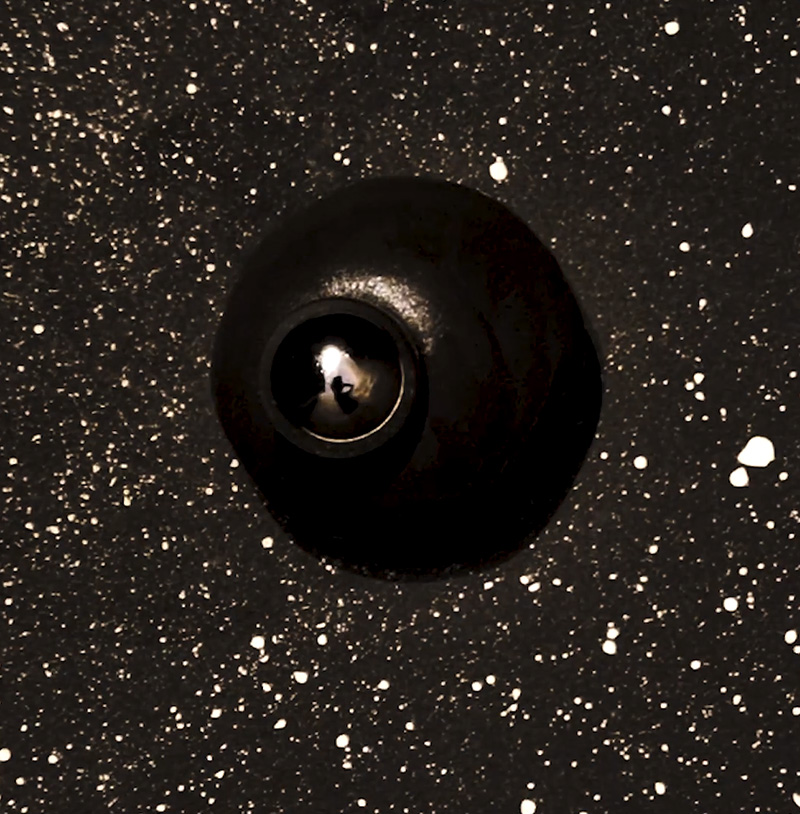
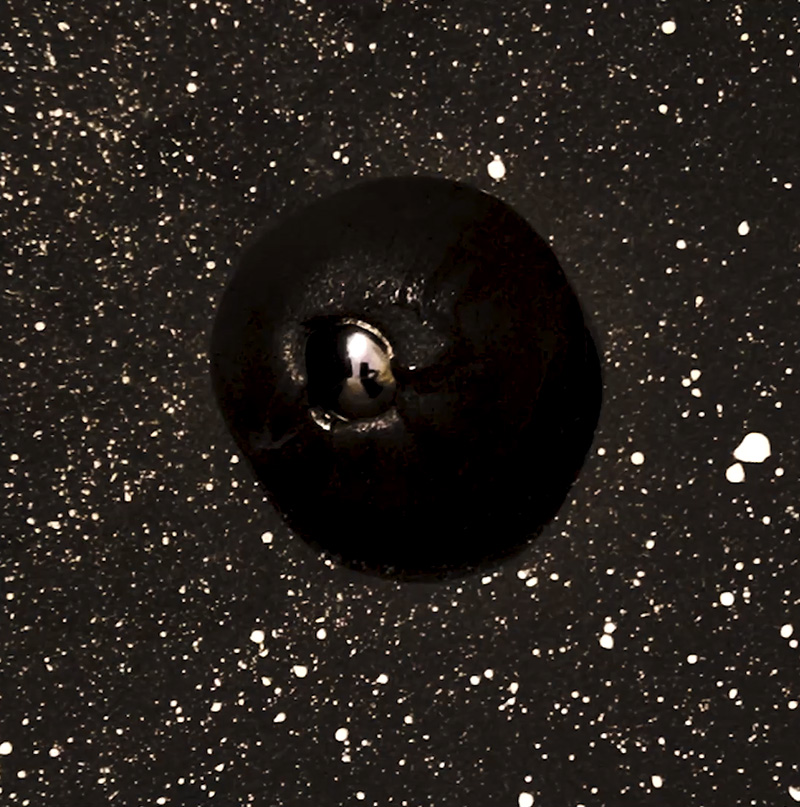
Had some studio fun testing the possibilities of magnetic putty for future video ideas. Mesmerising the way it very slowly swallows the magnet.

I began the magical process of making copper ink. Soaking pieces of copper in vinegar and salt, stirring daily and watching the liquid turn a milky turquoise blue. Looking forward to using this to patinate copper but also to paint with on paper.

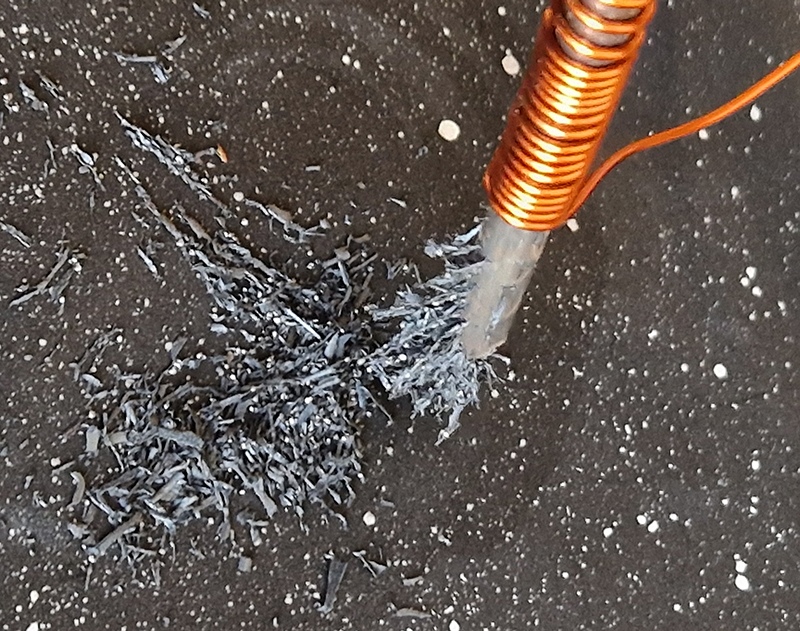
Experimenting winding a copper wire around an iron nail and connecting the wire to a battery cell. A magnetic field is generated around the nail which stays for a little while after the nail is removed from the coil. I used a 9v battery and large nail– it wasn’t a very strong magnet – a welding stick was better and seemed to retain the magnetic field for longer but in both cases the battery got very hot. I had hoped to maybe develop this idea to magnetise a sculpture threaded with iron. Needs more investigation.

I have been exploring the updated Digital Materials Library at the Institute of Making which led me to the Mindsets website which has some cool magnetic materials for sale. Future experiments upcoming.

Exploring paper weaving patterns with a view to reinventing past works while thinking about ideas of cosmic planes in The Rosicrucian Cosmo-Conception, a 1909 text by Max Heindel. This text, setting out a theory of seven Worlds and seven Cosmic Planes, supposes an intermingling of spirit with matter where the intersection of the material and metaphysical world are not one above another in space, but inter-penetrate each with the other.

Astonishing that the preserved remains of the ancient kauri trees of New Zealand, alive over 42,000 years ago, can reveal the time of the last significant magnetic pole excursion within their rings. During what is known as ‘The Laschamps Excursion’, the north and south magnetic poles swapped places for about 500-800 years before swapping back again. During a magnetic pole reversal the magnetic field weakens so many more cosmic particles reach the surface of Earth. This means much more Carbon-14 is produced in the atmosphere and absorbed by plants.

Changes in radiocarbon levels were recorded from four ancient kauri logs found buried in peat swamps which seals them in a chemically balanced environment. Through high precision carbon dating processes at the University of Waikato in New Zealand the scientists discovered the most dramatic time was the lead-up to the reversal, when the poles were migrating across the Earth and our magnetic field practically disappeared, leaving life here very vulnerable to cosmic radiation. It appears, this weakening 42,000 years ago, in combination with a period of low solar magnetic activity – captured in evidence from ice cores, caused damage to the ozone layer and disrupted atmospheric conditions impacting the global climate so that devastating environmental changes took place. The research team links this climate change to extinction events which occurred at the same time, Neanderthals vanishing from Europe, and a proliferation of cave paintings appearing in Europe and Asia as humans find shelter from the turbulent weather and increased electrical storms. They have dubbed this period of excursion ‘The Adams Event’ in honour of Douglas Adams who wrote in The Hitchhikers Guide to the Galaxy that ‘42’ was the answer to life, the universe, and everything

Studio Visits

Julie F Hill and I have been visiting the other artists participating in the upcoming exhibition The Geological Unconscious at Hypha HQ Euston. We are so happy to be working with Charlie Franklin who considers control, physical experience and memory within the natural landscape, Deborah Tchoudjinoff who considers what the form is through the process of material and visual experimentations, Rona Lee who centres on the politics and aesthetics of Geo-materiality along with the human /more than-human entanglements of contemporary life and Sophie Mei Birkin who investigates the generative potential in the transformation of matter through a variety of material processes such as growing salt crystals and exploring amorphous and decomposing substances.

I have also been lucky to have Charly Blackburn and Victoria Rance visit my studio to chat about our respective work and shared interests. Charly is beginning a period of research into rare earth materials and extractive processes and we share a fascination with things magnetic. Victoria came to chat about our shared interest in the sun but is also interested in magnetic fields and the potential they offer for brain to brain communication.

Gallery Visits

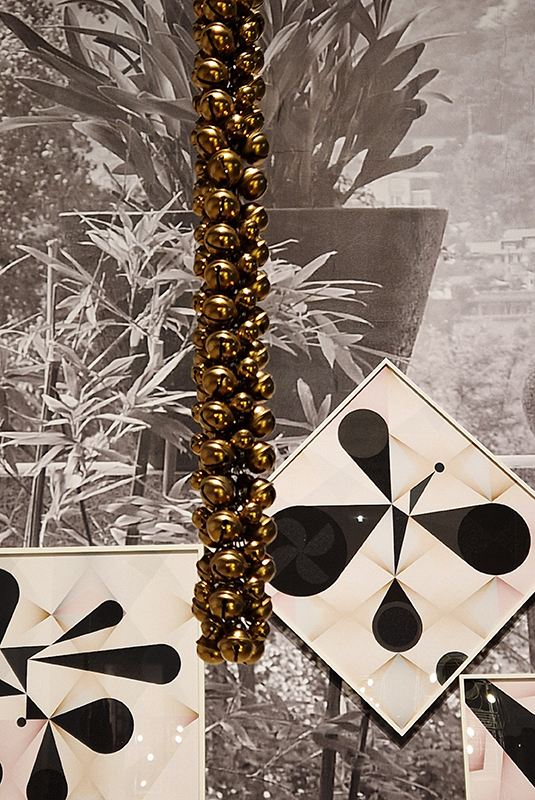
Haegue Yang Leap Year at Hayward Gallery. With colourful works festooned by garlands of bells and strewn with fairy lights this was a perfect show for the festive period. Folklore, surrealism and ritual, collage and costumes combine with the modern domestic/utilitarian in hybrid works that have a playful carnival air.

Thoughtful works beautifully presented Each Place Its Own Mind at Edel Assanti with Mirtha Dermisache | Noémie Goudal | Sky Hopinka | Anna Hulačová | Marguerite Humeau | Bronwyn Katz | Kat Lyons | Yukultji Napangati | Emmanuel Van der Auwera. An ongoing collective reimagining of our relationship with the living world, rooted in revelations from indigenous knowledge, ecological research, literature, science, and artistic experimentation. Each Place Its Own Mind  borrows its title from ecologist David Abram’s 1996 book The Spell of the Sensuous, which traces the ways the human mind came to renounce its “sensory bearings” in the natural world, visualising a myriad of “lost” faculties that link the “inner, psychological world and the perceptual terrain that surrounds us.”

Damian Taylor Things Past at Thames-side Studios Gallery. These paintings hover on the edge of discovery where content and surface are ambiguous but reward study with tantalizing recognizable glimpses.

Events

A little out of my depth at the A&G Highlights Meeting at The Geological Society where some talks were quite specialised, involving graphs and terminology beyond my understanding. I do enjoy hearing clever people talk though, even if I can’t grasp exactly what they are explaining. A fascinating presentation by writer Nilanjan Choudhury on ‘The Square Root of a Sonnet’, his play which explores the fraught personal relationship between the brilliant Indian-American astrophysicist Subrahmanyan Chandrasekhar and his mentor, Sir Arthur Eddington of Cambridge University who publicly humiliated him at a Royal Astronomical Society meeting 90 years ago to the day. Guardian Article here

Dr Jessica Irving (Bristol University) gave The Harold Jeffreys Lecture on ‘Hearing planetary hearts: seismology of the cores of Earth and Mars’. An engaging speaker, she led us through the milestones of the last 130 years of theories on what is at the centre of the Earth and the discoveries made using seismology.

Dr Chris Lovell (University of Portsmouth) spoke on his research into ‘Accelerated modelling of the entire observable Universe’. I recognised the dark matter simulations and was fascinated by the different views of a galaxy depending on the band of the light spectrum used to observe it.

I joined a sobering Royal Astronomical Society webinar We Need to Talk About Space Junk presented by Professor Mike Lockwood. Our use of space is increasingly limited and threatened by space junk. The concern is that we are heading towards a runaway effect called the Kessler syndrome, in which the debris from one collision causes many others, to the point where space becomes unusable.

I went to see the fast paced RSC production of Kyoto at Soho Place. Welcome to the Kyoto Conference Centre, 11 December 1997. The nations of the world are in deadlock and 11 hours have passed since the UN’s landmark climate conference should have ended. Time is running out and agreement feels a world away. The greatest obstacle: American oil lobbyist and master strategist, Don Pearlman… Set nearly 20 years ago its depressing how little progress was made and we are currently sliding backwards. Would never have guessed it at the time but now am nostalgic for the politics and positivity of the 90’s.

Time to email your MP to join The All-Party Parliamentary Group for Dark Skies. The group’s primary focus is to preserve the night sky within the UK and promote the adoption of dark sky friendly lighting and planning policies. Surprisingly the committee is made up mostly of tories – come on the rest of you!

Go to this link where it is quick and easy to message your MP to act on this important issue.

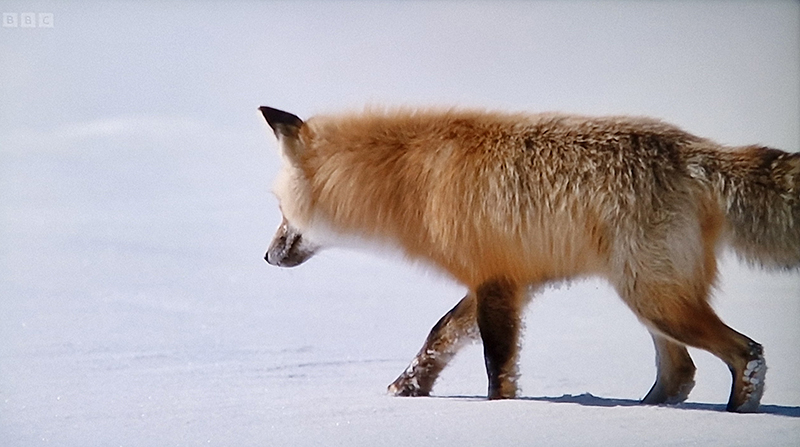
Watching Chris Packham’s The Wonder of Animals – Foxes A red fox catches its prey using more than pinpoint hearing and an accurate pounce: it also involves alignment to the slope of Earth’s magnetic fields. I contacted Peter Hore FRS, Professor of Chemistry and Magnetoreception expert at Oxford University who was so helpful to me before in explaining how birds ‘see’ the magnetic field to see if he had come across any new research on this. He has pointed me in the direction of other research conducted by the group looking at fox behaviour so this is something I will pursue further.

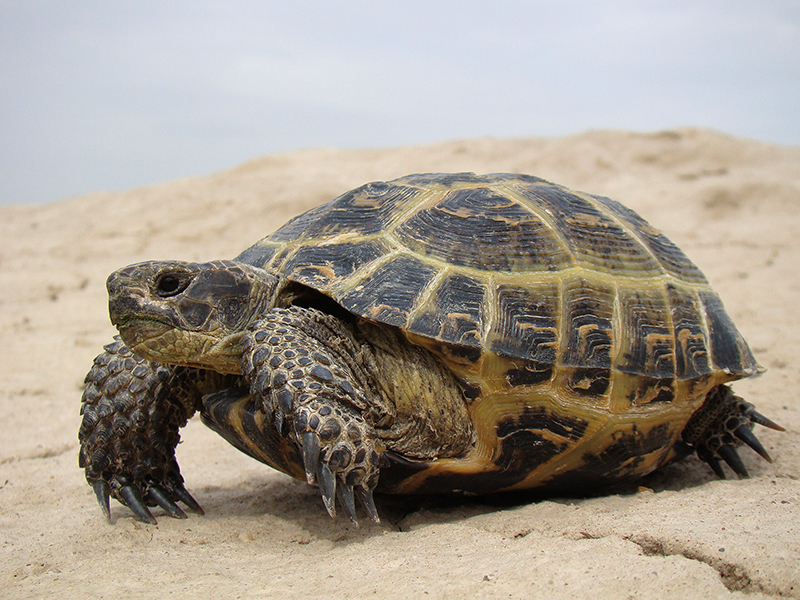
Listening to What? Seriously?? with special guest Helen Sharman, the first British astronaut, about how humans learned to survive in space. Quite a few animals were sent to space before humans including two Russian Steppe tortoises (Testudo horsfieldi), who did a circuit of he moon and returned to Earth – alive but starved. The tortoises were chosen as they have a unique ability in the animal world to resist radiation and their blood may be useful in the treatment of radiation sickness. In recent research a string of amino acids have been extracted from the blood of these tortoises and if you inject those amino acids into other animals they become radiation resistant too.

Listening to The Year in Science 2024 podcast – One of the UK’s first military communication satellites’ Skynet 1a launched in 1969 was abandoned a few years later above Africa. Orbital dynamics should have dragged it out somewhere above India but it has been found wandering above the Americas in a busy area of live satellites and no-one knows why. Space consultants think it must have been commanded to move in the 1970’s but can find no record of this and although research has been undertaken it is still a mystery how this satellite moved. BBC article

There is no mention of a cosmic ray interaction forcing the command, but that would be my theory!