Archives for posts with tag: photography

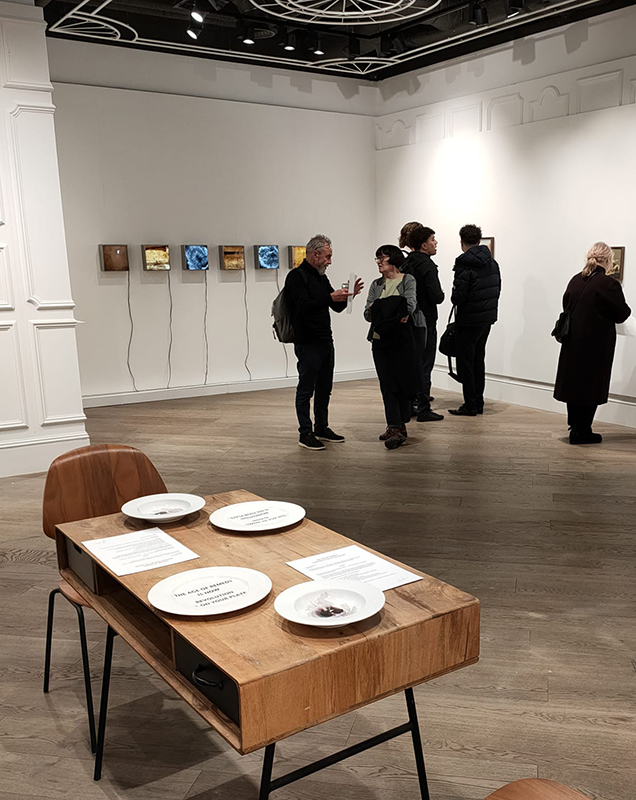
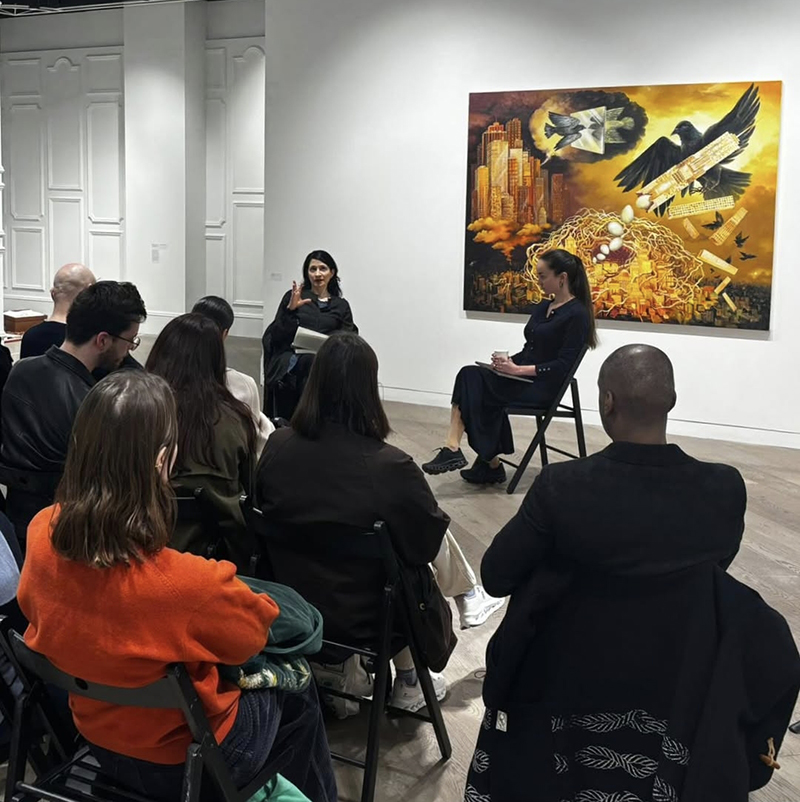
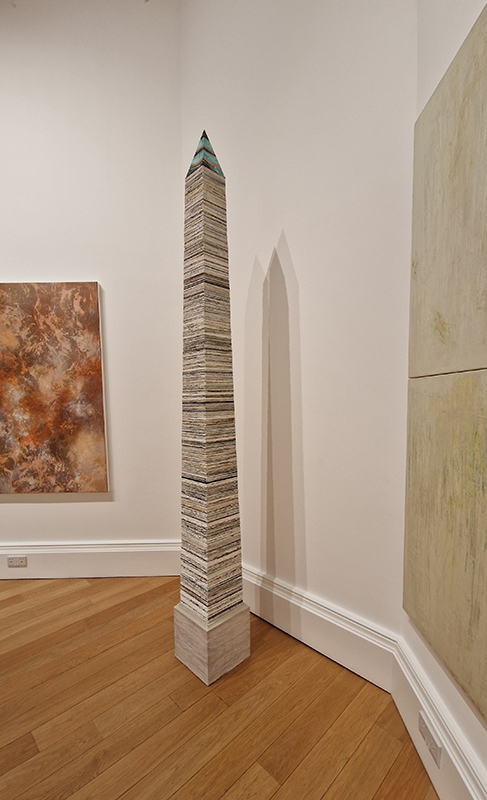
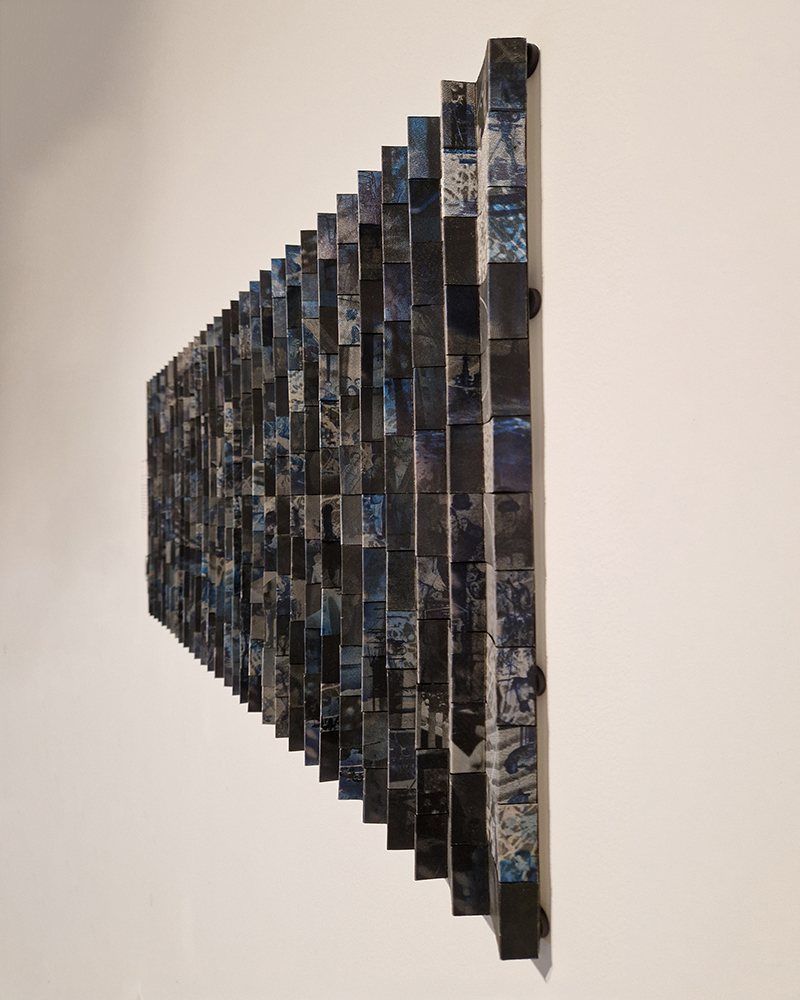
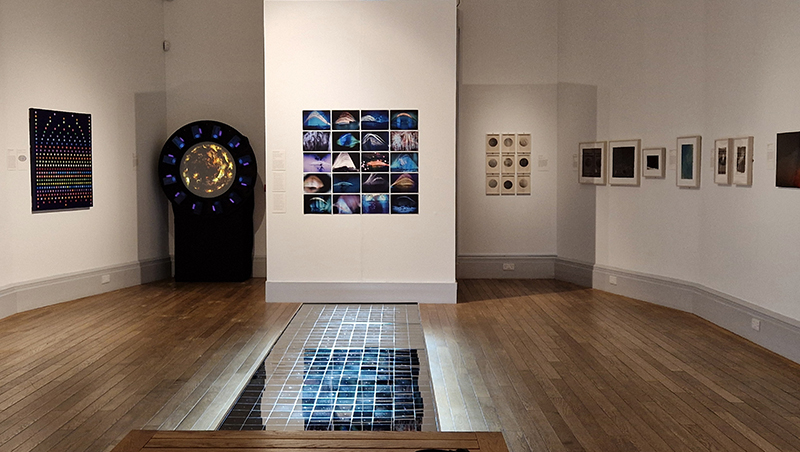
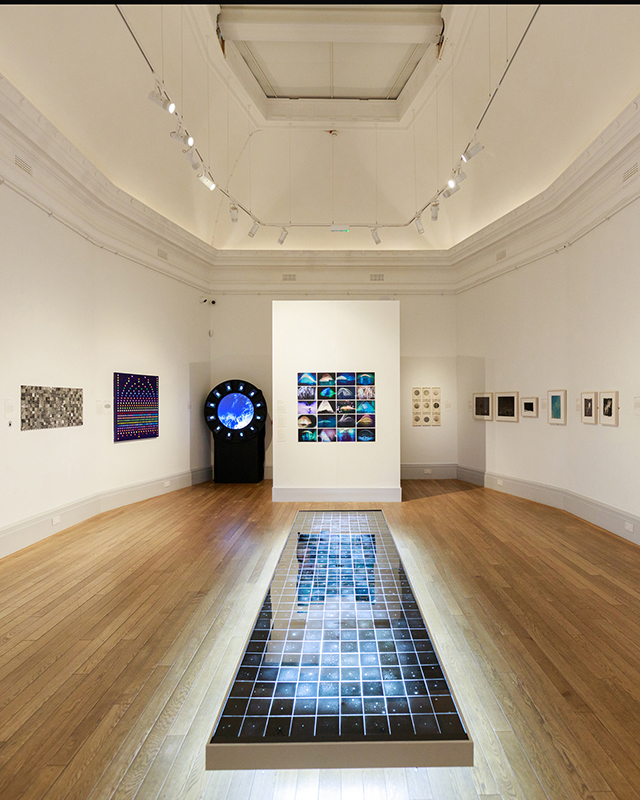
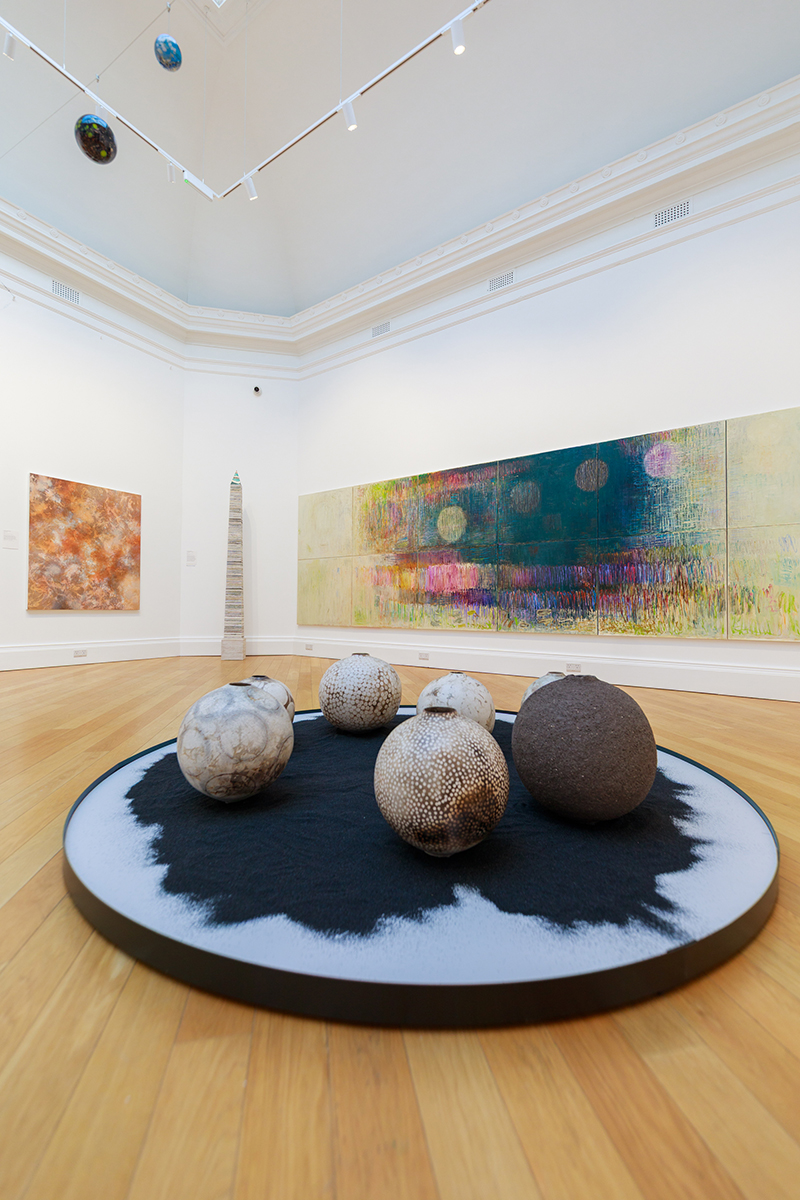
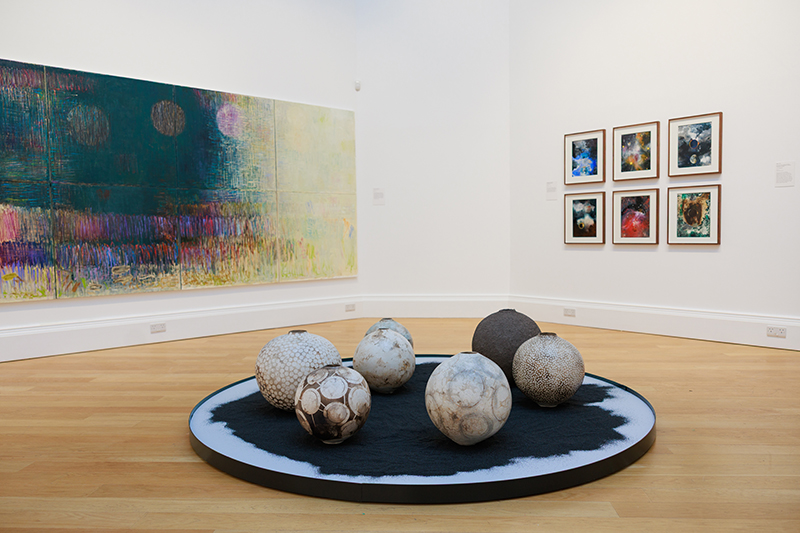
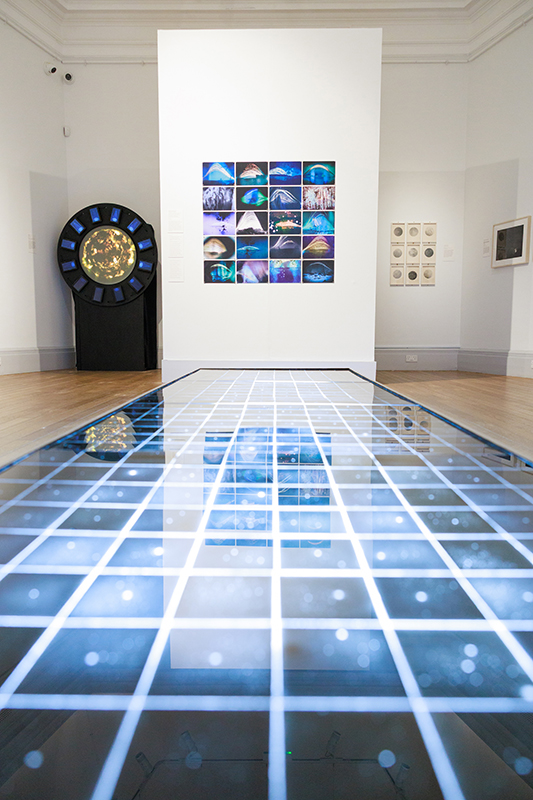
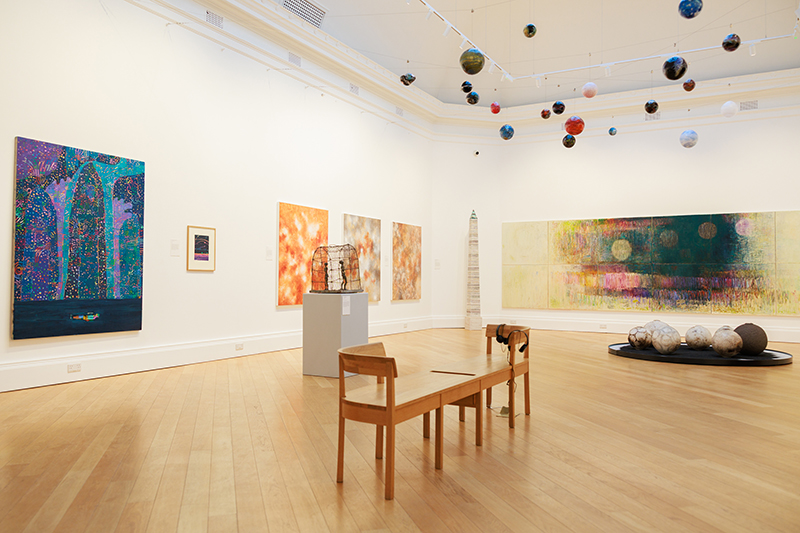
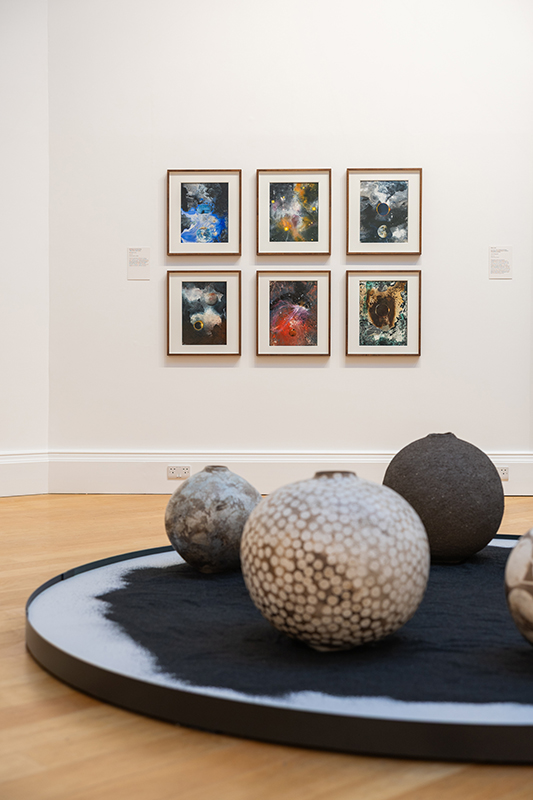
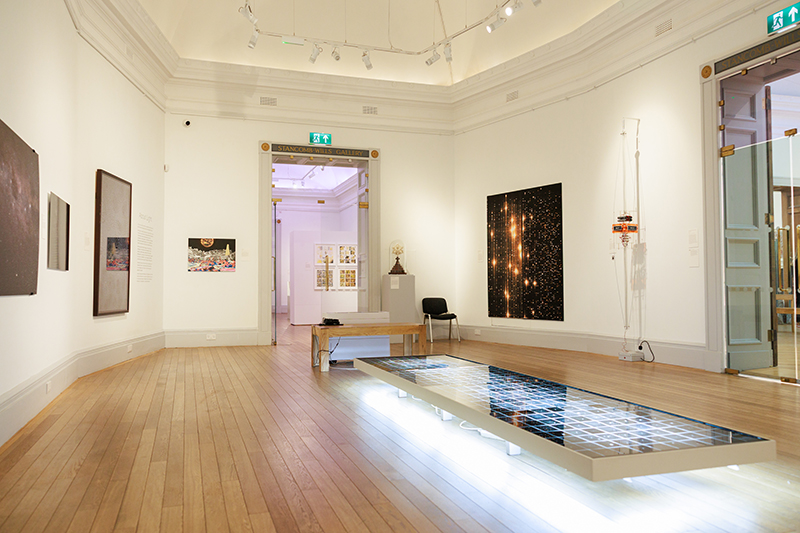
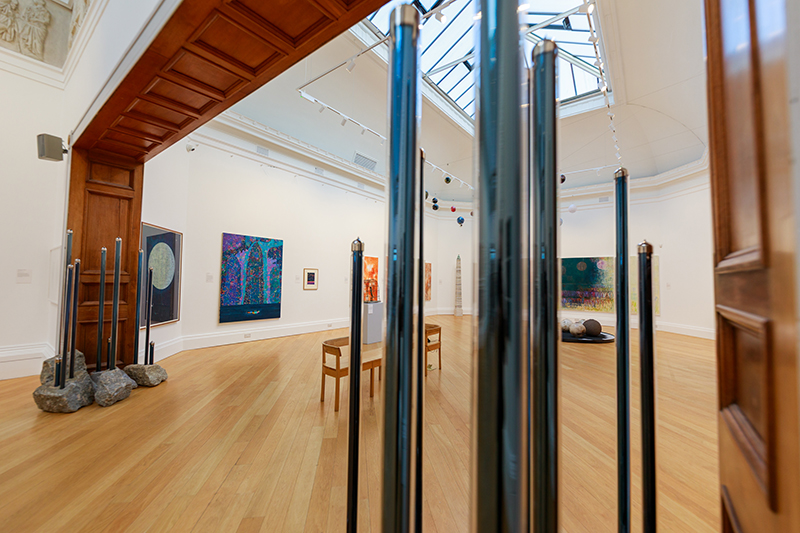
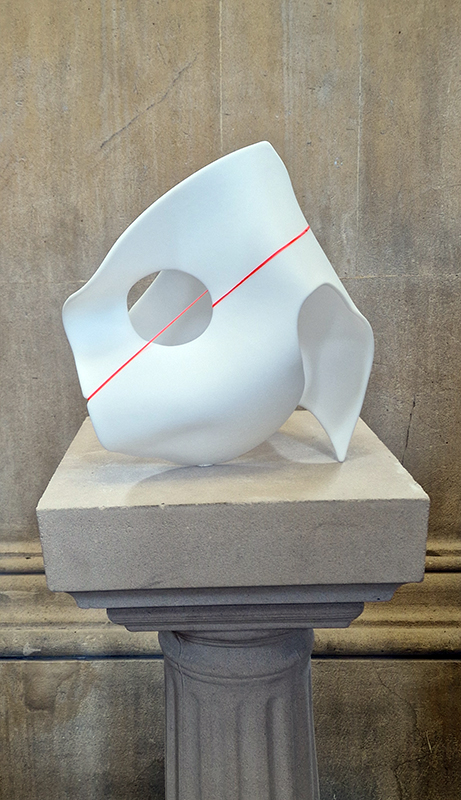
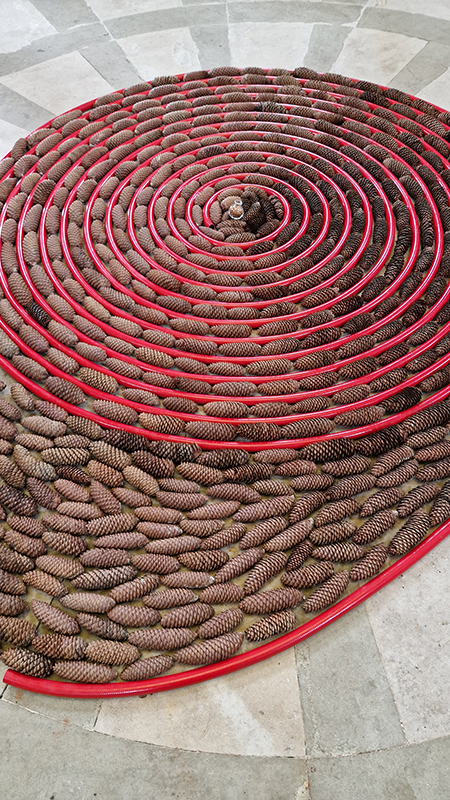
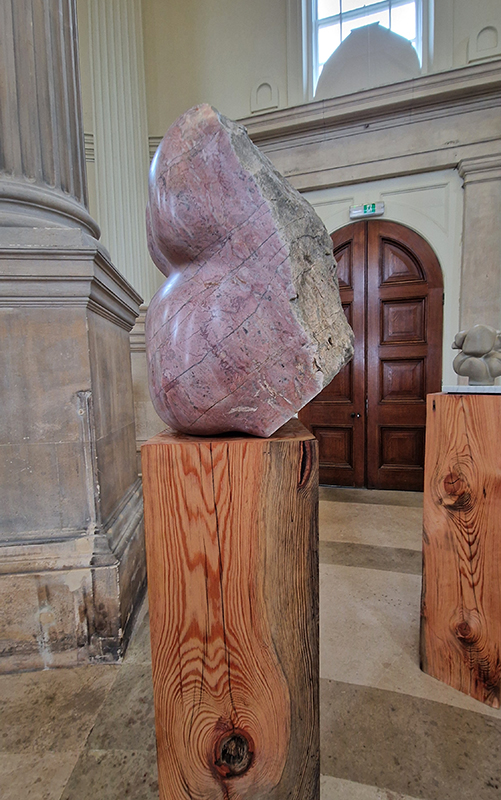
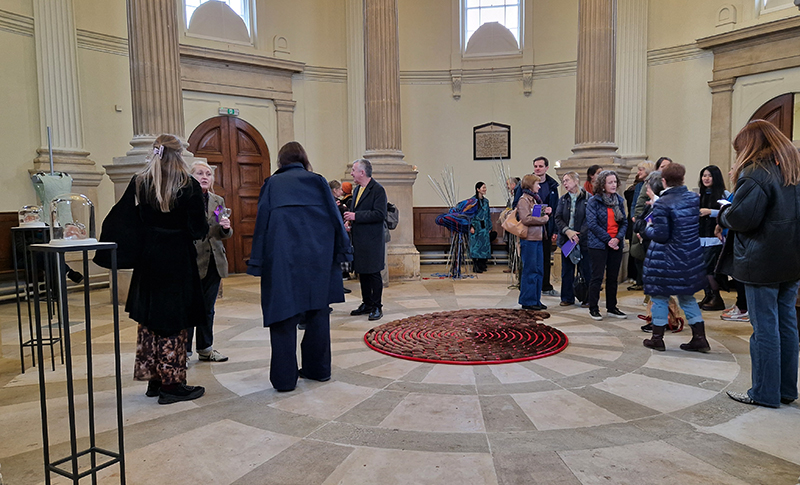
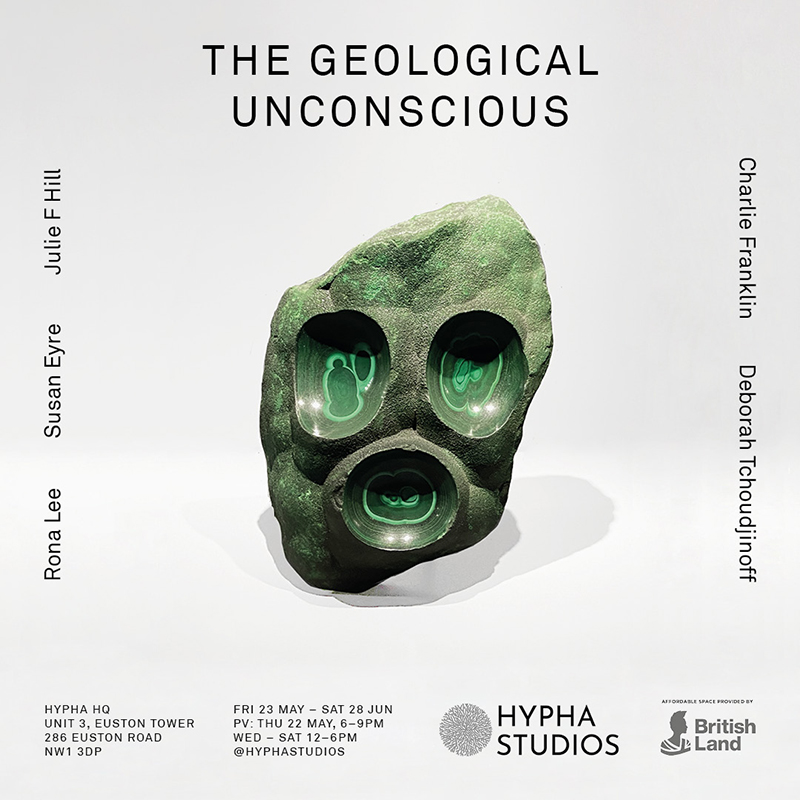
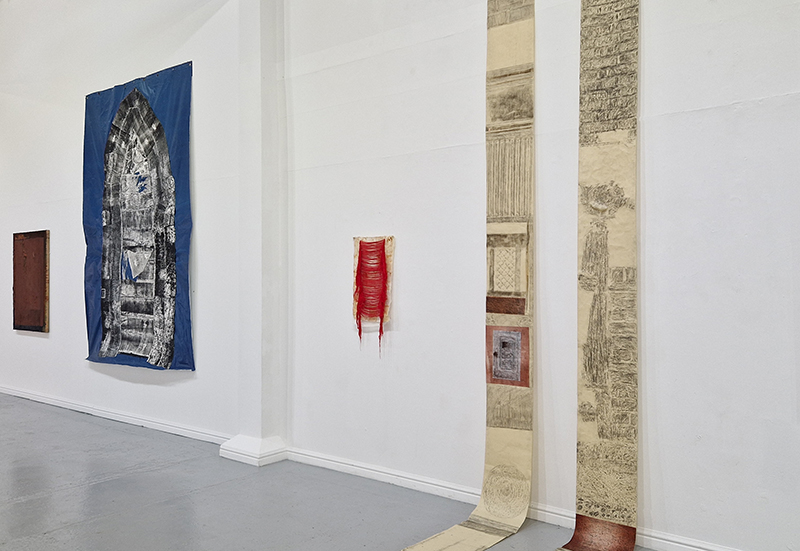
It has been a busy few weeks preparing for The Geological Unconscious at Hypha HQ – a group exhibition, co-curated by Julie F Hill and myself, exploring themes of stone consciousness and human-mineral encounters, destabilising assumptions about passive matter and a stable Earth.

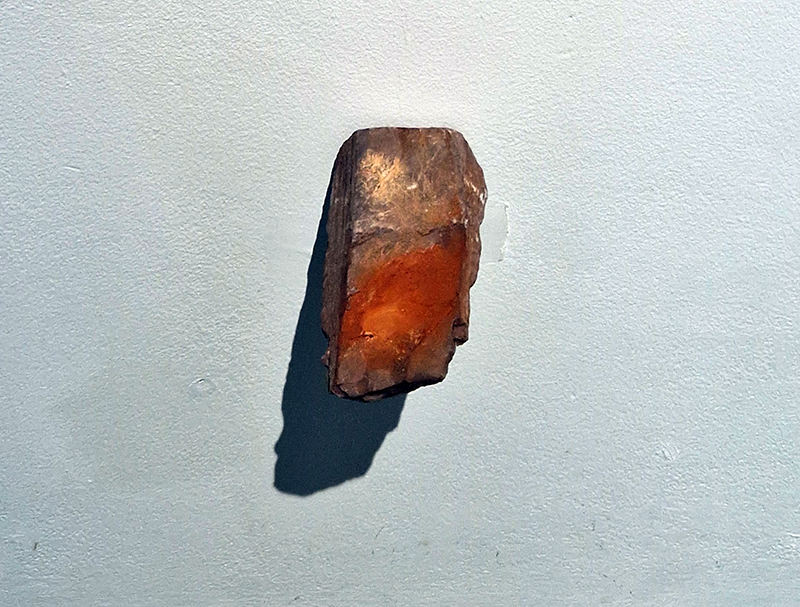
Image: From Roger Caillois’ stone collection: Malachite, masque africain, République démocratique du
Congo, 14 × 20.5 × 6 cm. Photographed in the Museum of Natural History, Paris by Julie F Hill.


Responding to Jason Groves’ inquiry into the mineral imaginary in his eponymous book, as well as the ‘Writing of Stones’ as proposed by writer and mineral collector Roger Caillois, the exhibition exposes the complex entanglements between the organic and the inorganic; the human and the lithic. The Geological Unconscious is viewed through disruptive Surrealist strategies, engagements with the aesthetics of geo-materiality and material processes that attend to the growth and transformation of matter. These artistic ‘excavations’ highlight the toll of extractive industries on our planet, whilst inspiring reverence for the geological lineages of deep, cosmic time. Theories of Animism and Panpsychism are also brought to
bear on ways of attributing agency to inorganic realms.

I am thrilled to be exhibiting with Julie F Hill, Charlie Franklin, Rona Lee and Deborah Tchoudjinoff.


An accompanying events programme includes an urban geology walk with Geologist Ruth Siddall, discussing the origins of the local built environment; an installation and tasting by chef Moonhyung Lee who explores human-mineral entanglements through digestion; a crystal growing workshop led by Julie F Hill and I will be offering visitors lithomancy readings every Friday afternoon.

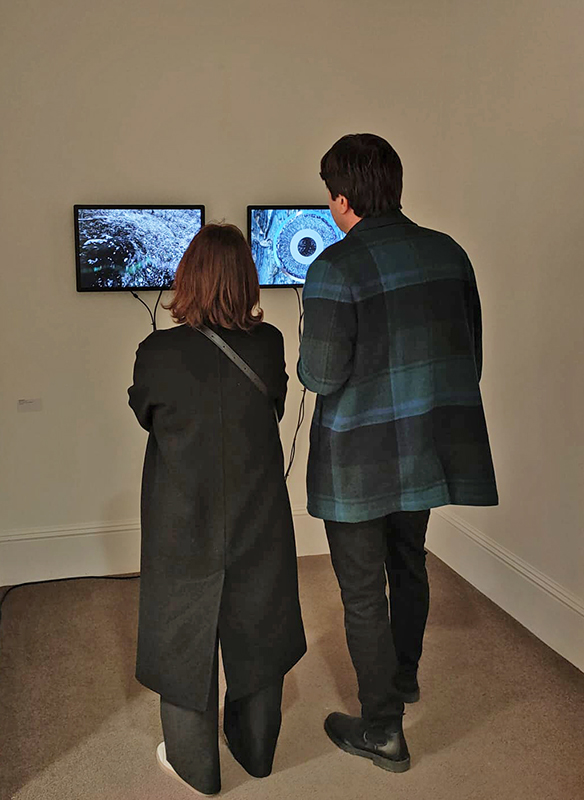
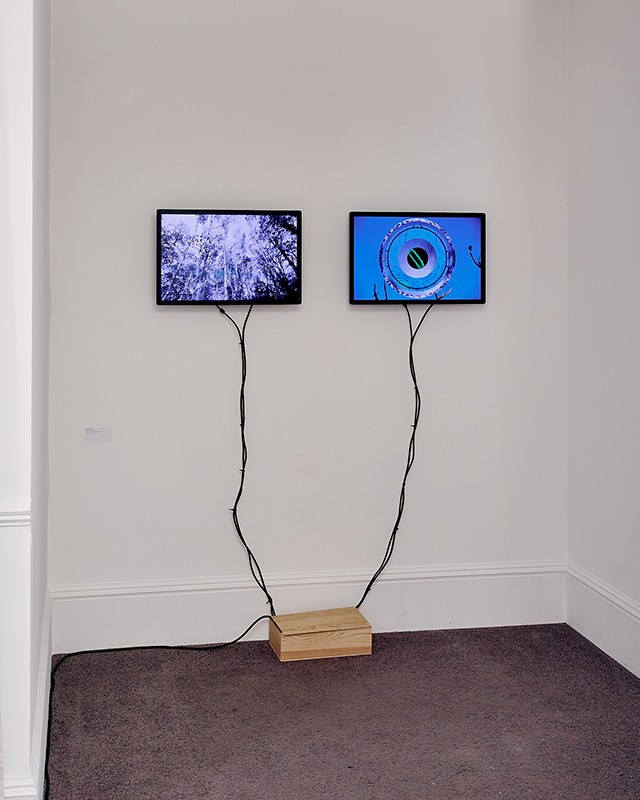
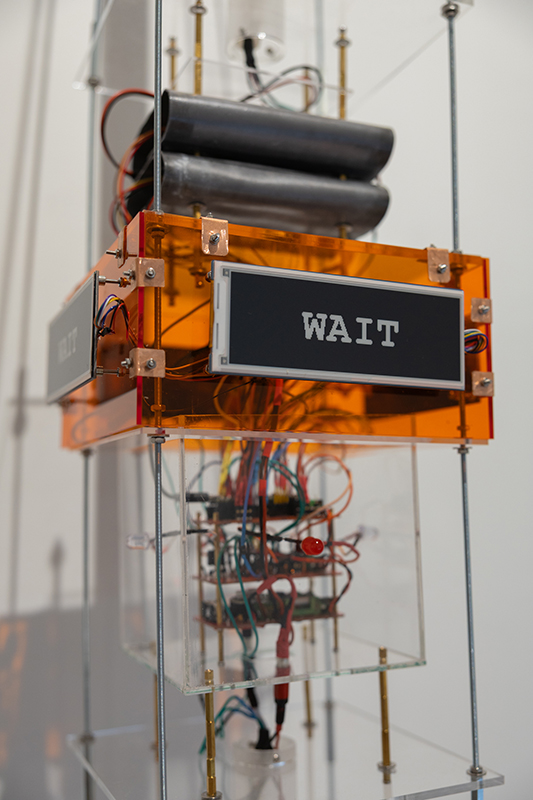
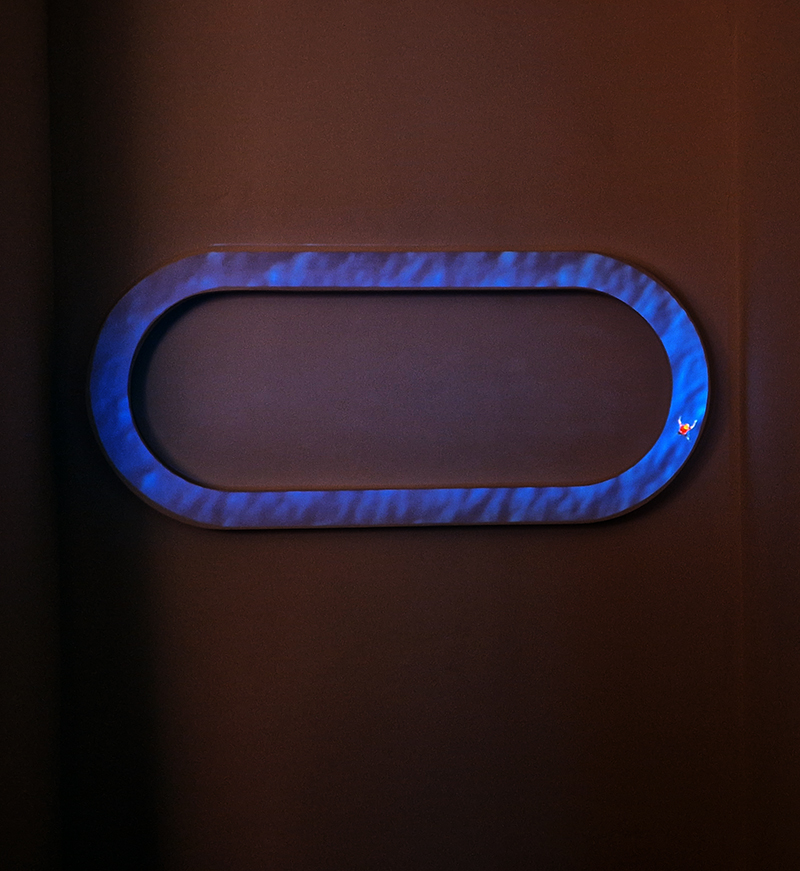
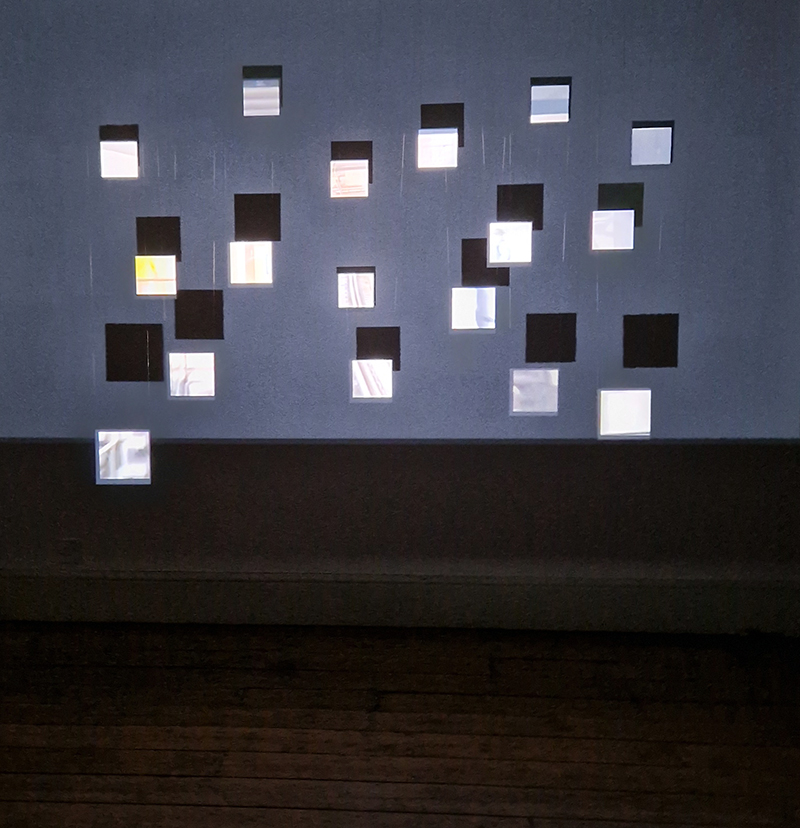
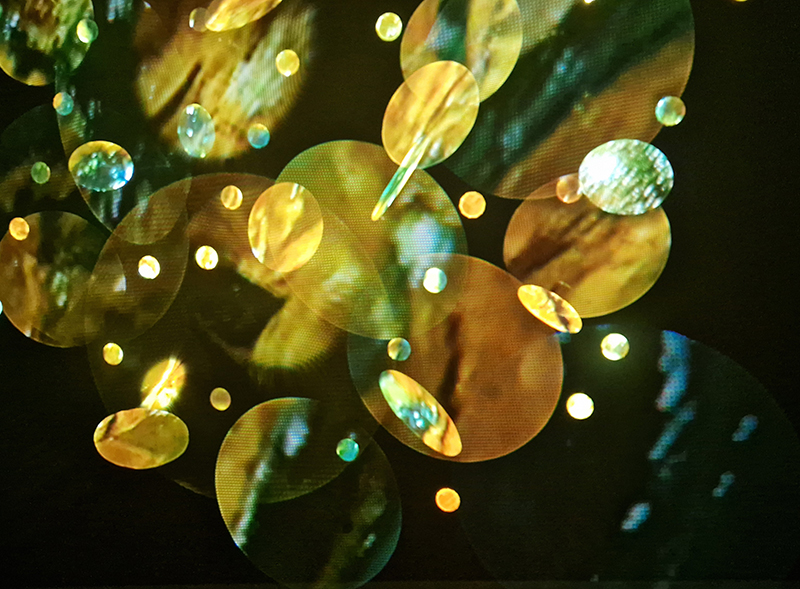
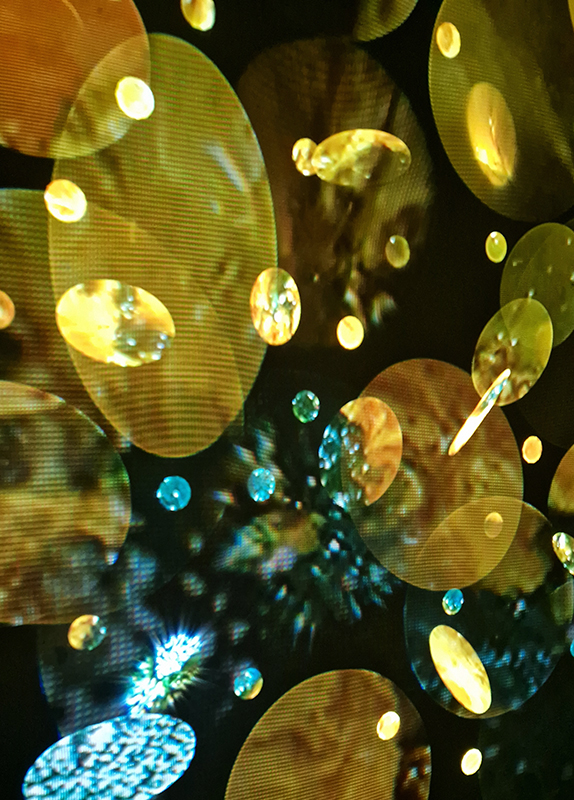
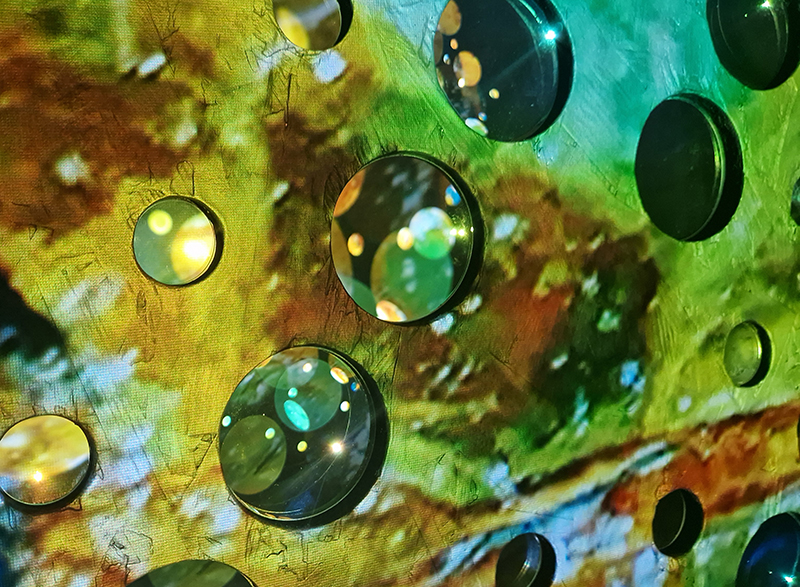
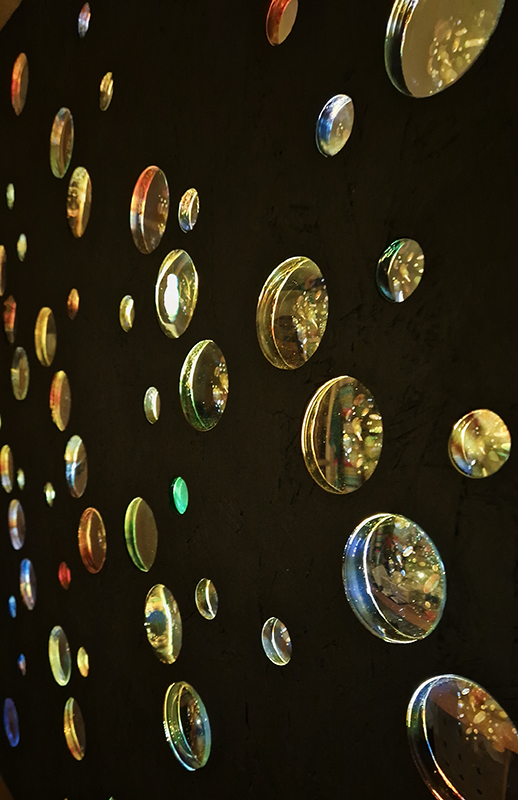
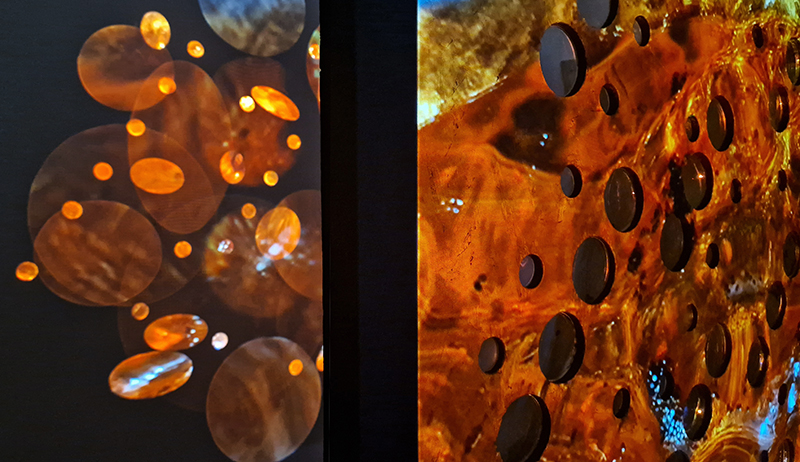
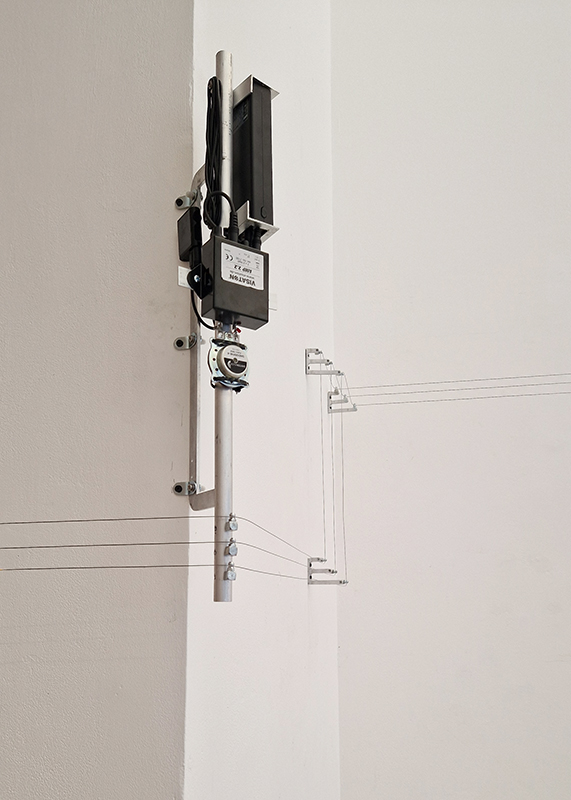
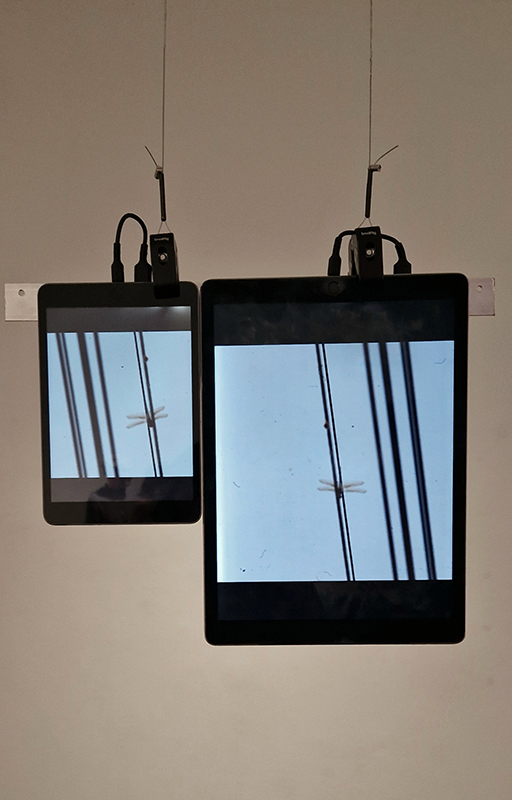
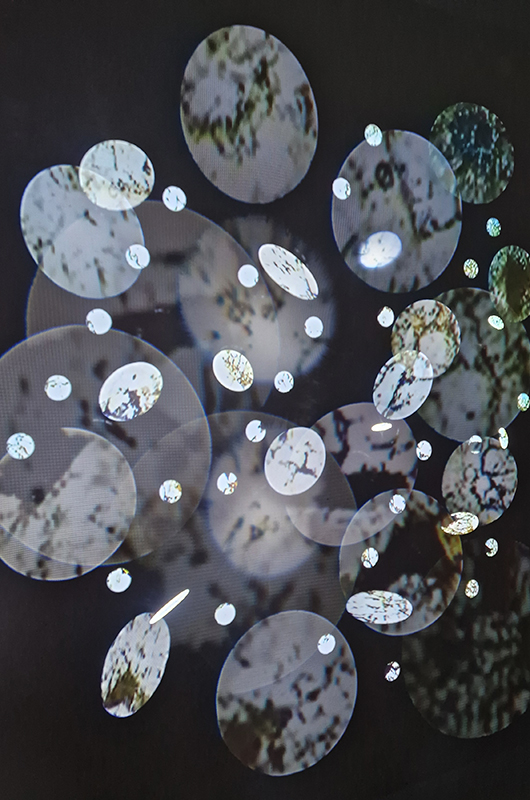
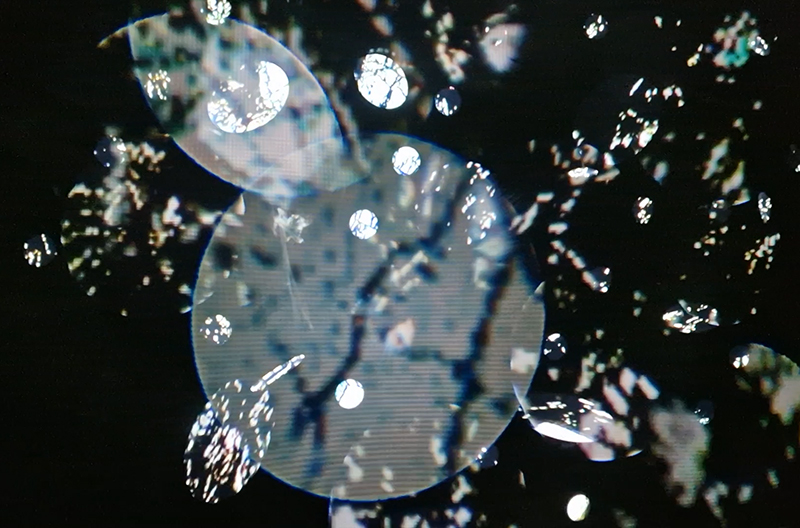
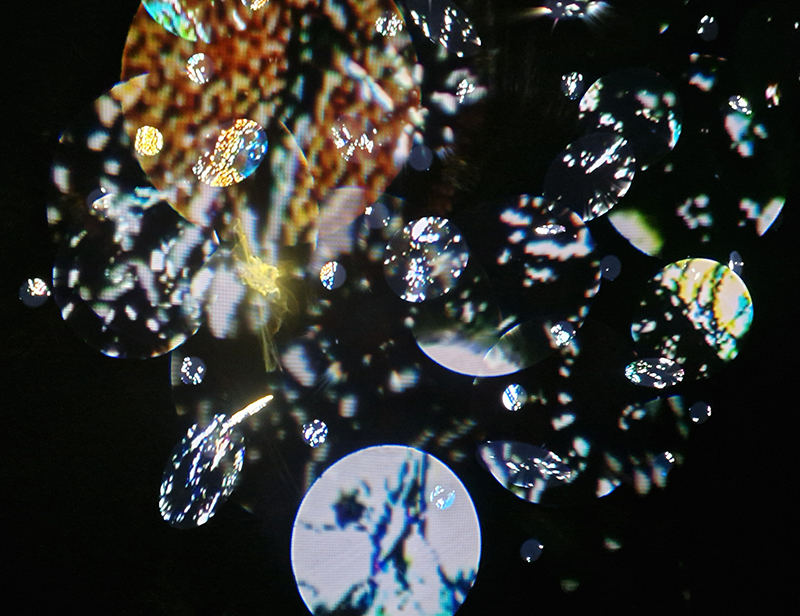
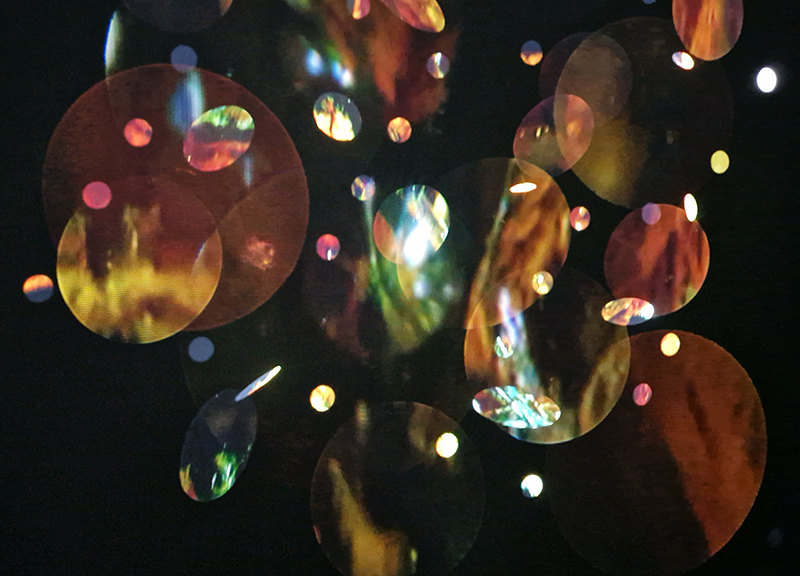
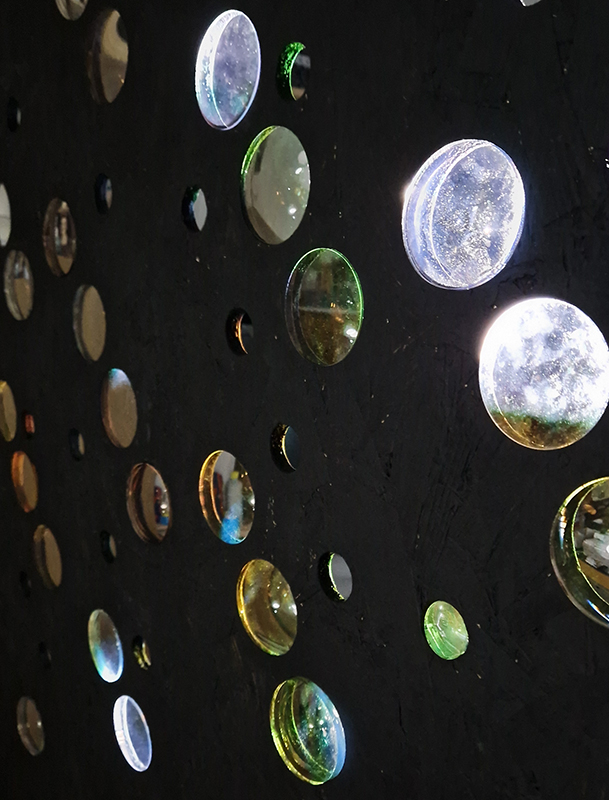
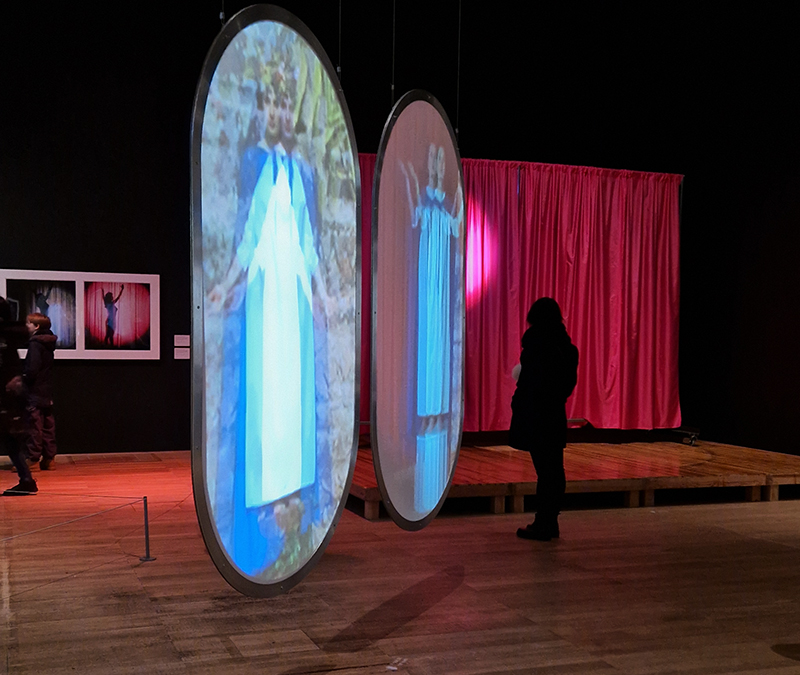
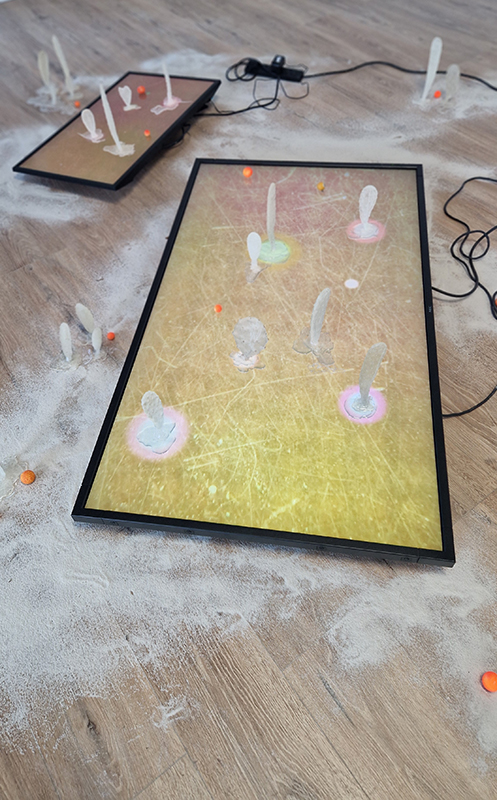
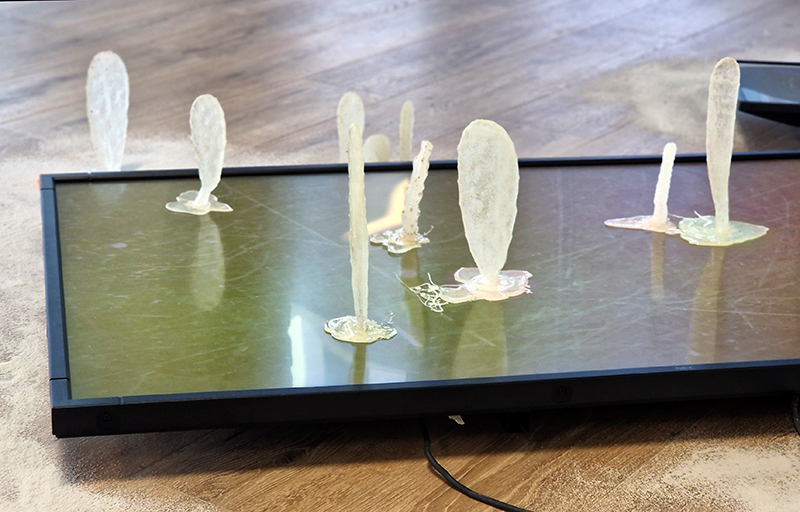
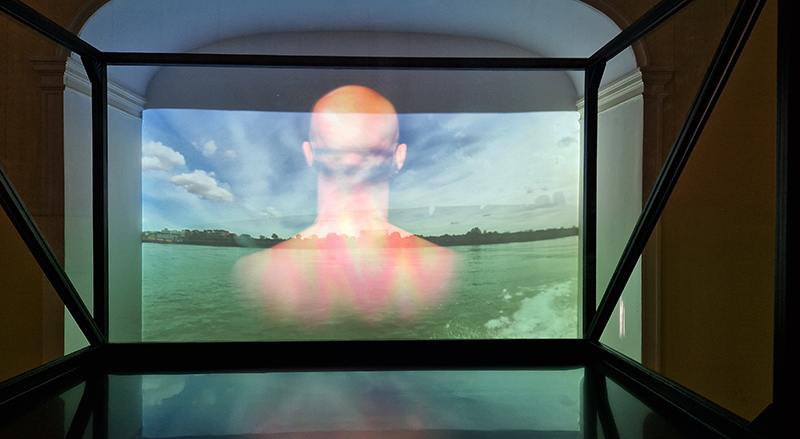
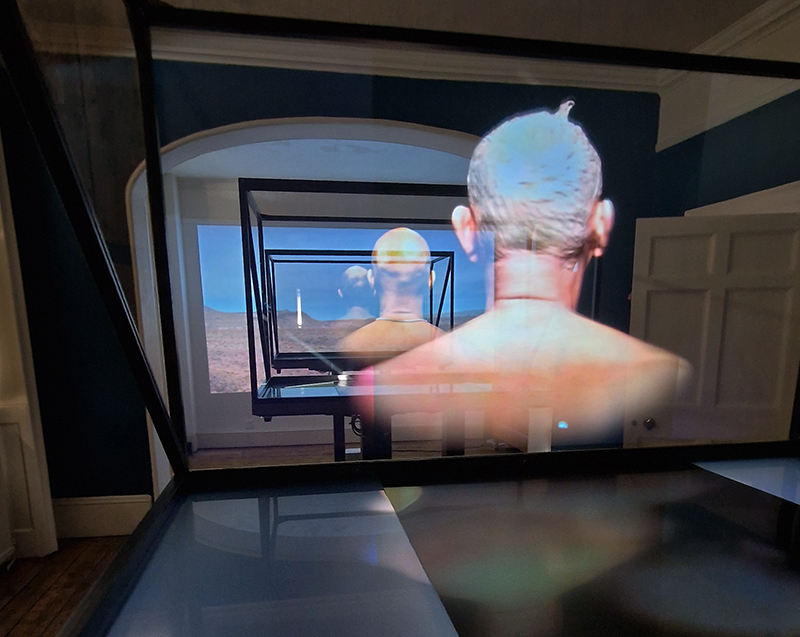
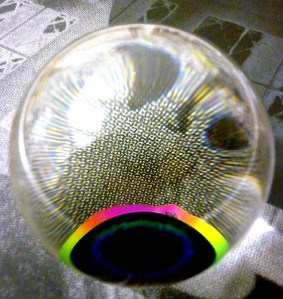
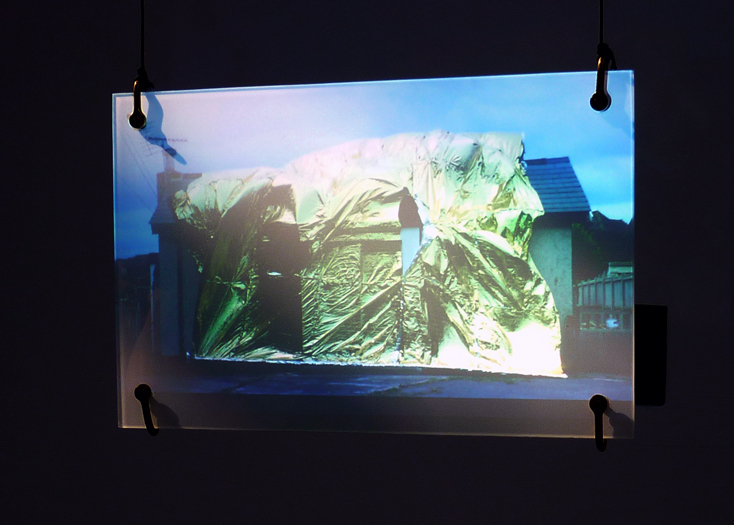
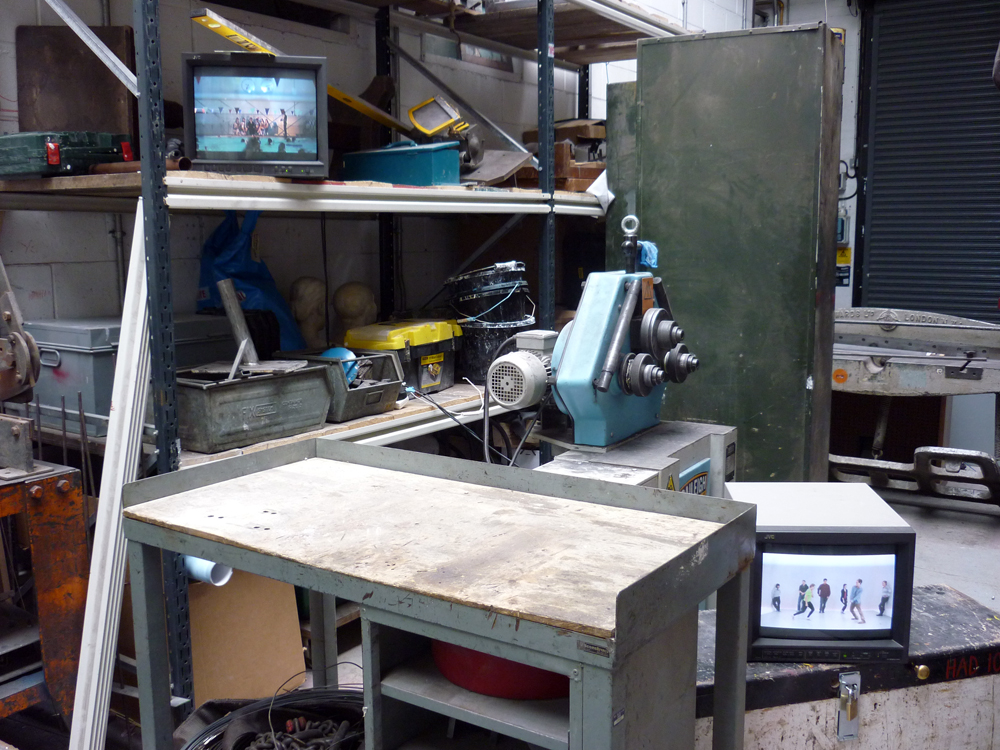
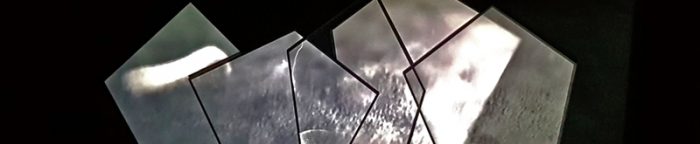
Investigating human/mineral entanglements for new work to be installed at Hypha HQ for The Geological Unconscious. Video of human activity projected through distorting optical lenses transforms the anthropocentric position to imagine the perspective of the rock. The pattern of lenses is informed by the molecular structure of magnetite,

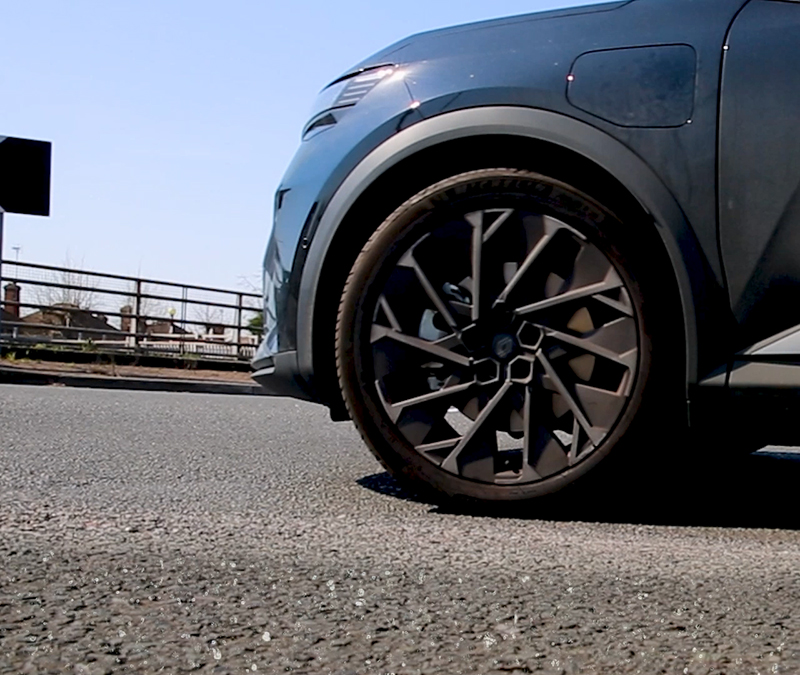
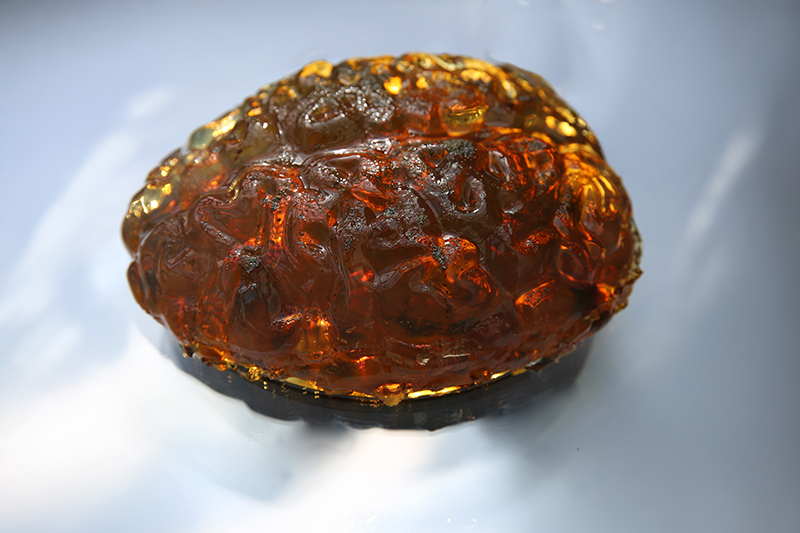
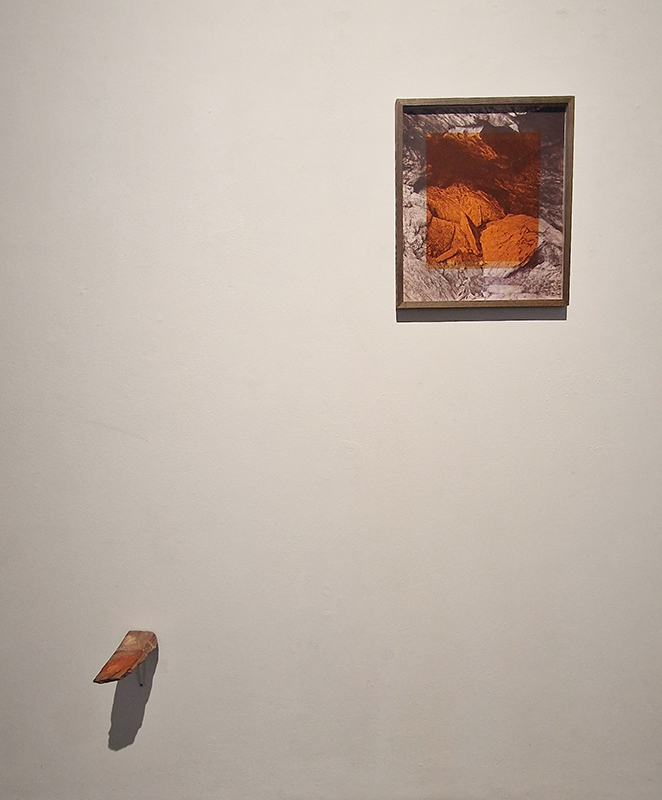
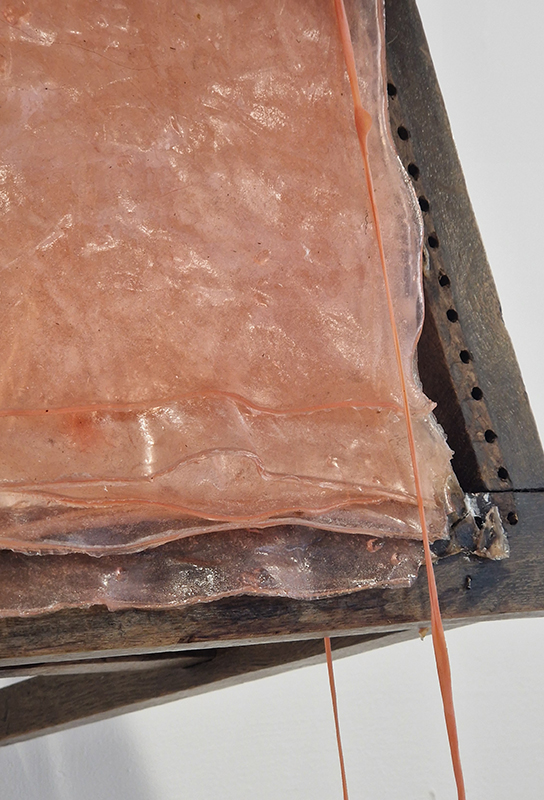
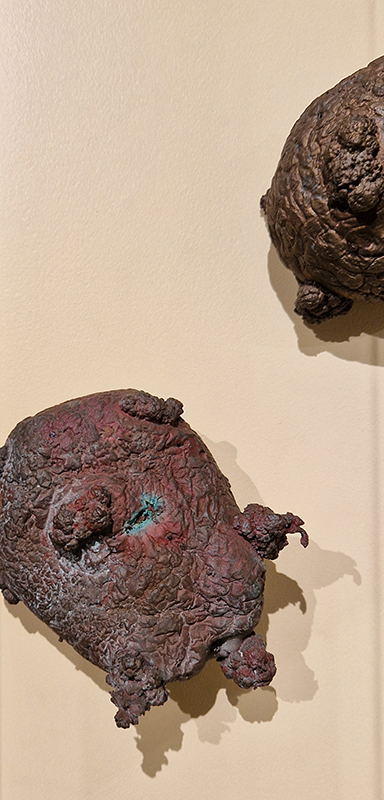
Magnetite is a naturally magnetic mineral found in many organism’s cells including human brain cells. Mined magnetite is used in industrial and mechanical processes and its use in combustion engines and braking systems is releasing nanoscale pollutant particles from traffic into the air which are finding their way into brain cells in high percentages causing concerns with links to degenerative brain diseases. I have been filming the stop start constant stream of traffic at a local roundabout and made a cast of a brain in gelatine with suspended iron filings. The filings oxidised and so the brain took on an iron red tinge and after a few days it cleaved down the centre and gradually as it dried became more and more chiton like.

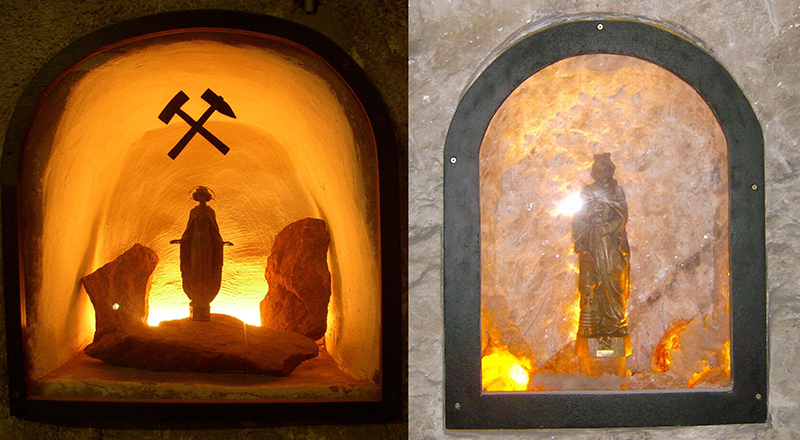
Chitons are remarkable molluscs that have changed little in hundreds of millions of years. The chiton has hundreds of tiny eyes in its shell, which is made of eight articulating plates. It is the only known creature with lenses made of minerals rather than protein. Another distinctive feature of the chiton is having rows of teeth primed with magnetite, which aid its homing capabilities through magnetoreception and allow chomping on the hard rock surfaces it clings to. Inside the teeth of some species, the mineral santabarbaraite has been found, named after Santa Barbara, a mining district in Italy where it was first discovered and that honours Saint Barbara, who is the patron saint of mining and tunnelling. Santabarbaraite is also one of the few minerals named after a woman.

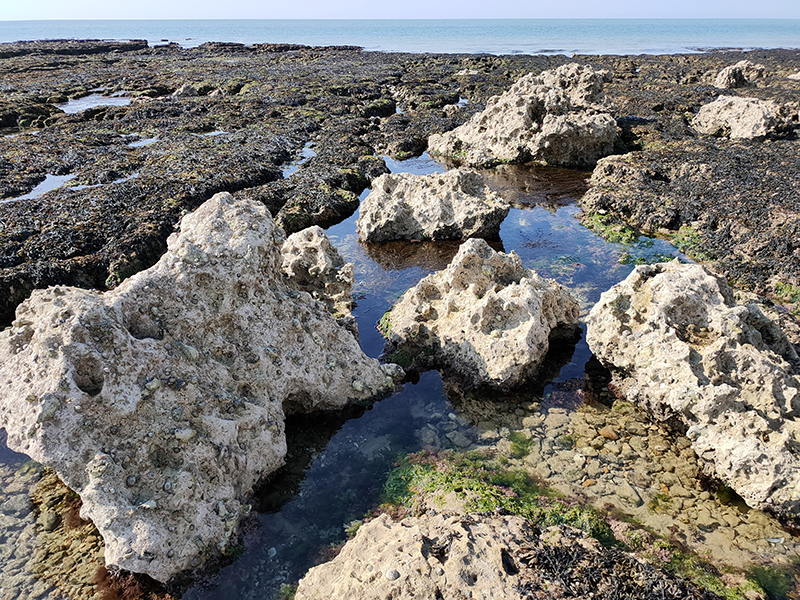
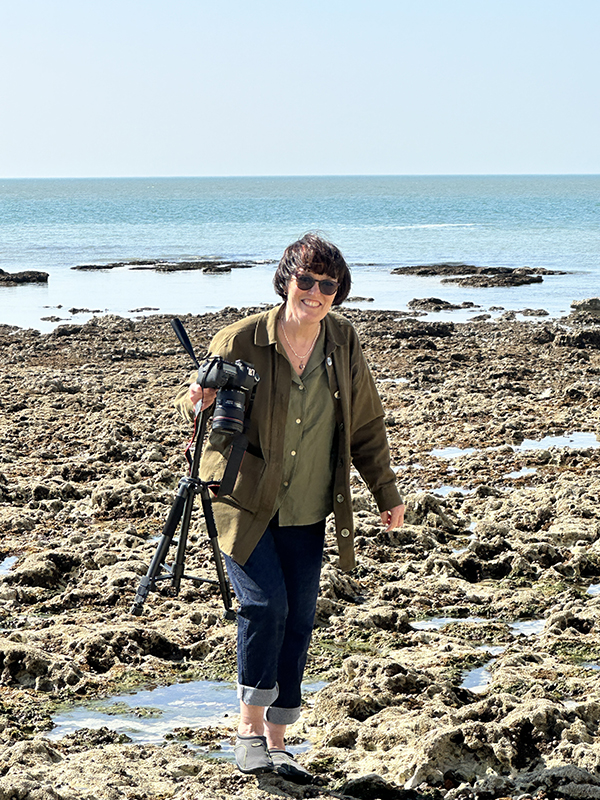
Fantastic day chiton hunting in the rockpools on the stunning East Sussex coast. Thanks to family who helped find these well camouflaged unique creatures.

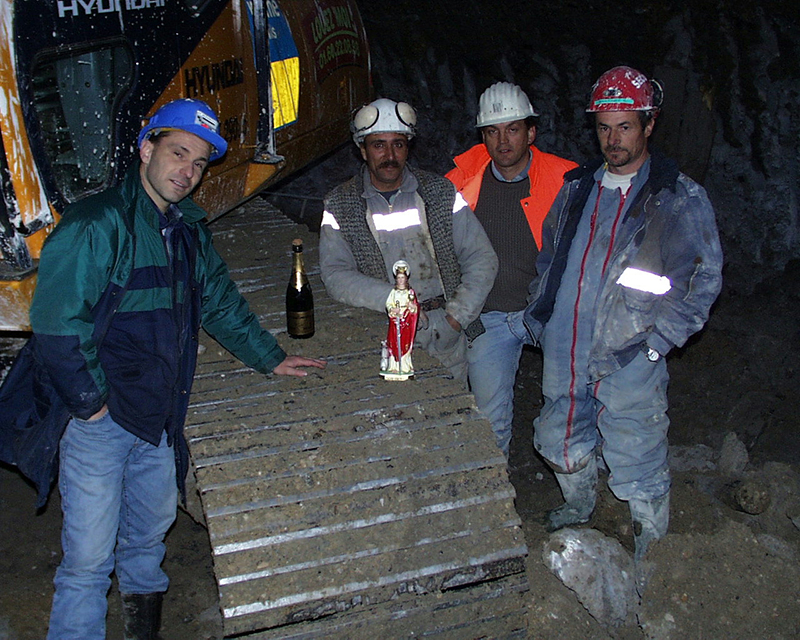
Saint Barbara, was adopted by miners and underground workers as patron saint after the pursuit of geology and the widespread use of gunpowder in mining escalated in the 1600’s. She may have a dubious authenticity but her benedictions are still sought today with many statues installed at the entrances to Crossrail and a large ceremony on her saints day, 4th December, performed by local priests before tunnelling went ahead. Even at CERN the epicentre of scientific rigour, a shrine to Saint Barbara was established at every shaft site of the Large Hadron Collider requiring excavation and a blessing performed even if the priest had to be lowered by crane down the shaft to achieve this.

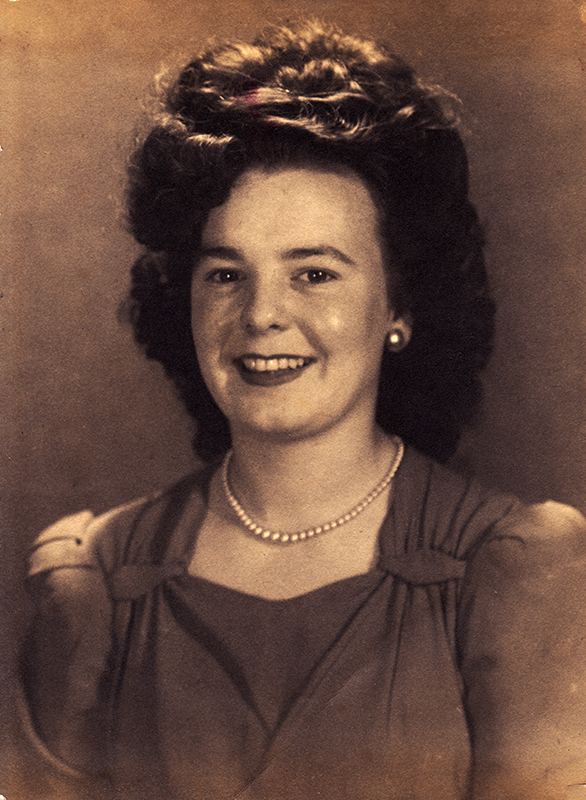
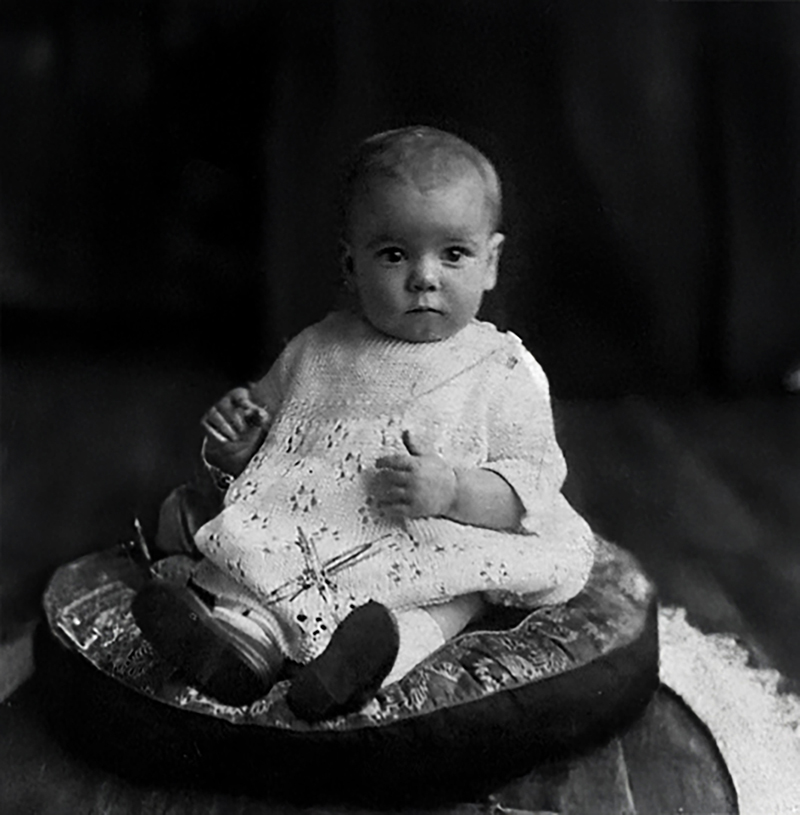
My mother’s name was Barbara and her birthday 6th December is very close to Saint Barbara’s day on the 4th. It would be great to discover she arrived two days late but there is no one alive now to ask.

Small grains of magnetite are common in igneous rocks, formed from magma having cooled and solidified within the Earth’s crust, and also in metamorphic rock, formed when existing rock is transformed physically or chemically at extreme temperatures. 

These processes happen on other planets as well as Earth and so magnetite has also been found in meteorites.

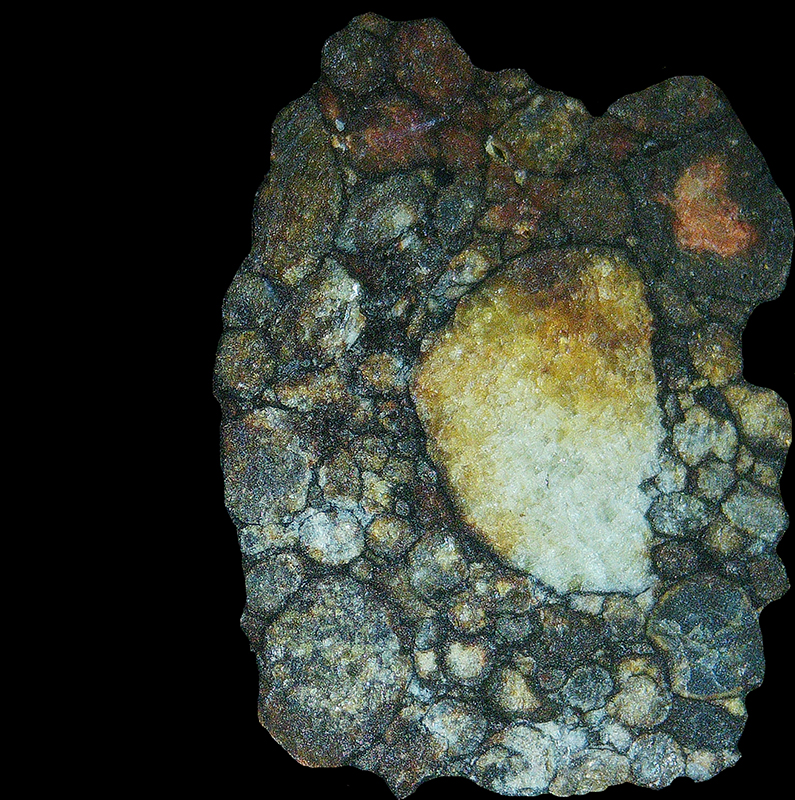
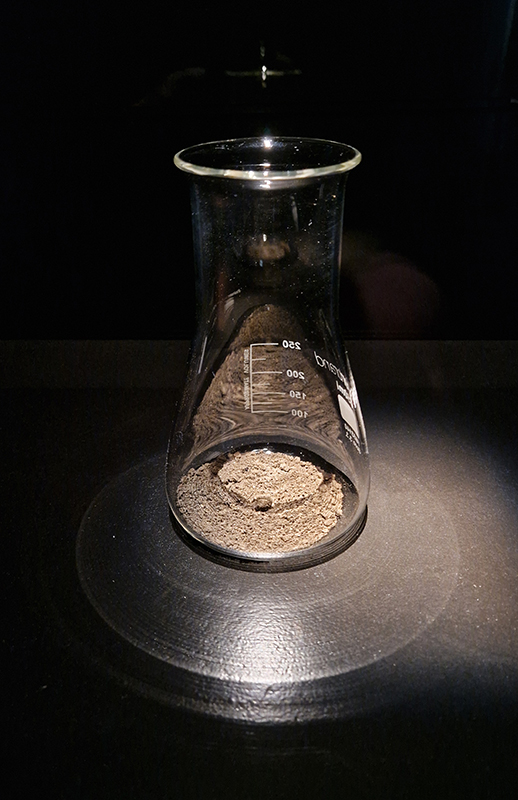
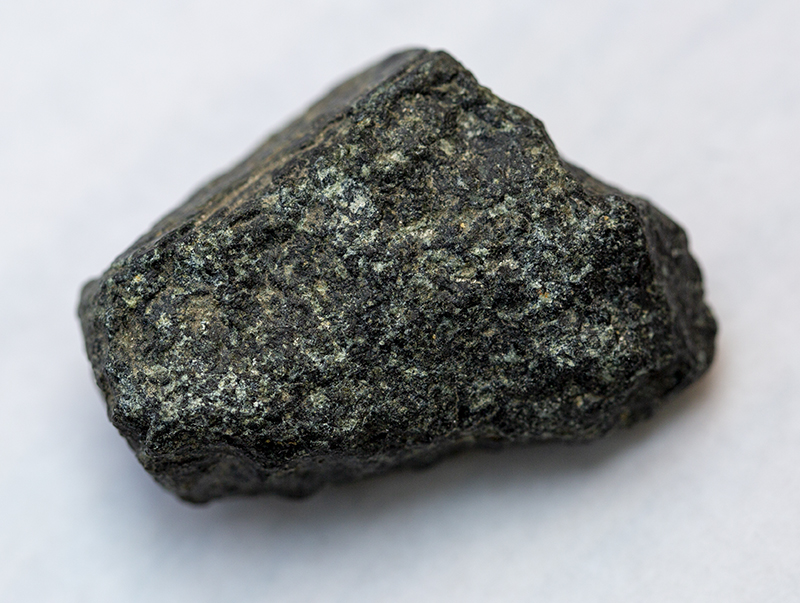
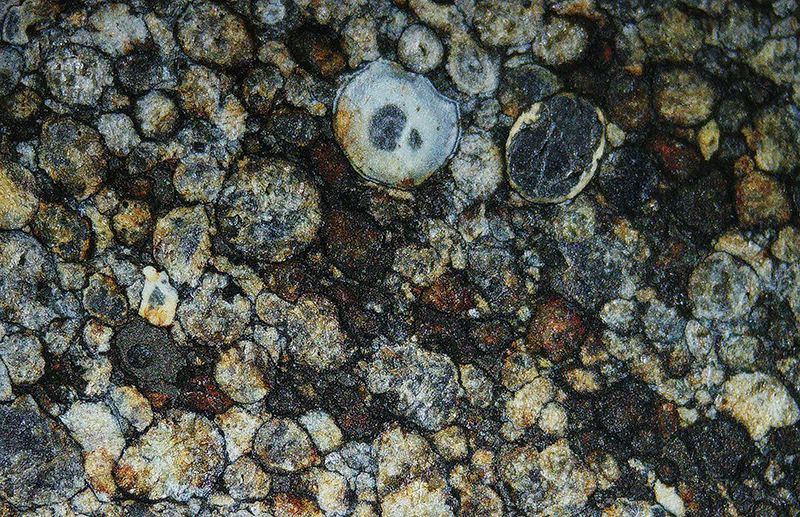
Using a digital microscope to look at the structure of the chondrite meteorite NWA 16975 discovered in the Sahara in 2024 which displays numerous and obvious chondrules and flecks of nickel iron in a fine grained matrix.

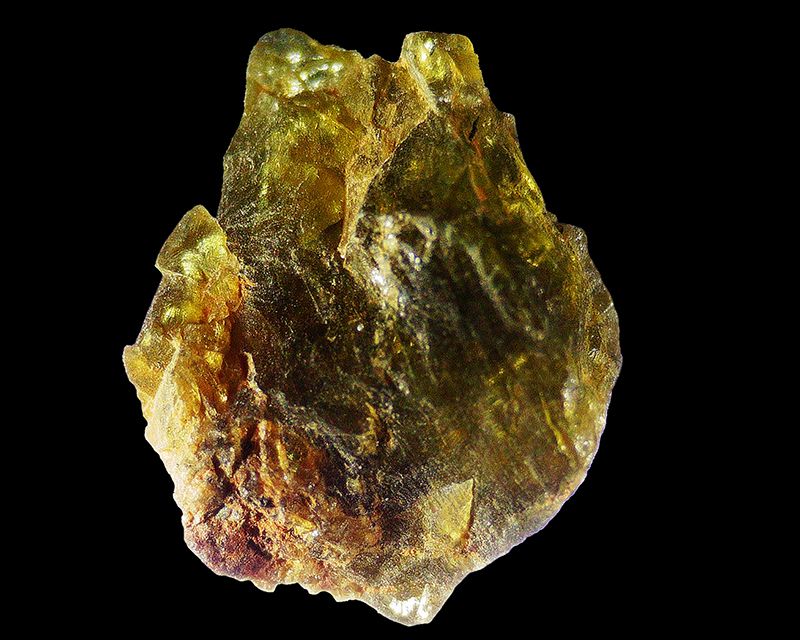
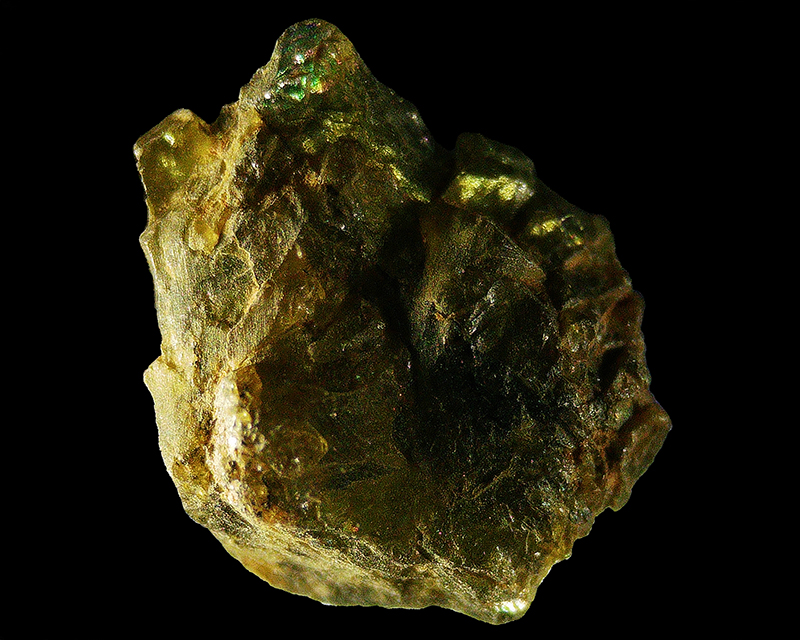
Also the fragment I have from the Diogenite meteorite NWA 7831 found in Morocco in 2013.

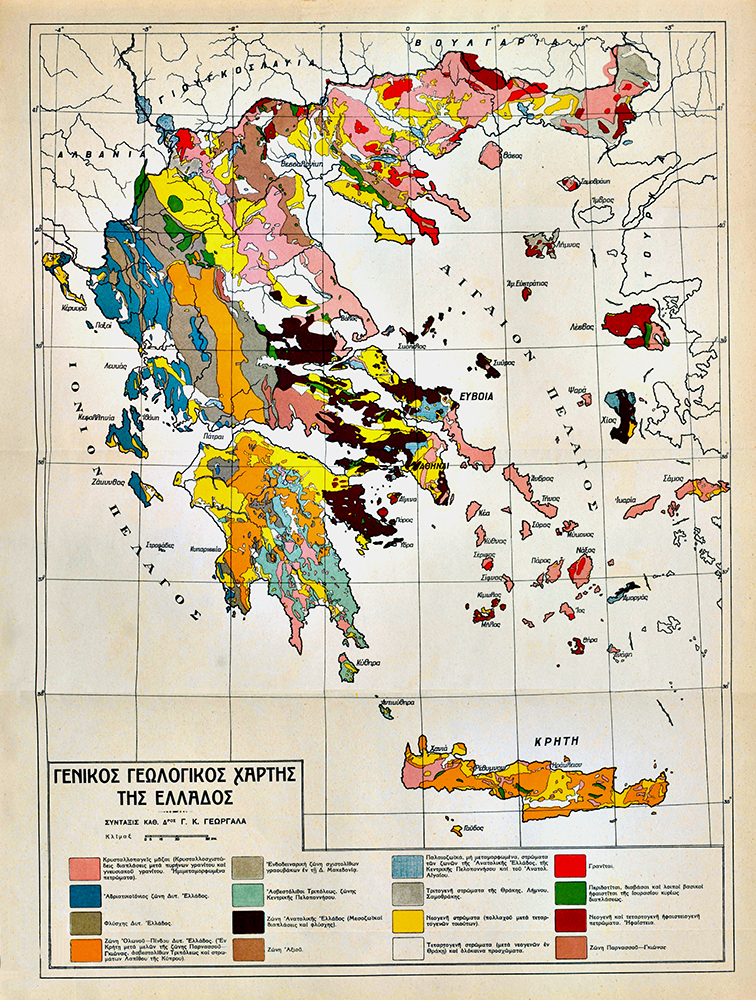
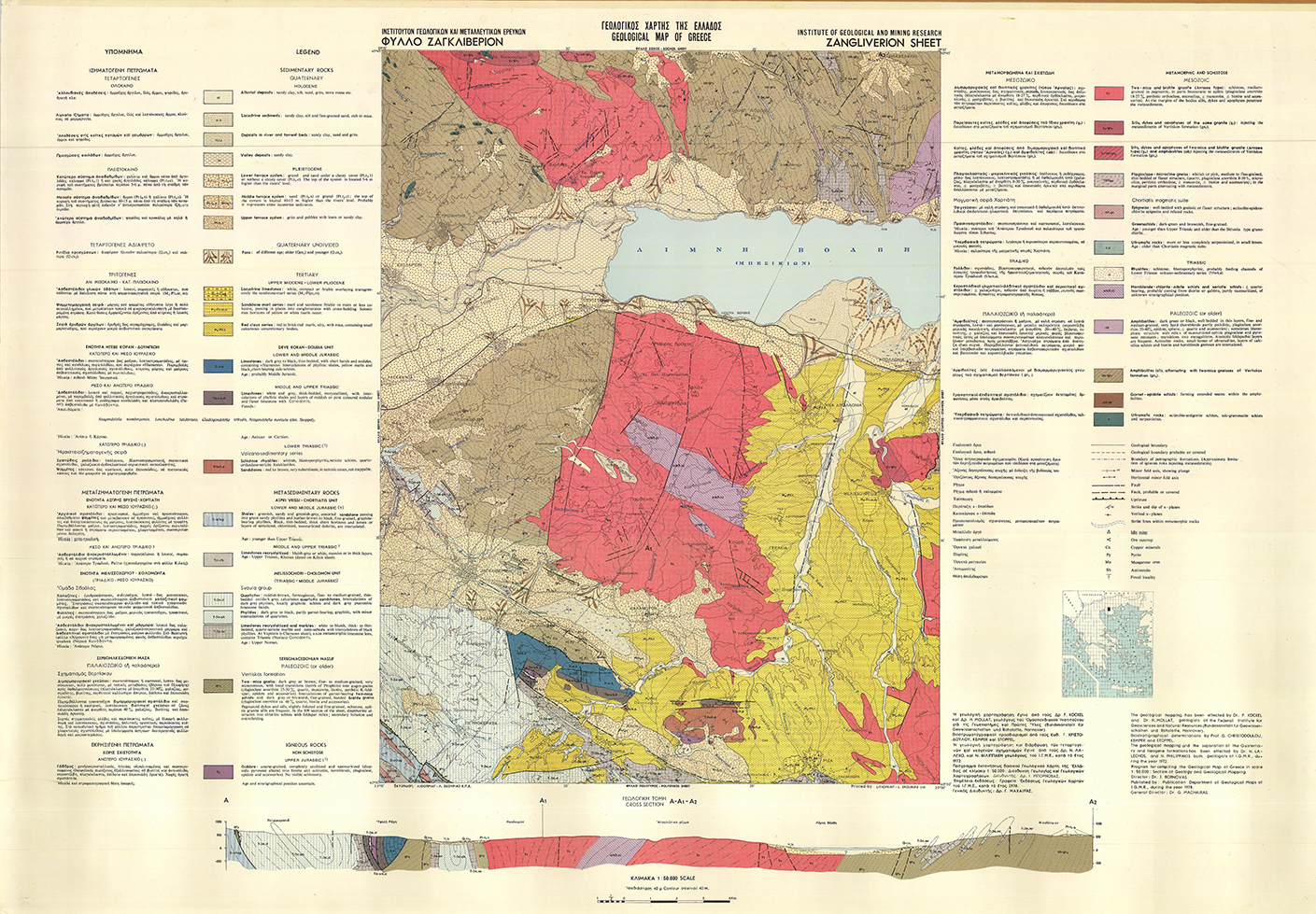
Looking at wonderfully colourful geological maps of Greece to locate the ancient area of Magnesia – the region where magnetite was first discovered and where its name has derived from – known as “magnes lithos” (stone from Magnesia). Definitely want to plan a research trip to this beautiful region around Thessaloniki.
Exhibitions

Whatshesaid collective of artists present Terra Incognita at Thames-side Studios Gallery – charting and cataloguing the disregarded, the everyday, its surface textures, accumulations, sedimentations.
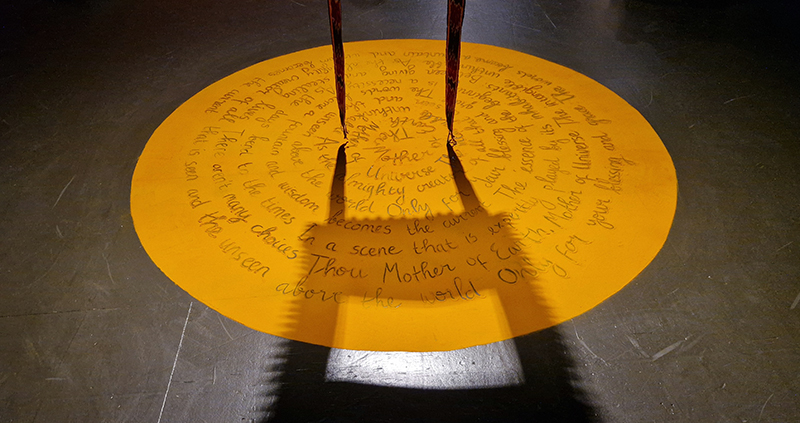
Joao Villas and Victoria Ahrens showing in Spectral Matters at APT Gallery An understated beautifully curated show whose work references the ephemeral materiality of sound, video, photography and print. The work overlaps and crosses over, both artists responding to the other’s practice. The images create matter, as spectral matter gives agency to the materiality of its own making, while haunting the space with its frequency- it vibrates. The exhibition explores memory, technology and the Anthropocene- and how the disappearing materiality of the world is captured through ephemeral means. 

Work continues on ‘mineral visions’ testing projecting through a variety of optical lenses set in a pattern reflecting the crystal structure of magnetite. Magnetite is a mineral we are very intimate with. It is in our cells, in our brain but this delicate balance is being disrupted as magnetite crystals from air pollution now outnumber natural magnetite in the brain by 100:1. The full consequences of this imbalance are not known yet but it could be implicated in neurodegenerative disease like Alzheimer’s.

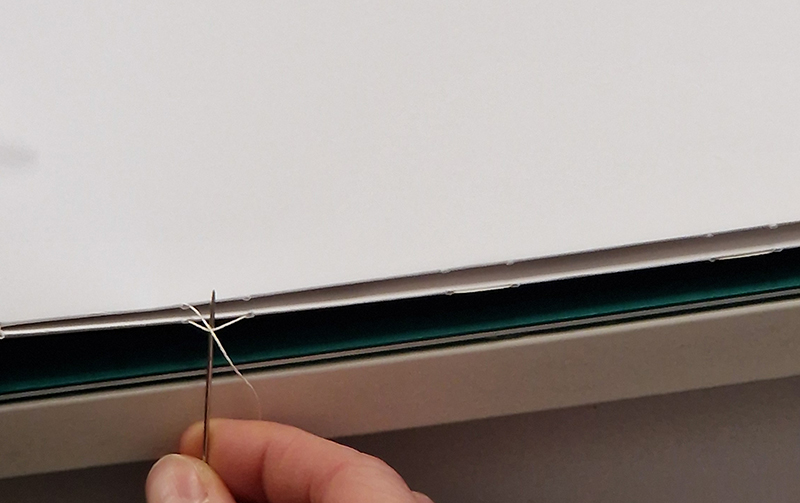
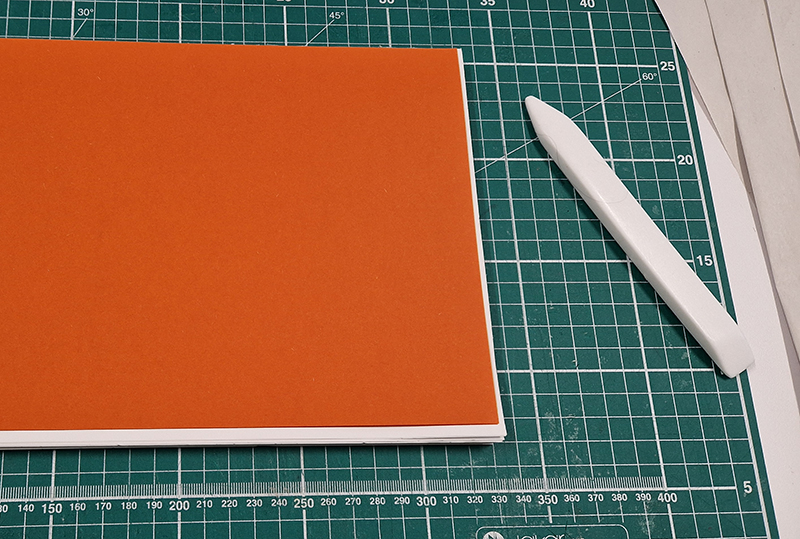
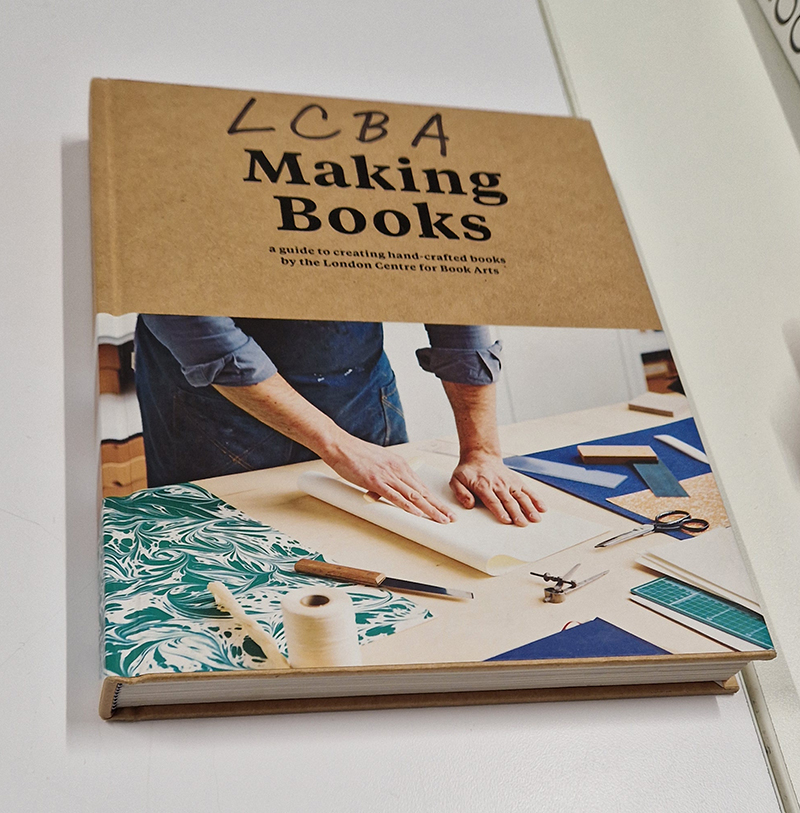
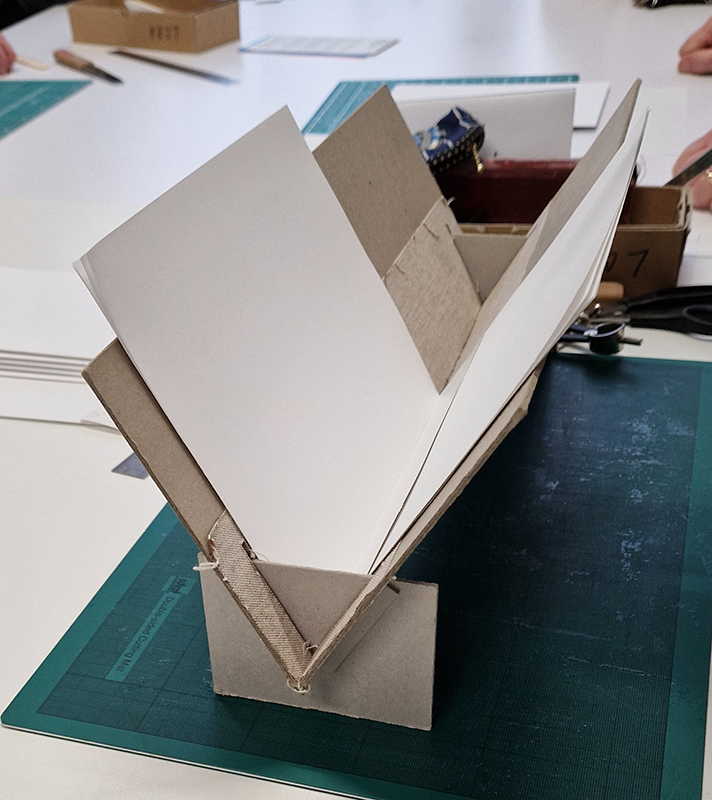
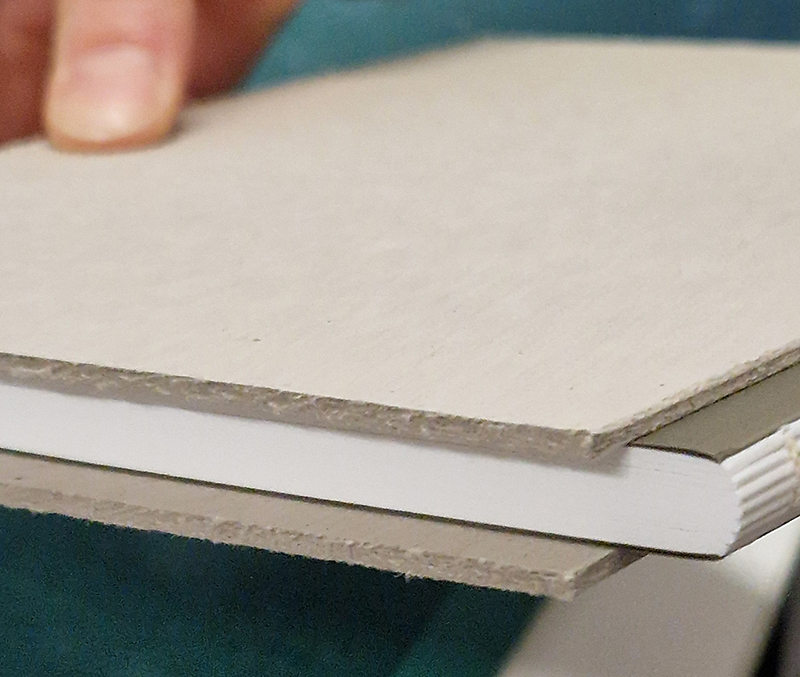
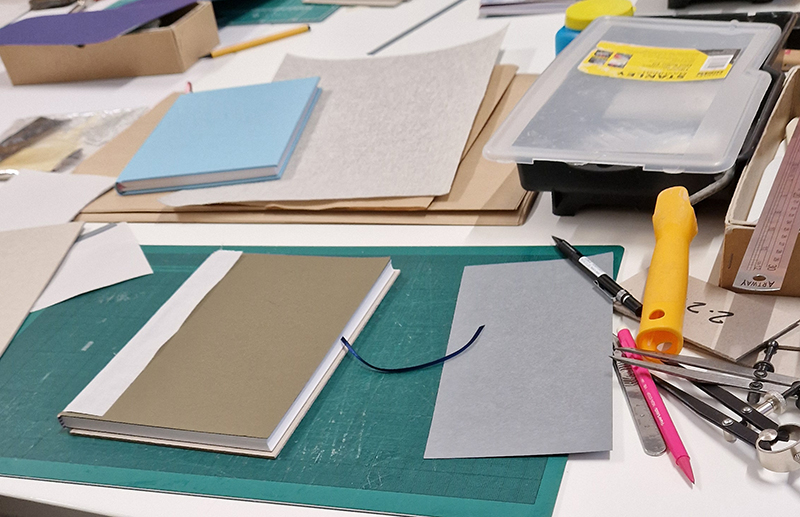
I spent an enjoyable day at London Centre for Book Arts learning how to create a classic full cloth-covered case bound book with a rounded spine. I hope to have picked up some skills here which I will use to make a sculptural book embodying the history of magnetic field reversals stored in the minerals of lava beds on the ocean floor.

Studio visits

Julie F Hill and I had been in contact with writer/producer/curator Ariane Koek since our duo exhibition The Stone Sky at Thames-side Studios Gallery which she had been unable to attend, but with her interest in physics, geology and cosmology had suggested we keep in touch. We finally had the pleasure of meeting Ariane at Julie’s Bomb Factory Studio and were able to share some of our plans for our upcoming show The Geological Unconscious which we are co-curating at Hypha HQ this spring.

It was so good to meet curators Maria Hinel and Indira Dyussebayeva-Ziyabek at my studio to discuss their upcoming project inspired by the essay on carbon in Primo Levi’s The Periodic Table. Levi weaves a story following a single atom of carbon as it is transformed through the many relationships and bonds made with other atoms, moving from rock to atmosphere to living organism and back to mineral.

Gallery visits

Exhibition research trip to Exeter with Julie to see Dartmoor: A Radical Landscape at the Royal Albert Memorial Museum & Art Gallery. Artists include: Fern Leigh Albert, Jo Bradford, Chris Chapman, John Curno, Robert Darch, Siân Davey, Susan Derges, Robin Friend, Ashish Ghadiali, Alex Hartley, Nancy Holt, Laura Hopes and Katharine Earnshaw, Richard Long, Garry Fabian Miller, James Ravilious, Tanoa Sasraku, David Spero, Nicholas J R White, Marie Yates.

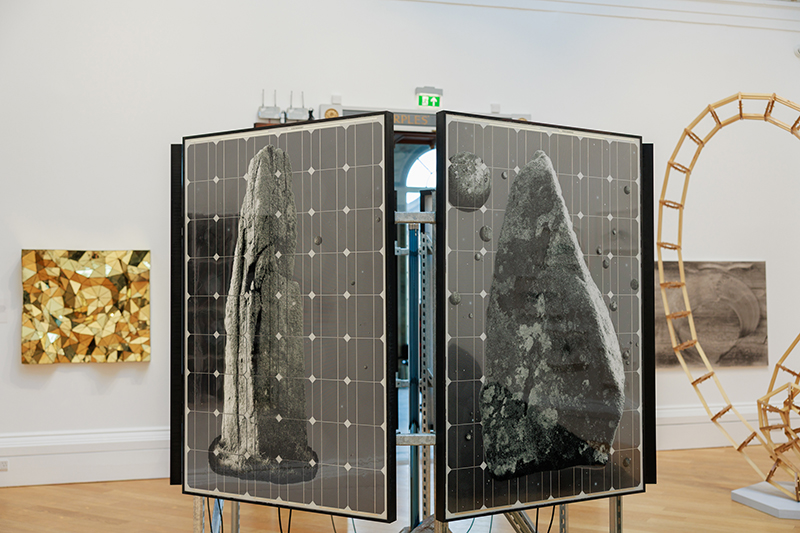
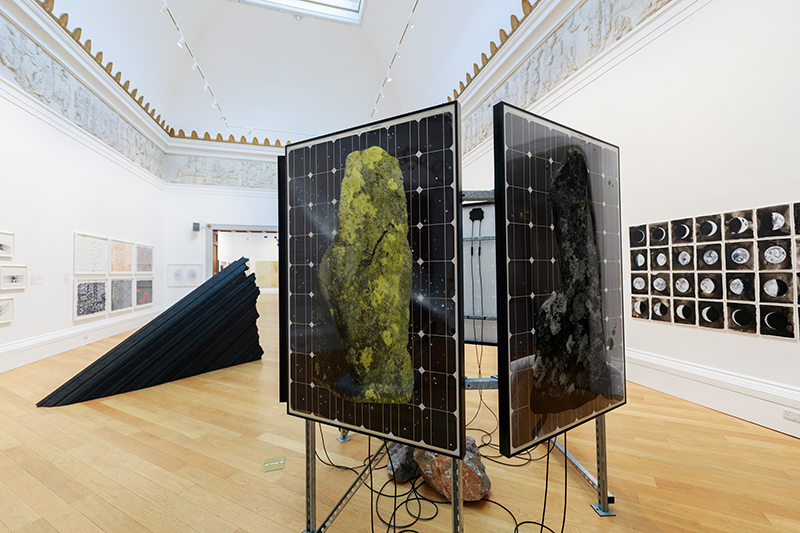
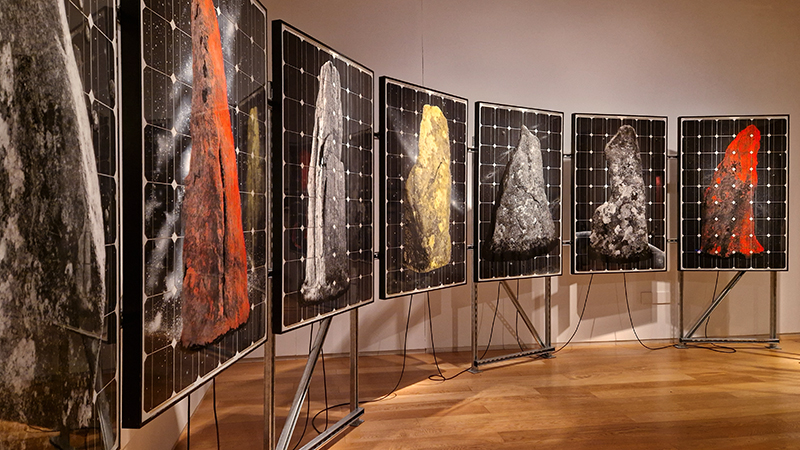
I was particularly interested in seeing Alex Hartley’s, The Summoning Stones, which is a series of hand coloured prints of standing stones embedded into recycled solar panels. Aiming to bring together ancient and contemporary ways of engaging with the sun they are positioned to put the viewer in the centre of a magical arc of energy; the contemporary may have the bias here and the ancient magic dispersed in the gallery setting but I still enjoyed the aesthetic. The works felt rather cramped in the space. There was a lot of photographic work documenting artist’s interest in the moor from the 60’s/70’s onwards and several prints using the process of dye destruction (luminograms) which I was unfamiliar with, such as those by Gary Fabian Miller – this is a photographic printing process in which colour dyes embedded in the paper are selectively bleached away (destroyed) to form a full-colour image. The papers used in this process are no longer manufactured and Miller spent a year creating one direct long exposure to paper luminogram every day as a reflection on time passing. Extraordinary fluid images from Susan Derges were a highlight.

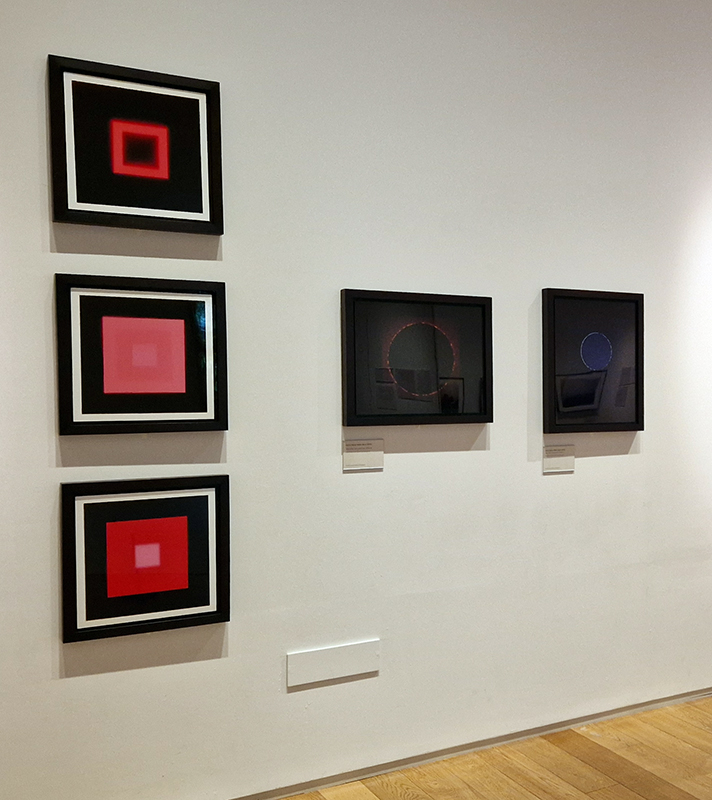
A luminous intervention of glass Specimens from an Imaginary Voyage by Steffen Dam in the main collection at RAMM.

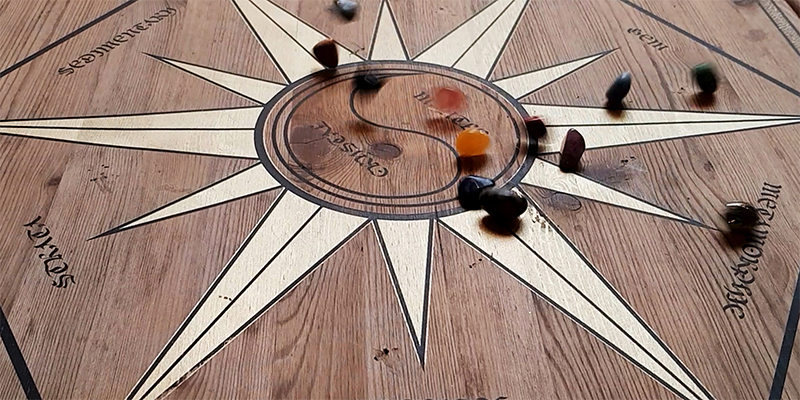
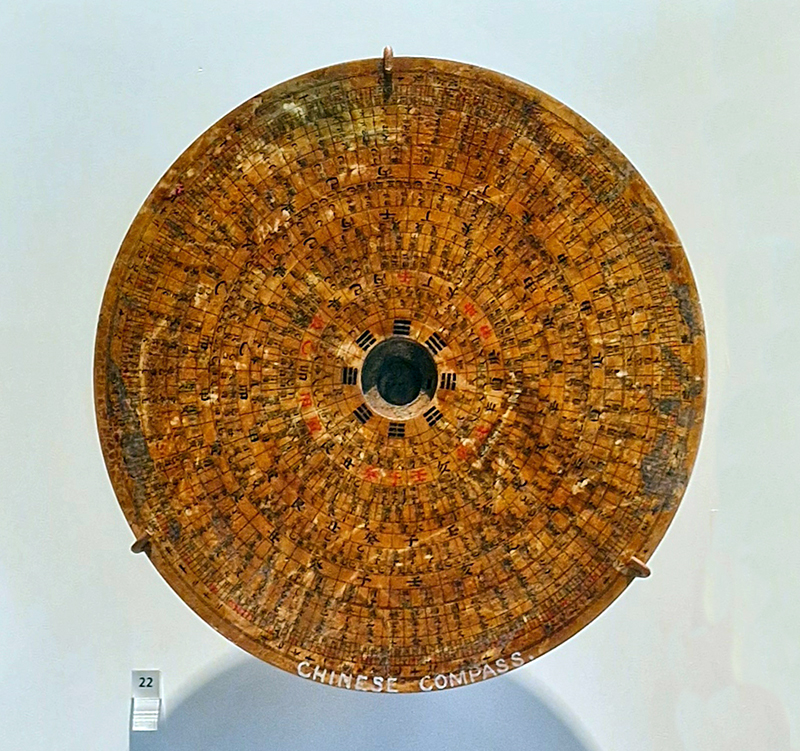
This splendid Chinese Compass, Lo P’an, also spotted at Royal Albert Memorial Museum, Exeter – used more for alignment of positive energy than navigation.

In Scope at Hypha HQ, Euston curated by James Grossman. An exhibition examining nested systems in nature, there were some fascinating symbioses of technology and natural materials such as live algae prints and sculpture capturing the tidal forces of the Thames estuary. Images 1-3 Alexander Clarke, 4 Will Laslett, 5-7 Kerrie O’Leary, 8 Star Holden, 9-10 James Grossman, 11 Peter James Nasielski, 12-13 James Grossman + Peter James Nasielski, 14 Hanne Peeraer

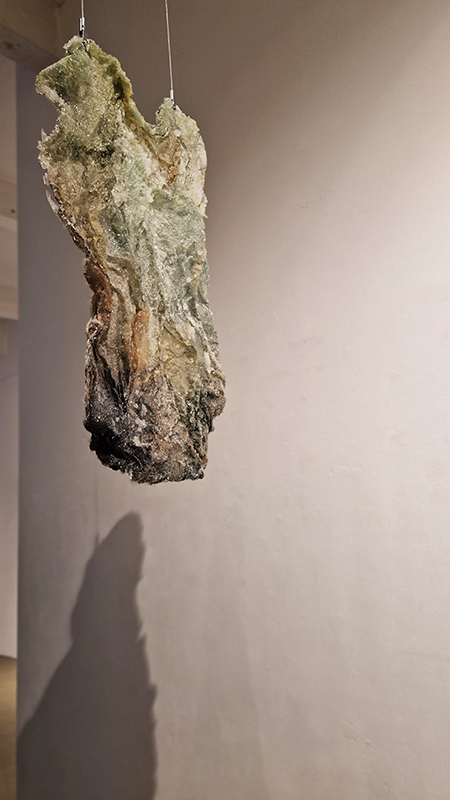
Great to see Sophie Mei Birkin’s Vestige in Joining Doggerland at APT Gallery. A semi-translucent, glittering, crystal encrusted form suspended like messenger from both the past and the future – a reminder of what once was and what might be.

Citra Sasmita Into Eternal Land at Barbican The Curve. Having turned my hands and kitchen yellow recently grating fresh turmeric I understand why this circle of turmeric powder in the meditation zone was so closely invigilated. A calm scented area after walking the curve of colonial atrocities.

Mike Kelley Ghost and Spirit at Tate Modern. Sublevel (1998) is a model of the basement of CalArts, where he had studied in the 1970s. The spaces that Kelley couldn’t recall from memory are lined with pink crystal resin. The work stages a site of hidden memories and repressed desires, underscored by the symbolism of the pink coloured crystals, as Kelley explained: Because, as everyone knows, regardless of meaningless, exterior coloration, it’s all pink inside. Janelle Monae would agree and regardless of honourable/ironic sentiments employed the aesthetics left me feeling a bit like I’d time travelled to a seedy fairground scenario.

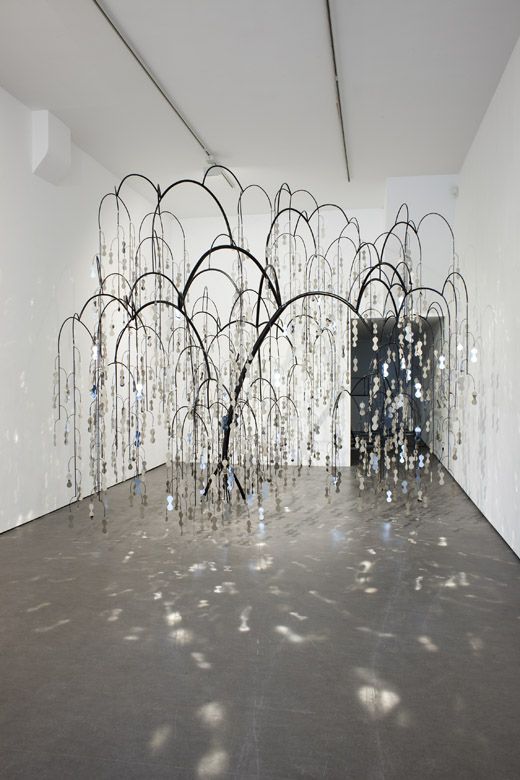
Glad I made it to see UBIK Hypha Studios at Sugar House Island from the Changeable Beast sculpture group. Inspired by the eponymous Philp K Dick novel, the artists invite viewers into speculative narratives of alternative futures. Images left to right: Weeping Willow Ellie Reid, Untitled (from the series ‘You Follow Me Around’) Ellie Reid, Things Said Susan Young, Return of the Dinosaurs Ornela Novello, Sunspots Tessa Garland, Timebeing Diana Wolzak, Inertials Clare Jarrett, Broken Nights Kay Senior

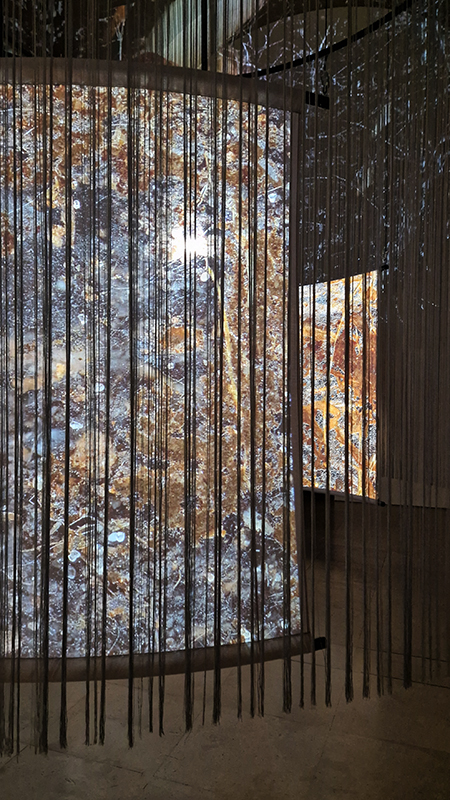
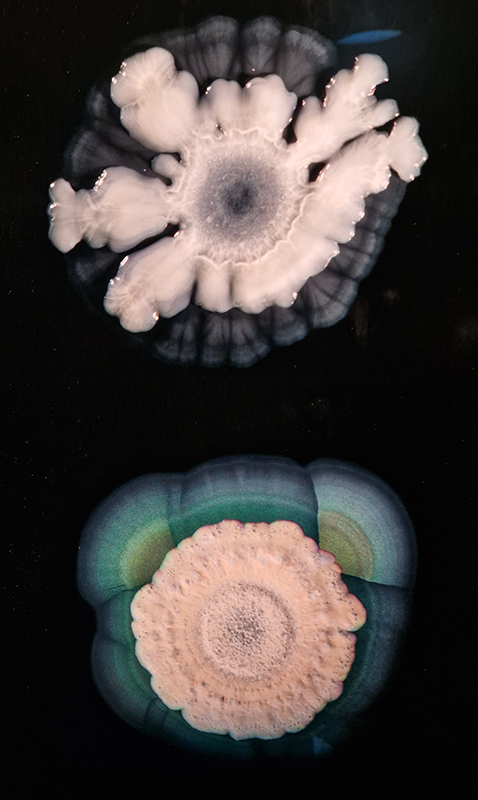
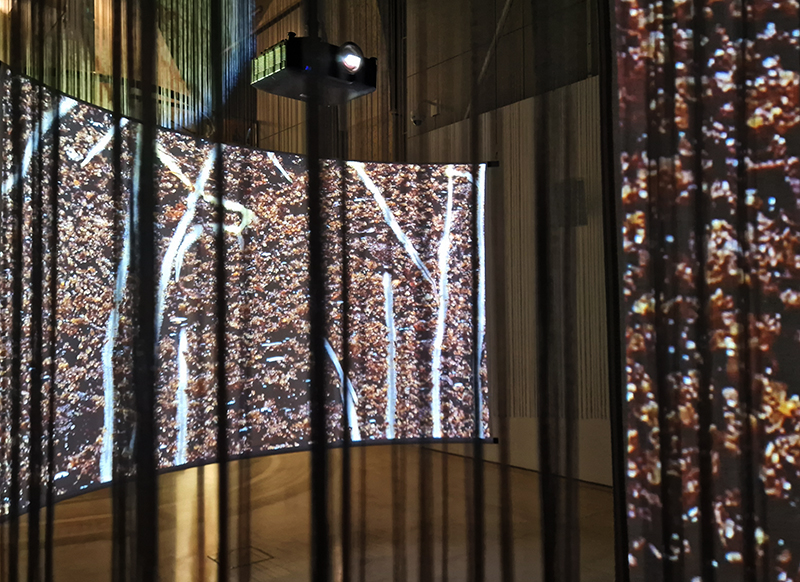
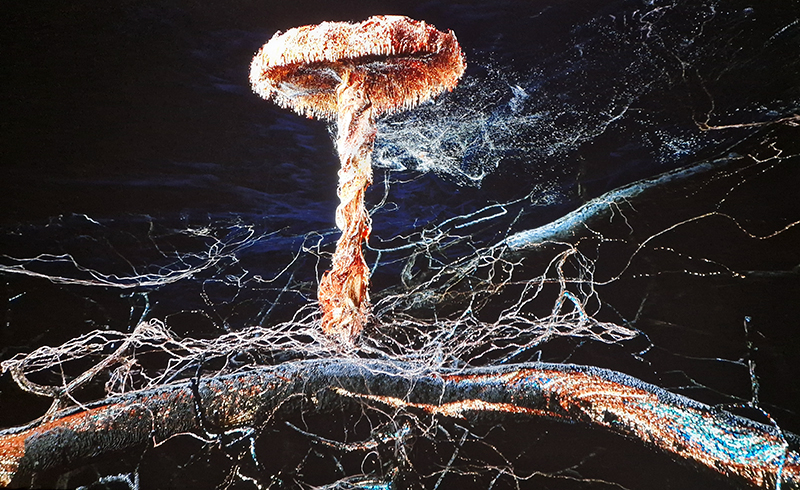
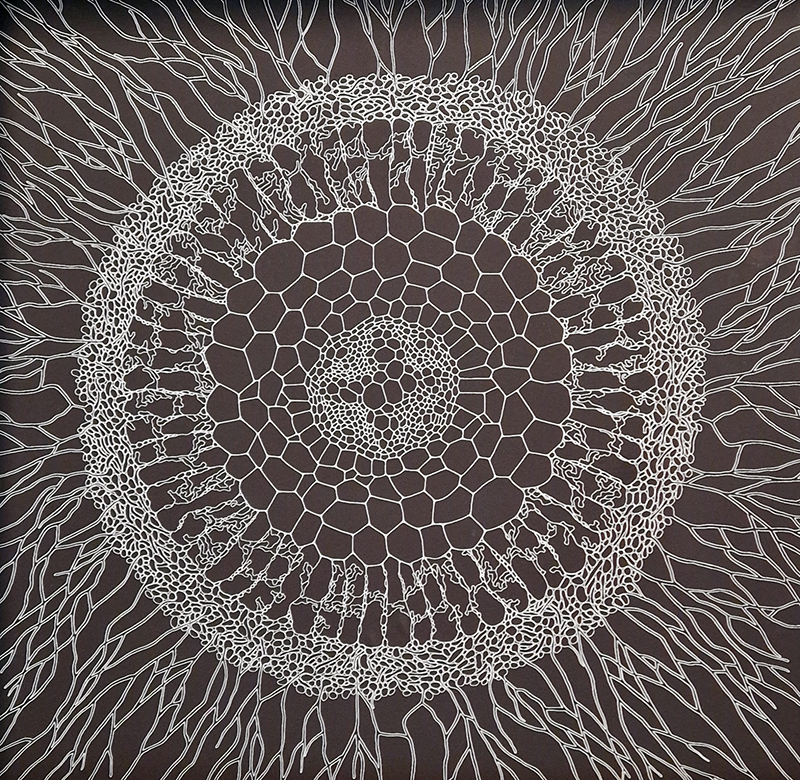
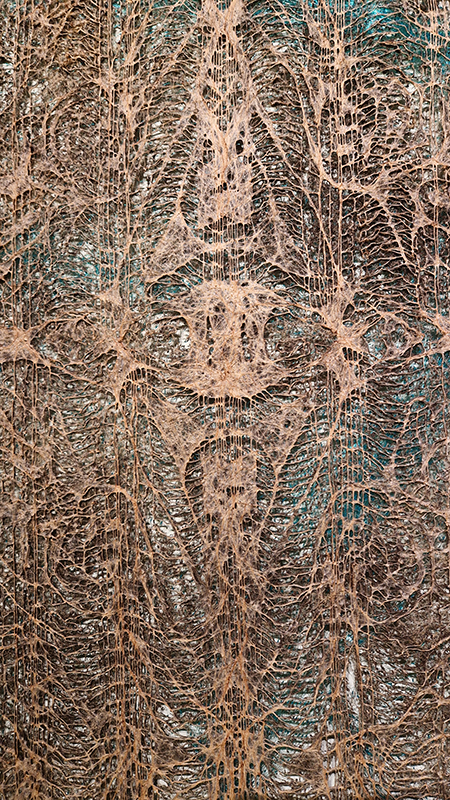
Soil: The World at Our Feet at Somerset House. As it says on the tin – the exhibition sets out to inspire and educate visitors about the power and the fragility of soil, its fundamental role in human civilisation and its remarkable potential to heal our planet. There is so much educational text that the bias of the experience veers towards the didactic. A lot of worms and impressive time lapse video – both of which I like very much and there are some interesting works here but after been slammed with so much ‘fact’ and repetitive tropes it becomes a bit wearying, which is a shame. Sam Williams Wormshine seven channel video collage had a fitting sensitivity to worms as unsung heroes of soft power. Maeve Brennan roman soil with microplastic contamination gave stark evidence of a toxic legacy leaching through the water table to infect roman artefacts. Diana Scherer has woven an intriguing substrate using natural growth processes to generate structures from root tissues. I was interested to see how microscopic soil bacteria can have the appearance of agate and a cross section drawing of a root reminded me of my Mum’s crocheted doilies.

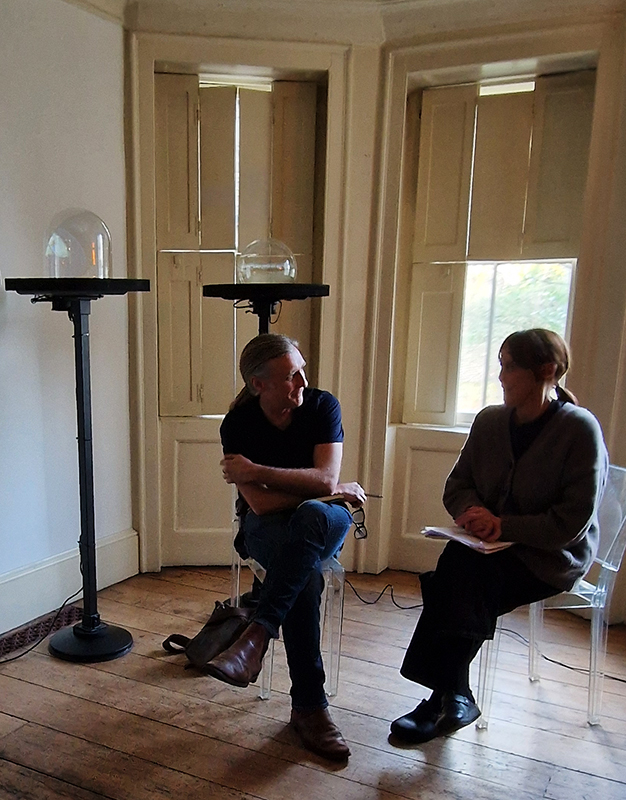
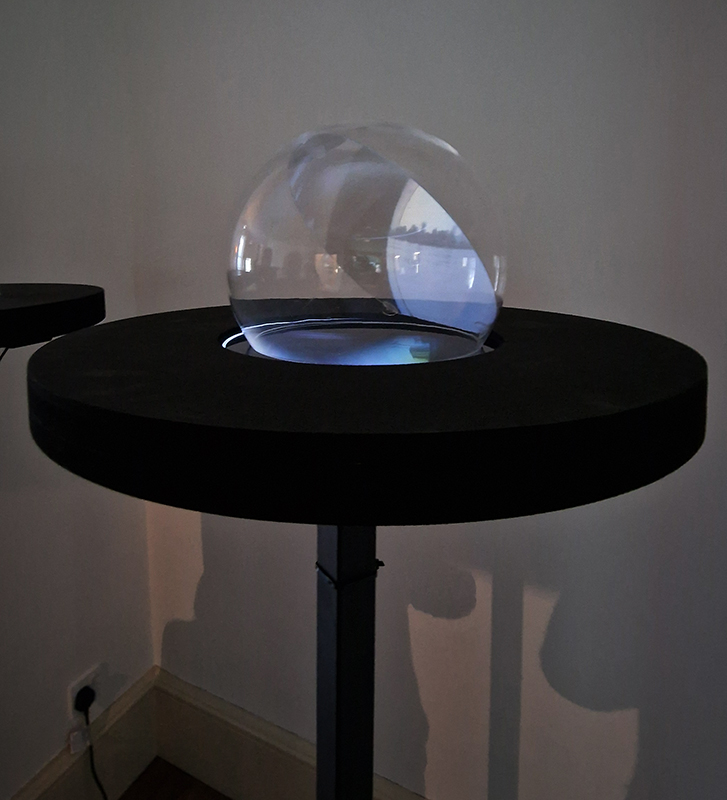
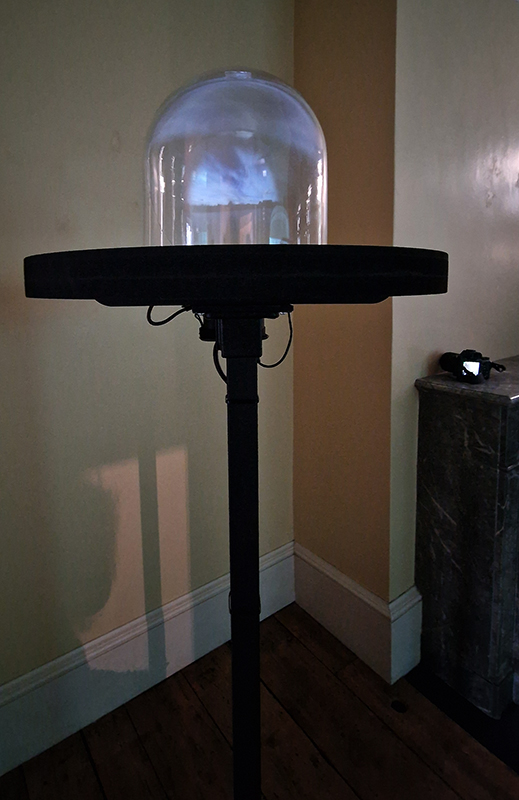
David Cotterell in conversation with Amanda Crawley Jackson, (LCC Professor of Place and Culture / Dean of Research and Knowledge Exchange), at Danielle Arnaud discussing the exhibition and underlying themes of the sublime, suburbia, estuaries, deserts, and human inconsequentiality. Albert Camus’ absurdism philosophy was referenced in respect of the inability to know the world and the world’s indifference to human attempts to even try. David has visited and documented some amazing wide open landscapes of Afghanistan and Mexico where the sublime is inherent in the experience of isolation, vulnerability and awe. We see these in the projected works here. The choppy expanse of the Thames estuary is encapsulated into spherical and domed microcosms, like seeing visions in a series of crystal balls set at eye/brain level – so also a bit like peering directly into the mind’s eye. He expressed the desire to share the experience of being in these landscapes – I think he did share the wonder. He also talked about his visit to Donald Judd’s sculptures in Marfa, Texas where even megalithic sculptures are overwhelmed by the scale of the environment and the milky way is not beyond, but within touching distance.

Events

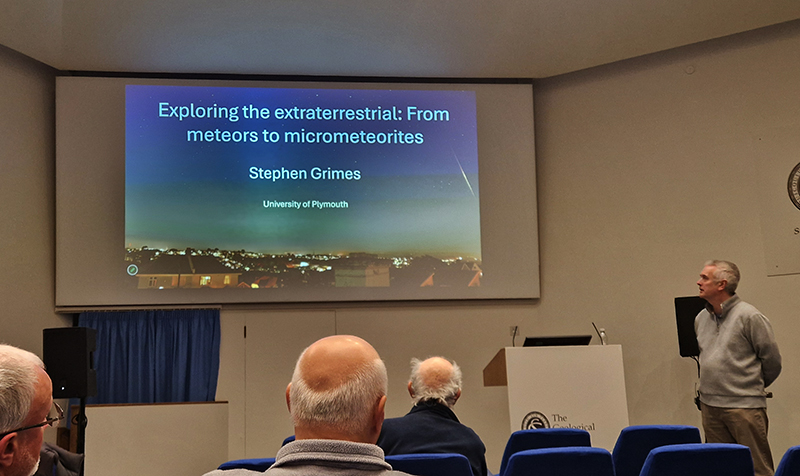
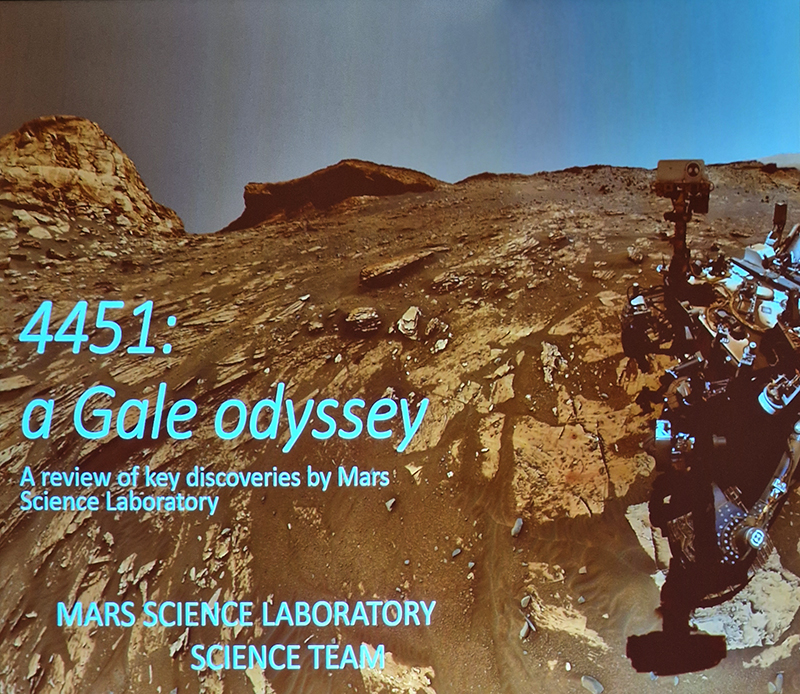
Royal Astronomical Society Friends Lecture from Dr Steven Banham, Imperial College London. This was an in depth reveal on the geology of Mars. The Mars Science Laboratory mission’s Curiosity rover landed in Mars’ Gale Crater in August 2012. About the size of a MINI Cooper, Curiosity is equipped with 17 cameras and a robotic arm containing specialized instruments. It has explored the northern margin of Mount Sharp for 4451 Martian sols providing compelling evidence that shortly after crater formation, a habitable environment existed here. The rocks that form lower Mount Sharp preserve a record of persistent lakes fed by fluvial systems originating from the crater rim. As the rivers entered the lake, they released plumes of sediment and assorted nutrients into the water column to be distributed across the lakebed — recorded as the Murray formation. Geochemical and mineralogical assessments indicate that environmental conditions preserved in these layered rocks would have sustained life, if it were present. On Sol 3047, Curiosity made a sharp right turn after crossing the phyllosilicate unit, to drive up into the orbitally-defined sulphate-bearing unit. From this point, Curiosity witnessed distinct changes in the stratigraphy, recording a progressive drying of the ancient environment. The rover identified a gradual change from humid conditions containing a record of perennial lakes, to isolated ephemeral lakes, and onto desolate deserts. During this ascent, interstratification of aeolian strata became increasingly common, including sand sheets, dune strata and deflation scours. However, despite this general aridification, the succession was occasionally punctuated by episodes of abundant water: the Amapari ripple bed for example, records a brief shallow lake: a veritable oasis, free of ice.

I travelled to Manchester to see Figures in Extinction, a dance trilogy exploring the age of disconnection. A beautiful, haunting and sobering collaboration between choreographer Crystal Pite, NDT 1 dancers and Complicité director Simon McBurney. The first section confronts the extinction crisis and climate change deniers, listing the last of each species vanishing from our world; the second section addresses human isolation in a world dominated by technology and data, the divided brain where the intuitive side of our brain has not been nurtured leaving the rational unempathetic side to be dominant, and the final section draws our focus to death, physical decay of the body and grief, urging an honouring of our ancestors – the dead, having lived are not inert. The lighting throughout was amazing but particularly extraordinary in the closing scenes as ethereal spectres swarm the stage. The dancers, so precise in their movements delivered a hugely emotional homage to life on Earth.

East is South by Beau Willimon at Hampstead Theatre. There was a lengthy monologue on equivalence in this fast paced play projecting a future where AI or AGI (Artificial General Intelligence) learns to take on the experience of faith over logic. Two coders stand accused of releasing a dangerous AI to infect processors globally. Their motivation interrogated as potential spy or subject to religious cult beliefs. “God didn’t create the universe,” it may be “the universe’s project to create God.” After all, if Agi escapes to colonise the internet, knowing everything about everything, and having power over everything, wouldn’t “she” become our “God?” With personal memories questioned as truth as much as being duped by others for their own ends, there is no clear path in a complete breakdown of trust and authority. I see this play has had a lot of bad reviews – it is dense with ideas and maybe the interrogation format is not new but it has a lot to say that is relevant.

My interest in what we can and can’t see in our environment led me to think about the substance of matter.

1601 sphere

At the Shadow without Object symposium the idea of a dematerialized world and how we record it was raised in Duncan Wooldridge’s paper Some Notes on a New Realism: Relocating Representation in the Technical Image. Once when we learnt to negotiate our relationship with the world visibility equalled presence. When representing the world it was with graphite, paint, film and emulsions that were all material objects. Now the world has dematerialized. The digital image is not made or transposed in the same way. This opens up other ways of visualising the world. To visualise through transformation.

We can tap into new technologies to see things that previously were obscured from us.

1601 Trevor Paglen

Trevor Paglen

STSS-1 and Two Unidentified Spacecraft over Carson City (Space Tracking and Surveillance System; USA 205) C-Print

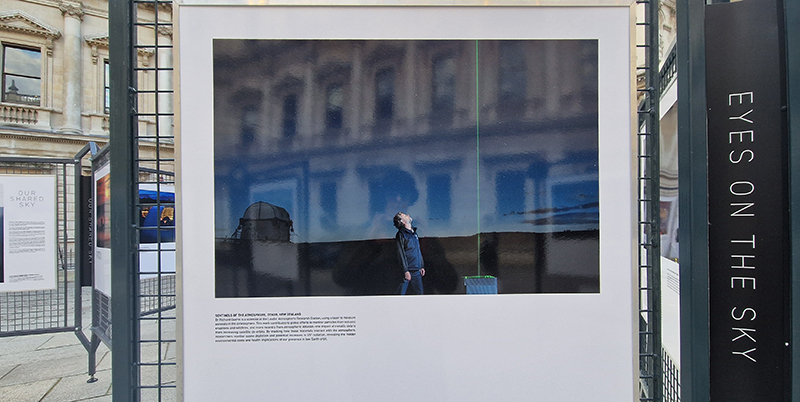
Trevor Paglen’s The Other Night Sky is a project to collect evidence of classified American satellites, space debris, and other obscure objects in orbit around the earth with the help of an international network of amateur satellite observers. The position and timing of overhead transits are calculated, observed and photographed with telescopes and large-format cameras and other imaging devices.

For what we can see we are dependent on photons bouncing off some matter and hitting a receptor, in our eyes or in our equipment. For what we can’t see we rely on recording some disruption in the path of those photons.

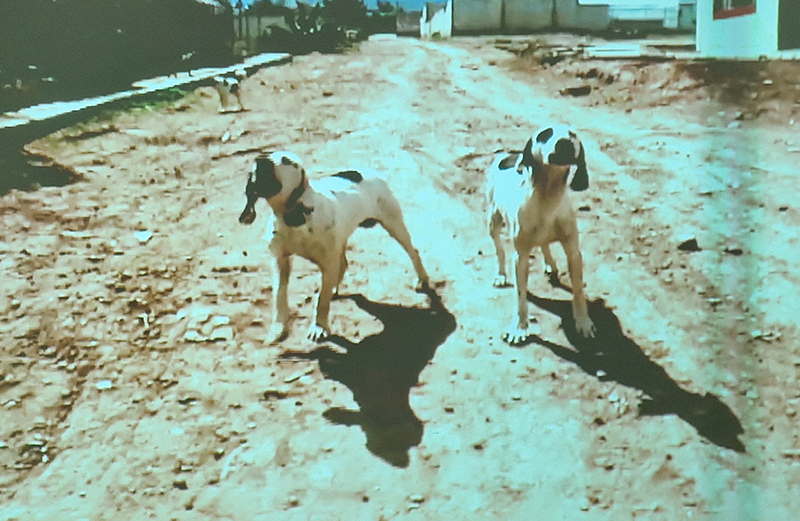
Erik Kessels work is a reminder of how dependent we are on the technical abilities of our eyes or equipment. In almost every picture #9 is a collection of found photographs of one family’s endearing attempts to photograph the family pet, a black Alsatian. Their camera’s limitations meant that the dog always appeared as a black featureless shape.

As technology advances we are able to record more accurately. But we still find instabilities, no process is error free.

Matter refuses to be reliable. Giacomo Raffaelli has been researching how weights and measures are standardised across the globe and presented his discoveries in a paper Non-standard Uncertainties: Experiments in Current Visual Conditions of the Kilogram Standards.

1601 Standard kg

In the late 1800’s identical cylinders were manufactured from Platinum Iridium and stored across the world encapsulated under three bell jars. These were to act as standard units of mass. Britain holds model no 18. Periodically these units are tested for mass and compared with those stored in other countries. Some have been found to be gaining mass at different rates to others. This is fascinating to think these sealed solid objects have all this activity going on that can’t be seen but becomes evident when measured. In response to this discovery the National Physical Laboratory is doing research to redefine the kilogram as a standard number of atoms.

Within their laboratories NPL hold a polished silicon crystal sphere – the most perfect sphere on earth.  Raffaelli wanted to relocate this seductive object from the laboratory where it functioned simply as a measure. The only way he would be allowed to achieve this reimagining would be via an image. First he tried green screen, then 3D imaging, then an optical scanner, then a nautical scanner in the dark and finally a laser scanner that detects points of volume but none of these technologies could capture the sphere.

1601 shadow without object

Giacomo Raffaelli With Relative Uncertainty

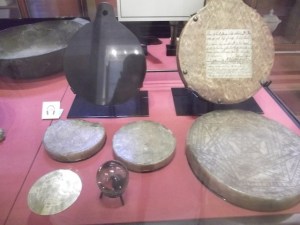
Hand crafted and hand polished to perfection this crystal ball completely resisted the process of digitization.

Reporters from The Londonist website had a similar problem ;

1601 John Dee at British Museum

John Dee’s mystical artefacts at the British Museum

At the front of the picture above, you can see Dee’s crystal ball. We tried several times to take a close-up shot, but neither of our cameras could get a sharp fix. It is obviously haunted.

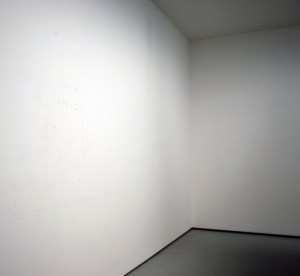
The ability to focus is something Marco Maggi encourages in his installation Global Myopia II.  The ability to see from very close allows one to focus on what at a distant glance may be missed. At first the room might look empty.

1601 Uruguay (2)

Marco Maggi

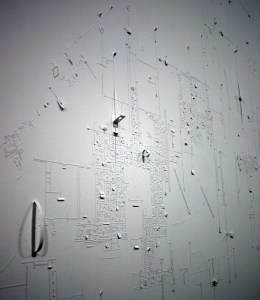
Close up, a world in miniature appears in the form of grids and geometric shapes like paper circuitry which can read as encoded information, routes of transmission, architectural plans or space age archaeological sites.

1601 Uruguay (1)

Marco Maggi

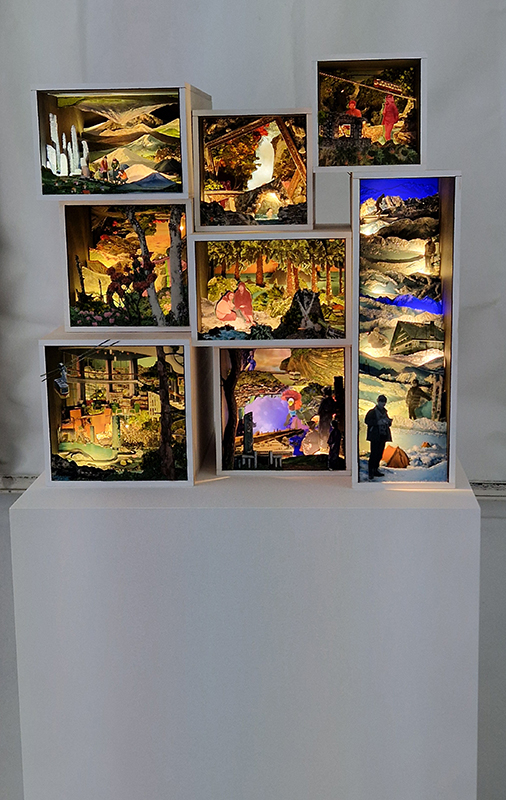
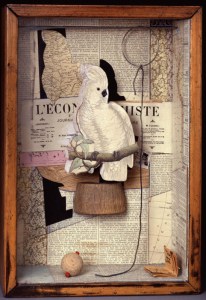
Joseph Cornell was able to poetically record places he never visited. He was a collector of journeys captured in little boxes. I was very inspired by the Wanderlust exhibition at the Royal Academy having always been keen on small worlds to peer into.

1601 Jospeh Cornell A Parrot For Juan Gris

Joseph Cornell
A Parrot for Juan Gris

Constructed with found artefacts, maps and letters these enigmatic worlds are catalysts to the exotic, that which is always just out of reach.

1601 Joseph Cornell The Clockwork Utopia

Joseph Cornell Clockwork Utopia

On opening an atlas or looking at a map you must interpret the information and relate it to the world at large. Through her series Victory Atlas Elena Damiani aids us in those leaps we make in our minds to the tropical shores or glacial rocks which are signified by a few lines and coloured shapes. I found her work really interesting.

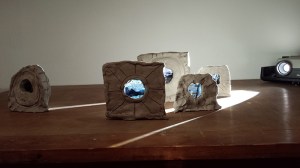
The group show COLLABORATORS 4 presented by Roaming Room at their current mews premises was a beautifully curated invitation to ponder materiality and the many ways we record the world and visualise our responses to it. Participating artists can be found here. I was particularly drawn to the small installation of Alexandra Hughes which beamed light through tiny images roughly embedded in clay portals.

1601 Roaming Room Alexandra Hughes

Alexandra Hughes East’s Blue Clayoto

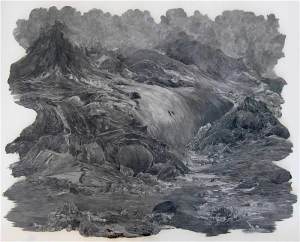
I have always liked Ambrosine Allen’s intricate assemblages  constructed from slicing up national geographic publications.

1601 Ambrosine-Allen Retreating Glacier

Ambrosine Allen Retreating Glacier

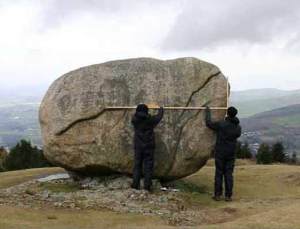
The piece by Dunhill and O’Brien made me think of those first measurers that Raymond Williams writes about in his novel People of The Black Mountains who took a rod and every night went out to the hills to watch the rise and set of the moon.

1601 Dunhill-and-OBrien Stone Appreciation

Dunhill and O’Brien Stone Appreciation (Rostrevor)


First came the sound and the sign, then came the word – which turned into image and overtook the gaze. The sign, turned into figure, sought ways to become perpetual – quipus, incisions in clay boards, traces left by chisels on rocks, ink on papyrus or paper, then neon signs, LEDs, and many other technologies.  – Oscar Sotillo Meneses writing on the work of Argelia Bravo which celebrates the words, signs, gestures and poetry that interweave the historical evolution of the Bolivarian Republic of Venezuela but can be recognised the world over.

1601 Venice venezuala


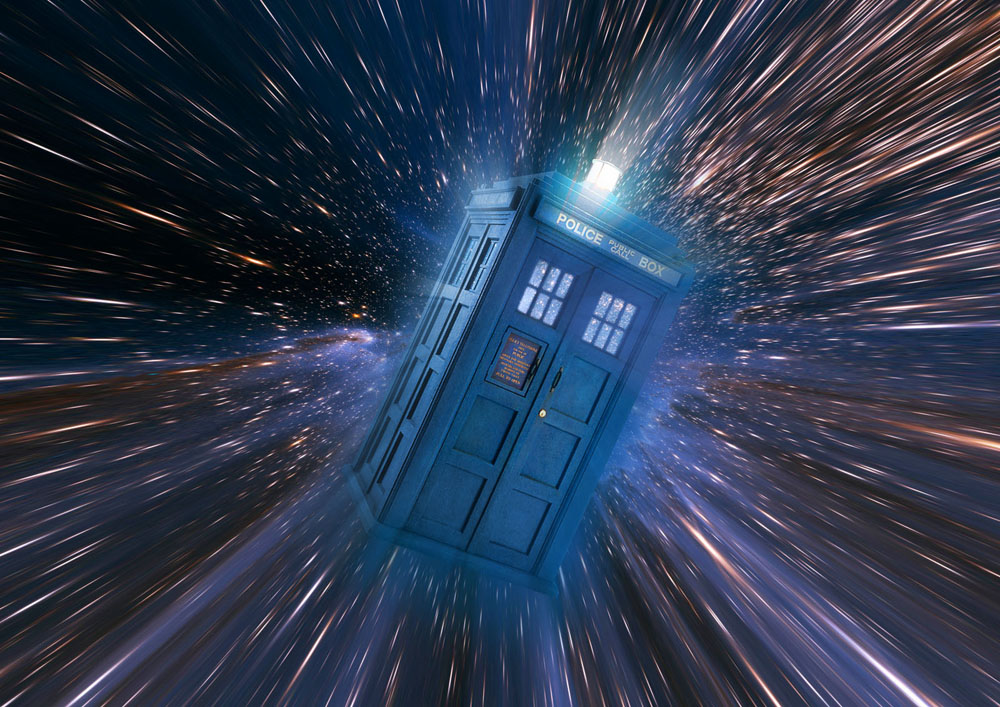
Tumbling through time
1307 Tardis-in-Space

Space has been a bit of a theme in my recent excursions – in a sense of delineating a space architecturally as Charles Avery does in his precise drawings of an imagined world; in the exploration of space examined through Cristina De Middel’s photographs of ‘Afronauts’ which also play into ideas of sci-fi as does Jess Littlewood in her fictional landscapes; in attempting to make the unknowable palpable, Luci Eldrige has used radar imaging of Venus undertaken by NASA and translated it into richly coloured etchings. Then there is the space where the making takes place – the art institution.

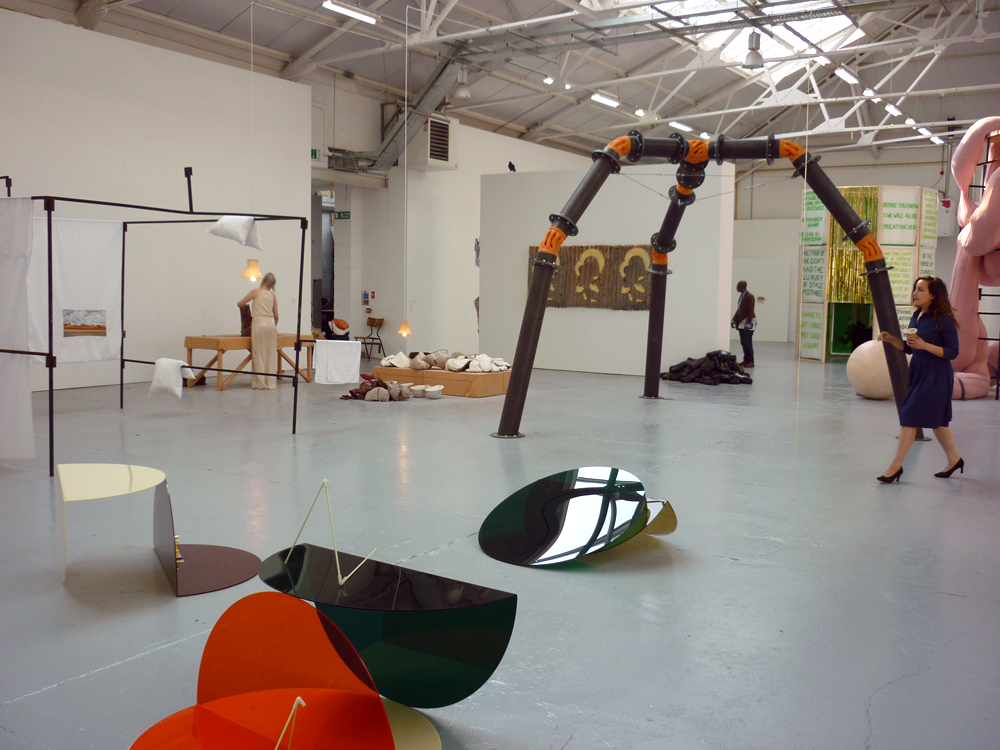
The RCA SHOW has come around again.

RCA SHOW 2013

RCA SHOW 2013

This year the experience was heightened by the possibility that I may one day get the chance to participate in the creative dialogue of this institution.

Look at that amazing space for making.

RCA printroom

RCA print room

Since my application and interview in March I have received some really positive feedback from Jo Stockham the head of the printmaking course.
I have been encouraged to apply again next year if a place doesn’t become available for me this year so I was keen to see what the current graduates were exhibiting and if I could see progression from the exhibition they had in spring at Café Gallery Projects.

A favourite was Luci Eldridge. Fascinated by the ‘invisible visions’ acquired through the use of science’s cybernetic eye, she is captivated by images of lands we cannot empirically experience.

Luci Eldrige - four colour photo etching

Luci Eldrige – four colour photo etching

I also identified with the work of Jessica Wallis ‘The History of the End of the World’

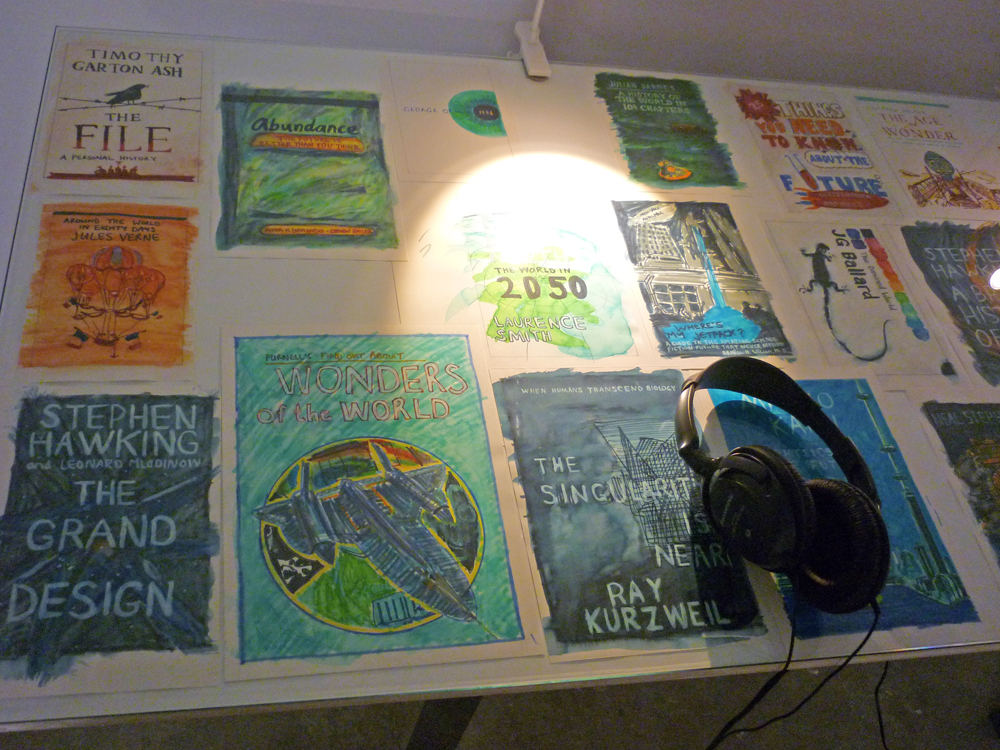
Jessica Wallis - Book Cover Series

Jessica Wallis – Book Cover Series

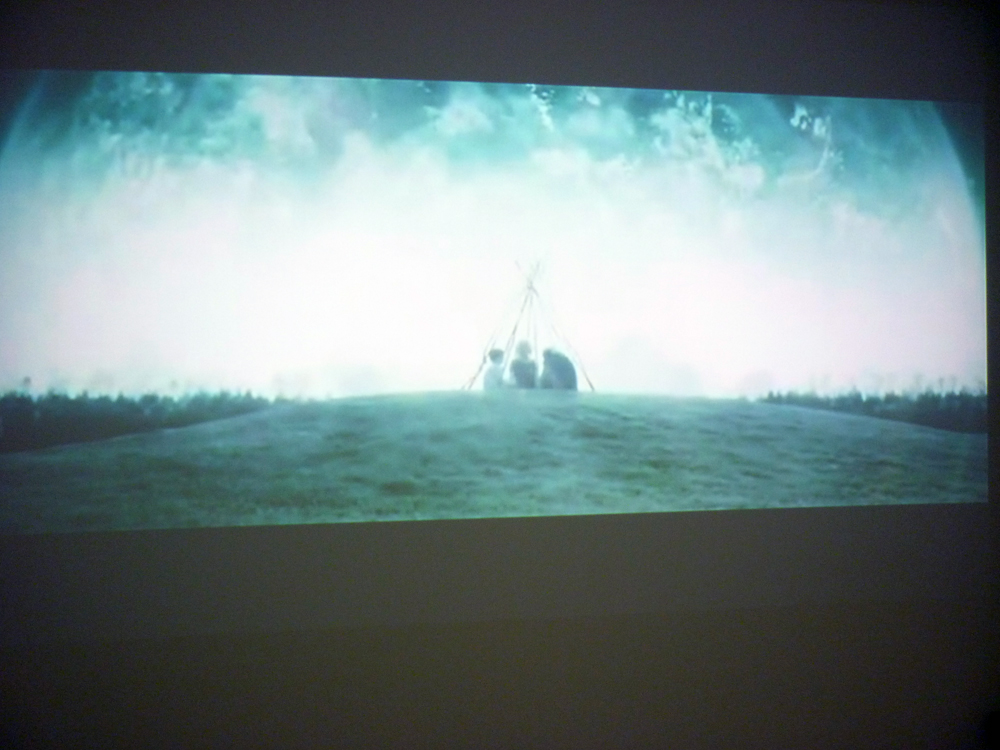
Jessica Wallis - Formula for disaster DVD

Jessica Wallis – Formula for disaster DVD

Jessica Wallis - Formula for disaster dvd

Jessica Wallis – Formula for disaster dvd

I was intrigued by the films of Nicola Thomas – ‘Imitation’ and ‘ Dancing with Monk’ and her etched prints from The Look Series were captivating.

Nicola Thomas - Carole #3 etched print

Nicola Thomas – Carole #3
etched print

Bee Flowers work has a feel of the mausoleum

Bee Flowers - plaster acrylic

Bee Flowers – plaster acrylic

Alice Hartley must have had some upsetting school reports

Alice Hartley - screenprint on blue black paper

Alice Hartley – screen print on blue black paper

Elizabeth Hayley’s prints on brass had a wonderful quality of time passed

Elizabeth Hayley - silver gelatin on brass

Elizabeth Hayley – silver gelatin on brass

Yanna Soares - Loom of Neith - silk embroidery on etchings, cotton thread, wood

Yanna Soares – Loom of Neith – silk embroidery on etchings, cotton thread, wood

Liz Lake - run aground

Liz Lake – run aground

Hannah Thual - between exposed and concealed

Hannah Thual – between exposed and concealed

I realise I must have missed some of the printmaking exhibits.

From Painting I really related to the work of Zoe De Soumagnat

Zoe De Soumagnat - Al Fresco

Zoe De Soumagnat – Al Fresco

Zoe De Soumagnat - Black Painting. tasty

Zoe De Soumagnat – Black Painting. tasty

Tomie Seo - All in a vision and Court of Regulation

Tomie Seo – All in a vision and Court of Regulation

Lian Zhang - oil on board

Lian Zhang – oil on board

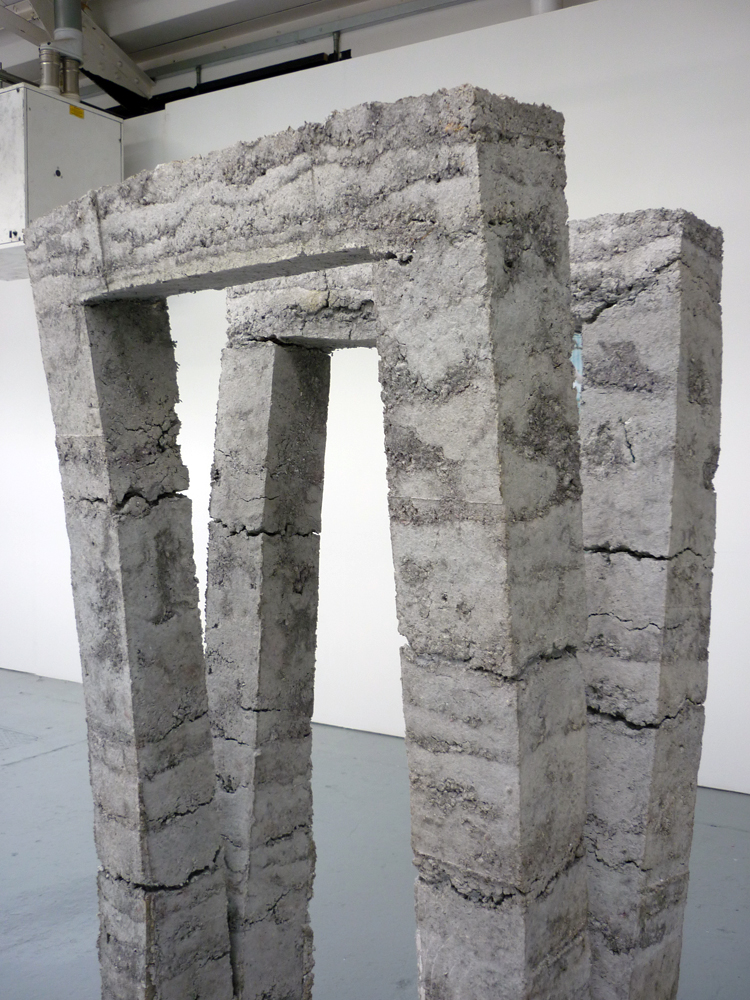
From Sculpture discipline I really liked how the paper constructions of Yana Naidenov looked like concrete

Yana Naidenov - rammed paper pulp

Yana Naidenov – rammed paper pulp

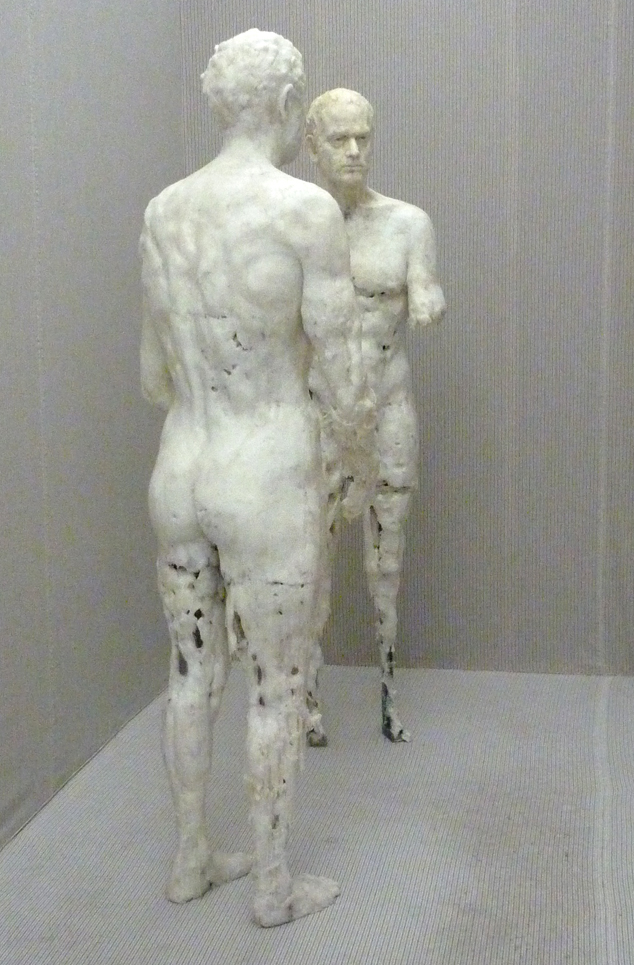
The materiality of Virgile Ittah’s sculptures were also intriguing, and rather unsettling

Virgile Ittah - For man would remember each murmur - fabric, mixed wax

Virgile Ittah – For man would remember each murmur – fabric, mixed wax

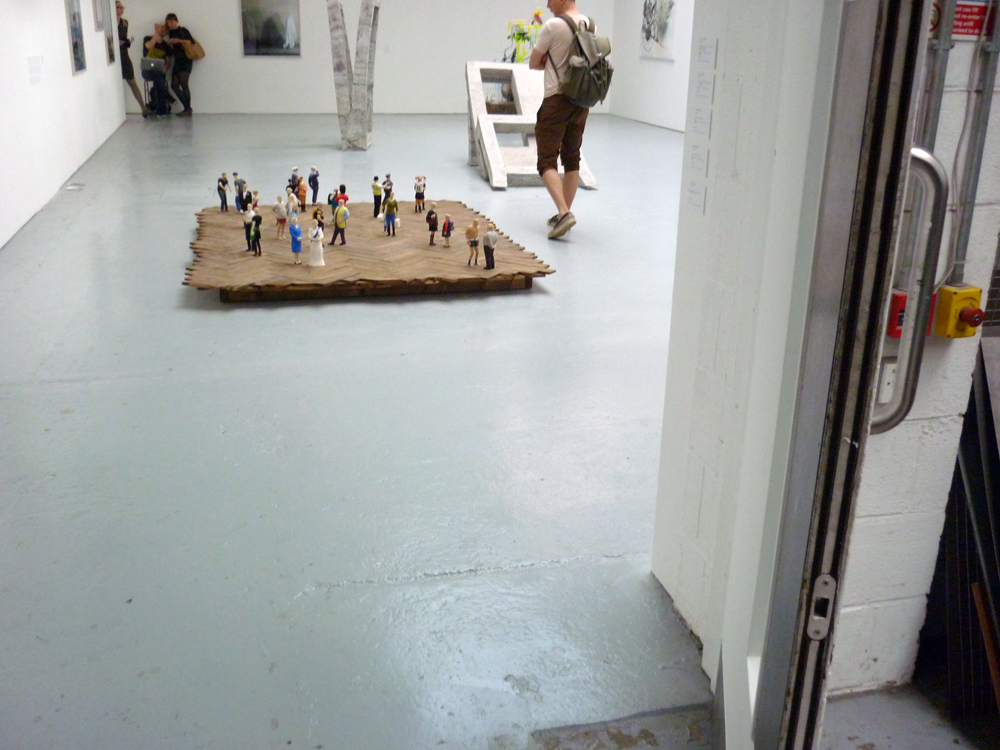
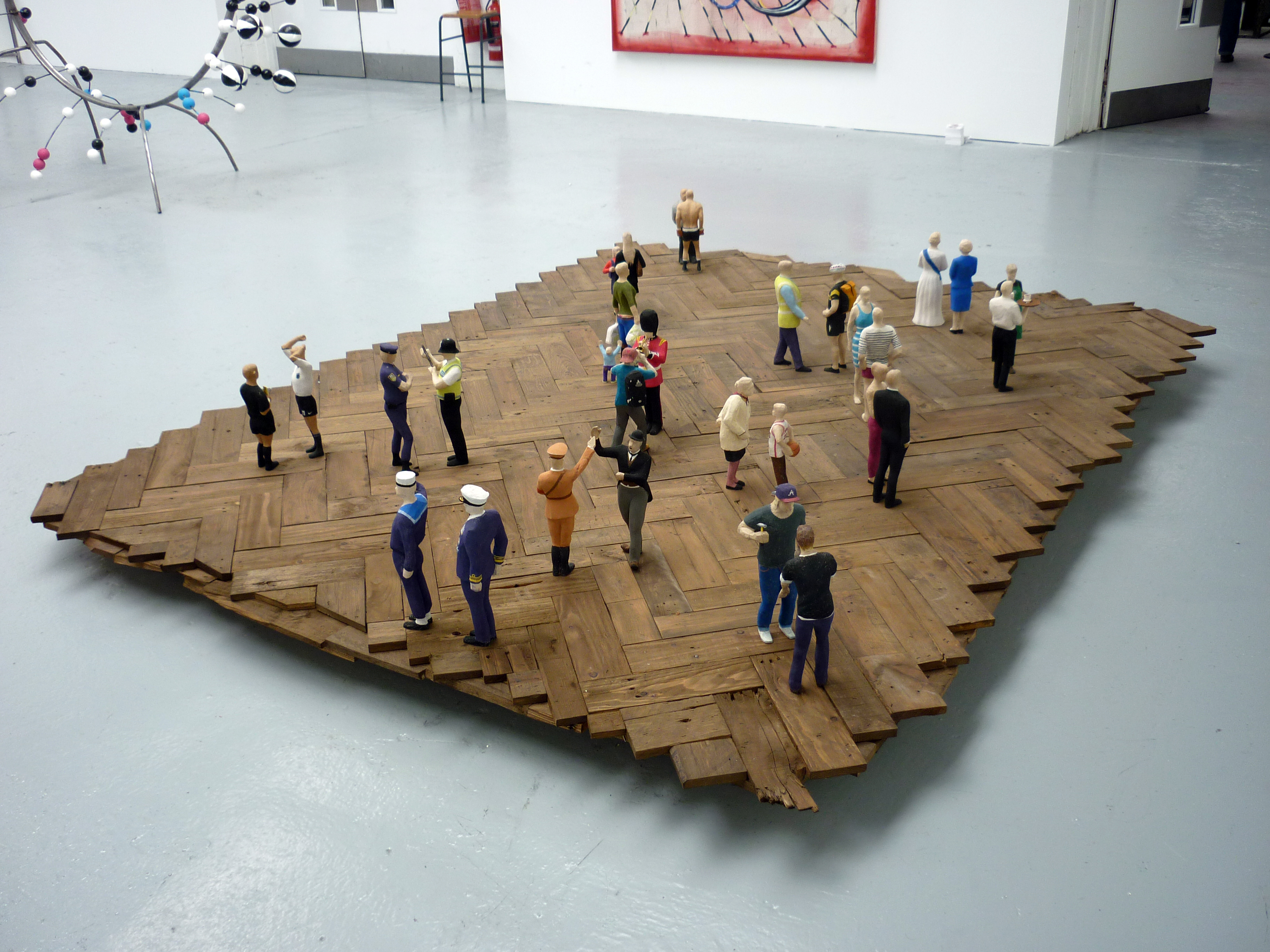
The Lilliputian sculptures of Sun Lah stood out

Sun Lah - wood and pastel

Sun Lah – wood and pastel

Observing from a distance

Sun Lah

Sun Lah

Loved this little projection from Lucy Joyce

Lucy Joyce - Gold House - video

Lucy Joyce – Gold House – video

Lina Lapelyte - Candy Shop

Lina Lapelyte – Candy Shop

I liked photography student Julio Galeote’s work

Julio Galeote - excess

Julio Galeote – excess

The Charlie Dutton Photo and Print Open Salon had a really strong selection of work, it was tightly hung but as the work was all so strong it wasn’t a case of your eye skimming the wall and only taking in one or two pieces.

I was fascinated by a lot of the work showing and noticed Luci Eldridge had a couple of pieces in the show.

Luci Eldridge - The Invisible Sky

Luci Eldridge – The Invisible Sky

Hannah Williamson

Hannah Williamson

Adam Dix - Be As One - screenprint

Adam Dix – Be As One – screenprint

Frances Disley - Little Boy Lost - reduction lino cut

Frances Disley – Little Boy Lost – reduction lino cut

Alex Lawler - Celestial Navigation  - print on chiffon

Alex Lawler – Celestial Navigation – print on chiffon

Harry Meadows - Medallion

Harry Meadows – Medallion

I have often found that in the Deutsche Borse Photography Prize show there is one clear winner for me but this year all 4 candidates drew me in and inspired me.

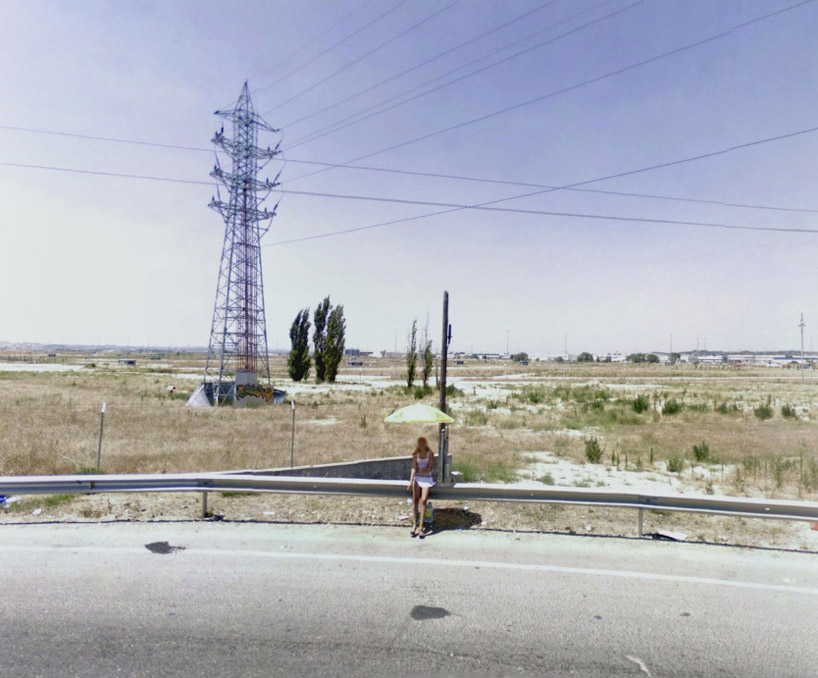
No Man’s Land is shot entirely with Google Street View. The coordinates for prostitutes operating in remote locations were picked up from internet chat rooms.

Henner’s method of online intelligence-gathering results in an unsettling reflection on surveillance, voyeurism and the contemporary landscape.

Mishka Henner - No Man's Land

Mishka Henner – No Man’s Land

Chris Killip documents the disintegration of the industrial landscape through the people that live there.

Chris Killip- What Happened - Great Britain 1970 - 1990

Chris Killip- What Happened – Great Britain 1970 – 1990

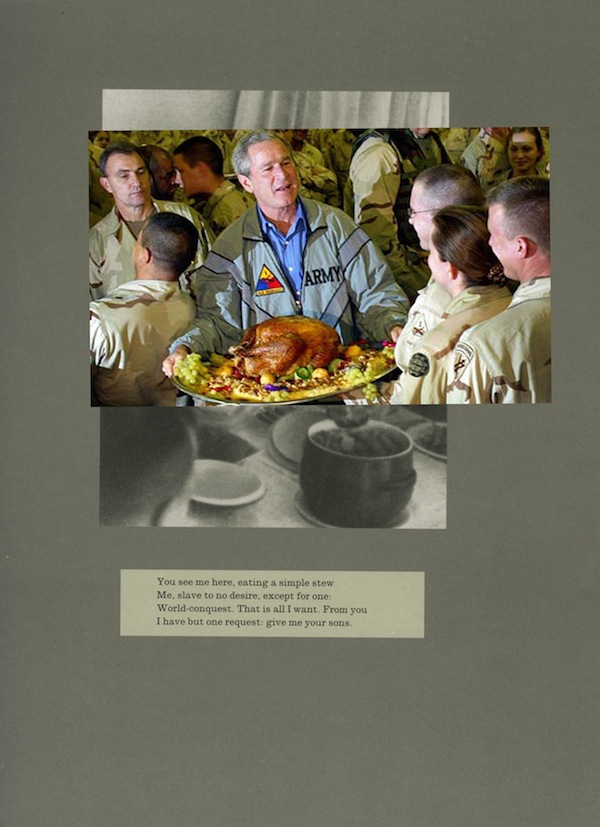
‘War Primer 2’ reimagines the pages of Bertold Brecht’s 1955 publication ‘War Primer’. Brecht’s book was a collection of photos and newspaper clippings that were paired with a four line poem.

Broomberg and Chanarin have layered google search results for the poems over the original images. The results are extraordinary.

Adam Broomberg and Oliver Chanarin - War Primer 2

Adam Broomberg and Oliver Chanarin – War Primer 2

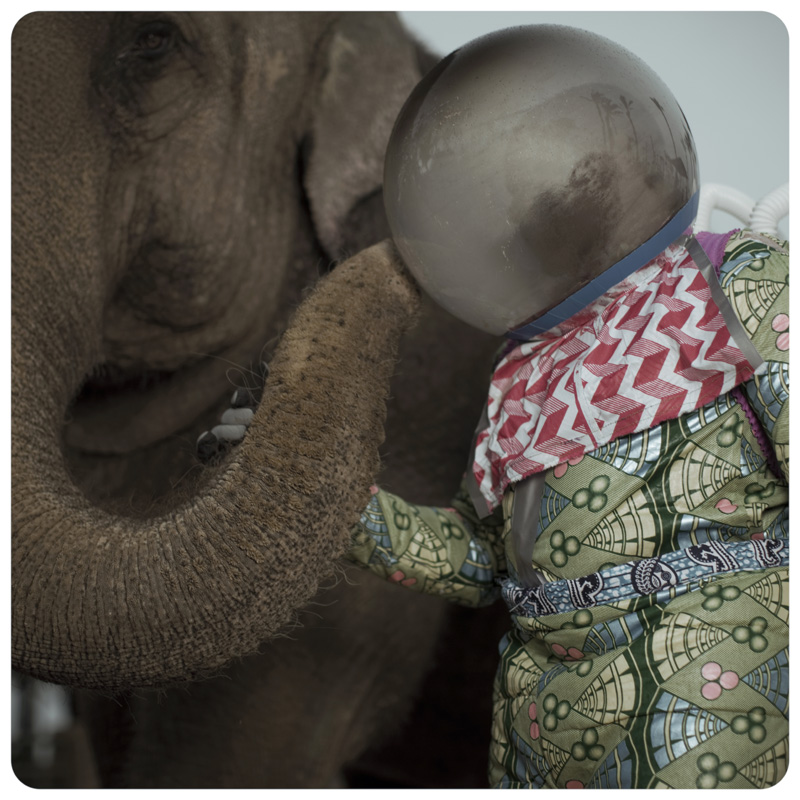
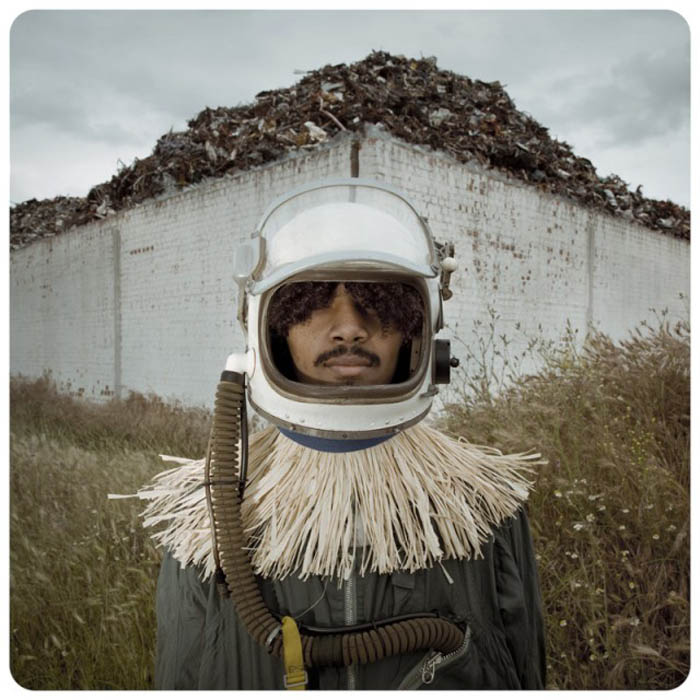
In 1964 Zambia started a space programme to send the first African astronaut to the moon.

Cristina De Middel - The Afronauts

Cristina De Middel – The Afronauts

Through photographs, manipulated documents, drawings and letters  De Middel presents a folkloric tale which blurs myths and truths. Great costumes and funky fabrics.

Cristina De Middel

Cristina De Middel

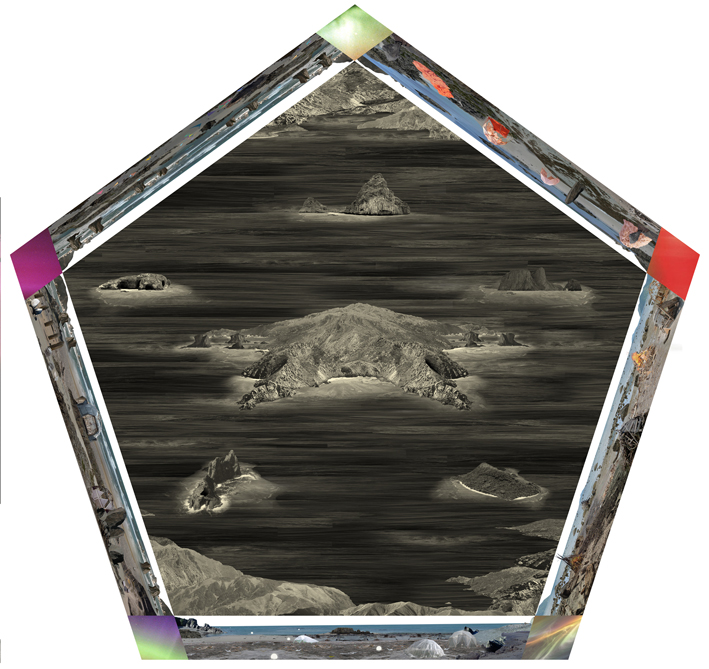
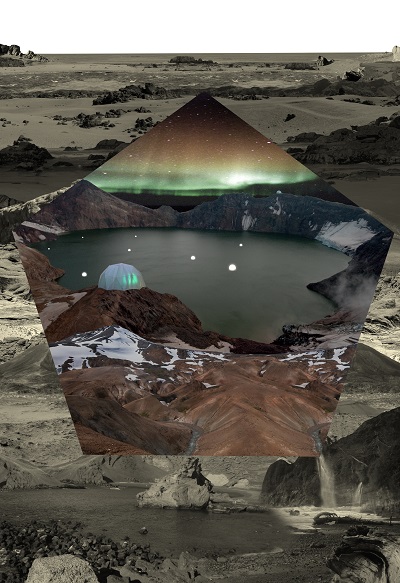
Jess Littlewood’s prints showing at BEARSPACE have a wonderful sci-fi quality without them being too unbelievable. There is a common motif of a pentagon, a makeshift habitat and an opening through to a stellar sky. They speak of new beginnings from dystopian endings.

Jess Littlewood - The Dissolution of Mother Island

Jess Littlewood – The Dissolution of Mother Island

Central to the exhibition, The Dissolution of Mother Island maps the inevitable collapse of the founding commune and the emergence of a new epoch, defined by five new derivative sects. Each sect inhabits a new island, and looking to the future each attempt to establish a unique society whilst never achieving true autonomy.

The further five exhibited works act as chapter headings, describing each sect and their specific obsessions. All maintain a fixation with the shrine like shelters of their past, highlighting futility in their attempts for individualism. These five new islands will now act as anthropological testing grounds in which Littlewood can explore the parameters and tendencies of human behaviour.

Littlewoods otherworldly landscapes are the product of extensive collecting, collating and archiving of images. Working digitally Littlewood builds layer upon layer of found imagery, the final outcome a window into an alternative world.

Jess Littlewood - Island Folly

Jess Littlewood – Island Folly

Wow, what a mind Charles Avery has.

Charles Avery View of the Port - from The Islanders

Charles Avery View of the Port – from The Islanders

He talks at a fast pace about the world that he describes through his expressive drawings, writing and sculptures. He has considered so much more about his imaginary world than most people ever consider about the one they actually inhabit. He has models of the island in his studio so that when drawing a new scene he is aware whether there should be a tower in the background or not. He knows where the toilets , the kitchens, the lifts are in buildings that are never more described than as background facade in a scene. This world is built on mathematical principles and animated with philosophical debate. Space is mapped out precisely in both the built environment and the geographical relationships but time in the concept as we understand it does not apply – events happen, time is not linear.

It was fascinating to hear about his process of creation at Whitechapel Gallery as part of the To Make A Tree programme.

Charles Avery

Charles Avery

The trees in jardindagade are based on a mathematical formula.  He told us how hard it was to devise a formula for a willow tree to be well balanced and the leaves not to fall and tangle with each other. He decided to go outside and see how a real tree coped with this problem and found that it didn’t, it was messy and tangled, but it didn’t fall over.

He has ambitions to build the whole of jardindagade as an immersive installation –  let’s hope someone with some money was listening.