Archives for posts with tag: Saturation Point

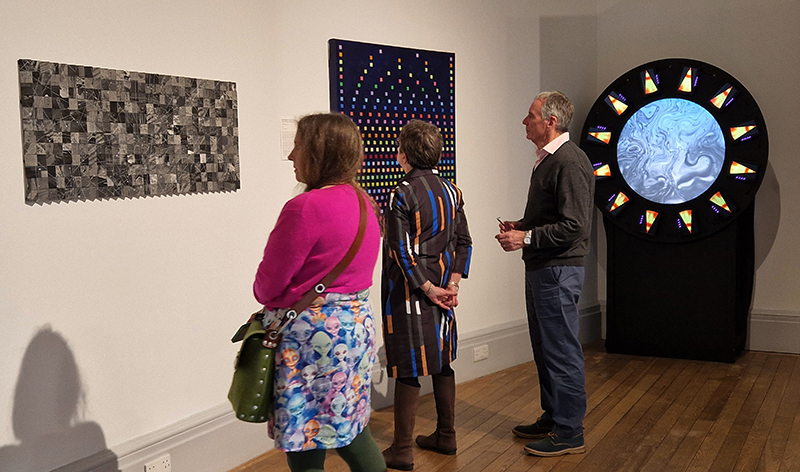
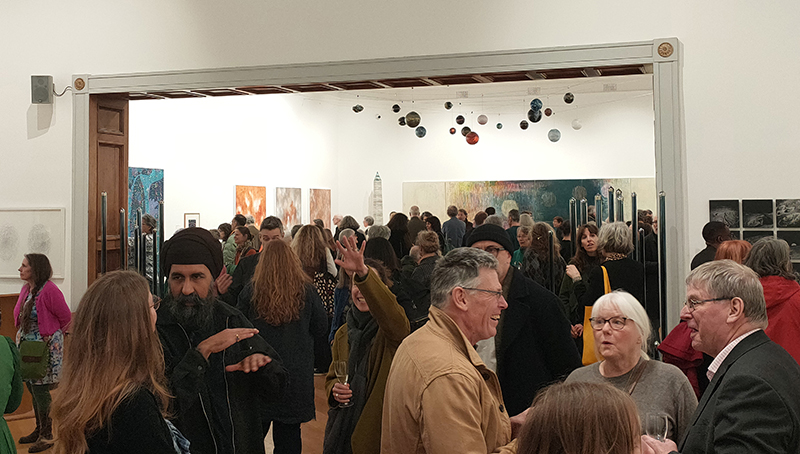
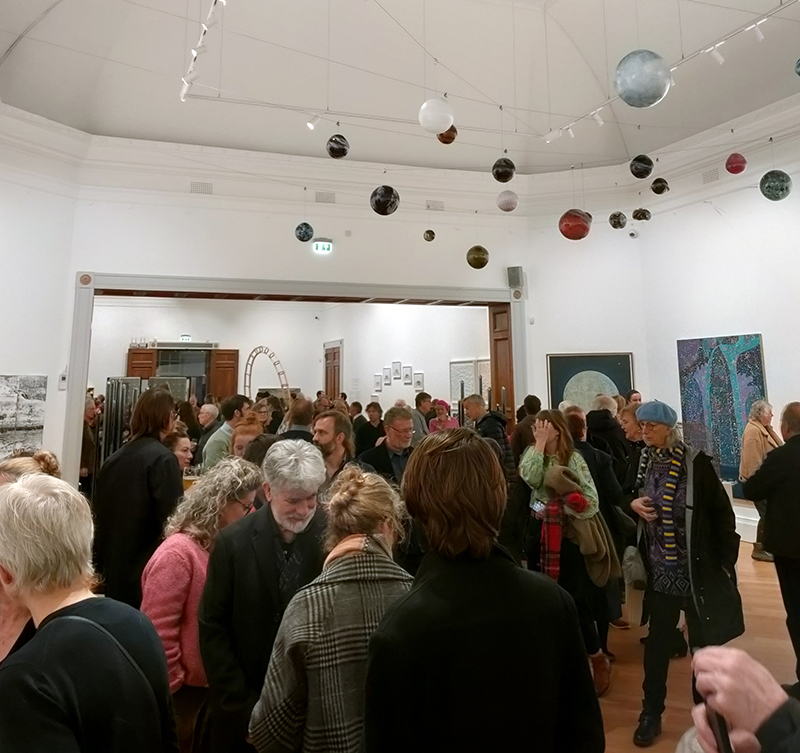
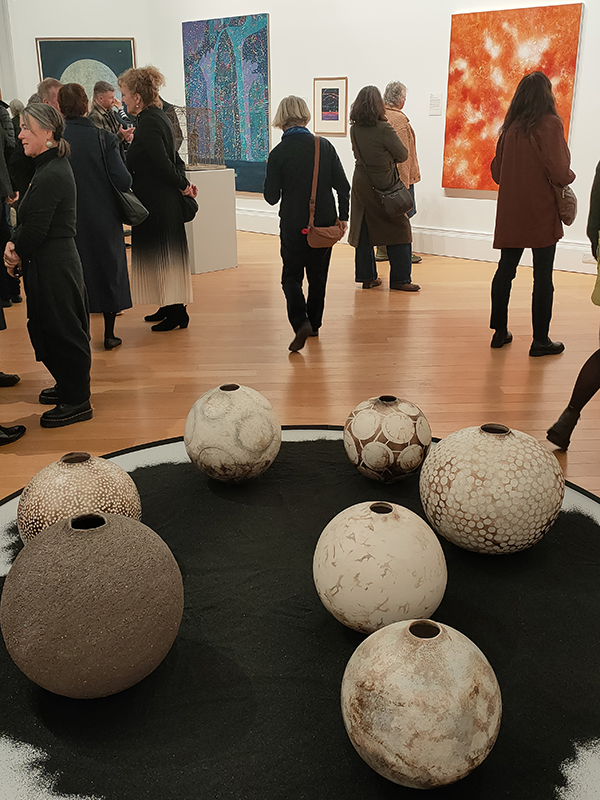
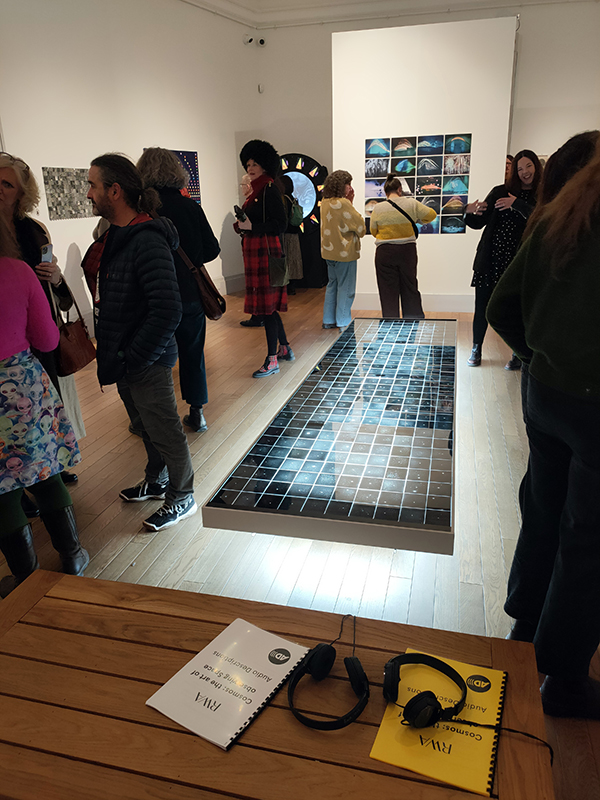
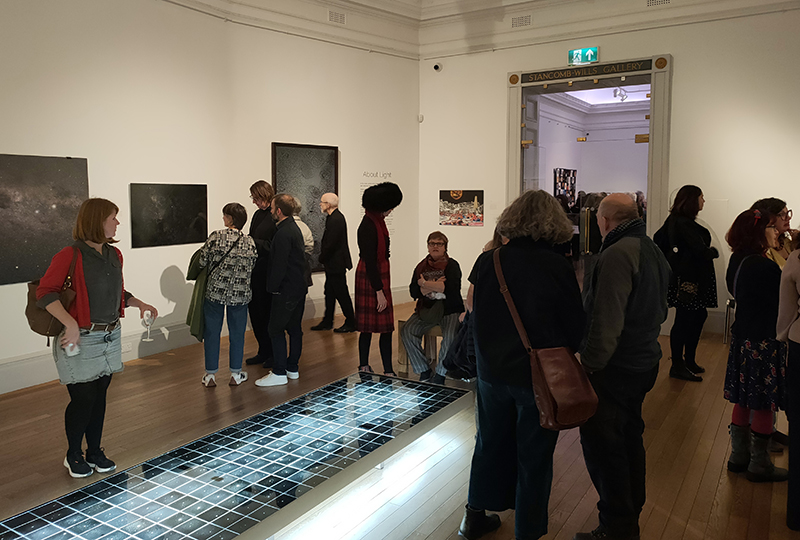
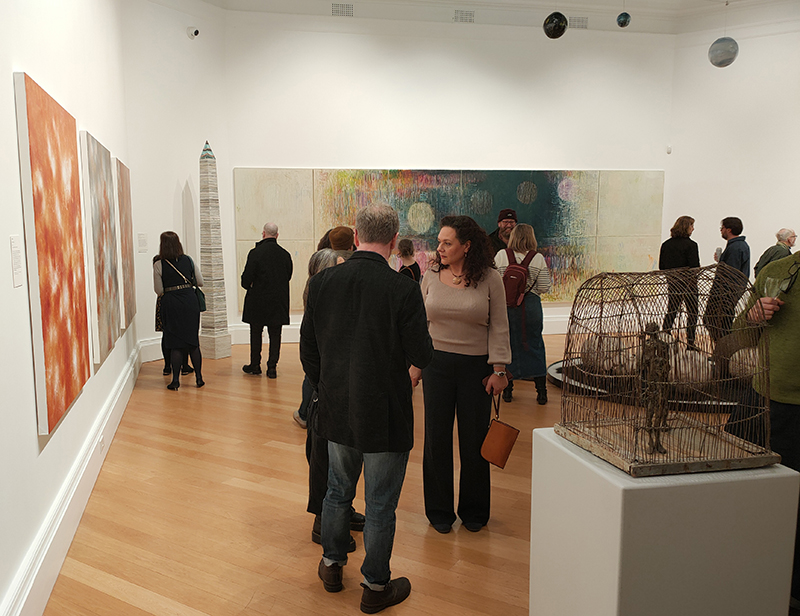
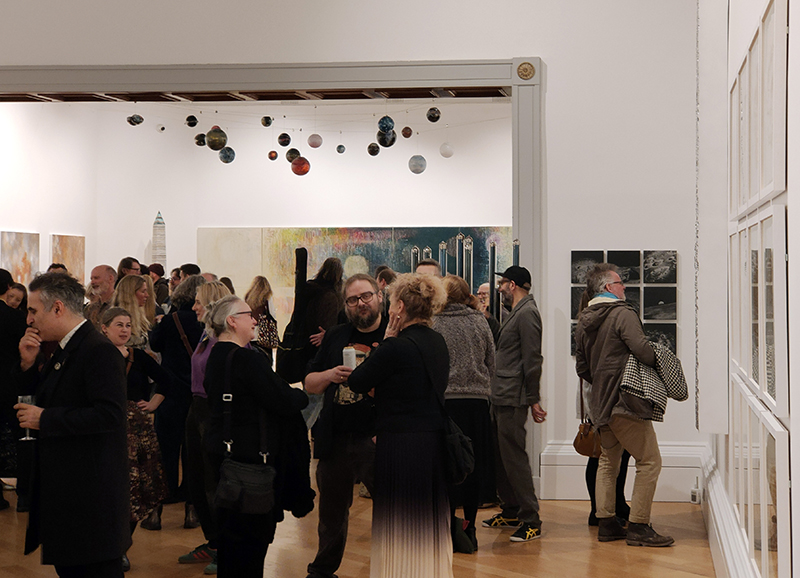
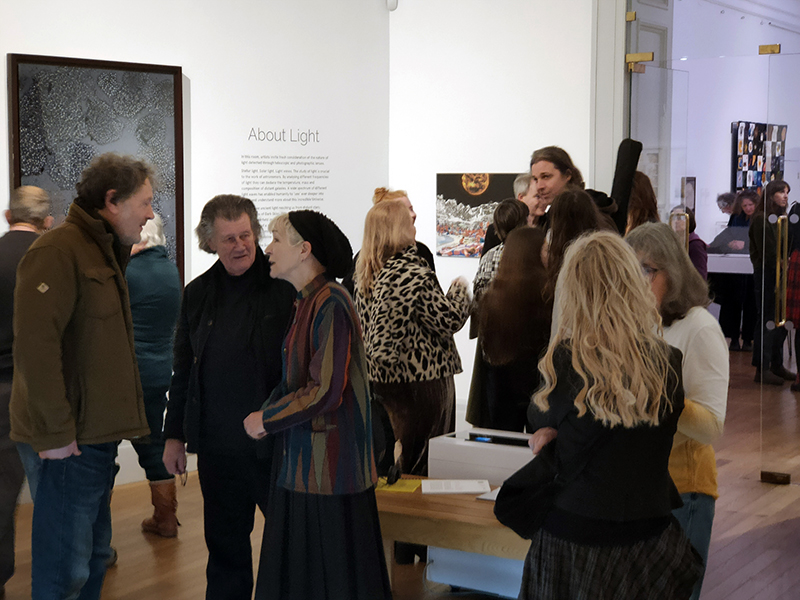
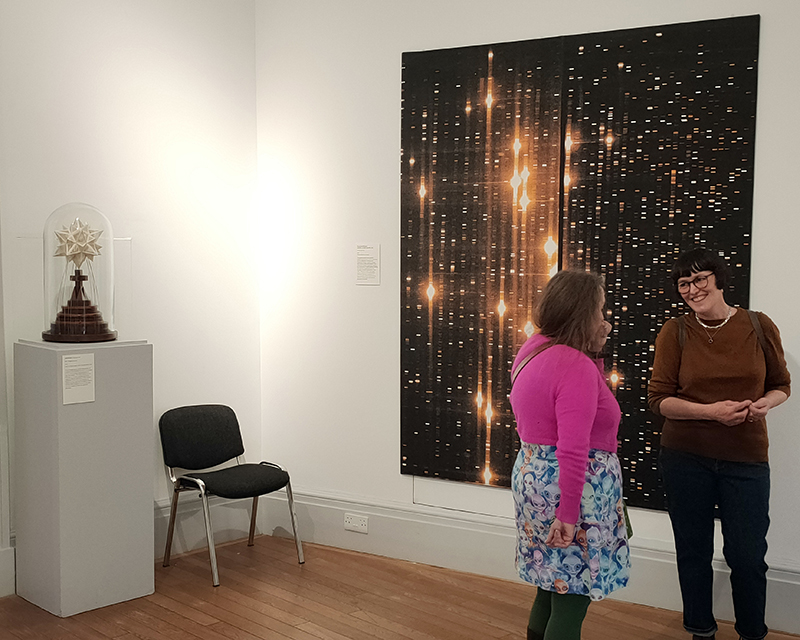
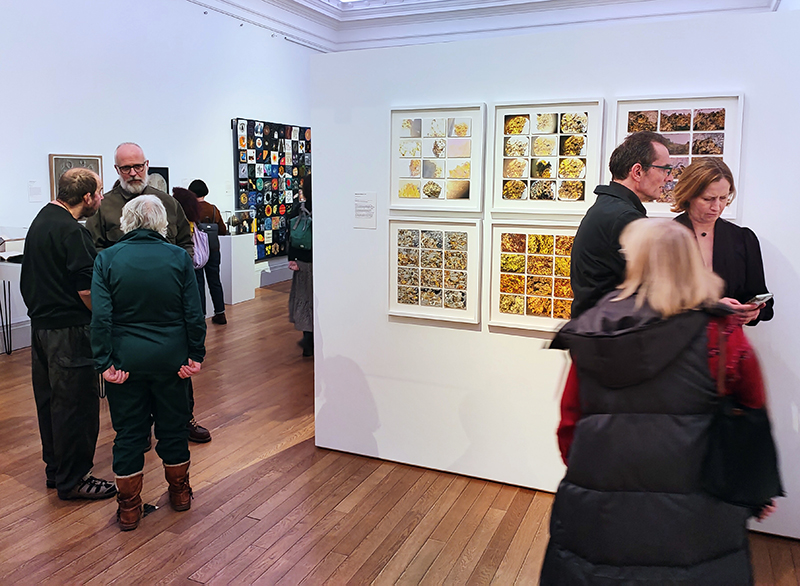
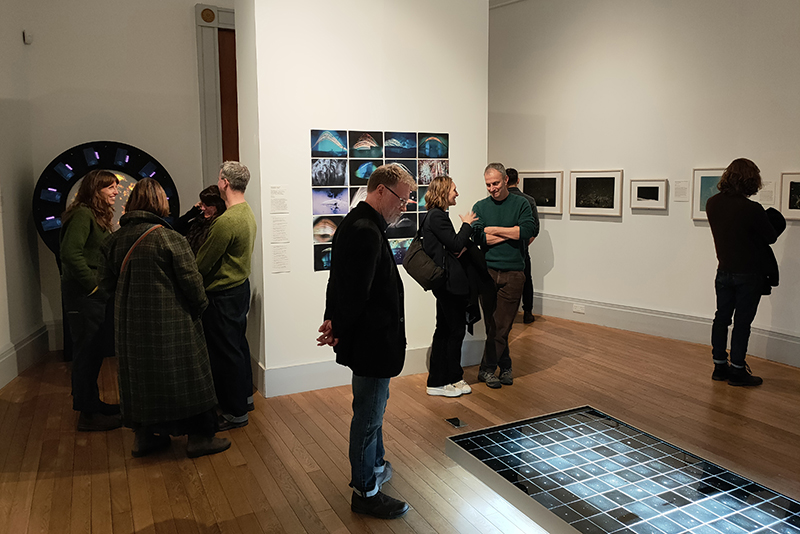
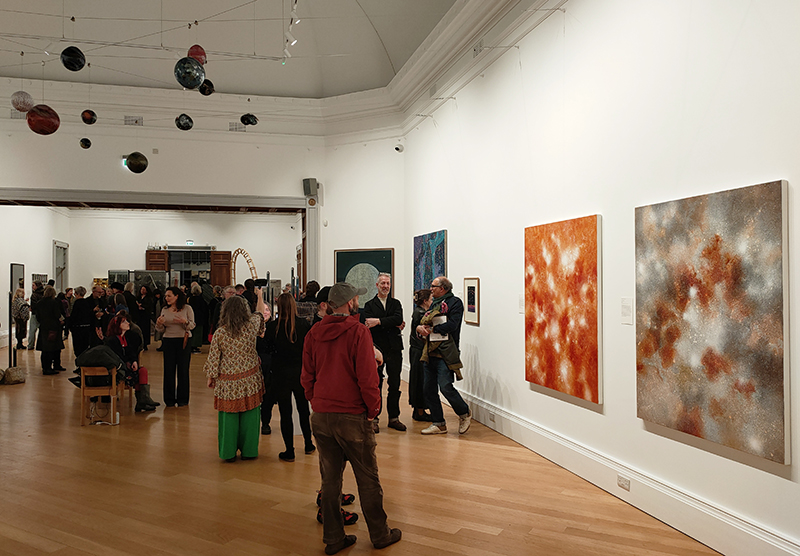
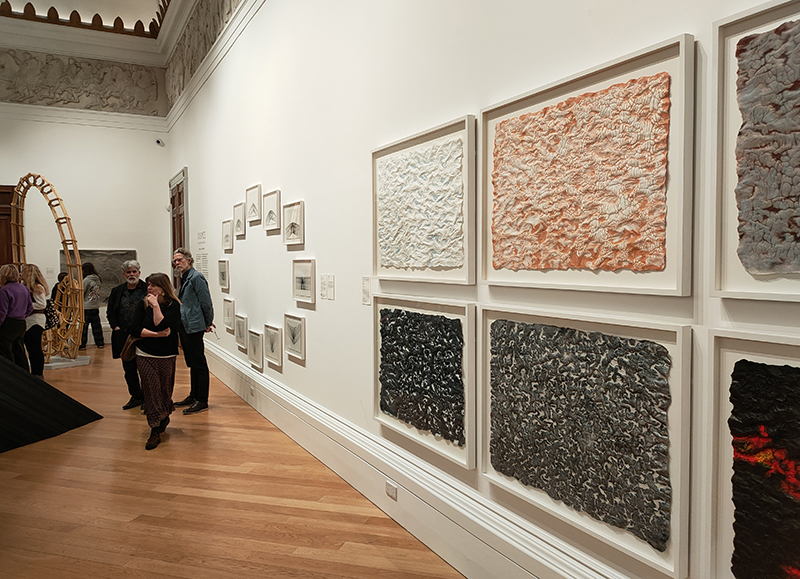
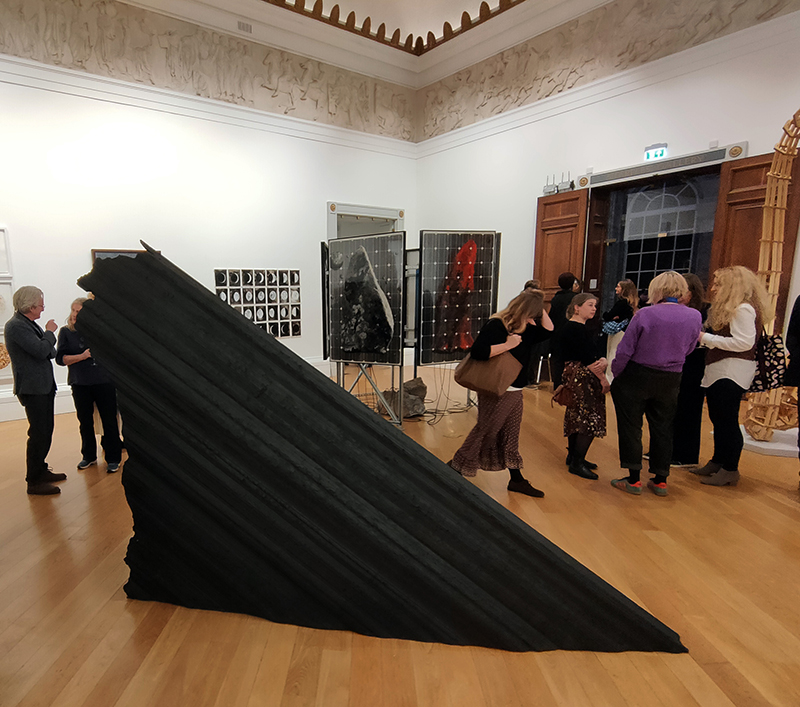
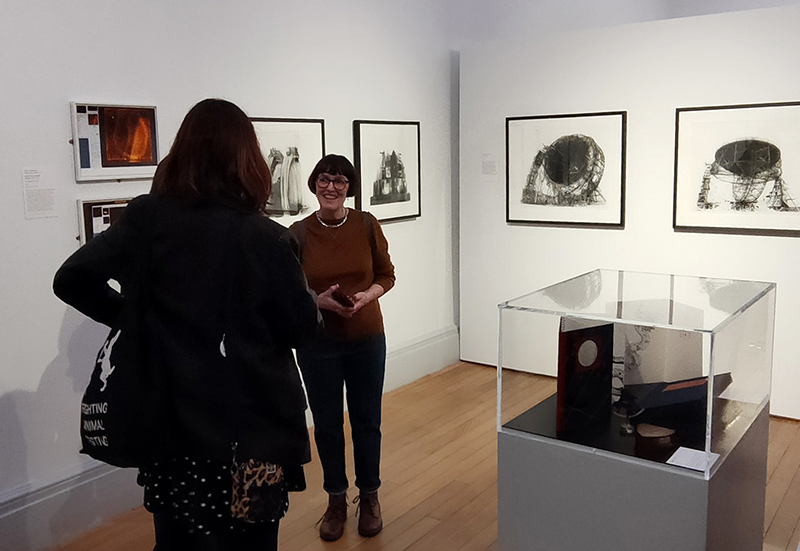
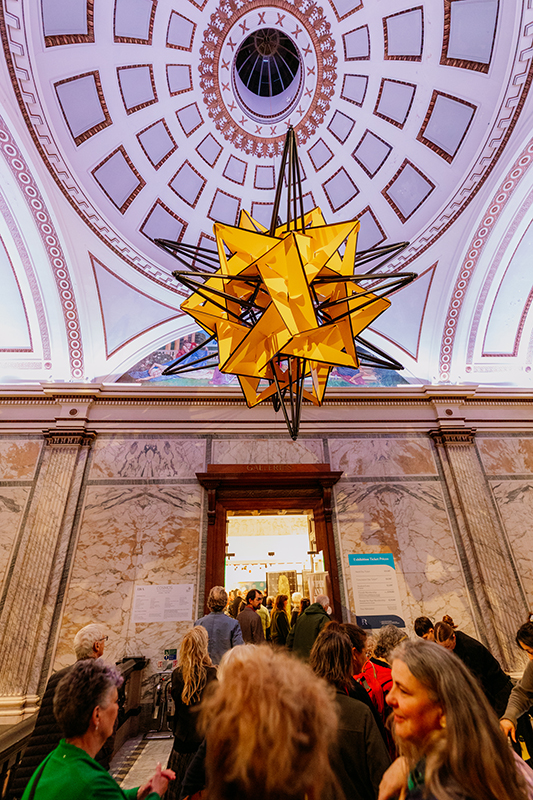
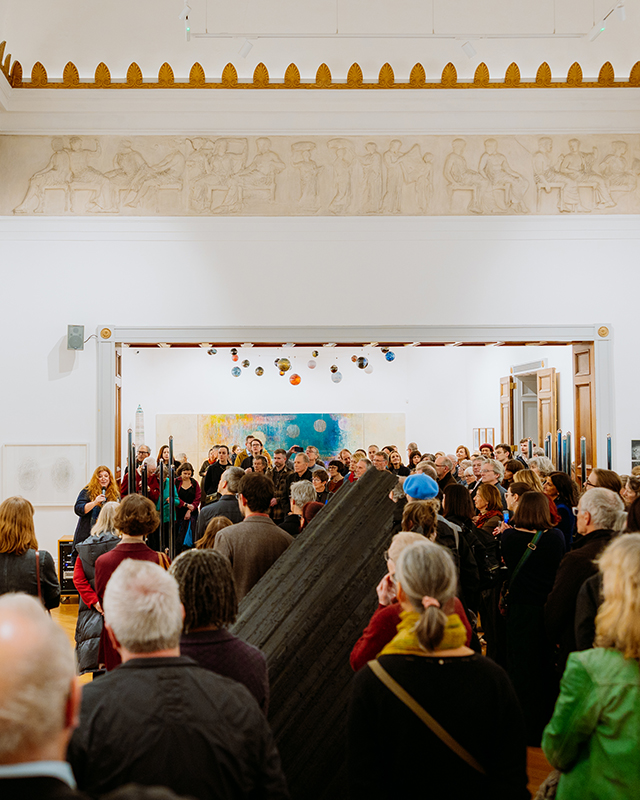
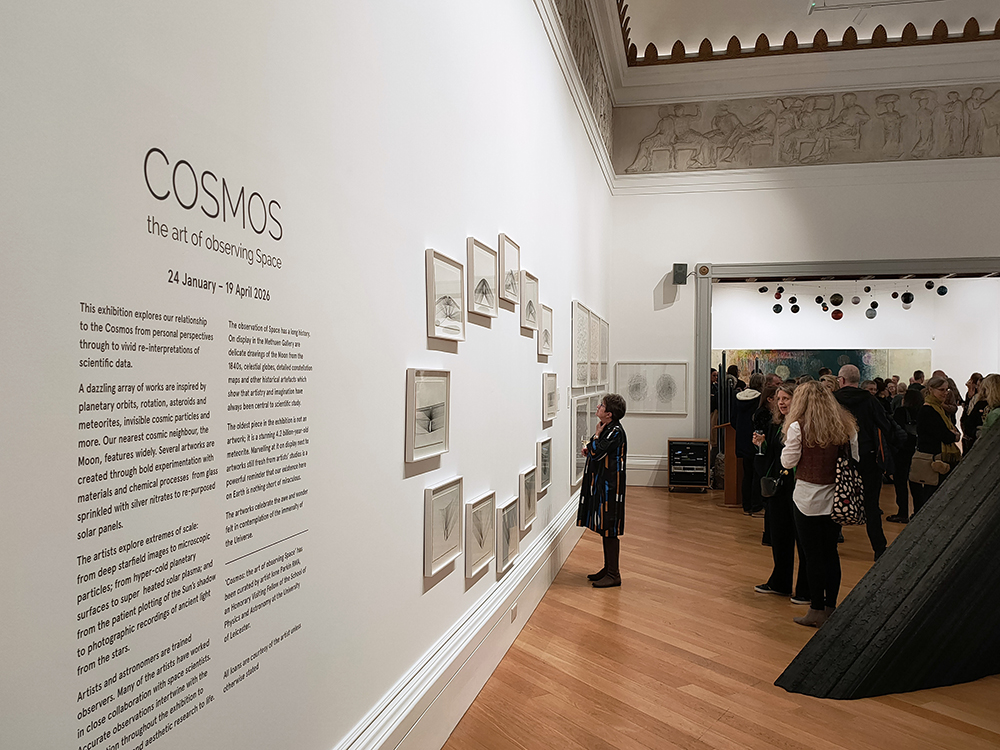
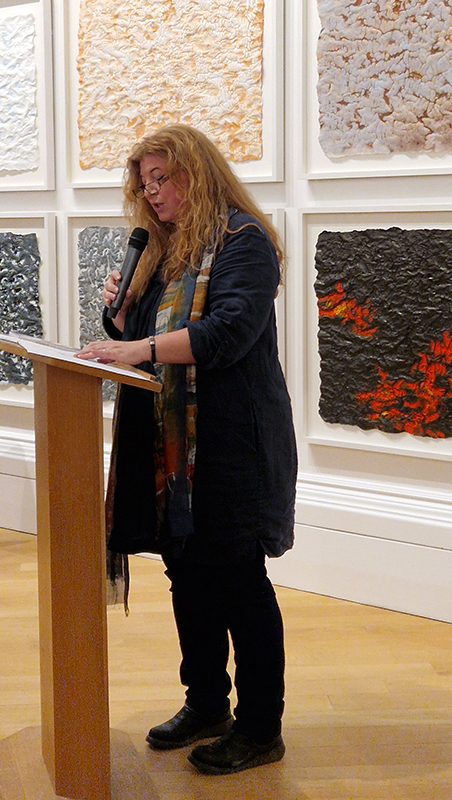
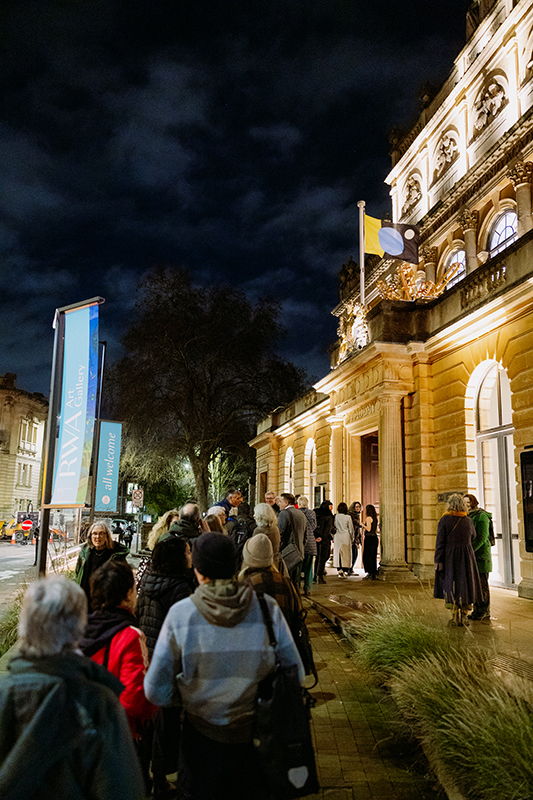
A packed and buzzing opening at The Royal West of England Academy for Cosmos: the art of observing space, curated by Ione Parkin. There was so much to take in, I will need to go back another time to be sure of seeing everything. I feel so lucky to be a part of this exhibition that includes so many wonderful artists as well as precious artifacts from the Royal Astronomical Society.
The following Private View images are courtesy of Alastair Brookes, KoLab Studios
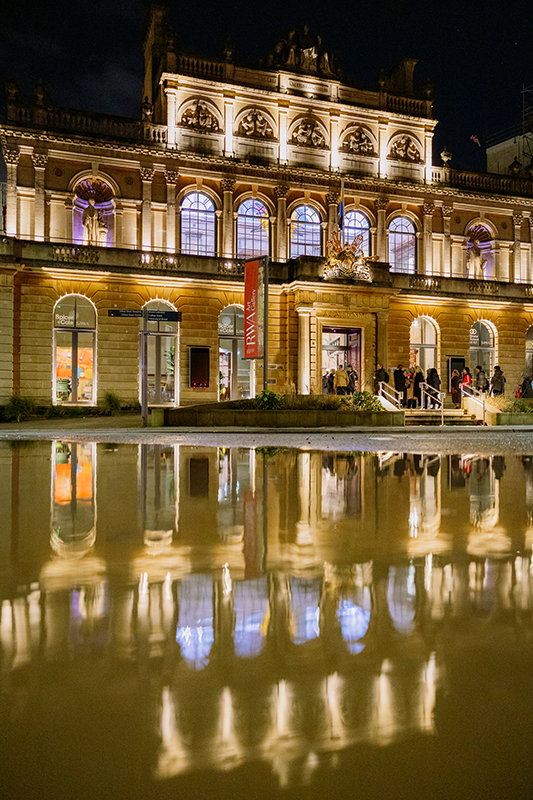
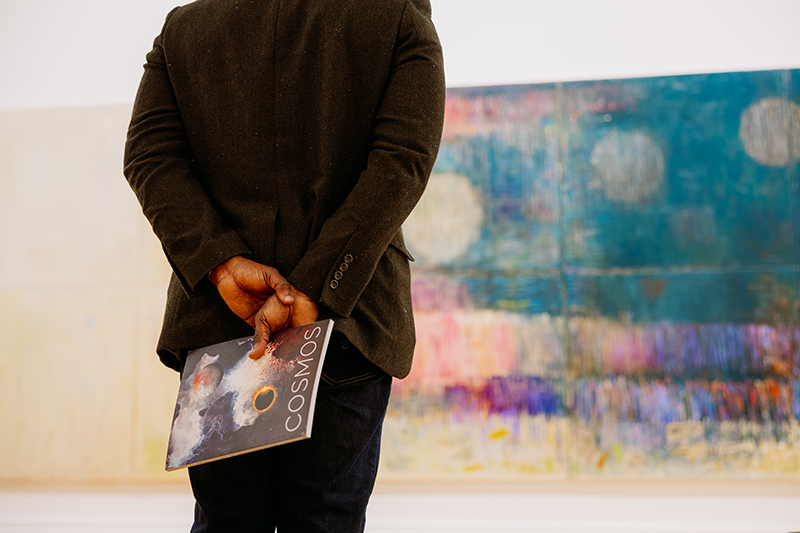
There is a fabulous exhibition catalogue to accompany the exhibition with foreword by astrophysicist, author and broadcaster, Chris Lintott and contributions from Ione Parkin RWA, visiting Honorary Fellow of the School of Physics and Astronomy at the University of Leicester; Sian Prosser, library and archives manager at the Royal Astronomical Society; and Amaury Triaud, Professor of Exoplanetology at the University of Birmingham. Image Alastair Brookes, KoLab Studios.

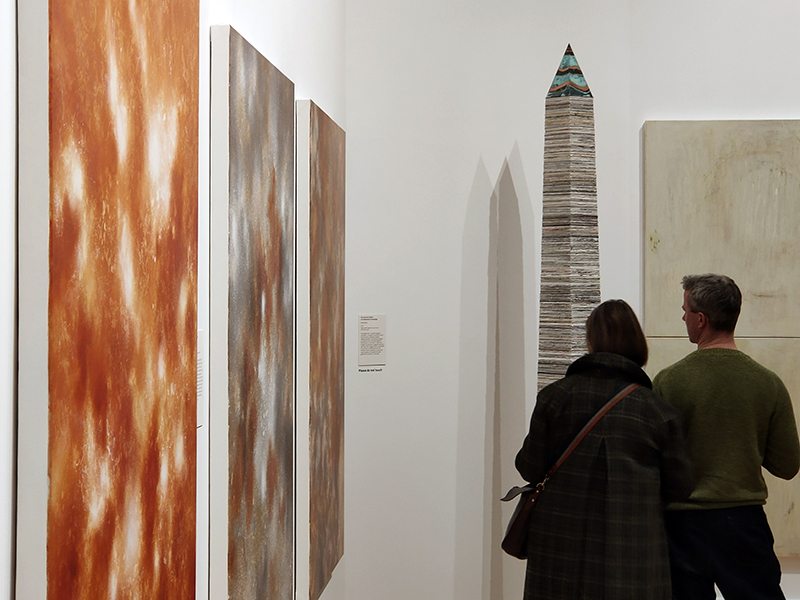
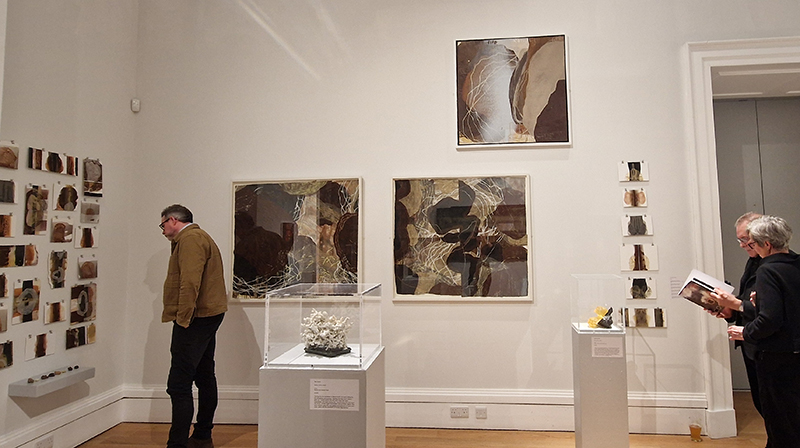
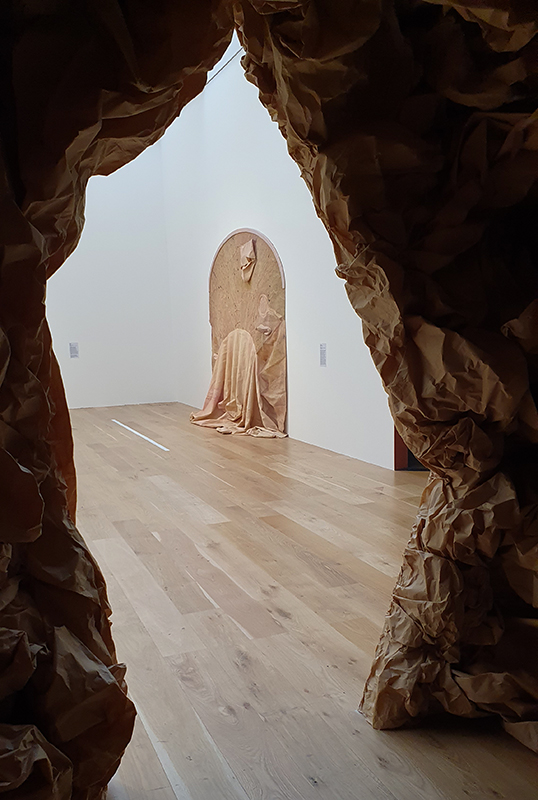
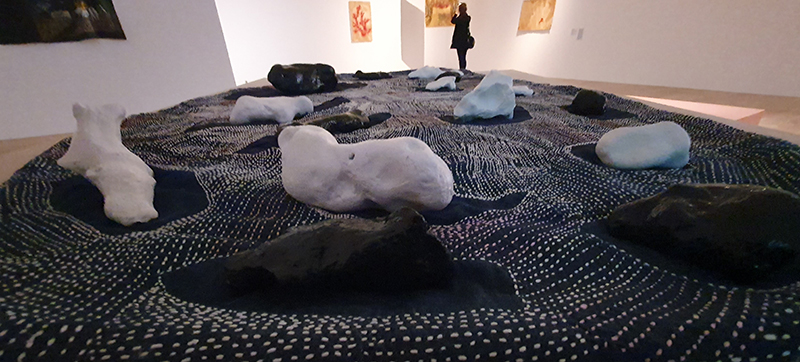
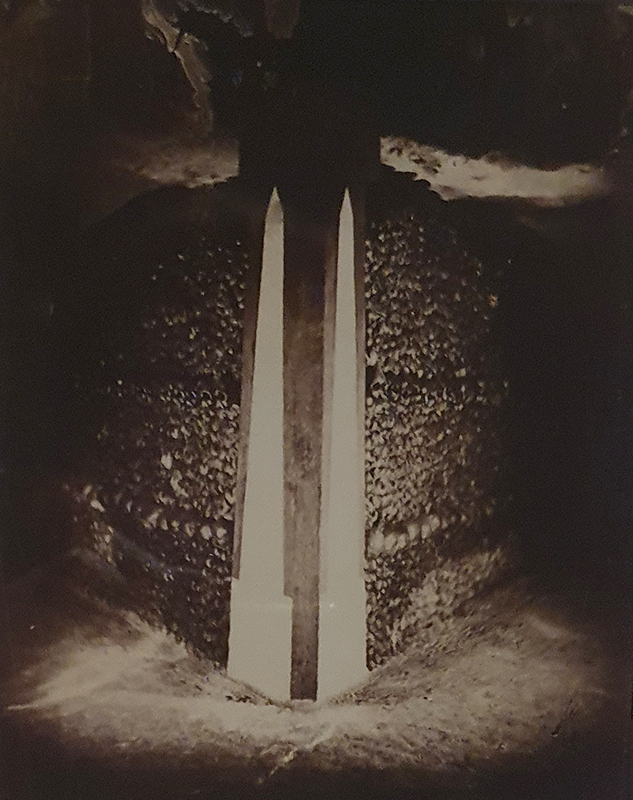
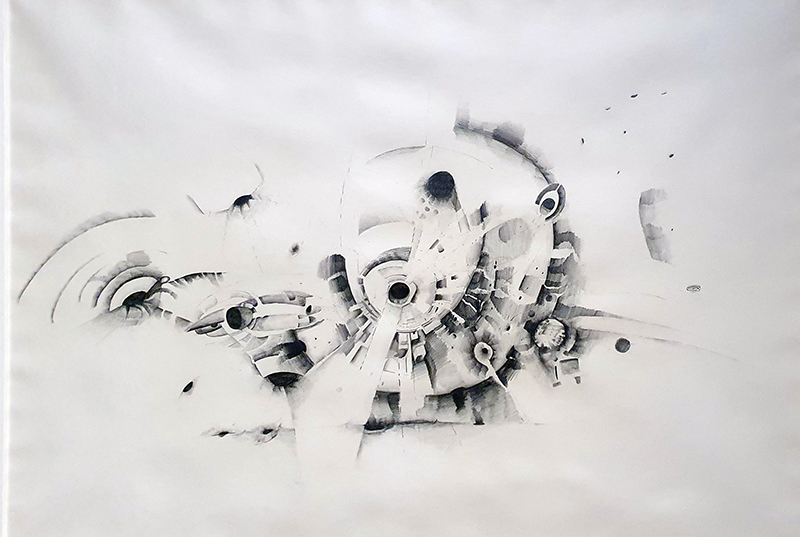
The following installation images of my four works in Cosmos are courtesy of Alastair Brookes, KoLab Studios
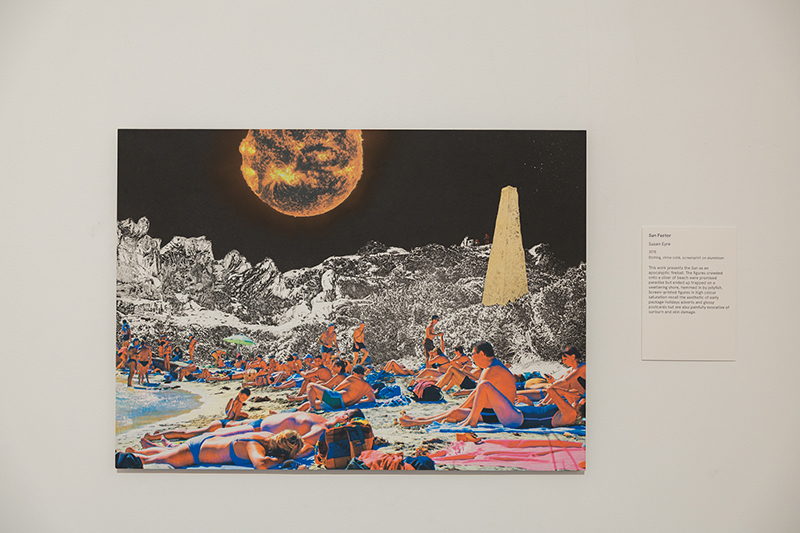
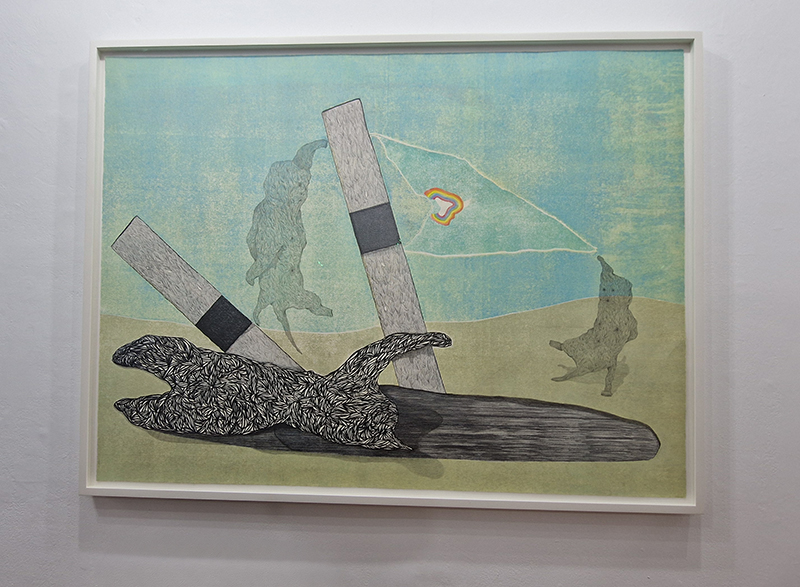
Sun Factor, 2015, comes from a period in my practice when I was looking at the human disconnect with the natural world and impending climate change. I was focusing on concepts of paradise as a state of being at one with a natural order. During this period we took a family holiday to Sardinia and one day we were offered a boat trip to an island that was described by the sales tout as ‘paradise’ – so we had to go. It turned out to be the opposite of what one might expect of paradise and this work is a direct translation of our experience. Bizarrely there was a concrete obelisk at the beach, –  a signifier of an ancient totem to the power of the sun. The figures are printed in high saturation colours, a reminder of the early days of package holidays and glossy postcards. It also speaks of skin damage and the ritual behaviour of tourists flocking to the sun –  perhaps without acknowledging its true power and the vulnerability of human biology.
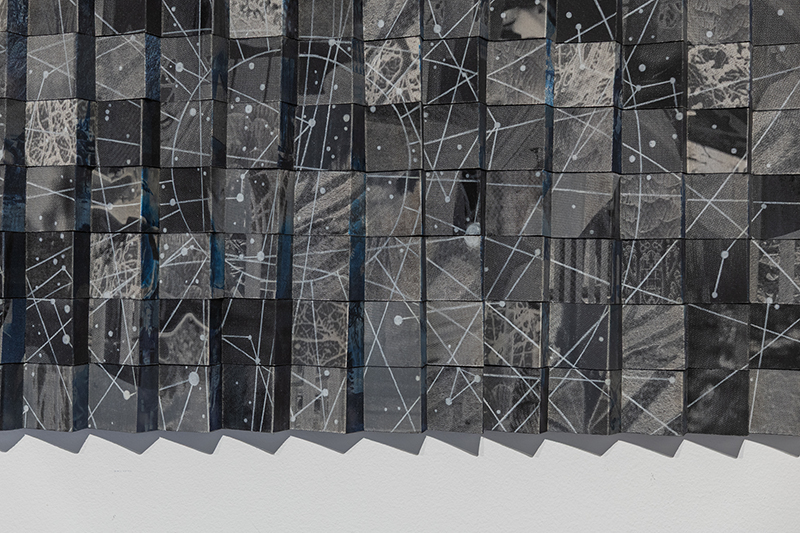
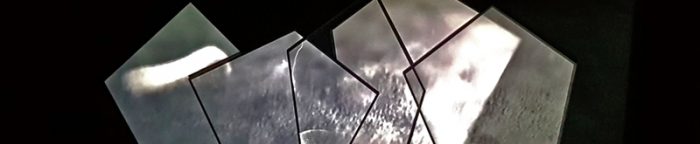
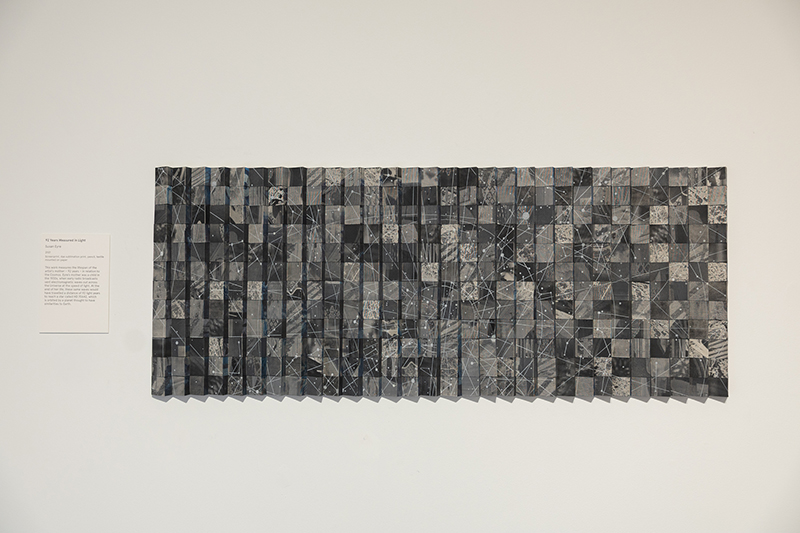
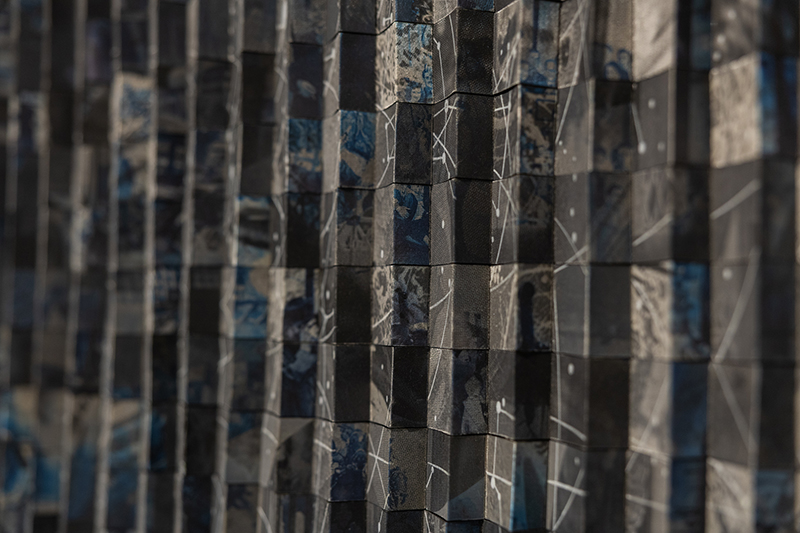
92 Years Measured in Light, 2021, is a very personal work made just after the pandemic, reflecting on the human experience of time in relation to the vastness of the Cosmos. There is a star, similar to our sun, with planets orbiting in a motion comparable to how the planets orbit here in our solar system. This star, in the constellation of Puppis, is about 92 light years away. The time it has taken the first radio and television signals travelling at the speed of light to reach this prospective home-from-home is roughly the same time as the lifespan of my mother who was born around the time of these early broadcasts. The folded sections in this work emulate the raster pattern of early TV signals which were sent in segments and must be reassembled on arrival to make sense of the message. The artwork includes fragmented images from this historical period viewed from one direction, and a chart depicting the star from the other. It is an interesting thought to consider what alien life forms might make of these messages travelling across the universe, should they be able to interact with them.
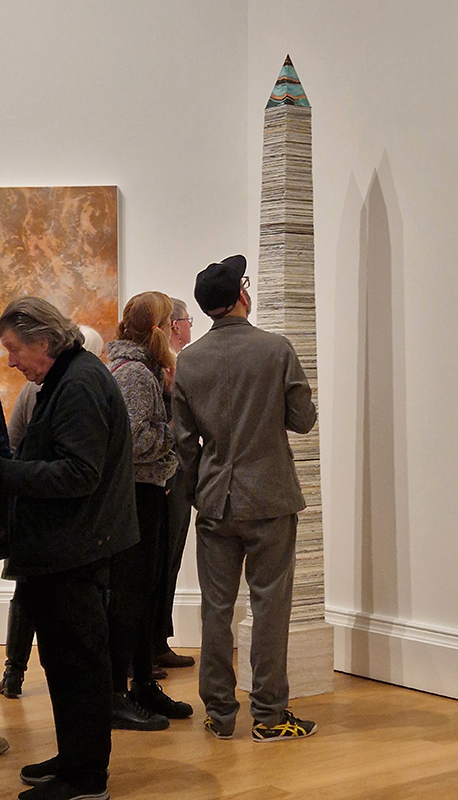
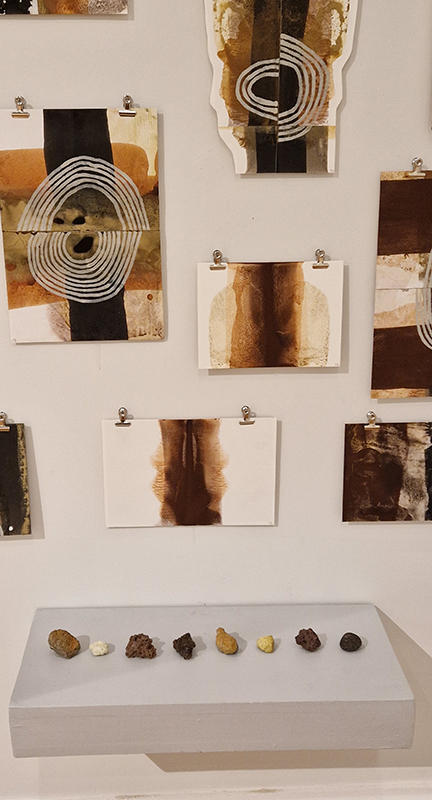
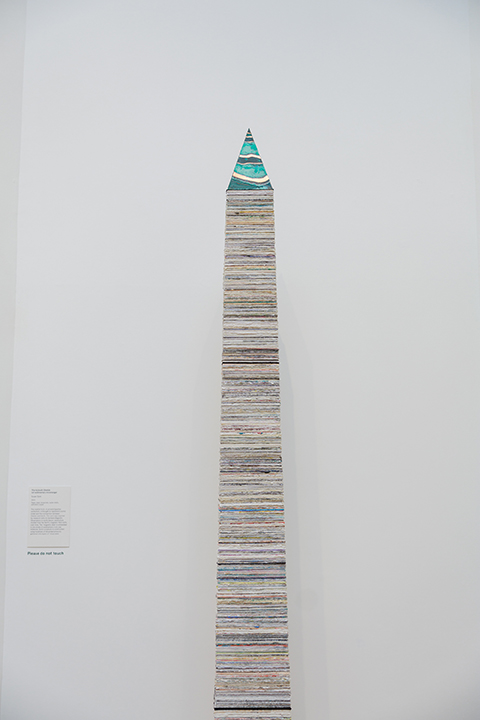
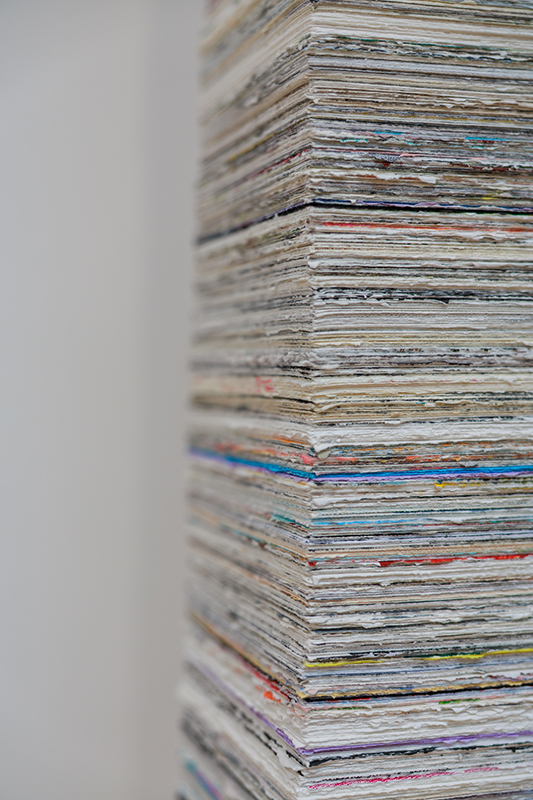
The Azimuth Obelisk (of sedimentary knowledge) 2023 is a reimagining of a concrete obelisk, erected in 1955 at Hartland Magnetic Observatory, as a permanent azimuth mark from which to monitor the drift of the magnetic north pole. Measurements are taken via a theodolite through a north facing window in what is known as the Absolute Hut. My sculpture echoes the hidden history of Earth’s wandering magnetic field, which has been secreted by magnetic minerals in the strata of sedimentary rock over millennia. To make the piece, hundreds of works on paper were painstakingly hand-torn, layered and stacked, expressing the passage of time at both geological and human scales.
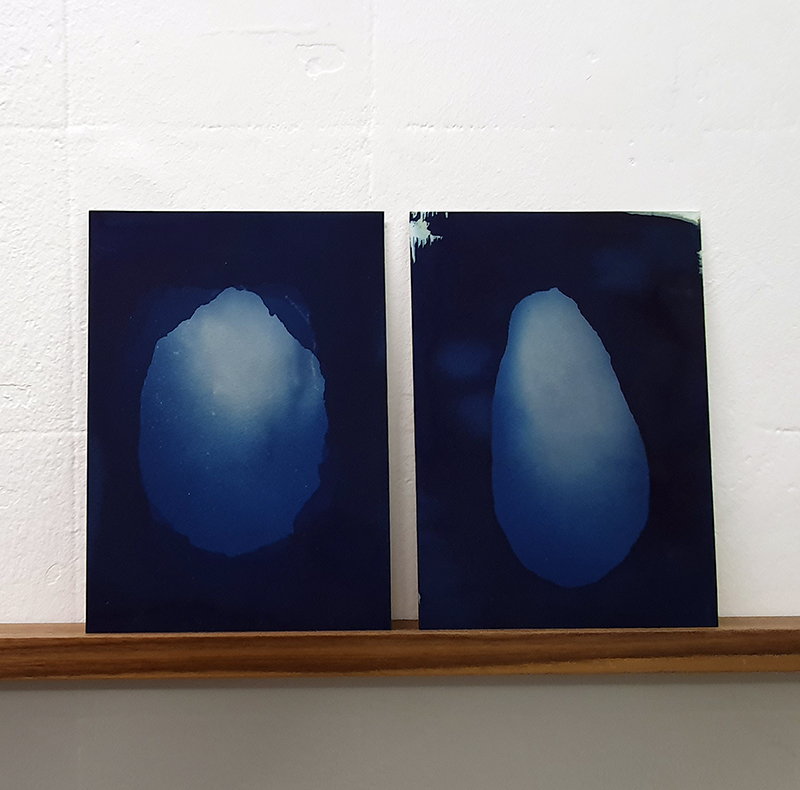
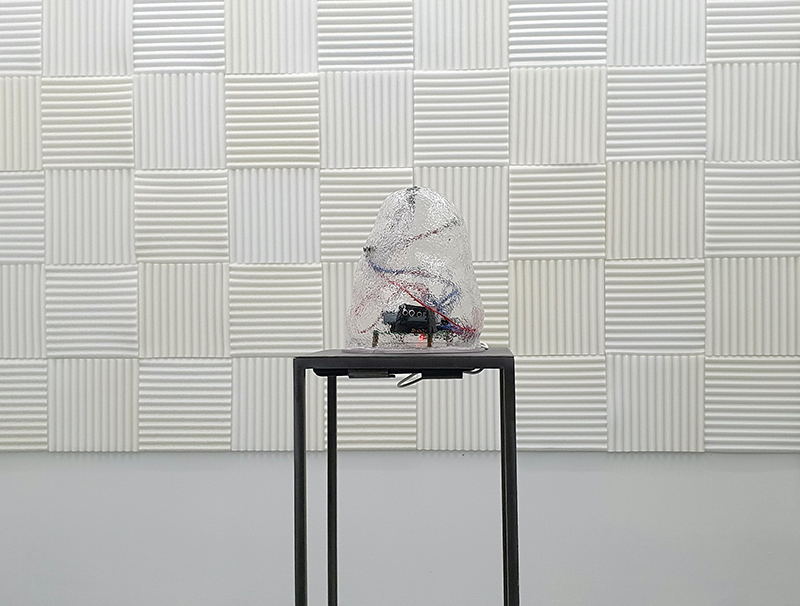
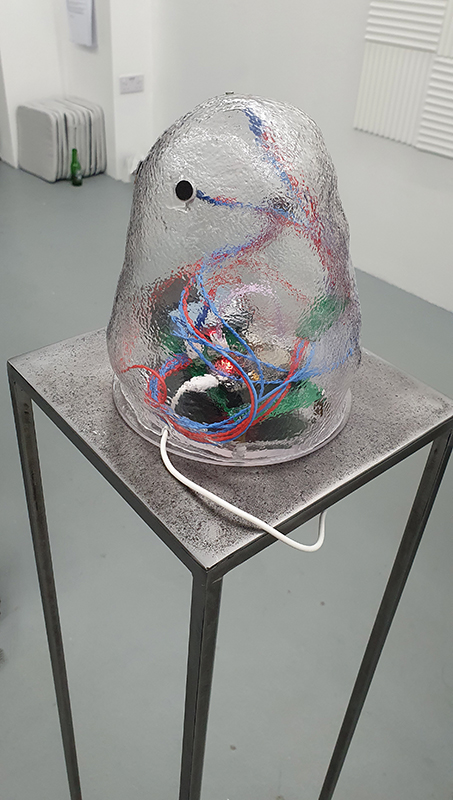
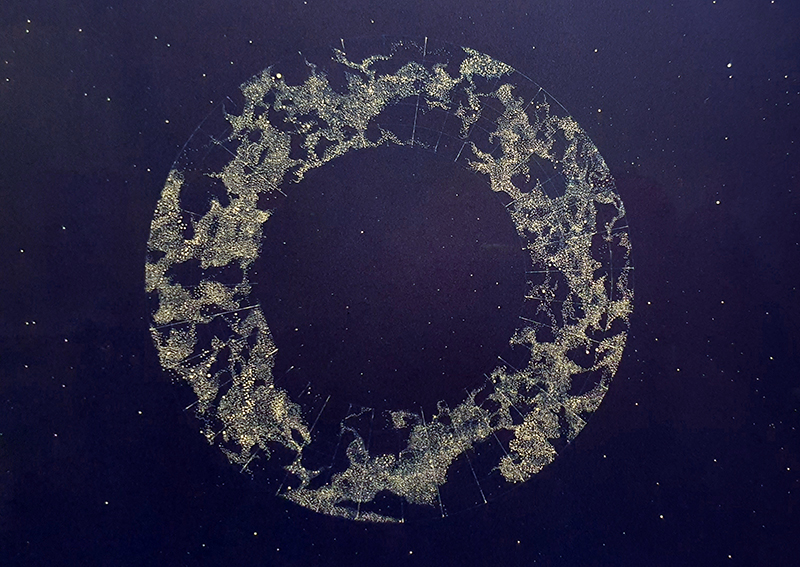
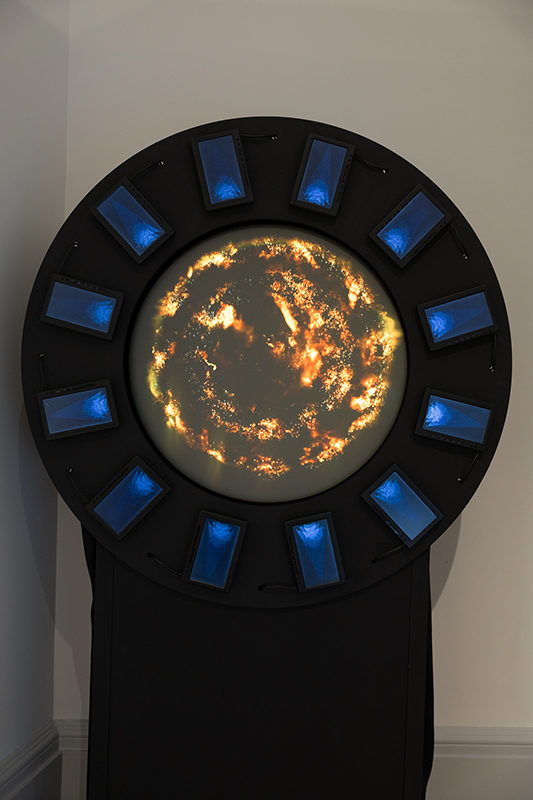
Orbital, 2024, reflects on the interaction between space weather and Earth’s magnetic field and its impact on human infrastructure. The Earth’s magnetic field is quite a weak force requiring sensitive equipment to detect it, yet it provides valuable protection to life on Earth. It’s interaction with the solar wind has been very visible recently as the sun reaches peak activity in its 11 year cycle, lighting up skies with the aurora borealis much further south than is usual. Auroras may be beautiful to witness but belie the potential damage to satellites and electric grids from a violent solar storm. Our daily lives have become increasingly reliant on satellite technology for communication and data gathering and disruption to these systems would have wide reaching global effects. There is also research that suggests the number of satellites orbiting Earth and the growing space junk graveyard forming a metal cage could weaken Earth’s protective magnetic field, making us even more vulnerable to space weather and cosmic radiation. Space pollution and over use of low orbit space is not only gambling with disaster but it’s also disrupting the view of the night sky and will make it increasingly difficult for us to exit the Earth for space exploration.  
Out, About and Online

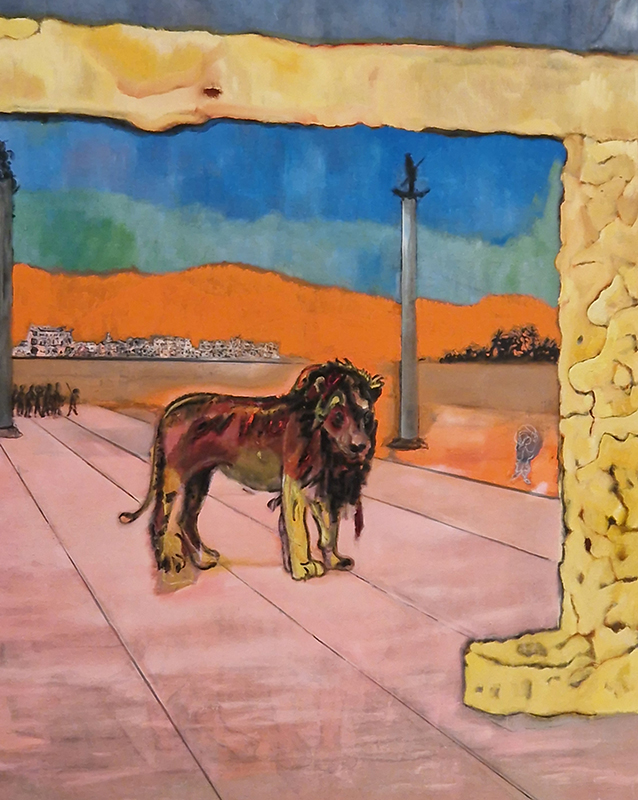
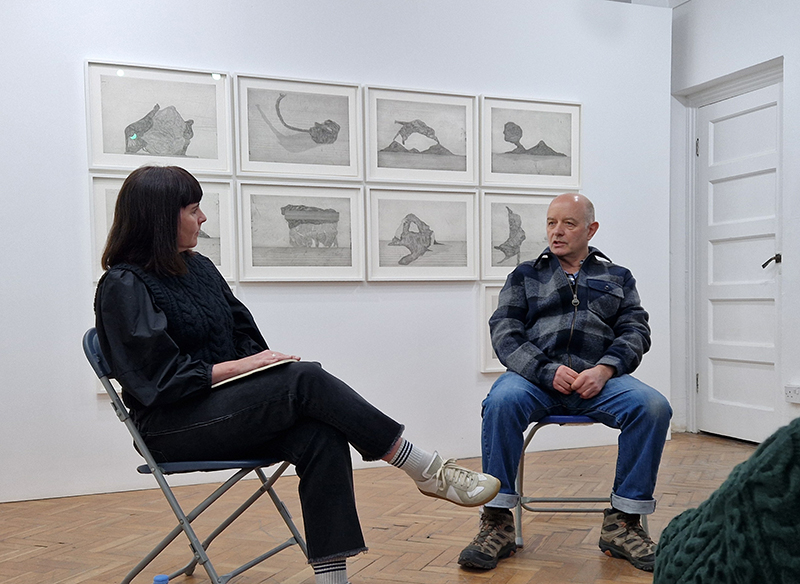
Michael Taylor Dog eats Lion at Standpoint Gallery. I was lucky to be in the audience for his ‘in conversation’ with Johanna Love and his following introduction to the workings of Paupers Press, with lots of juicy insider knowledge about the artists, such as Grayson Parry, Damian Hurst and Paula Rego, who go to Michael for editioning their works. There was lots of show and tell and also his own solo show to see. Three hours well spent. Down to earth and entertaining, it was refreshing to hear such honesty about the creative process. The not knowing. His press release is basically a list of disturbing incidents that have stayed in his mind. Maybe sometime, the dog will have his day.

In his own words: Michael Taylor is the founder of the Paupers Press and co-founder of Standpoint Studios and Mark Tanner Sculpture Award. He has had a few shows but won no prizes. His work is held in a collection. He has taught at several art schools, a few of which are still open, some have closed. He has travelled extensively within the EU and considers himself a man for warm seasons.
A little disappointed with Ryoji Ikeda’s new site-specific audio-visual installation data-cosm [n°1] at 180 Strand. Visitors are invited to lie down on the floor and look up at the large LED screen set on the ceiling above them, their bodies surrounded by Ikeda’s soundscapes – a total sensory experience. The set up is impressive and the experience is immersive, at times blinding and at times has the thrill of a fairground ride but overall I felt the imagery could have been more engaging.
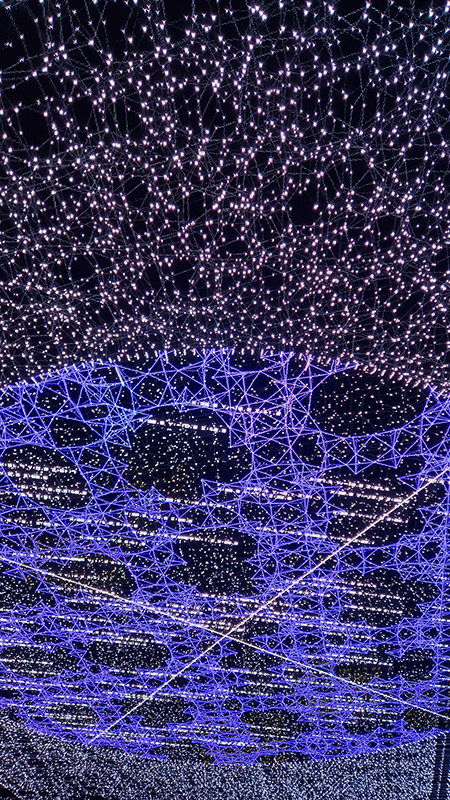
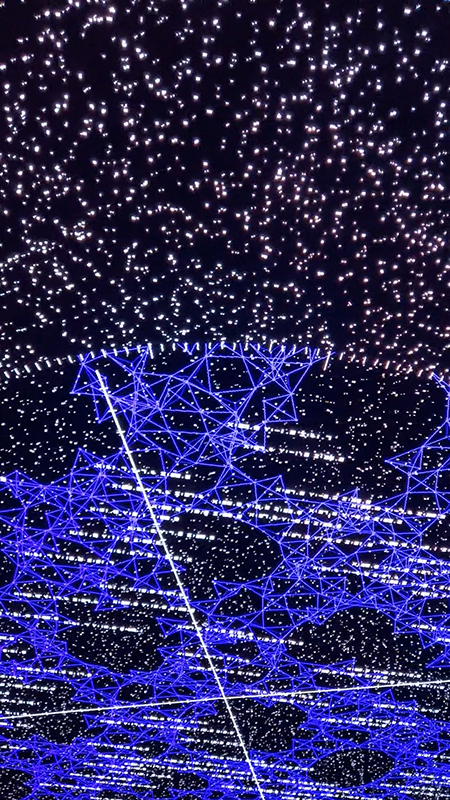
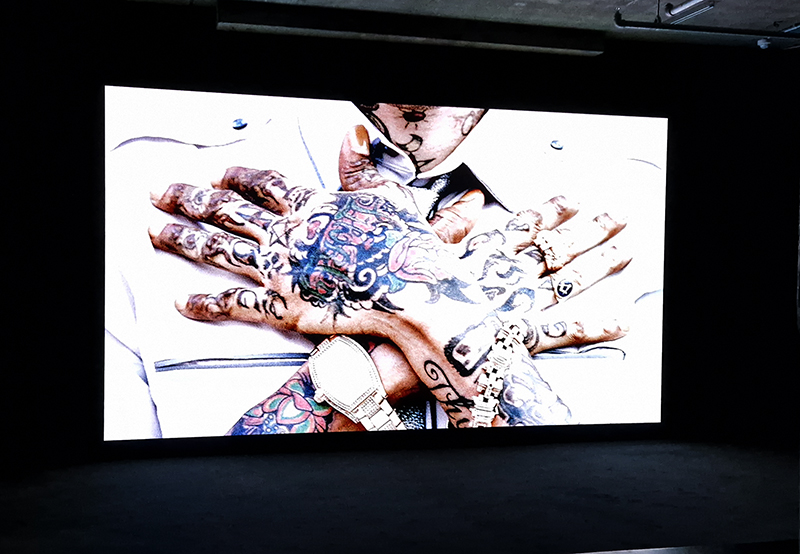
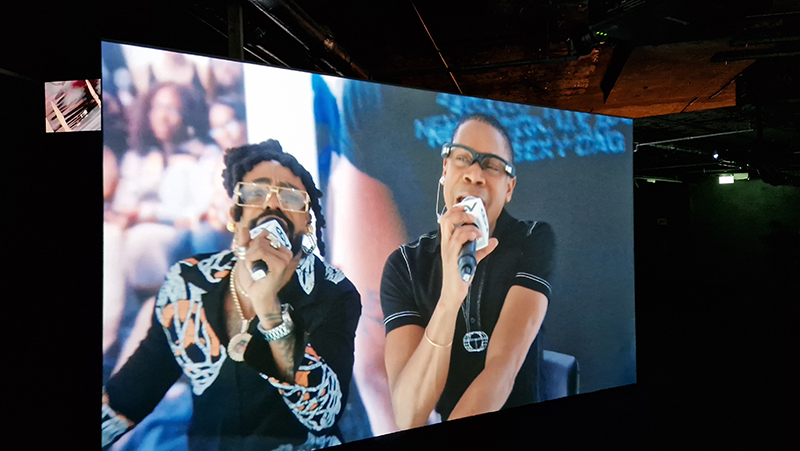
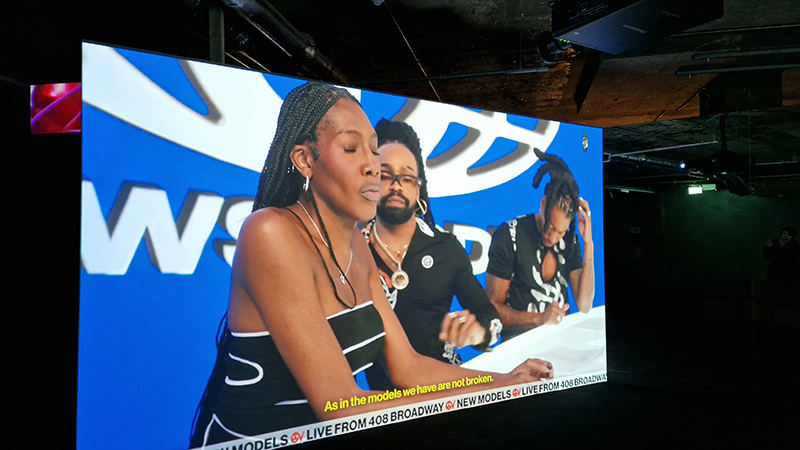
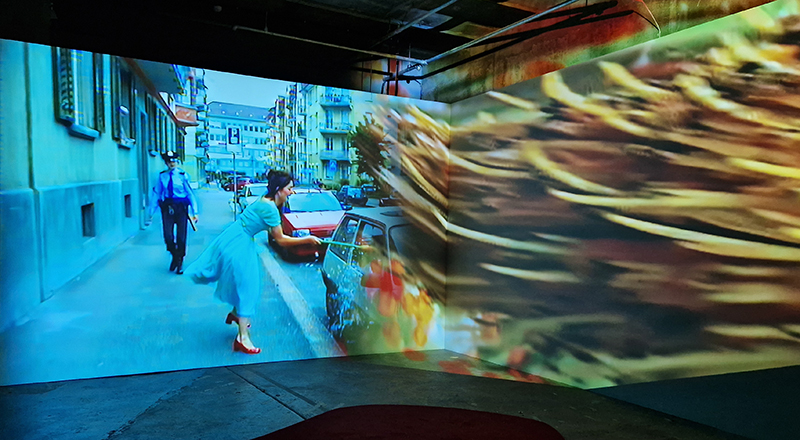
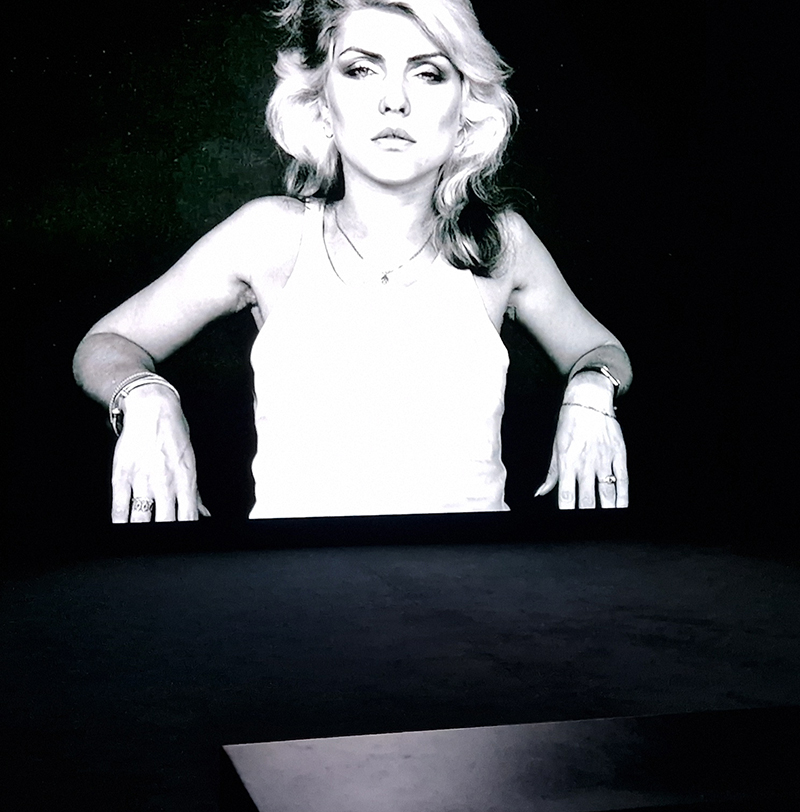
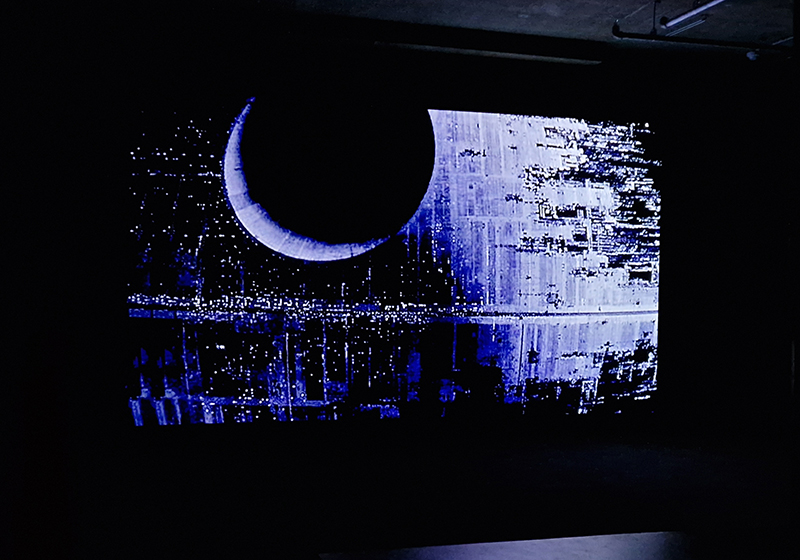
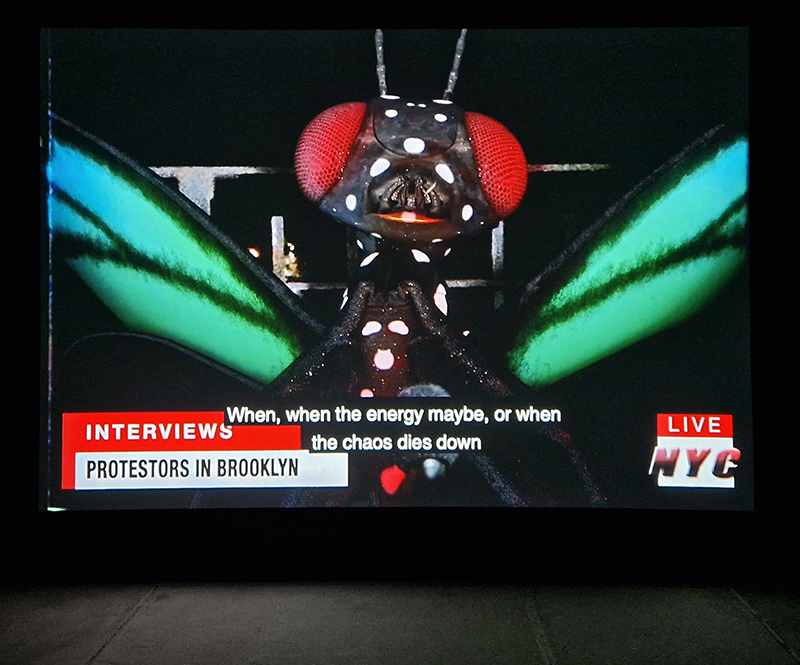
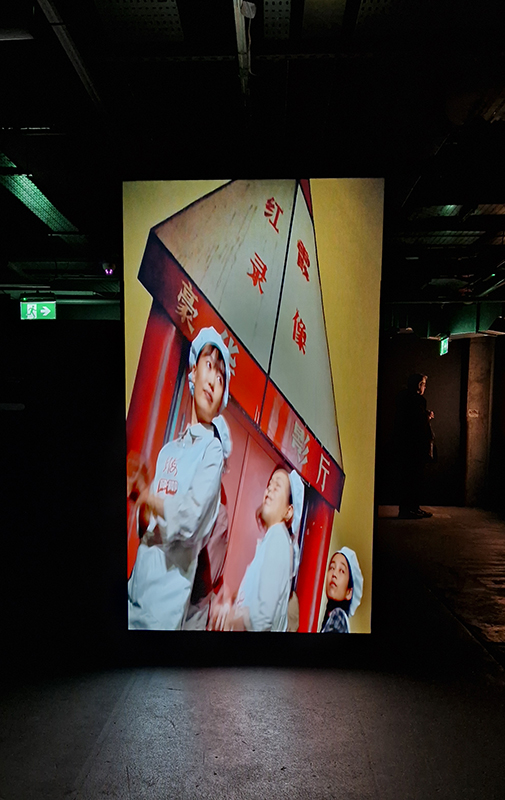
Paradigm Shift at 180 Strand spans moving image works from the 1970s to today, drawing on avant-garde cinema, television, music video, performance, fashion, gaming, and internet culture. Featuring works by artists: Sophia Al-Maria, Meriem Bennani, Dara Birnbaum, Foday Dumbuya, Cao Fei, Tremaine Emory, Nan Goldin, Arthur Jafa, Derek Jarman, JulianKnxx, Mark Leckey, Josèfa Ntjam, Pipilotti Rist, Martine Syms, TELFAR, Ryan Trecartin, Gillian Wearing and Andy Warhol. Many, many videos. Exit feeling like it’s been a long night in the underworld.
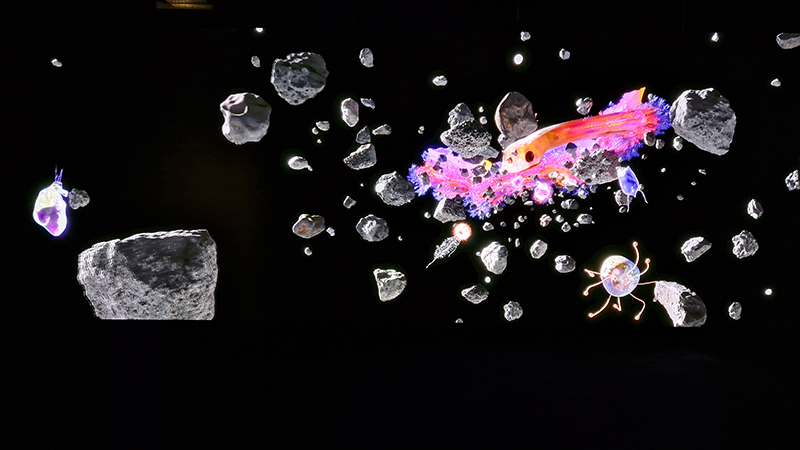
I joined a webinar in connection with Earth, a Cosmic Spectacle exhibition at Everybody Arts Together. Presented by exhibiting artist Louise Beer, with speakers Dr Anik Halder, postdoctoral research associate at the Institute of Astronomy, Cambridge and Jesus College Cambridge. and Miranda Lowe CBE, principal curator, natural historian and marine invertebrate specialist at the Natural History Museum, London. The importance of establishing connections to the cosmos through stargazing and learning more about astronomy and other life that shares our planet was emphasised as vital to building hope for the future.
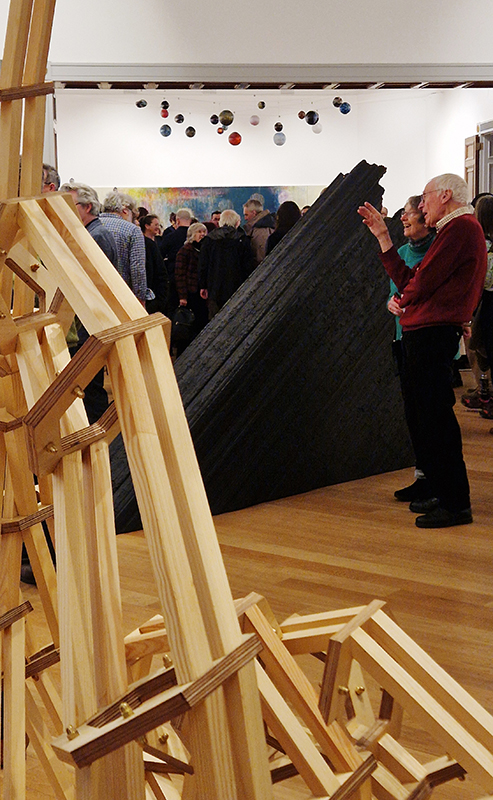
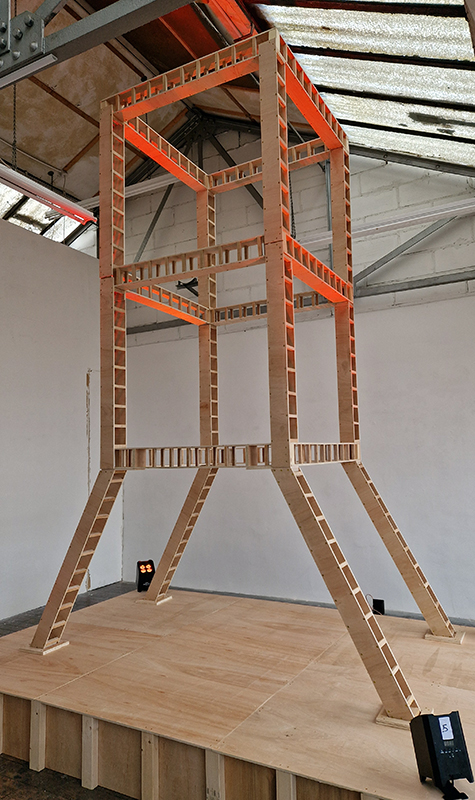
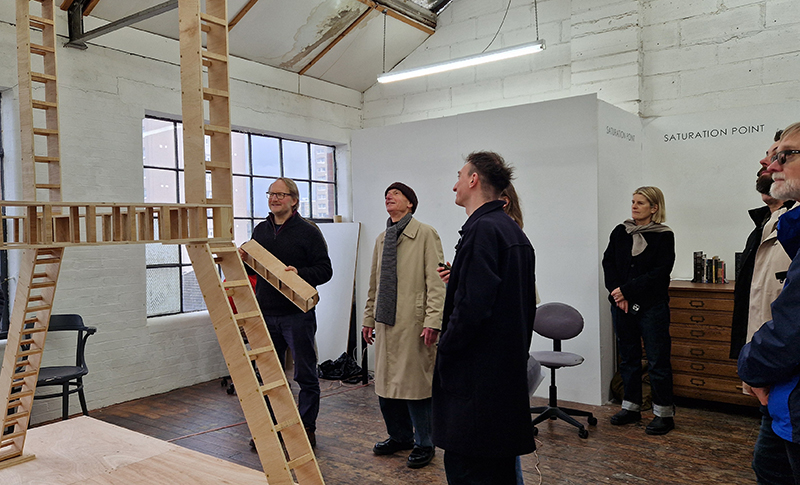
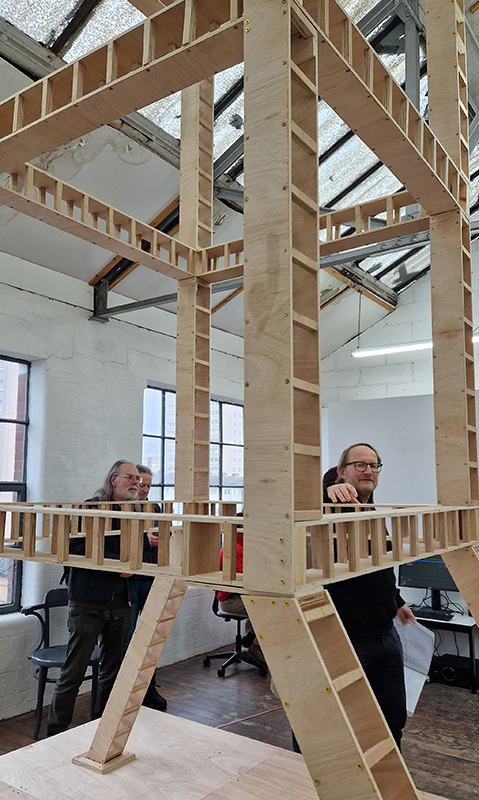
Robert Good Tower No 1a (Looks Like A Good Trajectory So Far) at Saturation Point. The tower is inspired by the iconic launch gantry at Kennedy Space Center’s Launch Complex 39A from which Apollo 11 blasted off to the moon. The title quote is taken from the CBS News commentary at about 1:05 minutes into the flight, and reflects the optimism and excitement of the launch, whilst also perhaps inviting the viewer to consider whether we are still on such a good trajectory today.

I enjoyed the poignancy of the structure as something that no longer has purpose, but also in the context of it being built inside a room, reaching to the ceiling in quite an optimistic defiance.
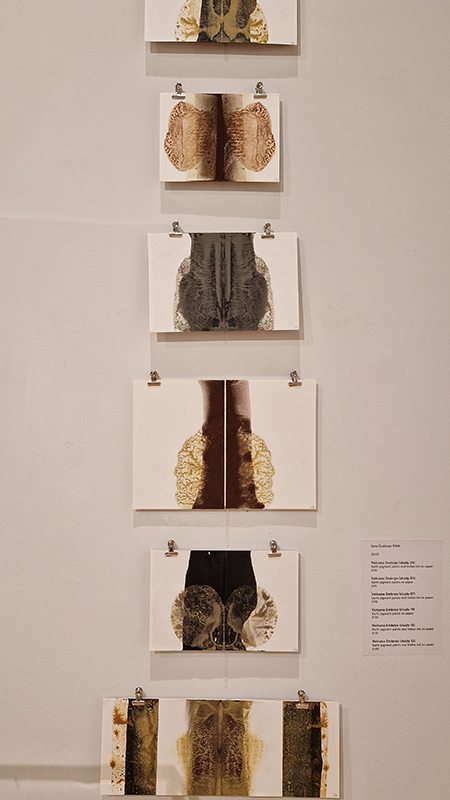
Also opening at the RWA was Elemental Curated by Malcolm Ashman RWA and Stephen Jacobson RWA. This exhibition brings together works by four RWA Academicians that trace deep and individual responses to the natural world. Each work holds fragments of place that move beyond representation to connect with elements that are both intimate and universal. Great to catch up with Sara Dudman who I met during the Lizard Point Residency in 2019. Her dynamic paintings are vibrant evocations of “what it is to be a volcano. Feeling the sulphurous breath of the earth, watching her move; these paintings adopt the animist view of the volcano as a living being. Trekking the winding paths to the craters, we can never surmount a volcano but feel the awe of her role in reshaping the land”. Sara Dudman RWA 
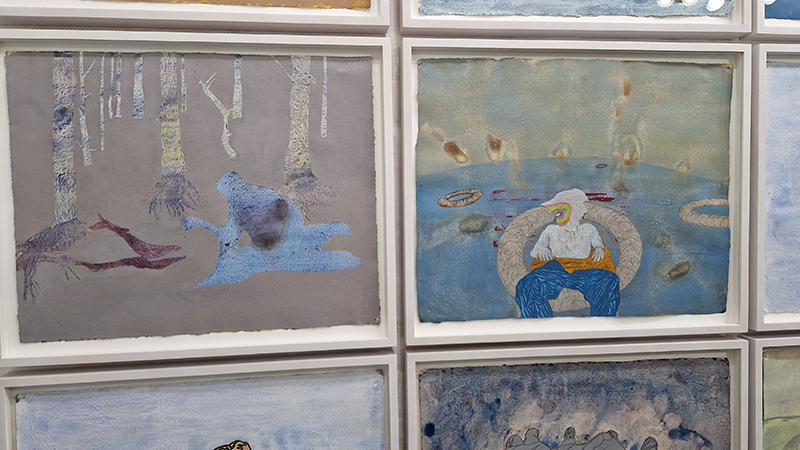
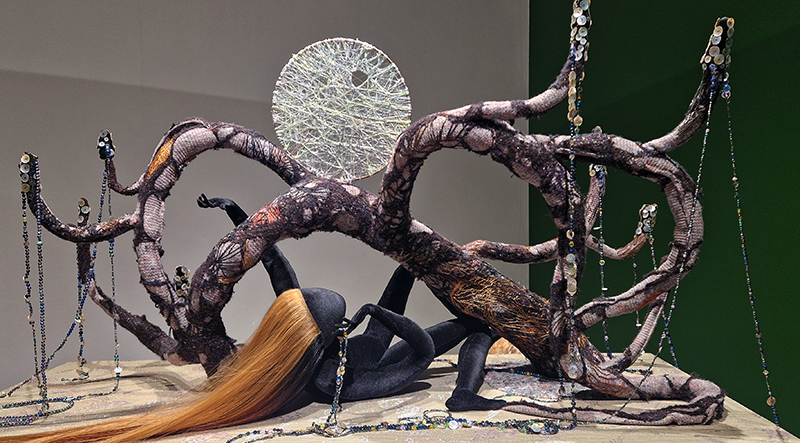
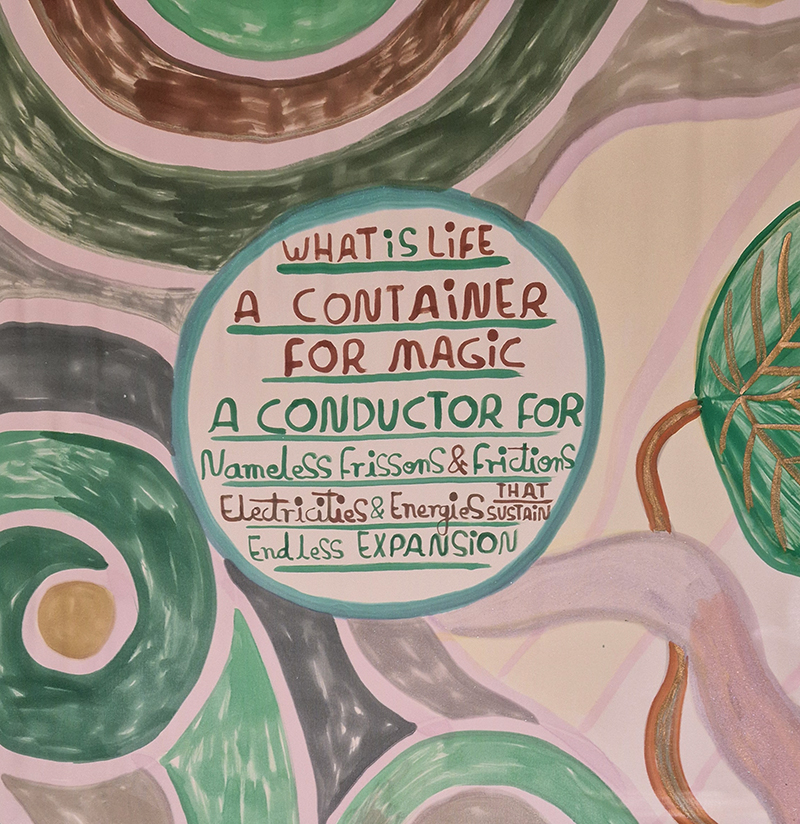
Emma Talbot Everything is Energy at The Arnolfini, Bristol in which the artist leads us through a rich eco-system of works – including silk painting installations, intimate drawings, sculptural forms (Talbot calls them ‘intangible things’) and animation – each exploring the complexity of our relationship with nature, technology and the world around us.

‘What is life. A container for magic. A conductor for nameless frissons & frictions. Electricities & energies that sustain endless expansion.’ (Emma Talbot)

I thought the aminations were beautifully made. I found the text a bit intrusive and prescriptive but it does get her points across I suppose and it is very much a part of how she works.
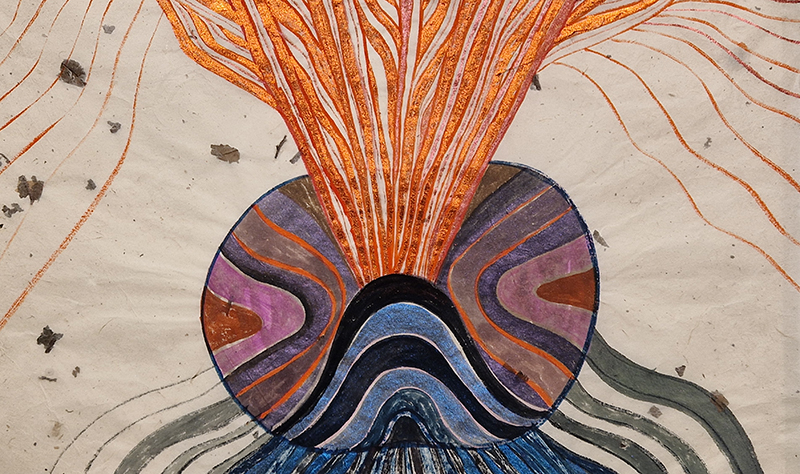
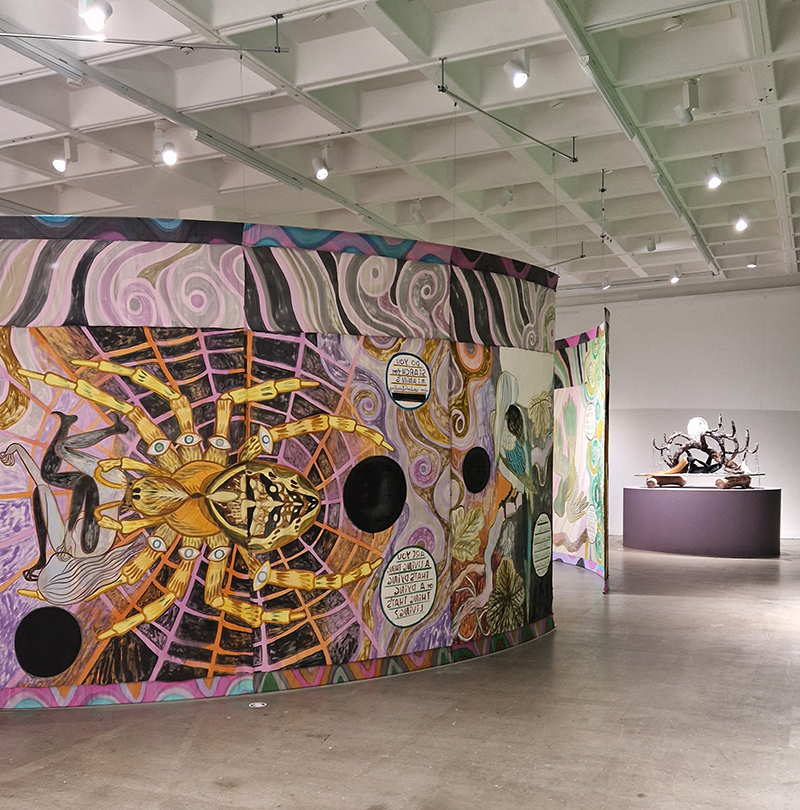
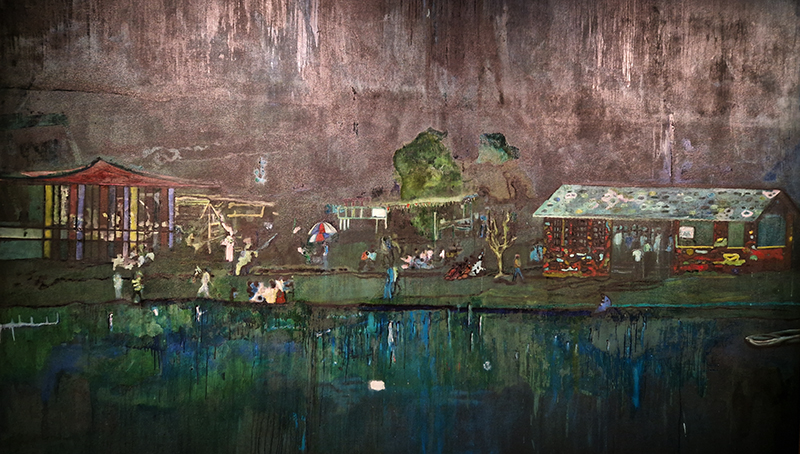
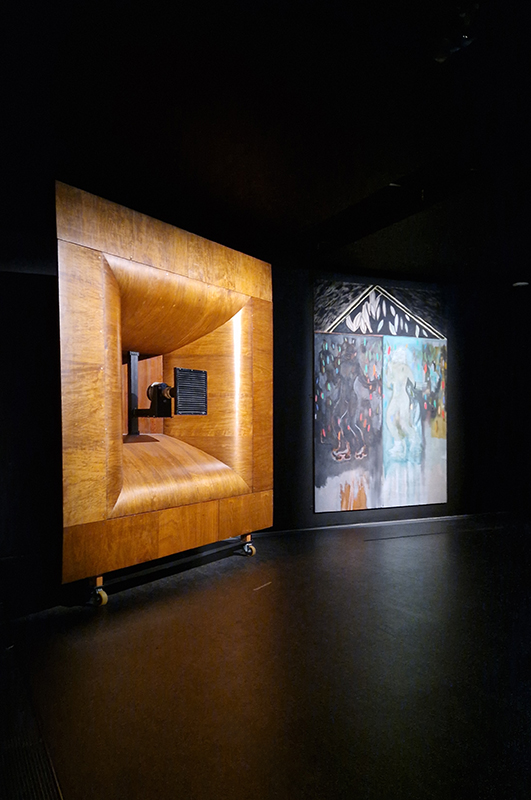
Peter Doig: House of Music at the Serpentine. The exhibition features two sets of rare, restored analogue speakers, originally designed for cinemas and large auditoriums. Music selected by the artist – from his substantial archive of vinyl records and cassette tapes accumulated over decades – plays through a set of ‘high fidelity’ 1950s wooden Klangfilm Euronor speakers. At the centre of the exhibition is an original Western Electric / Bell Labs sound system, produced in the late 1920s and early 1930s. Developed to respond to the demands of modern movie sound, this extremely rare ‘loud speaking telephone’ consists of valve amplifiers and mains-energised field-coil loudspeakers, which were designed specifically to herald in the new era of ‘talking movies’. These speakers were salvaged from derelict cinemas across the UK by Laurence Passera, with whom Doig has collaborated closely on this project. Laurence Passera is a London-based expert and devoted enthusiast of cinematic sound systems. The speakers offer a unique listening experience due to the technical mastery achieved in their construction that places them as the great grandfathers of modern ‘hi-end’ audio.

Settling down to listen to the music meant lingering longer than would be usual when just looking at paintings.
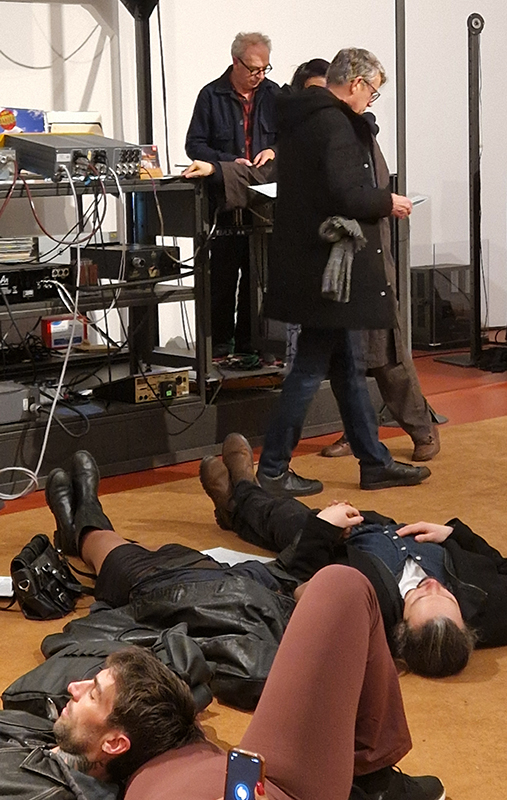
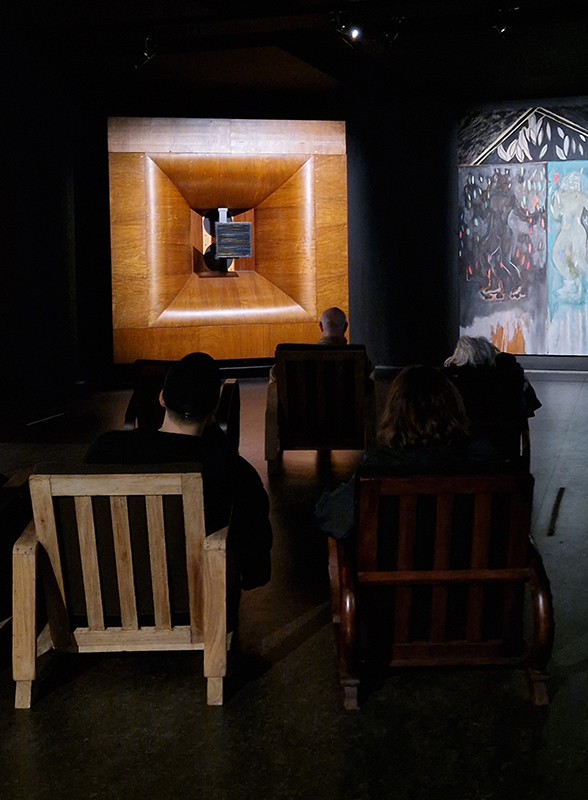
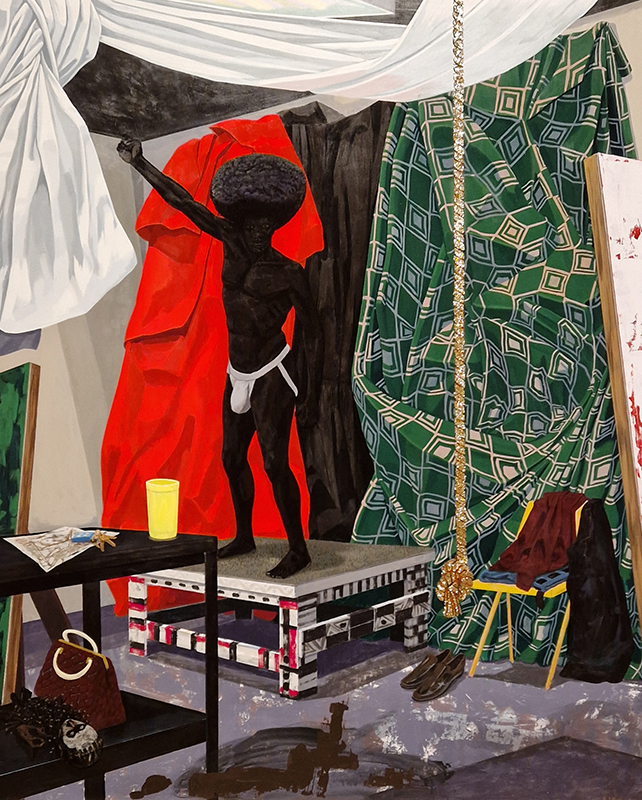
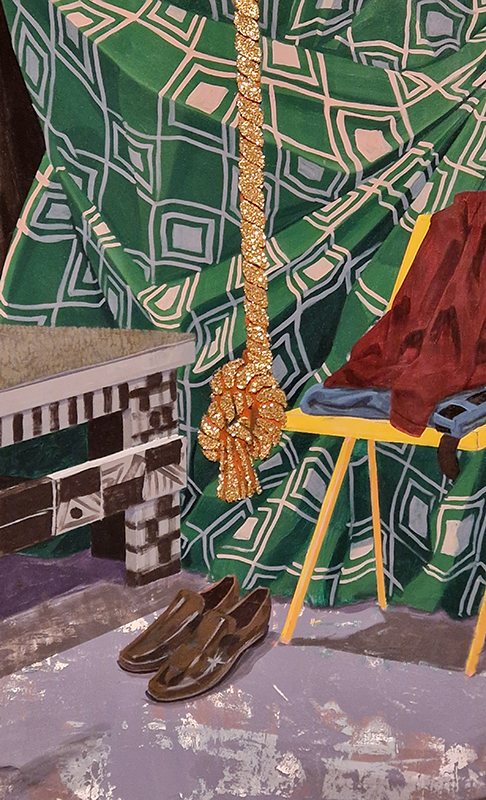
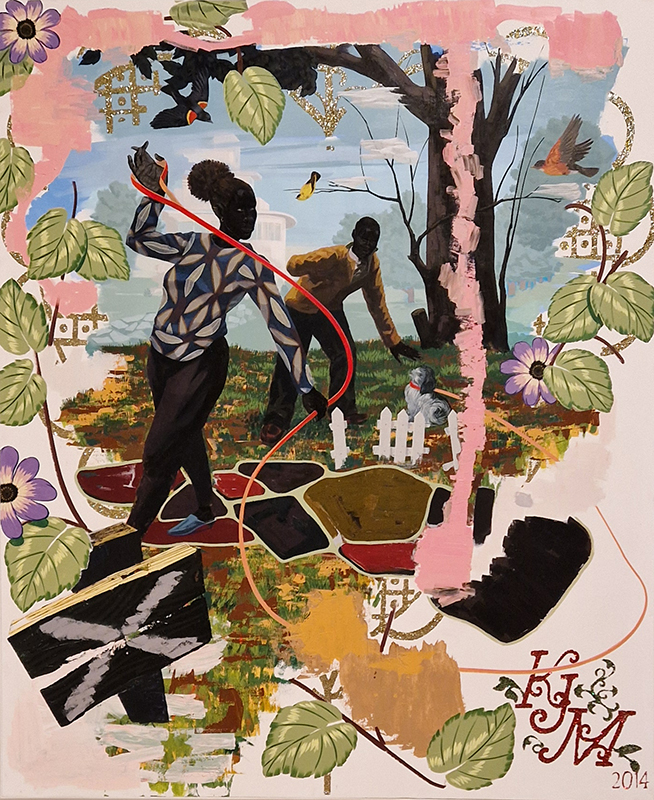
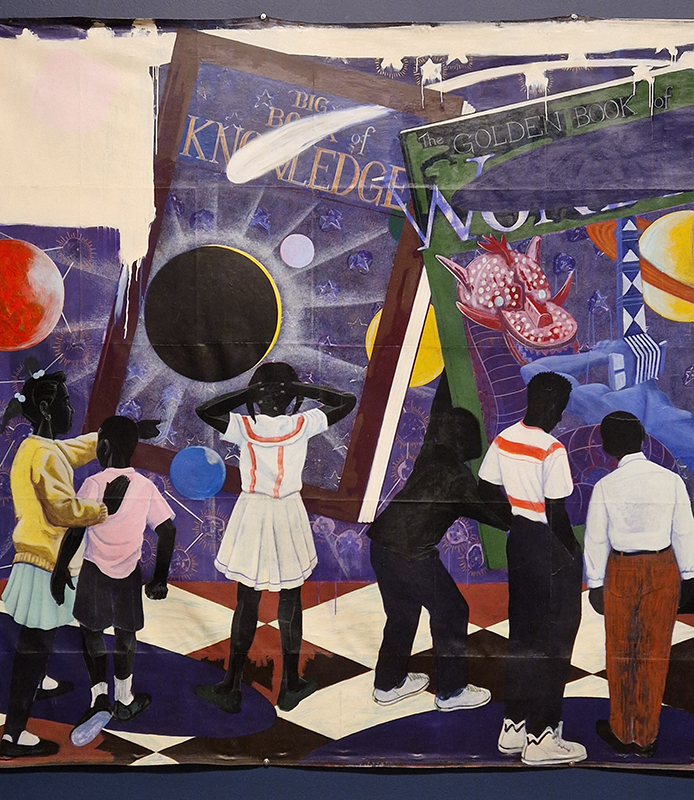
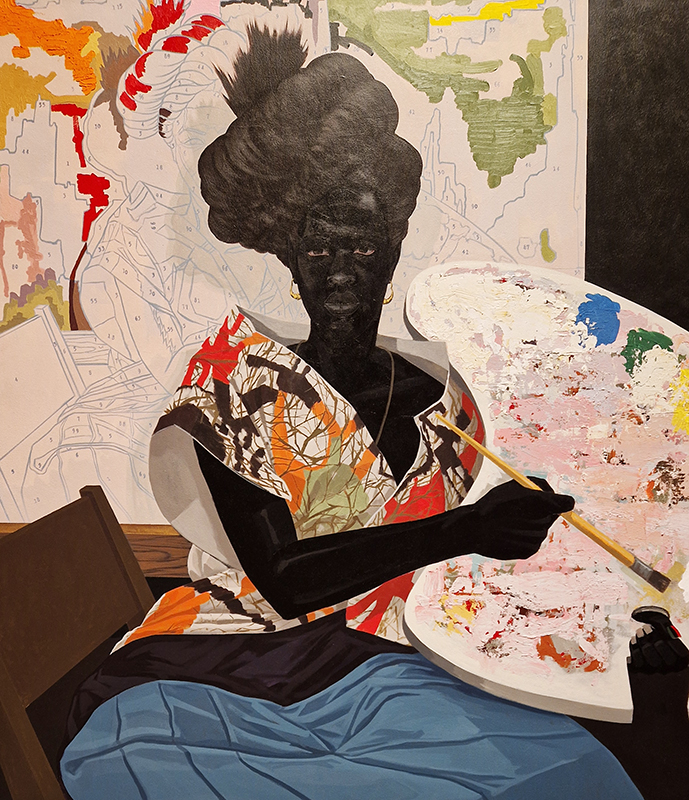
The terrific Kelly James Marshall: The Histories at the Royal Academy. These powerful paintings are full of references which span art history, civil rights, comics, science fiction, his own memories and more. He uses these to comment on the past, celebrate everyday life and imagine more optimistic futures. Full of vibrant energy, fabulous use of glitter and text, truly stunning.
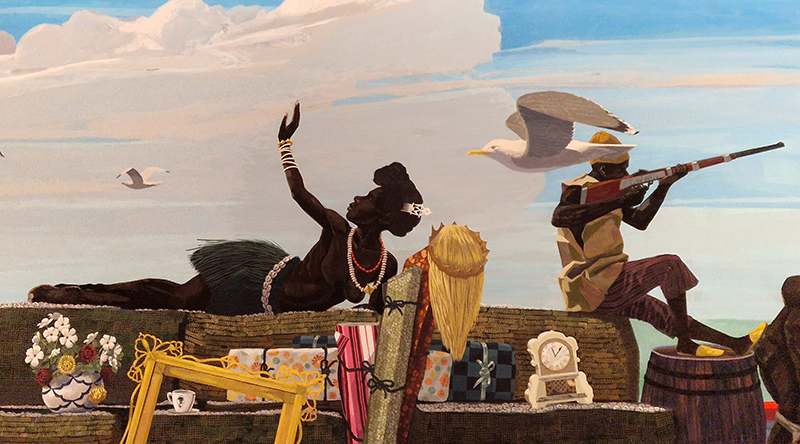
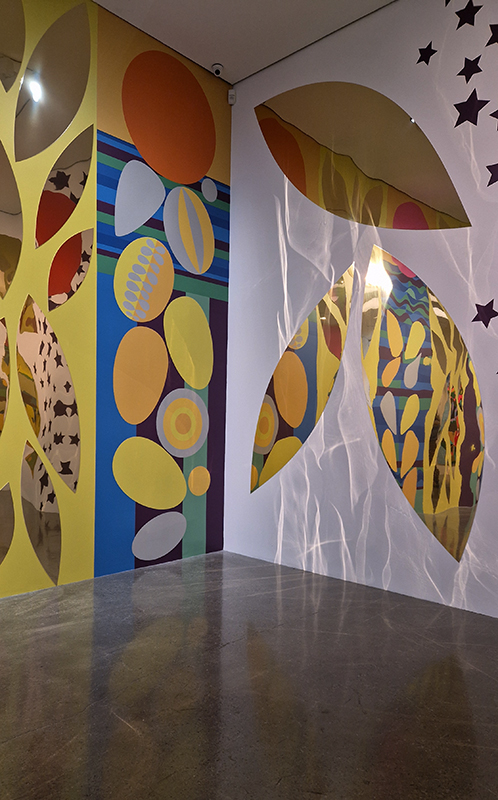
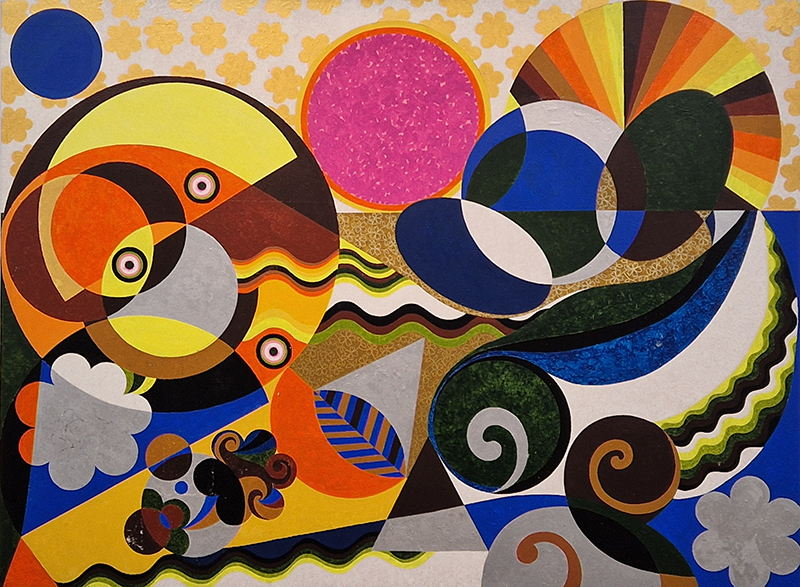
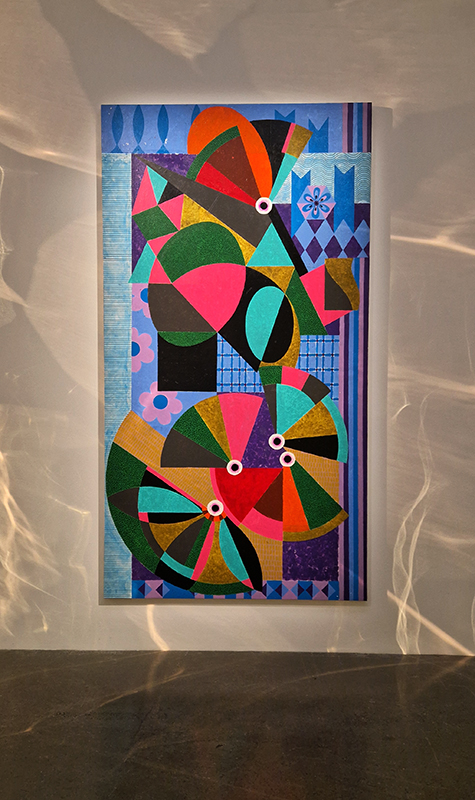
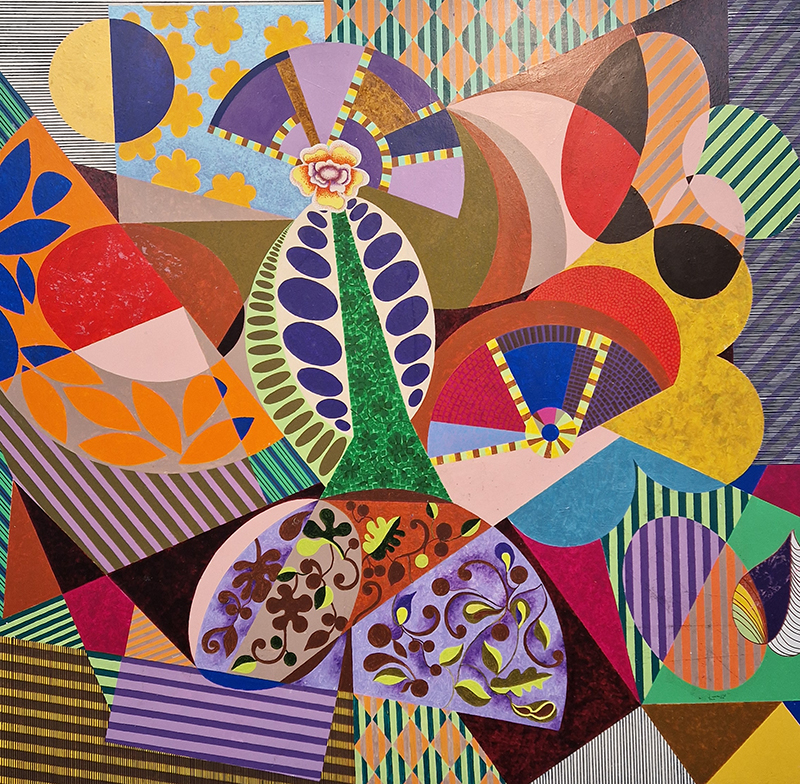
Beatriz Milhazes ‘Além do Horizonte’ (‘Beyond the Horizon’) at White Cube Mason’s Yard. A dose of grey day medicine.
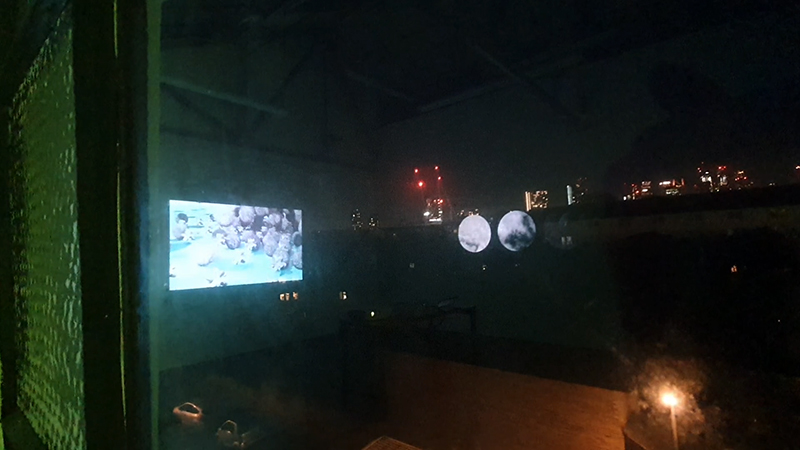
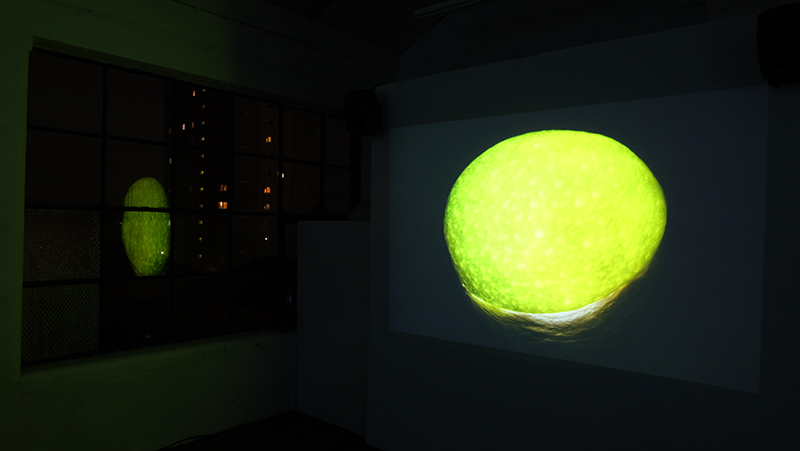
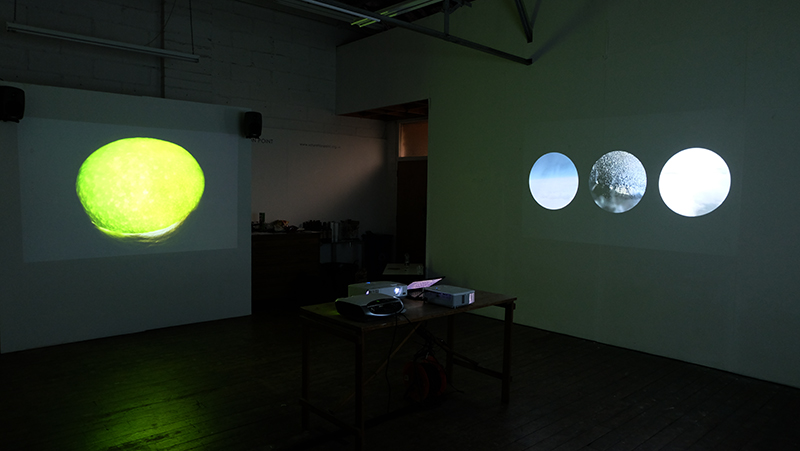
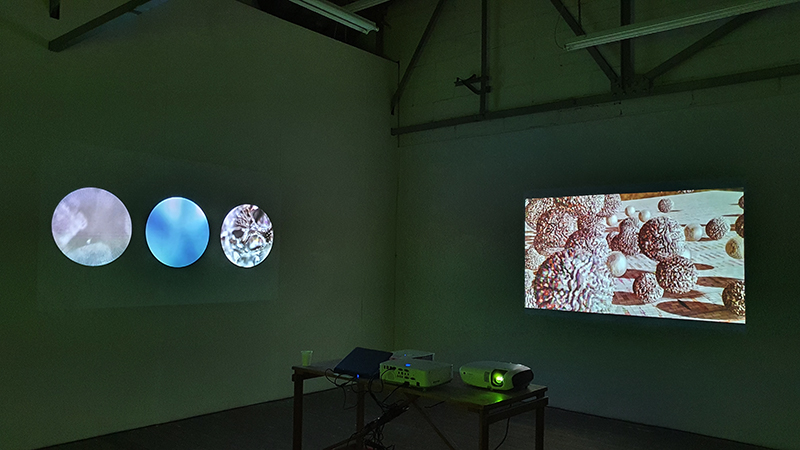
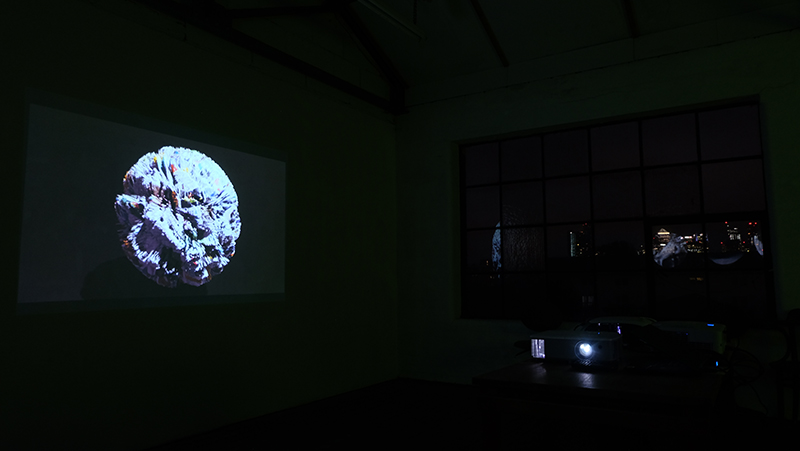
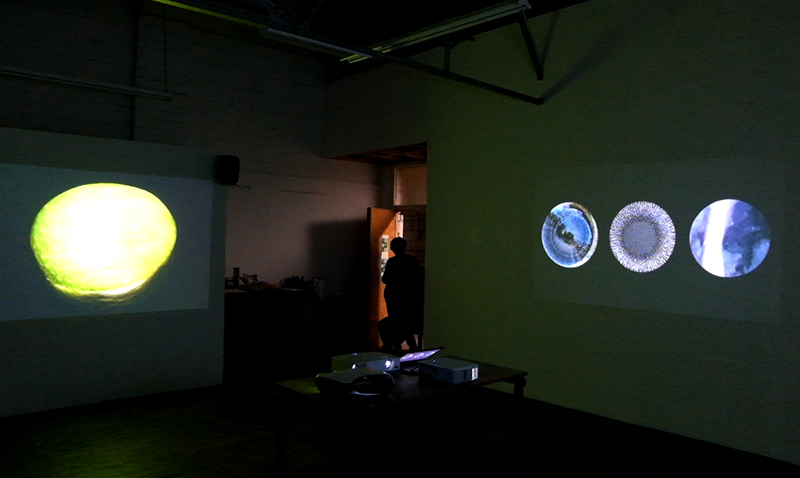
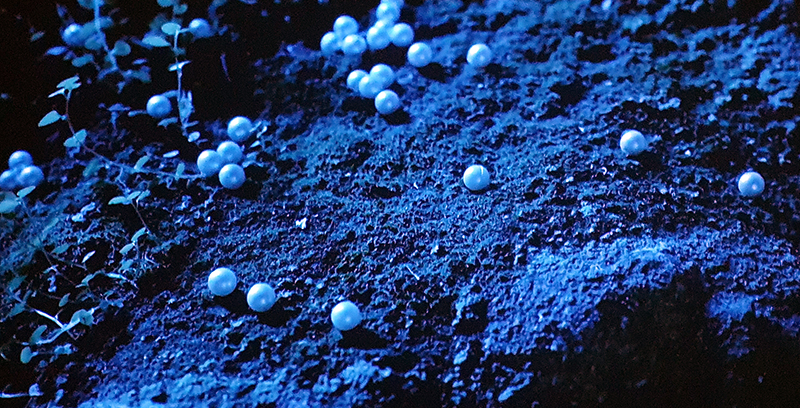
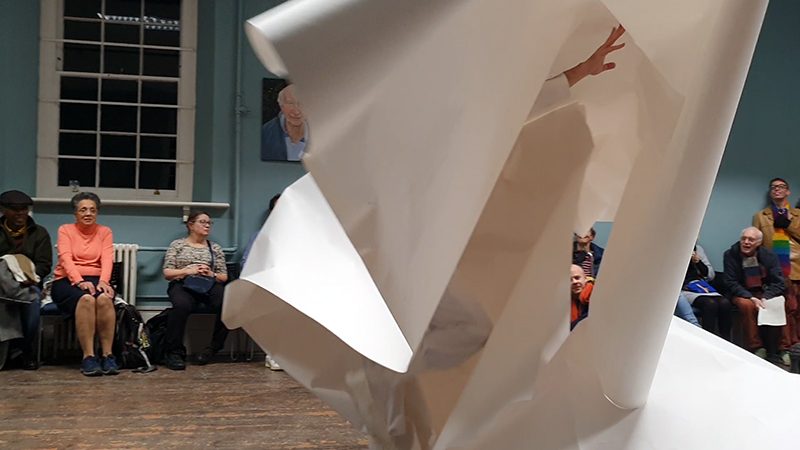
It was such a pleasure to show with Sandra Crisp and Jockel Liess at Saturation Point. We were very pleased with how our films worked together in Projected Topographies and reflected out into the night skies of London.

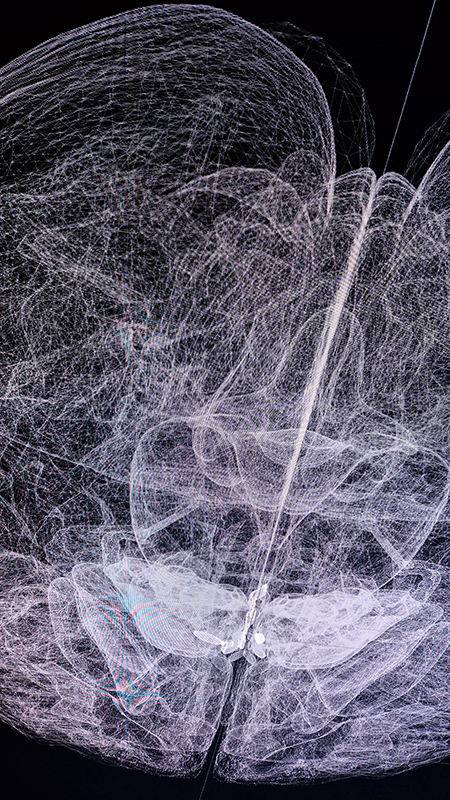
Sandra Crisp: E_Life uses 3D generated animation, presenting intensely textured and dynamic geometry sequenced over time.

Multiple constantly transforming organic forms, each originating from a simple 3D sphere are mapped with eclectic visuals such as emojis, fragmented images borrowed from 24-hour online rolling-news media and others downloaded via a search engine. Particle systems generate repeated, yet varied objects throughout the film which appear to have a life of their own. Overall suggesting the possibility of a simulated future/ nature.

Jockel Liess: Variations on a theme is a generative audiovisual system which starts from a point of fascination with the aesthetics of irregular organic patterns.

Visually as well as sonically the aesthetic of natural patterns thrives on their intrinsic imperfection which are never distributed even or orderly, are never replications of themselves. They are rather reoccurring variations that form a recognisable tapestry of familiarity across an otherwise chaotic and unpredictable structure. Prospering from the tension that arises between repetition and asymmetry, and playfully inhabit the border region between order and randomness.

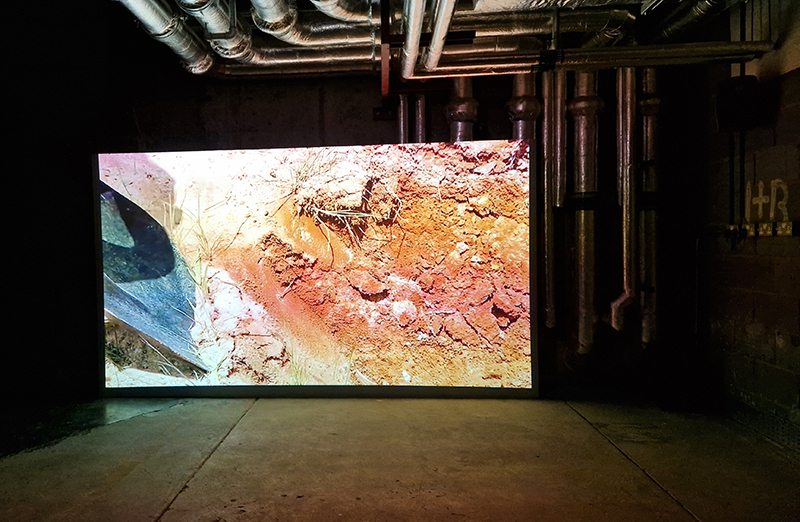
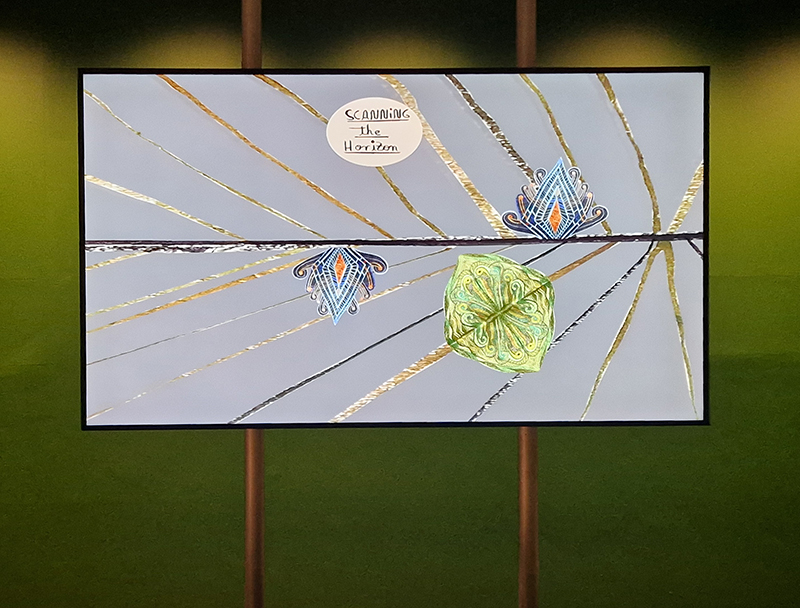
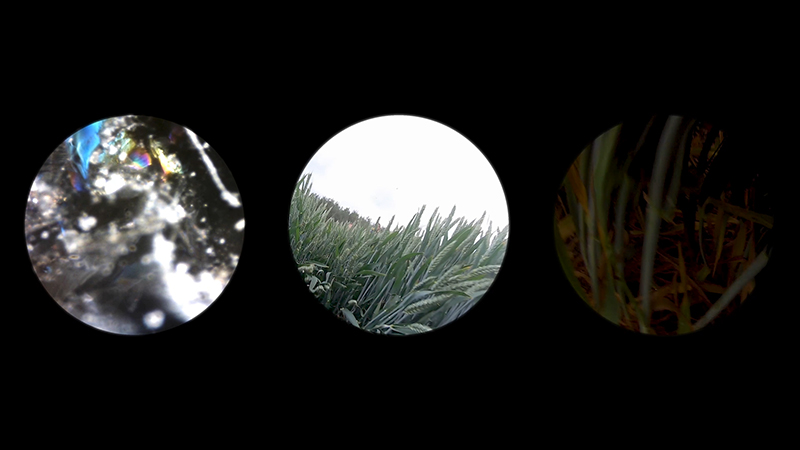
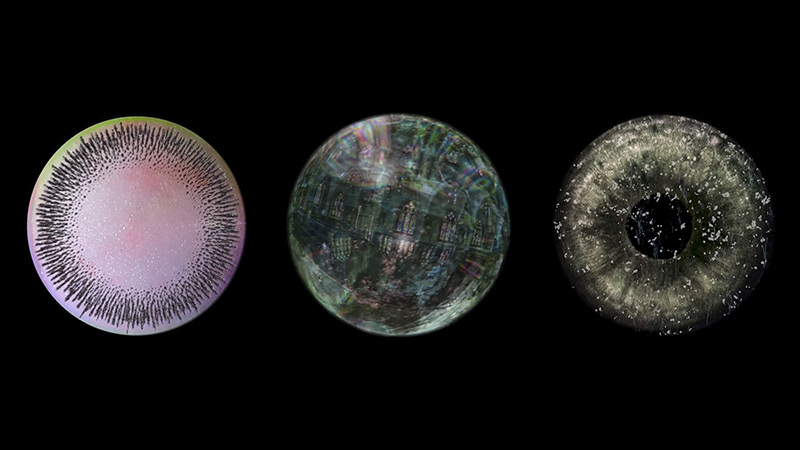
Susan Eyre: Aóratos transports the viewer between everyday locations and terrains visually transformed via use of an endoscope, a microscope,and cameras launched in a high altitude balloon.

It is not impossible that wormholes exist in our universe.

Aóratos imagines journeying through hidden landscapes, distorted spacetime and alternative perspectives. Envisaging potential encounters with cosmic strings, space foam, primordial chemistry, radioactive particles and escaping gravity the work conjectures on the enduring allure of traversing a wormhole.

Black holes were once thought to be pure science fiction but in recent decades scientists have discovered that these extraordinary objects exist throughout our universe in all shapes and sizes and  astoundingly have even produced images of them.

Einstein’s theory of general relativity written in 1915 predicted the existence of black holes and is also consistent with the possibility of gravitational tunnels known as wormholes. It could be that there is a hidden web of planck scale wormholes linking all points in space. Theoretically, threaded through these tiny holes would be filaments of cosmic strings created in the primitive goo of early matter and flung across space when the universe burst into existence.

To traverse space by means of a wormhole would require vast amounts of negative energy, not something usually found on Earth yet in the current political climate in no short supply.

The risks and obstacles of entering a wormhole include creating enough negative energy to open the wormhole mouth wide enough to weaken the gravitational tidal forces which would rip travellers apart; keeping it from collapsing so travellers are not indefinitely trapped inside; exceeding the speed of light and avoiding incineration from deadly high radiation.

The video work explores hidden landscapes, the distortion of space and the permeability of barriers such as force fields and human skin to the unseen particles that constantly teem at near light speed across the universe.

Edge of atmosphere footage was achieved with the help of Sena Harayama, Romain Clement De Givry and Medad Newman from Imperial College Space Society supervised by senior lecturer in spacecraft engineering Dr Aaron Knoll. We also had help from the UK High Altitude Society. My ambition was to film cosmic particles at the point where most of the activity of collisions takes place, about 15km up and so we launched a cloud chamber in the payload of a high-altitude balloon. Unfortunately the prepared chamber was broken the night before the launch and the replacement was not really adequate. Also due to a turbulent launch the camera inside the payload was knocked to one side so we were unable to film this cosmic activity but did get amazing footage above the clouds, gained a height of 35km and successfully retrieved the payload from a field of horses.

Space travellers can ‘see’ cosmic rays as they pass through the retina and cause the rods and cones to fire, triggering a flash of light that is really not there. The retina functions as a mini cloud chamber where the recording of a cosmic ray is displayed by a trail left in its wake.

Aóratos translates as ‘unseen’.

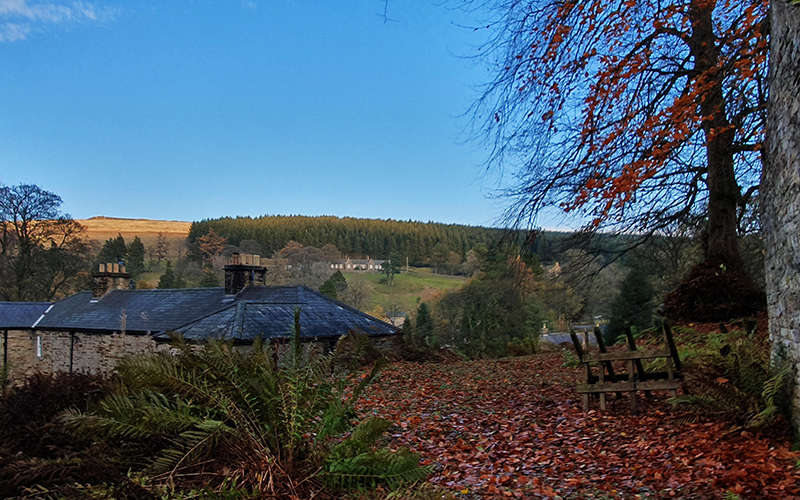
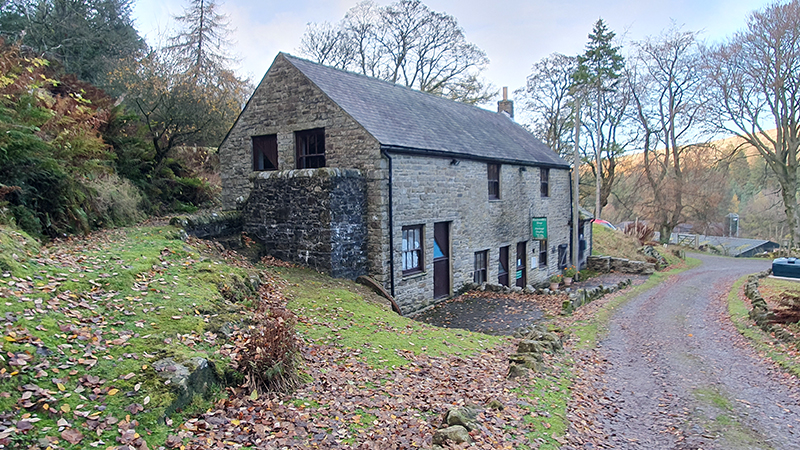
It was a real treat to be invited by Alan Smith and Helen Ratcliff for a short residency at Allenheads Contemporary Arts in Northumberland as part of the Being Human Festival – a celebration of humanities research through public engagement with North Pennines Observatory at Allenheads Contemporary Arts partnering with Durham University to present an evening of discussion and potential stargazing. After a few days of conversations, preparing presentations and meeting the other speakers we were looking forward to the event but unfortunately this was cancelled at the last minute due to flood warnings in the area. We are hoping it can be rescheduled.

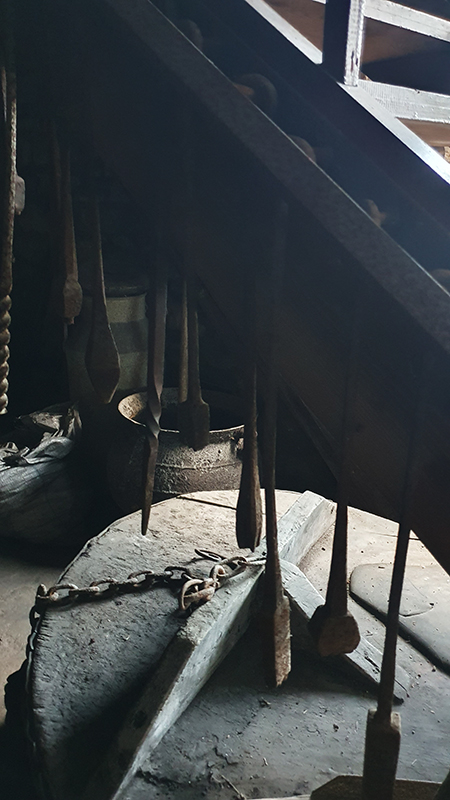
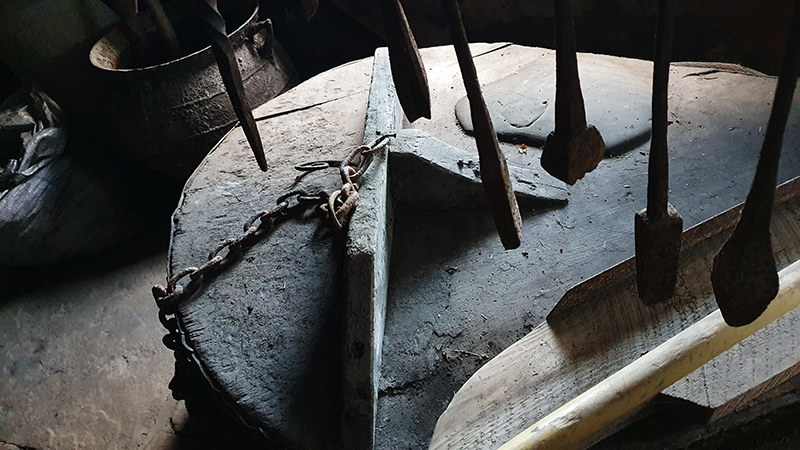
While the weather was clear I headed to Allenheads village for a walk and called in at the Blacksmith’s forge where I had previously shown Aóratos as a site specific participatory installation.

I am appreciative of the dark skies in this location which feels like it is on top of the planet and therefore closer to the sky. I live in south west London so it is a real treat to be away from light pollution. While there, I was keen to make some time lapse film of the stars circling Polaris as research for work about the earth’s magnetic field and magnetoreception. Birds can see the magnetic field and use this extra sense as well as the sun, the moon and the stars to navigate on their migration routes. I am also speculating about the possibility for humans to sense the magnetic field

As the centuries go by, the North Celestial Pole shifts and different stars become the North Star. It takes about 25,800 years for the Earth’s axis to complete a single wobble. Polaris became the north star in about the fifth century and will get closer to straight above the Earth’s north pole until sometime in 2102. Before Polaris was the North Star it was Thuban and next up is Vega.

The skies were clear for a few hours when I first arrived at ACA so I was able to build a short star trail sequence but after that the fog and then the rain settled in.

When reading about the history of Hartland Magnetic Observatory, established in 1955, it mentions ‘A permanent distant mark or azimuth mark was erected on a concrete obelisk 7 or 8 feet high near the site’s northern boundary. Viewed through the window in the north wall of the Absolute Hut, its azimuth is 11º27’54” E of N. It is still in use today.’ I was intrigued that an obelisk should be used for the azimuth mark. I had hoped to see it on my research trip to Hartland but found it is currently inaccessible with just the tip protruding from dense undergrowth.

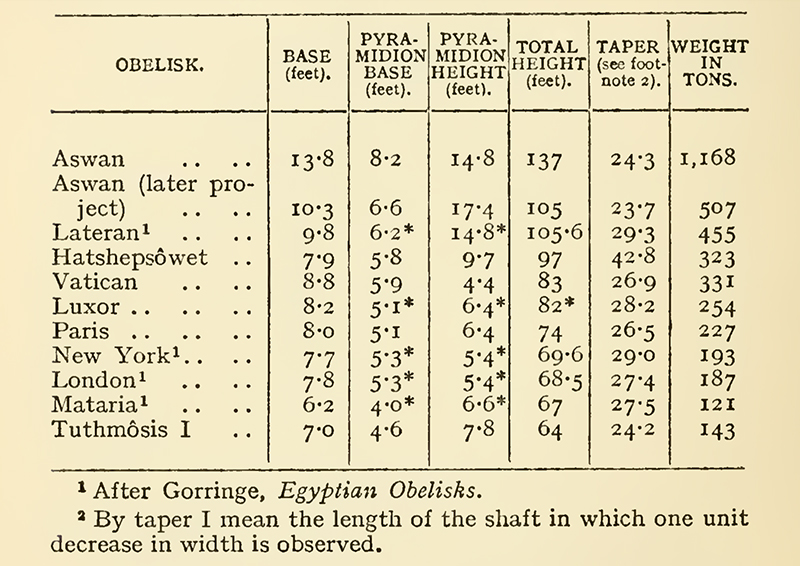
I am reimagining this object as a sculpture made from stacked recycled paper to appear stratified like the sedimentary rock that holds clues to the Earth’s magnetic field reversals and am working to the dimension ratios recommended to avoid emotional unrest.

Obelisk dimensions from “The Problem of Obelisks” catalogued by Egyptologist with the Cairo Museum Reginald Engelbach, 1923.

Before the Meridian Line was moved to Greenwich, London time was calculated from the King’s Observatory at Kew.
There are three obelisks in the Old Deer Park used as meridian marks to adjust the instruments at the Observatory built by George III to observe the transit of Venus in 1769.

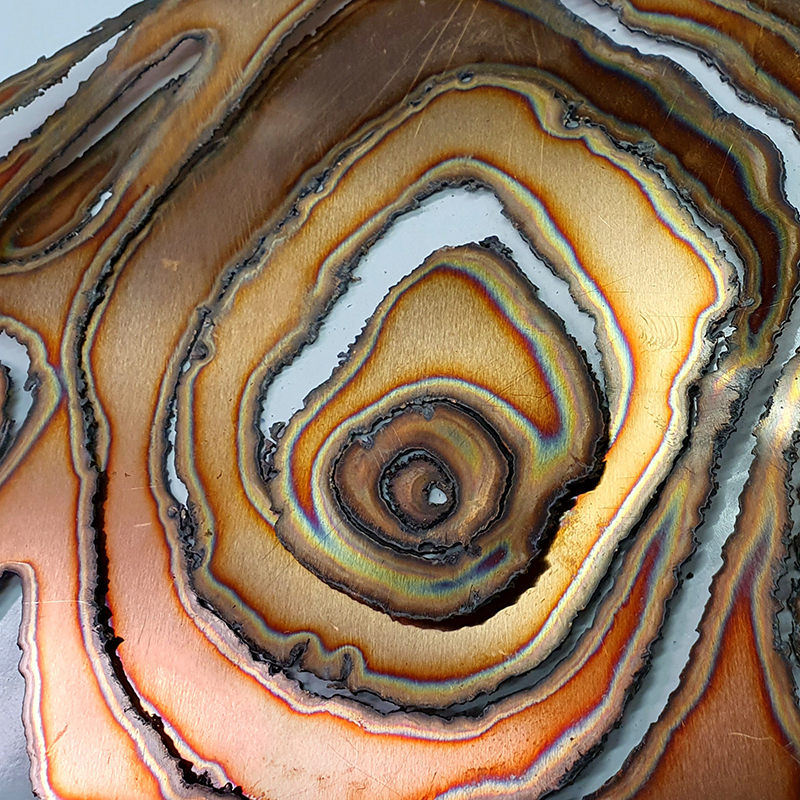
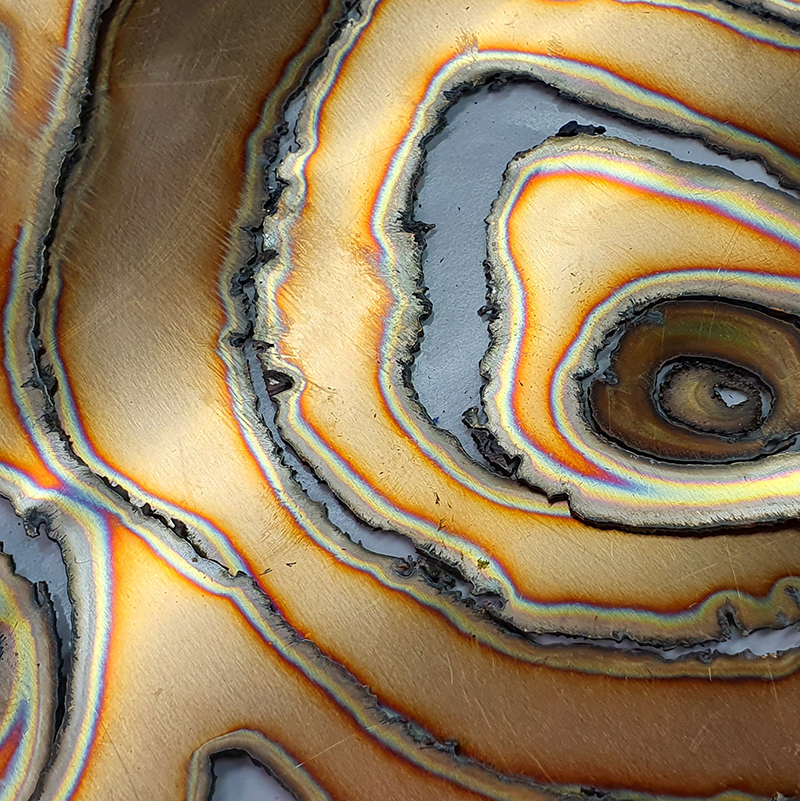
As I plan to make the obelisk pyramidion in copper I signed up for the Sheet Copper Sculpture Worksop taught by Robert Worley at The London Sculpture Workshop. To begin we were shown how to beat out a bowl shape and apply a dark patina using chemicals and heat.

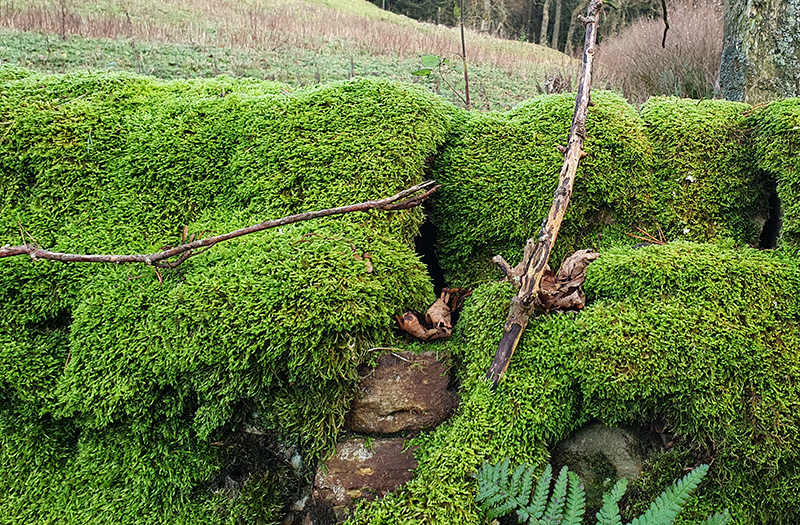
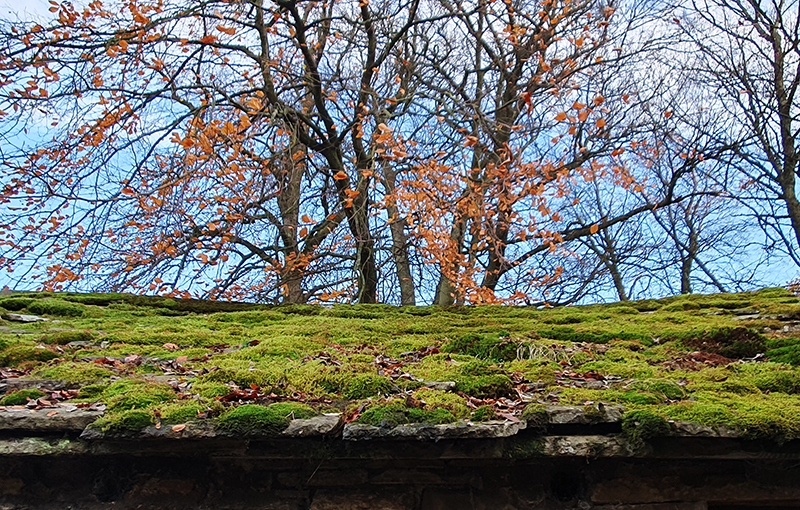
I was introduced to the plasma gun. Very satisfying cutting with the fourth state of matter. These shapes are based on the fluid fluctuations of the Earth’s geomagnetic field and I plan to use these on the north wall of The Absolute Hut sculpture in my show next year, tacked over moss with copper pins.

Magnetism is caused by the motion of electric charges. Electrons spinning around the nucleus in atoms generate an electric current and cause each electron to act like a tiny magnet. In most substances, equal numbers of electrons spin in opposite directions, which cancels out their magnetism. In iron, cobalt, and nickel, most of the electrons spin in the same direction which makes the atoms in these substances strongly magnetic. By rubbing a piece of iron along a magnet, the north-seeking poles of the atoms in the iron line up in the same direction creating a magnetic field and turning the iron into a magnet. A magnetic field can also be created by running electricity through a coil of wire, but the field will disappear when the electric current is turned off.

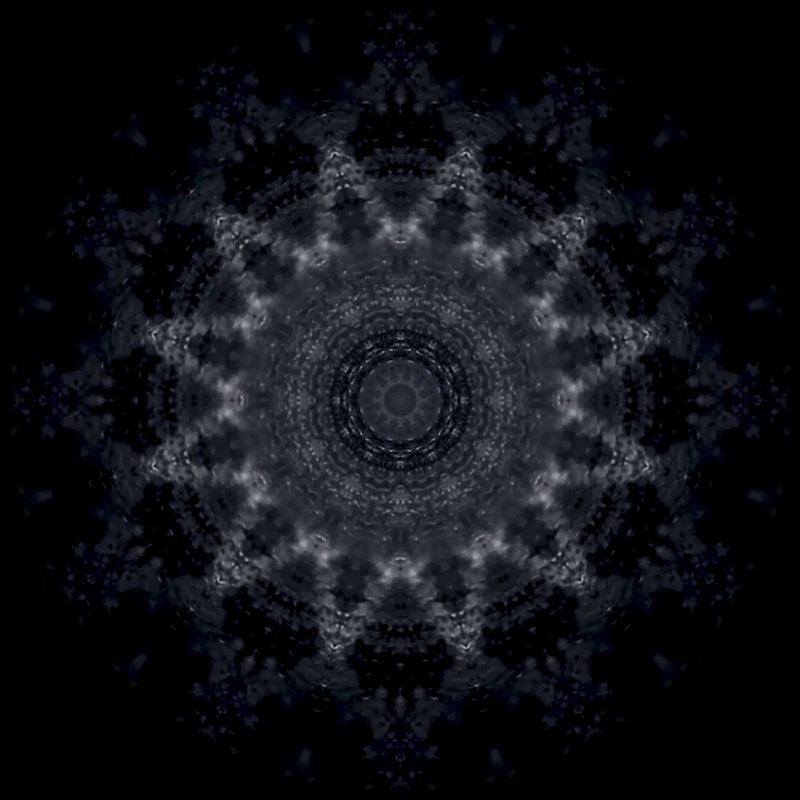
Work in progress on Breath of Stars (the cosmic ray detector interactive video) has been to convert all the .avi star burst video files to VP8.webm using Shutter Encoder software. Jamie, the programmer, has code working now to display video files with transparency so they can be layered.

Gallery Visits

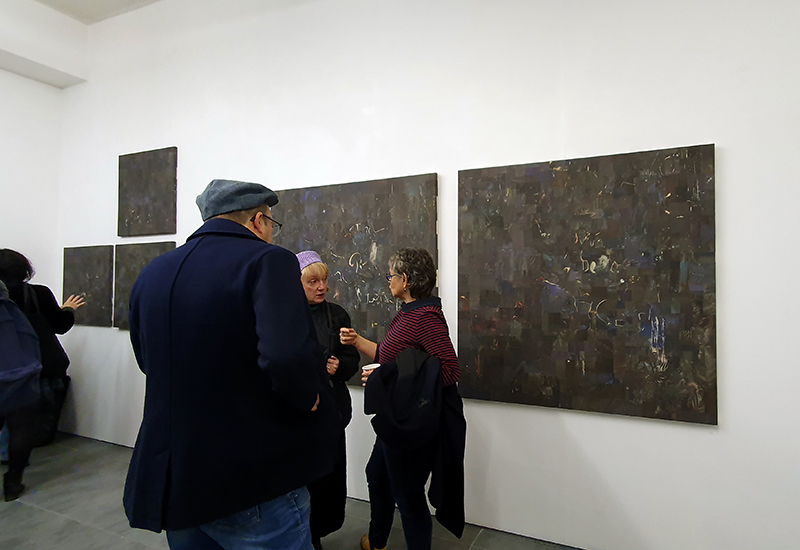
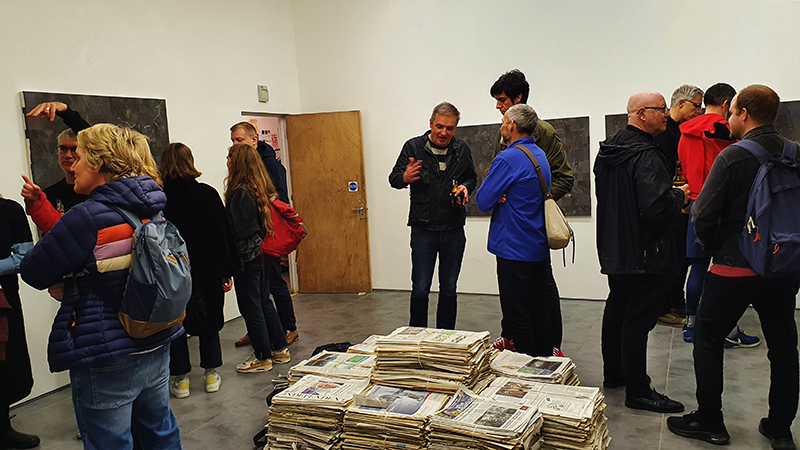
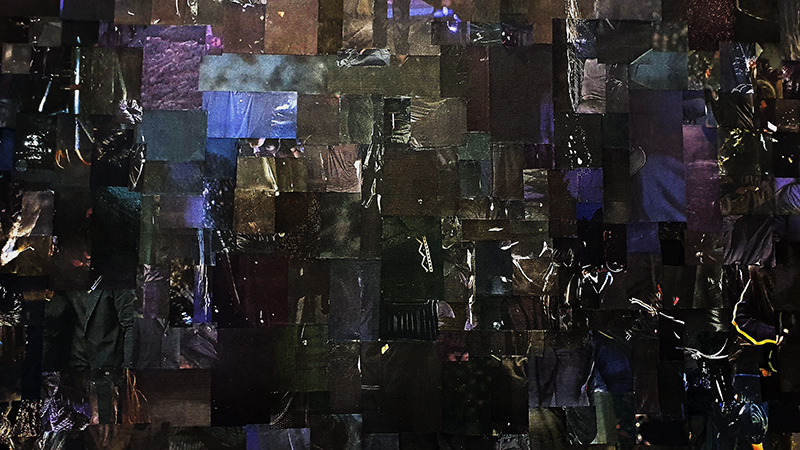
Simon Leahy-Clark solo show FEED at Artworks Project Space. Painterly surfaces made from newspaper clippings have unexpected depth in palette, flow and cosmic imagery, considering the origin of each segment. Mesmerizing to study the forms like spotting patterns in the constellations. Really liked this work.

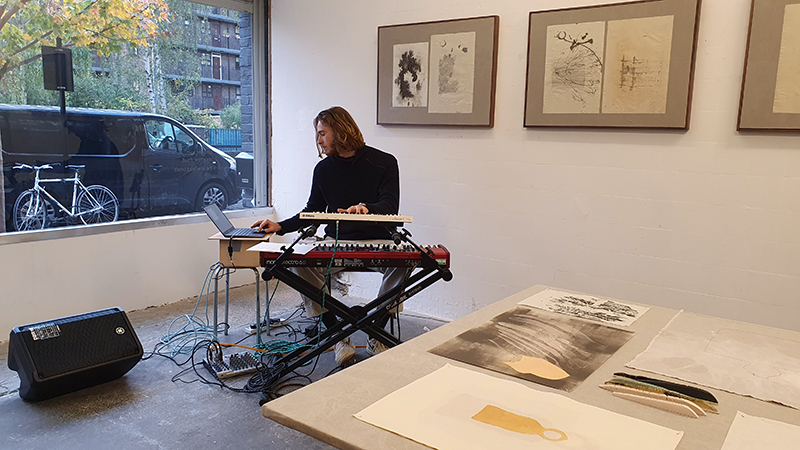
Caroline AreskogJones Tonight Rain, Tomorrow Mud at Filet Space with live sonic response from Oskar Jones incorporating field recordings gathered whilst walking in Andalucía and captured acoustics whilst making the drawings.

A thoughtfully crafted exhibition capturing the fragile landscape that turns to dust without water and mud when the rains come. The beautiful audio accompaniment from Oskar added to the meditative experience of being transported elsewhere while having time to focus of the works installed with a resonant delicacy.

Lisa Chang Lee showing HZ-0 at Enclave Projects Lake, a sensory device created in collaboration with James Wilkie that creates soundscapes responding to the void around it. Equipped with seven sensors measuring temperature, light, air pollution, sound etc data is fed into an algorithmic software based on the Lydian scale. I hadn’t heard of this scale but am interested to discover it’s connections to gravity and magnetism. The Lydian Chromatic Scale is the most complete expression of the total self-organized tonal gravity field with which all tones relate on the basis of their close to distant magnetism to a Lydian tonic. Tonal gravity is the heart of the Lydian Chromatic Concept. Simply put, the basic building block of tonal gravity is the interval of the perfect fifth. Every tone within Western music’s equal tempered tuning relates to every other tone by either being close to – or distant from – the center of gravity, which is the tonic (or “DO”) of the Lydian Scale. There are 3 states of tonal gravity: Vertical, Horizontal, and Supra-Vertical.

This is a fascinating work thinking about other ways to experience a space.

Hollow Earth: Art, Caves & The Subterranean Imaginary at Nottingham Contemporary.

Inspired by the hundreds of caves hand carved into the rock beneath the city of Nottingham this exhibition explores questions of thresholds, darkness and prehistory. ‘Every culture and religion has told stories about what lies beneath. Caves are where extraordinary events come to pass, the domain of gods and monsters, of births, burial and rebirth. Dark, dangerous and unstable, caves are places of visions and experiences both sacred and profane. More recently, they have become home to data farms, seed vaults and doomsday bunkers.’

Artists include: Hamed Abdalla, Lee Bontecou, Sofia Borges, Brassaï, The Center for Land Use Interpretation, Steven Claydon, Matt Copson, Juan Downey, Chioma Ebinama, Mary Beth Edelson, Laura Emsley, Barry Flanagan, Ilana Halperin, Frank Heath, Ed Herring, Michael Ho, Hans Hollein, Peter Hujar, Athanasius Kircher, Alison Knowles, Antti Lovag, Goshka Macuga, René Magritte, Gordon Matta-Clark, Emma McCormick-Goodhart, Santu Mofokeng, Henry Moore, Nadar, Ailbhe Ní Bhriain, Pauline Oliveros, Lydia Ourahmane, Gordon Parks, Flora Parrott, Walter Pichler, Giuseppe Pinot-Gallizio, Liv Preston, Ben Rivers, Robert Smithson, Michelle Stuart, N.H. Stubbing, Caragh Thuring, Kaari Upson, Jeff Wall, Aubrey Williams, Joseph Wright of Derby.

This was a research trip with Julie Hill towards our joint show next year. The geological resonates through both our work, for Julie through the deep chasms of geology echoing those occurring cosmologically and for myself in the generation of the geomagnetic field deep in the earth which emanates out, reaching into space.
EVERY CLOUD at Bruce Castle Museum.

Nine artists celebrate the life and work of the Namer of Clouds and Tottenham resident, Luke Howard (1772 – 1864) to mark the 250th Anniversary of his birth.

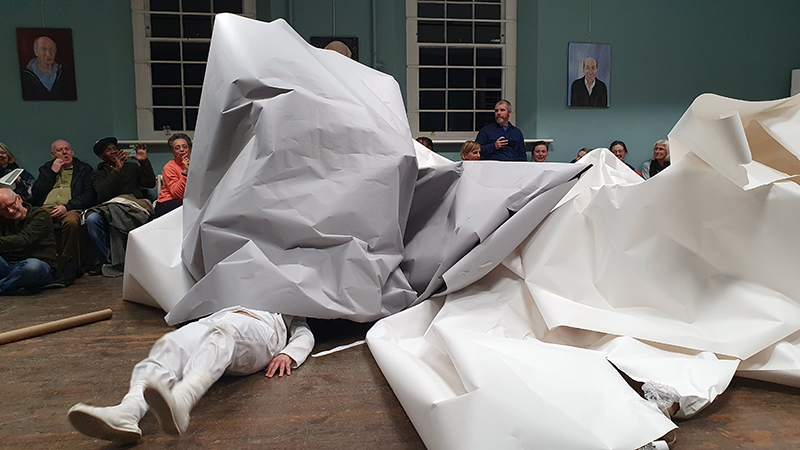
Artists include Tam Joseph, Andrew Miller, Doodleganger, Gabriela Schutz, Helen Currie, Kerry Duggan, Lisa-Marie Price, Mary Yacoob, Siân Dorman with a live cloud sculpture performance from Alexander Costello.

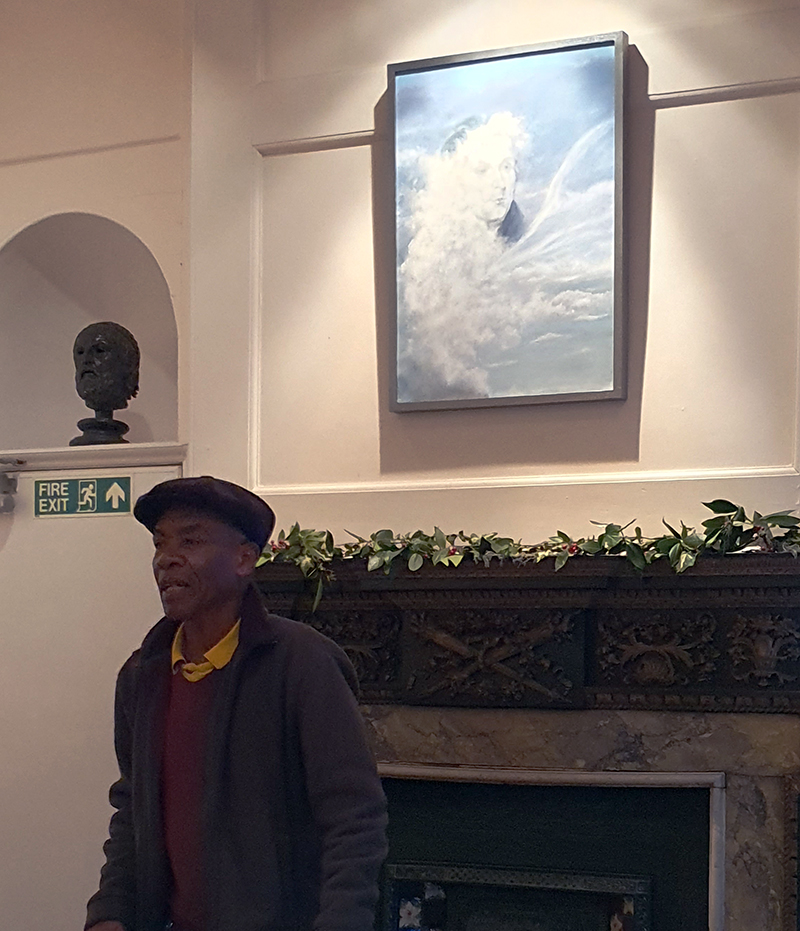
Tam Joseph gave a heartfelt speech about his discovery of Luke Howard from seeing a blue plaque with the citation ‘Namer of Clouds’ which to him spoke of first nation peoples connection to nature and piqued his curiosity to learn more about this poetic origin; the difficulty of painting clouds – never from a photograph – a cloud is never still and a photograph loses the inherent transience; and the shared passion for the shapes and patterns found in the ocean of air above our heads.

Reading

Some history of early speculation, experiments and discoveries of three men who respectively broke new ground in understanding the Earth’s magnetic field, measuring time mechanically and mapping the hidden strata of the Earth.

Latitude and The Magnetic Earth by Stephen Pumfrey. The story of William Gilbert (1544 – 1603), a radical new thinker who questioned the perceived Aristotelian philosophy of the day, developing his own theory of magnetic philosophy of the Earth. His book On the Magnet and Magnetic Bodies, and on the Great Magnet the Earth was published in 1600 in which he concluded that the Earth was itself magnetic.

The lines of latitude and longitude remain fixed as the world flexes and shifts beneath them. Extraordinary to think these lines were drawn centuries BCC and mapped by Ptolemy in the second century on his many atlases.

The zero degree line of latitude is fixed by nature whereas that of longitude is a political decision. The founding philosophy of the Greenwich Observatory viewed astronomy as a means to an end – all the stars needed to be catalogued to chart a course for sailors to cross the globe. Ptolemy first set the meridian off the northwest coast of Africa and many countries set their own starting point for 0 longitude. Eventually, after publication of a series of star charts beginning in 1767, made by the then Royal Astronomer, that became used world wide for nautical navigation, Greenwich was declared prime meridian of the world in 1884 (except by France who took another 27 years to accept the decision).

Longitude by Dava Sobel tells the story of the battle between proponents of the lunar distance method and the mechanical clock to solve the problem of determining longitude at sea. Astronomers and engineers became adversaries spurred by a financial reward offered to the one who came up the most accurate and reliable method. John Harrison (1693 – 1776) carpenter turned clockmaker spent his life perfecting the marine chronometer.

The Map That Changed The World by Simon Winchester might have some historical merit in telling the story of William ‘Strata’ Smith (1769 – 1839) but I found it over perambulatory in the telling.