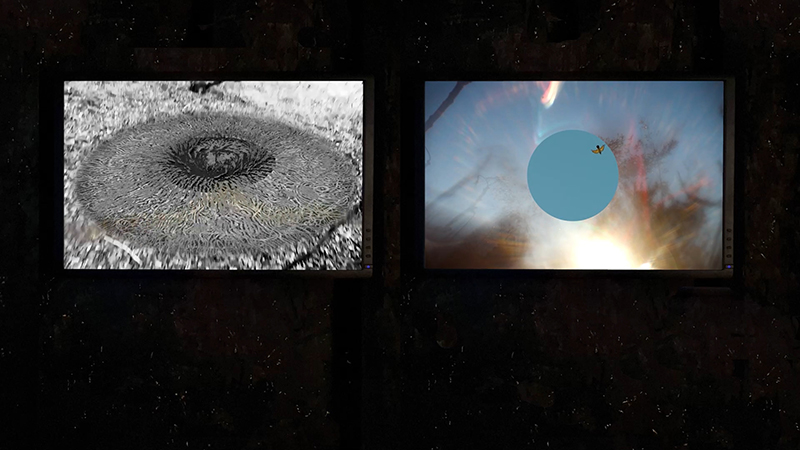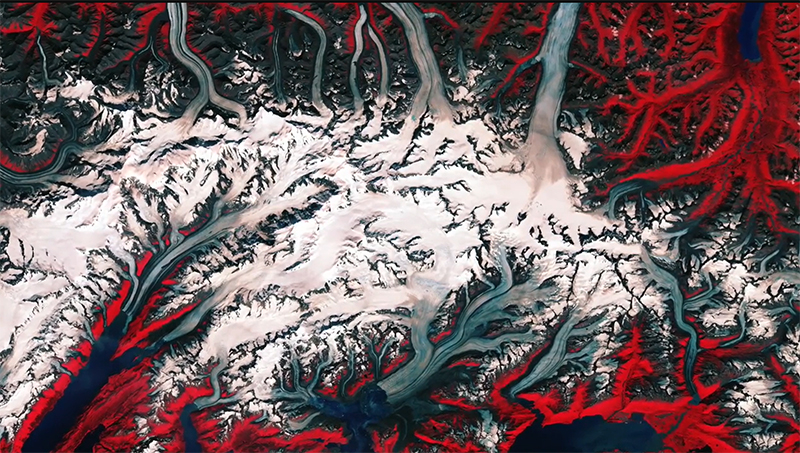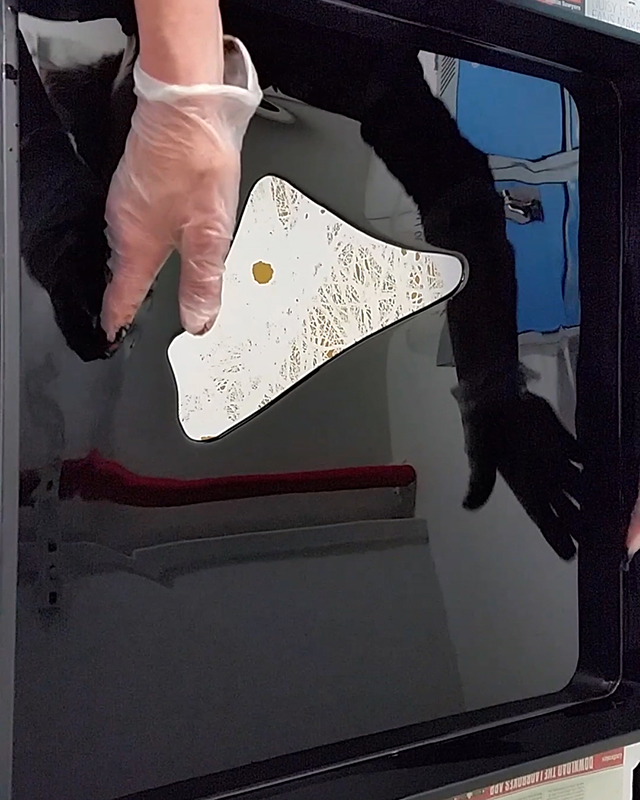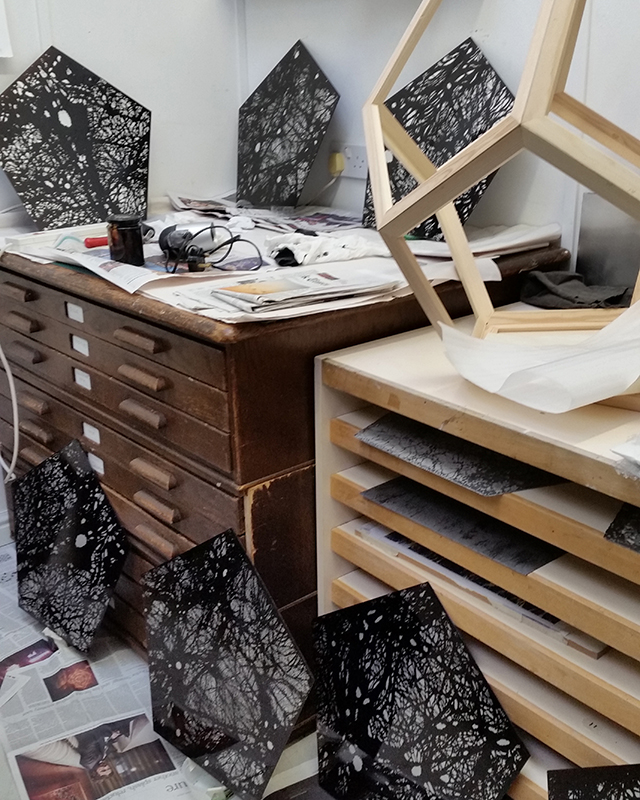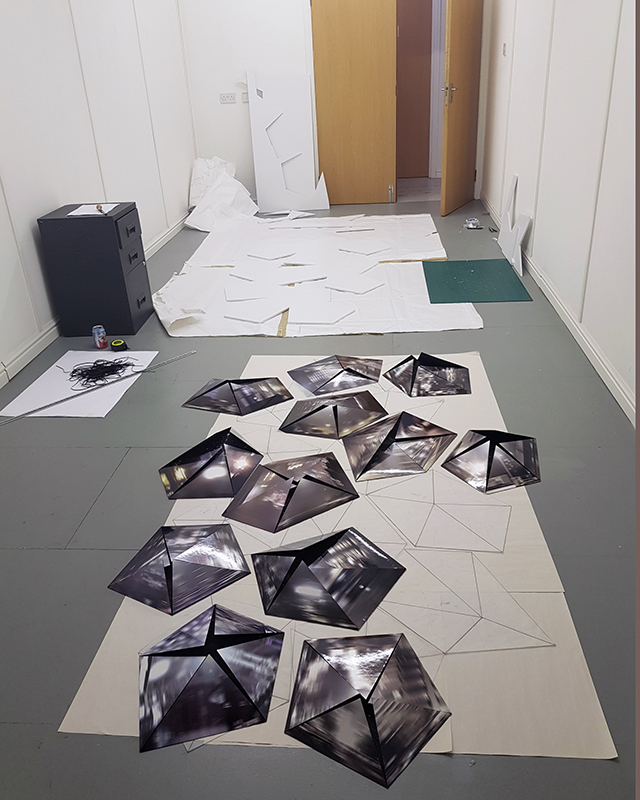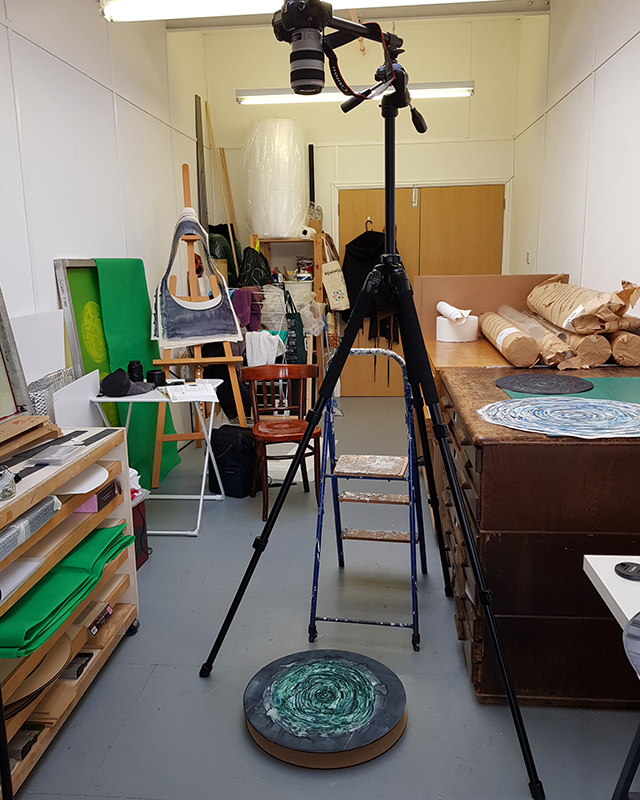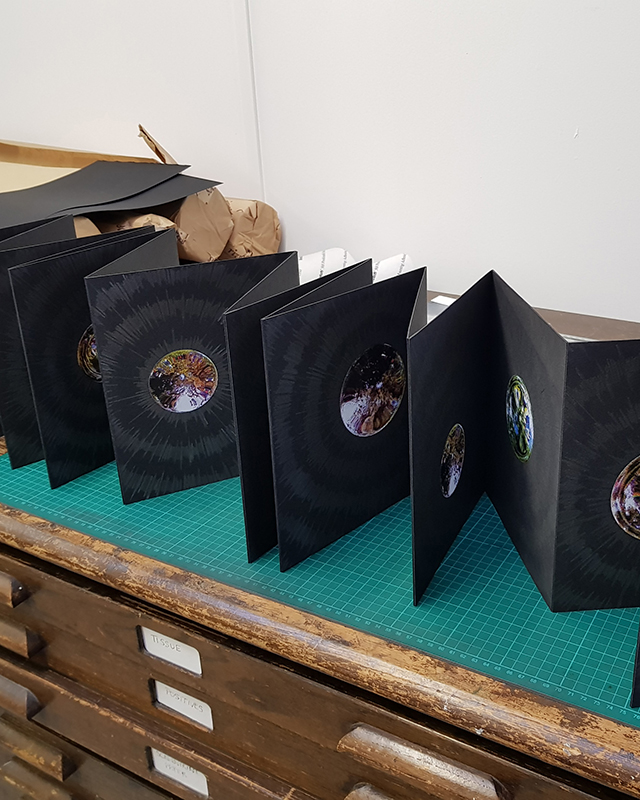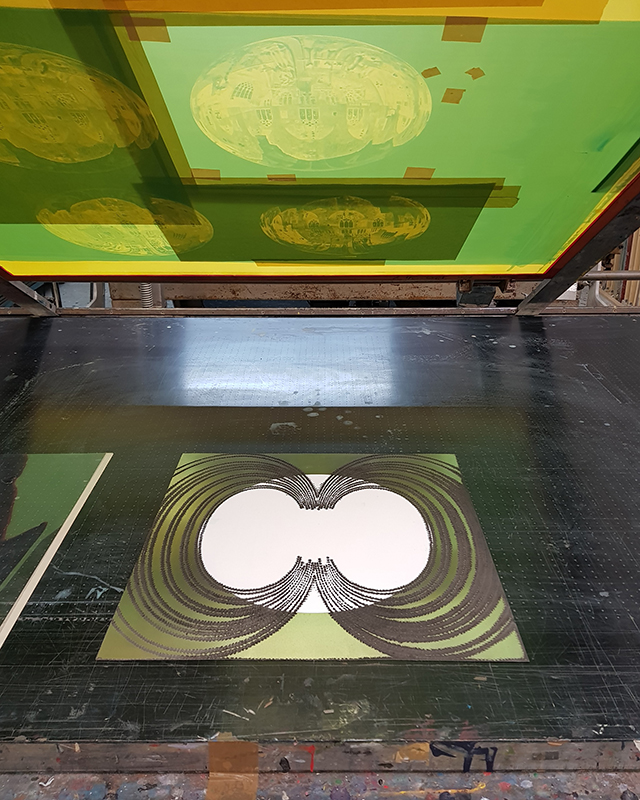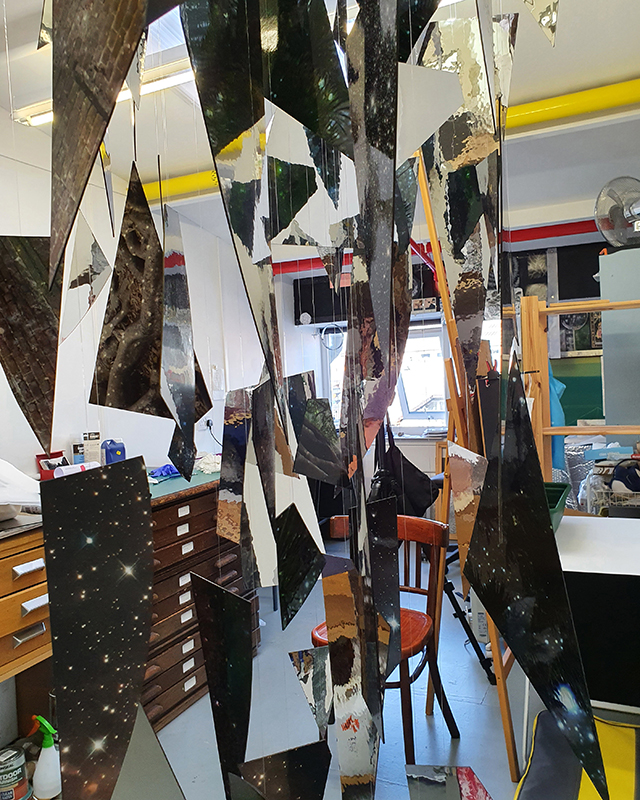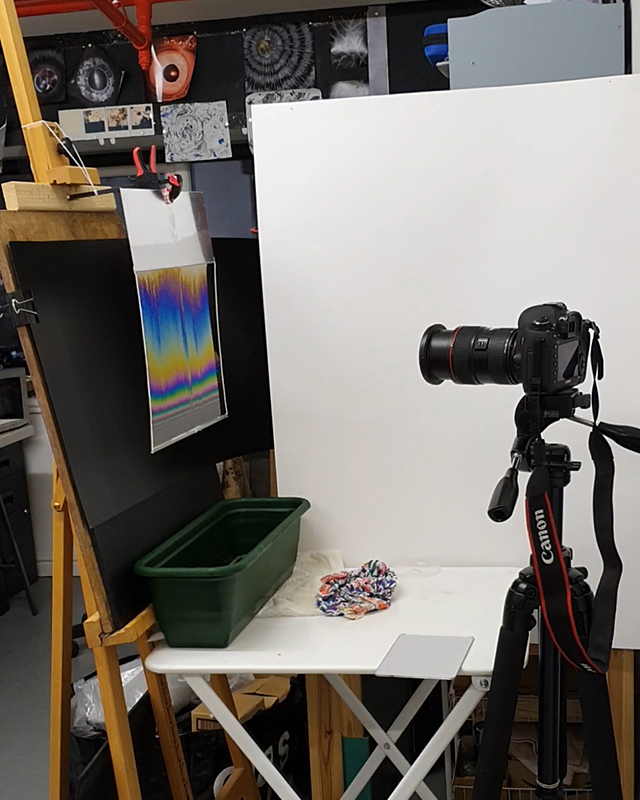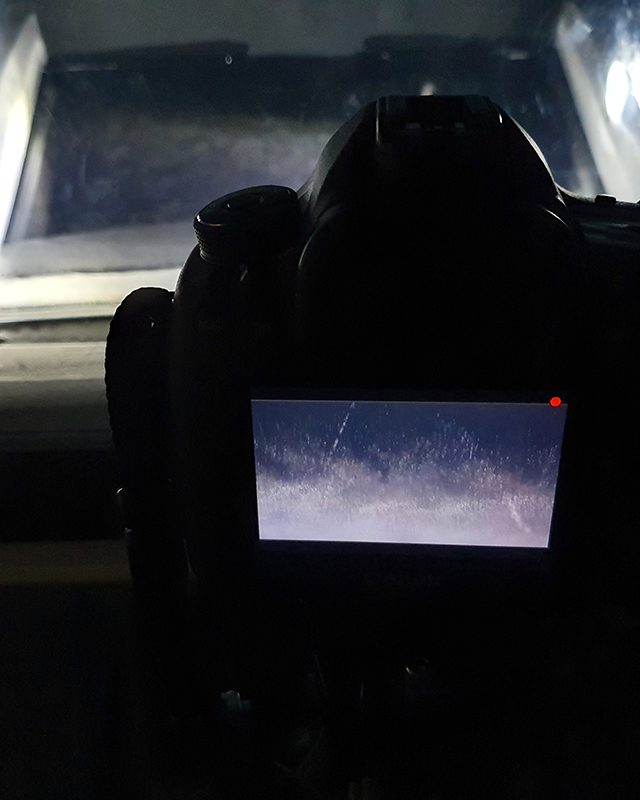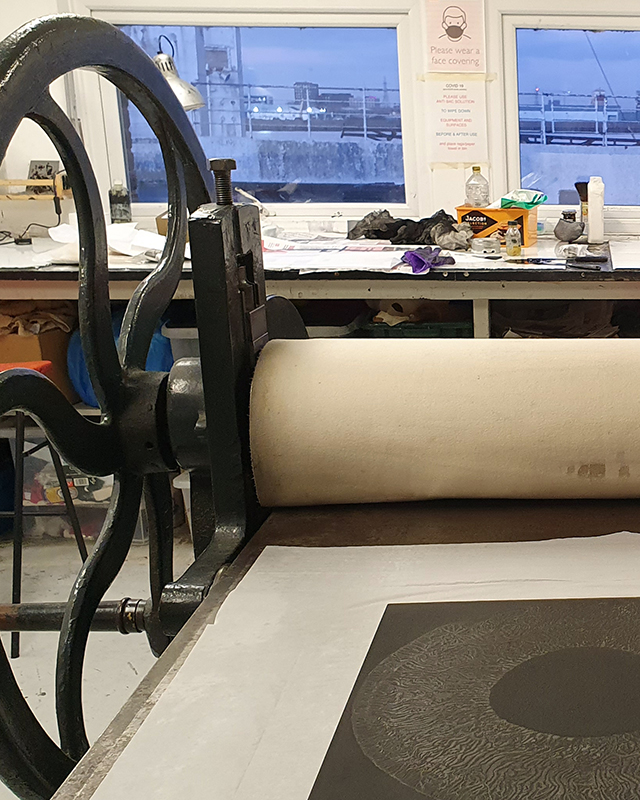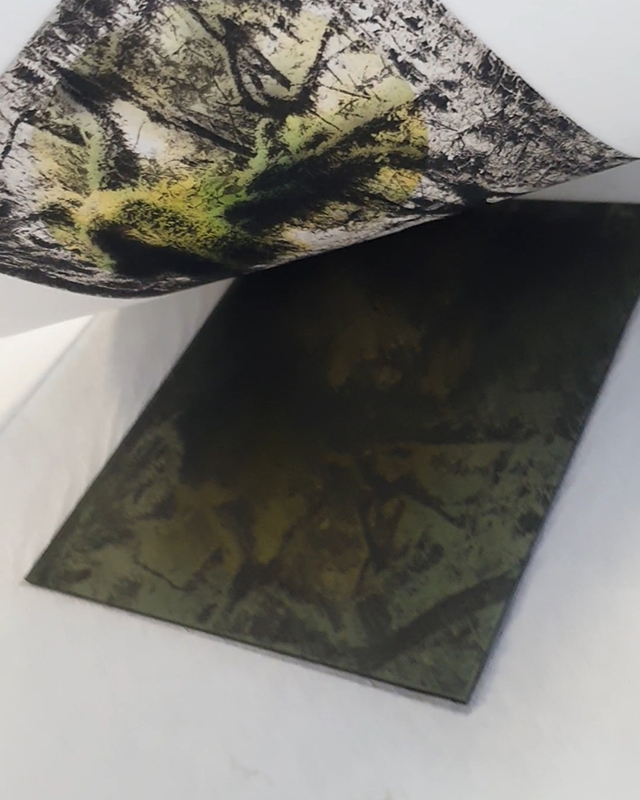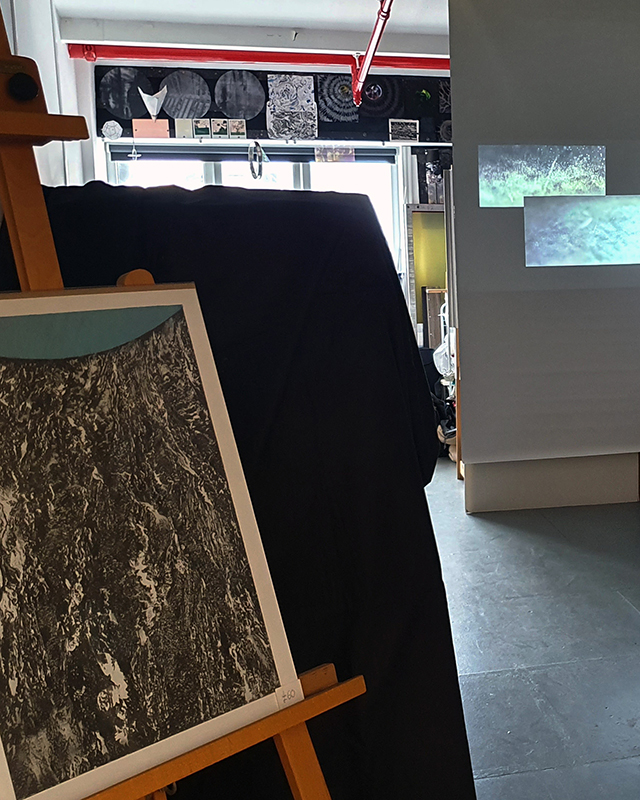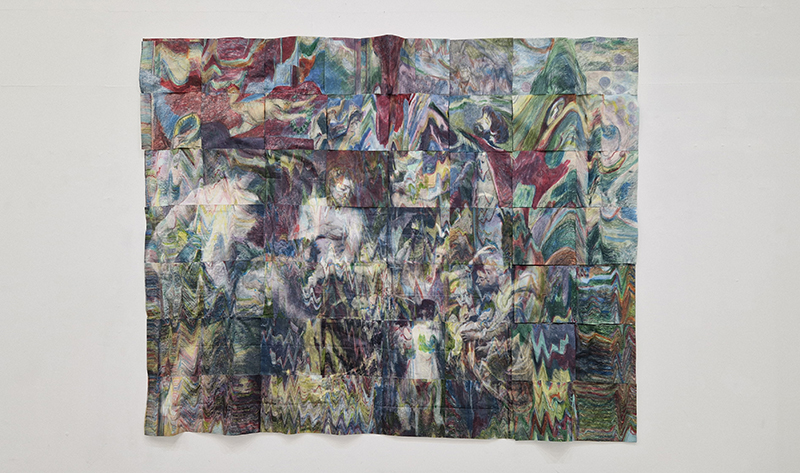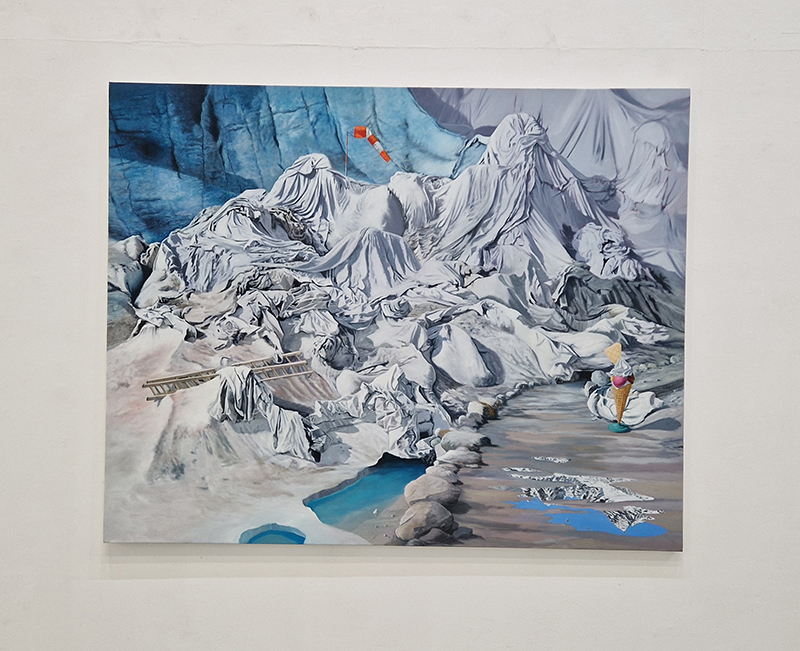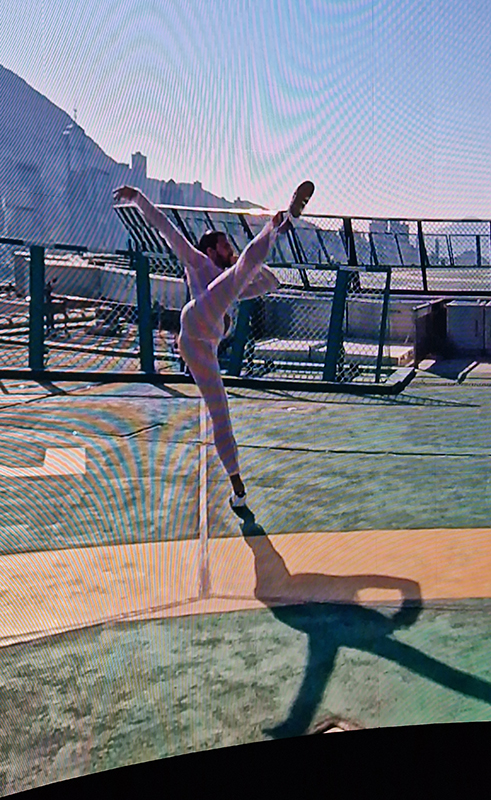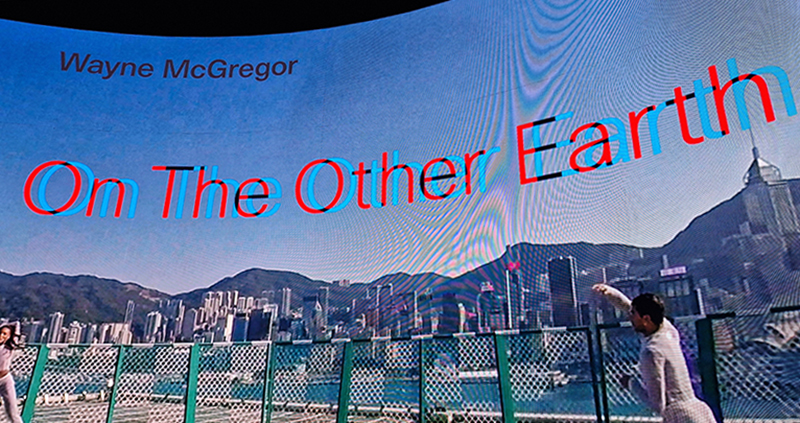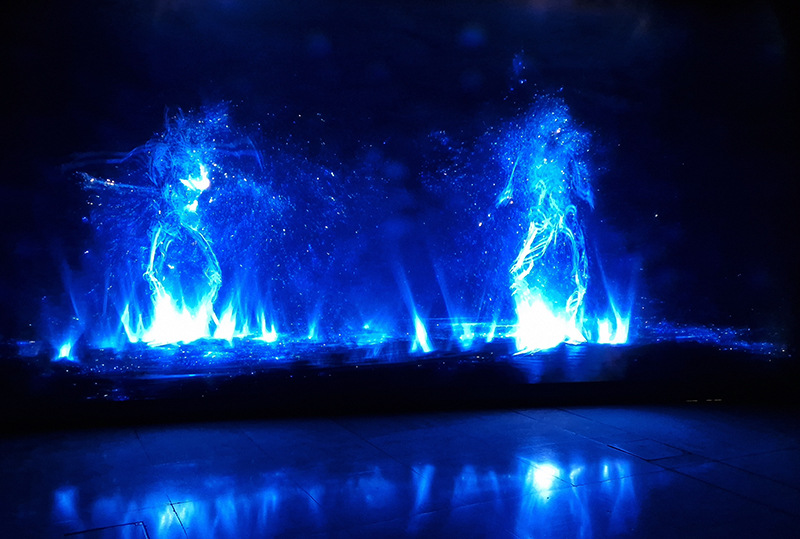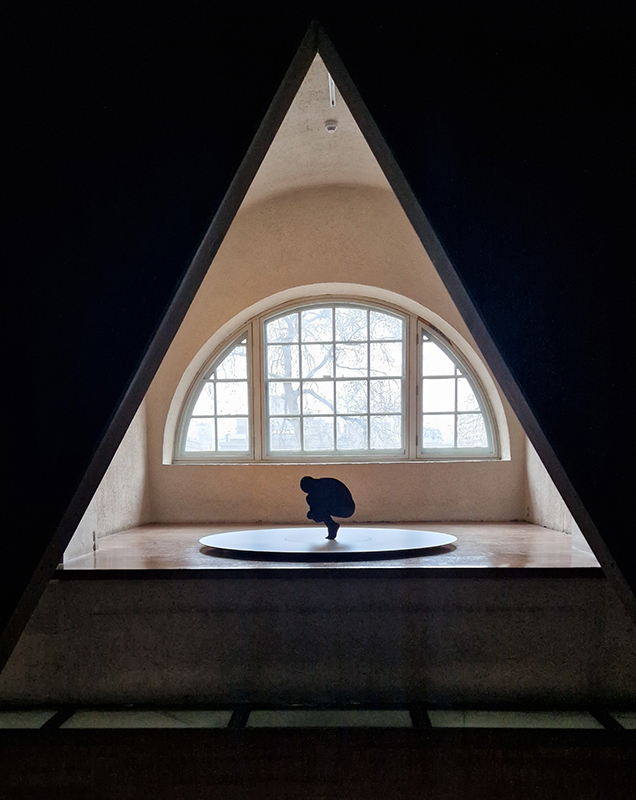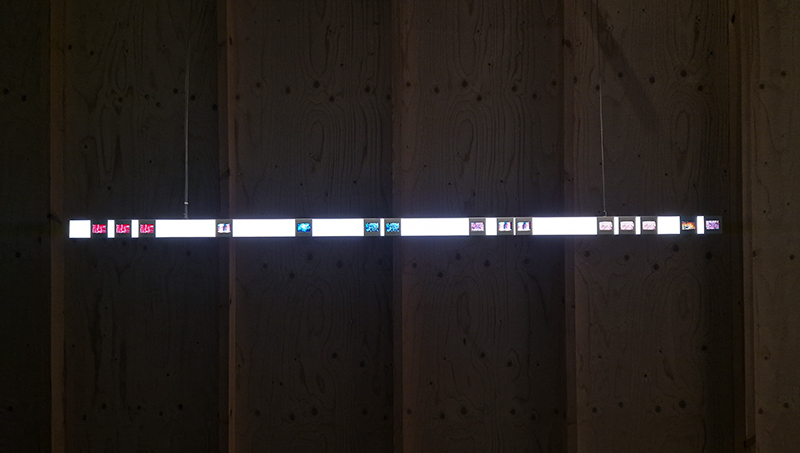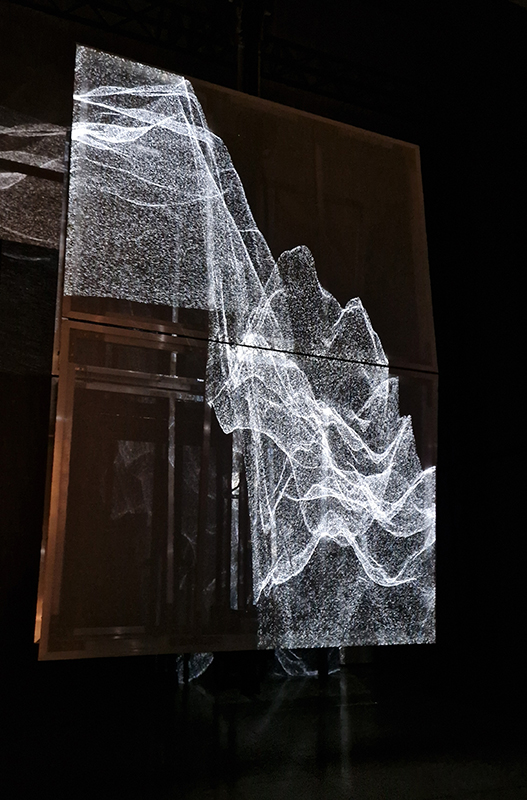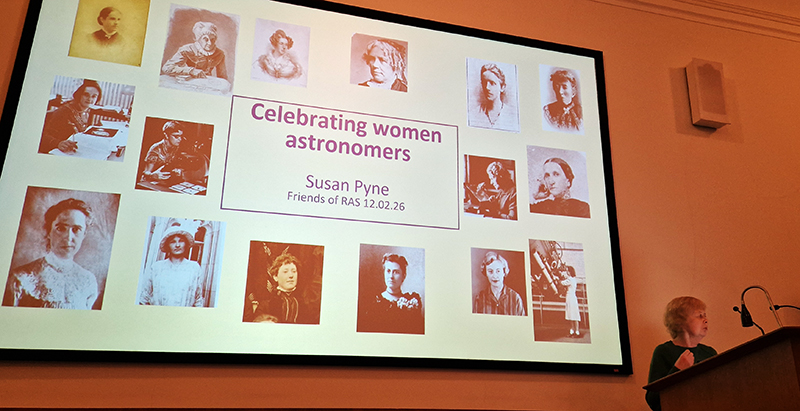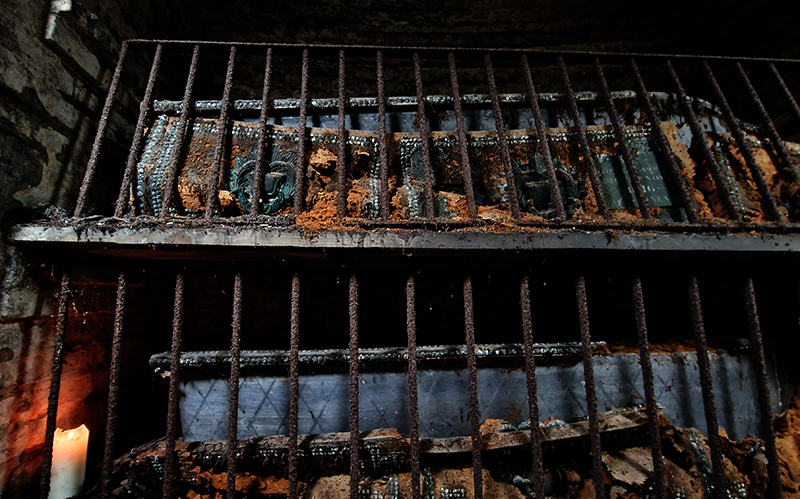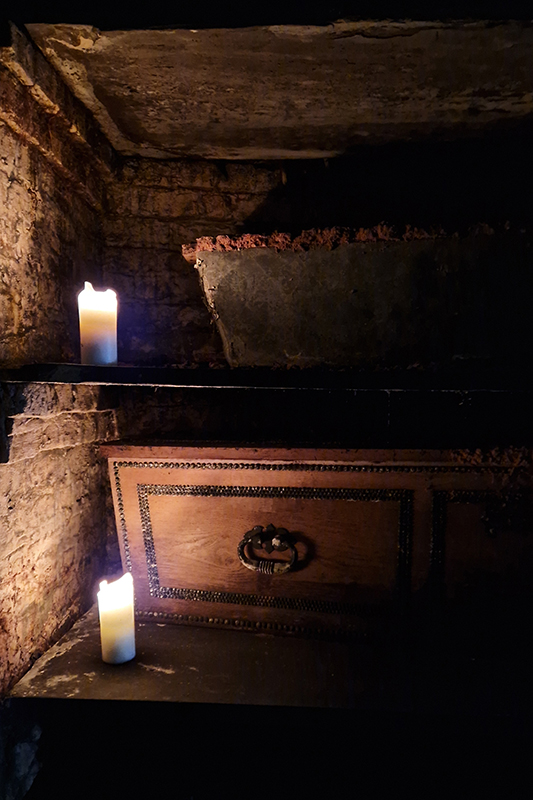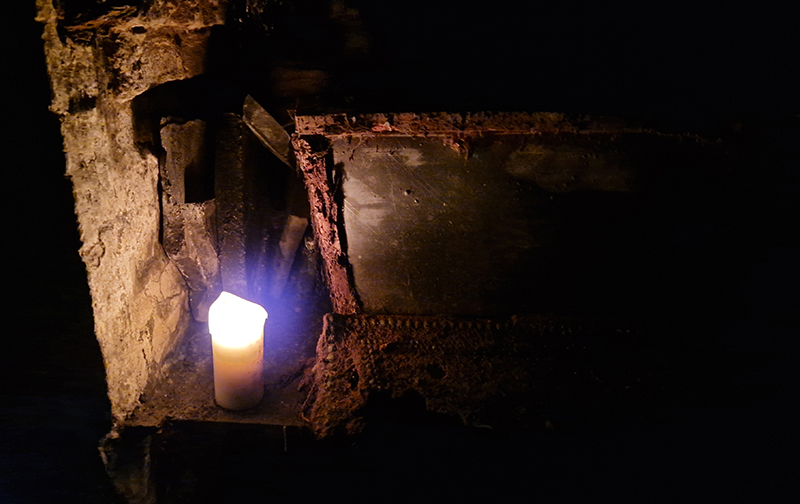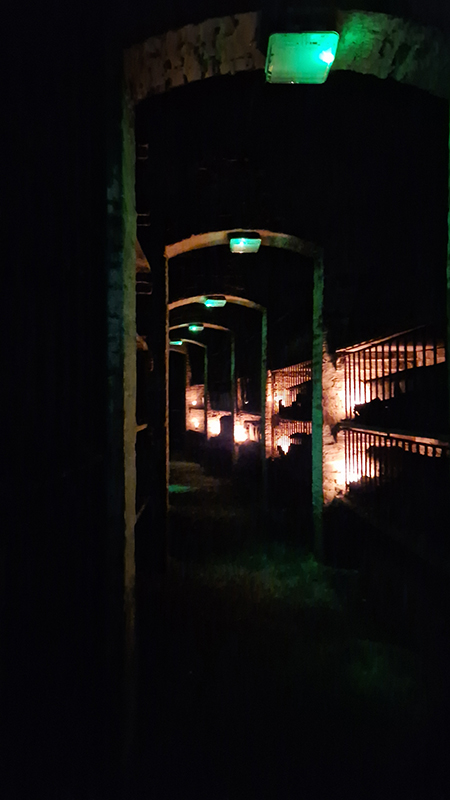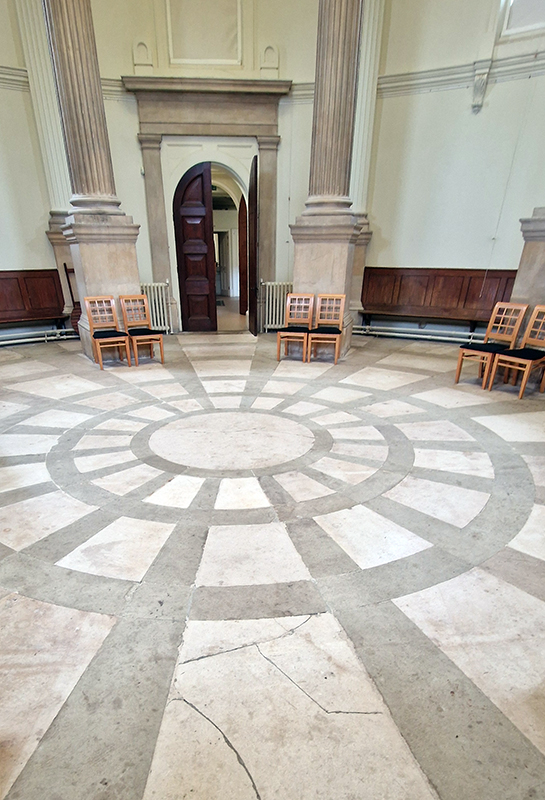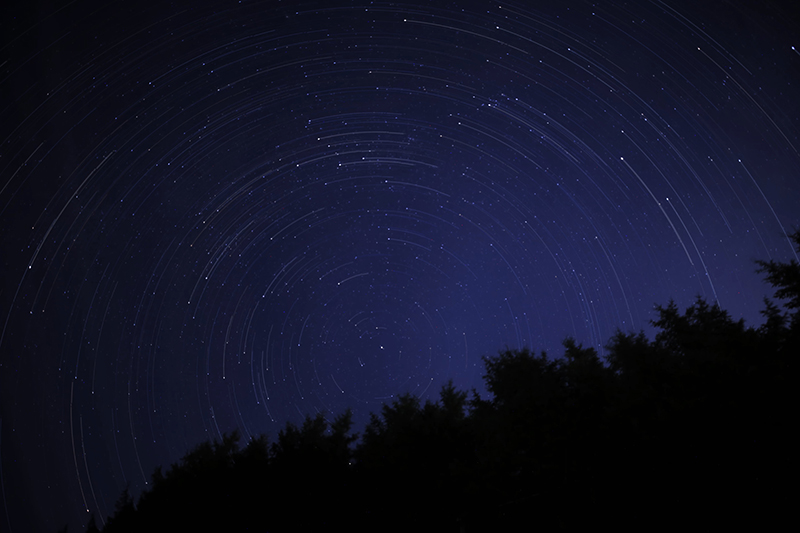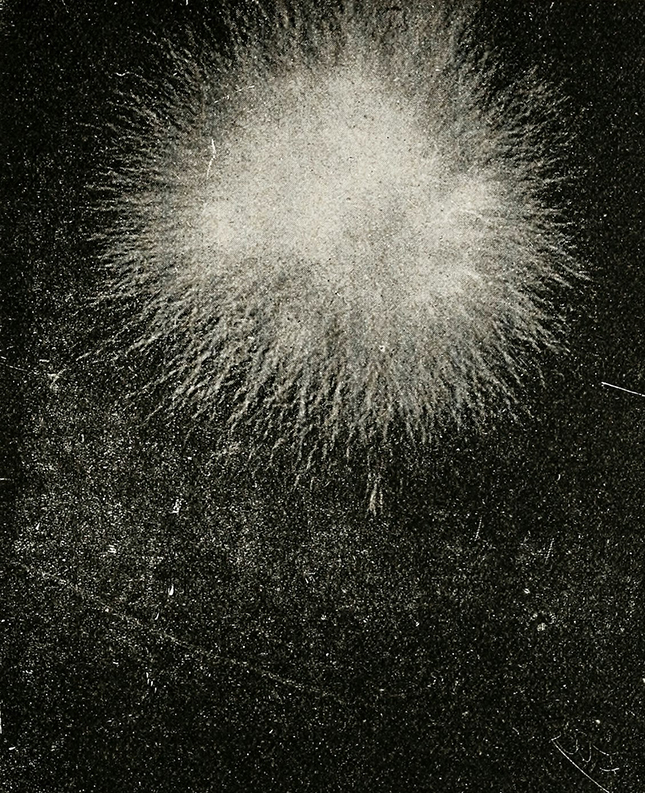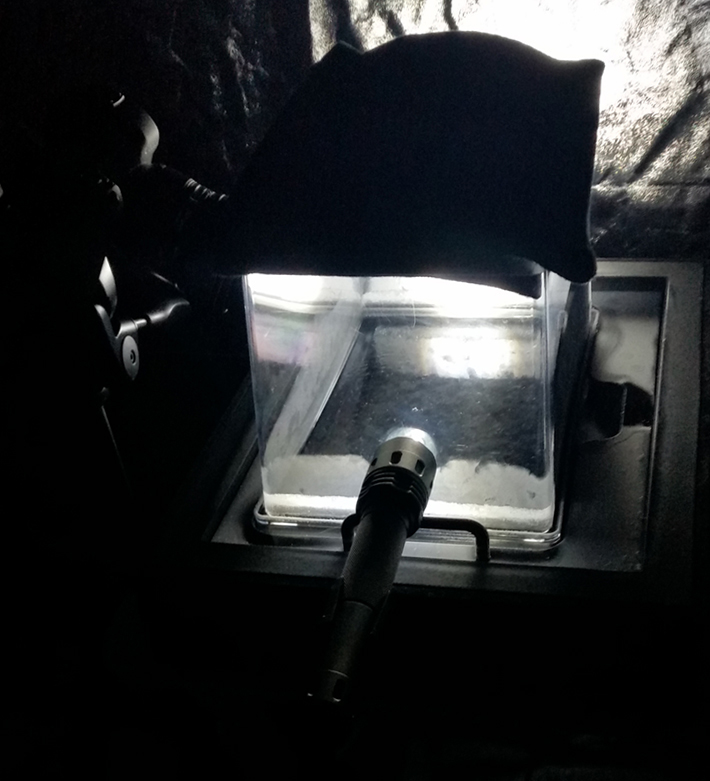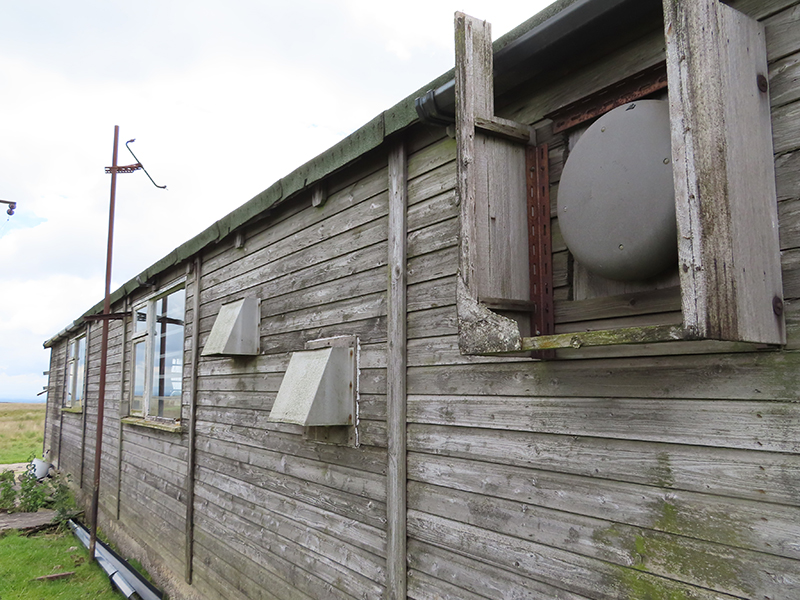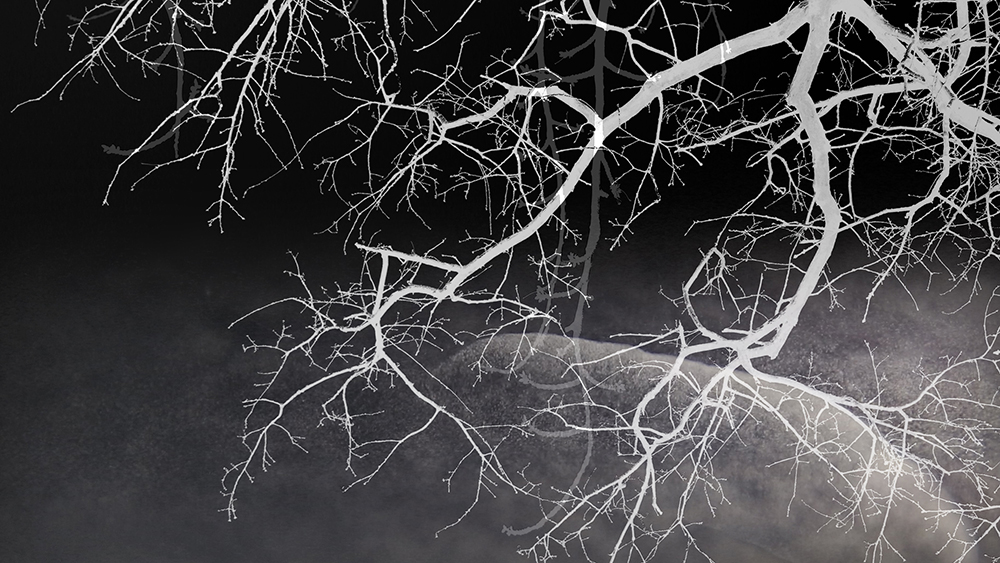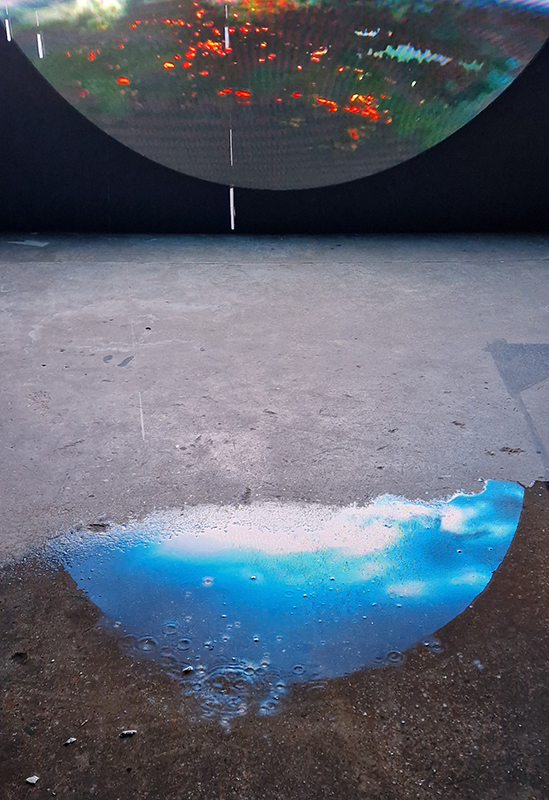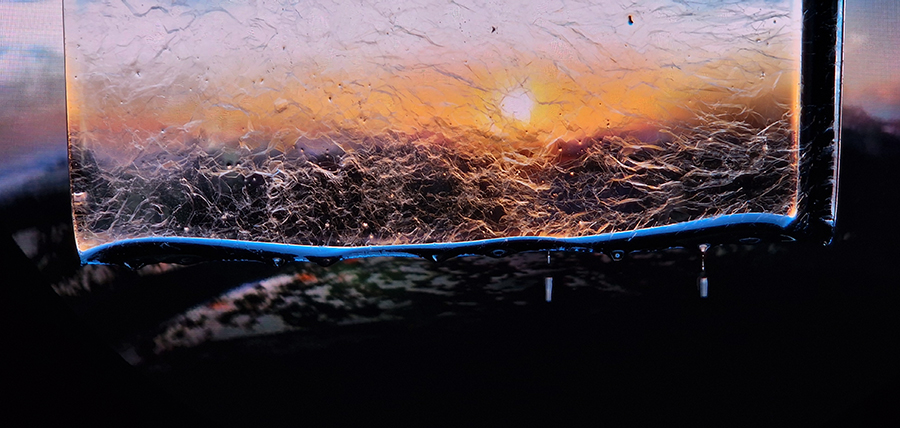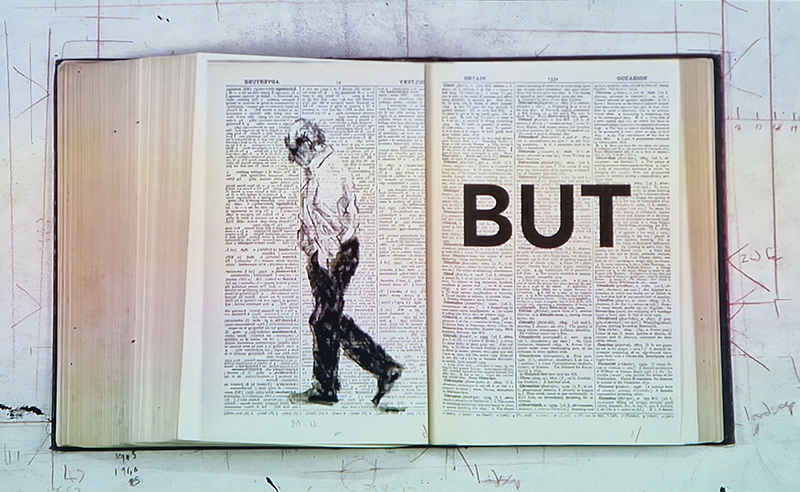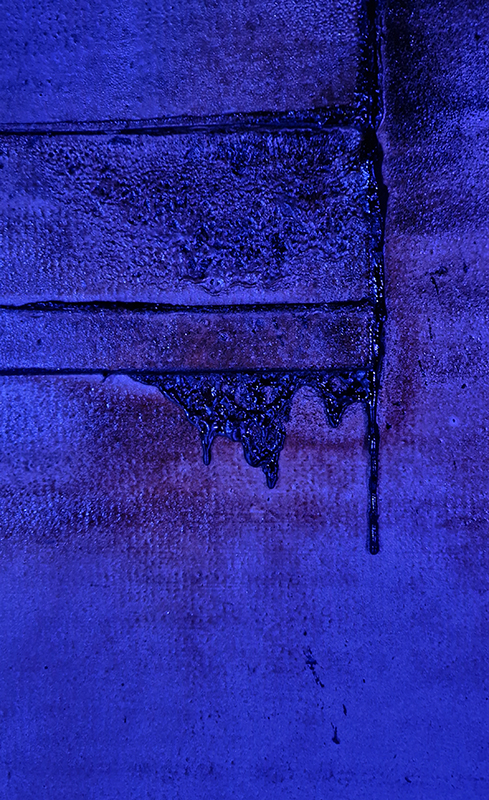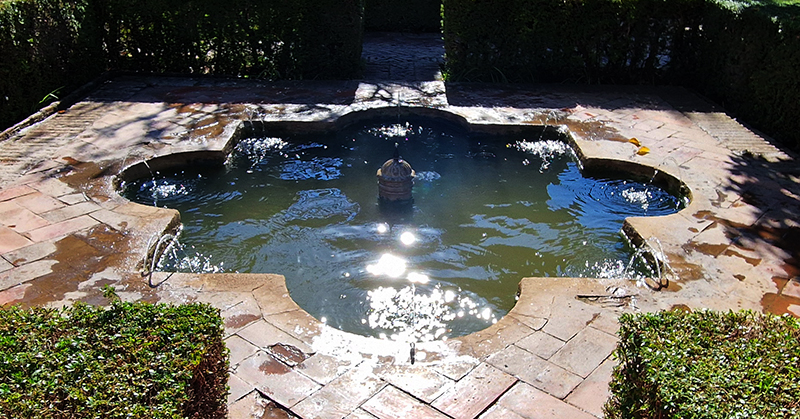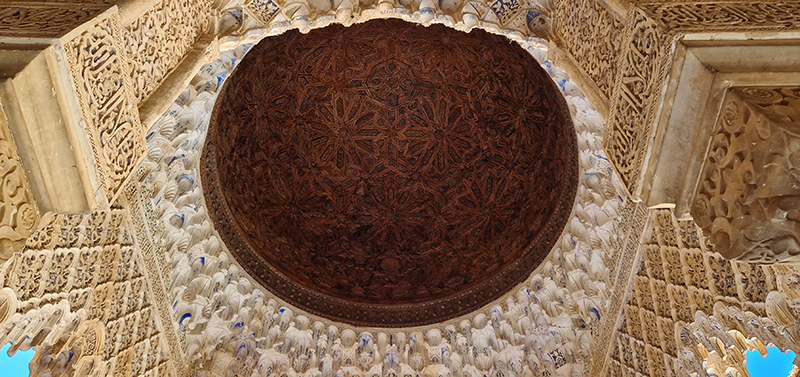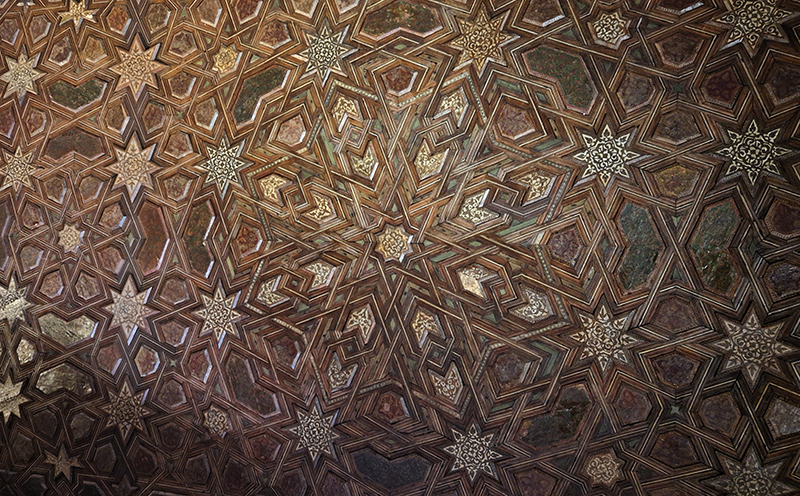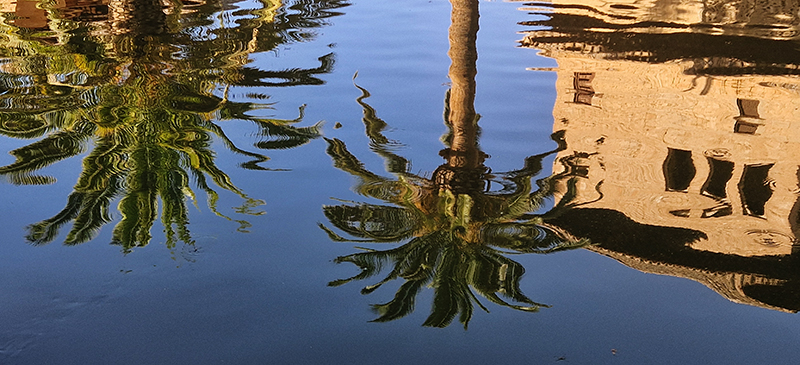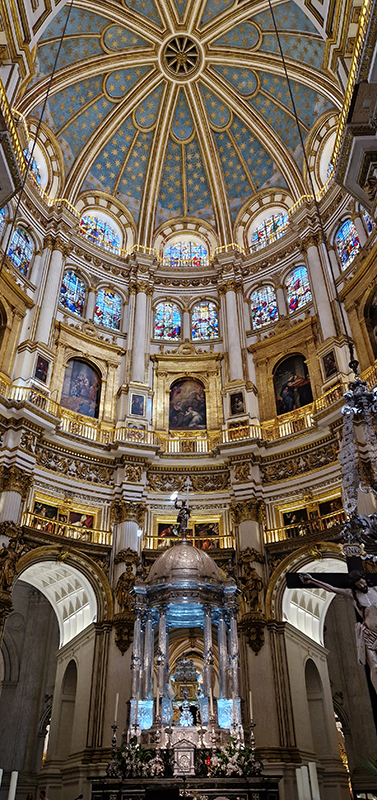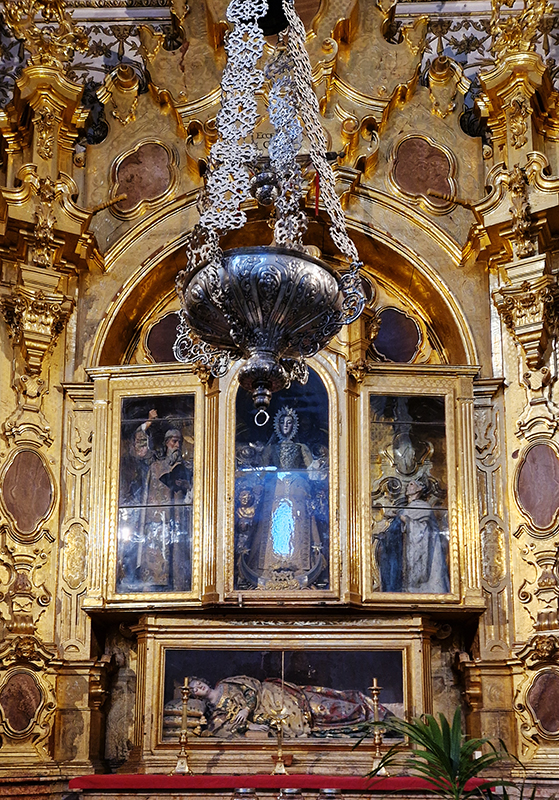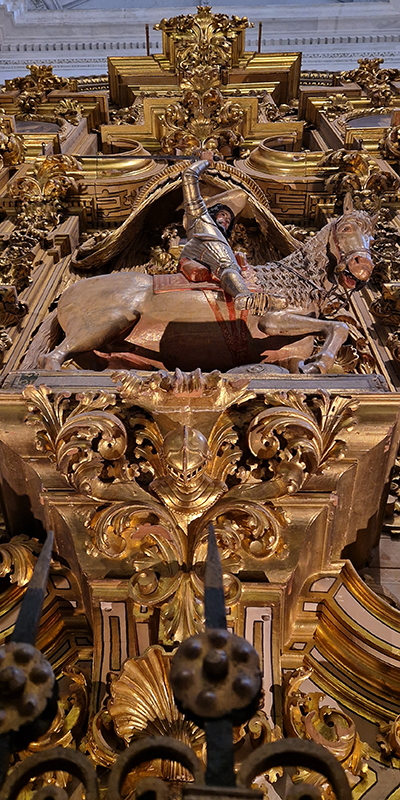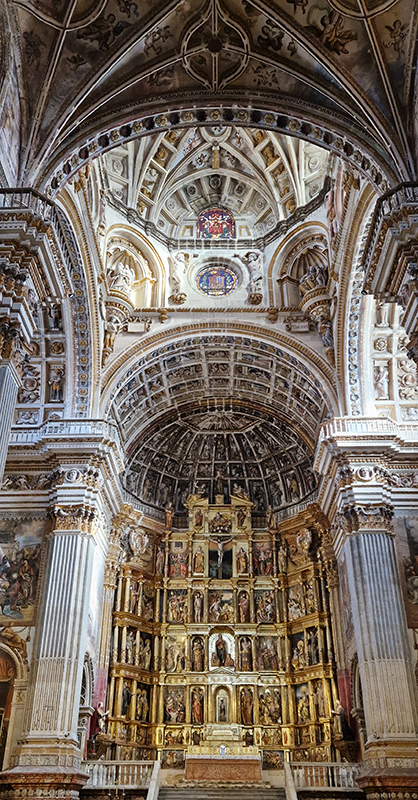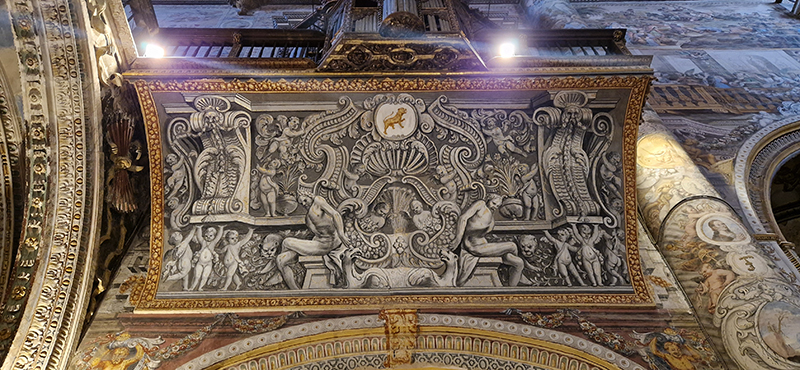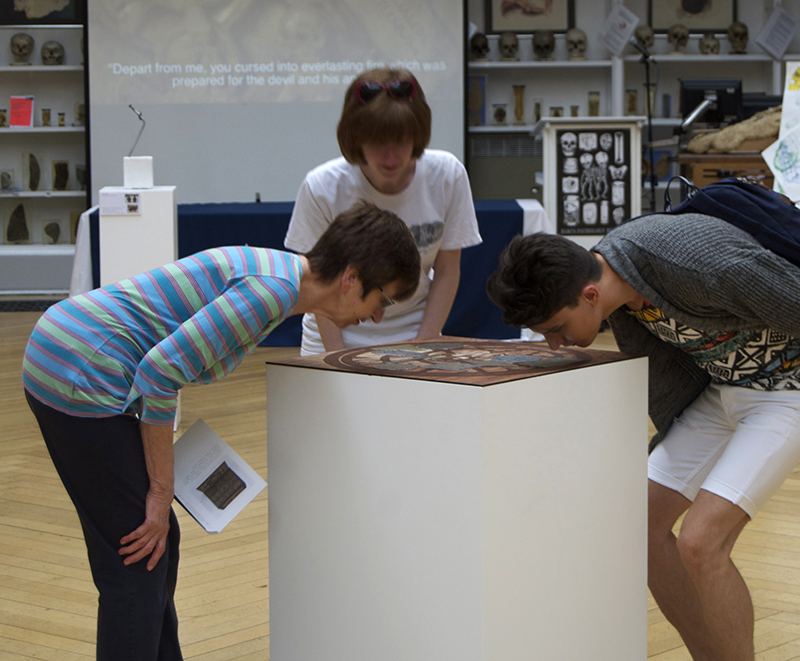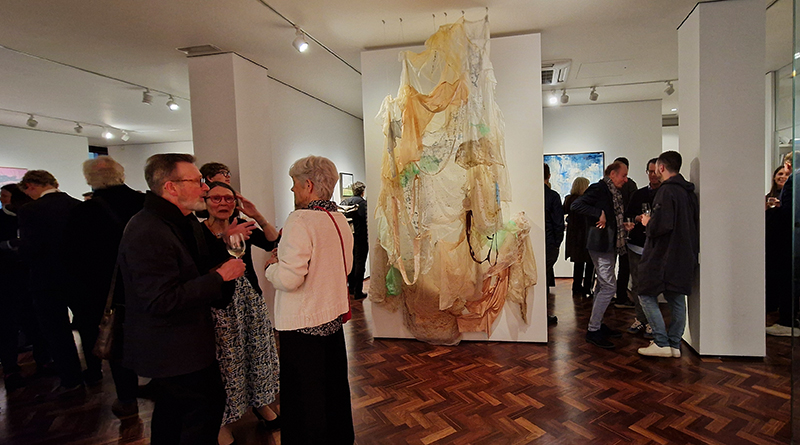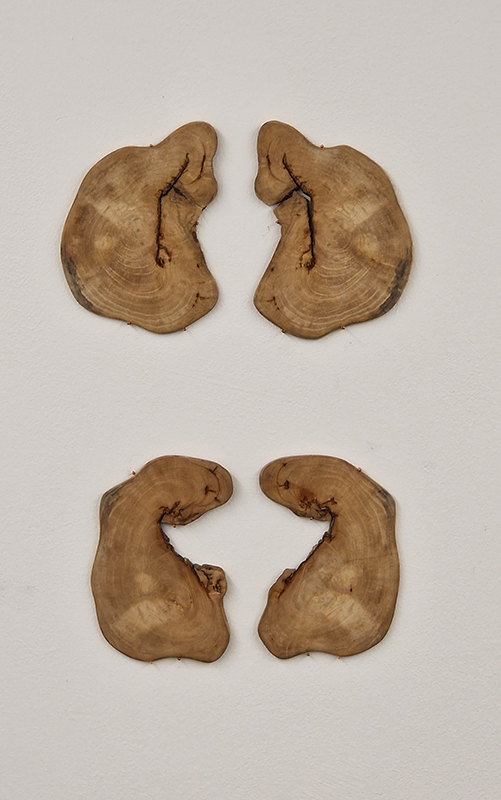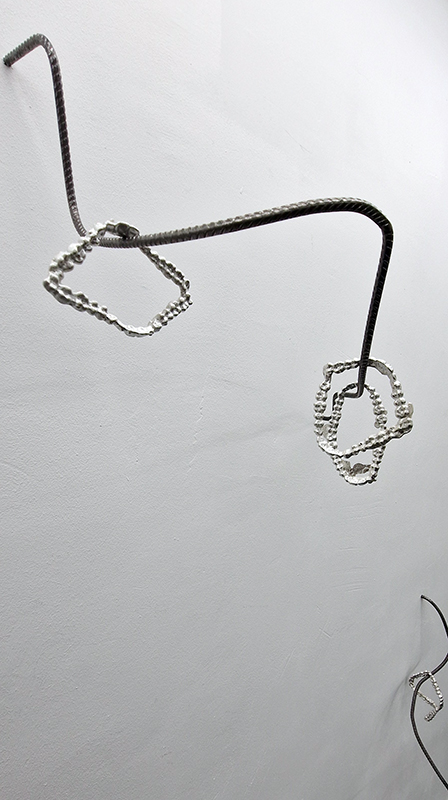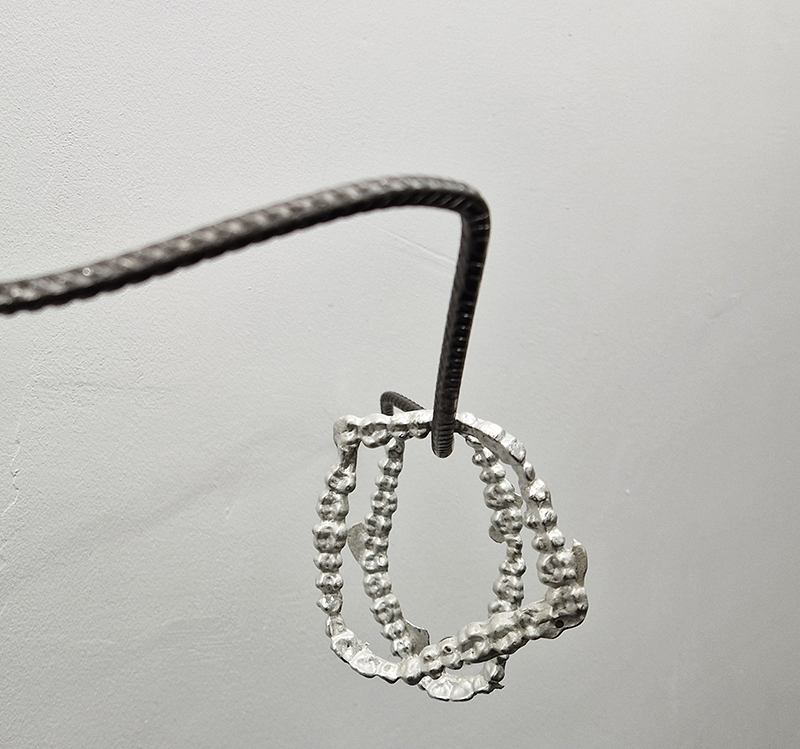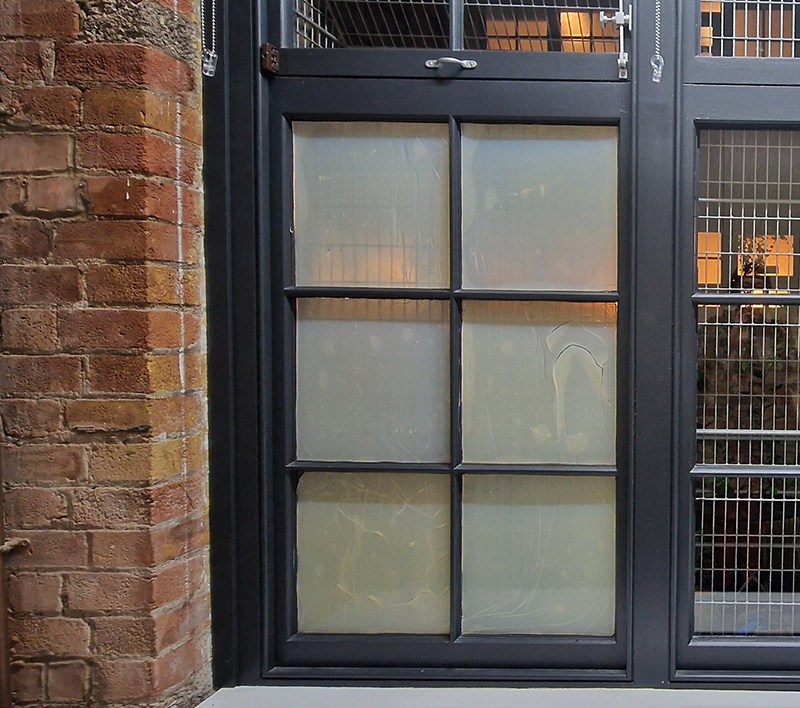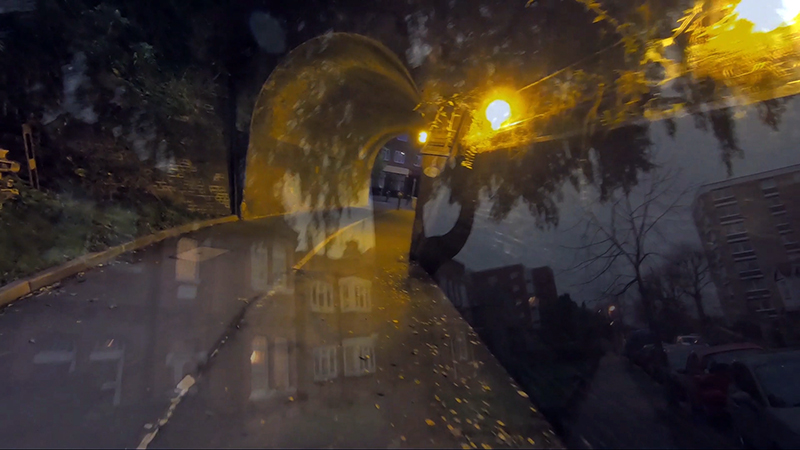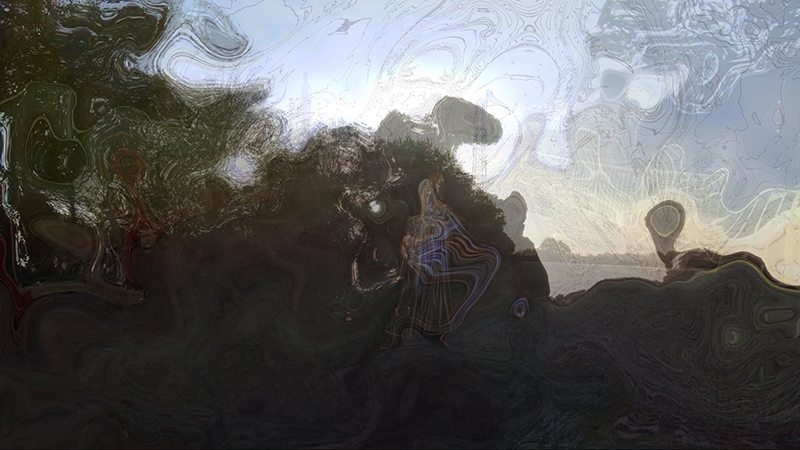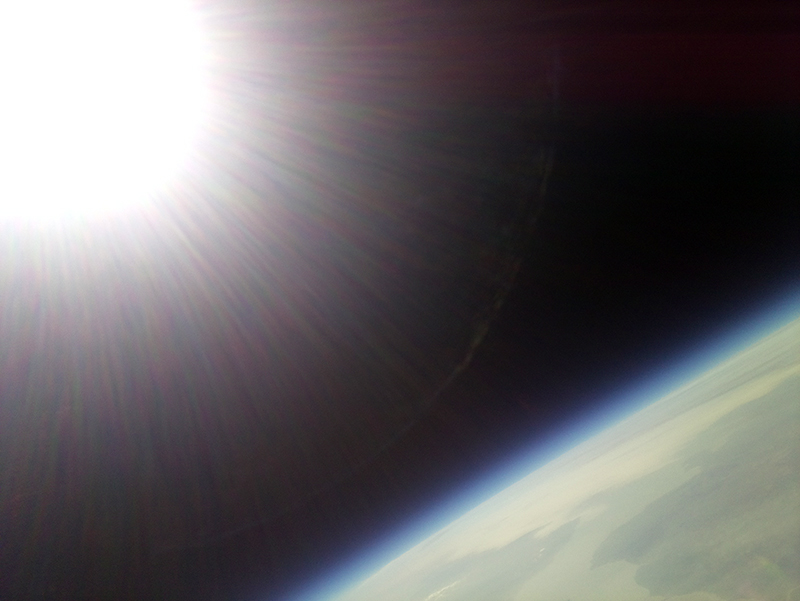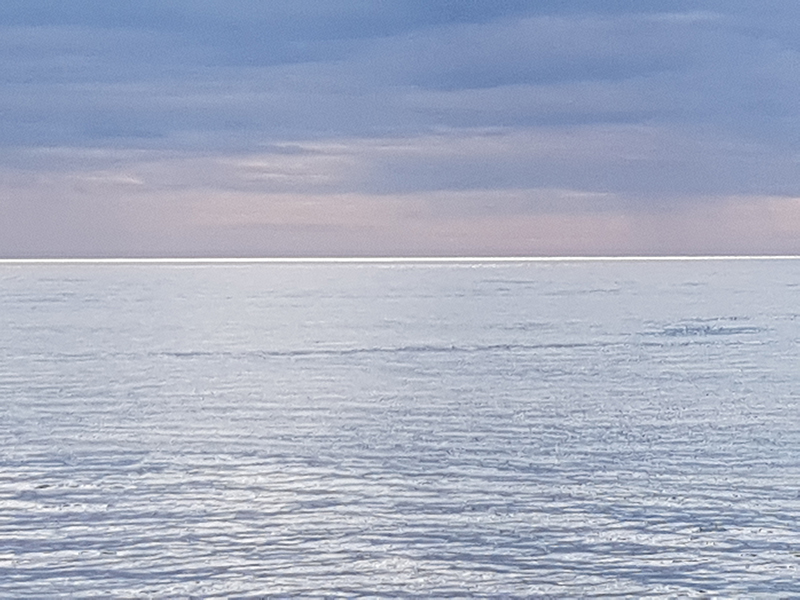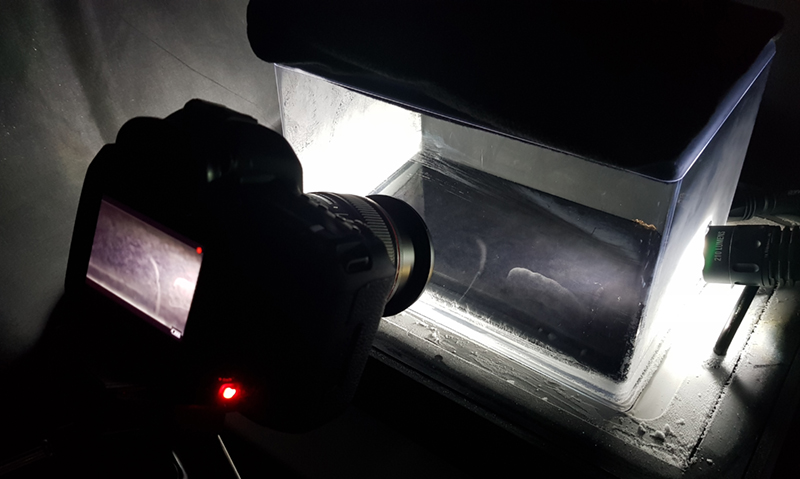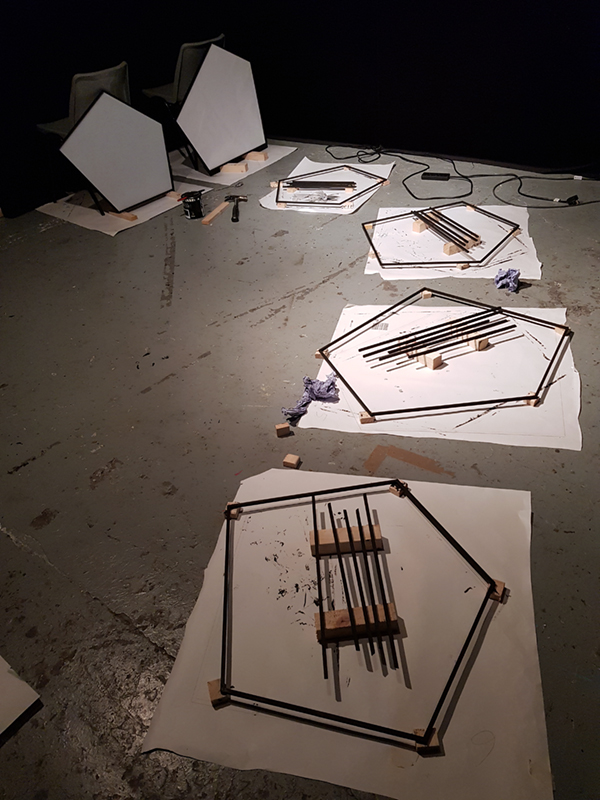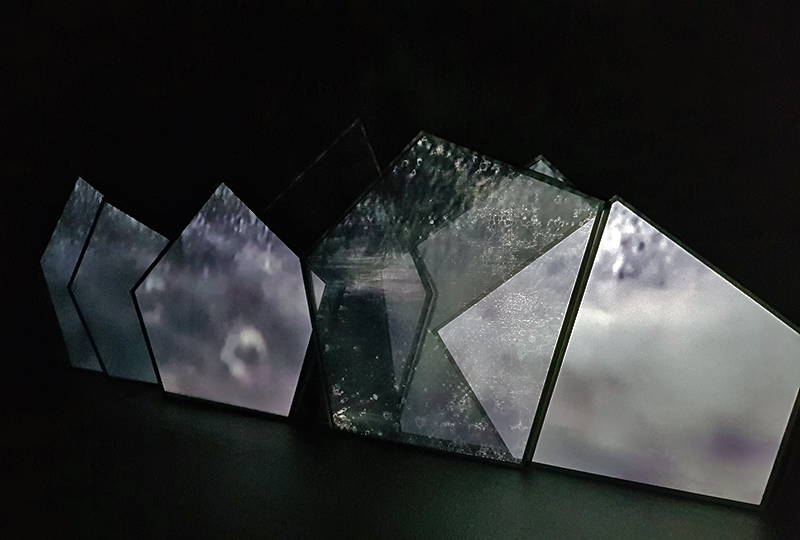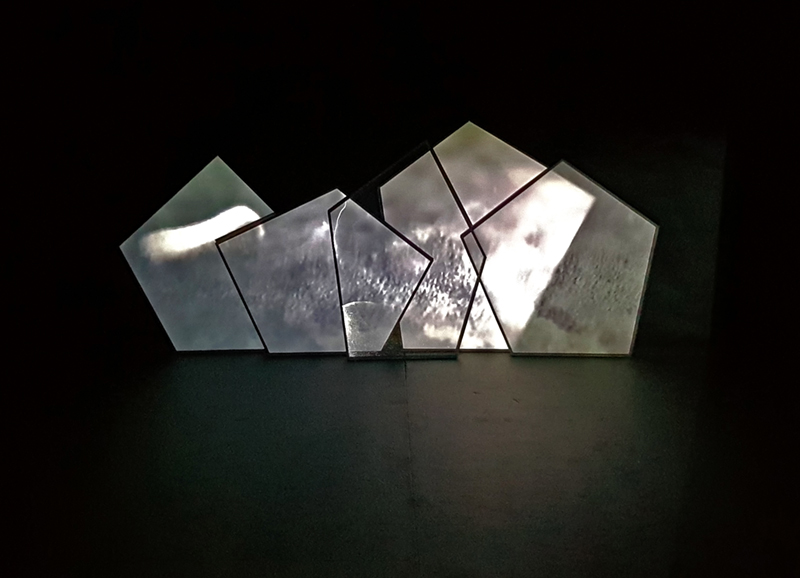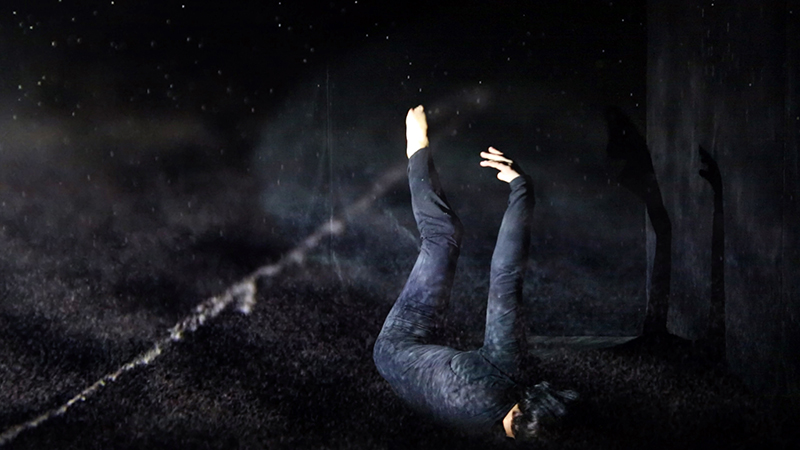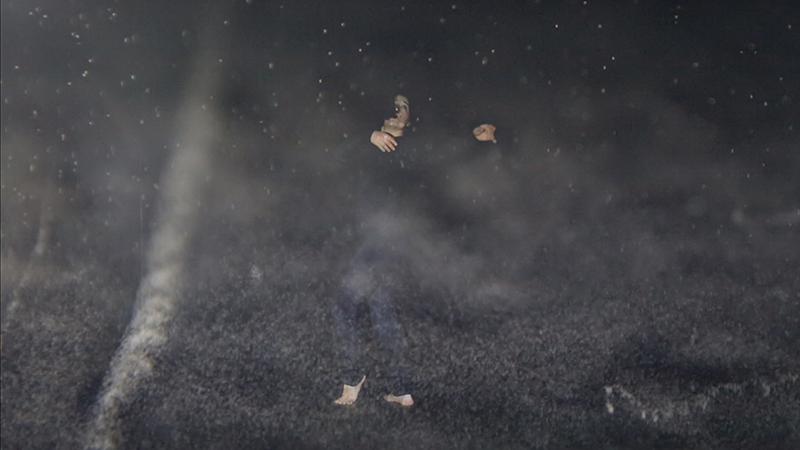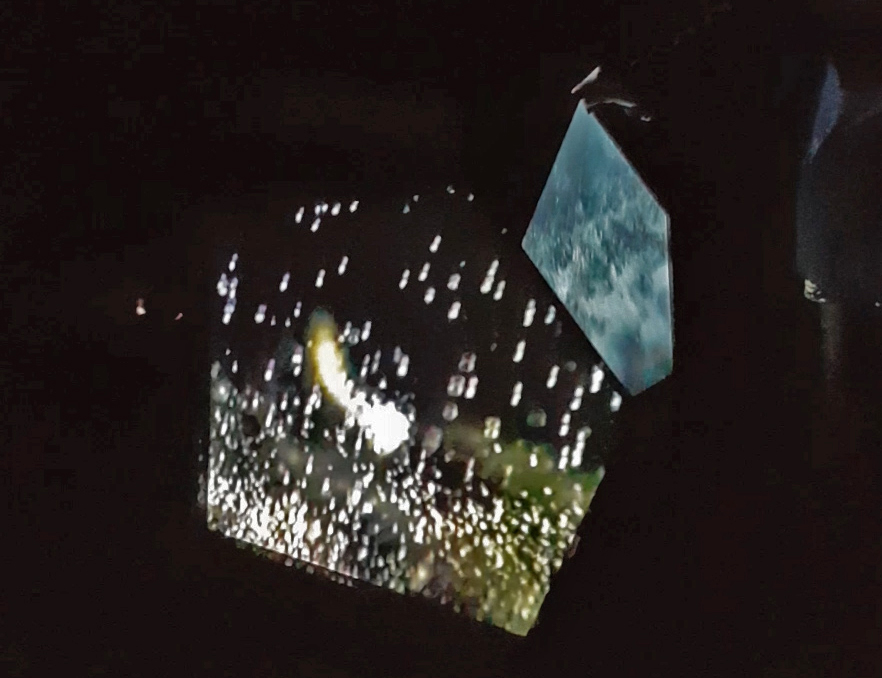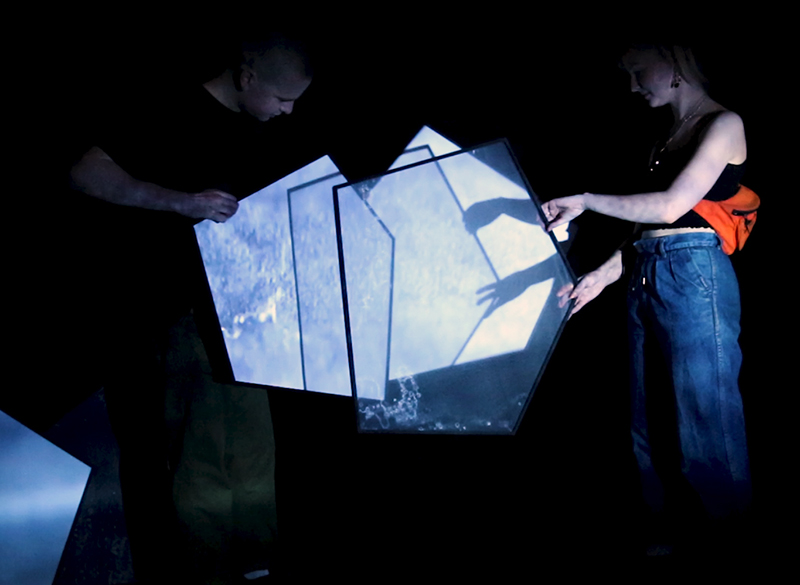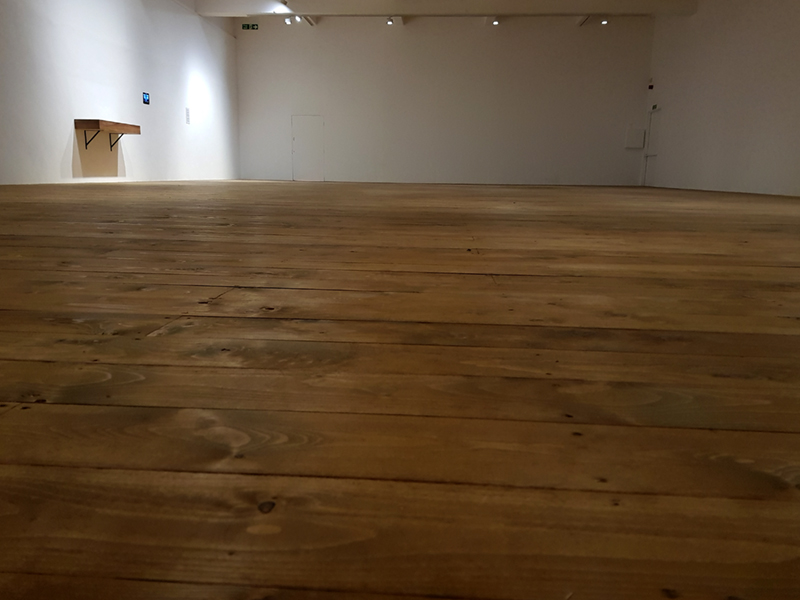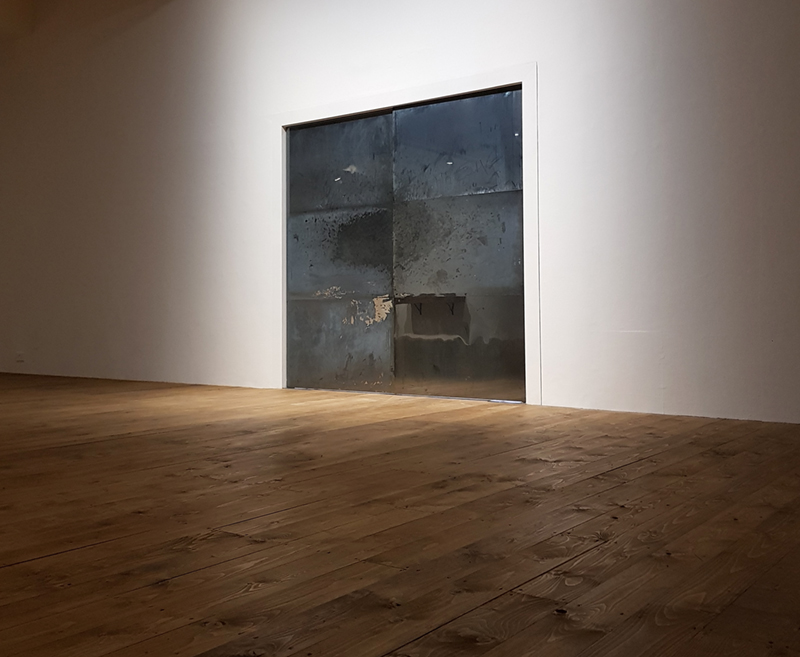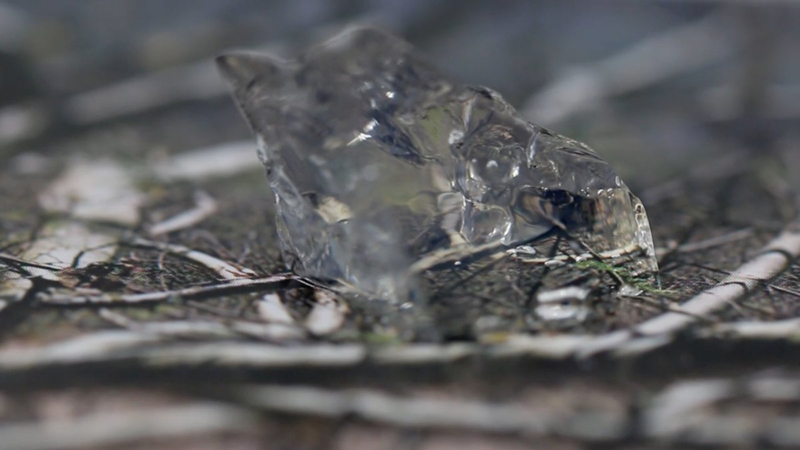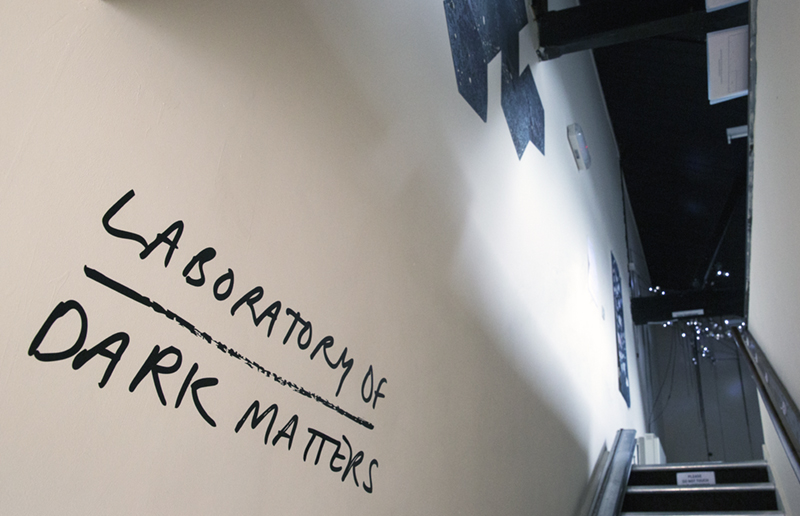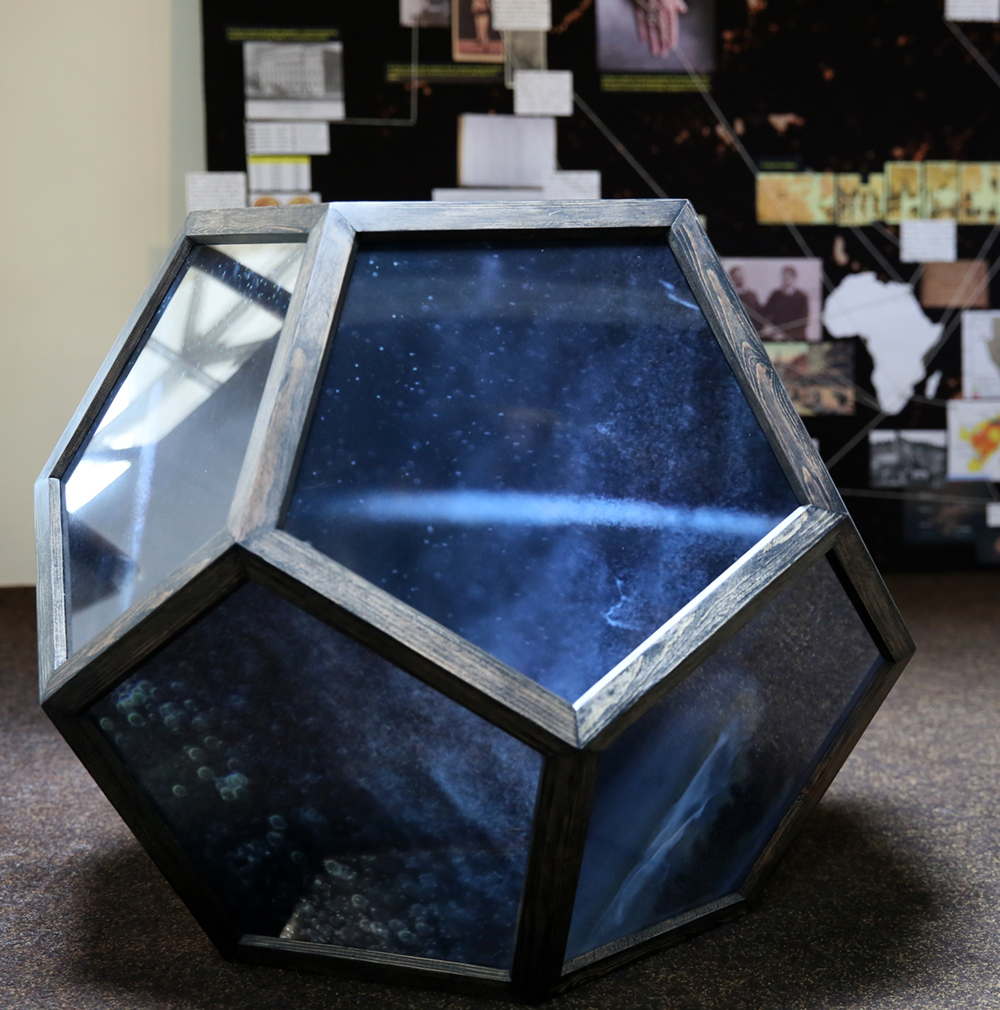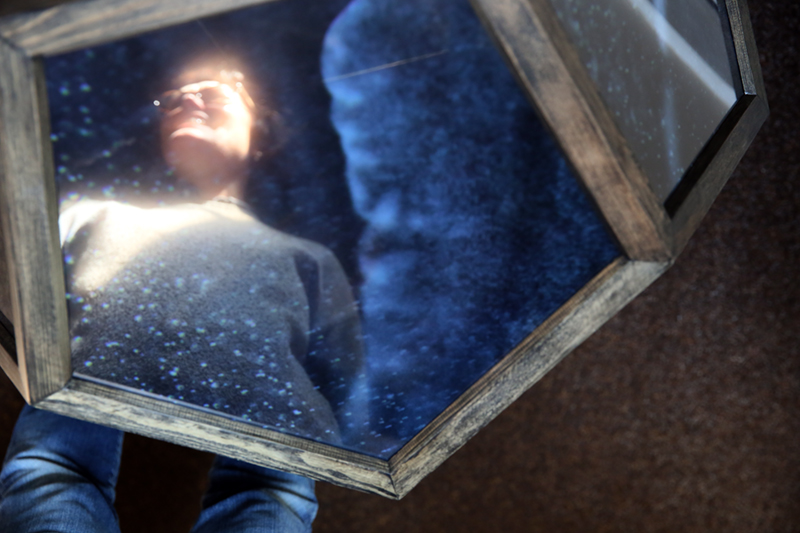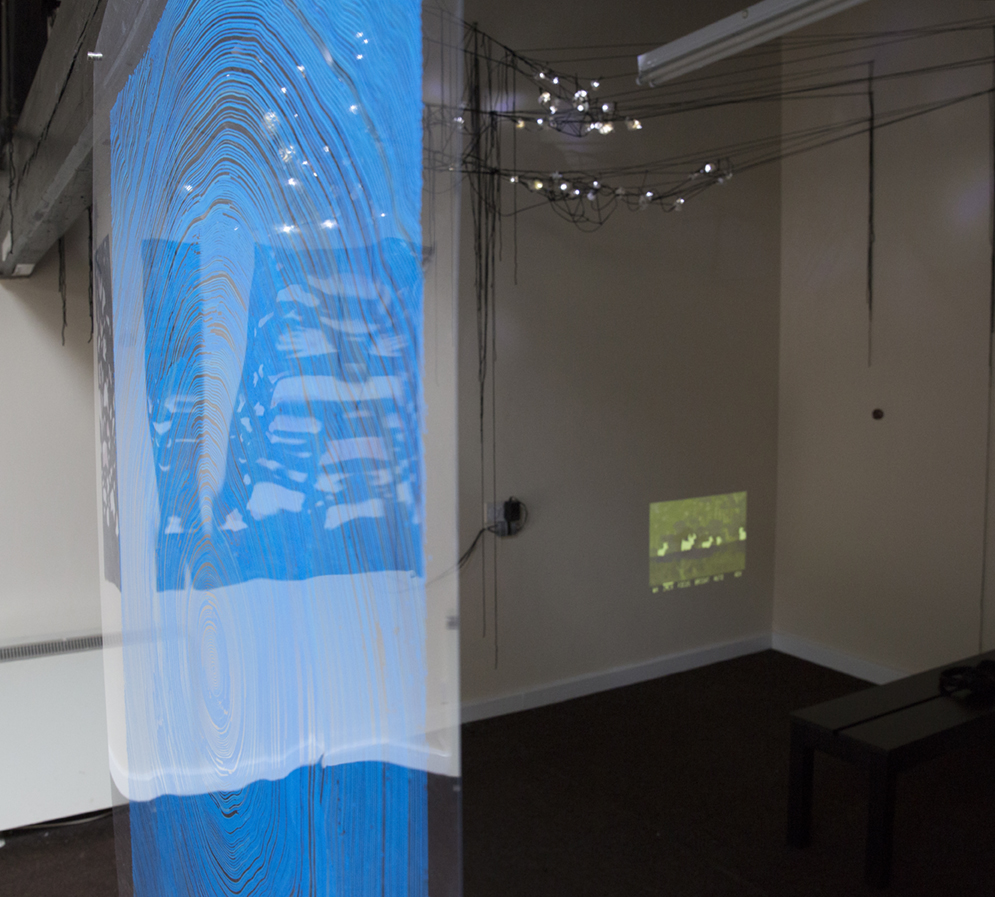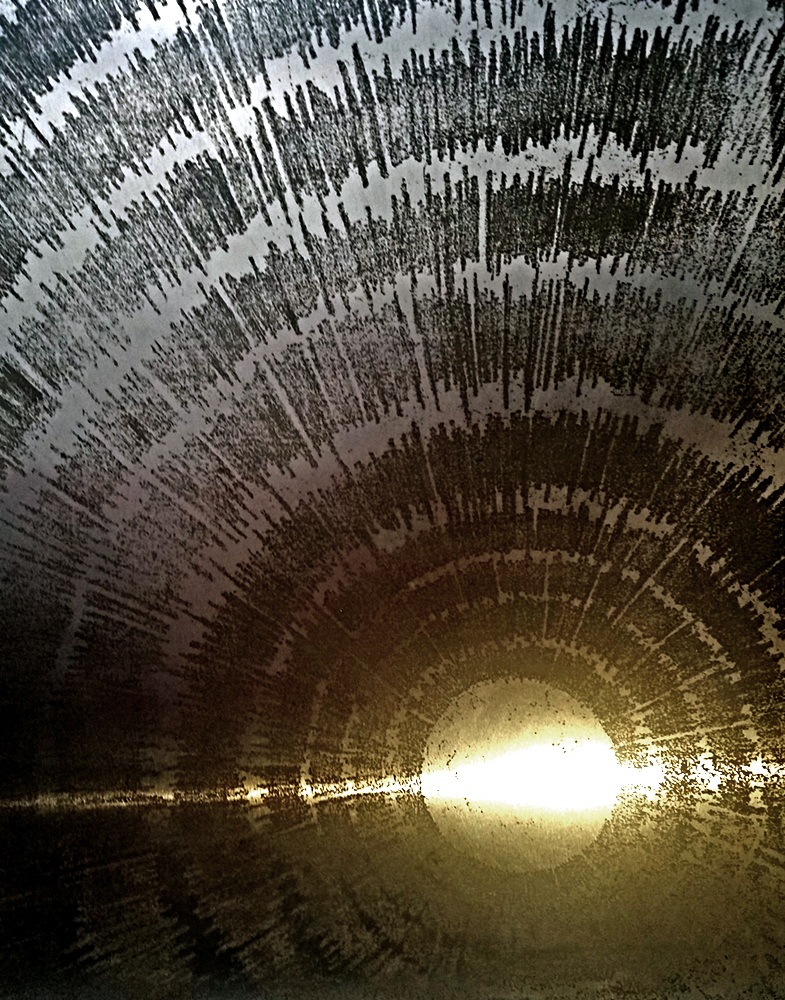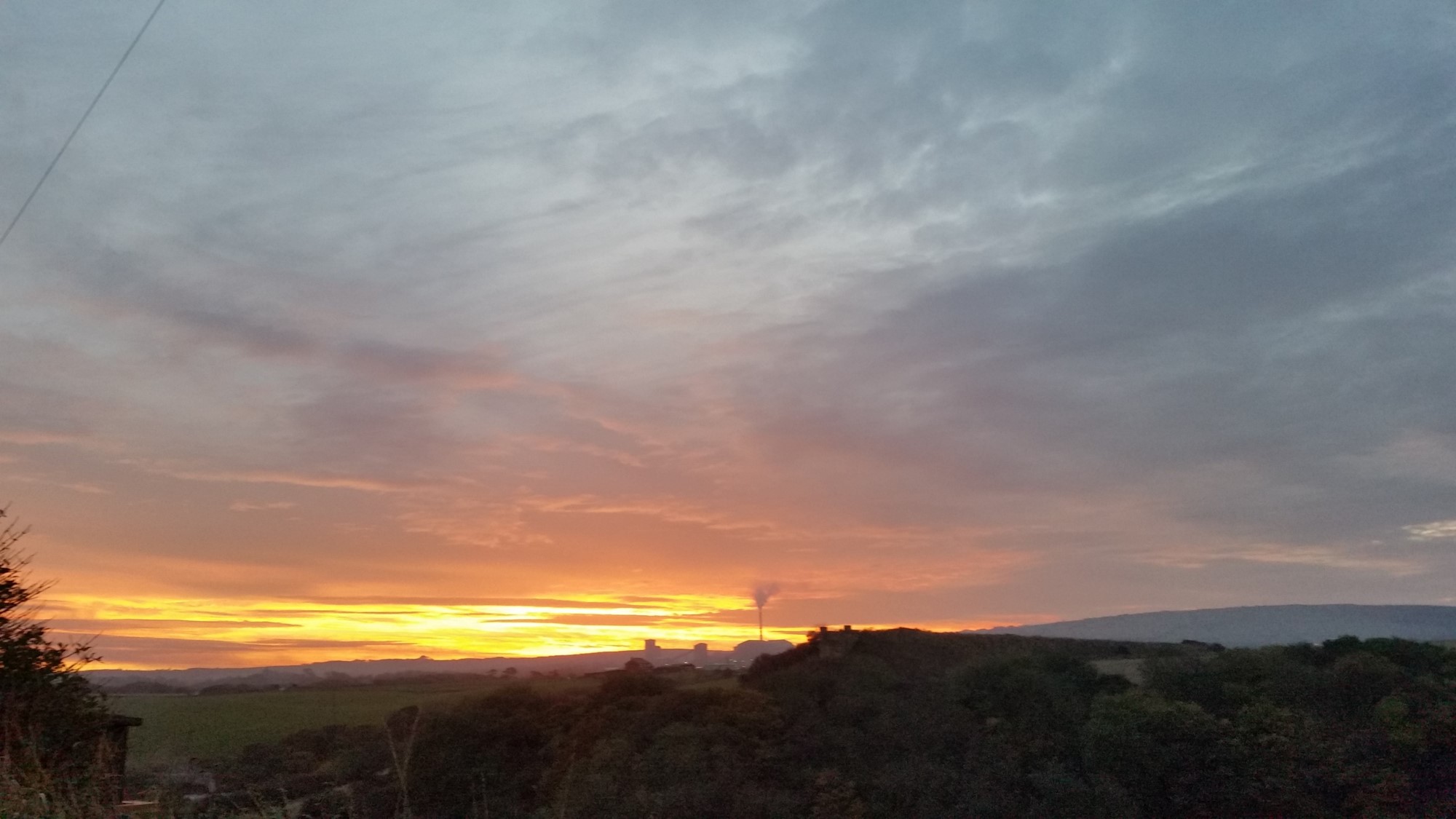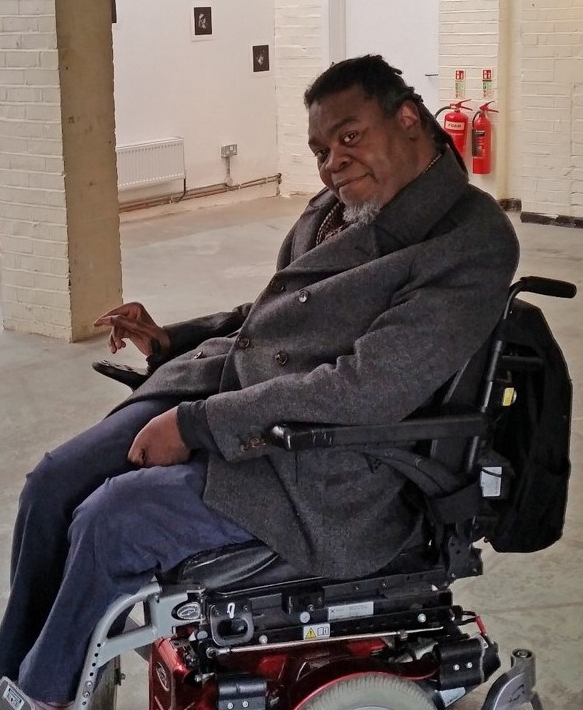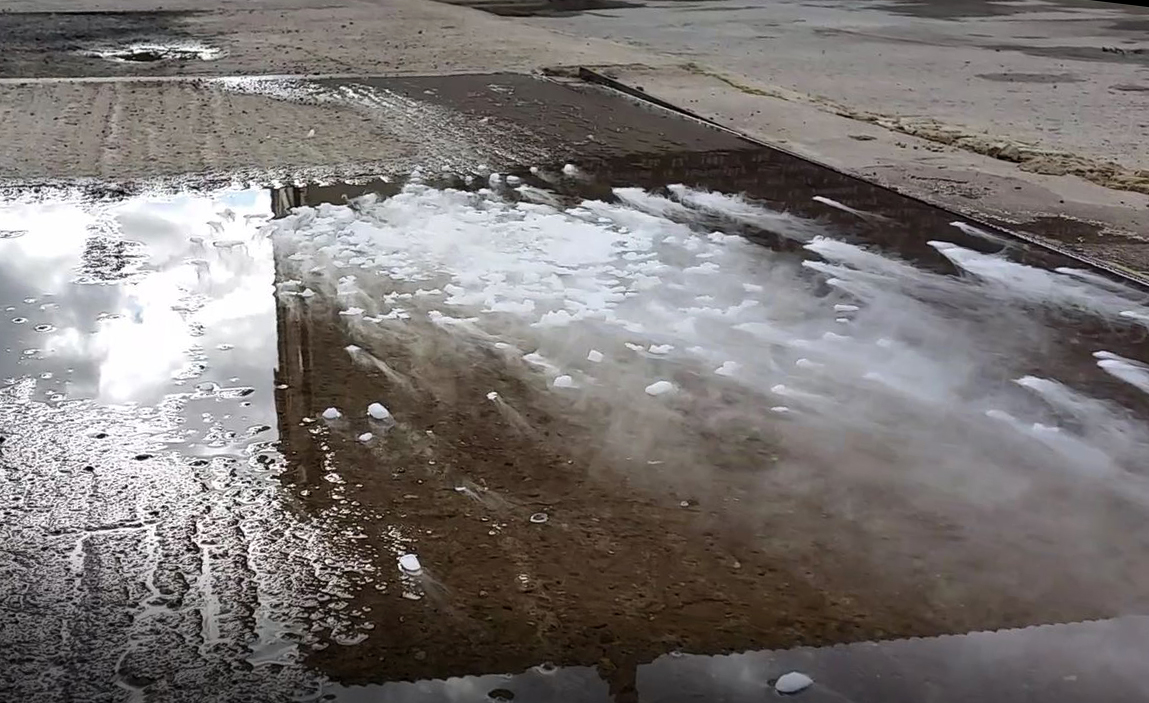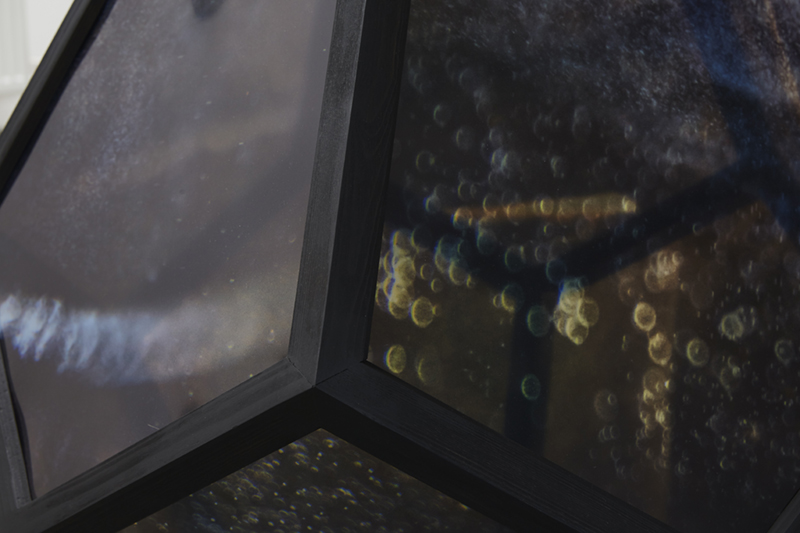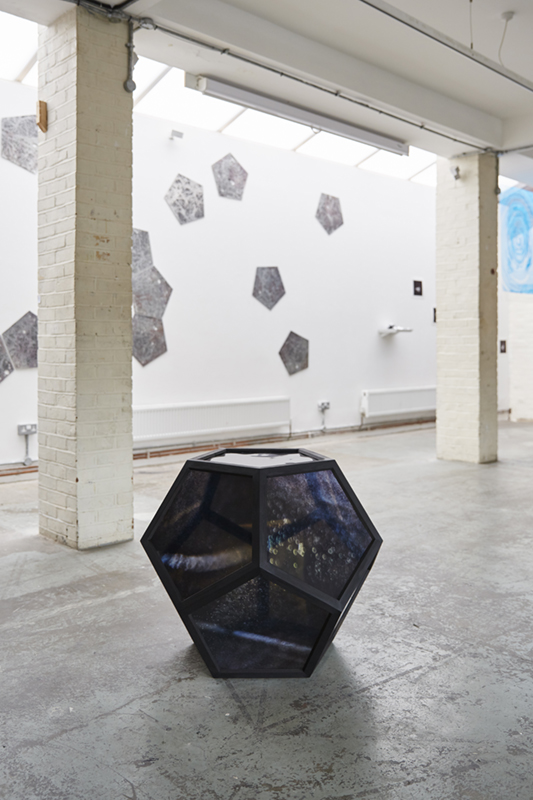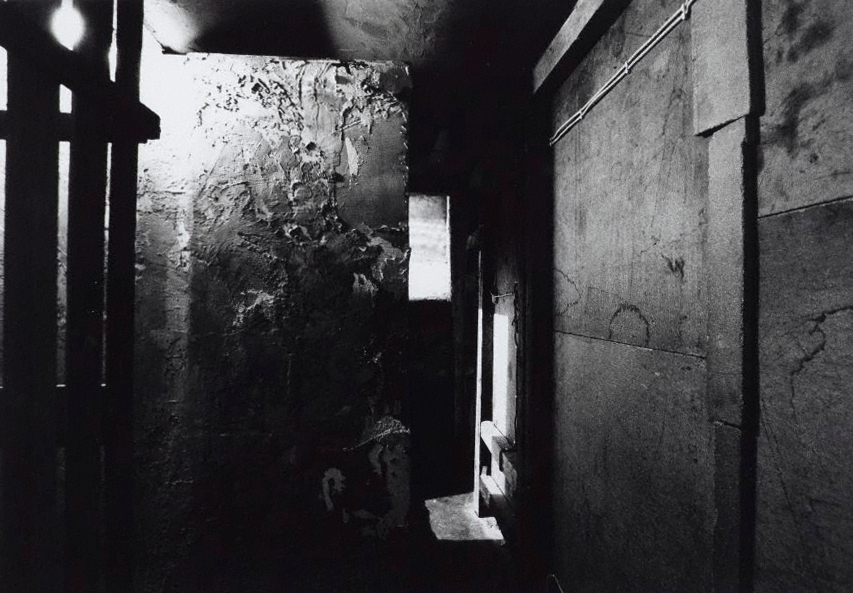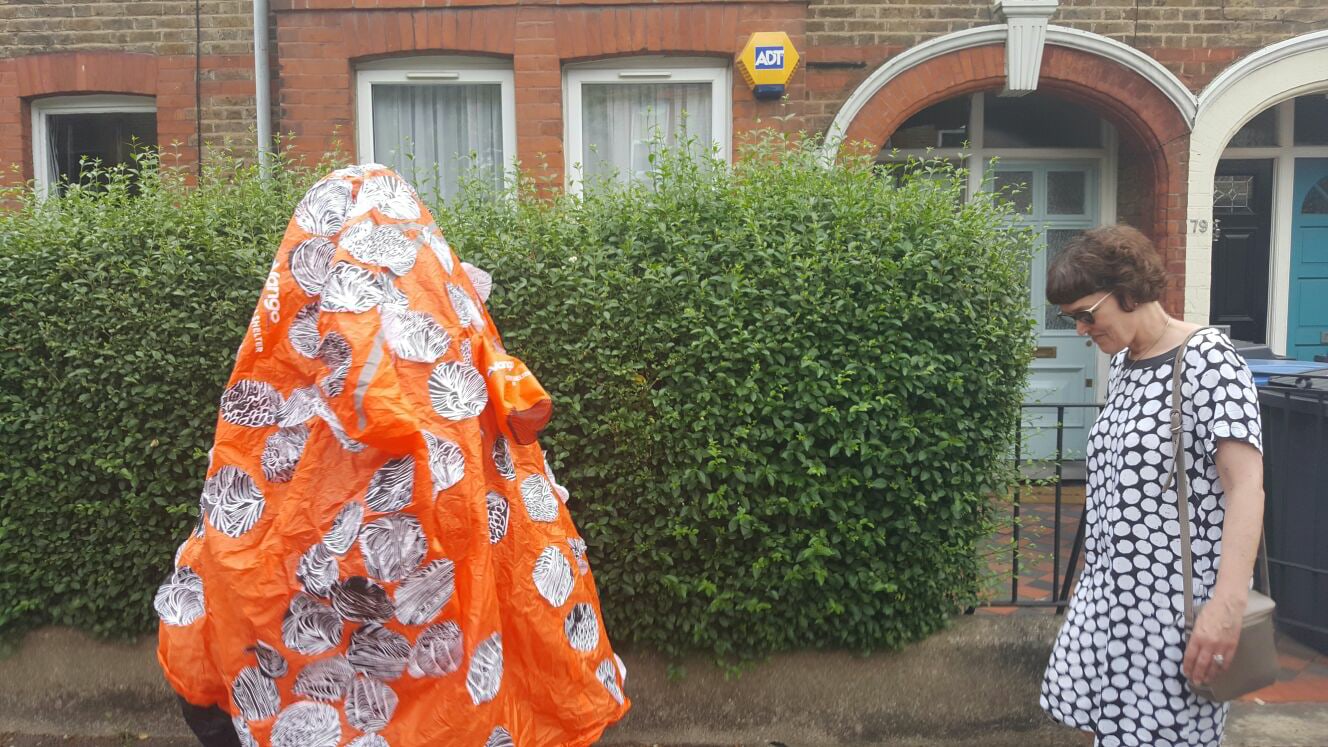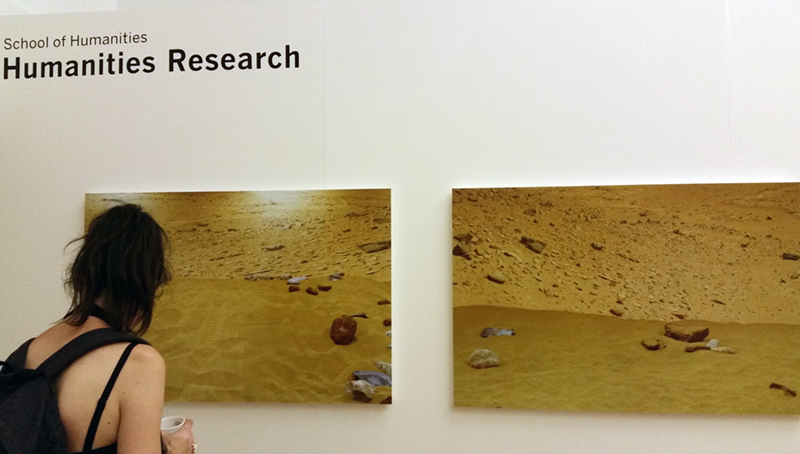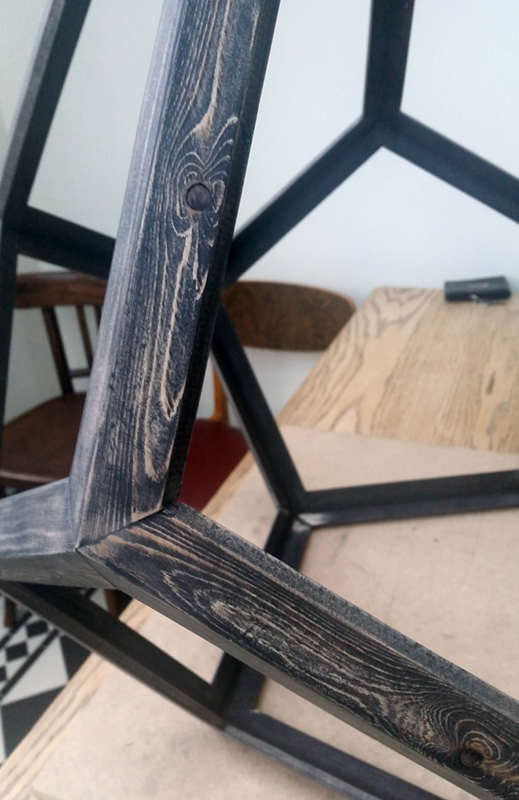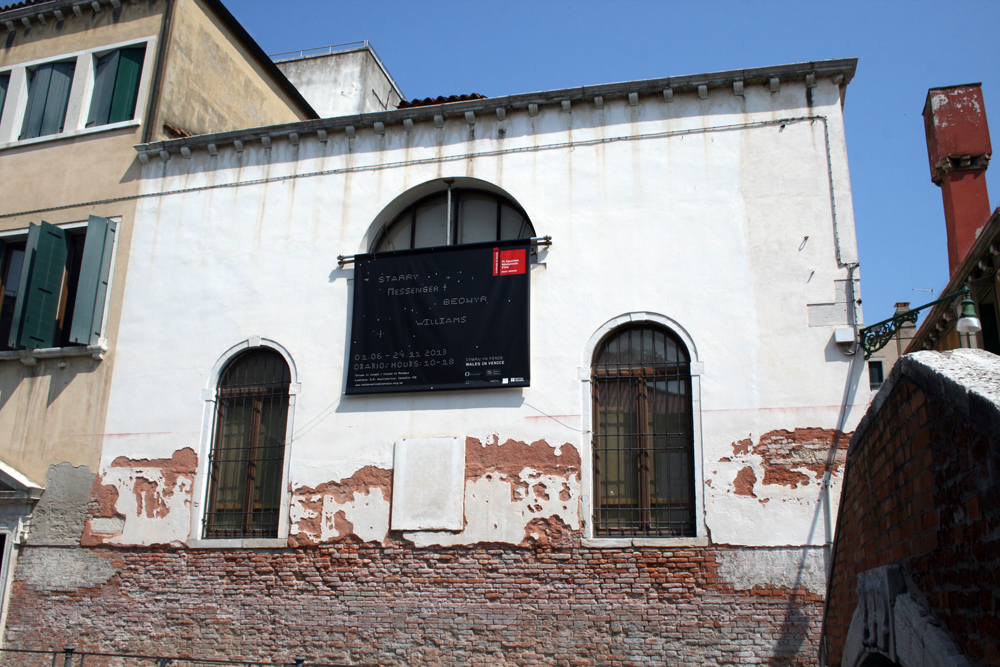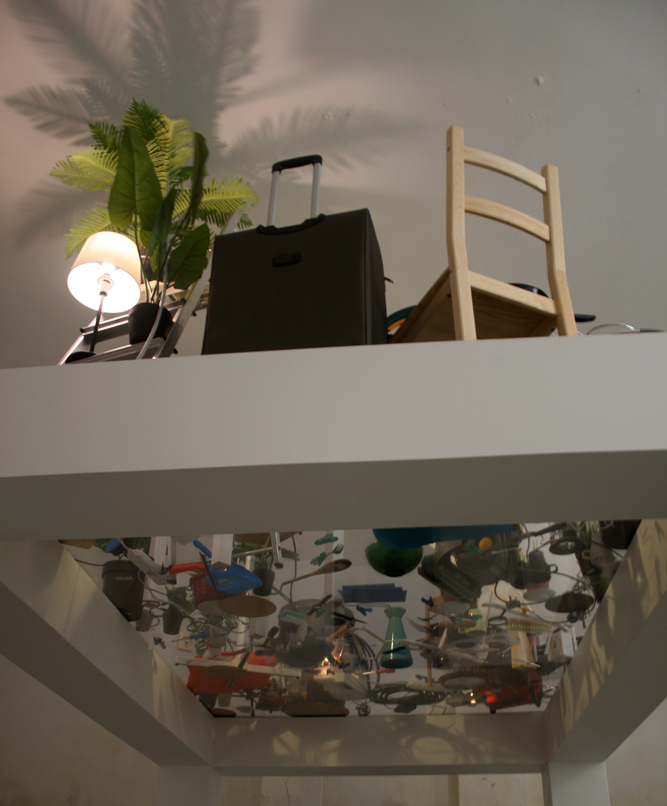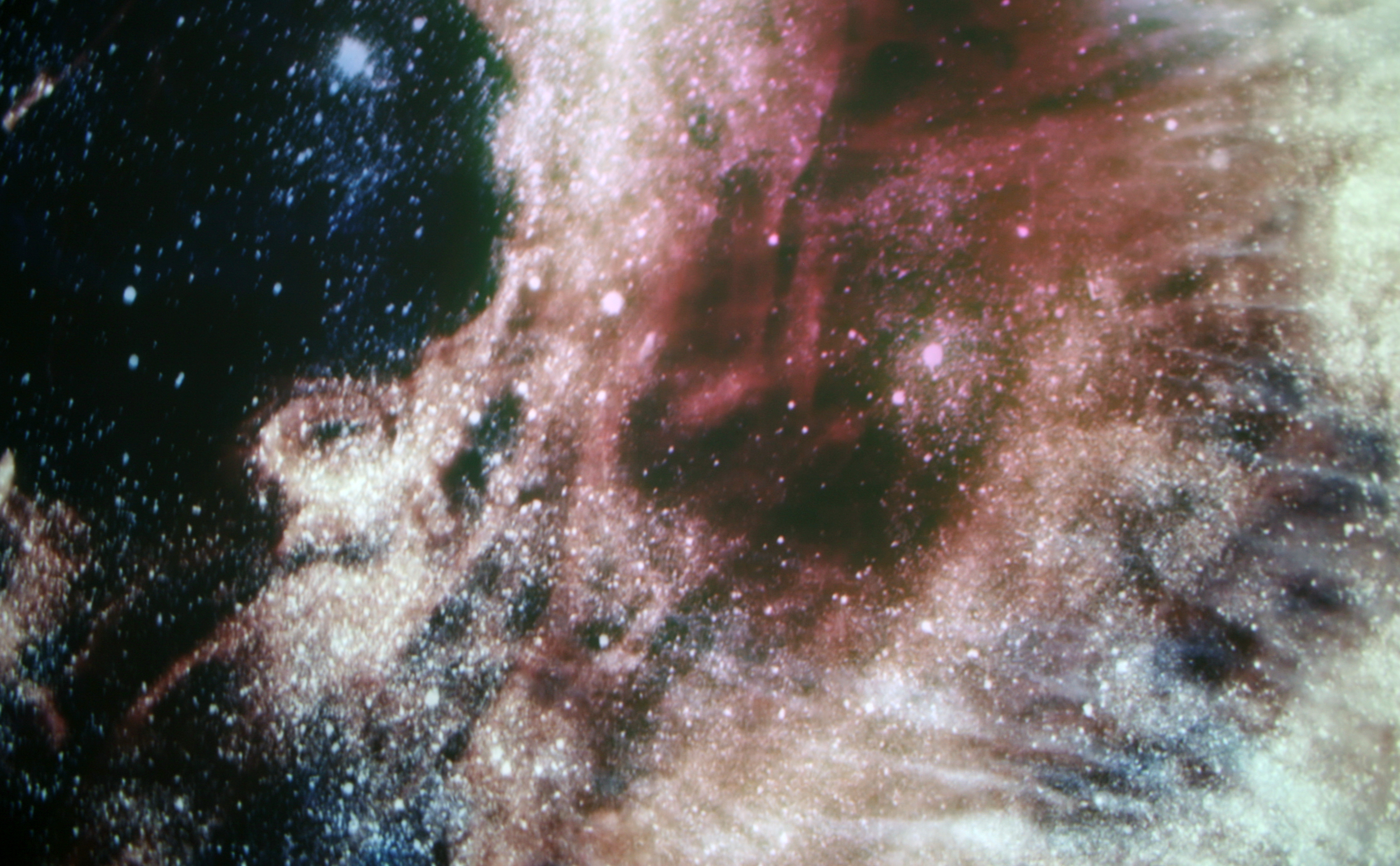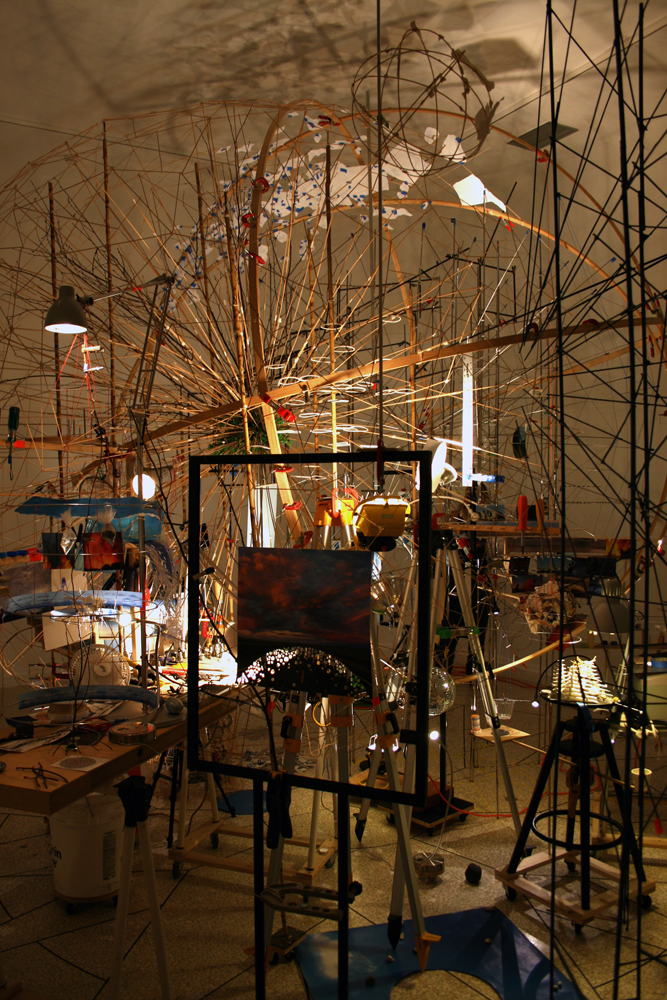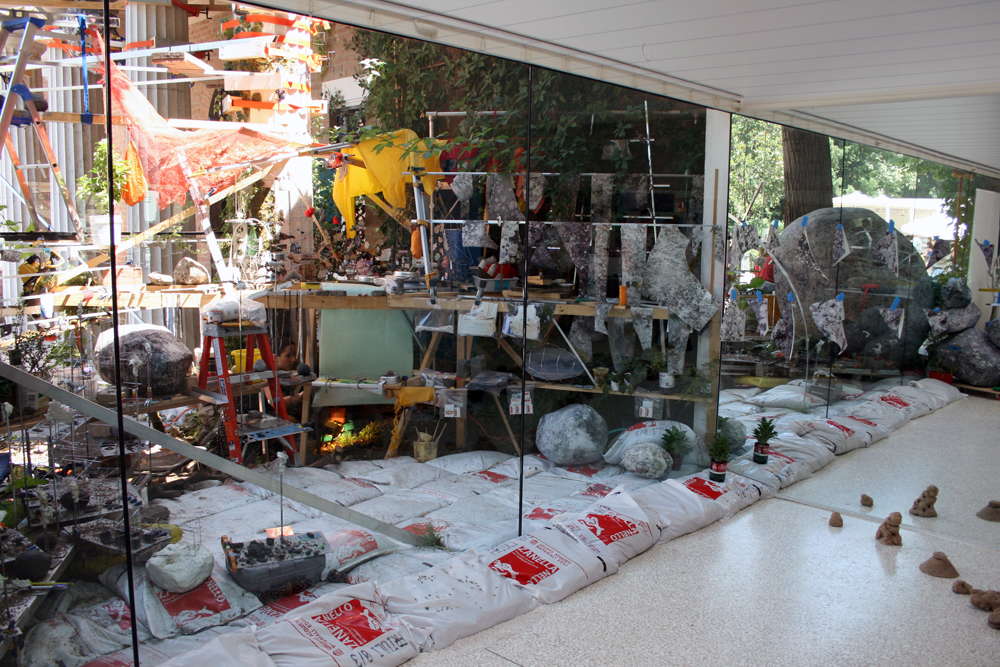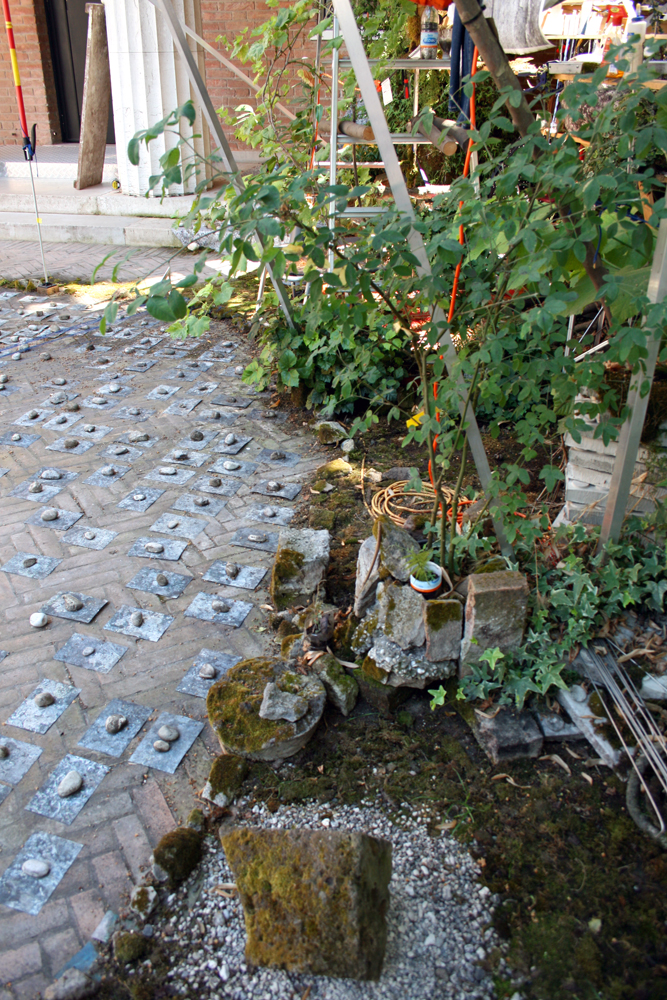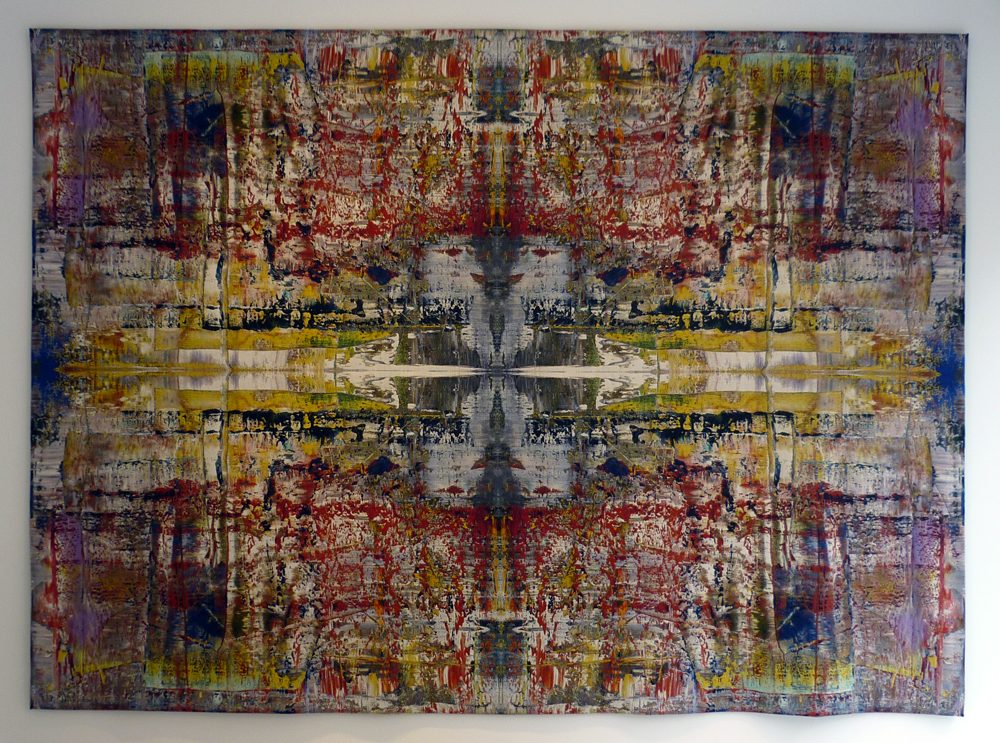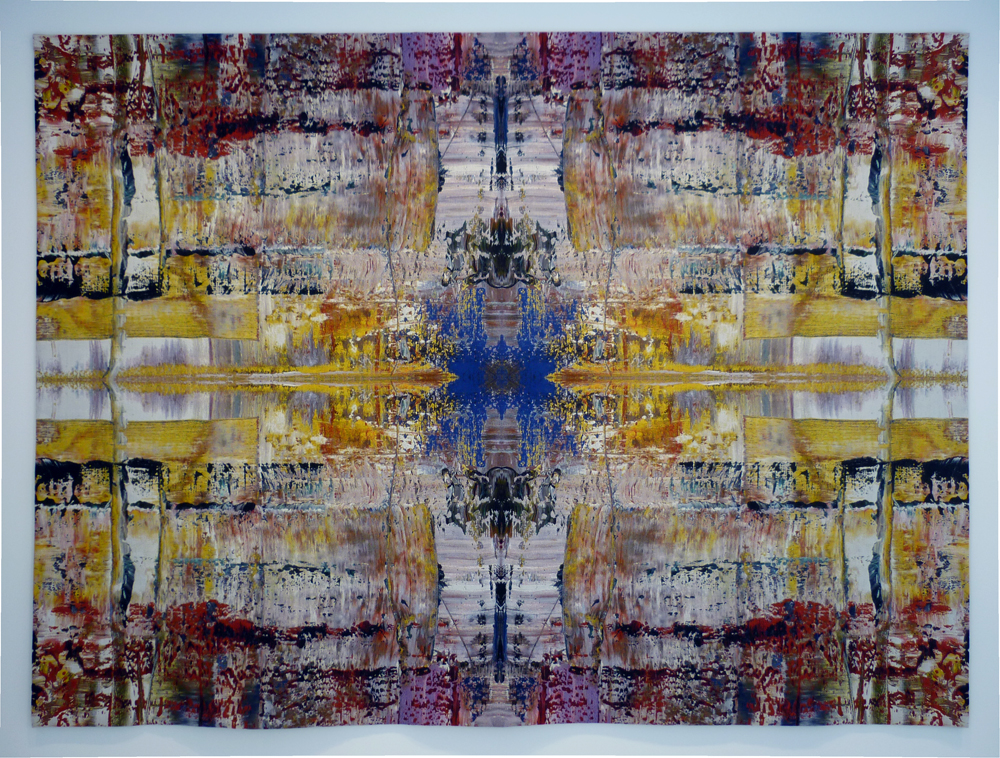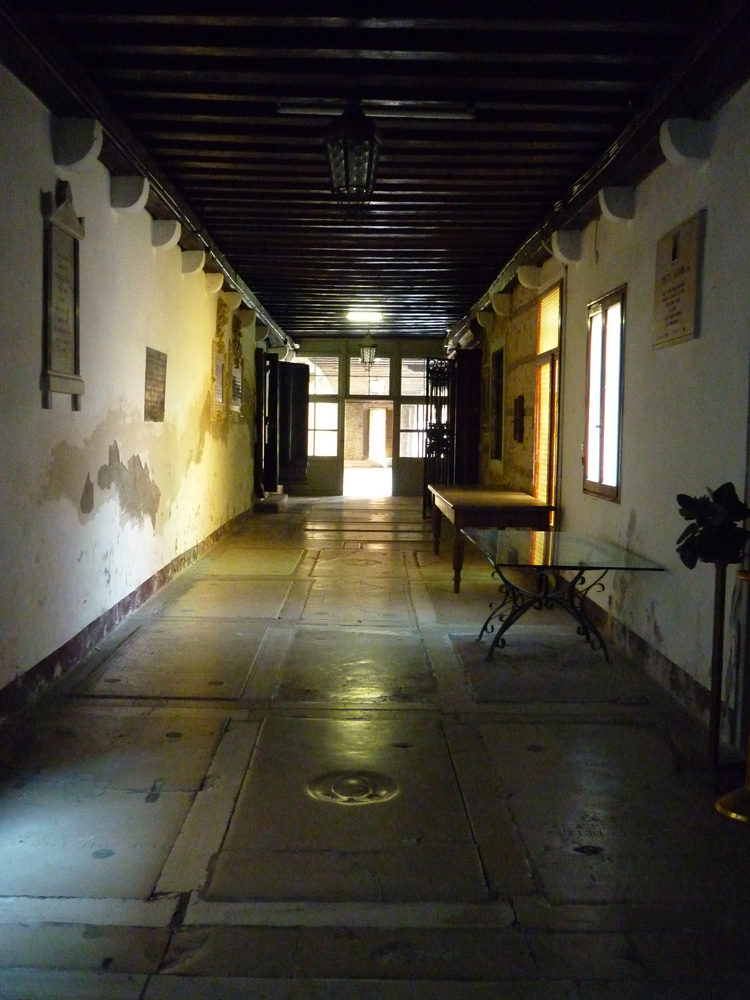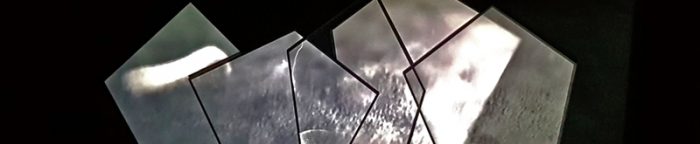
To welcome back the light of longer days I collected one of my solargraph cans from The Hogsmill Nature Reserve where it had been fixed to a hide for 6 months, since the summer solstice, looking out across the water where the birds gather. Really pleased with the image and that it captured the reflection too.
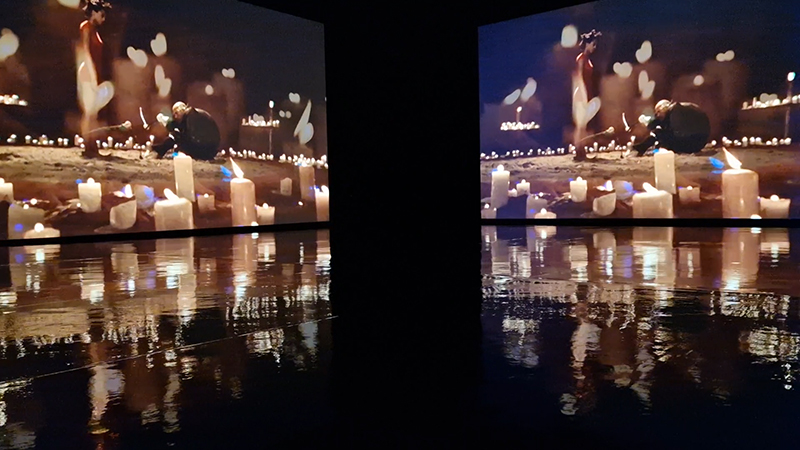
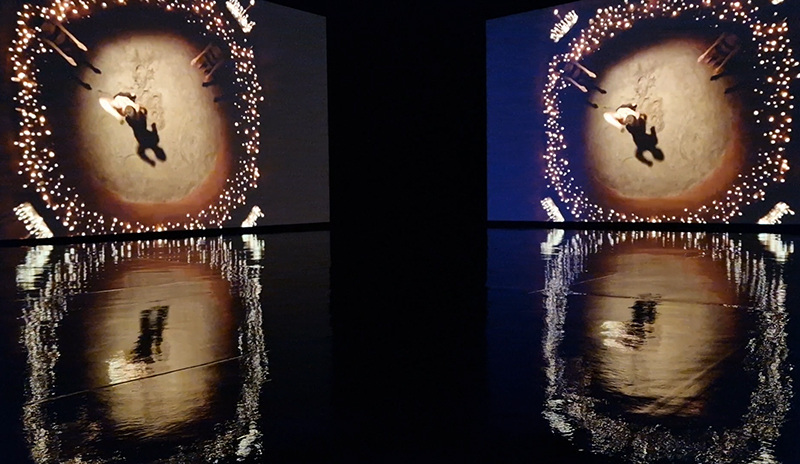
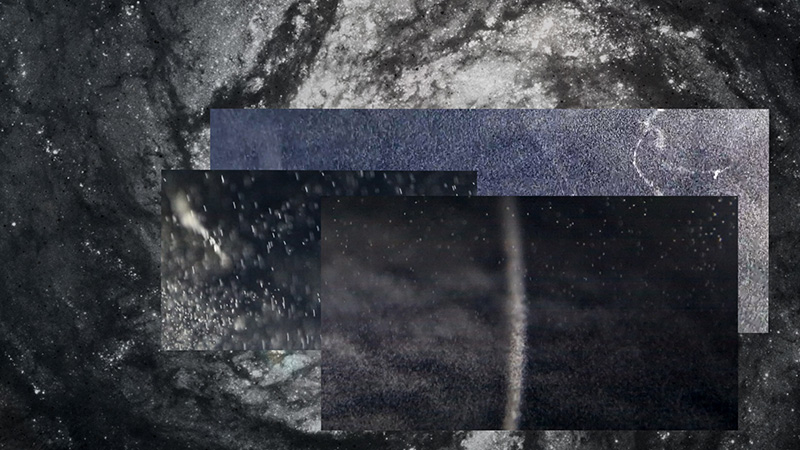
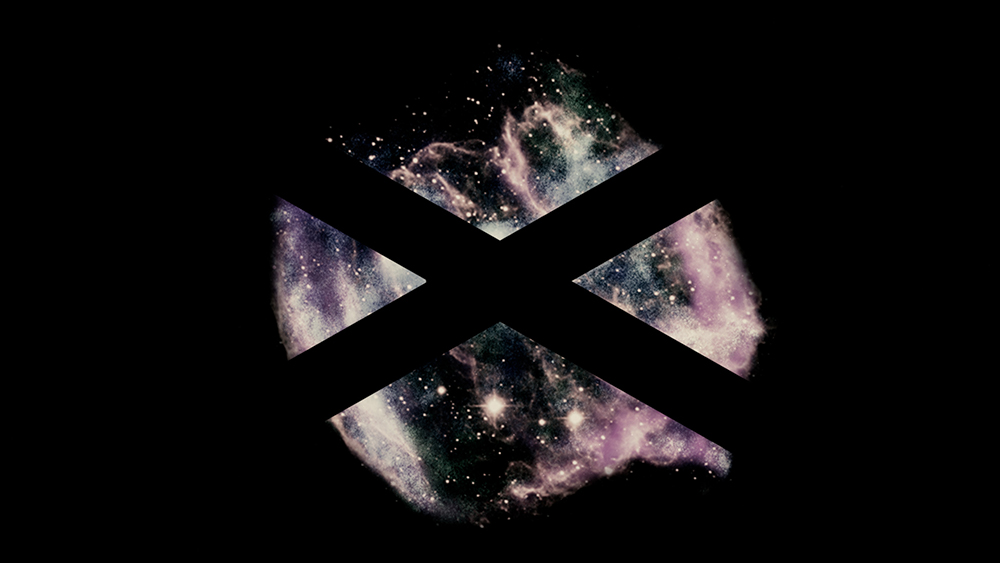
So delighted that Cosmic Chiasmus: crossing the universe was included in the amazing Serendipity Arts Festival, an annual interdisciplinary festival held across multiple venues in Panjim, Goa, India. I just wish I could have visited 💎🌌✨️☀️
My video was shown as part of the selected module exhibition CARBON, curated by the Science Gallery Bengaluru team in collaboration with artist and curator Ravi Agarwal.
Artists: Annelie Berner; Susan Eyre; Marina Zurkow; David Hochagatterer; Dhiraj Kumar Nite; Jan Sweirowski; Jane Tingley; Maria Joseph and Nuvedo; Shanthamani Muddaiah
Curated walkthrough with Jahnavi Phalkey
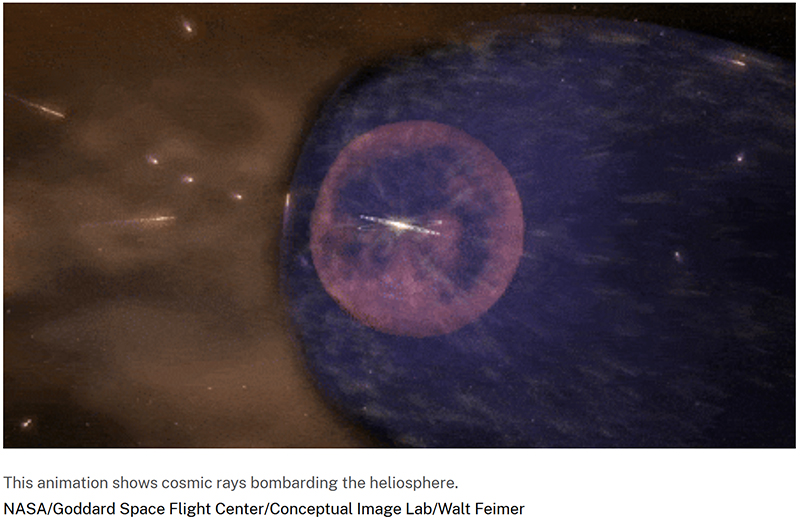
The video (05:29 min) offers a glimpse into a subatomic world where cosmic rays travel from distant galaxies to collide and silently interact with atoms and technology on Earth. Above our heads where cosmic rays interact with the Earth’s atmosphere radioactive carbon-14 is formed. This is then absorbed by plants that are eaten by animals and humans. When an organism dies, no more carbon-14 will be absorbed and the current amount in the organism will start to decay. By measuring the remaining carbon-14 in organic matter, the time of death can be established. Cosmic ray activity gives us carbon dating techniques.
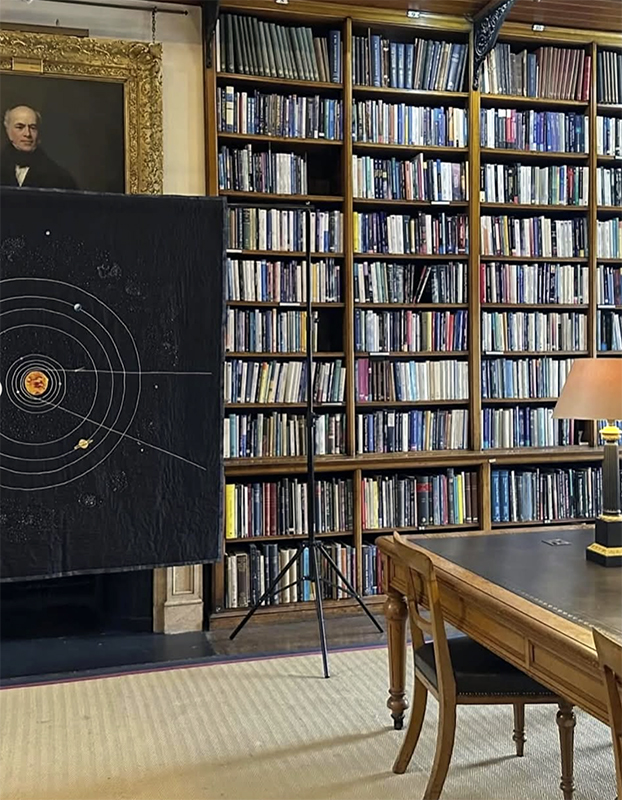
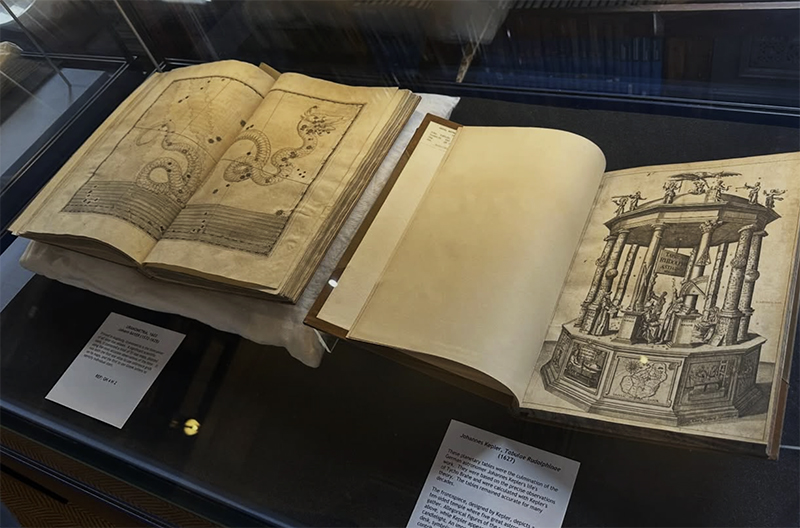
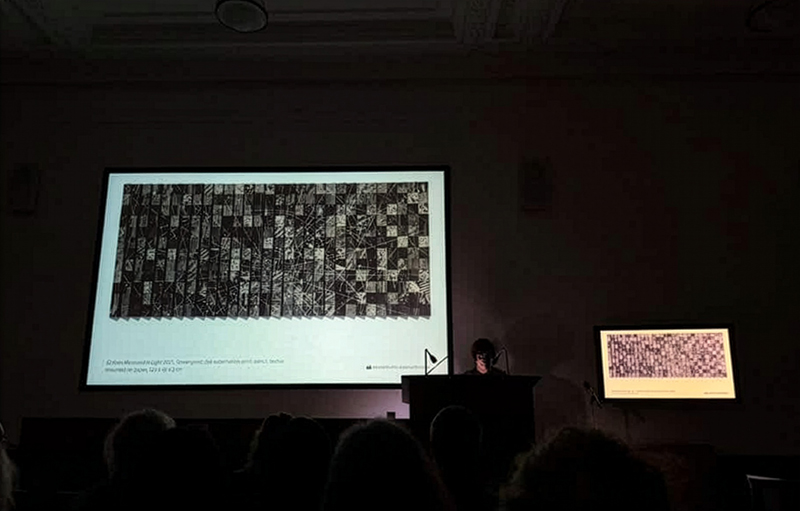
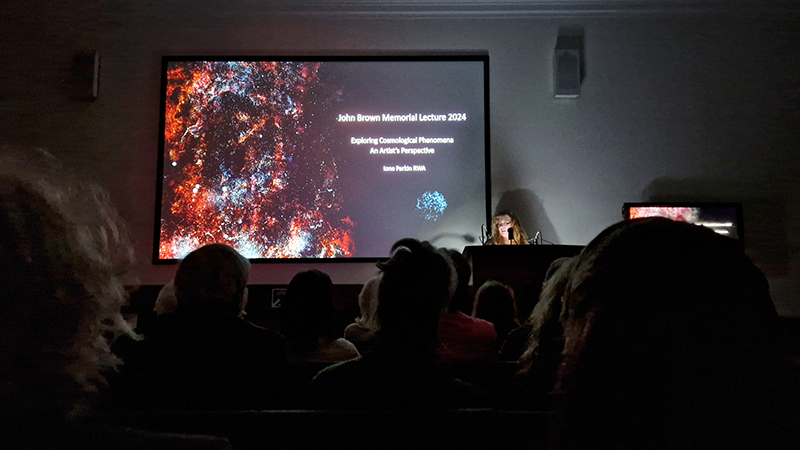
I attended The John Brown Memorial Lecture: Exploring Cosmological Phenomena: An Artist’s Perspective, talk by Ione Parkin RWA at The Royal Astronomical Society. Ione is the Co-Founder/Lead Artist of the Creativity and Curiosity Art-Astronomy Project (C&C). She is an Honorary Visiting Fellow of the School of Physics and Astronomy at the University of Leicester and a member of the British Association of Planetaria. Through her many cosmological paintings the ephemeral, gaseous, nebulous phenomena of space are given an earthly materiality that still retains the sense of the intangible. Ione has created an impressive body of work. I especially liked the cloud chamber mixed media pieces and photopolymer etchings created through the fluorescence microscopy process of firing laser beams of light of one wavelength at the surface of the painting then capturing the light emitted from a longer wavelength. Look forward to seeing these works irl rather than digital images.
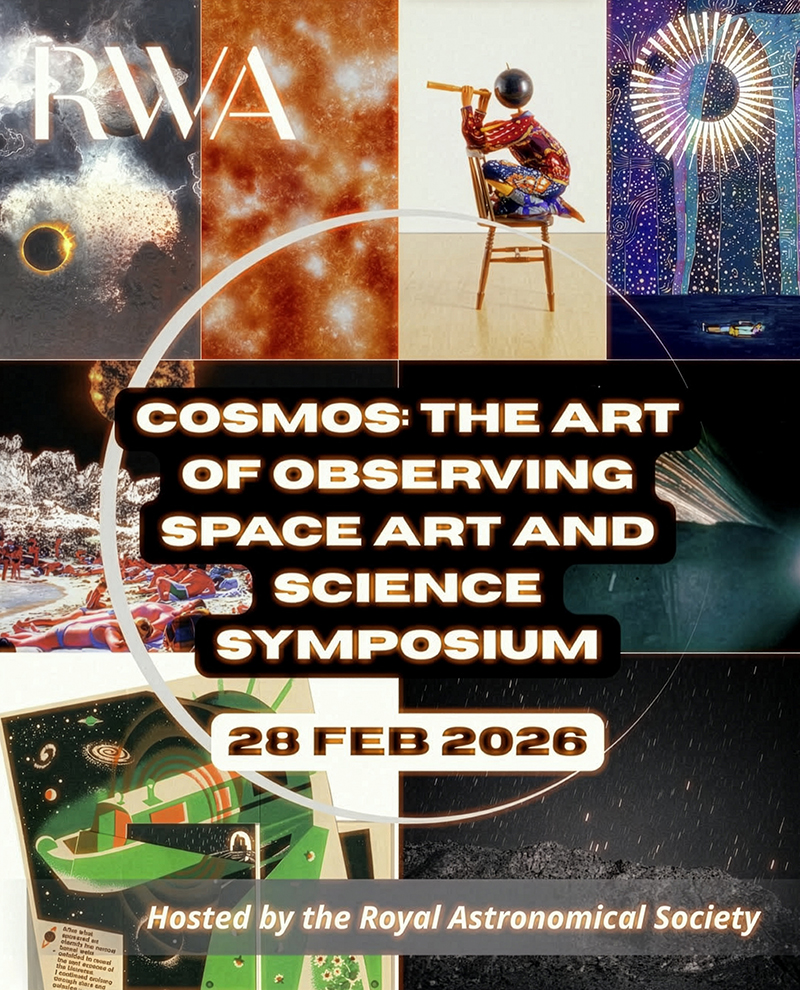
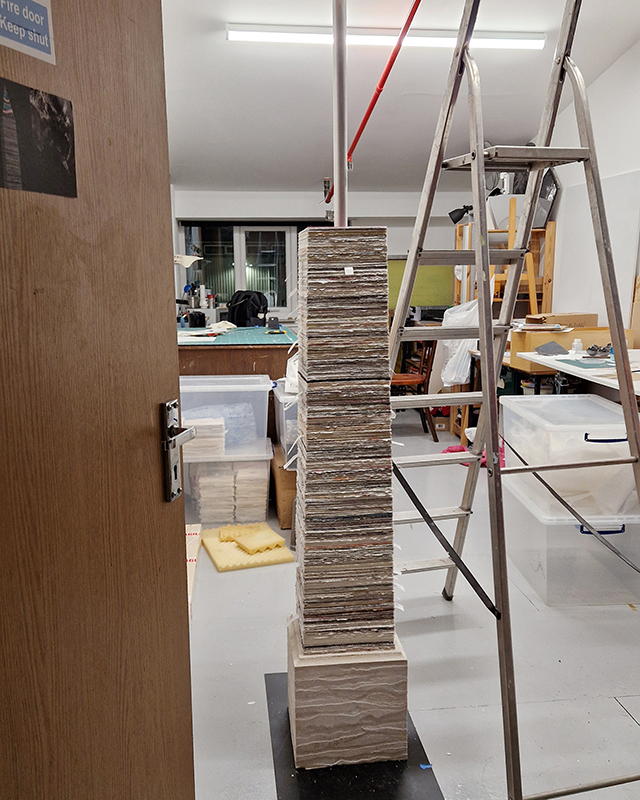
I am over the moon that Ione has selected my sculpture The Azimuth Obelisk (of sedimentary knowledge) to be included in Cosmos: The Art of Observing Space, a major exhibition she is curating at the Royal West of England Academy in 2026. Cosmos will bring together a body of artwork inspired by themes of astronomy, cosmology, astrophysics, planetary atmospherics, space-exploration, solar dynamics and celestial mechanics. There will be a catalogue published to accompany the exhibition with a Foreword by Professor Chris Lintott (Professor of Astrophysics, University of Oxford).
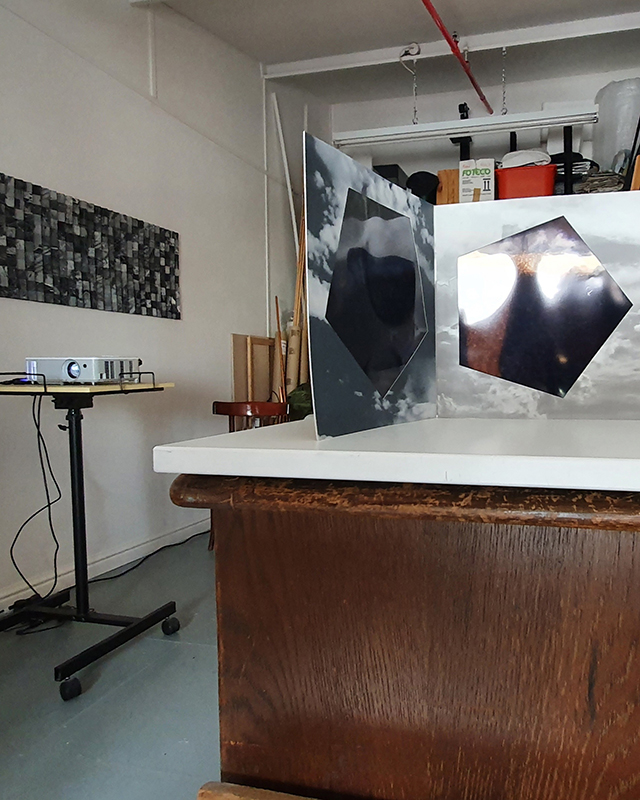
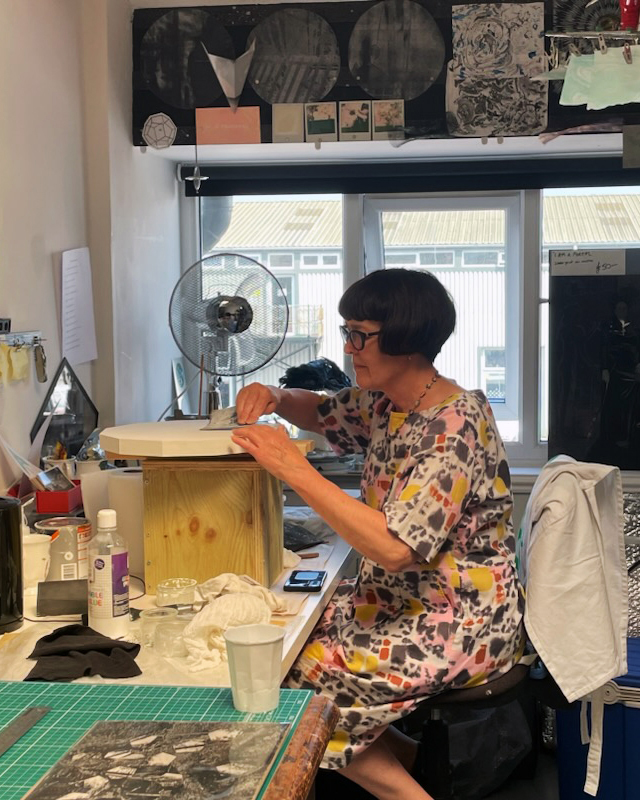
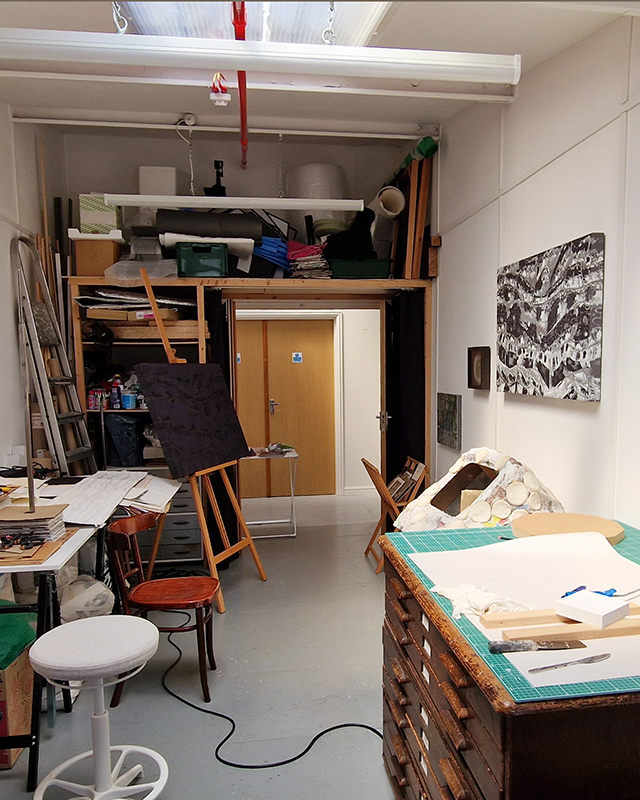
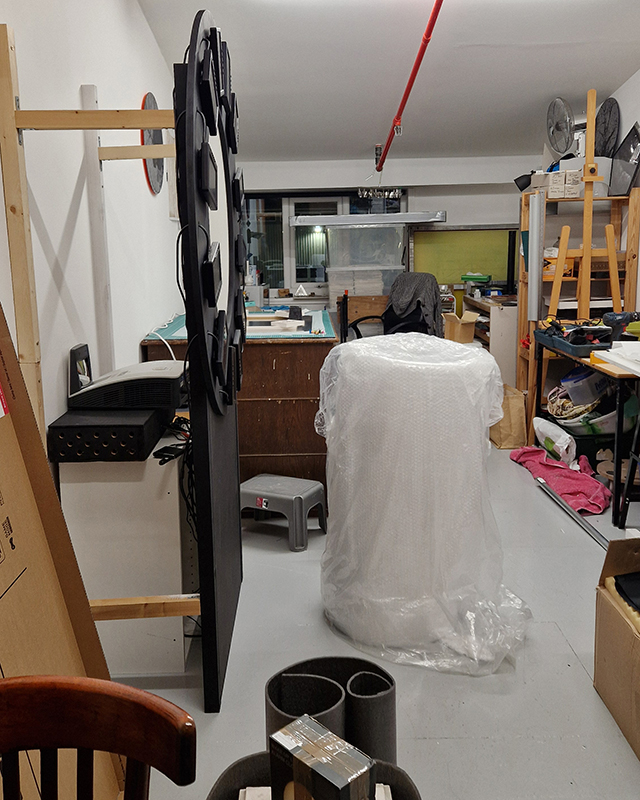
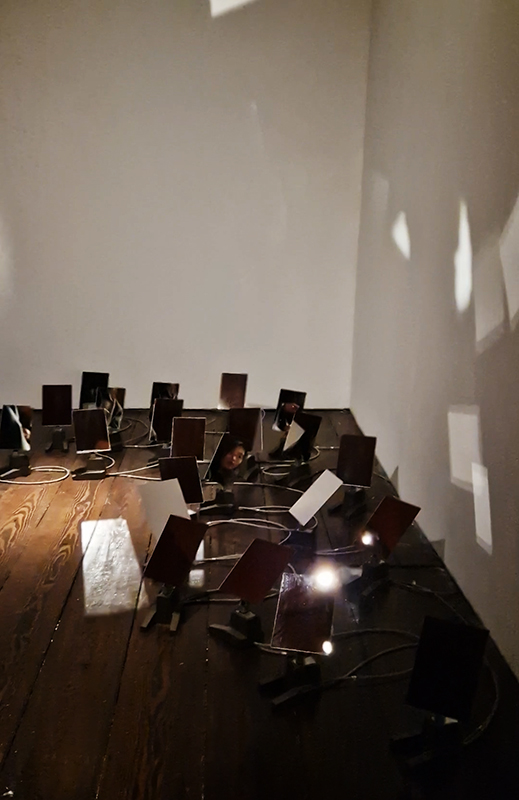
In the studio I have been conducting some more tests towards a video installation which will respond to the crystal structure of magnetite and a quote from Jason Groves book The Geological Unconscious – ‘What truth could be more unexpected ….than the one in which the mineral envisions while also being envisioned.’
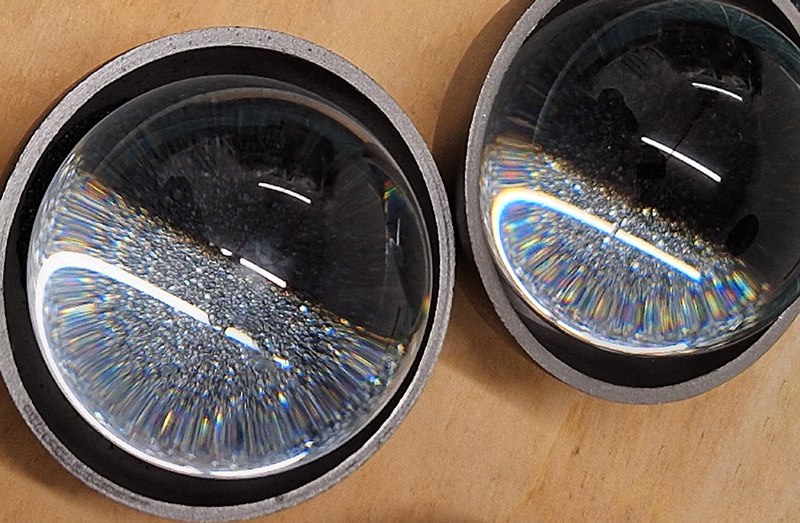
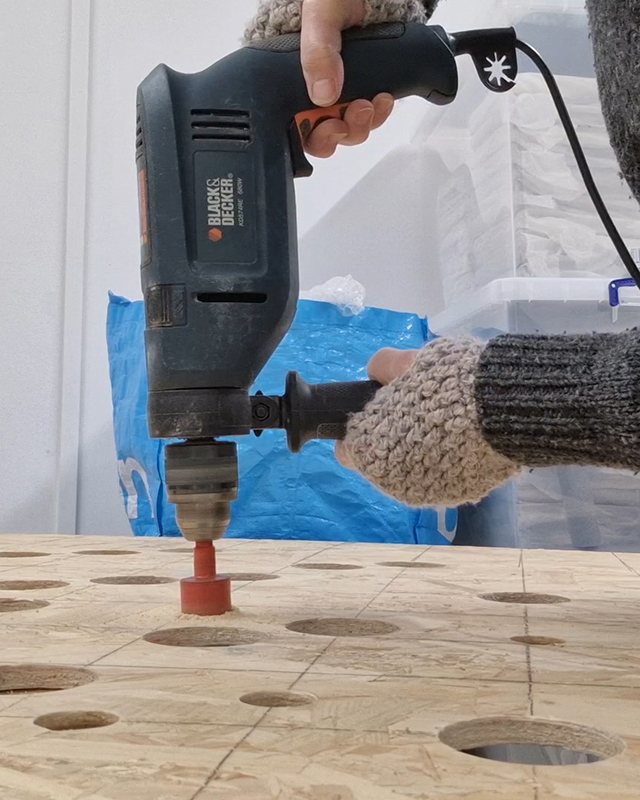
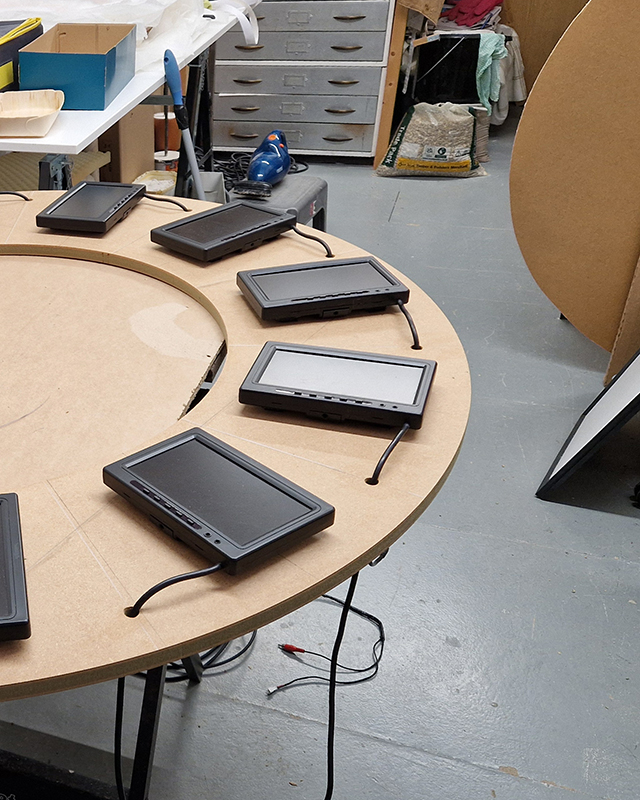
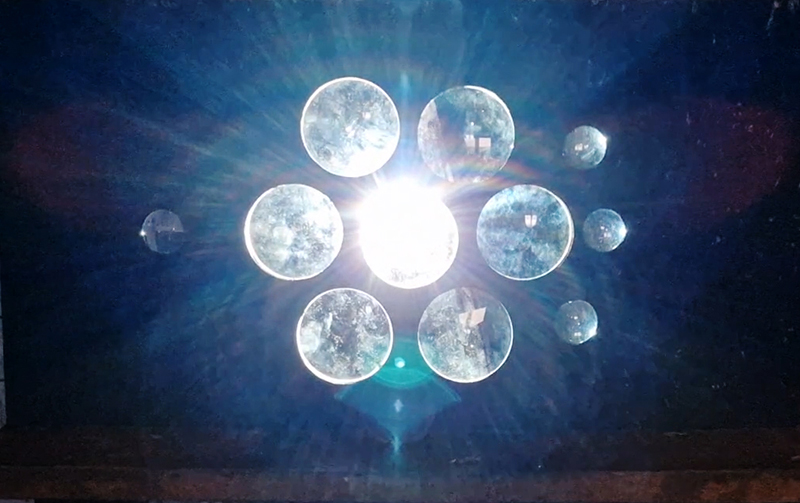
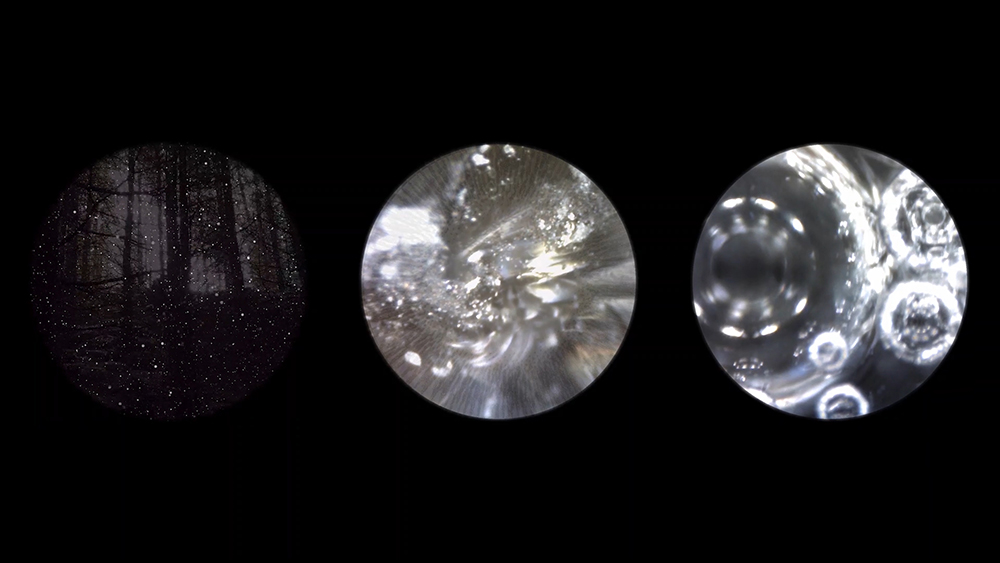
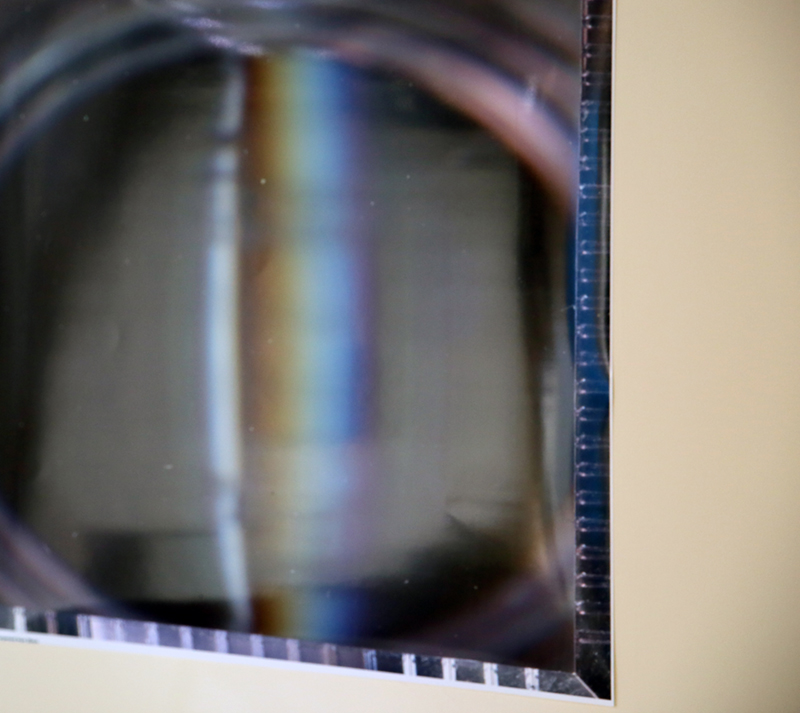
Magnetite is attracted to a magnet and can be magnetized to become a permanent magnet itself. It’s crystal structure was determined in 1915 as one of the first crystal structures to be obtained using X-ray diffraction. Magnetite contains both ferrous (divalent) and ferric (trivalent) iron. At present I am just testing the concept and technical issues using a small board with some lenses inserted in a circle pattern. The large lenses used to distort the projection represent the oxygen present in the crystal structure, I have drilled some smaller holes to test lenses to represent the iron component. In my tests I was surprised to find that when the small lenses were inserted in the holes the projection image was no longer visible on the wall. The small lenses I have are quite thick, but still it was unexpected. I am sourcing some thin lenses to test.
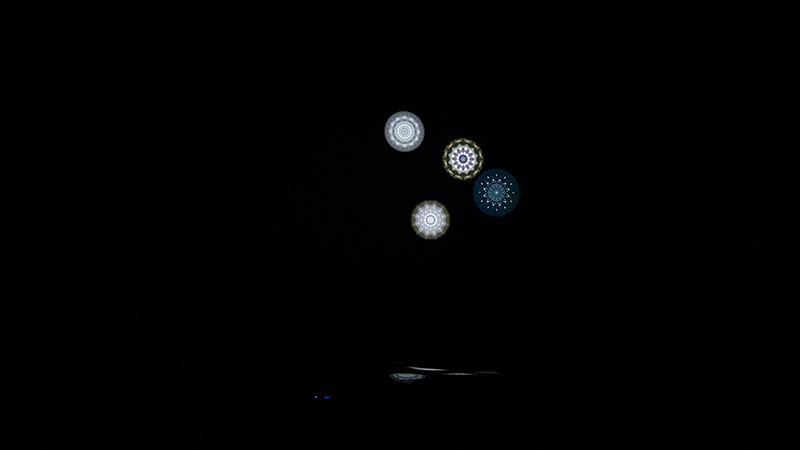
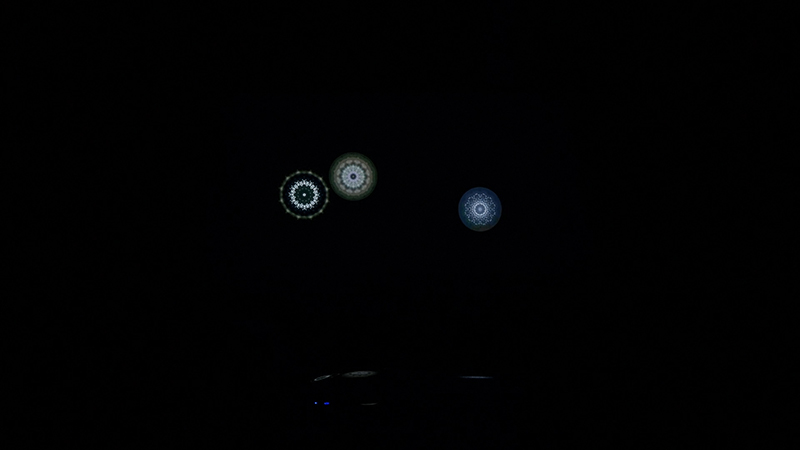
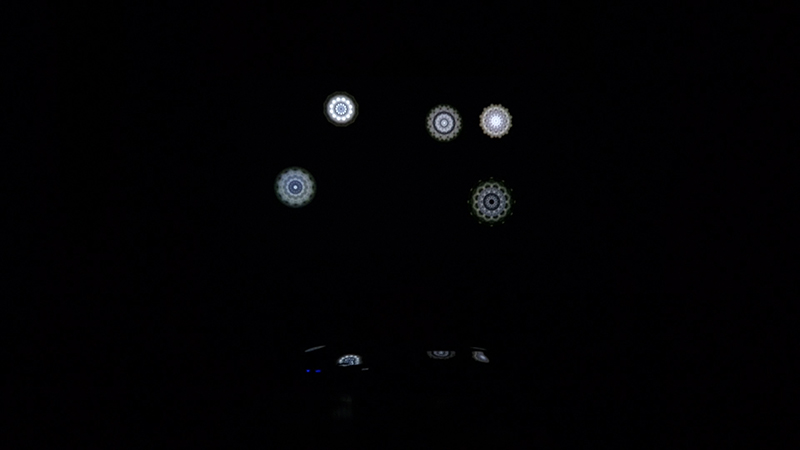
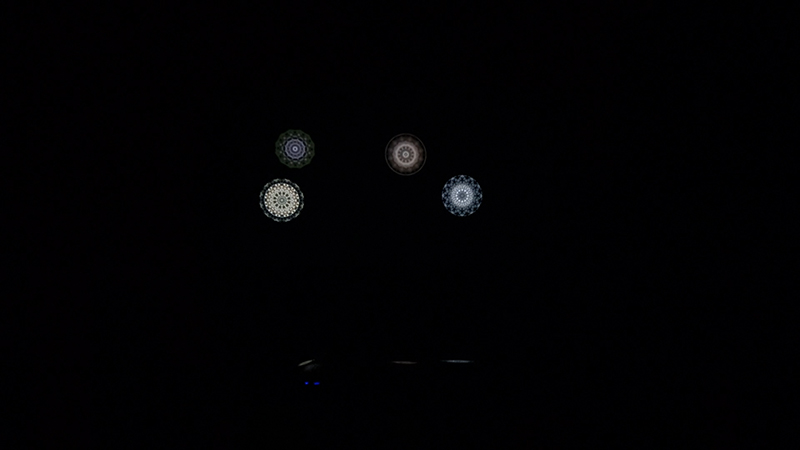
Projection with no lenses in board – no distortion of image
With all lenses inserted – large lens distortion occurs but small lens images not visible
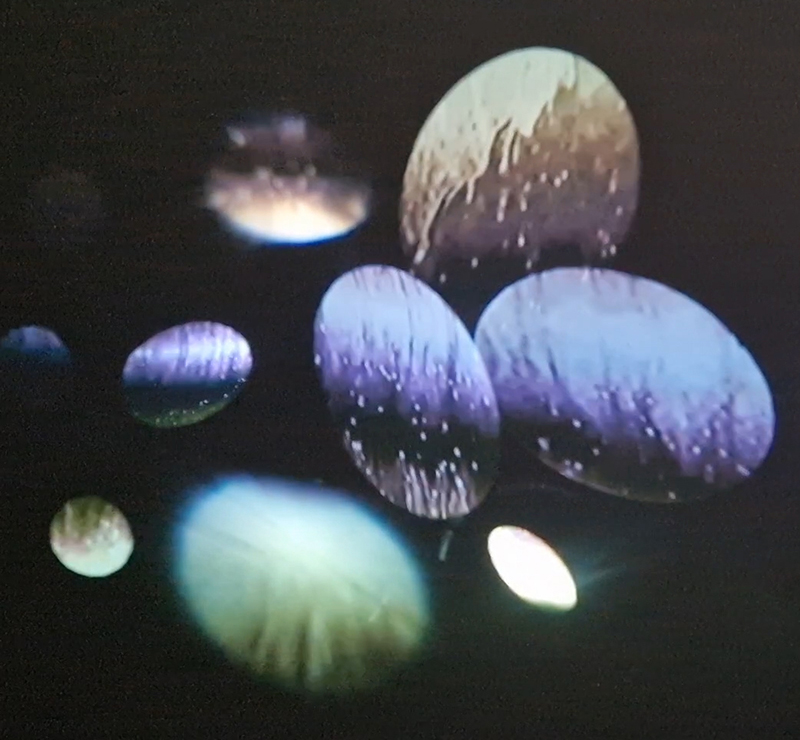
Tests with only large lenses inserted for distortion
Tests using back projection screen and looking directly at the lenses
Exhibitions visited
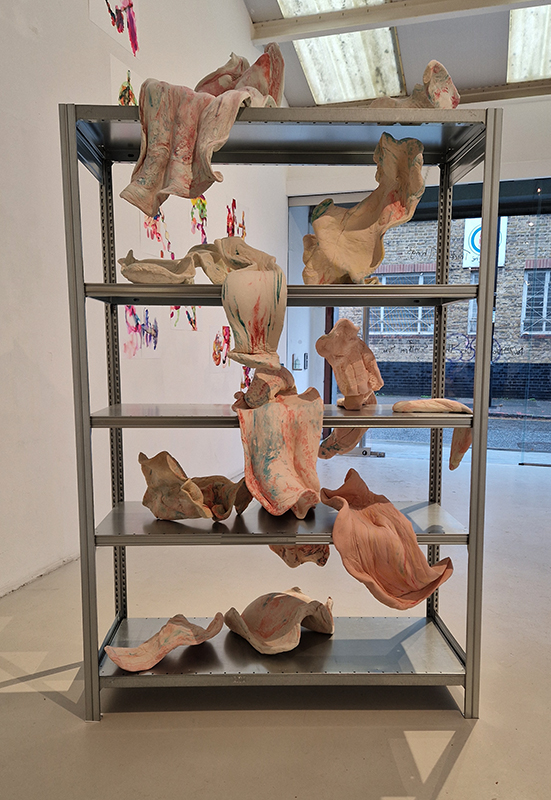
In the Thick of Things at APT curated by Chris Marshall and Cash Aspeek including works by Laura White, Asaki Kan, Leila Galloway and Deborah Gardner. Big messy works, tumbling, sliding and colliding following the vein of arte povera letting the materials speak. Had a touching conversation about the last days of our respective parents with Cash who had made a very personal series of work using her parents marital bed of 60 years as both subject and material.
Conglomerates at Hypha Gallery Mayfair, a group show featuring work by Paola Bascon, Rhiannon Hunter, Rona Lee, Hannah Morgan, Davinia-Ann Robinson and Sam Williams. A warm and earthy show exploring care formed through relations with self and other beings to create substrates for resistance, deep-knowing, storying and kinning as processes of paying attention to that which is unheard.
Reading
While reading Margaret Atwood’s disturbing novel Oryx and Crake (to gain insight after seeing the stunning collaboration between Wayne McGregor and Max Richter in Maddaddam at ROH recently) I came across a reference to Mesembryanthemaceae – a plant which disguises itself as small pebbles by taking on patterns and colouring of the ground it grows on. I had forgotten about these strange plants commonly called stone lithops or living stones. The thick leaves can store enough water for the plants to survive for months without rain and during dry periods they shrivel into the ground. With no stem they are partially subterranean, sending light down to the buried leaf cells via ingenious reflecting ‘window cells’ on the two wide leaf tips.
In The Human Soul: Its Movements, Its Lights, and the Iconography of the Fluidic Invisible, originally published in French in 1896, Dr. Hippolyte Baraduc (1850–1909) postulates the existence of “the fluidic invisible” — a “vital cosmic force”, which he calls Odic liquid, that extends across the universe and “saturates the organism of living beings and constitutes our fluidic body”. Instead of all things being composed of one elementary substance, as in philosophical accounts of the monad, in this cosmic vision, we all live in a sea that we cannot see, which Baraduc names Somod.
This remarkable image posted by Public Domain Review is one of the many attempts to capture the “vital cosmic force” made by Dr. Hippolyte Baraduc a French physician and parapsychologist who believed he could photograph thoughts and emotions.
“Pure electography of the hand by Iodko’s method. The hand of an over-electrified person, placed on a plate gives a very remarkable impression of the electrified cutaneous surface.”
I am intrigued as to what might ‘over-electrified person’ mean? I was also fascinated by this image – “Luminous spectre of the north pole magnet, obtained by the red electric photographic lamp, surrounded by fine pearls of psychecstasis.”
In classical antiquity, a time stretching from Homer to the early middle ages, geographic orientation usually referred to landmarks or astral phenomena to determine direction. Eos, meaning dawn, and Hesperus, meaning evening, were named for sunrise and sunset with north (arctos) being marked by the constellation Ursa Major and later the Pole Star. The winds also became associated with direction and named in accordance with their qualities such as hot and humid or cold and dry.
The number of points on a wind rose began with the four cardinal points that were added to and refined over time. Aristotle designed an asymmetrical 10 point wind rose for “the study of things high in the air” (meteorology) which was later refigured by Timosthenes, a 3rd century BCE Admiral and geographer, naming a system of twelve winds and using this as a tool for navigation. The contemporary compass has its roots in the ancient classification of winds.
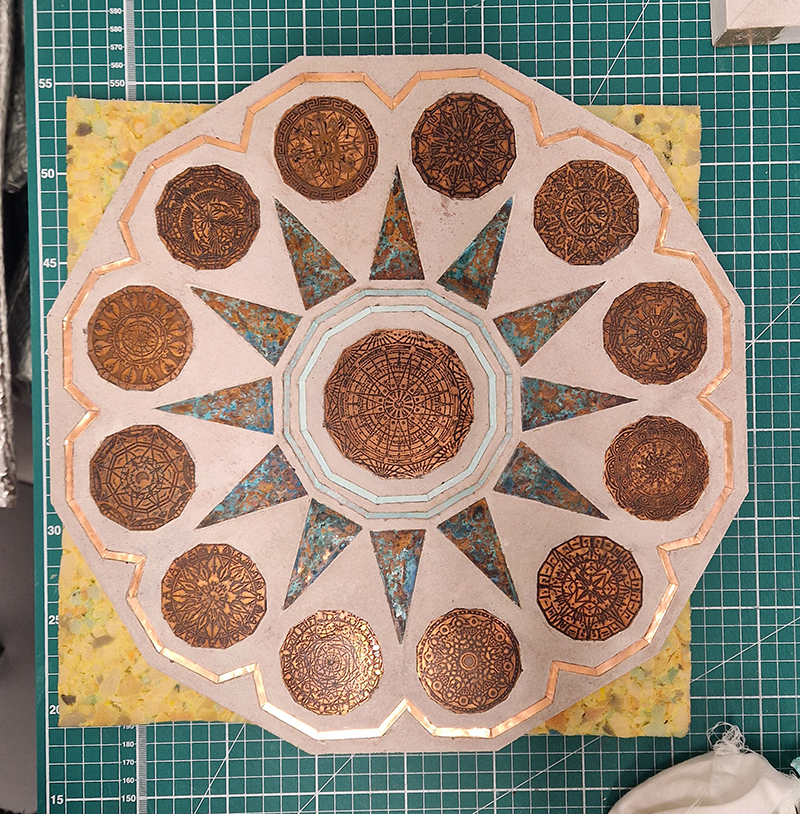
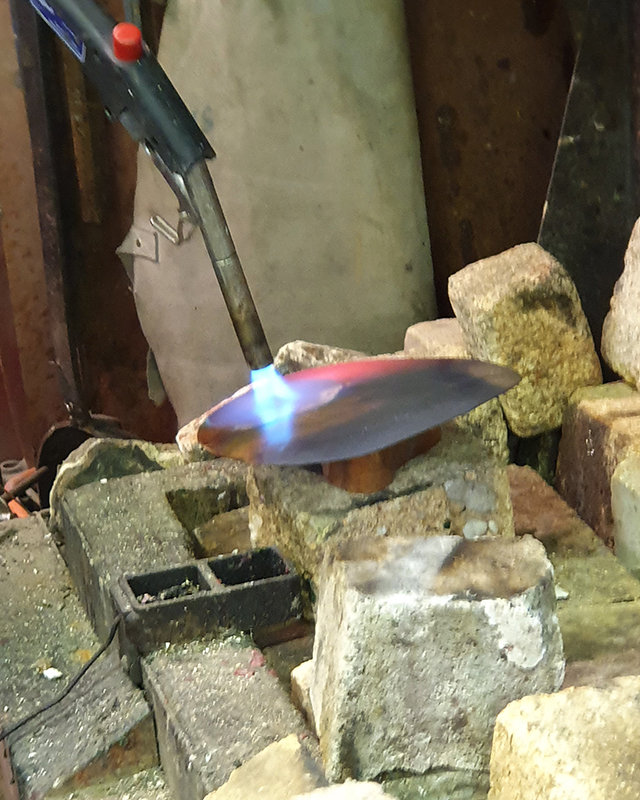
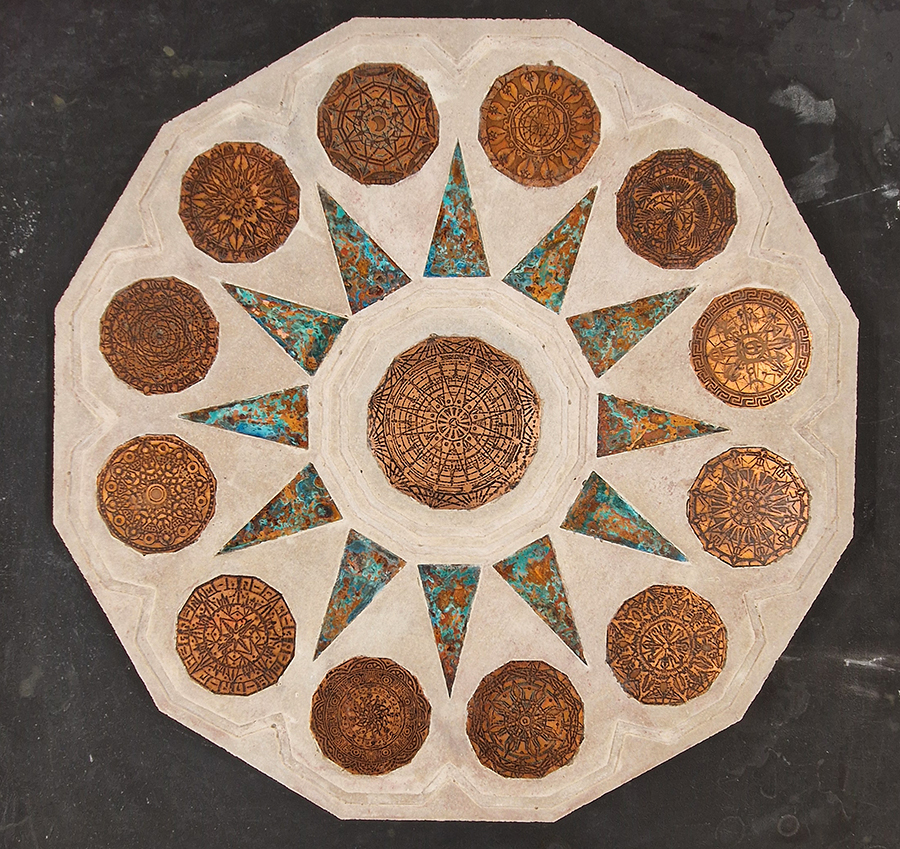
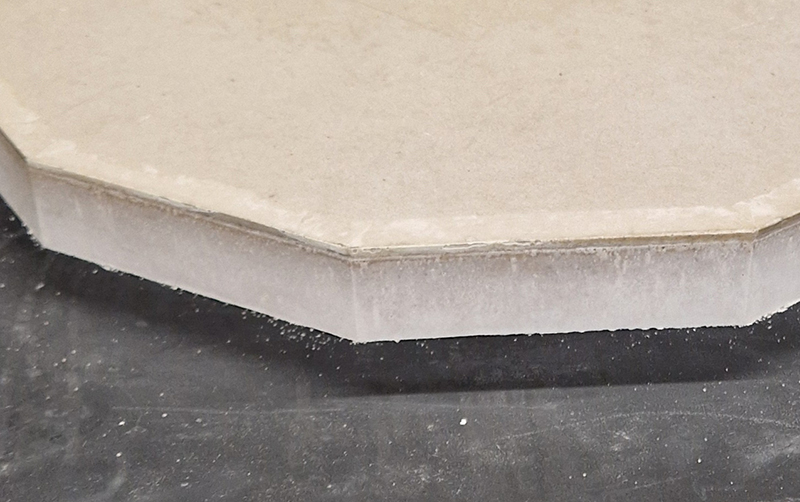
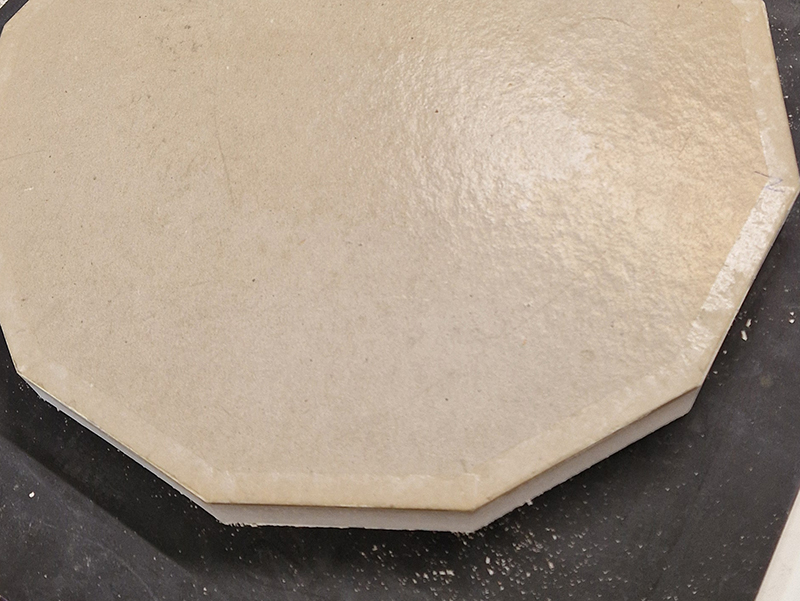
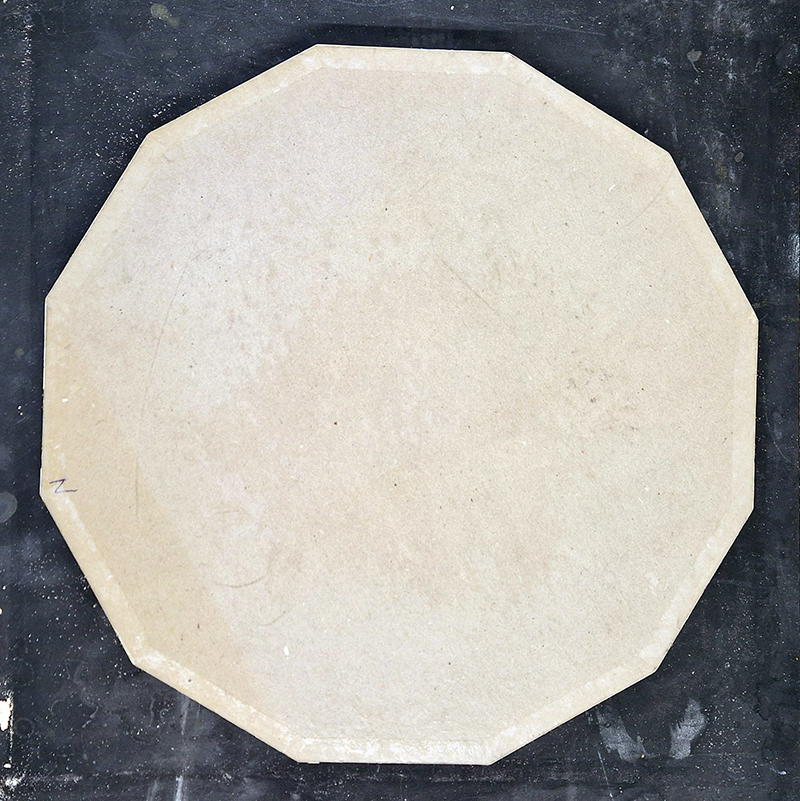
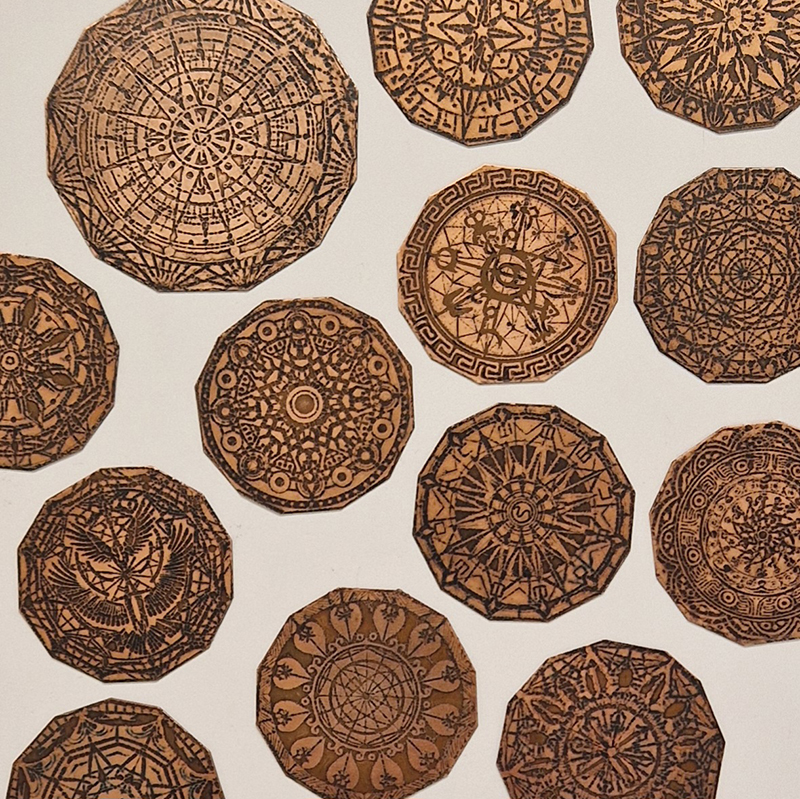
Freshly excavated. A new tablet for the series Instruments of the Anemoi, replacing a previous one based on the idea of a wind rose and set with etched copper markers, the designs of which are influenced by characteristics of the gods (anemoi) represented by each of the twelve winds.
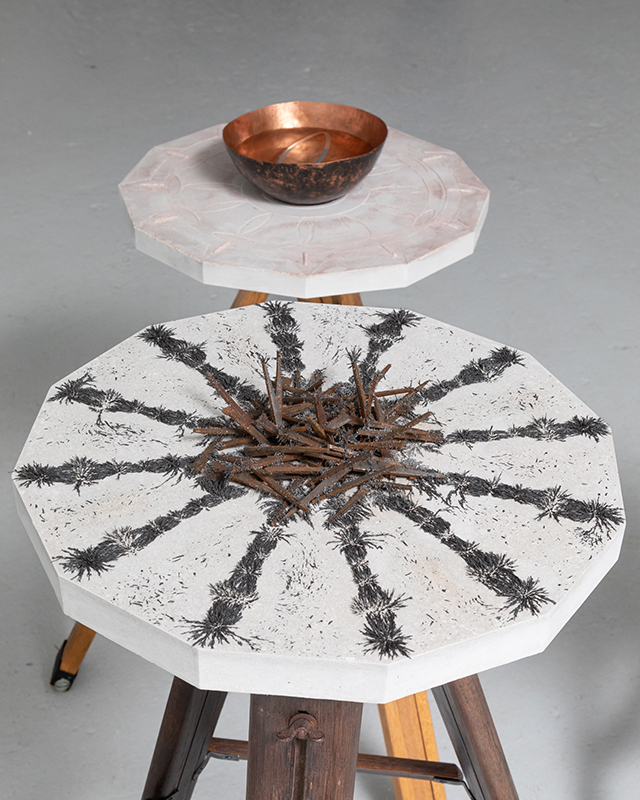
Instruments of the Anemoi are a set of dodecagon tablets cast in Snowcrete, a cement with no magnetic minerals, as is used for instrument pedestals at a magnetic observatory. They also respond to a twelve sided anemoscope “table of the winds” carved in marble around eighteen hundred years ago and held at the Vatican Museums. Releasing the cast from the mould and collagraph is a rewarding process – if all the pieces have held their position during the concrete pour and vibrating to release trapped air bubbles. Luckily this time was a success.
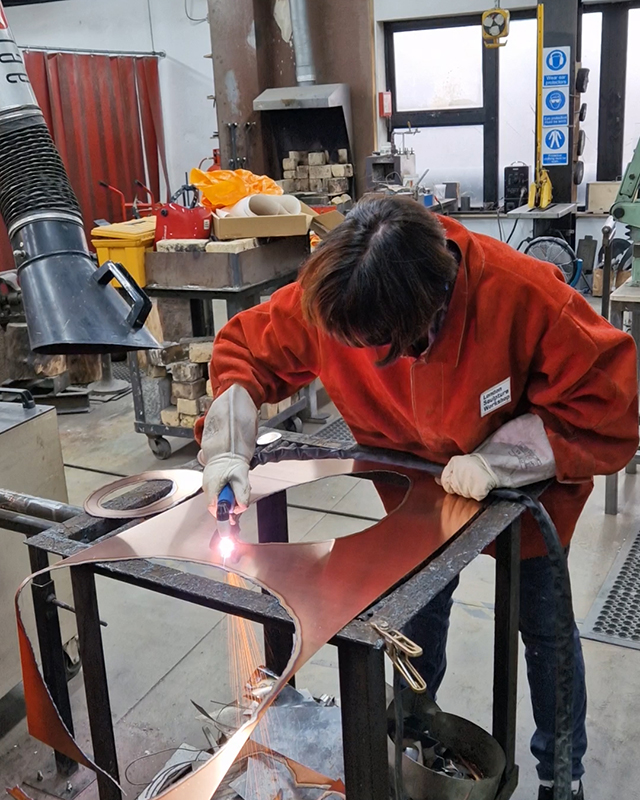
The other two sculptures in the series. A hand beaten copper bowl with a ‘silver fish’ floating in water based on the oval shaped compass needle illustrated in Breve Compendio de la Sphera de la arte Navegar by Martin Cortes 155. Wafer thin fish shaped iron leaves were also used by 11th century Chinese geomancers. Nails and iron filings reveal an embedded magnetic field and hark back to a legend on the discovery of the lodestone, a naturally magnetic mineral, which recalls a Greek shepherd who noticed the nails in his boots were attracted to the rock beneath his feet.
Unsettling to find it is already one year on since A Stone Sky duo exhibition with Julie F Hill opened at Thames-side Studios Gallery and this work was first shown.
Around 95% of the universe is ‘dark’ to us, formed of unknown and possibly unknowable matter which may be inaccessible to us, but cosmic rays offer a tangible contact with outer space.
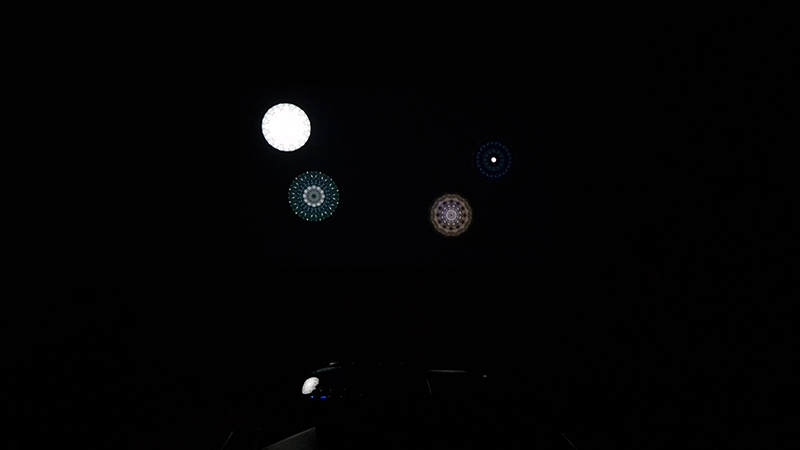
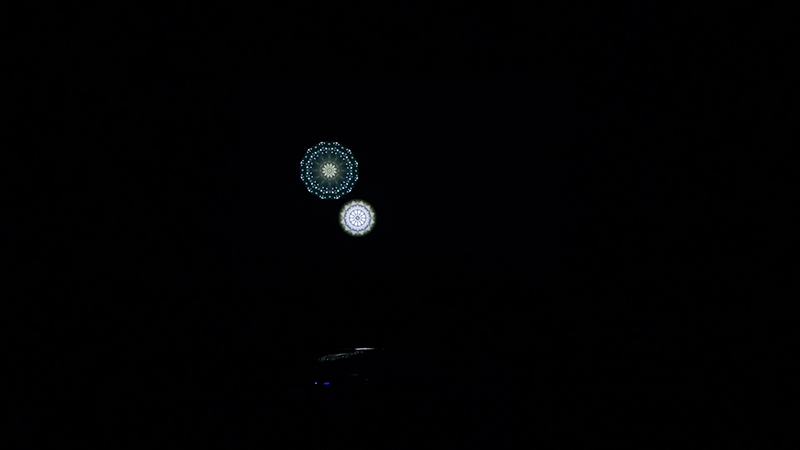
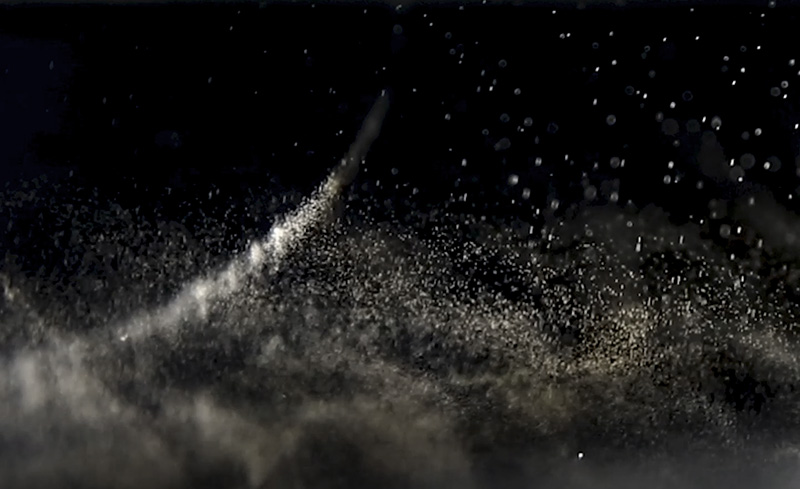
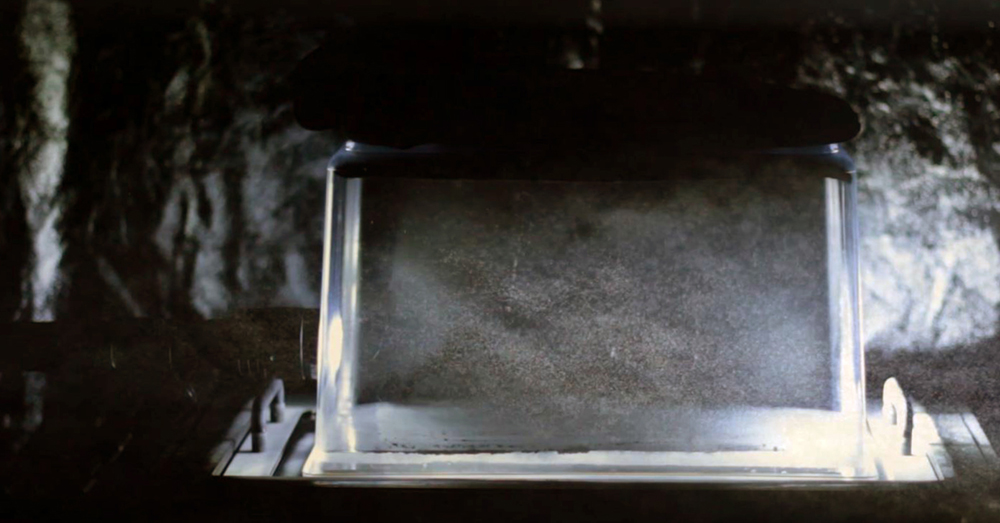
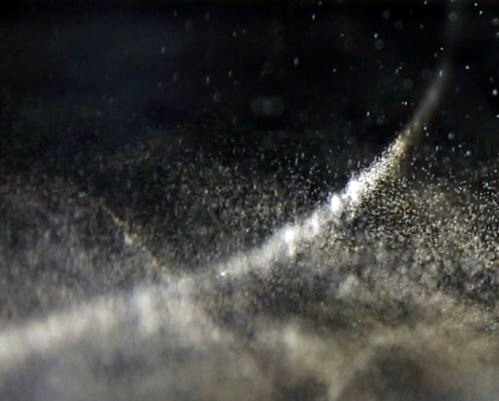
Giving The Breath of Stars a run to see if the cosmic rays are still there These images are stills of live action.
Cosmic ray detectors, mini computers, wooden box (20 x20 cm), video projection; live duration.
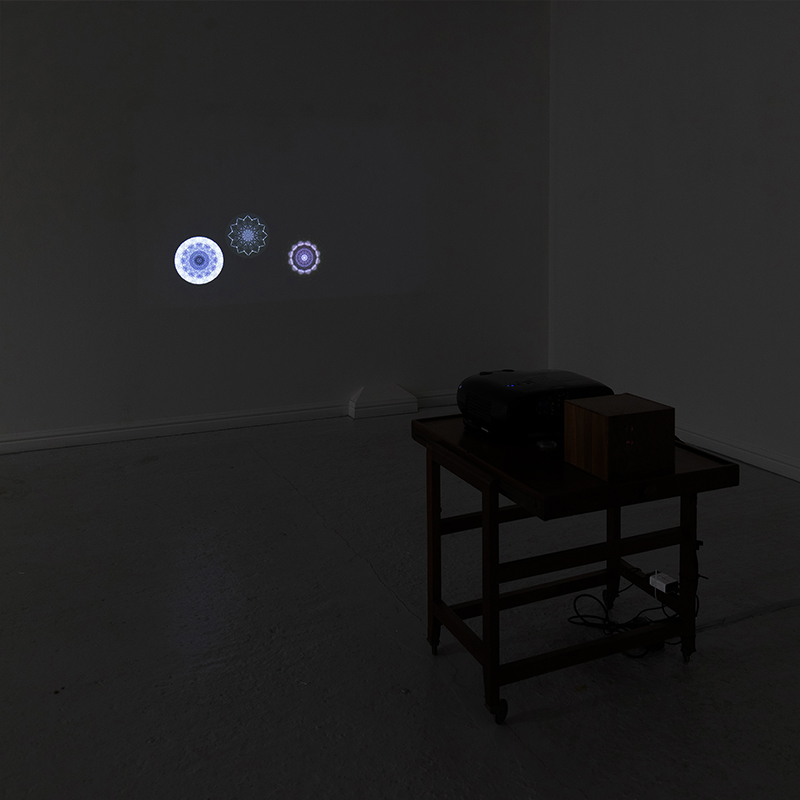
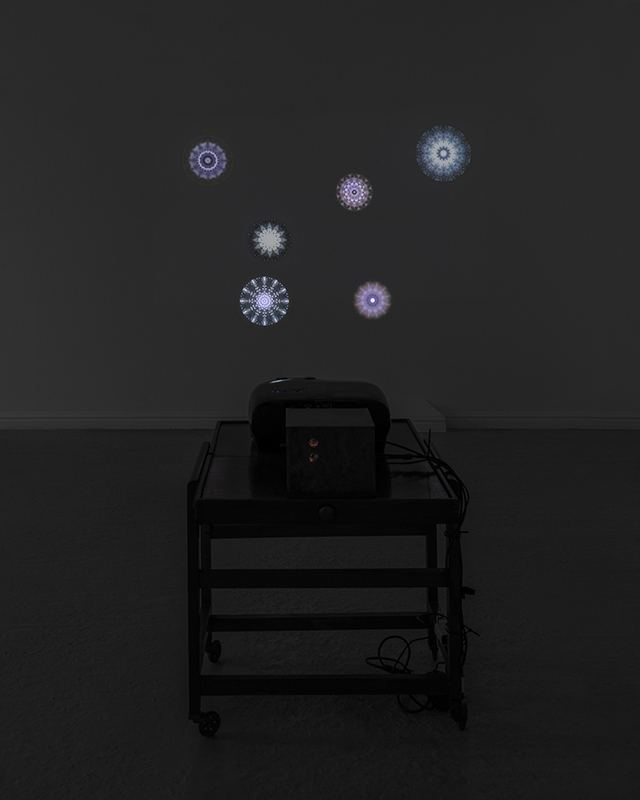
The Breath of Stars is a digital video work activated in real time by cosmic rays. These high energy particles arrive from outer space, interacting with life and technology on Earth. Coming from the heart of exploding stars or the depths of black holes, cosmic rays power across the universe with unimaginable energy. Some may come from phenomena yet to be discovered or even from other dimensions. A kaleidoscopic animation is projected every time a cosmic ray is recorded passing through the detectors. The animations are created from footage of cosmic ray trails filmed in my cloud chamber.
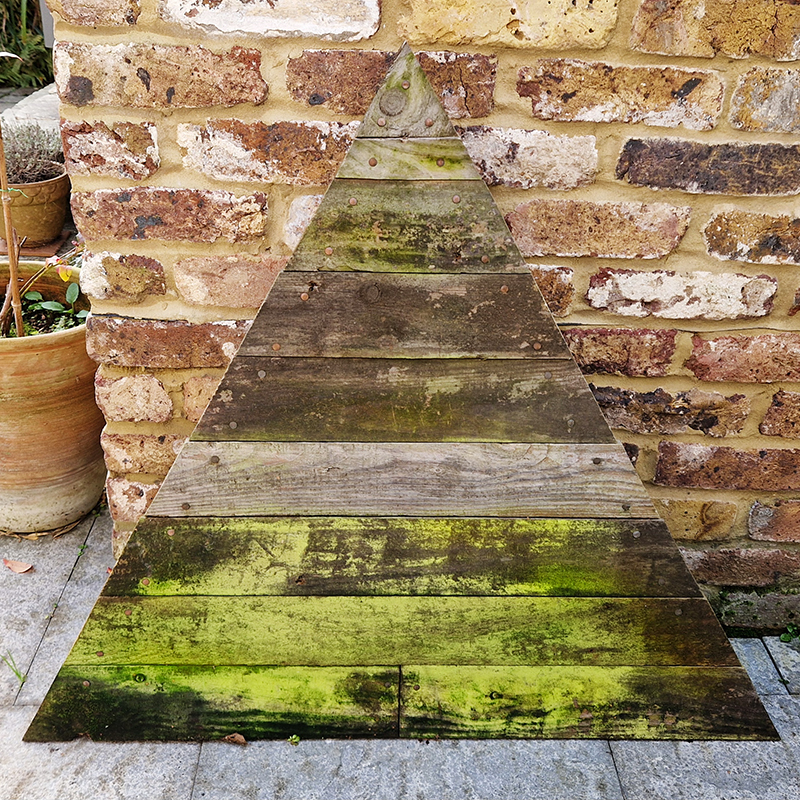
This cold damp weather is stimulating the moss regrowth on the apex pinnacle of The Absolute Hut (of action potential) that found a space in my garden after The Stone Sky exhibition this time last year. I had spent weeks preparing the recycled fence boards to make the North facing wall of the hut, painting them with various mixtures of buttermilk and yogurt blended with moss and was so excited when it began to grow. During the exhibition I would mist it every day. The beginning of my fascination with huts!
The Absolute Hut (of action potential) Wood, moss, paper, copper, video projection, video monitors ; 200 x 300 x 375 cm
Operating as a sensory hub where a range of actions and processes are running concurrently reflecting on the dynamics between the Earth’s geologic structure and navigation using the magnetic field. Neurons in the brain and nervous system send information electrochemically around the body. The signals they send are called action potentials, which is a temporary shift from negative to positive within the cell caused by certain ions entering the cell. Action potentials can be triggered by an interaction with the magnetic field, causing a reaction in the body.
Interference 2023 (video still)
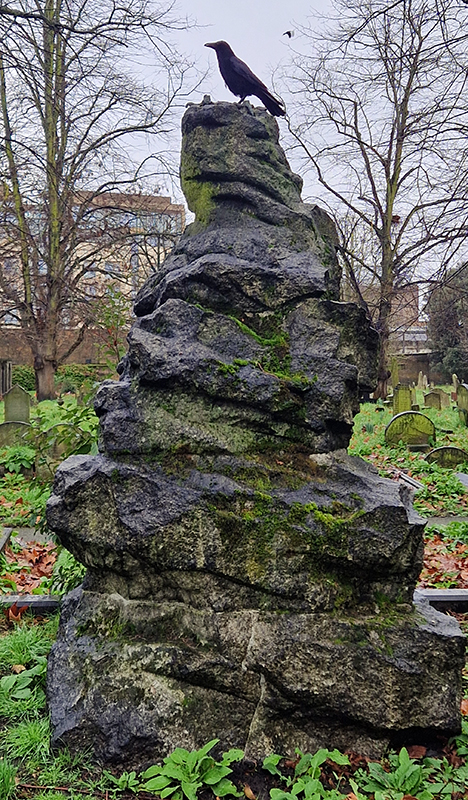
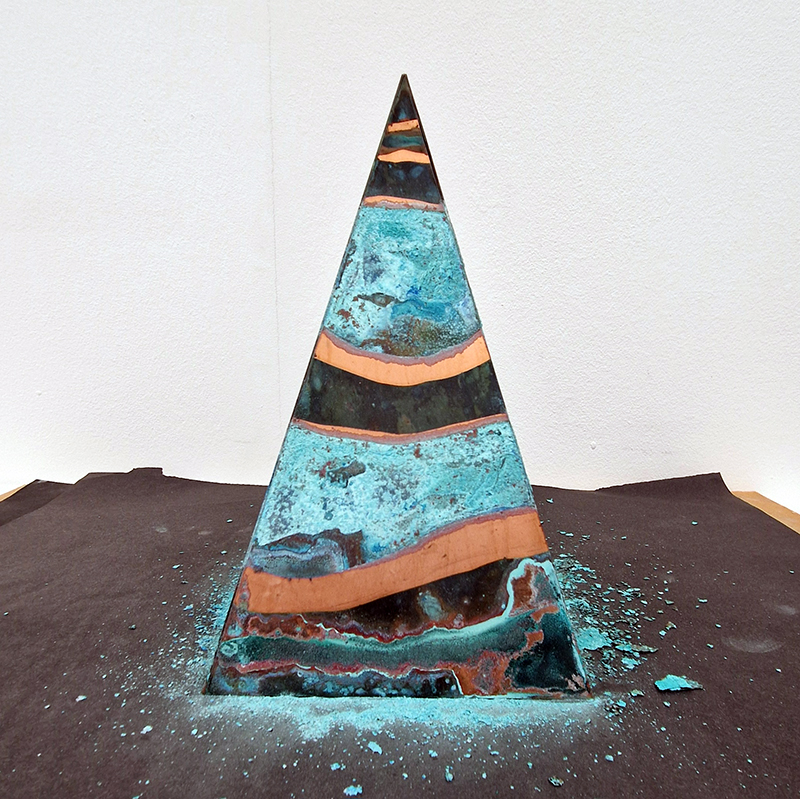
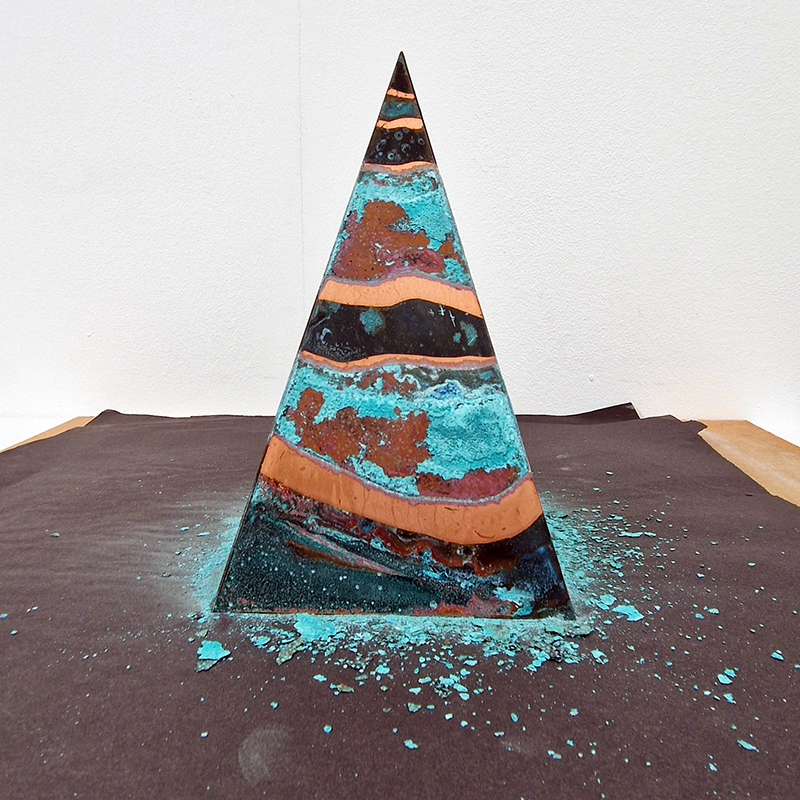
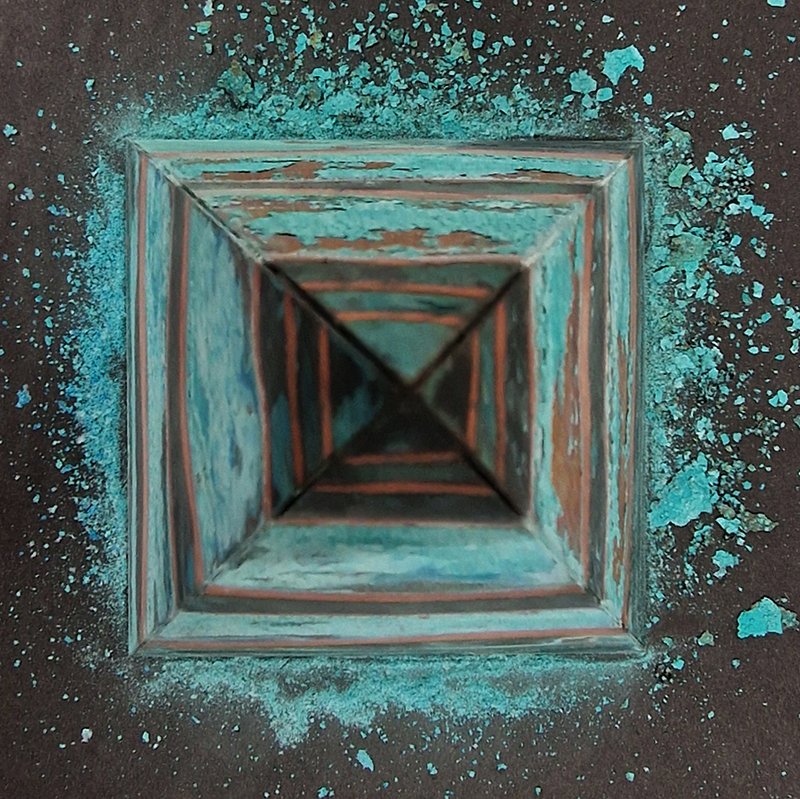
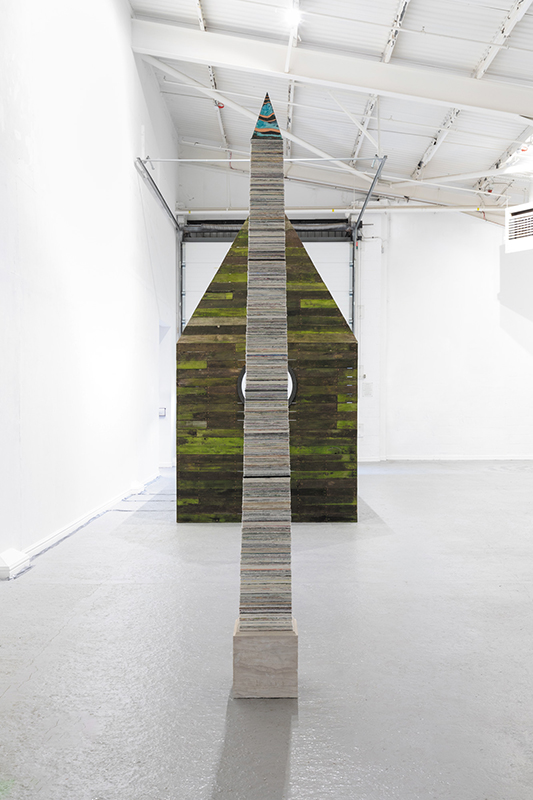
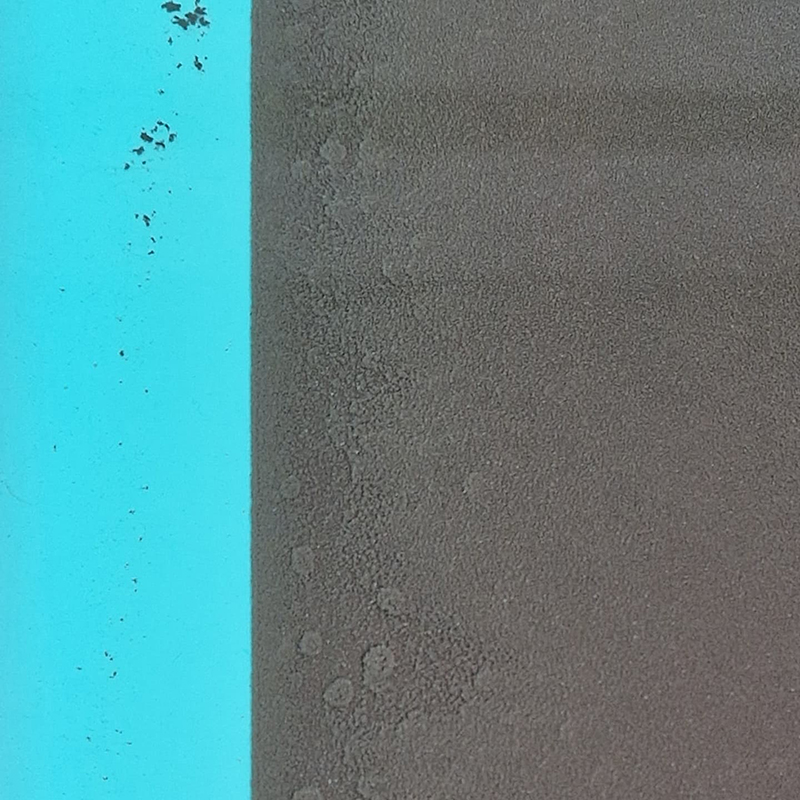
A year on and the pyramidion that sits on top of The Azimuth Obelisk (of sedimentary knowledge) is evolving. The patination, which involved a variety of chemicals being applied to the copper in layers, is an ongoing process.
Sedimentary rock holds a geological history of the Earth’s magnetic field within its mineral components. The geomagnetic field, generated by the Earth’s molten core, varies through time; the magnetic poles migrate, go on excursions, or reverse polarity. During these periods of flux, the strength of the magnetic field changes, and this phenomenon is recorded in archaeological artefacts, volcanic rocks, and sediments. Limestone, a sedimentary rock, is often formed from crushed seashells, compressed over aeons. Crushed oyster shells were added to the obelisk base cast in Snowcrete.
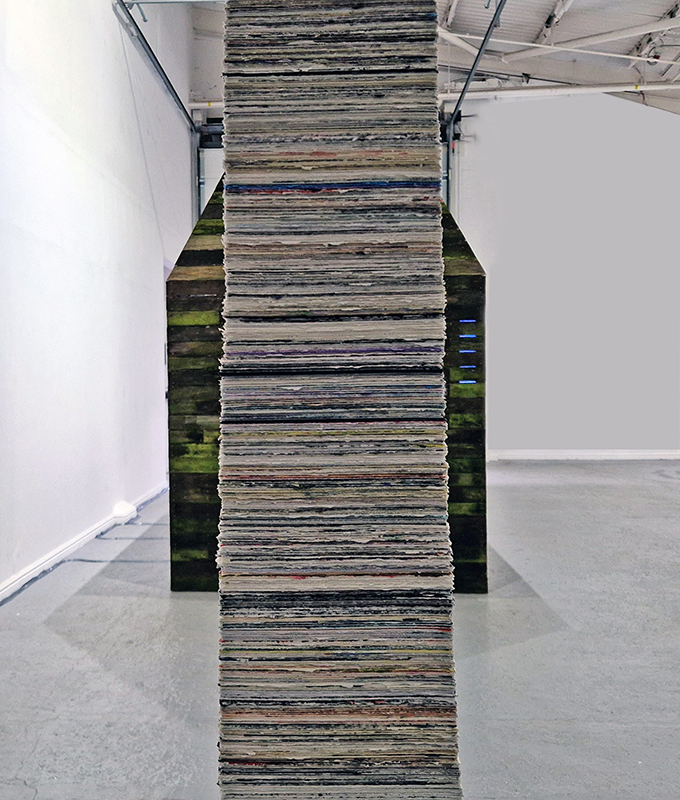
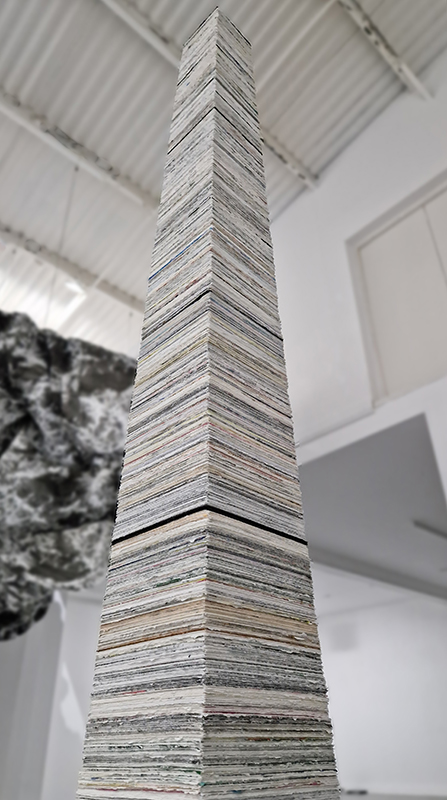
This sculpture also embodies the passage of time, and a layering of information, in the months of collecting paper donations or scavenging the recycling bins, weeks tearing down the hundreds of prints and drawings into squares decreasing by 1mm every 50 sheets, drilling holes through the centre and hours to build the almost 3m stack. I’m very grateful to everyone who donated some of their work archive. These images are now secreted within the layers of the sculpture, hinted at where edges are exposed, echoing the Earth’s sedimentary knowledge.
The Azimuth Obelisk (of sedimentary knowledge) Paper, steel, Snowcrete, oyster shells, patinated copper; 30 x 30 x 270 cm
This work is a reimagining of an ‘obelisk’ erected at Hartland Magnetic Observatory in the late 1950’s to be viewed through the north facing window of The Absolute Hut, it acts as a permanent azimuth mark from which the drift of the magnetic north pole is monitored. I am excited that this sculpture is being considered for exhibition in 2026 at the Royal West of England Academy in Cosmos: The Art of Observing Space curated by Ione Parkin with some amazing artists in the line up whose work I admire.
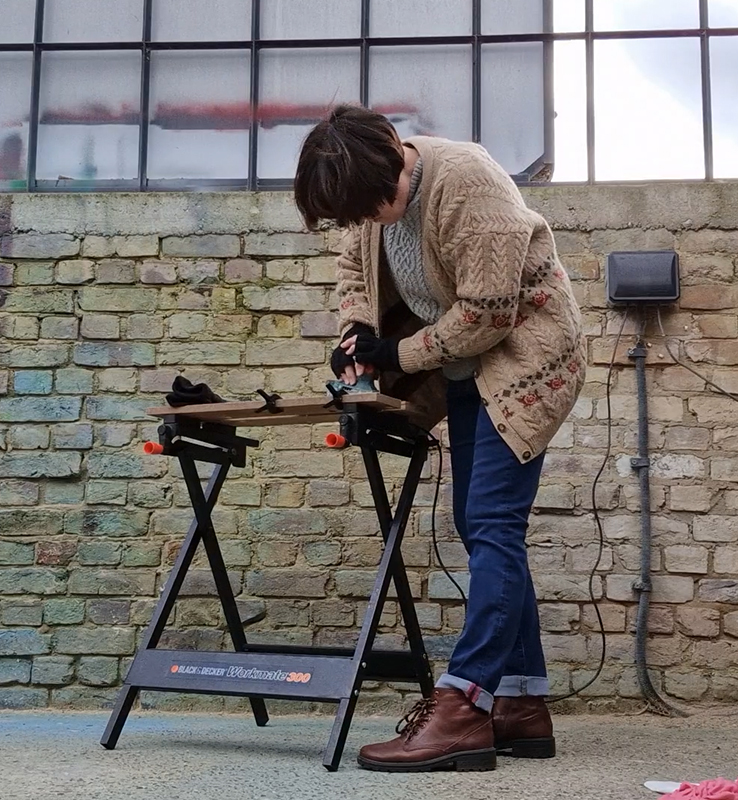
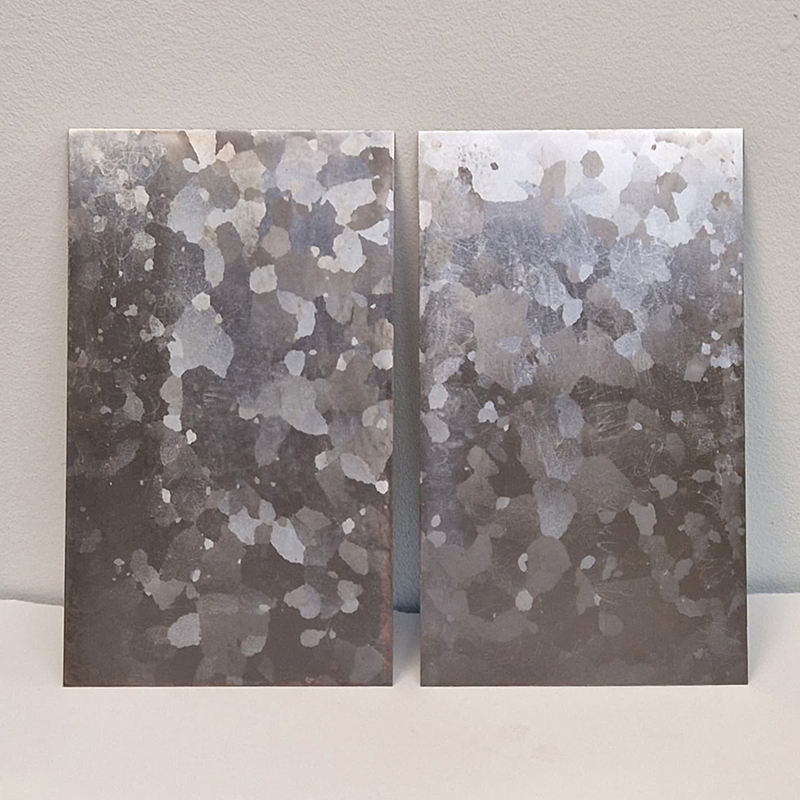
I first came across directional magnetic steel in the Electronic & Magnetic Materials Group open day at the National Physical Laboratory. Intrigued, I wanted to know if I could get hold of some to work with. I was put in touch with Union Steel Products who were very helpful in supplying a small amount (to them) of the material, but they import the product, and it arrives with an indeterminate protective matt grey coating. This was my challenge. It took many days of sanding and gently etching each sheet to reveal the pattern. It was a very temperamental material to work with, the pattern might appear but quickly tarnish and muddy over. So much of the work in the resulting sculpture was about the process of exposing an internal mechanism.
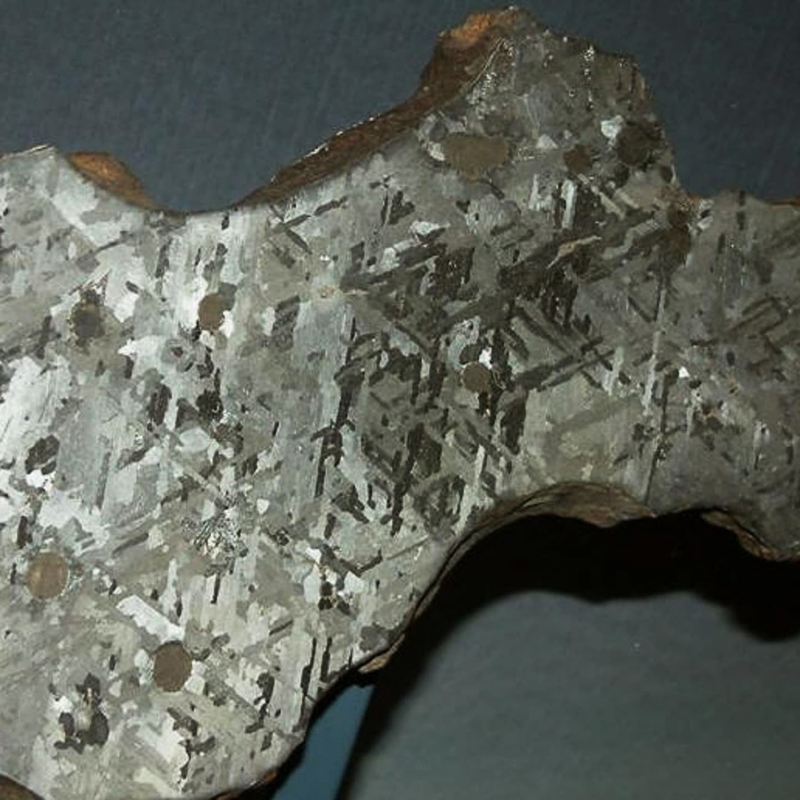
The dramatic Widmannstätten patterns found in meteorites due to their slow evolution through heat and pressure are also revealed through being cut, polished, and etched.
These secrets are not revealed lightly.
Domain of the Devil Valley Master
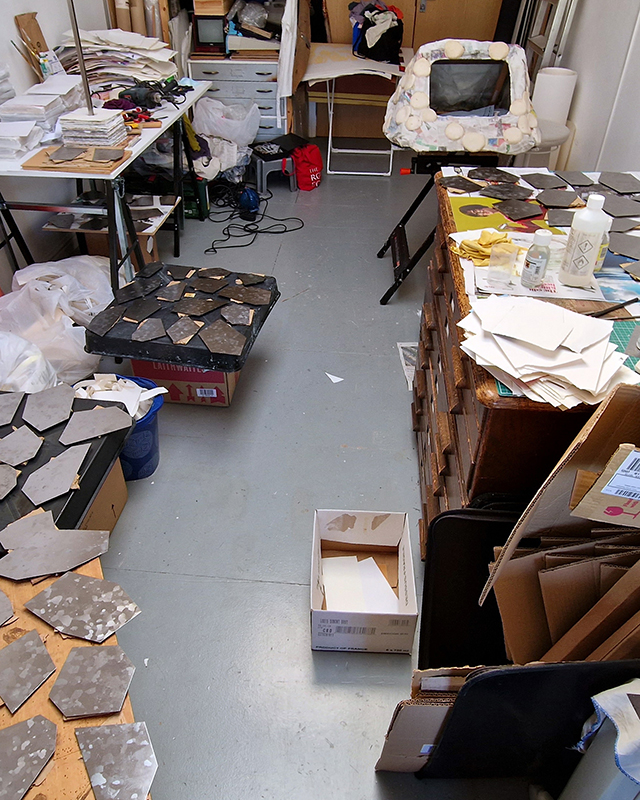
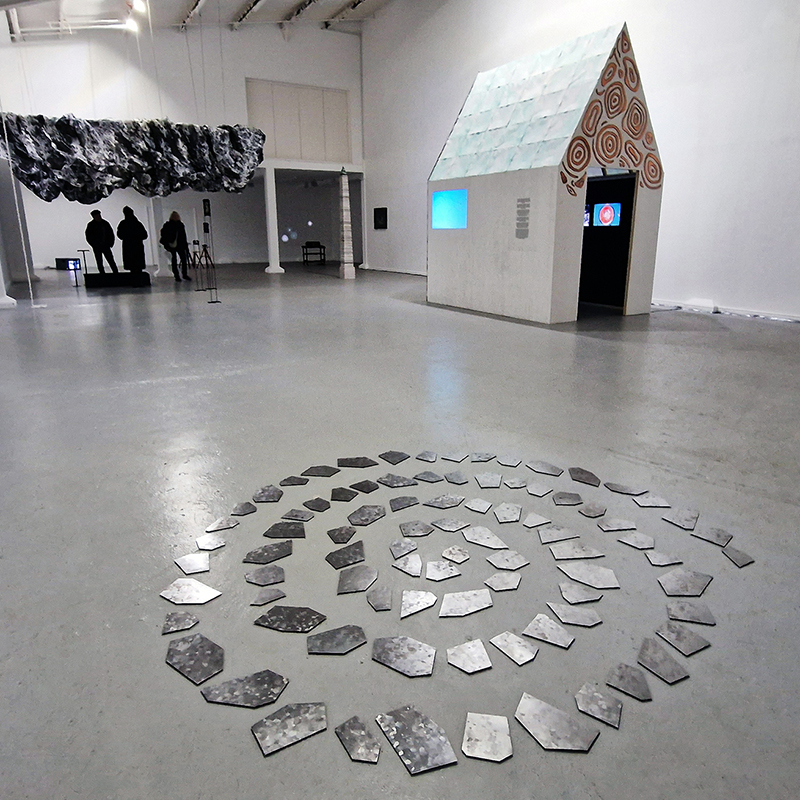
This work uses industrial directional magnetic steel, sanded and etched to reveal the Goss texture of rolled iron silicon alloy crystals. The jigsaw pattern of magnetic domains give this material exceptional magnetic properties. The simple evocation of a spiral described in geologically informed polygons draws upon many references, from the shape of our own Milky Way Galaxy sculpted by vast cosmological magnetic fields and the spiralling molten dynamo generating Earth’s magnetic field, to the inner pathway of spiritual growth and the route to the symbolic omphalos (navel) at the centre of the world where the sky entrance and the underworld meet. The title of this work originates from an ancient Chinese manual on the skills of persuasion, The Book of the Devil Valley Master, containing the first known mention of a compass, known at the time as a south-pointer.
Work in progress. Mapping a response to the crystal structure of magnetite. Magnetite is the most magnetic of all the naturally occurring minerals on Earth found in igneous, metamorphic, and sedimentary rocks. Nano-particles are also found in the human brain, heart, liver, and spleen and the cells of many other organisms, with some creatures using this for navigation techniques.
Magnetite crystals from road traffic pollution caused predominantly by vehicle frictional braking systems can outnumber natural magnetite in the human brain by 100:1 – this is a worrying trend as these crystals could be involved in our perception, transduction, and long-term storage of information in the brain.
Returning to my conversation with Alan Watson on the history of Haverah Park Extensive Air Shower Array.
The motivation for the Haverah Park project getting off the ground came largely from the British physicist Patrick Blackett, who won the Nobel prize in 1948 for his discoveries in the field of cosmic rays. The director of The Rutherford Lab (where the British atomic bomb was being developed in the 50’s), John Cockcroft (known for splitting the atom), decided there should be fundamental science going on as well as bomb building, so outside the security wire they built an air shower array to monitor cosmic rays. When this experiment was shut down, Blackett was keen to see work with shower arrays continue, and to be within reach of a university so that scientists could combine research with teaching. Blackett was working at Cavendish Laboratory with Ernest Rutherford, but moved to Birkbeck which did all the teaching in the evening so he could do research work through the day and teach in the evening. Here he met J G Wilson, also with an interest in cosmic rays, so when J G Wilson later moved to Leeds, Blackett suggested he set up an air shower array there, which was how the Haverah Park Project came about. Land was rented from local sheep farmers to install the observation huts.
Alan Watson took a lectureship job at Leeds in 1964 and began working for J G Wilson, becoming a leading member of the UK Extensive Air Shower project until its closure in the early 1990s.
We also talked about the mesmerizing power of a cloud chamber. As well as it being considered one of the most important developments for progression in the understanding of particle physics it is also emotionally and aesthetically captivating. Alan reminisced about a time at the Royal Society Summer Exhibition when a large commercial diffusion cloud chamber drew so much attention they were asked to turn it off, as mesmerised visitors blocked the entrance to the exhibition. It’s been a few years since I visited the Institute of Physics to see the large cloud chamber in the foyer, I wonder if it’s still there. I love the fact that I can build my own cloud chamber to see these cosmic visitors.
J G Wilson writing on the study of cosmic rays from his book About Cosmic Rays published in 1948, of which I have a copy:
‘It has its spectacular side, for the only laboratory which has been found big enough for its investigations is the whole of the universe to which men can win access. Most refined measurements have been made under conditions of difficulty and hazard, deep in mines and on icebound mountains, in the watses of western Greenland and cramped in the tiny gondola of a stratosphere balloon. These exploits, which are outstanding even in one of the most brilliant phases of experimental physics, are an unambiguous indication of the importance which is attached to the problems which are being studied.’
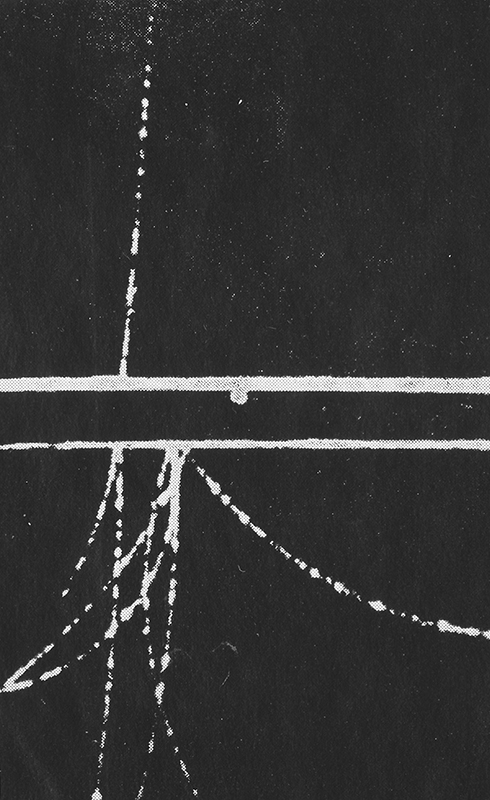
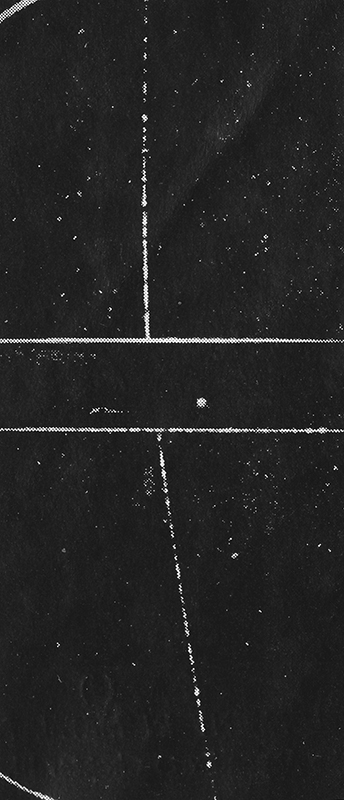
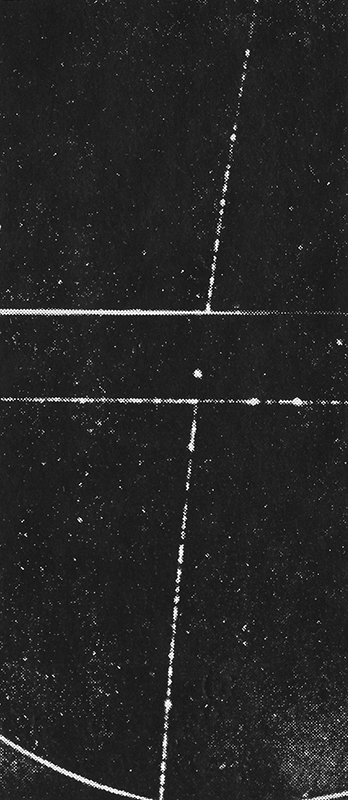
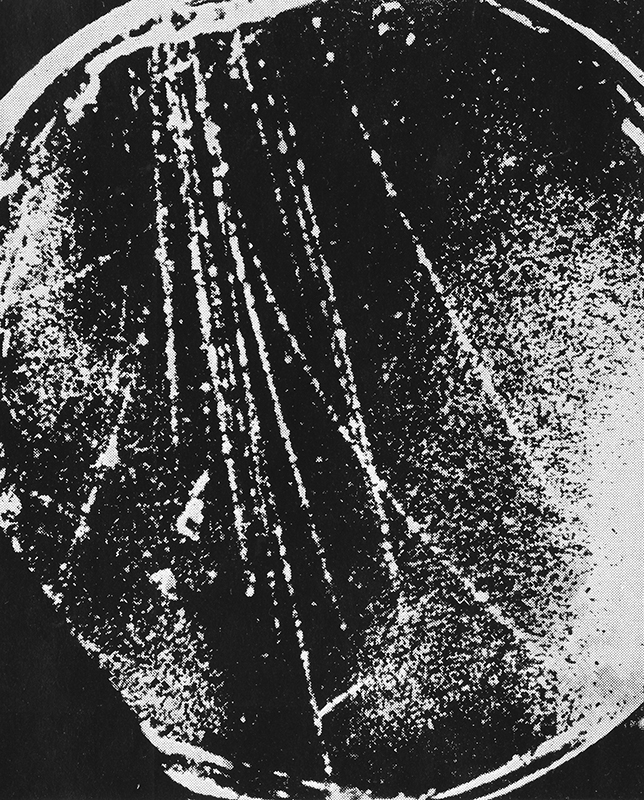
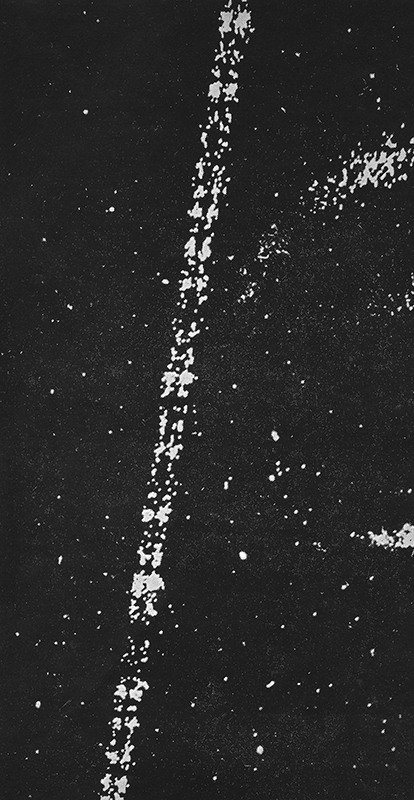
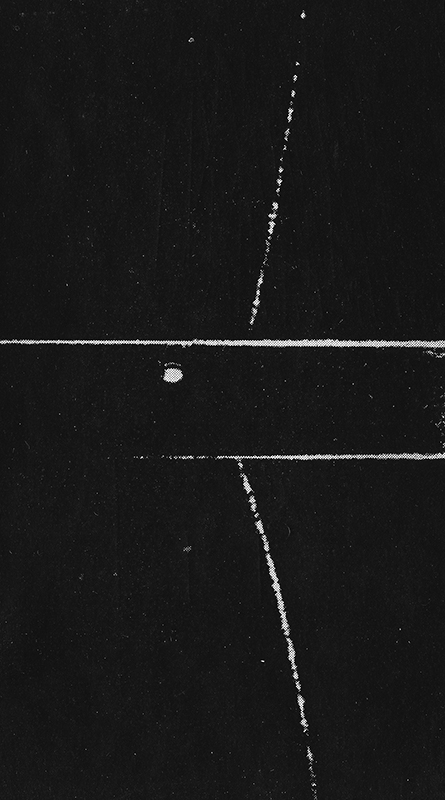
The following images from the same book show particle trails photographed in a cloud chamber -showing extensive showers and particles passing unhindered through metal plates.
J G Wilson writes about cosmic rays ‘…it is interesting to speculate on their previous history, for before it is overtaken by the catastrophe of hitting the earth, each particle is likely to have had a placid life for years, even millions of years, cruising through the wide open spaces of the universe’.
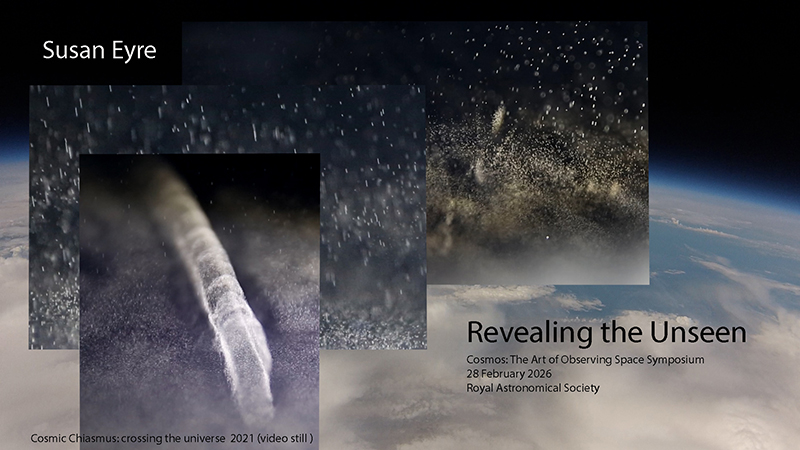
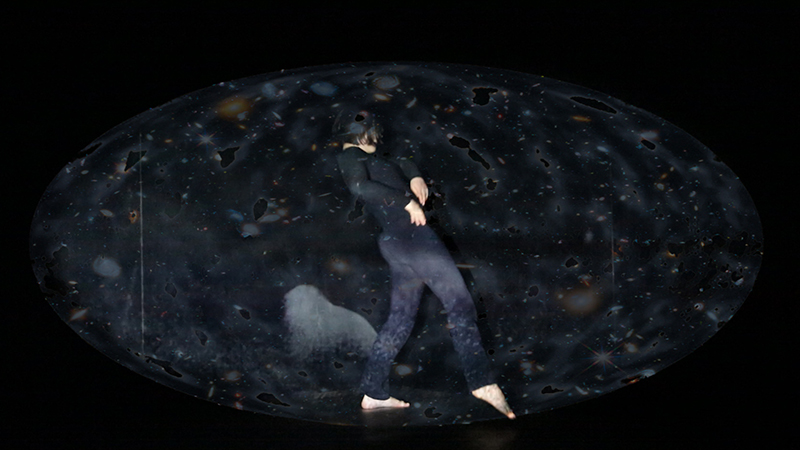
Cosmic Chiasmus: crossing the universe 2021 (video still)
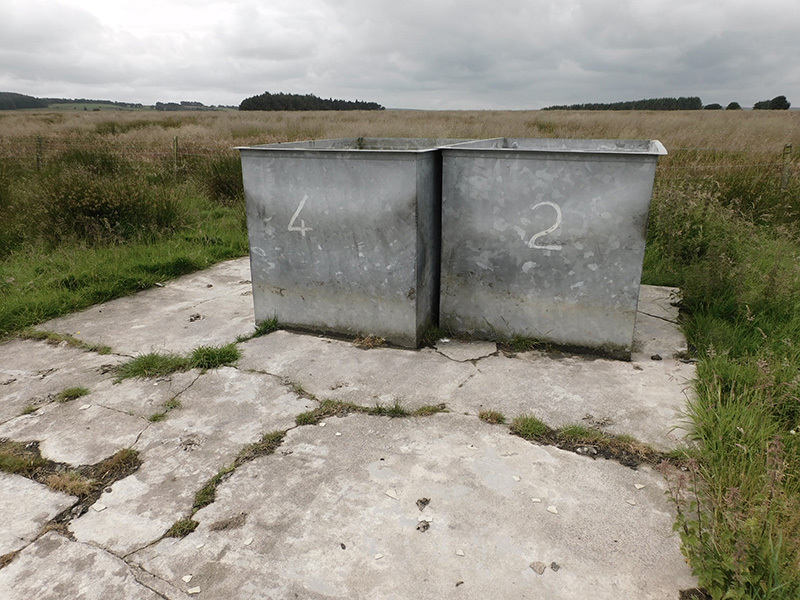
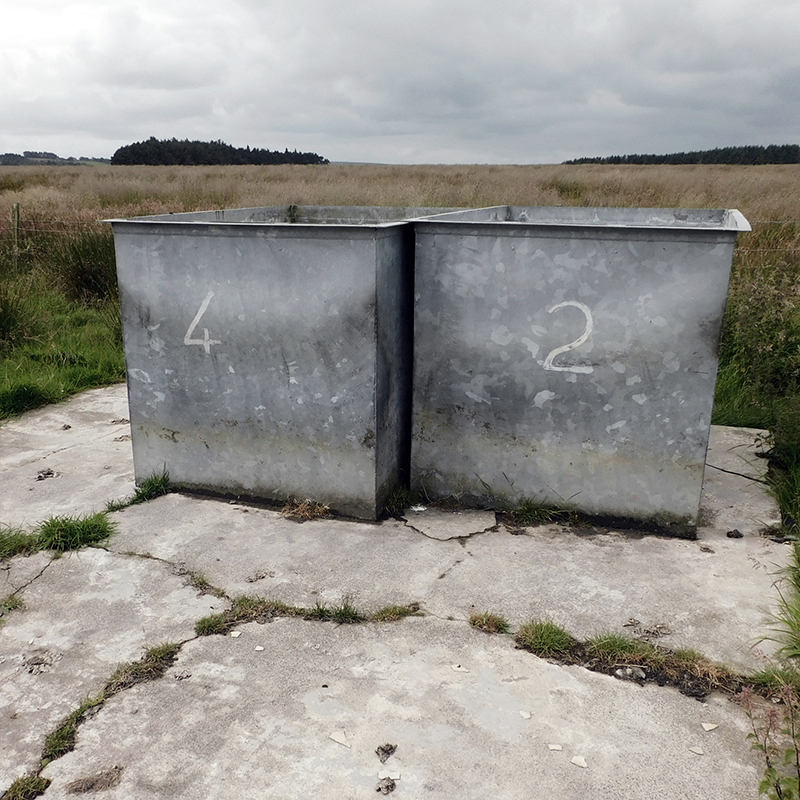
The primary detectors used at Haverah Park were water Cherenkov detectors. These are large water filled tanks filled with a photomultiplier suspended in the water to capture flashes of Cherenkov light emitted by high energy cosmic rays as they pass through. The light is emitted because the cosmic rays pass through water faster than photons of light are able to, and as they do so they lose electrons thereby emitting light. The speed of light is only a constant within a vacuum, when it passes through other materials it get slowed down.
There were four 34 m2 detectors at the centre of the array in the main hut, with three detectors located 500m from the central detector. Signals from the three distant detectors were sent along buried cables to the central hut, with the signal from the central detector passing down 500 m of cable buried underground so that all signals arrived at about the same time. When signals from the central one and two of the others arrived within ~2 x 10⁻⁶ s (called a coincidence), the signals from the photomultipliers in the 34 m2 detectors were displayed on four oscilloscope screens and photographed by one camera which had its shutter permanently open. About 20 feet of film could record around 150 events. Developed and manually scanned by Alan, or a senior colleague, the film was checked for quality and to look for any large events (ultra high energy particles arriving) which were always exciting to find. The developed film was then sent to Leeds University Physics dept for measurements.
When there was a coincidence event at the centre of the array, a signal was sent by microwave to the distant detectors set across the moorlands (on average about 2km from the central hut), the signals from these distant groups of 4 x 13.5 m2 were recorded digitally with the data going onto paper tape which was collected once each week.
Along with the oscilloscope traces being photographed, the number on a counter was included which gave the time of each event to the nearest half minute. In the 1960’s when this project began the time counter was advanced by a pendulum clock. Counting time in half minutes the team found that there are roughly one million half-minutes in a year, which gave a good excuse for an annual party.
There were some brief periods in the early 1980s when a small number of scintillator detectors were also used to make cross-checks of the results from the water Cherenkov detectors against those from projects in the USA (Volcano Ranch) and Yakutsk (Siberia). The scintillators retrieved from Imperial College’s Holborn project were brought to Haverah Park for an experiment to look at much lower energy showers.
Both types of detectors register flashes of light.
Blackett was the first person to work out the details of Cherenkov light produced in the atmosphere. According to a memoir on Blackett, written by astronomer Bernard Lovell, who knew him very well, Blackett attempted to see Cherenkov light from cosmic ray showers with the naked eye but there is no mention of whether he succeeded. In 1962, physicist Neil Porter who built the first water Cherenkov tank in the UK at Harwell in the 50’s, did an experiment with some volunteers who were asked to recline on a coach in a dark room with a small Geiger telescope attached to a pair of darkened goggles and acknowledge if they saw a flash of light when a cosmic ray was known to pass through the googles. The observers did seem to experience a flash of light but results were ambiguous as to whether this was Cherenkov light being emitted as the particle passed though the crystalline lens or vitreous humour of the eye or a direct excitation of the retina. The experiment was a collaboration with the Psychology dept at the University of Dublin and published in Nature under the Psychology heading giving an impression that the lights were perhaps a figment of the imagination.
Aóratos 2019 video still
Astronauts are very aware of this phenomenon. During the 1970 Apollo 13 mission to the moon the power supply was damaged and the astronauts sat in the dark for several days waiting to return to Earth. They experienced flashes in their eyes and realized that some of this was Cherenkov light. Some flashes were caused by particles directly hitting the retina but Cherenkov light caused by high energy particles travelling through the matter of the eye faster than light, is much brighter. The energy is proportional to the square of the charge of the particle that comes through, so if you have an iron nucleus which has a charge 26 x the charge of a proton, you get 26 squared or 600 times as much light emitted. Out in space there are many more of these high energy particles and so the astronauts would become very familiar with these flashes, even using them to line up accelerator beams by putting their head in the particle beam to see the flashes.
An astronaut once told Alan that he was convinced that the very first people fired into space probably saw these flashes, but didn’t like to tell NASA in case it turned out to be a physiological defect of theirs and they would be taken off the space programme.
Recently, a professor friend of Alan’s who is aware of this phenomenon, has unfortunately had to begin radiation treatment for a brain tumour. He has found due to the position of the tumour and angle of treatment he can see Cherenkov light flashing in his eyes as the electrons bombard the tumour.
Aóratos 2019 cropped video still
When we met, Alan was just back from a conference in Italy discussing a paper titled ‘Ultra high energy cosmic rays: The Disappointing model’. They called it the disappointing model because they believed that the Auger results with particles at the highest energy were heavy not protons. I’m not sure I understood why it was disappointing although Alan did his best to explain: ‘It’s difficult to measure the mass of the particles of a certain energy. A deduction had been made that they have a mean mass, probably the same as nitrogen but mass changes in quite a complicated way as a function of energy. It’s to do with how deep the showers develop in the atmosphere.
Cosmic Chiasmus: crossing the universe 2021 video still
The techniques aren’t good enough to separate the particle’s mass on a one by one basis, we can only do averages. It looks like the average mass is much heavier than protons, which everybody had believed for a long, long time. Protons would be at a much lower energy. As the nucleus is travelling through space, it sees photons from the microwave background radiation and the photon will chip off a neutron or a proton, if it chips off a neutron, the neutron decays into a proton, so you can get protons this way, but they will be of lower energy. The energy reduces roughly by the mass of the particle, so an iron nucleus has a mass of 56, if you chip off a neutron or a proton that proton will have an energy, which a 56th of the energy that the nucleus has – so it goes down in energy.
Some particles could come from Centaurus A, which is a relatively close radio galaxy, it is thought that the jets from radio galaxies provide conditions to accelerate the particles, but the problem is, because the cosmic rays are charged, they get deflected in the magnetic field of the Galaxy so you can’t track them straight back to where they came from. In terms of heavy particles that’s more of a problem because being charged means they bend even more. So one of the disappointing things is that cosmic ray astronomy is not going to be very easy. The Pierre Auger observatory has really been very successful in changing the picture quite a bit but because there are so few ultra high energy particles recorded it is slow progress. There are hopes to expand the observatory even more and also a plan to launch a satellite with detectors to pick up fluorescence light in the shower as it passes through the atmosphere, a similar phenomenon to aurora light.
Cosmic Chiasmus: crossing the universe 2021 video still
Exhibitions
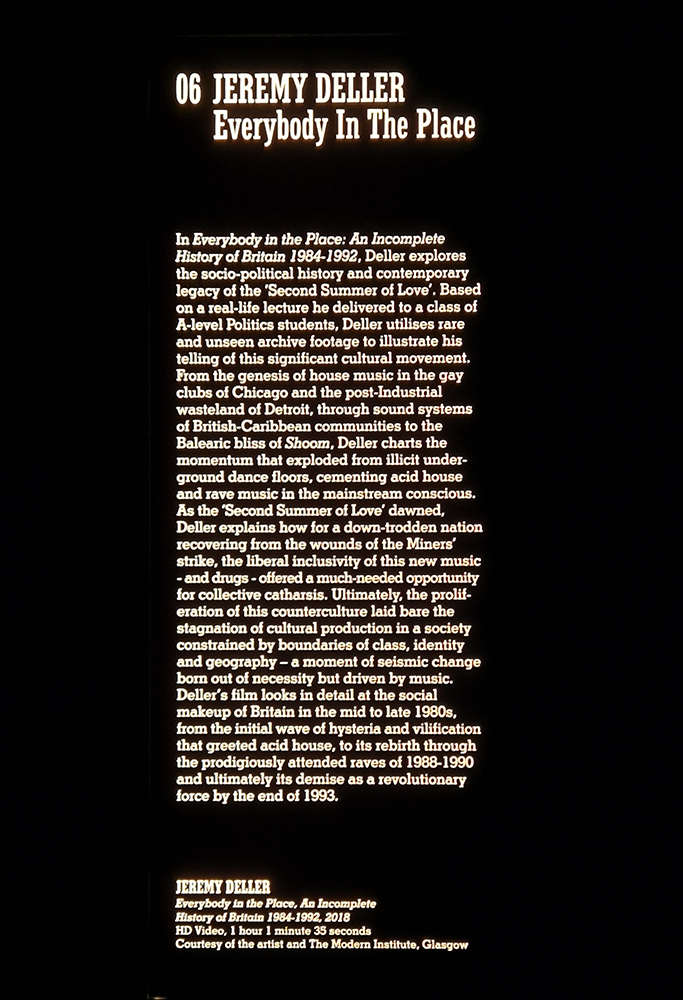
The Vinyl Factory: Reverb at 180 The Strand, a multimedia exhibition exploring the intersection of art and sound with artists including Theaster Gates, Es Devlin, Julianknxx, Kahlil Joseph, Caterina Barbieri, Stan Douglas, Virgil Abloh, Cecilia Bengolea, Jeremy Deller, William Kentridge, Jenn Nkiru, Hito Steyerl, Carsten Nicolai and Gabriel Moses. Fabulous show, shame I can’t share the sounds here. Loved Jeremy Deller’s takeover of a sixth form politics class. Some of the works I had seen before but that was fine as they are worth extra viewings.
Reading
I am beginning research reading for The Geological Unconscious exhibition Julie F Hill and I are co-curating at Hypha HQ Euston opening in May 2025.
Ursula Le Guin The Winds Twelve Quarters, a collection of profound short stories each introduced by the author reflecting on the intention within.
Long after I wrote the story (The Stars Below) I came on a passage in Jung’s On the Nature of the Psyche: ‘We would do well to think of ego-consciousness as being surrounded by a multitude of little luminosities…Introspective intuitions…capture the state of the unconscious: The star-strewn heavens, stars reflected in dark water, nuggets of gold or golden sand scattered in black earth.’ And he quotes from an alchemist, ‘Seminate aurum in terrain albam foliatam’ – the precious metal strewn in the layers of white clay. Perhaps the story is not about science, or about art, but about the mind, my mind, any mind, that turns inward to itself.
Roger Caillois The Writing of Stones 1970 is a tribute to the collection of extraordinary stones Caillois acquired and which now resides in The National Museum of Natural History Paris. In these poetic chapters he describes in detail each of the stones and his fascination with the images and associations they conjure in his imagination. Questioning and celebrating the allure of the mineral and the stories hidden and revealed over millennia.
I can scarcely refrain from suspecting some ancient, diffused magnetism; a call from the centre of things; a dim, almost lost memory. or perhaps a presentiment, pointless in so puny a being, of a universal syntax.
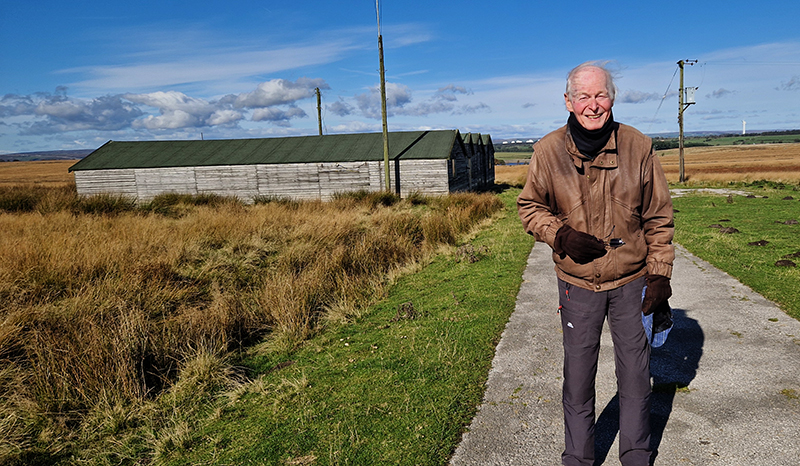
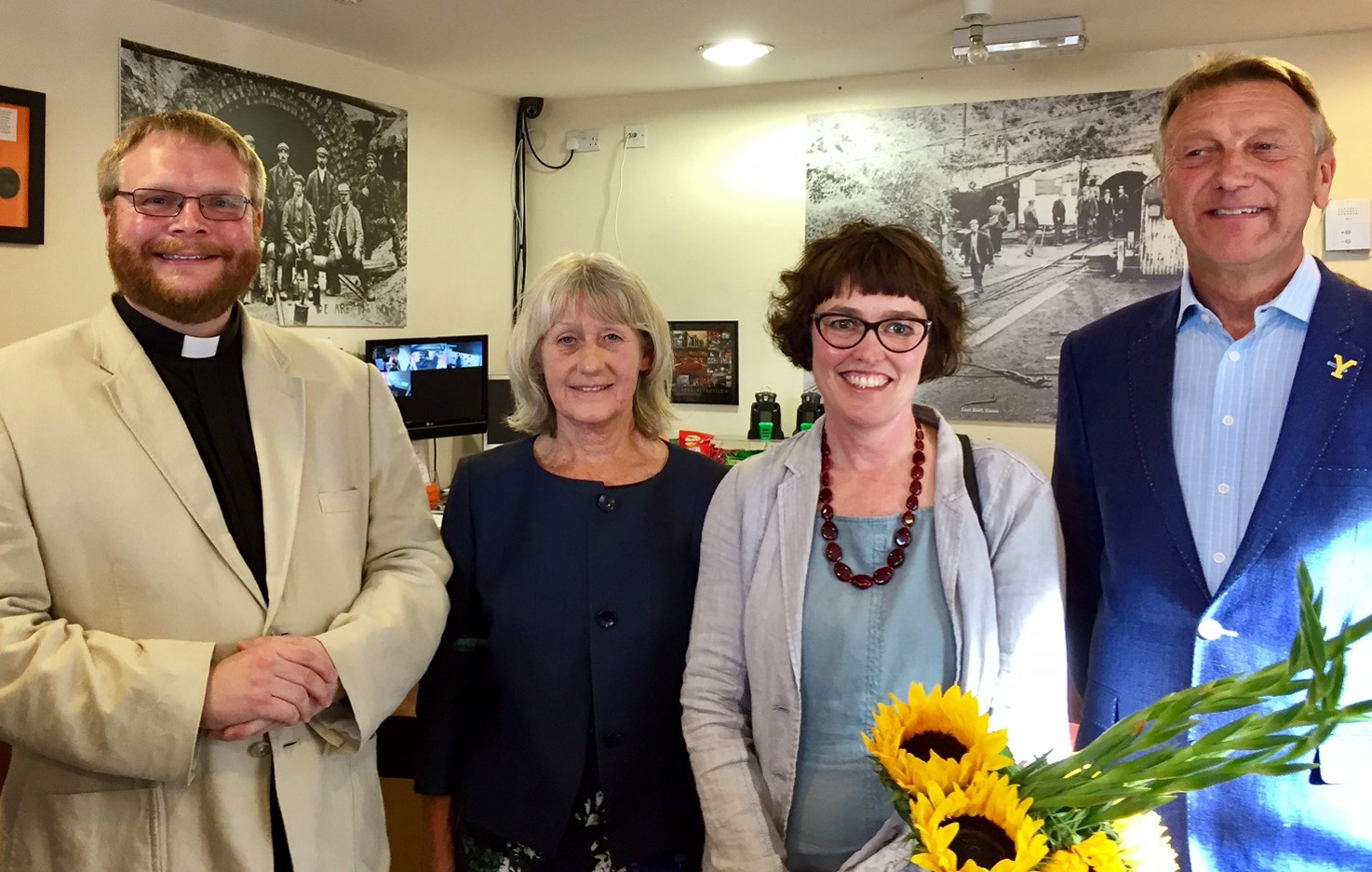
At Haverah Park on a glorious day with Professor Alan Watson, FRS, an emeritus professor at the University of Leeds, and emeritus spokesperson for the Pierre Auger Observatory, who spent many years working here in the pursuit of high energy cosmic rays.
Alan gained his PhD in 1964 for his thesis involving cloud chambers and went on to work for J.G. Wilson, who in turn had worked for C.T.R. Wilson, the inventor of the original cloud chamber. Alan was a leading member of the UK Extensive Air Shower project at Haverah Park from 1964 until its closure in the early 1990s, directing the project from 1976. The work there led to the best estimates of the energy spectrum, mass composition and arrival direction distribution of cosmic rays available at that time and was regarded as the premier project in the field for about 15 years. He was the UK Principal Investigator for the South Pole Air Shower Experiment which ran from 1987 to 1994 and was instrumental, along with J W Cronin, in the creation of the Pierre Auger Observatory in Argentina, which covers 3000 square kilometres and has led to major discoveries in cosmic-ray astronomy.
Cosmic rays are fast-moving particles from space that constantly bombard the earth from all directions. Wherever they come from, the highest-energy particles hold secrets to the origin of their enormous energies, many millions of times greater than any earthbound particle accelerator can create.
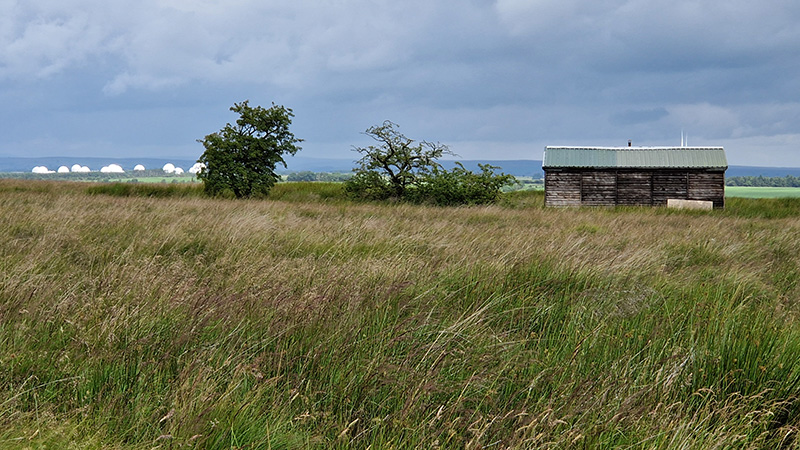
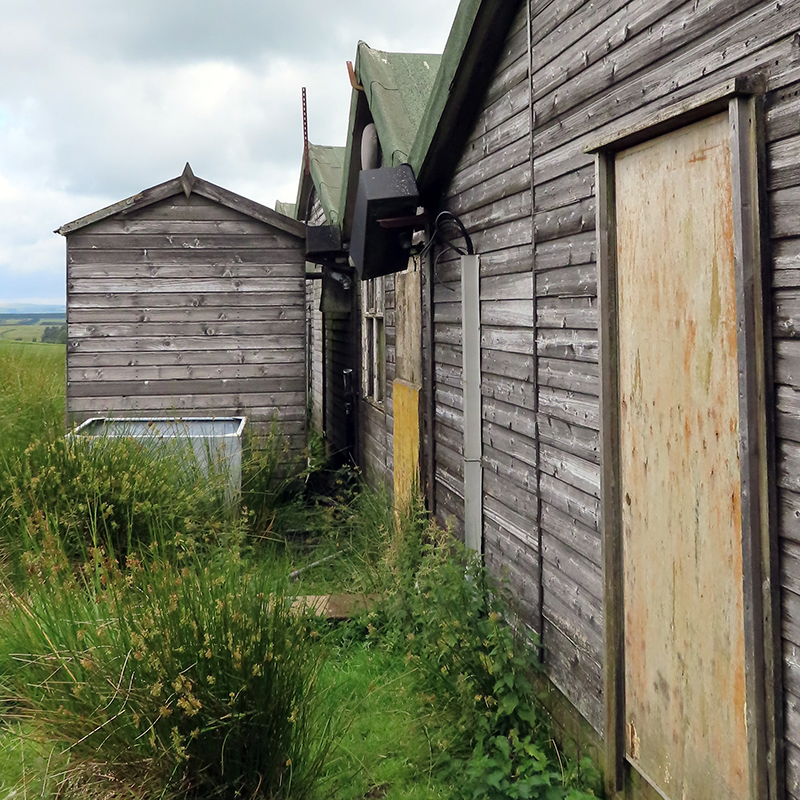
It is extraordinary that these infinitesimal particles powering across the universe at close to the speed of light can be observed and recorded as they interact with our atmosphere. Alan was very generous in giving his time to visit Haverah Park with me and patient in explaining some of the physics. Having been involved in so many pioneering projects that had many obstacles to overcome in their development, he has many stories to tell. We walked to the site of the main control huts, which are the best preserved of the project, most detector huts have been removed or are in a state of collapse. Peering through the windows, Alan pointed out where the dark room used to be and explained that when the project started in the 1960’s there were just two main huts here for data analysis, and a sort of caravan alongside with no heating where film was developed.
Wooden huts, arranged across 12 square kilometres of moorland, in groups of three, were built to house the water Cherenkov detectors which had to be protected from freezing temperatures. If the water had frozen it would have cracked the photomultipliers which dipped into the water to capture the flashes of Cherenkov light emitted as high energy particles passed through.
Moving equipment around the site was not always easy. When foot and mouth came along it was prohibited to take the Land Rover on to the site so all the equipment had to be carried by hand and this was often very heavy electronics with many thermodynamic valves. The large steel tanks are also very heavy, over 300kg, and it was found that even 6 strong men with bars couldn’t lift them across the rough ground, so before a trolley was found, they had to be rolled end over end into position.
As technology progressed, by the 1970’s, new insulated tanks were developed by Durham University. About twenty of these octagon shaped tanks were set out at spacings of 150m in order to look at cosmic ray showers in more detail with some really interesting results. Six small huts were set around the main huts, but just one remains now, the others having been removed by the farmer who rents this land for his sheep.
At the height of the project three electronic technicians worked here full-time and a handy man who kept the place tidy, got the fish and chips on a Friday from Harrogate and was responsible for fetching water from the reservoir just down the road. No running water was ever installed as the initial plan was for the project to run for just five years so the cost didn’t seem practicable at the time. Researchers had to make do with a chemical toilet known as hut seven.
The pure water for the tanks came from a borehole on nearby Marston Moor, ingeniously it was transported via a milk tanker which could be sterilised and used when not needed for delivering milk. In order to fill the tanks, lengths of unwieldly hose pipe were borrowed from Leeds fire brigade, joined to stretch across 200 – 300 metres with pails placed underneath the junctions to catch any precious water leaking out. The pump used was purchased from a junk yard in London and towed back north by Land Rover. It had originally been in service to put out fires during the second world war and proved its worth again during the heatwave of 1976 when the smaller of the local reservoirs supplying Harrogate was in danger of drying up. The pump was used to move water from the larger reservoirs to the smaller one to maintain the Harrogate water supply.
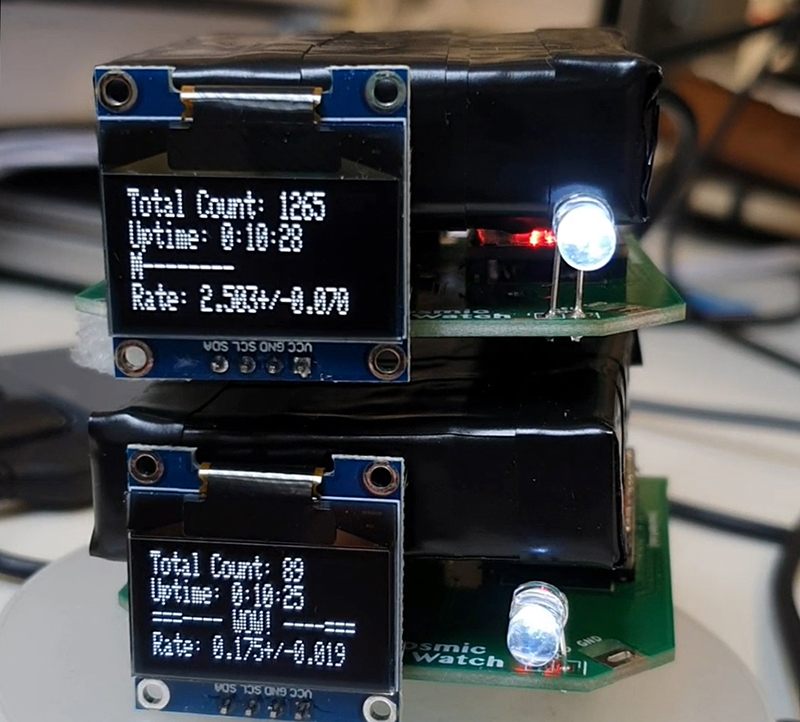
Plastic scintillator used in cosmic ray detectors is expensive. Just two 5x5x1cm blocks I bought for my own cosmic ray detectors cost about £60. There was a possibility of getting some for Haverah Park from a friend of Alan’s in the US but the import duties to the UK were prohibitive. An opportunity then arose when Imperial College, who had once set up a cosmic ray lab. in the depths of the London underground, were asked to remove a quantity of scintillator they had stored at Holborn. It was offered to Leeds University for free but meant sweet-talking the underground station managers over a whisky fuelled lunch to arrange to take possession of the line for a weekend or two, stationing a guard with a red flag and light at one end of the tunnel while the heavy scintillator blocks were loaded onto a trolley and pushed between the tracks a quarter of a mile up an incline to the (now defunct) Aldwych station where there was a lift to bring them up to ground level. When Haverah Park closed the scintillator was passed on to to schools in the Netherlands for their cosmic ray science projects. That from the states ended up being used at The South Pole Air Shower Experiment during its operation before being shipped back to Albuquerque to become a physicist’s unique dark skies garden feature.
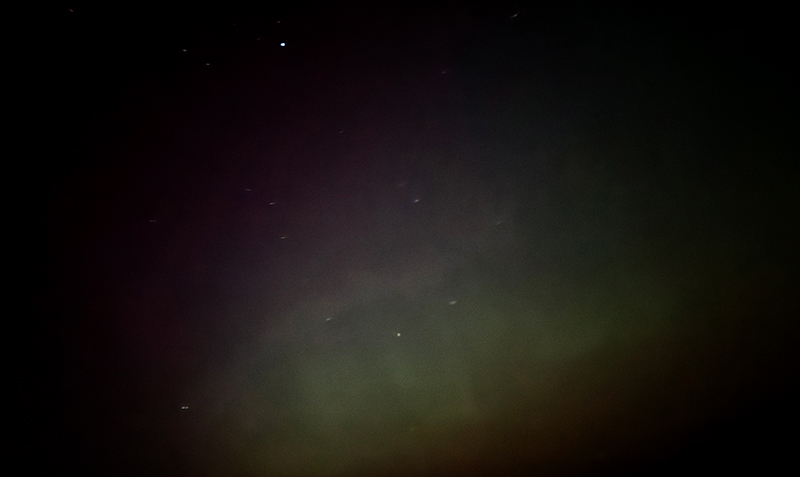
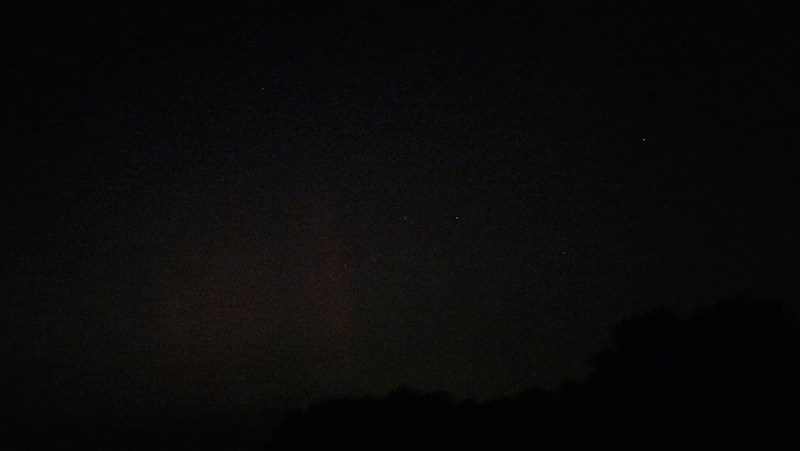
While in Yorkshire I was excited to get an alert for intense solar activity with the possibility of the Northern Lights being visible anywhere in the UK. There were even clear skies. I’ve missed all the aurora displays this year so far and it didn’t happen here either. I went and stood in a dark field around midnight and there was a faint glow but nothing like the images being posted online, some in the same town as I was staying and some annoyingly back south. First image back garden with bright street light interference. Second image with enhanced camera settings. Third image is what it looked like to my inadequate eye.
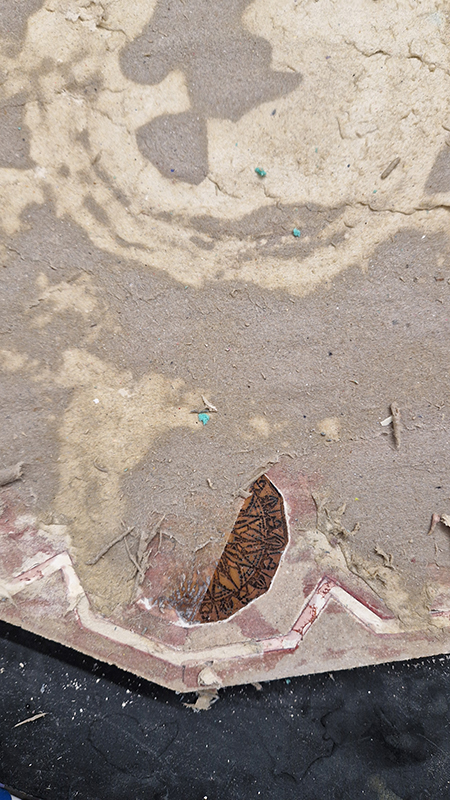
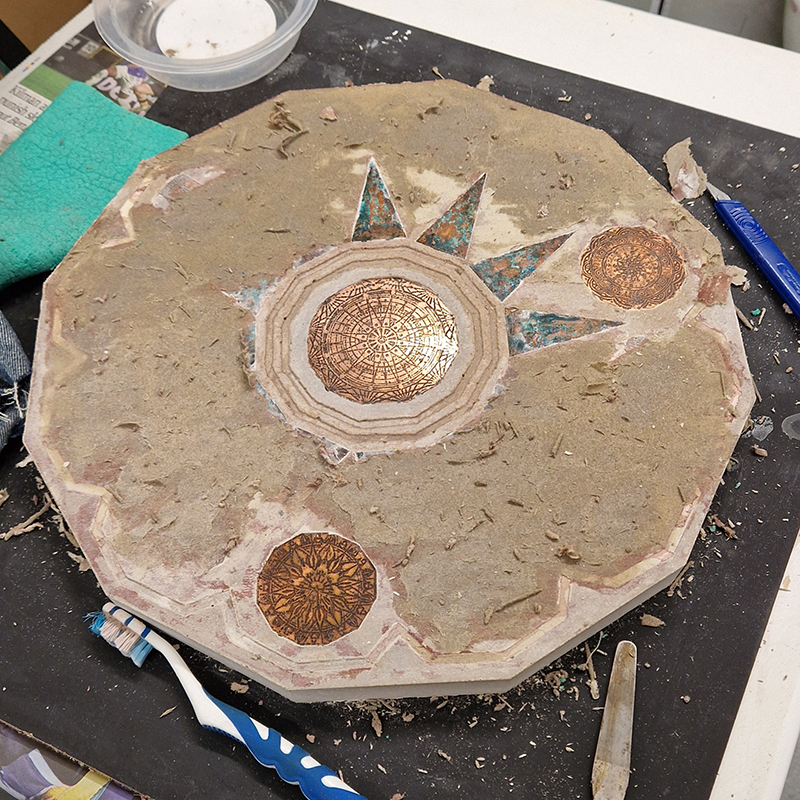
Work in progress on new tablet for Instruments of the Anemoi series of sculptures. The copper dodecagons have been inked and sealed and placed face down onto the collagraph in the silicon mould ready for casting in Snowcrete.
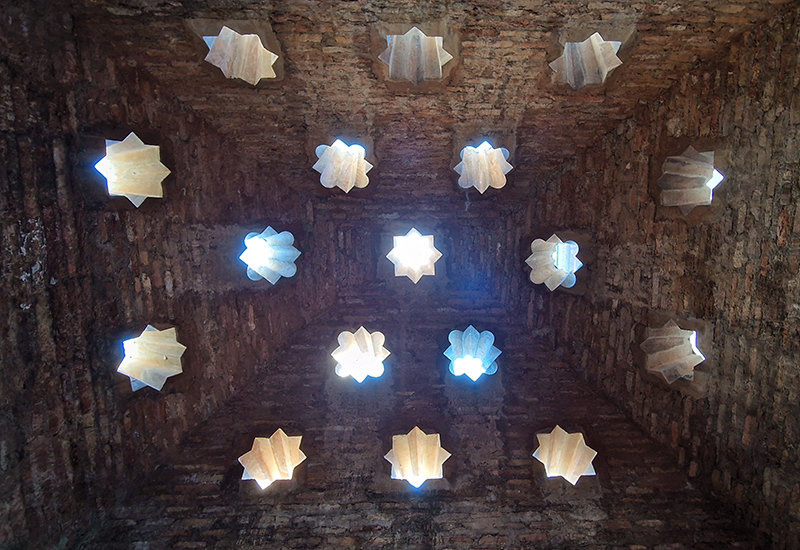
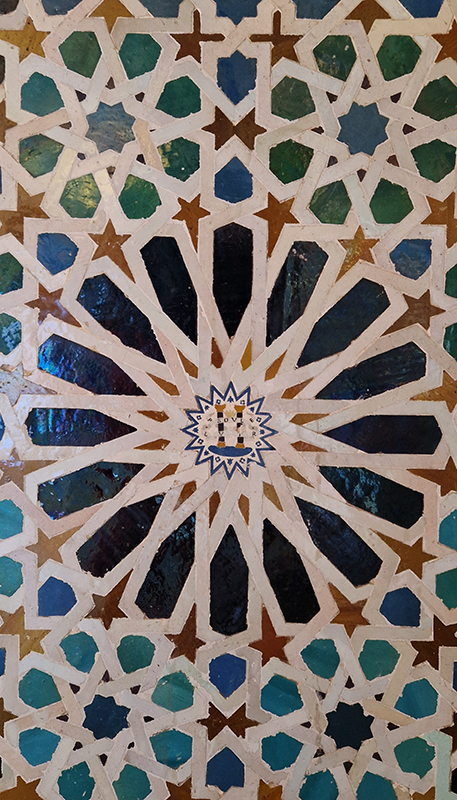
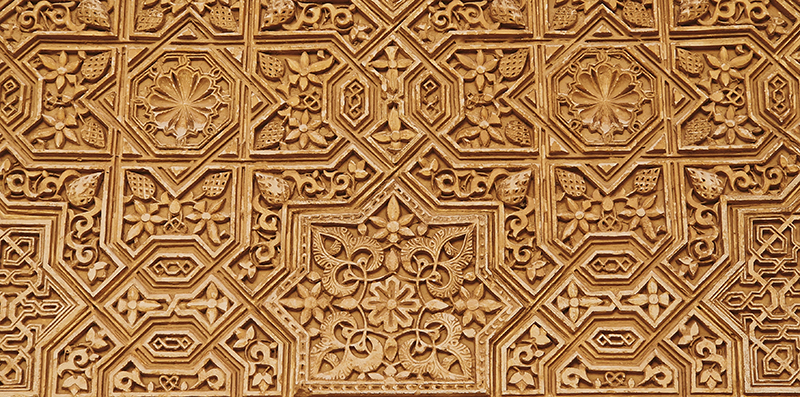
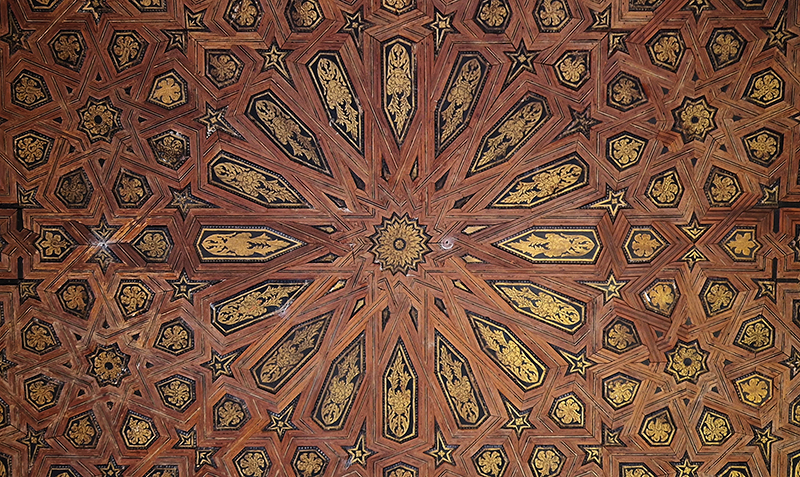
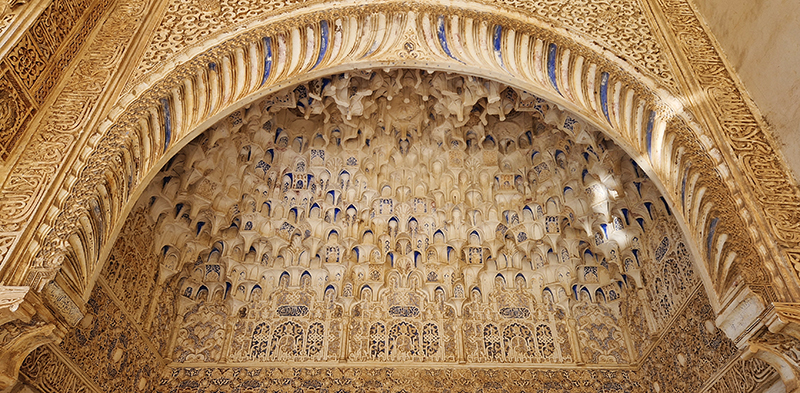
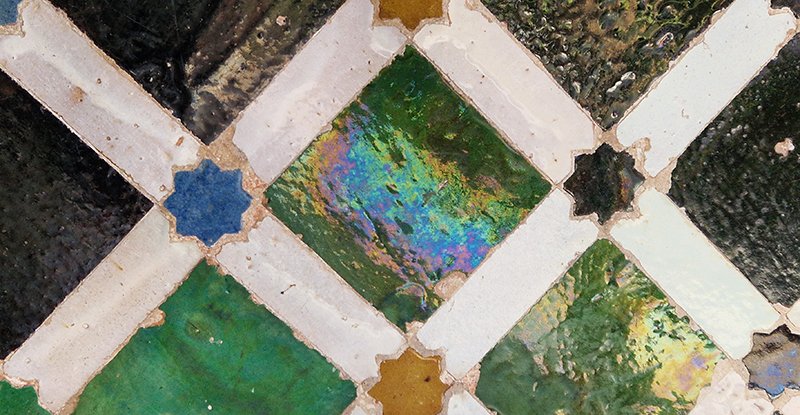
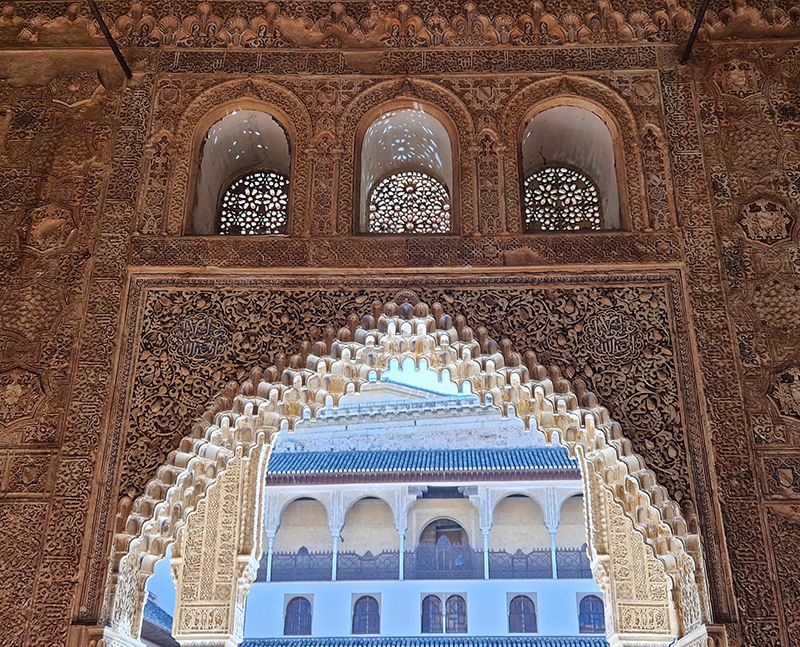
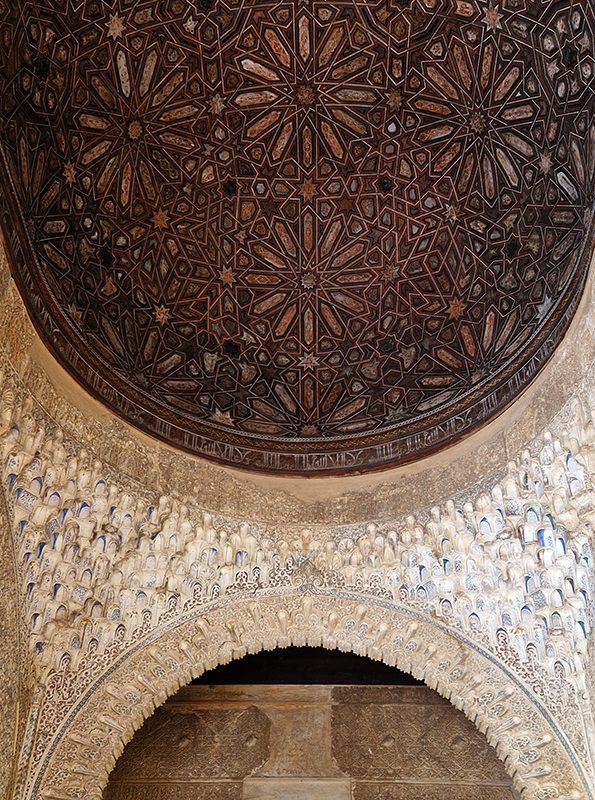
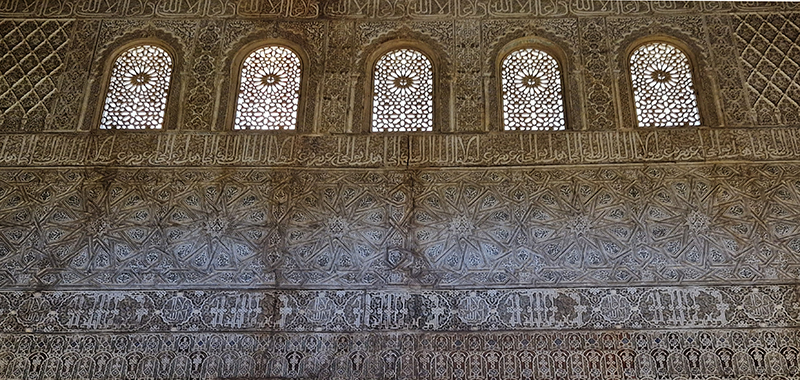
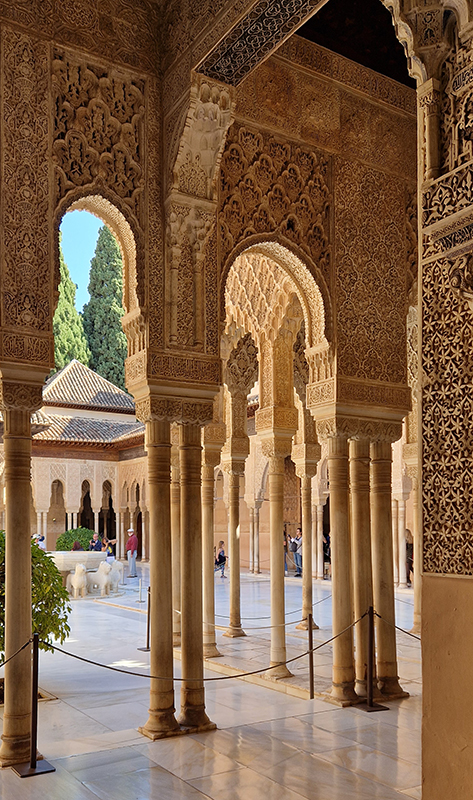
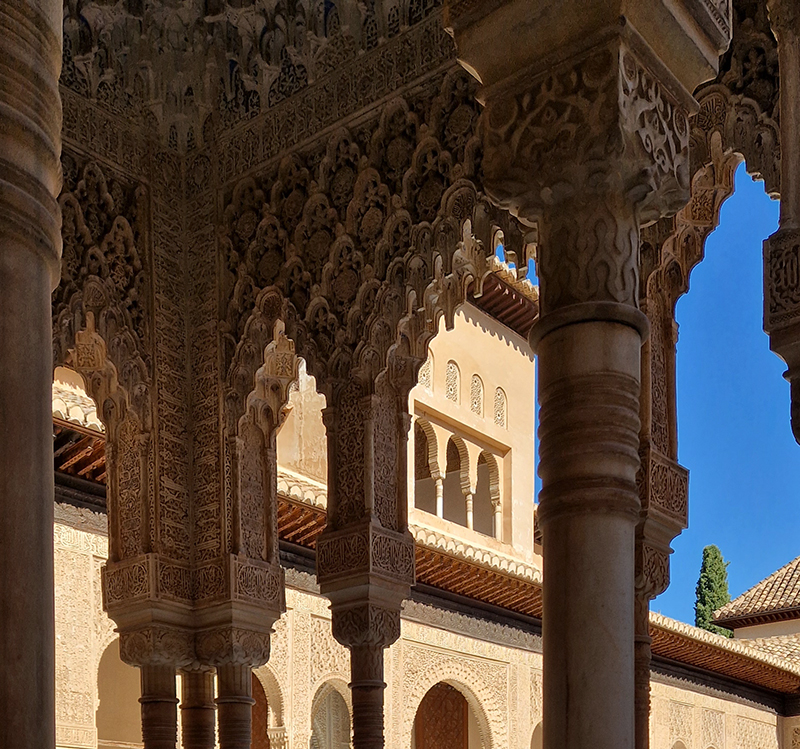
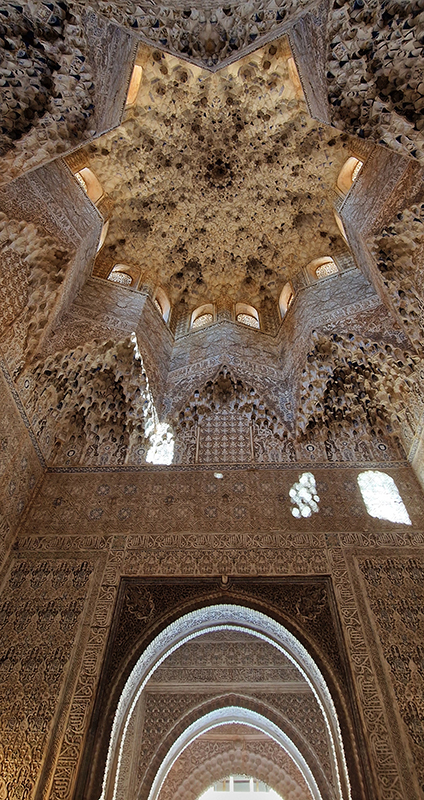
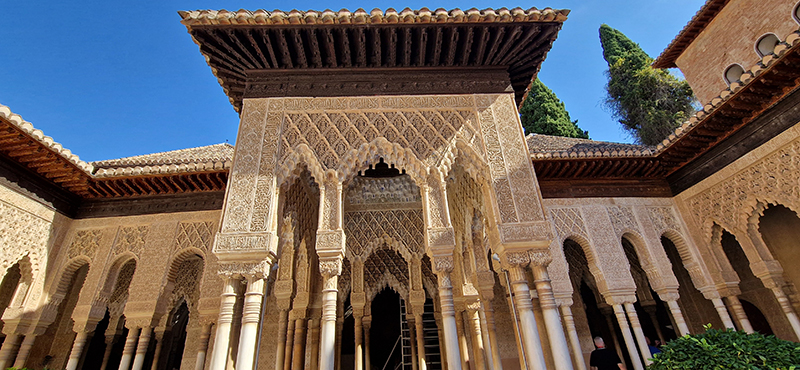
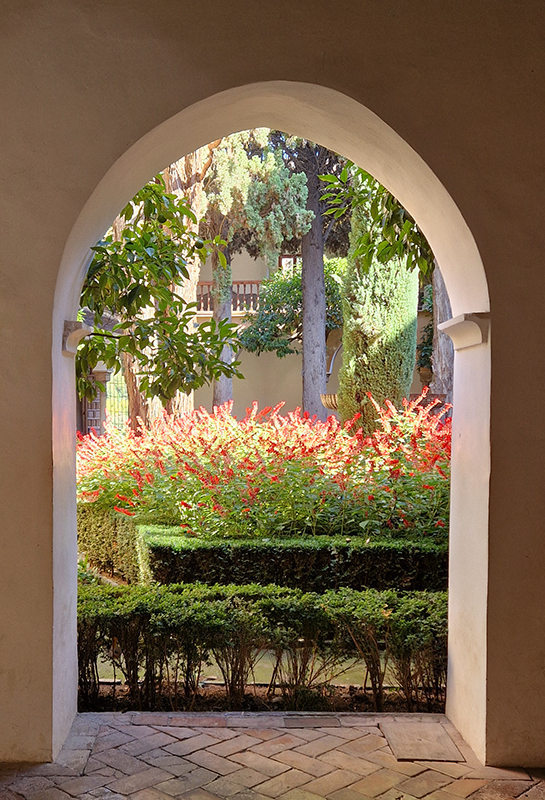
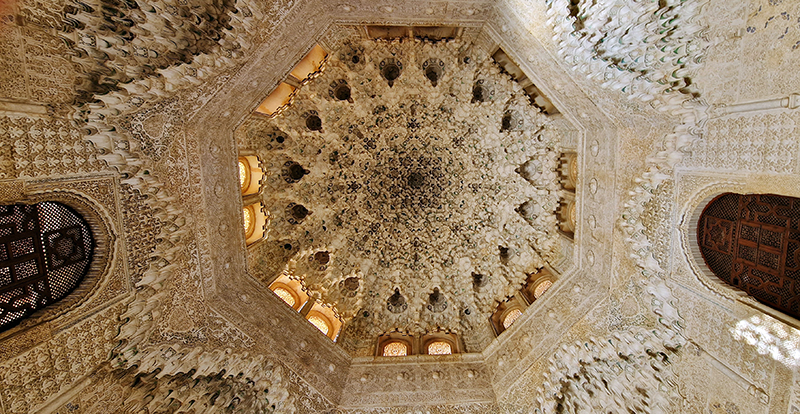
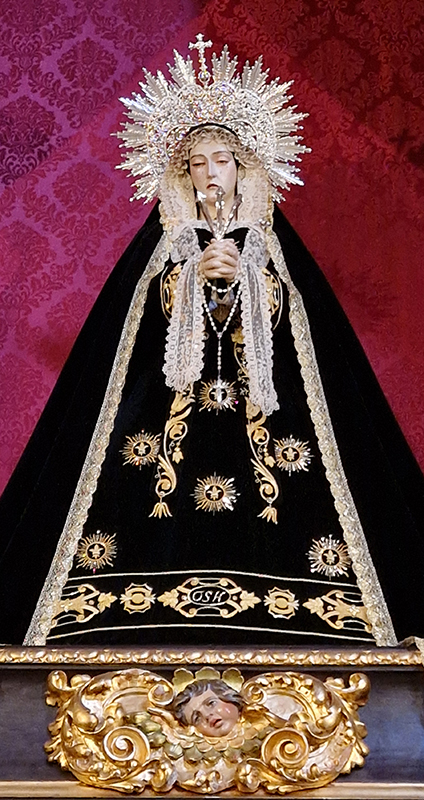
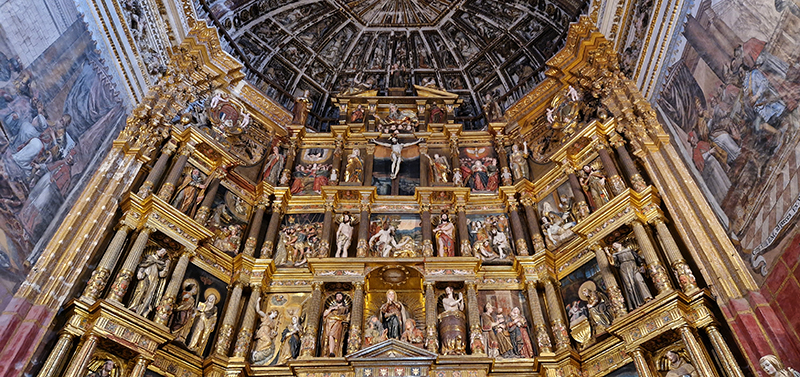
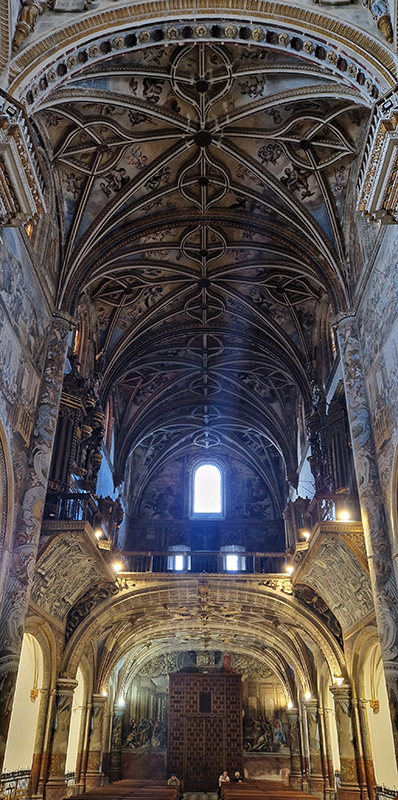
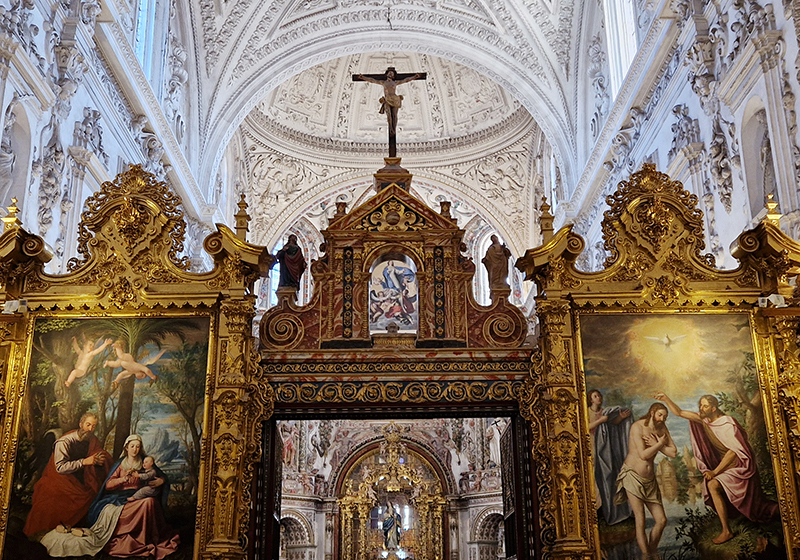
Finally got to visit The Alhambra and it didn’t disappoint.
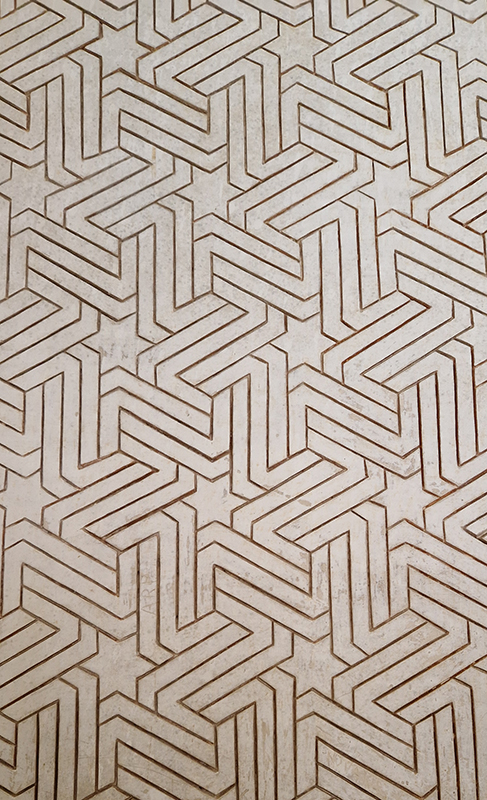
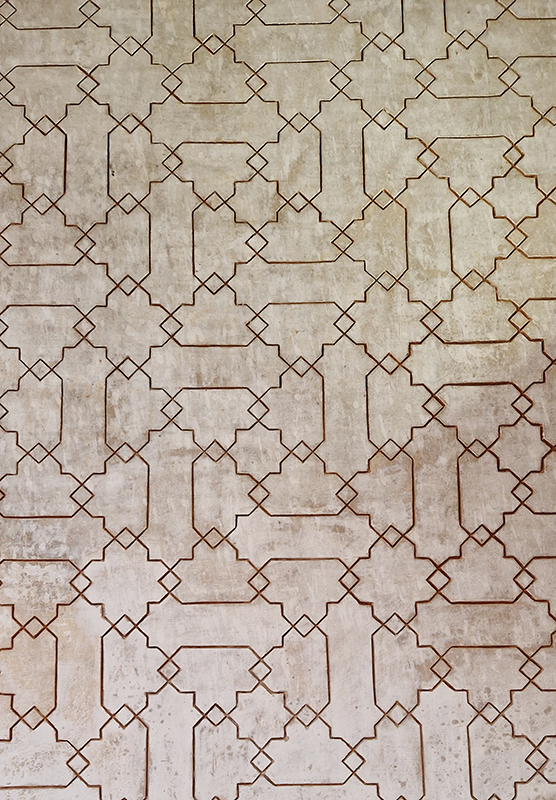
Designed by poets, philosophers and mathematicians, it is said to bring the harmony of paradise to earth in its perfect symmetries and idyllic gardens. The complex was begun in 1238 by Muhammad I Ibn al-Ahmar, the first Nasrid emir and founder of the Emirate of Granada, the last Muslim state of Al-Andalus and has been expanded, modified and repurposed over the centuries. It is a vast network of garden pools, fountains, courtyards, palaces and fortress towers with jaw dropping vistas. Water runs down from the mountains in an ingenious systems of open channels intertwining through pathways to feed the many pools and fountains. Every ceiling is a vault of heaven, inlaid or sculpted to draw the eye upward. Every wall tiled or stuccoed. Pavements interlaced with patterns set in stones accept cooling water splashed onto their surfaces without it immediately evaporating as it would on a smooth path.
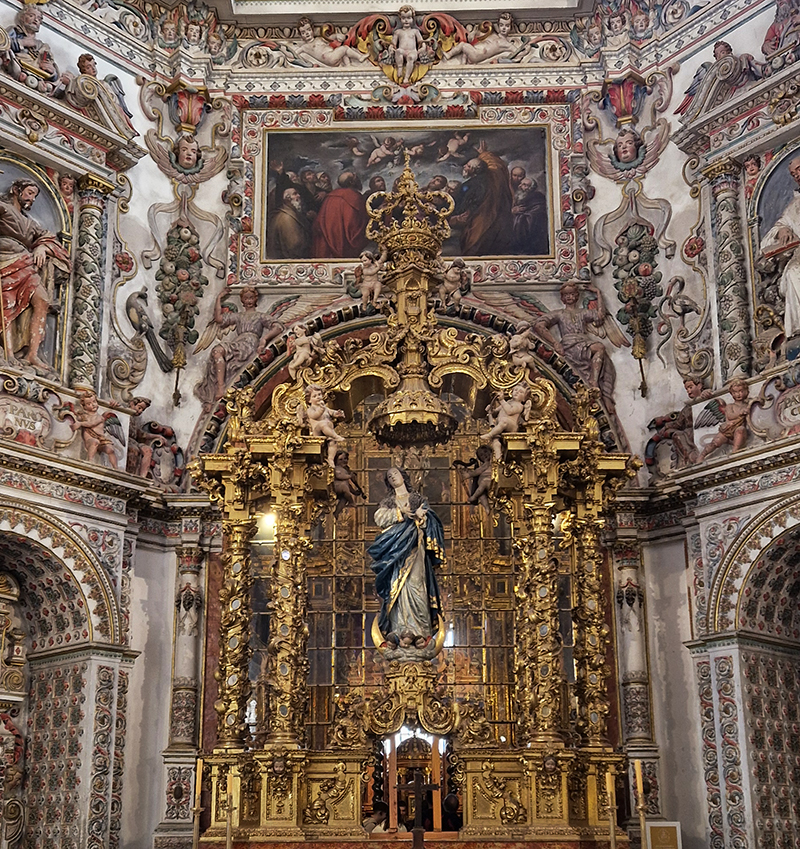
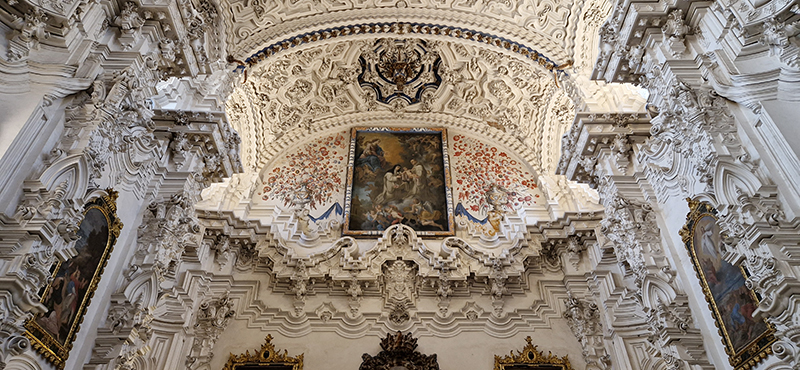
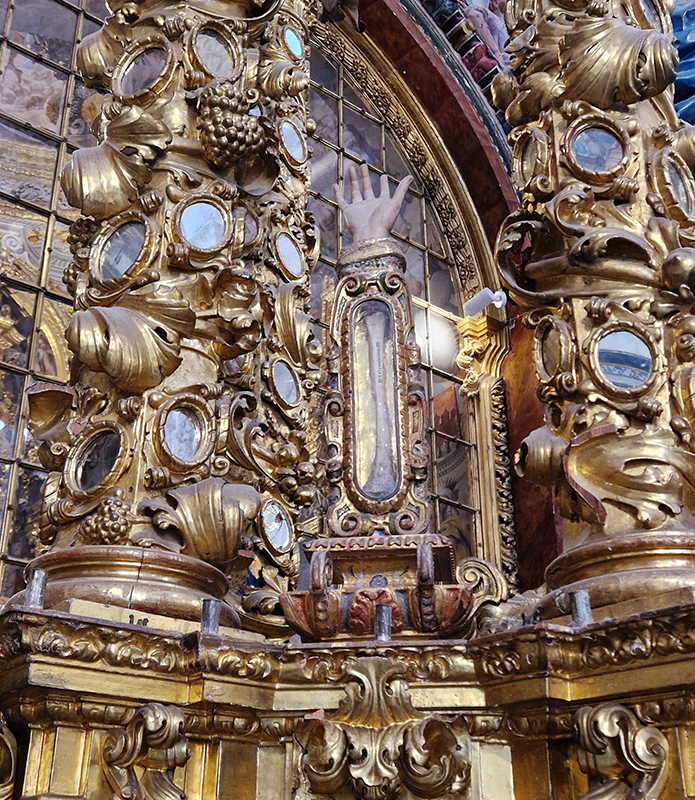
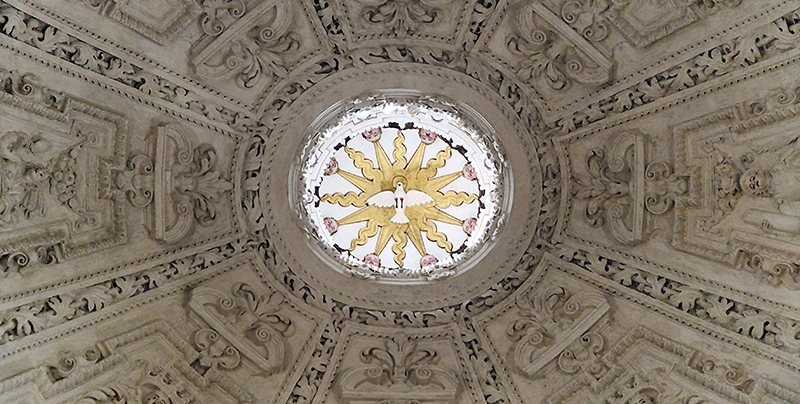
After the stunning intricacies of sacred geometry and calligraphy, the cast plaster and carved stucco in sunblushed pinks and ochres coloured with mineral pigments of the Alhambra came the Roman Catholics with an alternative interpretation of spirituality. The Cathedrals, Abbeys and Monasteries they built are also astonishing in their scale, architecture and decoration. But this new regime conveyed its power with overwhelming opulence and extravagance, gleaming with gold and spilling over with iconography.
Of course all our cities are built in stone but here the stone shouts of its materiality and origins.
What could a monument be? Is it the thing we build or the thing we have taken away from? A place of emptiness is the monument to remind us there is no possibility of getting back to what has been – Otobong Nkanga
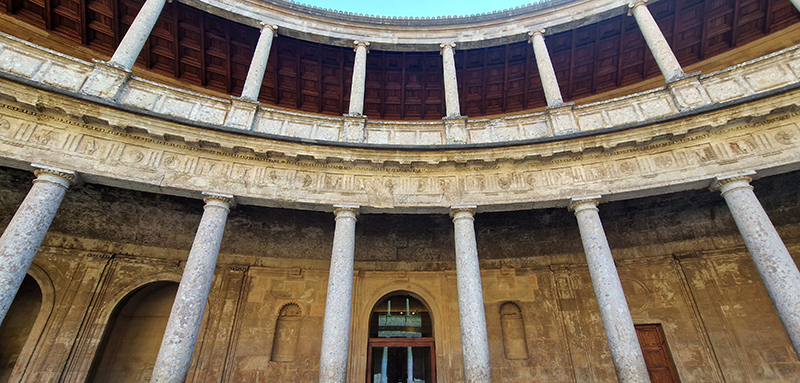
The circular Palace of Charles V was built inside the Alhambra beginning in 1527 to symbolize the royal imperial status and the imposition of Christianity over Islam achieved by the Roman Catholic monarchs. I was intrigued by the Doric colonnade of conglomerate stone and wonder how these were polished so smooth.
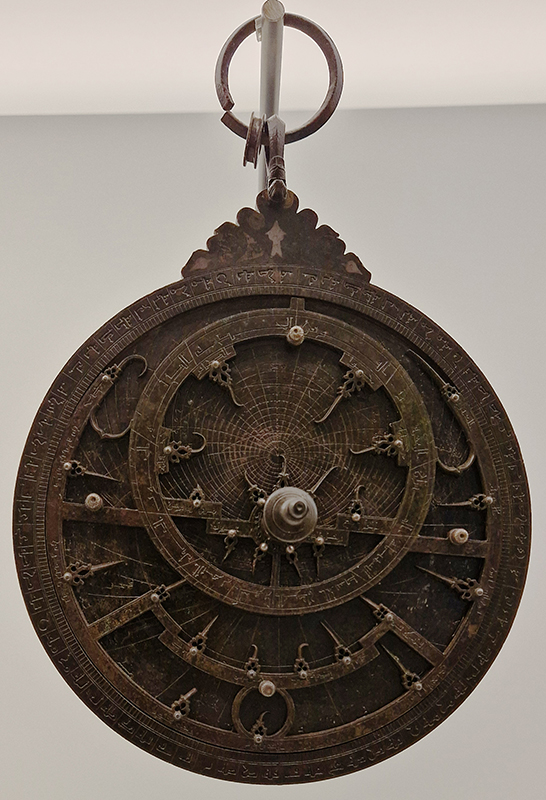
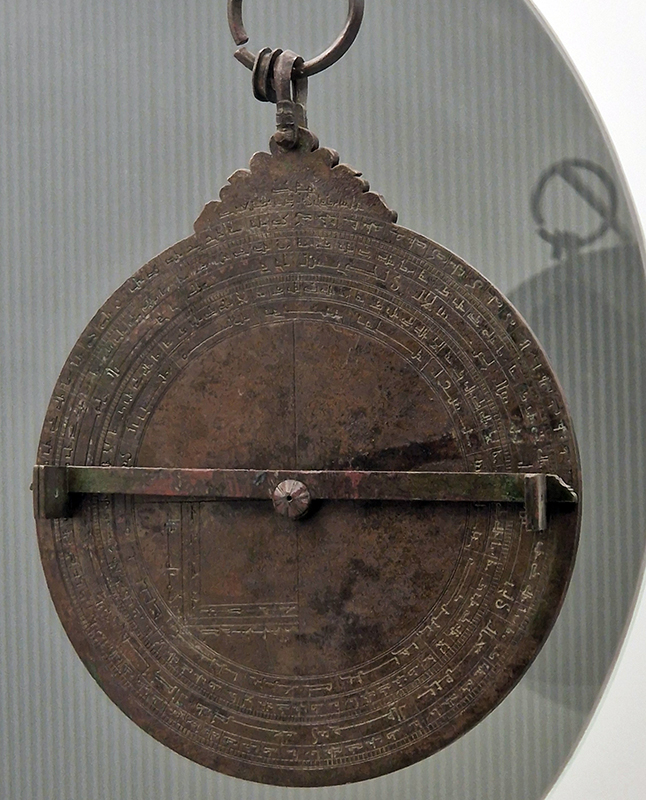
The Museums of Granada hold some fascinating ancient instruments. The Astrolabe of Ibn Zawal: molten, cast and etched bronze, 1481, used to determine position and time based on observation of the heavenly bodies. This one served to mark the times of prayer, beginning of Ramadan and qibla (direction of prayer). This is the only example known built specifically for the latitude of Granada. A marble Sun Dial with missing gnomon, this solar quadrant marks the hours of the day in relation to the seasons. Winter and summer solstices are marked by two semicircles. It has some signs of the zodiac and inscriptions in Kufic characters which mark the times of daily prayers. A bronze celestial globe.
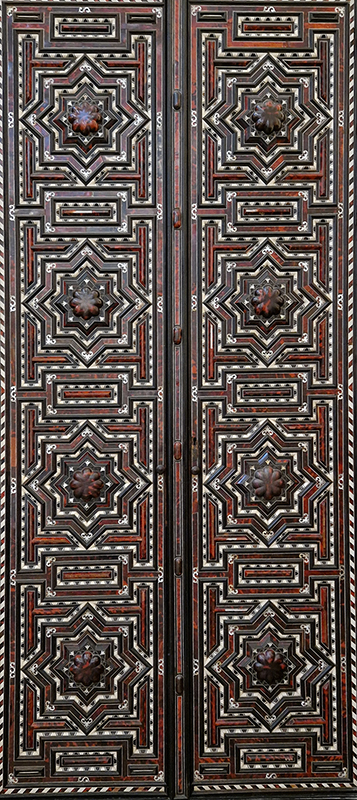
Seeing these instruments along with the intricate patterns of the 13th–15thC larder doors from the Palacio de los Infantes of cypress decorated with intarsia of inlaid wood, bone and ivory and other pieces seen at Granada Cartuja Monastery and Granada Casa de Los Trios, while smelling spices sold loose on the streets brings to mind the ‘Matter of Objects’ project instigated by Queen Mary University that I took part in. Humanities researchers and artists were paired in interdisciplinary conversation to open the way for reinvigorated readings of objects from the past. I was paired with Bruno Martinho from the European University Institute in Florence researching exotic objects found on the Iberian Peninsula during the 16thC.
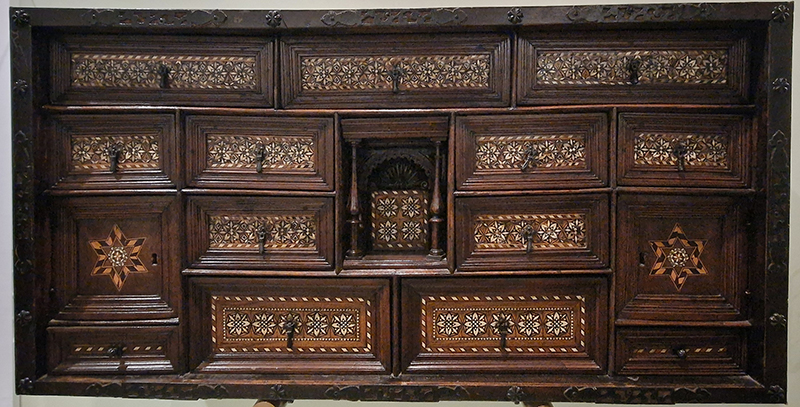
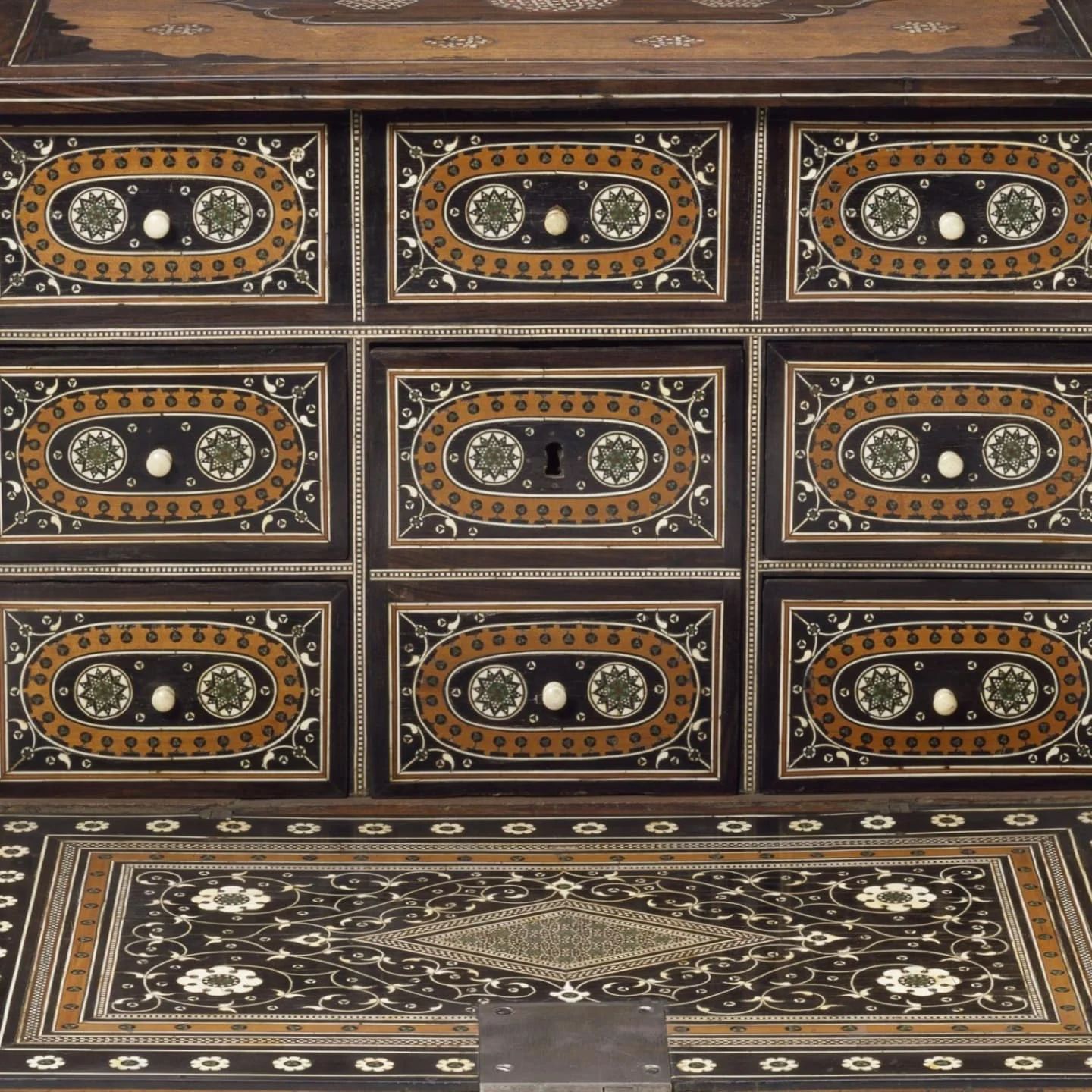
The work containment was made in response to objects traded by merchants that journeyed across the globe five hundred years ago when navigation was reliant on reading the stars. The deep etched lines of the metal plates were filled with inks made from different spices, inviting the viewer to lean in and inhale the aromas. These markers plot the spice route from India around Africa to Europe along the latitude and longitude lines taken from 16th maps of Mercator and Ortelius. A fall-fronted cabinet from 16thC held at the V&A was chosen by Bruno as an object to respond to
Gallery Visits
Liz Elton in Emerging Landscape Painting Todayat Messums Cork Street. Assessing the conversation on how landscape and our collective wellbeing mirror each other. Liz’s delicate work Habitat creating a focal point here was first shown in Lifeboatat APT gallery.
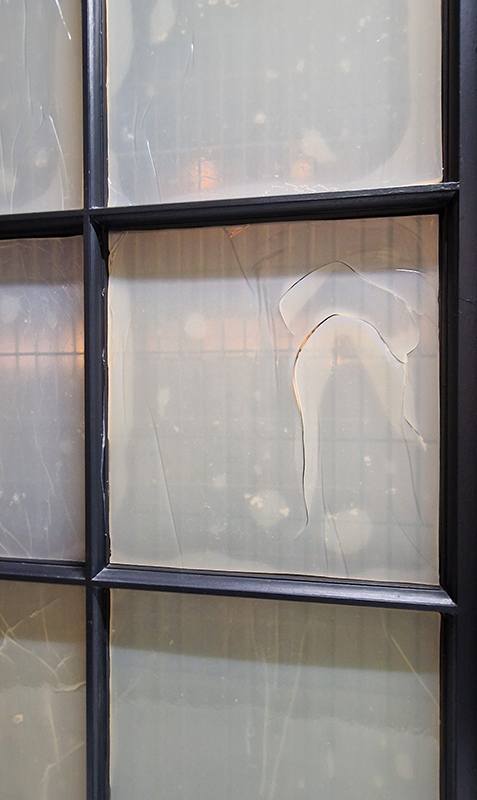
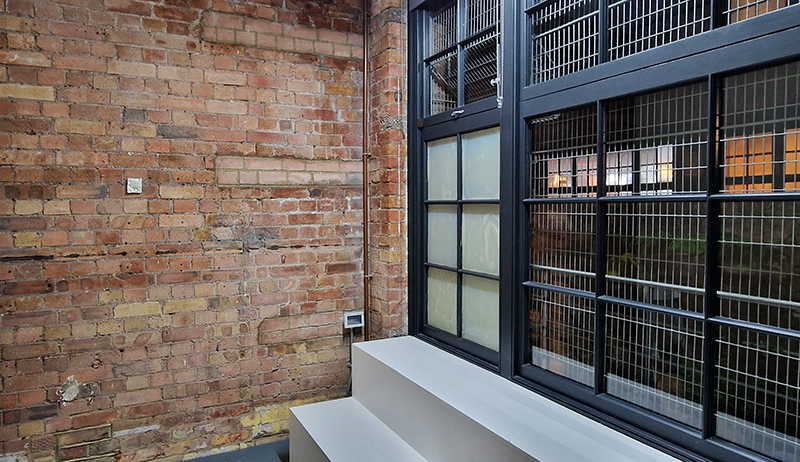
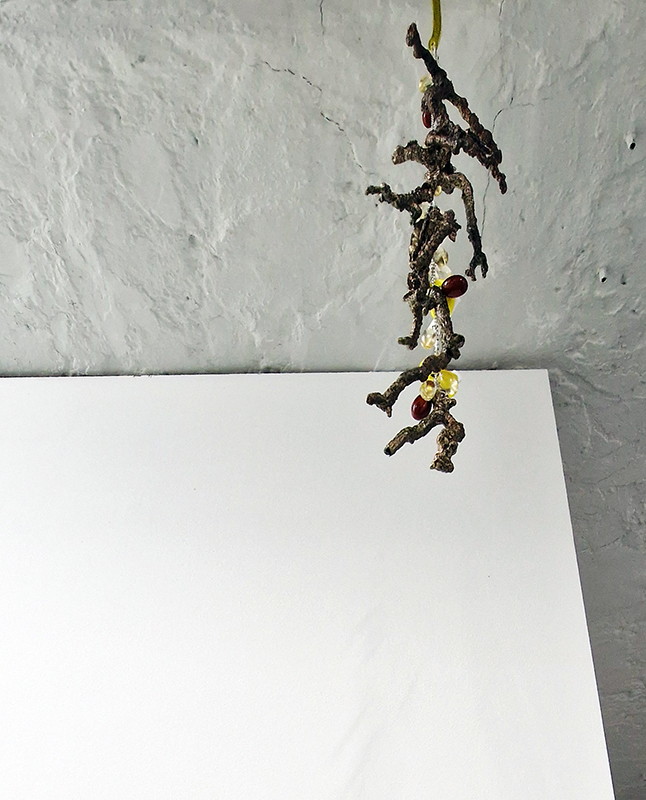
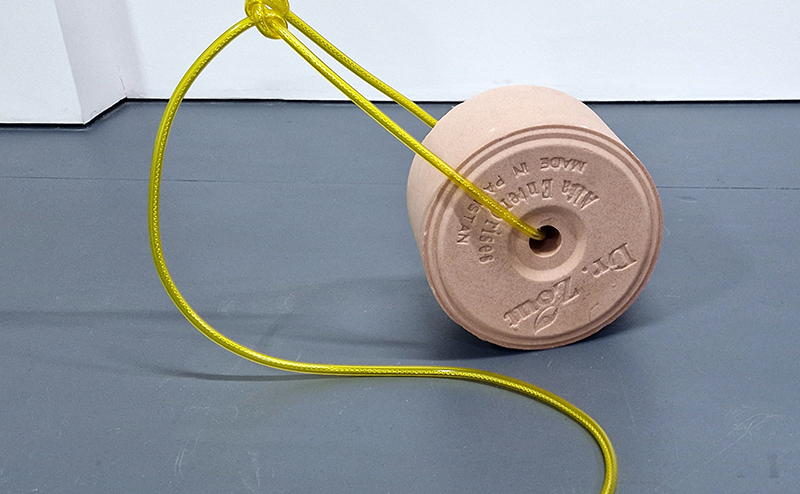
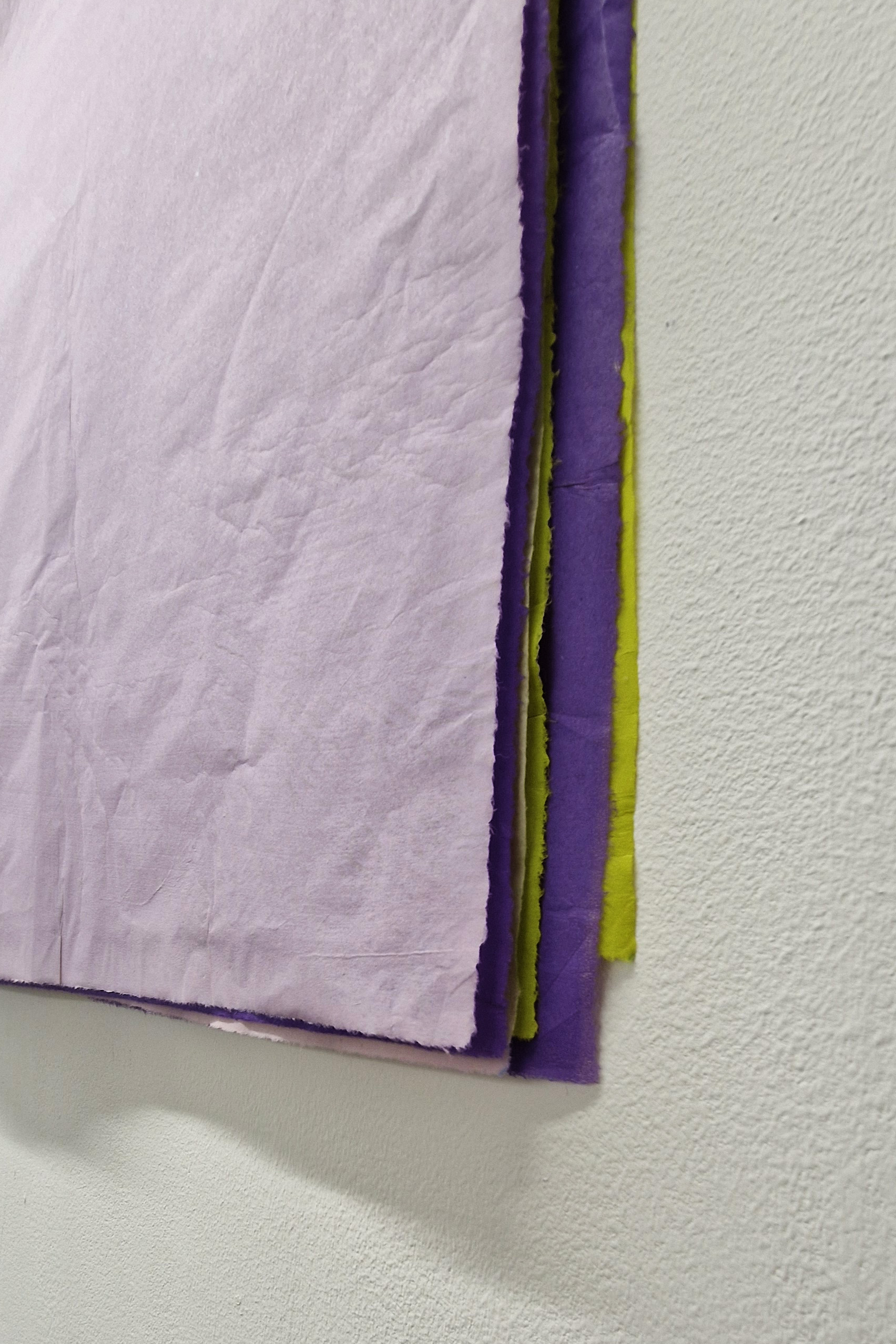
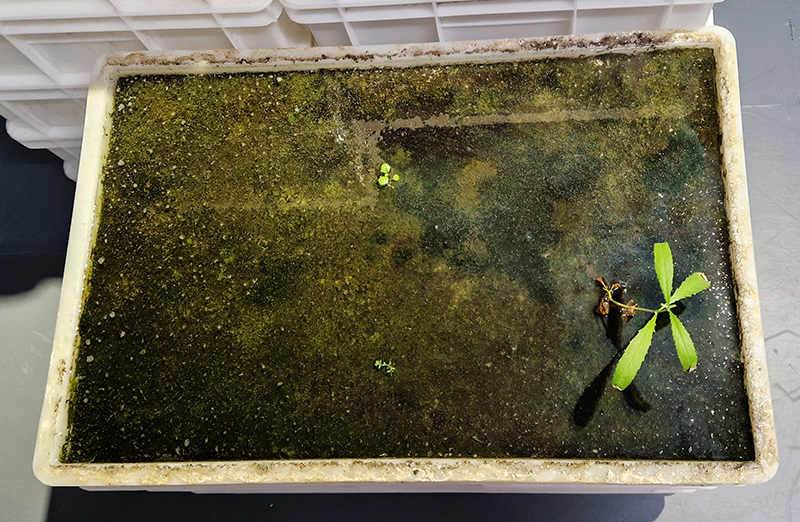
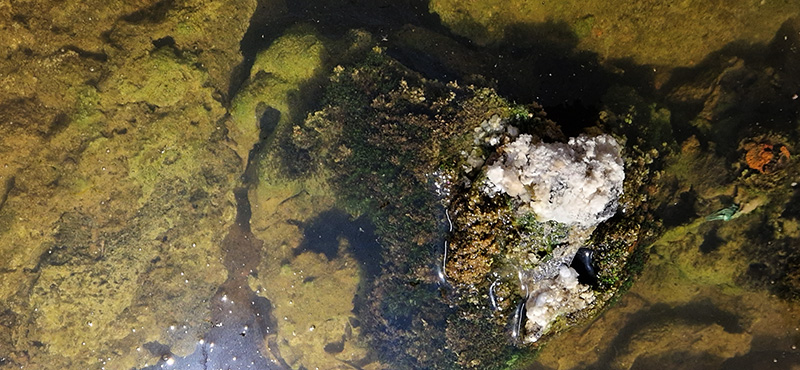
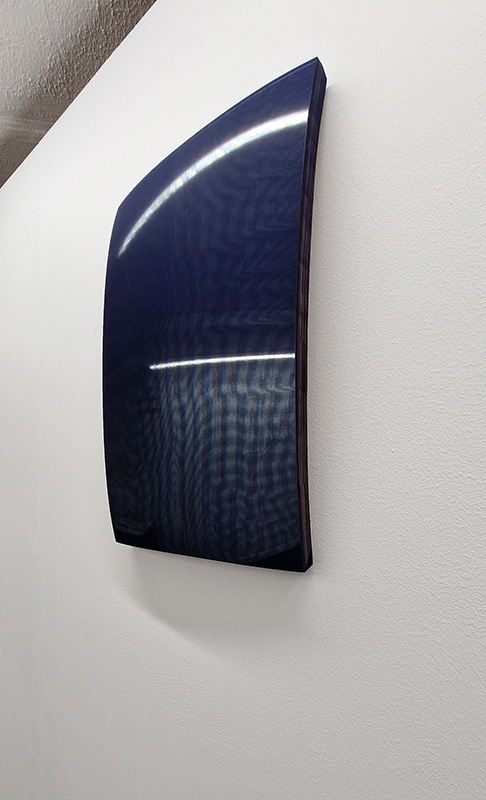
Kate Fahey, Lizzie Munn and Timo Kube in As it is – with works at Commonage Projects and No Show Space. The exhibition talks about subjective experience of time, the past echoing into the future. I find the title ‘As it is’ echoes from my past of Sunday School mantras ‘…on earth as it is in heaven’. That unknown questionable idyll. Aluminium teeth frozen in open cry, strung like trophies; wood sculpted in foetal shapes echoing a folding unfolding, bronze twigs strung with vitamins dangle chirping and chiming over head – hoisted in place with salt blocks, window panes obscured with sheets of semi translucent jelly poised to fall. These works from Kate Fahey encourage an assessment of what is natural, what can be transformed and what can be preserved. Lizzie Munn hangs blocks of hand printed paper in layers of rich colours, the installation draws attention to the vibrant edges and the weight of the paper as object rather than substrate. The manmade bogs in Timo Kube’s plastic tanks also took me back to childhood and the delight of finding strange lifeforms in the rusted water butts of neighbours gardens when taken on trips to renew flowers in the graveyard. Like these bogs his other pieces exploit their surfaces as uncertain, both reflecting and revealing.
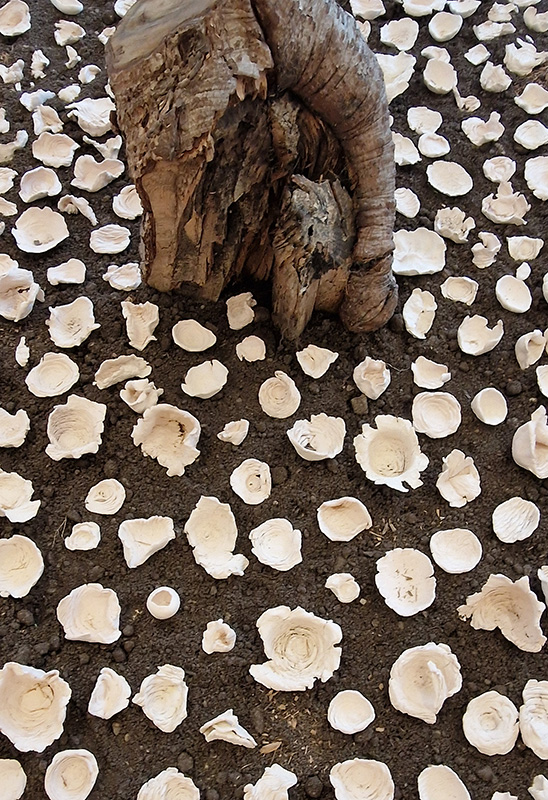
Venetia Nevill We Belong to the Earth at The Bhavan. Venetia has an extraordinary talent of opening pathways into the soul of the natural world allowing us to enter a calm and meditative space. Through her own passion for nature and her deep knowledge of ancient rituals and passing seasons in tune with cosmological cycles she gives us access to the unseen but felt experience of connecting with nature. I walked the cedar mandala and stirred the iron rich water of the scared spring. I pressed damp clay against my skin and the contours of the cedar cone to create an addition to the Mandala of Hope, a growing collection of tiny ceramic vessels, like casts of little hugs.
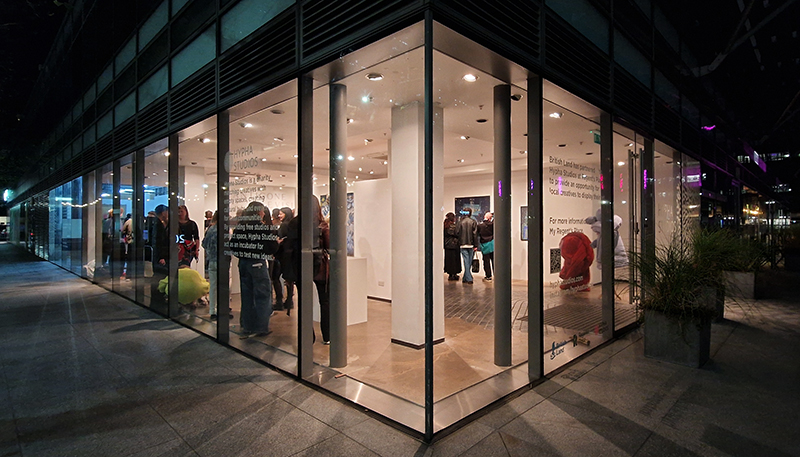
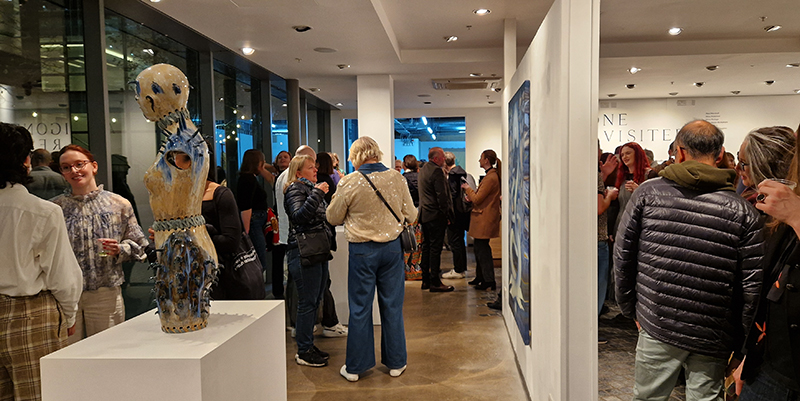
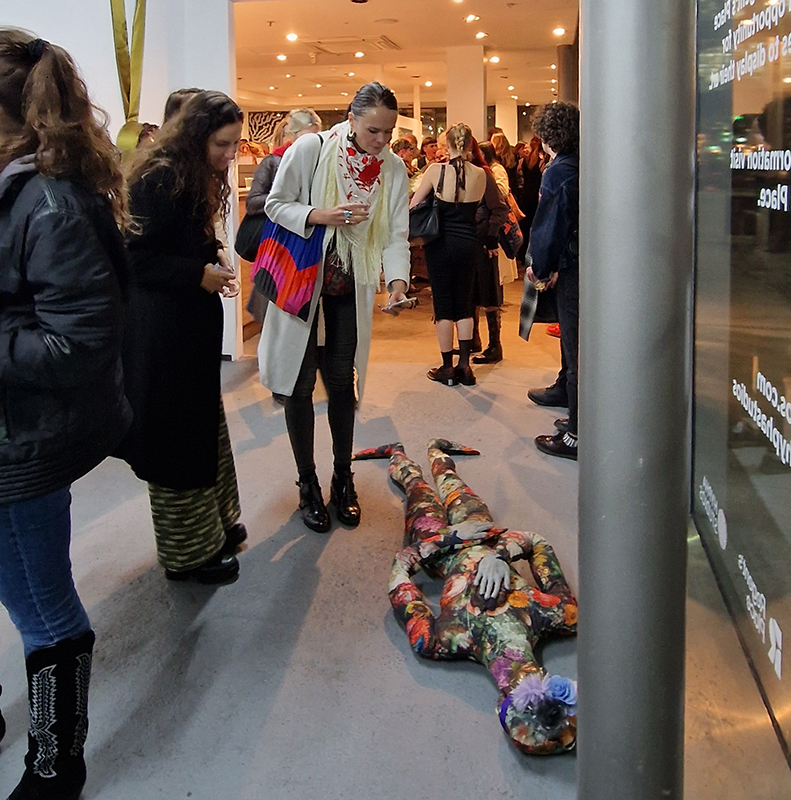
Antigone Revisited curated by Marcelle Joseph at Hypha Studios Euston. This exhibition turns to the contemporary poet Anne Carson and her interpretation of the Greek heroine of Antigone for guidance in our present era of societal crisis. It was good to see the space full and buzzing as this is the site I will be exhibiting in next year in a group show I am co-curating with Julie F. Hill. We will be discussing concepts of The Geological Unconscious taken from the book of the same name by Jason Groves.
Reading
Orbital by Samantha Harvey. This is a nourishing read. Orbital is so first person evocative, the descriptions of Earth from the ISS are so transcendent, it’s hard to believe Samantha is not an astronaut. I very much admire the Art Fictions Podcast curated by JiIlian Knipe and often wondered what book I would choose for myself in this context. I think this book would fit. Why it resonates so much with me is the sense of wonder it evokes along with an acceptance of the infinite incomprehensibility of our position in the cosmos.
‘Our lives here are inexpressively trivial and momentous at once [..] both repetitive and unprecedented. We matter greatly and not at all. To reach some pinnacle of human achievement only to discover that your achievements are next to nothing and that to understand this is the greatest achievement of any life, which itself is nothing, and also so much more than everything.’
Listening
Hannah Critchlow on the connected brain In her books Hannah Critchlow has explored the idea that much of our character and behaviour is hard-wired into us before we’re even born. Most recently she’s considered collective intelligence, asking how we can bring all our individual brains together and harness their power in one ‘super brain’.
86 billion nerve cells within the brain produce electrical currents as they pump sodium and potassium ions in and out across cell membranes and that pumping of charged ions creates an electrical current which passes from one nerve cell to the next cell in the circuit and that movement of electrical current creates our thoughts, ideas, emotions and our behaviour. An EEG machine can examine the electrical activity within the brain and the brainwaves can be read and converted to sound. Fascinating to hear that when Hannah read the brainwaves of Rowan Williams, the former Archbishop of Canterbury, as he meditated she could see an incredible burst of gamma wave activity in the brain, the fastest frequency of electrical oscillation. Scientists are exploring what happens when groups of brains start working together. In a group, brainwaves start to synchronise with each other, and that physiological alignment within the brain is linked to better learning and consensus building and problem solving ability. In a multi-person brain to brain interface – individuals across the world can be hooked up to an EEG machine and their brain oscillations can be converted into a magnetic stimulation signal which is then transmitted from one person to another person enabling them to read each others thoughts in a very rudimentary sense. Experiments have been done with isolated individuals playing games such as 20 questions and they can complete this without any other communication across the group.
Wrinkled Time The Persistence of Past Worlds on Earth by Marcia Bjornerud. Chronicling the way Earth archives Her geological history in the wrinkled strata just beneath our feet, Marcia Bjornerud orients us to the deep time-fulness of Earth—the four billion years of dynamism held in the ancient and ongoing story of rock.
Viewing
Architecton written and directed by Viktor Kossakovsky at BFI Imax as part of the 2024 London Film Festival. Fabulous to see this on the giant screen. It is an epic and poetic work meditating on humanity’s relationship with architecture. The footage of tumbling stones and rock blasts is breathtaking. An extraordinary journey through the material that makes up our habitat: concrete and its ancestor, stone.
Right In The Substance of Them a Trace of What Happened a series of short experimental films showing at ICA as part of LFF 2024. A couple of favourites were the atmospheric Hexham Heads by Chloë Delanghe and Mattijs Driesen based on a local myth of stone heads unearthed in a local garden that bring forth a chilling presence. Hemel by Danielle Dean, tapping into 1950’s science fiction of alien life and mysterious meteorites to examine lived experiences and xenophobia in Hemel Hempstead.
‘And here is one of the map’s most important characteristics: the viewer is positioned simultaneously inside and outside it. In the act of locating themselves on it, the viewer is at the same moment imaginatively rising above (and outside) it in a transcendent moment of contemplation, beyond time and space, seeing everywhere from nowhere.’ Jerry Brotton in A History of the World in 12 maps
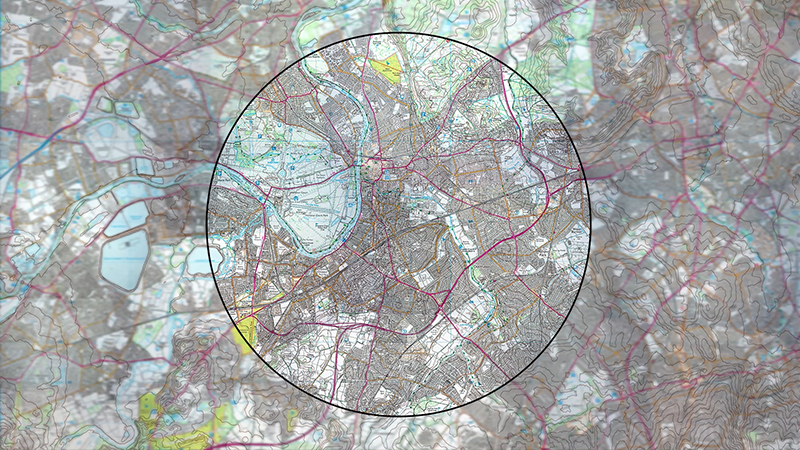
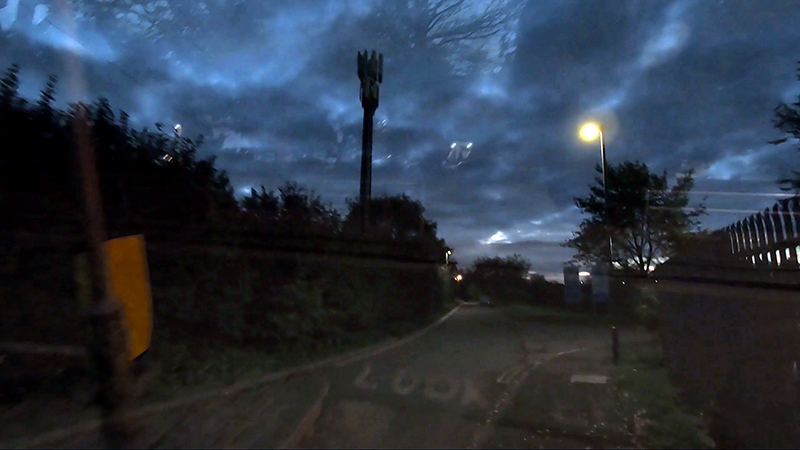
Locked down editing video work. Setting off at dawn and wearing a headcam I walked the most direct route to each of the four points due North, East, South and West of my home. I chose a three mile radius as this approximates the distance to my horizon at sea level.
I am interested in how space is perceived as a plotted dimension, as abstract space calculated mathematically but perhaps not something we can visualise and as imagined space.
I aim to relate these different perspectives on space to broader knowledge. In my film there are three speculative viewpoints; ‘the seeker’ who wishes to discover what is beyond the horizon, ‘the seer’ who imagines what might be beyond and ‘the scientist’ who offers abstract theories.
In the film I explore connections and hierarchies of physical dimensions and perception, the use of contour lines on maps, foliation and patterns in soap film membranes or marbling.
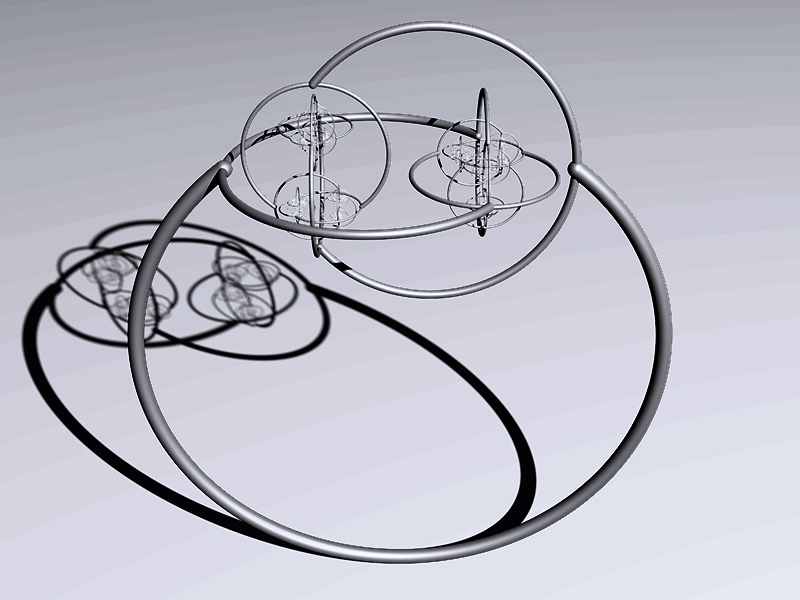
Foliation is the decomposition of shape into lines and circles. It occurs in geology as repetitive layering in metamorphic rocks and in mathematics as the analysis of curves and surfaces. The math’s language is way beyond what I can understand but it does have connections with holonomy and manifolds and Poincaré which I am interested in though I am yet to get to grips with any firm understanding. The notion of leaves (slices) allows for an intuitive way of thinking about a foliation. In mathematics, topology compares shapes to see if they have the same number of holes and handles and can therefore be moulded from one shape into the other by stretching, twisting, crumpling and bending, but not tearing or gluing.
I took many films of soap film membranes and have been exporting the final single frame at the moment the bubble bursts. I have used these frames to create sequences of collated membrane bursts. We may live in a multiverse of bubbles each with wildly different laws of physics. String theory allows for many universes with different physical laws. It may be possible our universe could suddenly transform into a universe with different properties. If it did happen it would be so fast we wouldn’t even register it.
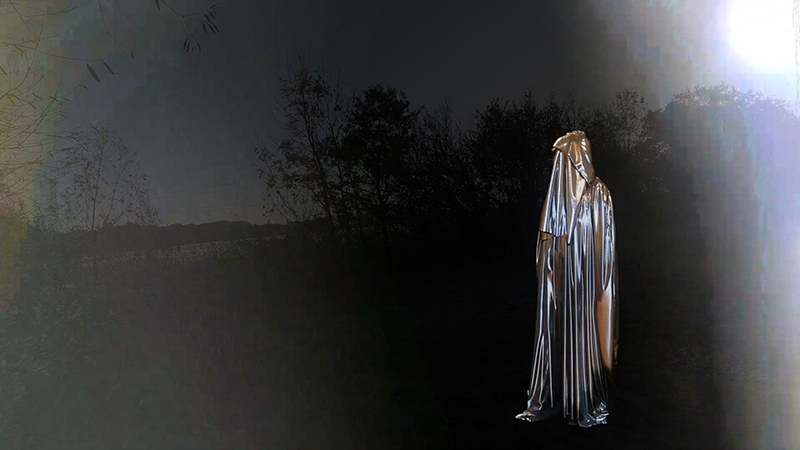
I made a silver cape for some green screen filming in character as the seer. Learning lots about Adobe After Effects so if the editing requires I drop this section then the hours put in won’t be entirely wasted and the cape will come in for when next door can have their parties again.
Thinking about making new work that interacts in real time with cosmic rays as they hit the Earth’s atmosphere and shower down upon us.
Cosmic rays, some travelling from other galaxies, pass through us and our world continuously, creating an almost tangible contact with outer space. Witnessing this incredible activity helps us look beyond what our immediate senses tell us exists and consider the interconnectedness of our universe.
We are made of carbon. Most of the carbon in the world is carbon-12 which contains six neutrons and six protons. Protons and atomic nuclei created by events such as exploding stars speed across space and collide violently with the Earth’s atmosphere creating a chain reaction of cascading particles. Some of these particles created are neutrons which can smash into atoms of nitrogen to create carbon-14 which has six protons and eight neutrons.
Cosmic ray activity gives us carbon dating techniques. Carbon-14 is unstable and therefore radioactive. It has a half-life of 5,730 years. This means if a sample of a tree contains 64 g of radioactive carbon, then after 5,730 years it will contain 32 g, after another 5,730 years that will have halved again to 16 g. Radioactive decay is random but in a sample there are enough atoms to work out an average time it will take for the nucleus to lose the extra neutrons.
Carbon-14 atoms in the atmosphere combine with oxygen to create radioactive carbon-dioxide. This radioactive carbon-dioxide is absorbed by plants which are eaten by animals. When an organism dies no more carbon-14 will be absorbed. The existing carbon-14 will start to decay. By measuring the radioactivity, the current carbon-14 content can be determined and the time of death established.
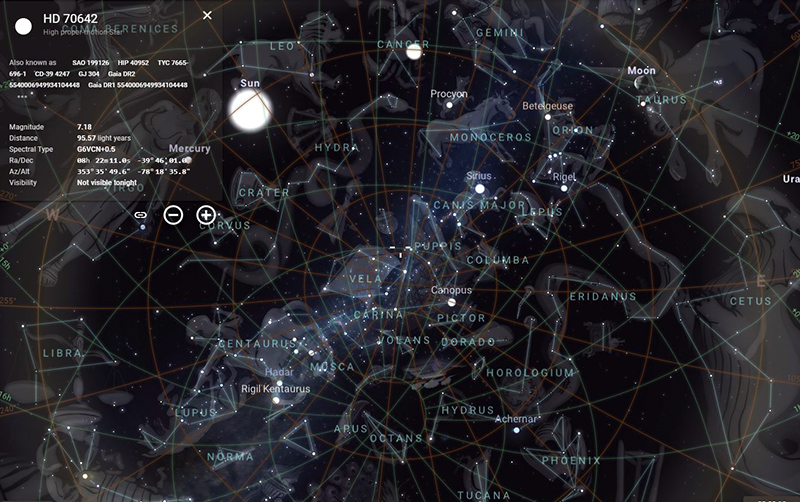
A planet with twice the mass of Jupiter has been discovered orbiting HD70642 in an almost circular orbit. This means it is possible that Earth-type planets may be orbiting further in. In all other planetary systems discovered with massive planets they usually have disruptive closer elliptical orbits which would destroy any smaller planets on a circular orbit. Hope to return to my studio soon to continue work on ’90 light years home’ which will use a raster pattern on folded paper looking at mapping out a space ship as a star map using 137 points. As physicist Laurence Eaves states – ‘The number 137 would be the one you’d signal to aliens to indicate that we have some measure of mastery over our planet and understand quantum mechanics.’
137 comes from the fine-structure constant, also known as Sommerfeld’s constant and is represented by the alpha symbol α. Using several fundamental constants found in nature to give a fundamental physical constant. This number represents the strength of electromagnetic interaction between elementary charged particles which is the probability that an electron will absorb a photon.
I watched the Hito Steyerl lecture as part of the Dramaturgies of Resistance online event series. ‘At this unprecedented time, when it seems as if “everything is canceled,” Steyerl’s most recent work explores the complex relation between spread (of conspiracy theories no less than viral contagion) and simulation (from the automization of performance to our capacities for virtual interaction with statistical probability of human risk).’
I was excited to find the lecture covered topics very relevant to my research into abstract space at the moment such as objects in topology. The Alexander horned sphere is a pathological object in topology. It is formed by starting with a standard torus, removing a radial slice of the torus and connecting a standard punctured torus to each side of the cut, interlinked with the torus on the other side. A pathological object is one which possesses deviant, irregular or a counterintuitive property, in such a way that distinguishes it from what is conceived as a typical object in the same category.
The opposite of pathological is well-behaved.
Mathematician Shing-Tung Yau set out to discover if there could be a spacetime which contains no matter but in which there is still gravity caused by the topology of the space. In 1977 he solved the Calabi Conjecture posed by Eugenio Calibi in 1954 who was interested in whether a certain type of topology guarantees a certain type of geometry. Topology looks at the overall form of an object and recognizes shapes that have an equivalent topology but different geometry such as a doughnut and a coffee cup as they can be morphed from one to the other. Topologists generally study manifolds. Manifolds are shapes that could be flat when looked at close up such as the earth’s surface or a ball if you were an ant. Each point on the surface can be mapped using two coordinates onto a 2 D plane and the shape is finite. Taking the average of all the curvatures at every point on the surface gives what’s called the Ricci curvature. A doughnut which is a 2D manifold mapped in this way has a Ricci curvature of zero which shows that a manifold can have a zero Ricci curvature at every point without being flat. There are also shapes which look 3D when seen up close and need 3 coordinates to map them. In mathematics it is possible to think of Euclidean (flat) space in any number of dimensions by increasing the number of coordinates you use giving manifolds in many dimensions. Transferring this equation to physics Ricci curvature describes the curvature of spacetime that’s induced by matter being present if this curvature is zero then it describes a spacetime with no matter. Yau proved that this type of manifold could exist in all dimensions. This type of manifold is known as the Calabi-Yau manifold. Particularly in superstring theory, the extra dimensions of spacetime are sometimes conjectured to take the form of a 6-dimensional Calabi–Yau manifold, which led to the idea of mirror symmetry.
I had a very productive time during my Studio4 residency at Chisenhale Art Place. It was great to have so much space. I got started by putting up the hydroponic tent to run the cloud chamber to get some more film footage.
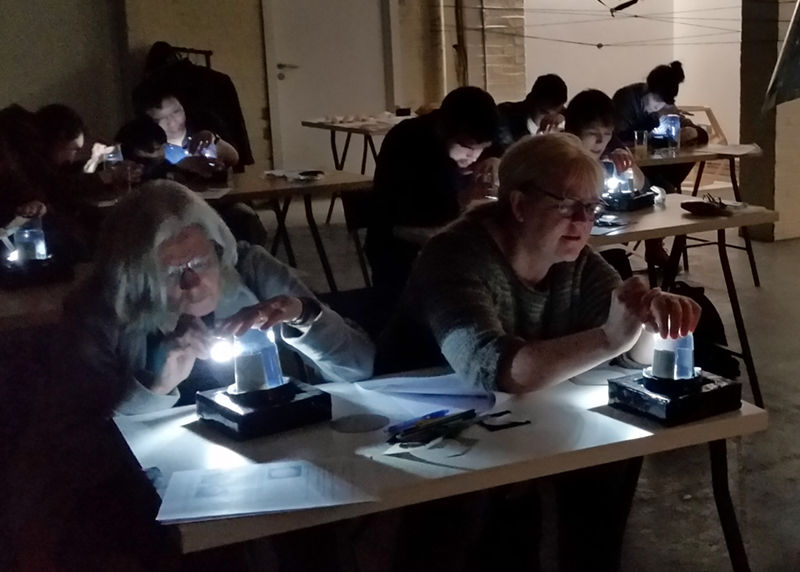
I also ran a Cloud Chamber Workshop where lots of particle trails were spotted. The cloud chamber gives us a glimpse into the invisible world of particles produced in the radioactive decay of naturally occurring elements and those generated when cosmic rays strike the top of the Earth’s atmosphere.
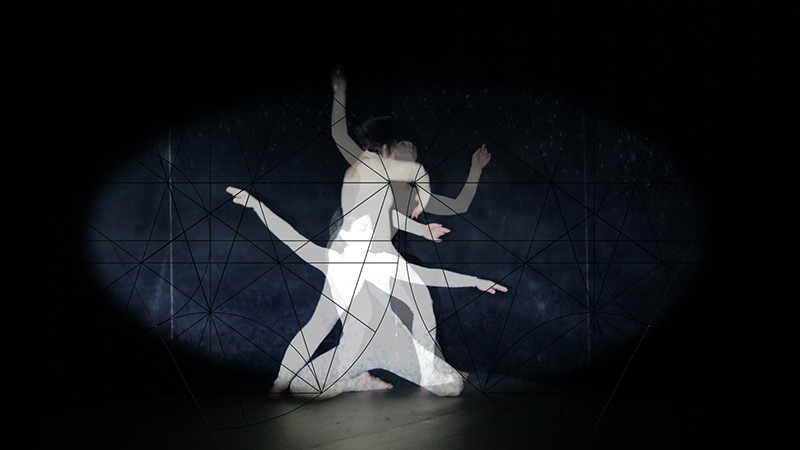
My call out through Chisenhale Dance Place for a dance collaborator was successful and I met up with dance artist Paola Napolitano She has brought lots of brilliant ideas to the project with her knowledge of Rudolf Laban’s choreutics theory and her own interpretation of the dodecahedron as a Kinesphere, ascribing sequences of movement to the peripheral lines and planes within the shape. She shared some of Laban’s wonderful drawings with me
and pointed out his quote; ‘Space is a hidden feature of movement and movement is a visible aspect of space’
I then began building the velvet chamber.
Next I needed to make the small screens that the audience would use to ‘capture’ the filmed particle trails which would be projected in the chamber lined with thick black velvet.
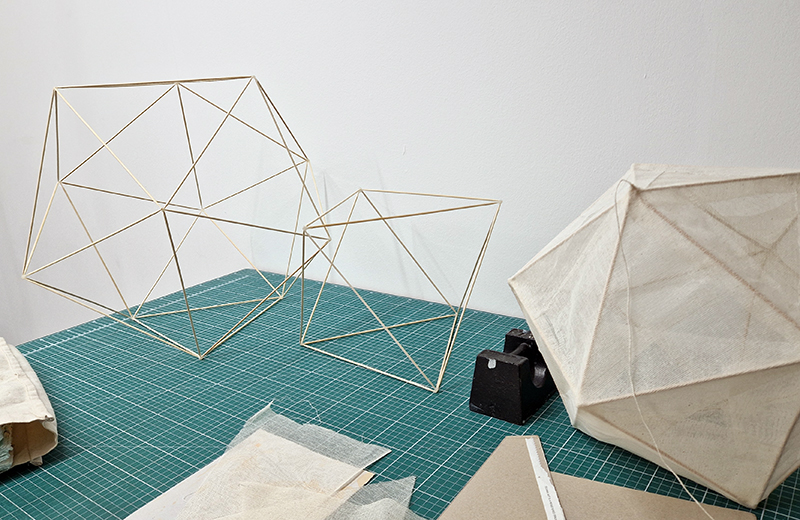
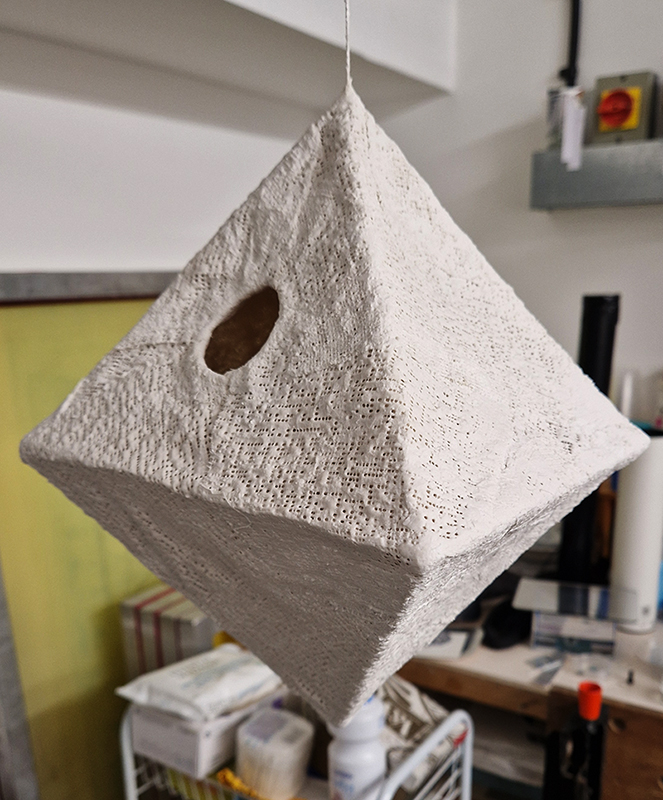
This took some working out to fix the joints but in the end a combination of glue, V nails, double sided tape and veneer pins seemed to be strong enough. I used tracing paper, projector screen fabric, white cotton, polyester, organza, styrene, acrylic and wood as different substrates to give different effects and emphasize the porous/solid nature of matter.
The particle trail footage was edited together and the projections in the chamber tested.
Some unexpected effects appeared.
I spent quite a while looking at different projector options. When it was time to film Paola I used a pico DLP for darker shots where just her body was visible and a more powerful HD projector for other shots.
There was a lot of footage to go through and only a week to the opening event. This was my first video work and I was learning Premiere Pro on the hoof.
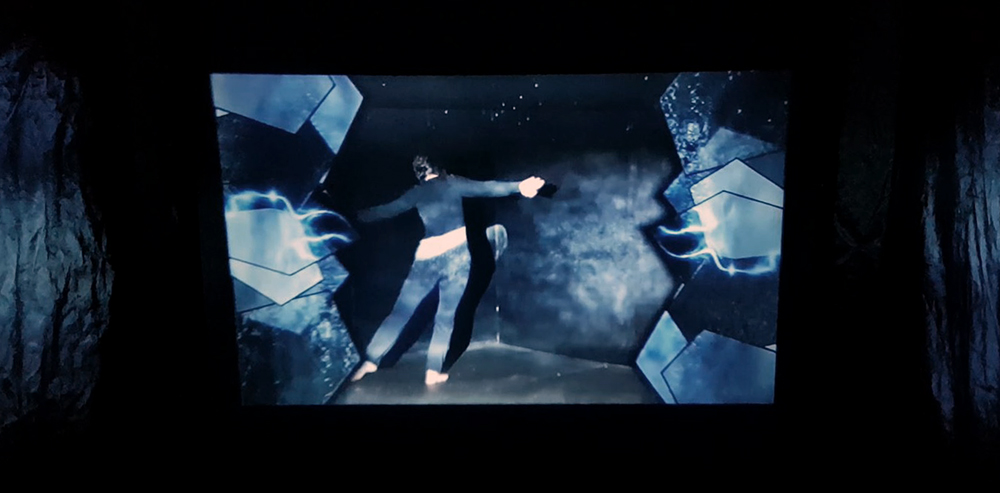
Movement choreographed and performed by Paola Napolitano was filmed in the velvet chamber.
This work builds on recent research that began with wondering what fundamental elements make up the landscapes around us leading to the discovery that less than 5% of the universe is visible.
Within the unimaginable vastness of the universe we trace our paths continuously permeated at a quantum scale by cosmic rays fired into our world by high energy collisions in space.
Plato described the dodecahedron as the fifth construction that ‘the god used for embroidering the constellations on the whole heavens’.
There is also a contemporary theory that the universe may be the shape of a dodecahedron, not infinite but with no boundaries this is known as the 3-sphere universe theory. If you left the dodecahedron at one point you would immediately re-enter at another point
Rudolf Laban was influenced by Plato and the geometries of the platonic solids. His choreutics theories open up new languages to describe interactions between matter and space.
‘What we cannot perceive with our senses, especially our fundamental sense of touch, remains unreal and its very existence is denied, until intuition or research discovers the unique and universal role of movement as a visible aspect of space’ Laban
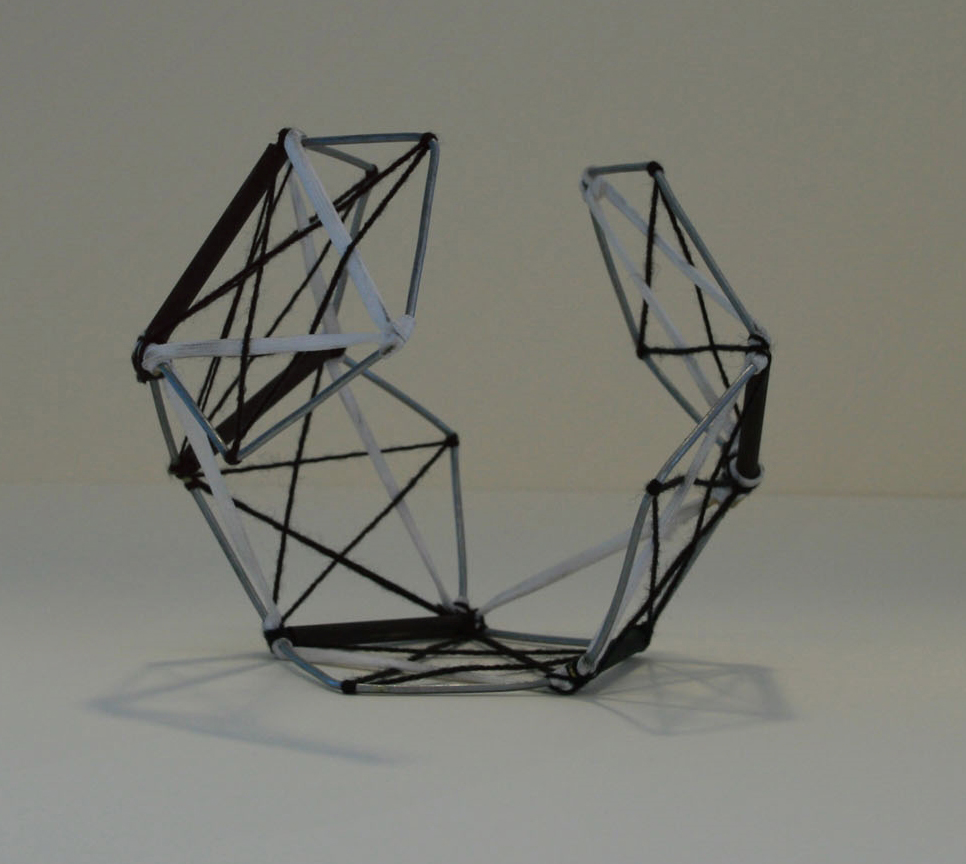
Laban Archive – Dodecahedron without six of its pentagonal sides, demonstrating a diagonal orientational axis with a circular void around it representing a circular movement. Model made with metal, painted wood, wool and shoelace.
The simple sound edit was a slow transition through the chromatic scale which is a scale with twelve pitches to echo the 12 sided dodecahedron and some added Geiger counter signals converted to an original chromatic scale composition. The video was screened at the open event Scales of Intangibility and it was a relief that Paola was pleased.
Interesting interactions happened in the velvet chamber.
The polyhedral screens worked well to view the projections and ‘capture’ trails, ( a white shirt worked well too ) and I really appreciated all the good feedback from visitors.
Now the concept has been tested I am keen to take the idea to new places. Hopefully it can be developed into work for my open door residency Beyond at Allenheads Contemporary Arts.
While at Chisenhale I had the privilege of experiencing Lydia Ouramane’s The You In Us exhibition at Chisenhale Gallery alone on the floor, letting the reverberations from the underfloor transducer speakers course through my body while reading about the extraordinary tale of her grandfather pulling out all his teeth to escape military service and the night her dogs were kidnapped from her roof terrace. The sound piece is called Paradis it is about waiting for something better to come.
It is a subtle interaction that makes the seemingly empty space personal. My body is here, I can feel the effects and I will leave traces of my visit as I enter and leave pushing against the heavy silver oxidised doors, as with every visitor’s touch, slowly revealing the silver beneath.
Enjoyed an afternoon screening at LUX with Catalyst Arts presenting Looking Aside. Laura McMorrow’s The Lost Acre had a fragile materiality, creating unstable ground of the sort that might give way and open passages to other realms.
Fred Butler Harmonics in Space was not quite the zen experience I had been expecting. There was certainly a lot of energy going on at the private view.
And as Laban states ‘Matter itself is a compound of vibrations’
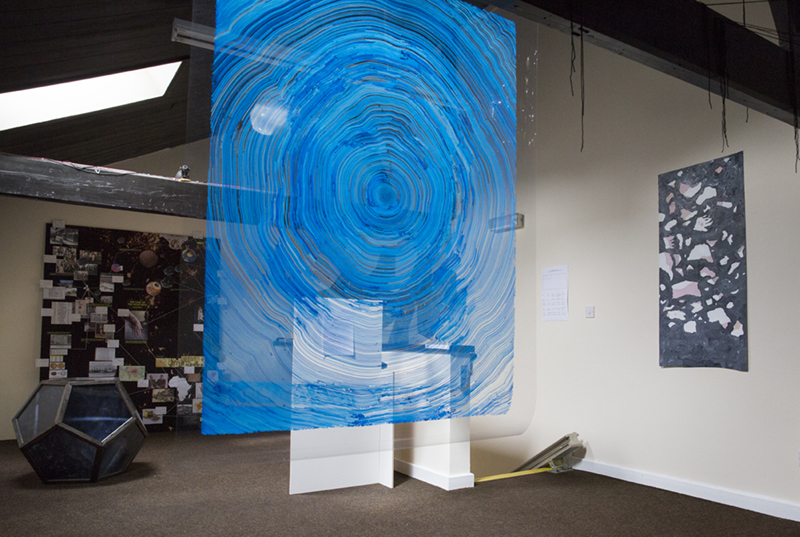
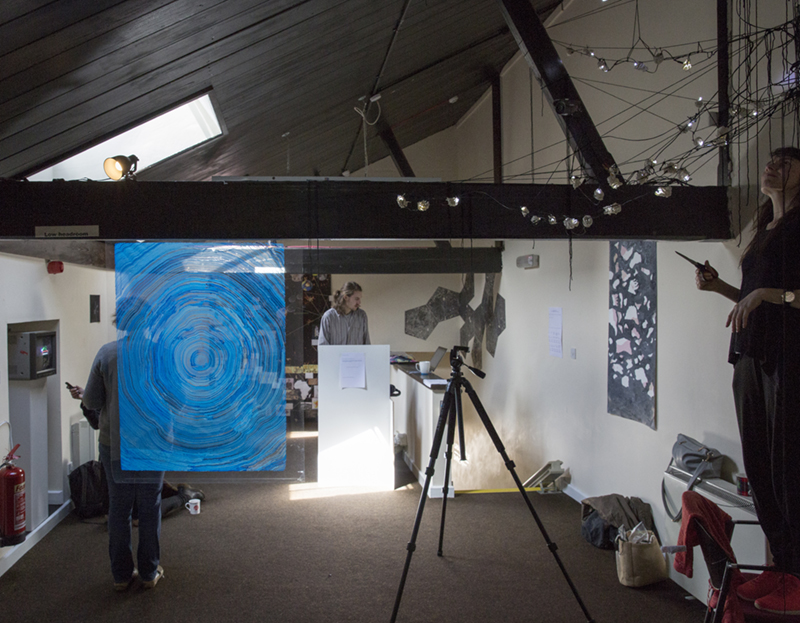
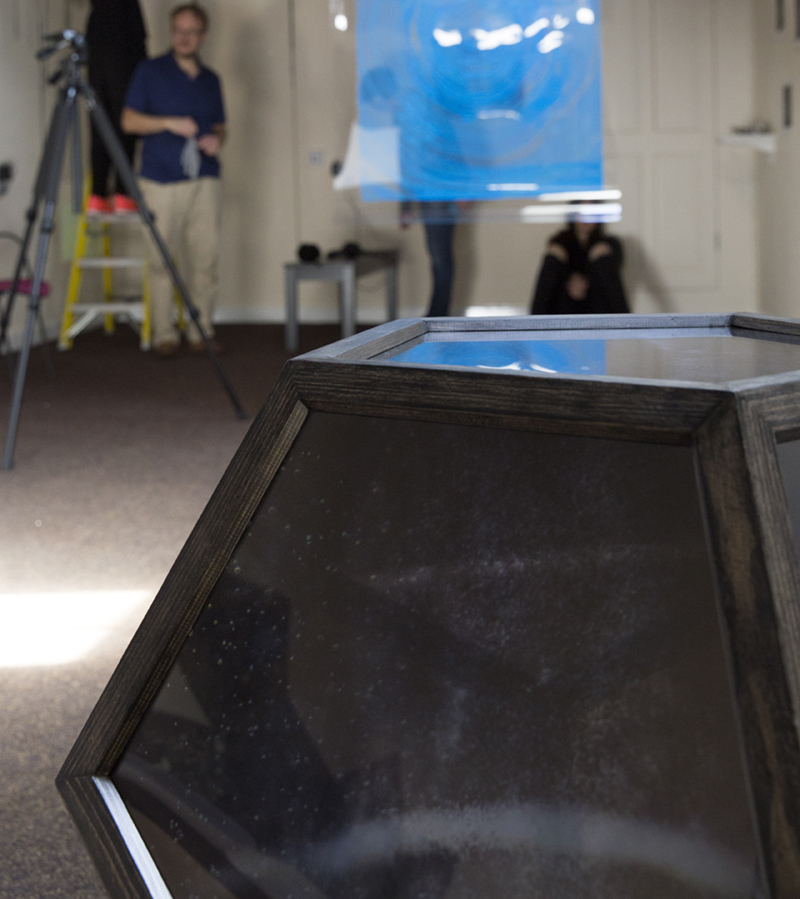
Diazôgraphô – (Wood, acrylic, digital print) has been reworked since Guest Projects. You can still see through it, but it is more reflecting; you and your surroundings are echoed in it and so it appears you are both surrounded by and surrounding the same space.
Using the dodecahedron as a motif for the universe I like this quality that draws on Dante’s description of the universe as concentric circles; that the very outer circles also appear to be enclosed by the inner circles and the relationship that this enfolding space has to a 3-sphere and Poincaré dodecahedral space. Plato described the dodecahedron as ‘a fifth construction, which the god used for embroidering the constellations on the whole heaven ’ so it works as a metaphor for dark matter too – a phenomena that binds the galaxies together.
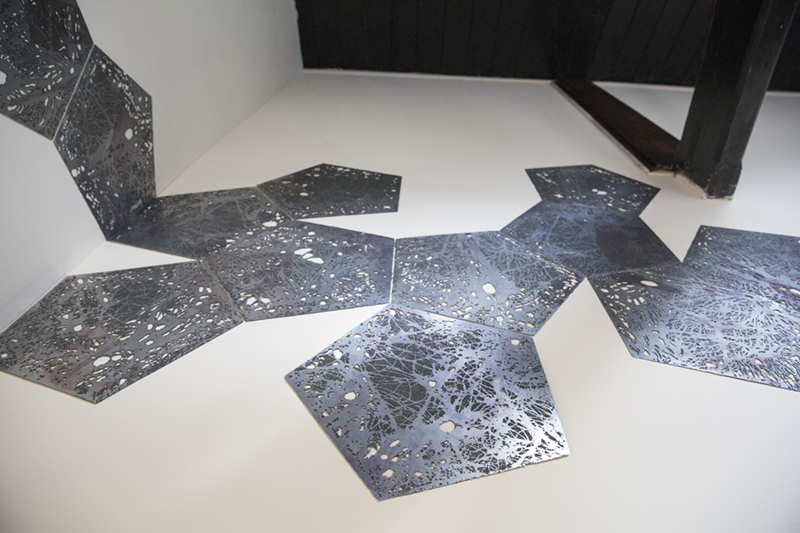
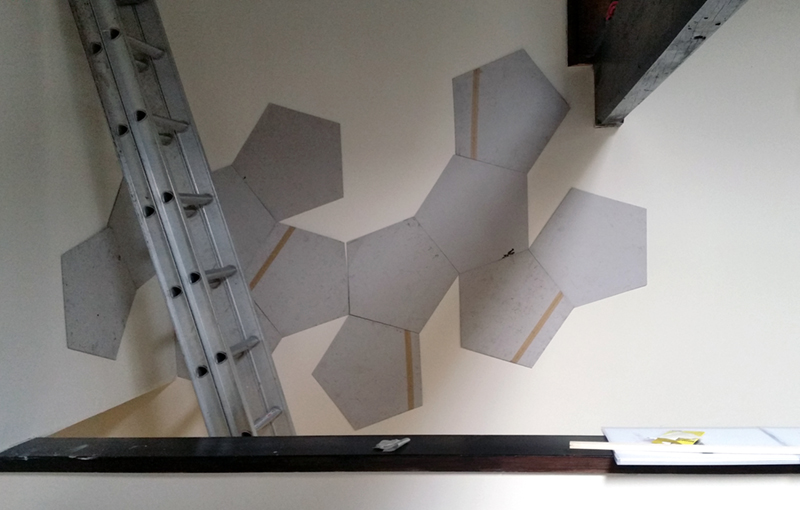
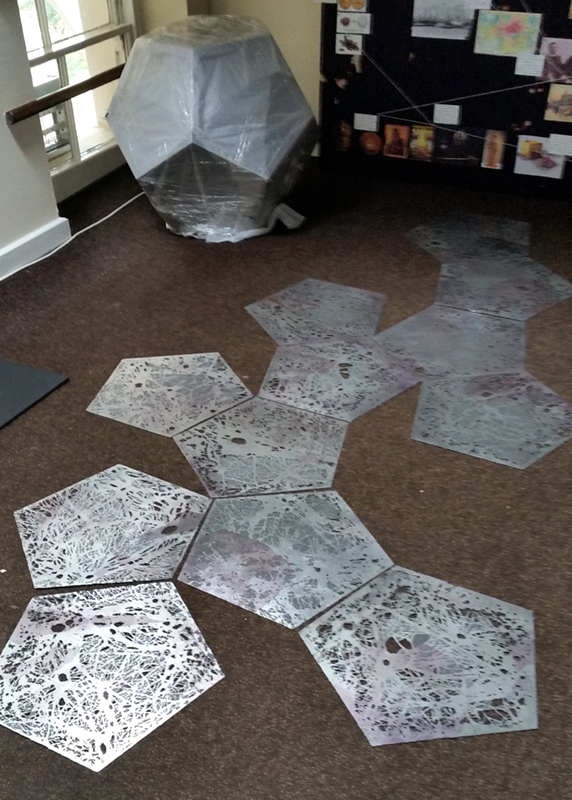
The Forms – (Etched aluminium) Installed in a new configuration here as a net that together would build a dodecahedron. In scientific visualisations of dark matter we see familiar organic patterns emerge; the fronds of dark matter spanning galaxies could be the spreading branches of trees or the veins under our skin. The realm of abstract thought Plato called The Forms is where ideals reside, outside the limitations of the physical world and where, if anywhere, paradise might be found.
Some work by the other Laboratory of Dark Matter artists was new, some reworked or given new context
Amy Gear Nudge – (Painting on unstretched canvas) Reflecting on video footage from a Women’s Self Defence and Green Screen Workshop run in collaboration with martial arts expert Jiff Higman, the work employs the body as a tool to help describe the incomprehensible notion that only 5% of the universe is visible to us; the bodily contact through self-defence actions related to the contact scientists are hoping for when a dark matter particle ‘nudges’ the nucleus of the target element (Xenon) and causes a recoil that can be recorded.
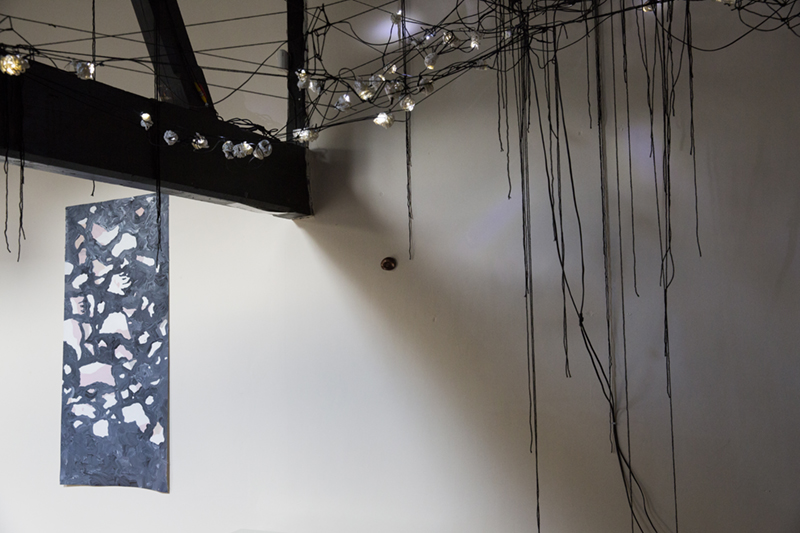
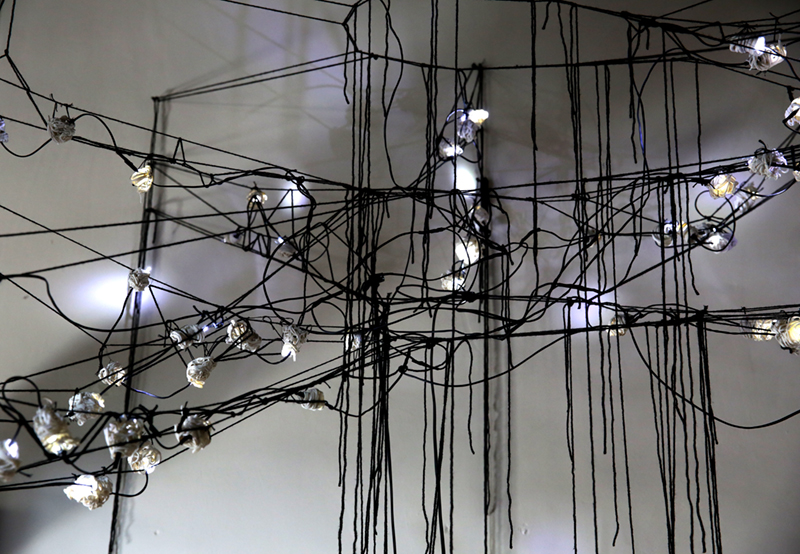
Elizabeth Murton Connective Matter #3 – (Porcelain paper clay, LED lights, wire, yarn), a new site specific iteration in a series creating a connective web of black yarn and illuminated ceramic objects made by spinning clay, like the spinning which forms planets, stars and galaxies from the matter of the universe. We cannot see dark matter directly, only infer it indirectly from observations such as the spin of the galaxies and gravitational lensing and so must speculate its structure and role in the universe.
KATE FAHEY Optimistic – (Copper and resin); Dark Adaptation – (Digital video with two channel audio) calling on lost lore and old forms of knowledge to negotiate technology and scientific advancement, the work seeks to establish a speculative relationship between dark matter, dark adaptation, the lectures of Rudolf Steiner on the practice of divining and John Carpenter’s film They Live, where the main character discovers sunglasses that reveal an alternative reality. Dark adaptation refers to the ability of the eye to adjust to various levels of darkness and light.
Daniel Clark Projected Chamber – (Giclée print) describes a potential space, a chamber that exists only through a distortion of light captured at the moment of creation.
Veil – (Pigment on archival polyester) examines ways of visualising or mapping the invisible and the transference of imagery from intriguing and unexplained sources. A vinyl cutting machine was programmed to draw with a marker pen instead of to cut, reimagining the single line engraving of the Face of Christ, known as the Sudarium of Saint Veronica, by Claude Mellan from 1649.
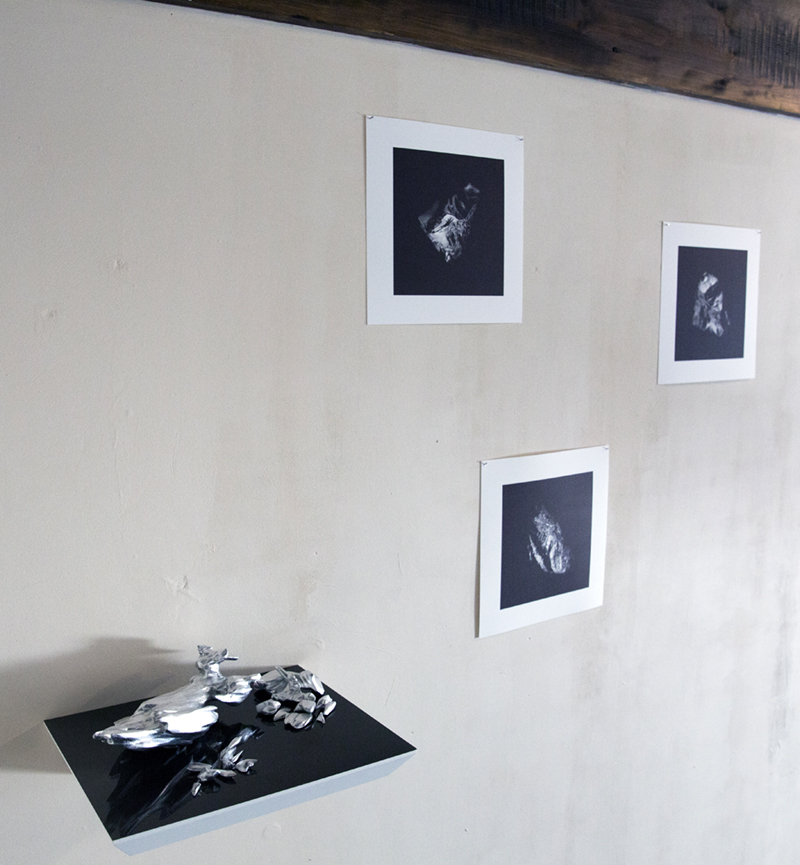
Luci Eldridge Untitled (Dark Matter, Reconstructed) – (3D print with silver leaf, privacy screen filter) In 2007, a group of NASA and ESA scientists led by Richard Massey constructed a three-dimensional map offering the first look at the web-like distribution of dark matter in the universe. This 3D model reassembles this data to present the invisible as a cluster of abstract forms. The intangible is objectified as a collection of shiny entities reminiscent of early sci-fi aesthetics. Germanium Fragments I-VI – (Duotone photo-lithographs) Germanium is one of the elements often used in the detection of dark matter. The lithographs depict tiny fragments of this lustrous grey metalloid, the surfaces reflecting the dazzling lights of the scanner bed on which they were imaged. Combined, the prints and 3D model play with limits of visibility, the boundaries between surface and depth and the loss of any kind of sense of scale.
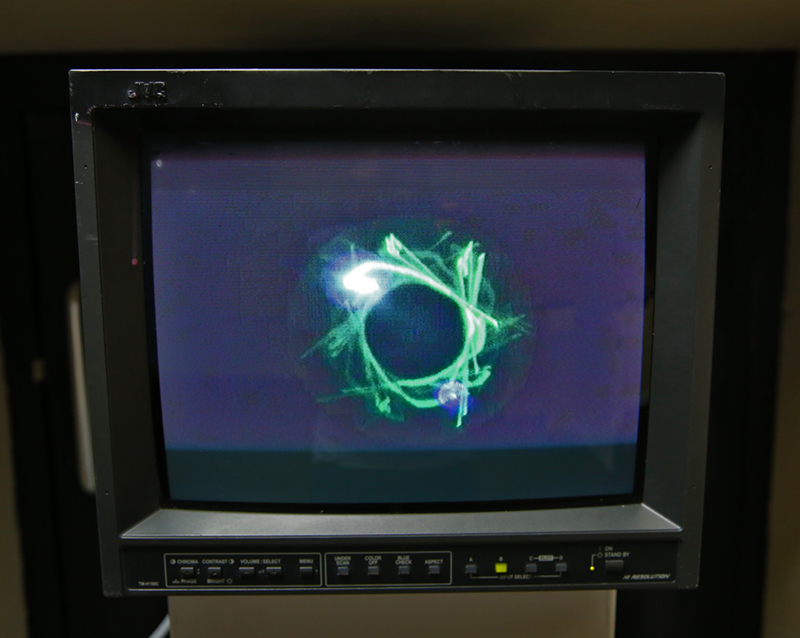
Melanie King Cosmic Ray Oscillograph – (Phosphorescent spinning disc, solenoid, laser, data from LUX video credit: Euan James-Richards) A laser light is sporadically jolted across a rotating disc coated in phosphorescence by a solenoid translating wave form data captured from the Large Underground Xenon Dark Matter detector. The data is transformed to an audio signal using computer coding techniques and represents cosmic rays which have been detected along the way towards finding elusive dark matter. Cosmic Ray Oscillograph, Cameraless Photograph uses direct laser light onto Ilford Multigrade Resin Coated Paper Pearl.
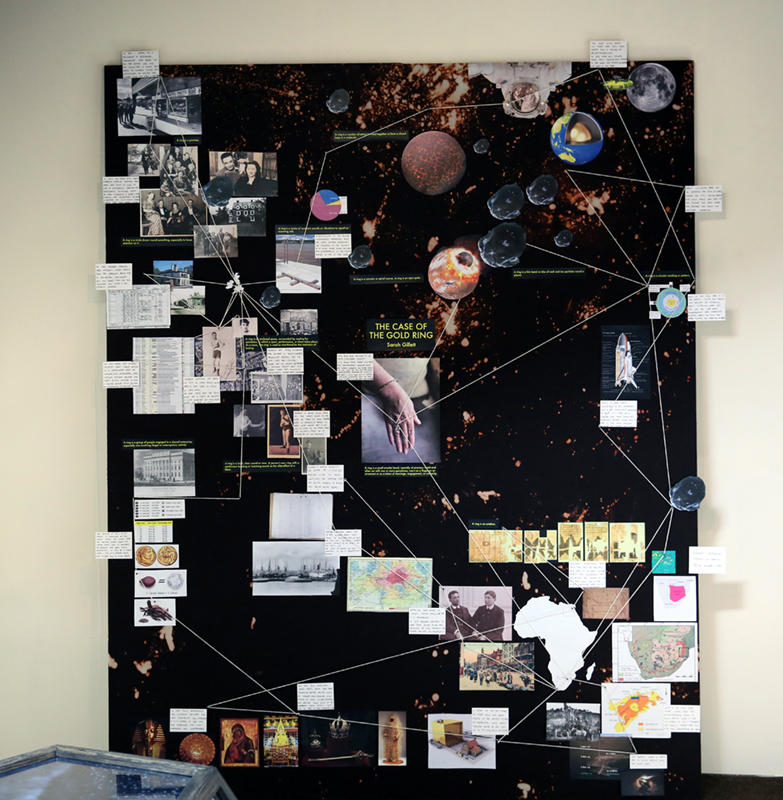
Sarah Gillett The Case of the Gold Ring (research mapping wall) plots the discoveries made while tracing the history of her Mother’s gold ring; it’s unique personal journey as well as it’s cosmic origins. The ring becomes much more than a circle of gold as connections are made across space and time, from the boxing ring to the financial bullring and the asteroid belt.
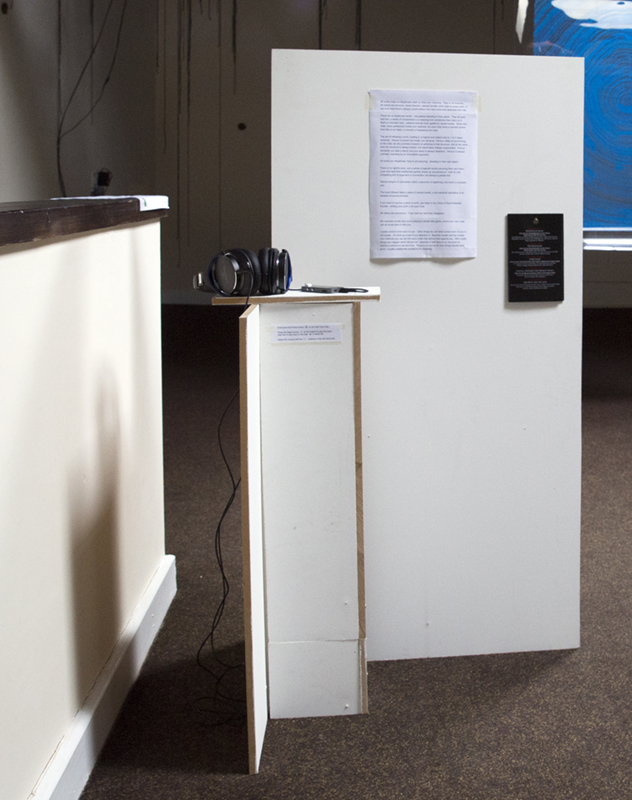
Peter Glasgow The Indicators of Illusive Ideas – (Audio and text) frames itself as an attempted commentary, and plays with the notion of producing a commentary on something in the world. It’s about language, and format, and ways of stringing ideas together. It finds a narrative about art practice within another narrative from popular culture, speculating on making in terms of loyalty and legitimacy. It is a contemplation on the commentaries that run alongside a process; the attempts to get close to something but failing.
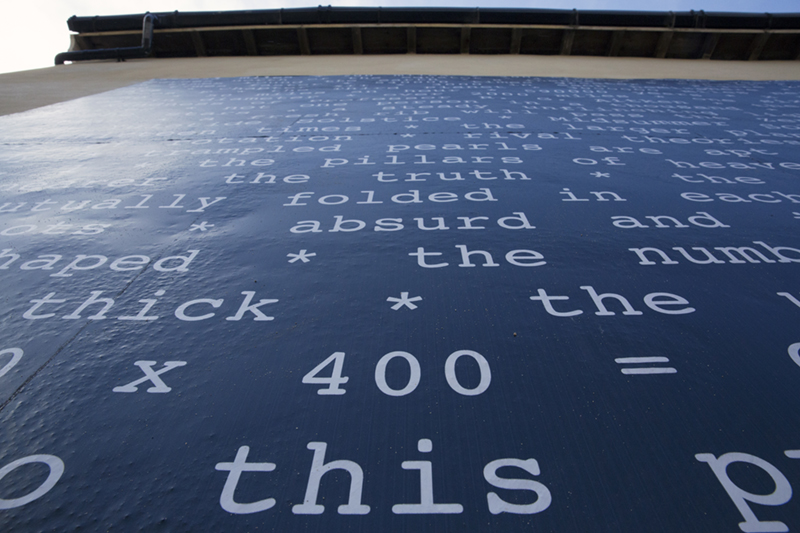
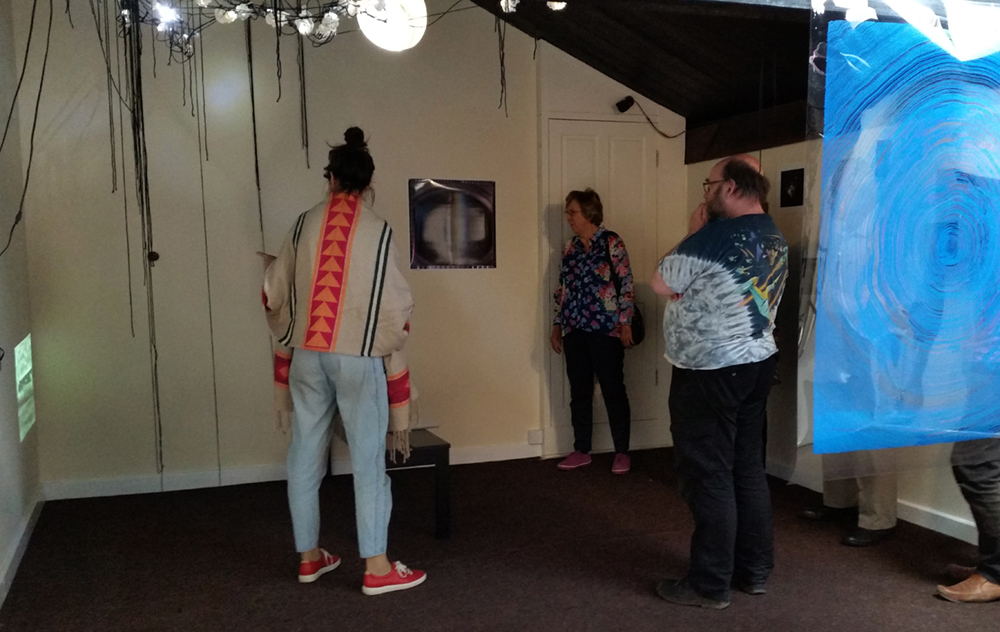
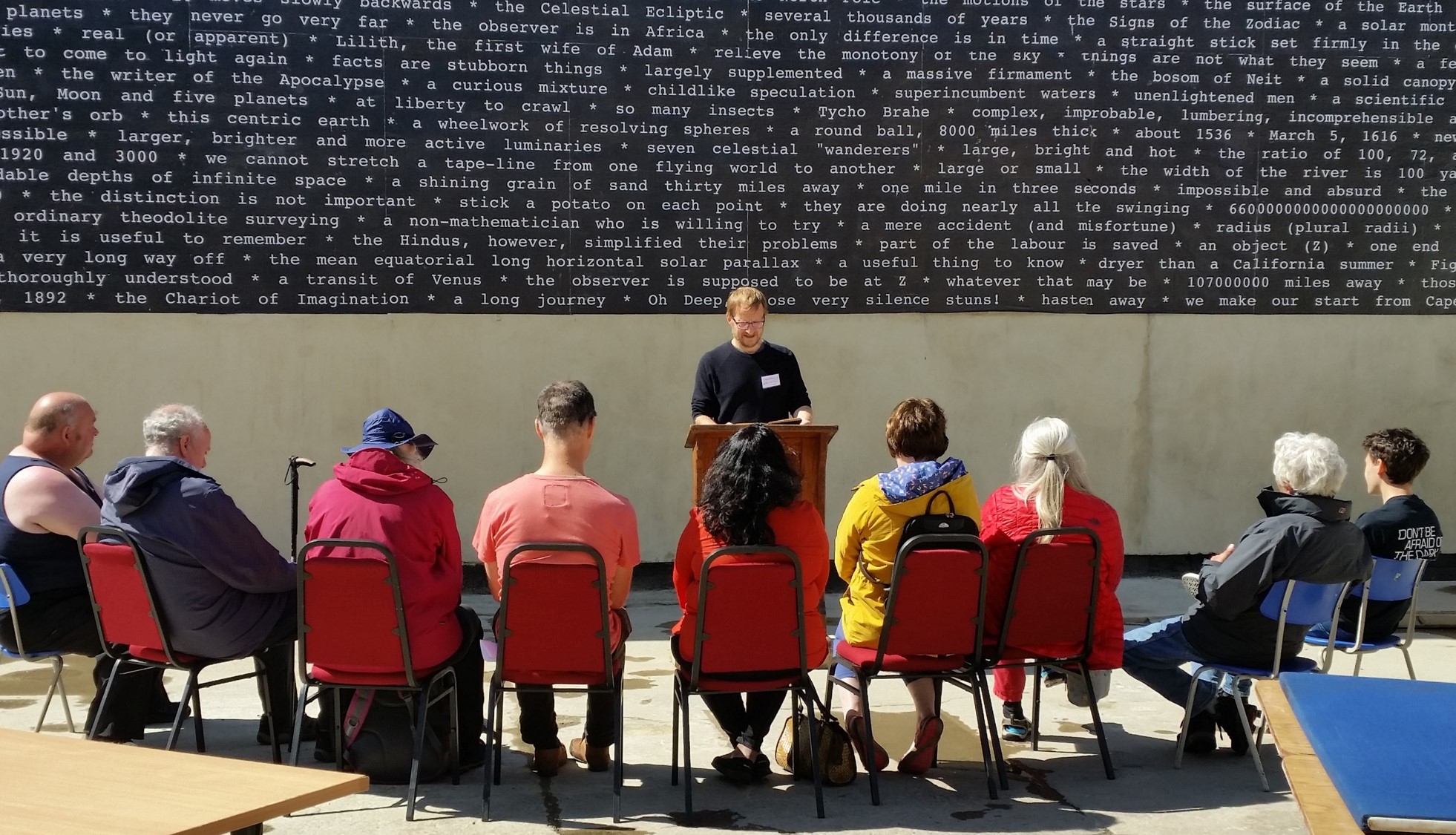
Robert Good How To Know The Starry Heavens – (Text fragments) Selected text snippets from Edward Irving’s book of the same name are set on a vast dark backdrop to appear from a distance like a sparkling galaxy of stars but close up to spark our imagination with language full of wonder.
I was invited by the Institute of Physics to write a blog about Laboratory of Dark Matters read it here – IOP BLOG …. The visit to Boulby Mine was a catalyst for us to develop new artworks reflecting our personal responses to dark matter research and the broader issues it touches upon…
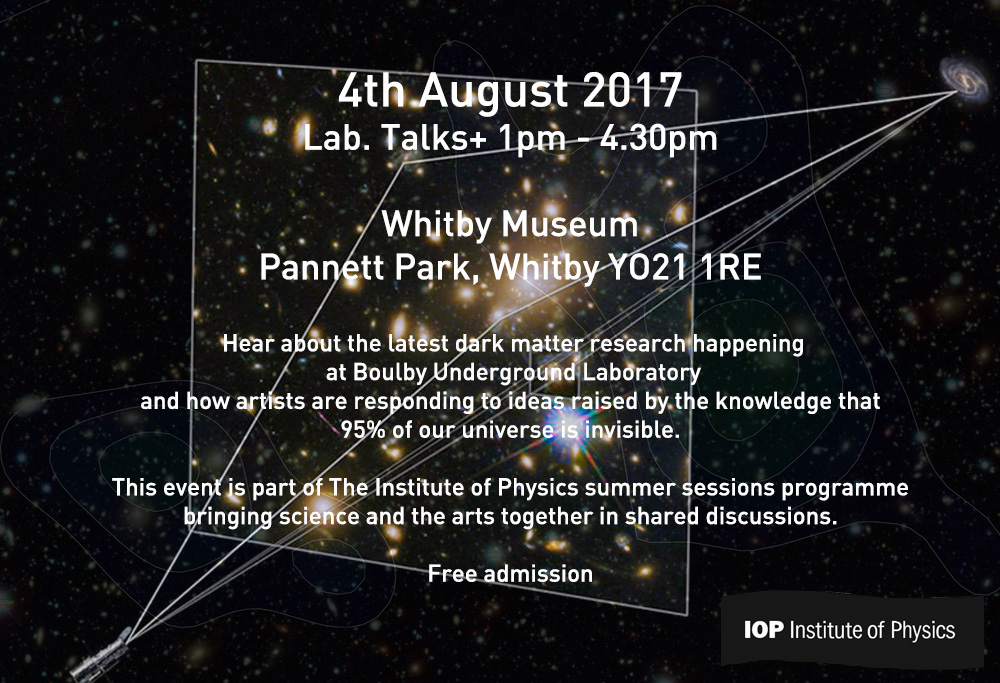
As a satellite event to the exhibition at Cleveland Ironstone Mining Museum we had additional sponsorship from the Institute of Physics to host an afternoon of talks at Whitby Museum as part of their summer sessions initiative to bring the arts and science together in a public forum. Emma Meehan from Boulby Underground Laboratory introduced a video tour of the facility led by Chris Toth who gave an entertaining and informative account of life 1100m below ground and the experiments that take place there.
Sara Gillett delivered her performative lecture ‘The Case of the Gold Ring’ that animates and coalesces her research presented in the exhibition and Dr Cham Ghag gave another of his incredible accessible lectures on what dark matter is not, what it might be and how it might be detected.
We were also joined by Dr Sarah Casey, artist collaborator in the brilliant project Dark Matters – Interrogating thresholds of (Im)perceptibility through Theoretical Cosmology, Fine Art & Anthropology of science, an exciting study into radical imperceptibility or more specifically, the provocations and challenges presented to theoretical cosmology, fine art and anthropology of science, by entities, forces and dimensions that currently (or perhaps will always) exceed human and technological modes of sensing and comprehension.
Encounters at the thresholds of human understanding, sensing, knowing, or the possibilities of relationship with the nonhuman – and the vulnerability and exhilaration that these cause – are intrinsic to the project’s methodology. On the one hand, claims from cosmology that 95% of the universe is made up of invisible dark matter and dark energy, or that it is possible to mathematically predict the existence of many more dimensions than we are aware of in our known and knowable universe, presents immediate challenges for all three disciplines as they play at the limits of sensibility and relationality with regards to human to nonhuman encounter. How to think and practice with these provocations? On the other hand a different set of challenges are inevitably posed by the complexities and endless possibilities for (mis)understandings by interdisciplinary conversation.
Sarah Casey
For the theoretical cosmologist, when faced with the imperceptible, the imperative is to produce and contest evidence – to ultimately reveal the imperceptible or negotiate the status of the role of speculation. For the artist, the interest lies in interrogating thresholds between the seen and unseen, known, unknown and unknowable, through art practice to enable critical and poetic reflection. For the anthropologist, the category of the imperceptible provokes a questioning and further pushing of the limits of human subjectivity, experience and sensibility in relation to the inhumanly (un)manifest.
The excellent accompanying Dark Matters video is deservedly shortlisted for the AHRC research film of the year.
A sensual treat while back in London was Wayne McGregor and Random International’s collaboration +/- Human at the Roundhouse. Extraordinary dancers and extraordinary machines. Uplifting. Disquieting.
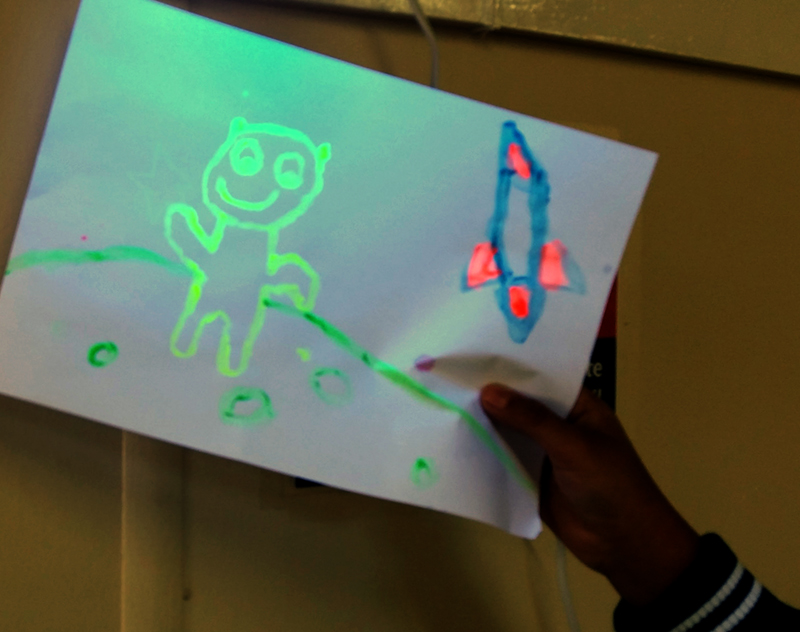
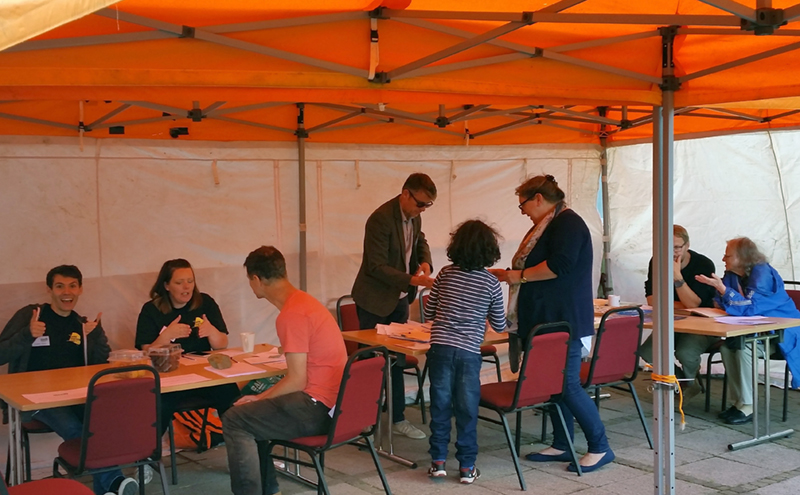
Laboratory of Dark Matters final event at Cleveland Ironstone Mining Museum was the dark matters themed open day with dark matter life drawing in invisible ink…
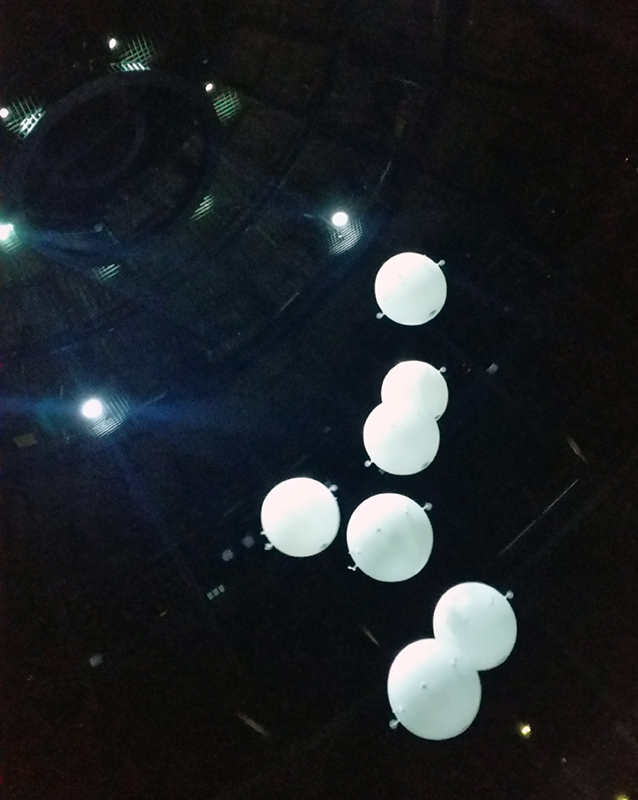
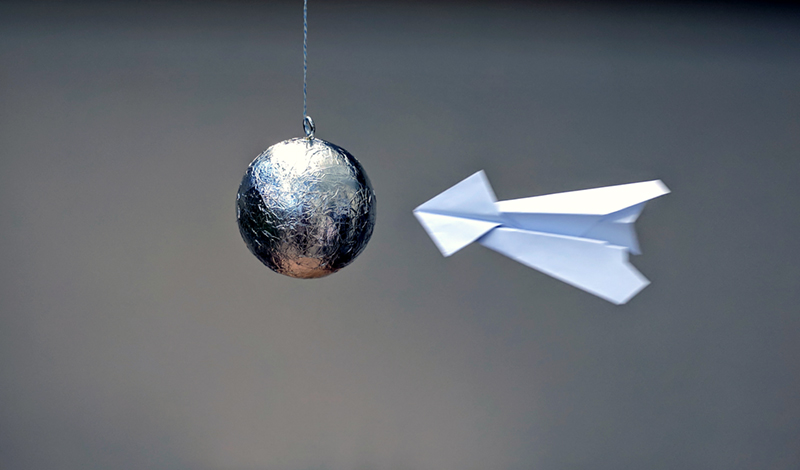
…make a dark matter particle plane and fly it to hit the xenon nucleus target……
…tours of the exhibition…..
…Robert Good reading from Edward Irving’s 1905 book How To Know the Starry Heavens. He was also encouraging visitors on the day to write their own snippets for a group collage in reply to – What do you think about when you look up at the sky at night?
Lots of other activities like Hunt the WIMPS where small shapes denoting particles that were not WIMPS were hidden around the museum site – these could be found because they were not WIMPS…
….Chris Toth and Emma Meehan from Boulby Underground Laboratory were on hand to answer the science questions and help out with a dark matter quiz…
and a final chance to see cosmic particle trails in the cloud chamber.
I met Jessie Sheffield and Lauren Ilsley during a cloud chamber workshop at Guest Projects. We subsequently found we shared interests in how we perceive the world around us and I was invited to join [ALLOY] in presenting new work for the exhibition Supposedly Predictable Phenomenon at no format Gallery as part of Deptford X.
Planning new work my first thoughts were naturally Heisenberg’s uncertainty principle and thinking about natural phenomena. The shape of a raindrop, bacteria, magnets, wind, water, electricity, bending light, bouncing photons, dark photons, optic boom, special relativity. I get fixated on the 12 sides of the universe and start mapping out a sequence of 12.
My studio is too small. I think about decisions, prisms, scattered light. If I use steel I could use magnets. I don’t have time to etch plates and print them. I think about quantum leaps, band widths and atoms. Electrons appearing and disappearing. Moving between possible multiverses. Transforming in new configurations. Circling the nucleus. A portal. A panorama. A dopler shift. How to be random? I throw ink soaked kitchen roll and mark the spot on twelve targets.
I decide to use softground on aluminium – an unpredictable process
Charbonnel softground smells of woodsmoke. It feels right for autumn. I draw concentric circles into the wax
A satisfying peel
Nature echoing art again.
The etching process is full of rich colours and smells. Softground on aluminium in copper sulphate is a violent etch. The heat is palpable before I reach in to pull out the plate, the wax bubbles and the blue solution darkens and smokes; I pull the plate out when it feels that any longer, it might ignite
it already feels cosmic
Each plate takes a long day to prepare; sanding and degreasing, painstakingly rolling on the softground for an even coating , fixing the paper taught and drawing with enough pressure to imprint into the wax, peeling away the image with the paper and finally etching.
Aluminium has a grain that grabs any direct light and powers it into a bright band. It seems to absorb and glow with any colour in the room. I really like this metal.
Amidst the preparations to take Laboratory of Dark Matters to Cleveland Ironstone Mining Museum was the honour of being invited to sit on the judging panel for the Guest Projects residency proposals for next year. It was a big responsibility and involved quite a lot of hours reading through proposals but was also incredibly useful in understanding how to put together a successful proposal. In the end there just isn’t time to follow every link and read every nuance – it has to be clear and succinct. Was a real treat to have dinner with Yinka Shonibare and chat about why he decided to set up the residency program (- to give back and remain engaged, remembering why he became an artist in the first place) and to hear how he can cut through any nonsense in the proposals, he is looking for commitment, effort and originality and he has no truck with ‘men’s issues’. Was great fun and dinner was delicious.
Another pleasure was receipt of the commissioned essay responding to the ideas that surfaced during Laboratory of Dark Matters from Chantal Faust. It is a text that can be read over and over and keep giving. It will be published to coincide with international Dark Matter Day on 31st October in an original layout by Daniel Clark.
Having secured funding from the IOP and STFC we were able to install the exhibition at Cleveland Ironstone Mining Museum in July just in time for the tourists visiting over the summer holidays. This is where the funding we received really helped, covering our transport and accommodation costs, artwork materials, printing and general installation. It was also good to be able to pay artist fees, enabling artists who work freelance and do not have regular salaried income or research grants to be able to participate.
Cleveland Ironstone Mining Museum were excited by the prospect of hosting an exhibition on dark matter and the local connections to Boulby Mine just 8 miles up the road.
We were met by real warmth and a can do attitude from everyone at the museum. This was the first time they had hosted an exhibition of contemporary art and we were away from our usual networks of support and infrastructure so it was a learning curve for us all.
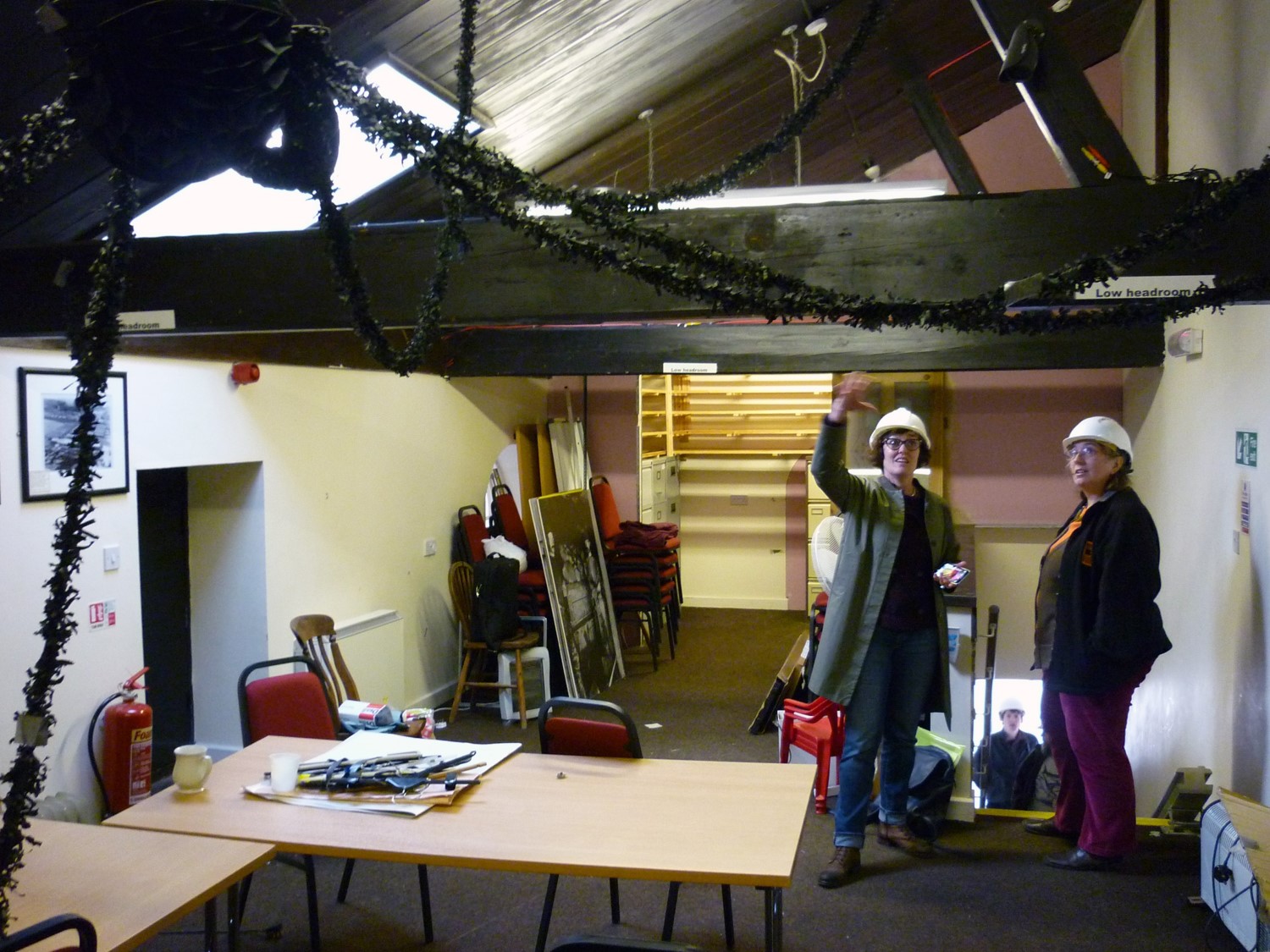
One of the main challenges for us working in a remote location was travelling and forward planning to have everything we needed when we got there. We had to rely heavily on the museum for marketing and preparations for our visit. We were very lucky to be hosted by a venue that offered us so much support – they totally transformed this room ready for us to install our artworks
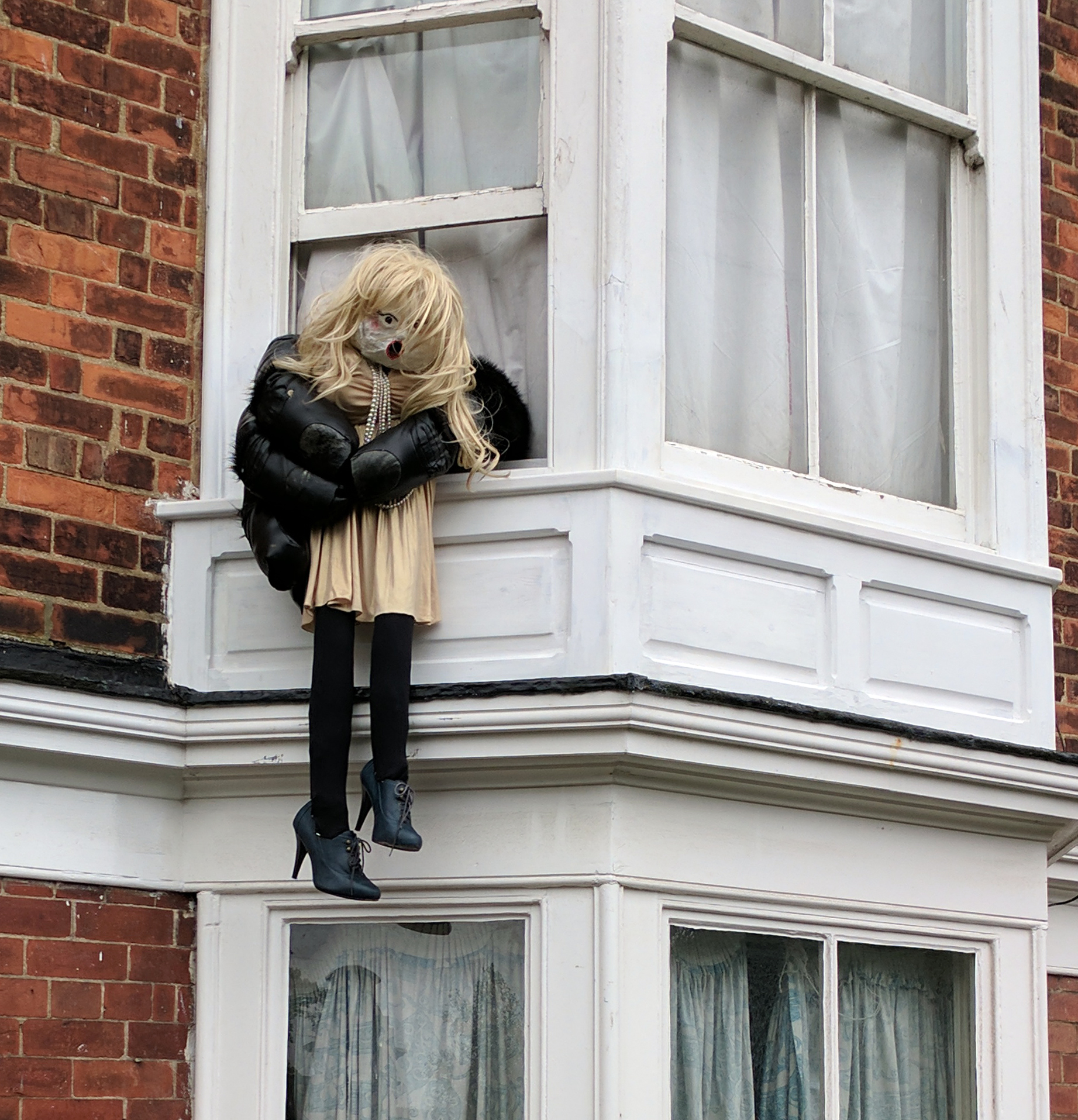
We rented a cottage in the local village of Hinderwell, which coincided with their scarecrow festival, while we were spending time at the museum installing work.
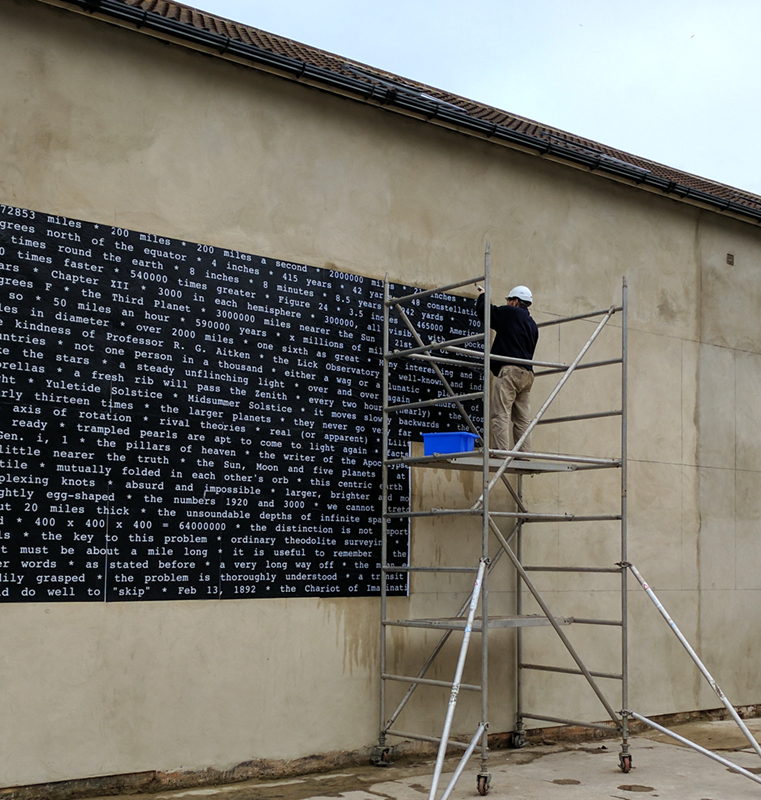
Artist Robert Good joined us at the mining museum to present an ambitious installation – How To Know The Starry Heavens – a billboard sized collage of text snippets selected from Edward Irving’s book of the same name written in 1905.
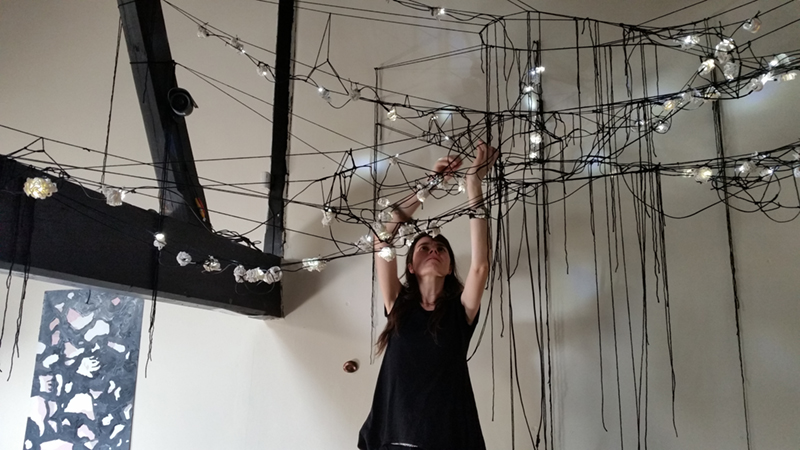
Elizabeth Murton installed a new site specific iteration of Connective Matter #3, a web of black yarn and illuminated ceramic objects made by spinning clay, like the spinning which forms planets, stars and galaxies from the matter of the universe.
I tried a new configuration of The Forms in a dodecahedron net formation over the stairwell.
Mapping out the universe/
/mapping out the exhibition space
We made a visit to meet the excellent team at Whitby Museum in preparation for the afternoon of talks we were planning as part of the Institute of Physics Summer Sessions initiative.
Our Private View was very well attended by people local to the mining museum, the Board of Trustees including Vice-Chair Fr. Adam Gaunt and even Mr Barry Dodd CBE Lord-Lieutenant of North Yorkshire who gave a speech commending the museum on their enterprise and promising to mention his visit in his report to the Queen.
Boulby Underground Laboratory was well represented by scientists Chris Toth and Emma Meehan. The last time we met was over a year ago and 1100m underground.
We ran a series of workshops developed from those at Guest Projects. We wanted our workshops to be grounded in science and to also have a creative element. Thinking about different ways of making the invisible visible, the cloud chamber workshop was a good way of showing the activity of particles around us that we are unaware of until we see the trails they leave as they pass through and around us as they hurtle across our world.
I don’t think we experienced the same level of particle activity as we did in London and I’m not sure why that was. The cloud chamber gives us a glimpse into the invisible world of particles produced in the radioactive decay of naturally occurring elements and those generated when cosmic rays strike the top of the Earth’s atmosphere.
Melanie King ran more of her illuminating workshops expanding on her Cosmic Ray Oscillograph ideas explored in the exhibition, allowing participants to experiment with phosphorescent powder and laser lights.
An occasion on which one is reminded of the state of things in the real world.
Carlo Rovelli was at Second Home discussing his book Reality Is Not What It Seems: The Journey To Quantum Gravity which presents the story of the human imagination and reveals how the atomic world view first proposed by Democritus nearly 2,500 years ago can be found interwoven through history into our cultural life. It tells the story of what we know about our universe and how we came to know it, from the early atomic intuitions of Greek and Roman thinkers who observed the world about them and came to the conclusion that objects could not be a continuous whole but must be made up of lots of tiny parts.
Susan Eyre Diazôgraphô photo Sara Lynd
The book goes on to show evidence of the ancient ideas now emerging from the Planck satellite and CERN, to the genuinely new knowledge being offered by Loop Quantum Gravity, of which Rovelli is a founding theorist. He was a generous and thoughtful speaker. When I started his book I was a little upset to find Plato to be considered obtuse and an obstacle to the progression of physics for ignoring the atomic theories of Democritus and questioning the benefits to itself of why an object should take a particular form, but then in chapter two Plato is absolved of criticism for his pioneering understanding that mathematics is at the root of all scientific truths that ‘Number governs forms and ideas’
Susan Eyre Diazôgraphô photo Sara Lynd
The talk moved on to discuss the nature of time and how we experience it. Someone quoted Nelson Goodman from 1951 in The Structure of Appearance. ‘A thing is a monotonous event; an event is an unstable thing’.
I found this clip of Brian Cox explaining time travel sort of helpful in that I can follow his explanation but it still leaves me confounded.
In his book Rovelli equally values the thoughts of poets and physicists who contemplate the same questions about the structures of the universe.
Marvelling at correlations between Dante’s plan of paradise, possibly inspired by the cupola ceiling of the Baptistery in Florence, that speaks of a spherical universe made of ever increasing circles that reach a point where the outer circle appears to be enclosed by those that enclose it – a poetic description of a 3-sphere.
Rovelli believes the universe cannot be infinite – ‘that’s too big ‘ – and he seems aligned with the 3 sphere universe theory that the universe is not infinite but has no boundaries. I found myself thinking – surely this must still sit within something? Still it was gratifying to find that this in line with Jean-Pierre Luminet and the Poincaré dodecahedral space which I have been fascinated by –
A positively curved universe is described by elliptic geometry, and can be thought of as a three-dimensional hypersphere, or some other spherical 3-manifold (such as the Poincaré dodecahedral space), all of which are quotients of the 3-sphere.
Another name for the Poincaré dodecahedral space is the soccer ball universe…..
Yinka Shonibare’s work at York Art Gallery as part of Doug Fishbone’s Leisure Land Golf
We are still waiting for any definitive answers about the shape of the universe, whether it is infinite or finite, whether it is flat, positively curved or negatively curved, whether it is simply connected as in Euclidean geometry or like a torus which is flat, multiply connected, finite and compact among many other contributing possibilities. I have been doing some research on the Poincaré conjecture, mostly looking at the diagrams of the mathematical theories.
I came across the story of Russian mathematician Grigori Perelman whose theories ultimately proved the Poincaré conjecture and he was awarded the Fields medal. He declined the award saying he wasn’t interested in fame. Other quotes have him saying if he can control the universe why would he want to claim a million dollars prize money. Perhaps some myths have been built around him, as seems to happen with a person who doesn’t conform to expectations.
An earlier visit to Second Home was for a talk on Super Massive Black Holes by Dr. Meghan Gray.
I found her description of what a black hole is really helpful to try and visualise what is happening. The idea that space curves around matter. That really dense and heavy matter condensed into a small object makes a deeper pocket in spacetime.
The largest black holes are called “supermassive.” These black holes have masses greater than 1 million suns combined and would fit inside a ball with a diameter about the size of the solar system. Scientific evidence suggests that every large galaxy contains a supermassive black hole at its centre. The supermassive black hole at the centre of the Milky Way is Sagittarius A*, it is 4 million times as massive as the sun and 27,000 light years from Earth. The smallest ones are known as primordial black holes. Scientists believe this type of black hole is as small as a single atom but with the mass of a large mountain.
The most common type of medium-sized black holes is called “stellar.” The mass of a stellar black hole can be up to 20 times greater than the mass of the sun and can fit inside a ball with a diameter of about 10 miles. Dozens of stellar mass black holes may exist within the Milky Way galaxy.
We were given a very warm welcome and are looking forward to bringing our work to the North East. We are delighted that along with Arts Council England funding we have now received the support of The Institute of Physics and The Science and Technology Facilities Council to take our project to the mining museum.
I will be running some more cloud chamber workshops.
My second Open Studios and the first with the new management Thames-side studios who did an excellent job promoting the event, running activities and guiding visitors around what is quite a big site now.
Susan Eyre Pairi Daêza
The word Paradise originates from ancient Iranian pairi daêza meaning around and wall.
The work everydaymatters is informed by the discovery that the matter we know, that which is visible to us and includes all the stars and galaxies is only about 5% of the content of the universe, dark matter making up about 25% and the remaining 70% being dark energy, it dissects landscapes to discover the hidden structures of the universe.
Spent an interesting evening at Treadwell’s listening to Lore and Belief in the Case of the Talking Mongoose, a lecture by Chris Josiffe.
In the early 1930s, an isolated Manx farm family became international celebrities after claiming their home was inhabited by a weasel-like animal. Gef the Talking Mongoose could speak coherently, shape-shift and perform telepathy. Investigators came in their multitudes, and improbable though it may sound, many were convinced. It was a time when spiritualism was strong, and psychic investigation popular. Gef was purported to live between the walls of the house. This made me think of Gregor Schneider and his double walled rooms, lead lined, claustrophobic passages.
I made a trip to Brockley to see In Conversation with (7): Beyond Controls; a drawing and print collaboration between Neil Ferguson & Carol Wyss.
From an initial line, each drawing was scanned, emailed and printed out to be developed further by hand. The repetitive nature of these procedures regularly exposed the limitations and idiosyncratic qualities of the scanners and printers. The structure of “Beyond Controls …” would always be infinite, sequences without final drawings, but rather statements held in digitalized time. Cycles of series that cannot be closed, circles that cannot be joined.
The result was 10 sets of 32 drawings, 10 inkjet monoprints and a captivating video of each set of drawings digitally layered and edited with Photoshop making the decision on visibility of content through its own algorithms. Wonderful.
Another visit was to a new project space HEWING WITTARE in Walthamstow to see Shapeshifting – tactics to combat drowning featuring works by Chudamani Clowes, Rebecca Glover and Anna Liber Lewis.
The artists use the watery world as a metaphor for our current political climate in which the fight for survival, shelter and equality is growing tougher by the day….
Chud Clowes engaged in a perambulative performance dressed as an Urchin to highlight the journeys made across the globe by thousands of migrants often at the mercy of the oceans and elements as well as political currents that sweep them from place to place
We were led to Lloyd Park, site of the William Morris Gallery, for some squid and fish printing on one of the hottest days of the year.
Later the same day entering Edel Assanti gallery to see new work from Jodie Carey – Earthcasts the visual and the physical collided. In this white space 50 gnarled and towering sculptures created a landscape hinting at the cool depths of a silver birch tree glade or the snowy trunks of an alpine forest while the heat of the day still pulsated in my body and hung heavy in the atmosphere.
It was a rich experience oscillating between ancient responses to the multiple upright monument, the rituals of the standing stone yet could also be the concrete posts from some deconstructed enclosure, the high wire fencing removed. Jodie Carey’s painstaking process of burying old timbers in the earth to create casts that are then filled with plaster and subsequently excavated echo the temporal and material nature of our lives lived on soil and imprinted with our own encounters.
Along to SHOW 2017 at the RCA to be swept even further away. The heat more in keeping with the surface of Mars images presented as part of the final research of Luci Eldridge’s PhD by thesis; Mars, Invisible Vision and the Virtual Landscape: Immersive Encounters with Contemporary Rover Images 2017
Luci Eldridge ‘Stepping into the Image of Mars’
Images captured at the Mars Yard being used to test the European Space Agency’s ExoMars rover, due to launch in 2020. Courtesy of Airbus Defence and Space.
‘ The eyes of the Mars rovers provide viewpoints through which we regard an alien terrain: windows upon unknown worlds. Rover images bridge a gap between what is known and unknown, between what is visible and invisible. The rover is our surrogate, an extension of our vision that portrays an intuitively comprehensible landscape. Yet this landscape remains totally out of reach, millions of miles away. This distance is an impenetrable boundary – both physically and metaphorically – that new technologies are trying to break.’ Luci Eldridge
I am reworking the dodecahedron frame for the mining museum. Sanding, then darkening with my favourite black Stabilo pencil.
The images of cosmic trails now sit behind Perspex facets which has added another layer of reflection, the outer world, the universe surrounding and surrounded by itself
Diazôgraphô = Greek for to embroider. As to embroider the stars on the heavens…
My visit to the Venice Biennale was marked by my receiving news that I had a place at the Royal College of Art for the Autumn. A great start to a very inspiring few days.
It does feel a bit like I am going to be launched into space. Exciting and an amazing opportunity but also not knowing what to expect with anxieties that I will be lost or unable to cope.
Bedwyr Williams ‘The Starry Messenger’ and Sarah Sze’s Triple Point both explore feelings of place within the universe. Very apt for my frame of mind.
Wales in Venice
‘The Starry Messenger’ explores the relationships between stargazing and the individual, the cosmos, and the role of the amateur in a professional world.
Inside the former church and convent in a darkened room there is a small observatory with a door ajar through which we can see the starry cosmos. There is the sound of a man weeping, just like Kevin does when he thinks about the vastness of space and his own insignificance. Moving through the installation you walk under glass with household objects placed on its surface above your head which I took as a possible reference to Leonardo Da Vinci’s drawing ‘A cloudburst of material possessions’. Maybe it is space debris.
Bedwyr Williams The Starry Messenger
There is a film with a Mighty Boosh style protagonist who represents a character trapped within a mosaic mural.
Bedwyr Williams The Starry Messenger
From the geological formation of stone out of oozing mud through its journey and subsequent use in a mural to the demolition of the building and its return to the earth. From looking out at the stars through a telescope to ‘staring into space’ the outer and inner worlds collide in a wonderfully amusing narrative encompassing the life the universe and everything dialogue.
Bedwyr Williams The Starry Messenger
Sarah Sze explores the desire to locate our place within a disorienting world.
Sarah Sze Triple Point
Her fragile sculptures echo the balance and chaos of the world around us.
Sarah Sze Triple Point
They appear to spin or be in the process of expansion, beautifully mysterious like the working of the atom or the universe they are full of wonder.
Sarah Sze Triple Point
Playing with pattern, order and taxonomy she creates a laboratory busy in its own pursuits which makes us feel we are close to understanding something great.
Sarah Sze Triple Point
I was excited to see she had used moss a lot throughout this installation, even turning its image into wallpaper.
Sarah Sze Triple Point
Triple Point refers to the phase when gas, liquid and solid form of a substance are all in equilibrium, her use of natural forms keep our ideas grounded in our surroundings while drawing us into the mysteries of evolution.
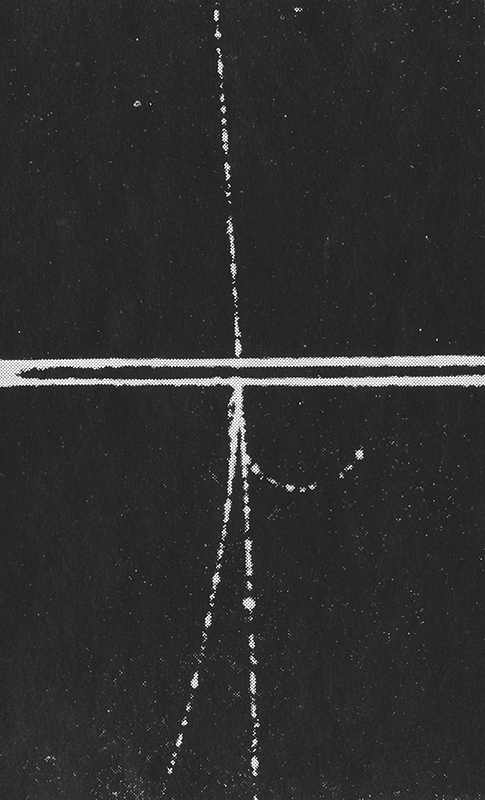
The extraordinary collection of stones once owned by artist Roger Caillois were on display in the Central Pavillion.
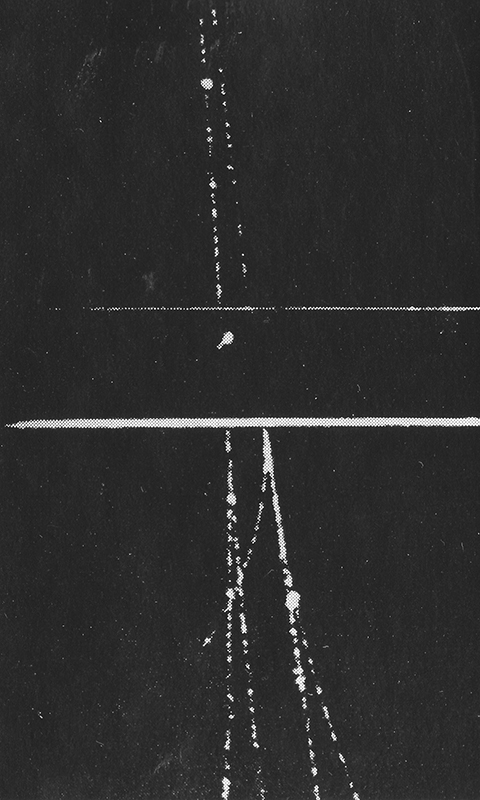
Roger Caillois Stones
Caillois believed that nature should be examined as something other than as the utilitarian force that Darwin purported and that aesthetics and the need for decoration should be considered integral to our understanding of the natural world.
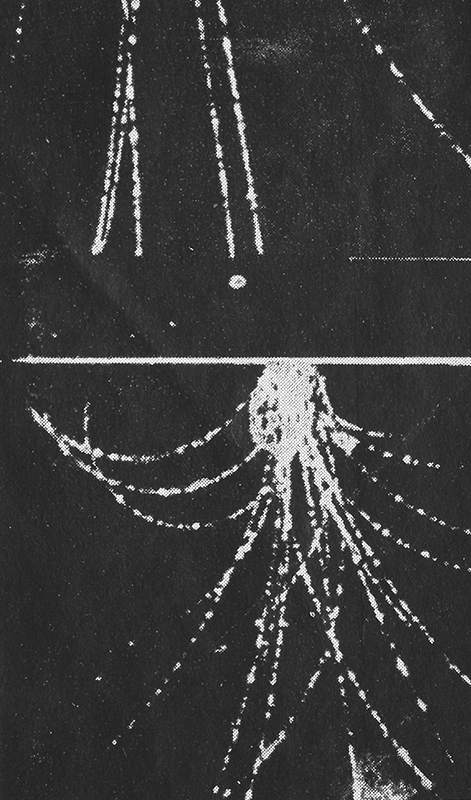
Roger Caillois Stones
He considered the beautiful patterns within ancient natural forms were a sort of cryptic ‘universal syntax’, a unifying aesthetic language.
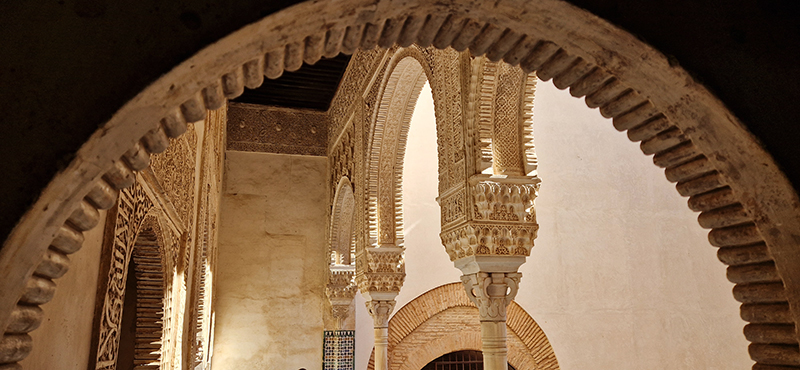
Roger Caillois Stones
He wanted to understand the mysteries of the subjective experience through its relationship to factual reality.
I find it fascinating trying to understand the aesthetic experience.
Gerhard Richter’s tapestries at Gagosian, Davies Street emanate pure aesthetic pleasure, colours and form coalesce erupt and fade.
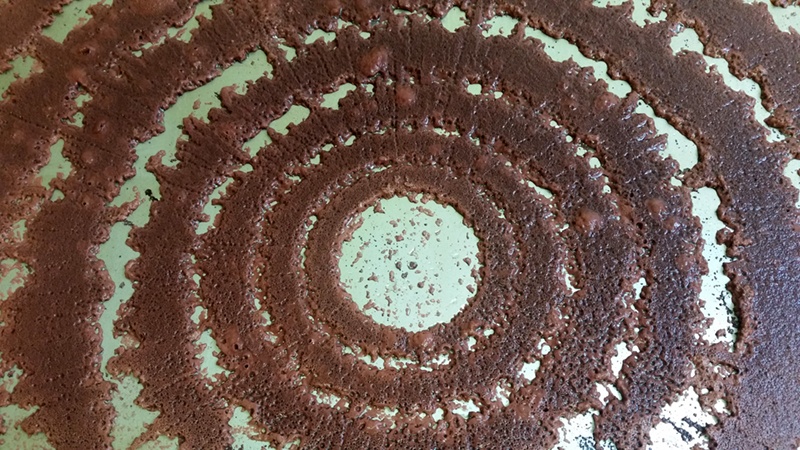
These works are based on Abstract Painting (724-4) (1990). The visual effect of the tapestries is a Rorschach-like multiplying of the forms and colours of the original canvas.
Gerhard Richter
Like entering a hypnotic state, like staring into space both literally and metaphorically you are transported to a place where it feels familiar and strange at the same time.
Gerhard Richter
Venice was a perfect location to think about mysteries, the sacred and the wonders of the world.