Archives for posts with tag: Anselm Kiefer

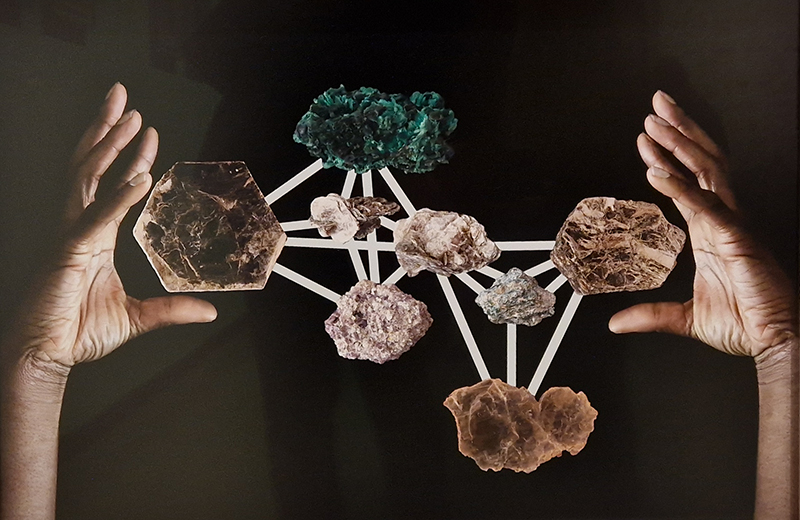
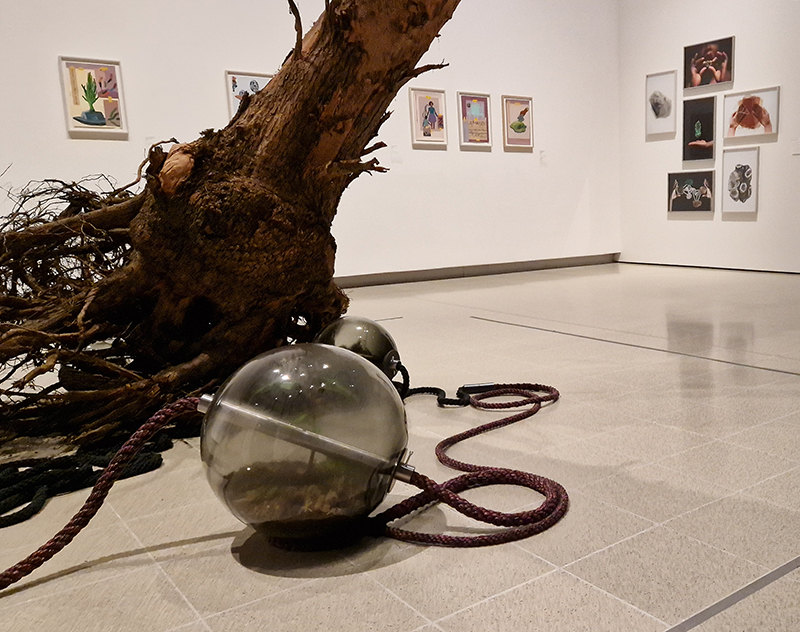
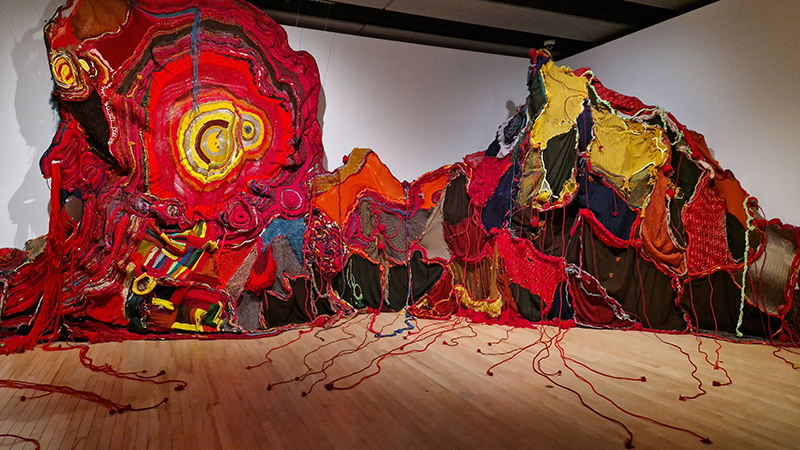
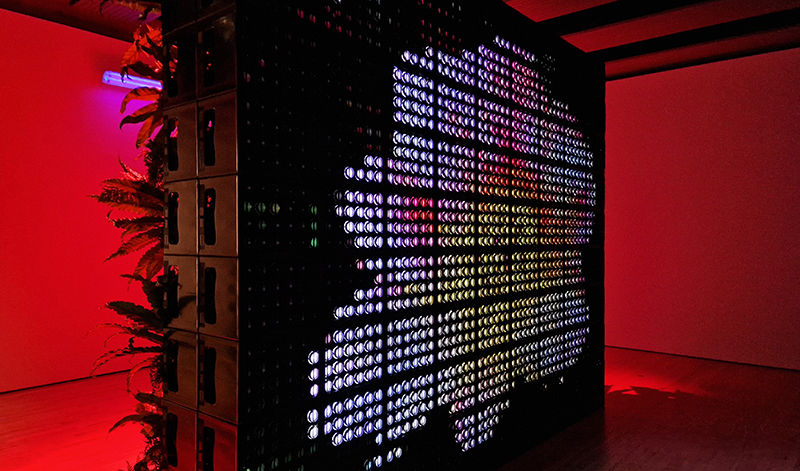
Carbon, Carbon Everywhere opened at Hypha HQ co-curated by Maria Hinel & Indira Dyussebayeva-Ziyabek with exhibiting artists Emii Alrai, Kate Daudy, Konstantin Novoselov, Susan Eyre, Ania Mokrzycka, Simon Faithfull, Nissa Nishikawa, Mariele Neudecker, Anousha Payne, Aimée Parrott, Lucia Pizzani, Lizi Sanchez, Meng Zhou.

The title of the exhibition is taken from the chapter Carbon in the book The Periodic Table by the writer and chemist Primo Levi. Levi traces a journey of a single atom of carbon across distinct states and beings, from resting in a bed of limestone for hundreds of millions of years, to entering the world of ‘things that change’ – swiftly shifting from the atmosphere to the lungs of a falcon, to the sea, to the trunk of a cedar, and eventually entering the writer’s own body from a glass of milk on his desk. Resolutely specific yet universal, Levi’s story highlights the singularity of carbon as an element that inherently connects all things through its relentless transformation. It fossilises, mutates, preserves, pollutes and nourishes. From its ancient geological formations to its current atmospheric volatility, carbon is never still, shifting between forms and contexts in an ongoing process of exchange.

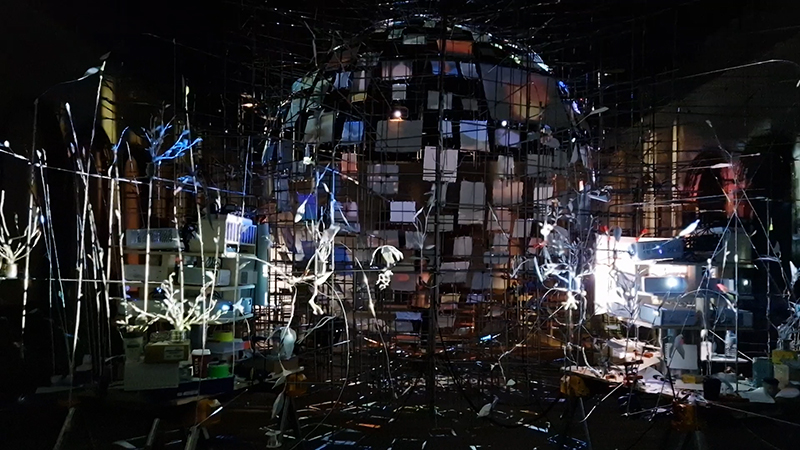
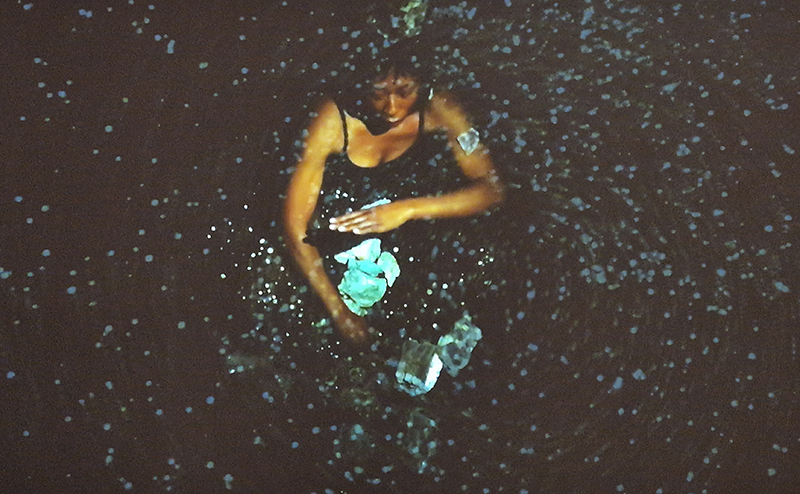
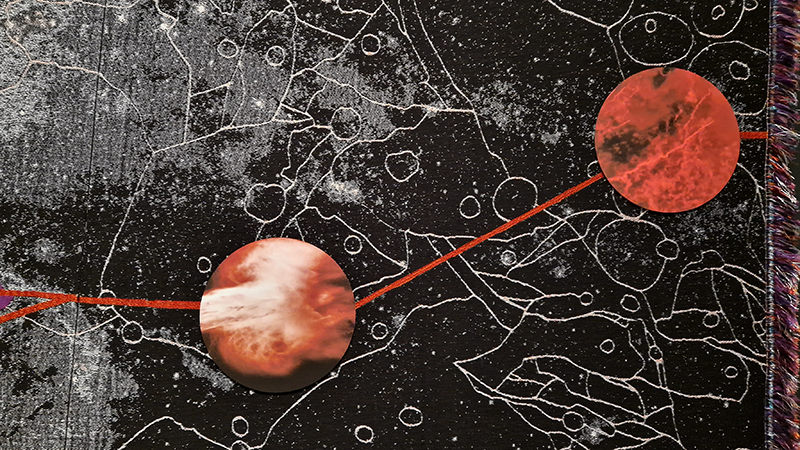
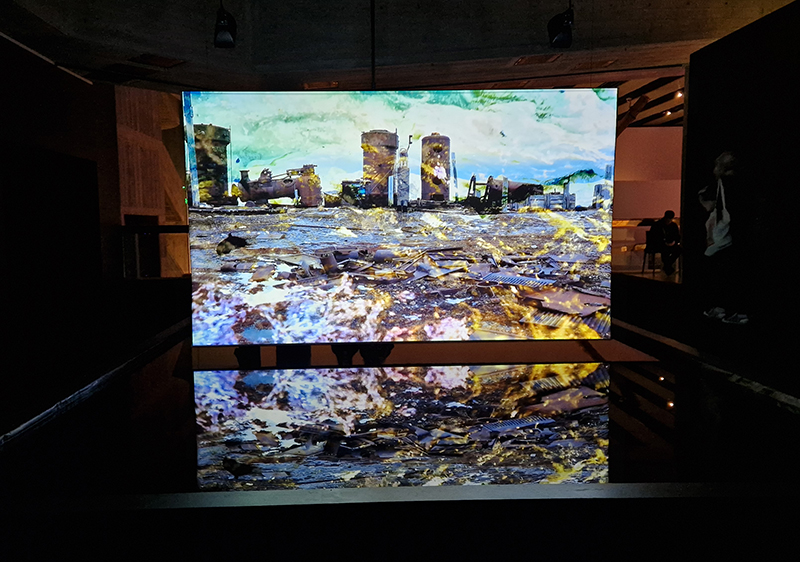
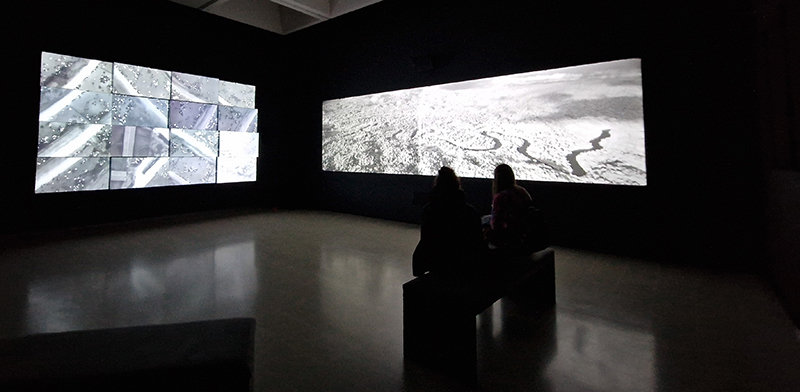
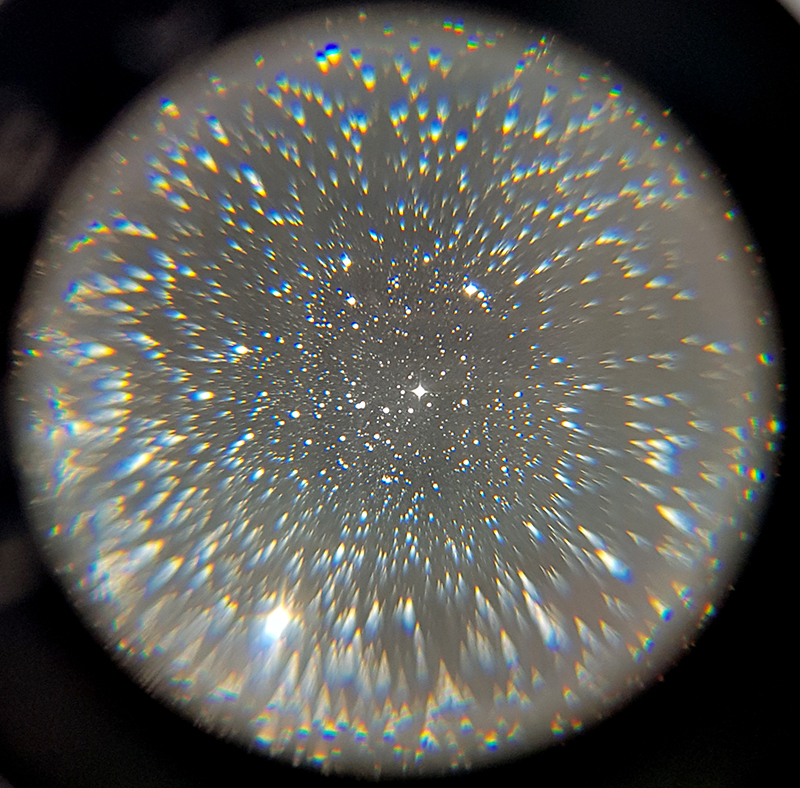
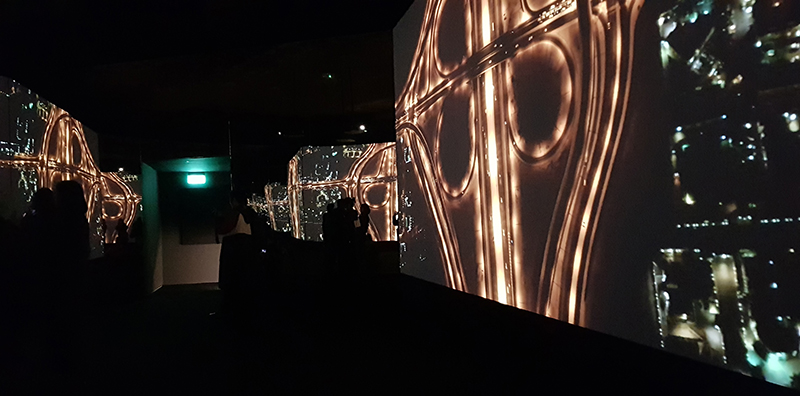
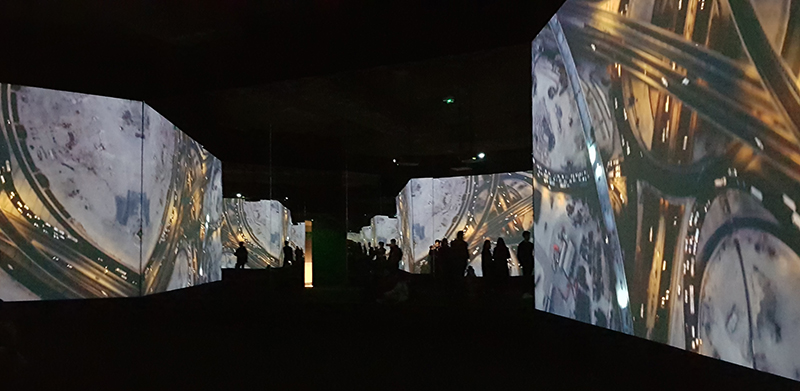
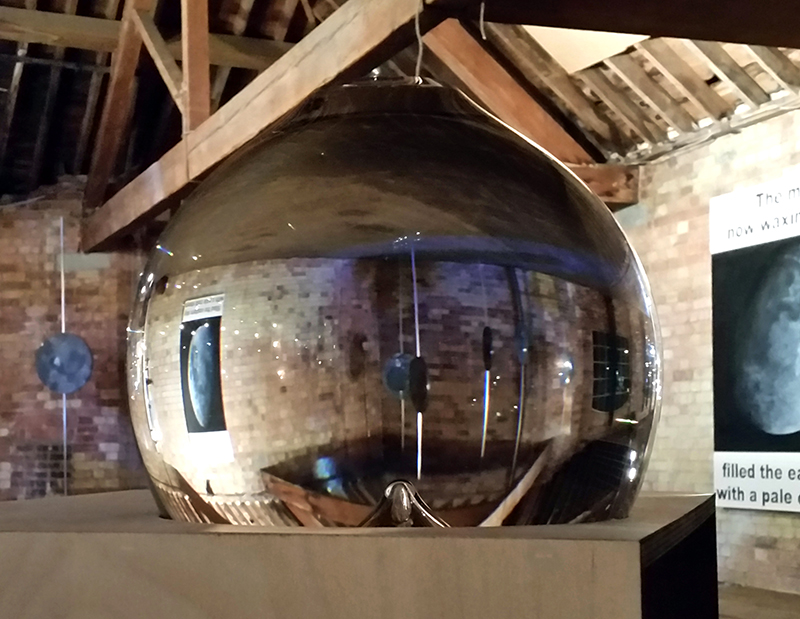
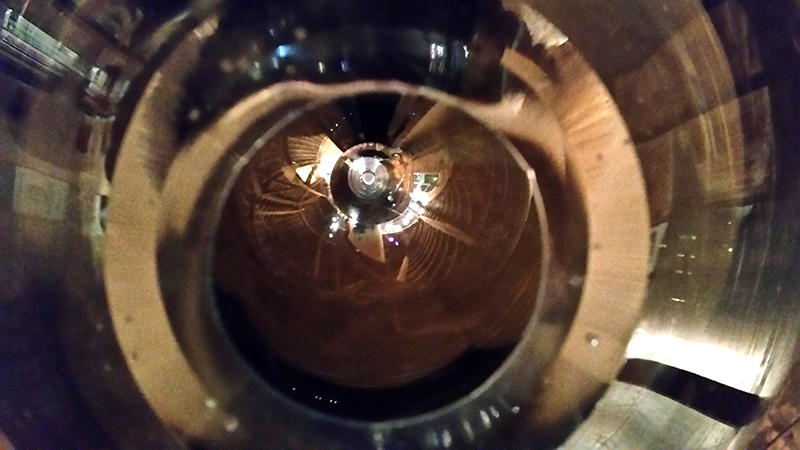
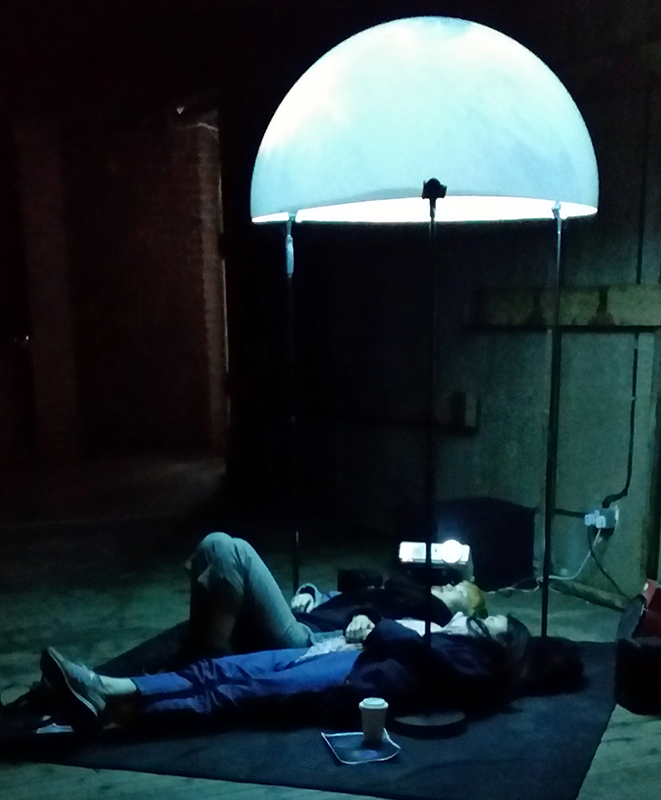
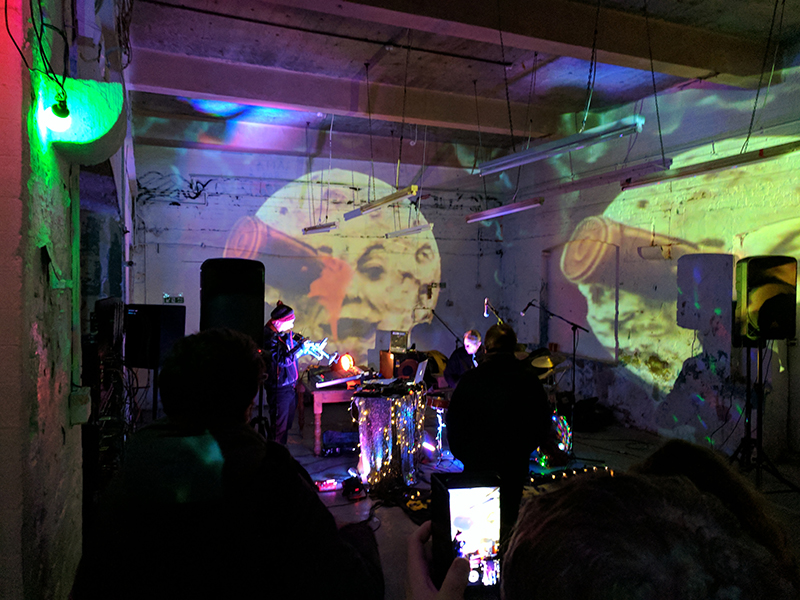
I am very happy to be exhibiting my video Cosmic Chiasmus: crossing the universe alongside the work of the other amazing artists.

Not only is all life physically permeated by cosmic rays with the potential for nuclei collisions but some cascading particles smash into atoms of nitrogen to create carbon-14 which combines with oxygen in the atmosphere to create radioactive carbon-dioxide. Carbon-14 enters the food cycle via photosynthesis as plants absorb it from the atmosphere. It is constantly renewed in all living organisms. On death, the amount of carbon-14 in the tissues begins to decay at a known rate which can be measured to determine the time of death. Cosmic ray activity therefore allows us to perform carbon dating techniques offering insights into Earth’s past climate and magnetic field, solar activity, and changes in the carbon cycle, helping us to understand historical patterns and establish timelines for ancient human history. Understanding the past can help us plan for the future.

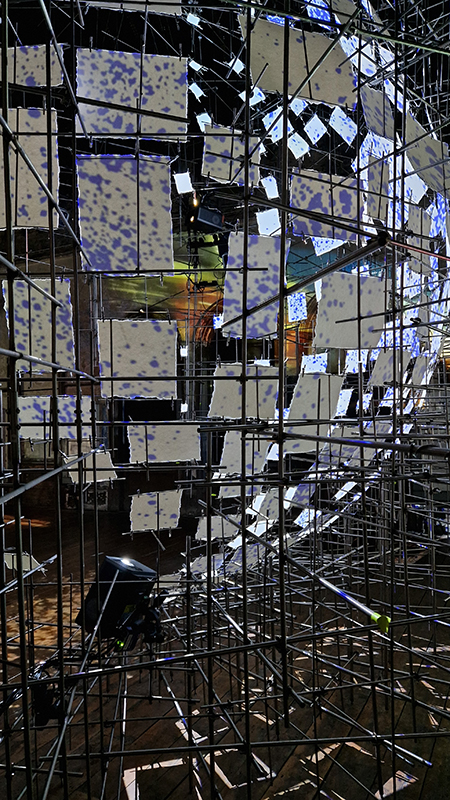
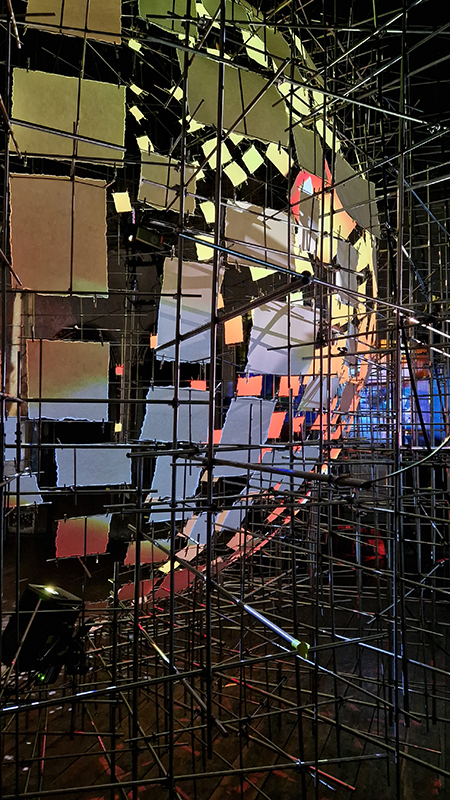
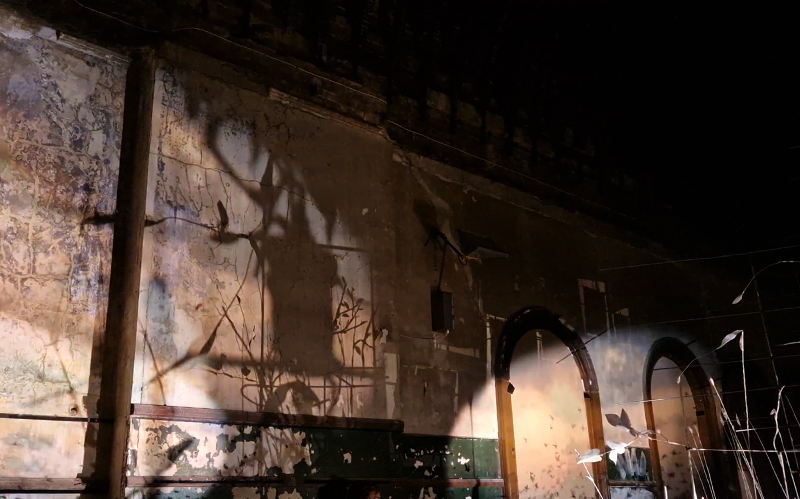
Installation shot: Cosmic Chiasmus: crossing the universe 2021, video 05:25 min

Gallery Visits

I loved the textures of the sandy cementy surface of the mixed media painting by Antoni Tàpies in Point and Counterpoint at Centro Botin, Santander.

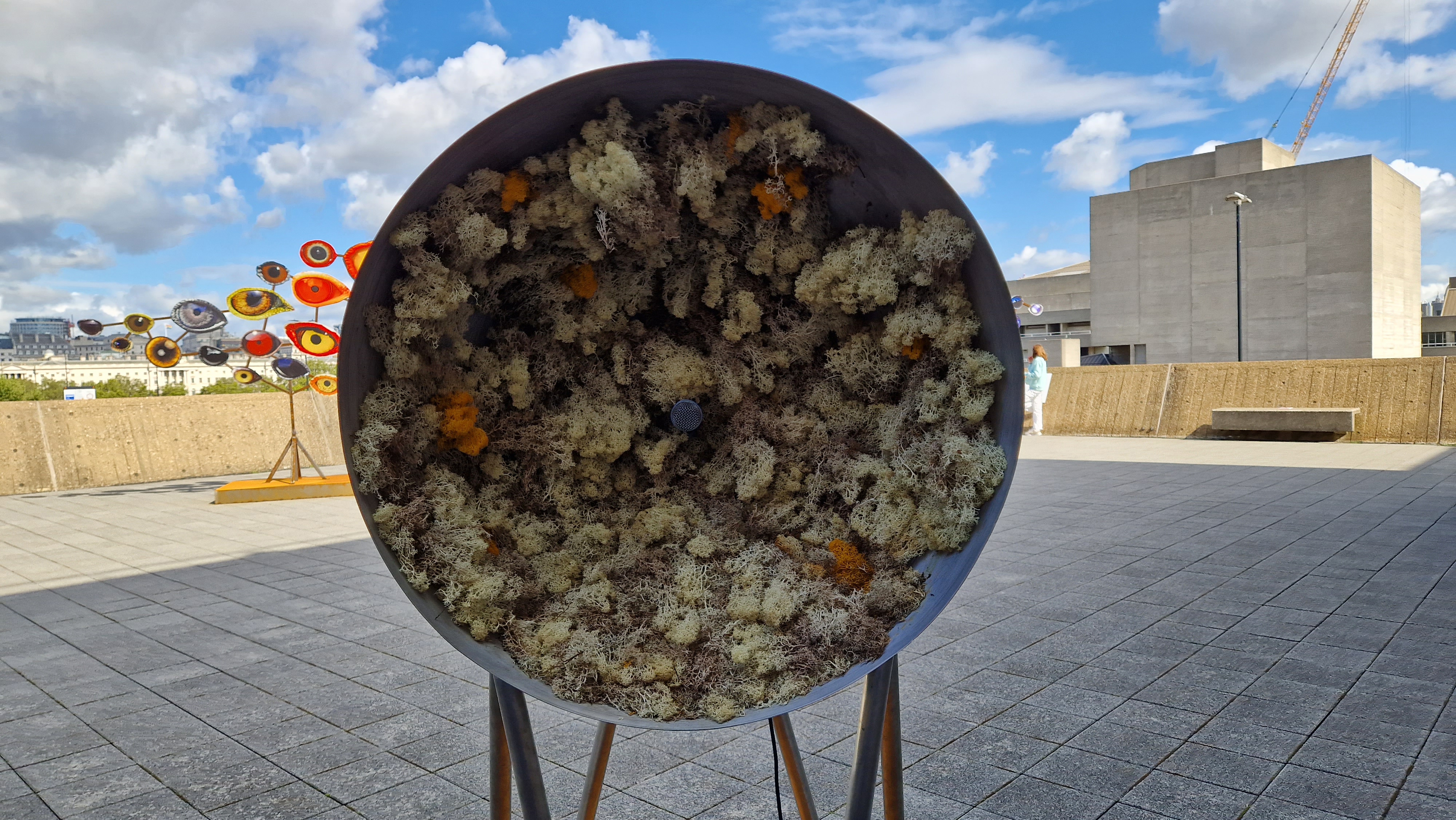
ENREDOS (entanglements) II at Centro Botin, Santander. Nuno da Luz amplifies the frequencies of the waves and the winds felt in the Bay of Santander, interweaving them with their oscillations of the building itself. The sound installations generate shared listening spaces, converting the environmental data of the Santander coast into vibrations and amplifying the building’s own vibrations, extending and intensifying their intrinsic energies.
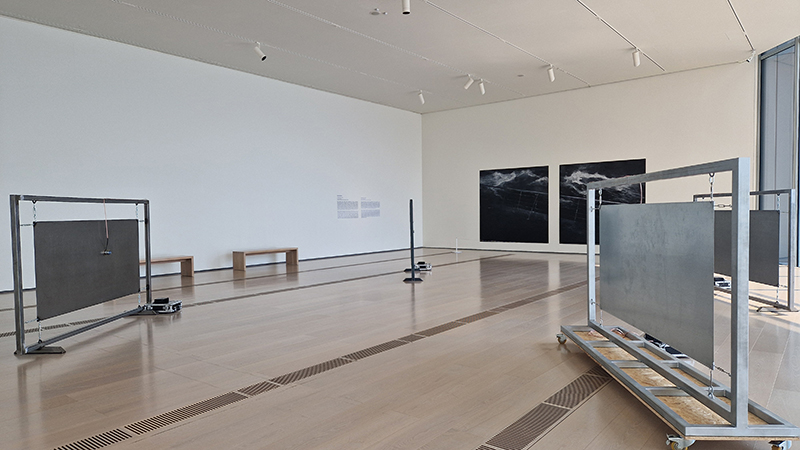
The exhibition also includes works by Javier Arce: a series of oil paintings titled On What is Nearby and the sculpture Cambium – cast from the last ring of a tree stump – this is the most recent ring under the bark where new wood cells are formed as the tree grows.
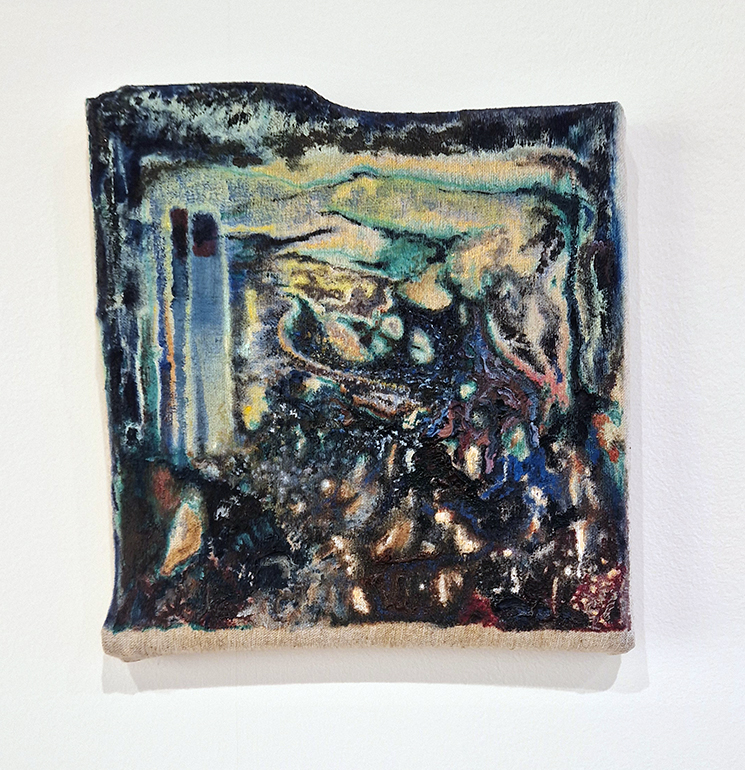
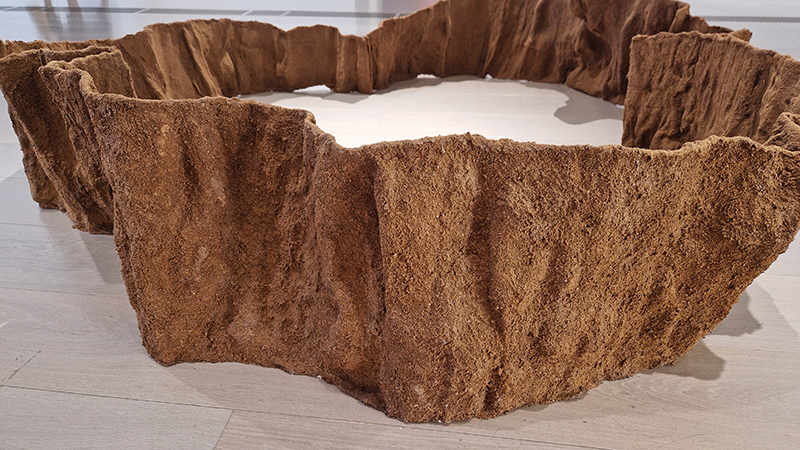
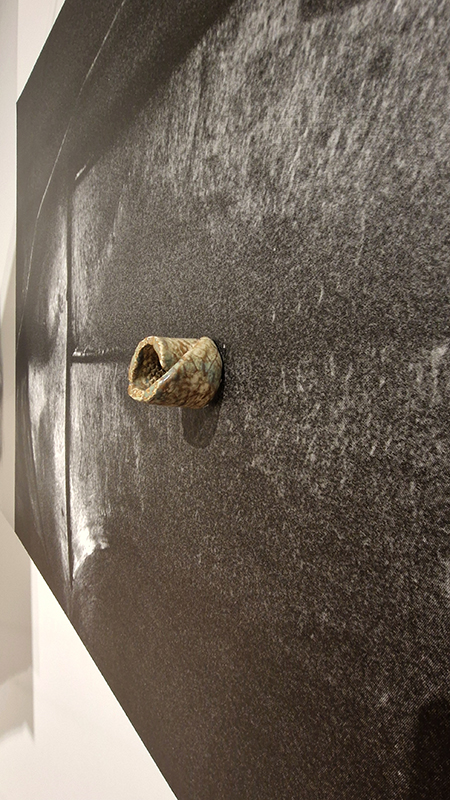
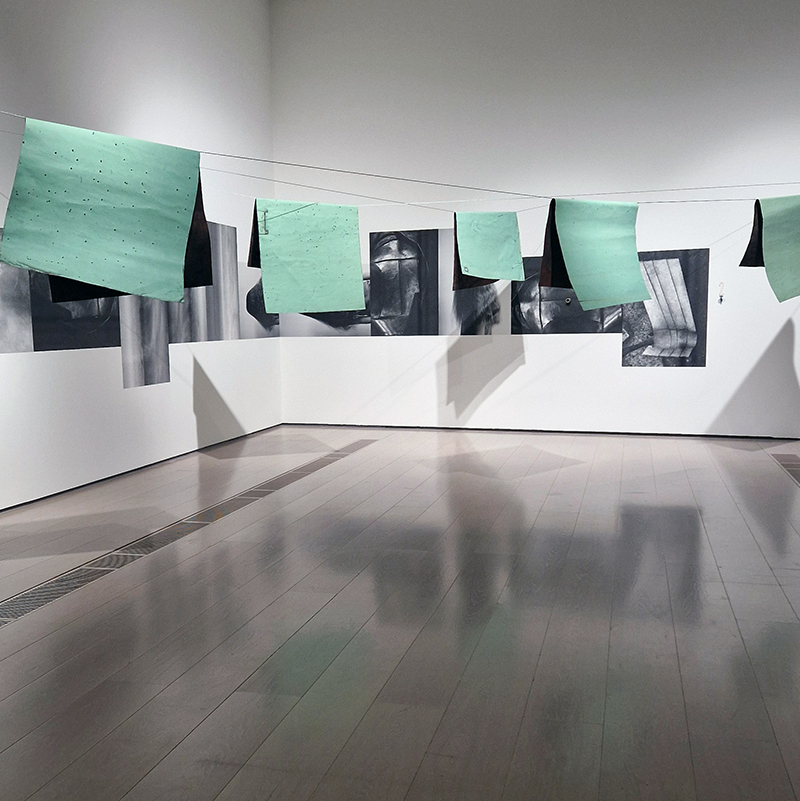
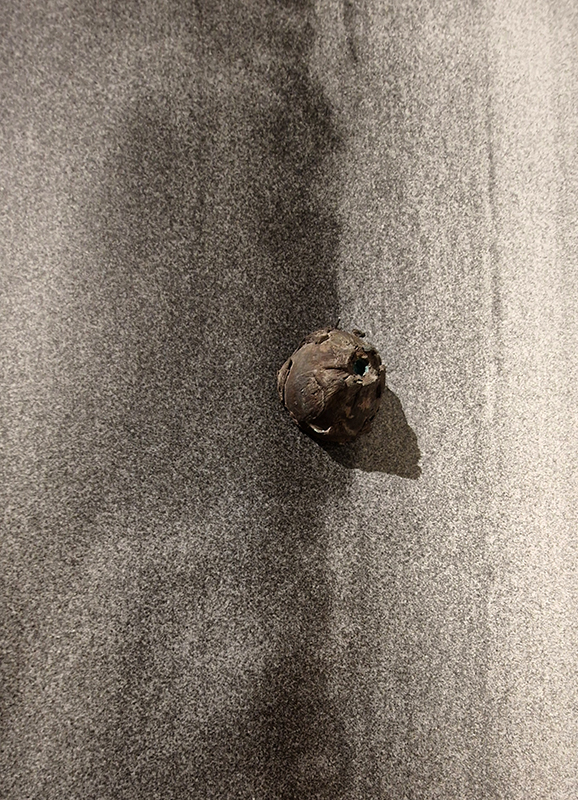
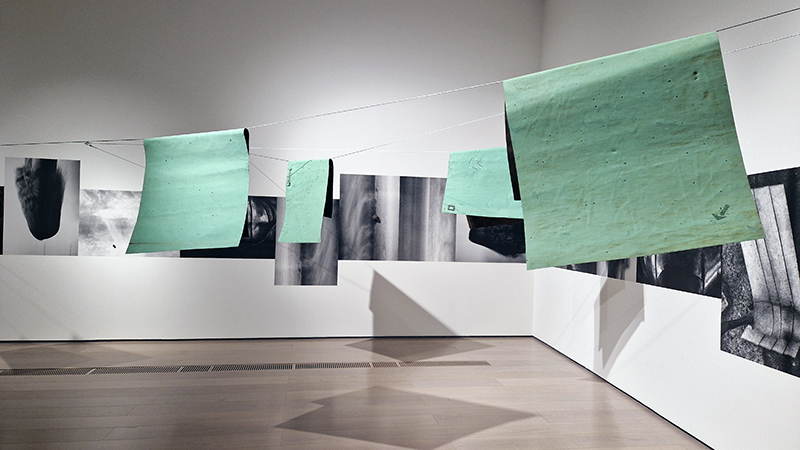
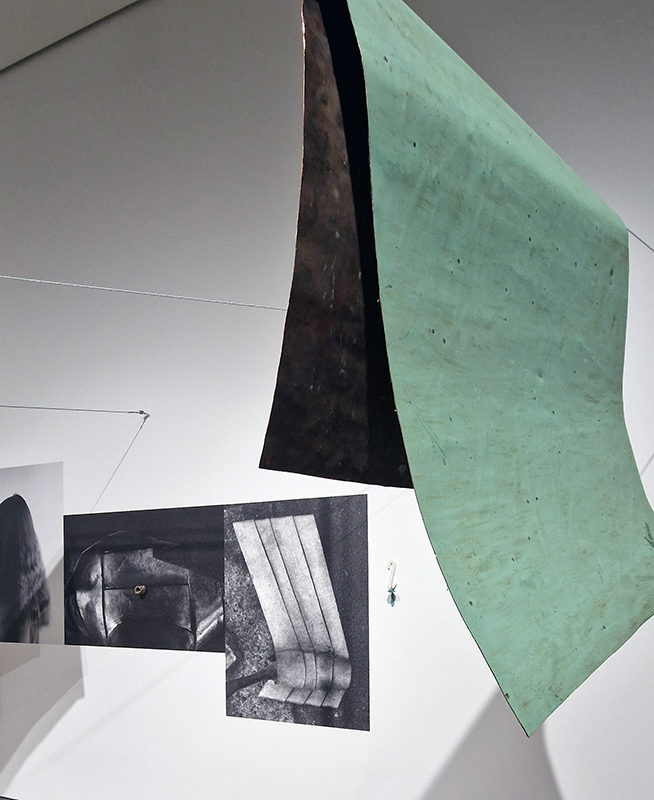
Katinka Bock: A striking installation Feuilles de temperatures which incorporates weather patinated copper sheets rescued from the dome of Anzeiger-Hochhaus in Hannover a legendary site of editorial histories, alongside Some and any, fleeting, an installation of large digital prints set with tiny bronze, ceramic and copper sculptures.
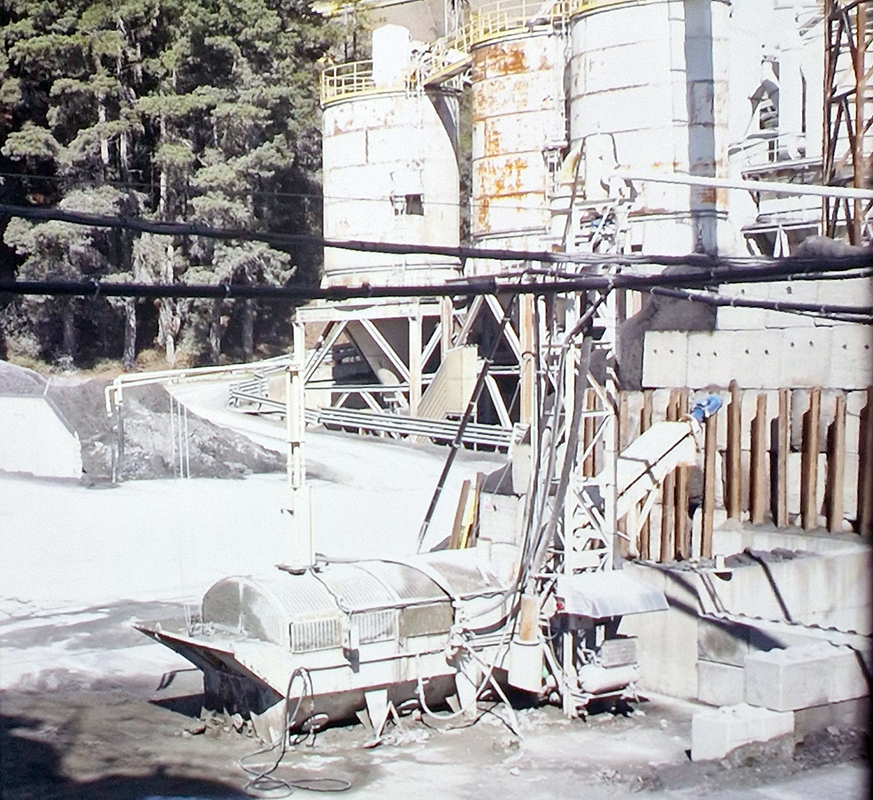
The video Core, a collaboration between sculptor June Crespo and cinematographer Maddi Barber which documents the different states through which the sculptor’s material passes: rock, dust, liquid, and solid. Connecting the processes of hands that touch and manipulate the cement sculptures, and the rock extraction and transformation process in a quarry.
Tacita Dean The Wet Prayer in reference to the final plea of Saint Paul as he was shipwrecked off the coast of Malta. In this exhibition the ephemeral chalk of Dean’s ocean waves resonate with the sound waves recorded from the bay outside and played back within the gallery space.

Great curation by Susanna Greeves of engaging works in Alien Shores at White Cube Bermondsey. In every depiction of landscape is a reflection of the values and beliefs of the society that created it. Landscape is not the world, but the world through human eyes.

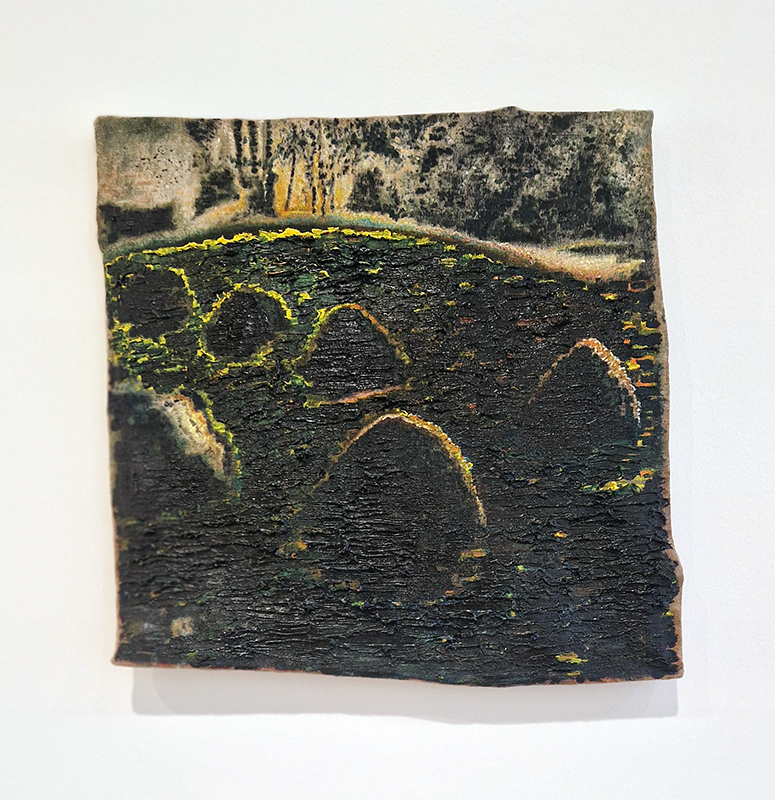
Exhibiting artists included: Michael Armitage A kind of belief, oil on Lubugo bark cloth.
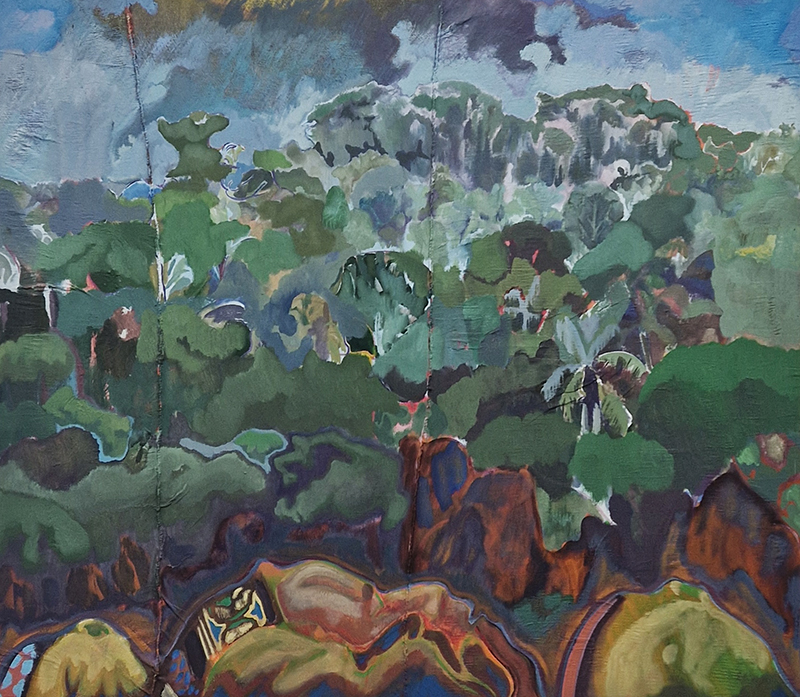
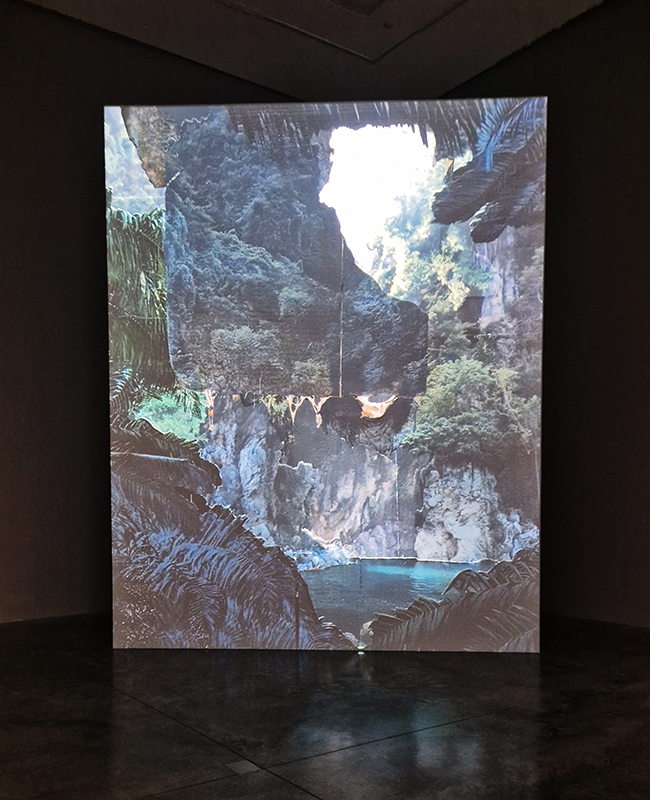
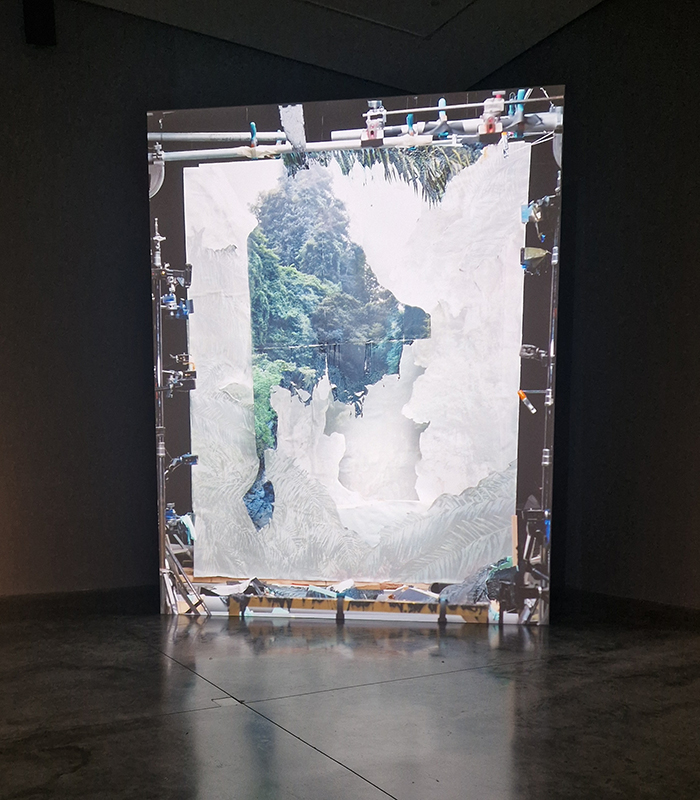
Noémie Goudal Tropiques IV, inkjet print and the mesmerizing collapse of dissolving landscapes in Supra Strata, HD video as layer after layer warps, stetches, tears and falls until there is nothing.

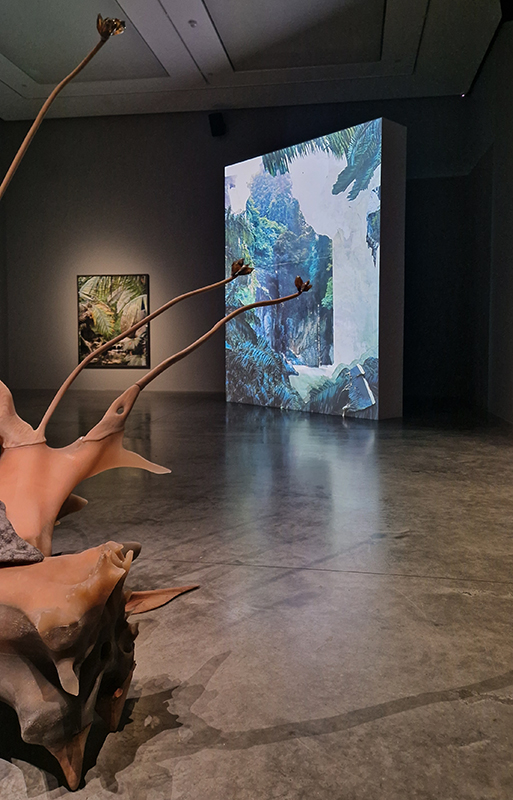
Sky Hopinka shapeshifting video Mnemonics of Shape and Reason
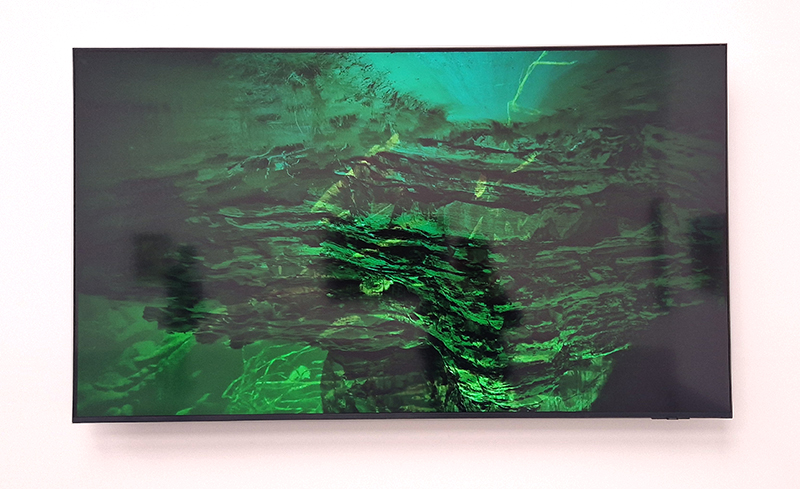
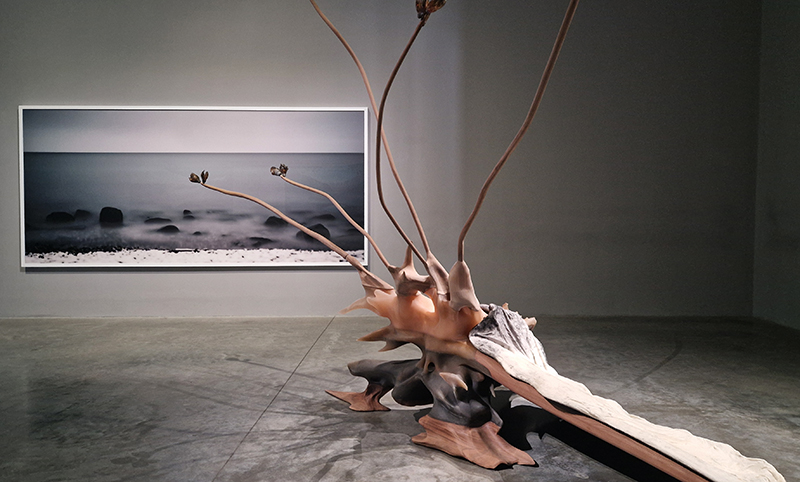
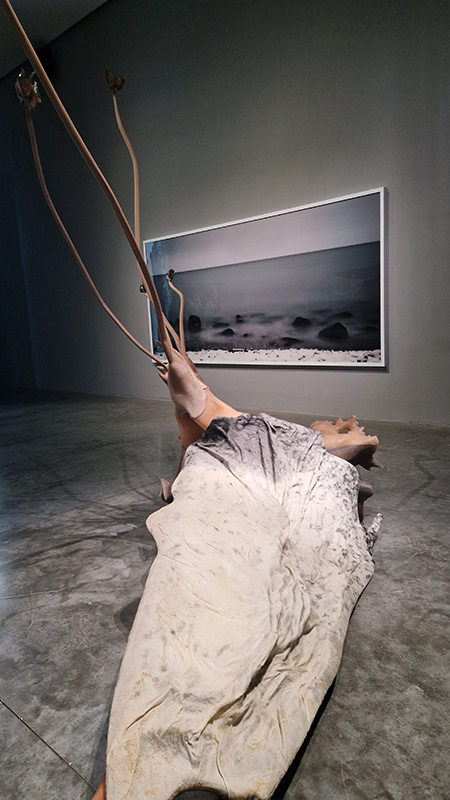
Marguerite Humeau Skero ( the dormant), embellished silk double organza, cast rubber, sediments, pigments, handblown glass, milled walnut, polyurethane foam, epoxy resin and stainless steel paired with Darren Almond’s haunting Fullmoon@Baltic Coastline, latex print.
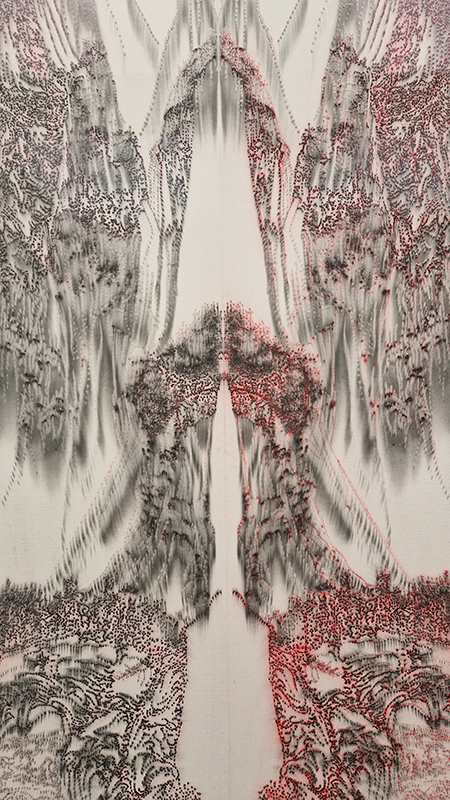
Hung Fai, optically intriguing The Six Principles of Chinese Painting: Transmission XXII (with Hung Hoi), ink and colour on paper.

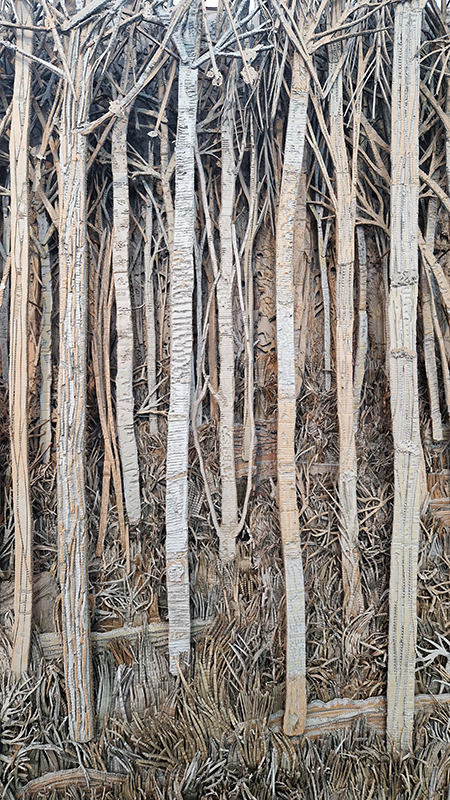
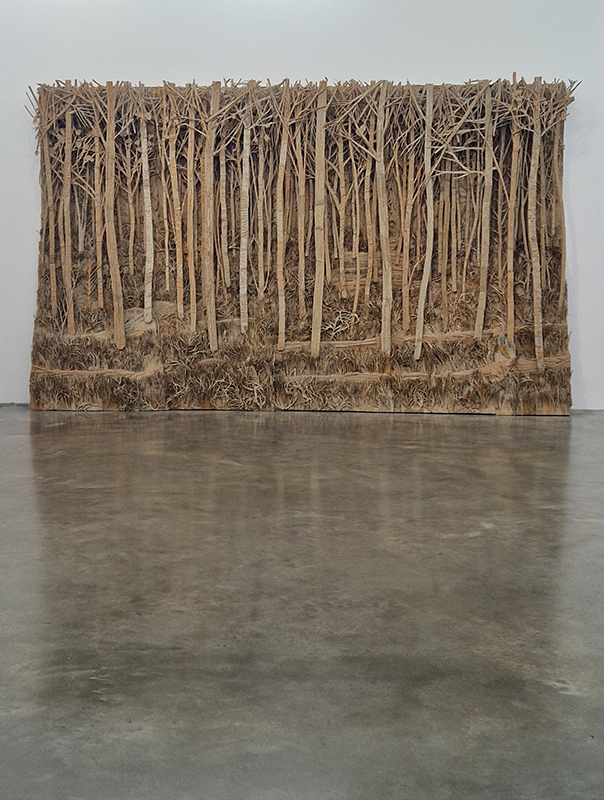
Eva Jospin, Forêt, cardboard and wood.
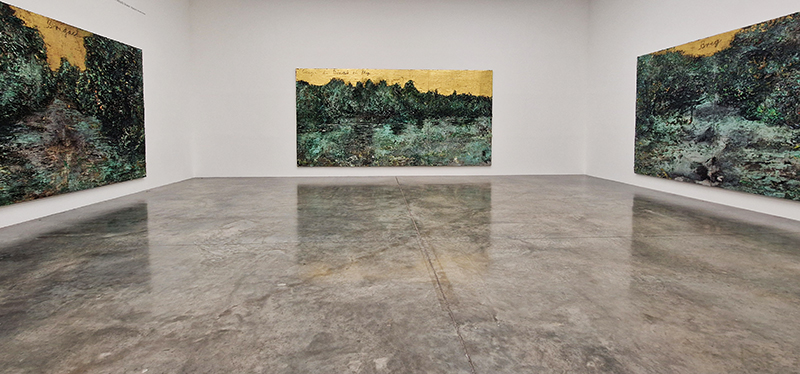
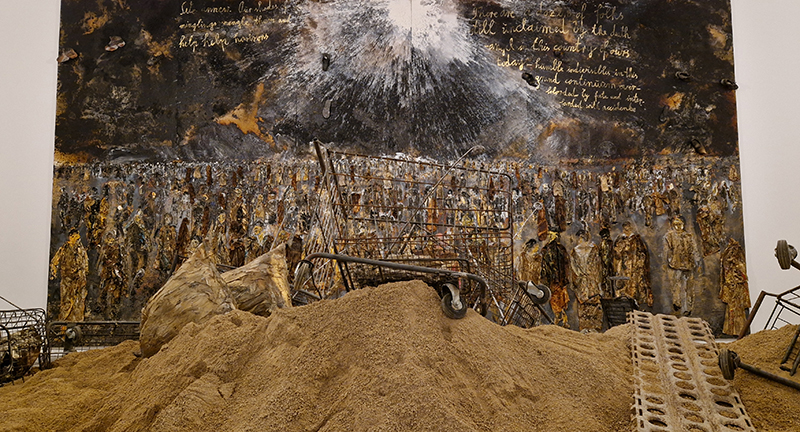
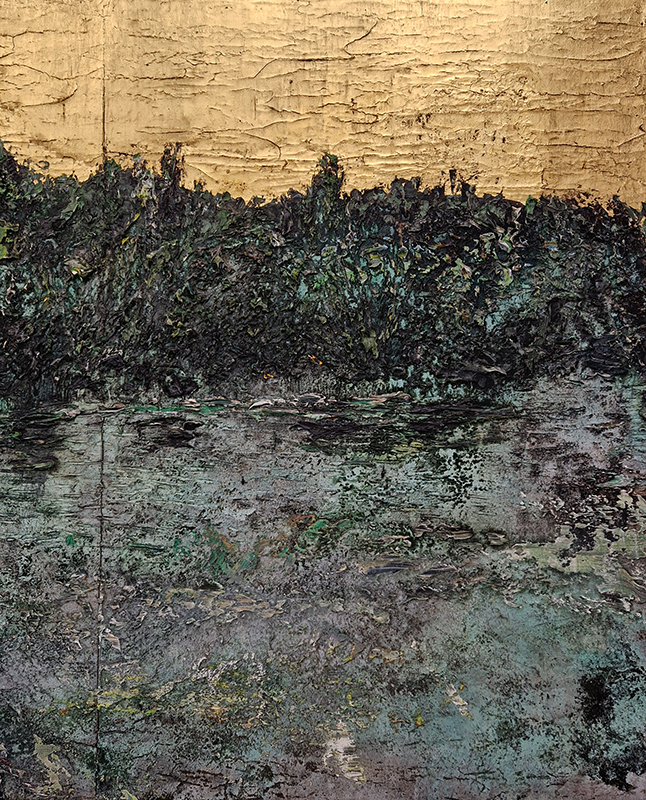
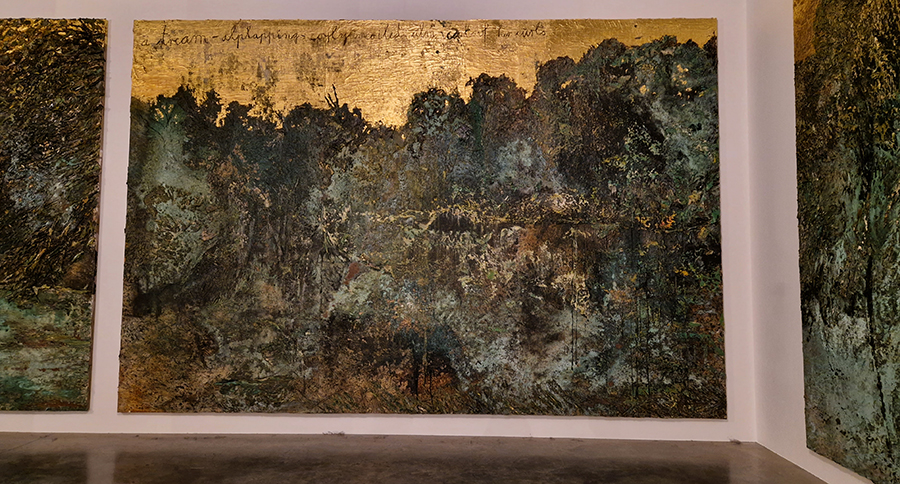
Anselm Kiefer Brigach und Breg bringen die Donau zu Weg, three panels emulsion, oil, acrylic, shellac, gold leaf and sediment of electrolysis on canvas.
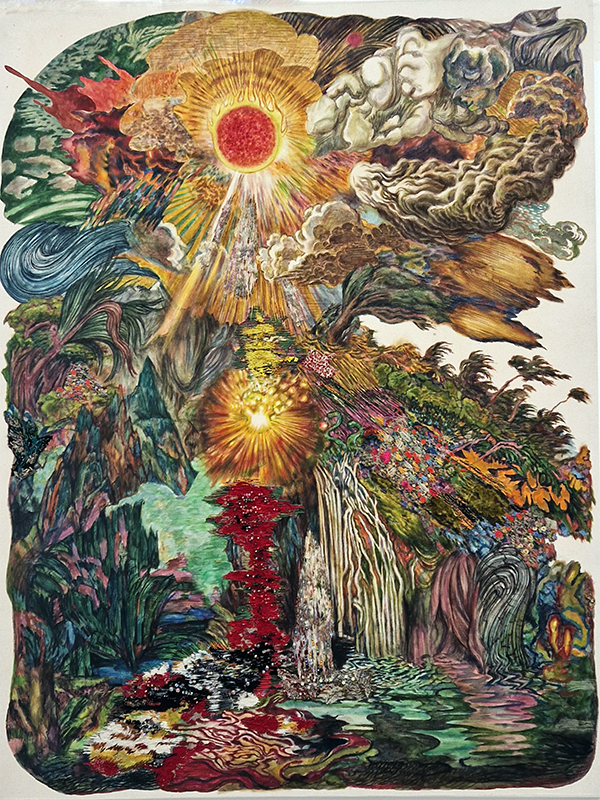
Ken Gun Min Everything We Can Imagine As Light Baroque pearl, crystal, assorted gemstones, vintage beads, Korean pigment, silk embroidery, thread, found fabrics and oil paint on canvas. I love exuberance of his painting and the title made me think of the epic Anthony Doerr book All The Light We Cannot See and the beautiful film All We Imagine As Light written and directed by Payal Kapadia both of which I found deeply moving.
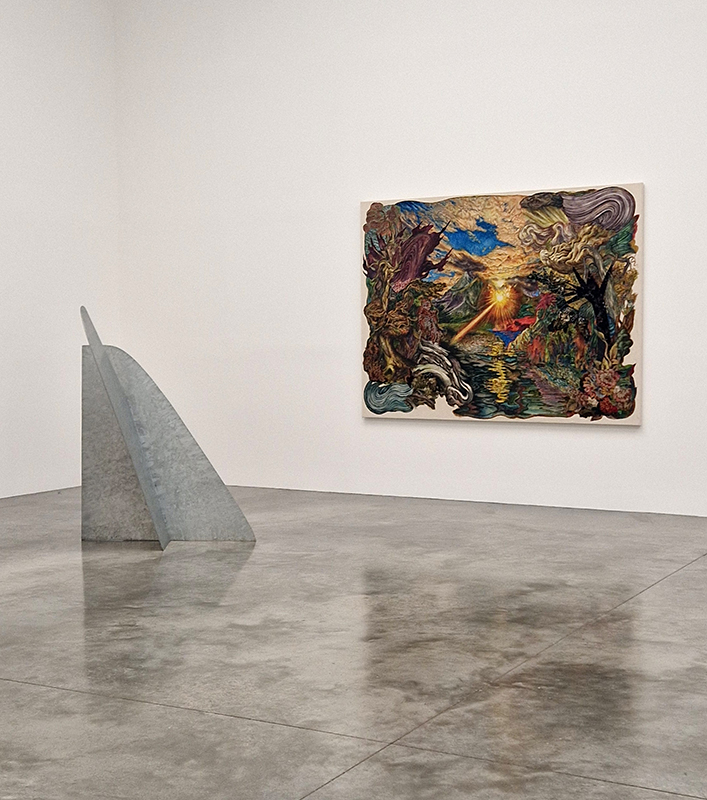
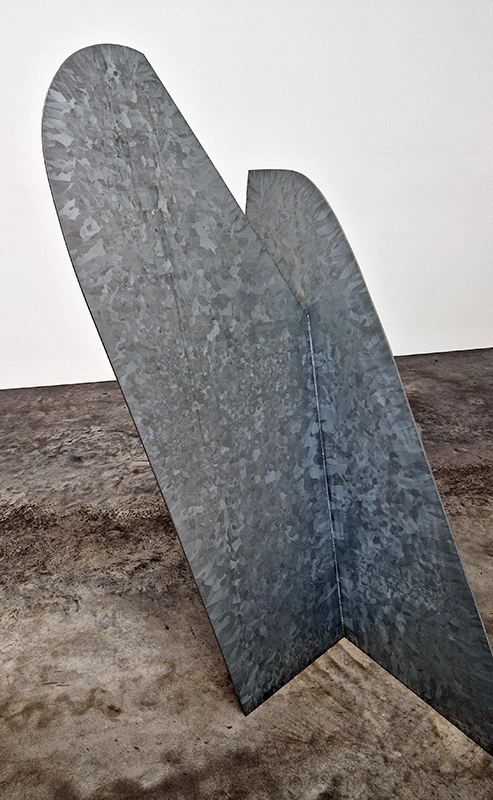
Isamu Noguchi Mountains Forming hot dipped galvanised steel.
Bagus Pandega and Kei Imazu, Artificial Green by Nature Green 4.1, Painting and erasing machine, water based paint on linen canvas, modular synthesiser, LED screen, PC and jelly palm tree. This was not in action when I visited.

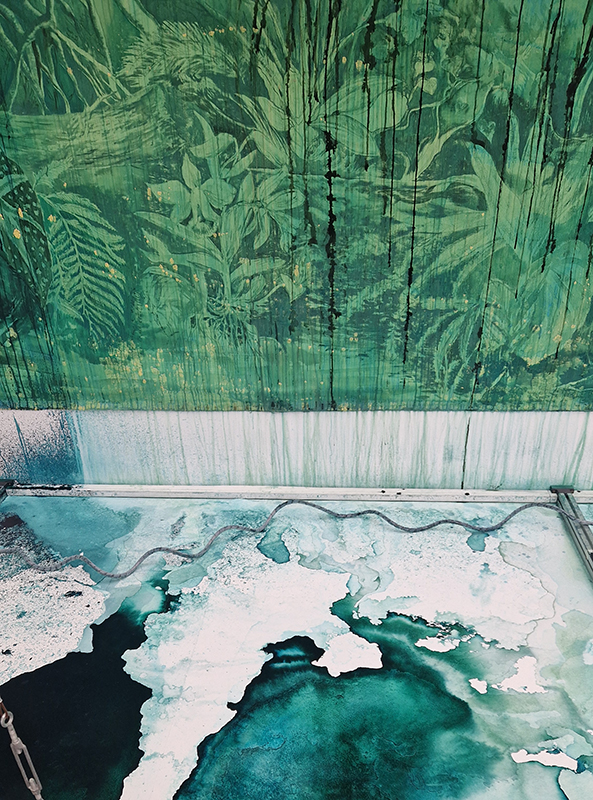
The delicate detailed forests on the cusp of erasure of Tomás Sánchez
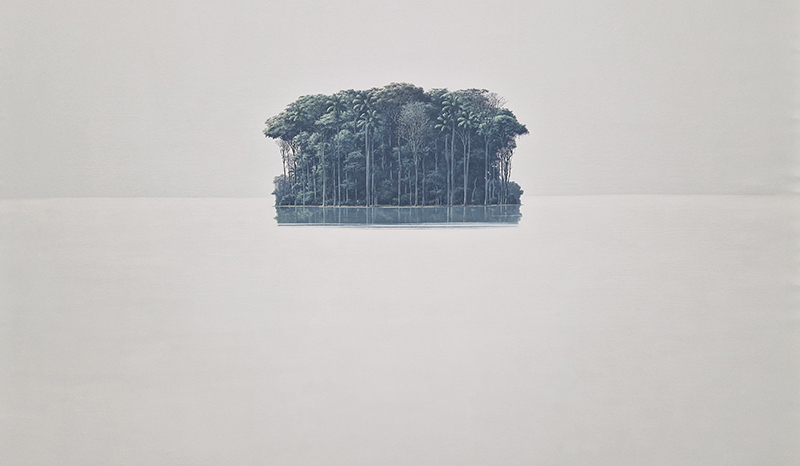
Emma Webster mega painting Borrow Every Forest which has echoes of Noemi Goudall’s video in it’s staged nod to artifice.

Robert Zehnder Hip Bone, oil on canvas on panel.
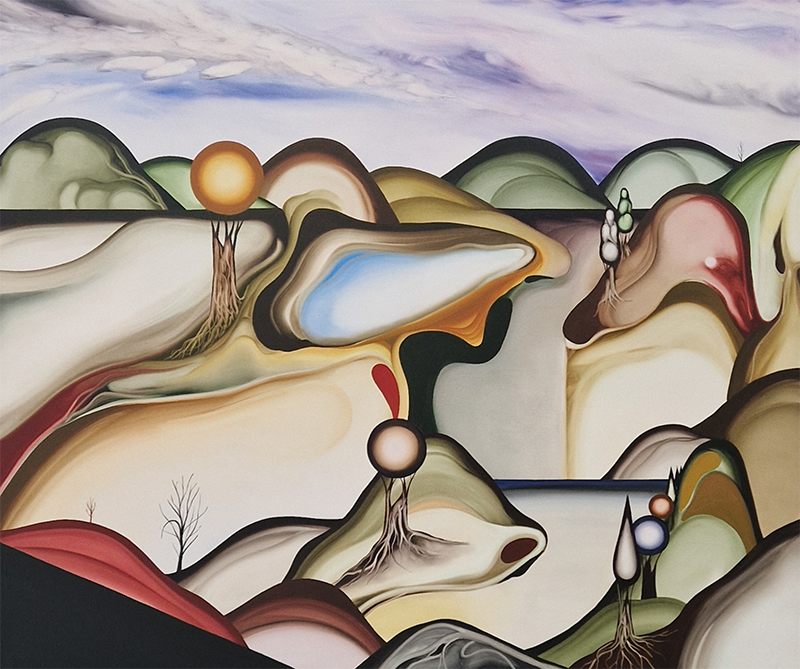
Out and About

Not to forget that as backdrop to everything that occurs at the moment is the horrific genocide being perpetrated in Gaza. It seems impossible that such cruelty can happen, is still happening and the powers that could stop it do nothing. Santander beach protest for a free Palestine that I was able to walk alongside.

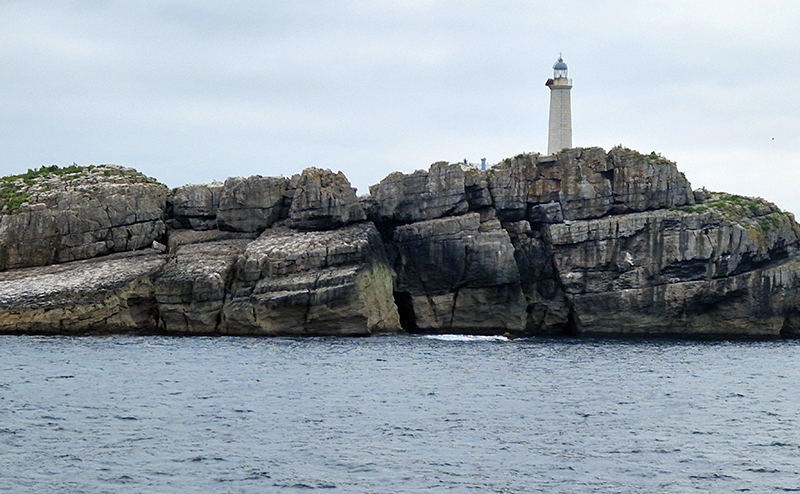
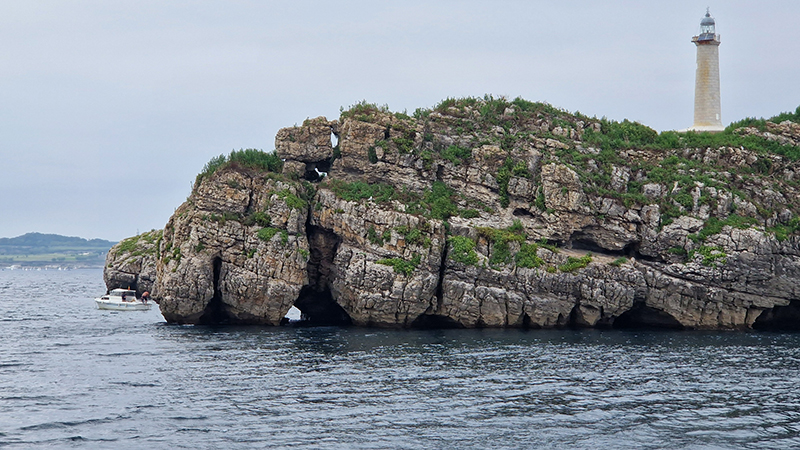
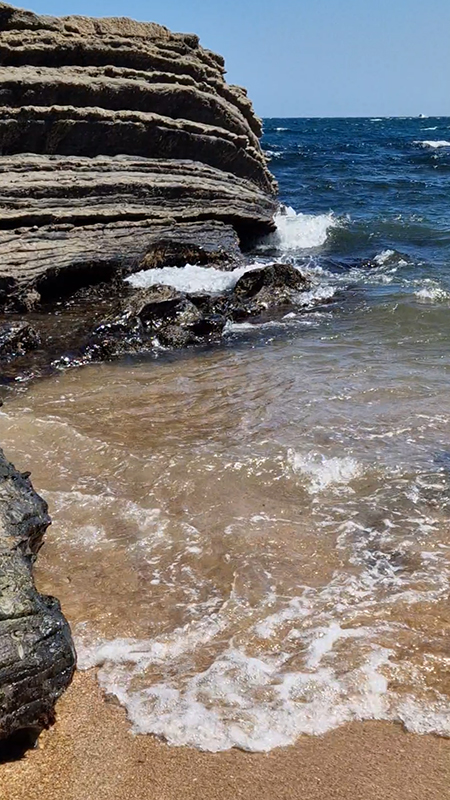
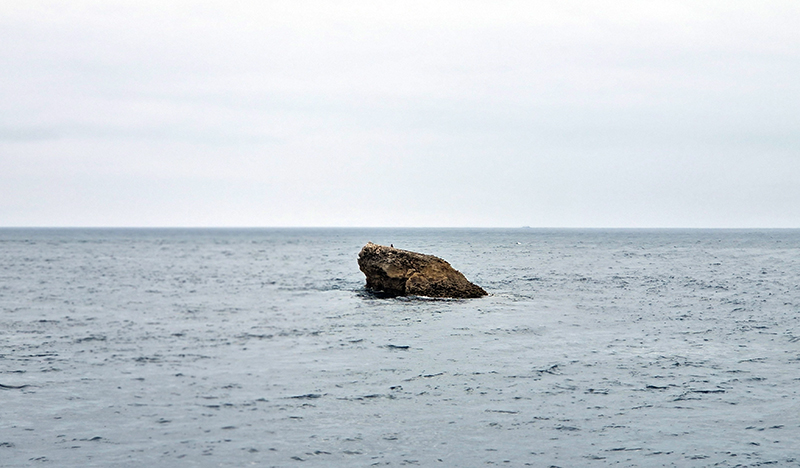
Contemplating geological time, rock gazing along the Santander coast.
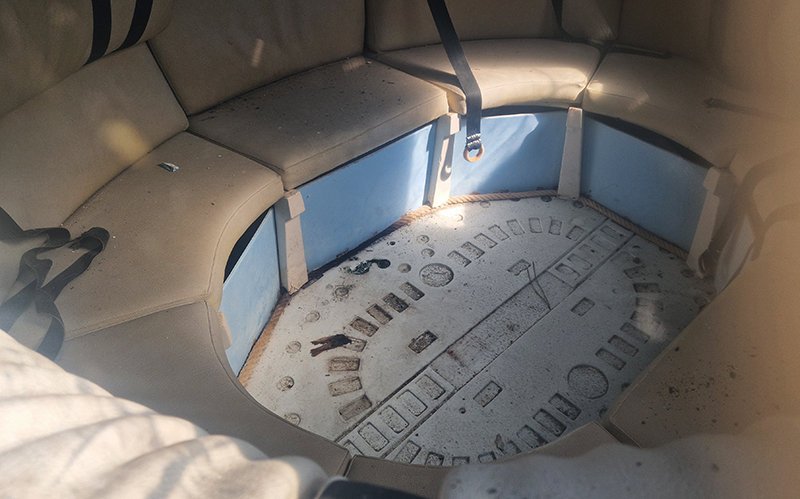
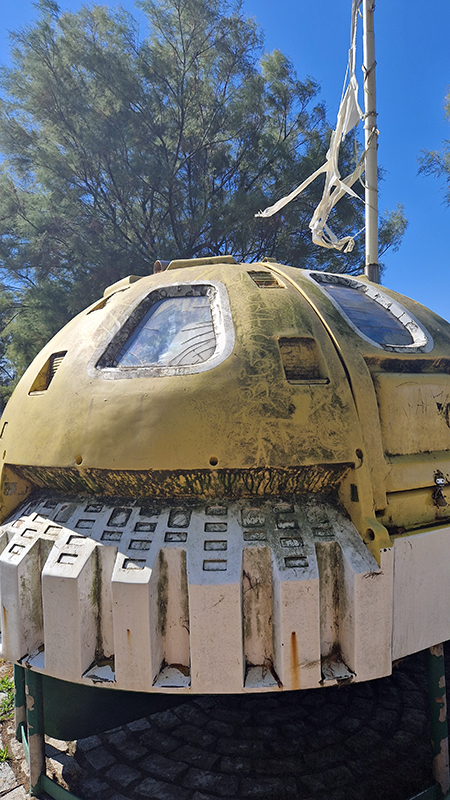
This sci-fi looking experimental lifeboat was designed by Spanish explorer Vital Alsar as part of his project El Hombre y la Mar. It has a capacity for 12 castaways and was towed across the Atlantic from Mexico to Santander in 1978, the culmination of his expedition to emulate the one undertaken in 1542 by Francisco de Orellana from Ecuador on foot across the Andes to navigate the length of the Amazon to the ocean. Through his expeditions, including the longest crossing of the Pacific Ocean by raft, Alsar wanted to prove that by respect for, and harmony with nature, humans can cross oceans, feed themselves and live sustainably.
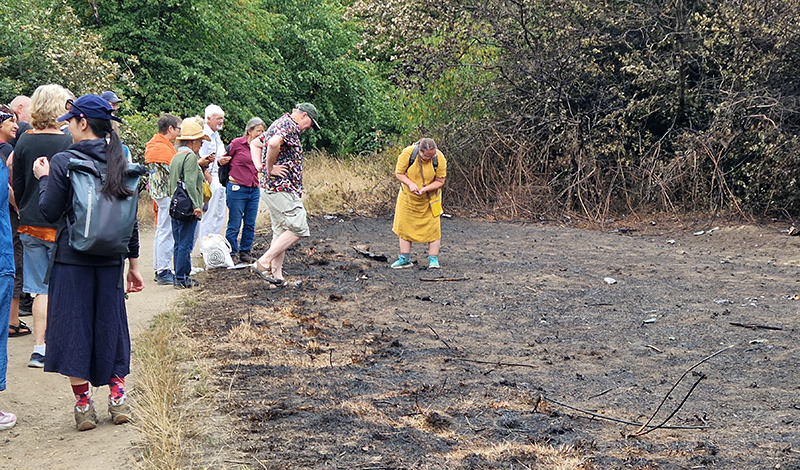
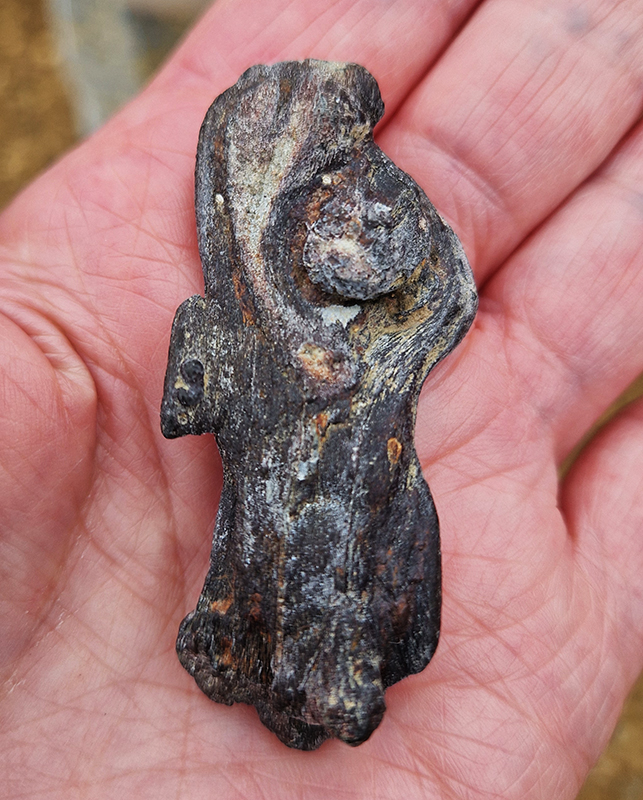
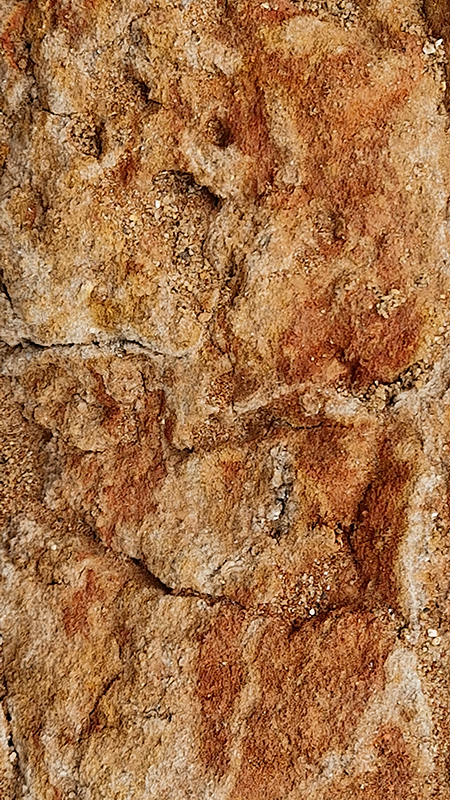
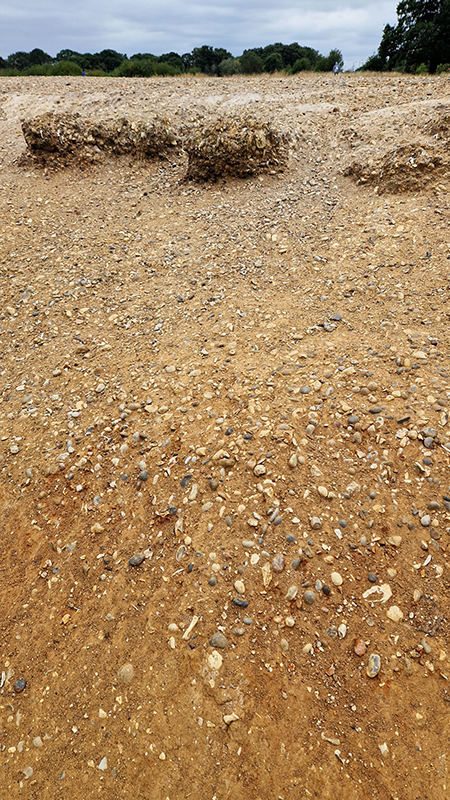
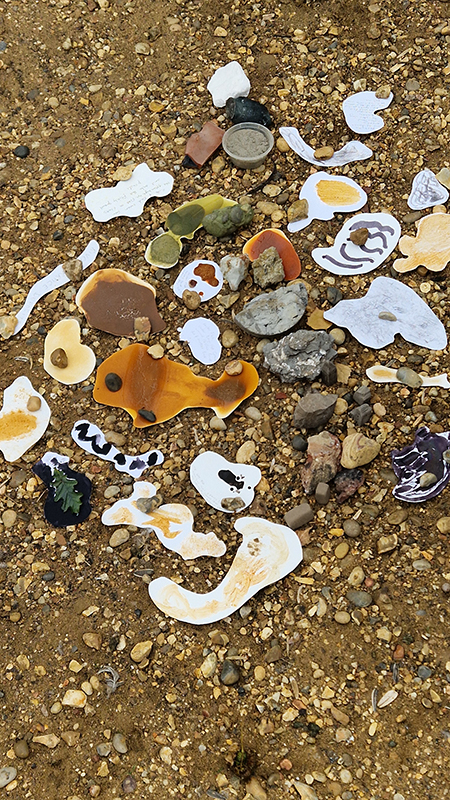
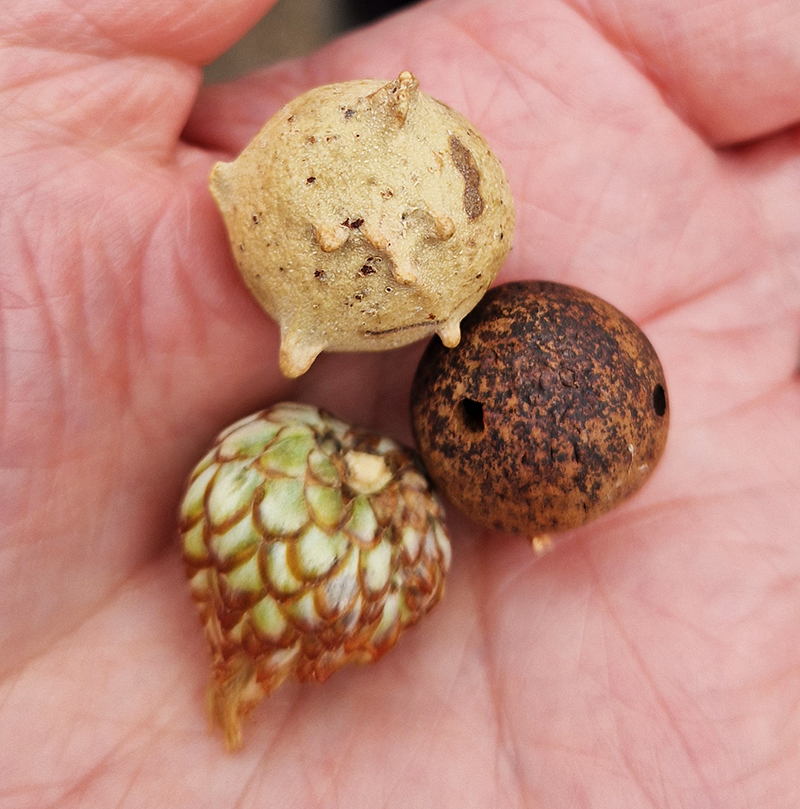
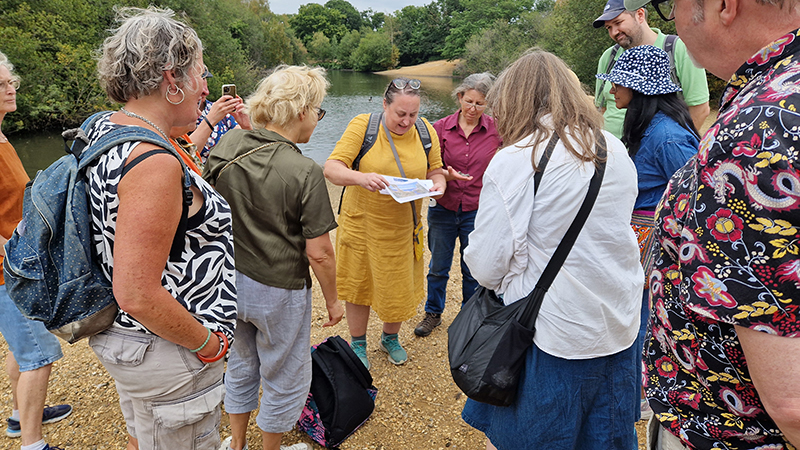
Inspiral London; Re/Walk Festival: Rivers, Reservoirs, Ice and Sea. The colours and layers of Walthamstow revealed by artist Gail Dickerson and geologist Ruth Siddall both members of London Geodiversity a group concerned with the natural and human aspects of landscape, focused on the rocks, sediments, soils, the landscape topography and the processes that act on the landscape. We were not only enlightened on the deep time history of this urban landscape as we stood and imagined when glaciers reached as far as Epping and woolly mammoths wandered the land here but were instructed on how to make shimmering ink from galls, how to make charcoal in a bonfire and use earth’s rich pigments to paint with. Galls form when an organism (like an insect) penetrates or irritates plant tissue, triggering the plant to grow and enclose the organism. 
Something I recently found out, amid the hype of the new movie, was that the Fantastic Four super hero characters got their powers from exposure to cosmic rays on an ill fated/serendipitous (depending on how you look at it) space mission. The original story was from 1961, the year Yuri Gagarin was the first human to orbit in space. Cosmic rays are a real danger to astronauts as these high energy radioactive particles can cause cell damage. Astronauts also experience directs hits on the retina from cosmic rays which they see as tiny flashes of light but this wouldn’t have been knowledge in 1961.

Reading

Patterns of Thought: The hidden meaning of the great pavement of Westminster Abbey by Richard Foster. The book offers a thorough investigation into of what is known as the Cosmati Pavement; a unique work laid down in 1268 by order of Henry III who commissioned workmen from Rome, led by Odoricus, who were skilled in a type of inlaid stone decoration known as Cosmati work.

The provenance of the stones and the history of the pavement is interesting but the most compelling aspect of the pavement is its intriguing inscription in Latin which promises the reader disclosure of the end of time. It translates as

Four years before this Year of Our Lord 1272,                                                                                             King Henry III, the Court of Rome, Odoricus and the Abbot                                                                            set in place these porphyry stones.                                                                                                                   If the reader wittingly reflects upon all that is laid down,                                                                               he will discover here the measure of the primum mobile:                                                                                              the hedge stands for three years,                                                                                                                             add in turn dogs, and horses and men,                                                                                                       stags and ravens, eagles, huge sea monsters, the world:                                                                             each that follows triples the years of the one before.                                                                                    Here is the perfectly rounded sphere which reveals                                                                                                    the eternal pattern of the universe.
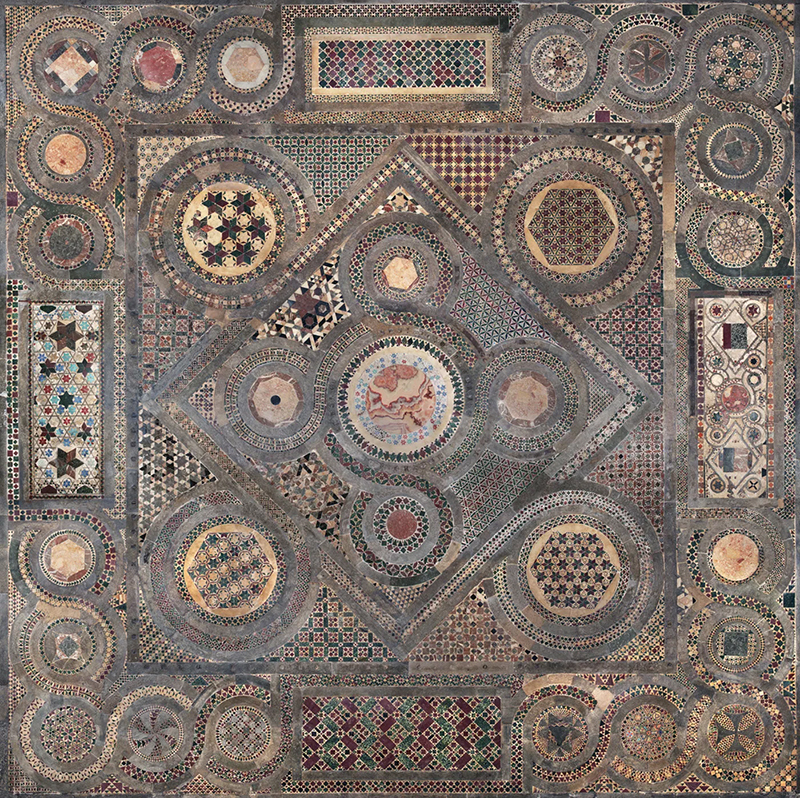
The fateful day expressed in terms of the multiplied life-spans of various creatures apparently arrives at the sum of 19,683. The book offers fascinating insight into the beliefs of medieval cosmology, Christian philosophy and sacred geometry that together formed the thoughts that were meticulously laid down in stone.
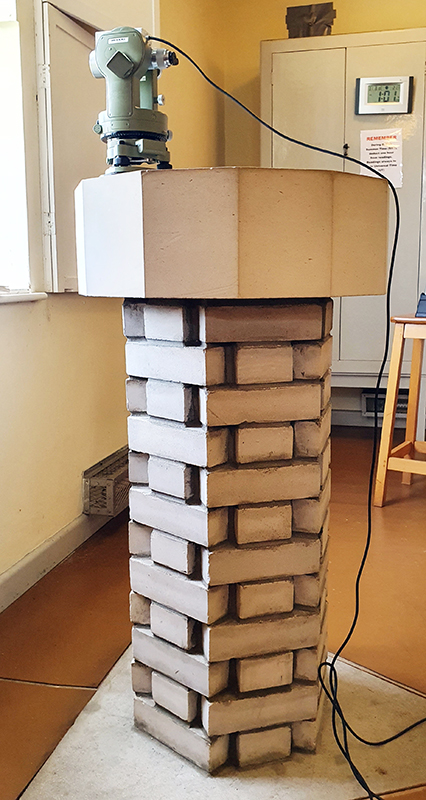
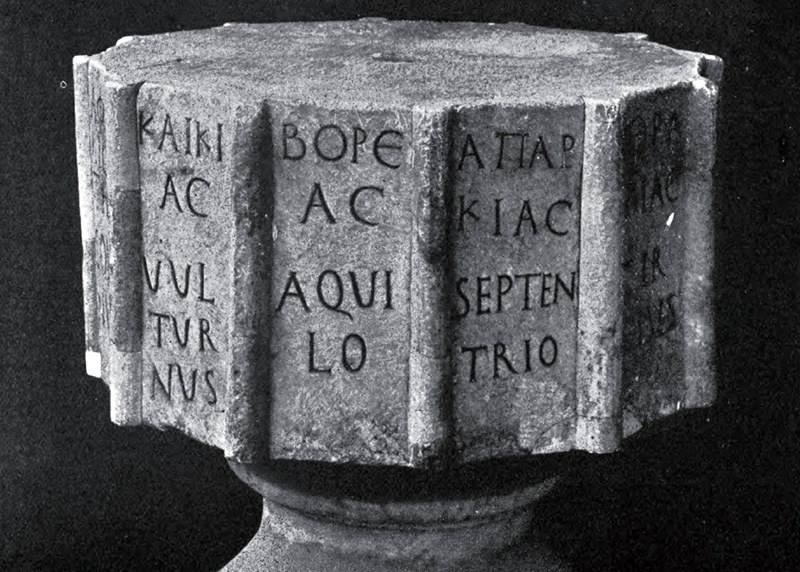
Over the centuries many wind roses have been designed with varying numbers of wind directions from four to thirty-two cardinal points. The contemporary compass rose has its roots in the ancient classification of the winds.

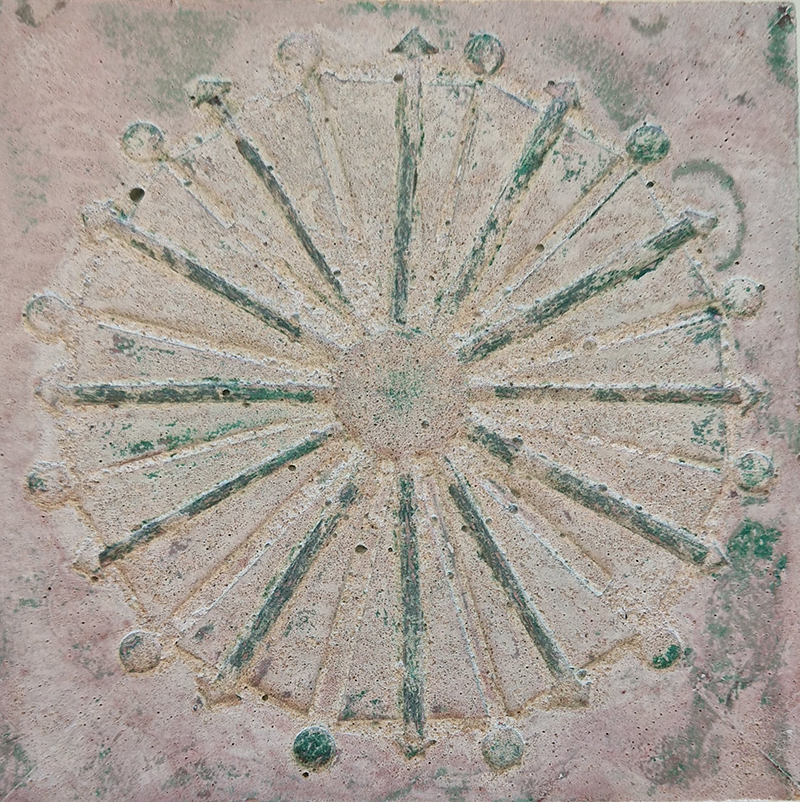
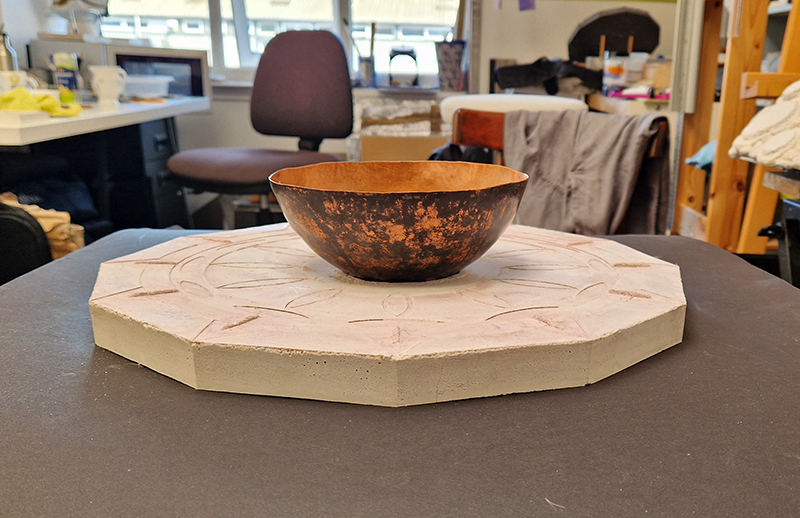
Working on the sculpture series of tablets titled Instruments of the Anemoi after the gods of the winds. Twelve sided non-magnetic concrete tablets suggestive of the plinths that support various instruments used in monitoring the Earths’ magnetic field and the ancient anemoscope “table of the winds” carved in marble around eighteen hundred years ago and inscribed with the Greek and Latin names of classical winds on each of its twelve sides.

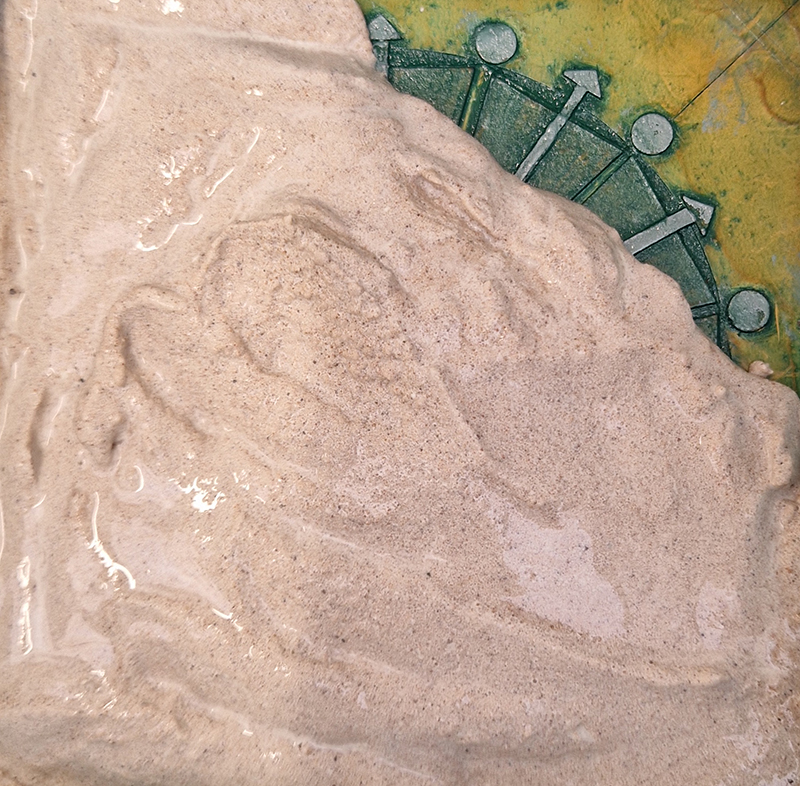
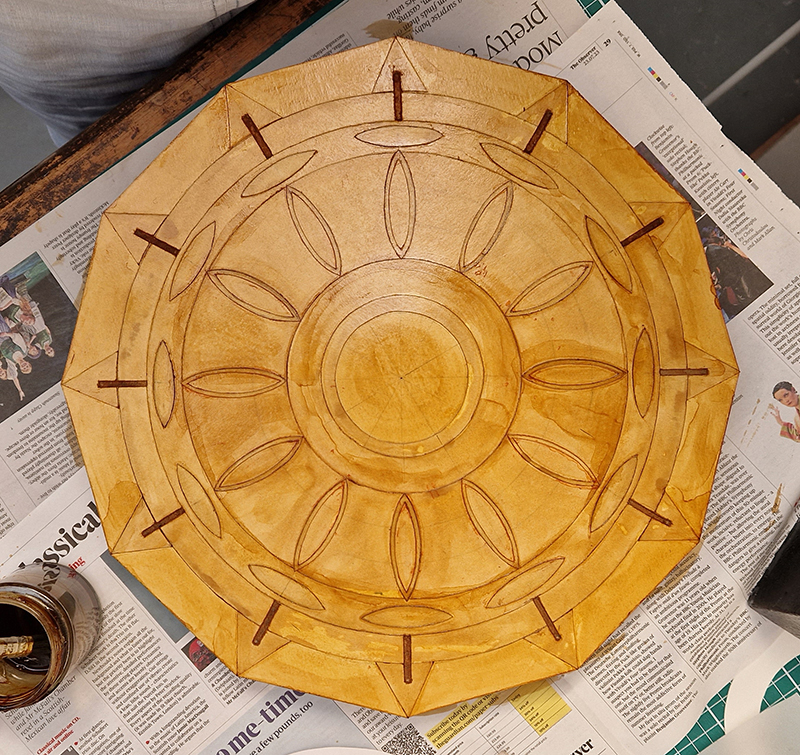
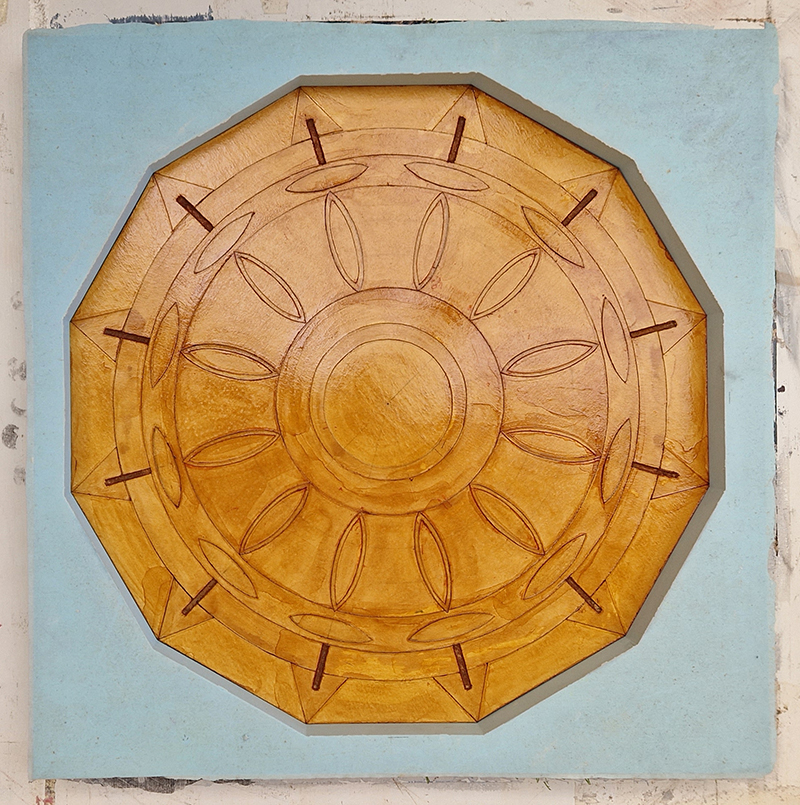
Testing an inked collagraph for concrete casting.

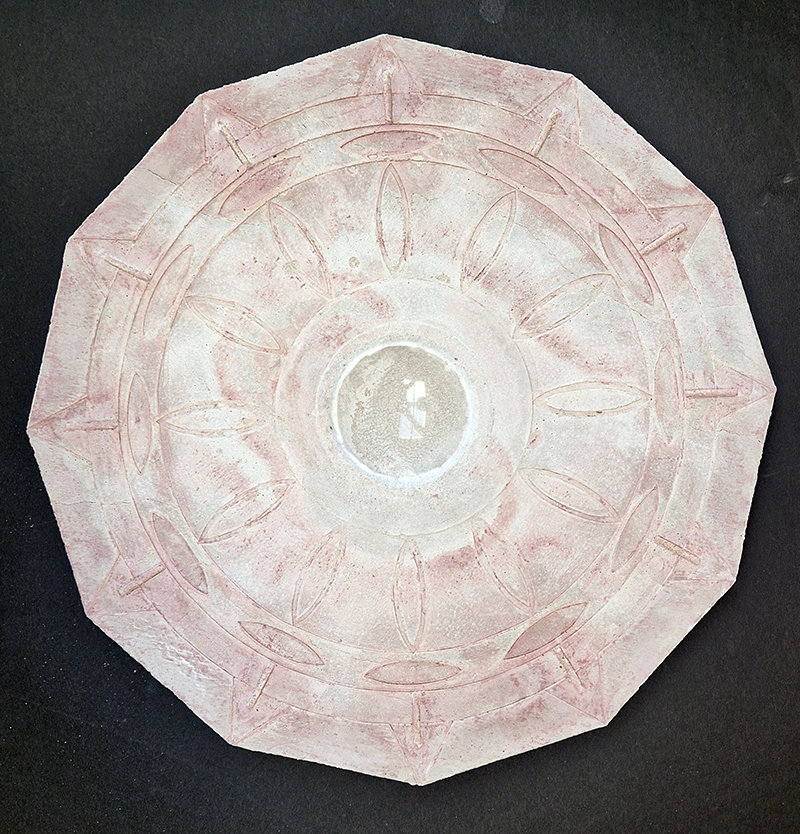
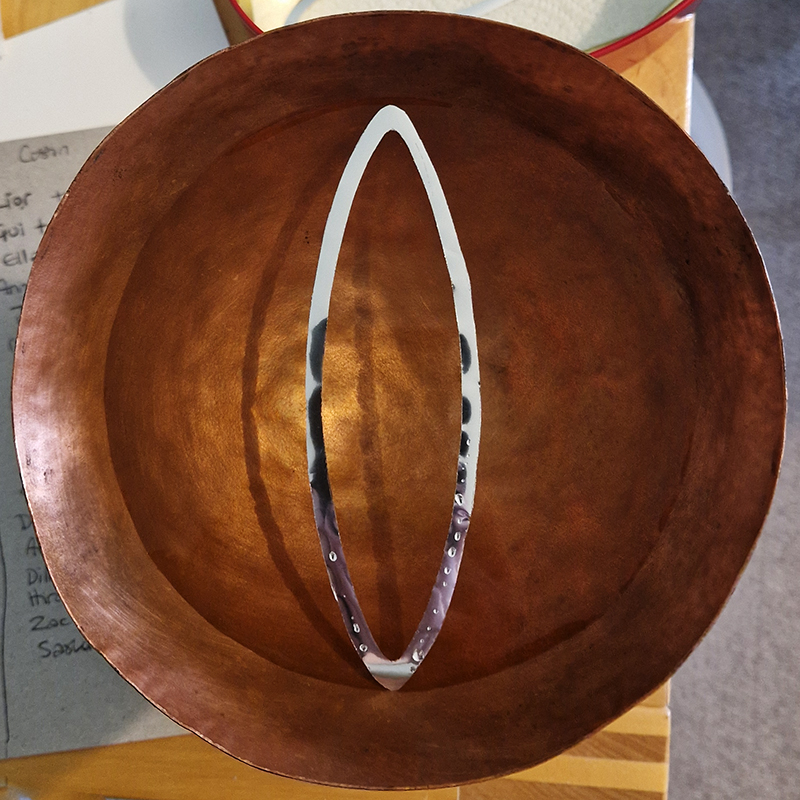
The first tablet in the series is cast with a collagraph which takes the commonly used oval shaped compass needle (illustrated in Breve Compendio de la Sphera de la arte Navegar by Martin Cortes 1551) as symbol of the silver fish – wafer thin fish shaped iron leaves used by 11th century Chinese geomancers.

The weather made the casting process a little precarious with the heat drying the concrete faster than ideal. The result has some fine cracks but overall I am pleased with the result. I used a convex glass lens to create a dip for a copper bowl to sit in. The glass had to be dremelled out after unmoulding. It left a very shiny surface. I made the copper bowl by hand at the London Sculpture Workshop. The ‘silver fish’ is cut from a silver gilding sheet.
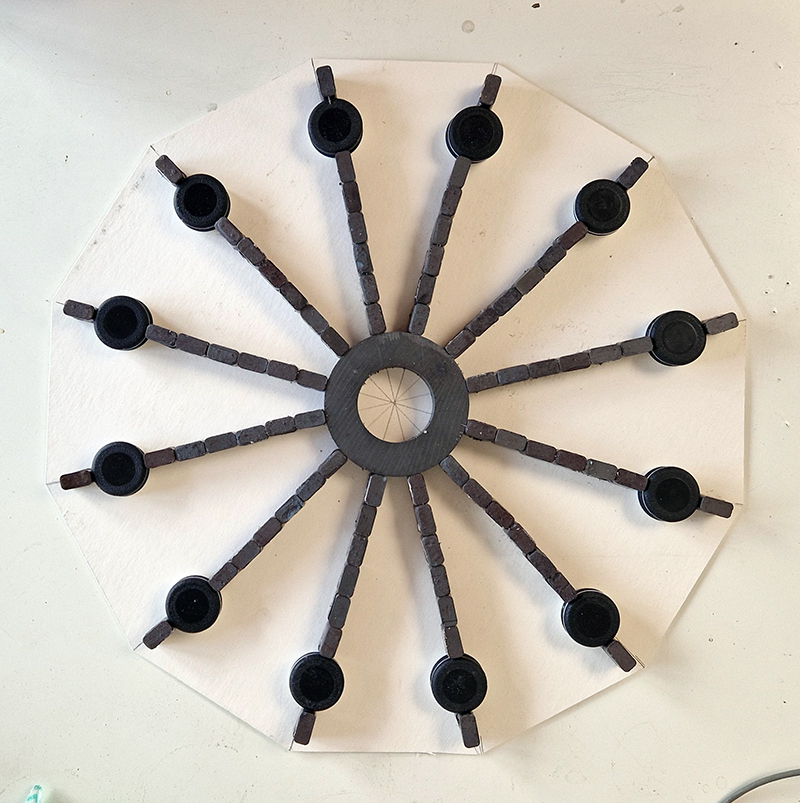
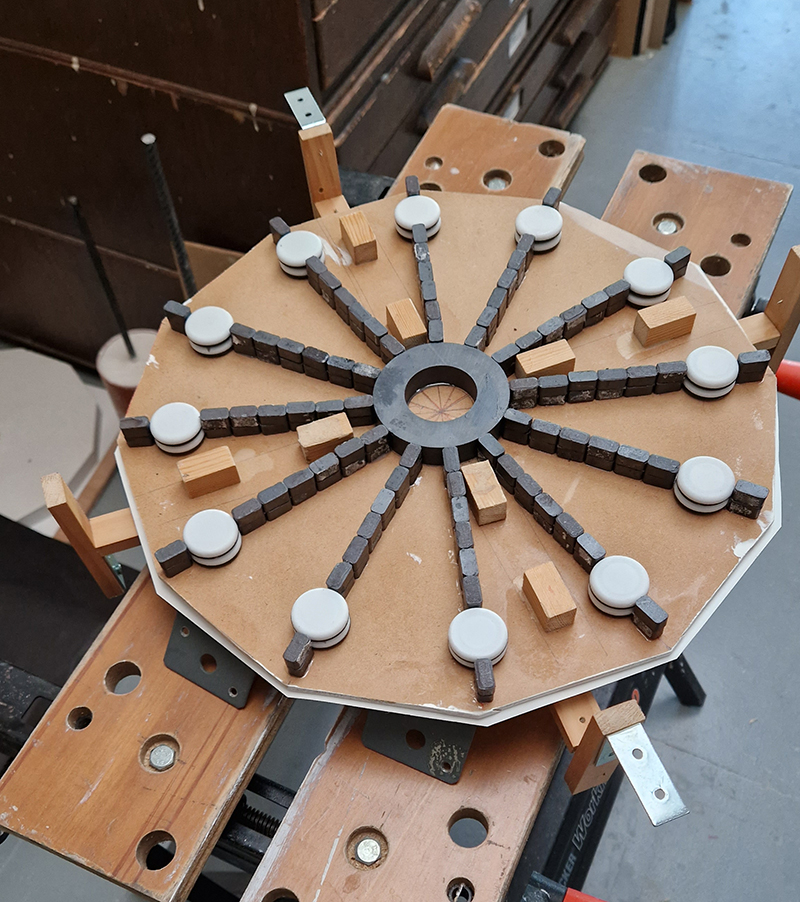
The next tablet I am working on will contain embedded magnets. An elaborate frame is in construction to suspend the magnets in the concrete while it sets.

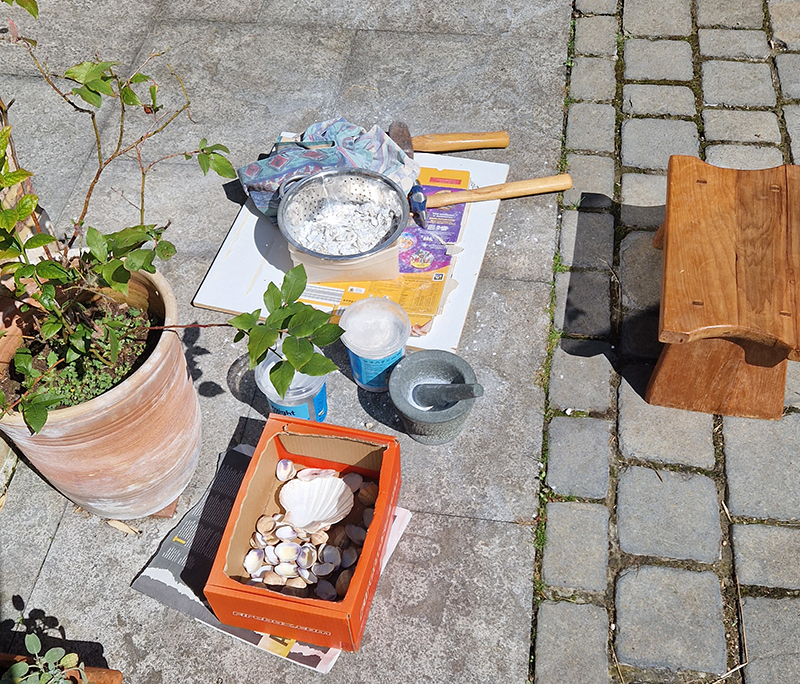
I will also add crushed shells as aggregate, so more pounding shells in the garden is necessary.

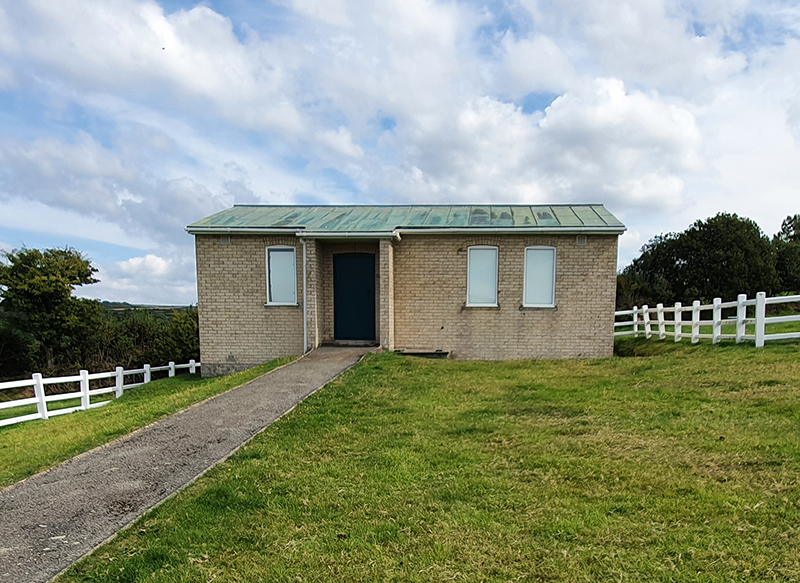
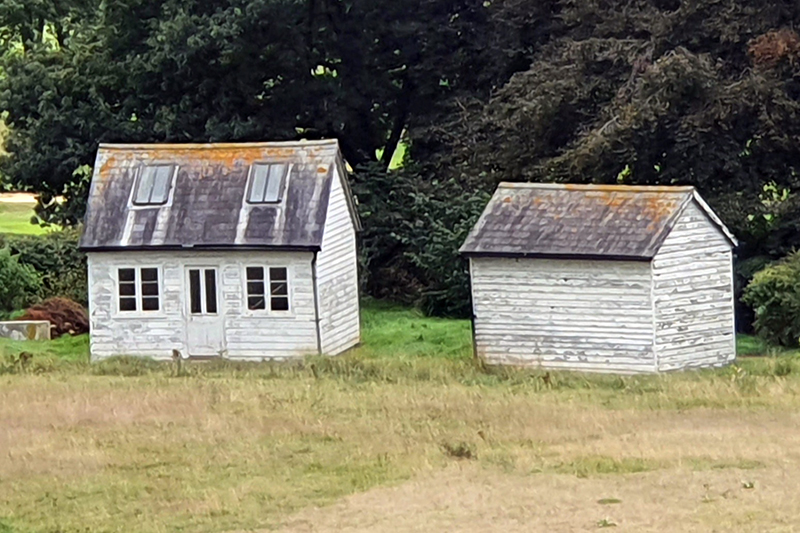
Continuing work on The Absolute Hut (of action potential). The Absolute Hut is structurally conceived from an amalgamation of features, impressions and functions of the Observing Building and instruments at Hartland Magnetic Observatory in North Devon and the observation huts built in the 18th century at The Kings Observatory in Kew for meteorological and magnetic observations.

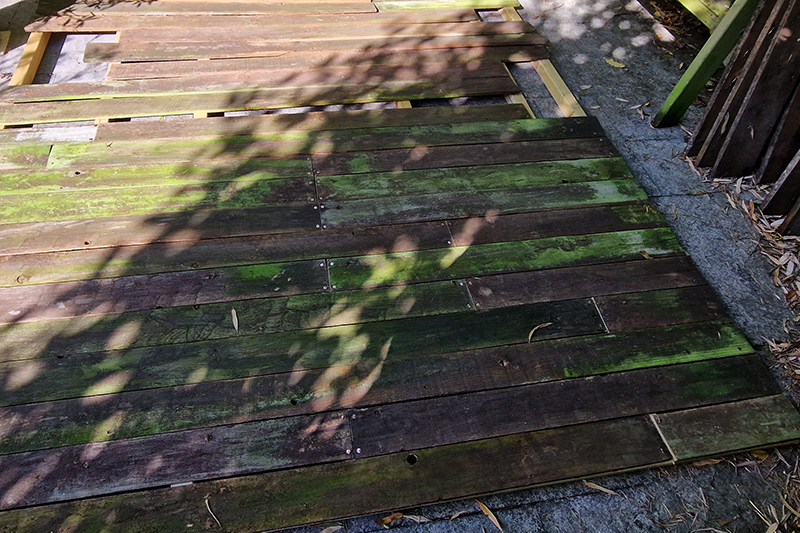
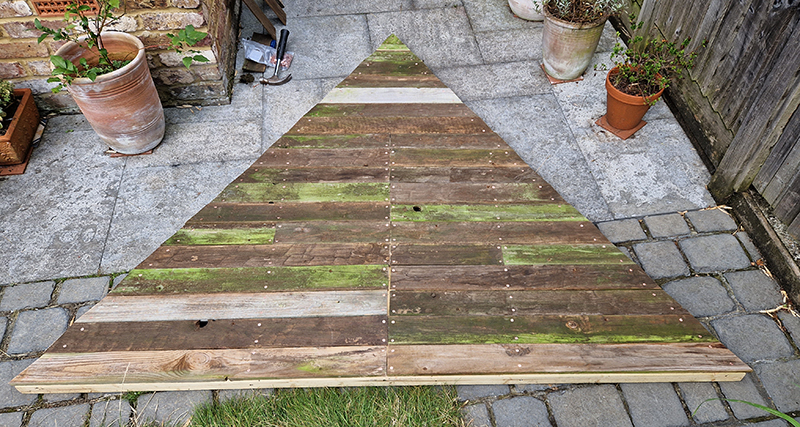
Cutting old featherboard planks to length and hammering them to the frame of the north facing wall with copper nails. These panel sections are now left facing north to gather some moss before the exhibition.

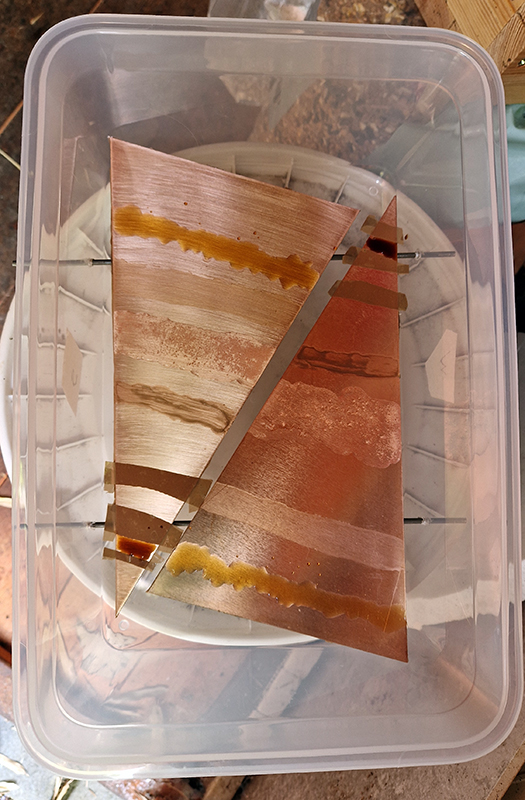
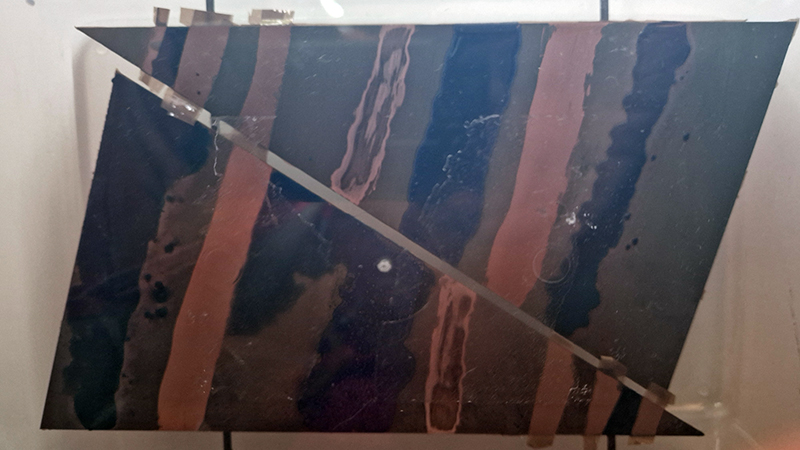
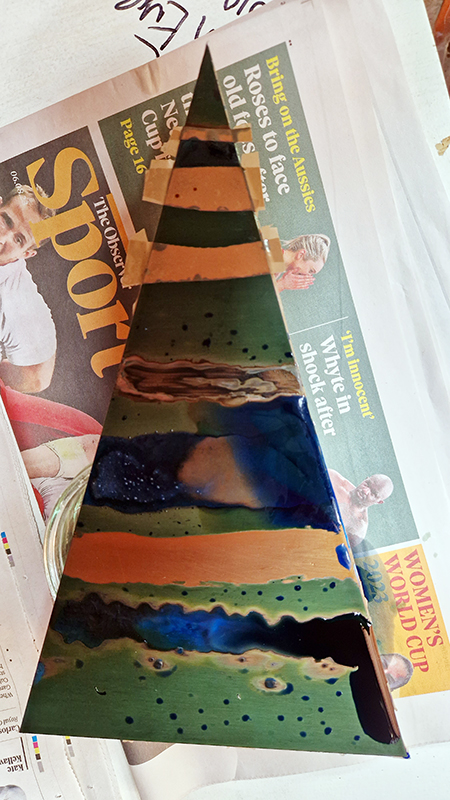
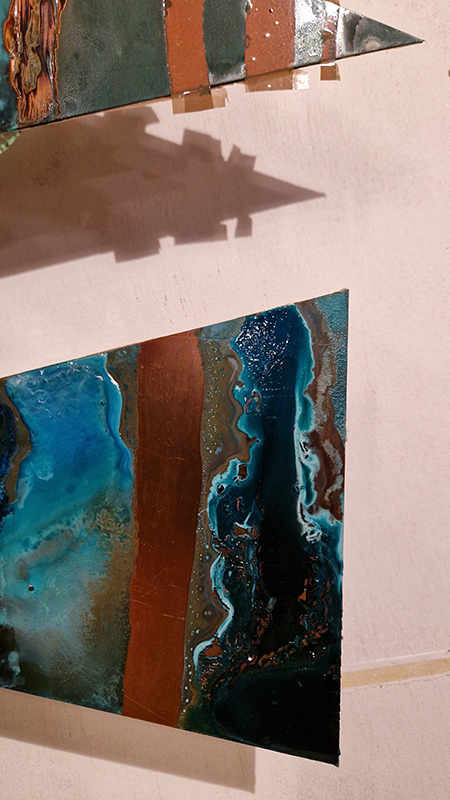
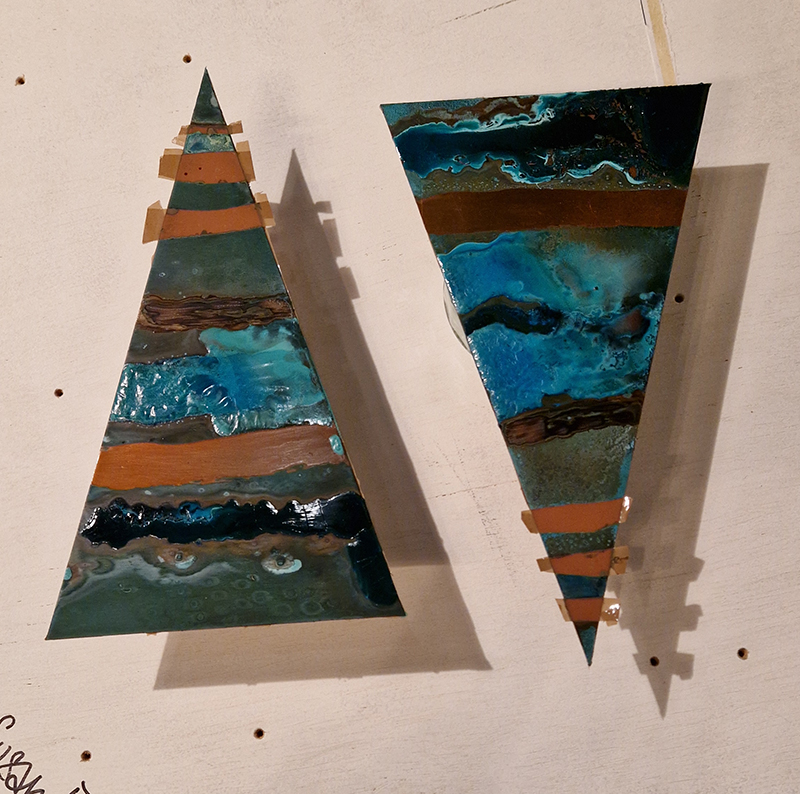
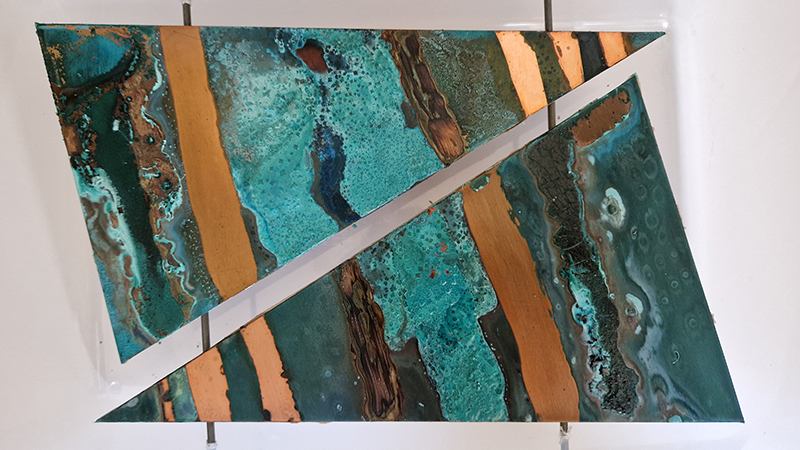
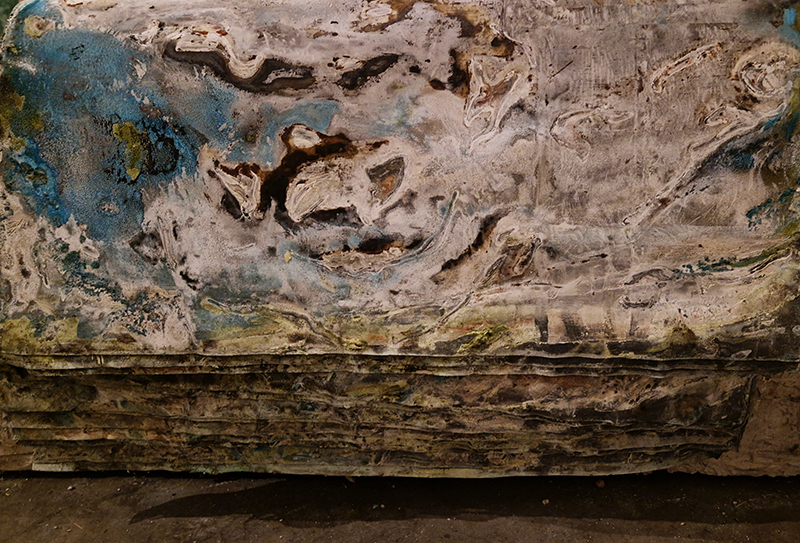
Exciting copper patination tests for the pyramidion to sit on top of The Azimuth Obelisk (of sedimentary knowledge) sculpture. The sculpture expresses the passage of time; made from recycled paper prints and drawings whose history is embedded in the stacked layers, much as the Earth’s geological and magnetic history is secreted into sedimentary strata of rock.

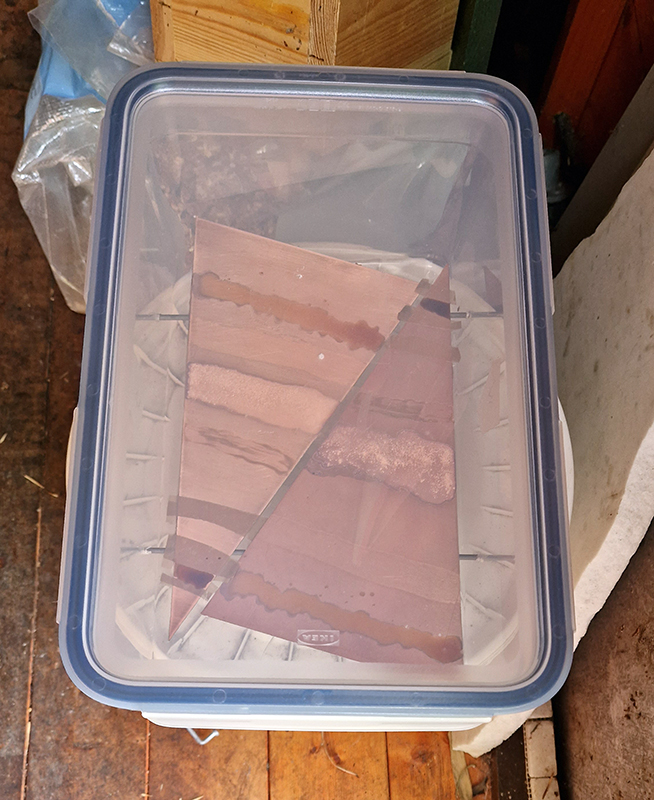
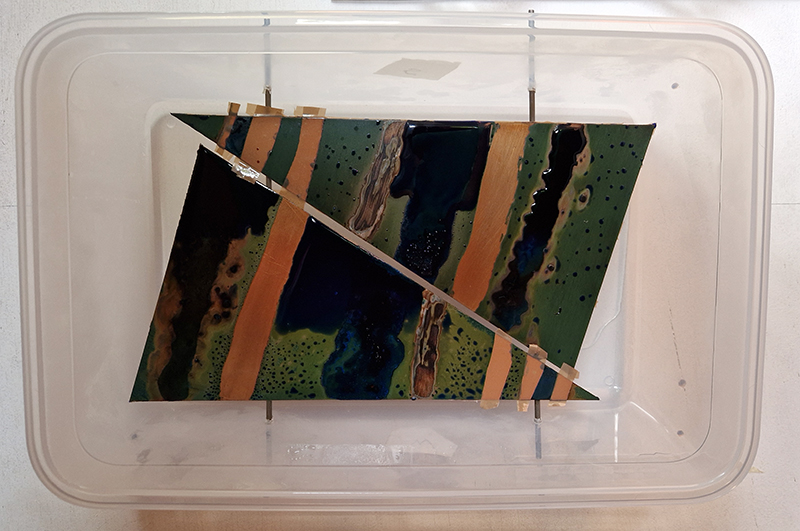
The copper is cleaned first with whiting and ammonia solution. For the test strips I used parcel tape, water based and spirit based varnish, salt and vinegar solution, soy sauce and seaweed plant food. These are applied to the copper which is then placed suspended in a sealed container with a little ammonia. Effects are immediate but I left this overnight.

The next day they are taken from the tank and left to dry.

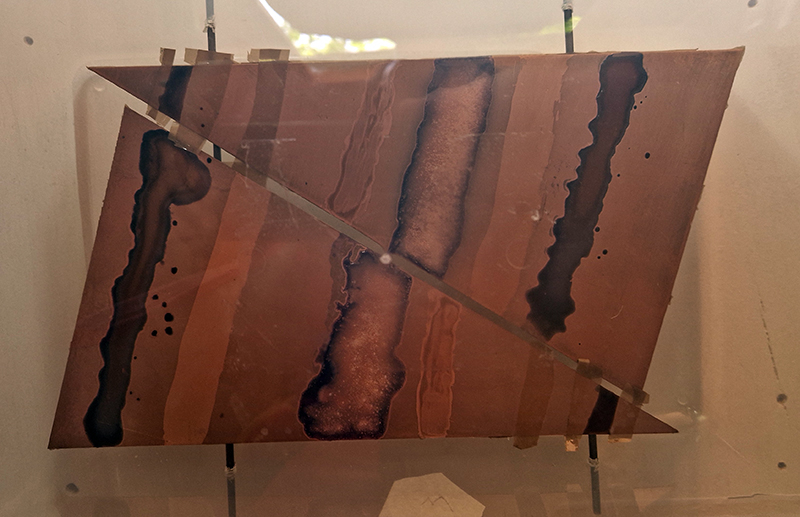
Both types of varnish interacted with the ammonia fumes, either going dark or puckering and crazing. The parcel tape left a clear band of copper when removed. The salt and vinegar mix gave a light blue patination and the soy sauce and plant food varying greens as copper where it was left raw. The colours continue to develop.

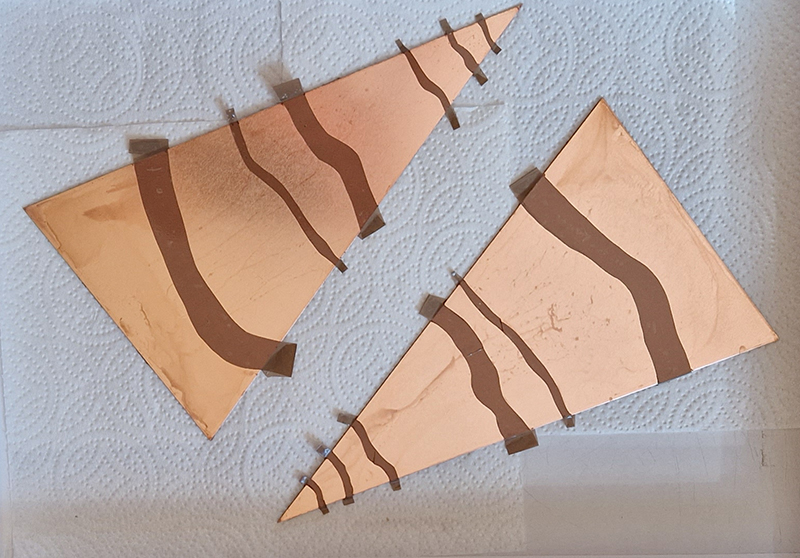
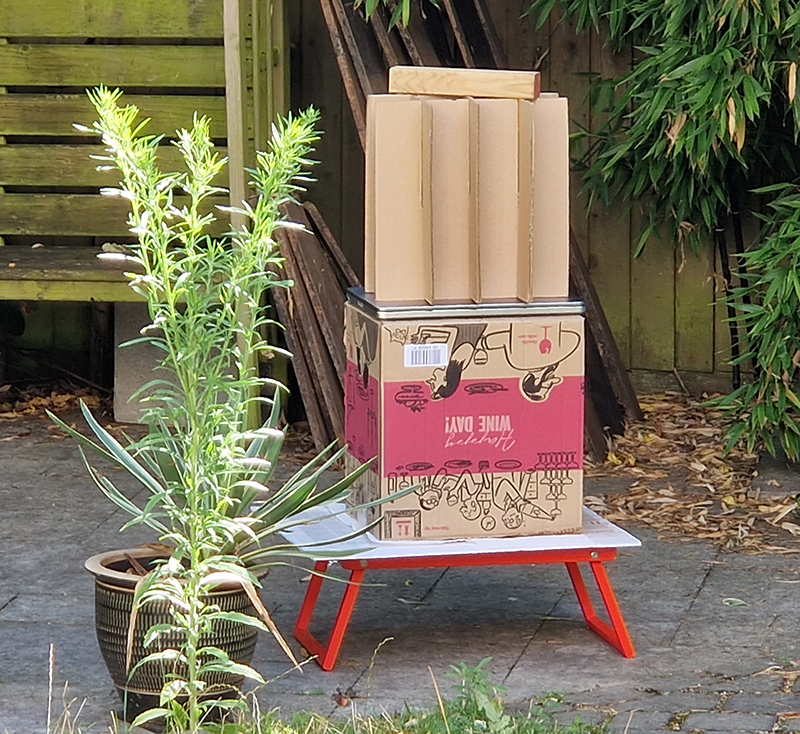
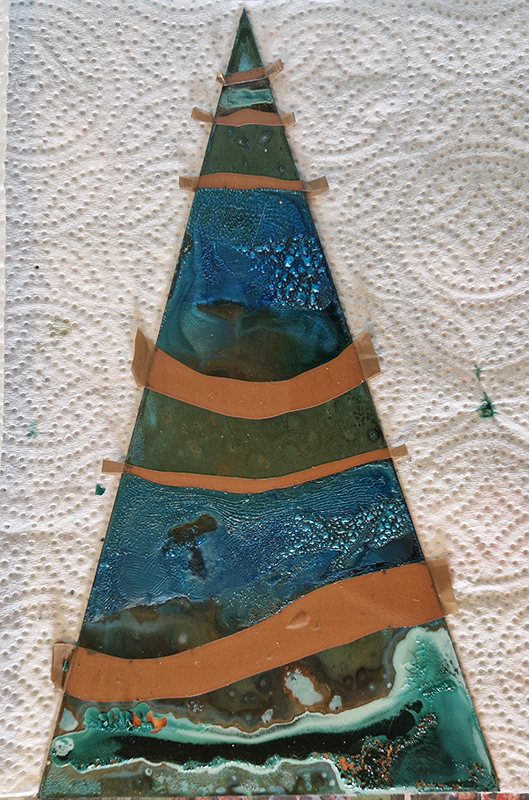
Preparing and patinating the copper triangles I had laser cut to size for the pyramidion. Applying strips of parcel tape to match up at the corners. Setting up a cat defence for drying the plates outside.

Once dry the colours continue to develop. I wanted to spray the surface with Golden archival acrylic spray but it was out of stock everywhere so I got Lascaux archival varnish with UV protection and gave it four light coats. It still continues to change though and flake off a bit adding to the effect of geological, topographical transformation.

I used Sugru, mouldable glue, building it up in stages to fix the sides while the pyramidion is supported in a frame.

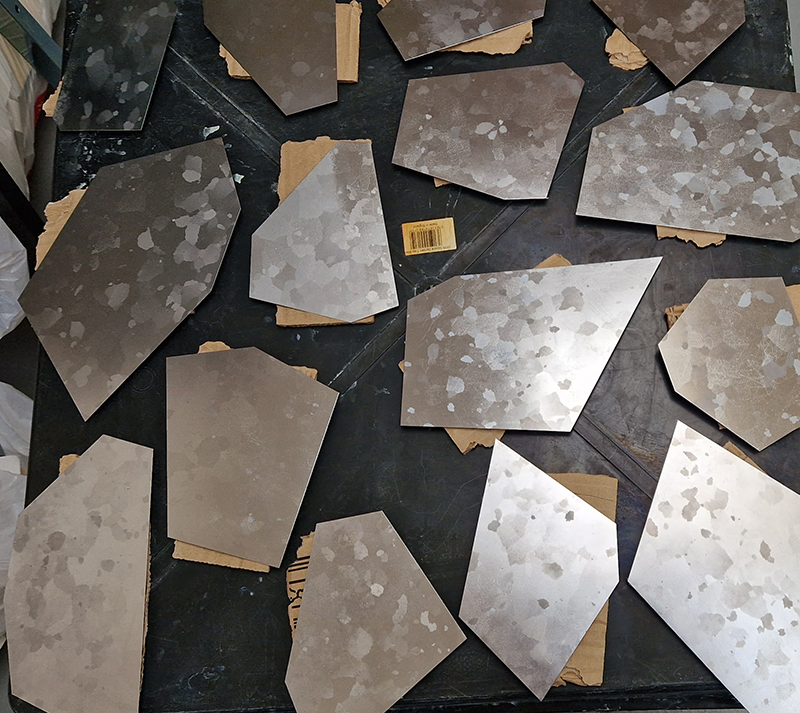
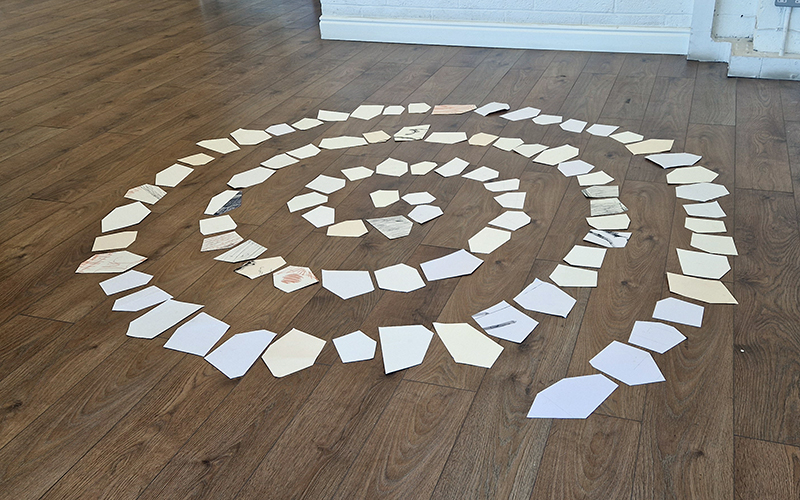
Making use of the communal lounge at Thames-side Studios to test some paper template layouts for Domain of the Devil Valley Master. A sculpture using directional magnetic steel laid in a simple spiral which draws upon many references, from the shape of our own Milky Way Galaxy sculpted by vast cosmological magnetic fields, the spiralling molten dynamo generating Earth’s magnetic field, to the inner pathway of spiritual growth and the route to the symbolic omphalos (navel) at the centre of the world where the sky entrance and the underworld meet.

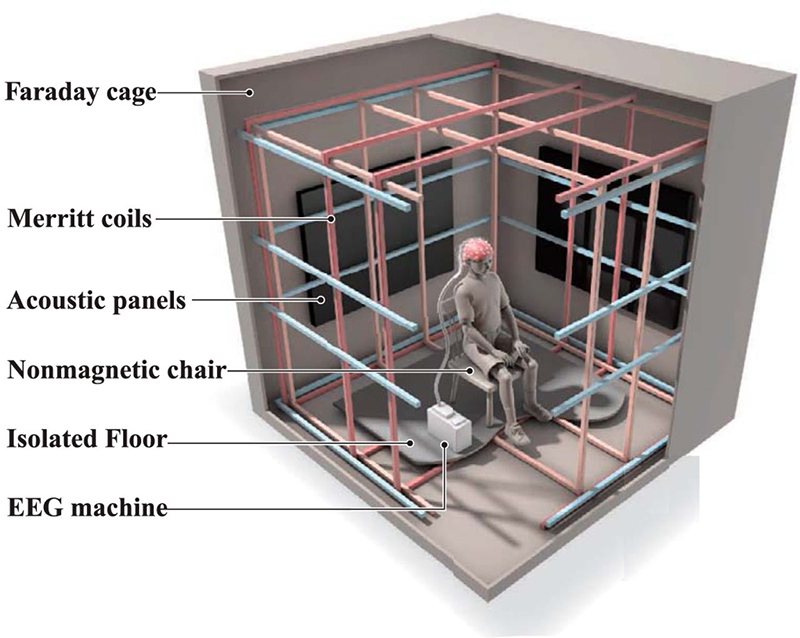
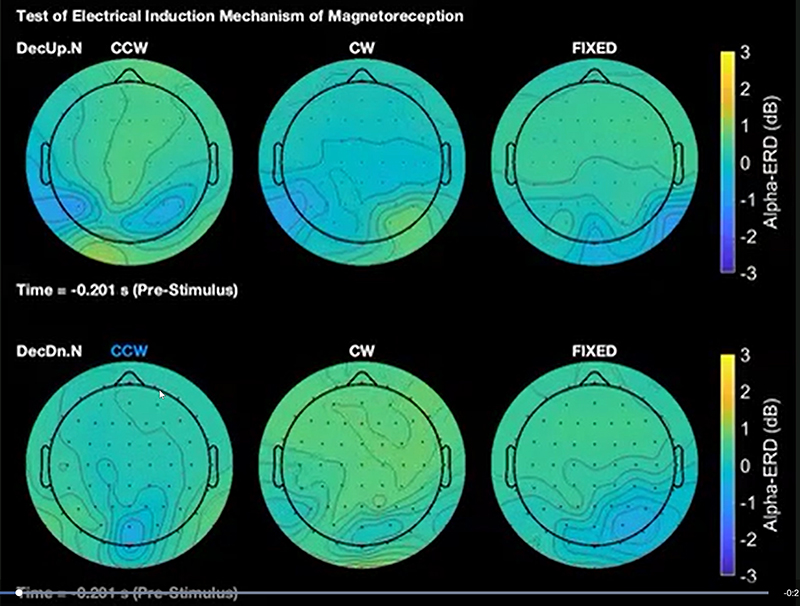
As research for new video work I am looking at experiments performed by Caltech geobiologist Joseph Kirschvink and colleagues investigating human magnetoreception. They found evidence that rotations of Earth-strength magnetic fields produce strong, specific and repeatable effects on human brainwave activity in the alpha-wave band. Alpha waves are always present, but are more prominent when at rest. The experiment, carried out at Caltech, mimicked how a person might experience the Earth’s magnetic field when turning their head. Although many migrating and homing animals are sensitive to Earth’s magnetic field, most humans are not consciously aware of the geomagnetic stimuli that we encounter in everyday life. Either we have lost a shared, ancestral magnetosensory system, or the system lacks a conscious component with detectable neural activity but no apparent perceptual awareness by us.

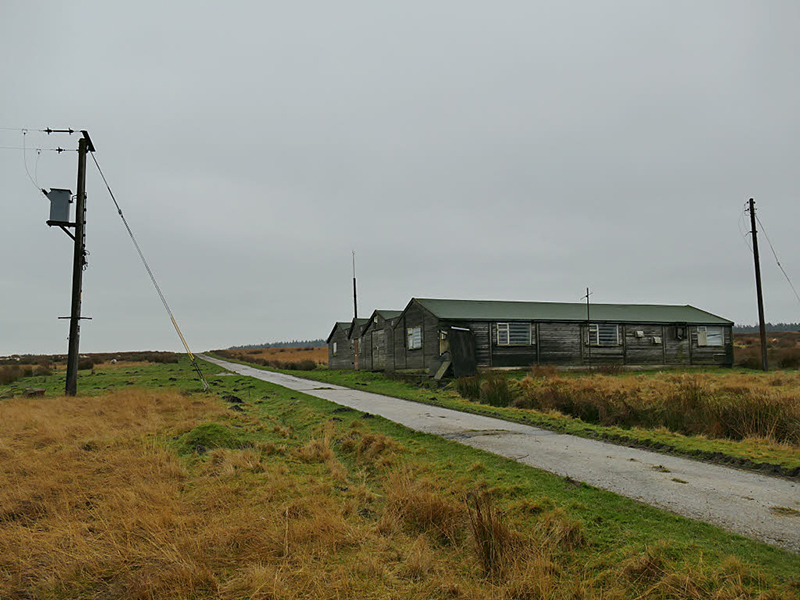
Friends from the north visiting London, told me about Haverah Park which is just up the road from where they live in North Yorkshire. The Haverah Park experiment was a cosmic ray air shower detection array consisting of water Cherenkov detectors distributed over an area of 12 km2 . The experiment began in 1967 and was operated by University of Leeds for 20 years before closing. During its operation, many thousands of cosmic ray events were recorded including four exceptional events with energies over 1020 eV. The abandoned huts remain and I am very excited about visiting the site to investigate further.

Gallery visits

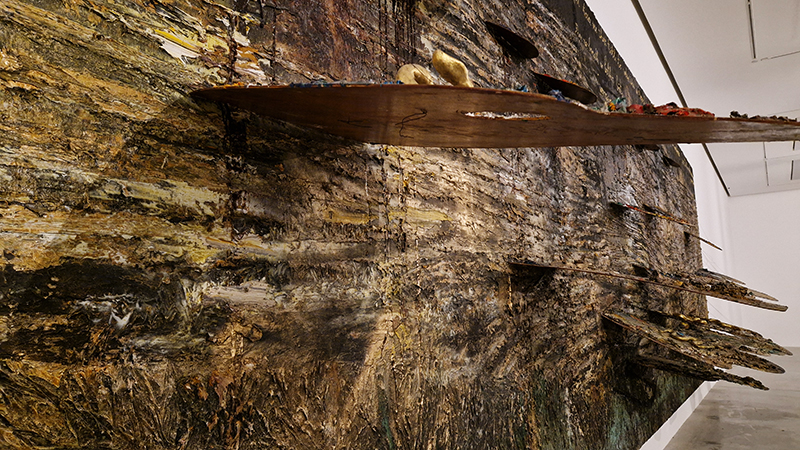
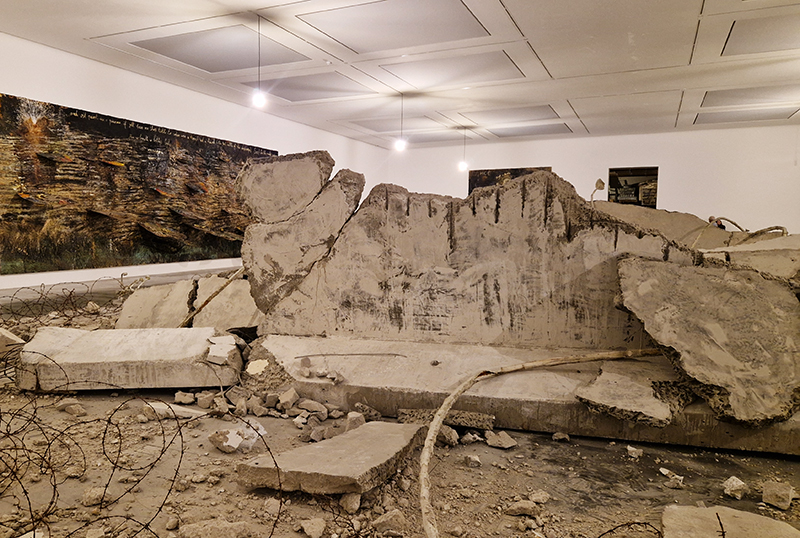
Anselm Kiefer Finnegans Wake at White Cube Bermondsey – “the artist’s new paintings, sculptures and installations respond to (that is, struggle with and transform) James Joyce’s novel of 1939. Kiefer first read the Irish writer as a young man, devouring Ulysses (1922) and embarking on a slow and spiralling relationship with the later, more exacting, Finnegans Wake. It is a book of circles and echoes, more or less overt or secret; its riverine movement begins in the midst of things, and turns back on itself on the final page.”

The weight and the scale of his work as always is overwhelming.

In my early research wondering what the building blocks of the universe looked like I found myself reading about Quarks and Leptons. I found the language of particle physics to be quite like that of mythology – inhabited with mysterious characters like the charm quark and strange quark, the muon and the tau governed by fundamental forces that cannot be seen or explained other than by their attributes – like the mythical gods. The name “quarks“ was chosen for the three fundamental particles of all matter from a nonsense word used by James Joyce in the novel Finnegan’s Wake:

“Three quarks for Muster Mark!“

Finnegans Wake seeks to inhabit a commonplace but elusive realm of human experience – the language is more like poetry than prose and should be read intuitively – the first sentence of Finnegans Wake completes the end of the last sentence – the book’s circular structure embodies the theories of the 18th Century philosopher Giambattista Vico, who viewed human history as cyclical along with the natural cycles of the earth such as night and day, life and death, rise and fall. Vico believed that there was a poetic wisdom in legends which gave an insight  into the relationship between the divine, the natural and the human worlds. He was interested in how myths began from common primordial experiences of the forces of nature.

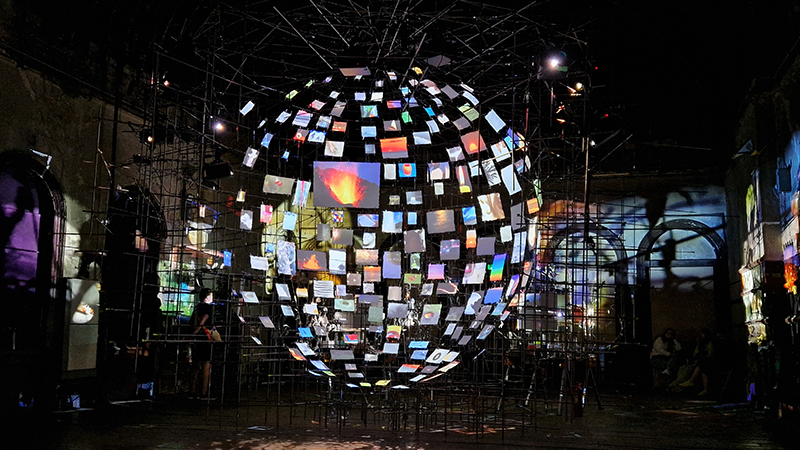
A different kind of immersion – made from light rather than lead. Sarah Sze The Waiting Room at Peckham Rye Station, an Artangel project, is a captivating spectacle of colour and movement. It might be a lesson in attention spans and ubiquitous digital media but it still holds all the joy of being at the centre of a rotating fairground carousel.

“I’ve always been interested in certain times throughout history where our relationship to the way we experience time and space in the world speeds up radically. The invention of the aeroplane, the invention of the train, you see really interesting work coming out of that time, in film, visual arts and writing. We are in the middle of an extreme hurricane where we are learning to speak through images at an exponential pace.” Sarah Sze

Dear Earth at The Hayward Gallery is inspired by artist Otobong Nkanga’s suggestion that ‘caring is a form of resistance’. Bringing together 15 artists from around the world, the exhibition explores the interdependence of ecologies and ecosystems, as well as our emotional connection with nature.  

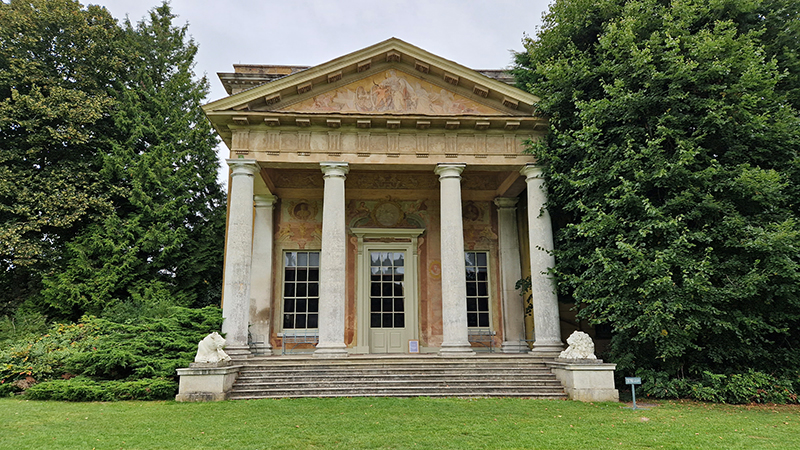
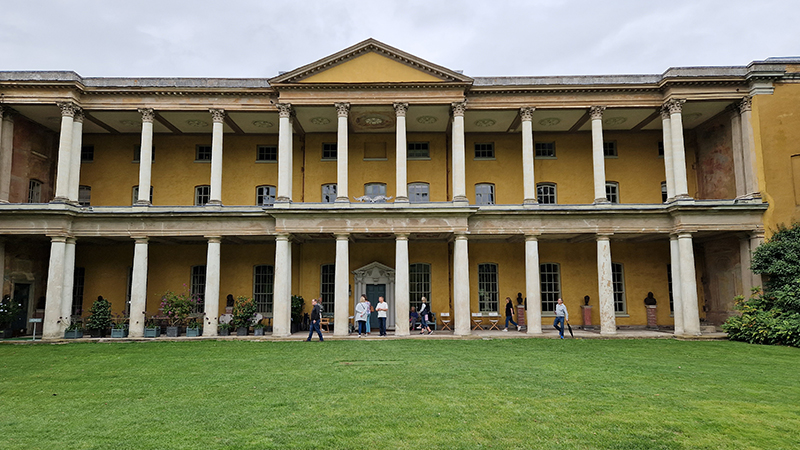
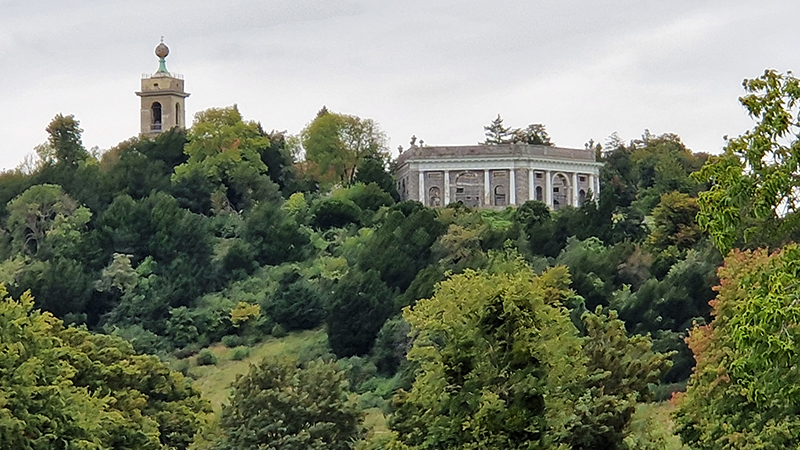
Day trip to West Wycombe Park; “one of the most theatrical and Italianate mid-18th century buildings in England” surrounded by “the most idiosyncratic 18th century gardens surviving in England”. Sir Francis Dashwood built West Wycombe to entertain, and there has been much speculation on the kind of entertainment he provided for his guests at the house and the nearby hellfire caves.

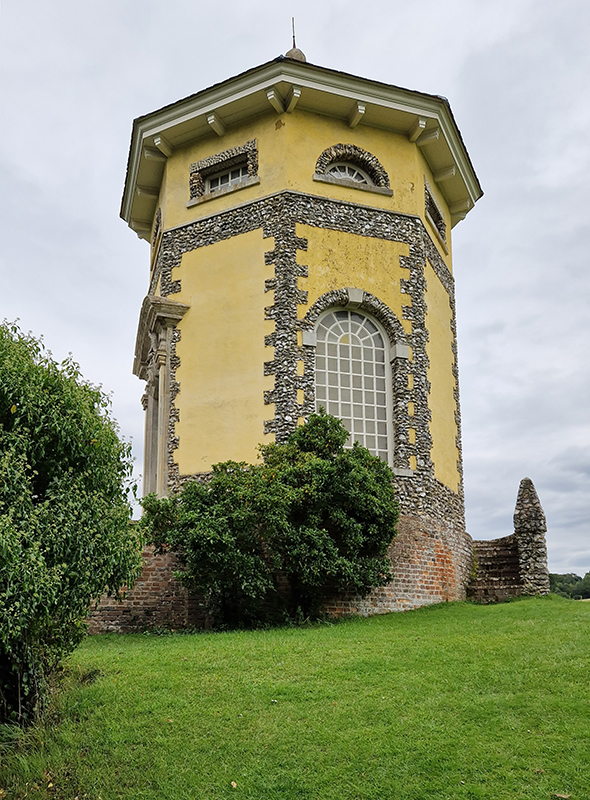
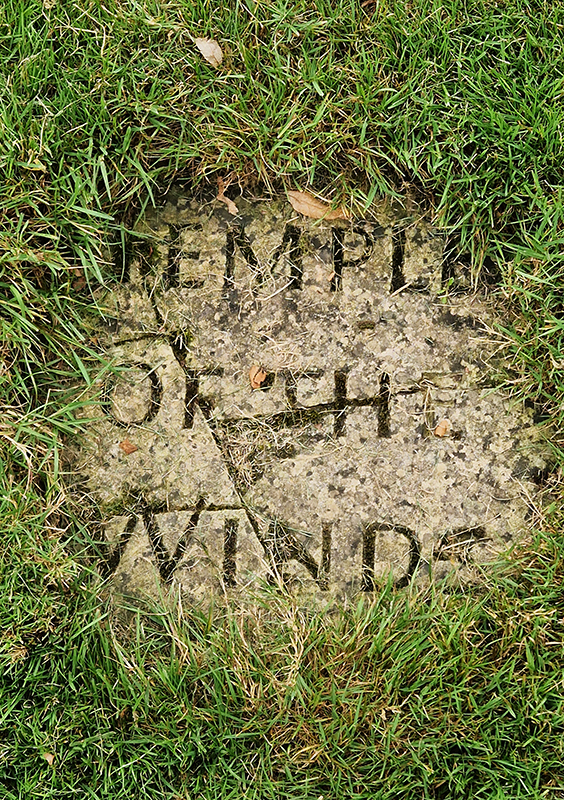
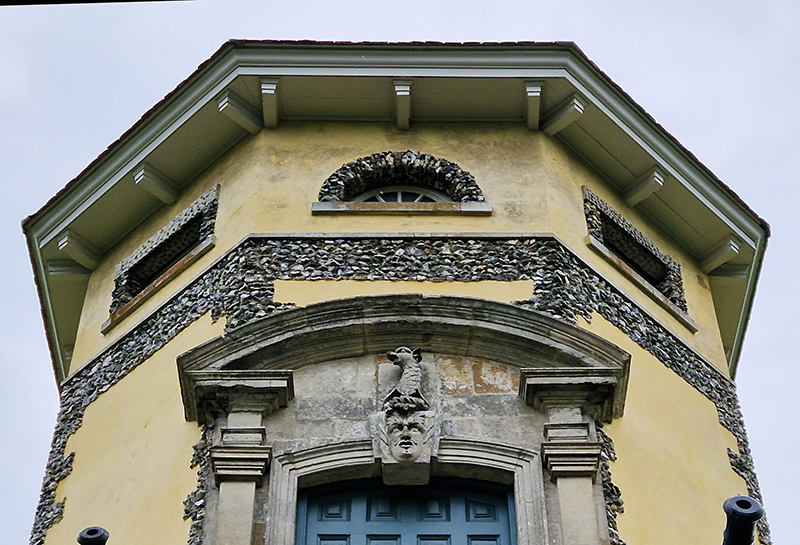
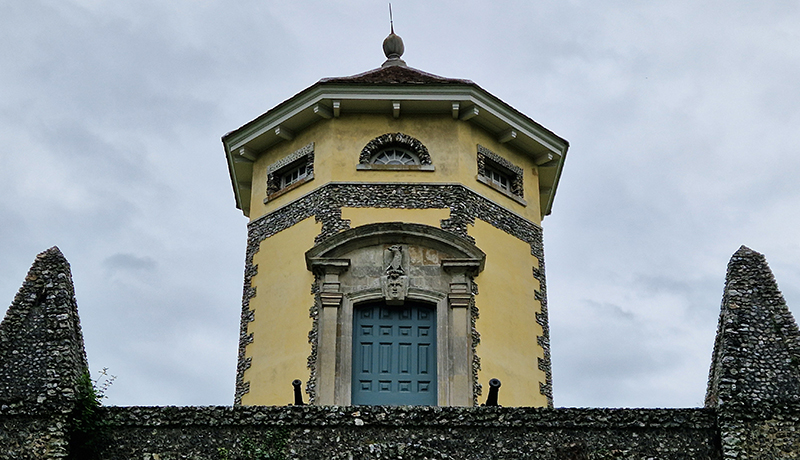
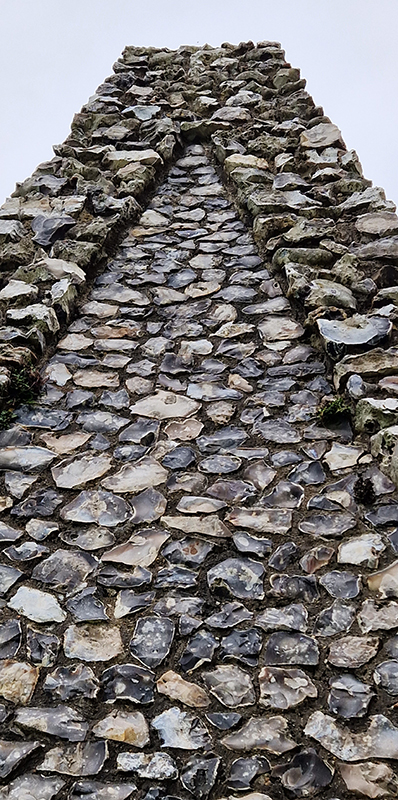
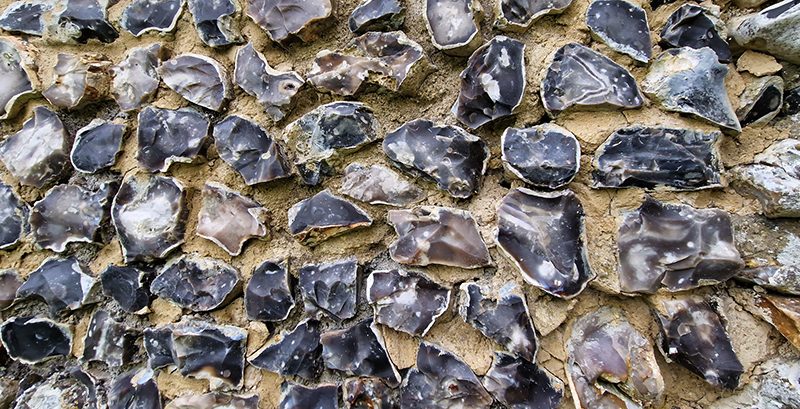
A surprise discovery in the gardens was The Temple of the Winds, a stucco and flint faced octagonal tower, aligned with its main walls facing north, south, east and west. Erected in 1759 and used as an ice house, its design was inspired by the ancient Tower of the Winds in the Roman Agora in Athens of which Vitruvius wrote

Some have chosen to reckon only four winds; the East, blowing from the equinoctial sunrise; the South, from the noon-day sun; the West; from the equinoctial sun-setting; and the North, from the Polar stars. But those who are more exact, have reckoned eight winds, particularly Andronicus Cyrrhestes, who on this system erected an octagon marble tower at Athens, and on every side of the octagon, he wrought a figure in relieve, representing the wind which blows against that side: the top of this tower he finished with a conical marble, on which he placed a brazen Triton, holding a wand in his right hand; this Triton is so contrived that he turns round with the wind and always stops when he directly faces it; pointing with his wand over the figure of the wind at that time blowing.

Reading

Ursula Le Guin The Winds Twelve Quarters (volume ii) – a collection of short stories, chosen for the title’s relevance to the sculpture series – Instruments of the Anemoi (wind gods).

The story The Stars Below is particularly interesting, written to interrogate the question – what happens to the creative mind when it is driven underground? Le Guin found that ‘you don’t go exploring the places underground all that easily’ as simple symbols took on unexpected divergent meanings and rather than the repression of science or art it was the abyss of the psyche she was fathoming. Le Guin later came across a passage in Jung likening the depths of ego-consciousness to ‘being surrounded by a multitude of little luminosities..[ ].. The star strewn heavens, stars reflected in dark water, nuggets of gold or golden sand scattered in black earth’

Visit to UCL’s Astronomical Observatory in Mill Hill.

1912 UCL observatory 3

Thanks to knowledgeable hosts Mark Fuller and Thomas Schlichter for a wonderful tour of the UCL observatory and to Lumen London for organising.

1912 UCL observatory 1

Shame it was cloudy but I enjoyed seeing the telescopes and hearing the history of this beautiful site. Looking forward to future collaborations.

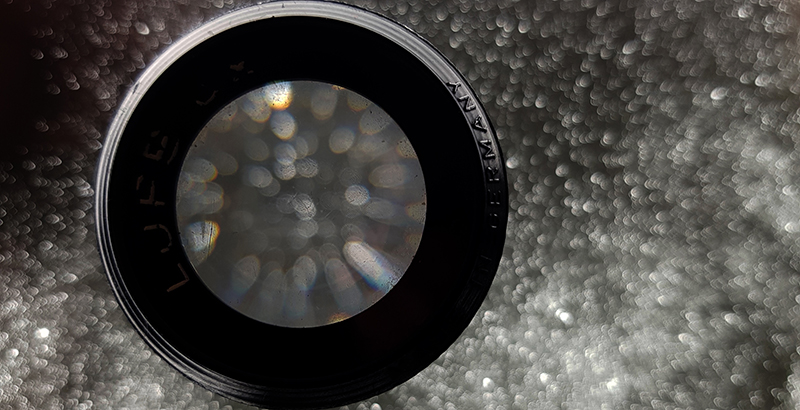
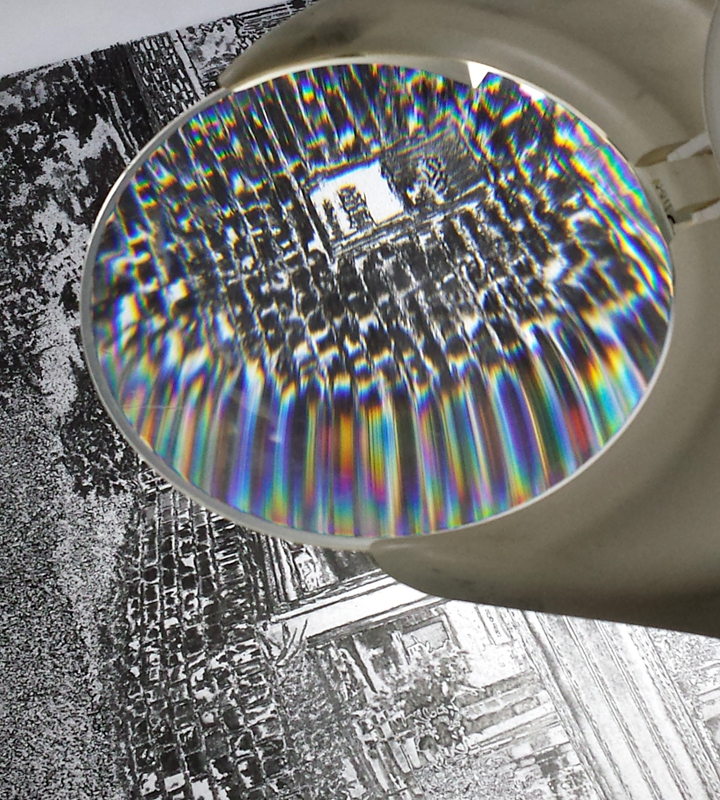
We didn’t see the stars outside but an archive image and a loop lens proved fascinating.

1912 UCL observatory 71912 UCL observatory 8

In the studio back after a busy year I have been tidying up, building mezzanine storage shelves and planning new work looking at cosmic planes, thinking about star HD70642 – a possible home from home and what lies beyond the horizon that I can never reach.


New Doggerland at Thames-side Gallery presents a future imagining of physical and cultural re-connection between Britain and the European mainland.

Doggerland was an area of land that once connected Britain to continental Europe. At the end of the last ice age a warming climate exposed land for habitation but gradually the lowlands were flooded as temperatures rose further then about 8,200 years ago, a combined melting of a glacial lake and a tsunami submerged Doggerland beneath the southern North Sea. Great work including these from Jane Millar, Oona Grimes and Sarah Sparkes.

It was the place to be on 31/01/2020.

Nam June Paik at Tate Modern. Amazing pioneer of technology in art. Colliding nature, entanglement, connectedness, meditation, transmission.


Trevor Paglin From ‘Apple’ to ‘Anomaly’ (Pictures and Labels) at The Barbican Curve.

The long wall is filled with thousands of pinned photographs taken from ImageNet, a publicly available data set of images, which is also used to train artificial intelligence networks. ImageNet contains more than fourteen-million images grouped into labelled categories which include the unambiguous ‘apple’ along with such terms as ‘debtors’, ‘alcoholics’ and ‘bad persons’. These definitions applied to humans by AI algorithms present an uncomfortable future of machine induced judgement.

 ‘Machine-seeing-for-machines is a ubiquitous phenomenon, encompassing everything from facial-recognition systems conducting automated biometric surveillance at airports to department stores intercepting customers’ mobile phone pings to create intricate maps of movements through the aisles. But all this seeing, all of these images, are essentially invisible to human eyes. These images aren’t meant for us; they’re meant to do things in the world; human eyes aren’t in the loop.’ Trevor Paglen

Interestingly there was no photography allowed in the Trevor Paglen show. So I tried Image net for an image to post. I searched for ‘artist’ but ImageNet is under maintenance so I tried Google and this is the first image I got.

2001 artist

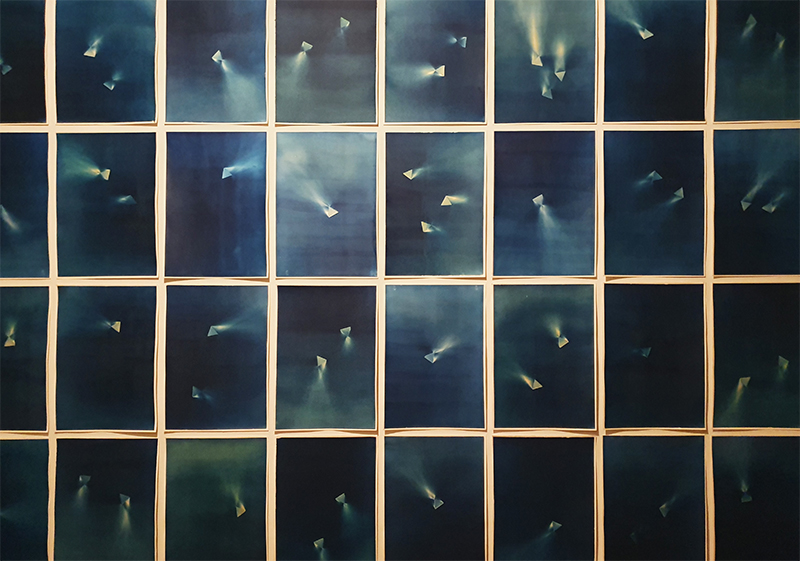
Another great show from Kathleen Herbert, A Study of Shadows at Danielle Arnaud. Using the cyanotype to interrogate the history and science of Prussian Blue and discover what emerges from the shadows through process and research. We learn – ‘Prussian Blue has a unique chemical structure and was originally created through the cyanotype process. It was the colour used to measure the blueness of the sky and was also used in the UK during the Chernobyl disaster as an antidote to radiation poisoning, preventing Caesium 137 from entering the food chain. Prussian Blue also has the ability to heal itself; if the intensity of its colour is lost through light-induced fading, it can be recovered by being placed in the dark.’

2001 Kathleen Herbert 4

The sound and video work Everything is Fleeing to its Presence relates a narrative of impressions and scientific facts while the visuals of varying tones of blue appear and disappear in hypnotic succession. Together the effect is of immersion, like the chemically coated paper, in a pool of blue.

Mary Yacoob Schema at Five Years Gallery. Also using cyanotypes, but here exploring the architectural roots of this process through precise silhouettes, detailed drawing, structure and form which is then exposed to the unpredictable chemistry to produce beautiful outcomes.

2001 Mary Yacoob (1)

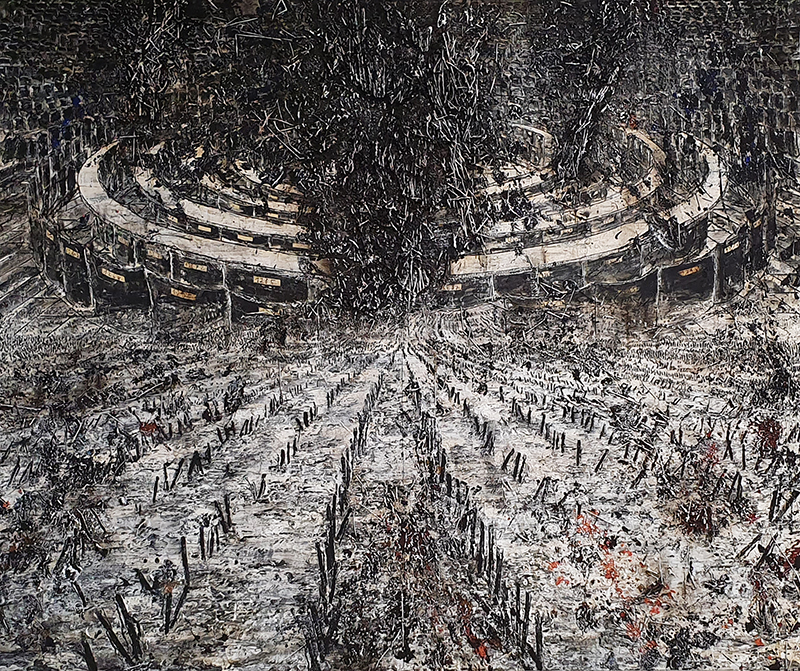
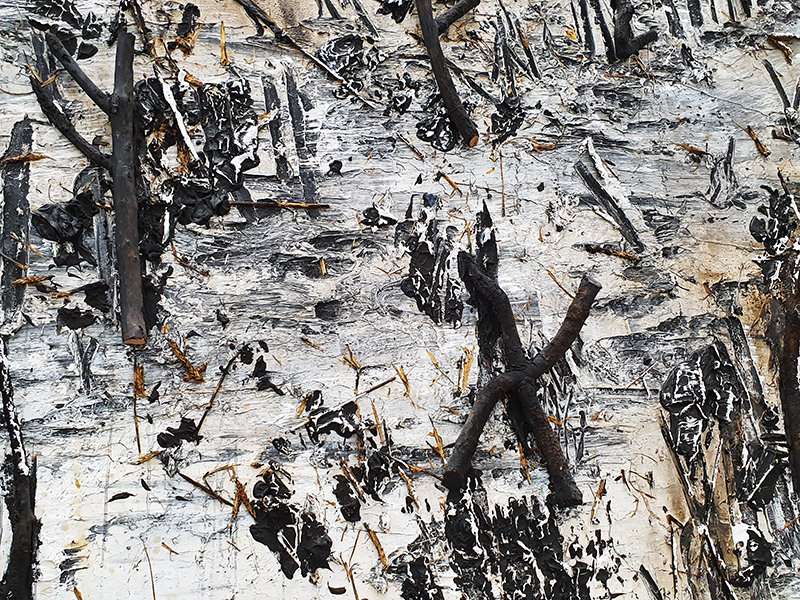
Anselm Keifer at White Cube Bermondsey.  Superstrings, Runes, The Norns, Gordian Knot all tied together in characteristically monumental paintings thick with stuff in an attempt to connect complex scientific theory with ancient mythology.

2001 Anselm Keifer 12001 Anselm Keifer 2

William Blake at Tate Britain. What visions, such torment. So much mortal flesh.

Anne Hardy The Depth of Darkness, the Return of the Light winter commission for Tate Britain, a sort of after party dystopia with an impressive soundscape of rain, thunder, birds and insects inspired by pagan descriptions of the winter solstice – the darkest moment of the year.

2001 Tate Britain Anne Hardy

We sit together for a minute at Thames-side Gallery. Alex Simpson and Alice Hartley share a similar sensibility making dynamic and intuitive works. The gallery is alive with gestural forms, captured fragments and movement held momentarily in stasis, both fragile and immediate.

2001 Alex Simpson2001 Alice Hartley

The Computer Arts Society, The Lumen Prize and Art in Flux join London Group members at The Cello Factory for a second In The Dark curated mash up of light and technology artworks that overlap and collide in Even darker. Curated by clever duo interactive filmmakers Genetic Moo, artists include Carol Wyss and Sumi Perera.


Bridget Riley at Hayward Gallery. Messing with perception; undulations and vibrations.

2001 Bridget Riley (1)

Mark Leckey O’ Magic Power Of Bleakness at Tate Britain. Sense of bleakness achieved in synthetic bridge recreation which gave gallery awkward angles. Voyeuristic social commentary, old rave footage. Magic found interspersed in otherworldly images contrast to dank underworld.

2001 Mark Leckey

Some beautiful artefacts in The Moon exhibition at Royal Maritime Museum Greenwich celebrating 50 years since the Apollo 11 Moon landing.

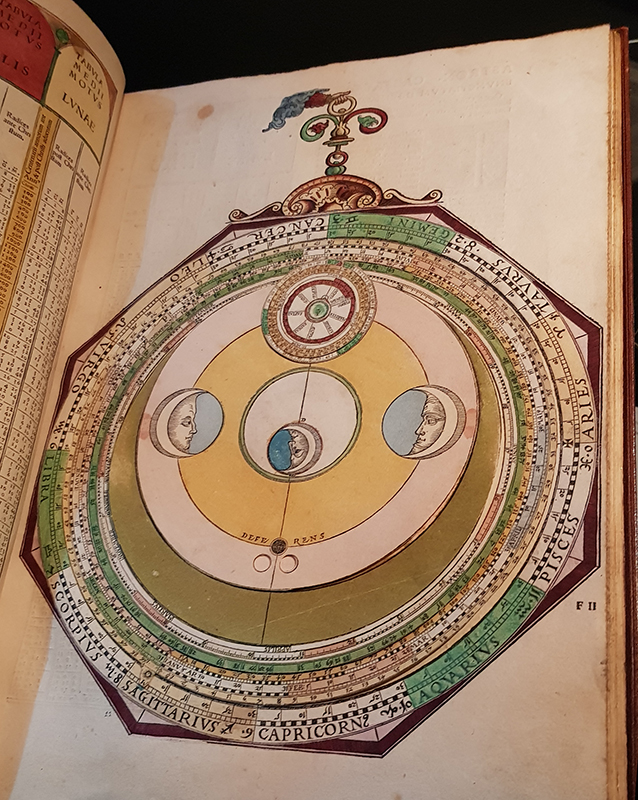
Astronomicum Caesarean 1540 – rotating paper discs are used to track the moon’s position which the physician would then interpret to predict if the patient might improve or relapse.

1912 Moon Exhibition volvelle

Orrery 1823-27 by John Addison includes a special geared section to show the rise and fall of the moon and mimicking the tilt of its orbit.

1912 Moon Exhibition orrery

Selenographia 1797 by John Russell. It models the slight wobble or libration of the moon meaning that over time a little more than half of the side of the moon is visible from Earth.1912 Moon Exhibition selenographia

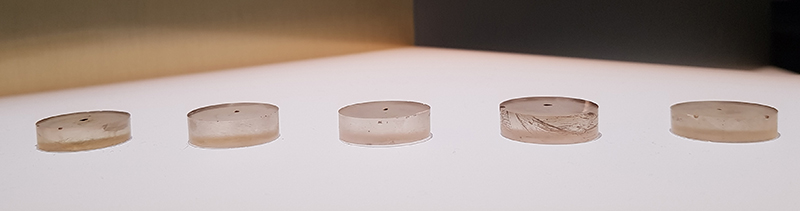
Moon rocks, encased.

1912 Moon Exhibition rocks

A Distant View III by United Visual Artists. A 3D rendering in wood of original NASA data imaging of the moon’s surface from the Orbiter mission 1966/7

1912 Moon Exhibition UVA

Very lucky to be invited by Rachael Allain for a tour of The Queen’s House at the National Maritime Museum Greenwich led by curator Matilda Pye. We saw the Susan Derges commission Mortal Moon inspired by the Armada Portrait of Queen Elizabeth 1 and a celestial globe, dating from 1551.

1912 susan derges-mortal-moon

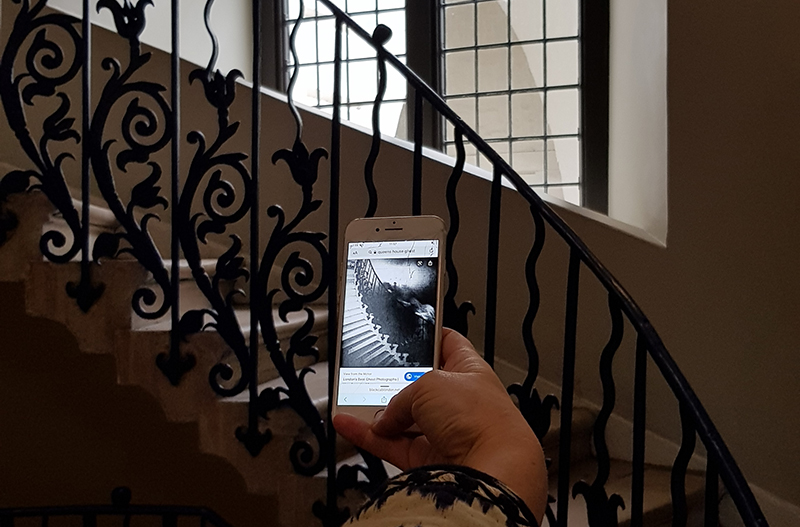
The fractal elegance of the Tulip staircase.

1912 Queen's House Tulip Staircase

Which is also where the Queen’s House ghosts were inadvertently photographed by retired Canadian Reverend R.W Hardy on his visit in 1966. Recreated in situ by Matty with mobile. Apparently photographic experts examined the original negative and found no signs of tampering.

1912 Queen's House Ghosts

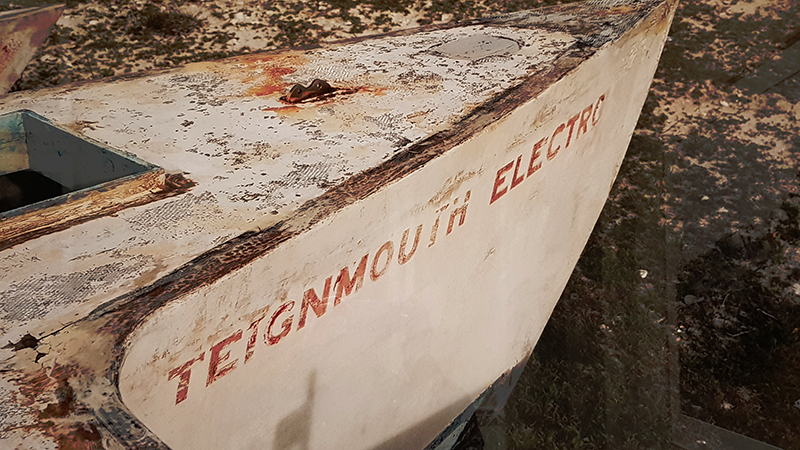
Ending the tour with Tacita Dean’s poignant photos of the desolate shell of the Teignmouth Electron, the yacht that bore Donald Crowhurst to his miserable and solitary death. It looks so small.

1912 Tacita Dean

Immersive installations inviting a change of consciousness at TRANSFORMER: A Rebirth Of Wonder presented by The Store X The Vinyl Factory. Including Doug Aitken NEW ERA dramatic video-scape looking at the first phone call and future communication highway.

1911 Doug Aitken 21911 Doug Aitken

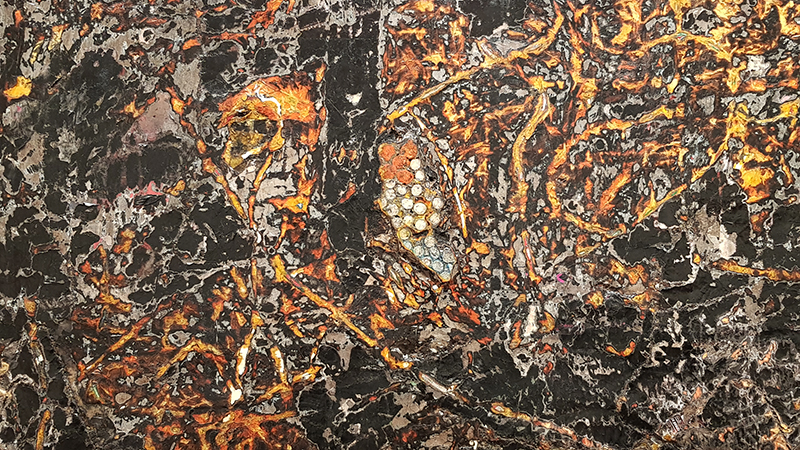
Mark Bradford’s paintings in Cerberus at Hauser & Wirth London recall the vibrant matter of creation, the splitting of the earth in molten rivulets to expose the dark underbelly.

1911 Mark Bradford

I am reading W. G. Sebald’s rambling Rings of Saturn. Revisiting my home county and local haunts through his eyes. He set off in 1992 but it feels like a journey back further in time as there are so many reminiscences and anecdotes from the past. Among the vaguely defined histories is the story of the demise of the estate of Henstead Hall under guardianship of the eccentric Major Wyndham Le Strange who shunned the outside world and took to a literally underground existence.

These images from 2014 when I visited the abandoned walled garden at Henstead became fragments for my work titled Pairi Daêza, an ancient Iranian word meaning ‘around’ and ‘wall’; the origin of ‘paradise’.

1705 Open Studios Pairi Daeza

A tenuous link but I discovered Henstead Hall subsequently become home to Douglas Farmiloe a self-described “Mayfair playboy” who had found himself in the scandal pages of the News of the World during the 1930s, after an indiscretion with a hostess from the West End ‘Paradise Club’.

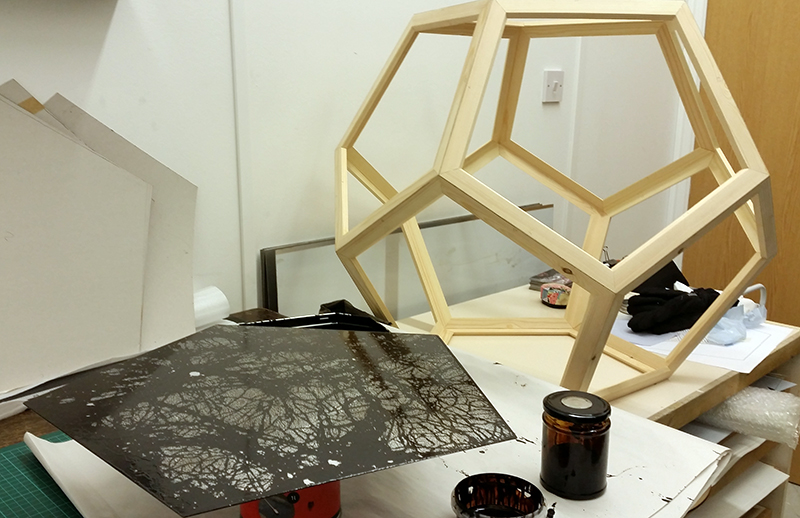
Big news is that Laboratory of Dark Matters has been awarded Arts Council England funding. I am still struggling to believe. We are also getting some support from the Institute of Physics for when we take the exhibition to the North East. This news is such a boost for our project and has unleashed a rush of activity, but also a torrent of admin. I had been making some progress with the sculpture.1702 Dodecahedron.jpg

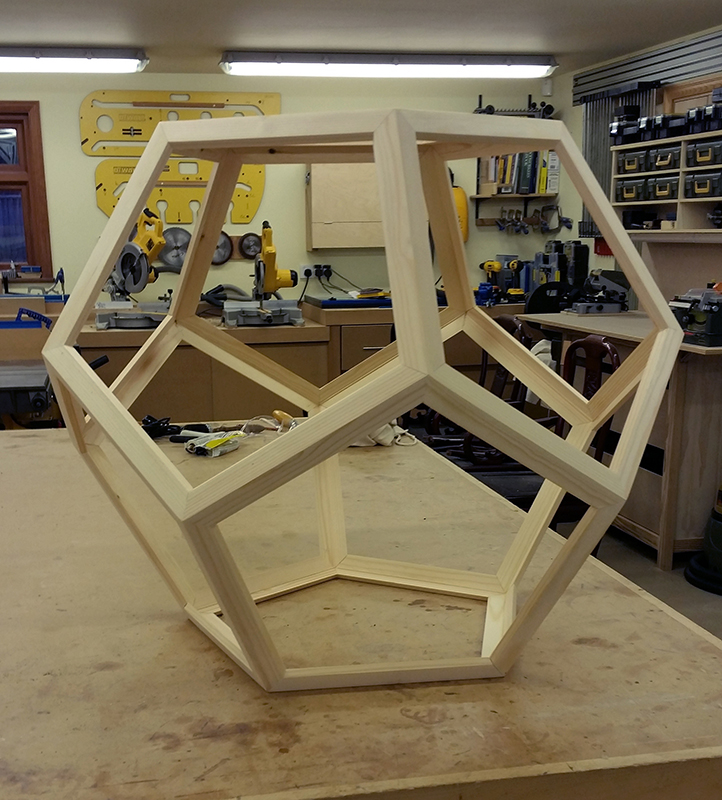
Results of a day at Woodhall Barn Workshop under the steady supervision of wood wizard Christopher Hall and I am very chuffed with my dodecahedron frame.  The angles have to be cut so very accurately using a table saw and digital level to achieve the precision needed for it to fit together. It’s basically 30 identical pieces ripped from 2 x 4 pine at 31.7° and mitred at 36° and glued together. We got these top tips ‘How to make a dodecahedron the easy way’ from YouTube. It was not easy.

Reading Plato’s Timaeus and Critias I was hoping to find some more information on the relationship drawn between the dodecahedron and the cosmos but have found no further explanations. Plato describes a primitive chaos where the four elements of fire, earth, water and air formed from a turbulent mix of ‘being’, ‘space’ and ‘becoming’ to be assigned by their solid or fluid characteristics to the tetrahedron, cube, icosahedron and octahedron respectively then adds .. ‘There still remained a fifth construction, which the god used for embroidering the constellations on the whole heaven’…it’s almost an afterthought or maybe just too illusive to elaborate on.

1702-studio

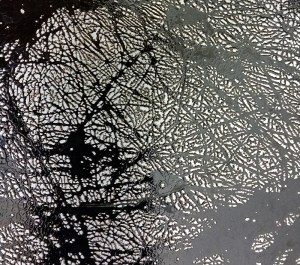
I have started the experiment with sugar lift and etching aluminium to see if I can bite right through the plate and keep the structure of the image. I screenprinted a sugar lift mixture onto the plate on both sides. The image was adapted from data visualisation of dark matter kindly supplied by Ralf Kaehler of the Kavli Institute for Particle Astrophysics and Cosmology.

I drenched the plate in stop-out and left it to dry before immersing in hot water which dissolves the sugar and reveals the image. It was surprising how much fine detail came through. Though one side of the plate was always better than the other – this could be due to lots of things that are hard to control accurately like concentration of sugar, thickness of stop-out, temperature of water. A primitive chaos.

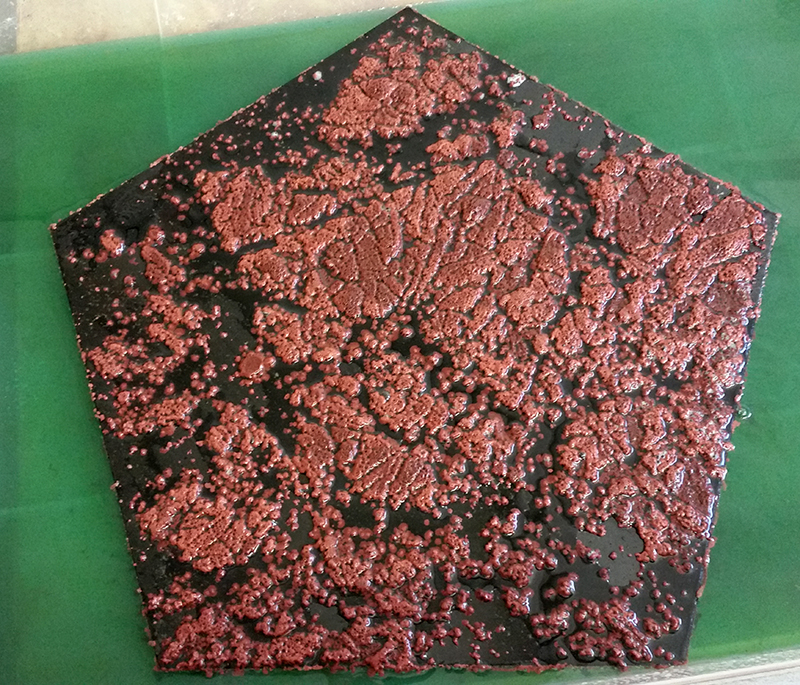
1702-detail-stopoutI am etching in saline sulphate as it gives quite a deep etch into aluminium.

great colours and quite mesmerising to watch as thick red deposits appear

1702-etching-process

Chemistry at work, lot of bubbles and heat. Several hours later after lots of dips, touch up of stop-out and fresh saline sulphate baths, light begins to appear through the plate

Cleaned up to see the results and decide where to go from here

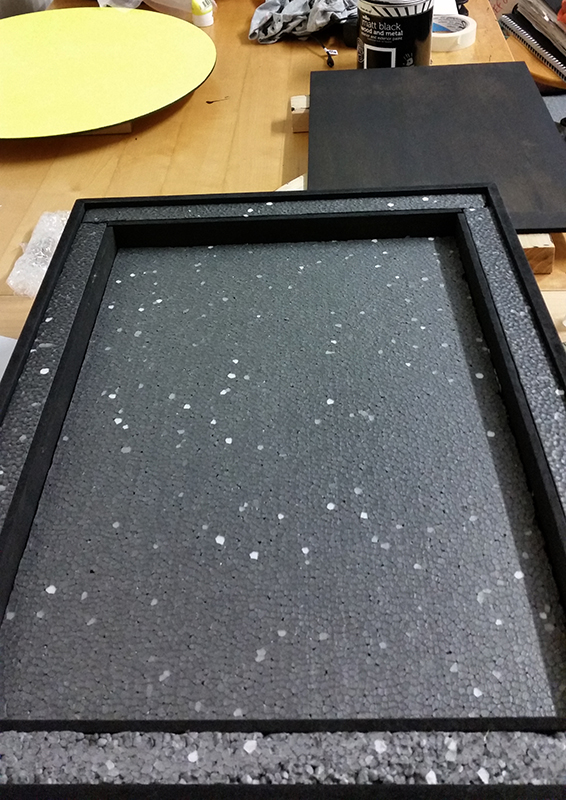
The cloud chamber is also coming along. With the help of next door cutting my wood I have assembled the box. Even the insulation for the dry ice is cosmic.

1702-cloud-chamber-box

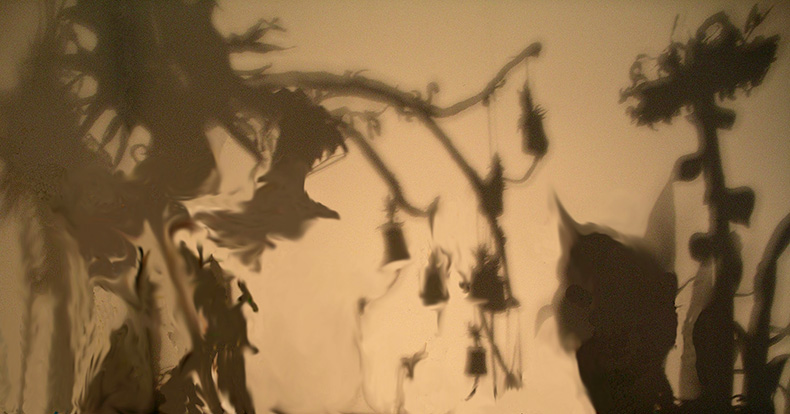
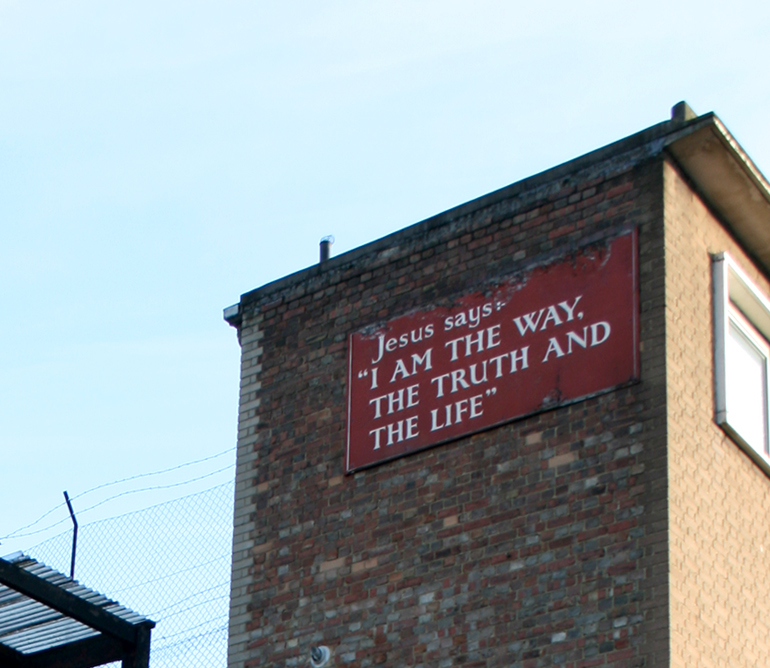
Had an interesting day listening to panel discussions and talks at Belief and Beyond Belief on the South Bank. Topics covered were Science versus Religion: Do We Need to Choose? ; Quantum Theology: When Faith Meets Science; The Big Bang and Beyond; God of the Gaps. Religion and science ask the same questions but have different mechanisms to answer those questions.

1701-shadows

These were some of the points discussed – When we look to understand the human condition and question the meaning of life, what truth are we seeking? The scientists present seemed more content to live in doubt but appreciated aspects that religion offered such as community, emotional beliefs and quiet reflection. The difficulty for scientists was in accepting that religions think they are based on truth. This religious truth comes from faith and cannot be tested as the argument is that God is beyond definition and therefore transcends understanding. It may be that searching for answers to resolve uncertainty is a survival trigger that persists as a craving in the human condition. .

1608 Paradise Row 7

The methodology of science is devised to look at facts unbiased, it has no moral or ethical framework. A theory in science is not a hypothesis. The scientists said they get frustrated by people saying they don’t ‘believe’ in their theory when they are based on facts. A theory may begin with a lot of intuition and wondering and develop like an artistic process of discovery within parameters; but then there is lots of testing, running the ideas through a sieve to filter out possible truths. A theory may start in mathematics but then is brought into the realm of language and the visual to express what we don’t understand. Georges Lemaitre in 1931 chose to explain his theory of the origin of the universe as “the Cosmic Egg exploding at the moment of the creation”; this became known as the Big Bang Theory. Pervasive metaphors colour our perceptions.

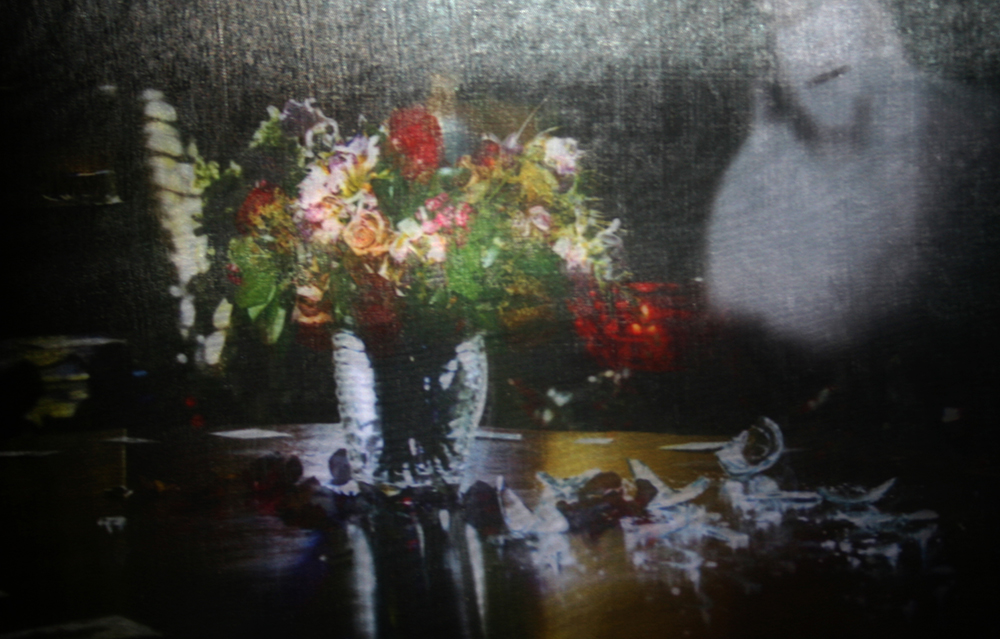
1701-seance

Science is perfectly happy to interrogate contradictory theories at the same time unlike religious belief which involves accepting one truth. All religions can’t all be right but their own belief in one truth makes it hard for them to accept a non-exclusivity of truths. Science cannot offer us all the answers. There cannot be a theory of everything, there must always be a gap in our understanding because to understand everything we would have to be omniscient – to look in from the outside. Or step outside of our own subjectivity. Thinking about this I went back to look at Schrödinger’s Mind and Matter, particularly his chapter Science and Religion which asks if science can help answer the questions of a possible eternity. Plato was the first to frame the idea of a timeless existence, more real than our actual existence which he saw as a shadow from some realm of ideas. He looked at the patterns in mathematics and geometry embedded in the structures around him that were determined by reason and logic and concluded that mathematical truth is timeless; discovery of it does not bring it into existence, it never changes and goes on forever. Schrödinger opens up further ideas on the indestructibly of the mind using the theories of space/time from Einstein and world view from Kant. This moves into more mind bending ideas, that theoretically time can be reversed. Here I struggle. The theories when pulled from mathematics into language sound fantastical, yet I am asked to believe mathematics is a truth. Then we come to the quantum world where observation and measurement do not apply. And so on.

1701 Soul Searching ve 1.jpg

Conclusions were: Our consciousness is the intrinsic unknown. We have to seek paradise even if it is unachievable and live our lives in a precarious state of doubt.

Analogies can be made, replacing religion with art. Making in Transit hosted an evening at Cube exploring art and science in collaborative situations to discuss the strengths and challenges in bringing them together. ‘Both physics and art thrive on the premise that there is structure as well as genuine ambiguity and mystery in the universe and although  very different in terms of practice, they both depend on an ability to visualise or conceptualise abstract notions and patterns.

There was an introduction to the world of Jiggling Atoms, a collaboration of scientists and artists who bring fun to workshops and experiments in arts and physics. Named after the visual interpretations of maths formula from Richard Feynman they display the same constant energy.

1702-feynman-diagram

Dr Daniel Glaser the director of the new Science Gallery London made the point that a successful collaboration is not so much about sharing knowledge but about tolerating each others ignorance, in this way a gap can be opened up for those who know nothing about either field to enter. The role of each party isn’t always clear or equal. He suggested the platonic ideal of ‘the essence’ was something artists could extract and Dr Chiara Ambrosio  suggested art should question the boundaries of science. Her interests are in the use of images to produce knowledge such as when high speed photography or microscopes revealed the secrets of the natural world. It was not as symmetrical as we supposed.

I returned the next day for an evening Imaging the Invisible to explore how we observe what we can’t see. Scientists and artists gave their perspectives on the invisible and how it operates in their own spheres. Bernard Siow and Yolanda Ohene from the Centre for Biomedical Imaging at UCL were passionate about the body imaging technologies they are developing, enabling extraordinary visualisations such as the muscle fibres of the heart.

Artist Dave Farnham has created sculptures through 3D print technologies that replicated internal structures from his friends who were going through medical scanning procedures due to illness.

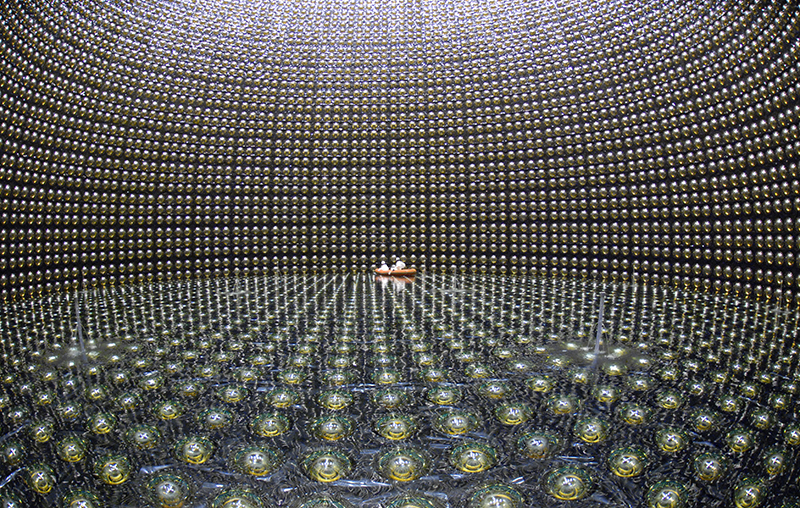
Particle physicist Dr Ben Still introduced us to the world’s largest cosmic particle observation device The Super Kamiokande, set 1,000m underground in Japan.

1702 credit Kamioka observatory, ICRR.jpg

Using 50,000 tons of ultra-pure water as a target to detect neutrinos. The quantity is to increase the chances of a collision.  A neutrino interaction with the electrons or nuclei of water can produce a charged particle that moves faster than the speed of light in water. This creates a cone of light known as Cherenkov radiation, which is the optical equivalent to a sonic boom. The neutrino is a subatomic particle able to travel through matter without interacting, they have no electric charge and almost zero mass.
Lead is what we think of as most impenetrable. A lead lined coffin for Alexander Litvinenko. However it would take a light-year of lead, to stop just half of the neutrinos flying through it.

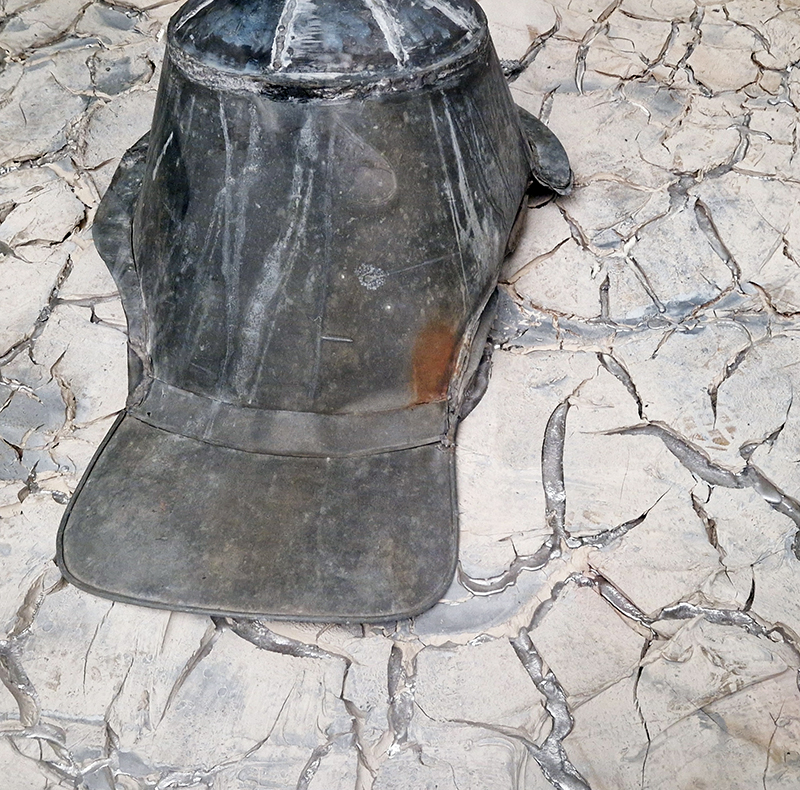
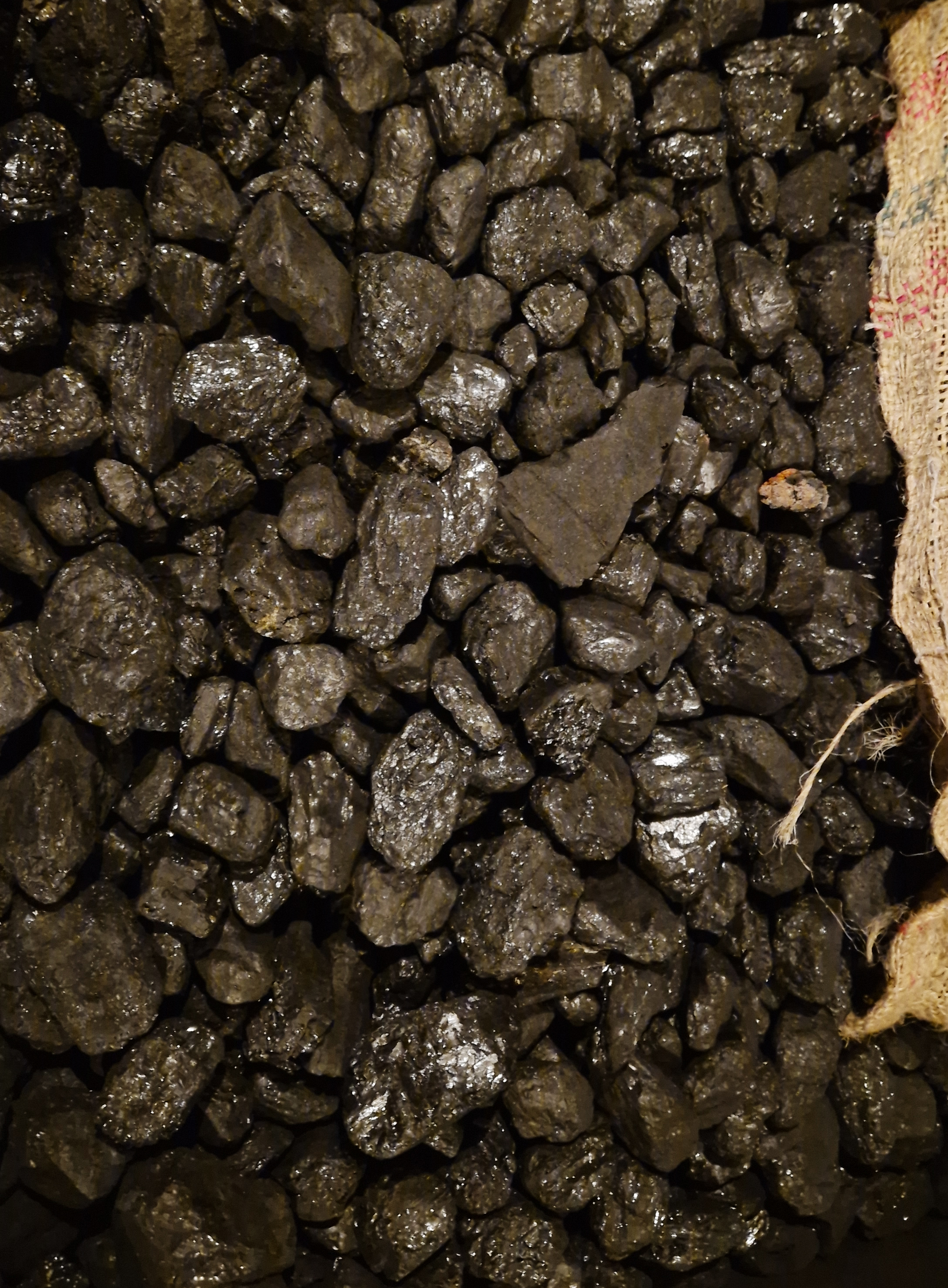
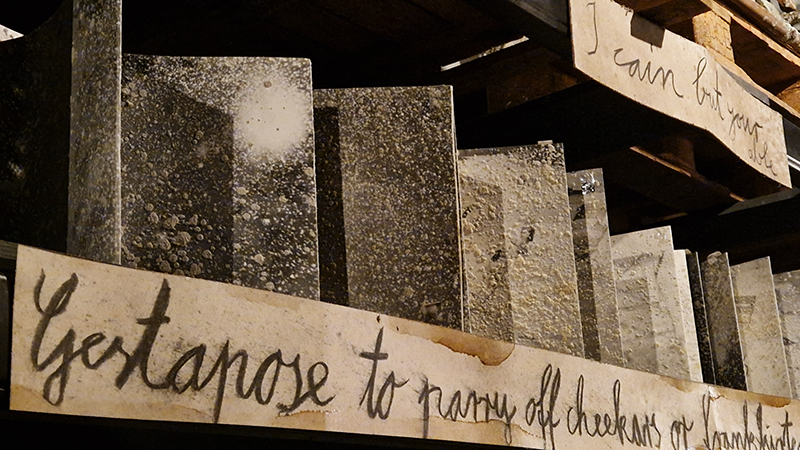
Anselm Kiefer Walhalla at White Cube Bermondsey weights the air with lead. We are in the lead coffin.

1702-anselm-keifer

Alternative materiality at Chain by 15 an artist led exhibition in Peckham presented an Itchy and Scratchy world brought together by the Pokémon generation.

1702-hadas-auerbach

The Head Must Go cross stitch on linen by the uncompromising talent Hadas Auerbach was a delicate and poignant highlight.

1702-venus-anadyomene

Enjoyed the beautifully staged performance  –Venus Anadyomene -a collaborative 3 channel video and performance by Verity Birt, Holly Graham and Richard Forbes Hamilton; part of ongoing research around de-colonising histories, feminist narrative and collective voice.

The layering of voices, looping narrative and rhythmic pulse hooked into lost voices of history transporting the audience into a dreamlike territory.

I was invited by Lumen:School of Light to show everydaymatters at Ugly Duck for a weekend showcase of artists who explore the relationship between astronomy and light.

1702-everydaymatters

everydaymatters dissects landscapes to discover the hidden structures of the universe.

1702-everydaymatters-holloway-n7

Images taken from everyday prosaic paradises such as Paradise Road, Stockwell and Paradise Row Bethnal Green, are divided into constituent proportions of dark energy, dark matter and the visible world opening the spaces between what is seen and unseen.

1702 Anna Gray.jpg

Anna Gray’s water filled glass sculpture gave endless pleasure

1702 Anna Gray 2.jpg

the mini planetarium experience from Sylvana Lautier, Rose Leahy and Kim Yip Tong was blissful immersion

1702-sylvana-lautier-rose-leahy-kim-yip-tong

Spaceheads & Rucksack Cinema multi media performance was funky

1702-spaceheads-with-rucksack-cinema

Was quite energising to set up and take down over one weekend with lots going on

1702 School of Light PV.jpg


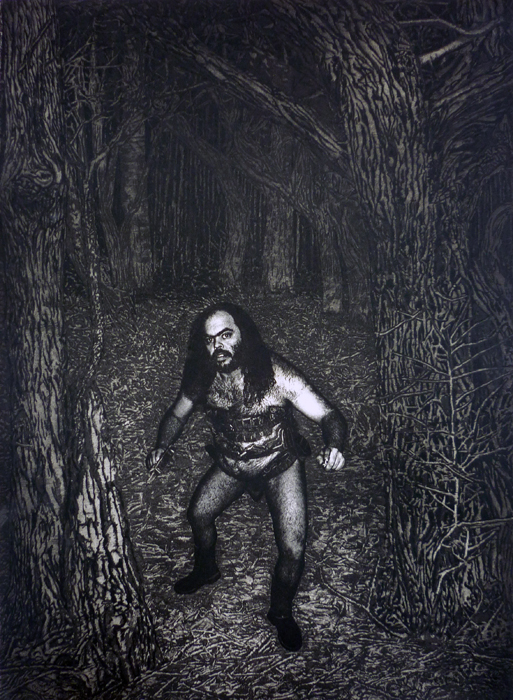
The myth of the wild man stretches back to the ancient tablets inscribed with the tale of Gilgamesh’s quest for immortality. As a barometer of the mores of society the wild man’s characteristics reflect topical fears and aspirations. If society is perceived to be corrupt the wild man symbolises natural wisdom, if society embraces convention the wild man represents anarchy. His character can also be assessed from the landscape he purportedly inhabits, a pastoral setting reveals an ideal to be strived for whereas the dark forest conceals the untamed savage.

Forest of Eden

Susan Eyre Forest of Eden

I wanted to discover a female counterpart to the contemporary wild man (an internet meme) I had placed back in the ancient forest.

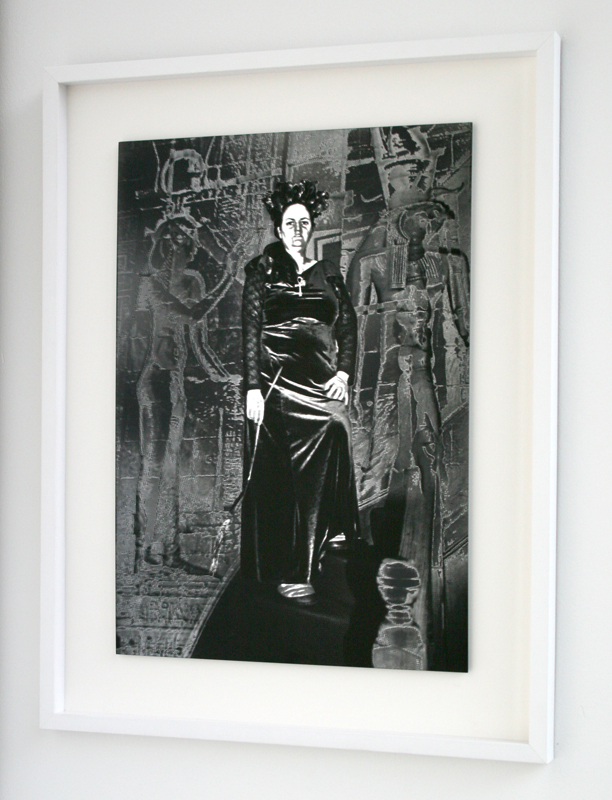
Rather than a female on the edge of society I wanted a female at the centre of society.

Wondering who a contemporary goddess might be I was introduced to Bernadette by a mutual friend.

I spent some time with Bernadette, listening to her stories.  She is very proactive person in the local community and has had an impact as a campaigner for the Green Fair, uplifting some dark neglected spaces with vibrant mosaics, and more recently setting up the choir Shakti Sings recognisable in red with flowers in their hair who honour the earth through song and have become a mainstay at Glastonbury encouraging the crowds to keep the site clean. She has also established the Beacon Temple as a place of worship to honour the many goddesses in her own home. She kindly agreed to my taking some photos of her at home which I have used as basis for work focusing on connections between ancient spiritual beliefs and contemporary society. Her spiritual life requires that she gives up stimulants such as alcohol and caffeine as well as any contact with money. One of her missions is to uncover and document the ancient sites of goddess worship that have become hidden within the palimpsest of the city. The goddess Isis cropped up a lot in our conversations and so for one piece I used imagery from the ancient temple to Isis at Philae in Egypt, placing Bernadette within the sphere of the ancients yet maintaining her contemporary domesticity with her carpet and slippers. I was inspired by the exhibition Mirror City at the Hayward Gallery which refers to Jean Cocteau’s Film Orphée and the significance of a mirror as a portal to another world.

Considering Bernadette’s positioning as a portal between this world and the spirit world I screenprinted onto mirrored acrylic.

I am a portal

Susan Eyre I am a portal

In a second piece of work I took inspiration from the storytelling of Xanthe Gresham-Knight who weaves tales of ancient mythology into contemporary scenarios.  I used images conjured from her goddess tales such as the song of the white snake and the ear of corn she gives out at the end of her performances combined with wall paintings from Bernadette’s home to weave together the ancient with the everyday in a rich multi layered screenprint worthy of a goddess.

Her

Susan Eyre Her

At the RCA I was extremely lucky to be selected to have a masterclass with Susan Hiller who coincidently featured in the Mirror City exhibition at the Hayward Gallery. I have appreciated her work for a long time and share many of her interests.  It was an exciting and nerve wracking proposition to present my work to her. I had prepared a 10 minute power point as requested but after attending her lecture the week before felt this wasn’t perhaps the approach she would approve of. She seemed to find both the Powerpoint presentation and her in conversation partner for the lecture irritating. With her depth and breadth of experience she was going to be a difficult woman to impress.

She began by telling me that she finds printmaking to be an unsatisfactory medium to convey ideas. As I stuttered though my presentation I could feel her impatience growing.

I had used a favourite quote from artist Sergio Vega

“the concrete texture of perspiration” [ ] “that intimate battle with humidity – the monumentality of spaces, the exuberance of vegetation with that smell of ripe fruits, the exotic flowers in the never-ending heat, those sunburned colours, and the buzzing of mosquitoes, which, like fat angels of a tropical rococo, rue without mercy in the sky of Eden.”

She stopped me there and asked how the work I have produced so far addressed this problem of conveying such an experience.

I admitted I had not so far resolved this issue but have been thinking about this since. Sergio Vega also struggles with the problem of conveying an atmosphere, for example an experience of the forest rather than a depiction of the forest. The thing about the Tropicalia exported in the rococo style was its cleanness, its reduction to aesthetic – the mosquitoes  were not exported too. In his work Vega aims to show the sweat, the grotesque dictatorships, the poverty. It may not be possible to show all this in one piece of work but in a body of work over time maybe some of these issues can be addressed, even in printmaking. This is my challenge.

It was wonderful to spend a morning with Susan Hiller, she has an amazing mind – acute and resourceful. She did see a glimmer of hope in my etching Paradise HP2 and also in the spectrum print that was a chance discovery along the way.

Susan Eyre

Susan Eyre

Stephanie Rosenthal the curator of Mirror City describes the mirror as an unreal space, a virtual space like the world behind the screen where we spend more and more time. There was a lot of information to take in at this extensive show so the magical simplicity of Mohammed Qasim Ashfaq’s imaginings of objects from other worlds was memorable and his intense geometric black hole did pull you in.

Mohammed Qasim Ashfaq Black Hole III

Mohammed Qasim Ashfaq Black Hole III

Susan Hiller’s audio-visual installation Resounding (Infrared) relayed earthly accounts of possible extra terrestrial sightings mingled with recordings of static still audible from the big bang while the screen quivered and pulsed with coloured light waves.

Susan Hiller Resounding (infrared)

Susan Hiller Resounding (infrared)

The theatrical setting for Tai Shani’s performance pieces was set behind glass creating a sort of time capsule effect.

Tai Shani Dark Continent

Tai Shani Dark Continent

A world we cannot enter only dream of. In Dark Continent she fantasizes a utopian city of women, different characters in history represented by the Neanderthal Hermaphrodite, The Medieval Mystic and The Woman on the Edge of Time, all bearing the same face.

Tai Shani Dark Continent

Tai Shani Dark Continent

A pink fantasy of a genderless society.

Inspired to learn more about medieval mystics I signed up for an RCA reading group with Tai Shani. The text we were looking at was a section from Amy Hollywood, ‘Mysticism, Trauma, and catastrophe in Angela of Foligno’s Book and Bataille’s Atheological Summa’. Bataille identifies with Angela and seeks to experience the ecstasy she purports  to achieve  from a concentrated identification with the suffering of Christ on the cross.

Excerpt from the text …

It is impossible for me to read – at least most books. I don’t have the desire. Too much work tires me. My nerves are shattered. I get drunk a lot. I feel faithful to life if I eat and drink what I want. Life is an enchantment, a feast, a festival: an oppressing, unintelligible dream, adorned nevertheless with a charm that I enjoy. The sentiment of chance demands that I look a difficult fate in the face. It would not be about chance if there were not an incontestable madness. I began to read, standing on a crowded train, Angela of Foligno’ s Book of Visions. I’m copying it out, not knowing how to say how fiercely I burn  – the veil is torn in two, I emerge from the fog in which my impotence flails. (OC V 245; G 11)

Bataille opens his exploration of ecstatic anguish at the moment when World War II begins and claims that the war itself necessitates his text. Bataille finds his own tormented desire the very anguish that compels him to write reflected in Angela’s pages. Angela, the most important of the Christian mystics for Bataille, surpasses him in the pursuit of abjection and ecstasy.  He wants to be like her in her desire for and proximity to death: “I suffer from not myself burning to the point of coming close to death, so close that I inhale it like the breath of a loved being” (Oe V 246; G 12).

The discussion revolves around the idea of the rapture and how this ultimate dissolution of self over to ecstasy might be achieved.

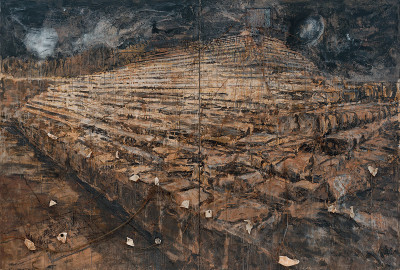
Anselm Keifer had a major exhibition at the Royal Academy of Arts. I find his work very inspiring, the scale and exuberance of his paintings carved from the substance of the earth with all the pain and trauma of geological and social evolution. The gallery guide tells us he seeks to understand our purpose here on earth, our relationship with the celestial, the spiritual, and the weight of human history. He also has a fascination with the civilization of Mesopotamia and the story of Osiris and Isis.

1412 keifer Osiris and Isis

Anselm Kiefer, Osiris and Isis, 1985-87

At the summit of the pyramid is an extruded old television circuit board emanating golden wires and shards of pottery over the ancient steps to heaven.

I was intrigued by his use of geometry and references to ancient beliefs and mythologies.

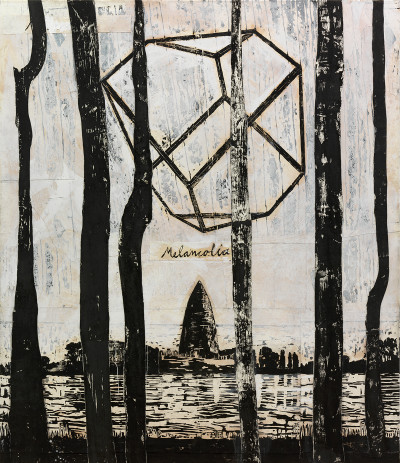
Anselm Kiefer, The Rhine (Melancholia) (Der Rhein (Melancholia)), 1982-2013. Collage of woodcut on canvas with acrylic and shellac

Anselm Kiefer, The Rhine (Melancholia) (Der Rhein (Melancholia)), 1982-2013.
Collage of woodcut on canvas with acrylic and shellac

The Rhine (Melancholia) references Albrecht Dürer’s Melencolia, an engraving dated from 1514 which appears to lay before us clues to the puzzles of the universe.

1412 Durur Melencolia

Albrecht Dürer’s Melencolia

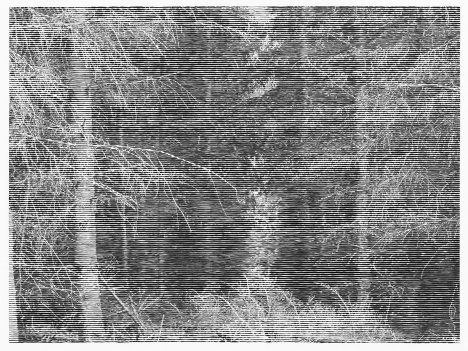
It was encouraging to hear Christiane Baumgartner talk about her work at Alan Cristea Gallery in such a down to earth manner, giving credence to intuition in her feel for colour and composition. She takes photographs of her TV screen and through diligence of process captures the flickering screen in a frozen moment. In her series Totentanz she witnesses the smoky death dance of a plane shot from the sky. Her work holds melancholia within it.

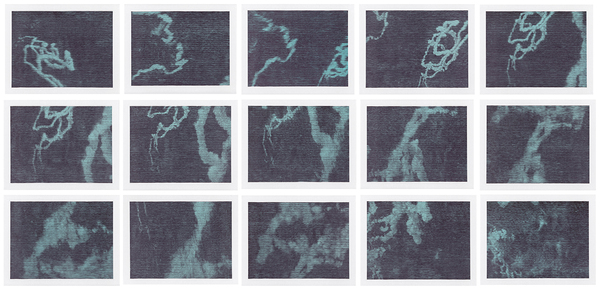
Christiane Baumgartner Totentanz 2013 series of 15 woodcuts on paper

Christiane Baumgartner Totentanz 2013 series of 15 woodcuts on paper

She seemed surprised herself to discover so much of her work references the war. Often her images may appear innocuous without their title which is what ultimately adds the layer of pathos removing it from sentimentality.

Chrisitane Baumgartner Wood near Colditz

Chrisitane Baumgartner Wood near Colditz

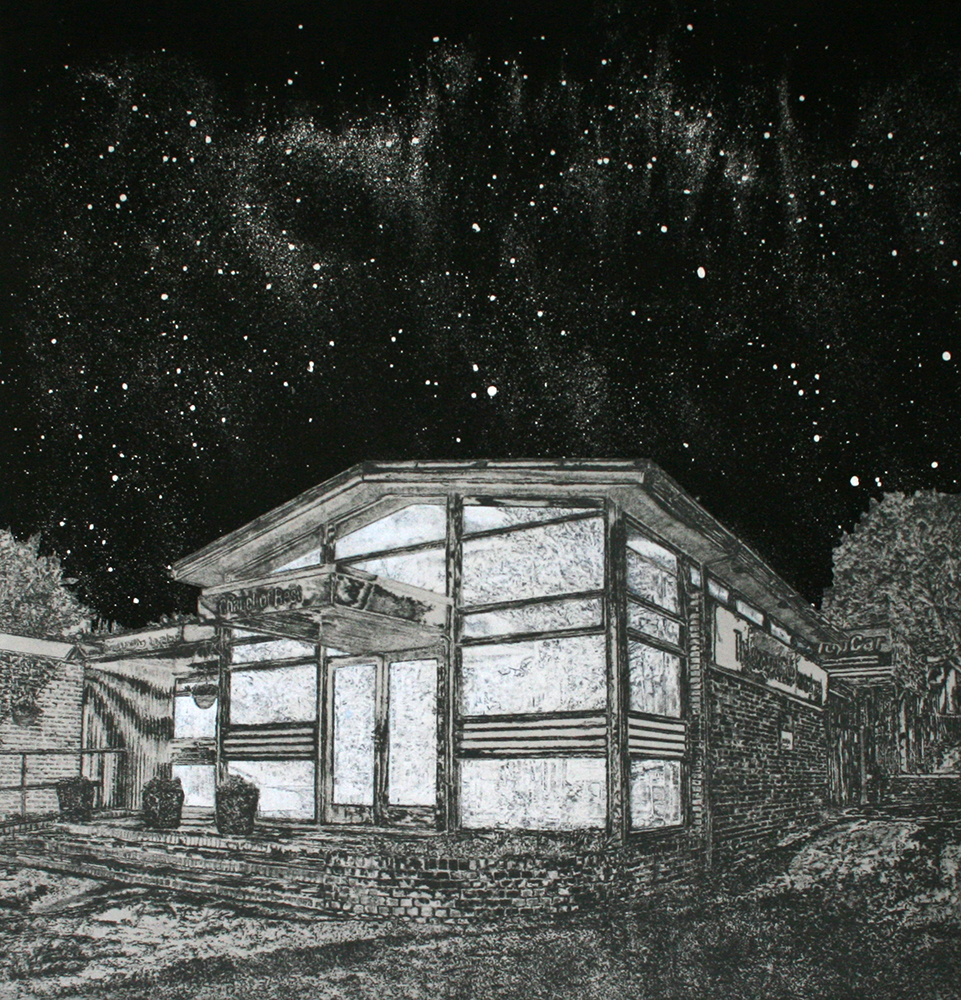
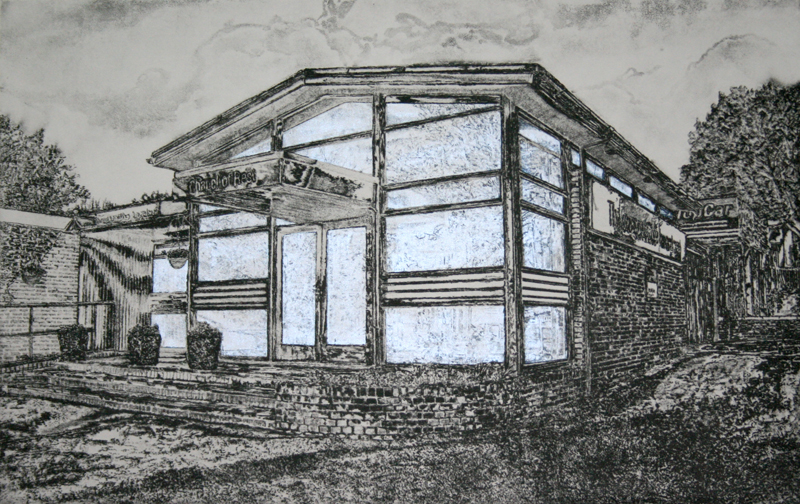
It is interesting how subtle shifts in the colour of paper and ink can change the atmosphere of an image. For the softground etching of the Chapel of Rest in Paradise Industrial Estate, Hemel Hempstead  I found a soft grey paper worked well with chine collé added over the windows. The grainy etching aged the building and using a lustre powder on the chine collé  reflecting opalescent when viewed at different angles gave the interior an other worldly aura that felt appropriate.

1412 Paradise HP2

Susan Eyre Paradise HP2


I aimed to take a piece of soulless architecture and give it some gravitas worthy of a resting place for souls.