Archives for posts with tag: Hypha Studios

‘What truth could be more unexpected ….than the one in which the mineral envisions while also being envisioned.’ Jason Groves, The Geological Unconscious

‘This is the blueprint of nature itself; both hidden and revealed in a nodule of silica.’
Roger Caillois, The Writing of Stones

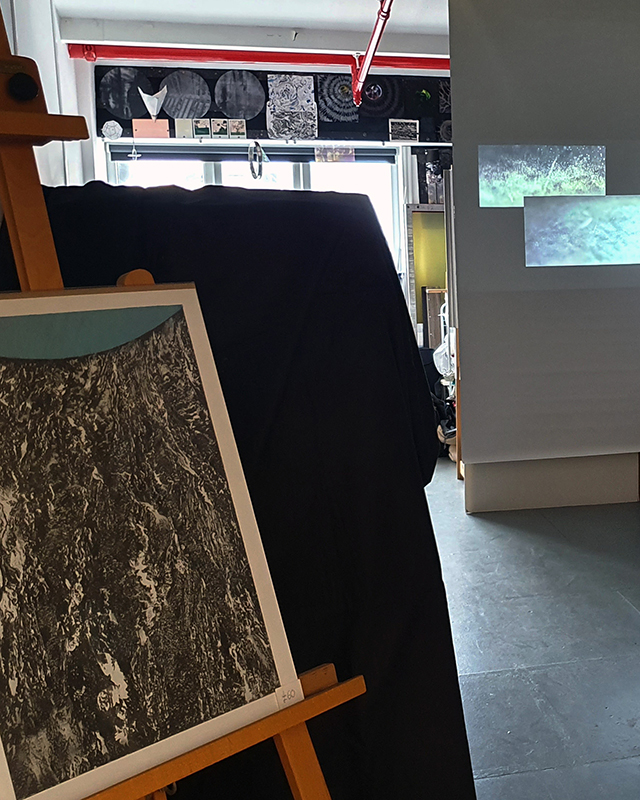
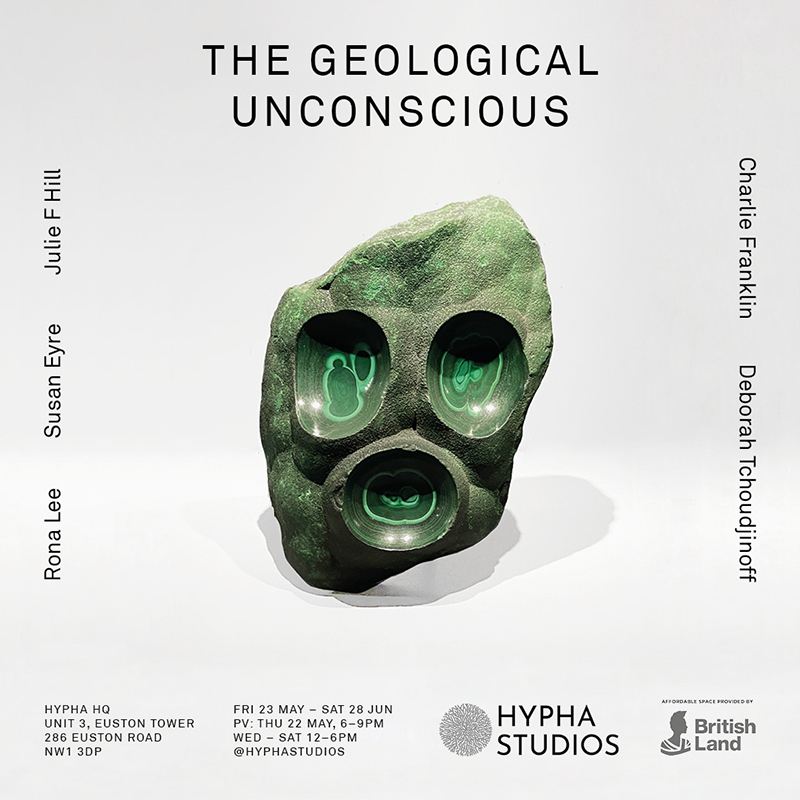
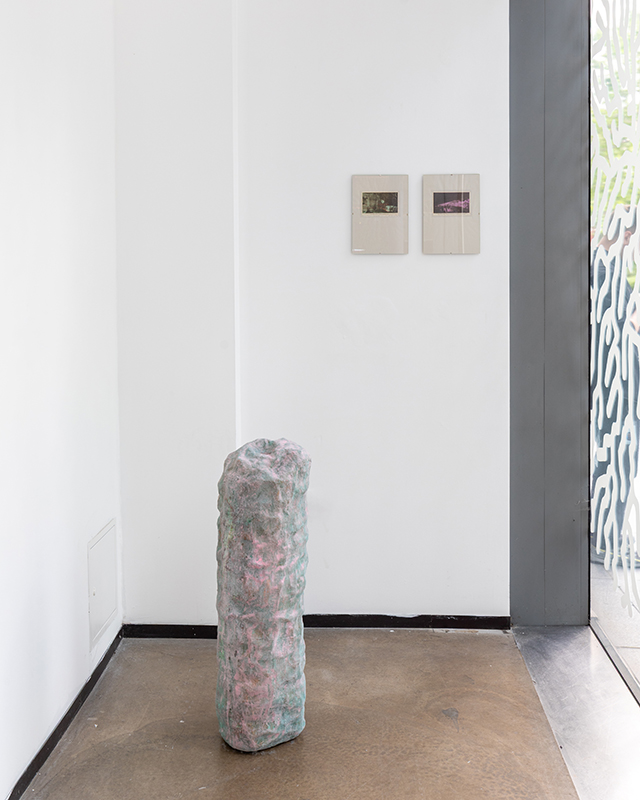
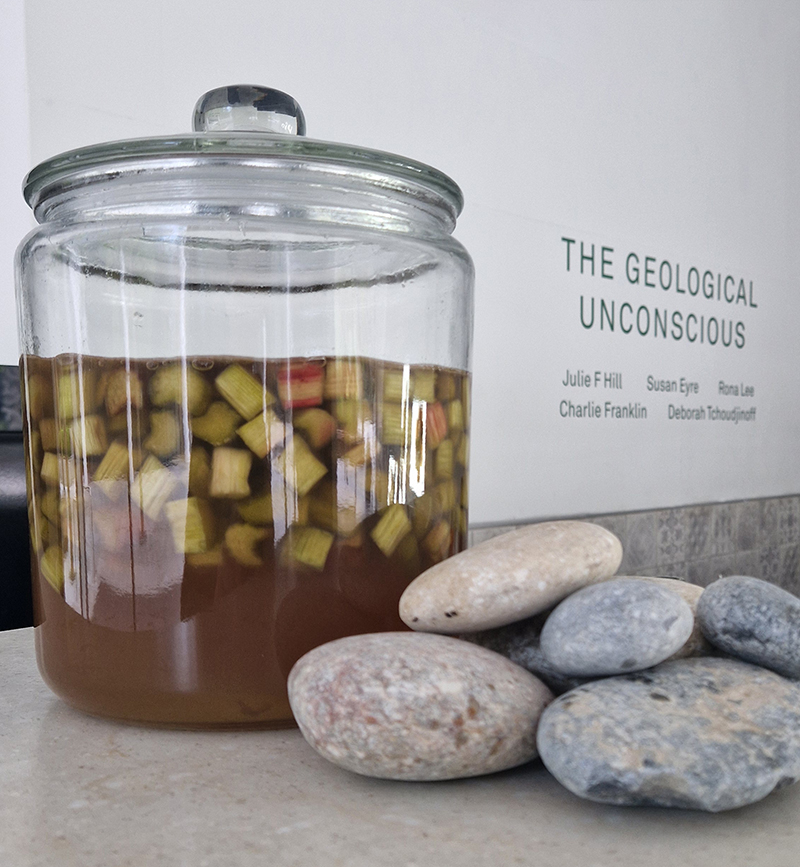
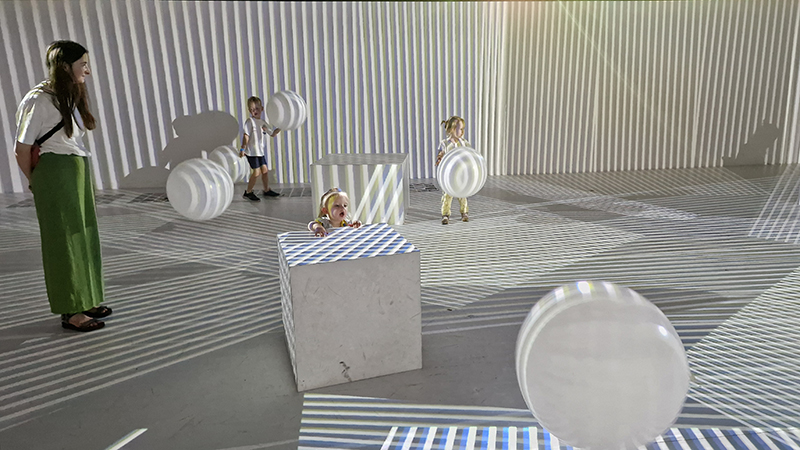
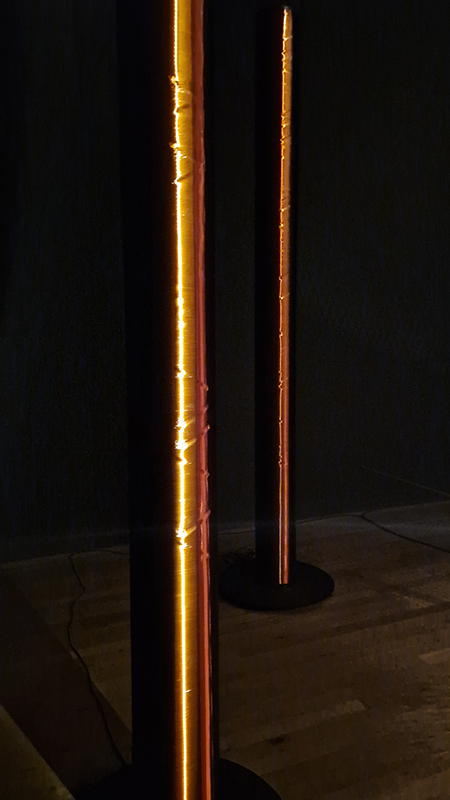
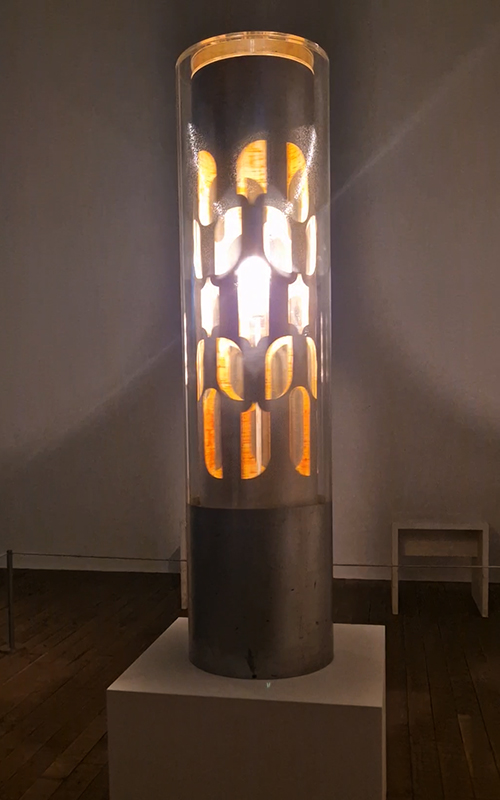
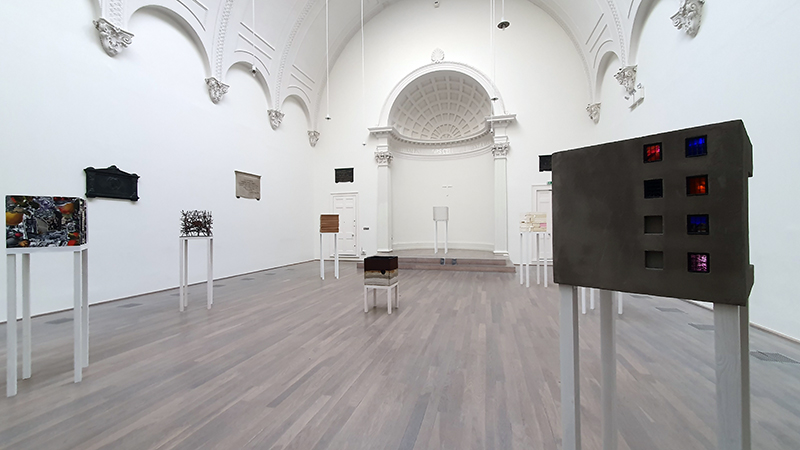
The Geological Unconscious opened with an exceptionally busy Private View. It was a fantastic evening with lots of great feedback. With a multi-disciplinary approach, large-scale installations and sculptural works sit alongside embroidery, video, expanded print and photographic work, to create material intimacies that help situate us in scales beyond the human.

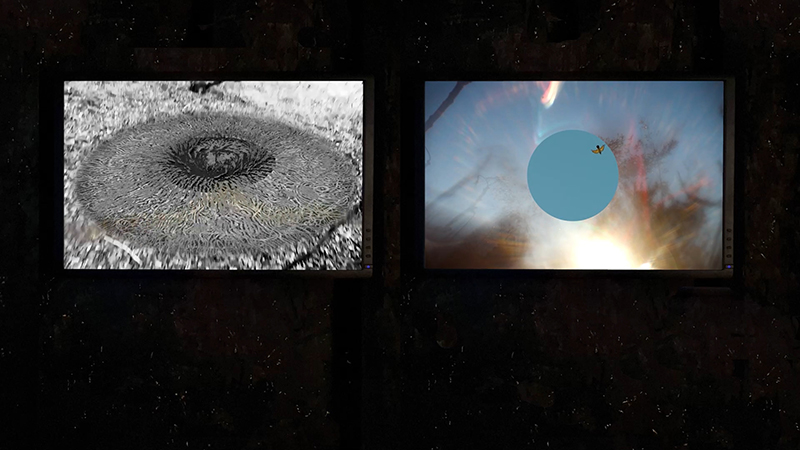
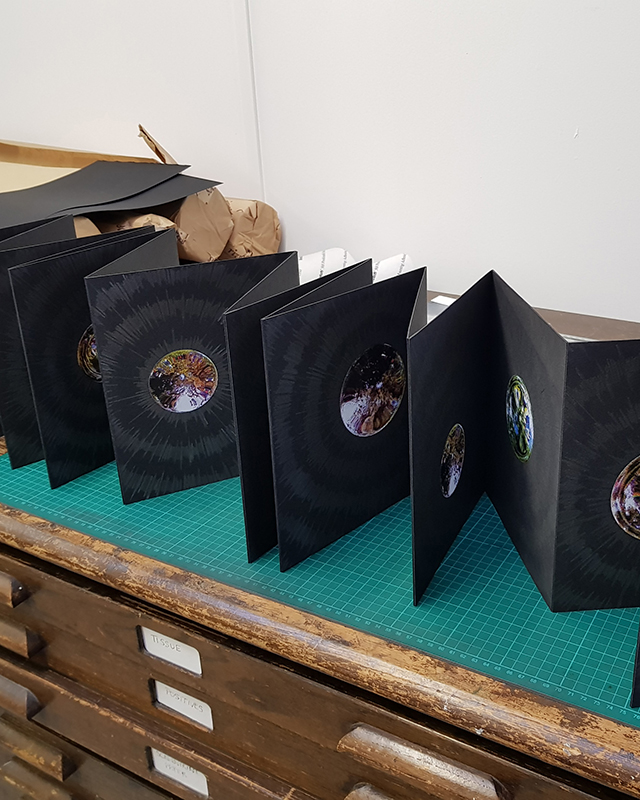
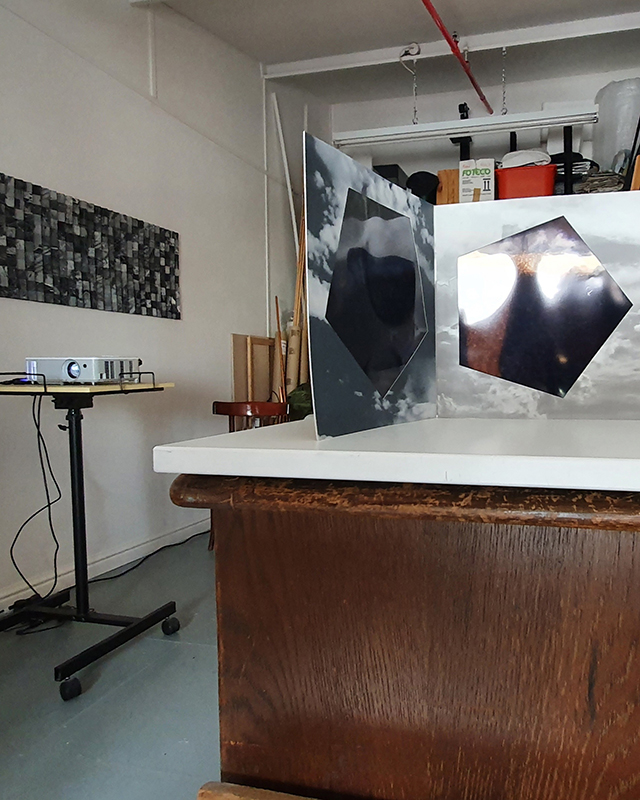
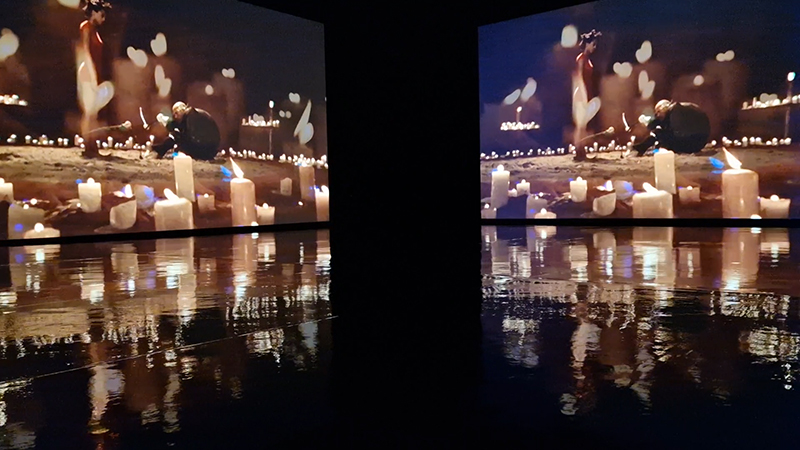
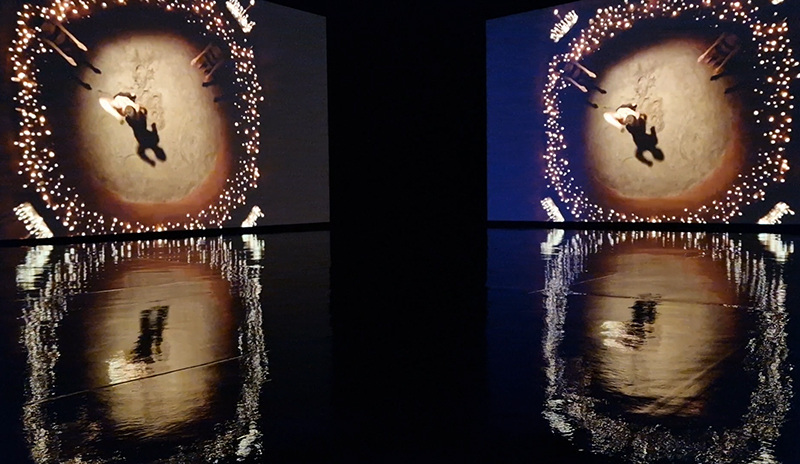
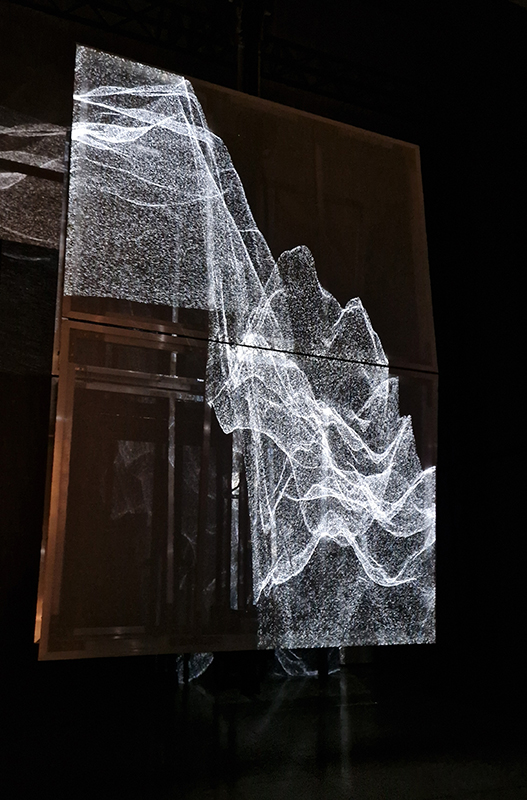
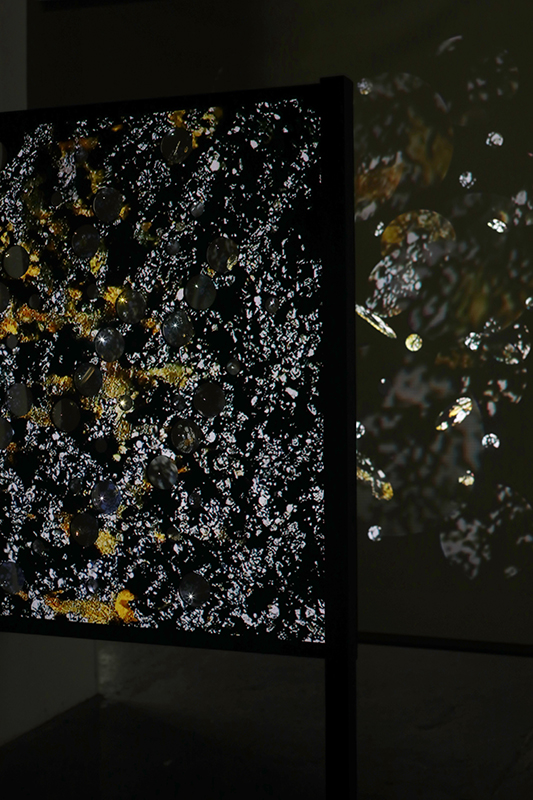
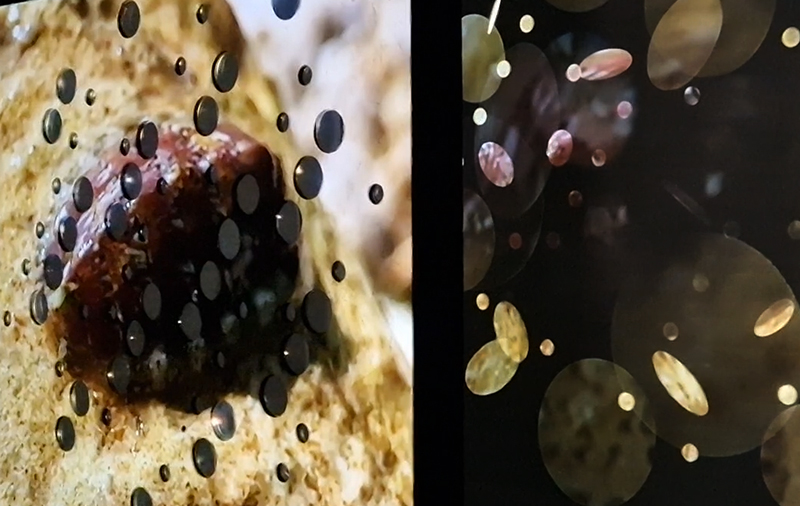
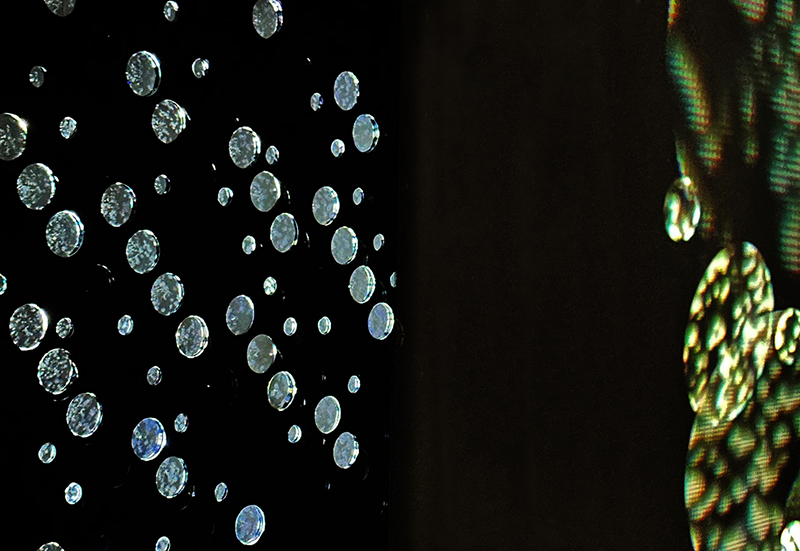
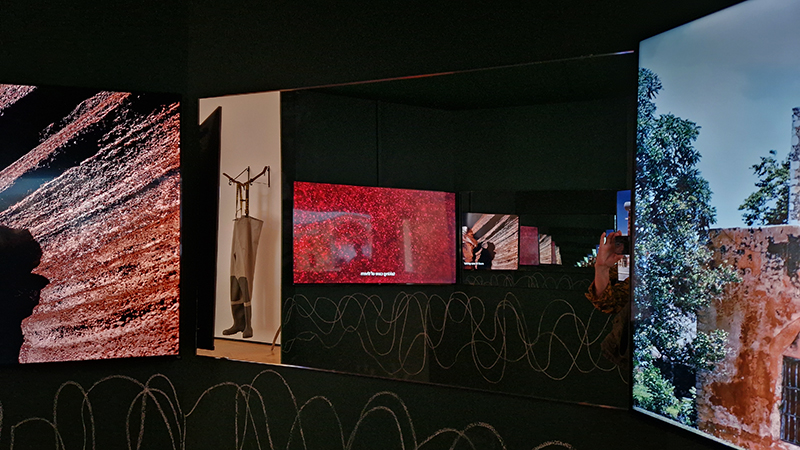
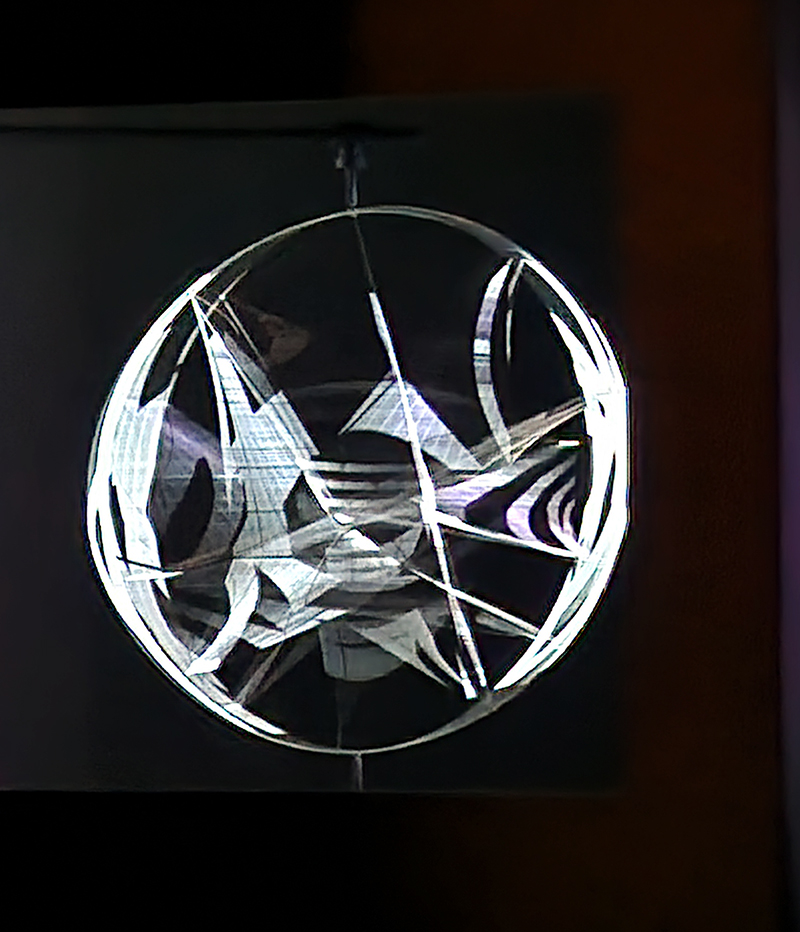
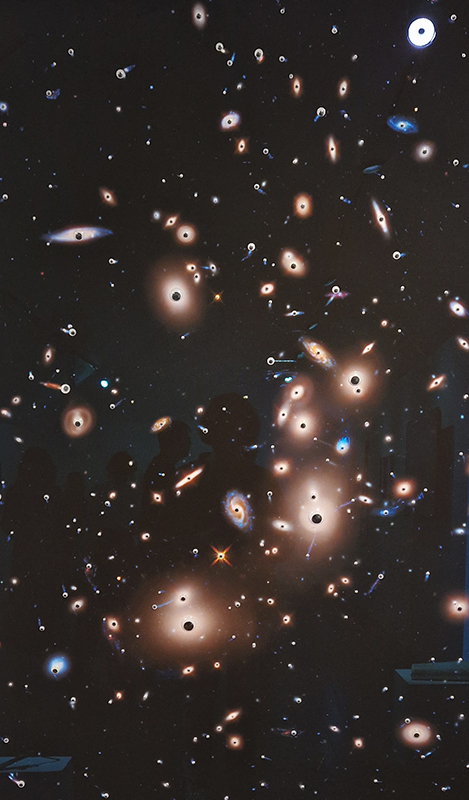
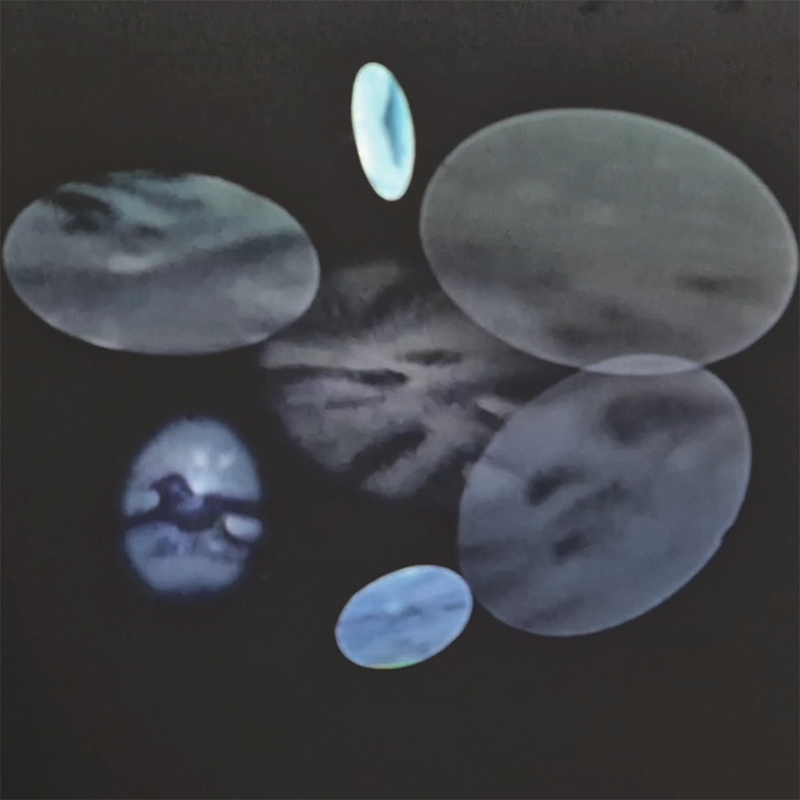
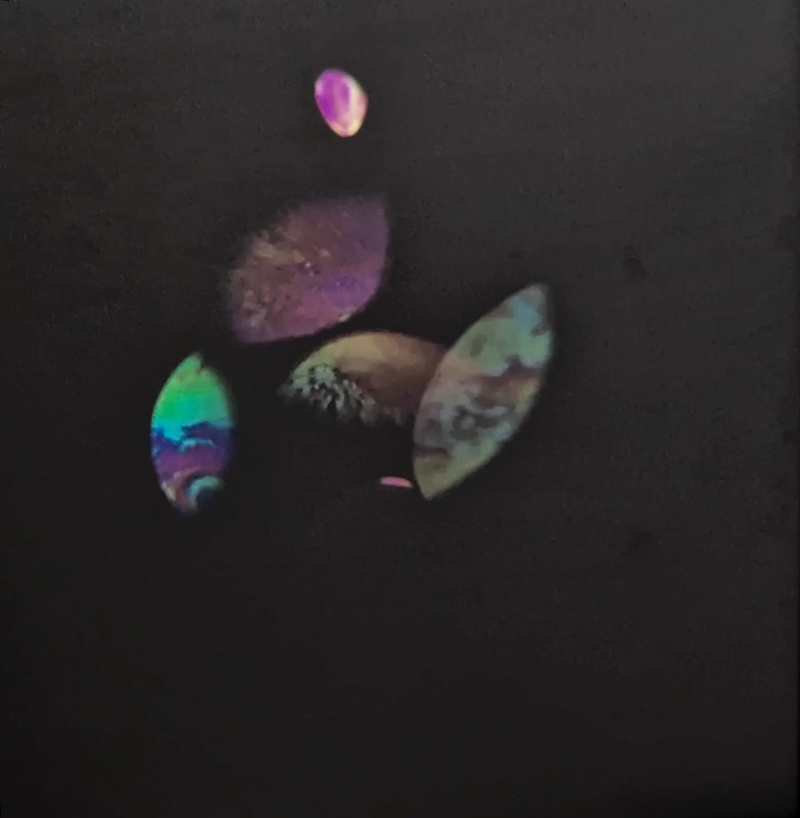
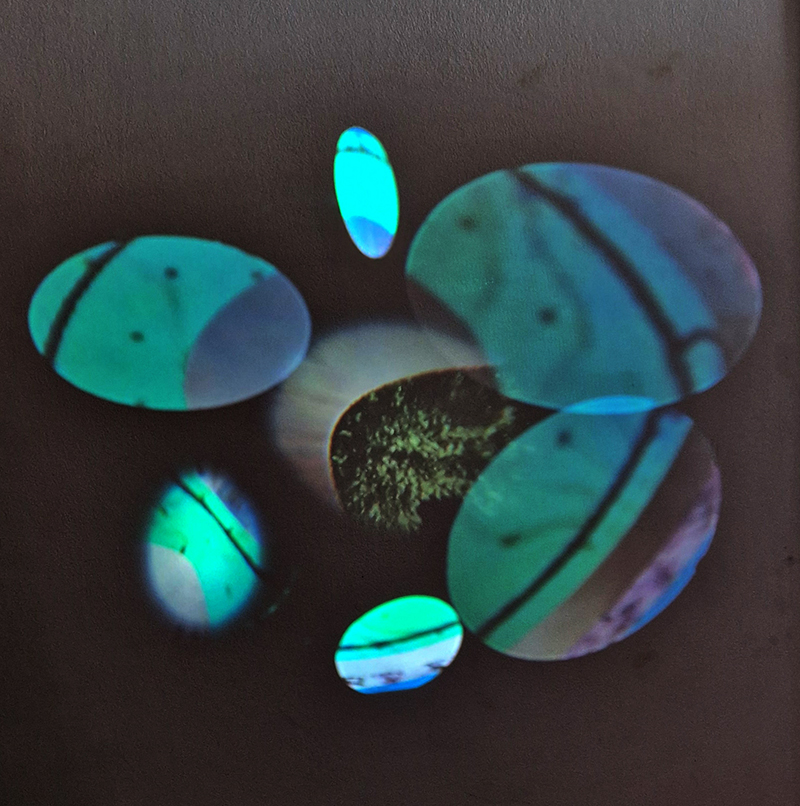
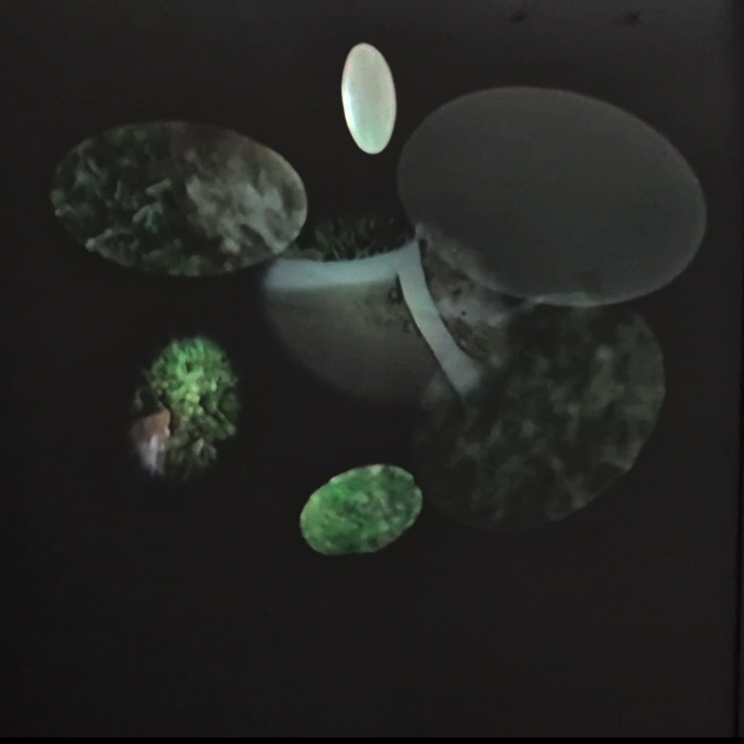
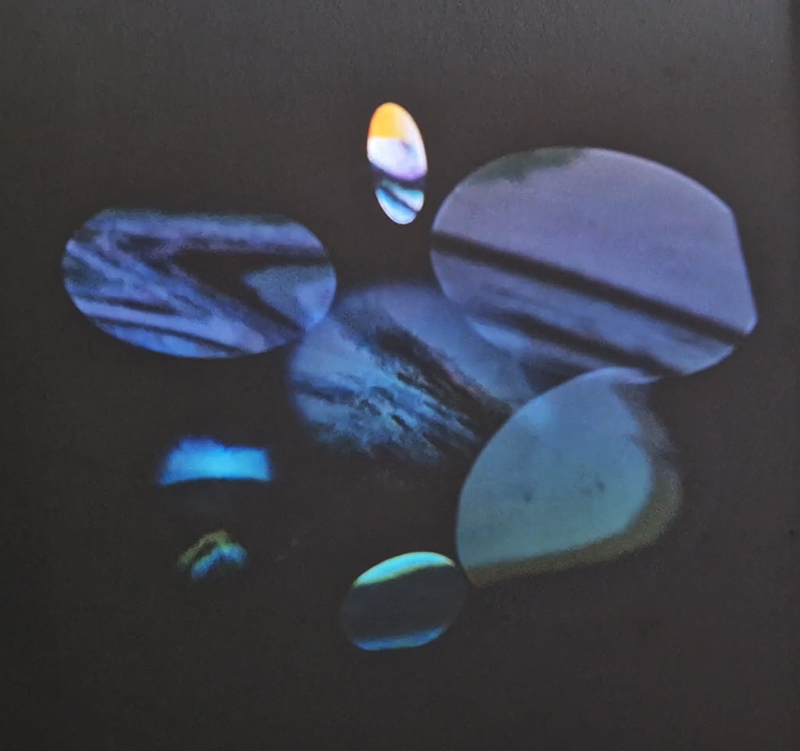
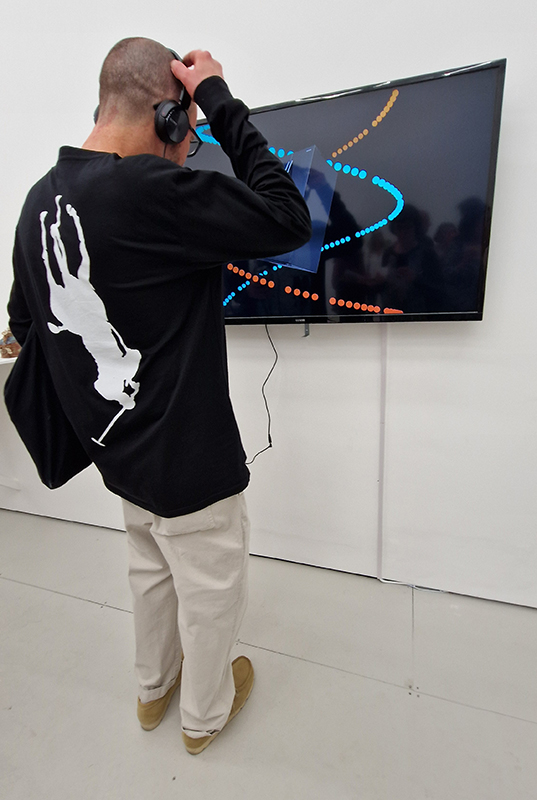
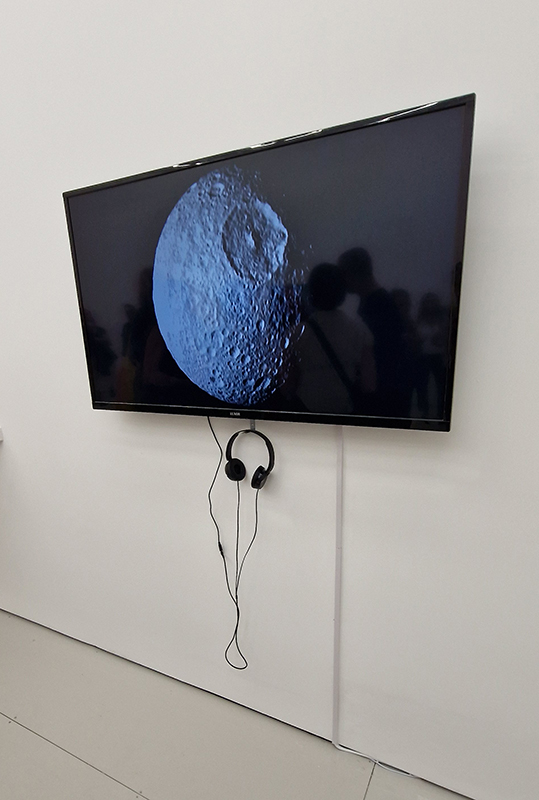
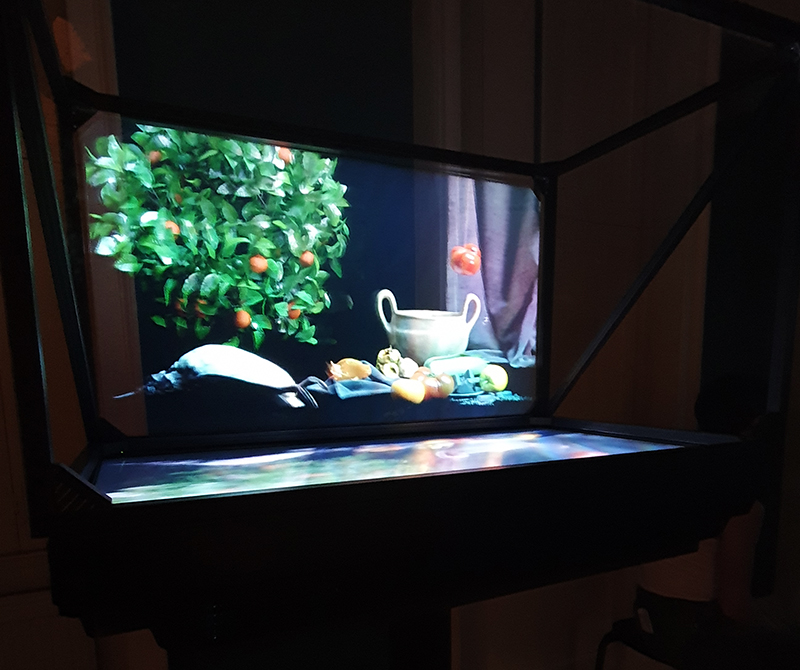
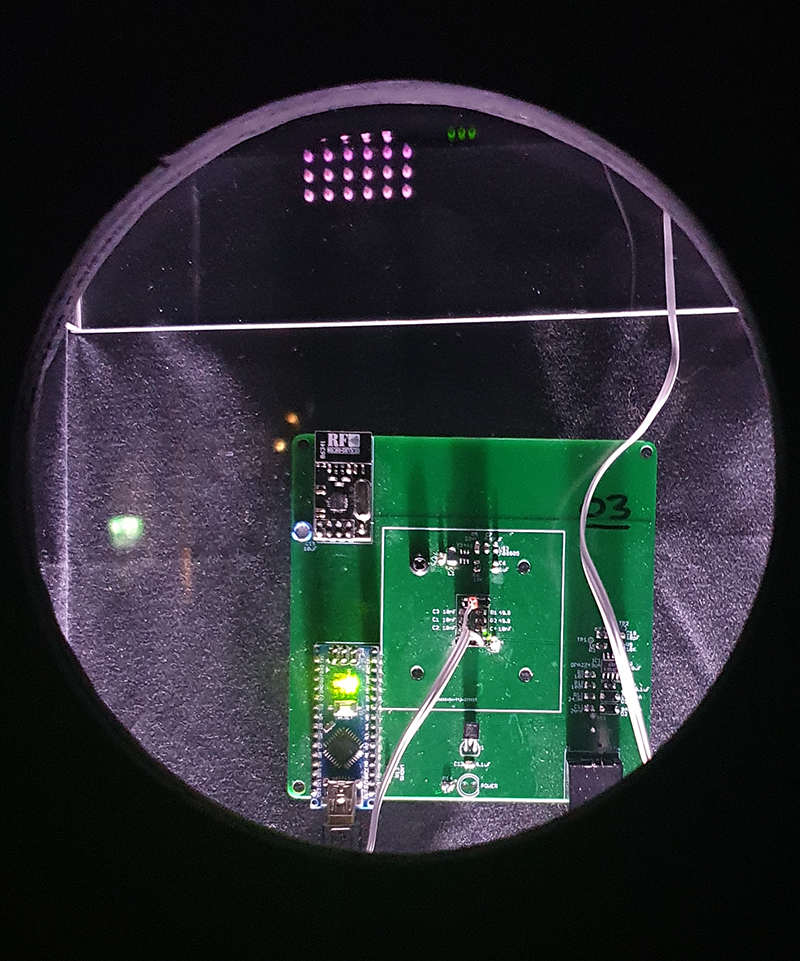
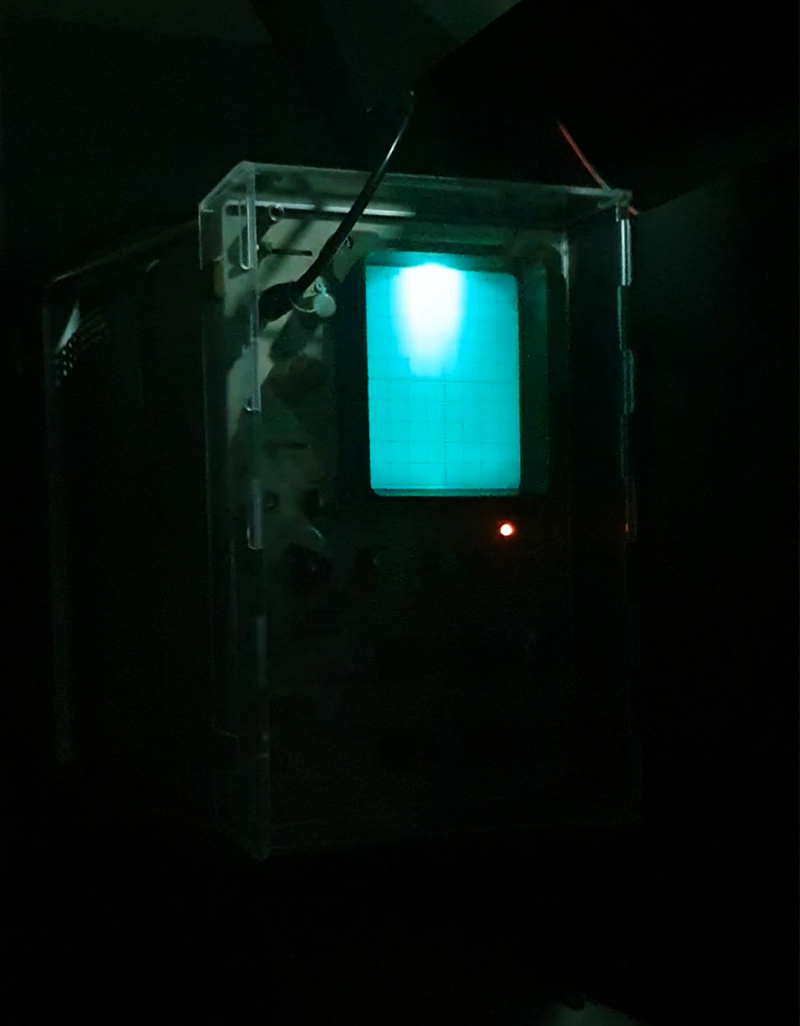
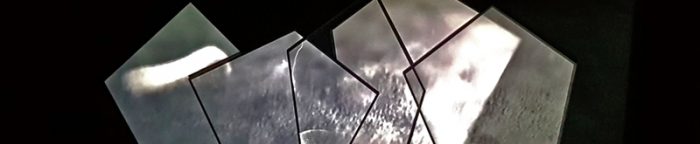
My video installation Lithos Panoptes imagines a view of the world from the perspective of the rock via the molecular structure of magnetite. Referencing a many-eyed giant of Greek mythology, Argos Panoptes (always eyes still awake), the work considers the perpetual vigilance of rock as record keeper and witness.
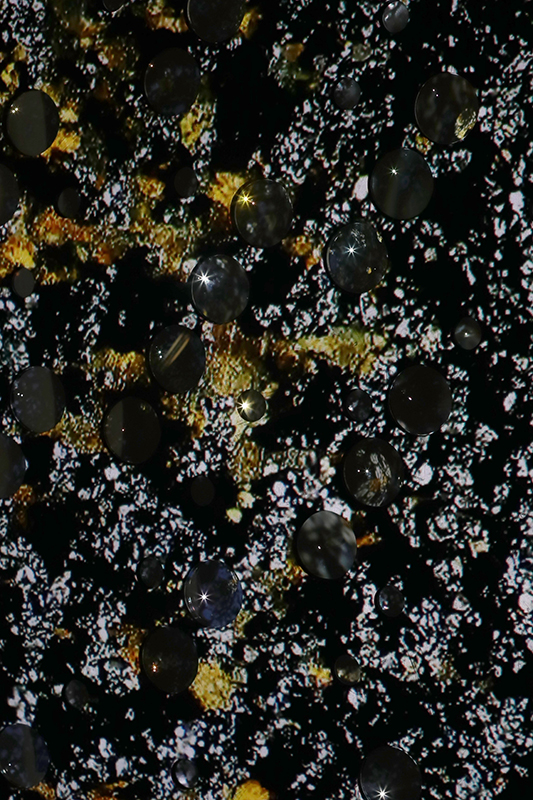
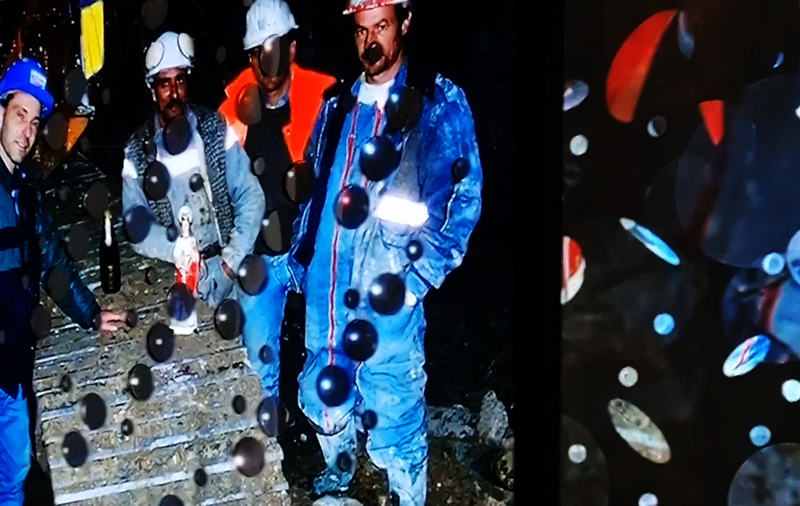
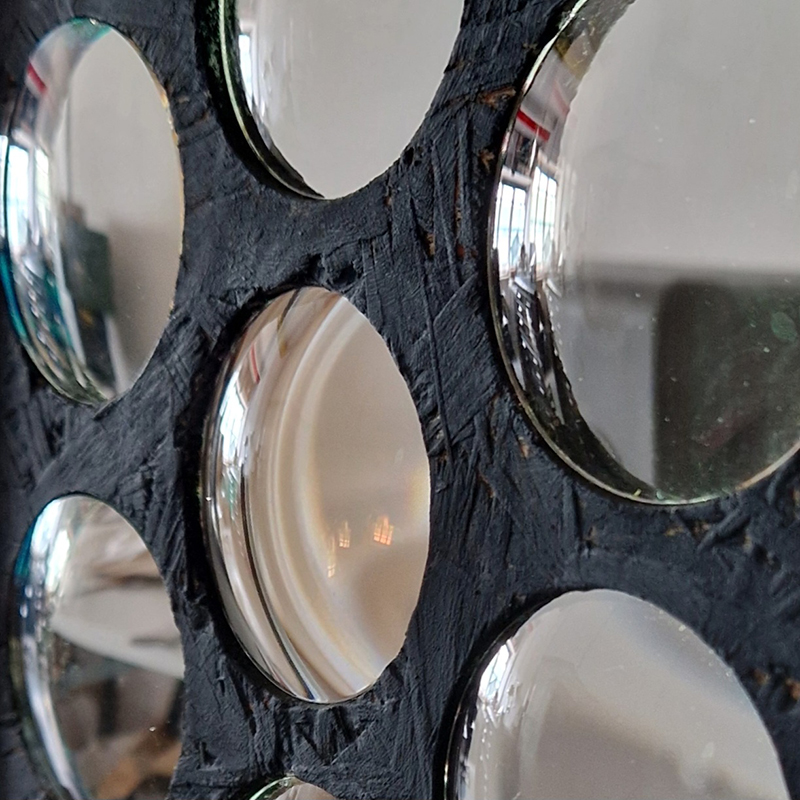
Video of human activity projected through distorting optical lenses transforms the anthropocentric position to imagine the perspective of the rock.
Magnetite is a mineral found in magma and metamorphic rock in Earth’s crust as well as in meteorites. Magnetite nanoparticles are also found naturally in organisms and are known to aid magnetoreception, a
means whereby animals and birds orientate themselves by sensing polar direction.
Through these actual and metaphoric lenses the relationship between the organic and non-organic is explored. Imagery includes allusions to scientific research into the dramatic overwhelming of innate magnetite in human brain cells by nanoscale pollutant particles of magnetite released into the air by traffic; the unique qualities of the chiton, a mollusc with hundreds of tiny eyes made from rock rather than biological material and teeth primed with magnetite and containing recently discovered mineral santabarbaraite; Saint Barbara, patron saint of miners and tunnellers, adopted when the use of explosives in mining escalated in the 1600’s and whose benedictions are still sought today with shrines installed at tunnel entrances at Crossrail and even at CERN, the epicentre of scientific rigour.

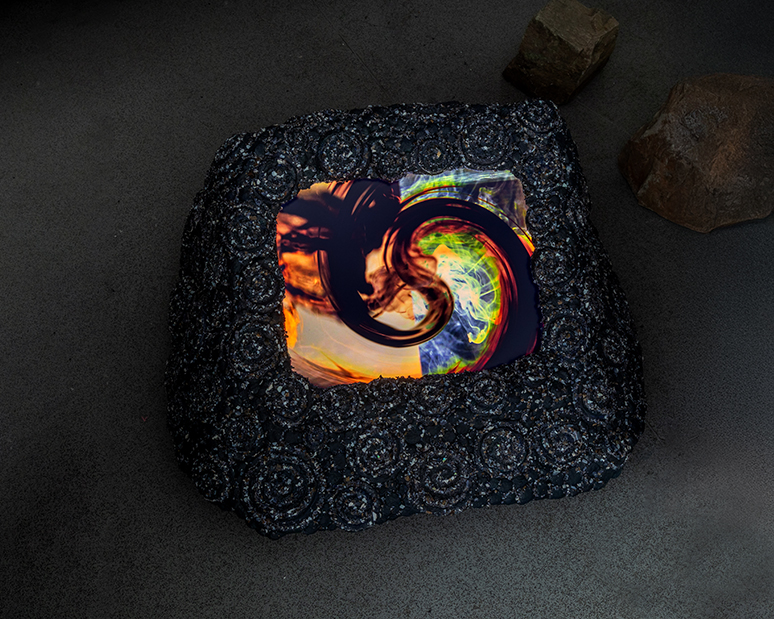
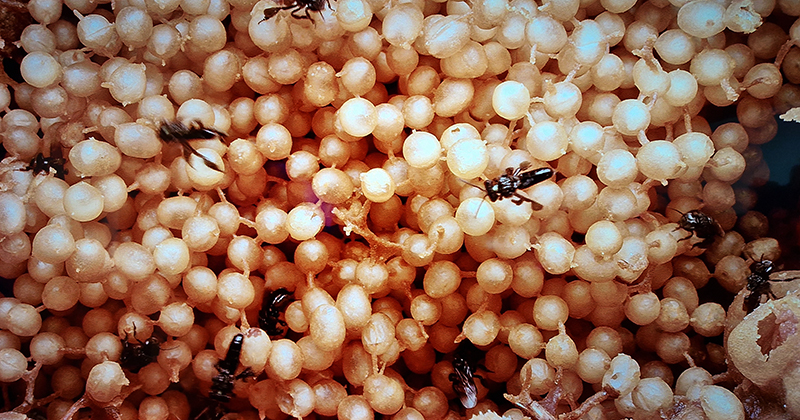
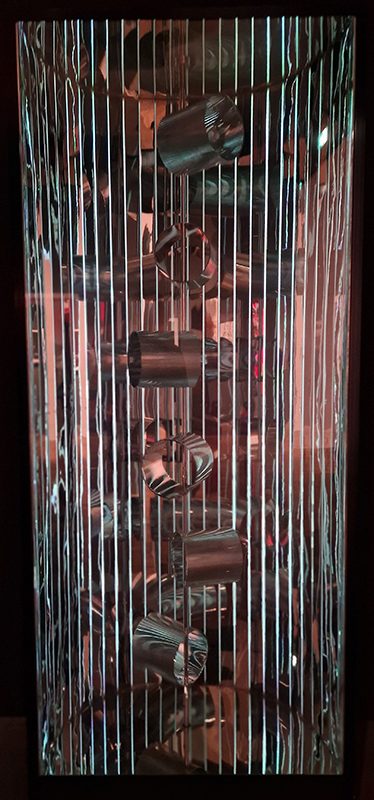
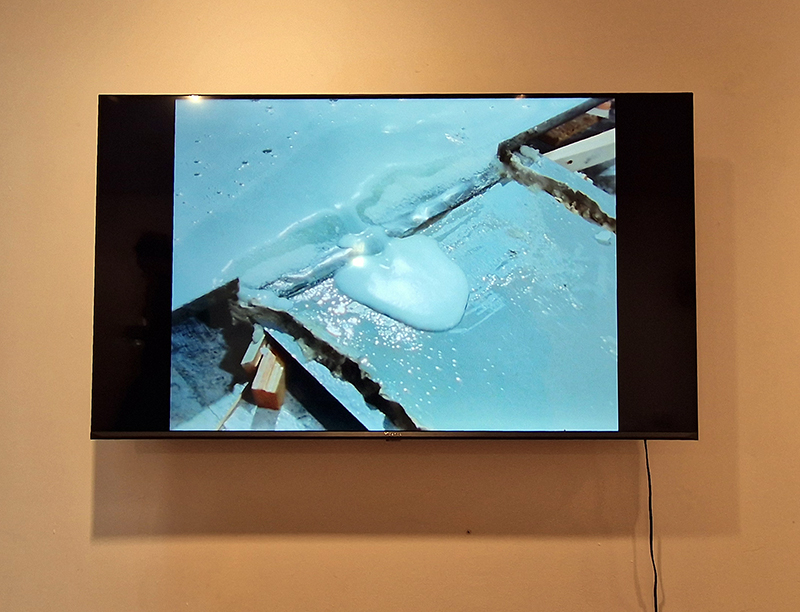
Also showing the video sculpture Belly of a Rock – describing an imagined place of chemical conversations at the intersection of the animate and inanimate. Under a crusted shell, surfaces slide and scrape along lines of fissure, distended innards ooze and rocks moan as they are distorted by untold pressure. The turbulent spiralling of the molten core births rock and lifeforms which are acted upon by the drag of an oscillating magnetic field.

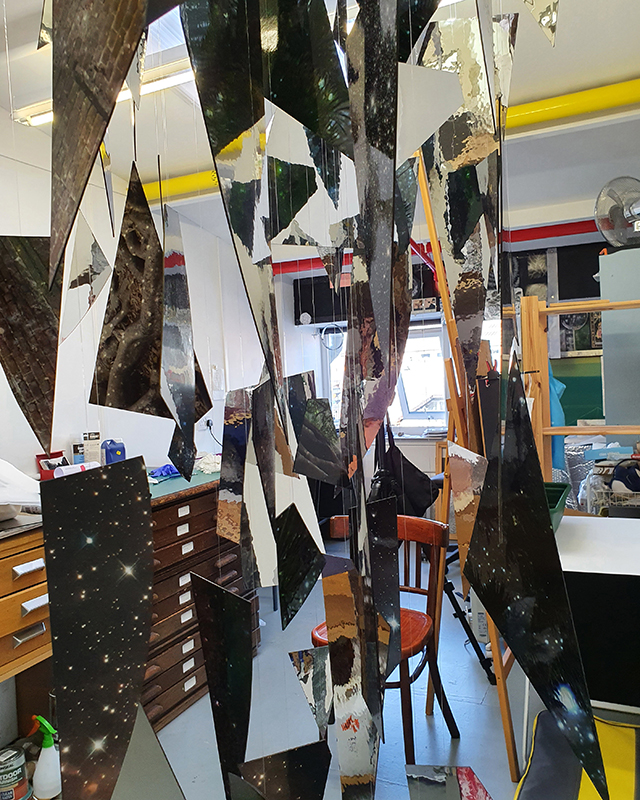
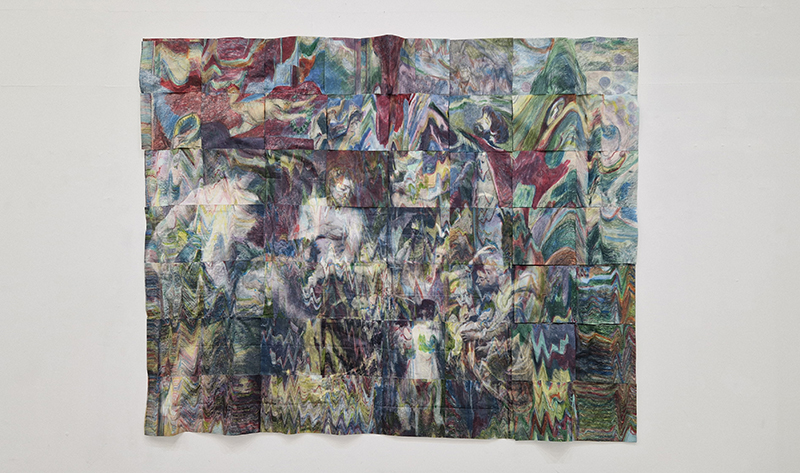
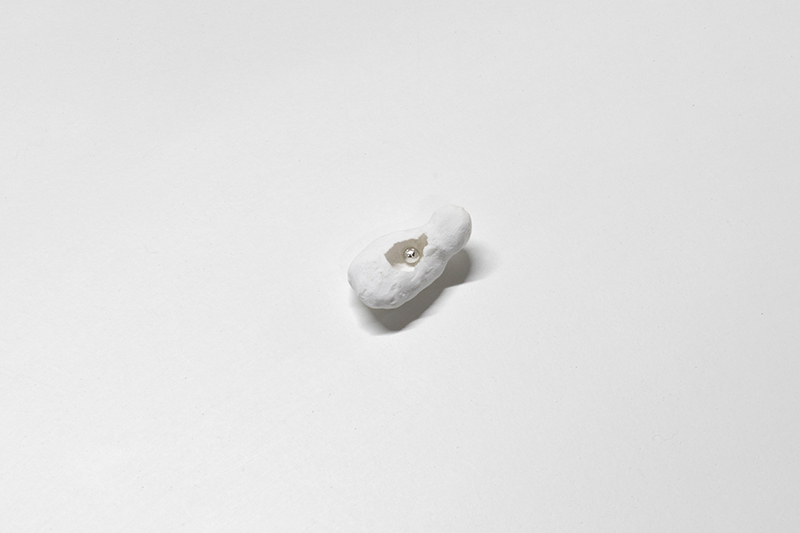
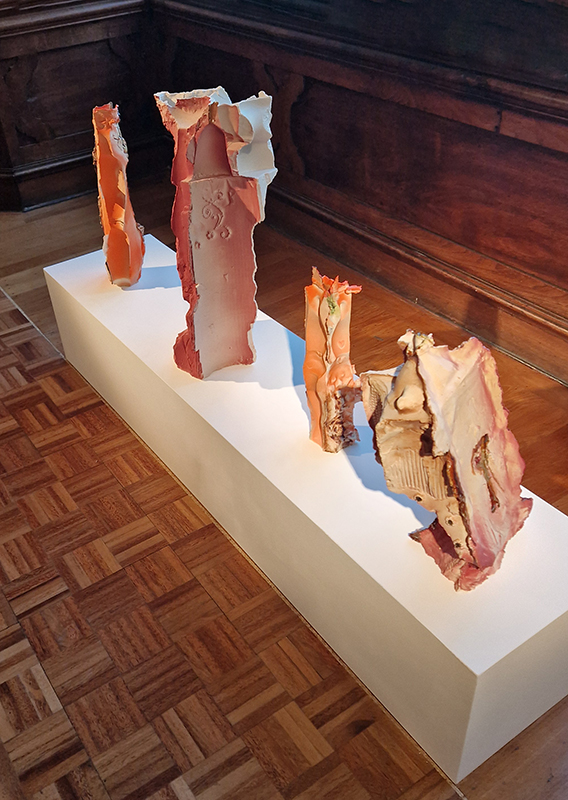
Julie F Hill’s large-scale sculptural print installation Parent Body, uses scanning electron microscope imagery of samples recently returned from asteroid Bennu. The data features detail of carbon-rich and organic ‘nano-globules’ which have been theorised as ‘proto-cells’. The sculpture evokes astro-geological-biological material lineages across deep space and cosmological time. In a contrast of scale, Julie is also showing Return, 3d print of asteroid Itokawa cast in plaster-of-paris with a bead of Iridium. Iridium is an rare-earth element more abundant in asteroids than the Earth’s crust. This miniature work considers the cross exchanges between space and earth and in a gesture of reverse sample return (scientific missions and human extractive processes both take), a bead of Iridium is returned to the belly of asteroid Itokawa.

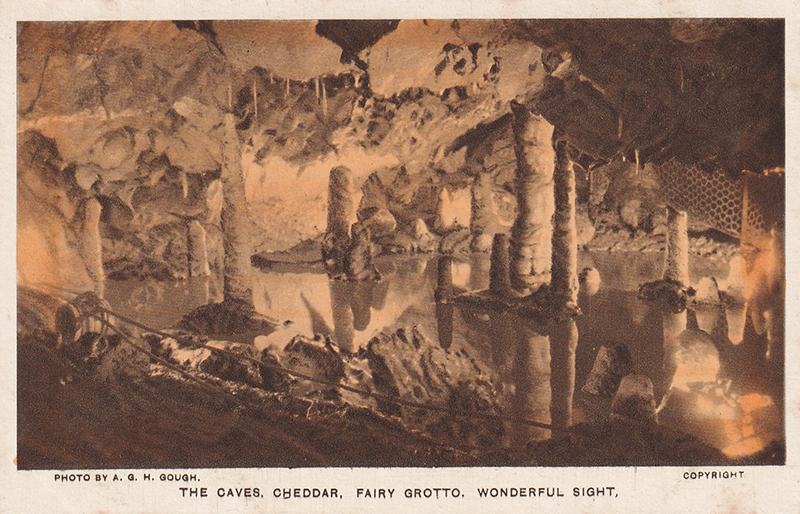
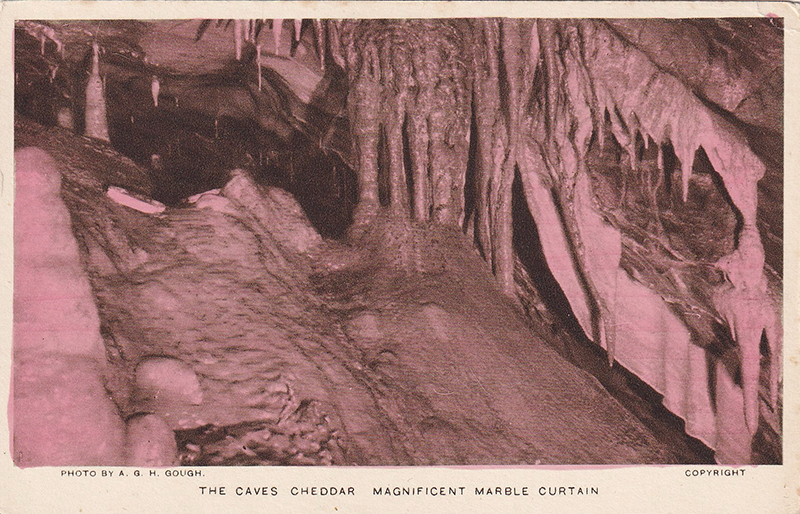
Charlie Franklin’s work considers control, physical experience and memory within the natural landscape. Her research includes how formations such as standing stones, grottos and geological debris remain or change across time. With a particular interest in materials and the properties they hold, she is experimental in her approach to making. Everyday items including cardboard, plastic sheeting and gaffer tape are repurposed to build the foundations of her sculptural work. Franklin also collects found imagery such as postcards and photographs, which she reworks to become something else.


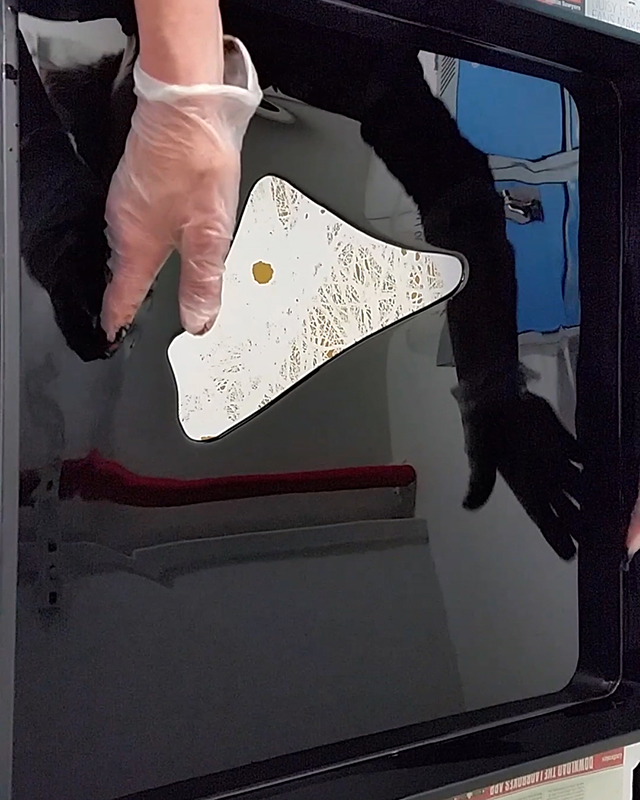
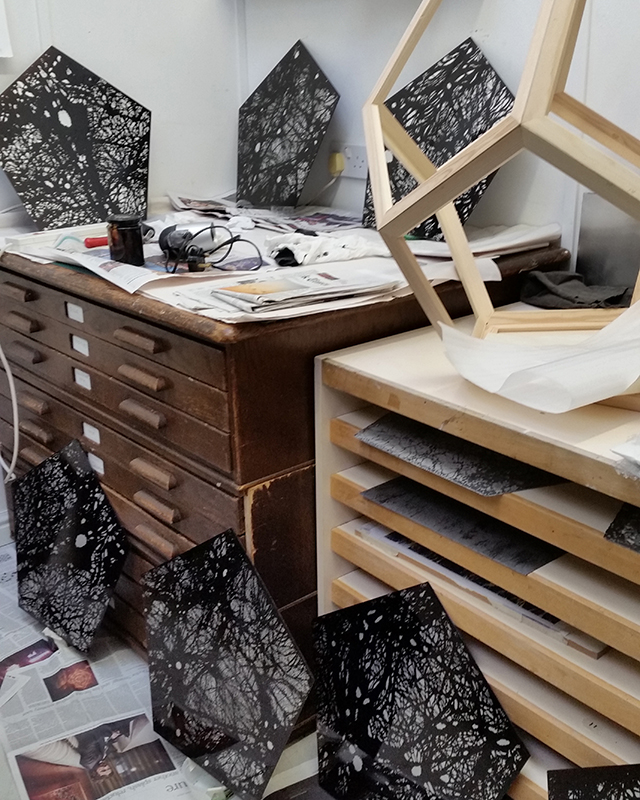
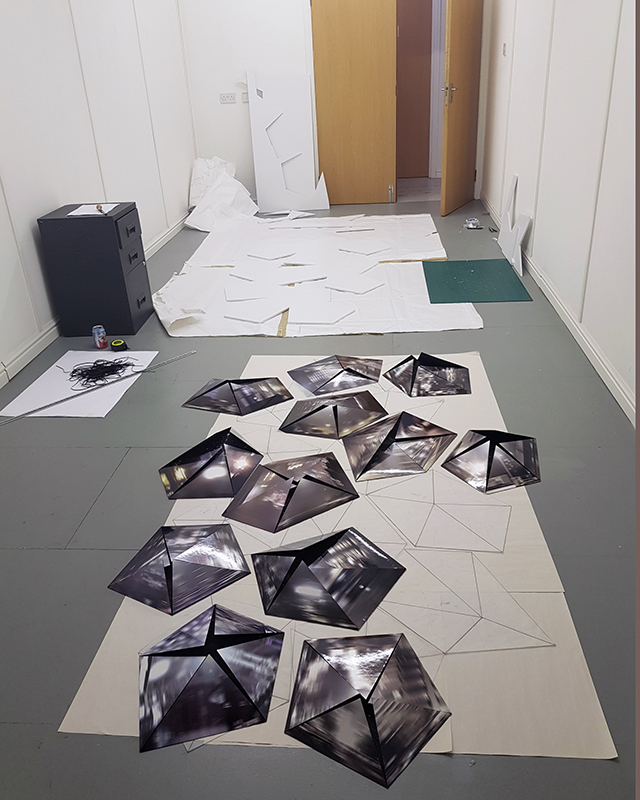
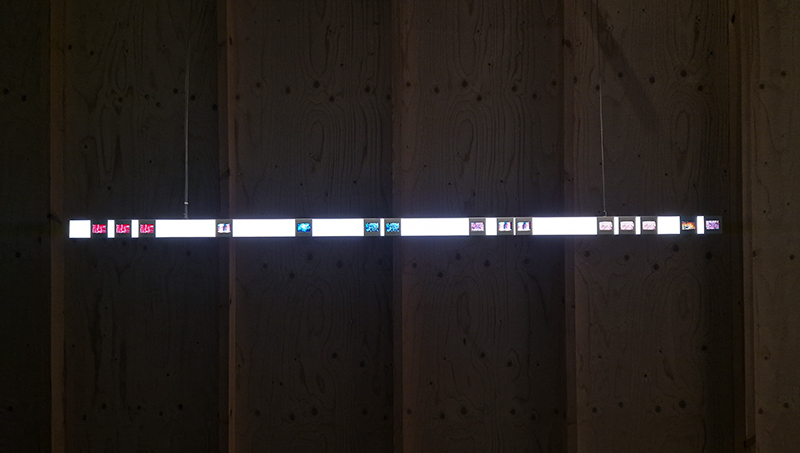
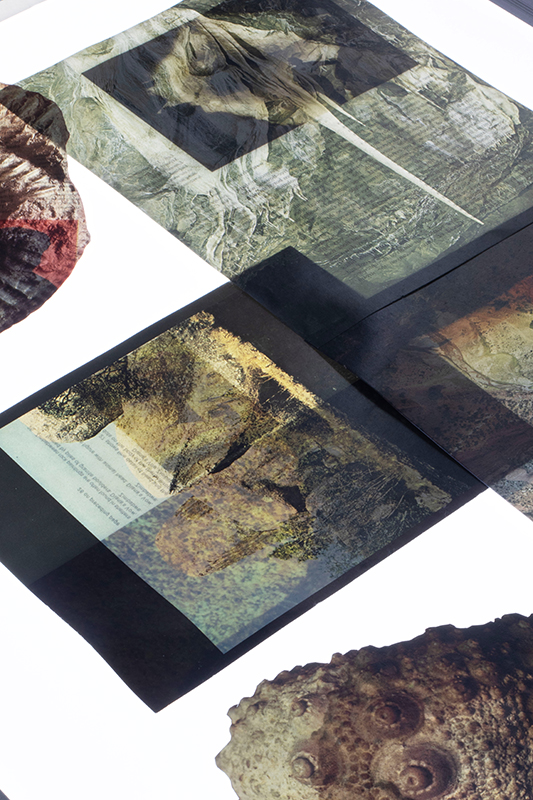
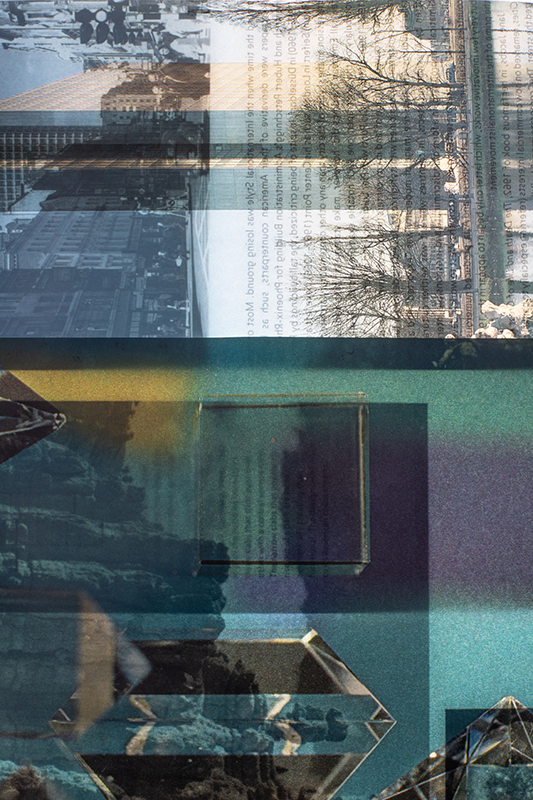
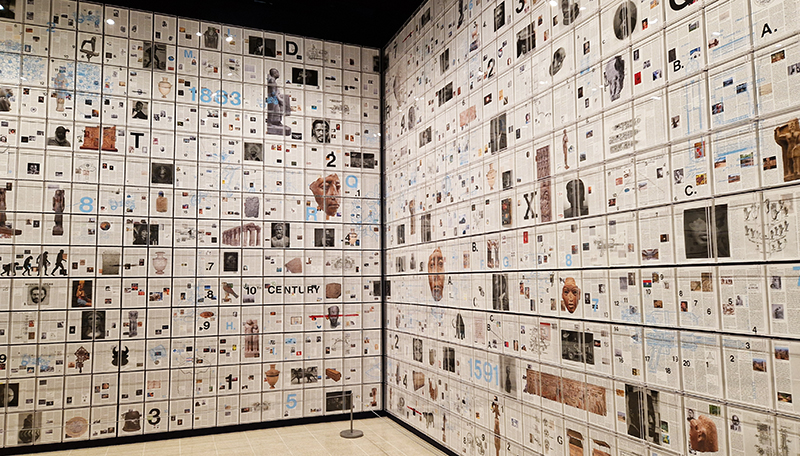
In Litho/Domous, Rona Lee layers photographic plates from mass produced ‘coffee table’ books onto lighting panels, utilising the ‘bleed’ between them that this reveals, to evoke the tectonic instabilities of
contemporary eco relations. Originating in the post war ‘golden age of capitalism’, and designed as statement pieces for home display, the aspirational focus of these image-rich publications on culture, travel, landscape, can be said to prefigure the arc of the smartphone in making the world consumable. At the same time titles such as The Mineral Kingdom and Library of Nations speak to the legacies of the Enlightenment project, offering up an order of things in which Mankind / the Anglophone world is positioned as ascendant and Nature – along with ‘other’ cultures – is ‘put on the table’.

Deborah Tchoudjinoff’s video installation The City of Gold takes a speculative look at Earth in the far future. Her work considers vast, beyond human, geological timescales where continents have once again become one. Past supercontinents create room to speculate upon future ones if we understand Earth as shifting, moving matter. Starting as a short fiction text Tchoudjinoff began to form an imagined world of cities in a future supercontinent of Amasia. The fictional cities named after the minerals that are heavily sought – rare earths, copper, uranium, gold, and coal – hinting at the narrative of an Earth depleted of the resources we rely on. The City of Gold is one of five imagined cities.

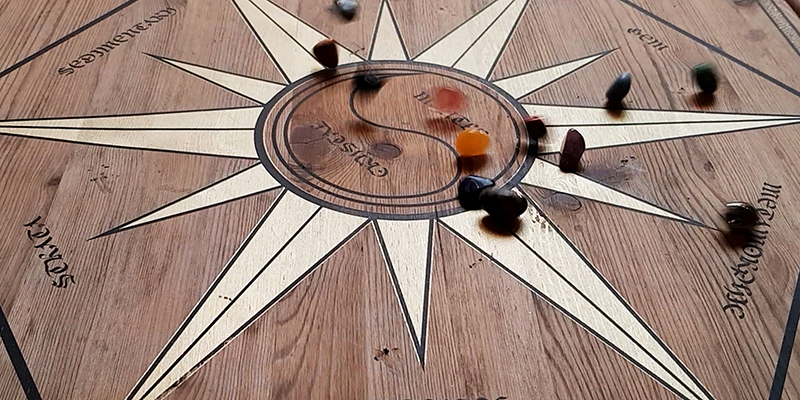
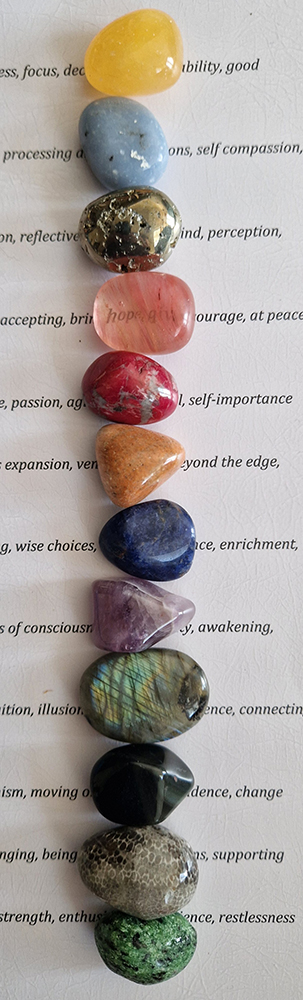
An accompanying events programme includes an urban geology walk with Geologist Ruth Siddall, discussing the origins of the local built environment; Cheong tasting by chef Moonhyung Lee who explores human-mineral entanglements through digestion; a crystal growing workshop led by Julie F Hill and I will be offering visitors lithomancy readings every Friday afternoon. The reading of stones proposes insights into the power and allure of stones emanating from the symbolic meanings attributed to them and exposes the entangled relations between the human and the geologic found in our language and desire to align the human condition with the lithic.

Once I start thinking of minerals as something we swallow to make our body function, I also start to think of how our body comes to be composed of these minerals, and that when we gradually decay after death we become mineral components again. So, the gesture of swallowing a tablet or vitamin pill is as magical, or let’s say as supernatural, as we want, because we really are swallowing a stone. – Otobong Nkanga

Link to Marina Walker essay The Writing of Stones published by Cabinet Magazine.

London once had many stones. They made convenient landmarks for gatherings and councils, or else marked boundaries or distances. As a result, they often crop up in place names – Link to The Londonist ‘Lost Stones of London’.

Gallery visits

Mónica Alcázar-Duarte in Cultural Reforesting Exhibition at Orleans House Gallery. In this exhibition, the artists remind us that we not only have a relationship with nature but also that we are nature. We are human animals. Together, with our more-than-human neighbours, we are a growing, singing, howling forest. 

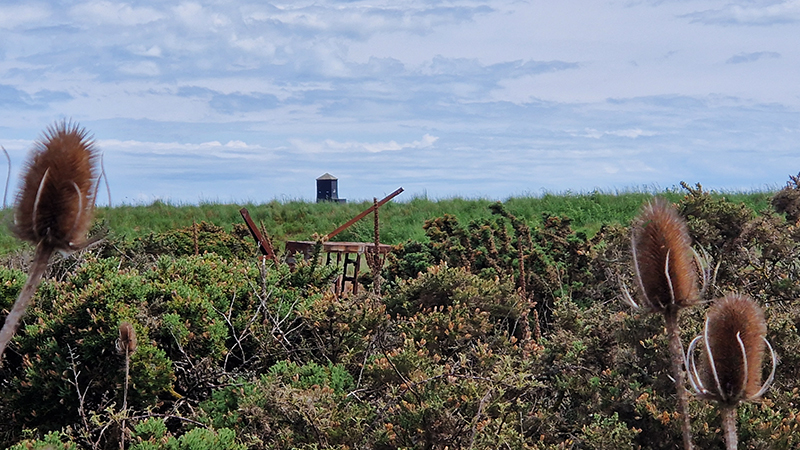
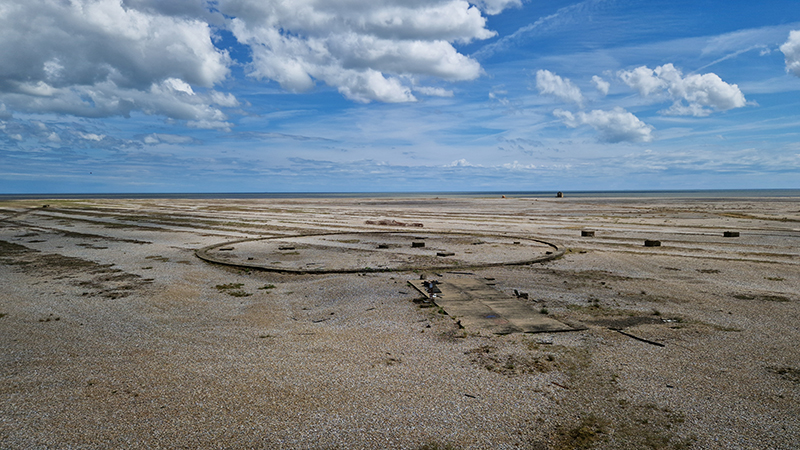
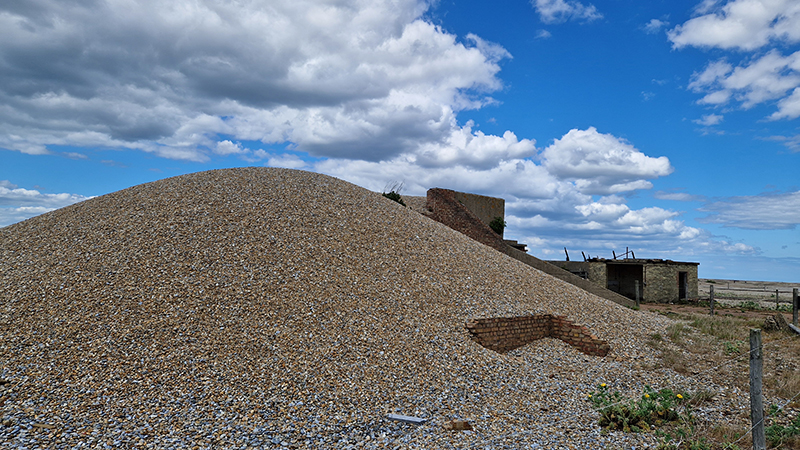
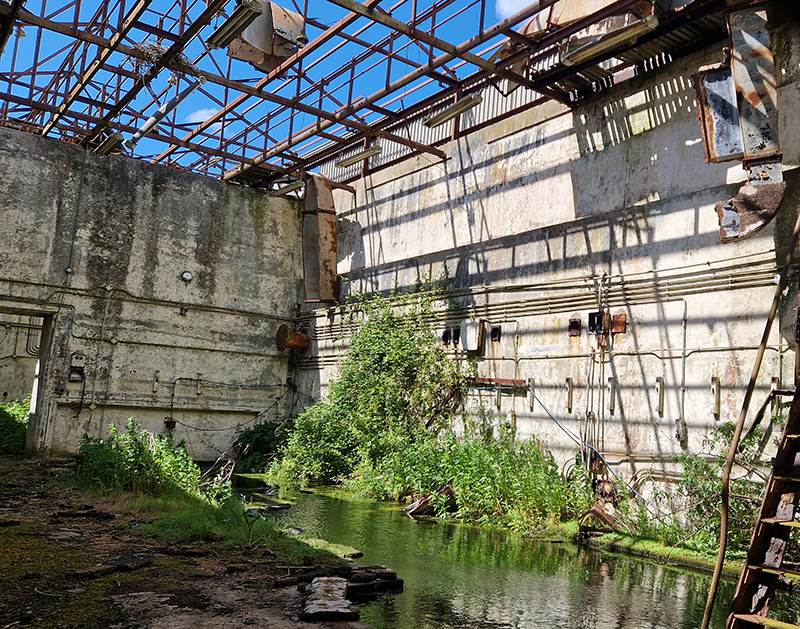
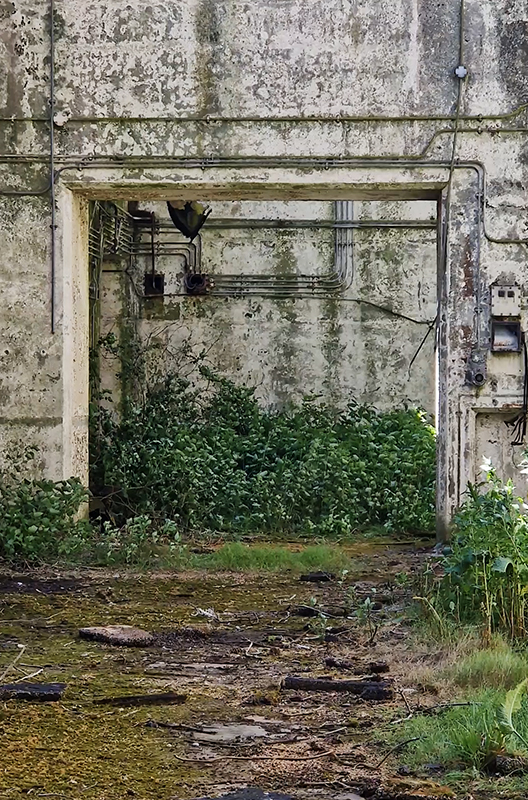
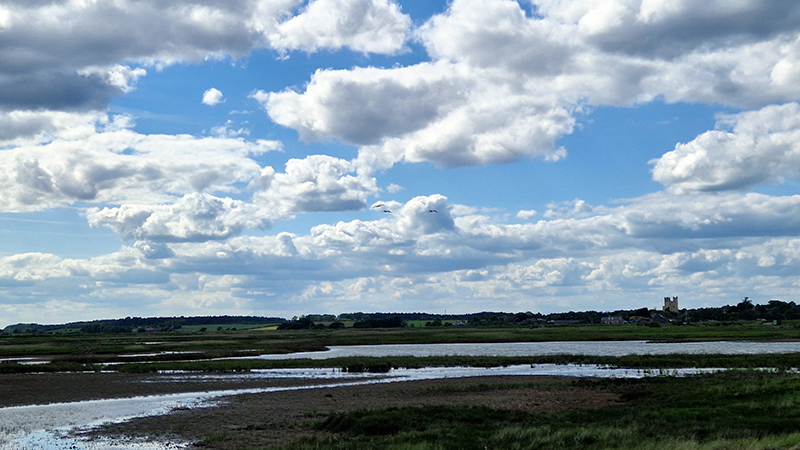
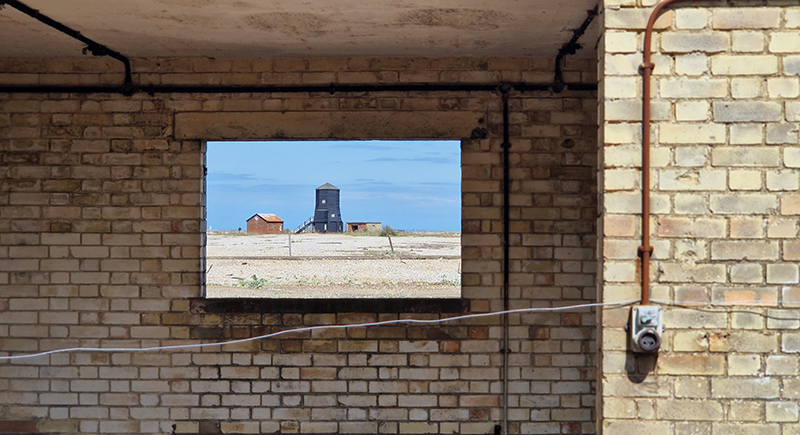
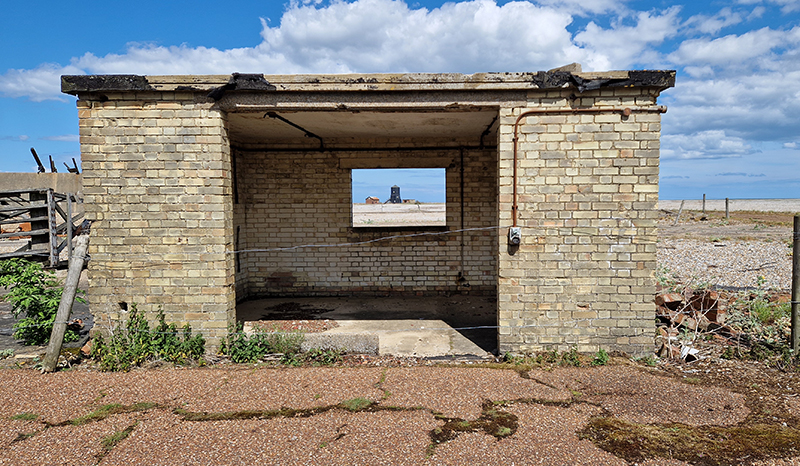
Under the big Suffolk skies of Orford Ness. Walking landscape that bears the scars, physical and emotionally resonant, of years of intense military top secret experiments. Here radar was developed, the aiming of bombs was refined, material vulnerability was tested with destructive, explosive projectiles under simulations of attack and famously it is the site of environmental tests during the late 50’s, early 60’s, in the development for detonation of the atomic bomb. 

The weight of the shingle shored up around the buildings and on the roofs used to dampen the explosions.

There is a lot to respond to. It is now a spectacular nature reserve but apparently not so many birds here this year. We were lucky to see a short eared owl hunting and some gangly spoonbills in flight.

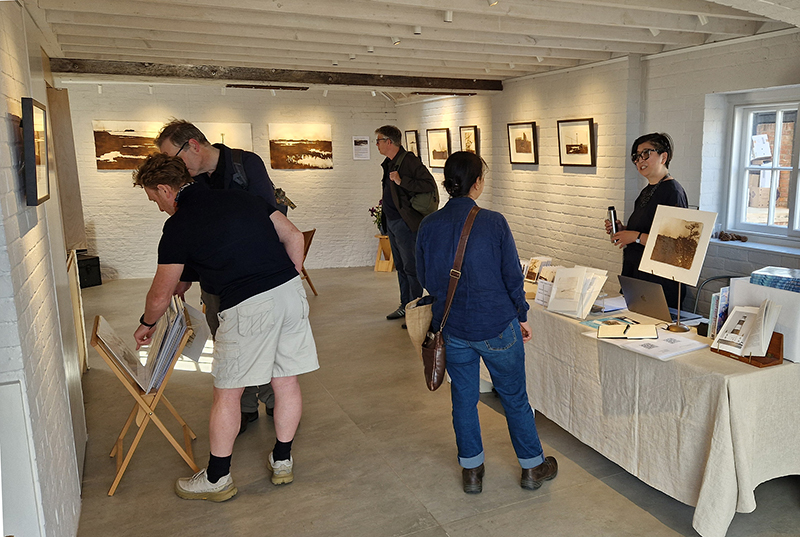
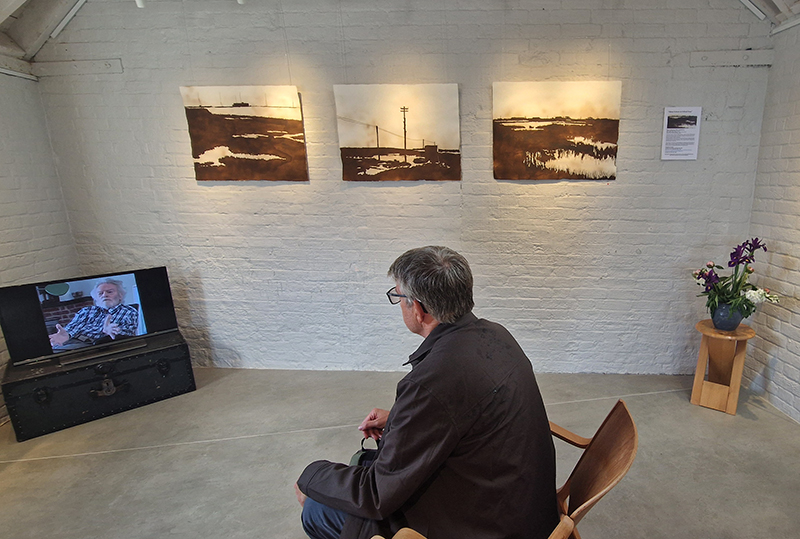
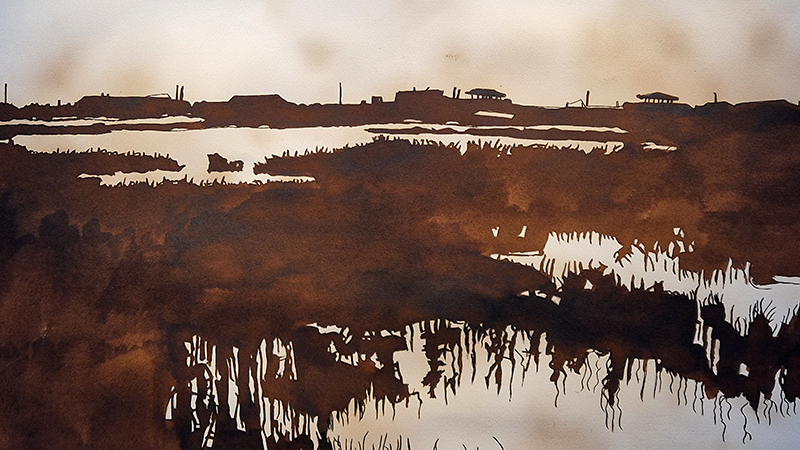
Kaori Homma Silent Echoes at The Watch House, Orford Quay – Inspired by Orford Ness, the UK’s only site of atomic experimentation, this exhibition explores the hidden histories and lingering memories within its landscape. Through the unconventional method of Aburi dashi or fire etching, the artist explores not only the visible remnants of the secret history of Orford Ness, but also the unspoken memories that linger in the air. Unlike ordinary drawings made by the pigments on the surface of paper, Homma’s works are made by fire which etches the images into the body of paper as a burn mark.

Electric Dreams at Tate Modern celebrates the early innovators of optical, kinetic, programmed and digital art, who pioneered a new era of immersive sensory installations and automatically-generated works. This major exhibition brings together ground breaking works by a wide range of international artists who engaged with science, technology and material innovation. 

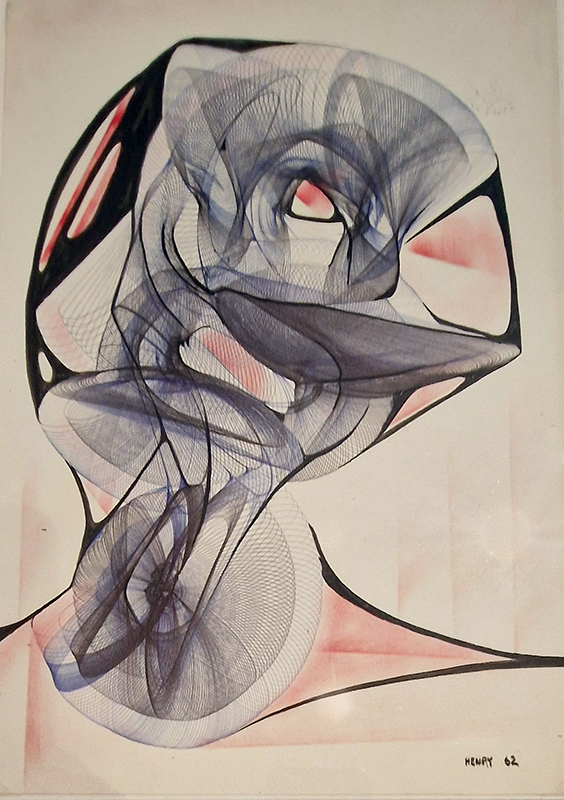
Desmond Paul Henry used a repurposed bombsight computer, designed to drop bombs more accurately, as developed at Orford Ness, to make a drawing machine which he then hand embellished.

The Pleasure of Misuse curated by Indira Dyussebayeva-Ziyabek and Maria Hinel at Royal Society of Sculptors. ‘The humour that springs from manipulating or referencing the mundane is paradoxically self-reflexive – appropriated objects suddenly appear anthropomorphic, our laughter becomes directed at ourselves and the intermittent absurdity of the human condition. The Pleasure of Misuse explores the mechanics and psychology of humour in the everyday, considering its potential to heal and its power to disarm, creating the sense of complicity and the space for self-reflection amid these anxious times.’

Images – Andy Holden, Ty Locke, Peter Fischli & David Weiss, Cornelia Parker, Richard Wentworth

Samuel Zealey, Angela Eames, Tony Fleming, Charlotte Guerard, John Strutton and Kate Fahey in Heavenly Skeletons at Coleman Project Spacesix contemporary artists whose work repositions drawing as an expanded multidisciplinary field.  Heavenly Skeletons is a dynamic investigation of how drawing translates abstract concepts into tangible form… 

Gorgeous show with thoughtfully chosen works that like Samuel Zealey’s vertiginous sculpture balance perfectly.

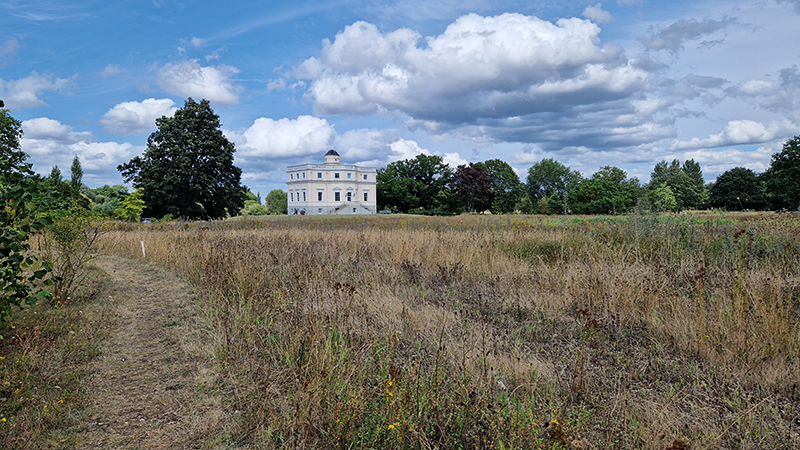
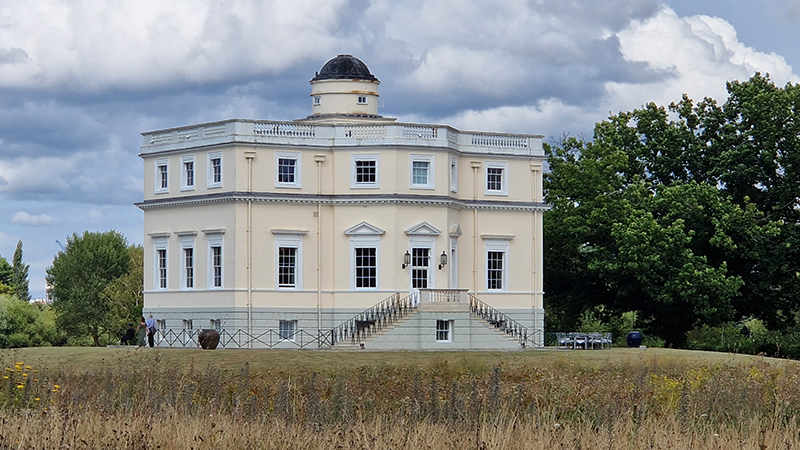
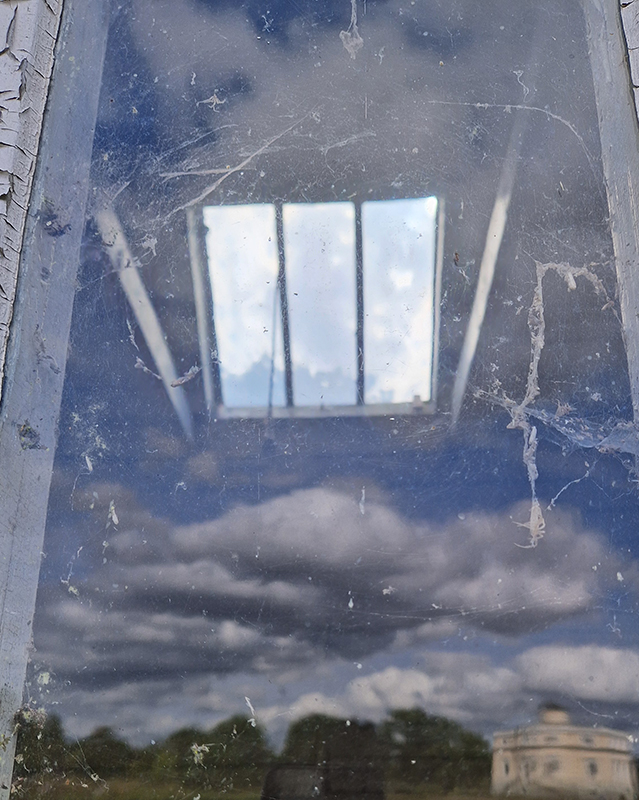
Research trip to The King’s Observatory, The Old Deer Park, Richmond.

The observatory was commissioned by King George III to observe the transit of Venus across the face of the Sun in 1769. This celestial event allowed astronomers to estimate the size of the solar system and the distance between Earth and the Sun. The telescope cupola remains the oldest of its kind worldwide and can still be wound open but the large reflecting telescope, made by James Short in 1745, and used to view the historic event in 1769, was sent to the Royal Observatory of Ireland at Armagh in 1840 when Queen Victoria planned to dismantle the observatory. Many of the instruments were dispersed but the building was saved by The British Association for the Advancement of Science.

Over its long history the observatory undertook a multitude of astronomical, meteorological, magnetic and electric observations. Observing sunspots began in 1819, with a revolutionary photo-heliograph being installed in the dome roof in 1856 to photograph sun spots using the first instantaneous photographic shutter ever made. The observation of solar radiation started in 1875 when ‘black bulb’ thermometers were set up in the garden.

Underground ‘magnetic’ chambers were built at one time to keep the equipment at a constant temperature, but these have since collapsed or become inaccessible.

‘The chamber in which most of these instruments [magnetographs] are situated is a somewhat eery [sic ] place. It is underground, in order to be kept constantly at the same temperature, and as care must be taken to shield the sensitive photographic paper from all light other than the line or spots it is intended to record, the chamber is all but totally dark. If you are standing in it you see nothing, but you hear the measured beat of the clocks driving the several drums. The barograph is in the same chamber as the magnetographs. The thermograph and electrograph are upstairs, as they must be kept in close proximity to the outer air’. (Article ‘The Kew Observatory’ by R. H. Scott in Good Words 1889).

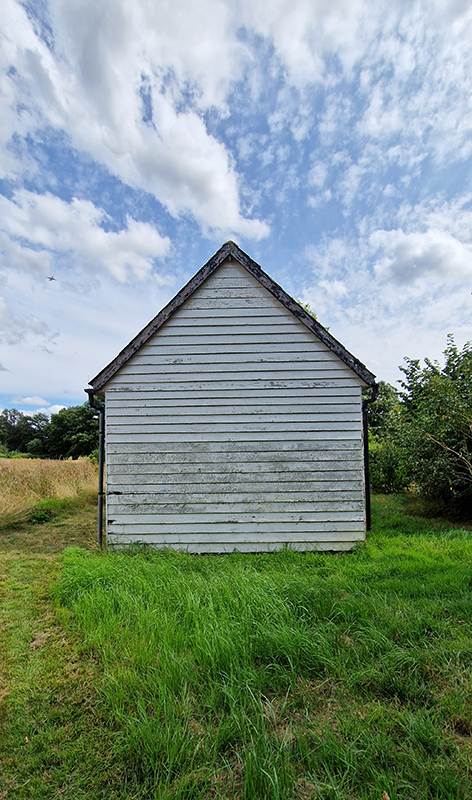
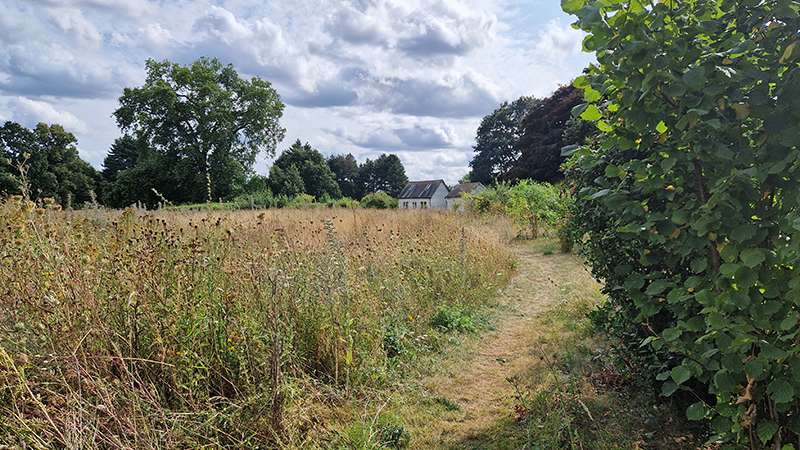
I first went to see the observatory in 2022 during one of the open day tours, but this time I went specifically to see the magnetic observation huts located in the grounds.

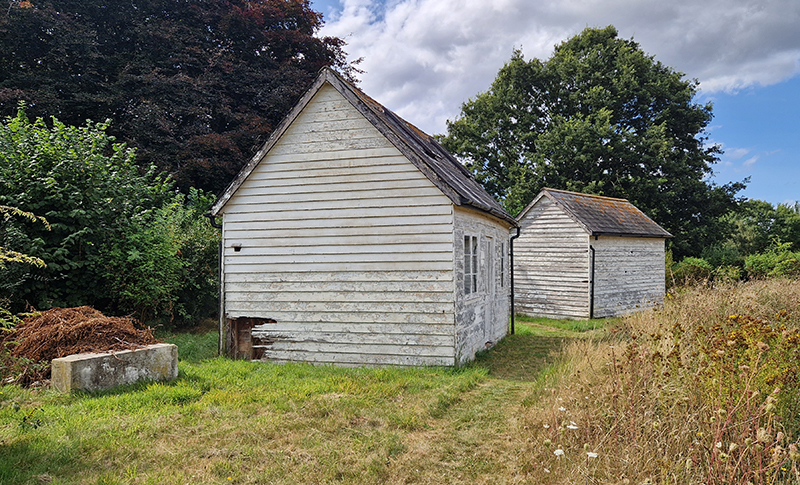
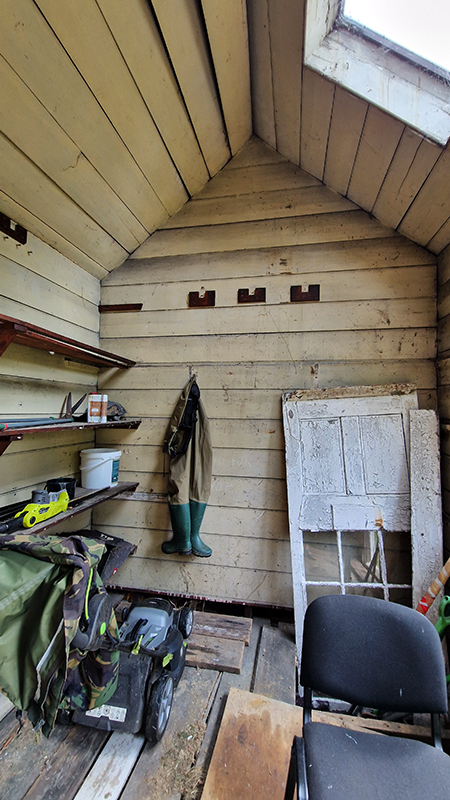
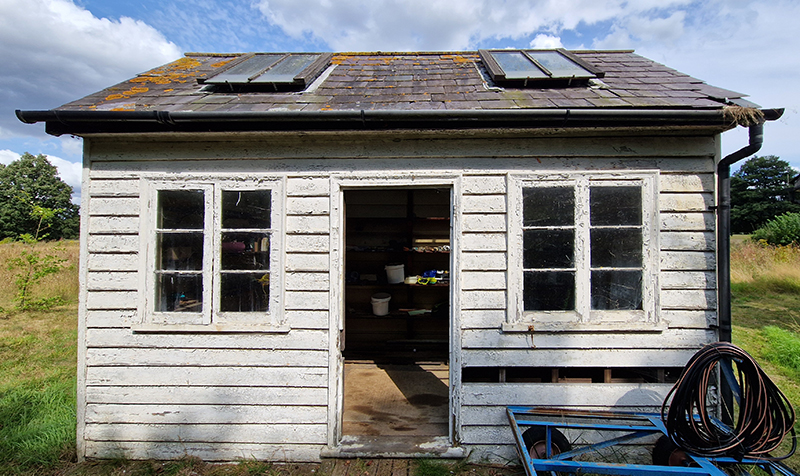
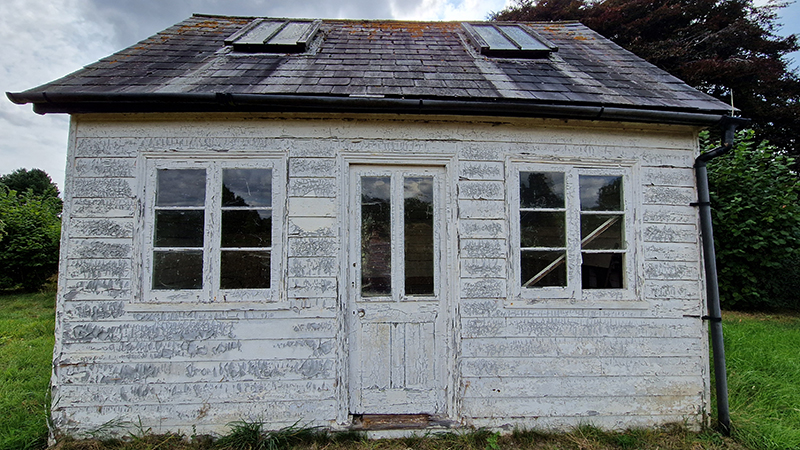
One of the trustees told me they are aiming to have the huts restored as they are Grade II listed and are in very poor condition. They are used for garden equipment at the moment.

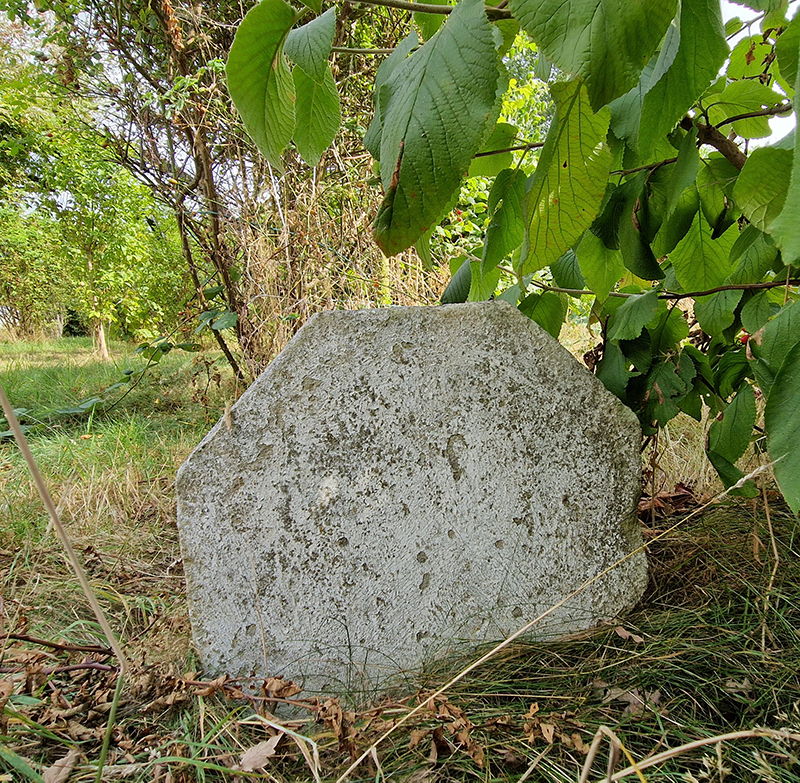
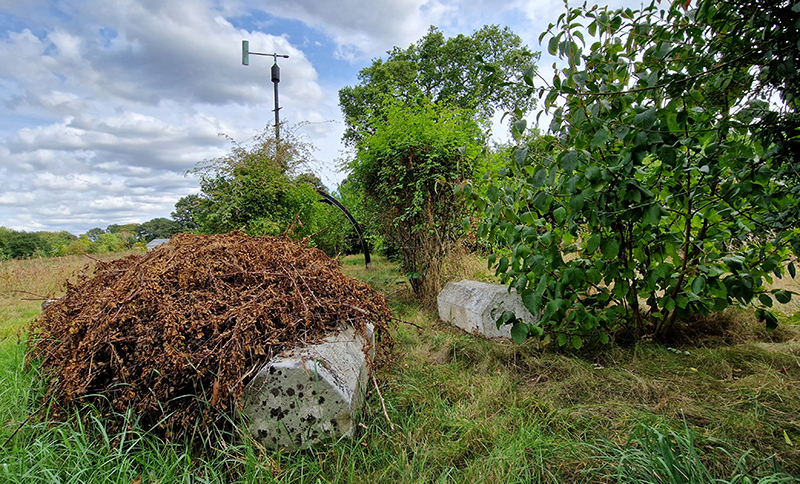
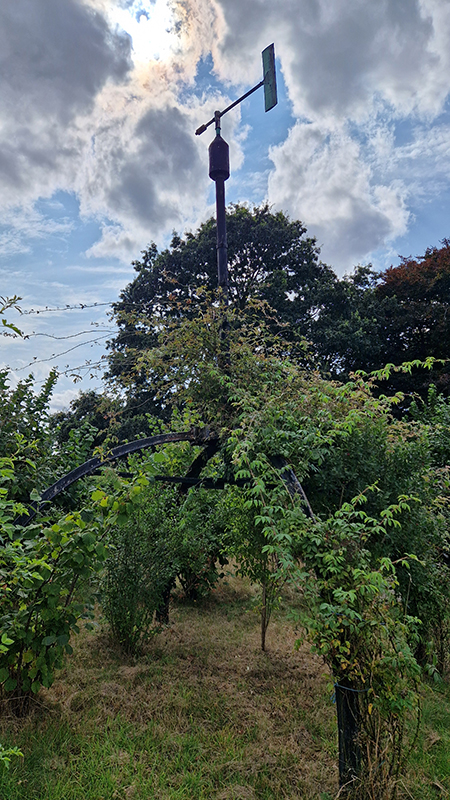
The first hut was built around 1854 by Colonel (later General Sir Edward) Sabine who had an interest in magnetism. The second hut came much later maybe not until 1911. From early maps and photographs it looks like the huts have changed positions and are now much closer together. Some of the original concrete pillars are on their sides in the grass next to an overgrown anemometer.

Lots of pioneering meteorological and magnetic experiments took place here.

The development of electric tramways locally impacted the sensitive magnetic work at what became known as Kew Observatory and so a new magnetic observatory was established at Eskdalemuir in Scotland (which I visited earlier this year) to continue this work away from industrial interference.

From 1959 Kew began work on rocket and satellite equipment, designing instruments to be sent up in American satellites, including a spectrometer designed and made at Kew in the former ‘calibration hut’, and in 1961 the ‘Skylark’ rocket. The balloon winch hut was built in 1963. In the late 1970s the work at Kew was gradually being phased out. In 1974 many of the instruments were distributed to the Science Museum and the National Maritime Museum. In 1980 the Observatory was finally closed down.

Work in progress

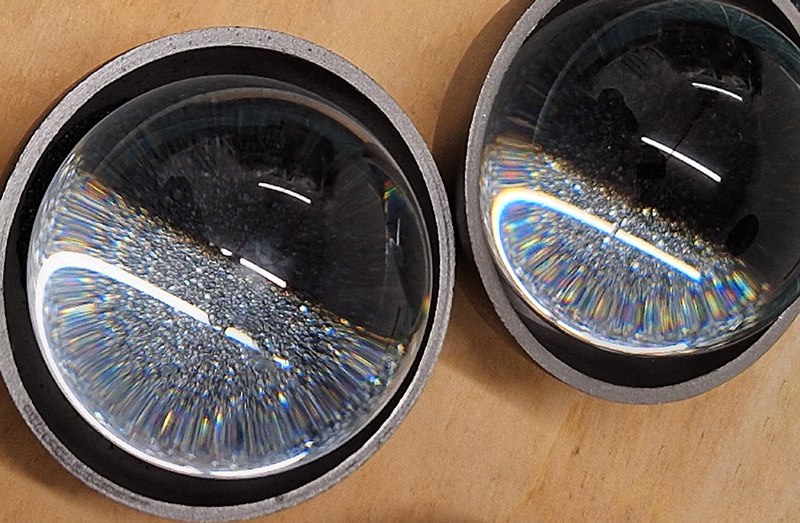
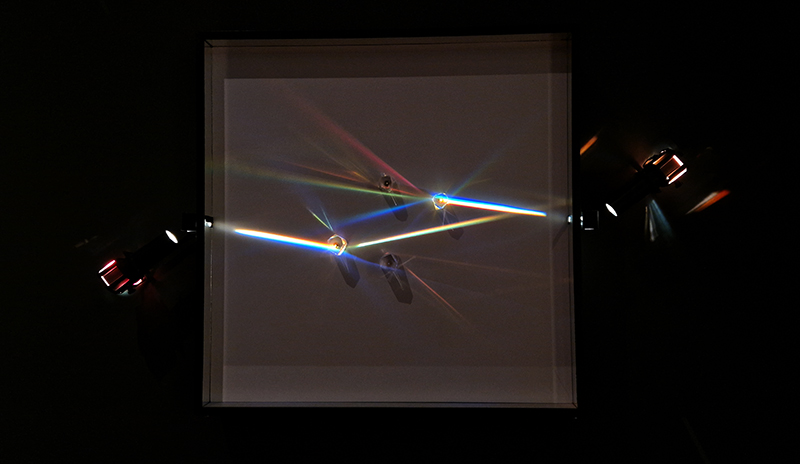
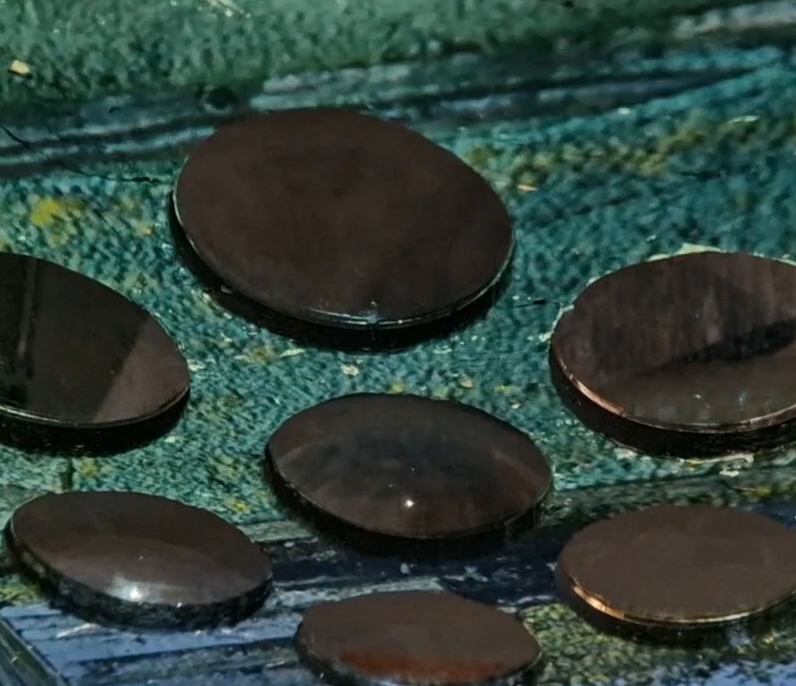
Very excited by the possibilities for using the optical lenses I have to project through in multiple configurations.

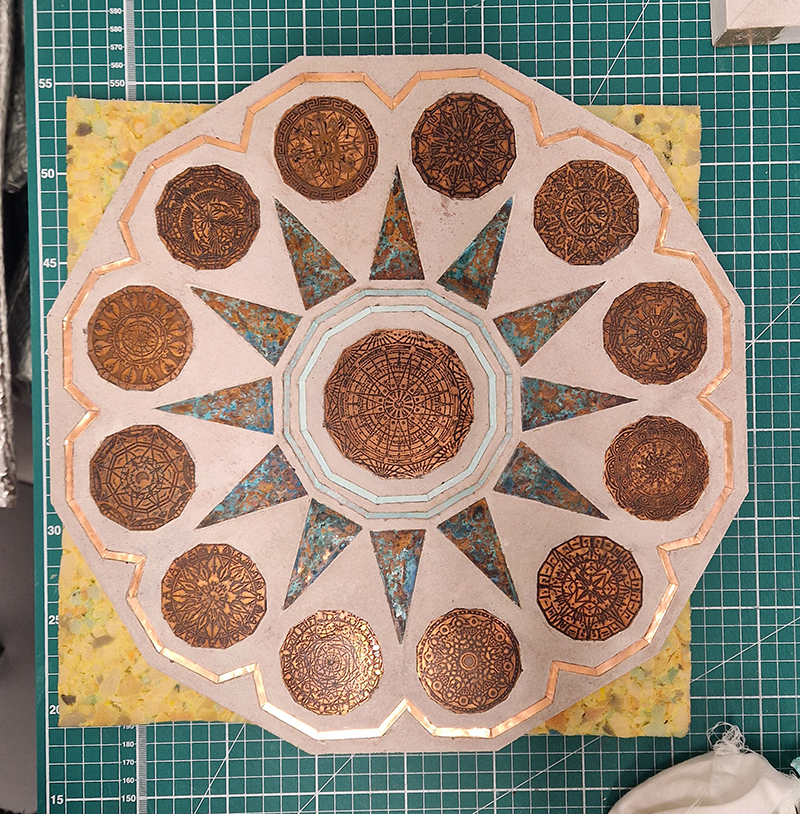
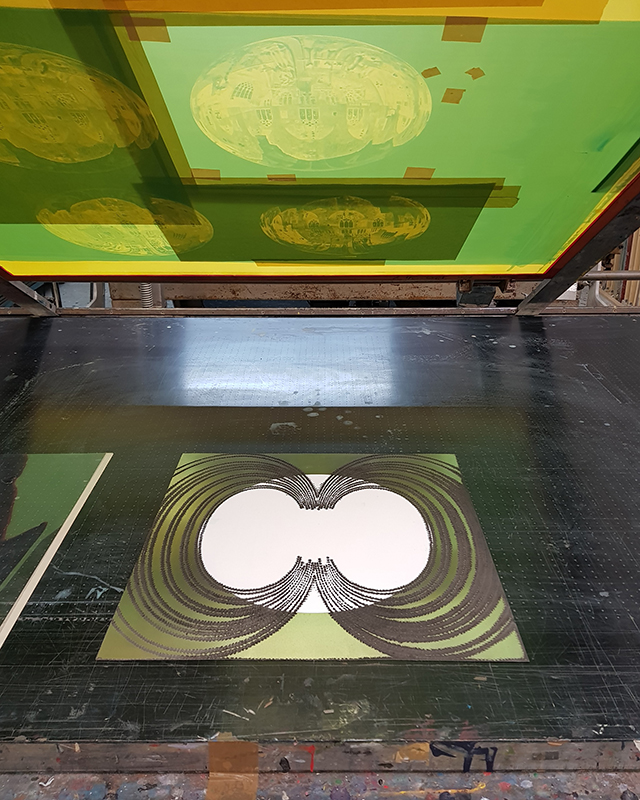
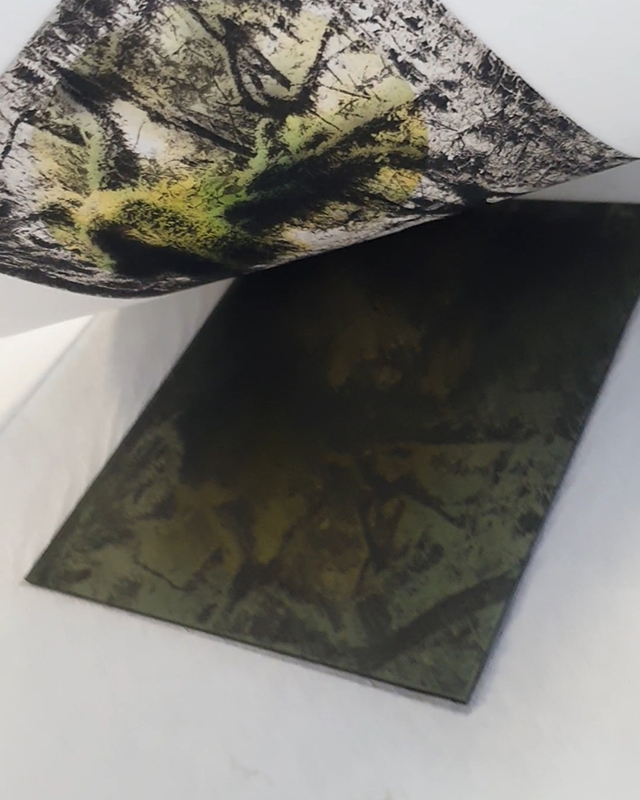
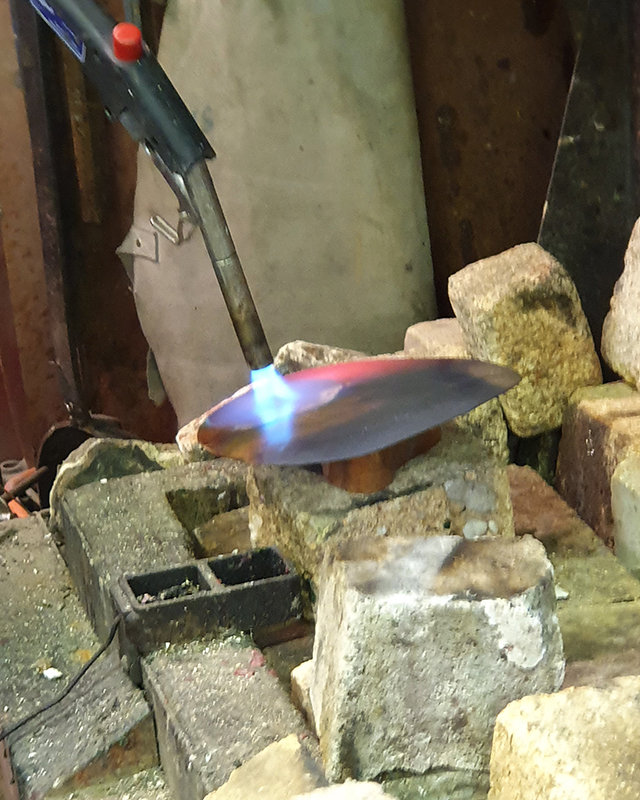
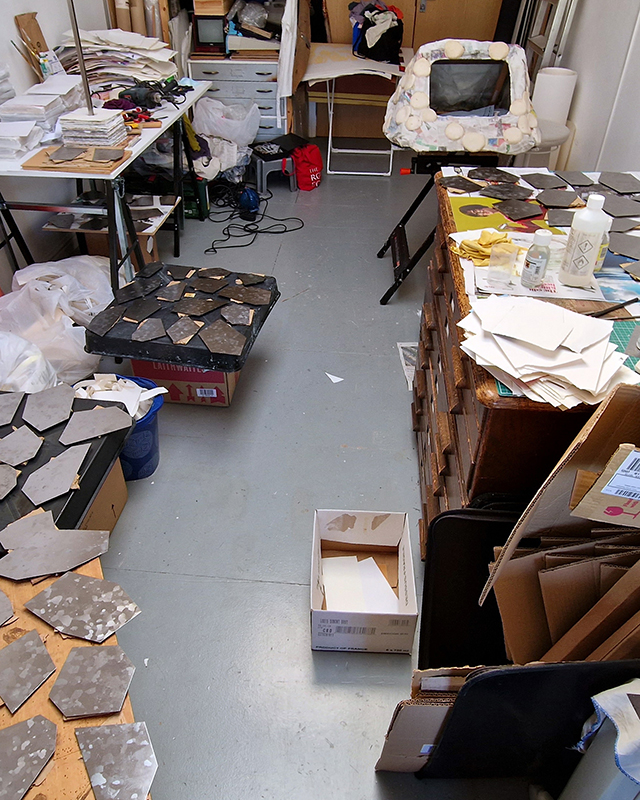
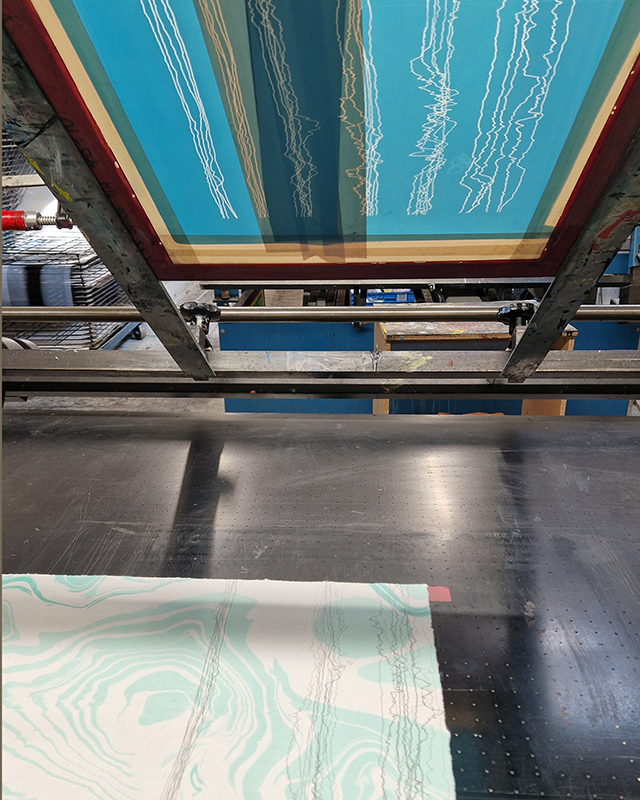
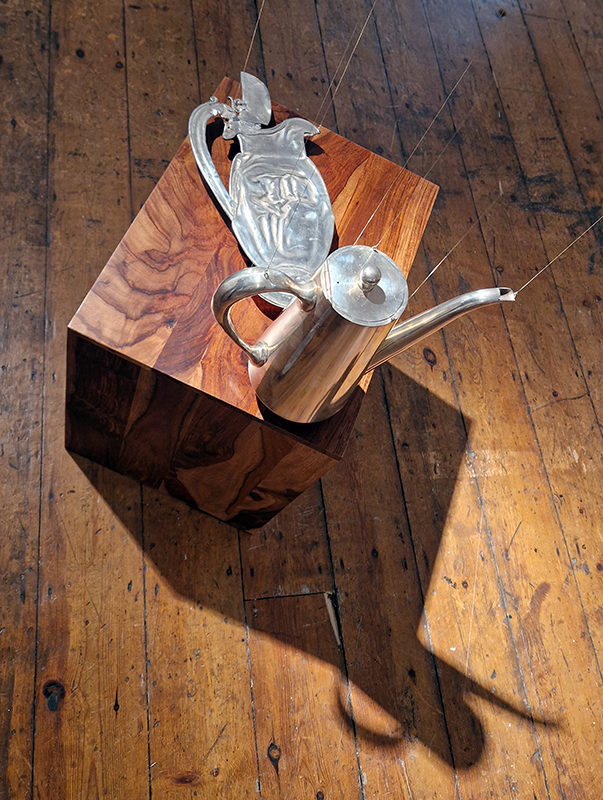
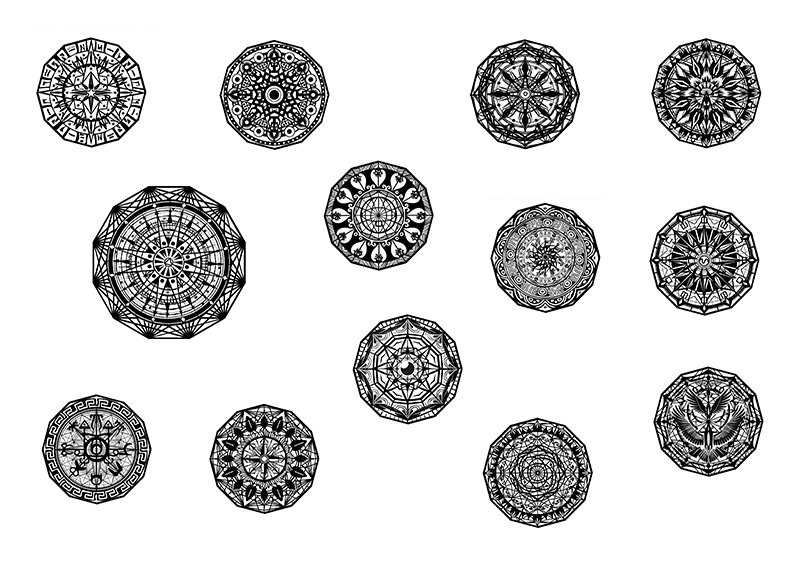
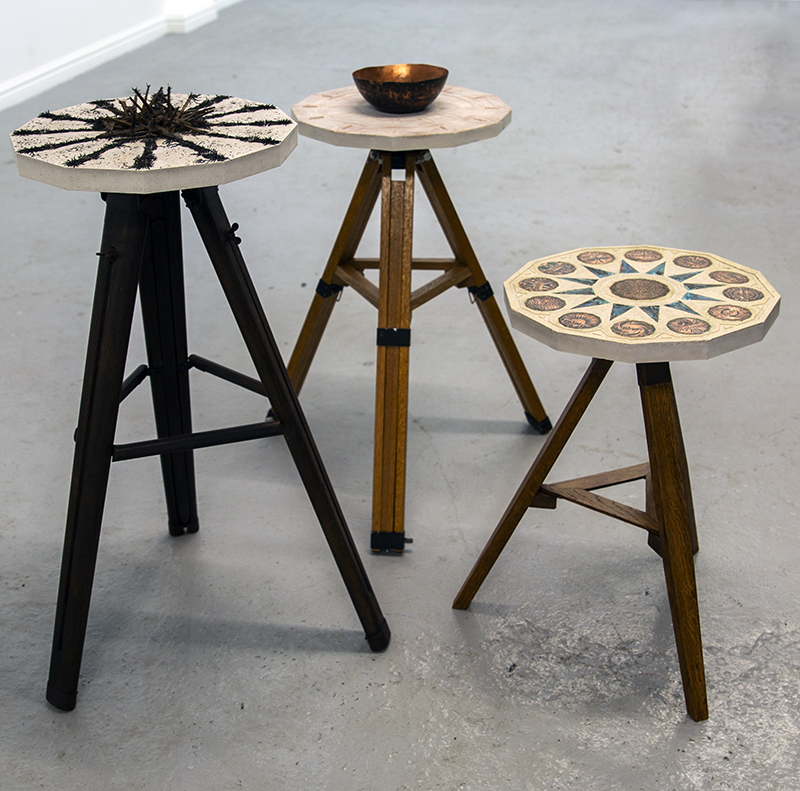
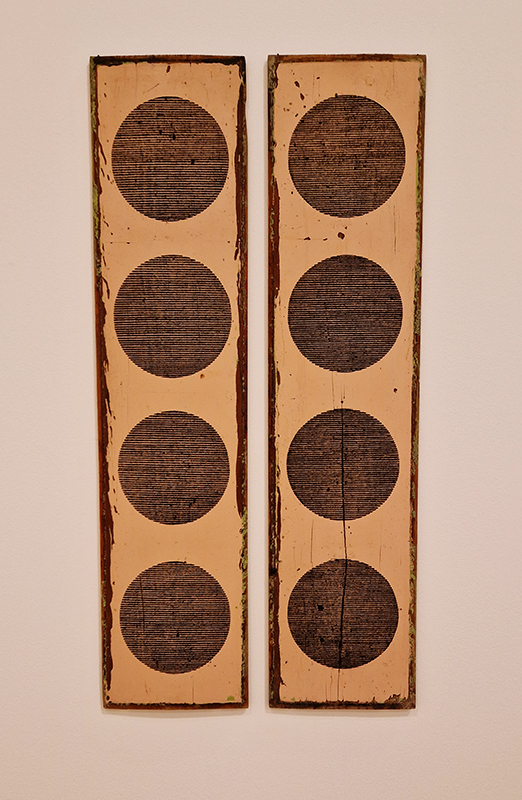
I have also been working on creating new positives for etching into copper which will be inset into a new tablet for the Instruments of the Anemoi series. The tablets are partly inspired by the concrete pillars used at a magnetic observatory – similar to the ones laying in the grass at The King’s Observatory. I am pushing the amount of detail I can get from a sugar lift solution for these new pieces.

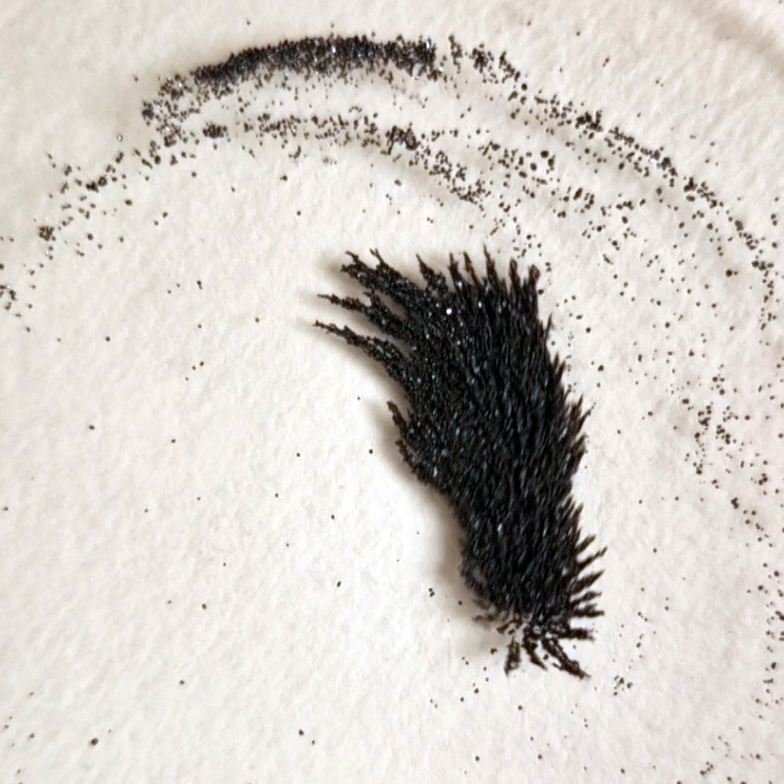
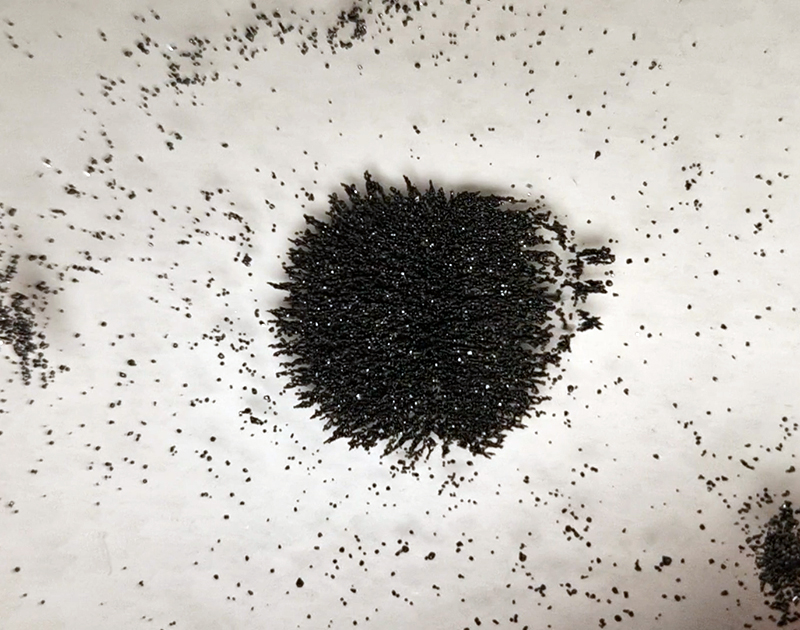
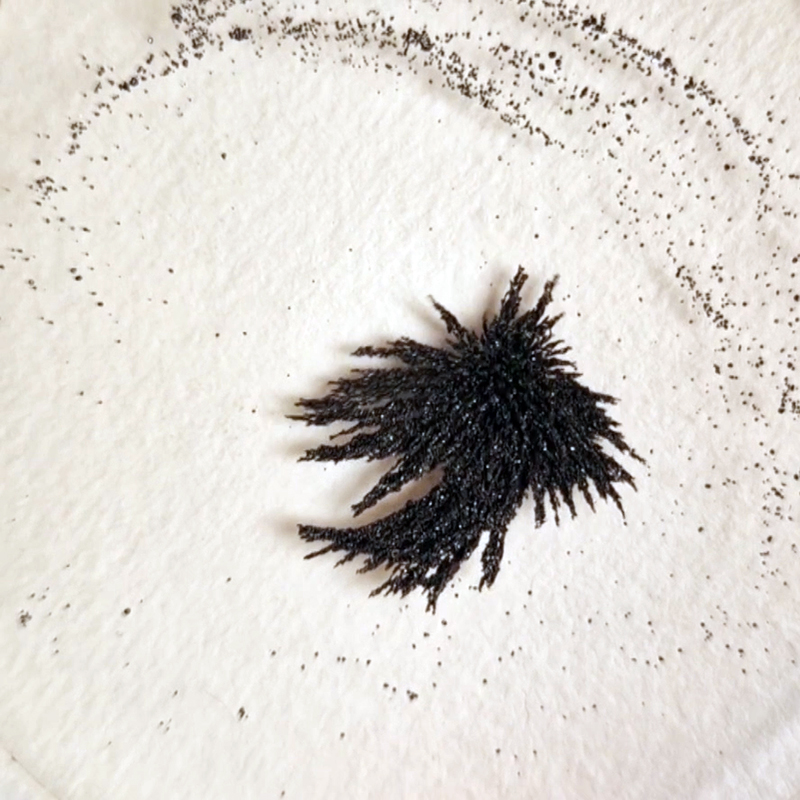
Experimenting with black magnetic sand to create a sculpture that will fit in a 1cm cube.

It’s also great fun to play with. I can’t get over how glittery and magnetic it is.

Gallery Visits

Roger Ackling Sunlight at Norwich Castle. So pleased I was able to visit this understated but emotionally gripping exhibition – a tribute to the power of the sun and the relationship between star and artist. Scales of time burnt into card and wood. Imperceptible to the sun, a life’s work for the artist.

The Nature of Things curated by Jane Hayes Greenwood at Castor Gallery in its new location of a grade II listed church building. Inside, however, is a bright white cube. An interesting mix of work with a surreal bent. Andy Holden was out front selling small beer bottle sculptures at affordable prices though I didn’t enquire as to what this was.

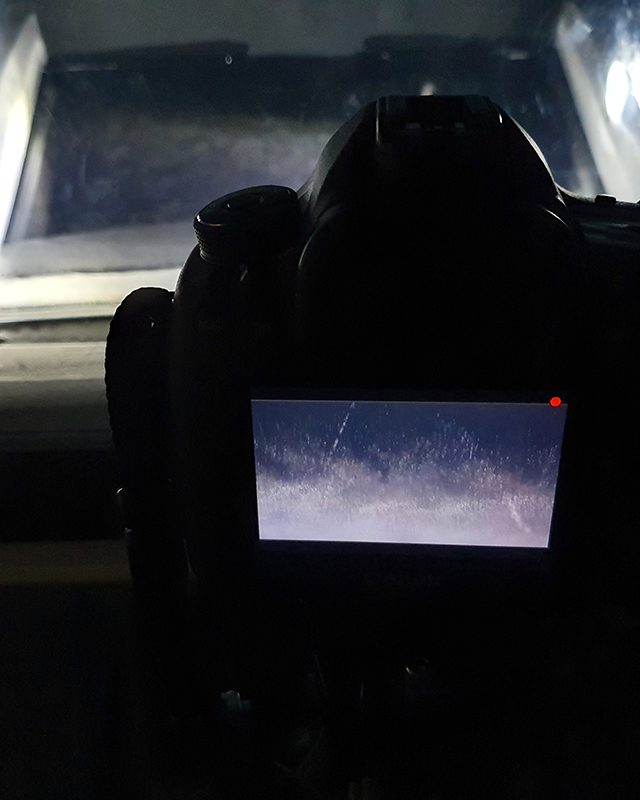
Dumping Ground at Hypha Studios HQ curated by Andrew Kernan, Mariette Moor and Noelle Turner – a group show of artists interested in recycling unwanted physical and psychological material. All light from the generous expanse of glass windows on this corner site amid the office towers of Euston had been blocked with crumpled aluminium foil insulation. Inside it was more than dark as eyes struggled to adjust rapidly from the summer sun. Even after the 20 minutes it takes for dark adaptation to take effect it was still hard to navigate. It did mean taking time to search out the works, which was engaging, but some were just lost in the shadows.

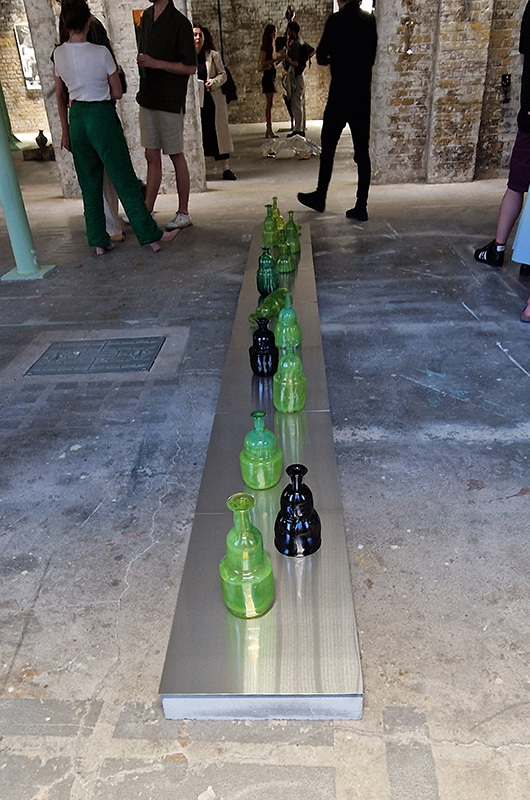
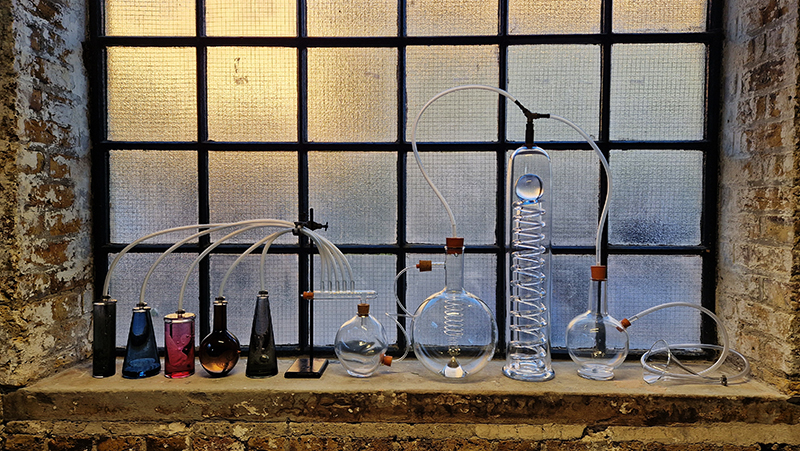
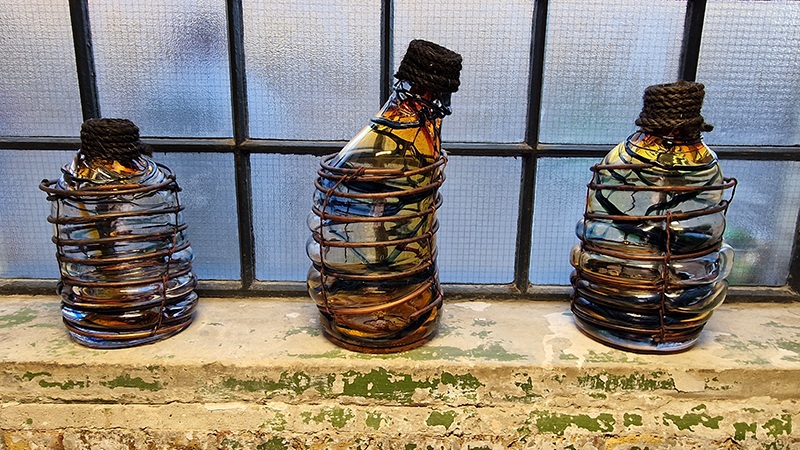
Vessel at The Bottle Factory curated by OHSH projects – drawing on the industrial heritage of the site and the vessel as protector, container, body, giver and taker, fragile, disposable, functional, ornamental or sacred. A stunning space beautifully curated with inventive materials for low plinths and glass objects set to glow against frosted windows.

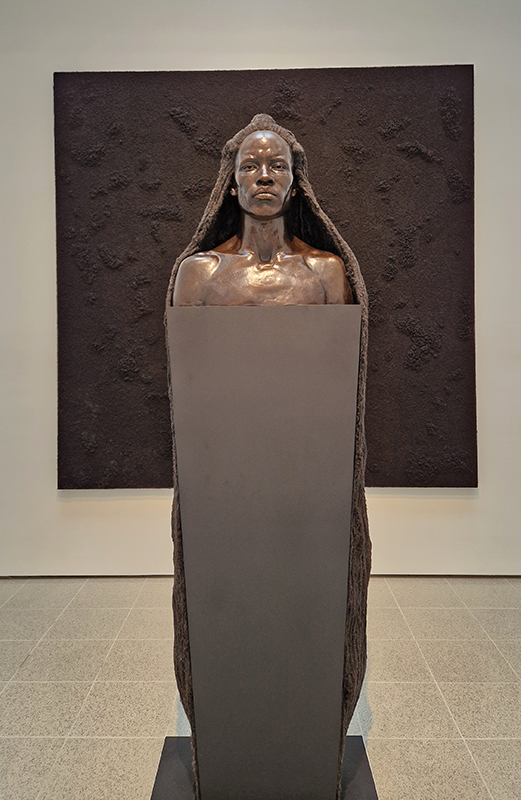
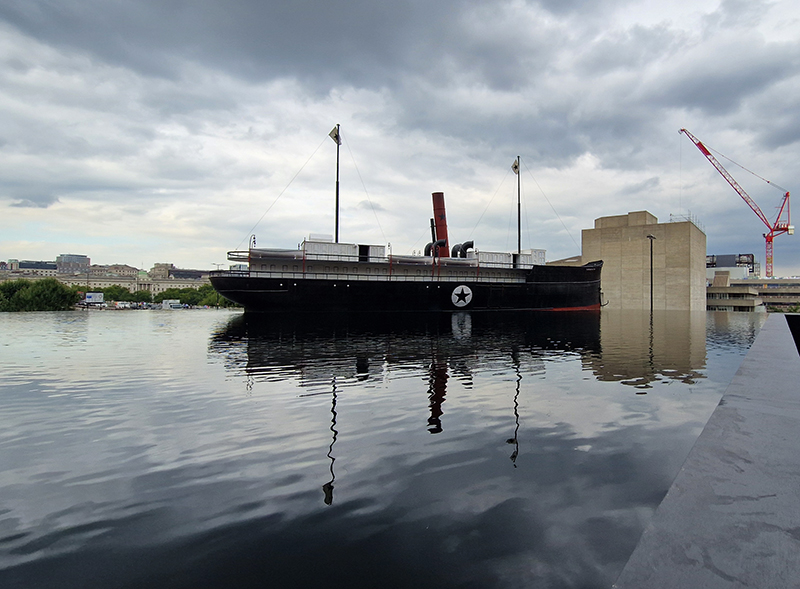
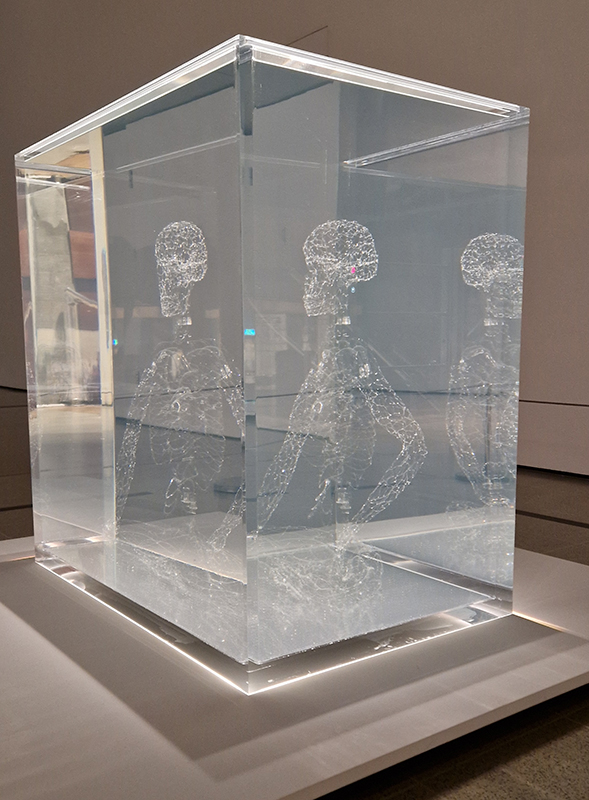
Tavares Strachan There Is Light Somewhere at Hayward Gallery. Immense scale and scope. This show really was epic. A 14-metre-long Black Star Liner on the flooded roof pumping out music live from a Jamaican radio station. Human figures made of glass and submerged in tanks of mineral oil to make ‘invisible’ sculptures. From space exploration to the North Pole, a timely light is shone on the explorers and cultural pioneers that have not received due recognition.

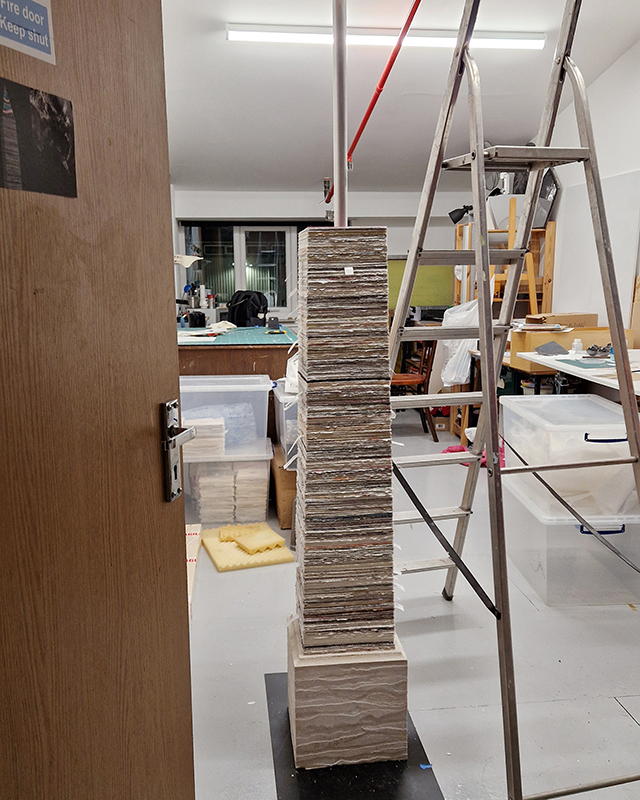
Work in progress on the Azimuth Obelisk sculpture has taken a new direction and I have abandoned the idea of casting the obelisk in aerated concrete. I also have new dimensions to work with having found an interesting article on the historic dimensions of obelisks with the advice that ‘designs that have too large a gap in scaling between elements will lack hierarchical cooperation and lead to a sense of emotional unrest‘.

Looking at layering of sedimentary rock holding memory of magnetic field information I am aiming to make the sculpture from layered paper to echo the effect of strata, using unwanted old work on paper as well as other paper that would otherwise be discarded. It has been satisfying tearing down old prints that were languishing in plan chests and old work from foundation courses and art classes. It even has an obelisk within the obelisk. I am collecting donations from everyone I know who works with paper as I have estimated I need about 8,000 sheets to reach a height of over 2m.

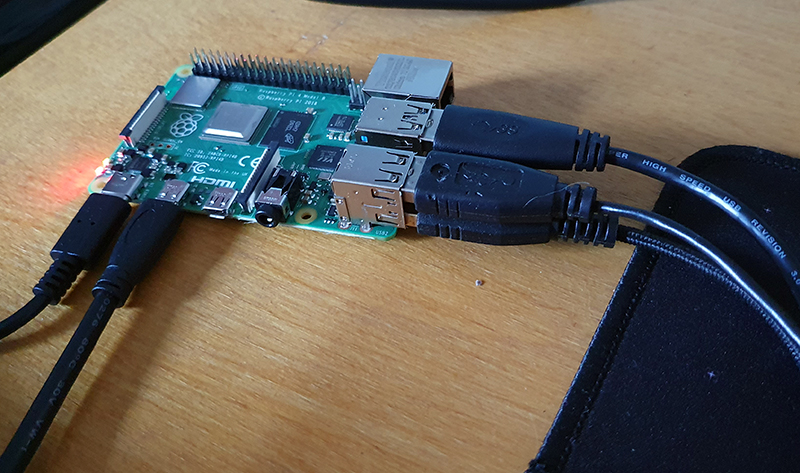
Work in progress on The Breath of Stars cosmic ray interactive work is still pending. After spending hours formatting and loading the raspberry pi with the video files of cosmic trail starbursts I heard from Jamie the programmer that .avi files are not going to work and these might need converting to WebM files which might not be easy. Hoping to find a solution to this soon.

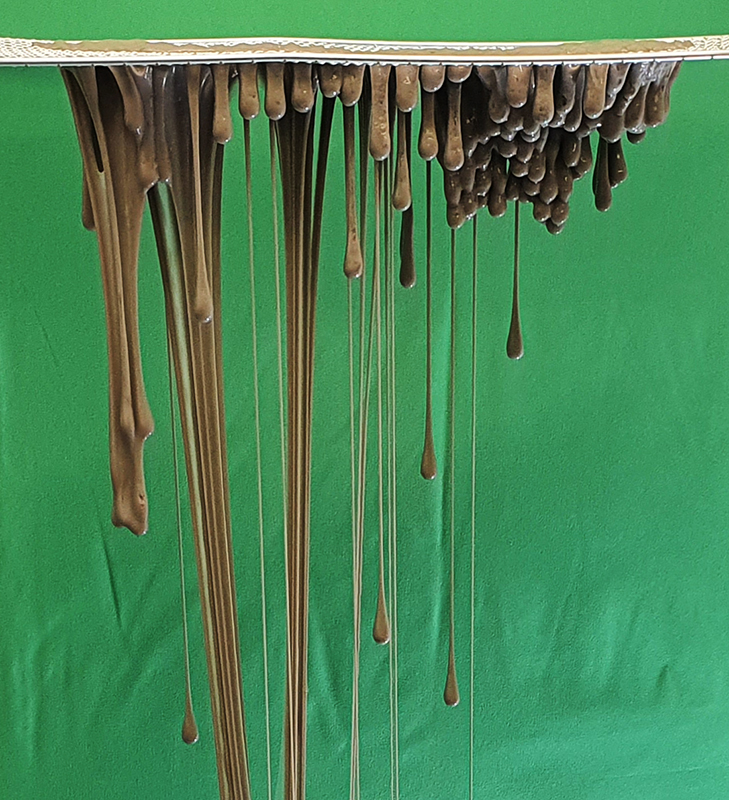
Great fun greenscreen filming slime for Belly of a Rock – a video sculpture partly inspired by the Cosmicomics story The Spiral and partly inspired by paleomagnetism where magnetic minerals in rocks can archive a record of the direction and intensity of the magnetic field when they form.

“I began to give off excretions which took on a curving shape all around” The Spiral, Italo Calvino

“..I accompanied the effort of making the shell with the effort of thinking I was making something, that is anything: that is, I thought of all the things it would be possible to make. So it wasn’t even a monotonous task, because the effort of thinking which accompanied it spread towards countless types of thoughts which spread, each one, towards countless types of actions that might each serve to make countless things, and making each of these things was implicit in making the shell grow, turn after turn…” Italo Calvino The Spiral

Fabulous shells lent to me by my neighbour for spiralling inspiration. The size of them not easily appreciated in these images. They are huge. I have no idea how old the molluscs that made these could be.

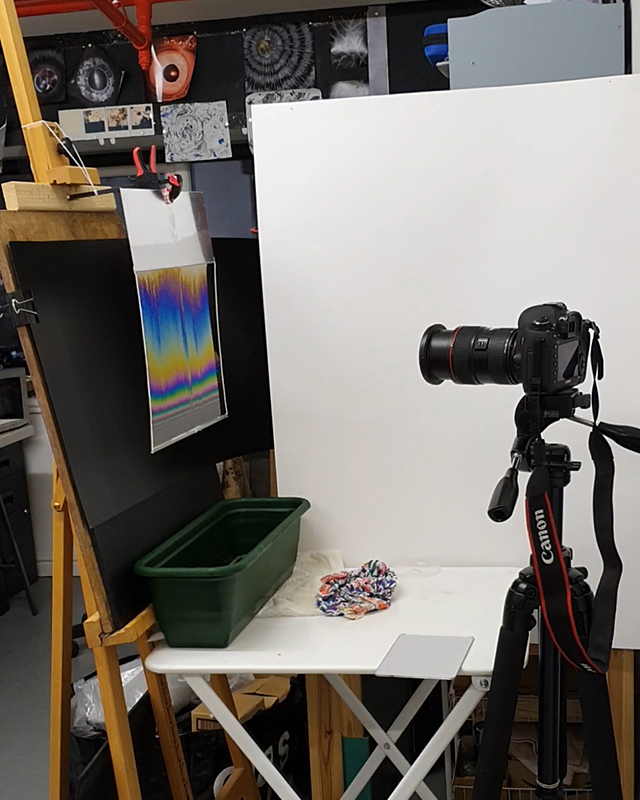
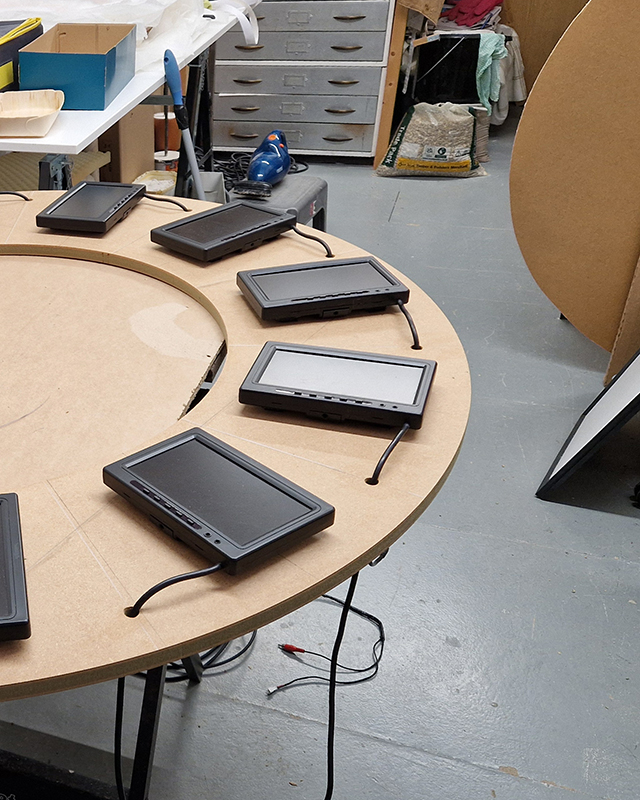
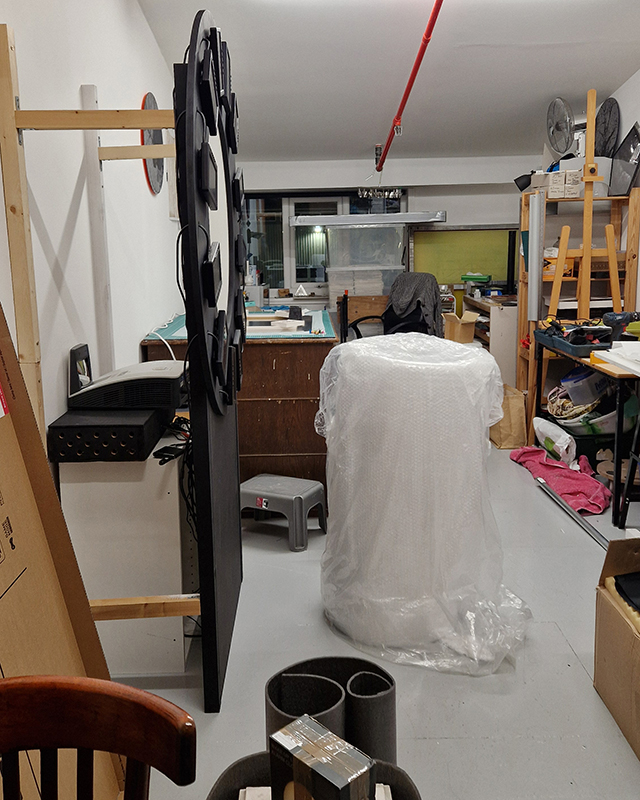
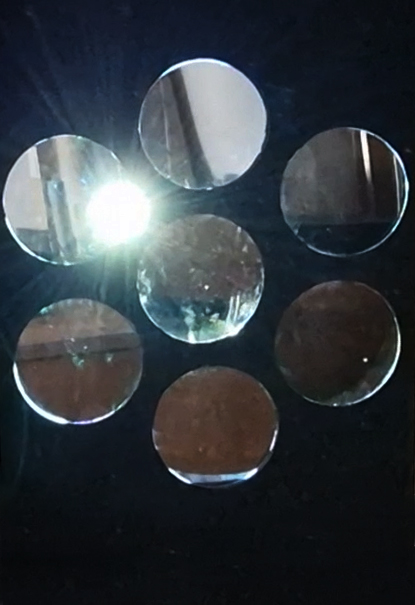
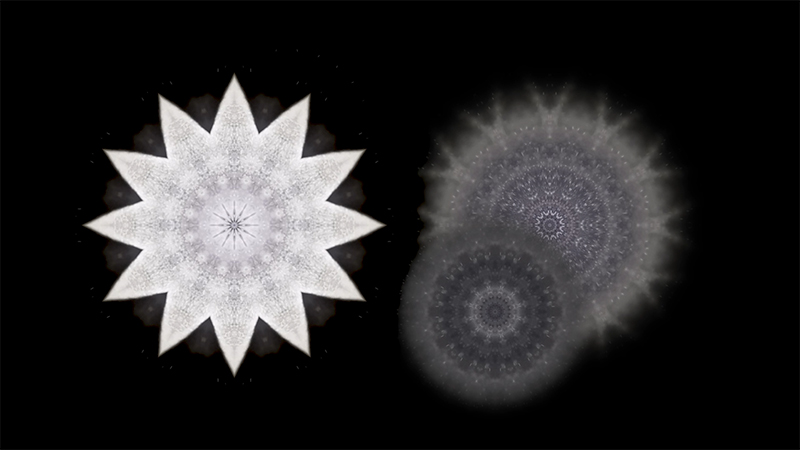
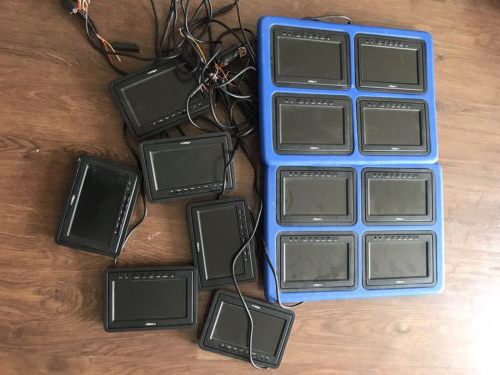
Other work in progress is towards using the small monitors bought as a good deal on eBay set in a circle displaying video dissected into twelfths. Testing ideas with kaleidoscopic images from soap bubble videos and relying on technical help from next door getting the monitors to work

Delighted to be invited to join Sandra Crisp and Jockel Liess for an exciting moving image event. Each artist has a unique approach to film incorporating the study of form, surface and location. DM for an invitation.

Sandra Crisp: E_Life uses 3D generated animation to present a digital environment populated with intensely textured and dynamic geometry.

Jockel Liess: Variations on a theme is a generative audiovisual system which starts from a point of fascination with the aesthetics of irregular organic patterns.

My work Aóratos (new edit for this event) transports the viewer between everyday locations and terrains visually transformed via the use of an endoscope, a microscope, and cameras launched in a high-altitude balloon.

Paused to see the wonderful World Time Linear Clock at Piccadilly Circus Underground Station built in the early1920s and recently refurbished.

The band of roman numerals scrolls West at the same relative speed as the earth rotates, completing a circuit in 24 hours.

“The clock by which we measure time on our watches and digital devices is very misleading; it is determined by the daily rotation of the Earth around its axis and its annual rotation around the sun. This astronomical time is linear and regular. But the actual clock by which we live our socioeconomic lives is an emergent phenomenon determined by the collective forces of social interaction: it is continually and systematically speeding up relative to objective astronomical time.”    Geoffrey West

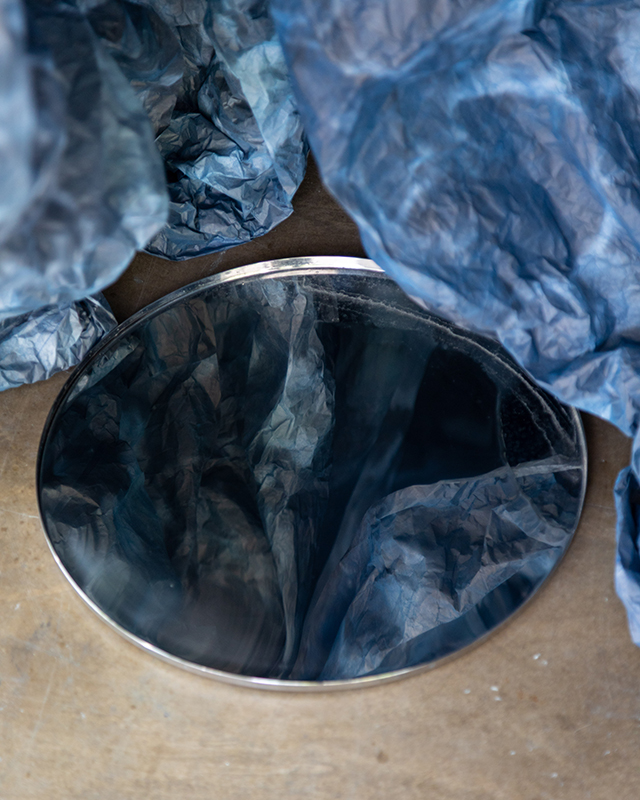
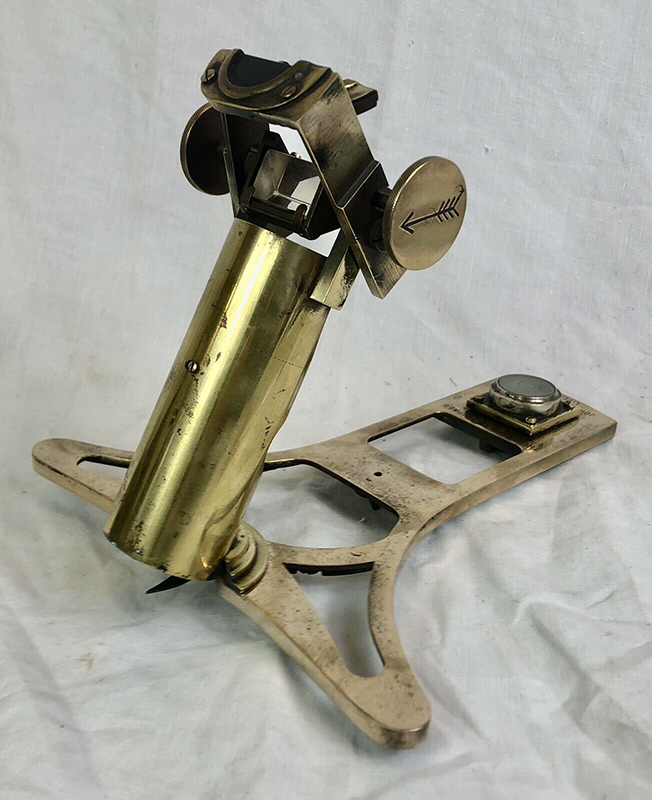
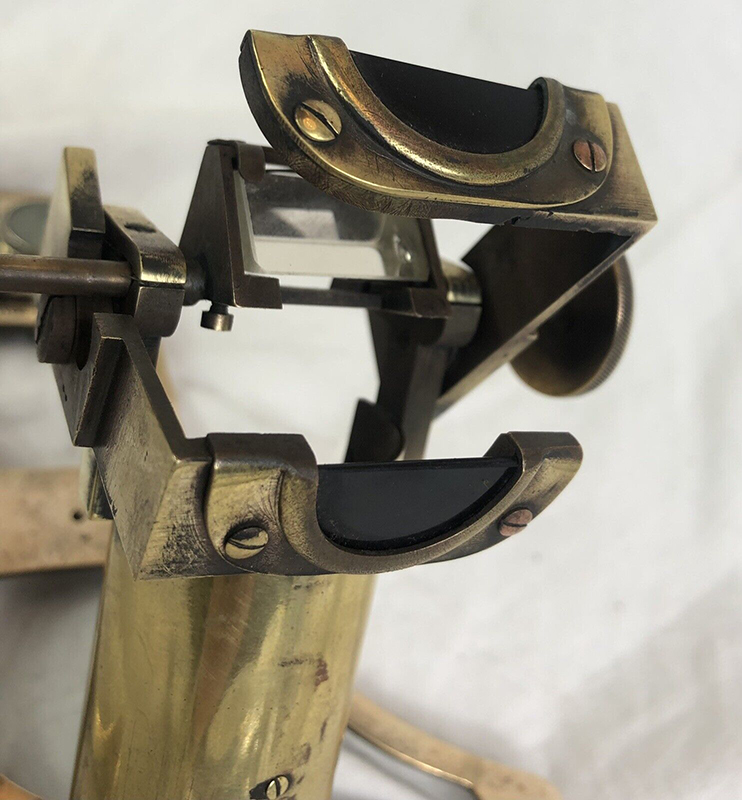
I also did a little research to find out more about the Azimuth Mirror I was given as a present. An azimuth mirror is used for taking the bearings of terrestrial and celestial objects. An azimuth is defined, from any given observation point, as the angle between an object or point and a reference line, usually to true North, moving away from that reference line in a clockwise direction on a horizontal plane. Through the use of mirrors, lenses and prisms, the instrument allows both, the readings of the compass card, and the object to be seen at the same time and in the same direction. It is portable equipment which is placed over a magnetic or gyro compass to aid navigation using either a landmark, when the arrows would be pointed down, or from a celestial object when the arrow would be pointed up. The little glass circle was once a spirit level but that has dried up. The word azimuth is used in all European languages today, it originates from medieval Arabic meaning “the directions”.

Finally made it to meet the Go Stargazing Walton Astronomy Group at their monthly session. We found them on the green at Esher which has been recently over illuminated with bright LED streetlights by a thoughtless council ruining the skies for astronomical observation and disorientating local wildlife and plant life. The local MP Dominic Raab IS NOT A MEMBER of the All Party Parliamentary Group for Dark Skies. Click on the link and ask your MP to join in protecting our dark skies.

When we look up to the heavens, we largely see the same view that captivated and inspired our ancestors. The constellations, the Milky Way, shooting stars, and the night sky are woven into the fabric of our society, cultures and religions. The night sky is one of the most inspirational views that our planet offers.

We are on the precipice of losing the night sky. Right now, SpaceX and other companies are planning to launch tens of thousands of bright satellites in orbit around the Earth.

There is an Avaaz petition at this link urging protection of the night skies.

Bringing back memories of the 2015 Nelly Ben Hayoun film Disaster Playground

….NASA celebrates a Smashing Success – A team of researchers confirmed that the DART spacecraft’s impact with Dimorphos successfully altered the moonlet’s orbit around its parent asteroid by 32 minutes – marking the first time humans have changed the trajectory of a celestial object in space.

To me this feels like a major historical event. What has this little nudge set in motion?

Exhibition visits

Expanded film at the BFI London Film festival.

Framerate: Pulse of the Earth by ScanLAB Projects presents Destruction, extraction, habitation, construction, harvests, growth and erosion are presented as a shared immersive experience. The 3D time-lapse scans of British landscapes observe change on a scale impossible to see with traditional filmmaking techniques.

One of my favourites was Monoliths by Lucy Hammond, Hannah Davies, Asma Elbadawi and Carmen Marcus – we are shaped by the spaces that made us. Through footage shot in the north of England and personal narrative the women embody three monoliths – standing stones, whose symbolic power becomes increasingly important as the women talk.

Elizabeth Murton and Jane Glynn, explore the dynamics of time and movement in Fluid Time at The WaterMill, Mill Green Museum, Hatfield with live dance performance of Elizabeth Murton’s The Giant Weave from BEEE Creative full of joy and energy.

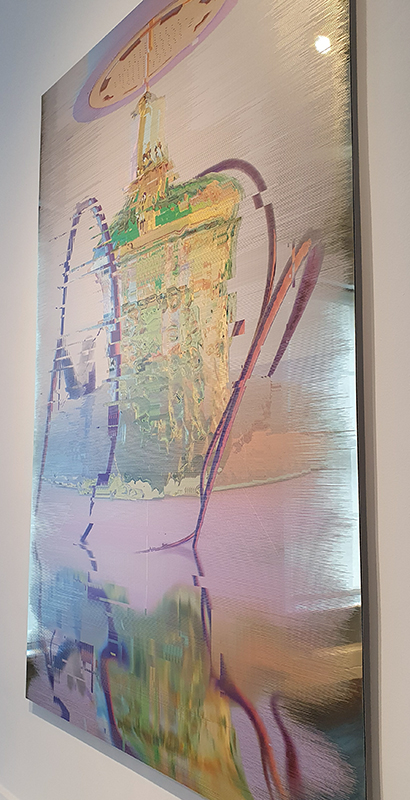
Libby Heaney in remiQXing still at Fiumano Clase. A solo presentation of video and physical works exploring the emerging field of quantum computing as both a subject and medium, turning the gallery space into the showroom of her fictional quantum computing company QX (Quantum eXperience). Some fabulous super shiny prints on mirrored dibond and ethereal prints direct to media on clear acrylic.

Transports of Delight at Danielle Arnaud curated by Edward Chell. In the 1830s, East London doctor and amateur naturalist Dr Nathaniel Bagshaw Ward invented a sealed glass case, an ecosphere in which plants could survive heavily polluted air. Named after its inventor the Wardian case enabled the transport of plants by sea around the world and transformed global economies and environments, shaping the world we live in. Exhibition includes works by

Anna Barriball | Daphne Wright | David Cotterrell | Edward Chell | Gerard Ortín Castellví | Günther Herbst | Harun Morrison | Helen Maurer | Joseph Banks | Joy Gregory | Laure Prouvost | Lee Maelzer | Leelou Gordon-Fox | Maria Thereza Alves | Mariele Neudecker | Nick Laessing | Nils Norman | Owen Griffiths | Peter Hofer | Pia Östlund | Rosa Nguyen | Stephen Lee | Uriel Orlow |

ABSURD at OHSH Projects exploring the absurdity and strange rituals of our daily lives, the bizarreness of
which are brought to light when taken out of context. The institutions, structures and traditions we have built around ourselves and imbued with power and importance can highlight this most starkly; through religion, schooling, government, work and even our own homes. Curated by Henry Hussey and Sophia Olver. Exhibition includes works by Gillies Adamson Semple, Samuel Bassett, Jonny Briggs, Tom Bull, Ladina Clement, Janina Frye, Johnny Hogland, Mark Jackson, Lea Rose Kara, James Lomax, Hynek Martinec, Rasmus Nosstring and Lottie Stoddart.

Hypha Studios presents a showcase of some previously selected artists at the project space on Conduit Street. Hypha Studios matches artists with empty spaces across the UK. Artworks include those by Beverley Duckworth, Foka Wolf, Dion Kitson, Futures After and Josh Wright’s “Lost in a Just In time Supply Chain”, Anna Fearon, Tom Skipp, Molly Stredwick, Gabriela Pelczarska, Salvatore Pione.

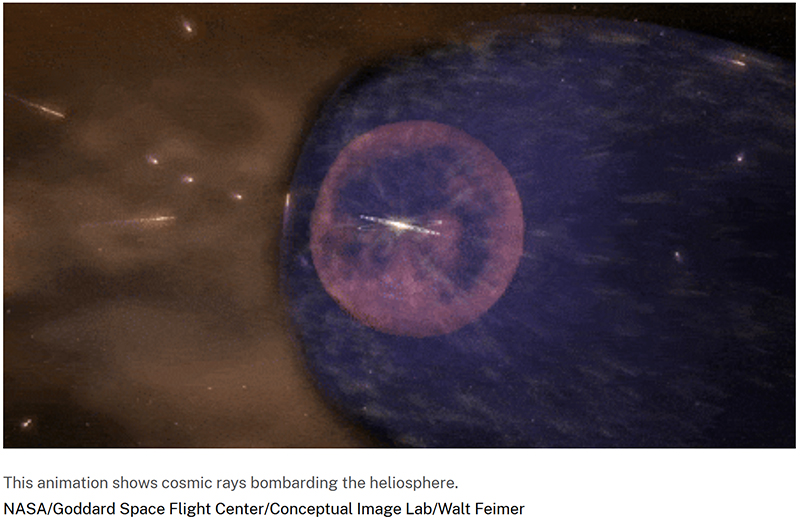
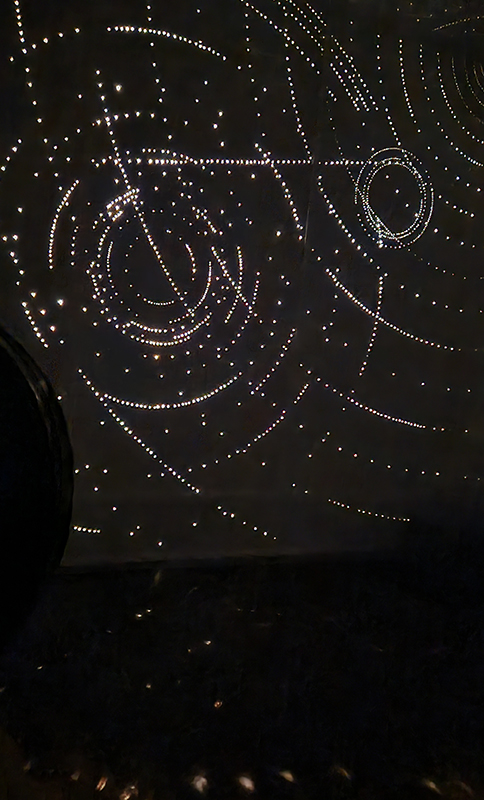
Subatomic at The Science Gallery is a project by composer Christo Squier and experimental particle physicist Dr. Teppei Katori that looks at ways of interacting with cosmic rays, something I have been working on myself in the work The Breath of Stars for the last year or so. I was equally excited and anxious to see what they were presenting. They have created a particle shrine which takes data from the Super-Kamiokande observatory in Japan as well as live data from cosmic ray detectors to create a light and sound experience with vibrating mirrors. Rather jealous of the technical resources this project had access to.

There was also a performance of live music by a small orchestra responding in real time to data from the Super-Kamiokande observatory and compositions inspired by cosmic ray observation data.

A lot of the data used in the music responses and the particle shrine is publicly available data from the Super-Kamiokande observatory in Japan. I did notice that the cosmic watch detectors hooked up to the particle shrine are not set in coincidence mode to be sure it is cosmic particles that are being recorded. A lot of what Christo said during his presentation echoed how I feel about cosmic rays, the fact that they come from other galaxies and pass through us making that physical connection with outer space.

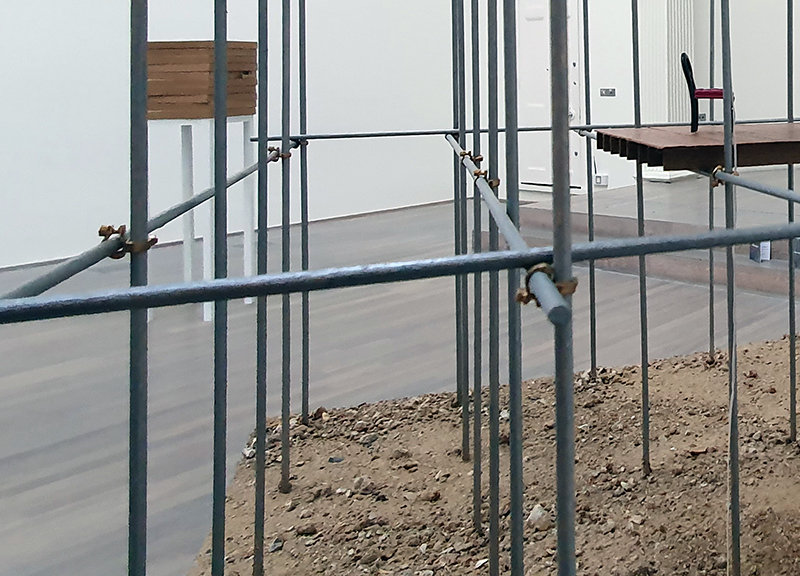
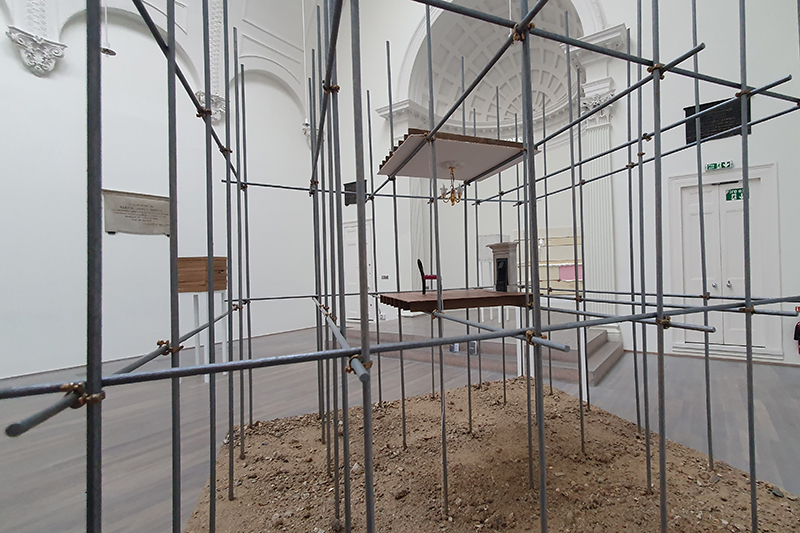
Sanctuary at The Swiss Church takes inspiration from the disparate and striking surrounding architecture, and the stories of people within the Covent Garden community, artists Ali Clarke and Gary Scholes have created a series of structures that symbolise individual sanctuaries. Amazing detail in some of the constructions, especially impressed with the scaffolding bolts.

Reading

Came across some great finds at the local Oxfam bookshop on mapping and magnetism and time, all interconnected.

I read Conquest of the Useless as I thought it might be relevant to research on exploration of the unknown. It was definitely a worthwhile read portraying the total dedication to following through a dream, the power of the creative urge. Watched the film Fitzcarraldo afterwards which although extraordinary doesn’t convey the true life drama and hardship recorded in the book experienced by the actors and film crew in telling the story.

Listening

BBC Radio 4 In our Time – The Earth’s Core. Melvyn Bragg and guests discuss the Earth’s solid inner core and liquid outer core, their structures and their impact on life on Earth.