Archives for posts with tag: Jane Millar

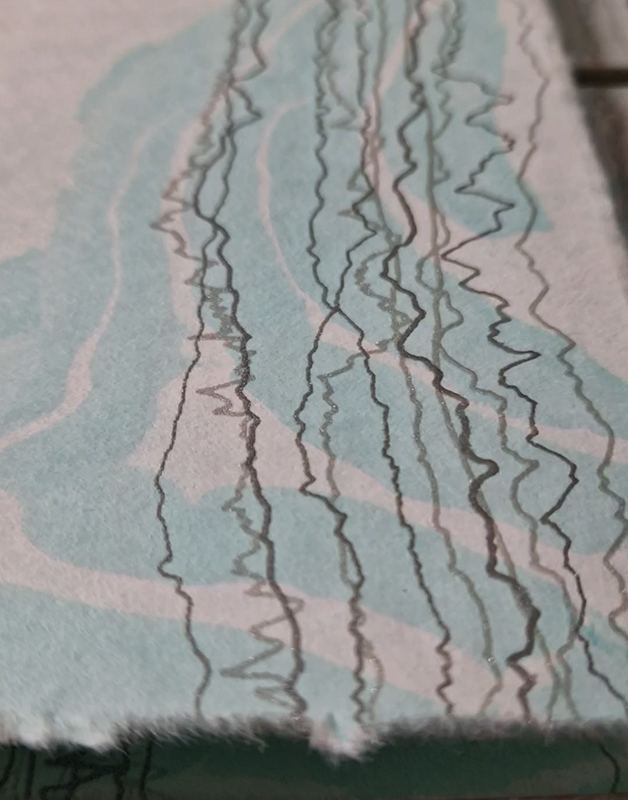
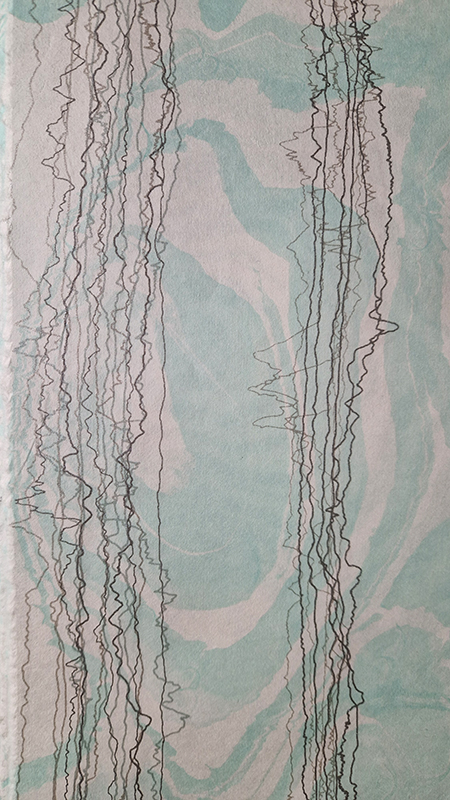
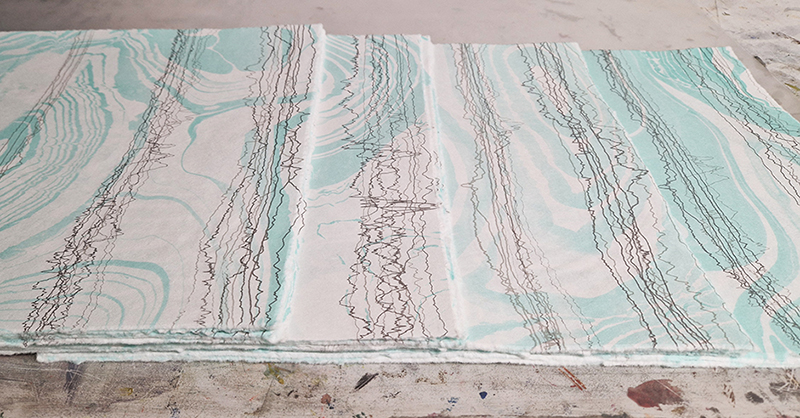
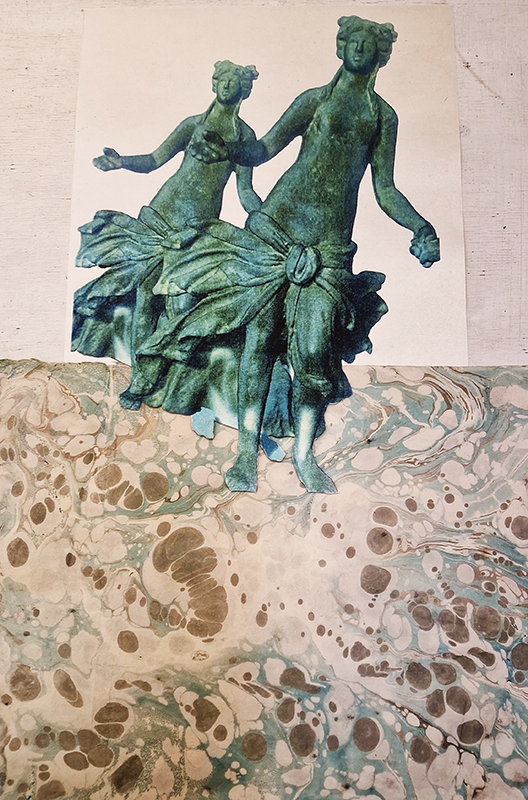
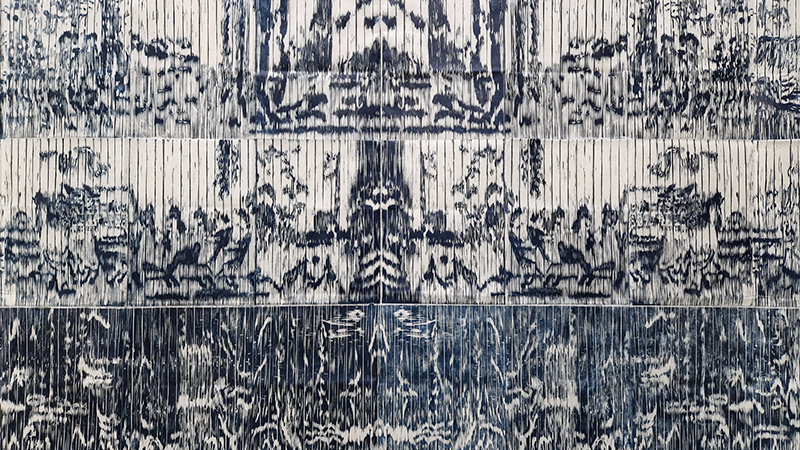
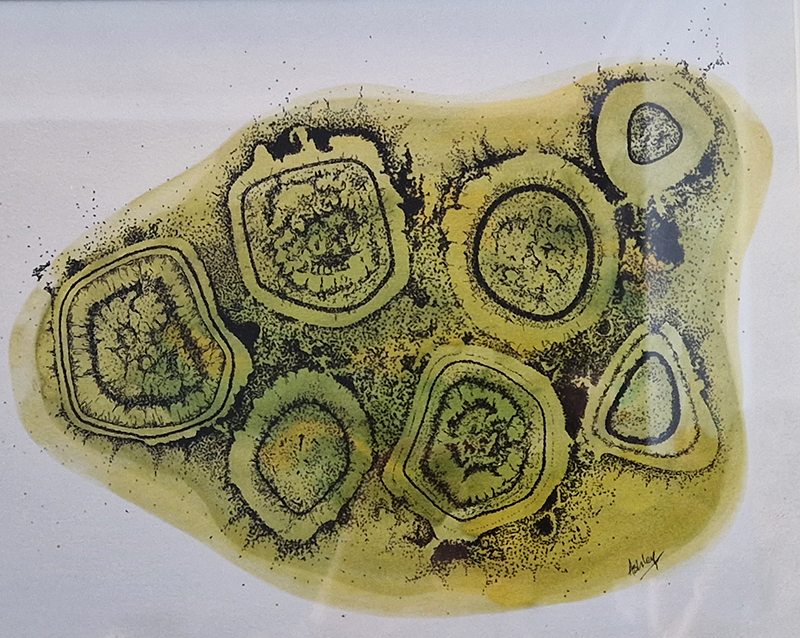
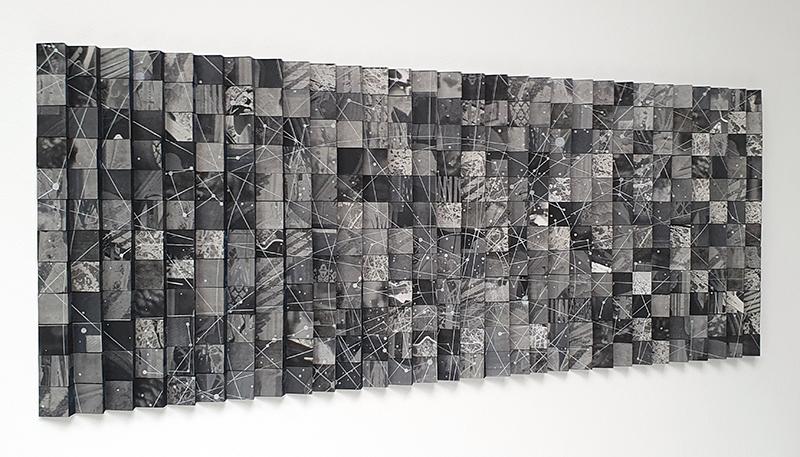
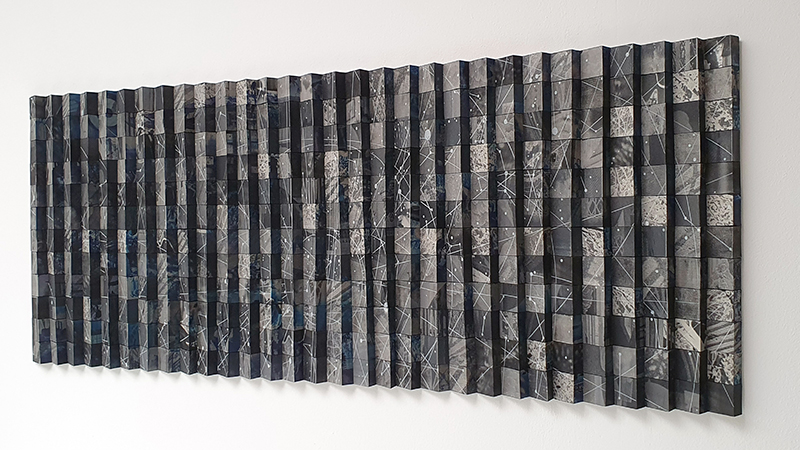
Spending time in the print studio layering up magnetometer lines describing fluctuations in the Earth’s magnetic field. Using sheets of Japanese paper with Suminagashi ink swirls to evoke both ocean and magnetic currents. The lines are printed in metallic inks, relating to the idea of a lode, which in geology is a deposit of metalliferous ore that is embedded in a fracture in a rock formation or a vein of ore that is deposited between layers of rock.

The bands of magnetometer lines are used to signify the last three magnetic pole reversals. The most recent at 42,000 years ago (a short 500 year blip), then 780,000 years ago (continued for 22,000 years) and 1,000,000 years ago (continued for 40,000 years). This history of these reversals is stored in the ocean floor as magma flows up between cracks in the Earth’s crust, spreads and solidifies, capturing the direction of the poles in the orientation of the minerals.

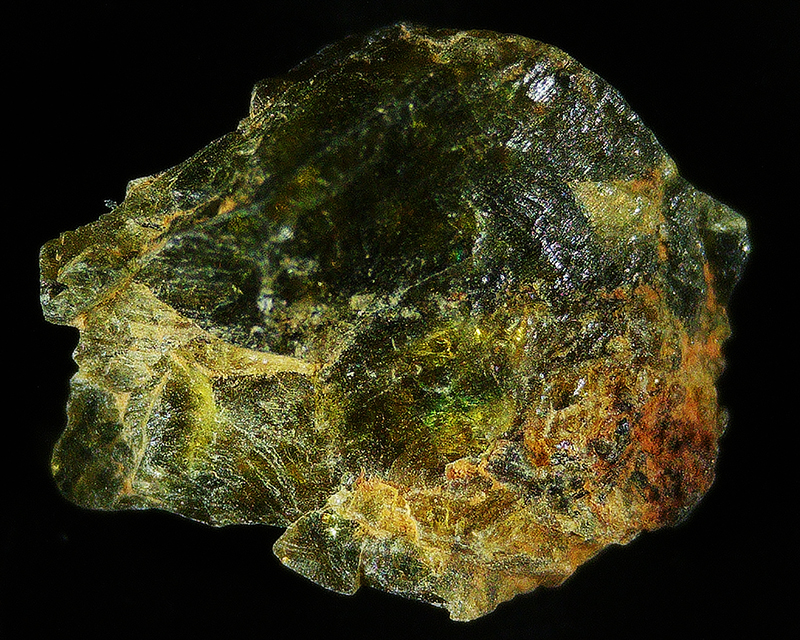
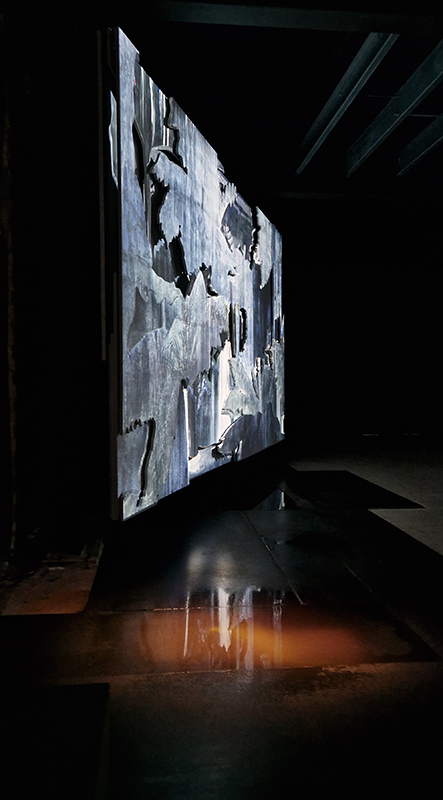
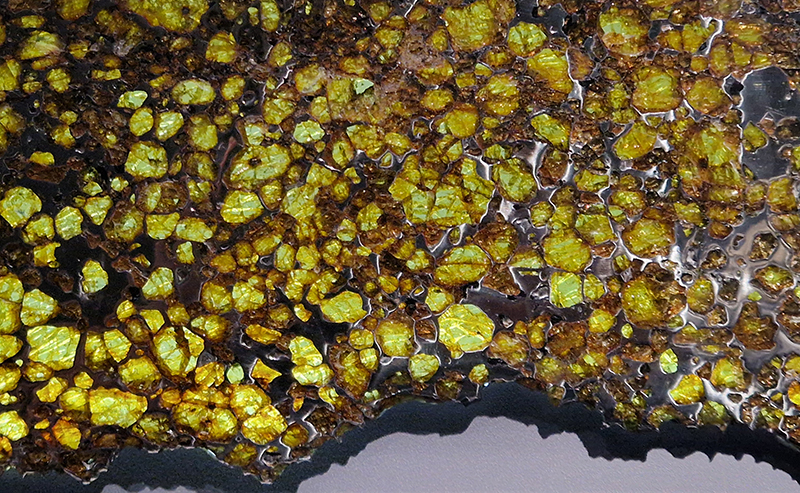
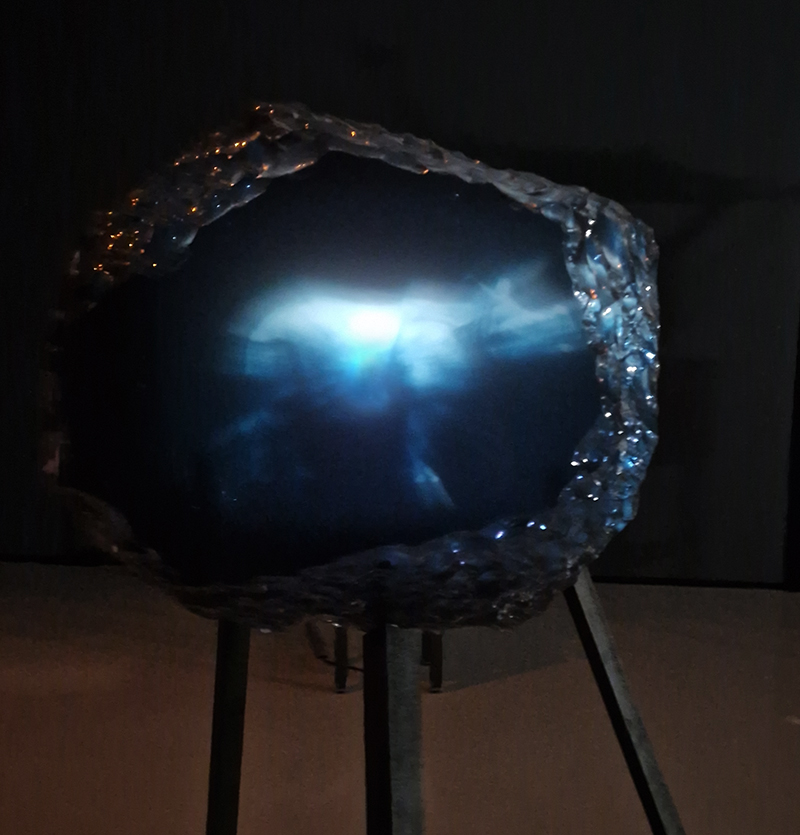
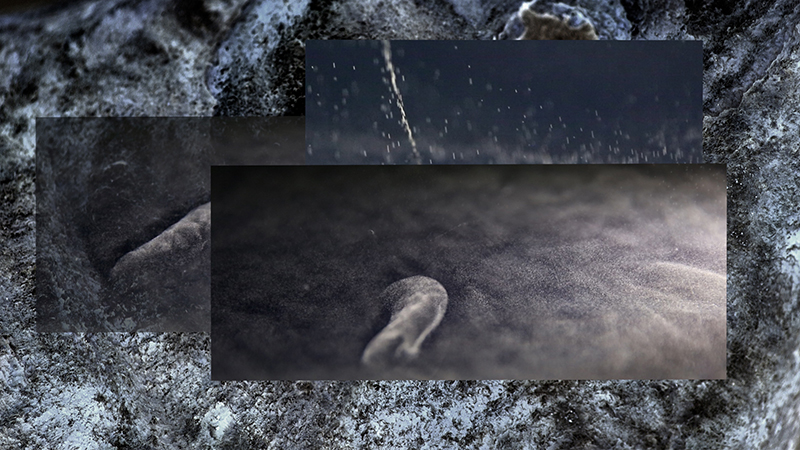
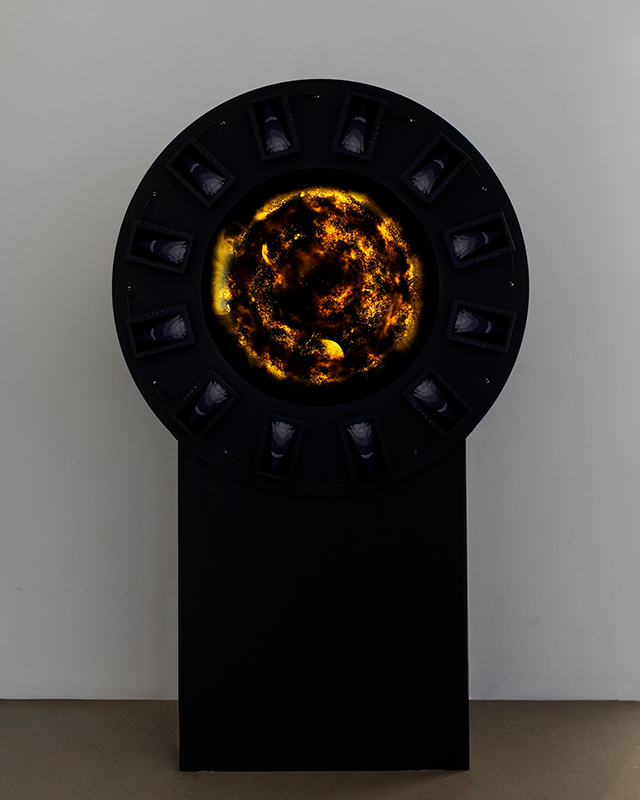
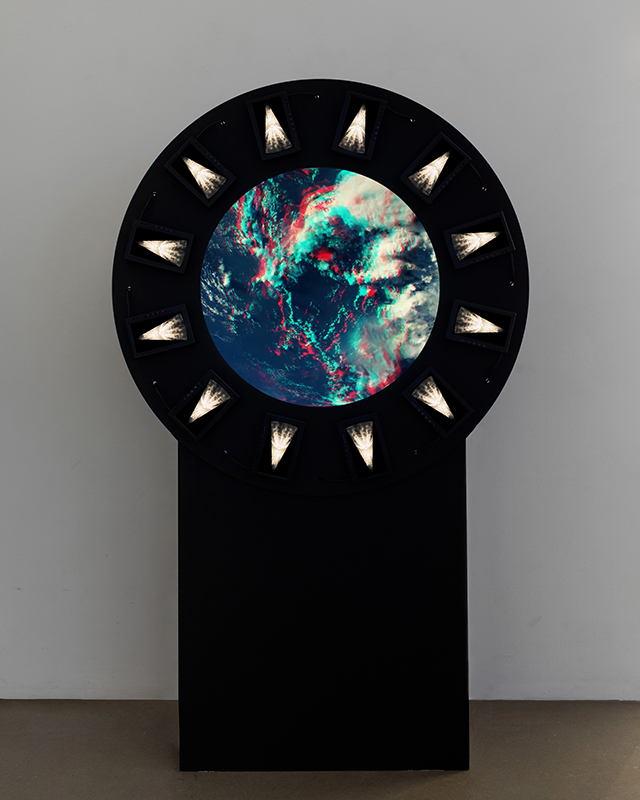
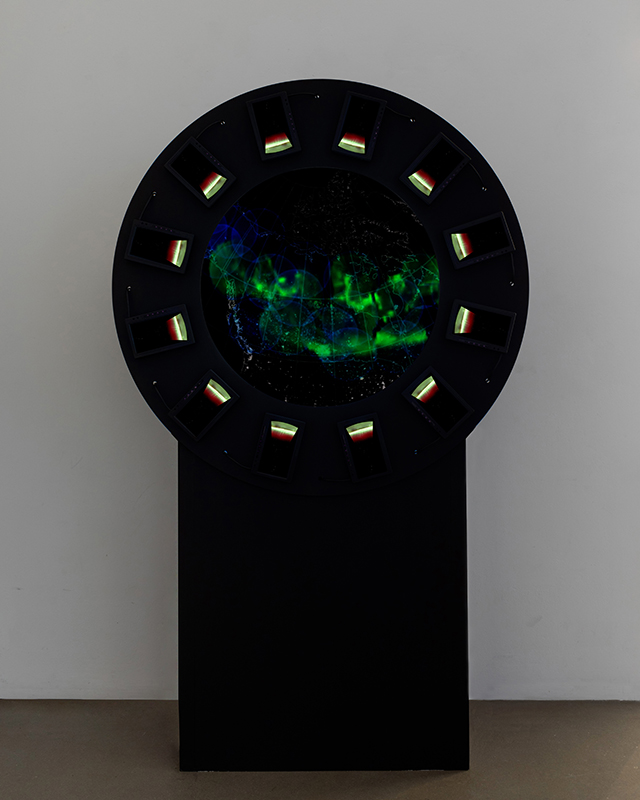
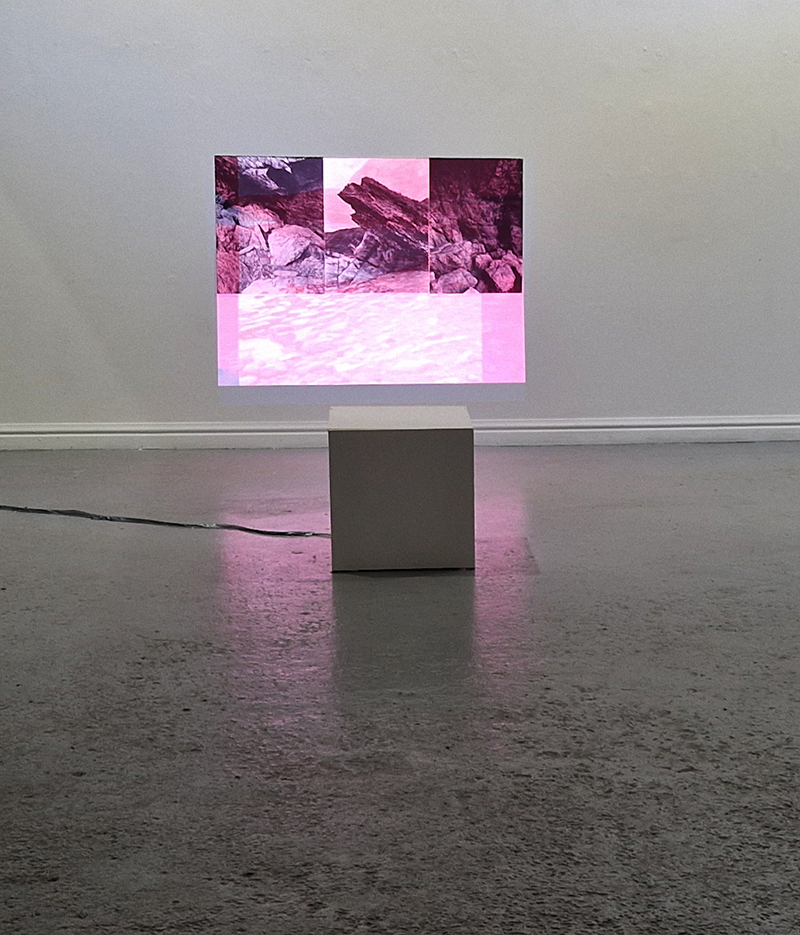
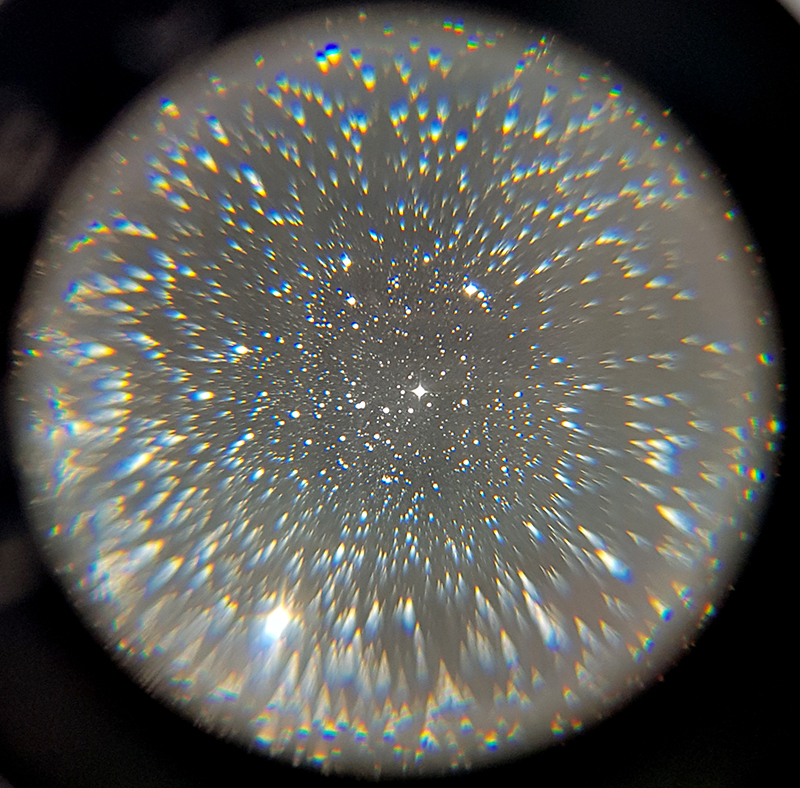
Work in progress on Mineral Visions, a video sculpture with a particular focus on magnetite/magnetism and human relations. Editing video of Jepara seen under the microscope. This is a magnetic pallasite meteorite with an interior structure of densely packed olivine and iron-nickel, discovered in Indonesia in 2008. Pallasite meteorites formed in the asteroid belt between Mars and Jupiter. They’re made up of minerals and remnant materials from the first few million years of the solar system, forming at a time when planets were only just coming together.

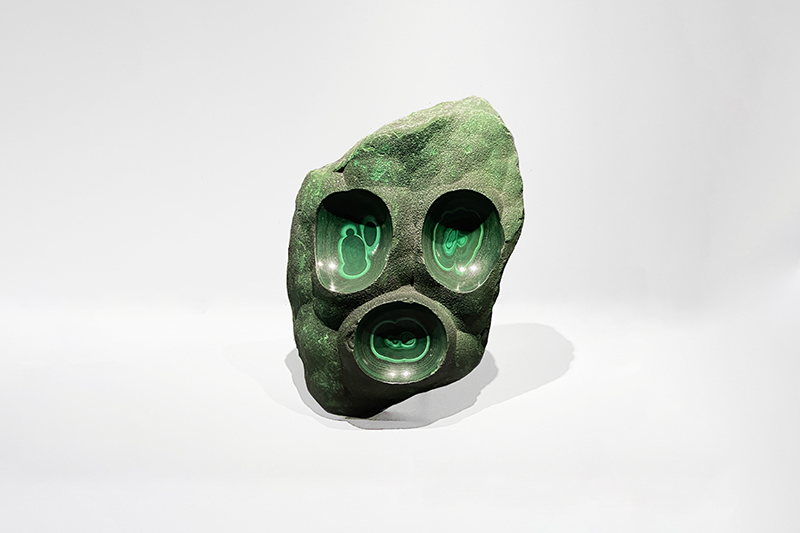
A very special research trip with fellow artists exhibiting in the upcoming show at Hypha HQ, The Geological Unconscious, to visit la Galerie de Géologie et de Minéralogie, Muséum National d’Histoire Naturelle, Paris. Hosted by the curator of minerology we were privileged to see a selection of stones in the museum vault. The museum holds Roger Caillois’ stone collection as featured in his book The Writing of Stones. The photographs of this extraordinary collection do not compare to seeing them up close, from every angle. Must larger than anticipated, they are extracted from their snug foam packaging for yet another scrutiny of the human gaze. Caillois wrote at length about each stone, allowing his imagination to conjure metaphor and analogy from the syntax of the ancient crystal and sediment. He was fascinated by his own fascination with the stones which he saw as a desire to connect with the more than human and lose oneself in the enormity of the universe.

Roger-Caillois Malachite Photo Julie F. Hill

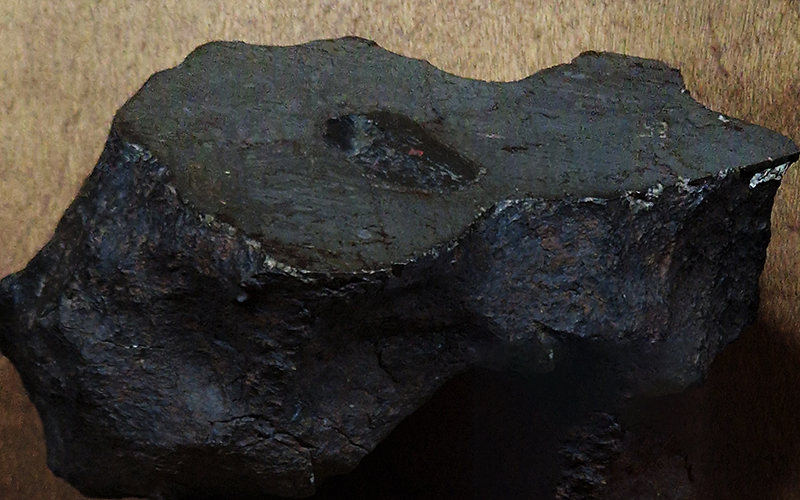
We also got to see some meteorites in the collection including a large one containing diamonds that had belonged to Caillois. The Canyon Diablo meteorite originated in the asteroid belt between Mars and Jupiter and crash landed into the Arizona desert approximately 49,000 years ago, with the force of more than 100 atomic bombs. The crater it left is nearly a mile across and 600 feet deep. Fragments were flung over an area of over 11 sqm from the point of impact where the main mass vaporized on contact. In the force of collision small diamonds formed from graphite and are found inside the highly recrystallized meteorite fragments at the rim of the crater. 

I was also interested to a slice from one of the world’s largest specimens of pallasite, the Imilac pallasite discovered in 1822 which exploded over the Atacama Desert in northern Chile, possibly in the fourteenth century.

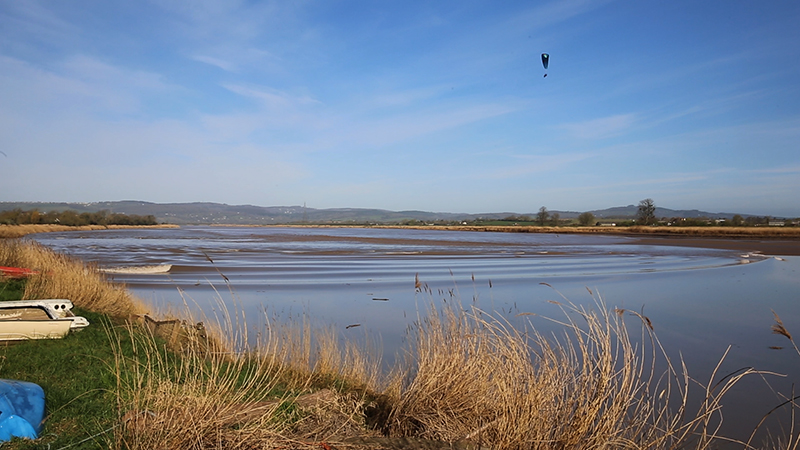
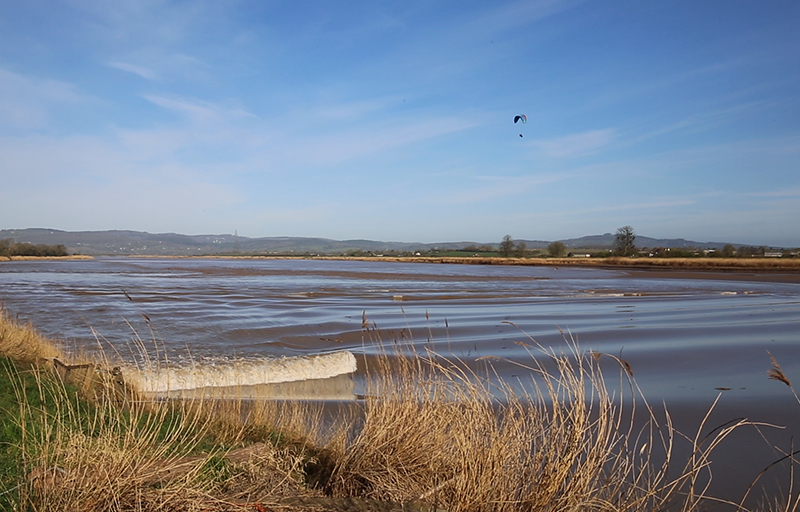
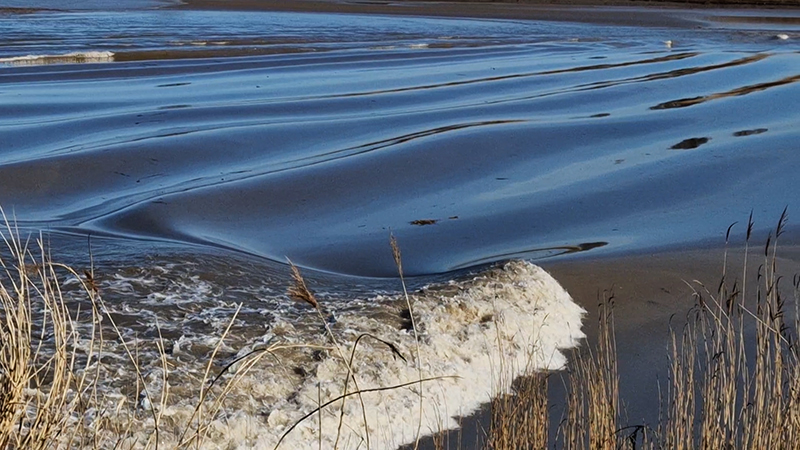
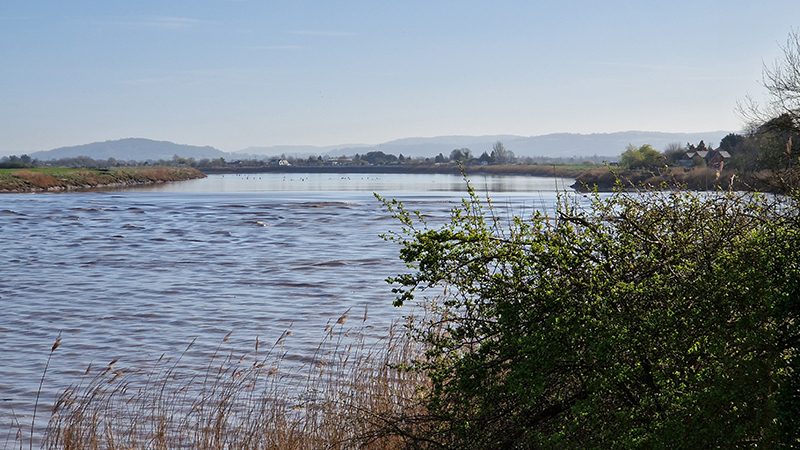
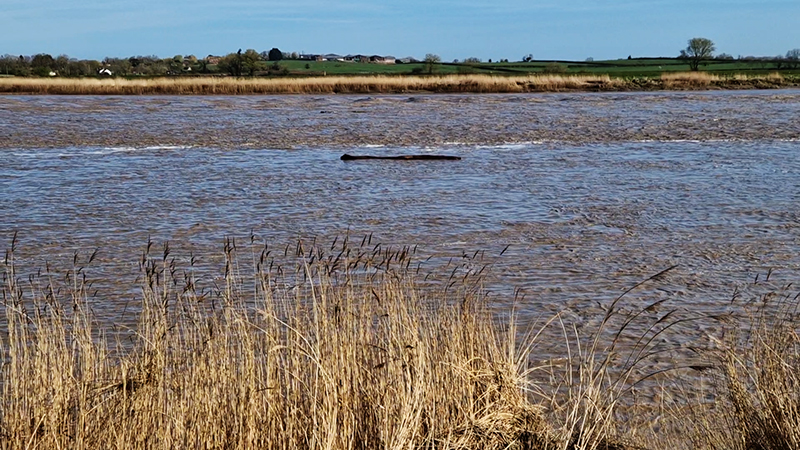
This spring Severn bore had been forecast to be a 4* event but arrived earlier than expected as more of a ripple. Not enough rain from the Welsh hills and no uplifting wind meant it was a more gentle, leisurely wave. It was still exciting to witness the change in the river from the slow glassy seaward flow to choppy, muddy turbulence carrying logs and assorted debris inland as the tidal wave rose into the channel. Such a beautiful morning to be on the river bank.

Gallery Visits

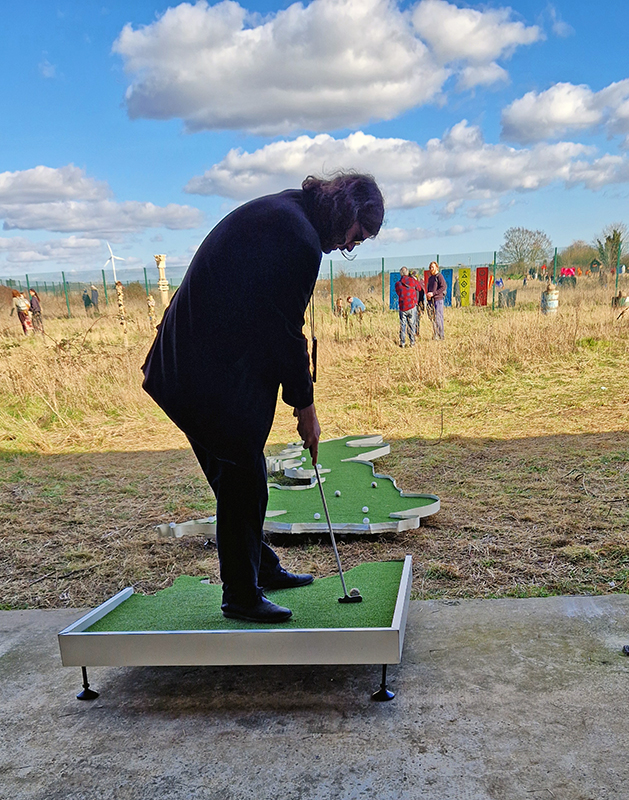
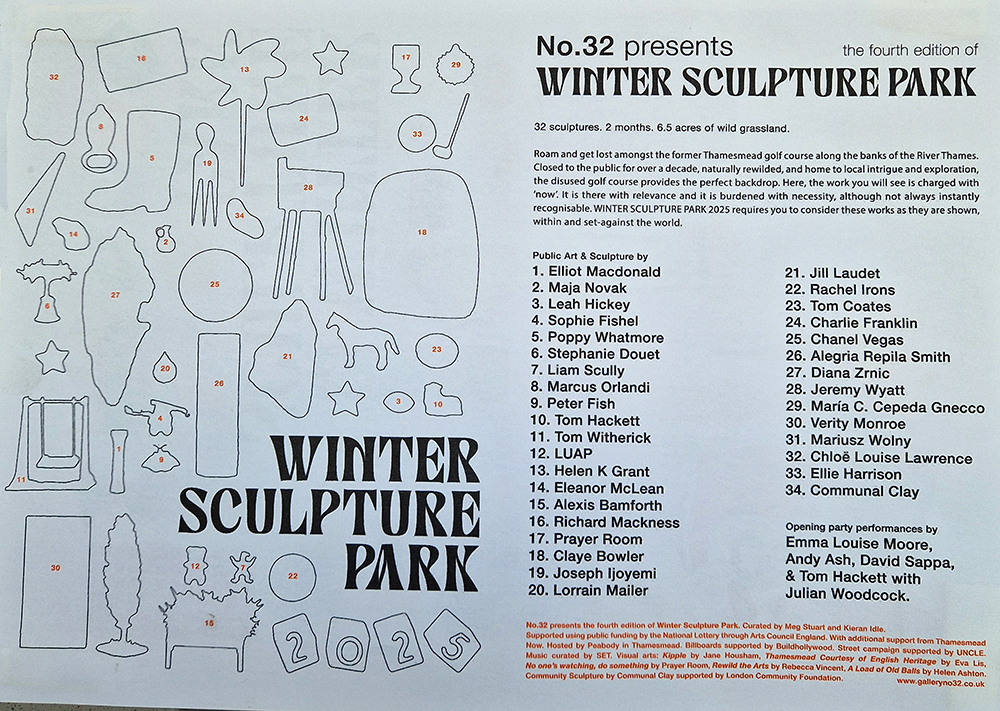
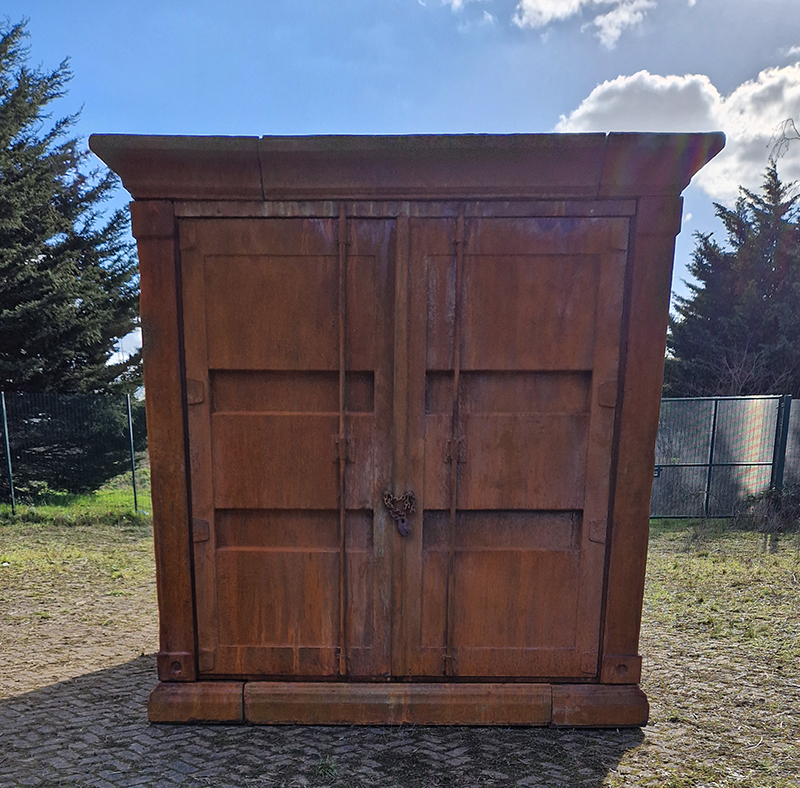
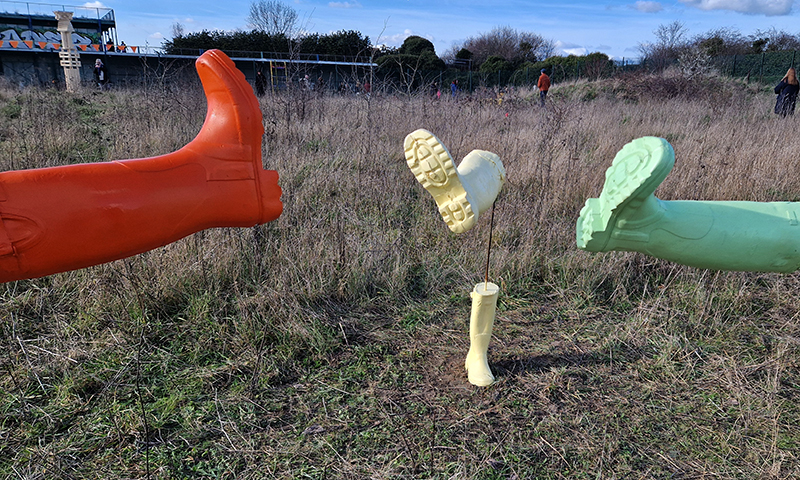
Glorious sunshine spot lit exuberant work at the Winter Sculpture Park hosted by Gallery No32 at a former Thamesmead golf course along the banks of the River Thames.

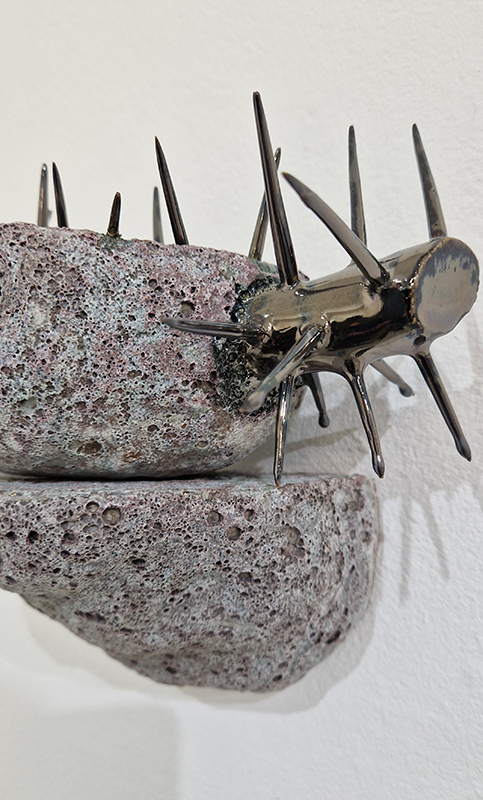
Clinging On, an exhibition of wall based sculptures curated by Poppy Whatmore at Glassyard Studios SW9. Instability is growing across the world, as we cling to liberal norms, ideas and values; these works connect a feeling of uncertainty to the physical, defying a gravitational pull or some internal force. These are physical, material or conceptual investigations of precariousness and the accompanying need to hold on. A packed PV means I have few images but I did capture the excellent Ocean Chasms/Crystal Chasms by Julie F. Hill and Caught Moon by Jane Millar.

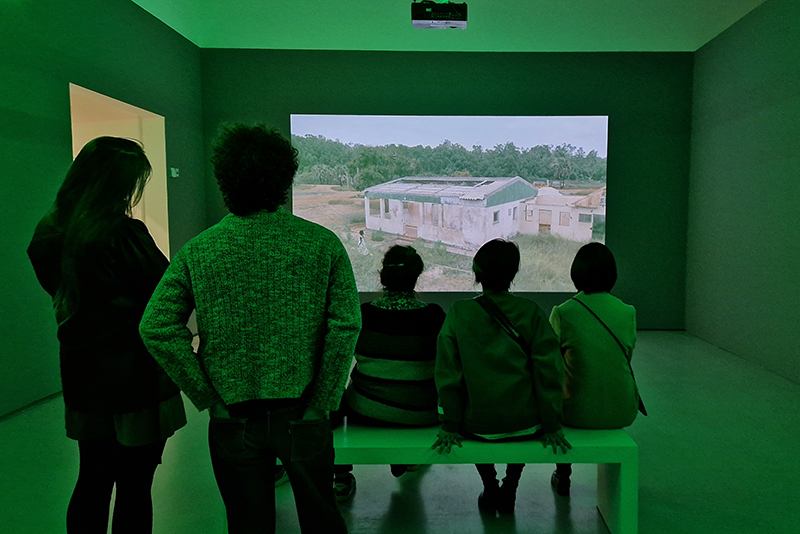
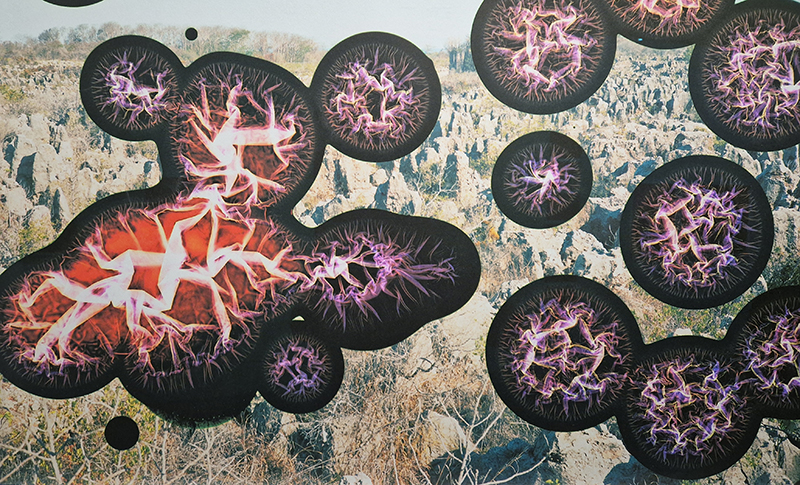
Moving Landscapes at Jeu de Paume, Paris. This exhibition brings together photography, literature and science to address environmental questions but also those of identity or migratory flows; the landscape thus becomes a living and constantly changing territory. Artists include Mounir Ayache, Julian Charrière, Edgar Cleijne, Ellen Gallagher, Yo-Yo Gonthier, Laila Hida, Eliza Levy, Julien Lombardi, Andrea Olga Mantovani,Mónica De Miranda, Richard Pak, Mathieu Pernot, Prune Phi, Léonard Pongoa and Thomas Struth.

Events

More Life By Lauren Mooney and James Yeatman at Royal Court Theatre. Asking the question ‘what is life?’ but also what is the quality of life you would accept if you discovered you were a computer file. What constitutes real human experience? A brain sliced, scanned and rebuilt in the future to be transplanted into a new synthetic body holds memories of a past life and feels emotion but has limited access to new physical sensory experience – no need to eat or sleep. Does the urge to live, live on? Is it possible the first person to live forever has already been born?

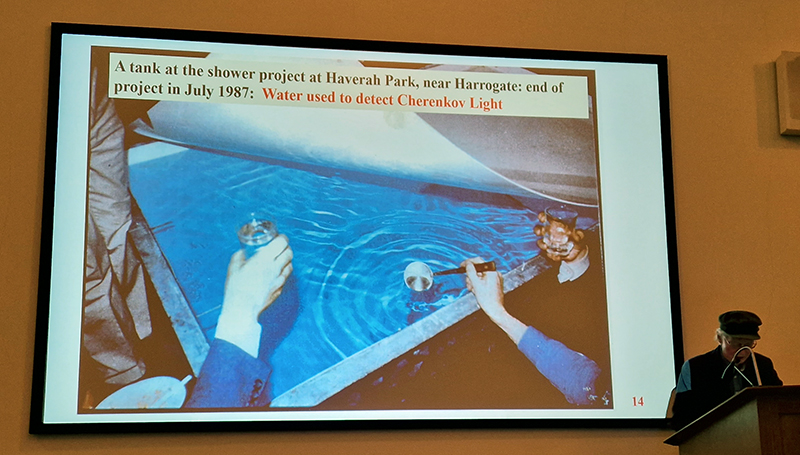
Great to see Alan Watson again, after visiting Haverah Park with him last year, to hear more about Searching for the Origin of the Highest Energy Particles in Nature. This water being sampled in the image below had been in the tank for nearly 30 years yet was still clear and drinkable.

He began his lecture at The Royal Astronomical Society with a short history on the discovery of cosmic rays, taking us right back to 1785 and Charles-Augustin de Coulomb who discovered that bodies with like electrical charges repel and if they have different signs, the force between them makes them attract. In his experiments testing electrical charge with two metal balls suspended on silk threads to easily repel or attract he was surprised to find that even if his experiment was very well insulated the charge still leaked away. It took over a century before it was realised that the air was being ionised which spurred physicists to discover the source of this ionization. In 1912 Victor Hess made his famous balloon flight to over 5km with a rudimentary Geiger counter and no oxygen to discover that ionization increased with altitude and must have an extra-terrestrial source. Over another century on and cosmic rays still present a mystery as to their origin and how they gain their enormous energies.

Alan is interested in the ultra high energy subatomic particles from extragalactic sources with energies about a million times as high as the energy reached by human-made particle accelerators. To put these energy scales in context – a laser pointer has an energy of about 3 electron volts, which is also typical of the photons that come from the sun. The molecules in the air are rushing around at 300m per second with an energy of 1/40 eV. A low energy cosmic ray, the sort that passes through your body a million times in a night, has an energy of 1 giga-electron volts, a proton created at CERN ( the European Organization for Nuclear Research) has around 7 tera-electron volts. If there was a race between a CERN proton and a high energy cosmic ray (over 1018 eV ) starting at the centre of the galaxy, by the time the cosmic ray had reached Earth the CERN proton would not even have reached the moon.

The ultra high energy rays are very rare. To detect these particles physicists rely on observing extensive air shower arrays to amplify the arrival of the particle. By recording the secondary particles that are produced when a cosmic ray hits the upper atmosphere the energy of the particle can be calculated. The showers arrive is a disc like formation with footprints of around 1sqkm so it is necessary to have detectors spread over a large area. The detectors measure the arrival time of the secondary particles and this can help determine the direction of the particle to within 1 degree. The trajectory of the cosmic ray is affected by galactic and intergalactic magnetic fields making it very difficult to find the origin of the particle.
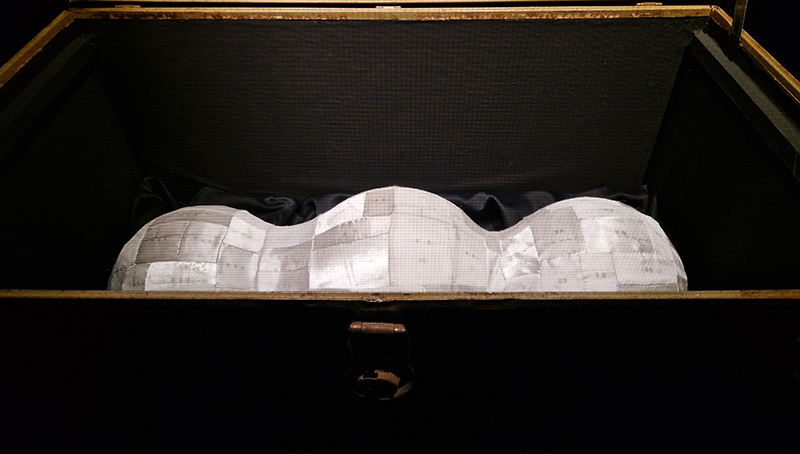
The shadow of the moon can be seen in data recordings of cosmic ray arrivals.

There are a few different methods of detecting cosmic rays. This can be done using scintillator plastic which gives off a flash of light when a particle passes through the medium. Using Cherenkov radiation is another method – this takes advantage of a naturally occurring electromagnetic shock wave giving off energy as light when a particle passes through a medium faster than light can travel through the same medium. The speed of light through water is only 3/4 as fast as when it passes through air, a cosmic ray with much more energy will travel through water at almost the speed of light. This phenomenon can even be seen with the naked eye if the location is dark enough. Astronauts experience flashes of light in the eyes from particles directly hitting the retina but also from particles passing through the vitreous fluid and causing Cherenkov radiation.

Another method is to detect the excitation of nitrogen, the same process that produces the aurora. This light is in the ultra violet spectrum.

By the end of the 1980’s when Haverah Park closed the discovery of the origin of high energy cosmic rays was still a long way off. What had been established was that at the very high energies, only one particle would fall within one km per century. To make further progress a much larger area of detection would be needed. The Pierre Auger Observatory in Argentina at 3000 sq km is about twice the size of Surrey with many hundreds of water tanks. These tanks hold 10 tonnes of water but are the same depth as those at Haverah Park at 1.3m which turned out to be the optimal depth for the water tanks. Charged particles generated during the development of extensive air showers excite atmospheric nitrogen molecules, and these molecules then emit fluorescence light. The Cherenkov detectors at Pierre Auger are supplemented by fluorescence detectors installed at four elevated observation sites with 24 large telescopes specialized for measuring the nitrogen fluorescence in the atmosphere above the array.

The most exciting discovery came in 2017 when a convincing anisotropy in the arrival direction of cosmic rays of a certain energy was determined with some evidence that Centaurus A might be a source of these cosmic rays. There was also evidence of particles clustering close to the super galactic plane, an enormous, flattened structure extending nearly a billion light years across.

The galactic year is the duration of time required for the Sun to orbit once around the centre of the Milky Way Galaxy equivalent to approximately 225 million Earth years.

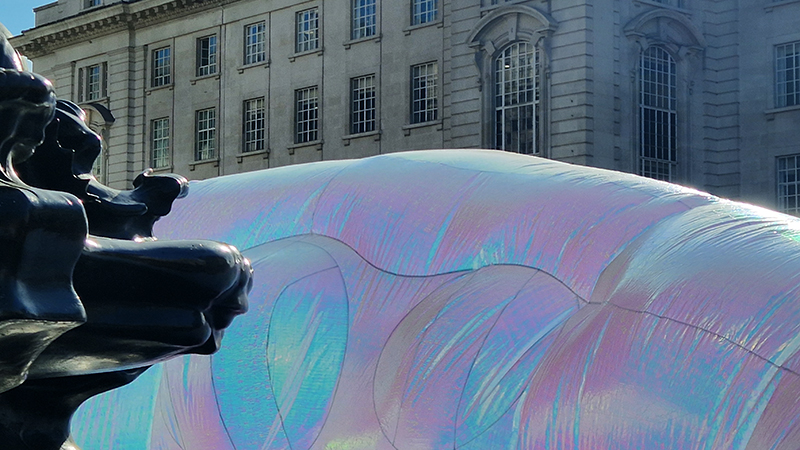
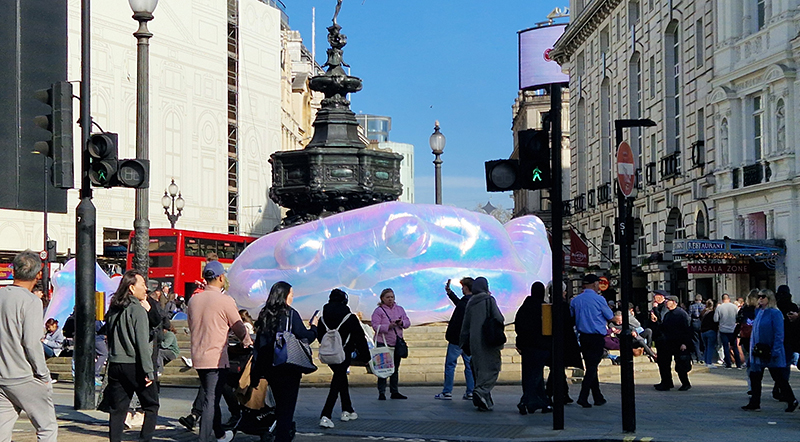
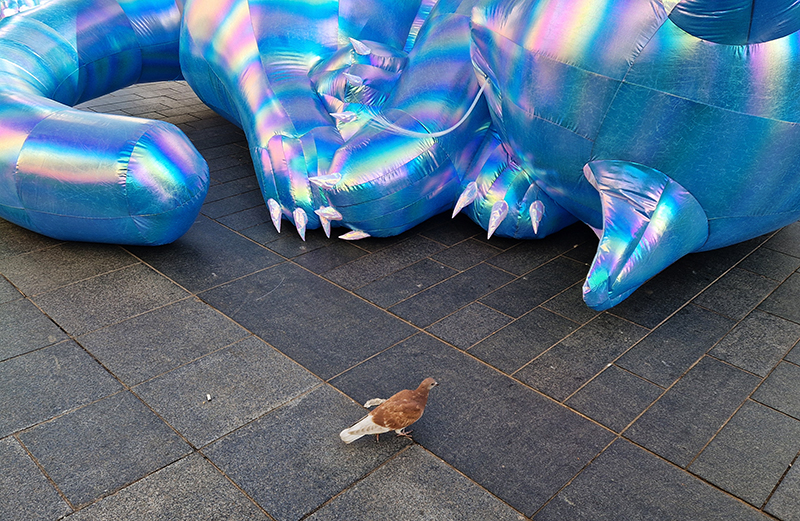
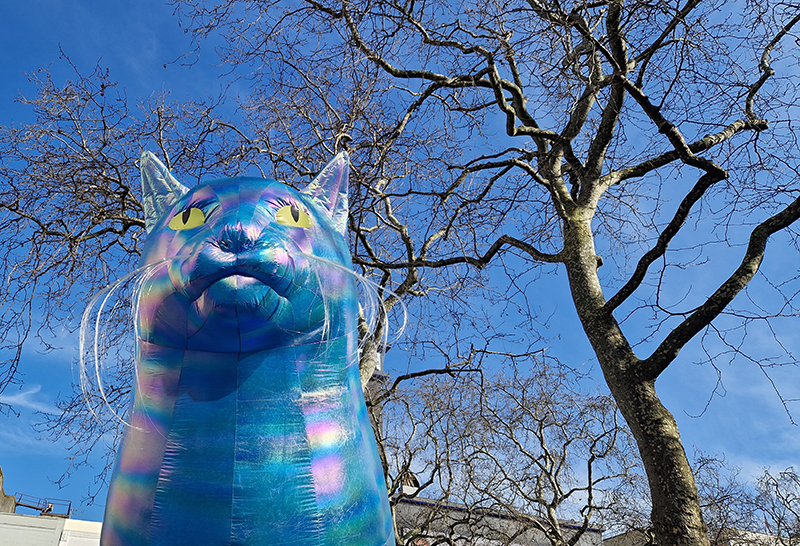
Art After Dark cosmic takeover around Piccadilly and Leicester Square from Nelly Ben Hayoun-Stépanian. I saw the iridescent asteroid-sized moon rocks and inflatable UV reactive sculptures inspired by Schrödinger’s famous quantum physics paradox in bright sunshine

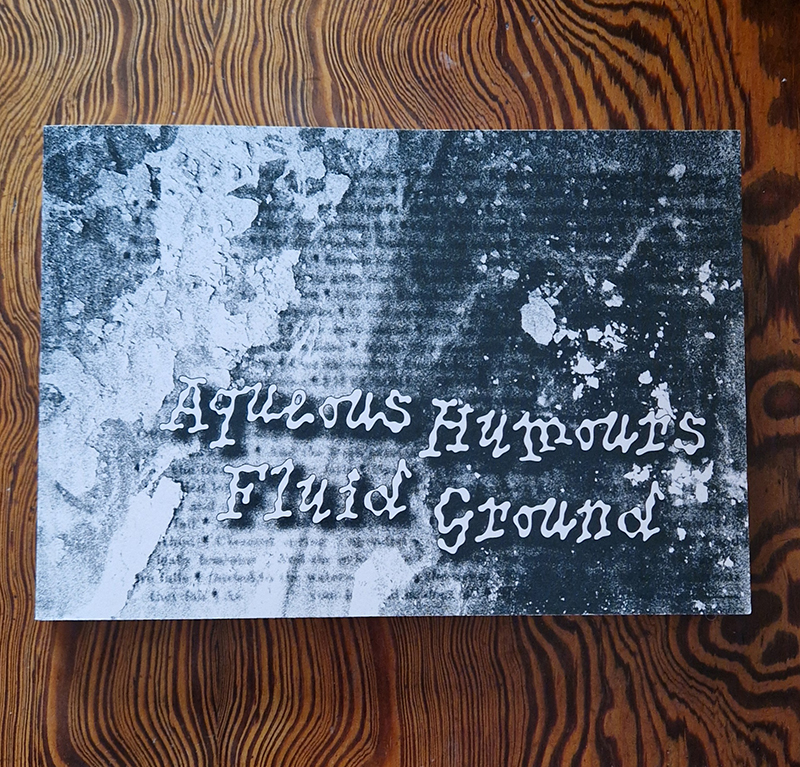
Book launch at Matt’s Gallery – Aqueous Humours Fluid Ground, edited by Kirsten Cooke published by Matt’s Gallery and the Poorhouse Reading Rooms. A night of experimental nonfiction, fiction, diagram, scent and moving image. An evening that activates a watery mapping, which denatures cartography through practices of immersion, aquatics, time travel and the posthuman lenses of geological, animal and machine vision. With contributions from Linda Stupart, Harun Morrison, Ezra-Lloyd Jackson, Melanie Jackson, Joseph Noonan-Ganley, Charlie Franklin, Michelle Williams Gamaker, Lucy A. Sames, Maggie Roberts, Carl Gent. I was only able to stay for the first half of the evening but this gave a wonderful flavour of the book which I look forward to dipping into.

Listening

Journey to the Centre of the Earth – an Infinite Monkey Cage podcast with guests seismologist Ana Ferreira, geologist Chris Jackson and comedian Phil Wang. The immense pressures and searing temperatures that present engineering difficulties of ‘going into the Earth’s crust’ to explore what lies beneath are discussed along with the relationship between the tectonic plates and a stable atmosphere and new evidence of hidden subterranean shifting globular continents.

Reading

The Periodic Table by Primo Levi. My initial reaction to this book was surprise that it was so engaging, but a few elements in, I was surprised to find the chapters shifted from autobiography to fiction with dubious and misogynistic content. I have persevered as the chapter on Carbon, which was recommended to me, is the last chapter in the book and I thought I should start at the beginning not the end. This final chapter is written with a different emphasis, with the explanation that carbon cannot be treated like other elements as it is not specific to one story but is everything to everyone. ‘Every two hundred years, every atom of carbon that is not congealed in materials by now stable (such as, precisely, limestone, or coal, or diamond, or certain plastics) enters and renters the cycle of life, through the narrow door of photosynthesis.’ The story of one atom of carbon is relayed but it is noted that the author ‘could tell innumerable other stories and they would all be true…. the number of atoms is so great that one could always be found whose story coincides with any capriciously invented story’.

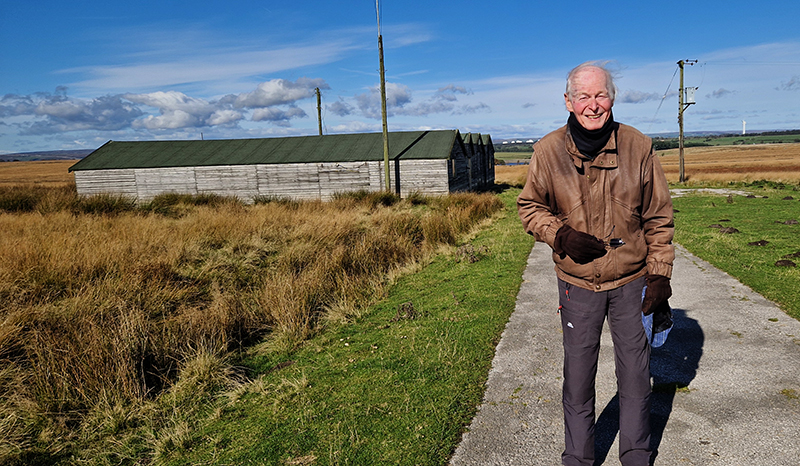
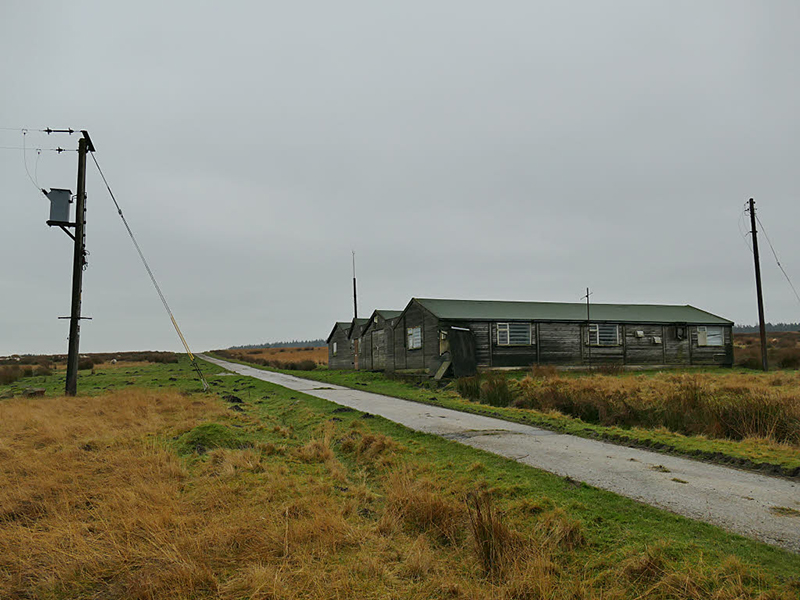
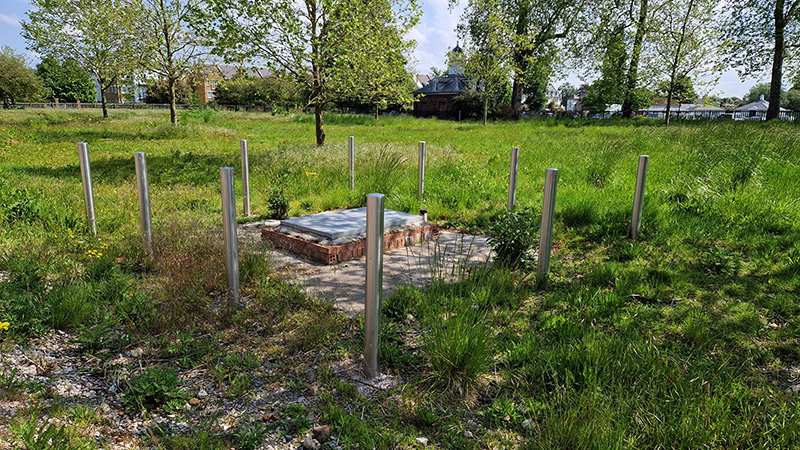
I am excited to be planning a visit to Haverah Park, the site of a cosmic ray air shower detection array consisting of water Cherenkov detectors distributed over an area of 12 km2 on the Pennine moorland, North Yorkshire. The experiment was operated by University of Leeds for 20 years, and was switched off in 1987. During its lifetime many 1000’s of extensive air showers were recorded including four exceptional ones of such size that the cosmic rays that generated them must have had energies greater than 10eV. These particles are the highest energy form of radiation known to exist anywhere in the universe and their origin is one of science’s greatest mysteries. Having reimagined The Absolute Hut seen at Hartland Magnetic Observatory for the exhibition A Stone Sky I am hoping a future project may be the reimagining of the huts from Haverah Park.
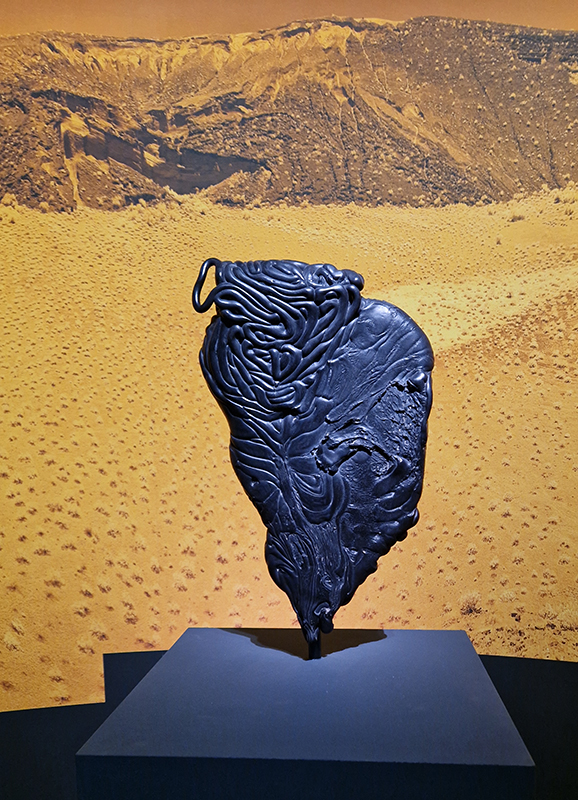
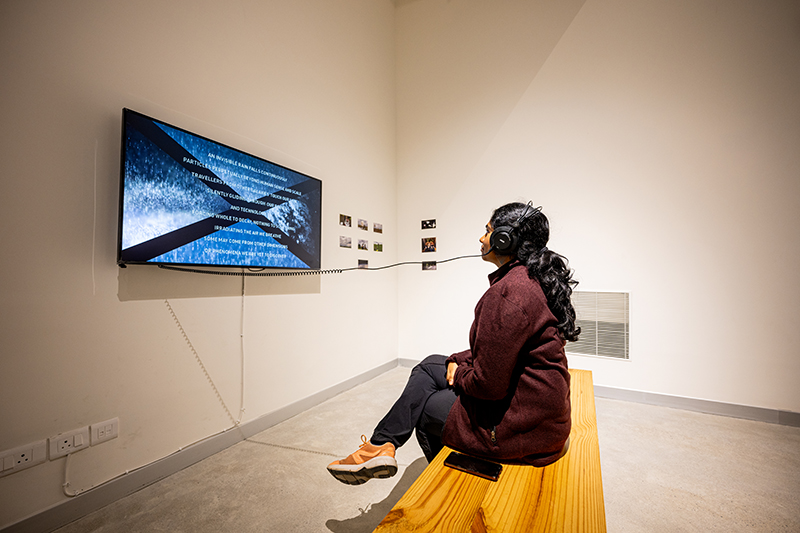
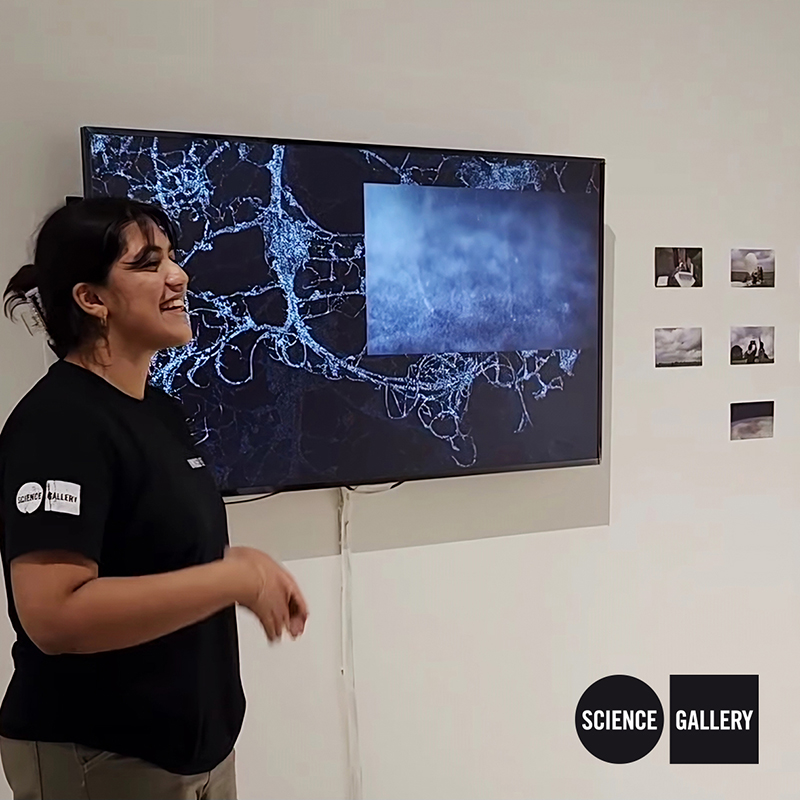
The exhibition Carbon: under pressure at Science Gallery Bengaluru is still running and I am so proud to have my work Cosmic Chiasmus: crossing the universe included in this amazing show. This video offers a glimpse into a subatomic world where cosmic rays travel from distant galaxies to collide and silently interact with atoms and technology on Earth. Cosmic rays go through a violent process of creation, transformation and decay. From the heart of stars or the depths of black holes these particles power across the universe with unimaginable energy colliding with life on Earth and triggering other processes such as cell mutation, computer data corruption and carbon-14 formation.

I am fascinated to learn more about cosmic magnetism and its influence on the development of early life.

The Universe is magnetic. From stars to galaxies to intergalactic space, magnetic fields thread the cosmos. Yet the origin of cosmic magnetism is still unknown, so astronomers are attempting to make maps of the magnetic fields inside massive galaxy clusters to determine if cosmic magnetism came from the early origin of the universe or developed over time. If it is discovered that there is an alignment of fields across the universe this would point to a primordial source of the cosmic magnetic structure rather than a slow emergence from seed magnetic fields. Understanding the origin of cosmic magnetism may give clues to the development of life on Earth and the possibility of life elsewhere in the universe. Only planets with a magnetic field have an atmosphere and offer protection from most radioactive cosmic rays.
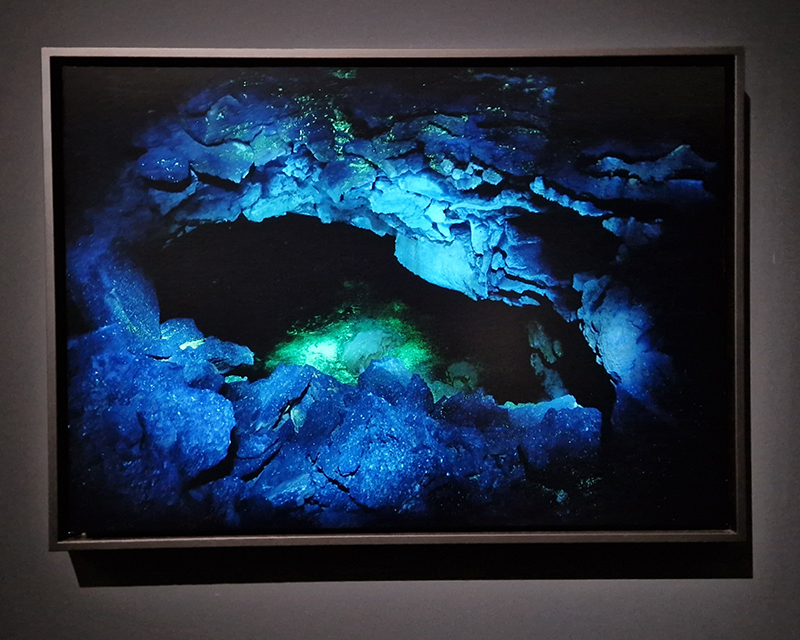
Those cosmic rays that do penetrate the atmosphere may have influenced the development of early life. Chirality, also known as handedness, is the existence of mirror-image versions of molecules. Like the left and right hand, two chiral forms of a single molecule reflect each other in shape but don’t line up if stacked. All known life-forms show specific chiral properties in chemical structures as well as macroscopic anatomy, development and behaviour. The sugars that make up DNA, for example, are all right-handed. The amino acids that make up proteins are all left-handed. It is not clear how this asymmetry evolved but one theory suggests that magnetic surfaces on minerals in bodies of water on the primordial Earth, charged by the planet’s magnetic field, could have served as “chiral agents” that attracted some forms of molecules more than others, kicking off a process that amplified the chirality of biological molecules.

Another theory proposes that the influence of cosmic rays on early life may explain nature’s preference for a uniform “handedness” among biology’s critical molecules. Before life emerged on Earth, self-replicating molecules were slowly evolving beneath a constant shower of energetic particles from space. Researchers believe that cosmic rays with the ability to penetrate matter were potentially colliding with chiral molecules on Earth and everywhere else in the universe. These tiny differences in the mutation rate would have been most significant when life was beginning and the molecules involved were very simple and more fragile. Under these circumstances, the small but persistent chiral influence from cosmic rays could have, over billions of generations of evolution, produced the single biological handedness we see today.

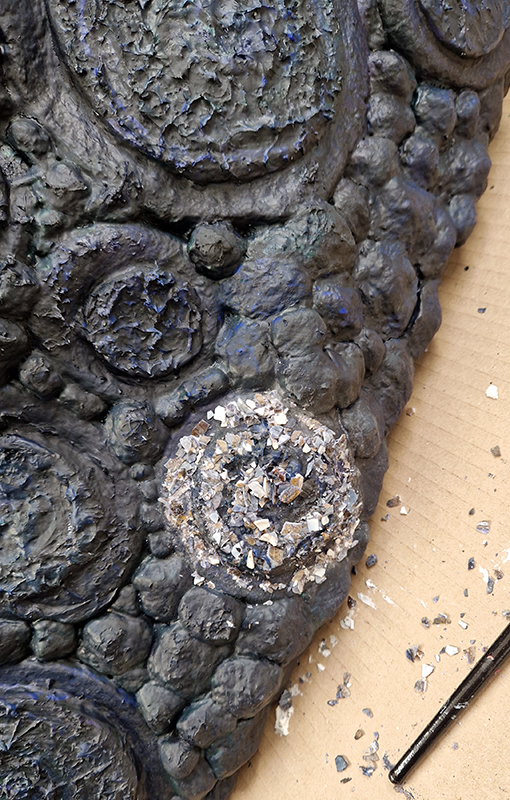
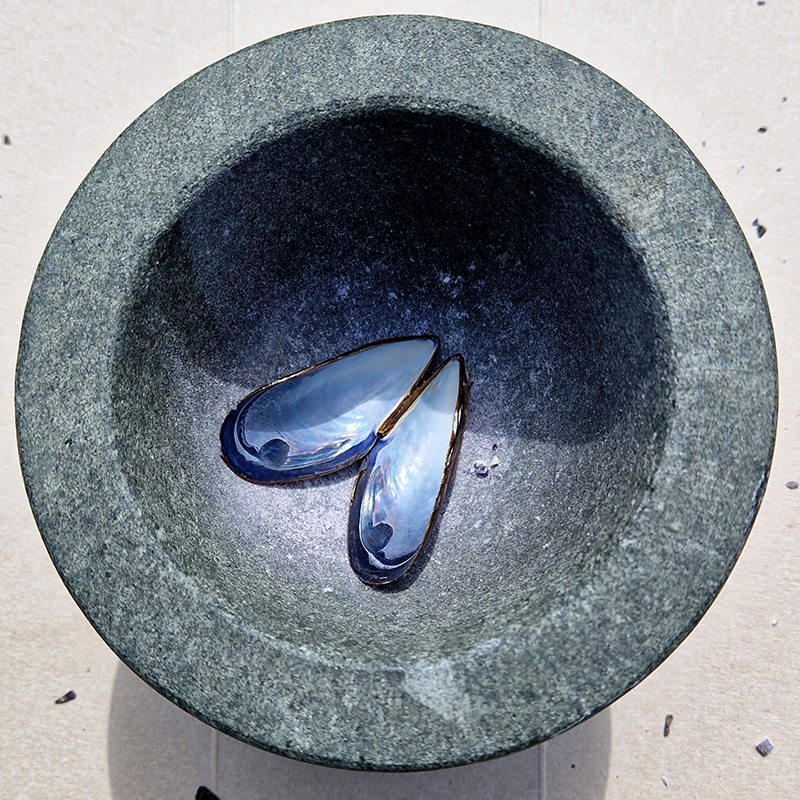
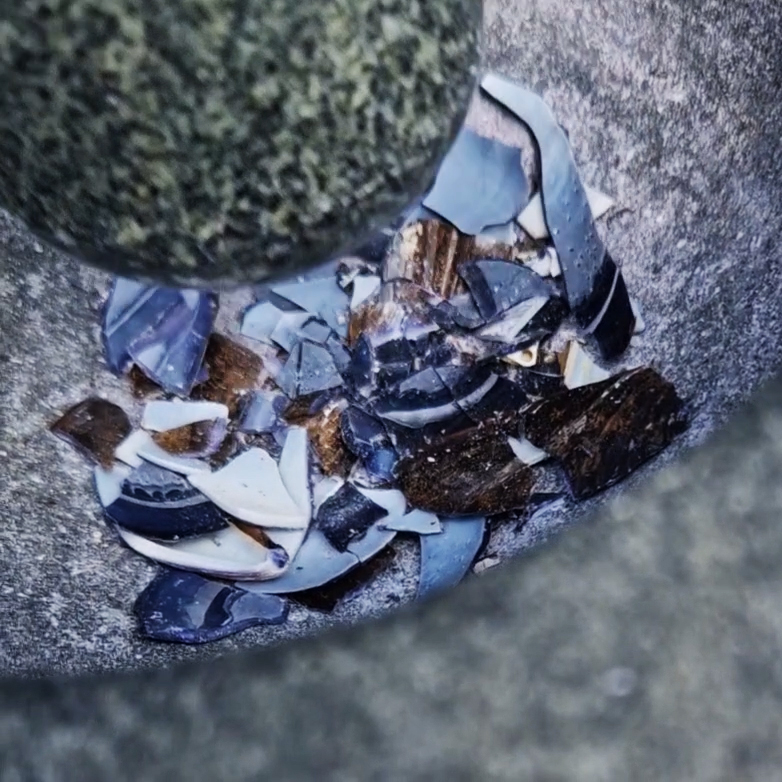
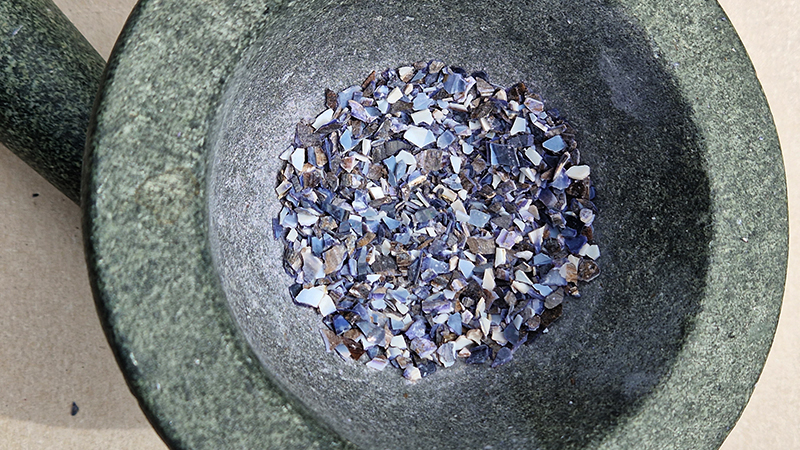
Chirality is also seen in the spiral of a mollusc shell. I am in the process of finishing the sculpture shell for belly of a rock a hybrid work of chemical conversations at the intersection of the animate and inanimate, inspired by Italo Calvino’s Cosmicomics story The Spiral. Paper clay with crushed mussel shells.

My most recent video installation Orbital shown in Life Boat at APT Gallery focused on the potential risks to technology and life on Earth from extreme solar storms.

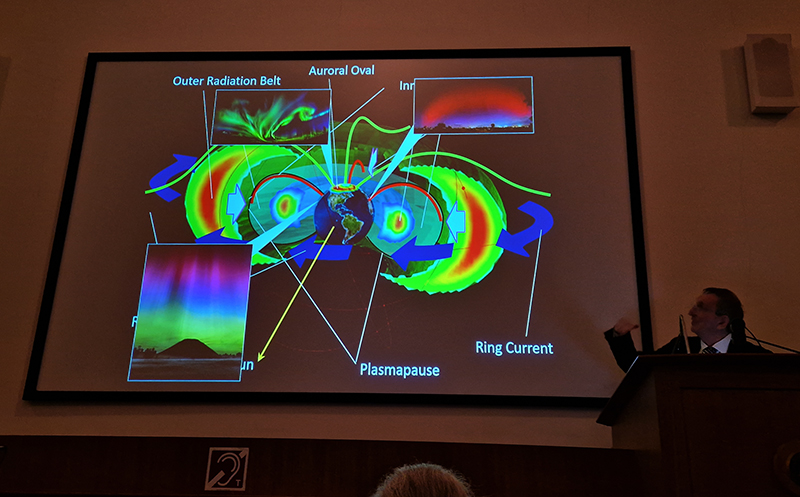
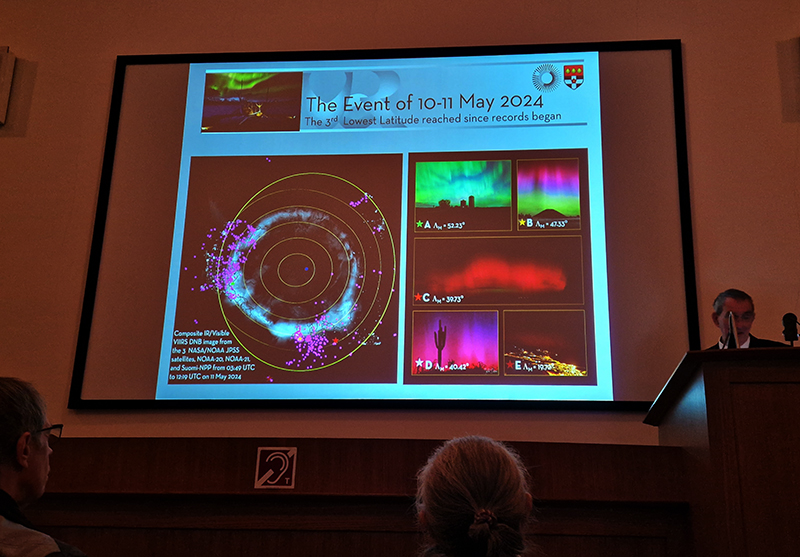
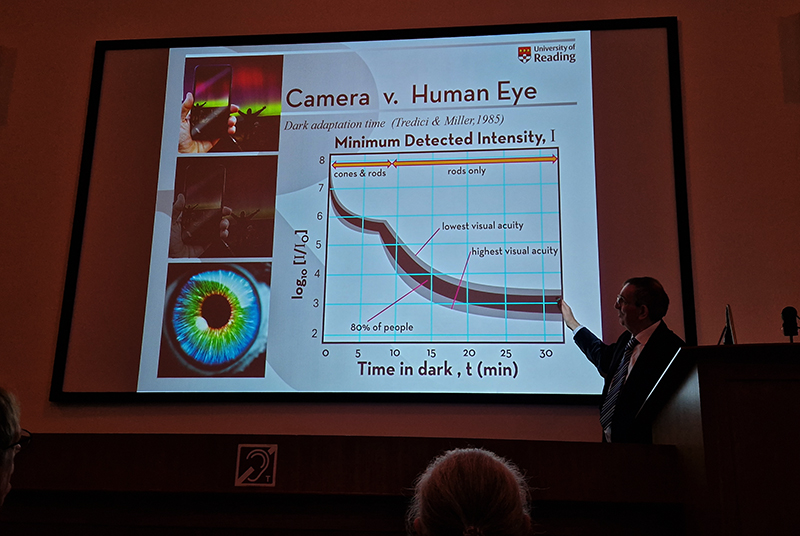
The following month, a barrage of large solar flares and coronal mass ejections jettisoning clouds of charged particles and magnetic fields, travelling at speeds up to 3 million mph toward Earth, created the strongest solar storm to reach Earth in two decades, and possibly one of the strongest displays of auroras on record in the past 500 years. There were even perfectly clear skies to view this extraordinary event, yet I missed it. So envious of all those who did get to see the displays of Aurora at such low latitudes. I am hoping there will be another chance to see the Aurora in the UK during this current year of peak solar activity, but not so dramatic a storm as to cause an ‘internet apocalypse’.

Gallery Visits

Andrea V. Wright Eyes of Skin at Thames-side Studios Gallery curated by Thorp Stavri. This exhibition explores the permeability and interactions between the body and architecture and the tensions arising from the ever-changing precariousness of our external and internal constructed environments. It was good to be able to chat with Andrea about her influences from fashion tribes and processes such as casting skins from buildings tumbling into ruins and tactics to avoid being vulnerable working in remote locations.

Holly Birtles and Charly Blackburn in Bog Bodies at APT Gallery. interrogate the complexities of wetland mysteries in the Thames Estuary and the Fenland Marshes exploring life, death, and metamorphosis through ceramics and photography. The Bog preserves the body in death enabling us to travel back in time as far as the Mesolithic period. Conditions inside the bog are acidic. They are perpetually wet, entangled with plants and peat, muddy and monstrous. A dense soup inhabited by complex ecologies that thrive in the anaerobic surroundings, creating a unique biochemical and physical occurrence that facilitates the mummification of prehistoric humans. This exhibition however, confounds expectations of oozing mud and swampy detritus. These ‘artefacts’ are presented in a pristine white cube setting, there maybe a slight whiff of smoke lingering from the ceramics but all is clean and orderly and the framing is thoughtful with a nice use of colour contrasts between image and frame. Good to be surprised.

SALON FOR A SPECULATIVE FUTURE: HOW TO BE IN THE FUTURE? at Vestry St – Cross Lane Projects with works from Aideen Barry, Quilla Constance, Lisa Chang Lee, Kate Fahey, Young In Hong, Evy Jokhova, Huma Mulji, Koushna Navabi, Monika Oechsler, Rebecca Scott, Jo Stockham. Postulating hope for a better future Rebecca Solnit (in an article in the Guardian, 2016): wrote “Hope is an embrace of the unknown”. Living in times of unprecedented change, uncertainty, she says, has “the power to influence the future”. Taking inspiration from the ‘future thinking’ of speculative fiction and looking at a wide range of fields from science and technology to spiritual, ecological and socio-economic issues, the exhibition highlights multiplicities and the complex interplay at work in global dynamics. The works, individually and collectively, draw on associations from different  subjectivities and contested /histories facilitating a space for contemplation and the discussion of positive futures. Strong shift shaping work here that gets under the skin, fake facades, hairy hissing and an AI doctored doctrine, make for an unsettling present from which to speculate on the future.
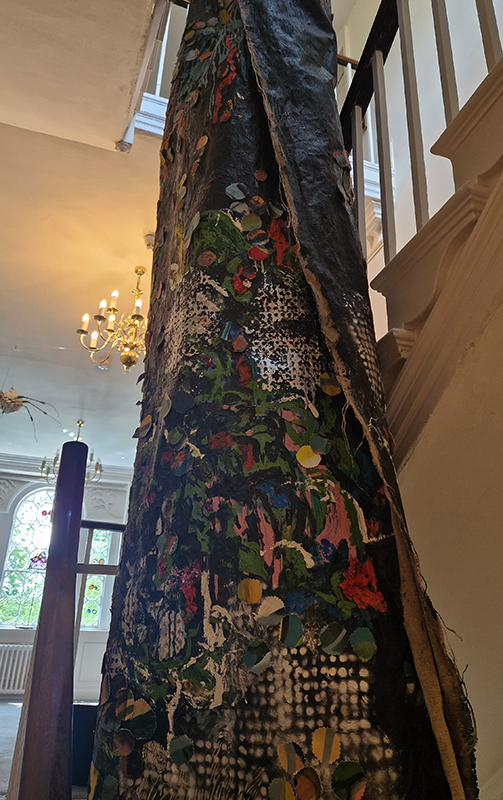
The Tipping Point at Bell House. The tipping point may arrive seemingly out of the blue as a slight change heralding a new way forward.  It can be magical or malevolent.  More than 40 artists in six individually curated spaces will examine different kinds of tipping points, both minor and major, literal and metaphorical. Sarah Sparkes and Jane Millar curate The Gowan Room using Octavia Butler’s dystopian novel, ‘Parable of the Sower’, as a point of reference. Jonathan Callan, Chudamani Clowes, Sarah Doyle, Lydia Julien, Marq Kearey, David Leapman, Yair Meshoulam, Jane Millar, Stephen Nelson, Victoria Rance, Alke Schmidt, Lex Shute, Ania Tomaszewska-Nelson, Sarah Sparkes, Sara Trillo, Marianne Walker and Alice Wilson explore a new awareness of change and exchange, a constant shifting of strange identities, the malleability of being, interspecies communication and the strength and vulnerability of community. Imagining new ways to merge; ways to intelligently and sensually live in the flux of a perpetual tipping point. Léonie Cronin curates the Lutyens room as a procession through objects of different artistic beliefs, pointing to new myths, a point of Syncretism where ideas become merged and the old symbols get incorporated into new systems.
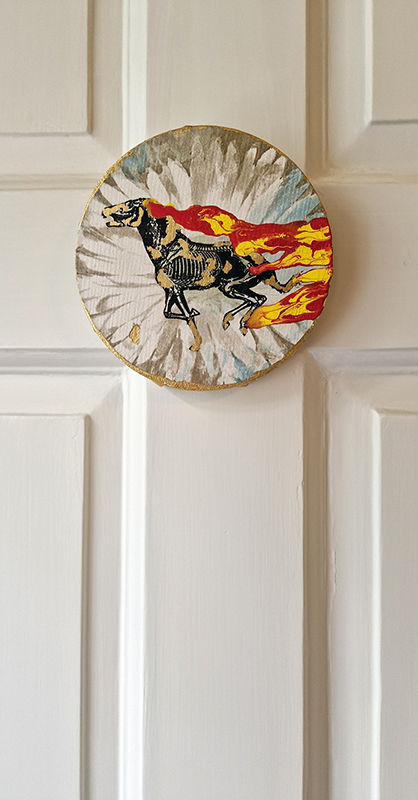
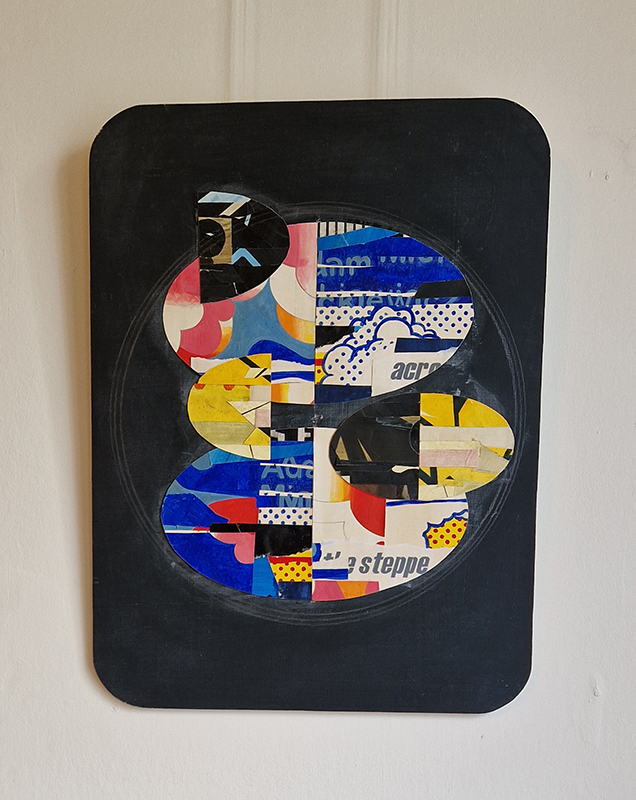
Thomas Pausz in Haunted Ecologies at Stanley Picker Gallery. A very interesting show drawing threads of local history together with current urgencies such as sewage pollution of the local endangered chalk stream Hogsmill River. From spirit photography and the dark room experiments of Kingston’s Eadweard Muybridge, to digital manipulation, rendering and 3D scanning – Our perception of contemporary environment and culture is always haunted by spectres of the past and by hopes and visions of the future.

Symbiosis II group exhibition exploring the relationship between image makers, the more-than-human, and alternative photographic processes at Four Corners Gallery organised by London Alternative Photography Collective  curated by Hayley Harrison, Melanie King, and Ky Lewis. This exhibition considers the connections between symbiosis and alternative photography, and asks if nature is a collaborator or a commodity in alternative photography processes.

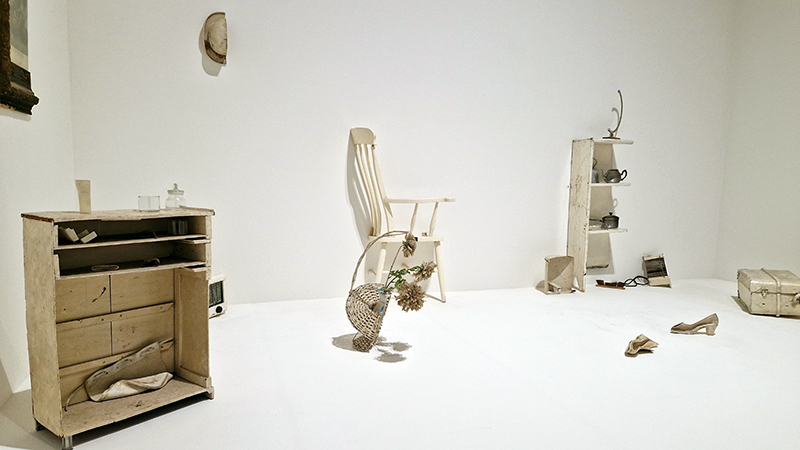
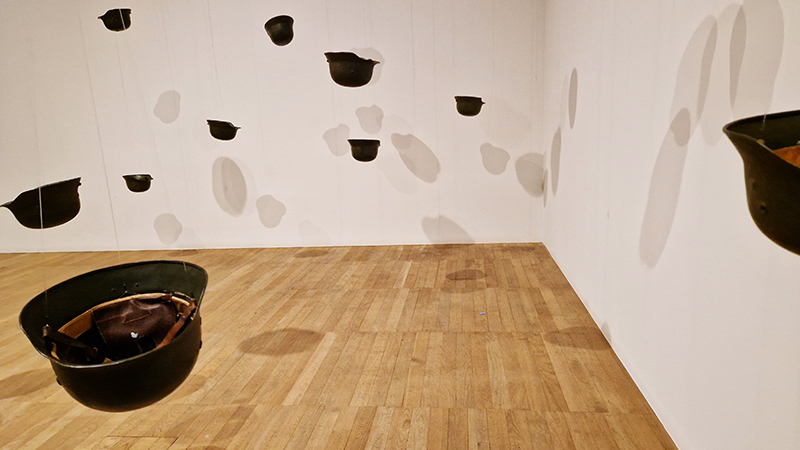
YOKO ONO: MUSIC OF THE MIND at Tate Modern. The main takeaway from this extensive overview of her pioneering work is the sadness that peace hasn’t been given a chance. The works are very direct, may appear simple in content or execution but cut deep into the human psyche. I particularly liked Half a Room, first presented in 1967, this is a room of objects cut in half and painted white. Ono said of this work “Molecules are always at the verge of half disappearing and half emerging…somebody said I should put half a person in the show. But we are halves already.” Another piece, Helmets (pieces of sky) from 2001 invites the audience to take a piece of the sky, which she sees as a hopeful symbol of limitless imagination. Jigsaw pieces of the sky are suspended in German army helmets, and although dispersed, offer the possibility of hope that they can be put back together through collective healing. Many works are participatory. A wall for drawing around your own shadow to create an entanglement of bodies. A boat to add your own wish to an ocean of wishes for the future.

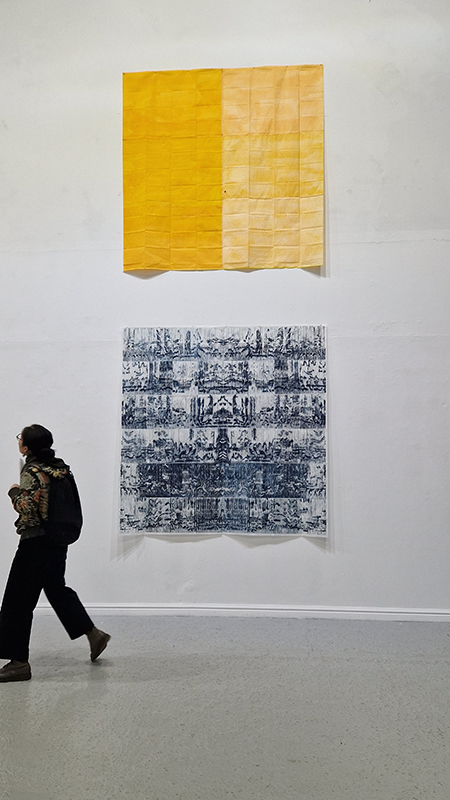
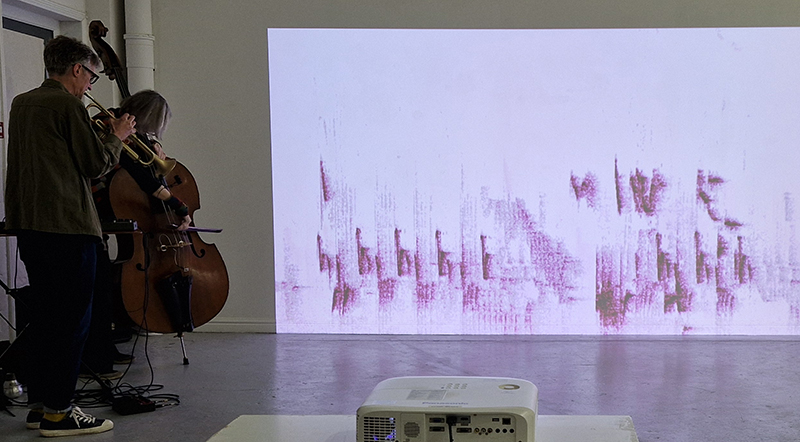
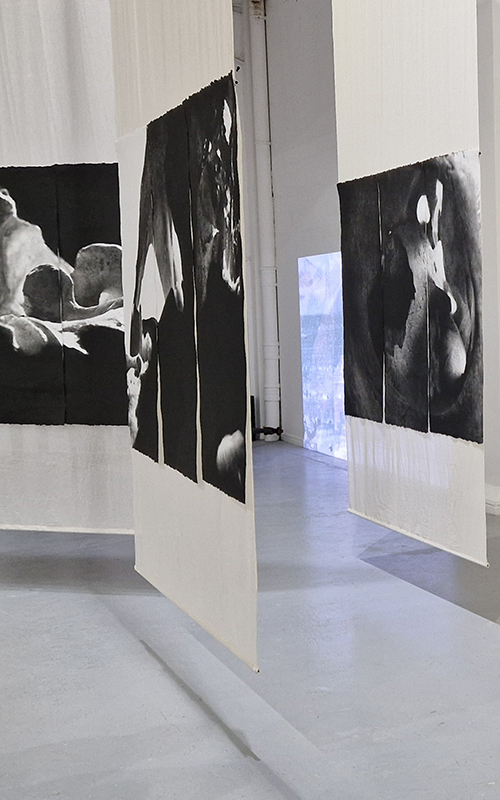
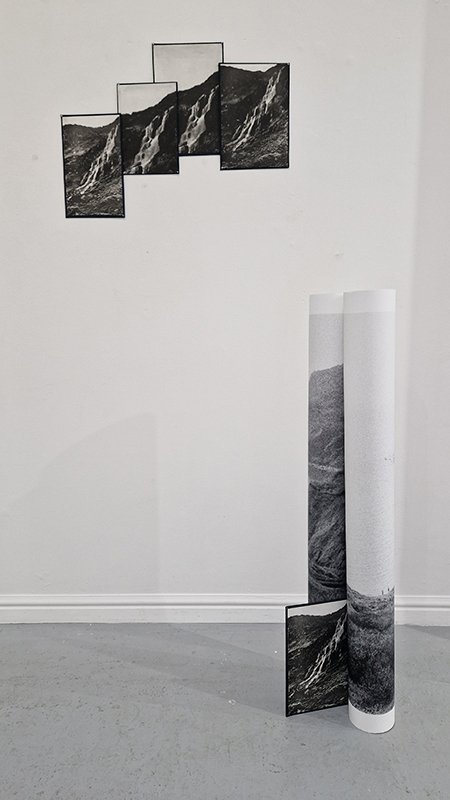
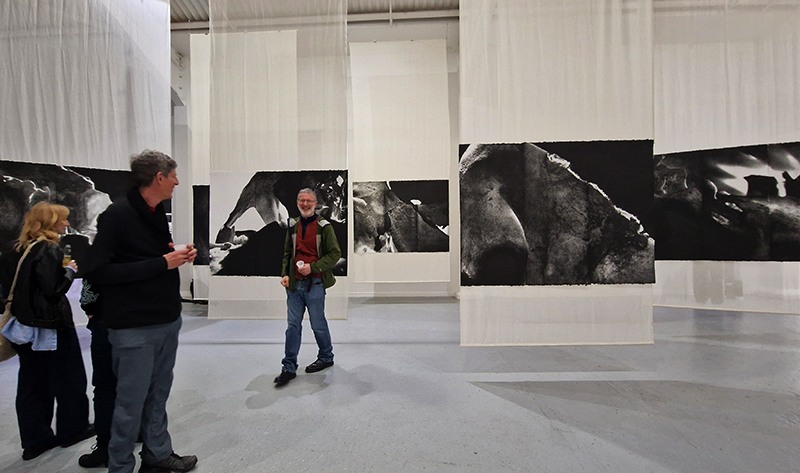
Geographies of Print final iteration of Without Horizon, Without Shore at Thames-side Studios Gallery. Geographies of Print is a collective group created by artists Victoria Ahrens, Carol Wyss and Victoria Arney in 2020. This collective looks to explore and challenge notions of print within wider contemporary discourse and practice. The artists fully inhabit the given space with dramatic large scale pieces, that interact and collaborate to create an exciting and cohesive exhibition. Blocks of colour flash between a maze of hanging muslin panels where etchings of impenetrable blacks and misleading undulations recall both mountain paths and the shadowy mazes of ancient cities. Emotive live music improvisation by Jim Howard (trumpet and electronics) and Julie Walkington (bass) accompanied Victoria Arney’s film reflecting on the epic journey of migrating birds. Landscapes of the mind and the body, a birds eye view and the internal geology of the Earth are beautifully explored.

I am very grateful to a-n The Artists Information Co for awarding me a professional practice and creative development bursary to expand on my research and respond to the many ways Earth’s magnetic field impacts life on earth. The award will be used for a research trip to the remote location of Eskdalemuir Magnetic Observatory and Kielder Dark Skies Observatory. Fingers crossed for an Aurora experience. I will also gain expert tuition in concrete casting and mould making from Anna Hughes and make use of the facilities at The London Sculpture Workshop.

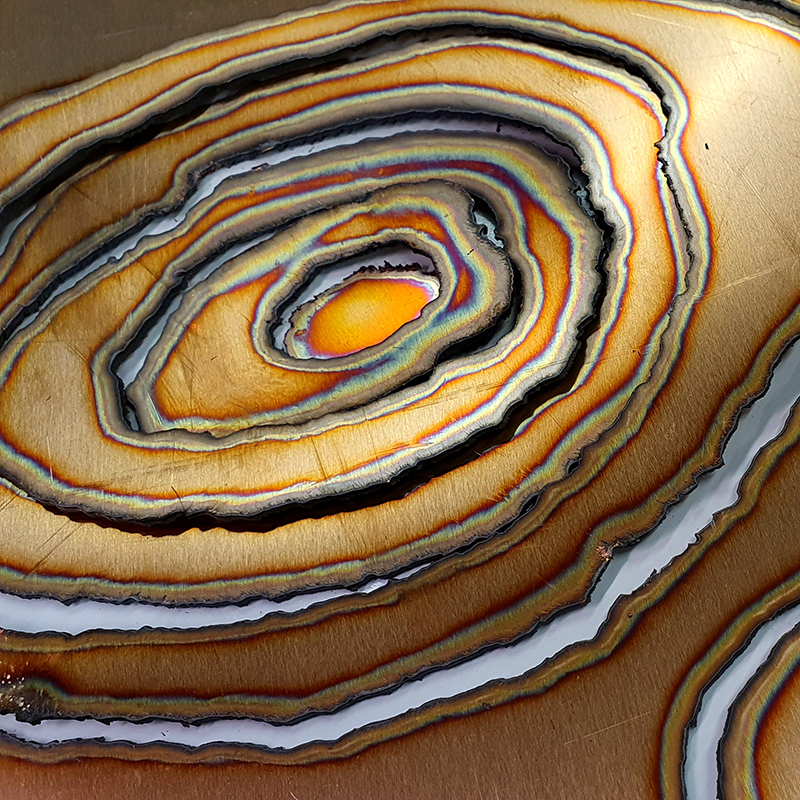
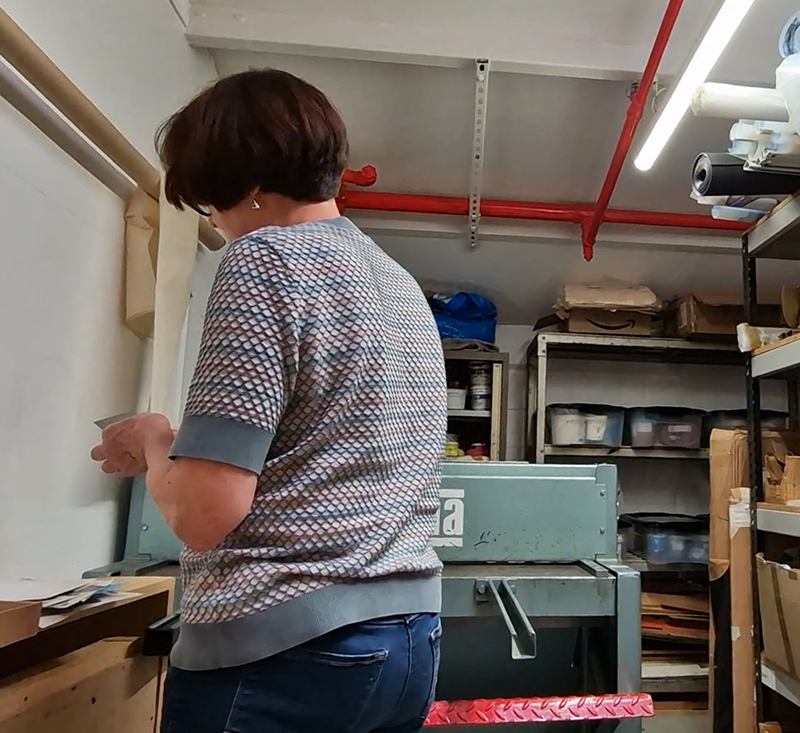
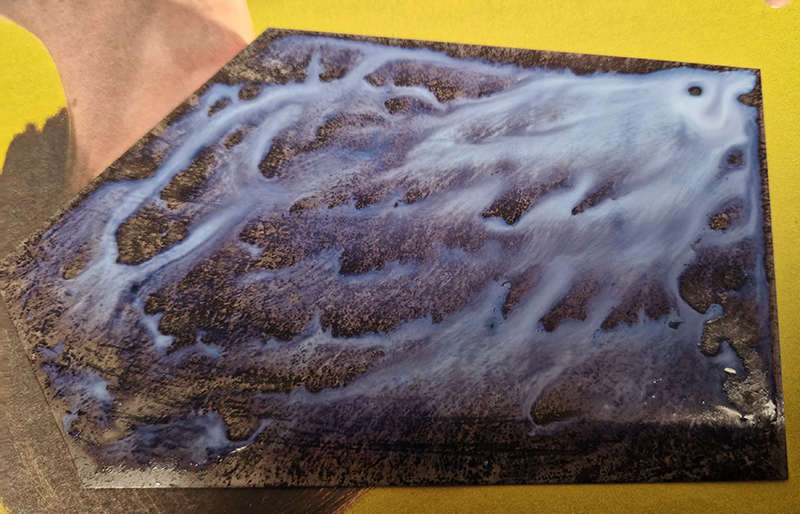
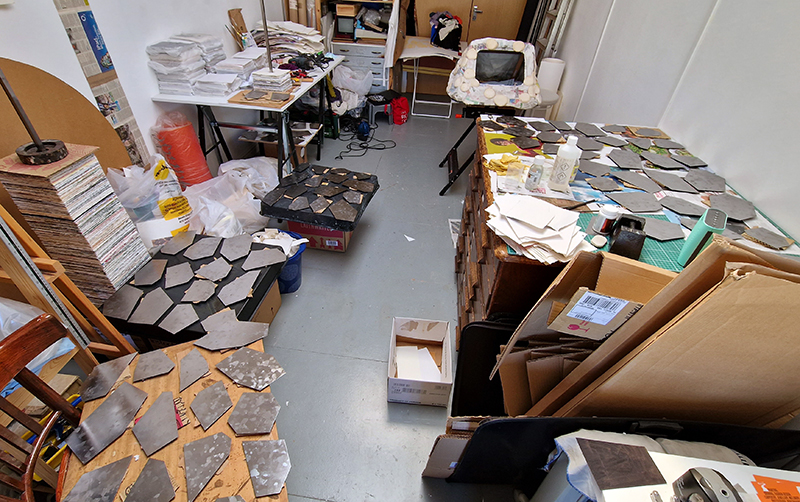
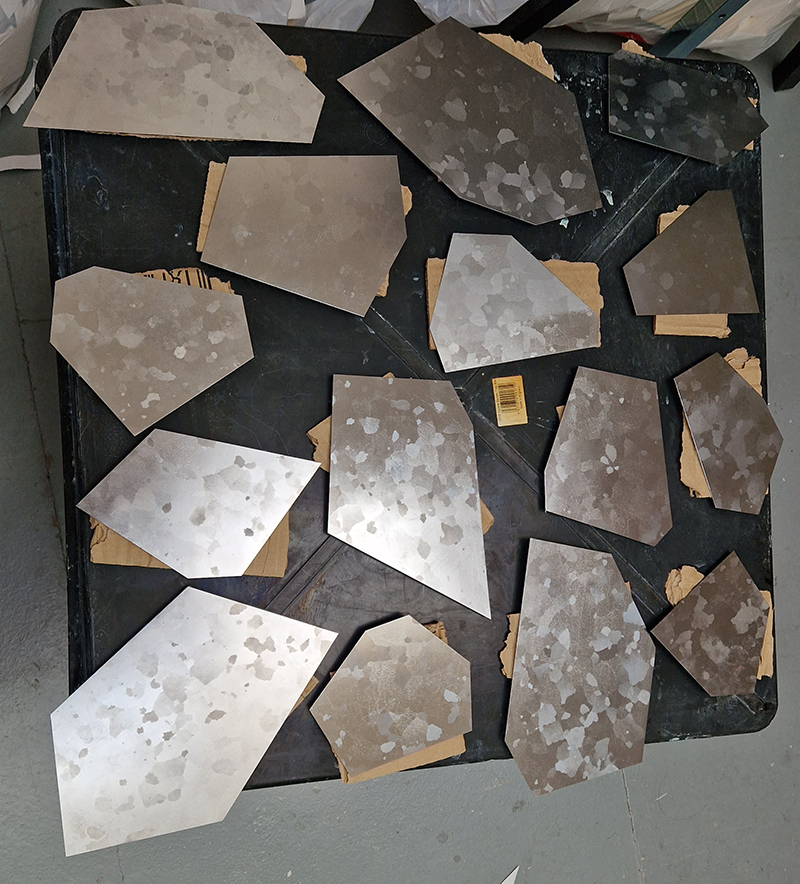
Domain of the Devil Valley Master – work in progress. It is likely that compasses were first used in China to divine an alignment of order and harmony for important sites and rituals. Jade hunters discovered they could also help to keep them from getting lost long before Europeans used them for navigation. The first mention of a south-pointer is in a fourth-century BCE text – The Book of the Devil Valley Master, and it is this that I am referencing in the title of this sculpture. Other references in the work are the rotation of the Earth’s core and geological formations of polygonal prisms. A magnetic domain is a region within a magnetic material in which the individual magnetic strength and orientation of the atoms are aligned with one another and they point in the same direction. The work uses directional magnetic steel stripped of its industrial coating to reveal the jigsaw pattern which comes from rolling single crystals of an iron silicon alloy into thin sheets to minimise magnetic losses for use in industry. The sheets have been sanded, etched, guillotined, treated for rust and sealed.

The Earth’s core is made almost entirely of iron and nickel. Siderophiles are elements that form alloys easily with iron and are concentrated in the Earth’s core. When the Earth formed about 4.5 billion years ago from the collision, accretion and compression of matter it was rock all the way through. Heat from the massive violence of formation and radioactive decay caused the planet to get hotter and hotter. After about 500 million years of heating up it finally reached the melting point of iron. As the iron liquified lighter material rose to the surface becoming the mantle and crust and the heavy metals like iron and nickel fell towards the centre becoming the core. The siderophiles that descended into the core are gold, platinum, and cobalt along with around 90% of the Earth’s sulphur. Hence the smelly sulphur vents around the volcanic regions.

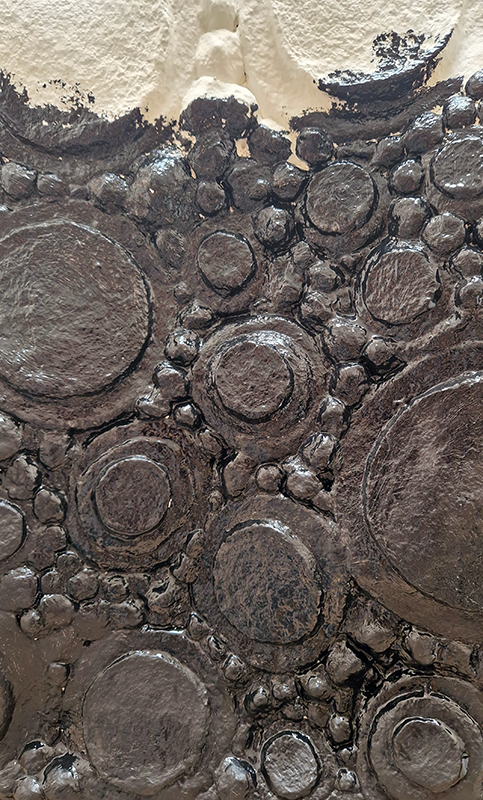
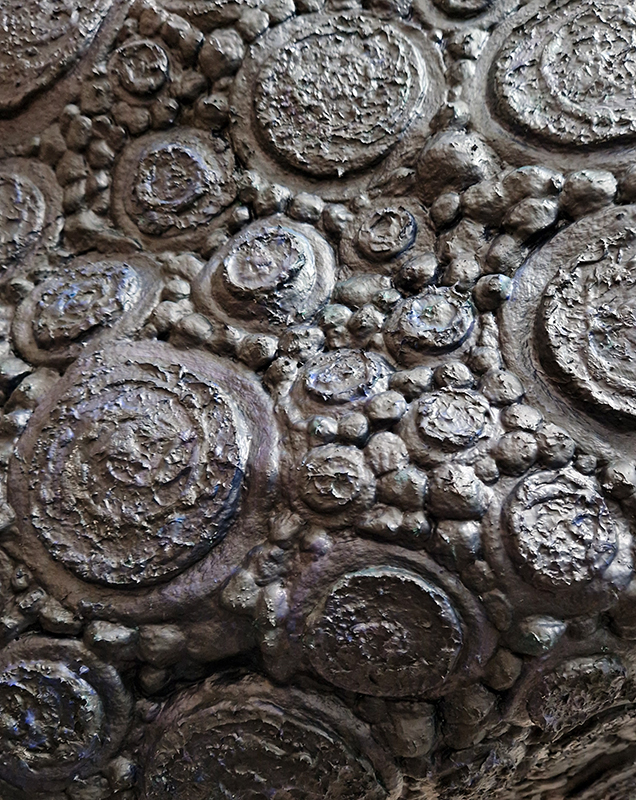
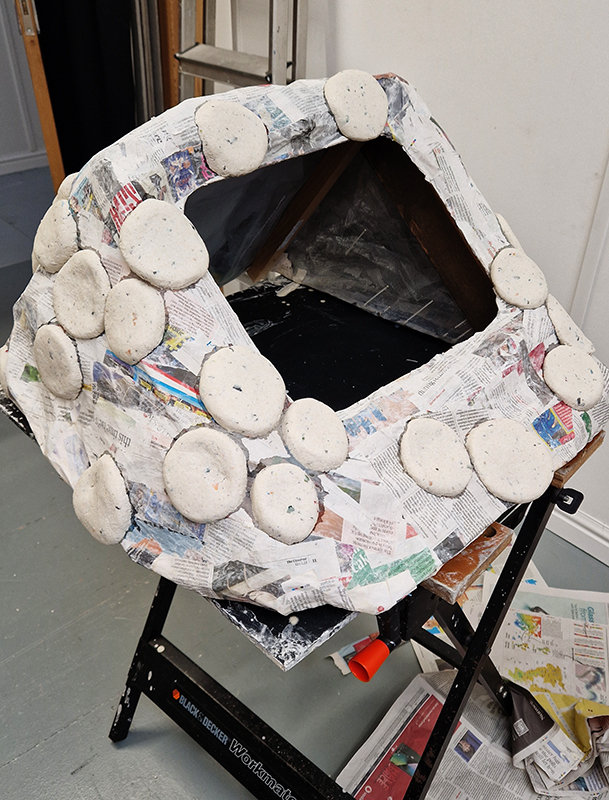
Belly of a Rock – work in progress. Making paper clay discs to build the surface of this hybrid sculpture and crushing mussel and oyster shells to use as texture.

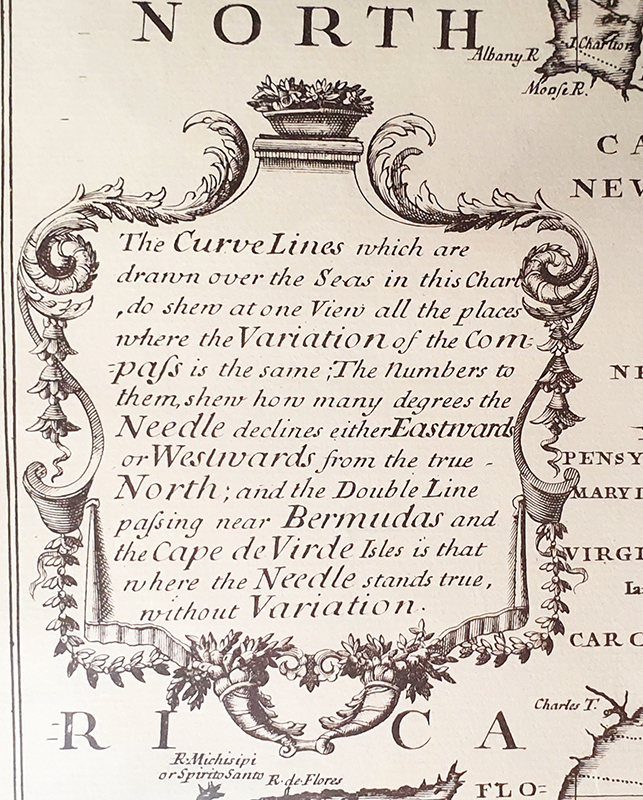
The geographic north pole lies in the middle of the Arctic Ocean, covered in shifting sea ice, where the sun rises and sets only once per year. All lines of longitude converge here and hence all time zones. It is known as true north to distinguish it from the magnetic north pole. However, as the Earth’s axis of rotation wobbles slightly in an irregular circle, even this pole is not fixed. The magnetic north pole, also called the magnetic dip pole, is where the planet’s magnetic field is vertical and a compass needle here would dip and try to point straight down. The north and south dip poles are not found directly opposite each other. These dip poles are located by experiment in the field but as they are found in the most remote and harsh regions of the planet they are not easy to track. Also they can move around over considerable distances during each day, tracing out oval shapes as they are acted upon by dynamic electrical current systems of the magnetosphere, which are in turn defined by the activity of the solar wind. There is an equivalent (but fictional) magnetic dipole at the centre of the Earth assigned from global modelling of the geomagnetic field. These geomagnetic poles are an approximation arrived at by reducing Earth’s complex and varied magnetic field to that of a simple bar magnet. The north dip pole lies in Northern Canada, the northern dipole is roughly off the northwest coast of Greenland.

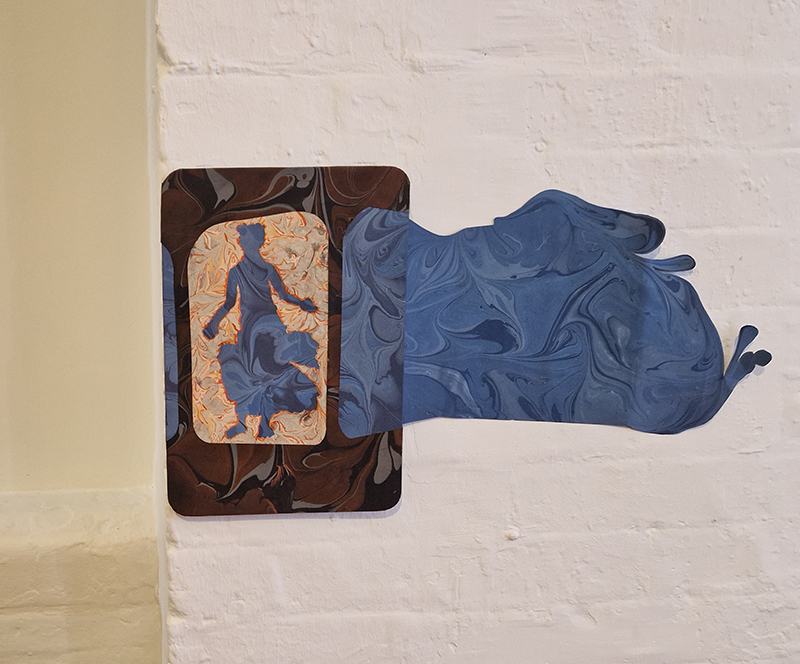
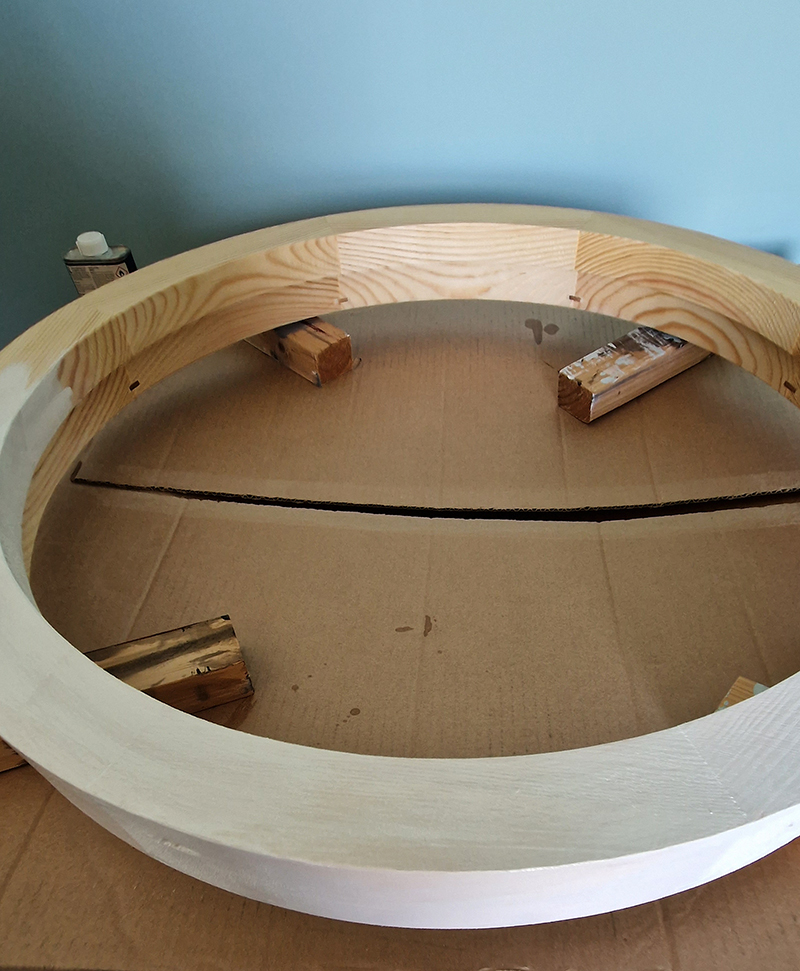
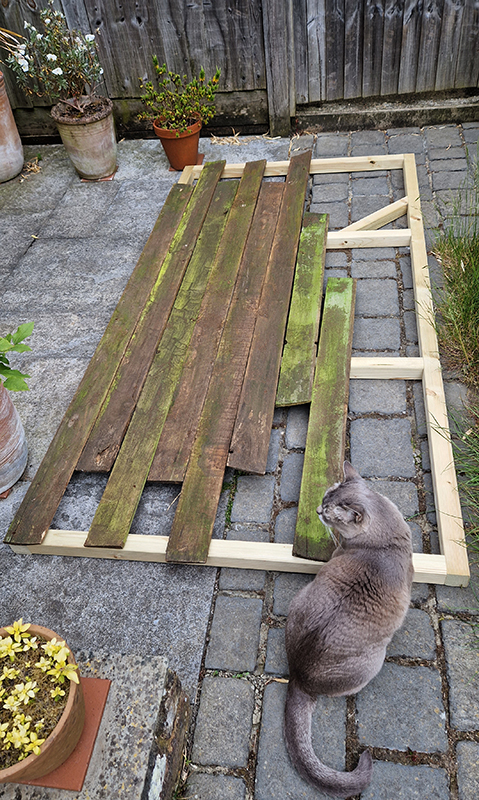
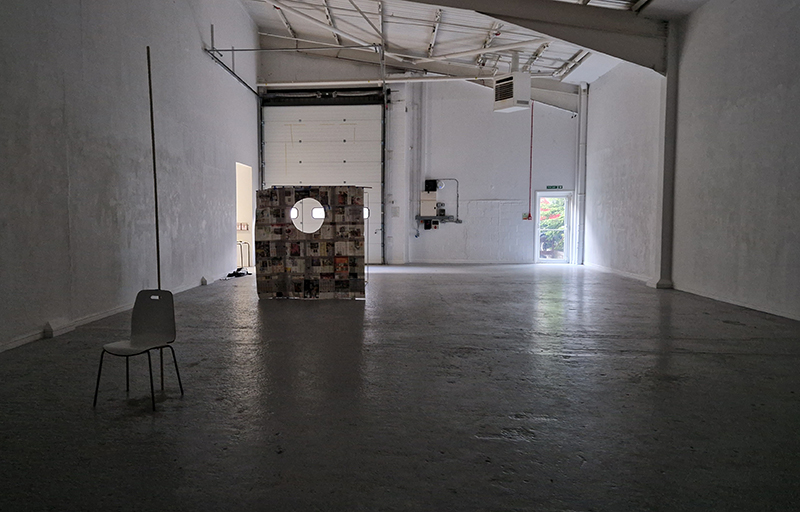
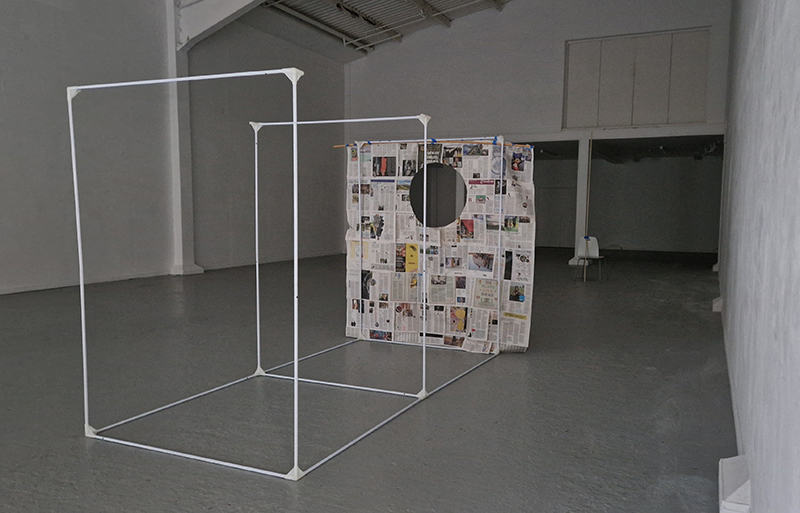
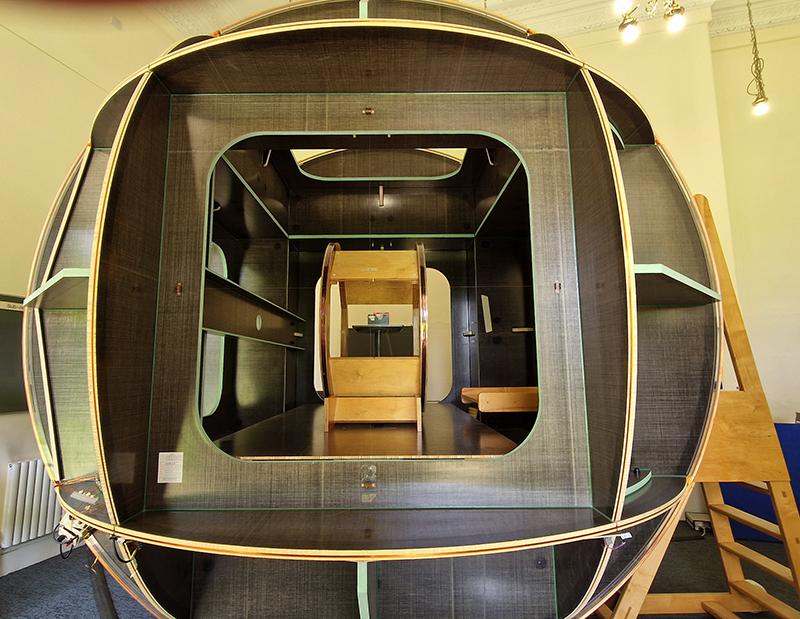
The Absolute Hut – work in progress. This installation is a reimagining of the Absolute Hut at Hartland Magnetic Observatory where monitoring of the Earth’s magnetic field takes place. Topological contours of suminagashi marbling also echo fluid magnetic field lines. Testing scale and alignment in the gallery space. Collecting planks for the north facing wall. Prepping the round window. Suminagashi experiments on different Japanese papers. I want to consider the hut as a sensory hub.

Other exciting news is that APT Gallery have selected a proposal for an exhibition which will take place in March 2024. The exhibition will consider the lifeboat as a metaphor in relation to uncertain times, ecological and social change and shifting landscapes as viewed from the land and the sea. The artists in this group show share an interest in exploring precarity as a site of dynamic transition. I am so happy to be working with these wonderful artists – Rachael Allain, Caroline AreskogJones, Beverley Duckworth, Liz Elton, Kathleen Herbert, Kaori Homma, Anne Krinsky.          

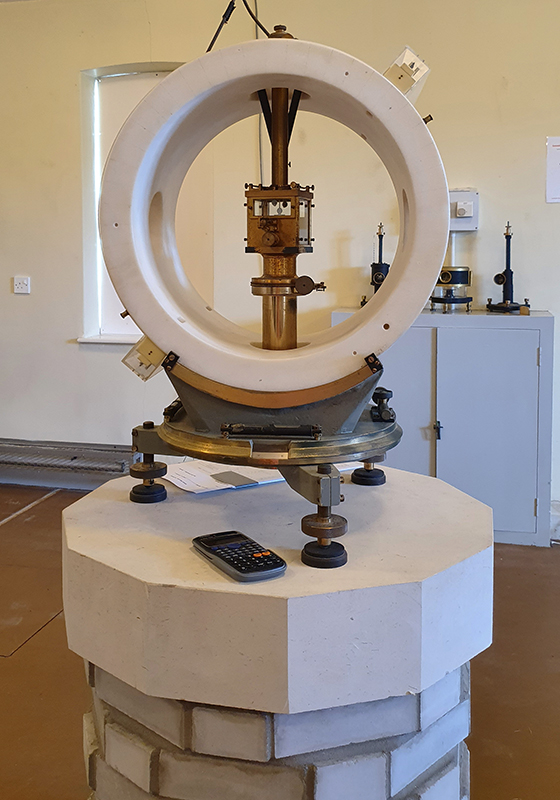
In celebration of World Metrology Day, NPL opened Bushy House and gardens to the public. A chance to see and hear about ever more accurate ways of measuring the physical world. Bushy House was the residence of William, Duke of Clarence (William IV) and his mistress Dora Jordan from 1797, and was offered to the Royal Society by Queen Victoria in 1900 as a location to establish The National Physical Laboratory. The impressive apple tree is from an offcut of one from Newton’s home estate. The magnetic laboratory here is concerned with devising and standardising the instruments used by magnetic observatories such as the one at Hartland that I visited last summer. I saw the 1kg sphere of single crystal silicon, with the smoothest polished surface of any made object and notoriously hard to photograph. The application of a strong magnetic field during the crystal growth process reduces contaminants giving a purer silicon crystal. Developments in technology bring new units and definitions of measurements.

From early concepts of number, patterns in nature (symmetry, branching, spirals, cracks, spots, stripes, chaos, flows, meanders, waves, dunes, bubbles, foam, arrays, crystals, and tilings) magnitude, and form came mathematics, meaning subject of instruction. This has evolved into complex theory from an understanding of negative numbers to imaginary numbers which combined with real numbers have been found necessary to describe quantum mechanics.

The colour coding of Saturn’s rings according to particle size used radio occultation to determine the different regions. Radio signals were sent from the Cassini spacecraft during orbits which placed Earth and Cassini on opposite sides of Saturn’s rings. This remote sensing technique measures how the radio waves bend around the matter they encounter to assess the physical properties of a planetary atmosphere or ring system. The purple colour indicates regions where most particles are larger than 5 centimeters. Green and blue shades indicate regions where there are mostly particles smaller than 5 centimeters and 1 centimeter. The white band is the densest region where radio signals were blocked preventing accurate representation in this area. The radio observations showed that all rings appear to have a mix of particle size distribution right up to boulder sizes, with several many meters across.

Gallery Visits

It’s Coming From Inside at Bell House, Dulwich. Curated by Sarah Sparkes and Jane Millar. In their thinking about the Impressionist Berthe Morisot, and the exhibitions broader theme of ‘Windows and Thresholds’, the curators see the two different domestic spaces, and the liminal corridors between them, as places expressive of dialogues in both Morisot’s and their invited artists’ works: of confines, dreams of escape, of external inscrutability and internal passion. Exhibiting artists: Fran Burden | Ruth Calland | Helen Carr | Mikey Cuddihy | Janet Currier | Robert Dawson | Andrew Ekins | Liz Elton | Lisa Fielding-Smith | Deborah Gardner | Caroline Gregory | Birgitta Hosea | Mindy Lee | Wayne Lucas | Julia Maddison | Jane Millar | Darren O’Brien | Kim Pace | Sarah Sparkes | Geraldine Swayne

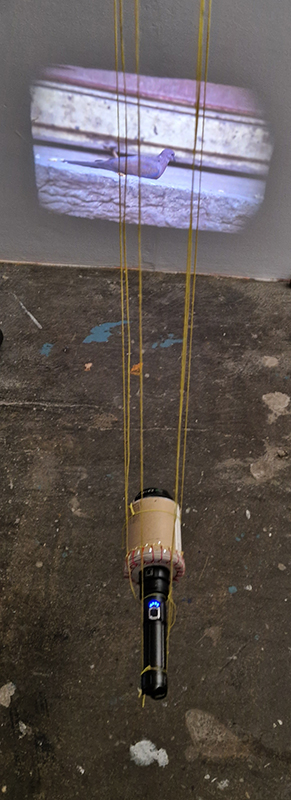
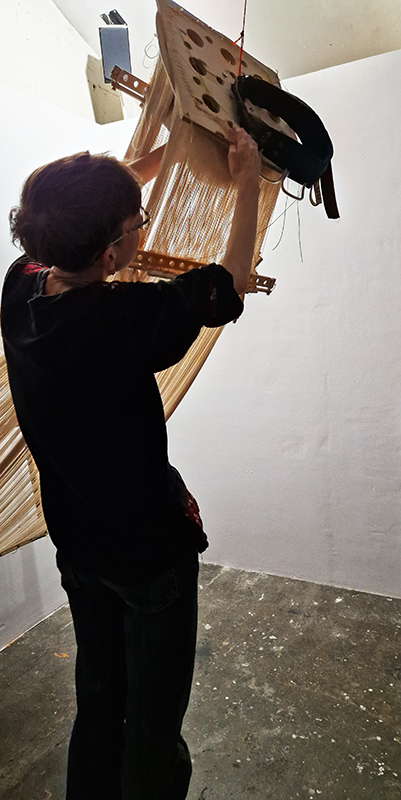
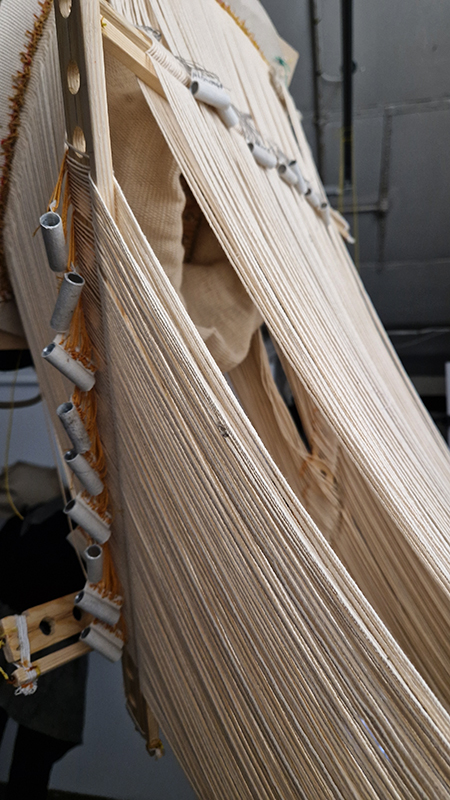
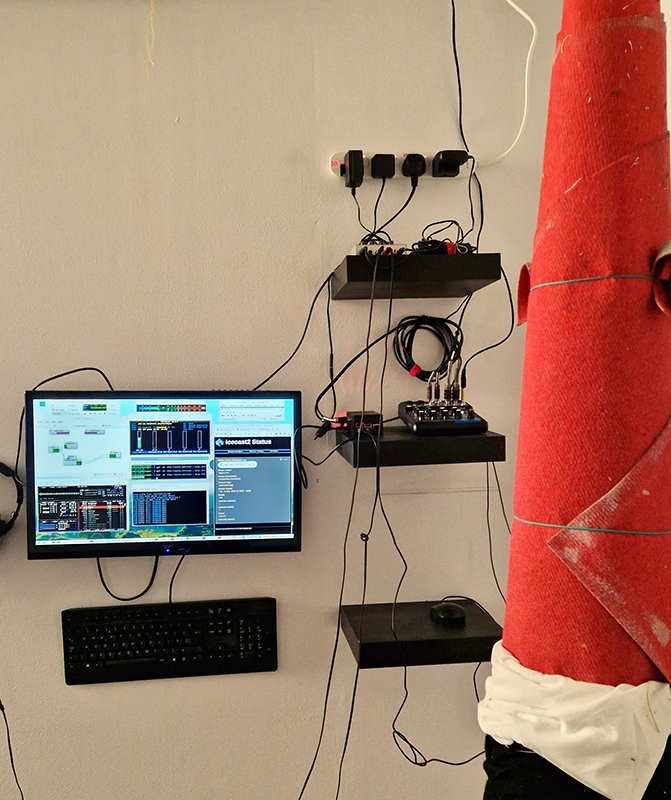
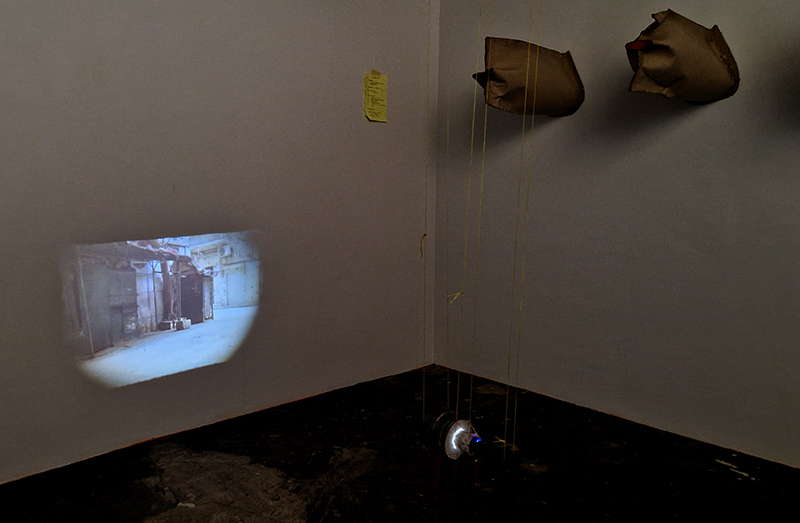
Georgina Sleap Now and here and there together at Cable Depot. A residency undertaken in collaboration with Neil Cheshire, Olive Hardy, Mercedes Melchor, Agnieszka Szczotka, Derek Horton, Farida Youssef and Niamh Riordan. A wonderful installation conjured from simple materials and experimental technology, both analogue and digital that blur the here and there of time and space. Sounds of everyday street noise live from the artist’s Cairo balcony are streamed into the gallery where suspended torches project still slide images onto the wall or inside elongated sculptural forms. A loom for weaving a plain coffin shaped carpet hangs like a hammock next to CCTV recordings of yogic performance while a camera obscura style intervention casts shadows, bringing the local outside in.

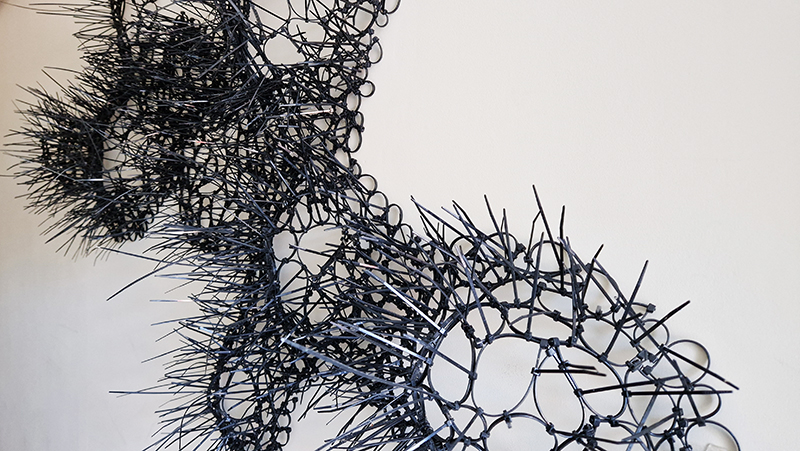
The Shape of Things by Clan, a collective of multidisciplinary artists – Caroline Penn, Liz Lowe, Ashley Goldman, Nicky O’Donnell at Gallery 3, a delightful Georgian property in Margate. The artists examine issues of loss, both personal and environmental, that are balanced by ideas of hope and regeneration. A nice use of recycled and sustainable materials including netting from fruit and cable ties.

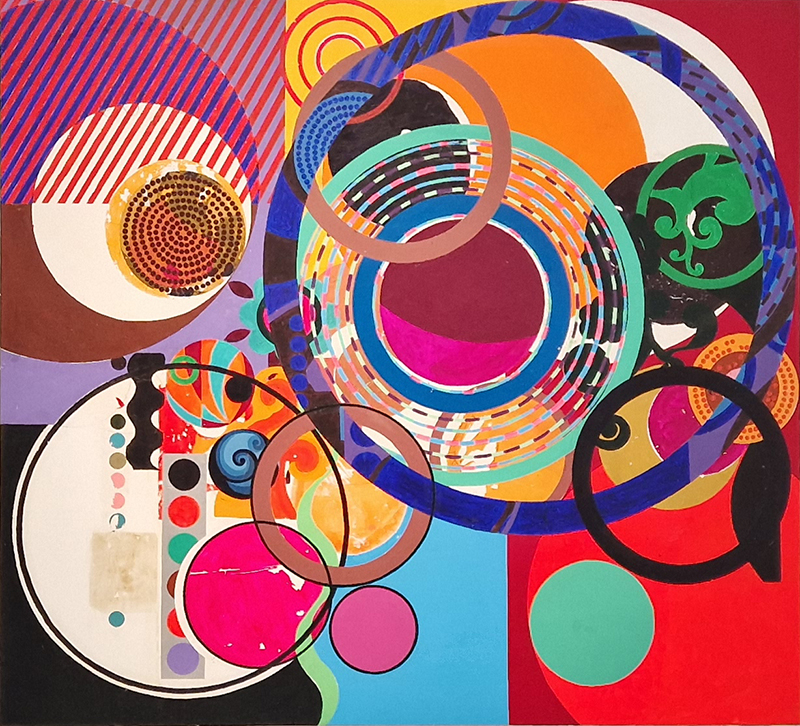
Beatriz Milhazes at Turner Contemporary. Perfect for a summer’s day at the seaside. Exuberant.

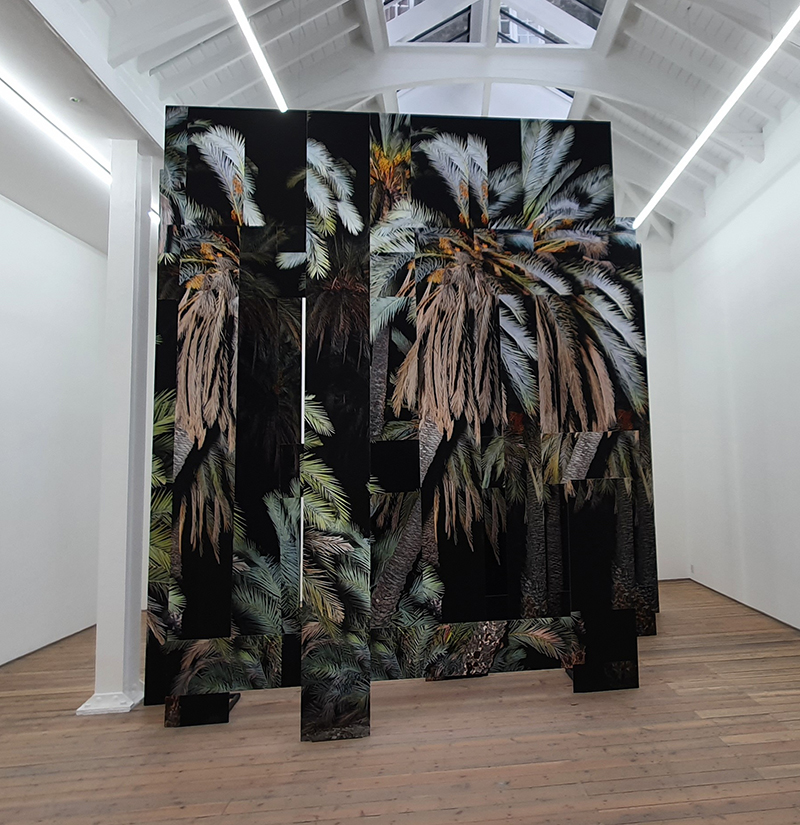
Opening event for the new photography centre at the Victoria and Albert Museum. Interesting to hear about the process Noémie Goudal undertakes to create her ambitious illusionist photographic sculptures such as Giant Phoenix VI from the series ‘Post Atlantica’ which has been acquired by the Victoria and Albert Museum for their photography collection, housed in a new dedicated gallery. This work was inspired by her interest in shifting landscapes, the movement of tectonic plates and how landmasses join and separate over millennia. There was also the chance to see her video Inhale Exhale along with behind the scenes footage of her technical team and the scale of the resources involved. Tarrah Krajnak has also had work acquired by the museum and read some of her poetry at the event. Her interests are also in discontinuity, severance and cataclysmic events but on a human scale. Being born from an act of violence she puts her own identity forward to explore power relationships.


Reading

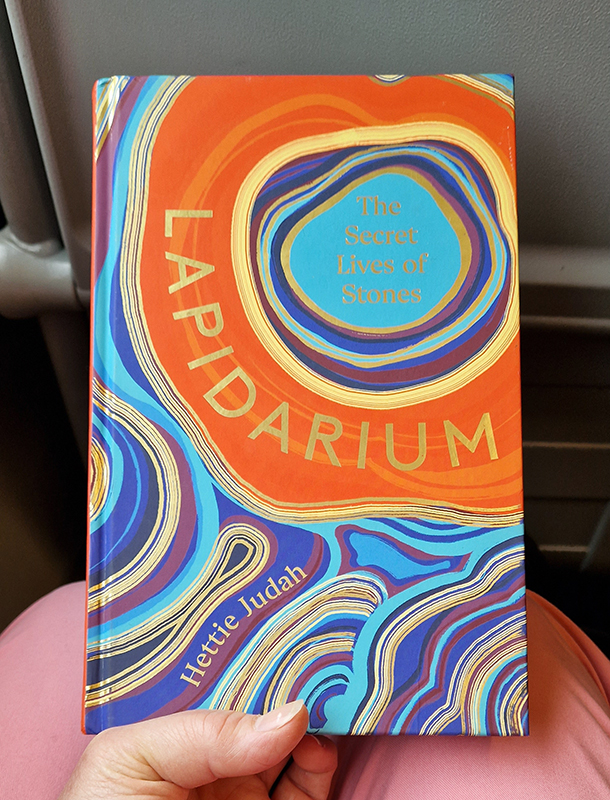
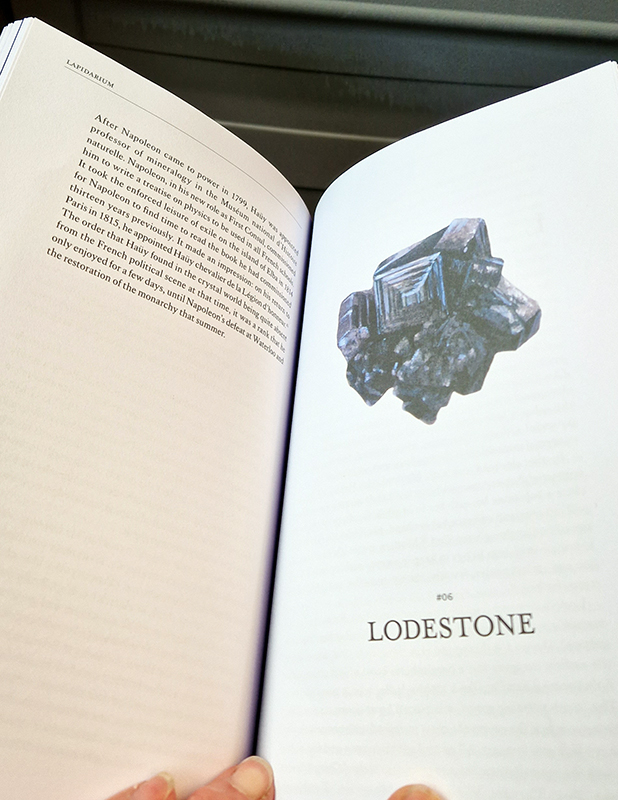
I have really enjoyed the breadth of information delivered so beautifully by Hettie Judah in her book Lapidarium – The Secret Lives of Stones. The character described and stories told of each geological layer, formation, rock and gem brings to life a world often perceived as static, perpetual and dry. This book is a great resource and has been particularly appropriate for me in the run up to the exhibition A Stone Sky with Julie F. Hill as we explore the intimate connections between the rocky planet earth and space.

92 Light Years is finally up on the wall in my studio. This work was inspired by a visit to the UCL Observatory at Mill Hill with Lumen Studios just before the pandemic. It then became a more poignant and personal piece for me thinking about time spent here on Earth and trying to relate that to the vastness of the cosmos.

The electromagnetic waves of radio and television signals can pierce the ionosphere and travel through space at the speed of light. HD 70642 is a star similar to our sun with a large companion planet that orbits in a circular motion very similar to how the planets orbit here in our solar system.  This means it is possible there maybe Earth-type planets orbiting further in.

This star is in the constellation of Puppis about 90 light years away. Early signals from Earth will just be reaching this distant solar system with a potential Earth like planet. The time it has taken the signals to reach this home from home is roughly the same as my Mother’s lifetime on Earth. 92 years measured in light.

Early TV signals were transmitted in a series of 30 lines to complete one image called a raster pattern. It is a systematic process of covering an area progressively, similar to how one’s gaze travels when reading lines of text. The signal is sent in fragments and must be interpreted on arrival to make sense of the message. The folded sections in this work emulate the raster pattern and are made from a combination of screen print on textile, dye sublimation print using images from the 1930’s and chinagraph pencil marking out the star chart – a bit like a lenticular image – you see the stars from one side and the fragmented signal from the other.

I have inherited a large number of lace and crocheted doilies from my Mother. A strange constellation may emerge.

In the studio I am continuing experimenting with magnets and iron filings while thinking about magnetoreception, methods of navigation and finding the way in the dark.

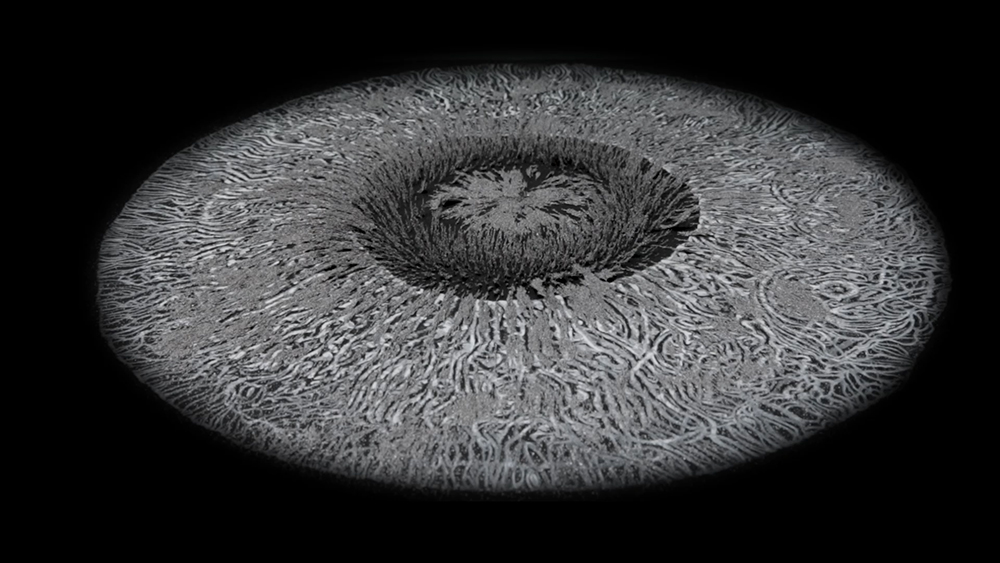
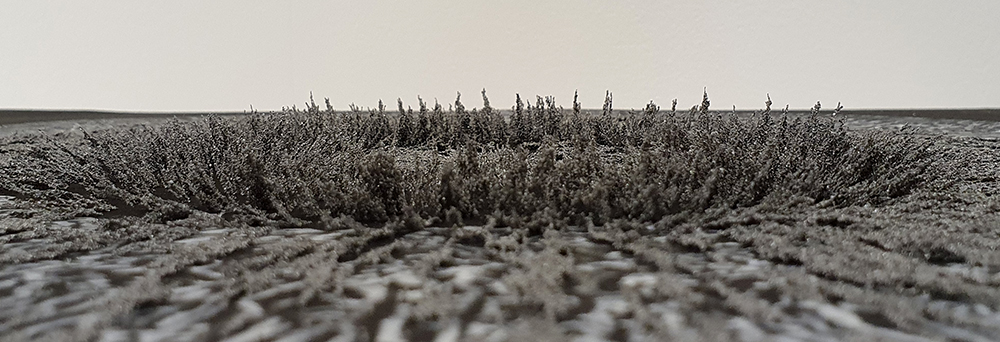
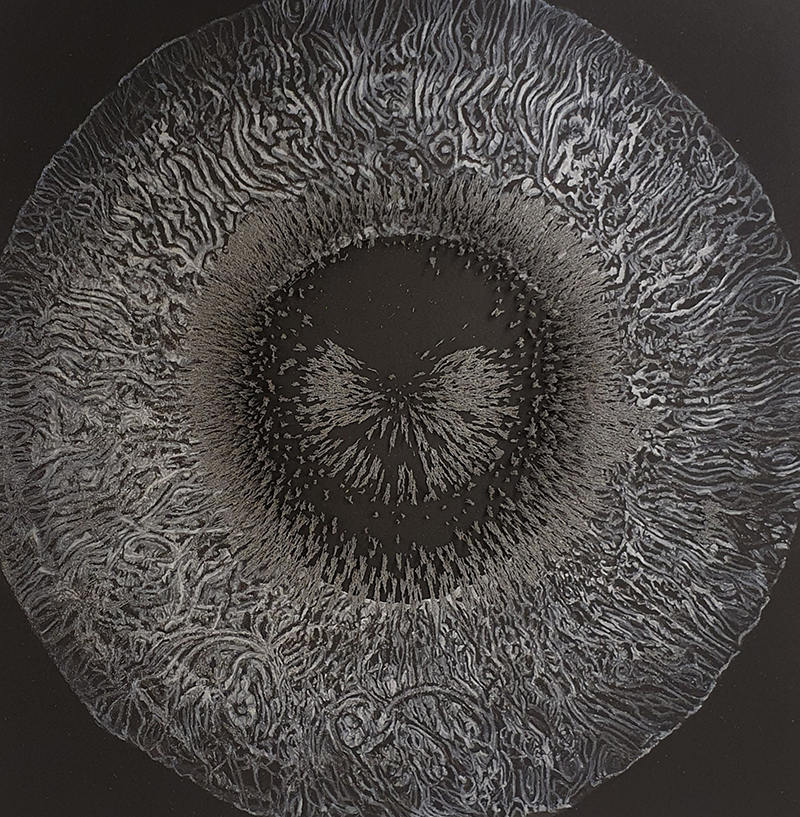
I have made a new etching of my iris which has been worked into with chinagraph pencil and will be used as background to film the movement of magnetised iron filings marching across the print. I am planning a moving image piece exploring magnetoreception along with a large mounted softground etching and a smaller photopolymer etching. I have tried some larger sized filings on the print which are darker but am not sure they are successful.

Researchers at the Max Planck Institute investigating light-sensitive molecules that bacteria, plants and animals use to detect the Earth’s magnetic field have noted that in birds this molecule, located in the eyes, only reacts to the magnetic field if it is simultaneously stimulated by light. The researchers think that some mammals may also use this cryptochrome to perceive the Earth’s magnetic field as there is a correspondence between the blue cones in mammals and the blue to ultra violet sensitive cones in birds. It is therefore entirely possible that this cryptochrome molecule in mammals could also perceive the Earth’s magnetic field and be used for navigation and orientation.

I participated in an online residency @t.ransienttt via Instagram to share some of my work over the course of one week. TRANSIENT supports creatives who explore the relationship between Art & Technology and offers an accessible platform to showcase their work, as well as connecting with fellow, like-minded creatives from all over the world. 

My interests are broadly to do with visualising the unseen. Technology can assist in making something visible which is otherwise outside the limitations of our senses. I use the pioneering technology developed in the study of particle physics as part of my practice allowing us a glimpse into the world of subatomic particles.

Cosmic Chiasmus – This video gives a glimpse into the activity of subatomic particles fired into our world when cosmic rays strike the top of the Earth’s atmosphere. Particles created during super nova explosions or by phenomena we are yet to discover, travel from distant galaxies continuously passing through us. Some particles collide and silently interact with atoms and technology on Earth.

A cloud chamber enables us to see the trails made by cosmic particles as they collide with and pass through our world. It has been said that the cloud chamber might be the most important piece of experimental equipment in the history of particle physics.

Scales of Intangibility and soft borders were developed in a black velvet chamber built during a studio residency at Chisenhale Art Place.

Scales of Intangibility is an interactive life size cloud chamber installation. Visitors were invited to enter the chamber to ‘capture’ projections of cosmic particle trails onto hand held viewing screens.

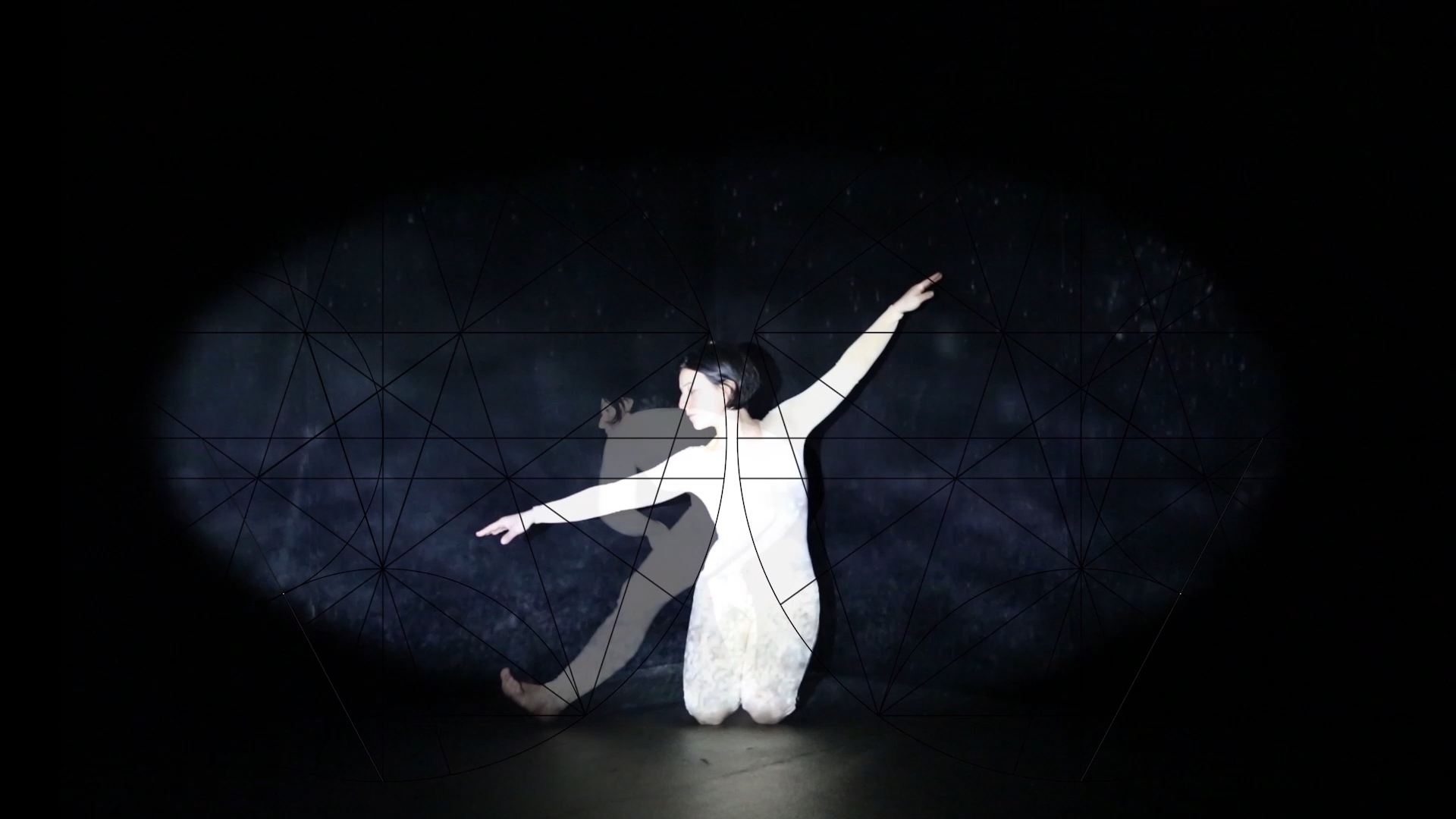
The concept of a finite but borderless universe and the permeability of our own body is explored in the video soft borders. The work addresses cosmic and quantum phenomena that are beyond human scale and relate them back to the body’s sensory experience. I worked with dance artist Paola Napolitano who performed sequences of movements based on the geometries of the platonic solids as video of cosmic particle trails were projected onto her body. The movements relate to the system devised by choreographer Rudolf Laban who believed – 

‘What we cannot perceive with our senses, especially our fundamental sense of touch, remains unreal and its very existence is denied’

Theoretically it is possible that wormholes exist. Aóratos (which translates as Unseen) was a site specific participatory installation with fire and film presented at Allenheads Blacksmith’s Shop as part of the 2019 ACA project Continuum.

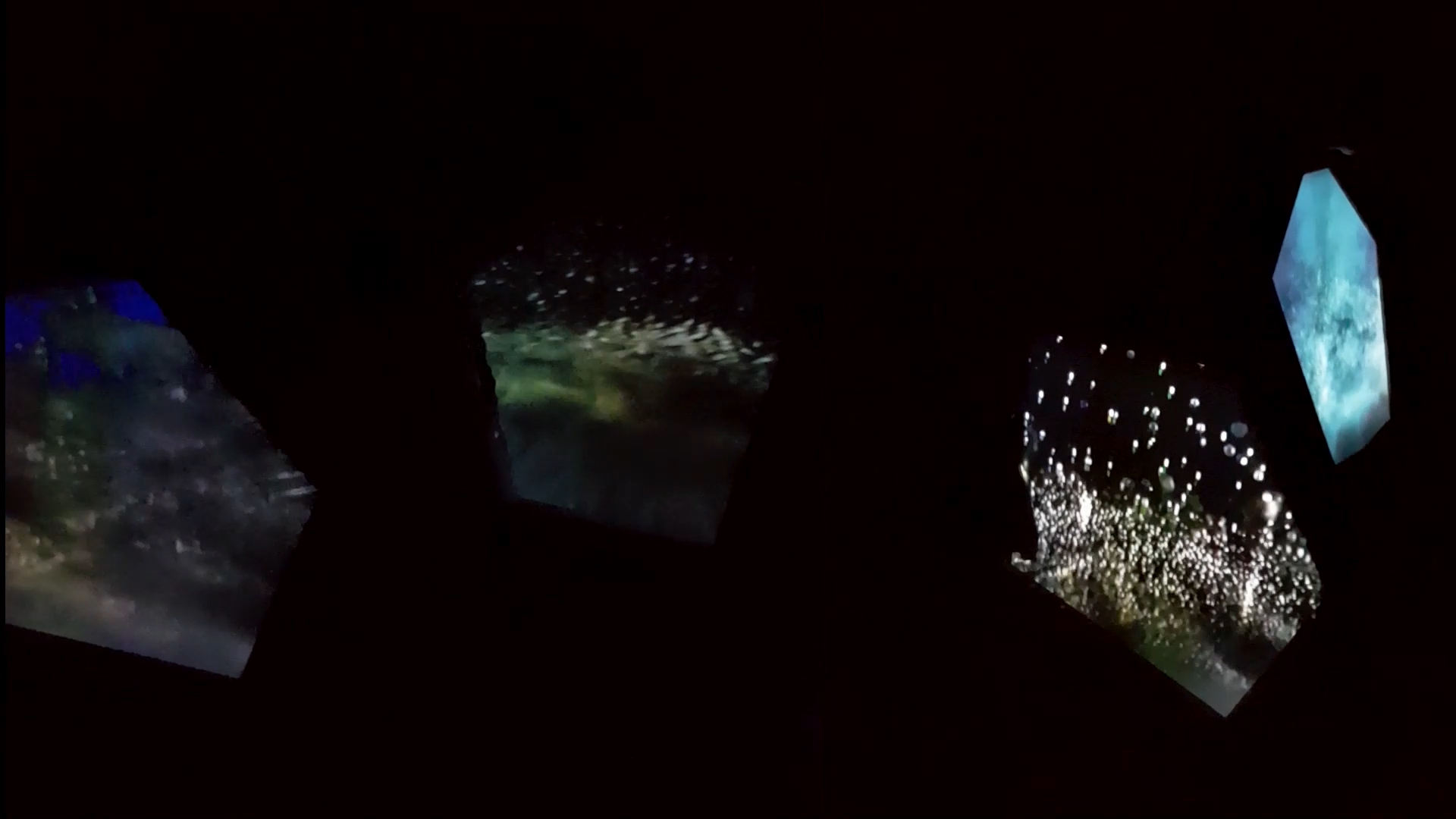
Visitors were invited to burn offerings of negative energy to power the ‘wormhole’. They were provided with special paper tokens to write on filled with chemicals that change colour when they burn. They could then pass through a portal to see a video installation showing alternative landscape perspectives and would exit via a different door having made a short journey, leaving feeling cleansed of negative thought. Imagery for the videos took reference from theories of cosmic strings, space foam and the idea of a web of tiny wormholes connecting all points in space. The processes used included putting an endoscope down rabbit holes, using a microscope over foam, fibres and skin, green screen filming magnetic fields, along with footage from a high altitude balloon flight.

Wormholes symbolise crossing improbable boundaries.

There are some cosmic particles which arrive on Earth with such high energies that it could be they come from other dimensions.

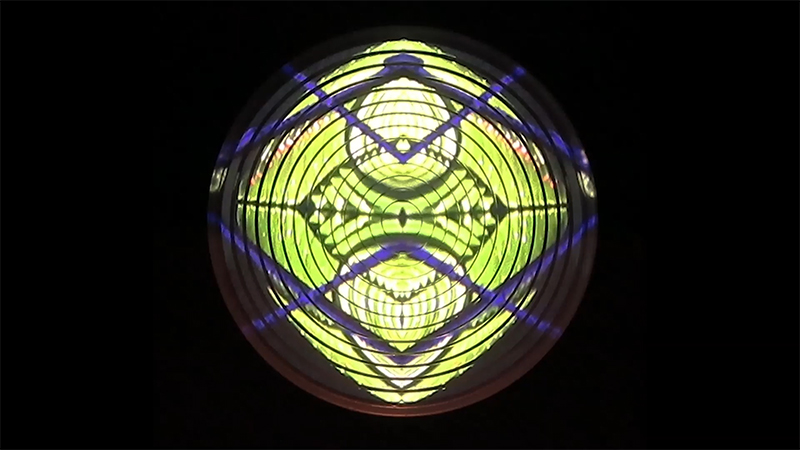
At a Distance was filmed at Lizard Point Lighthouse on 29th March 2019 – the first date the UK was supposed to leave the EU. Solitary figures using semaphore flags sign ‘We Are One’ out across the ocean hoping the message will be echoed back as in quantum entanglement theory where particles link in a way that they instantly affect each other, even over vast distances. This mysterious twinning of electrons is what Einstein famously called ‘spooky action at a distance’. The video also uses manipulated footage of Lizard Point Lighthouse lamp powering up for the night to employ another form of messaging over distance. The film is back projected onto a Fresnel lens, the type found in lighthouses to increase luminosity of the lamps beam.

I watched another excellent Laurie Anderson talk in the series Spending The War Without You, this one was titled Birds. All the talks have now been released on YouTube.

Out of the studio

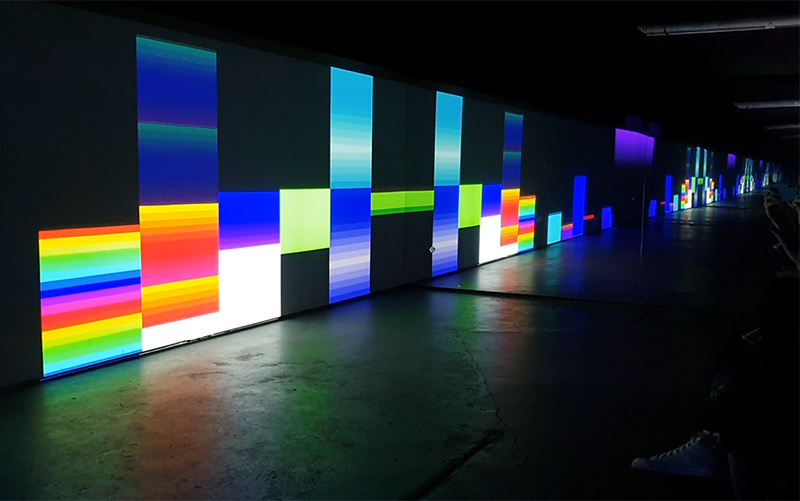
LUX: New Wave of Contemporary Art at 180 The Stand.

Subterranean adventures with wow factor. Light as medium and not always light in content as these spectacles can sometimes feel to be.

Hito Steyerl This is the Future is a video installation where a woman prisoner searches for a garden she has has to hide in the future to protect it from discovery by the prison guards. It also features Power Plants which are digitally generated by neural network computer systems based on the human brain and designed to predict the next frame in the video (the future) and are inspired by ruderal species, plants that grow out of waste ground or disruption.

Es Devlin BLUESKYWHITE is an installation beginning with a walk through long red tunnel accompanied by voiced text from Byron’s 1816 poem Darkness. The poem was written after the eruption of Mount Tambora in Indonesia 1815 which released so much debris into the atmosphere there was a perceptible dimming of the sun and drop in temperature of about 3 degrees. It is known as the year without summer. The tunnel leads to a viewing bench and screens where the blue sky turns white and then black. Current solar geoengineering models suggest that a haze of suspended particles in the atmosphere could reduce global warming but would also turn the blue sky white.

Cao Yuxi Shan Shui Paintings by AI uses deep network algorithms to learn from digital pixels of free hand oriental ink paintings on the web to produce unlimited simulations of landscape paintings combined with algorithms simulating the flow of water molecules creating a dynamic ever changing liquified landscape.

Cecelia Bengolea Favourite Positions is a 3D animation of the artist’s body liquified and melting, a body without boundaries where bodily fluids find new pathways and connections to synapses

Universal Everything Transfiguration – a figure keeps a steady pace in a continuous cycle of transformation, relentless unstoppable evolution through lava, rock, fur, water

Lux Carstens unicolor is a study in the psychology of colour perception and chromatics influenced by researchers, scientists and artists including Johann Wolfgang von Goethe, Hermann von Helmholtz, Werner Heisenberg, Wilhelm Ostwald, Eckhard Bending, Josef Albers and Johannes Iten.

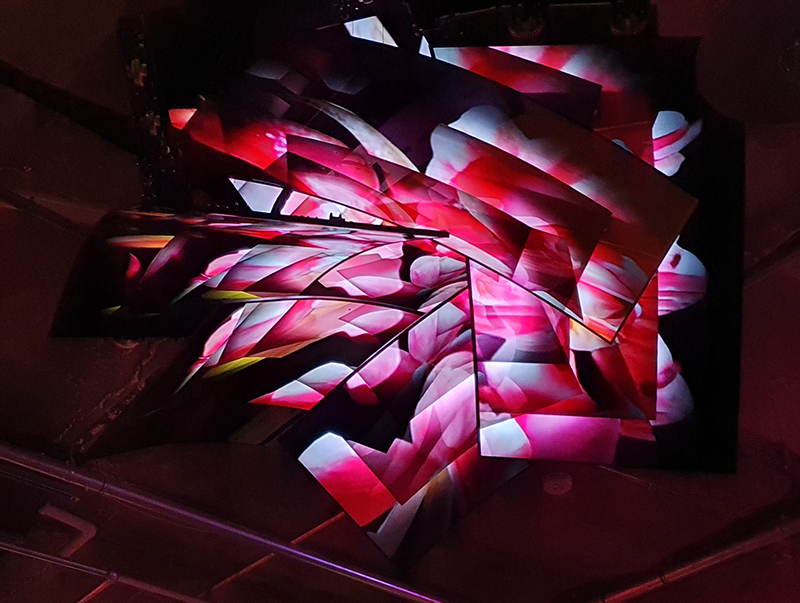
a’strict Morando is an installation of two transparent OLED screens showing video using x-ray and time lapse techniques of peonies as they bloom and die. Peonies are a symbol of wealth and prosperity in Korea and a popular subject for paintings over many decades as well as being displayed at main life events such as births, marriages and funerals.

Flower Meadow a kinetic sculpture by Swiss studio for media architecture

a’strict Starry Beach – beauty and power as luminous waves crash all around and as in a dream we are immersed yet physically untouched

Black Corporeal (breathe) – creating a haunting soundtrack to the whole exhibition, a critical examination on the relationship between materiality and the black psyche by Julian Knxx. It explores the idea that our ability to breathe – an act that is challenged by everything from air pollution, stress, anxiety and societal prejudice – is more than our lung’s ability to take in air, but a reflection of the way we live individually and together.

Terrestrial Act III at Thames-side Gallery curated by Hot Desque with works by Sam Carvosso Anna Reading Davinia-Ann Robinson Hannah Rowan Harry Smithson Giorgio van Meerwijk. Hot Desque creates a future-past landscape through the theatrical presentation of six artists’ sculptures within a set. Initially presented on stage at the Theatre Royal Newcastle within an ornate yet empty theatre, now, dislodged in a new spacetime, the set has transformed over time.

Matter takes the stage choreographed by humans in an atmospheric alchemical collaboration.

In (Matters of the Soul) at ASC Gallery with work by Stephen Nelson, Jane Millar, Olly Fathers, James Tailor, Stephen Palmer, John Bunker and Lex Shute.

Does artwork have a soul?

21 grams was the disputed weight of a person’s soul as measured in Duncan MacDougals 1901 experiments on people before and after death. Certain work defies classification, playing with its own materiality and the illusion of what its seems to be. Other work plays with the legacy of the previous life represented in its material and the soulful spirit that could lie within.

Such an interesting concept explored in these works.

A Strange Kind of Knowing presented by Arusha Gallery and Haarlem Gallery at Noho Studios with works by Verity Birt, Holly Bynoe, Kristina Chan, Fourthland, Susan Hiller, Katja Hock, Coral Kindred-Boothby, Penny McCarthy, Kate McMillan, Aimée Parrott, Chantal Powell, Tai Shani and Eleanor May Watson. A Strange Kind of Knowing investigates phenomena such as the weather, the sea and sea caves, cloud formations and fire; lost knowledge and civilisations; and the natural and psychological cycles of transformation.

These works are pushing at the boundaries of an intuitive connection to the natural world brought to a more acute awareness during lockdown months.

Visit to UCL’s Astronomical Observatory in Mill Hill.

1912 UCL observatory 3

Thanks to knowledgeable hosts Mark Fuller and Thomas Schlichter for a wonderful tour of the UCL observatory and to Lumen London for organising.

1912 UCL observatory 1

Shame it was cloudy but I enjoyed seeing the telescopes and hearing the history of this beautiful site. Looking forward to future collaborations.

We didn’t see the stars outside but an archive image and a loop lens proved fascinating.

1912 UCL observatory 71912 UCL observatory 8

In the studio back after a busy year I have been tidying up, building mezzanine storage shelves and planning new work looking at cosmic planes, thinking about star HD70642 – a possible home from home and what lies beyond the horizon that I can never reach.


New Doggerland at Thames-side Gallery presents a future imagining of physical and cultural re-connection between Britain and the European mainland.

Doggerland was an area of land that once connected Britain to continental Europe. At the end of the last ice age a warming climate exposed land for habitation but gradually the lowlands were flooded as temperatures rose further then about 8,200 years ago, a combined melting of a glacial lake and a tsunami submerged Doggerland beneath the southern North Sea. Great work including these from Jane Millar, Oona Grimes and Sarah Sparkes.

It was the place to be on 31/01/2020.

Nam June Paik at Tate Modern. Amazing pioneer of technology in art. Colliding nature, entanglement, connectedness, meditation, transmission.


Trevor Paglin From ‘Apple’ to ‘Anomaly’ (Pictures and Labels) at The Barbican Curve.

The long wall is filled with thousands of pinned photographs taken from ImageNet, a publicly available data set of images, which is also used to train artificial intelligence networks. ImageNet contains more than fourteen-million images grouped into labelled categories which include the unambiguous ‘apple’ along with such terms as ‘debtors’, ‘alcoholics’ and ‘bad persons’. These definitions applied to humans by AI algorithms present an uncomfortable future of machine induced judgement.

 ‘Machine-seeing-for-machines is a ubiquitous phenomenon, encompassing everything from facial-recognition systems conducting automated biometric surveillance at airports to department stores intercepting customers’ mobile phone pings to create intricate maps of movements through the aisles. But all this seeing, all of these images, are essentially invisible to human eyes. These images aren’t meant for us; they’re meant to do things in the world; human eyes aren’t in the loop.’ Trevor Paglen

Interestingly there was no photography allowed in the Trevor Paglen show. So I tried Image net for an image to post. I searched for ‘artist’ but ImageNet is under maintenance so I tried Google and this is the first image I got.

2001 artist

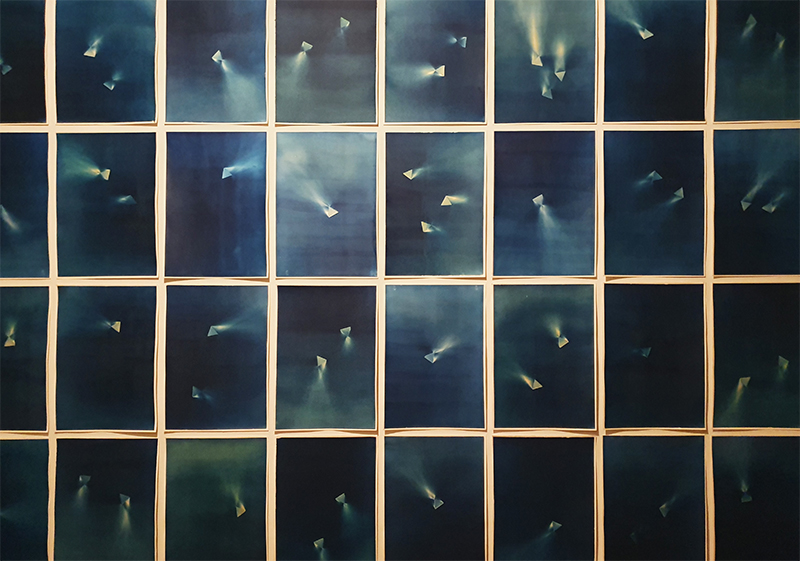
Another great show from Kathleen Herbert, A Study of Shadows at Danielle Arnaud. Using the cyanotype to interrogate the history and science of Prussian Blue and discover what emerges from the shadows through process and research. We learn – ‘Prussian Blue has a unique chemical structure and was originally created through the cyanotype process. It was the colour used to measure the blueness of the sky and was also used in the UK during the Chernobyl disaster as an antidote to radiation poisoning, preventing Caesium 137 from entering the food chain. Prussian Blue also has the ability to heal itself; if the intensity of its colour is lost through light-induced fading, it can be recovered by being placed in the dark.’

2001 Kathleen Herbert 4

The sound and video work Everything is Fleeing to its Presence relates a narrative of impressions and scientific facts while the visuals of varying tones of blue appear and disappear in hypnotic succession. Together the effect is of immersion, like the chemically coated paper, in a pool of blue.

Mary Yacoob Schema at Five Years Gallery. Also using cyanotypes, but here exploring the architectural roots of this process through precise silhouettes, detailed drawing, structure and form which is then exposed to the unpredictable chemistry to produce beautiful outcomes.

2001 Mary Yacoob (1)

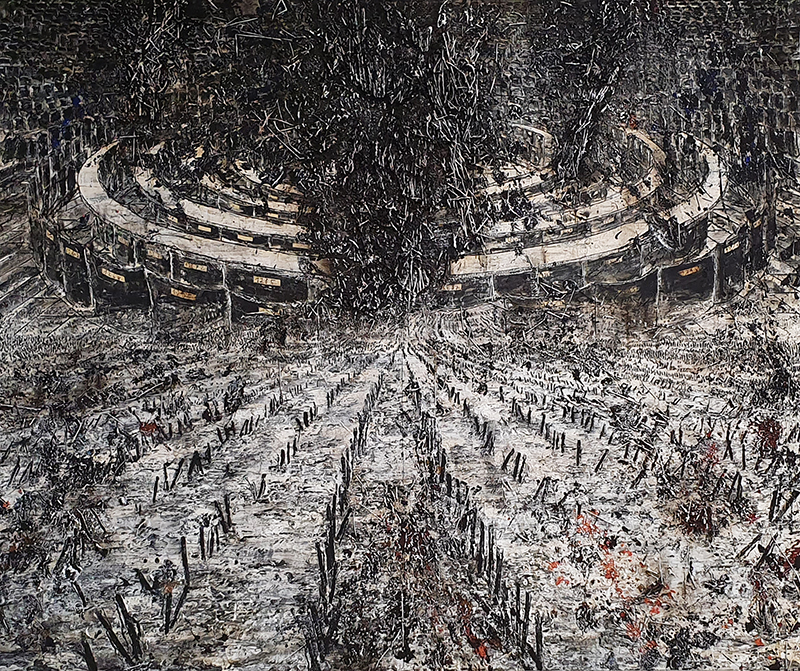
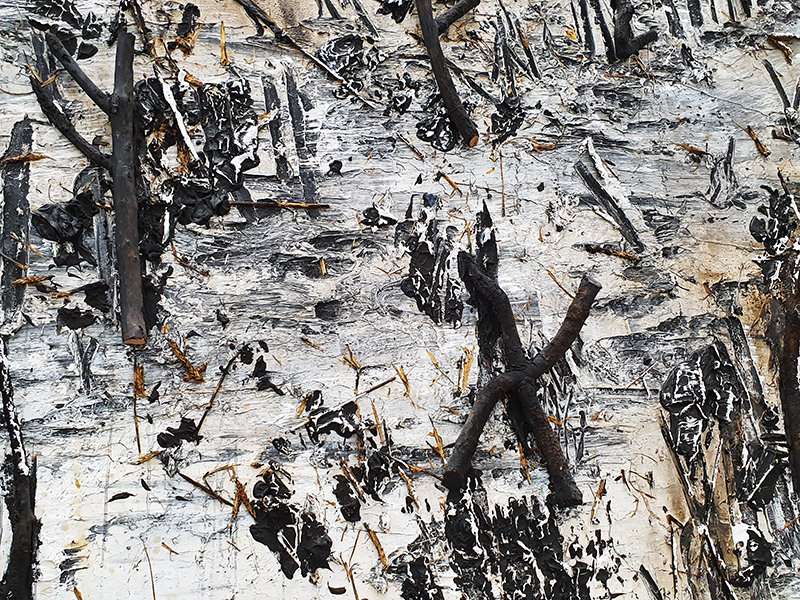
Anselm Keifer at White Cube Bermondsey.  Superstrings, Runes, The Norns, Gordian Knot all tied together in characteristically monumental paintings thick with stuff in an attempt to connect complex scientific theory with ancient mythology.

2001 Anselm Keifer 12001 Anselm Keifer 2

William Blake at Tate Britain. What visions, such torment. So much mortal flesh.

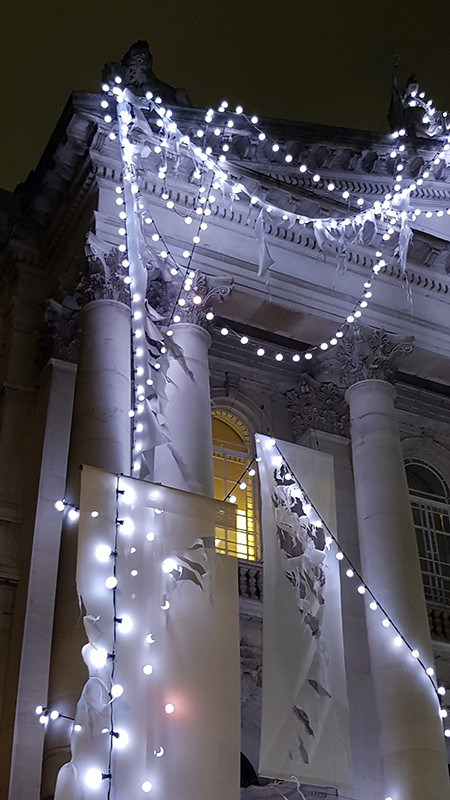
Anne Hardy The Depth of Darkness, the Return of the Light winter commission for Tate Britain, a sort of after party dystopia with an impressive soundscape of rain, thunder, birds and insects inspired by pagan descriptions of the winter solstice – the darkest moment of the year.

2001 Tate Britain Anne Hardy

We sit together for a minute at Thames-side Gallery. Alex Simpson and Alice Hartley share a similar sensibility making dynamic and intuitive works. The gallery is alive with gestural forms, captured fragments and movement held momentarily in stasis, both fragile and immediate.

2001 Alex Simpson2001 Alice Hartley

The Computer Arts Society, The Lumen Prize and Art in Flux join London Group members at The Cello Factory for a second In The Dark curated mash up of light and technology artworks that overlap and collide in Even darker. Curated by clever duo interactive filmmakers Genetic Moo, artists include Carol Wyss and Sumi Perera.


Bridget Riley at Hayward Gallery. Messing with perception; undulations and vibrations.

2001 Bridget Riley (1)

Mark Leckey O’ Magic Power Of Bleakness at Tate Britain. Sense of bleakness achieved in synthetic bridge recreation which gave gallery awkward angles. Voyeuristic social commentary, old rave footage. Magic found interspersed in otherworldly images contrast to dank underworld.

2001 Mark Leckey

Some beautiful artefacts in The Moon exhibition at Royal Maritime Museum Greenwich celebrating 50 years since the Apollo 11 Moon landing.

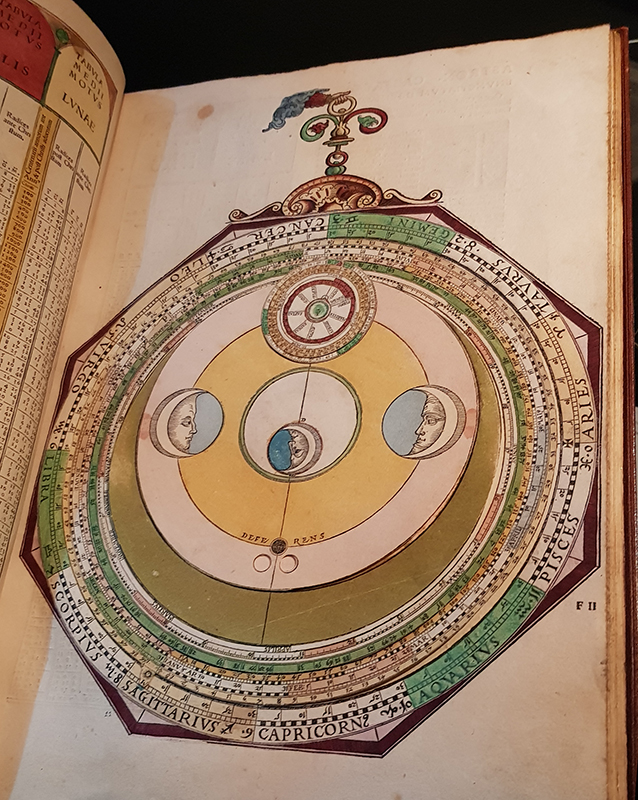
Astronomicum Caesarean 1540 – rotating paper discs are used to track the moon’s position which the physician would then interpret to predict if the patient might improve or relapse.

1912 Moon Exhibition volvelle

Orrery 1823-27 by John Addison includes a special geared section to show the rise and fall of the moon and mimicking the tilt of its orbit.

1912 Moon Exhibition orrery

Selenographia 1797 by John Russell. It models the slight wobble or libration of the moon meaning that over time a little more than half of the side of the moon is visible from Earth.1912 Moon Exhibition selenographia

Moon rocks, encased.

1912 Moon Exhibition rocks

A Distant View III by United Visual Artists. A 3D rendering in wood of original NASA data imaging of the moon’s surface from the Orbiter mission 1966/7

1912 Moon Exhibition UVA

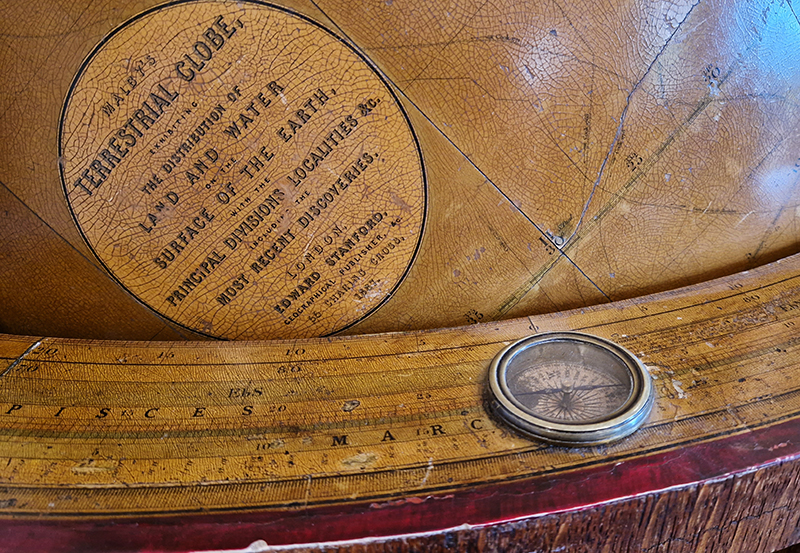
Very lucky to be invited by Rachael Allain for a tour of The Queen’s House at the National Maritime Museum Greenwich led by curator Matilda Pye. We saw the Susan Derges commission Mortal Moon inspired by the Armada Portrait of Queen Elizabeth 1 and a celestial globe, dating from 1551.

1912 susan derges-mortal-moon

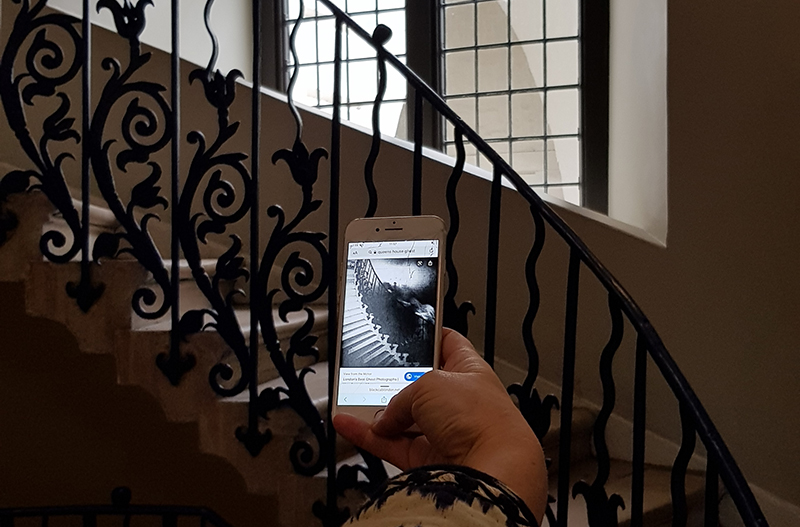
The fractal elegance of the Tulip staircase.

1912 Queen's House Tulip Staircase

Which is also where the Queen’s House ghosts were inadvertently photographed by retired Canadian Reverend R.W Hardy on his visit in 1966. Recreated in situ by Matty with mobile. Apparently photographic experts examined the original negative and found no signs of tampering.

1912 Queen's House Ghosts

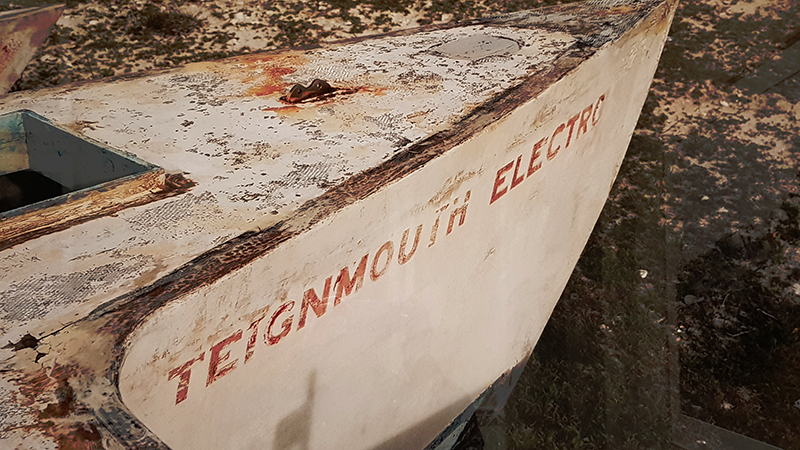
Ending the tour with Tacita Dean’s poignant photos of the desolate shell of the Teignmouth Electron, the yacht that bore Donald Crowhurst to his miserable and solitary death. It looks so small.

1912 Tacita Dean

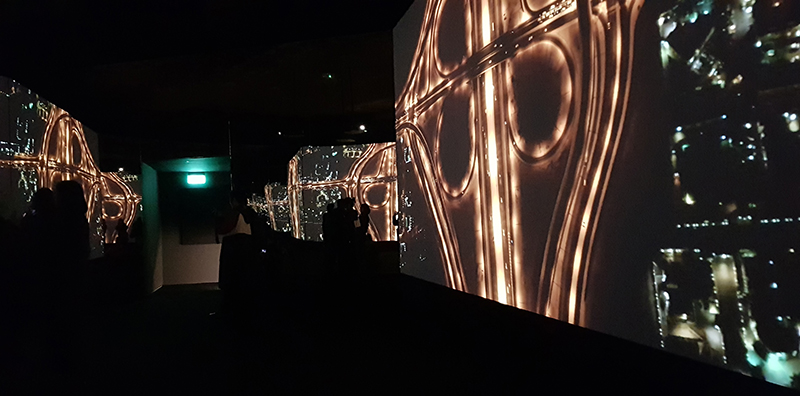
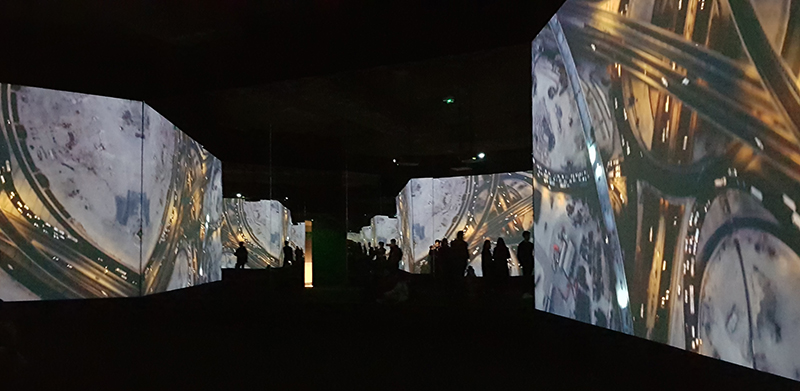
Immersive installations inviting a change of consciousness at TRANSFORMER: A Rebirth Of Wonder presented by The Store X The Vinyl Factory. Including Doug Aitken NEW ERA dramatic video-scape looking at the first phone call and future communication highway.

1911 Doug Aitken 21911 Doug Aitken

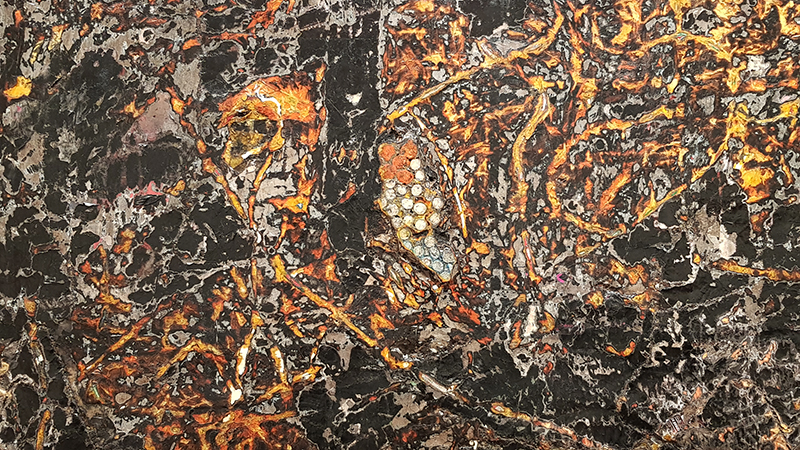
Mark Bradford’s paintings in Cerberus at Hauser & Wirth London recall the vibrant matter of creation, the splitting of the earth in molten rivulets to expose the dark underbelly.

1911 Mark Bradford

I am reading W. G. Sebald’s rambling Rings of Saturn. Revisiting my home county and local haunts through his eyes. He set off in 1992 but it feels like a journey back further in time as there are so many reminiscences and anecdotes from the past. Among the vaguely defined histories is the story of the demise of the estate of Henstead Hall under guardianship of the eccentric Major Wyndham Le Strange who shunned the outside world and took to a literally underground existence.

These images from 2014 when I visited the abandoned walled garden at Henstead became fragments for my work titled Pairi Daêza, an ancient Iranian word meaning ‘around’ and ‘wall’; the origin of ‘paradise’.

1705 Open Studios Pairi Daeza

A tenuous link but I discovered Henstead Hall subsequently become home to Douglas Farmiloe a self-described “Mayfair playboy” who had found himself in the scandal pages of the News of the World during the 1930s, after an indiscretion with a hostess from the West End ‘Paradise Club’.

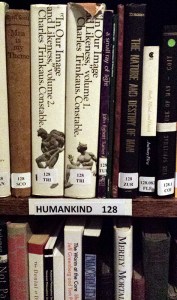
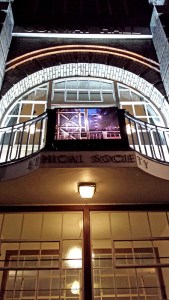
In the humanist library and archives  at Conway Hall home to the ethical society is a section labelled Humankind. I love that. Are all the answers here?

1601 Conway Actants 3I was taking part in a tour of Conway Actants exhibition led by Jane Millar and Deborah Gardner who have placed site specific work throughout this wonderful building responding to the ethos and history of Conway Hall. 1601 Conway Actants

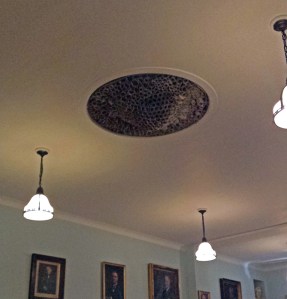
The bee hives on the roof inspired Deborah’s interventions of hexagonal sculptures morphing from the circular ceiling windows. Translating the activity on the roof and the interconnectedness and clusters of activity within the building.

1601 Conway Actants Deborah Gardner 2

Looking through the lenses of history, travelling through time, preserving and learning from the past. Conway Hall is a place for free thinking.

1601 Conway Actants 2

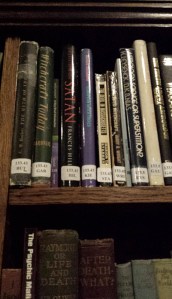
The archive is a place of secrets as well as a place of discovery.


I made another visit to Conway Hall for the panel discussion – Why Do We Believe? It was a  diverse mix of people who packed the hall to ponder this question.

www.idjphotography.com

On the stage were; Prof. Francesca Stavrakopoulou, Professor of Hebrew Bible and Ancient Religion “an atheist with huge respect for religion” who regards her work as “a branch of history like any other”; Prof Richard Wiseman, Britain’s only Chair in the Public Understanding of Psychology who has gained an international reputation for research into unusual areas of psychology, including luck, deception, and the science of self-help; Alice Herron a PhD candidate who was brought up a Catholic, married a Muslim, got divorced and spent 27 years in the cult of Indian Guru Sri Chinmoy and is currently researching atheists who claim to have had some sort of mystical-type experience; Bruce Hood a Professor of Developmental Psychology, currently the President of the British Association for Science psychology section who has given the Royal Institution Christmas Lectures “Meet Your Brain” and written books such as; SuperSense: Why We Believe In The Unbelievable and The Self Illusion: Why There is No ‘You’ Inside Your Head; Deborah Hyde the editor in chief of the UK’s only regular magazine to take a critical-thinking and evidence-based approach to pseudo-science and the paranormal and who is fascinated by the supernatural, and probably knows way too many facts about werewolf folklore.

1602 brain 1

The opinions expressed can all be heard at the above link. There were different perspectives and lots of interesting facts but on the whole what I found fascinating was the general consensus of disbelief throughout the room considering the percentage of the population cited to hold a belief in ‘something’ supernatural. Maybe the discussion should have been called ‘Why did we believe?’ or ‘Why do other people believe?’ Perhaps it was the authority of the panel who made it sound like a weakness, a fiction to turn to in times of existential crisis, to bring a sense of order and comfort to our lives. I was hoping for someone to pipe up during question time and dispute these claims but none did. And what about belief in a supernatural that brings disorder? It’s a fascinating debate believers or not.

A Leap Of Faith at St. Laurence Church, Catford was presented for one day only by The LivingRoom a nomadic space committed to blurring the boundaries between the display of  work and the work itself. 1601 A leap of Faith 1

The artist’s works were placed among the Church’s artefacts, propped in pews and laid on tables. The boundaries disappeared.

1601 St.Laurences ChurchI entered late in the day, there had been a schedule of performances but I had missed most of these. Coming in from torrential rain outside, the place was immediately a sanctuary. People milled quietly and took their seats along the pews. I sat waiting but not sure what for and in the hushed gloom had the uncanny feeling I had inadvertently joined a cult. After a while, strange resonating sounds from Michael Speers  performance of distorted feedback filled the space. We sat in quasi religious contemplation.1601 A leap of Faith 2A leap of faith considers the universe, civilisation and the individual; questioning our existence in relation to infinite time and space or to a particular moment in history. Based on natural phenomena, scientific observations or constructed narratives, the works ponder on past ideas and beliefs whilst also constructing their contemporary ones. This cycle of renewal, found in religion as well as in other systems, is visible in the artists’ attempts to make sense of and reorganise traces of our existence. 
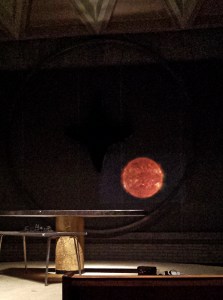
1601 A leap of Faith 5Among the artists in this show were Mark Ariel Waller projecting SO-LA, video footage from NASA’s Solar Dynamics Observatory above a bronze cast replicating ‘Sit Shamshi’ a 12thC relic of Iran which depicts two figures in a temple setting performing a ritual to the rising sun.
1601 A leap of Faith 3

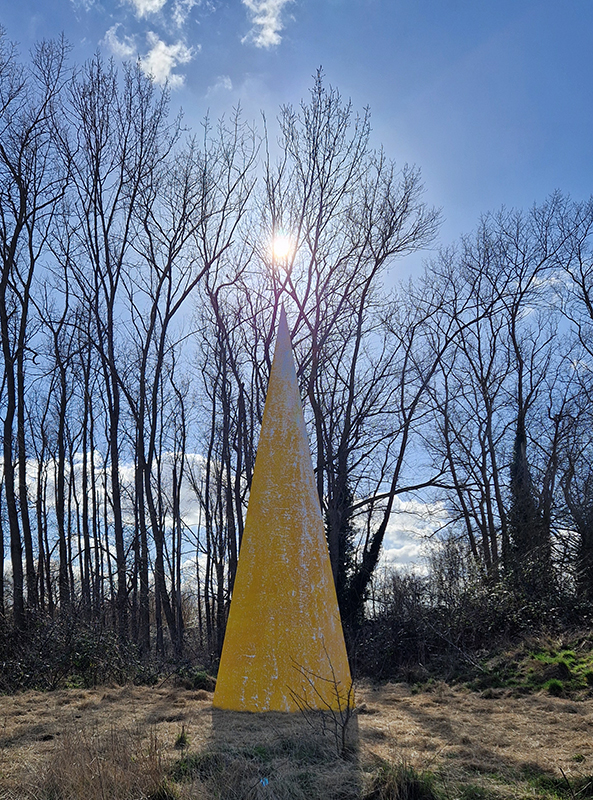
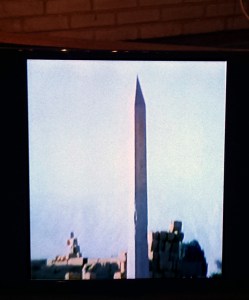
One of my current objects of interest – an obelisk seen here in Salvatore Arancio’s mash up of Carl Sagan footage from the TV series ‘The Cosmos’. These striking forms also originated from rituals of sun worship.

In a very different space Cerith Wyn Evans exhibition at  White Cube focused on flows of energy, referencing Marcel Duchamp’s work The Bride Stripped Bare by Her Bachelors, Even.

The Bride Stripped Bare by her Bachelors, Even (The Large Glass) 1915-23, reconstruction by Richard Hamilton 1965-6, lower panel remade 1985 by Marcel Duchamp 1887-1968

Reassigning and charging with gas the circular forms that are known as the Oculist Witnesses in Duchamp’s piece.

1601 Cerith Wyn Evans (2)

These forms now glowing brightly above our heads would have centred the flow of illuminating gas from the Bachelors to the Blossoming of the Bride should Duchamp have allowed this ejaculation to follow its course.

Ghosts of the past brought to life to bear witness once more.

1601 Cerith Wyn Evans (1)

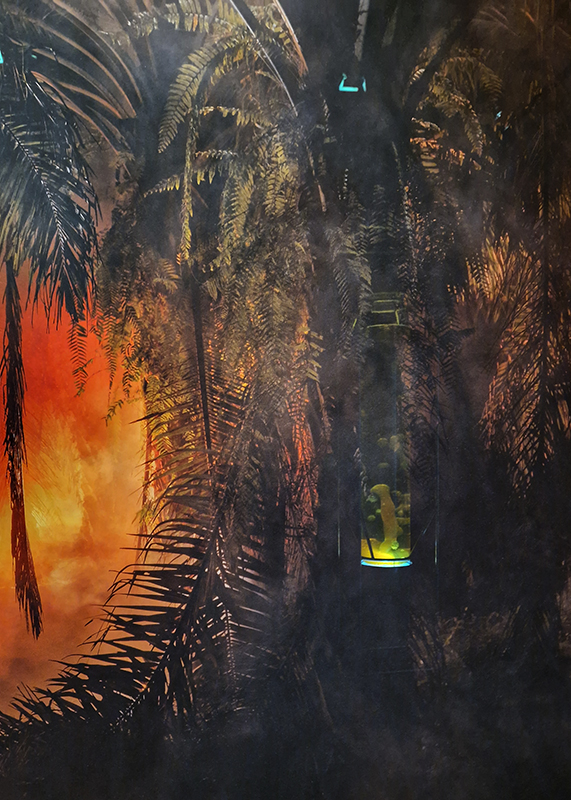
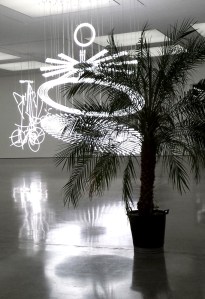
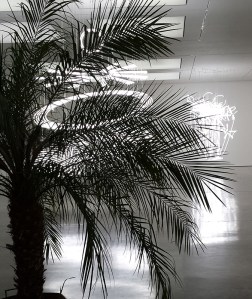
While we circle the gallery a sighing breath intones a melody from glass flutes suspended above us and large potted palms silently rotate though slowed time.

1601 Cerith Wyn Evans (7)

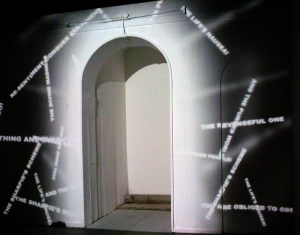
Also using light as medium Tsang Kin-Wah’s immersive installation ‘The Infinite Nothing‘ contemplates the uncertainty of life.

Beginning with Nietzsche’s pronouncement on the death of God: ‘Are we not straying as through an infinite nothing? Do we not feel the breath of empty space?’ we are led on a circular journey through four stages of transformation, titled 0, I, and r giving physical shape to Nietzsche’s theory of ‘eternal recurrence’.

1601 Venice Hong Kong (1)

Tsang combines philosophy, mythology, religious symbolisms and popular cultural references.1601 Venice Hong Kong (2)

We face Heraclitus’s river into which ‘one cannot step twice’; Plato’s Cave Allegory; and Nietzsche’s notions of ‘Camel Spirit’, ‘slave morality’ and ‘the Overman’.

1601 Venice Hong Kong (3)

Inspirations also come from Béla Tarr’s film The Turin Horse (2011) and Stanley Kubrick’s 2001: A Space Odyssey (1968) along with thoughts on karma and reincarnation as Tsang explores all routes in the human quest for self-betterment.

Taking inspiration from the 12th century quest for the philosopher’s stone The Obsidian Project is an investigation into alchemy by Ralph Nauta and Lonneke Gordijn who make up Studio Drift. Exploring relationships between nature, technology and mankind they are working with a contemporary chemist who can abstract gold from chemical waste.

1601 Venice Obsidian Project (1)

Left over from this process of extraction is ‘synthetic obsidian’ a black stony glass with unique reflective qualities. Perhaps in its meditative dark space of reflection it is the Obsidian that offers something more precious than gold.