Archives for posts with tag: meteorite

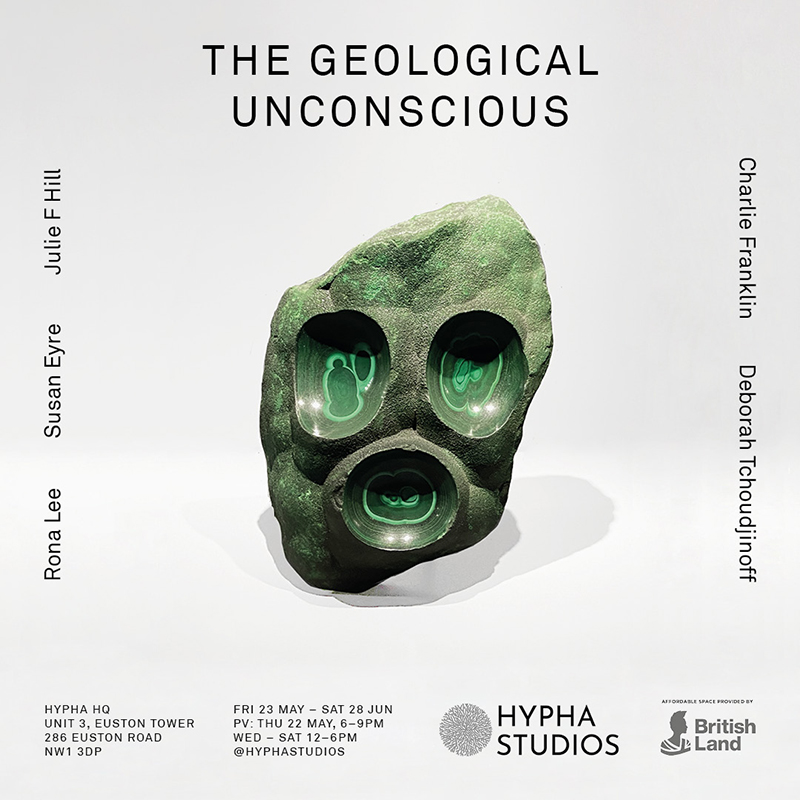
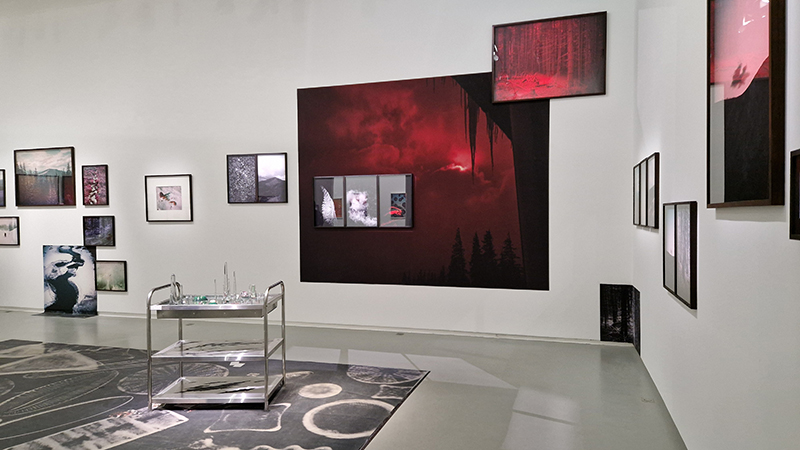
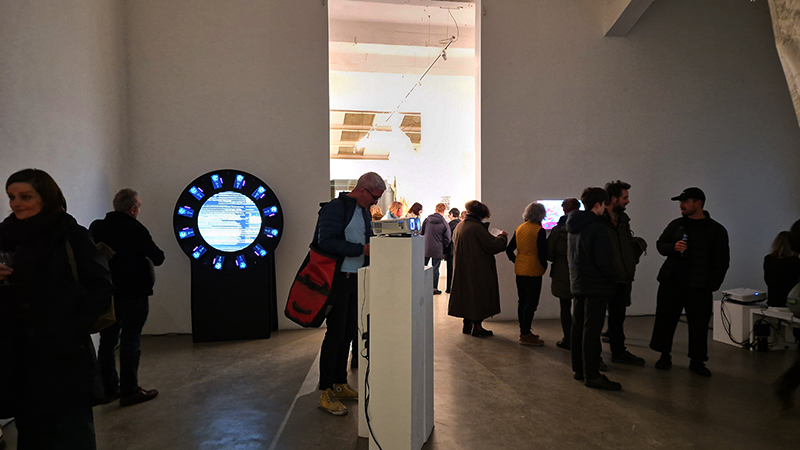
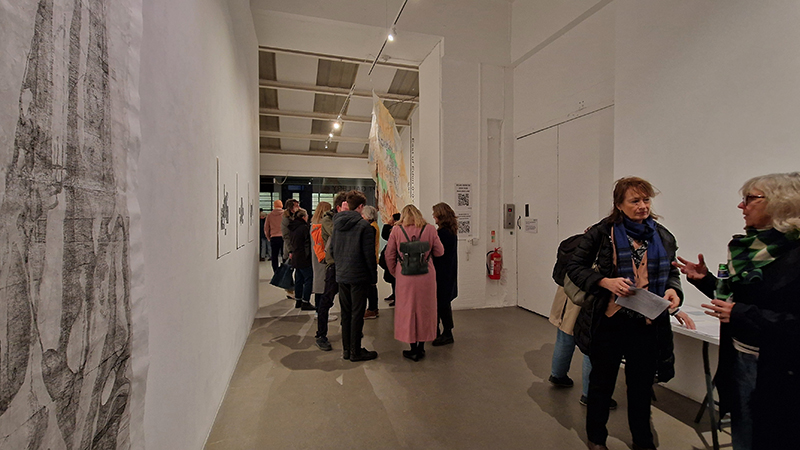
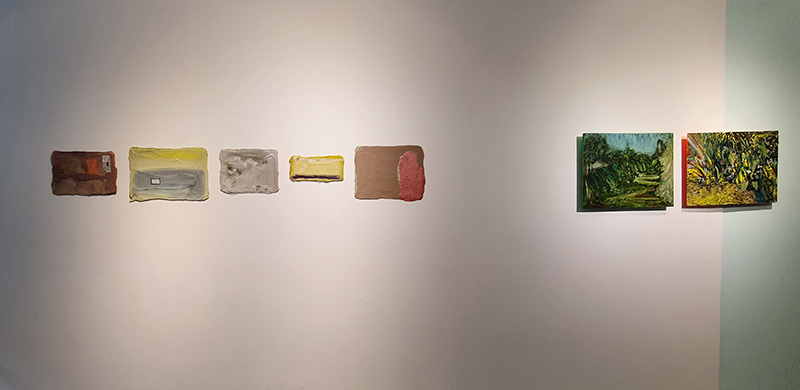
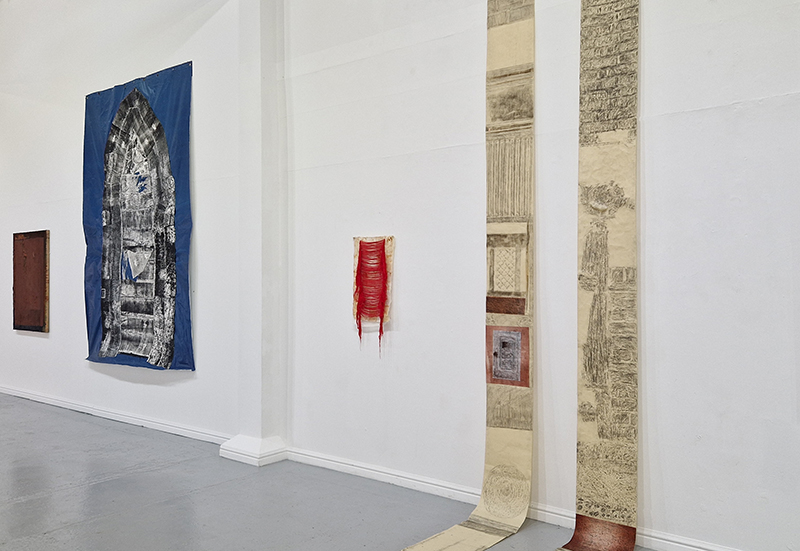
It has been a busy few weeks preparing for The Geological Unconscious at Hypha HQ – a group exhibition, co-curated by Julie F Hill and myself, exploring themes of stone consciousness and human-mineral encounters, destabilising assumptions about passive matter and a stable Earth.

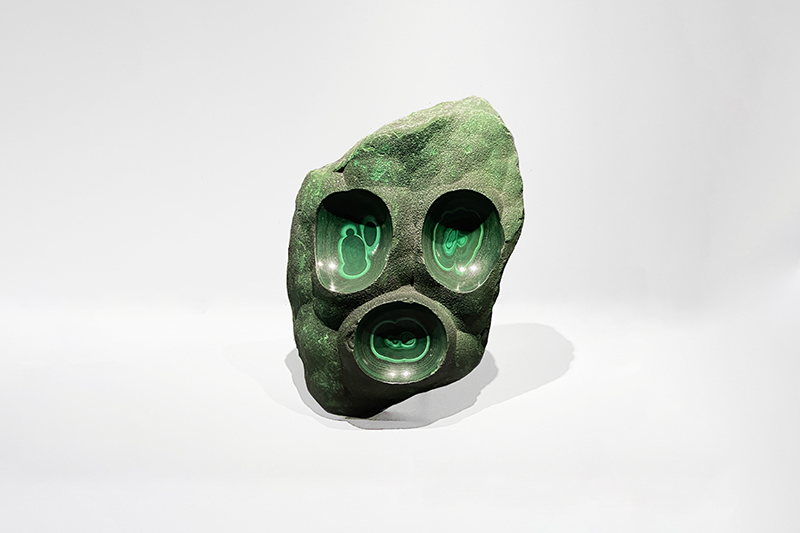
Image: From Roger Caillois’ stone collection: Malachite, masque africain, République démocratique du
Congo, 14 × 20.5 × 6 cm. Photographed in the Museum of Natural History, Paris by Julie F Hill.


Responding to Jason Groves’ inquiry into the mineral imaginary in his eponymous book, as well as the ‘Writing of Stones’ as proposed by writer and mineral collector Roger Caillois, the exhibition exposes the complex entanglements between the organic and the inorganic; the human and the lithic. The Geological Unconscious is viewed through disruptive Surrealist strategies, engagements with the aesthetics of geo-materiality and material processes that attend to the growth and transformation of matter. These artistic ‘excavations’ highlight the toll of extractive industries on our planet, whilst inspiring reverence for the geological lineages of deep, cosmic time. Theories of Animism and Panpsychism are also brought to
bear on ways of attributing agency to inorganic realms.

I am thrilled to be exhibiting with Julie F Hill, Charlie Franklin, Rona Lee and Deborah Tchoudjinoff.


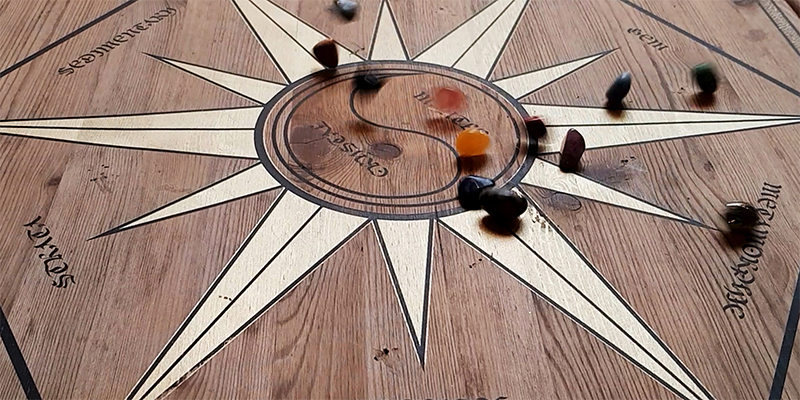
An accompanying events programme includes an urban geology walk with Geologist Ruth Siddall, discussing the origins of the local built environment; an installation and tasting by chef Moonhyung Lee who explores human-mineral entanglements through digestion; a crystal growing workshop led by Julie F Hill and I will be offering visitors lithomancy readings every Friday afternoon.

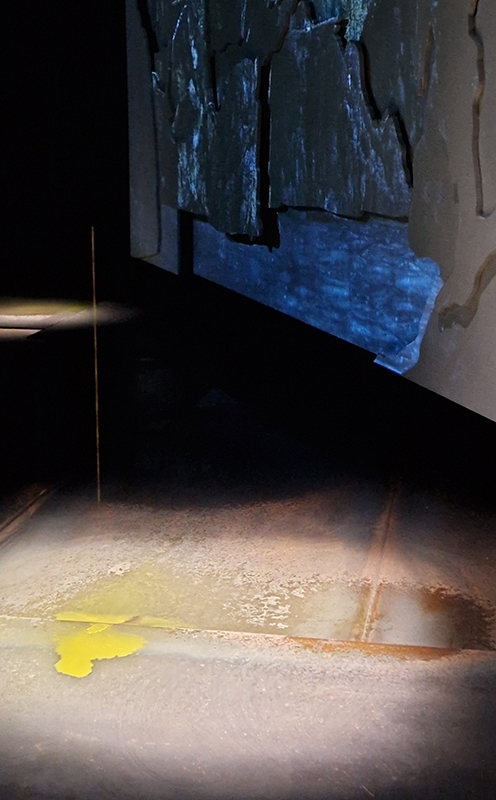
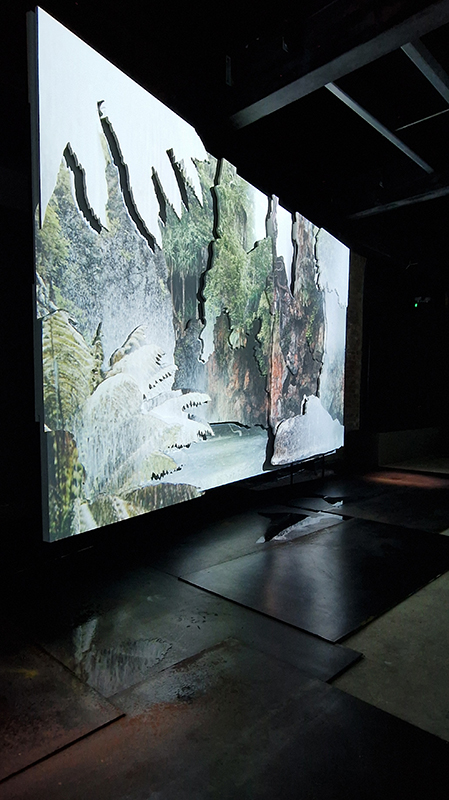
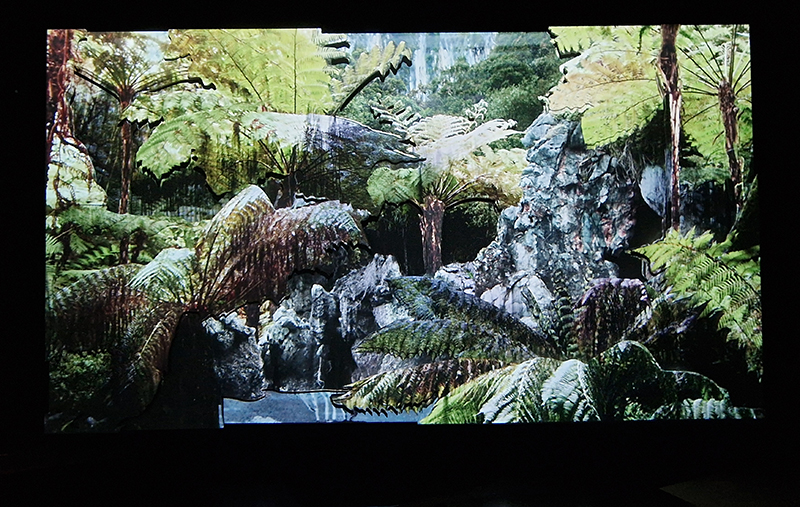
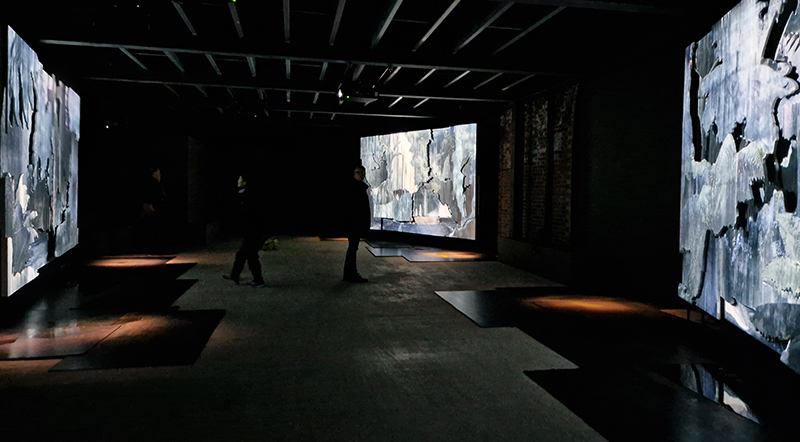
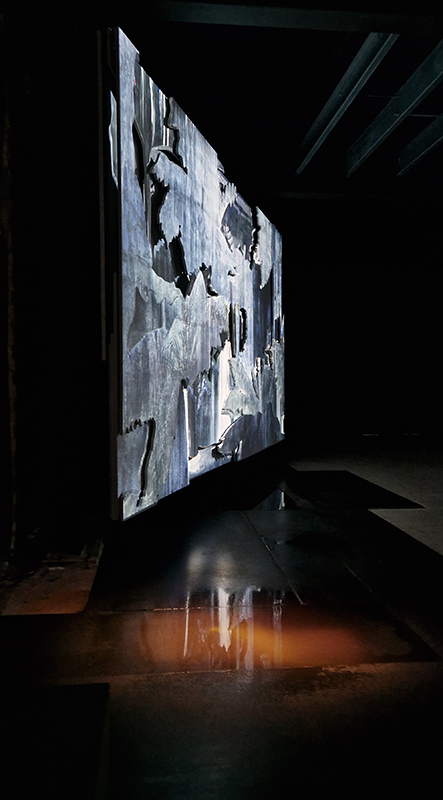
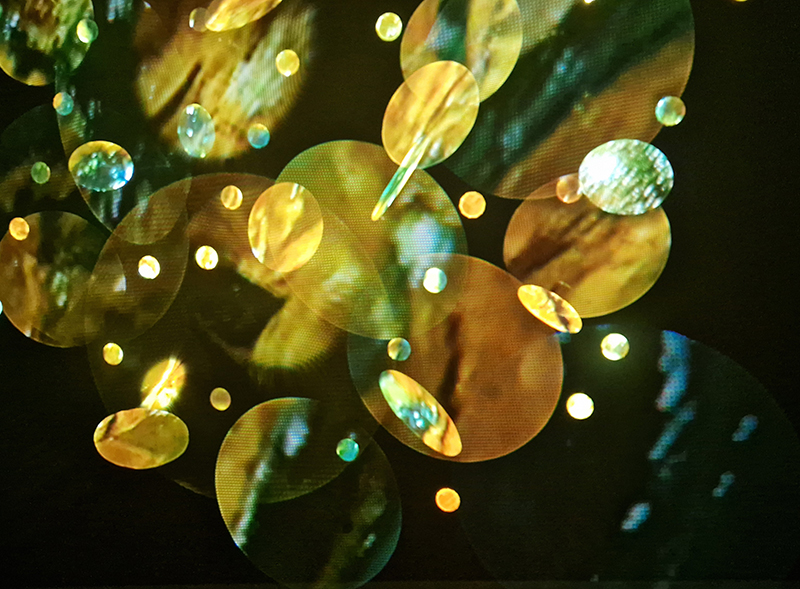
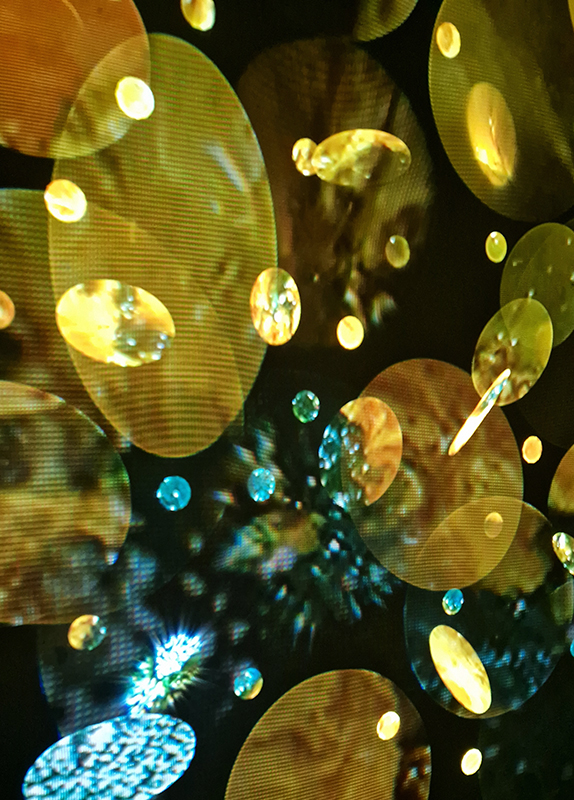
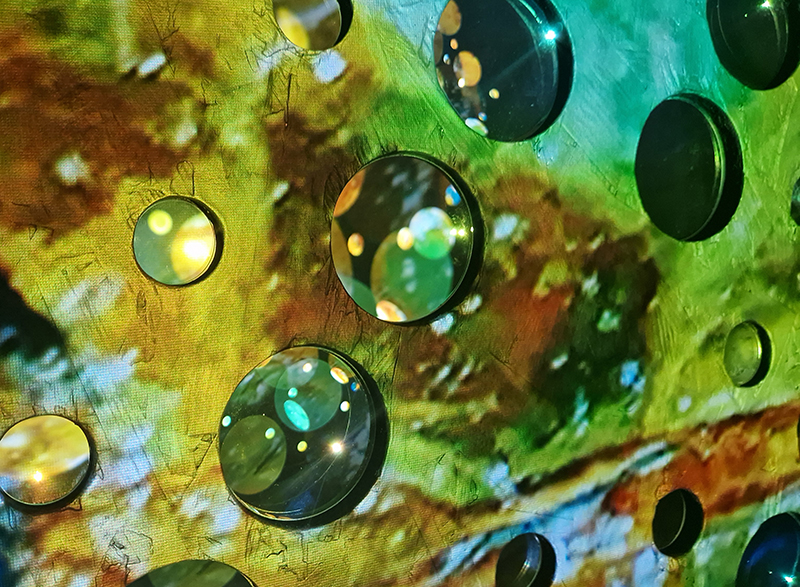
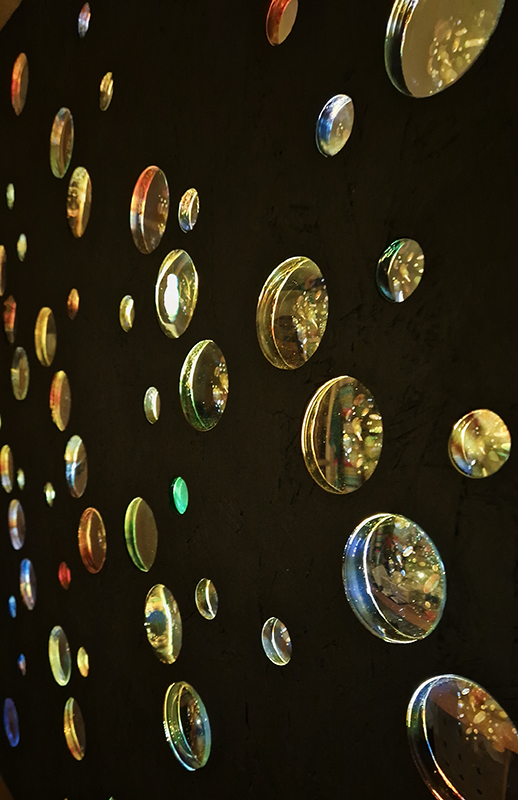
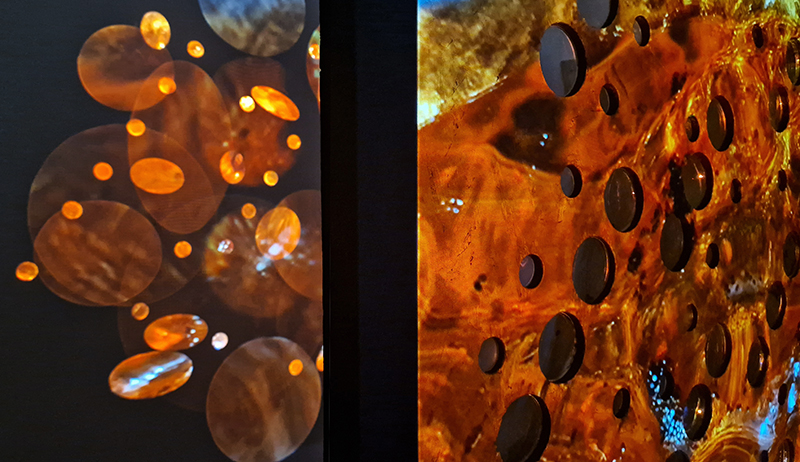
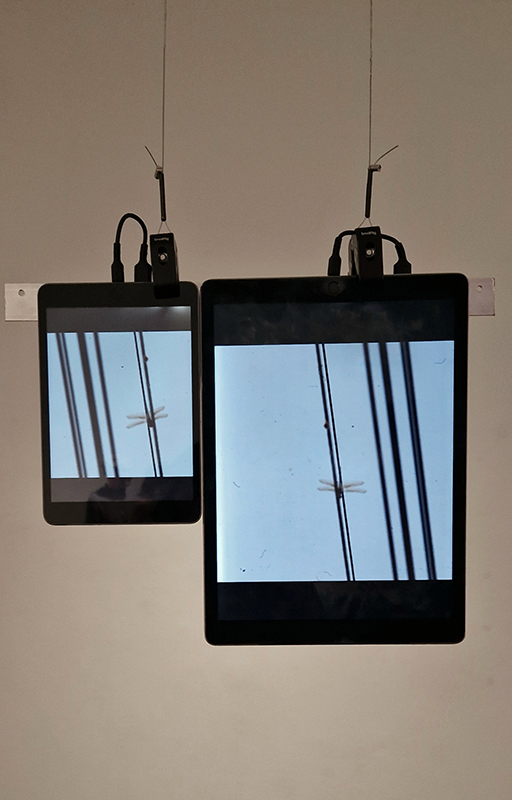
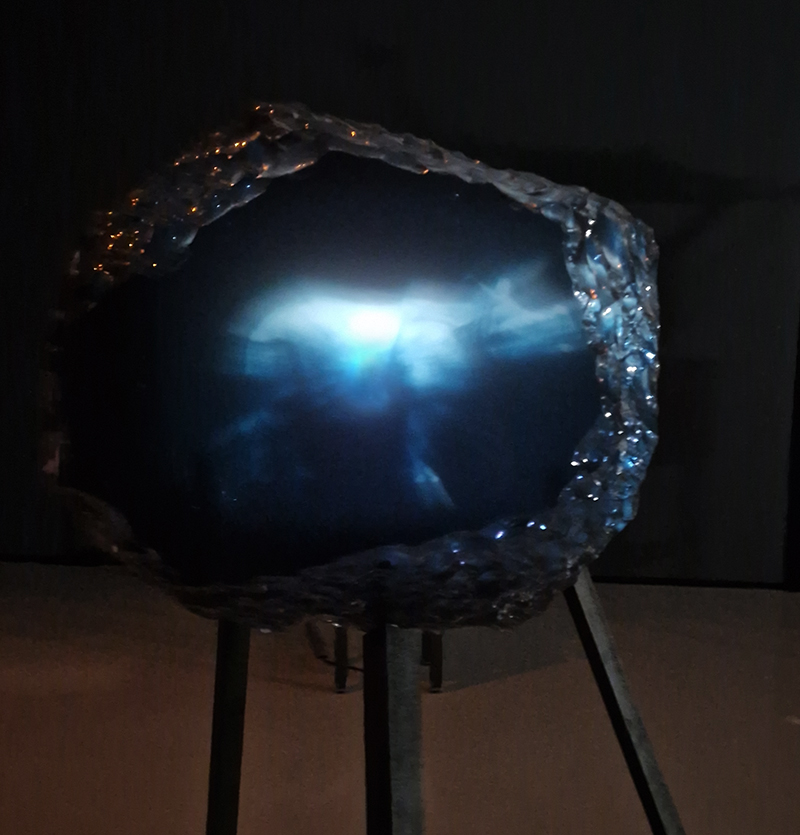
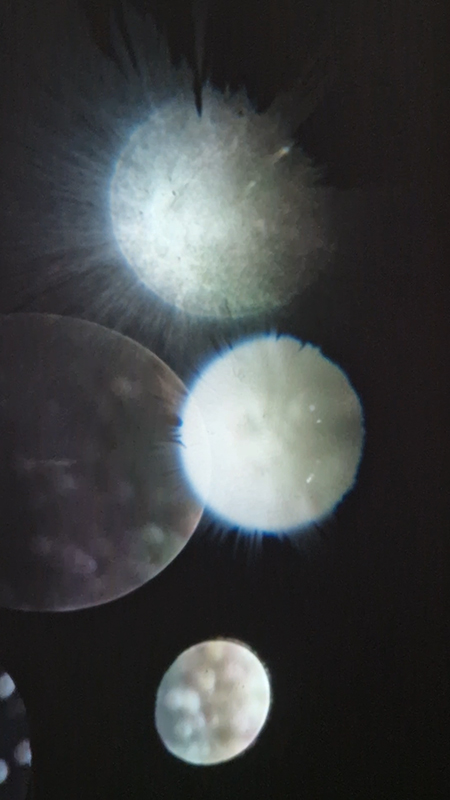
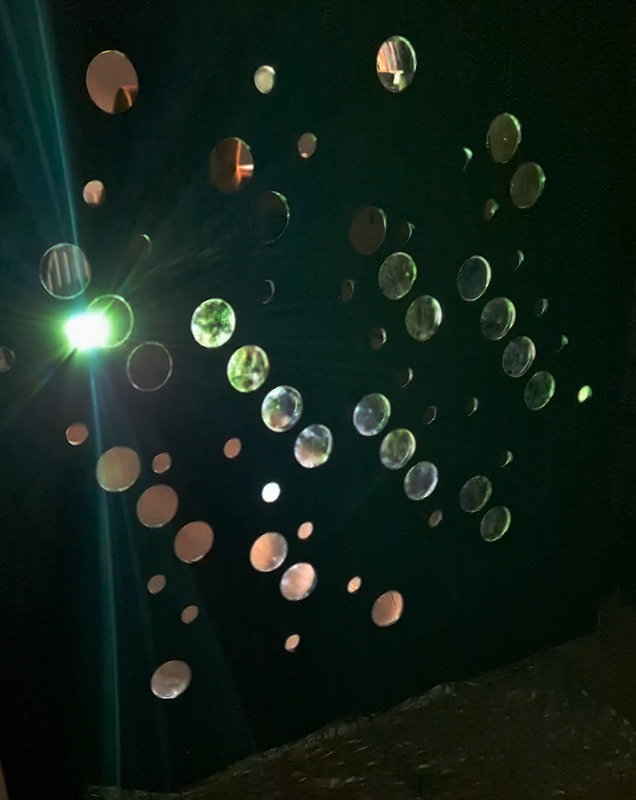
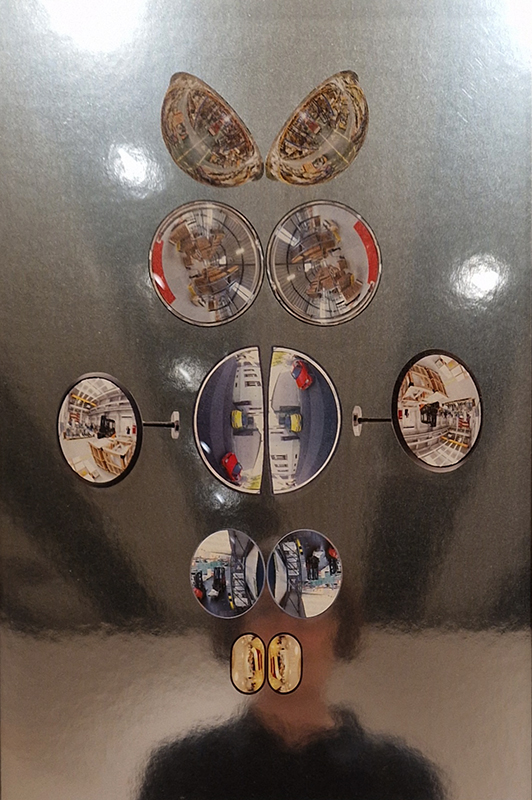
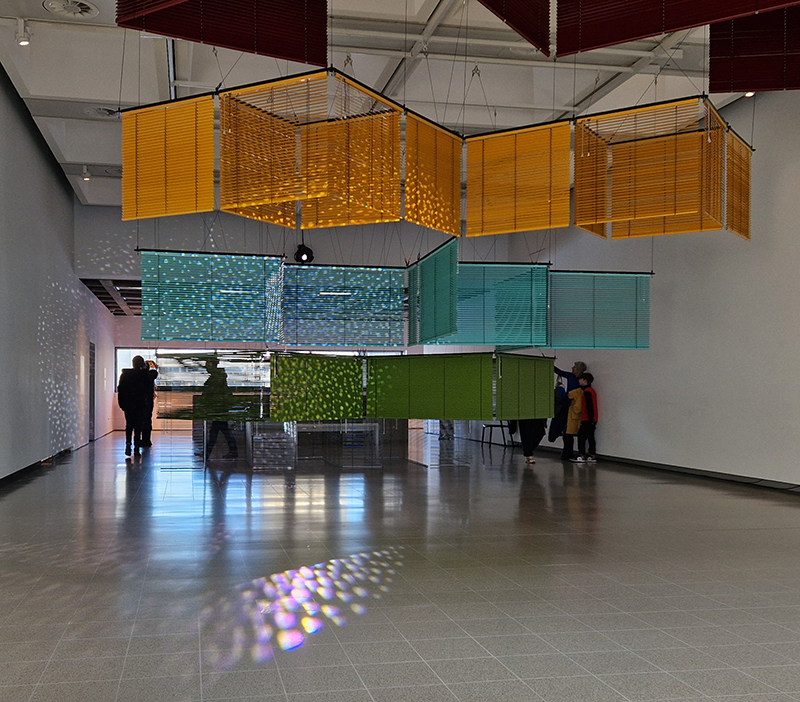
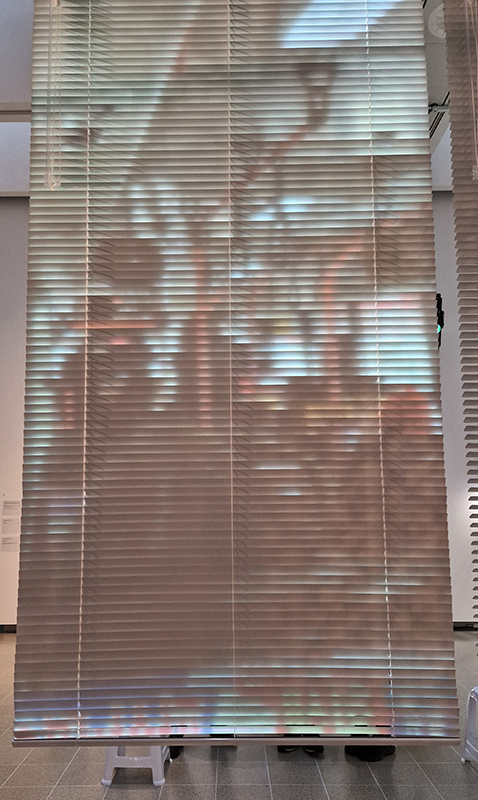
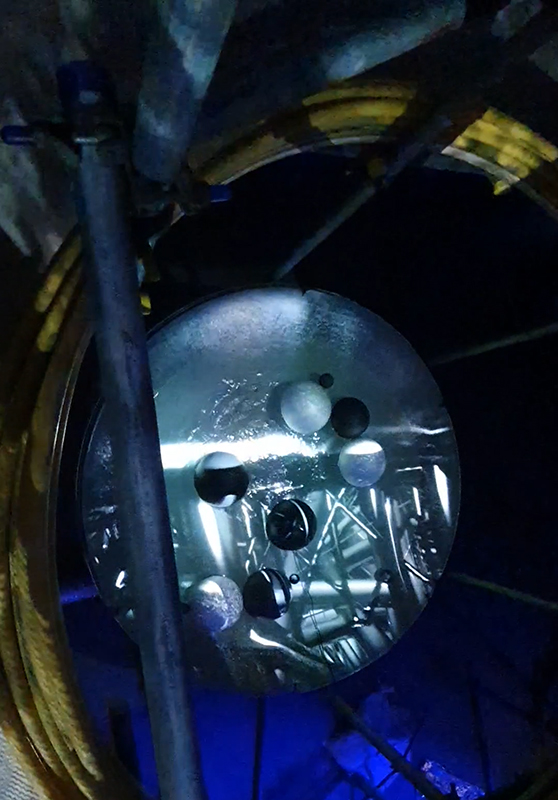
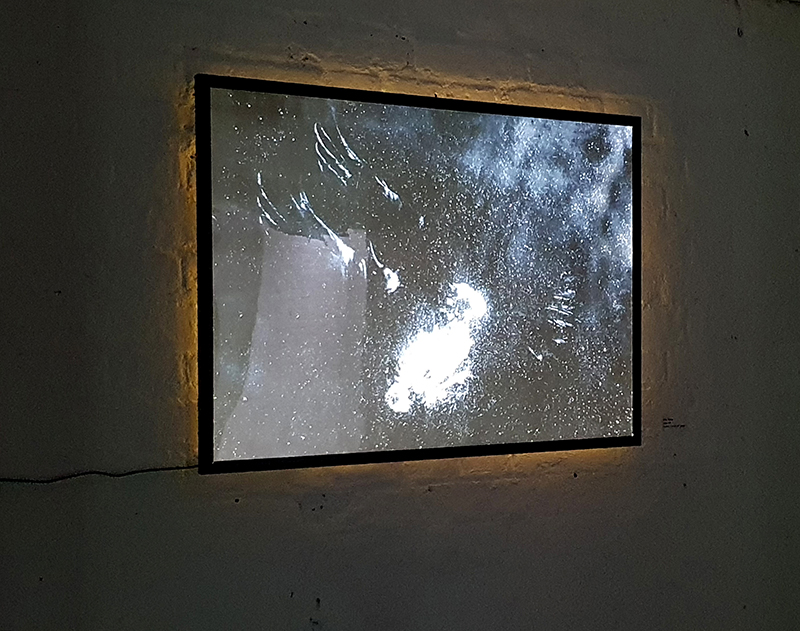
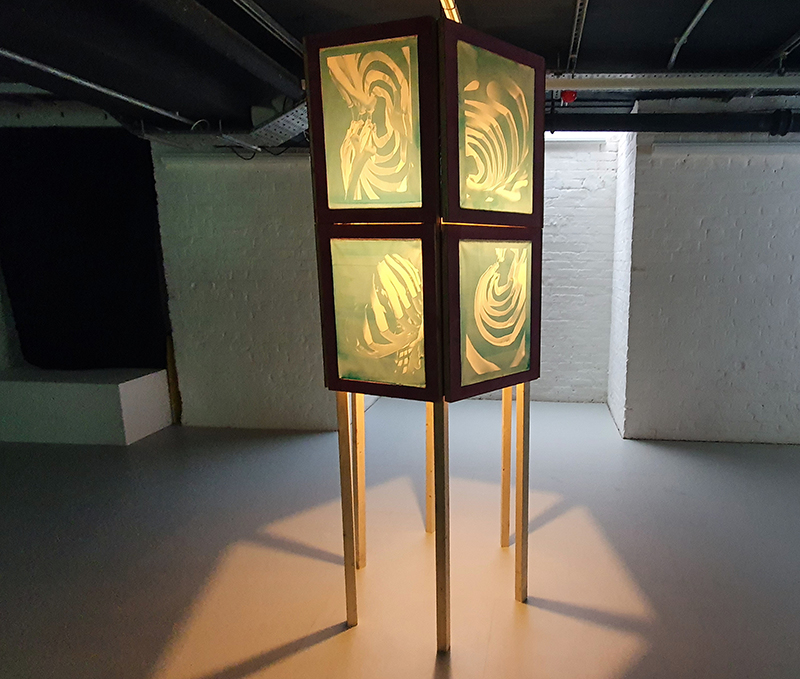
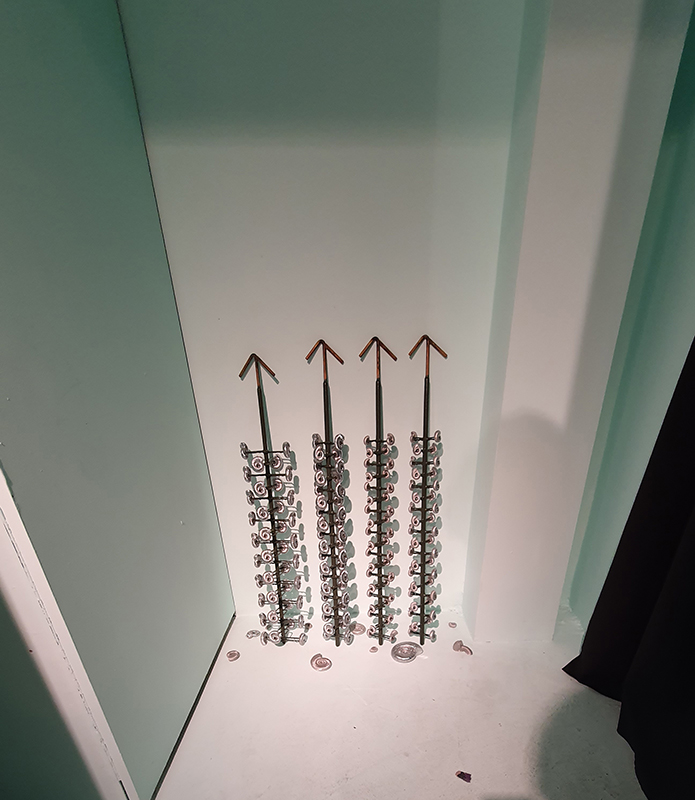
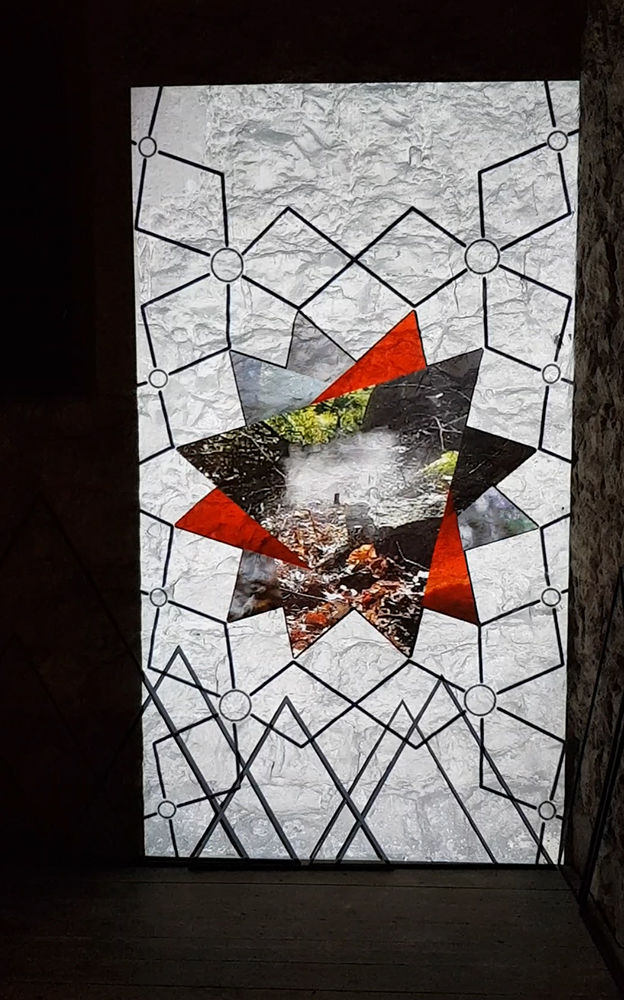
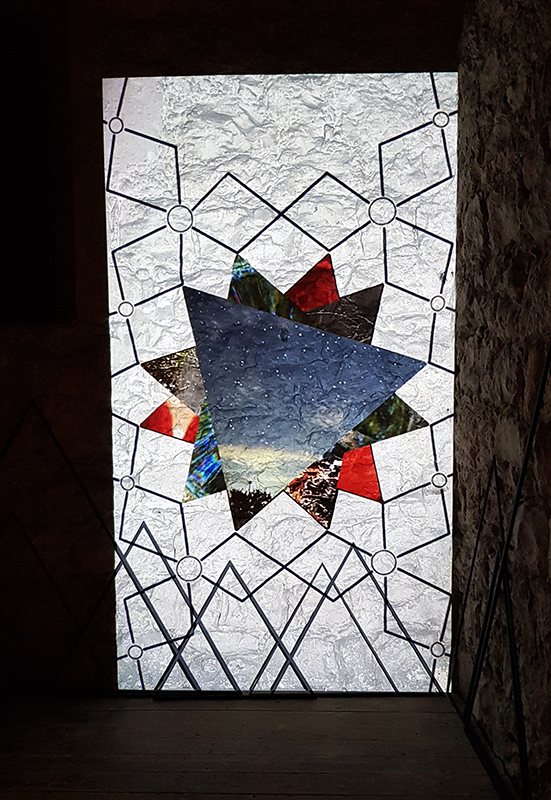
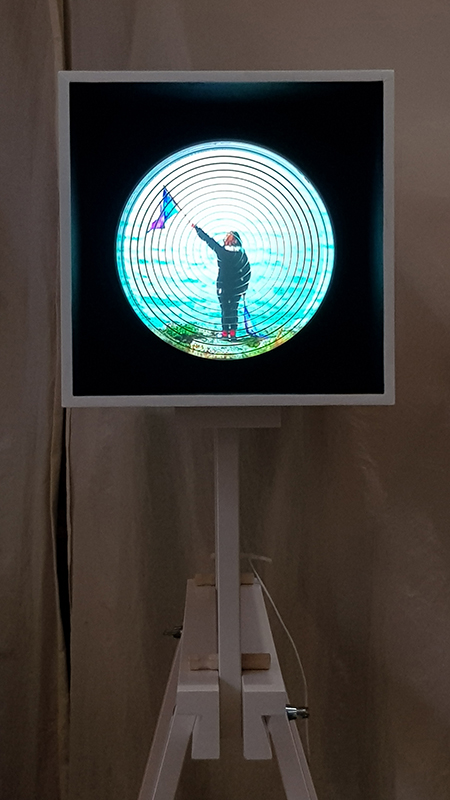
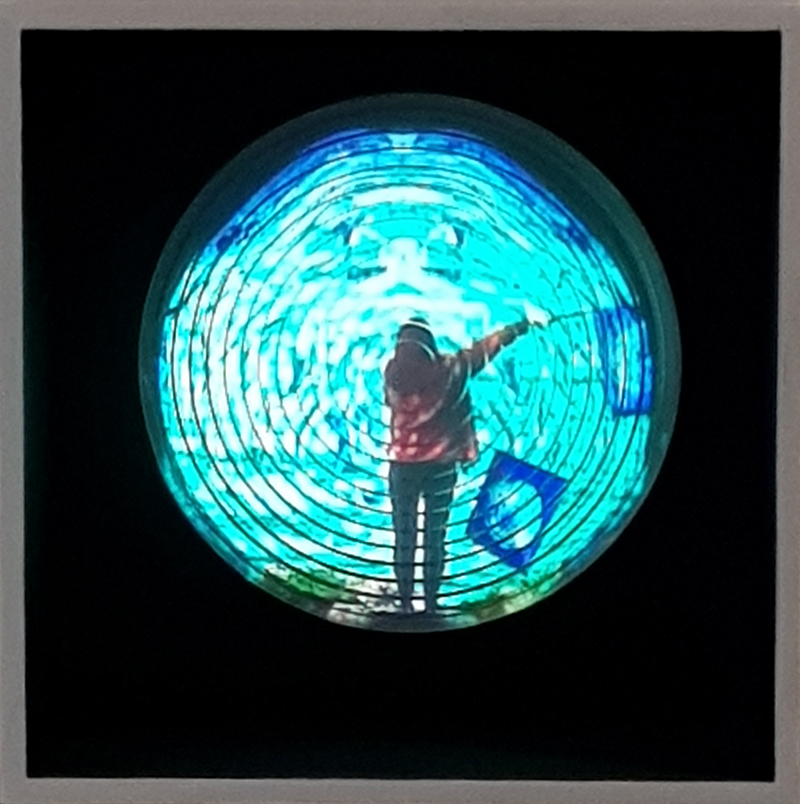
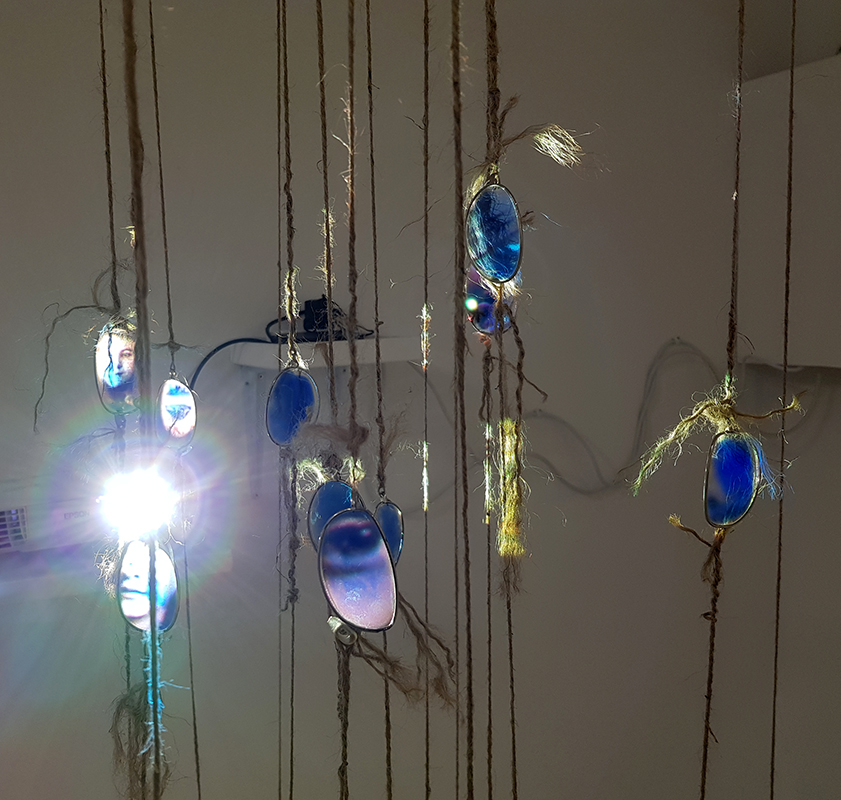
Investigating human/mineral entanglements for new work to be installed at Hypha HQ for The Geological Unconscious. Video of human activity projected through distorting optical lenses transforms the anthropocentric position to imagine the perspective of the rock. The pattern of lenses is informed by the molecular structure of magnetite,

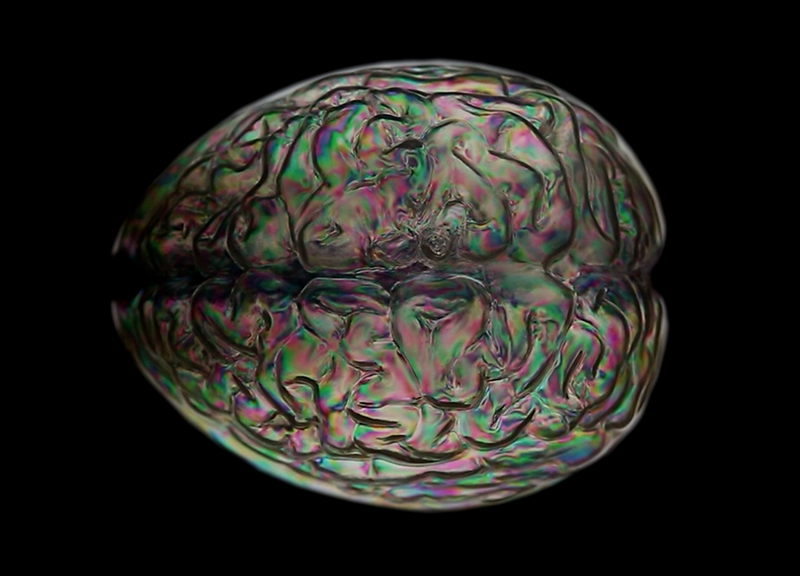
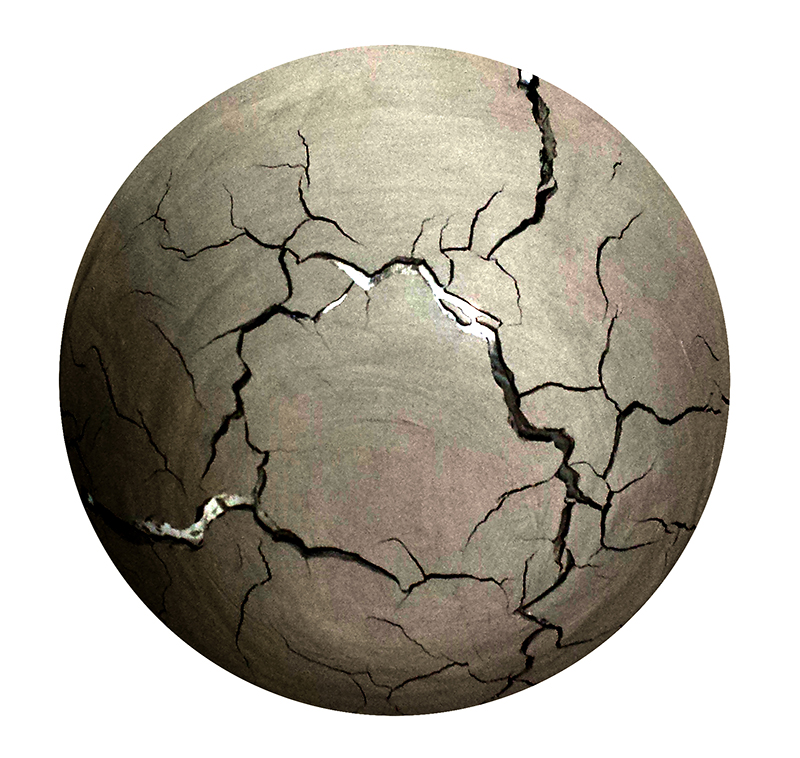
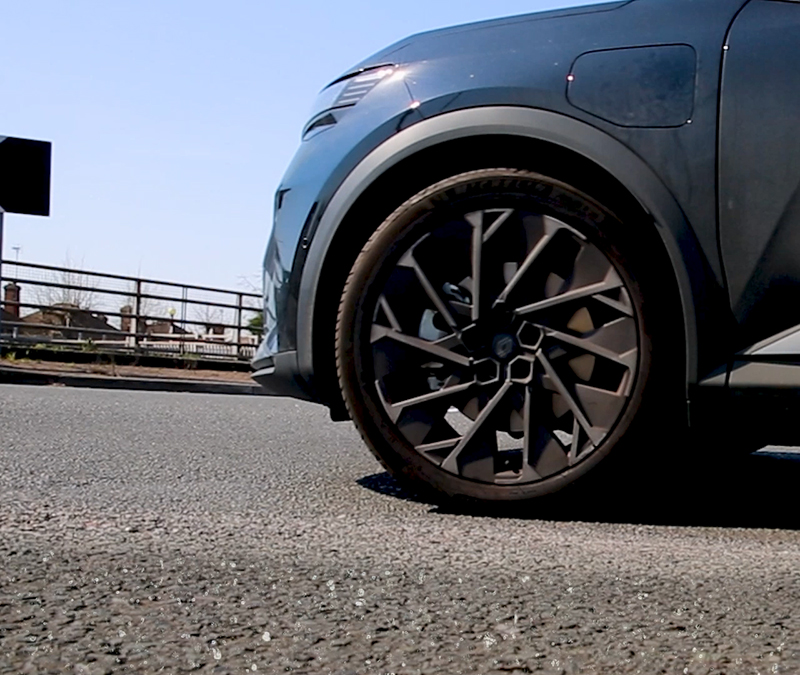
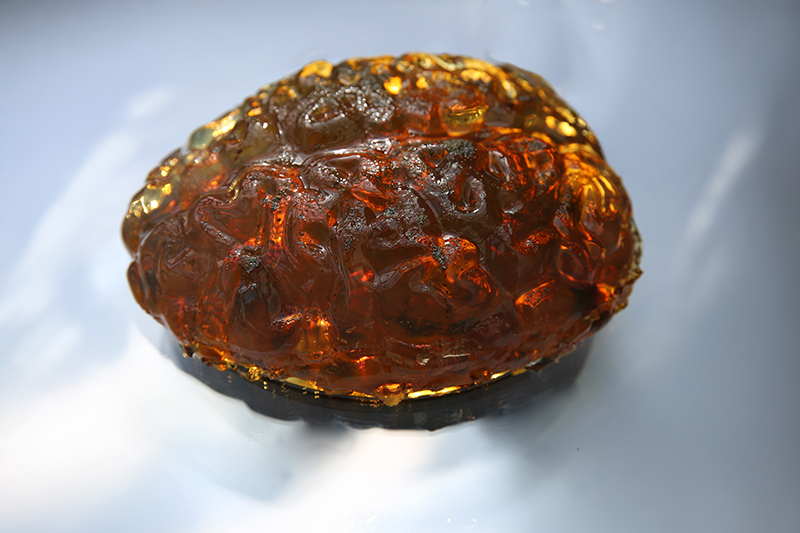
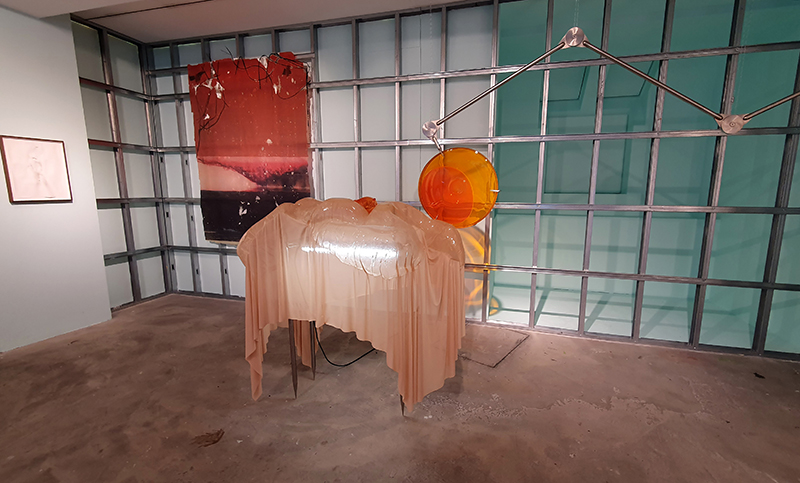
Magnetite is a naturally magnetic mineral found in many organism’s cells including human brain cells. Mined magnetite is used in industrial and mechanical processes and its use in combustion engines and braking systems is releasing nanoscale pollutant particles from traffic into the air which are finding their way into brain cells in high percentages causing concerns with links to degenerative brain diseases. I have been filming the stop start constant stream of traffic at a local roundabout and made a cast of a brain in gelatine with suspended iron filings. The filings oxidised and so the brain took on an iron red tinge and after a few days it cleaved down the centre and gradually as it dried became more and more chiton like.

Chitons are remarkable molluscs that have changed little in hundreds of millions of years. The chiton has hundreds of tiny eyes in its shell, which is made of eight articulating plates. It is the only known creature with lenses made of minerals rather than protein. Another distinctive feature of the chiton is having rows of teeth primed with magnetite, which aid its homing capabilities through magnetoreception and allow chomping on the hard rock surfaces it clings to. Inside the teeth of some species, the mineral santabarbaraite has been found, named after Santa Barbara, a mining district in Italy where it was first discovered and that honours Saint Barbara, who is the patron saint of mining and tunnelling. Santabarbaraite is also one of the few minerals named after a woman.

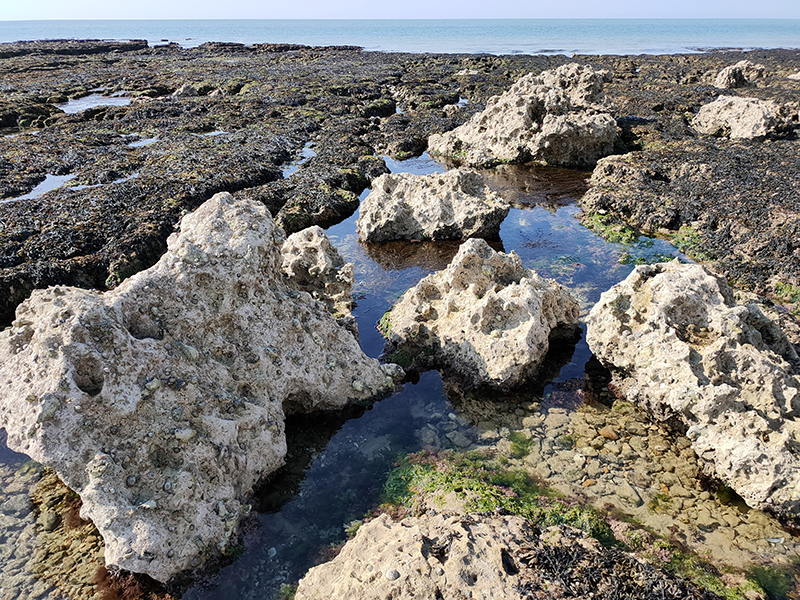
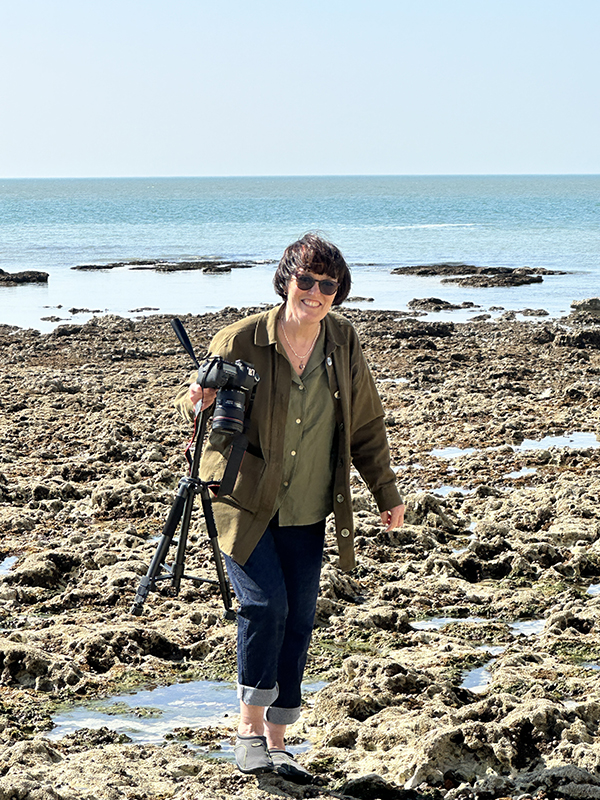
Fantastic day chiton hunting in the rockpools on the stunning East Sussex coast. Thanks to family who helped find these well camouflaged unique creatures.

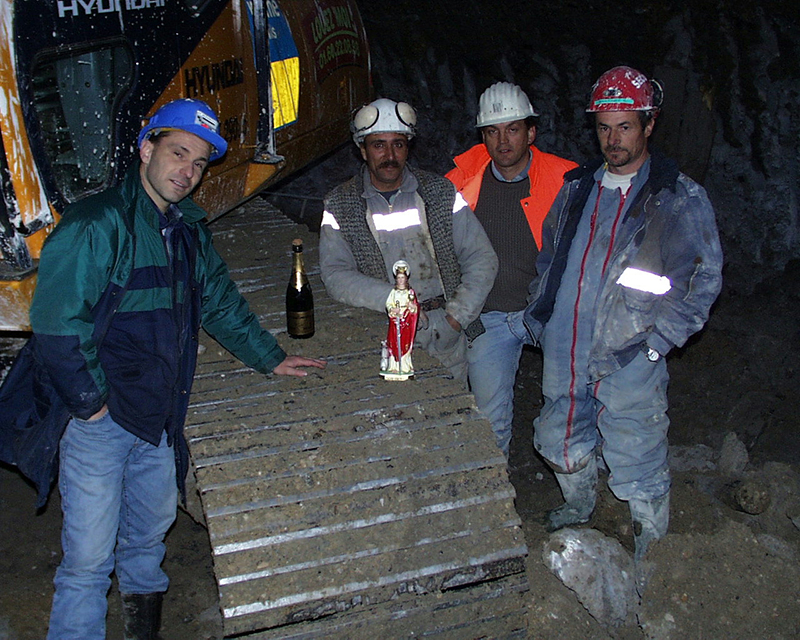
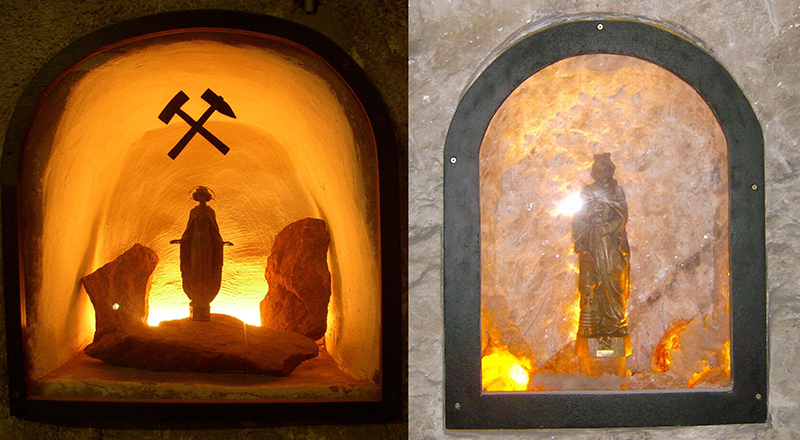
Saint Barbara, was adopted by miners and underground workers as patron saint after the pursuit of geology and the widespread use of gunpowder in mining escalated in the 1600’s. She may have a dubious authenticity but her benedictions are still sought today with many statues installed at the entrances to Crossrail and a large ceremony on her saints day, 4th December, performed by local priests before tunnelling went ahead. Even at CERN the epicentre of scientific rigour, a shrine to Saint Barbara was established at every shaft site of the Large Hadron Collider requiring excavation and a blessing performed even if the priest had to be lowered by crane down the shaft to achieve this.

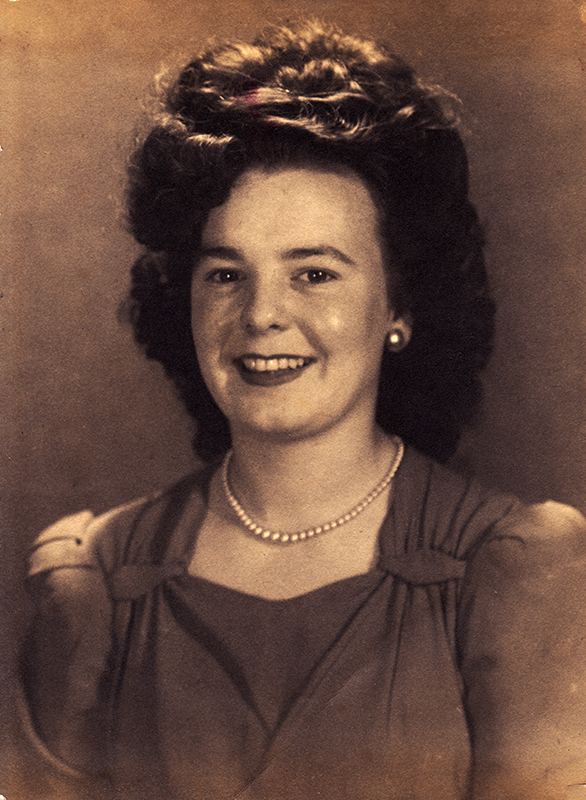
My mother’s name was Barbara and her birthday 6th December is very close to Saint Barbara’s day on the 4th. It would be great to discover she arrived two days late but there is no one alive now to ask.

Small grains of magnetite are common in igneous rocks, formed from magma having cooled and solidified within the Earth’s crust, and also in metamorphic rock, formed when existing rock is transformed physically or chemically at extreme temperatures. 

These processes happen on other planets as well as Earth and so magnetite has also been found in meteorites.

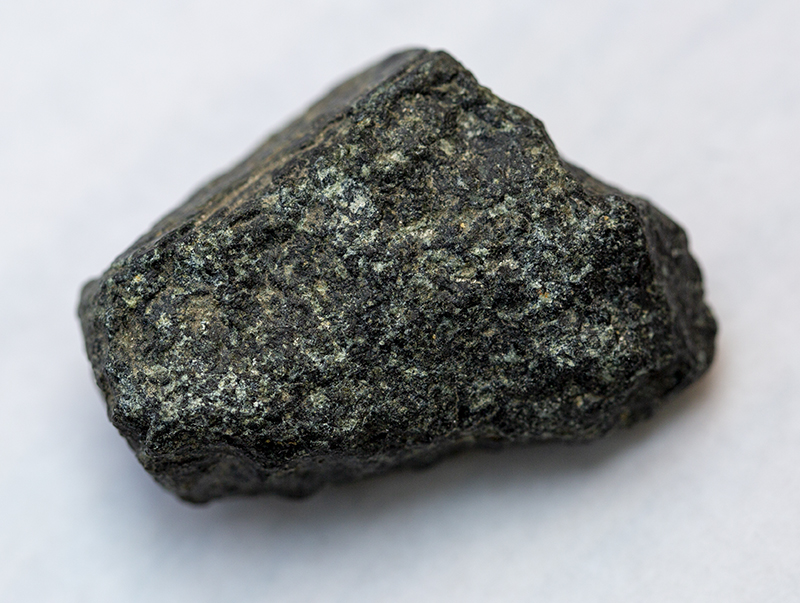
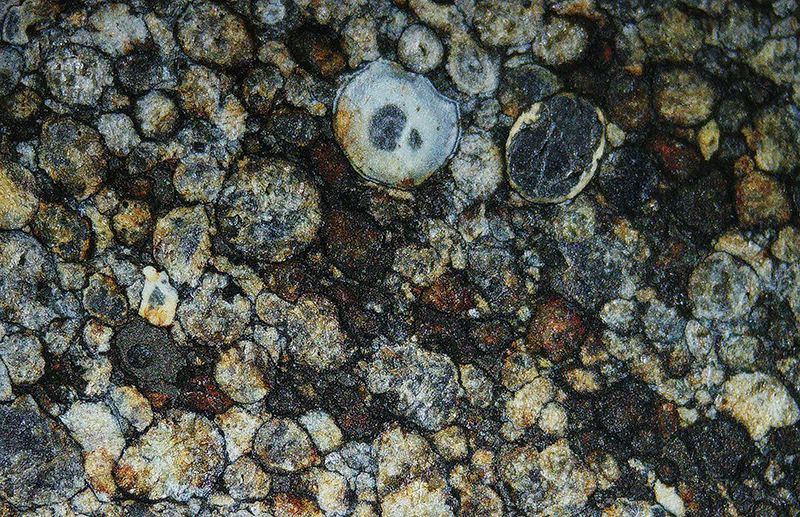
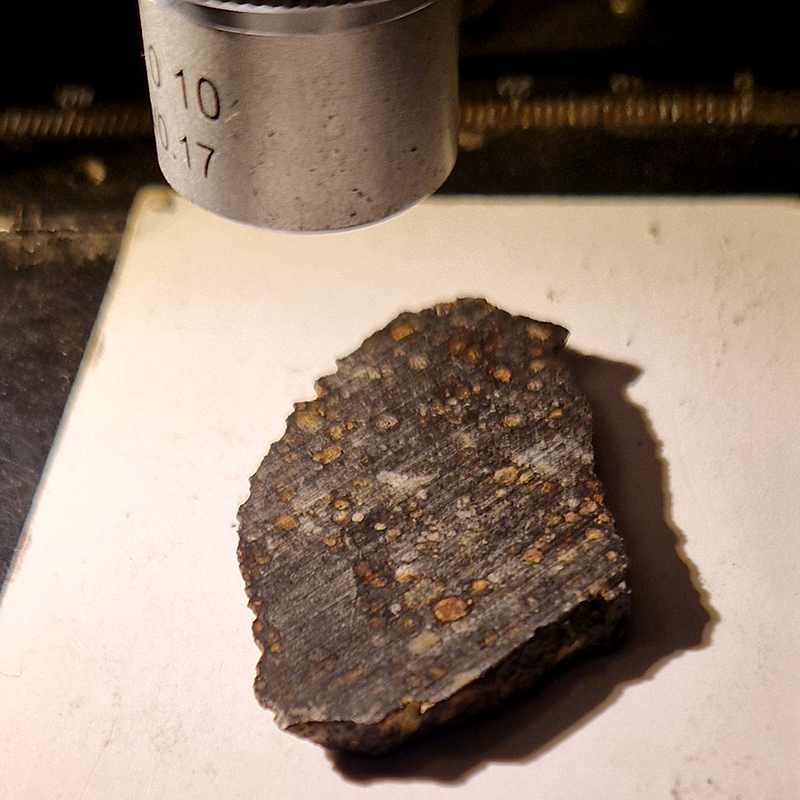
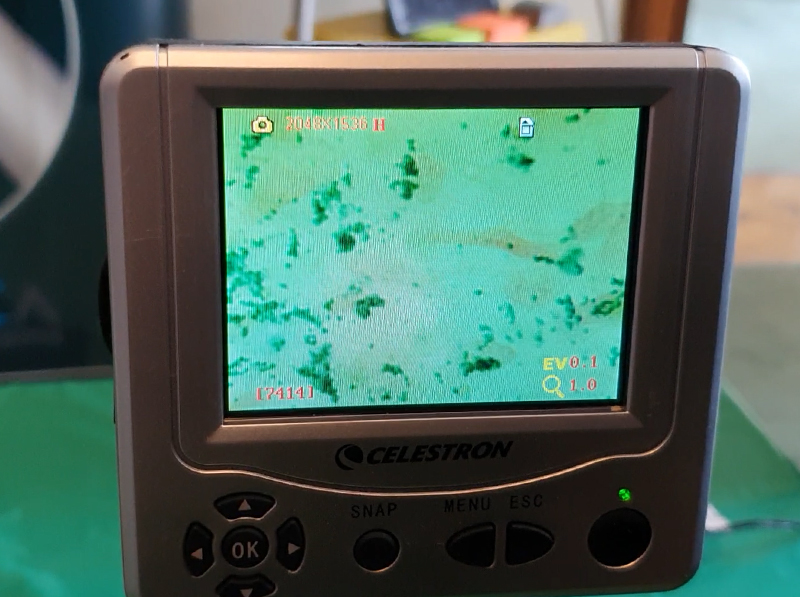
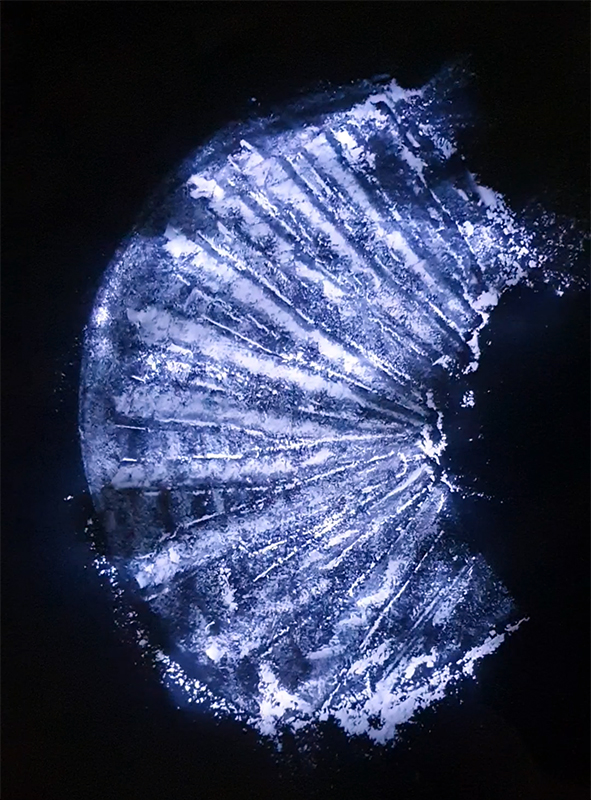
Using a digital microscope to look at the structure of the chondrite meteorite NWA 16975 discovered in the Sahara in 2024 which displays numerous and obvious chondrules and flecks of nickel iron in a fine grained matrix.

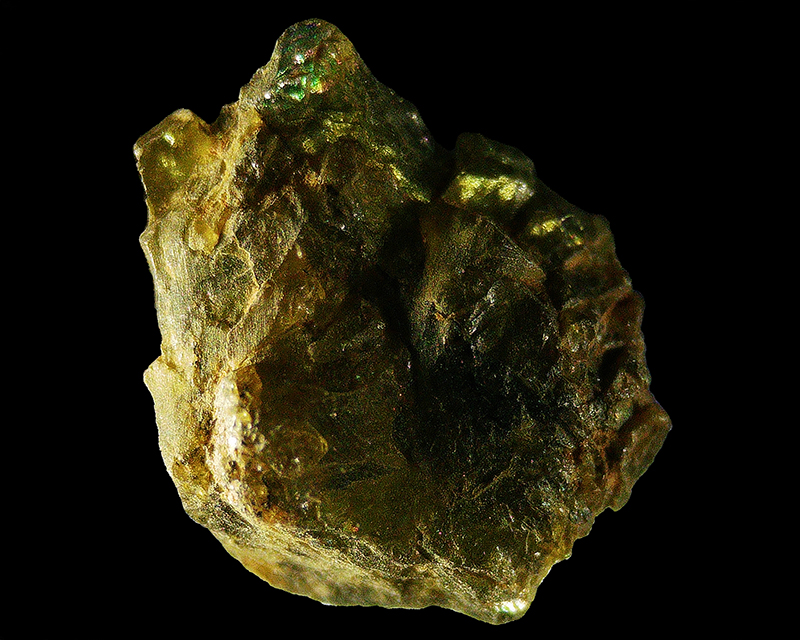
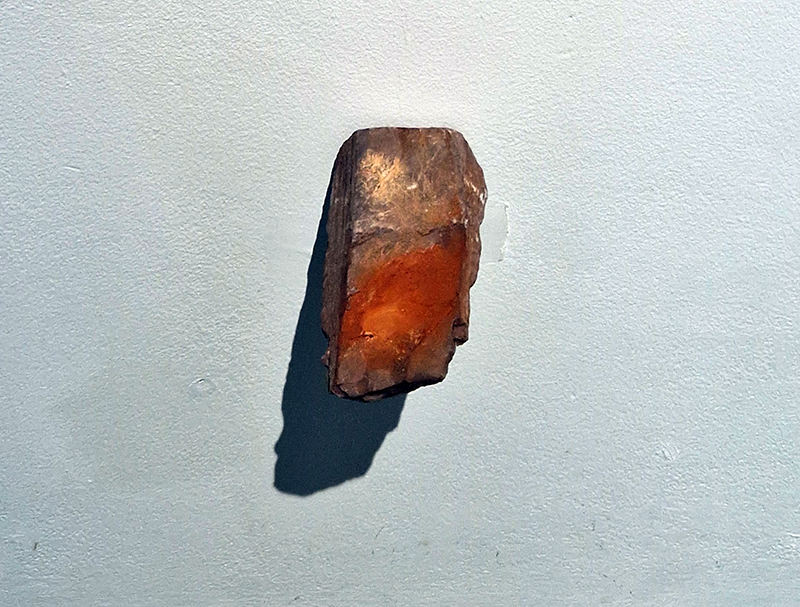
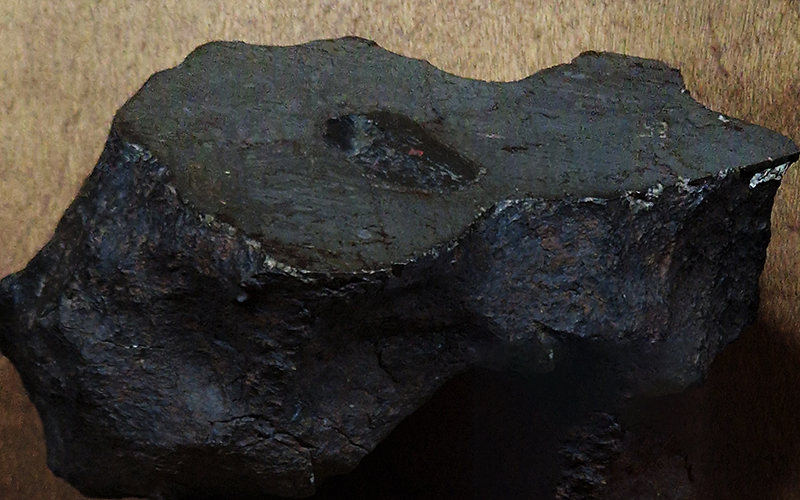
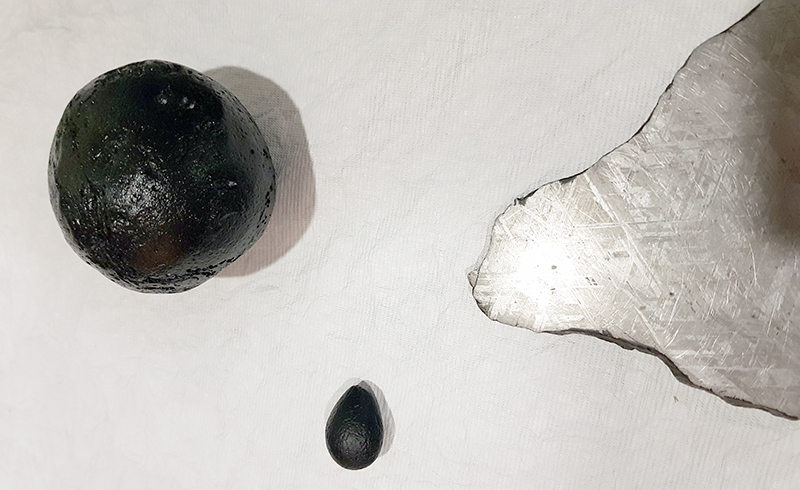
Also the fragment I have from the Diogenite meteorite NWA 7831 found in Morocco in 2013.

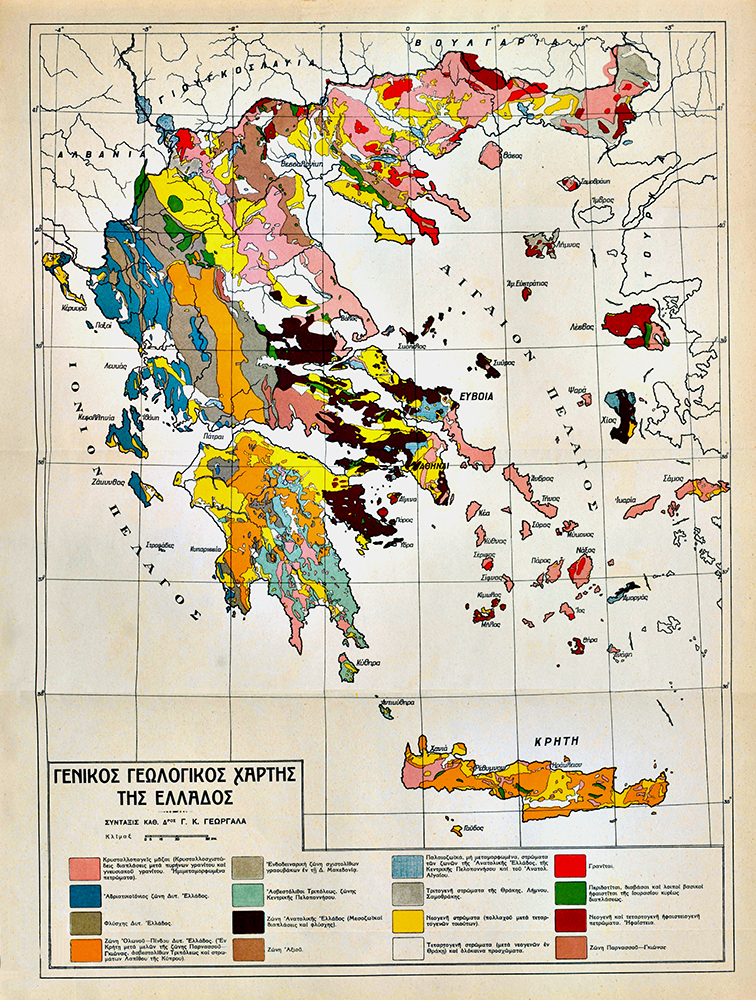
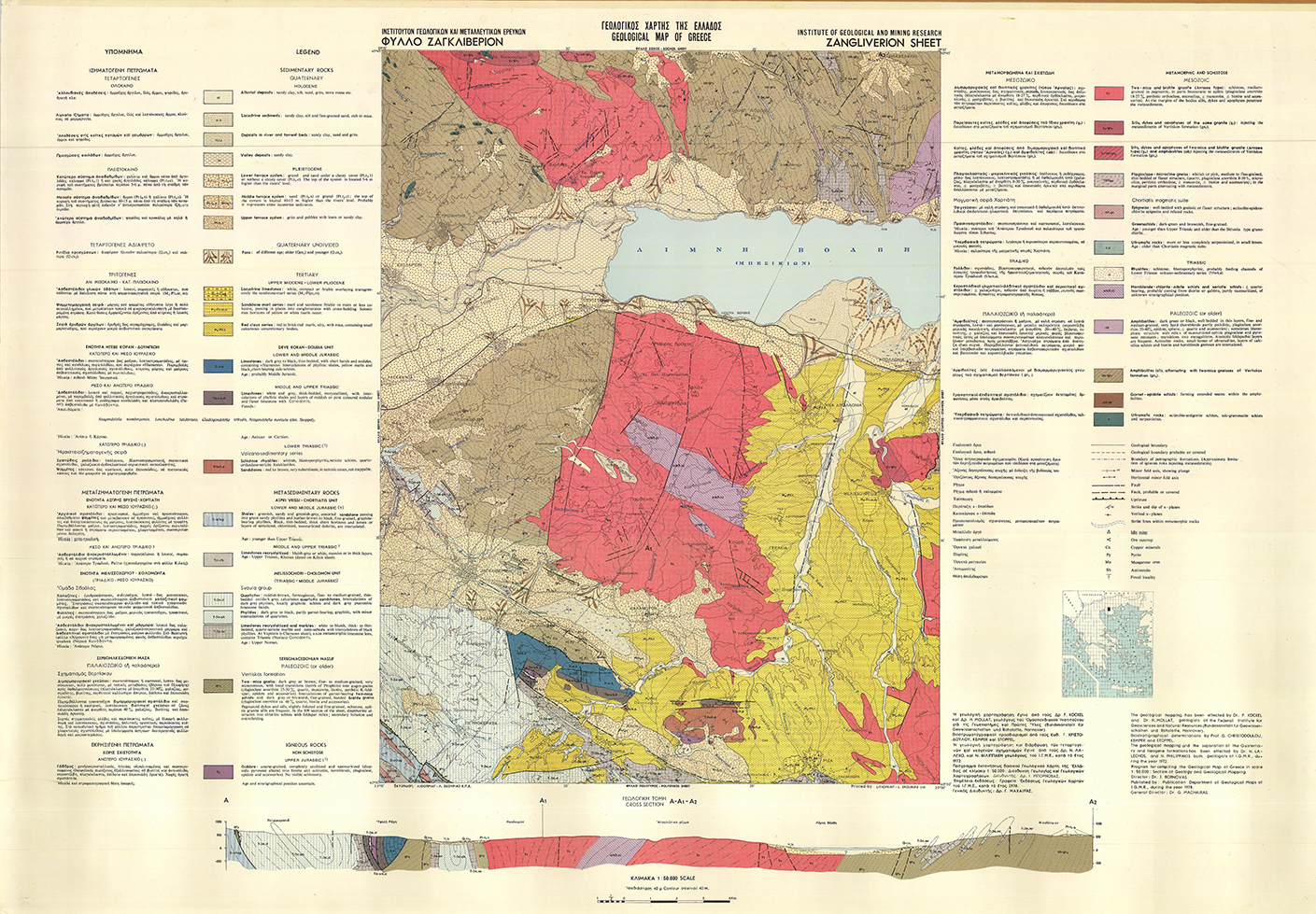
Looking at wonderfully colourful geological maps of Greece to locate the ancient area of Magnesia – the region where magnetite was first discovered and where its name has derived from – known as “magnes lithos” (stone from Magnesia). Definitely want to plan a research trip to this beautiful region around Thessaloniki.

Exhibitions

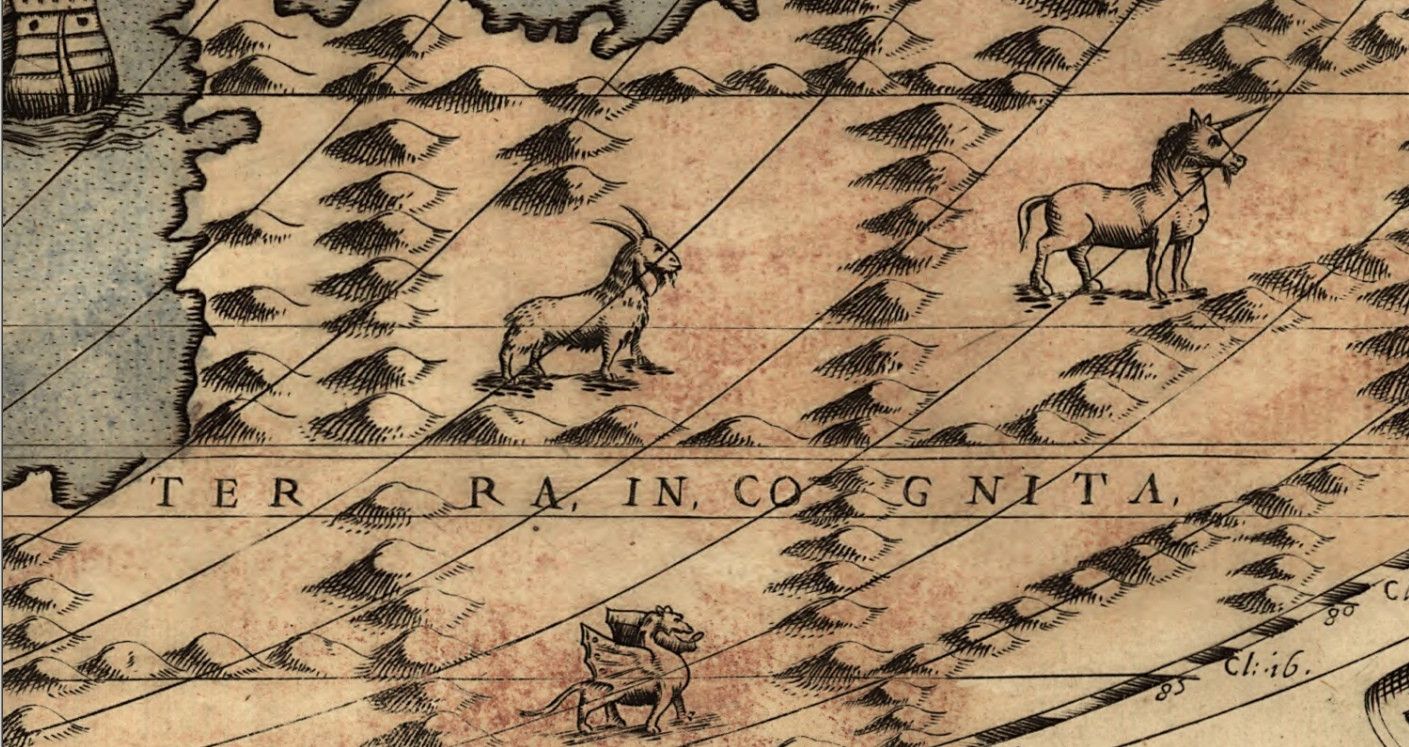
Whatshesaid collective of artists present Terra Incognita at Thames-side Studios Gallery – charting and cataloguing the disregarded, the everyday, its surface textures, accumulations, sedimentations.

Joao Villas and Victoria Ahrens showing in Spectral Matters at APT Gallery An understated beautifully curated show whose work references the ephemeral materiality of sound, video, photography and print. The work overlaps and crosses over, both artists responding to the other’s practice. The images create matter, as spectral matter gives agency to the materiality of its own making, while haunting the space with its frequency- it vibrates. The exhibition explores memory, technology and the Anthropocene- and how the disappearing materiality of the world is captured through ephemeral means. 

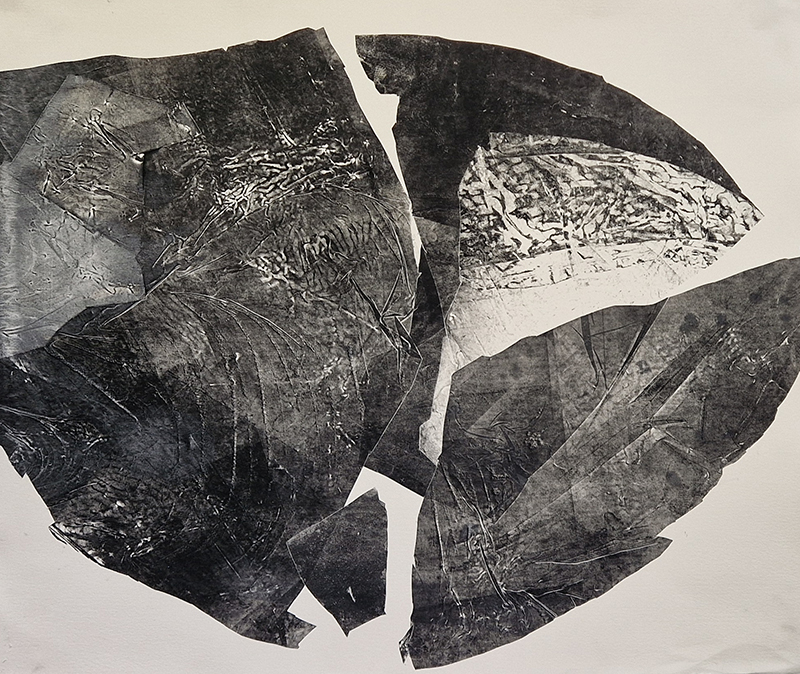
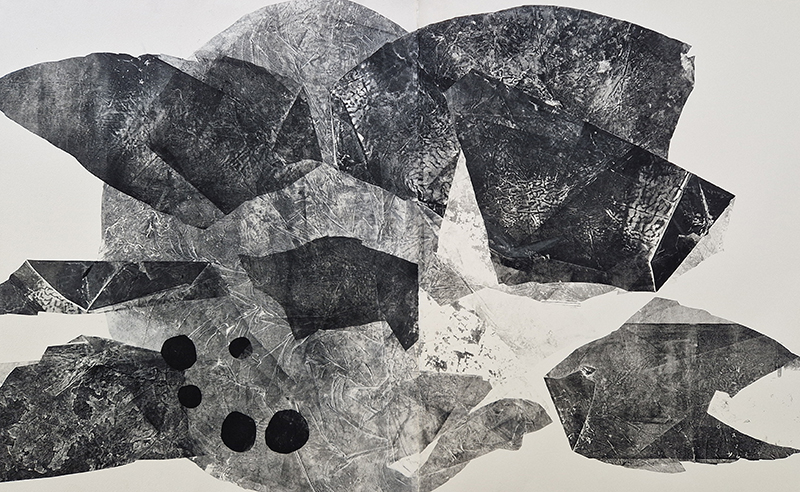
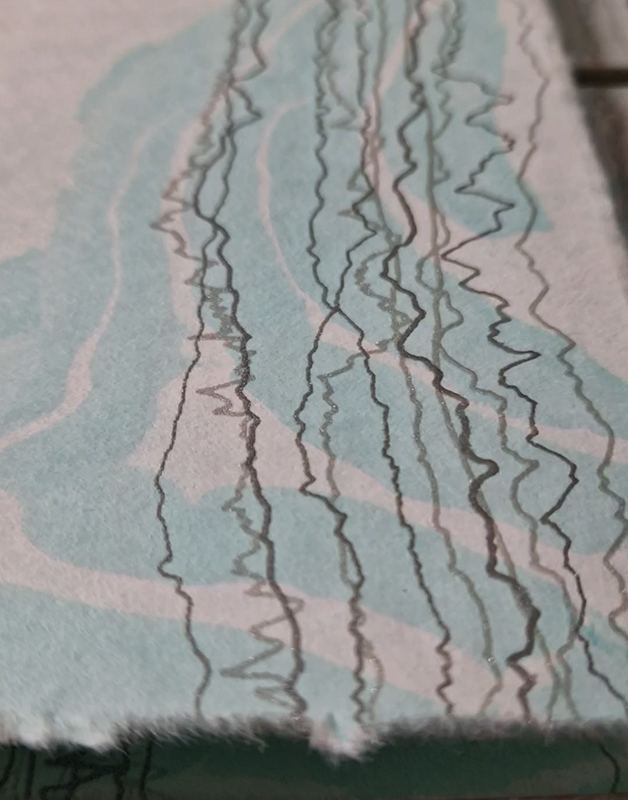
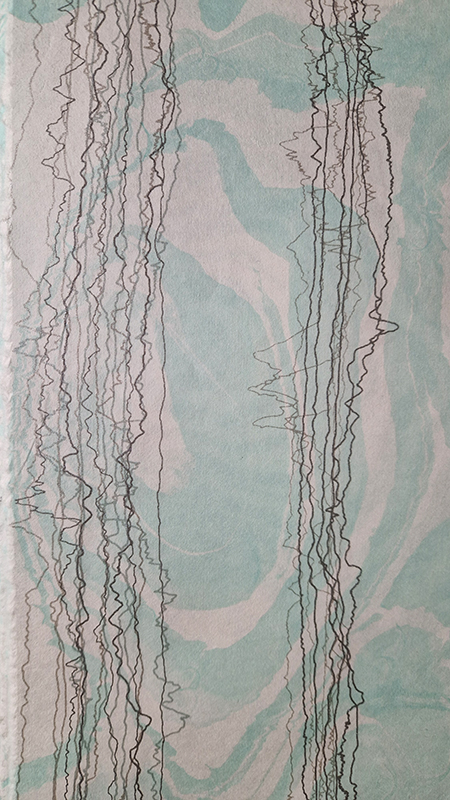
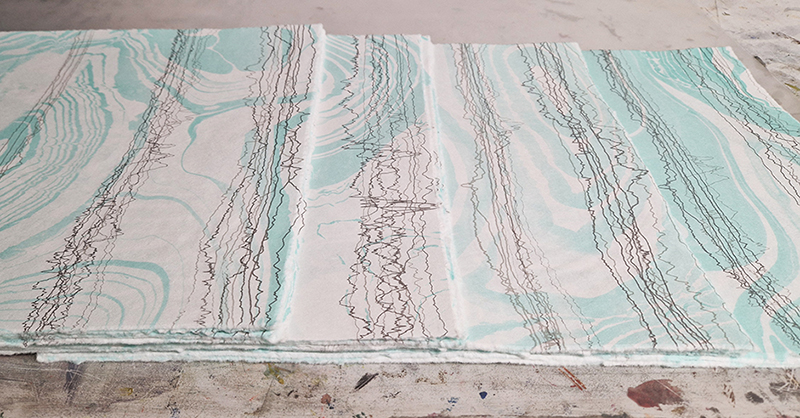
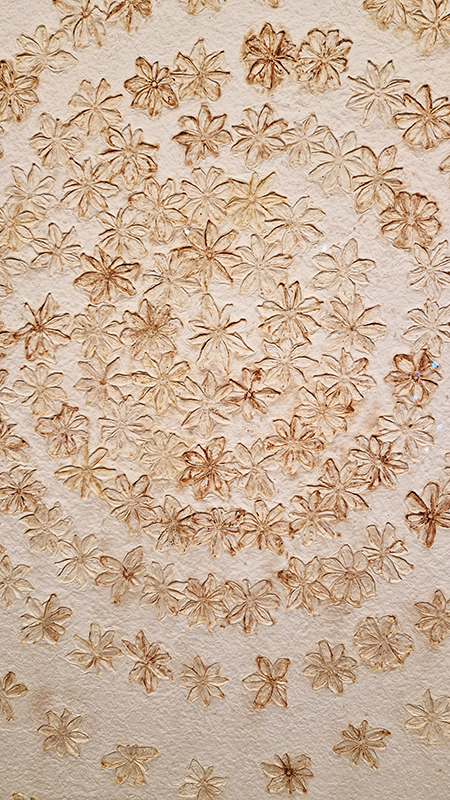
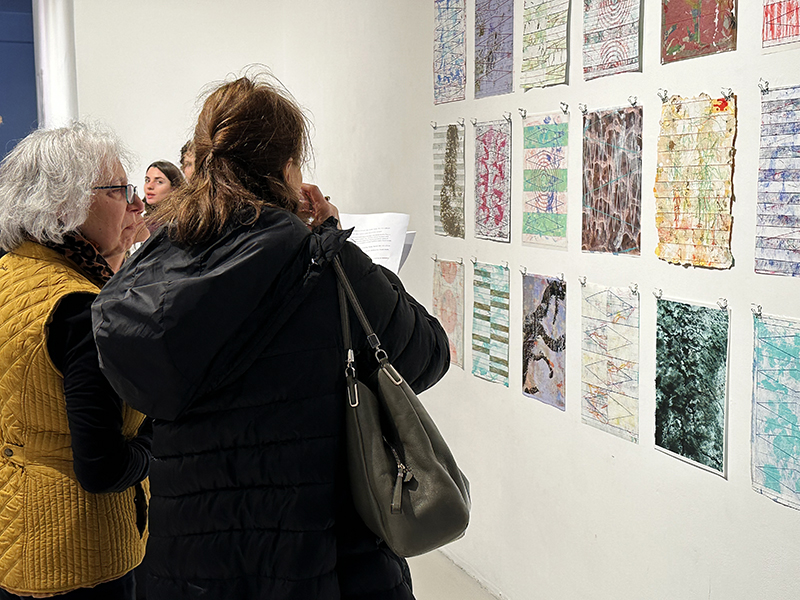
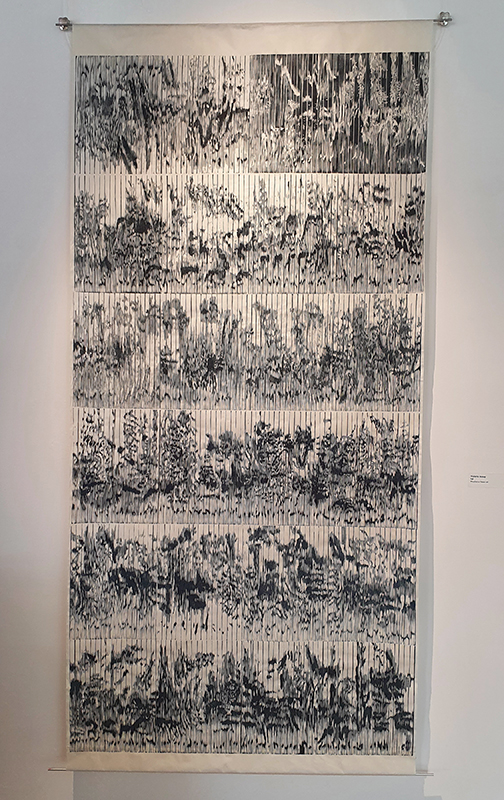
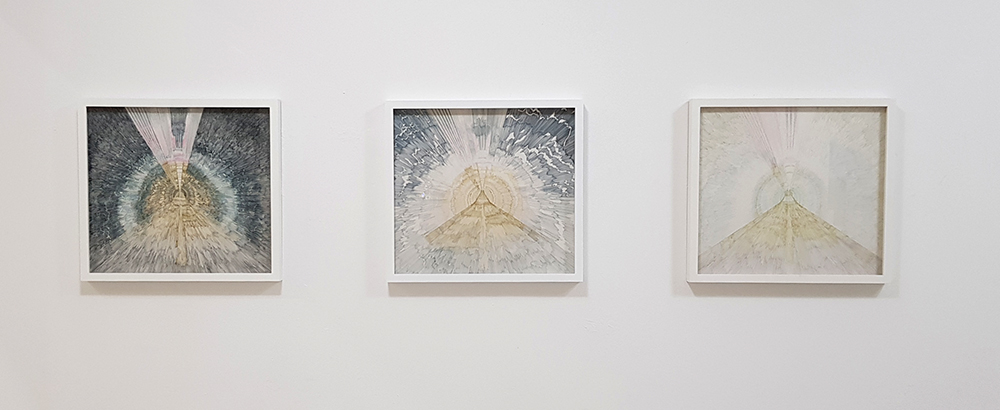
Spending time in the print studio layering up magnetometer lines describing fluctuations in the Earth’s magnetic field. Using sheets of Japanese paper with Suminagashi ink swirls to evoke both ocean and magnetic currents. The lines are printed in metallic inks, relating to the idea of a lode, which in geology is a deposit of metalliferous ore that is embedded in a fracture in a rock formation or a vein of ore that is deposited between layers of rock.

The bands of magnetometer lines are used to signify the last three magnetic pole reversals. The most recent at 42,000 years ago (a short 500 year blip), then 780,000 years ago (continued for 22,000 years) and 1,000,000 years ago (continued for 40,000 years). This history of these reversals is stored in the ocean floor as magma flows up between cracks in the Earth’s crust, spreads and solidifies, capturing the direction of the poles in the orientation of the minerals.

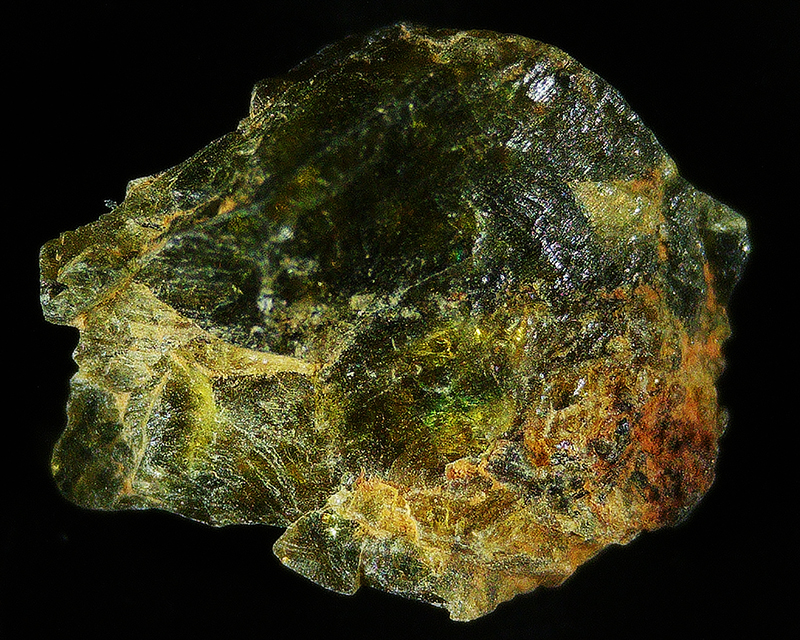
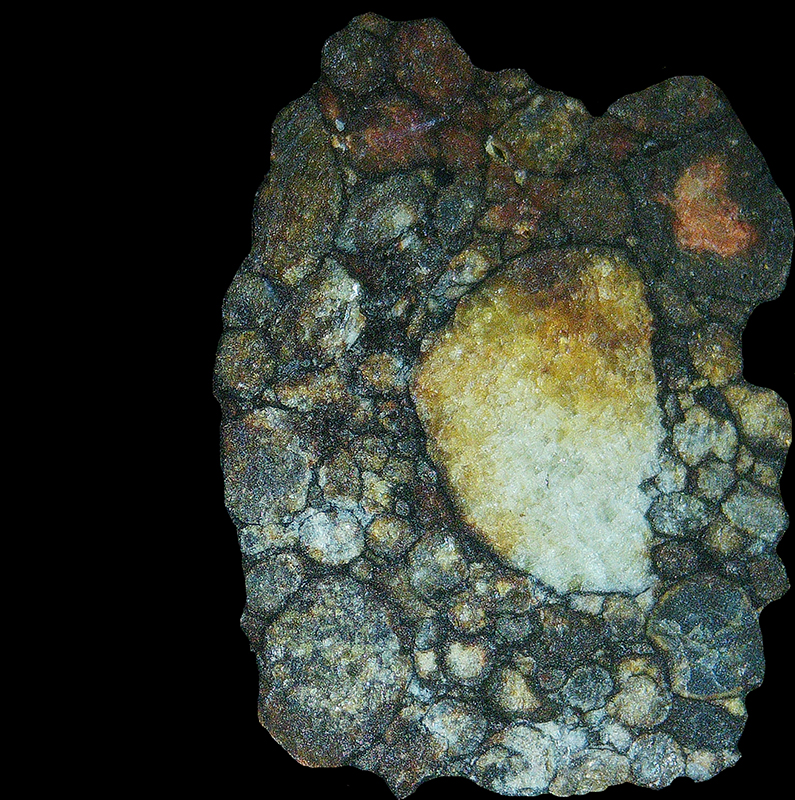
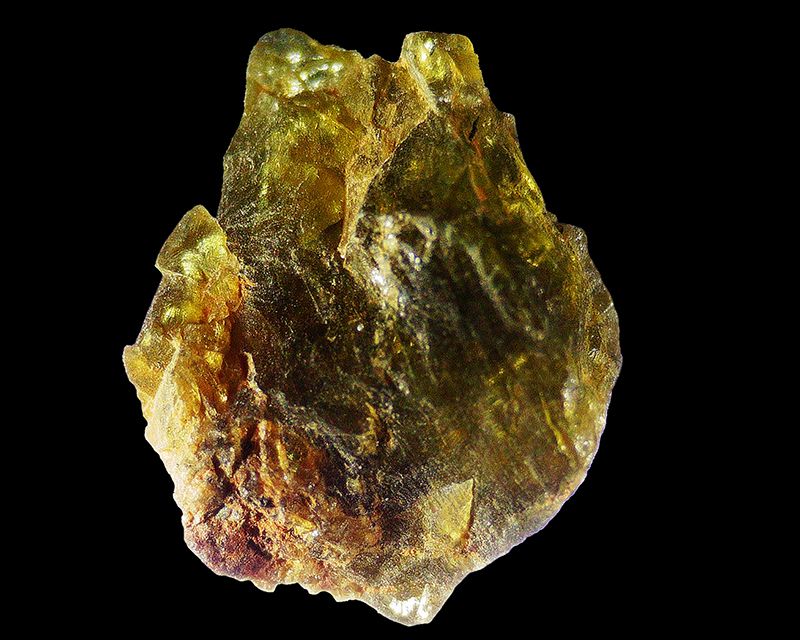
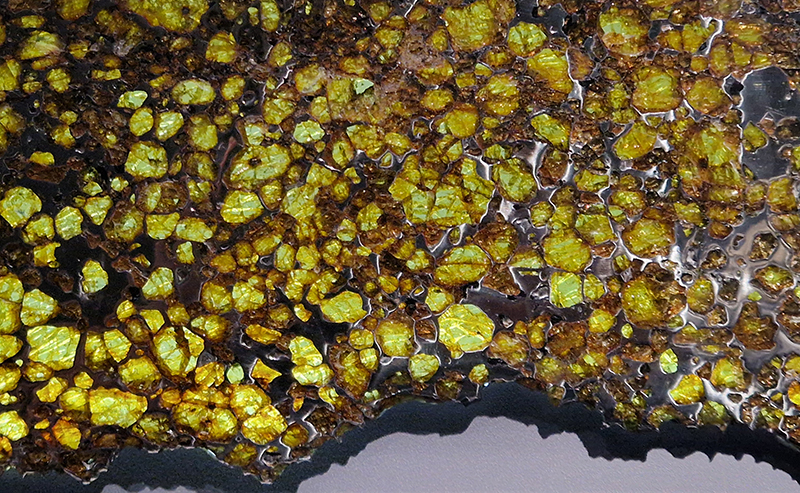
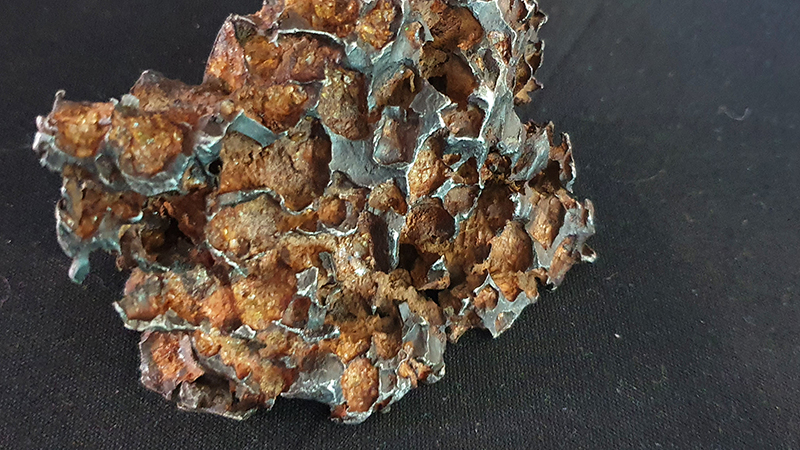
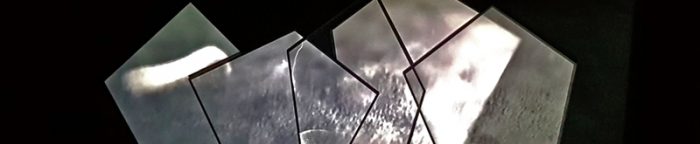
Work in progress on Mineral Visions, a video sculpture with a particular focus on magnetite/magnetism and human relations. Editing video of Jepara seen under the microscope. This is a magnetic pallasite meteorite with an interior structure of densely packed olivine and iron-nickel, discovered in Indonesia in 2008. Pallasite meteorites formed in the asteroid belt between Mars and Jupiter. They’re made up of minerals and remnant materials from the first few million years of the solar system, forming at a time when planets were only just coming together.

A very special research trip with fellow artists exhibiting in the upcoming show at Hypha HQ, The Geological Unconscious, to visit la Galerie de Géologie et de Minéralogie, Muséum National d’Histoire Naturelle, Paris. Hosted by the curator of minerology we were privileged to see a selection of stones in the museum vault. The museum holds Roger Caillois’ stone collection as featured in his book The Writing of Stones. The photographs of this extraordinary collection do not compare to seeing them up close, from every angle. Must larger than anticipated, they are extracted from their snug foam packaging for yet another scrutiny of the human gaze. Caillois wrote at length about each stone, allowing his imagination to conjure metaphor and analogy from the syntax of the ancient crystal and sediment. He was fascinated by his own fascination with the stones which he saw as a desire to connect with the more than human and lose oneself in the enormity of the universe.

Roger-Caillois Malachite Photo Julie F. Hill

We also got to see some meteorites in the collection including a large one containing diamonds that had belonged to Caillois. The Canyon Diablo meteorite originated in the asteroid belt between Mars and Jupiter and crash landed into the Arizona desert approximately 49,000 years ago, with the force of more than 100 atomic bombs. The crater it left is nearly a mile across and 600 feet deep. Fragments were flung over an area of over 11 sqm from the point of impact where the main mass vaporized on contact. In the force of collision small diamonds formed from graphite and are found inside the highly recrystallized meteorite fragments at the rim of the crater. 

I was also interested to a slice from one of the world’s largest specimens of pallasite, the Imilac pallasite discovered in 1822 which exploded over the Atacama Desert in northern Chile, possibly in the fourteenth century.

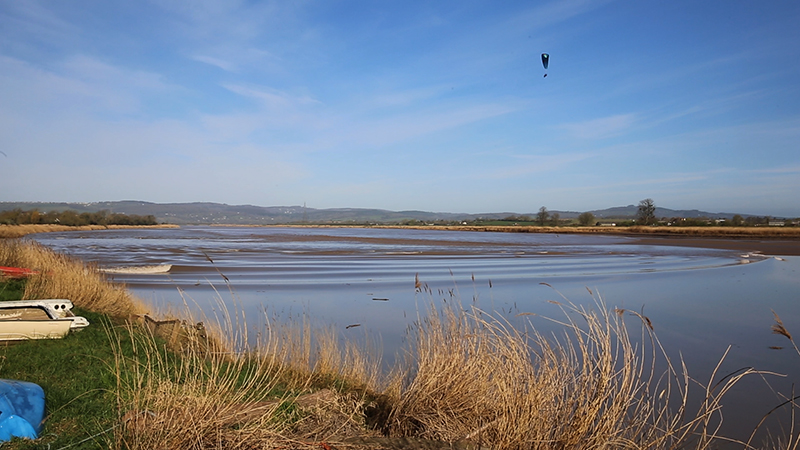
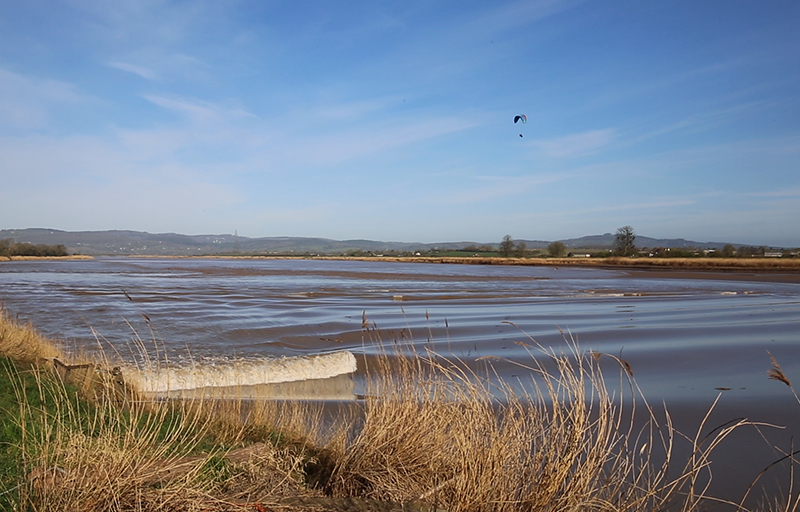
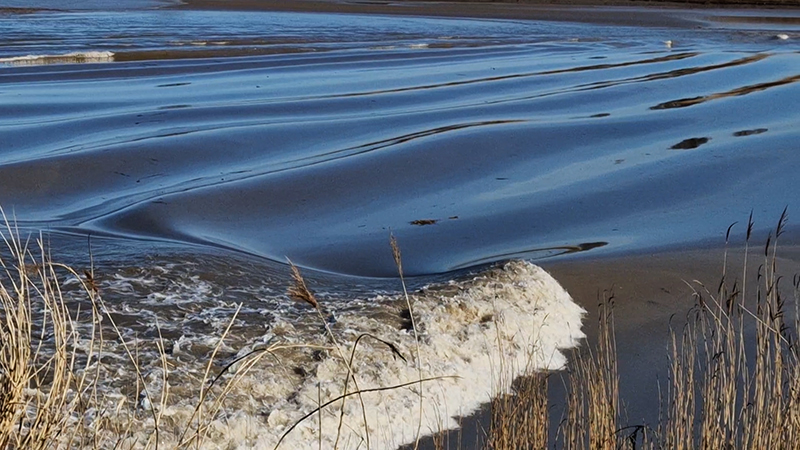
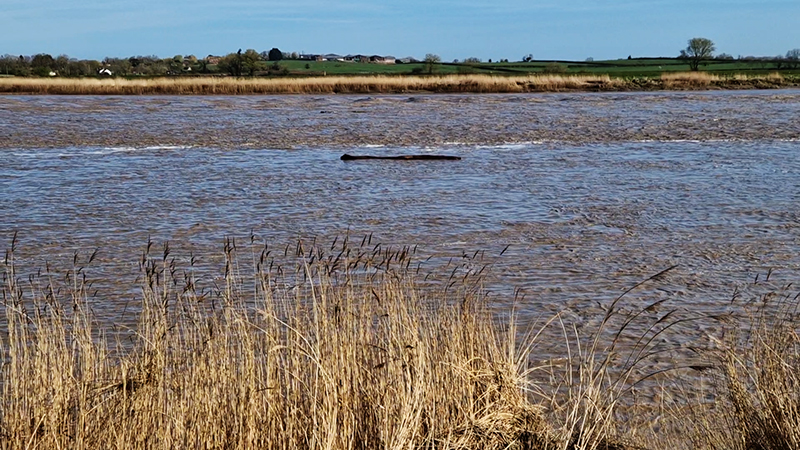
This spring Severn bore had been forecast to be a 4* event but arrived earlier than expected as more of a ripple. Not enough rain from the Welsh hills and no uplifting wind meant it was a more gentle, leisurely wave. It was still exciting to witness the change in the river from the slow glassy seaward flow to choppy, muddy turbulence carrying logs and assorted debris inland as the tidal wave rose into the channel. Such a beautiful morning to be on the river bank.

Gallery Visits

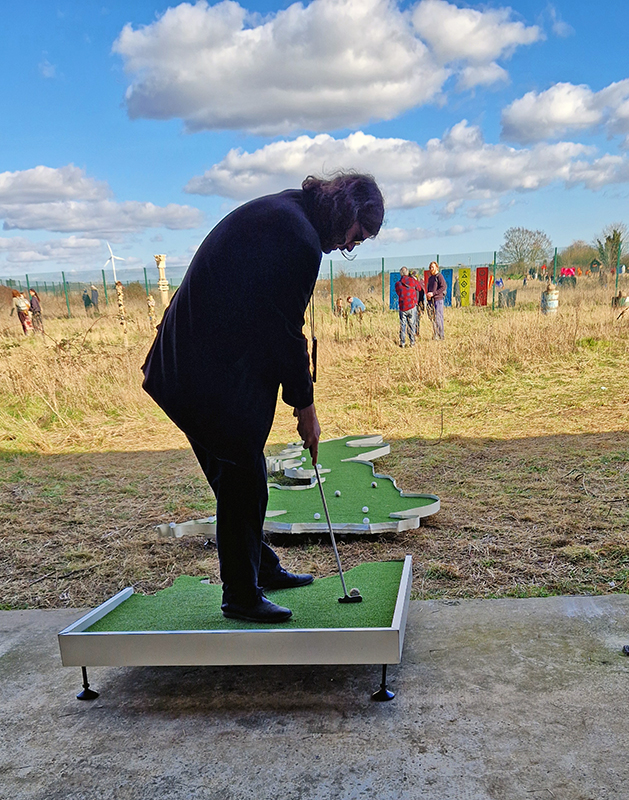
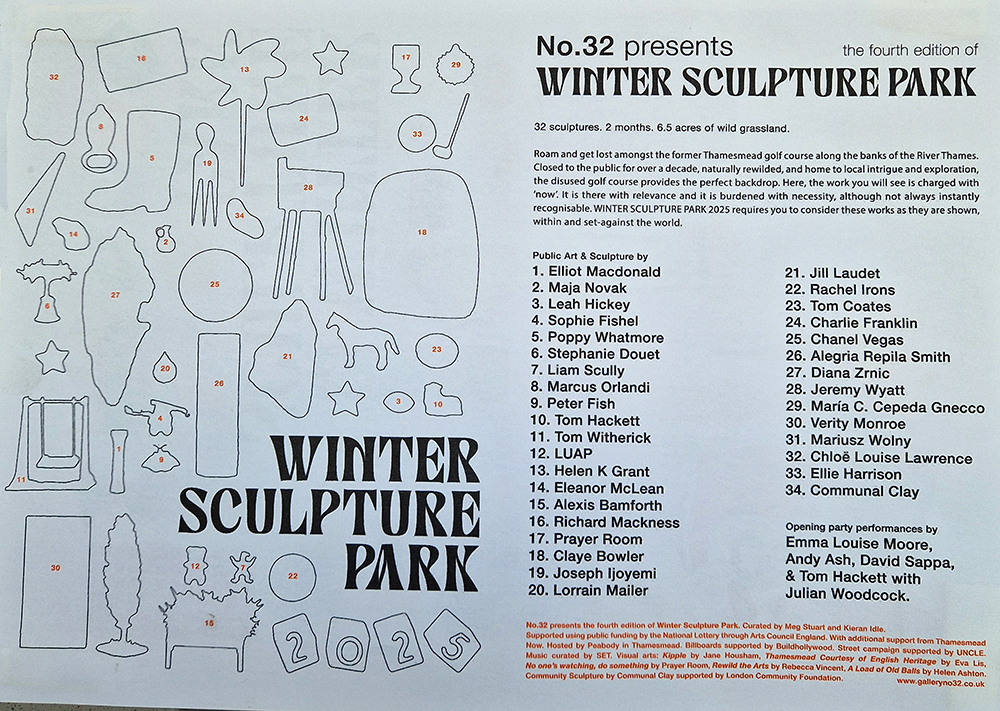
Glorious sunshine spot lit exuberant work at the Winter Sculpture Park hosted by Gallery No32 at a former Thamesmead golf course along the banks of the River Thames.

Clinging On, an exhibition of wall based sculptures curated by Poppy Whatmore at Glassyard Studios SW9. Instability is growing across the world, as we cling to liberal norms, ideas and values; these works connect a feeling of uncertainty to the physical, defying a gravitational pull or some internal force. These are physical, material or conceptual investigations of precariousness and the accompanying need to hold on. A packed PV means I have few images but I did capture the excellent Ocean Chasms/Crystal Chasms by Julie F. Hill and Caught Moon by Jane Millar.

Moving Landscapes at Jeu de Paume, Paris. This exhibition brings together photography, literature and science to address environmental questions but also those of identity or migratory flows; the landscape thus becomes a living and constantly changing territory. Artists include Mounir Ayache, Julian Charrière, Edgar Cleijne, Ellen Gallagher, Yo-Yo Gonthier, Laila Hida, Eliza Levy, Julien Lombardi, Andrea Olga Mantovani,Mónica De Miranda, Richard Pak, Mathieu Pernot, Prune Phi, Léonard Pongoa and Thomas Struth.

Events

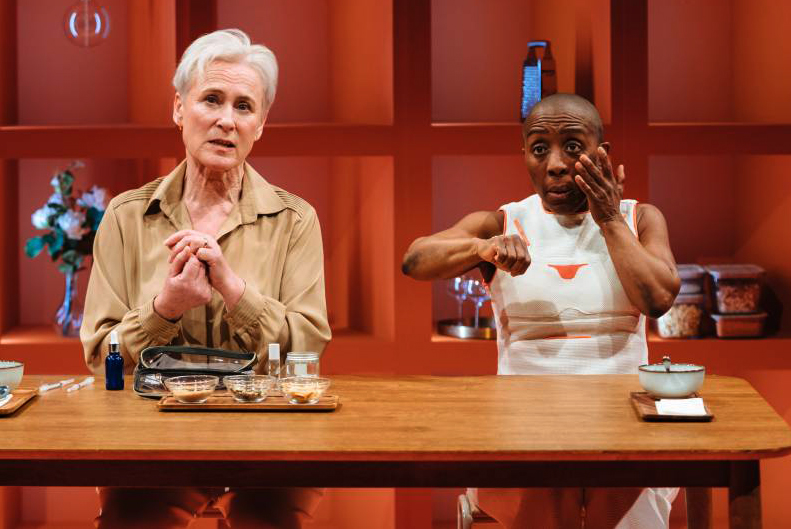
More Life By Lauren Mooney and James Yeatman at Royal Court Theatre. Asking the question ‘what is life?’ but also what is the quality of life you would accept if you discovered you were a computer file. What constitutes real human experience? A brain sliced, scanned and rebuilt in the future to be transplanted into a new synthetic body holds memories of a past life and feels emotion but has limited access to new physical sensory experience – no need to eat or sleep. Does the urge to live, live on? Is it possible the first person to live forever has already been born?

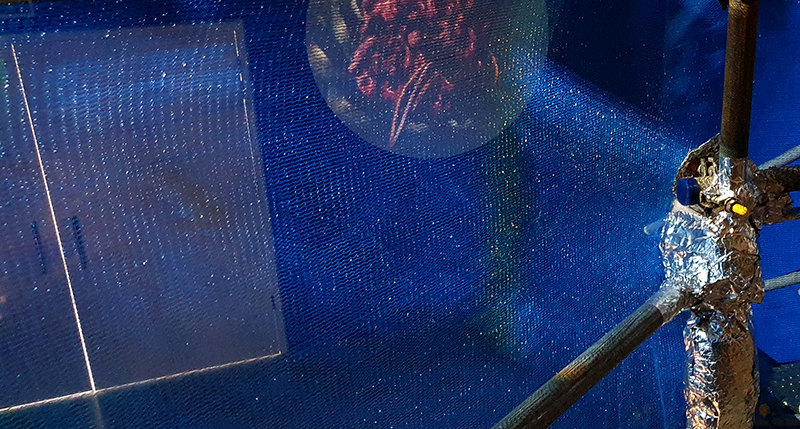
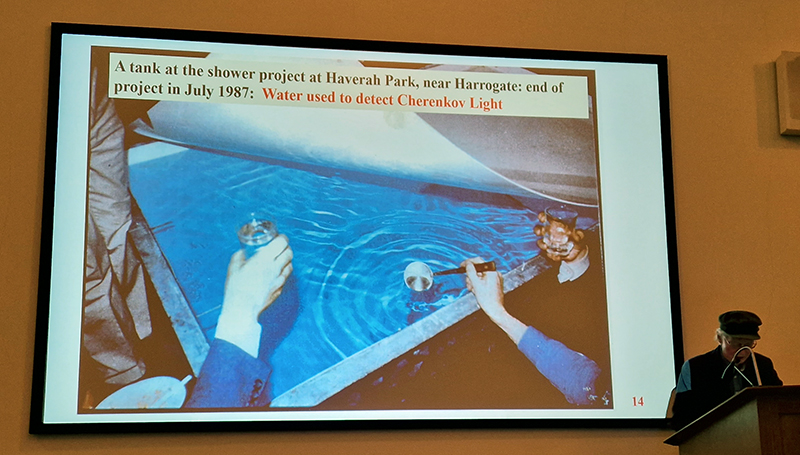
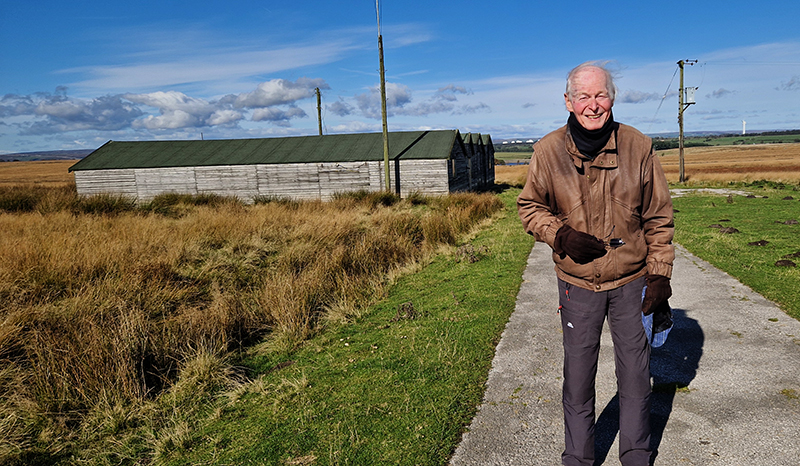
Great to see Alan Watson again, after visiting Haverah Park with him last year, to hear more about Searching for the Origin of the Highest Energy Particles in Nature. This water being sampled in the image below had been in the tank for nearly 30 years yet was still clear and drinkable.

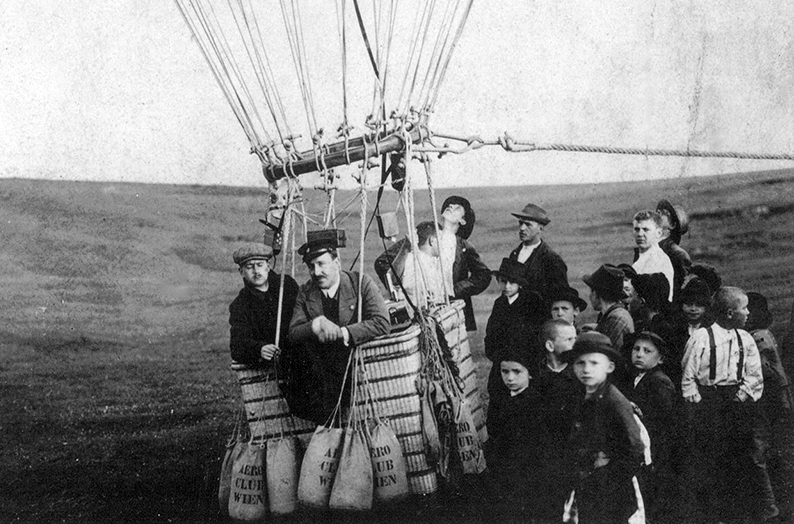
He began his lecture at The Royal Astronomical Society with a short history on the discovery of cosmic rays, taking us right back to 1785 and Charles-Augustin de Coulomb who discovered that bodies with like electrical charges repel and if they have different signs, the force between them makes them attract. In his experiments testing electrical charge with two metal balls suspended on silk threads to easily repel or attract he was surprised to find that even if his experiment was very well insulated the charge still leaked away. It took over a century before it was realised that the air was being ionised which spurred physicists to discover the source of this ionization. In 1912 Victor Hess made his famous balloon flight to over 5km with a rudimentary Geiger counter and no oxygen to discover that ionization increased with altitude and must have an extra-terrestrial source. Over another century on and cosmic rays still present a mystery as to their origin and how they gain their enormous energies.

Alan is interested in the ultra high energy subatomic particles from extragalactic sources with energies about a million times as high as the energy reached by human-made particle accelerators. To put these energy scales in context – a laser pointer has an energy of about 3 electron volts, which is also typical of the photons that come from the sun. The molecules in the air are rushing around at 300m per second with an energy of 1/40 eV. A low energy cosmic ray, the sort that passes through your body a million times in a night, has an energy of 1 giga-electron volts, a proton created at CERN ( the European Organization for Nuclear Research) has around 7 tera-electron volts. If there was a race between a CERN proton and a high energy cosmic ray (over 1018 eV ) starting at the centre of the galaxy, by the time the cosmic ray had reached Earth the CERN proton would not even have reached the moon.

The ultra high energy rays are very rare. To detect these particles physicists rely on observing extensive air shower arrays to amplify the arrival of the particle. By recording the secondary particles that are produced when a cosmic ray hits the upper atmosphere the energy of the particle can be calculated. The showers arrive is a disc like formation with footprints of around 1sqkm so it is necessary to have detectors spread over a large area. The detectors measure the arrival time of the secondary particles and this can help determine the direction of the particle to within 1 degree. The trajectory of the cosmic ray is affected by galactic and intergalactic magnetic fields making it very difficult to find the origin of the particle.
The shadow of the moon can be seen in data recordings of cosmic ray arrivals.

There are a few different methods of detecting cosmic rays. This can be done using scintillator plastic which gives off a flash of light when a particle passes through the medium. Using Cherenkov radiation is another method – this takes advantage of a naturally occurring electromagnetic shock wave giving off energy as light when a particle passes through a medium faster than light can travel through the same medium. The speed of light through water is only 3/4 as fast as when it passes through air, a cosmic ray with much more energy will travel through water at almost the speed of light. This phenomenon can even be seen with the naked eye if the location is dark enough. Astronauts experience flashes of light in the eyes from particles directly hitting the retina but also from particles passing through the vitreous fluid and causing Cherenkov radiation.

Another method is to detect the excitation of nitrogen, the same process that produces the aurora. This light is in the ultra violet spectrum.

By the end of the 1980’s when Haverah Park closed the discovery of the origin of high energy cosmic rays was still a long way off. What had been established was that at the very high energies, only one particle would fall within one km per century. To make further progress a much larger area of detection would be needed. The Pierre Auger Observatory in Argentina at 3000 sq km is about twice the size of Surrey with many hundreds of water tanks. These tanks hold 10 tonnes of water but are the same depth as those at Haverah Park at 1.3m which turned out to be the optimal depth for the water tanks. Charged particles generated during the development of extensive air showers excite atmospheric nitrogen molecules, and these molecules then emit fluorescence light. The Cherenkov detectors at Pierre Auger are supplemented by fluorescence detectors installed at four elevated observation sites with 24 large telescopes specialized for measuring the nitrogen fluorescence in the atmosphere above the array.

The most exciting discovery came in 2017 when a convincing anisotropy in the arrival direction of cosmic rays of a certain energy was determined with some evidence that Centaurus A might be a source of these cosmic rays. There was also evidence of particles clustering close to the super galactic plane, an enormous, flattened structure extending nearly a billion light years across.

The galactic year is the duration of time required for the Sun to orbit once around the centre of the Milky Way Galaxy equivalent to approximately 225 million Earth years.

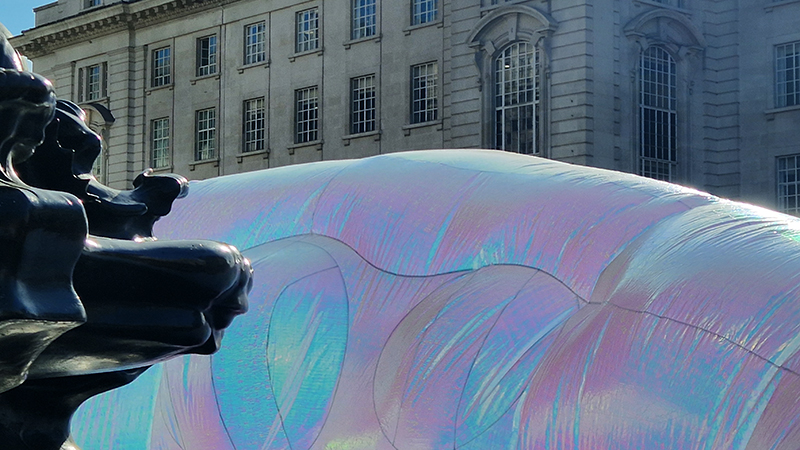
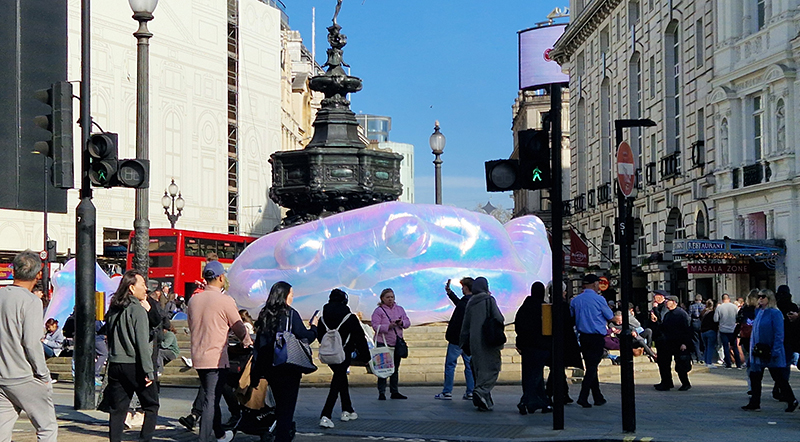
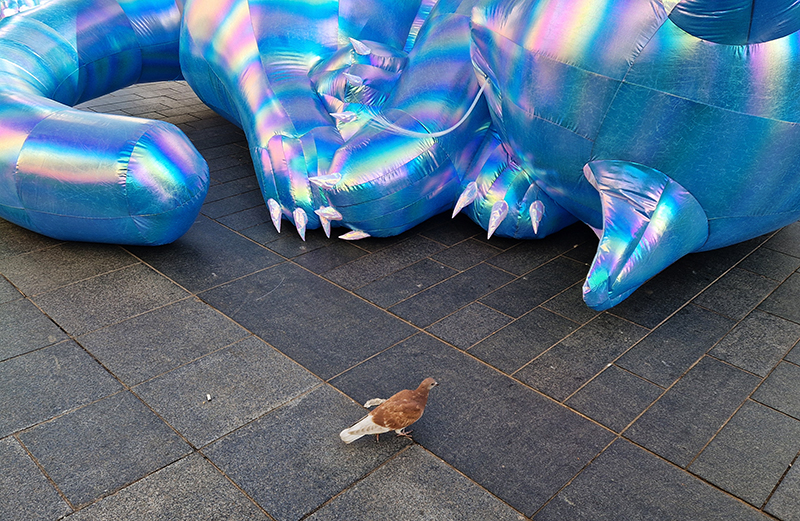
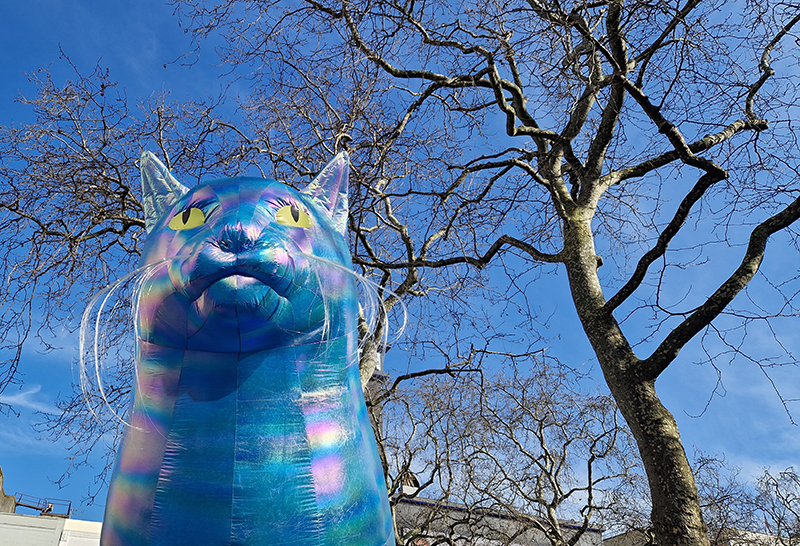
Art After Dark cosmic takeover around Piccadilly and Leicester Square from Nelly Ben Hayoun-Stépanian. I saw the iridescent asteroid-sized moon rocks and inflatable UV reactive sculptures inspired by Schrödinger’s famous quantum physics paradox in bright sunshine

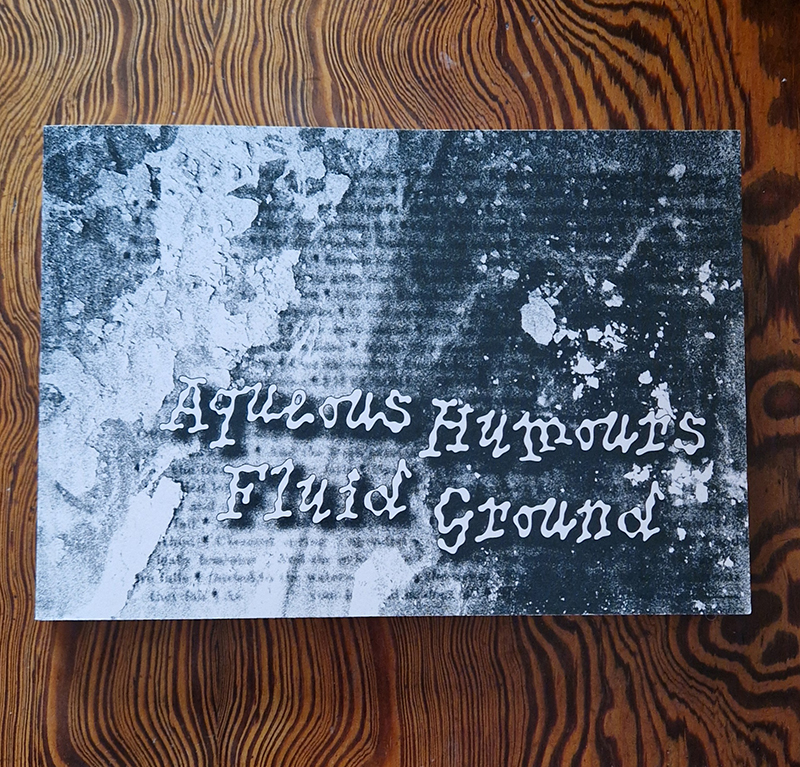
Book launch at Matt’s Gallery – Aqueous Humours Fluid Ground, edited by Kirsten Cooke published by Matt’s Gallery and the Poorhouse Reading Rooms. A night of experimental nonfiction, fiction, diagram, scent and moving image. An evening that activates a watery mapping, which denatures cartography through practices of immersion, aquatics, time travel and the posthuman lenses of geological, animal and machine vision. With contributions from Linda Stupart, Harun Morrison, Ezra-Lloyd Jackson, Melanie Jackson, Joseph Noonan-Ganley, Charlie Franklin, Michelle Williams Gamaker, Lucy A. Sames, Maggie Roberts, Carl Gent. I was only able to stay for the first half of the evening but this gave a wonderful flavour of the book which I look forward to dipping into.

Listening

Journey to the Centre of the Earth – an Infinite Monkey Cage podcast with guests seismologist Ana Ferreira, geologist Chris Jackson and comedian Phil Wang. The immense pressures and searing temperatures that present engineering difficulties of ‘going into the Earth’s crust’ to explore what lies beneath are discussed along with the relationship between the tectonic plates and a stable atmosphere and new evidence of hidden subterranean shifting globular continents.

Reading

The Periodic Table by Primo Levi. My initial reaction to this book was surprise that it was so engaging, but a few elements in, I was surprised to find the chapters shifted from autobiography to fiction with dubious and misogynistic content. I have persevered as the chapter on Carbon, which was recommended to me, is the last chapter in the book and I thought I should start at the beginning not the end. This final chapter is written with a different emphasis, with the explanation that carbon cannot be treated like other elements as it is not specific to one story but is everything to everyone. ‘Every two hundred years, every atom of carbon that is not congealed in materials by now stable (such as, precisely, limestone, or coal, or diamond, or certain plastics) enters and renters the cycle of life, through the narrow door of photosynthesis.’ The story of one atom of carbon is relayed but it is noted that the author ‘could tell innumerable other stories and they would all be true…. the number of atoms is so great that one could always be found whose story coincides with any capriciously invented story’.

Speculating on a view of the world projected from the perspective of the rock. In the studio drilling more holes for optical lenses set out in a pattern based on the crystal structure of the naturally magnetic mineral magnetite which was determined in 1915 as one of the first crystal structures to be obtained using X-ray diffraction. Found in igneous rocks, sedimentary deposits and sand across the globe in many locations, magnetite is also found in the cells of organisms from bacteria to humans. Magnetite contains both ferrous (divalent) and ferric (trivalent) iron along with oxygen.

Testing projecting through the optical lenses I’m excited to see how the different lenses cause images to overlap and distort.

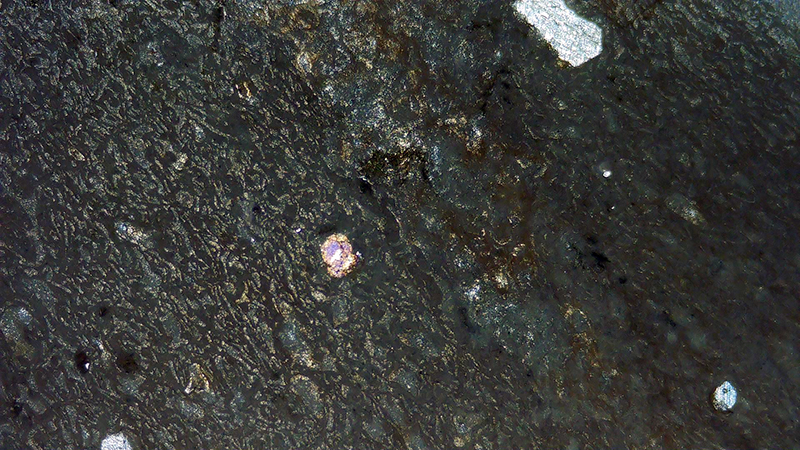
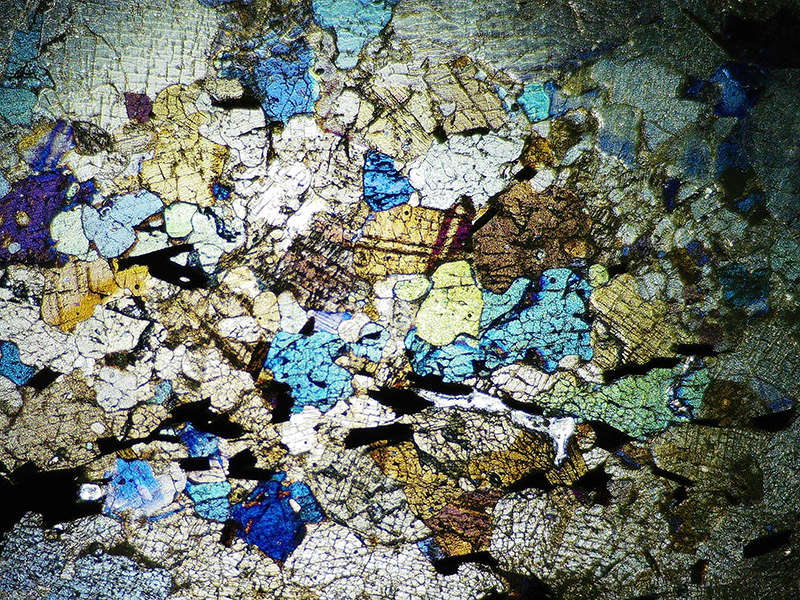
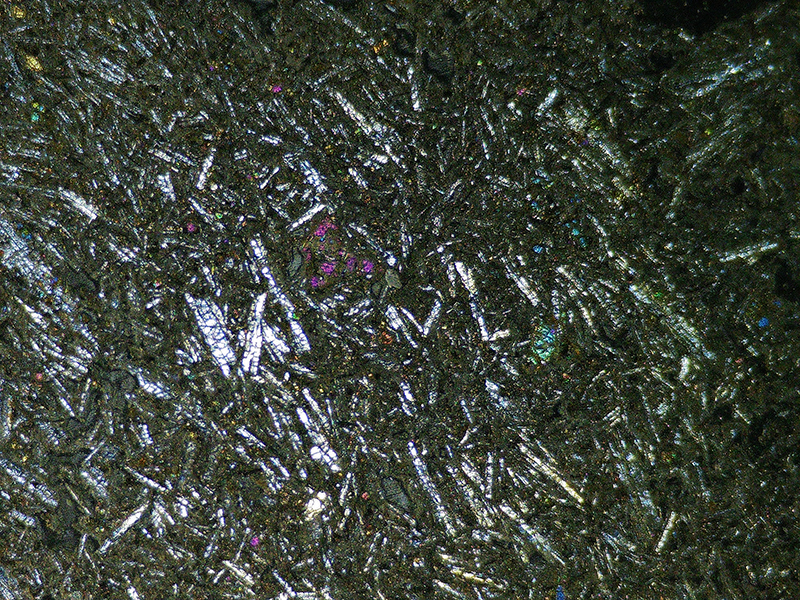
I received a Digital Microscope for my birthday and a selection of rocks and meteorites to look at. So far I have only used the lens with the least magnification capabilities yet this is revealing wonderful detail in the rocks which are further enhanced by using a polarising filter. I have chosen to look at rocks which originate near areas of tectonic activity or that may have magnetite in them.

Images on left have no filter, those on the right have a polarising filter.

This thin slice of Deep Ocean Pebble was collected in 1979 three miles deep in the Pacific Ocean Clarion Clipperton Fracture Zone. This zone is regularly considered for deep-sea mining due to the abundant presence of manganese nodules. In 2016, investigation of the seafloor in the zone was found to contain an abundance and diversity of life – more than half of the species collected were new to science.

This slice of Lewisian Gneiss is 3 billion years old. These ancient rocks from the Isle of Lewis were caught up in a mountain building cycle roughly 490–390 million years ago and were pushed above younger rocks formed during the late stages of this tectonic event.

This slice of Olivine Basalt comes from Þingvallavatn, a rift valley lake in southwestern Iceland. The area is covered by lava. The cracks and faults around the lake is where the Eurasian and North American tectonic plates meet. This may be the only place where one can stand with two feet on two different tectonic plates. The sample is a mid oceanic ridge basalt (MORB) fine grained but consisting of small olivine, clinopyroxene fragments in ground mass dominated by plagioclase laths, an opaque magnetite.

This slice of Vesicular Basalt Lava – a type of lava that solidifies into a rock with trapped gas bubbles leaving small holes as the lava cools, comes from the Mid Atlantic Ridge near the Azores Islands.

I also have a piece of Jepara taken from a pallasite, a class of stony–iron meteorite, discovered in Indonesia in 2008 during building excavations. The outside is heavily weathered but when cut and polished the inside reveals a translucent structure of densely packed olivine and magnetite. The sample has been coated with acrylic which has surface scratches so I think some of the detail has been compromised but it is still beautiful. No filters used here.
I am making use of public access to historical magnetograms recording of Earth’s magnetic declination to feed into new work inspired by palaeomagnetism. Magnetic studies of the ocean in the 1950’s had determined that the ocean floor was covered by bands of magnetic stripes that varied between normal polarity and reversed polarity. The Earth’s magnetic field has reversed polarity many times over the past hundreds of millions of years. These magnetic stripes were found to be symmetrical on the ocean floor about the mid-oceanic ridge. In 1963 British scientists, Fred Vine and D. H. Matthews proposed that the magnetic striping was caused by paleomagnetism, the storing of Earth’s ancient magnetic field in the sedimentary rocks that were forming as lava spewed up and spread across the ocean floor setting the history of pole reversals in stone.
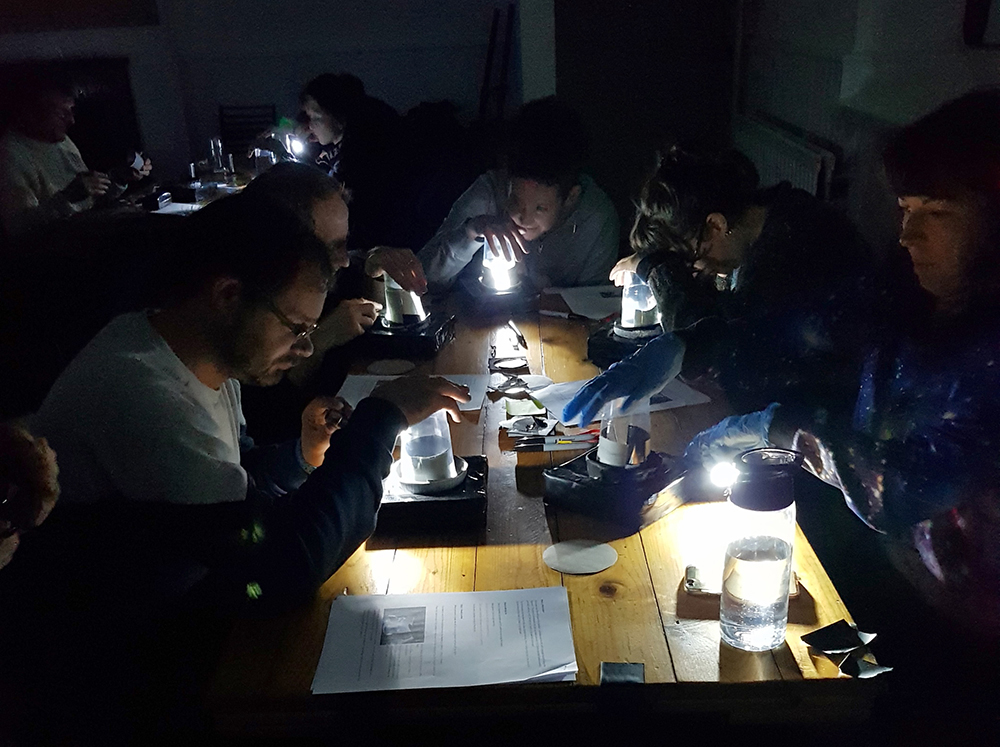
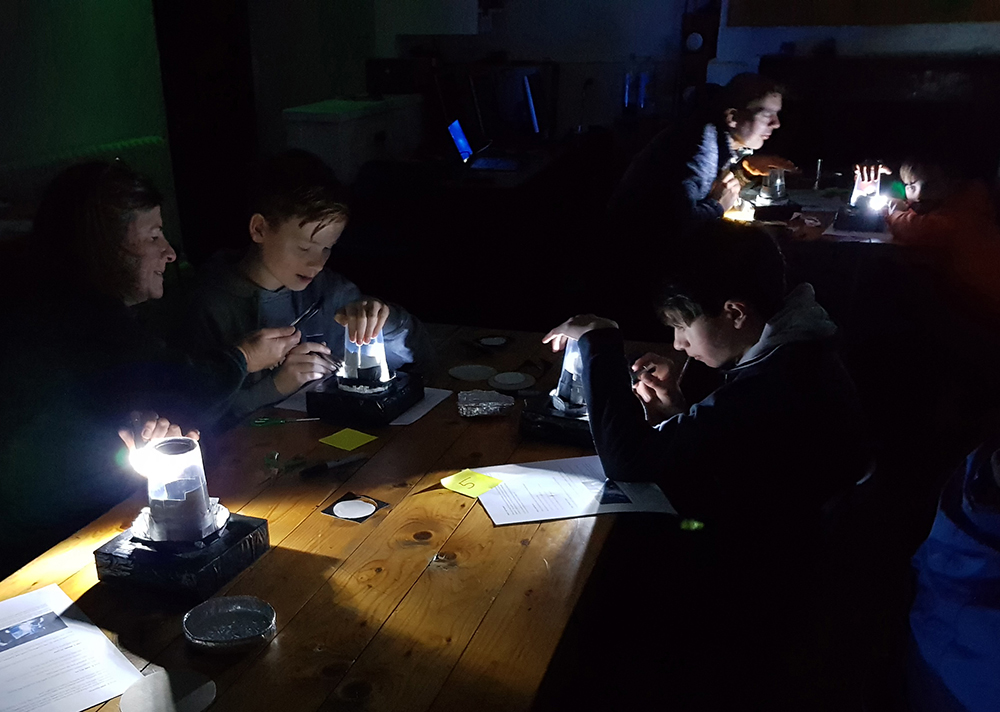
I have embarked on some crystal growing experiments using a seed crystal in a saturated solution of mono-ammonium phosphate and aluminium potassium sulphate. I am hoping these might become objects to view through a lovely old wooden magnifying box I have. The last time I experimented with crystals was when I was amazed by the speed and glut of salt crystals overwhelming the test area. Before that made a time lapse video over 5 days of crystal growth for the installation Time Crystals in Reading Stones at St. Augustine’s Tower 2019. I will be learning more about this as workshops are developed for The Geological Unconscious public engagement programme which will run alongside the exhibition at Hypha HQ Euston this coming spring. Both Julie F Hill and Sophie Mei Birkin work with crystal structures and growth in their own practices and will be leading on the workshops we will run in partnership with a local primary school.

A crystal is like a class of children arranged for drill, but standing at ease, so that while the class as a whole has regularity both in time and space, each individual child is a little fidgety. Dame Kathleen Lonsdale, 1948

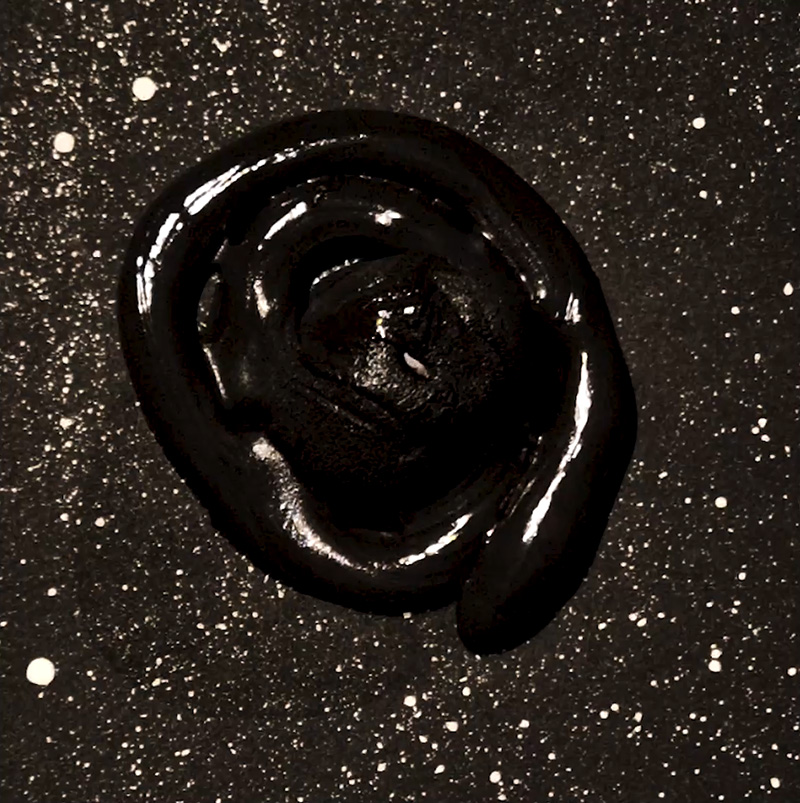
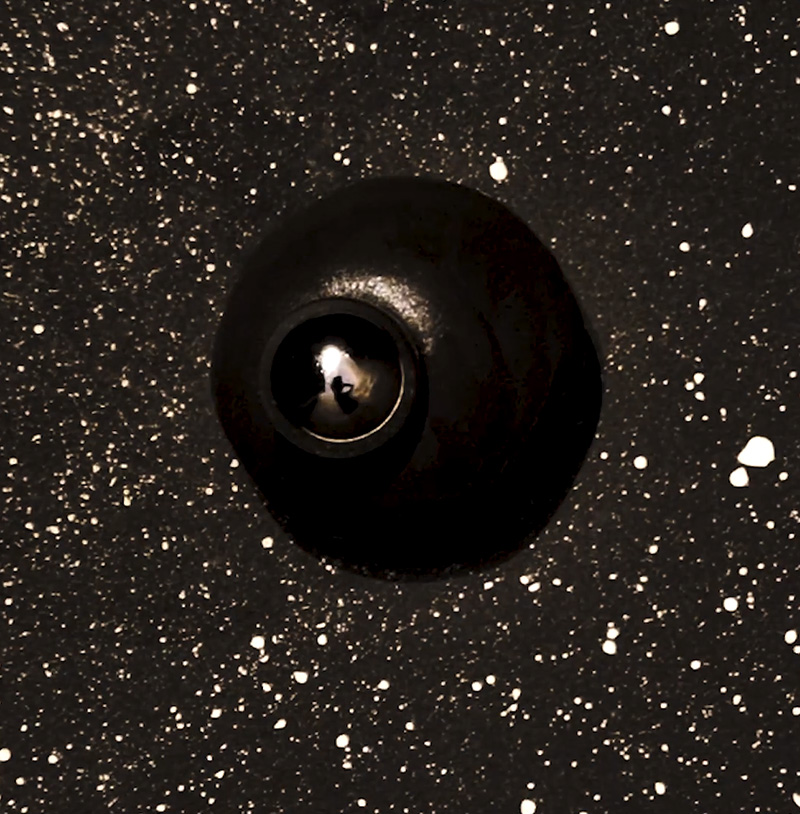
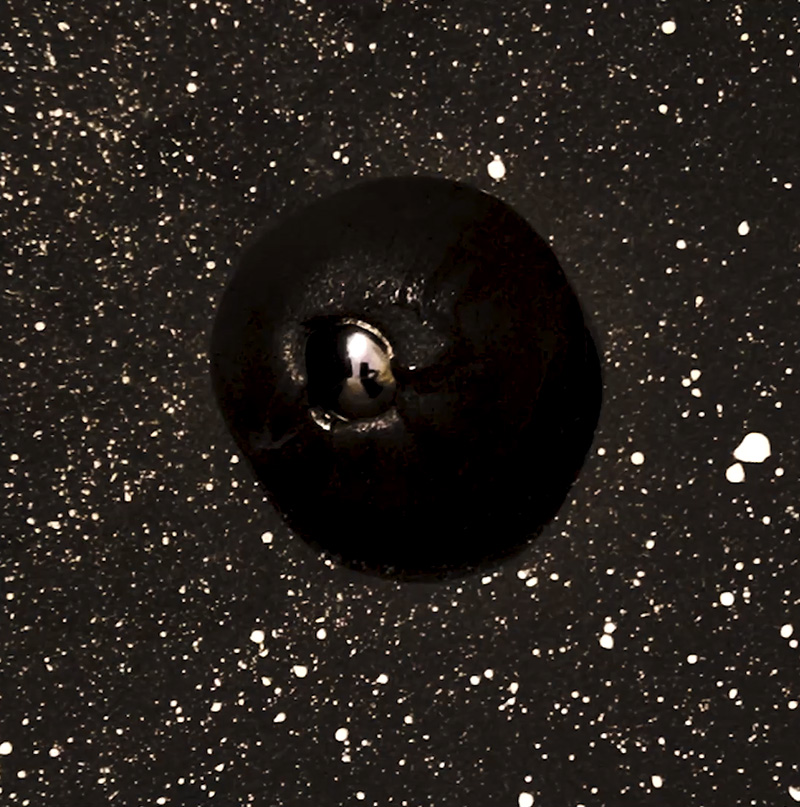
Had some studio fun testing the possibilities of magnetic putty for future video ideas. Mesmerising the way it very slowly swallows the magnet.

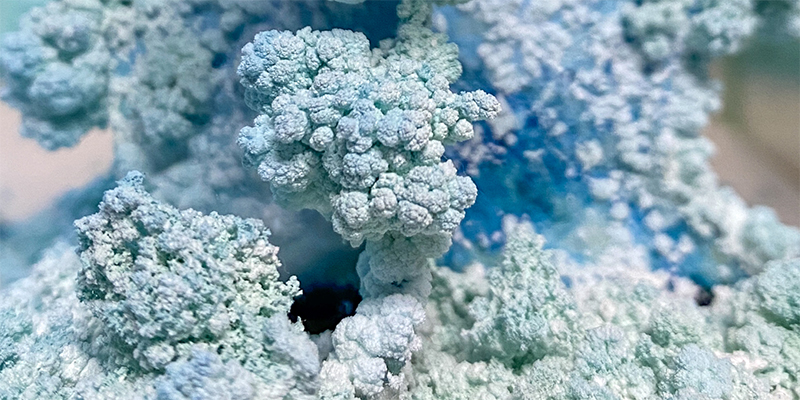
I began the magical process of making copper ink. Soaking pieces of copper in vinegar and salt, stirring daily and watching the liquid turn a milky turquoise blue. Looking forward to using this to patinate copper but also to paint with on paper.

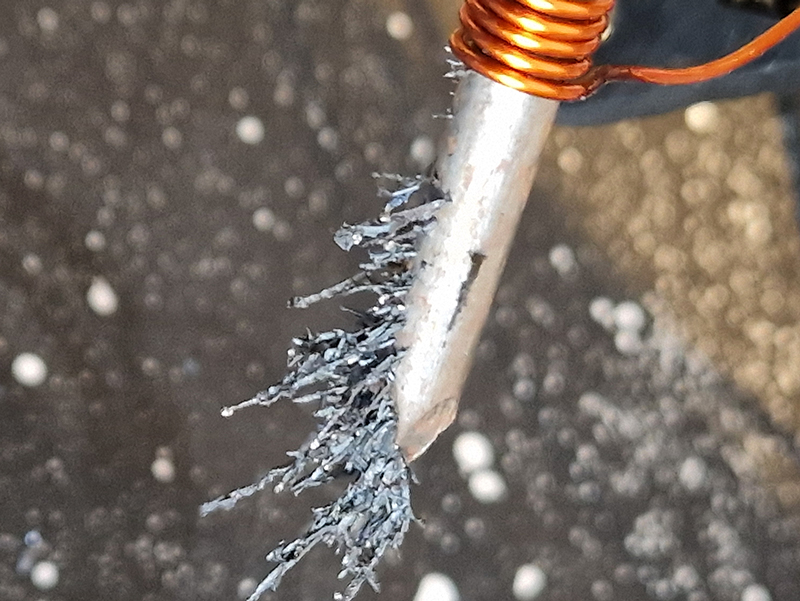
Experimenting winding a copper wire around an iron nail and connecting the wire to a battery cell. A magnetic field is generated around the nail which stays for a little while after the nail is removed from the coil. I used a 9v battery and large nail– it wasn’t a very strong magnet – a welding stick was better and seemed to retain the magnetic field for longer but in both cases the battery got very hot. I had hoped to maybe develop this idea to magnetise a sculpture threaded with iron. Needs more investigation.

I have been exploring the updated Digital Materials Library at the Institute of Making which led me to the Mindsets website which has some cool magnetic materials for sale. Future experiments upcoming.

Exploring paper weaving patterns with a view to reinventing past works while thinking about ideas of cosmic planes in The Rosicrucian Cosmo-Conception, a 1909 text by Max Heindel. This text, setting out a theory of seven Worlds and seven Cosmic Planes, supposes an intermingling of spirit with matter where the intersection of the material and metaphysical world are not one above another in space, but inter-penetrate each with the other.

Astonishing that the preserved remains of the ancient kauri trees of New Zealand, alive over 42,000 years ago, can reveal the time of the last significant magnetic pole excursion within their rings. During what is known as ‘The Laschamps Excursion’, the north and south magnetic poles swapped places for about 500-800 years before swapping back again. During a magnetic pole reversal the magnetic field weakens so many more cosmic particles reach the surface of Earth. This means much more Carbon-14 is produced in the atmosphere and absorbed by plants.

Changes in radiocarbon levels were recorded from four ancient kauri logs found buried in peat swamps which seals them in a chemically balanced environment. Through high precision carbon dating processes at the University of Waikato in New Zealand the scientists discovered the most dramatic time was the lead-up to the reversal, when the poles were migrating across the Earth and our magnetic field practically disappeared, leaving life here very vulnerable to cosmic radiation. It appears, this weakening 42,000 years ago, in combination with a period of low solar magnetic activity – captured in evidence from ice cores, caused damage to the ozone layer and disrupted atmospheric conditions impacting the global climate so that devastating environmental changes took place. The research team links this climate change to extinction events which occurred at the same time, Neanderthals vanishing from Europe, and a proliferation of cave paintings appearing in Europe and Asia as humans find shelter from the turbulent weather and increased electrical storms. They have dubbed this period of excursion ‘The Adams Event’ in honour of Douglas Adams who wrote in The Hitchhikers Guide to the Galaxy that ‘42’ was the answer to life, the universe, and everything

Studio Visits

Julie F Hill and I have been visiting the other artists participating in the upcoming exhibition The Geological Unconscious at Hypha HQ Euston. We are so happy to be working with Charlie Franklin who considers control, physical experience and memory within the natural landscape, Deborah Tchoudjinoff who considers what the form is through the process of material and visual experimentations, Rona Lee who centres on the politics and aesthetics of Geo-materiality along with the human /more than-human entanglements of contemporary life and Sophie Mei Birkin who investigates the generative potential in the transformation of matter through a variety of material processes such as growing salt crystals and exploring amorphous and decomposing substances.

I have also been lucky to have Charly Blackburn and Victoria Rance visit my studio to chat about our respective work and shared interests. Charly is beginning a period of research into rare earth materials and extractive processes and we share a fascination with things magnetic. Victoria came to chat about our shared interest in the sun but is also interested in magnetic fields and the potential they offer for brain to brain communication.

Gallery Visits

Haegue Yang Leap Year at Hayward Gallery. With colourful works festooned by garlands of bells and strewn with fairy lights this was a perfect show for the festive period. Folklore, surrealism and ritual, collage and costumes combine with the modern domestic/utilitarian in hybrid works that have a playful carnival air.

Thoughtful works beautifully presented Each Place Its Own Mind at Edel Assanti with Mirtha Dermisache | Noémie Goudal | Sky Hopinka | Anna Hulačová | Marguerite Humeau | Bronwyn Katz | Kat Lyons | Yukultji Napangati | Emmanuel Van der Auwera. An ongoing collective reimagining of our relationship with the living world, rooted in revelations from indigenous knowledge, ecological research, literature, science, and artistic experimentation. Each Place Its Own Mind  borrows its title from ecologist David Abram’s 1996 book The Spell of the Sensuous, which traces the ways the human mind came to renounce its “sensory bearings” in the natural world, visualising a myriad of “lost” faculties that link the “inner, psychological world and the perceptual terrain that surrounds us.”

Damian Taylor Things Past at Thames-side Studios Gallery. These paintings hover on the edge of discovery where content and surface are ambiguous but reward study with tantalizing recognizable glimpses.

Events

A little out of my depth at the A&G Highlights Meeting at The Geological Society where some talks were quite specialised, involving graphs and terminology beyond my understanding. I do enjoy hearing clever people talk though, even if I can’t grasp exactly what they are explaining. A fascinating presentation by writer Nilanjan Choudhury on ‘The Square Root of a Sonnet’, his play which explores the fraught personal relationship between the brilliant Indian-American astrophysicist Subrahmanyan Chandrasekhar and his mentor, Sir Arthur Eddington of Cambridge University who publicly humiliated him at a Royal Astronomical Society meeting 90 years ago to the day. Guardian Article here

Dr Jessica Irving (Bristol University) gave The Harold Jeffreys Lecture on ‘Hearing planetary hearts: seismology of the cores of Earth and Mars’. An engaging speaker, she led us through the milestones of the last 130 years of theories on what is at the centre of the Earth and the discoveries made using seismology.

Dr Chris Lovell (University of Portsmouth) spoke on his research into ‘Accelerated modelling of the entire observable Universe’. I recognised the dark matter simulations and was fascinated by the different views of a galaxy depending on the band of the light spectrum used to observe it.

I joined a sobering Royal Astronomical Society webinar We Need to Talk About Space Junk presented by Professor Mike Lockwood. Our use of space is increasingly limited and threatened by space junk. The concern is that we are heading towards a runaway effect called the Kessler syndrome, in which the debris from one collision causes many others, to the point where space becomes unusable.

I went to see the fast paced RSC production of Kyoto at Soho Place. Welcome to the Kyoto Conference Centre, 11 December 1997. The nations of the world are in deadlock and 11 hours have passed since the UN’s landmark climate conference should have ended. Time is running out and agreement feels a world away. The greatest obstacle: American oil lobbyist and master strategist, Don Pearlman… Set nearly 20 years ago its depressing how little progress was made and we are currently sliding backwards. Would never have guessed it at the time but now am nostalgic for the politics and positivity of the 90’s.

Time to email your MP to join The All-Party Parliamentary Group for Dark Skies. The group’s primary focus is to preserve the night sky within the UK and promote the adoption of dark sky friendly lighting and planning policies. Surprisingly the committee is made up mostly of tories – come on the rest of you!

Go to this link where it is quick and easy to message your MP to act on this important issue.

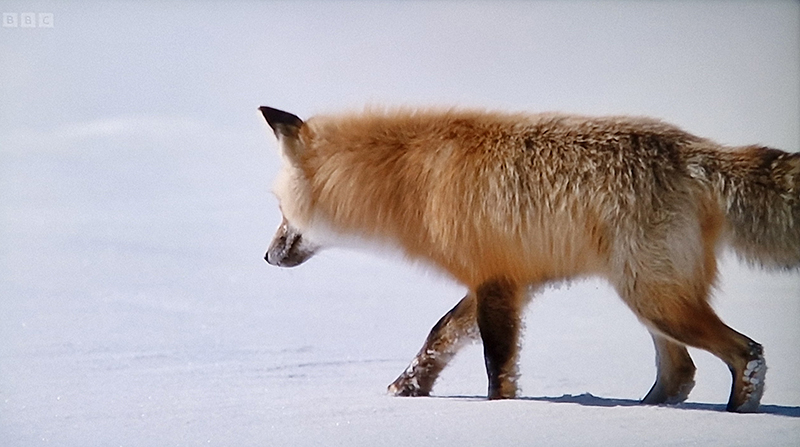
Watching Chris Packham’s The Wonder of Animals – Foxes A red fox catches its prey using more than pinpoint hearing and an accurate pounce: it also involves alignment to the slope of Earth’s magnetic fields. I contacted Peter Hore FRS, Professor of Chemistry and Magnetoreception expert at Oxford University who was so helpful to me before in explaining how birds ‘see’ the magnetic field to see if he had come across any new research on this. He has pointed me in the direction of other research conducted by the group looking at fox behaviour so this is something I will pursue further.

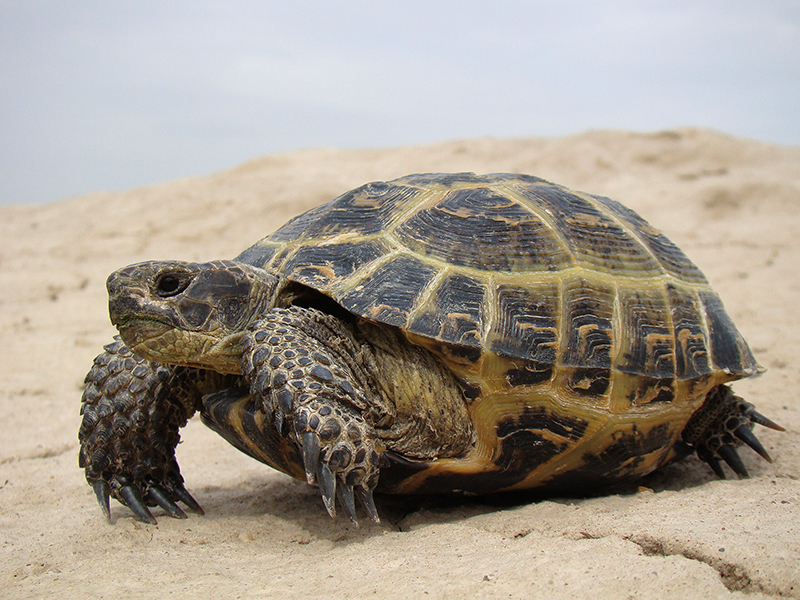
Listening to What? Seriously?? with special guest Helen Sharman, the first British astronaut, about how humans learned to survive in space. Quite a few animals were sent to space before humans including two Russian Steppe tortoises (Testudo horsfieldi), who did a circuit of he moon and returned to Earth – alive but starved. The tortoises were chosen as they have a unique ability in the animal world to resist radiation and their blood may be useful in the treatment of radiation sickness. In recent research a string of amino acids have been extracted from the blood of these tortoises and if you inject those amino acids into other animals they become radiation resistant too.

Listening to The Year in Science 2024 podcast – One of the UK’s first military communication satellites’ Skynet 1a launched in 1969 was abandoned a few years later above Africa. Orbital dynamics should have dragged it out somewhere above India but it has been found wandering above the Americas in a busy area of live satellites and no-one knows why. Space consultants think it must have been commanded to move in the 1970’s but can find no record of this and although research has been undertaken it is still a mystery how this satellite moved. BBC article

There is no mention of a cosmic ray interaction forcing the command, but that would be my theory!

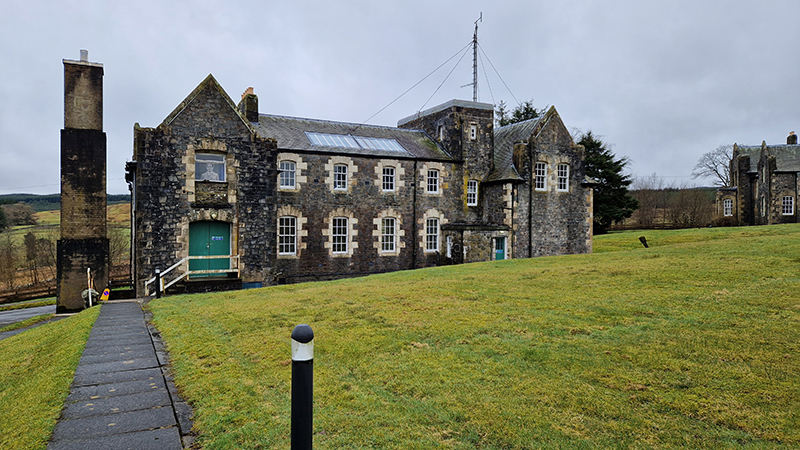
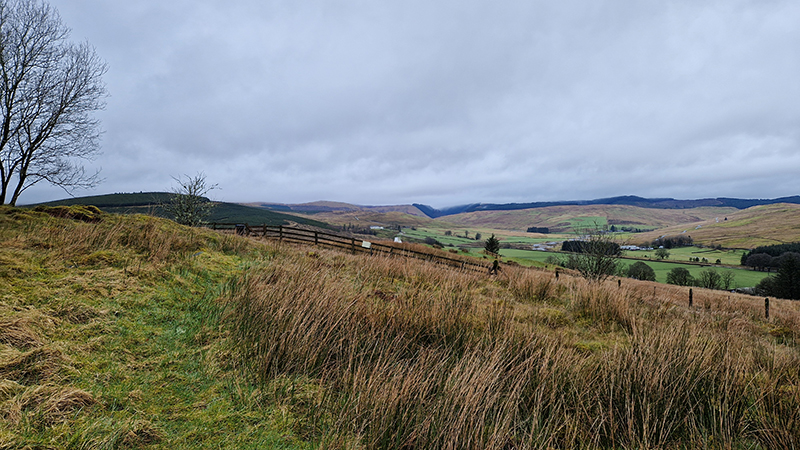
I am extremely grateful to a-n Artists Newsletter for the professional practice and creative development bursary that allowed me to visit Kielder Observatory in Northumberland and Eskdalemuir Observatory, Dumfriesshire to research how space weather impacts Earth’s magnetic field. I am also grateful to Claire Brown, site manager at Eskdalemuir Magnetic Observatory, for her time showing me around the site and explaining the many measurement processes that happen here. Despite the first survey of the site at Eskdalemuir, by the National Physical Laboratory in 1903, reporting back that “the weather was wet and stormy, and somewhat unfavourable to “field work” an observatory was established in this remote location, and recordings monitoring Earth’s magnetic field have been made from this site for 120 years.
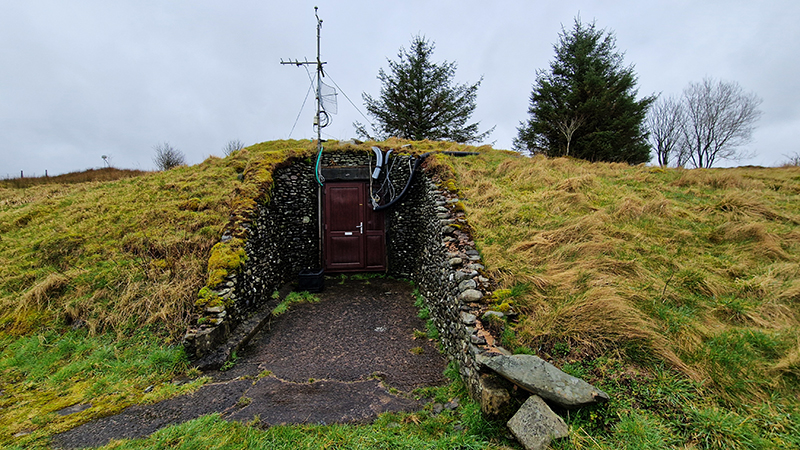
I was able to visit the East Absolute Hut, the Underground Chamber, and the Seismic Vault along with the main building and museum rooms. The interaction of space weather with magnetic currents in the surface of the Earth is monitored here, and there is a camera on the roof to record visual aurora on a loop which is then sent to the British Geological Survey research teams in Edinburgh for analysis. Meteorological observations are also made here, along with solar radiation, atmospheric pollution, and seismological activity. The monitoring of radiation pollution was inaugurated here after the Chernobyl incident in 1986 when explosions at the nuclear plant scattered radioactive elements over a wide area across Europe.
95% of Earth’s magnetic field comes from the swirling outer core of the Earth and changes are due to convection pattern turbulence. As compasses have been used for over 400 years, and records kept of magnetic declination, there is a long history of measurements to refer to. The magnetic north pole had been drifting westwards at about 55km a year up until 2020 but has recently slowed to 45km. Consistency of observations is very important for magnetic field modelling, which is why many of the instruments at Eskdalemuir are located underground to maintain an even temperature.
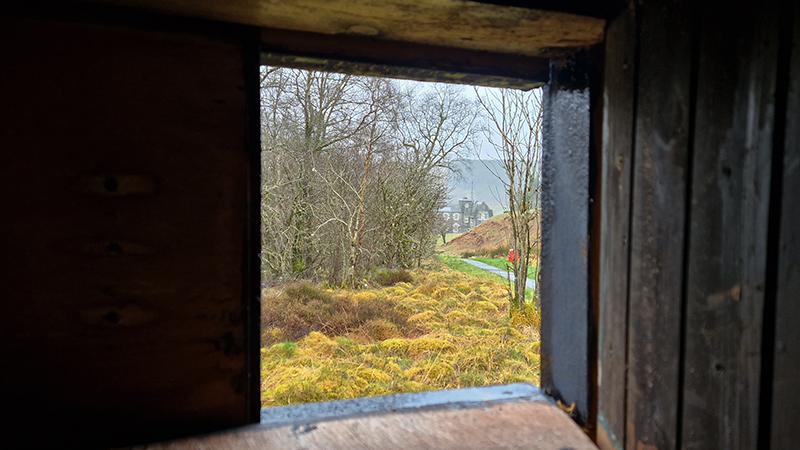
Manual observations of the direction of the magnetic field are taken once a week from the East Absolute Hut. A small sliding window in the wooden hut is pulled back to reveal a distant fixed azimuth mark, not always easily visible during inclement weather. The mark, viewed through the fluxgate theodolite, must be lined up with the north south meridian line until the reading on the digital recorder is at zero. At the same time the digital clock must read zero. These numbers fluctuate rapidly but once both machines read zero a measurement of the position of the magnetic north pole can be recorded. A separate recording is taken through a series of 12 angles on the theodolite to give an accurate position. The instrument is very sensitive and the operator wears the same clothes each time with no metal fixings etc to ensure consistency in the records. The measurements are then plotted on a graph which usually follows a smooth line describing the drift of the magnetic north pole. Sudden deviations alert the operator to errors in the recordings or dramatic movement in the field known as a geomagnetic jerk.

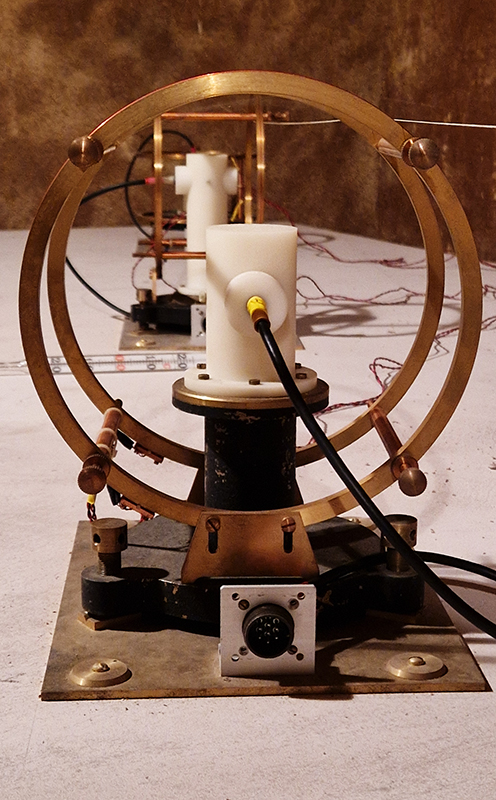
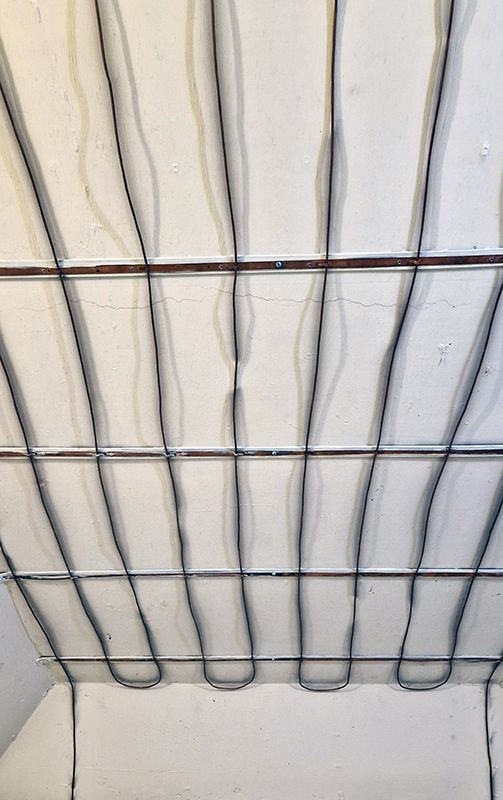
The instruments in the underground chamber measure the strength of the magnetic field in three directions.

Surface readings are also taken automatically from instruments in small enclosures in the back field. During my visit these instruments were used to record data rather than those I came in close contact with.

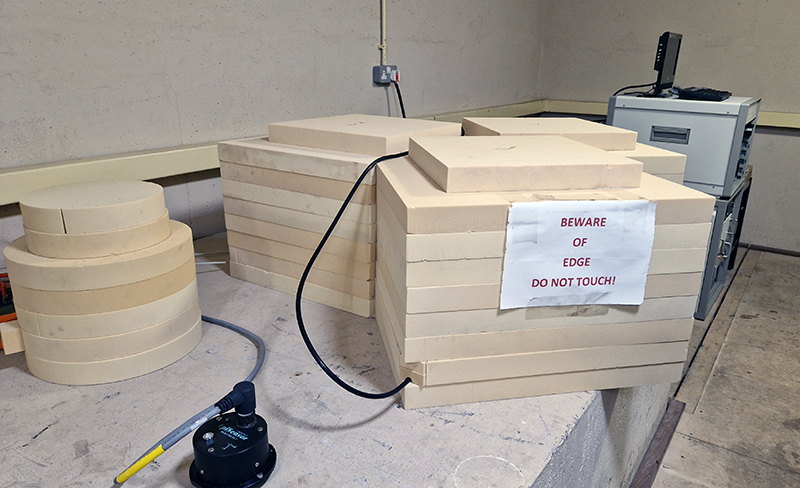
In the vault, seismograph readings are made of vibrations in the bedrock. Seismic activity around the UK is fairly low level but sensitive structures can still be effected. These instruments pinpointed the magnitude 4.7 Longtown earthquake on Boxing Day 1979, and a swarm of tremors in the Dumfries area in 2001. The network also detected the air crash at Lockerbie in 1988, accurately recording the time of impact for crash investigators.

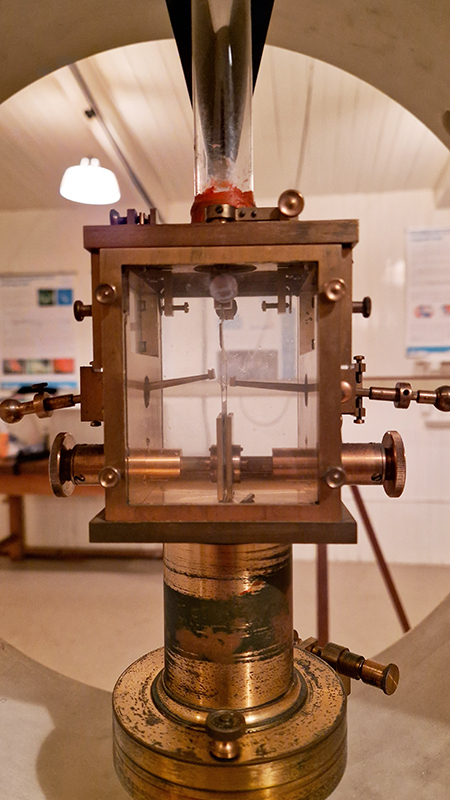
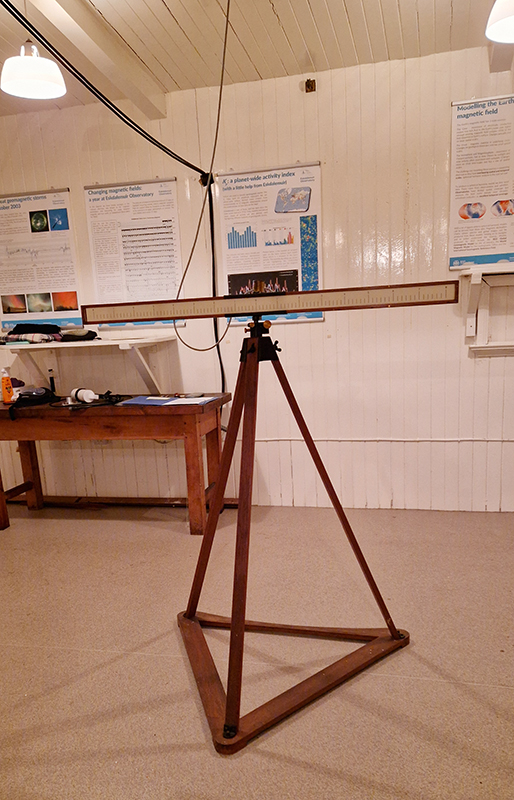
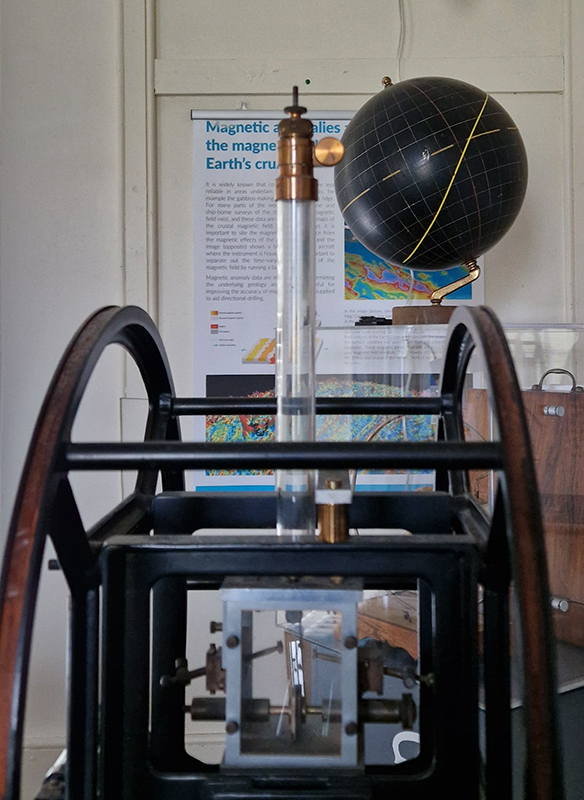
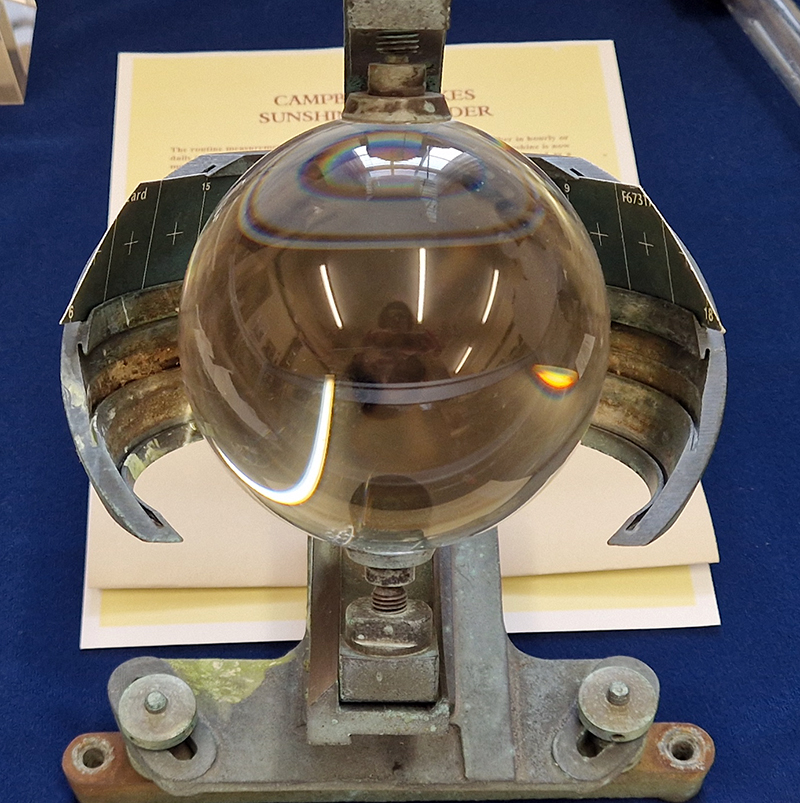
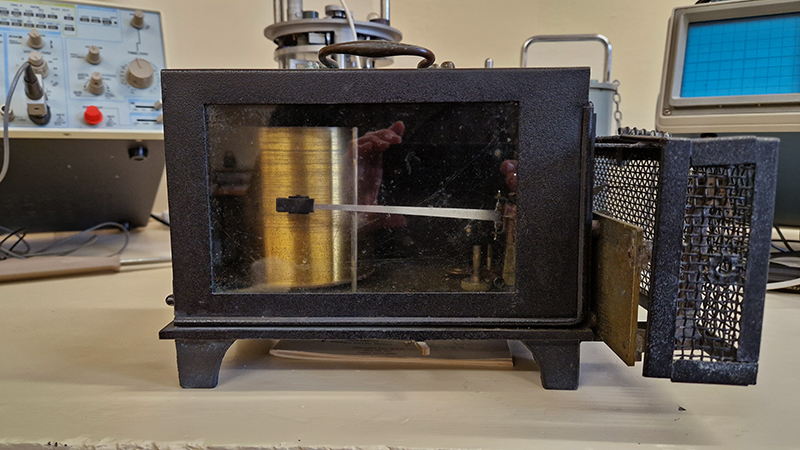
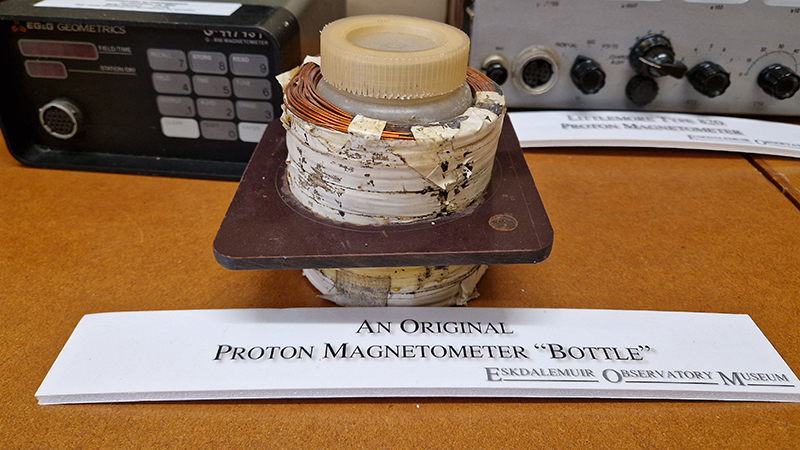
The museum holds a wonderful collection of mysterious instruments.

I attended Aurora Night at Kielder Observatory, established in 2008 under some of the darkest skies in Europe, to learn about how solar activity interacts with Earth’s atmosphere and creates the Aurora. The skies were very dark but also cloudy, and the sun was quiet, so no chance of seeing any aurora or even stargazing. However, we were given fascinating presentations on what causes the ethereal coloured lights seen at Earth’s poles and further towards the equator when solar activity is peaking.

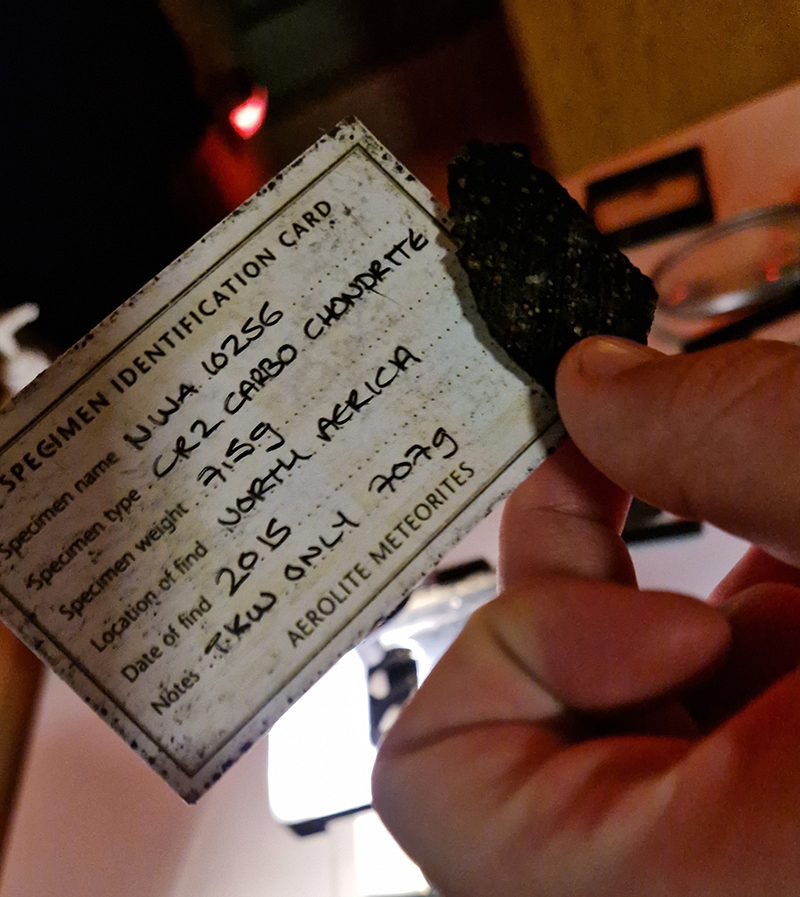
We were also given some cool meteorites to handle including a carbonaceous chondrite, one of the most primitive objects in our solar system.

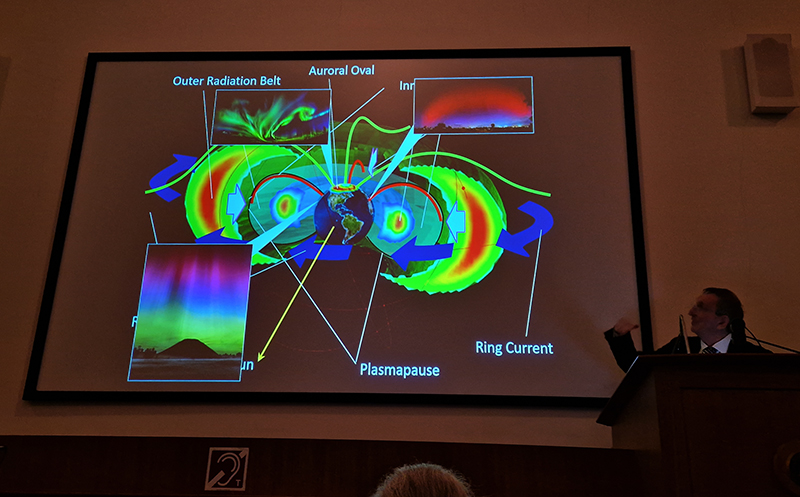
The sun rotates faster at the equator than at the poles and this causes disruption in its magnetic field. The solar flares that we see loop out from the surface of the Sun are caused by localised incidents of polarity, where plasma and particles loop around what could be thought of as areas acting like independent bar magnets. Millions of tons of plasma and chunks of magnetic field can be ejected during one coronal mass ejection and this matter hurtles out into space, if we are in the line of fire we will be bombarded with energetic particles and Earth’s magnetic field will be disrupted. The solar wind brings the particles from the Sun that envelop Earth and are drawn to the polar regions by the geomagnetic field. The aurora is caused by the interaction of these high energy particles (usually electrons) with neutral atoms in the earth’s upper atmosphere. The particle collisions that occur in the upper atmosphere cause photons of light to be emitted. The Earth’s geomagnetic field is not symmetrical and changes as the Earth rotates, it responds to the disturbance of particles coming from the Sun and as the field adjusts to this disturbance, magnetic energy is released, thereby accelerating charged particles to high energies. These charged particles are forced to stream along the geomagnetic field lines which is why the aurora lights can appear in vertical columns or other dancing shapes depending on where in the magnetosphere they entered the atmosphere. The colours of the lights are dependent on which atmospheric gas is being excited by the solar particles, oxygen emits either a greenish or a red light and nitrogen gives off a blue light.

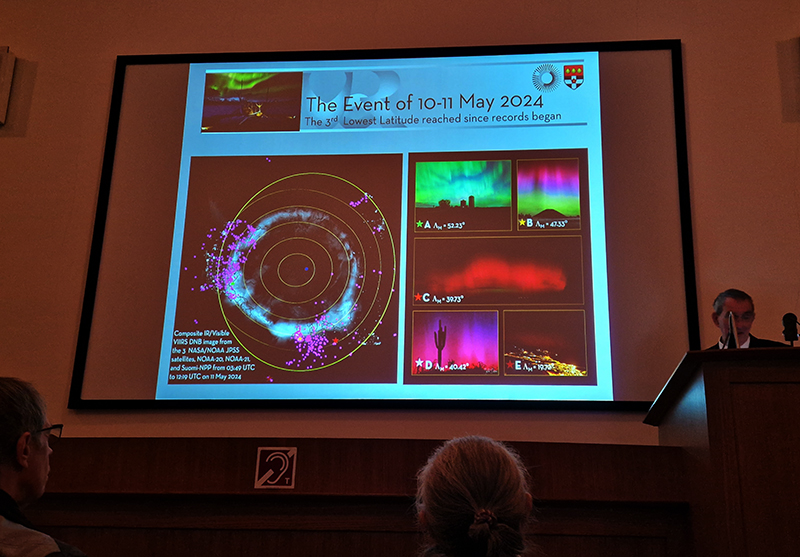
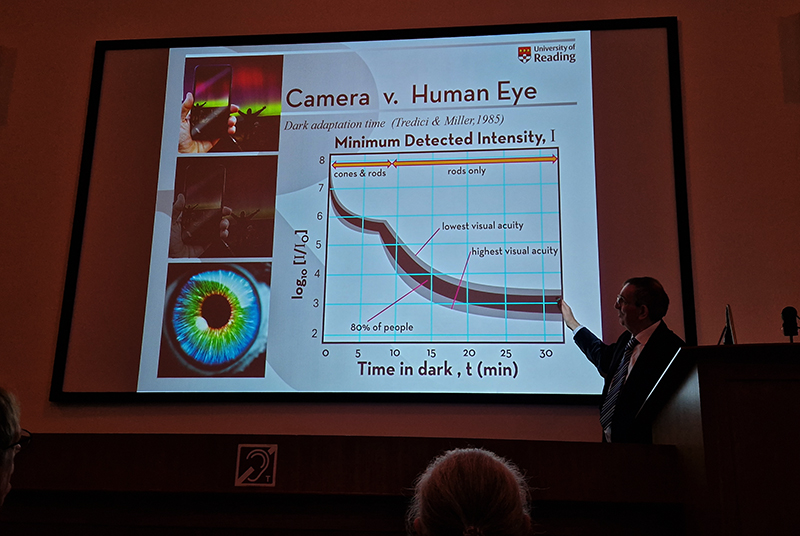
Solar activity is monitored and space weather forecasts are posted online. To be in with a chance of seeing the Aurora in the UK, the KP level should be 5 or above as this index increases as the aurora’s southern edge moves southward. It can take up to three days for the particles ejected from the Sun in a CME to reach the Earth. The lights are fainter than sunlight so a dark night sky is needed to see them. It is also often the case that the greater photo sensitivity of a camera can capture lights that are barely visible to the human eye. The aurora is more likely to be visible during the spring and autumn equinox because of the angle of the Earth’s magnetic field in relation to the Sun, not because storms are more frequent.

2024 is predicted to have a high number of solar storms so there may be opportunities to see the Aurora but it also comes with the risk of severe space weather that could cause havoc with our reliance on satellites and related technologies.

The connection between solar activity and the impact on technology was made during the 1859 Carrington Event, the most intense geomagnetic storm in recorded history. Strong auroral displays were reported globally and even seen in London, while sparking and fires occurred in multiple telegraph stations.

Satellites are vulnerable to space weather which can cause ongoing degradation or single event upsets where a charged particle can trigger a command in the satellite. During space weather events the ionosphere can become enhanced making it harder to communicate with satellites. Errors can occur in precision navigation and timing situations. Aviation crews are at risk to higher doses of radiation during solar activity and the HF radio communication system can have interference. Induced geoelectric fields in the ground can cause currents to flow in power grids and railway lines damaging transformers.

During the 2003 ‘Hallowe’en’ solar storms, when the largest single solar flare ever recorded was followed by severe storms, over half of all Earth-orbiting spacecrafts were impacted, disrupting satellite TV and radio services, GPS systems, damaging a Japanese scientific satellite beyond repair, sending several deep-space missions into safe mode or complete shutdown, and destroying the Martian Radiation Environment Experiment. The solar storms also led to communication problems for flights passing over the North Pole and Antarctic science groups had a full communications blackout for several days.

In acknowledging these risks we can gain an awareness of our vulnerability to the forces of nature and a respect for the power of the sun, the protection offered by our home planet and the interconnectedness of the universe.

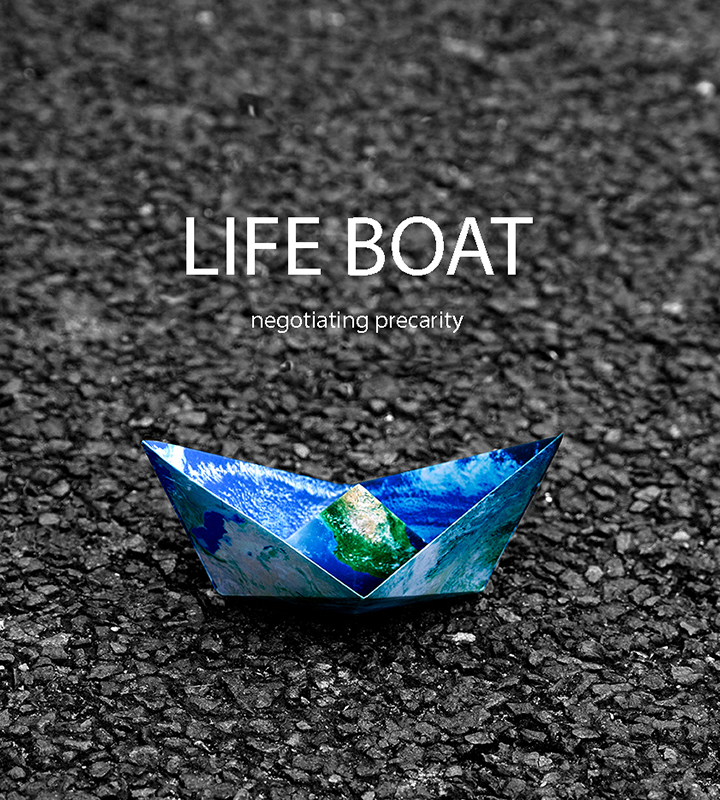
Life Boat at APT Gallery

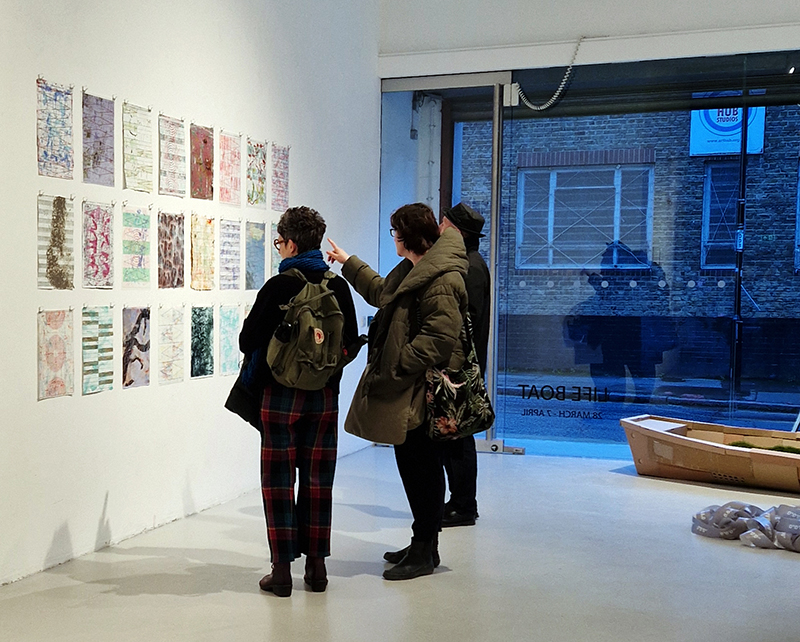
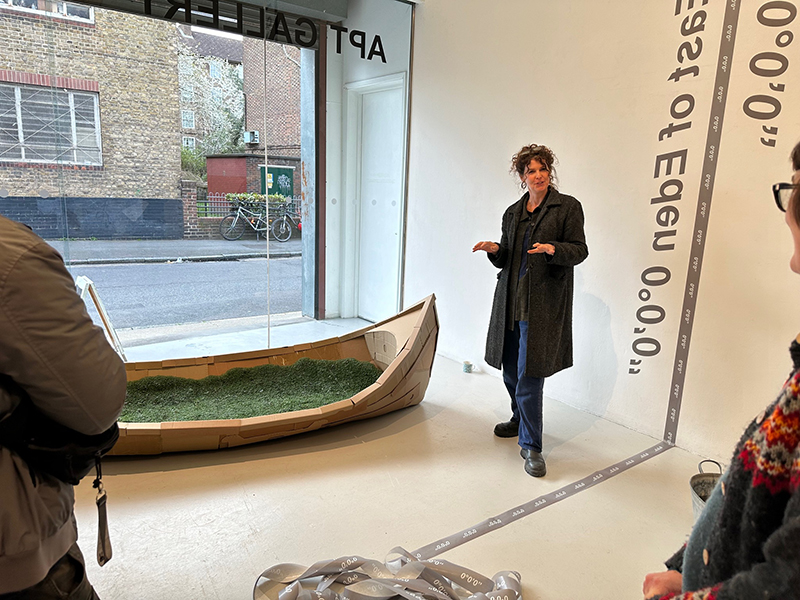
Life Boat brings together artists with a shared interest in exploring precarity as a site of dynamic transition. Each takes an investigative approach to the environmental, social and historical themes evoked by the lifeboat, as a means of addressing ecological crisis, liminal landscapes, close and distant horizons, boundaries and displacement, lines of rescue, navigation and transformation.

Very happy to be exhibiting with Rachael Allain, Caroline AreskogJones, Beverley Duckworth, Liz Elton, Kathleen Herbert, Kaori Homma and Anne Krinsky.

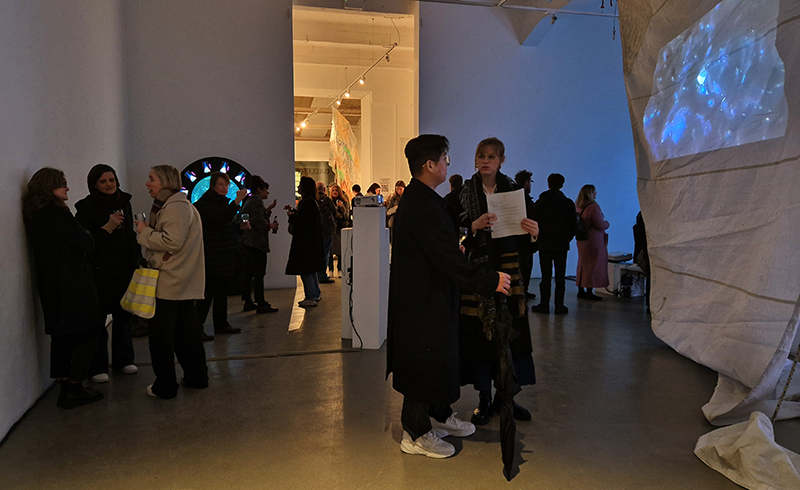
We had a fantastic opening night.

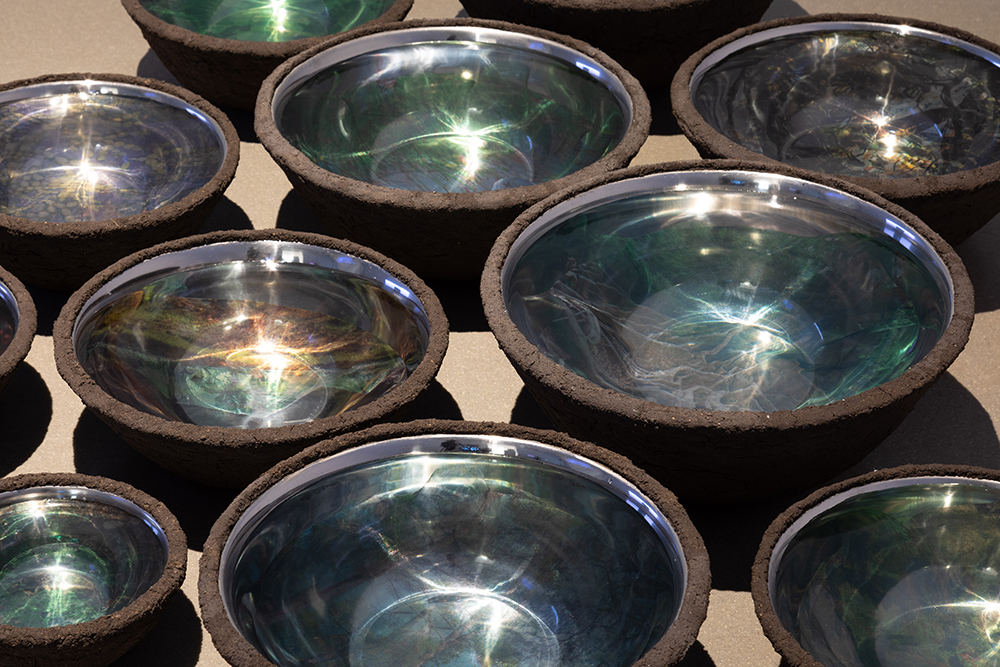
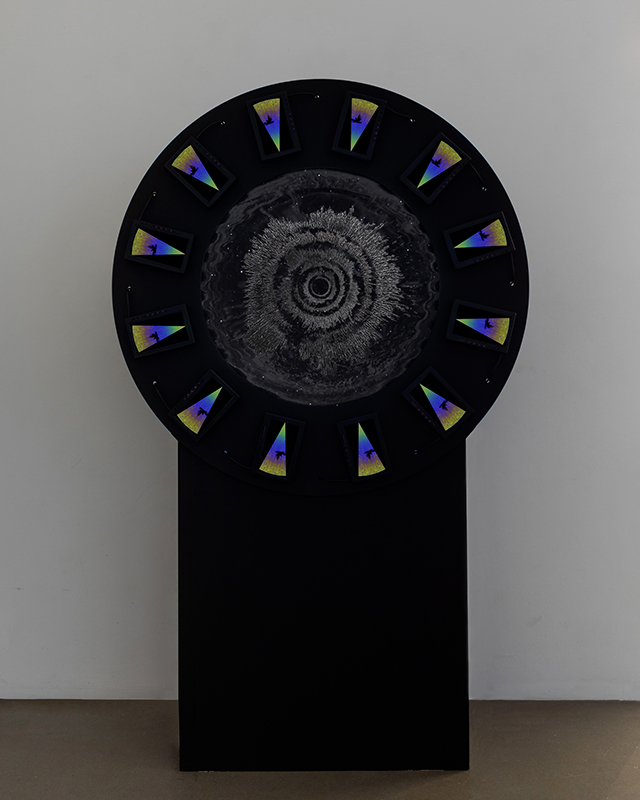
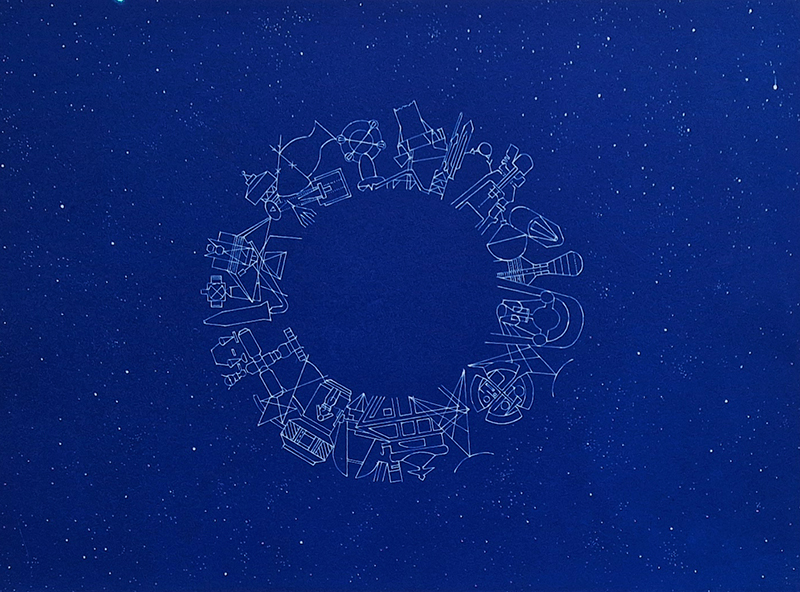
I was showing submīrārī (earthbound) and a new video installation Orbital – these works both consider transient landscapes, ecological landscapes on the cusp of disappearance and the digital landscape at risk from obliteration by an extreme solar storm.

submīrārī (earthbound), 2018, steel, earth, water, sublimation printed textile, 12 pieces dimensions variable approx. 200 x 200 cm. Reflections of a no longer certain world hover in pools fluctuating on the cusp of disappearance. The ethereal images float or submerge revealing the hidden activity of water which also refracts light across the surface prompting the viewer to repeatedly shift perspective. Donna Haraway, drawing from Latour, proposes the ‘Earthbound’ as those humans who are ready to rethink and create new narratives with Gaia at the centre, who recognise the entanglement of society and nature and aim to pursue a ‘nonarrogant collaboration with all those in the muddle’. The shift in perspective embraced by the ‘Earthbound’ embodies a grief shared with other species at loss of habitat and disappearing landscapes. It is not a nostalgia for paradise lost but a reappraisal of what paradise could be.

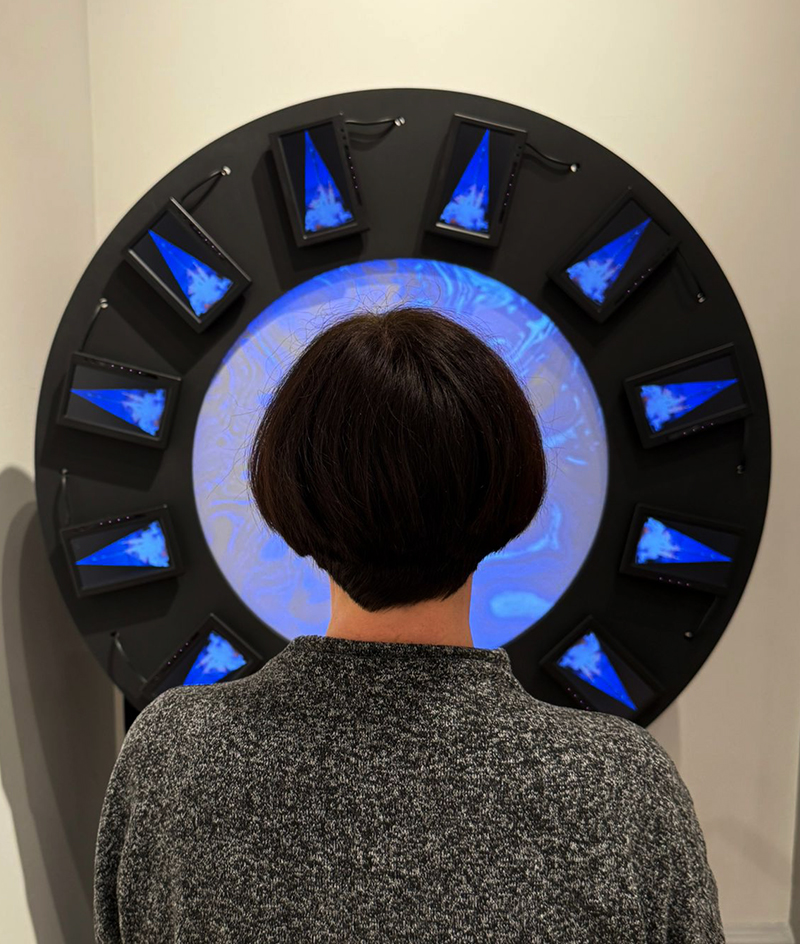
Orbital, 2024, Back projection video, mini screen array, board, installation 122 x 200 x 50 cm, video 05:44 min. An exploration of the potential risks of space weather on human technology and infrastructure and non-human navigation.

The Sun is about 150 million kilometres (93 million miles) from Earth, but space weather can affect Earth and the rest of the solar system. It can cause damage to satellites and electrical blackouts on Earth. Small satellites have come to dominate low Earth orbit, and we have become reliant on this technology for communication, military strategy, and data gathering.

A blast of high energy particles hitting Earth during a solar storm can interfere with Earth’s magnetic field, confusing birds that use this for navigation. In America, pigeon racers postpone the big race if bad space weather is predicted. There is also new research that might suggest the number of satellites orbiting Earth and the growing satellite space junk graveyard could weaken Earth’s protective magnetic field, making us even more vulnerable to space weather and cosmic radiation.

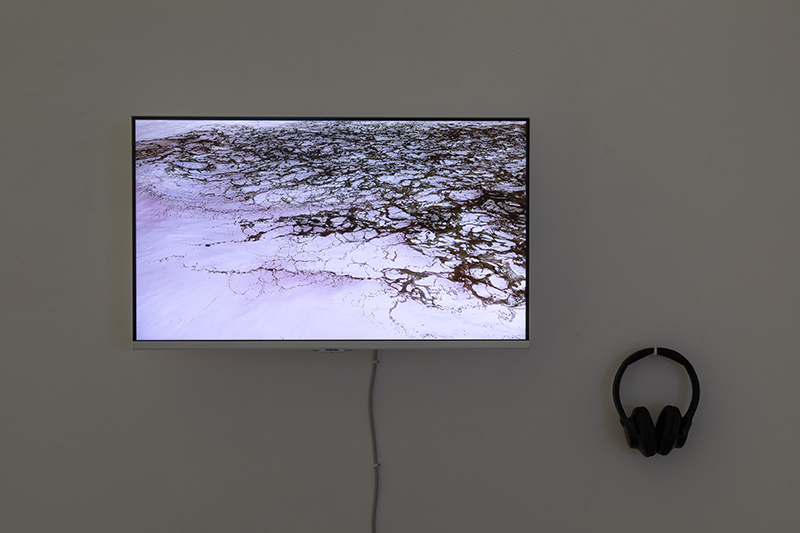
Rachael Allain’s current doctoral project ‘Above and Below the Horizon: A practice-led investigation into liminal thresholds of bodies of water’ has been undertaken in response to various aquatic locations. The work shown in this exhibition documents mapping aspects of an unexpected journey of discovery made in the upper reaches of the Arctic Ocean during an international art and science expeditionary residency in the Svalbard Archipelago during midsummer 2022. ‘Circumnavigation of a ‘Bergy Bit’’ is a film with sound of a close and intimate encounter with a section of an iceberg, calved from its mass and found beached and melting close to shore in Eolusneset, Sorgfjorden in the Bay of Grief.

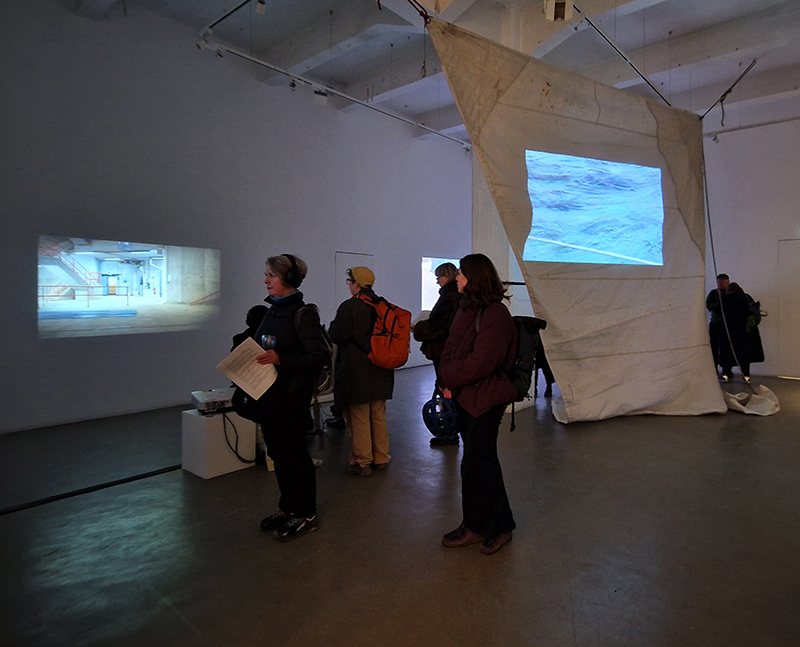
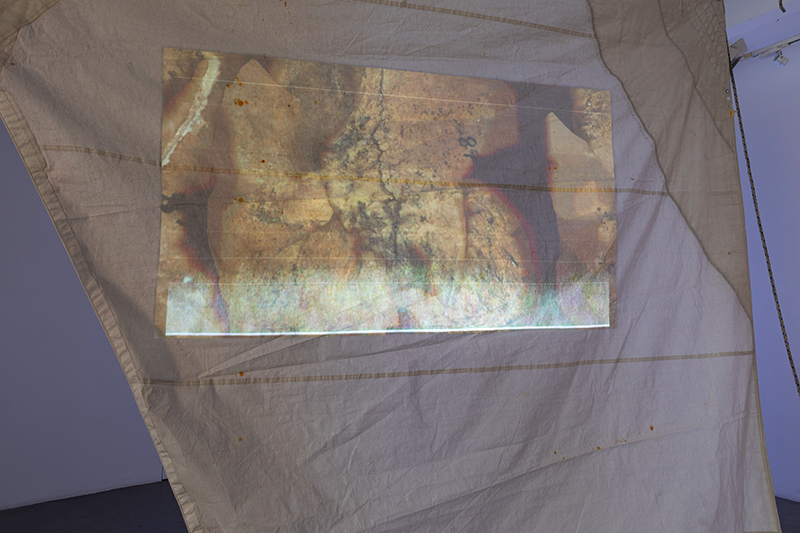
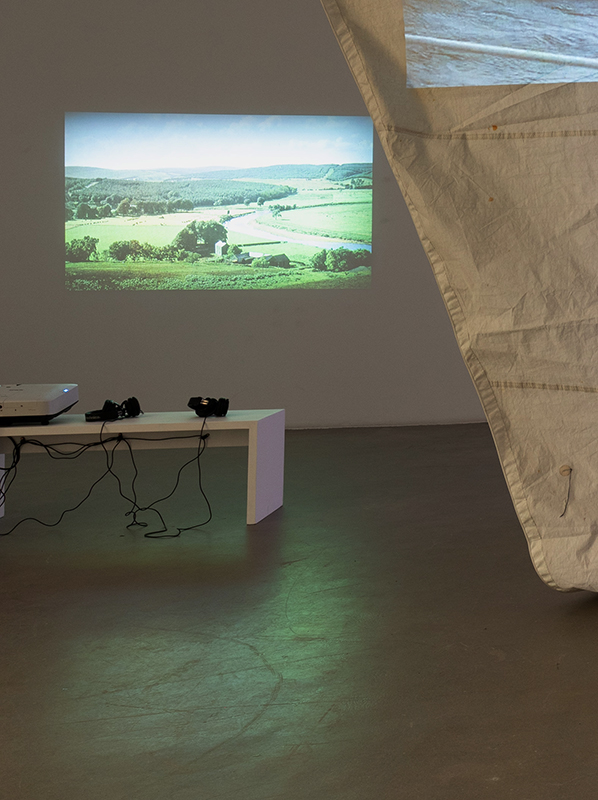
In 2019 Caroline AreskogJones spent time on the Sea of Hebrides making a series of responses whilst researching more viscerally the ocean as a site of ‘field research’ and gathering recordings. ‘Sounding Line’ (2024, sail, audio/video single channel as projection 07:32 min. Sail courtesy of Sail Britain) was created in deliberate wave format being inspired by Jean Painleve, whose hybrid films overlaid with jazz soundtracks occupy the uncertain space between art and science. Oskar Jones was invited to create the sonic composition in response – the saxophone being a wind instrument of extraordinary virtuosity.  Since 2023 Caroline has been visiting the Natural History Museum Cetacean Archive – at the invitation of Principal Curator, Richard Sabin. Through conversations including those with environmental historian Sophia Nicolov, her research has broadened and this updated presentation includes recordings of the two remaining Orcas who inhabit the Sea of Hebrides courtesy of the Hebridean Whale and Dolphin Trust.

Anne Krinsky Boiling Seas Acid Seas (Work-in-progress), 2024, Video, 12:26 min, filmed on location at Long Beach Peninsula in the Pacific Northwest.

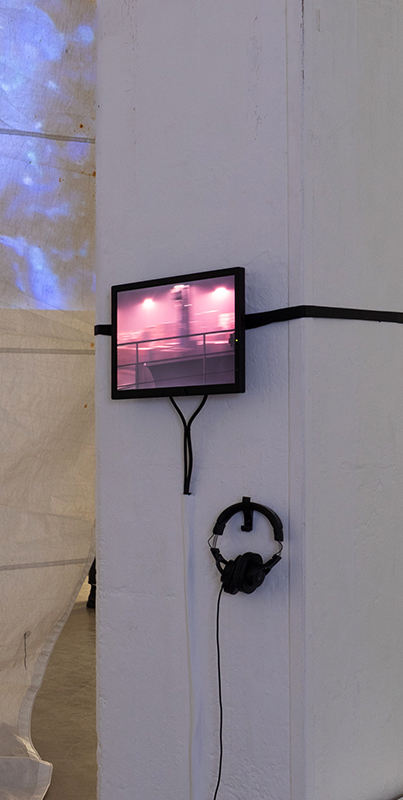
A History Of The Receding Horizon (2015, HD Video, 16:9, sound, projection, 28 min) is a digital film installation by Kathleen Herbert, exploring different concepts of time within the landscape. Based upon Kielder in Northumberland, the narrator whose script was developed from the artists research interviews with environmental historians, astronomers at Kielder Observatory and local people from the area, leads the viewer through the film weaving together past, present and future timelines. The Chaplin (2006,  standard HD video, 4:3, sound, monitor, 07: 20 min) is a film installation recalling a conversation held between the artist, Kathleen Herbert, and the Port Chaplin based at the Mission to Seafarers centre in Avonmouth docks. The Port Chaplin boards every ship as it enters the docks, his role is to provide emotional and practical support to seafarers while they are in port. The piece was produced while Kathleen was based at the centre researching for a new commission by Picture This Moving Image and Situations Bristol. Her research at the centre culminated in a 3 day voyage aboard a cargo ship in which she took her camera and the extracts of film from this journey provide the visual background of the film.

Fragility and vulnerability are embodied in layered works on paper, a large suspended sculpture made from delicate compostable material and living installations incorporating transient elements that transform over the exhibition period.

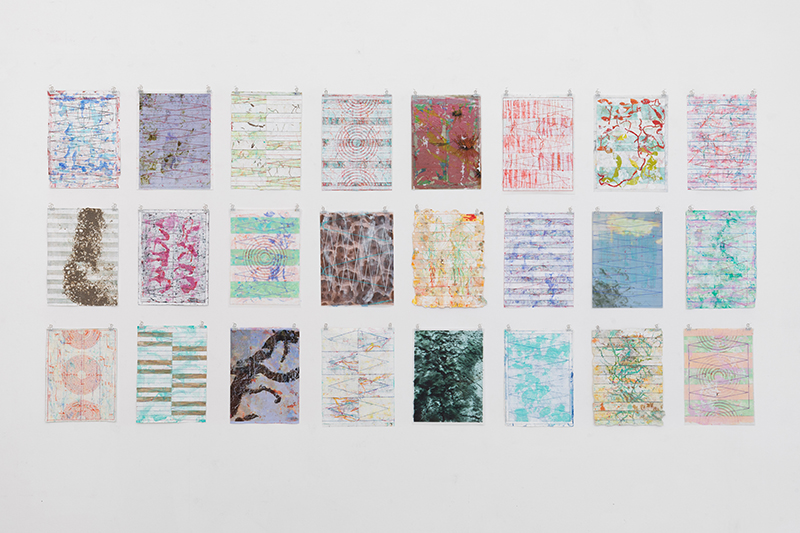
Anne Krinsky has been working on a research-based project about vulnerable wetlands and climate change since 2018. Coastal wetlands worldwide are at risk from rising sea levels caused by climate change, while inland watersheds are threatened by heat, drought and agricultural runoff. These ecosystems are critical to the plants and animals that inhabit them and to human survival. She is drawn to biodiverse habitat edges – where water meets land or where fresh water meets the sea and is interested in recording both the beauty of – and human impacts on – fragile habitats. She uses documentation as an archive of raw materials to generate work in other media, including site-responsive print and video installation and tactile work on paper. In responding creatively to wetlands and watersheds, she wants to raise public awareness of climate threats to these life-sustaining habitats. Before They Vanish, 2024, 24 small works: paper, mylar, acrylic, digital print, mixed media, 150 x 300 cm.

Caroline AreskogJones Float 2023, Paper lithography on shoji, 60 x 120 cm forms part of a series of works inspired by the Natural History Museum Cetacean Archive, rendered onto Shoji paper, used in museum conservation.

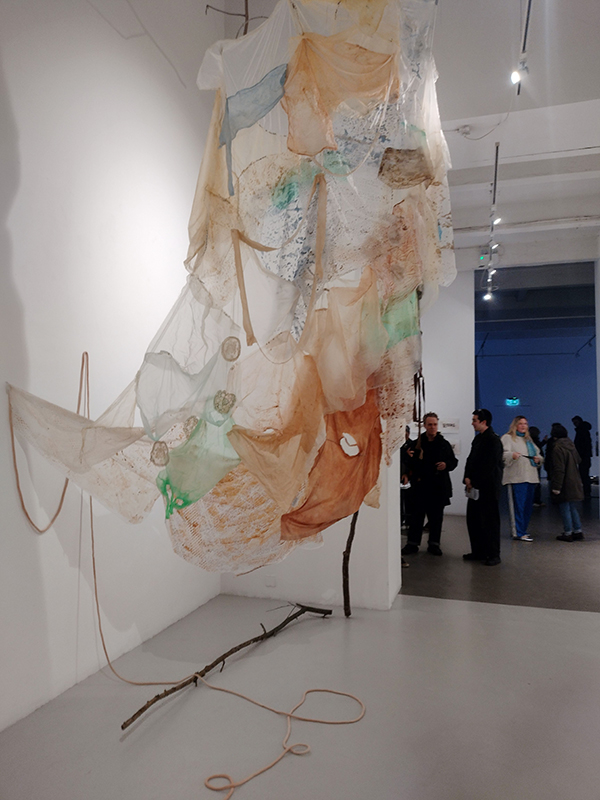
Liz Elton begins in landscape and still-life painting to explore the potential of waste and the recycling of matter.  Her ephemeral work is often made on compostable ground, coloured with kitchen waste and embedded with seeds. Showing Habitat, 2024, Compostable cornstarch food waste recycling bags, household textiles from a house clearance, vegetable dyes from kitchen waste, water colour, silk, soil from various locations and gleaned from vegetables bought in the market, vegetable seeds saved from food preparation, seeds of varieties of self-seeding edible plants typically found on the wasteland around Deptford creek, found wood, Approx. 360 x 250 x 150 cm (variable).

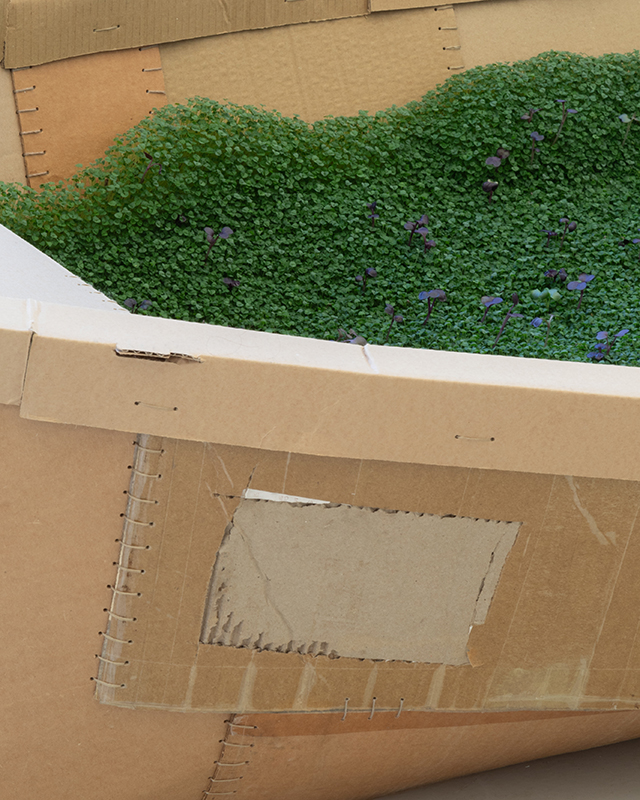
Working with living sculpture and installation, Beverley Duckworth creates spaces and moments which connect the smallest, poetic actions of plants with precarious issues facing humanity. Her practice centres on the afterlife of the discarded and is rooted in small acts of reparation – sewing scraps together, watering fragile seedlings and nurturing the regenerative power of composting from waste materials. Works include Husk, 2024, Discarded cardboard, thread, flax, seeds, water, 90 x 70 x 280 cm; Raze, 2023, Discarded clothes, binder, 48 x 51 x 10 cm.

Etchings and spatial interventions explore the use of the natural world as human resource and land as a site of geopolitical conflict.

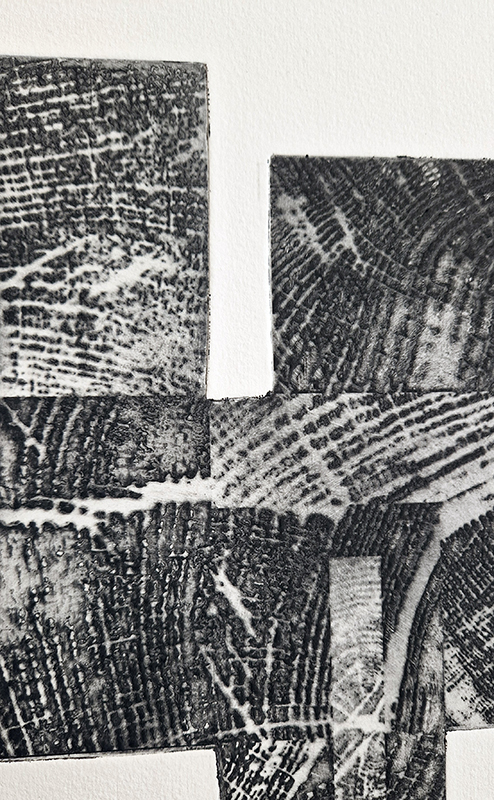
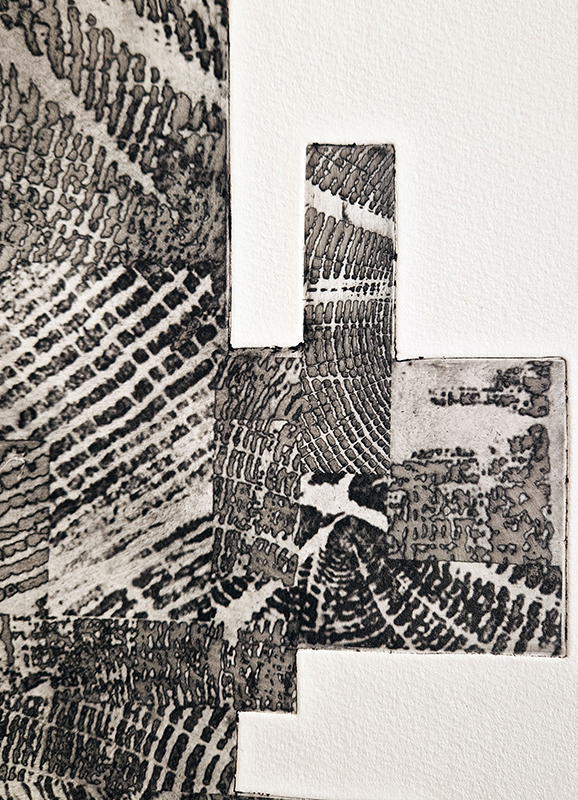
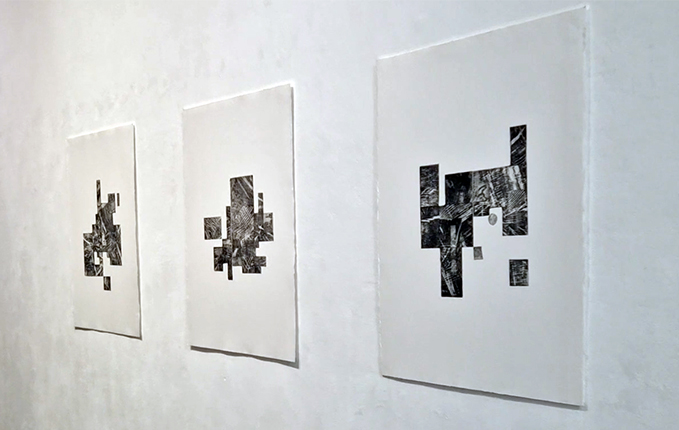
Kathleen Herbert Lost Dimensions I, II, III, 2022-23, Photopolymer Etching on Somerset Satin Paper, 75 x 57 cm.

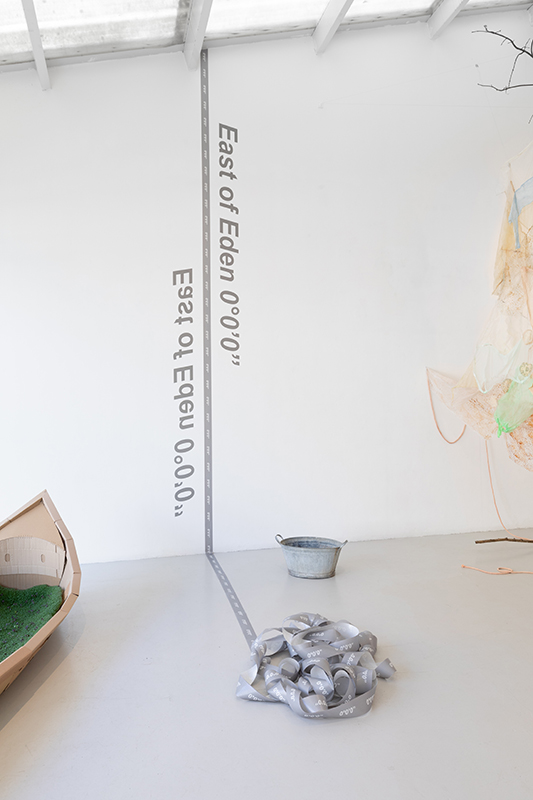
Kaori Homma’s multi-site Homma Meridian project asks us to reconsider and to challenge the cartographic demarcations that govern so much of our world and that we so frequently take for granted. With the deceptively simple move of ‘repositioning’ the Greenwich Prime Meridian, the artist radically shifts our perspective, as well as our sure footing, both figuratively and even literally. At each of its iterations (which have included Budapest, Margate, Wales, Paris, London and Pennsylvania) the artist and participating audiences draw an impermanent line running north-south, always using ephemeral materials, as a substitute for the ‘Prime’ meridian. The project’s act of displacement and its ephemerality work to highlight the imaginary nature of boundaries and to shake up our perception of our position on the earth as it spins on its titled axis. Works include Homma Meridian, Deptford, 2024, Vinyl Letters, tape, dimensions variable; Floating 0 degree Longitude, 2024, Abrudashi Fire Etching, Water, Bucket, 60 x 38 x 25 cm; Four corners of the earth, 2024, Aburidashi Fire Etching on Paper, 50 x 80 x 3 cm

Alongside the exhibition we held a series of events including a Low Tide Walk in Deptford Creek – led by Anne Krinsky in partnership with Creekside Discovery Centre followed by refreshments and a tour of the Life Boat exhibition at APT Gallery just two minutes from this amazing natural habitat in Deptford.

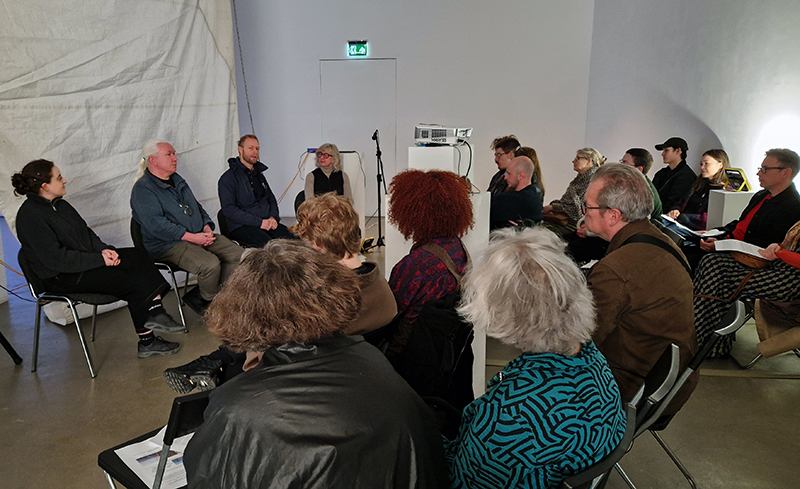
FIELDWORK AS PRACTICE – A live sonic performance by Oskar Jones and a conversation led by Caroline AreskogJones bringing together Oliver Beardon (Founder and Skipper of ‘Sail Britain’) Richard Sabin (Principal Curator of Mammals at the Natural History Museum, London) and Sophie Nicolov (AHRC Early Career Research Fellow, Natural History Museum, London) for a discussion around the potential overlaps between ‘field’ and research, artistic practice and ecological activism.

Homma Meridian and the Secret of Invisible Ink/Fire Etching Workshop where Kaori Homma shared her technique using Invisible Ink as part of the Aburidashi/Fire Etching process, historically used for espionage, she also gave a fascinating presentation on the history of this process and how it relates to her own art practice and her Homma Meridian Project.

In tackling concepts of the perilous, the vulnerable and the lost, Life Boat raises the alarm on the passive position of waiting for rescue and encourages urgent action in troubled waters.

Gallery Visits

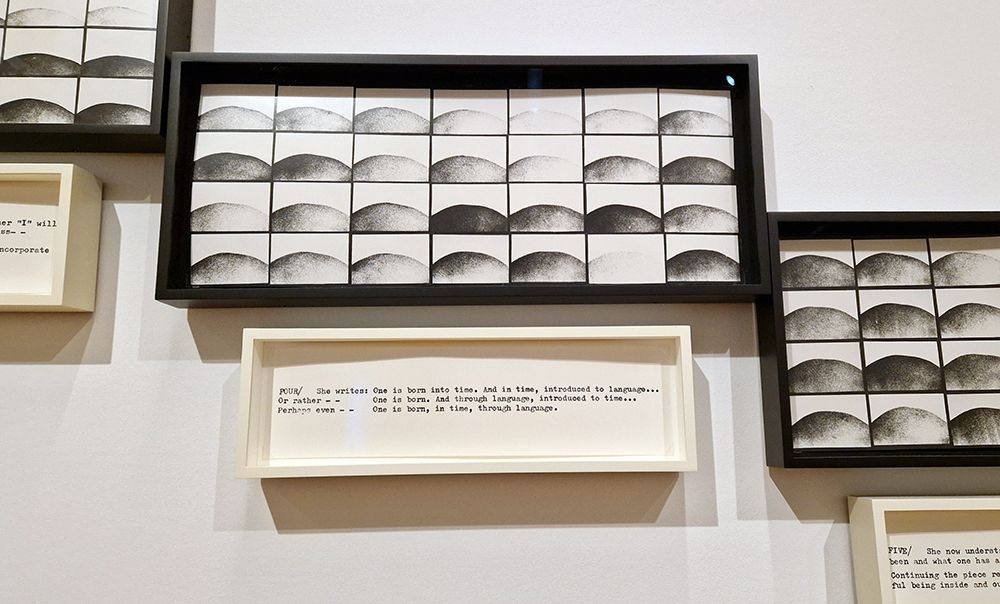
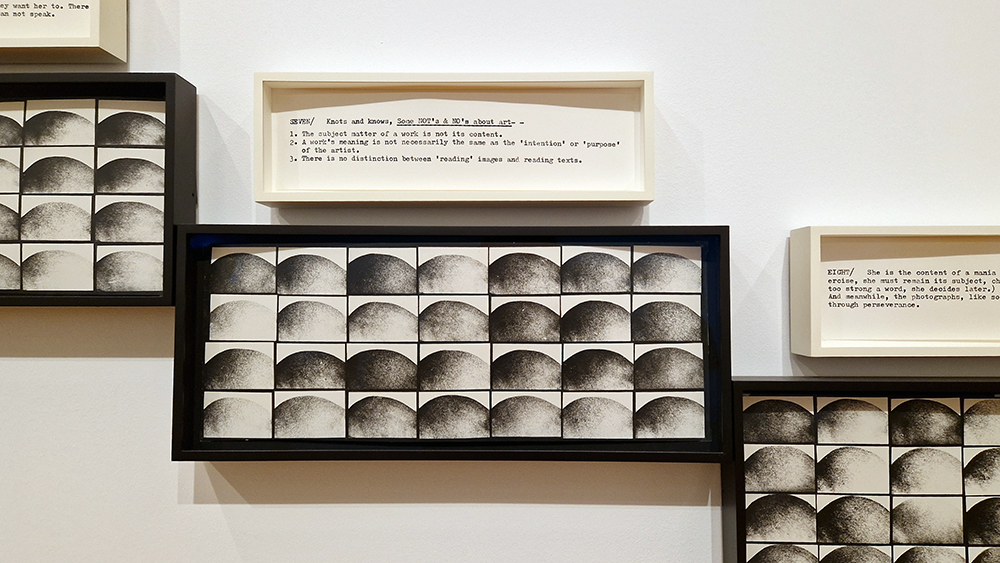
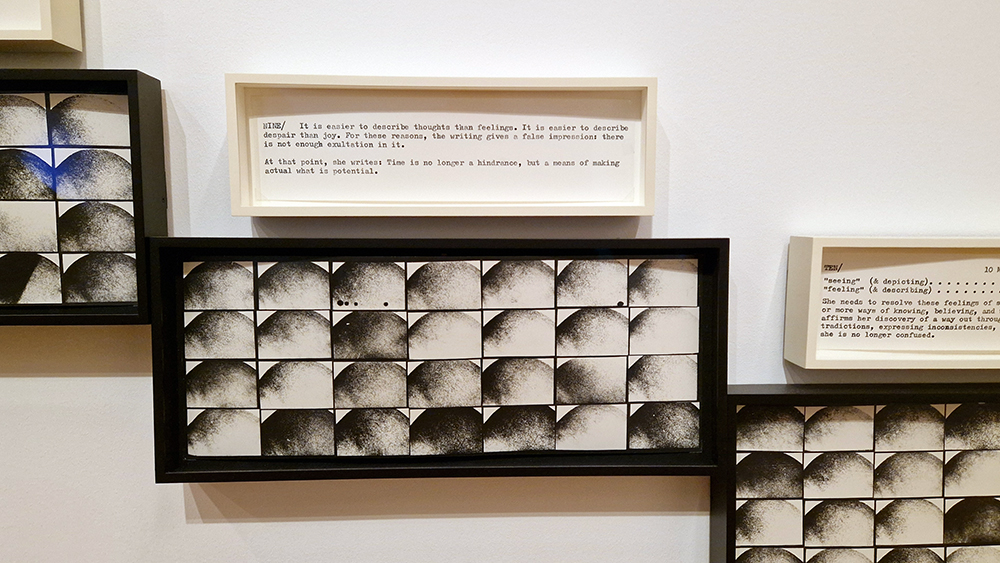
Women In Revolt at Tate Britain. A lot of documentation here of social history. Many texts, posters, zines, not so much art but a great piece from the inimitable Susan Hiller, with personal incites accompanying images of her ever increasing pregnant belly such as: – She writes, one is born into time. And in time introduced to language….Or rather — one is born. And through language, introduced to time…Perhaps even — one is born, in time, through language.

Mary Yacoob, captivates with astonishing precision of detail as always in Brutal Space at Bobinska Brownlee exploring the subject of future adaptations to life in space.

Listening

A webinar from British Geological Survey on how we measure the magnetic field, everyday applications and mitigating the threats of space weather. From the Earth’s core to outer space: understanding the magnetic field

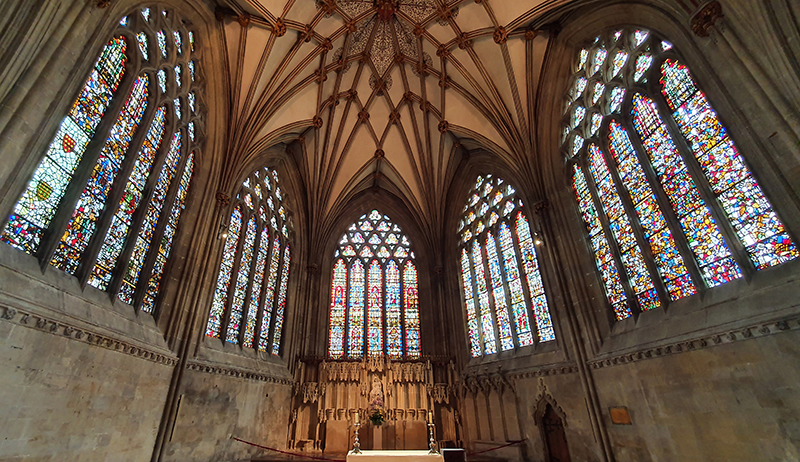
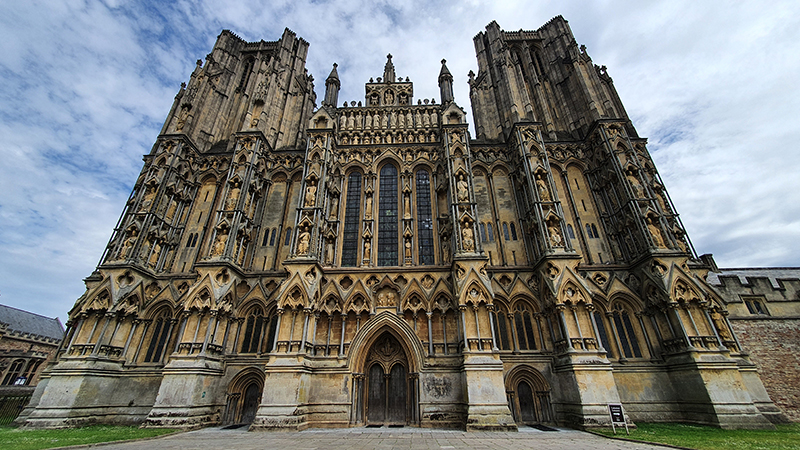
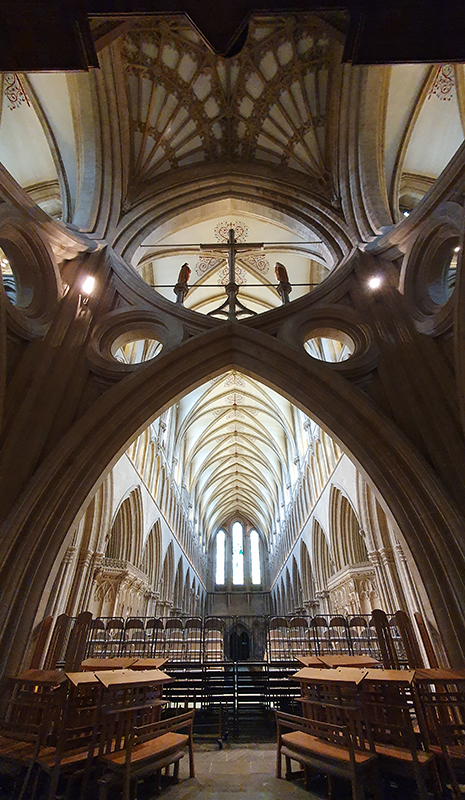
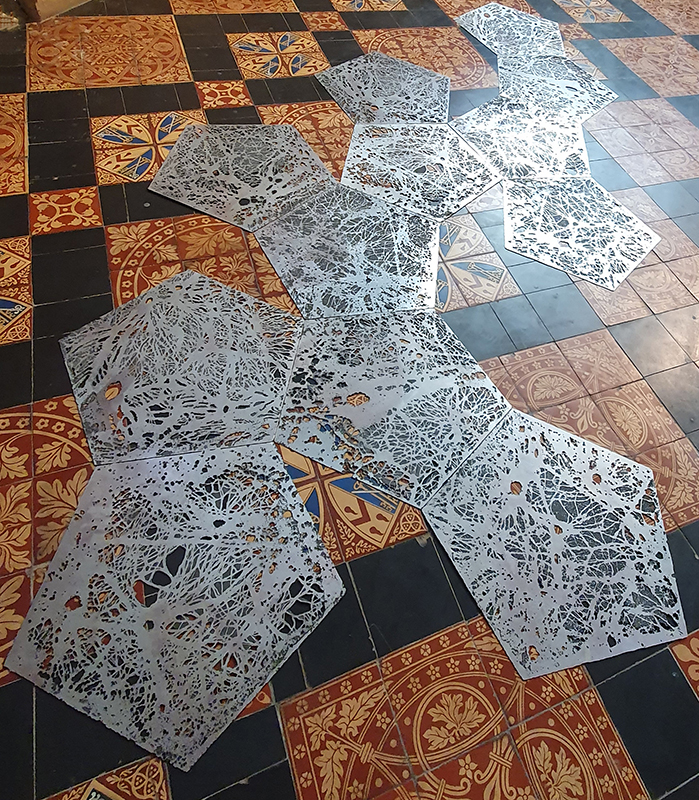
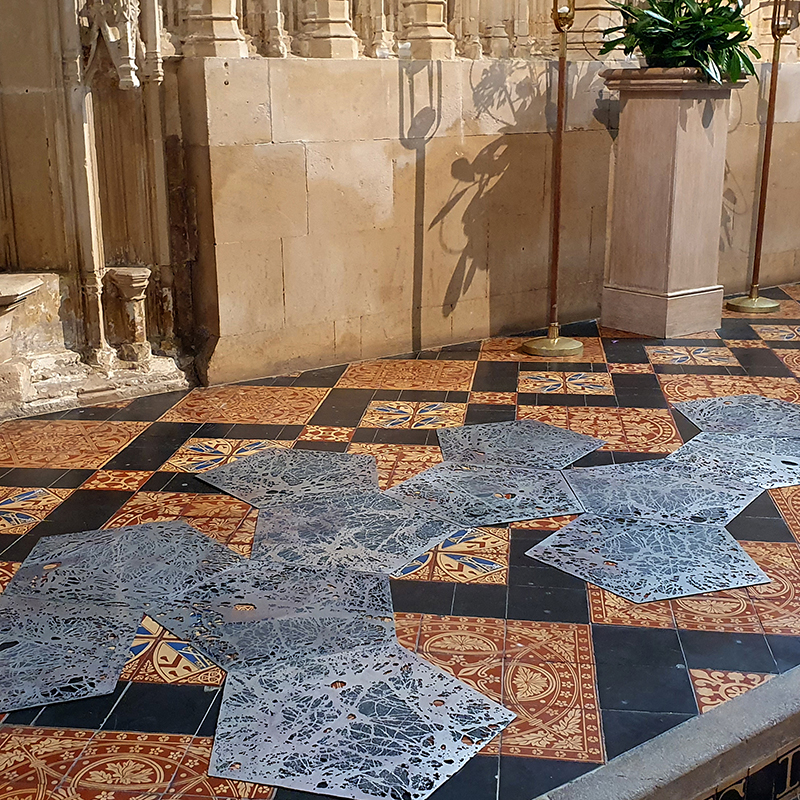
Honoured to have The Forms installed in the magnificent Wells Cathedral as part of Wells Art Contemporary

The immutable truths Plato discovered in geometry belong to the realm of abstract thought and ideals he called The Forms. Twelve pentagons form a dodecahedron which Plato defined as ‘a fifth construction, which the god used for embroidering the constellations on the whole heaven.’

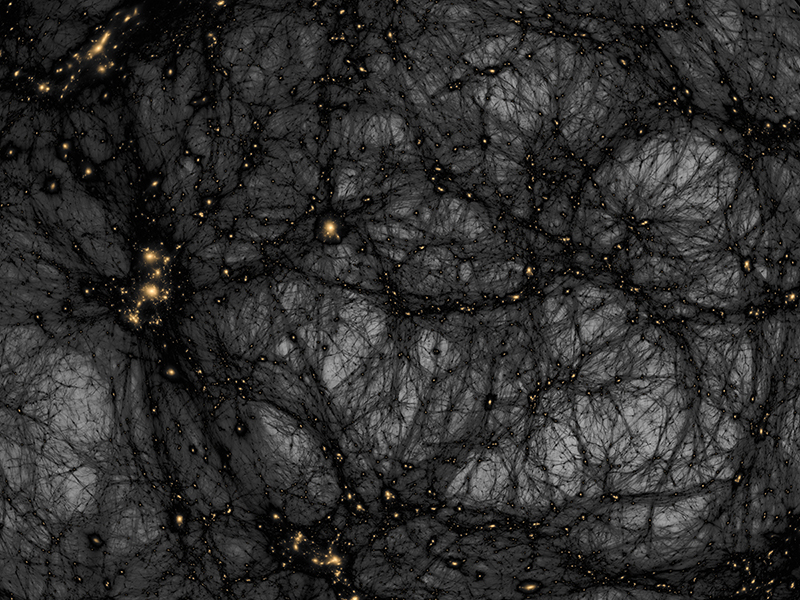
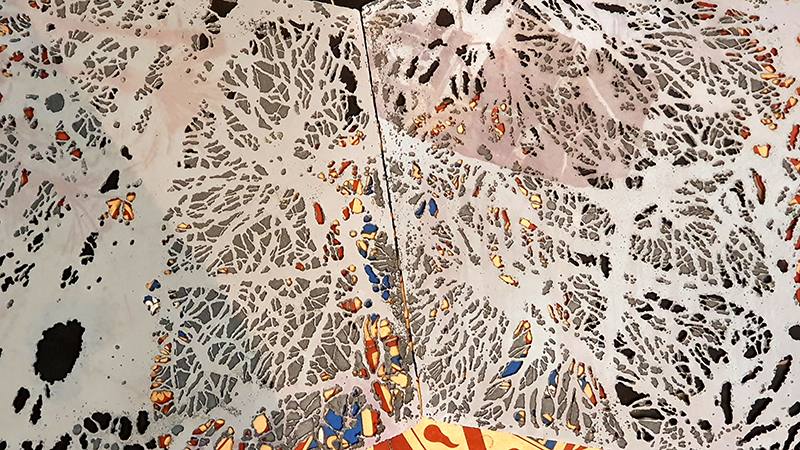
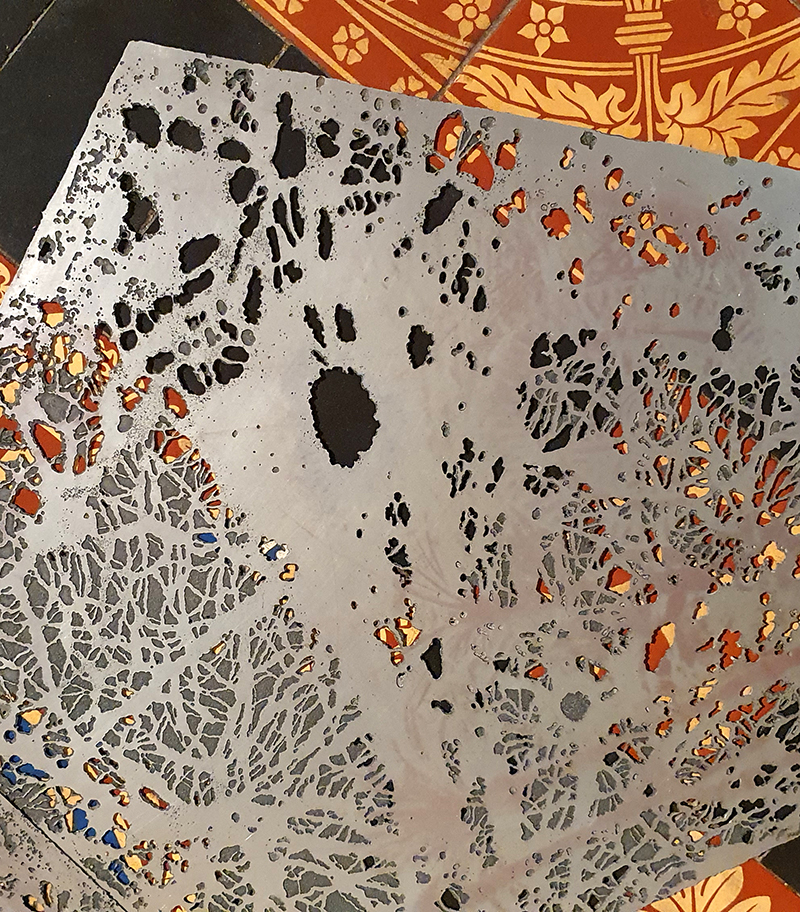
Today it is dark matter that science believes holds the stars in the heavens. In visualisations of dark matter created from cosmological data provided to me by KIPAC Stanford University, we see familiar organic patterns emerge; the fronds of dark matter spanning between galaxies could be the spreading branches of trees or the veins under our skin.

In Plato’s the allegory of the cave, those in the cave mistake shadows thrown by the fire onto the cave wall as reality; in a similar way we are guessing what dark matter is from the shadows we see, such as gravitational lensing and galaxy rotation curves.

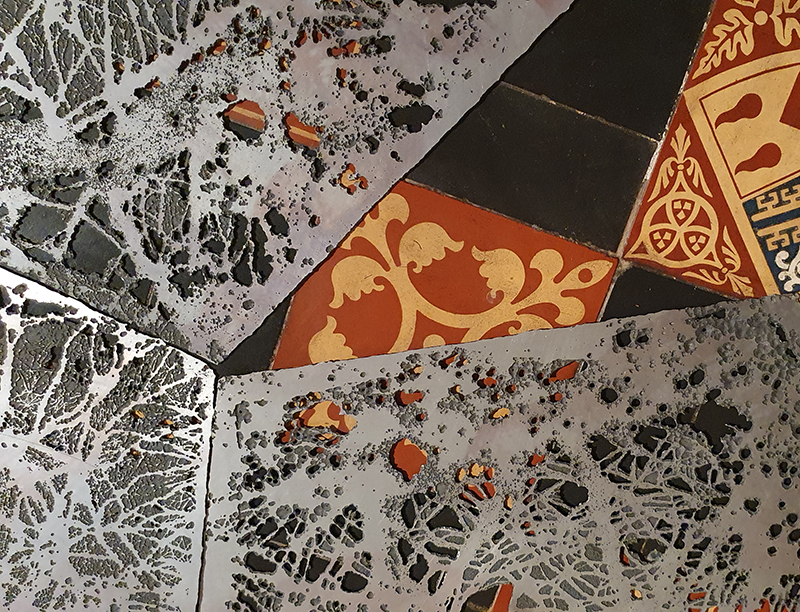
Thrilled with the location of my work in the Lady Chapel, interacting with the patterns and geometry of the Minton tiled floor.

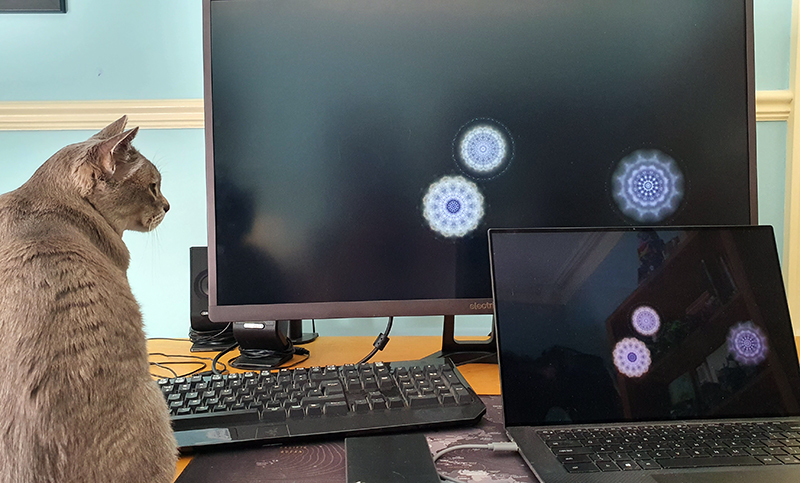
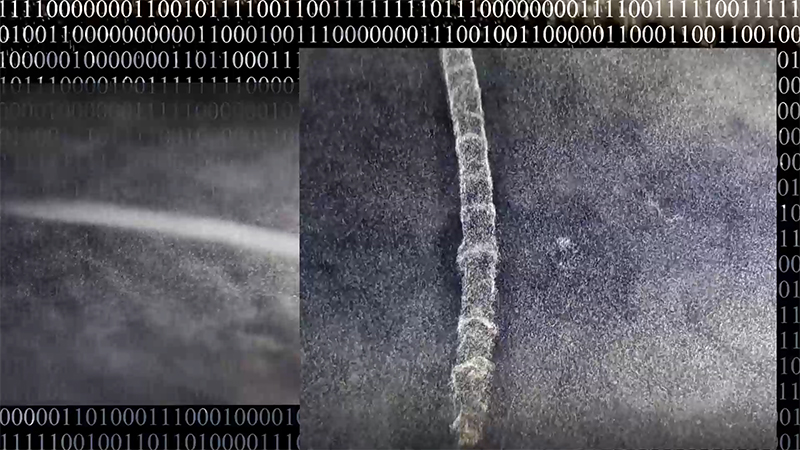
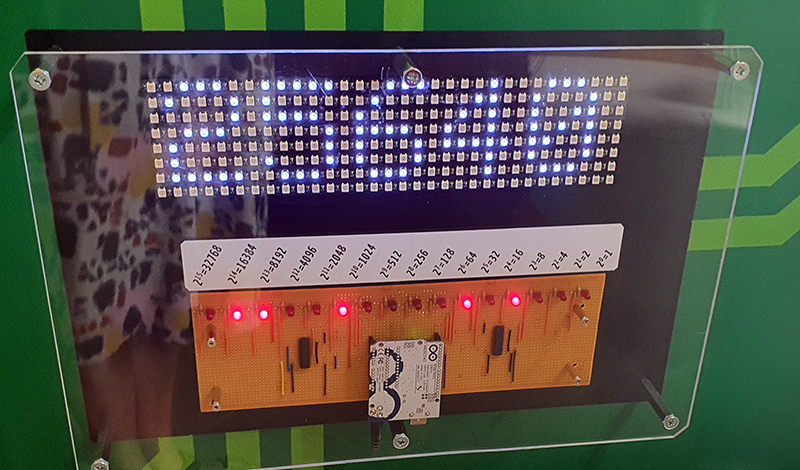
Working on Breath of Stars – making a data base of video clips which will be accessed and play for 12 seconds every time a cosmic ray event is recorded by the detectors. The star bursts are made from cloud chamber footage. The size of the star burst will relate to the amplitude of the cosmic ray that hits the scintillator plastic. More energy = bigger starburst.

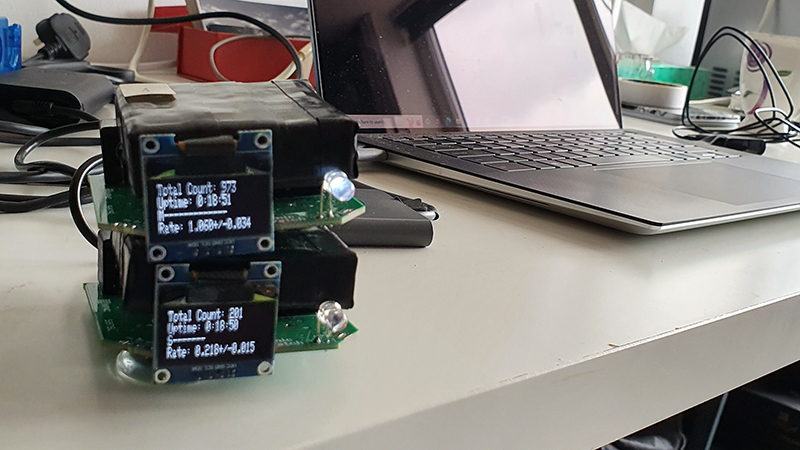
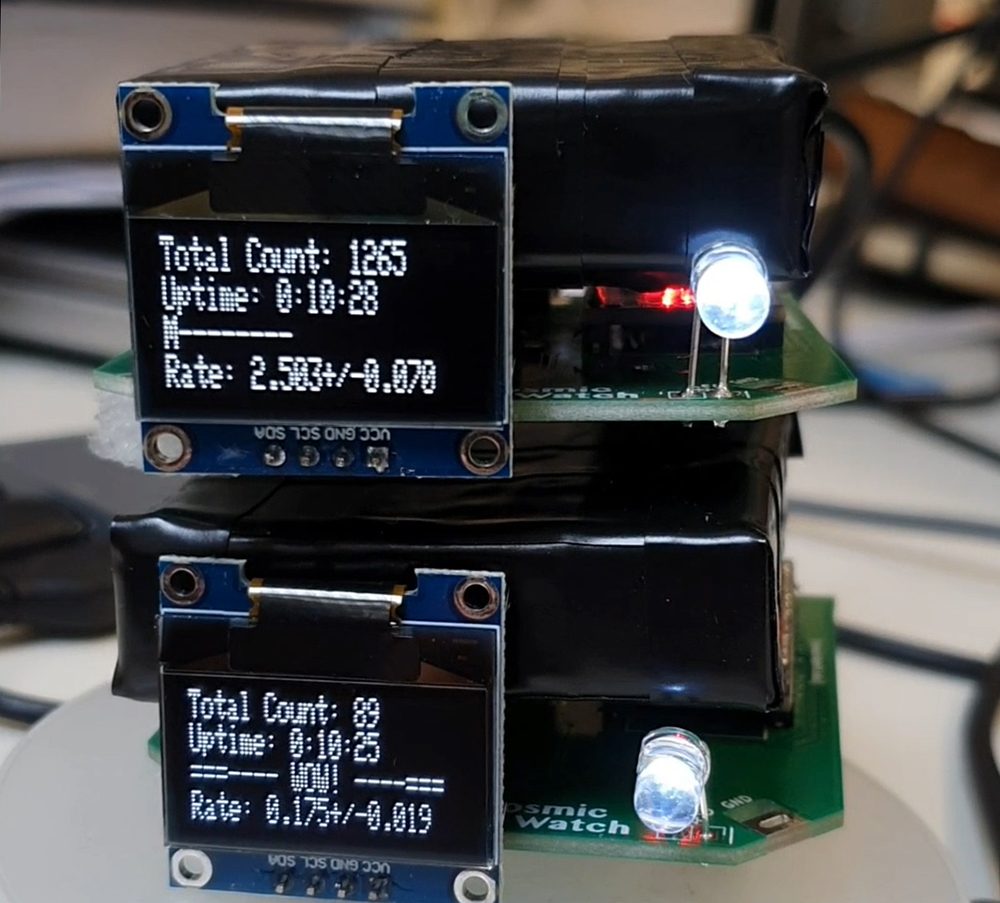
Testing testing. Running the cosmic ray detectors at my studio to see if I get similar results to at home and yes, seems fairly consistent. Maybe slightly more hits. Thinner roof!

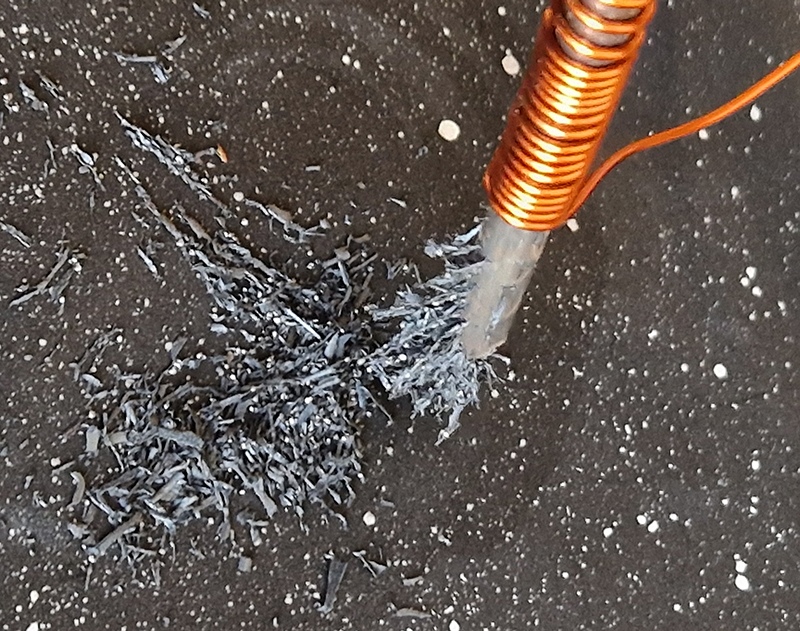
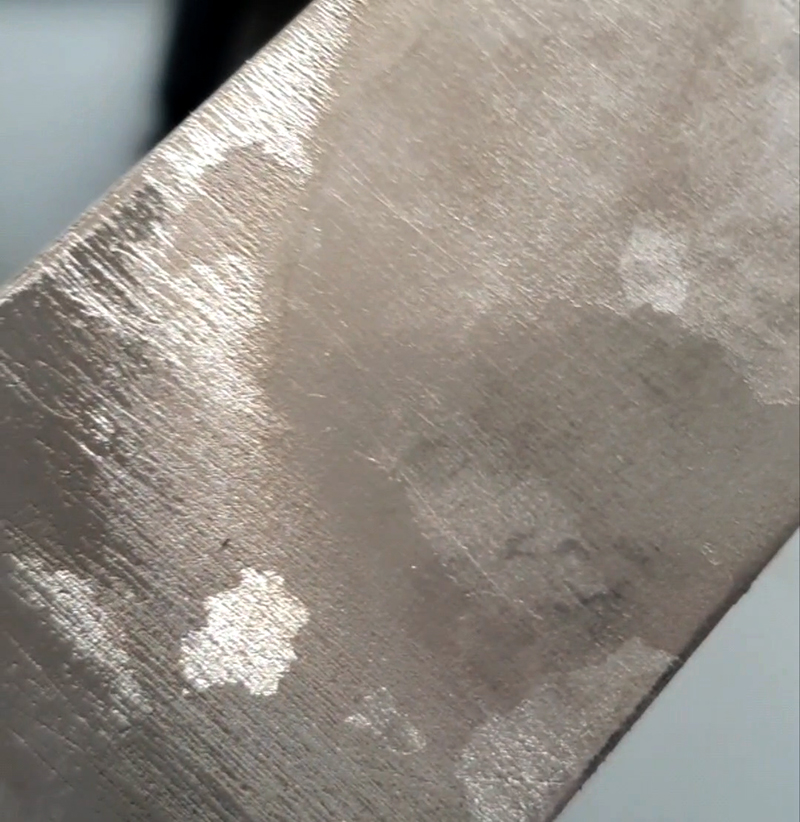
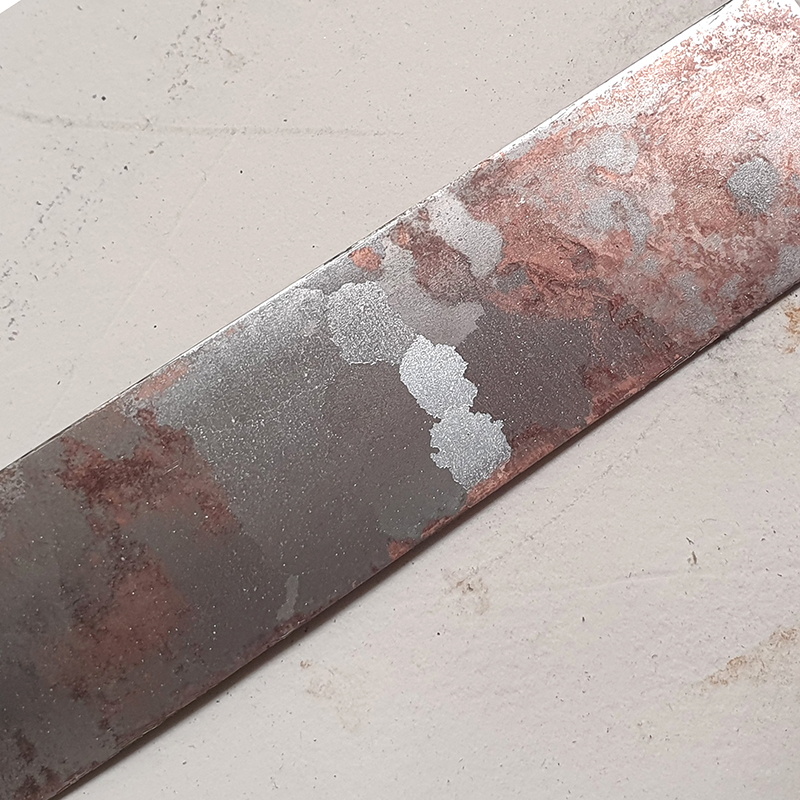
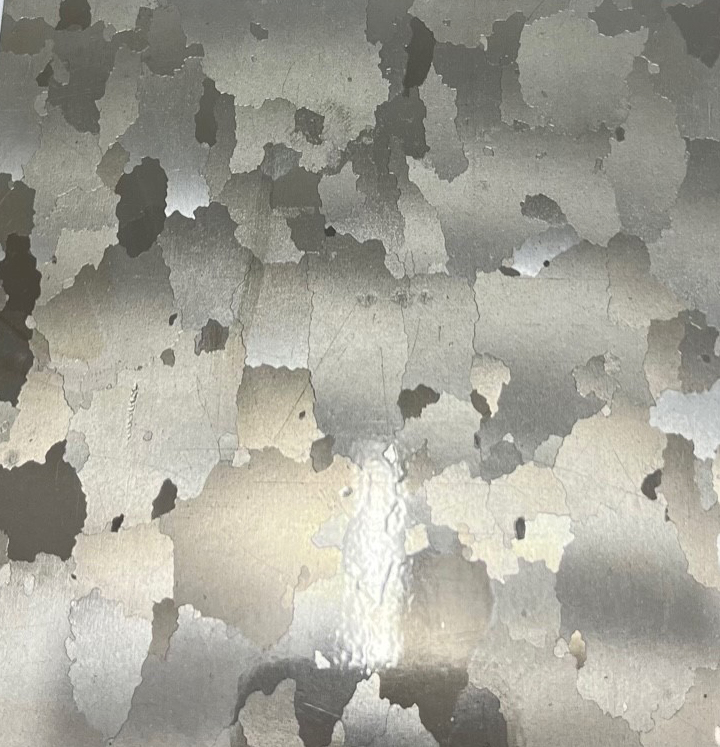
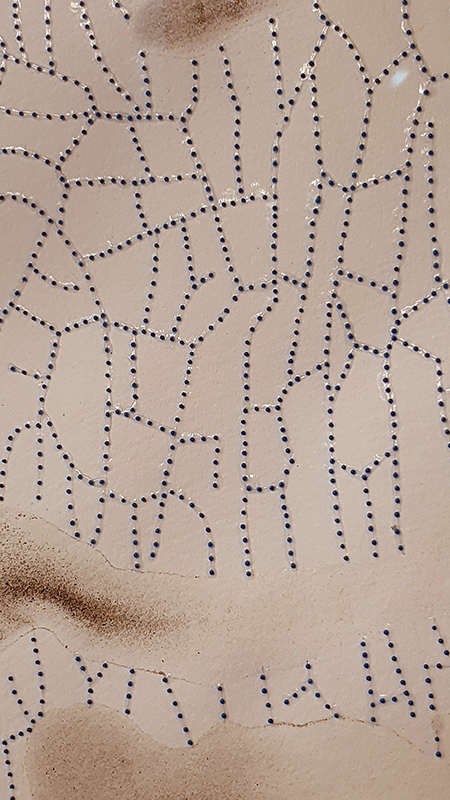
Exciting developments in the acid room etching the directional magnetic steel sample I have been given. Trying to uncover the grain structure like a jigsaw pattern of this magical matter hidden under a grey coating. I had no luck trying to reveal the pattern just by sanding. I then tried sanding the coating away quite aggressively and etching in 1:4 nitric acid for 10 minutes. This did reveal the hidden structure but not very cleanly and weirdly sanding or polishing after etching made the pattern disappear again.

Then I tried finer sanding plus 10 minutes in a copper sulphate solution with just a careful wipe with a sponge to clean the plate and was quite happy how things were progressing. I quite like the coppery tinge.

I discovered the pattern comes from rolling single crystals of an iron silicon alloy into thin sheets to minimise magnetic losses for use in transformers. I decided to have another try with nitric acid on a larger piece just to compare but had very poor results.

An attempt with copper sulphate again on a larger piece this time wasn’t quite so clean as before although the structure is visible. I am wondering if there is a better side to etch – both sides look the same but maybe there is a difference in how deep the structure is hidden.

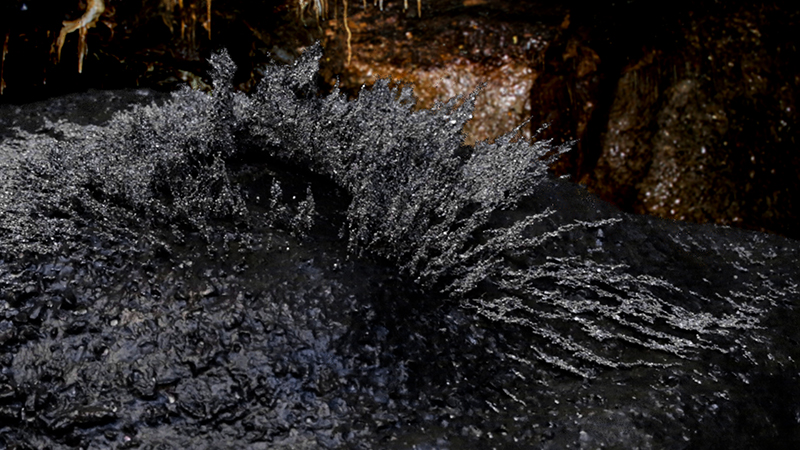
Working through some ideas for a proposal has helped with focus for video work using iron filings over a boulder (made from paper clay) set in a cave. Working title Belly of a Rock which will be a video sculpture.

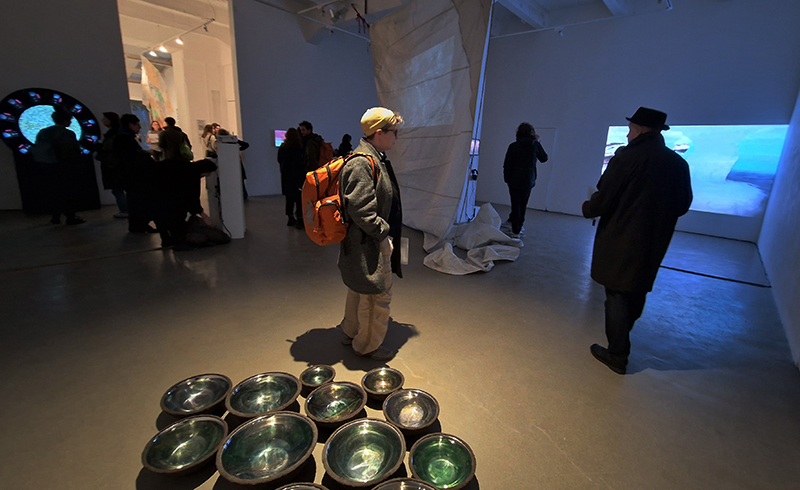
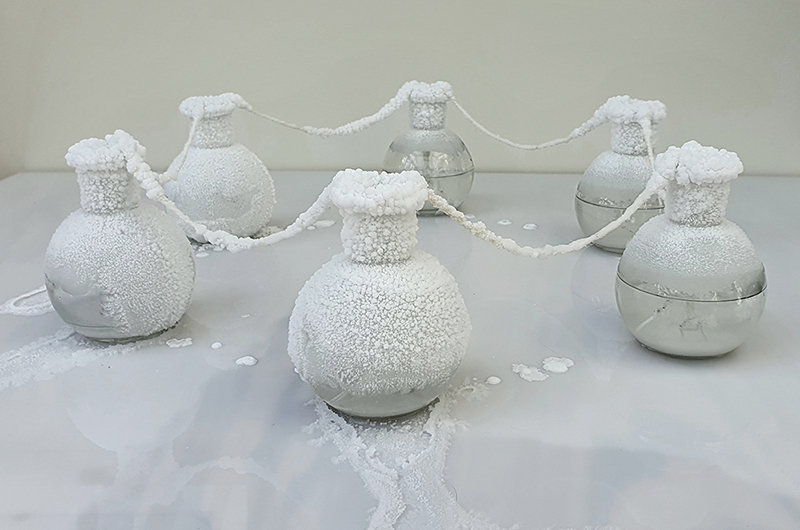
The same with some experiments with vessels and salt crystals. Exploring possibilites.

Out of Studio

The Royal Society Summer Science Exhibition

Favourite stands were obviously those with a connection to magnets or cosmic rays.

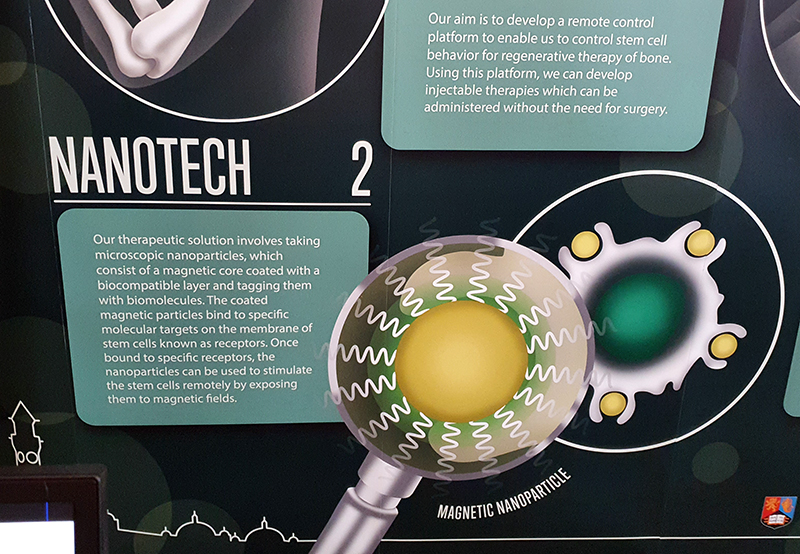
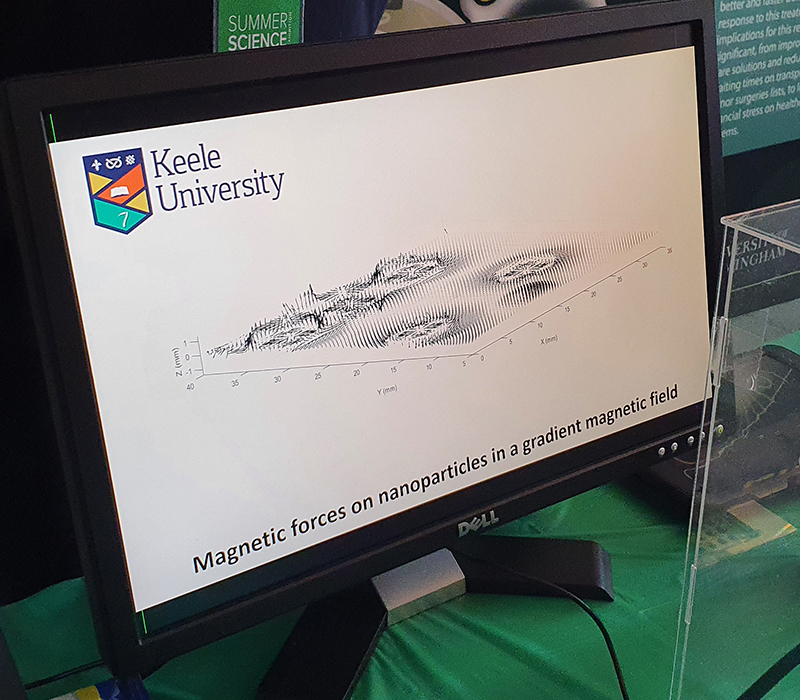
Exciting research from a collaboration between the University of Birmingham, Keele University and
MICA Biosystems on remote controlled healing to treat spinal injuries and tissue regeneration using ground-breaking advances in nanotechnology and magnetics.

Magnetic nanoparticles exhibit superparamagnetism, meaning that these tiny magnetic particles flip magnetic orientation between north and south rapidly at random appearing to be non-magnetic unless subjected to a magnetic field. When a magnetic field is applied, the particles’ ‘north’ and ‘south’ align with the field direction, turning the nanoparticles’ magnetic properties ‘on’. By binding these nanoparticles to stem cells and injecting them into the body they can be directed to the target injury site using a controlled magnetic field outside the body. Once at the injury site the magnetic force can be turned on and off to stimulate the cells controlling cell behaviour and biological pathways speeding up the healing process.

When a meteoroid survives a trip through the atmosphere and hits the ground, it’s called a meteorite.

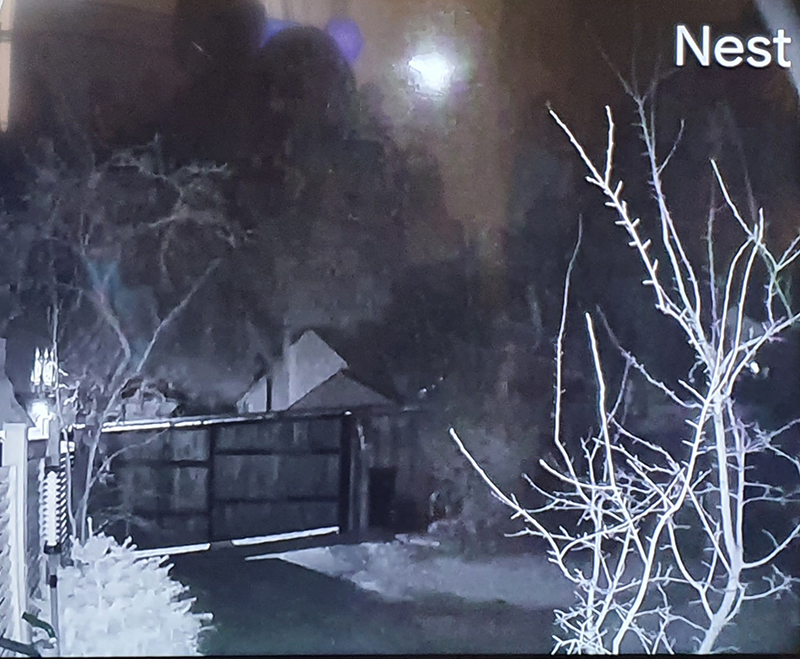
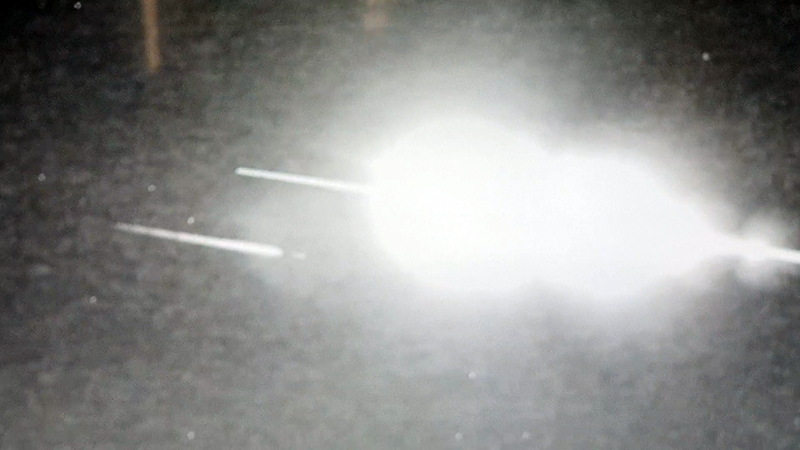
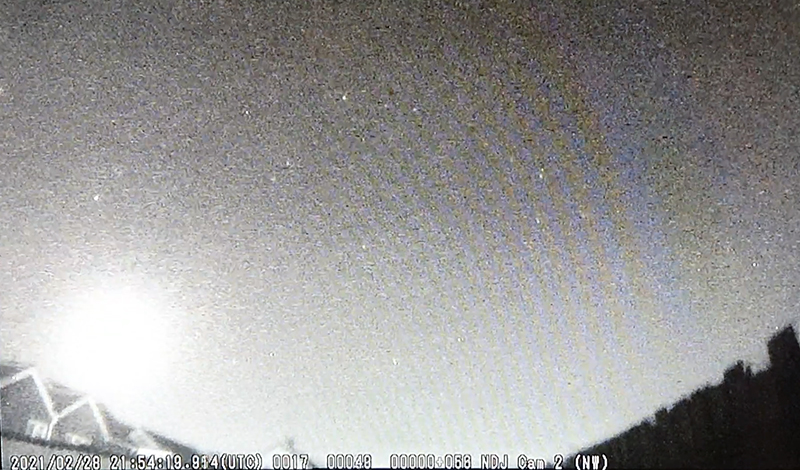
The Natural History Museum were displaying meteorite samples including a large fragment of the Winchcombe meteorite, an extremely rare carbonaceous chondrite observed entering the Earth’s atmosphere as a fireball over Gloucestershire at 21:54 hours on 28 February 2021 and landing in a family home driveway. It was the first time in 30 years, a meteorite has been recovered in the UK. It’s unexpected arrival from the asteroid belt near Jupiter was captured on a system of UK Fireball Alliance cameras as well as local CCTV and doorbell cameras.

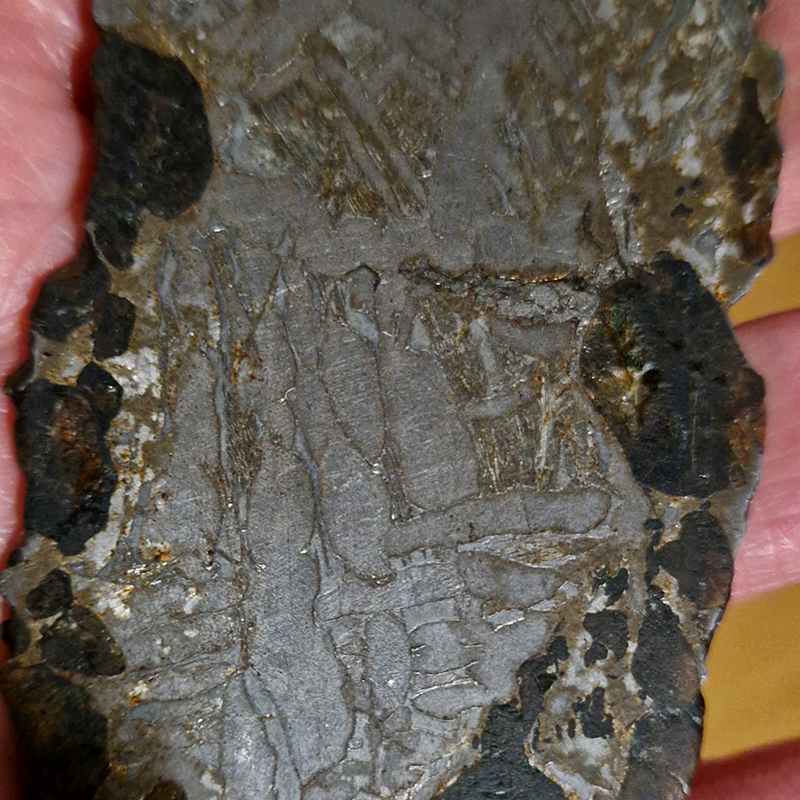
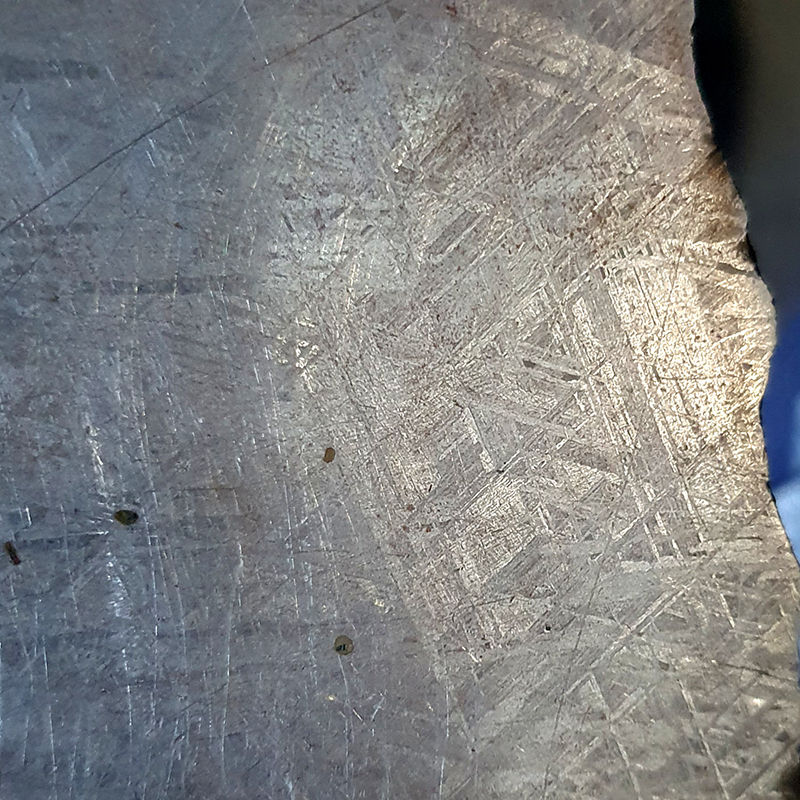
Most iron meteorites are thought to be the cores of asteroids that melted early in their history. The crystal structure (image left) known as Widmanstätten patterns in iron meteors forms from criss-cross plates of an iron-nickel alloy. Slicing the meteor at various angles reveals different patterns.

I was informed that this texture was made visible by etching the meteorite in hydrofluoric acid though it may also need polishing. This made me hopeful to reveal the hidden structure of the directional magnetic steel sample (image right) provided to me by Union Steel Products which is currently hidden by an opaque grey coating over a thin layer of smooth steel. I first saw this type of extra magnetic steel at the National Physical Laboratory open day. It is no longer manufactured in the UK and so am grateful for the sample.

Very excited to talk to Lancaster University about their new Extreme Space Weather Monitoring research. The first international network of ground-level neutron detectors to measure the number of high-energy charged particles striking the Earth’s atmosphere from outer space was established in 1957 but these used toxic materials and are costly to run so many were decommissioned. There are only 50 left worldwide and none in the UK. Lancaster are developing a new-generation radiation detector intended to help protect safety-critical systems and national infrastructure against the effects of severe space weather. Space radiation can affect aircraft systems, communications, and cause current surges in power grids and other ground-level systems. There are significant risks to the infrastructures we rely on in daily life so predicting solar storms could provide a warning to shut down or move vulnerable systems before they get hit.

I asked Professor of Space Physics Jim Wild and his colleague Andrew Parker from the school of engineering radiation protection dept. about the event count for my own cosmic ray detector and they thought it sounded about right. As I cannot be sure of the quality of my plastic scintillator the count may not be scientifically accurate in measuring all events but I can feel confident that events I do record and will use to trigger code to display video starbursts are from direct contact with a particle that has travelled from outer space.

Alienarium 5 Dominique Gonzalez-Foerster at Serpentine Gallery. Managed to miss the seductive glimpse of The Closed Planet and any holograms but did experience the VR though connections promised with other alien beings failed to materialize – there were other forms floating in the distance but no way to communicate. I suppose this reinforced the difficulty of cross being communication. The reading list turned to cushions had become a toddler soft play area and while the 360 panorama was impressive in scale and content included it felt ‘educational’ as opposed to enlightening.

Theaster Gates, the Serpentine Pavilion 2022 Black Chapel draws inspiration from many of the architectural typologies that ground the artist’s practice. It is impressive in scale and simplicity.

I am a big fan of Lindsay Seers work and loved the Artangel commission Nowhere Less Now at The Tin Tabernacle, Kilburn in 2012.

This was my post at the time;

Lindsay Seers work is narrative but is not a linear story. The past present and future entwine with the thoughts of multiple characters. Everything is connected but like in a dream those connections are just beyond grasp as they shift and change and merge. I wasn’t sure if I fell asleep or not, my eyes seemed to be open but I had those moments of falling from consciousness being tucked up in a warm blanket can induce. The haunting sea shanty played in the headphones ‘ the sea will take her slender body..’ over and over, a narrative from one side in Seers soft tone then someone speaks abruptly from behind, another voice is heard at a a distance, some music starts up and all the while the dual projections onto giant convex and concave spheres in the disorienting location of an upside down ships hull sweeps through history into a CGI future and back to the present. We were given a free book on exit, it is another layer to the whole experience and I have no idea what is true and what is fiction, this means the fantastical can appear to be reality and I like that. There are many things to wonder about in Lindsay Seers work. In Seers work the explanation about the work is part of the work and so may be just a fiction as much as the work itself.

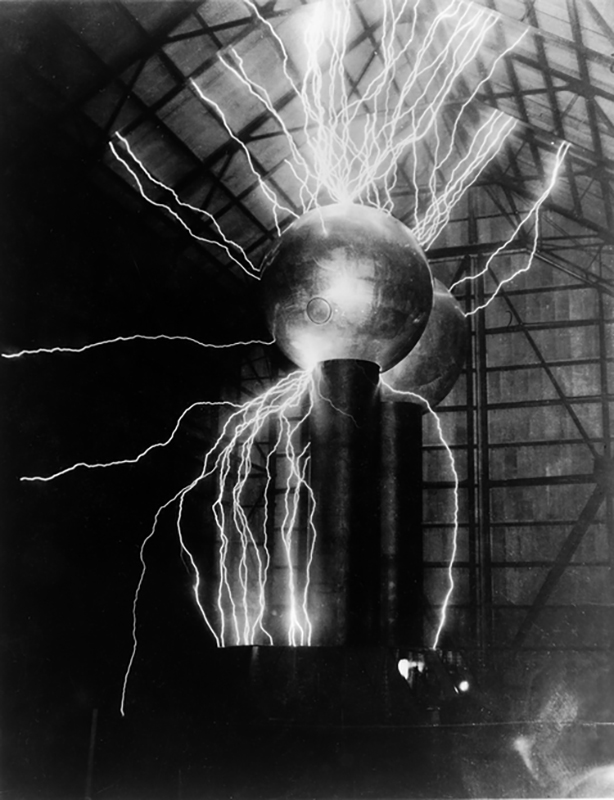
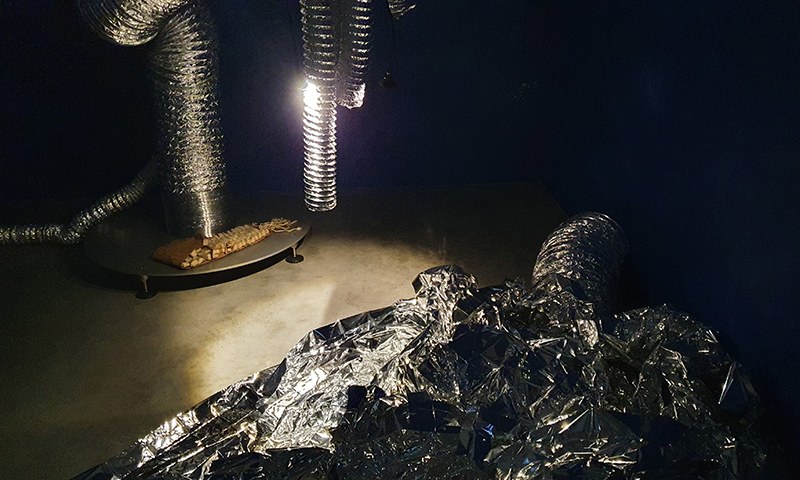
Jump ten years to Cold Light a collaboration with Keith Sargent at Matt’s Gallery in their new swanky location at Nine Elms. Subtle intervention has been sacrificed for the installation which is engaging on a different more immediate sensory level of flashing lights on shiny objects. The work is inspired by the futurist Nikola Tesla and his experiments with electricity in the early part of the 20th century. Cold light refers to light produced electrically rather than by fire. The use of low-fi silver foil and extractor vent tubing, along with scaffolding and clunky robotics give an impression of the home inventor. This would have looked futuristic in Tesla’s lifetime. I experienced the VR CGI environment, it was cold place emotionally despite the pigeons which were apparently Tesla’s true love. Is this the CGI future alluded to in past work?

Fabulous work from Grace Ndiritu An Absolute River at Lux. An Absolute River’s title derives from Borges’ theories on the fluidity of time. Borges features as a fictional protagonist in Ndiritu’s Black Beauty, and his notion of “An Absolute River” was inspired by Heraclitus’ “No Man ever Steps in the Same River Twice”. Her films blur the lines between different time frames and explore themes of media, authorship and historical narratives, whilst expanding on notions of temporality. Her work is so good.

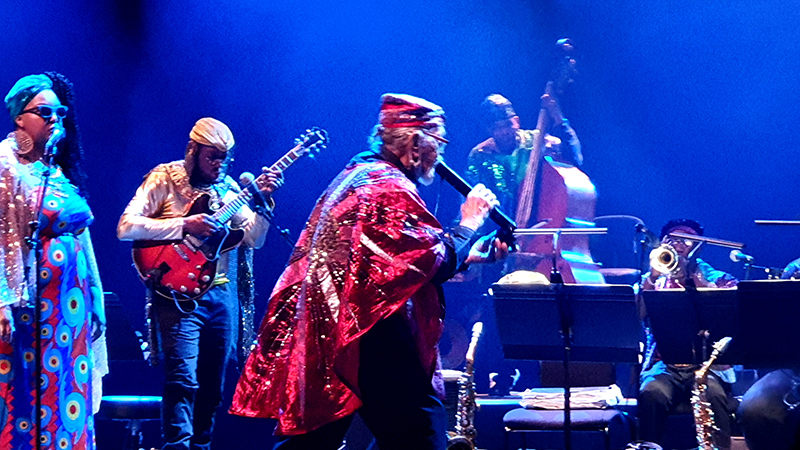
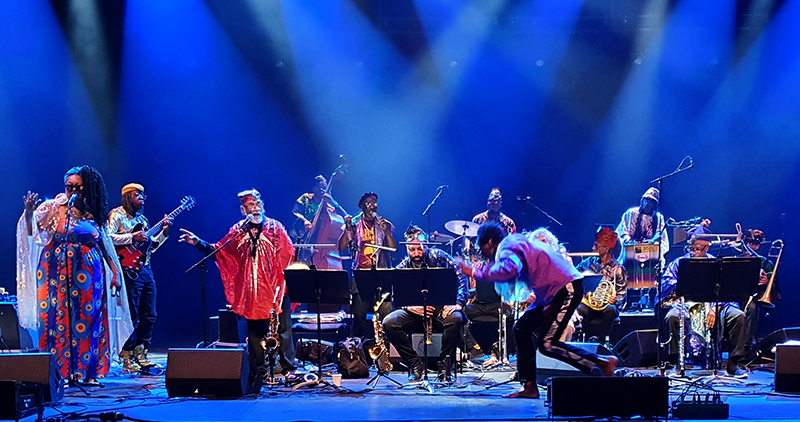
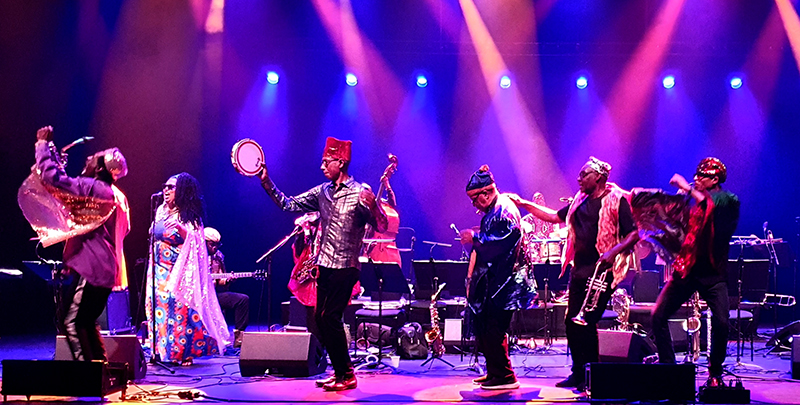
SPACE IS THE PLACE

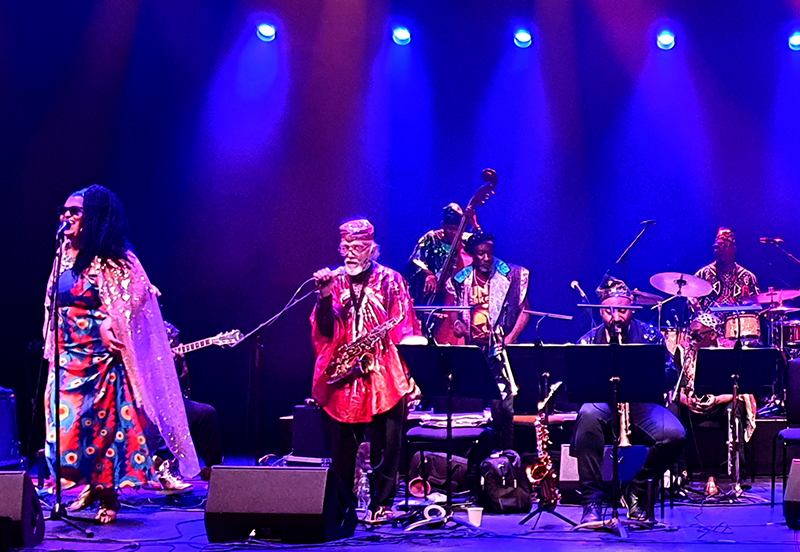
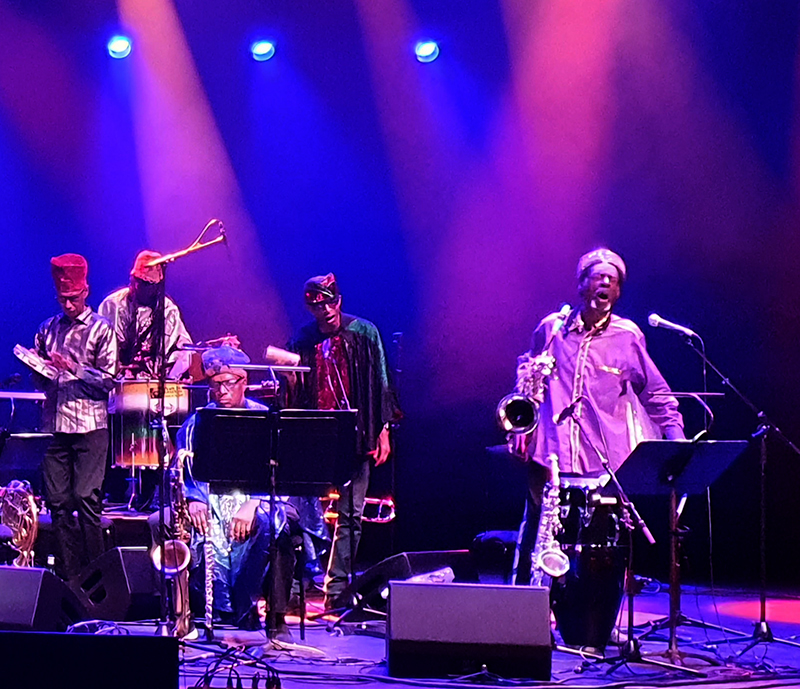
What a joy to experience The Sun Ra Arkestra

In some far off place
Many light years in space
I’ll wait for you
Where human feet have never trod
Where human eyes have never seen
I’ll build a world of abstract dreams
And wait for you

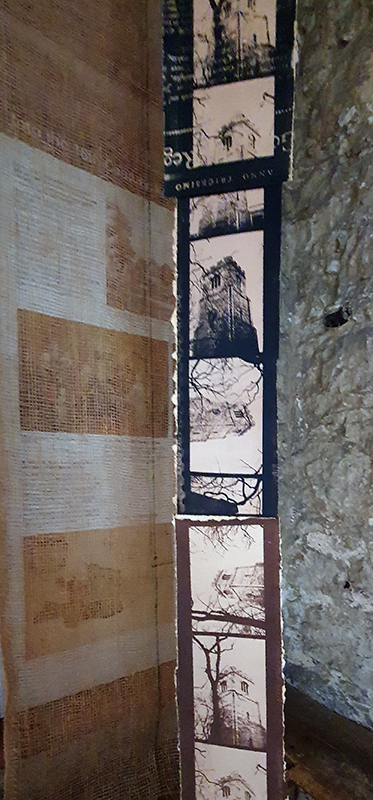
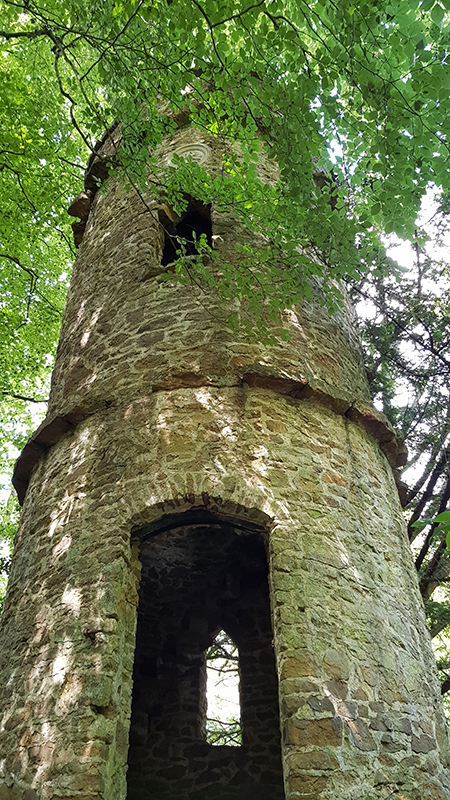
The Ruins of Time at St. Augustine’s Tower, Hackney. “Tower” is part four of the “Ruins of Time” project, organized by LME (London – Munich Exchange) exploring the passage of time and its specific expression in the place, space and architecture of the site. Curated by Eleonora Bourmistrov and Milena Michalski who are exhibiting alongside Myra Brooklyn, Risha Gorig, Angelika Hofmann, Monika Kita, Brigitte C. Reichl, and Marcia Teusink. Many thoughtful works and a marvellous installation from Eleonora Bourmistrov.

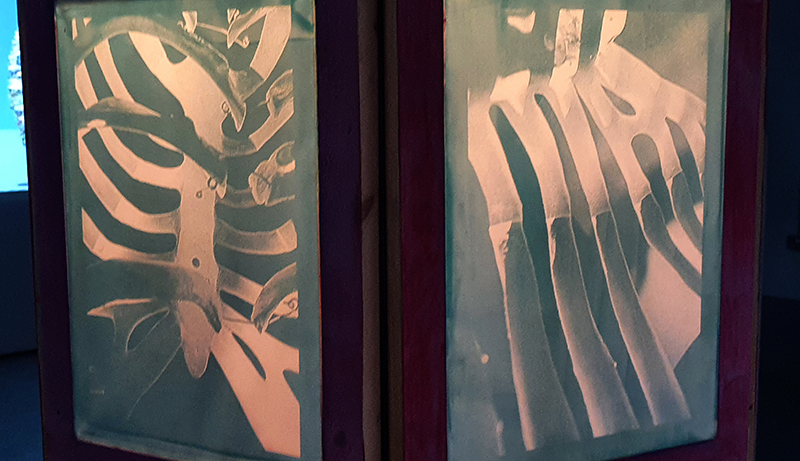
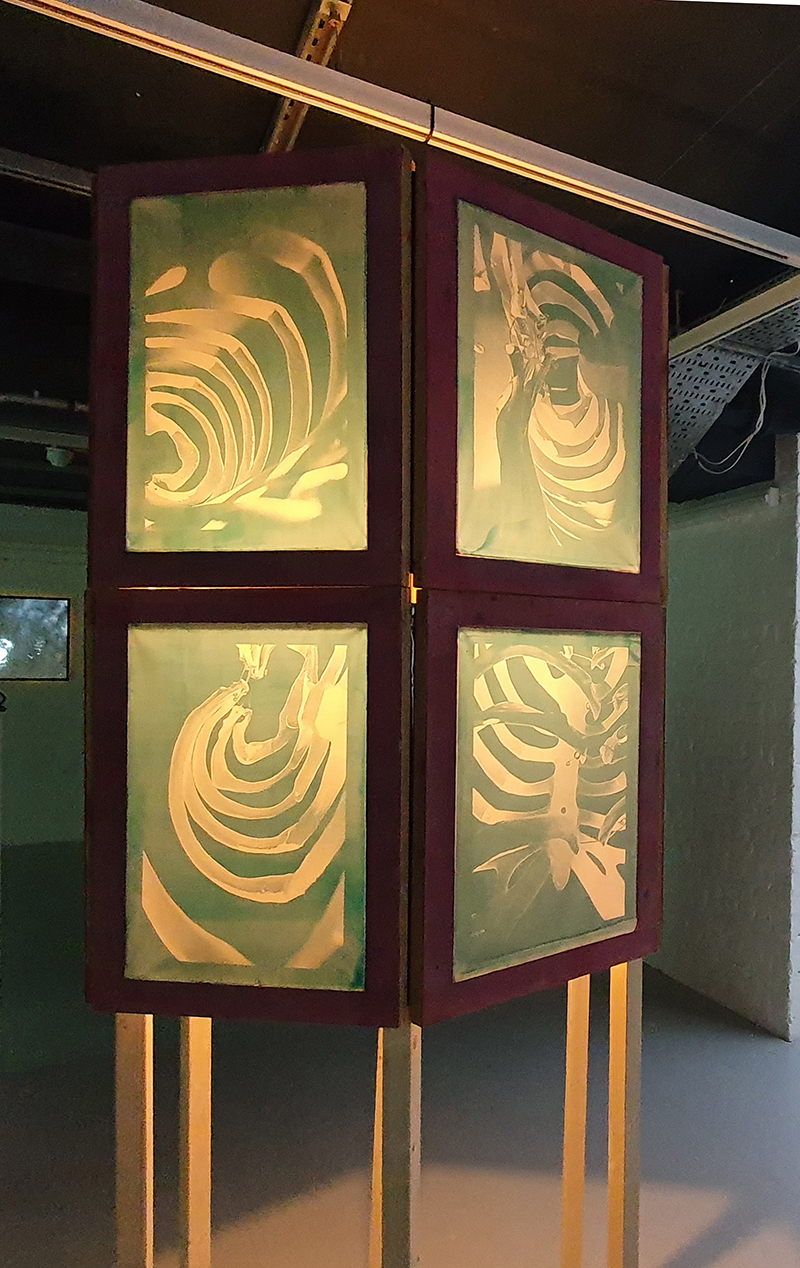
The London Group exhibition including work from Victoria Arney (birdsong translated into woodcuts), Carol Wyss (examining the ribcage as protective enfolding), Sandra Crisp (blender generated molecules with embedded culture – a culture with culture) and Beverley Duckworth (Dust from the Sahara) in Catch Your Breath at Morley Gallery.

‘Catching one’s breath can happen if surprised, impressed or even shocked by something, such as an extraordinary object or image stumbled upon that instantaneously changes a familiar viewpoint. It can also be a time to pause or reflect and take stock.’

Working on The Breath of Stars I have been thinking about the breath and its active nature and inter-actions so it was interesting to see the many interpretations here.

Cloud Point at Paradise Row curated by Nicolas Bourriaud in collaboration with Radicants.

Text from the Gallery:

The artists (Nicolas Aguirre, Hicham Berrada, Marieke Bernard Berkel, Alice Channer, Pakui Hardware, My-Lan Hoang-Thuy, Zarah Landes, Estrid Lutz, Tala Madani, Pamela Rosenkranz) in this exhibition belong to a generation for whom no material is natural anymore. Matter, in its totality, is both form and content, subject and object, nature and culture. In other words, there is no neutral background in today’s images, but streams and active forces.

Cloud Point gathers artists who don’t consider objects, products or masses in their work, but rather the atomic structure of our surroundings, and theirs. They are particularly interested in the in-betweens — processes of liquefaction, moments of coagulation, condensation points… The emergence of this molecular gaze in contemporary art also reflects in theory and politics.

Politics goes molecular as Felix Guattari had already stated, in the 1970’s, talking about a necessary ‘molecular revolution’. We see how gas, oil, bacterias, viruses or chemicals become the new agents of History. Zygmunt Bauman analysed postmodern capitalism as a process of liquefaction of our institutions. Today Karen Barad describes matter, at its molecular stage, as pure ‘queerness’. And according to Rosa Braidotti, ‘Capital seeks and reduces body fluids to merchandise: the sweat and cheap blood of the labor force available throughout the Third World; but also the fluids of the desire of First World consumers who reduce their existence to a commodity by transforming it into a hyper-saturated state of confusion.’

I have returned to my BA dissertation from 2007 The Communication of Ecological Concerns Through Contemporary Artistic Practice to look at excerpts where I discussed the theories of Nicolas Bourriaud.

‘The intertwining of ecological and political processes with artistic practises is explored in conjunction with the particular theories of Bruno Latour, Nicolas Bourriaud and Zygmunt Bauman. These writers all speak of a need to establish new ways of communicating about the complexities of our relationships to our environments as we move through different spaces to those of the past. In light of this necessity, the precarious balance an artist must achieve to engage a contemporary urban audience with an environmental message, without losing sight of their aesthetic, or becoming embroiled in the nullifying production of commodity, is debated.’

‘Bourriaud documents the shift in focus from the visual to the relational during the 1990’s when new forms of communication  available through modern technologies coincided with an economic depression. For the artist there was a lack of funding for the spectacular but also the opportunity to experiment with spaces previously given over to exchange and barter. The artists took as their medium something they found lacking in  other areas of daily life; social relations which did not involve supplier-customer exchanges. The loss of personal interactions from daily life as more and more functions were performed by or through machines and computers were reborn in the processes of participatory practises where the audience was invited to experience rather than behold.’

‘An artwork’s short life span is not necessarily a reflection of the insatiable appetite of the gallery going public to consume and discard art as any other commodity. In using relational aesthetics the artist deliberately steps outside of this cycle. Artists who base their practises on exchanges of experience and communication through tangible means which have no value as art outside a temporal set of circumstances give the public a chance to experience a different type of social bond. From the ethos of relational aesthetics is born the possibility of art infecting the collective subjectivity. Artists whose work sidesteps the rules of the market place create a ‘social interstice,’ a small space in which to explore relations with the world. An interstice does not operate in the same way as a message, which is akin to advertising and belongs in the world of marketing. The space created must be inviting or intriguing to draw the audience into a realm of possibility, to start a conversation not give a lecture.’


I selected seven works alongside my own for an informal tour at Wells Art Contemporary to promote conversations inspired by the works. Shield – Peter Newell-Price, Chronologer (chalk and bone) – Paul Tuppeny, Screw Up Repeat – Kate McDonnell, Beneath the Heavens III – Kaori Homma, Route 339 – John Ball, Everyone was a bird – Caro Williams, Two-Sided I & II – Aliceson Carter.

Out of thousands of submissions, this year’s judging panel, Matthew Burrows MBE, Dale Lewis and Nana Shiomi, selected a shortlist of 120 artworks by 111 artists for the 2022 exhibition.

29 site-specific installations have also been selected by Clare Burnett and Jacquiline Creswell to stand as interventional responses to the architectural, spatial and spiritual aspects of Wells Cathedral.

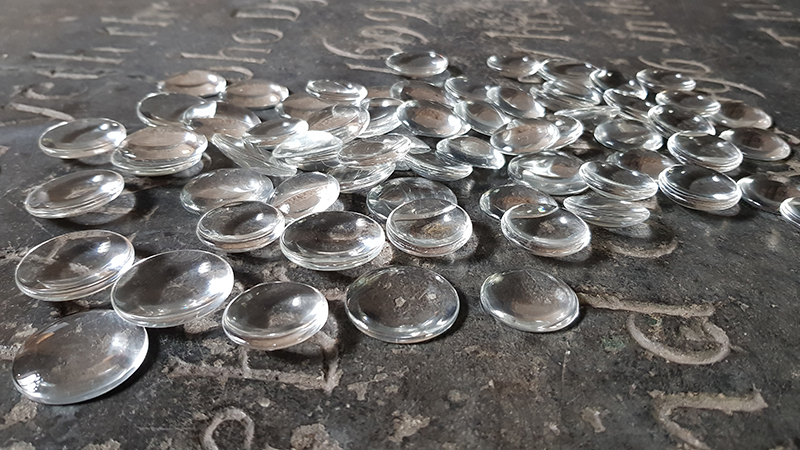
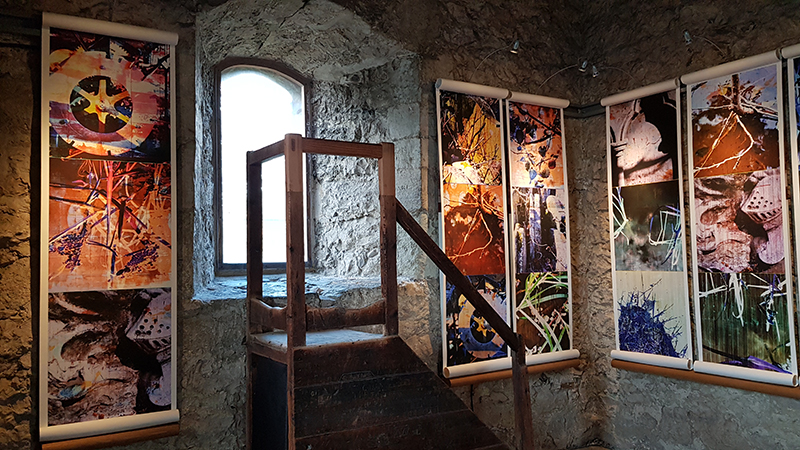
Reading stones could be considered the first instruments used to create an enhanced sensory experience. Originally made from ground and polished rock crystal or beryl, they were placed over texts to magnify them.

1909 reading stones

This early optical technology paved the way toward observation of the furthest reaches of the universe and its minutest components.

1909 Baetylus 2.jpg

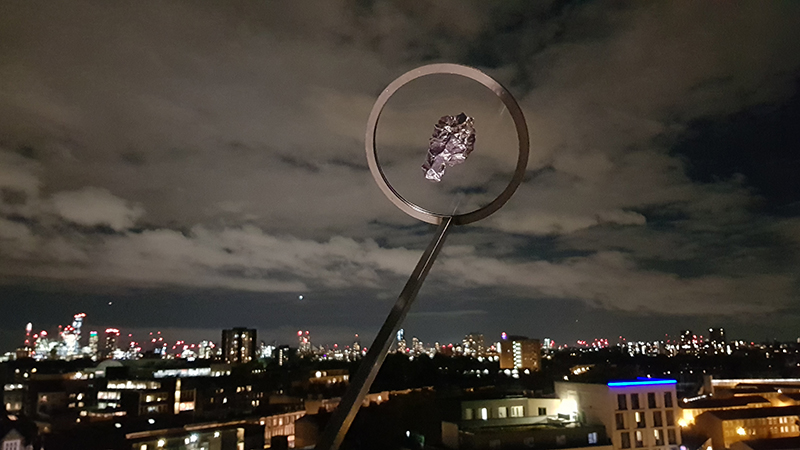
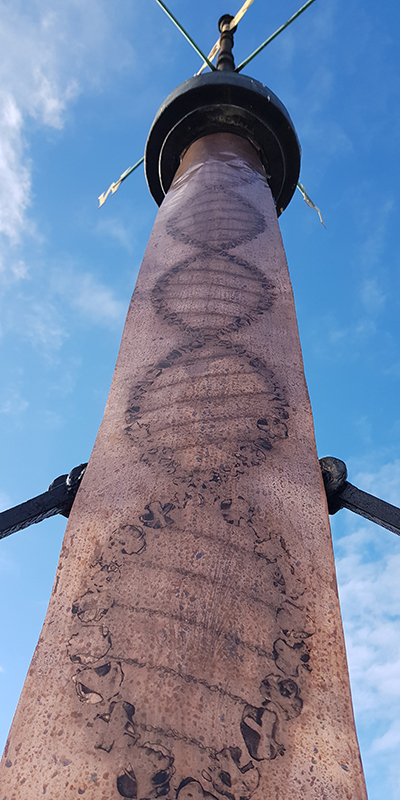
Both the telescope and microscope are referenced by the sculpture Baetylus installed on St. Augustine’s Tower roof for the exhibition Reading Stones.

1909 Baetylus installed St Augustines Tower

Baetylus (meaning from the house of god), are sacred stones/meteorites of divine origin.

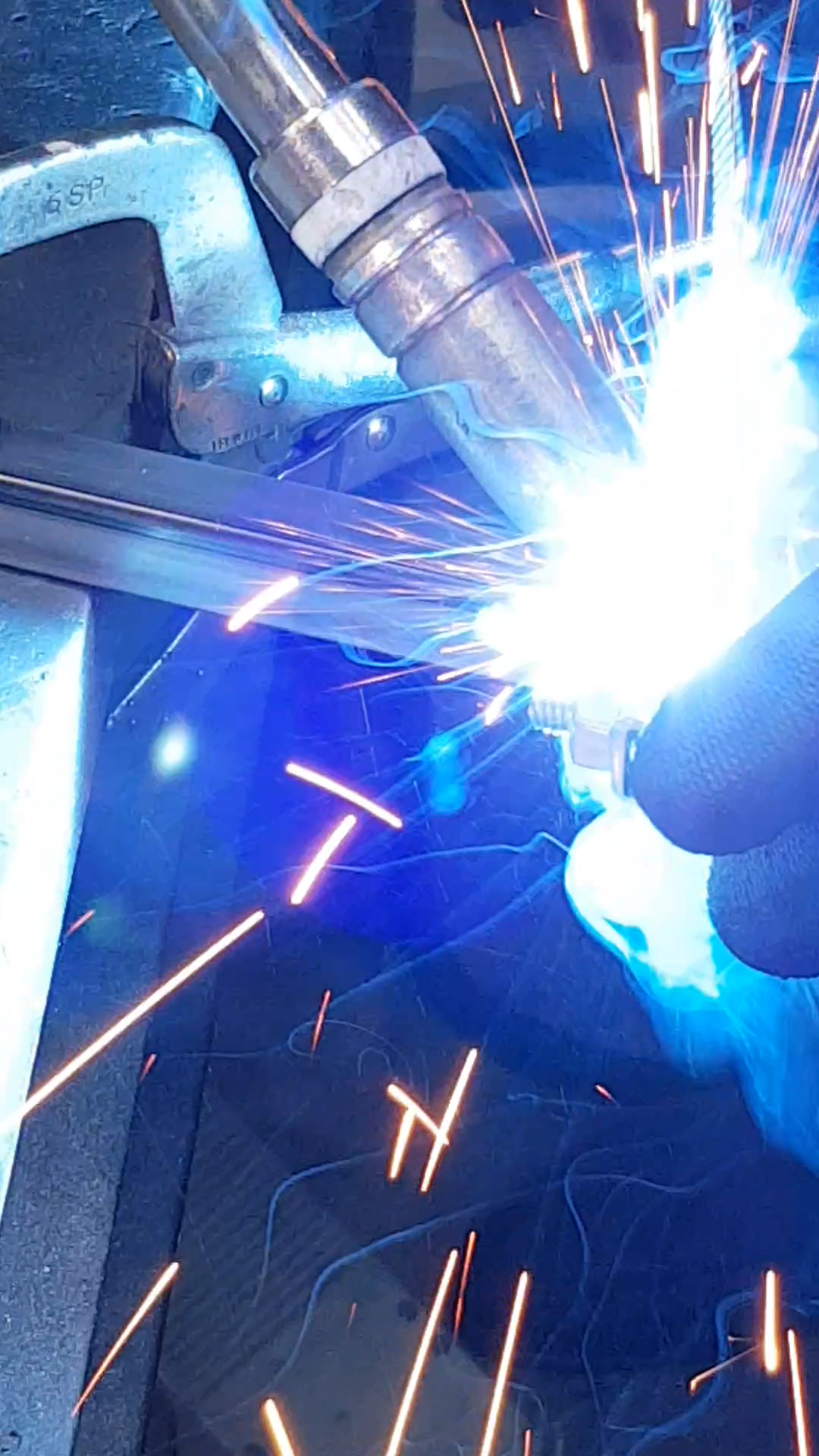
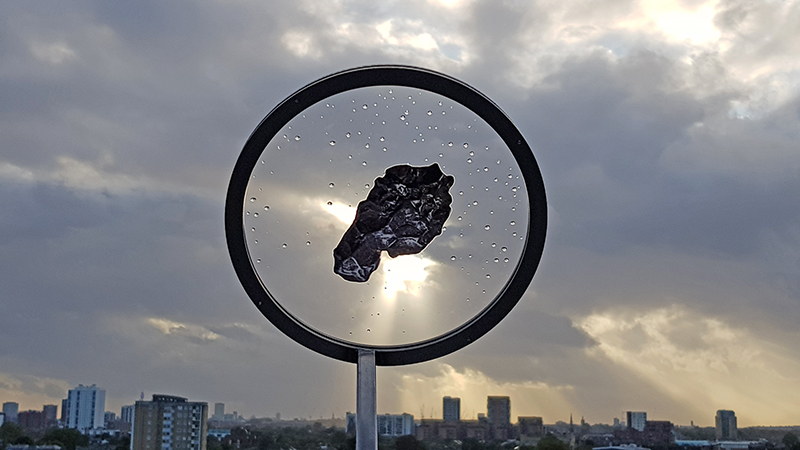
In this case sold to me for £6, a 15mm Nickel Iron Meteorite from Campo Del Cielo Argentina, falling 5000-6000 years ago. Photographed with a macro lens and direct to media printed onto acrylic by Genesis printing. The steel frame expertly welded by Nick Amott of J.& R. Precision Engineers.

1909 welding

The wind and rain on the roof soon added to the piece.

1909 Baetylus meteor shower

rain + meteor = meteor shower

An object falling through space distorts not only the space it travels through but also time as space and time are inexorably linked.

Each visit to the roof gave a different experience of the work.

1909 Baetylus 1

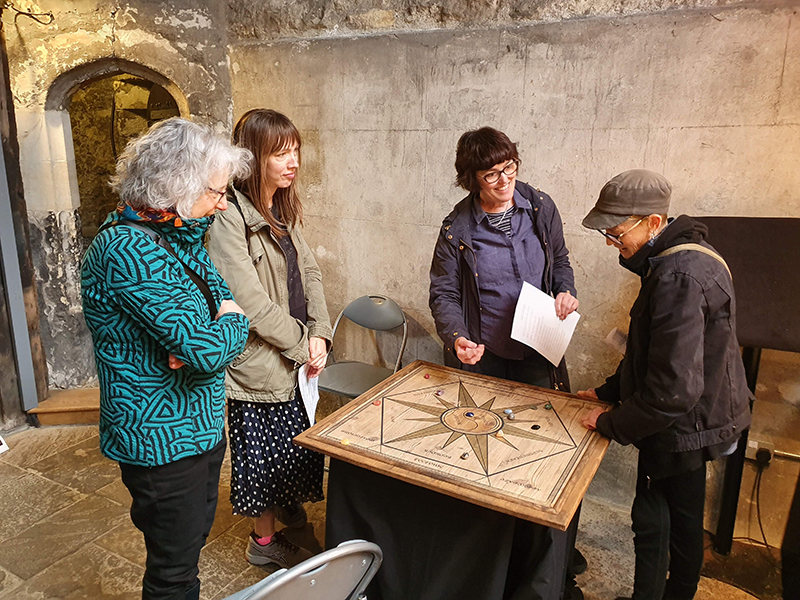
The act of “reading stones” can refer to both the scientific practice of geological investigation and the ritual of lithomancy which seeks to interpret the patterns of stones cast by those wishing to divine the future.

1909 Lithomancy reading

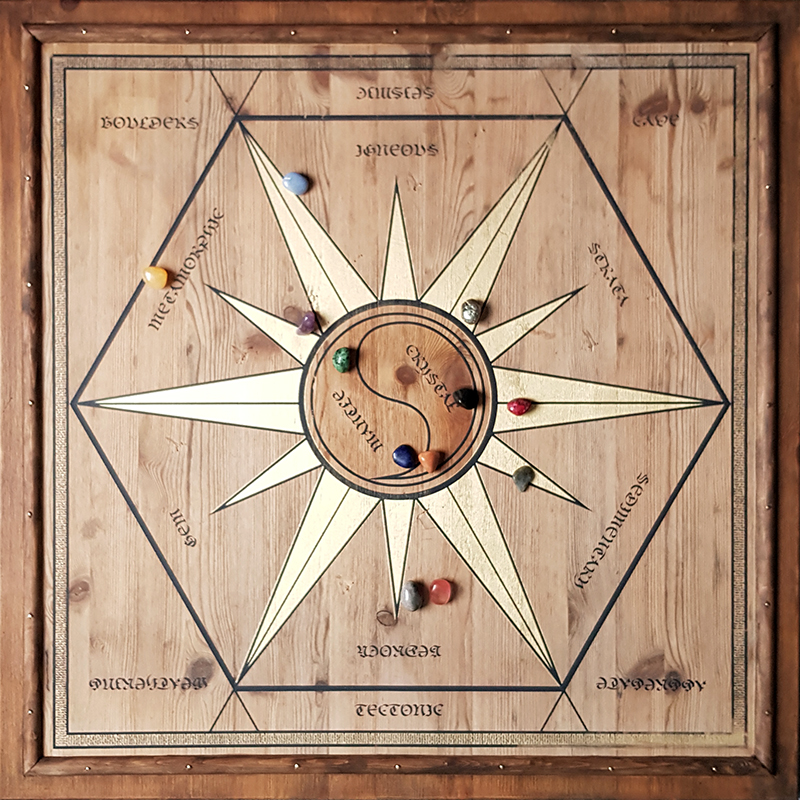
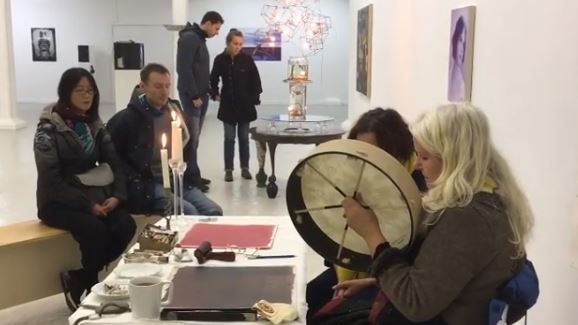
Offering ‘readings’ gave visitors a personal perspective to consider when thinking about how we experience time and negotiate the future. The board, a salvaged old table top was screen printed with a design created after researching the ancient art of lithomancy and prevalent variations. I gave the board a geological emphasis and aligned the areas of activity with traditional associations such as sedimentary = home, boulders = obstacles and challenges, strata = knowledge and experience.

1909 lithomancy board

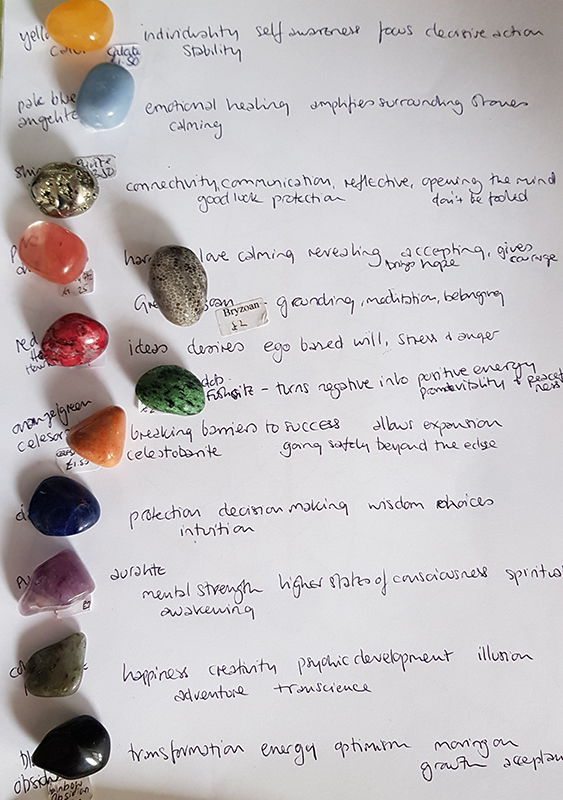
The gemstones were assigned properties according to traditional meanings.

1909 assigning stones

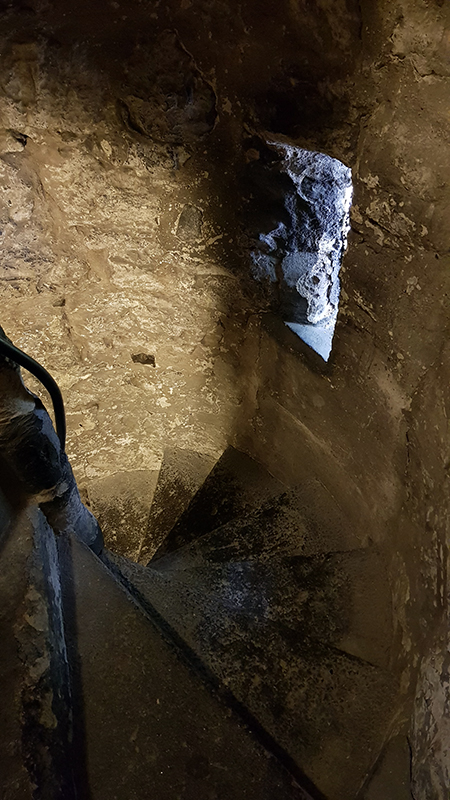
It was magical to spend so much time within the thick stone walls of St. Augustine’s Tower, ascending and descending the steep narrow spiral stairs adding yet another infinitesimal trace to the worn history of the steps.

1909 St Augustine tower stairs

Working with Carol Wyss and Anne Krinsky on this project was a pleasure and we were delighted with the public response to the exhibition.

1909 Carol Wyss All that remains

Carol Wyss All That Remains 

“My aim is to re-create the original ‘UR’ bone which has neither gender nor race, the first ever bone which existed, the one which fell from heaven or space. It is an attempt at merging all the bones of the human skeleton into one entity, which then becomes the common denominator, the starting point from which all bones and consequently all humans came. I am referring to the bible story of Eve’s creation from Adam’s rib, the Greek myth of Pyrrha with the creation of humans from the stones / bones of the earth and Da Vinci’s perfectly proportional Vitruvian man, as well as to science’s search for the ultimate building blocks of our universe.” Carol Wyss

1909 Carol Wyss

1909 Carol Wyss Os

Carol Wyss Os

Deucalion and his wife Pyrrha were the only survivors of the great deluge and landed on Mount Parnassus, the only place spared by the flood.
Deucalion consulted an oracle of Themis about how to repopulate the earth. He was told to throw the bones of his mother behind his shoulder.
Deucalion and Pyrrha understood the “mother” to be Gaia, the mother of all living things, and the “bones” to be rocks.
They threw the rocks behind their shoulders, which soon began to lose their hardness and change form.
Their mass grew greater, and the beginnings of human form emerged.
The parts that were soft and moist became skin, the veins of the rock became people’s veins, and the hardest parts of the rocks became bones.
The stones thrown by Pyrrha became women; those thrown by Deucalion became men.

1909 Carol Wyss Osmosis

Carol Wyss Osmosis

All the sons of Adam are part of
One single body,
They are of the same essence.
When time afflicts us with pain
In one part of that body
All the other parts feel it too.
If you fail to feel the pain of others
You do not deserve the name of man.
― Saadi Shirazi 1258

1909 Anne Krinsky Ephemera Scrolls 2

Anne Krinsky Ephemera Scrolls

“I am interested in the ephemeral nature of the physical world – in the transformation of terrains and in the erosion of stone, wood and metal over time. In developing imagery for the Ephemera scrolls, I wanted to create visual relationships across time and space. I photographed the Tower’s clock mechanism and gravestones from the surrounding garden and other London churchyards. During a recent residency at Oberpfalzer Kunstlerhaus in Schwandorf, Germany, I photographed the River Naab, as its water levels dropped during the hottest June on record. I feel impelled to document changes to wetlands and waterways in this time of accelerating climate change.” Anne Krinsky

1909 Anne Krinsky Ephemera Scrolls 1

Anne Krinsky Ephemera Scrolls

Time Crystals video work installed alongside the tower’s ancient clock builds on an interest in the mystery of time viewed across human, cosmological and quantum scales.

1909 St Augustines Tower Clock

The clock by which we measure time on our watches and digital devices is very misleading;
it is determined by the daily rotation of the Earth around its axis and its annual rotation around the sun.
This astronomical time is linear and regular.
But the actual clock by which we live our socioeconomic lives is an emergent phenomenon determined by the collective forces of social interaction:
it is continually and systematically speeding up relative to objective astronomical time.
– Geoffrey West, 2017

The patterns employed within the film and spilling out from the projection as 3D triangles mirror the crystal structure of the mineral beryl, commonly used to fashion the original reading stones.

1909 time crystals video still

The work also makes reference to the scientific theory of time crystals; a model which proposes a structure that repeats in time, as well as in space. Variations in perspective are manipulated through the speeding up, slowing down and overlapping of events to deconstruct a linear flow of time and interrogate the methods by which humans measure and experience this phenomenon.

It is within my mind then, that I measure time. I must not allow my mind to insist that time is something objective.
When I measure time, I am measuring something in the present of my mind. Either this is time, or I have no idea what time is.
― St. Augustine of Hippo, 397

1909 Time Crystals

How can the past and future be, when the past no longer is, and the future is not yet?
As for the present, if it were always present and never moved on to become the past, it would not be time, but eternity.
― St. Augustine of Hippo, 397

Using Carlo Rovelli’s book The Order Of Time as a reference guide and the quotes of St. Augustine as points of enquiry the repeating layered films were made using time lapse and slow motion; recording the exchange of energy as objects collide, heat up, cool down, travel at speed, transform, reflect and absorb, display traces of past events and embark on supposedly predictable trajectories. How we experience time is relative to where we are in the universe, our proximity to a larger mass and how fast we are moving.


A crystal is like a class of children arranged for drill, but standing at ease,
so that while the class as a whole has regularity both in time and space, each individual child is a little fidgety.
– Dame Kathleen Lonsdale, 1948

The fabric of the ancient building also helped determine the work installed. The 3D element of my video installation needed to be built in situ. One challenge was projecting in portrait mode to neatly fit the wall space between window and clock mechanism. Projectors are not supposed to be set on their side but with an adapted ceiling mount allowing clear air vents for the fan it all worked out fine.

1909 making triangles

Clamps, weights, stitching, balancing and non invasive means of installing had to be employed not to harm the Grade I listed heritage site.

1909 time crystals video installation detail

On location. After much searching a secret tower in the woods was found, knotted within dense undergrowth. Hidden in time and space.

1909 secret tower

Artlyst review of Reading Stones. by Jude Cowan Montague.

A pleasure to be asked back to Guest Projects for a filmed interview about my experience during the residency Laboratory of Dark Matters for a promotional video to launch Yinka Shonibare’s new residency programme opening in Lagos.


I attended the UK High Altitude Society Conference 2019 to give an update on the project aiming to launch a cloud chamber in a high altitude balloon.

1909 UKHAS 2019 2.JPG

Live Stream of conference presentations – my presentation at 3:30 in.

Very interesting talk from Michael Johnson on citizen space exploration & inflatable spacecraft, building on past developments of inflatable spacecraft from NASA new technology could see thousands of tiny spacecraft launched within days as opposed to decades.

1909 pocket spacecraft 3

1909 pocket spacecraft 4

He also allowed us to hold the tiny spacecraft.

Finished working on video sculpture At a distance which has been installed at The Museum of Cornish Life, Helston for the Lizard Point Residency Touring Exhibition.

1909 at a distance install

This residency was inspired by an incredible communications double anniversary in 2019, for Lizard Lighthouse (400 years) and Goonhilly Earth Station (50 years: transmission of the first lunar landings), considering the importance of life-saving lighthouse beacons and internationally important transmissions across the sea and sky.

1909 Lizard Lighthouse

Lizard Point, overlooking the Atlantic, benefits from natural darkness, natural beauty and is a great spot for viewing the Moon, stars and meteor showers.

1909 Lizard Lighthouse 21909 LIGHTHOUSE beam

Staying on site, next door to the famous Lizard Lighthouse, artists had the opportunity to create works responding to the variety of astronomical sights found there, as well as be inspired by the rich communications heritage along this very special part of the SW coastal path.

Solitary figures using semaphore flags sign ‘We Are One’ out across the ocean; filmed on 29th March 2019 (the first date the UK was supposed to leave the EU).

1909 At a distance 1

As in entanglement theory where two paired electrons mirror each other at a distance it is hoped the message will be echoed back. The work looks at methods of communication over distance. It relates this to the mysterious twinning of electrons in quantum entanglement where particles link in a way that they instantly affect each other, even over vast distances, and which Einstein famously called ‘spooky action at a distance’. The video is back projected onto a Fresnel lens, the type found in lighthouses to increase luminosity of the lamps beam, another form of messaging over distance.

1909 At a distance 2

The video sequences through five sets of semaphore messages. Each message is echoed back within a swirling force field emanating from across the ocean repeating the pattern of the flag representing entanglement. This is interspersed with imagery from video captured of the Lizard Point Lighthouse Lamp slowly waking and powering up from dim to dazzling light, split and mirrored in a circle of sending and receiving messages.


The Museum of Cornish Life is surprisingly vast and crowded with innumerable artefacts at every scale. A fearsome cider press the size of a lorry included. The long passage through the museum to the exhibition rooms encounters an overwhelming volume of items jostling for attention.

1909 Helston museum

Here are the records of events from which we infer the past.

While in Cornwall there was time for a quick visit to Tate St. Ives. An unexpected treat to find Otobong Nkanga’s excellent exhibition From Where I Stand looking at the glittery desirability of minerals and the scars left on the landscape and people by it’s extraction.

What could a monument be? Is it the thing we build or the thing we have taken away from? A place of emptiness is the monument to remind us there is no possibility of getting back to what has been – Otobong Nkanga

Back in beautiful Northumberland for a Beyond gathering of artists at ACA who will be continuing in the open door residency as the project evolves into Continuum.

1810 ACA.jpg

Lots of particle trails were spotted during The Cloud Chamber Workshop. Thanks to the Institute of Physics for sponsoring this, Allenheads Contemporary Arts for hosting and the North Pennines Stargazing Festival for including it in their programme.

1810 cloud chamber workshop 1

A cloud chamber gives us a glimpse into the invisible world of particles produced in the radioactive decay of naturally occurring elements and those generated when cosmic rays strike the top of the Earth’s atmosphere.

1810 cloud chamber workshop 2

These particles pass though us continuously without our awareness. Witnessing this usually unseen activity can lead us to look beyond what our immediate senses tell us is there and consider the possibility of other intangible phenomena.

1810 Wilson's cloud chamber

The rather gorgeous original Cloud Chamber was invented by Scottish physicist Charles Wilson and he won the noble prize for it in 1927. It has been said that the cloud chamber might be the most important piece of experimental equipment in the history of particle physics. It was a chance discovery that made the study of particles possible.
Wilson was fascinated by clouds and was actually studying meteorology spending his time observing clouds at the top of Ben Nevis. He thought it might be easier to study them if he could build a device to create clouds in his laboratory. He also hoped to recreate the strange optical phenomena known as a Glory caused by light hitting clouds below the observer which he had experienced from his high vantage point on the mountain.

1810 A glory

It was Victor Hess who discovered cosmic rays and earnt the Nobel Prize for this in 1936. Scientists had been puzzled by the levels of ionizing radiation measured in the atmosphere using electroscopes. It was expected that radiation would decrease with distance from the earth but to test this Hess risked his life taking measurements at high altitudes in a balloon without oxygen tanks. He found that the radiation levels increased with altitude and concluded that there was radiation penetrating the atmosphere from outer space.

1810 Victor Hess balloon

Left over dry ice from the workshop gave us the opportunity to try freezing bubbles.

1810 freezing bubble

The workshop was followed by The Dark Side of the Universe talk from Dr. Pete Edwards. Our universe is filled with mysterious dark matter, whose gravity provides the cosmic glue that holds it all together, and dark energy, which is slowly tearing the universe apart.

1810 Pete Edwards Talk ACA

The finale of the Stargazing Festival was the screening of Steven Spielberg’s 1977 sci-fi icon Close Encounters of the Third Kind. Good to revisit and think about how much more we know about the universe 41 years on.

1810 Close Encounters

This was preceded by an appropriate dinner courtesy of Alan Smith.

1810 Close Encounters dinner

I was invited as a guest speaker at London LASER Labs Re- Thinking Space at Central Saint Martins.

The session remit was

We are in the midst of both an incredible and challenging space age. How can we harness the information, collected in silo, from the fields of cosmology and quantum physics to conceive of a more unified vision of how the universe (and us) are put together? Within science and culture – what new models of thought could we foster? How do creativity and consciousness fit into this emerging paradigm? How can we rethink our practices to swerve the impasse some are labelling a new ‘Dark Age’?…

I was glad to arrive early to see the collection of meteorites Dr Natasha Almeida, Curator of Meteorites at the Natural History Museum had brought along for the Playlab hands on session. This included a spectacular slice of iron meteorite. Due to a long cooling period inside the parent asteroids the nickel and iron alloys crystallise then when polished and acid etched the classic Widmanstätten patterns of intersecting lines of lamellar kamacite, are visible. Also a tear drop of earth rock created when a meteorite struck the earth and the heat melted the rock which flew into the air and cooled into tear drops as it fell.

1810 meteorite collection.jpg

Other speakers at the event were Dr. Thomas Kitching a Cosmologist from Mullard Space Science Laboratory who is Science Co-Lead for the ESA’s Euclid Mission launching in 2021 to map the geometry of the Dark Universe by observing thousands of millions of galaxies.

1810 terra incognita.jpg

He told us how confidence in what the universe is made of has eroded over the centuries and perhaps dark matter and dark energy which make up what we call the dark universe should be renamed Materia Incognita.

Dr Ceri Brenner is a plasma physicist and innovator at STFC Rutherford Appleton Laboratory’s Central Laser Facility. She uses the most powerful lasers in the world to study what happens when extreme bursts of light come into contact with matter. She told us how firing these high energy lasers  through Tantalum a rare, blue-gray lustrous metal can produce high energy x-rays which can be used for imaging the container walls of  radioactive storage facilities to look for damage. The extreme physics she studies can also be applied to understanding supernova explosions in space or how we can ignite a star on earth for clean electricity generation.

1810 STFC laser lab

Apparently plasma accounts for 99% of the known matter in the Universe, it’s a soup of sub-atomic particles at temperatures way beyond what we usually experience on earth. This makes the stuff we interact with on a daily basis seem a really tiny portion if 99% of the 5% we know is also stuff beyond our realm of experience.

1810 plasma.jpg

Astrophysicist Dr Chamkaur Ghag was also there to talk about direct dark matter research and how extremely sensitive the detectors need to be. It was interesting to look at the progression of the different detectors from DRIFT to LUX increasing target capacity and homing in on areas of possibility where the illusive particles might be found.

Cham always gives insight into the importance of not just interrogating matter but putting scientific research into context. Asking why we are doing something, not just how. This fires his passion to address climate change and his involvement in the grassroots initiative from Particle Physicists European Strategy Update on Climate Change

1810 Paradise burning

PARADISE burning — More than 30,000 people fled for their lives as a late-season wildfire swept across this town in the Sierra foothills

Laser Lab Talks Re-Thinking Space was compered by Nicola Triscott, founding Artistic Director/CEO of Arts Catalyst who asked the panel some reaching questions about the future of physics and how we make a difference to the debate placing ourselves in control of our destiny. Questions from the floor addressed the public interface of science. Speaking in front of an audience is not something I find comfortable so my input to the panel was slim but hopefully I had aired some relevant points during my talk looking at the opposing scales of cosmology and quantum physics and how we might relate to these two spheres of knowledge, both beyond human scale and comprehension.

1802 frozen galaxy
The idea of a new dark age approaching addresses a fear that we no longer understand the world around us. We are subjected to too much information that we can no longer process. There is too much complexity, we don’t know where to turn for verification.
The knowledge of the way the world behaves built up over generations may no longer apply. The fear that we are losing connection to the world around us is in many ways a long standing one – we have always looked back to a time when we believed we lived in harmony with the natural world.  That something central to our lives has been lost.


1810 Bruegel Two Monkeys

Pieter Bruegel The Elder Two Monkeys 1592

I have seen some interesting exhibitions tracing the human experience through alienation, projection and what happens when different worlds collide.

Nicky Coutts excellent examination of interspecies dissonance Man Stupid at Danielle Arnaud. Koko the gorilla was born and raised in captivity. She was taught to sign and ultimately deliver a message in the role of ambassador on behalf of nature to the 2015 Paris Climate Conference.

In Nicky’s drawings Koko has slipped away leaving just her skin as shadow.

1810 Nicky Coutts

The images read as an indecipherable code. The frustration at the divide between human and non human communication is held in these traces of gesture. We can look hard, make suggestions but will never know what is in the great ape’s mind. Drawn in blackest charcoal, rich and intense with a primeval, totemic aura they could be the props of the shaman hinting at another world that requires some rite of passage involving the returning to a world of raw visceral nature.

Oceania at The Royal Academy.

In 1768 James Cook set sail from Plymouth in the HMS Endeavour funded by the Royal Society to track the transit of Venus in Tahiti and explore the islands of the Pacific Ocean.

1810 Oceania RA Lisa Reihana 3.jpg

Lisa Reihana has created a large scale panaoramic video installation in Pursuit of Venus [infected] using the French scenic wallpaper Les Sauvages De La Mer Pacifique as a backdrop to the complexities of cultural identity and colonisation depicting scenes of encounter between Europeans and Polynesians.

1810 Oceania RA 3

Much of the exhibition was uncomfortable viewing for although the catalogue emphasises that objects collected by Europeans were frequently given willingly I don’t feel confident there was equality in these ‘exchanges’.

1810 Oceania RA 5

1810 Oceania RA 7

1810 Oceania RA 1

That the objects still resonate with spiritual significance for some is evident by fresh offerings left around the galleries.

I had just finished reading the riveting Modern Gods by Nick Laird before visiting which raises the subject of proselytism and relevant contemporary issues on religious belief and cultural contamination drawing on events in Ulster and Papua New Guinea to highlight the fragility of social cohesion when faith and tribe are on the line.


Sarah Christie’s Library shown at Southwark Cathedral is an ongoing attempt to give voice to the individuals that make up the 48% and the opposing 52% trying to make sense of the divided society they find themselves a part of in post Brexit referendum Britain.

1810 Sarah Christie

In Ancient Greece, people voted by writing on ‘ostraca’ a broken piece of pottery. The public have been invited to select an ostracon – sherds made by hand from a hundred and fifty cast bowls – and offer their own words that break boundaries.

I enjoyed Alex Prager’s Face in the Crowd series at The Photographers Gallery.

1810 Alex Prager Face in the Crowd

The individual is picked out in the crowd and elevated from anonymity, but look at the crowd – these are not the grey masses we blend in with on the streets, at airport lounges and theatres. Each of these characters is chosen, placed and choreographed. The unnatural vibrancy and controlled demeanours give the scene an unsettling automaton quality.

1810 Alex Prager

Entertained by an evening exploring the darker past of the gothic extravaganza Strawberry Hill House.

Spirits invoked for Ghost Tide exhibition at Thames-side Gallery curated by Sarah Sparkes and Monica Bobinska.

1810 Laura Marker Ghost Tide

Laura Marker

1810 Mary Yacoob Ghost Tide

Mary Yacoob

I took part in the Hollow Bone Ceremony led by shaman Kate Walters who uses repetitive drumming to alter the brain waves to ‘theta’ waves to allow travel to either the Upper world or the Lower world to convene with the cosmos, nature and animal spirits and ask for guidance on behalf of the participant.

1810 hollow bone ceremony

Was it coincidence that my mind focused on an unexpected encounter with a deer in Grizedale Forest the previous week that after the 10 minutes of rhythmic trance Kate came back with a strong image of a large Moose or Stag whose energy and ferocity I needed to tap into.

1815 Grizedale Deer.jpg

Thanks to Jim Lloyd for highlighting this quote from Werner Heisenberg

“What we observe is not nature itself, but nature exposed to our method of questioning. “