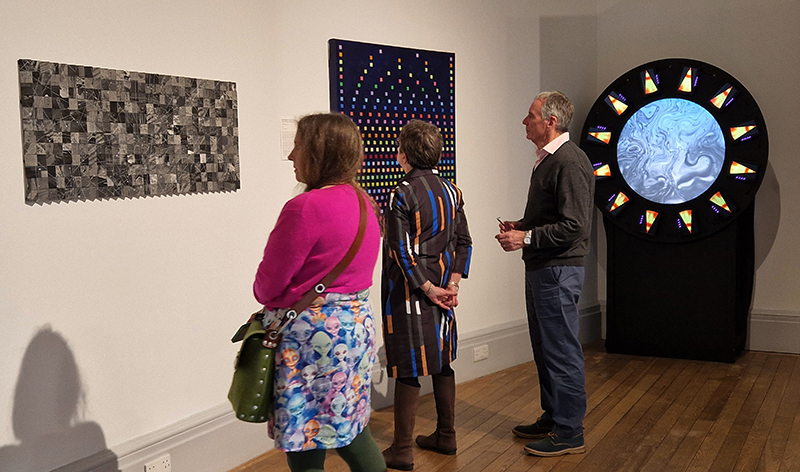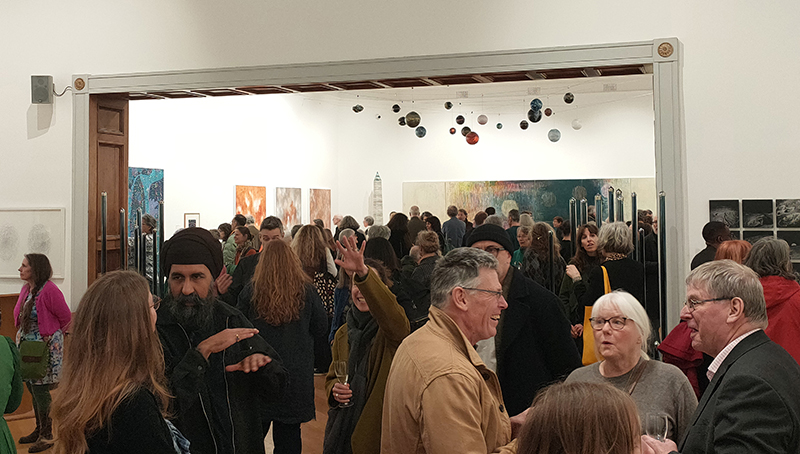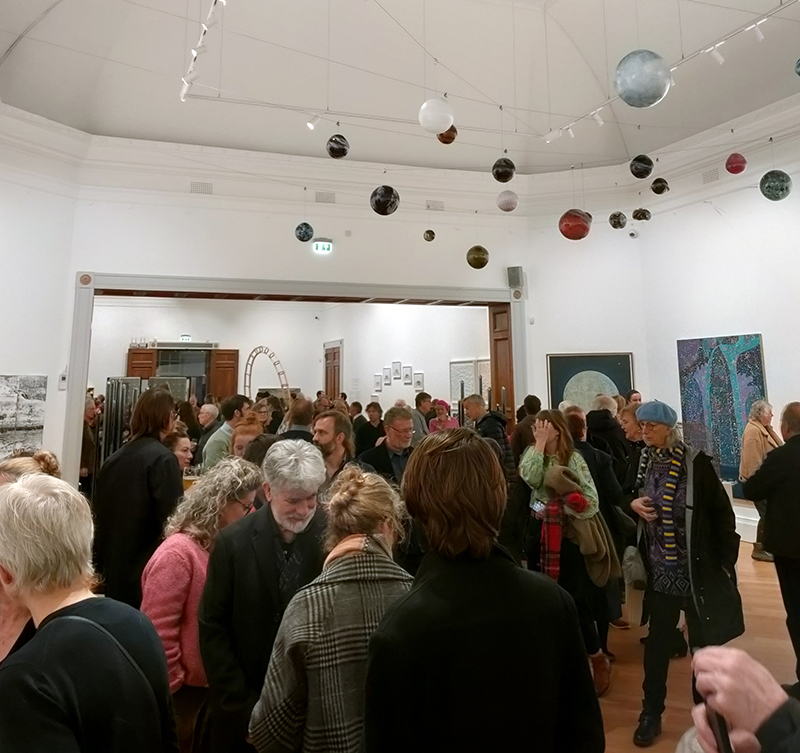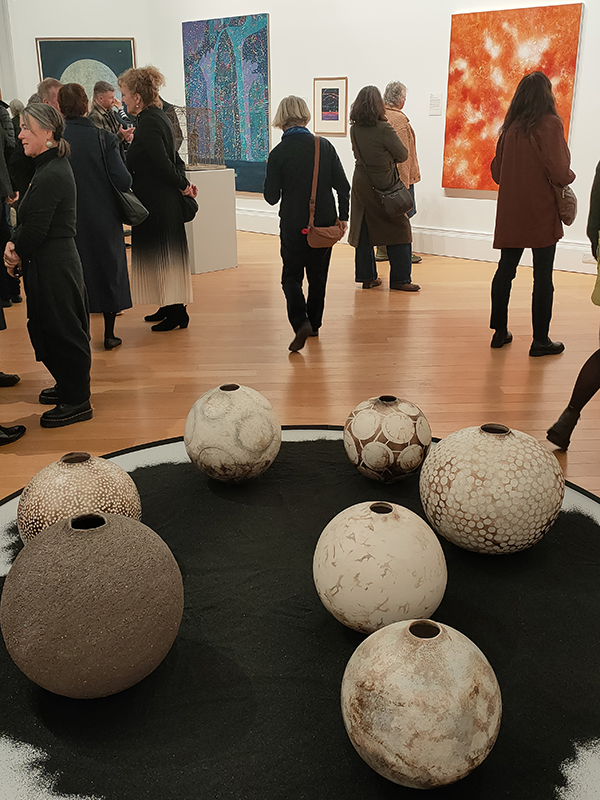
Archives for posts with tag: Robert Good

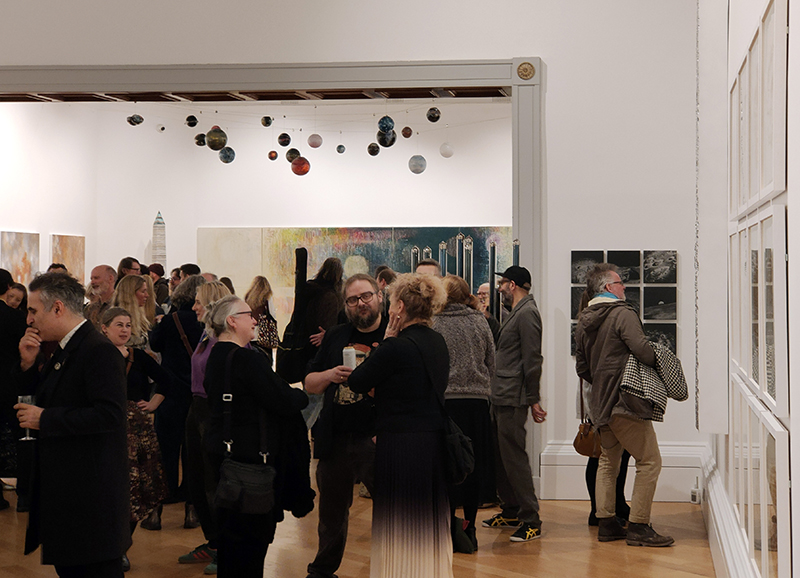
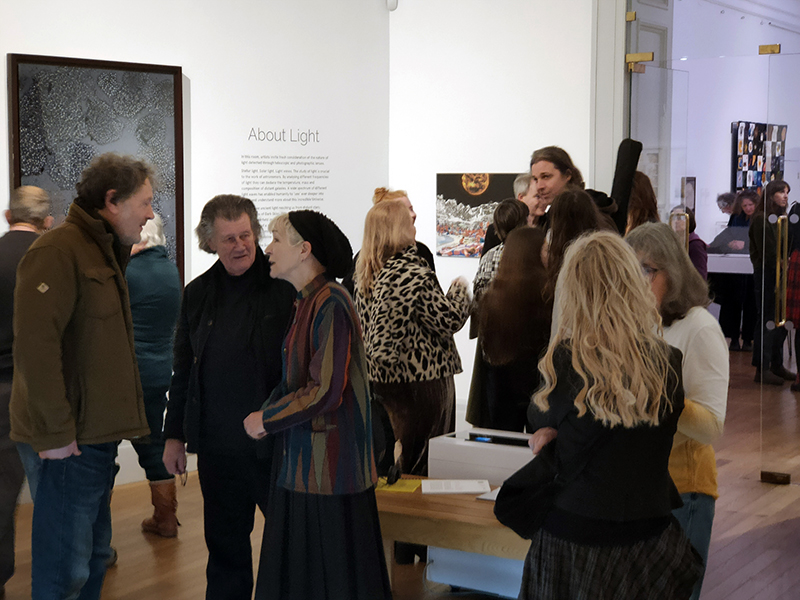
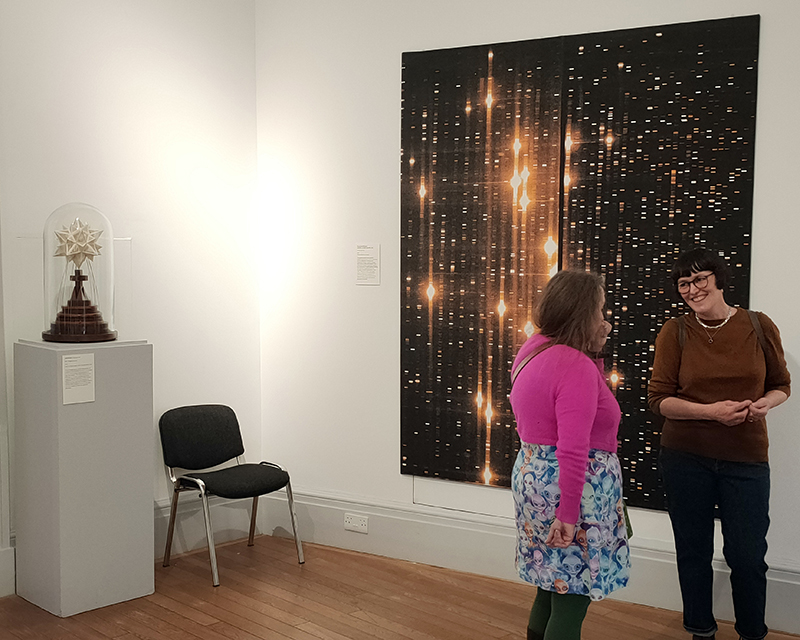
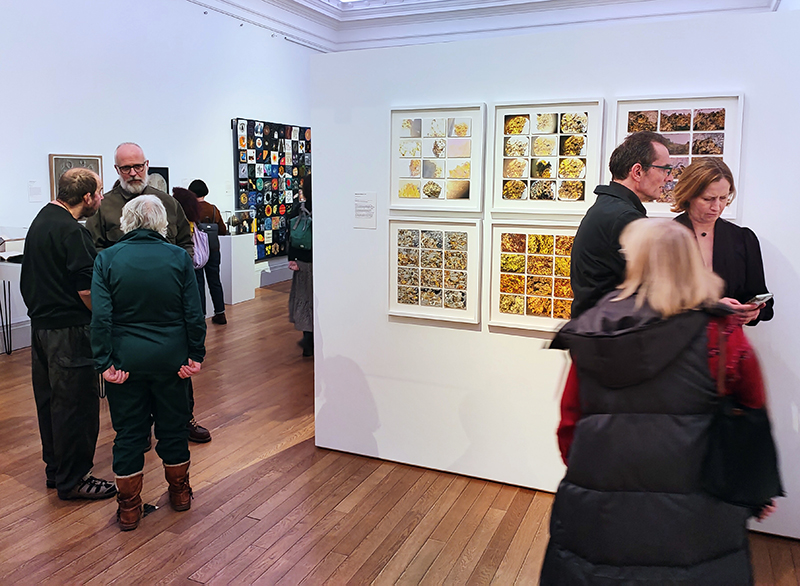
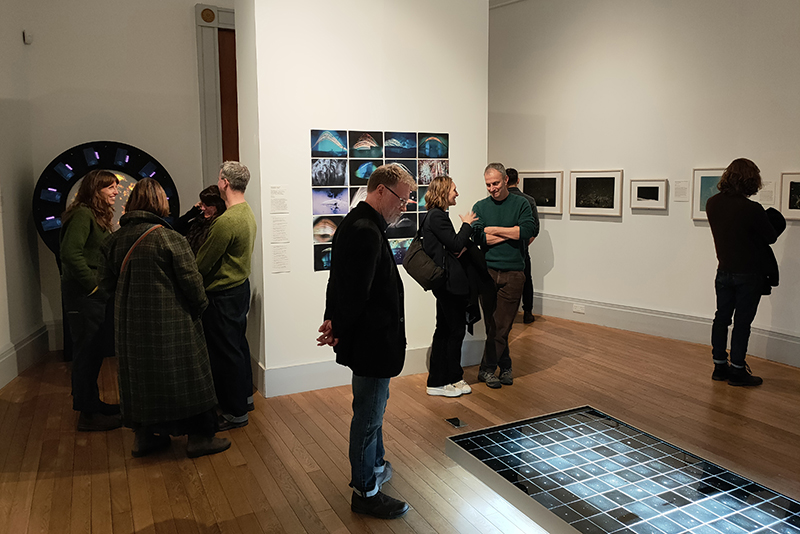
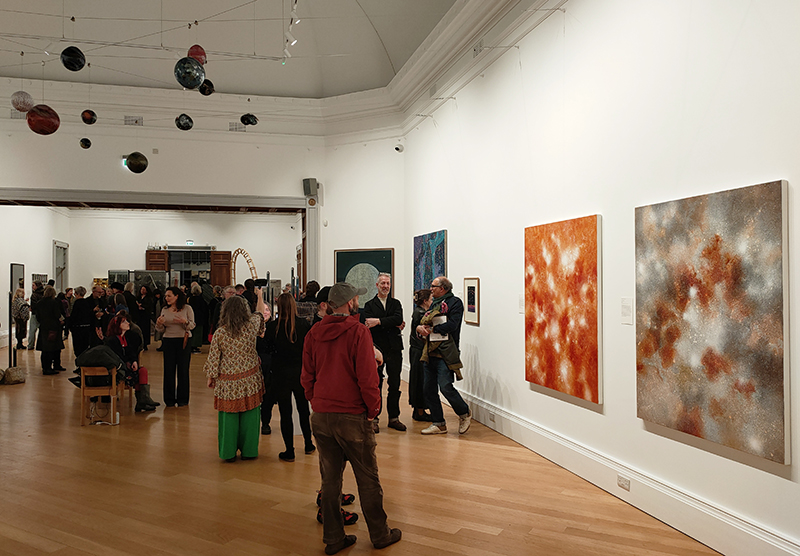
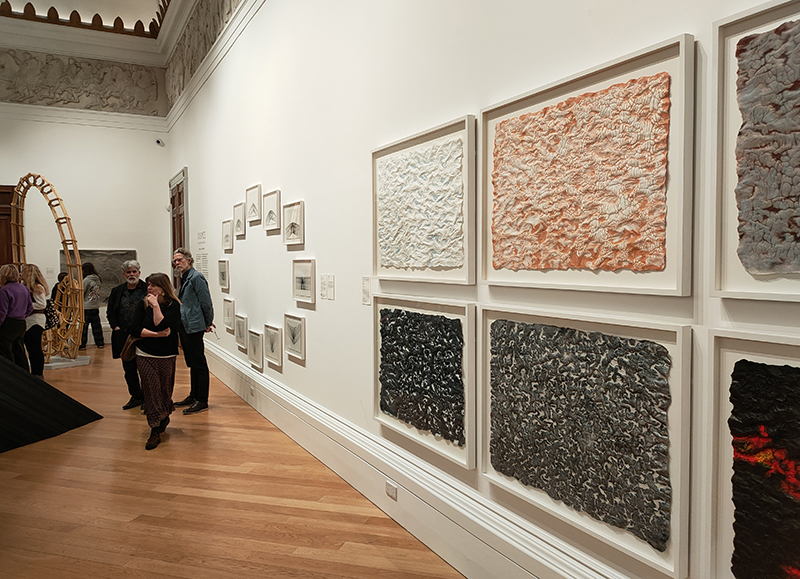
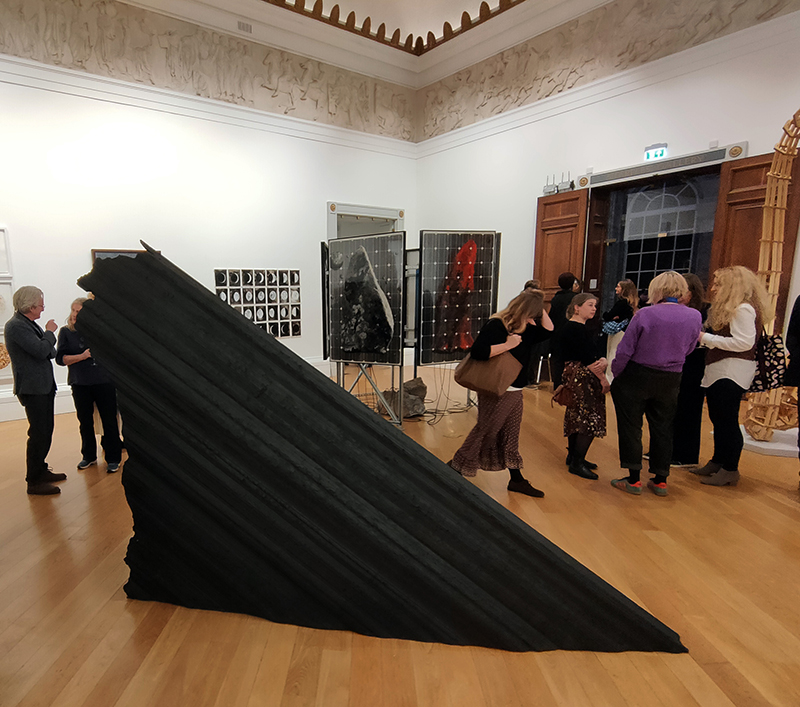
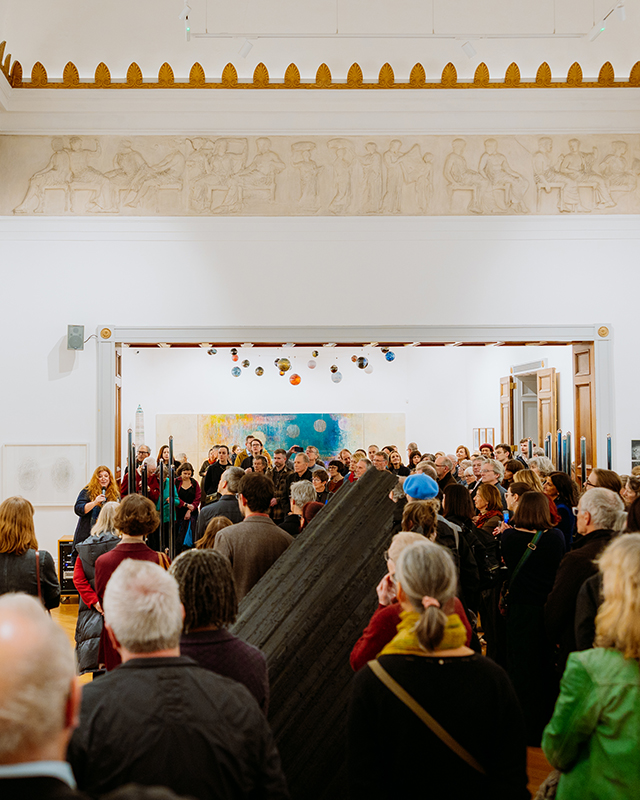
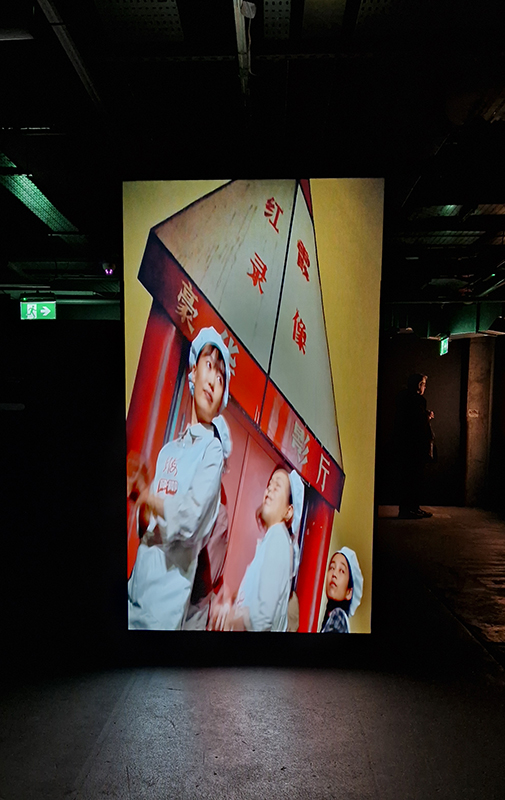
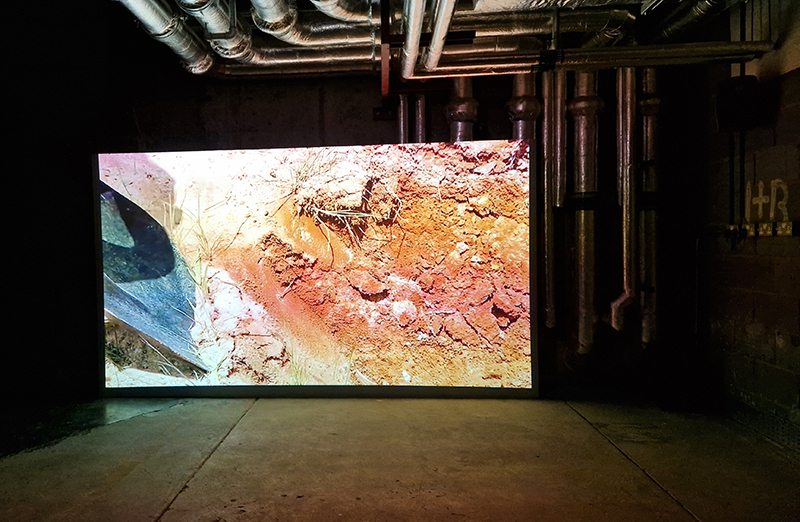
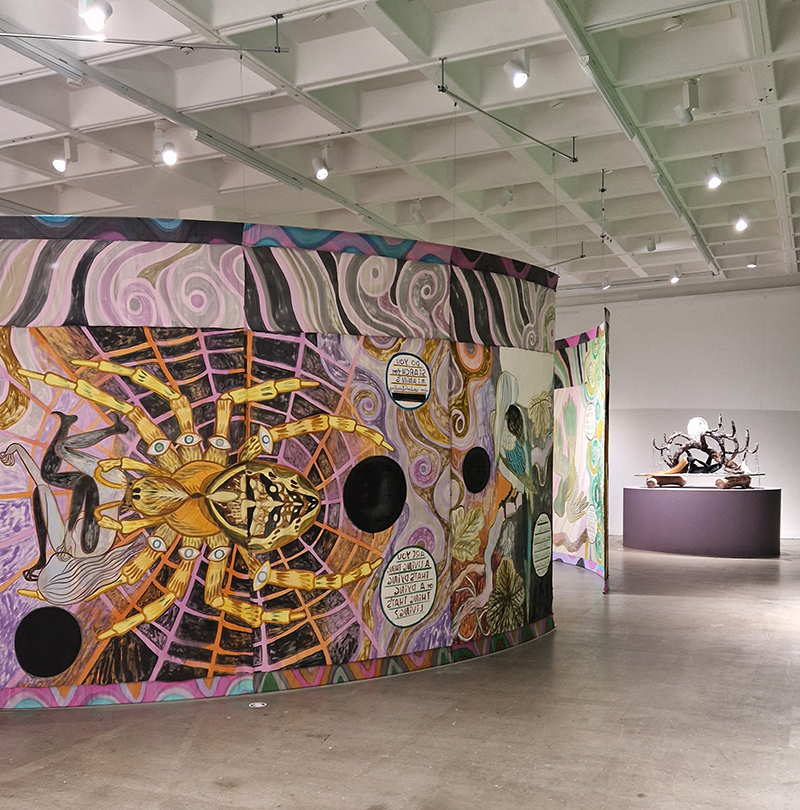
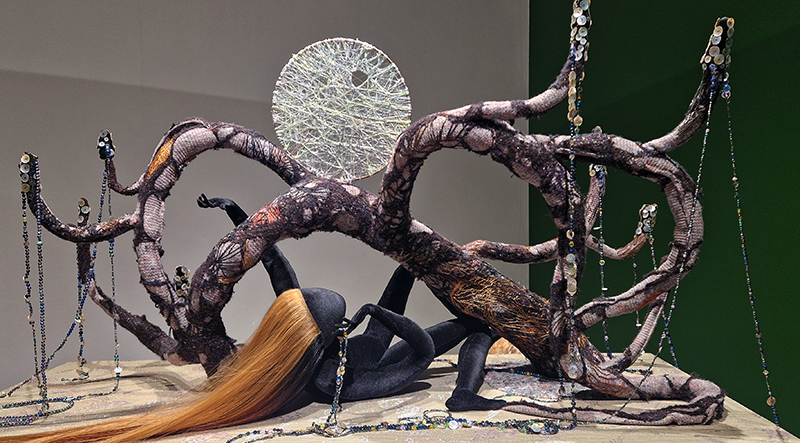
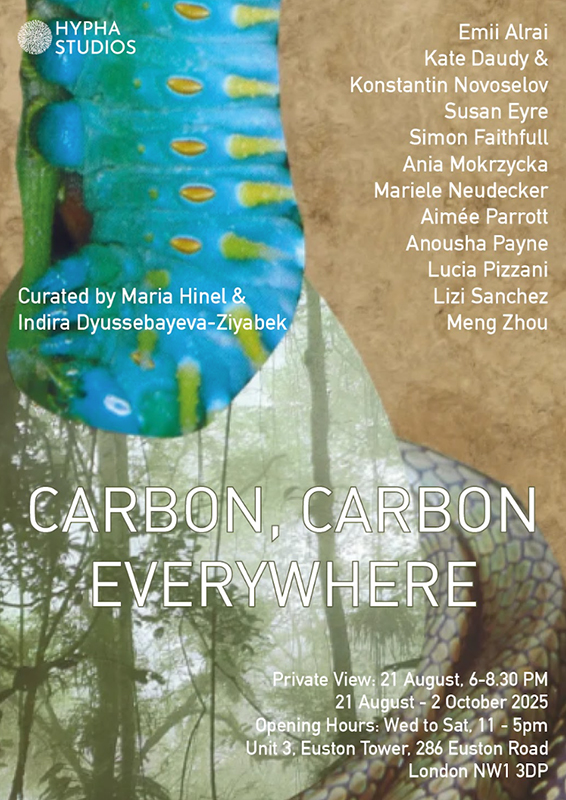
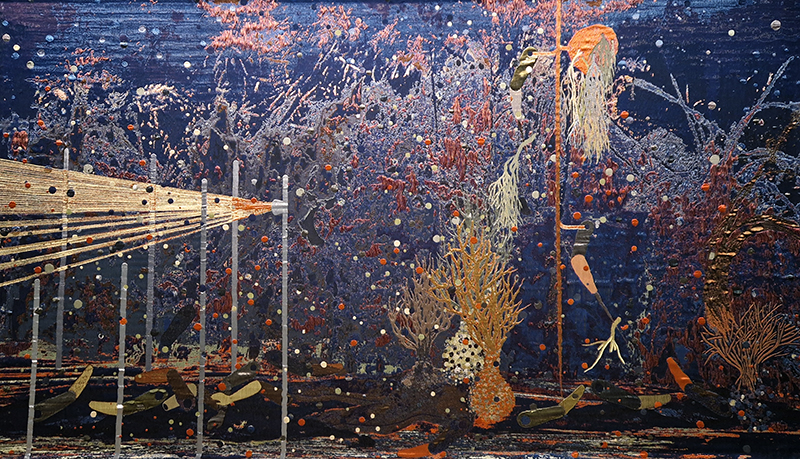
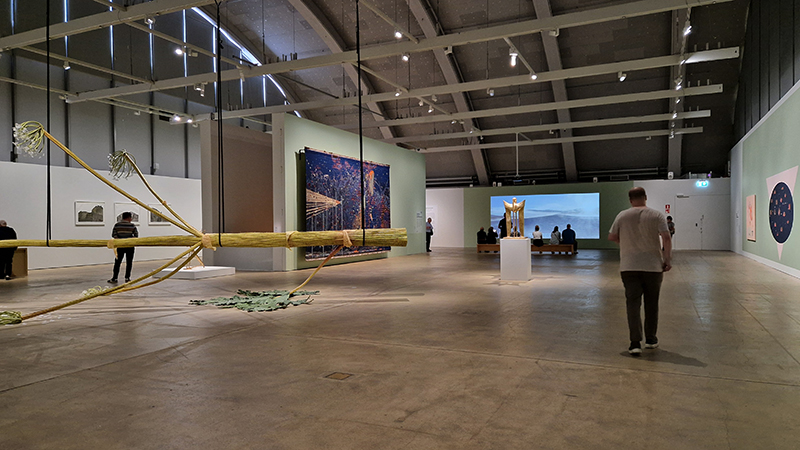
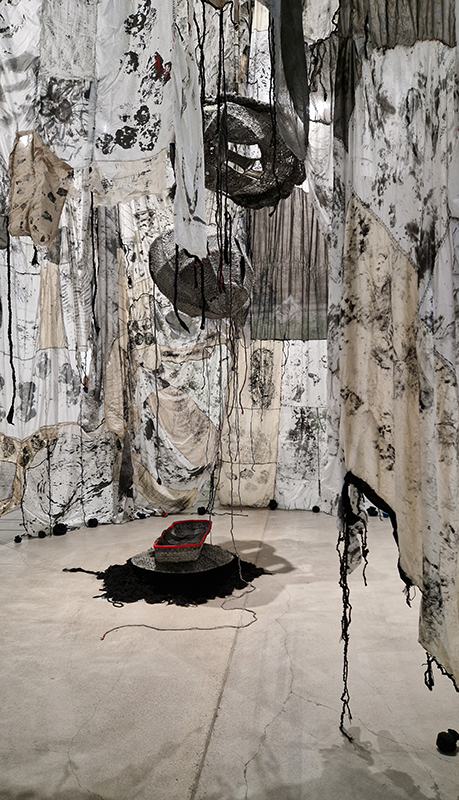
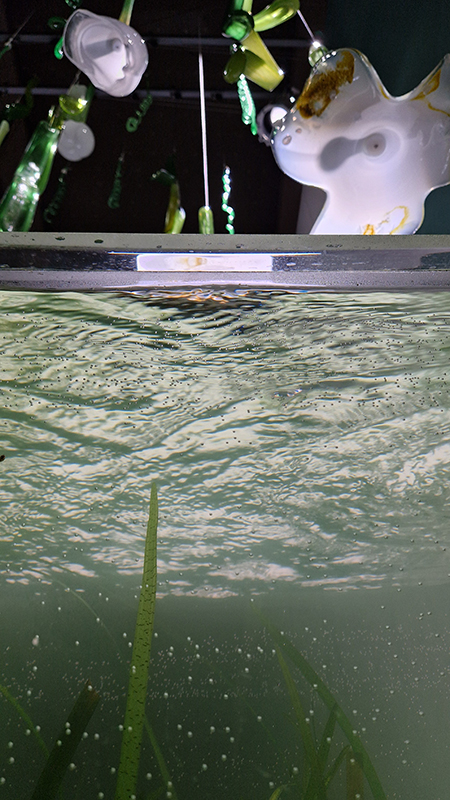
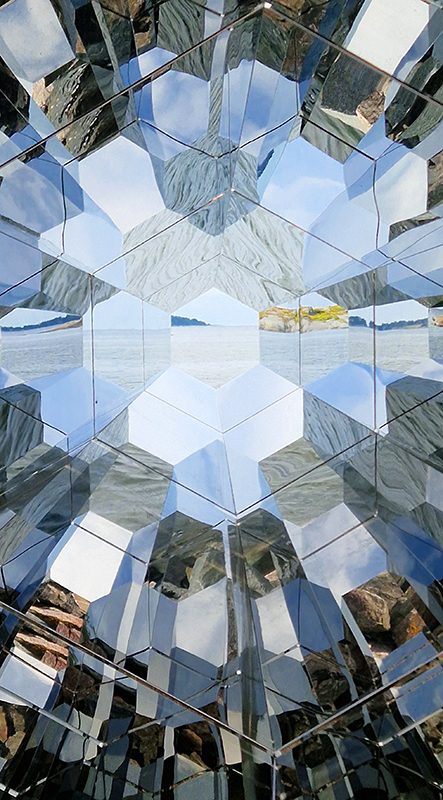
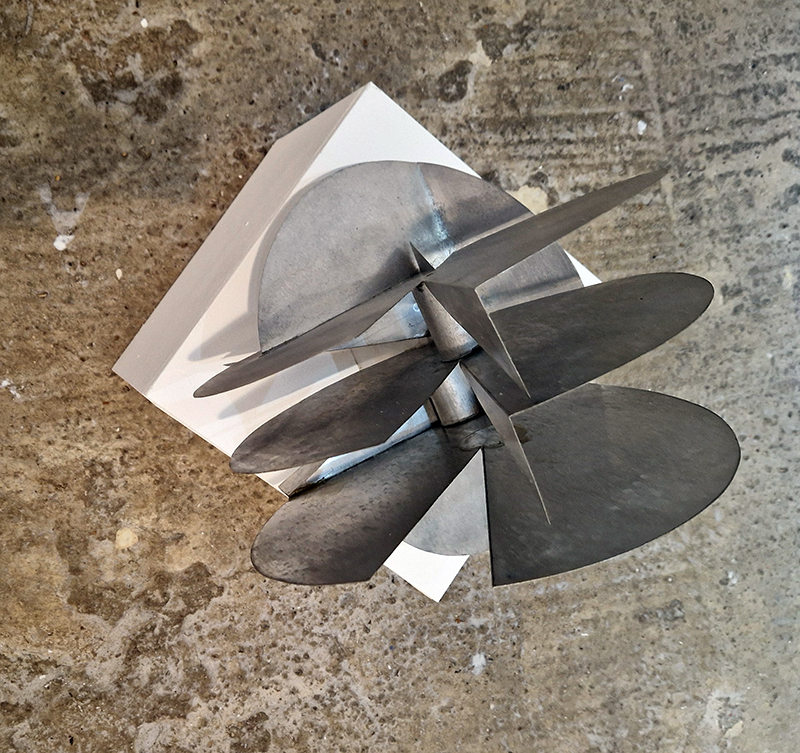
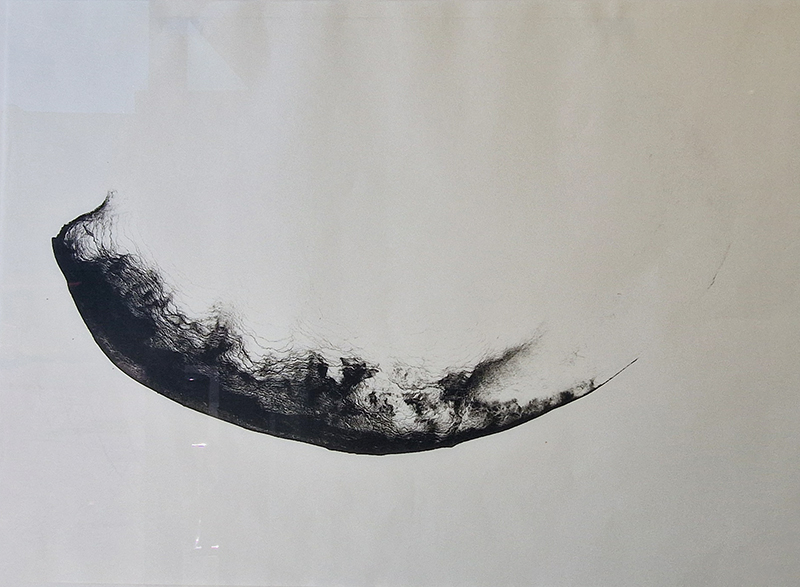
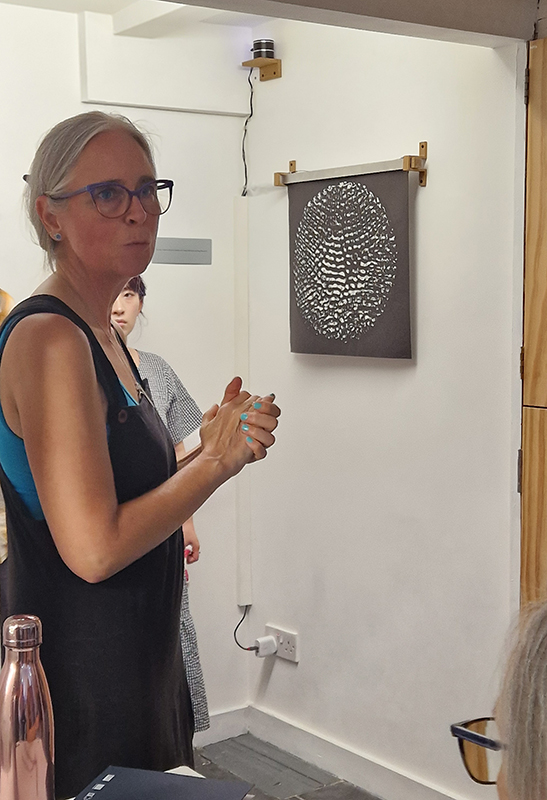
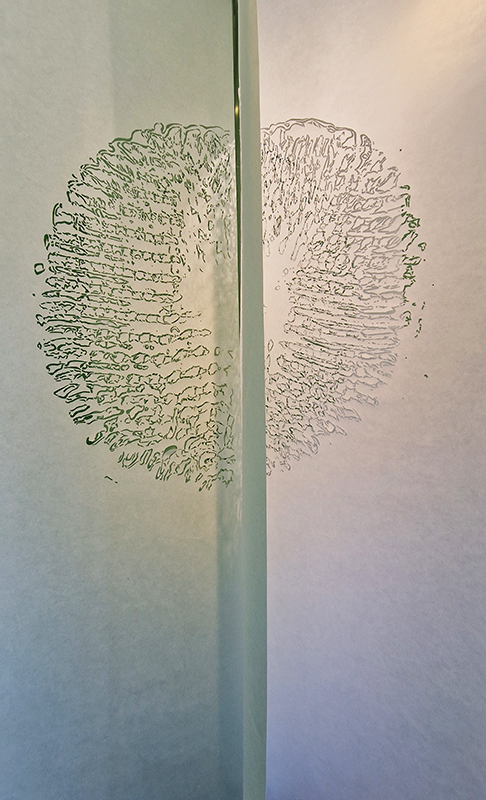
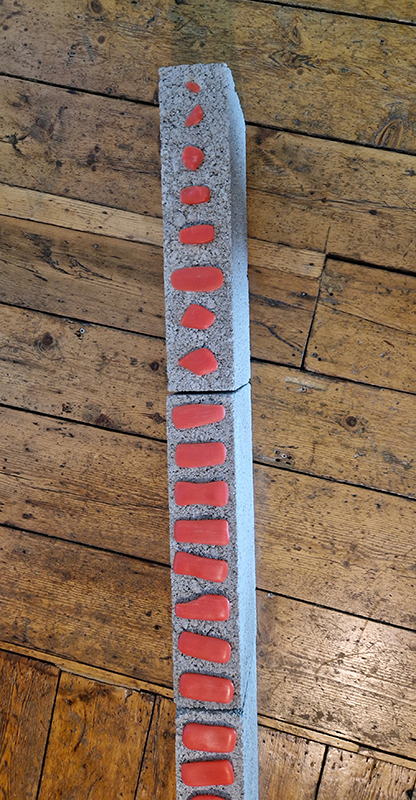
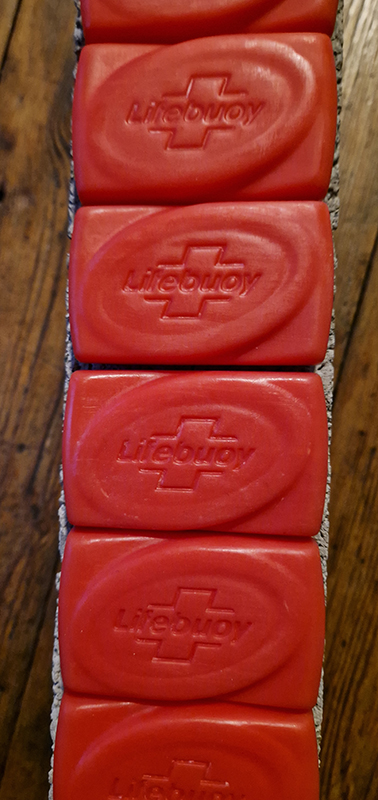
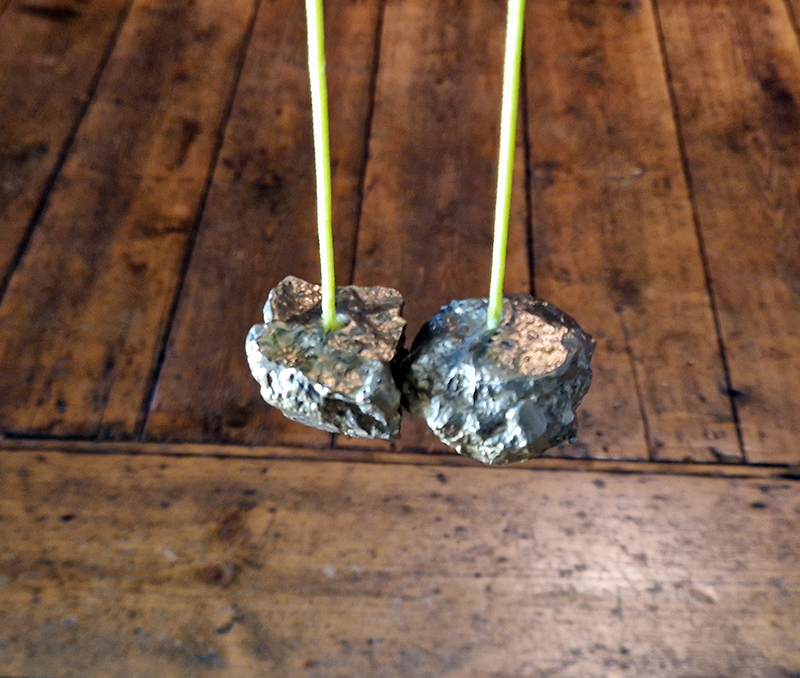
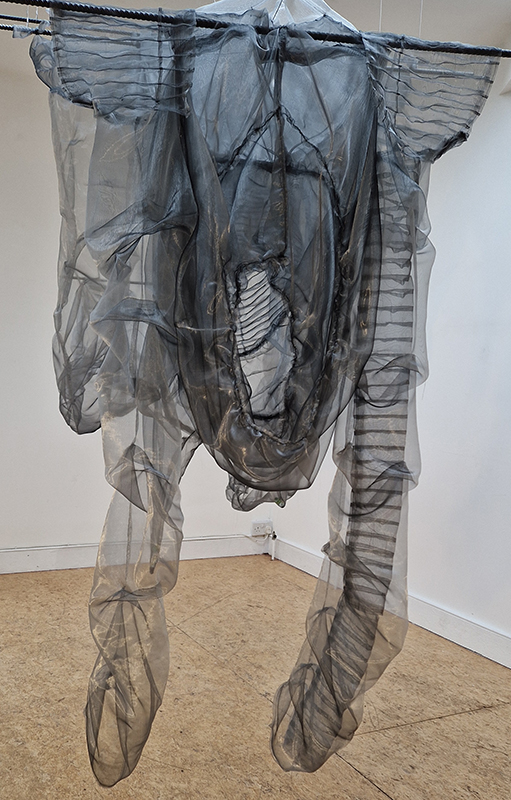
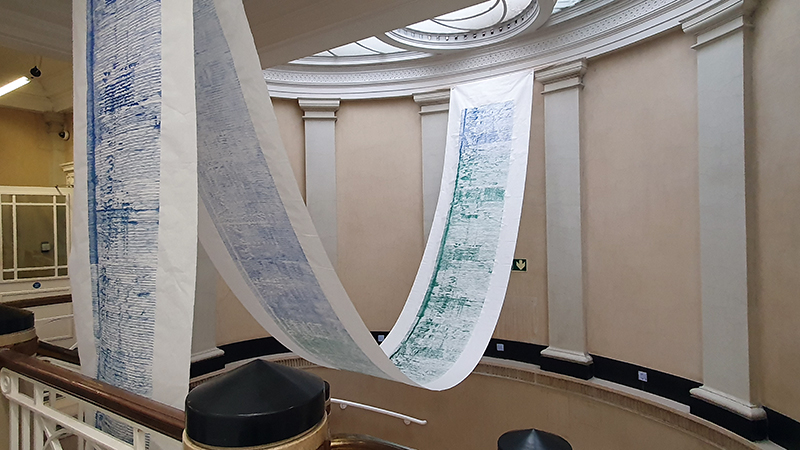
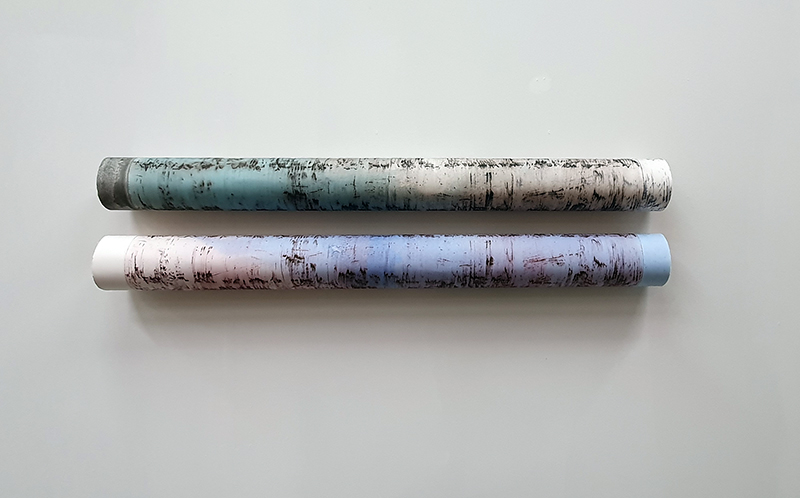
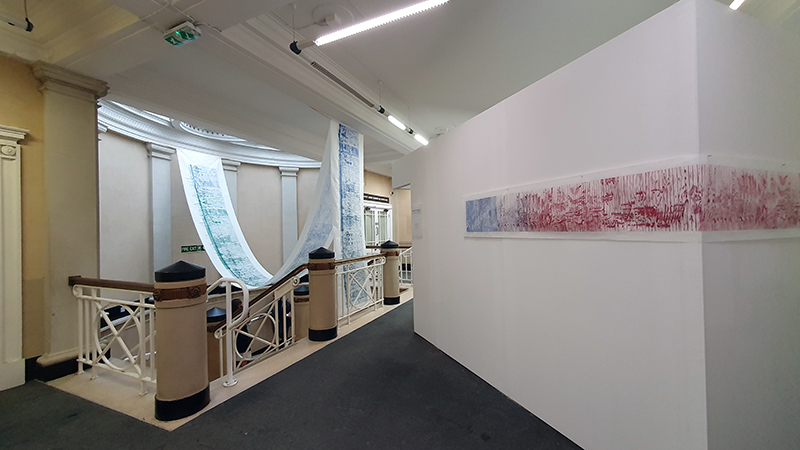
Thrilled to be invited to exhibit in Carbon, Carbon Everywhere at Hypha HQ co-curated by Indira Dyussebayeva-Ziyabek and Maria Hinel including artists Emii Alrai, Kate Daudy & Konstantin Novoselov, Simon Faithfull, Ania Mokrzycka, Nissa Nishikawa, Mariele Neudecker, Anousha Payne, Aimée Parrott, Lucia Pizzani, Lizi Sanchez, and Meng Zhou.

Integral to the constitution of our bodies, soil, air and some rocks, carbon is a highly bonding element that incessantly transmutes from state to state, each particle challenging the boundaries between life and non-life. Bringing together works by twelve international artists, Carbon, Carbon Everywhere explores the shifting states of carbon, an element that threads through organic and inorganic matter, linking bodies, environments, and temporal scales.

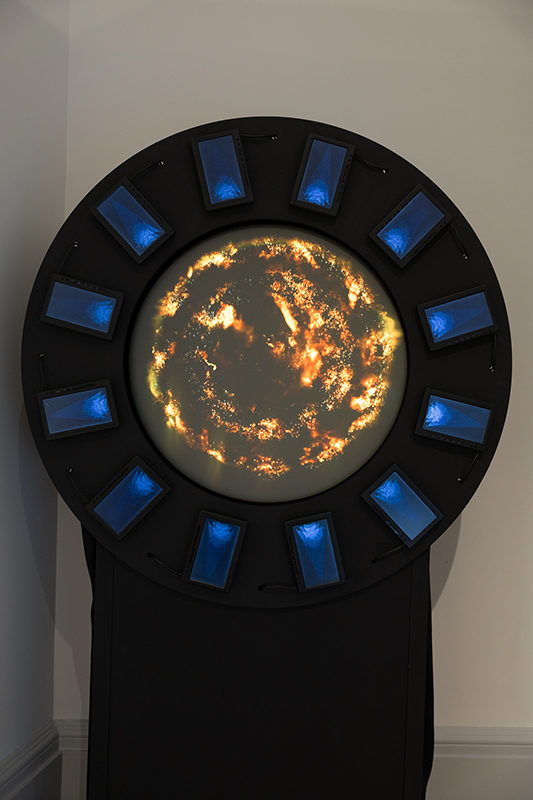
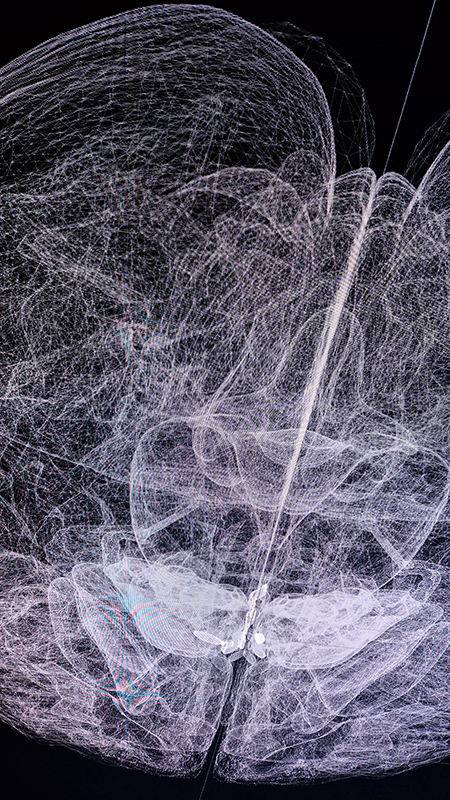
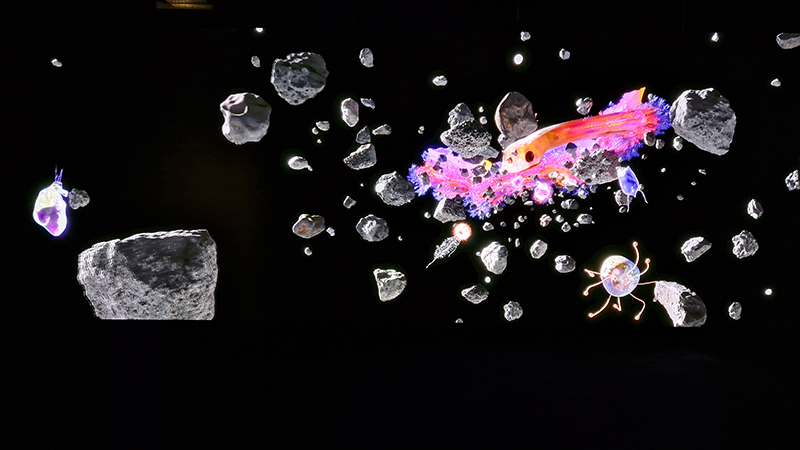
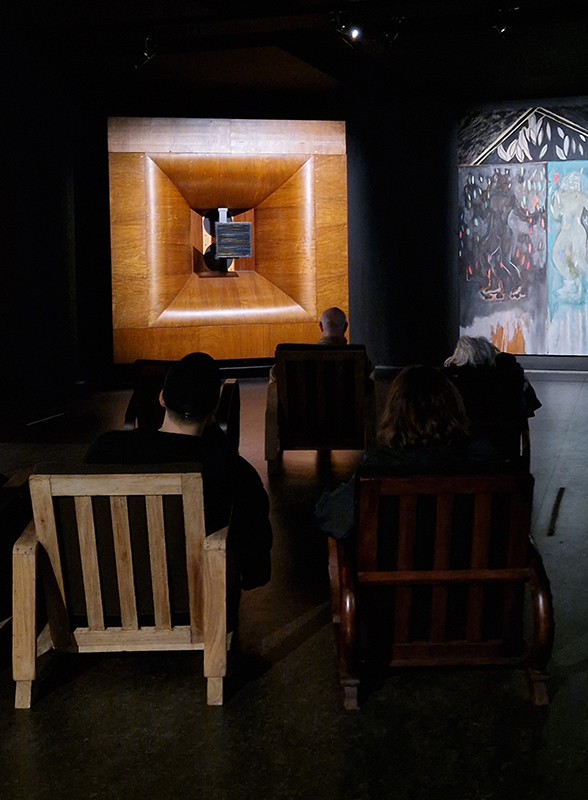
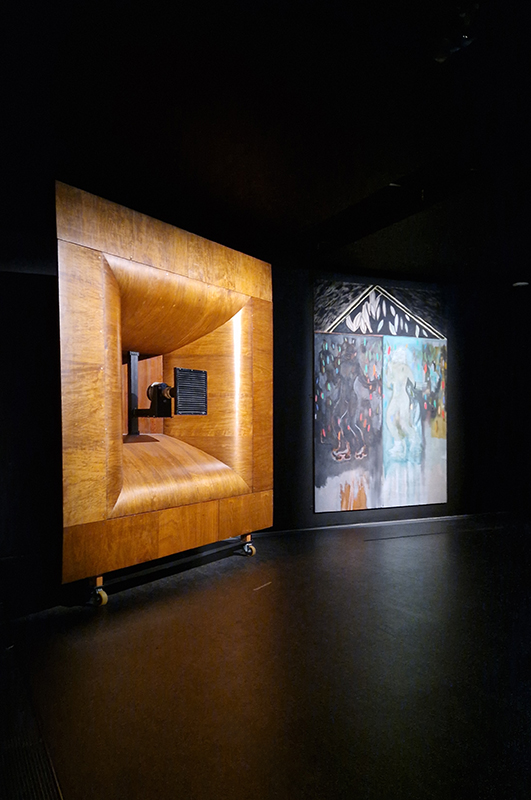
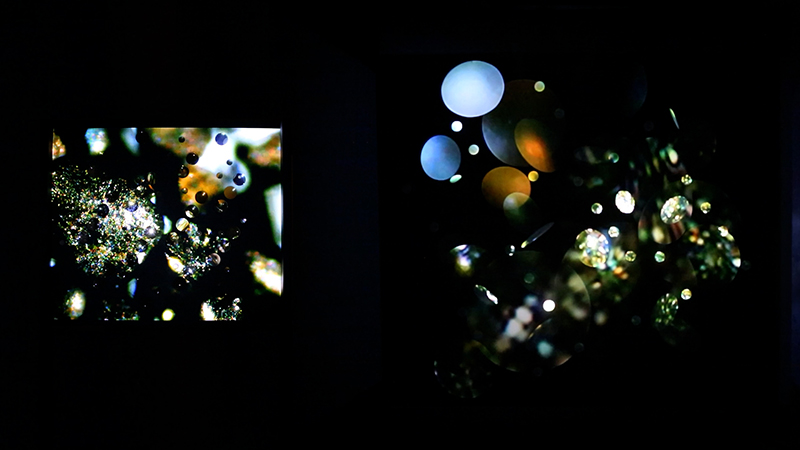
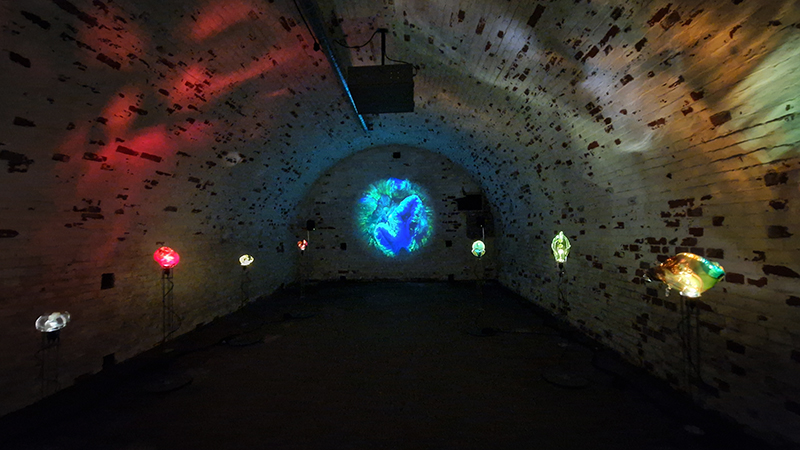
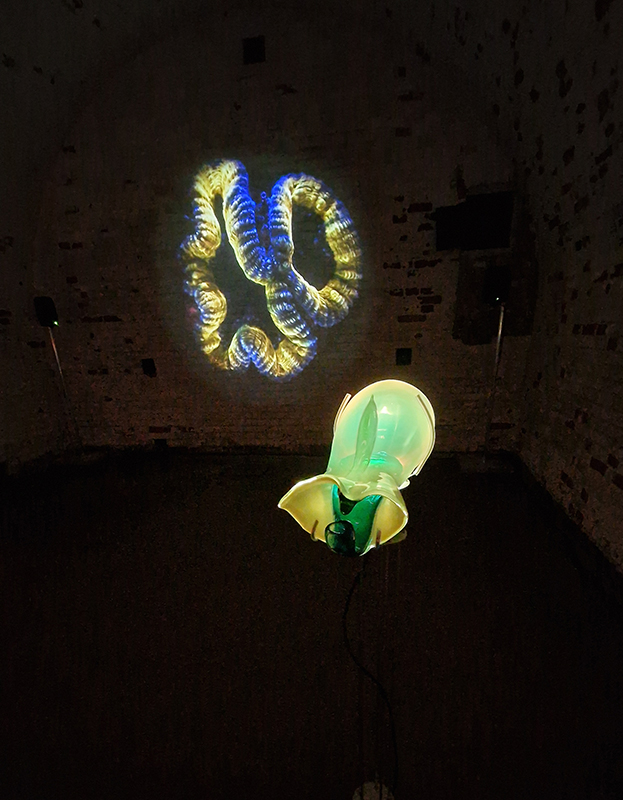
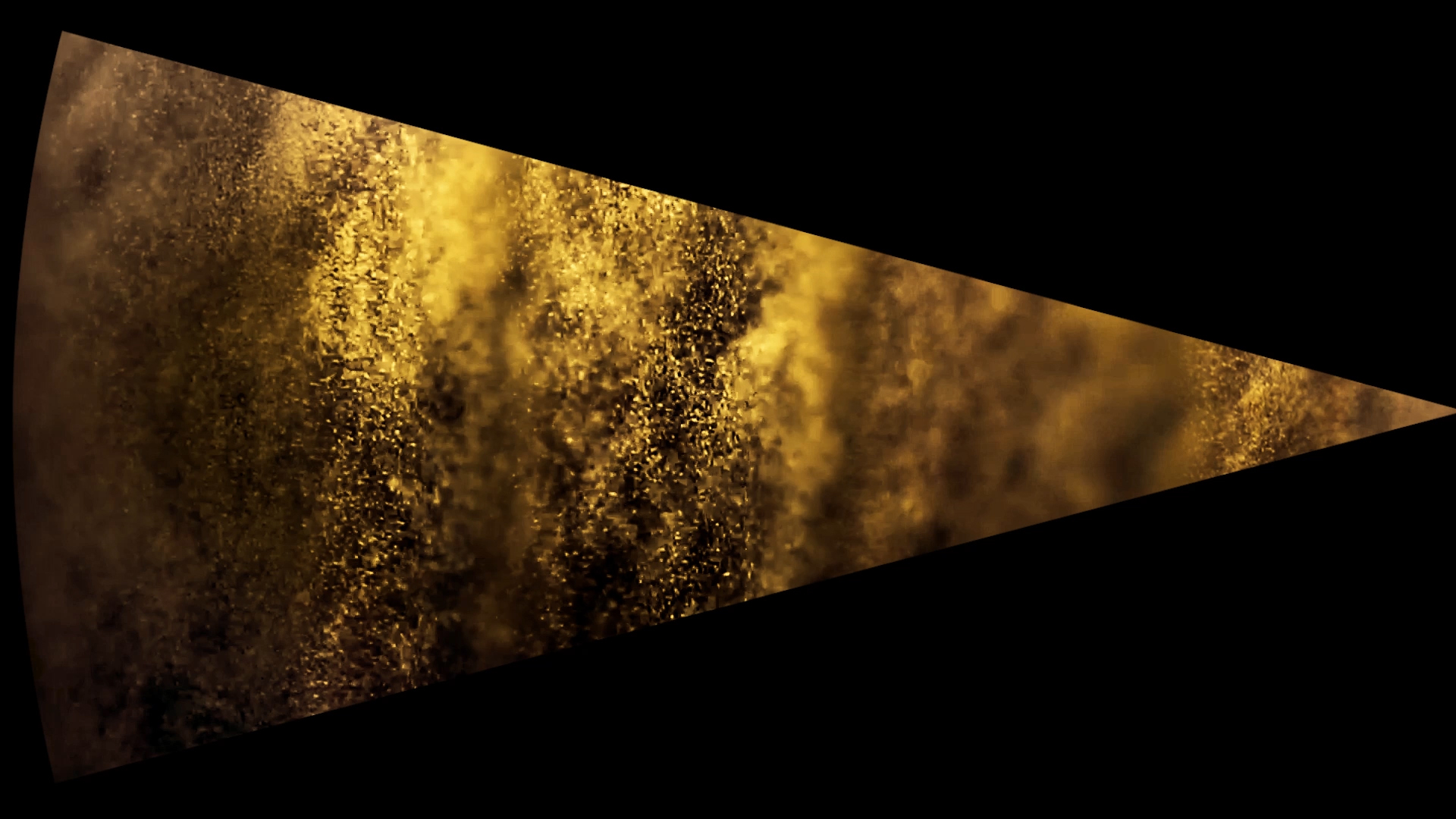
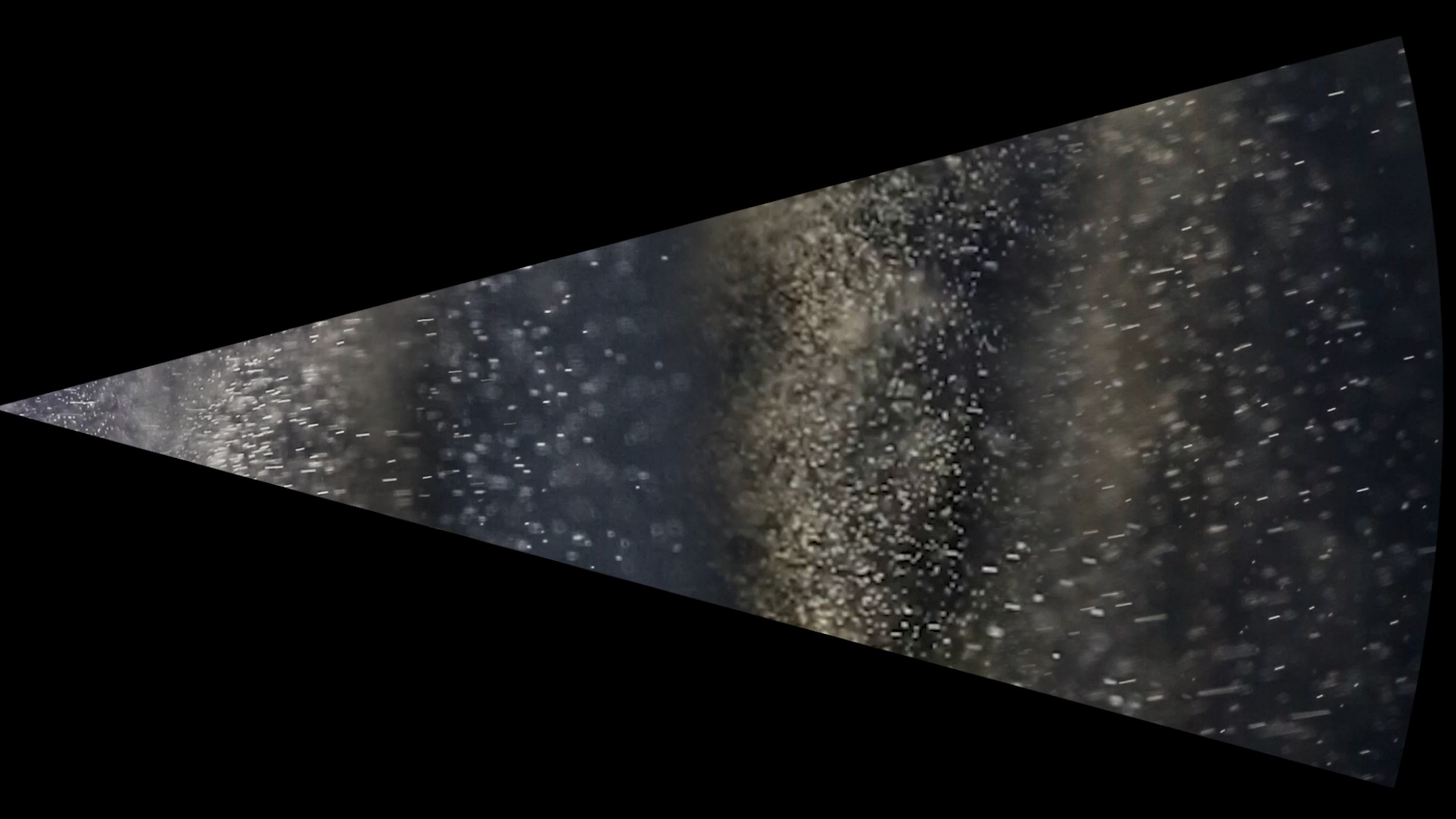
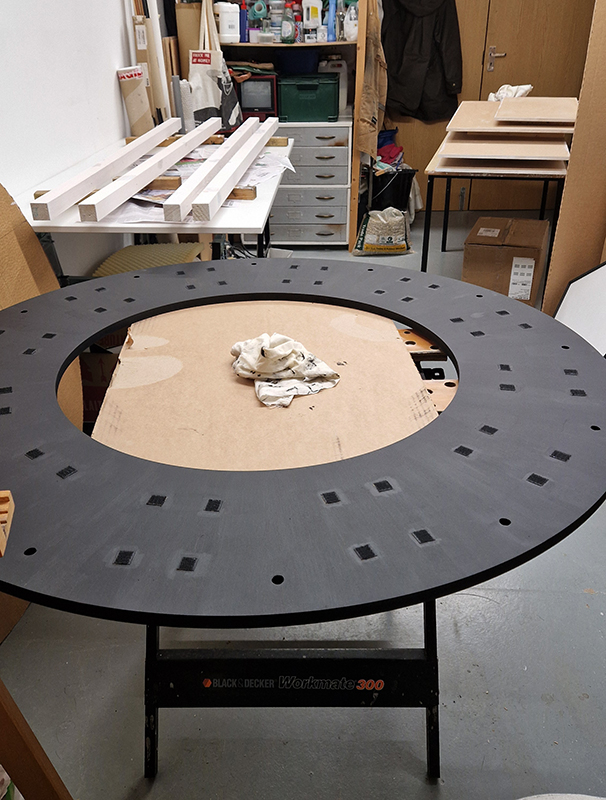
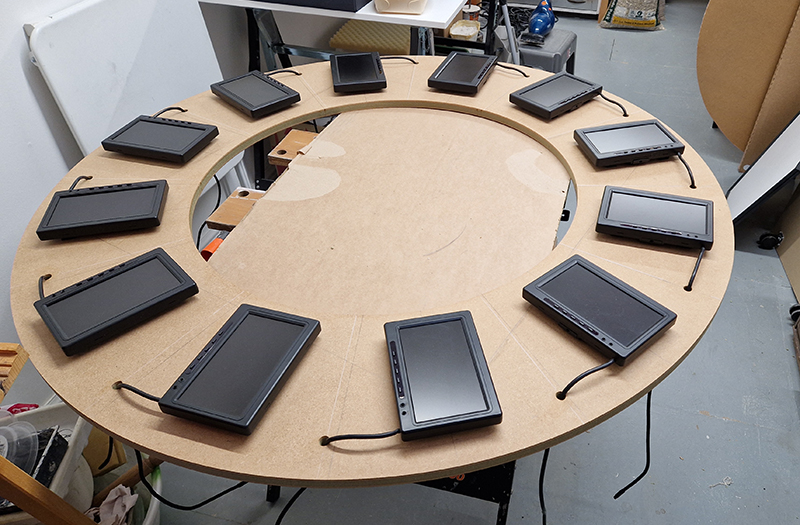
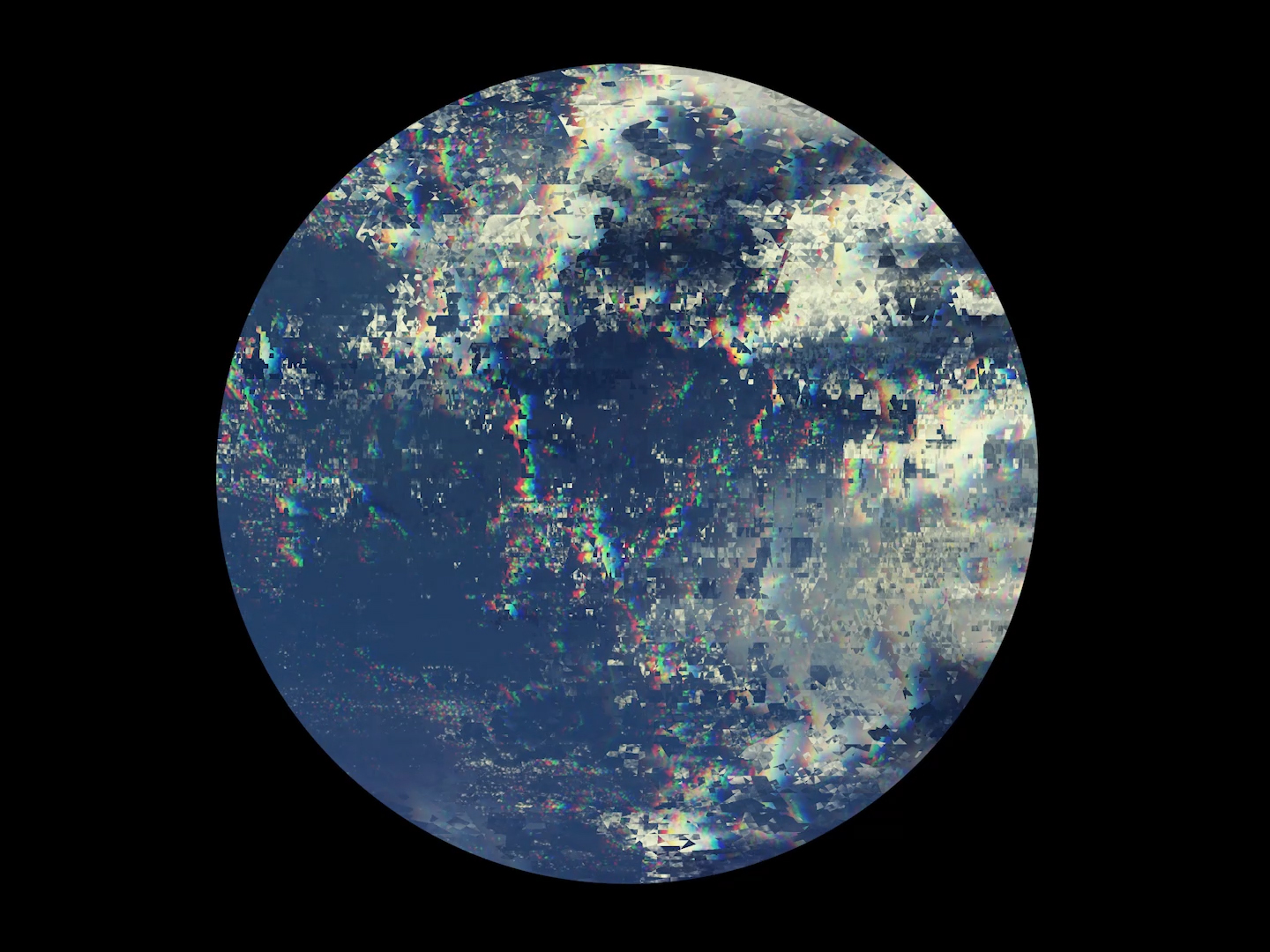
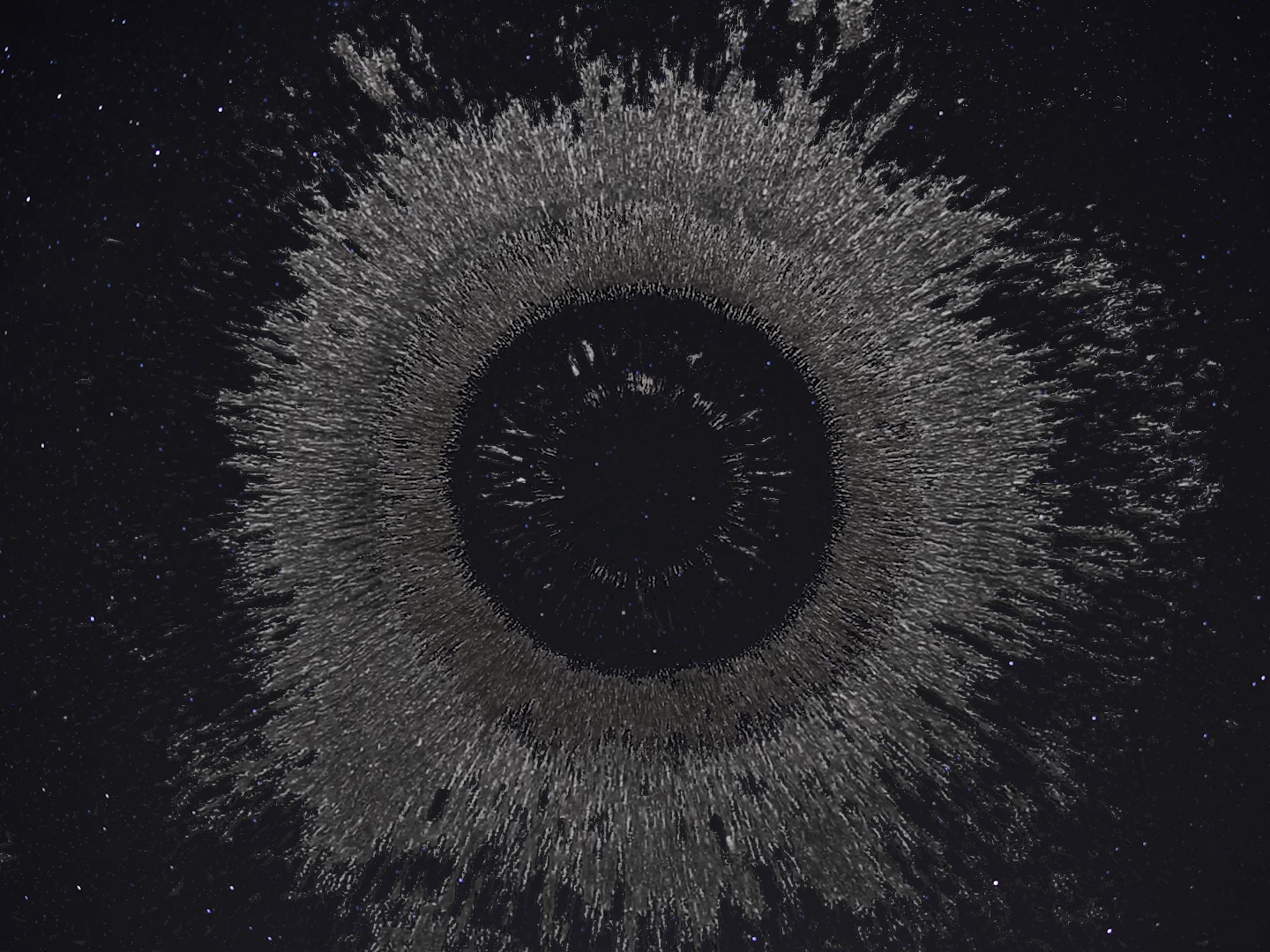
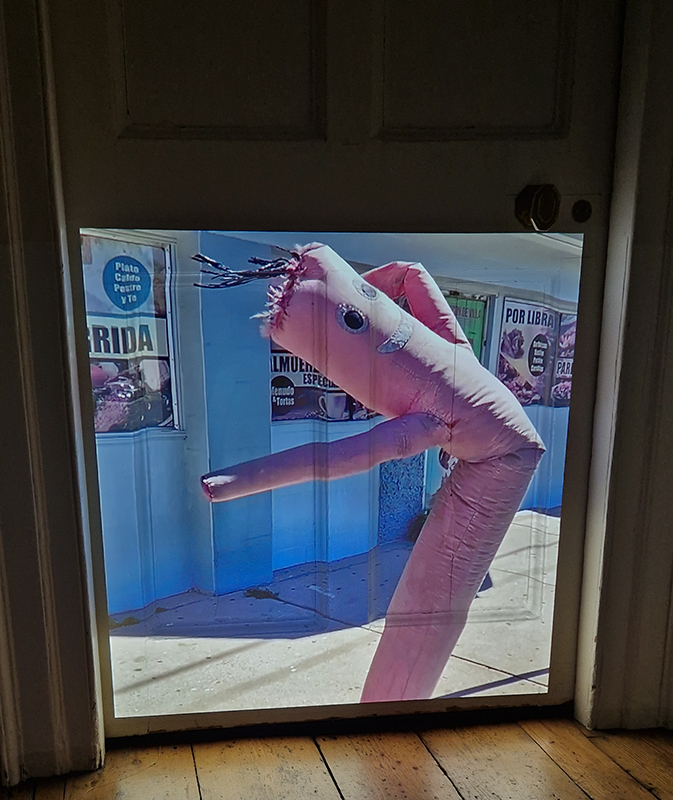
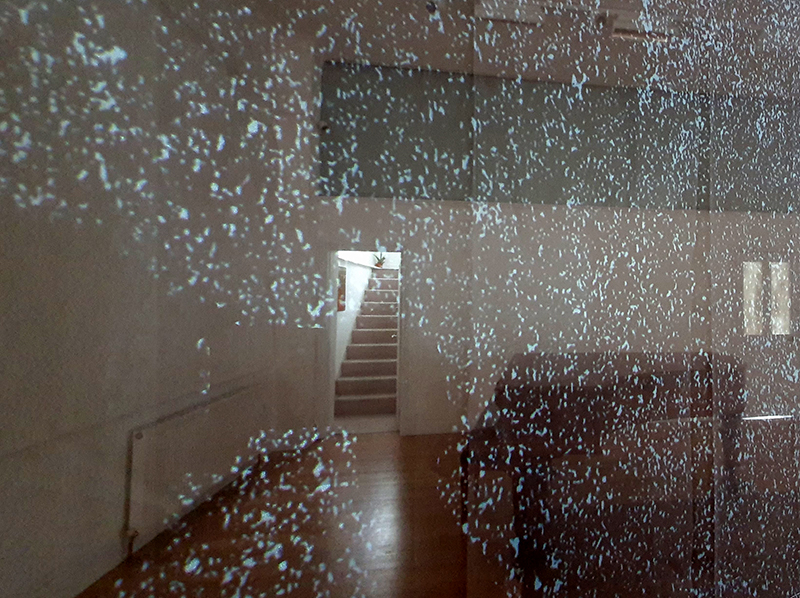
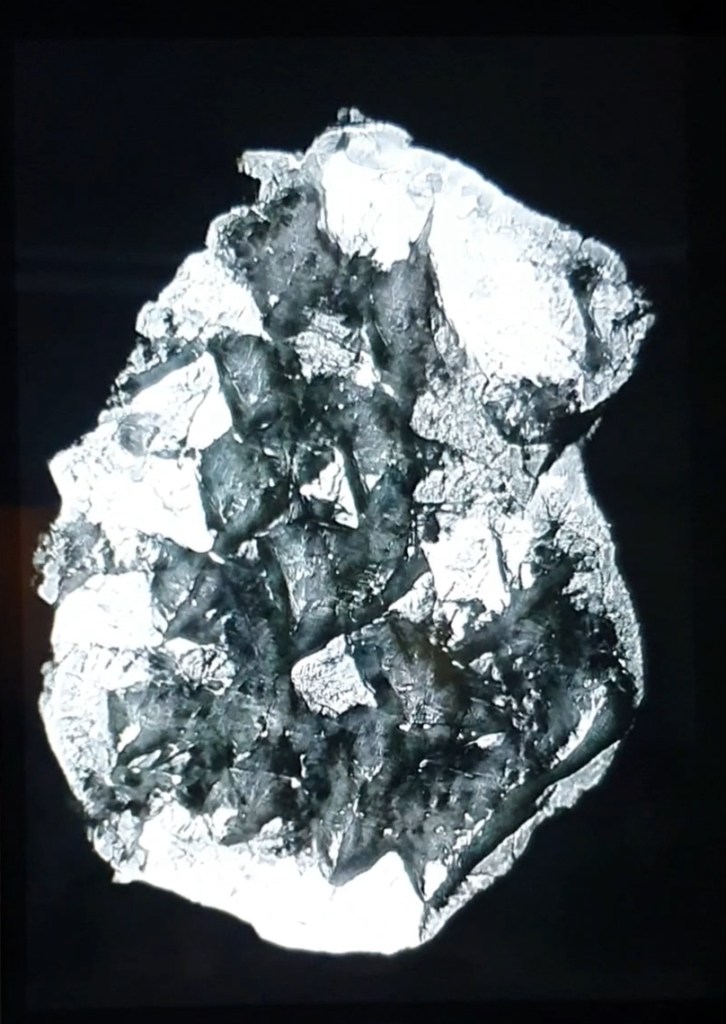
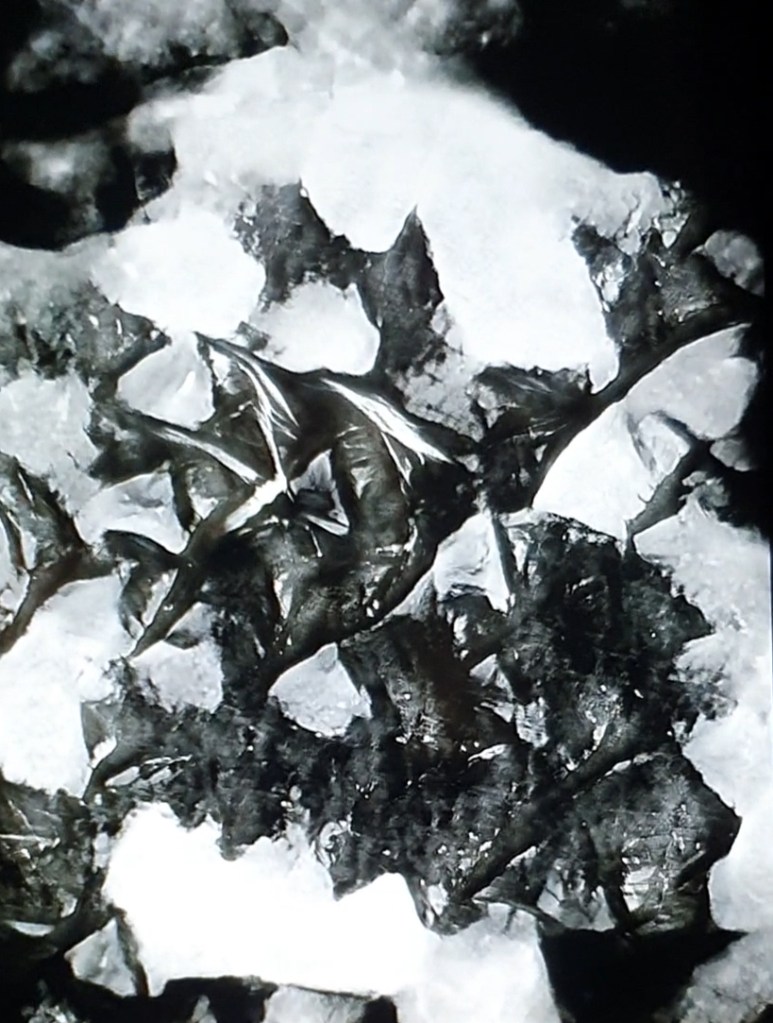
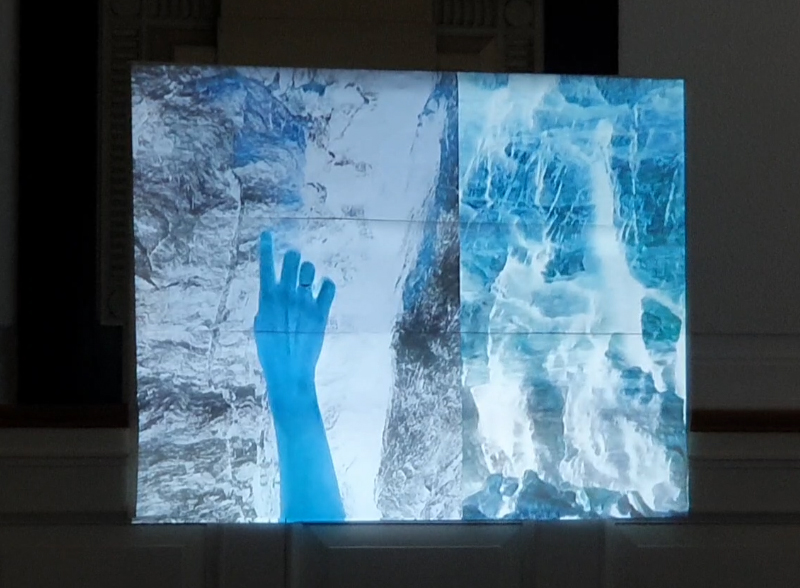
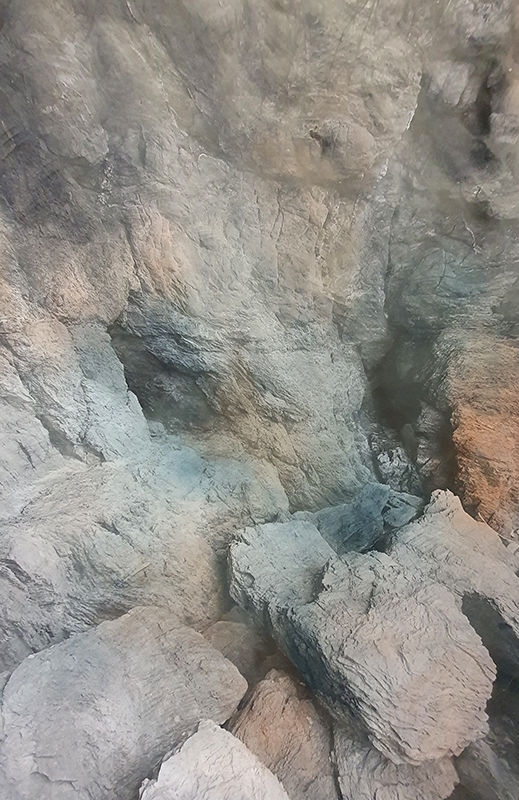
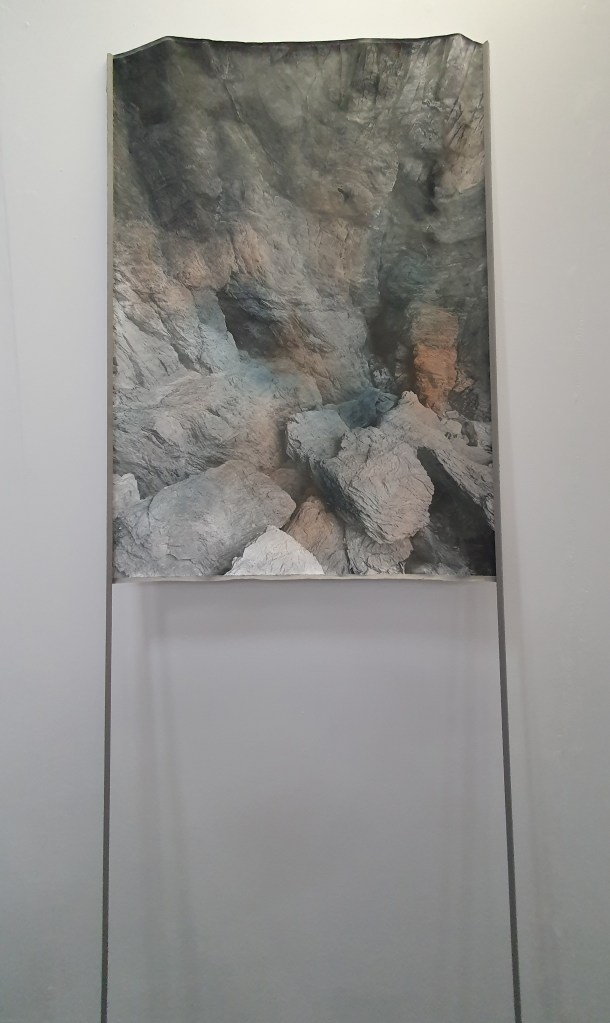
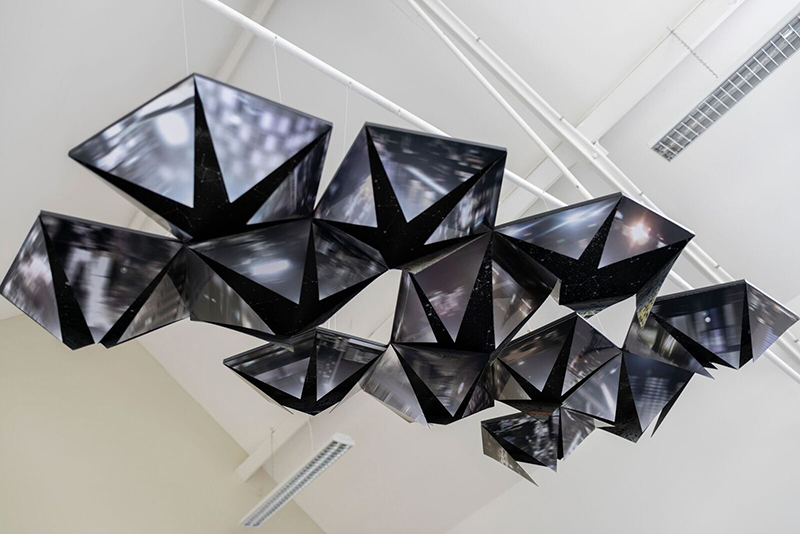
I have updated my website with documentation on the video installation Lithos Panoptes recently shown at Hypha HQ in The Geological Unconscious which can be viewed here. Referencing a many-eyed giant of Greek mythology, Argos Panoptes (always eyes still awake), the work considers the perpetual vigilance of rock as record keeper and witness.

Lithos Panoptes, optical lenses, wood, steel, two-way projection; Sculpture H172 x W170 x D50 cm, Rear projection screen H180 x W180 cm.

Great to be mentioned in an Art Newspaper article.

Magnetic News

Interesting to hear about new magnetic materials being developed that will hopefully have a less harmful ecological impact and offer more technological efficiency. The magnetic materials that are so heavily relied upon for computer memory and microelectronic devices include rare and toxic heavy elements whose energy-intensive production creates significant global carbon emissions. Previously, two primary types of magnetism had been identified, ferromagnetic (regular magnetism that we are familiar with) and antiferromagnetic (which are internally magnetic, but their opposing spin orientations make them appear non-magnetic externally).  A third form known as altermagnetism has recently been confirmed with around 200 altermagnetic materials already being identified. These materials have a distinct magnetic order where tiny magnetic fields created by electrons are in anti-parallel alignment within a rotation of the host crystal structure leading to unique electronic properties. Altermagnetic materials have the potential for technological advancements offering huge increases in speed and efficiency especially in spintronics, an advanced technology that leverages both the charge and spin of electrons to store and process information.

A permanent magnet, MagNex that does not use the rare earth elements which have sustainability and supply chain issues, was developed in just three months with the help of AI analysing thousands of potential alloys. ‍‍ “This could have a significant future impact on our net-zero ambitions, through renewable energy and low-carbon transport, by removing the need for rare earth elements in high-performance permanent magnets.”

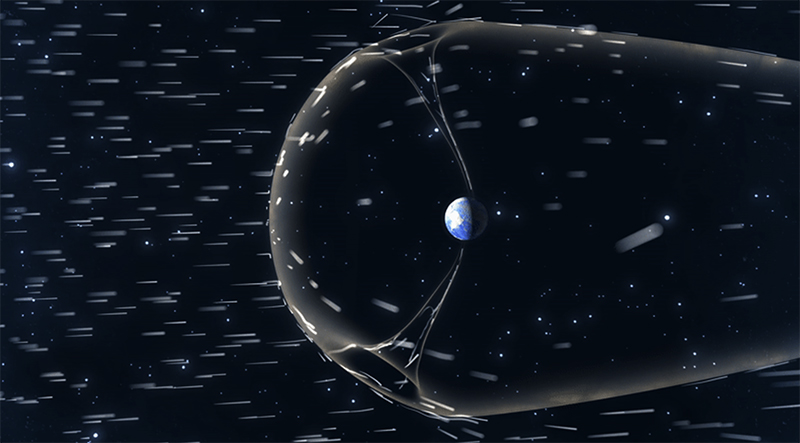
Recently launched, NASA’s TRACERS mission satellites fly in low Earth orbit through the polar cusps, funnel-shaped holes in the magnetic field where solar activity causes magnetic field lines to disconnect and reconnect creating disruption in the magnetosphere. By strategic placing of the twin TRACERS spacecraft in Sun-synchronous orbit, so that they always pass through the Earth’s dayside, thousands of dayside reconnection events can be observed and compared between spacecraft to see how quickly the process changes and evolves. Better understanding magnetic reconnection and its effects in Earth’s atmosphere will help prepare for impacts of solar activity on Earth. The magnetosphere protects Earth from the constant bombardment of solar particles from the Sun, but when magnetic field lines are disrupted by the solar wind, particles rain down into Earth’s atmosphere not only causing beautiful phenomena, like the aurora, but also impacting infrastructure, like satellites and GPS systems.

Out and About

I have been lucky to visit exhibitions in Finland and Norfolk to see works that interrogate human impact on the environment and other living beings that share our planet.

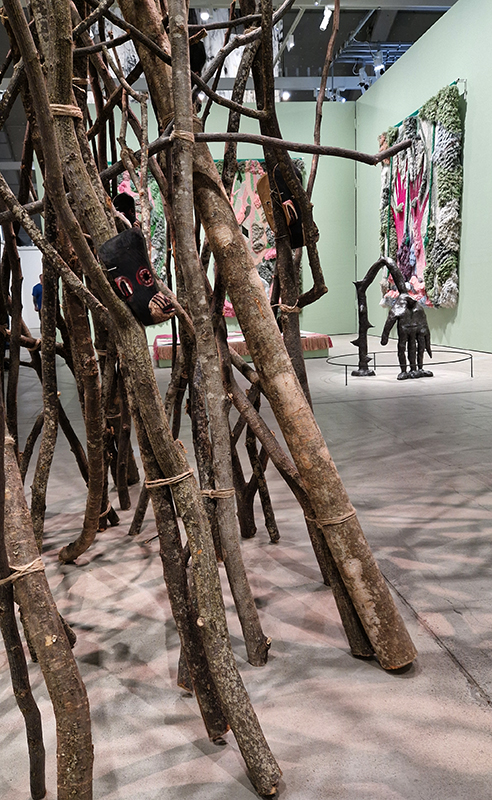
Helsinki Biennial 2025 Shelter: Below and Beyond, Becoming and Belonging brings together 37 artists and collectives on Vallisaari Island (which has been off-limits for human habitation for decades), in Esplanade Park, and at HAM (Helsinki Art Museum). It explores the significance of shelter and turns the gaze towards non-human nature. In the works, the focus shifts from humans to animals, water, plants, insects, minerals, and other living beings and their role as contributors to our planet’s wellbeing.

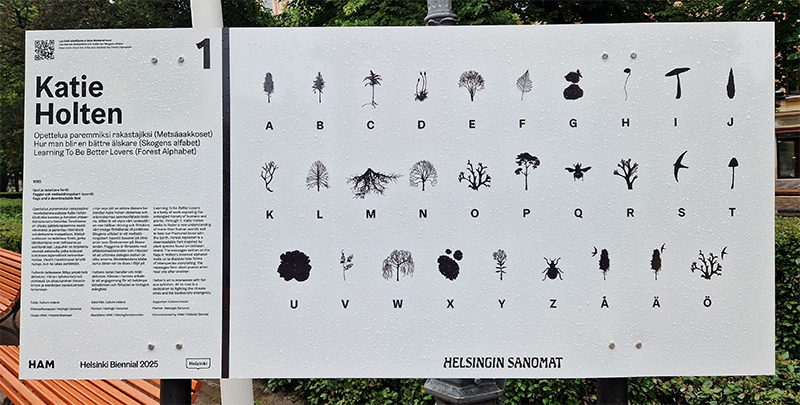
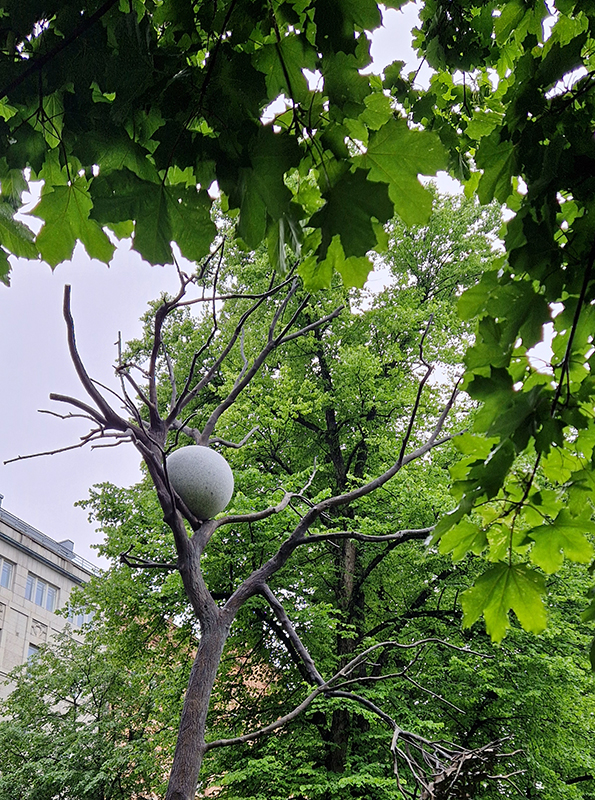
Artists with work installed in the Esplanade Park included Katie Holten (inventing a forest alphabet) and Guiseppe Penone (inseparable connections between humans and nature).

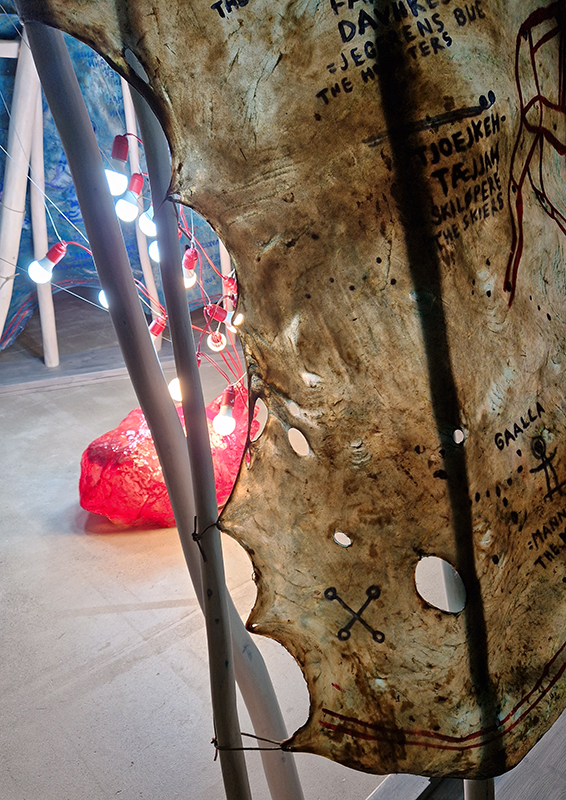
Artists at HAM (Helsinki Art Museum) included Jenni Laiti & Carl-Johan Utsi (precarity of survival), Regina de Miguel (technofossils), Aluaiy Kaumakan (displaced community), Otobong Nkanga (ownership of resources), Ingela Ihrman (invasive species), Locus/Thale Blix Fastvold & Tanja Thorjussen (eelgrass conservation), Sissel M Bergh (Sami cosmology), Edgar Calel (more than human agencies).

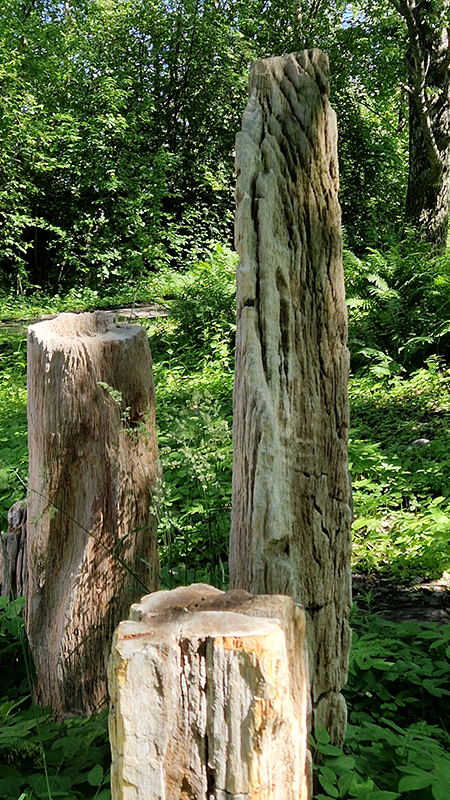
Artists with work installed around the beautiful Vallisaari Island included Hans Rosenström (petrified wood soundscape), Tue Greenfort (species evolution), Nomeda & Gediminas Urbonas (amplifying non-human voices), Pia Sirén (human modified environments), LOCUS / Thale Blix Fastvold & Tanja Thorjussen (water health), Tania Candiani (hidden networks of the forest), Sara Bjarland (discarded inflatables), Kati Roover (humans and whales), Juan Zamora (bioluminescence), Band of Weeds (vegetal distress), Kristiina Koskentola (friendship of crows), Tamara Henderson (hidden realm of worms), Ernesto Neto (shapeshifting), Theresa Traore Dahlberg (invisible frequencies), Ana Teresa Barboza (plant narratives), Carola Grahn (colonialism legacy on estrangement from nature), nabbteeri (parasitism), Olafur Eliasson (more than human ways of seeing).

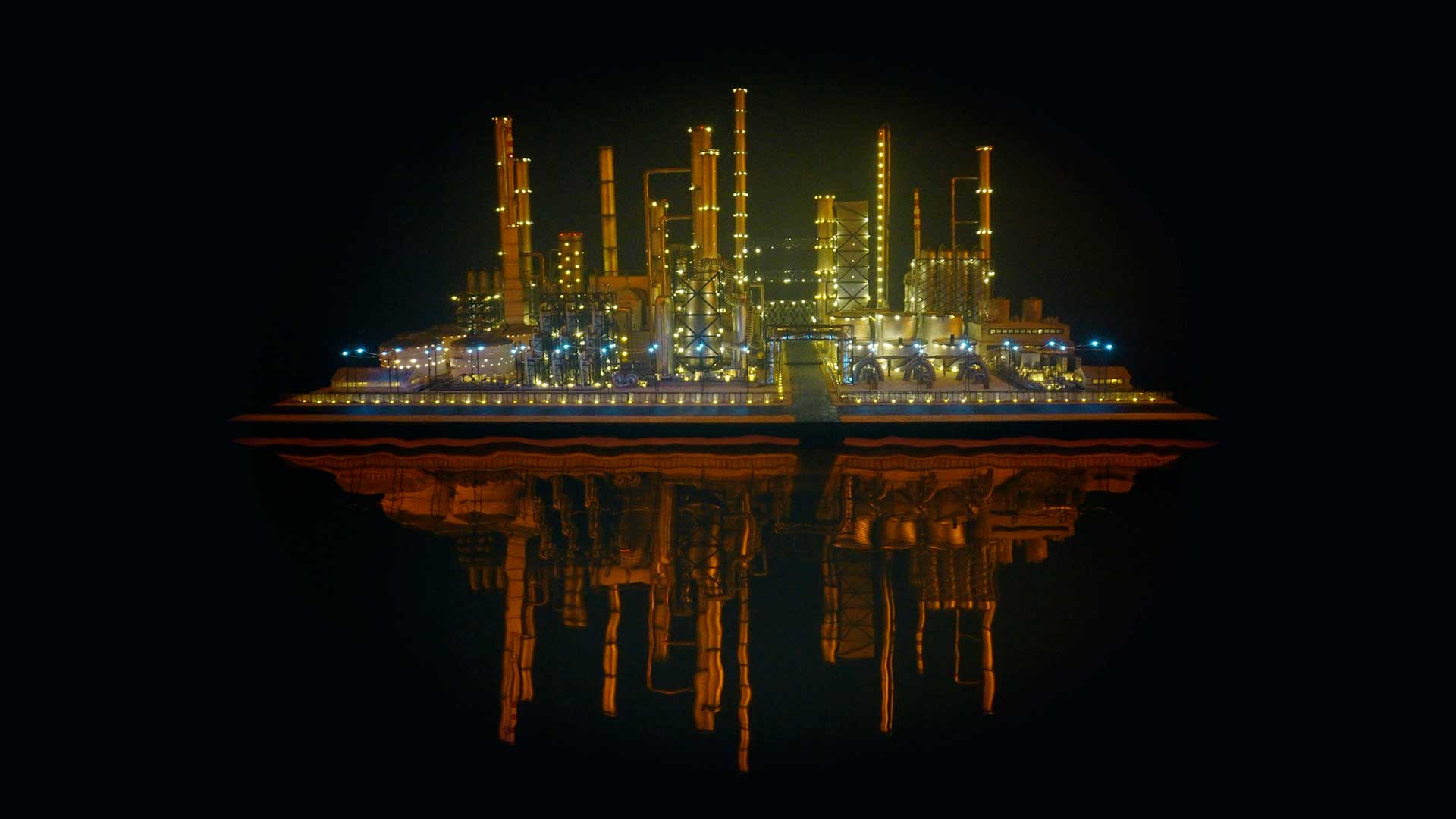
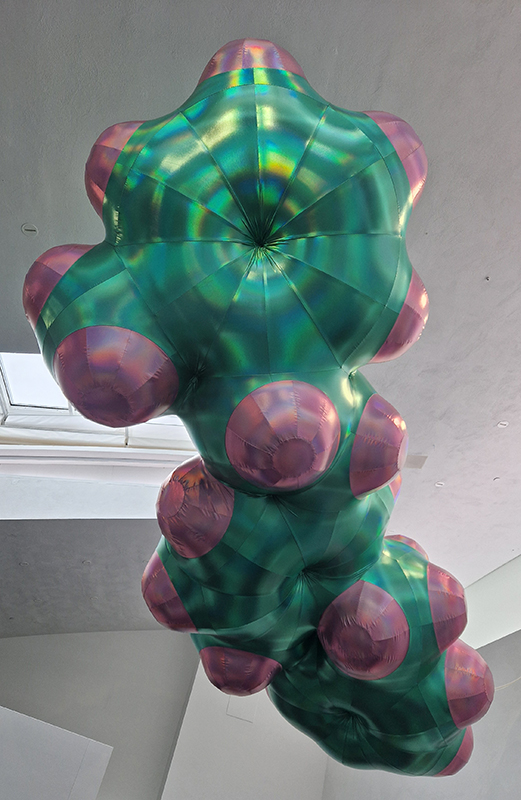
Excellent Monira Al Qadiri exhibition Deep Fate at the Museum of Contemporary Art Kiasma, Helsinki. Addressing the dichotomy of enjoying contemporary life made possible by oil during the accelerating climate crisis. Deep Fate, refers to the origins of oil deep in the earth and also to the way that dependence on oil and breaking that dependence are a matter of life and death for humankind. Al Qadiri grew up next door to oil refineries in Kuwait and experienced the Gulf War as a child. This personal experience is drawn upon in the haunting video Crude Eye which attempts to reconcile childhood memories of the oil refinery as a romantic glowing metropolis with its true nature as a site of environmental destruction. The demise of the local pearl-diving industry, a source of income superseded by the oil boom, is referenced by sculptures echoing the molecular structures of the chemicals used in oil drilling with iridescent rainbow colours that are reminiscent of oil and the shimmering surface of pearls.

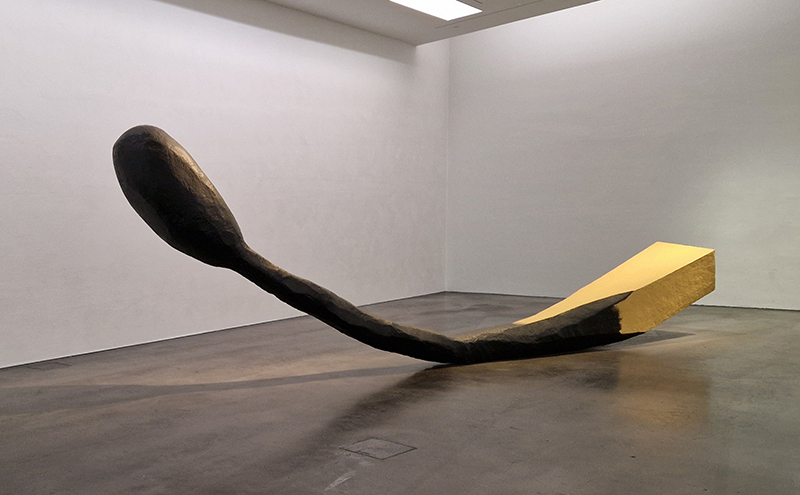
Also at the Museum of Contemporary Art Kiasma was Rock, Paper, Scissors an anthology of diverse materials in contemporary art. Claes Oldenburg’s giant Extinguished Match which plays with scale brought to mind the video by David Hochgatterer Streichhölzer (Matches) where matches appear to spontaneously combust shown in the Carbon: Under Pressure exhibition recent tour to Glasgow ARC.

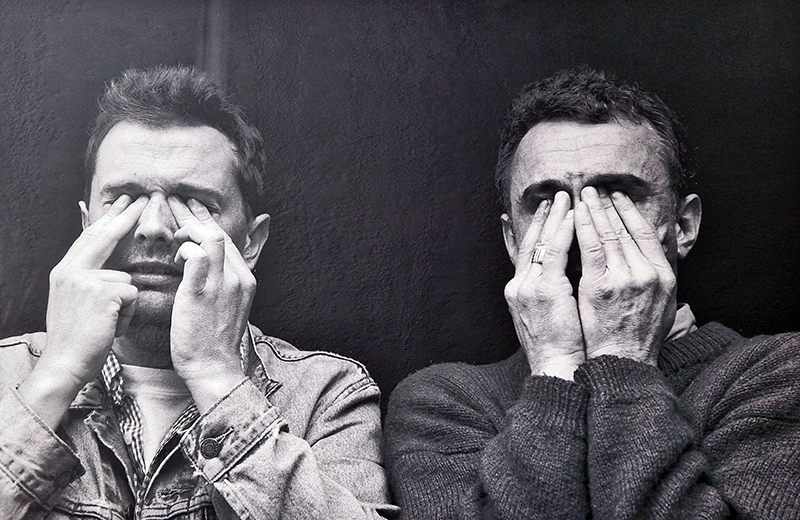
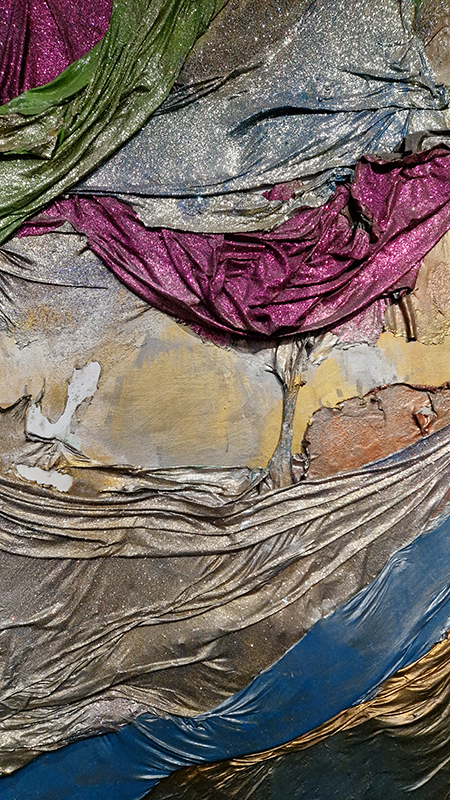
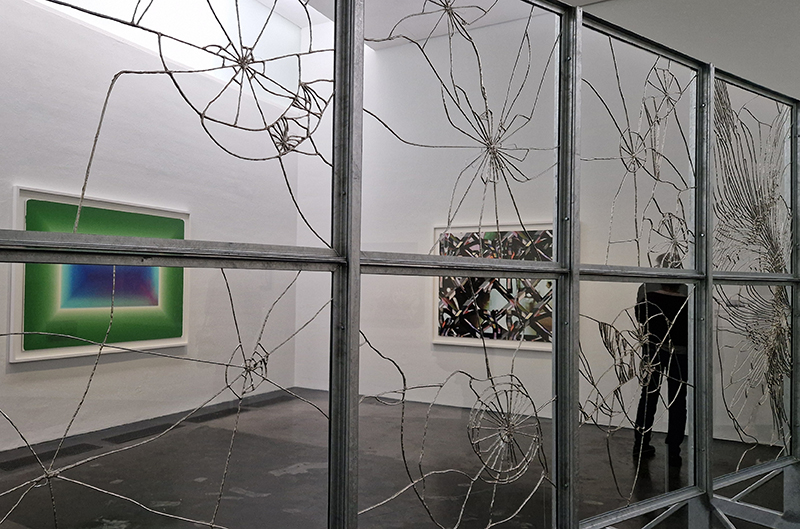
Materials celebrated through this exhibition included neural pathways stimulation of the visual system by pressure on the eyelids to see phosphenes, glittery thick folds of acrylic on canvas, leaded glass breakages, ephemeral copper wire net, faux marble that is actually hair on the barbers concrete floor.

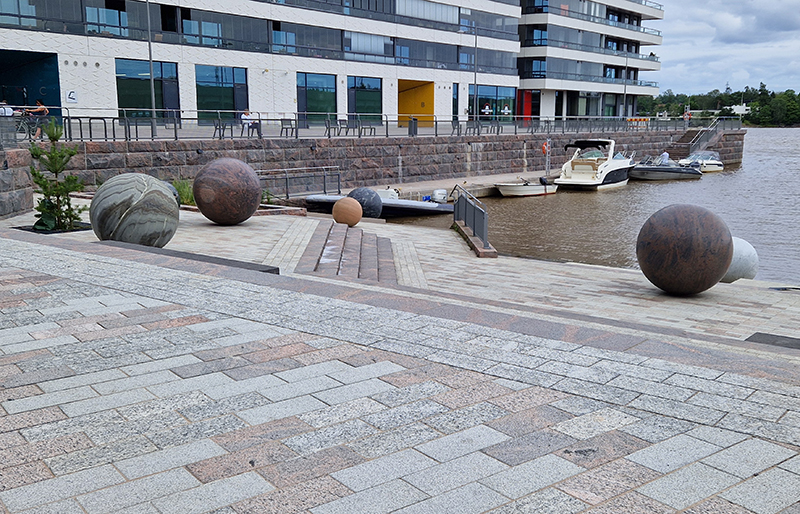
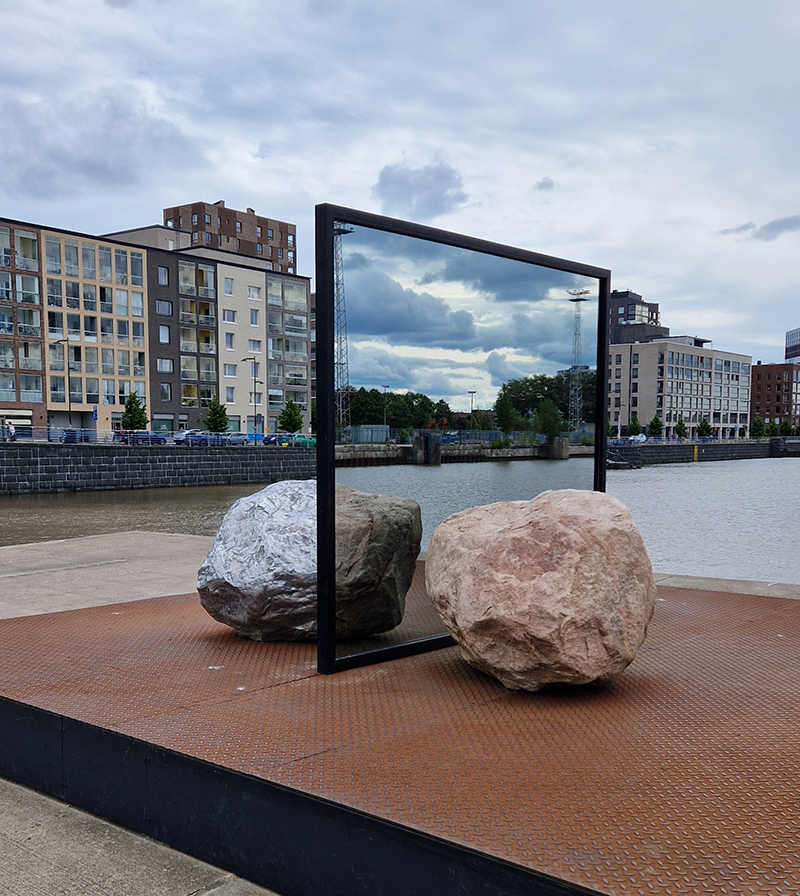
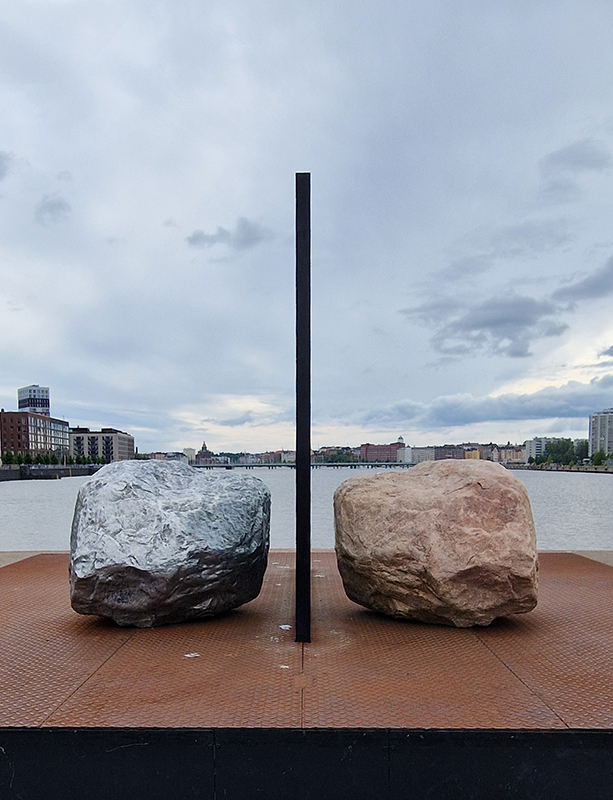
With my head still full of the geological (unconscious) it was great to see the works of Alicja Kwade, Big Be-Hide (parallel universes – natural rock and a metallic copy either side of a two-way mirror) and Pars pro Toto (a part for the whole – stone planet like spheres) from the 2021 Biennial now installed in Helsinki’s Kalasatama district.

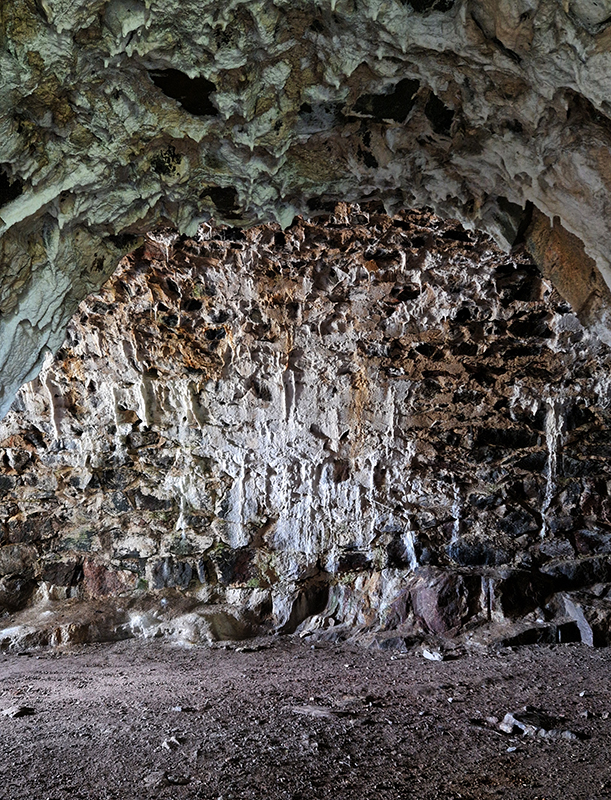
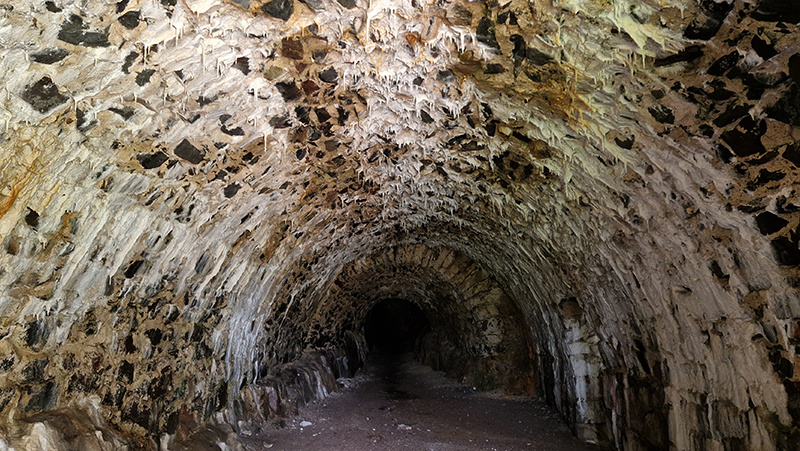
Another ‘geological’ delight was the unexpected appearance of stalactite’s forming in the tunnels of the military sea fortress built in the 1700’s on the island of Suomenlinna, a UNESCO World Heritage site.

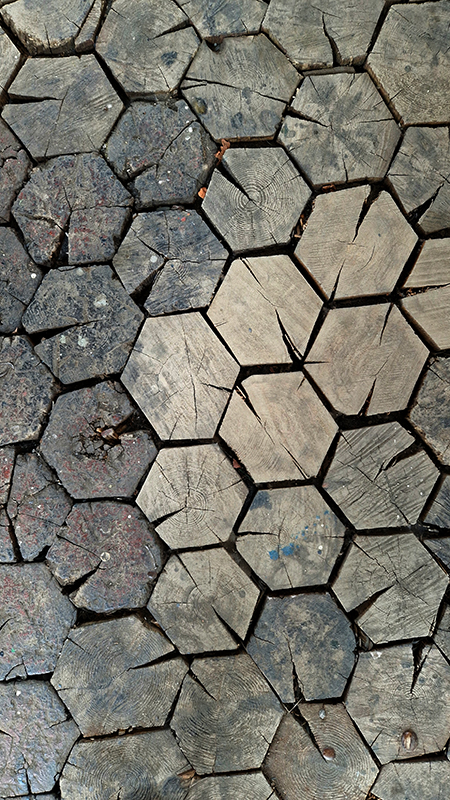
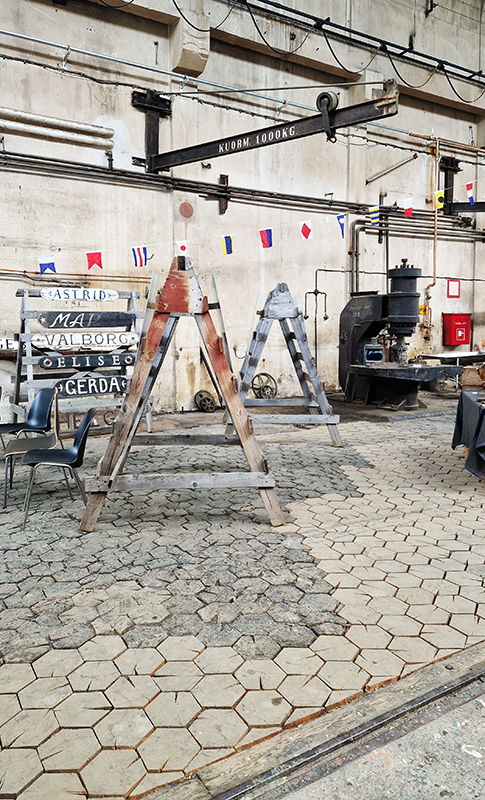
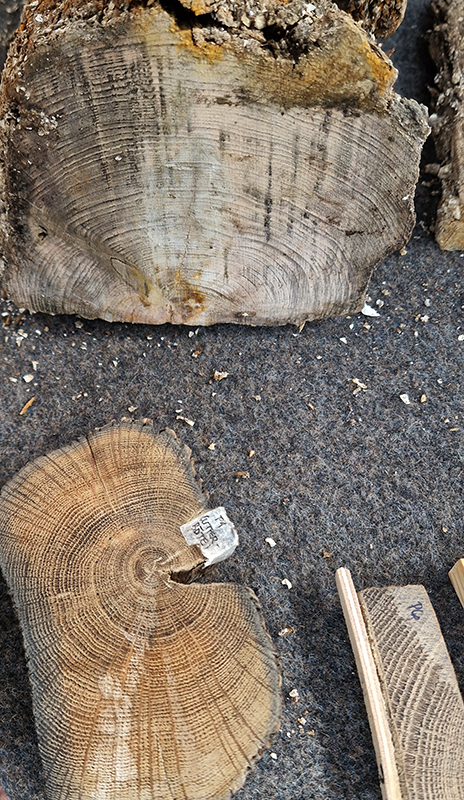
I loved the amazing hive like wood floor at Suomenlinna boatyard. Every tree carries a memory of the past, recording the weather and conditions of each season. Dendrochronologists can work out exactly when a tree was cut down which is very helpful in underwater archaeology. Around Suomenlinna there are shipwrecks beneath the sea with no identifying features except their wooden timbers which incredibly hold clues to when and where the trees used were felled. Marine archaeologists, shipbuilders and forest scientists are working together to discover the stories behind the lost ships.

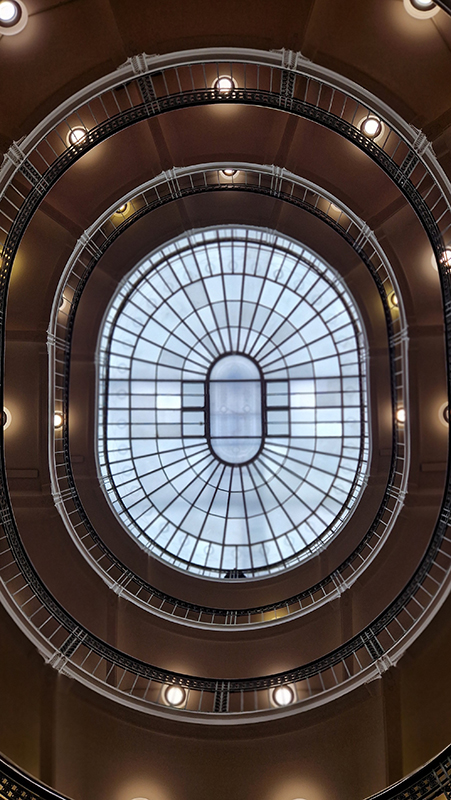
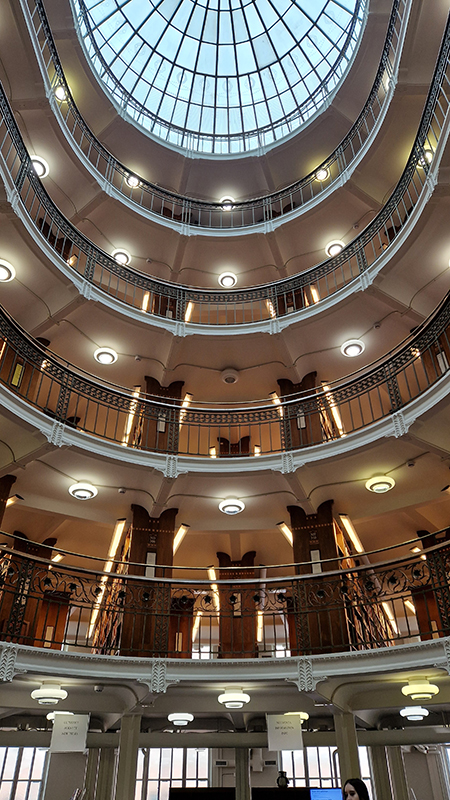
Helsinki is big on amazing libraries. The National Library of Finland is stunning and bursting with tantalizing books to explore, and the new Helsinki Central Library Oodi takes your breath away in its scale and sweeping curves.

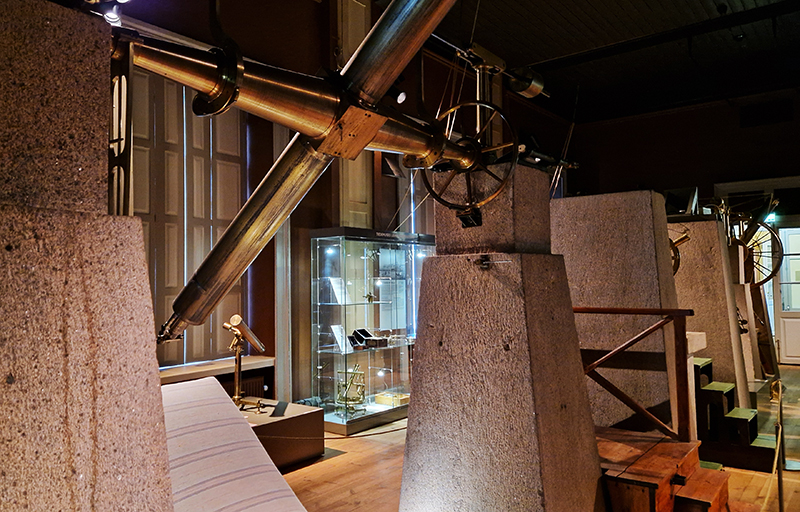
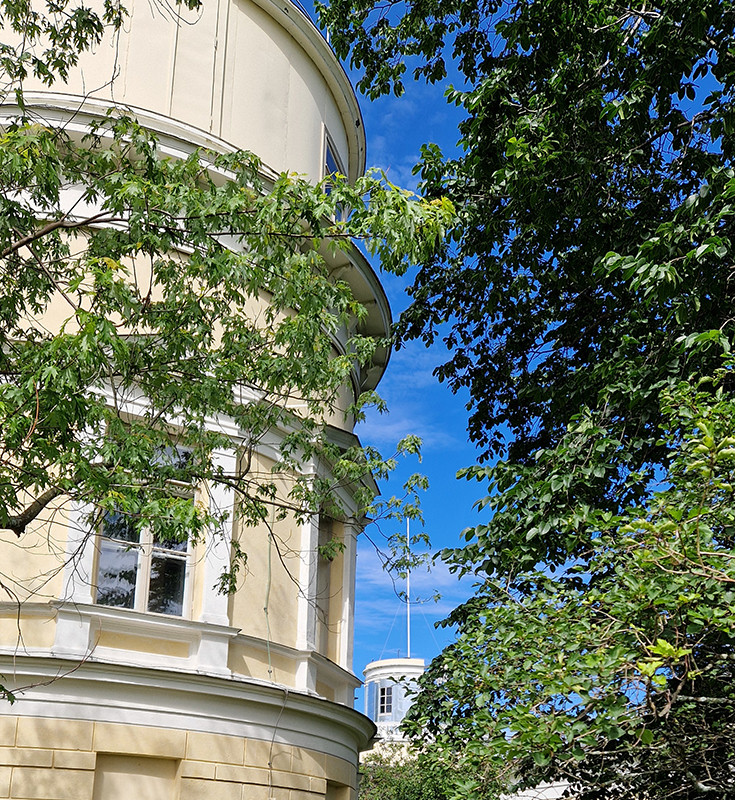
Sadly Helsinki Observatory has long since stopped functioning as a place for active astronomical research (2009) and is now a museum. It was disappointing that the electronic cloud chamber they possess wasn’t switched on but there were some interesting instruments to wonder about in the meridian room.

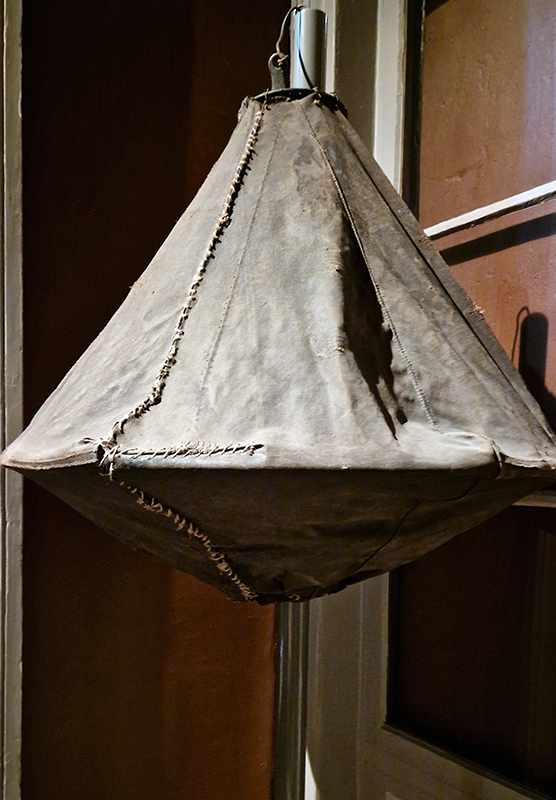
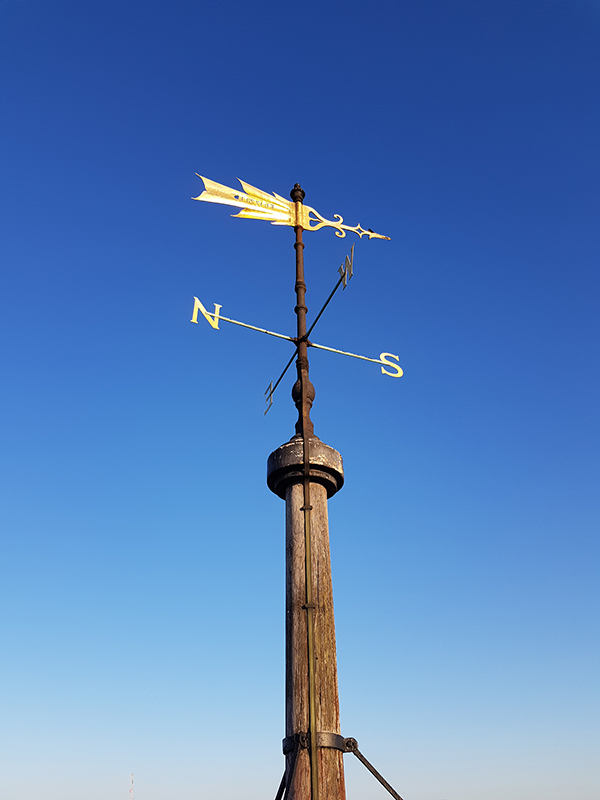
Each day the time signal bag was hoisted to the top of a mast on the roof of the observatory just before noon and dropped down exactly at noon. The correct time having been determined by an astronomer observing the stars at night. This event could be seen from Helsinki Central Railway Station where the station clock was then synchronised. This method of time keeping for Helsinki residents was in use until the 1920’s.

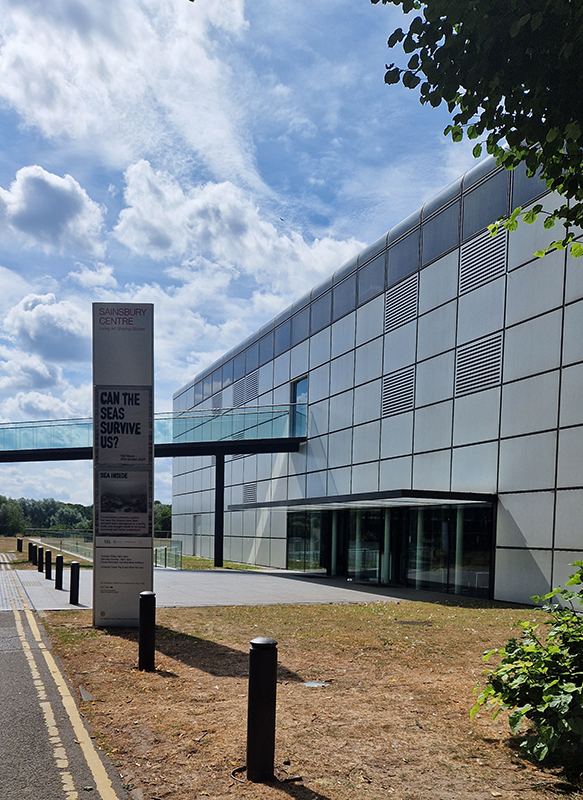
The future of our oceans is explored in the Sainsbury Centre’s Can The Seas Survive Us?

The sea has often been viewed as a mysterious ‘other’, with its expansive surface and seemingly infinite depths dominating marine imagery in the history of Western art. Artworks in this exhibition explore the ways the oceans have been domesticated, reimagined on a bodily scale and brought inside to be tamed, contained or better understood. Sea Inside turns our oceanic gaze towards the sea’s more intimate spaces – whether physical, psychological or imaginary – and dives into shared watery origins, Indigenous ways of life and the items we remove from the sea to display on land.

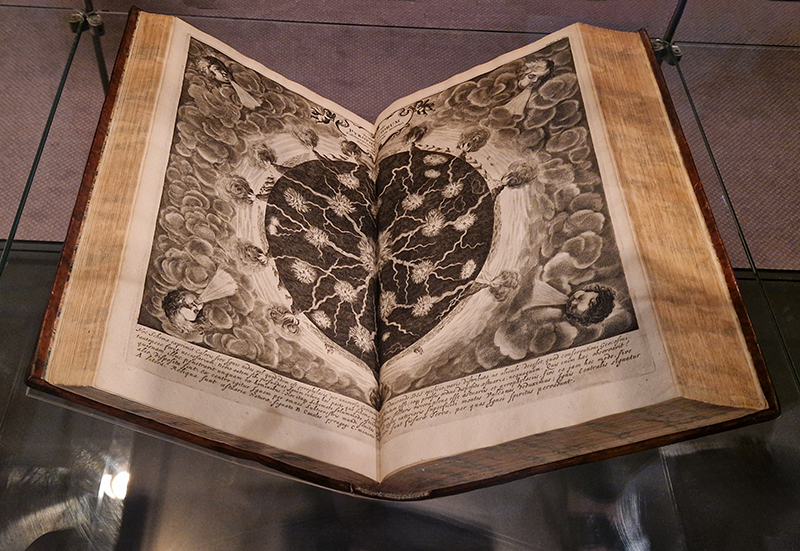
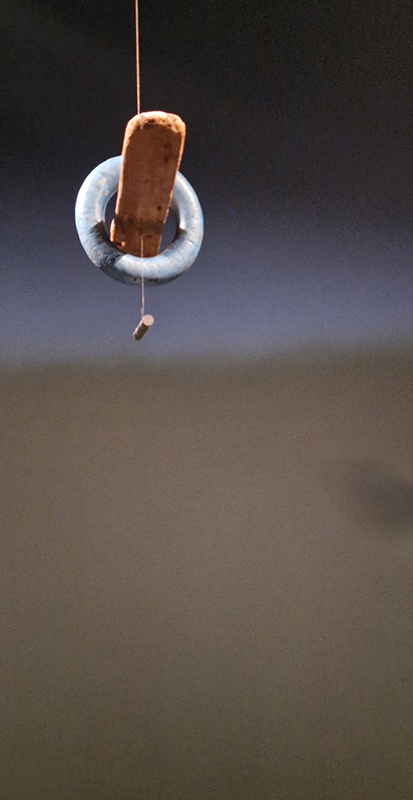
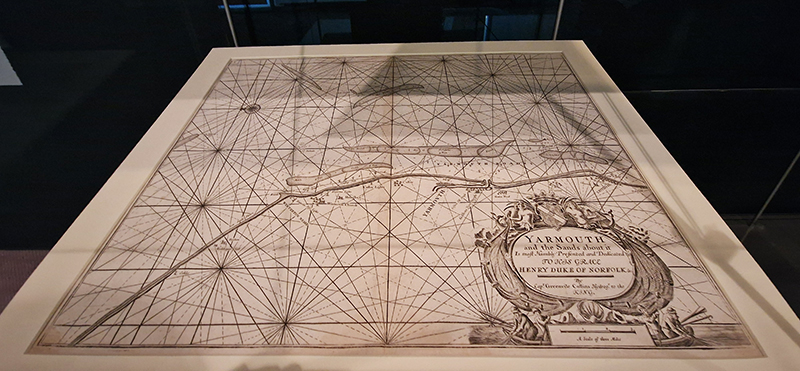
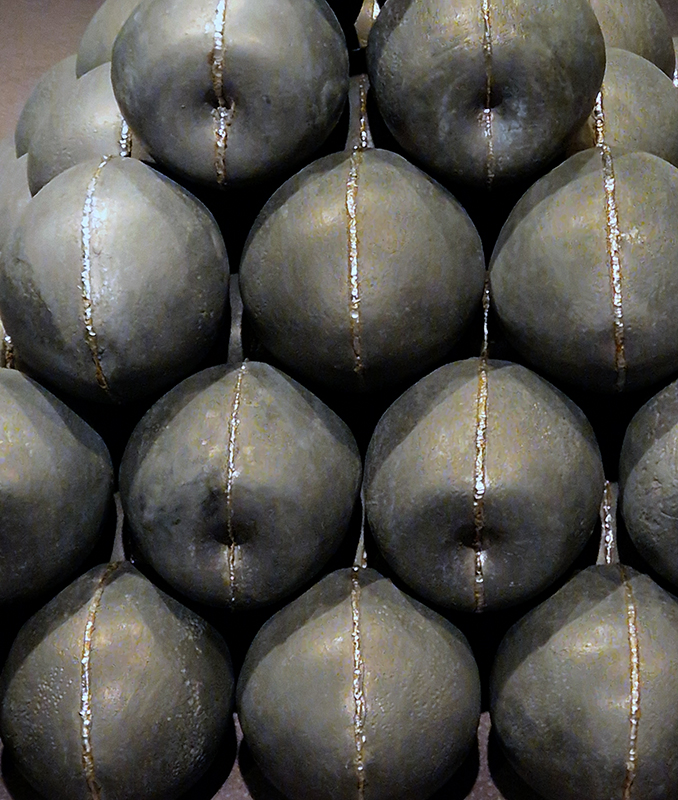
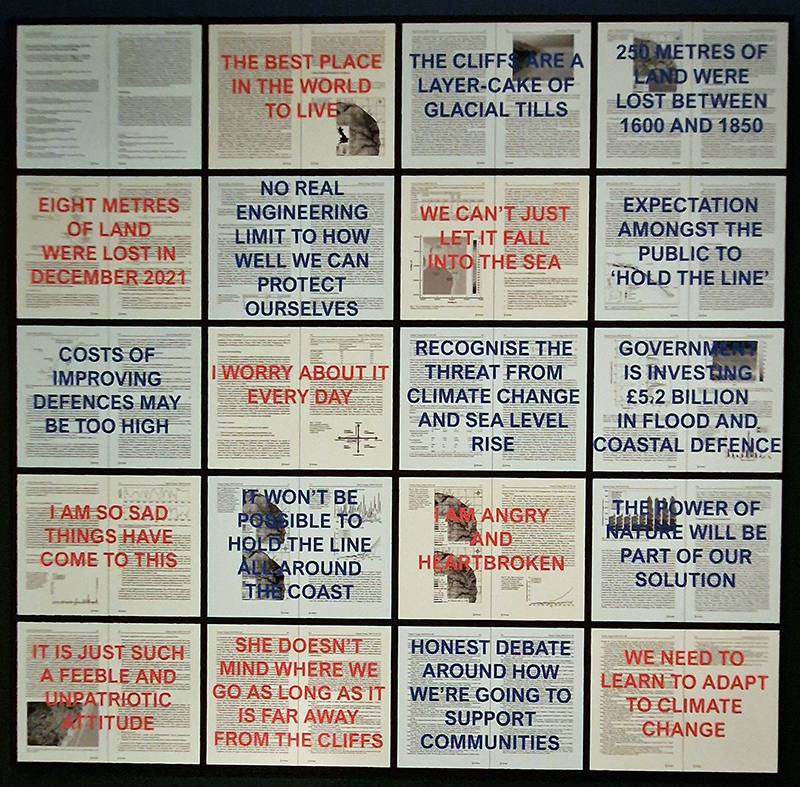
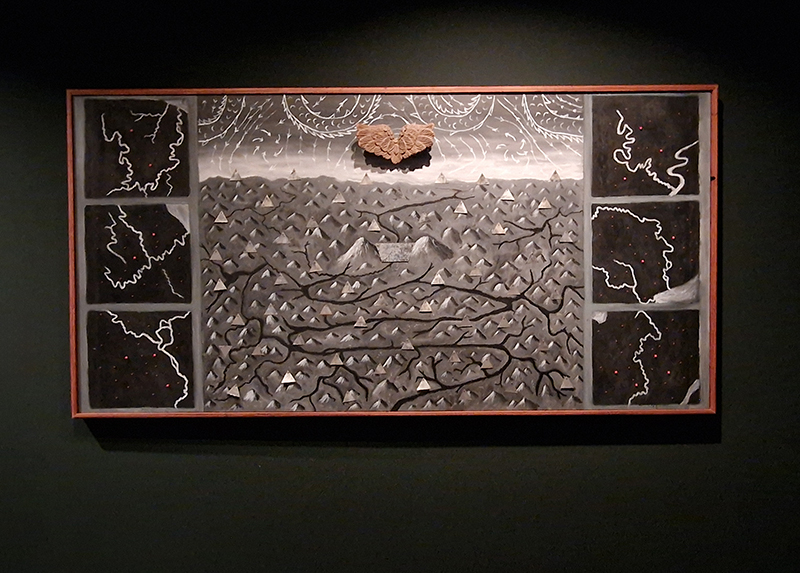
A World of Water takes the North Sea and the historical relationship between Norfolk and the Netherlands as its starting point to look at the human impact on the sea. It was wonderful to see the original book Mundus Subterraneous from 1664 by Athanasius Kirschner whose geological illustrations and speculations I have been fascinated by. Olafur Eliasson’s suspended Shore Compass uses driftwood to reflect on navigation of an uncertain world. Some great maps in this exhibition including the intriguing map of sandbanks off the coast around Great Yarmouth. I have enjoyed following Julian Charriere’s visually dramatic work on Instagram so it was good to see these images scaled up. Andrew Watkinson’s montage based on research from the Tyndall Centre for Climate Change about coastal erosion in Norfolk swerves from resignation to resistance, hope to despair and took me back to my BA dissertation (The Communication Of Ecological Concerns Through Contemporary Artistic Practice, 2007) writing about climate change warnings coming from the Tyndall Centre and the frustration of researchers about distorted media coverage that made it hard for the public to understand the facts. Suffolk too has lost a lot of land to the sea since I was a child there. Although dreams of tidal waves are common anxiety dreams I believe mine were also influenced by overheard stories of the North Sea flood of 1953 when a storm surge coincided with a high spring tide, which my parents and local villagers remembered vividly, it was the worst flood of the 20th century in England and Scotland and many lives were lost. Maggi Hambling’s sublime Wall of Water holds frozen the terrifying waves that may threaten us while Cian Dayrit’s Dam Nation examines the impact to communities and ecosystems when water is held back or re-routed.

Darwin in Paradise Camp by Japanese-Sāmoan artist Yuki Kihara calls out that ” a reconsideration of what it means to be human requires a re-evaluation of the origin of the species.”

Sea Inside turns our oceanic gaze towards the sea’s more intimate spaces – whether physical, psychological or imaginary including work by Marcus Coates (attempts to create the call of the humpback whale in a bathtub), Kasia Molga (How to make an Ocean – the artist’s salt tears fill miniature glass capsules where algae is cultivated), Gabriella Hirst (ethereal images on hand etched fibreglass in a slatted structure that echoes the baleen inside a whale’s mouth).

At London galleries I saw work about tuning in to invisible forces, the importance of how we treat our fellow humans (dead or alive) and an assessment of the influence of past and present technology on hope for the future.

Islington Gallery Weekend is a great idea, just the heat while out walking that weekend meant I didn’t make it to all the galleries participating.

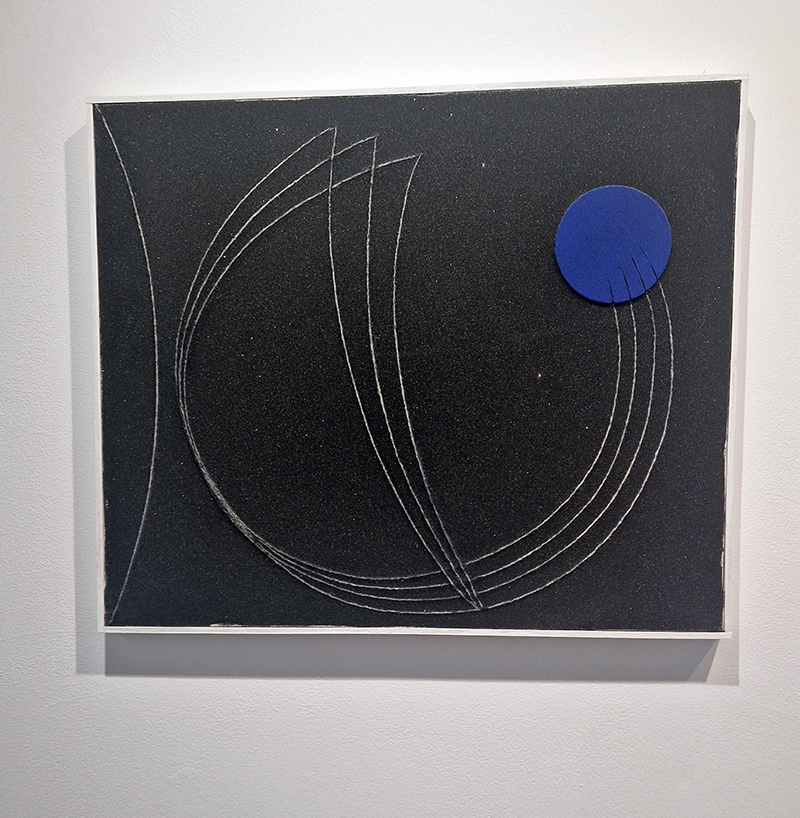
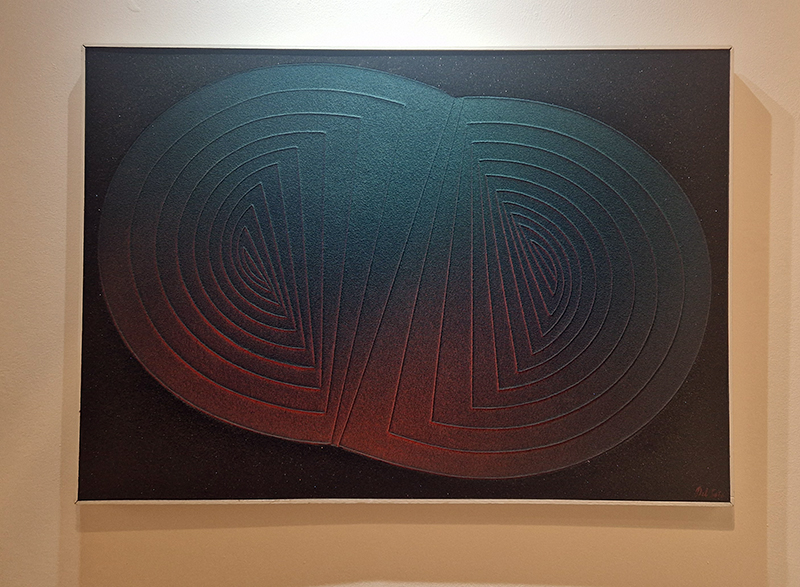
The Observatory at Bobinska Brownlee New River, presented abstract and textural works by Claudio del Sole, an artist and amateur astronomer who co-founded the ‘Astralist’ movement in 1959 inspired by the dawn of the space age. These cosmic inspired works are shown alongside those made in response to the Astralist manifesto by contemporary artists James Brooks, Robert Good and D J Roberts. Cocktails and an incredible performance on the piano of unique work by composer Edward Henderson were also part of the afternoon.

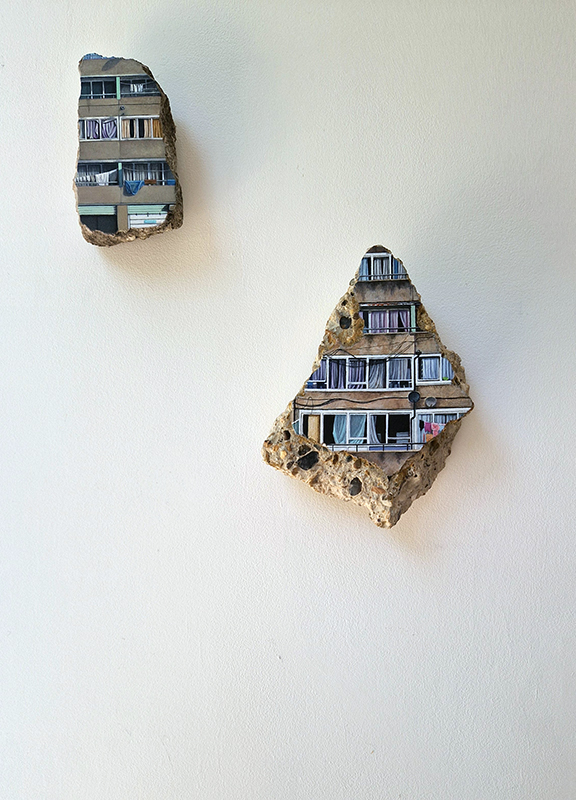
Poignant work from Harriet Mena Hill in Curtains at PostROOM Gallery. Fragments collected from demolition of the Aylesbury Estate in South East London are meticulously painted with details of the buildings that once were home to a community. An accompanying film gives voice to those who enjoyed life here before lack of maintenance and social care slowly stripped away the heart and soul.

Fascinating listening to Tracy Hill speak about her work in Natural Frequencies at White Conduit Projects which explores ways of being sensitive to invisible energies that move through us and our landscapes. Her experience of working with a water diviner feeds into her intuitive drawing processes and cut paper works.

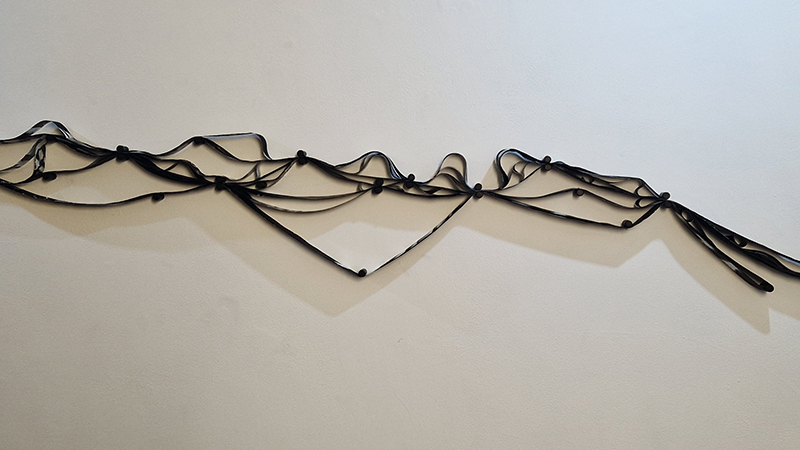
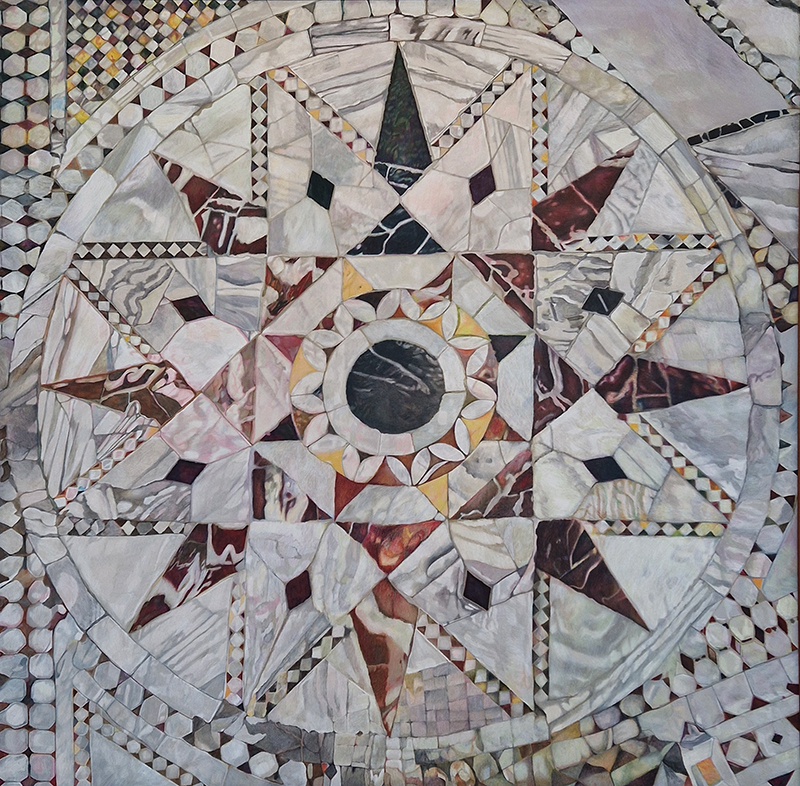
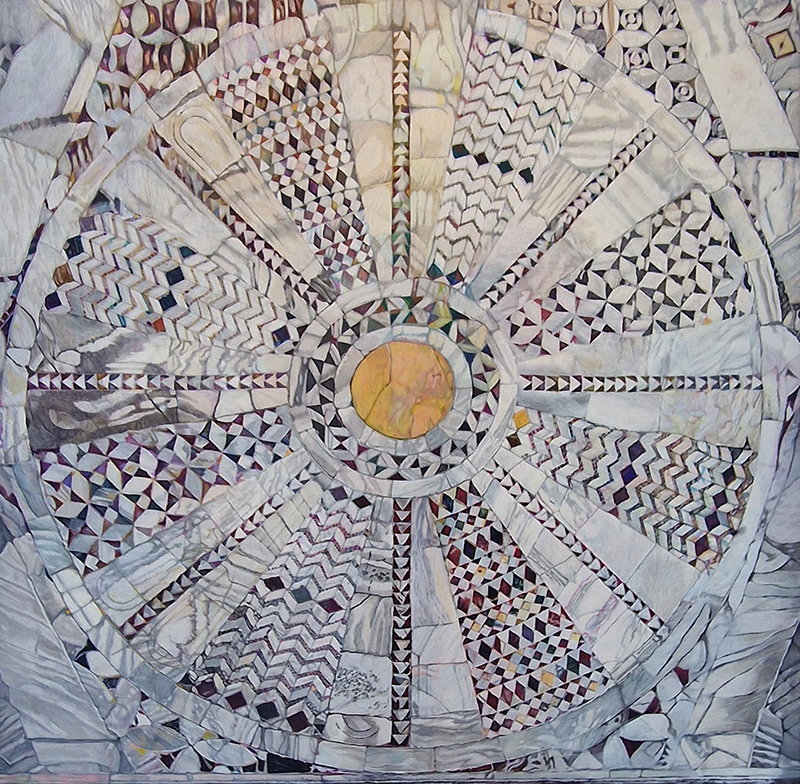
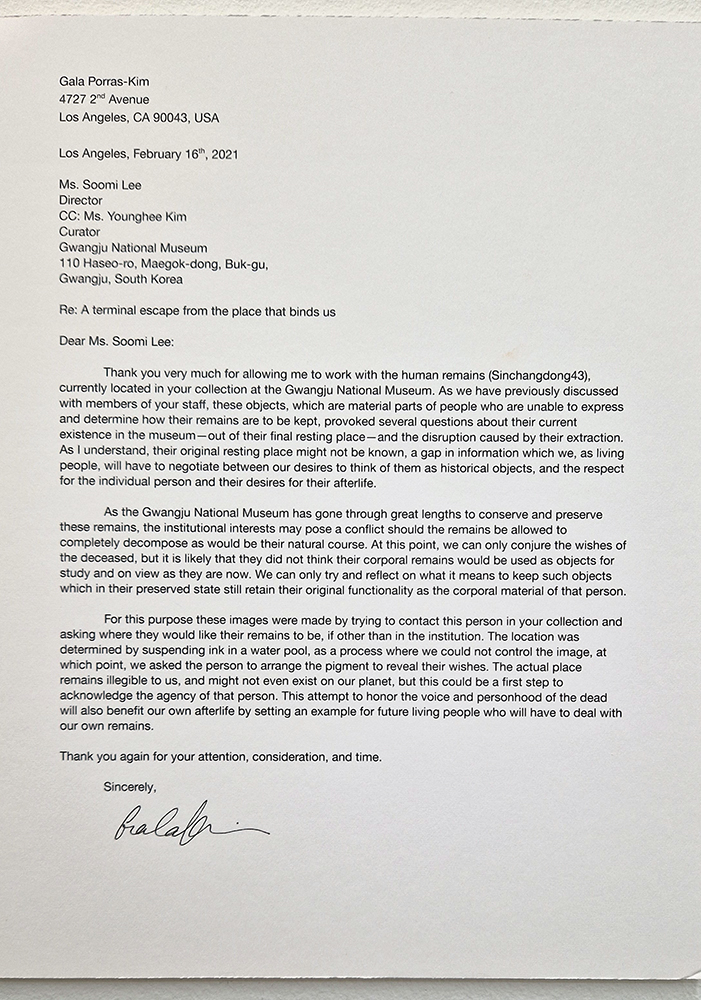
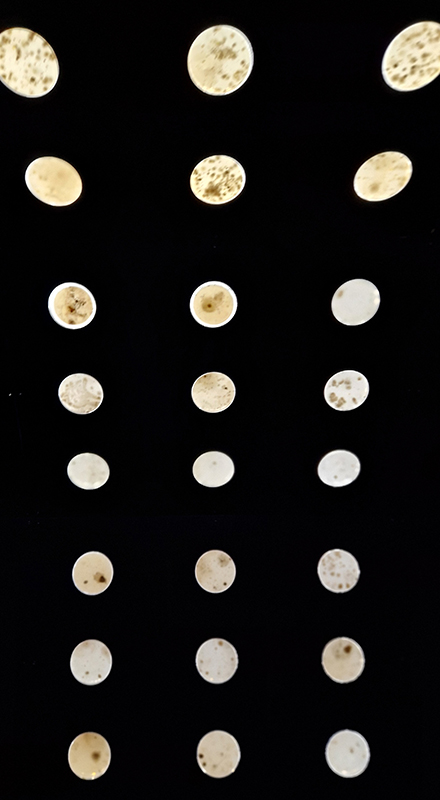
I was drawn to visit Gala Porras-Kim The categorical bind at Sprüth Magers to see these images which reminded me of the large hadron collider but made from marble. They are actually an examination of the conservation of marble tiled floors in Italy.

I remembered I had seen her work before at Gasworks and found it really interesting. In this piece she attempts to commune with the dead whose remains have ended up in a museum collection, possibly not where the living person had expected or would want.

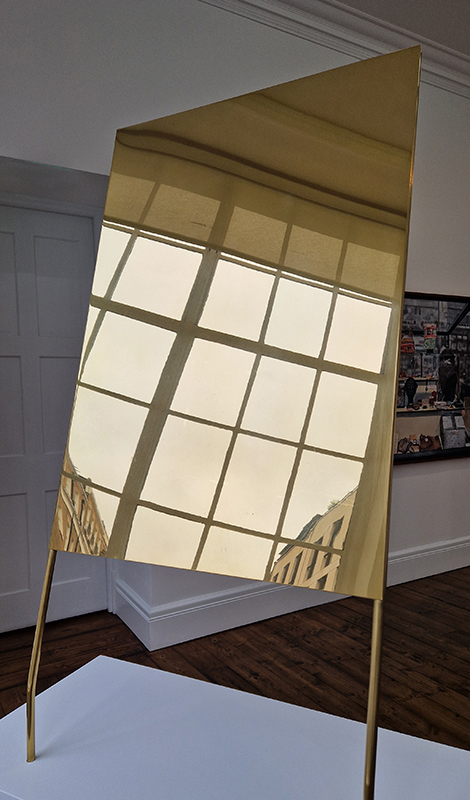
Gala Porras-Kim

All Earth energy sources are known to come from the Sun

Brass, sunlight

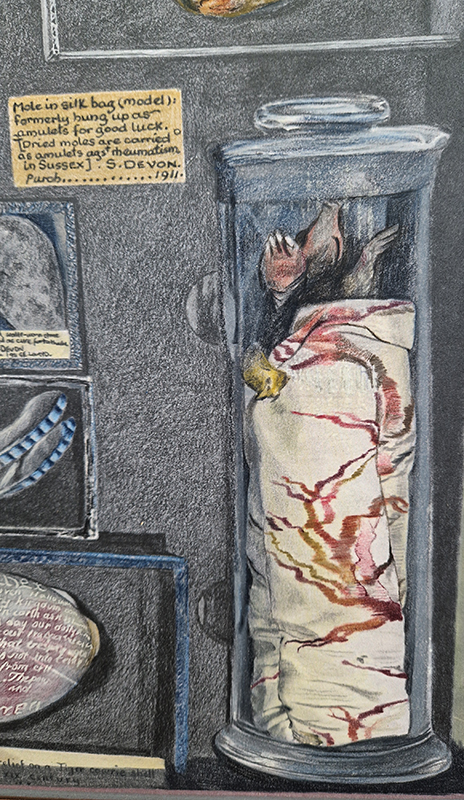
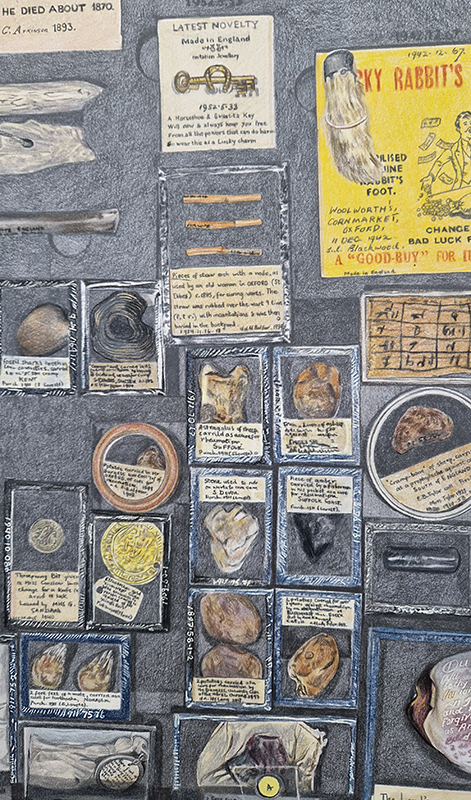
Most of the works were coloured pencil drawings of museum collections, giving agency to objects and questioning categorisation – this one of the poor mole amulet made me think of my mole killer brother who suffers from arthritis.

It is fascinating to think about how humans experience sound and consider frequencies occurring outside the human spectrum of sensitivity that other animals may be able to hear. Also to think about sound as vibrating bodily rather than auditory sensation. Barbican Feel the Sound requires a willingness for interactivity to experience most of the exhibits. The instructions weren’t always clear and so it was at times a bit of a frustrating journey through the space.

“A powerful solar flare hitting Earth is entirely plausible, and in the Internet Age would have a massive immediate effect that would go on to wreck the world economy. Satellites in low Earth orbit as well as communication devices on Earth would be destroyed – the ‘Internet Apocalypse’, causing blackouts, riots and supply-chain disruption, as well as ruining your last-second eBay bid”. Tim Marshall The Future of Geography

The dramatic increase in the number of satellites being launched into low Earth orbit unfortunately coincides with the current Solar Cycle 25, which is predicted to peak between January and October of 2024, with more solar storms of greater intensity and therefore a larger hazard for critical technologies and services. A growing risk awareness is evident as three new geomagnetic observatories have been installed across the UK in the last year to monitor space weather. They hope to predict solar storms and alert operatives to manage situations such as that in February 2022 when a Coronal Mass Ejection led to 38 commercial satellites being lost. Solar plasma from a geomagnetic storm heated the atmosphere, causing denser gases to expand into the satellites’ orbit, which increased atmospheric drag on the satellites and caused them to de-orbit.

Despite the unpredictability of our star’s activity, national space agencies and an increasing number of private companies are forging ahead with space based technology. There is a joint plan between space agencies (not including China or Russia) to construct a Lunar Gateway Space Station near to the moon where astronauts will live and conduct experiments for up to 90 days between visits to the moon. Gateway will be exposed to much higher levels of radiation than the ISS which is in low Earth orbit and so must be built to shield against higher levels of cosmic ray bombardment.

As of January 3rd 2024, the satellite tracking website “Orbiting Now” lists 8,377 active satellites in various Earth orbits. Communication and Earth observation make up the majority. The USA still outstrips all other operators but other nations are eager to catch up and within the past two decades, satellites from 91 new space-faring countries reached orbit.

It is not only radiation from space weather that is a threat to satellite dependent infrastructure. As witnessed following the largest nuclear test conducted in outer space by the USA in 1962, which lit up the sky with Auroras, knocked out electricity in Hawaii 900 miles away, created significant magnetic field disturbances and an artificial radiation belt which damaged or destroyed several satellites and persisted for a decade. Nuclear detonations in space could make space unusable for satellites.

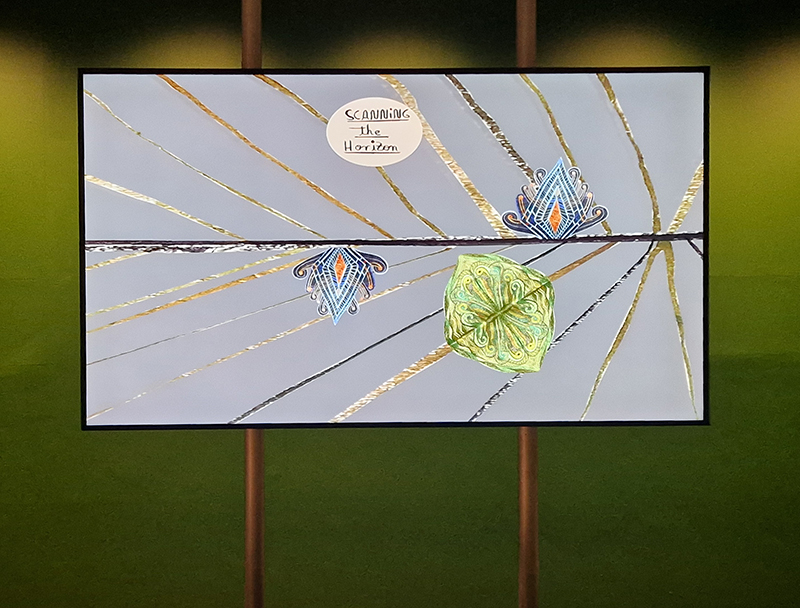
Work in progress on a new video installation for upcoming exhibition Life Boat at APT Gallery. Taking the lifeboat as a metaphor for precarity, eight artists respond to current uncertain times of ecological and social change and shifting landscapes from both local and global perspectives.

The video looks at the interaction between space weather and Earth’s magnetic field and the risk solar storms pose to satellites and related infrastructure.

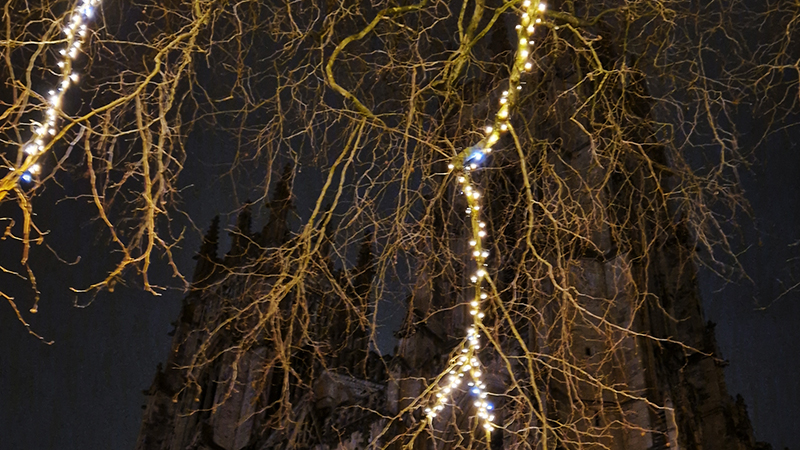
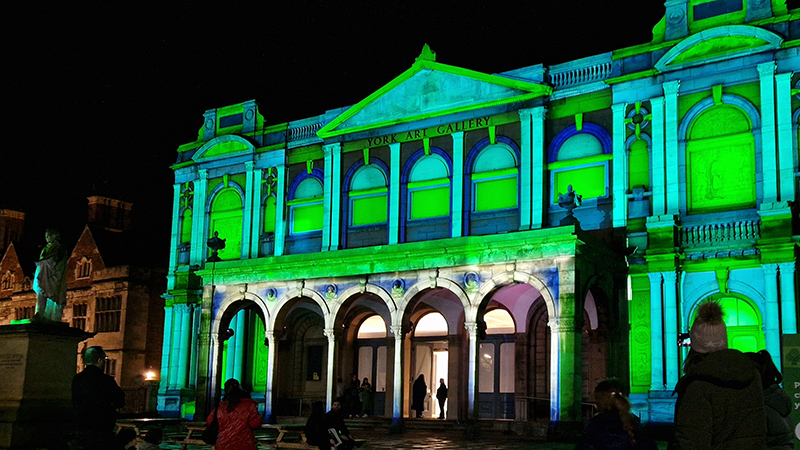
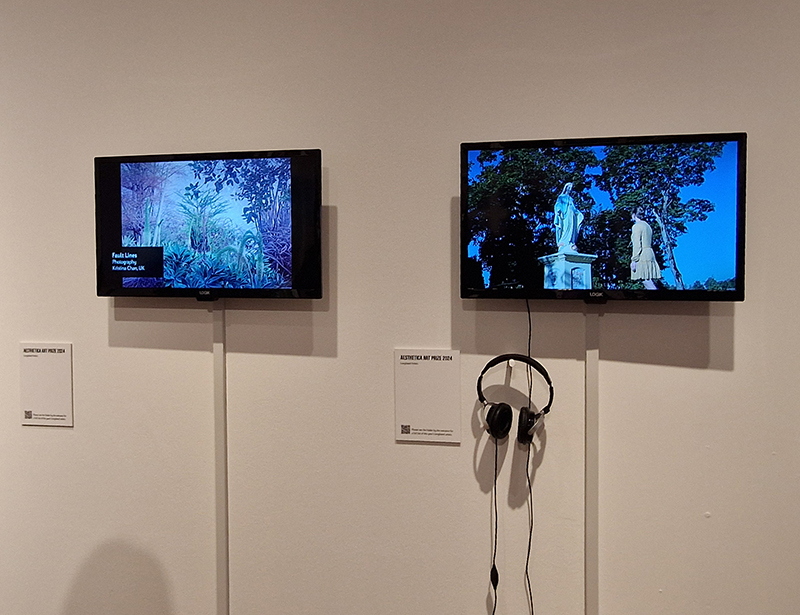
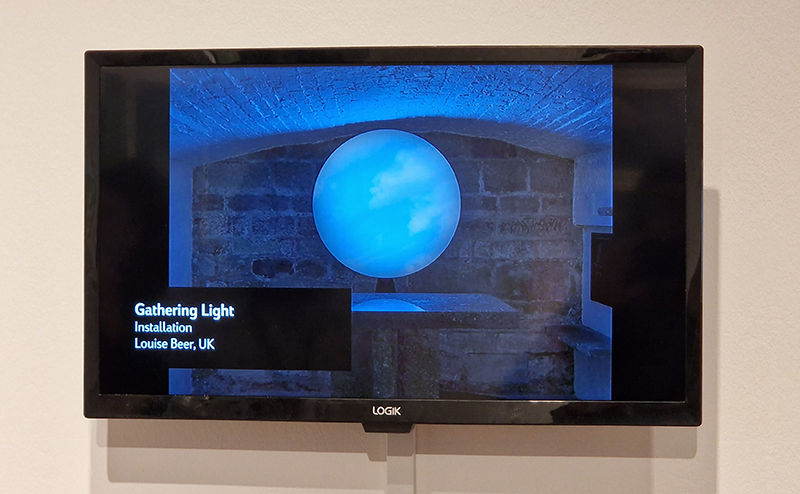
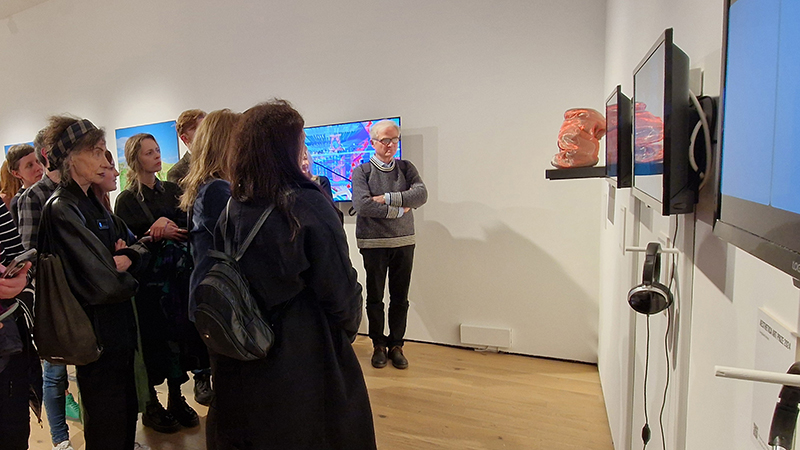
The ancient walled city of York was a great host venue for the Aesthetica Art Prize 2024 exhibition and the Future Now Symposium. Grey February is dispelled by the inspired decision of the local council and shops to keep the Christmas lights on.

There are many artists alongside myself in the Aesthetica Art Prize longlist, and it was great to meet up with familiar faces as well as make new contacts at this event. With so many artists, the digital showcase of our work in York Gallery was on quite a long loop, but I felt happy to be in such good company.

A link to my Aesthetica 2024 longlisted artist online profile is here

Private view of finalists work. Shortlist here

The winners of the main prizes, Maryam Tafakory for Nazarbazi [the play of glances]which explores love and desire in Iranian cinema, where depictions of intimacy between women and men are prohibited. and  Emerging Prize-winner Gala Hernández López, were well deserved with powerful, timely work.

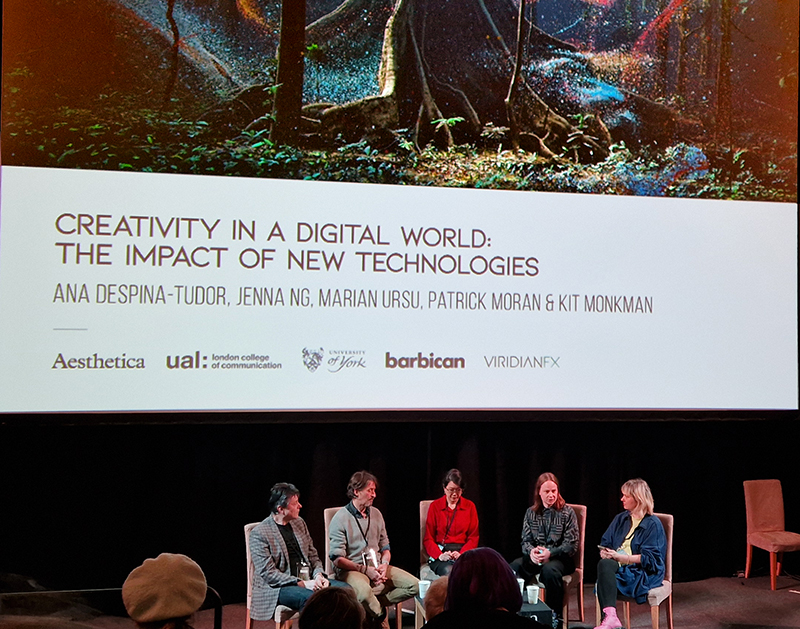
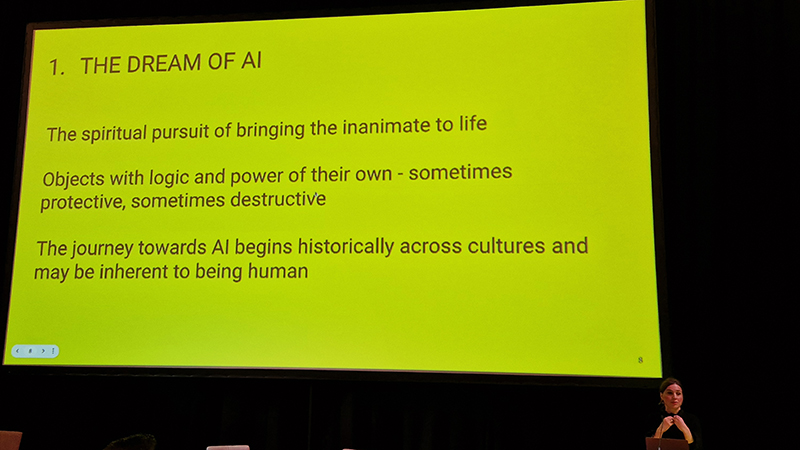
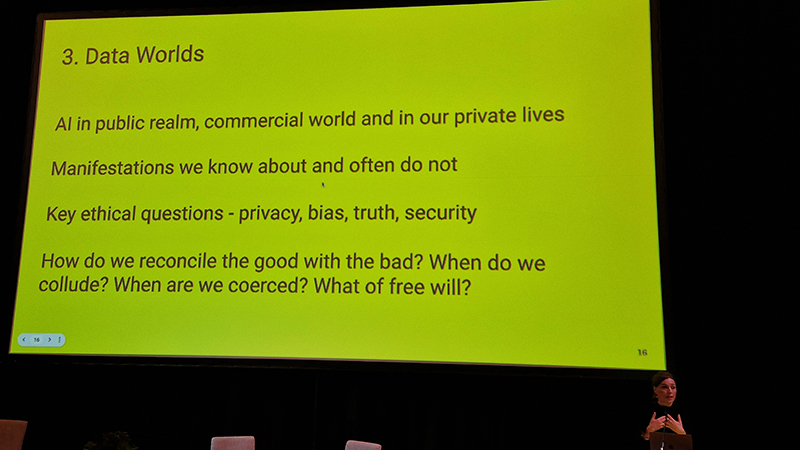
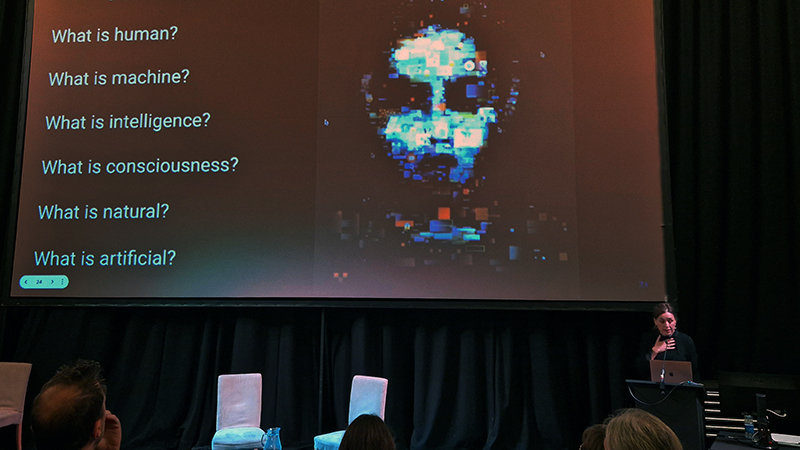
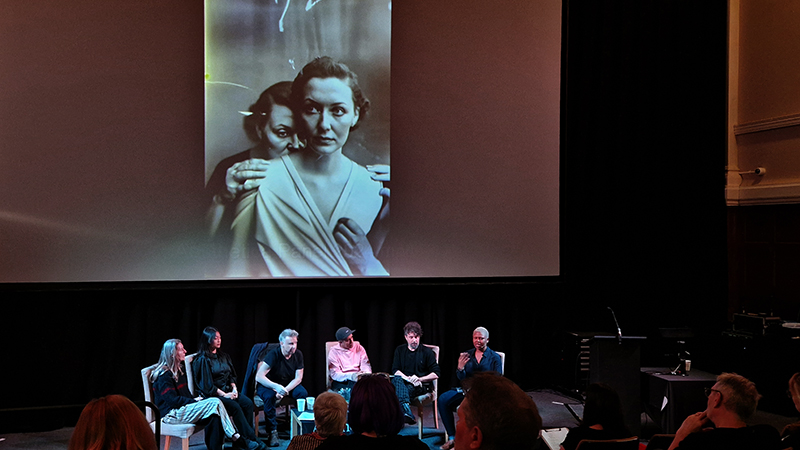
The Future Now Symposium threw up some interesting and potentially disturbing questions about AI despite some speakers such as Dr Suzanne Livingston and Marian Ursu, positive spin that AI could herald a new utopia of knowledge production and collaboration to solve the world’s problems. The panel discussing ‘The Impact of New Technologies’ were all in agreement that it is already too late to change or avert the learning bias of AI systems reflecting and perpetuating human biases, as the early modelling is embedded too deep in systems that no one really understands or can control. There was encouragement to welcome the new technologies such as chatGTP and text prompt generative fill software as new tools to be used to expand on what we can create rather than seeing these as taking over the creative thought process.

The myth surrounding the deception of the judges by Boris Eldagsen’s now-infamous AI-generated piece, The Electrician, which won a Sony World Photography Award in 2023, was laid to rest by Edgar Martins on the ‘Photography in Focus’ panel. The winning image had been entered to the competition as an AI generated image and was judged on that basis, there was no cover up but certain media sources sparked heated debates around our trust in images, giving the impression that the judges had been misled. This doesn’t mean to say that there isn’t a problem with image authenticity in the news and especially on social media as AI generated images are shared ubiquitously without the relevant acknowledgement.

I very much enjoyed Sarah Perks in conversation with Heather Phillipson who describes her works as “quantum thought experiments,” which unfold in absurd and complex ways. Interesting to hear how her ideas develop from 2D sketchbook/collages, straight to full large scale 3D installation with no small scale models in between. Making such large work is a problem when it comes to storage, so some pieces have to be relinquished and then recreated if necessary, as it was for her Turner Prize nomination.

Margaret Salmon was another fascinating speaker with her quietly moving films that expose and elevate the minutiae of human experience. She showed a short film zooming in on the invasive ravaging nature of trawling the sea bed, indiscriminately gathering up everything in the haul, interspersed with a Whitstable trawlerman speaking about his life on the boats where this was just seen in terms of hard or easy work and how the day played out. It reminded me of the taped interview I have of Aunt Millie, a close elderly neighbour from my Suffolk childhood, who talked about mending the fishing nets piecemeal as a young woman when the village still had an active fishing industry. Fragile histories to be remembered.

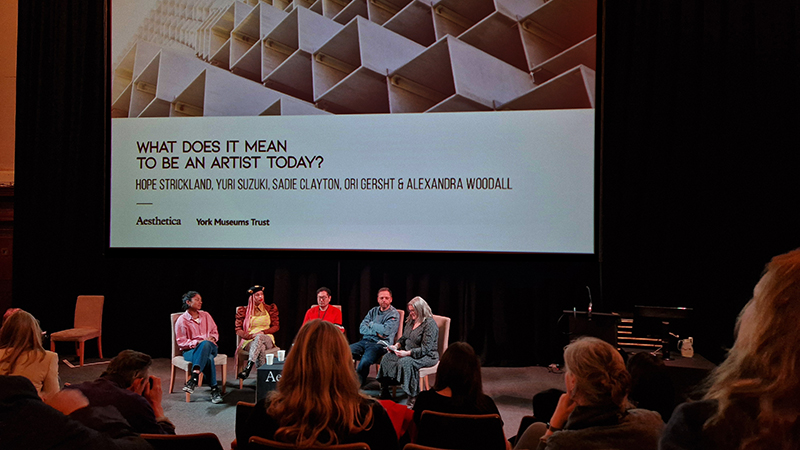
The panel discussion ‘What does it mean to be an artist today?’ was tempered by Ori Gersht accounts of his personal experience as a jew during the current conflict, both here and as witness to atrocities in Israel. How to respond.

Gallery Visits

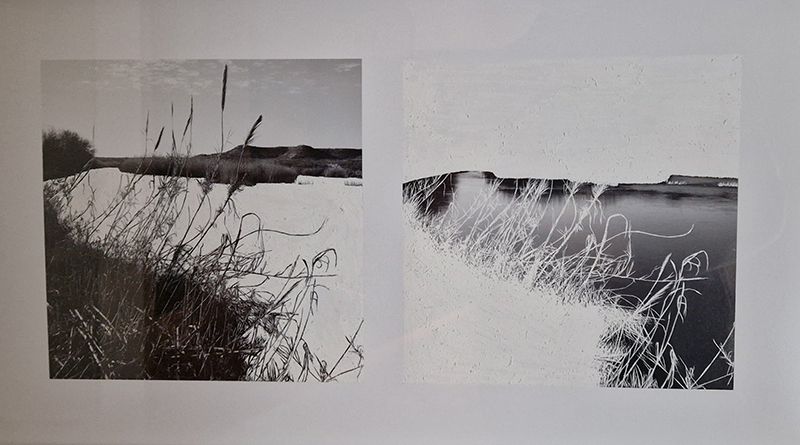
Freya Gabie Duet at Danielle Arnaud. Great to hear Freya’s own account of her time spent as artist in residence on the Mexican/U.S border at one of the teatime talks hosted at the gallery. The shocking inequalities and water poverty that she witnessed are sensitively explored through her work. The ease with which she could cross back and forth was denied those indigenous to the Mexican side who live in the shadow of a shiny wealthy city that they would never visit.

The exhibition explores the landscape of El Paso and Ciudad Juarez as a repository of shared connections and experience. Giving the land voice to both remember and carry the complications, contradictions, and beauty of the place; the way these nuances act in harmony, and the notes of discord they strike. For this exhibition, Freya Gabie draws out threads that weave the two cities of Ciudad Juarez and El Paso together. Approaching the intricate back and forth of economic, social, and medical journeys that take place between the people and objects of the border, and examining how the border both generates the flow of goods, services, and people and dams it, revealing the ways the resulting impacts are felt.

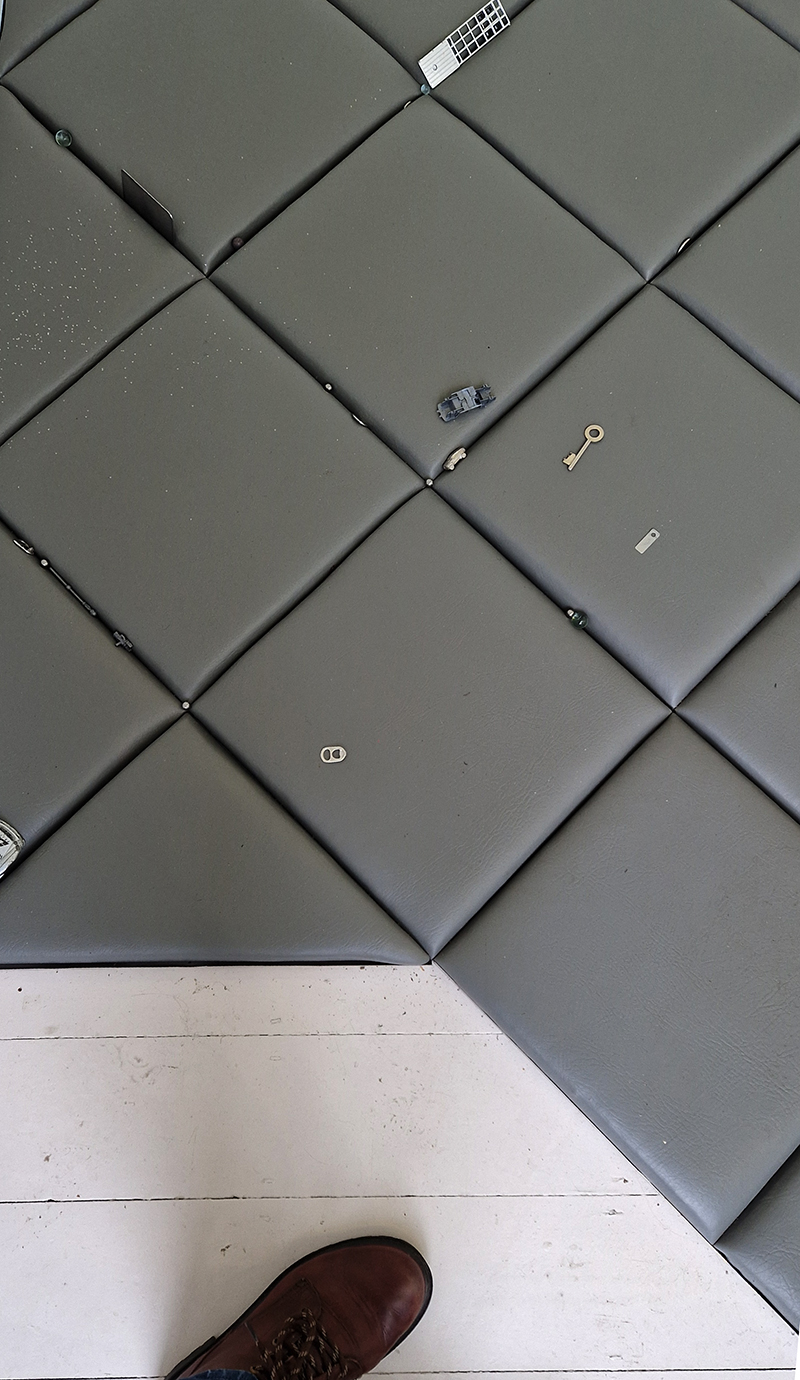
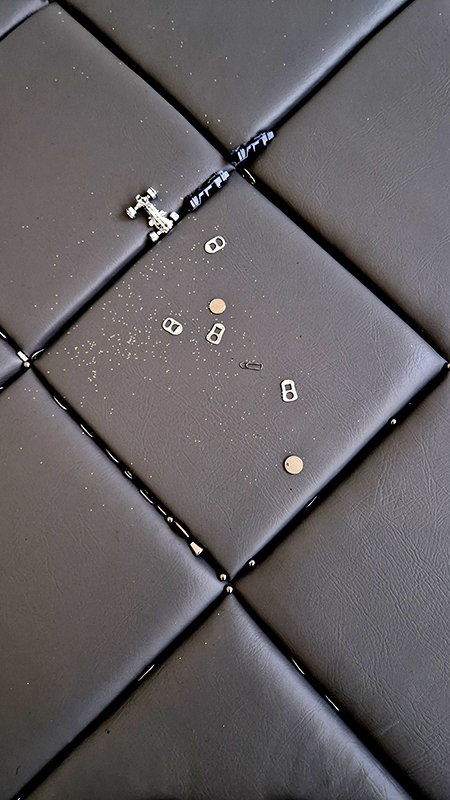
Agata Madejska Grand Habitat Horror Vacui at Flat Time House. The works evoke the personal intimacy and mess of domestic life lived at odds with prevalent power structures. They embody feelings of fragility, and exposure when a home must be constructed from fragments as seen in the small personal objects secreted in pockets or spilling across the floor, an accumulation of detritus that together makes a life, chafing against the world like grit in Vaseline. Due to my own current preoccupations, the dark padded grid of the entry room floor, that gave under the weight of mass and was strewn with discarded silver objects, read as low earth orbit littered with space junk, but was in fact a reference to the Chanel brand handbag.
DISSONANT BLOOM a group show with works by Nancy Allen, Mauro Bonacina and Héloïse Chassepot at Sundy. Enjoyable tactile sculptures with interesting materials and painting to get lost in with no point of focus.

As a concept ‘Dissonant Bloom’ refers to our vexed relationship with nature but it also suggests that growth and flourishing are possible amidst unfavourable conditions. In the same way that the coexistence of competing species ultimately fosters biodiversity and ecological resilience. In the same way every work in this exhibition embodies aspects of blooming, either aesthetically or conceptually, but they do not necessarily do so in harmony with each other.

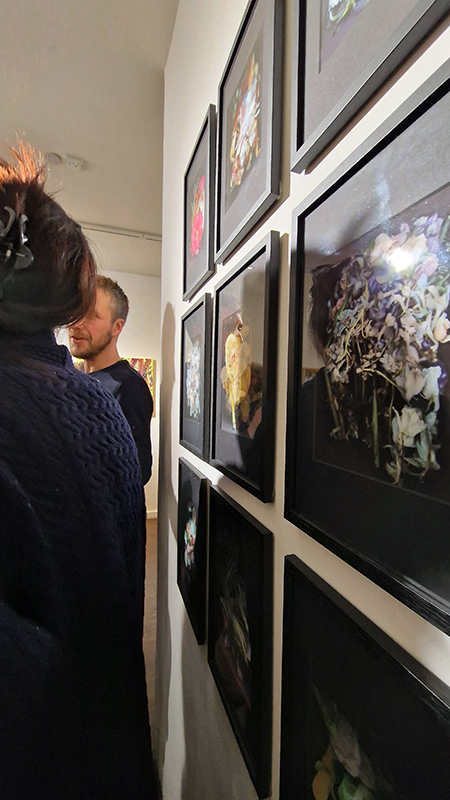
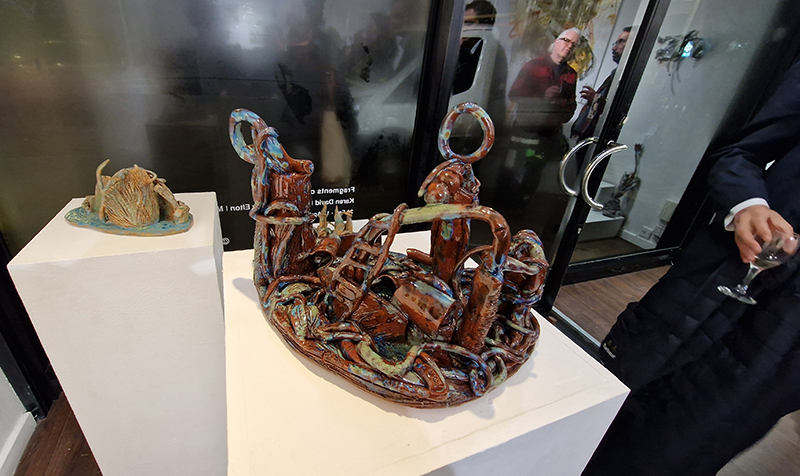
Fragments of a Lost Future with Karen David, Lana Locke, Liz Elton, Mimei Thompson, Susie Olczac at White Conduit Projects. In a time of climate crisis the works question hope for the future as a fantasy, or only for the non-human.

The Planet’s mineral, energy and agriculture resources have been efficiently, and even ruthlessly, exploited… They have harnessed energy of the atom, deciphered the molecular codes that oversee their own reproduction… Despite these achievements the people of this planet have in other respects scarcely raised themselves above the lowest level of barbarism. The enjoyment of pain and violence is as natural to them as the air they breathe. J.G. Ballard [“Report From an Obscure Planet”, 1992]

The fears of the near future described in J.G. Ballard’s science fiction novels are now our reality.

When corporations and politicians are busy monopolising airspace and arguing amongst themselves, whose voice will communicate this urgent crisis. We go about our daily lives with our heads partly buried in the sand, often too busy to fully engage with our current polycrisis. Activists rightly convey outrage, but can we embed these urgencies into our everyday lives? In ‘Report from an Obscure Planet’, Ballard describes the critical state of the Earth as viewed from another place. White Conduit Projects brings together these five artists who bravely and playfully incorporate this sense of crisis into the core and surface of their work. Starting with their everyday surroundings, they attempt new ways of communication, quietly bringing a Ballardian nuance to artworks that inhabit our domestic space.

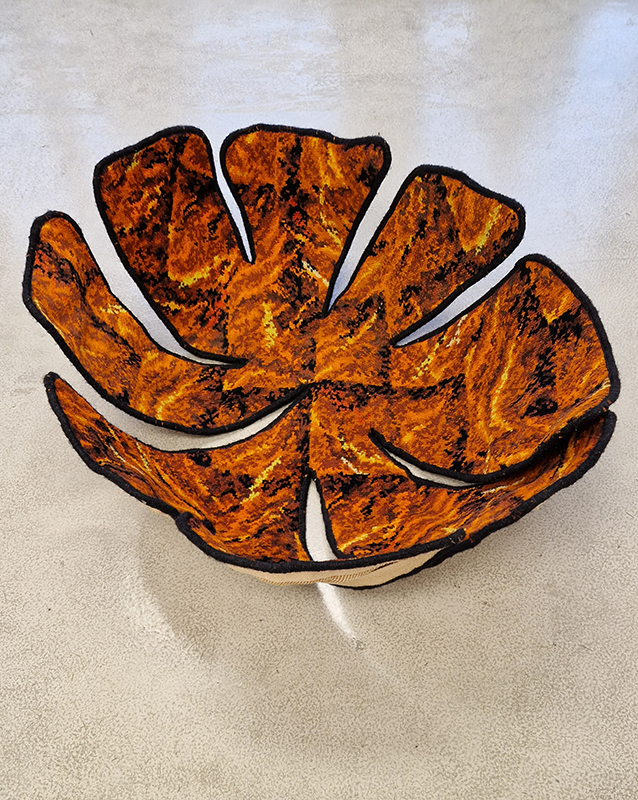
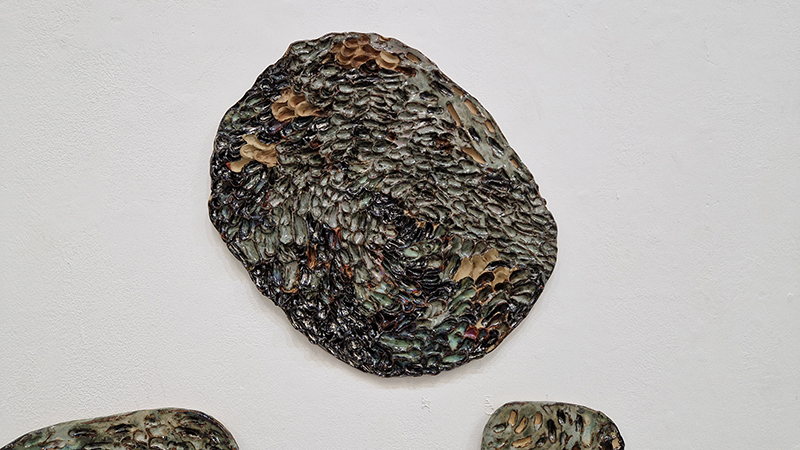
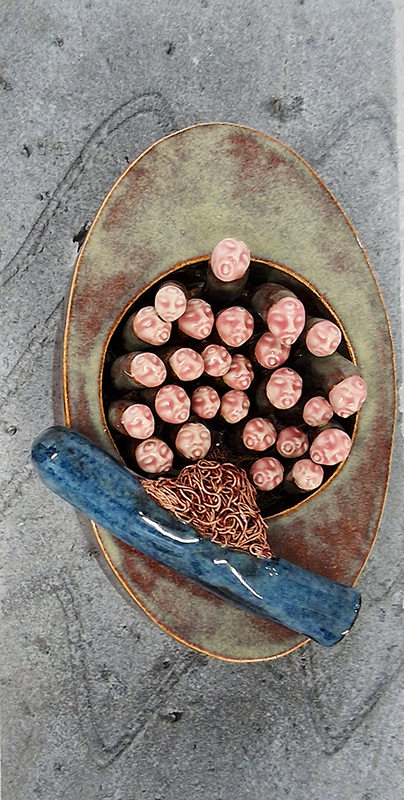
Loose Ends is a group exhibition at Thames-side Studios Gallery exploring connections and the interwoven poetics of material and the body by ten artists working across ceramics, textiles and performance.

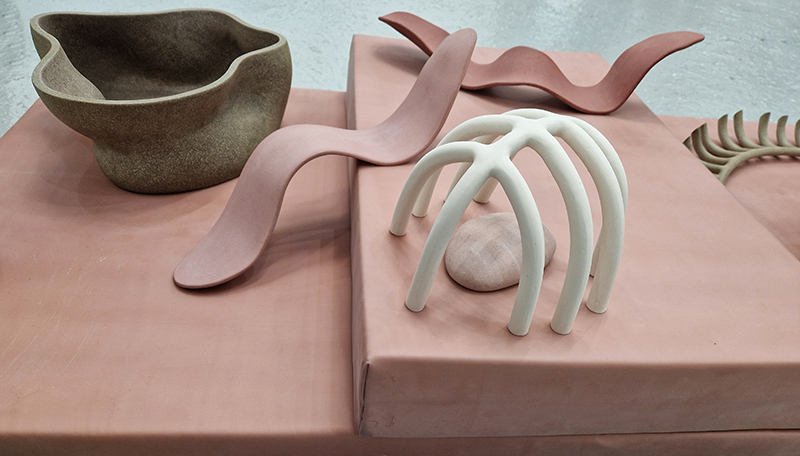
Blown away by the sheer elegant beauty of  Alex Simpson‘s impressive new ceramic work traversing across latex covered foam blocks.

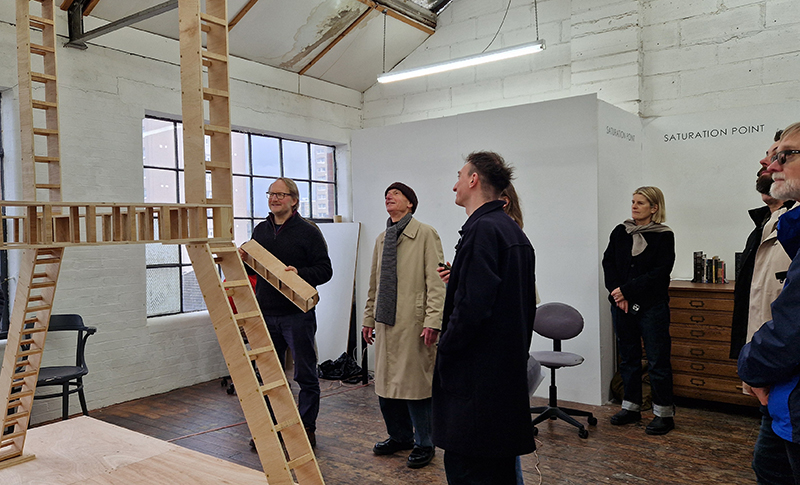
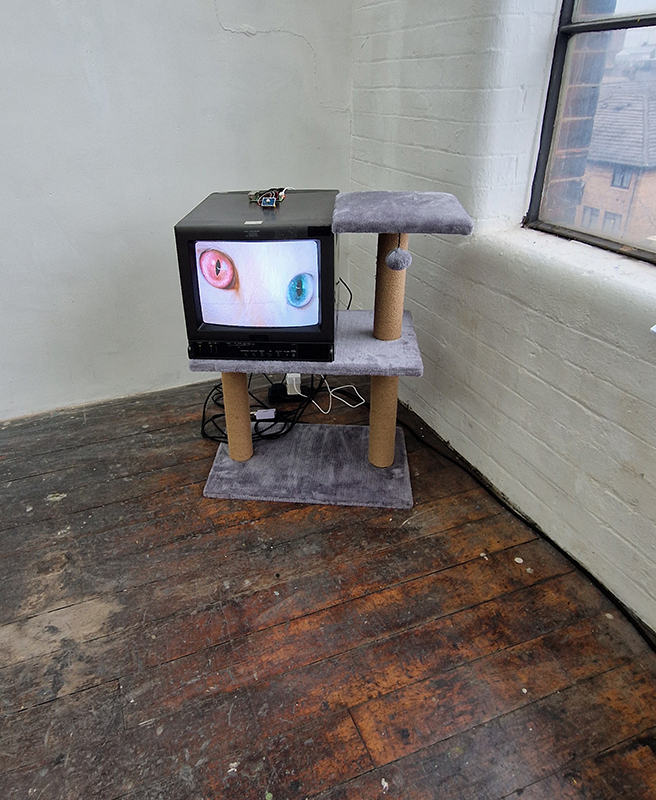
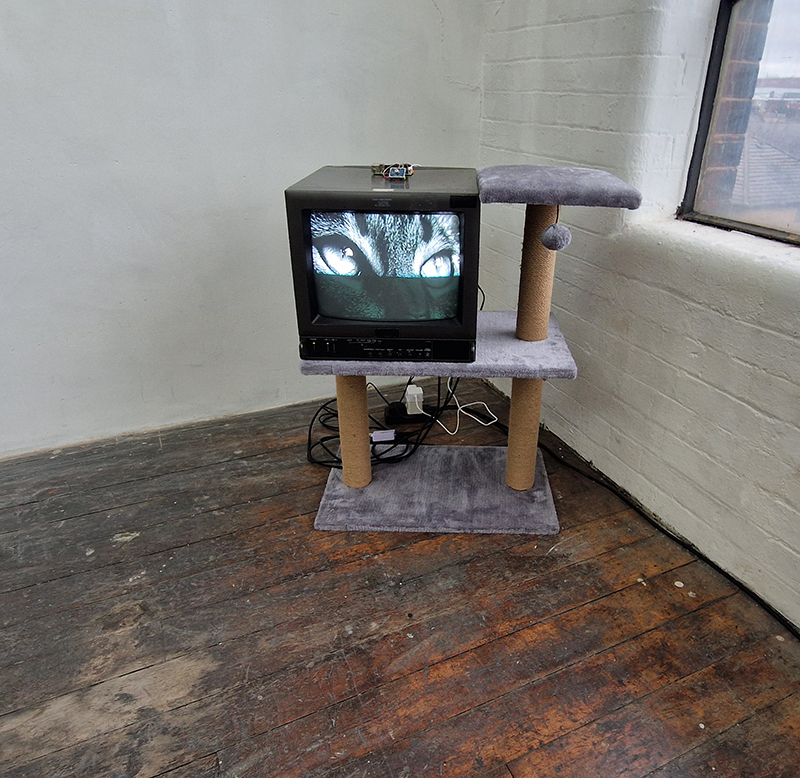
Robert Good Saturation Point Sunday Salon 29. Responding to Richard Brautigan’s 1967 ode to a coming technological utopia ‘All Watched Over by Machines of Loving Grace’ Robert explores what a cybernetic meadow might look like. Here he presents six digital artworks that hum, whirr, click and miaow with the first stirrings of a new digital landscape – one of computer vision, compromised identity and permanent connectivity. This meadow is not brought about by the unfathomable AI but is hand sown and nurtured with the level of technology we can still engage with; it is a human scale materialization of the inner workings of the digital world.

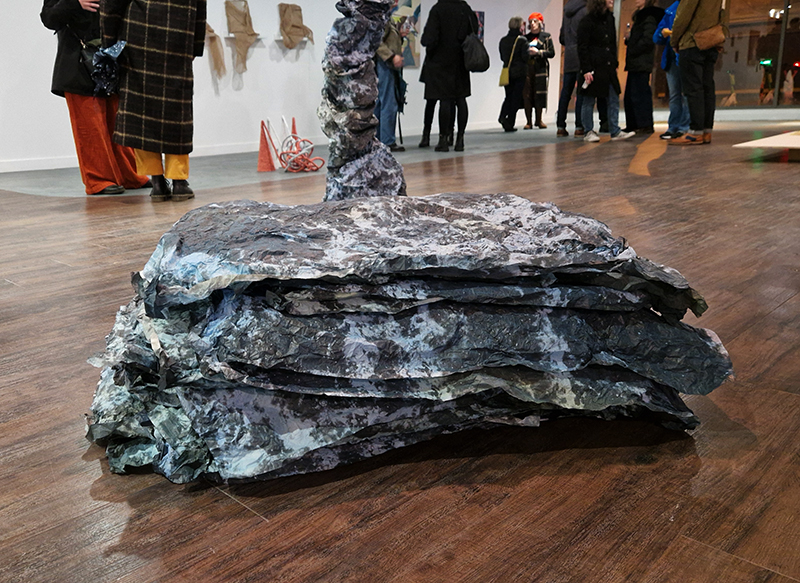
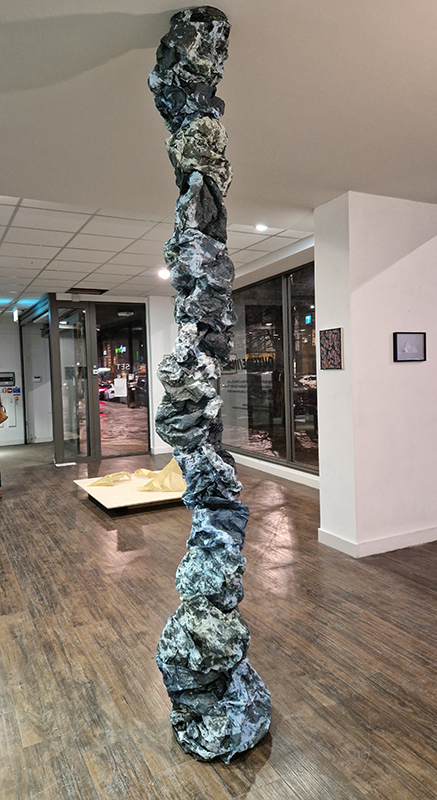
OUTSIDE IN at SET Ealing, a dynamic group show curated and including beautiful, stitched painting by Anna Lytridou, with works by Anja Aichinger, coloured paper clay forms by Eleanor Bedlow, fossil like forms by Anna Joy Reading, delicate folded brass mesh geometric forms by Brigitte Parusel, paintings of collapsed breasts by Jennifer Nieuwland, explorations of genealogy through painting by Jillian Knipe, abstract and evocative paintings by Linda Hemmersbach and Stacie McCormick and subtly coloured sculpted paper forms oscillating between stone and the night sky by Julie F Hill contemplating interconnections between the organic and the inorganic.

Listening

In Our Time Panpsychism – Melvyn Bragg and guests discuss the idea that some kind of consciousness is present not just in our human brains but throughout the universe, right down to cells or even electrons. This is panpsychism and its proponents argue it offers a compelling alternative to those who say we are nothing but matter, like machines, and to those who say we are both matter and something else we might call soul. It is a third way. Critics argue panpsychism is implausible, an example of how not to approach this problem, yet interest has been growing widely in recent decades partly for the idea itself and partly in the broader context of understanding how consciousness arises.

The Life Scientific – Professor of Computer Science at the University of Oxford, and the Director of Foundational AI Research at the Alan Turing Institute Michael Wooldridge on AI and sentient robots – Humans have a long-held fascination with animating an inanimate object, but the idea of Artificial Intelligence (AI) is often perceived as a dystopian threat: from Mary Shelley’s Frankenstein, through to the Terminator movies. We still often think of this technology as ‘futuristic’: whereas in fact, it’s already woven into the fabric of our daily lives, from facial recognition software to translator apps. He believes this will be a watershed year for AI development.

It might be interesting to consider if and how AI and technology might impact human evolution. Medical advances may already have influence. A 300,000-Year History of Human Evolution – Robin May The species we recognise as our own – anatomically modern humans – has existed for only 300,000 years, a blink of an eye in evolutionary terms. And yet during that time our species has been shaped by strong evolutionary forces, often unwittingly as an indirect result of human activities.

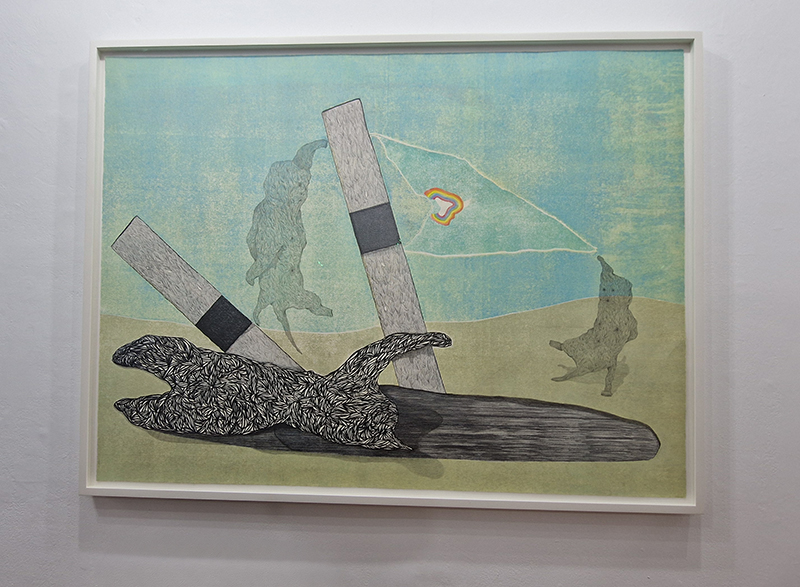
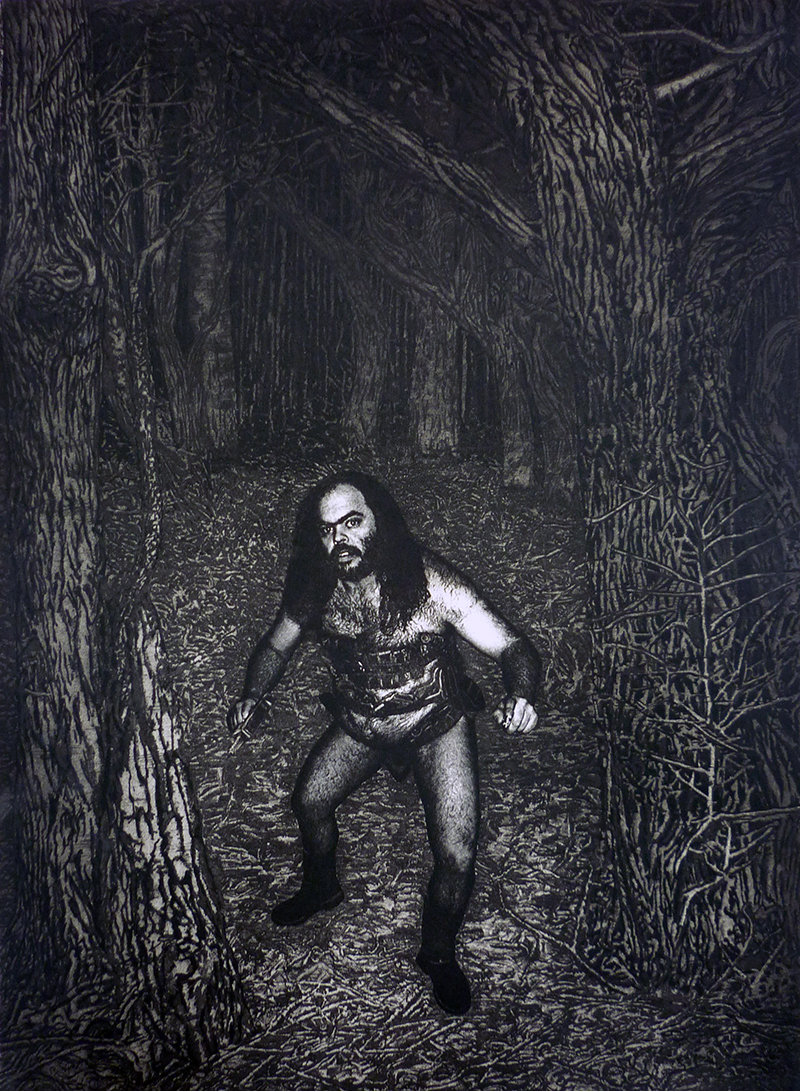
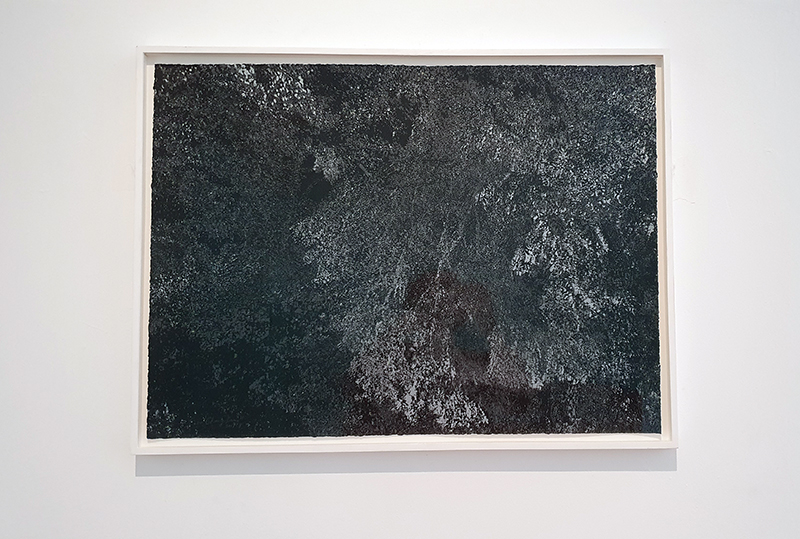
Delighted that my etching Forest of Eden has been selected for exhibition at AIR Gallery on the theme of the macabre with the exhibition renamed Memento Mori. What happens when we are confronted with the uncomfortable or visually grotesque? What makes the unappealing difficult to digest but impossible to turn away from?

The myth of the wild man stretches back to the tale of Gilgamesh’s quest for immortality.  In history the wild man’s characteristics oscillate between horror and fantasy. They reflect fear of the other as well as aspirations to be at one with nature often violating the taboos of civilization and symbolizing the repressed desires of society. This person who posts photos of himself in charged poses has become an internet meme shared with equal disgust and fascination. In this etching he is placed back in the ancient forest of all our origins.

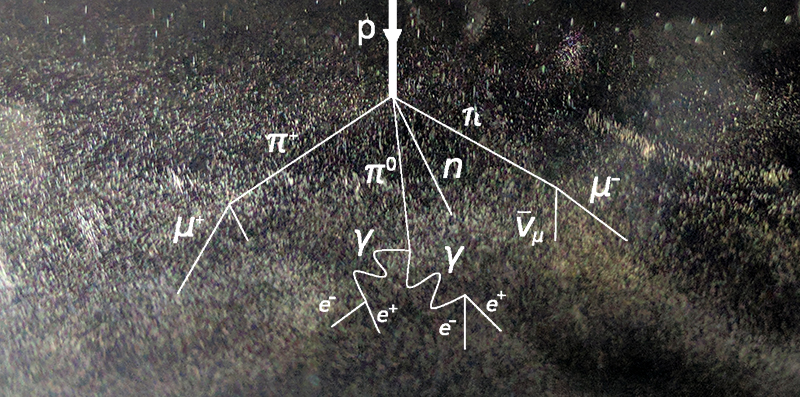
I have completed the video commission Cosmic Chiasmus (crossing the universe) for Queen’s Hall Digital but am continuing research into cosmic rays. Around 10,000 muons rain down on each square metre of Earth’s surface every minute.

Muon tomography can be used to remotely explore dense matter for hidden voids. High energy cosmic rays such as muons pass through objects, but in doing so, some will be absorbed by the object and so fewer particles will arrive on the other side. This means sensitive muon detectors can be used like x-rays to determine the structure of extremely large and dense objects. This method has been used to reveal a mysterious, 30-metre-long hidden chamber in the 4,500-year-old great pyramid of Giza, to determine the inner structures of volcanoes and to study the damaged nuclear reactor at Fukushima, Japan.

The Robot, The Dentist and The Pyramid is a 45-minute Documentary (2020) from Ancient Architects

I have discovered an audio manipulation in Adobe Audition that makes my own voice acceptable to me as voiceover for my video work. So I have returned to the video Contingent Horizons, rewritten and recorded new dialogue.

This dialogue is based on the excerpts from popular online lectures that I had used before but I have reimagined some of these quotes and included ideas from ancient descriptions of the cosmos.

the nature of the world emerges from shifting patterns

between matter and myth

to the darkest North with moon on water

to the South with sunlit crystal

to the West with Earthbound cubic alter

to the East with circling zephyrs

walking

to know the land as a plotted dimension

as abstract space

as imagined space

Out of the studio:

Lisa Chang Lee Symphony Zero at San Mei Gallery. Beautiful work creating a fragile connection between humans and the natural world as rhythms coincide to create collaborative music. Plants swaying in the breeze are each represented by a musical instrument sympathetic to its form and its movement is transposed using algorithms applied using modes of symmetry and interval into musical scores which in turn are played by humans.

Less a building: Interactions with the London Zoo Aviary book launch hosted by Passengers at The Brunswick Centre. Transported by readings from the book of this iconic flight of fancy in architecture for avian captives at the zoo. A many layered and collaborative research project by Michaela Nettell with Marcela Araguez, Tim Dee, Polly Gould, Alex Hartley, Julie F Hill, Helen Jukes, Milena Michalski, Colin Priest, Ana Ruepp and Matthew Turner. Excellent writing and gorgeous artworks. Now I wish I’d visited the aviary more often.

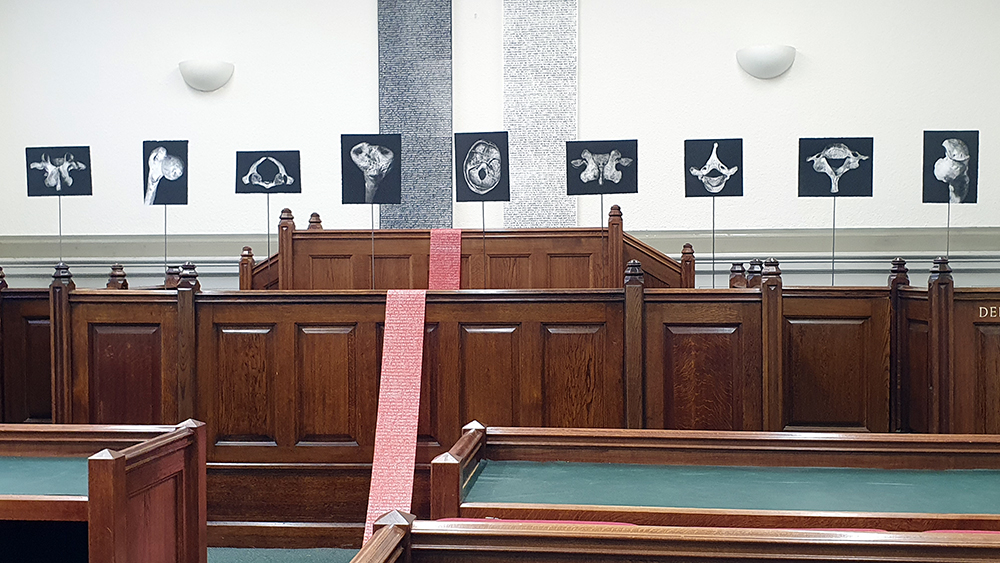
Geographies of Print collective Without Horizon, Without Shore. Stunning installations set against the civic backdrop of the Old Lambeth County Court, an apt setting for work looking at passage of time, capturing the transient and the human condition.

Victoria Arney has used the sonograms of bird song to create sculptural woodcuts. Capturing fleeting moments within landscape.

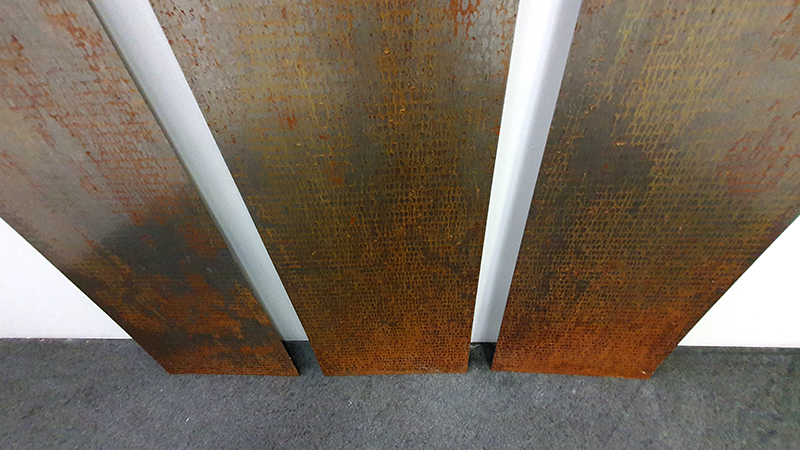
Victoria Ahrens looks at erosion and disappearance, creating work in situ using the minerals present in the landscape to hand colour her prints. We think of colour as light bouncing off matter, some absorbed, some reflected, but this work really brings home how integral colour is to substance.

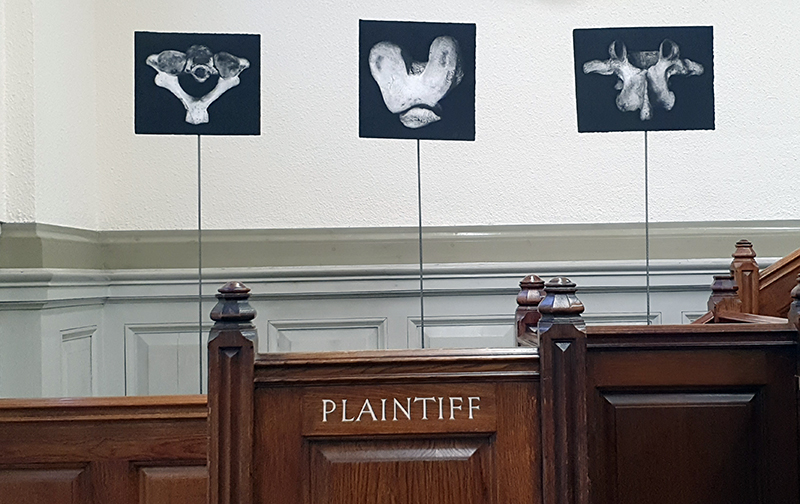
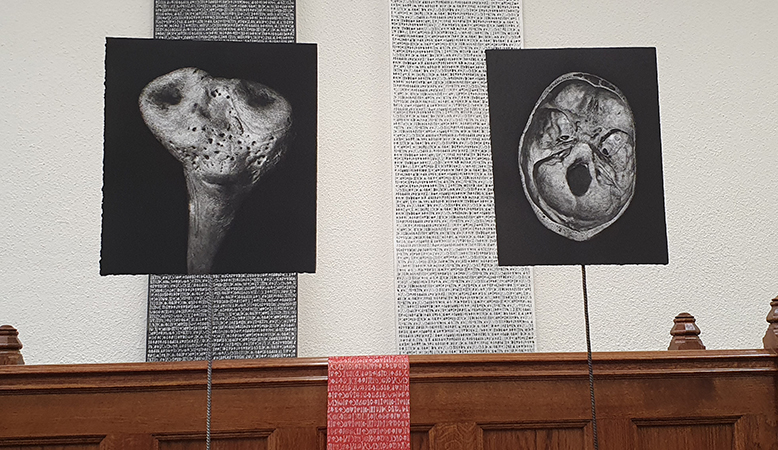
Carol Wyss uncovers the structures that shape us physically and bear witness human frailty.

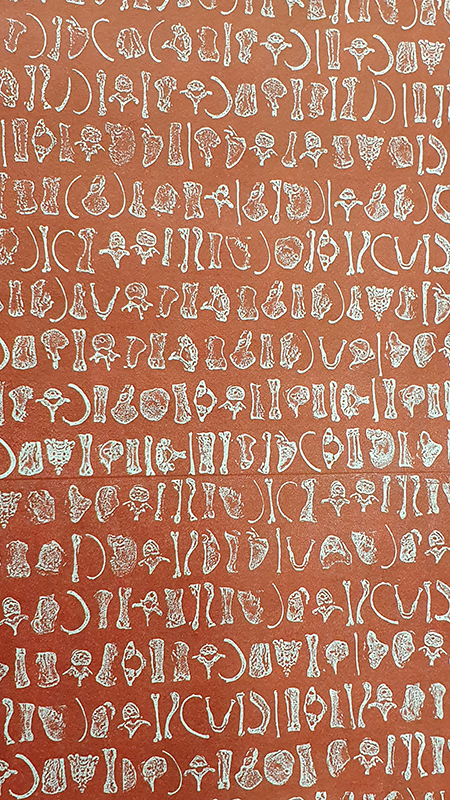
Symbols made from bones connect us to the earth as origin and destiny.

Thom Bridge Only Similar or Equivalent at Best solo show at Staffordshire Street Studios. Incredible work with light taking the image into realms of physics and geology.

“The degree to which an image is like the world is a question not of fidelity- as a narrative of documentation or technological development would have it – but of equivalence, the role that an image plays in showing in showing, or demonstrating, representing or bringing into view. Equivalence takes priority over resemblance, because the task of the image is not to repeat the world, but to inform it, and by informing it, subtly alter it in turn.” Duncan Wooldridge

Chudamani Clowes in Figure It Out with the Neulinge Collective. Wonderful immediacy as always from Chud that cuts right through to expose the lived experience of those who migrate. Epic journeys bring stories and transformation. The coral is on the move.

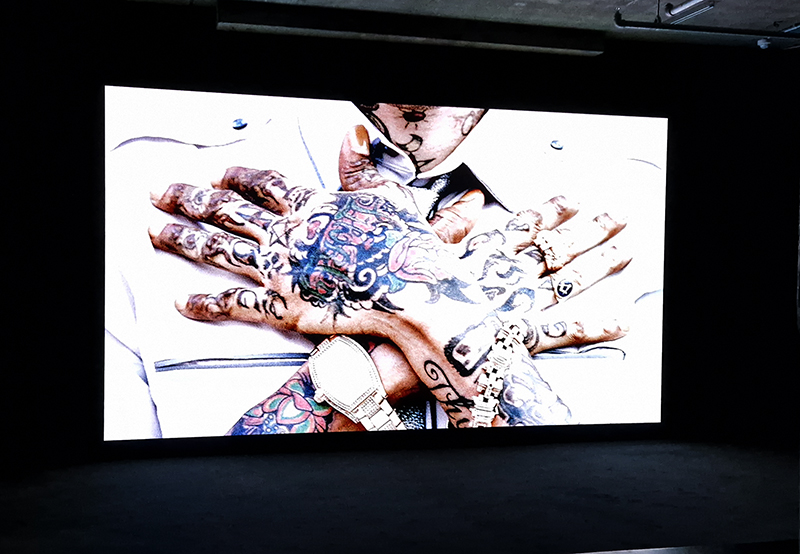
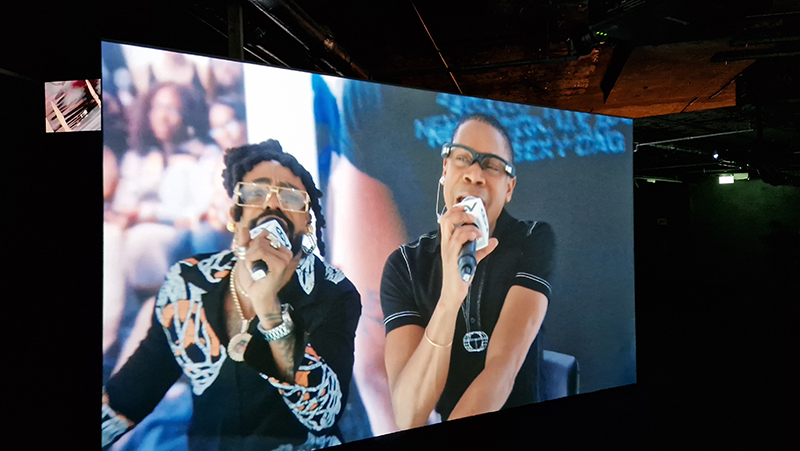
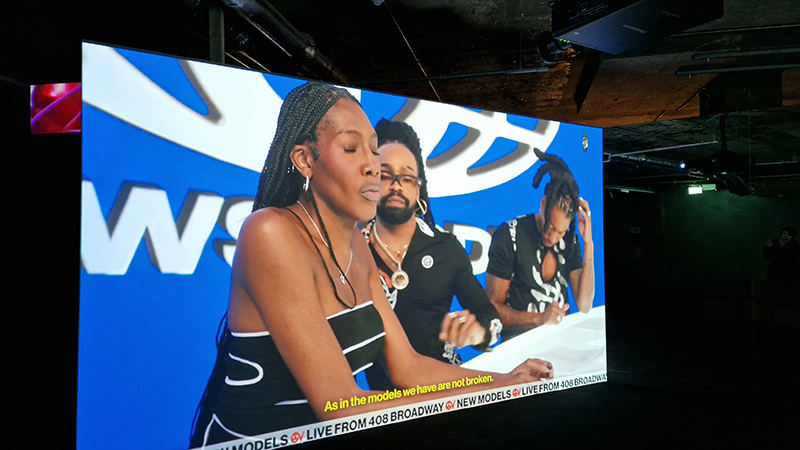
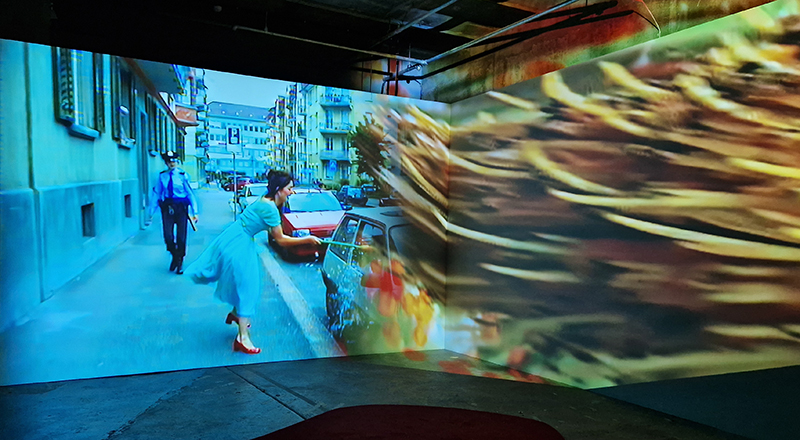
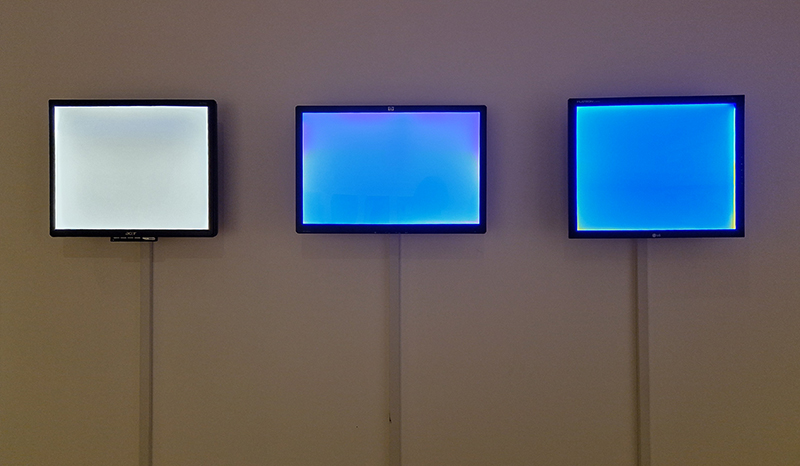
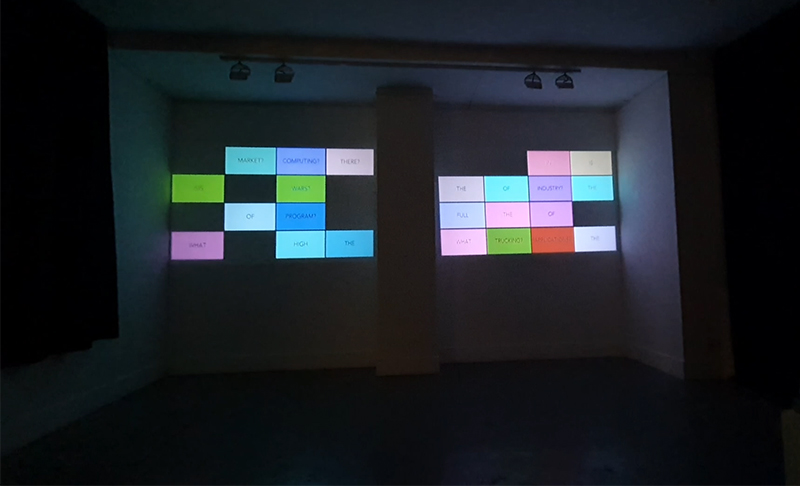
Robert Good in Osmosis: experiments in permeability at Espacio Gallery with work that forces an examination of an addiction to media updates, digital clickbait and daily data news dumps. Assaulted by a tsunami of inane questions and disconnected headlines into a brain numbing torpor the need for space to think is made apparent.

A captivating telling of how magic is vital for our well being and should be sought not shunned. Mythosphere is a multi-media theatre production created by Inna Dulerayn presented by Bacchae productions in partnership with Stone Nest at the atmospherically derelict Old Welsh Chapel on Shaftesbury Avenue. Inspired by the life experiences and creativity of Leonora Carrington and the writings of Diana Wynne.
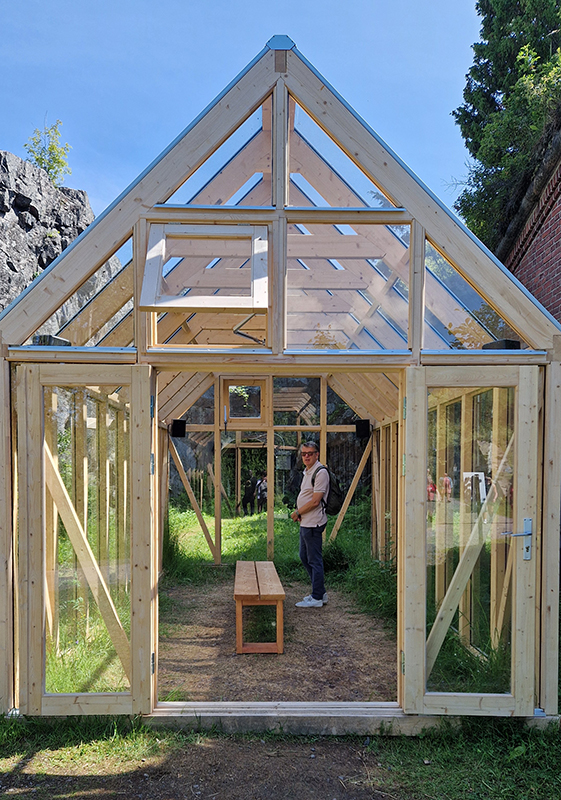
This is a story about magic. The magic that we lost. The magic that is a forgotten part of our nature. The magic that is our right to be divine. But we still sense it. We dream of it. We feel abandoned without it. We keep looking for it all our lives.
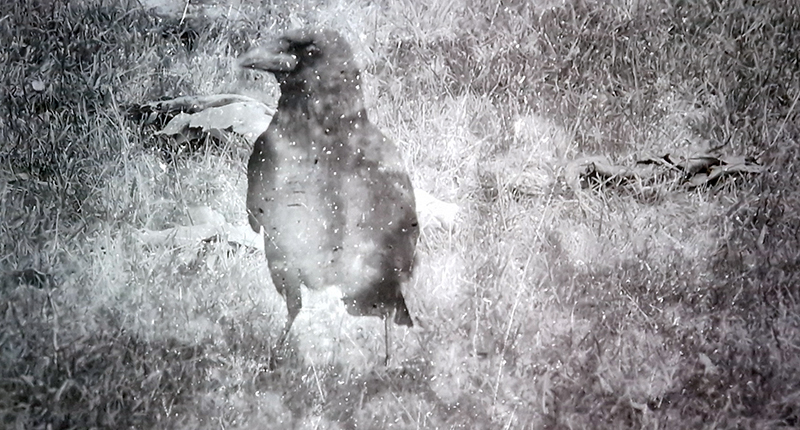
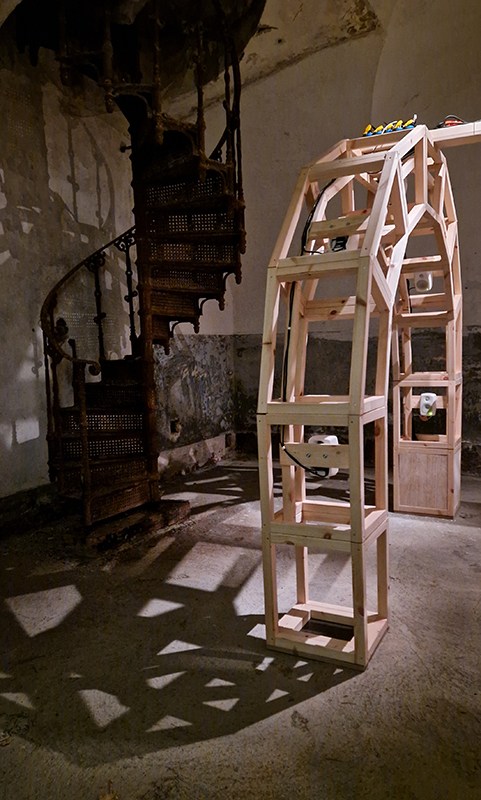
Reading:

I am still dipping into The Waves by Virginia Woolf which I was inspired to read after listening to the Art Fictions Podcast with guest artist Hannah Hughes speaking to Fiona Fullerton. I particularly love the interludes as the sun rises over the ocean and begins its journey across the sky. Like too rich chocolate cake the intensity of Woolf’s writing is delicious but can only be taken in small bites.

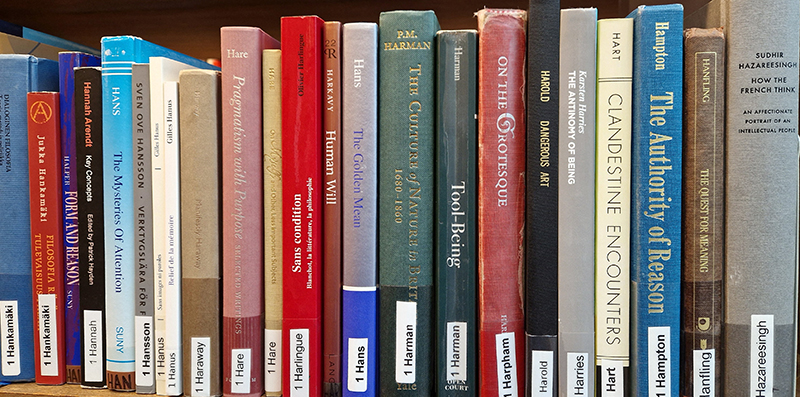
I have Chantall Powell to thank for flagging up the book The Philosophers’ Secret Fire: A History of the Imagination by Patrick Harpur. A fascinating book taking the view that just because something is not literally so doesn’t mean it isn’t ‘real’. As in Mythosphere the book seeks to rediscover the Otherworld of spirits, gods and daimons which the west has banished to the unconscious mind.

I was so excited to read the following:

“…daimons inhabit another, often subterranean world which fleetingly interacts with ours. They are both material and immaterial, both there and not-there – often small, always elusive shape-shifters whose world is characterized by distortions of time and space and, above all, by an intrinsic uncertainty.

The point is: the words ‘subatomic particles’ could be substituted for ‘daimons’ in the paragraph above without any loss of accuracy. This is not a coincidence – the subatomic realm, like the unconscious, is where the daimons took refuge once they were outcast from their natural habitat.”

2010 at a distance

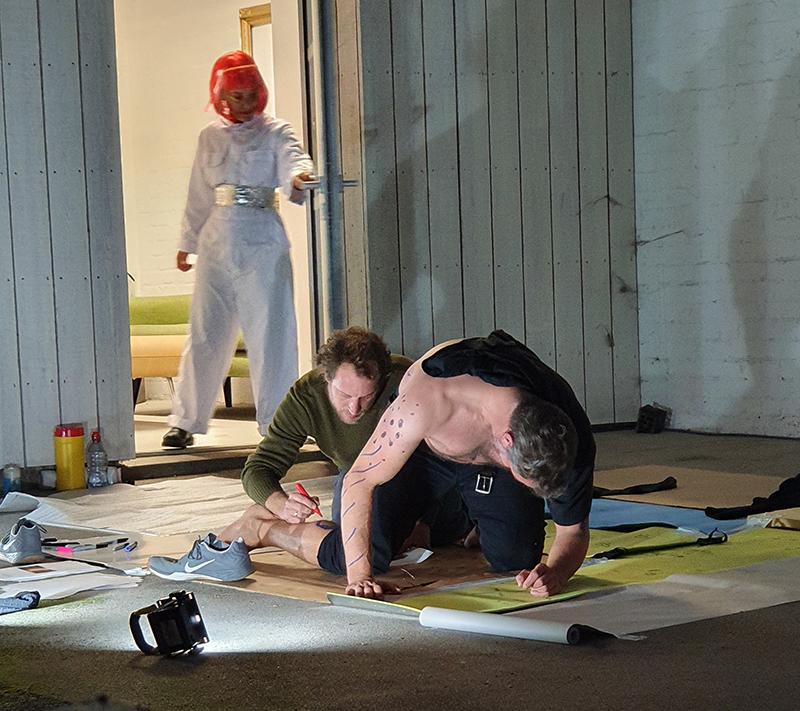
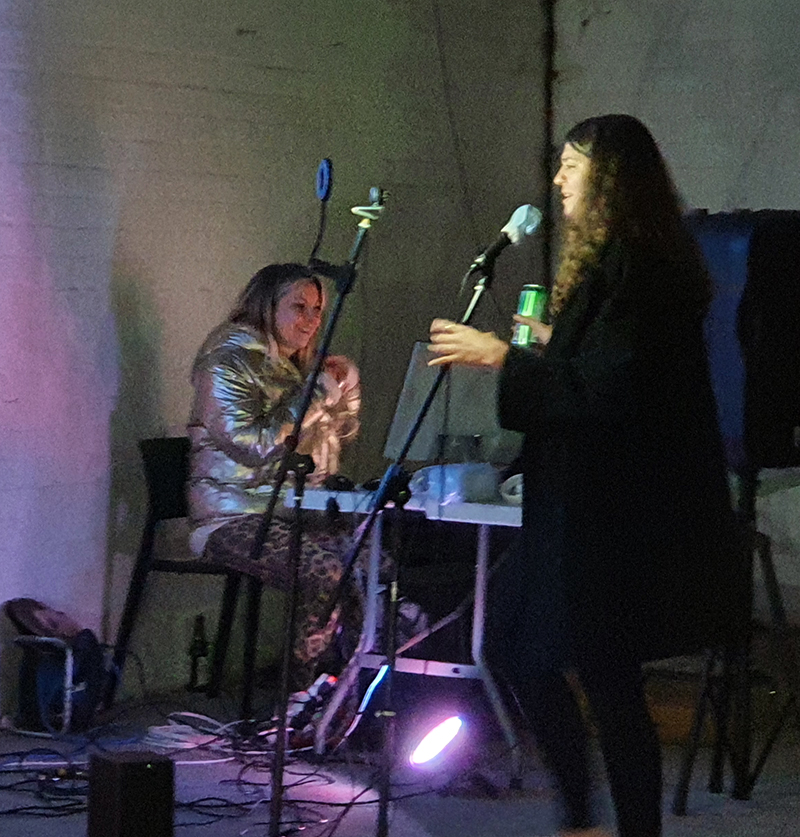
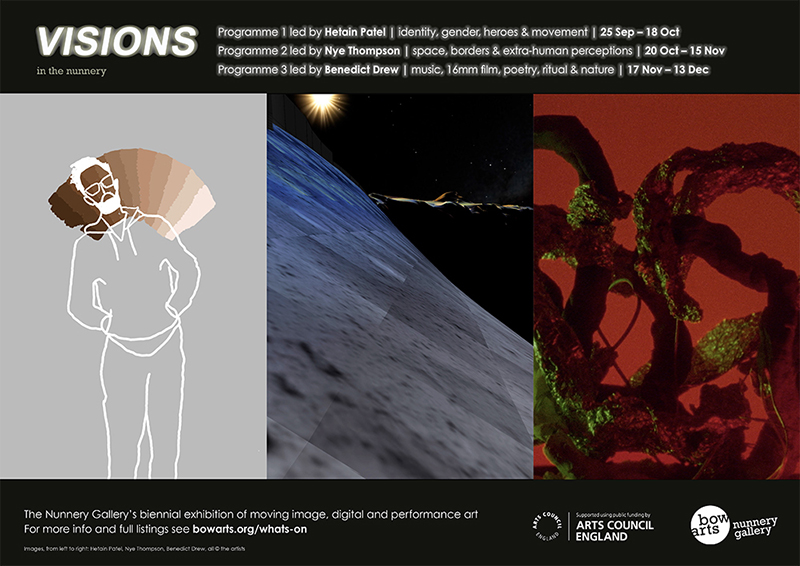
Delighted to be included in Visions In The Nunnery at Bow Arts and so good to be at the opening with live performances. Robert Luzar with Timo Kube Tracing Someone Else’s Skin and Libby Heaney presenting Top of the Bots karaoke where audience members embody pop idols via AI technology. 2010 Visions Robert LuzarBodies touching and people singing seemed illicit and extra joyful. 2010 Top of The BotsVisions in the Nunnery is Bow Arts’ biennial showcase of international moving image and performance art.

2010 VisionsLeaflet_Digital-2

Lead artist for Programme 2 is Nye Thompson. Creating new data-generating artist software systems she explores the hidden impact of new technologies. For Visions she premieres /artefact, an immersive work building a colossal border wall on Mars through satellite and google earth imagery accompanied by a throaty space-filled soundtrack.

2010 Visions Nye Thompson

For the first time, all Visions 2020 works will also be available online for international audiences and those shielding. The themes of programme 2 include digital mediation, digital infrastructure, the remote gaze, CCTV, borders and separation, other worlds and alternate geographies.

2010 at a distance 2

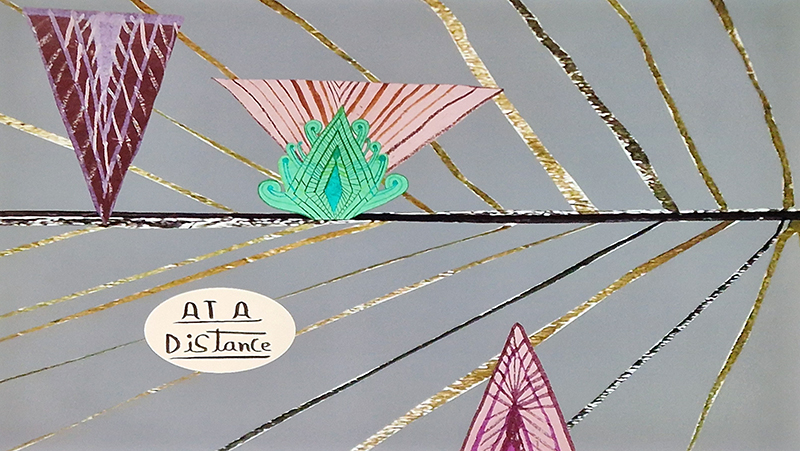
In At a Distance solitary figures using semaphore flags sign ‘We Are One’ out across the ocean. Filmed on 29th March 2019, the first date the UK was supposed to leave the EU.

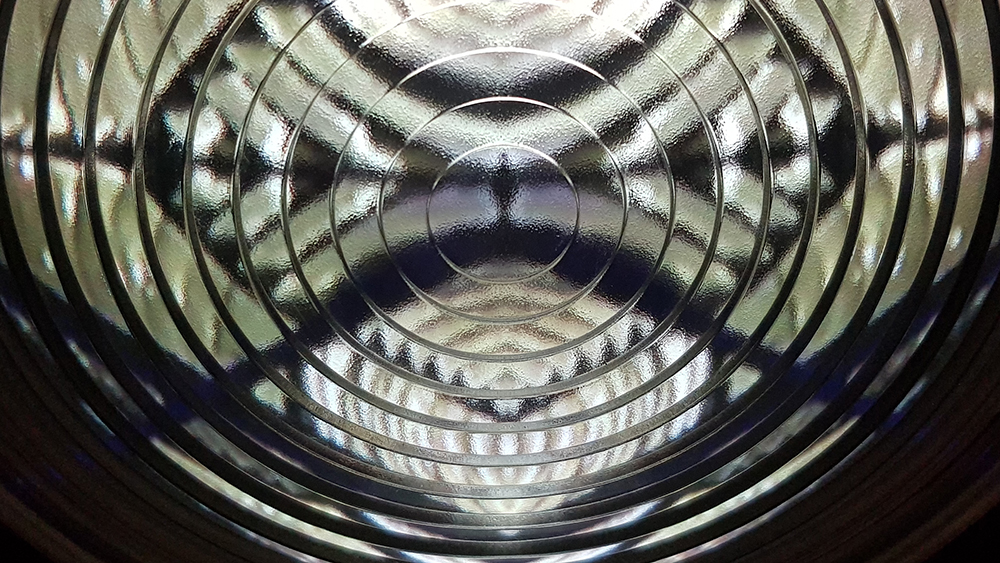
As in quantum entanglement theory where two paired electrons mirror each other at a distance it is hoped the message will be echoed back. This mysterious twinning of electrons where particles link in a way that they instantly affect each other, even over vast distances is what Einstein famously called ‘spooky action at a distance’.  The 4m video includes mirrored footage of the iconic Lizard Point Lighthouse and covers the time it takes for the lamp to power up. The video is back projected onto a Fresnel lens, similar to that found in lighthouses to increase luminosity of the lamps beam.

Exhibition and launch images below by Rob Harris courtesy of The Nunnery Gallery.

Updated my website Finding Paradise project pages with Paradise(suspended).

2009 featured image

Making (slow) progress on new moving image work Seeker, Seer, Scientist.

We each have a personal distance to the horizon based on our specific height of eye from the ground and the local elevation from sea level at which we stand. It is a place we can never reach as it always recedes as we approach.

Walking East at dawn.

2010 East 1

In my enthusiasm I may’ve set off a little too early and some footage has turned out to be rather dark, though passing the Sewage Treatment Works at this hour was an uncanny futuristic experience. It was the hummmm.
2010 East 2

Grappling with abstract space as I research for the audio track. Revisiting a lecture I attended at UCL on the 7th dimension by Jason D. Lotay

As you go up in dimensions there are more symmetries that you cannot see. There are special symmetries that only happen in the 7th dimension, this holonomy set of transformations is called G2.

There are 7 new numbers known as Octonians. The symmetry of the Octonians is precisely G2.

2010 symmetry

M theory unites the various different string theories into one master theory but in order to do this there must be 11 dimensions. These 11 dimensions are the 4 we know (3 dimensions + time) + 7 new dimensions (related to G2) (which I think allows for the multiverse to exist)

The 7th dimension is closely related to soap films and soap bubbles in that these try to minimise their surface area. Seventh dimensional things with holonomy G2 also try to minimise a kind of energy or area.

1810 freezing bubble

I am continuing to film soap film as light is spectacularly reflected from the surface. The colours depend on the thickness of the water sandwiched between the soap and as the membrane becomes so thin just before breaking the colours fade away.

2010 membrane filming

Trying a new soap bubble recipe with lots more glycerin and a different brand of washing-up liquid. I also have a larger frame for the soap film so I don’t know which factor has effected the results most but I’m getting falling rainbow stripes morphing to grey and black swirls.

2010 membrane 22010 membrane 1

Finally ventured back into the Print Studio to clean my screens ready for potential new work. It’s the first time I had been back for months. I’m working on images of glacial water which has been trapped for 80,000 years.

Everything we can see, everything we know exists, makes up just five percent of the matter and energy in the universe.

I watched the live stream Dark Matter Day event live from Sanford Underground Research Facility and Boulby Underground Laboratory and was struck by the use of the word shielding, it’s all about shielding which of course is something we hear a lot about now amid the pandemic. In the case of dark matter detection experiments it is about shielding from cosmic rays. On the surface of the earth 2/3 Muons pass through your hand every second, in the underground labs this is reduced by a factor of 10,000,000 to about once a month.

2010 particle trail

I also learnt that gravity travels at the speed of light.

Some wonderful online discussions are being had by The Diagram Research Group (DRG), a collaboration between artists David Burrows, John Cussans, Dean Kenning and Mary Yacoob. Each collaborator conducts an illustrated discussion that explores their interest in diagrams in relation to Flat Time and Latham’s ideas concerning the unification of scientific and artistic bodies of knowledge and the primacy of time and event (rather than space and matter).

As part of the National Parks Virtual Dark Skies Week 2020 there were a series of online events available such as a talk on The Search For Dark Energy from Dr Luke Tyas. The Dark Energy Spectroscopic Instrument (DESI) will measure the effect of dark energy on the expansion of the universe. It will obtain optical spectra for tens of millions of galaxies and quasars, constructing a 3D map spanning the nearby universe to 11 billion light years. 

2010 stargazing

Looking at new ways to experience dimensions, Laure Provoust explores her approach to installations as living works, with sculptural elements and films that function in 3-D, invoking the viewer’s senses of taste and touch. In an online talk hosted by Yorkshire Sculpture Park she introduces us to her installation at Lisson Gallery where we are invited to learn a new language, new ways of connecting and associating.

2010 Laure Prouvost

It reminds me of the Carsten Höller perception-altering device I experienced back in 2015 that fed each eye with a different woodland perspective. I found it very unsettling. Like my brain was splitting. 

2010 Carsten Holler

This year I had to experience the London Film Festival at home with streamed content but was able to visit the BFI Blue room for the Expanded programme The Expanse, a gallery of immersive 360 videos and interactive virtual reality experiences. This was all free with lots of Covid safe help on hand to enjoy the VR.

Icarus – ‘don’t think of my fall, think of me soaring to the sun.’

2010 Icarus BFI

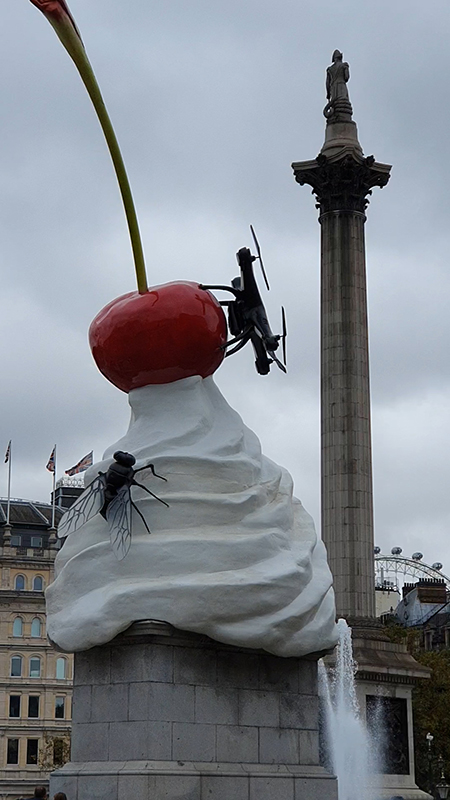
THE END Heather Phillipson’s sculpture of excess on the Fourth Plinth transmits a live feed of Trafalgar Square picked up by the drone’s camera and visible on a dedicated website www.theend.today giving a sculpture’s eye perspective.

2010 heather phillipson The End

Fascinating work by Trevor Paglen at Pace Gallery uncovers the hidden agendas and bias present in systems which now govern many aspects of our lives.

The works in this exhibition seek to provide a small glimpse into the workings of platforms that track faces, nature and human behaviour, and into the underlying data that structures how machines ‘perceive’ humans and landscapes.

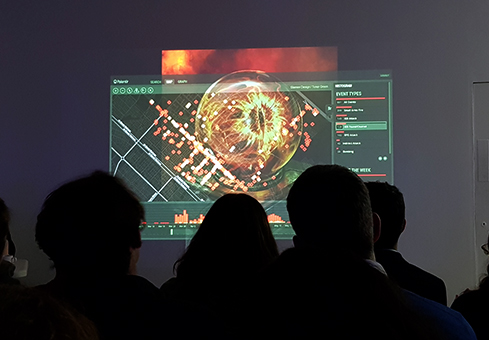
You can visit virtually through a live web portal connected to cameras placed in the gallery, observe gallery visitors experiencing the work in real time and can even be “present” in the space by streaming your own webcam onto monitors displayed within the exhibition. Or you can visit in person as I did where I was assessed and evaluated by ‘ImageNet Roulette’ an interactive artwork that classifies people’s digitally-captured portraits according to one of the most widely-used datasets used for training and evaluating computer vision systems.

My classification oscillated between ‘dosser’ and ‘char’.

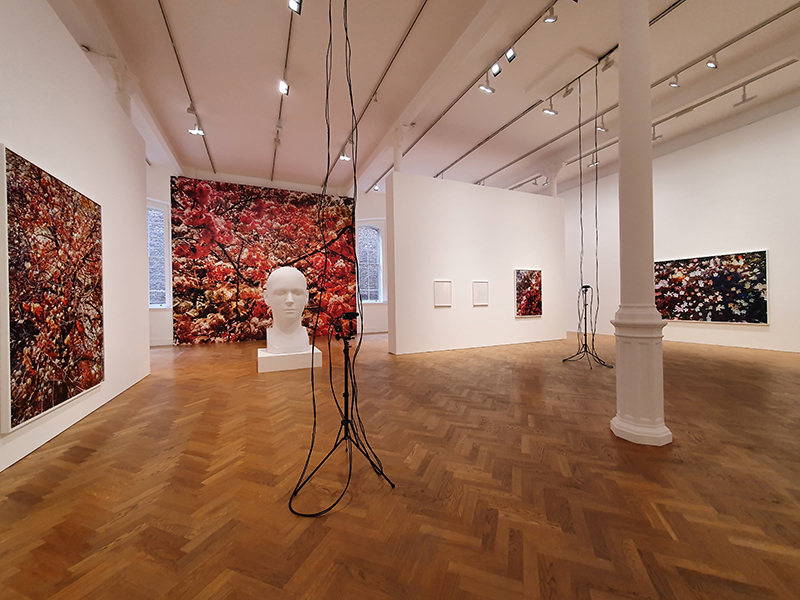
‘Bloom’, a series of large-scale photographs that depict flower formations conceptualized by various computer vision algorithms created to analyse the constituent parts of real-life photographs. The colours and shapes in the images represent similar areas that the AI has detected in learning from other images of flowers. They do not represent real-to-life colours so much as what the AI thinks the different parts of the images are.

‘The Standard Head’ is a large-scale reconstruction of the 1960’s mathematical model of a “standard head” by the pioneering researcher funded by the CIA, Woody Bledsoe. Conceived from the average measurements of the faces Bledsoe experimented with, Paglen reconstructed the “standard head” from rare information left behind in Bledsoe’s archives at the University of Texas. Artificial intelligence algorithms are designed and trained to look for faces, unique key points, lines, circles, and areas of interest as they attempt to deconstruct the underlying reality into a more simplified series of sections or shapes.

2010 Trevor Paglen 7

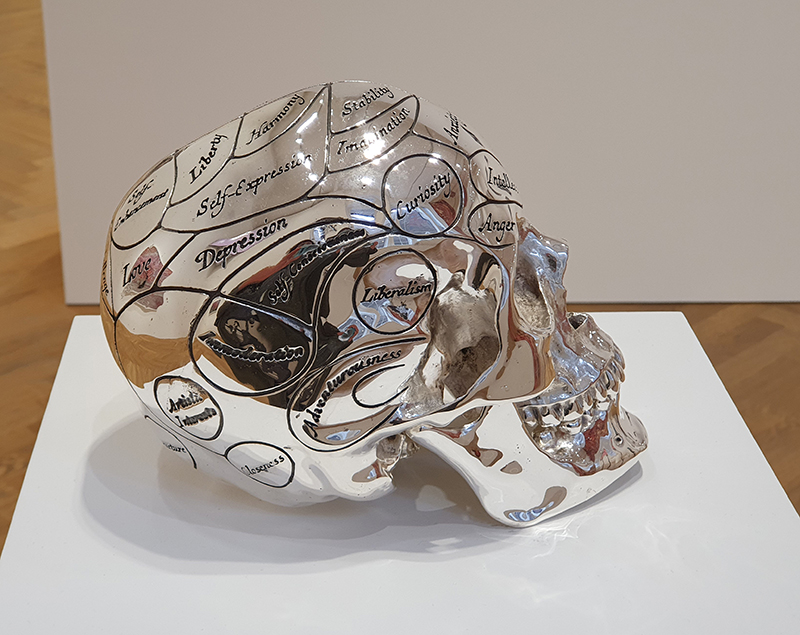
‘The Model (Personality)’, a plated bronze phrenology skull derived from the current categories that are used in predictive policing and sentencing algorithms that intend to gauge someone’s level of criminality by measuring their psychological attributes and behaviours.

2010 Trevor Paglen 1

‘Distracted Drivers’ and ‘Classifications of Gait’ showcase grids composed of thousands of smaller images used to evaluate people’s behaviours for commercial purposes.

The dataset for ‘Distracted Drivers’, for example, is a collection of images used to recognise if someone is distracted while driving by an AI system. This dataset was created by State Farm insurance to adjust their insurance premiums in real-time, based on that information.

The group exhibition Washing Line curated by Neil Zakiewicz and Patrick Morrissey at Thames-side Gallery took work away from the gallery walls and strung it across space. This made for a dynamic viewing experience negotiating a route to new perspectives. Two dimensional work hanging out in the world of three dimensions.

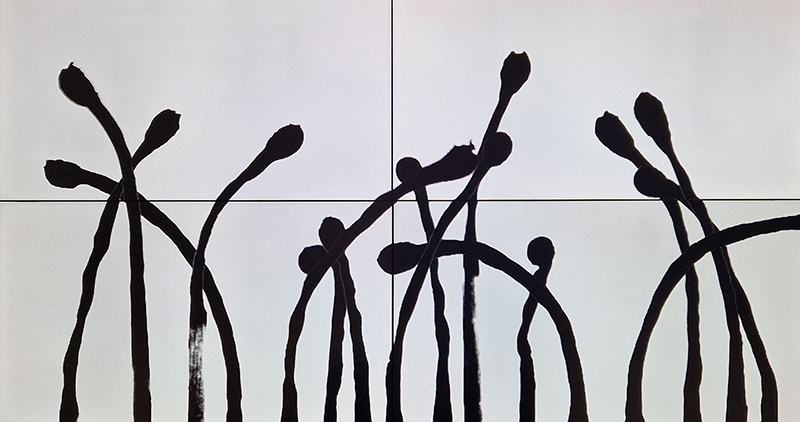
Robert Good’s stream(ers) of questions from Google News Feed rams home not only the overwhelming assault of media but the constant interrogation we are subject to. Another form of surveillance.

2010 Robert Good

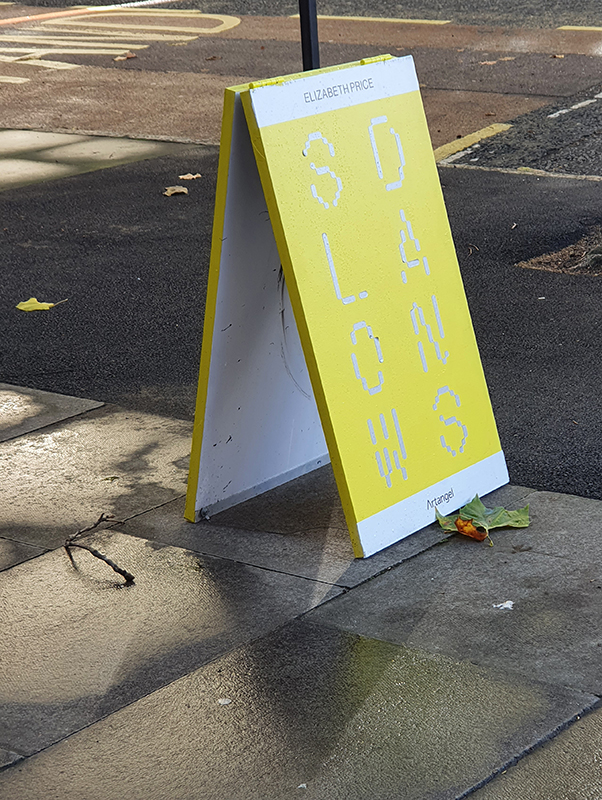
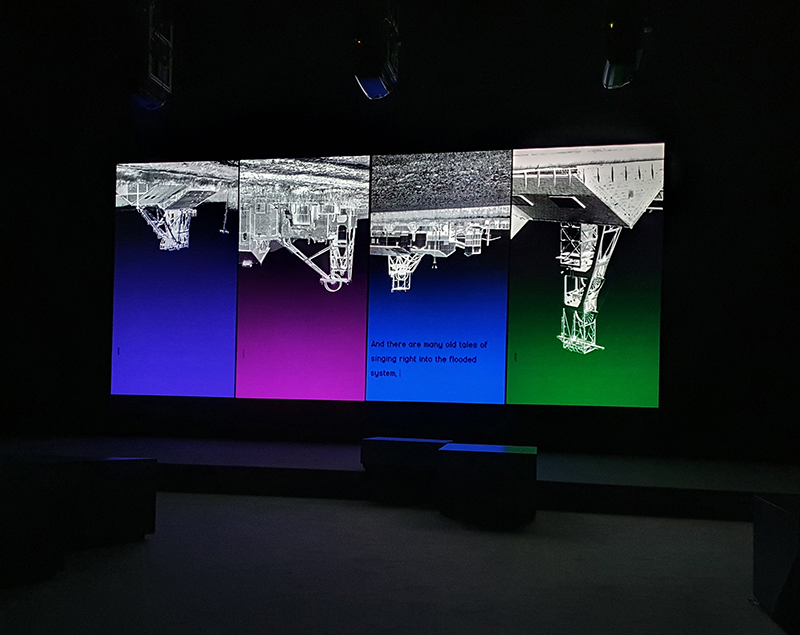
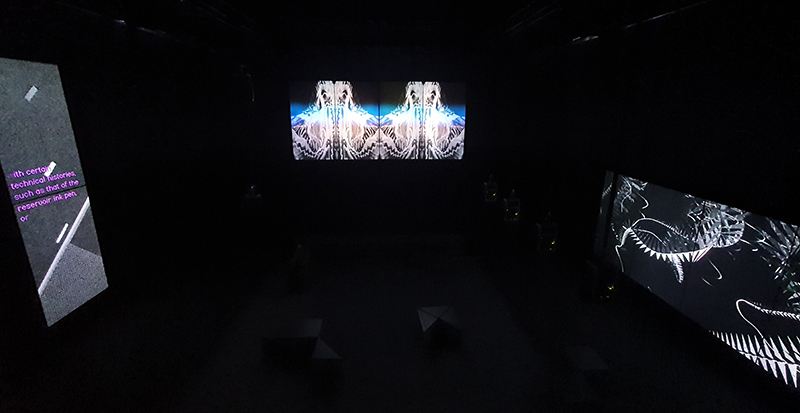
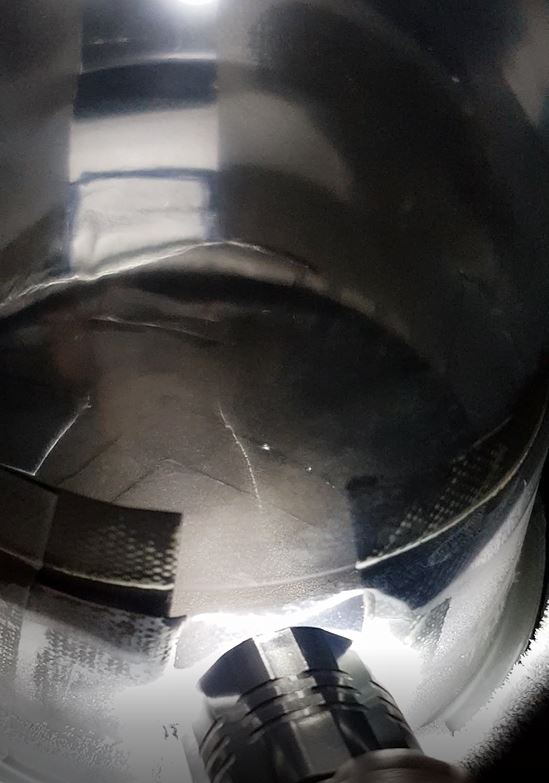
Elizabeth Price raising the ghosts of a lost era in Slow Dans an Artangel presentation at The Assembly Rooms on Borough Road. This was a haunting and fascinating evocation of lost landscapes and what is quite recent but rapidly disappearing social history. Mineshafts, ink-wells, the human throat connect a geological past with a technological present.

2010 Elizabeth Price 12010 Elizabeth Price 22010 Elizabeth Price 3

The latest ACA Project Continuum  is launched and I am looking forward to contributing to the programme with some new work exploring the activity of cosmic rays at the edge of the earths atmosphere. I have had two productive meetings with the Imperial College Space Society and the project to launch a high altitude balloon with a cloud chamber in the payload is underway. The first tasks are to make contact with the Civil Aviation Authority ahead of requesting flight permissions and researching how to safely transport helium to the prospective launch site.

1902 DIY mini cloud chamber

The team have been issued with their own mini cloud chamber kit to test and use as a basis for designing the prototype for launch which must be able to function in low air pressure and turbulence.

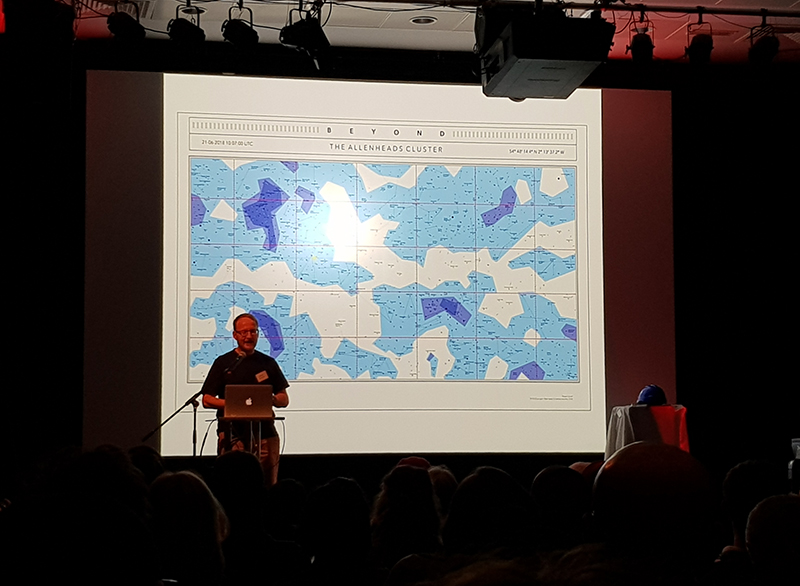
There was a fantastic turnout to Culture Lab. Newcastle University for the first Continuum event in an inspiring season of art, science and speculative fiction taking place at Allenheads, Hexham and Newcastle. So happy to be involved in this new project.

1902 Continuum Launch

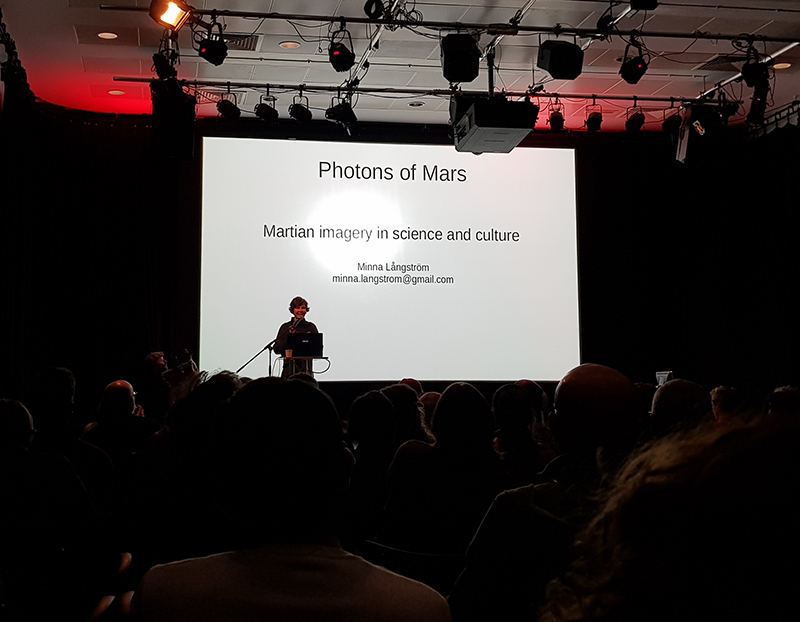
We heard from Minna Långström about her latest film The Other Side of Mars and her installation Photons from Mars which explore how we see Mars through the mediated eyes of technology.

1902 Continuum launch Minna Langstrom

Robert Good analysed what happens at the intersection of art and science, concluding that insight comes from multiple perspectives working together.

1902 Continuum Launch Robert Good

Pippa Goldschmidt read from her texts The Need for Better Regulation of Outer Space and Falling Sky highlighting the emotional and lived experience of the scientists who square up to the big questions in astronomy. She has fascinating first hand knowledge of the political sensitivities surrounding studying the stars when visiting observatories such as in the Chilean Atacama Desert when the nation is undergoing a military coup.

1902 The Falling Sky - Pippa Goldschmidt

Chris Welch professor of space engineering from The International Space University gave a lively account of Space Travel. Fact and Fiction; current technology, theoretical technology and science fiction technology. Sometimes it’s hard to tell one from the other.

1902 Continuum Launch Chris Welch

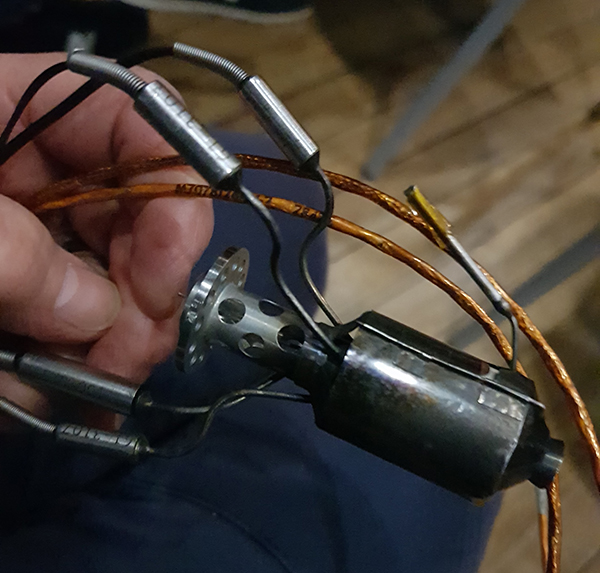
He also kindly allowed us to handle a mini rocket smuggled in from Strasbourg

1902 Continuum Launch mini rocket

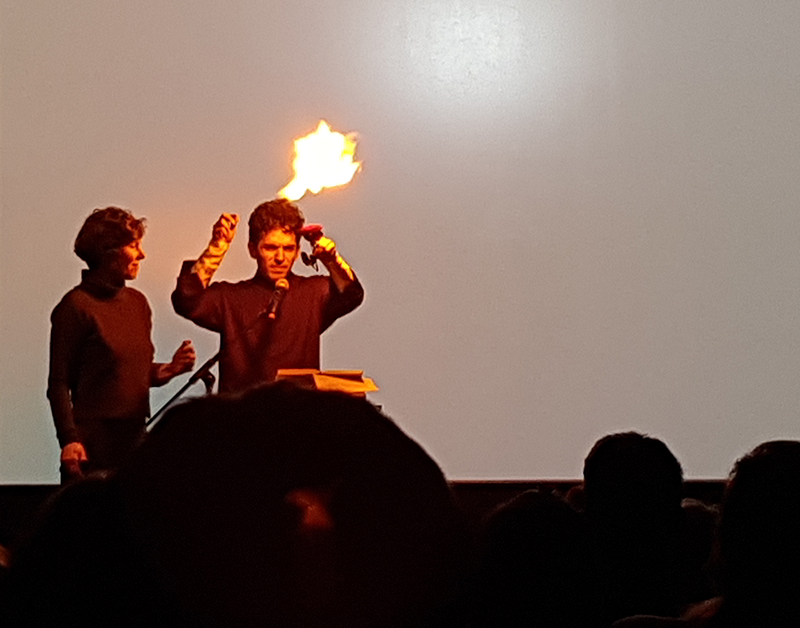
The artist Nahum relayed a beautiful story of the moon landings from the moon’s perspective written by an 11 year old refugee girl and punctuated by real magic. This originated from his work giving refugee children a sense of belonging by imagining looking back at earth from space to see that we are all human on one tiny planet. In other work aiming to democratise space travel he hypnotised his audience in order to prompt false memories of visiting the moon into their minds.

1902 Continuum Launch Nahum assited by Minna Langstrom

John Bowers and Tim Shaw ended the evening with mesmeric visualisation and acoustics extrapolated from electromagnetic waves generated by meteors, minerals and mystical phenomenon.

1902 Continuum Launch John Bowers

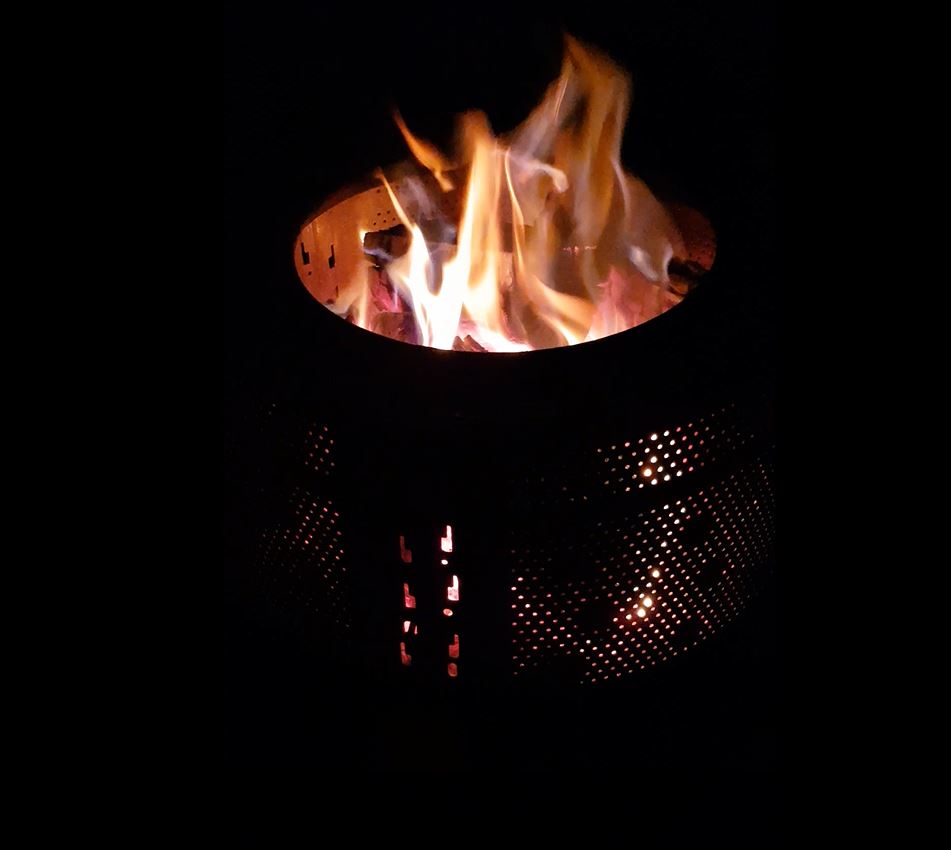
It was a quick visit to Allenheads this time but Annie Carpenter, Nicola Ellis, Robert Good and myself can look forward to an upcoming week of research and stories around the fire as a prelude to making new work for the project.

1806 fire

Delighted that my work Pentacoronae has been selected for the exhibition Insatiable Mind which is part of the Salisbury International Arts Festival 2019. The festival will highlight the anniversaries of the Fall of the Berlin Wall in 1989 and the Moon Landing of 1969. The exhibition seeks to convey the notion of leaving behind the comforts of the familiar in order to discover the unknown.

Pentacoronae encourages the viewer to seek darkness, stargaze, wonder and map their own stories across the sky.

1902 Pentacoronae photo John Hooper

Maybe I should take my cloud chamber with me to Salisbury just to make sure that clean up of radioactive material was as successful as they claim.

1711 cosmic trail

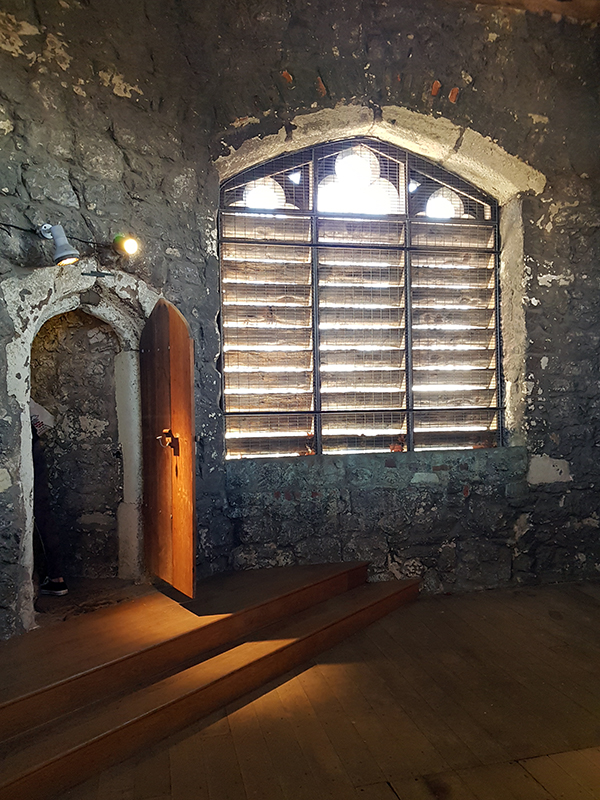
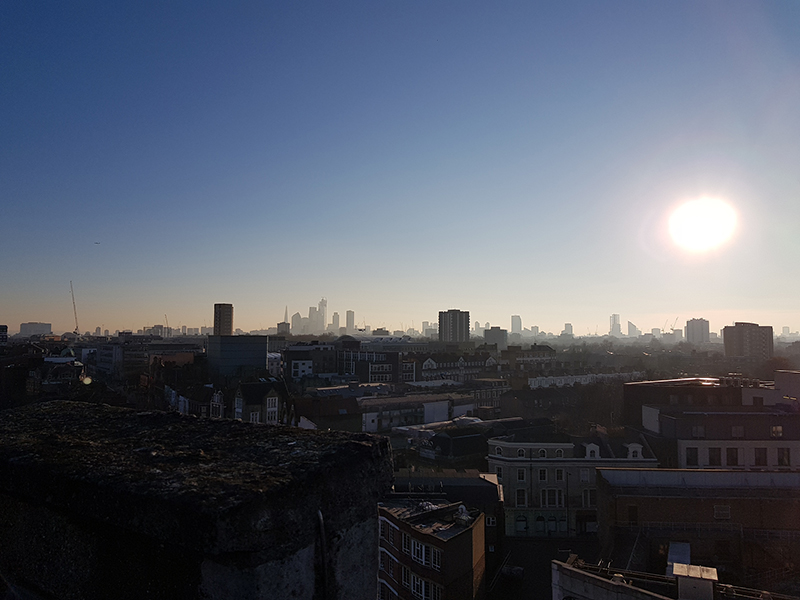
More exciting news is that Carol Wyss, Anne Krinsky and myself have been awarded a two week takeover of Hackney’s oldest building, St. Augustine’s Tower.

1902 St Augustines Tower 2

The tower is the last remains of the original church built in the late 13th century.

1902 St Augustines Tower 1

Our proposal is for an exhibition of site-specific new works made in response to St. Augustine’s Tower and the historic role of spires as a symbolic connection between earth, mortals and the heavens.

1902 St Augustines Tower

There are four floors connected by a narrow stone spiral staircase.

1902 St Augustines Tower roof

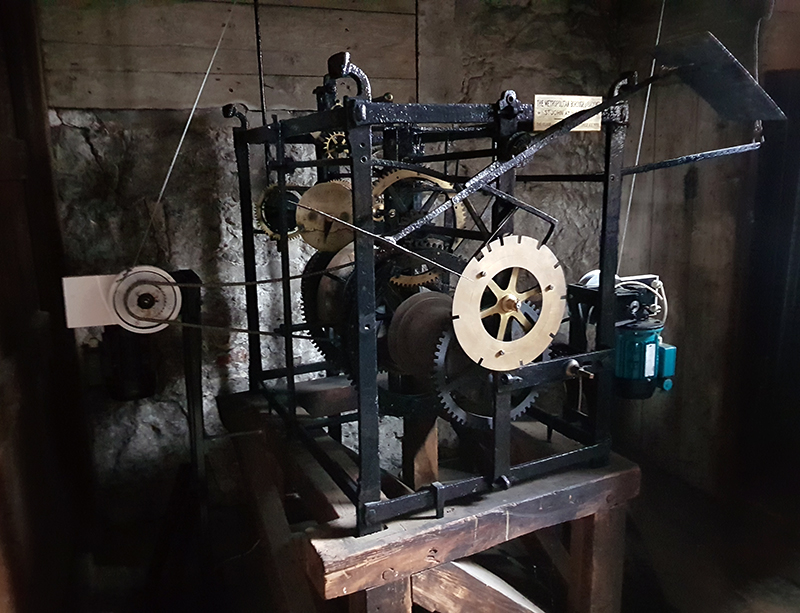
It has an amazing clock dating from about 1580; the pendulum case is on the first floor, the clock on the second and the bell on the third floor.

1902 St Augustines Tower 3

Drawing on our individual interests in geology (Anne Krinsky), anatomy (Carol Wyss) and cosmology (Susan Eyre) we will curate the exhibition with the intent of sparking a dialogue between works installed to convey a cohesive exploration of materiality, the passage of time and wider philosophical issues evoked by these relationships.

1902 St Augustines Tower graveyard


The New Materialisms Reading group I attend have been reading The Hidden Life of Trees by Peter Wohlleben. It is extraordinary to discover how trees communicate and consider the slow time at which they operate and the age and extent of the largest known living organism, the fungi web. I also have a whole new raft of guilt to contend with.

1902 branch partile decay.jpg

I am also out collecting images of bare branches that resonate with the idea of particle decay.

1901 Cosmic ray decay

1902 disperse prep

In the studio painting ‘entanglement’ in disperse inks to heat press for the semaphore flags ready for the Lizard Point Residency. Semaphore = information at a distance, entanglement = spooky action at a distance (according to Einstein)


Out of the Studio….

Called at SPACE to see Anna Chrystal Stephens’ show Anorak. A derogatory term for an obsessive but maybe it’s a necessary trait if you are to survive in alternative social possibilities. Either that or develop superpowers.

1902 Anna Chrystal Stephens

I joined Robert Good at the opening of Word Bank of Lost Dialects at The Word National Centre for the Written Word, South Tyneside. Word Bank of Lost Dialects created by Jane Glennie and Robert Good is a fascinating documentation of the thousands of North East dialect words donated by visitors to The Word’s original Lost Dialects exhibition.

Also opening at The Word was Cracked! Secret Codes and Communication, with a very useful semaphore flag chart – just what I needed for the work I am planning for the upcoming Lizard Point Residency. In 2019 the Lizard is celebrating the 400 year anniversary of Sir John Killigrew’s building of the first lighthouse on Lizard Point in 1619. The subsequent lighthouse also has important links to the search for reliable Longitude measurement, with an assistant to the astronomer royal visiting the lighthouse at the time of the first Transit of Venus to record an accurate location for the Lizard Rocks. The world famous Goonhilly also celebrates the 50 year anniversary of their transmission of the first lunar landings. We will also be visiting wireless and semaphore stations along the Lizard coastal path, considering the Scilly Isles 30 miles out to sea and the important prehistoric menhirs offering ‘beacons’ for travel & procession across the land.

1902 Cracking Codes (1).jpg

Anglo-Saxon Kingdoms at The British Library was full of ancient treasures from the Library’s own collection, including the Lindisfarne Gospels, Beowulf and Bede’s Ecclesiastical History, the Domesday Book and Codex Amiatinus, a giant Northumbrian Bible taken to Italy in 716, returning to England for the first time in 1300 years. A surprising number of books in flourishing scripts, illuminated, illustrated and bound in sculpted covers. However I found it very frustrating to be presented with so many undecipherable pages and envied those muttering in Latin or Old English who could gain some insight. More translations please. Possibly you had to buy the catalogue to learn more.

1902 Marvels-of-the-East-from-a-collection-of-geographical-astronomical-and-other-texts_credit-British-Library-.jpg

Inspired by the legend of How Raven Stole the Sun and brought light to the world Joana Escoval’s  The Sun Lovers at Tenderpixel dazzled with an overload of fluorescent tubes.

1902 Joana Escoval 2

Especially blinding when visiting at the twilight hour. The story and further daydreams  were reduced to minimalist gestures in gold wire, feathers and blasted rock.

To celebrate Chinese New Year of the pig the mass underground car park takeover Four legs good, two legs bad (a quote from George Orwell’s prescient 1945 book Animal Farm)was heavily porcine in theme with a weirdly anarchic yet delineated curation. Pick of the show was Carol Wyss and Anne Leigniel.

Some interesting work in Critical Matter at the reduced RCA Dyson Gallery from Rosanna Dean, Victoria Mihatovic, Susie Olczak and Samuel Padfield. Looking at the very current theme of entanglement of materials in the web of life in reference to the philosophy of  Henri Bergson who wrote Matter and Memory in 1896 which argued against memory as a purely physical embodiment.

Flux Social presenters this month were Adam John Williams // a.k.a Chemical Adam, Adeline Rozario from Tinderdust, and Sofi Lee-Henson. Another interesting evening and good to talk to Adam about his use of the cloud chamber to translate the randomness of radioactive decay into music.

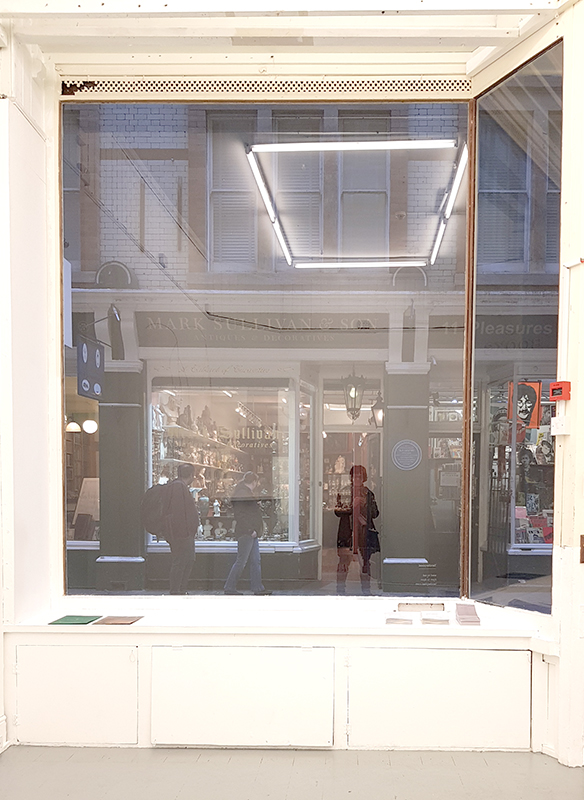
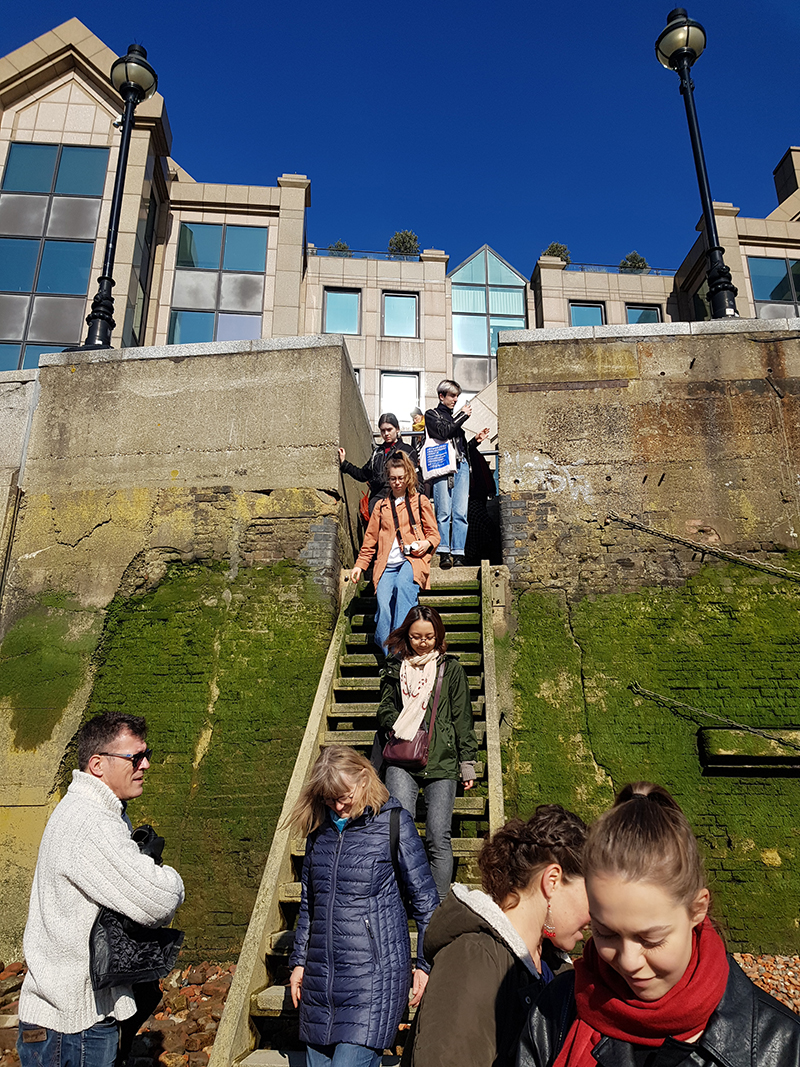
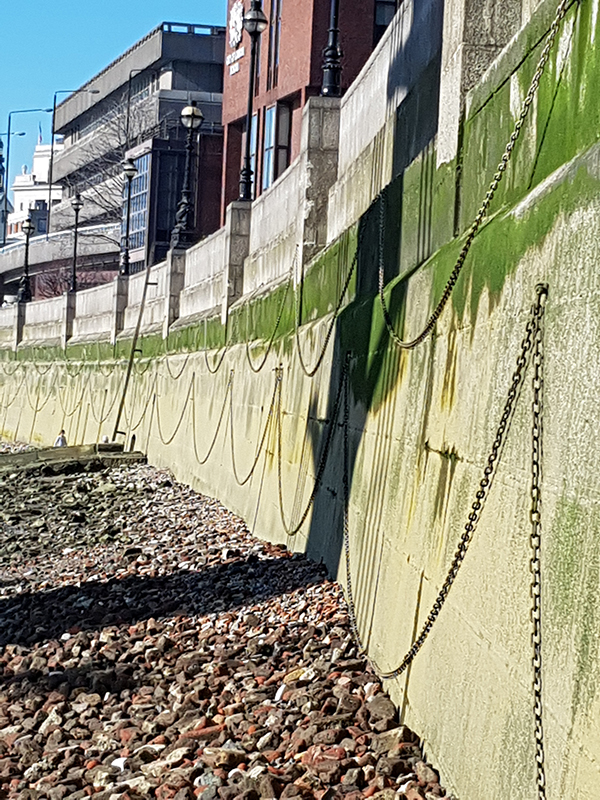
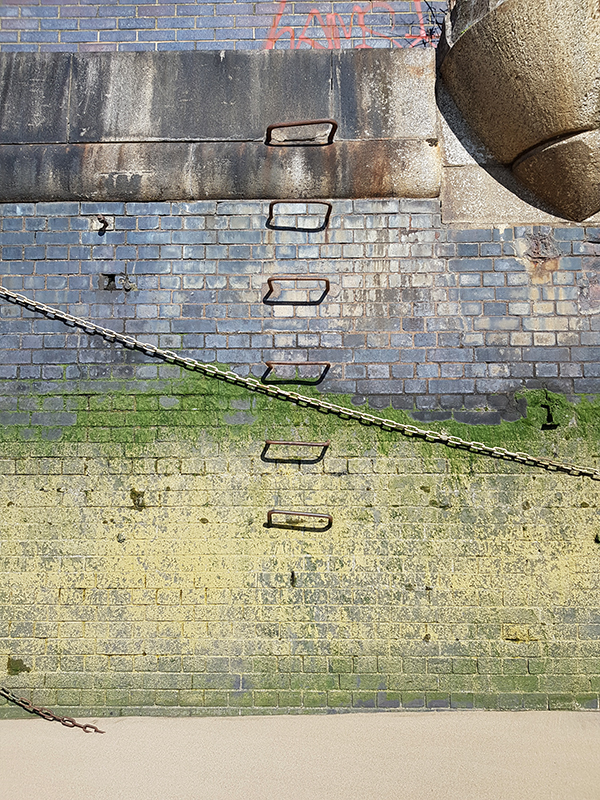
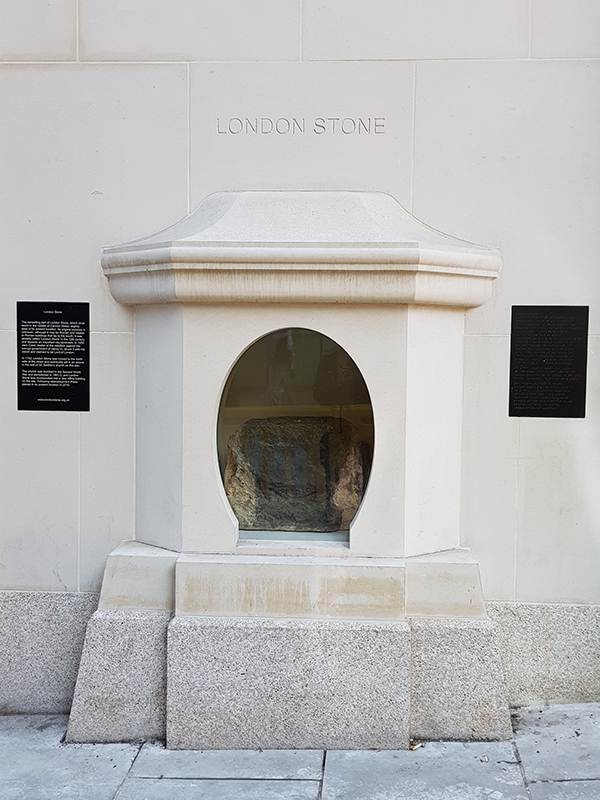
I joined Walking as Material led by Lily German who took us through the city down to the shores of the Thames and up onto the walkways and bridges, stopping to look at the fabric of London and consider its past and the changing materials that make up its surfaces. Also the amount of sewage that must be dealt with.

1902 mattering walk bridge pillars1902 mattering walk steps down1902 mattering walk chains1902 mattering walk wall1902 mattering walk london stone

We ended the walk at Matter(ing), an exhibition investigating ides of materiality and the outcome of enabling materials to drive the creation of work at Platform Southwark from artists Abigail Brothers, Lily German and Sebastian Sochan.

Enjoyed the connections made by Zach Blas in his performance lecture Metric Mysticism at Edel Assanti. Tracing the use of the crystal ball from John Dee via Derek Jarman, David Bowie’s Labyrinth, Lord of the Rings, Saudi Arabia’s Global Center for Combating Extremist Ideology to Palantir Technologies, a private American software company that specializes in big data analytics. Prophecies of a society controlled by the media and the police appear fulfilled.

1902 Zach Blas metric mystics

Treated to a personal private view of Draft at The Hospital Club by Mary Yacoob. Strong work held it’s own amongst the plush velvet sofas and hand embellished wallpaper.

1902 Mary Yacoob