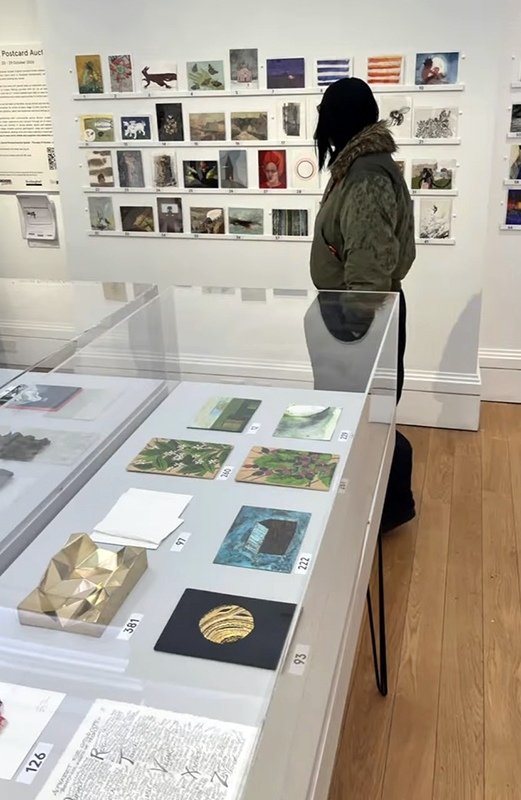
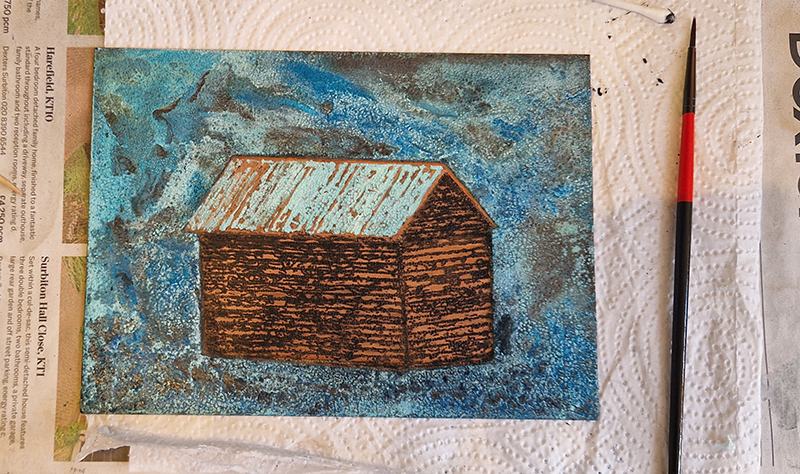
Now that the RWA secret postcard auction is over, I am able to reveal which of the postcards in the RWA secret auction was my contribution to this annual fundraiser. I was delighted that it received so many bids and amazed at the final offer. I hope the recipient is pleased with their purchase of Cosmic Hut.
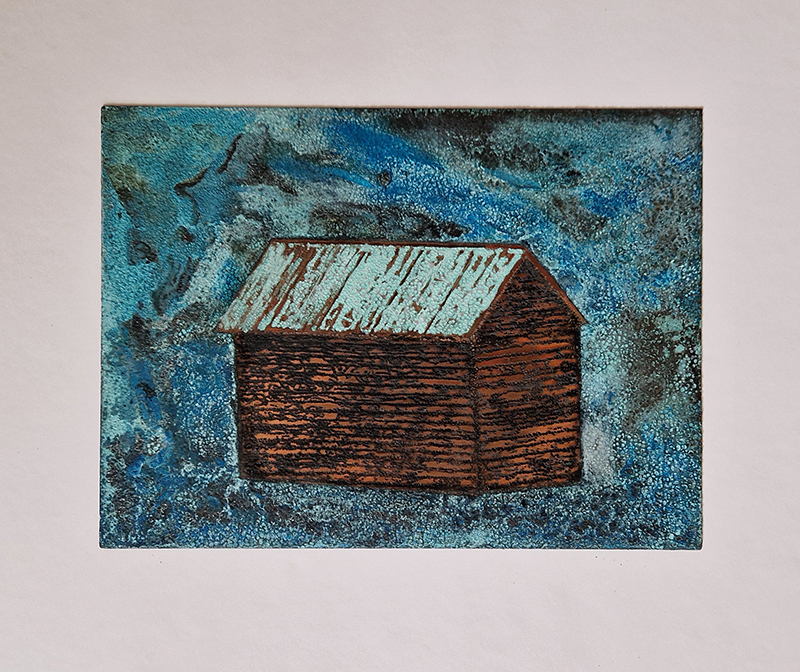
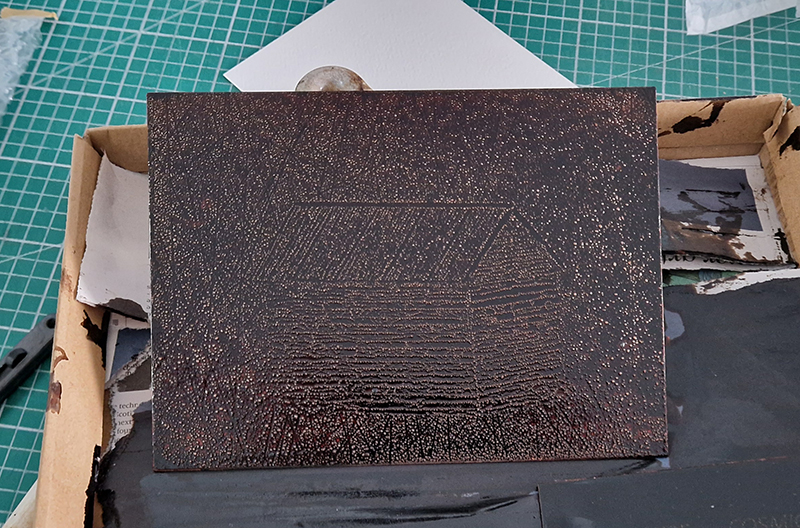
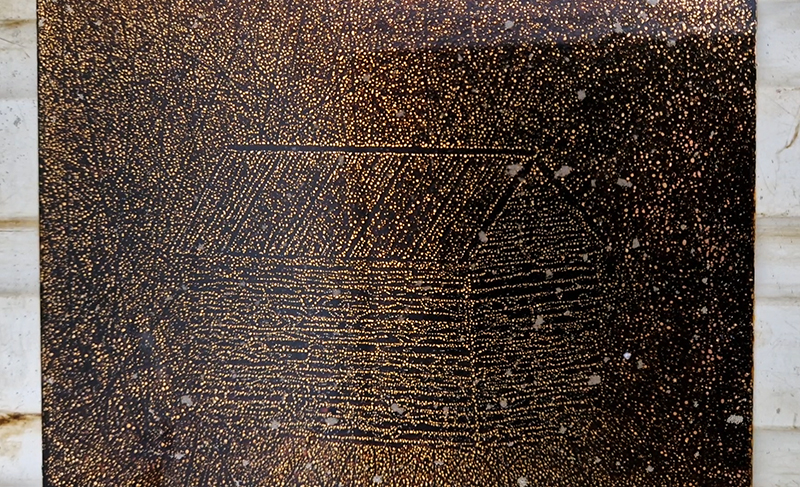
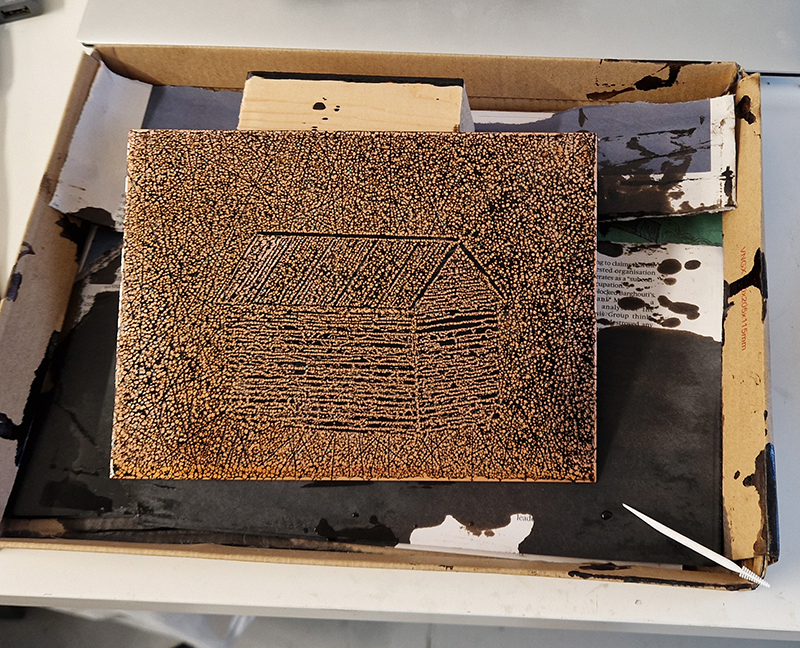
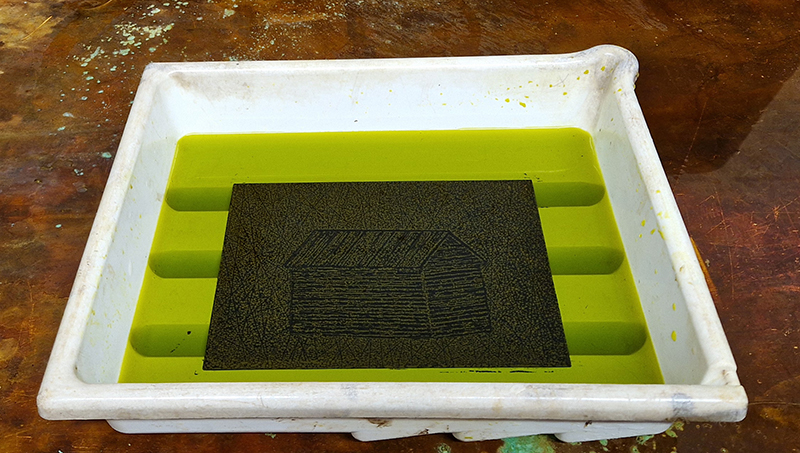
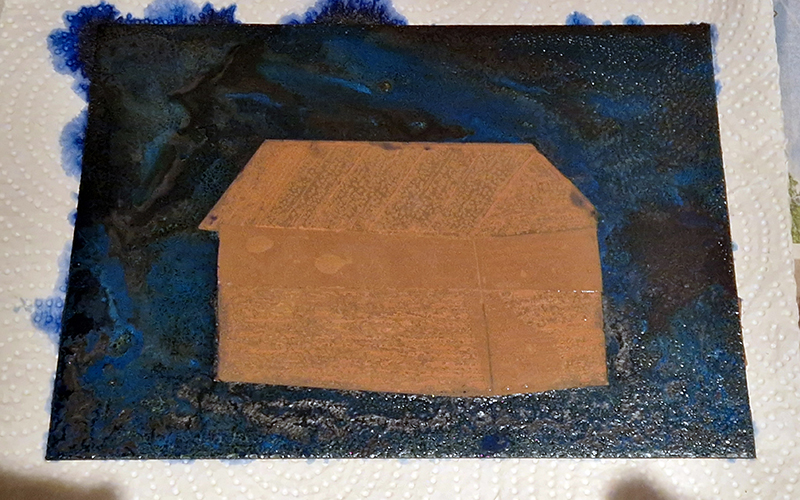
Cosmic Hut etched and patinated copper. First the image is screen printed onto the copper with a sugar based solution. It then goes through a sugar lift process of being coated with bitumen and submerged in warm water to dissolve the sugar and reveal the image before being etched. Once etched, parts of the image are blocked out as it is patinated with different chemical solutions that produce different colours. The image is based on the many cosmic ray detector huts abandoned across the North Yorkshire moors when the Haverah Park experiment stopped operating in the late 1980’s. These humble huts were once home to one of the largest extensive cosmic ray air shower detector arrays in the world, studying the highest-energy cosmic-rays arriving from space.
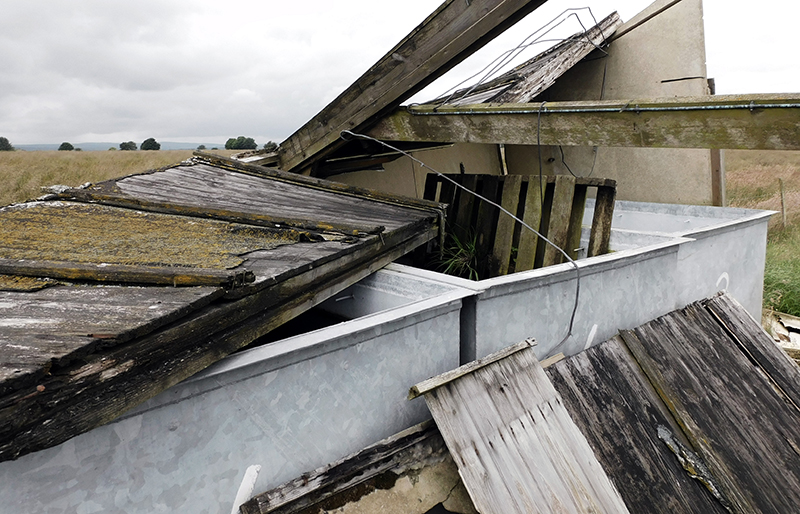
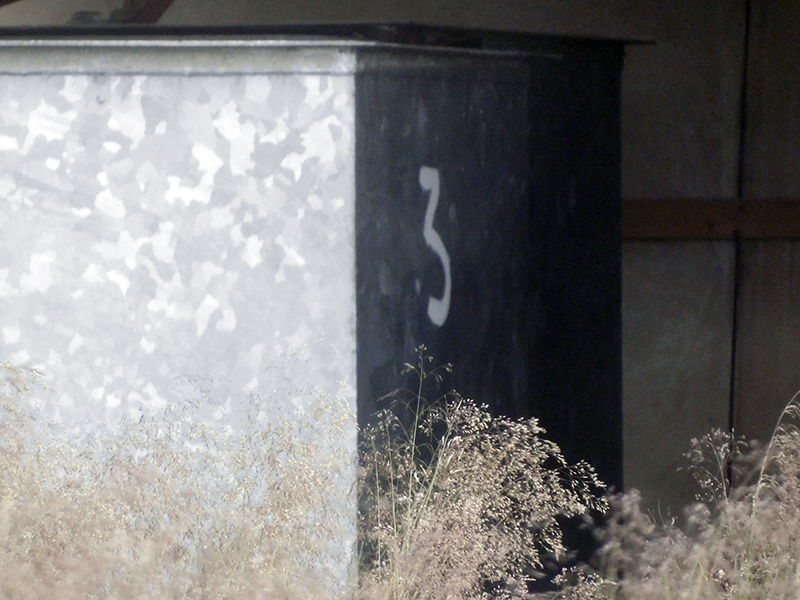
Moving forward with new work thinking about the Haverah Park experiment and the water tanks which were used to record cosmic rays as they arrive in sweeping disc like formations by registering the scintillating light of Cherenkov radiation caused by the particles, I am working towards making a series of small ‘tanks’. I am planning to use directional magnetic steel sheets for the outside of the tanks. I still have a couple of batches of this material provided to me by Union Steel Products a while back. I had first seen this material during the magnetic laboratory open day at The National Physical Laboratory and was fascinated by the jigsaw pattern surface. Norman P. Goss invented grain-orientated steel in 1934, it is a specialized iron-silicon alloy engineered to have exceptional magnetic properties in one specific direction, dramatically reducing energy loss. The jigsaw pattern of crystallographic orientation is known as a Goss texture. The very thin sheet of steel is coated in a specialized, multi-layer inorganic insulation chemically bonded to the steel surface during manufacture. It is very difficult to remove.
I used the first batch of Grain-Oriented Electrical Steel to create the work Domain of the Devil Valley Master which was shown in A Stone Sky at Thames-side Studios Gallery in 2023.
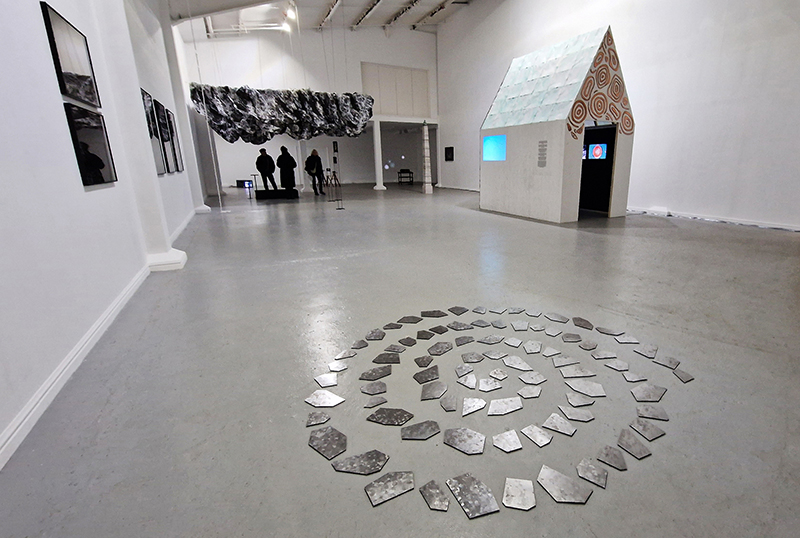
For this spiral sculpture I experimented with various ways of removing the grey coating, eventually finding sanding before etching in copper sulphate could achieve good results if through an arduous and messy process. It was still a bit hit and miss and I could end up with a muddy surface or a silvery one without really knowing why. The surface will flash rust extremely quickly when it comes out of the etching bath, or it suddenly becomes dull and patchy. For this new work I thought I would ask google AI if it could find any tips on removing the insulating surface and it actually came up with a plan that has worked. Much as I don’t like to use AI in a creative process, it was really useful in identifying the composition of the grey coating and suggesting the best removal agent and method. I have adapted the advice slightly after testing the results, but in the end it has saved me many hours of sanding and copper sulphate residue to dispose of. The process giving best results, is to just wipe clean the surface before etching in Ferric Chloride, then soak briefly in a neutralizing bath of bicarbonate of soda, followed by a quick dip in isopropyl alcohol to dispel the water before rapid drying. This batch has a slightly different crystallographic pattern to the batch used for the spiral.
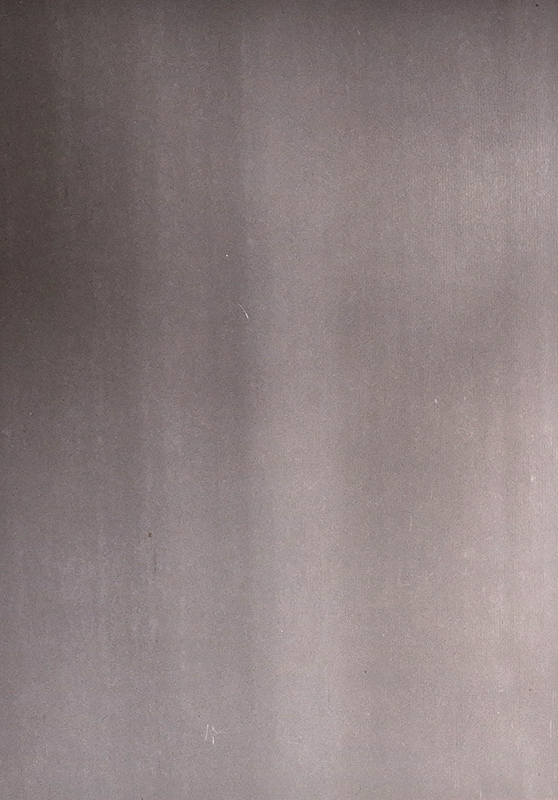
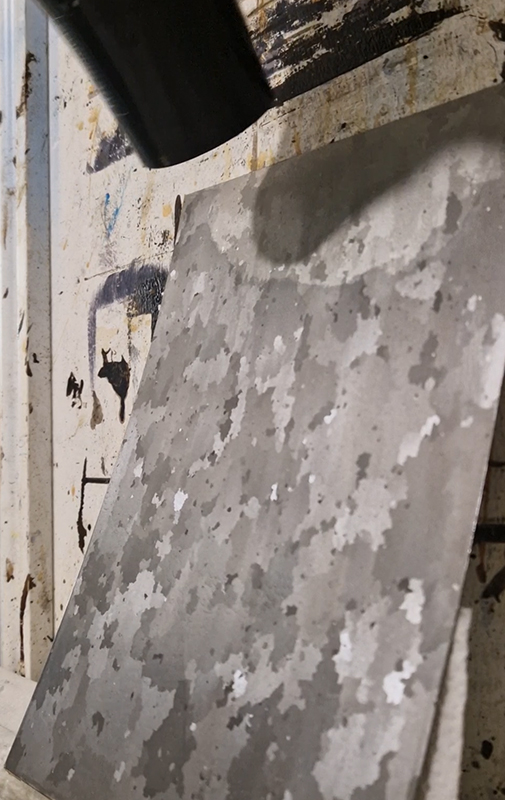
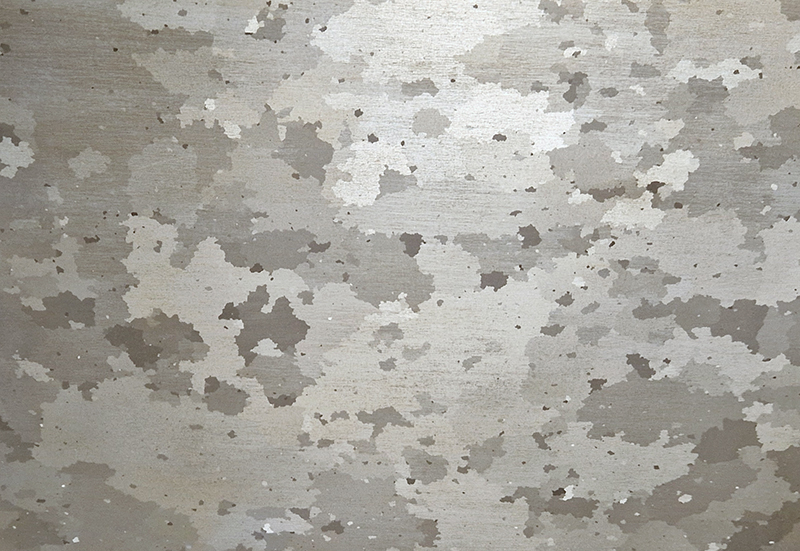
The original water Cherenkov detector tanks at Haverah Park are made of galvanised steel which also has a patterned surface known as a spangle. This is caused during manufacture when the steel is hot dipped in zinc and the individual zinc crystals spread as they cool. Using the directional magnetic steel echoes the pattern and also references the interaction of cosmic rays with magnetic fields which can accelerate them across space but also deflect them from reaching Earth’s surface.
Working on ideas for a 5th tablet as part of The Instruments of the Anemoi series of sculptures that reference methods of natural navigation. Currently I have included magnetism in the form of the compass and the lodestone, the winds and the north star.
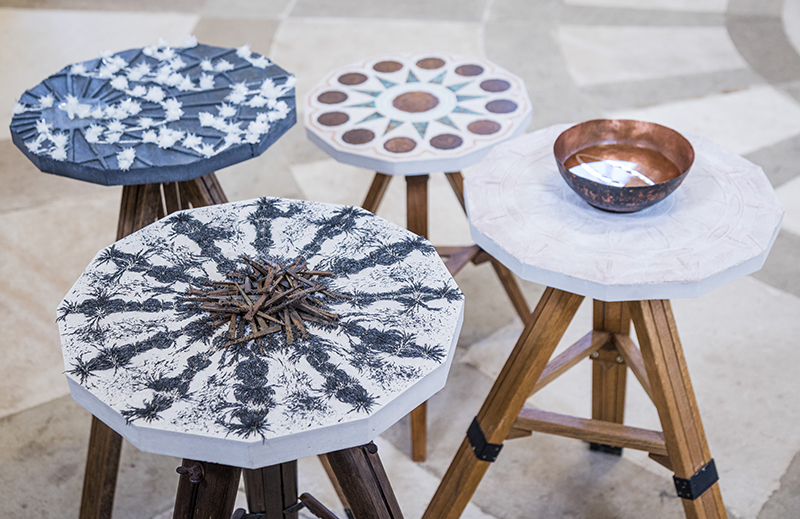
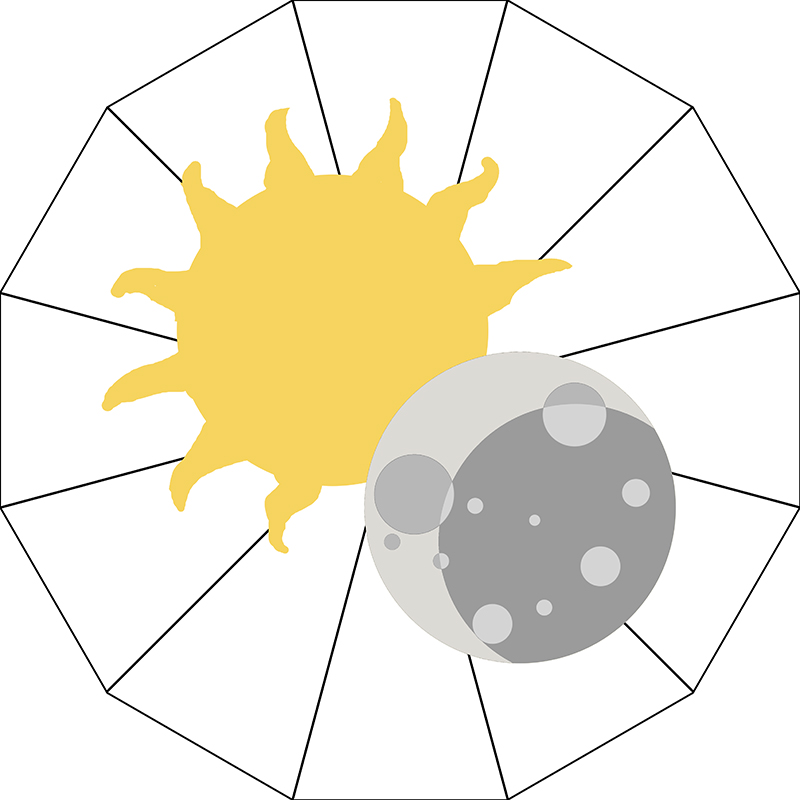
Perhaps influenced by seeing the total eclipse of the sun this year I am thinking of making one referencing the sun and the moon as beacons of navigation. The sun being the most obvious and easiest to work out cardinal direction at least, with the moon needing more knowledge of its lunar cycles. I also like the idea of using copper for the sun and aluminium for the moon.
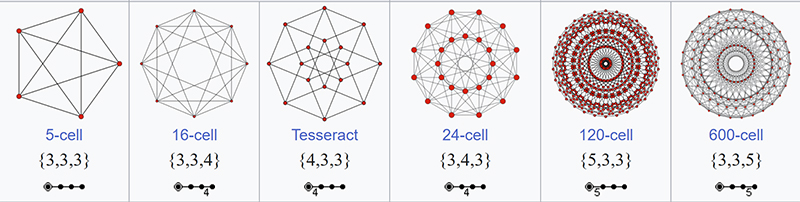
I have been looking at what might be useful to help visualise a fifth dimension and came across Coxeter elements and planes which deal with geometric reflections. The maths is beyond me but the shapes and patterns involved are wonderful.
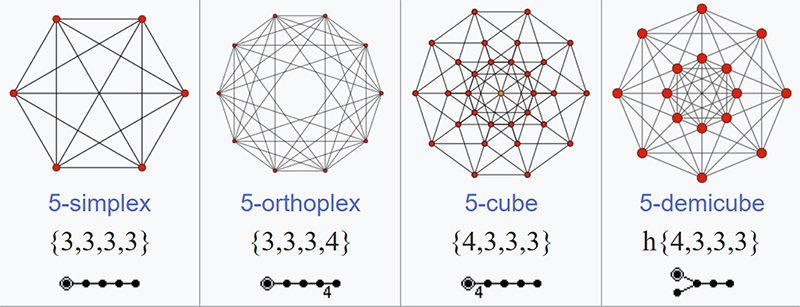
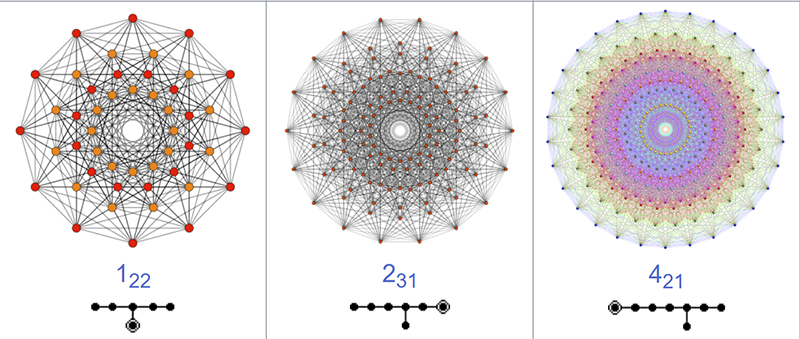
These could be useful for my work reinterpreting the Cosmati Pavement in Westminster Abbey that purports to offer clues to determine the end of the Universe, as different symmetries are used within the mosaic design to signify the different complexities between the earthly and the heavenly spheres. In the symbolism of the Cosmati Pavement, the journey from earthly materialism to spirituality is seen as a progression from multiplicity and diversity towards unity and uniformity.
Through this work I will look at changing human relationships to Fire, Earth, Air, Water and the Aether since the time the Cosmati Pavement was installed in Westminster Abbey in 1268. The pavement uses number, patterns and geometry to articulate the medieval understanding of the cosmos and the end of time. I am using Richard Foster’s book Patterns of Thought: the hidden meaning of the Great Pavement of Westminster Abbey, for reference and Martin Rees book Just Six Numbers: the deep forces that shape the Universe, as reference for symbolic contemporary numbers that are used to describe the cosmos.
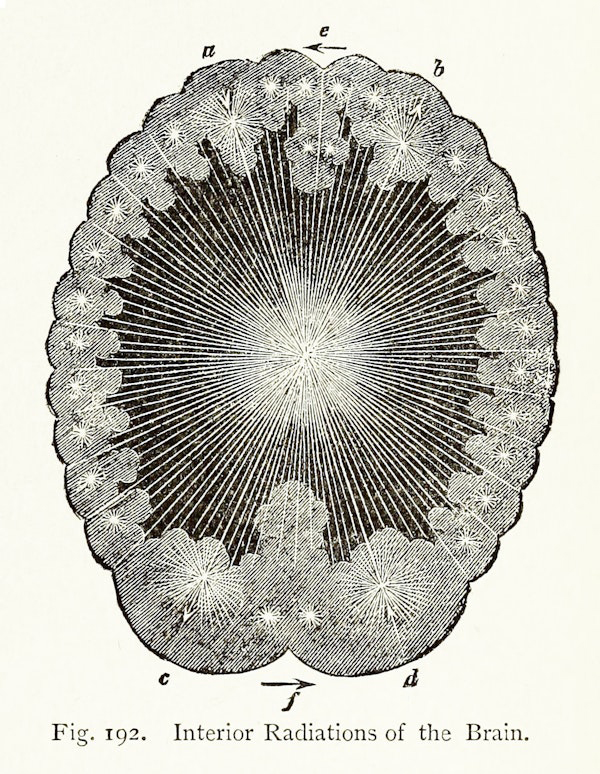
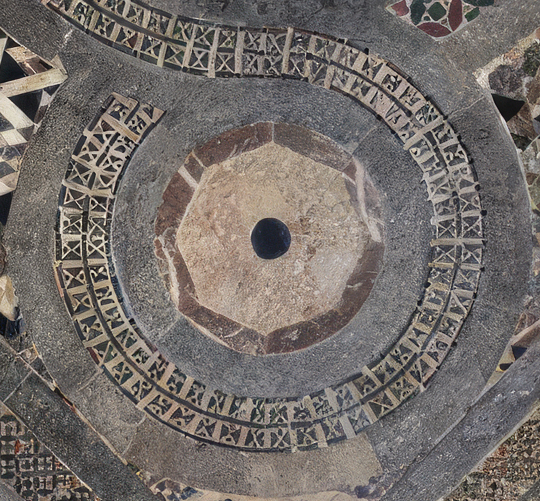
The end of the world was imagined as a reversal of creation when all matter will return into the primordial chaos of elements that are reabsorbed into the divine mind. The centre sphere of the pavement relates to the primordial chaos from which the four elements of earth, water, air and fire separated at creation and will return to at the end of time. Swirling eddies of unformed matter at the threshold of eternity are transformed by a breath across the turbulent waters bringing light to the darkness. I have chosen what is known as the Density Parameter represented by the Omega symbol, to relate to the Aether – this is a number that has not been determined by physics and its value describes the possible fate of the universe. The 61 lozenge shapes circling the Silva, unformed matter, are given to represent the idea of eternity. I like the illustration of the interior radiations of the brain from The Principles of Light and Color, 1878, by Edwin Dwight Babbitt that explores the physical, metaphysical, and therapeutic properties of light and colour. It has a similar relation of a radiating mind of creation.
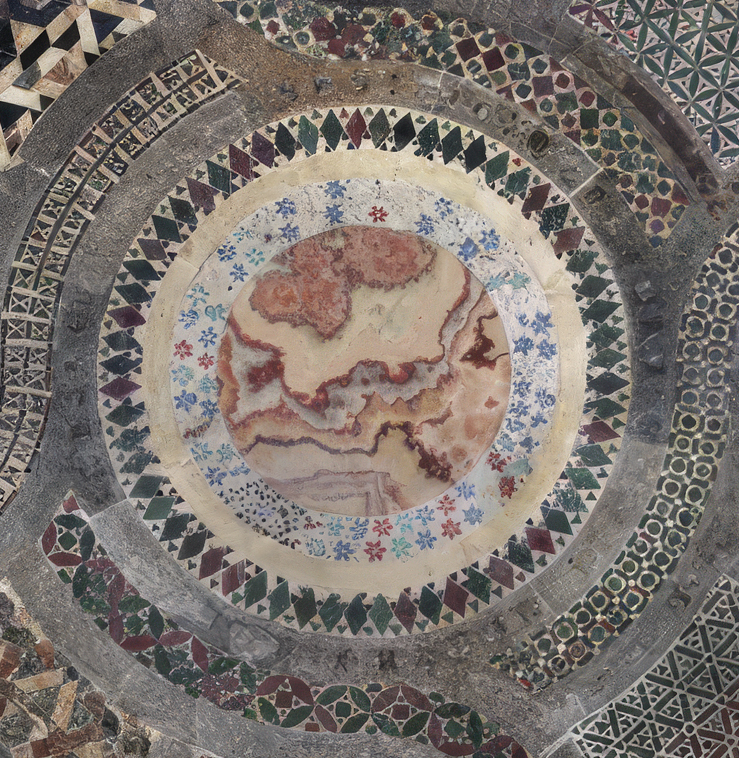
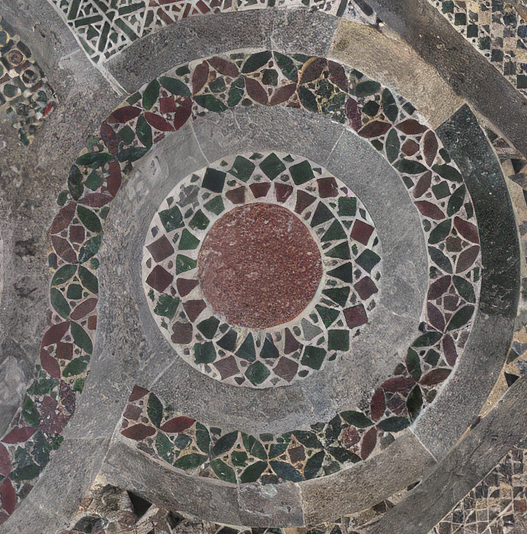
The inner square of the pavement contains four other spheres which represent the elements in their archetypal form before they transition from the metaphysical or the intellect, to the material sensible world. The pavement mosaics show a transition from a variety of patterns at the outer edge through to simplified regular polygons, the archetypes of form representing a perfection that we only experience as a shadow on Earth. Six-fold symmetry patterns signify astronomical time and the perfection of the material elements and four-fold symmetry patterns describe mundane time and compound bodies full of diversity when the elements mix and entangle.
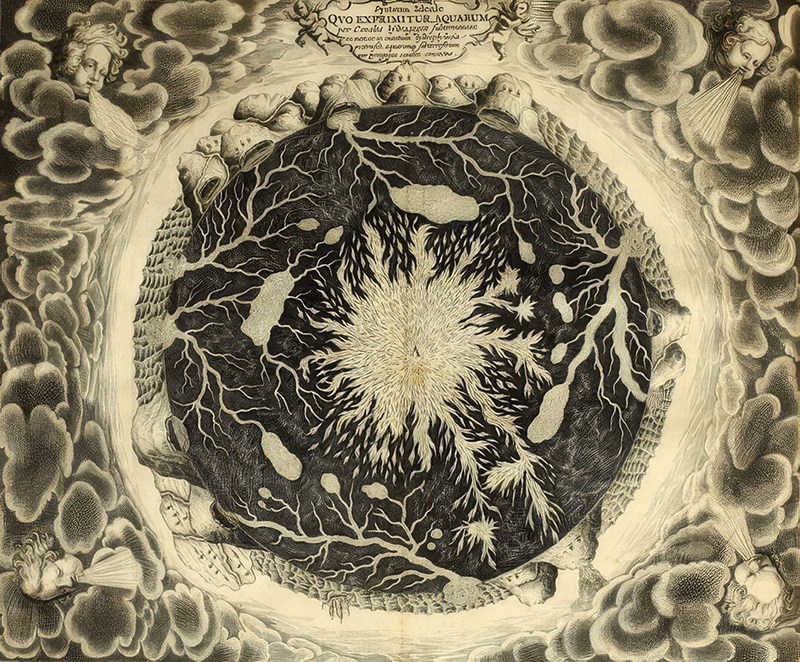
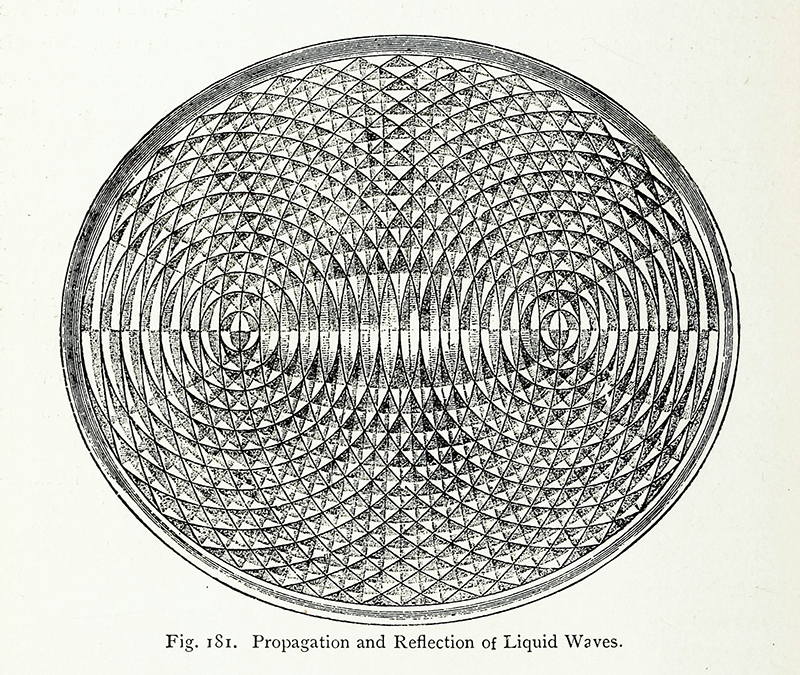
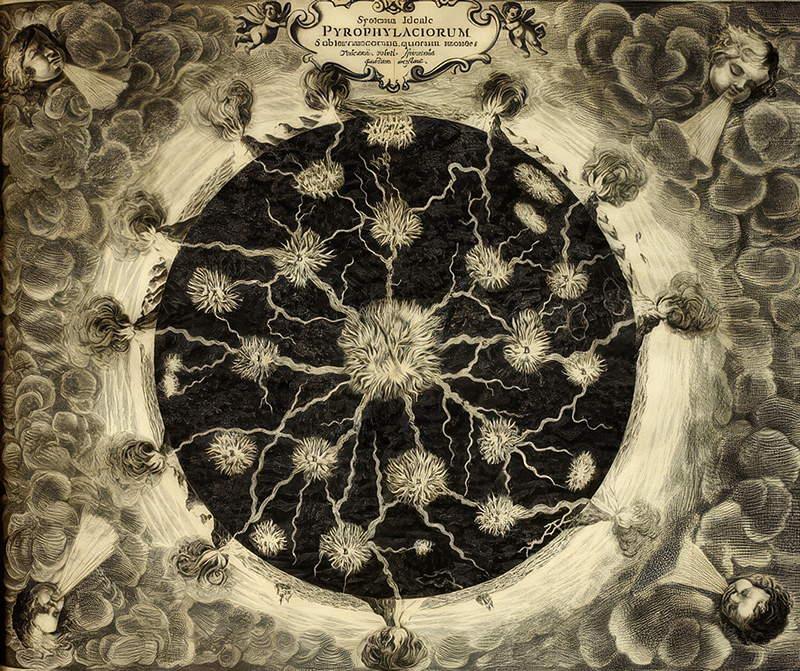
To the north is the sphere representing water containing a seven sided polygon which symbolises the moon. I have chosen to relate the number Q ( 1/100,000 (or 10⁻⁵)) to this sphere. Q represents the texture of the universe through which we can observe such phenomena as gravitational ripples. Other references I am looking at are Mundus Subterraneus, by Athanasius Kircher published in 1665 which has delicious illustrations of the underground world and all its riches and a great illustration of liquid waves from The Principles of Light and Color.
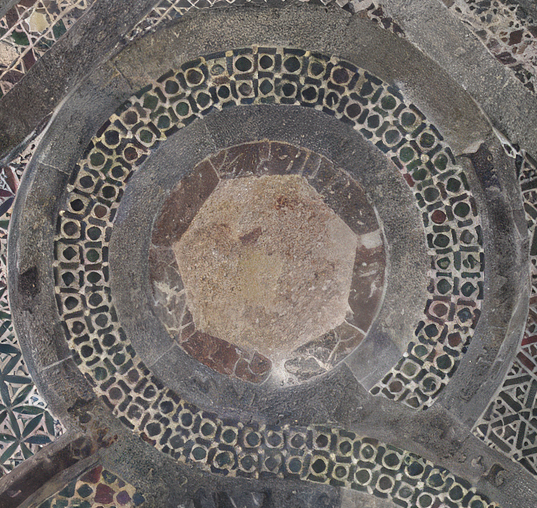
To the south is Fire, represented in the pavement by the symbol of the Sun set in an octahedron which heralds the start (or the end) of astronomical time. I have chosen the nuclear efficiency number for this sphere, represented by the epsilon symbol (ε = 0.007), it is the process which allows for stars to burn steadily for billions of years.
To the West is Earth, represented by a hexagon. I have chosen the large number N 10³⁶ for this sphere, representing the relative weakness of gravity compared to other forces which act on the solid matter of Earth. Also referencing Kepler’s 1619 work Harmonice Mundi (Harmonies of the World) where he linked the five regular Platonic solids to the classical Greek elements. The illustration of the brain laid bare from The Principles of Light and Color has an Earth like quality.
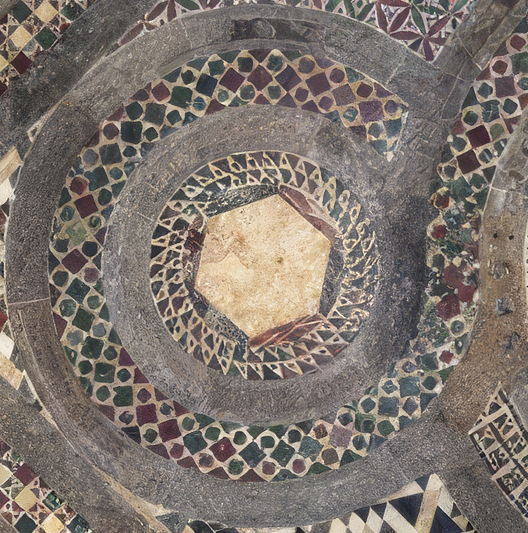
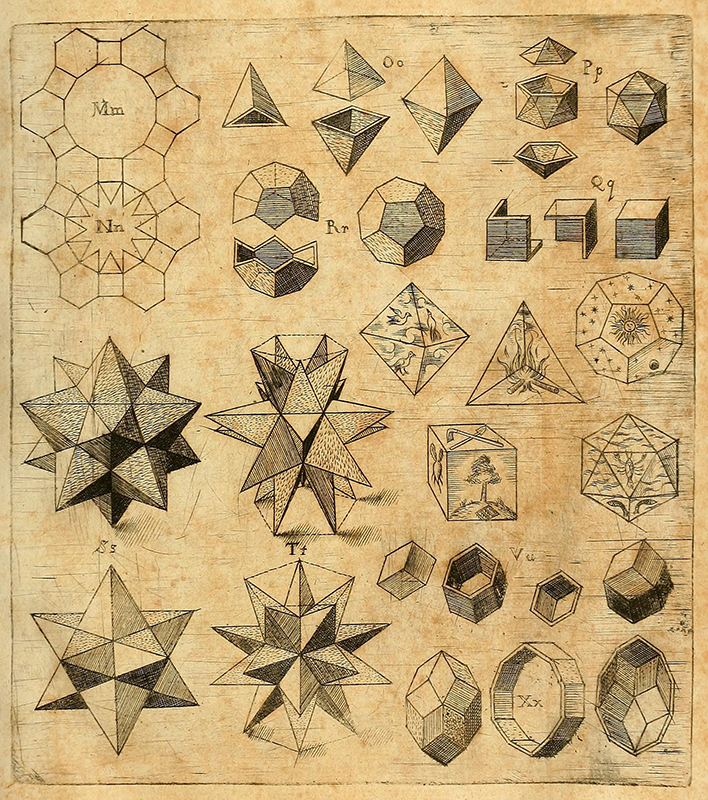
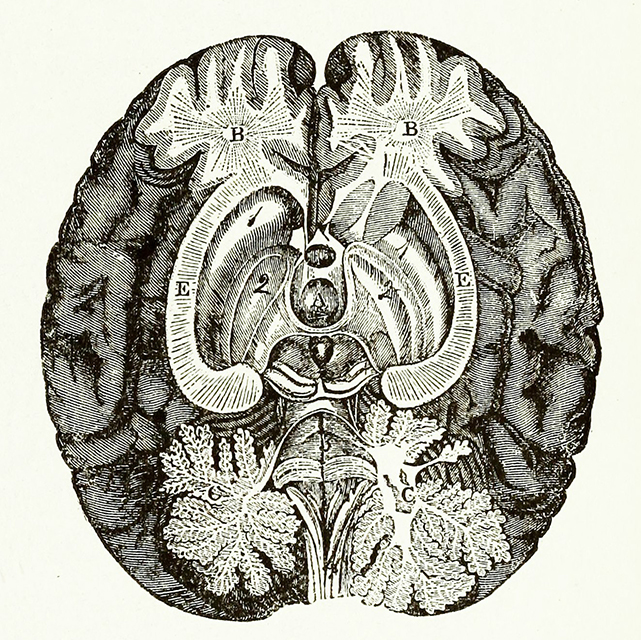
To the East is AIR represented by a circle signifying the logos from where the breath came that stirred the waters. I have chosen the number Λ (Lambda) which describes the expansion of the universe and ties in with things that move through the air.
Looking at things that move through the air in other contexts, I am planning to attempt some Schlieren photography. Curator Maria Hinel’s husband first told me about this process and I have finally had a look at how it works. It is an optical technique used to visualize the flow of fluid and density variations in transparent media (such as air, water, or gas) that are invisible to the naked eye. It sounds quite a tricky process requiring absolute precision. First thing I need is a Newtonian Telescope Primary Mirror.
The Magnetic Universe Gresham lecture by Professor Katherine Blundell OBE gives a very thorough overview of magnetic fields from the bar magnet to magnetars and the most recent discoveries by the MeerKat radio telescopes imaging the heart of the milky way that are yet to be explained.
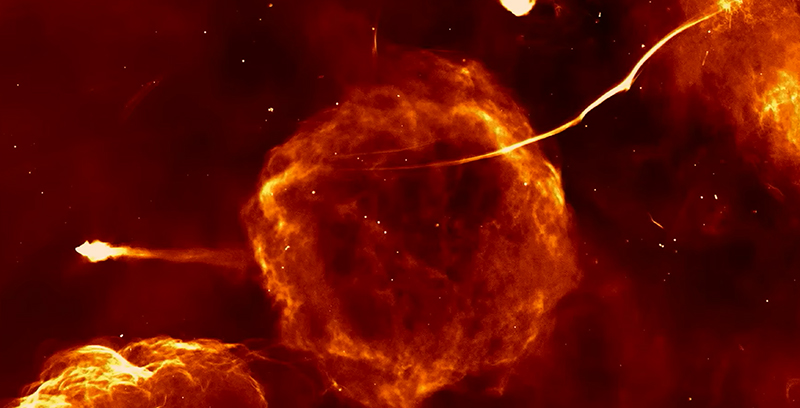
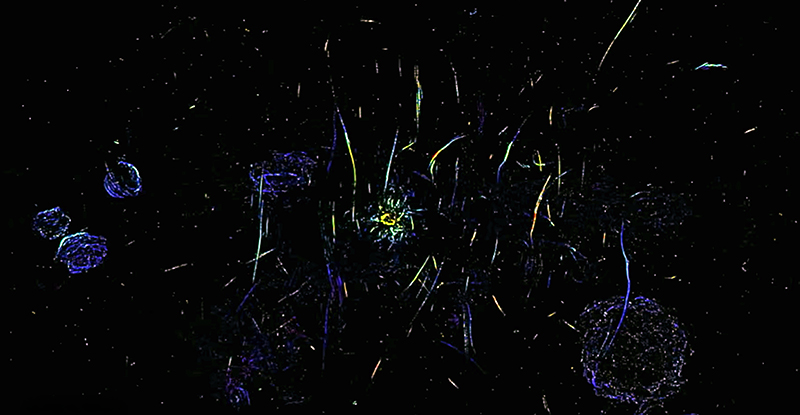
Wrinkled Time by Marcia Bjornerud this essay is from a couple of years ago but I still love to read it every so often. Or you can lay back, listen to Marcia read it and contemplate how unique and precious the Earth is.
Gallery Visits
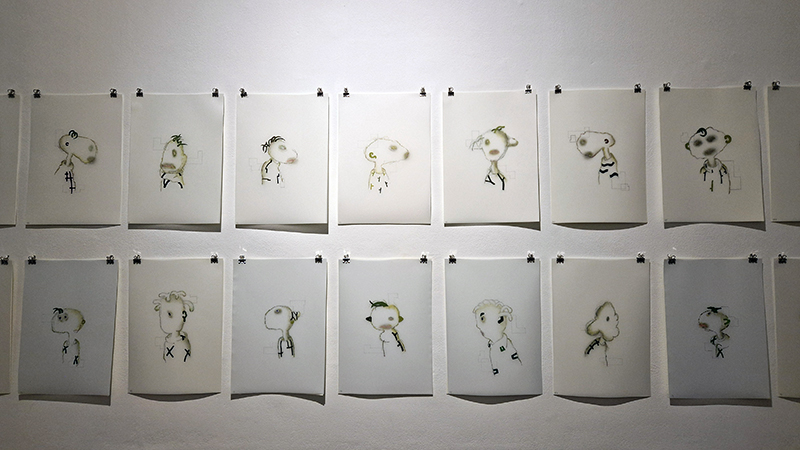
Oona Grimes Weed Killer at Danielle Arnaud Gallery. I has quite an emotional response to the works in this show which present perspectives on cruelty, loss, responsibility and power. I had listened to Natalie Haynes ‘Stands up for Euripides’ episode on the play Medea, a woman notoriously vilified for killing her children to spite her husband who is abandoning her. Oona’s collaged drawings of colourful cartoonlike characters emerging from velvety black surfaces intent on inflicting pain are hard hitting despite the comedic nuances. The works dig deeper than purely physical assaults into psychological damage and family relationships also explored through a tender film. What I think I found especially hard was the ‘chorus’ of bruised ghostly children, so sad and enigmatic. Looking so isolated and vulnerable, they speak for the children of Palestine and Gaza where adults should be protecting and nurturing but instead they are warring and damaging.
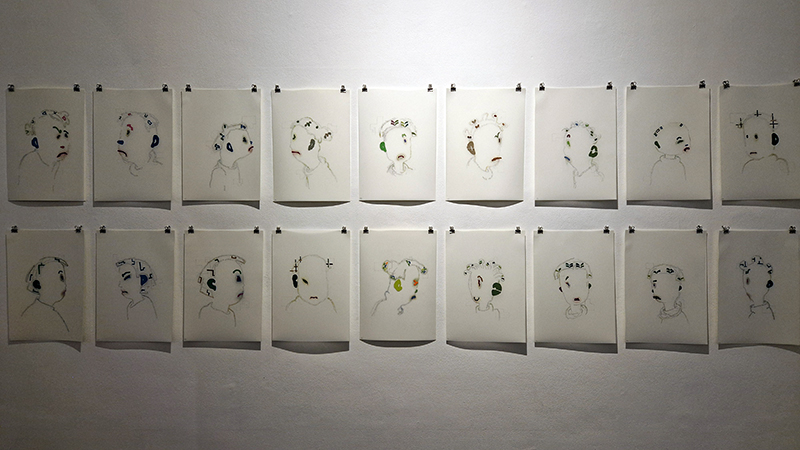
Salon for a Speculative Future presents: How to be in the Future: A Future Sensorium curated by Monika Oechsler at Chisenhale Studios. A beautiful show sensitively curated to bring together works that speak to sensory awareness and physicality. The exhibition features sound sculpture, sonic voicing, rhythmic movement, body scan sculptures and moving image works. Artists include Adonia Bouchehri, Kate Fahey, Alice Sheppard Fidler, Lisa Chang Lee, Anna Mays, Kirti Virmani, Nicola Woodham.
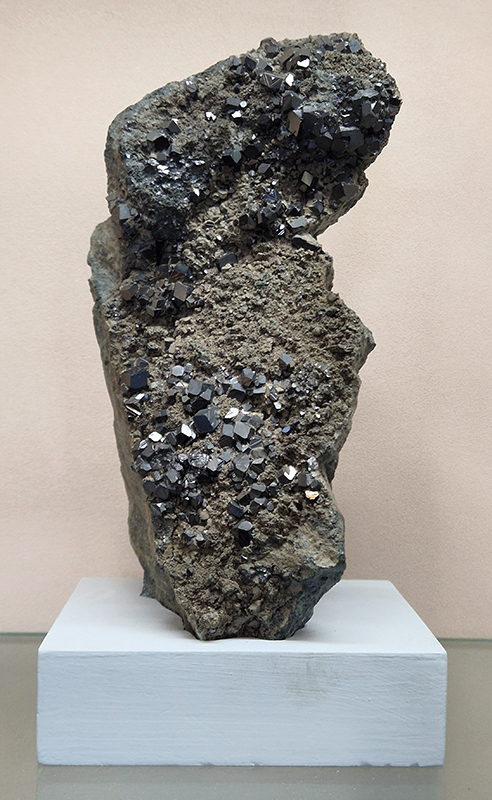
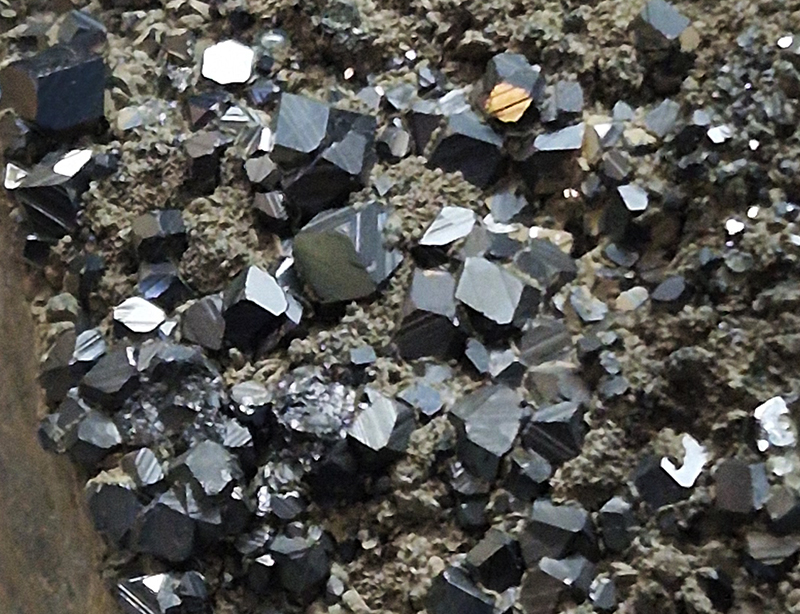
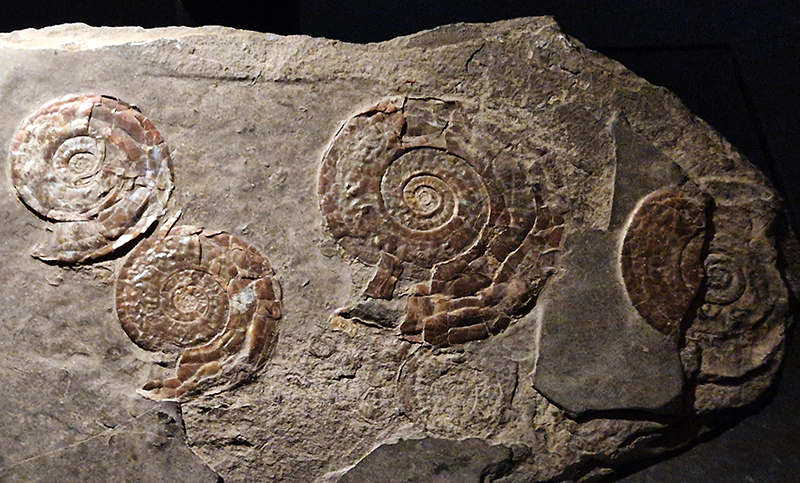
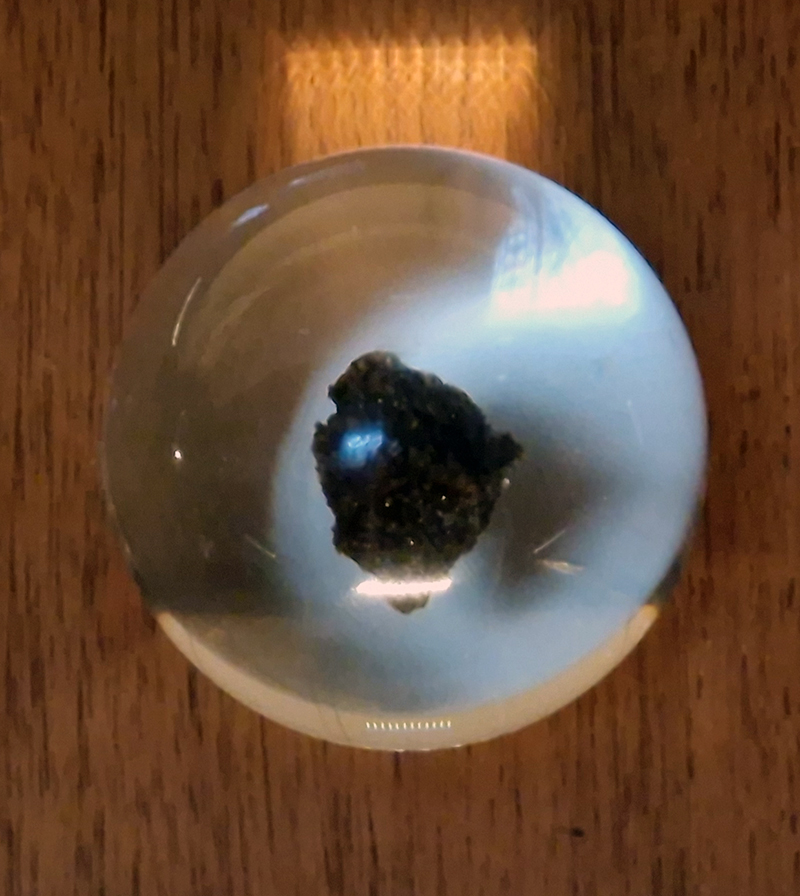
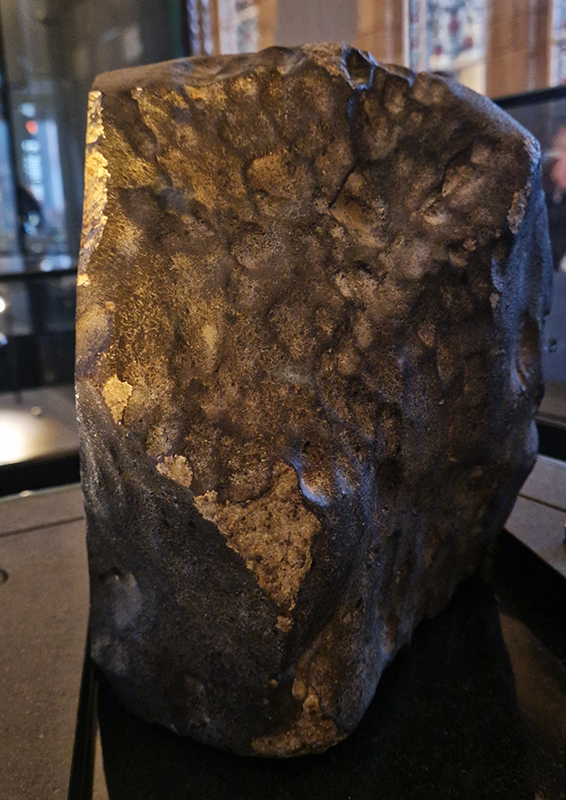
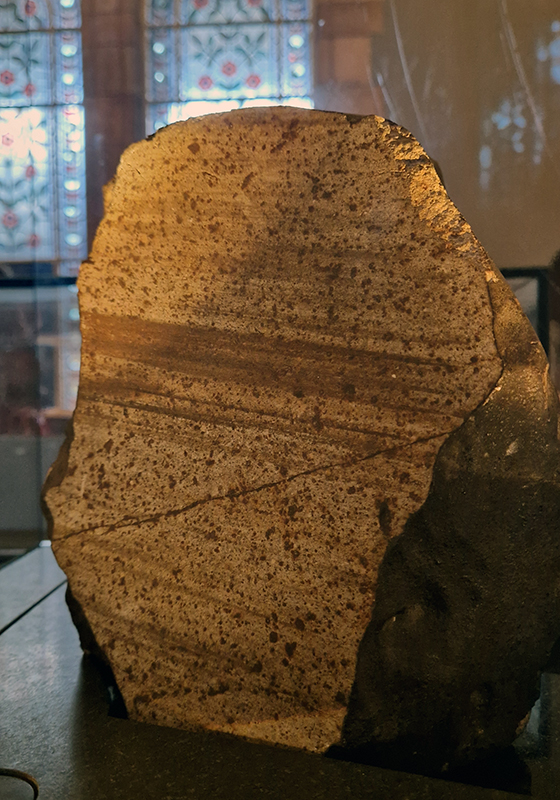
The Natural History Museum is somewhere I should go more often. Popped in to see the new temporary gallery called Nature and Us which was a bit chaotic so ended up looking at the thrilling black dodecahedra on chlorite example of magnetite, a tiny moon rock in a glass sphere, William Smith’s ammonites and the Wold Cottage Meteorite which was sent hurtling to Earth when two asteroids collided in December 1795, surprising ploughman John Shipley who was working nearby when the 25kg rock crashed to Earth. It became key evidence that rocks could have extra terrestrial origins and was duly commemorated with an obelisk at the landing site.
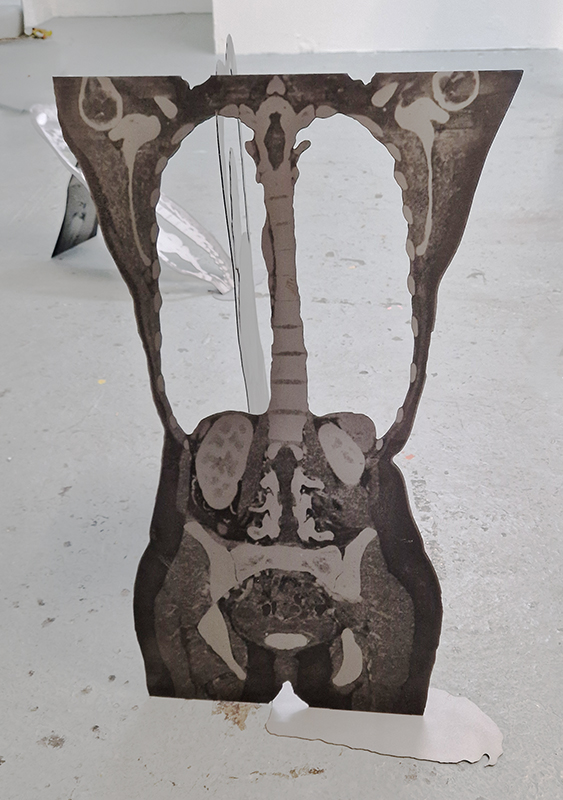
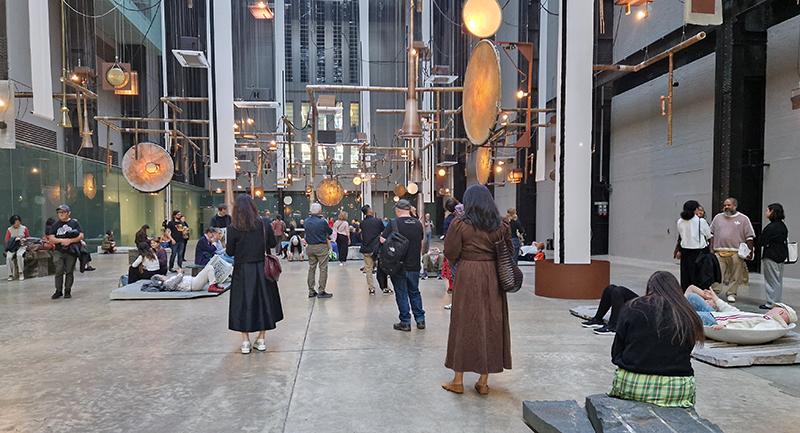
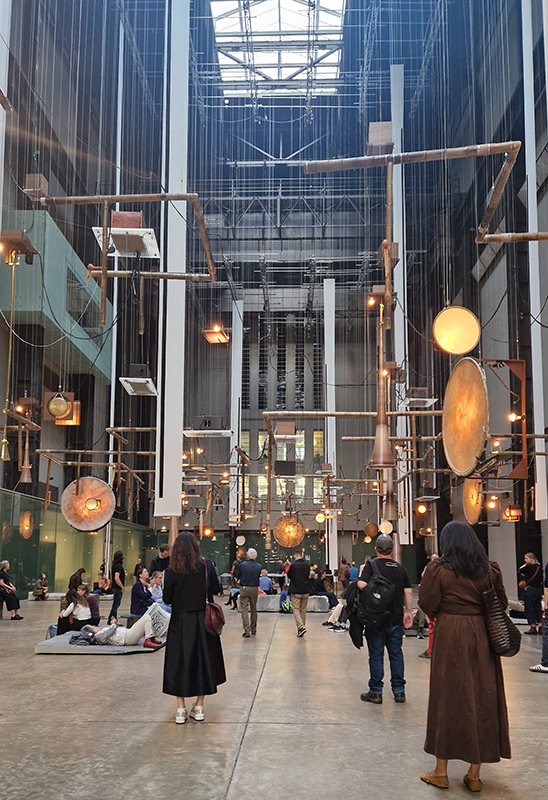
Engaging new commission at Tate Modern Turbine hall, sonic installation by Tarek Atoui: Hold.
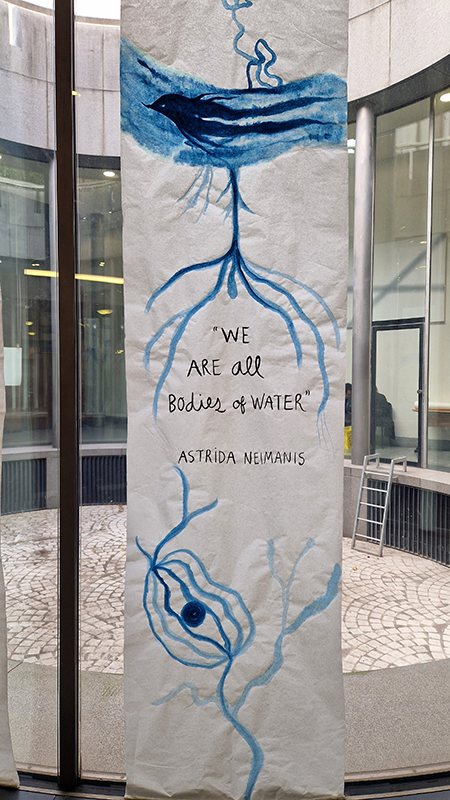
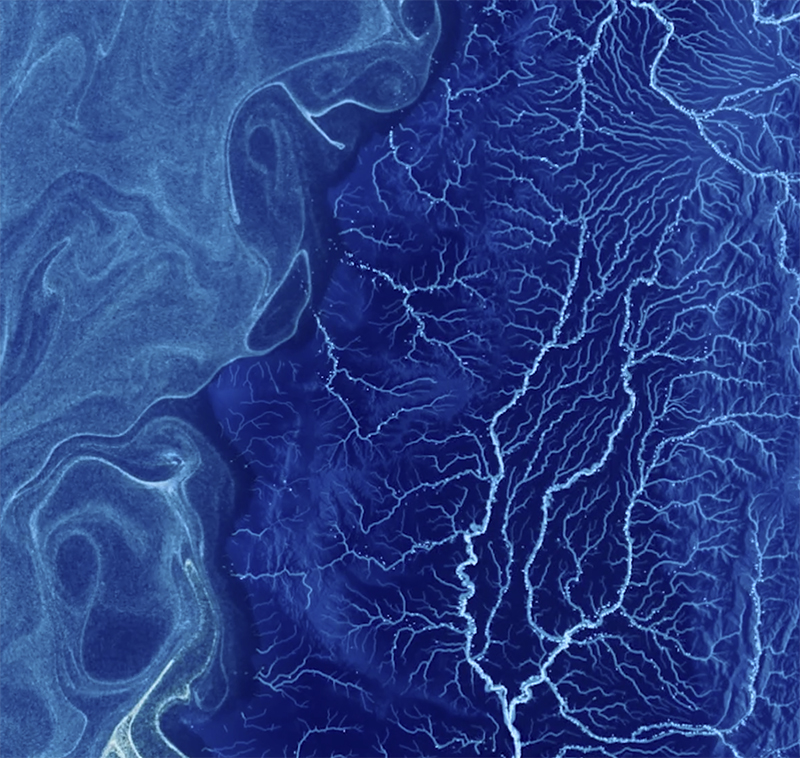
Water Body by the art collective Marshmallow Laser Feast and author Robert Macfarlane, featured as part of the 70th BFI London Film Festival (LFF Expanded). I think it was the price of the ticket and the fact that is wasn’t as immersive as we hoped that left us a bit flat despite being impressed by the visualisations of planetary water circulation. It felt lacking some kind of emotion or element to connect with the audience.
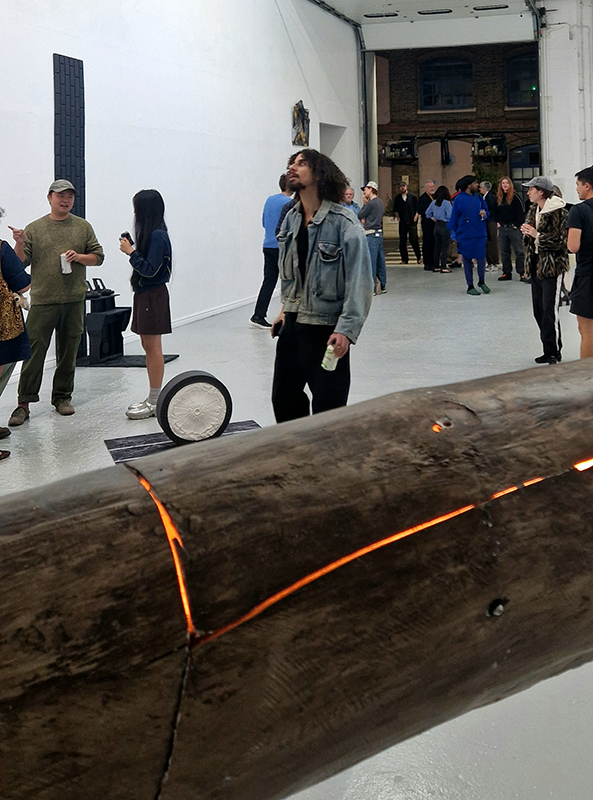
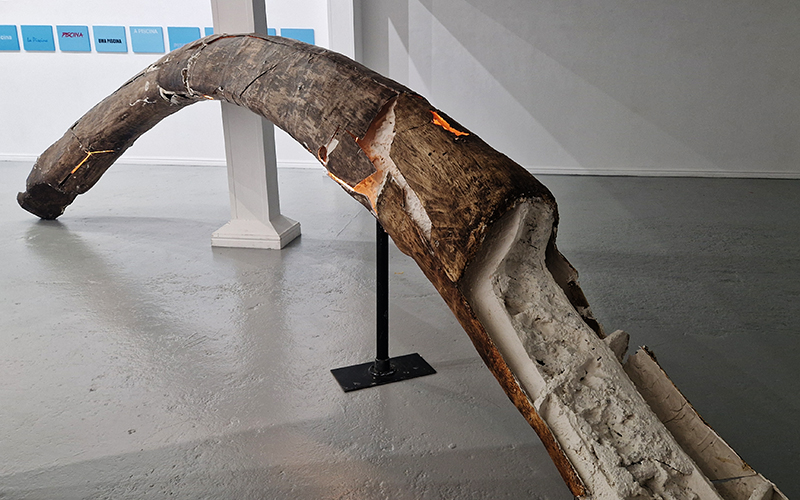
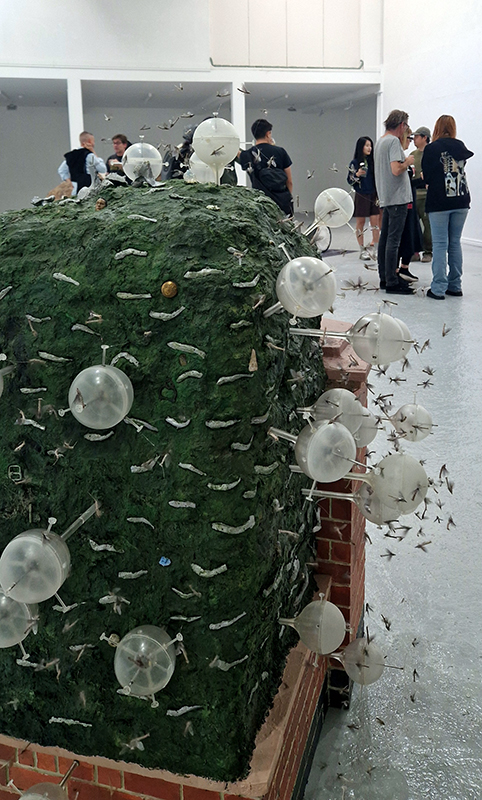
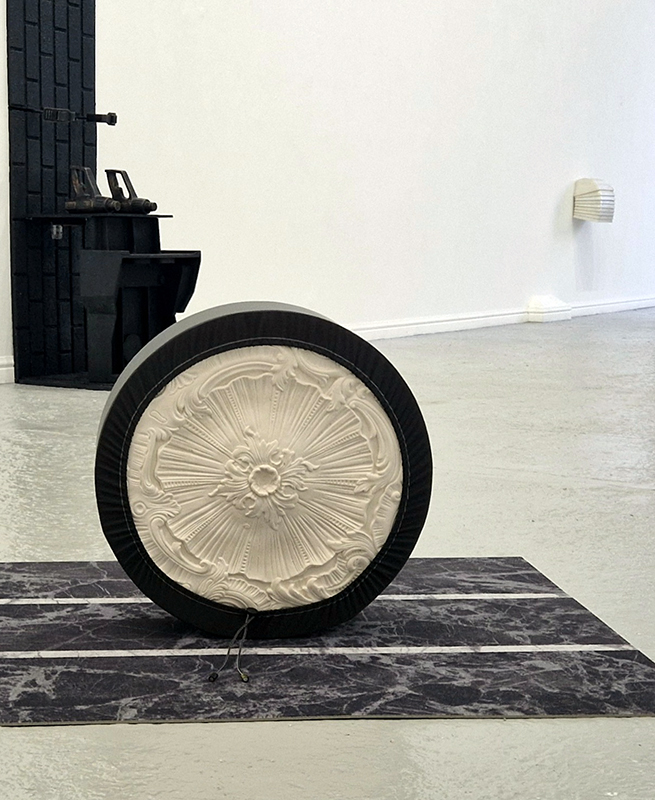
Falsework curated by Catherine Li at Thames-side Studios Gallery. Featuring works by Molly Grad, Steven He, Amélie McKee, Robin Finch Pickering, Ana Teles, and Chris Thompson, the exhibition traces a shared interest in forms that resist being reduced either to function or to representation. Structures may initially appear legible but their meanings shift through material, scale, position and perception.