Archives for category: Uncategorized

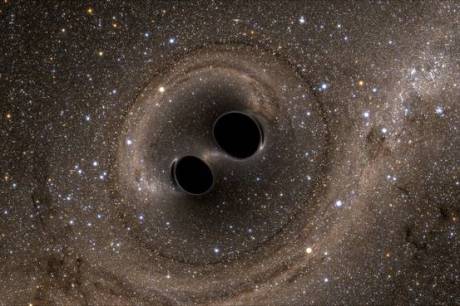
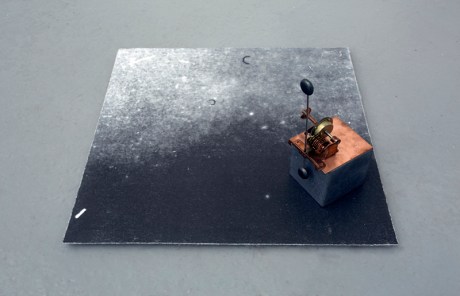
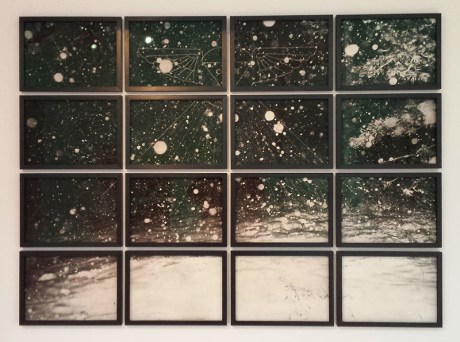
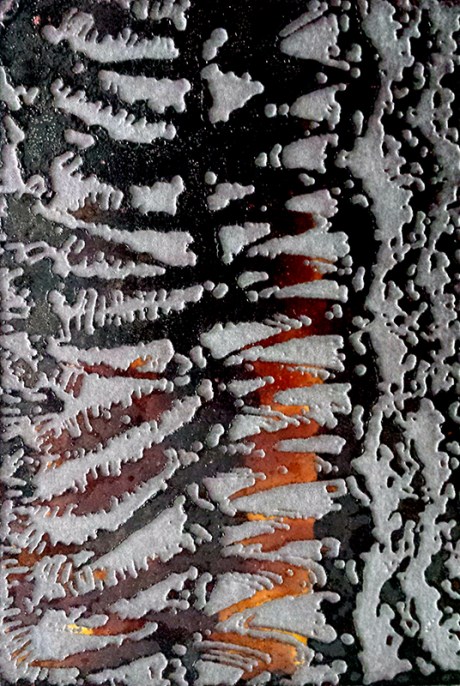
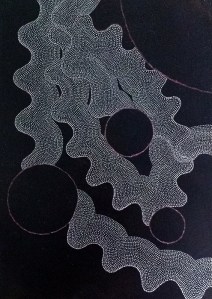
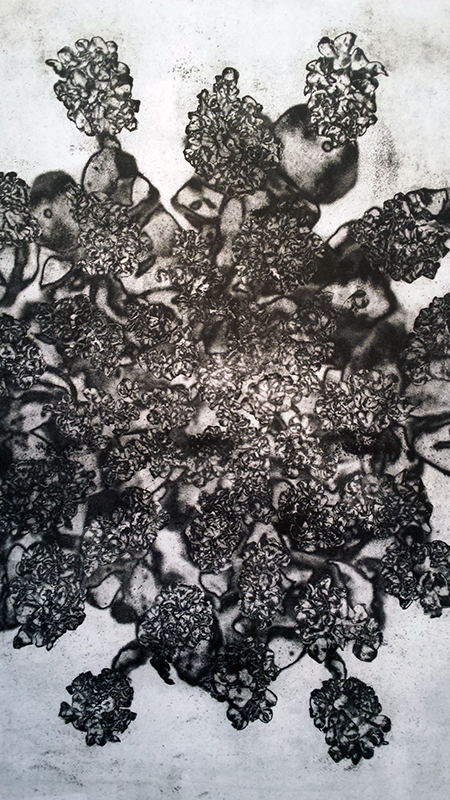
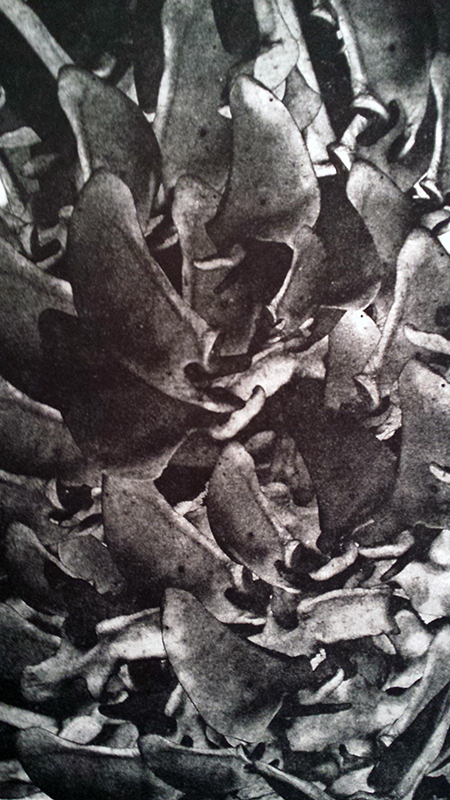
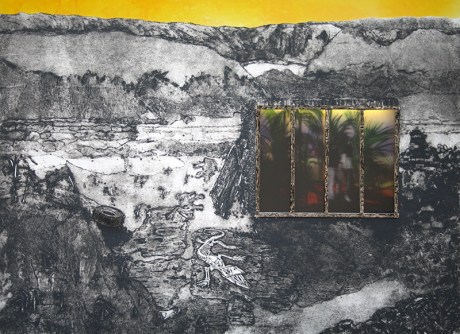
Relationships. The discovery of gravitational waves was the inspiration for some recent etchings. Trying the same image in softground on steel and hardground on zinc.

As I understand it gravity is the result of a relationship between the bending of space time and mass. The recording of these waves pulsing for the briefest flash of time when  two black holes collided and merged into one has excited scientists. This merging of two black holes was such a massive event that it caused ripples in the fabric of space time to spread out across the universe. 1604 two black holes

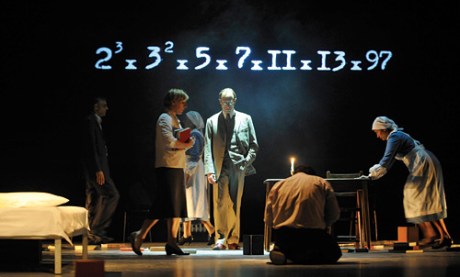
I was first introduced to the idea of beauty in mathematics and the extraordinary collaboration  of Cambridge professor G.H. Hardy with Srinivasa Ramanujan, a self-taught mathematician from India by the Complicite production A Disappearing Number.

1603 a disappearing number

Raymond Flood’s Gresham College lecture on the value of collaboration between these mathematicians along with J.E. Littlewood and Mary Cartwright gave further insight to their relationship and the advances they made in mathematical analysis and number theory. What interested me was Littlewood’s summation of four distinguishable phases  in creative work: preparation, incubation, illumination and verification or working out. Preparation is the conscious research and the problem should be kept in mind at all times. Incubation is the work of the subconscious and the waiting time can be several years. Illumination can happen in a fraction of a second; it is the emergence of the creative idea into the conscious mind and implies a mysterious rapport between the subconscious and the conscious. The verification is then just a matter of realising the idea, the hard work has been done. I feel this.

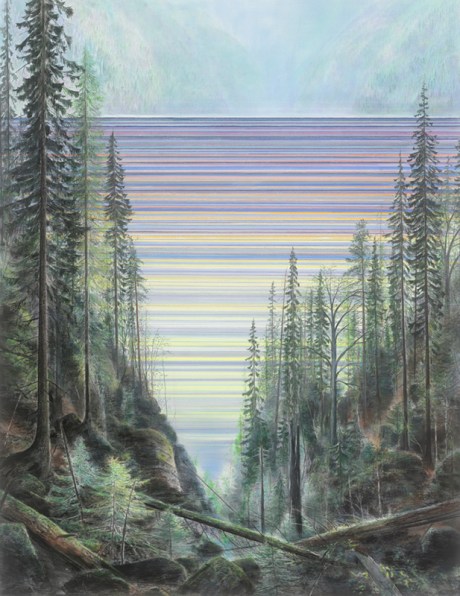
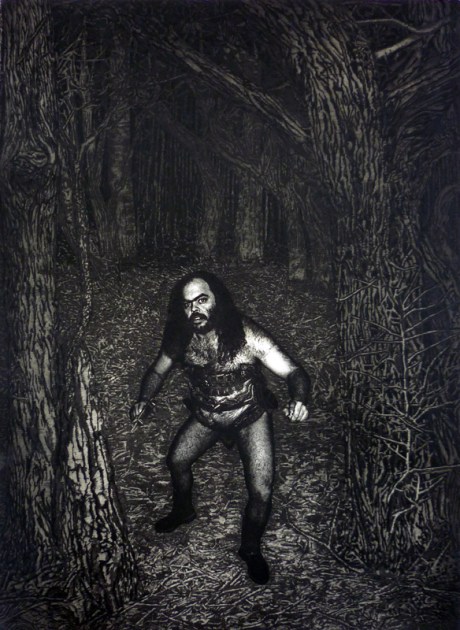
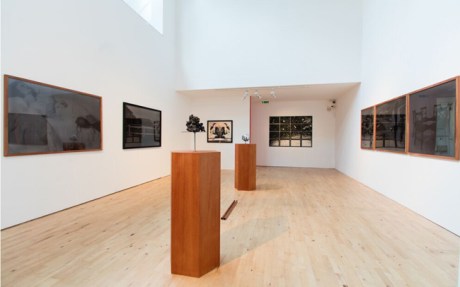
My etching ‘Forest of Eden’ was selected for ‘Blind Plural’ at Hundred Years Gallery. The exhibition ‘comments on or plays with issues related to the nature of hostility, its forms and representation…’

1409 Forest of Eden

Susan Eyre Forest of Eden

In history the wild man’s characteristics reflect topical fears and aspirations, violating the taboos of civilization and symbolizing the repressed desires of society; they oscillate between horror and fantasy. I wondered who a contemporary wild man might be. Someone on the edges of society, both fascinating and repulsive. I had come across images on the internet of this person who posts photos of himself posing almost naked with guns strapped to his body. An internet meme shared with equal disgust and fascination – I placed him back in the forest of all our origins.

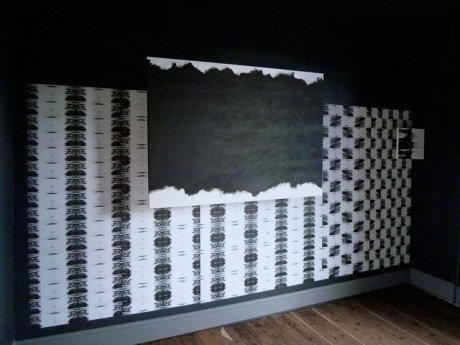
Jane Boyer raised some interesting questions about self awareness with her solo show A project space called I at ARTHOUSE1. An exhibition of the I-artist curated by the I-curator.

1604 Jane Boyer enigma

Jane Boyer enigma wall

My own mind struggles. How can I separate myself as artist and myself as curator with regards to my own work. 1604 Jane Boyer Minerva

Surely I want the same things in both those roles. I start by thinking I can see how this works if I separate myself as chef and artist. Looking at different roles I play and how I react to people from these different perspectives. A bit like cross curriculum activities, but within myself. I think I’m going to need a chat with Jane about this sometime.


Alongside this I have been reading Seven Brief Lessons on Physics by Carlo Rovelli whose final lesson Ourselves tells me that I am a process which adheres to the laws of nature. There is not an ‘I’ and ‘the neurons in my brain’. They are the same thing. My unique sense of self is the rich culmination of billions of interactions and processes within my brain that reflect my personal history of experience. So with this in mind the works in the solo show are the markers, the process made manifest and as Jane presents; an autobiographical curation of a self.

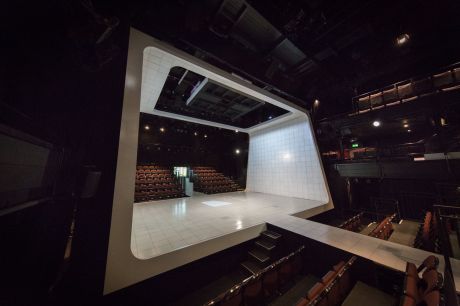
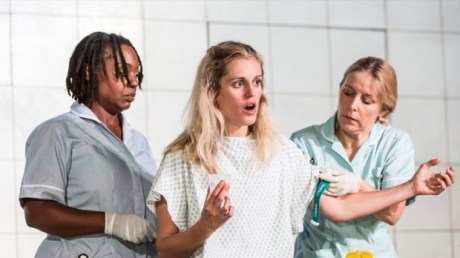
Denise Gough playing Emma in the play People, Places and Things makes a plaintive cry to the world at large – why is it that she can’t cope with reality, why is it that she is overwhelmed by the unjust nature of the world and must resort to mind altering chemicals as a means of escape when everyone else seems just fine with it. The audience joins her in a spiral of despair.  Denise Gough’s performance is extraordinary and totally captivating, how she can put herself through such emotion every night is another question this play raises about how we separate ourselves from reality. The clinical rehab set protrudes into the audience arena like a neuron connection within our collective brain.1601 People Places and ThingsThe play is a visceral interrogation of self and relationships. The cause and effect of actions between mind and body. Self destruction and self renewal.

1601 Denise Gough

People, Places and Things

When Emma finally emerges from months of tortuous self analysis to face the world alone she is advised that to maintain her freedom from addiction she must avoid anything that might trigger associations with her past life causing her to relapse – she must avoid people, places and things.

1604 Govt collection

As part of London Open House weekend I visited the Government Art collection on a guided tour and behind-the-scenes look at how this major collection of British art operates. There was a lot of security and in most areas no photography. Our Government (us then) owns a collection of around 13,000 works of art mainly by British artists from the sixteenth century to the present day.  About 75 per cent of the collection is on display in British Government buildings in the UK and in Embassies and Residences around the world. The idea is to help promote British art. There is a meagre budget to purchase new work with most of the funding going to conservation, transportation and installation. A nice perk of being a civil servant is to have the choice of some great works for your office, for the rest of us they do offer a lunchtime tour of a small viewing gallery and the racks to see what’s been left in storage.

The raw space of the Bargehouse on the South Bank was a great setting for the meditative pieces of Kate Fahey. The degraded building echoing the degraded web images she appropriates into her work.

1601 Kate Fahey

Kate Fahey

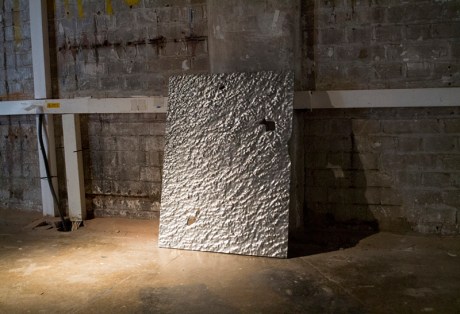
Pulling the digital from the screen into the world of matter, she reverses the process of the viewers visual overload of images.

1604 Kate Fahey Possible-Object

Kate Fahey Possible Object

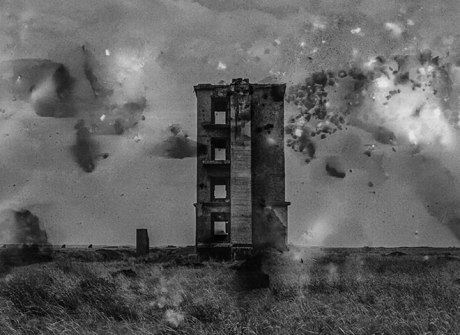
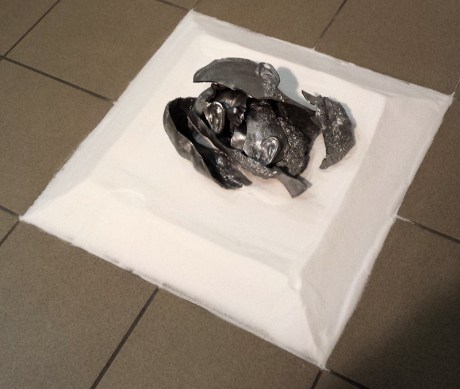
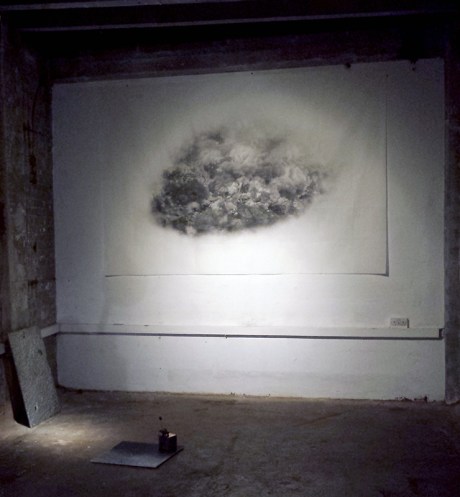
A hundred explosion images become one, one grainy image is cast solid in aluminium and a slow beat metronome stills us.

1604 Kate Fahey Counting-Uncounting

Kate Fahey counting/uncounting

We are in a war zone, in slow motion.

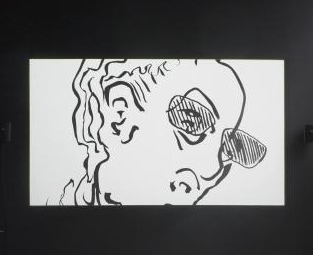
Bedwr Williams animated line drawings that made up the film Writ Stink at Limoncello showed the deconstruction of a man obsessed with hiding his secrets – turning on fellow creatures, suspicious of everyone he meets – maybe with good reason – life becomes a battle to preserve, to hide away and disengage.

1601 Bedr Williams

Surreal, comedic and tragic we are left wondering about the power of knowledge.


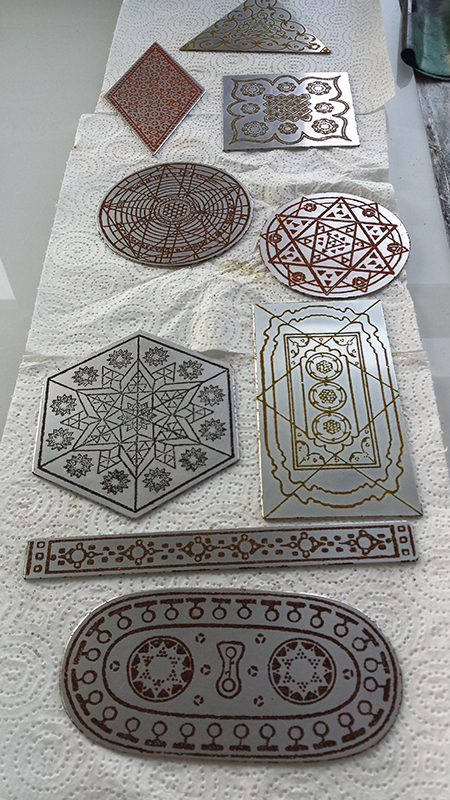
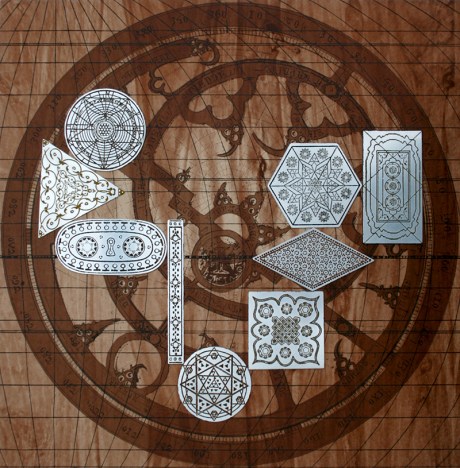
As part of The Matter of Objects; Medieval and Renaissance Materiality in Contemporary Conversation project initiated by Queen Mary’s University  I have been paired with a research historian who has provided me with an image of an object that I will then respond to by making a piece of work.

2006AN0914_2500.jpg

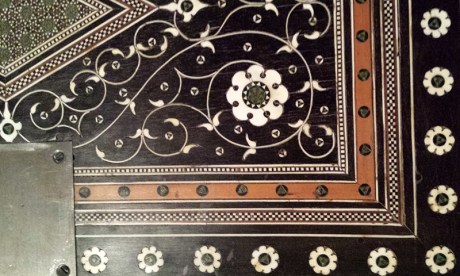
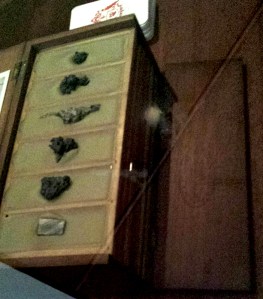
The object I have been given is a 16th century fall-front cabinet probably made in India for a Portuguese merchant. I wanted to participate in this project because  I am interested in the physical matter of our surroundings and objects and also more intangible things such as aura of place and agency of object. I thought the period would also be interesting as a time when science and religion clashed as being the source of truth.

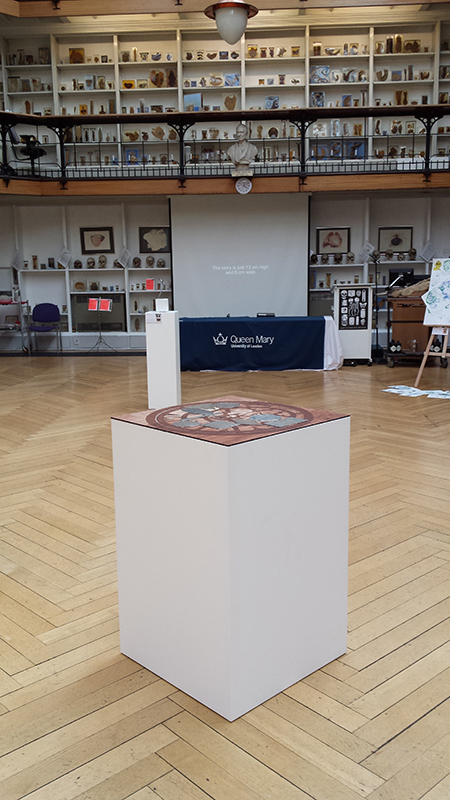
The project aims to bring together humanities researchers, artists and creative practitioners in discussions around these objects, their historical narratives, and their relevance to our world today. There is going to be an exhibition and launch event where artists and researchers will come together to discuss their processes of deconstruction, interpretation and creation.

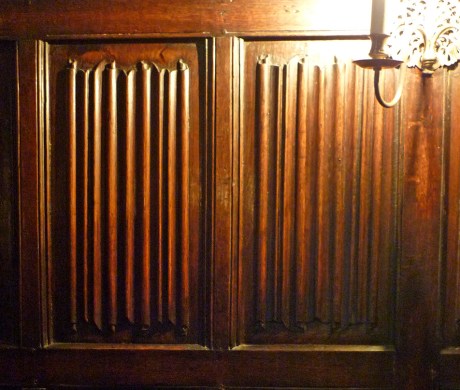
It feels a bit like trying to discover an identity beginning just via the purely visual information from a digital image. I had no idea what a fall fronted cabinet would be so before I opened the image I had in my mind something much larger with perhaps some kind of carving that would reflect waterfalls or falling folds of fabric. Recent visits to Sutton House influencing me here with the linenfold wood panels perhaps.

1604 Linen fold panel.jpg

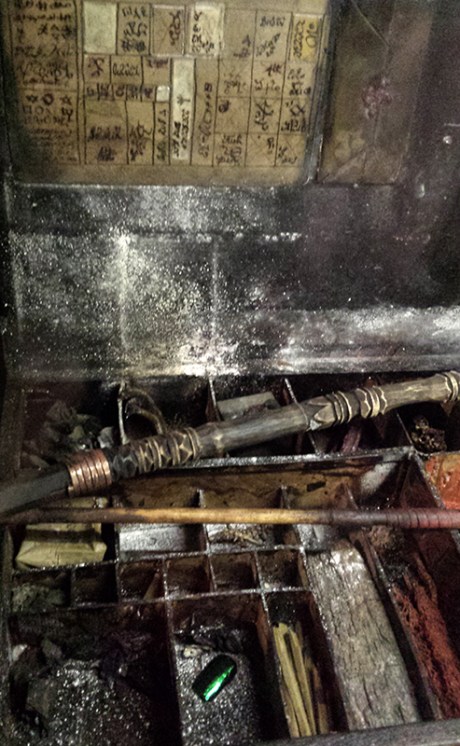
It was a lovely surprise to open the image and see something so intricate, ornate and compact. I am also influenced in my response by recent exposure to the Elizabethan polymath John Dee and his alchemical interests so all the little secret drawers made me think of what someone like him might have kept locked away.

1604 Last Tuesday Society.jpg

The patterns are complex with lots of triangles and geometric shapes mixed with other more organic patterns from nature. The stars and almost elliptical shapes seem to relate the heavens with the flower like patterns of earth.

1604 object drawer

It is an intriguing object  with its secret drawers hidden behind a front panel – it would involve a small ritual to lock away and then open up and lay out the front ‘carpet’ to retrieve the precious items from within.

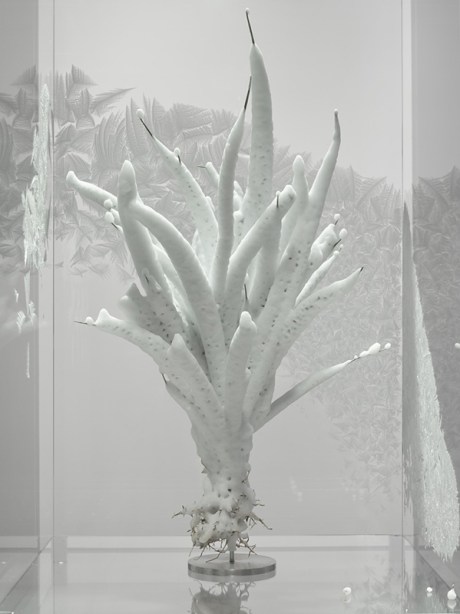
I came across what may be considered another fall front cabinet in the form of a shrine containing samples of metal placed in beeswax, its provenance even more mysterious.

1604 Stine Nielsen Ljungdalh Shrine

1604 The-Hunters-of-the-Invisble-installation

Charlotte Bergson: The Hunters of the Invisible


Losing sense of what or who is real Charlotte Bergson: The Hunters of the Invisible curated by Stine Nielsen Ljungdahl at Stanley Picker Gallery presents a carefully crafted mythology that has such a coherence of intent it is hard to determine fact from fiction.

1604 Stine Nielsen Ljungdalh -Charlotte Bergson

Charlotte Bergson: The Hunters of the Invisible


The hexagon is a recurrent motif as is the duality of twins.

Photographs and artefacts are presented as documentation accompanied by an in depth publication The Zone – A Journey Towards the Centre which further bolsters the world of  Charlotte Bergson’s research into The Hunting Society. We are drawn into an illusory world where borders  blur and it is not clear whose identity is real, be it artist, archivist, or a society that once held secrets to an alternative origin of the universe, where alchemy and ritual were practised as heady truths.

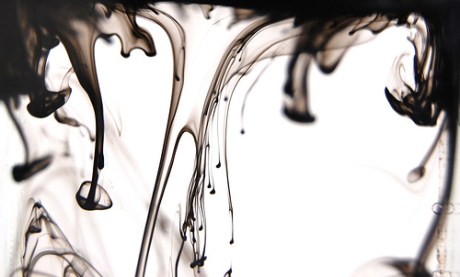
This is about origins.

1604 ink in water

Trying to work out what is real. Sam Burford’s paper Searching for Traces of the Indexical within Synthetically Rendered Imagery presented at the Shadow Without Object symposium considers ways to understand the relationship in a simulated image between its genesis and its being made visible. The rendering equation introduced into computer graphics in 1986 created a breakthrough by enabling illumination in an image to be made by using the Monte Carlo method of geometric probability borrowed from particle physics theory.

Monte Carlo simulation is a statistical approach which is concerned with experiments employing random numbers. The light playing around generated objects in the image could be made to behave more like real light in its random scattering. These images still did not look real enough but everything changed in 2004 with the release of the Maxwell Render product which claims to render the perfect image. This new product could apply randomness in rendering to an image through an algorithm to add some noise and create what looks like in effect a low res image – this actually appeared more real.

1604 joep swagemakers

Photo realistic rendered images are almost impossible to identify as simulated and so to claim credit the author will often attach a proof rendering image. A bit like a birth certificate.

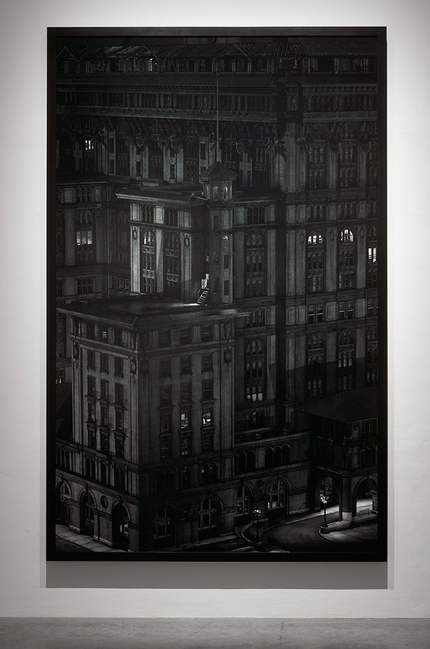
Stan Douglas in The Secret Agent at Victoria Miro uses digital rendering to create a series of large scale urban landscapes.

1603 Stan Douglas The Second Hotel Vancouver

Stan Douglas The Second Hotel Vancouver

Unsettling in their clarity of detail and targeted lighting they create a confusion, a bit like having a word on the tip of your tongue, they are almost something. Almost a photograph of something almost like a film set; too sharp to be a memory. Borrowing from film noir tropes we are segued into a similarly stereotypical digital underworld. The six screen feature length installation The Secret Agent operates in the same world of noir subterfuge but instead of digital fakery it is the over dramatic acting, simplistic plot line and raw characterisation where we must suspend our disbelief.

1603 Stan Dougls Secret Agent

Stan Douglas The Secret Agent (film still)

Graham Fagan explores the constructed nature of history through the stories myths and fictions that build a contemporary identity.

1601 Venice Graham Fagan

Graham Fagan

Pulling at threads of cultural difference but tying them together in a personal experience to engage emotion that doesn’t shy away from acknowledging conflict and injustice.

1601 Venice Scotland Graham Fagan (1)

Graham Fagan

Drawn through the faded splendour of Palazzo Fontana in Venice by the haunting mix of sea shanty and classical string arrangement of The Slaves Lament we are immersed in a melancholic beauty.  The words attributed to Robert Burns convey the debilitating heartache of being wrenched from home for cold cruelty.

Torn from that lovely shore, and must never see it more; And Alas! I am weary, weary O.

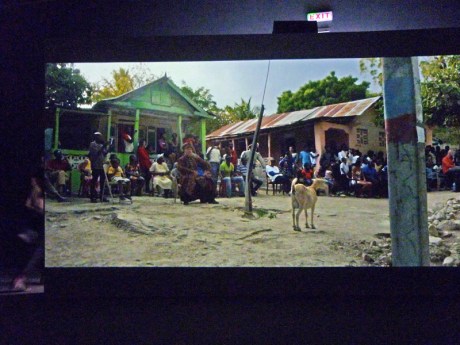
Colonialism is also referenced by C.T. Jasper and Joanna Malinowska in their video production ‘Halka/Haiti 18 48’05″N 72 23’01″w’ taking opera to the tropics.

1601 Venice Poland

C.T. Jasper and Joanna Malinowska Halka/Haiti 18 48’05″N 72 23’01″W

Inspired by Werner Herzog’s character Fitzcarraldo in the 1982 film of that name the artists expose the absurdities and examine the agenda of one culture imposing itself on another. In Herzog’s film, after many great struggles to achieve his goal, European Fitzcarraldo manages to drag a ship over the impeding mountains so he can export rubber, make his fortune and build an opera house in the Amazon basin. He only succeeds in this physical challenge with the help of the local natives. His undoing is in ignoring local culture. When his crew falls asleep, the native chief cuts the rope securing the ship and it floats away down the river. The chief’s actions are to appease the river gods who would be angry to see their waters circumnavigated and their power not respected.

Where do we begin to unravel our origins?  The location of the artists film found at the coordinates of the title ‘Halka/Haiti 18 48’05″N 72 23’01″w’ reflects the complexity and amorphous nature of national identity. It is a Haitian village inhabited by the descendants of Polish soldiers who fought for Haitian independence. Originally sent to put down the slave rebellion in 1802 these soldiers found themselves sympathetic to a local culture under oppression much as had happened in their own homeland and so joined forces with the locals in the Haitian revolution and subsequently made their home here.

Ivan Grubanov’s installation in the Serbian Pavilion United Dead Nations provokes questions about how national identity is created and the symbolism of the flag in that process. In scattered piles across the floor are the discarded flags of states that are no longer in existence since 1895 when the Venice Biennale began.

1601 Serbia

Ivan Grubanov United Dead Nations

The list is an obituary of creation, rule and disappearance. Austro-Hungarian Empire (1867-1918),the Ottoman Empire (1299- 1922), Gran Columbia (1819-1930), Tibet (1913-1951), the United Arab Republic (1958- 1971), South Vietnam (1955-1975), the German Democratic Republic (1949-1990), the USSR (1922-1991), Czechoslovakia (1918-1992), and Yugoslavia (1918-2003).

Romanian artist Adrian Ghenie paints emotional images exploring notions of survival and the fictions that define nations by questioning the truth of a collective memory.

1601 Venice Romania

Adrian Ghenie

Far And Few [Between] curated by RCA printmaking alumni Lisa Chang Lee at No Format gallery explores identity from the perspective of Chinese expats now living in the UK.

1603 Few and Far BetweenObserving the projection of the self creates a self consciousness that, like observing the path of an electron, is surely impossible to do without interfering with its trajectory.

1603 Few and Far Between Lisa Chang Lee

Lisa Chang Lee Habitat-1


1603 Few and Far Between Halli Sun

Haili Sun Curled Fugue

To question consciousness the works have a strong material presence linking identity to the land and the body and the interactions with the environment that build us.

1603 Few and Far Between Le Guo

Le Guo Koan

How we forge our path and face our own nature is a universal theme. The Mark Bruce Company tackled this through dance in a reworked telling of The Odyssey.

1603 Mark Bruce comapny.png

Mark Bruce Company The Odyssey

Like Pandora’s box it was an explosion of chaos as passions and demons were unleashed on stage leading and tormenting the wayward King on his epic journey, crossing lands beset with monsters and temptations to return home to face a Queen savage from years of despair.  In a vortex of kitsch high drama and inventive to the point of surrealism the story may have been obscured but the message that mortality is beset by challenges, and we must be cautious who we trust – least of all ourselves, remained.

Szilard Cseke’s installation Sustainable Identities is a sterile plastic environment.

1601 Venice Hungary (2)

Szilard Cseke Sustainable Identities

Large white balls move silently along plastic tunnels above our heads on predetermined pathways.

1601 Venice Hungary (3)

Szilard Cseke Sustainable Identities

Perhaps this is a warning of what our identity might become if we never leave the path to take that epic journey.  Or worse, we have our identity taken from us.

1603 the prisoner.jpg

Patrick McGoohan in The Prisoner 1967

Back to etching. Have completed an intro/induction at Thames Barrier Print Studio so am now good to go with new work. 1603 aluminium plateTried aluminium in saline sulphate which gives a really deep etch. Used stop out and painting into hot hard ground. Was good to play around with new materials and get some tips from resident expert etcher Nick Richards. 1603 stop out

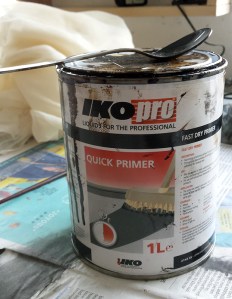
This primer from Wilkinsons is cheap and works well as a stop out solution. The etchings I had done before were all on steel with soft ground, I love the deep rich tones from steel but am trying a new piece of work on zinc with hard ground with should give me a more precise line.

1603 etching plate


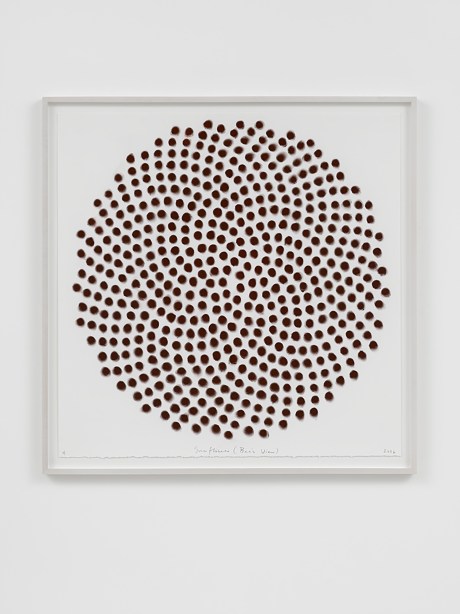
This work is inspired by the idea of gravitational waves and grains of space which is one of the lessons in Carlo Rovelli’s book Seven Brief Lessons on Physics. It’s taking a while to cover the plate in the dots. I’m not sure when it’s all done if the wave pattern will disappear.


Michael Doser’s keynote paper Seeing Antimatter Disappear at the symposium Shadow Without Object  gave an insight into how the study of gravity acting on antimatter may help explain why it has disappeared. As a research physicist at CERN he is engaged is trying to discover why there is not the same amount of antimatter as matter in the universe and why what little there is remains clumped at the centre of our milky way galaxy. I asked him if antimatter was considered part of the 5% of the visible world of matter and I think he said that it was as it interacts with photons and fundamental forces.

1603 Michael Doser

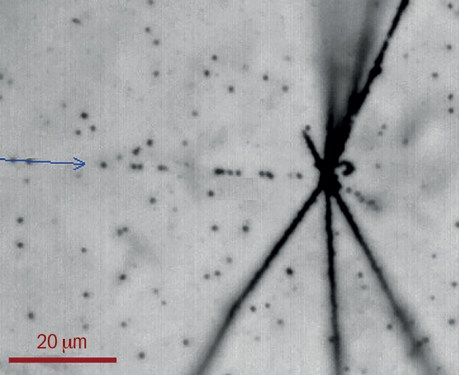
Although gravity is the weakest of the fundamental forces its impact on the parabolic flight of anti-hydrogen atoms can be witnessed by using emulsion on a photographic plate which records the particle collision. Using photographic emulsion gives a far more accurate and sensitive result than any digital recording device could.

1603 anti proton imaging.jpg

He said some confounding things – that antimatter emits light exactly like normal matter so you can photograph it but you only see it when it annihilates. So we don’t actually see the antiprotons just the trace of the aftermath of their disappearance left in the photo emulsion on the plate. Working at quantum scales the collision of the proton into the emulsion is digitally scanned and a 3d image stacked up to reveal a starburst. The starburst is the locus of disappearance.

Cosmic rays coming from remote stars hit our atmosphere and produce showers of particles that plough through our bodies – these can be seen using cloud chambers which are detectors that track the particles. The unseen activity of the universe made visible. This is something I am hoping to see when we visit the underground laboratories at Boulby.

1603 cloud chamber particles.jpg

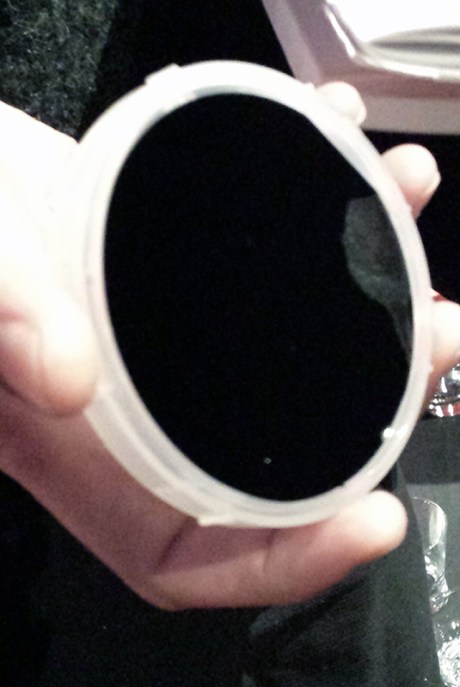
At the talk Are We Darkened by the Light? at Tate Modern architect Asif Khan had brought along a sample of the darkest material on earth – a Vertically Aligned Nano Tube Array. This material was made as a reference for noise images which aim to establish what black should be when looking at a camera chip to remove interference. This material is so black because it absorbs all the photons of light rather than bouncing some back to our eyes.

1512 darkest matter

I wonder if all the photons stay in this material when they are absorbed. Does it fill up with photons?  Does it get hot in there?  Planck’s constant states every hot object emits light, how does that fit in?

Also at Tate Modern was In/Visibility a work by Vinita Khanna that uses a polarising filter to conceal and reveal the colours in a copy of Gustav Klimt’s painting Portrait of Frau Adele Bloch Bauer.

1602  InVisibility

Vinita Khanna In/Visibility

Choosing an image that we are all familiar with, yet most of us have never seen the original, Vinita Khanna comments on the intangible nature of vision demonstrating the invisible made visible. Humans treat their vision as absolute, when in fact the bulk of our perceived reality is generated by our brains.

1603 Clare Muireann Murphy

Clare Muireann Murphy is a brilliant story teller. She was performing her new work Universe at The Crick Crack Club event upstairs at Soho Theatre. Colliding the science of the big bang (cracking of the cosmic egg) with mythical tales of a goddess tumbling from the skies into a watery world to be rescued by a fearless turtle who then gets turned into a magical lyre that plays the music of the cosmos passing from god to mortal. Clare creates a place of wonder and insight where time stretches and a fissure opens that builds a dream bridge between many worlds…

1601 Repetition Variation

Julian Page presented a group show at Clerkenwell Gallery with a strong sense of the material world. Layers, grids, clusters, networks and stacks – great pictures here:  Repetition Variation.  Having watched the steady growth of Stack while sharing a studio space with Amy Gear at the RCA I have a great affection for this piece.

Stack is an encounter with mass.

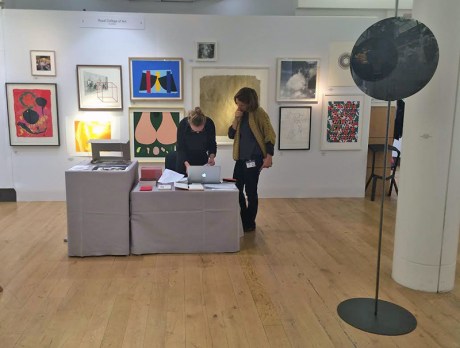
Repetition celebrates editions in the print fest Multiplied at Christies. A jostle of galleries showing their wares. The RCA gets a stand showcasing alumni with recent graduates. I had one sculpture from everydaymatters showing. It looks obvious in this picture but it was surprising how people just didn’t see it. It was about the only work not on the wall and when the room was packed it disappeared in the crowd. Invisible matter.1602 RCA  mulltipliedI was pleased to have two variable editions of Paradise Road sw4 shown by Dark Matter Studio in a grouping with work by Zoe Dorelli, Mary Yacoob, Marianne Walker and Patrick Jackson – The Inner City Pilgrims. A new collaborative project I am involved with whose aim is to re-mystify the city.

1602 Dark Matter at Multiplied

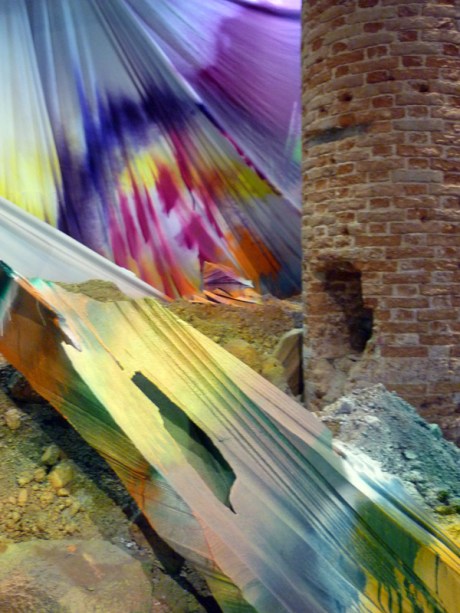
Katharina Grosse has been interrogating space in relation to her paintings such as  ‘Untitled Trumpet’ which have expanded to the point that you can walk through them.

1601 Venice Katherina Grosse  (2)

Katharina Grosse Untitled  (Trumpet)

From the experience of having a painting transferred from canvas to silk she was inspired by the folds in the fabric. Folds in space.

1601 Venice Katherina Grosse  (1)

Katharina Grosse Untitled (Trumpet)

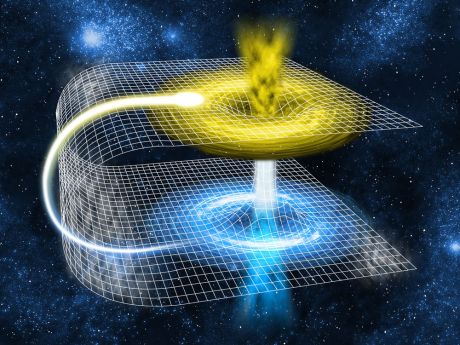
A fold in space could theoretically, allow a short cut from one place to another.

1601 wormholeA wormhole has two mouths and a throat. For travel to be possible, wormholes would need to be full of exotic matter, that is to say a non-baryonic matter like dark matter i.e. not made of the stuff we are made of. It is as yet another unknown.

How we move through space and interact with the architecture that surrounds us was explored in Mimesis  at Westminster Reference Library.

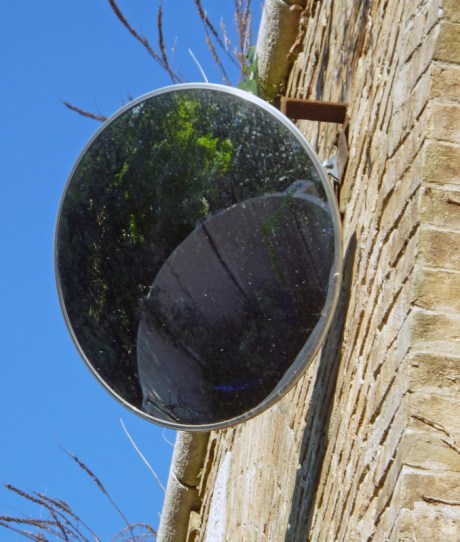
“Mimesis produces mere ‘phantoms’, not real things. It is at once dependent and deluded, just as a mirror is empty and inessential without something to reflect.” – Matthew Potolsky

1602 Amelia Critchlow

Amelia Critchlow

Amelia Critchlow and Evy Jokhova have been considering how image and architectural form influence the way we read our world; how cognition can cloud and clarify and how association can attack an image or experience, or stand apart, apparently neutral and transparent.

1602 Evy Johkova 3

Evy Jokhova

Mimesis created an unstable environment of wobbly furniture, erased images and material associations where the chalky surface of architectural columns turn out to be constructed from Brie.

This is the playful mimic undermining the authority of grand architecture and opening a space to question our surroundings by subverting expectations of form.

I was introduced to the beautiful work of Ben Cove at Multiplied and then visited his exhibition Modern Language at Peter Von Kant Gallery.

Architectural devices are made symbols. Flat surfaces deceive the eye with shadow and form. Clean, sharp colours zing against black and white images drawing the eye backward and forward shifting us in space and in time. It’s a dynamic experience. Having read a lot lately about how there is no empty space, there is no void, I can feel here that all space is packed with information and all is connected through space time.

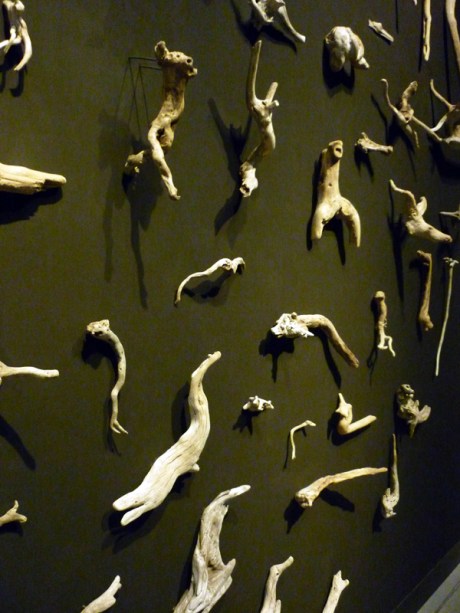
For her archaeological installation Wrong Way Time in the Australian Pavilion at the Venice Biennale Fiona Hall filled the room with an ecology of objects that tell the story of civilization from primal beliefs in magic and animism through capitalism, global economic collapse and climate change leaving us with the challenge of facing the end of anthropocentrism.

1601 Venice Australia Fiona Hall (2)

Fiona Hall

She trusts in our sense of wonder and imagination that can see life forms in sculpted drift wood to see a world not of exploitation but of symbiosis.

1601 Venice Australia Fiona Hall (3)

Fiona Hall

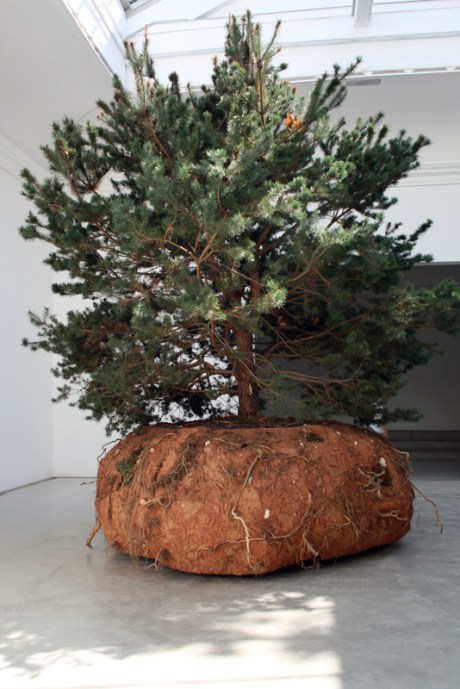
In the French Pavilion Celeste Boursier-Mougenot’s work also activated primal beliefs that animals, plants, and inanimate objects possess a spiritual essence. In transHUmUs an arboreal dance reintroduces us to a latent anthropomorphism. The trees glide around directed by their own metabolism with their truncated roots exposed on their islands of dirt, like isolated protesters quietly demonstrating.

1601 Venice France Celeste Boursier-Mougenot (2).jpg

Celeste Boursier-Mougenot transHUmUS

In the beginning…the word became flesh. The vertical-transcendent dimension of the Logos – the word of God from above and the horizontal-immanent dimension of the flesh below were the axes of research put forward by the Holy See as participant in the Venice Biennale 2105.  Elpida Hadzi-Vasileva created ‘Haruspex’ in this context.

1602 Venice Elpida Hadzi-Vasileva

Elpida Hadzi-Vasileva Haruspex

Using the raw flesh of pig’s caul, sheep’s intestine and cow’s stomach she weaves a canopy, an enclosure, a net, a trap, a sanctuary. It’s meaning oscillates as does the beauty and horror of its materiality. We must read the omens by inspecting the entrails of sacrificial animals.

Pamela Rosenkranz questions what it means to be human in a digital age. The anthropocentric bias of humanism is challenged when subject and object are impossible to separate. Our physical and psychic being is undergoing a transformation by the new materials that we wear, inject, subsume.

1601 Switzerland Pamela Rosenkranz (1)

Pamela Rosenkranz Simulation

The glowing wet body of synthetic liquid designed to replicate a particular skin colour floods the Swiss Pavilion with a sickly sweetness that has a back flavour of the murder victim’s chemical bath.


Past time is finite, future time is infinite –  Kathleen Herbert’s exhibition at Danielle Arnaud explored the connection between a lost landscape and personal identity, place and memory, the natural and the manmade. Her video A History Of The Receding Horizon is a poignant narrative of a land stripped of people, homes, gardens and woodland to allow for the municipal construction of the Kielder reservoir.

1602 Kathleen Herbert

Kathleen Herbert – still from A History Of A Receding Horizon

How do we sense time?  In her film we are reminded of the journey light must make to reach us from the farthest stars. Kielder Observatory is here, looking out into the cosmos. We are then taken underground into the antiseptic tunnels within the walls of the damn. Scientific endeavour. The demands of an industry that also vanished leaving the flooded valley to reinvent itself as a leisure resort. The heart ripped out and replaced with a mechanical version.

1602 Kathleen Herbert (1)

Kathleen Herbert – Past Time Is Finite, Future Time Is Infinite


1602 Kathleen Herbert 2

Kathleen Herbert Time Creates Great Distances in Life

Katie Paterson looked at tracing the history of life on earth through its fossils.

1512 bead planet

Katy Paterson Fossil Necklace

Light gives life. Rocks hold a record of life and its absence impacted by times of darkness.

1512 fossil necklace

Katy Paterson – Fossil Necklace

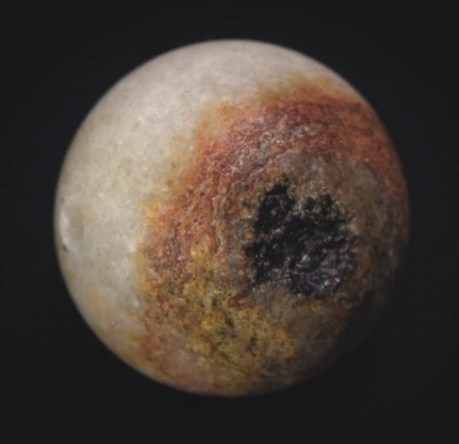
Carving beads from different strata the necklace she threads is a manifestation of deep time and ancient secrets, each bead a tiny world echoing untold planets of the universe and their unique geologies.

1512 bead planet 2

Katy Paterson – Fossil Necklace

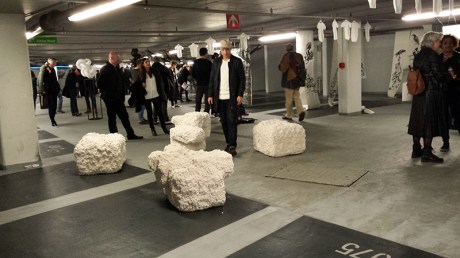
Beneath the ground – Silent Movies was an exhibition of purely monochromatic work at Q Park, an underground car park. The low oppressive ceilings of this vast space added to the strangeness of this nether world emptied of colour.

1602 Silent Movies

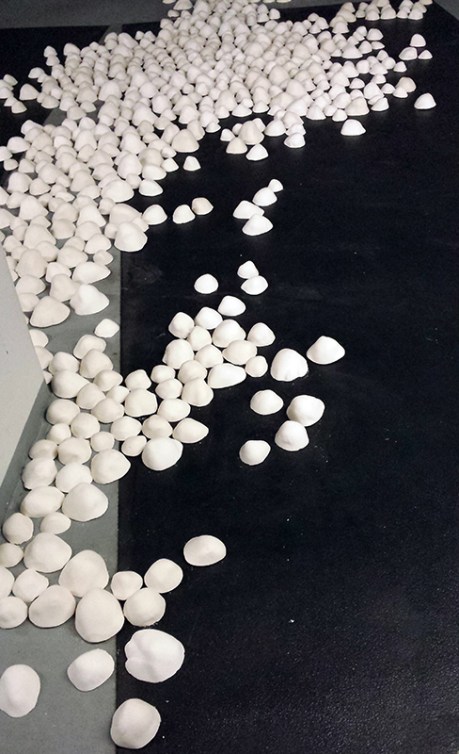
Cathy Gale and Carol Wyss were exhibiting their installation Casting Couch. These artists have been casting the landscapes of their bodies.

1602 Silent Movies 2

Cathy Gale and Carol Wyss Casting Couch


The death mask seeks to preserve the memory of a face. These little hummocks are casts of elbows. A part of our own body like the face that we need a mirror to view.

Jananne Al-Ani’s paper View from Above: Latent Images in the Landscape expanded on her research into the Aesthetics of Disappearance. Speaking at the symposium Shadow without Object she asks how one can disappear a body? She told us the grimly poetic story of the The Butterfly Hunter. Margaret Cox, a forensic archaeologist reads the geophysical anomalies in the landscape to discover the hidden mass graves of genocide victims. Clouds of blue butterflies gathering in the Kosovo hills uncovered the sites of tragedy. The butterflies were attracted by an unusual and intense blossoming of Mugwurt which signified a change in the nutrient levels of the soil as the buried bodies decomposed and leached into the earth.

The landscape can work as an unexposed photographic plate. A trace, a latent image can be read and transformed into a site of information. Our understanding of conflict is often from an aerial perspective. The view from above is of depopulated space. We look down on abstracted and beautiful landscapes scarred with trenches and shell marks.

1602 Jananne al-ani shadow sites.jpg

Jananne Al-Ani Shadow Sites

From above we can pick out prehistoric dry stone structures, archaeological sites that are invisible at ground level. These are the traces of the people now absent. Jananne Al-Ani is looking at the bare landscape of the desert, where the past is slowly eroded away by the winds, in Sarah Sze’s The Last Garden the past is overgrown with vegetation. We are left to discover the interventions she has inserted amongst the tangle of undergrowth and abandoned architecture.

1601 Venice Sarah Sze  (1)

Sarah Sze The Last Garden

It is a treasure hunt of clues to a world of materiality and entropy where we can see  breakdown and decay but are also aware of new growth. The crack in the wall stuffed with images of the canal water about to burst through from the other side, the weight of the gently swaying rock are reminders of fundamental forces at play.

Hours, Years, Aeons; a site specific installation by Patrick Söderlund and Visa Suonpää known as IC-98 takes us into a dark space as though we are stepping off the edge of the world and looking back.

Abendland (I: The Vaults of Dreams; II: The Place That Was Promised) is a two-channel video with animation by Markus Lepsitö and a haunting soundtrack by  Max Savikangas. We see the slow death of a desolate gnarled tree set against the alien black skies of a world with no atmosphere. The film runs in a cycle and so the tree is reborn but this may be the part that is a dream.

Vincent J. F. Huang on behalf of small island nations at the mercy of rising sea levels presented Crossing the Tide.  A world of only sky and water.

1602 Venice Tuvalu.jpg

Vincent J. F. Huang Crossing the Tide


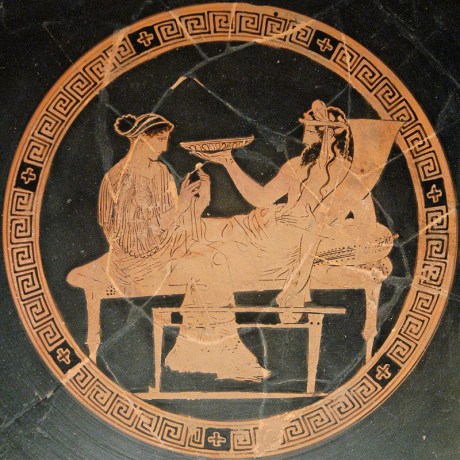
Regardless of how far the world has evolved the four primary elements are eternal. In many classical world views four basic elements are believed to constitute the essential components of which everything consists. Usually these classical elements Earth, Air, Fire and Water relate to ancient philosophical concepts which today are generally compared to the contemporary states of matter, with earth relating to the solid state, air to gaseous, fire to plasma and water to liquid. In Buddhist philosophy the four elements are not viewed as substances, but as categories of sensory experience.  –  Thai artist and printmaker Kamol Tassananchalee on the theories that underpin his work
1601 Thailand

Kamol Tassananchalee

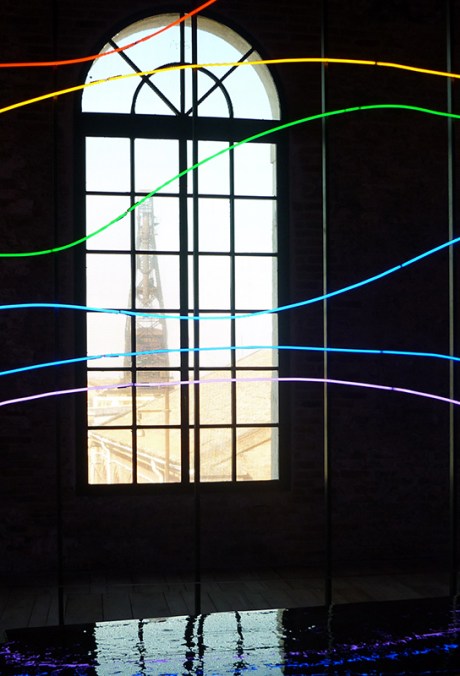
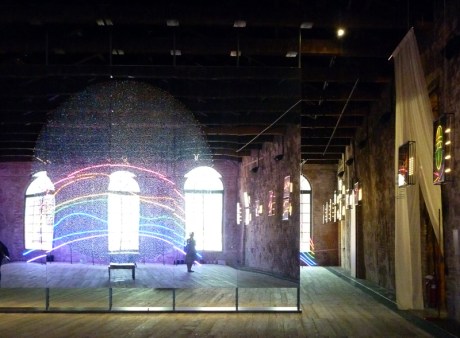
When did these primal elements first separate out from the turmoil of the big bang?  Sarkis gave us a neon rainbow as part of his installation Respiro.

1601 Venice Turkey Sarkis (4)

Sarkis Respiro

Reflected back at us through a constellation of finger prints on mirror

1601 Venice Sarkis (2)

Sarkis Respiro

and in the unsteady surface of water. Through his arrangement of objects, images and codes Sarkis wants to take us back in time to the very first rainbow.

1601 Venice Sarkis (1)

The flysheet of The Quantum Universe depicts a rainbow and the inside cover explains how particles of light from the sun (photons) approach a cloud of water droplets in the sky.

1512 The quantum UniverseSome pass through, while others enter the drops and reflect and refract back. Quantum theory is able to precisely calculate the probability that a photon, will reach your eye along with many others to create a rainbow on your retina – but (and this is the bit that I still don’t really get) – only by allowing each and every particle to explore the entire universe on their journey through the rain. My understanding after tackling the book is that this doesn’t really happen but in order to compute the probability the maths requires that it does. It’s a poetic thought that the photon hitting my eye has explored the entire universe before connecting with me.

1603 light.jpg


If my artist statement had to be condensed into human form it would be John Dee.  1602 John Dee 2

He studied astronomy but also astrology, mathematics and also alchemy, geometry and also the language of angels. Living at a time when science and religion clashed as the source of truth he was the most intriguing Elizabethan polymath, setting the mould for future  magicians his reputation waxed and waned like the celestial objects he observed. John Dee’s curiosity for how the world was put together fired his imagination and thirst for learning. In his lifetime he collected the largest library of books and manuscripts in Europe.

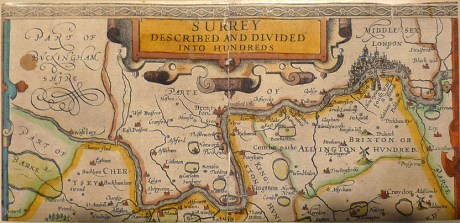
1602 John Dee surrey map

This great treasure was ransacked from his home in Mortlake while he was abroad and sections are now scattered across the world. The Royal College of Physicians were donated a substantial number of his books in 1680 and their exhibition Scholar, courtier, magician: the lost library of John Dee is a celebration of this collection, his life and contribution to so many spheres of knowledge. On display are his personal notebooks and other volumes and editions many with his annotations and diagrams in the margins.

These books are available for viewing at the college outside of the exhibition period so would be worth a trip back to see them in detail, unfortunately for me they are mostly in Latin but the illustrations would be amazing to look at more closely.

1602 John Dee monas hieroglyphica.jpg

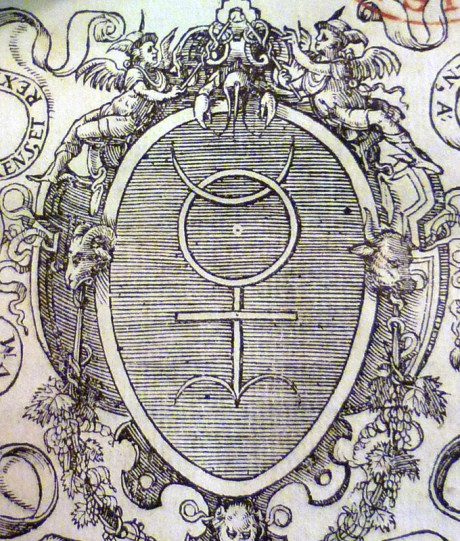
John Dee Monas Hieroglyphica

The symbol Monas Hieroglyphica  combines the moon, the sun, the elements and fire. It is also the title of his repository of knowledge on all things numerological, astronomical, cosmological, alchemical, magical and mystically spiritual written in coded language to protect his secrets.

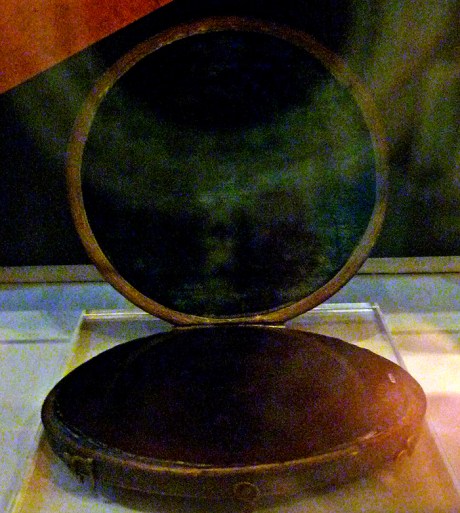
1602 John Dee Claude Glass

John Dee’s Claude Glass

John Dee used a medium or scryer to communicate with angels on his behalf and collected many magical objects to assist in divining the future and accessing the spirit world.

1602 John Dee crystal ball

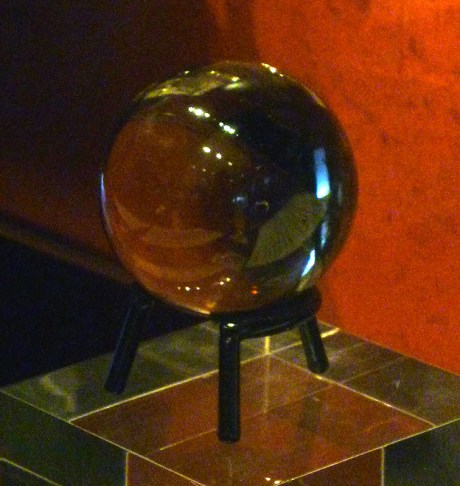
John Dee’s Crystal Ball

I was surprised how small his crystal ball was but it does have a deep smoky quality.

1602 John Dee gold disc

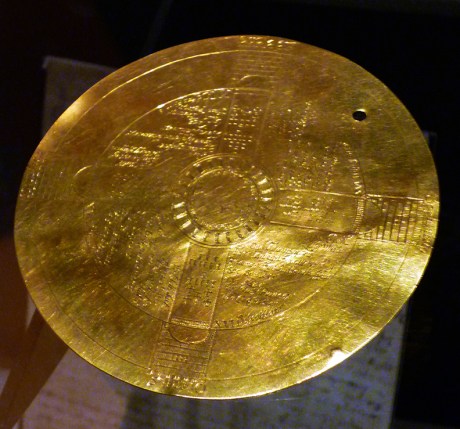
John Dee – Gold Magical Disc

The gold disc is engraved with a vision of four castles seen by his medium Edward Kelly  and the notations and scripts of an Enochain Code devised by John Dee as a system of communication with angels.

1602 John Dee 1

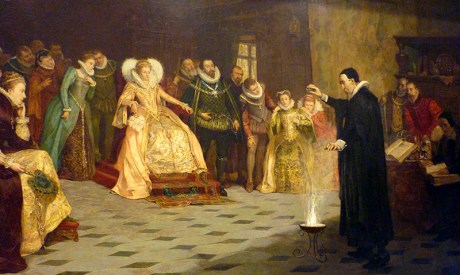
Painting by Henry Gillard Glindoni

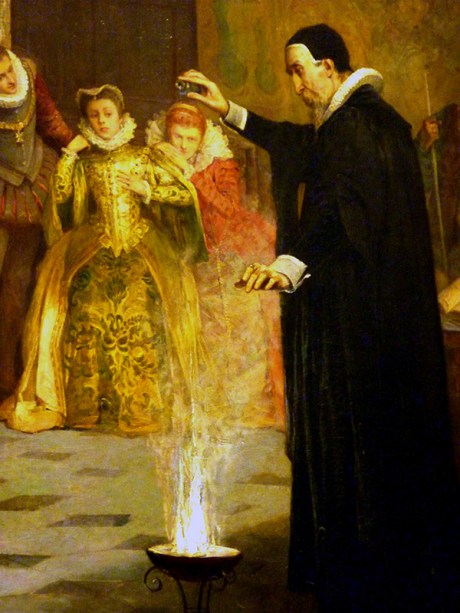
Even today John Dee surprises us  – an x-ray of a Victorian painting showing Dee in the court of Queen Elizabeth I reveals him to be performing within a circle of skulls which were painted over and hidden but are beginning to emerge as the chemical composition of the paint changes with time.

1602 john dee skulls 1

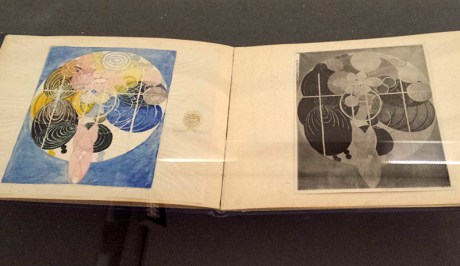
I leant about another medieval mystic and polymath from Professor Christopher Page at a lecture at St Sepulchre-Without -Newgate, Holborn – The Mystery of Women part of his series of discussions on Music, imagination and experience in the Medieval World. The remarkable abbess Hildegard of Bingen claimed to see visions and receive spiritual communications from an early age and that it was baptism in the Pentecostal tongues of fire which taught her the mysteries of the faith and enabled her to write her rapturous music and Latin verse. Education was denied to girls at this time as was much of civic and religious life so perhaps claiming divine intervention gave her authority to write, compose and involve herself in scientific research without condemnation.

1602 Hildegard_von_Bingen

Illumination from the Liber Scivias showing Hildegard receiving a vision


The Elmgreen and Dragset exhibition Self-Portraits at Victoria Miro was a sideways look at the proliferation of the selfie and the impossibility of capturing a persona. Looking for other ways to visualise a memory they looked for a trigger to an image in the mind.

1601 ElmGreen and Dragset

Choosing personally significant artworks they elevated the exhibition label to permanent tribute in marble – in memoriam, a gravestone.

Memories are left with other people. We just leave our bones. I visited Carol Wyss at The Montage where she had a show with fellow Slade graduate Tessa Holmes.

1601 Carol Wyss (2)

Carol Wyss

Carol’s deep and rich large etchings are flowers carefully constructed from human bones.

1601 Carol Wyss (1)

Carol Wyss

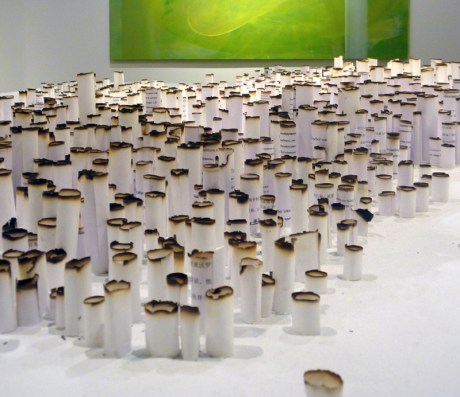
In the simple height differences of charred paper tubes in Past Future Qin Chong gives a blunt reminder that some of us burn out faster than others.

1601 Venice Qin Chong (1)

Qin Chong Past Future

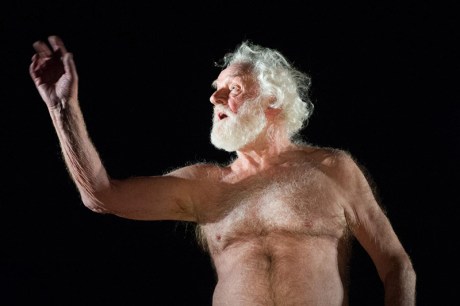
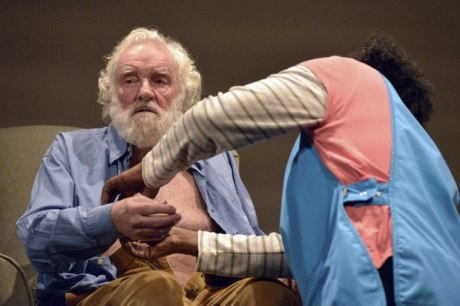
I unexpectedly found myself with a ticket to Here We Go a short play about death by Caryl Churchill at the National Theatre. Divided into three scenes it opens with a funeral wake and the staccato abbreviated and truncated conversations that pass amongst family and strangers  on such occasions. There were sharp one liners and at intervals each person turned to the audience to state their future time and means of death. We then move to a darkened stage and the recently deceased bare chested old man who is in a state of confusion as to his whereabouts, backtracking through his past beliefs to find a footing to explain his predicament.

1601 here we go 2

The play was insightful, funny and touching. It was also a brave production especially the last scene which proceeds in silence as a care worker methodically undresses and dresses our protagonist from pyjamas to day wear and back again as he painfully shuffles on his walker from bed to chair and chair to bed in the interminable routine that had become his life before death.

1601 here we go

He gazes helplessly out at the audience as the stage lights grow almost imperceptibly dimmer until blackness ensues.

1601 Susan Hiller 3

From our material remains to our spiritual engagement Susan Hiller’s exhibition at Lisson embraced the portrayal of the paranormal, the unconscious and subliminal desire for a world beyond logic. Entering a ritualised arena we witness successive examples of the psychic powers of children taken from popular films.

1601 Susan Hiller 4

Alchemical flasks hold the cremated ashes of paintings.

A stitched canvas makes me think of the construction of space, how we image it and how we collage it together from fragments of knowledge.

1601 Susan Hiller 5

Susan Hiller

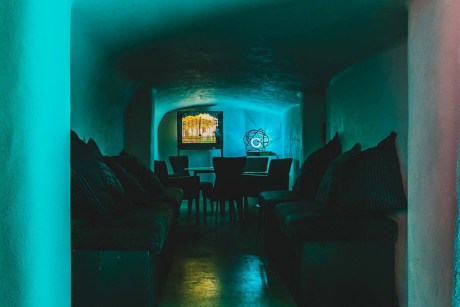
My lightbox Entrance was showing at the exhibition Signs That Say What You Want Them To Say at Lights of Soho selected by Robert Montgomery.

1602 entrance 2

It was a great setting for this work in the underground cavern bar. Contemplating the other side. A traffic warden considering the possibility of angels.

1601 Entrance

Susan Eyre Entrance

entrance n. 1. an opening allowing access. 2. an act of entering. 3. the right, means, or opportunity to enter.

entrance v. fill with wonder and delight. >cast a spell on.

1601 Yellow Sky 1

Susan Eyre Yellow Sky

I also had Yellow Sky showing here which is more about looking for refuge and reliance on a controlled environment, the other side of the apocalypse. Both pieces sold which is always a mixture of delight that someone has responded so positively to your work and mild grieving at losing something you had brought into the world.

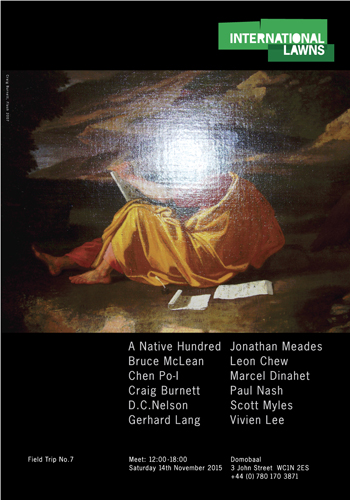
Arriving rather late for International Lawns Field Trip No.7 at Domo Baal Gallery I felt I had missed the party. Great poster image by Craig Burnett.

1601 international-lawns-field-trip-no7-2015-domobaalBut I did hear the fantastical tale delivered by a dead pan  Jonathan Meades which as best as I can recall was of a French political activist, drug addict, convict turned business and policy advisor who died crashing his high spec car on route to give an after dinner speech while over the limit on the very best of French wine.

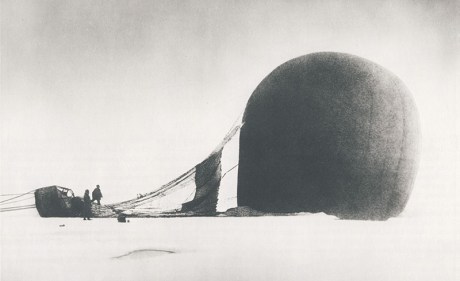
Daniel Rubenstein’s paper Graven Images: Photography after Heidegger, Lyotard and Deleuze aimed to have us consider the latent image, the image held in some kind of stasis as yet to be brought to life. To be made visible. To explain the idea of a latent image he told us the story of the Swedish expedition to the North Pole in 1897.

1602 Swedish Balloon Explorers

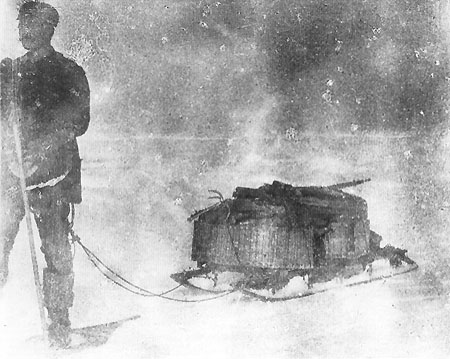
Pioneering balloonist S. A. Andrée envisaged a plan to restore the national pride of Sweden in the race to the North Pole and artic discovery. Setting off in a hydrogen balloon the three explorers hoped to avoid weeks of hard slog over the treacherous landscape and at the same time make cartographic observations of the terrain from the sky. Unfortunately they soon were lost and their fate remained a mystery for over 30 years until their frozen corpses were discovered by walrus hunters on the island of Kvitøya, the most remote island of the Svalbard archipelago.

1602 Swedish Balloon Crash 1897Found with the bodies were a number of exposed frames of film. Despite the terrible plight they found themselves in crashing on an uninhabited ice cap with no means of communication they continued to document their journey with images that then lay dormant for the intervening years.

1602 Swedish expedition Strindberg

Daniel Rubenstein is interested in this state when an image is held as index, as possibility before its transformation in becoming visible to us. To make the photograph the index must be washed away – from negative to positive – something had to die. He sees the latent image as the third space, the space of the void, the nothingness that Heidegger questions. A metaphysical state. He reminds us that what makes us think is not objects but encounters.

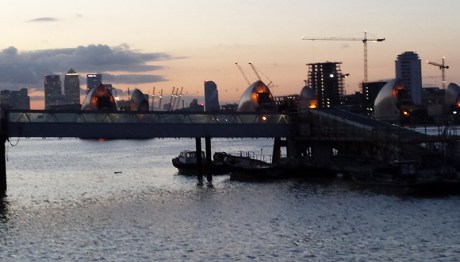
I have a new blank slate – a studio with Second Floor Studios at Thames Barrier in the same complex as Thames Barrier Print Studio. 1602 New Studio

I also discovered there are wood and metal workshops here, a gallery and lots of opportunities to take classes so I am very excited to be joining the complex and enjoy the amazing views across the Thames

1602 Thames Barrier

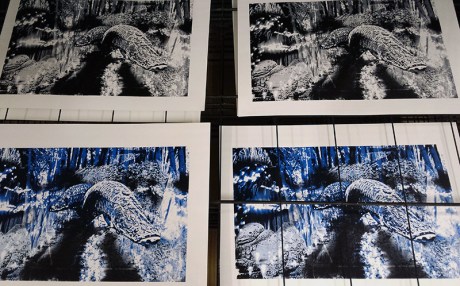
It was great to be back screen printing after quite a break.

1602 Induction Day Prints 1.jpgI had been working on an image I was thinking of using for an idea about the multiverse theory but wasn’t really happy with it so I cropped off a portion to use for my screen printing induction day. I saw these ancient fish in an aquarium in Shanghai, they look so prehistoric and are very alarming, hanging motionless in the water until they are offered a live snack then they move like lightning, leaping from the water to snap the victim in their jaws.

1602 test screen print

The 56th Venice Biennale theme All The World’s Futures was a cue for a lot of artists to excavate the past.

The multi channel video Fire Talks To Me by Almagul Menlibayeva cuts into the past and layers time. 1601 Venice Union of Fire and water (13)Grand Palaces, industrialization and dystopian landscapes give an epic scale to a turbulent narrative. 1601 Venice Union of Fire and water (12)

This work has huge scope. The history of Azerbajan, the Persian Empire and Venice are intermingled.1601 Venice Union of Fire and water (15)

At the centre of the tale is the Mukhtarov couple’s rise in fortune on the riches of oil and their downfall at the soviet takeover. 1601 Venice Union of Fire and water (14)

Their palace, built with oil money and inspired by love has been reassigned from private to public love temple and is now the ‘Palace of Happiness’ in its new guise as Baku’s marriage bureau.

1601 Venice Union of Fire and water (9)

The Union of Fire and Water  continues throughout the 14th C Gothic building with sculptural interventions by Rashad Alakbarov interacting with the environment and our journey through it.1601 Venice Union of Fire and water (10)

The journey can be circuitous.

1601 Venice Union of Fire and Water

Armando Lulaj deals with spectres of history. In his series of films ‘The Albanian Trilogy: A series of devious stratagems’ he looks at how political symbols can appear in one context then reappear in another changing their meaning. over time. He aims to uncover  processes which govern social memory. The research that his films are based on is really interesting so I have included quite a bit of detail here and more can be found on the Albanian Pavilion website.

It Wears As It Grows references a story from the cold war years. In 1959 Khrushchev visited Albania to discuss the Soviet Union’s plans to arm Enver Hoxha’s state with submarines and warships to counter the U.S. threat from missile bases in Italy. Four years later relations between the USSR and Albania had broken down leaving an Albanian navy with a paranoid fear of enemy attacks. When they sighted an object that repeatedly appeared and disappeared at the surface of the sea they shot at it believing it to be a submarine. The unfortunate target turned out to be a Mediterranean sperm whale.

1601 Venice Albania (2)

After being recovered, the whale’s remains were displayed in the Museum of Natural History in Tirana. In 2011, the skeleton of the whale reappears in the streets of Tirana, raised onto the shoulders of a group of people, like a ghost wandering the streets of the city until it found its final resting place inside Enver Hoxha’s mausoleum “Piramida.” This pyramid-shaped structure completed in 1987 was designed by his own daughter and son-in-law to glorify his name and create an eternal monument to him, just like the pyramids of the ancient Egyptian pharaohs.

1601 Venice Albania (1)

NEVER looks at how the positioning of five letters in rock on a hillside tells a story of political power struggles. When communism was at its zenith in Albania around 1968, the Albanian Labor Party decided to celebrate the magnificence of their leader, Enver Hoxha with a monument to his name. Hundreds of young people were forced to join the Albanian People’s Army to position and paint enormous stones on the side of the Shpirag mountain to spell out the name of the dictator. After the fall of communism in the 90’s the Democratic Party gained power and ordered the army to destroy the rocks with explosives. It wasn’t a complete success; the letters were only damaged and two soldiers were burned alive in the process. The task was abandoned and over time what could still be seen of the letters was covered in vegetation. In 2012, locals decided to return to unearth the letters and rewrite the name. After uncovering, cleaning and painting, what materialized no longer read as ENVER, but something altered. The emblem of a dictator ENVER returned as the English adverb NEVER.

Recapitulation traces diplomatic relations between Albania and the U.S. and the sensitive use of language to affirm or negate friendship. In 1957 a U.S. Air Force plane entered Albanian airspace. Two Albanian fighter jets were scrambled and escorted the U.S. plane into a forced landing at Rinas Airport. The pilot, a high ranking WWII hero, was held and interrogated by Albanian officials but due to US diplomatic pressure was released two weeks later. The airplane, however, was not released and in 1971 was moved to the new  Weapons Museum in the birth town of the Albanian dictator Enver Hoxha. This symbol of the Cold War was labelled “American Spy Plane”.  By 2009 relations with the U.S. were no longer hostile and so the Albanian government wanted to remove the plane feeling it was now deemed an affront to the friendly diplomatic relations. However that same year, the former US Ambassador to Albania, stated that history should not be rewritten. Immediately after his speech a question mark appeared at the end of the inscription “American Spy Plane” so that what had been an affirmation turned into a question: “American Spy Plane?”

Meanwhile Russia is rewriting its history and repainting its pavilion.  Irina Nakhova digs into a past tied to the wider context of the artists struggle for cultural acknowledgement.

1601 Venice Russia (2)

In 1993 the Russian Pavilion was emptied of art and painted Red by Ilya Kabakov in a statement of defiance against Moscow’s institutionalism.

1601 Venice Russia (1)

In 2015 Nakhova returns the Pavilion to its original green in the hope of a transformation filling rooms with references to past celebrated artists and archived images interspersed with organic matter, mixing history with inevitable entropy.

1601 Venice Russia (3)

Jiri David  showing at the Biennale for the Czech Republic and Slovak Republic presented Apotheosis an installation where the viewer becomes ‘immersed in the archaeology of knowledge and memories’. Uncertain of what we are approaching across the empty gallery  we walk towards a blank wall to discover a short narrow corridor hidden behind.

1601 Venice czech slovak (3)

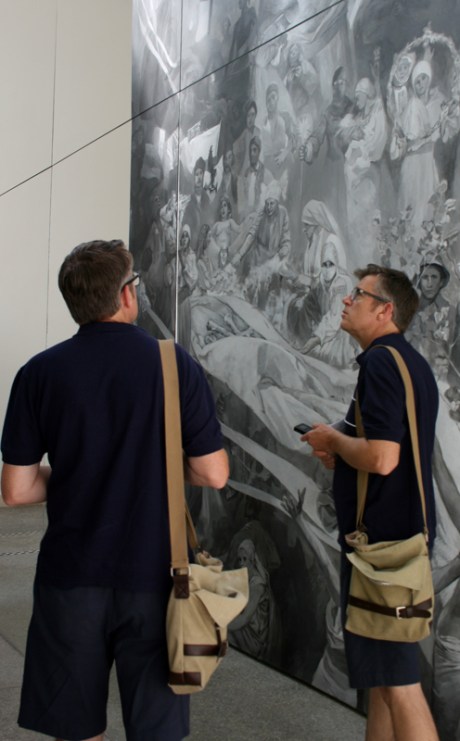
Apotheosis – meaning the elevation to divine status is an appropriation of  Apotheosis of the Slavs: Slavs for Humanity (1926) by the Czech Secessionist artist Alphonse Mucha (1860 – 1939) reworked in greyscale and placed opposite a mirror of the same proportions. It literally brings you face to face with the politics of the region, the national pride and political idealism that inspired Mucha who is better known internationally for his art nouveau style posters. In further analogy it is hard to see the whole picture from this angle and a difficult task to understand ones place within it.

1601 Venice czech slovak (2)

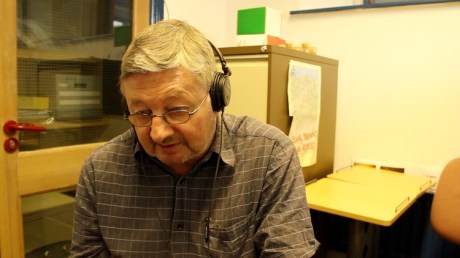
In a world saturated with distorted images and media analysis where the words of politicians are vetted by PR machines applying a slick gloss to avoid accountability it is often hard to hear what is actually being said or read the persona saying it. Rabab Ghazoul’s  It’s a long way back ( Chilcot Project) is a deconstruction of Tony Blair’s 2010 testimonial in the UK government inquiry into the invasion of Iraq. By putting Blairs words into the mouths of ordinary people the words themselves become amplified.  Via a series of small screens we see members of the public listen and repeat words fed to them via headphones – they speak without rehearsal, with concentration, with self consciousness.

1601 Chilcott 1

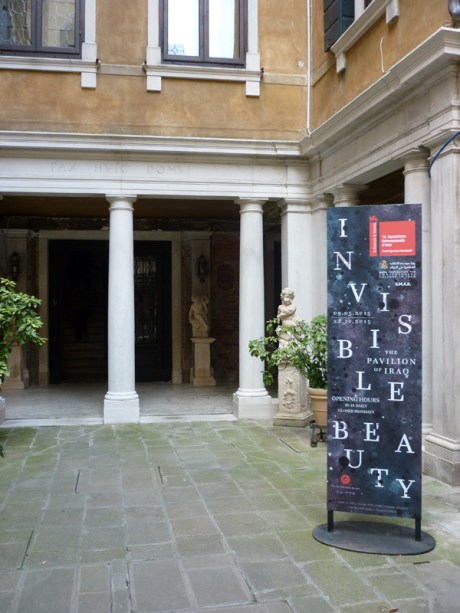
On other screens people describe a man they see on screen before them speaking but with the sound off. Without hearing the content of his speech they must suppose from his body language and expression what emotion he is conveying. We hear their descriptions without seeing the man they describe. It’s a fascinating look at how we read what is fed to us. 0913 Venice Iraq

Tsibi Geva’s ‘Archaeology of the present’, an intervention on the structure of Israel’s Pavilion questions what it is that makes a home.

1601 Venice Israel 2 (1)Using fragments of artefacts, the ugly and the everyday objects he shows us the building blocks that together form the layering of associations that resonate as home.

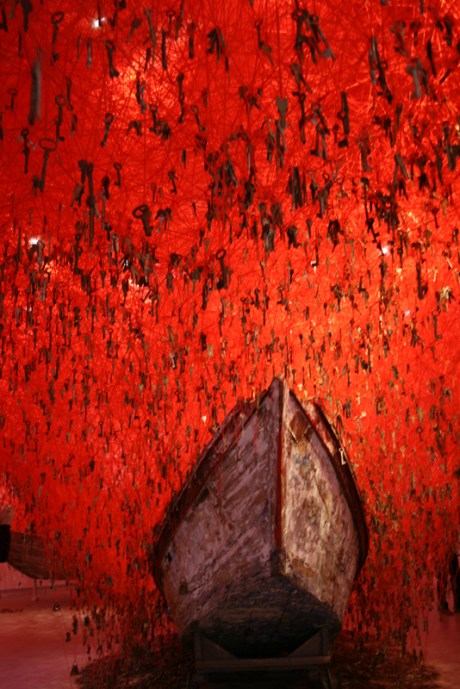
An everyday item, the key is used to keep things safe but also to prevent access. Chihuru Shiota suspends hundreds of keys in a web of red threads in her installation ‘The Key in the Hand’.1601Venice Japan Chiharu Shiota 2) (2)Caught within the threads are two boats weighted down and unable to move.1601Venice Japan Chiharu Shiota 2) (1)So many memories to unlock or lock away. And so many memories that we have lost the key to.

Qiu Zhijie’s sculptures at the Arsenal reflect the old adage ‘history repeats itself’  in his installation ‘Historical Circular’

Placing us amongst the artefacts of physics, the search for understanding and the dreams that urge us forwards we get a sense of our weight within a world that spins on regardless.

It was good to see Tarkovsky’s film Mirror (Zerkalo) on a big screen at the BFI.

1601 Tarkosky Mirror

The mirror is turned towards Tarvovsky’s own life. His aim was to reconstruct his past from memories and photographs as accurately as possible. He even rebuilt his family home for this purpose. Like memories the film is dreamlike and non linear. We are swept away to quiet places. In excavating the past we are always on the brink of something not quite grasped. Images hover, an uncanny wind surges through the long grass as though some mythological creature is about to appear. 1601 Tarkosky mirror 2

Tarkovsky said that it wasn’t until much later that he realised the film was about his mother and not himself and perhaps it was not a desire to recreate the past but to transform it that inspired him.

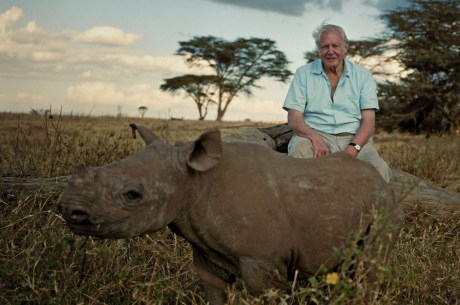
Another life explored, also at the BFI, was tackled in a more traditionally linear way. Life on TV; Sir David Attenborough was a narrative interspersed with contemporaneous film footage.  David Attenborough stood on stage and spoke with such animation and without any notes for over two hours. He was able to recount past events with astonishing accuracy.  The audience were captivated and in awe of his energy, enthusiasm and recall at 89. David AttenburghHe took us back to the 1950’s and the first natural history programme broadcasts.   Most evident from these documentaries is how attitudes to wildlife have changed in the last 50 years. Instrumental in taking the cameras out from the studio rather than bringing the wildlife into the studio David Attenborough has brought the natural world in ever increasing detail to our living rooms.

1601 David Attenburgh rhinoHe offers us amazing visual richness and access to the extraordinary diversity of the planet, this does not translate as personal experience yet we now share a collective memory of these hugely popular series.

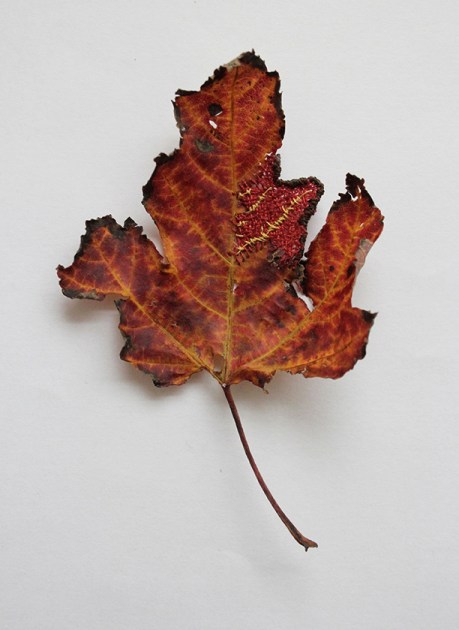
1602 Capability Now‘Capability Now’ at Orleans House Gallery looks back at the influence of landscape designer Capability Brown. It illustrates  his contribution to the development of the English landscape Garden, characterised by its informal and naturalistic appearance, as opposed to the ordered, symmetrical, and geometric gardens that came before.   Alongside the historical exhibits, contemporary artists present modern interpretations of Brown’s works and ideas. Lizzie Cannon exhibits Mended leaf [Acer rubrum] (2015) and Mended leaf 2 (2010).

1602 Lizzie Cannon 1

Lizzie Cannon Mended leaf [Acer rubbrum]

In rebuilding the past it is transformed.


Things slightly out of control.

Another sharply intelligent play by Caryl Churchill, Escaped Alone bats us back and forth from cosy garden chatter to the heart a dystopian future world of civic anarchy.  The scenarios the character Cassandra paints of a poisoned world run by the media where the obese slice off their own bodies for food and fashion choices revolve around which colour gas mask to choose appear just the other side of a thin membrane. Great review of the play here. As Cassandra stepped from bright sunshine into dark void to deliver her visions of spiralling societal collapse one of which included people trapped in tunnels underground resorting to cannibalism and giving birth to blind children I wondered how I will react to going down the deepest mine in the UK to visit the science labs at Boulby. Our trip is planned for May.

1602 escaped alone

Linda Bassett as Cassandra in Escaped Alone  by Caryl Churchill

Shivering is usually a temporary condition triggered by cold, fear or excitement. Damir Očko looks at the involuntary actions of our body and the physicality of the flesh in which we must live. His videos show a man shaking with Parkinson’s disease desperately trying to write the word tranquillity; the muscle spasms of young healthy men freezing as they stand near naked in a frozen landscape; flesh scarred through burning to a rough meaty texture.

1601 Venice Croatia (2)

Damir Ocko The Third Degree

We walk between fragmented mirrors glimpsing our broken selves.

1601 Venice Croatia (1)

Damir Ocko installation at The Croatian Pavilion 2015

Tulipmania swept the world in the 17h Century. The passion for the perfect bloom inflated prices out of control and fortunes  were made and lost in the worlds first recorded financial crash. This was the subject of  Gordon Cheung’s Breaking Tulips  exhibition at  Alan Cristea. The most desired blooms with their striated petals were the result of a virus, unknown at the time which added to the speculative nature of trade in not knowing whether a bulb would go on to produce the requisite flower or not. He sets his tulips against the background of the financial papers and comments; “In the context of the Dutch Golden Age the Tulip Breaking virus is both a biological and mind virus where a distorted sense of economic value has taken hold in a herd mentality.”

1601 Gordon Cheung 3

Conflating history in his new work we see Dutch 17th-century still life paintings cascade like sand though our fingers. In frozen apocalyptic moments the solid world disintegrates before our eyes.  The collision of Dutch Master and Kim Asendorf’s open source algorithm computer glitch program has created a new kind of sublime; that mix of fear and beauty seen in entropy. We fear losing our history and also fear the ever changing new world of pixels. We are witness to a transient state.

I thought Filip Markiewicz installation Paradiso Lussemburgo was a bit heavy handed, but then considering his topic – the violence of reality seen through greed and the injustice of world economics maybe it was OK to shout about it.

1602 Venice Luxembourg

Filip Marckiewicz Paradiso Luxemburgo


There was no missing his point that the world of finance is corrupt.  Money doesn’t go where it is needed most. The packed boat precariously hangs over a blood bath. Making a political point can be blunt. Mark Fromm’s packed boat of waving lucky cats set in a perpetual cycle of sailing to disaster is titled Lampedusa Good Luck!  Smiling fixedly and clad in shiny gold like the refugees gold survival blankets it is an unsettling analogy but it does open the question of how we see the thousands of migrants who risk their lives to escape terror in their homeland – left to the mercy of so many forces; the war, the sea, our generosity.

Nidhal Chamekh  makes considered connections between contemporary realities and the sprawling nature of human history. The Anti-Clock Project looks at the destruction of an urban monument in Tunis through the use of models of the city and drawings.

Tunis, like any city is a testament to the forces that built it and as Nidhal Chamekh reminds us through the construction and destruction of its architecture is witness to society and the political forces which govern it.

Consider two bullets colliding head on. Art Collective The Propeller Group were intrigued when they came across the remains of a bullet from the American Civil War in a museum which had apparently smashed head on with another bullet on the battlefield. They decided to apply this mythology to the guns used in the cold war era.  The work they made AK47 vs M16 captures the colliding bullets in an FBI clear ballistics gel block accompanied by a video of the collision.

1601 Venice The Propeller Group (1)

The Propeller Group Ak47 vs M16


By collapsing/colliding two pasts together they explore possibilities.

Possibilities always lie in the future.


In my practice I spend a lot of time thinking about the past rather than the future, researching origins and myths. History changes with the telling and the future is full of probabilities. In Carlo Rovelli’s Seven Brief Lessons on Physics the sixth lesson asks the question ‘what is the present?’ Physicists and philosophers have come to the conclusion that the present is an illusion and time does not flow, but this is not how we experience the world. Compare ‘now’ with ‘here’. ‘Here’ is subjective to where it is spoken. ‘Now’ is subjective to the instant it is spoken. Both terms are indexical. We wouldn’t claim only things that are ‘here’ exist so why do we say only things that are ‘now’ exist? The problem isn’t solved but it is believed to have something to do with thermodynamics (heat does flow) and our limited capacity to comprehend the universe. A supersensible being would experience the universe as a single block of past, present and future.

1602 London Lumiere 1

The London Lumiere event changed the city temporarily, bouncing some photons around which brought people out onto the streets for a bit of wonderment.

1602 London Lumiere 6

It was the coldest night to be out but there were some magical moments to be had.

1602 London Lumiere 2

Litre of Light – use simple technology with recycled plastic bottles and water to provide sustainable solar lighting for communities across the world. Fantastic idea and I liked that these bottle ends look like a myriad of suns.

1602 London Lumiere 4

Spectra-3 is an interactive light and sound installation by Field who create hi-tech experiences with a human touch. Supposedly tracking the audience it looked like it had latched onto to something more interesting in the cosmos. Liking this other work of theirs –  New Nature

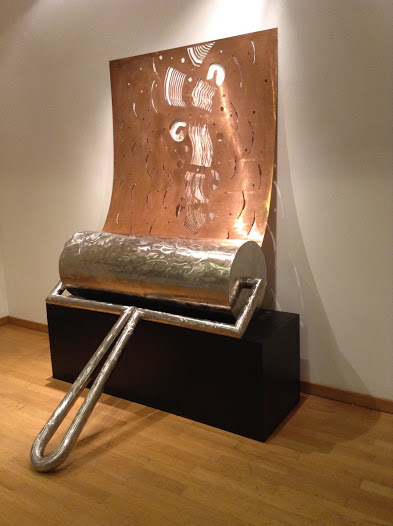
Moon Kyungwon and Jeon Joonho’s video installation  The Ways of Folding Space and Flying is an archaeological quest into human civilization.

1601 Venice Korea Moon Kyungwon Jeon Jooho 4 (2)

In this multiscreen installation we are dwarfed by giant projections. Voyeurs peering through portholes at this lone explorer on her voyage, sleeping, taking exercise, discovering new experiences.

1601 Venice Korea Moon Kyungwon Jeon Jooho 4 (1)

Both futuristic and retrospective the artists are inspired by Taoist practice, supernatural powers and the desire to fly. Their protagonist appears in a state of wonder exploring the unknown.
1601 Venice Korea Moon Kyungwon Jeon Jooho 4 (4)

Giving ground to the meditative and emancipatory effects of  complex human desires it allows us to dream and wonder what an other future might hold.

Lee Lee Nam shows technical wizardry in a series of digital works. Moving gently through the seasons this traditional landscape is in a constant captivating cycle of rebirth.

The characters on a traditional scroll dissolve, falling away pixel by pixel

1601 Venice Lee Lee Nam (3)In the centre of the room a captive dove beats its wings as it is plunged beneath the water.

1601 Venice Lee Lee Nam (8)

I thought Lu Yang’s video work Moving Gods. was really interesting, the imagery playing with desire and attraction, worked on me.

1601 Venice China Lu Yang (1)

An ethnically diverse male group play out some ritual that references video games, mythology and religious iconography.

1601 Venice China Lu Yang (3)

A mash up of superheroes, fashion iconostas and saints that plays on the attraction of power and the use of symbol to establish status.

1601 Venice China Lu Yang (2)

She is out to deconstruct and uses new technologies to question our emotional and bodily relationships to a digital world.

Introduced to Hito Steryl via her e-flux essays on digital culture I was keen to see her new work at the Venice Biennale. Entering the space of her video installation Factory of the Sun was like entering digital space in Tron fashion.

1601 Venice Germany  Hito Steryl (1)

The room, pulsating with dance beats, was transformed into a 3D graphic grid with deckchairs and loungers to lie back in and be transported to the future. 1601 Venice Germany  Hito Steryl (2)

Fast moving and mesmerizing dancers morph and rotate in a game like scenario where a new digital light transfers reality into digital culture. There is an underlying menace in this frenetic world as borders collapse and the gun may or may not be real.

It makes me think of the curse of the red shoes.


Time is one thing we can all agree on to call supernatural. It is at least neither energy nor matter, not dimension either, let alone function; and yet it is the beginning and end of the creation of the world.  – Halldór Laxness, Under the Glacier, 1968

I loved the Joan Jonas exhibition They Come To Us Without a Word at the Venice Biennale 2105, it was a space that encouraged wonder and a dialogue with the spiritual aspects of nature and the rhythms of ritual.

Inspired by the writing of Halldór Laxness she interweaves ghost stories from Novia Scotia with images of a fragile landscape and the enactment of ritual by sombre children.

Glasstress is a collateral event of the Venice Biennale, the theme for 2015 was how the gothic and medievalism has crept into modern consciousness.

1601 Venice glassstress Matt Collishaw

Matt Collishaw Jewel Slot Empire

Invited artists made work referring to ideas ranging across mythology, religion, medicine and alchemy. Flamboyant and emotional, the gothic explored by Petah Coyne’s The Feminine and Mirror Mirror installation.

The Gothic style, born in Europe, was the first international language that spoke across  many nations for at least four centuries.

1601 Venice Glasstress Qiu Zhije

Qiu Zhijie Even More Mythical Animals Are Still On There Way

Today contemporary art has taken on that mantle of communication across borders. The interesting thing is we still ask the same questions and are fascinated by the same metaphysics as we were in medieval times.

1601 Glasstress Kate MccGuire Maelstrom

Kate MccGwire Maelstrom

Performing a ritual out of its designated season is jarring to the senses. Making work that only feels appropriate to bring out at Christmas limits its accessibility. Not really made as Christmas decorations my light boxes ‘Bar of Wonder’ and ‘Bearing Gifts’ do tend to perform that function. It was therefore quite nice for them to have an outing at a Winter Show – Giving curated by Trident and Triangle at Gallery 98 Tower Bridge Road.

1601 Giving

‘Bar of wonder’ places characters from the nativity story into a contemporary Christmas setting, infiltrating a prosaic reality with peripheral and ethereal images that are evoked by the traditions that surround this annual ritual. Is this dated by the number of people outside smoking? A declining ritual.

1601 Bar of Wonder

‘Bearing gifts’ introduces the Magi of the nativity story to the burden of the present day seasonal shopping experience.  Queuing for gifts in Fortnum and Mason.1601 Bearing GiftsSeen through the haze of romantic delusion the figures of the wise men appear as elusive as the purchase of the perfect Christmas.

Naufus Ramirez-Figueroa’s mash up of religion, folklore and conspiracy theories in God’s Reptilian Finger at Gasworks was a step into the world of YouTube paranoia and fantasy. Using similarly cheap inauthentic materials as those used to make the videos that inspire him his polystyrene sculptures are unapologetic colourful embodiments of a wry look at how a belief takes hold and spreads.

1602 Naufus Ramirez-Figueroa 1

Gold painted geometric shapes are full of worms, the progeny of an alien race hidden beneath a shiny veneer. David Icke’s theory of a reptilian race dispersed amongst us gains traction from low resolution video footage of celebrities caught off-guard blinking sideways.

1602 Naufus Ramirez-Figueroa 6

Mormons in need of direction to their own land receive guidance from god’s hand pointing the way amongst the glowing rocks.

The seductive nature of myth and the willingness to believe in absurd fantasies is demonstrated when entering the darkened room at Gasworks to find oneself in the midst of a fluorescent meteorite storm and a giant disembodied finger. Pure joy.


In the humanist library and archives  at Conway Hall home to the ethical society is a section labelled Humankind. I love that. Are all the answers here?

1601 Conway Actants 3I was taking part in a tour of Conway Actants exhibition led by Jane Millar and Deborah Gardner who have placed site specific work throughout this wonderful building responding to the ethos and history of Conway Hall. 1601 Conway Actants

The bee hives on the roof inspired Deborah’s interventions of hexagonal sculptures morphing from the circular ceiling windows. Translating the activity on the roof and the interconnectedness and clusters of activity within the building.

1601 Conway Actants Deborah Gardner 2

Looking through the lenses of history, travelling through time, preserving and learning from the past. Conway Hall is a place for free thinking.

1601 Conway Actants 2

The archive is a place of secrets as well as a place of discovery.


I made another visit to Conway Hall for the panel discussion – Why Do We Believe? It was a  diverse mix of people who packed the hall to ponder this question.

www.idjphotography.com

On the stage were; Prof. Francesca Stavrakopoulou, Professor of Hebrew Bible and Ancient Religion “an atheist with huge respect for religion” who regards her work as “a branch of history like any other”; Prof Richard Wiseman, Britain’s only Chair in the Public Understanding of Psychology who has gained an international reputation for research into unusual areas of psychology, including luck, deception, and the science of self-help; Alice Herron a PhD candidate who was brought up a Catholic, married a Muslim, got divorced and spent 27 years in the cult of Indian Guru Sri Chinmoy and is currently researching atheists who claim to have had some sort of mystical-type experience; Bruce Hood a Professor of Developmental Psychology, currently the President of the British Association for Science psychology section who has given the Royal Institution Christmas Lectures “Meet Your Brain” and written books such as; SuperSense: Why We Believe In The Unbelievable and The Self Illusion: Why There is No ‘You’ Inside Your Head; Deborah Hyde the editor in chief of the UK’s only regular magazine to take a critical-thinking and evidence-based approach to pseudo-science and the paranormal and who is fascinated by the supernatural, and probably knows way too many facts about werewolf folklore.

1602 brain 1

The opinions expressed can all be heard at the above link. There were different perspectives and lots of interesting facts but on the whole what I found fascinating was the general consensus of disbelief throughout the room considering the percentage of the population cited to hold a belief in ‘something’ supernatural. Maybe the discussion should have been called ‘Why did we believe?’ or ‘Why do other people believe?’ Perhaps it was the authority of the panel who made it sound like a weakness, a fiction to turn to in times of existential crisis, to bring a sense of order and comfort to our lives. I was hoping for someone to pipe up during question time and dispute these claims but none did. And what about belief in a supernatural that brings disorder? It’s a fascinating debate believers or not.

A Leap Of Faith at St. Laurence Church, Catford was presented for one day only by The LivingRoom a nomadic space committed to blurring the boundaries between the display of  work and the work itself. 1601 A leap of Faith 1

The artist’s works were placed among the Church’s artefacts, propped in pews and laid on tables. The boundaries disappeared.

1601 St.Laurences ChurchI entered late in the day, there had been a schedule of performances but I had missed most of these. Coming in from torrential rain outside, the place was immediately a sanctuary. People milled quietly and took their seats along the pews. I sat waiting but not sure what for and in the hushed gloom had the uncanny feeling I had inadvertently joined a cult. After a while, strange resonating sounds from Michael Speers  performance of distorted feedback filled the space. We sat in quasi religious contemplation.1601 A leap of Faith 2A leap of faith considers the universe, civilisation and the individual; questioning our existence in relation to infinite time and space or to a particular moment in history. Based on natural phenomena, scientific observations or constructed narratives, the works ponder on past ideas and beliefs whilst also constructing their contemporary ones. This cycle of renewal, found in religion as well as in other systems, is visible in the artists’ attempts to make sense of and reorganise traces of our existence. 
1601 A leap of Faith 5Among the artists in this show were Mark Ariel Waller projecting SO-LA, video footage from NASA’s Solar Dynamics Observatory above a bronze cast replicating ‘Sit Shamshi’ a 12thC relic of Iran which depicts two figures in a temple setting performing a ritual to the rising sun.

1601 A leap of Faith 3

One of my current objects of interest – an obelisk seen here in Salvatore Arancio’s mash up of Carl Sagan footage from the TV series ‘The Cosmos’. These striking forms also originated from rituals of sun worship.

In a very different space Cerith Wyn Evans exhibition at  White Cube focused on flows of energy, referencing Marcel Duchamp’s work The Bride Stripped Bare by Her Bachelors, Even.

The Bride Stripped Bare by her Bachelors, Even (The Large Glass) 1915-23, reconstruction by Richard Hamilton 1965-6, lower panel remade 1985 by Marcel Duchamp 1887-1968

Reassigning and charging with gas the circular forms that are known as the Oculist Witnesses in Duchamp’s piece.

1601 Cerith Wyn Evans (2)

These forms now glowing brightly above our heads would have centred the flow of illuminating gas from the Bachelors to the Blossoming of the Bride should Duchamp have allowed this ejaculation to follow its course.

Ghosts of the past brought to life to bear witness once more.

1601 Cerith Wyn Evans (1)

While we circle the gallery a sighing breath intones a melody from glass flutes suspended above us and large potted palms silently rotate though slowed time.

1601 Cerith Wyn Evans (7)

Also using light as medium Tsang Kin-Wah’s immersive installation ‘The Infinite Nothing‘ contemplates the uncertainty of life.

Beginning with Nietzsche’s pronouncement on the death of God: ‘Are we not straying as through an infinite nothing? Do we not feel the breath of empty space?’ we are led on a circular journey through four stages of transformation, titled 0, I, and r giving physical shape to Nietzsche’s theory of ‘eternal recurrence’.

1601 Venice Hong Kong (1)

Tsang combines philosophy, mythology, religious symbolisms and popular cultural references.1601 Venice Hong Kong (2)

We face Heraclitus’s river into which ‘one cannot step twice’; Plato’s Cave Allegory; and Nietzsche’s notions of ‘Camel Spirit’, ‘slave morality’ and ‘the Overman’.

1601 Venice Hong Kong (3)

Inspirations also come from Béla Tarr’s film The Turin Horse (2011) and Stanley Kubrick’s 2001: A Space Odyssey (1968) along with thoughts on karma and reincarnation as Tsang explores all routes in the human quest for self-betterment.

Taking inspiration from the 12th century quest for the philosopher’s stone The Obsidian Project is an investigation into alchemy by Ralph Nauta and Lonneke Gordijn who make up Studio Drift. Exploring relationships between nature, technology and mankind they are working with a contemporary chemist who can abstract gold from chemical waste.

1601 Venice Obsidian Project (1)

Left over from this process of extraction is ‘synthetic obsidian’ a black stony glass with unique reflective qualities. Perhaps in its meditative dark space of reflection it is the Obsidian that offers something more precious than gold.