Archives for posts with tag: CERN

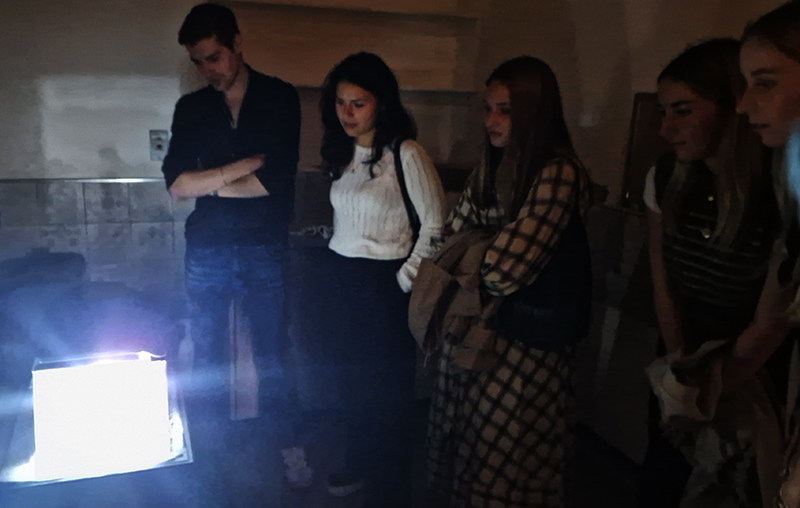
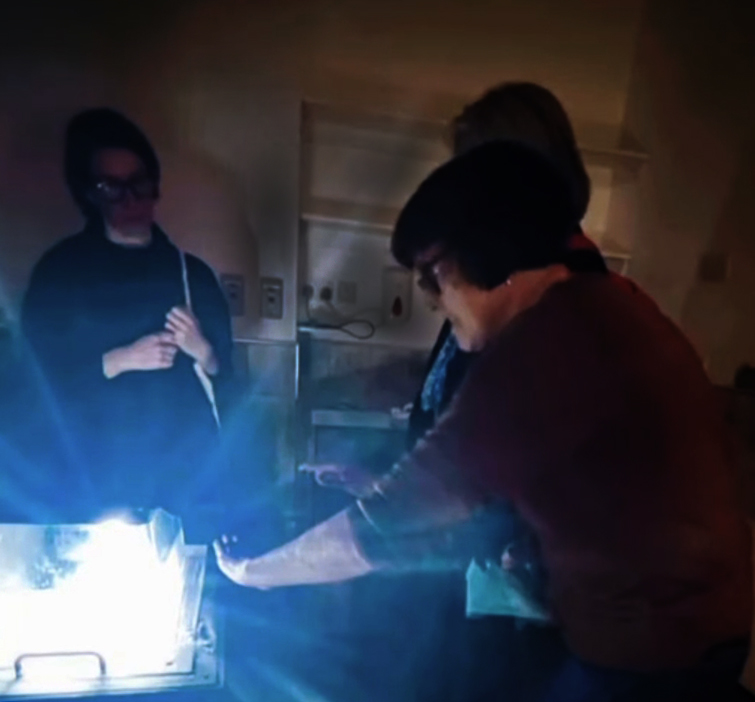
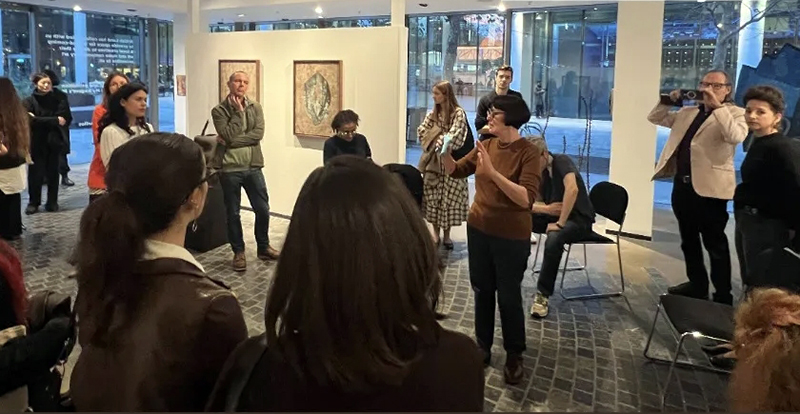
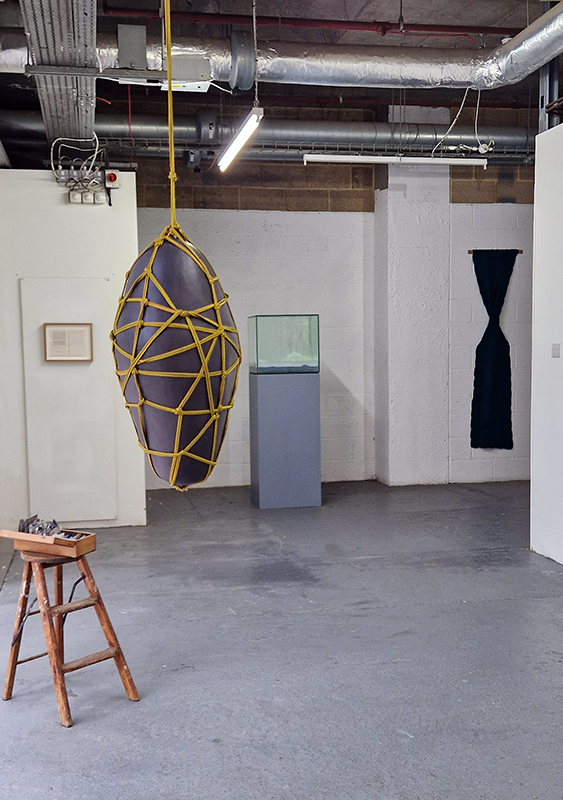
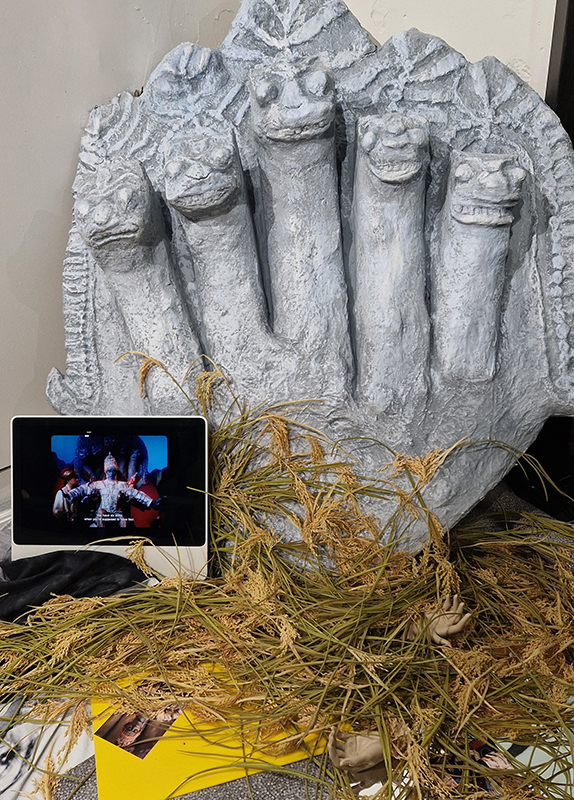
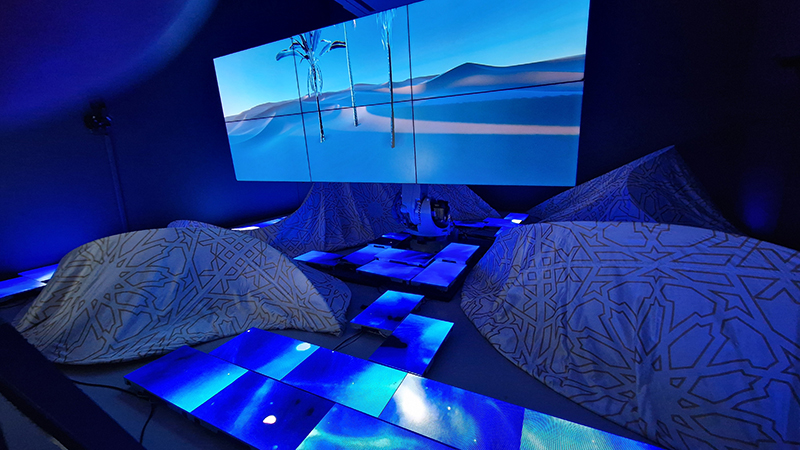
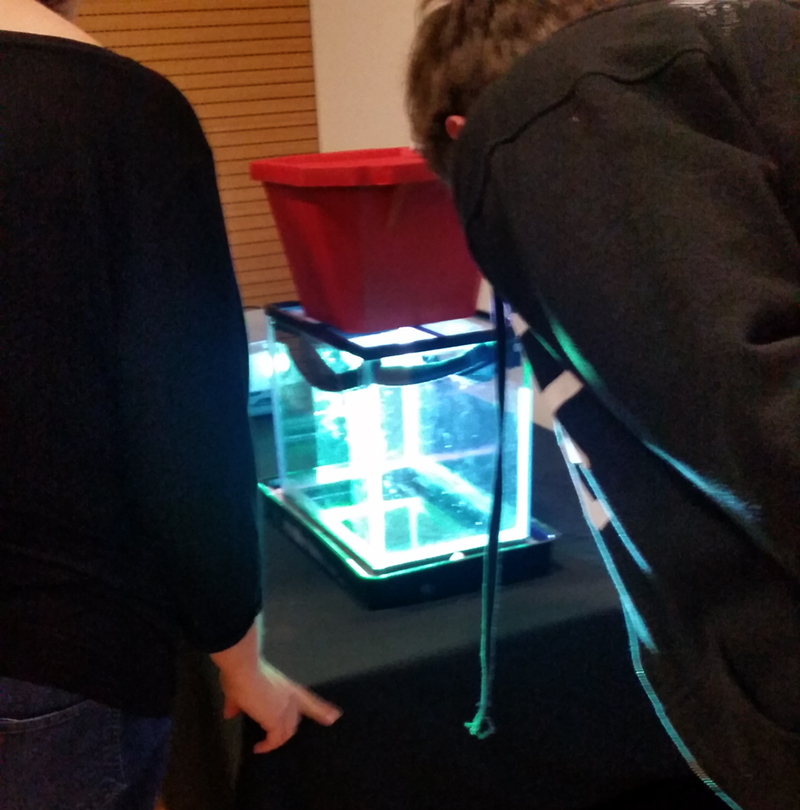
The finale of the exhibition programme of Carbon, Carbon Everywhere co-curated by Indira Dyussebayeva-Ziyabek and Maria Hinel at Hypha HQ included an exhibition tour, a BREAT(HOLD) workshop led by Ania Mokrzycka and an invitation to view cosmic particle trails passing through a cloud chamber.

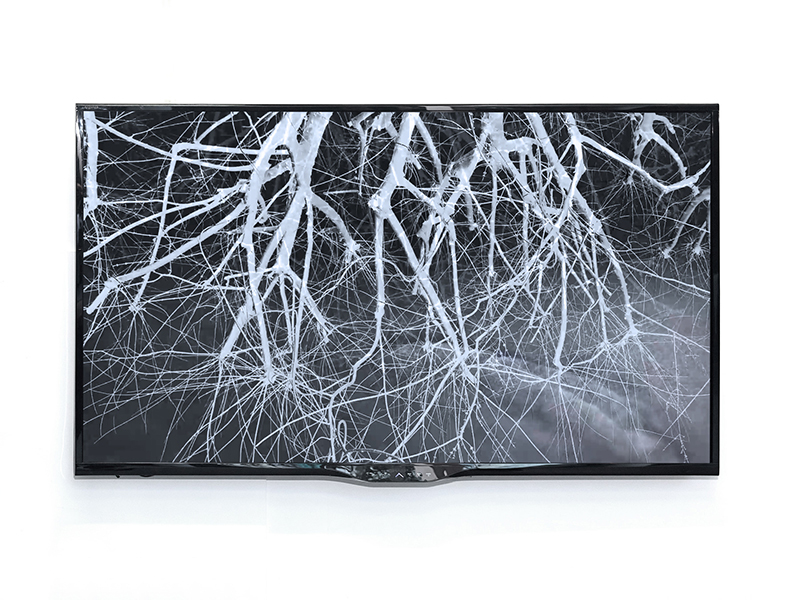
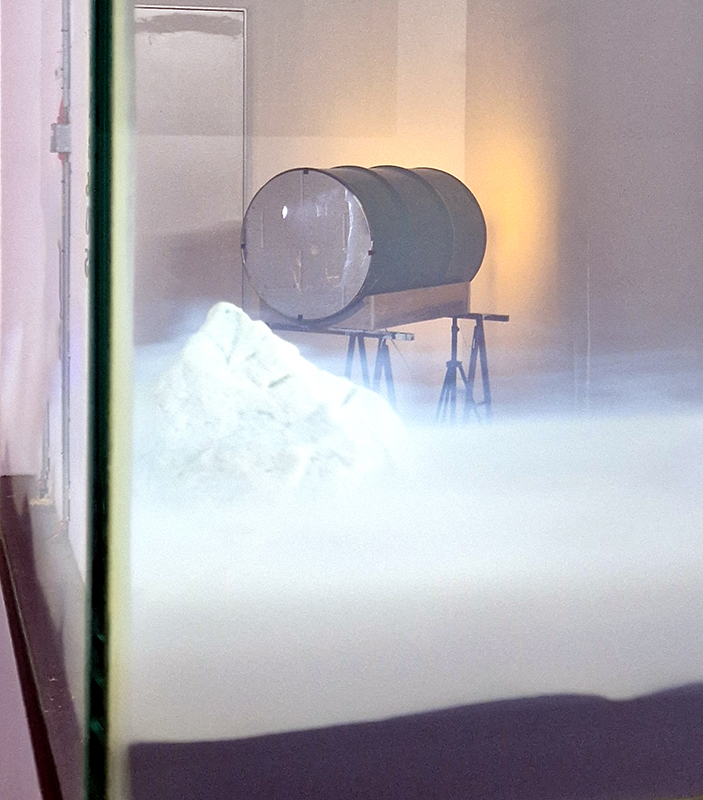
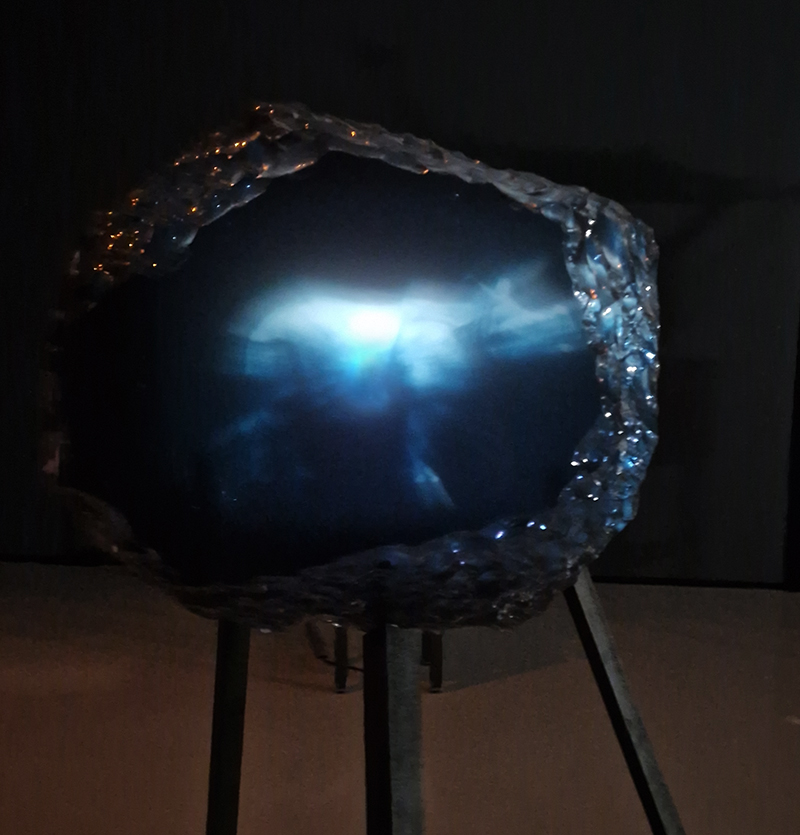
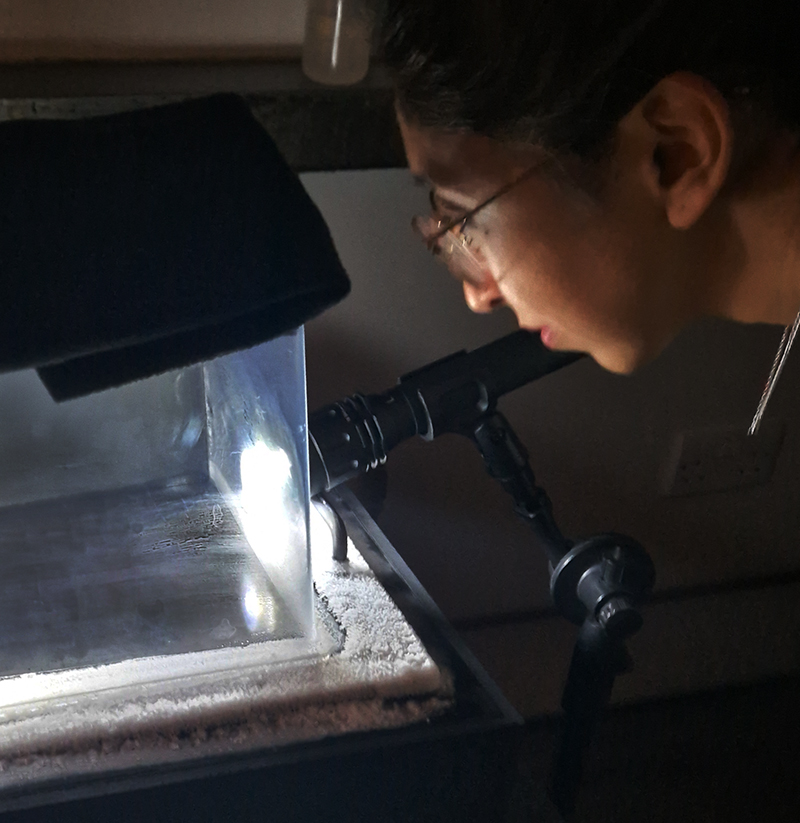
This simple equipment of a plastic tank saturated with isopropyl alcohol vapour over a metal tray sitting on dry ice was used to capture footage for the video Cosmic Chiasmus: crossing the universe showing in the exhibition. Cosmic rays are fast-moving particles, blasted across space, spiralling along magnetic field lines to end up entangled with carbon in our bodies.
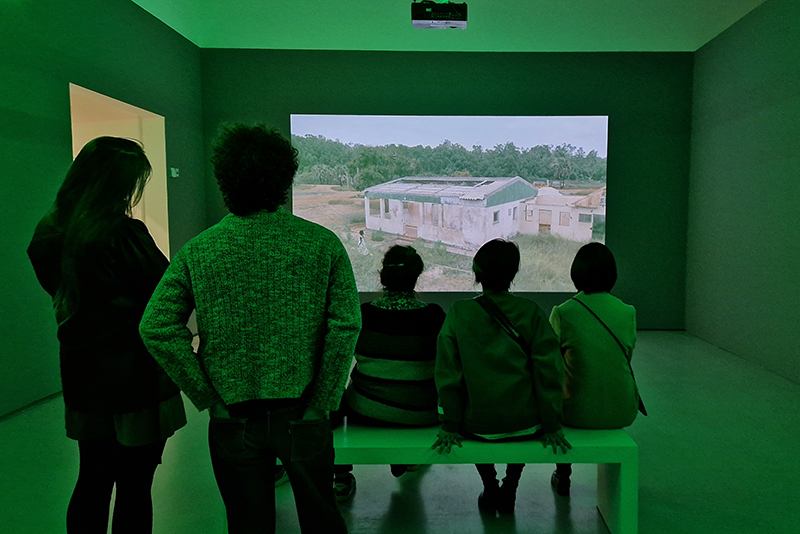
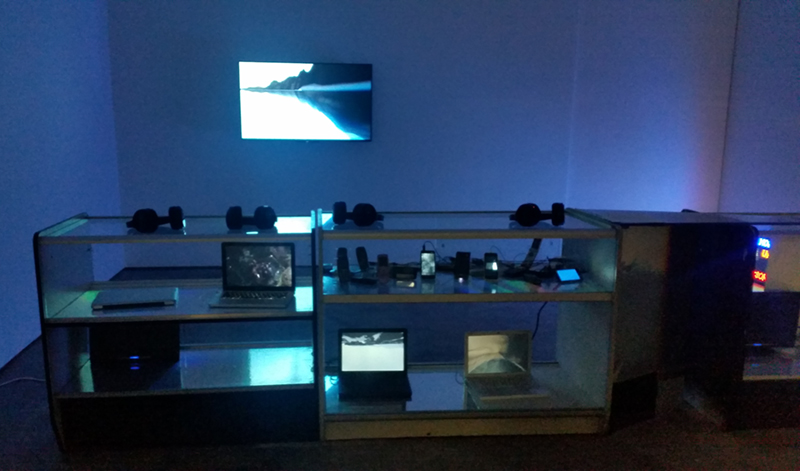
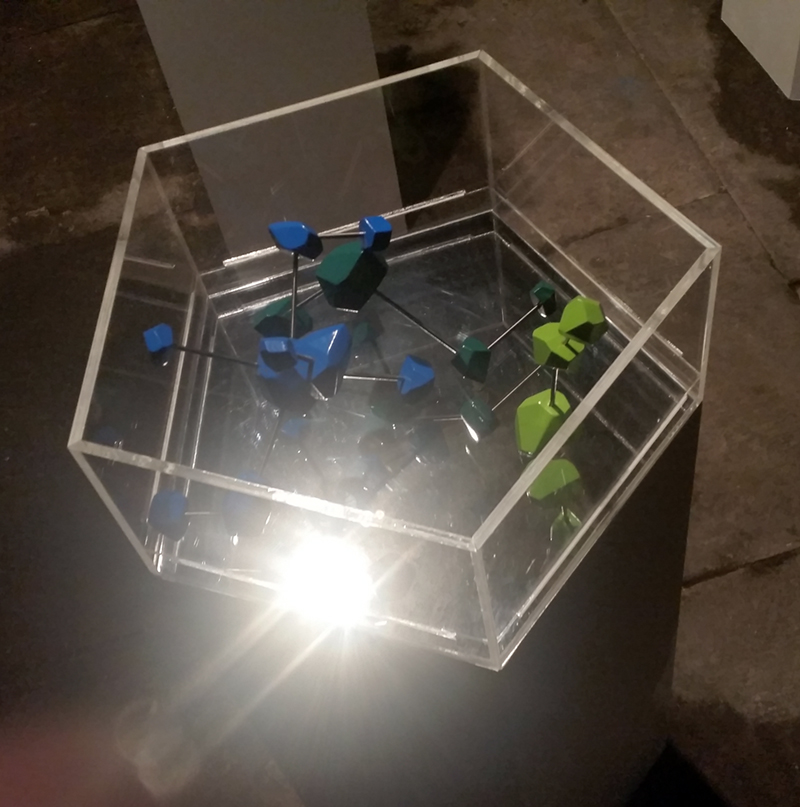
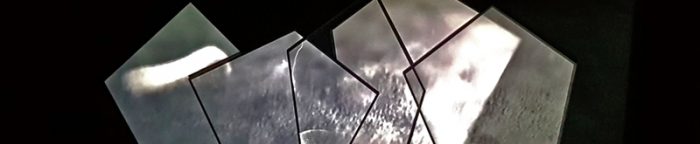
Installation image of Cosmic Chiasmus: crossing the universe

Not only is all life physically permeated by cosmic rays with the potential for nuclei collisions but some cascading particles smash into atoms of nitrogen to create carbon-14 which combines with oxygen in the atmosphere to create radioactive carbon-dioxide which enters the food cycle via photosynthesis.  Cosmic ray activity creating Carbon-14 allows us to perform carbon dating techniques offering insights into Earth’s past climate, magnetic field, solar activity, and changes in the carbon cycle, helping to understand historical patterns and establish timelines for ancient human history.

The title of the exhibition, Carbon, Carbon Everywhere, is a quote from the landmark essay Carbon by the writer and chemist Primo Levi. In the essay, Levi traces a journey of a single atom of carbon across distinct states and beings, from the monotony of being embedded in limestone for hundreds of millions of years, to entering the world of ‘things that change’ – swiftly shifting from the atmosphere to the lungs of a falcon, to the sea, to the trunk of a cedar, and eventually entering the writer’s own body from a glass of milk on his desk, crossing into the brain cell that controls the hand writing its own story. Resolutely specific yet universal, Levi’s story highlights the singularity of carbon as an element that inherently connects all things through its relentless transformation. It fossilises, mutates, preserves, pollutes and nourishes. From its ancient geological formations to its current atmospheric volatility, carbon is never still, shifting between forms and contexts in an ongoing process of exchange.

‘It is possible to demonstrate that this completely arbitrary story is true. I could tell innumerable other stories, and they would all be true: literally true, in the nature of the transitions, in their order and data. The number of atoms is so great that one could always be found whose story coincides with any capriciously invented story’ Primo Levi

This was a beautiful show and I was thrilled to be invited to exhibit alongside such amazing artists including Emii Alrai, Anousha Payne, Kate Daudy, Konstantin Novoselov, Ania Mokrzycka, Nissa Nishikawa, Mariele Neudecker, Simon Faithfull, Aimee Parrott, Lucia Pizzani, Lizi Sanchez and Meng Zhou.
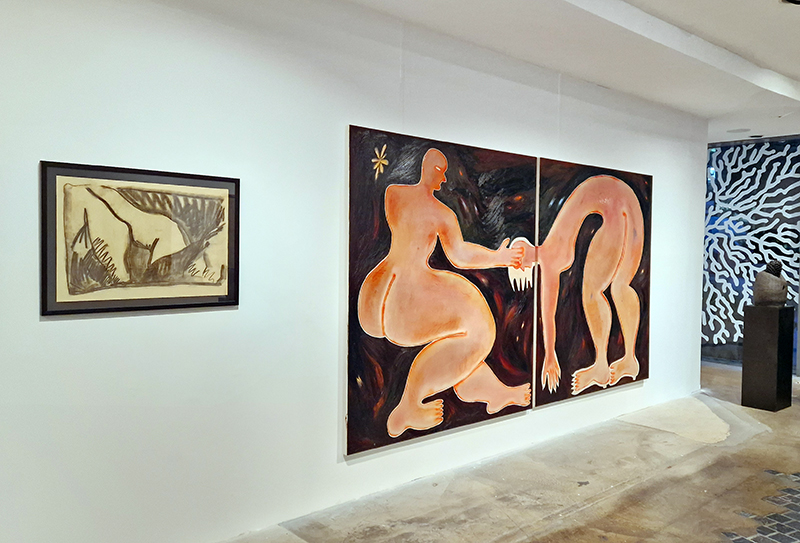
I am very excited to have an invitation to exhibit at the Safehouses in Peckham next year with a group of wonderful artists and friends. Curated by Julie Hoyle, the artists have been selected for the way their work resonates with the atmosphere of the Safehouses — places where traces of the past meet the imagined and the unseen. Together, the works will form a dialogue between beauty and unease, the real and the imagined, reanimating the stripped-bare rooms with strange company. We had a productive site visit and I have two spaces in mind to work with – one above and one below.
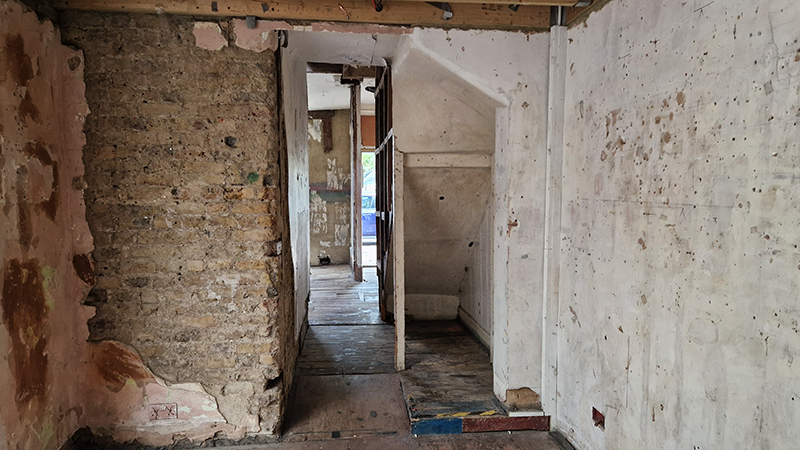
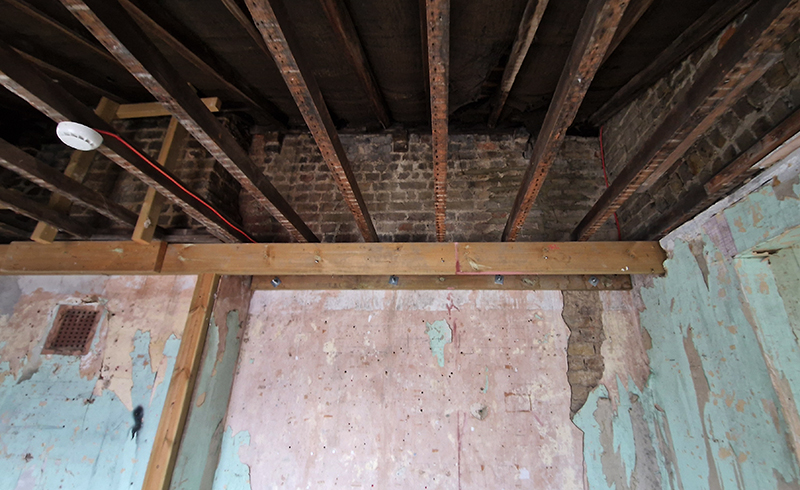
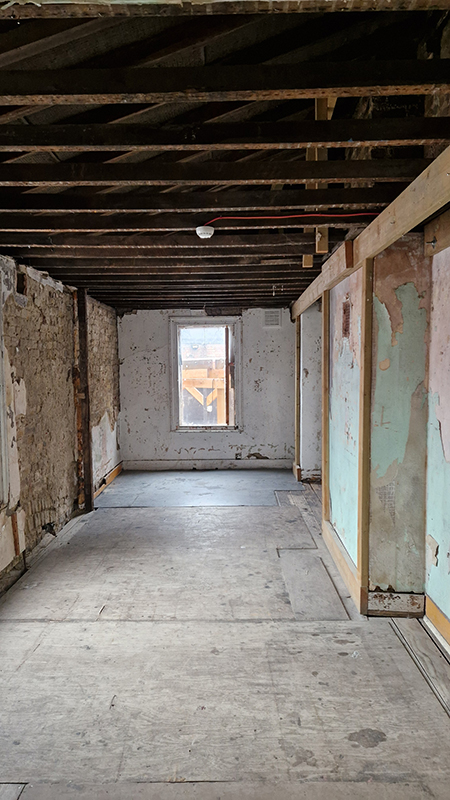
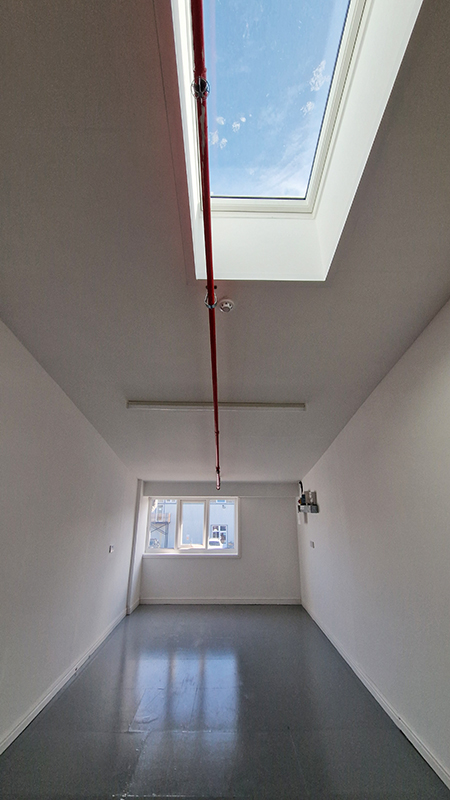
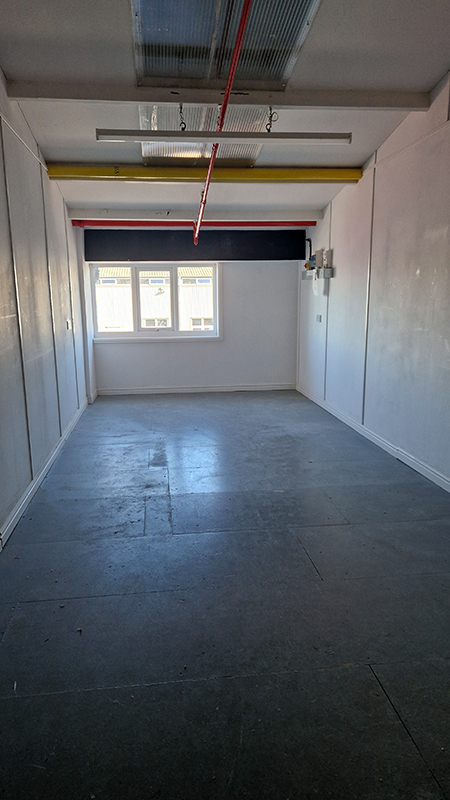
There is an ongoing refurbishment project at my studio complex which although welcome improvements has caused a little disruption to my ability to work there recently. My unit has had a new roof installed and each studio is being insulated with a new ceiling and opening Velux window. When the new roof went on we lost our ceiling windows so it is wonderful to have natural light from above again. Having to move everything out of my studio for a couple of weeks has been a good exercise in discovering long hidden materials and putting it all back has forced my hand to have a bit of a clear out of items I am unlikely to use and pass these on to other studio holders. Images show before, during and after.
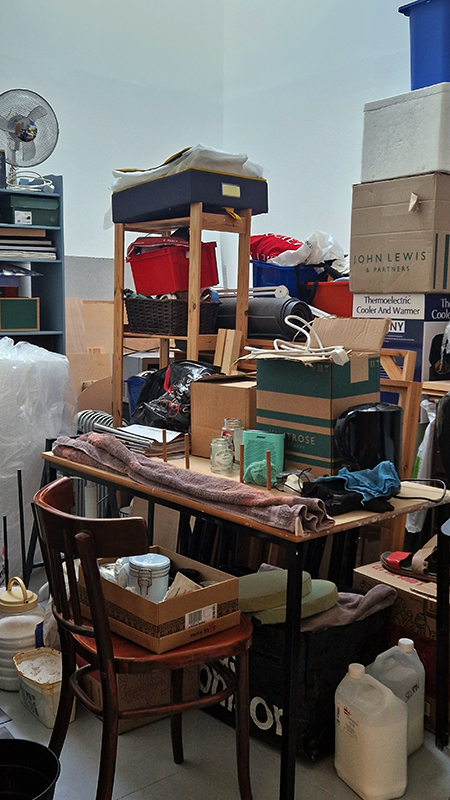
I managed to get everything back into my studio just in time for a studio visit from curator Catherine Li to discuss the possibility of exhibiting at Brompton Cemetery Chapel next year. It is a stunning building so I am very excited about this upcoming project.

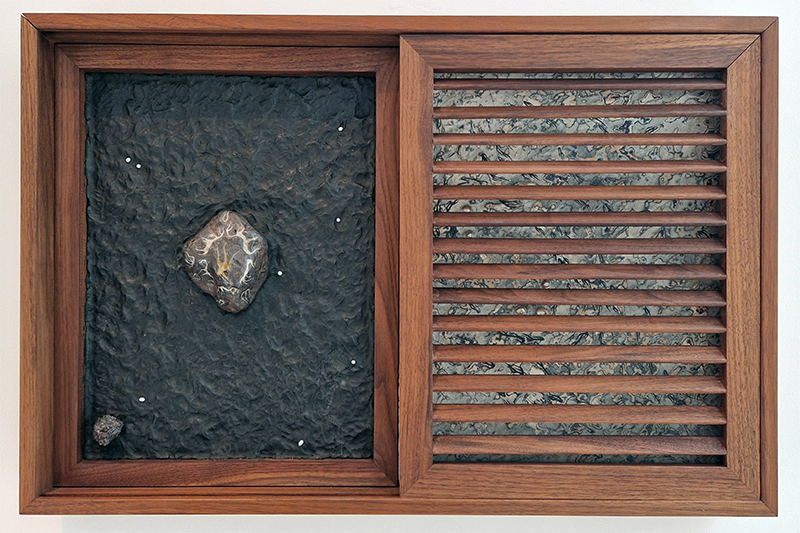
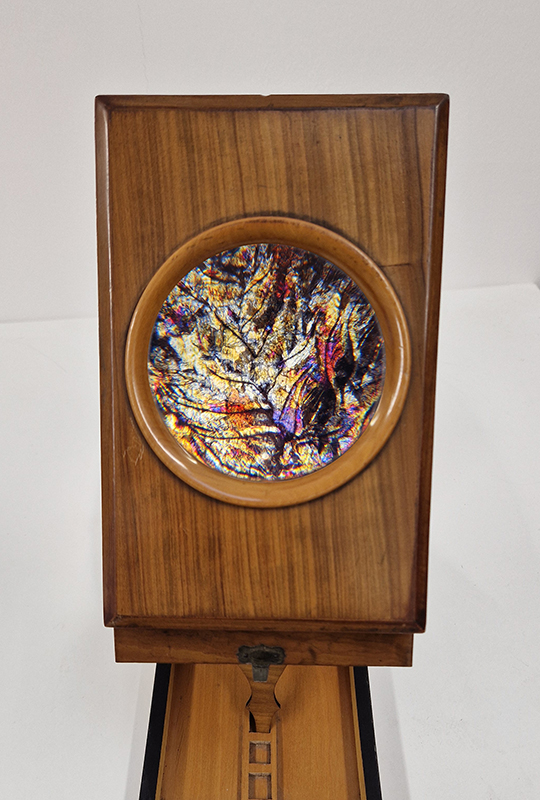
I have been experimenting with an old wooden slide viewer, printing images onto acetate from my microscope camera of polarised crystal and rock structures.

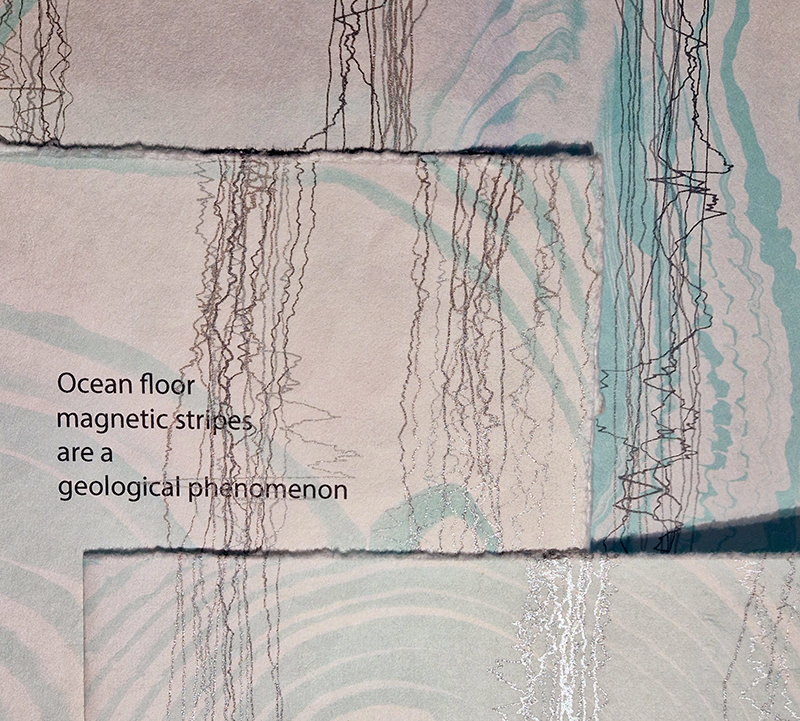
Work in progress on The Book of Reversals, writing text to print over the screen-printed magnetic graph lines. Ocean floor magnetic stripes are formed as magma cools at mid-ocean ridges. These alternating bands show Earth’s magnetic field reversals, with minerals in the crust aligning to current polarity and recording each change in pattern.
Colossal forces spinning dust

Aeons of accretion and gravity / shaping the debris of destruction

Searing elements separate /  amidst violence and decay

The weighty fall, pulled down, digested / feeling pressure only diamonds can survive

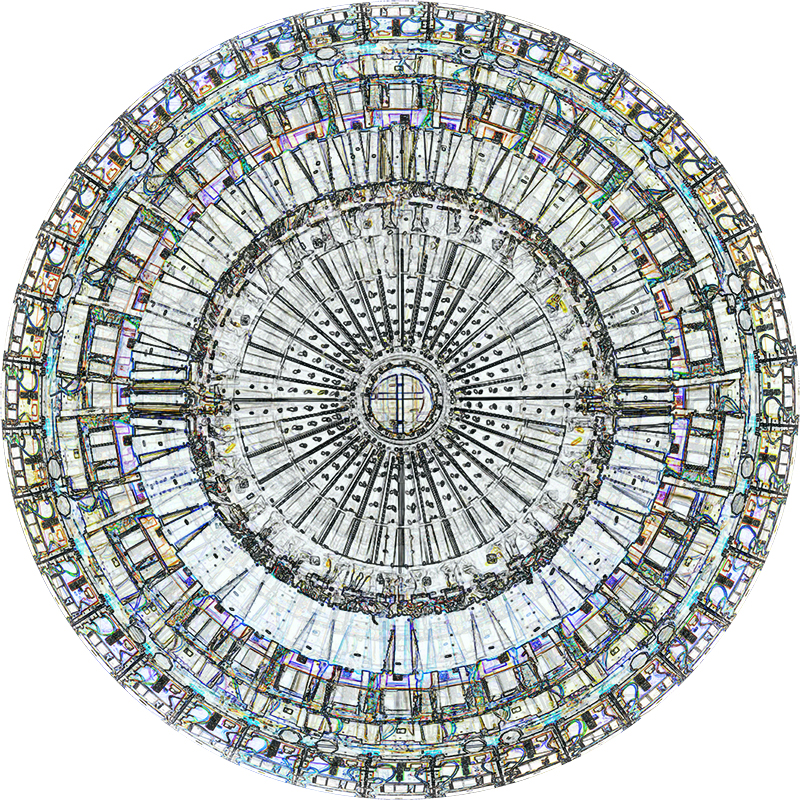
Work in progress looking at the sacred geometry of the Westminster Abbey Cosmati Pavement and relating medieval symbolism with contemporary iconography to think about changing relationships to fire, water, earth, air and the cosmos. Reimagining imagery from the Cosmati Pavement and particle accelerator at CERN.

Out and About

Noémie Goudal And yet it still moves at Edel Assanti. Mesmerizing work. I especially found the work Rocks very effective, an inkjet print on photographic paper with a video projection that moves across the image highlighting certain parts as though a torch is traversing a dark landscape. I always enjoy the theatricality of her large scale video installations even if they do purport a world collapsing around us.

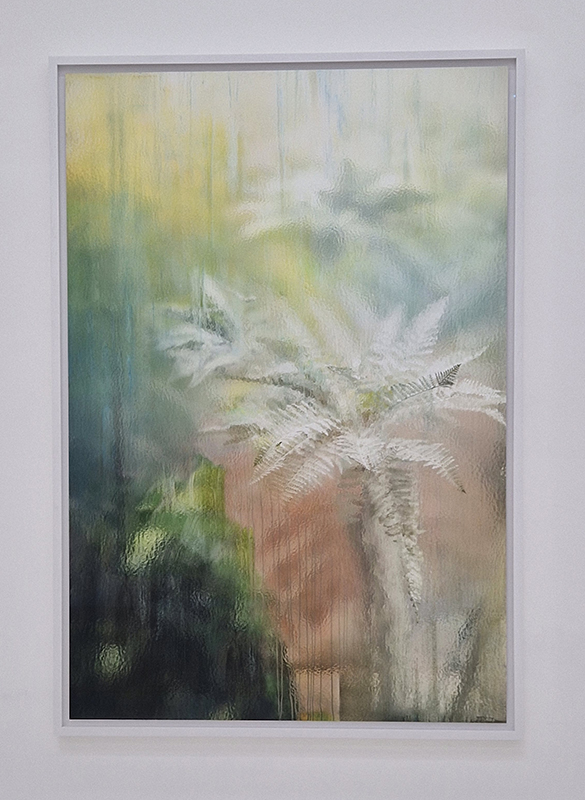
Gorgeous paintings by Helen Baines in Striding Edge at The Department Store, Brixton. Photos don’t capture the ethereal luminosity.

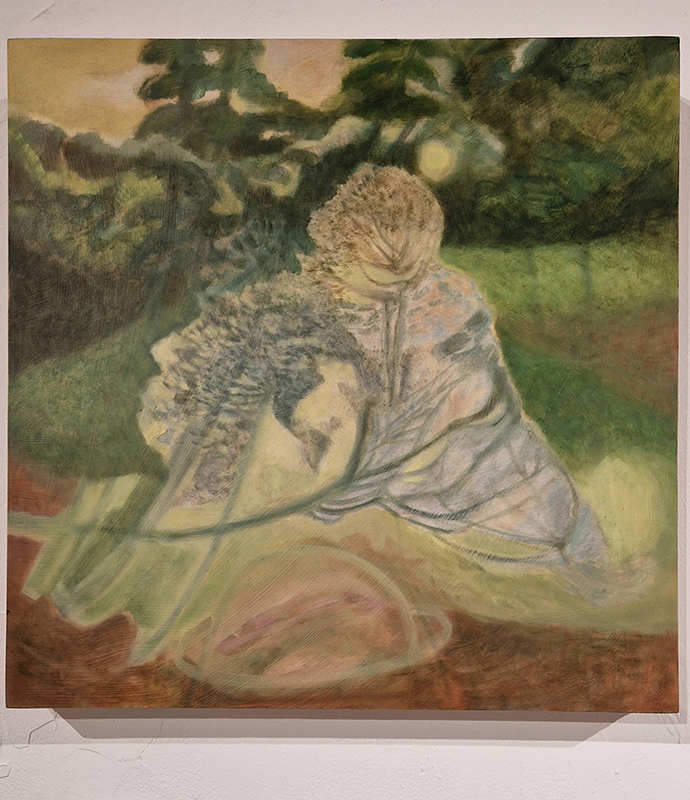
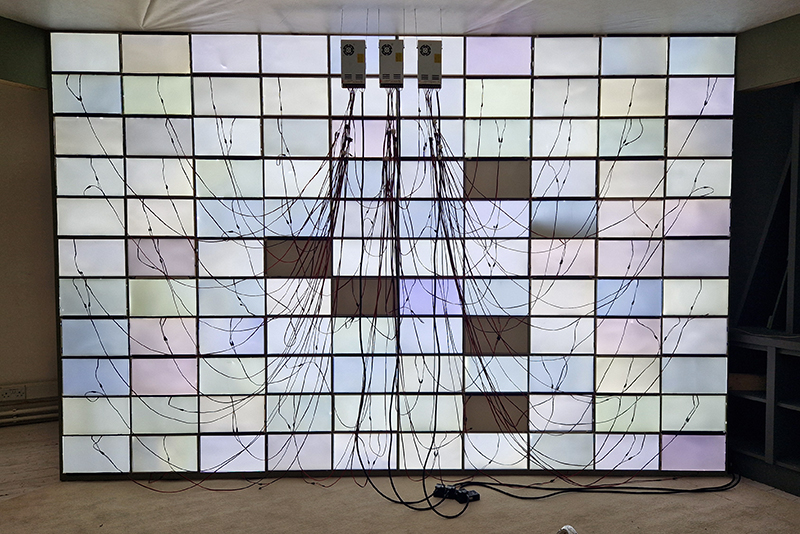
The hypnotic monument of modified LED laptop screens Wiped (Free Palastine) by Katrin Hanusch in Return of the Repressed curated by Toby Ziegler at an empty office block 10 Heddon Street. A show examining alienation and abstraction of the human experience in a climate of digital technology and AI.
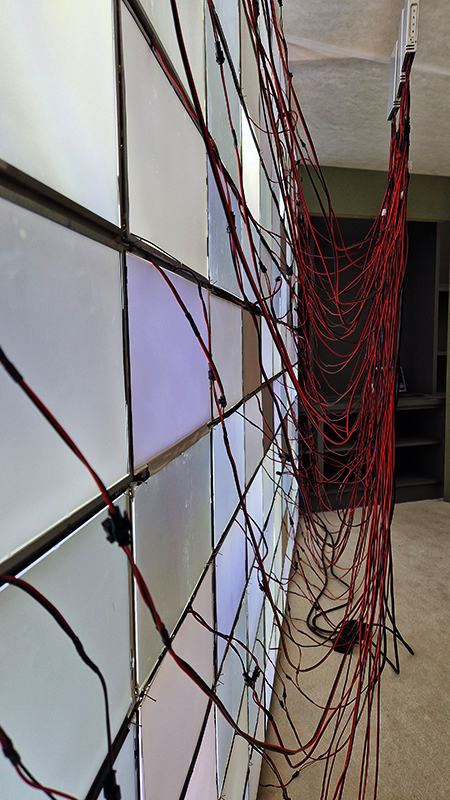
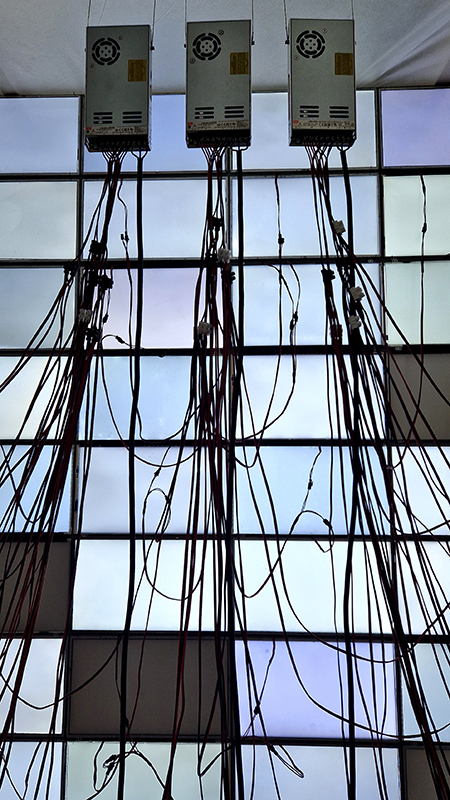
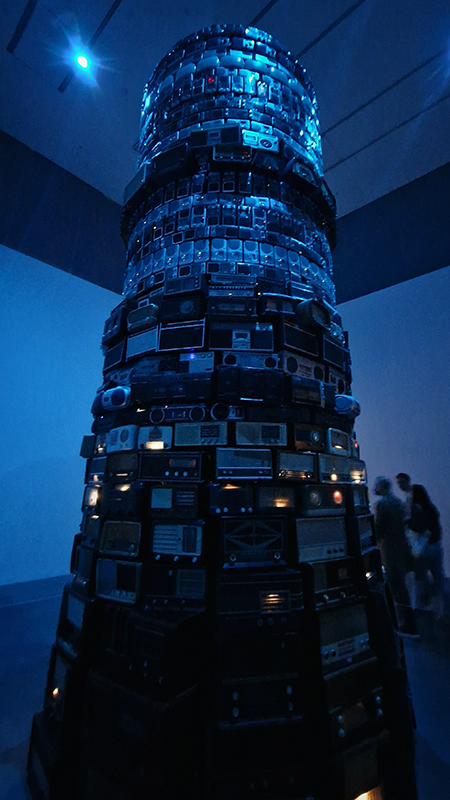
The magnificent Babel by Cildo Meireles at Tate Modern. With slightly dalek vibes, this thrumming ‘tower of incomprehension’ relates to the biblical story of the Tower of Babel, a tower tall enough to reach the heavens. God was offended by this structure, and caused the builders to speak in different languages. No longer able to understand one another, they became divided and scattered across the earth, and so began all mankind’s conflicts. Here we are, punished for our curiosity, again. This work though is a joy.
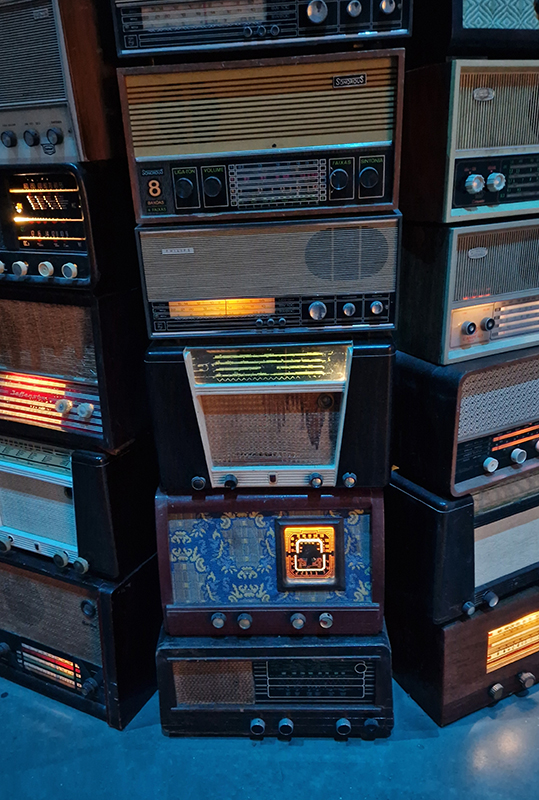
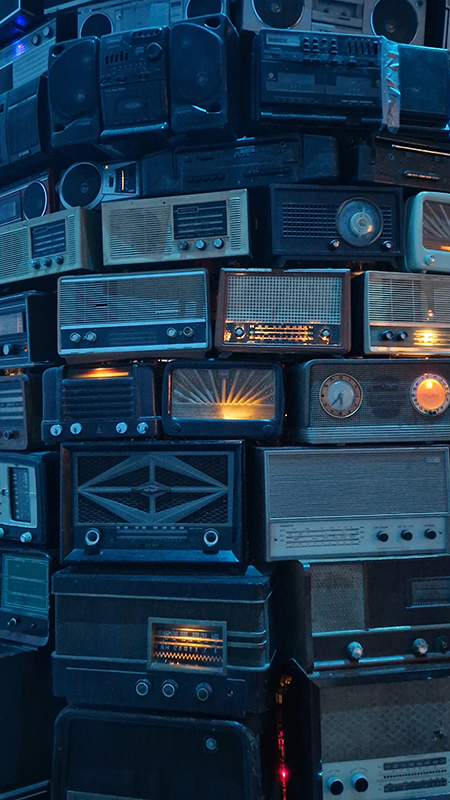
Material Actors curated by binder of women at Hypha Gallery 3 / No. 1 Poultry, London explores the tipping point of formal representation into the theatrical and cinematic world of mimicry and artifice. The artists include Alice Browne, Charlie Franklin, Lauren Godfrey, Oona Grimes, Pia Pack, Milly Peck, Michelle Williams Gamaker and Laura White. Material process and the façade are key in many of the works that surprise and confound definition.
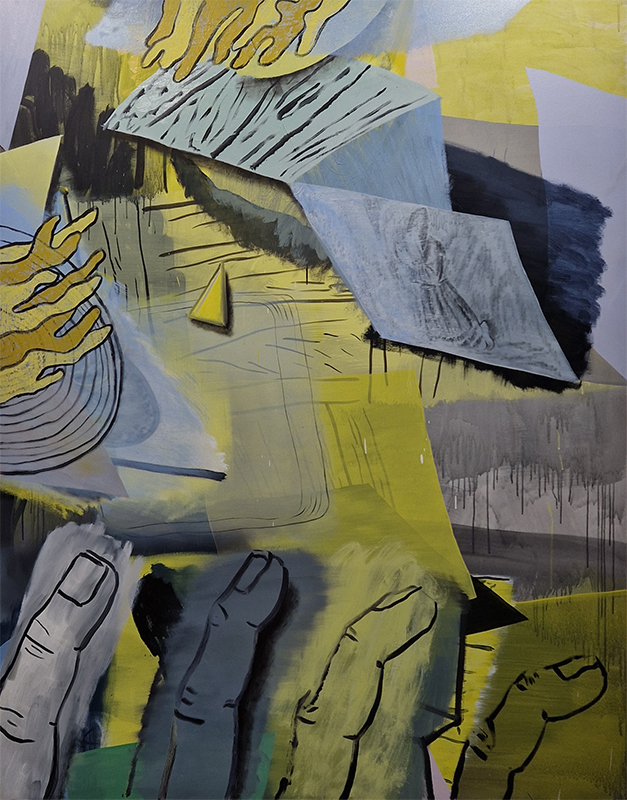
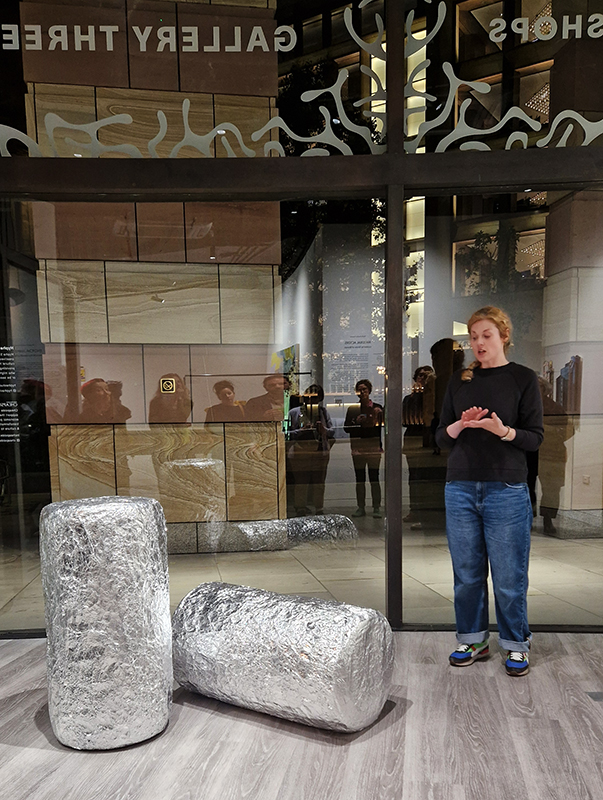
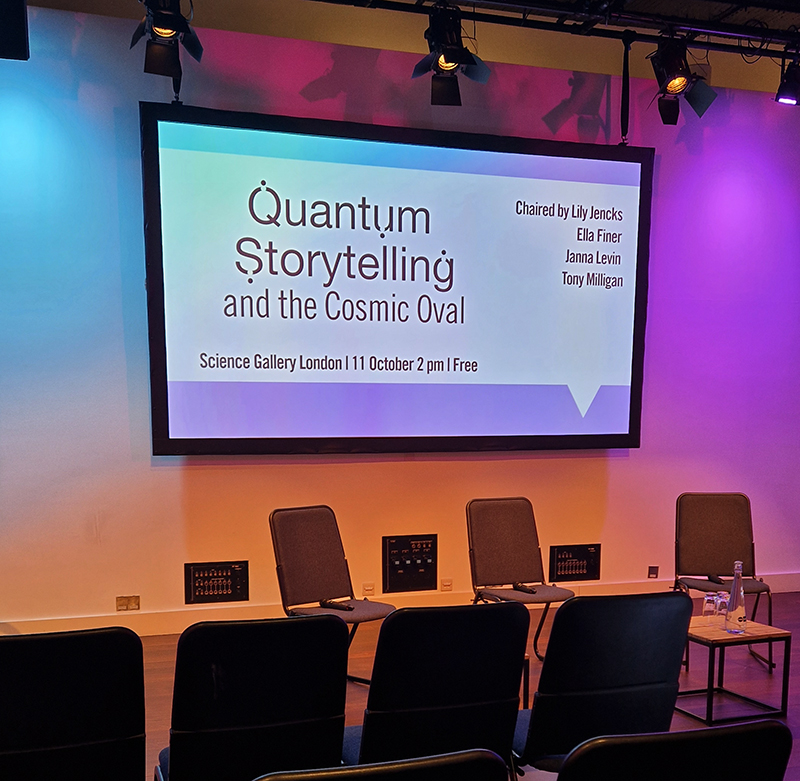
Quantum Storytelling and the Cosmic Oval – a fascinating discussion exploring how cosmic discoveries influence cultural narratives and the composing of histories. Physicist and author Janna Levin in conversation with writer Ella Finer to celebrate the launch of a new book commission The Cosmic Oval. Chaired by Lily Jencks, Keeper of Vision at The Cosmic House, with further insight from Tony Milligan, Research Fellow in the Philosophy of Ethics, Department of Theology and Religious Studies at King’s College London.

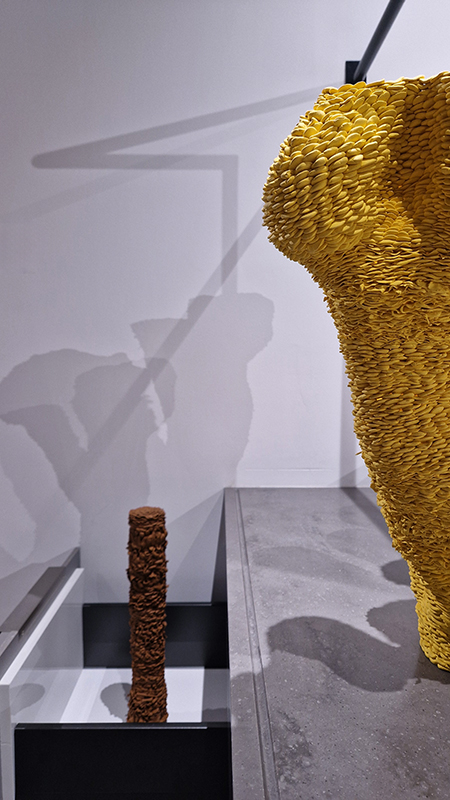
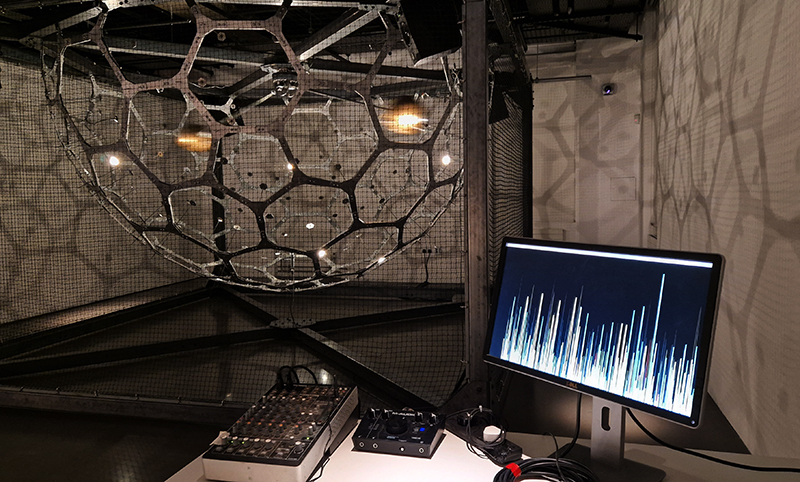
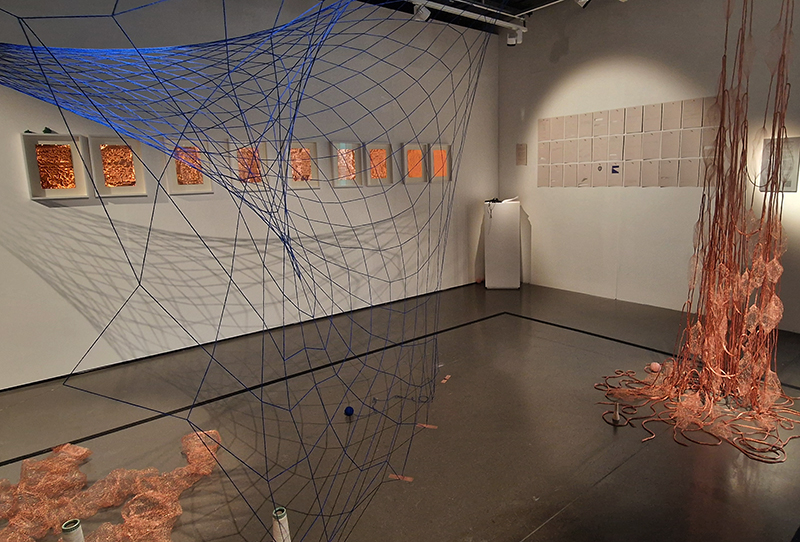
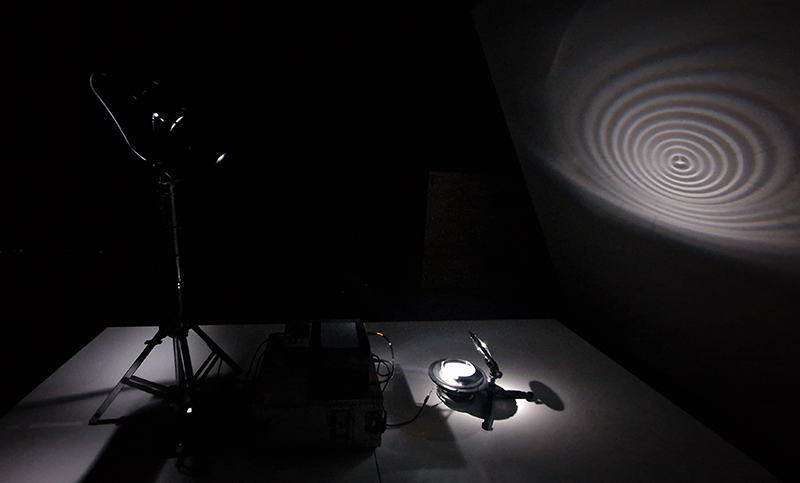
Quantum Untangled at The Science Gallery, London. I liked the simplicity of Alistair McClymont’s An Early Universe where wave patterns caused in water by low frequency sound vibrations are projected via a lens to reference quantum oscillations created when the universe was rapidly expanding after the big bang. Two large installations from Conrad Shawcross use the play of shadows to signify intangible forces of the universe. In Ringdown two caged spherical pendulums oscillate in violent motion to evoke the spiralling motion of gravitational waves in the moments after two black holes merge, a phase known as ‘ringdown.’ The artwork is probed with sensors to trace the magnetic field generated, which is displayed on a monitor. The Blind Proliferation explores the idea that our Universe is one of many co-existing ‘bubble universes’ formed in the period of rapid expansion at the beginning of time. Two ‘scientist’s offices sit either side of a structure casting complex shadows. In a nod to Plato, the scientists can only see the shadows from which they must determine their origin. There are slight differences between the two offices to suggest the idea of the multiverse where many worlds may exist with only slight variations. Daniela Brill Estrada & Monica C. LoCascio, Begriff des Körpers reflect on the nature of perception and shared understanding through their use of copper, a key material in quantum technologies, to create sculptures that describe the diagrammatic language of scientists when explaining spacetime and quantum phenomena.
It is always exciting to enter a truly dark space – NOWISWHENWEARE (The Stars) at the Rambert Dance Studios as part of the LFF Expanded program promised a breath-taking journey through light and sound when you would enter a meditative state and come face to face with your inner self. With nearly 4,000 reactive LED lights and a 496-channel soundscape it was an enjoyable experience but perhaps not quite as awe inspiring as hoped.

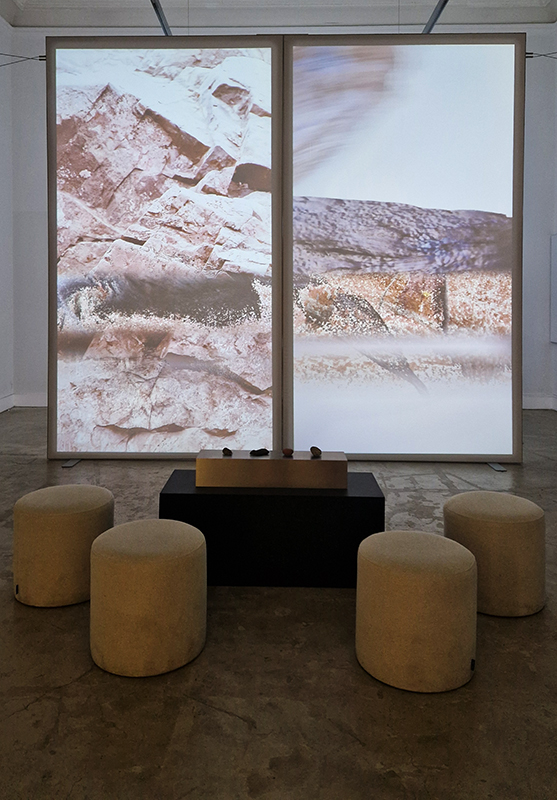
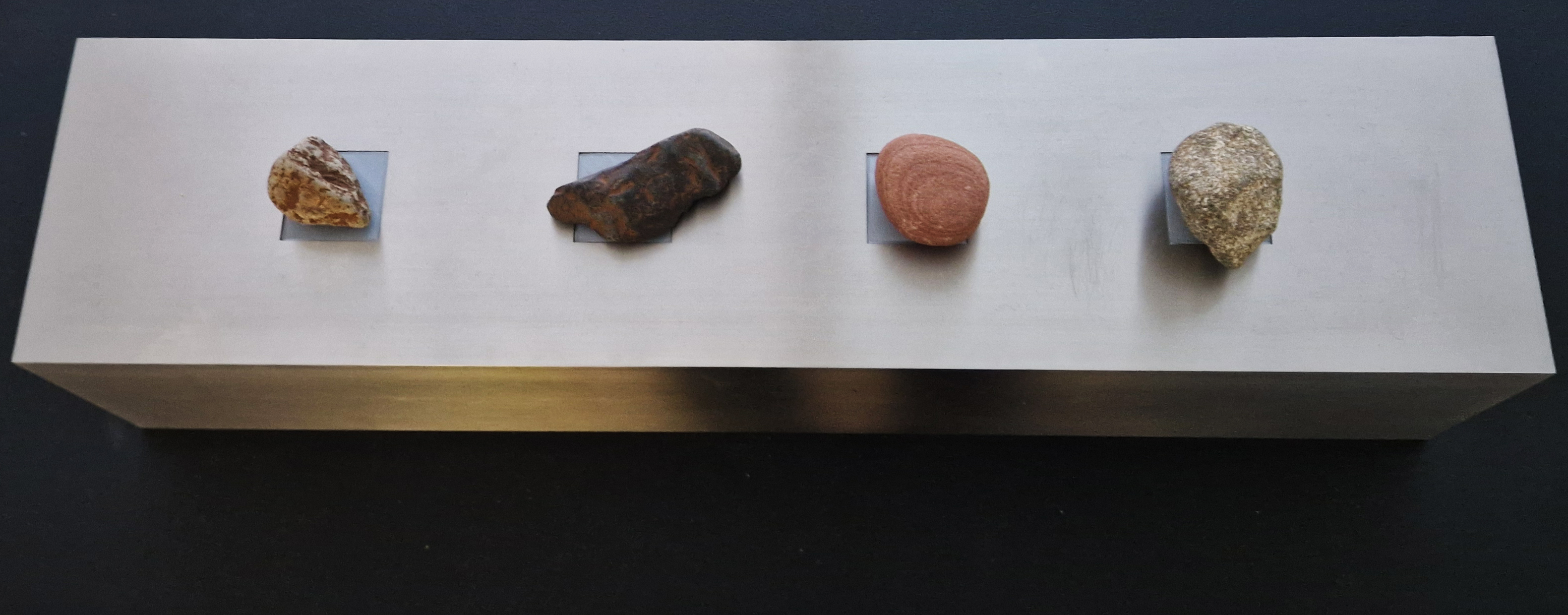
(S)low Tech AI by Studio Above & Below (Daria Jelonek and Perry-James Sugden) at Victoria and Albert Museum. ‘This installation examines artificial intelligence through the lens of geology. A sculptural interface of four rocks activates a slow, responsive AI system that reacts to touch with evolving sound and image. Each new rock arrangement adds a line to a growing digital landscape, echoing sedimentary layers shaped by collective interaction. The imagery is drawn from four geologically significant sites in Scotland, where ancient stone carvings show early examples of symbolic data recording. Using simple algorithms, the work invites reflection on AI as a slow, ethical, and materially-aware process.’ I couldn’t determine what changes were set in motion when the stones were moved, it does say it is a slow process so perhaps I shouldn’t have expected to notice the impact of my moving the stones and it is something that builds into the algorithm later. It was still quite mesmerising to watch.
Luca Bosani Unidentified Performing Objects at Victoria and Albert Museum

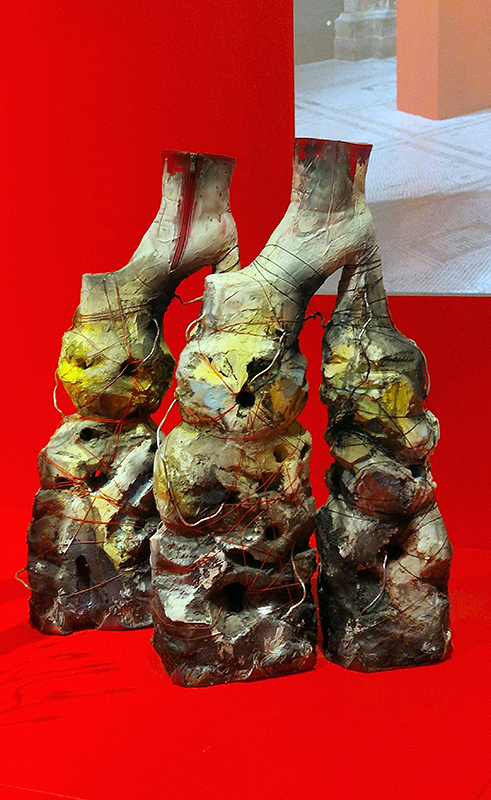
Loved these boots that look like they have been torn from the rock. Magnes might have felt a slight tug as the nails in his boots clung to the magnetite beneath his feet but imagine the weight, the feeling of increased gravity walking in boots of rock.

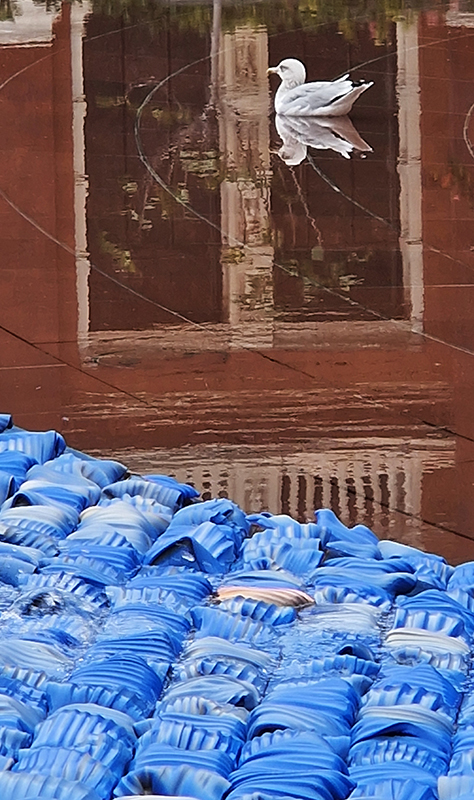
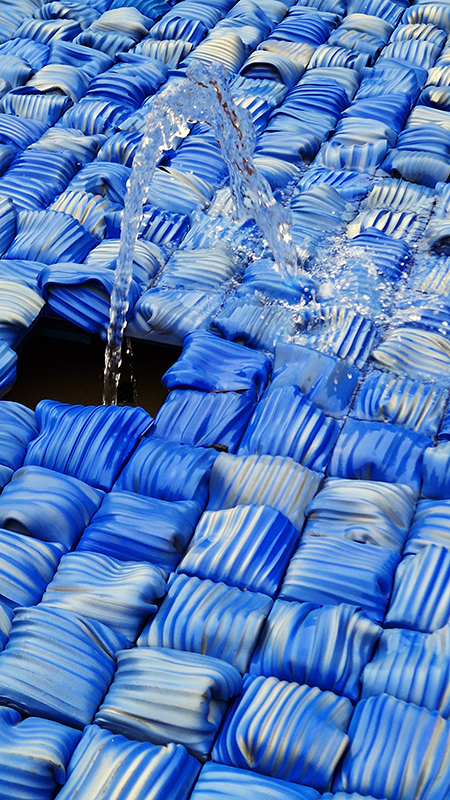
The Ripple Effect by Alicja Patanowski blending materials from one of the largest mining waste reservoirs in Europe with clay to create a tiled seating installation in the John Madejski Garden.
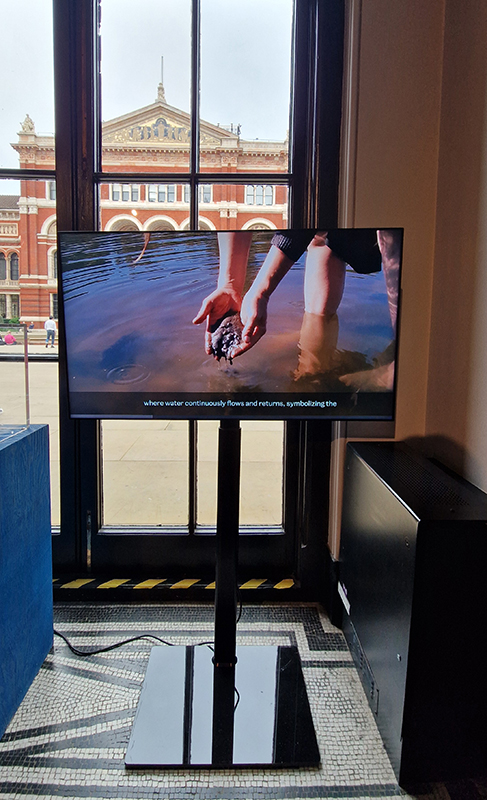
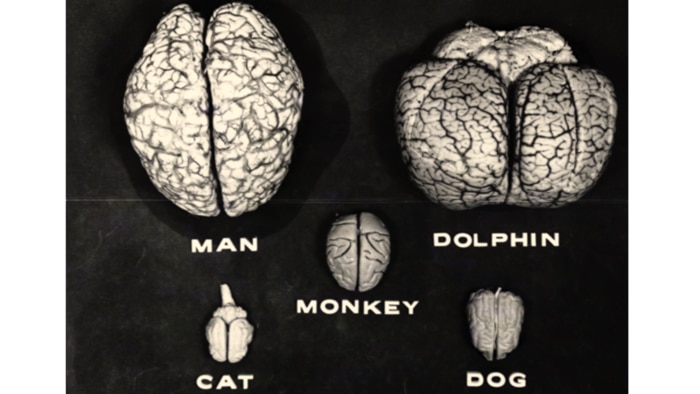
Screening as part of the London Film Festival, John Lilly and The Earth Coincidence Control Office directed by Michael Almereyda and Courtney Stephens, explores Lilly’s radical experiments with isolation tanks and LSD to study consciousness, as well as his theory that a hidden entity called the Earth Coincidence Control Office (E.C.C.O.) secretly influences human events. Despite his desire to communicate with cetaceans believing them to be intelligent conscious beings he exhibits a cold disconnect to their physical and emotional welfare. A lot of the footage is shocking to a contemporary audience in its cruelty but his research into human consciousness was trailblazing at the time and his conclusion that humans were at risk from an outside technology based intelligence does have some prescience considering current concerns over AI.
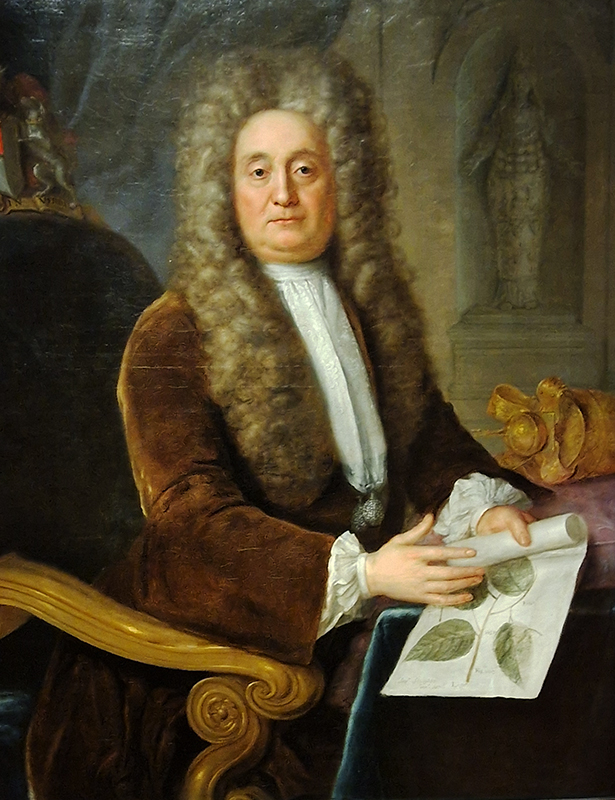
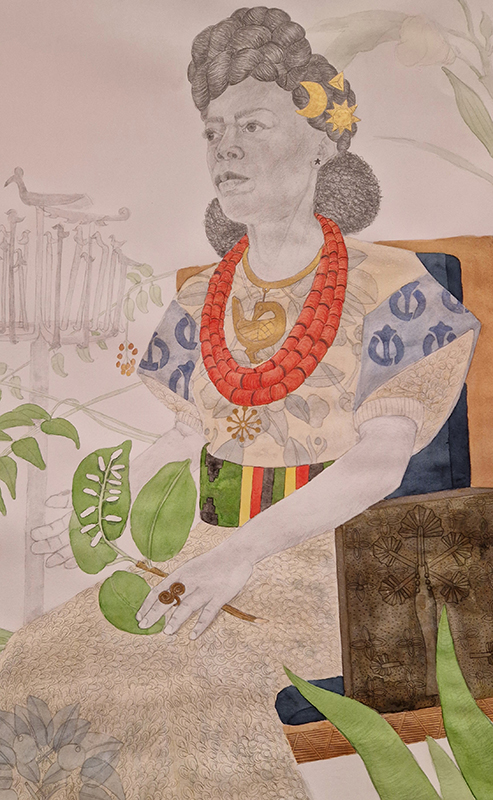
Artists First: Contemporary perspectives on portraiture at The National Portrait Gallery commissioned several artists to respond to an artwork of their choice. Charmaine Watkiss chose the portrait of Sir Hans Sloane, a botanist and collector who travelled to Jamaica in 1687 taking advantage of enslaved people’s indigenous knowledge of the location, properties and medicinal uses of local plants to boost his collection and furnish his publication. Charmaine’s beautifully crafted response To reimagine an African Queen shifts the dynamic to reflect the dissonance between these two human’s relationship to nature, one built on wisdom and respect and one which based on extraction and mastery.
Reading

The Stone Woman by A.S. Byatt. An evocative journey into becoming other.

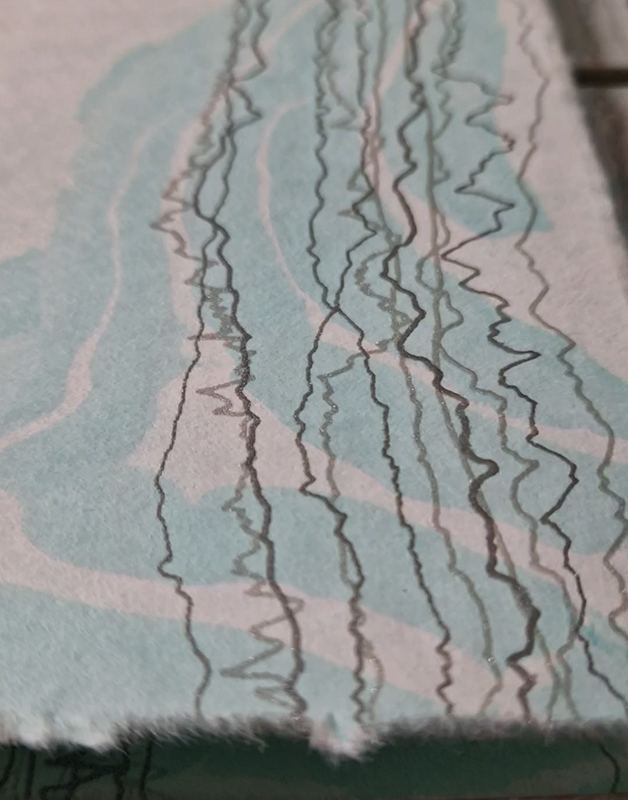
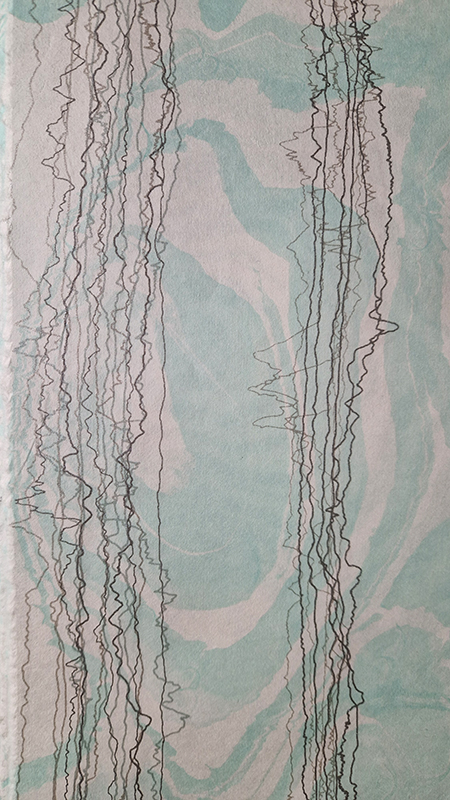
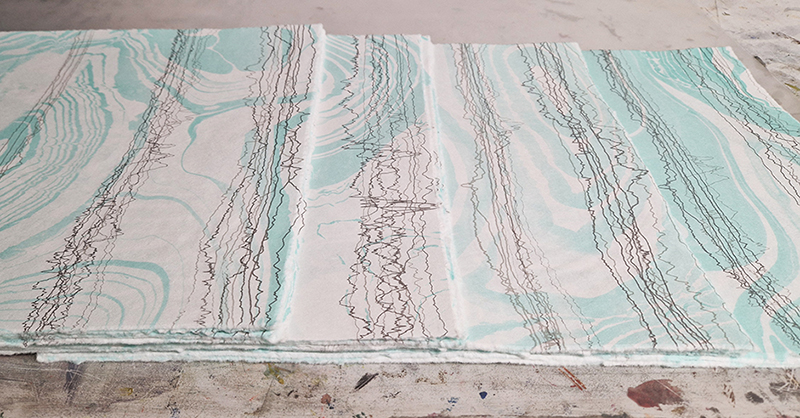
Spending time in the print studio layering up magnetometer lines describing fluctuations in the Earth’s magnetic field. Using sheets of Japanese paper with Suminagashi ink swirls to evoke both ocean and magnetic currents. The lines are printed in metallic inks, relating to the idea of a lode, which in geology is a deposit of metalliferous ore that is embedded in a fracture in a rock formation or a vein of ore that is deposited between layers of rock.

The bands of magnetometer lines are used to signify the last three magnetic pole reversals. The most recent at 42,000 years ago (a short 500 year blip), then 780,000 years ago (continued for 22,000 years) and 1,000,000 years ago (continued for 40,000 years). This history of these reversals is stored in the ocean floor as magma flows up between cracks in the Earth’s crust, spreads and solidifies, capturing the direction of the poles in the orientation of the minerals.

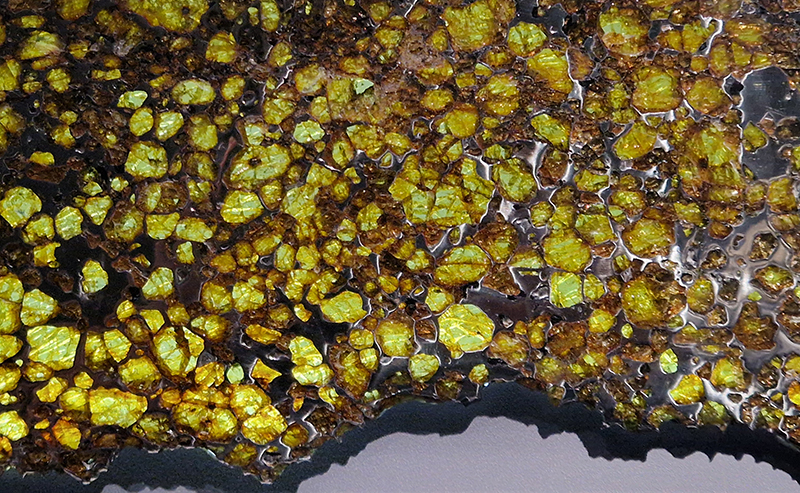
Work in progress on Mineral Visions, a video sculpture with a particular focus on magnetite/magnetism and human relations. Editing video of Jepara seen under the microscope. This is a magnetic pallasite meteorite with an interior structure of densely packed olivine and iron-nickel, discovered in Indonesia in 2008. Pallasite meteorites formed in the asteroid belt between Mars and Jupiter. They’re made up of minerals and remnant materials from the first few million years of the solar system, forming at a time when planets were only just coming together.
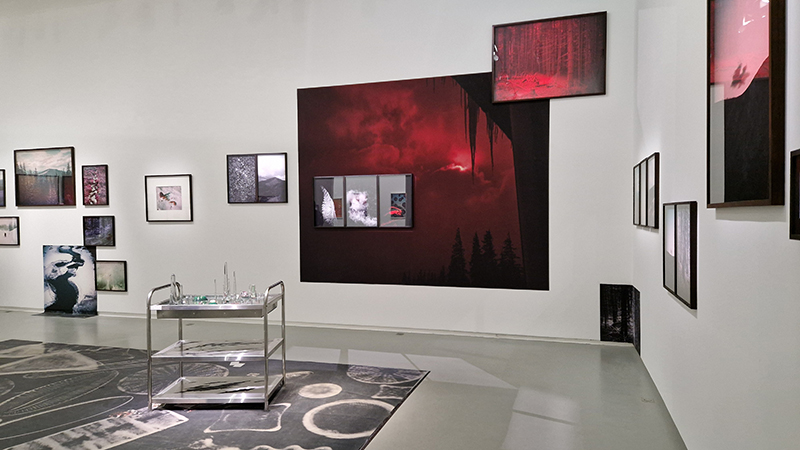
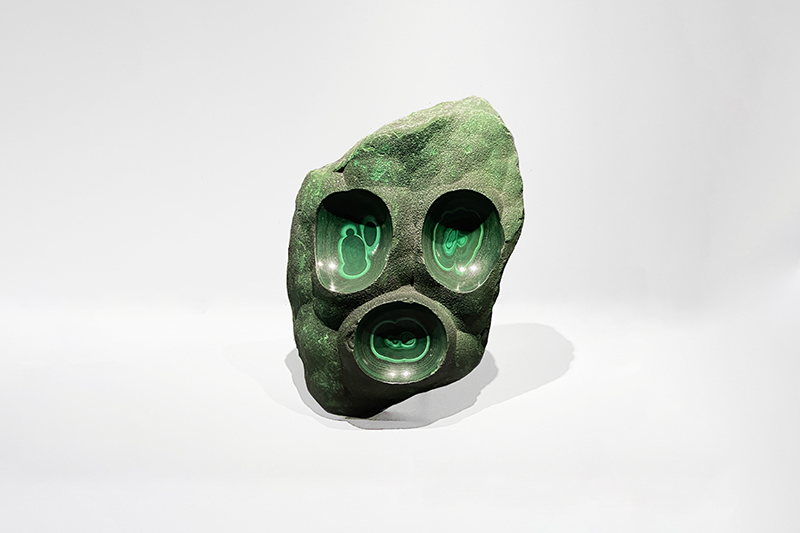
A very special research trip with fellow artists exhibiting in the upcoming show at Hypha HQ, The Geological Unconscious, to visit la Galerie de Géologie et de Minéralogie, Muséum National d’Histoire Naturelle, Paris. Hosted by the curator of minerology we were privileged to see a selection of stones in the museum vault. The museum holds Roger Caillois’ stone collection as featured in his book The Writing of Stones. The photographs of this extraordinary collection do not compare to seeing them up close, from every angle. Must larger than anticipated, they are extracted from their snug foam packaging for yet another scrutiny of the human gaze. Caillois wrote at length about each stone, allowing his imagination to conjure metaphor and analogy from the syntax of the ancient crystal and sediment. He was fascinated by his own fascination with the stones which he saw as a desire to connect with the more than human and lose oneself in the enormity of the universe.

Roger-Caillois Malachite Photo Julie F. Hill

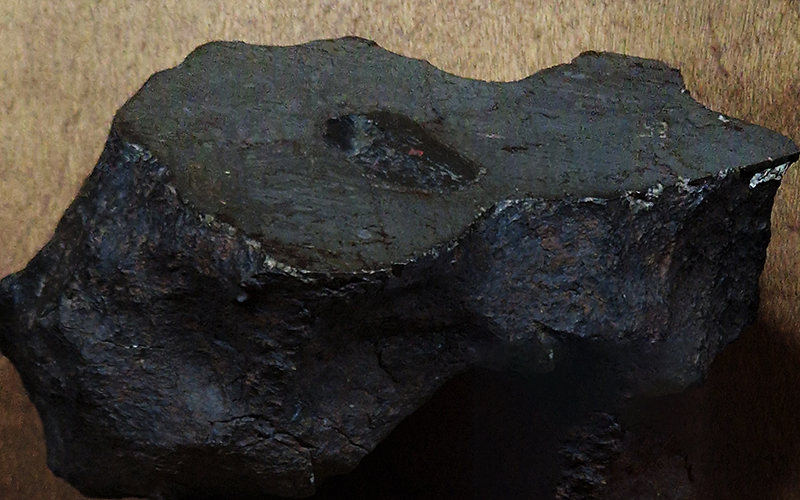
We also got to see some meteorites in the collection including a large one containing diamonds that had belonged to Caillois. The Canyon Diablo meteorite originated in the asteroid belt between Mars and Jupiter and crash landed into the Arizona desert approximately 49,000 years ago, with the force of more than 100 atomic bombs. The crater it left is nearly a mile across and 600 feet deep. Fragments were flung over an area of over 11 sqm from the point of impact where the main mass vaporized on contact. In the force of collision small diamonds formed from graphite and are found inside the highly recrystallized meteorite fragments at the rim of the crater. 
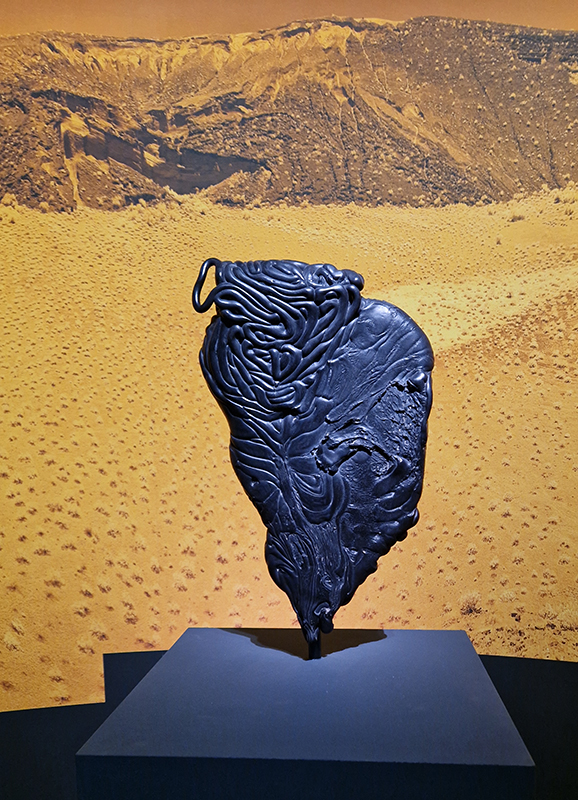
I was also interested to a slice from one of the world’s largest specimens of pallasite, the Imilac pallasite discovered in 1822 which exploded over the Atacama Desert in northern Chile, possibly in the fourteenth century.

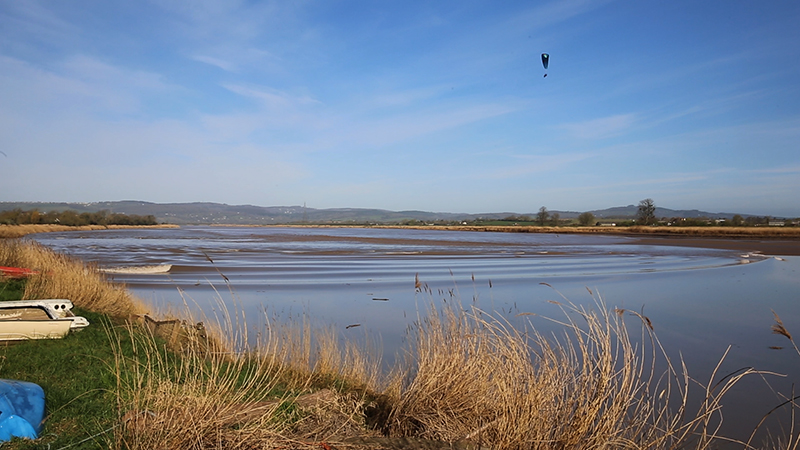
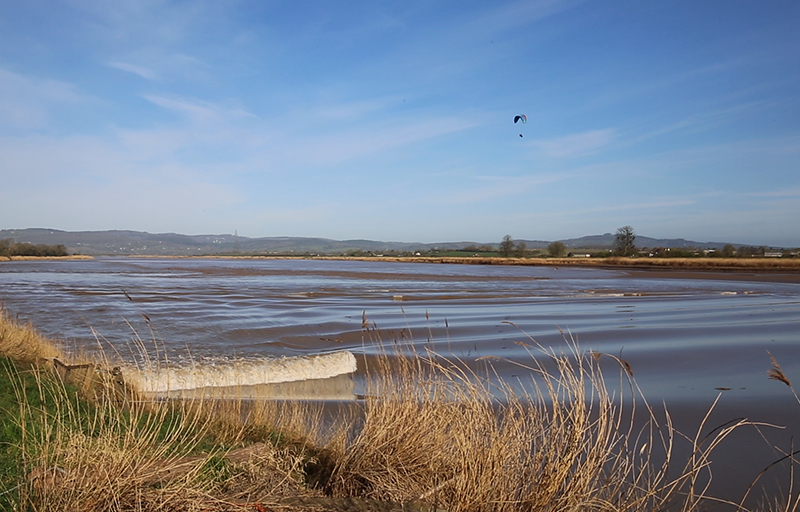
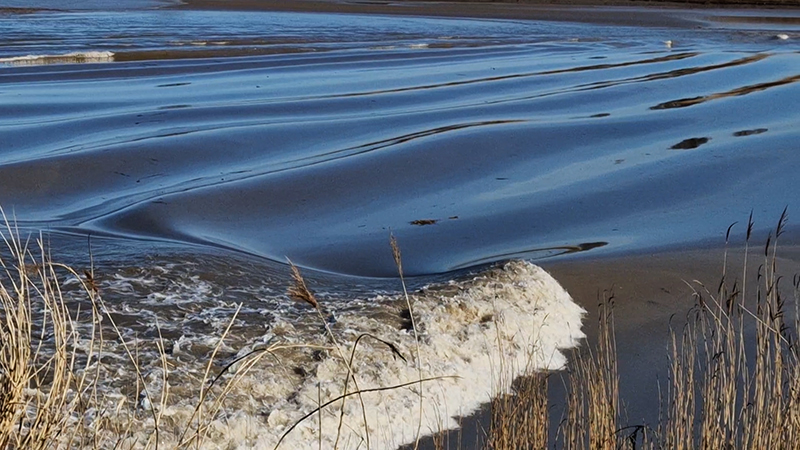
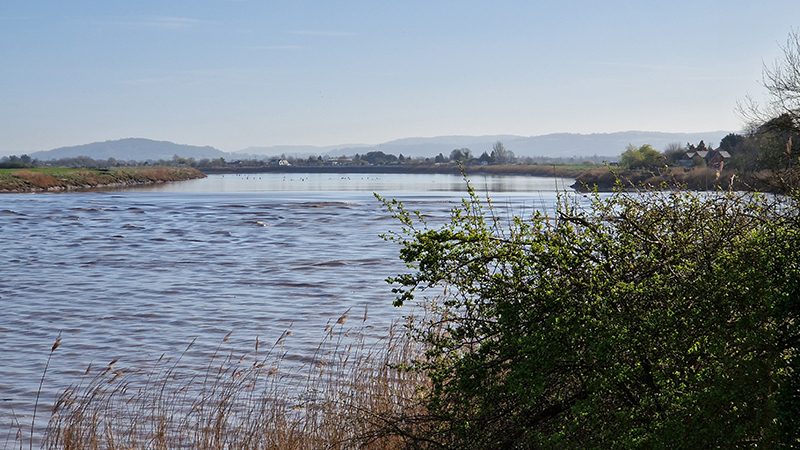
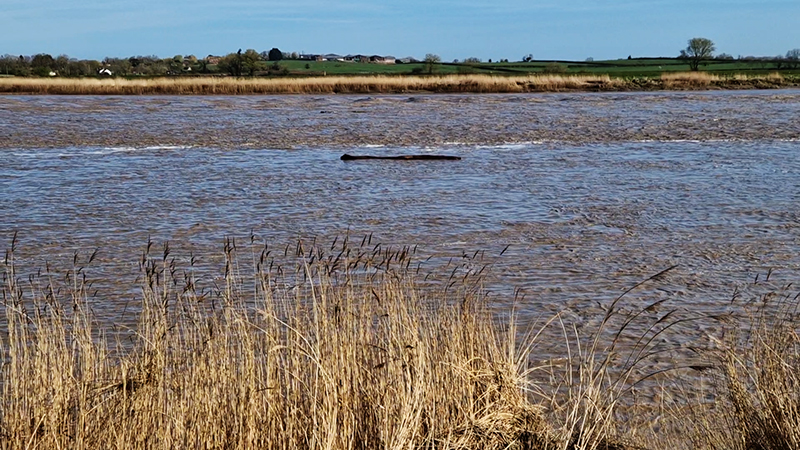
This spring Severn bore had been forecast to be a 4* event but arrived earlier than expected as more of a ripple. Not enough rain from the Welsh hills and no uplifting wind meant it was a more gentle, leisurely wave. It was still exciting to witness the change in the river from the slow glassy seaward flow to choppy, muddy turbulence carrying logs and assorted debris inland as the tidal wave rose into the channel. Such a beautiful morning to be on the river bank.

Gallery Visits

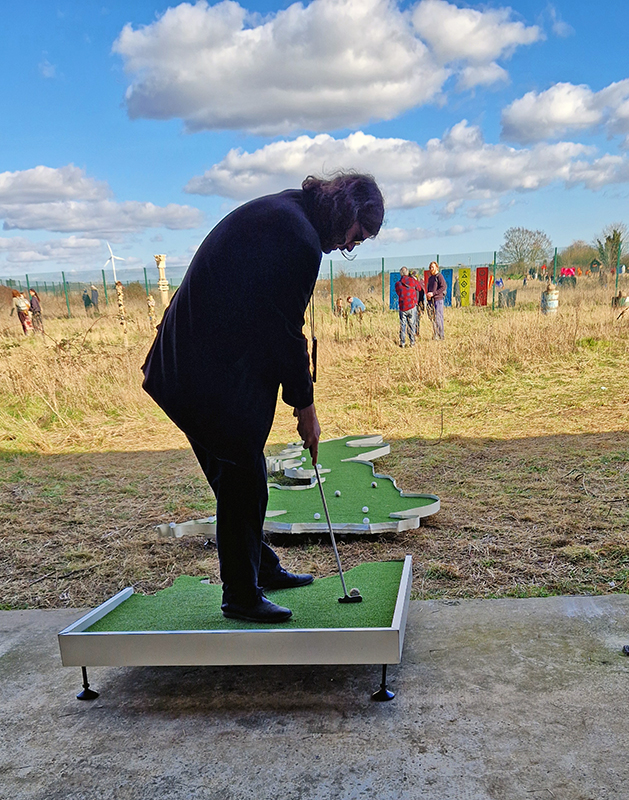
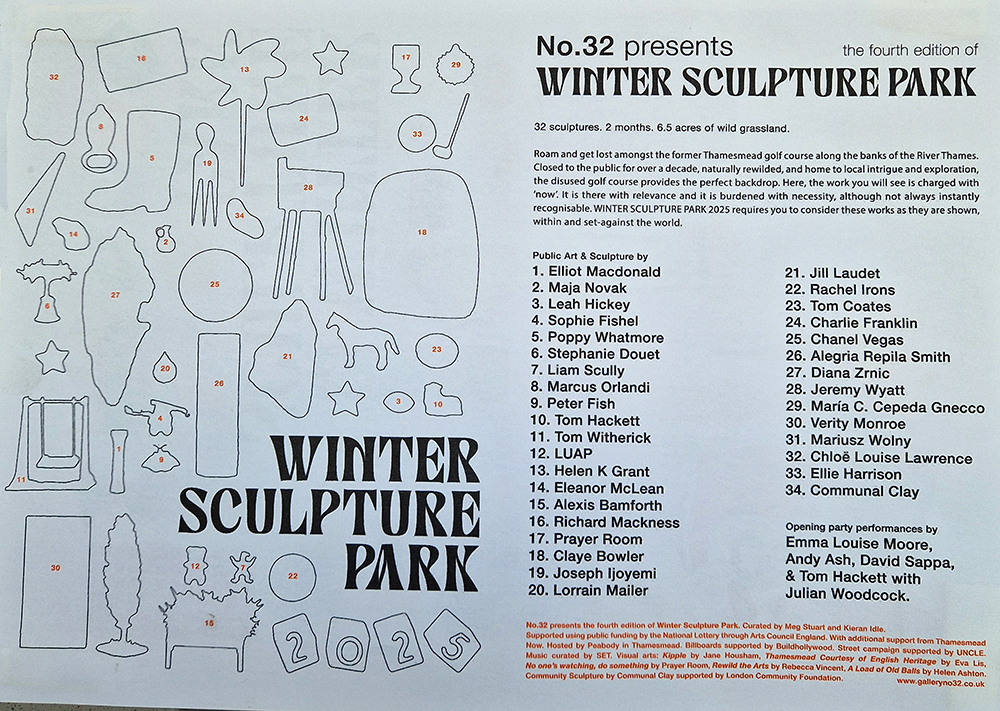
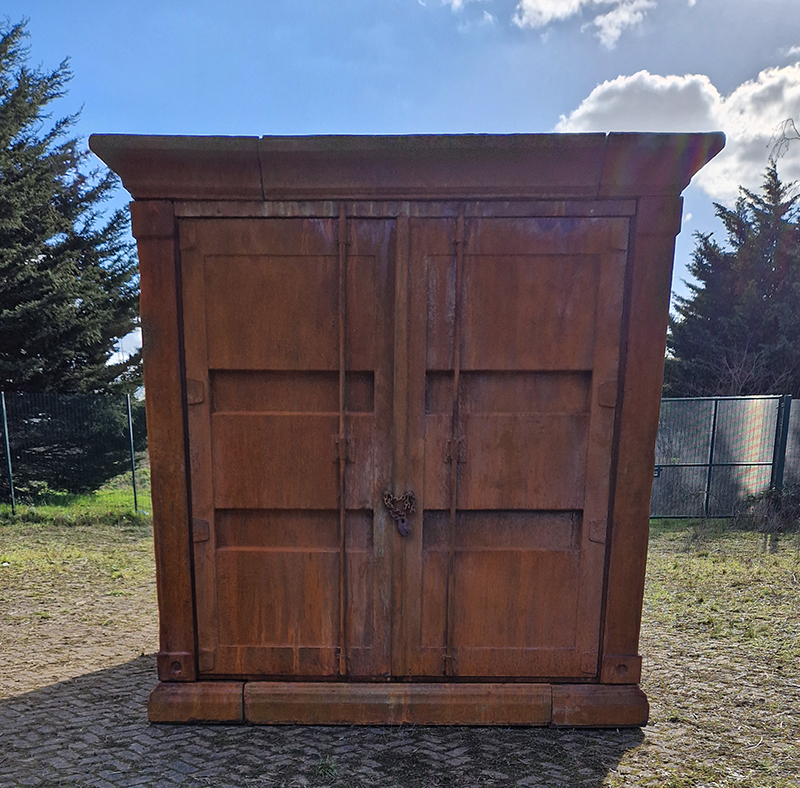
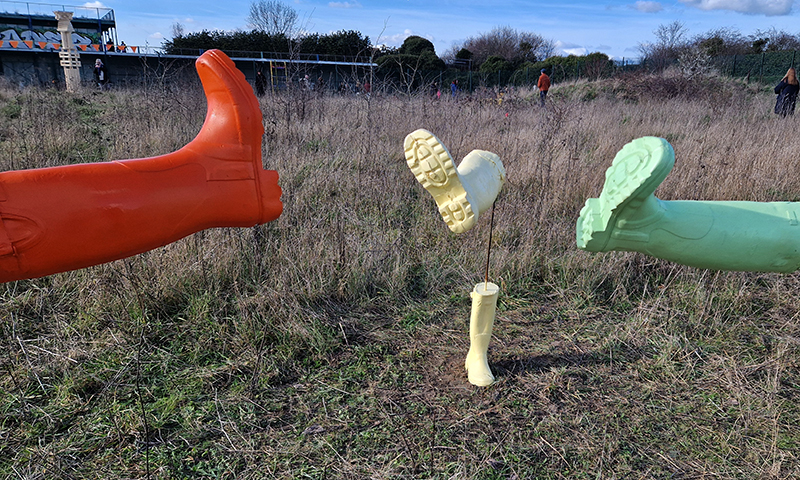
Glorious sunshine spot lit exuberant work at the Winter Sculpture Park hosted by Gallery No32 at a former Thamesmead golf course along the banks of the River Thames.

Clinging On, an exhibition of wall based sculptures curated by Poppy Whatmore at Glassyard Studios SW9. Instability is growing across the world, as we cling to liberal norms, ideas and values; these works connect a feeling of uncertainty to the physical, defying a gravitational pull or some internal force. These are physical, material or conceptual investigations of precariousness and the accompanying need to hold on. A packed PV means I have few images but I did capture the excellent Ocean Chasms/Crystal Chasms by Julie F. Hill and Caught Moon by Jane Millar.

Moving Landscapes at Jeu de Paume, Paris. This exhibition brings together photography, literature and science to address environmental questions but also those of identity or migratory flows; the landscape thus becomes a living and constantly changing territory. Artists include Mounir Ayache, Julian Charrière, Edgar Cleijne, Ellen Gallagher, Yo-Yo Gonthier, Laila Hida, Eliza Levy, Julien Lombardi, Andrea Olga Mantovani,Mónica De Miranda, Richard Pak, Mathieu Pernot, Prune Phi, Léonard Pongoa and Thomas Struth.
Events

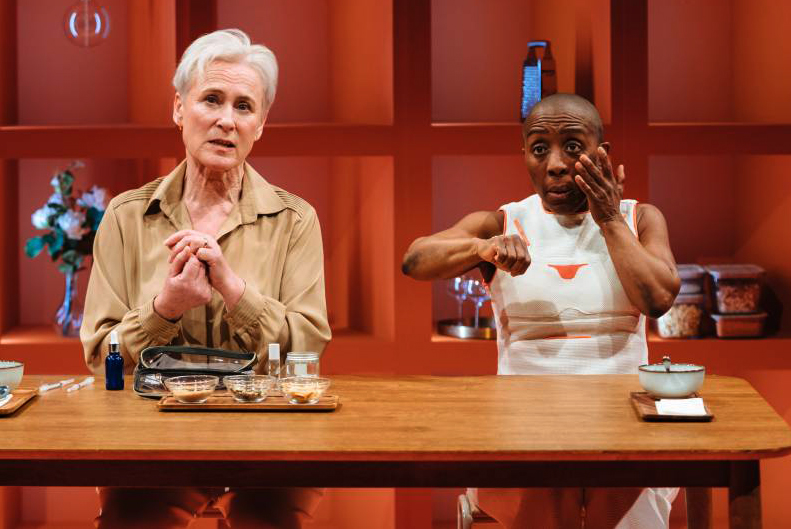
More Life By Lauren Mooney and James Yeatman at Royal Court Theatre. Asking the question ‘what is life?’ but also what is the quality of life you would accept if you discovered you were a computer file. What constitutes real human experience? A brain sliced, scanned and rebuilt in the future to be transplanted into a new synthetic body holds memories of a past life and feels emotion but has limited access to new physical sensory experience – no need to eat or sleep. Does the urge to live, live on? Is it possible the first person to live forever has already been born?

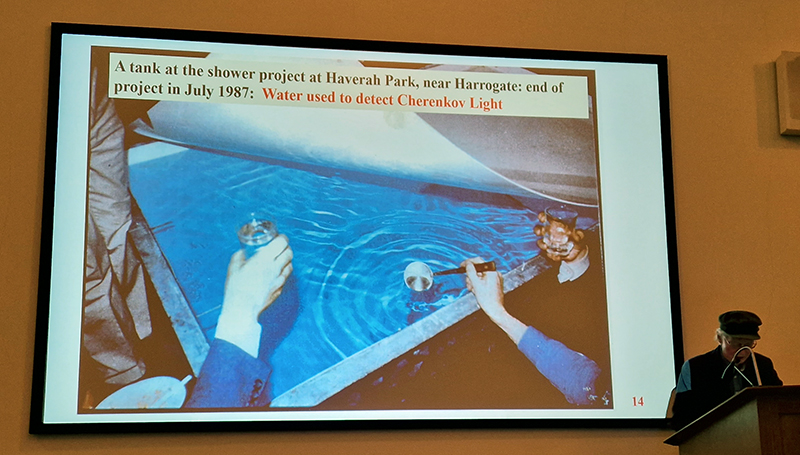
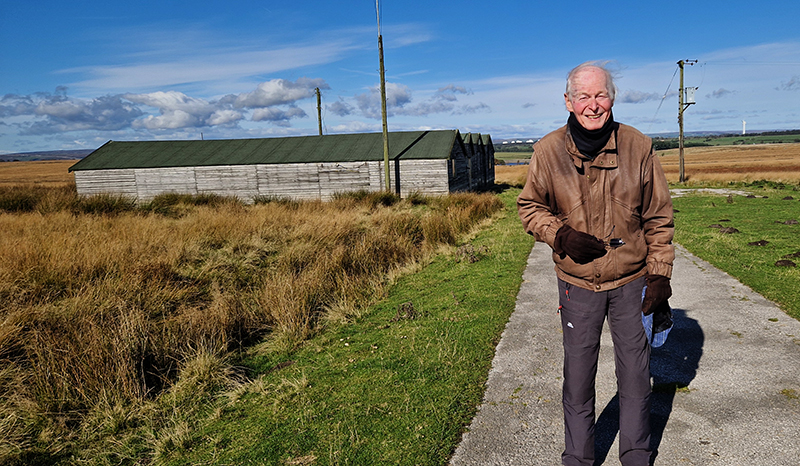
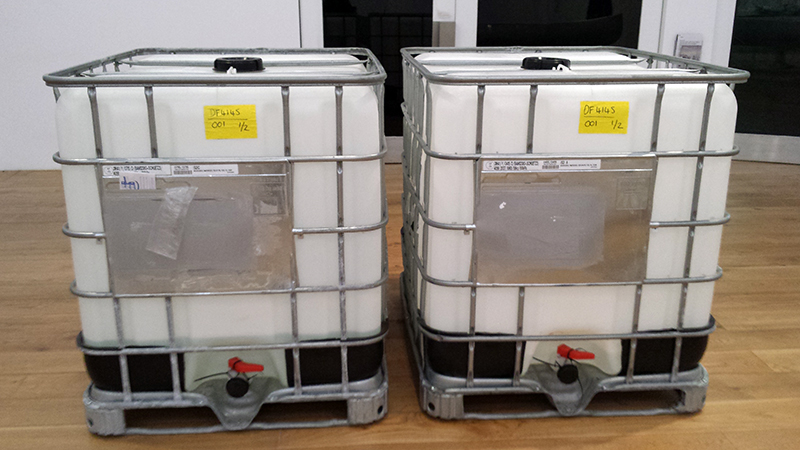
Great to see Alan Watson again, after visiting Haverah Park with him last year, to hear more about Searching for the Origin of the Highest Energy Particles in Nature. This water being sampled in the image below had been in the tank for nearly 30 years yet was still clear and drinkable.

He began his lecture at The Royal Astronomical Society with a short history on the discovery of cosmic rays, taking us right back to 1785 and Charles-Augustin de Coulomb who discovered that bodies with like electrical charges repel and if they have different signs, the force between them makes them attract. In his experiments testing electrical charge with two metal balls suspended on silk threads to easily repel or attract he was surprised to find that even if his experiment was very well insulated the charge still leaked away. It took over a century before it was realised that the air was being ionised which spurred physicists to discover the source of this ionization. In 1912 Victor Hess made his famous balloon flight to over 5km with a rudimentary Geiger counter and no oxygen to discover that ionization increased with altitude and must have an extra-terrestrial source. Over another century on and cosmic rays still present a mystery as to their origin and how they gain their enormous energies.

Alan is interested in the ultra high energy subatomic particles from extragalactic sources with energies about a million times as high as the energy reached by human-made particle accelerators. To put these energy scales in context – a laser pointer has an energy of about 3 electron volts, which is also typical of the photons that come from the sun. The molecules in the air are rushing around at 300m per second with an energy of 1/40 eV. A low energy cosmic ray, the sort that passes through your body a million times in a night, has an energy of 1 giga-electron volts, a proton created at CERN ( the European Organization for Nuclear Research) has around 7 tera-electron volts. If there was a race between a CERN proton and a high energy cosmic ray (over 1018 eV ) starting at the centre of the galaxy, by the time the cosmic ray had reached Earth the CERN proton would not even have reached the moon.

The ultra high energy rays are very rare. To detect these particles physicists rely on observing extensive air shower arrays to amplify the arrival of the particle. By recording the secondary particles that are produced when a cosmic ray hits the upper atmosphere the energy of the particle can be calculated. The showers arrive is a disc like formation with footprints of around 1sqkm so it is necessary to have detectors spread over a large area. The detectors measure the arrival time of the secondary particles and this can help determine the direction of the particle to within 1 degree. The trajectory of the cosmic ray is affected by galactic and intergalactic magnetic fields making it very difficult to find the origin of the particle.

The shadow of the moon can be seen in data recordings of cosmic ray arrivals.

There are a few different methods of detecting cosmic rays. This can be done using scintillator plastic which gives off a flash of light when a particle passes through the medium. Using Cherenkov radiation is another method – this takes advantage of a naturally occurring electromagnetic shock wave giving off energy as light when a particle passes through a medium faster than light can travel through the same medium. The speed of light through water is only 3/4 as fast as when it passes through air, a cosmic ray with much more energy will travel through water at almost the speed of light. This phenomenon can even be seen with the naked eye if the location is dark enough. Astronauts experience flashes of light in the eyes from particles directly hitting the retina but also from particles passing through the vitreous fluid and causing Cherenkov radiation.

Another method is to detect the excitation of nitrogen, the same process that produces the aurora. This light is in the ultra violet spectrum.

By the end of the 1980’s when Haverah Park closed the discovery of the origin of high energy cosmic rays was still a long way off. What had been established was that at the very high energies, only one particle would fall within one km per century. To make further progress a much larger area of detection would be needed. The Pierre Auger Observatory in Argentina at 3000 sq km is about twice the size of Surrey with many hundreds of water tanks. These tanks hold 10 tonnes of water but are the same depth as those at Haverah Park at 1.3m which turned out to be the optimal depth for the water tanks. Charged particles generated during the development of extensive air showers excite atmospheric nitrogen molecules, and these molecules then emit fluorescence light. The Cherenkov detectors at Pierre Auger are supplemented by fluorescence detectors installed at four elevated observation sites with 24 large telescopes specialized for measuring the nitrogen fluorescence in the atmosphere above the array.

The most exciting discovery came in 2017 when a convincing anisotropy in the arrival direction of cosmic rays of a certain energy was determined with some evidence that Centaurus A might be a source of these cosmic rays. There was also evidence of particles clustering close to the super galactic plane, an enormous, flattened structure extending nearly a billion light years across.

The galactic year is the duration of time required for the Sun to orbit once around the centre of the Milky Way Galaxy equivalent to approximately 225 million Earth years.

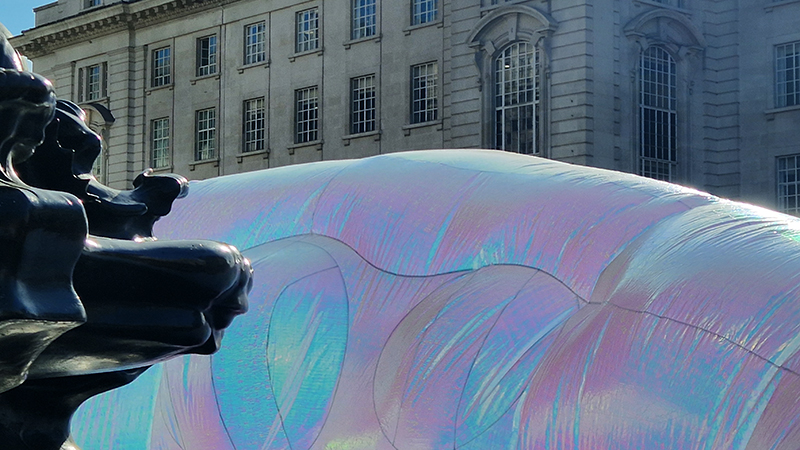
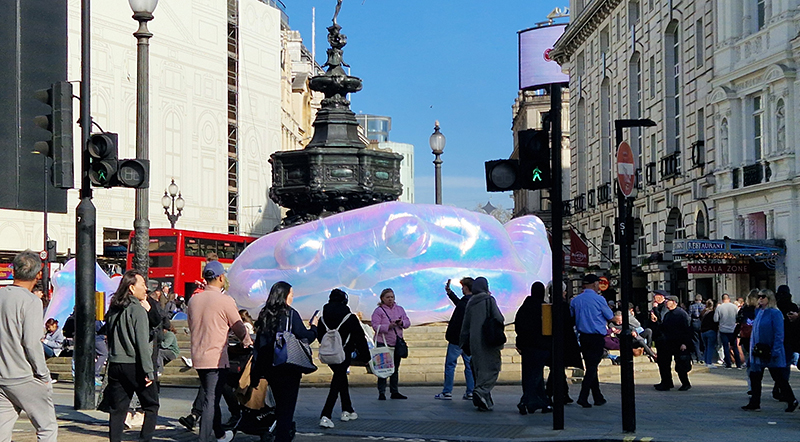
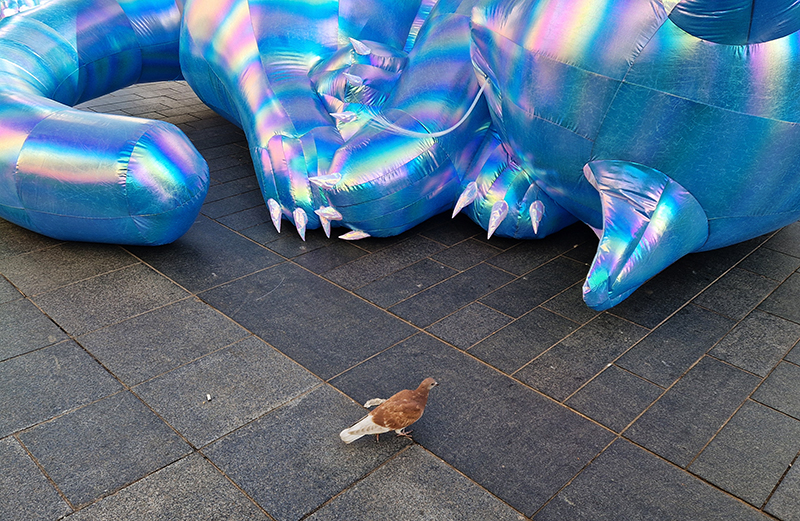
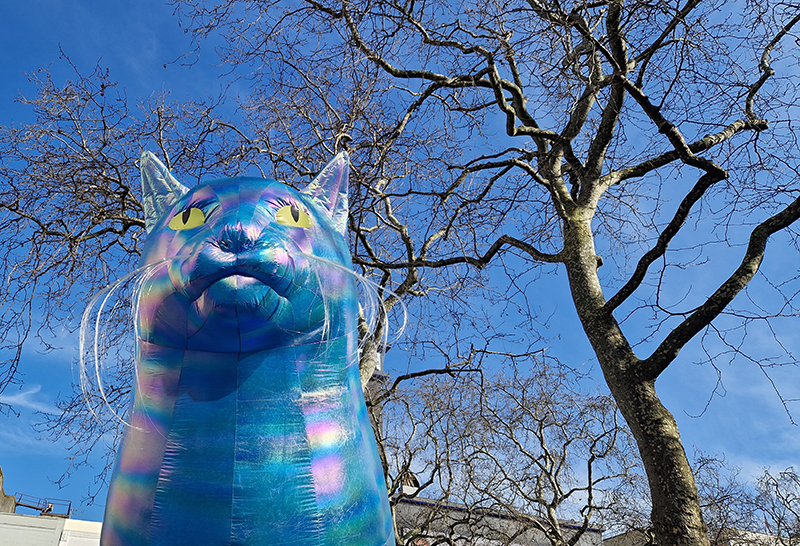
Art After Dark cosmic takeover around Piccadilly and Leicester Square from Nelly Ben Hayoun-Stépanian. I saw the iridescent asteroid-sized moon rocks and inflatable UV reactive sculptures inspired by Schrödinger’s famous quantum physics paradox in bright sunshine

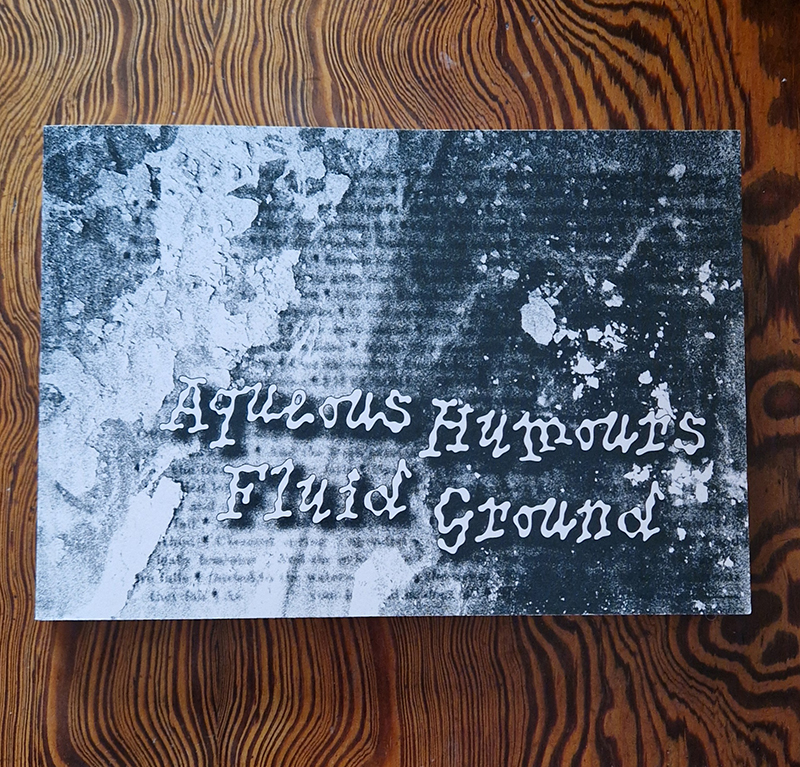
Book launch at Matt’s Gallery – Aqueous Humours Fluid Ground, edited by Kirsten Cooke published by Matt’s Gallery and the Poorhouse Reading Rooms. A night of experimental nonfiction, fiction, diagram, scent and moving image. An evening that activates a watery mapping, which denatures cartography through practices of immersion, aquatics, time travel and the posthuman lenses of geological, animal and machine vision. With contributions from Linda Stupart, Harun Morrison, Ezra-Lloyd Jackson, Melanie Jackson, Joseph Noonan-Ganley, Charlie Franklin, Michelle Williams Gamaker, Lucy A. Sames, Maggie Roberts, Carl Gent. I was only able to stay for the first half of the evening but this gave a wonderful flavour of the book which I look forward to dipping into.

Listening

Journey to the Centre of the Earth – an Infinite Monkey Cage podcast with guests seismologist Ana Ferreira, geologist Chris Jackson and comedian Phil Wang. The immense pressures and searing temperatures that present engineering difficulties of ‘going into the Earth’s crust’ to explore what lies beneath are discussed along with the relationship between the tectonic plates and a stable atmosphere and new evidence of hidden subterranean shifting globular continents.

Reading

The Periodic Table by Primo Levi. My initial reaction to this book was surprise that it was so engaging, but a few elements in, I was surprised to find the chapters shifted from autobiography to fiction with dubious and misogynistic content. I have persevered as the chapter on Carbon, which was recommended to me, is the last chapter in the book and I thought I should start at the beginning not the end. This final chapter is written with a different emphasis, with the explanation that carbon cannot be treated like other elements as it is not specific to one story but is everything to everyone. ‘Every two hundred years, every atom of carbon that is not congealed in materials by now stable (such as, precisely, limestone, or coal, or diamond, or certain plastics) enters and renters the cycle of life, through the narrow door of photosynthesis.’ The story of one atom of carbon is relayed but it is noted that the author ‘could tell innumerable other stories and they would all be true…. the number of atoms is so great that one could always be found whose story coincides with any capriciously invented story’.

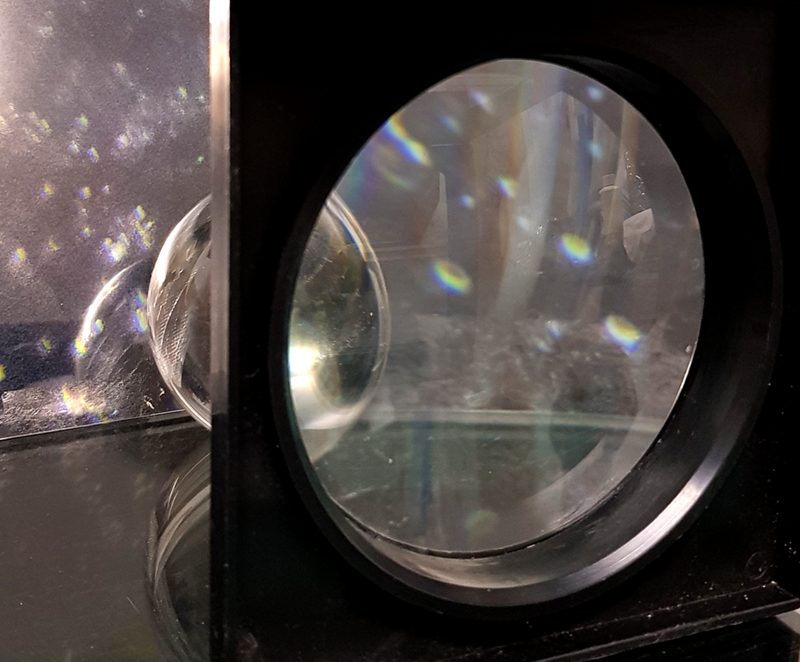
New year fresh start. Laboratory of Dark Matters evaluation reports submitted. Now to build on my research from the last year. Time to put up the dark tent again and get the cloud chamber running to take some more controlled footage for use in an immersive installation. Excited to be experimenting with video projections, lenses and different media to project onto to ‘capture’ the particles.

1712 Lens layer.jpg

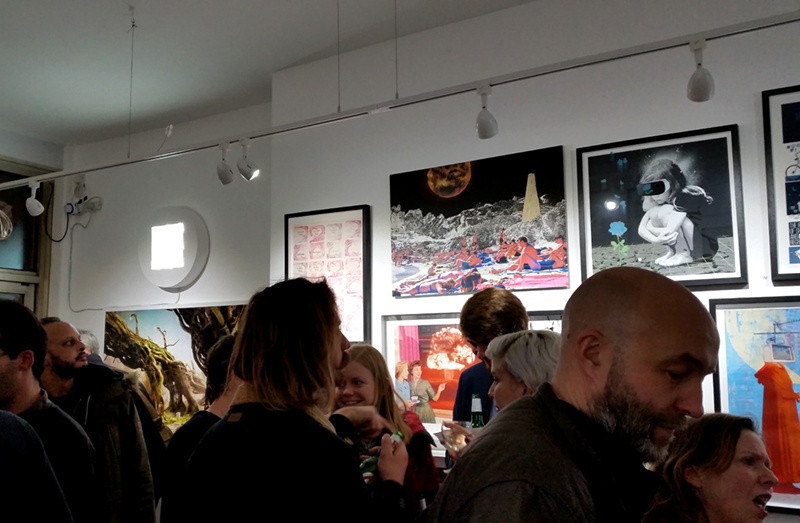
Sun Factor jostling for space at a busy Atom Gallery private view of Tomorrow’s World where most visions of the future appear dystopian or apocalyptic.

1712 Atom Gallery PV.jpg

The backstory to this work begins with a holiday to Sardinia and the day trip salesman’s  insistence the island bay he proposes taking us to – it’s paradise, it’s paradise … well how could we refuse. It turned out we were to be cast ashore for hours on a tiny strip of sand with no shade, no escape and a sea swarming with tiny stinging jellyfish. A concrete obelisk stood over the blistering bodies; once ancient sun worshippers built these capped with gold to shine like beacons celebrating the power of Ra the sun god. Modern sun worshippers have their own rituals, laying under a hot ball of gas so massive and so hot it has been active for 4.5 billion years yet it will be another 4.5 billion years before it will expand into a red giant, vaporize the earth and explode.

On a rather grander scale was ( my past RCA tutor) David Blandy’s The End of the World at Seventeen Gallery.

1712 David Blandy 2

Designed for solo viewing, a single seat faces the enormity of space. You become the lonely astronaut gazing down on a faraway world, at once familiar and distant. The voiceover poignantly recounts what is being lost; spanning perspectives, the micro and macrocosm of life, imagined, virtual and real. When the end is in sight senses are heightened.

1712 David Blandy 4

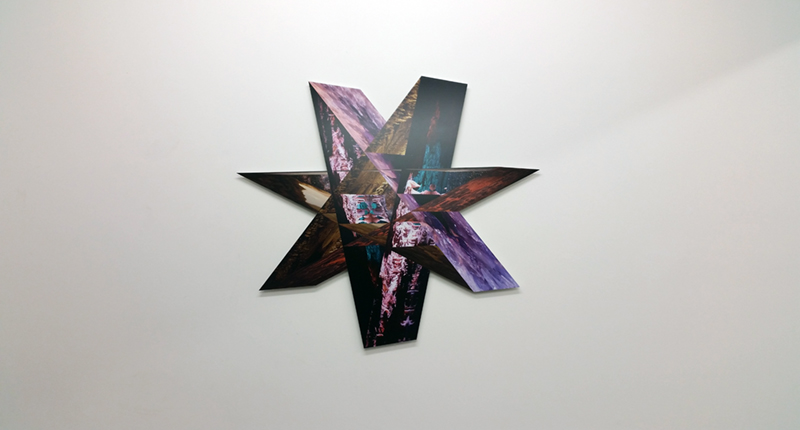
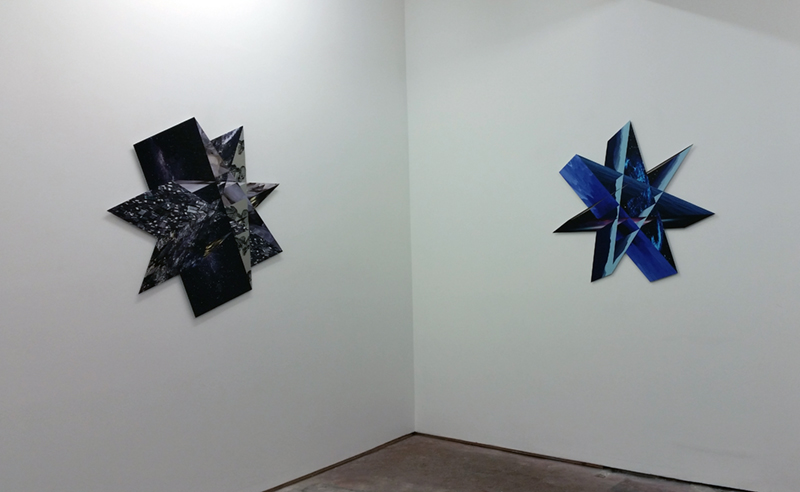
Touched to hear that David thought of me when making the High Definition series splicing microchips, crystals, nebulae and rock formations into stars which appear 3D until you approach more closely and then they flatten. Heptagrams (seven point stars)share Christian and pagan symbolism, they can represent the seven days of creation, the perfection of god and the seven planets which were known to ancient alchemists.

1712 David Blandy 3

The installation HD LIfestyle also plays with the illusion of surface and the material cost of being able to pass through the screen to an ever more real and immersive experience on the other side. The wares are on display. The images sweep us forward. It would be hard to stop.

1712 David Blandy 1

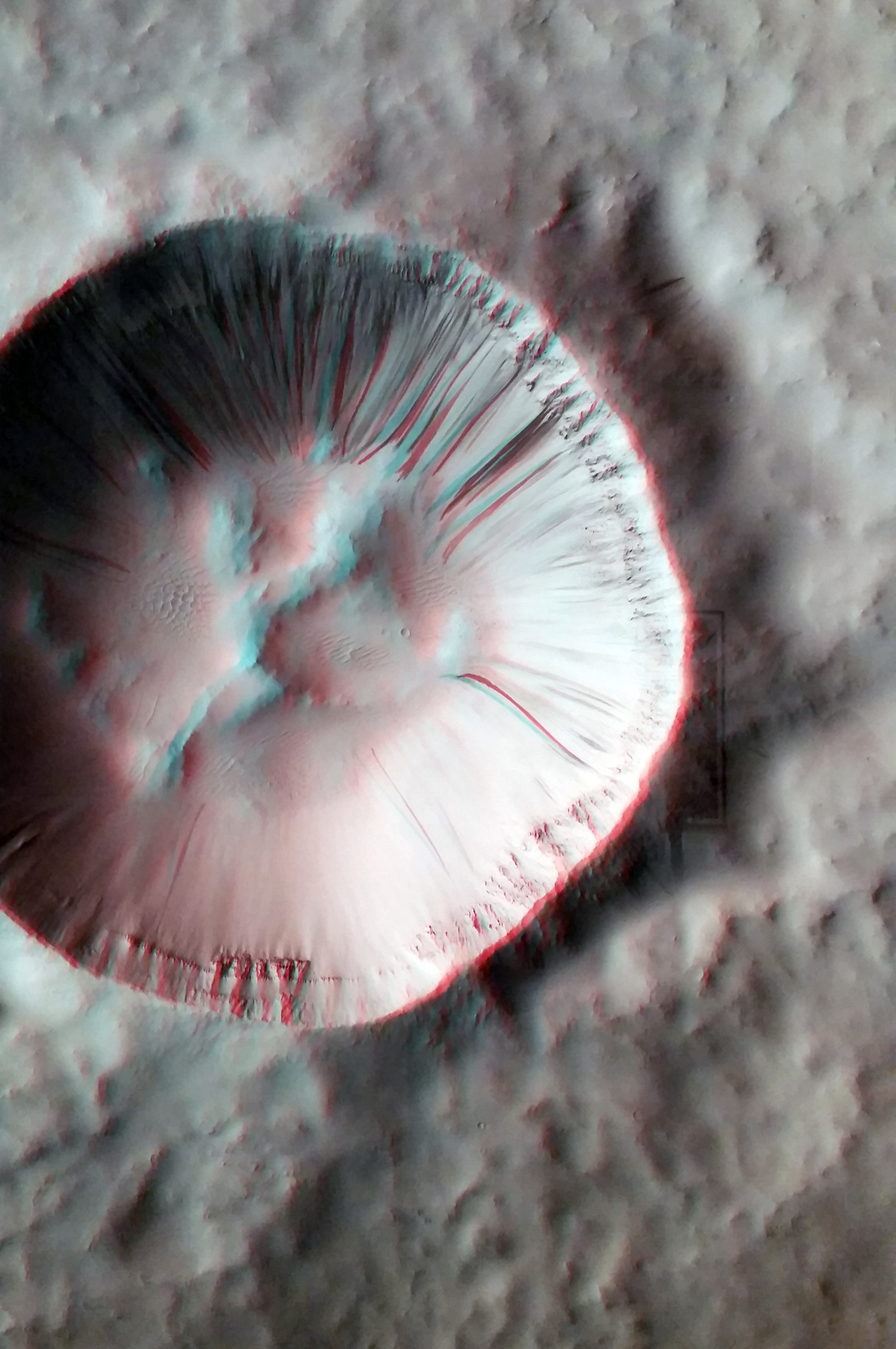
Thomas Ruff at Whitechapel Gallery. He is big on scale, control and appropriation.  I was struck by the regularity and precision of the white dot of light reflection in each of the portrait models eyes.1712 Thomas RuffThe Mars Reconnaissance Orbiter launched 2005 recorded topography, water related minerals and climate using an imaging spectrometer, context camera and mars colour imager transmitted as radio signals to be translated into images.
1712 Thomas Ruff 3D

Thomas Ruff ma.r.s. 

SPACE/London Creative Network Showcase – showing works in progress as part of an ongoing exploration of new technologies employed within art practice.

Catriona Leahy uses laser-cutting technology to etch delicate capillaries onto marble to articulate a sense of fragmentation and the scarring of  manmade intervention in the form of land drainage found in Dutch and Belgian post industrial landscapes.
171124 space LCN Catriona Leahy

Catriona Leahy Percolation Test

Always drawn to the perpendicular – the standing stones. I enjoyed Ben Branagan’s legacy of the built environment captured in totems made from building site aggregates.

1712 space LCN Ben Branagan

Ben Branagan Hardcore Colonnade

Next door was the satisfyingly ritual space of BearMotherhouse a collaboration of Fourthland, an artist collective, with Xenia a group that brings geographically displaced women together with local communities for friendship and integration through creativity. A quote from the accompanying essay by Alberto Duman addressing the cosmological connections and mythologies of the objects that ‘ speak of the degrees of interconnectedness beyond human knowing and the evocation of powerful figures such as the Bear and the Mother that oversee and mesmerise this house’s proceedings

1712 Fouthland with Xenia

Cryptic exhibition at The Crypt Gallery, St Pancras Church examines the relationship between art, science and technology. Lisa Pettibone explores matter and form through the manipulation of one template and the forces applied to alter its appearance.

1712 cryptic lisa pettiborne

Lisa Pettibone Apeiron 01_02_03

Pentagon envy.

1712 Cryptic Bekk Wells

Bekk Wells Elements

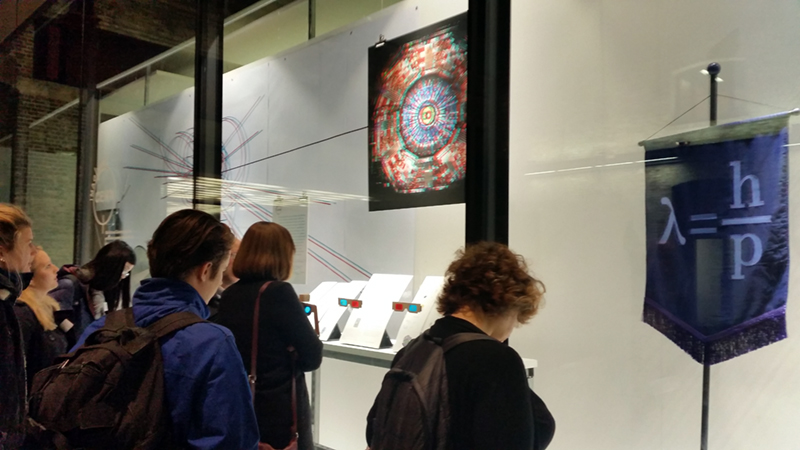
Imagining CERN event at CSM presented the results of creative collisions between interdisciplinary art and particle physics.  MA Art and Science students got to visit CERN, collaborate with scientists and make work in response.

1712 CSM imagining CERN exhibition

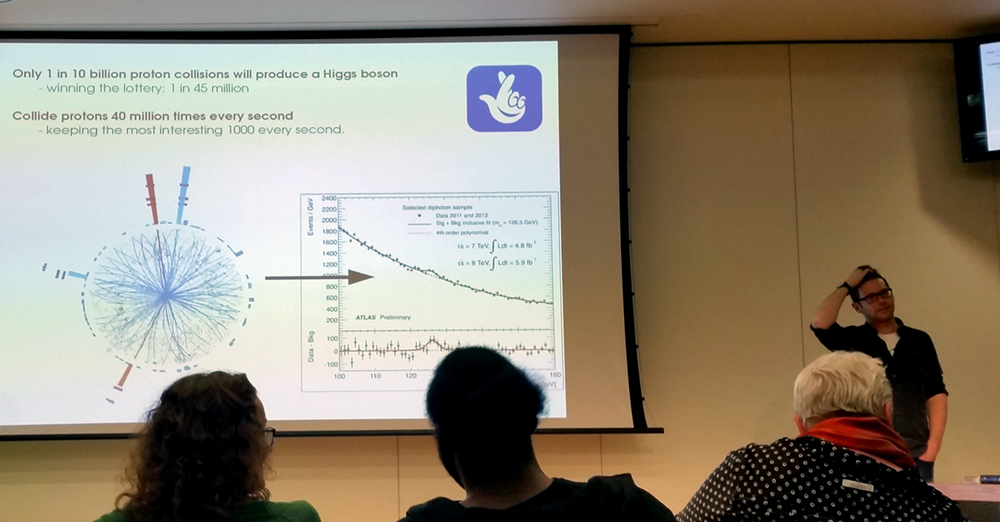
Gavin Hesketh was here to talk about his work at CERN searching for new particles

1712 Gavin Hesketh

He had brought his cloud chamber along. First time I had seen someone else’s cloud chamber other than online. No dark tent here.

1712 CSM imagining CERN cloud chamber

In particle physics the closer you look the more similar things become,

when you get right down to the elementary particles there is no colour at this scale


Research at St. James Weybridge for work thinking about collapsing space in on itself, moving from one space to another via portals, holes in space time, or dream spaces and spiritual spaces.

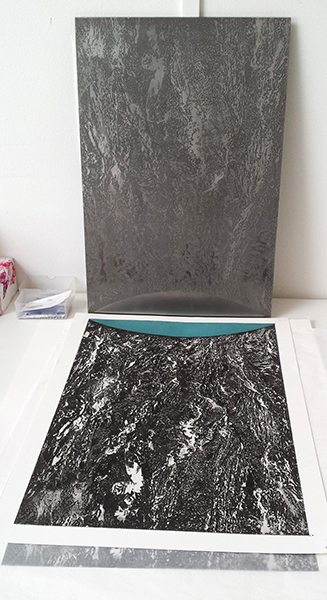
Seeing intertidal steel plate propped up with the print on my desk has given me some ideas about building images and the idea of opposites. Earth and heaven. If they are as in some myths, a mirror image – how do we know which way is up?

1607 intertidal plate

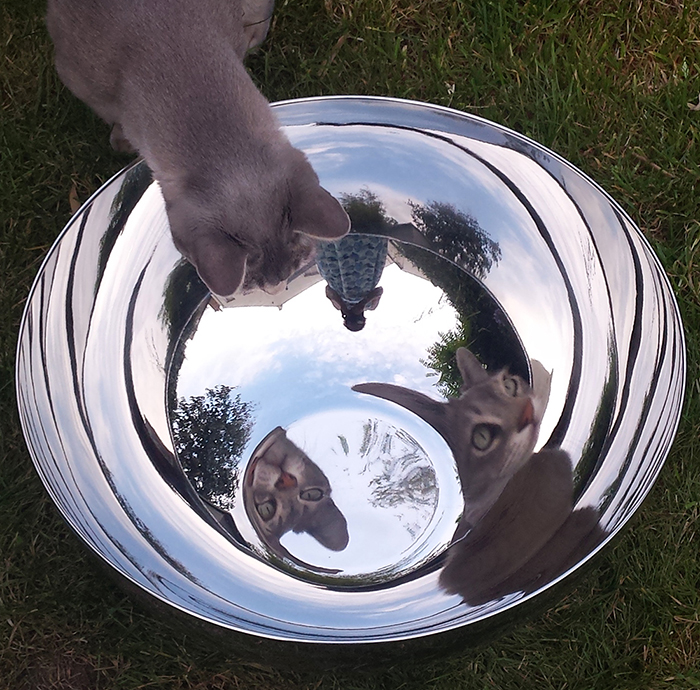
Happened upon a large very shiny bowl that I will try with new submīrārī images in water.

1607 new bowl

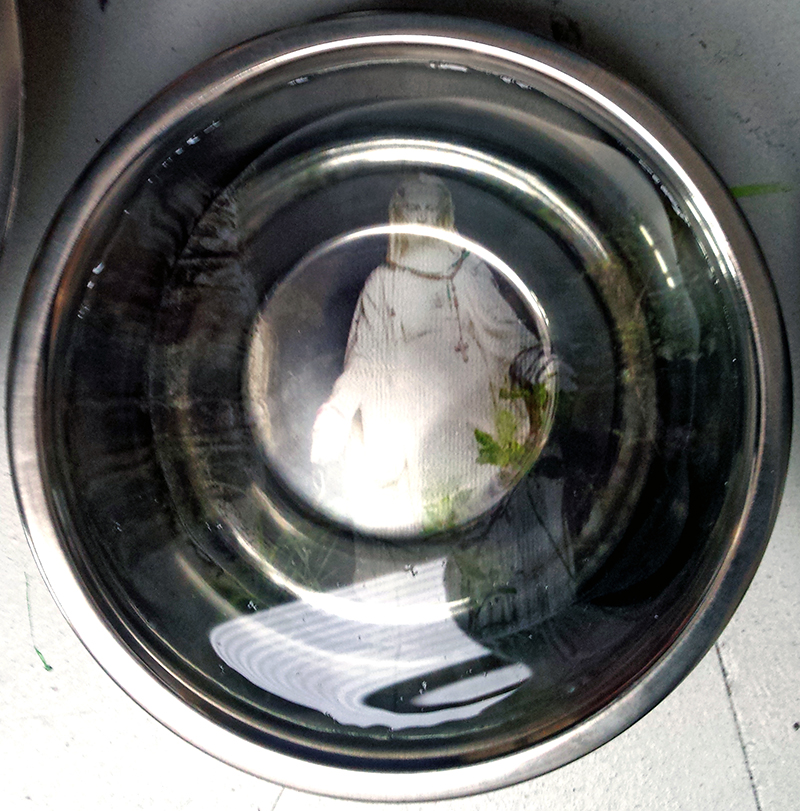
It already does amazing things before any water is added. It only came in one size so need to try and find some similar (may be an excuse to go to India where this one was made). Plan to transfer some images from sacred spaces to fabric for the bowls and begin to look for more saints and sacred springs to photograph too to join Mary from St.Non’s holy well.

1607 submīrārī mary

The Royal Society Summer Exhibition was a fantastic showcase for science research across the UK, manned by enthusiastic practitioners it was hands on and minds engaged.

It is thought that at the BIG BANG the same number of matter and anti mater particles would have been produced – they then went about colliding with each other – annihilating into photons. We are awash in photons – particles of light. It’s still unknown what  happened to leave enough matter to create all the stars and galaxies and planets of the universe.

1607 light.jpg

Follow this link  to Antimatter Matters for an in depth explanation of what is going on at the Large Hadron Collider at CERN in the search to understand why matter outnumbers antimatter in the universe.

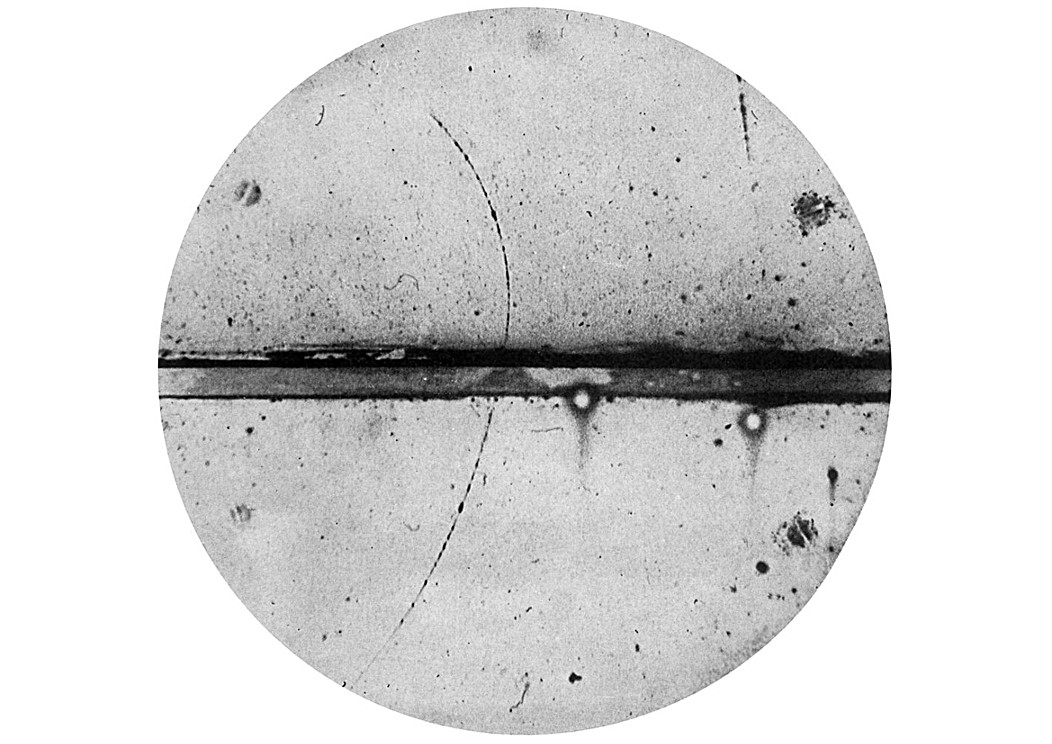
In some information about ring-imaging Cherenkov detectors that distinguish between different types of charged particle such as muons, protons, pions and kaons I was curious to read that particles travel through the gas volume of the detector at faster than the speed of light emitting a coherent shockwave of light – I didn’t think it was possible for anything to travel faster than the speed of light.1607 positron_discovery

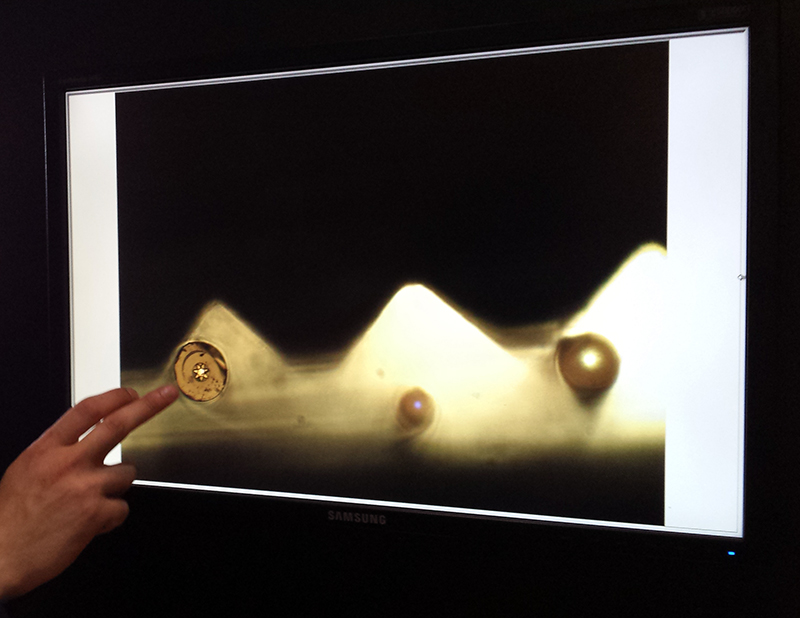
Had a chat with Grieg Cowan who, it turns out, helps run a schools outreach programme demonstrating cloud chambers, and explained my interest in particle physics and how I am planning to build a cloud chamber myself inspired by our trip to the Dark Matter Research Laboratory at Boulby. Obviously I won’t be able to make visible any dark matter particles but I am still excited about making other cosmic rays visible and capturing my own images of these tiny projectiles hurtling around us.

1607 bean bubbles

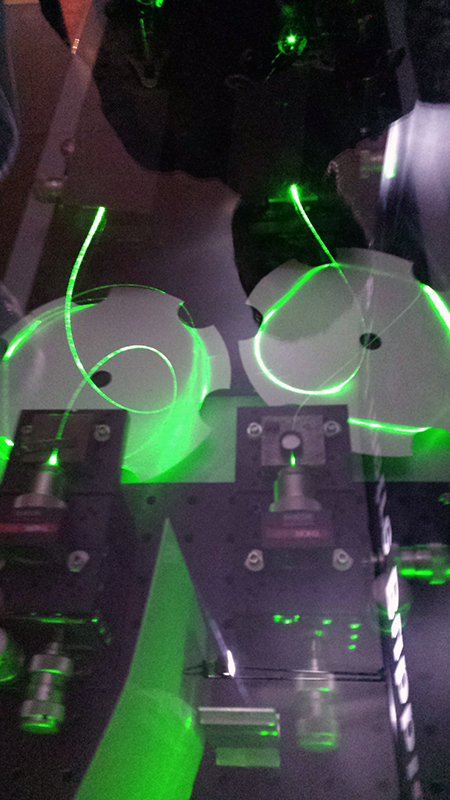
Inspired by bubbles, researchers at the University of Bath studying photonics have created a new hollow glass fibre optic to channel high powered lasers. The walls of these tubes are designed to trap light of particular wavelengths in the core. The effect is similar to the reflection of different wavelengths by the thin film of a bubble.

1607 Royal Society Fibre optics

The laser loses less energy as the beam travels through air rather than solid glass.

1607 Royal Society laser

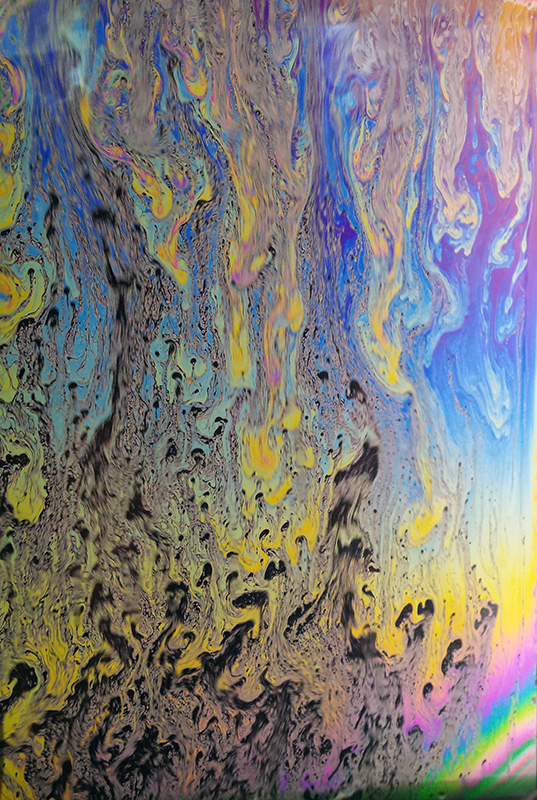
Fascinating and useful stuff but it was the bubble machine that was the most captivating. The thin soapy membrane stretches, reflecting and refracting light until the skin becomes so thin the light passes straight through – it is this mix of colour and turning to black that is so beautiful and mesmerizing.

1607 Royal Society bubbles

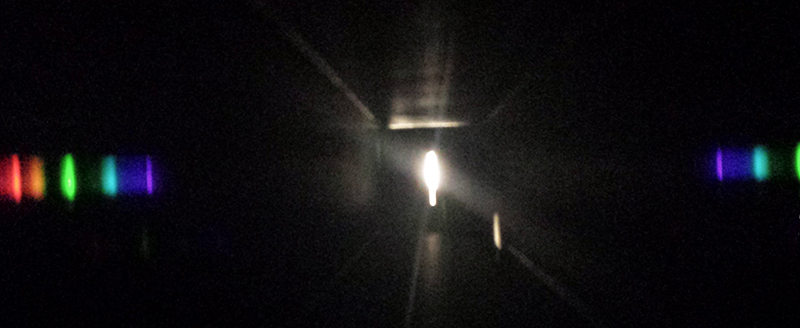
I got to make my own mini spectroscope using a piece of ridged plastic cut from a CD to diffract the light into a cardboard tube and a brief instruction of how to identify differences in LED, fluorescent and even the light on a smart phone which is created using a spectrum plus added blue (cheaper this way).

1607 spectroscope.jpg

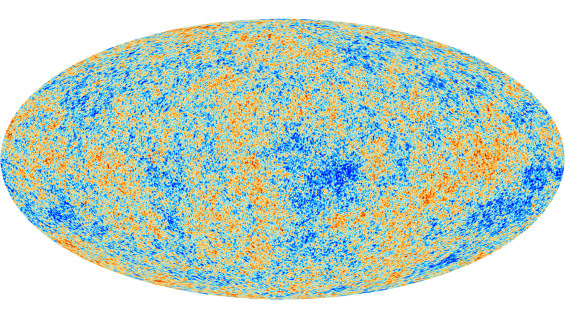
The Planck satellite was launched in 2009 into orbit about 1.5 million kilometres away from earth. Over three years it has mapped the whole sky and observed the cosmic microwave background – the afterglow of the big bang when electrons and protons first combined to form transparent hydrogen gas allowing light to travel – it was like a fog lifting across the entire universe.

1607 Planck Cosmic microwave background

The forces of gravity and pressure from trapped light balanced each other creating a slow oscillation of matter through very low frequency sound waves –  the music of the stars. These harmonics can be read and interpreted in cosmological theory supported by the data from Planck. From data gathered by Planck scientists calculate –

4.9% – Normal matter in the Universe
26.8% – Dark matter in the Universe
68.3% – Dark energy
67.8km/s/Mpc  – Expansion rate of the Universe
550 million years – Reionization from first stars forming
13.8 billion years  – Age of the Universe

1607 Planck_anomalies

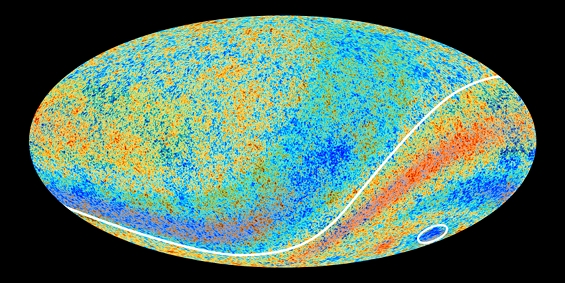
There were of course discoveries that didn’t fit in with the standard model and theoretical predictions. Questions about hemispheric asymmetry and the ginormous cold spot remain. A small fraction of the CMB is polarised and this means it contains even more information and may hold further clues about the very early phases of the Universe’s history and also its present and future expansion.

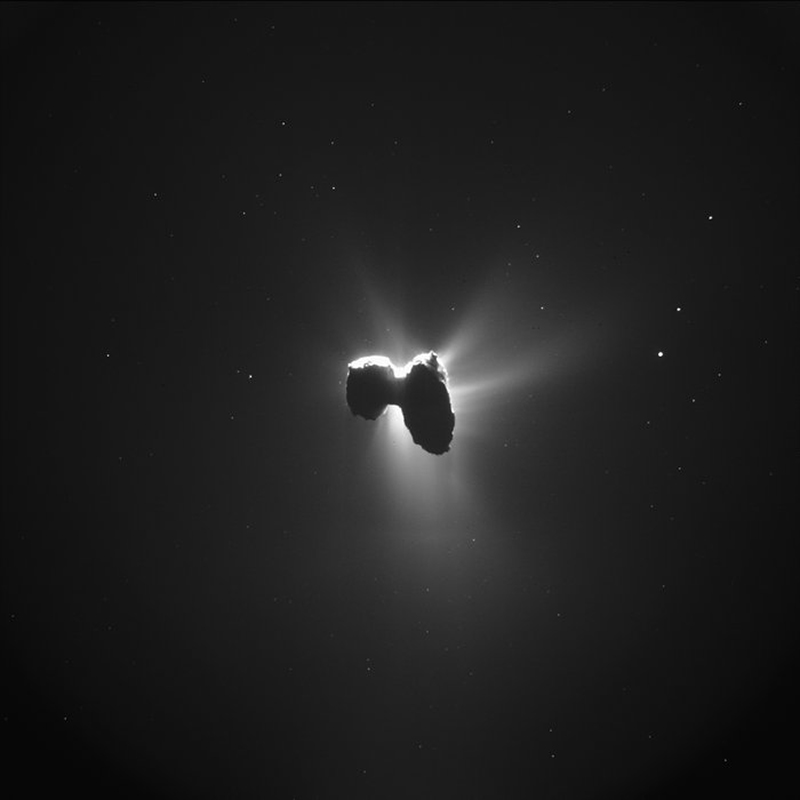
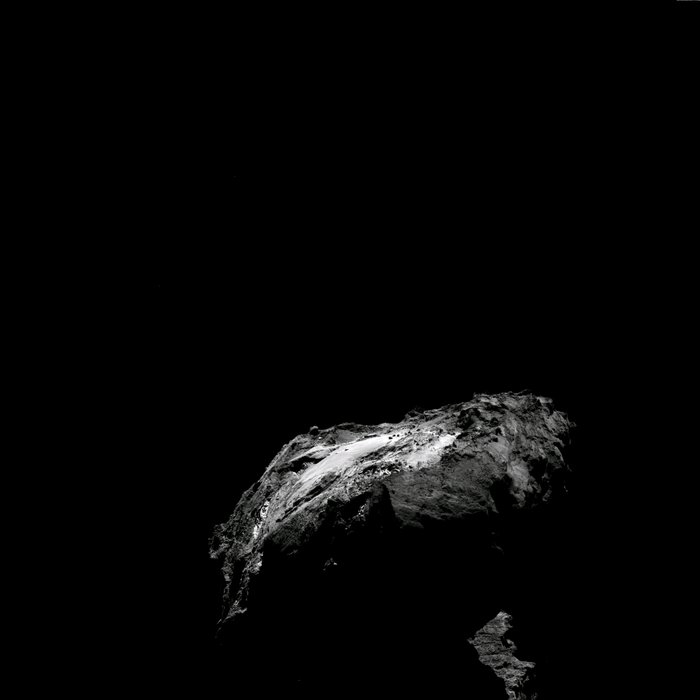
The European Rosetta space mission and Philae explorer spent 10 years travelling to visit Comet 67P.

1607 Comet 67P 2

Arriving in 2014 at a celestial object with almost no gravity they sent back news of a dusty world of ice and gas but one that also has traces of the building blocks necessary to create life.

1607 Comet 67P

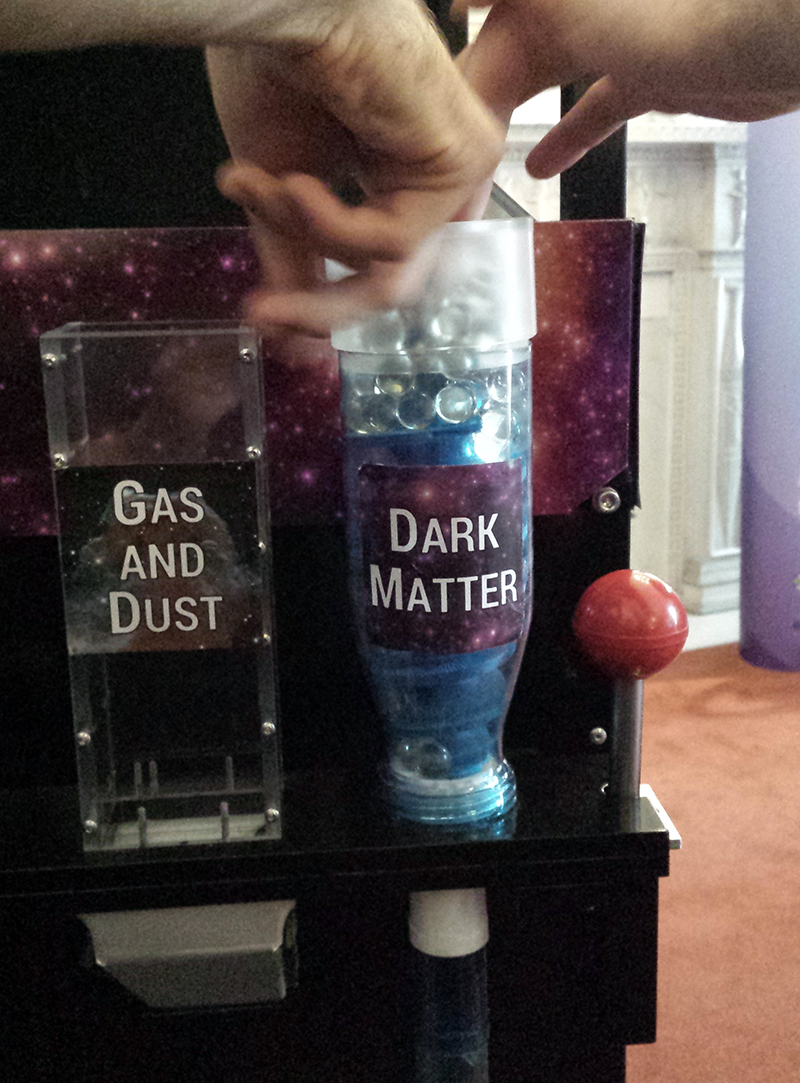
The  Galaxy Makers were there with supercomputer simulations to test how galactic ingredients and violent events shape the life history of galaxies.

1607 dark matter

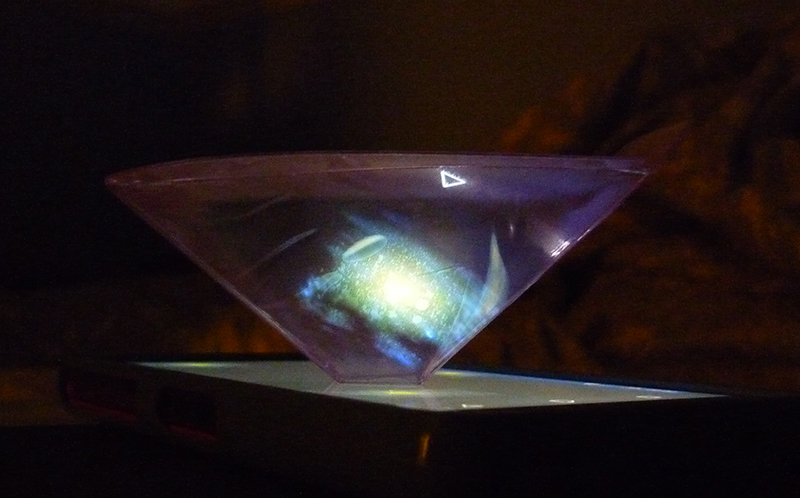
Following a recipe I created my own galaxy which was given a code and could be brought to life using a hologram video, my smartphone and a plastic galaxy maker I was provided with. I can’t convey with a photo how cool this tiny spiral galaxy rotating over my phone screen is.

1607 Galaxy Maker.jpg

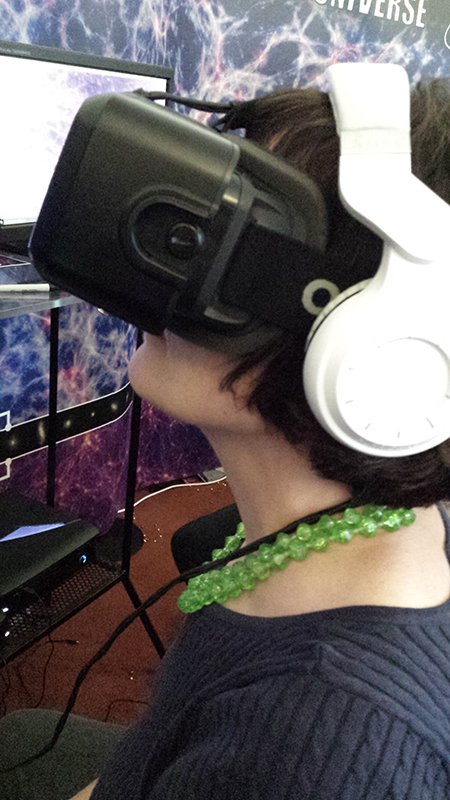
From godlike galaxy gazing to immersive hurtling between the stars dodging between fronds of dark matter magically made visible by a virtual reality headset, Durham University had it covered.

1607 virtual reality.jpg

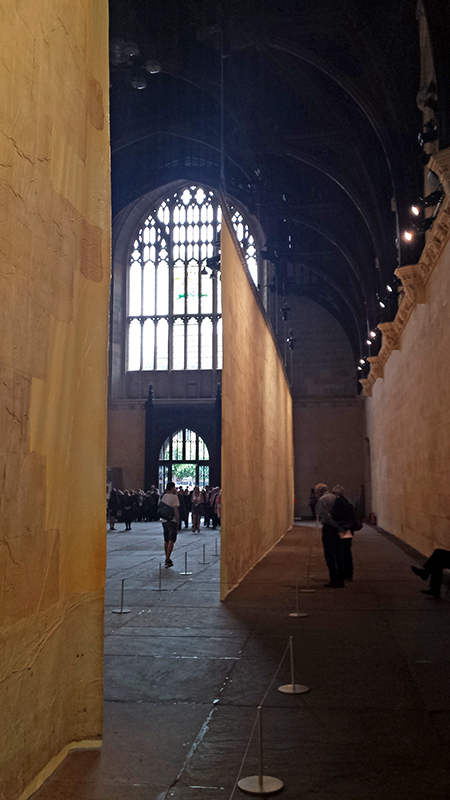
Space is full of dust. Stardust. On earth I believe it is mostly made up of dead skin cells. Jorge Otero-Pailos’ The Ethics of Dust is an impressive interaction with centuries of dust accumulation in Westminster Hall at the Houses of Parliament.

1607 Ethics of Dust

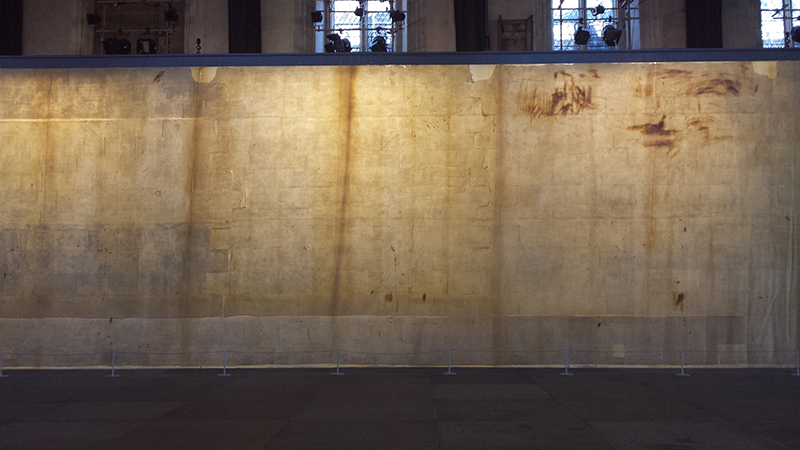
Stripping the ancient walls of the patina of age, the build up from the passing through of countless dignitaries and ne’er do wells, onto a latex cast that is then hung like a skinned animal the length of the impressive hall.

1607 ethics of dust 2

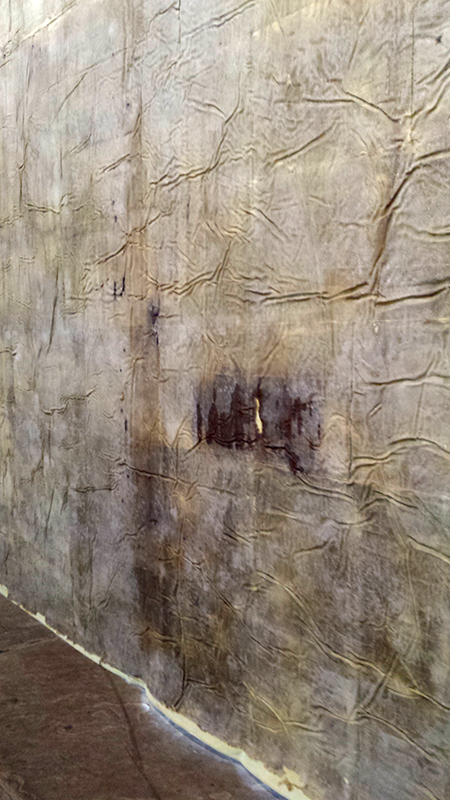
The surface is thick velvet, wrinkled like a newborn.

1607 Ethics of Dust 5

and the birthmarks of provenance can be matched to those on the opposing wall.

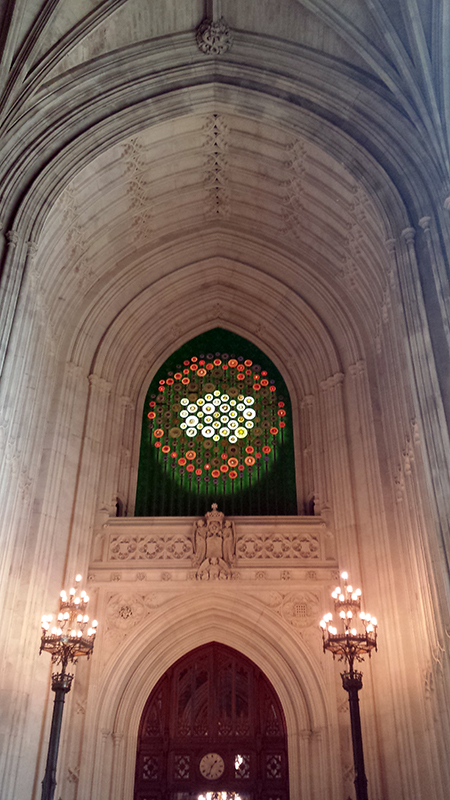
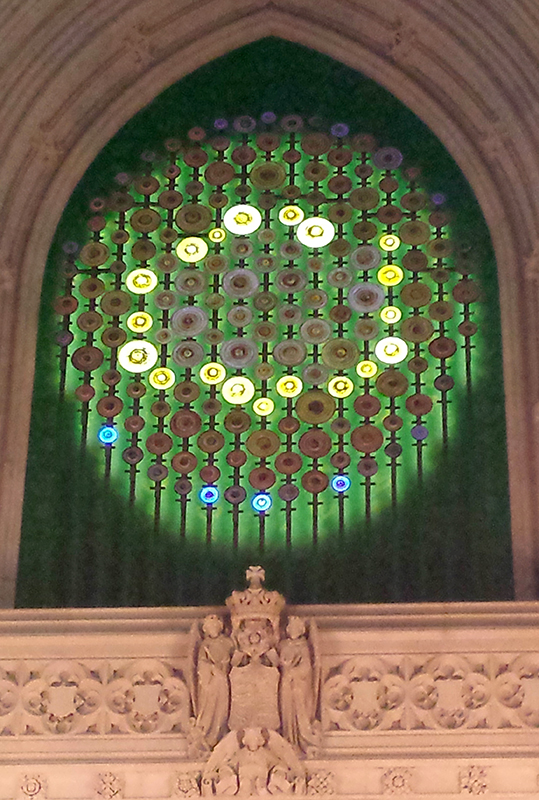
Taking both her cue from and her place in history Mary Branson’s New Dawn light sculpture can also be found at the Houses of Parliament as a permanent addition to Westminster Hall, a site of many demonstrations calling for change.

1607 Mary Branson New Dawn (2)

Inspired by the many hundreds of petitions made to the government by women fighting for a right to vote that lie furled in the archives of the chambers; the scrolls are  transformed to glass.

1607 Mary Branson New Dawn (1)

The circles, that together form one large sun rising, change colour and pattern via a computer link to the monthly cycle of the pull of the moon on the waters of the Thames.

1607  Mary Branson New Dawn (3)

1607 Chud Clowes Starling wing

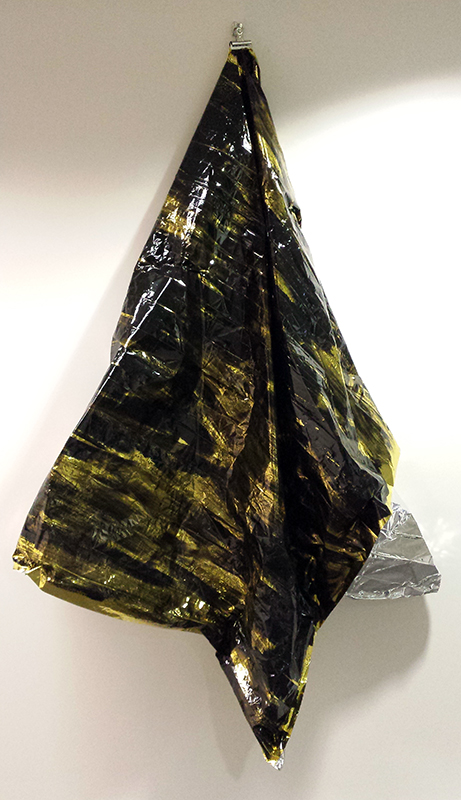
Paid a worthwhile visit to Imperial College Sherfield Building Gallery to see Chud Clowes show Murmurations inspired  by analogies between the swirling clouds of migrating starlings flashing gold from their feathers and the gold of the rescue blankets offered to desperate migrants drawn to collective movement across borders.

Catching up with RCA Alumni and celebrating this years graduate show. The atmosphere was unfortunately tempered by the nation having hit the self destruct button on the previous day. A world turned upside down.(courtesy of Nayoun Kang)

1607 Nayoung Kang

Despite some uplifting and inspiring work my thoughts were very distracted and so I only have a few images to share.

1607 Mollie Teane 1

Mollie Teane’s sunshine colours showing a multi-layered collision of cultures was just a reminder of the cultural poverty a brexit vote signals.

1607 Kristina Chan

Kristina Chan’s monumental monoprint to the slow time of geology

1607 Hoyeon Kang

and primordial instincts that even Hoyeon Kang’s simulated fire invokes serve as reminders of the tiny fragment of time we inhabit.

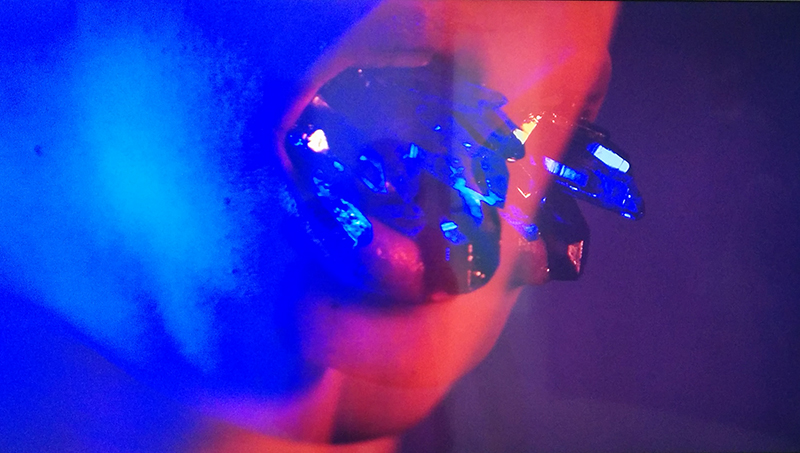
1607 Mayra Ganzinotti 3

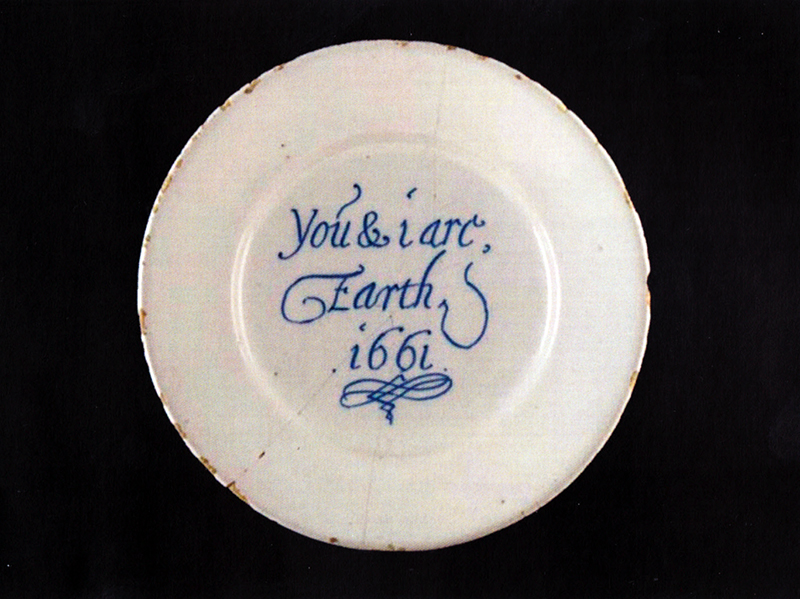
Mayra Ganzinotti’s beautiful interplay of the body with crystals made me think of this grounding inscription,

1607 plate

taking us back to the essence of ourselves.

1607 Mayra Ganzinotti 2

Parasol unit foundation for contemporary art presented Magical Surfaces: The Uncanny in Contemporary Photography, an exhibition that explored the uncanny as exemplified in the works of seven artists : Sonja Braas, David Claerbout, Elger Esser, Julie Monaco, Jörg Sasse, Stephen Shore and Joel Sternfeld. For me it seemed more about the unreal than the uncanny.

1607 Sonja Braas Firestorm

1607 Stephen Shore

Queued theme park style (actually it wasn’t that long) to experience Yayoi Kusama’s mirror rooms next door at Victoria Miro for a brief 30 second immersion. Like entering the Tardis momentarily. The attraction may be triggering a primordial response to galaxy gazing that makes this reflected infinity so captivating.

More multiplicity and reflective surfaces with Sinéid Codd at Camberwell School of Art MA show.

This was a world caught between sci fi and the surreal. Inspired by the shapes and colours of gaudy jewellery it maintains that buoyancy of brash confidence found in oversized boldy faceted gemstones. Not afraid to be fake, like costume jewellery out-glitzing real diamonds. I saw clouds, a summer pavilion by the sea, here shapes morph into a world of shifting surfaces to drown in.


There was an inspiring look at the transformation of materials from Simon Starling at Nottingham Contemporary. This work explored the physical, poetic and metaphorical journeys of objects and materials. He considers transformation that can take place through the geographic, the economic and through time.

He is also interested in the physical properties of photography, which he has recast as sculpture through epic distortions of scale in The Nanjing Particles. Silver particles taken from 1875 photographs are enlarged a million times.

1607 Simon Starling

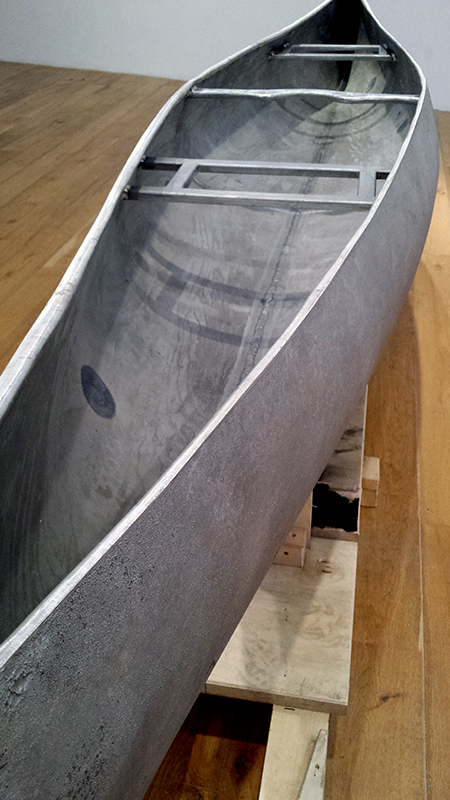
Project for a Crossing is a new work where Simon Starling has built a boat out of magnesium extracted from the politically contested waters of the Dead Sea.

1607 Simon Starling 6

After the exhibition he intends to use his magnesium boat to cross the Dead Sea – a fraught geopolitical journey that may only be partially possible since the Dead Sea lies between Jordan, Israel and the Israeli occupied West Bank.

1607 Simon Starling 7

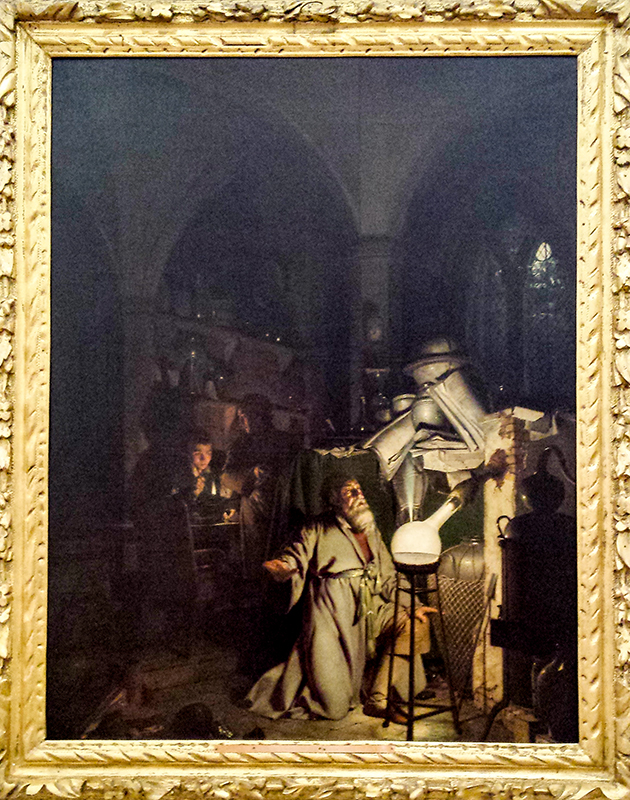
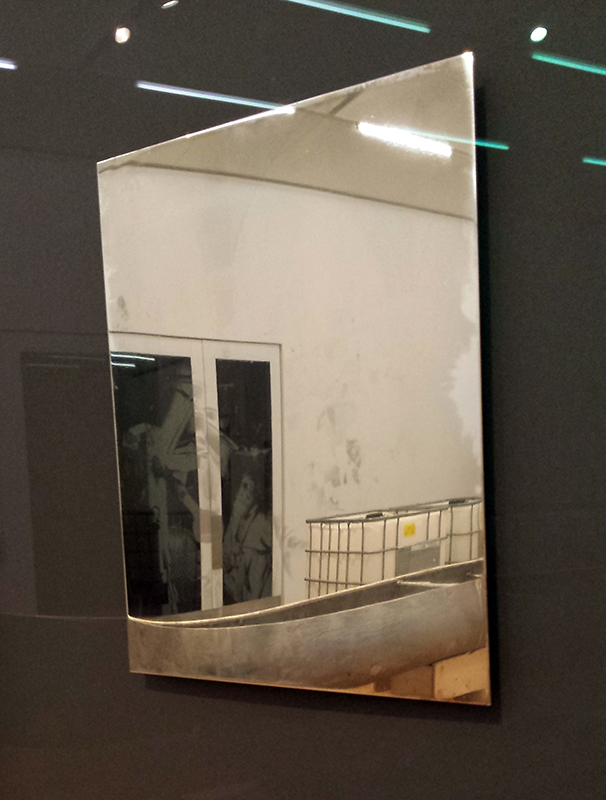
Joseph Wright of Derby’s painting from 1771-95  The Alchymist, in Search of the Philosopher’s Stone, Discovers Phosphorus, and prays for the successful Conclusion of his operation, as was the custom of the Ancient Chymical Astrologers is the subject for one of the series Recursive Plates. 

1607 Simon Starling 4

Ephemeral daguerreotypes, created with a delicate chemical deposit on silver plated copper, that reflect back and hold within the same image.

1607 Simon Starling 5

Phosphorus was discovered by accident in 1669 when Hennig Brand was boiling down thousands of litres of urine in his quest for the Philosopher’s Stone. It gave of an unearthly glow and then what a magical moment when phosphorus first ignited and the brilliant light filled the room.

1607 white phosphorous munitions explosion.jpg

A few hundred years on and phosphorous, the 13th element to be discovered has been terribly misused as a cruel weapon.