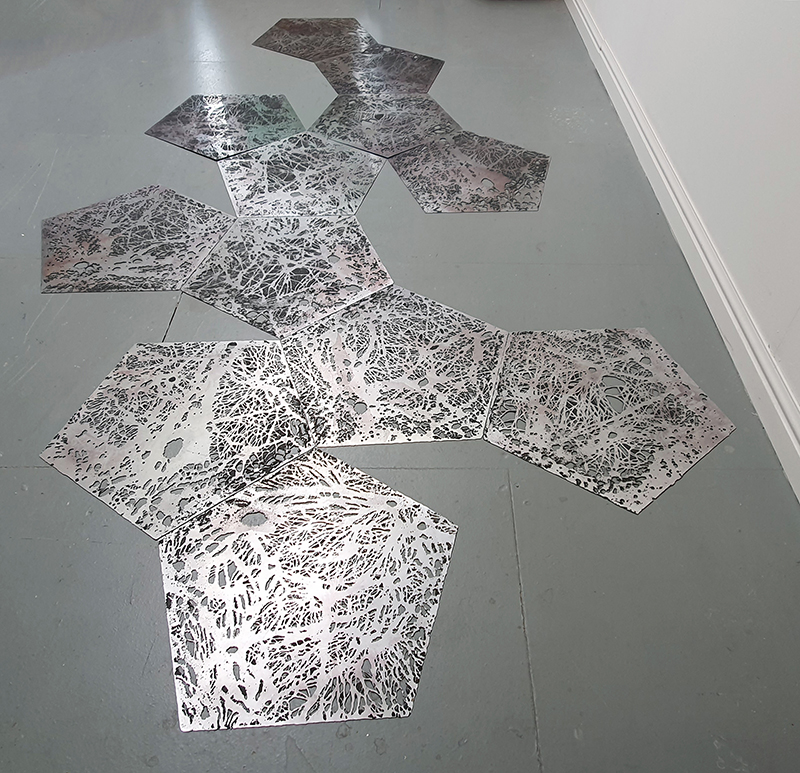
Archives for posts with tag: Cloud Chamber

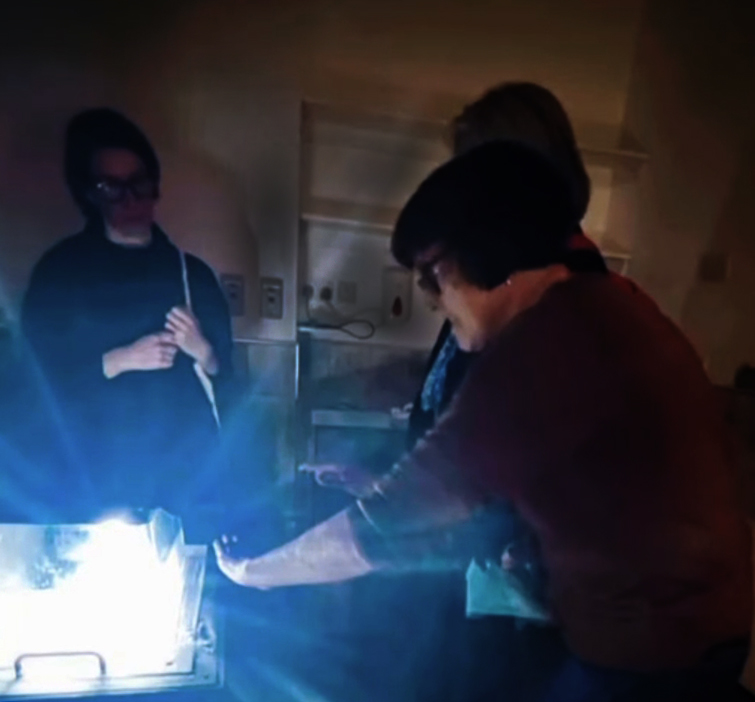
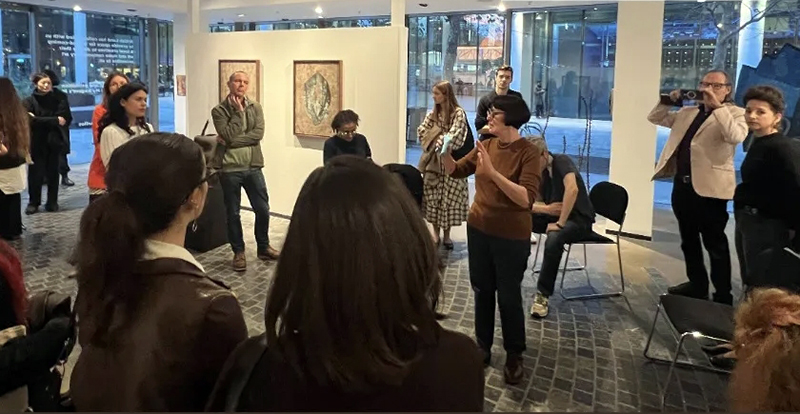
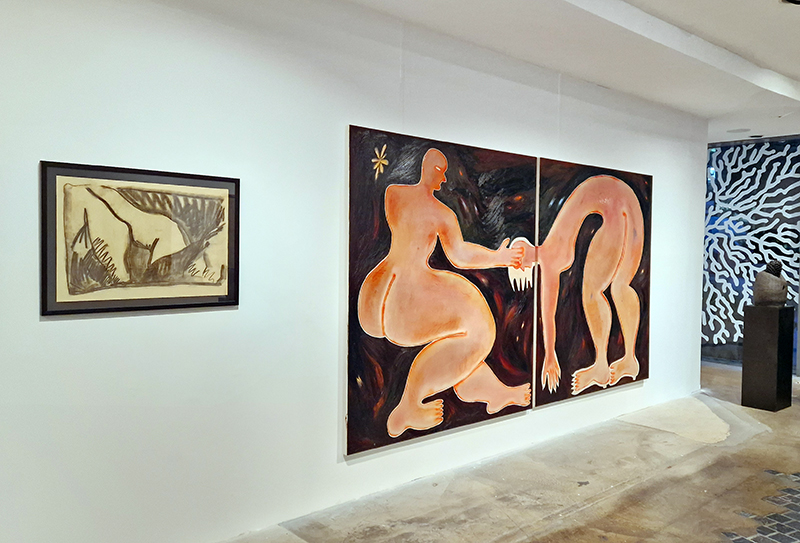
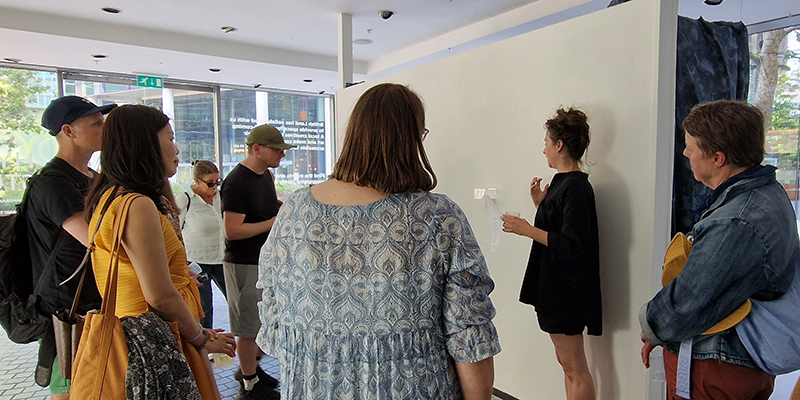
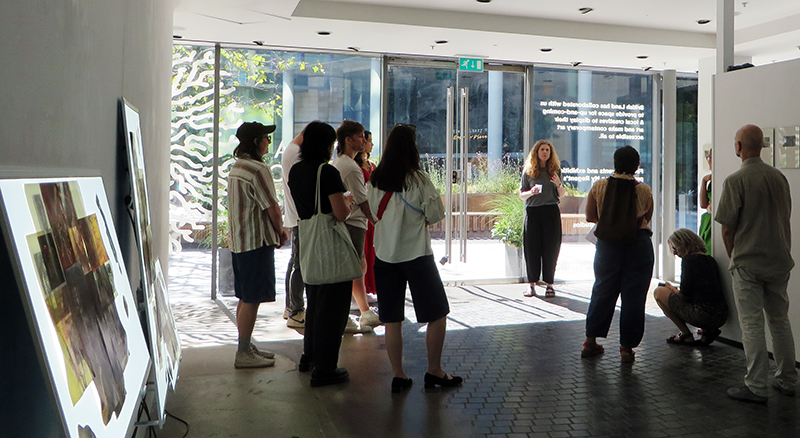
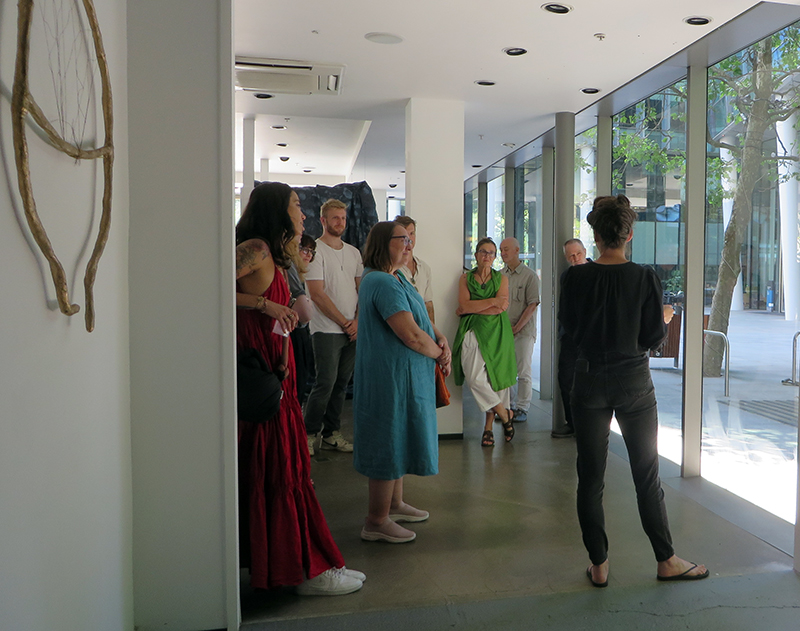
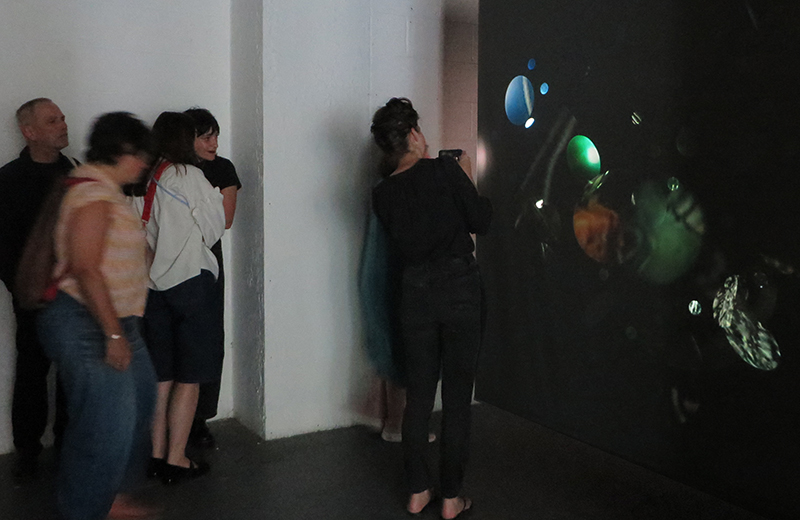
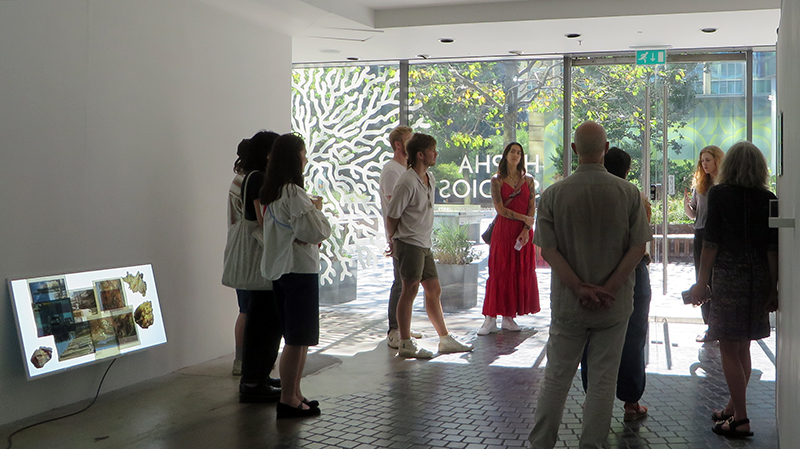
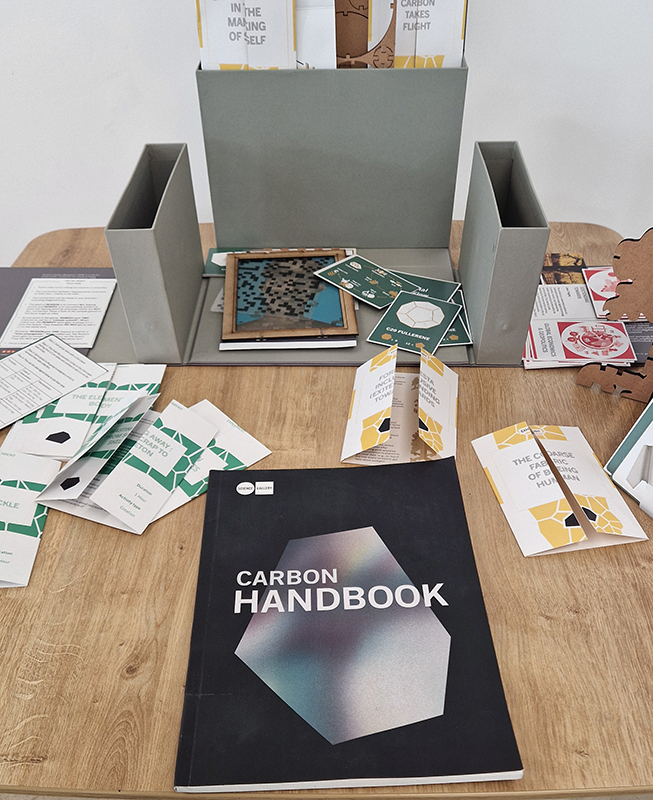
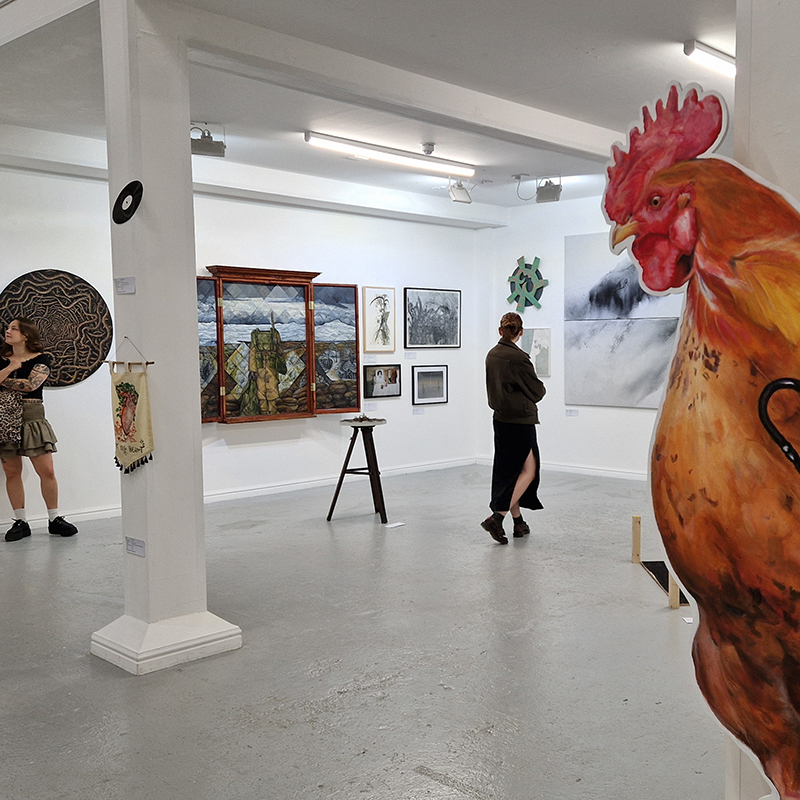
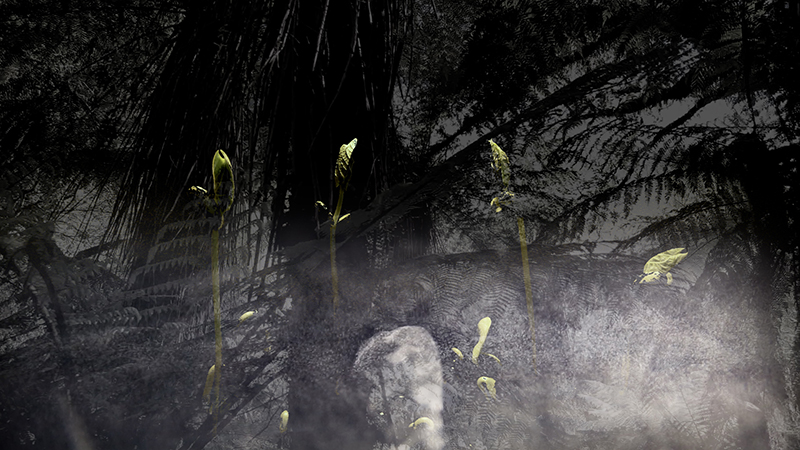
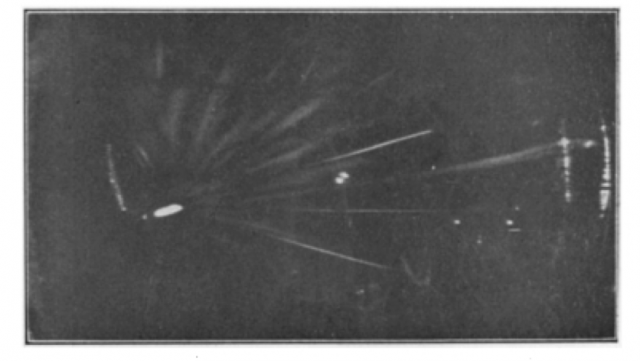
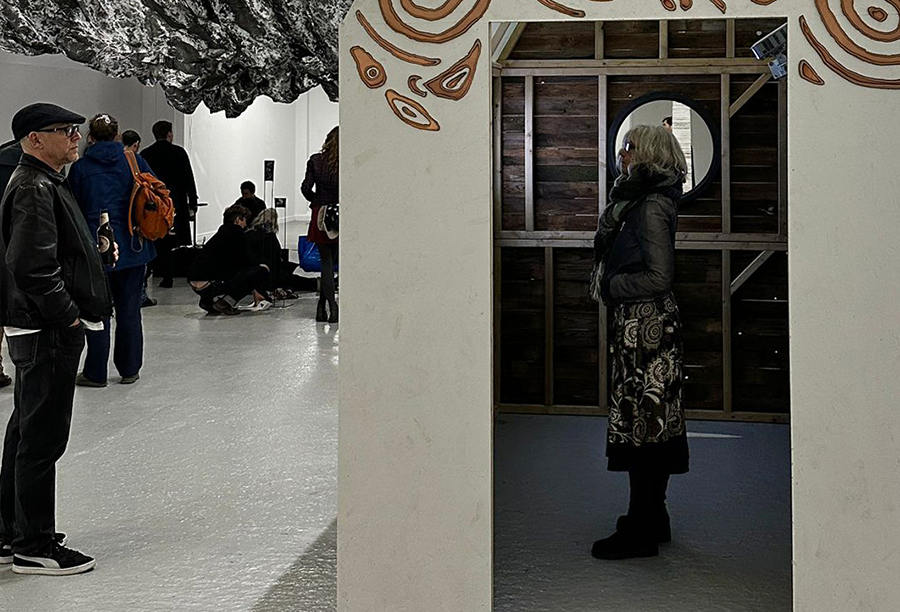
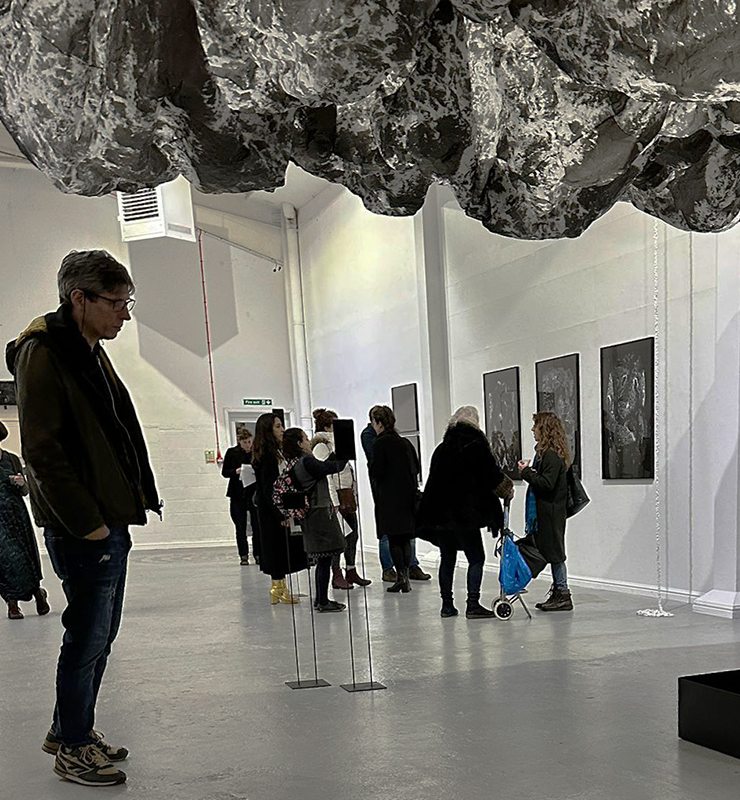
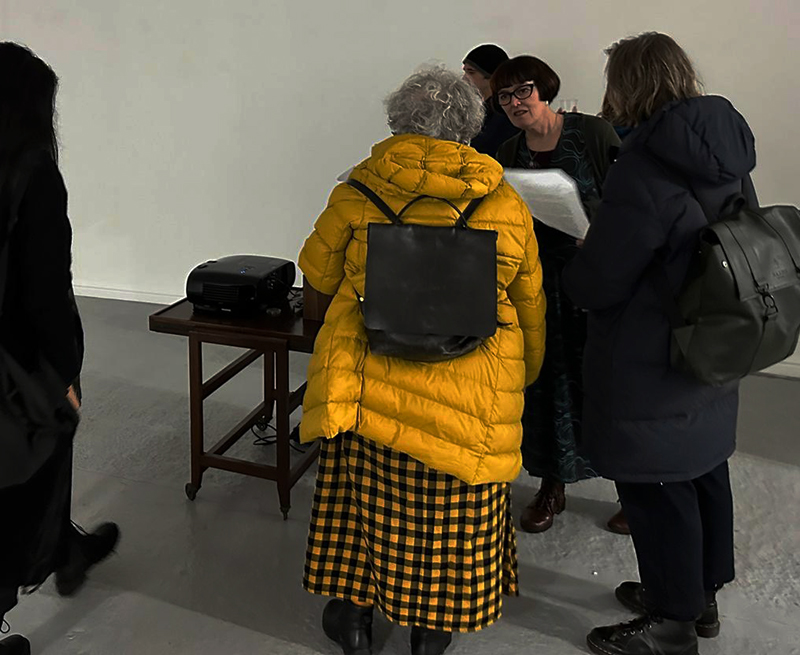
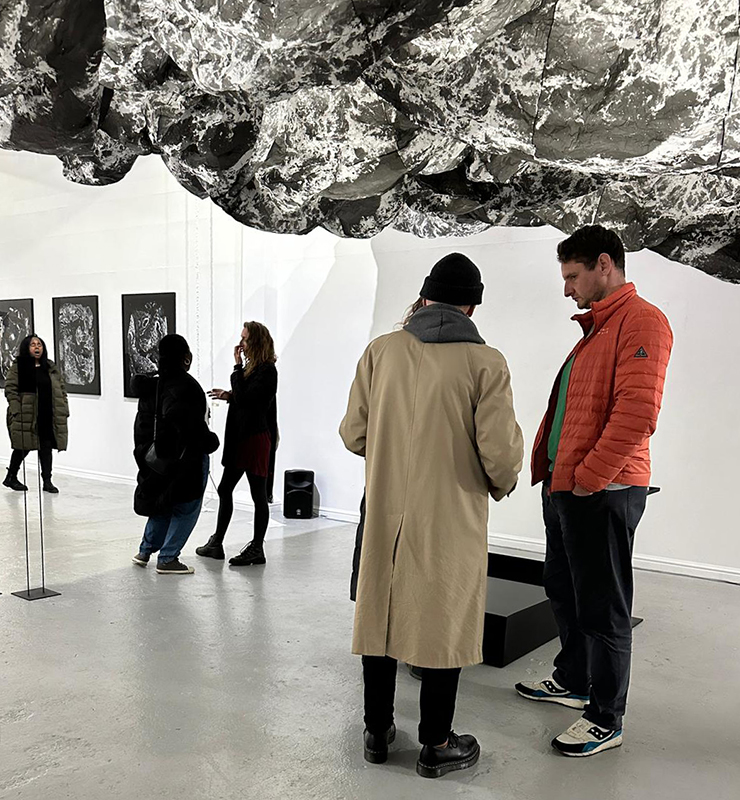
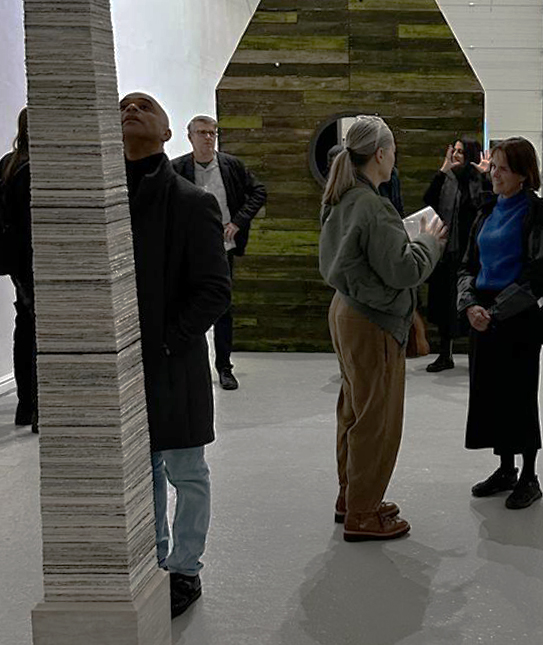
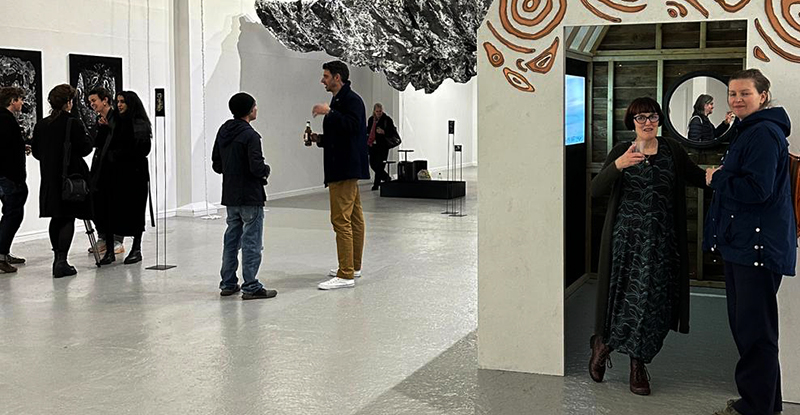
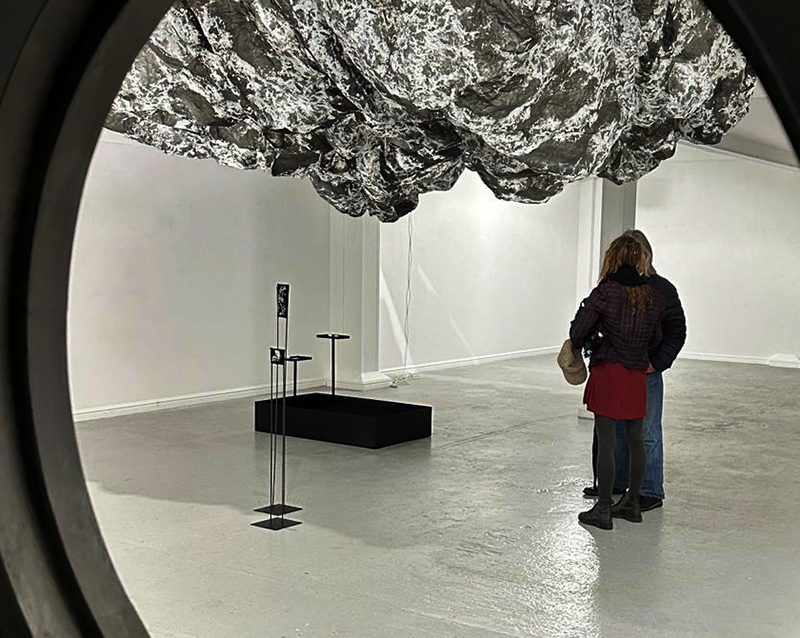
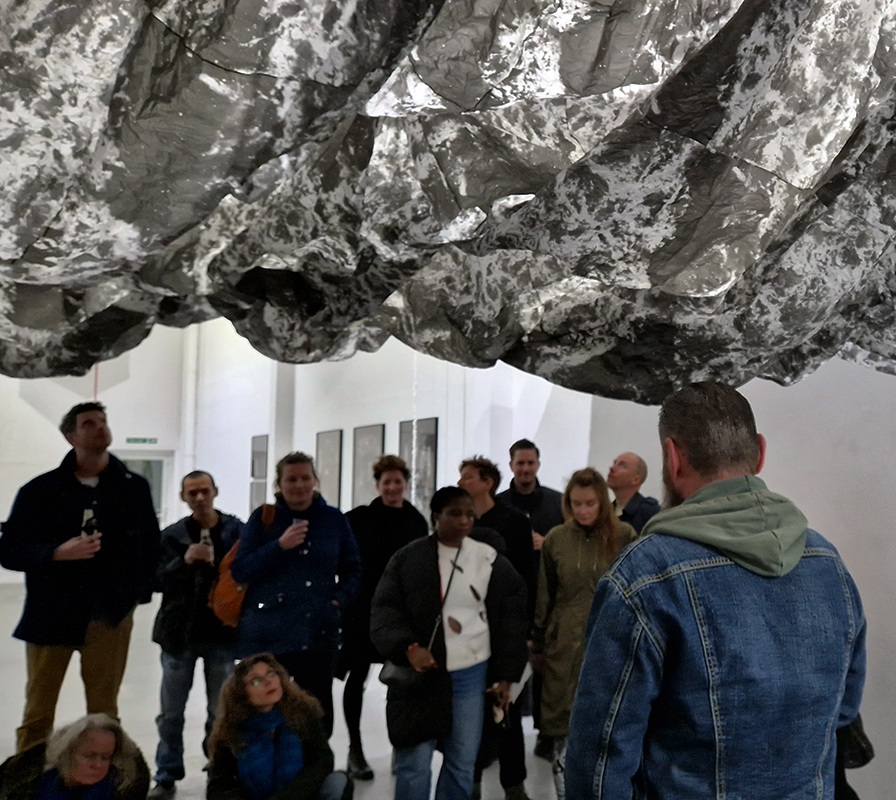
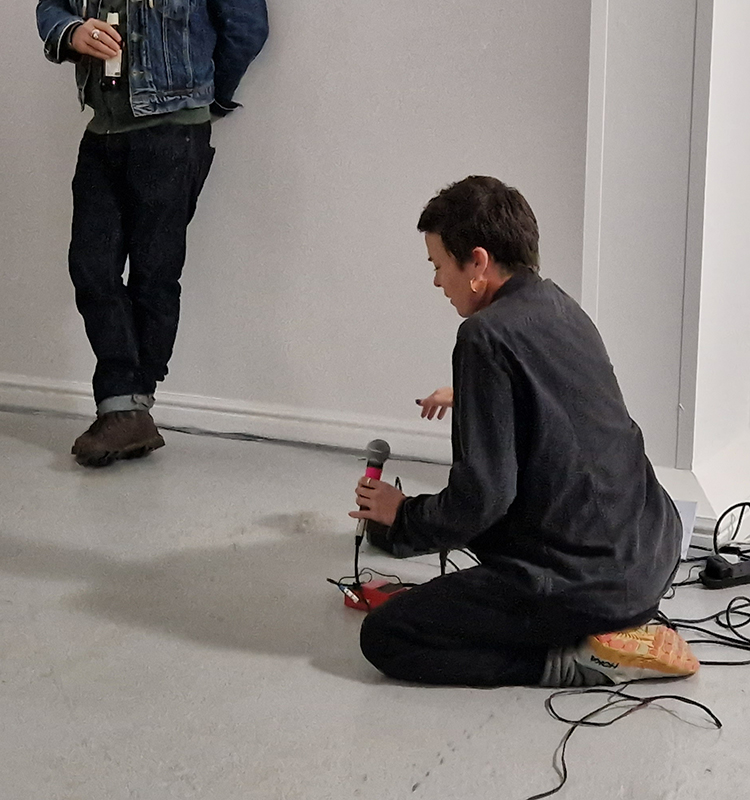
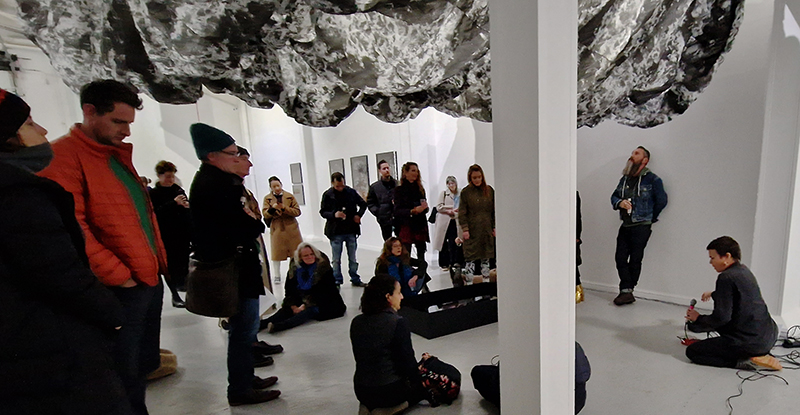
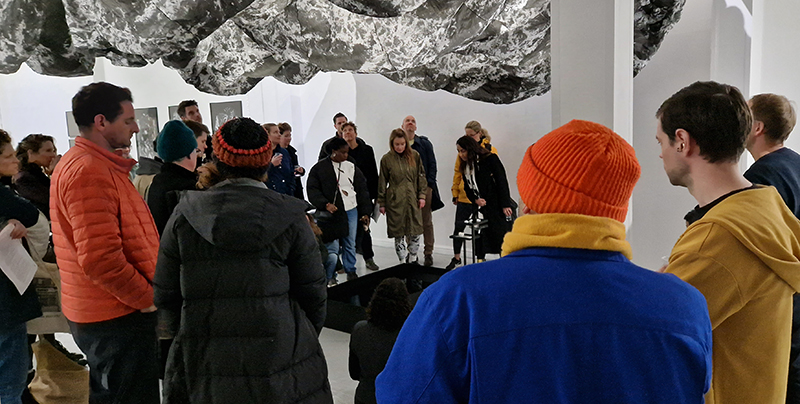
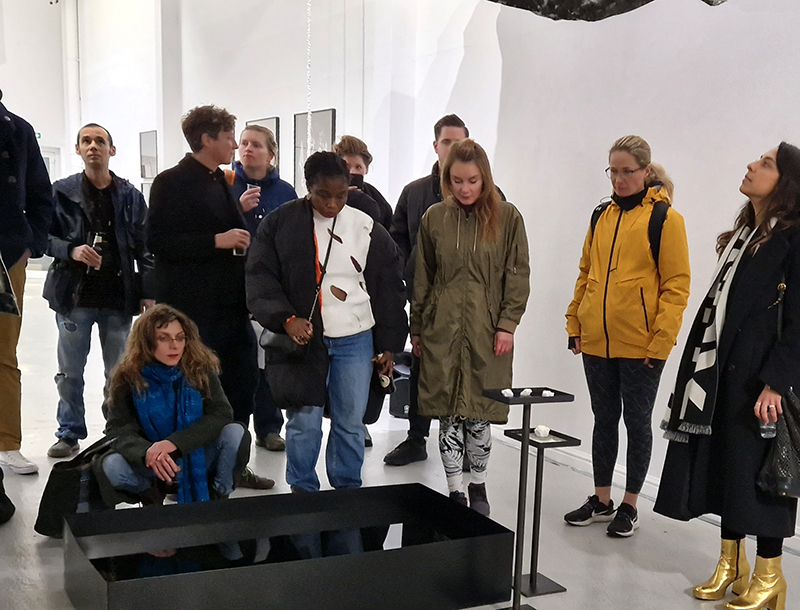
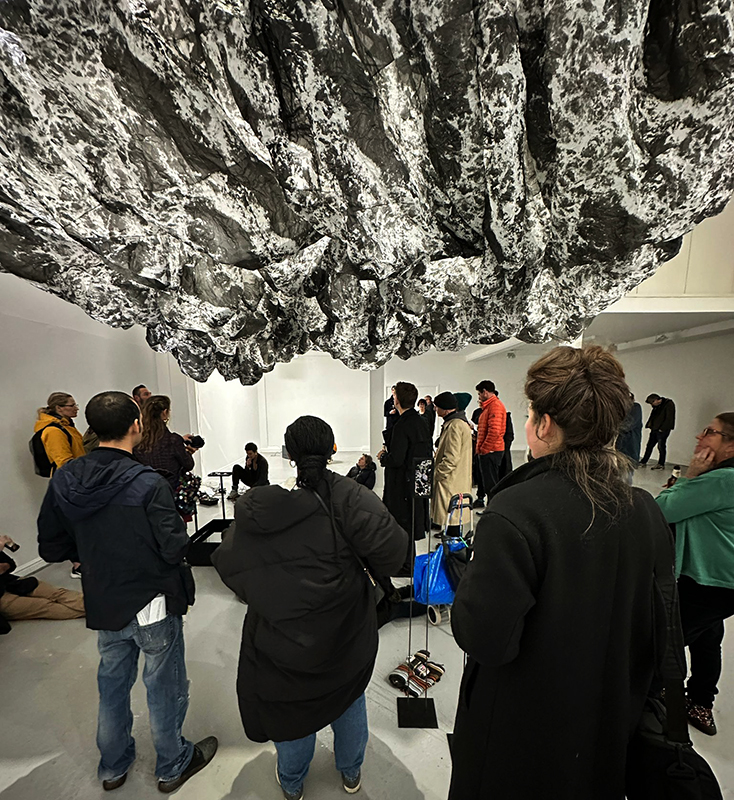
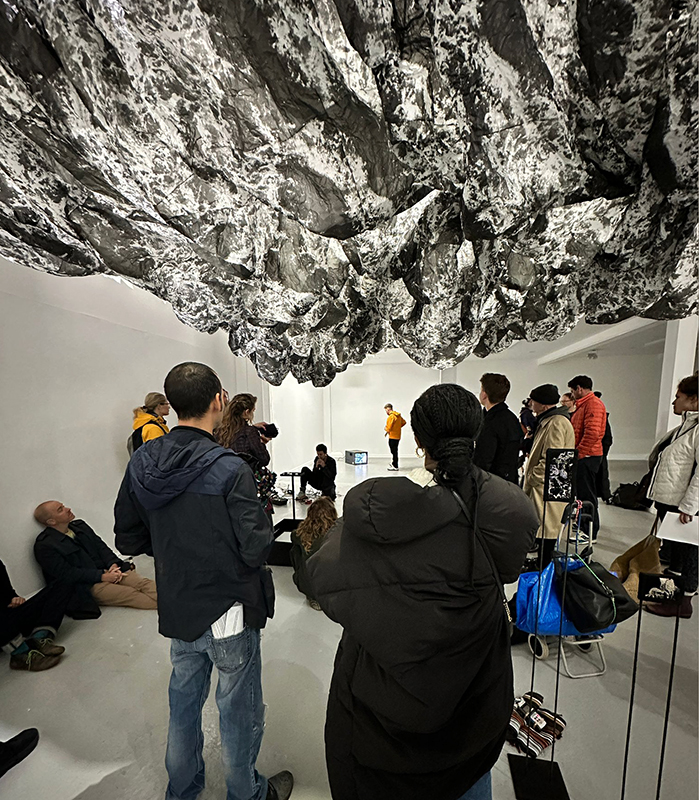
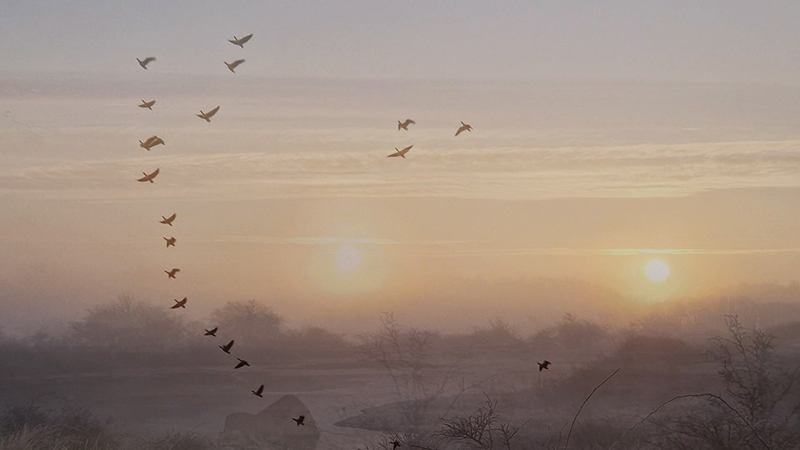
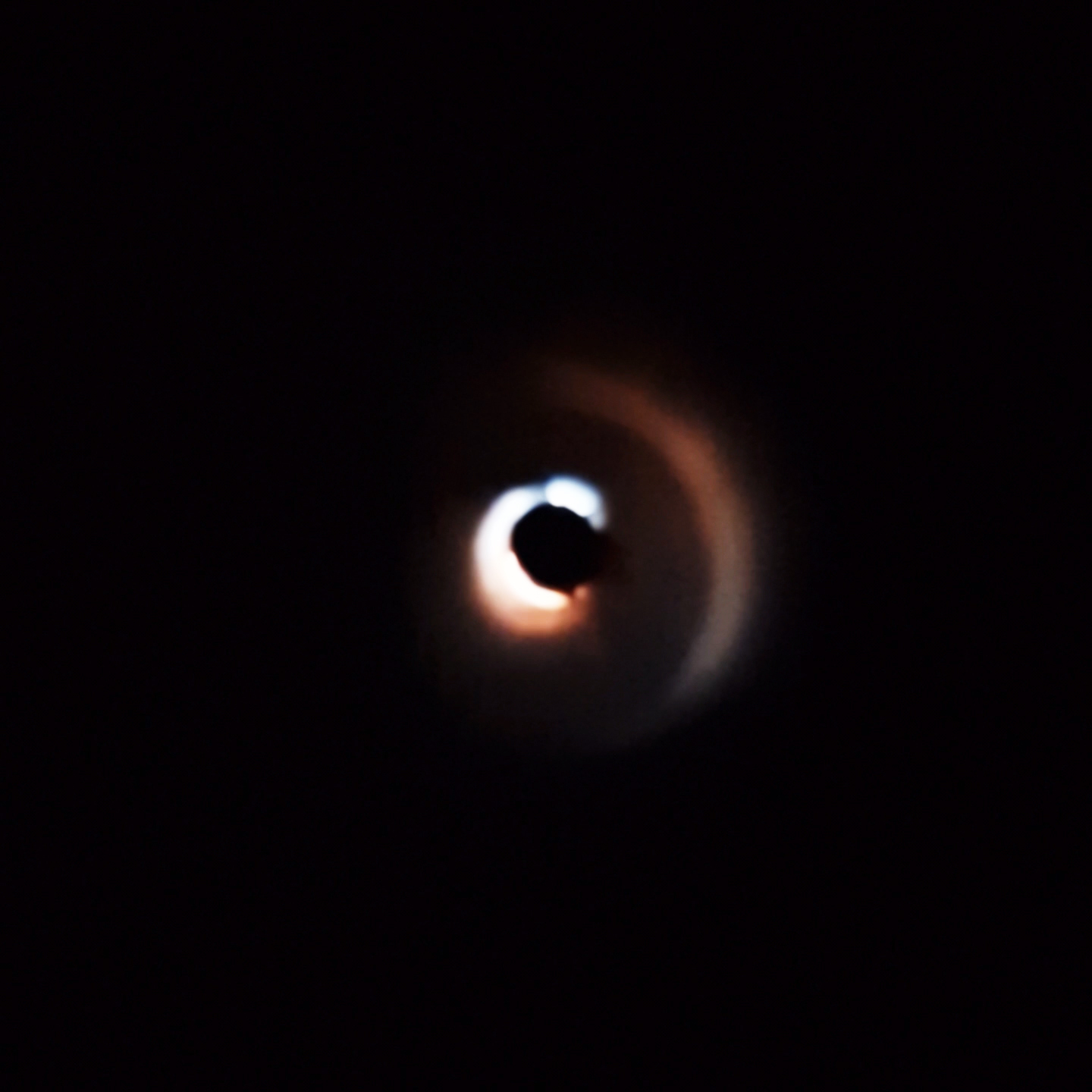
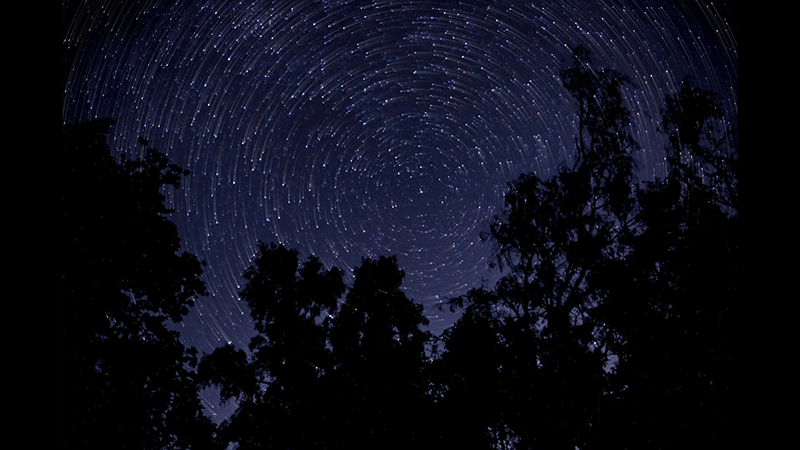
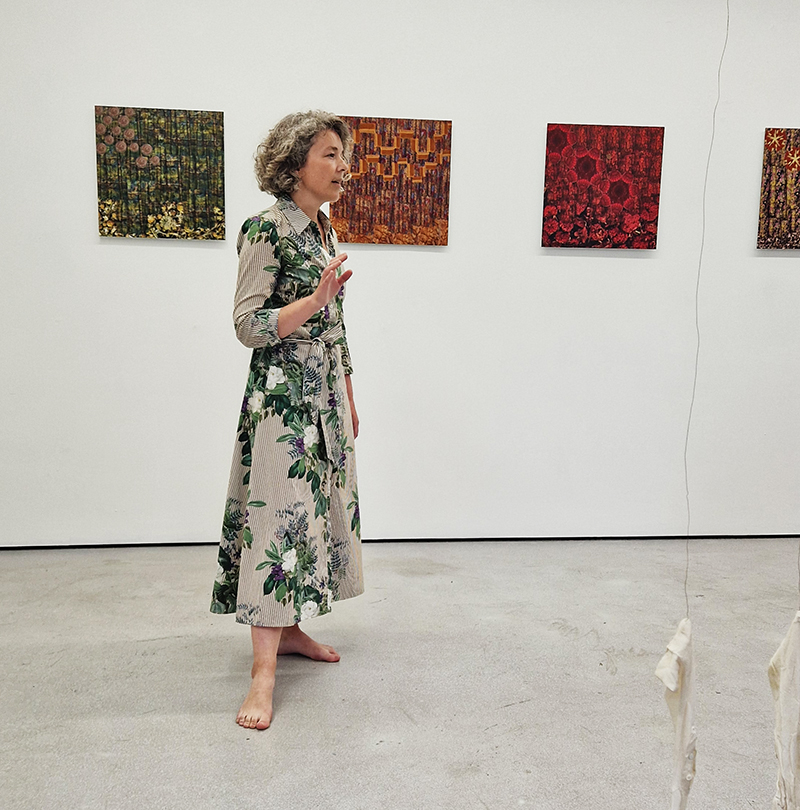
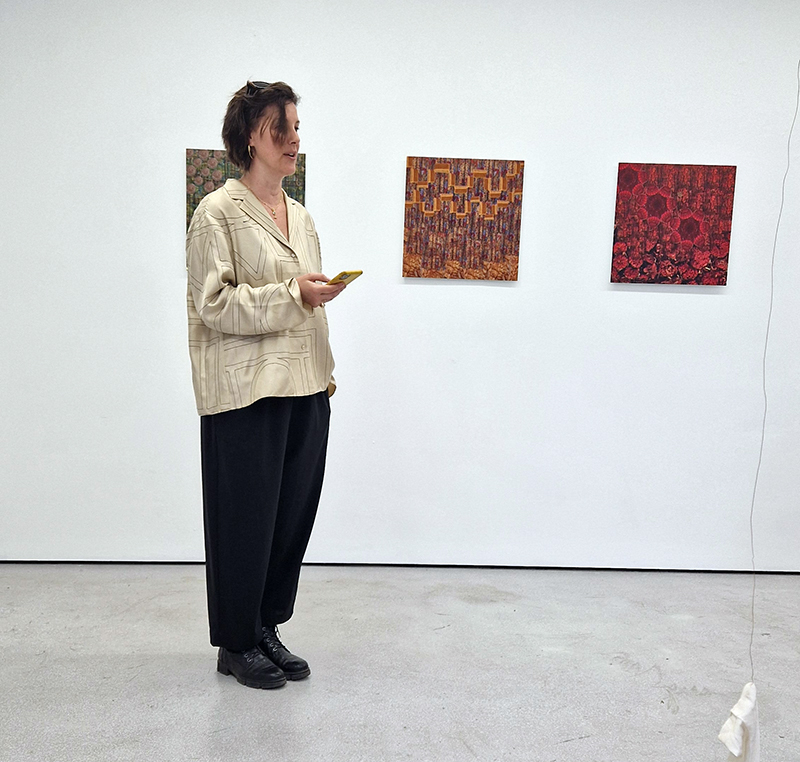
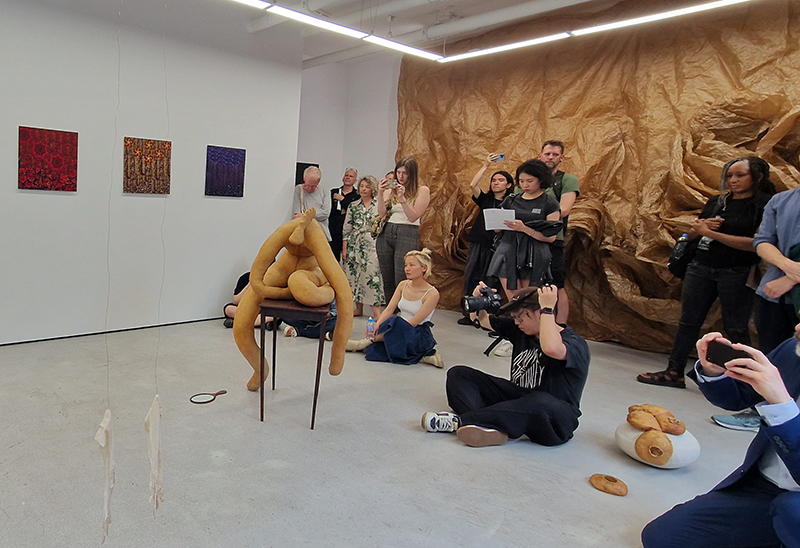
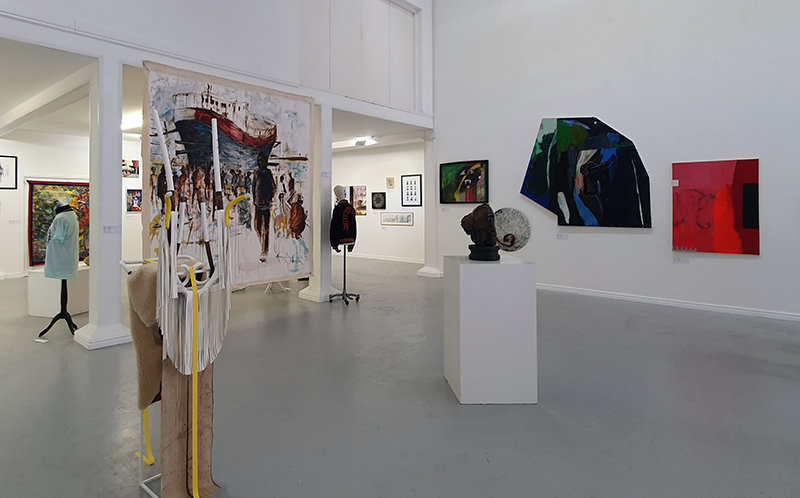
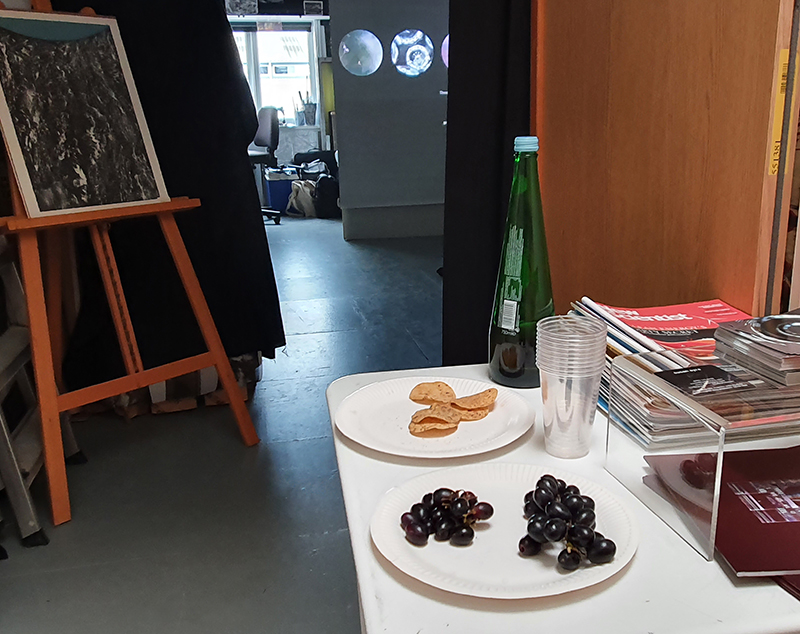
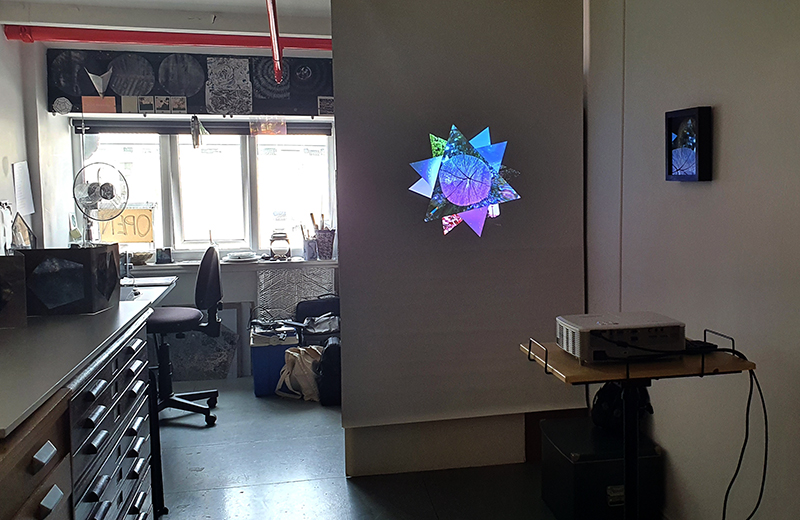
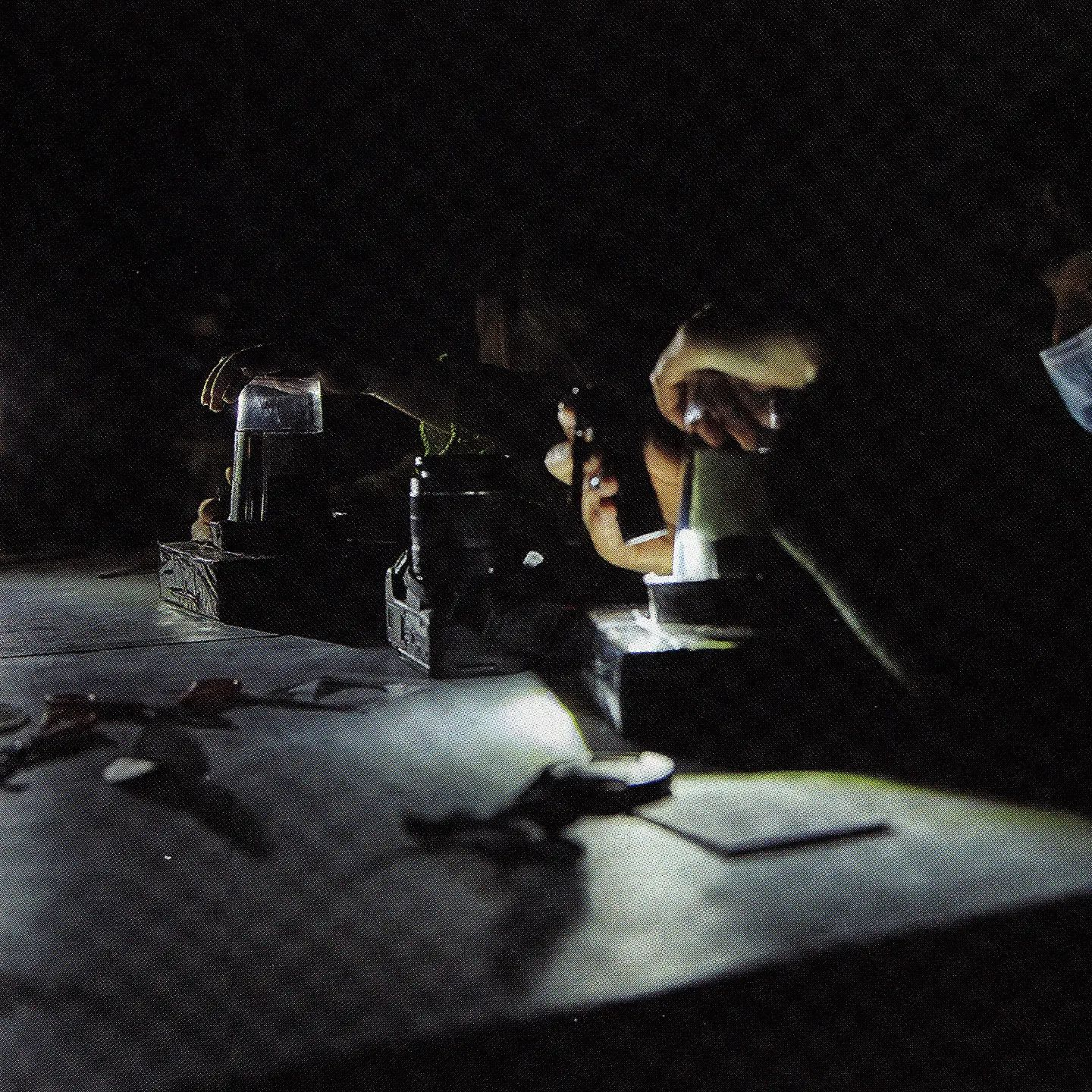
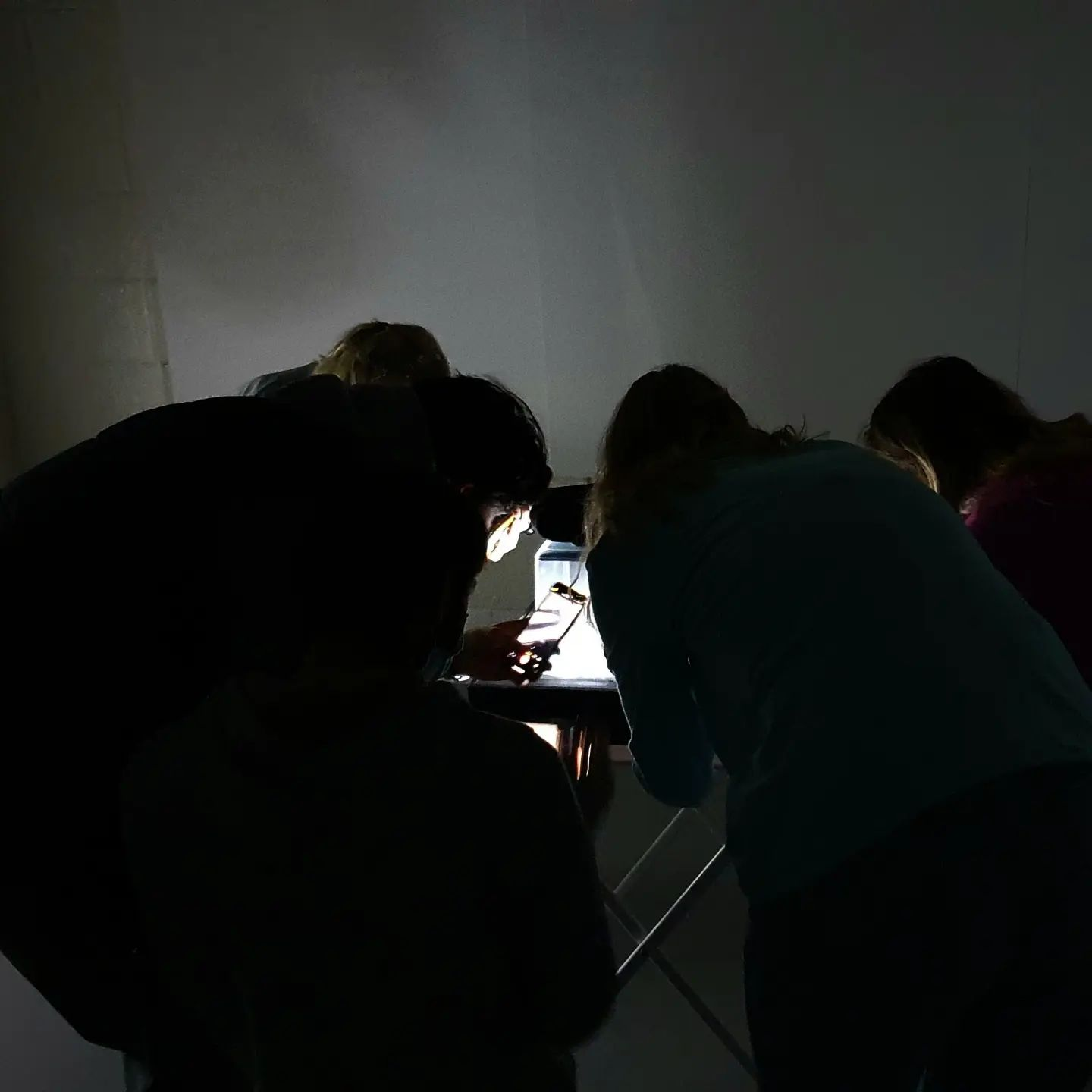
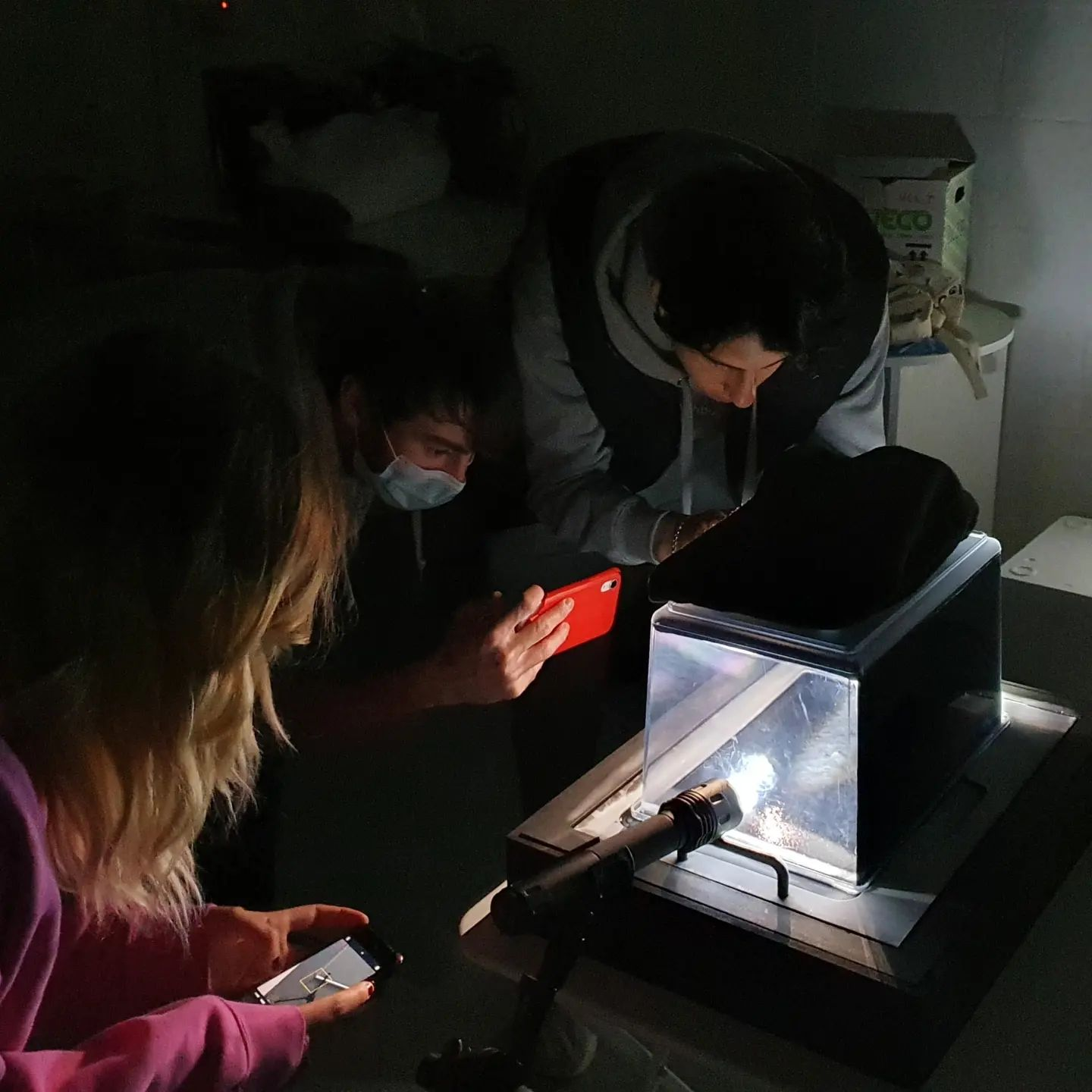
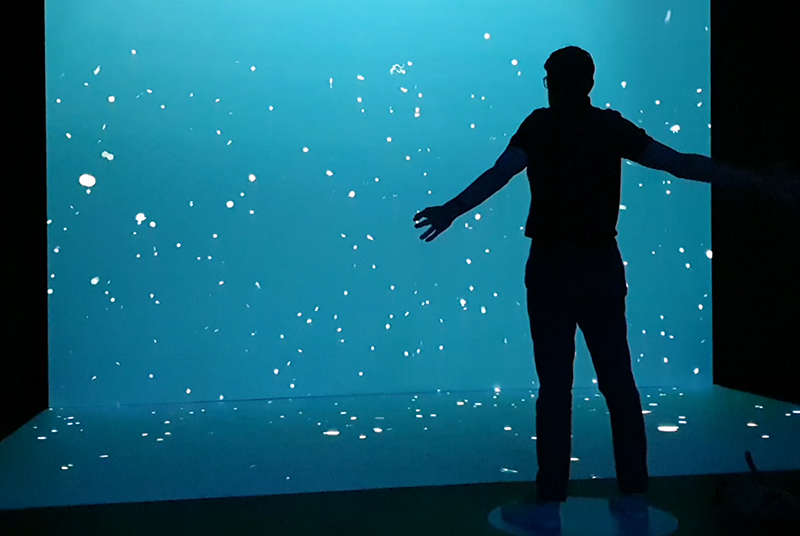
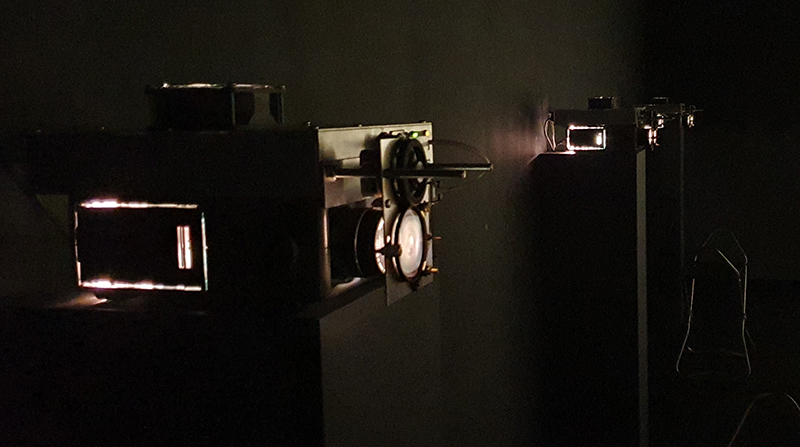
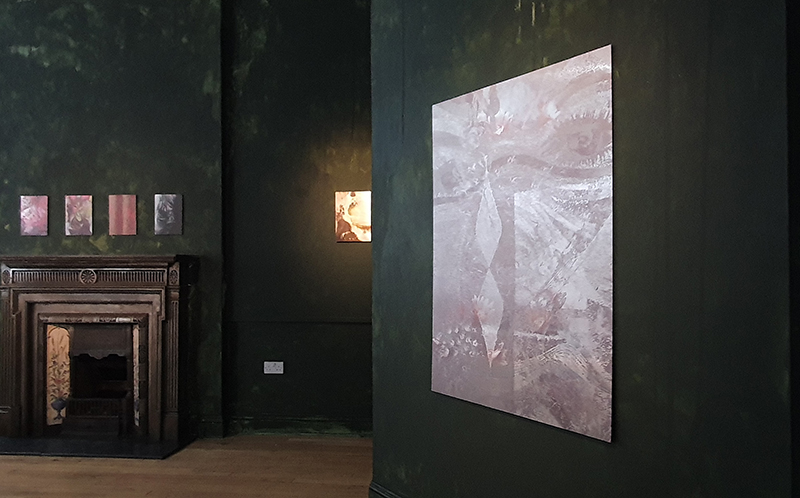
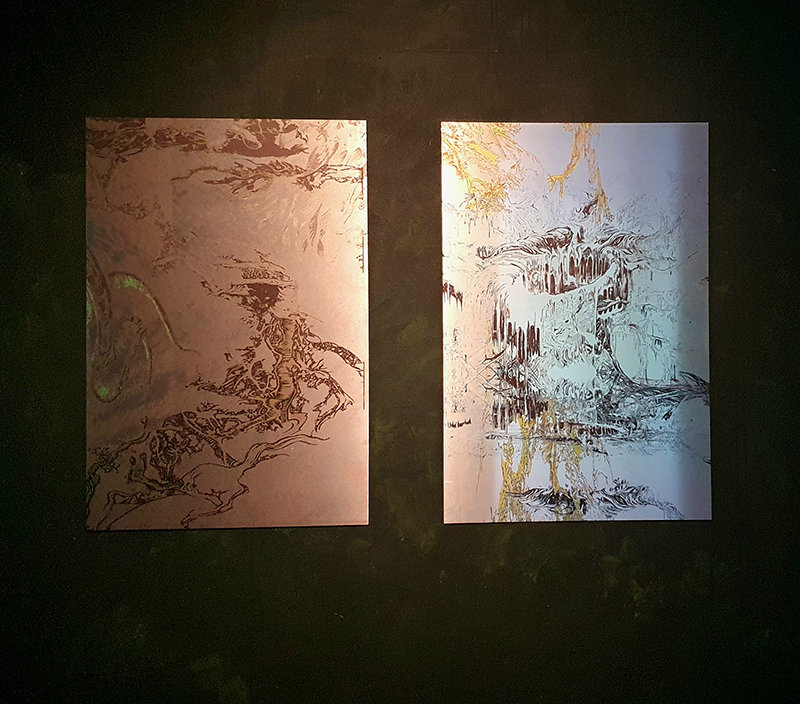
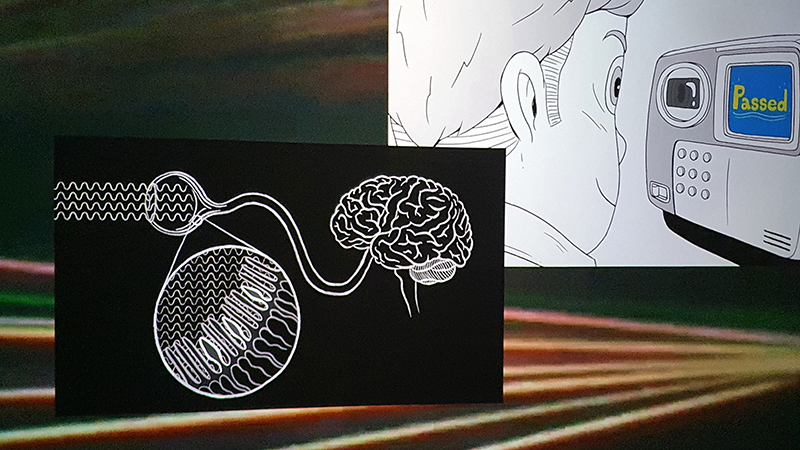
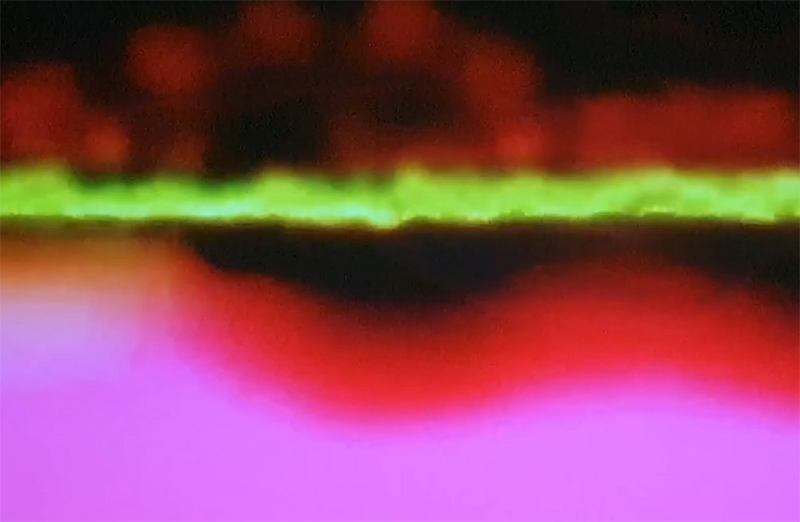
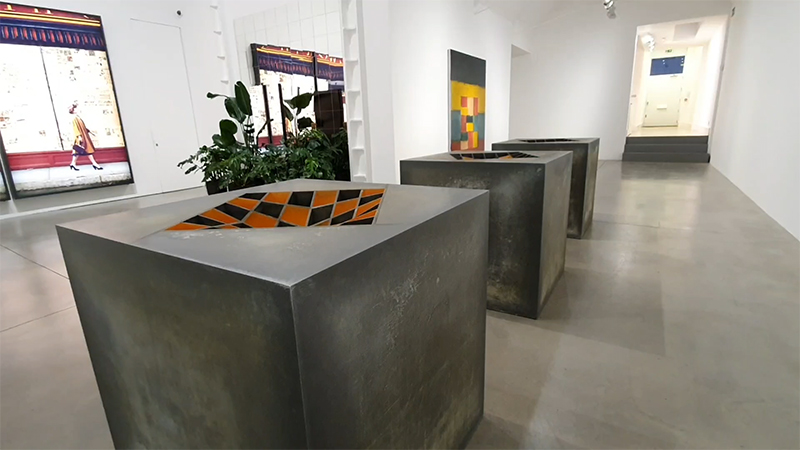
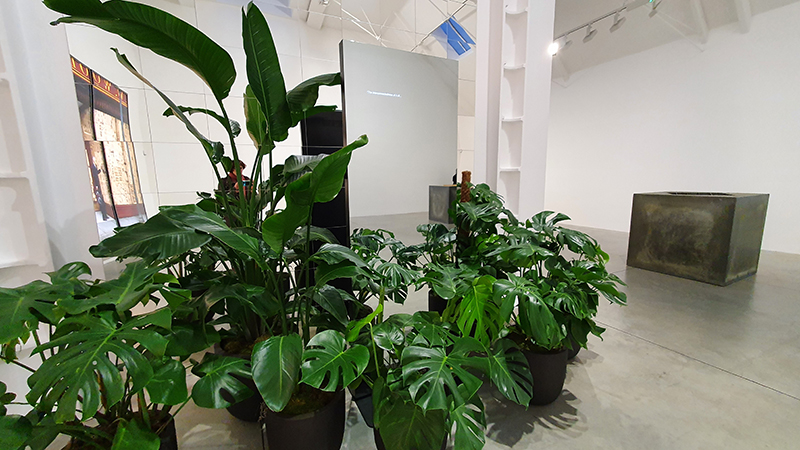
The finale of the exhibition programme of Carbon, Carbon Everywhere co-curated by Indira Dyussebayeva-Ziyabek and Maria Hinel at Hypha HQ included an exhibition tour, a BREAT(HOLD) workshop led by Ania Mokrzycka and an invitation to view cosmic particle trails passing through a cloud chamber.

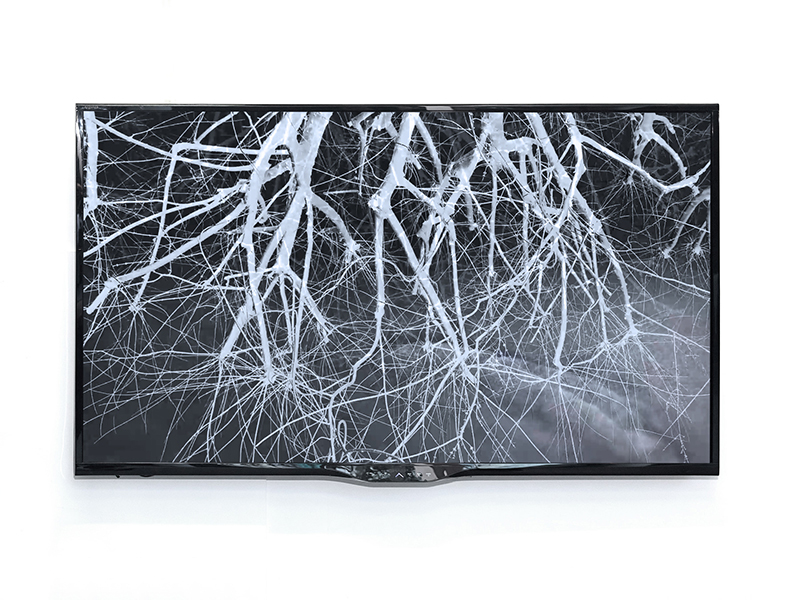
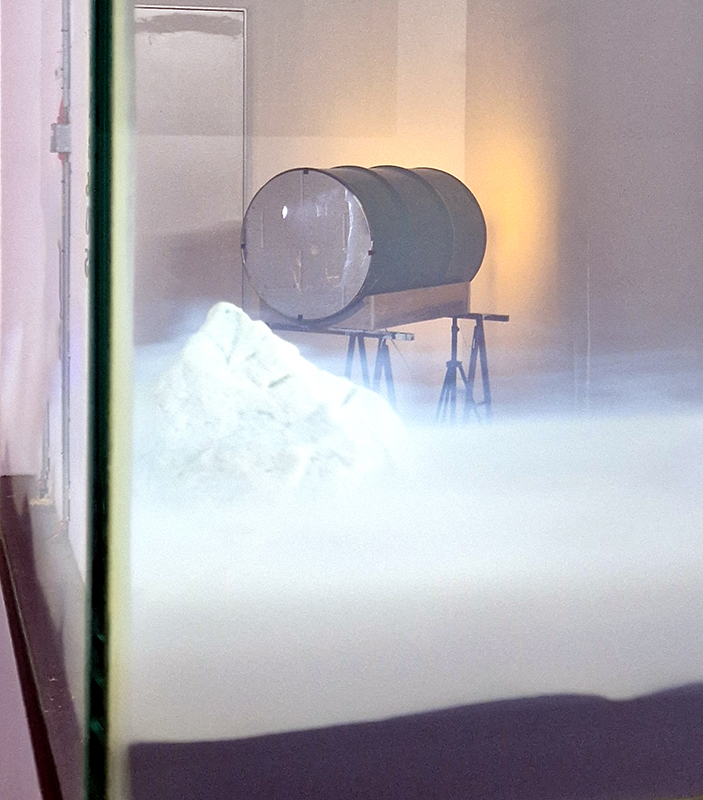
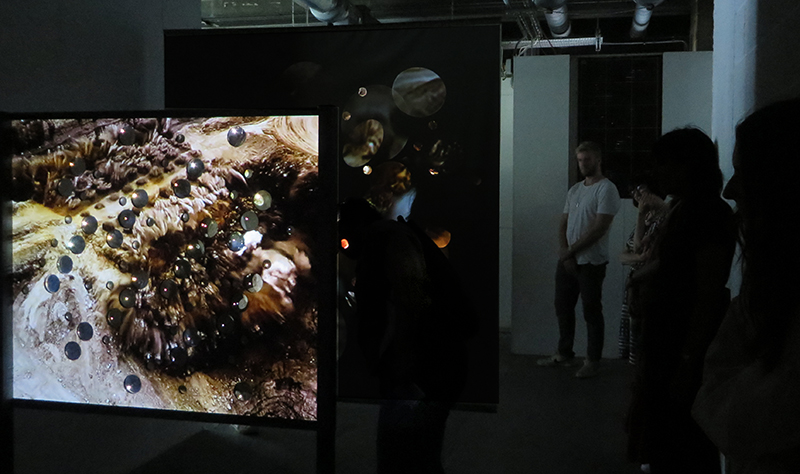
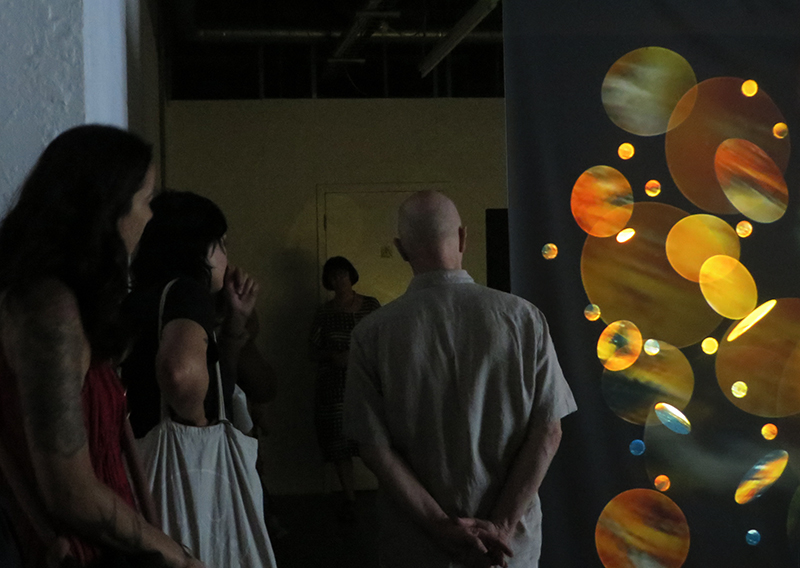
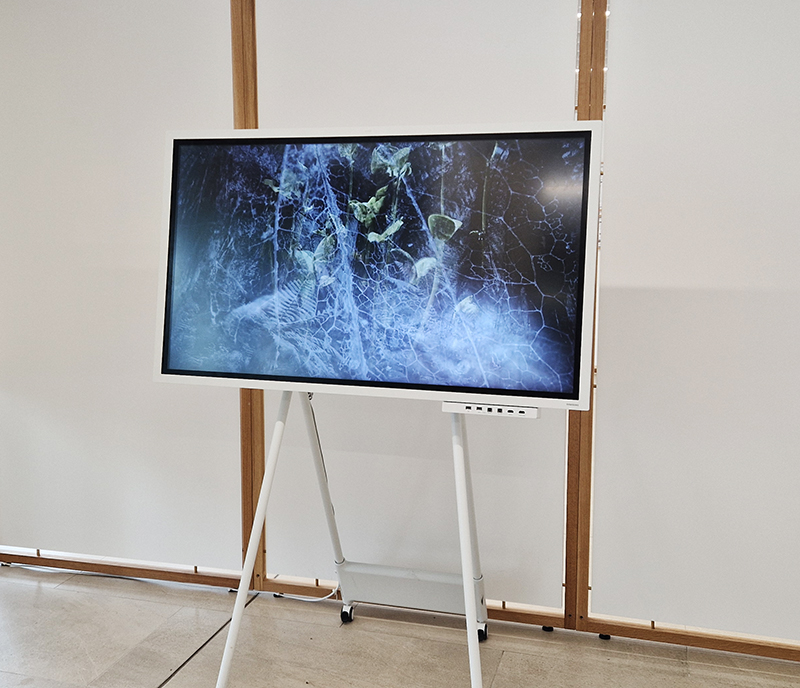
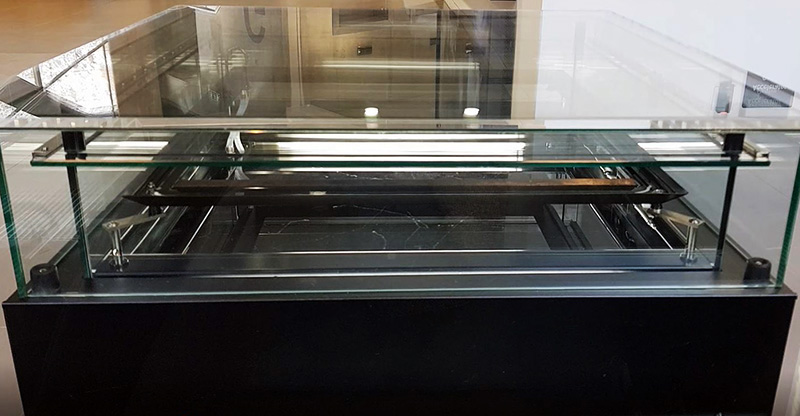
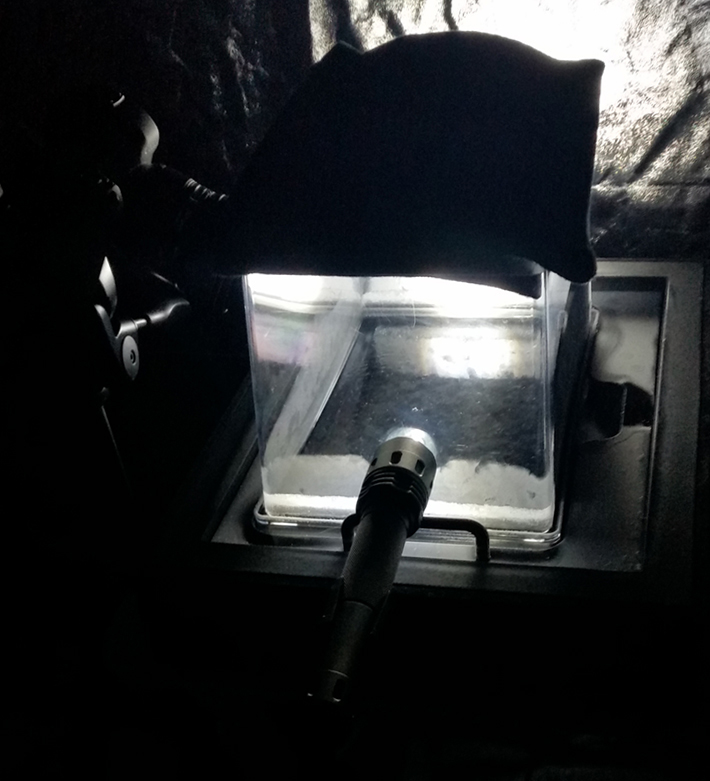
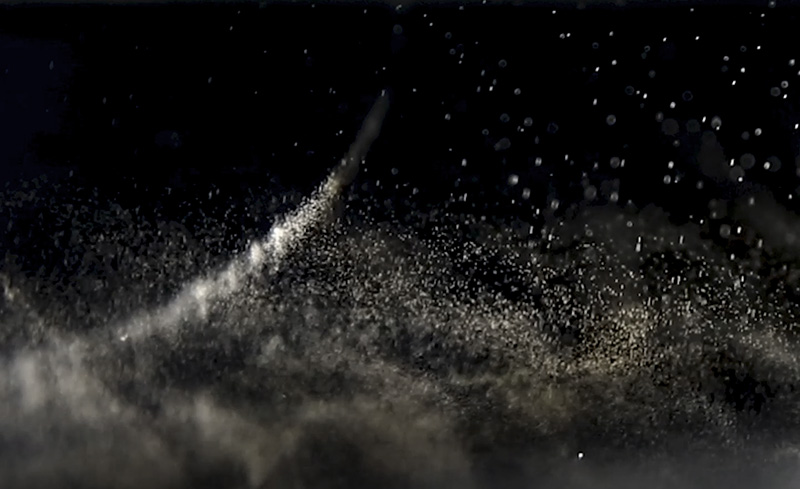
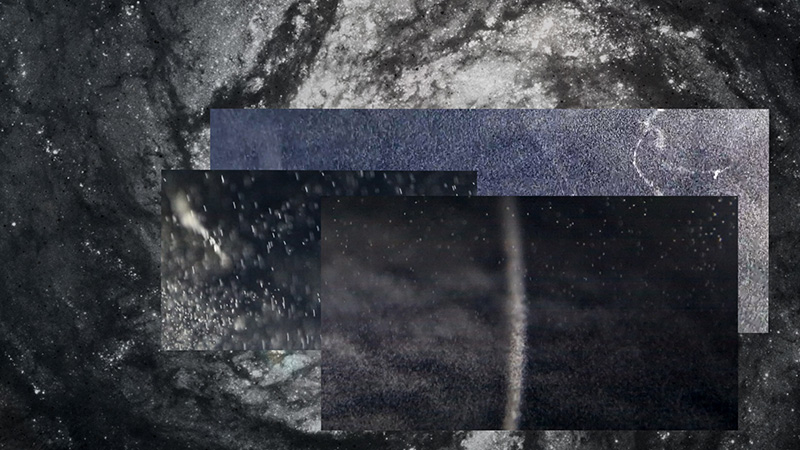
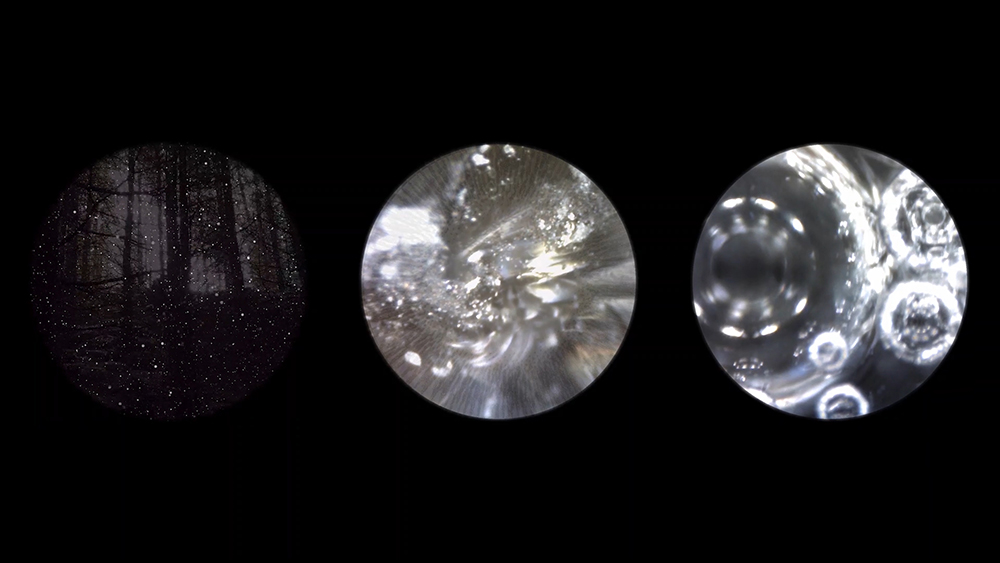
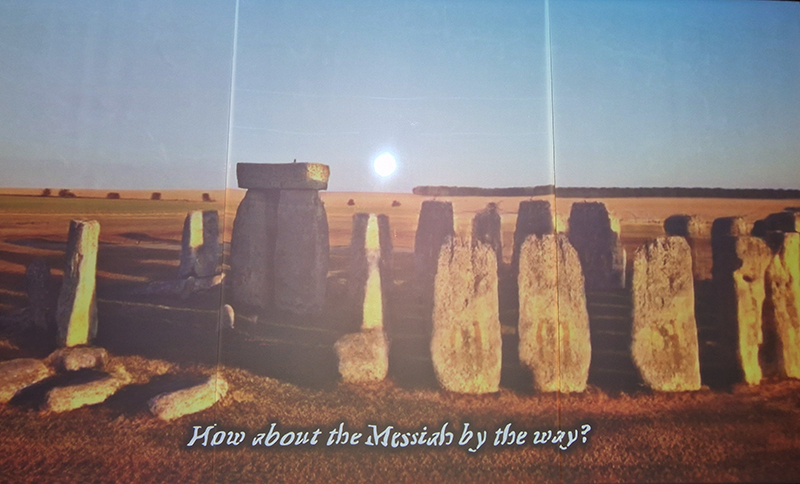
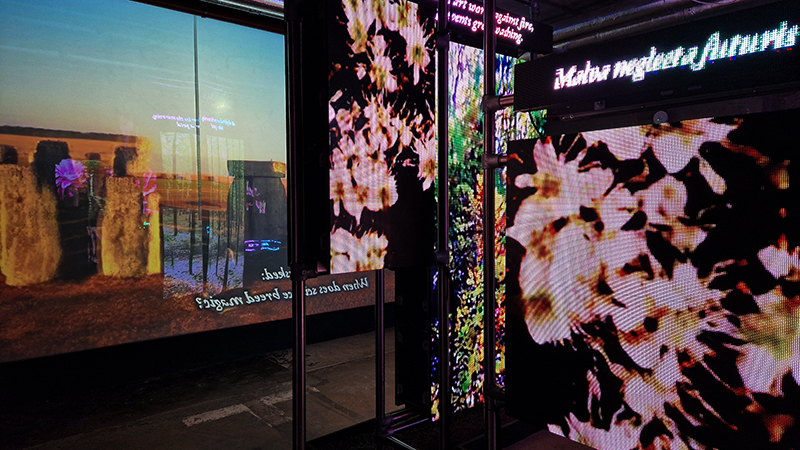
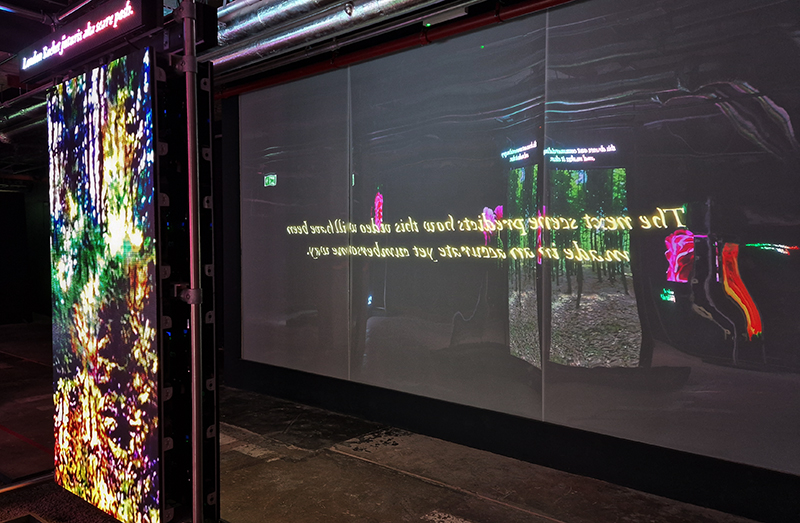
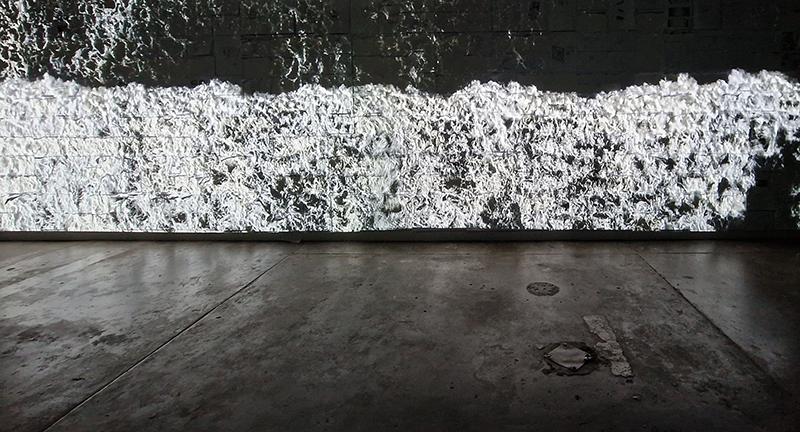
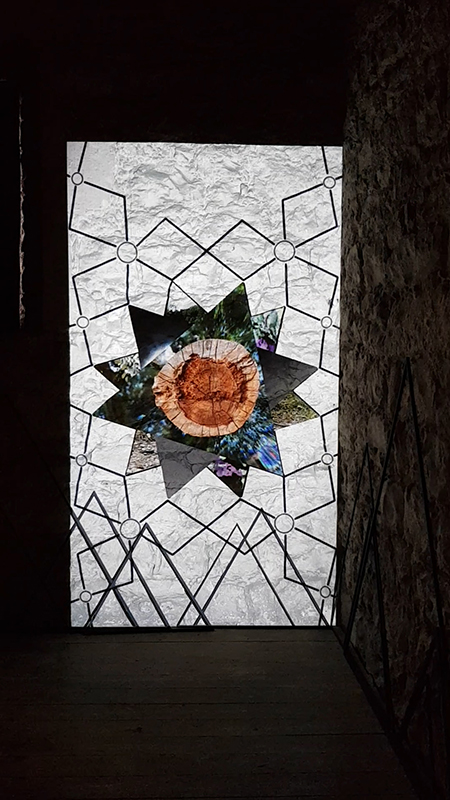
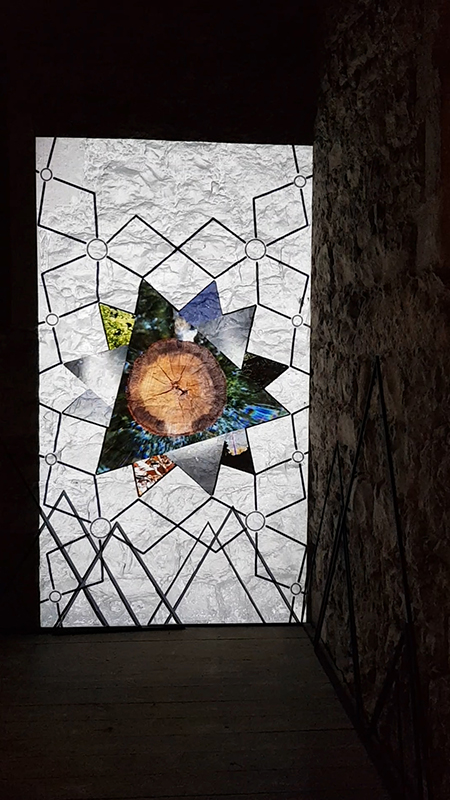
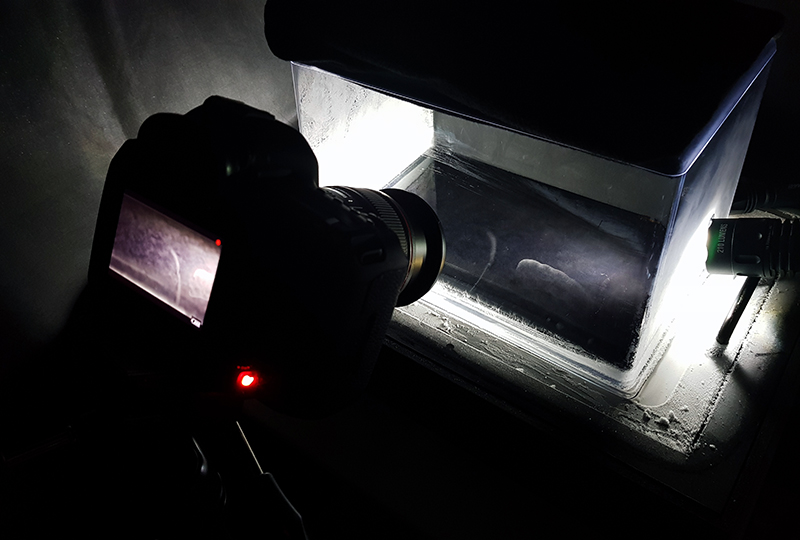
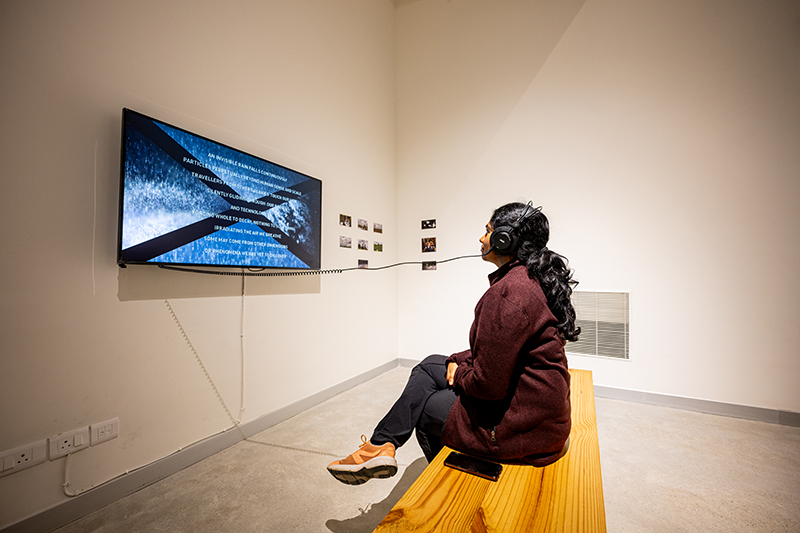
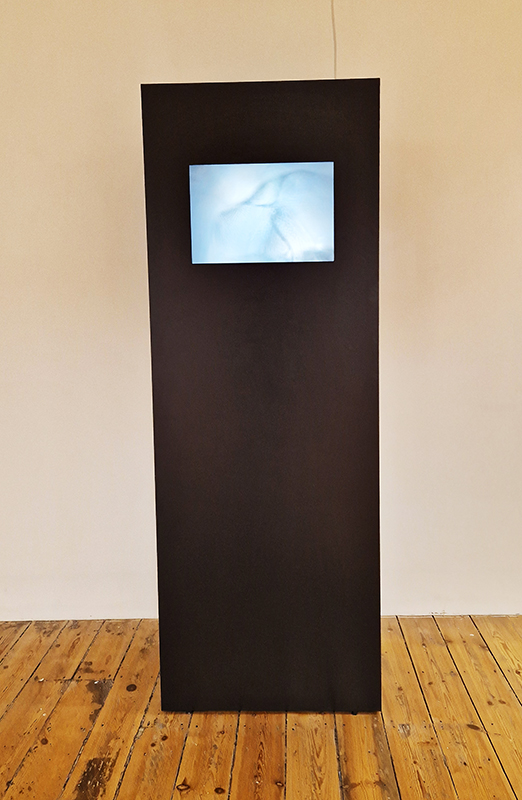
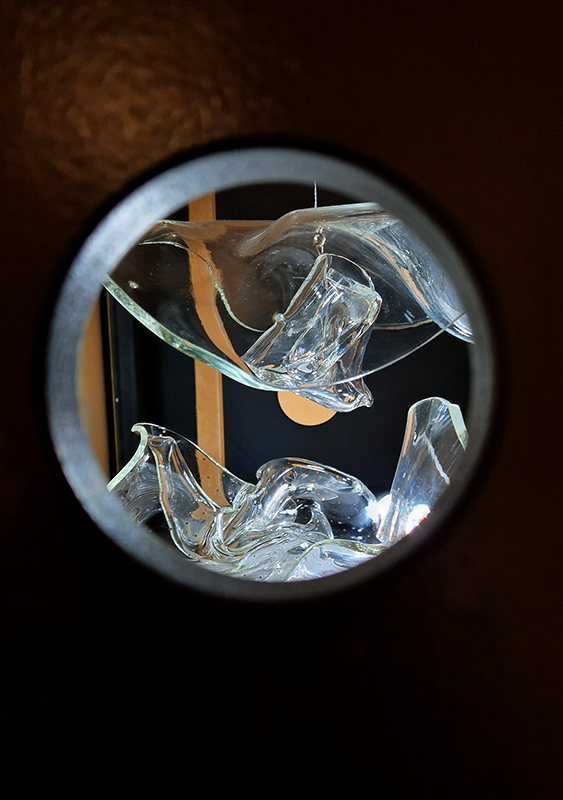
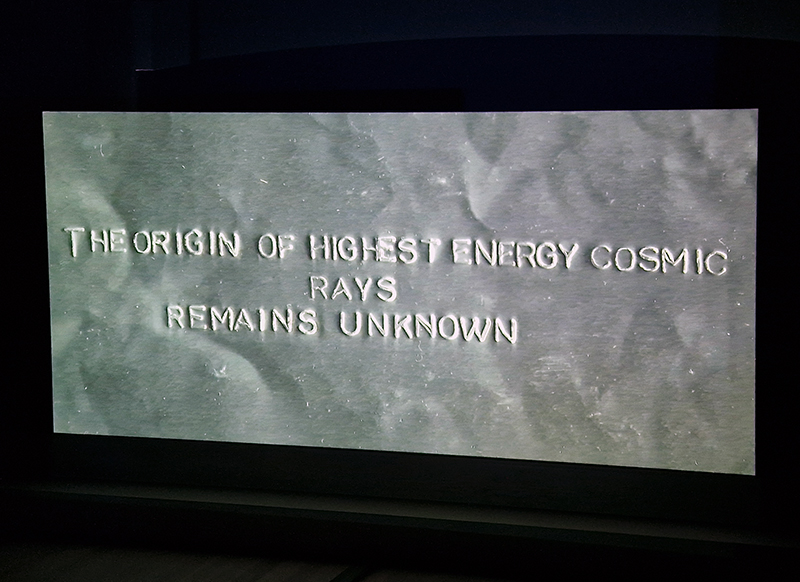
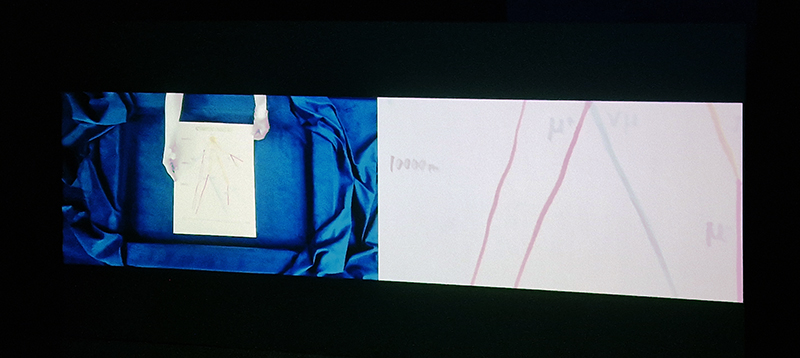
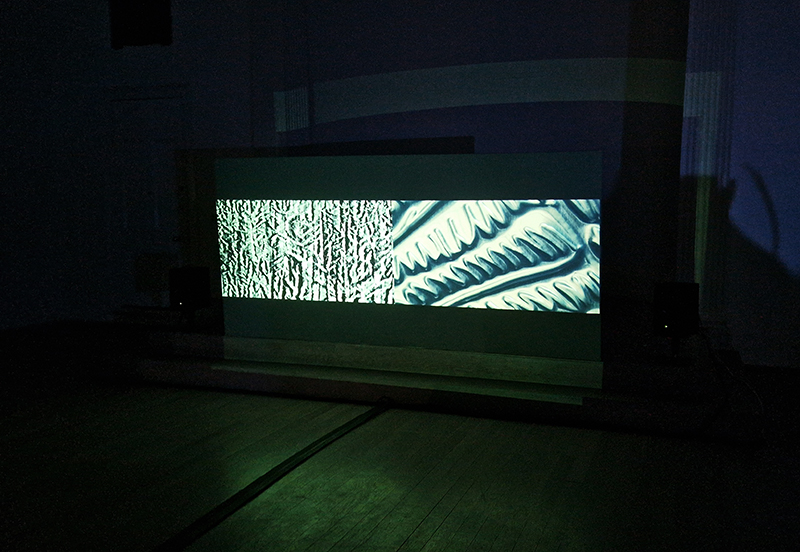
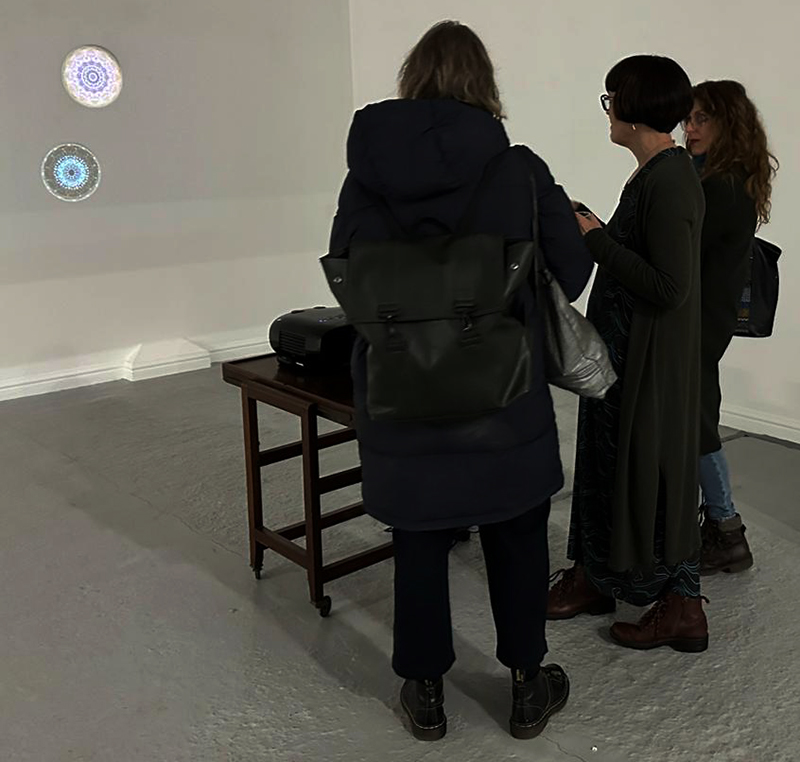
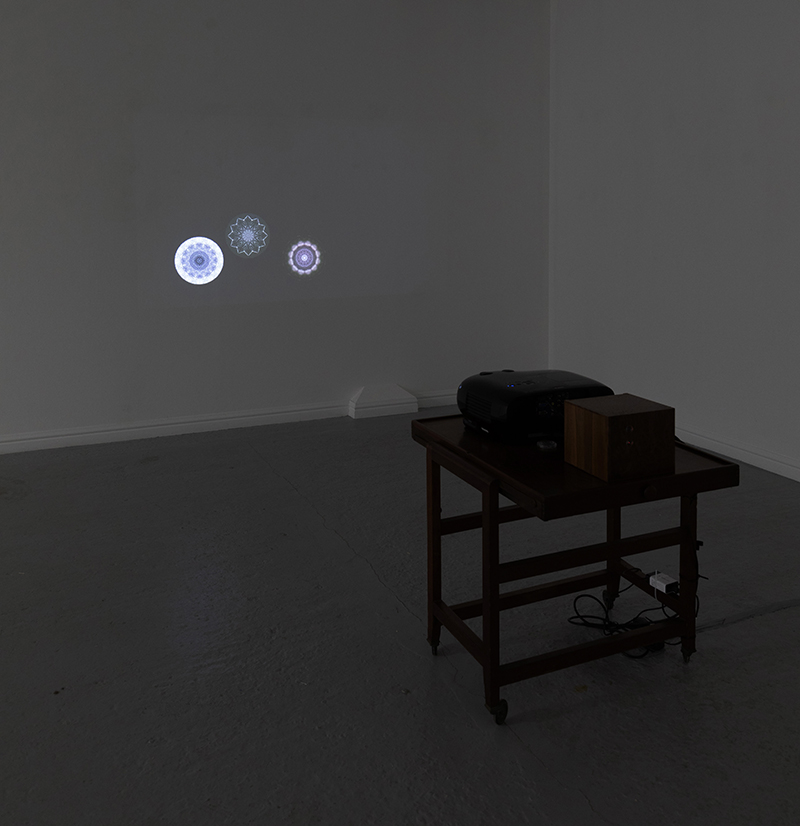
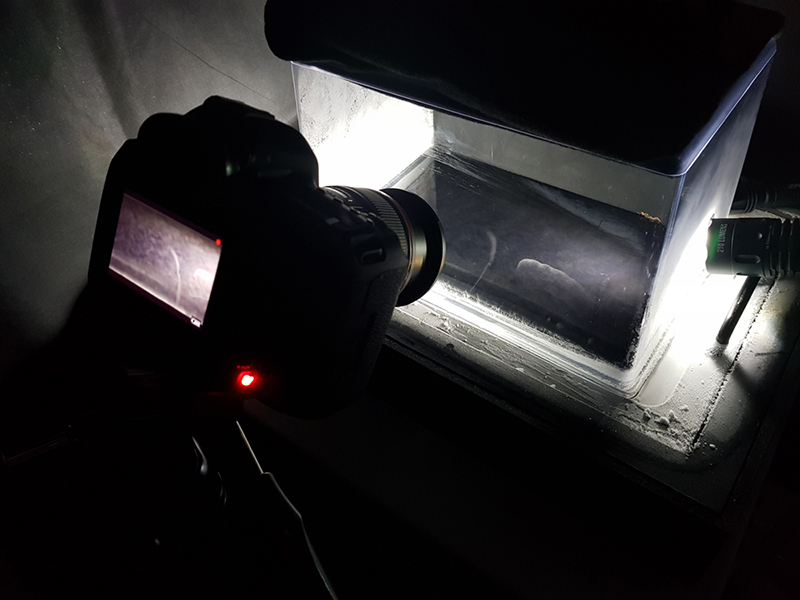
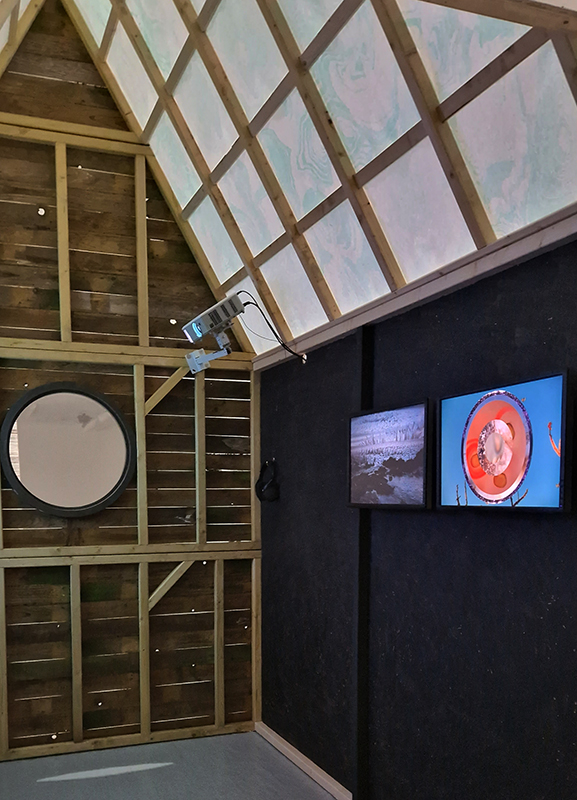
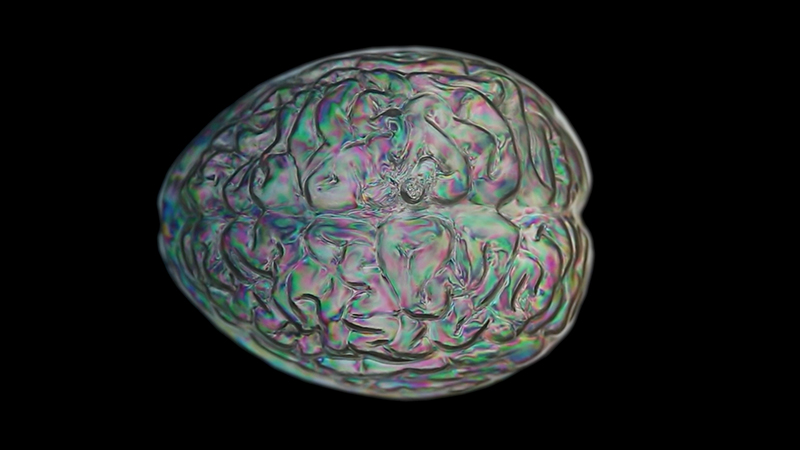
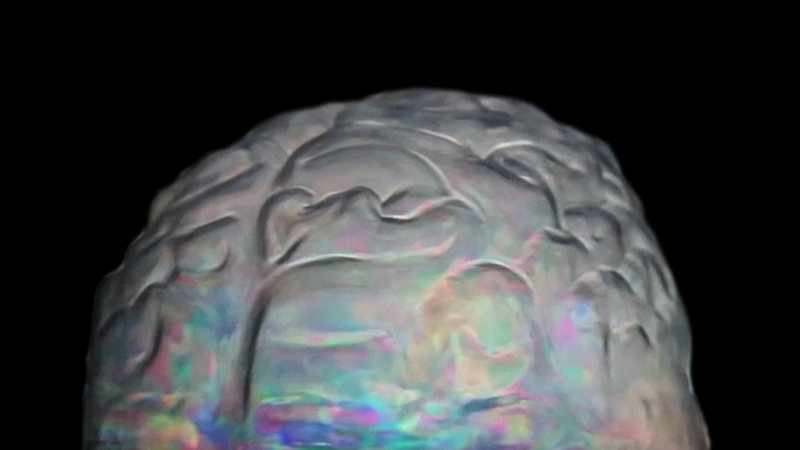
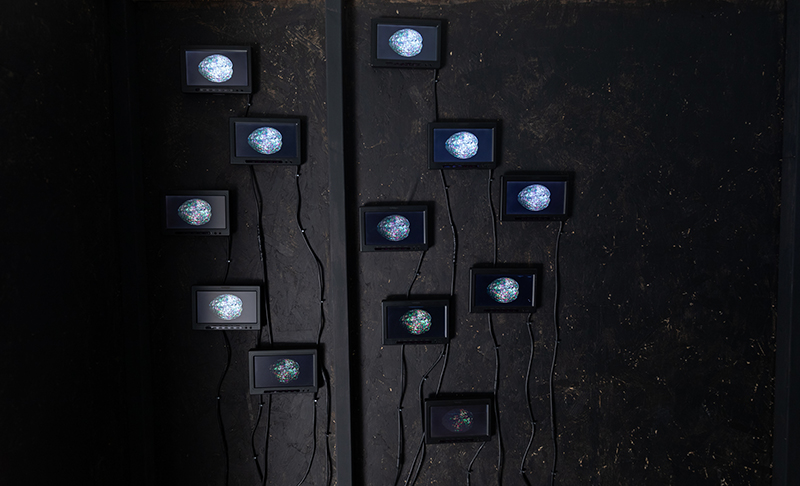
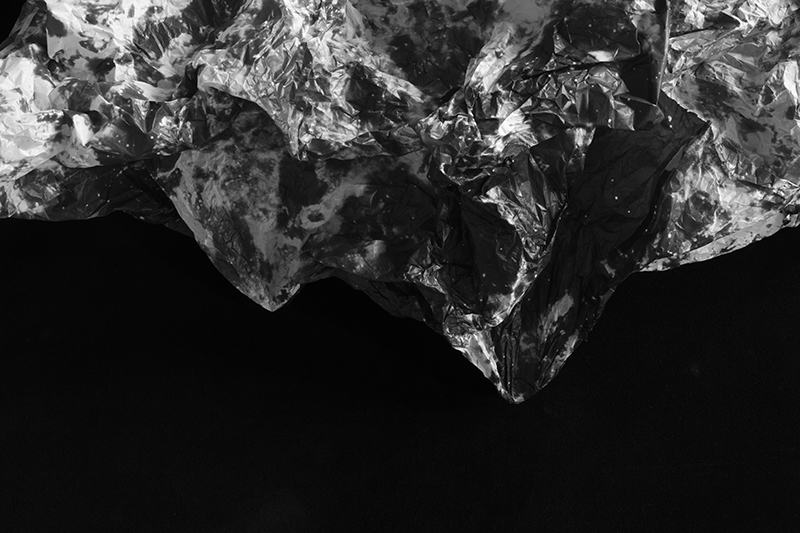
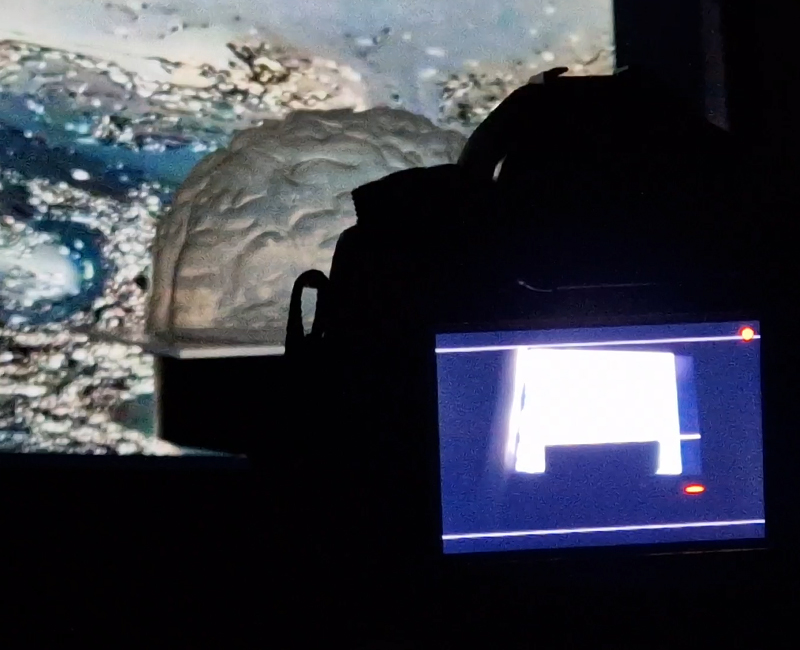
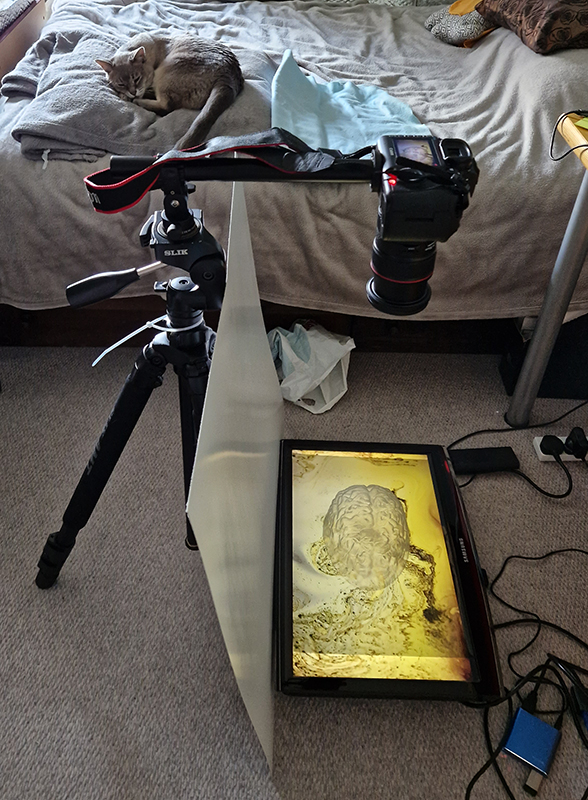
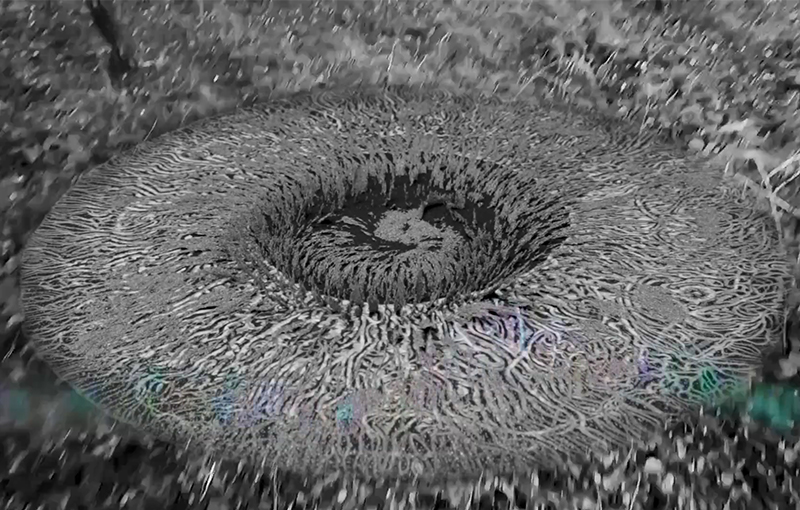
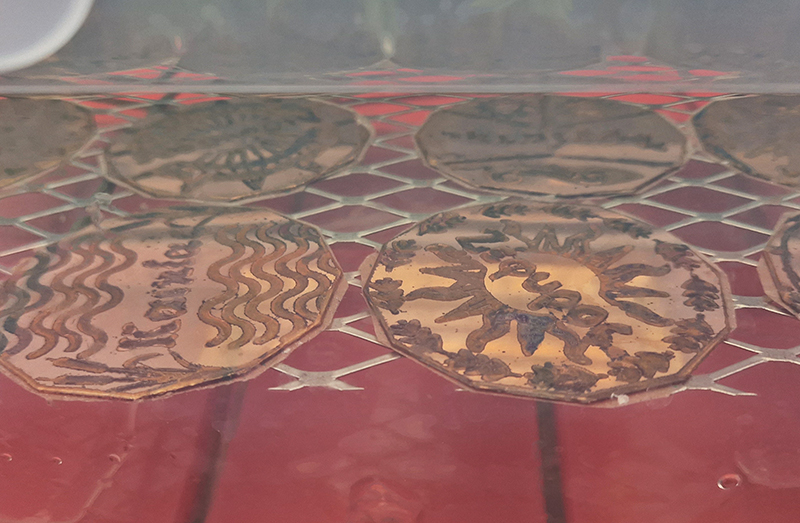
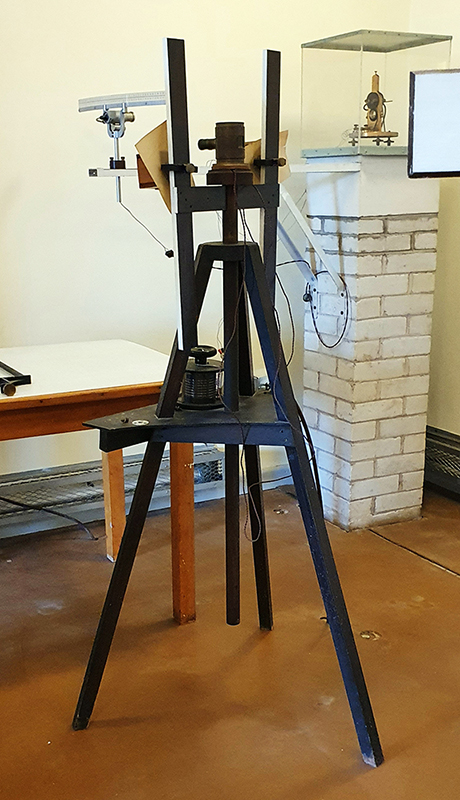
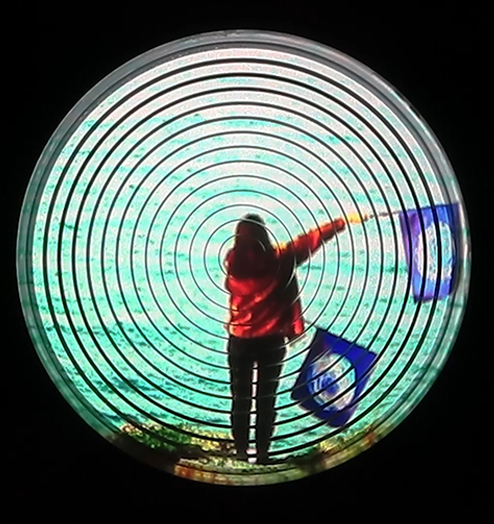
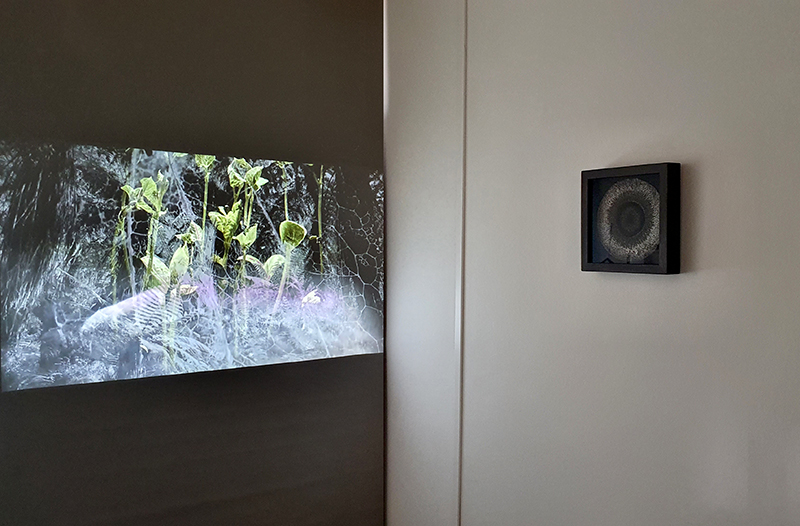
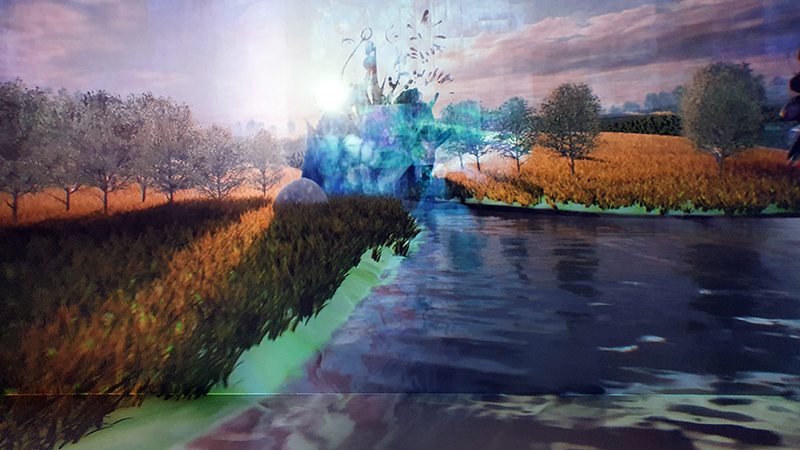
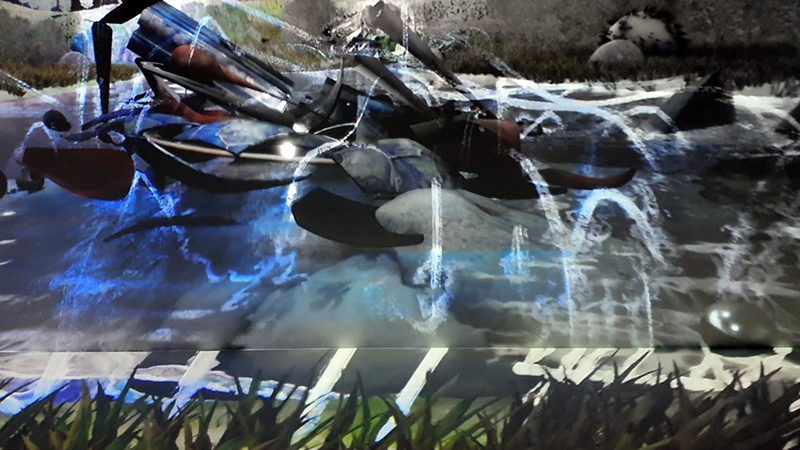
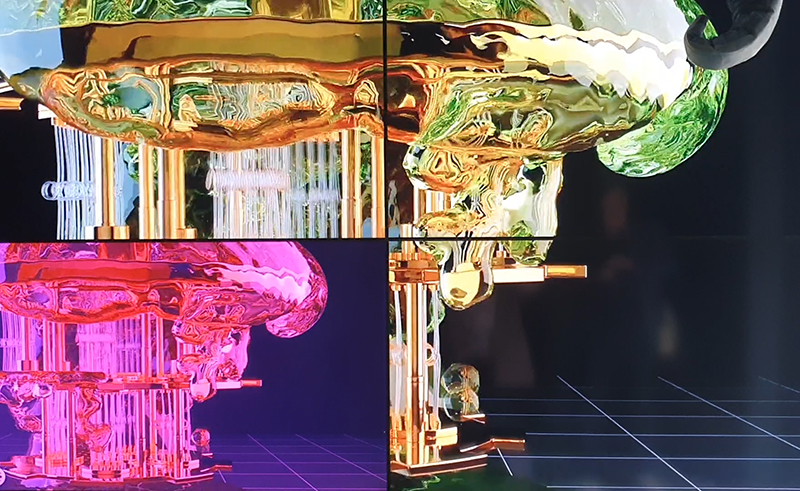
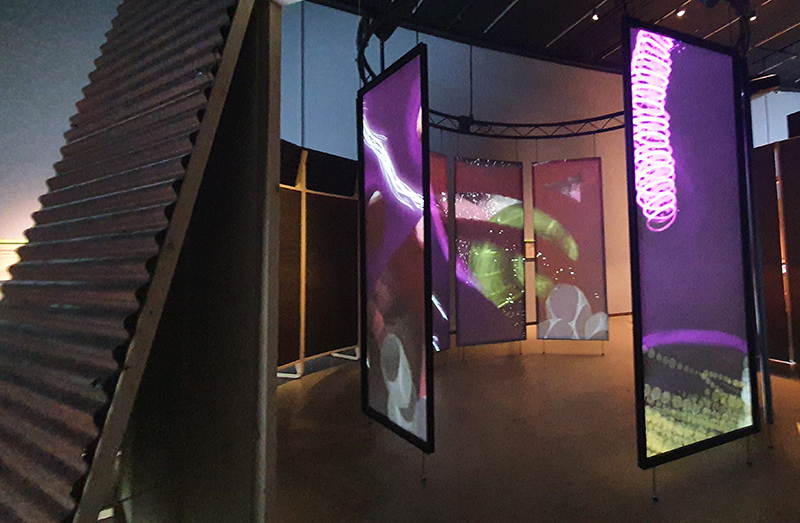
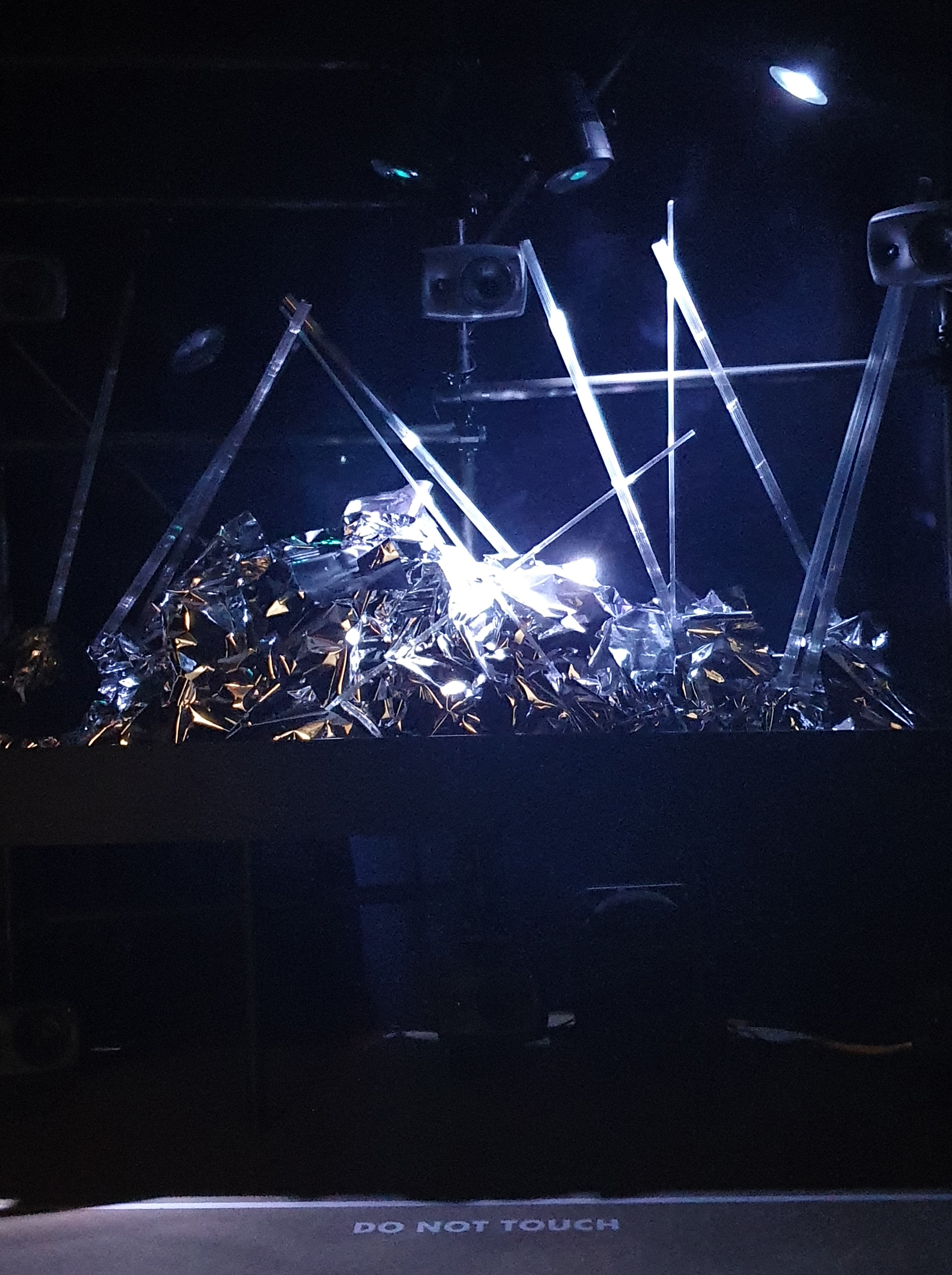
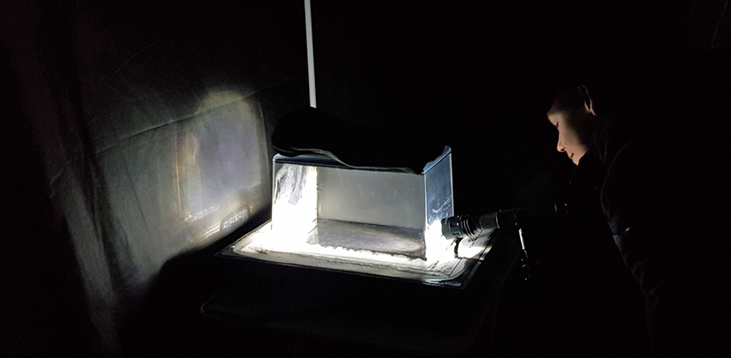
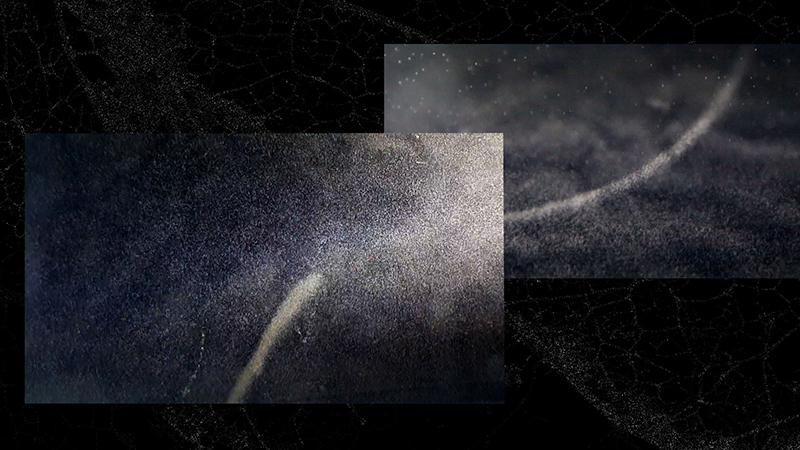
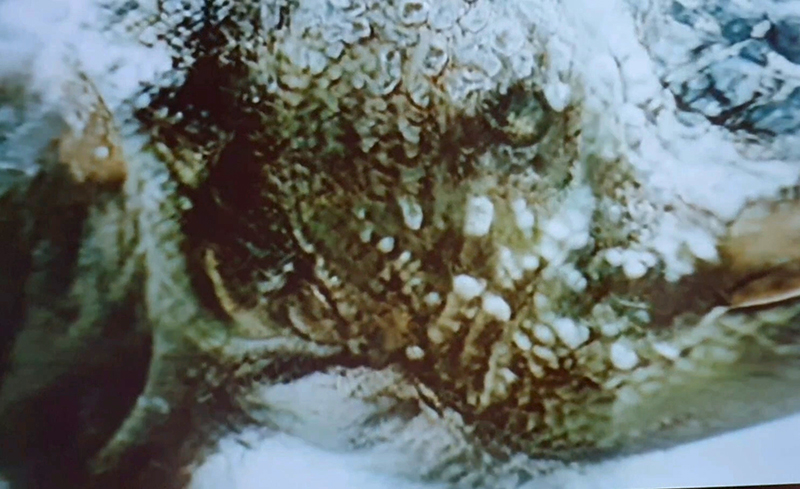
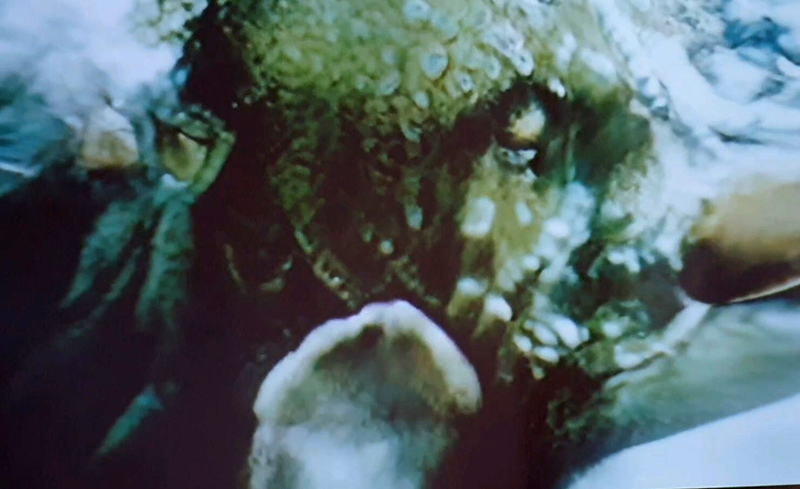
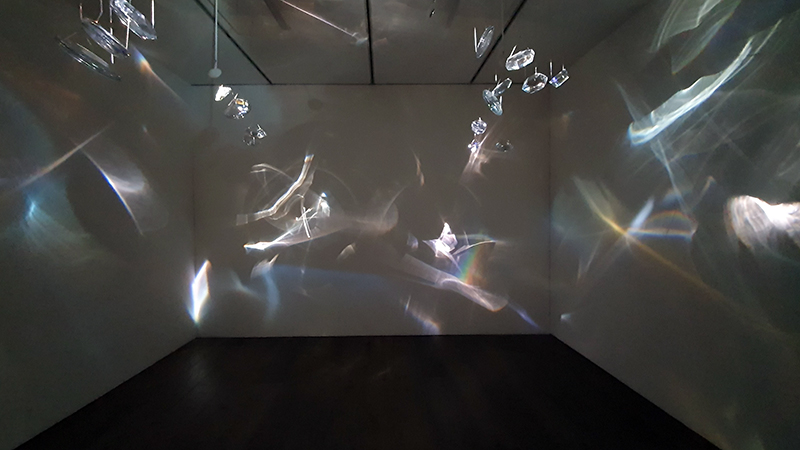
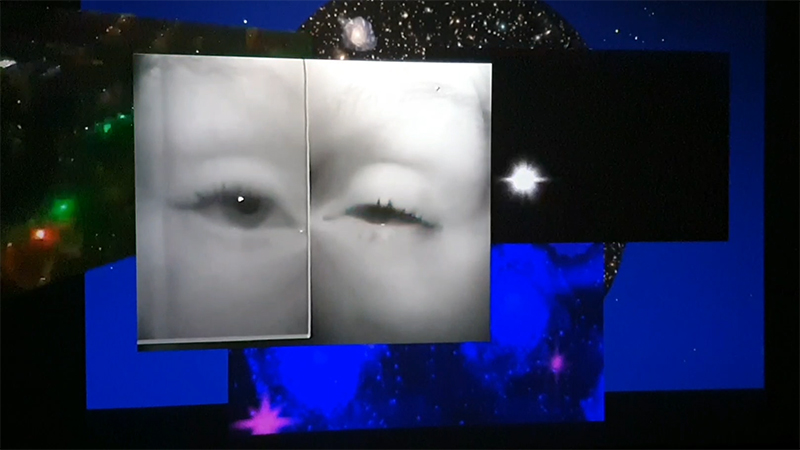
This simple equipment of a plastic tank saturated with isopropyl alcohol vapour over a metal tray sitting on dry ice was used to capture footage for the video Cosmic Chiasmus: crossing the universe showing in the exhibition. Cosmic rays are fast-moving particles, blasted across space, spiralling along magnetic field lines to end up entangled with carbon in our bodies.
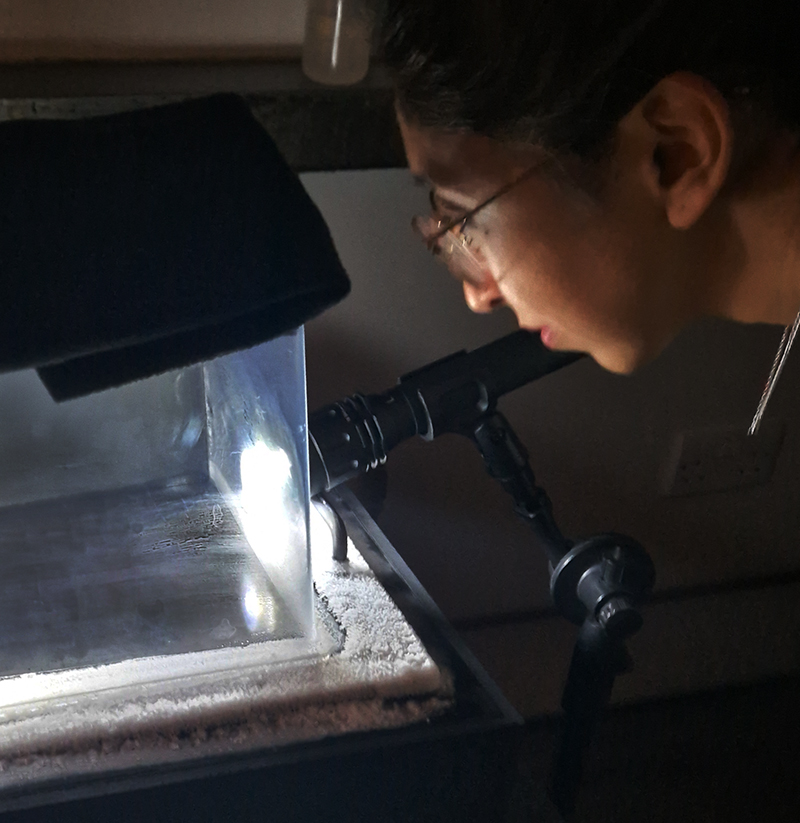
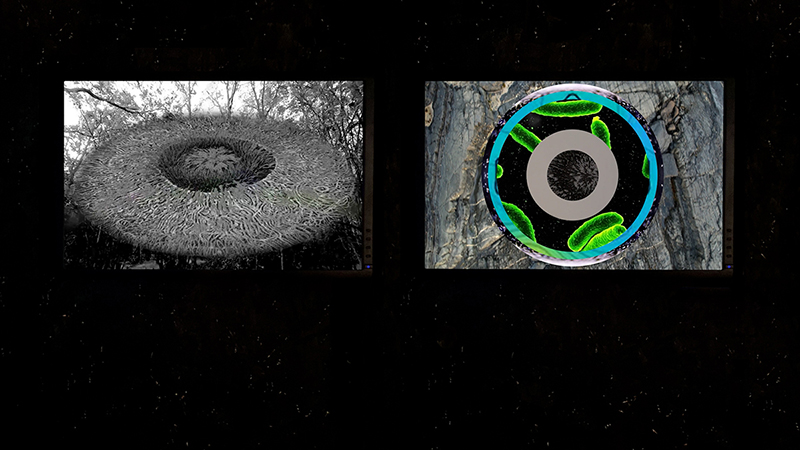
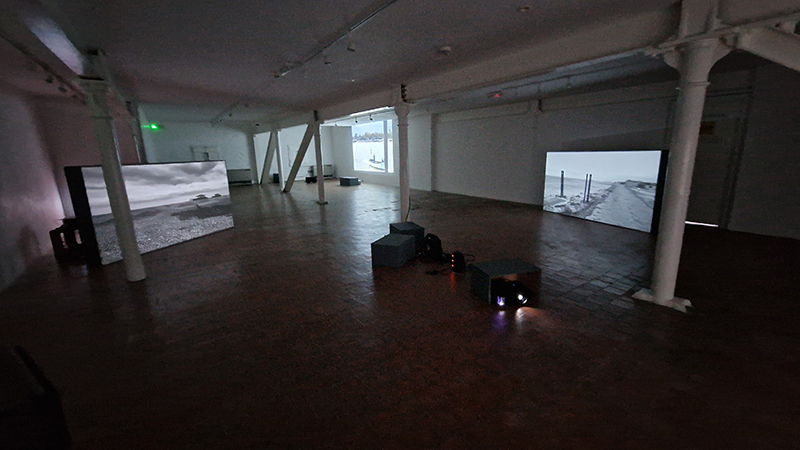
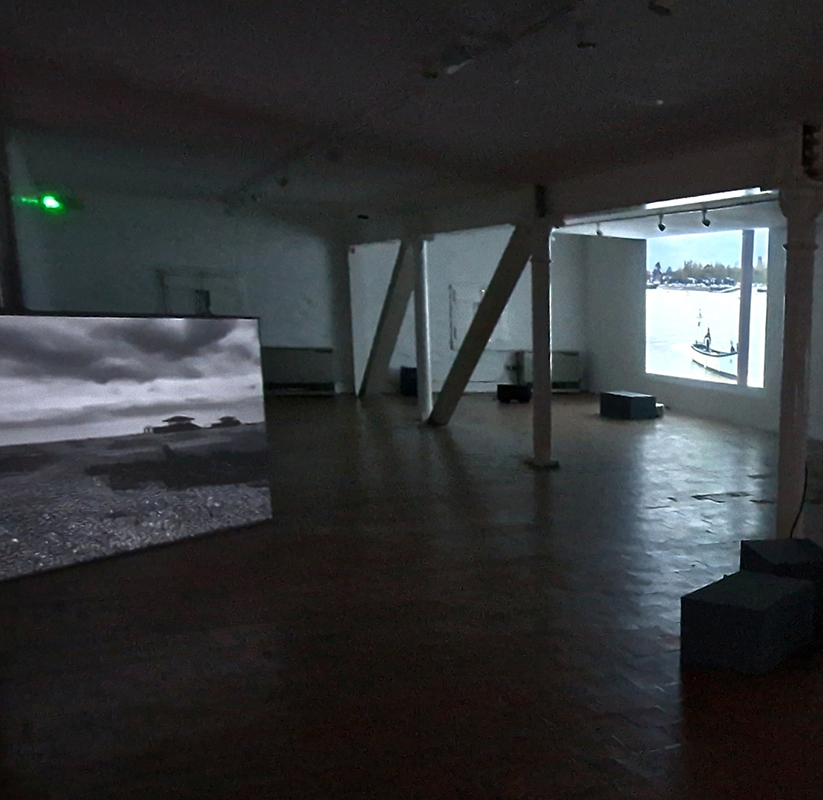
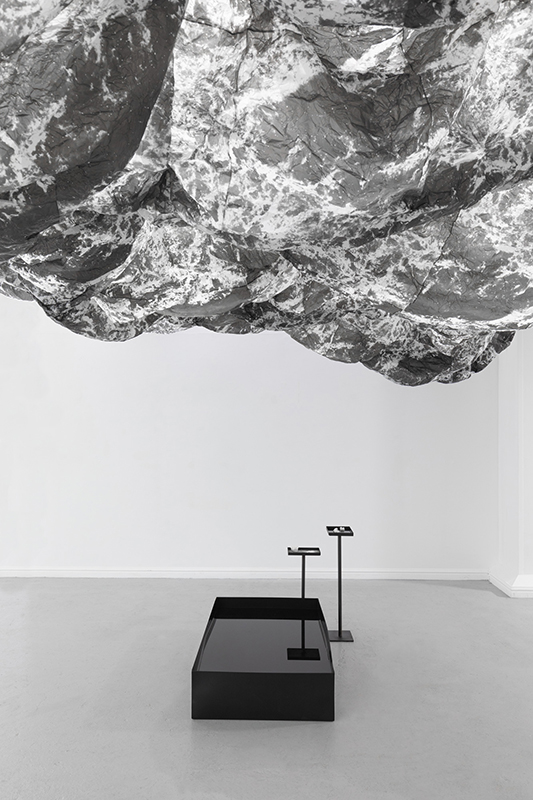
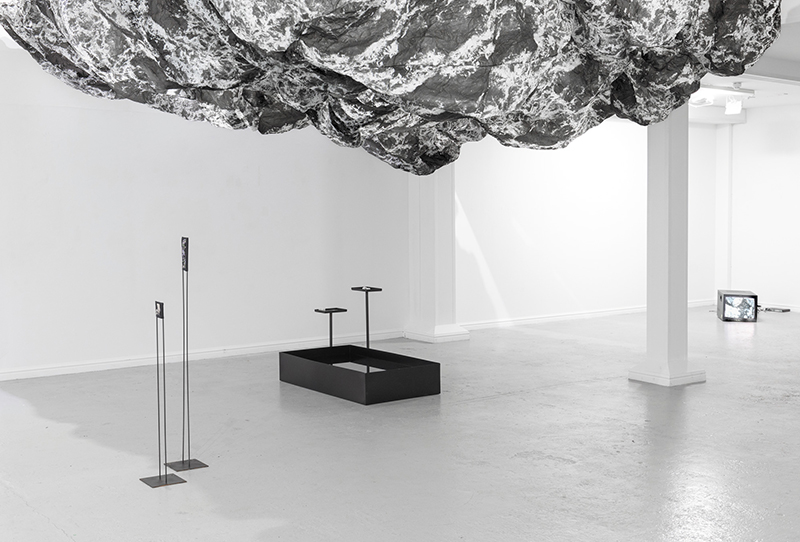
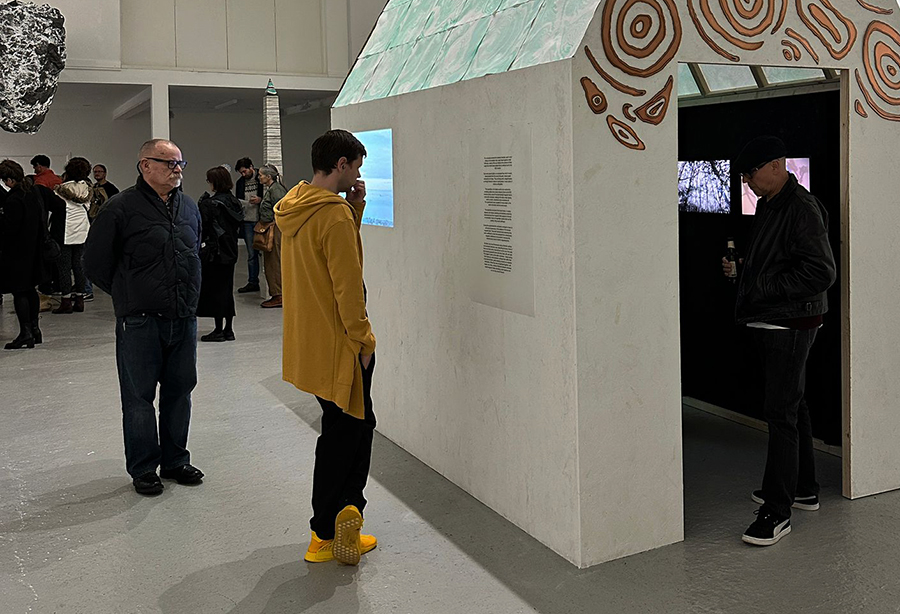
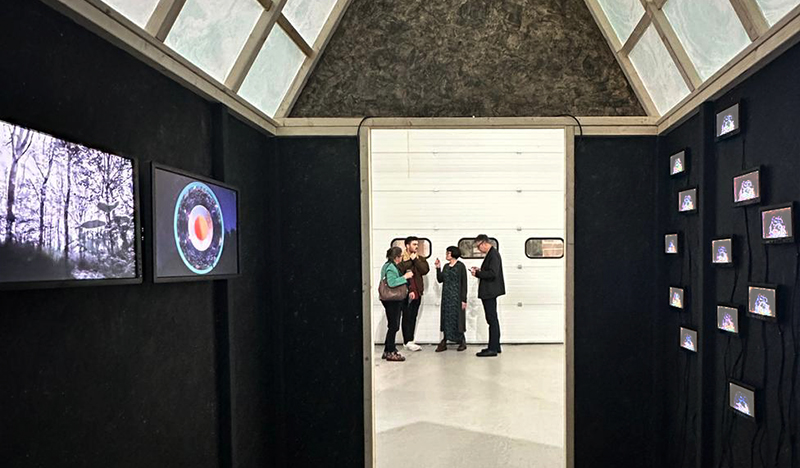
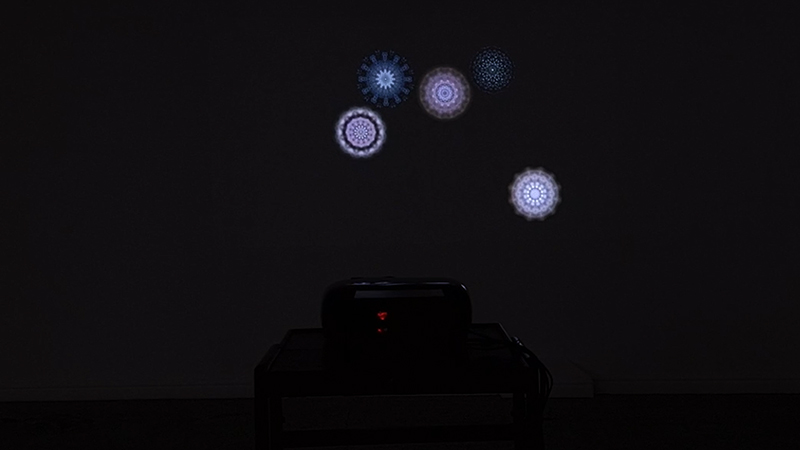
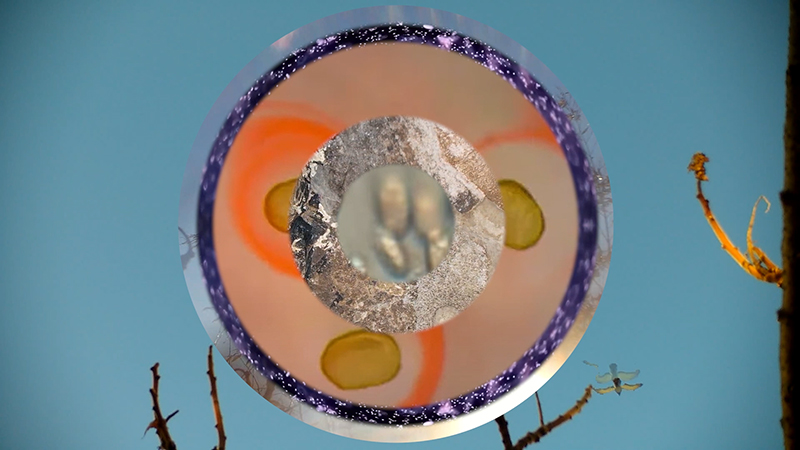
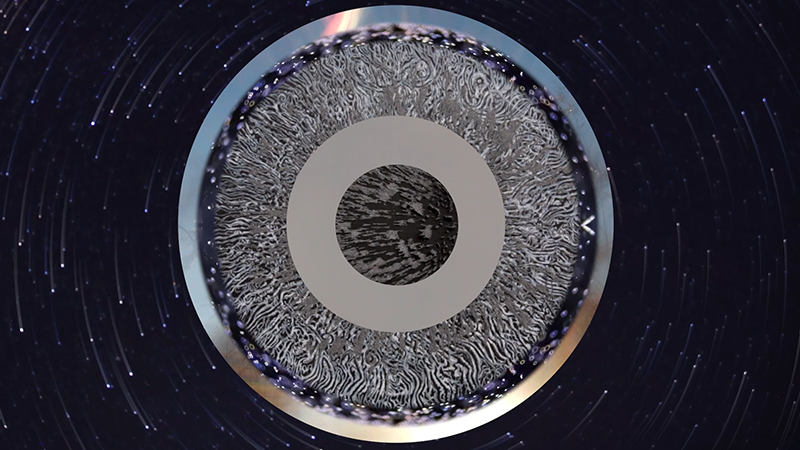
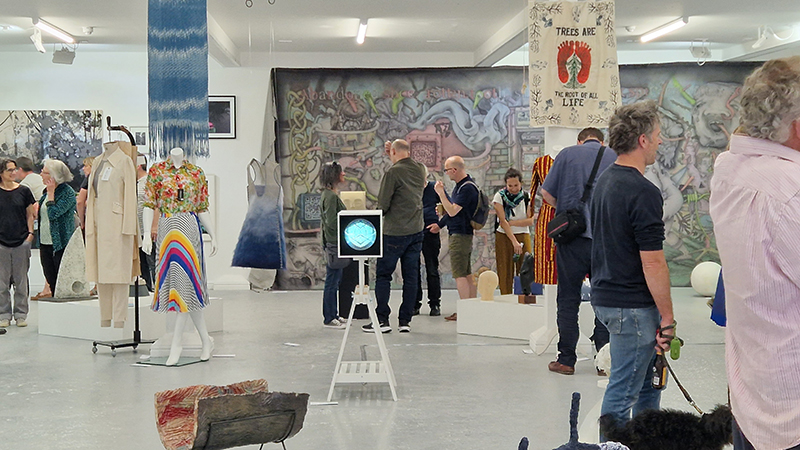
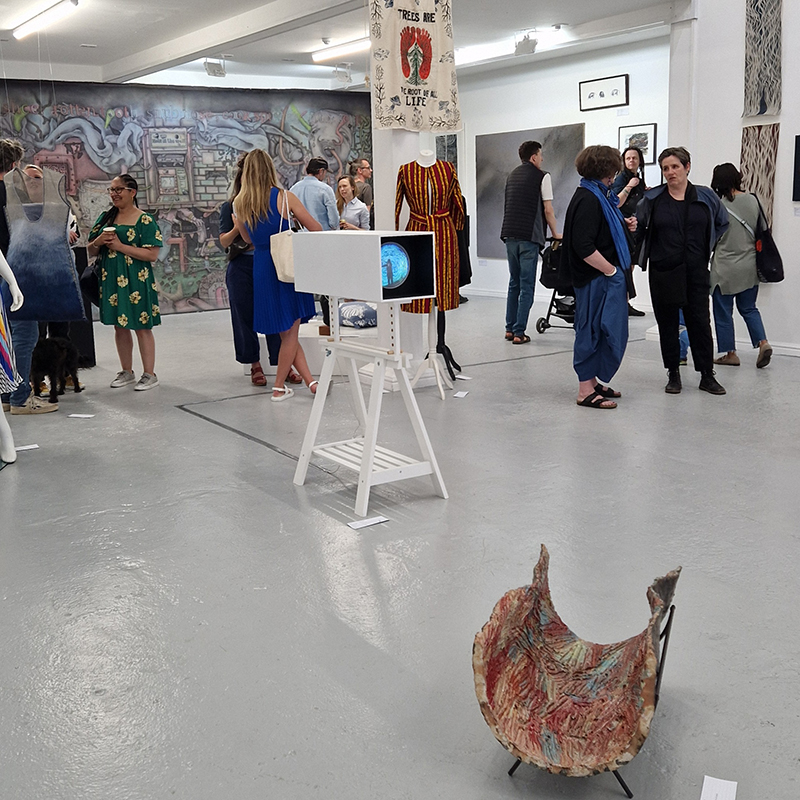
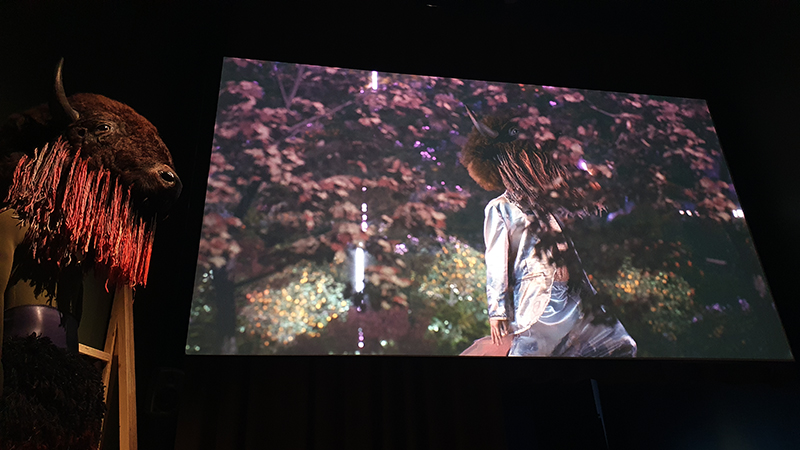
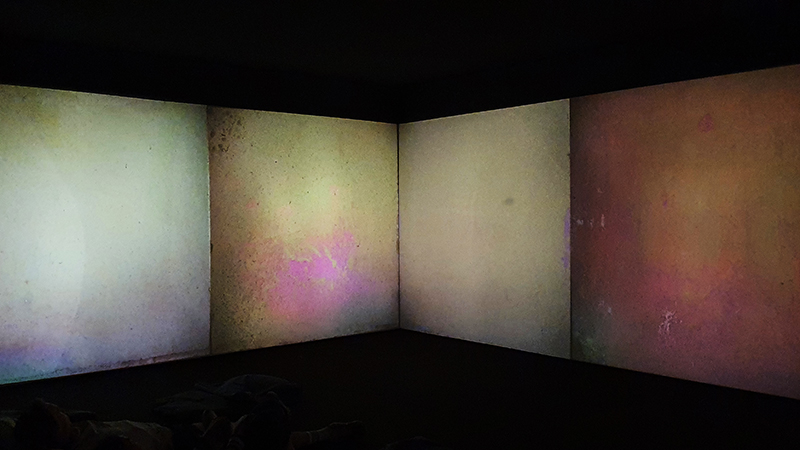
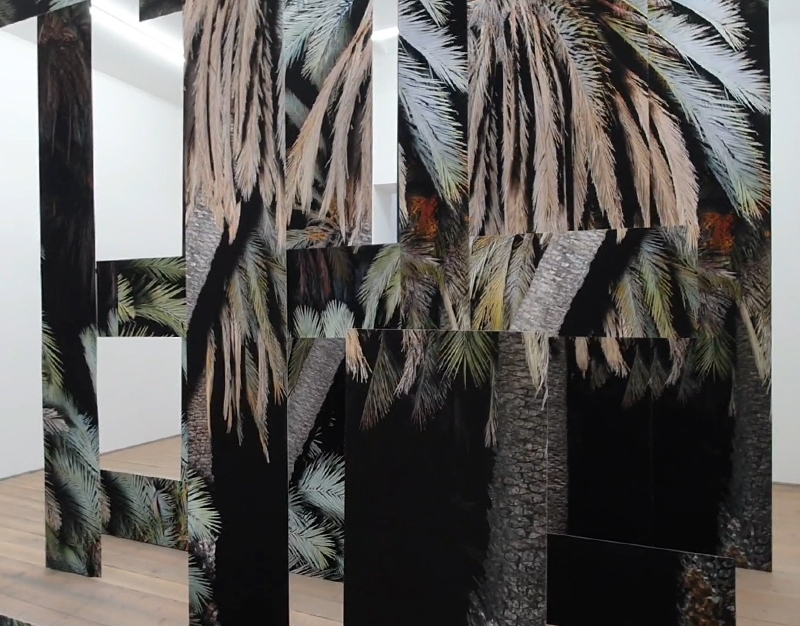
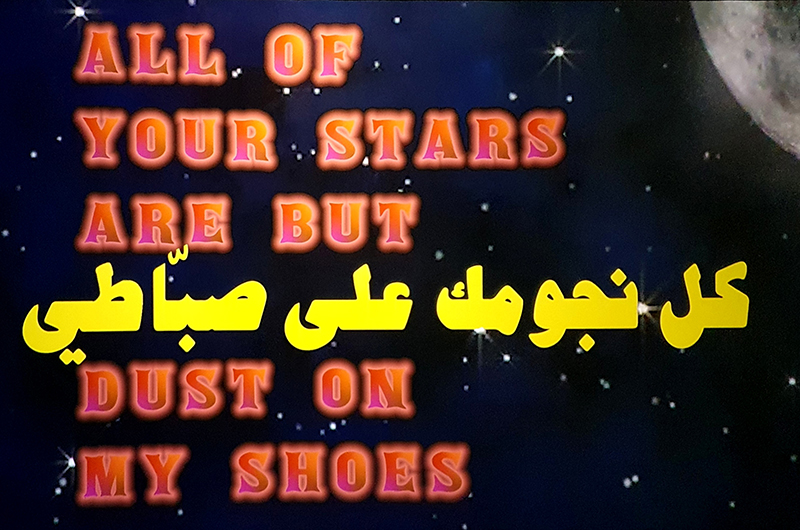
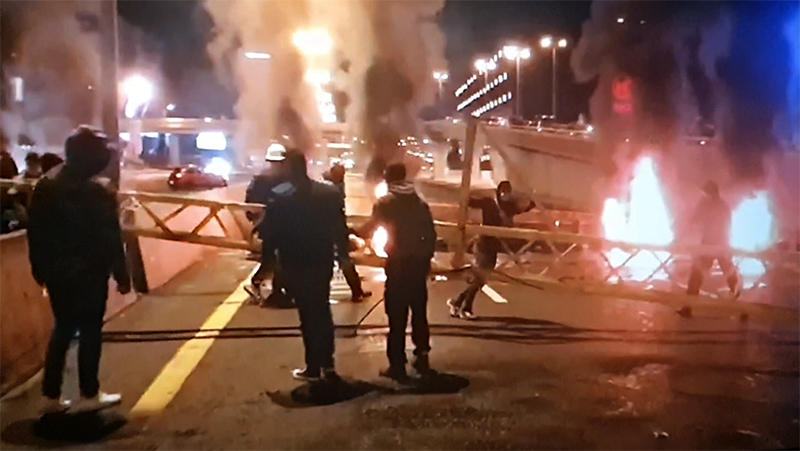
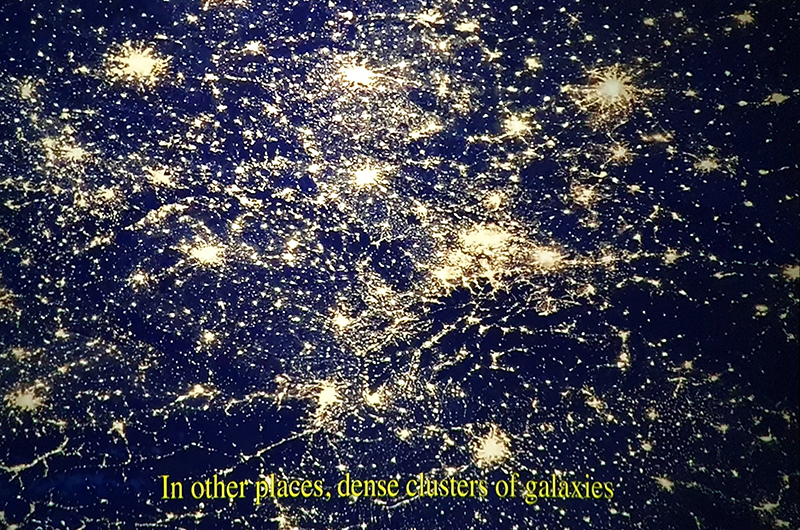
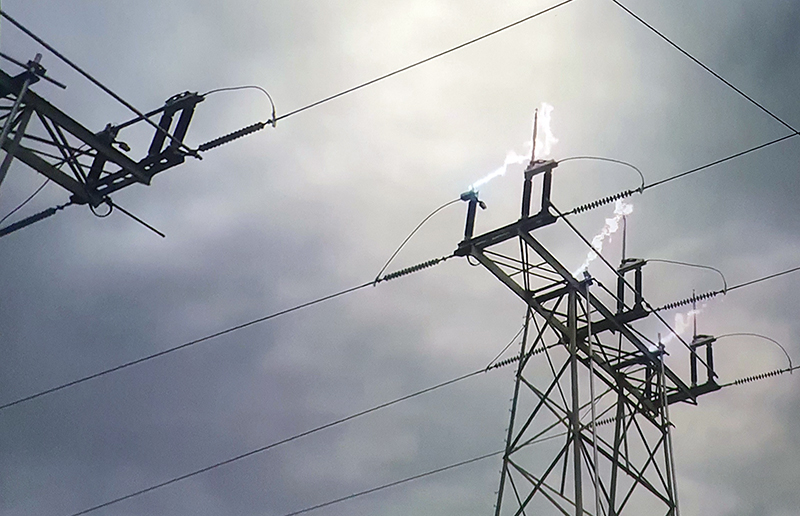
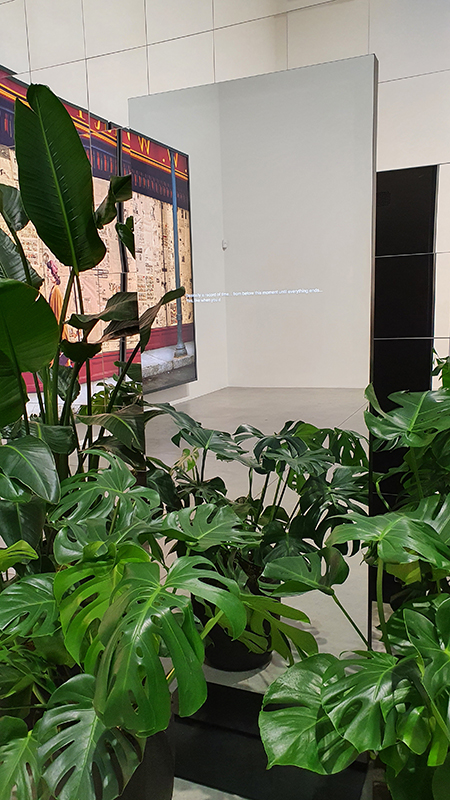
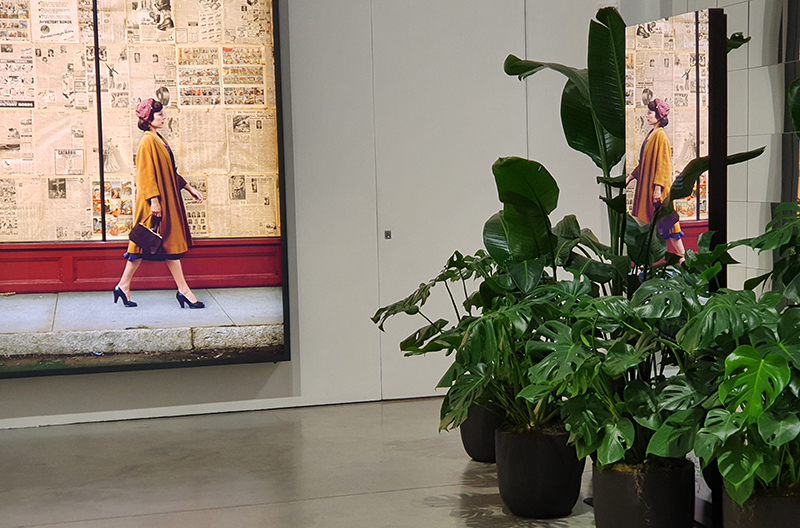
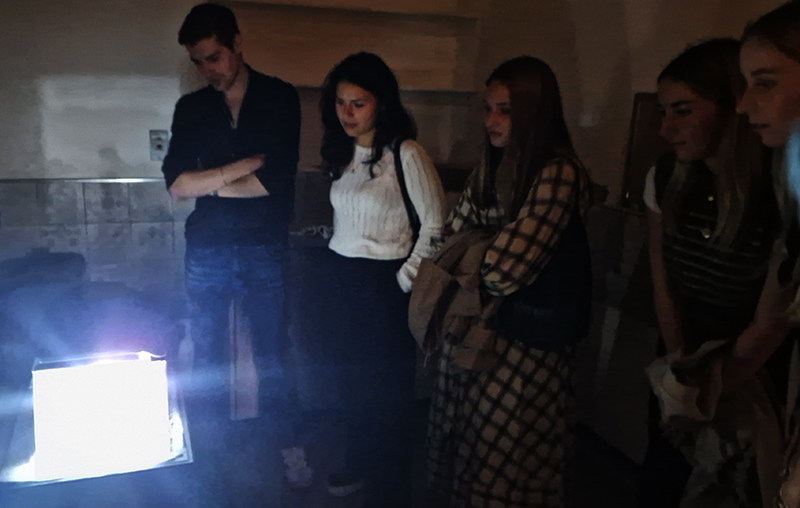
Installation image of Cosmic Chiasmus: crossing the universe

Not only is all life physically permeated by cosmic rays with the potential for nuclei collisions but some cascading particles smash into atoms of nitrogen to create carbon-14 which combines with oxygen in the atmosphere to create radioactive carbon-dioxide which enters the food cycle via photosynthesis.  Cosmic ray activity creating Carbon-14 allows us to perform carbon dating techniques offering insights into Earth’s past climate, magnetic field, solar activity, and changes in the carbon cycle, helping to understand historical patterns and establish timelines for ancient human history.

The title of the exhibition, Carbon, Carbon Everywhere, is a quote from the landmark essay Carbon by the writer and chemist Primo Levi. In the essay, Levi traces a journey of a single atom of carbon across distinct states and beings, from the monotony of being embedded in limestone for hundreds of millions of years, to entering the world of ‘things that change’ – swiftly shifting from the atmosphere to the lungs of a falcon, to the sea, to the trunk of a cedar, and eventually entering the writer’s own body from a glass of milk on his desk, crossing into the brain cell that controls the hand writing its own story. Resolutely specific yet universal, Levi’s story highlights the singularity of carbon as an element that inherently connects all things through its relentless transformation. It fossilises, mutates, preserves, pollutes and nourishes. From its ancient geological formations to its current atmospheric volatility, carbon is never still, shifting between forms and contexts in an ongoing process of exchange.

‘It is possible to demonstrate that this completely arbitrary story is true. I could tell innumerable other stories, and they would all be true: literally true, in the nature of the transitions, in their order and data. The number of atoms is so great that one could always be found whose story coincides with any capriciously invented story’ Primo Levi

This was a beautiful show and I was thrilled to be invited to exhibit alongside such amazing artists including Emii Alrai, Anousha Payne, Kate Daudy, Konstantin Novoselov, Ania Mokrzycka, Nissa Nishikawa, Mariele Neudecker, Simon Faithfull, Aimee Parrott, Lucia Pizzani, Lizi Sanchez and Meng Zhou.

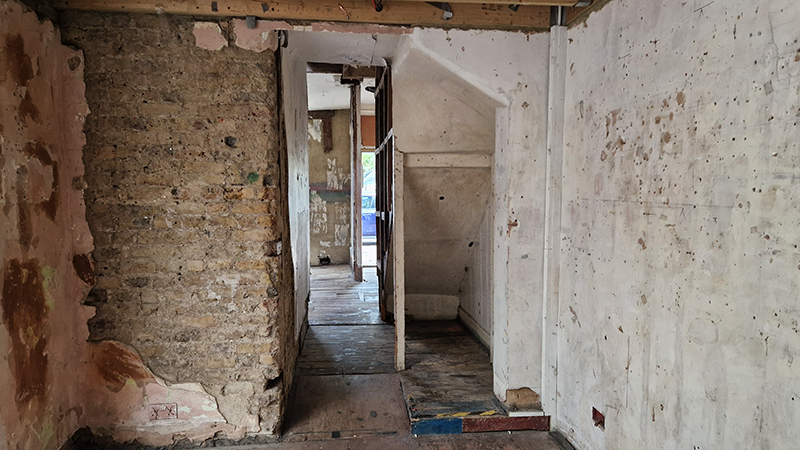
I am very excited to have an invitation to exhibit at the Safehouses in Peckham next year with a group of wonderful artists and friends. Curated by Julie Hoyle, the artists have been selected for the way their work resonates with the atmosphere of the Safehouses — places where traces of the past meet the imagined and the unseen. Together, the works will form a dialogue between beauty and unease, the real and the imagined, reanimating the stripped-bare rooms with strange company. We had a productive site visit and I have two spaces in mind to work with – one above and one below.

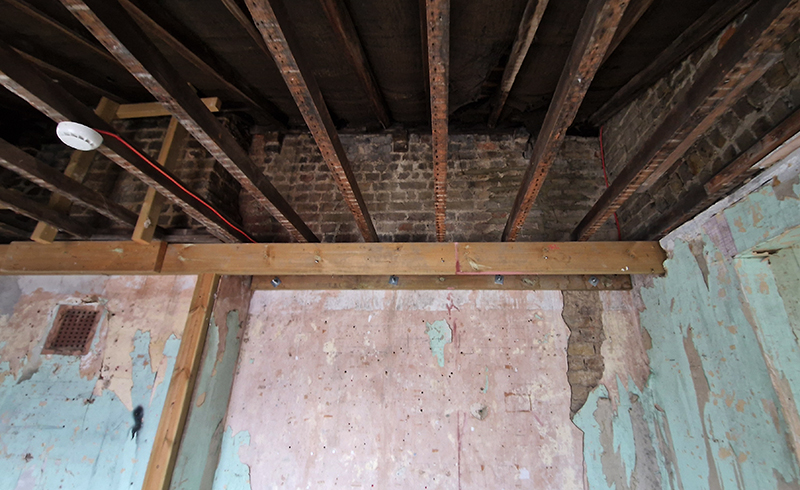
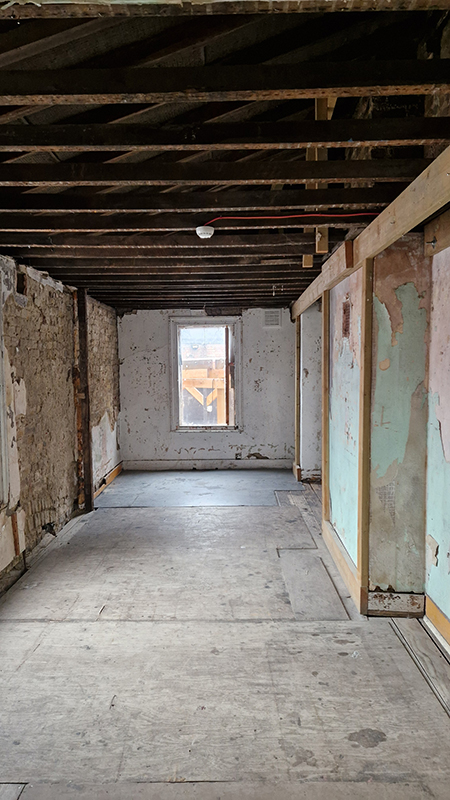
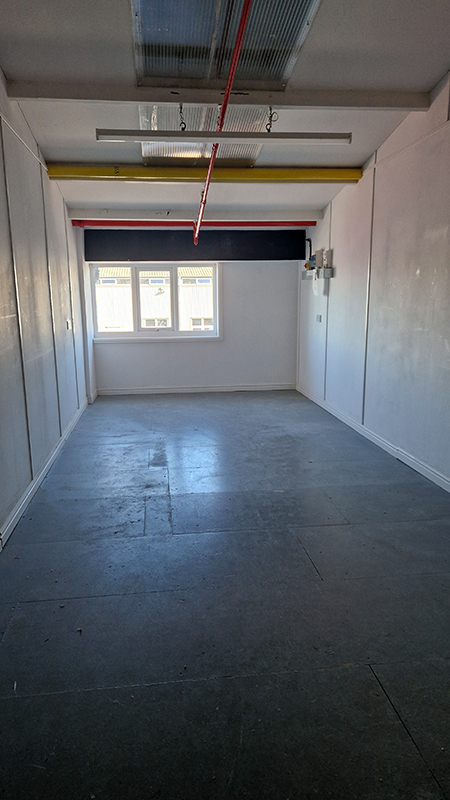
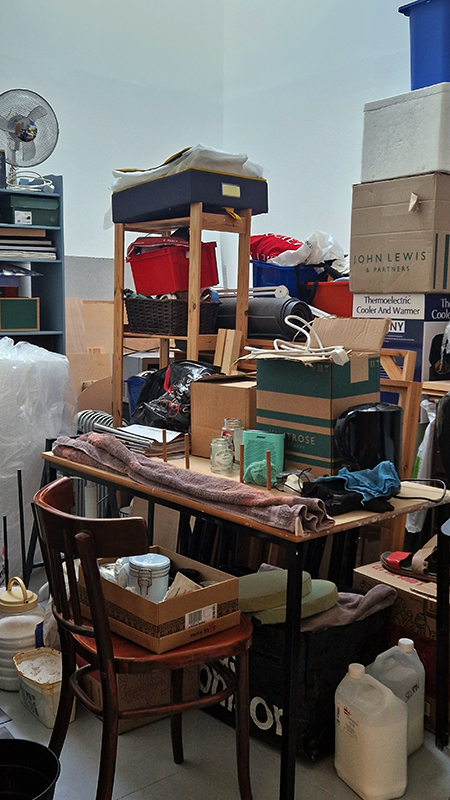
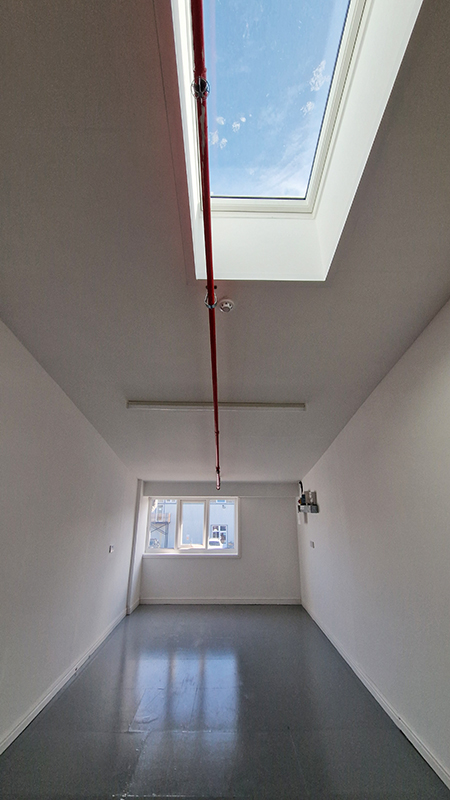
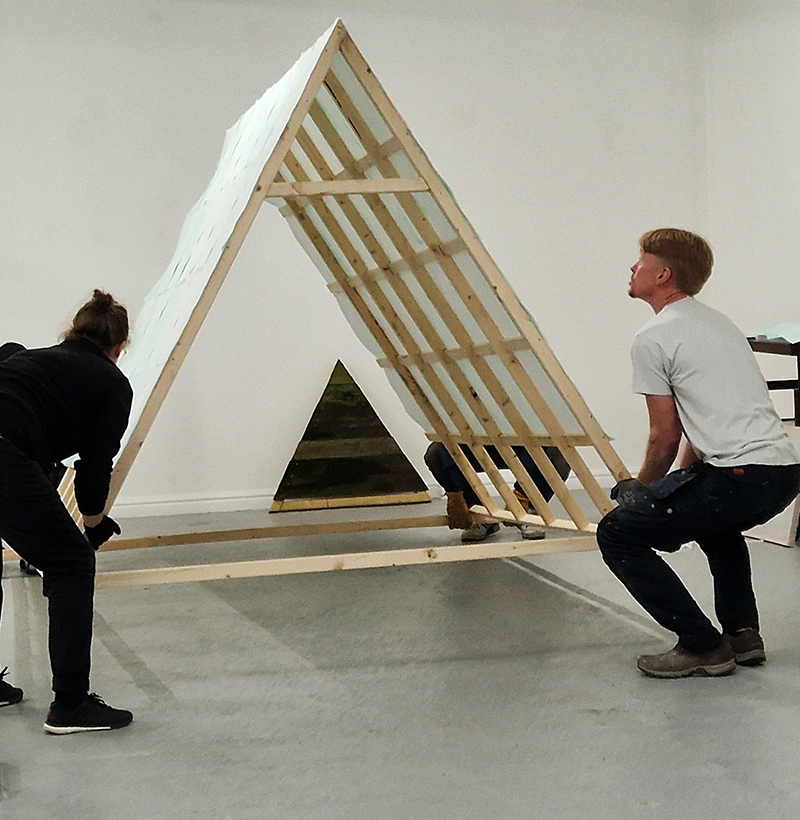
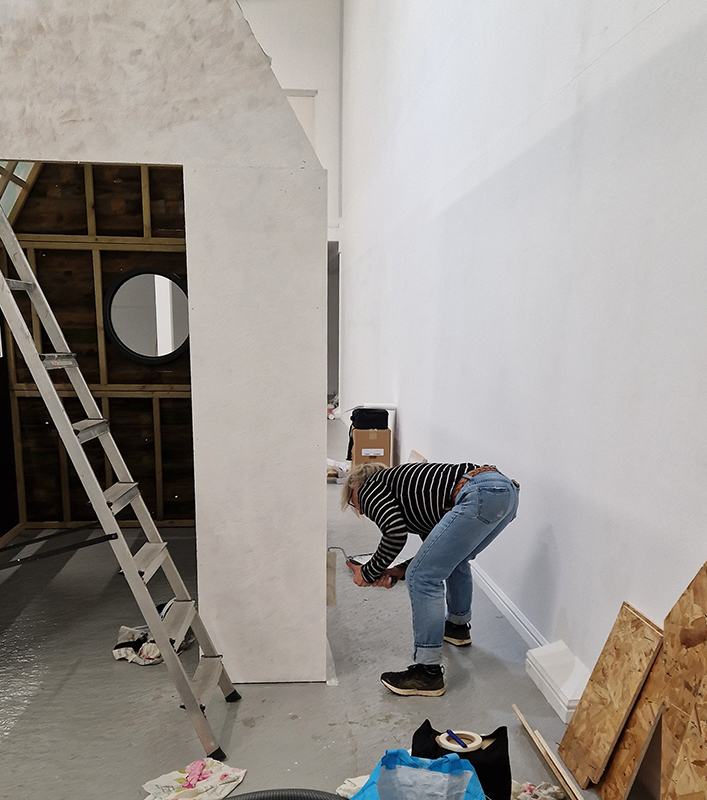
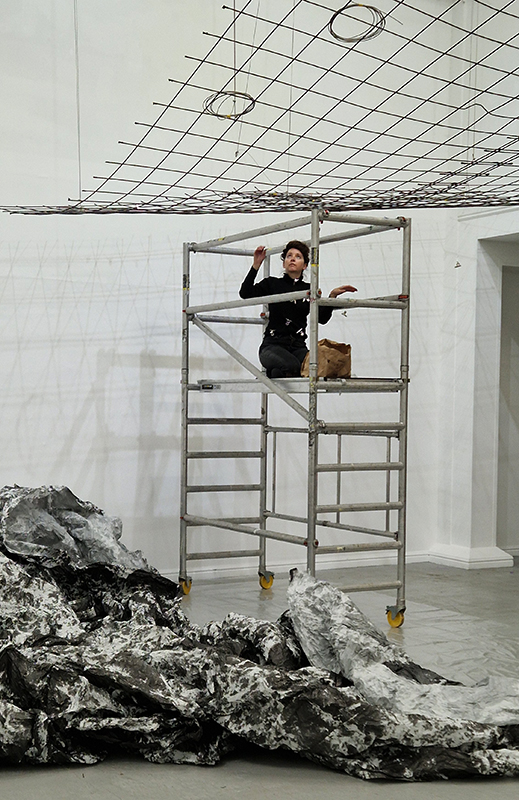
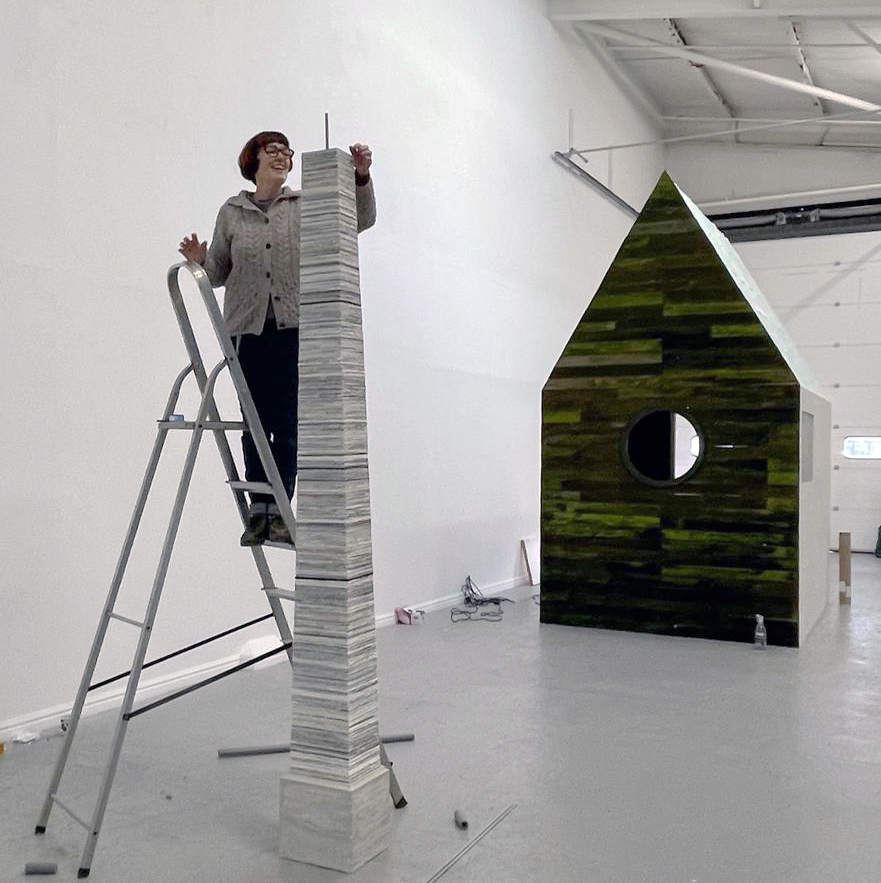
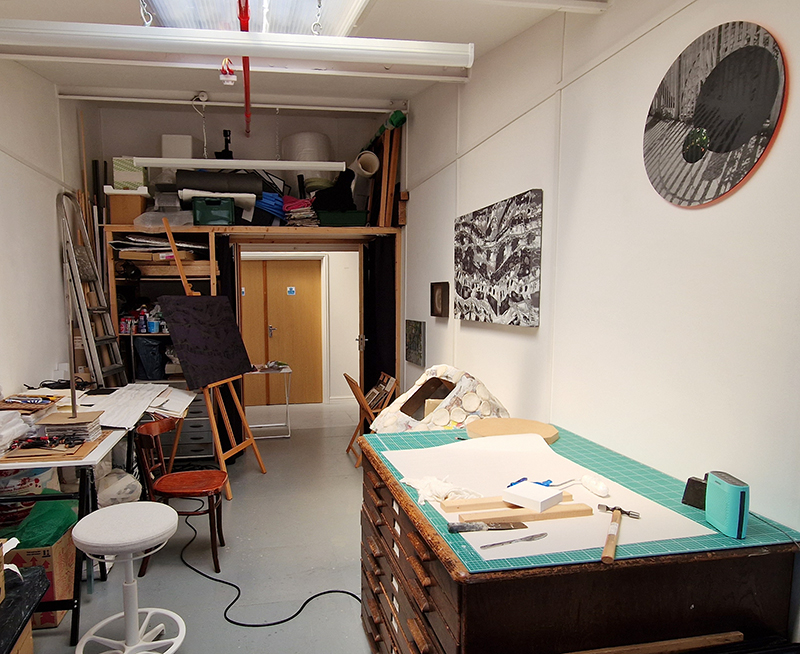
There is an ongoing refurbishment project at my studio complex which although welcome improvements has caused a little disruption to my ability to work there recently. My unit has had a new roof installed and each studio is being insulated with a new ceiling and opening Velux window. When the new roof went on we lost our ceiling windows so it is wonderful to have natural light from above again. Having to move everything out of my studio for a couple of weeks has been a good exercise in discovering long hidden materials and putting it all back has forced my hand to have a bit of a clear out of items I am unlikely to use and pass these on to other studio holders. Images show before, during and after.

I managed to get everything back into my studio just in time for a studio visit from curator Catherine Li to discuss the possibility of exhibiting at Brompton Cemetery Chapel next year. It is a stunning building so I am very excited about this upcoming project.

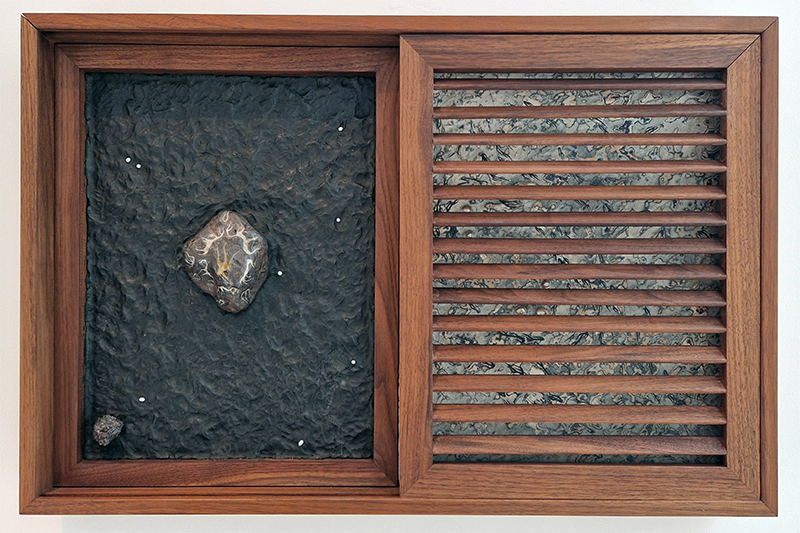
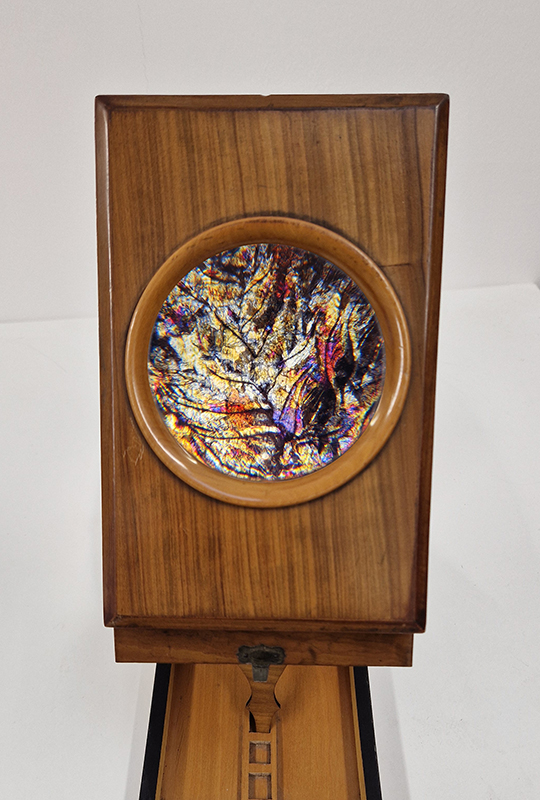
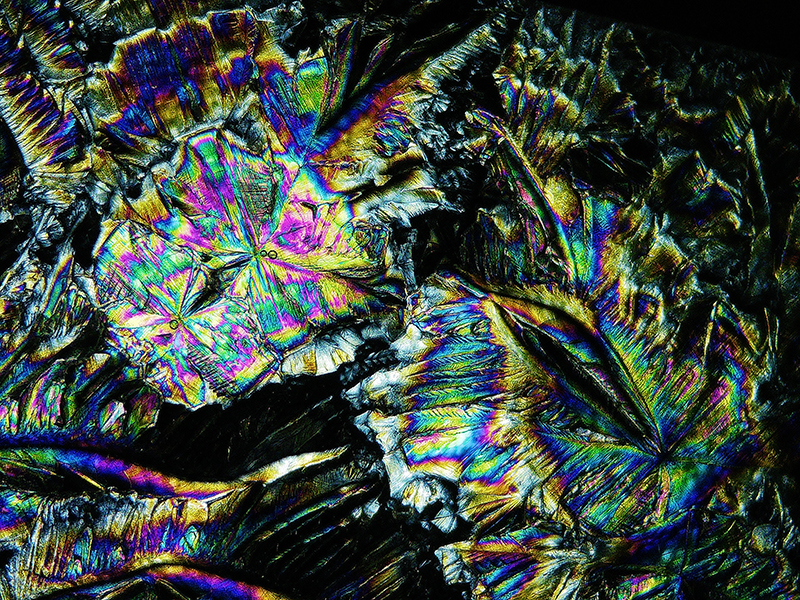
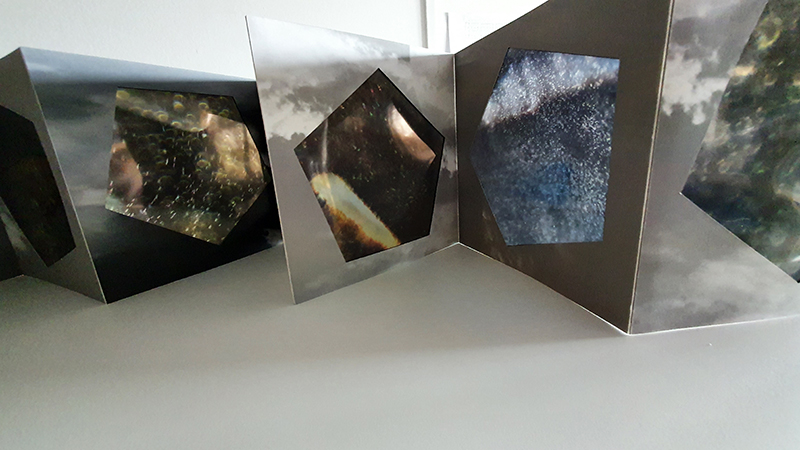
I have been experimenting with an old wooden slide viewer, printing images onto acetate from my microscope camera of polarised crystal and rock structures.

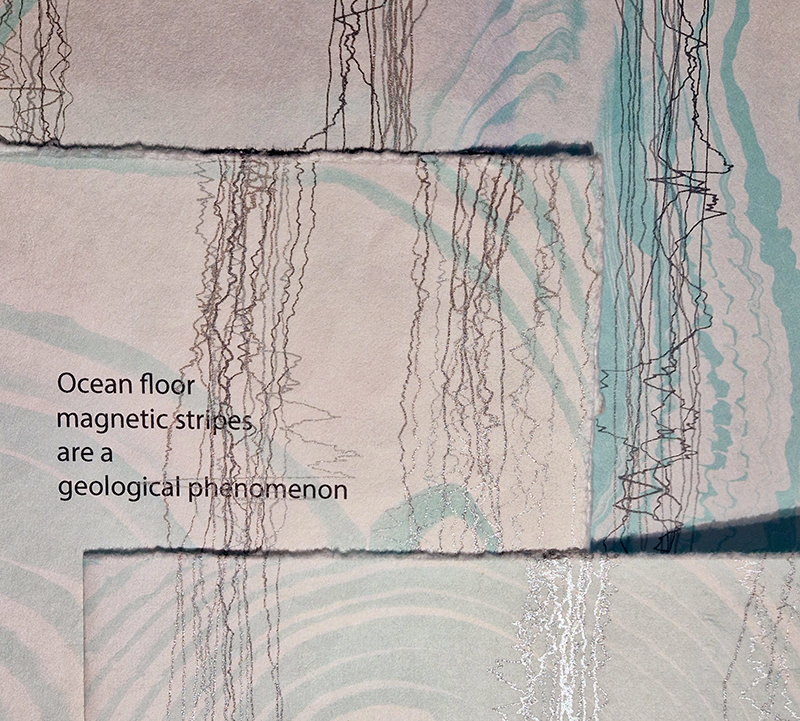
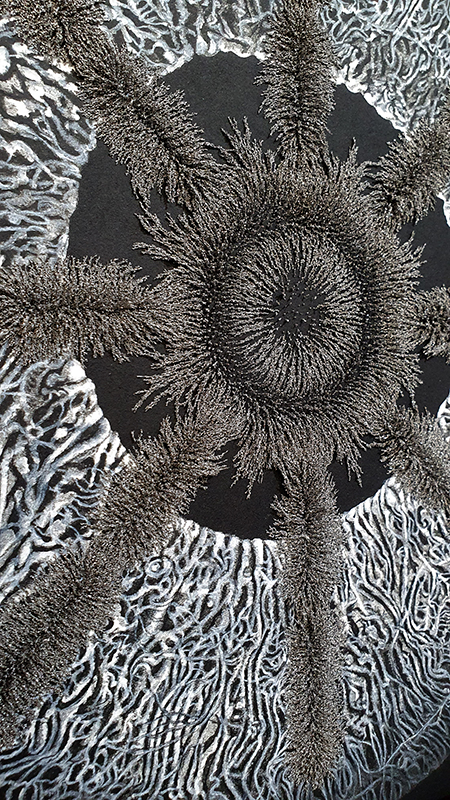
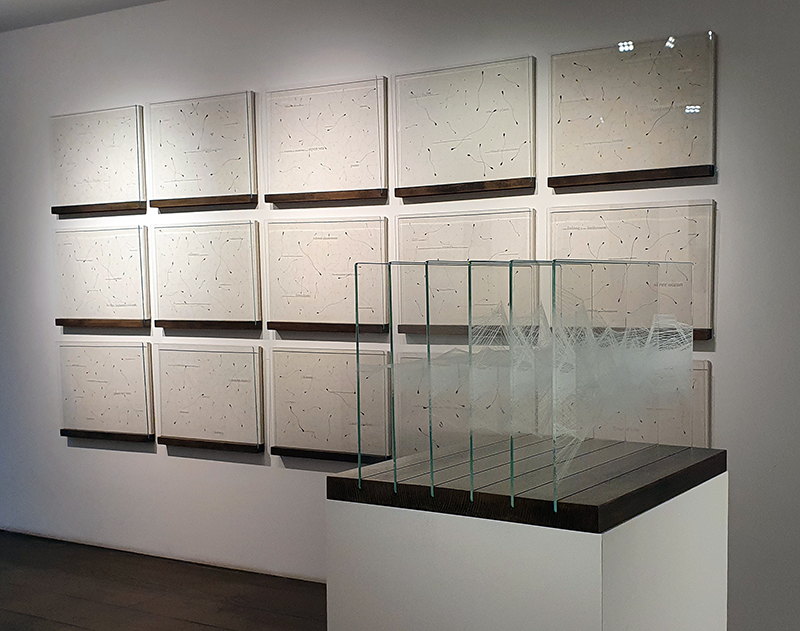
Work in progress on The Book of Reversals, writing text to print over the screen-printed magnetic graph lines. Ocean floor magnetic stripes are formed as magma cools at mid-ocean ridges. These alternating bands show Earth’s magnetic field reversals, with minerals in the crust aligning to current polarity and recording each change in pattern.

Colossal forces spinning dust

Aeons of accretion and gravity / shaping the debris of destruction

Searing elements separate /  amidst violence and decay

The weighty fall, pulled down, digested / feeling pressure only diamonds can survive

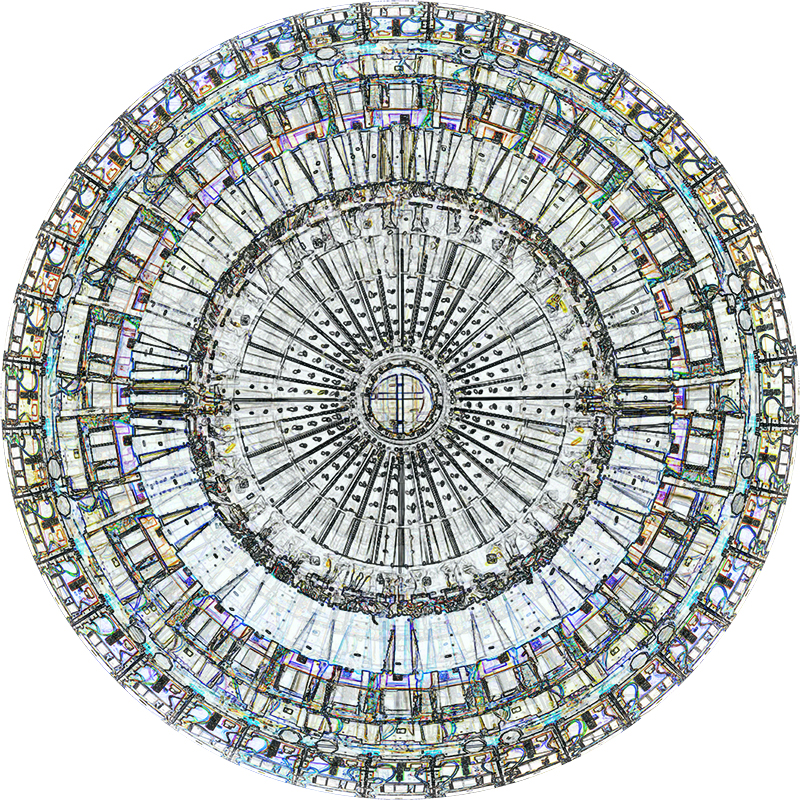
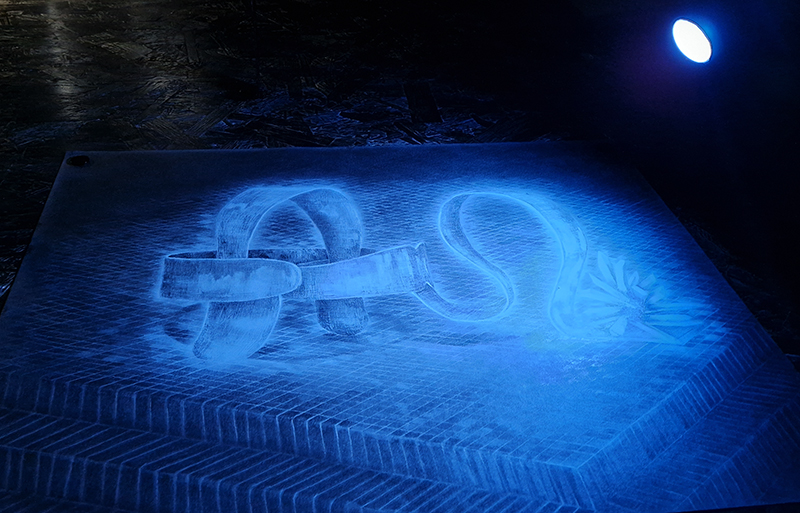
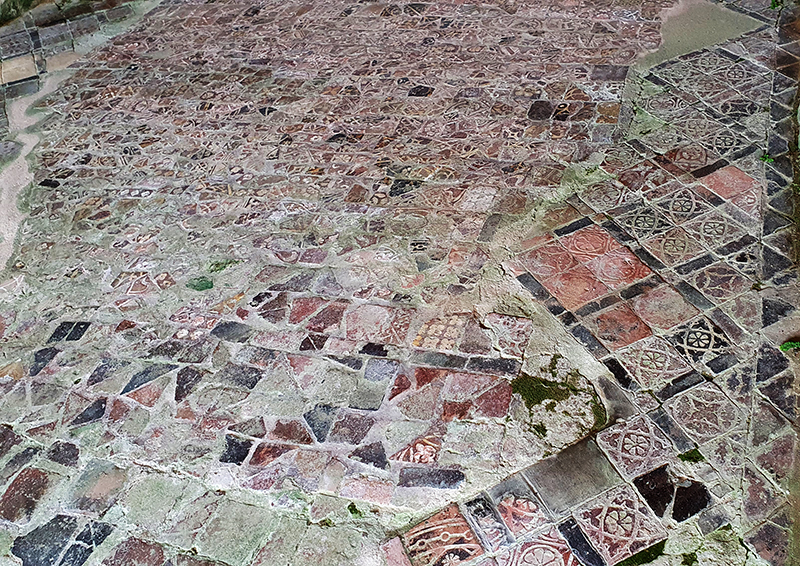
Work in progress looking at the sacred geometry of the Westminster Abbey Cosmati Pavement and relating medieval symbolism with contemporary iconography to think about changing relationships to fire, water, earth, air and the cosmos. Reimagining imagery from the Cosmati Pavement and particle accelerator at CERN.

Out and About

Noémie Goudal And yet it still moves at Edel Assanti. Mesmerizing work. I especially found the work Rocks very effective, an inkjet print on photographic paper with a video projection that moves across the image highlighting certain parts as though a torch is traversing a dark landscape. I always enjoy the theatricality of her large scale video installations even if they do purport a world collapsing around us.

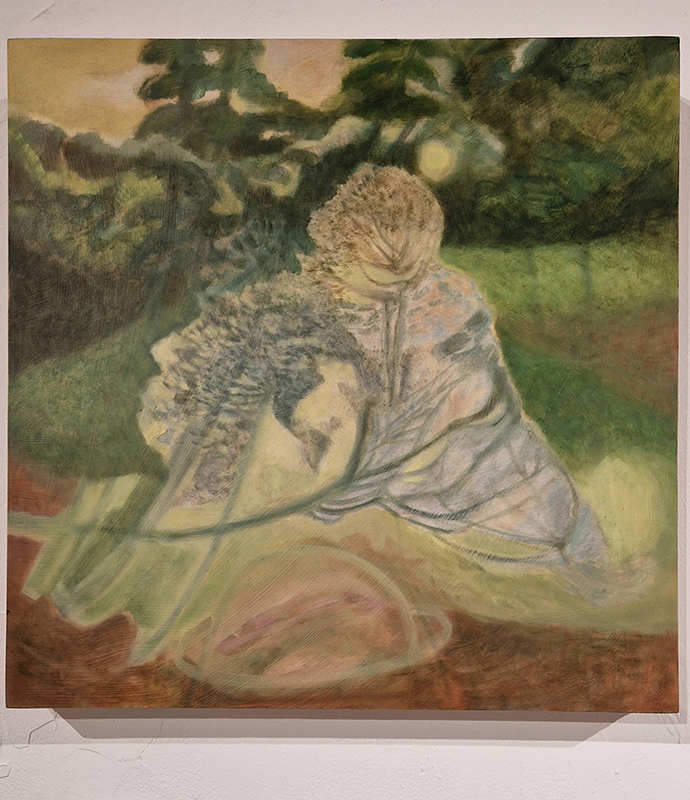
Gorgeous paintings by Helen Baines in Striding Edge at The Department Store, Brixton. Photos don’t capture the ethereal luminosity.

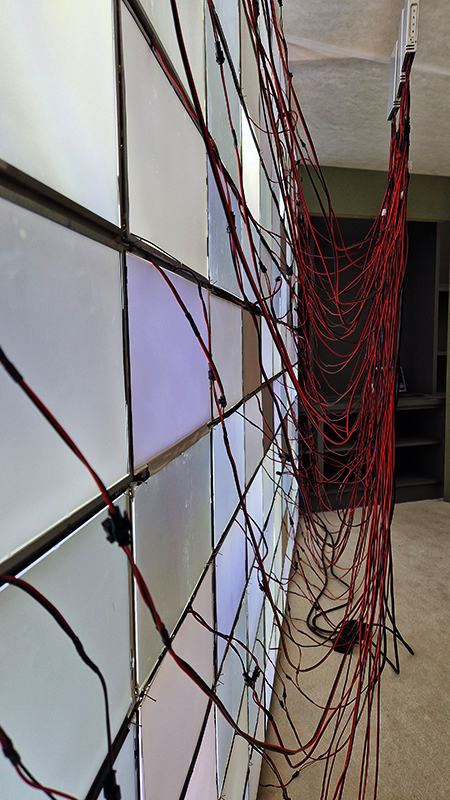
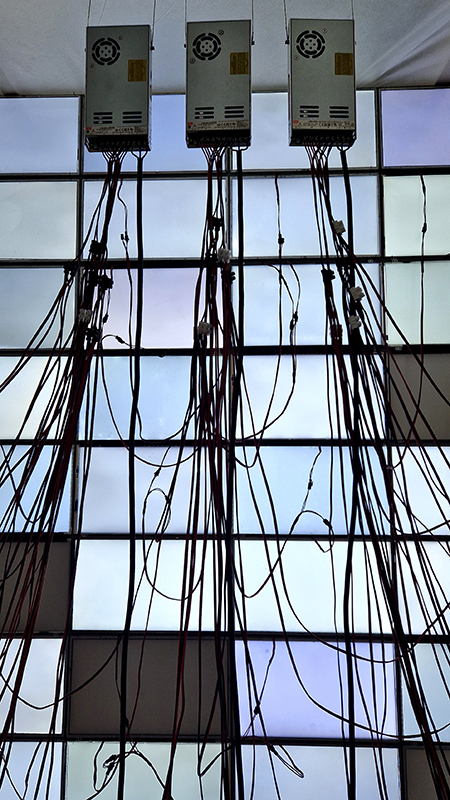
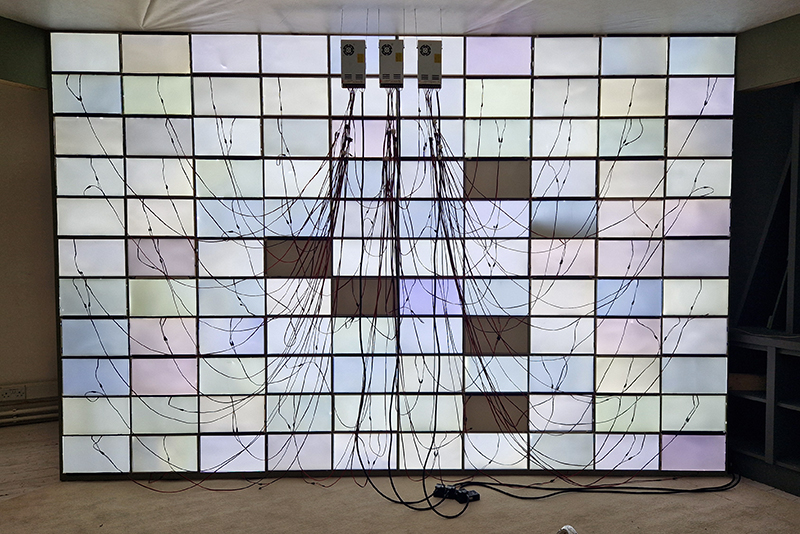
The hypnotic monument of modified LED laptop screens Wiped (Free Palastine) by Katrin Hanusch in Return of the Repressed curated by Toby Ziegler at an empty office block 10 Heddon Street. A show examining alienation and abstraction of the human experience in a climate of digital technology and AI.

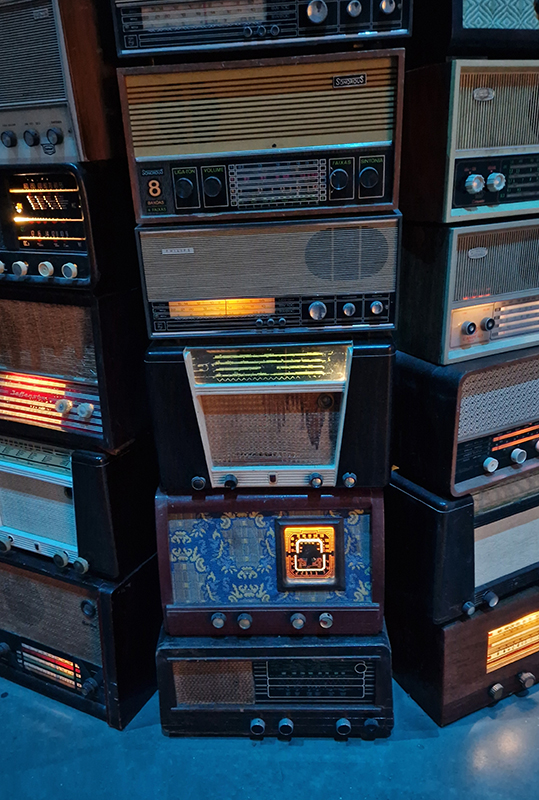
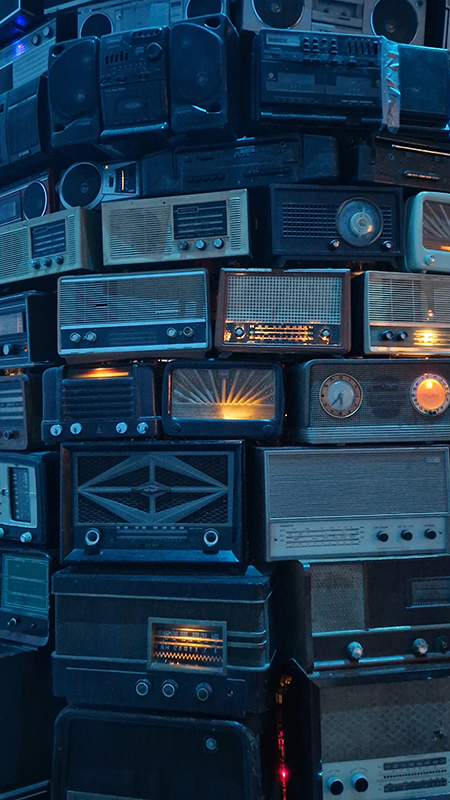
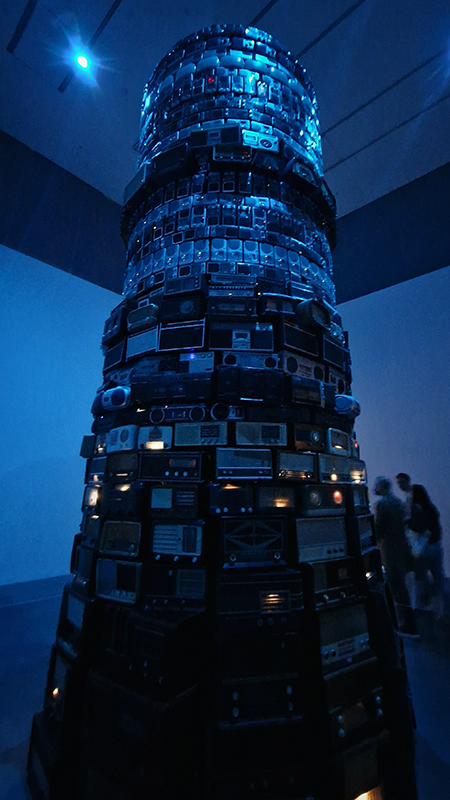
The magnificent Babel by Cildo Meireles at Tate Modern. With slightly dalek vibes, this thrumming ‘tower of incomprehension’ relates to the biblical story of the Tower of Babel, a tower tall enough to reach the heavens. God was offended by this structure, and caused the builders to speak in different languages. No longer able to understand one another, they became divided and scattered across the earth, and so began all mankind’s conflicts. Here we are, punished for our curiosity, again. This work though is a joy.

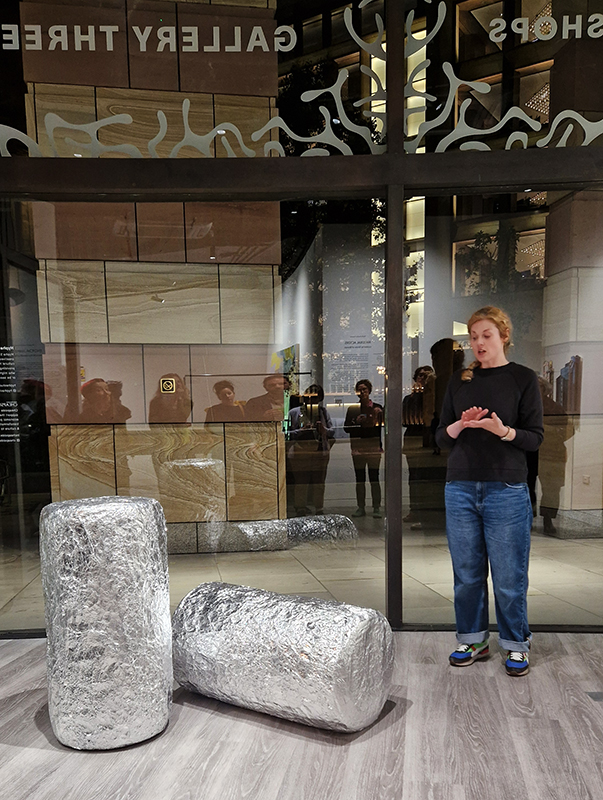
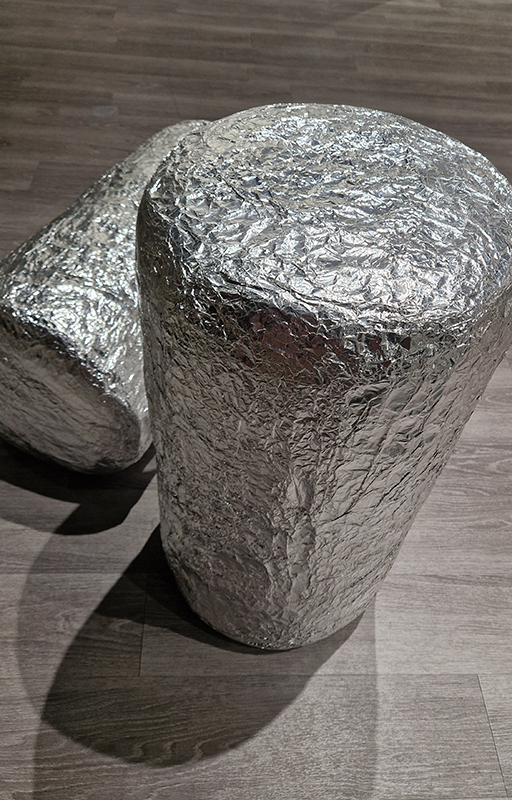
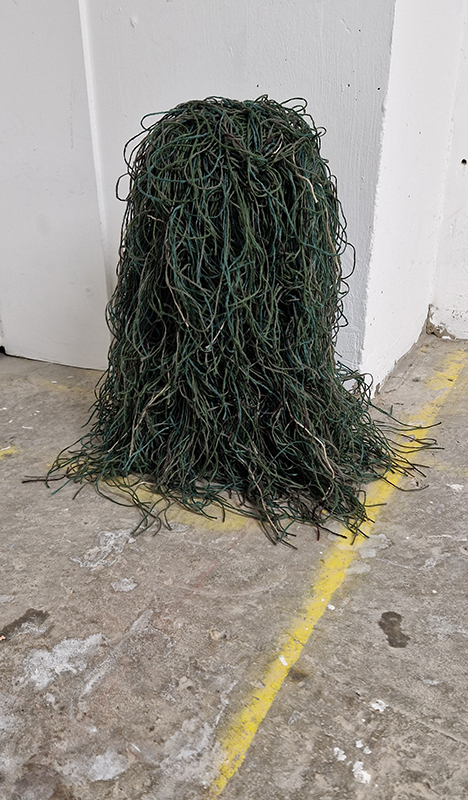
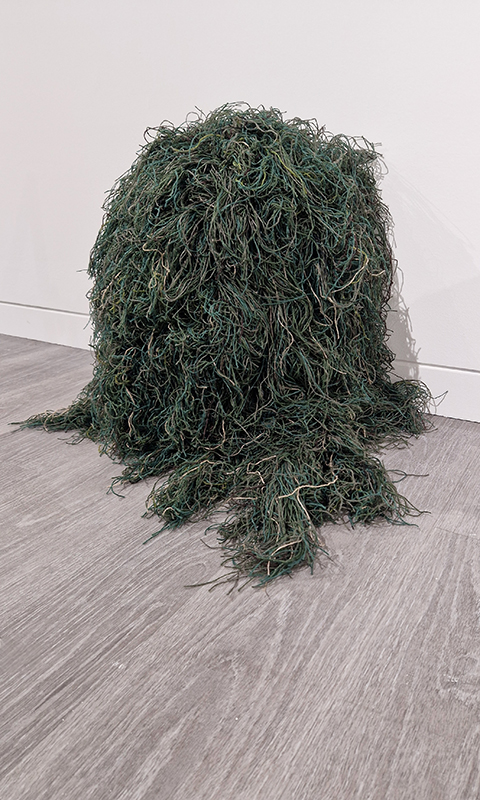
Material Actors curated by binder of women at Hypha Gallery 3 / No. 1 Poultry, London explores the tipping point of formal representation into the theatrical and cinematic world of mimicry and artifice. The artists include Alice Browne, Charlie Franklin, Lauren Godfrey, Oona Grimes, Pia Pack, Milly Peck, Michelle Williams Gamaker and Laura White. Material process and the façade are key in many of the works that surprise and confound definition.

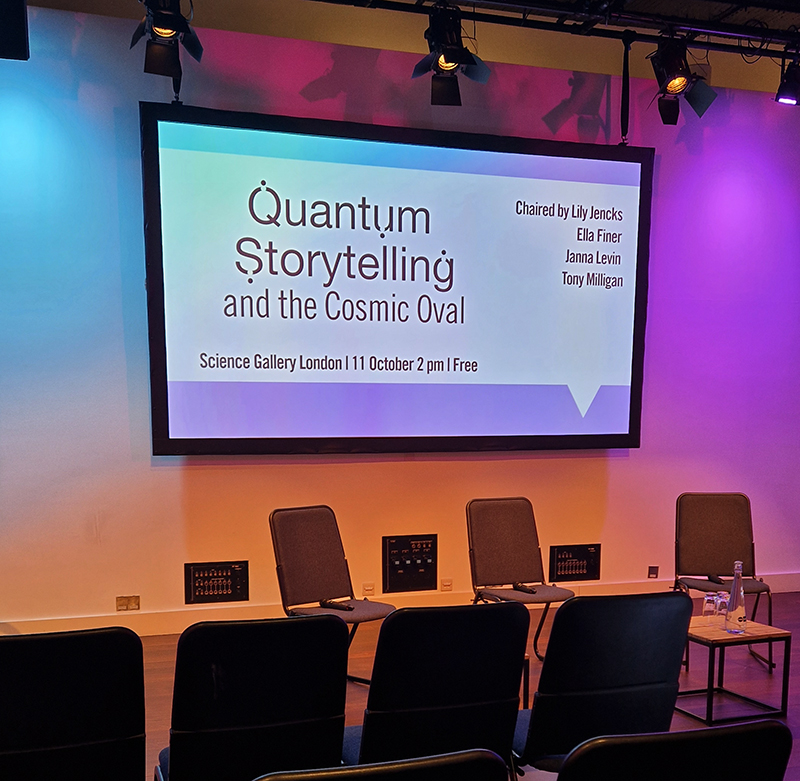
Quantum Storytelling and the Cosmic Oval – a fascinating discussion exploring how cosmic discoveries influence cultural narratives and the composing of histories. Physicist and author Janna Levin in conversation with writer Ella Finer to celebrate the launch of a new book commission The Cosmic Oval. Chaired by Lily Jencks, Keeper of Vision at The Cosmic House, with further insight from Tony Milligan, Research Fellow in the Philosophy of Ethics, Department of Theology and Religious Studies at King’s College London.

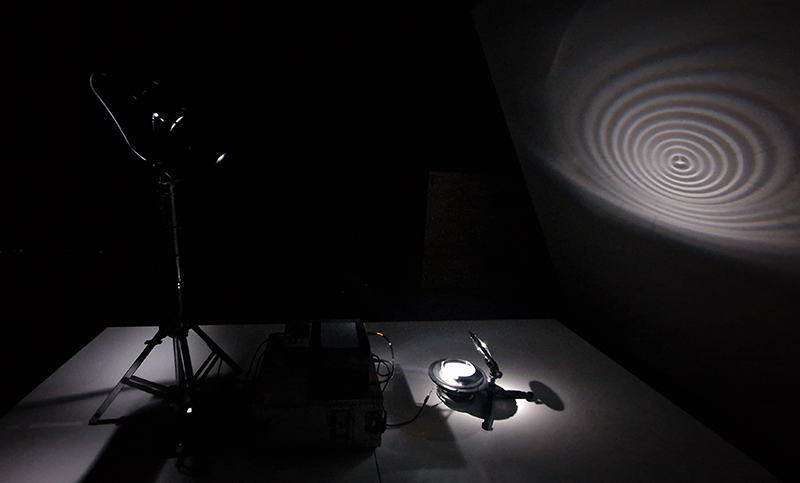
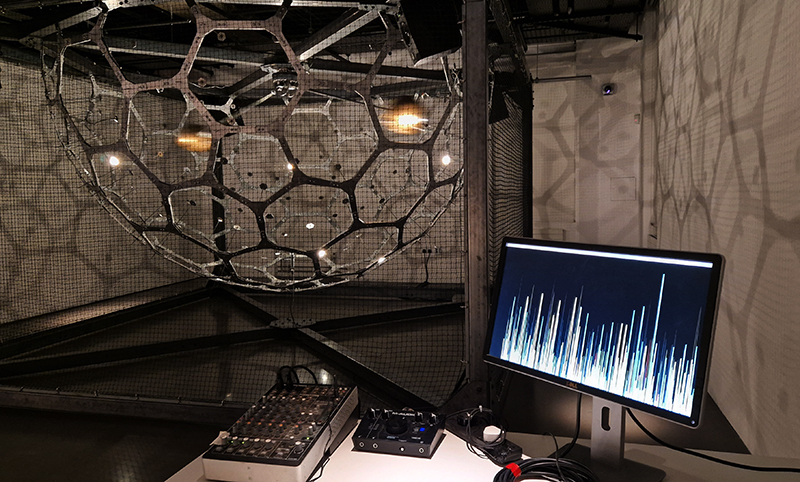
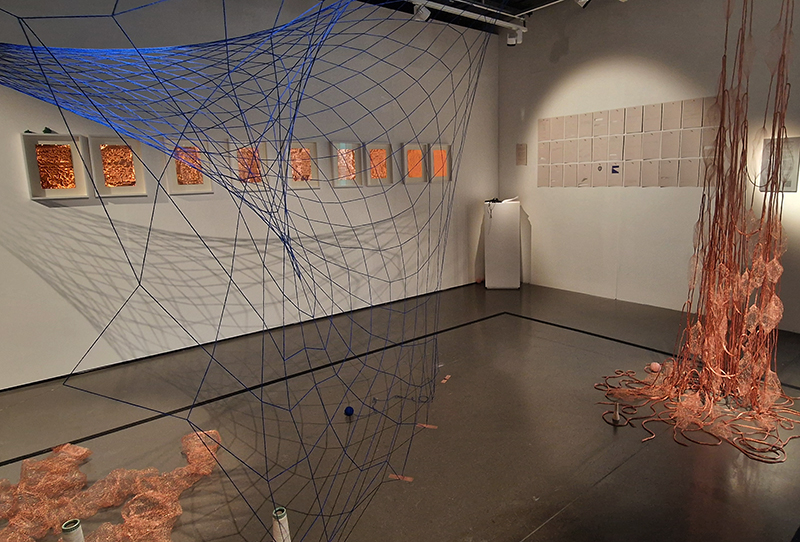
Quantum Untangled at The Science Gallery, London. I liked the simplicity of Alistair McClymont’s An Early Universe where wave patterns caused in water by low frequency sound vibrations are projected via a lens to reference quantum oscillations created when the universe was rapidly expanding after the big bang. Two large installations from Conrad Shawcross use the play of shadows to signify intangible forces of the universe. In Ringdown two caged spherical pendulums oscillate in violent motion to evoke the spiralling motion of gravitational waves in the moments after two black holes merge, a phase known as ‘ringdown.’ The artwork is probed with sensors to trace the magnetic field generated, which is displayed on a monitor. The Blind Proliferation explores the idea that our Universe is one of many co-existing ‘bubble universes’ formed in the period of rapid expansion at the beginning of time. Two ‘scientist’s offices sit either side of a structure casting complex shadows. In a nod to Plato, the scientists can only see the shadows from which they must determine their origin. There are slight differences between the two offices to suggest the idea of the multiverse where many worlds may exist with only slight variations. Daniela Brill Estrada & Monica C. LoCascio, Begriff des Körpers reflect on the nature of perception and shared understanding through their use of copper, a key material in quantum technologies, to create sculptures that describe the diagrammatic language of scientists when explaining spacetime and quantum phenomena.

It is always exciting to enter a truly dark space – NOWISWHENWEARE (The Stars) at the Rambert Dance Studios as part of the LFF Expanded program promised a breath-taking journey through light and sound when you would enter a meditative state and come face to face with your inner self. With nearly 4,000 reactive LED lights and a 496-channel soundscape it was an enjoyable experience but perhaps not quite as awe inspiring as hoped.

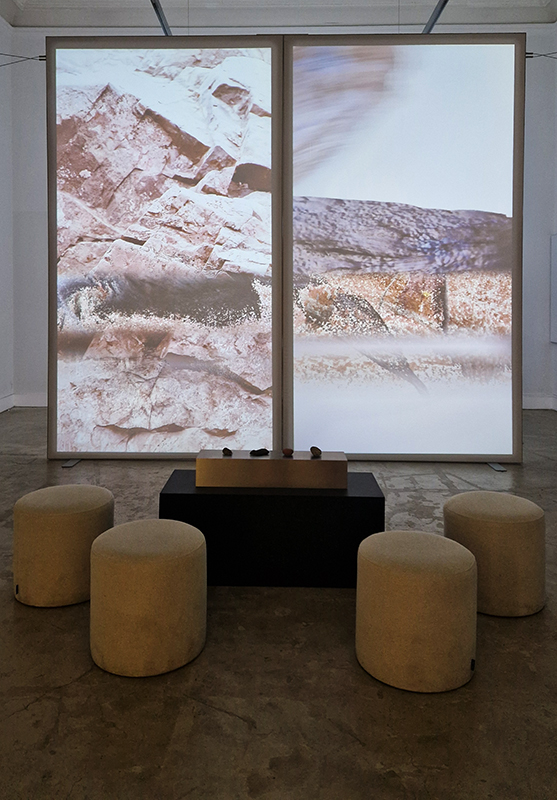
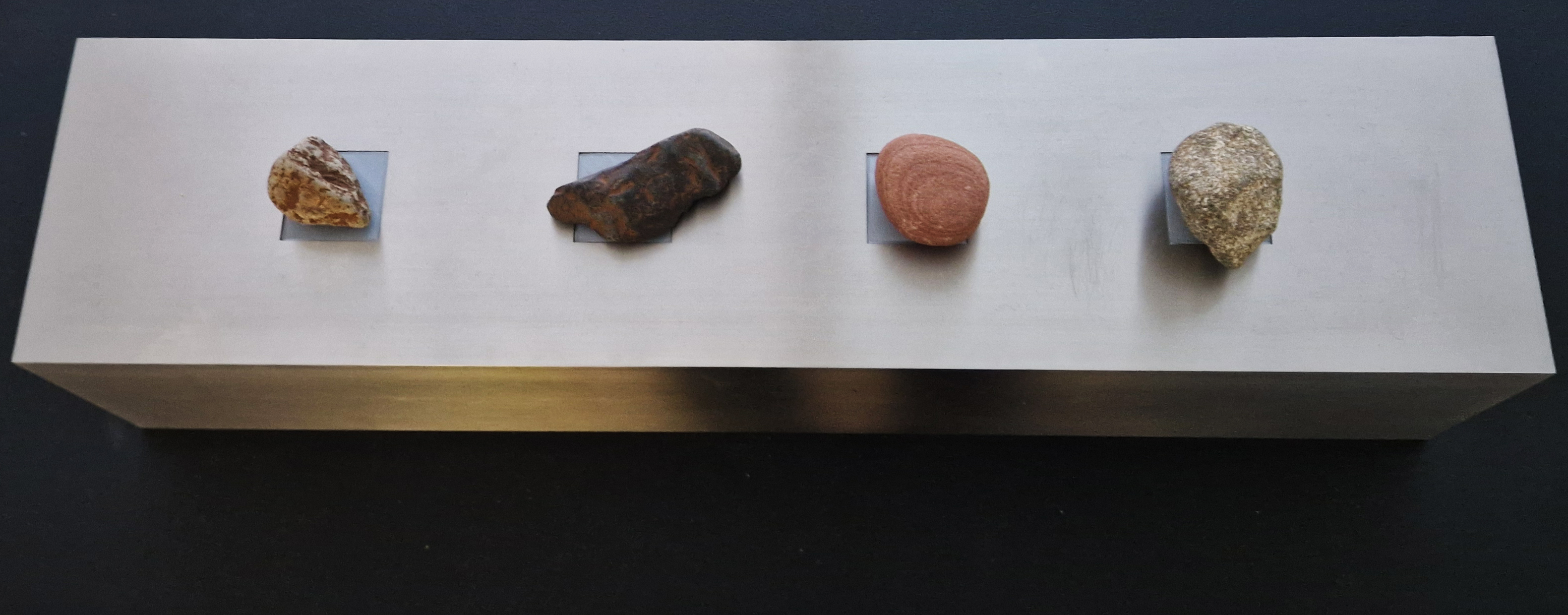
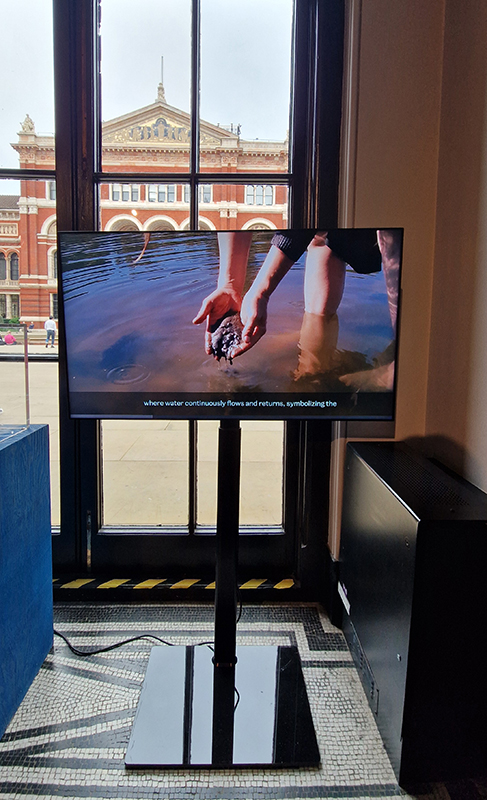
(S)low Tech AI by Studio Above & Below (Daria Jelonek and Perry-James Sugden) at Victoria and Albert Museum. ‘This installation examines artificial intelligence through the lens of geology. A sculptural interface of four rocks activates a slow, responsive AI system that reacts to touch with evolving sound and image. Each new rock arrangement adds a line to a growing digital landscape, echoing sedimentary layers shaped by collective interaction. The imagery is drawn from four geologically significant sites in Scotland, where ancient stone carvings show early examples of symbolic data recording. Using simple algorithms, the work invites reflection on AI as a slow, ethical, and materially-aware process.’ I couldn’t determine what changes were set in motion when the stones were moved, it does say it is a slow process so perhaps I shouldn’t have expected to notice the impact of my moving the stones and it is something that builds into the algorithm later. It was still quite mesmerising to watch.

Luca Bosani Unidentified Performing Objects at Victoria and Albert Museum

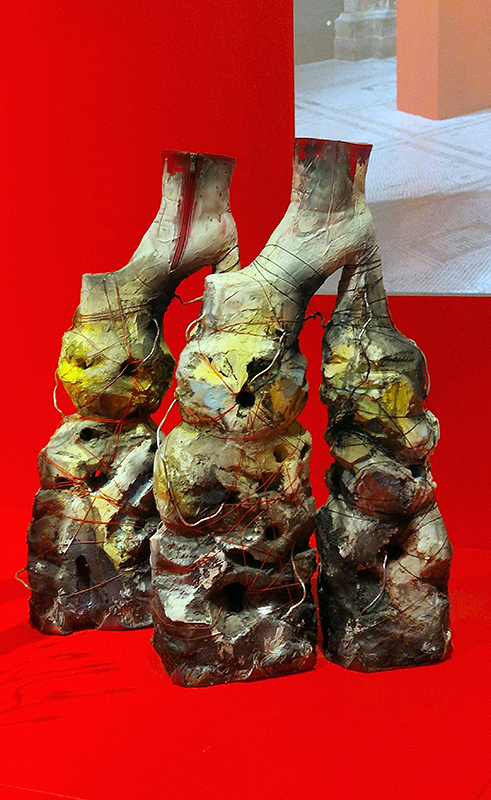
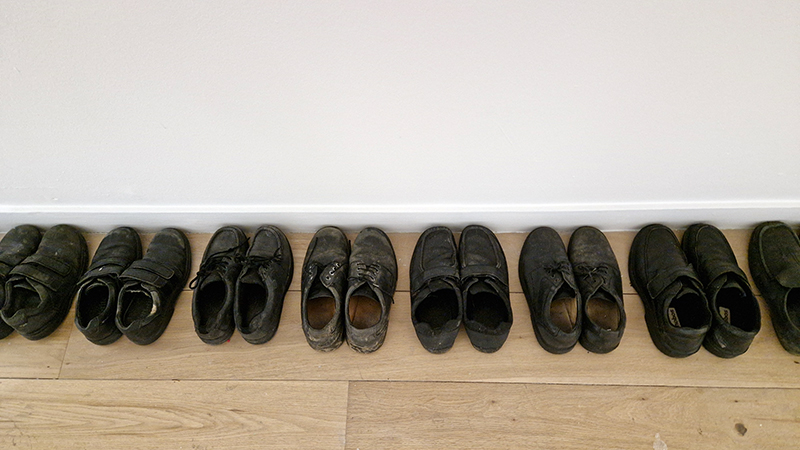
Loved these boots that look like they have been torn from the rock. Magnes might have felt a slight tug as the nails in his boots clung to the magnetite beneath his feet but imagine the weight, the feeling of increased gravity walking in boots of rock.

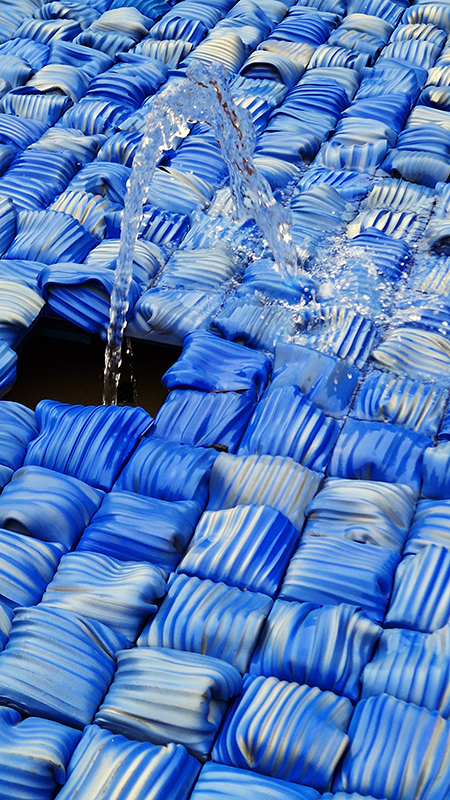
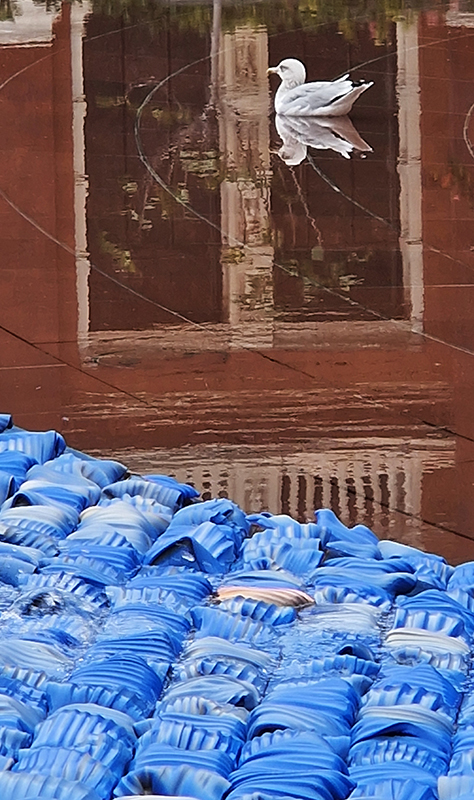
The Ripple Effect by Alicja Patanowski blending materials from one of the largest mining waste reservoirs in Europe with clay to create a tiled seating installation in the John Madejski Garden.

Screening as part of the London Film Festival, John Lilly and The Earth Coincidence Control Office directed by Michael Almereyda and Courtney Stephens, explores Lilly’s radical experiments with isolation tanks and LSD to study consciousness, as well as his theory that a hidden entity called the Earth Coincidence Control Office (E.C.C.O.) secretly influences human events. Despite his desire to communicate with cetaceans believing them to be intelligent conscious beings he exhibits a cold disconnect to their physical and emotional welfare. A lot of the footage is shocking to a contemporary audience in its cruelty but his research into human consciousness was trailblazing at the time and his conclusion that humans were at risk from an outside technology based intelligence does have some prescience considering current concerns over AI.

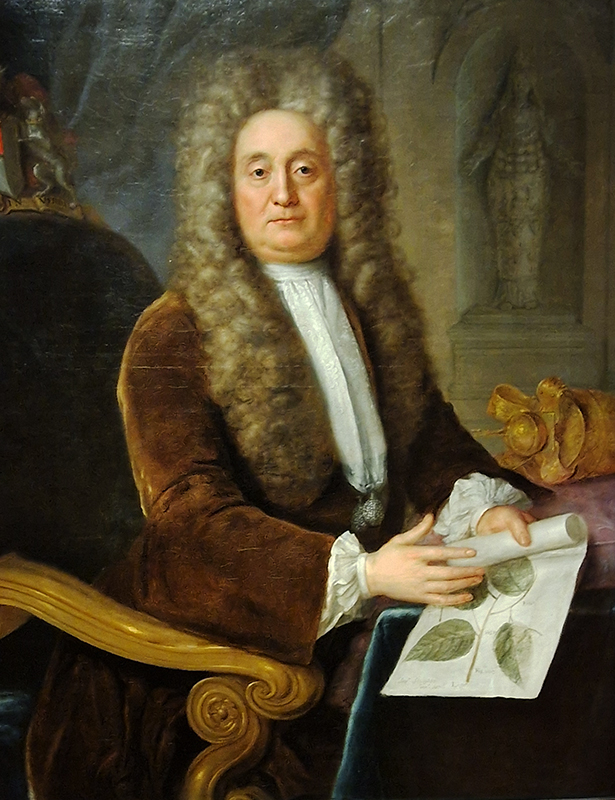
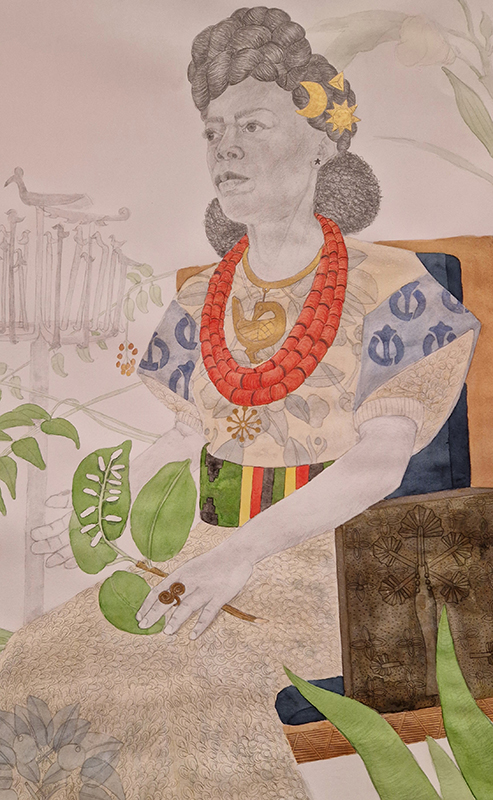
Artists First: Contemporary perspectives on portraiture at The National Portrait Gallery commissioned several artists to respond to an artwork of their choice. Charmaine Watkiss chose the portrait of Sir Hans Sloane, a botanist and collector who travelled to Jamaica in 1687 taking advantage of enslaved people’s indigenous knowledge of the location, properties and medicinal uses of local plants to boost his collection and furnish his publication. Charmaine’s beautifully crafted response To reimagine an African Queen shifts the dynamic to reflect the dissonance between these two human’s relationship to nature, one built on wisdom and respect and one which based on extraction and mastery.

Reading

The Stone Woman by A.S. Byatt. An evocative journey into becoming other.

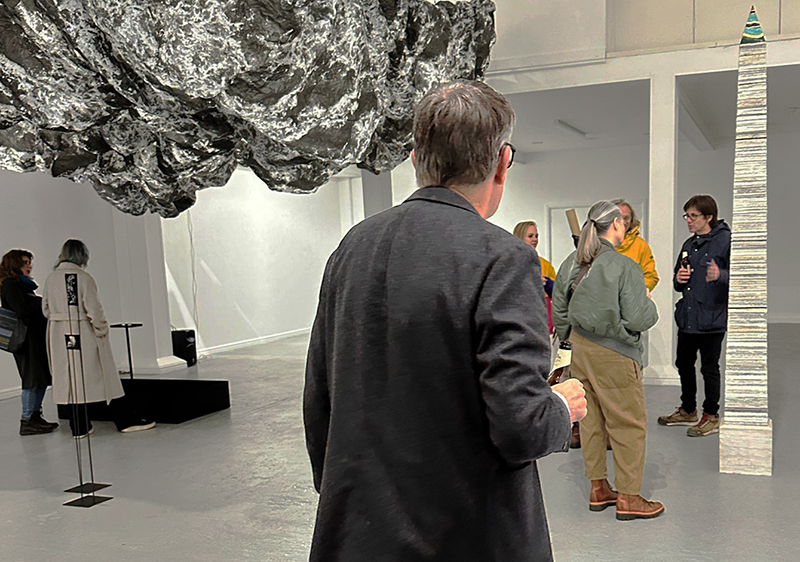
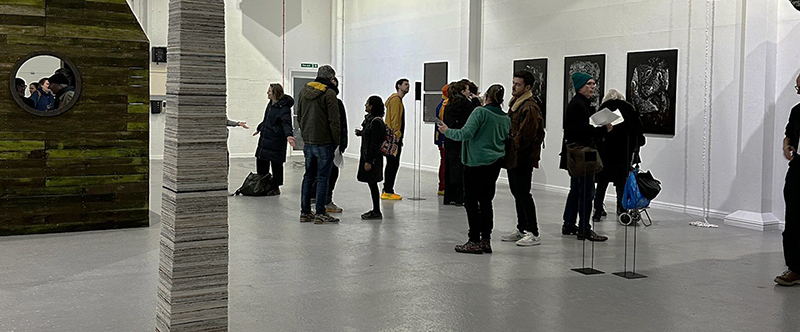
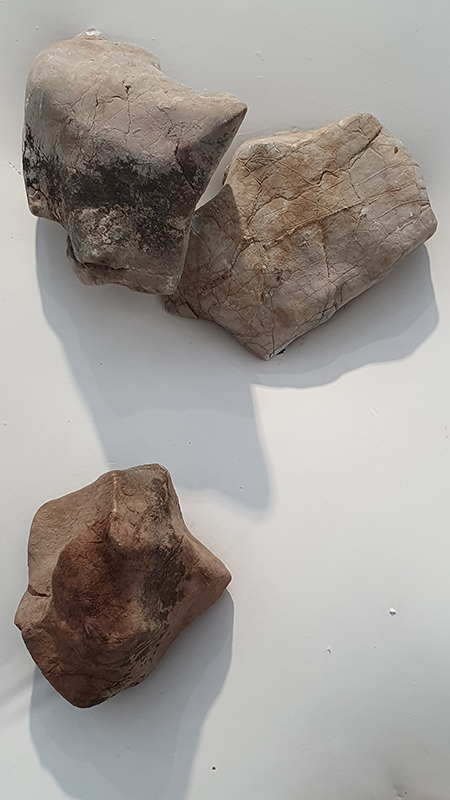
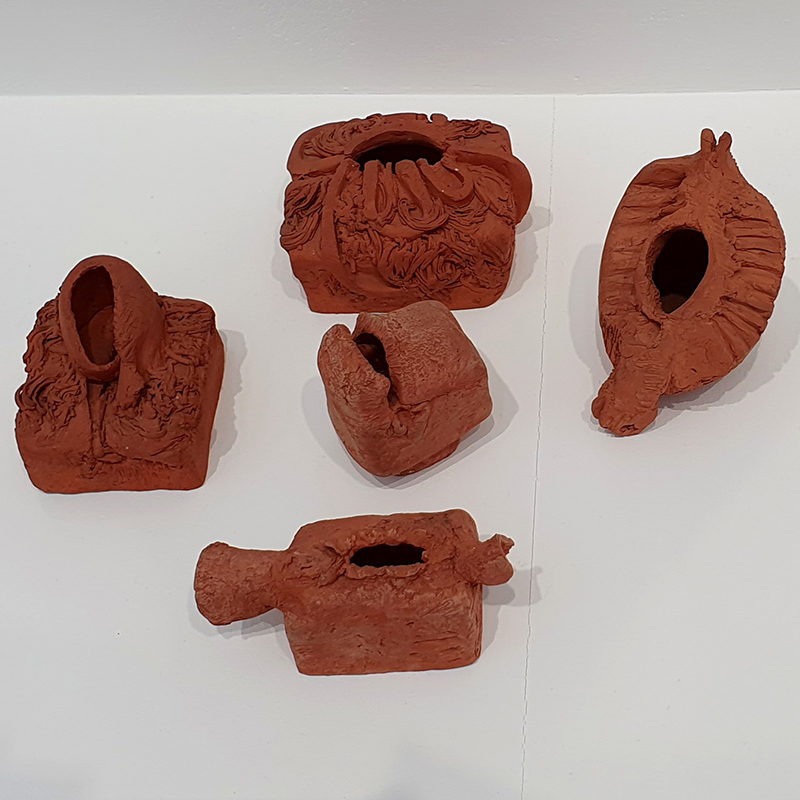
The Geological Unconscious had a wonderful six week run at Hypha HQ, Euston. Responding to Jason Groves’ inquiry into the mineral imaginary in his eponymous book, as well as the ‘Writing of Stones’ as proposed by writer and mineral collector Roger Caillois, the exhibition exposes the complex entanglements between the organic and the inorganic; the human and the lithic. 

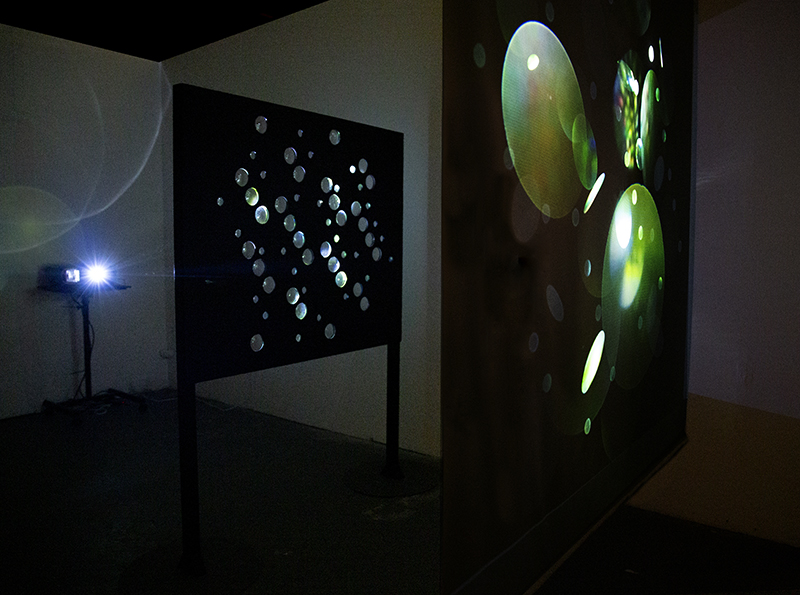
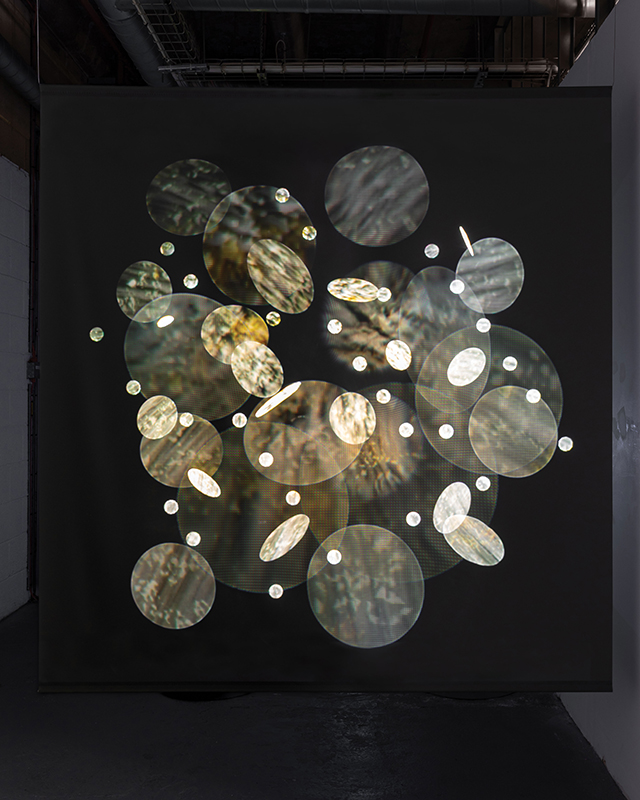
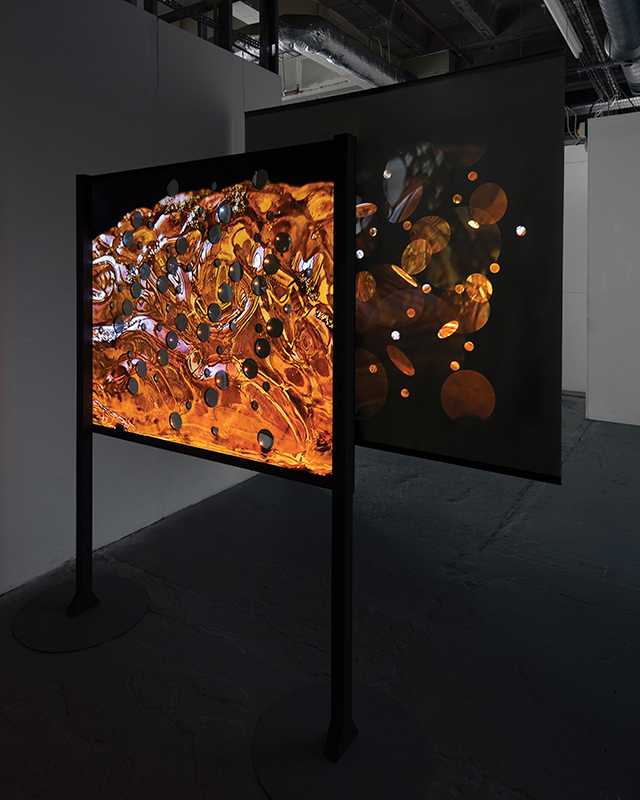
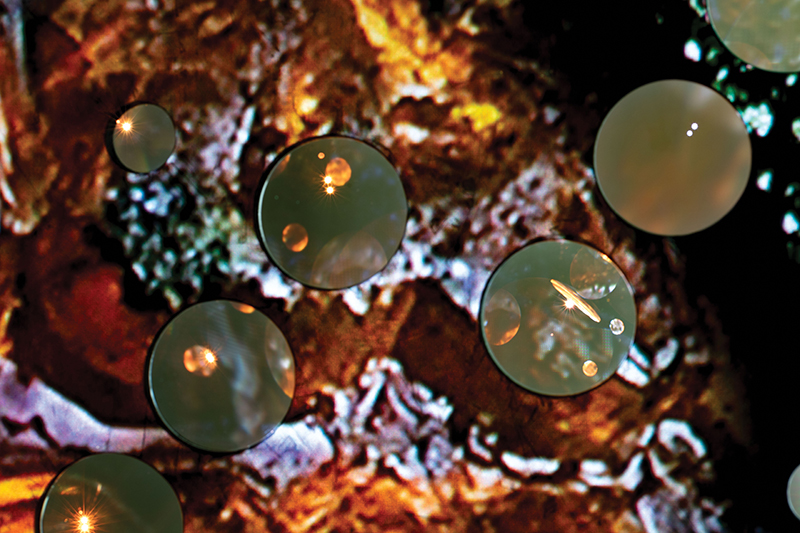
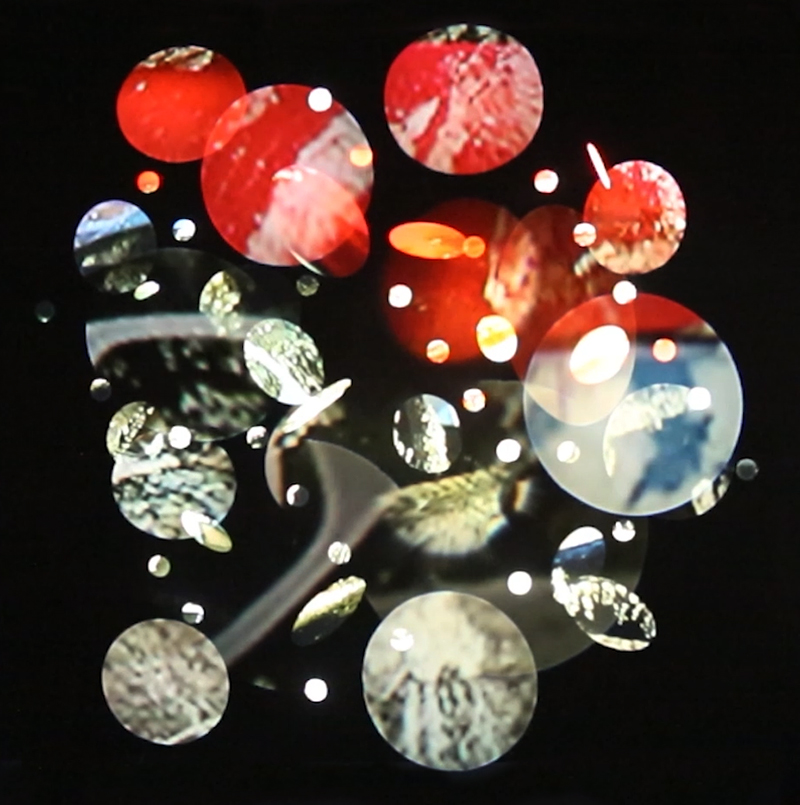
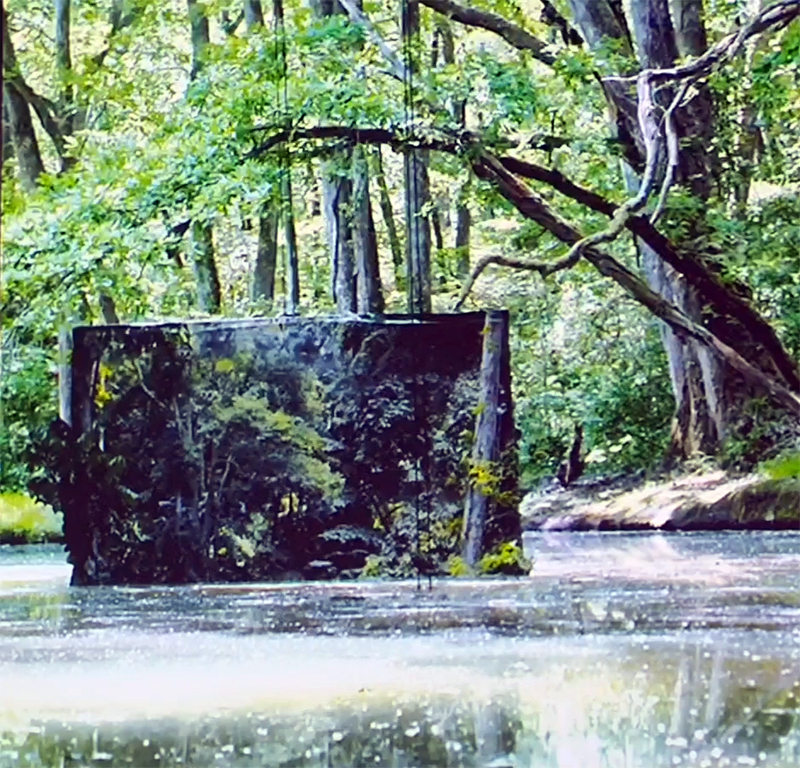
Very happy to receive lots of positive feedback for my video installation Lithos Panoptes. People were very engaged with how the work reveals itself in stages, from the kaleidoscopic imagery displaying on the two way suspended screen to discovering the board of distorting lenses behind the screen and finally stepping back to see the original film from the human perspective before it is transformed by the lenses.

Referencing a many-eyed giant of Greek mythology, Argos Panoptes (always eyes still awake), the work considers the perpetual vigilance of rock as record keeper and witness. Video of human activity projected through distorting optical lenses transforms the anthropocentric position to imagine the perspective of the rock.

The pattern of lenses is informed by the molecular structure of magnetite, a mineral found in magma and metamorphic rock in Earth’s crust as well as in meteorites and the cells of organisms.

Through actual and metaphoric lenses, the relationship between the organic and non-organic is explored.

Lithos Panoptes 2025, Optical lenses, wood, steel, projector. Video 09:27 min Sculpture: H172 × W170 × D50 cm, Rear projection screen: H180 × W180 cm.

Photography by Benjamin Deakin

Mined magnetite is used in industrial and mechanical processes and its use in combustion engines and vehicle braking systems is releasing nanoscale pollutant particles into the air which are finding their way into human brain cells, vastly overwhelming the innate magnetite present, causing concerns linked to the development of degenerative brain diseases.

As well as referencing an ever watchful, many-eyed giant of Greek mythology, Lithos Panoptes also considers the numerous eyes (ocelli) of the chiton (a species of mollusc) whose rock crystal lenses have evolved over many millions of years to keep watch along rocky coastlines across the globe.

The only creature with eye lenses made of mineral and not protein, the chiton is also unique in having rows of teeth primed with magnetite which allow chomping on the hard rock surfaces it clings to. Some chiton’s teeth also contain the recently discovered mineral santabarbaraite, named after the mining district Santa Barbara in Italy where it was found – it is one of the few minerals named after a woman.

I was surprised to discover that the benedictions of Saint Barbara are still sought today, with shrines installed at tunnel entrances at Crossrail and even at CERN, the epicentre of scientific rigour. Before the boring machines were set in motion, services seeking her blessings were performed by local priests, with some even being winched down excavation shafts to carry out their duties.

Saint Barbara, who is associated with sudden death from fire, lightning and explosions, including military armaments, was adopted as patron saint of miners and tunnellers when the use of explosives in mining escalated during the 1600’s.

As the statues of Saint Barbara installed at these tunnel entrances are now buried, I have substituted images of my mother Barbara, coincidently born within hours of this Saint’s Day, in my video installation Lithos Panoptes.

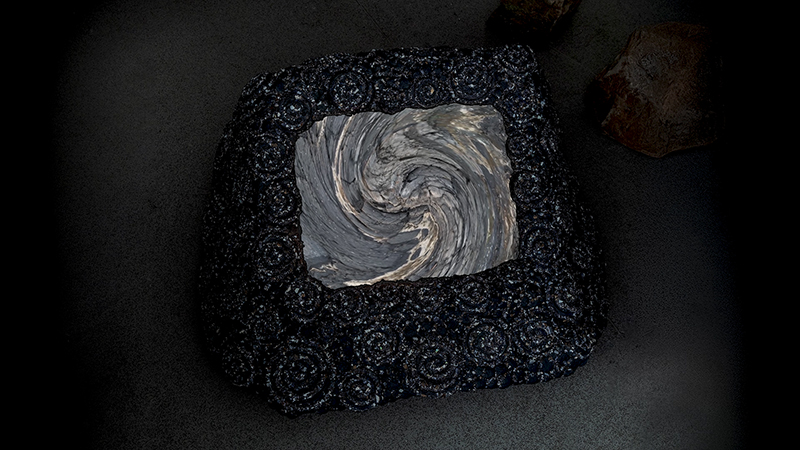
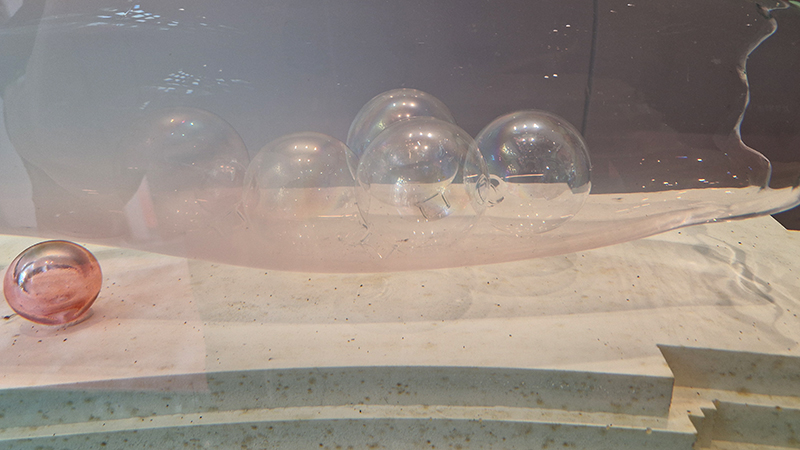
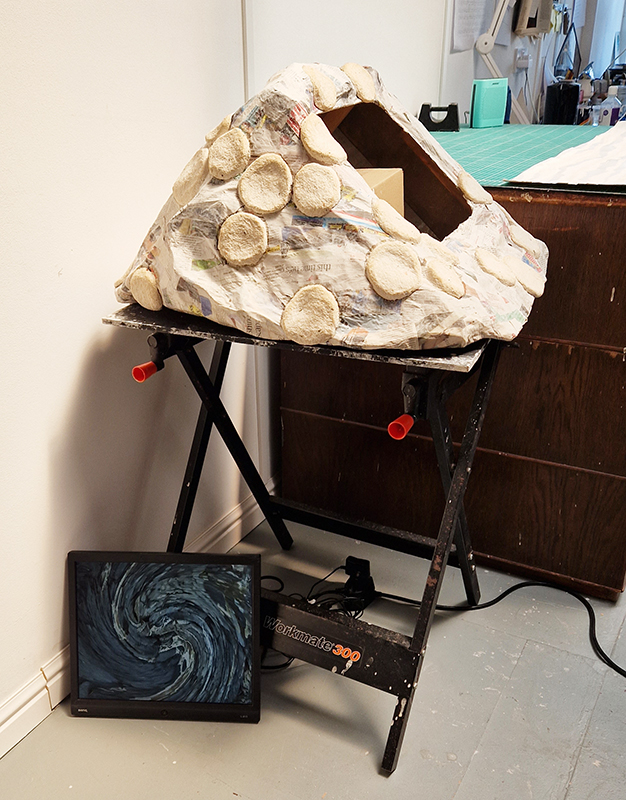
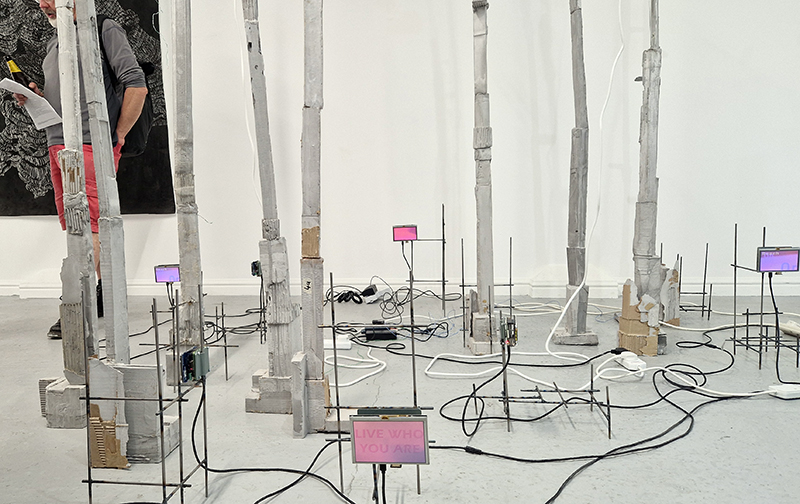
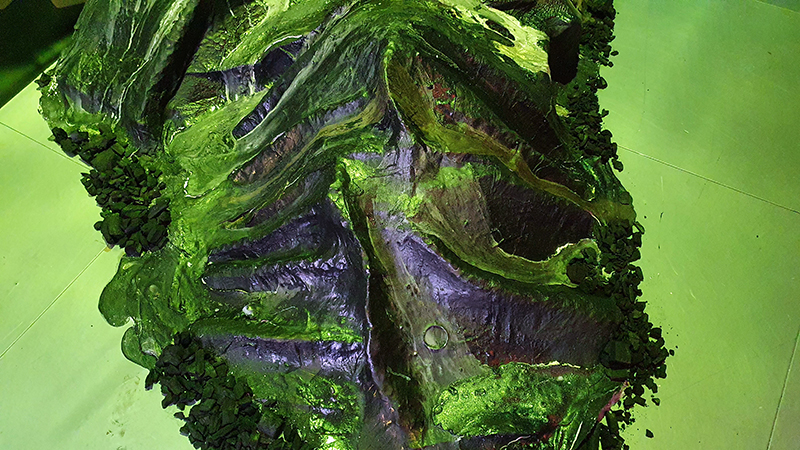
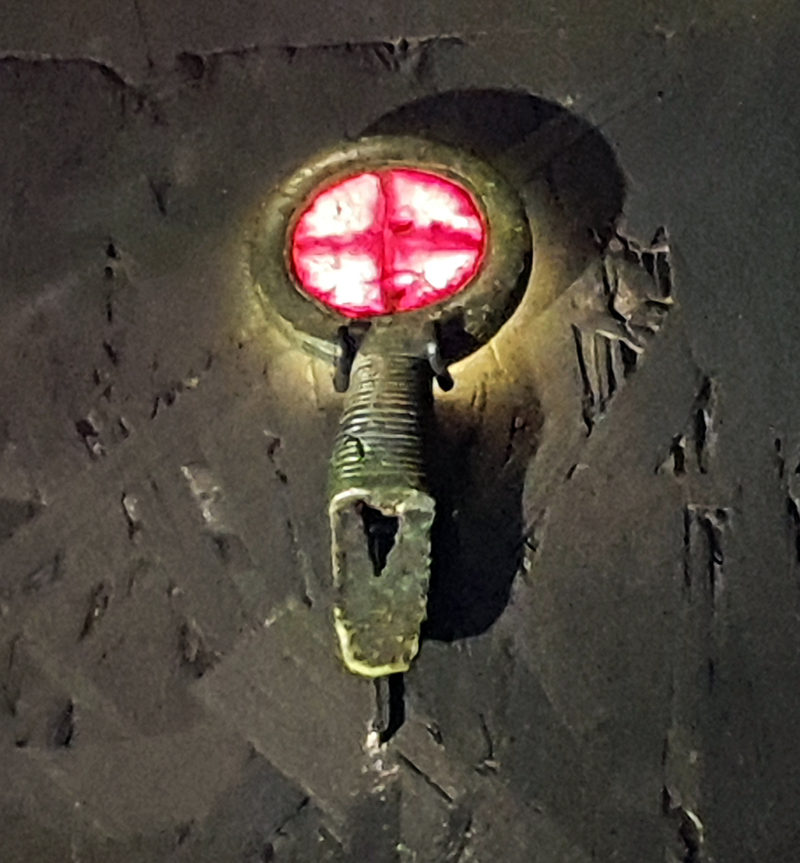
Tucked into a dark recess of the gallery, Belly of a Rock suggests an imagined place of chemical conversations at the intersection of the organic and inorganic. A hybrid between rock, mollusc and technology this video sculpture responds to an early lifeform’s emerging self-awareness, desire to communicate and urge to create as described by Italo Calvino in his story ‘The Spiral’. We don’t always know what we are creating.

Thrilled to show these works alongside Julie F Hill @juliefhill, Rona Lee @ronaleeartist, Charlie Franklin @charlie__franklin and Deborah Tchoudjinoff @deboraht_ff

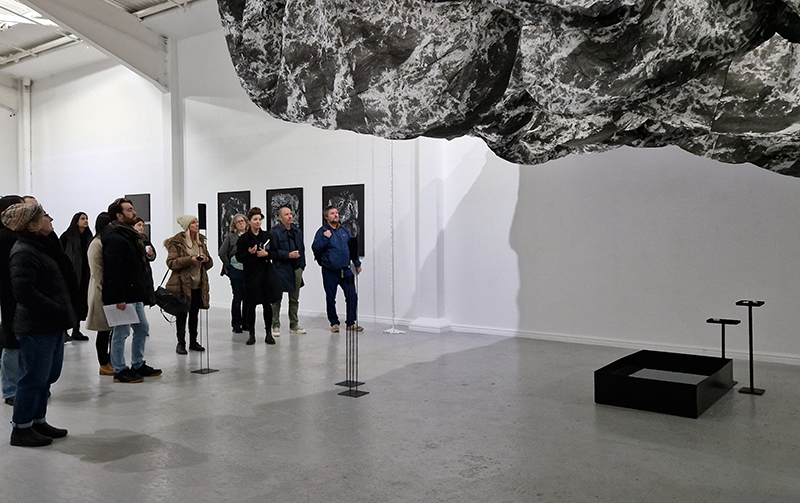
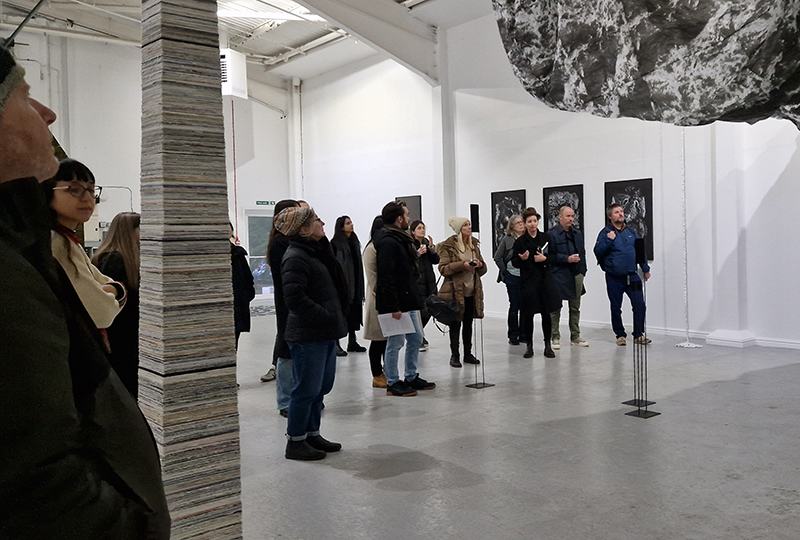
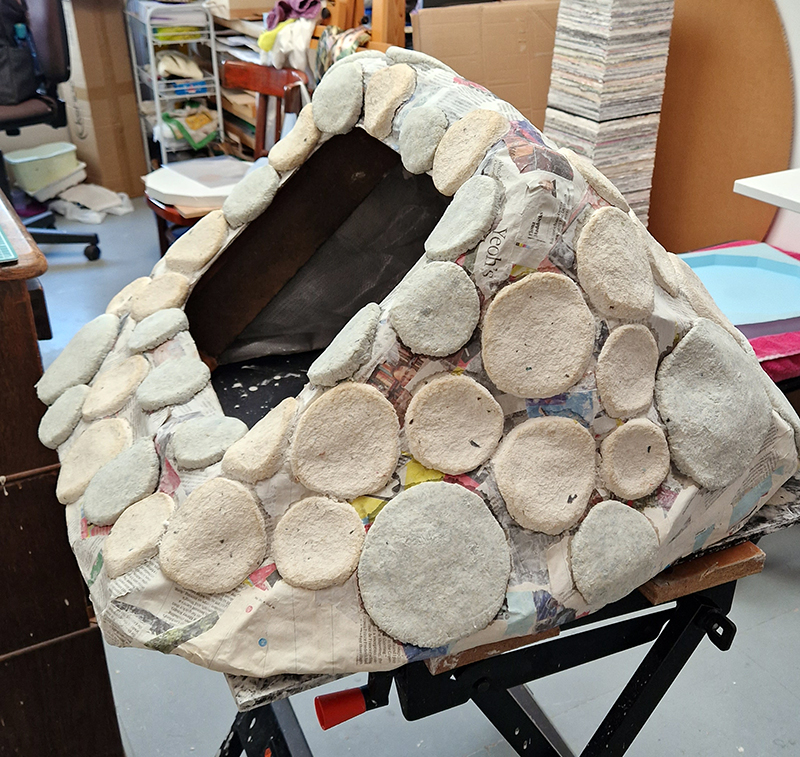
Julie F Hill’s sculptural print installation Parent Body uses scanning electron microscope imagery of samples recently returned from asteroid Bennu. The cave-like entrance, provides an embodied experience of the data and invites intimate contemplation of expanded scales. The ambiguous rock-like yet flowing forms echo the words of Jeffrey Jerome Cohen ‘stone is fluid when viewed within its proper duration’. Hill’s miniature work Return, considers the chemical and molecular cross exchanges between earth and space and in a gesture of reverse sample return (scientific missions and human extractive processes both take), a bead of Iridium is returned to the belly of asteroid Itokawa. Her small-scale embroidery work Water and Night, is based on observational studies of moonlight on water, continuing her explorations of water as the eye of landscape as proposed by Gaston Bachelard.

Julie F Hill, Parent Body, physically manipulated soy-ink print on tissue, chalk and clay pigments, chrome metal, water, clamp, funnel. c. W3 × H2.2 × D2.5m. 2025. Return, 3d print of asteroid Itokawa cast in plaster-of-paris, Iridium, 20 ×11× 8mm. 2024. Water and Night, silver metalized embroidery thread, 5.3 ×11 cm. 2025

 Photography Julie F Hill (1+3) Benjamin Deakin (2)

Deborah Tchoudjinoff’s moving image installation work The City of Gold (with sound in collaboration with Joe Farley) considers vast, beyond human, geological timescales when continents have once again become as one. Starting as a short fiction text, Deborah began to form an imagined world of cities in a future Amasia. The fictional cities are named after minerals that are heavily sought – rare earths, copper, uranium, gold, and coal – hinting at a narrative of an Earth depleted of the resources we rely on. The City of Gold is one of the five imagined cities. In a world where these natural resources are no longer, she questions what it would look like and who would be the inhabitants.

Deborah Tchoudjinoff, The City of Gold, video with sound, sculptural installation, 2m × 4m × 2m. 2025.

Photography B J Deakin (1) Julie F Hill (3)

For Litho/Domous Rona Lee has chosen to work with book plates originating in the post-war period of the ‘great acceleration’ – a time in which population numbers, use of natural resources, popular consumerism, technological dependency and environmental degeneration burgeoned. Unified in their varying representations of the geologic but broking no contradiction between their celebration of extractive processes such as tourism and industrialisation and idealisation of the ‘wild’, the images selected by Lee conjure a pre-fall world in which imaginaries of lithic instability are firmly suppressed.

Two handfuls of silt (the residue of scientific samples collected at a depth of 4,000 meters), squeezed into the artist’s hands, fired and then gilded, form Rona Lee’s I want, I want, I want (2012), the title of which references William Blake’s engraving of the same name, wryly conjures the possibility of reaching down into the ocean’s depth, as though into a rock pool, while simultaneously cautioning against the folly and voracity of such ambitions.

Rona Lee, Litho/Domous, light panels, bookplates. 2025. I want, I want, I want, fired and chromed handfuls of sediment, 2012.

Photography B J Deakin

The sculptures presented by Charlie Franklin, Landform and FRAGS, are lumpy, solid looking forms that speak of geological debris or ruins. All three pieces were soaked in the waters of the North Sea, on the easterly edge of the UK. This process allowed the natural elements to determine their individual patination or colouring, along with indentations and scuffs, where materials have been worn away by salt and stone. Cave Drawings (Aladdin’s Cave, Series of Grottos, Marble Curtain, Fairy Grotto, and Solomon’s Temple) are a series of five found postcards depicting the caves at Cheddar Gorge in Somerset, UK which have been hand coloured by the artist. Franklin is interested in how the addition of colour can provoke a personality or aura within each cave interior, allowing for grand experiments to be realised on an intimate scale.

Charlie Franklin, Landform, Cardboard, found fabric, gaffer tape, gouache, scrim, plaster, adhesive, acrylic paint, copper leaf, sea water residue, 87 × 26 × 30cm. 2025. Cave Drawings, felt tip on found postcards, 14 × 9cm. 2025. FRAGS, cardboard, rope, gaffer tape, scrim, oil paint, aluminium leaf, plaster, adhesive, acrylic paint, copper leaf, seawater residue, work in two parts, 29 × 22 × 28cm / 12 × 29 × 23cm. 2025.

Photography B J Deakin, Julie F Hill

A highlight of our events was an Urban Geology Walk led by geologist Ruth Siddall.

“The gravel pit, like other mining holes, is the reverse image of the cityscape it creates — extraction in the aid of erection.” Lucy Lippard

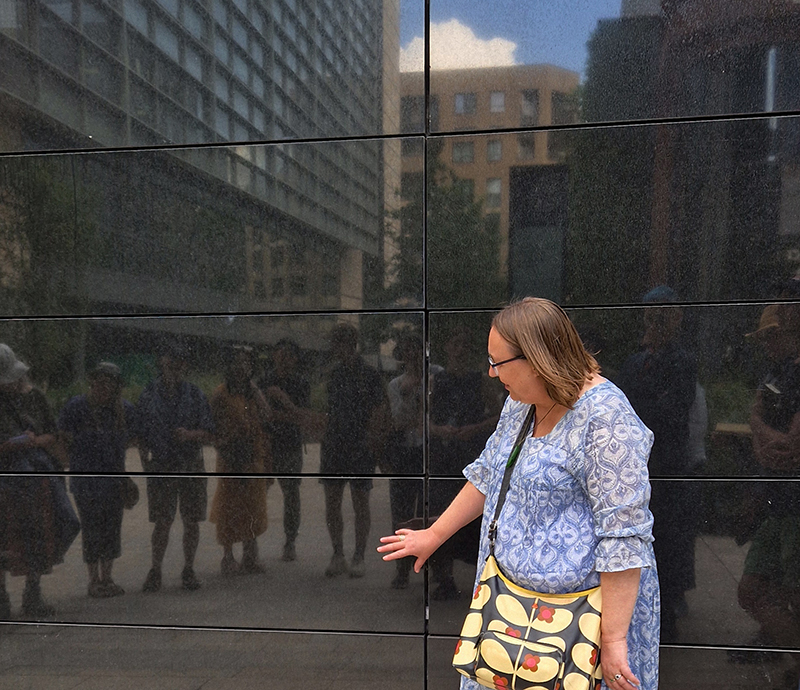
Ruth lead a group walk to explore the geology of the local built environment around Regent’s Place and Fitzrovia. Her knowledge of geology is astounding and her passion for stone infectious. Everyone came away incredulous, having their eyes opened to the deep time history of the rocks that build our city. The deep, black, Archaean dolerite from Mashonaland in Zimbabwe that Ruth points to is 2.2 billion years old. The large block of polished stone shaped like a giant pebble, itself crammed with pebbles of other rocks, is a sculpture by John Aiken, Monolith & Shadow. A patchwork of Jurassic limestone from southern Spain is crowded with the spire-shaped fossil shells of the gastropod Nerinea, stained red and yellow with ochres.

After the walk Ruth joined us for a tour of the gallery – it was fantastic to hear her insight and corroboration on some of the research that fed into the artworks.

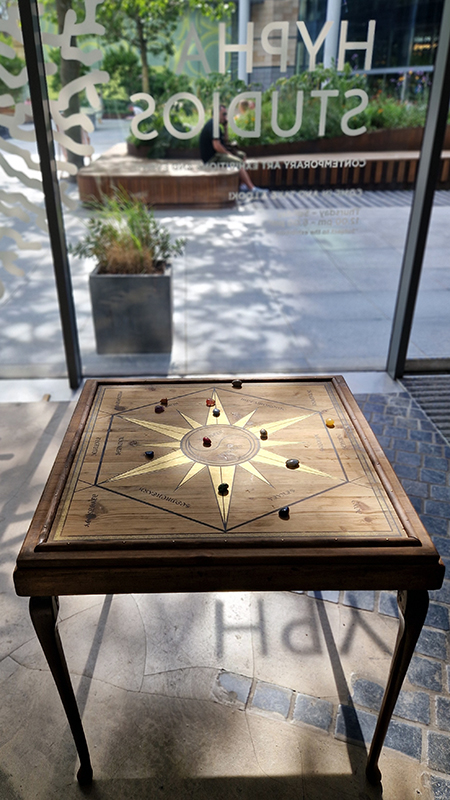
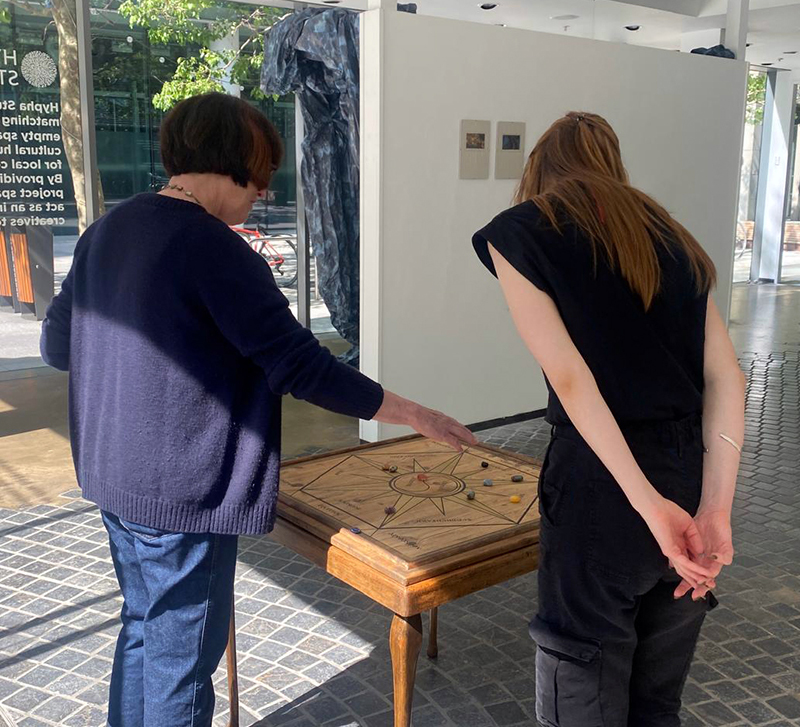
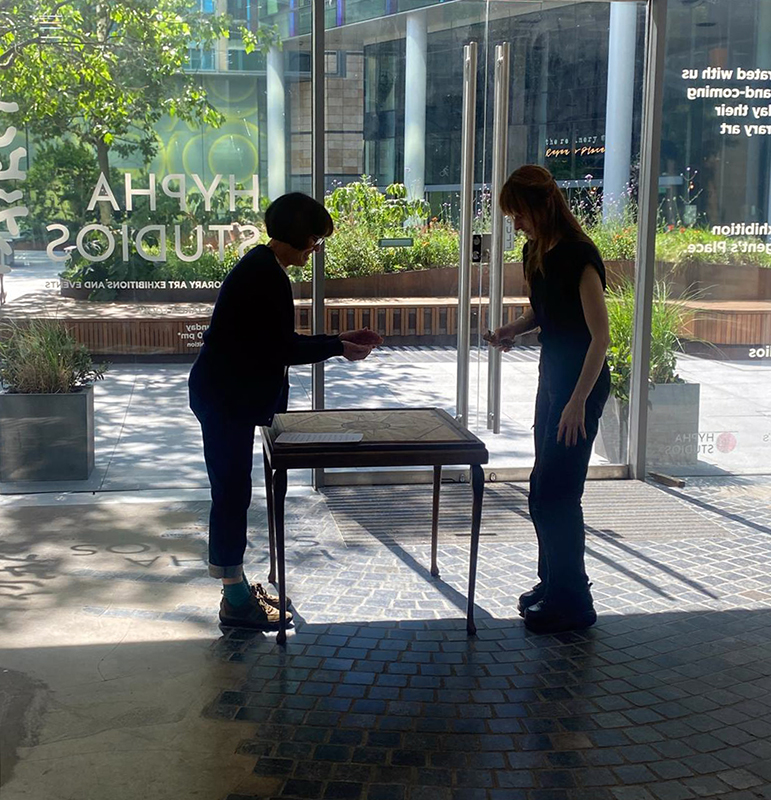
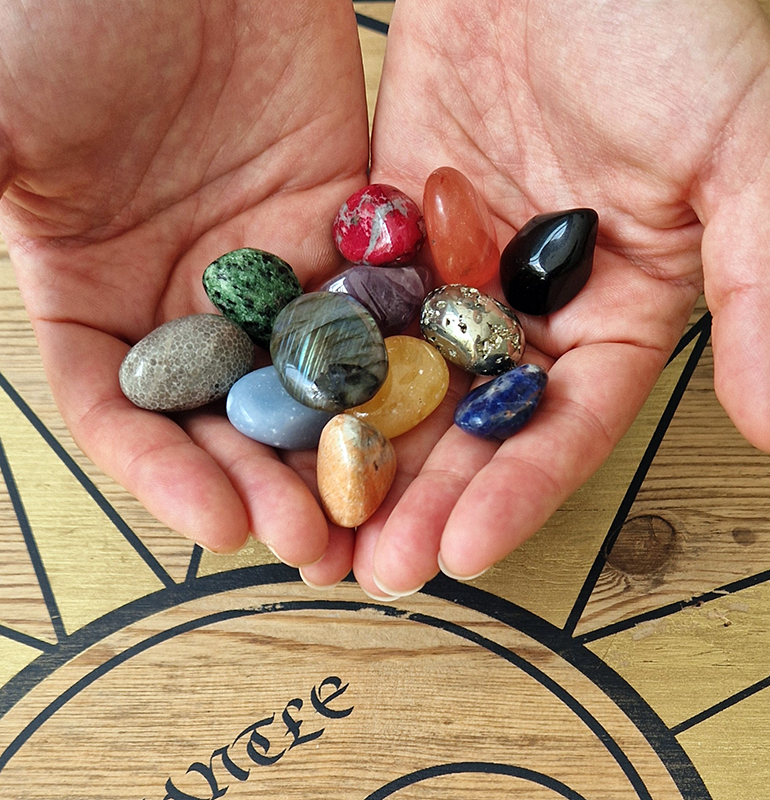
I offered Lithomancy drop-in sessions on Friday afternoons as part of a programme of events for The Geological Unconscious. Visitors were invited to throw gemstones with specially assigned characteristics onto a wooden board divided into geologically themed sections. They are then given personal interpretations based on the position of the cast stones by drawing from the esoteric ritual of lithomancy which seeks to divine the future from the reading of stones.

This performative experience proposes insights into the power and allure of stones emanating from the symbolic meanings attributed to them and exposes the entangled relations between the human and the geologic found in our language and desire to align the human condition with the lithic.

We had many interesting visitors to The Geological Unconscious and have made some wonderful new contacts. Not least among these was meeting Melanie Wheeler who has recently completed a residency in the UCL Geology Department where she worked with the technician to re-curate the rock room. Julie and I were lucky to be taken on a tour of the newly curated collection and receive gifts. So excited to have a beautiful sample of magnetite.

In ancient Greek, magnetite was known as “magnes lithos,” meaning “stone from Magnesia” – the region in Thessaly, Greece, where magnetite was first discovered, supposedly by a shepherd who noticed the nails in his boots were sticking to the rock under his feet.

As an additional daily drop in activity during The Geological Unconscious we offered cheong tasting. Chef Moonhyung Lee explored human-mineral entanglements through digestion using stones to create cheong (Korean fermented syrup). The use of weighing stones helps create the environment for preservation, a process which amplifies the bioavailability of minerals in food. Moonhyung Lee is a food designer with a background in graphics. She is currently based in London and works at zero waste restaurant Silo.

It was great to have so many people join us for our Closing Event artist talks and the launch of the exhibition publication with preface by Jason Groves and short essay by Ruth Siddall.

We also had the microscope set up at the closing event to look at some crystal growth in solutions prepared by Julie who works extensively with crystals.

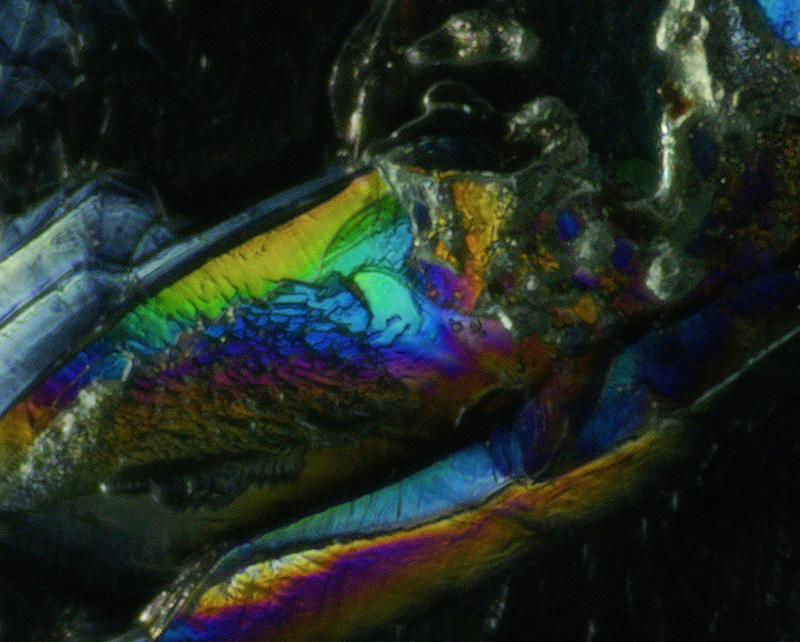
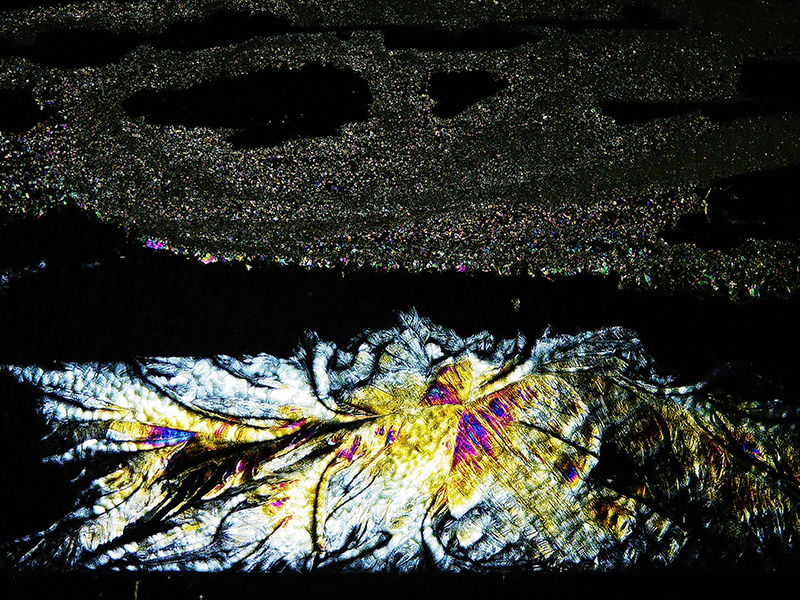
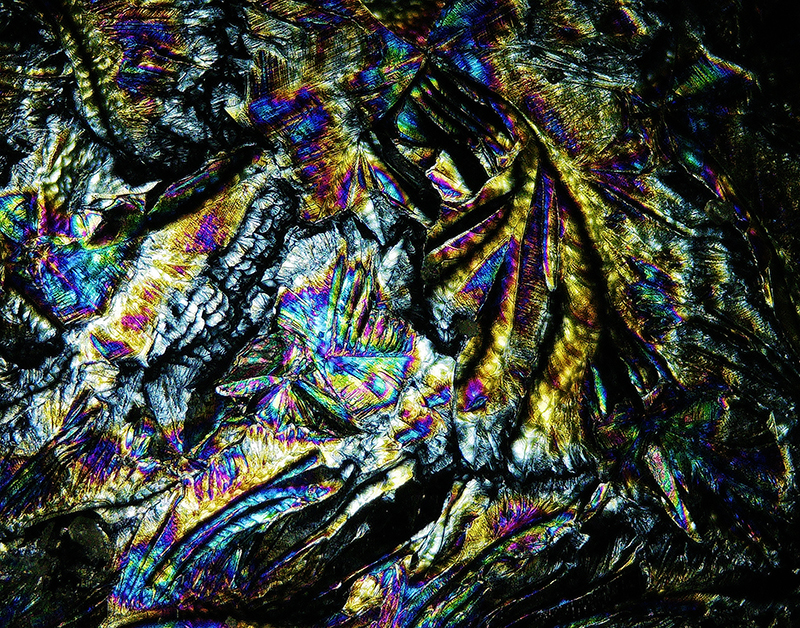
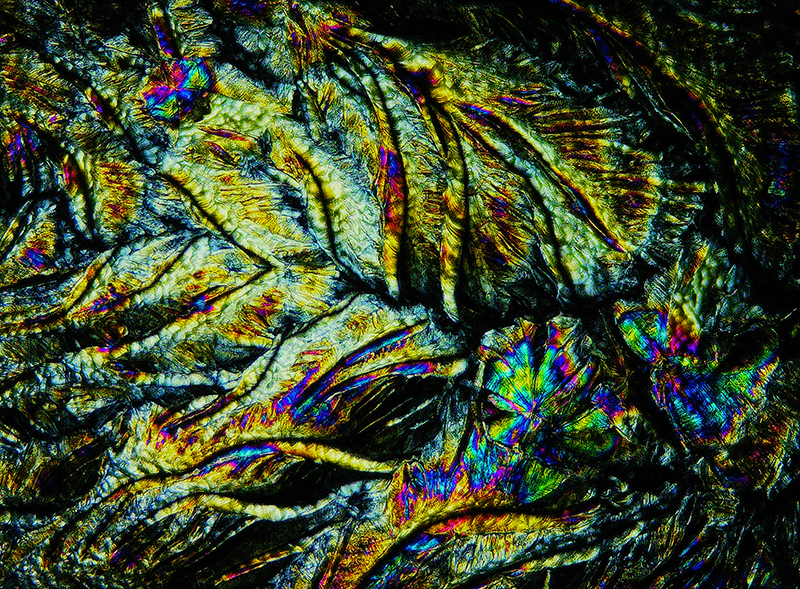
I had tried some ‘Vitamin C’ crystal growing microscopy experiments at home. These images use a polarising filter under the microscope to reveal the vibrant colours. Next step will be to set up a timelapse of the crystals growing.

Summer Solstice 2025. The shortest night of the longest day brought an awful darkness. Collected the last two solargraphs I had installed at the Hogsmill Nature Reserve. These have been collecting light from the sun for a whole year, recording every sunrise and sunset. May the light shine through.

I was delighted that my video Cosmic Chiasmus: crossing the universe was included in CARBON: Under Pressure, at the Mazumdar-Shaw Advanced Research Centre as part of Glasgow Science Festival 2025, in a special exhibition partnership with Science Gallery Bengaluru.

The video offers a glimpse into a subatomic world where cosmic rays travel from distant galaxies to collide and silently interact with atoms and technology on Earth. Alongside the screening of the video I was also invited to give an artist talk and cloud chamber demonstration. It was great to share the wonders of the cloud chamber with visitors who were able to see cosmic ray trails for themselves.

It is an incredible journey that cosmic rays make, blasted across space, spiralling along magnetic field lines to end up entangled with carbon in our bodies.
Not only is all life physically permeated by cosmic rays with the potential for nuclei collisions, but some cascading particles smash into atoms of nitrogen and combine with oxygen to create radioactive carbon-14 which enters our atmosphere. Plants absorb it during photosynthesis, and it is incorporated into their carbon skeleton, which we then eat. While plants and animals are alive, carbon-14 is continually replenished as the organism takes in air or food. But when an organism dies no more carbon-14 is absorbed and that which is present starts to decay at a constant rate. By measuring the radioactivity of dead organic matter, the current carbon-14 content can be determined and the time of death established. Cosmic ray activity gives us carbon dating techniques.

Reading

The Geological Unconscious – Jason Groves. Returning to this book that sparked the ideas we explored in our exhibition. A redirection of geology to consider a type of connection between things that are not in themselves geologic. Stones that stare, stones that speak. An image of the human could develop through geologic processes, becoming part of the mineral consciousness. Quoting Heather Sullivan ‘There is a difficulty for biology and philosophy to maintain a reliable distinction between life and non-life.’

The Writing of Stones – Roger Caillois. A paean to the capacity of minerals to form images within the imagination, which in turn is considered to be nothing more than an extension of matter.

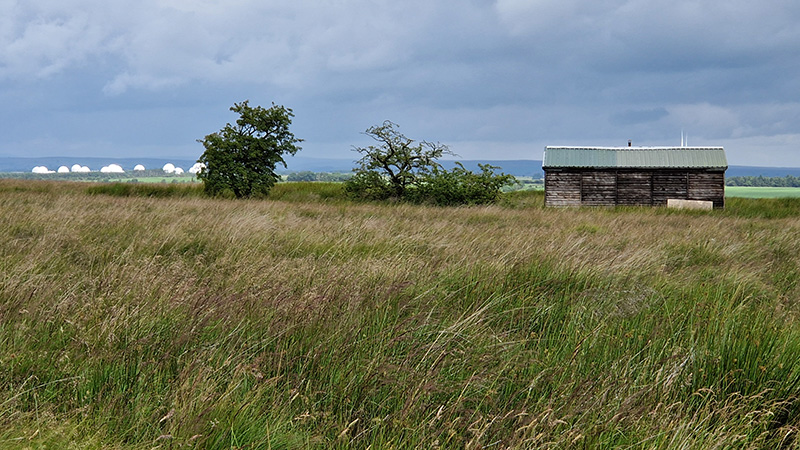
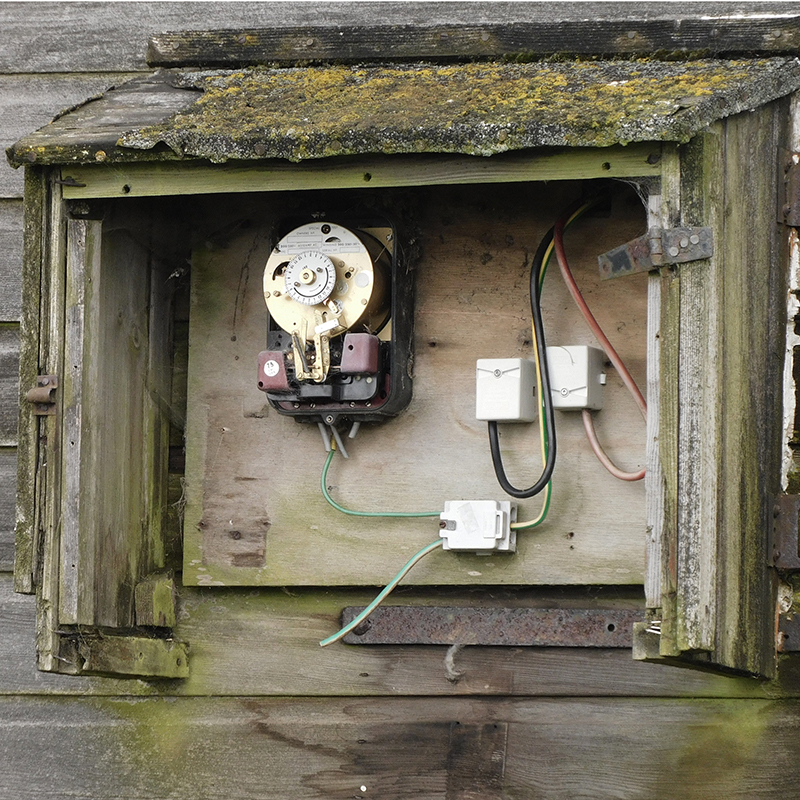
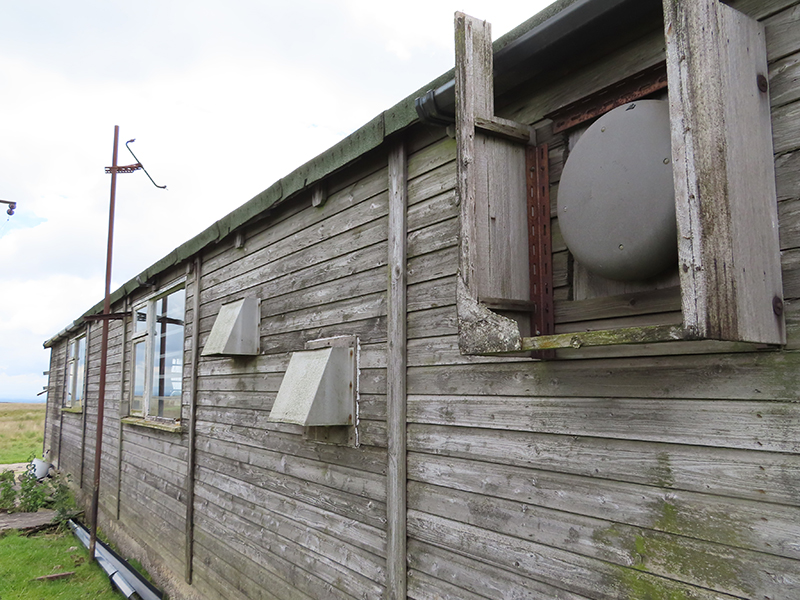
The Performances of Sacred Places: crossing, breathing, resisting – edited by Silvia Battista. I read this for some background research while thinking about how I might make work responding to the abandoned sites of the cosmic ray detector huts at Haverah Park on the North Yorkshire Moors.

‘An horizon stands, in modern hermeneutics, for what is possible to see from the position of a specific observer. That is, not only a location in space but also a position in the cultural and historical apprehension of the world.’ Silvia Battista

The book opens by questioning relationships between the site and its ascribed attributes, which may be mercurial qualities not easy to define or quantify. It reflects on the performativity theories of Karen Barad which argue that matter, in its complexity, is an active participant in our relationship to the world and Jane Bennet’s call to recognise the ‘vitality of matter’ that crosses the human non human divide. In the section on ‘crossing’ the sensitive work of Louise Ann Wilson explores ritual around death, grief and loss through walking in rural locations echoing walking an interior landscape of memory. Walking the labyrinth and the pilgrimage are also considered as journeys that take place in physical and metaphysical space.

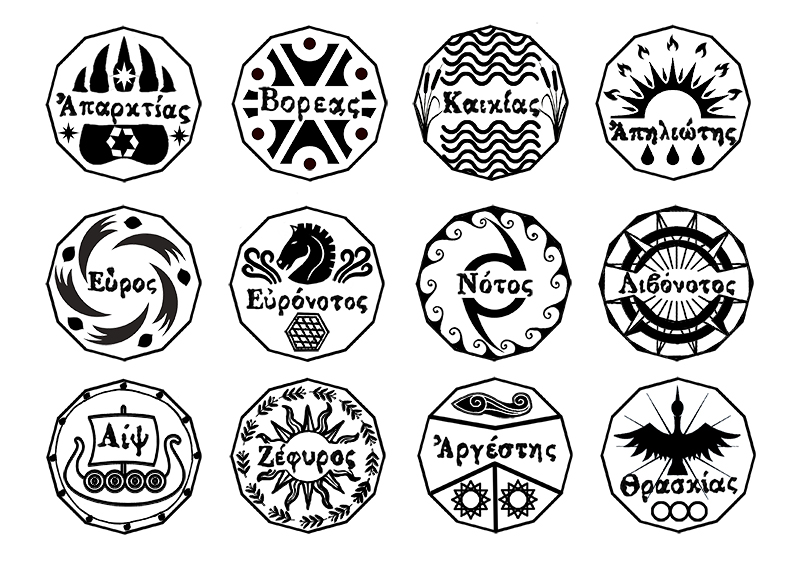
In classical antiquity, a time stretching from Homer to the early middle ages, geographic orientation usually referred to landmarks or astral phenomena to determine direction. Eos, meaning dawn, and Hesperus, meaning evening, were named for sunrise and sunset with north (arctos) being marked by the constellation Ursa Major and later the Pole Star. The winds also became associated with direction and named in accordance with their qualities such as hot and humid or cold and dry.

The number of points on a wind rose began with the four cardinal points that were added to and refined over time. Aristotle designed an asymmetrical 10 point wind rose for “the study of things high in the air” (meteorology) which was later refigured by Timosthenes, a 3rd century BCE Admiral and geographer, naming a system of twelve winds and using this as a tool for navigation. The contemporary compass has its roots in the ancient classification of winds.

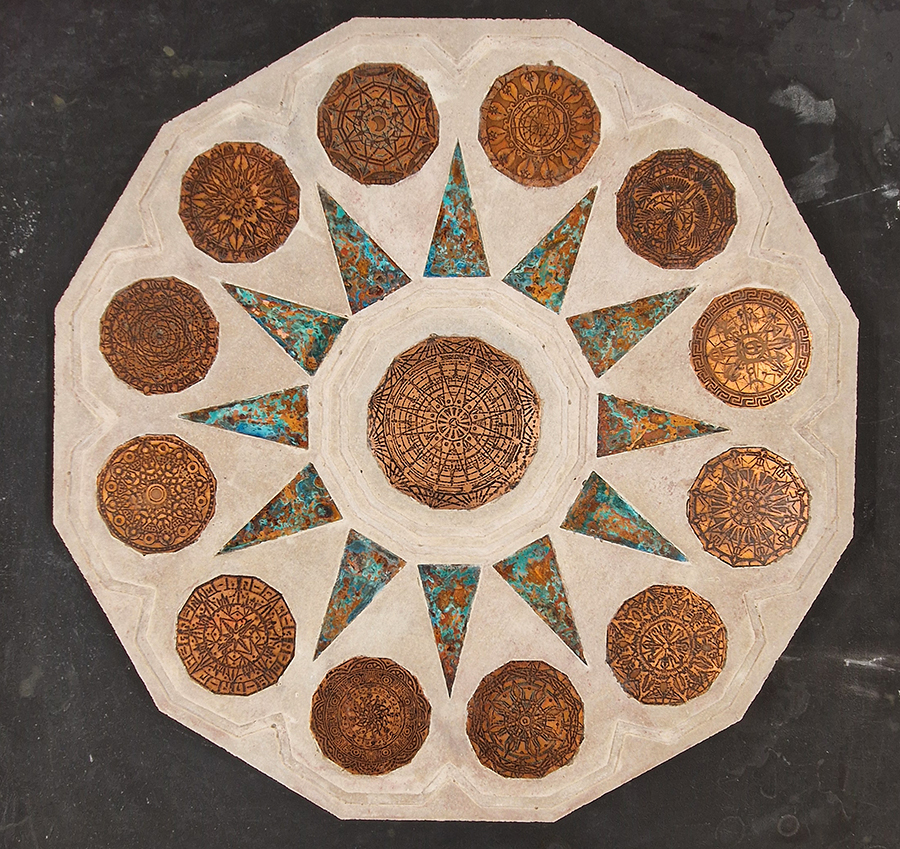
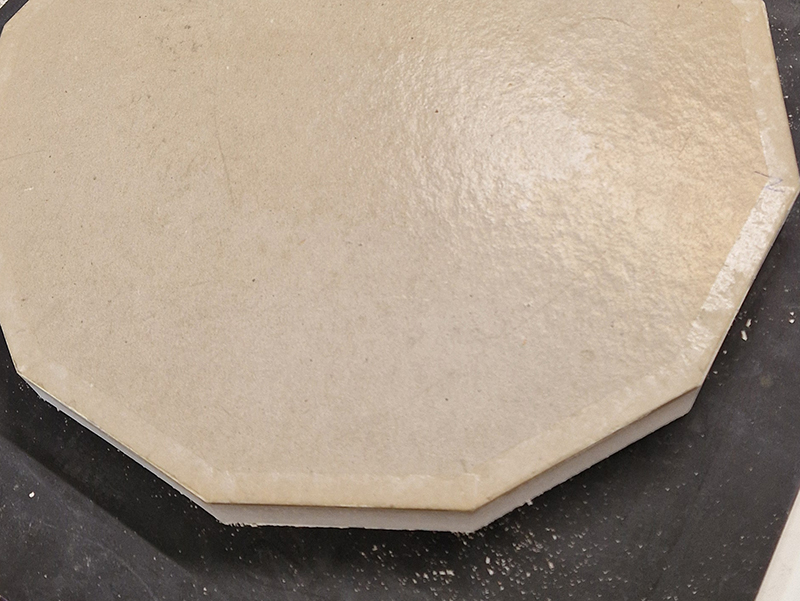
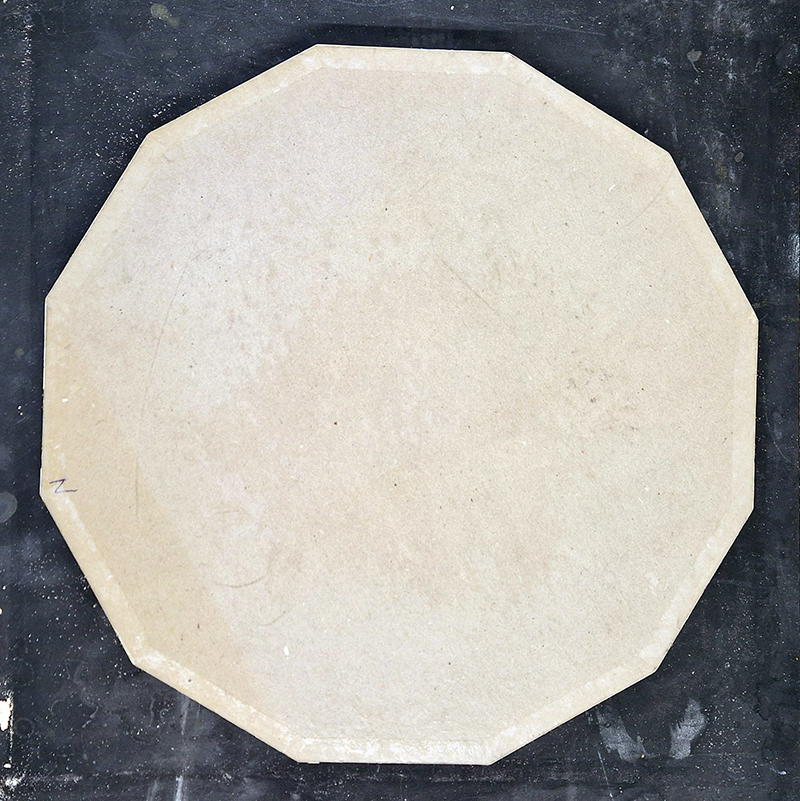
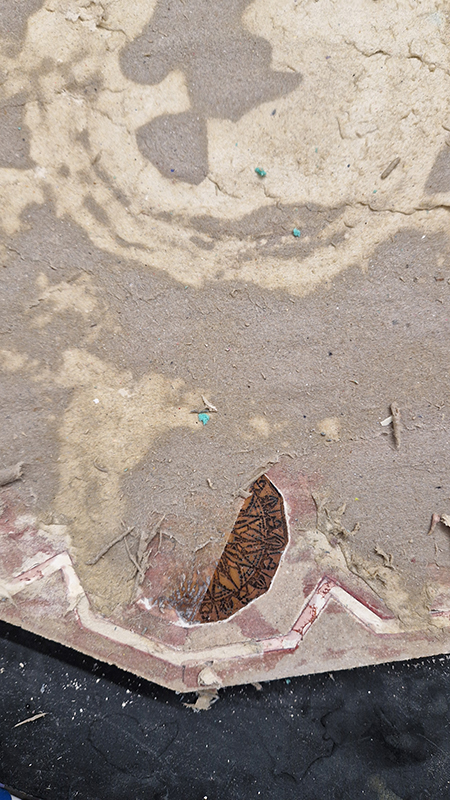
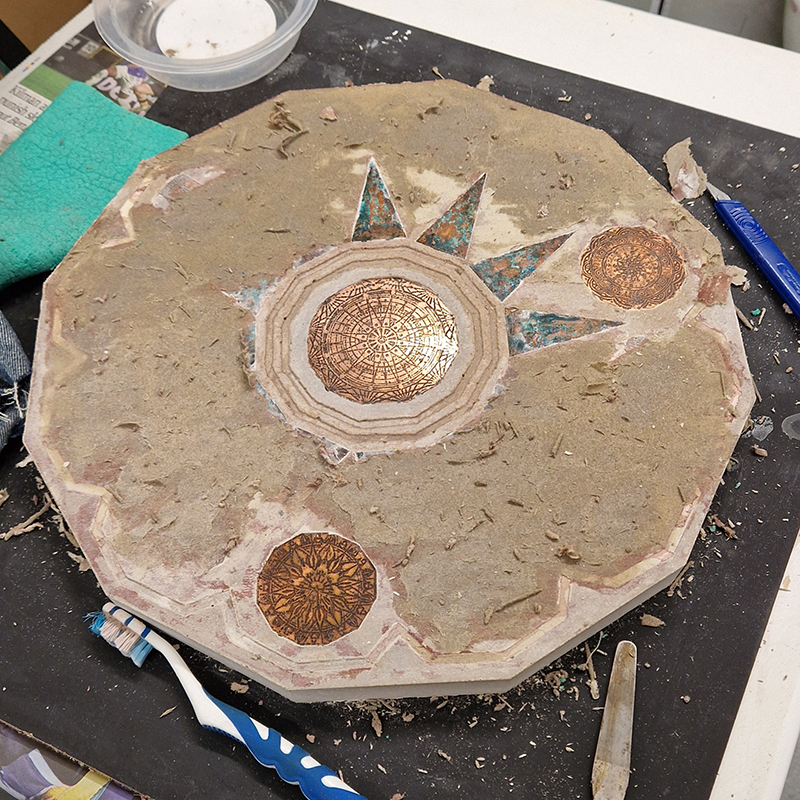
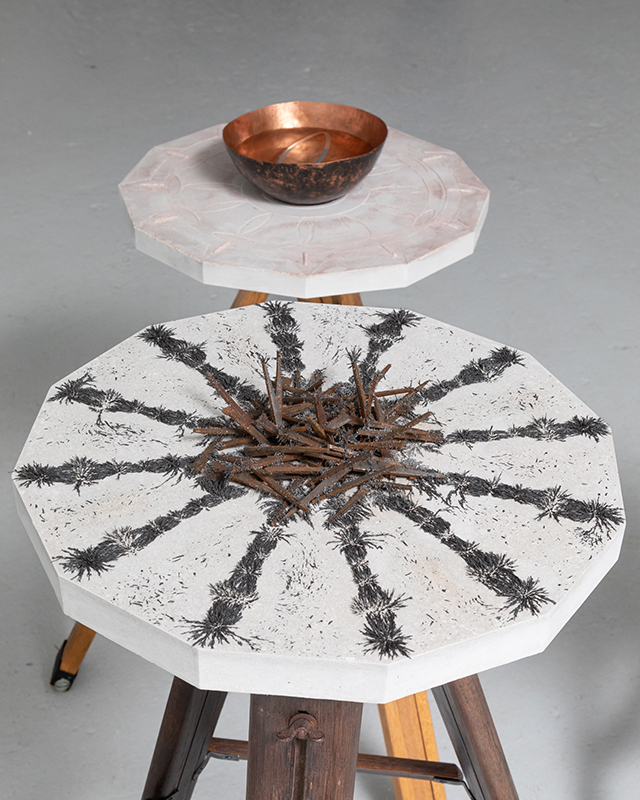
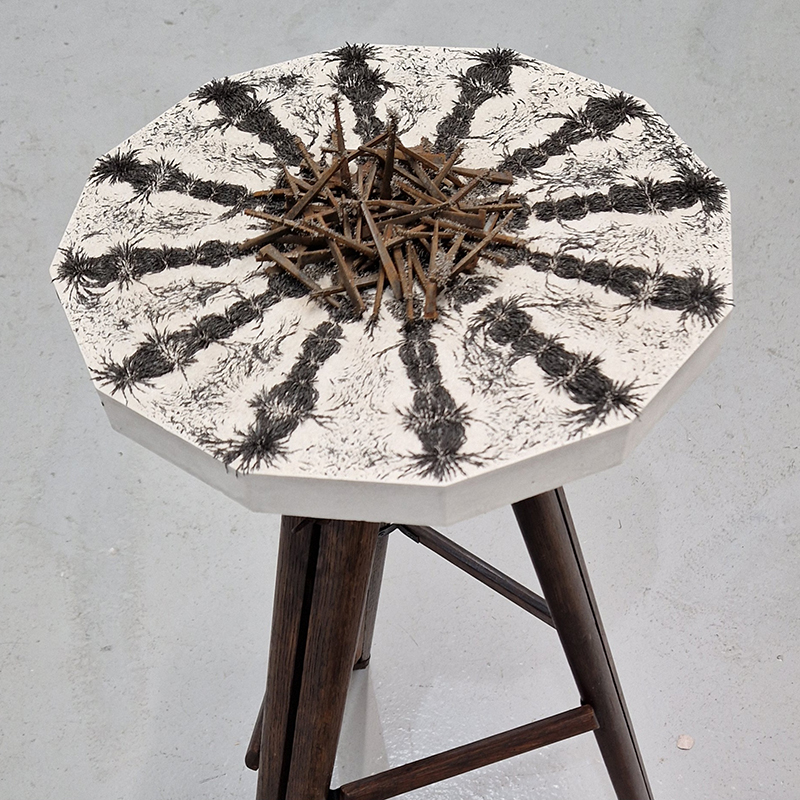
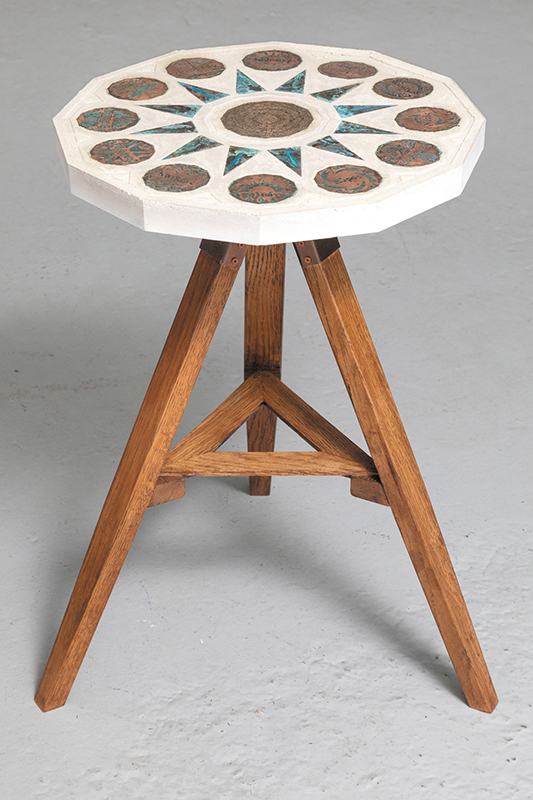
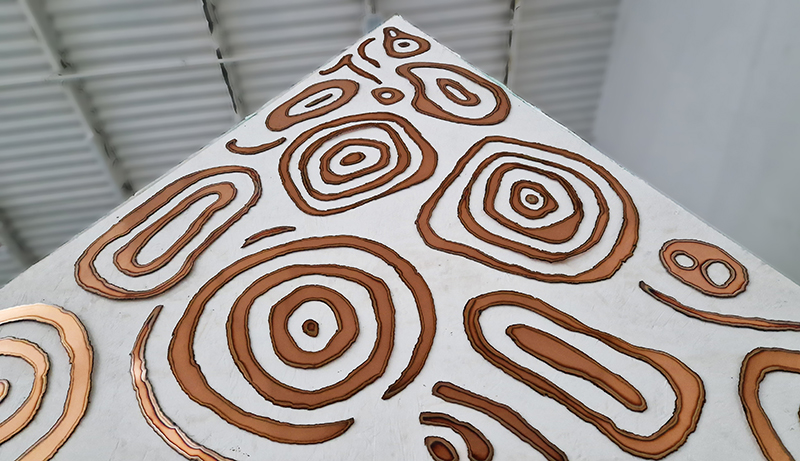
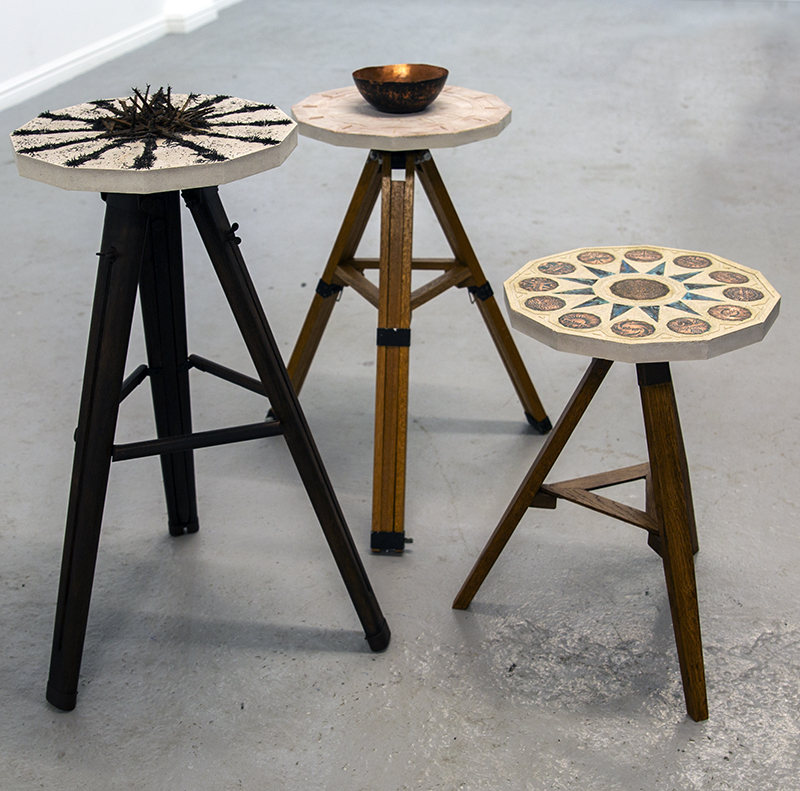
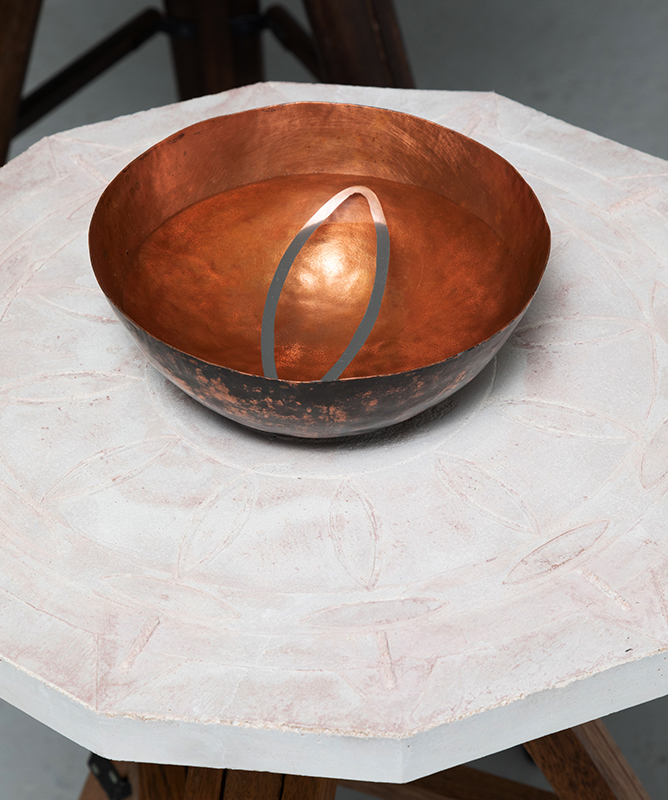
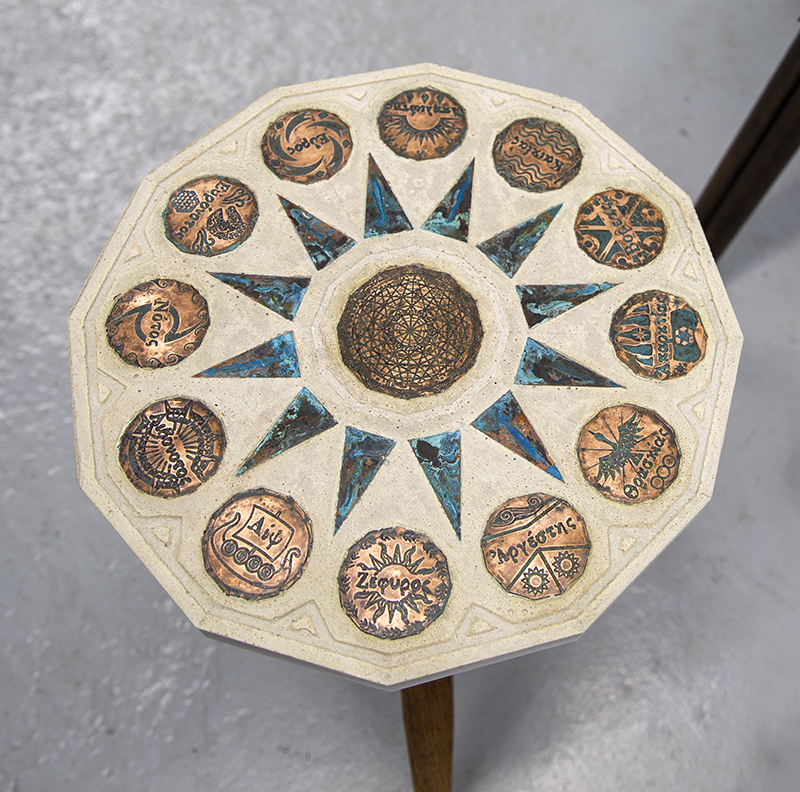
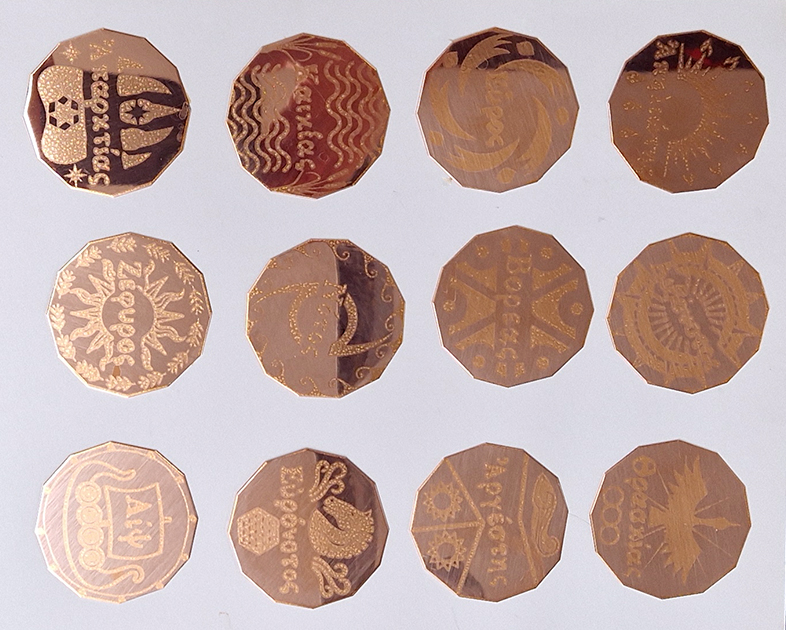
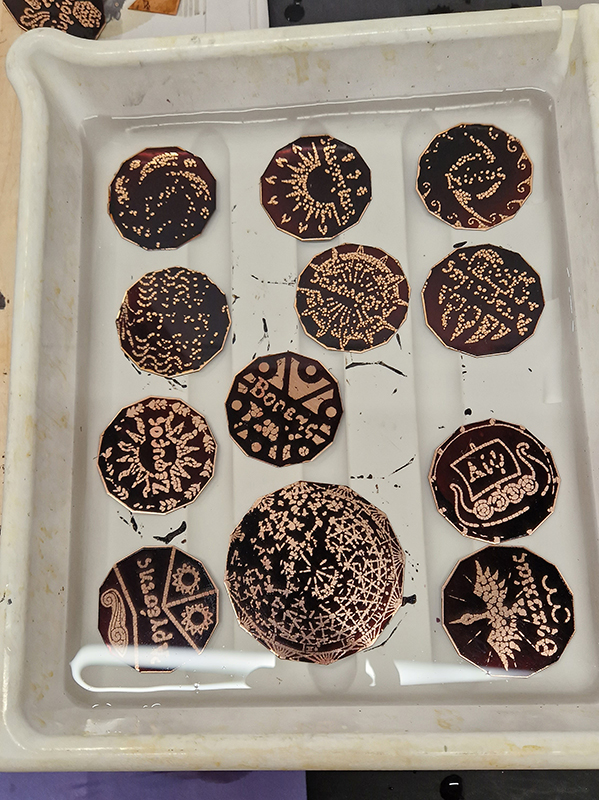
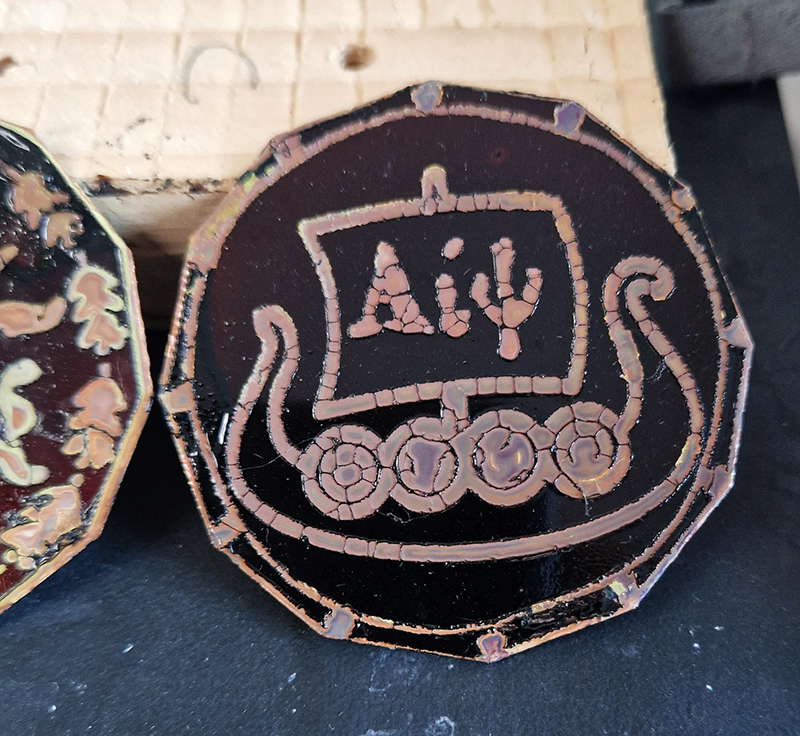
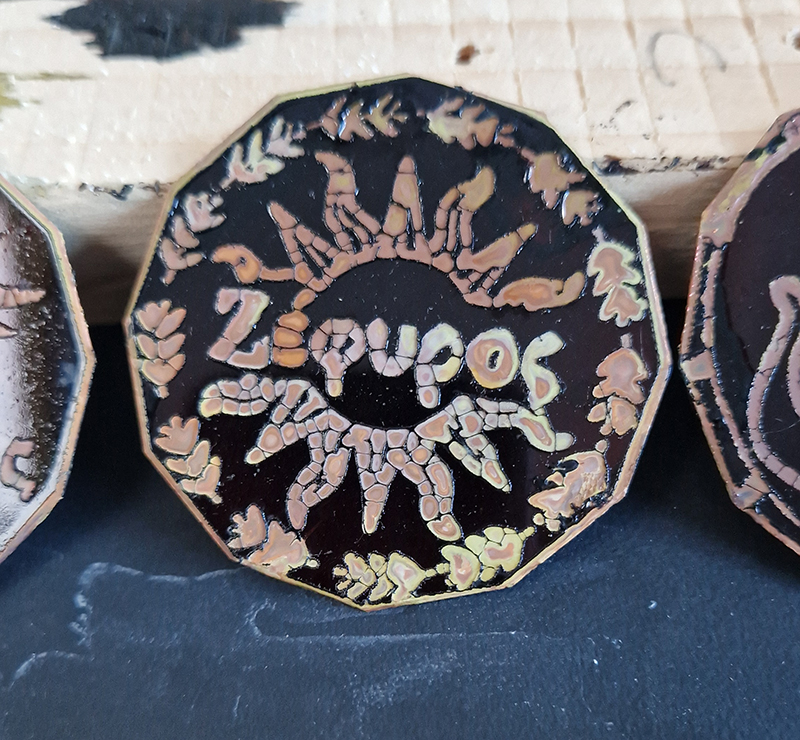
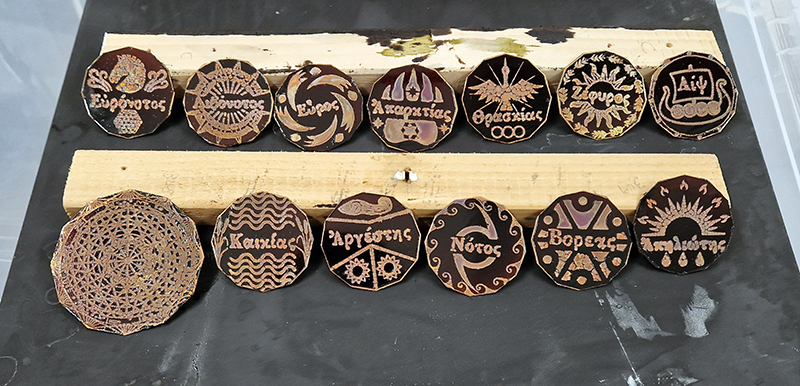
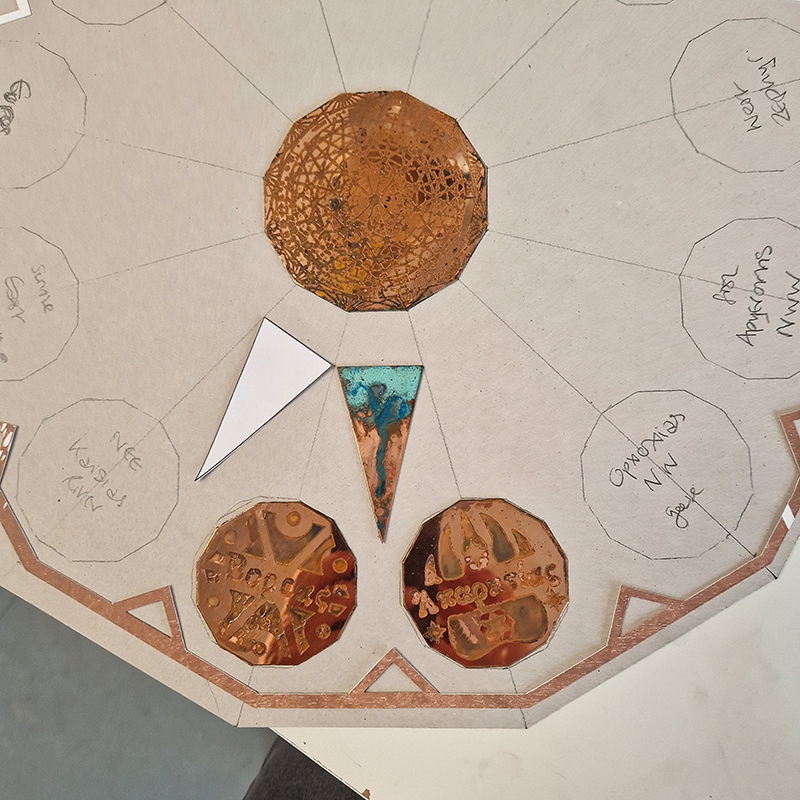
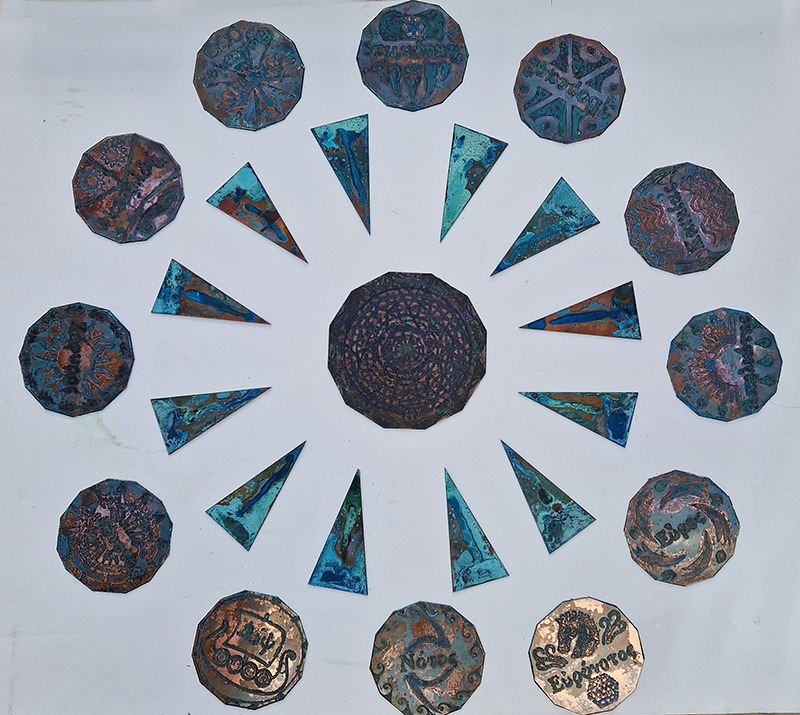
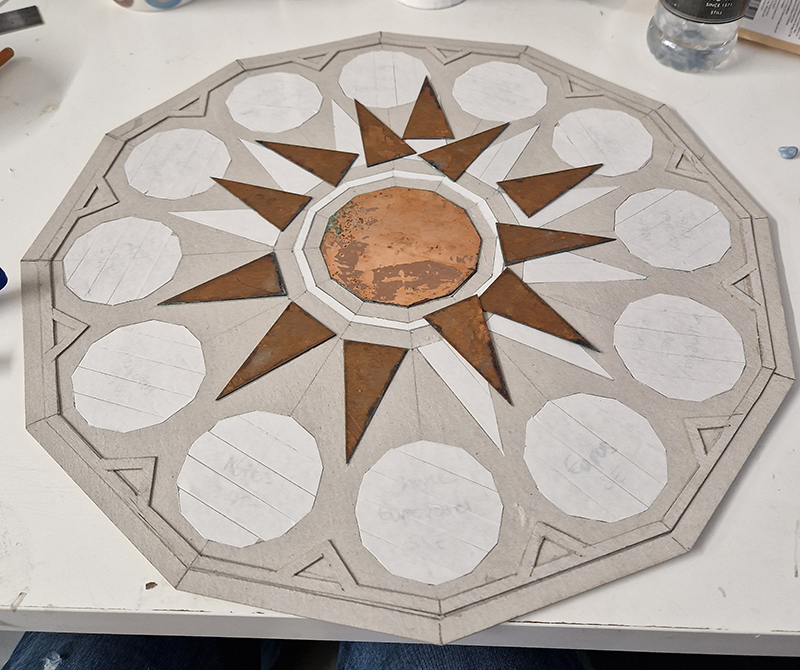
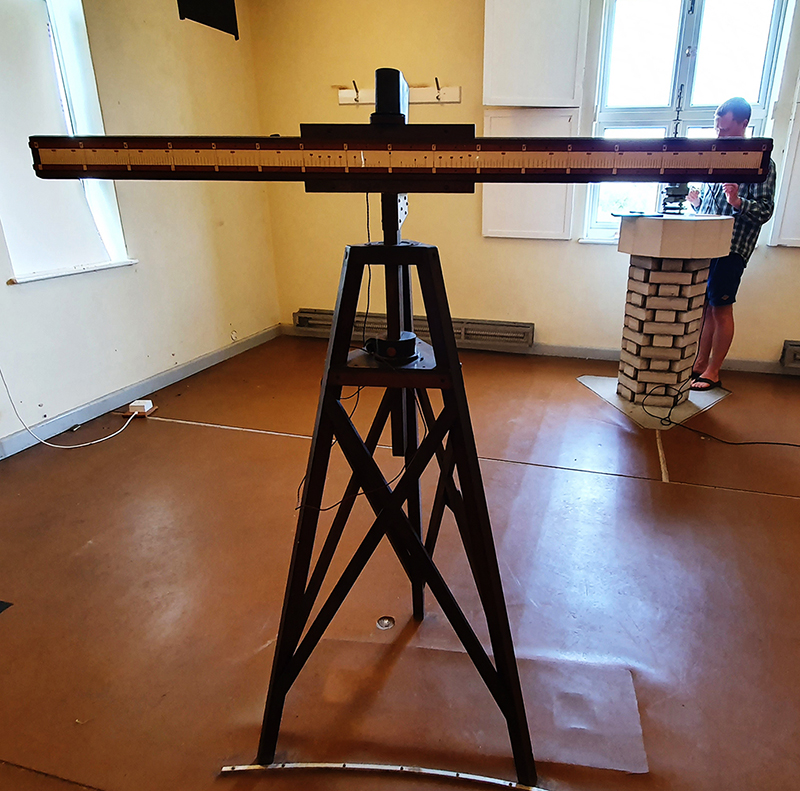
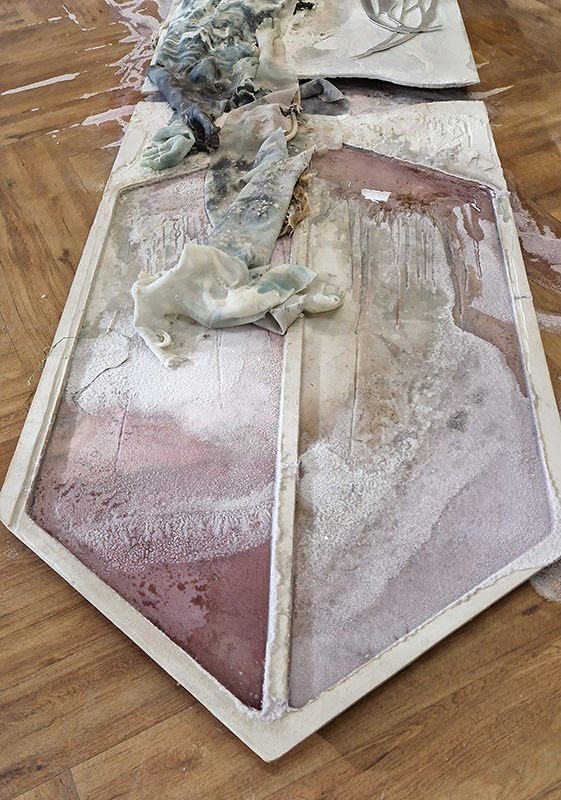
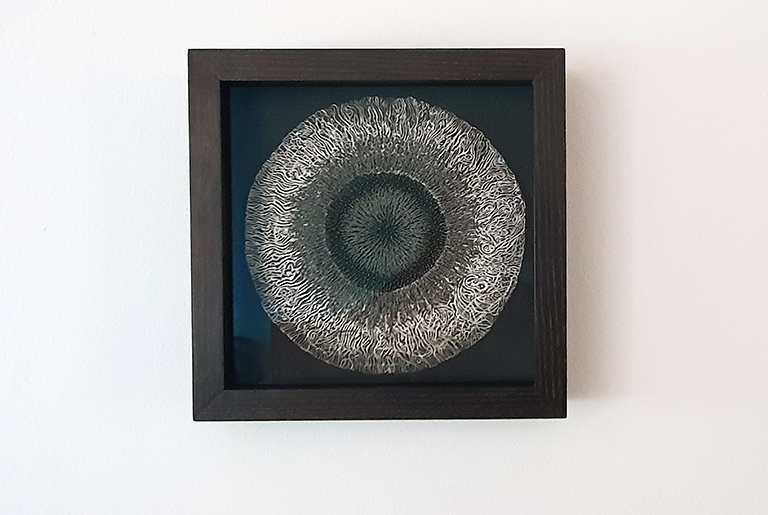
Freshly excavated. A new tablet for the series Instruments of the Anemoi, replacing a previous one based on the idea of a wind rose and set with etched copper markers, the designs of which are influenced by characteristics of the gods (anemoi) represented by each of the twelve winds.

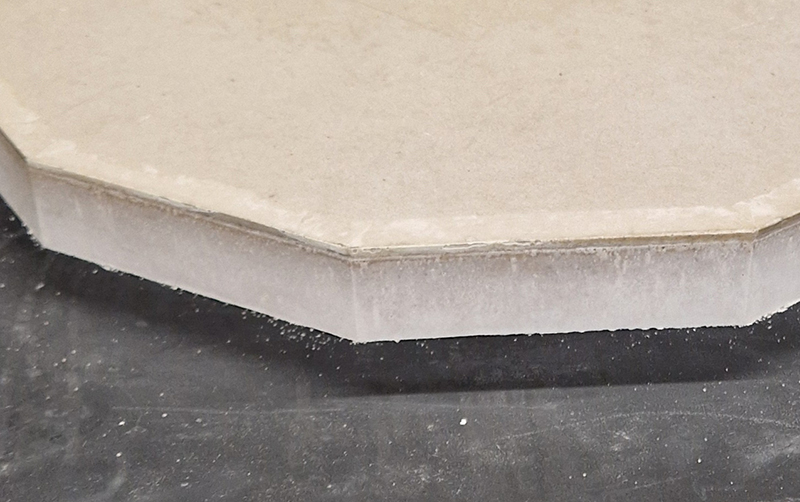
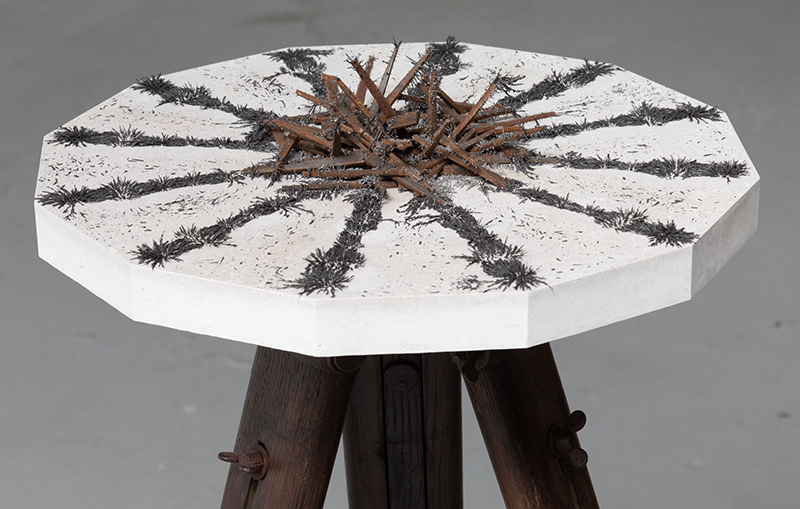
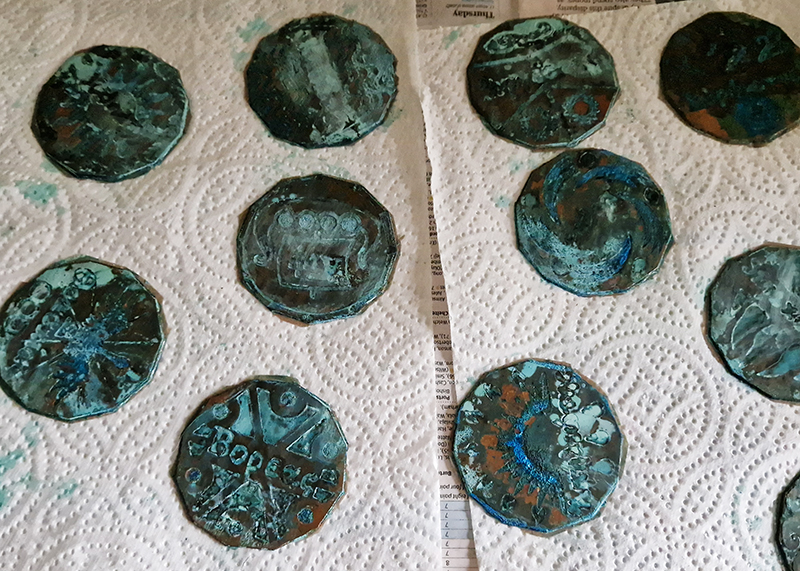
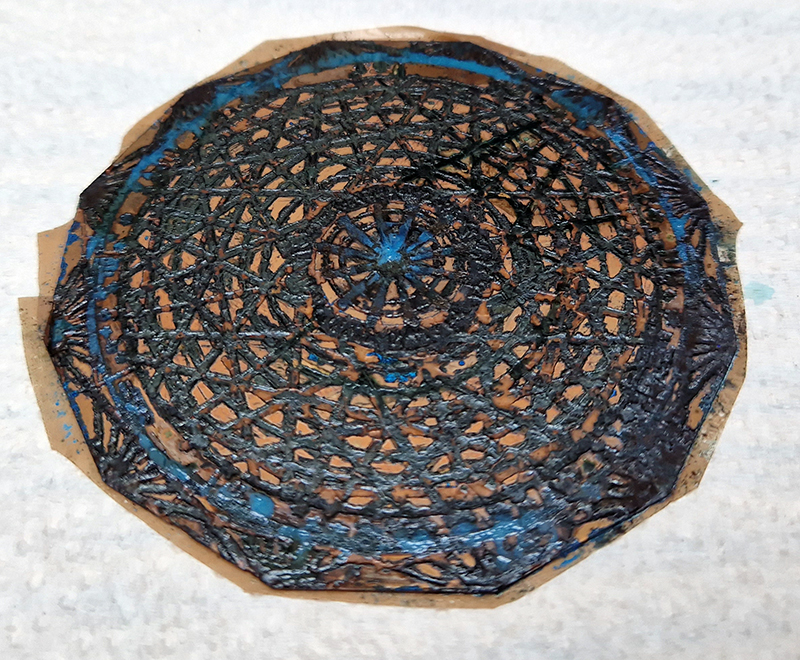
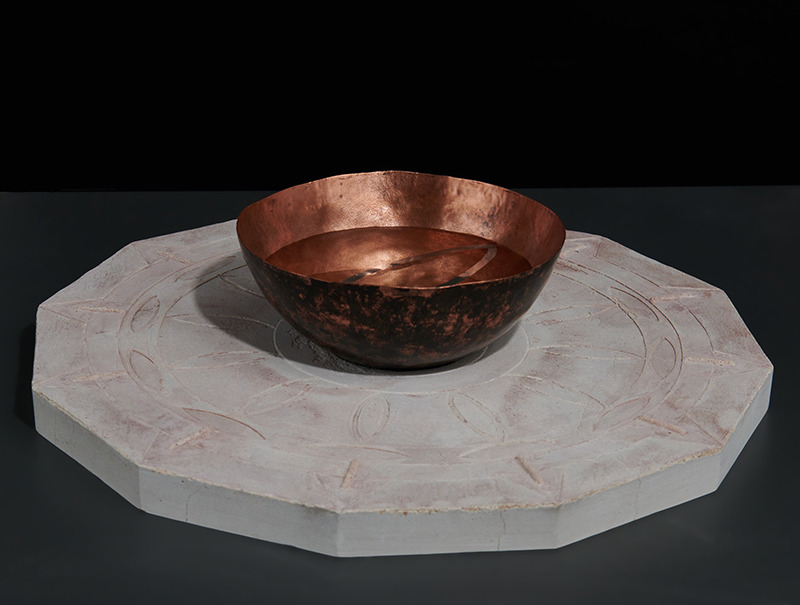
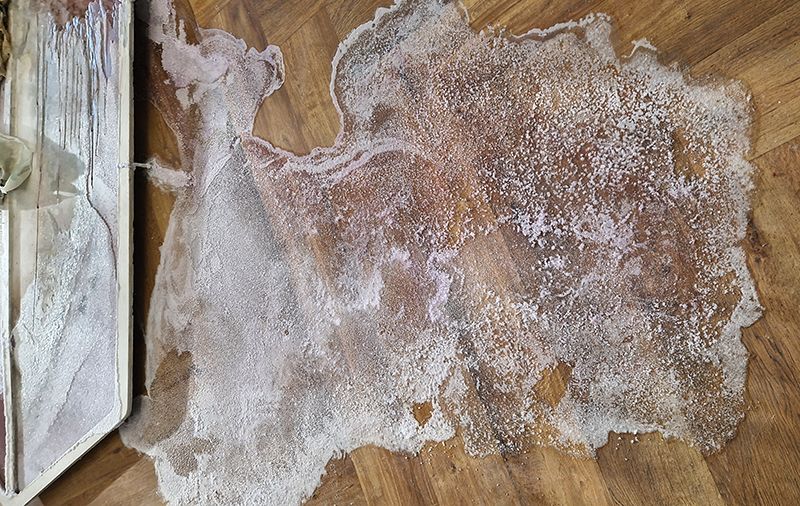
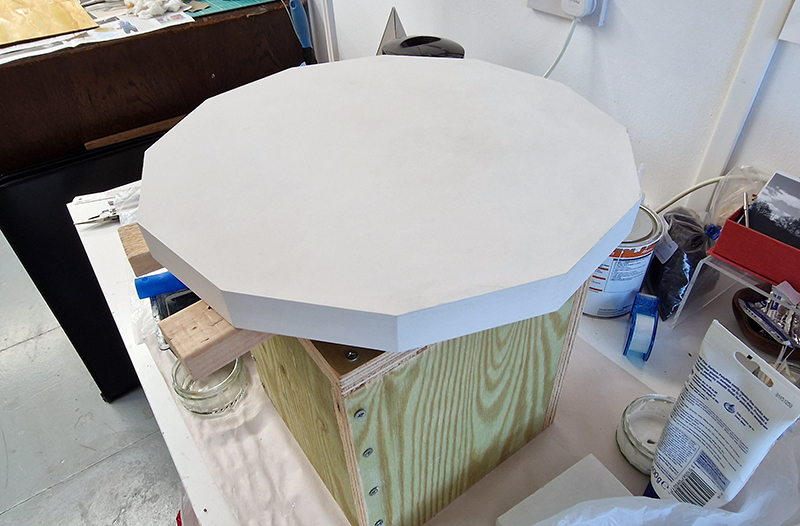
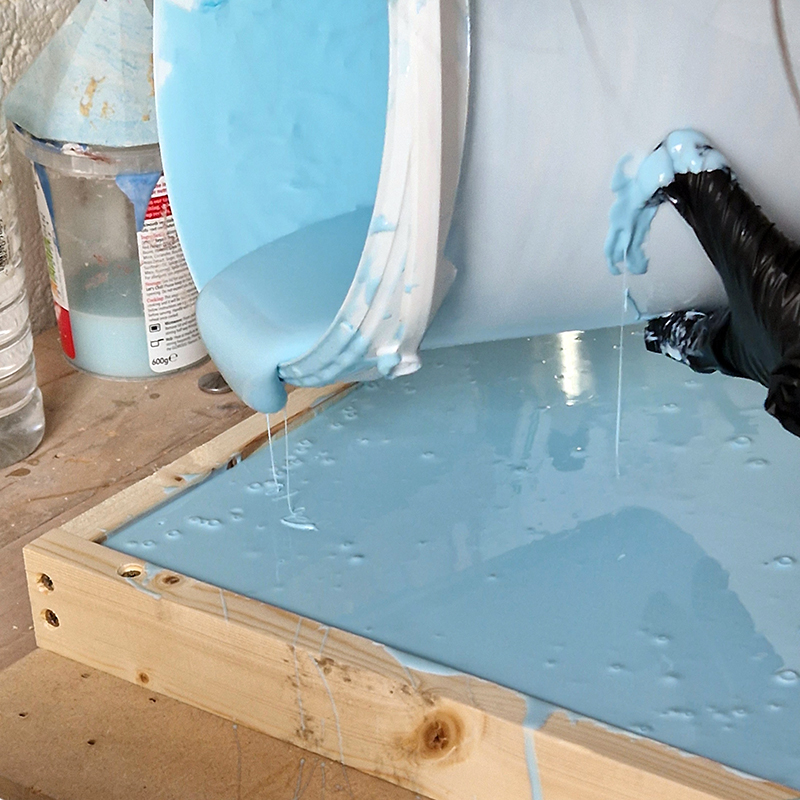
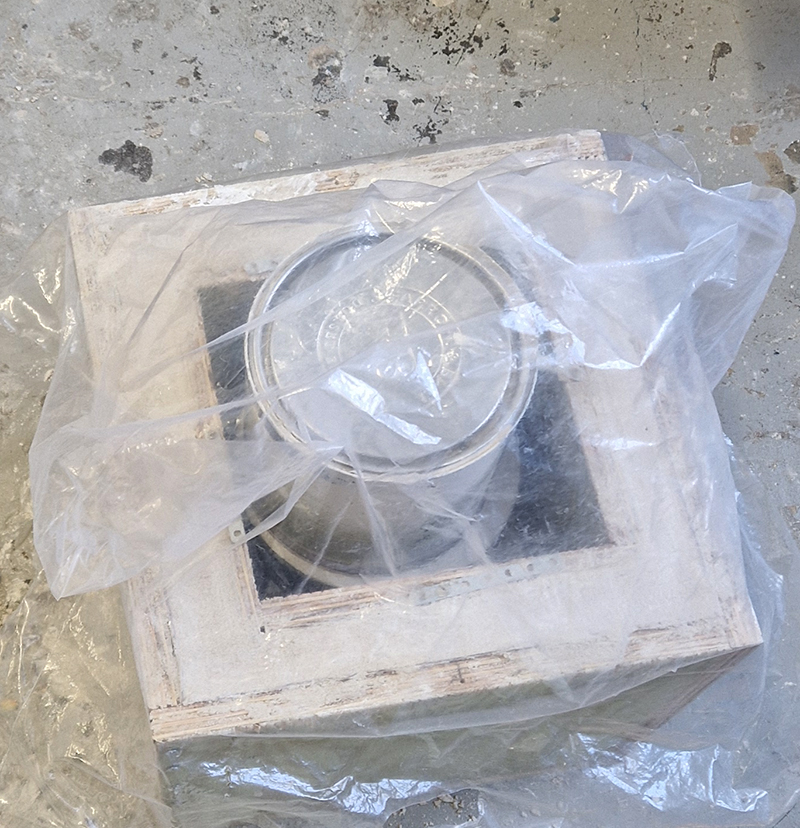
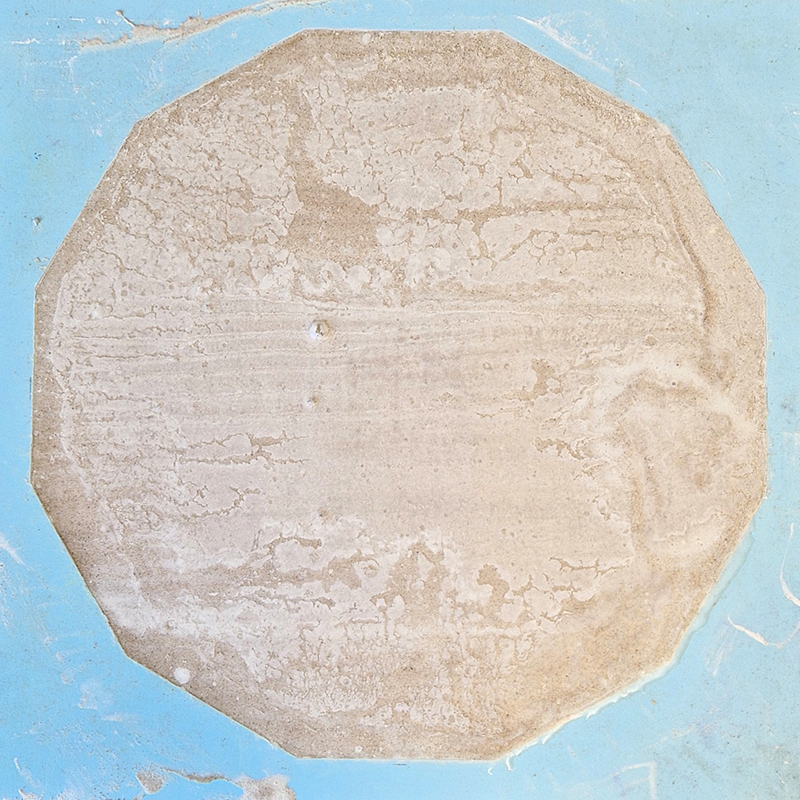
Instruments of the Anemoi are a set of dodecagon tablets cast in Snowcrete, a cement with no magnetic minerals, as is used for instrument pedestals at a magnetic observatory. They also respond to a twelve sided anemoscope “table of the winds” carved in marble around eighteen hundred years ago and held at the Vatican Museums. Releasing the cast from the mould and collagraph is a rewarding process – if all the pieces have held their position during the concrete pour and vibrating to release trapped air bubbles. Luckily this time was a success.

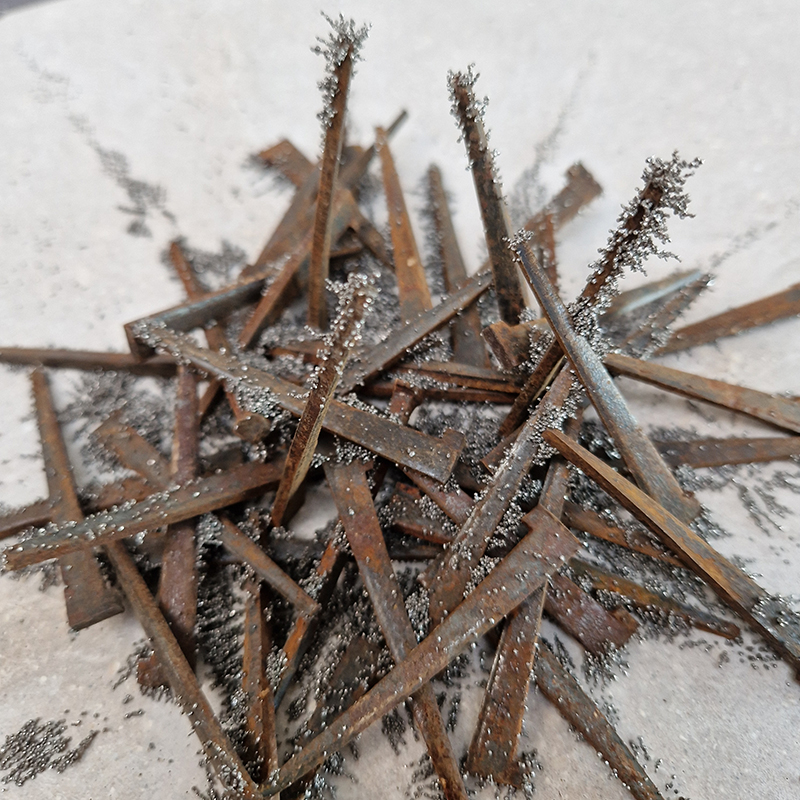
The other two sculptures in the series. A hand beaten copper bowl with a ‘silver fish’ floating in water based on the oval shaped compass needle illustrated in Breve Compendio de la Sphera de la arte Navegar by Martin Cortes 155. Wafer thin fish shaped iron leaves were also used by 11th century Chinese geomancers. Nails and iron filings reveal an embedded magnetic field and hark back to a legend on the discovery of the lodestone, a naturally magnetic mineral, which recalls a Greek shepherd who noticed the nails in his boots were attracted to the rock beneath his feet.

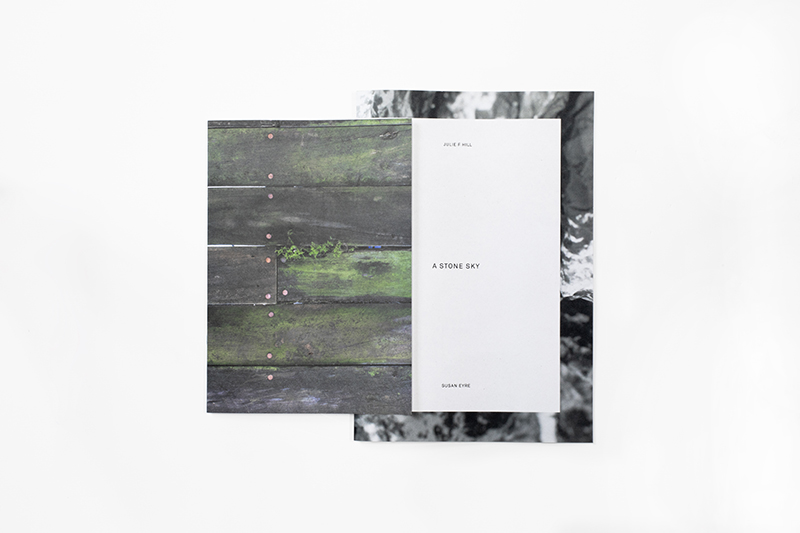
Unsettling to find it is already one year on since A Stone Sky duo exhibition with Julie F Hill opened at Thames-side Studios Gallery and this work was first shown.

Around 95% of the universe is ‘dark’ to us, formed of unknown and possibly unknowable matter which may be inaccessible to us, but cosmic rays offer a tangible contact with outer space.   

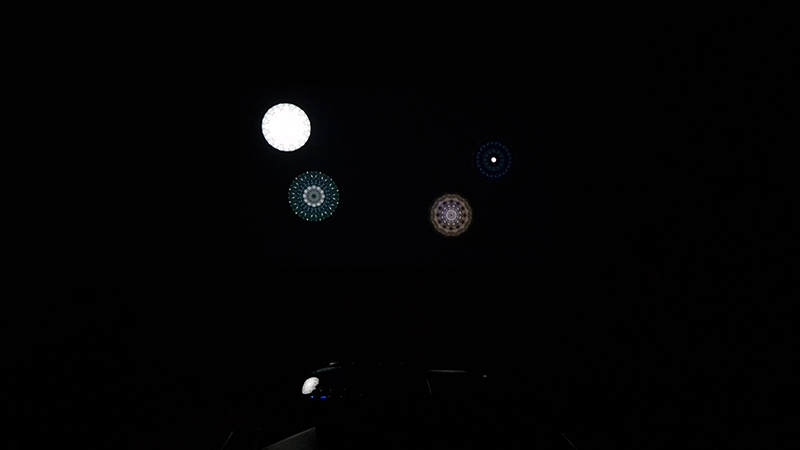
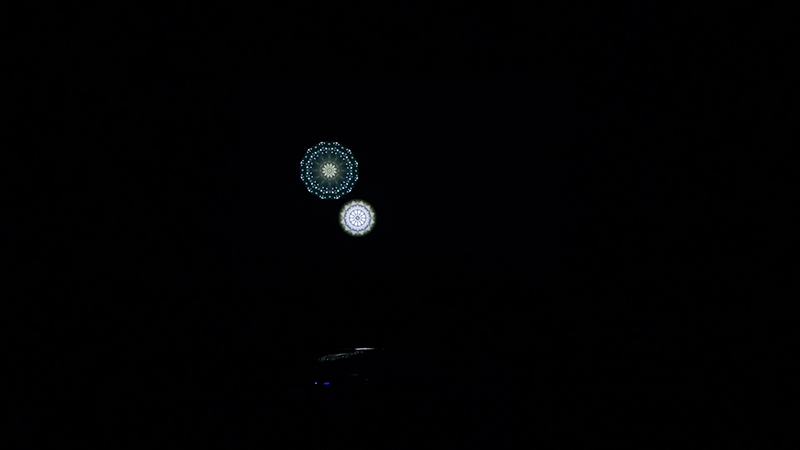
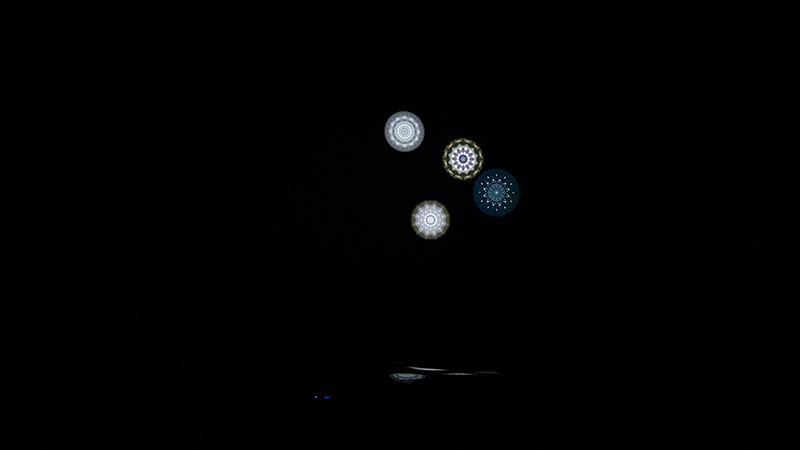
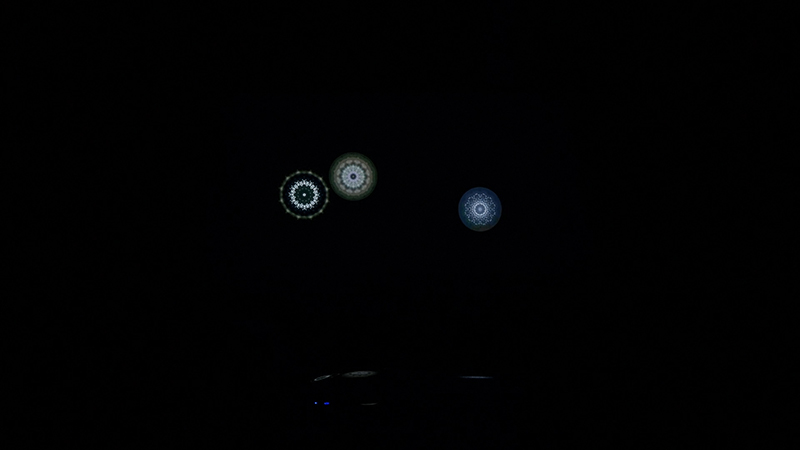
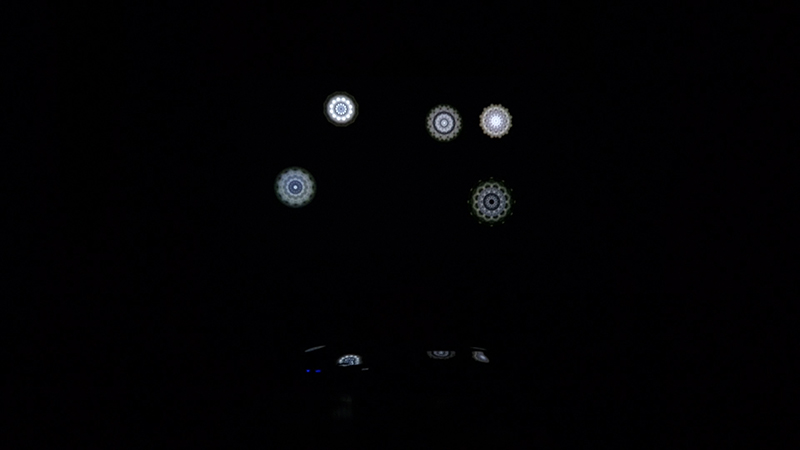
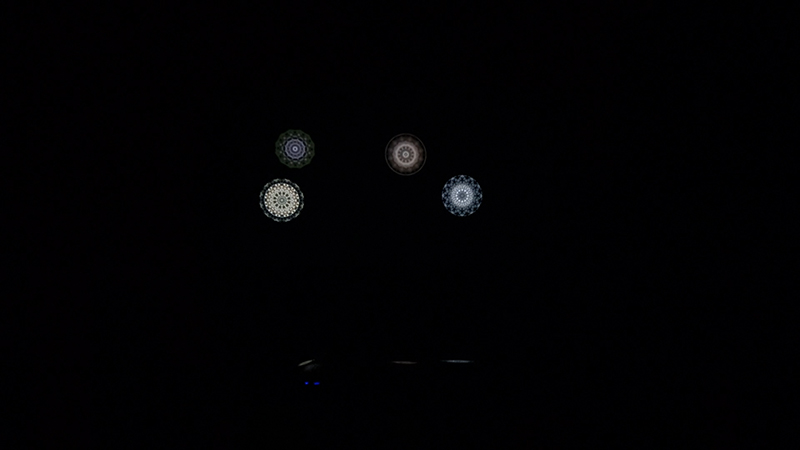
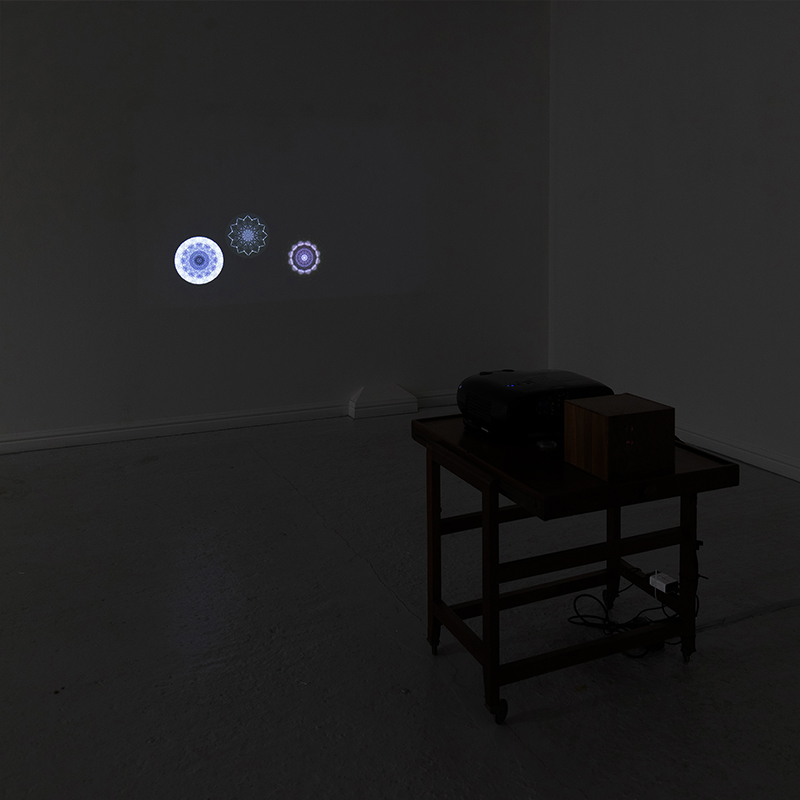
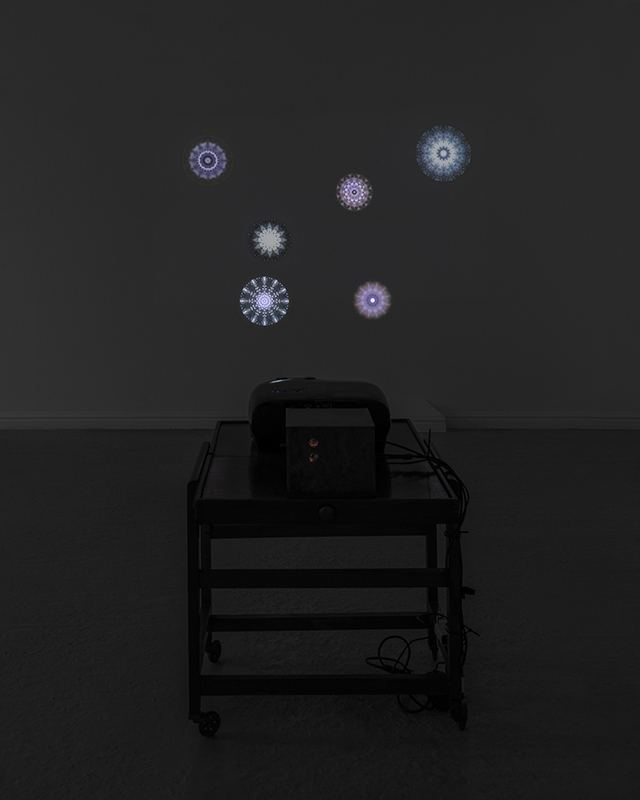
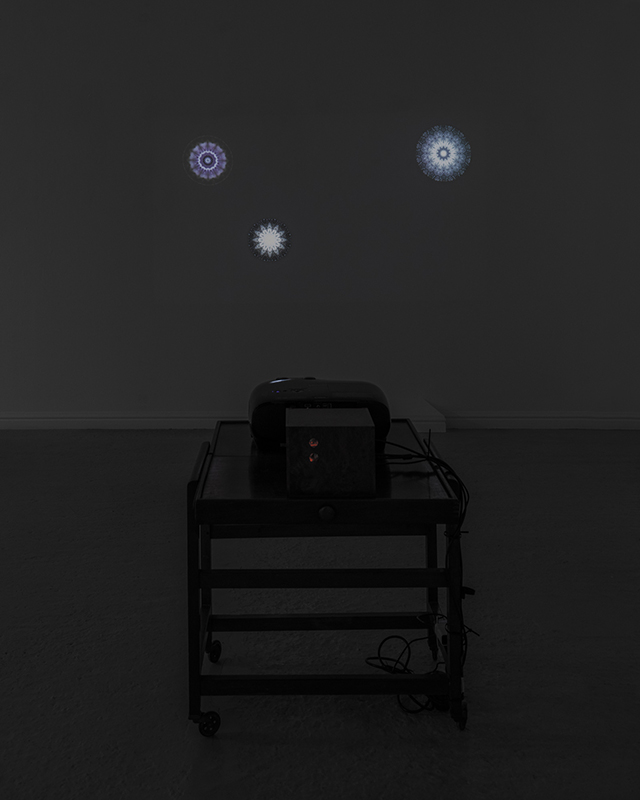
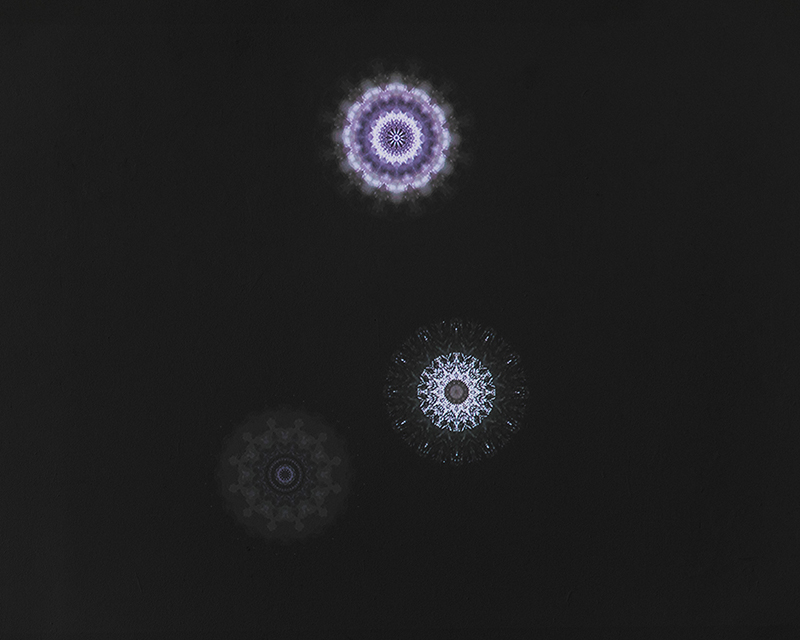
Giving The Breath of Stars a run to see if the cosmic rays are still there 😉 These images are stills of live action.

Cosmic ray detectors, mini computers, wooden box (20 x20 cm), video projection; live duration.

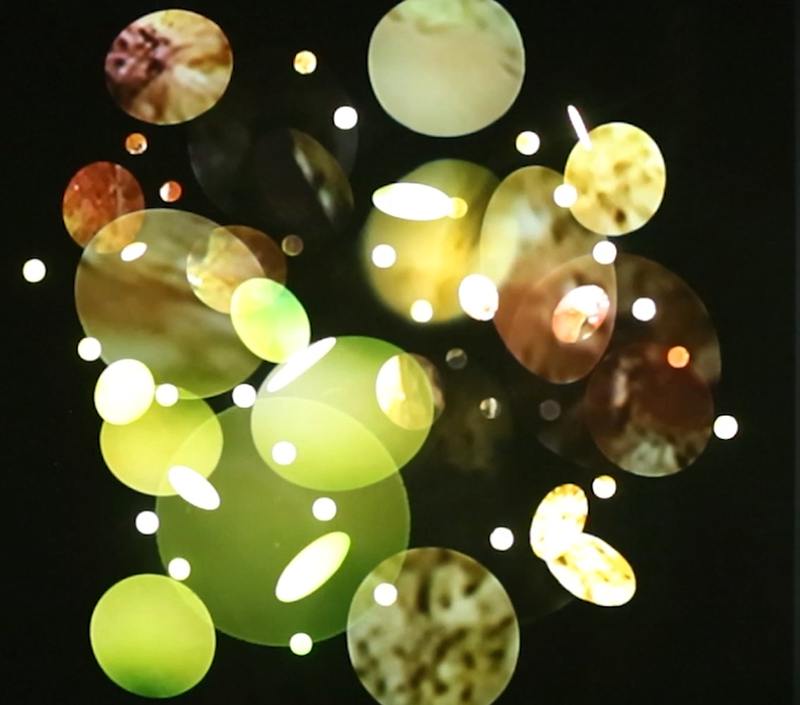
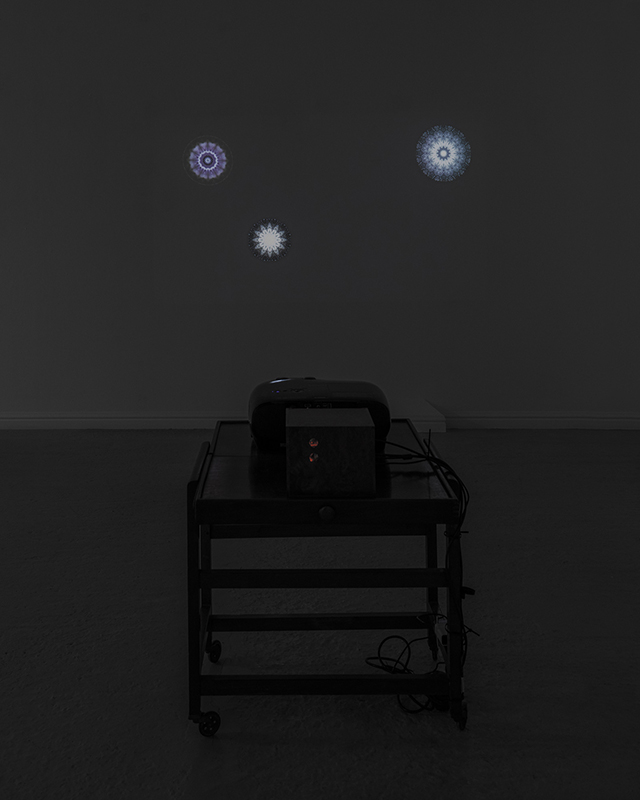
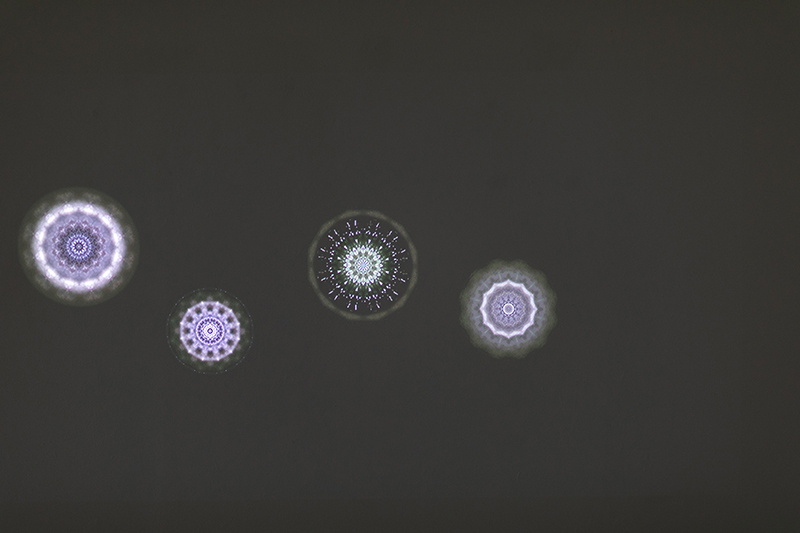
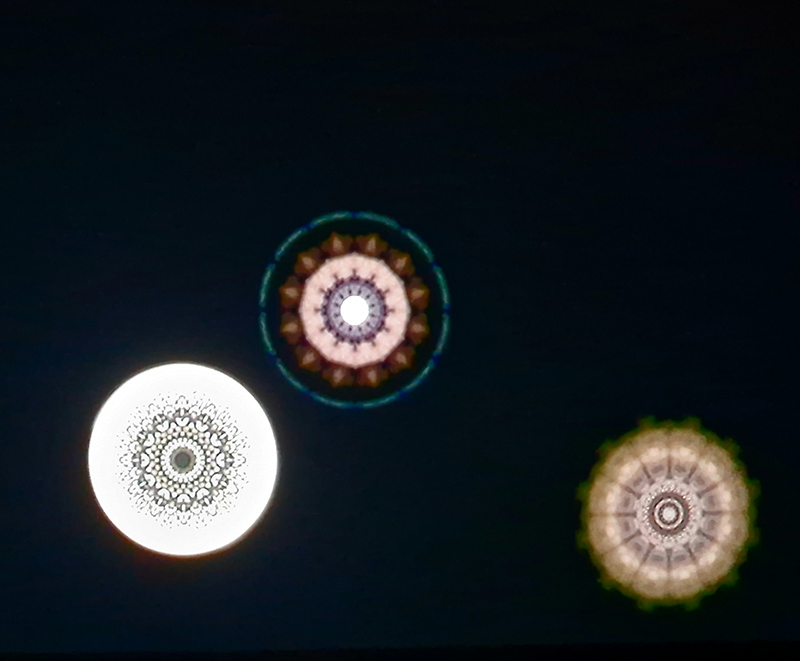
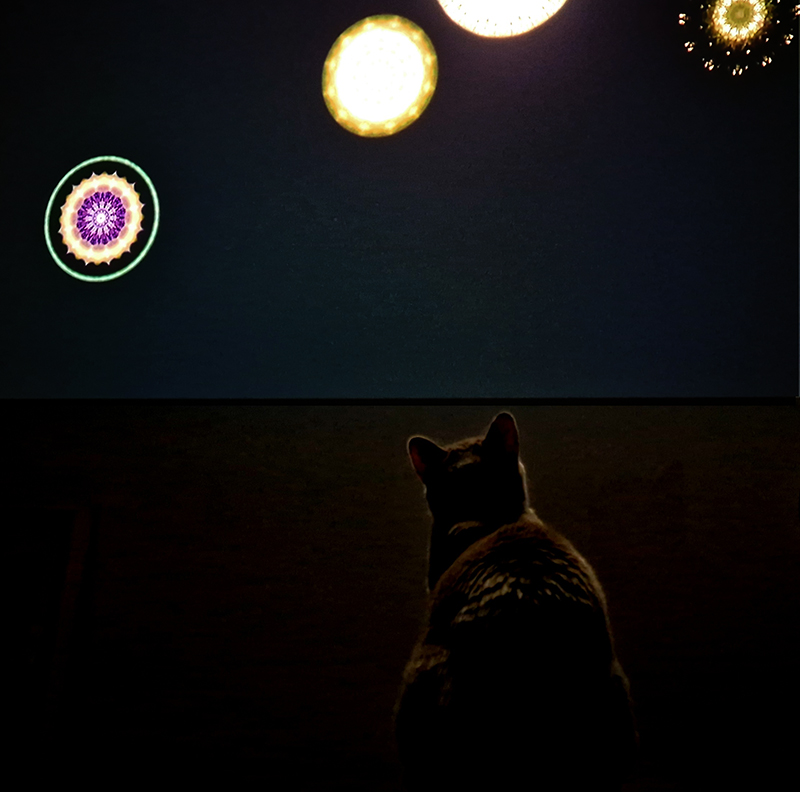
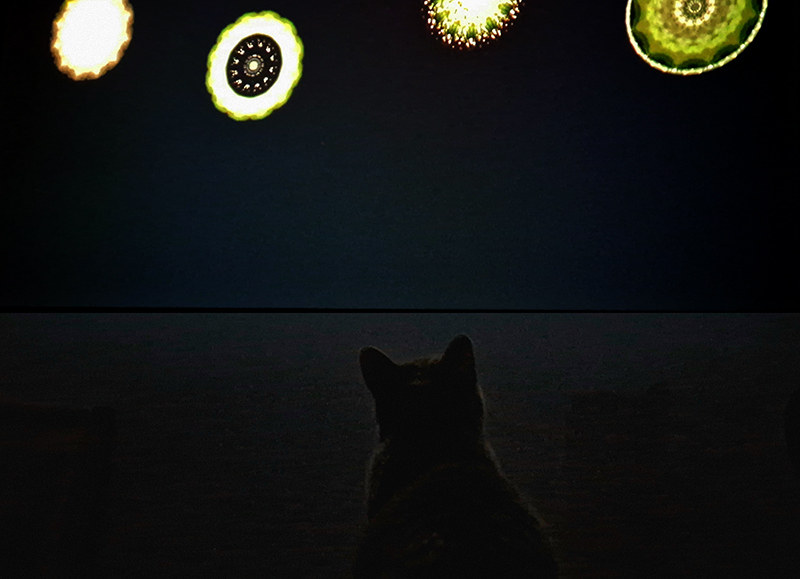
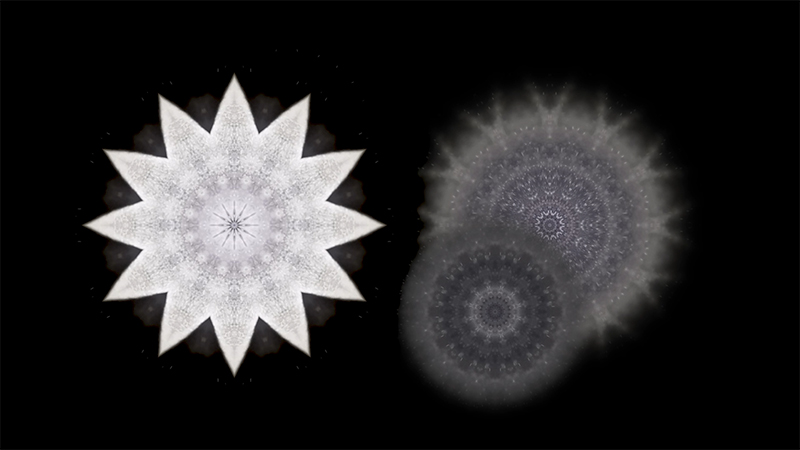
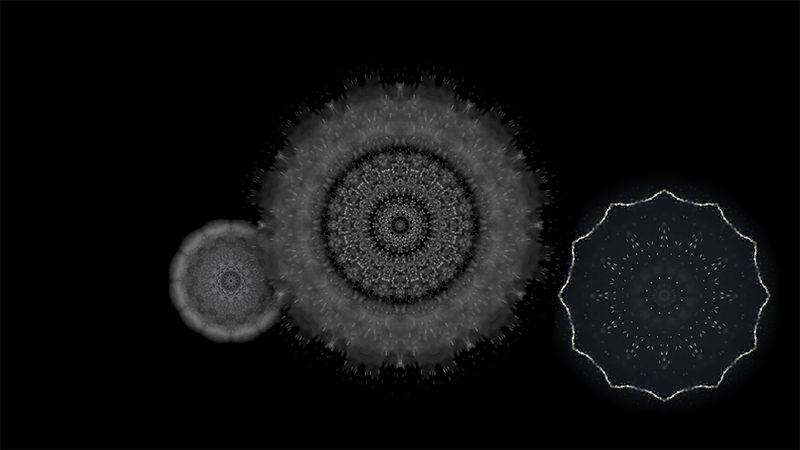
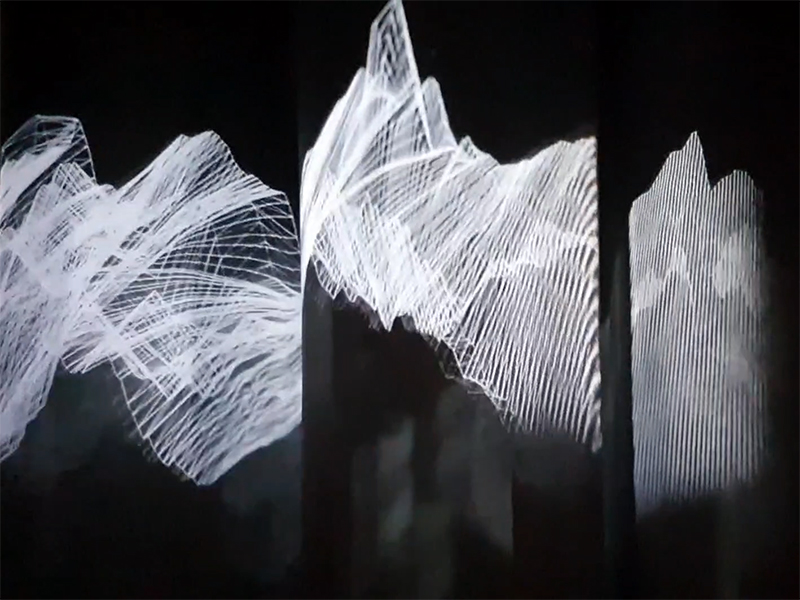
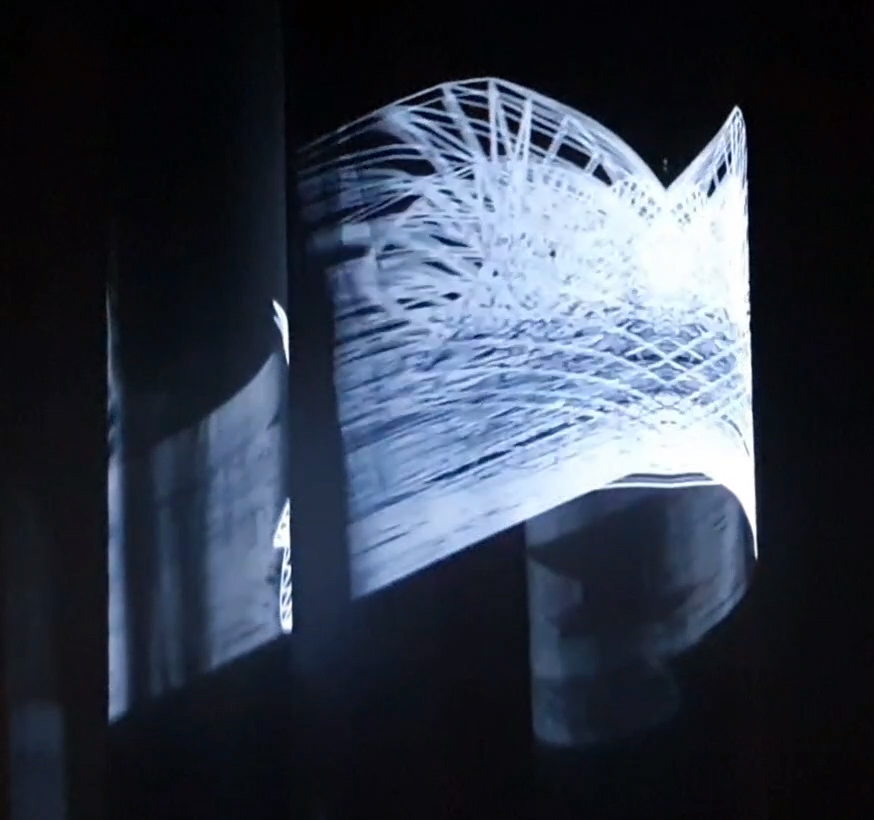
The Breath of Stars is a digital video work activated in real time by cosmic rays. These high energy particles arrive from outer space, interacting with life and technology on Earth. Coming from the heart of exploding stars or the depths of black holes, cosmic rays power across the universe with unimaginable energy. Some may come from phenomena yet to be discovered or even from other dimensions. A kaleidoscopic animation is projected every time a cosmic ray is recorded passing through the detectors. The animations are created from footage of cosmic ray trails filmed in my cloud chamber.

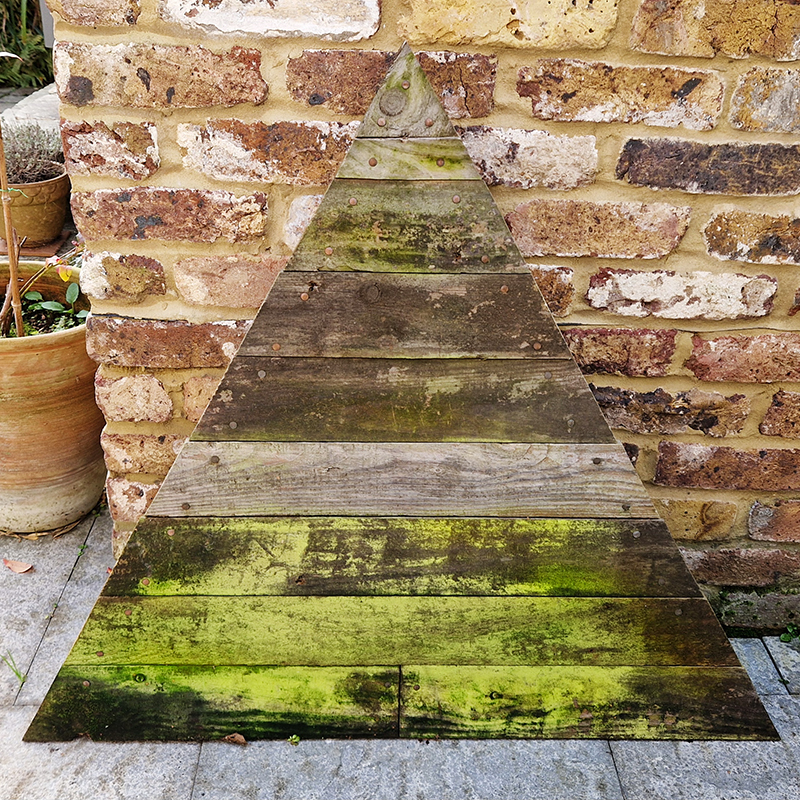
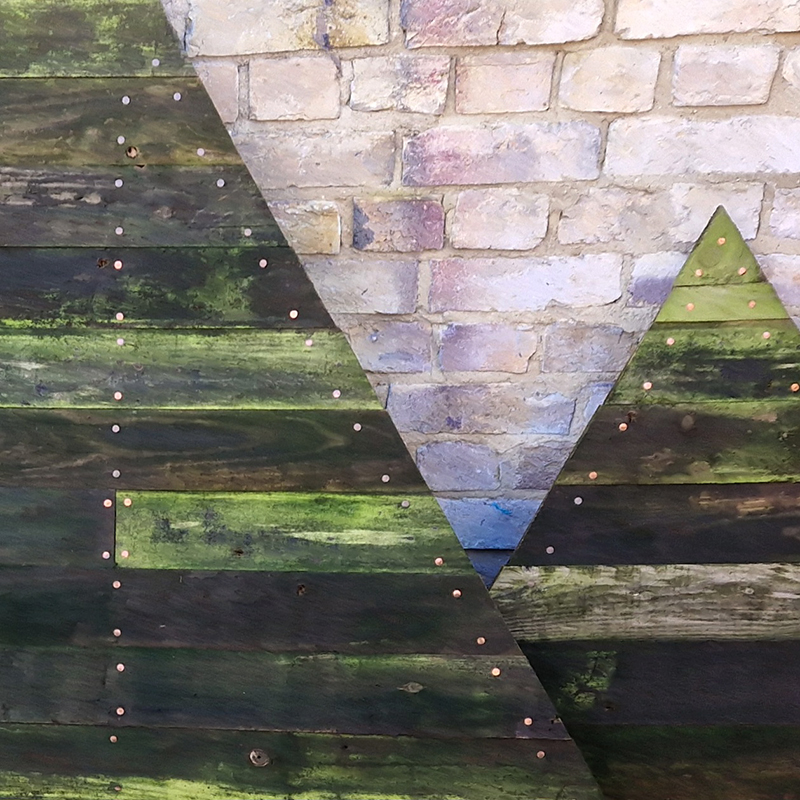
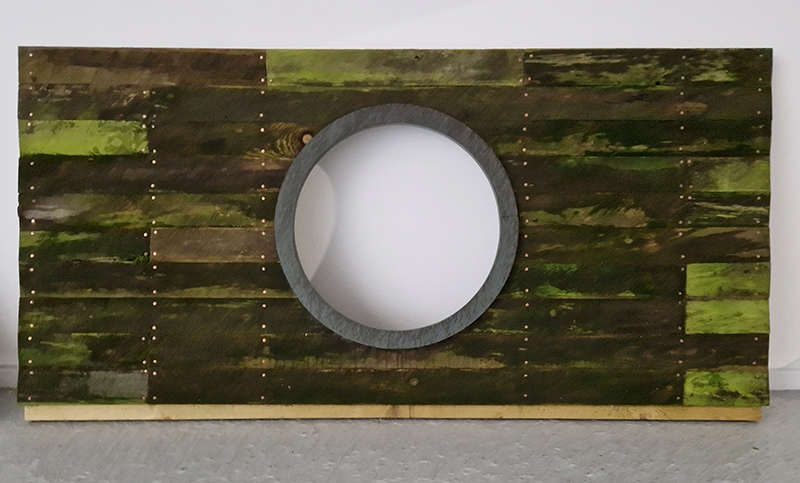
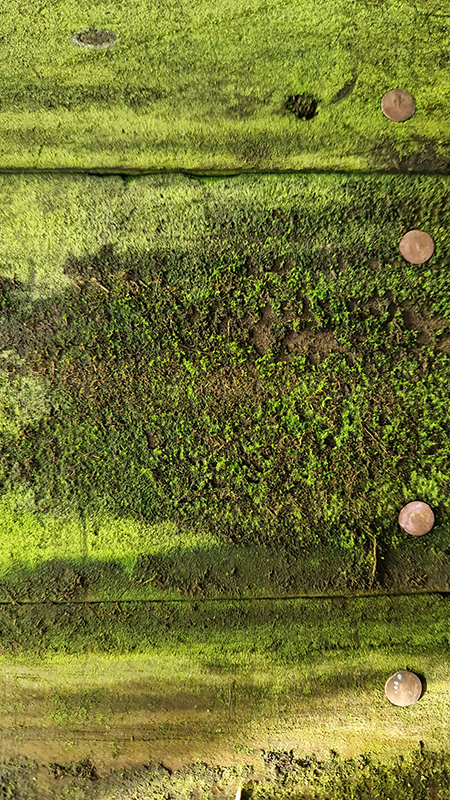
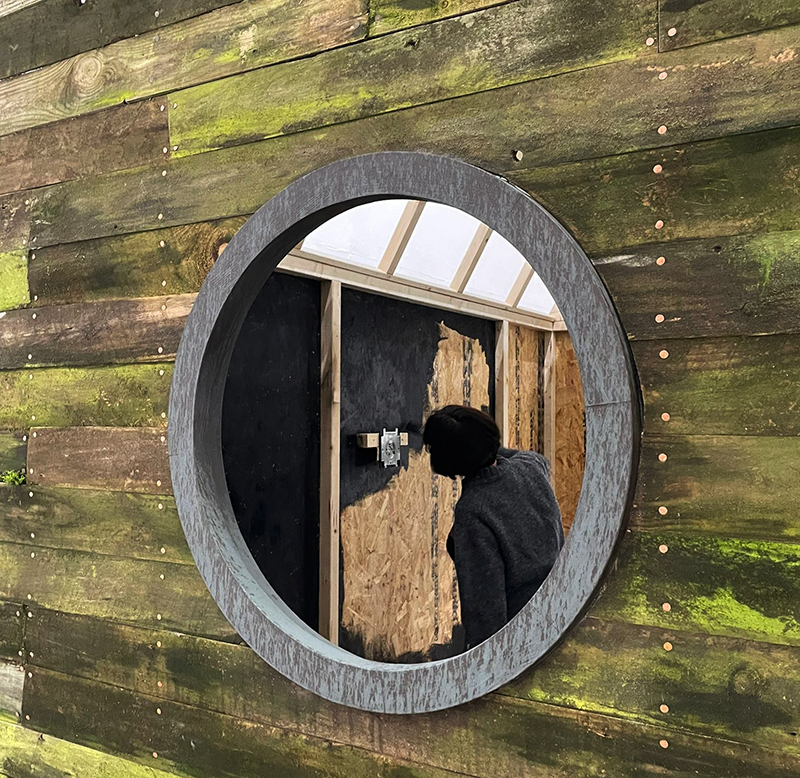
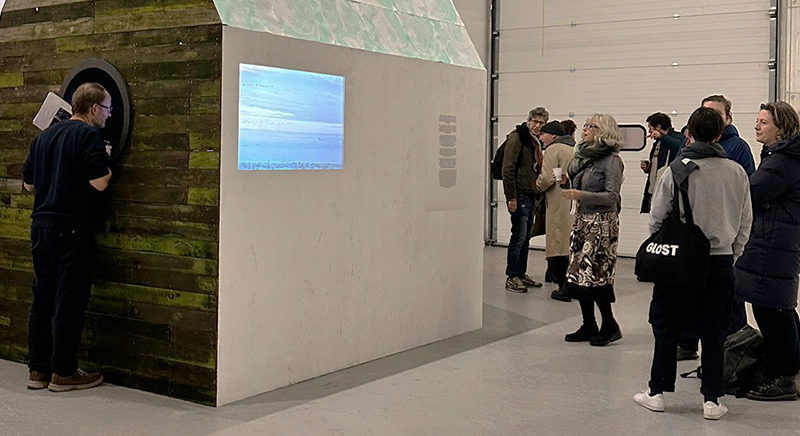
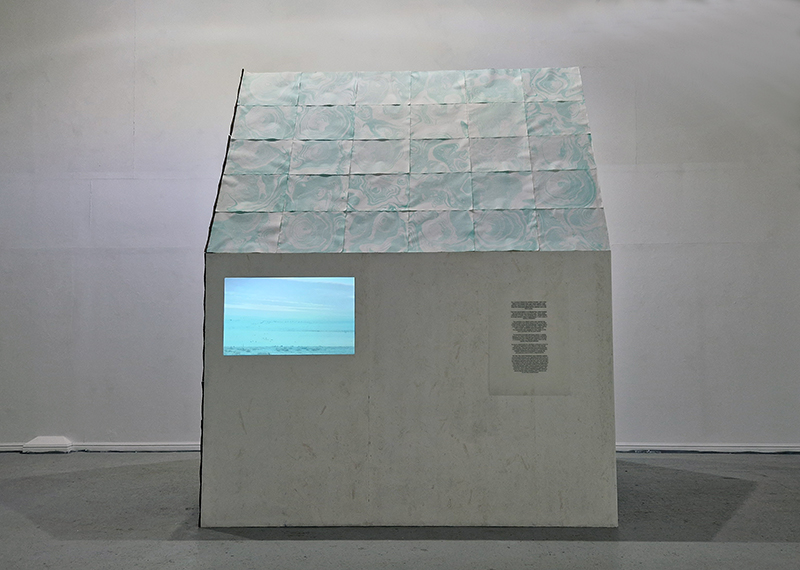
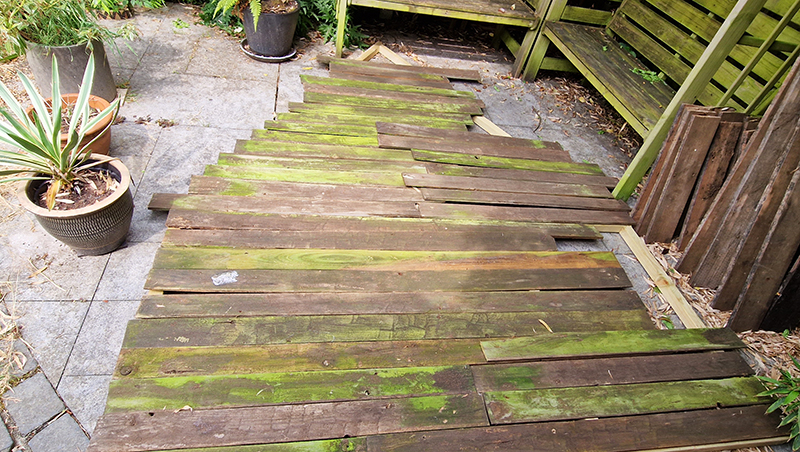
This cold damp weather is stimulating the moss regrowth on the apex pinnacle of The Absolute Hut (of action potential) that found a space in my garden after The Stone Sky exhibition this time last year. I had spent weeks preparing the recycled fence boards to make the North facing wall of the hut, painting them with various mixtures of buttermilk and yogurt blended with moss and was so excited when it began to grow. During the exhibition I would mist it every day. The beginning of my fascination with huts!

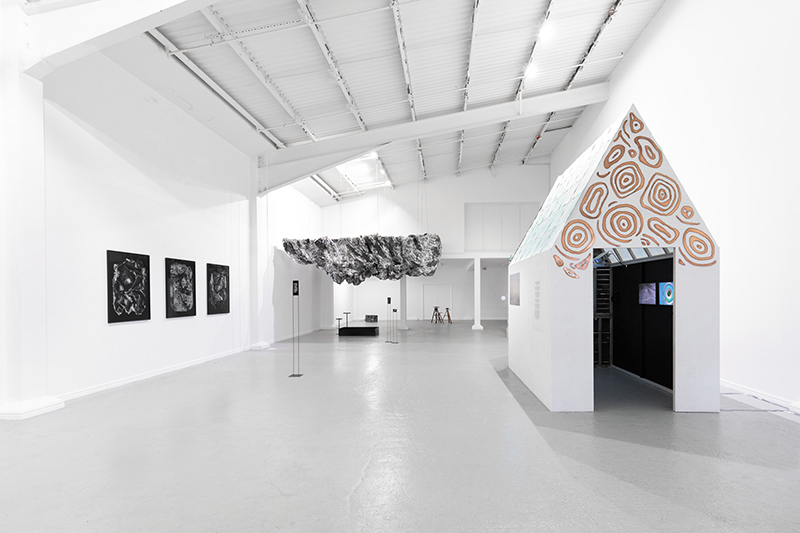
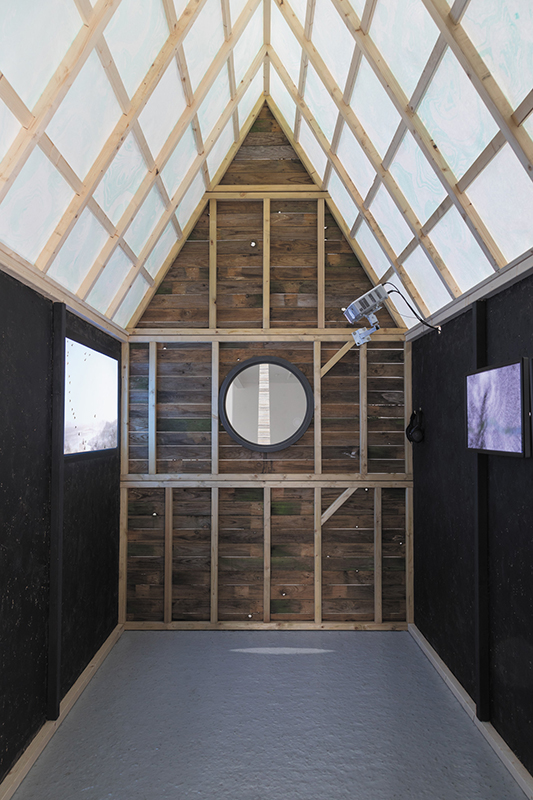
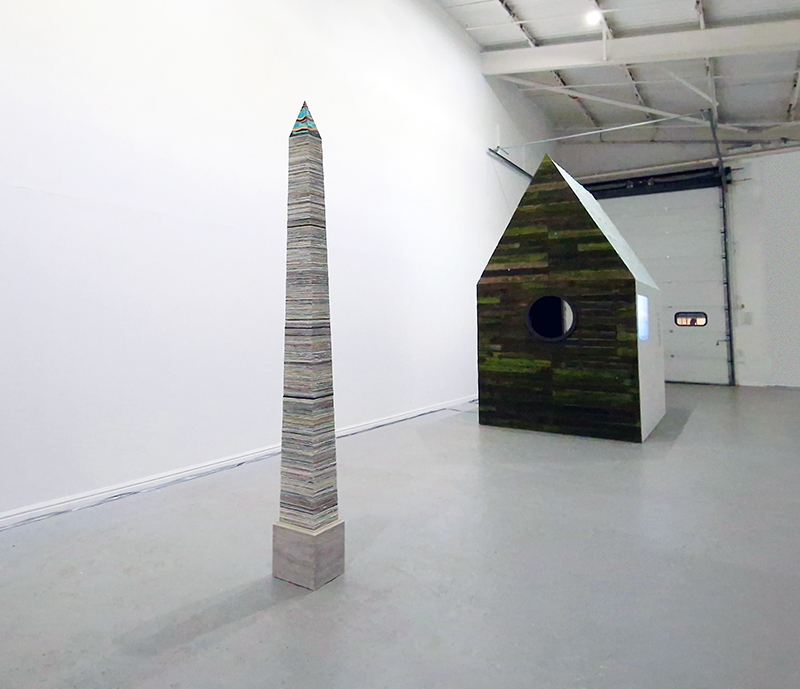
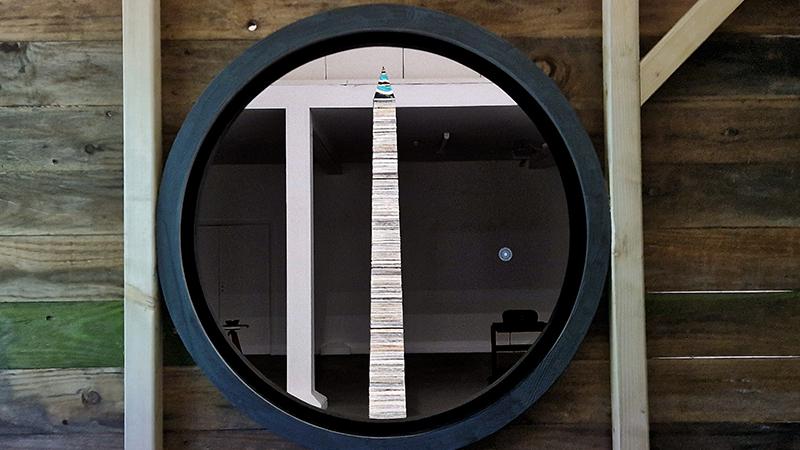
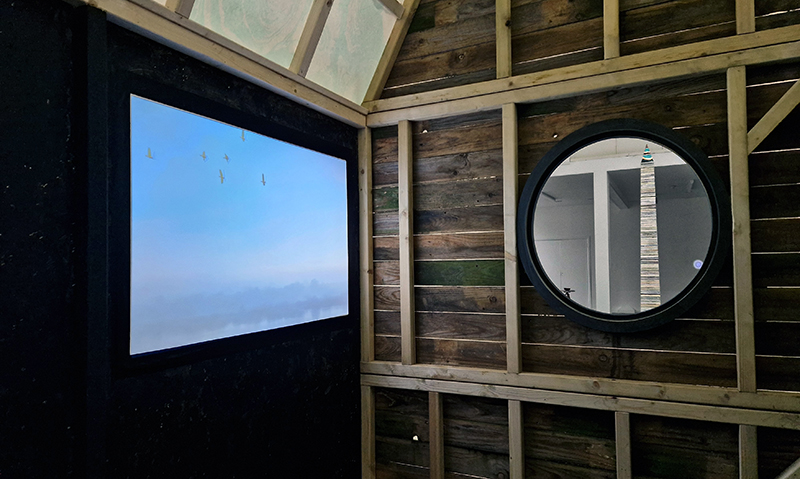
The Absolute Hut (of action potential) Wood, moss, paper, copper, video projection, video monitors ; 200 x 300 x 375 cm

Operating as a sensory hub where a range of actions and processes are running concurrently reflecting on the dynamics between the Earth’s geologic structure and navigation using the magnetic field. Neurons in the brain and nervous system send information electrochemically around the body. The signals they send are called action potentials, which is a temporary shift from negative to positive within the cell caused by certain ions entering the cell. Action potentials can be triggered by an interaction with the magnetic field, causing a reaction in the body.

Interference 2023 (video still)

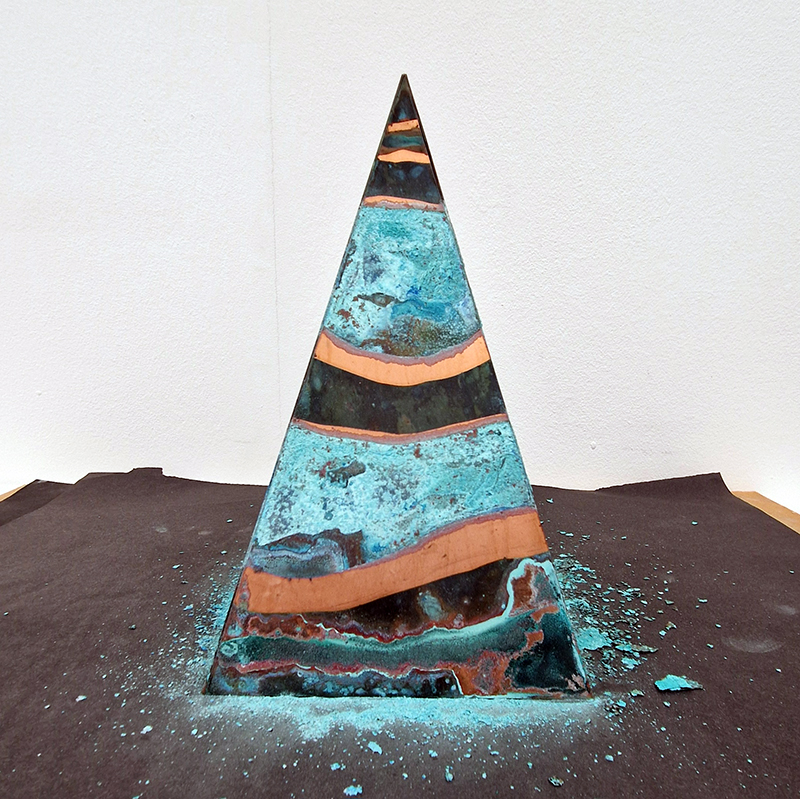
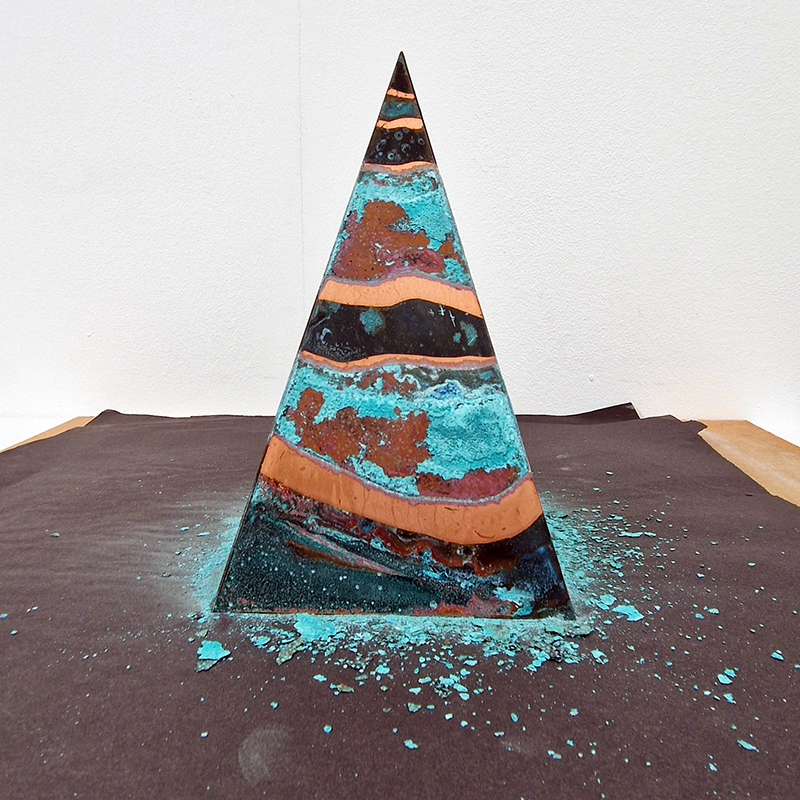
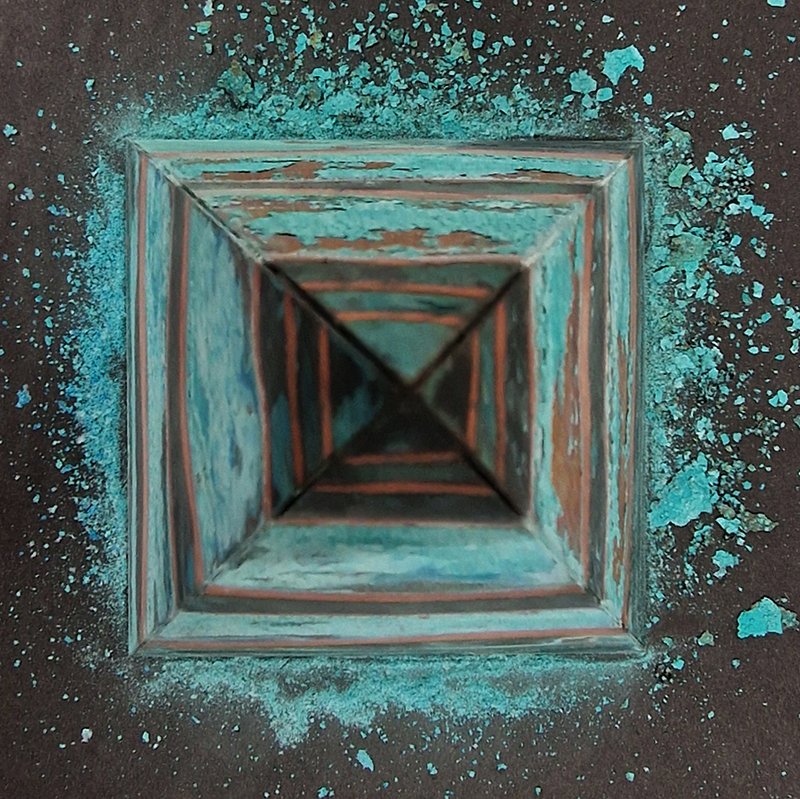
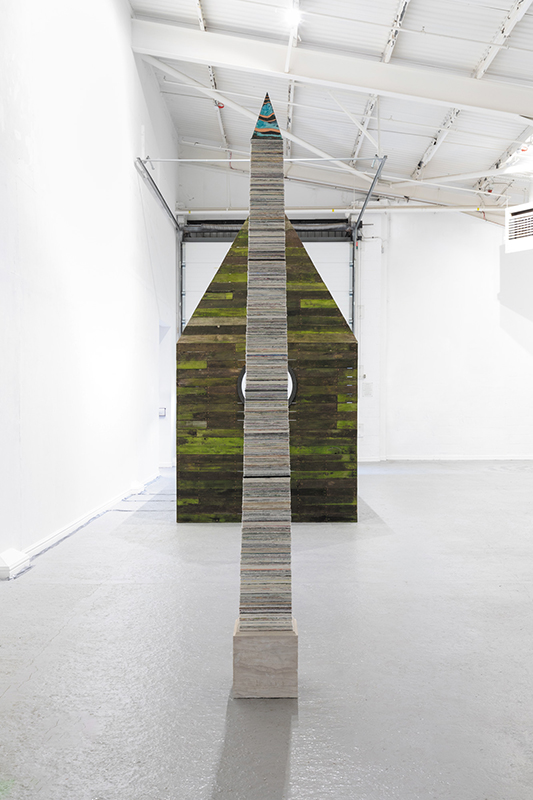
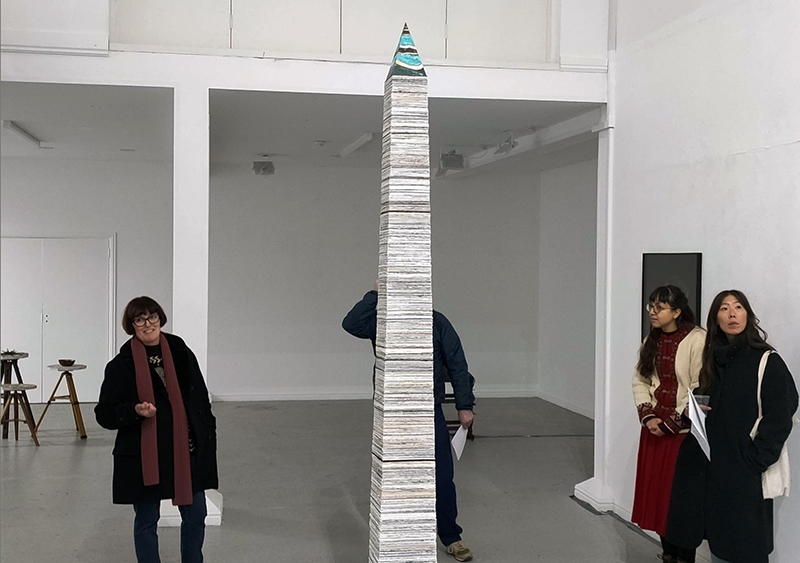
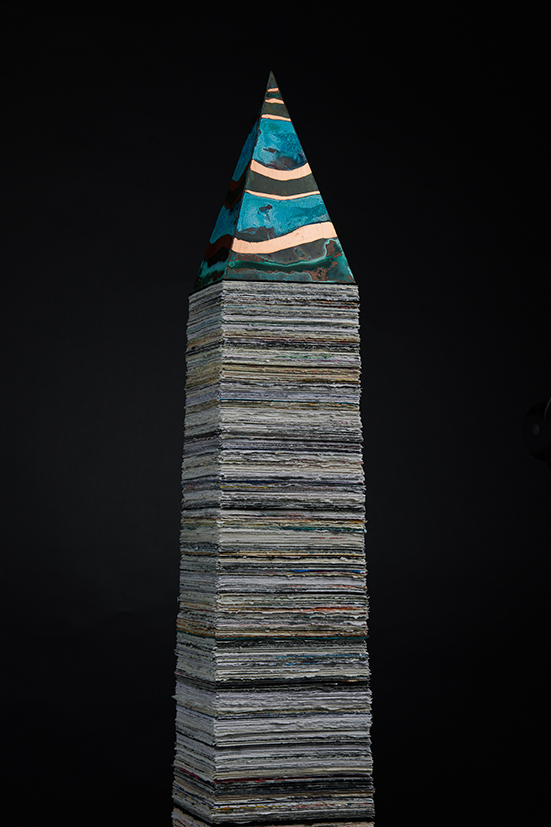
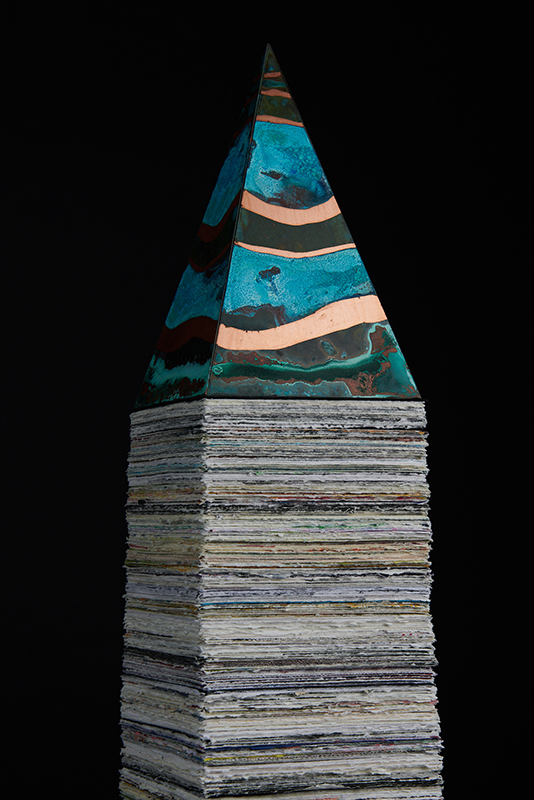
A year on and the pyramidion that sits on top of The Azimuth Obelisk (of sedimentary knowledge) is evolving. The patination, which involved a variety of chemicals being applied to the copper in layers, is an ongoing process.

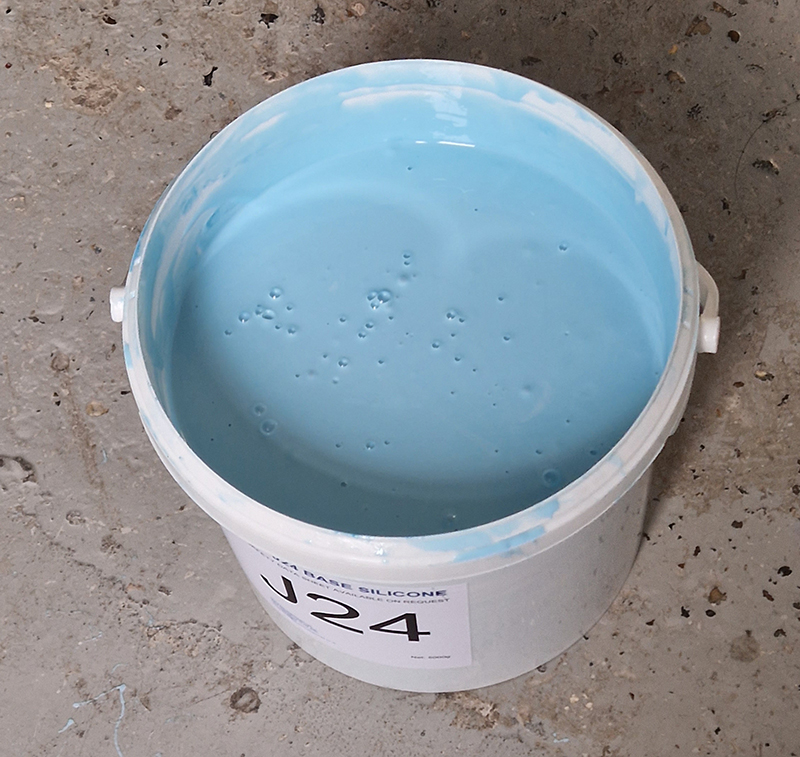
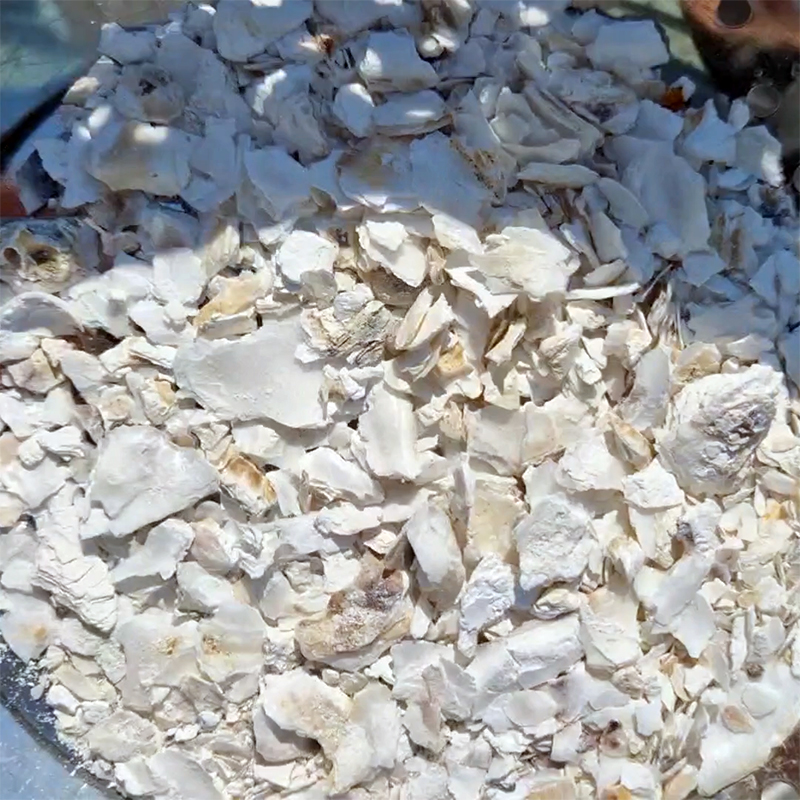
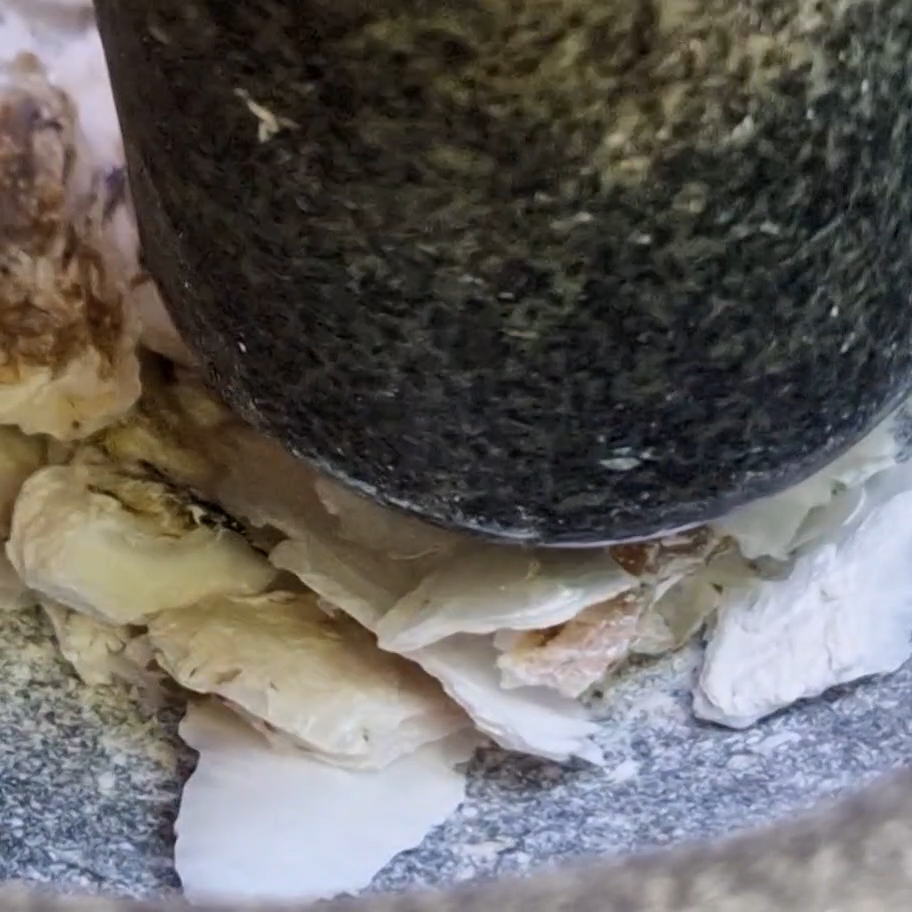
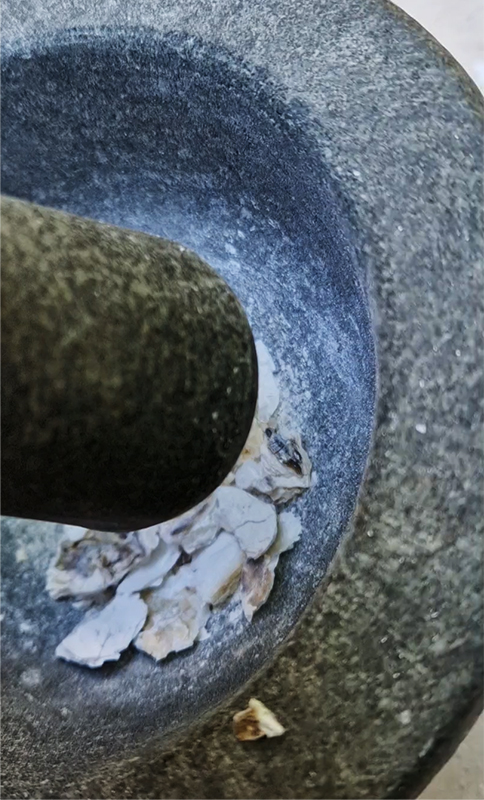
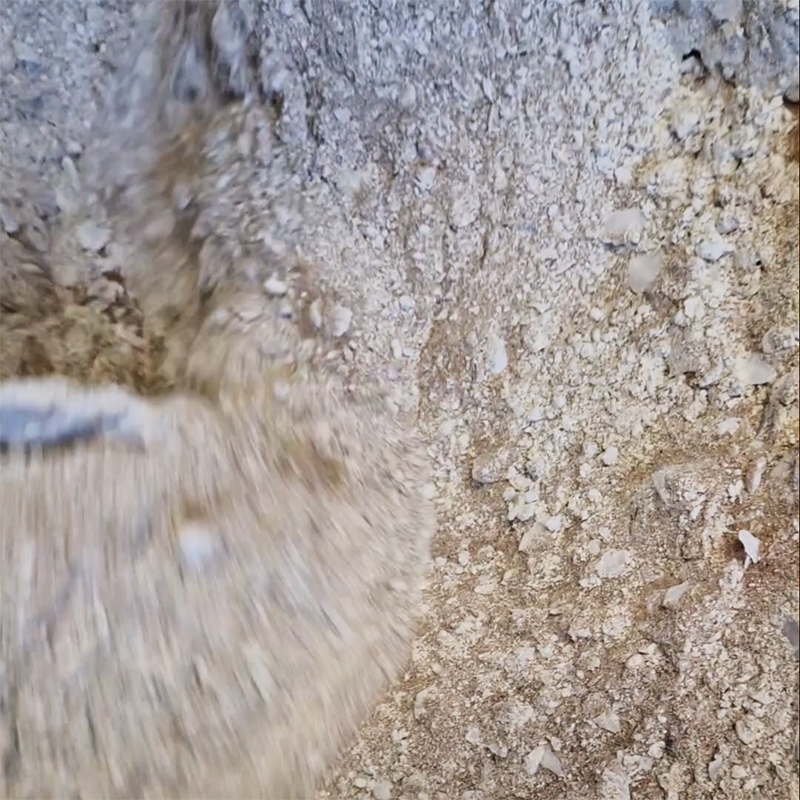
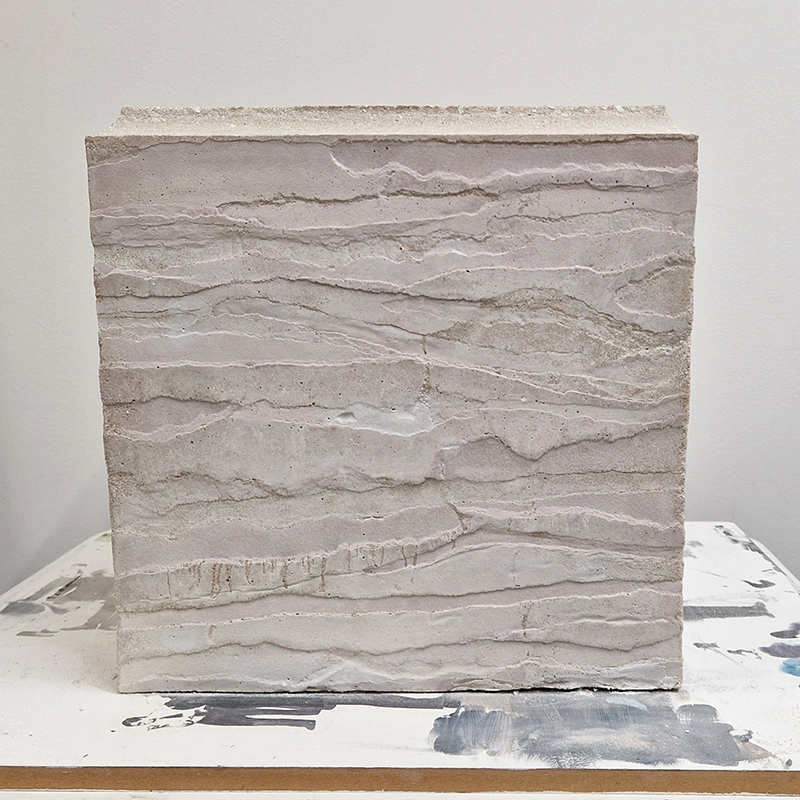
Sedimentary rock holds a geological history of the Earth’s magnetic field within its mineral components. The geomagnetic field, generated by the Earth’s molten core, varies through time; the magnetic poles migrate, go on excursions, or reverse polarity. During these periods of flux, the strength of the magnetic field changes, and this phenomenon is recorded in archaeological artefacts, volcanic rocks, and sediments. Limestone, a sedimentary rock, is often formed from crushed seashells, compressed over aeons. Crushed oyster shells were added to the obelisk base cast in Snowcrete.

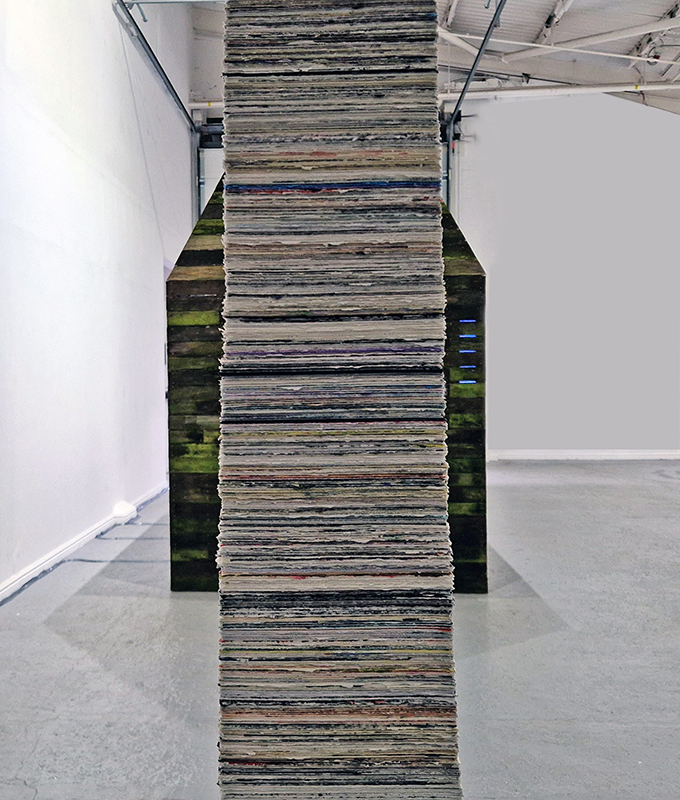
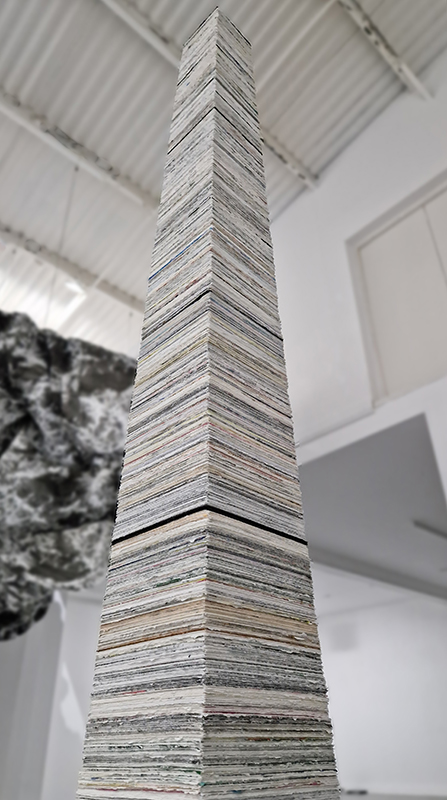
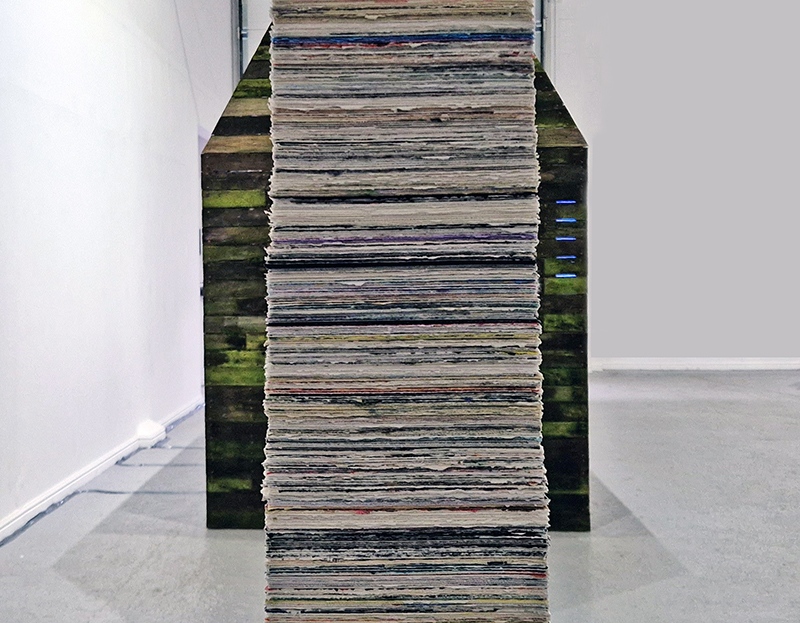
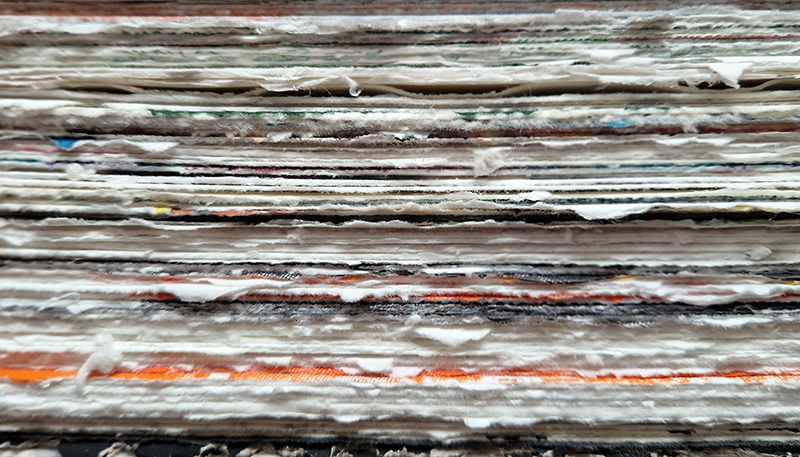
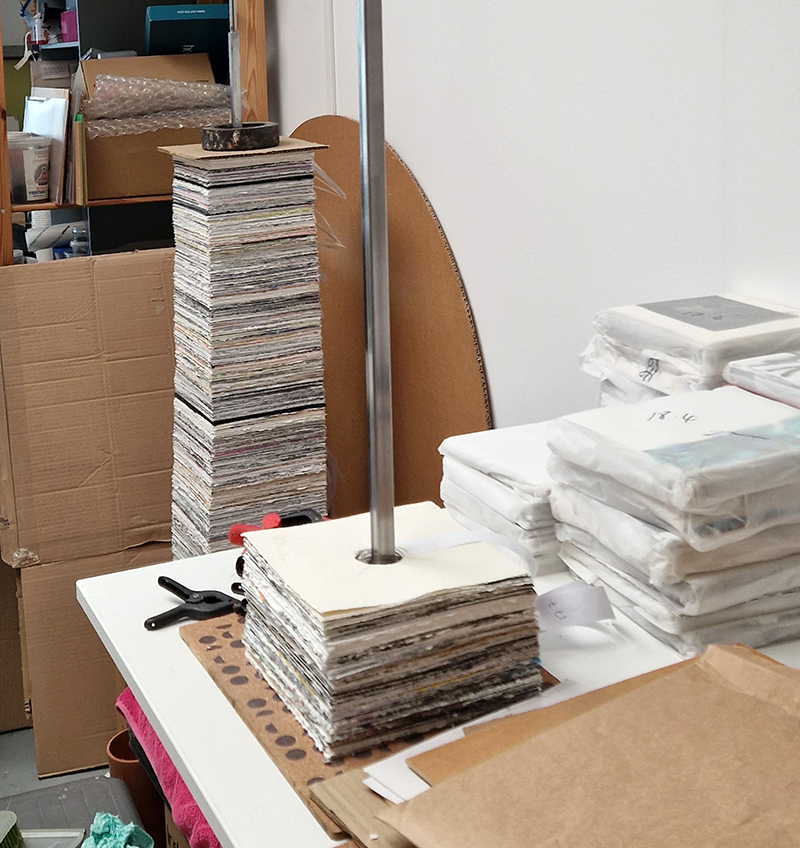
This sculpture also embodies the passage of time, and a layering of information, in the months of collecting paper donations or scavenging the recycling bins, weeks tearing down the hundreds of prints and drawings into squares decreasing by 1mm every 50 sheets, drilling holes through the centre and hours to build the almost 3m stack. I’m very grateful to everyone who donated some of their work archive. These images are now secreted within the layers of the sculpture, hinted at where edges are exposed, echoing the Earth’s sedimentary knowledge.

The Azimuth Obelisk (of sedimentary knowledge) Paper, steel, Snowcrete, oyster shells, patinated copper; 30 x 30 x 270 cm

 This work is a reimagining of an ‘obelisk’ erected at Hartland Magnetic Observatory in the late 1950’s to be viewed through the north facing window of The Absolute Hut, it acts as a permanent azimuth mark from which the drift of the magnetic north pole is monitored. I am excited that this sculpture is being considered for exhibition in 2026 at the Royal West of England Academy in Cosmos: The Art of Observing Space curated by Ione Parkin with some amazing artists in the line up whose work I admire.

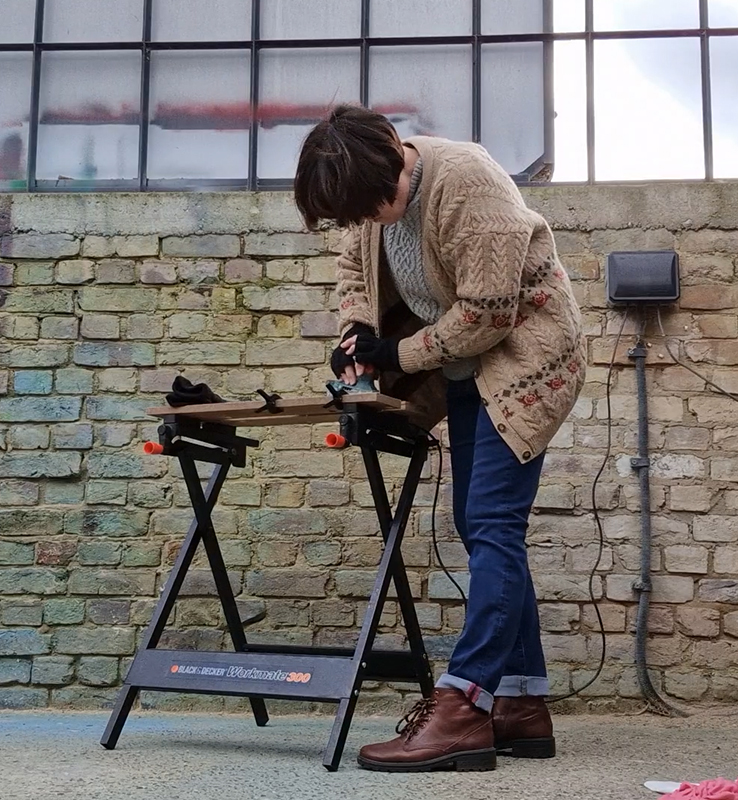
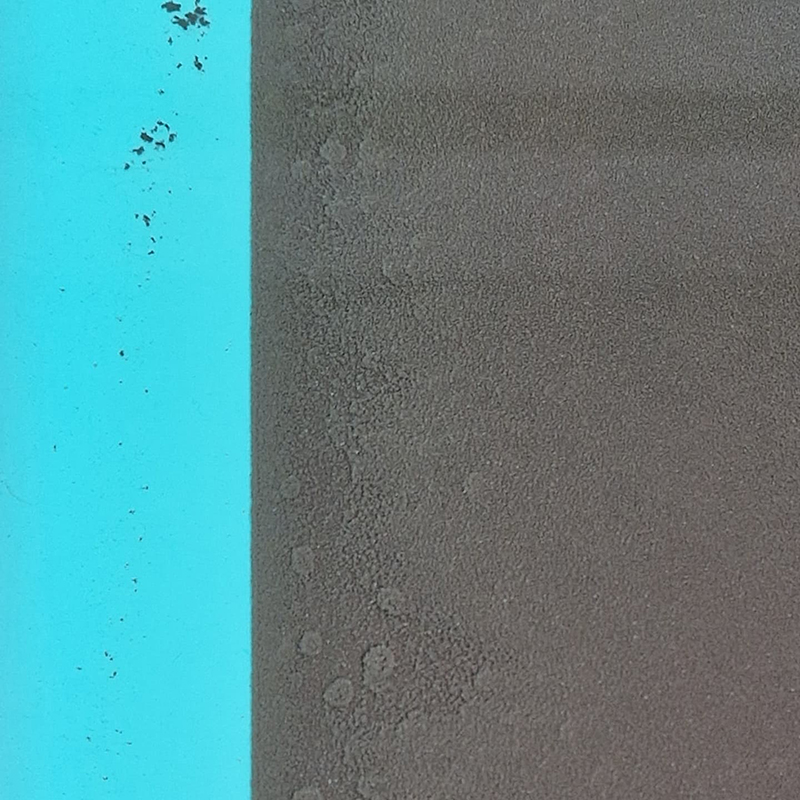
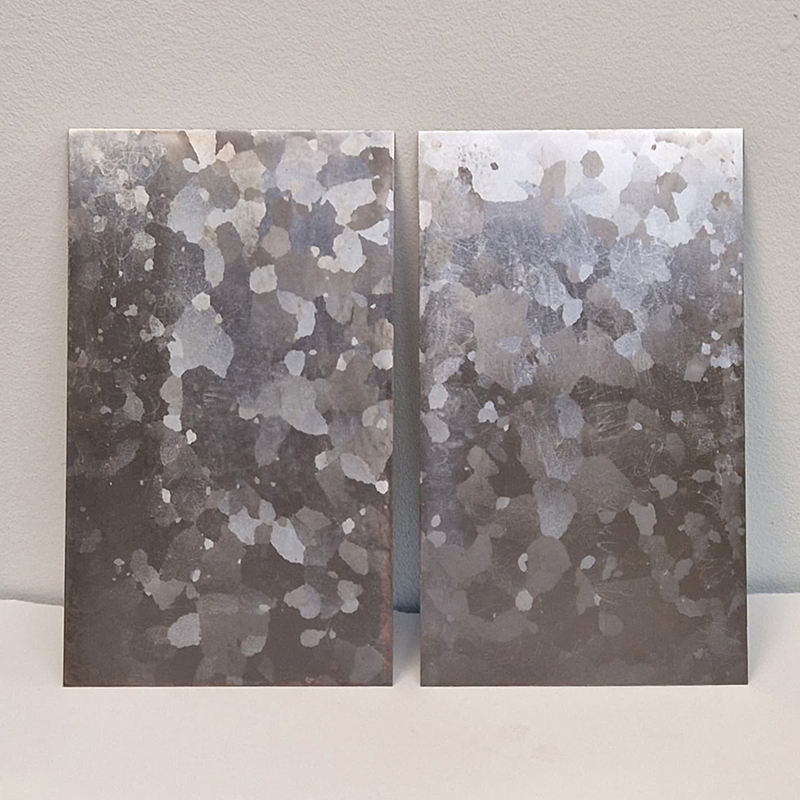
I first came across directional magnetic steel in the Electronic & Magnetic Materials Group open day at the National Physical Laboratory. Intrigued, I wanted to know if I could get hold of some to work with. I was put in touch with Union Steel Products who were very helpful in supplying a small amount (to them) of the material, but they import the product, and it arrives with an indeterminate protective matt grey coating. This was my challenge. It took many days of sanding and gently etching each sheet to reveal the pattern. It was a very temperamental material to work with, the pattern might appear but quickly tarnish and muddy over. So much of the work in the resulting sculpture was about the process of exposing an internal mechanism.

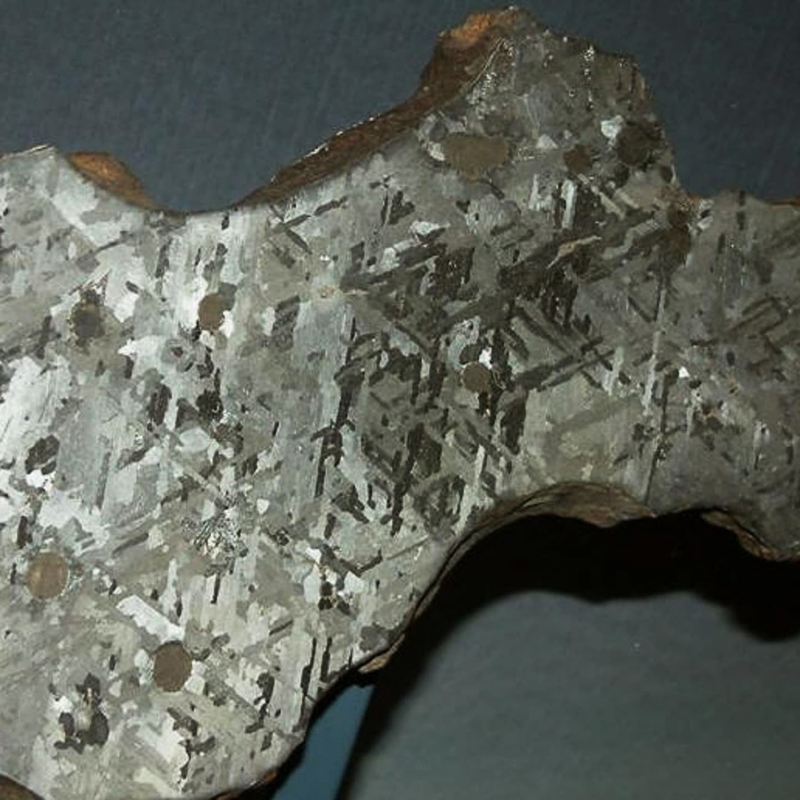
The dramatic Widmannstätten patterns found in meteorites due to their slow evolution through heat and pressure are also revealed through being cut, polished, and etched.

These secrets are not revealed lightly.

Domain of the Devil Valley Master

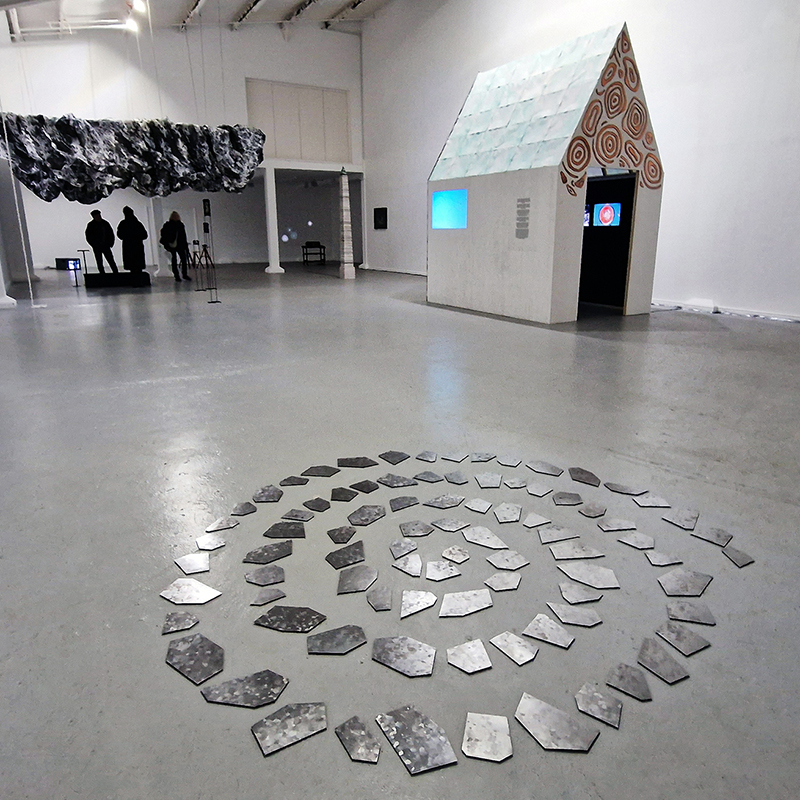
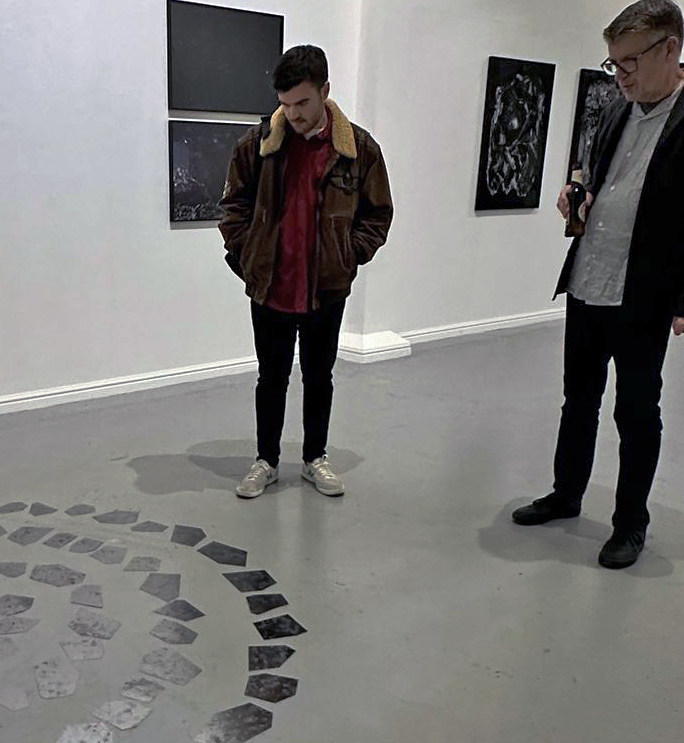
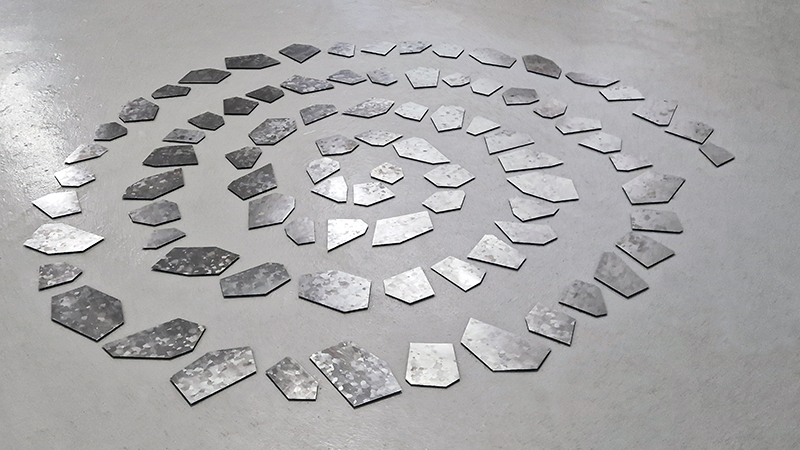
This work uses industrial directional magnetic steel, sanded and etched to reveal the Goss texture of rolled iron silicon alloy crystals. The jigsaw pattern of magnetic domains give this material exceptional magnetic properties. The simple evocation of a spiral described in geologically informed polygons draws upon many references, from the shape of our own Milky Way Galaxy sculpted by vast cosmological magnetic fields and the spiralling molten dynamo generating Earth’s magnetic field, to the inner pathway of spiritual growth and the route to the symbolic omphalos (navel) at the centre of the world where the sky entrance and the underworld meet. The title of this work originates from an ancient Chinese manual on the skills of persuasion, The Book of the Devil Valley Master, containing the first known mention of a compass, known at the time as a south-pointer. 

Work in progress. Mapping a response to the crystal structure of magnetite. Magnetite is the most magnetic of all the naturally occurring minerals on Earth found in igneous, metamorphic, and sedimentary rocks. Nano-particles are also found in the human brain, heart, liver, and spleen and the cells of many other organisms, with some creatures using this for navigation techniques.

Magnetite crystals from road traffic pollution caused predominantly by vehicle frictional braking systems can outnumber natural magnetite in the human brain by 100:1 – this is a worrying trend as these crystals could be involved in our perception, transduction, and long-term storage of information in the brain.

Returning to my conversation with Alan Watson on the history of Haverah Park Extensive Air Shower Array.

The motivation for the Haverah Park project getting off the ground came largely from the British physicist Patrick Blackett, who won the Nobel prize in 1948 for his discoveries in the field of cosmic rays. The director of The Rutherford Lab (where the British atomic bomb was being developed in the 50’s), John Cockcroft (known for splitting the atom), decided there should be fundamental science going on as well as bomb building, so outside the security wire they built an air shower array to monitor cosmic rays. When this experiment was shut down, Blackett was keen to see work with shower arrays continue, and to be within reach of a university so that scientists could combine research with teaching. Blackett was working at Cavendish Laboratory with Ernest Rutherford, but moved to Birkbeck which did all the teaching in the evening so he could do research work through the day and teach in the evening. Here he met J G Wilson, also with an interest in cosmic rays, so when J G Wilson later moved to Leeds, Blackett suggested he set up an air shower array there, which was how the Haverah Park Project came about. Land was rented from local sheep farmers to install the observation huts.

Alan Watson took a lectureship job at Leeds in 1964 and began working for J G Wilson, becoming a leading member of the UK Extensive Air Shower project until its closure in the early 1990s.

We also talked about the mesmerizing power of a cloud chamber. As well as it being considered one of the most important developments for progression in the understanding of particle physics it is also emotionally and aesthetically captivating. Alan reminisced about a time at the Royal Society Summer Exhibition when a large commercial diffusion cloud chamber drew so much attention they were asked to turn it off, as mesmerised visitors blocked the entrance to the exhibition. It’s been a few years since I visited the Institute of Physics to see the large cloud chamber in the foyer, I wonder if it’s still there. I love the fact that I can build my own cloud chamber to see these cosmic visitors.

J G Wilson writing on the study of cosmic rays from his book About Cosmic Rays published in 1948, of which I have a copy:

‘It has its spectacular side, for the only laboratory which has been found big enough for its investigations is the whole of the universe to which men can win access. Most refined measurements have been made under conditions of difficulty and hazard, deep in mines and on icebound mountains, in the watses of western Greenland and cramped in the tiny gondola of a stratosphere balloon. These exploits, which are outstanding even in one of the most brilliant phases of experimental physics, are an unambiguous indication of the importance which is attached to the problems which are being studied.’

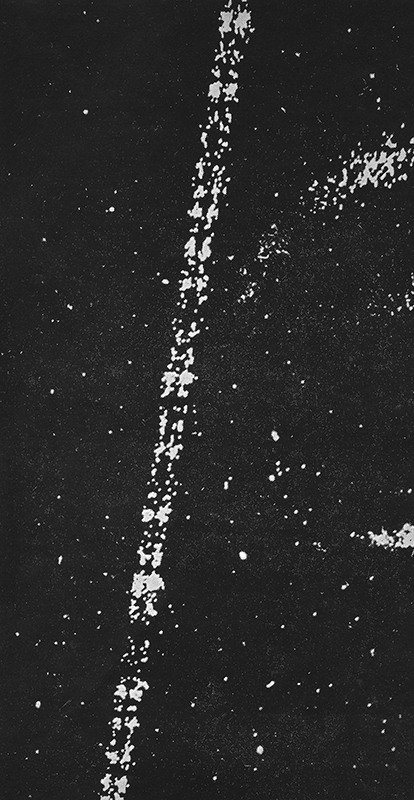
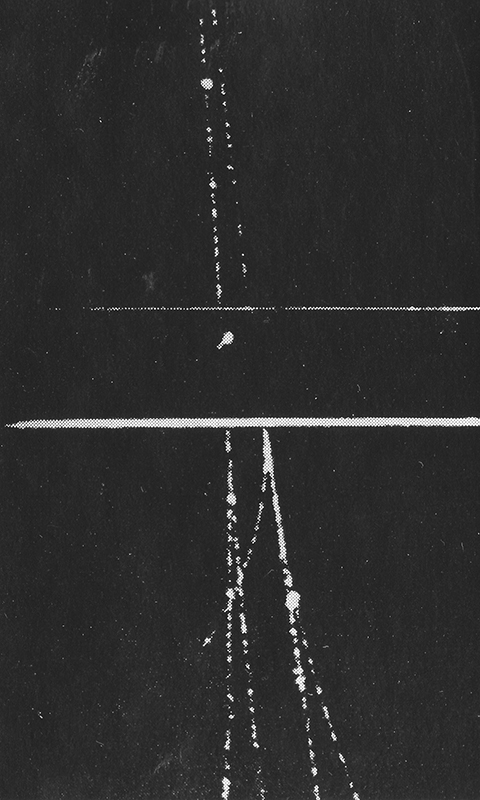
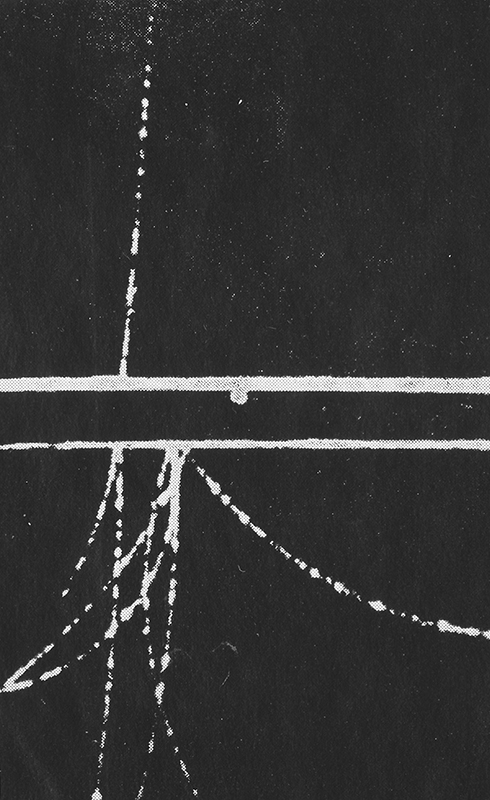
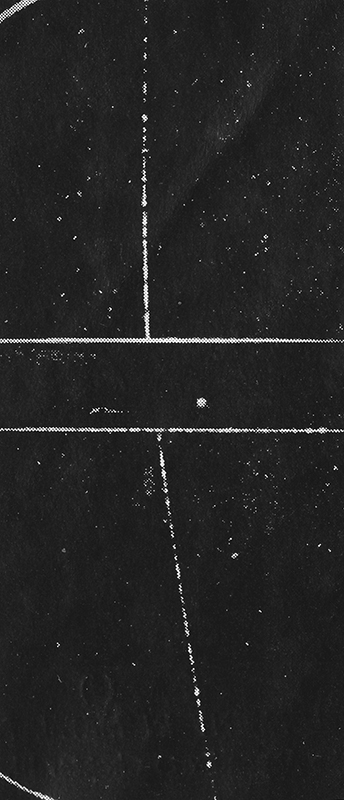
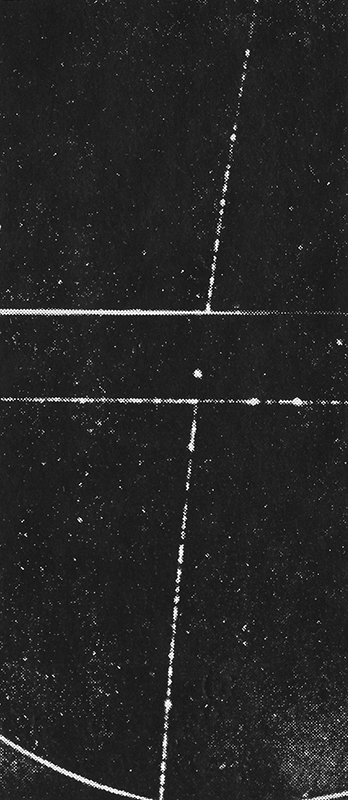
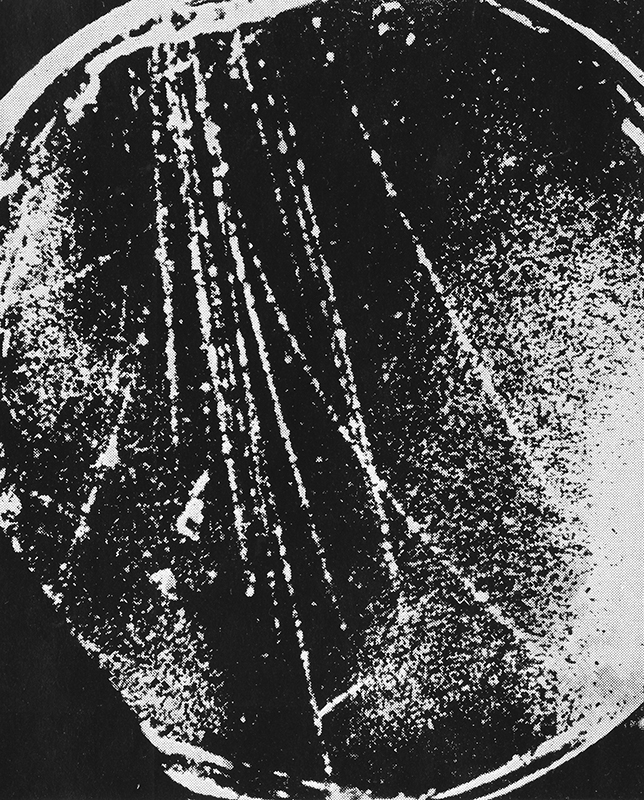
The following images from the same book show particle trails photographed in a cloud chamber -showing extensive showers and particles passing unhindered through metal plates.

J G Wilson writes about cosmic rays ‘…it is interesting to speculate on their previous history, for before it is overtaken by the catastrophe of hitting the earth, each particle is likely to have had a placid life for years, even millions of years, cruising through the wide open spaces of the universe’.

Cosmic Chiasmus: crossing the universe 2021 (video still)

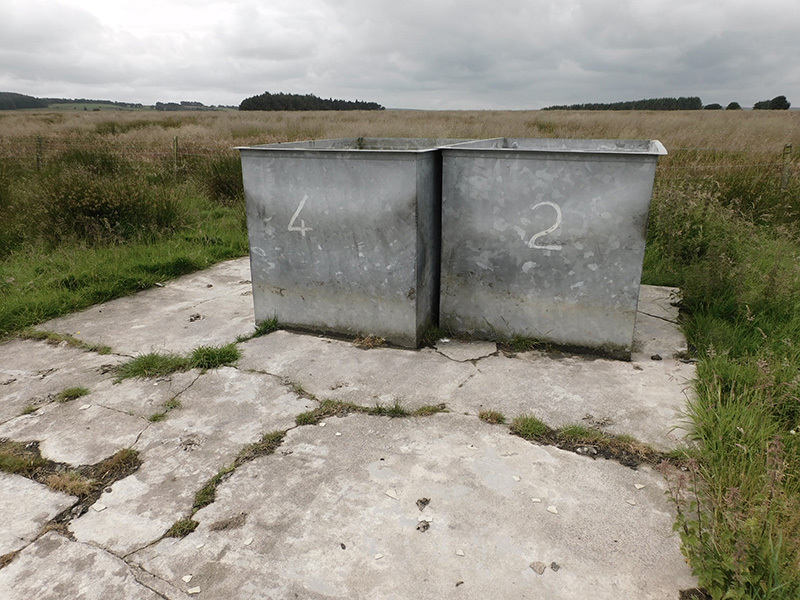
The primary detectors used at Haverah Park were water Cherenkov detectors. These are large water filled tanks filled with a photomultiplier suspended in the water to capture flashes of Cherenkov light emitted by high energy cosmic rays as they pass through. The light is emitted because the cosmic rays pass through water faster than photons of light are able to, and as they do so they lose electrons thereby emitting light. The speed of light is only a constant within a vacuum, when it passes through other materials it get slowed down.

There were four 34 m2 detectors at the centre of the array in the main hut, with three detectors located 500m from the central detector. Signals from the three distant detectors were sent along buried cables to the central hut, with the signal from the central detector passing down 500 m of cable buried underground so that all signals arrived at about the same time.  When signals from the central one and two of the others arrived within ~2 x 10⁻⁶ s (called a coincidence), the signals from the photomultipliers in the 34 m2 detectors were displayed on four oscilloscope screens and photographed by one camera which had its shutter permanently open. About 20 feet of film could record around 150 events. Developed and manually scanned by Alan, or a senior colleague, the film was checked for quality and to look for any large events (ultra high energy particles arriving) which were always exciting to find. The developed film was then sent to Leeds University Physics dept for measurements.

When there was a coincidence event at the centre of the array, a signal was sent by microwave to the distant detectors set across the moorlands (on average about 2km from the central hut), the signals from these distant groups of 4 x 13.5 m2 were recorded digitally with the data going onto paper tape which was collected once each week. 

Along with the oscilloscope traces being photographed, the number on a counter was included which gave the time of each event to the nearest half minute.  In the 1960’s when this project began the time counter was advanced by a pendulum clock.  Counting time in half minutes the team found that there are roughly one million half-minutes in a year, which gave a good excuse for an annual party.

There were some brief periods in the early 1980s when a small number of scintillator detectors were also used to make cross-checks of the results from the water Cherenkov detectors against those from projects in the USA (Volcano Ranch) and Yakutsk (Siberia).  The scintillators retrieved from Imperial College’s Holborn project were brought to Haverah Park for an experiment to look at much lower energy showers.

Both types of detectors register flashes of light.  

Blackett was the first person to work out the details of Cherenkov light produced in the atmosphere. According to a memoir on Blackett, written by astronomer Bernard Lovell, who knew him very well, Blackett attempted to see Cherenkov light from cosmic ray showers with the naked eye but there is no mention of whether he succeeded. In 1962, physicist Neil Porter who built the first water Cherenkov tank in the UK at Harwell in the 50’s, did an experiment with some volunteers who were asked to recline on a coach in a dark room with a small Geiger telescope attached to a pair of darkened goggles and acknowledge if they saw a flash of light when a cosmic ray was known to pass through the googles. The observers did seem to experience a flash of light but results were ambiguous as to whether this was Cherenkov light being emitted as the particle passed though the crystalline lens or vitreous humour of the eye or a direct excitation of the retina. The experiment was a collaboration with the Psychology dept at the University of Dublin and published in Nature under the Psychology heading giving an impression that the lights were perhaps a figment of the imagination.

Aóratos 2019 video still

Astronauts are very aware of this phenomenon. During the 1970 Apollo 13 mission to the moon the power supply was damaged and the astronauts sat in the dark for several days waiting to return to Earth. They experienced flashes in their eyes and realized that some of this was Cherenkov light. Some flashes were caused by particles directly hitting the retina but Cherenkov light caused by high energy particles travelling through the matter of the eye faster than light, is much brighter. The energy is proportional to the square of the charge of the particle that comes through, so if you have an iron nucleus which has a charge 26 x the charge of a proton, you get 26 squared or 600 times as much light emitted. Out in space there are many more of these high energy particles and so the astronauts would become very familiar with these flashes, even using them to line up accelerator beams by putting their head in the particle beam to see the flashes.

An astronaut once told Alan that he was convinced that the very first people fired into space probably saw these flashes, but didn’t like to tell NASA in case it turned out to be a physiological defect of theirs and they would be taken off the space programme.

Recently, a professor friend of Alan’s who is aware of this phenomenon, has unfortunately had to begin radiation treatment for a brain tumour. He has found due to the position of the tumour and angle of treatment he can see Cherenkov light flashing in his eyes as the electrons bombard the tumour.

Aóratos 2019 cropped video still

When we met, Alan was just back from a conference in Italy discussing a paper titled ‘Ultra high energy cosmic rays: The Disappointing model’. They called it the disappointing model because they believed that the Auger results with particles at the highest energy were heavy not protons. I’m not sure I understood why it was disappointing although Alan did his best to explain: ‘It’s difficult to measure the mass of the particles of a certain energy. A deduction had been made that they have a mean mass, probably the same as nitrogen but mass changes in quite a complicated way as a function of energy. It’s to do with how deep the showers develop in the atmosphere.

Cosmic Chiasmus: crossing the universe 2021 video still

The techniques aren’t good enough to separate the particle’s mass on a one by one basis, we can only do averages. It looks like the average mass is much heavier than protons, which everybody had believed for a long, long time. Protons would be at a much lower energy. As the nucleus is travelling through space, it sees photons from the microwave background radiation and the photon will chip off a neutron or a proton, if it chips off a neutron, the neutron decays into a proton, so you can get protons this way, but they will be of lower energy. The energy reduces roughly by the mass of the particle, so an iron nucleus has a mass of 56, if you chip off a neutron or a proton that proton will have an energy, which a 56th of the energy that the nucleus has – so it goes down in energy.

Some particles could come from Centaurus A, which is a relatively close radio galaxy, it is thought that the jets from radio galaxies provide conditions to accelerate the particles, but the problem is, because the cosmic rays are charged, they get deflected in the magnetic field of the Galaxy so you can’t track them straight back to where they came from.  In terms of heavy particles that’s more of a problem because being charged means they bend even more. So one of the disappointing things is that cosmic ray astronomy is not going to be very easy. The Pierre Auger observatory has really been very successful in changing the picture quite a bit but because there are so few ultra high energy particles recorded it is slow progress. There are hopes to expand the observatory even more and also a plan to launch a satellite with detectors to pick up fluorescence light in the shower as it passes through the atmosphere, a similar phenomenon to aurora light.

Cosmic Chiasmus: crossing the universe 2021 video still

Exhibitions

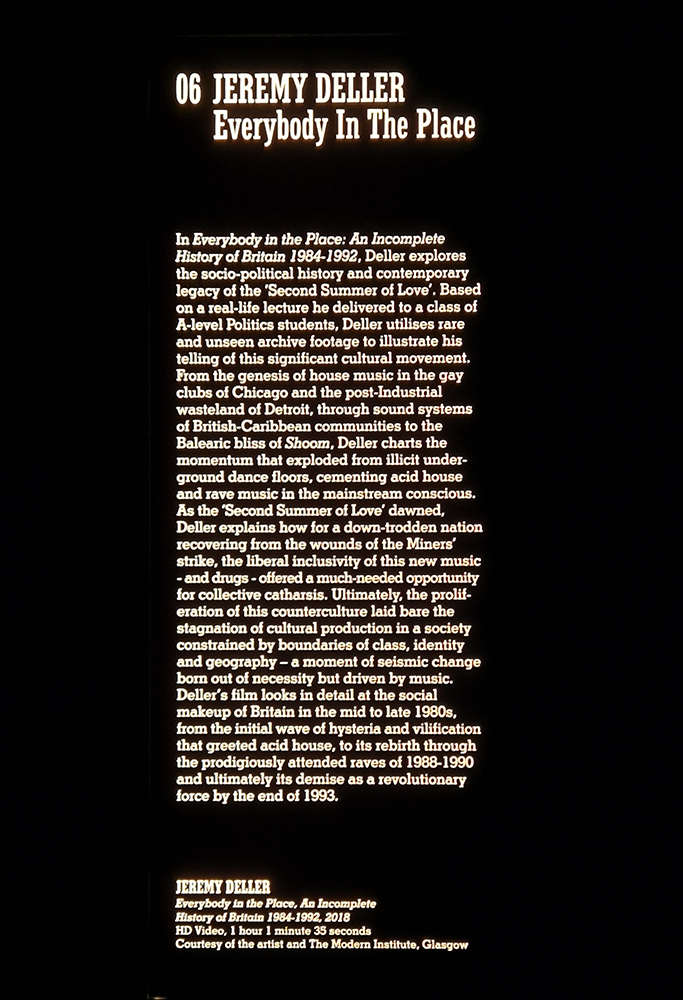
The Vinyl Factory: Reverb at 180 The Strand, a multimedia exhibition exploring the intersection of art and sound with artists including Theaster Gates, Es Devlin, Julianknxx, Kahlil Joseph, Caterina Barbieri, Stan Douglas, Virgil Abloh, Cecilia Bengolea, Jeremy Deller, William Kentridge, Jenn Nkiru, Hito Steyerl, Carsten Nicolai and Gabriel Moses. Fabulous show, shame I can’t share the sounds here. Loved Jeremy Deller’s takeover of a sixth form politics class. Some of the works I had seen before but that was fine as they are worth extra viewings.

Reading

I am beginning research reading for The Geological Unconscious exhibition Julie F Hill and I are co-curating at Hypha HQ Euston opening in May 2025.

Ursula Le Guin The Winds Twelve Quarters, a collection of profound short stories each introduced by the author reflecting on the intention within.

Long after I wrote the story (The Stars Below) I came on a passage in Jung’s On the Nature of the Psyche: ‘We would do well to think of ego-consciousness as being surrounded by a multitude of little luminosities…Introspective intuitions…capture the state of the unconscious: The star-strewn heavens, stars reflected in dark water, nuggets of gold or golden sand scattered in black earth.’ And he quotes from an alchemist, ‘Seminate aurum in terrain albam foliatam’ – the precious metal strewn in the layers of white clay. Perhaps the story is not about science, or about art, but about the mind, my mind, any mind, that turns inward to itself.

Roger Caillois The Writing of Stones 1970 is a tribute to the collection of extraordinary stones Caillois acquired and which now resides in The National Museum of Natural History Paris. In these poetic chapters he describes in detail each of the stones and his fascination with the images and associations they conjure in his imagination. Questioning and celebrating the allure of the mineral and the stories hidden and revealed over millennia.

I can scarcely refrain from suspecting some ancient, diffused magnetism; a call from the centre of things; a dim, almost lost memory. or perhaps a presentiment, pointless in so puny a being, of a universal syntax.

Delighted to have both my artists books In/Out and Unbound accepted into the Art, Science and Creativity exhibition curated by Liverpool Book Art at Liverpool Central Library in the autumn. The starting point for this exhibition is a quote from Albert Einstein:

“Where the world ceases to be a stage for personal hopes, aspirations, and desires, and we stand before it as free creatures, full of admirations, questions and contemplation, we enter the realm of art and science. If we describe what we see and experience in the language of logic, we do science; if we convey connections through forms that are inaccessible to the rational mind, but intuitively recognisable as making sense, we do art.”

Open Studios 2024 – showing the two channel video installation Radical Pair in my studio.

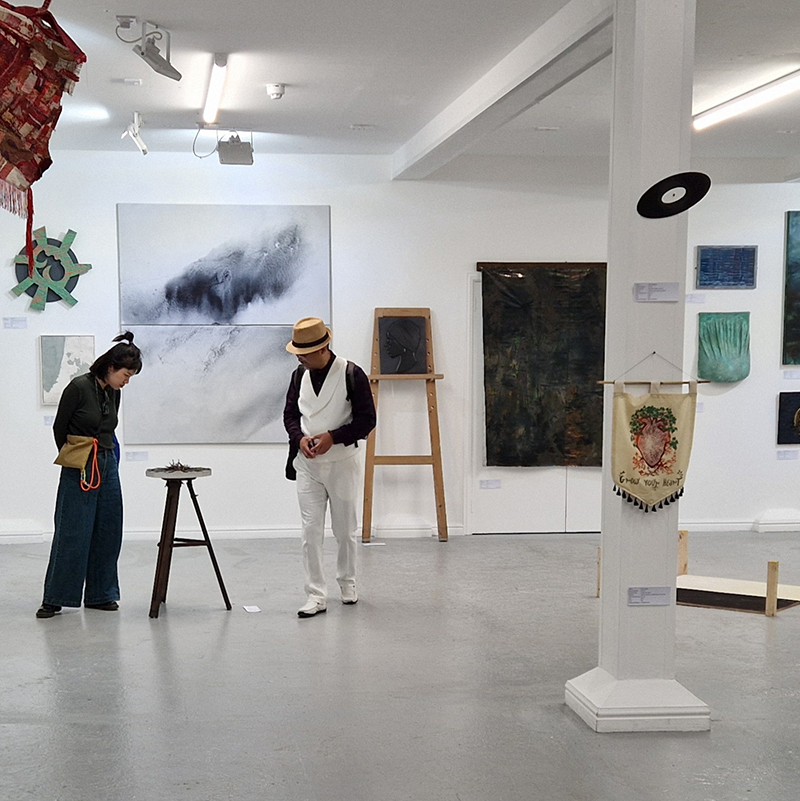
In Thames-side Studios Gallery showcase of studio holders works I presented one of the sculptures from the Instruments of the Anemoi series.

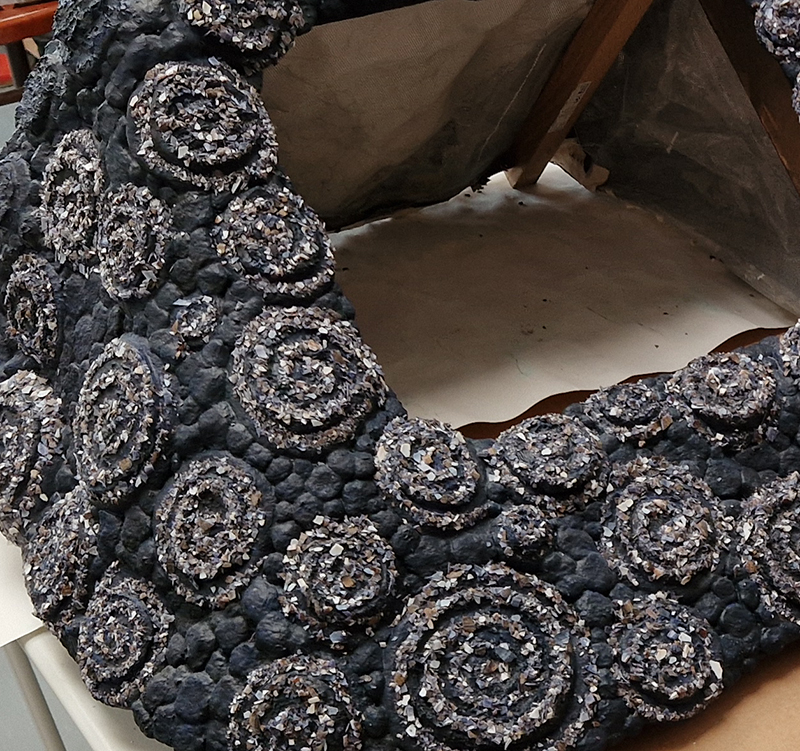
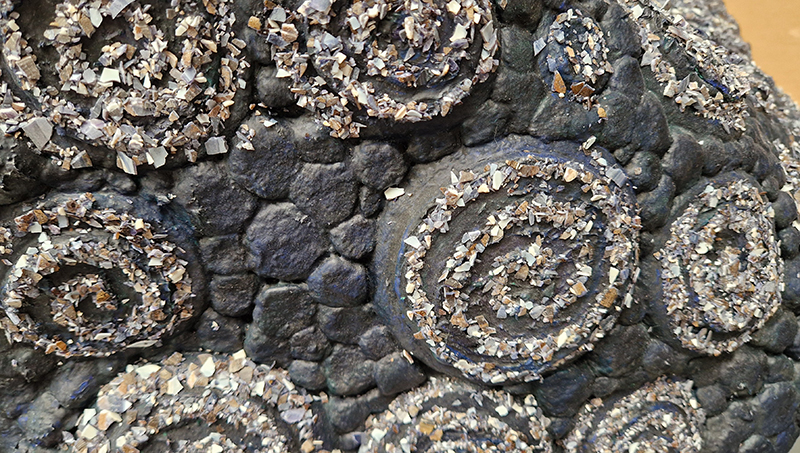
Work in progress on hybrid sculpture Belly of a Rock adding spirals of crushed mussel shells to the crusted casing that will house a monitor screen. Earth rotates faster at the Equator than it does at the poles causing spiral convection currents in the liquid iron outer core. Earth’s magnetic field is created in this swirling outer core where magnetism is about fifty times stronger than it is on the rocky surface of the Earth.

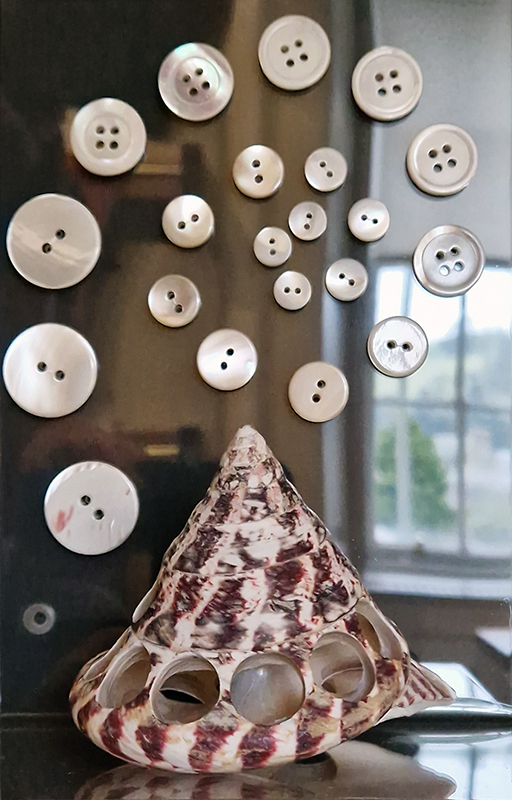
Trochus (sea snail) shell buttons seen at Borders Textile Towerhouse, Hawick. The buttons made from these molluscs found in warm waters are used for the Borders quality knitwear industry. Genuine shell can apparently be identified from imitation by touch, it always feels cool even in hot temperatures.

We do not yet know another form of life other than carbonaceous life. All life on Earth uses the same biochemistry of carbon.

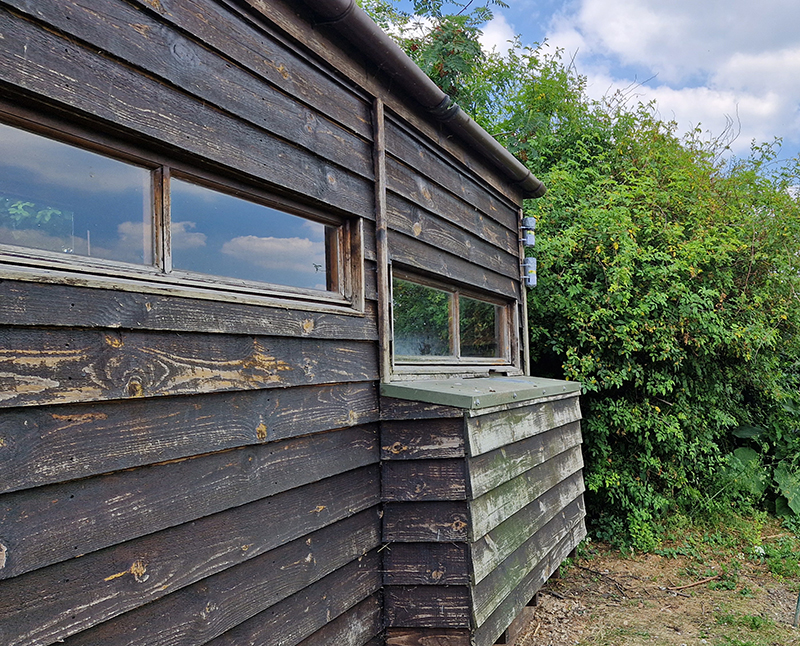
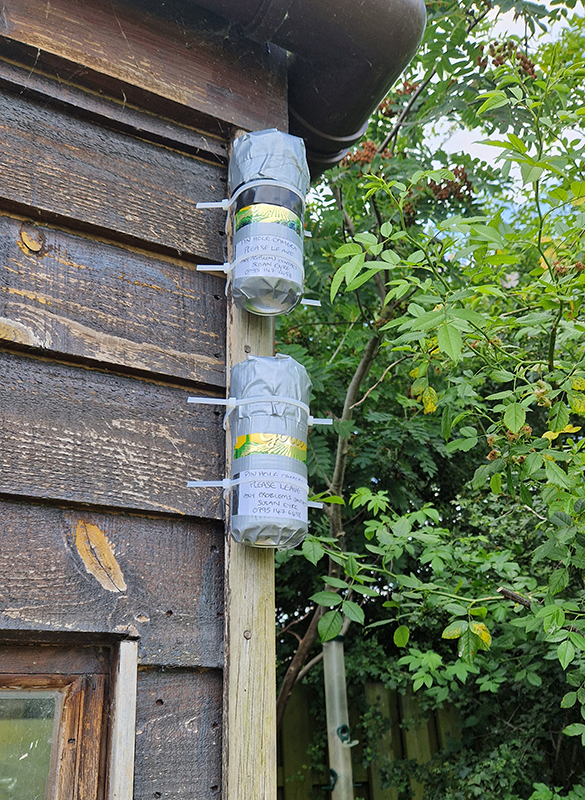
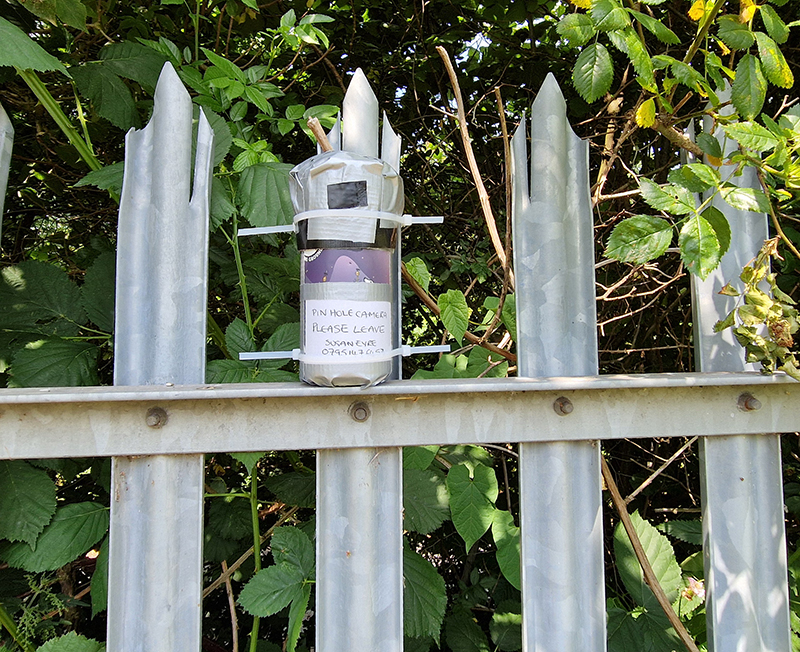
Reminded by the solstice, I finally installed some solargraph pin hole cameras at Hogsmill Nature Reserve. I have had the tins prepared for a long while so not sure if they will work. The lagoon was worryingly green.

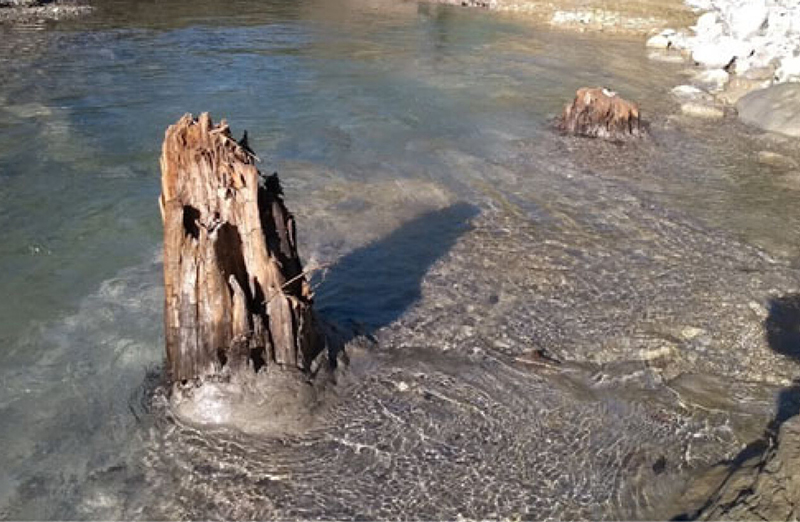
A recent Royal Society research article reveals that extreme solar events such as solar flares and coronal mass ejections can release bursts of energetic particles towards Earth which are found preserved in the rings of partially fossilized trees as huge spikes in carbon-14. Through the individual analysis of ancient tree rings from subfossils found in the Drouzet River in the Southern French Alps, scientists discovered evidence of a giant solar storm dated to around 14,300 years ago. This event appears to have been enormously more powerful than the Carrington Event of 1859 when fires broke out in telegraph offices.

Radiocarbon is produced in the upper atmosphere as cosmic rays collide with particles in the atmosphere. It is absorbed by plants during photosynthesis and enters the food chain of organisms and because it decays at a known rate, scientists can use it to determine when the organism died using carbon dating processes. Solar storms tend to deflect the number of energetic particles coming from outer space but a violent storm will create much more radioactive carbon-14 which will subsequently be absorbed by life on Earth. Radiocarbon dating is not exact because the atmospheric 14C/12C ratio varies due to cosmic ray activity, nuclear explosions and solar activity. Still from Cosmic Chiasmus: crossing the universe.

For scientists using the radiocarbon dating technique it is important to know the carbon-12 content of the contemporary atmosphere. A calibration curve of carbon-12 in the atmosphere is provided by an international body using many archive records but the most precise and accurate are based on dendrochronologically dated tree-ring series. Stills from Time Crystals.

Other evidence of this major radiation storm 14,300 years ago is also seen in ice cores having a higher concentration of an isotope of beryllium extracted from Greenland. These incredibly powerful geomagnetic storms are known as Miyake events. Nine Miyake events have been identified in the last 15,000 years, the most recent being around 774 CE.

Radioactivity was discovered by Henri Becquerel while working on a series of experiments on phosphorescent materials in 1896. Cosmic Rays were discovered by balloon enthusiast Victor Hess in August 1912. He went almost 5.5km up in a hydrogen filled balloon with a balloonist and a meteorologist equipped with an electrometer which could read the level of radiation. This expedition was to determine the source of radiation which was bewildering scientists working on radiation such as Marie Curie who found some radiation registered on their equipment when they removed the source of radiation and even when instruments were shielded by a lead casing. C.T.R. Wilson was also baffled by apparent radiation seen in his cloud chamber, which he had developed to study atmospheric phenomena. One of the first images from Wilson’s cloud chamber –

A cloud chamber is a box containing a supersaturated vapor. As charged particles pass through, they ionize the vapor, which condenses to form droplets on the ions. The tracks of the particles become visible as trails of droplets, which can be photographed. In 1911 Wilson presented his first rough photographs of particle tracks at the Royal Society in London. In 1929 Hans Geiger and Walter Müller developed a gas filled ionization detector that registers individual charged particles and was ideal for studying high-energy cosmic rays. Bruno Rossi further developed the Geiger counter and demonstrated that the Earth’s magnetic field bends incoming charged particle showers. In 1936 Seth H. Neddermeyer and Carl D. Anderson discovered the Muon as most common cosmic particle in cosmic ray showers. In 1938 Pierre Auger observed showers with energies of 1015 eV – 10 million times higher than any known before.

In 1947 Patrick Blackett presented a paper in which he suggested that Pierre Auger emitted by high-energy cosmic rays contributed to the light in the night sky. In September 1952 a simple experiment by Bill Galbraith and John Jelley allowed the first observation of Cherenkov light produced by cosmic rays passing through the atmosphere. By the end of the decade, observation of Cherenkov radiation in the atmosphere had been developed further as a means for studying cosmic rays. I will be looking further at Cherenkov radiation in the coming weeks as I begin research on the historical site of Haverah Park in North Yorkshire, the site of an extensive cosmic ray air shower detection array which led the world for two decades in studies of cosmic rays of the highest energies. Haverah Park array used water Cherenkov detectors. I will also be looking at the cosmic ray detection innovations of Astronomer Royal Sir Arnold Wolfendale

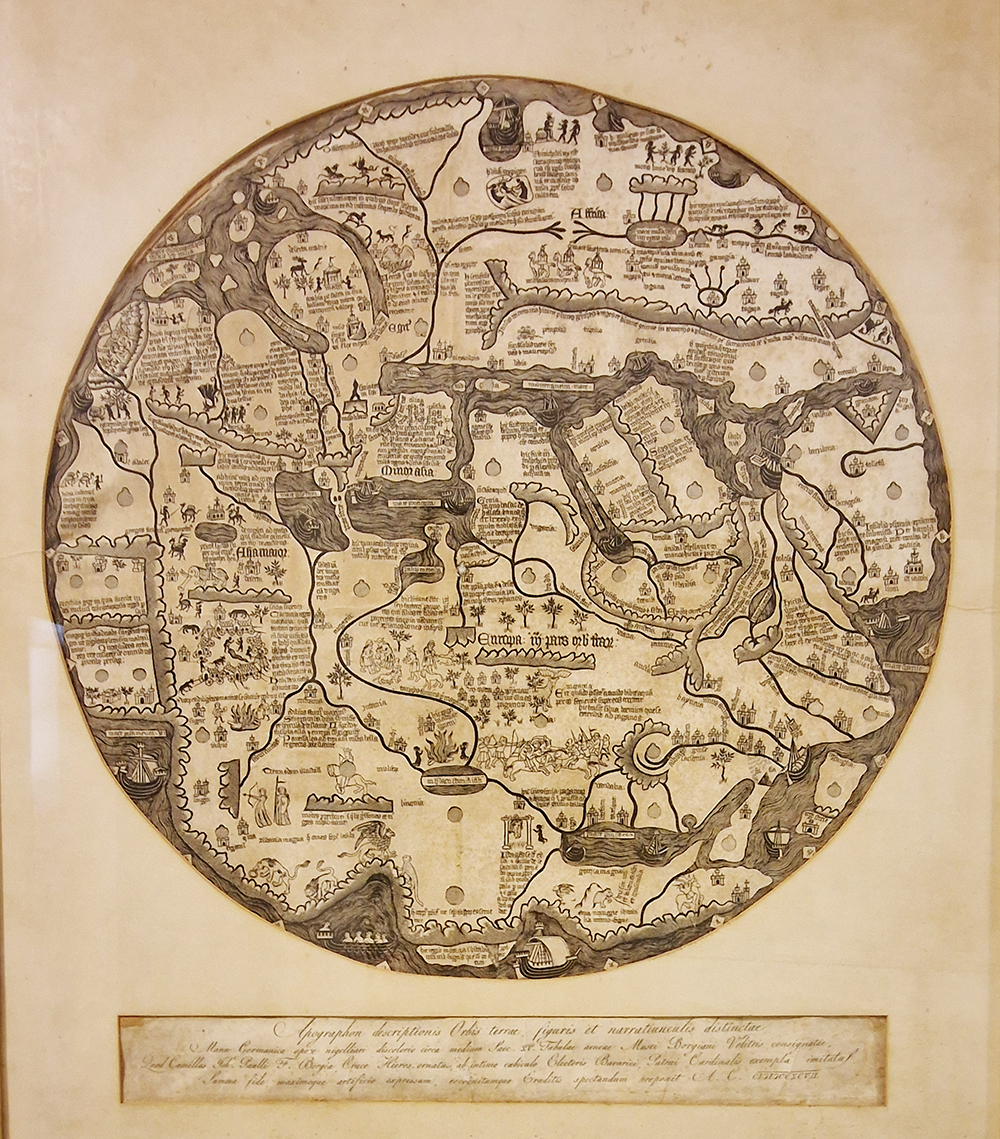
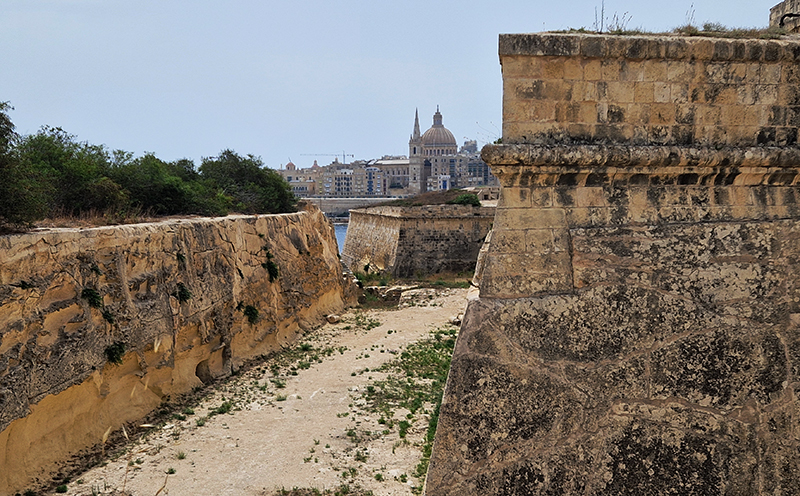
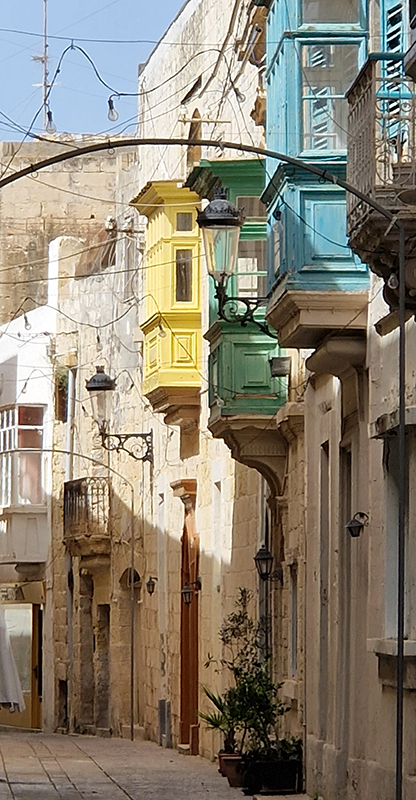
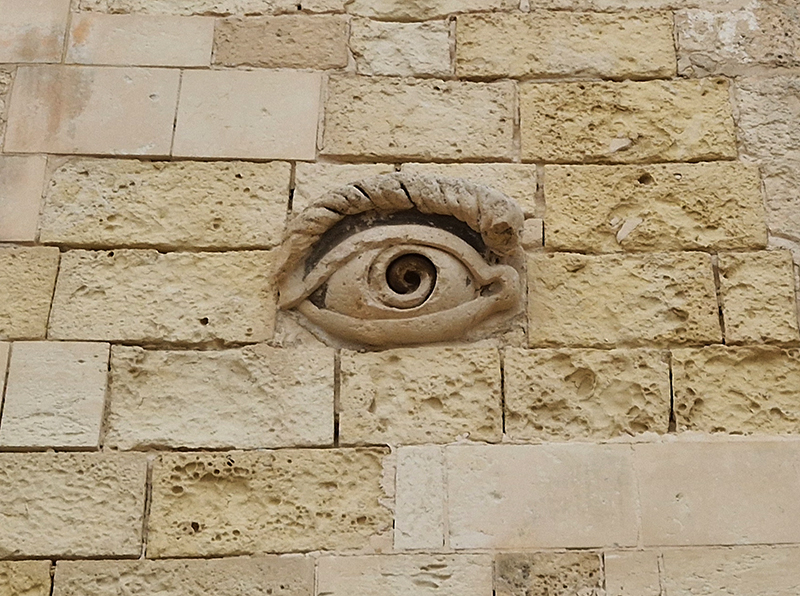
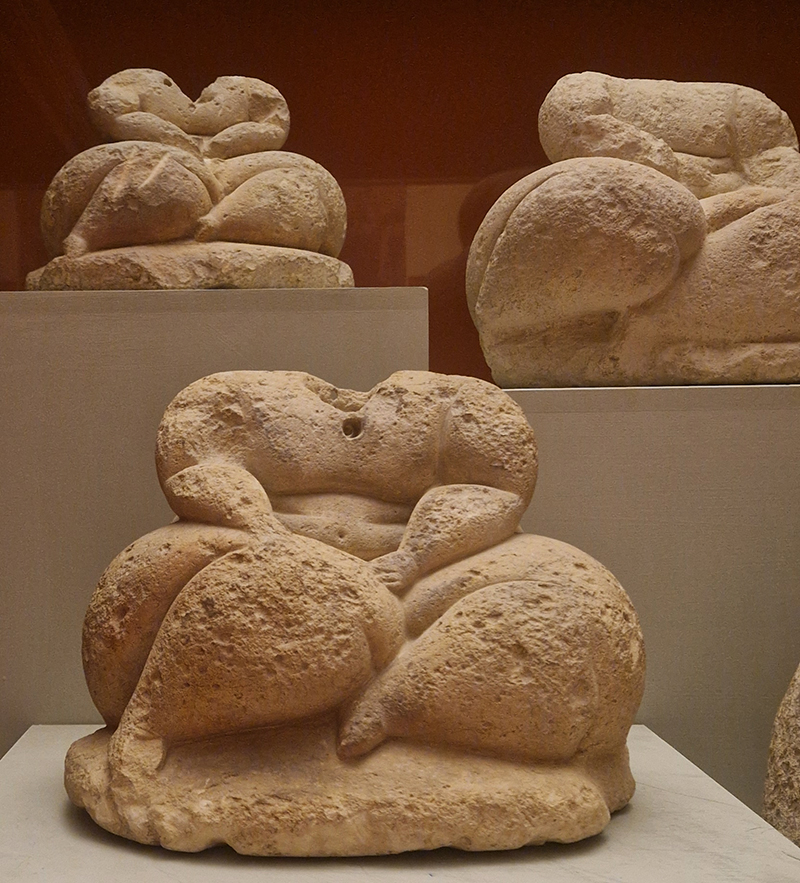
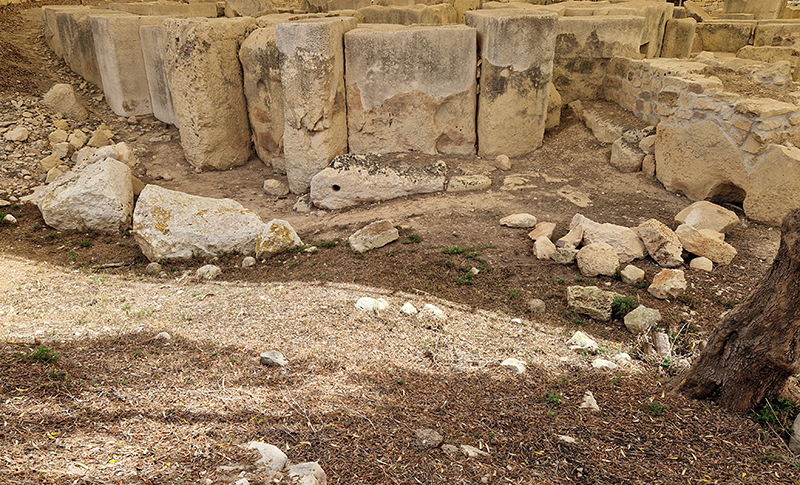
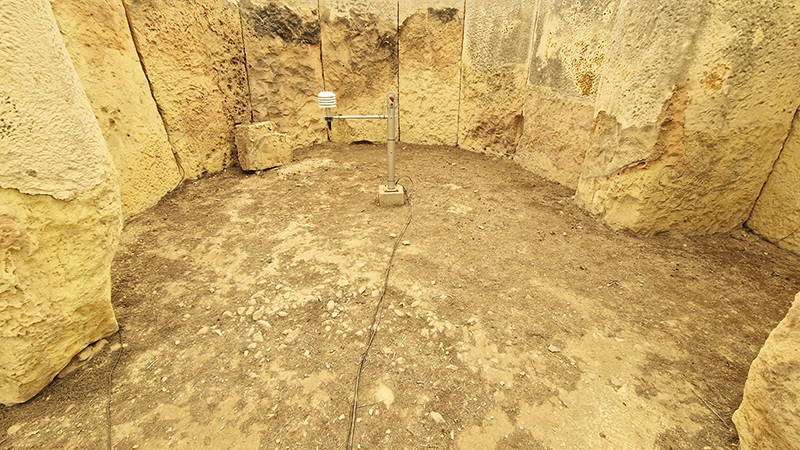
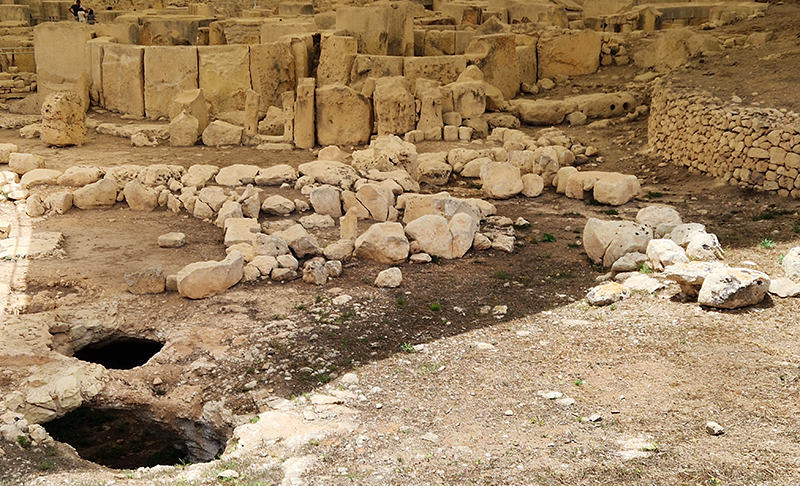
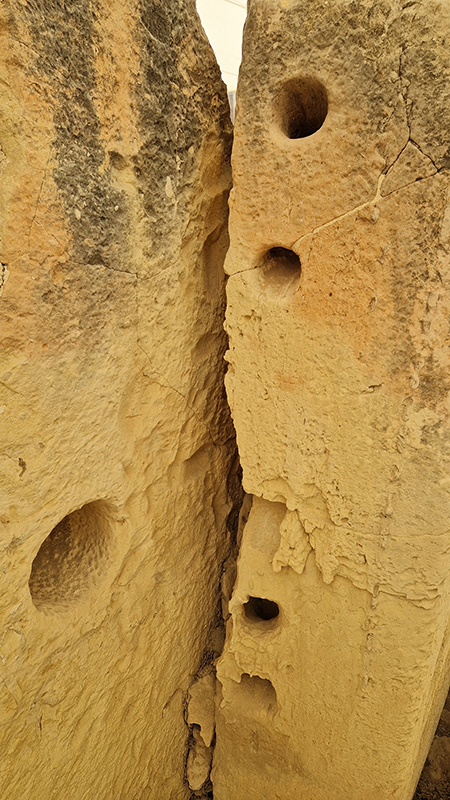
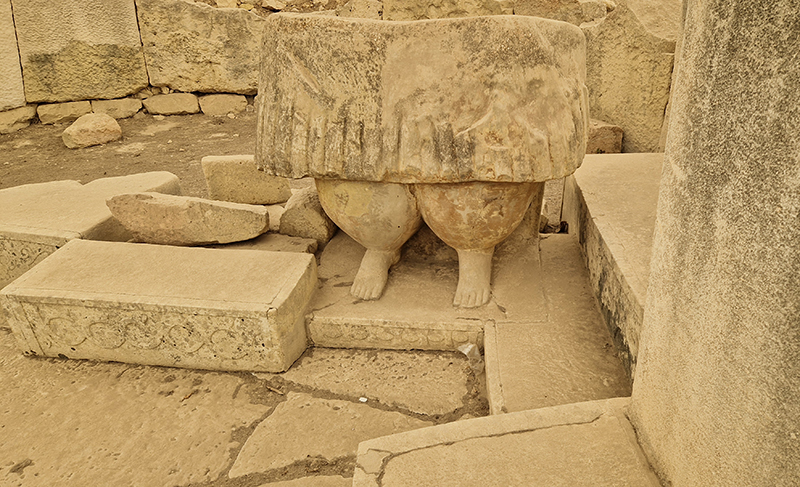
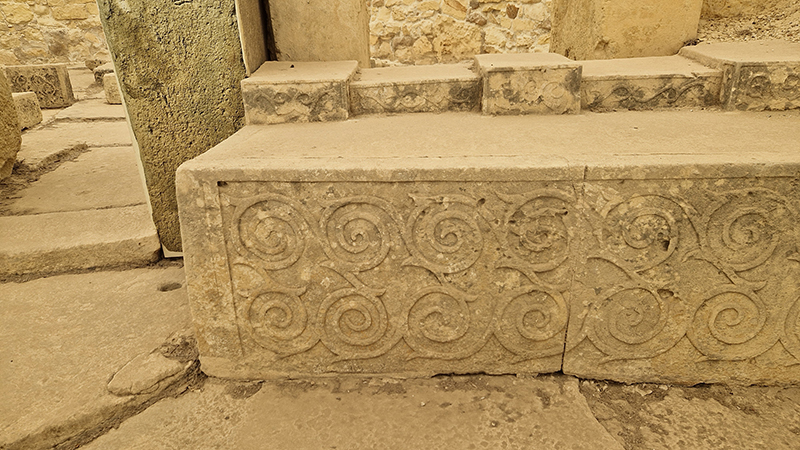
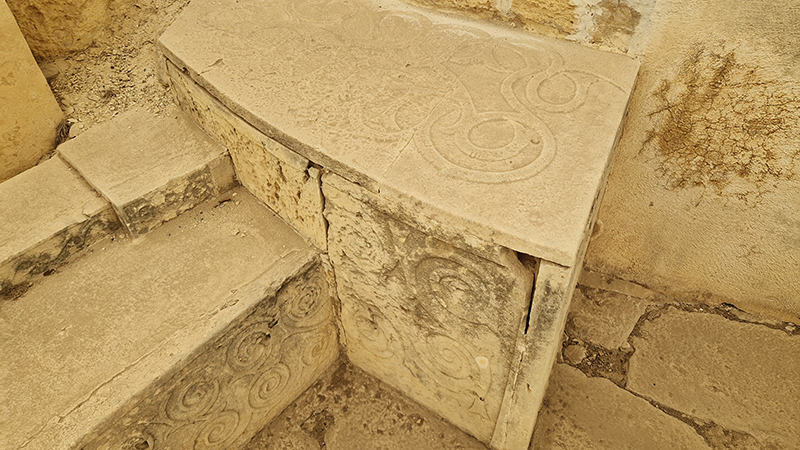
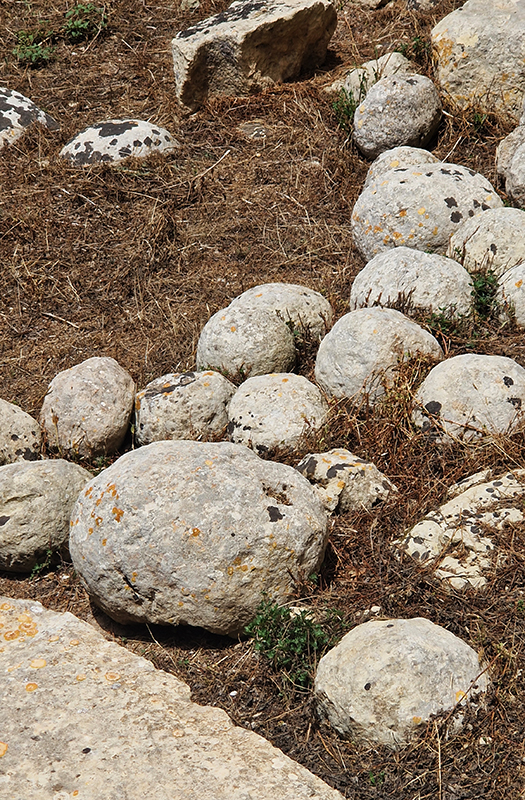
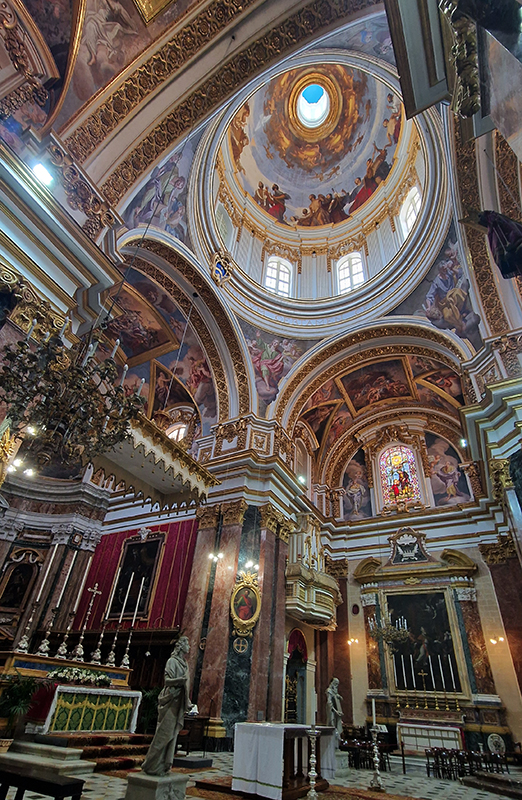
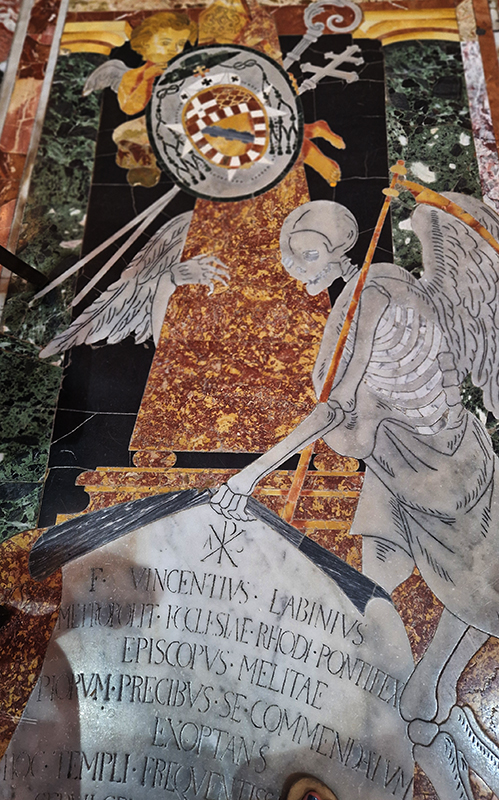
A visit to Malta. Architecturally beautiful, bathed in golden light, the palimpsest of Malta’s history is fascinating to uncover. 20,000 years ago after the last Ice Age, the sea level in the Mediterranean was 130 metres lower than today and Malta was one land mass connected to Sicily.

Due to its geographic location Malta was a contested site for naval and trade powers for hundreds of years, yet before the first empire builders arrived there is no evidence of conflict between communities found at the archaeological sites for the first 5000 years of settlement.

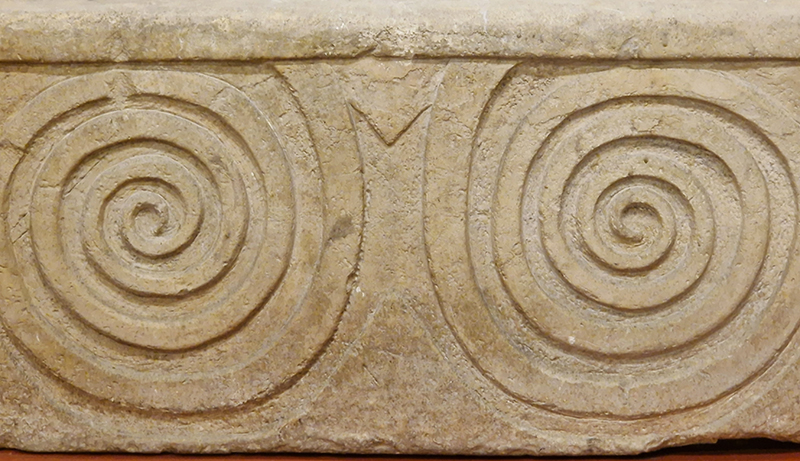
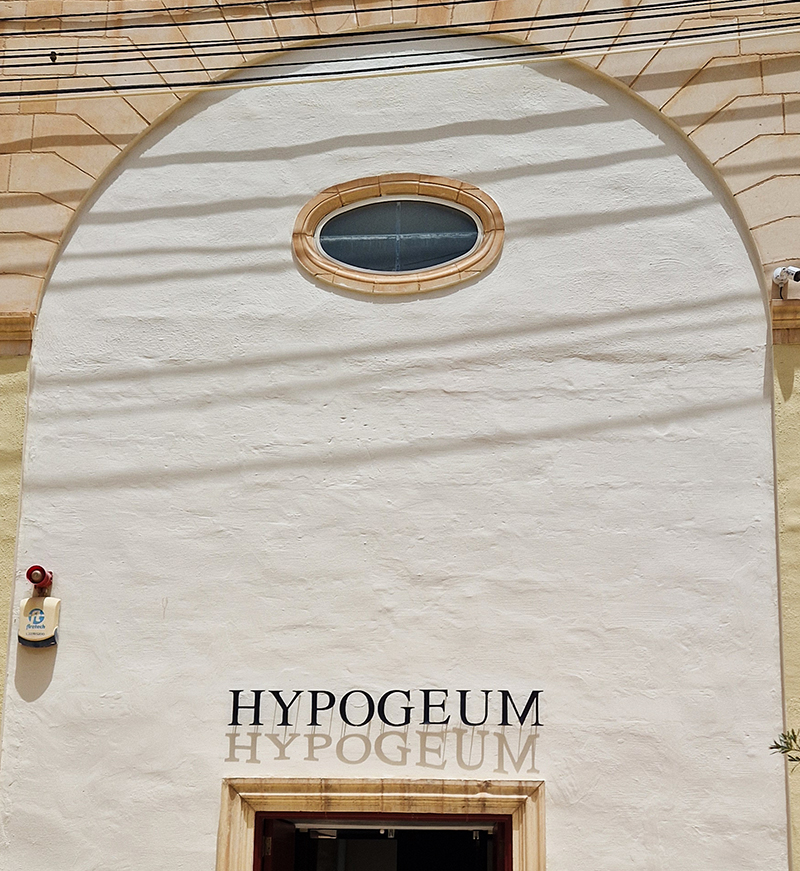
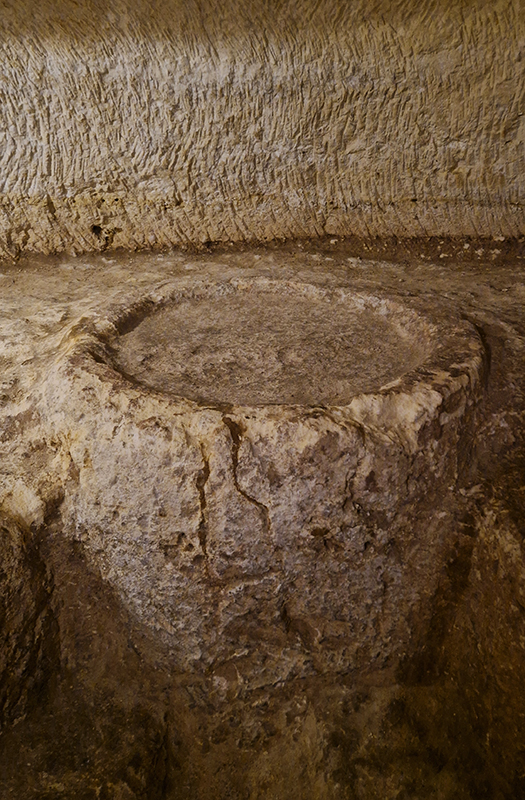
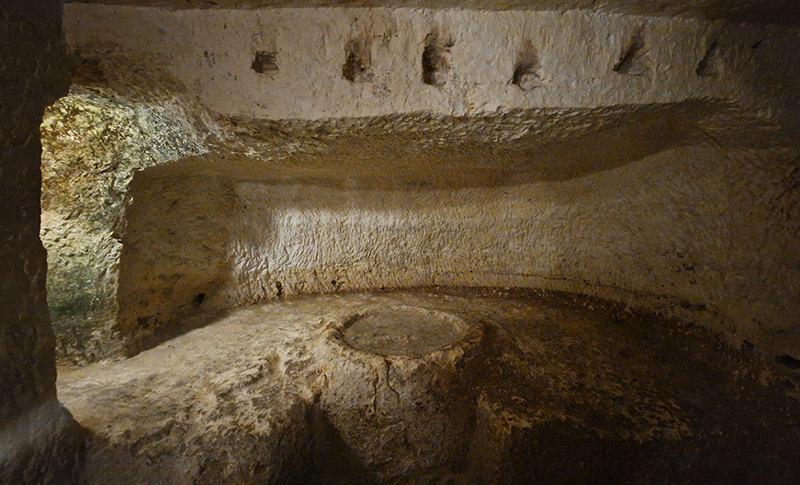
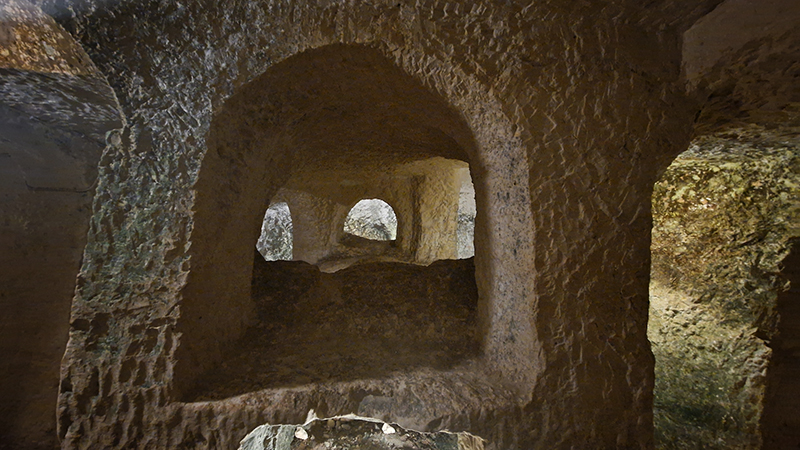
Evidence of first settlers dates to about 5900 BC. These people were hunters and farmers who kept domestic cattle and built temples. The earliest remains found at the Neolithic subterranean temple and burial site of about 7,000 individuals – The Ħal Saflieni Hypogeum – the only known European example of a subterranean ‘labyrinth’ date from about 4000 BC.

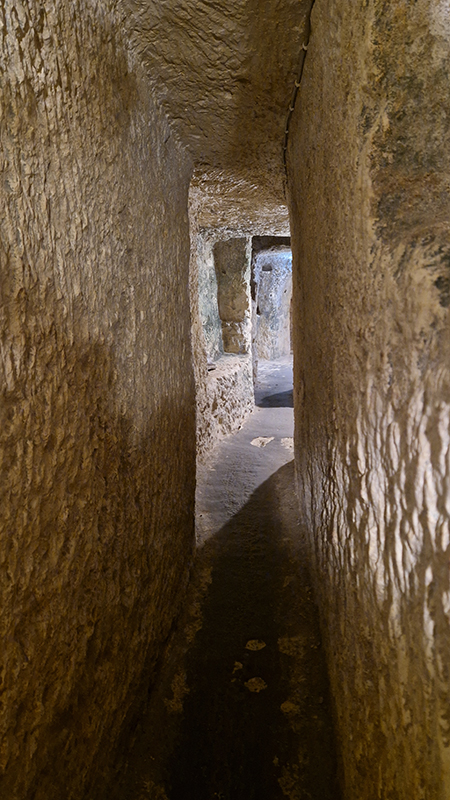
The whole system, which in places replicates the architecture of temples above ground, was cut into the limestone using just stone or antler tools. Some of these deep underground chambers are decorated with spiral and chequerboard patterns in red ochre. A highlight of the visit is the acoustic demonstration of a deep resounding echo filling the chamber when someone with a low voice speaks softly into a small, excavated niche. The particular acoustic frequencies measured throughout the chambers suggests a deliberate design and a potentially important cultural role for making music. Archaeologists believe the dead were probably left exposed until the flesh had decomposed and fallen off before the bones were buried in mass graves along with copious amounts of red ochre but so much is unknown.

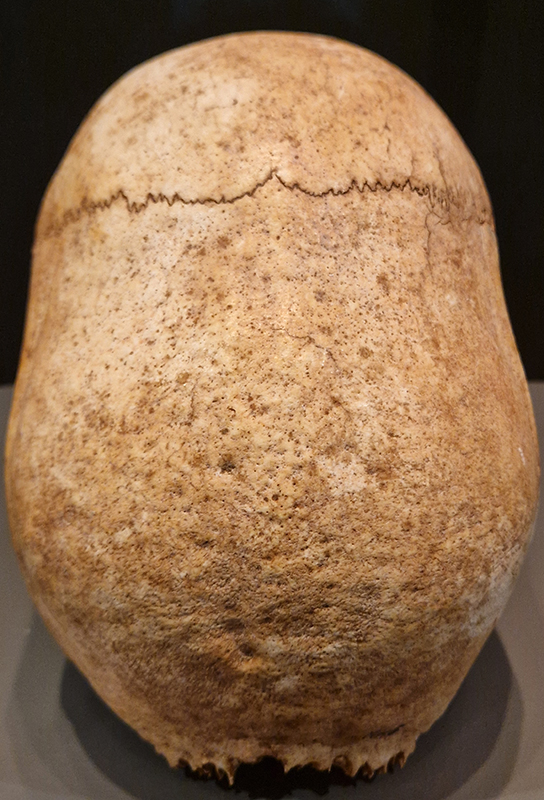
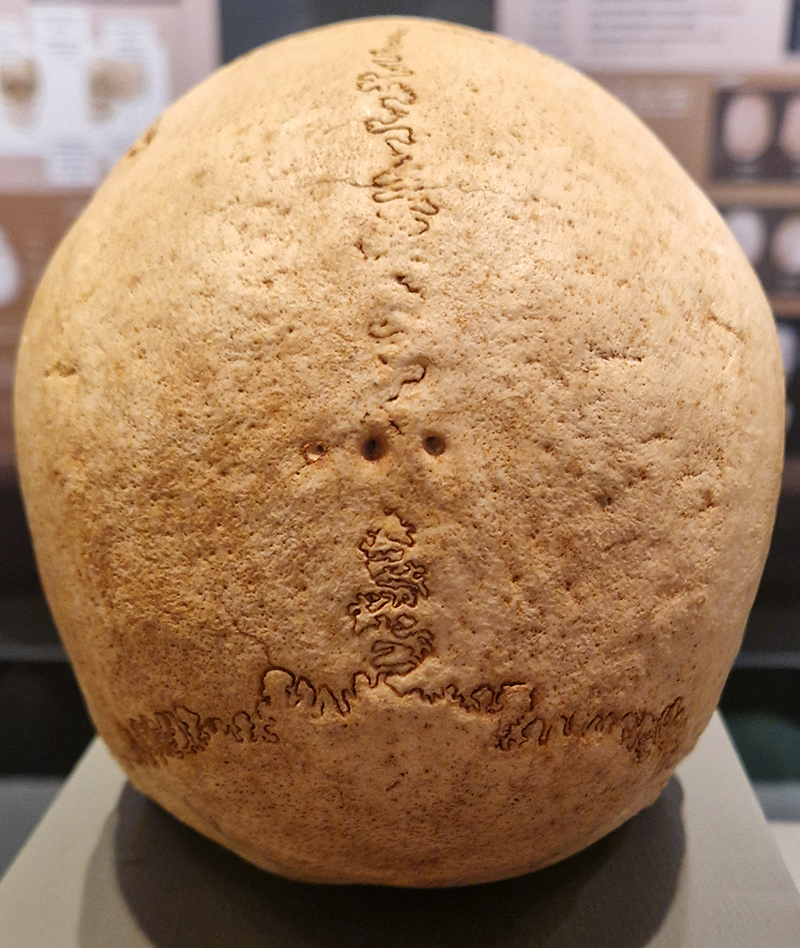
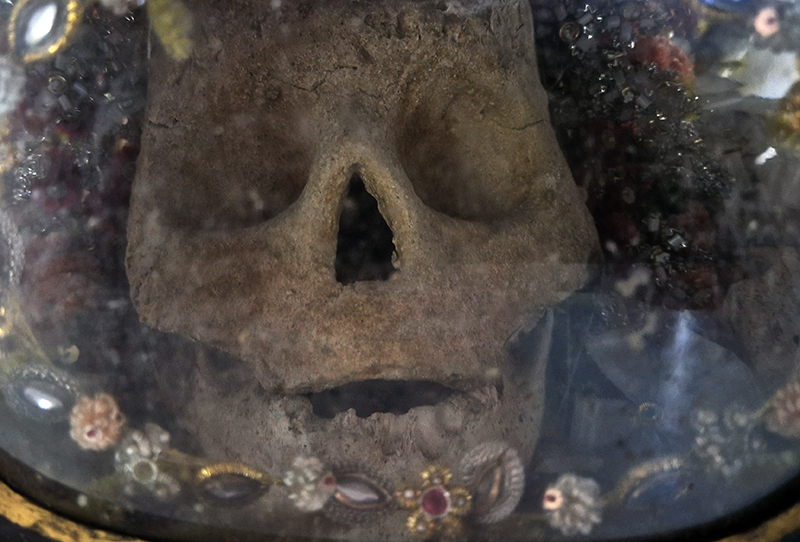
Photography is not allowed in the labyrinth of tunnels, so I have no images inside the ancient site where so many people were buried, but saw skulls found here, known as the long skulls, at the Museum of Archaeology.

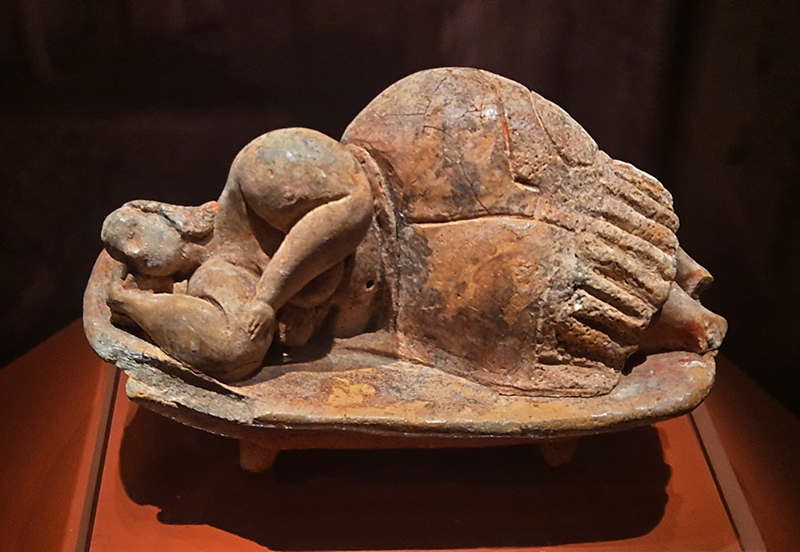
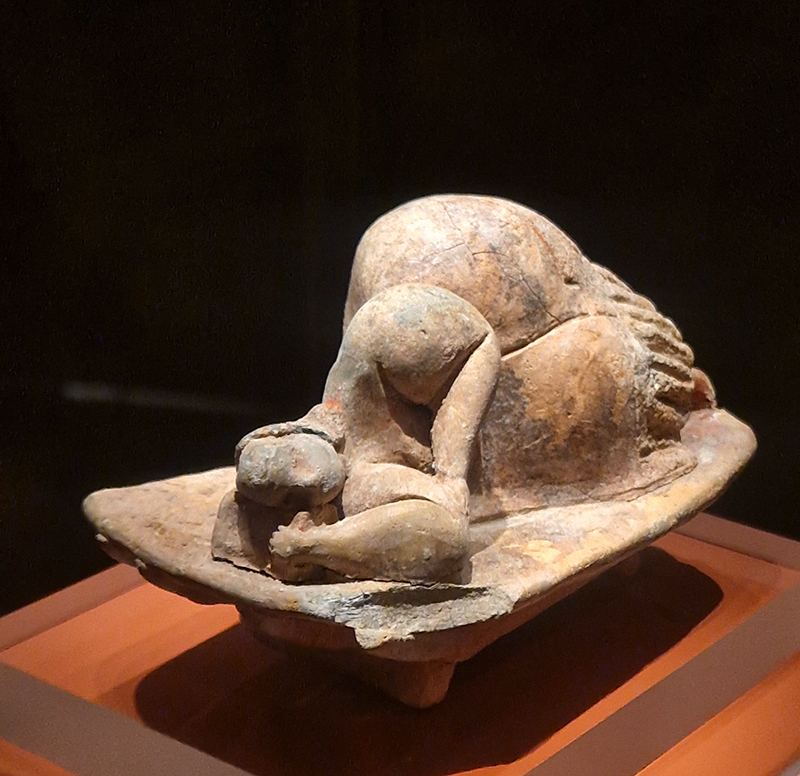
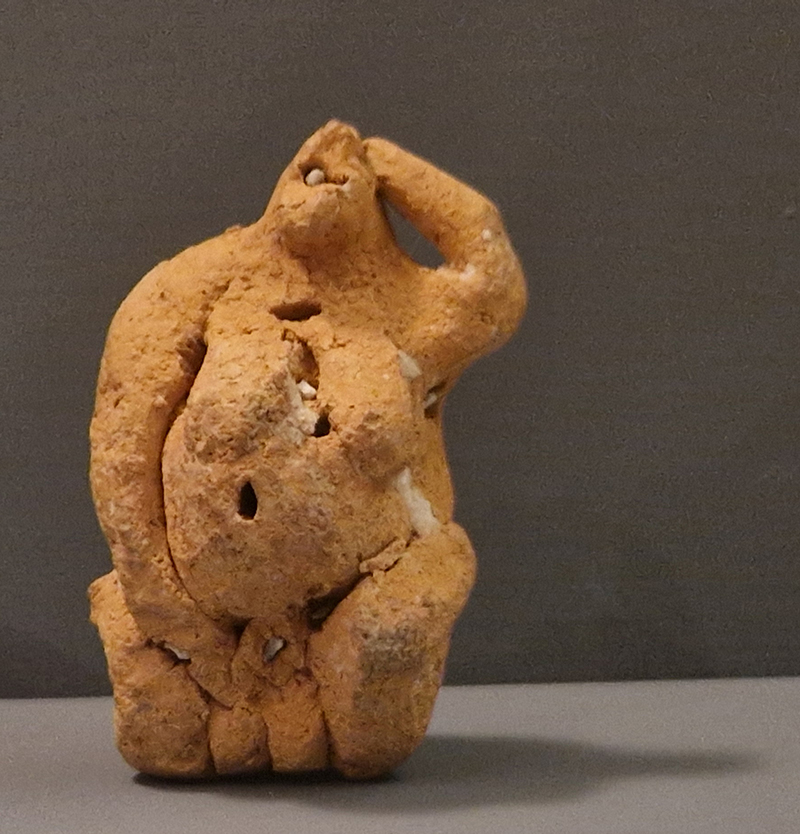
Also at the museum is the famed clay figurine of a ‘sleeping woman’ discovered in the Hypogeum.

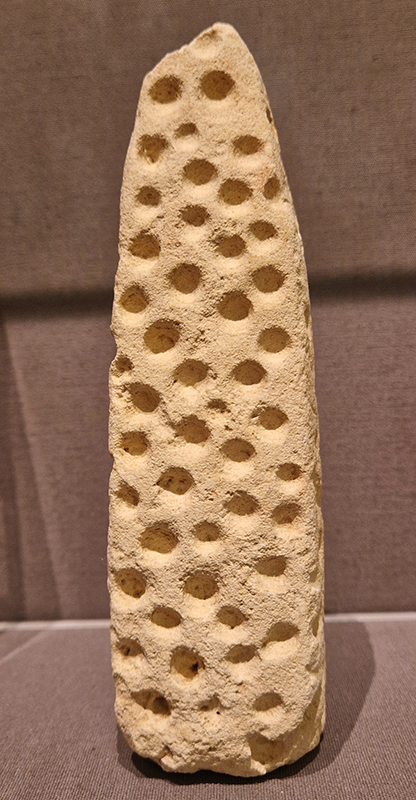
The ancient temples and early artworks hint at past cultures we have no way of understanding.

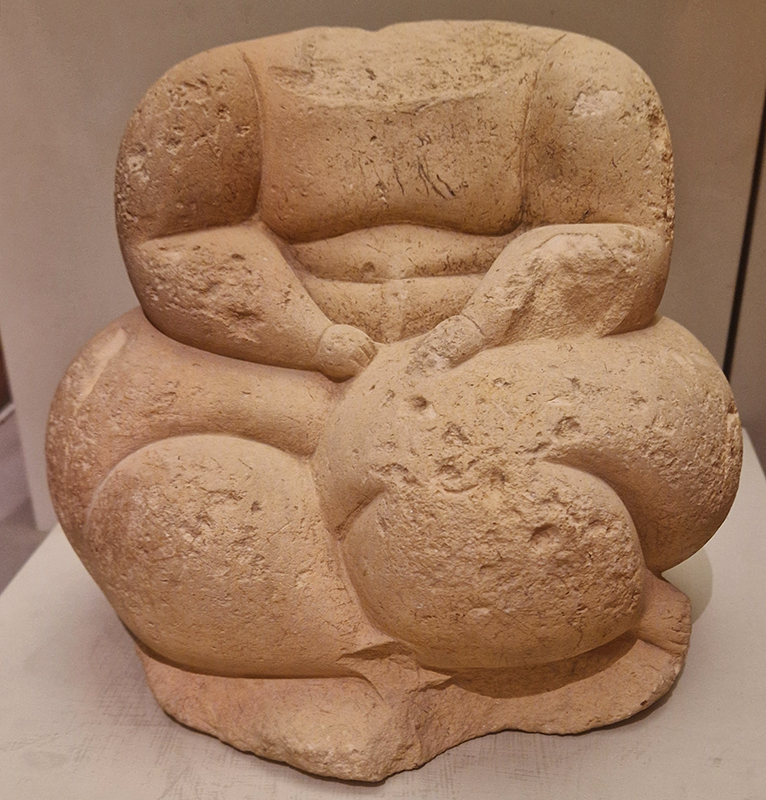
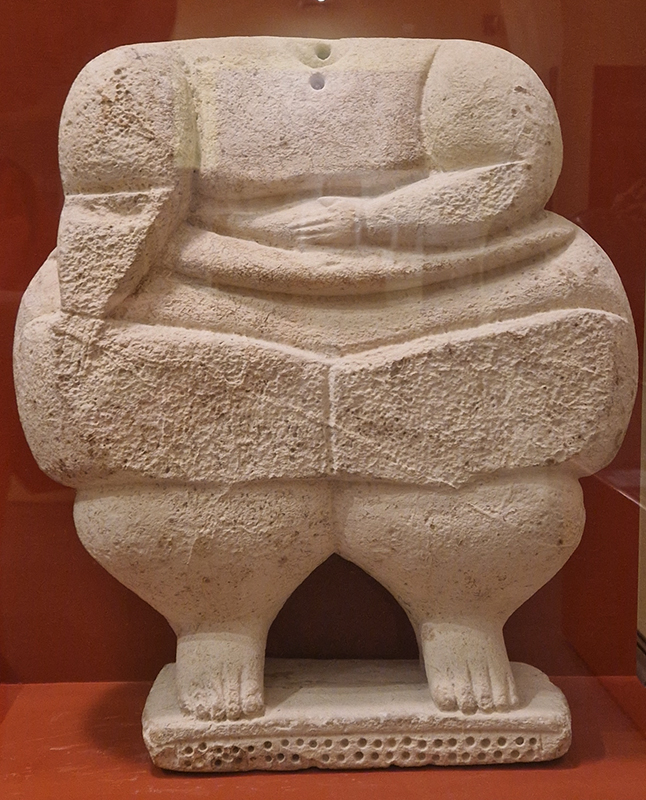
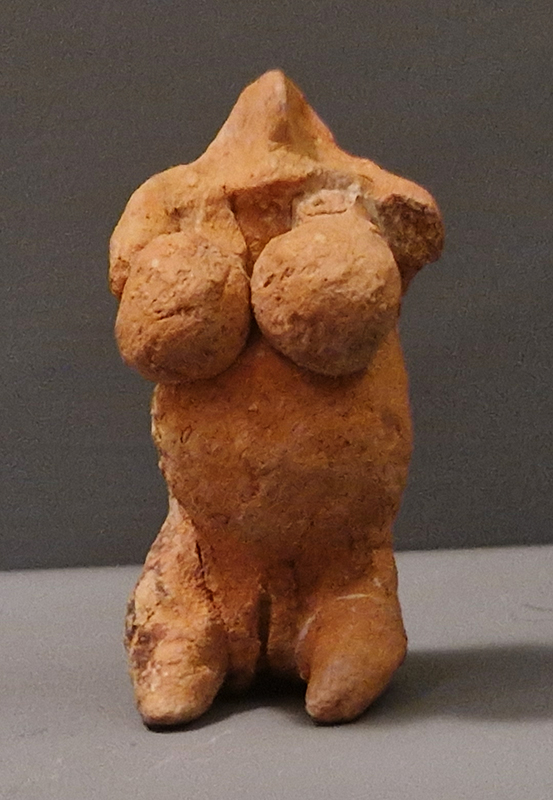
Many figures were found at other temple sites. Although some figures are female and there are many phallic figures, it is not clear of the gender of the ‘fat’ figures some of which appear to allow for interchangeable heads.

The Tarxien Temples complex of megalithic monuments with intricate stonework date to approximately 3150 BC.

In about 3850 BC new settlers arrived, also farming and building temples but after 1,500 years suddenly disappeared from the landscape. New research using carbon dating, pollen from earth cores, tree ring and human bone analysis, and the location of sediment embedded molluscs, suggests a society battling with soil erosion from felling all the trees, subsequent dietary deficiencies, and a major climate catastrophe around 2350 BC, possibly a dust cloud from volcanic eruptions, which may have led to their ultimate demise.

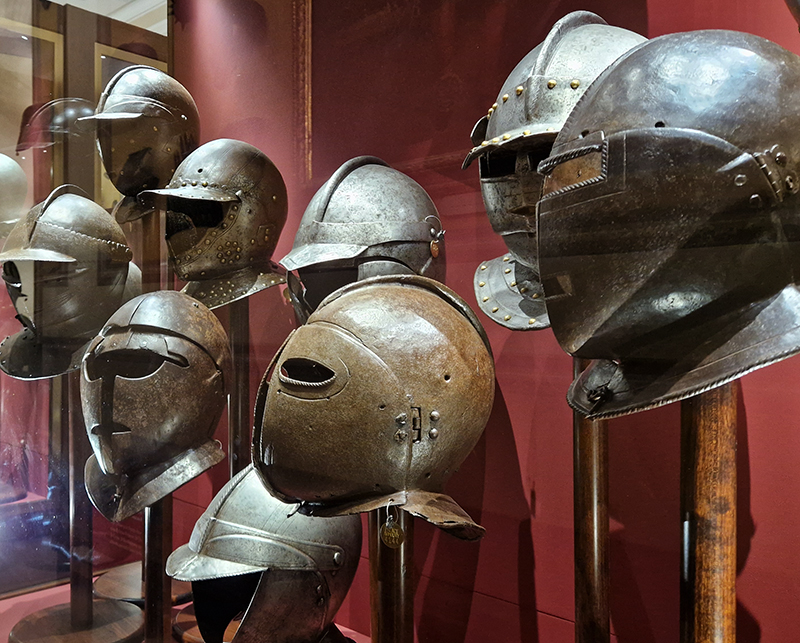
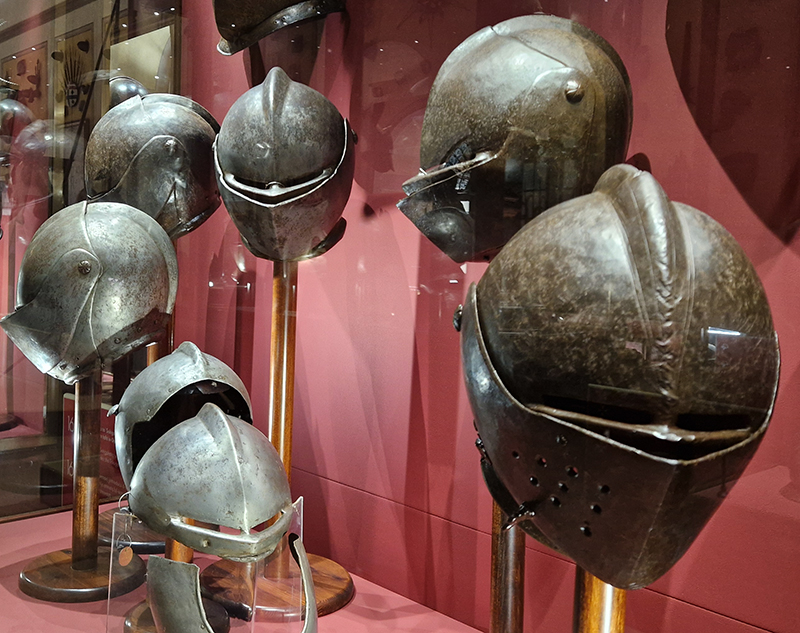
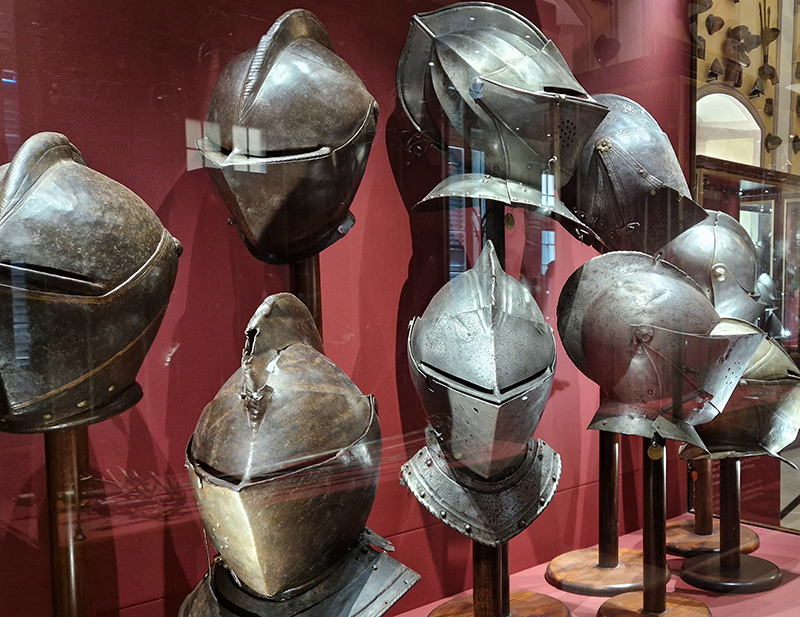
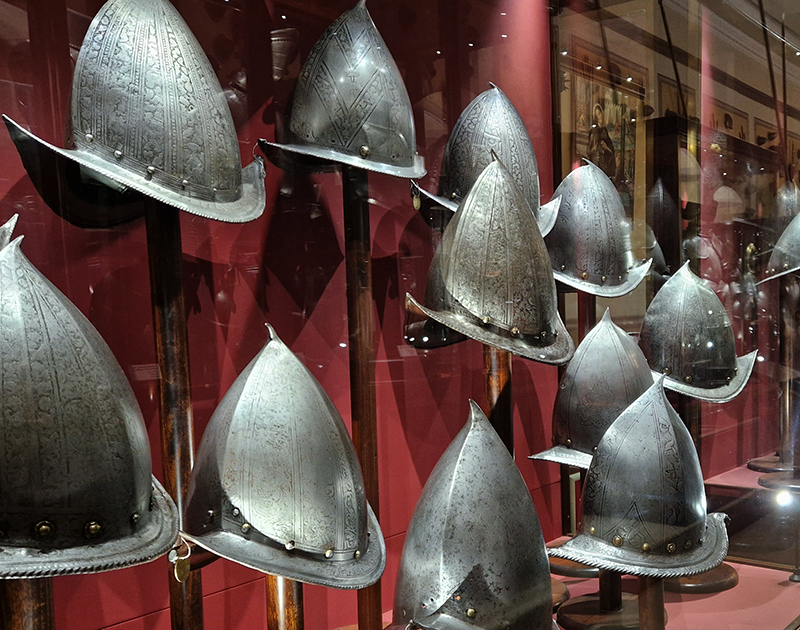
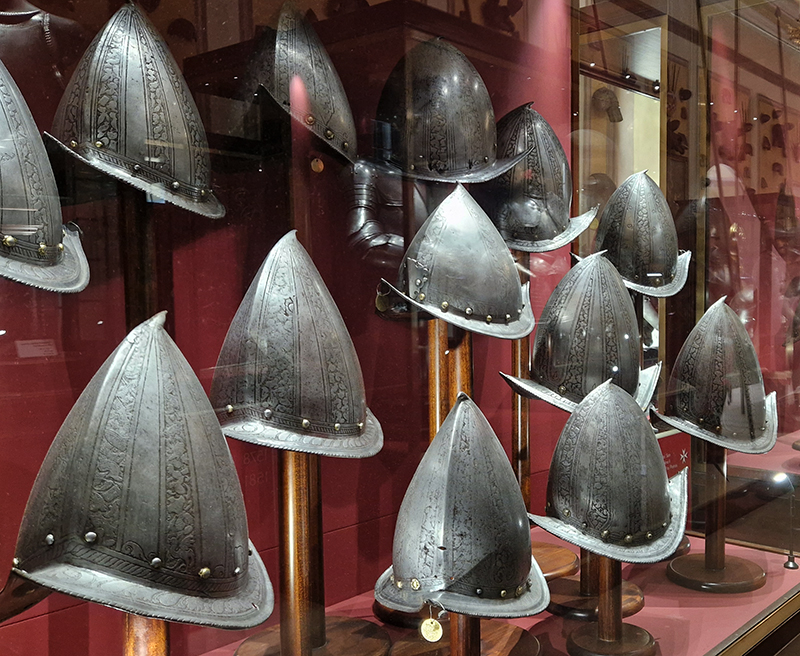
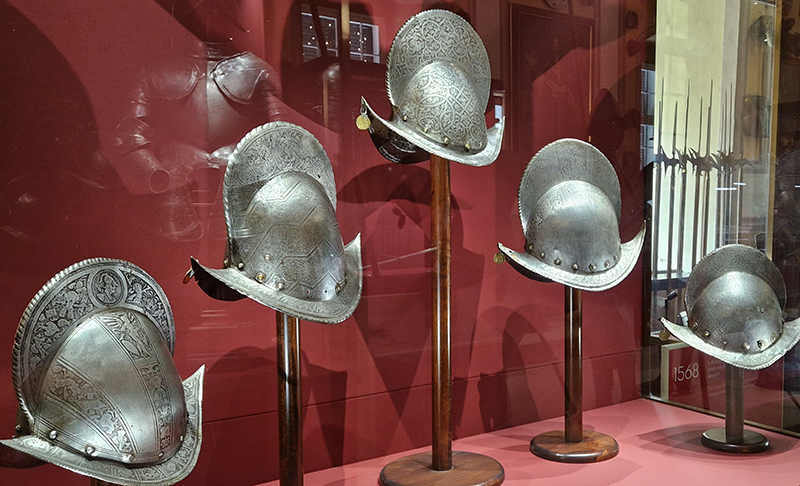
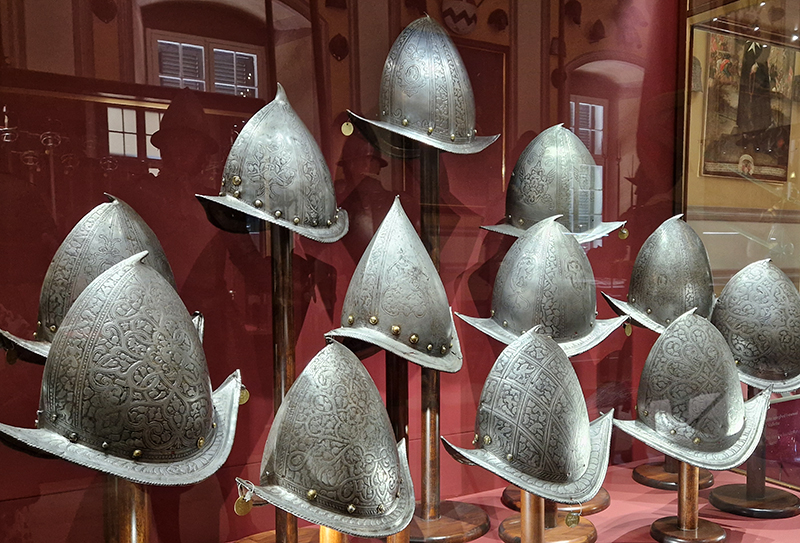
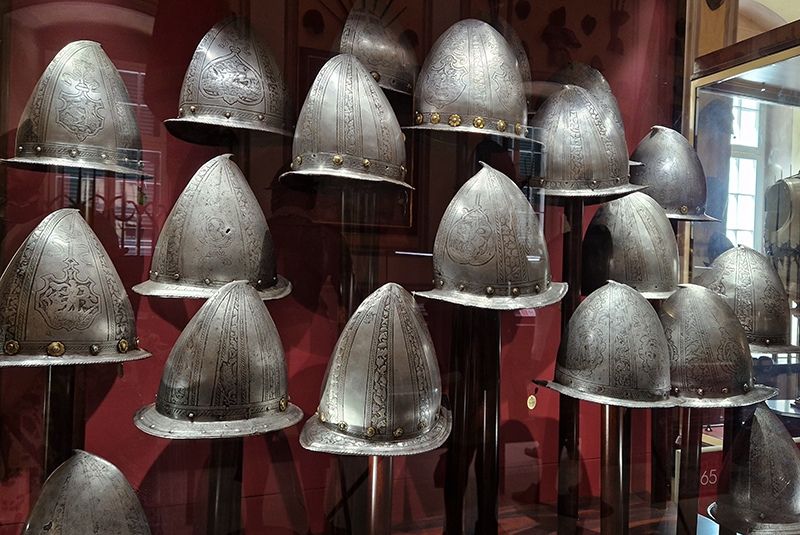
Malta suffered so much war, stretching back hundreds of years, war after war, so many wars, so depressing. A colossal amount of armour, some so intricately detailed, is held at the Grandmasters Palace Museum.

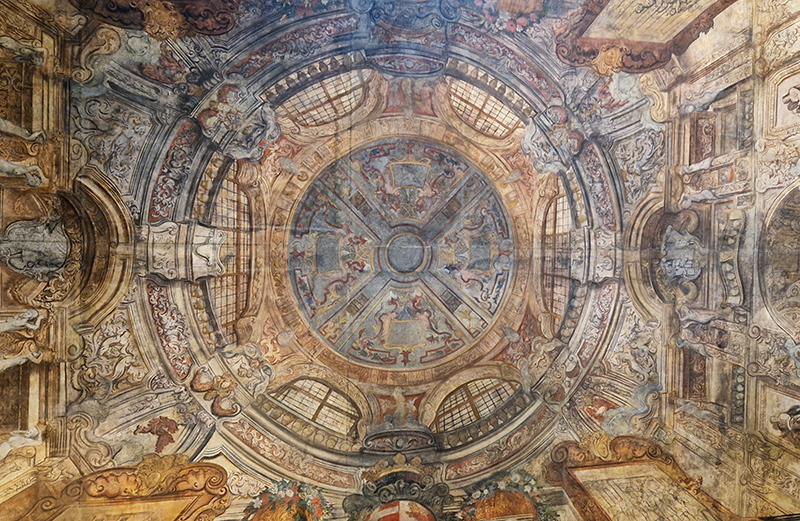
The Phoenicians arrived in Malta around 870 BC from Lebanon, and Malta subsequently came under the control of the ancient city of Carthage as a strategic trading post right up until the Romans take it in 255 BC bringing with them the Roman Catholic religion. A Cathedral was founded in the 12th century (according to legend it was built on the site where the Roman Governor met St. Paul when he was ship wrecked on Malta) was damaged by a huge earthquake in 1693 and rebuilt in the opulent Baroque style.

St. Paul’s catacombs located outside the walls of the ancient city of Melite is a system of underground galleries and tombs dating from the third to the eighth centuries CE.

The Byzantines of Malta fought off an invading Arab army for many weeks but the capital city of Melite fell in 870AD and all inhabitants were massacred. The city was rebuilt as Mdina by the Muslim conquerors. The Normans invaded Malta in 1091 to little resistance and this paved the way for the reintroduction of Christianity. Next came the Order of Knights of the Hospital of Saint John of Jerusalem, colonising Malta in 1530. The Order of St John was given Malta as a fief for the annual donation of a peregrine falcon, better known as the Maltese falcon. It was kept and trained in a great hall of the Grandmasters Palace where owls, song birds and other exotic birds were kept.

The Knights ran a strong naval fleet and knew the importance of astronomy for navigation. They established an astronomical observatory at the Grandmaster’s Palace. Also a meridian line, inlaid in marble, ran across the floor of one room with a hole in the ceiling above – noon was marked as the sun crossed the line.

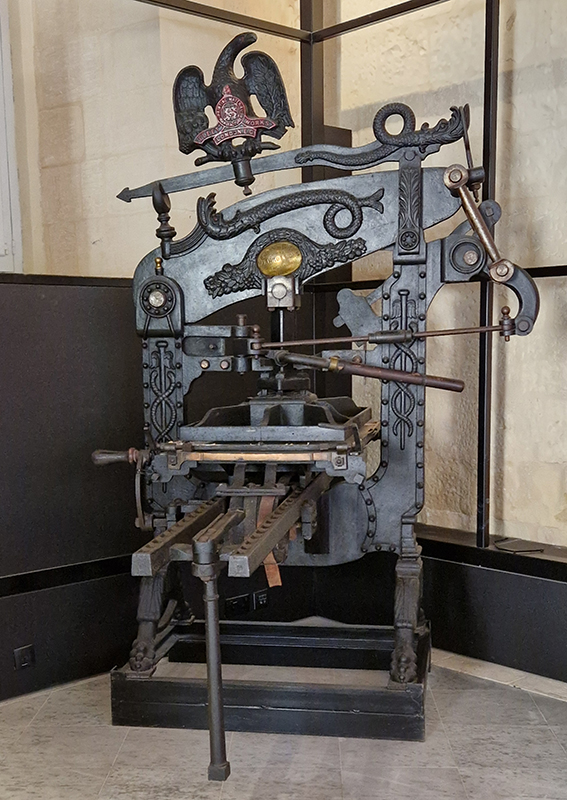
The Order of St John capitulated on the arrival of Napoleon Bonaparte in 1798. During his week on Malta Napoleon abolished slavery and instigated free education but there were other changes not so beneficial to the population and after two years of French rule an uprising led to Malta becoming a protectorate of the British. The magnificent printing press in the administrative hub of the Grandmasters Palace was manufactured by Londoners Harrild and Sons (founded 1809) of Farringdon.

Malta played a vital role providing a strategic location for hospitals during the first world war and was heavily bombed during the second world war. Discontent on British commitment to supporting Malta’s economy and hikes in imported food prices eventually led to riots by the population and came to a head on 7th June 1919 when British troops fired into the crowd, killing four and injuring 50. Relationship souring, Malta finally gains independence in 1964, becoming a republic in 1974.

While in Malta I was reading Cloud Cuckoo Land by Anthony Doerr, a novel that whisks you across time and space as characters inhabit times from the 1453 Ottoman siege of Constantinople to a spaceship escaping future Earth. It resonated with a land whose history is still so present and helped set markers across the centuries to cross reference what was happening in different parts of the world at the same time.

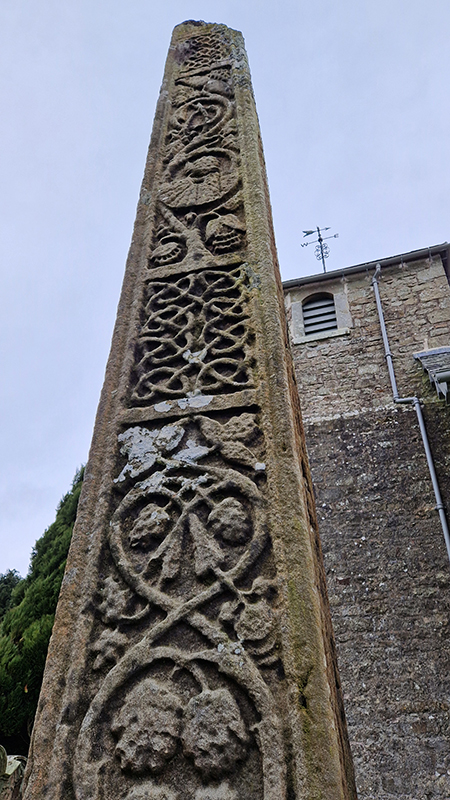
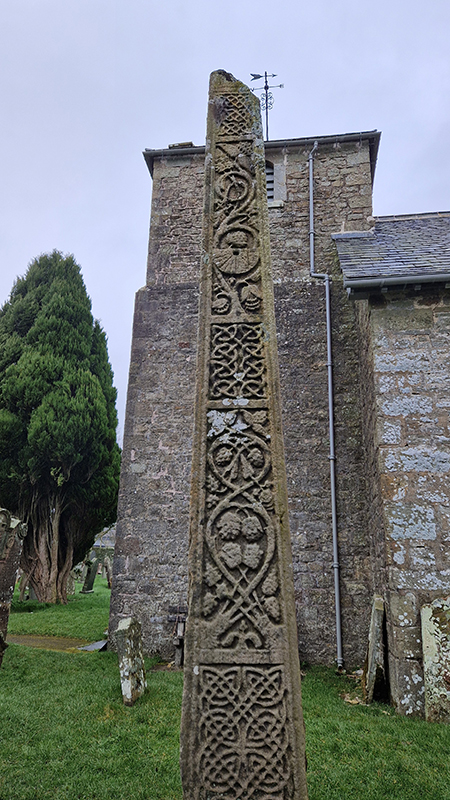
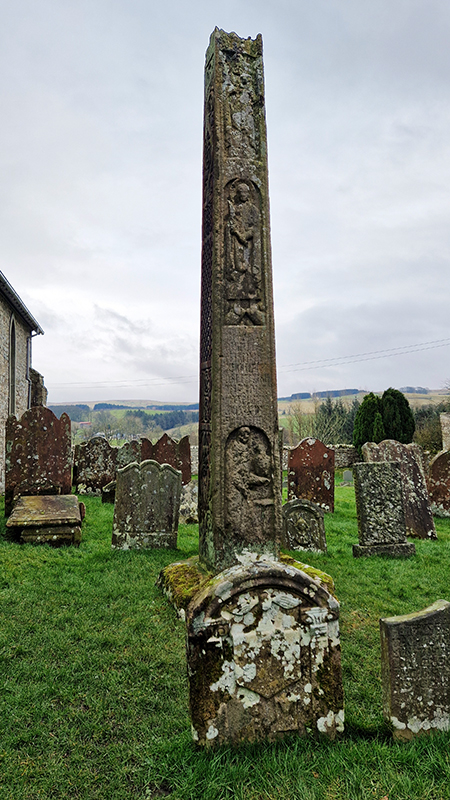
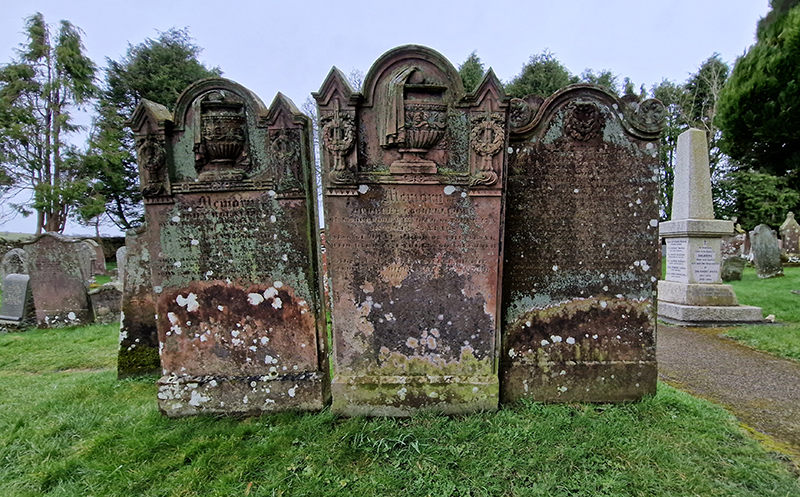
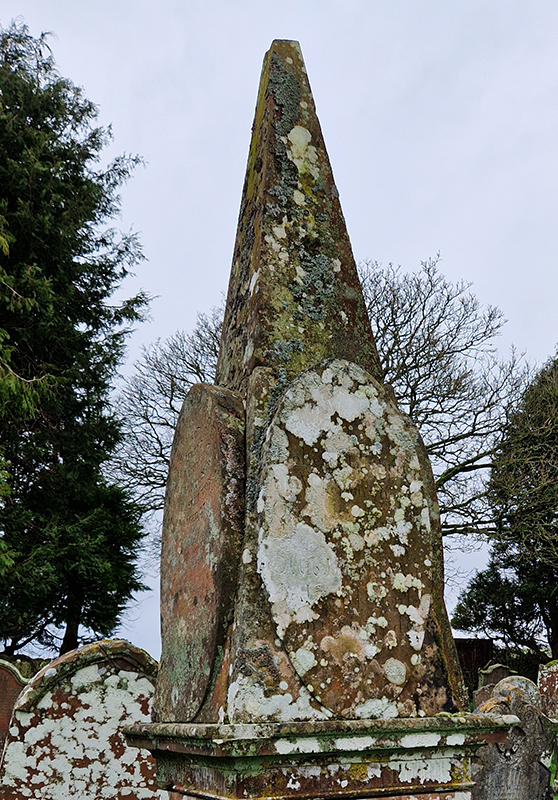
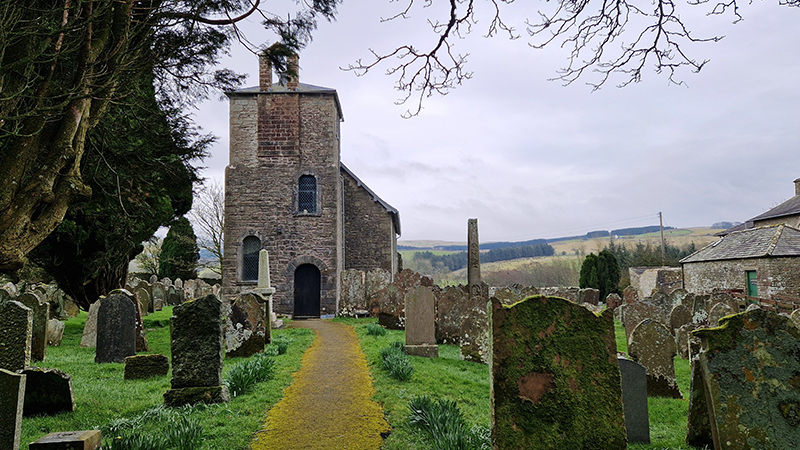
In Cumbria earlier in the year I visited Bewcastle, site of a Roman out post fort. The Anglo-Saxon Bewcastle Cross from the 7/8th century, hewn from a single piece of sandstone stands at 4.5m in the splendid village churchyard of St. Cuthbert’s Church. The head of the cross is missing and the carving very worn but features an intriguing mix of religious and non-religious figures, reliefs and inscriptions in a runic alphabet. The oldest carved sundial in Britain can be seen on the south face of the shaft, this medieval timepiece was carved at a later date, after the cross was erected, and is missing the indicator. From the late 7th century, around when this cross was being commissioned the Byzantines were busy building defence walls around Malta to counter a growing Muslim threat they feared.

Gallery Visits

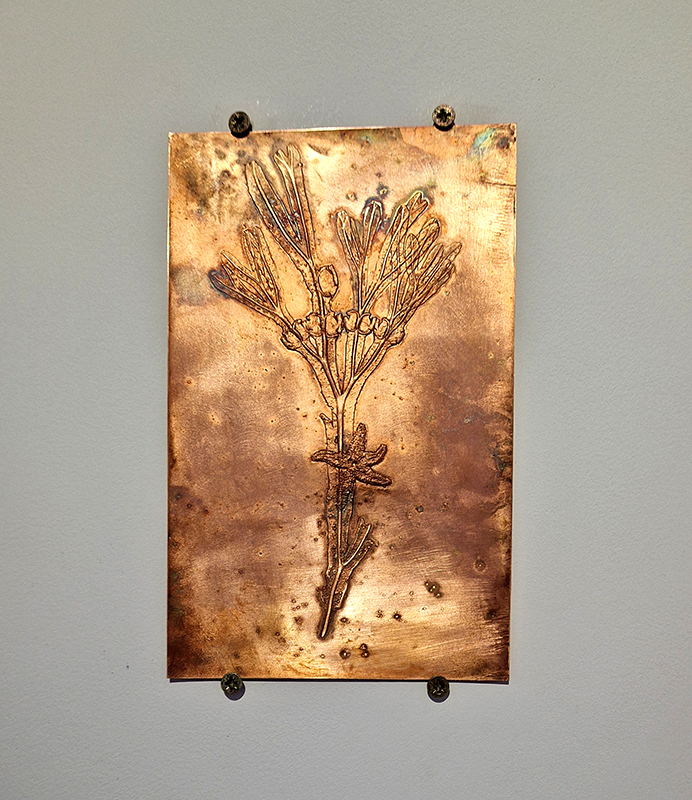
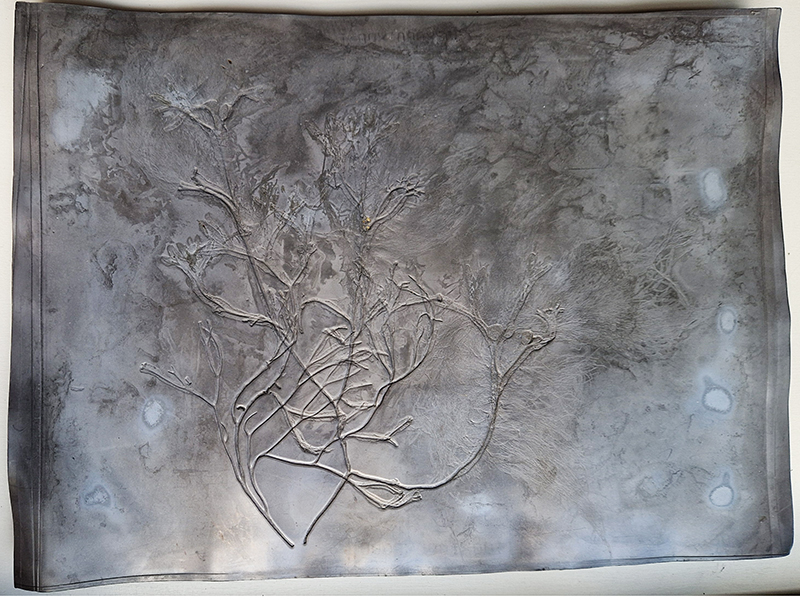
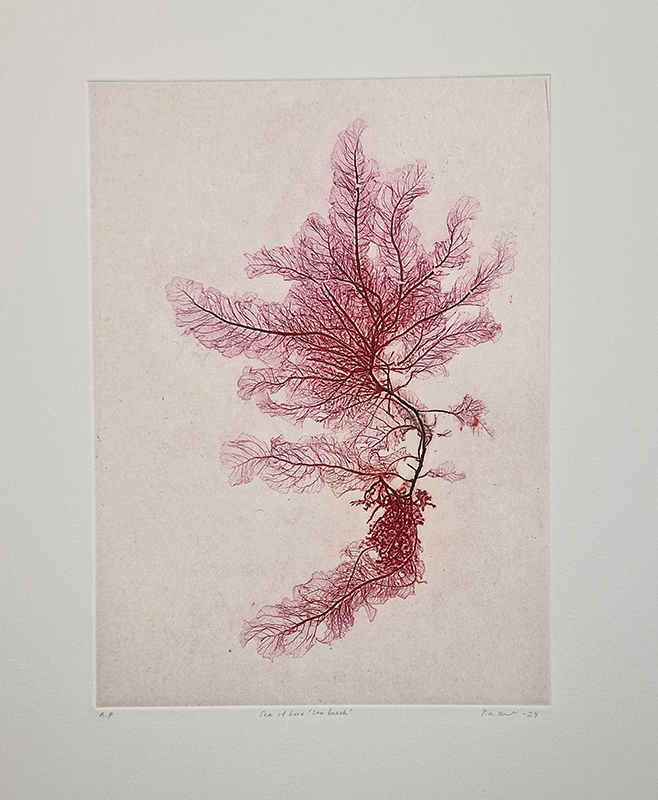
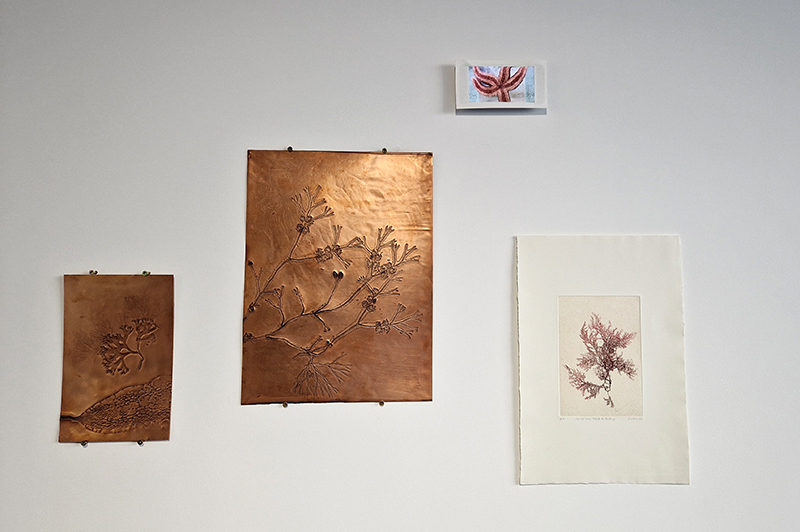
Pia Östlund Sea of Love at No Show Space. Really enjoyed my visit to this beautifully curated exhibition. So nice to have a gallerist take time to talk about the work. The nature printing explored in this show is an involved process of imprinting dried seaweed under pressure between polished lead sheets, taking latex moulds from the imprints which are then made conductive by coating in graphite and electroplated with copper to make a printing plate. Pia Östlund spent two months at BORCH Editions in Copenhagen, working with the master printers on refining the platemaking process of nature printing. Nature printing is an intaglio printing technique from the mid-19th century that makes it possible to make direct impressions of the surface of natural objects.

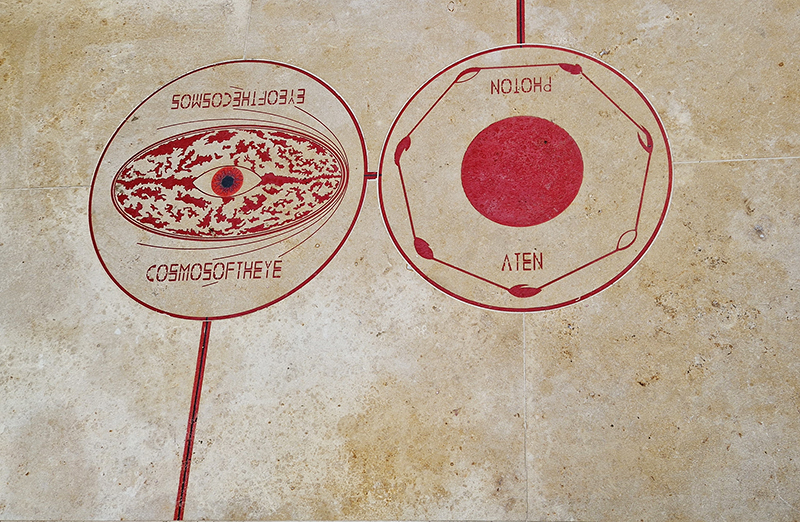
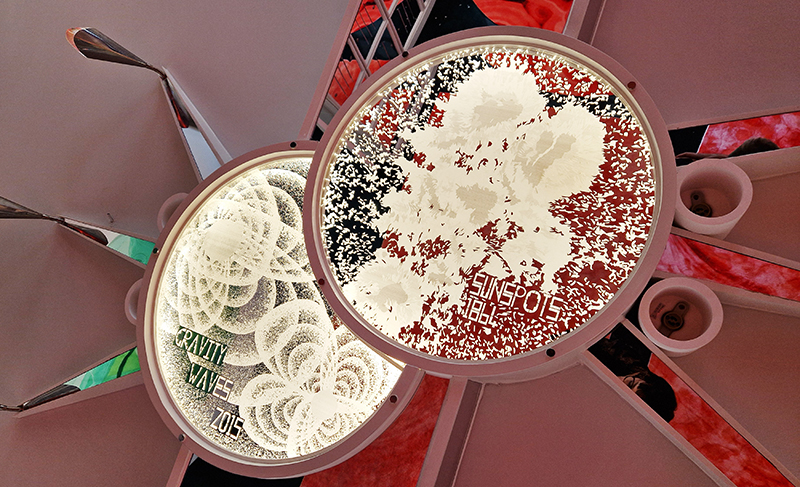
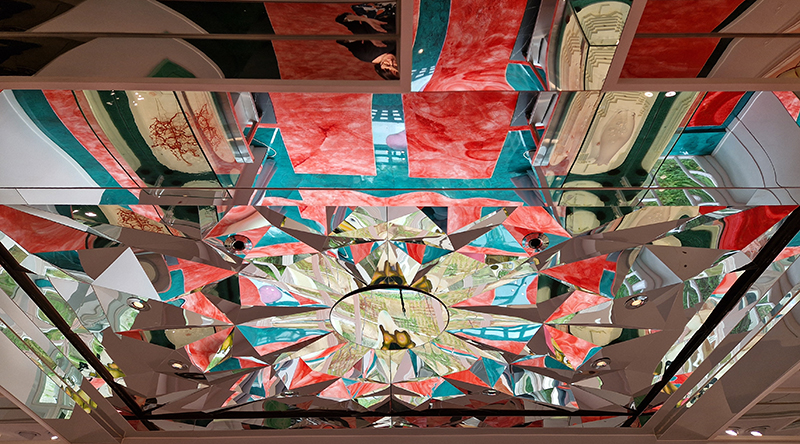
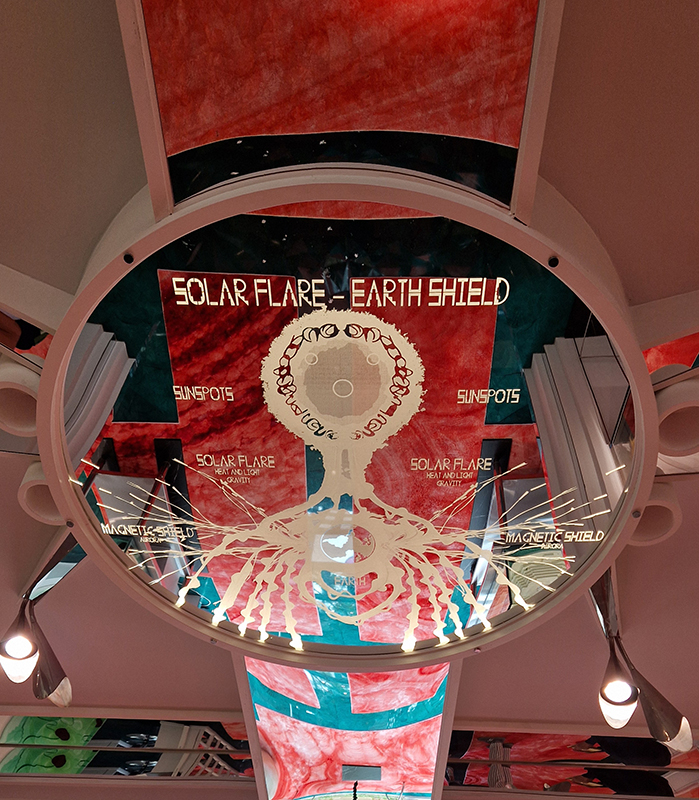
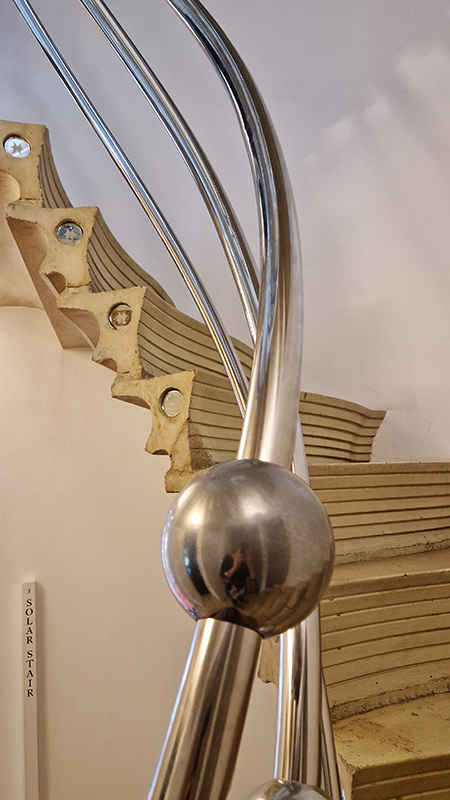
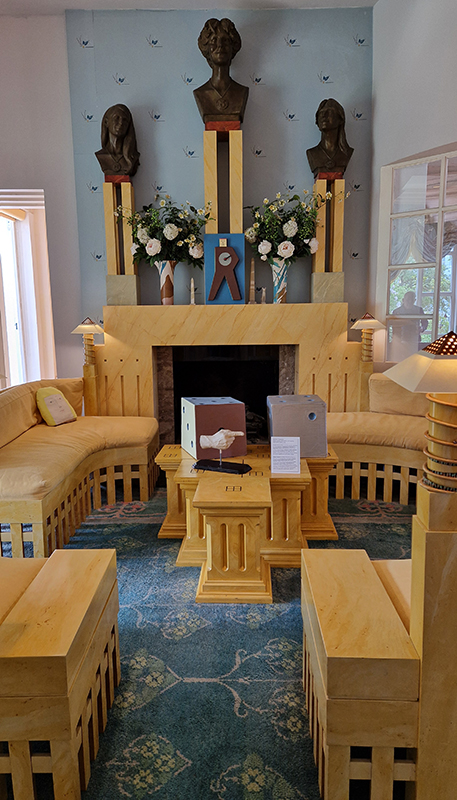
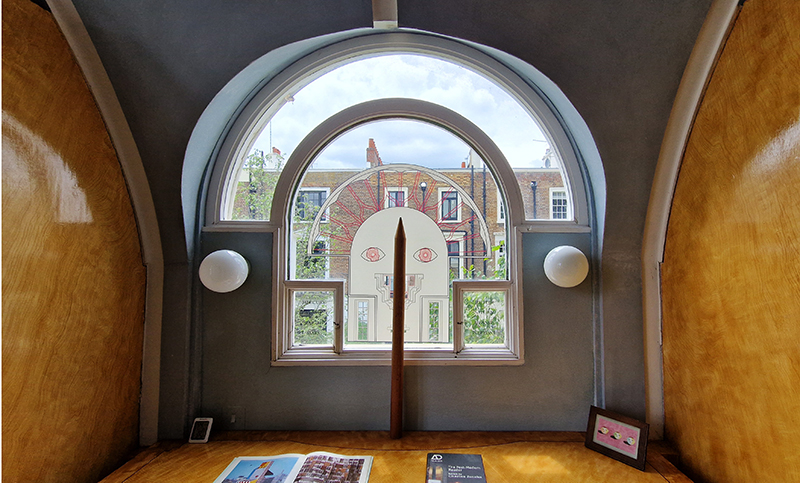
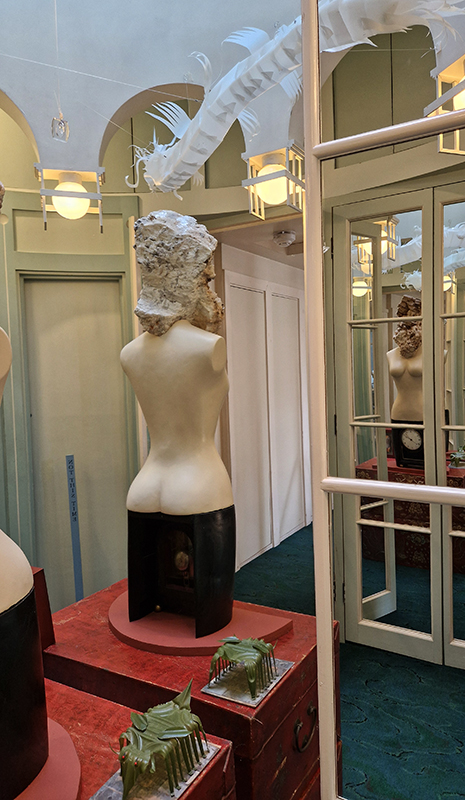
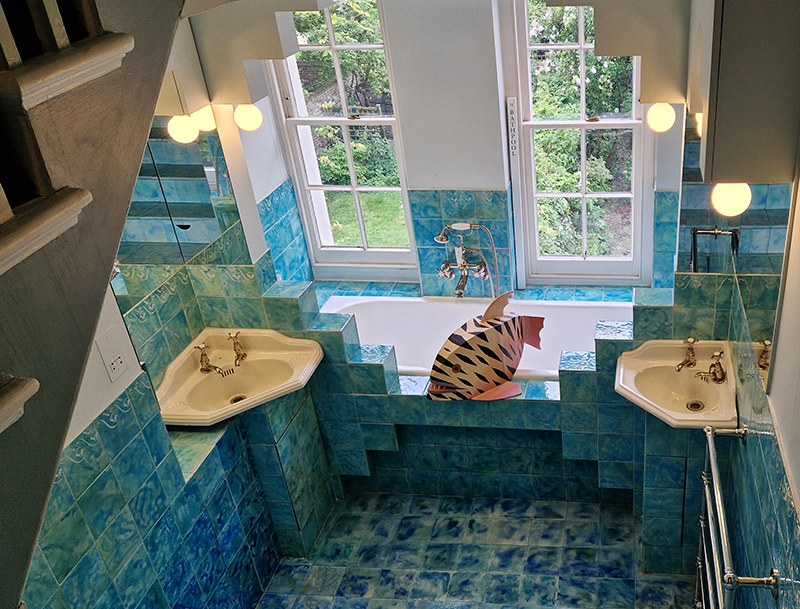
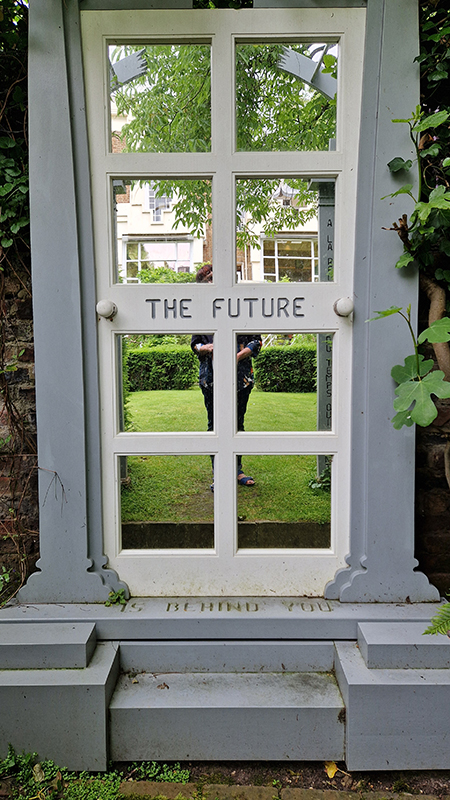
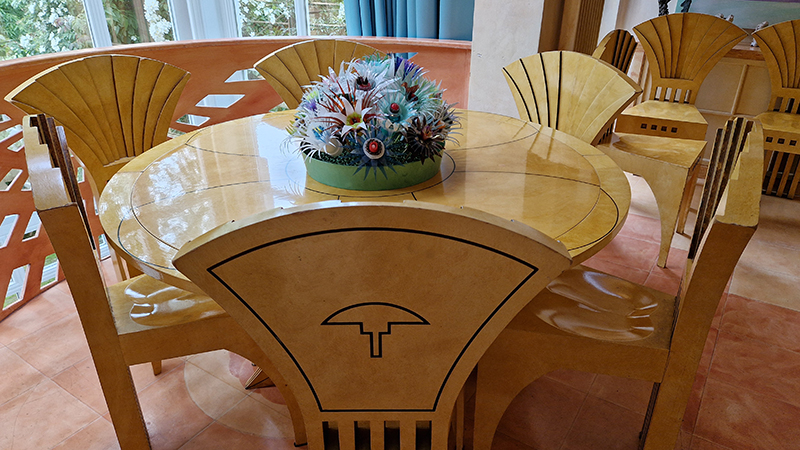
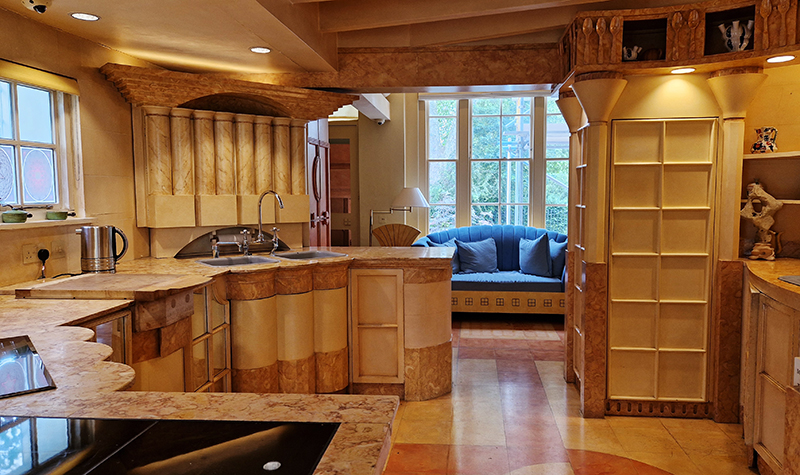
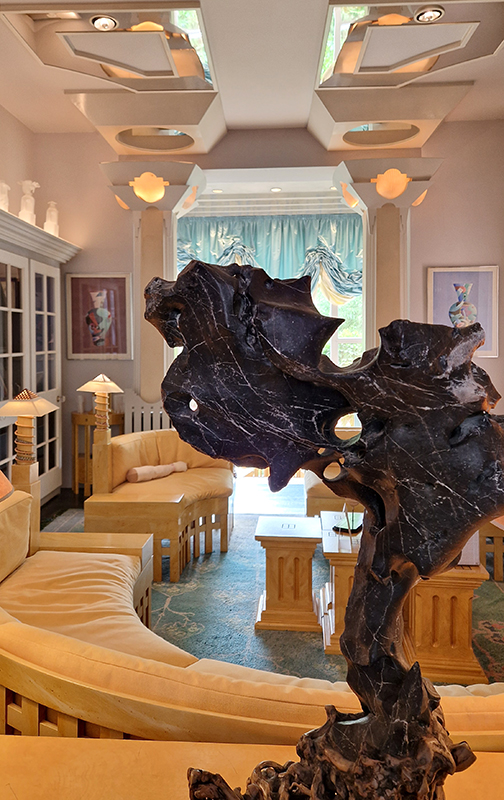
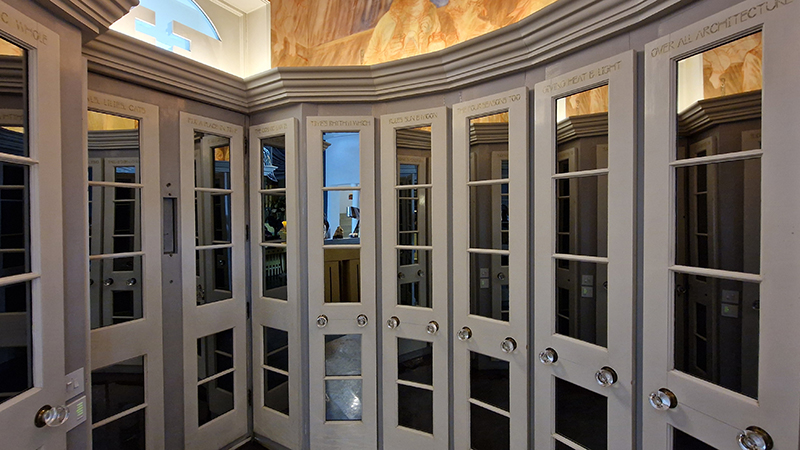
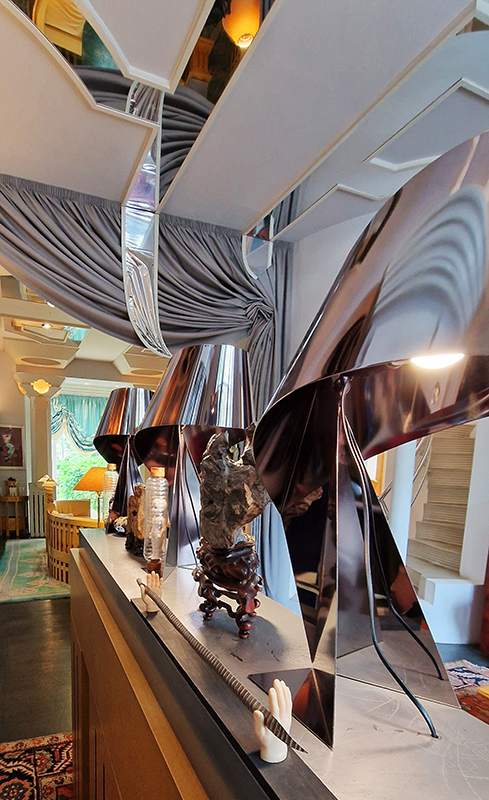
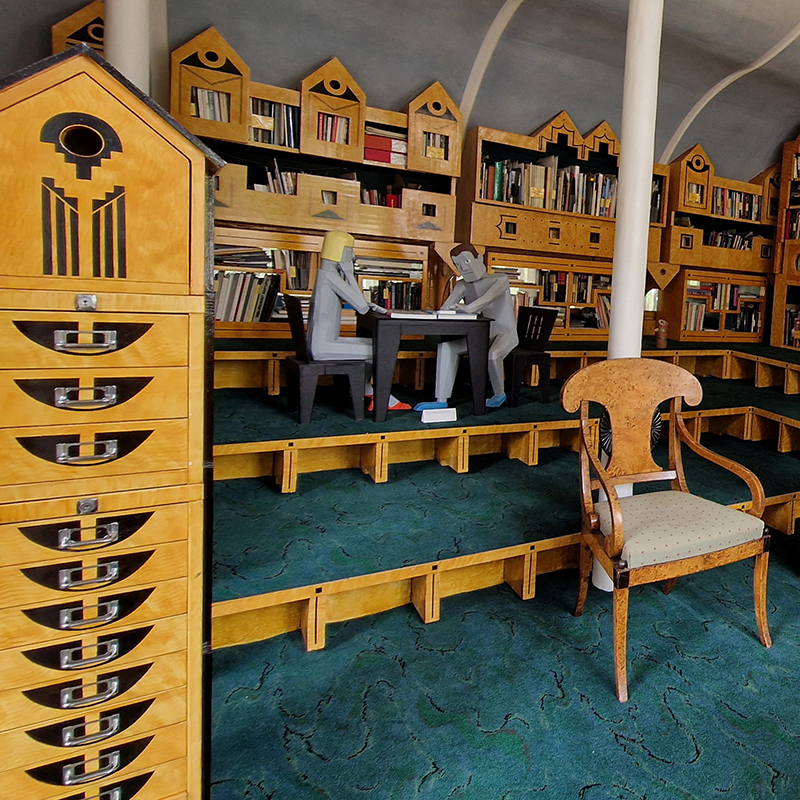
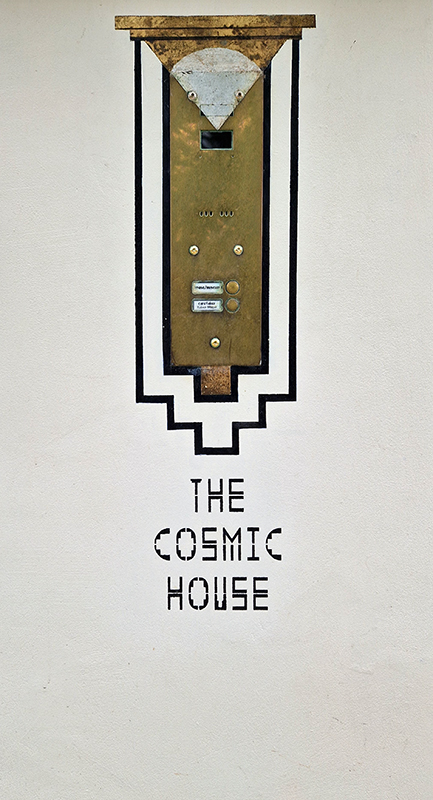
Sensory overload at The Cosmic House, a ‘built manifesto for Post-Modernism’. The original 1840’s residence has been remodelled by Charles Jencks into a complex system of symbols that embrace the creation of the universe, the rotation of the Earth around the Sun, day and night, the seasons, the elements, the understanding of science, and the history of architecture.

It’s like entering a kaleidoscope, mirrors everywhere, shifting perspectives, glimpses through to other spaces, optical illusions, and all saturated with vibrating colour.

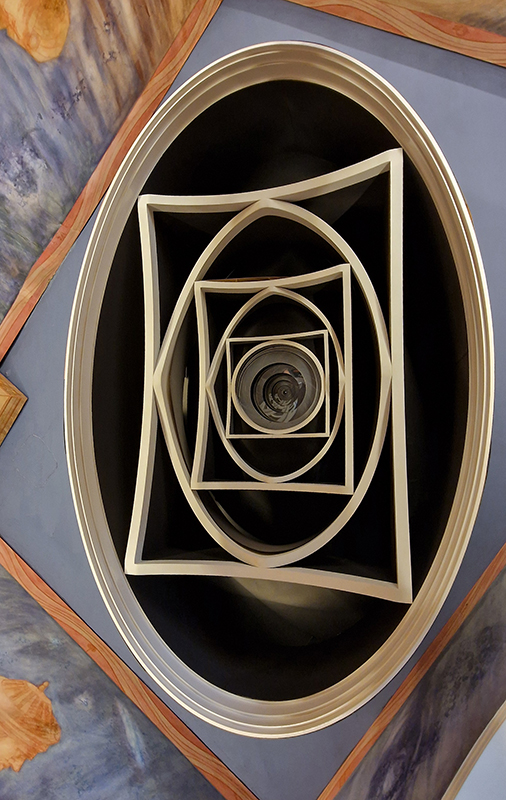
The latest addition to the house is the museum gallery, which Jencks designed but did not live to see completed, with mirrored ceiling plaques on all my favourite things like magnetic fields, solar flares and gravity waves. Amazing place to visit.

There is currently an exhibition THE WORLD TO ME WAS A SECRET: CAESIOUS, ZINNOBER, CELADON, AND VIRESCENT by Tai Shani here whose theatrical colourful works suit this setting.

Delighted to share the news that I have been longlisted for The Aesthetica Art Prize 2024. A live recording of The Breath of Stars will be included in the digital showcase at York Gallery. The Aesthetica Art Prize celebrates contemporary art across a range of media and I’m looking forward to joining the Future Now conference for critical and cultural debate running alongside the art prize exhibition.

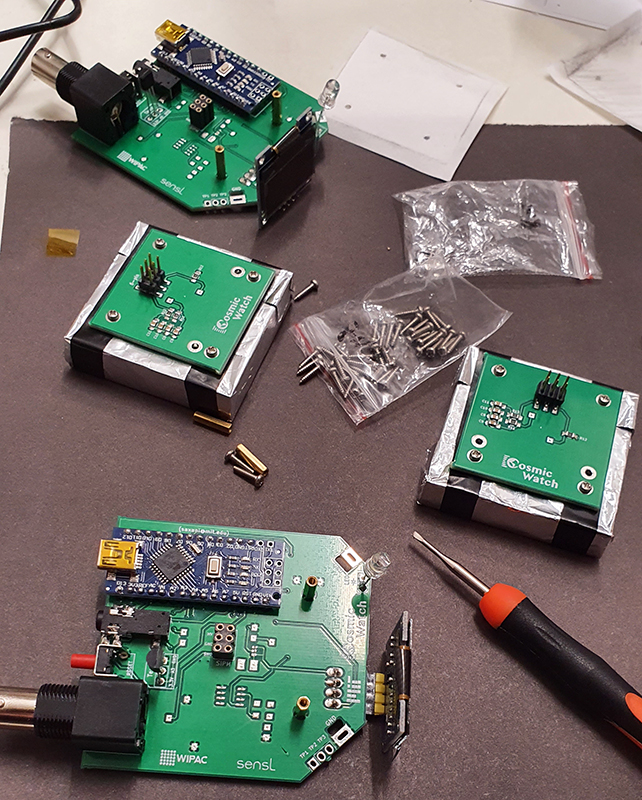
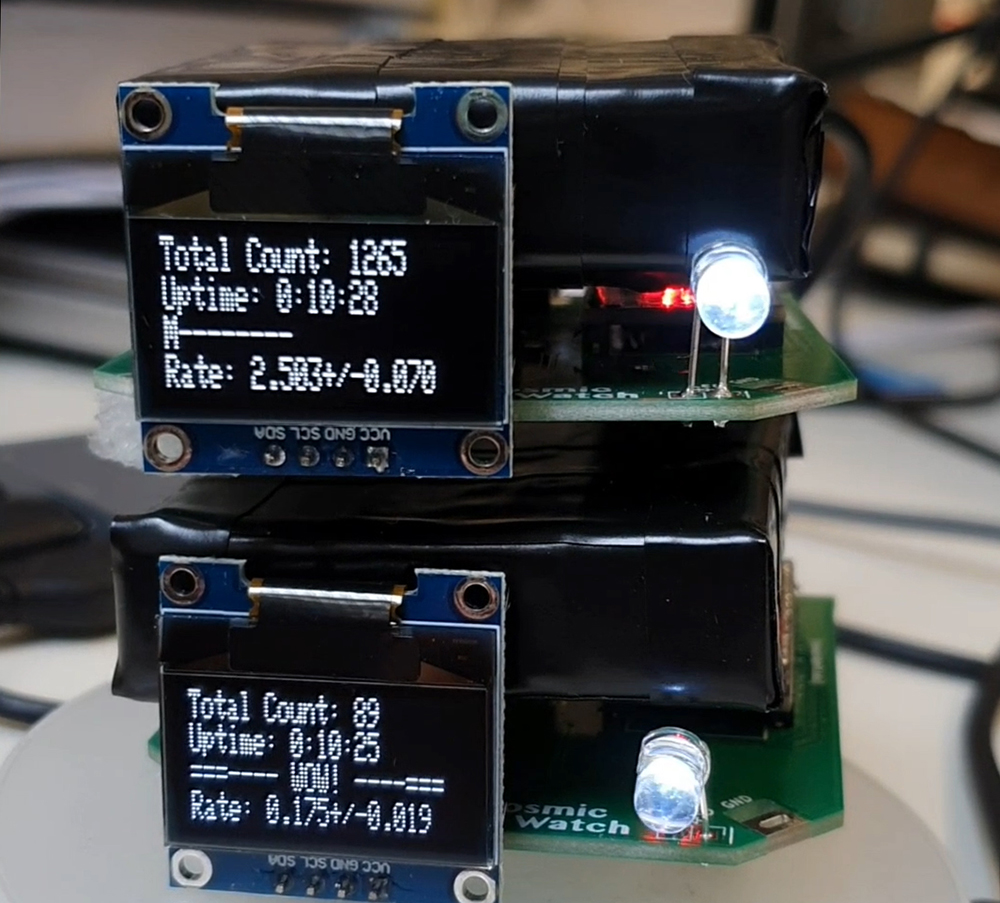
The Breath of Stars (Cosmic ray detectors, mini computers, wooden box (20×20 cm), video projection; live duration) is a digital video work activated in real time by the passage of cosmic rays through a pair of scintillator detectors. Cosmic rays from exploding stars or other extreme events, power across the universe, collide with atoms in the Earth’s atmosphere, break apart, and shower down upon us. Some particles silently interact technology on Earth. In this work, particle detectors and mini computers are connected to a projector. Every time a cosmic ray passes through the plastic scintillator blocks inside the detectors, its energy is recorded, and a starburst video is displayed.

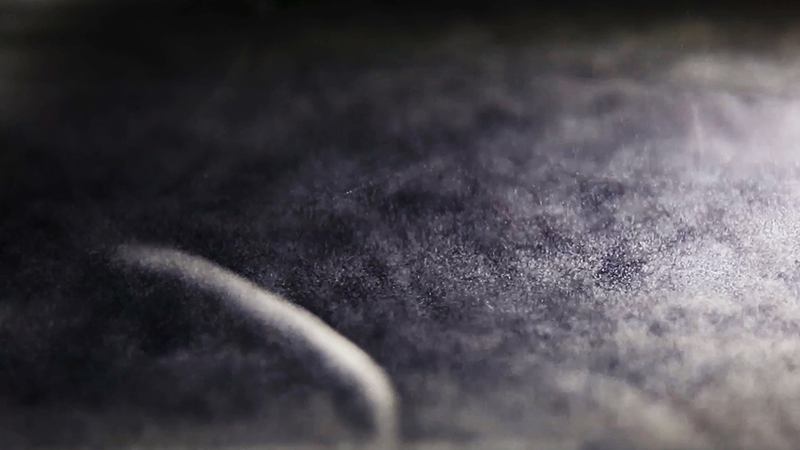
The kaleidoscopic video images that appear are created from mirrored footage of cosmic ray trails filmed during my cloud chamber experiments. Cosmic rays are subatomic  – smaller than an atom – they are protons or the nuclei of an atom which has had its electrons ripped away. We can’t see the actual particles but we can see the trails of condensation they leave behind as they whizz through a cloud chamber.

Cosmic rays arrive at Earth randomly, and this can be witnessed by the sudden flurries and silent gaps of the video imagery. The kinetic energy in just one particle can be equivalent to the energy of a cricket ball bowled by the fastest bowler on the planet  – so much energy squeezed into one tiny particle gives it a huge velocity. Light travels a thousand billion kilometres in one year – a light year – no object with mass can travel at the speed of light but an ultra-high energy cosmic ray would only lag behind the photon by 100th of the diameter of human hair. Most cosmic rays heading for Earth are deflected by the planet’s magnetic field – without this protection, life on Earth, as we experience it, could not survive this bombardment of radioactive matter.

Around 95% of the universe is ‘dark’ to us, formed of unknown and possibly unknowable matter. Phenomenon such as dark matter may be inaccessible to us, but cosmic rays offer a more tangible contact with outer space as they have mass. Although too small to see, we can witness their effects via technology, such as that used in The Breath of Stars, which affords us the opportunity to gaze beyond and between the stars to gain an insight into the structures of the cosmos and imagine what might be hidden in those dark spaces.

I am very excited that Cosmic Chiasmus: crossing the universe is showing at the super brand new Science Gallery Bengaluru in their inaugural exhibition CARBON: under pressure.

Science Gallery Bengaluru (SGB) is part of the Science Gallery International Network pioneered by Trinity College Dublin. The exhibition explores the ubiquitous nature of carbon, its energy history and the potential futures it enables. Given its unique capability to form bonds and compounds carbon is a foundational element of both life and non-organic matter and its properties have been harnessed as fullerenes, graphene, nanobuds, nanotori, nanocones, and nanohorns, enabling the creation of new screens, batteries, ultra-fast computers, ultra-thin sensors and cables of braided nanotubes. Carbon-14 in organic materials serves as the basis for radiocarbon dating, and Carbon-12 was the standard Dmitri Mendeleev used to determine the atomic weights—and now mass—of all other elements. Carbon dioxide is used as the standard to understand and regulate the flow of exchanges between ecology and economy. Industry driven by coal and oil-fired productivity have triggered alarming climatic effects and created a chasm between geo-biological time as shaped by the material memories of the planet and historical time—that shaped by human action. Carbon is an archive of buried sunshine, bridging the divide between substance and phenomena; caught between the finitude of nature’s resources and the near infinite wonderous potential it holds.

Cosmic Chiasmus: crossing the universe offers a glimpse into a subatomic world where cosmic rays travel from distant galaxies to collide and silently interact with atoms and technology on Earth. Cosmic rays are particles that move extremely fast. They are raining down on planet Earth all the time. Although they are called rays they are not like photons, as light is made of, because they have mass, but they do travel at nearly the speed of light. Cosmic rays go through a violent process of creation, transformation and decay. From the heart of stars or the depths of black holes these particles power across the universe with unimaginable energy colliding with life on Earth and triggering other processes such as cell mutation, computer data corruption and carbon-14 formation. Above our heads where cosmic rays collide with atoms in Earth’s atmosphere radioactive carbon-14 is formed. This radioactive carbon-dioxide in our atmosphere is absorbed by plants and enters the food chain. The radiocarbon decays while an organism is alive but is continually replenished as long as the organism takes in air or food. When an organism dies no more Carbon-14 is absorbed and that which is present starts to decay at a constant rate. By measuring the radioactivity of dead organic matter, the carbon-14 content can be determined and the time of death established. Cosmic ray activity gives us carbon dating techniques. It is an incredible journey that cosmic rays make, blasted across space, spiralling along magnetic field lines to end up entangled with carbon in our bodies.

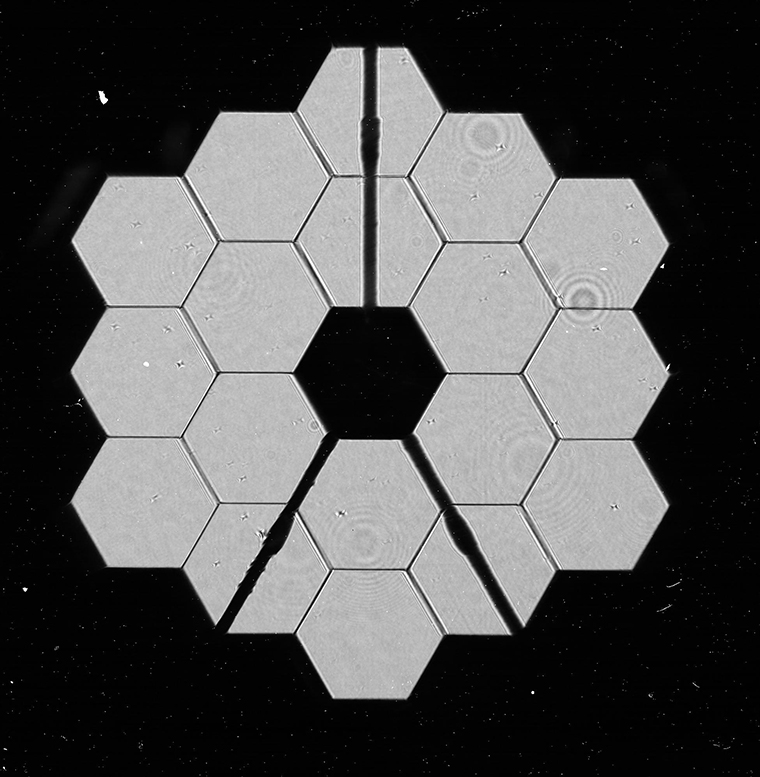
The James Webb Space Telescope selfies of its own light searching mirrors shows cosmic ray activity impact. Space weather can have serious implications for technology. Satellites are particularly vulnerable. and can be sent off-orbit or suffer electrical interference. The satellite population orbiting Earth has more than doubled since 2020, and with more satellites launched in the past year than during the first thirty years of the Space Age, reliance on this technology is increasing at a rapid rate.

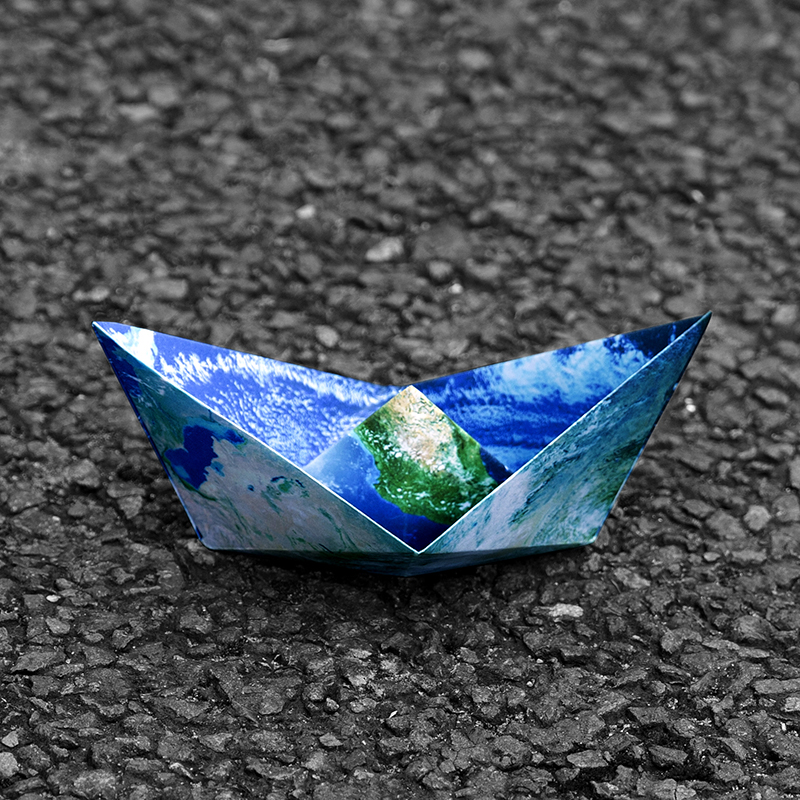
I am making new work looking at information insecurity caused by space weather for an upcoming group show at APT Gallery which takes the lifeboat as a metaphor for precarity. Participating artists: Rachael Allain / Caroline AreskogJones / Beverley Duckworth / Liz Elton / Susan Eyre / Kathleen Herbert / Kaori Homma / Anne Krinsky.   

Life Boat brings together artists with a shared interest in exploring precarity as a site of dynamic transition. Each takes an investigative approach to the environmental, social and historical themes evoked by the lifeboat, as a means of addressing ecological crisis, liminal landscapes, close and distant horizons, boundaries and displacement, lines of rescue, navigation and transformation.

“How do you calculate upon the unforeseen? It seems to be an art of recognizing the role of the unforeseen, of keeping your balance amid surprises, of collaborating with chance, of recognizing that there are some essential mysteries in the world and thereby a limit to calculation, to plan, to control.” Rebecca Solnit, A Field Guide to Getting Lost

Gallery Visits

Tania Kovats as above so below at Parafin. She says: ‘I make drawings more than I draw drawings.’ There is something captured in the simplicity of her work, a haptic viscerallity that is very emotionally stirring.

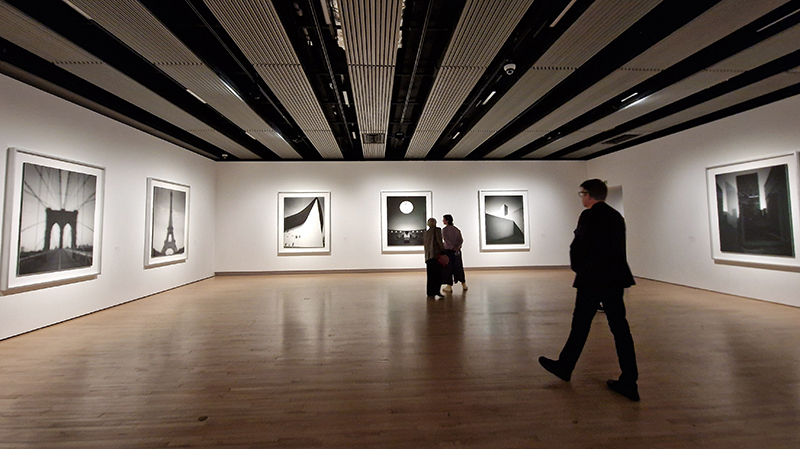
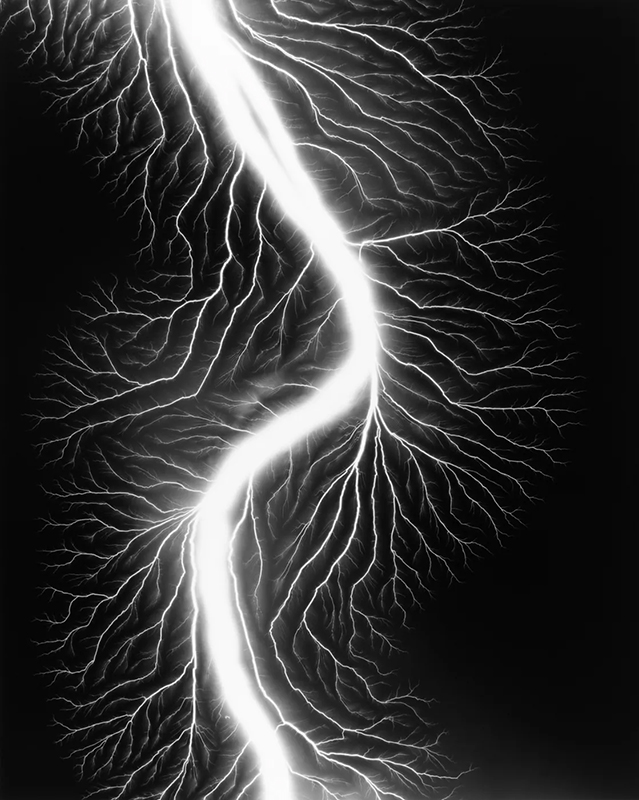
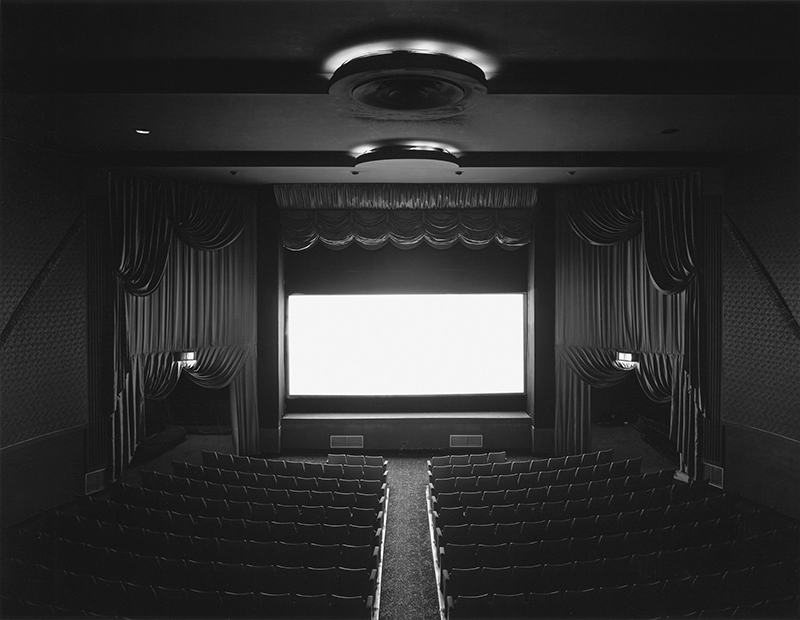
Hiroshi Sugimoto: Time Machine at Hayward Gallery. Beautifully crafted, astonishing work. Hard to believe his models are waxworks or museum taxidermy dioramas, not living subjects and that it is his studied use of light that so cleverly activates his images. I particularly like the Theatres series where he set his camera on an exposure equal to the length of the film being projected into an otherwise dark and empty cinema. The resulting images of a blinding white screen bleeding light like an opening to heaven are remarkable records of passing time. I also loved the work stemming from his interest in mathematics and optical sciences and his experiments with different electrical discharge tools. Sugimoto discovered that he could produce shapes that looked like amoeboid organisms, so he set out to recreate the conditions of the ocean from the time that life began. Using rock salt from the Himalayas (today’s mountain range was once the ocean floor), he mixed his own primaeval seawater. Submerging electrically charged film into the water, the artist was amazed to see light particles move across the surface like microorganisms.

SEISMIC: ART MEETS SCIENCE at GIANT Gallery, Bournemouth, a collaboration with SEISMA Magazine curated by Paul Carey-Kent who was leading a tour of the works when I visited. Artists: Uli Ap, Edward Burtynsky, 0rphan Drift, Peter Matthews, Claire Morgan, Elpida Hadzi-Vasileva, Lisa Pettibone, Shuster + Moseley, David Rickard, Troika. Scientists from corresponding fields of interest are called upon to comment on the work of the curated artists. I was curious to see David Rickards Cosmic Field (3.7mHZ) – a commission by Seisma magazine – which sees cymbals clash when a cosmic rays passes through a hidden Geiger counter. Unfortunately, I didn’t get to witness the full effect as the detector mechanisms hadn’t been charged up, and so only one cymbal was responding with an occasional clash. There are some clever maths in the title and references to John Cages silent composition and the oscillations of the sun. I would like to have learnt more about how the Geiger counters can be sure they are recoding cosmic rays and not just background radiation. It was interesting to read about how stars have sound trapped within and resonate at natural frequencies, like waves inside a wind instrument. Astrophysicist Dr William Chaplin refers to this process as gentle breathing which can be seen in periodic changes in brightness as the stars breathe in ( compressed and bright ) breathe out (relaxed and darker). Other work in the show included Lisa Pettibone’s Truth to Illusion a screen that appears to show a digital undulating image is revealed through a peep hole to be caused by a rotating light and glass mechanism. Light can reveal and mislead in the quest for an understanding of reality. Jewell of Space by Claudia Moseley and Edward Shuster is a mesmerising moving sculpture of light refracting and scattering across a constellation of glass, shadowing the lensing effects of light across the galaxy. Clare Morgan’s Heart of Darkness – a grid of bluebottle flies – a comment on complexity in a system and the importance of each individual to create a whole. Elpida Hadzi-Vasileva’s animal organs given new context – the body turned inside out (cow’s stomach) – the unseen revealed (lamb intestine).

The Accurate Perception Available When Our Eye Becomes Single at The Cut, Halesworth, Suffolk. A lucky chance to see another iteration of this impressive collaboration between Richard Ducker (video) and Ian Thompson (sound). This atmospheric multi-screen installation transports you to the remote otherness of Orford Ness with its innate aura gained from status as a top secret military site and atomic development centre of the 1950’s.

Holding Cosmic Dust: An Almanac, a video installation at The Swiss Church in London by Hot Desque. I enjoyed their previous theatrical inspired installation at Thames-side Studios Gallery where lighting played a key role in creating atmosphere. Again lighting was key, this time very low lighting meant identifying friends at the event was unpredictable. This installation is partnered with an intervention within the permanent, archaeological collection of the Corinium Museum, in Cirencester, positing a speculative archaeological dig in which a matriarchal society is uncovered. The installation draws out connections between archaeology, history and fantasy. There was in conversation with historian Frederika Tevebring about the speculative nature of archeology and evidence of matriarchal societies, but due to challenging acoustics and lighting much of this fascinating talk was lost. I would have liked to hear about the cosmic ray connections. Was it to do with Carbon dating? Participating artists: Holly Graham, Rubie Green, Rebeca Romero, Amba Sayal-Bennett, Abel Shah and Suzanne Treister.

Reading

All The Light We Cannot See by Anthoney Doerr. An extraordinary evocation of the depths of human tenderness and cruelty and the power of knowledge. This is a beautifully written fiction spanning the decades from the 1930’s into the 21st century when advances in radio technology went from a being a source of public information and enlightenment to a weapon of war. Through the wonder of the young protagonists in discovering the magic of radio transmissions, the author also stirs in the reader a reminder that it is invisible waves crisscrossing our world, carrying information vast distances, across political and geographic boundaries. I loved this book.

The Future of Geography: how power and politics in space will change our world by Tim Marshall. Clear and accessible writing takes the reader through the history of the space race to the ubiquity of orbiting satellites and on to the era of astropolitics, military strategy and the battle for future resources. The stakes are high.

Entangle: Physics and the Artistic Imagination edited by Ariane Koek, written in conjunction with an exhibition at Bildmuseet in Sweden. The book is filled with fascinating essays from both artists and scientists giving personal perspectives on their interest in and interaction with particle physics. The importance of an open imagination, the thrill of the unknown, the quest for knowledge that may never be accessible, are relevant to all participants. The common ground between art and science, and the benefits to both fields of joint conversations, is increasingly being acknowledged. Scientists offer the abstract theories, controlled experiments or new technologies that feed artists imaginations, throwing up new questions for both to consider and relate to the human experience.

Watched the deeply moving film by Werner Herzog, The Enigma of Kaspar Hauser – a fictionalised documentary of a teenager suddenly released from an existence of inexplicable confinement chained in a cellar with no human contact other than his captor. The film follows the internal struggle of Kaspar as he is subjected to the demands of society, and take on the current belief systems of the Church. His confusion at the world and despair at how much he doesn’t understand is an allegory for the limitations of human knowledge. The film spotlights the failure of logic and science to provide answers to the human condition.

‘A stone sky rotated above our heads’ – Italo Calvino, Cosmicomics

The culmination of two years work – A STONE SKY duo exhibition with Julie F Hill opened at Thames-side Studios GalleryReimagining the idea of an observatory – the exhibition proposes a cavernous realm of real and speculative possibilities that arise from beyond the limits of human perception. Engaging with the extended sensory range offered by technologies such as orbiting space telescopes through to the ability of birds to ‘see’ the Earth’s magnetic field, the artists’ reveal intimate connections between earth and space.

Installation shot by Ben Deakin Photography.

Susan Eyre seeks to navigate a path across time from the first human encounter with the magical qualities of the lodestone to current understanding of the interaction of the magnetic field with terrestrial life. Her works respond to the architecture, instruments and materials, found at a magnetic observatory while scientific objectives are expanded to include natural navigation techniques and extra-sensory methods used by the non-human realm, to form the basis of speculation as to the ability for humans to perceive the Earth’s magnetic field. Installation, sculpture and moving image works include a reimagined observation hut operating as a sensory hub with video screens suggesting portals into a web of neural pathways; an obelisk of layered recycled paper echoing Earth’s geological and magnetic history secreted in sedimentary strata of rock and a digital video work activated in real time by the passage of cosmic rays through a scintillator detector.

Images by Ben Deakin Photography

Julie F Hill explores the entwined darknesses of earth and cosmos. Crystalline and mineral substances from the deep earth fuse with astronomical data to suggest the deep-earth as an instrument for coming to know the cosmos. Crystalline and mineral substances formed in the continuum of deep earth and deep space allow us to peer back into cosmic time, both through the technologies created with them and the geological record they hold. Whilst darkness often indicates uncertainty and lack of knowledge, Hill asserts that it’s through darkness when we can be most perceptive to the interconnectedness between earth and cosmos. Through it we are able to extend our kinship with the inorganic and expand consciousness of what constitutes nature. Works include a large-scale sculptural print installation made from James Webb Space Telescope data that is reworked into a cavernous space, providing an experience of intimate immensity alongside more smaller sculptural and photographic works.

Images by Ben Deakin Photography

We both had ambitious large scale works to install and were grateful for the help we received from our partners (both Kevins), friends and technicians. Trevor Neale was magnificent in constructing The Absolute Hut. Anne Krinsky patiently helped apply double sided tape to the roof structure ready for the Suminagashi paper tiles and Caroline AreskogJones energetically painted the hut white and neatly edged the two way projection window. I was thrilled that, as a result of a wet few weeks, moss had started to grow on the wooden boards of the north facing wall in time for installation.

A big thank you to everyone that made it to the opening night, we were super chuffed with the positive responses.

At the private view Julie’s large scale print installation was activated by a vocal performance conjuring abyssal voices of deep, cosmic time, performed and devised with Eleanor Westbrook whose voice produces incredible hauntingly beautiful sound.

I was particularly excited to share The Breath of Stars, digital video work activated in real time by the passage of cosmic rays through a scintillator detector. After two years in development it was so exciting to watch the random starbursts appear in real time as witness to the unseen activity of cosmic rays passing through the gallery.

The kaleidoscopic video images that appear for every particle recorded by the detector, are created from footage of cosmic ray trails filmed in a cloud chamber.

The interaction of cosmic rays with atmospheric electrical fields influences the unpredictability of the magnetosphere and this random activity can be witnessed by the sudden flurries and silent gaps of the live video imagery.

These subatomic visitors from outer space power across the universe with unimaginable energy, coming from the heart of exploding stars or the depths of black holes; some may come from phenomena yet to be discovered or even from other dimensions. Travelling at close to the speed of light cosmic rays spiral along magnetic field lines, strike the edge of the Earth’s atmosphere, break apart and shower down upon us. Some particles collide and silently interact with atoms and technology on Earth. Most cosmic rays heading for Earth are deflected by the planet’s magnetic field and without this protection life on Earth could not survive this bombardment of radioactive matter. The interaction of cosmic rays and the solar wind with atmospheric electrical fields combines to influence the unpredictability of Earth’s magnetosphere, impacting the functioning of GPS satellite technology and computer processors on which humans have come to rely in daily life.

My research trip to Hartland Magnetic Observatory in North Devon was a catalyst for this body of work centring around a north facing observation hut aligned with an obelisk as a fixed azimuth mark. I am very grateful to The British Geological Survey for allowing me access to the site and particularly to Tom Martyn who shared his knowledge and gave a fascinating tour of the observatory.

The Azimuth Obelisk (of sedimentary knowledge) is a reimagining of an obelisk erected at Hartland Magnetic Observatory in the late 1950’s near the site’s northern boundary. Viewed through the window in the north wall of The Observing Building (also known as the Absolute Hut) it acts as a permanent azimuth mark from which the drift of the magnetic north pole is monitored. Currently almost hidden by undergrowth, the observatory’s concrete azimuth mark has been replaced by a digital GPS position. Much as the Earth’s geological and magnetic history is secreted into the strata of sedimentary rock, this sculpture also expresses the passage of time through the layering of recycled paper prints and drawings whose history becomes embedded within the stacked layers.

The Absolute Hut (of action potential) operates as a sensory hub with video screens suggesting portals into a web of neural pathways where a range of actions and processes are running concurrently reflecting on the dynamics between the Earth’s geologic structure and navigation using the magnetic field.

The title refers to the way neurons send information electrochemically around the body. The signals they send are called action potentials which is a temporary shift from negative to positive within the cell caused by certain ions entering the cell. Action potentials can be triggered by an interaction with the magnetic field causing a reaction in the body.

The installation is conceived from a combination of features, impressions and functions of the observing building and instruments at Hartland Magnetic Observatory in North Devon and the observation huts built in the 18th century at The Kings Observatory in Kew for meteorological and magnetic observations.

Topological contours of suminagashi marbling and plasma cut copper reflect the fluid motion of the Earth’s molten iron core and the pulsating alpha waves of the human brain when subjected to magnetic fields.

‘the internal skies have their own birds’ Italo Calvino Cosmicomics

The fascinating and perilous journeys made by migrating birds has been a natural wonder for centuries with the first records of this phenomena made more than 3,000 years ago. The innate knowledge of migratory birds is mentioned in Job and Jeremiah and the ancient Greek writers Homer, Hesiod and Aristotle noted their passage.

Job 39:26 Doth the hawk fly by thy wisdom and stretch her wings towards the south?

Wintering light two way video projection of migratory pink footed geese filmed at RSPB Snettisham on the North Norfolk coast.

Research has proven that birds and many other animals can use the earth’s magnetic field for navigation. There are two ways this happens. In birds there is a protein in the retina of the eye – (cryptochrome molecules) which trigger action potentials enabling them to visualise the magnetic field. In other animals and magnetotactic bacteria tiny crystals of magnetite respond to the field. This may also be true of humans as we do have these crystals in our brain cells.

Birds use three different compasses to navigate across the globe; the sun, the stars and the magnetic field.

Birds are also able to detect rapid movement such as individual flashes or flickering of a fluorescent light which humans see as a continuous light. Hawks which pursue other birds through dense forests at high speeds, follow the movement of their prey while avoiding branches and other obstacles. To humans travelling at this speed, the fleeing prey, branches and obstacles would just be a blur.

Degrees of Variation considers what it might be like to have the sensory powers of a bird where a protein in the eye is excited by polarised light making it possible to see the magnetic field and follow a visual navigatory cue in an accelerated world. The video imagines flight over water and through woods while being guided by the force of a magnetic field.

Calvino’s story The Stone Sky is wonderfully descriptive of the volatile geological structure of the Earth. This fluidity is what makes life on Earth possible. Only planets with fluid cores have magnetic fields. The geological interior generates a field that reaches into outer space offering a protective shield.

internal skies : external spheres video sequences within concentric circles mimic the geological structure of the Earth to explore the relationship between Earth’s magnetic field and various methods of navigation including via magnetoreception and celestial observation. Sequences include star trails around Polaris (the current north star), birds and bees that use the magnetic field for navigation, magnetotactic bacteria, magnetised iron filings, aerial views of the coastline around Hartland and early morning polarised light which excites the cryptochrome protein in a birds eye.

The Earth’s geomagnetic field is created by a combination of three separate fields and timescales. The main field is generated in the earth’s molten iron core.  Observing the field gives clues to the planet’s deep interior which is inaccessible to direct observations. Changes are measured in the annual drifting of magnetic poles. Secondly electrical currents caused by solar weather and cosmic rays bouncing off the Earth’s main  field charge the surrounding ionosphere causing fluctuations in the field. This field changes by the micro second as we orbit the sun. The Earth’s magnetic field also acts as a shield against most potentially harmful charged particles from outer space. Finally the residual magnetisation of the geology of the rocky mantle and crust, measured in deep geological time also offers clues to the geological history of Earth.

The understanding of the world surrounding us forms in the darkness of our skulls. 

interference – a panel of 12 small video screens inside The Absolute Hut (of action potential), showing images of the human brain filmed by using polarizing filters to create pulsating birefringence colours, relate to the narrative pinned to the outside of the hut.

The narrative is a mix of fact and fiction based on a real experiment carried out at Caltech where scientists found Alpha waves in the human brain do respond to Earth’s magnetic field and other research suggesting that it could be possible for the magnetic field in one animal’s brain to transmit information to another animal’s brain by triggering action potentials creating the same thoughts and emotions.

Instruments of the Anemoi are a set of dodecagon tablets cast in Snowcrete, a non-magnetic cement, as used in a magnetic observatory. Suggestive of the pedestals that support various instruments used in monitoring the Earths’ magnetic field they also respond to an ancient anemoscope “table of the winds” carved in marble around eighteen hundred years ago and inscribed with the Greek and Latin names of classical winds on each of its twelve sides. Envisaged here as speculative objects, instruments and schematics wrought by the wind gods, the first emissaries of navigation and orientation.

One tablet holds a copper bowl with a ‘silver fish’ floating in water. The shape of the ‘silver fish’ is based on the oval shaped compass needle (illustrated in Breve Compendio de la Sphera de la arte Navegar by Martin Cortes 1551)  and refers back to wafer thin fish shaped iron leaves used by 11th century Chinese geomancers.

Nails and iron filings on the second tablet reveal an embedded magnetic field recalling a legend that the discovery of the lodestone was made by a Greek shepherd who noticed the nails in his boots were attracted to the rock (magnetite) beneath his feet.

The third tablet is embedded with copper etched with images and names based on associations and attributes of the twelve Greek wind gods set in a traditional compass rose.

Domain of the Devil Valley Master uses industrial directional magnetic steel, sanded and etched to reveal the Goss texture of rolled iron silicon alloy crystals. The jigsaw pattern of magnetic domains give this material exceptional magnetic properties. The simple evocation of a spiral described in geologically informed polygons draws upon many references, from the shape of our own Milky Way Galaxy sculpted by vast cosmological magnetic fields and the spiralling molten dynamo generating Earth’s magnetic field, to the inner pathway of spiritual growth and the route to the symbolic omphalos (navel) at the centre of the world where the sky entrance and the underworld meet. The title of this work originates from an ancient Chinese manual on the skills of persuasion, The Book of the Devil Valley Master, containing the first known mention of a compass, known at the time as a south-pointer.

The exhibition closed with an afternoon event launching our publication which includes the essay Dark Nights and Signs of Unseen Things by Anjana Janardhan. There was also a live cloud chamber demonstration of mesmerising cosmic ray trails, artist tours and informal readings.

Publication available – DM via blog comments box for more details or visit Julie’s shop

Photoshoot with Warren King Photography resulted in some great images of my work ready for the press release and promotion of A STONE SKY – the upcoming joint exhibition, with Julie F Hill, that we have been working towards for many months. The exhibition will be at Thames-side Studios Gallery 11th – 26th November 2023 with a private view on 10th November 6-9pm.

Susan Eyre, Azimuth Obelisk (of sedimentary knowledge), paper, concrete, patinated copper, 2023 (detail) Photo Warren King Photography
Julie F Hill, Cave, physically manipulated print of infrared James Webb data of barred, spiral galaxy NGC 5068, 2023 (detail).
Photo Julie F Hill

A Stone Sky brings together the works of multi-disciplinary artists Julie F Hill and Susan Eyre who traverse cosmic layers from the deep earth to deep space, exploring manifestations of darkness and its associations with the unknown and undiscovered. Reimagining the idea of an observatory, their sculptures and installations reach for scales and orders that surpass the human, revealing the cosmic at our feet. The exhibition proposes a cavernous realm of real and speculative possibilities that arise from beyond the limits of human perception. Engaging with the extended sensory range offered by technologies such as orbiting space telescopes through to the ability of birds to ‘see’ the Earth’s magnetic field, the artists’ reveal intimate connections between earth and space.

It was great to meet Anjana Janardhan who we have commissioned to write an essay for a publication which will be launched on the final weekend of the exhibition. We are also planning to give some informal readings, tours of the work and I will be running the cloud chamber so visitors can see the trails of cosmic rays – a way of visualising these unseen visitors from the stars.

The Azimuth Obelisk (of sedimentary knowledge) sculpture is an almost 3m tall reimagining of the obelisk erected at Hartland Magnetic Observatory in 1955 as an azimuth mark to be viewed from the Observing Room or Absolute Hut to monitor the drift of the magnetic north pole.

I have obtained an old wooden trolley to put the cosmic ray detectors and projector on for the digital video work The Breath of Stars. This feels in keeping with the original furniture used at Hartland Magnetic Observatory. The Breath of Stars directly interacts with cosmic rays – as each cosmic ray particle strikes a plastic scintillator its energy is recorded and a starburst image video is projected. The interaction of cosmic rays and the solar wind with atmospheric electrical fields combines to influence the unpredictability of the magnetosphere. Most radioactive particles heading for Earth are deflected by the magnetosphere. Without the Earth’s magnetic field deflecting the majority of cosmic rays, life on this planet could not survive.

The 48 paper tiles for the roof of The Absolute Hut (of action potential) are made using the suminagashi technique of marbling with a colour to reflect both the sky and the patinated copper roof tiles of the Observation Hut at Hartland Magnetic Observatory. The paper is Japanese Osho Select and is very fragile when wet so has to be pulled from the water tray using a supporting mesh. Topological contours of suminagashi marbling reflect the fluid motion of the Earth’s magnetic dynamo and the pulsating alpha waves of the human brain when subjected to magnetic fields.

If you place a polarising filter over a screen that emits polarised light and use a polarising lens on the camera, then any plastic, photographed in this method, especially injection-moulded plastic, reveals stress points with a kaleidoscope of colours known as birefringence. Cryptochrome, the protein molecule found in a birds eye that enables birds to ‘see’ the magnetic field is excited by polarised light. Polarisation may also reveal the existence and properties of magnetic fields in the space medium light has travelled through. Research suggests that human alpha brainwaves react to a changing magnetic field. These ideas are brought together in a video work speculating on human magnetoreception via magnetite crystals in brain cells.

This video work will be shown on multiple small screens inside The Absolute Hut (of action potential) alongside two larger monitors showing companion video pieces exploring dynamics between the Earth’s geologic structure and navigation using the magnetic field.

I have replicated the experiment I saw at the National Physical Laboratory, dropping a magnet down a copper pipe to see how the magnetic field generated slows the magnet down considerably. I filmed this and added a tiny led light with the magnet.

Finally dark skies and fine weather coincided so I was able to go and make a time lapse of the stars rotating around Polaris.

Instruments of the Anemoi is a set of three dodecagon tablets cast in Snowcrete, a non-magnetic cement, as used in a magnetic observatory. Suggestive of the pedestals that support various instruments used in monitoring the Earths’ magnetic field they also respond to an ancient anemoscope “table of the winds” inscribed with the Greek and Latin names of classical winds on each of its twelve sides.

Hand cut copper pieces to be etched with images based on associations and attributes of the twelve Greek wind gods.

Sugar lift solution is screen printed onto the copper pieces.

These are then dipped in bitumen and immersed in hot water where the sugar slowly dissolves to reveal the image.

They are then left to dry before being etched.

These were etched for 2 hours in an Edinburgh Etch solution, made with ferric chloride, citric acid and water to get a deep etch. The detail in the bitumen held very well. I constructed a collagraph from card to attach them to for casting in concrete. Once etched the detail areas were painted with a soy sauce solution before being placed in an ammonia vapour bath.

After a few hours patinating they are removed to dry before being cleaned up.

Positions are marked out on the collagraph and double sided tape is used to secure the pieces in place face down. The collagraph is then placed in the silicon mould ready for casting with Snowcrete – the same non-magnetic concrete used at a magnetic observatory.

This is the third of the tablets to be cast for the work Instruments of the Anemoi. The first holds a copper bowl with a ‘silver fish’ floating in water based on the oval shaped compass needle (illustrated in Breve Compendio de la Sphera de la arte Navegar by Martin Cortes 1551) as symbol of the silver fish – wafer thin fish shaped iron leaves used by 11th century Chinese geomancers.

Photo Warren King Photography

The second has embedded magnets in a pattern revealed by old nails and iron filings over the surface. One legend on the discovery of the lodestone recalls a Greek shepherd who noticed the nails in his boots were attracted to the lodestone (also known as magnetite a naturally occurring mineral).

The tablets will be shown on adapted wooden theodolite or telescope tripods in the spirit of equipment seen below during my research trip to Hartland Magnetic Observatory.

Gallery Visits

Seismic Mother curated by Charly Blackburn and Holly Birtles at Hypha Space – an exhibition of 20 artists whose work attempts to communicate the seemingly incomprehensible nature of the earth’s magnitude and magnificence, temerity and resilience as it endures, regenerates and struggles to survive through the slow violence of ecological catastrophe. I visited for the book launch and performative reading from Stephen Cornford whose book, Petrified Matter, I bought. It’s an enlightening read on the links between photography and fossils through mineral, chemical and data recording processes, going on to speculate on future geology and the impossibility of reversing the extraction process by separating minerals used in mobile phones and other technology to return these back to the soil.

The Breath of Stars is a digital video work activated in real time by cosmic rays. These subatomic visitors from outer space are created during super nova explosions or by phenomena we are yet to discover. This work has been a long time coming and the fact that it is working in real time now is thanks to coding genius Jamie Howard who has managed to get a number video files to play simultaneously on one screen. We had to ditch the Raspberry Pi for a Panda Latte to cope with the processing needed. Cosmic particles strike the edge of the Earth’s atmosphere, break apart and shower down upon us. Some particles collide and silently interact with atoms and technology on Earth. In this work particle detectors and mini computers are connected to a projector. Every time a cosmic particle passes through the plastic scintillator block inside the detector its energy is recorded via a Silicon photomultiplier and a starburst video is displayed for twelve seconds. The kaleidoscopic video images generated are created from footage of cosmic particle trails filmed in a cloud chamber, split and mirrored twelve ways. The particles arrive randomly and this can be witnessed by the sudden flurries and silent gaps of the video imagery. First test run and the cat loved it.

The South Atlantic Anomaly is a region where the Earth’s magnetic field is at its weakest. The intensity of the field here is about one third of that near the magnetic poles. This affects how close to the Earth energetic charged particles (cosmic rays) can reach. This area, which spans the southern Atlantic and South America, is deepening and moving westwards. Could this be the beginning of the overdue magnetic field reversal?

The classical compass winds were named to reflect geographic direction as conceived of by the ancient Greeks and Romans. Ancient wind roses typically had twelve winds and thus twelve points of orientation. The Anemoi (from Greek “Winds”) were wind gods who were each ascribed a cardinal direction.

Supported by a professional practice and creative development bursary from a-n The Artists Information Company I have been privileged to have expert tuition in mould making and concrete casting from Anna Hughes based at Thames-side Studios. I have really enjoyed these sessions. Anna has given me the skills to go forward and experiment and I am excited by this new process. I prepared a dodecagon (twelve sided) shape cut in MDF to make a silicon mould and a double box mould for the base of my obelisk sculpture plus some small shapes for testing.

To continue the notion of sedimentary layers as signified by the layering of recycled paper in the body of the obelisk sculpture, I made collagraphs to line the box mould to give a texture of strata. Limestone, a sedimentary rock, is often formed from crushed seashells, compressed over eons. I used crushed oyster shells to use as aggregate for the base.

I am super pleased with how the base turned out.

I also tested using verdigris pigment mixed into the concrete or in the grooves of etched aluminium to leave an imprint. The plate tests didn’t come out so clear so need more testing and I next plan to try embedding the etched plate face up in the concrete.

Open Studios at Thames-side Studios 2023.

At a distance was installed in the main gallery group show. This work looks at remote methods of communication and relates this to the mysterious twinning of electrons in quantum entanglement where particles link in a way that they instantly affect each other, even over vast expanses. Einstein famously called this phenomenon ‘spooky action at a distance’. Filmed on 29th March 2019 (the first proposed Brexit date), in Cornwall as the iconic Lizard Lighthouse powers up its lamp, solitary figures using semaphore flags sign ‘We Are One’ out across the ocean in the hope the message will be echoed back. Drawing on the physical language of print that embodies touch, separation and mirroring the flags have been printed using hand painted dye sublimation inks applied via a heat press. This process transfers the ink from a paper matrix onto the substrate textile. The image passes momentarily across space in a dematerialized state as vapour before being reformed as its mirror opposite.

In my studio there was recent magnetic work Pole Receptor, along with work in progress Belly of a Rock hybrid sculpture plus some works from the archive such as screen prints from the StrataGem and everydaymatters series. I spent the weekend preparing for my concrete casting tuition in between chatting to visitors. Thanks to Caroline AreskogJones for the studio portrait.

The StrataGem series of screenprints on textiles imagines the possibility of the formation of geological strata created from the waste of plastic food packaging trays.

Informed by the discovery that the matter we know, that which is visible to us and includes all the stars and galaxies is less than 5% of the content of the universe, dark matter making up about 27% and the remaining percentage being dark energy, everydaymatters dissects landscapes to discover the hidden structures of the universe. Images taken from everyday prosaic paradises, such as Paradise Industrial Estate in Hemel Hempstead, are split into constituent parts of what is seen and unseen.

Studio progress on The Azimuth Obelisk of Sedimentary Knowledge – all the paper is now torn down but lots still needs to have a hole drilled through to feed onto the frame. This sculpture is a response to the obelisk erected in 1955 at Hartland Magnetic Observatory, near the site’s northern boundary as a permanent azimuth mark viewed from the north facing window of the observing hut (also known as the absolute hut). I have been sorting out if I have enough old boards for the north wall of The Absolute Hut and have been donated some old monitors and screens to see if I can get them working to use inside. I am thinking of having several screens playing video in the hut – as in the brain – a sensory hub there are different activities and processing going on in different locations. More paper clay forms have been added to The Belly of a Rock sculpture framework to house the video screen – this hybrid sculpture is a place of chemical conversations at the intersection of the animate and inanimate.

Gallery Visits

Fabulous tech and plaster sculptures from Tessa Garland in Postcards From the Volcano at Thames-side Gallery.

Light Being curated by Jonathan Miles of The Wild Parlour at Lychee One.

We were talking of such things: shadows, obscure illumination, folds within substance, but all without a schema that would serve to cohere. Then someone interjected about the rootmeaning of the word for being human as being an entanglement of light, thinking, and being. This would then generate a sense, like something in the air, but also a generation of a spacing for work. Rather than being an exhibition with a theme, instead a tonal poetics and with it a letting be or presentation of an accord would emerge. – Jonathan Miles

Mesmerizing performance from Chudamani Clowes – Choral Coral Cuts. Performance cutting linoleum to produce a song of coral for coral.

Transport delays meant I missed the first performance but did also catch Kate Howe read The Infinite Intimate which accompanies her sculptural Kraft paper installation and Jessica Mardon recite The Recovery of Meaning.

When numbers weren’t just a unit, a system of measurement, but were symbols that had meaning, it was their meaning that provided structure, not structure that provided their meaning. – Jessica Mardon

New work has been framed – these pieces consider the potential for the human eye to perceive the Earth’s magnetic field. Research shows birds have this capability activated by molecules in the retina of the eye when excited by blue light. The molecules produce radical pair electrons sensitive to the magnetic field and as these molecules are found within the photoreceptor cells it is possible birds may visualise the magnetic field lines to aid navigation. A similar molecule is also found in the human eye and I am speculating that this is a sense we may once have experienced and could tap into again. It is of course the brain that must receive a signal from the eye by which we see. Independently of the cryptochrome molecule, research monitoring alpha wave activity shows the human brain does appear to be sensitive to a magnetic field albeit unconsciously.

The Compass Eye Etching with chinagraph pencil, magnets, iron filings

Pole Receptor 2022 27 x 27 x 3 cm Etching, magnet and iron filings

Framework made a neat job of the frames enabling the magnets to be released to reset the iron filings if necessary. The Compass Eye doesn’t have glass and maybe that was a mistake but I prefer the thin frame.

Progress is being made on new work Breath of Stars. This will be a screen based work triggered by cosmic ray activity. Every time an event is registered by a photomultiplier attached to a 5cm square piece of plastic scintillator, a star burst video image will flash up on the screen. The size of the starburst will correspond to the energy of the particle that has just arrived from space. The starburst videos are made in Adobe After Effects using footage from my cloud chamber experiments.

I have got some help with coding from gaming programmer Jamie Howard so am not feeling so out of my depth in the python maze. One problem we may have though is the shortage of Raspberry Pi processors. It could be months before we are able to get one with a high enough spec to process the video layering. In the meantime I am testing ideas and creating video clips.

It was wonderful to see so many people visiting the first Open Studios at Thames-side since 2019 despite the rail strike difficulties that weekend. The Compass Eye was hanging in the Thames-side Gallery Studio Holders Showcase exhibition. Thank you to everyone who came to visit and found their way to my studio, it was great to discuss everything from Plato to Planck.

Super happy to have my video Cosmic Chiasmus: crossing the universe included in the May Fair Showreel screening at the very smart May Fair Theatre as part of Mayfair Art Weekend. The departure point for the curated selection was the word ‘PROCESS’, which was inspired by the video work by Wolf Vostell, Auto-Faber (1973). It was a great experience to see all the amazing nominated films and meet the selectors -Elisa Tosoni, Angel Leung and Eugene Macki and art weekend project manager Cheri Silver.

What a lovely write up in the Winchester School of Art Yearbook 2022 from one of the Fine Art students on the Images In The Making sessions that I ran.

I am delighted that my installation The Forms has been selected for exhibition in the splendid Wells Cathedral as part of Wells Art Contemporary 2022.

Twelve aluminium plates in the shape of pentagons that together make up the net of a dodecahedron have been deep etched with imagery taken from data visualisation of dark matter provided to me by KIPAC, Stanford University. The etching process used a screen printed sugar lift technique where the bite was allowed to penetrate completely through the plate leaving holes in some areas.

Excited to be selected for a satellite exhibition at the international print conference IMPACT12 to be installed at a former police station in Bristol. At a distance will be shown in The Anxiety of Interdisciplinarity, an exhibition which seeks to reframe printmaking as a site of interdisciplinarity – a testing ground for ‘The important work…done at the surfaces between adjacent disciplines’ (Carter, 1998).

Drawing on the physical language of print that embodies touch, separation and mirroring the semaphore flags in this work have been printed using hand painted dye sublimation inks applied via a heat press. This process transfers the ink from a paper matrix onto the substrate textile. The image passes momentarily across space in a dematerialized state as vapour before being reformed as its mirror opposite.

Out of Studio

Billed as an immersive experience like no other Dreamachine offers a unique journey into the potential of your mind. Stimulated by strobe lighting playing rhythms on your eyelids and spatial sound fed directly into your ears, your mind creates its own images behind closed eyes. Inspired by a 1959 invention from artist–inventor Brion Gysin it has been reimagined by Collective Act, in collaboration with Turner Prize-winning artists Assemble, Grammy and Mercury nominated composer Jon Hopkins, and a team of leading technologists, scientists and philosophers.

It was pretty amazing. From a deep orange glow of swirling matter kaleidoscopic shapes emerge with geometric patterns that form and explode into vibrant pulsating honeycomb structures. Felt sure I was seeing some of my recent work in there. Swept away on a tide of colour with a big smile it was like a roller coaster ride through the forming of a technicolour universe. Wonderful.

Interesting to read that the frequency range of light emitted by Brion Gysin’s Dream Machine corresponds to alpha waves, electrical oscillations normally present in the human brain while relaxing. The pulsating light stimulates the optical nerve and alters the brain’s electrical oscillations. I have been looking at scientific research that explores a connection between the Earth’s magnetic field and human vision when stimulated by blue or polarised light depending on the orientation of the viewer. The human brain’s alpha waves can be seen to react to the local geomagnetic field. Some research correlates the nature of our dreams to magnetic field activity with calmer dreams resulting from high activity and more bizarre dreams when activity is low.

Going from Dreamachine to Libby Heaney’s quantum world of morphing fluid shapeshifting worlds The Evolution of Ent @Arebyte was a nice continuation of mind bending immersion.

Ent-er. Ent-anglements. Ent-ropy. Ent-wining. Ent- hralling. Ent-icing.

Looking at the potential futures created by quantum computing where the digital mode of binary gives way to superposition and quantum entanglement. Daniel Cavalcanti has provided a useful quantum glossary in the exhibition catalogue. Explaining superposition as like looking through a window and seeing outside and yourself reflected simultaneously, two configurations happening at the same time.

I was very excited to visit The World of Stonehenge at The British Museum to see the Nebra Sky Disc, having been introduced to the existence of this amazing object by archaeoastronomer Carolyn Kennett while on the Lizard Point Residency in 2019. Found by metal detectorists in Germany the gold used in this ancient map of the cosmos can be traced to Cornwall.

Carolyn explaining the history of this most ancient of cosmological objects.

The actual disc was much larger than I expected and almost translucently thin.

Six thousand years ago in the final 1,500 years of the stone age was the British Neolithic period. A time of stone axes for chopping. Woodlands cleared for farming. Stone held meaning. Offerings were made to spirits. Hundreds of stone and wooden circles were raised across the land. A cosmic inversion, connecting earth to sky. The first stones were brought to Stonehenge about 5000 years ago to create a burial ground which was transformed 500 years later into the symbolic site where the large sarsen stones were placed in alignment with the sun as it rises at midsummer solstice and sets in midwinter. Some astonishing objects in the exhibition, the power of the sun celebrated and reflected in gold.

I had high hopes for Our Time on Earth exhibition in the Barbican Curve – the aim was for technology to bring us closer to nature and highlight our place as one species among millions of others, striving to live together in a delicate balance. There was some enticing imagery and interesting ideas but as an experience it was tech overload, information overload all crammed into quite a tight space. Too much to take in and too removed from a lived time on Earth for me to engage and absorb anything meaningful.

Postwar Modern at the Barbican Gallery explores the art produced in Britain between 1945 and 1965 in the wake of a cataclysmic war. Including; Denis Williams Painting in Six Related Rhythms 1954; Eduardo Paolozzi Will Man Outgrow The Earth? collage form the series Bunk 1952/1971; the lovely Aphra Shemza’s grandfather Anwar Jalal Shemza painting fusing Western ideas of abstraction with Eastern influence and Gustav Metzger Liquid Crystal Environment  made using heat-sensitive liquid crystals that are placed between glass slides and inserted into projectors where they are are rotated to create movement within the liquid causing the crystals to change colour as they are heated and cooled.

I was fascinated to learn about the numbering system used by Cistercian Monks while visiting the impressive ruins of 12th century Cleeve Abbey in Somerset. A single cypher can represent numbers up to 9999.

The abbey church was destroyed by Henry VIII during the dissolution in 1536 but the cloister buildings, gatehouse, 15th century refectory and 13th century heraldic tiles survived destruction as they were being used as farm buildings at the time and it’s ancient tiled floor was protected from the elements by a cabbage field.

The big excitement this month was to get the cosmic ray detector assembled and working. It may not look very exciting to see an LED flash but knowing it was caused by a tiny traveller from outer space I do find quite something to acknowledge.

The detector uses a small slab of plastic scintillator as a detection medium and a silicon photomultiplier (SiPM) for light collection from charged particles as they pass through the scintillator. Flashing the plastic block with light from a UV torch causes a big scintillation burst.

The signal from the photomultiplier is sent to an Arduino microprocessor which measures the amplitude of the signal. The small OLED screen updates every second and an LED flashes every time an event is registered.

I have the skills and patience of ABL Circuits to thank for soldering the tiny SMT components to the PCB boards and then working out which part had the fault and replacing it so that the correct voltage was supplied to the SiPM PCB. It needed to read approximately +29.5 V as anything over 30 might damage the SiPM so it was a big relief when this was achieved.

Once I had the printed circuit boards assembled I could wrap the scintillator plastic in foil, apply optical gel and attach it to the SiPM and then wrap this in electrical tape to make it light tight. I had a little bit of soldering left to do myself and then it could be slotted together.

When I had both detectors working independently I could set them up in coincidence mode to differentiate cosmic rays from background radiation particles.

The top detector is reading all local background radiation and the bottom one is just recording cosmic rays. The lights flash in unison when a particle travels through the top and bottom detector at the same time. The top detector labelled ‘M’ I will call mother and the bottom ‘S’ I will call son, (not the historical terminology suggested).

The horizontal lines record the energy of that particle – look out for the WOW particles!

So happy to have got this far with the project, now for the difficult bit translating that signal into an action triggering an interactive artwork.

Not only can cosmic rays be observed using a cloud chamber but they also trigger the formation of everyday clouds.

The Solar Wind is made up mainly of hydrogen and helium ions (ions are the nucleus of atoms separated from their accompanying electrons) known as solar protons. Travelling at up to 5 million miles per hour, the solar wind carries a million tons of matter from the sun into space every second. When massive amounts of energy stored in the magnetic fields of the sun are suddenly released in a solar flare explosion the particles are accelerated to even greater speeds.

Coronal mass ejections fire off great clouds of hot gas and the explosions are so powerful that they also rip away knots of magnetism from the surface of the sun which are sent sweeping past Earth deflecting the path of cosmic rays that would otherwise strike our planet. This effect is called the Forbush Decrease where increased solar activity results in a reduction of cosmic rays coming from outside our solar system.

Cosmic rays are super-charged subatomic particles produced by exploding stars, black holes and other phenomena many times more violent than any solar flare explosion but one coronal mass ejection can reduce cosmic rays for a few weeks and continued solar activity can keep cosmic ray counts low for sustained periods of time.

The Sun’s magnetic field goes through a cycle where north and south poles switch places about every 11 years. It then takes another 11 years for the poles to flip back again. Sunspot activity caused by the magnetic field are affected by the solar cycle but it is hard to predict how active a cycle might be. Usually at the beginning of the cycle there are fewer sunspots causing eruptions which then increase over time reaching solar maximum in the middle of the solar cycle before gradually retuning to solar minimum before the cycle begins again. The first solar cycle to be recorded was in 1751 and we are currently in cycle 25 with peak activity expected in 2025.

Research at the Technical University of Denmark has shown that the number of comic rays reaching the Earth has a significant impact on the warming of the oceans. When solar explosions deflect the number of cosmic rays hitting our planet there is a shortage of small aerosols – the chemical specks in the air that grow until water vapour can condense on them to become the water droplets of low-level clouds. The aerosol robotic network AERONETT also noticed a slight change in the colour of sunlight during times of low cosmic ray activity and found that violet light from the Sun looked brighter than usual. They put this down to the shortage of small aerosols usually provided by the cosmic rays which scatter violet light as it passes through the air. Without the growing aerosols, low-altitude clouds begin disappearing about a week after a Forbush Decrease minimum of cosmic rays. The water remains in the atmosphere in vapour form, but unlike cloud droplets it does not get in the way of sunlight warming the ocean. During solar maximum events the decline in cosmic radiation and the loss of low cloud cover persists for long enough to warm the planet.

“The effect of the solar explosions on the Earth’s cloudiness is huge. A loss of clouds of 4 or 5 per cent may not sound very much, but it briefly increases the sunlight reaching the oceans by about 2 watt per square metre, and that’s equivalent to all the global warming during the 20th Century.” Henrik Svensmark DTU

I have been testing new configurations of magnets for a large etching/drawing work looking at magnetoreception.

Also testing ideas for a magnetoreception performance mask. It became clear I will have to be careful with the iron filings around the eyes.

I was excited by the results of testing chine collé under black etching ink. It’s very subtle but I didn’t think it would show at all so was surprised and plan to try this with other ideas.

Great to see the launch of Yinka Shonibare’s new project Guest Artist Space in Lagos – this will be an international space for knowledge exchange between established and emerging artists, it will have urban and rural elements and involve local people as well as visiting artists for a true cultural exchange.

A video which I was invited to contribute to along with many artists Guest Projects has supported in the past is currently being shown as part of The Whitechapel Gallery exhibition programme A Century of the Artist’s Studio – Link to video here.

I am so grateful to Yinka Shonibare for his generosity and genuine interest in emerging and early career artists and awarding Laboratory of Dark Matters a month long residency that enabled us to achieve so much in 2017 including developing and running my first Cloud Chamber Workshops.

Exhibition Visits –

Gala Porras-Kim at Gasworks Out of an instance of expiration comes a perennial showing.

This wonderful exhibition is playful yet thoughtful, giving voice to the spirits of displaced, forgotten or overlooked fragments of history that have been institutionalised. The artworks suggest ways improve the material and spiritual conditions of artefacts stored in archaeological collections around the world such as re-aligning the sarcophagus or offering an awakening deity a more familiar prospect than the modern museum room in which it finds itself. Porras-Kim gives equal value to the dust gathering from artefacts stored in the back rooms of institutions and invites the spirits to communicate in the swirling patterns of marbling inks.

San Mei Gallery showing Laila Majid and Louis Blue Newby – not yet

Walls smeared with slime green are hung with prints on aluminium that shimmer in the low light setting with video morphing of a bubbling concoction of swamp things.

Noémie Goudal –  Post Atlantica at Edel Assanti

Luscious imagery dissecting the impact of deep time on landscape and climate.  

Berndnaut Smilde – Momentum at Ronchini Gallery

I was hoping to see a cloud produced in the gallery but had to settle for the documentation of previous clouds created in various locations presented in the Nimbus photography series. Apparently the artist very rarely makes this work as performance.

Shuster + Moseley – do not be afraid of the brilliant lights at Gallery Rosenfeld

Light bling of refraction and reflection when photons travel through a glass medium splitting and bouncing in reminder of its own physical presence

Also at Gallery Rosenfeld, Bongsu Park – in dreams we gather

Dreamscapes undulating through the darkness, echoing active brainwaves producing light within our sleeping skulls.

Rivane Neuenschwander Commonplace 1999 in Tate Tanks

Talcum powder is brushed into rectangular shapes on the floor, being remade every time it is exhibited. Simple gestures turn the stuff of everyday life into something unfamiliar and poetic.

James Freeman Gallery – Juliette Losq and Stuart Sandford in Elysian Fields

Interesting pairing of decay and perceived perfection.

Paintings rather than the layered installations I admire from Juliette Losq here. Delicate pale light seeping through these landscapes caught in the haze of a slow and gentle decomposition.

A close encounter with a full size Narcissus is only available through scanning a QR code to be experienced via the screen. Only his small pornworld counterparts were present, cast from the idealism of the digital realm into bronze.

Haig Aivazian All of your stars are but dust on my shoes at The Showroom

Two very moving films looking at light and fire, primordial gifts and how they are used for power and control.

Geo-poetic is a great description of how these films traverse history and borders exposing who decides what is seen and what is not and who holds the flaming torch over the touch paper.
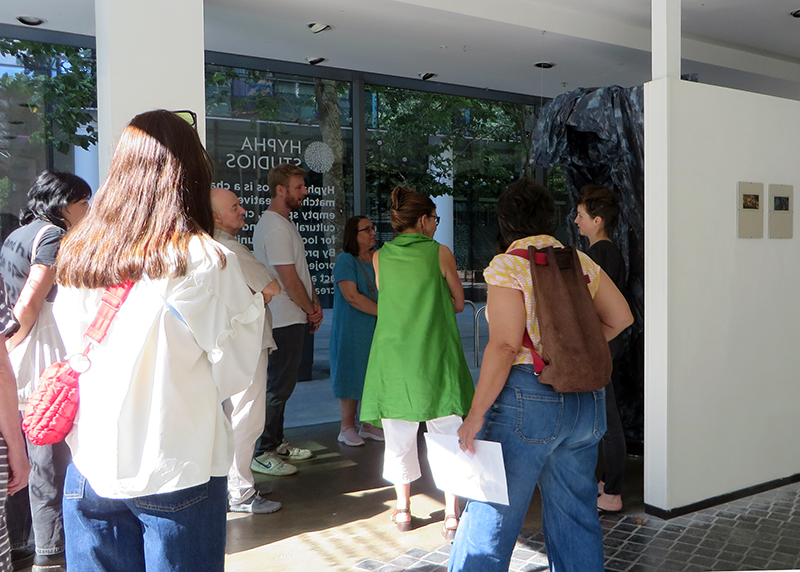
Portals at Lisson Gallery curated by Ossian Ward

Images include Susan Hiller, Ryan Gander, Rodney Graham, Shirazeh Houshiary, John Latham, Mary Corse and Sean Scully.

A mixed offering of thresholds to alternative spaces, visible, conceptual, mythical or speculative.

Richenda Court Glass Town at The Muse at 269

Luminous work reflecting a fragile crystalline world

Good to see Lisa Pettibone’s suspended sculpture Instrument of Thought – A meditation on Matter and Light. The physics of the cosmos held in delicate balance as mirrored surfaces, crystals and rocks interplay hinting at ideas such as gravity, dark matter and the speed of light.

On Hannah Arendt: The Conquest of Space at Richard Saltoun with works by Sylvia Plimack Mangold, Elaine Reichek and Carey Young considering the question Has man’s conquest of space increased or diminished his stature?

The question is central to Arendt’s essay written in 1963 which rings alarm bells on the direction science and technology may be leading the human experience. The possible future Arendt foresaw of a world remade by the curiosity of the human race but transformed into somewhere unrecognisable to the humanist where even the scientist loses some essence of human nature as the world is described in a mathematical language that cannot be experienced with human senses may be bearing down upon us.

Lots to think about from this encounter. I think writing when she did, when the first man in space was quite recent history and before the internet, her concerns about a loss of what it is to be human, driven by technology effecting every part of our lives until there is no part left that hasn’t or isn’t in some way remade by humans was very prescient. I wonder how she would feel today as we rush into space like never before and not so much for exploration as exploitation. Arendt described herself as “a kind of phenomenologist” which I understand as looking at things purely as they appear to us without trying to explain why or how and accept meaning that comes from direct sensory experience. Works of art can act as mediators between the consciousnesses of the author and the reader as a direct attempt to communicate the experience of being human and the world around. Phenomenologists are interested in the way we come to share similar understanding of the world a collective subconscious or implicit agreement about how the world looks, sometimes referred to as the life-world.
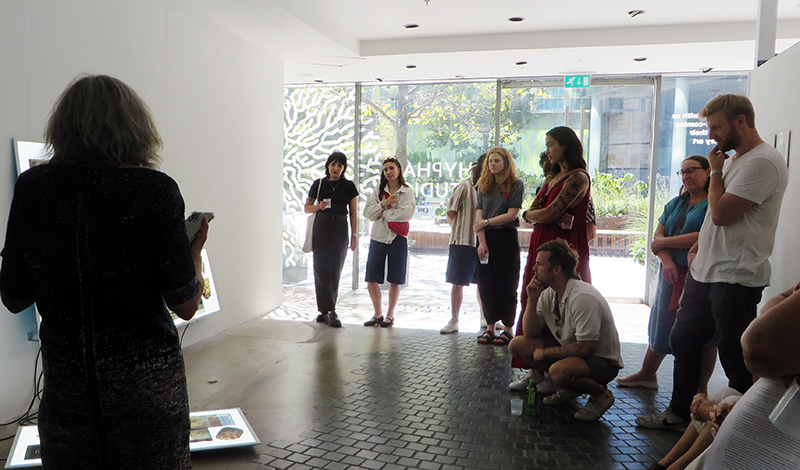
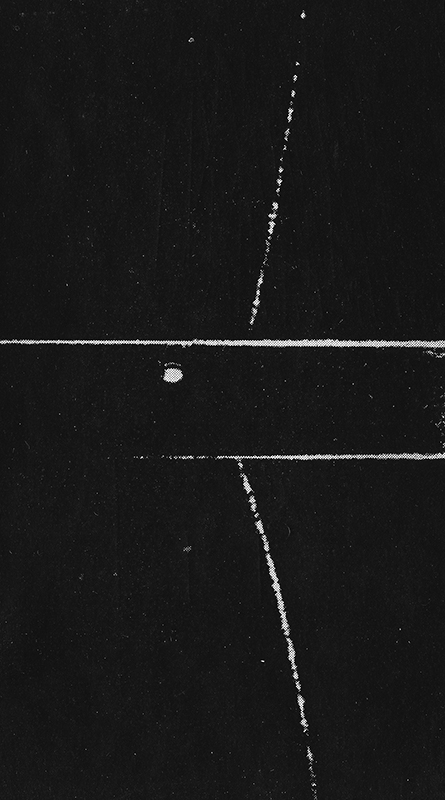
An introduction to the essay link here presented by Roger Berkowitz, director of the Hannah Arendt Center at Bard College. Science transforms what it means to be human although we are still bound to our earthly bodies and subject to fate and fortune. Science does not give a human experience of the world, it confounds common sense. If our growth in understanding can only be expressed in mathematical terms then we have lost rather than gained a way of describing our world experience. Human thinking comes from metaphors and our thoughts are earthly, if we are taken off planet then the Earth becomes an object not our home.

Secret of Lightness at Parafin

Aimée Parrott, Andrew Pierre Hart, Tim Head, Andrea Heller, Laurence Kavanagh

Beautiful selection of works curated by Louisa Hunt that reflect the premise of Calvino’s text to pull against what holds us down and make a creative leap opening onto a new perspective.

‘Whenever humanity seems condemned to heaviness, I think I should fly like Perseus into a different space. I don’t mean escaping into dreams or into the irrational. I mean that I have to change my approach, look at the world from a different perspective, with a different logic and with fresh methods of cognition and verification. The images of lightness that I seek should not fade away like dreams dissolved by the realities of the present and future…’
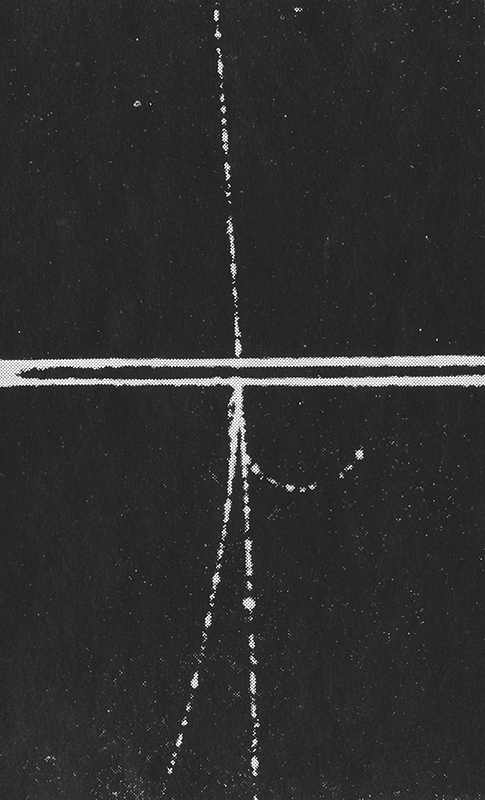
Italo Calvino, Six Memos for the Next Millennium: Lightness (1985)

Of the Surface of Things at Alison Jacques showing works by Maria Bartuszová, Sheila Hicks, Hannah Wilke, Erika Verzutti.
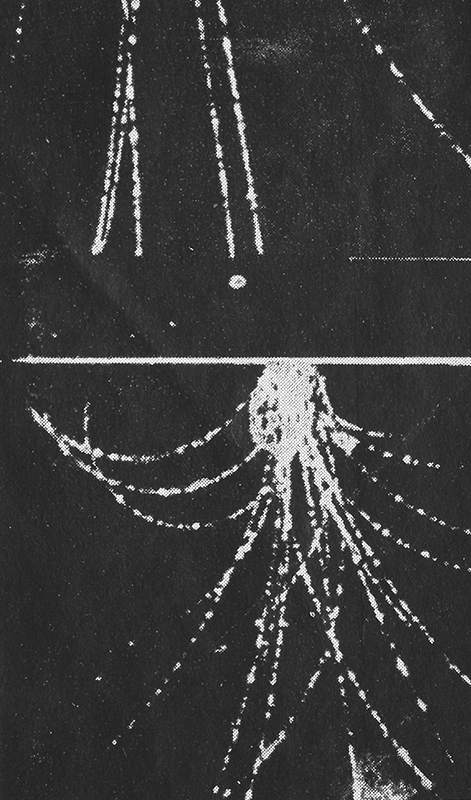
Spending so much time thinking about the intangible it was refreshing to be exposed to some raw materials.

The curator refers to the 1919 poem ‘Of the Surface of Things’ of Wallace Stevens and the untethering of the imagination when exposed to the particularities of reality in simplified raw form.

In my room, the world is beyond my understanding;
But when I walk I see that it consists of three or four
        hills and a cloud.