Archives for posts with tag: compass

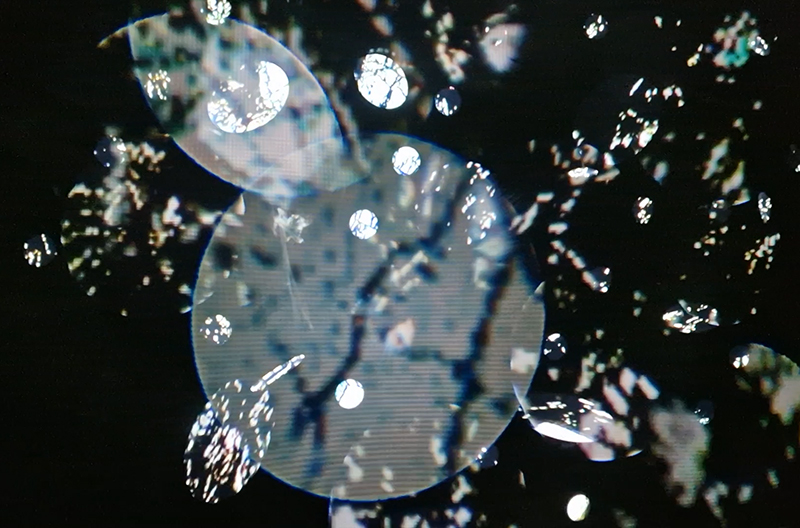
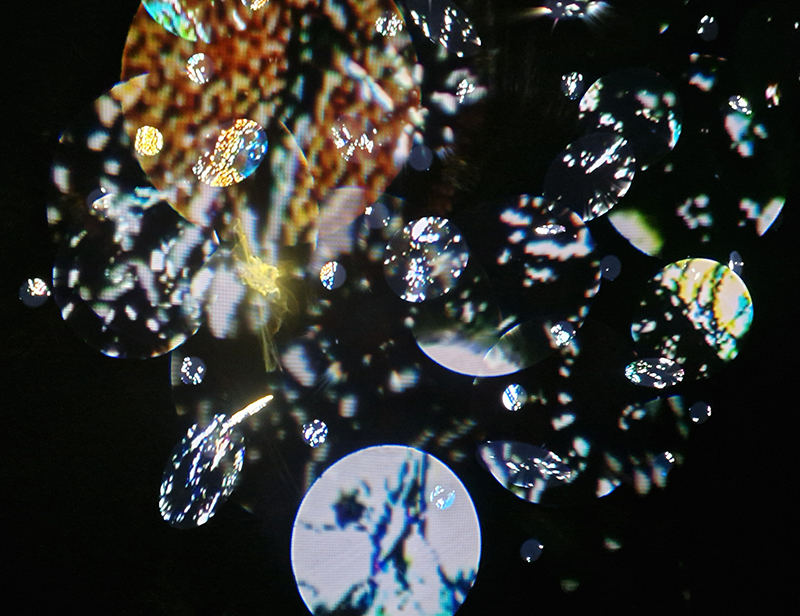
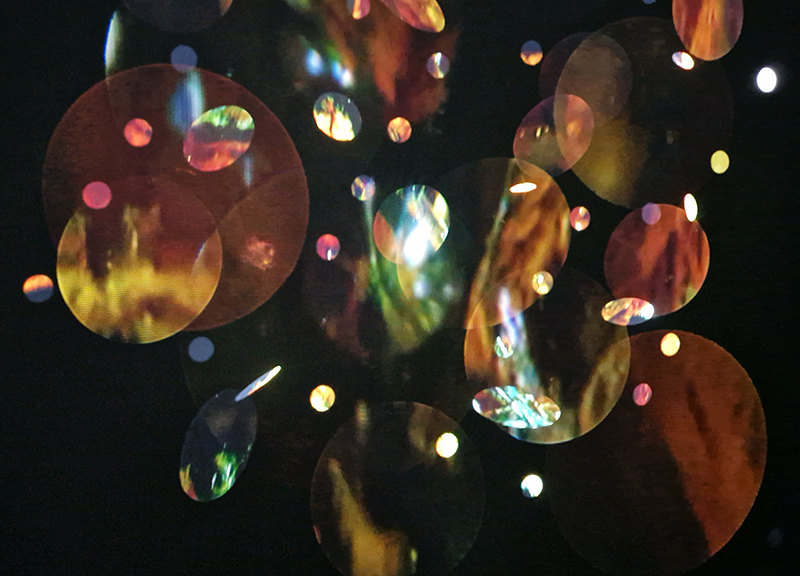
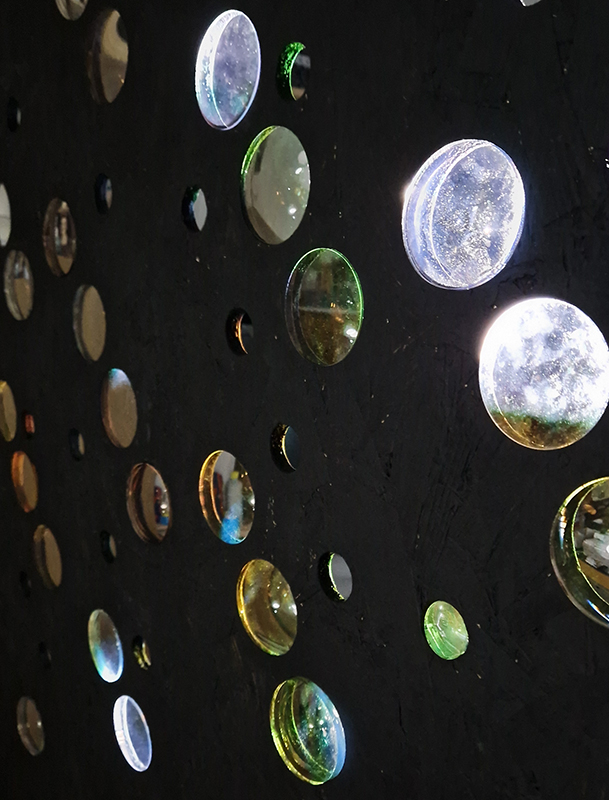
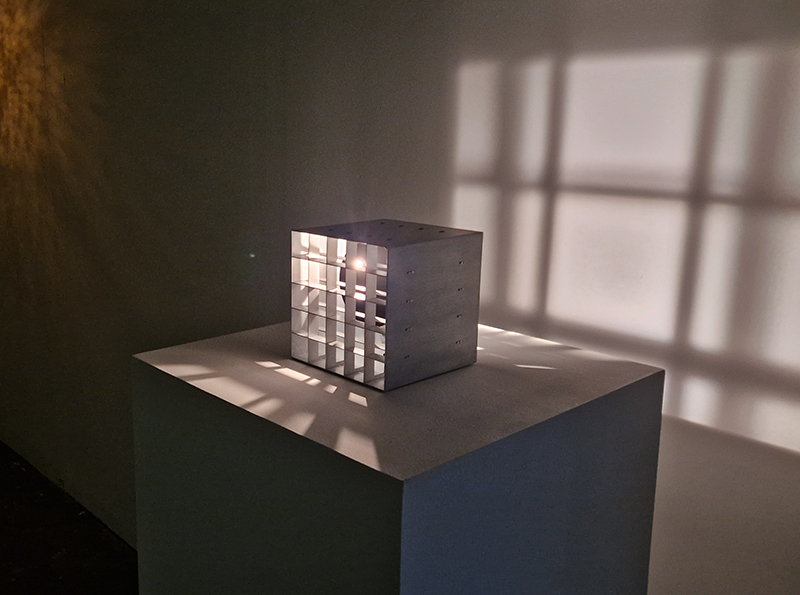
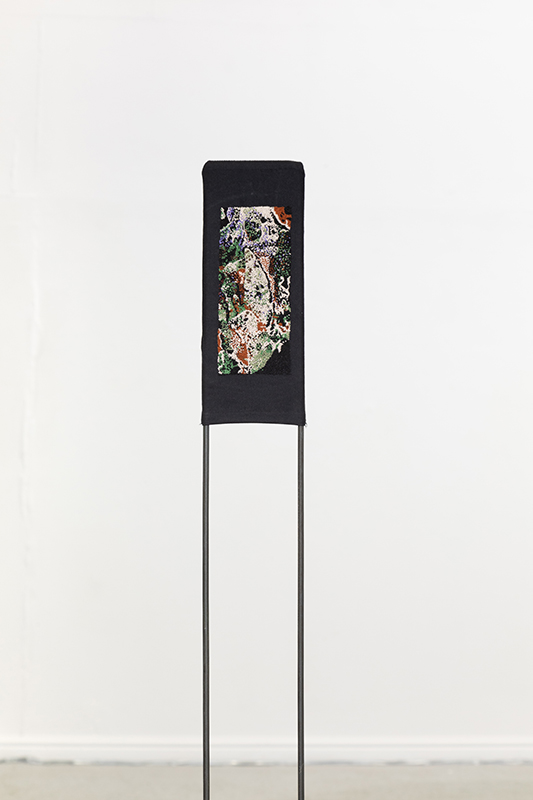
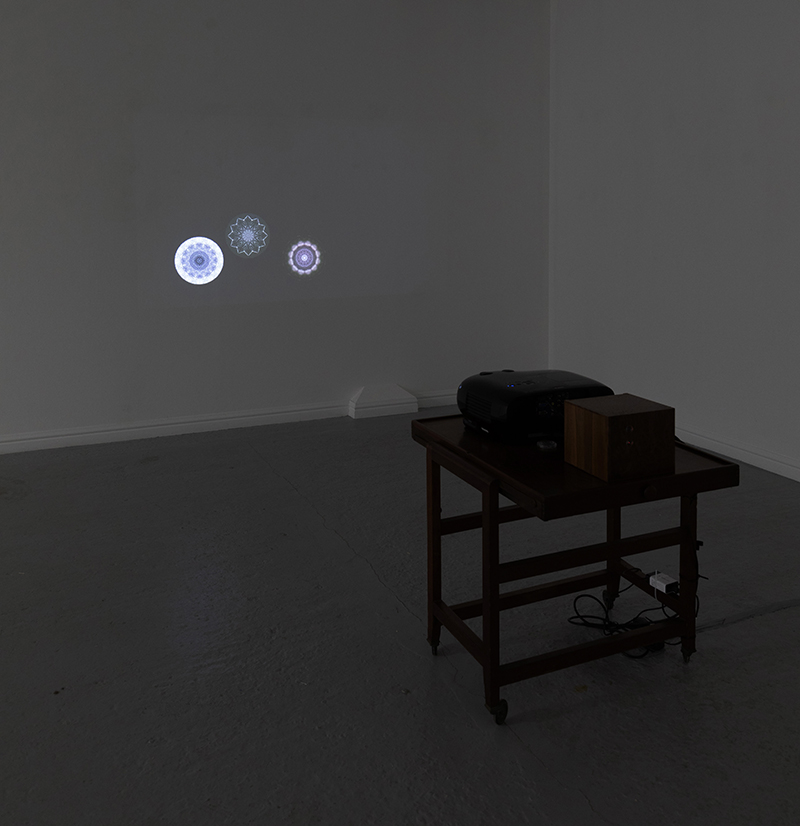
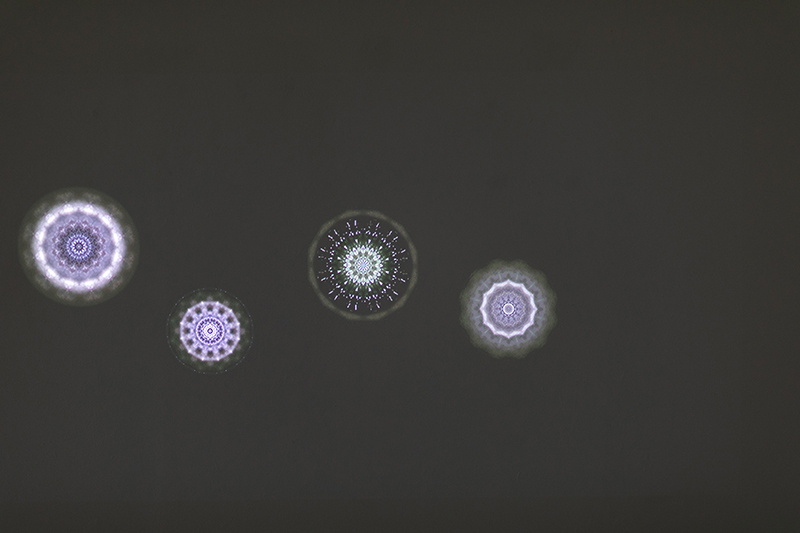
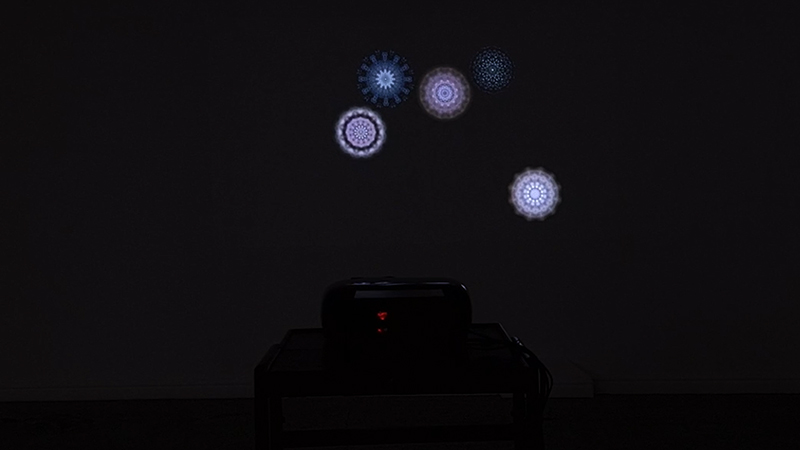
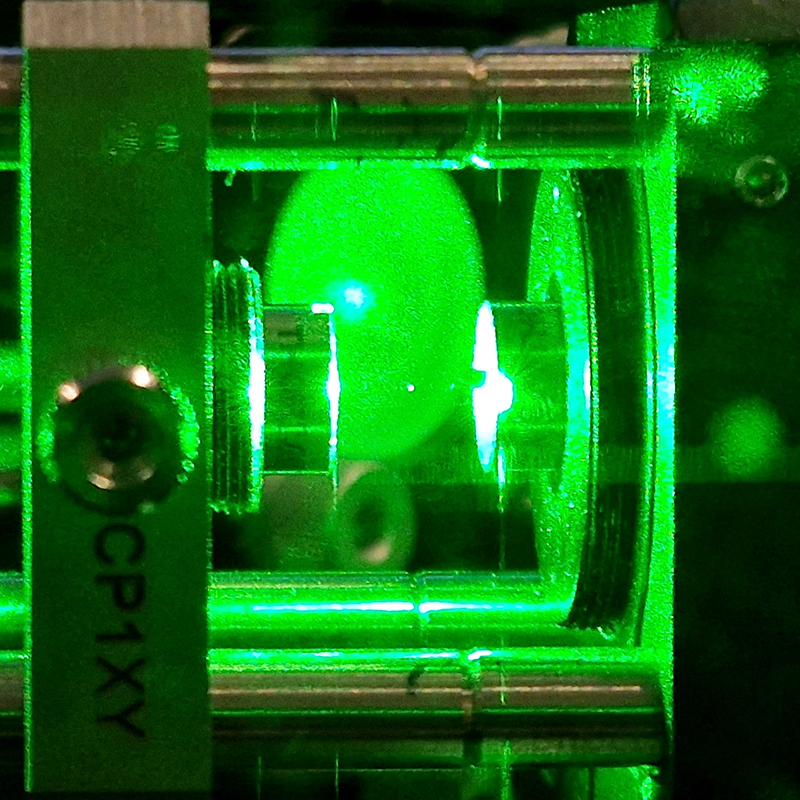
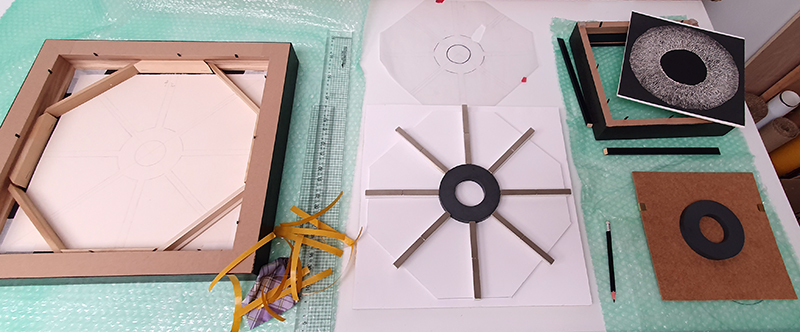
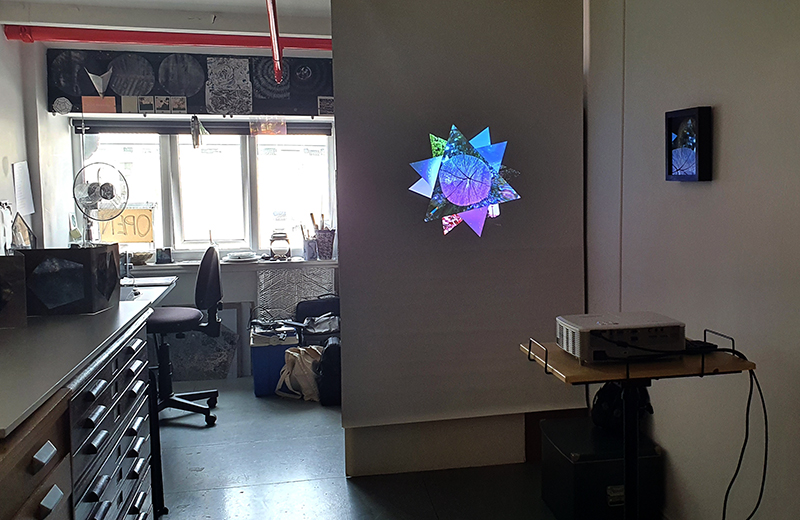
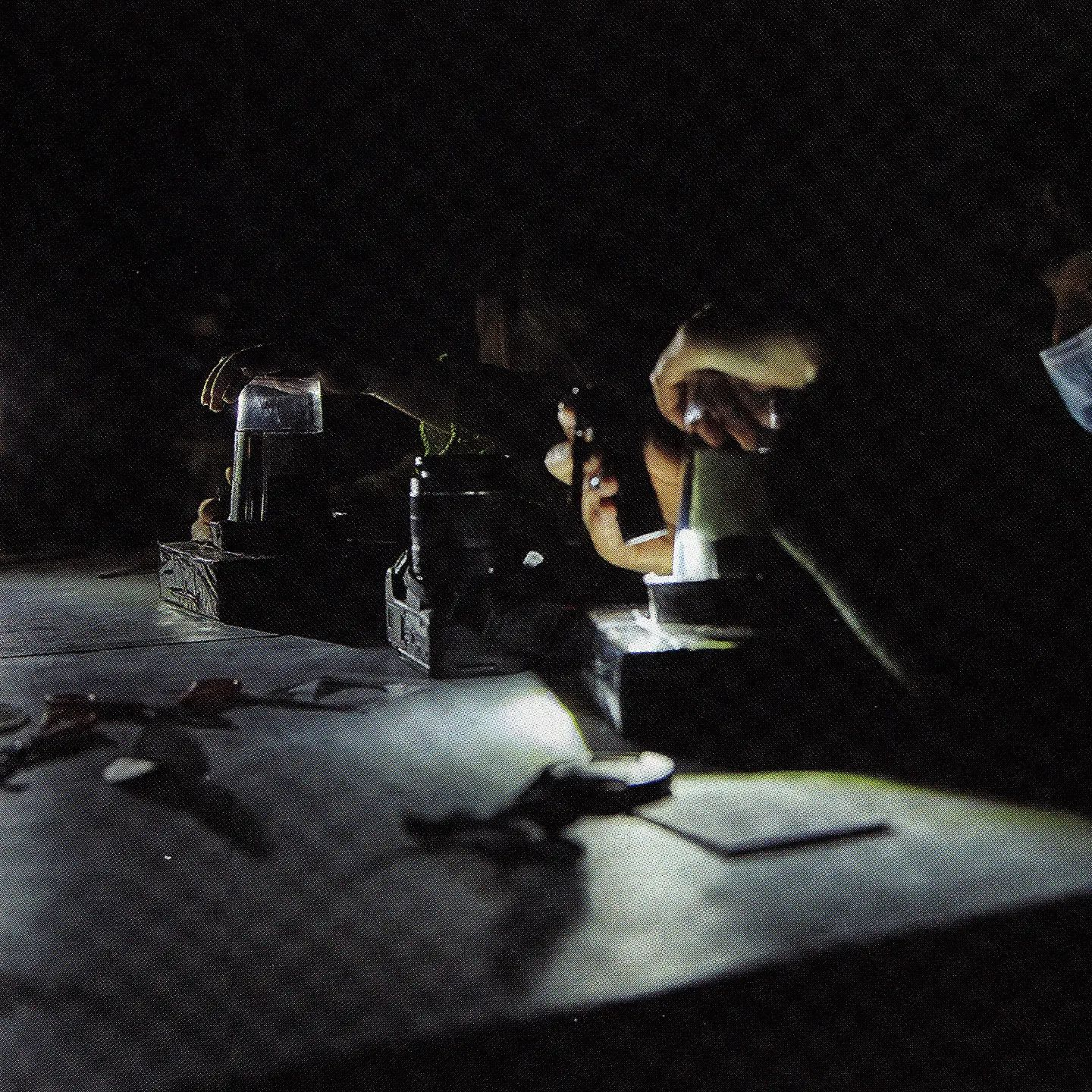
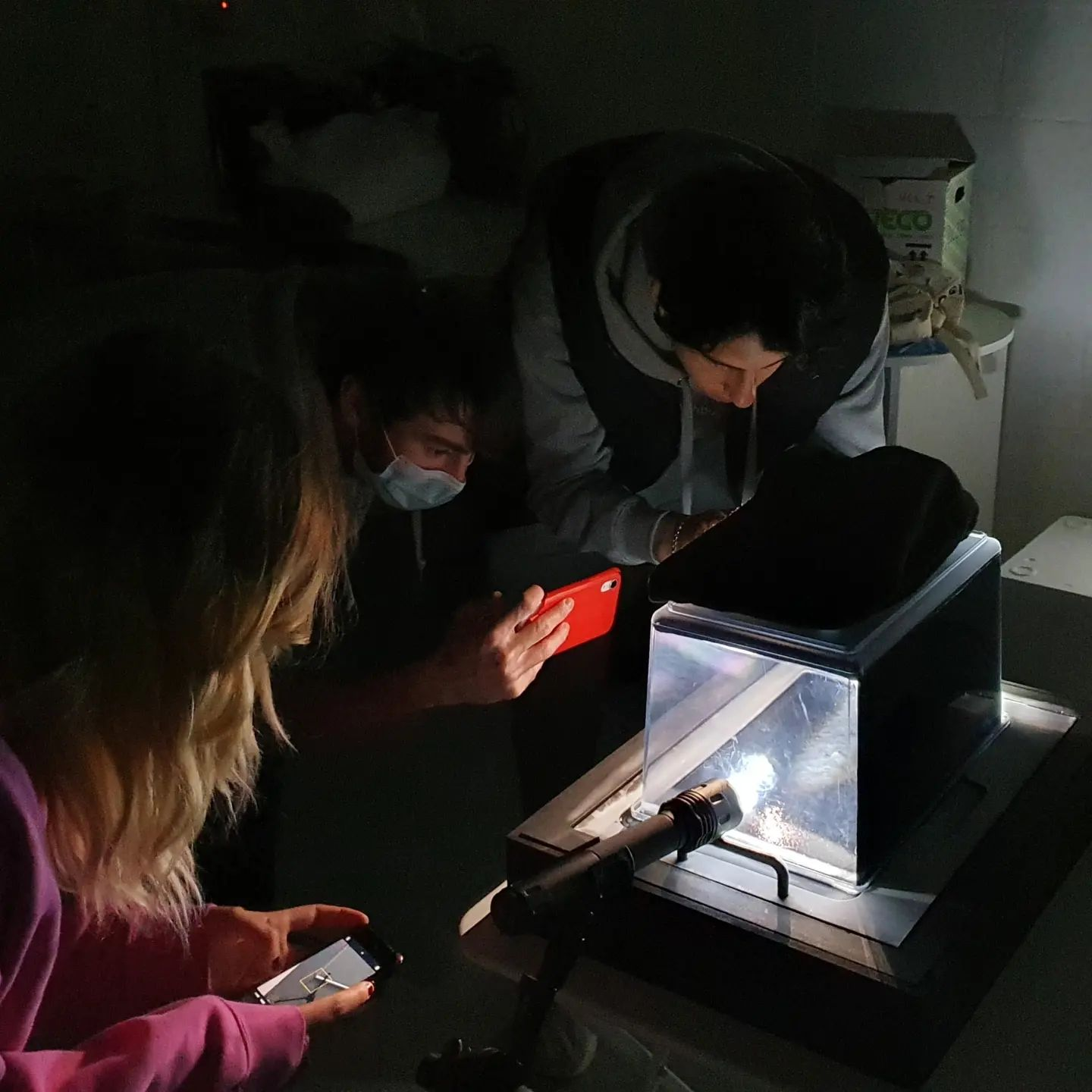
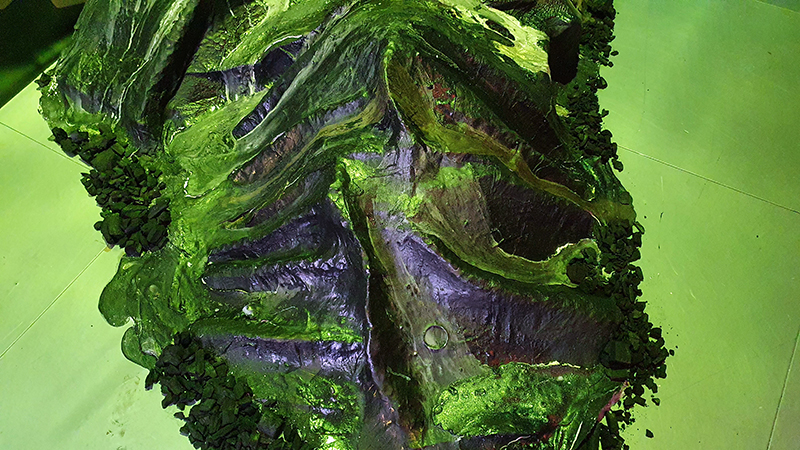
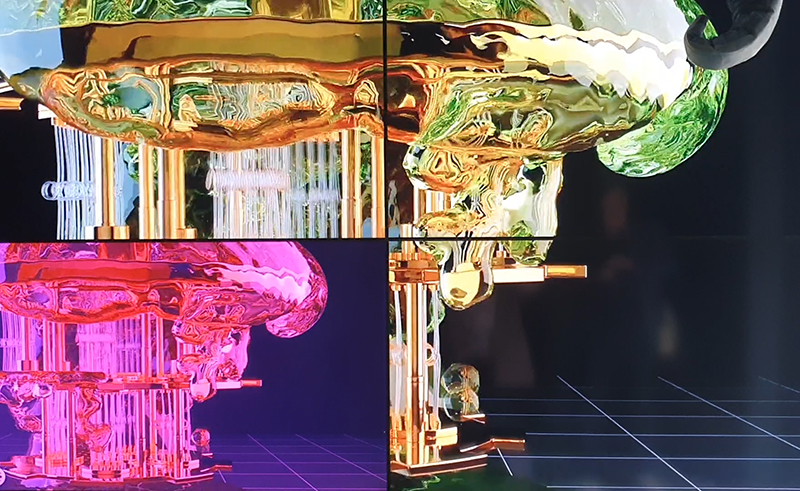
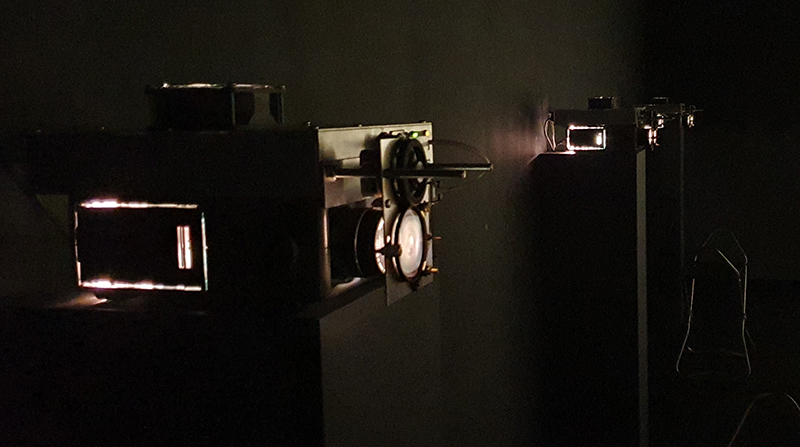
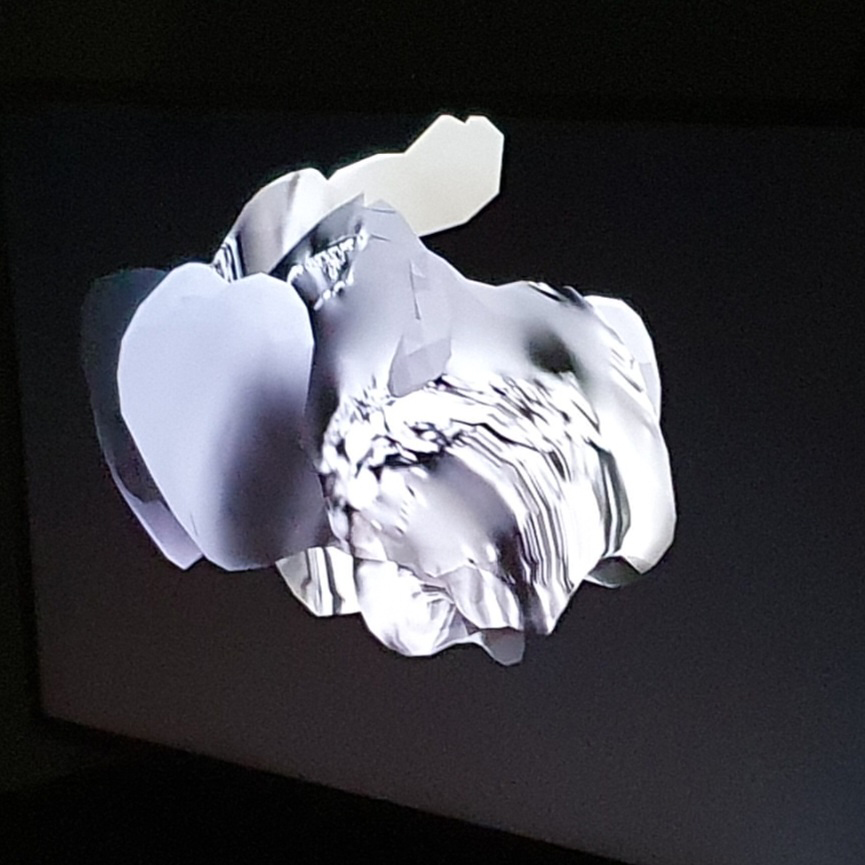
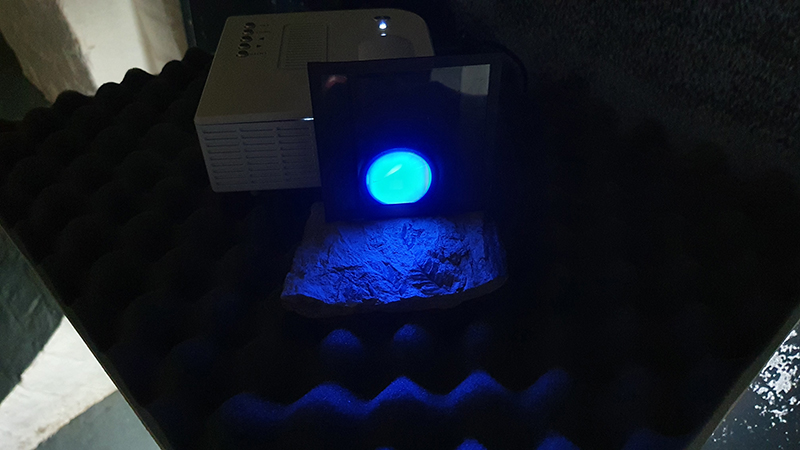
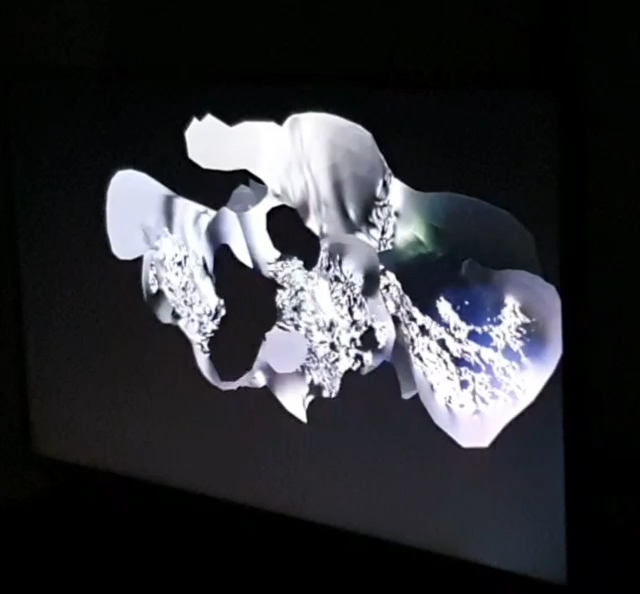
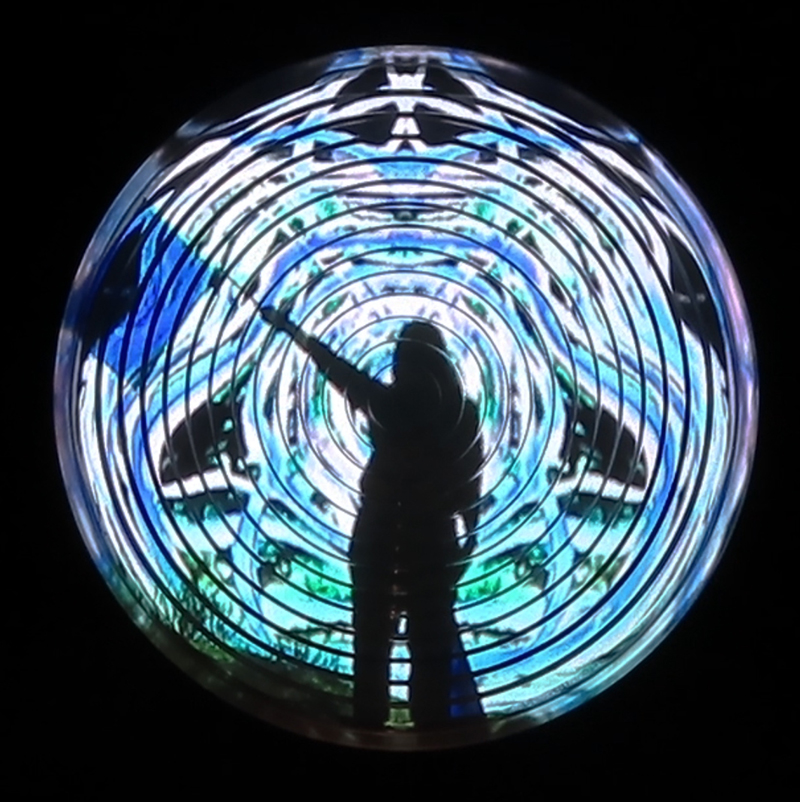
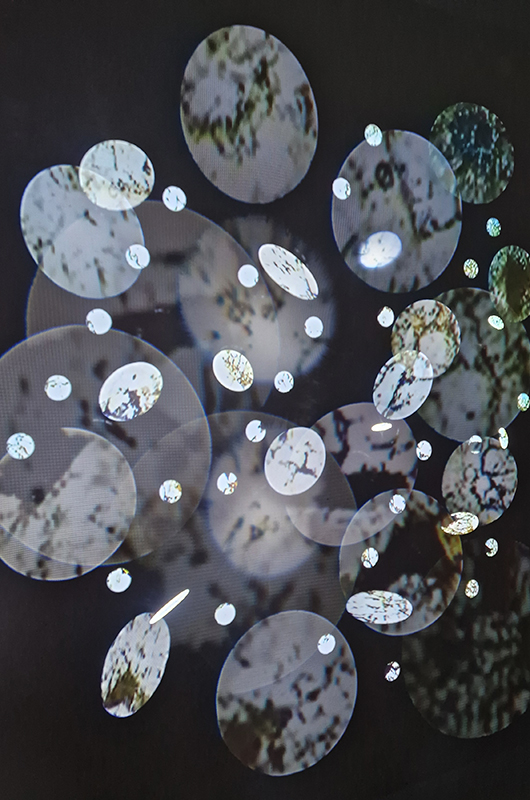
Work continues on ‘mineral visions’ testing projecting through a variety of optical lenses set in a pattern reflecting the crystal structure of magnetite. Magnetite is a mineral we are very intimate with. It is in our cells, in our brain but this delicate balance is being disrupted as magnetite crystals from air pollution now outnumber natural magnetite in the brain by 100:1. The full consequences of this imbalance are not known yet but it could be implicated in neurodegenerative disease like Alzheimer’s.

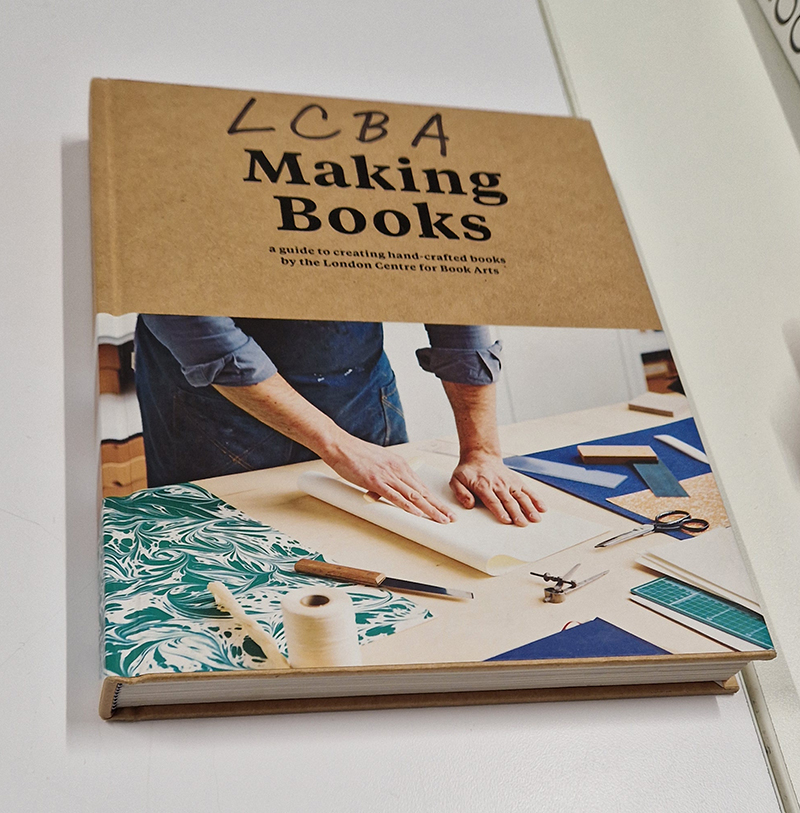
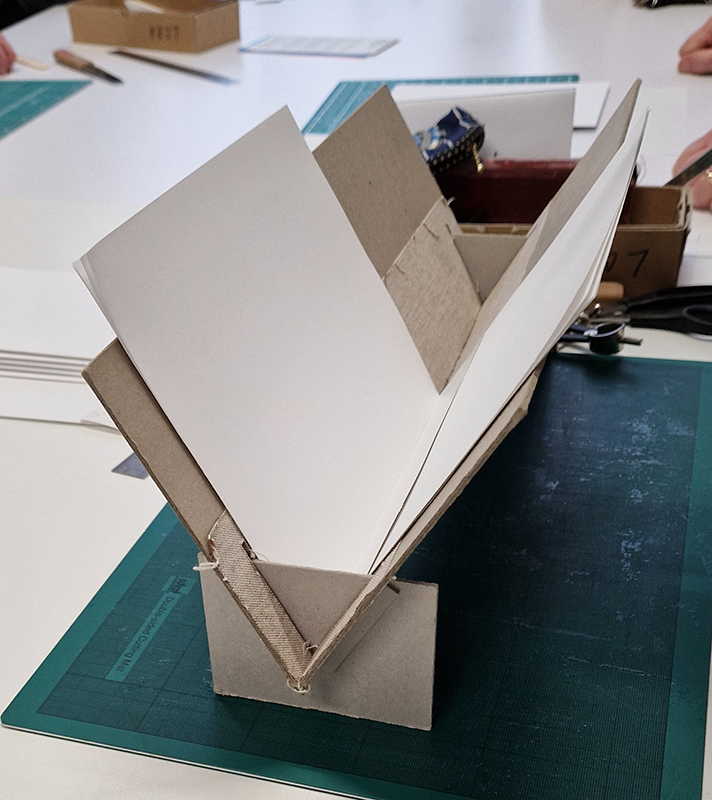
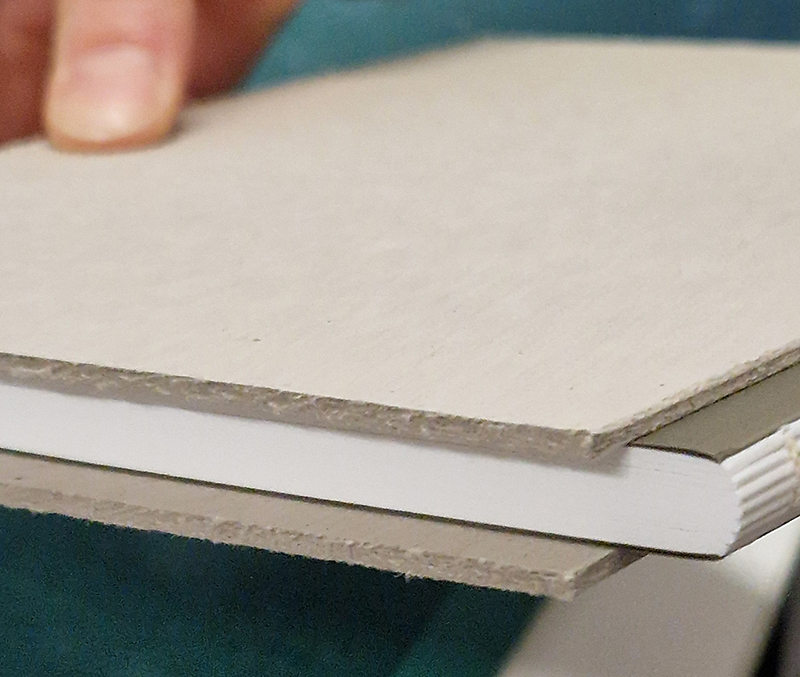
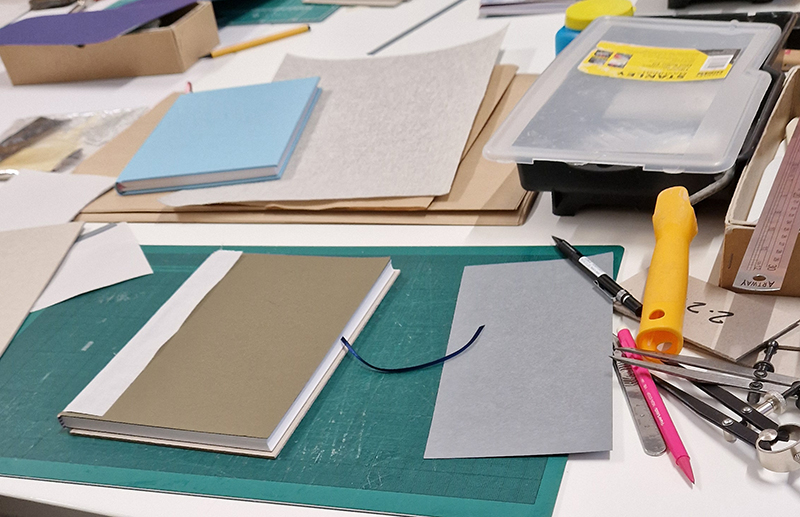
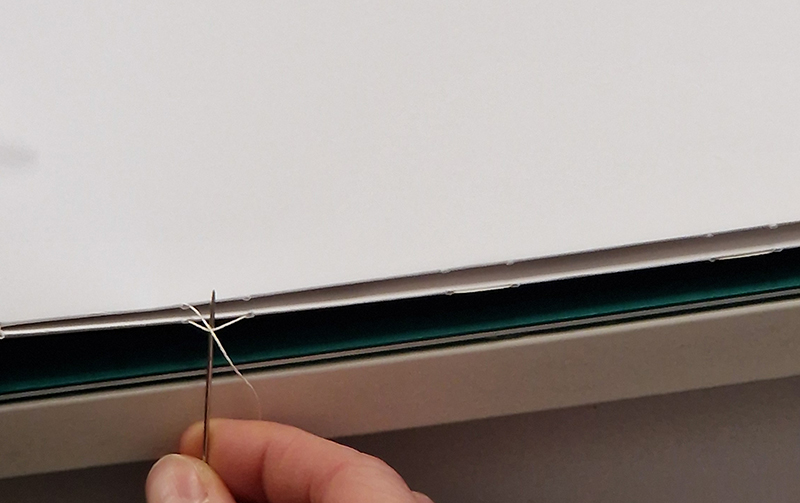
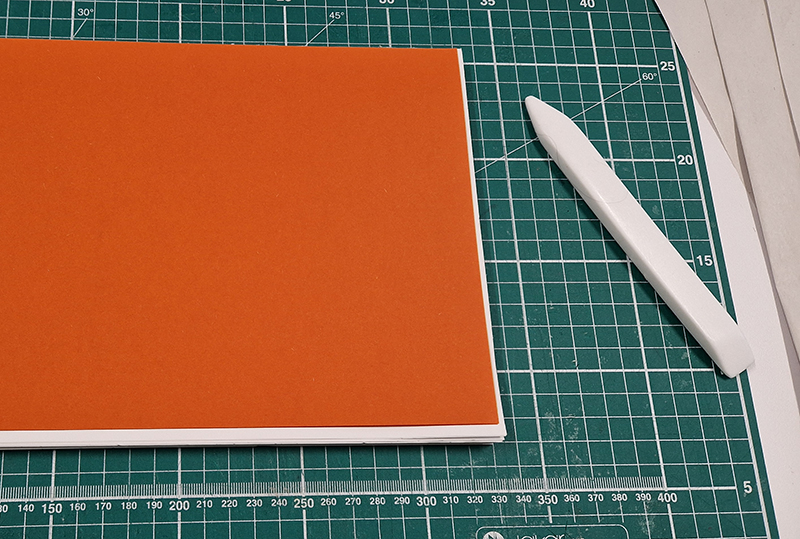
I spent an enjoyable day at London Centre for Book Arts learning how to create a classic full cloth-covered case bound book with a rounded spine. I hope to have picked up some skills here which I will use to make a sculptural book embodying the history of magnetic field reversals stored in the minerals of lava beds on the ocean floor.
Studio visits

Julie F Hill and I had been in contact with writer/producer/curator Ariane Koek since our duo exhibition The Stone Sky at Thames-side Studios Gallery which she had been unable to attend, but with her interest in physics, geology and cosmology had suggested we keep in touch. We finally had the pleasure of meeting Ariane at Julie’s Bomb Factory Studio and were able to share some of our plans for our upcoming show The Geological Unconscious which we are co-curating at Hypha HQ this spring.

It was so good to meet curators Maria Hinel and Indira Dyussebayeva-Ziyabek at my studio to discuss their upcoming project inspired by the essay on carbon in Primo Levi’s The Periodic Table. Levi weaves a story following a single atom of carbon as it is transformed through the many relationships and bonds made with other atoms, moving from rock to atmosphere to living organism and back to mineral.

Gallery visits

Exhibition research trip to Exeter with Julie to see Dartmoor: A Radical Landscape at the Royal Albert Memorial Museum & Art Gallery. Artists include: Fern Leigh Albert, Jo Bradford, Chris Chapman, John Curno, Robert Darch, Siân Davey, Susan Derges, Robin Friend, Ashish Ghadiali, Alex Hartley, Nancy Holt, Laura Hopes and Katharine Earnshaw, Richard Long, Garry Fabian Miller, James Ravilious, Tanoa Sasraku, David Spero, Nicholas J R White, Marie Yates.

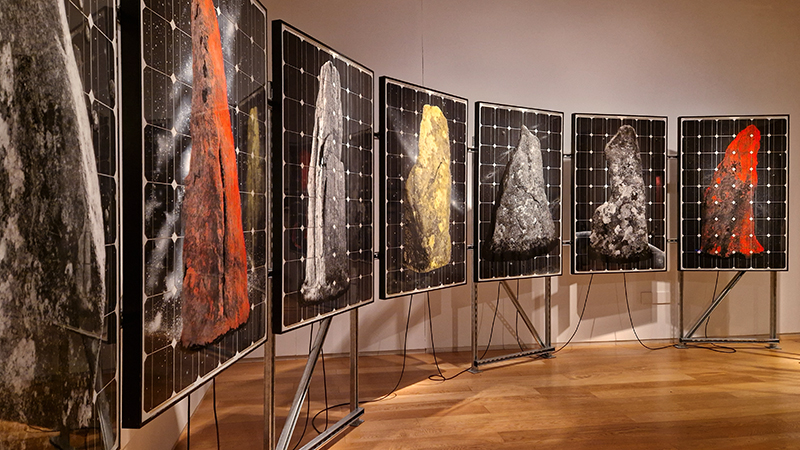
I was particularly interested in seeing Alex Hartley’s, The Summoning Stones, which is a series of hand coloured prints of standing stones embedded into recycled solar panels. Aiming to bring together ancient and contemporary ways of engaging with the sun they are positioned to put the viewer in the centre of a magical arc of energy; the contemporary may have the bias here and the ancient magic dispersed in the gallery setting but I still enjoyed the aesthetic. The works felt rather cramped in the space. There was a lot of photographic work documenting artist’s interest in the moor from the 60’s/70’s onwards and several prints using the process of dye destruction (luminograms) which I was unfamiliar with, such as those by Gary Fabian Miller – this is a photographic printing process in which colour dyes embedded in the paper are selectively bleached away (destroyed) to form a full-colour image. The papers used in this process are no longer manufactured and Miller spent a year creating one direct long exposure to paper luminogram every day as a reflection on time passing. Extraordinary fluid images from Susan Derges were a highlight.
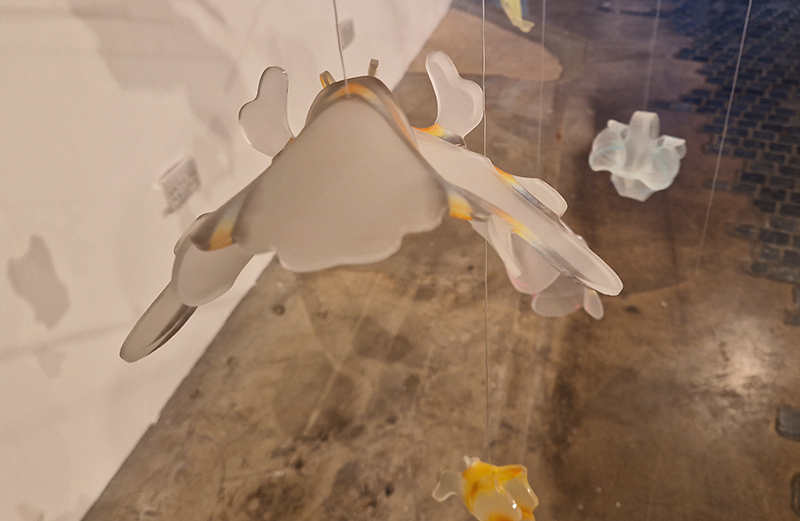
A luminous intervention of glass Specimens from an Imaginary Voyage by Steffen Dam in the main collection at RAMM.

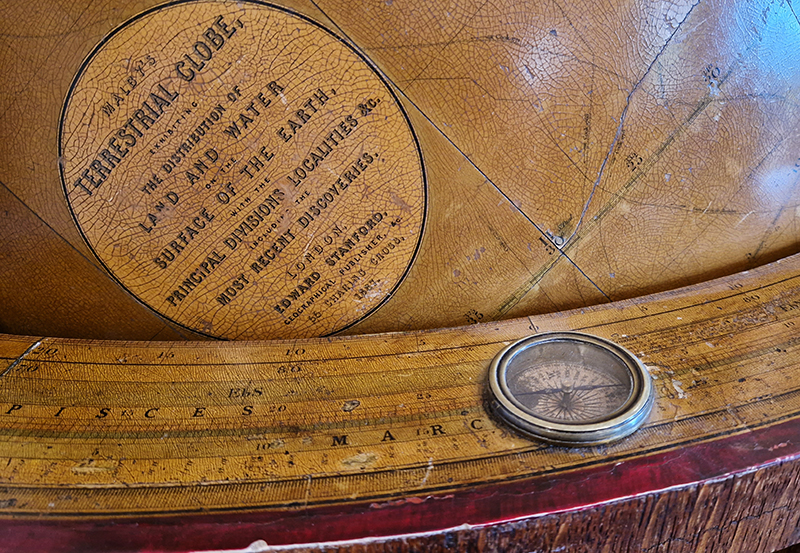
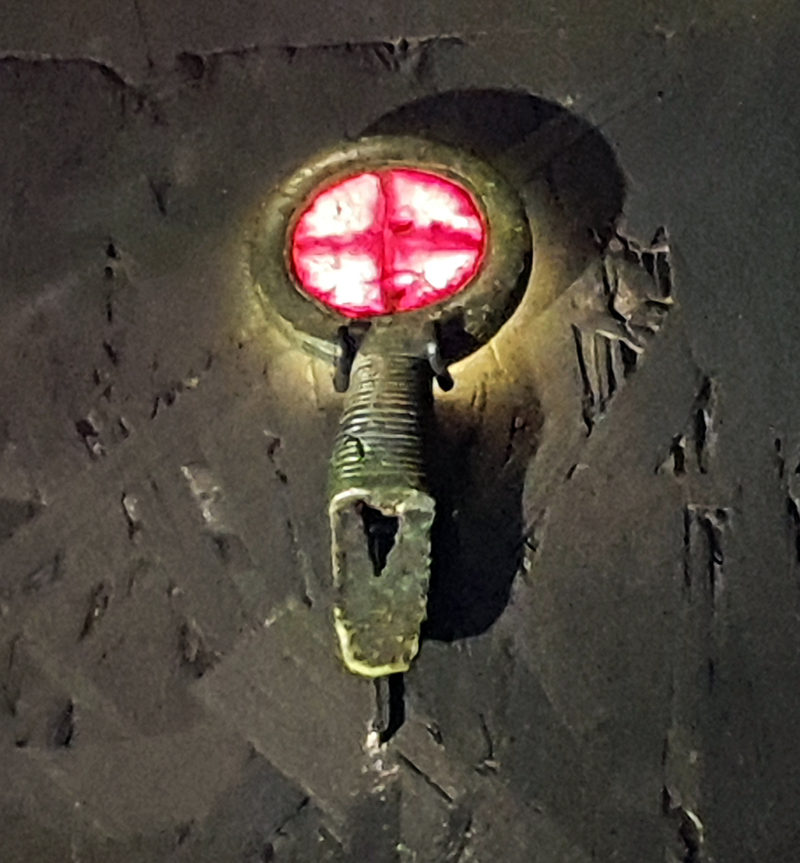
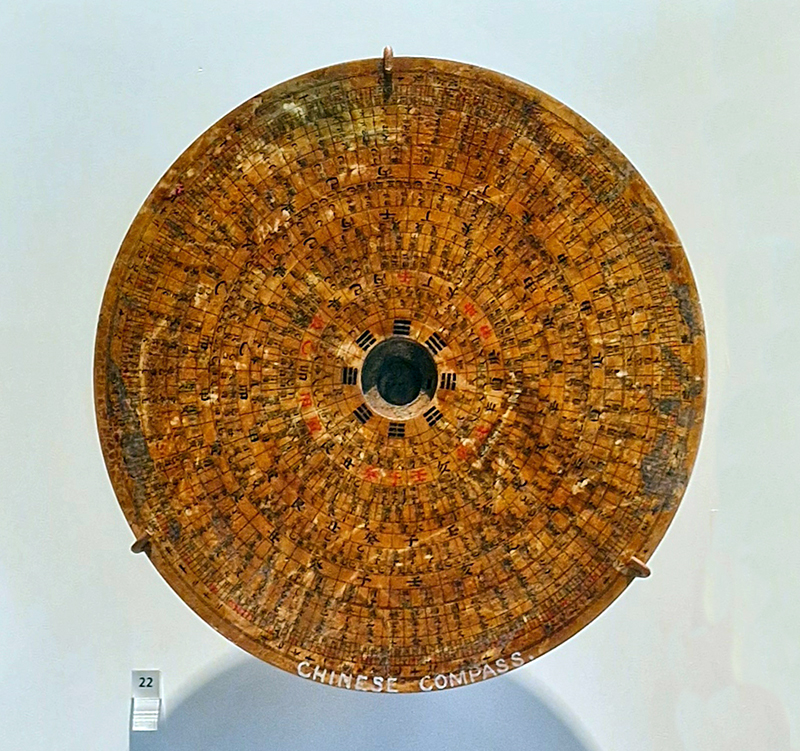
This splendid Chinese Compass, Lo P’an, also spotted at Royal Albert Memorial Museum, Exeter – used more for alignment of positive energy than navigation.
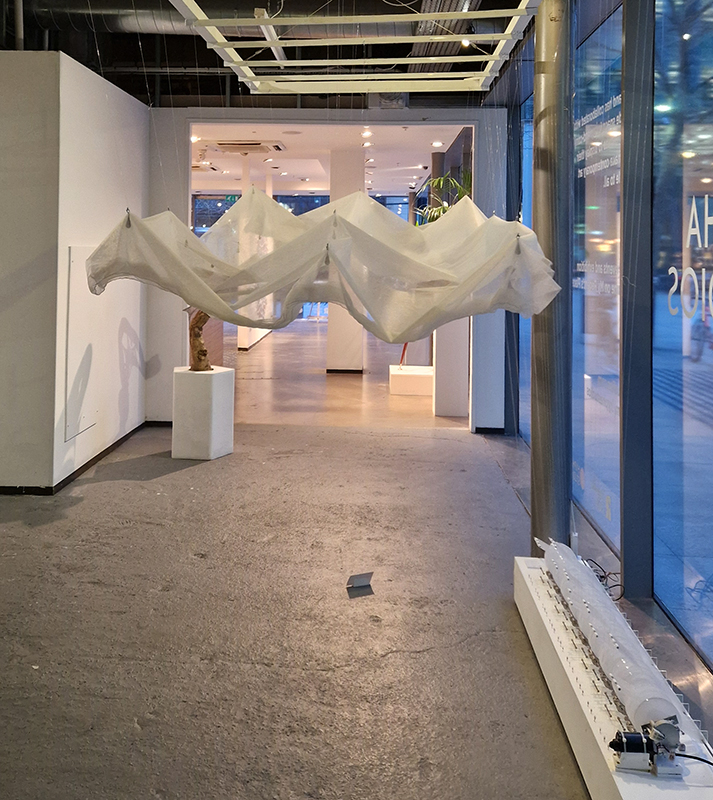
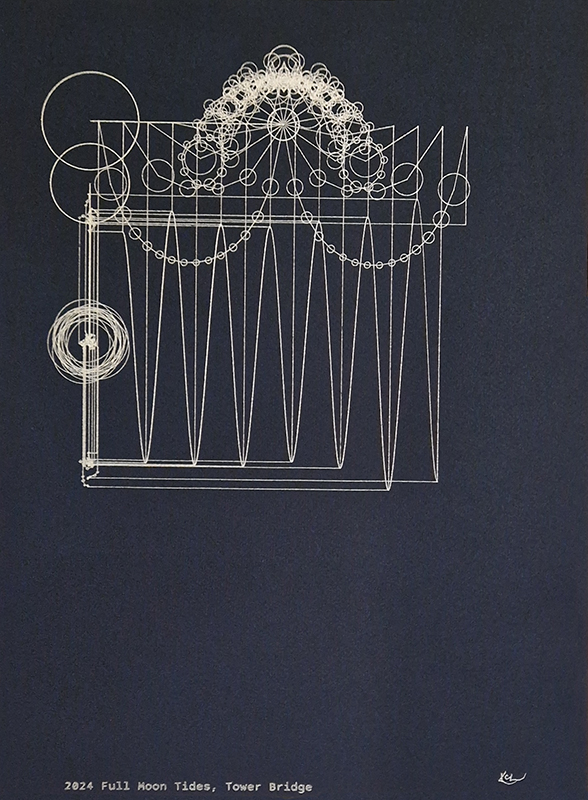
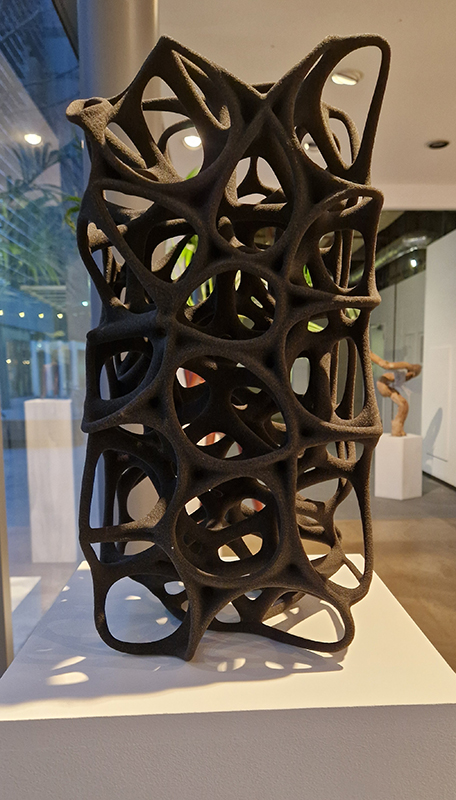
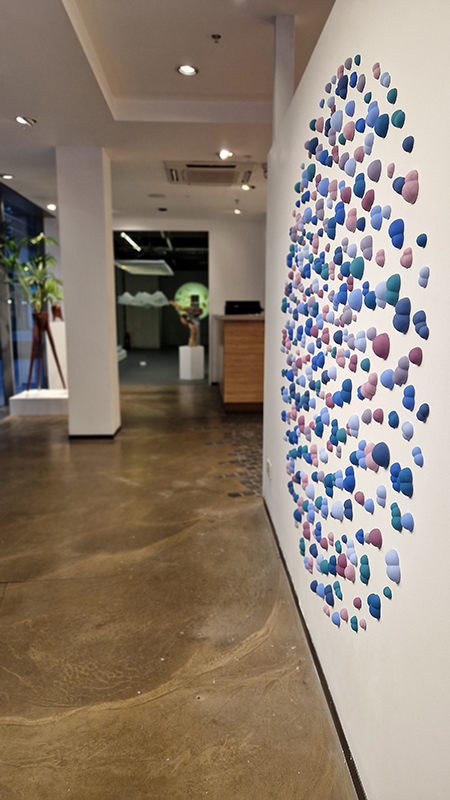
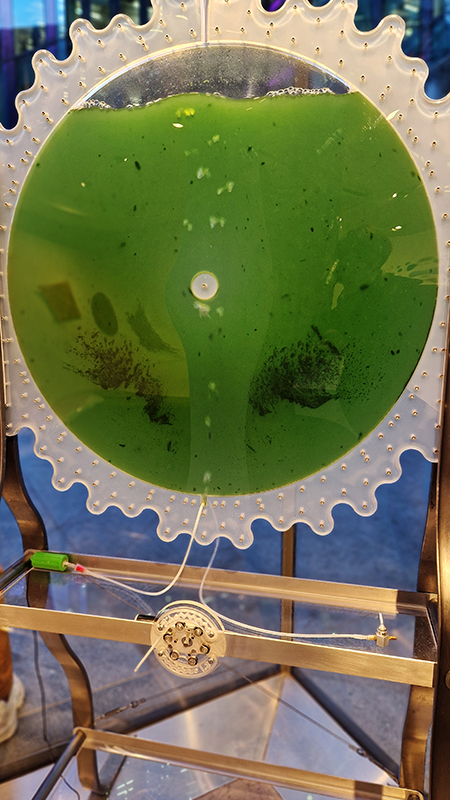
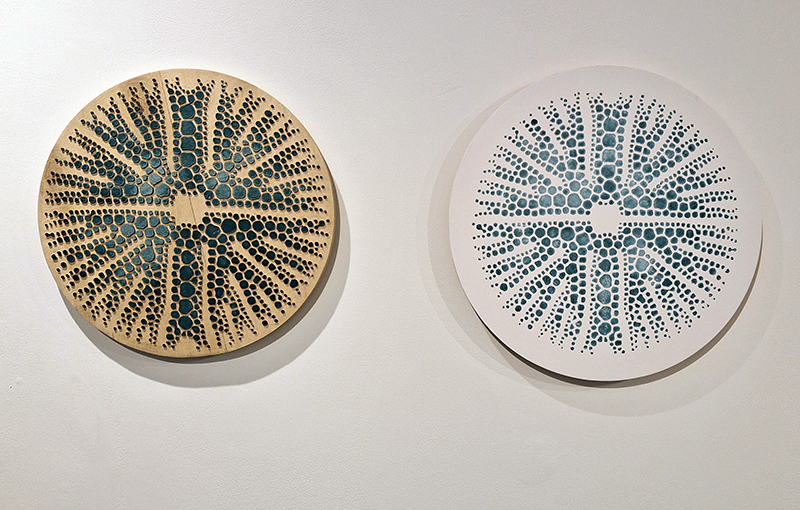
In Scope at Hypha HQ, Euston curated by James Grossman. An exhibition examining nested systems in nature, there were some fascinating symbioses of technology and natural materials such as live algae prints and sculpture capturing the tidal forces of the Thames estuary. Images 1-3 Alexander Clarke, 4 Will Laslett, 5-7 Kerrie O’Leary, 8 Star Holden, 9-10 James Grossman, 11 Peter James Nasielski, 12-13 James Grossman + Peter James Nasielski, 14 Hanne Peeraer

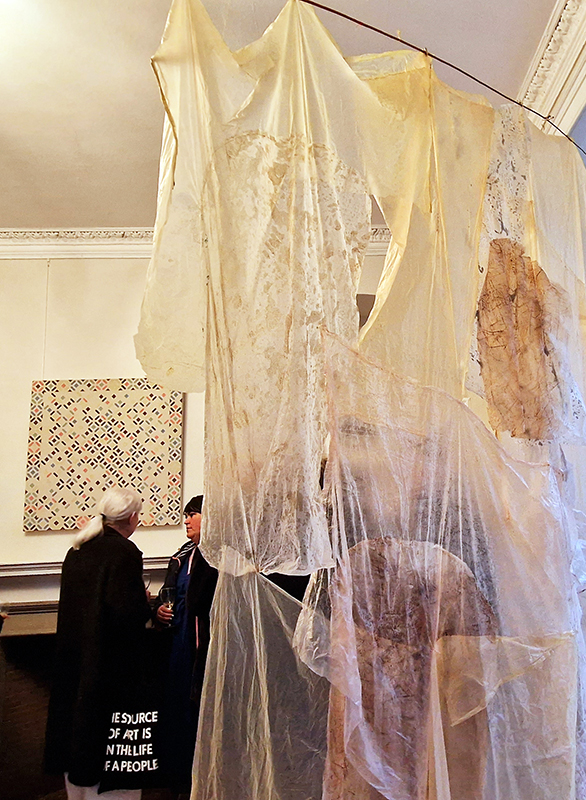
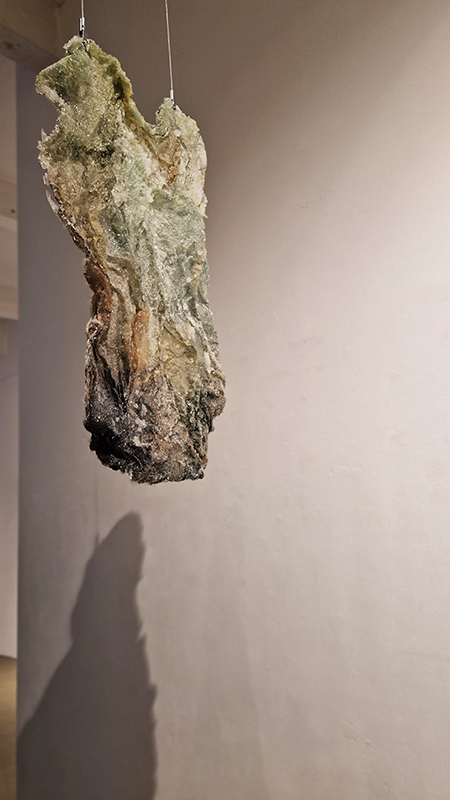
Great to see Sophie Mei Birkin’s Vestige in Joining Doggerland at APT Gallery. A semi-translucent, glittering, crystal encrusted form suspended like messenger from both the past and the future – a reminder of what once was and what might be.
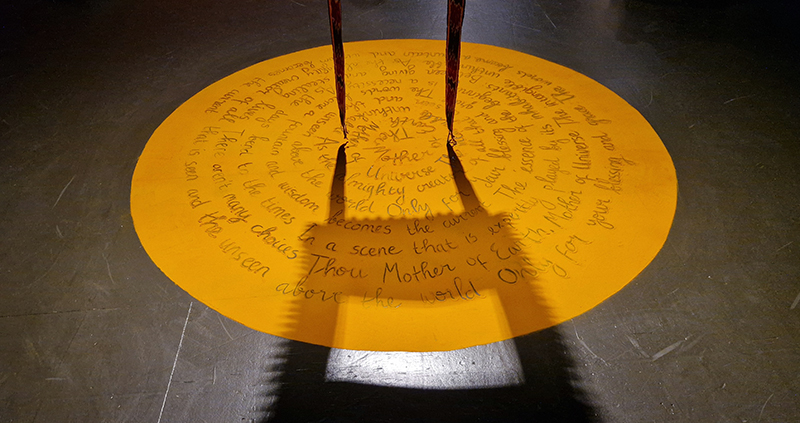
Citra Sasmita Into Eternal Land at Barbican The Curve. Having turned my hands and kitchen yellow recently grating fresh turmeric I understand why this circle of turmeric powder in the meditation zone was so closely invigilated. A calm scented area after walking the curve of colonial atrocities.
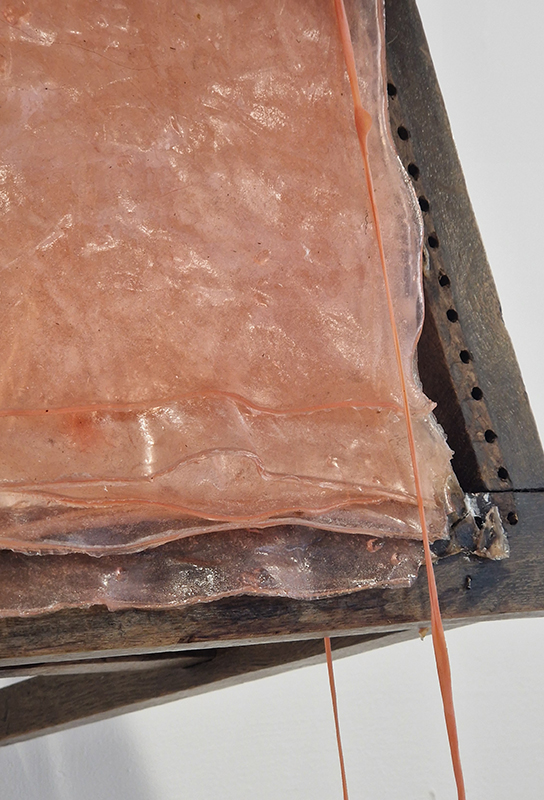
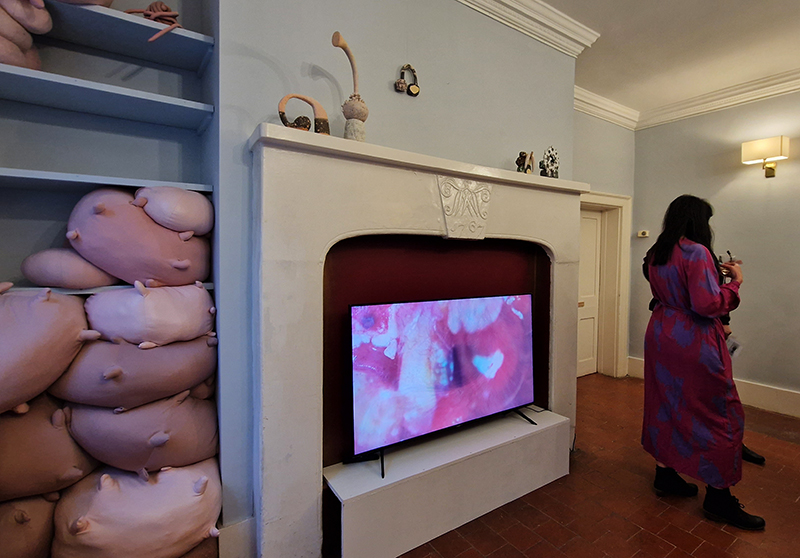
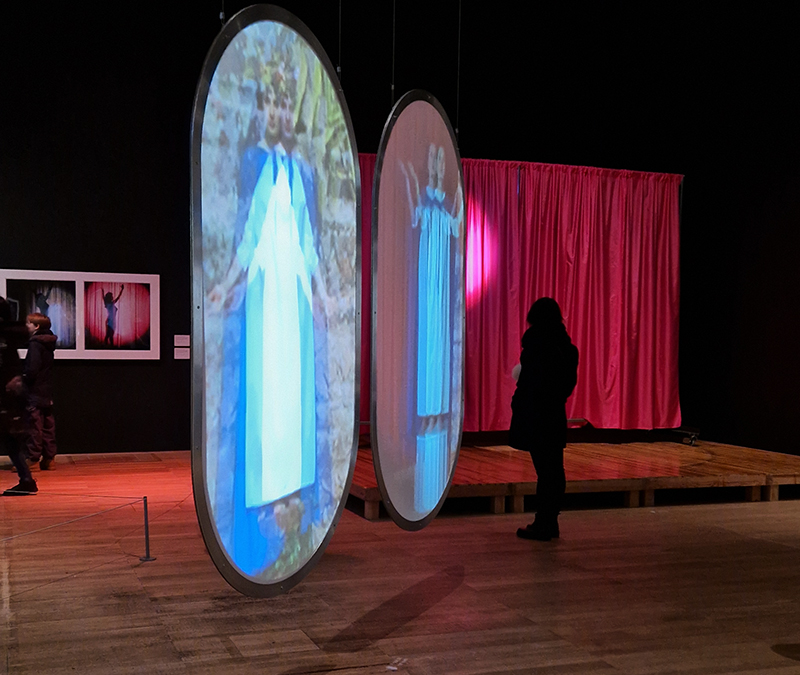
Mike Kelley Ghost and Spirit at Tate Modern. Sublevel (1998) is a model of the basement of CalArts, where he had studied in the 1970s. The spaces that Kelley couldn’t recall from memory are lined with pink crystal resin. The work stages a site of hidden memories and repressed desires, underscored by the symbolism of the pink coloured crystals, as Kelley explained: Because, as everyone knows, regardless of meaningless, exterior coloration, it’s all pink inside. Janelle Monae would agree and regardless of honourable/ironic sentiments employed the aesthetics left me feeling a bit like I’d time travelled to a seedy fairground scenario.
Glad I made it to see UBIK Hypha Studios at Sugar House Island from the Changeable Beast sculpture group. Inspired by the eponymous Philp K Dick novel, the artists invite viewers into speculative narratives of alternative futures. Images left to right: Weeping Willow Ellie Reid, Untitled (from the series ‘You Follow Me Around’) Ellie Reid, Things Said Susan Young, Return of the Dinosaurs Ornela Novello, Sunspots Tessa Garland, Timebeing Diana Wolzak, Inertials Clare Jarrett, Broken Nights Kay Senior
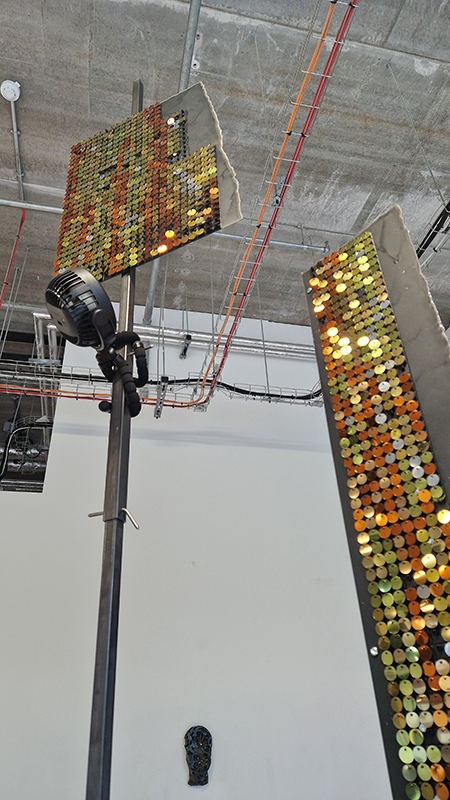
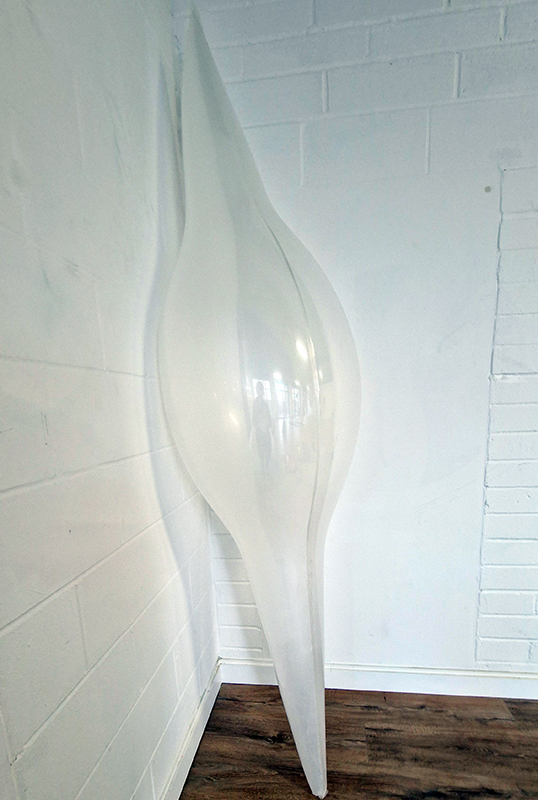
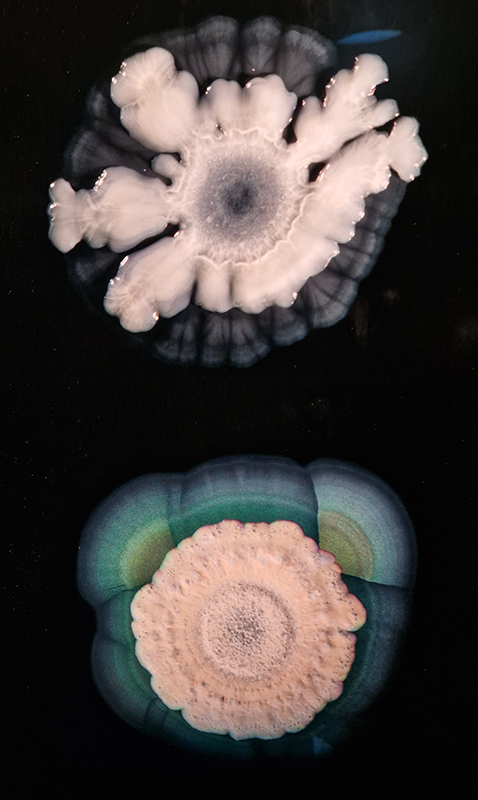
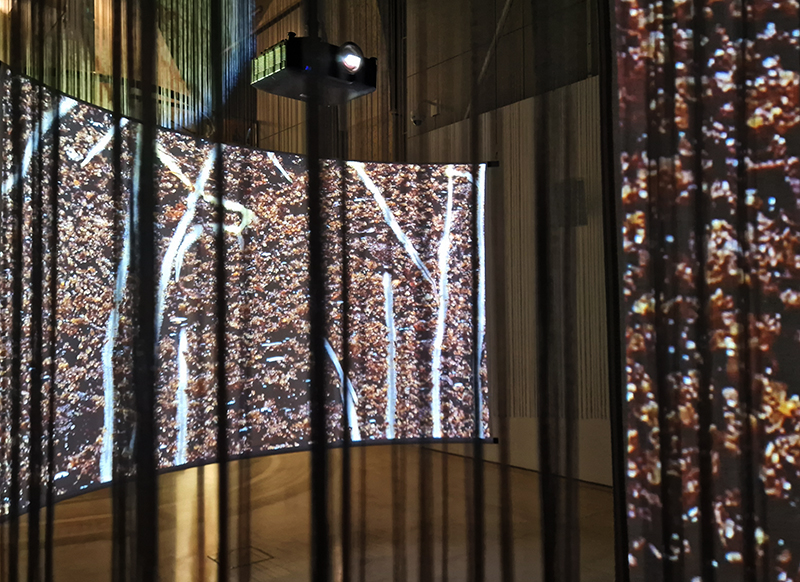
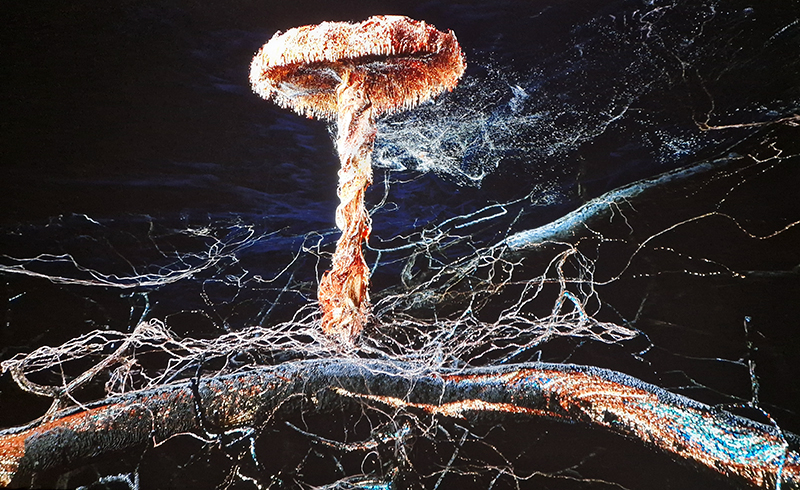
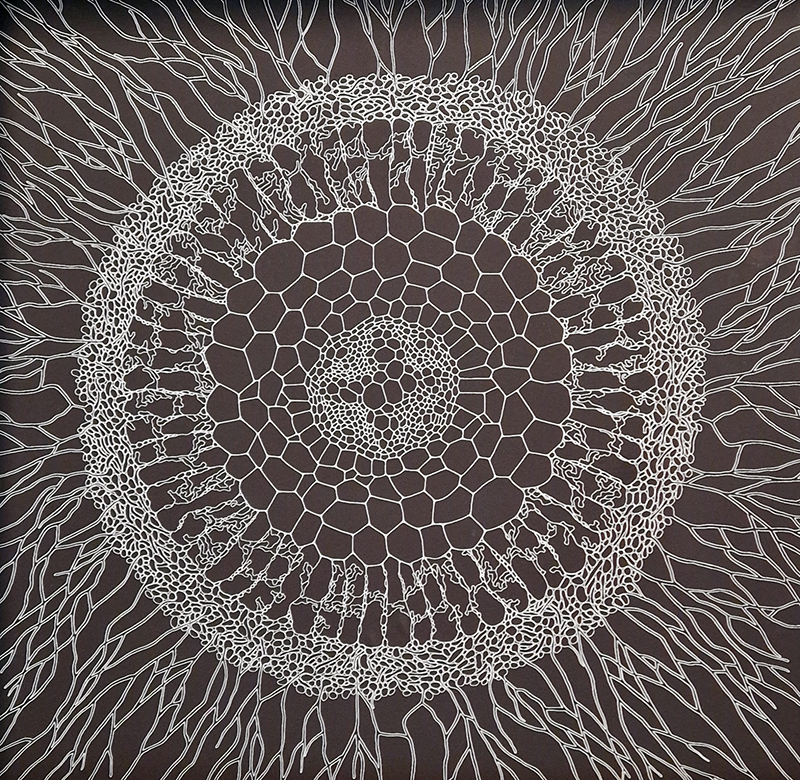
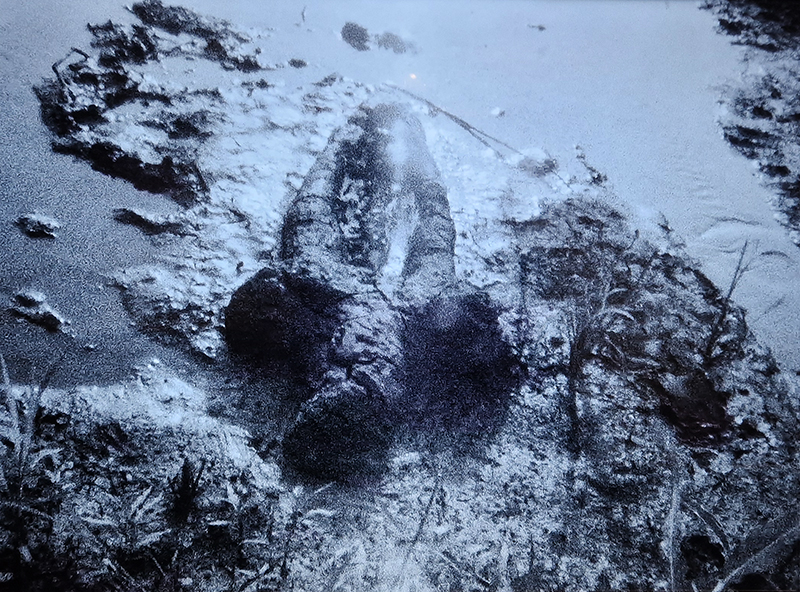
Soil: The World at Our Feet at Somerset House. As it says on the tin – the exhibition sets out to inspire and educate visitors about the power and the fragility of soil, its fundamental role in human civilisation and its remarkable potential to heal our planet. There is so much educational text that the bias of the experience veers towards the didactic. A lot of worms and impressive time lapse video – both of which I like very much and there are some interesting works here but after been slammed with so much ‘fact’ and repetitive tropes it becomes a bit wearying, which is a shame. Sam Williams Wormshine seven channel video collage had a fitting sensitivity to worms as unsung heroes of soft power. Maeve Brennan roman soil with microplastic contamination gave stark evidence of a toxic legacy leaching through the water table to infect roman artefacts. Diana Scherer has woven an intriguing substrate using natural growth processes to generate structures from root tissues. I was interested to see how microscopic soil bacteria can have the appearance of agate and a cross section drawing of a root reminded me of my Mum’s crocheted doilies.

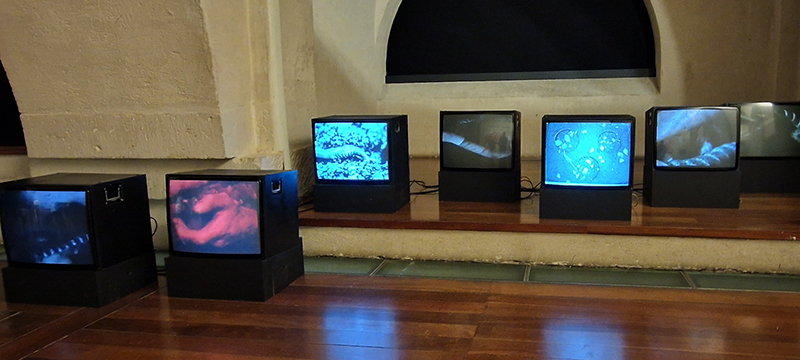
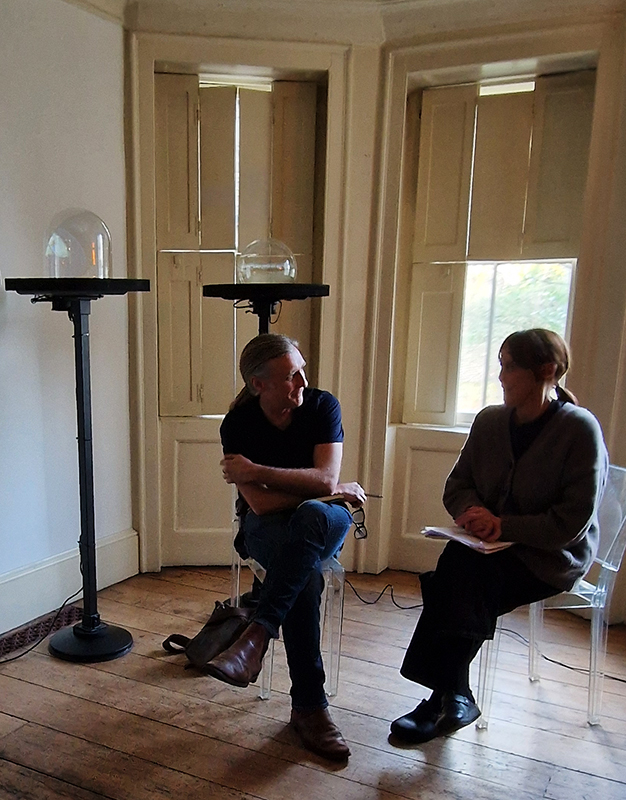
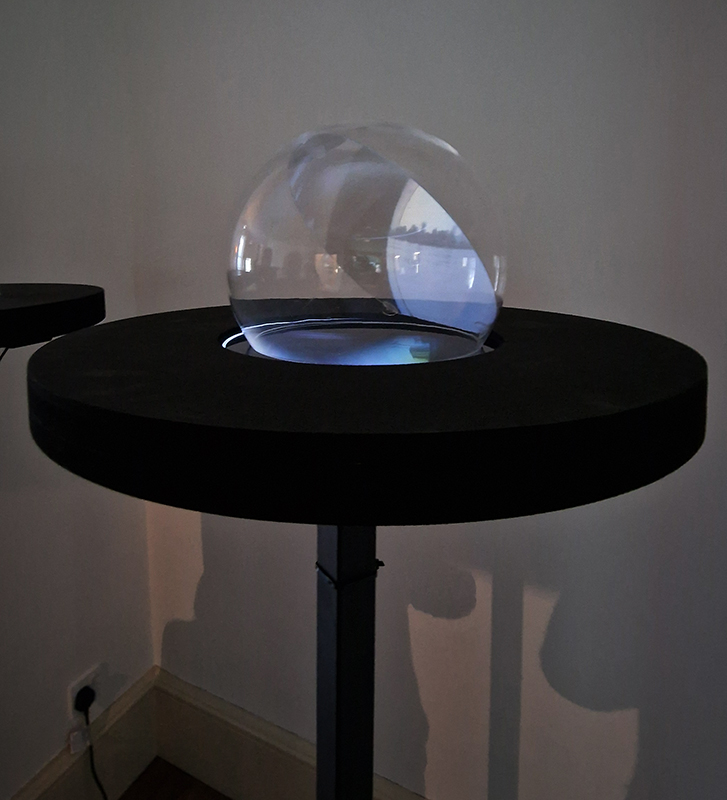
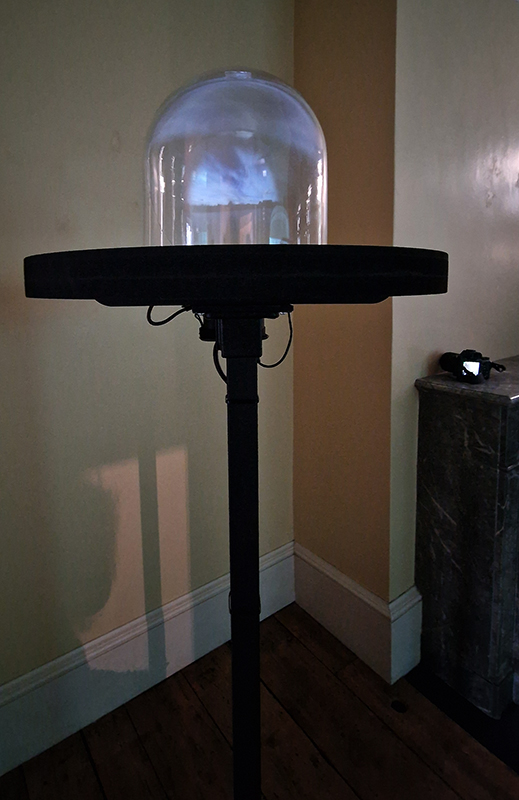
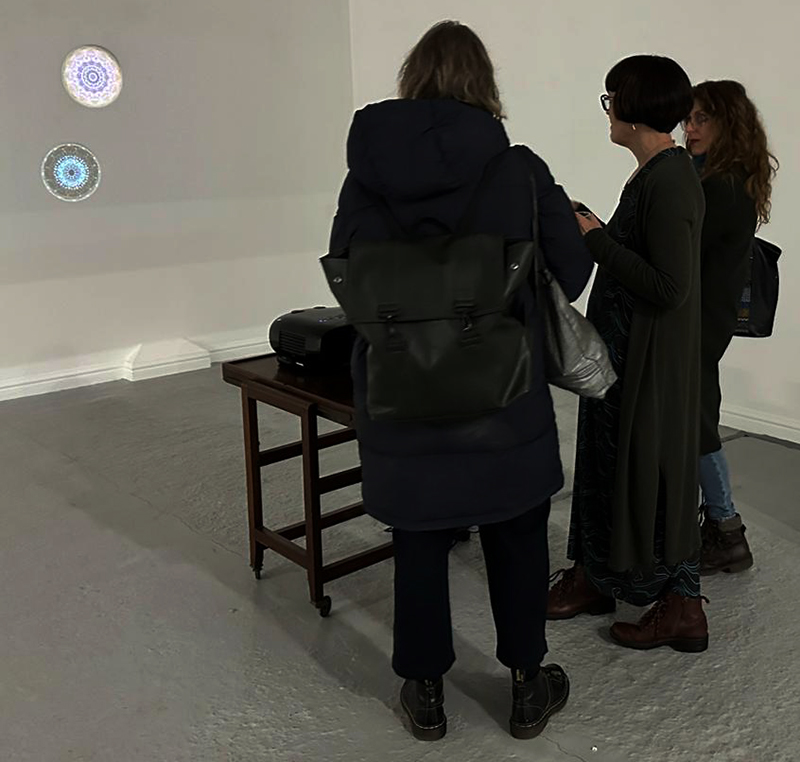
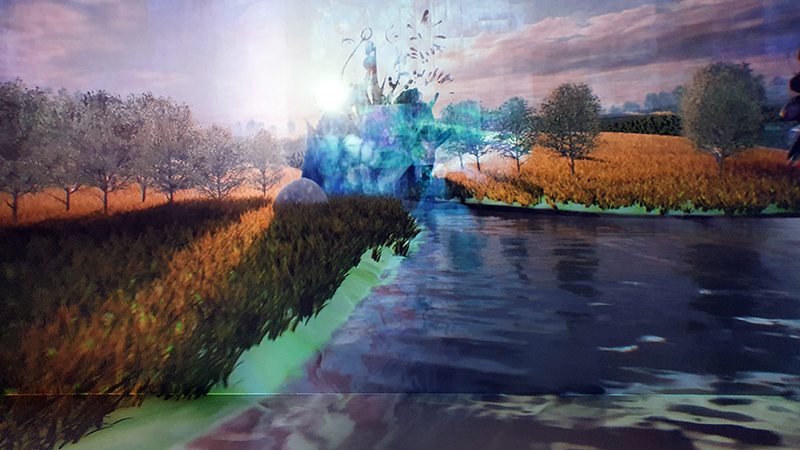
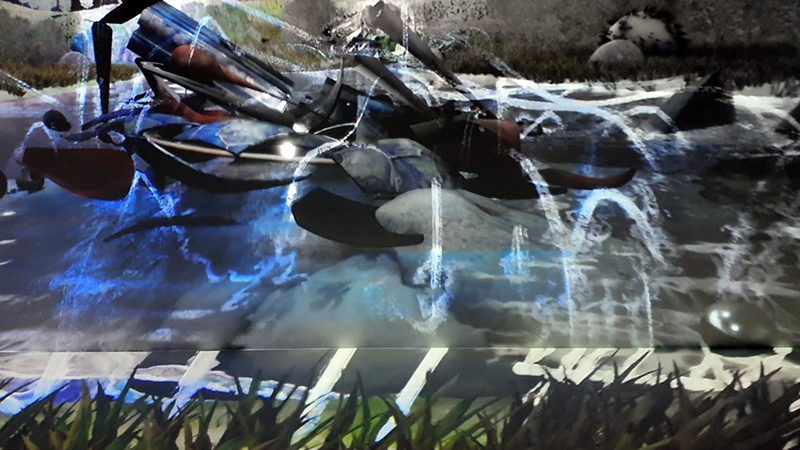
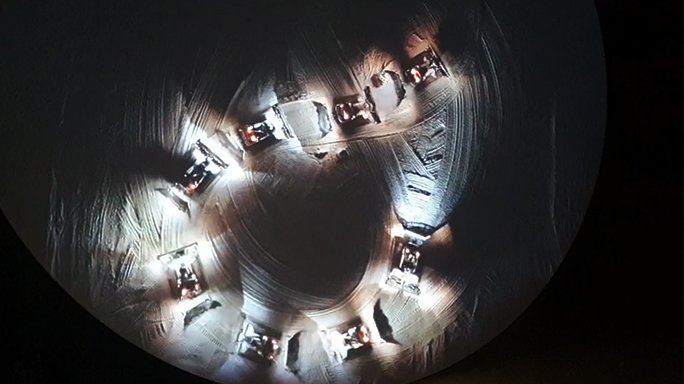
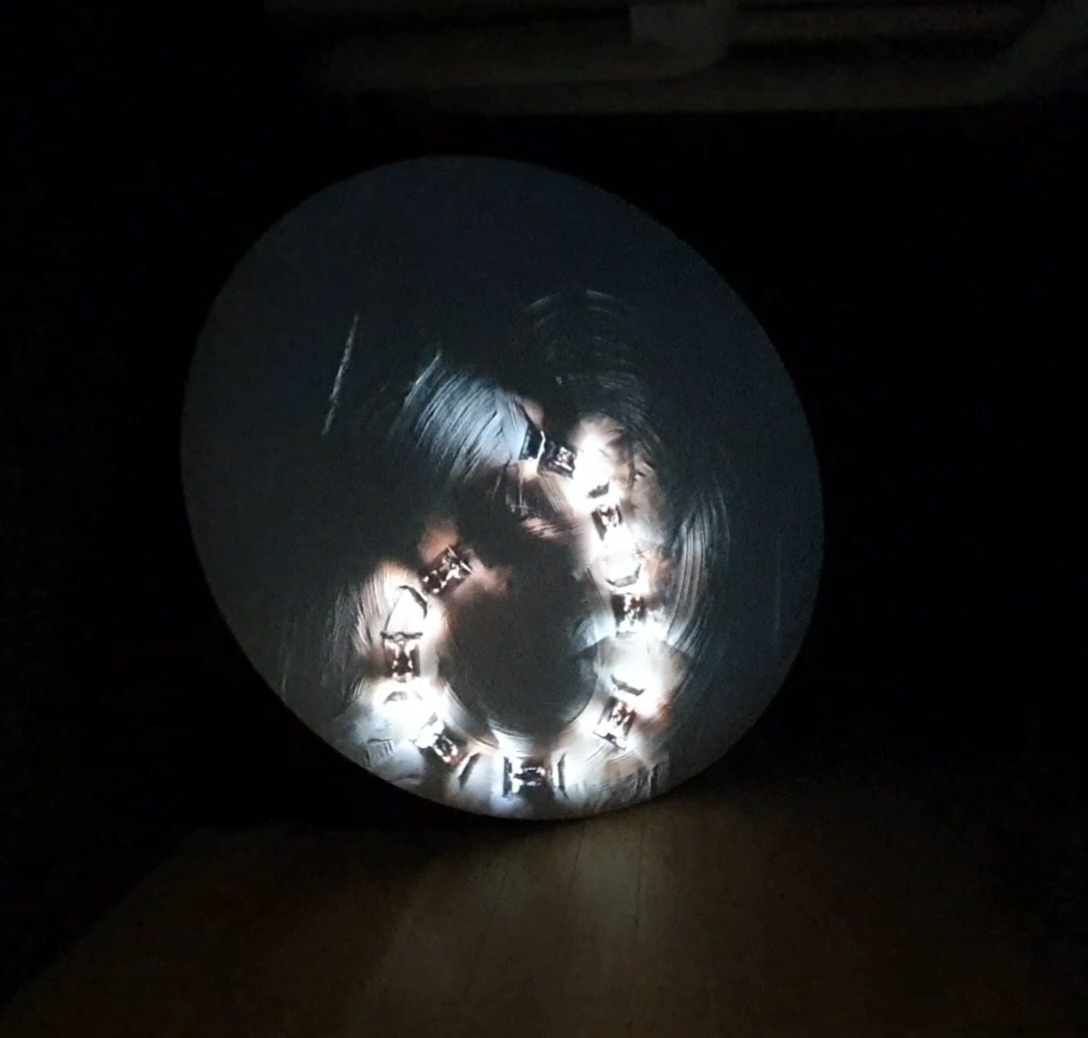
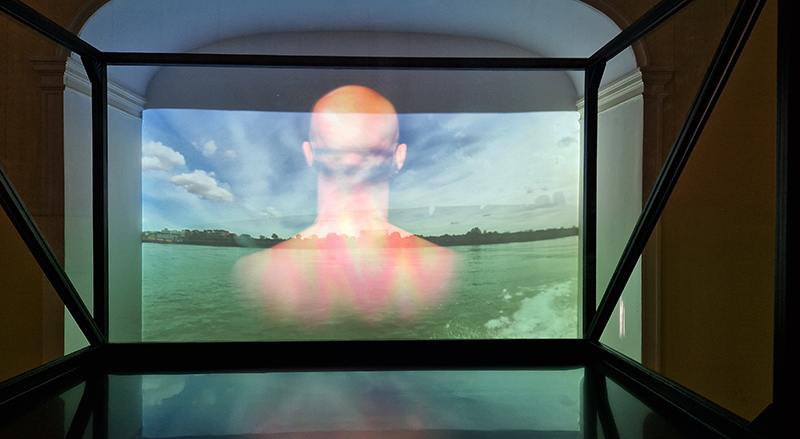
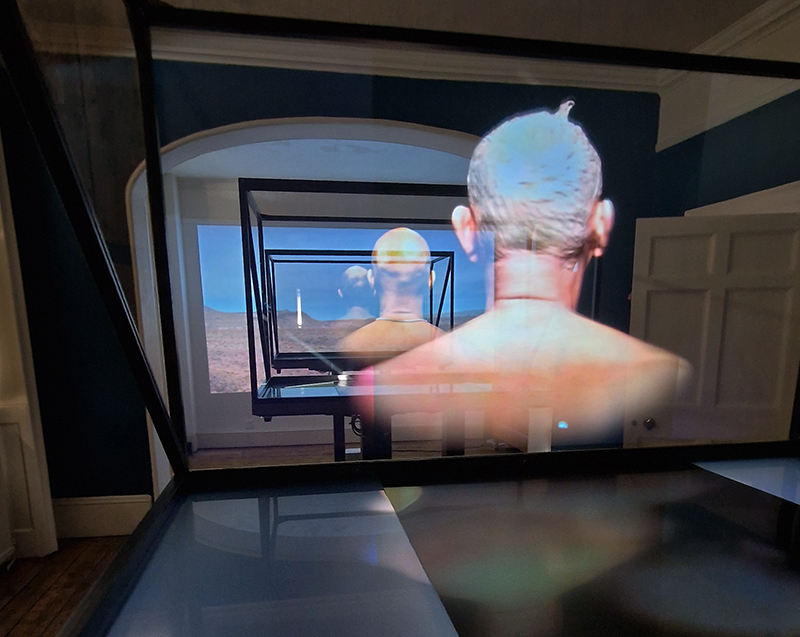
David Cotterell in conversation with Amanda Crawley Jackson, (LCC Professor of Place and Culture / Dean of Research and Knowledge Exchange), at Danielle Arnaud discussing the exhibition and underlying themes of the sublime, suburbia, estuaries, deserts, and human inconsequentiality. Albert Camus’ absurdism philosophy was referenced in respect of the inability to know the world and the world’s indifference to human attempts to even try. David has visited and documented some amazing wide open landscapes of Afghanistan and Mexico where the sublime is inherent in the experience of isolation, vulnerability and awe. We see these in the projected works here. The choppy expanse of the Thames estuary is encapsulated into spherical and domed microcosms, like seeing visions in a series of crystal balls set at eye/brain level – so also a bit like peering directly into the mind’s eye. He expressed the desire to share the experience of being in these landscapes – I think he did share the wonder. He also talked about his visit to Donald Judd’s sculptures in Marfa, Texas where even megalithic sculptures are overwhelmed by the scale of the environment and the milky way is not beyond, but within touching distance.
Events

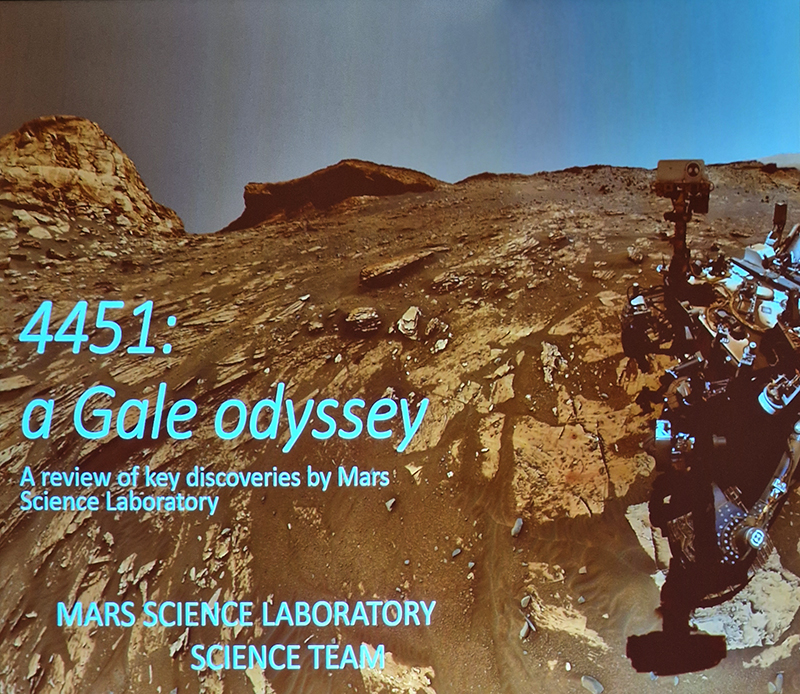
Royal Astronomical Society Friends Lecture from Dr Steven Banham, Imperial College London. This was an in depth reveal on the geology of Mars. The Mars Science Laboratory mission’s Curiosity rover landed in Mars’ Gale Crater in August 2012. About the size of a MINI Cooper, Curiosity is equipped with 17 cameras and a robotic arm containing specialized instruments. It has explored the northern margin of Mount Sharp for 4451 Martian sols providing compelling evidence that shortly after crater formation, a habitable environment existed here. The rocks that form lower Mount Sharp preserve a record of persistent lakes fed by fluvial systems originating from the crater rim. As the rivers entered the lake, they released plumes of sediment and assorted nutrients into the water column to be distributed across the lakebed — recorded as the Murray formation. Geochemical and mineralogical assessments indicate that environmental conditions preserved in these layered rocks would have sustained life, if it were present. On Sol 3047, Curiosity made a sharp right turn after crossing the phyllosilicate unit, to drive up into the orbitally-defined sulphate-bearing unit. From this point, Curiosity witnessed distinct changes in the stratigraphy, recording a progressive drying of the ancient environment. The rover identified a gradual change from humid conditions containing a record of perennial lakes, to isolated ephemeral lakes, and onto desolate deserts. During this ascent, interstratification of aeolian strata became increasingly common, including sand sheets, dune strata and deflation scours. However, despite this general aridification, the succession was occasionally punctuated by episodes of abundant water: the Amapari ripple bed for example, records a brief shallow lake: a veritable oasis, free of ice.
I travelled to Manchester to see Figures in Extinction, a dance trilogy exploring the age of disconnection. A beautiful, haunting and sobering collaboration between choreographer Crystal Pite, NDT 1 dancers and Complicité director Simon McBurney. The first section confronts the extinction crisis and climate change deniers, listing the last of each species vanishing from our world; the second section addresses human isolation in a world dominated by technology and data, the divided brain where the intuitive side of our brain has not been nurtured leaving the rational unempathetic side to be dominant, and the final section draws our focus to death, physical decay of the body and grief, urging an honouring of our ancestors – the dead, having lived are not inert. The lighting throughout was amazing but particularly extraordinary in the closing scenes as ethereal spectres swarm the stage. The dancers, so precise in their movements delivered a hugely emotional homage to life on Earth.

East is South by Beau Willimon at Hampstead Theatre. There was a lengthy monologue on equivalence in this fast paced play projecting a future where AI or AGI (Artificial General Intelligence) learns to take on the experience of faith over logic. Two coders stand accused of releasing a dangerous AI to infect processors globally. Their motivation interrogated as potential spy or subject to religious cult beliefs. “God didn’t create the universe,” it may be “the universe’s project to create God.” After all, if Agi escapes to colonise the internet, knowing everything about everything, and having power over everything, wouldn’t “she” become our “God?” With personal memories questioned as truth as much as being duped by others for their own ends, there is no clear path in a complete breakdown of trust and authority. I see this play has had a lot of bad reviews – it is dense with ideas and maybe the interrogation format is not new but it has a lot to say that is relevant.
‘A stone sky rotated above our heads’ – Italo Calvino, Cosmicomics

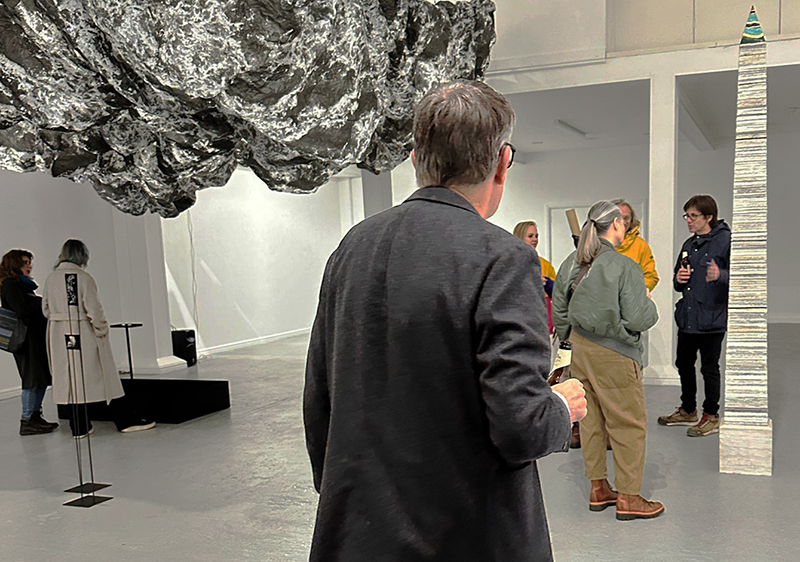
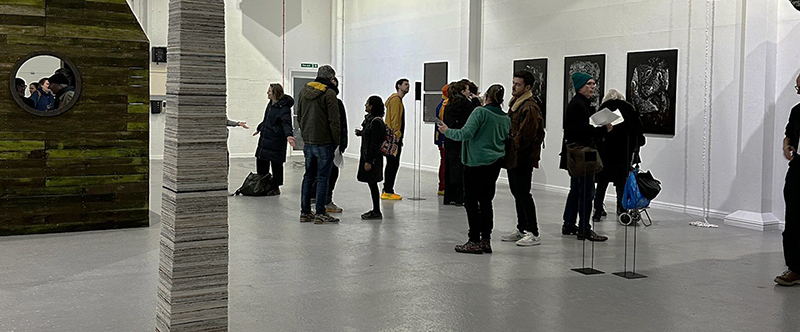
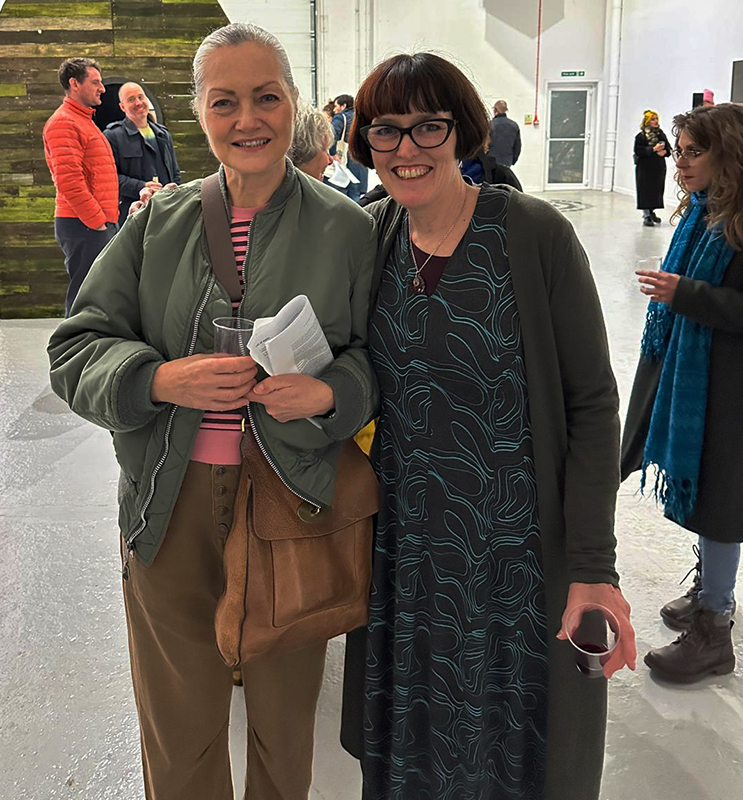
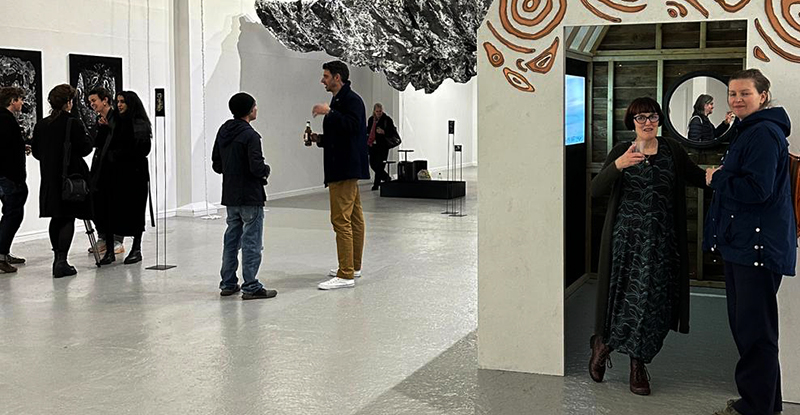
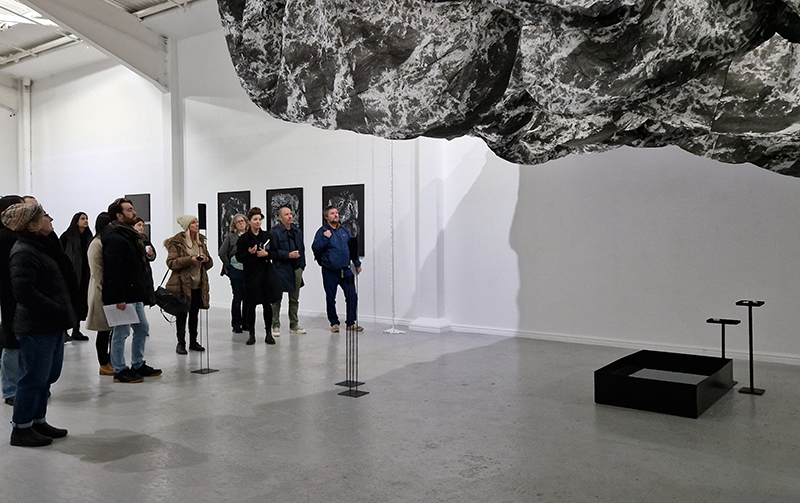
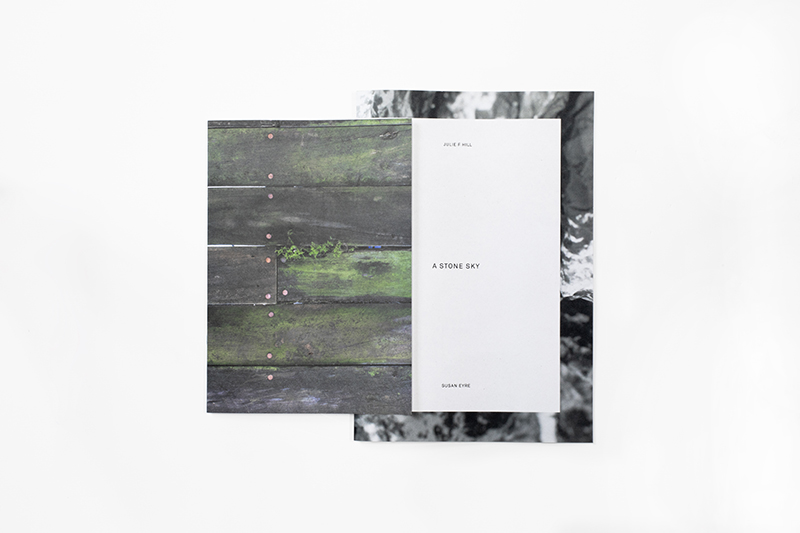
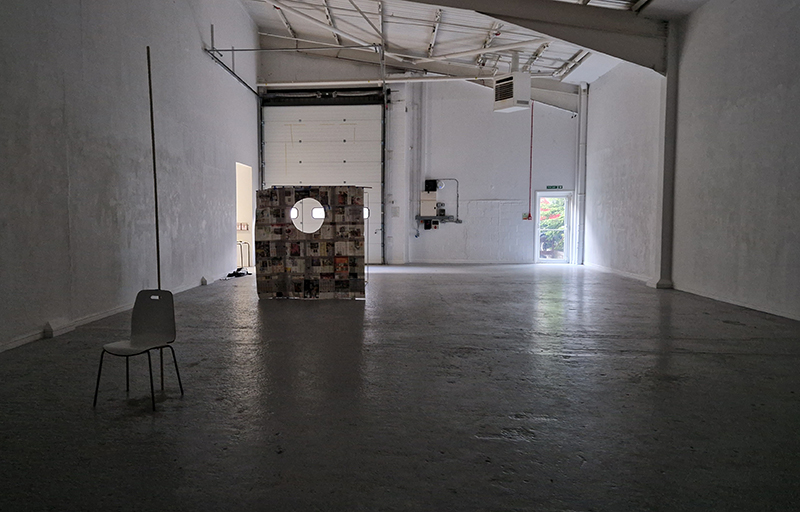
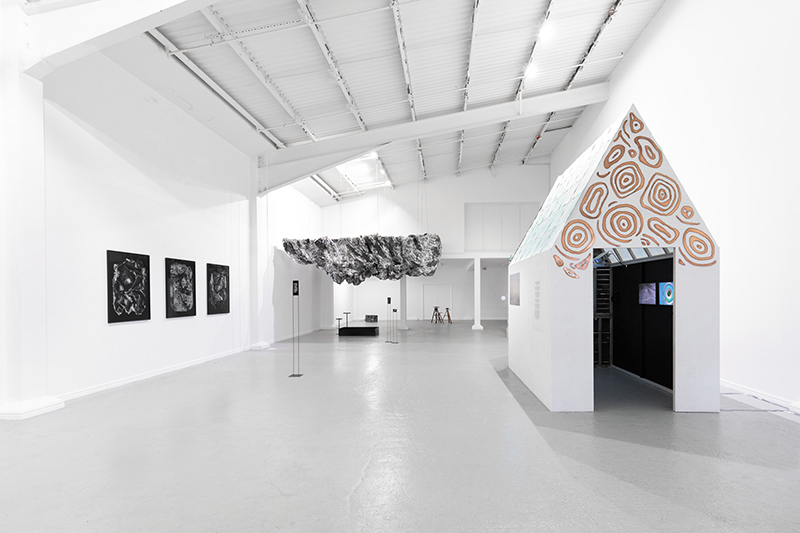
The culmination of two years work – A STONE SKY duo exhibition with Julie F Hill opened at Thames-side Studios GalleryReimagining the idea of an observatory – the exhibition proposes a cavernous realm of real and speculative possibilities that arise from beyond the limits of human perception. Engaging with the extended sensory range offered by technologies such as orbiting space telescopes through to the ability of birds to ‘see’ the Earth’s magnetic field, the artists’ reveal intimate connections between earth and space.

Installation shot by Ben Deakin Photography.

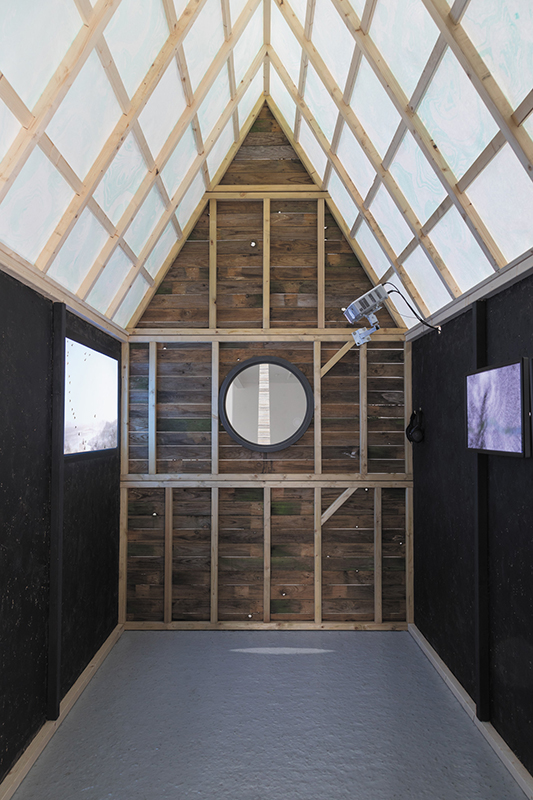
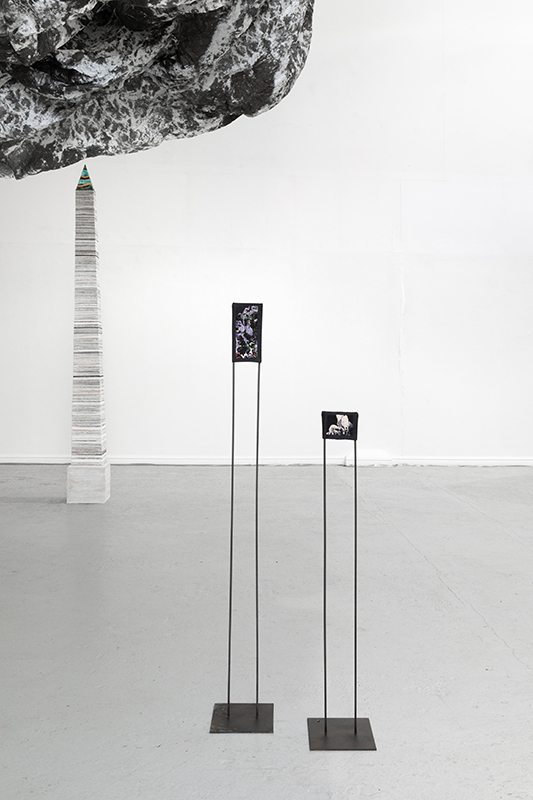
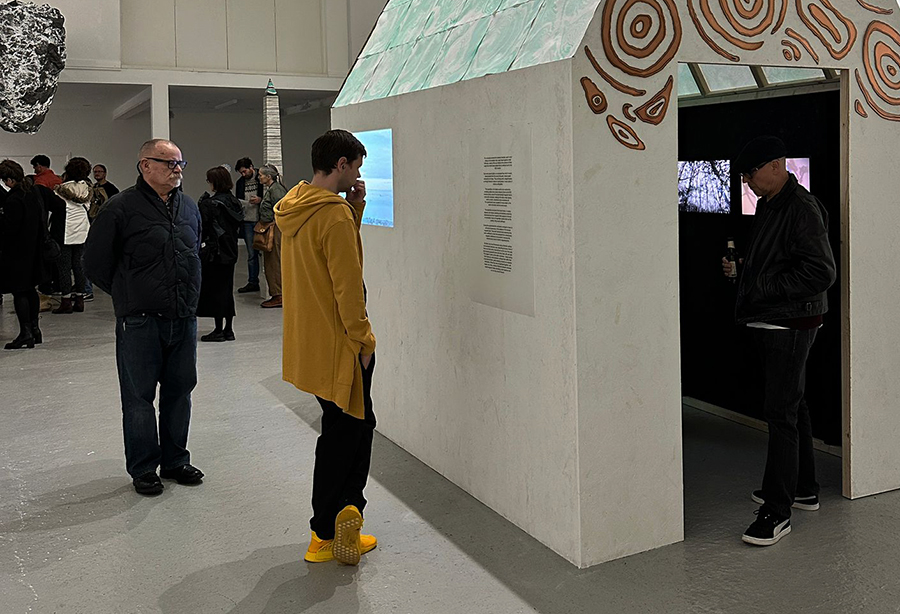
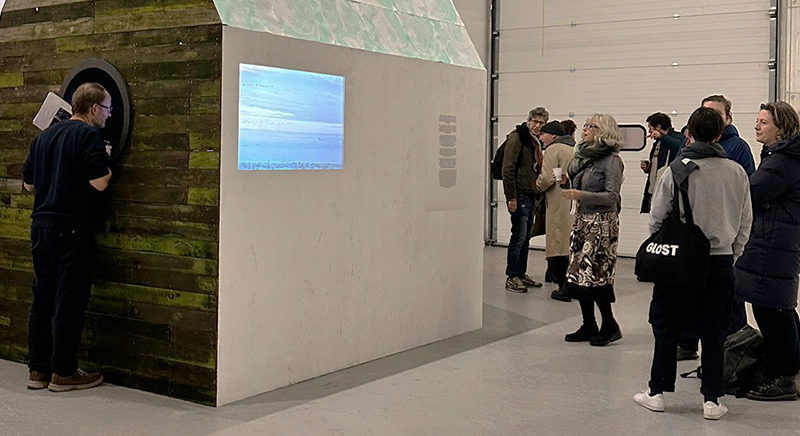
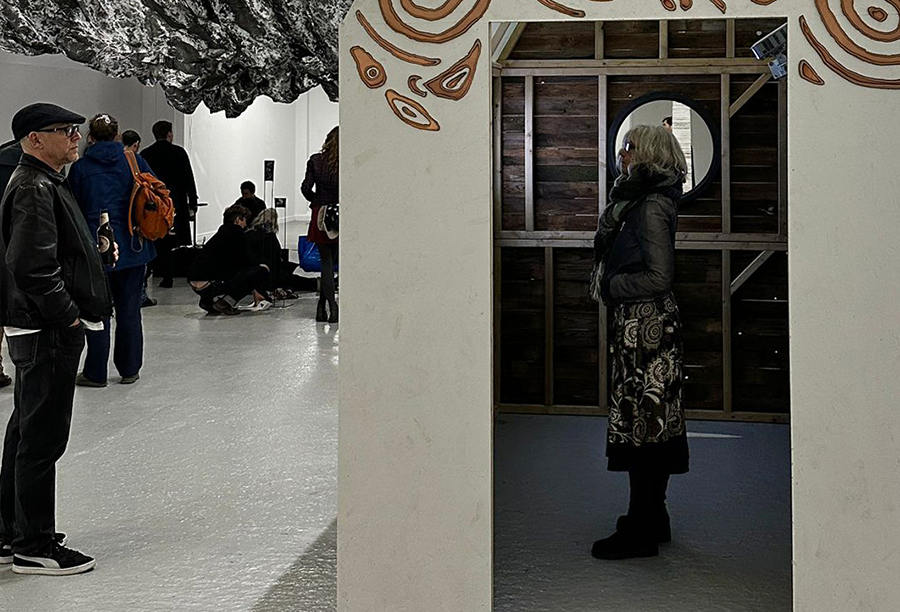
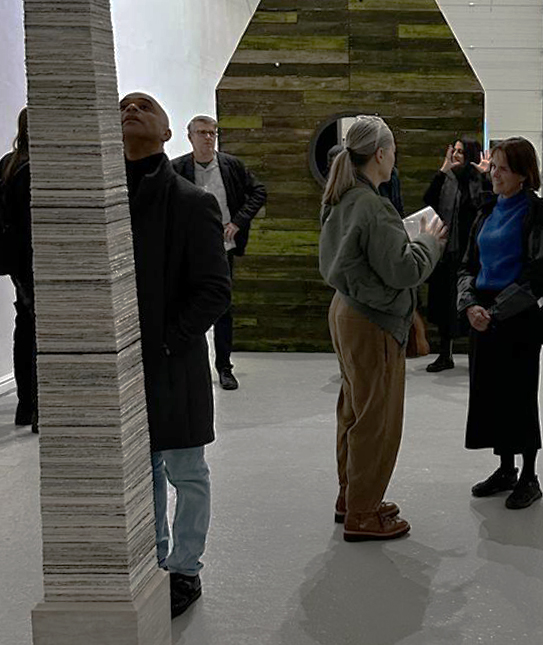
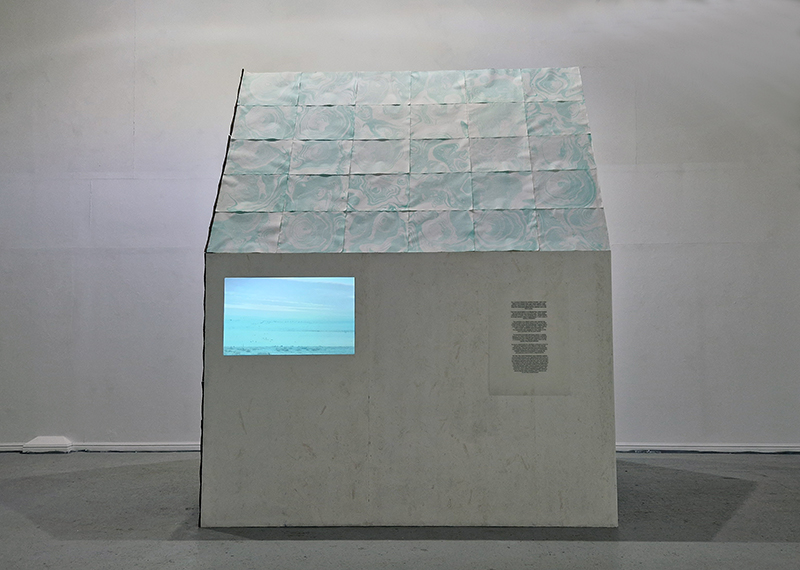
Susan Eyre seeks to navigate a path across time from the first human encounter with the magical qualities of the lodestone to current understanding of the interaction of the magnetic field with terrestrial life. Her works respond to the architecture, instruments and materials, found at a magnetic observatory while scientific objectives are expanded to include natural navigation techniques and extra-sensory methods used by the non-human realm, to form the basis of speculation as to the ability for humans to perceive the Earth’s magnetic field. Installation, sculpture and moving image works include a reimagined observation hut operating as a sensory hub with video screens suggesting portals into a web of neural pathways; an obelisk of layered recycled paper echoing Earth’s geological and magnetic history secreted in sedimentary strata of rock and a digital video work activated in real time by the passage of cosmic rays through a scintillator detector.

Images by Ben Deakin Photography

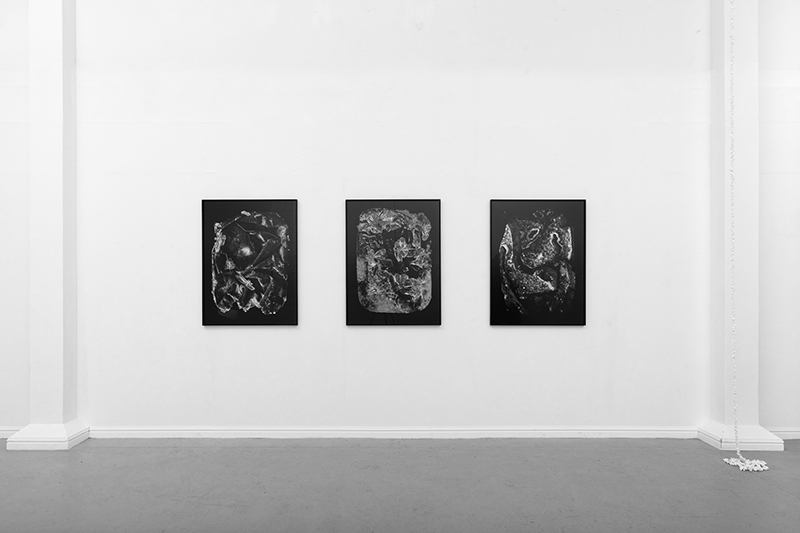
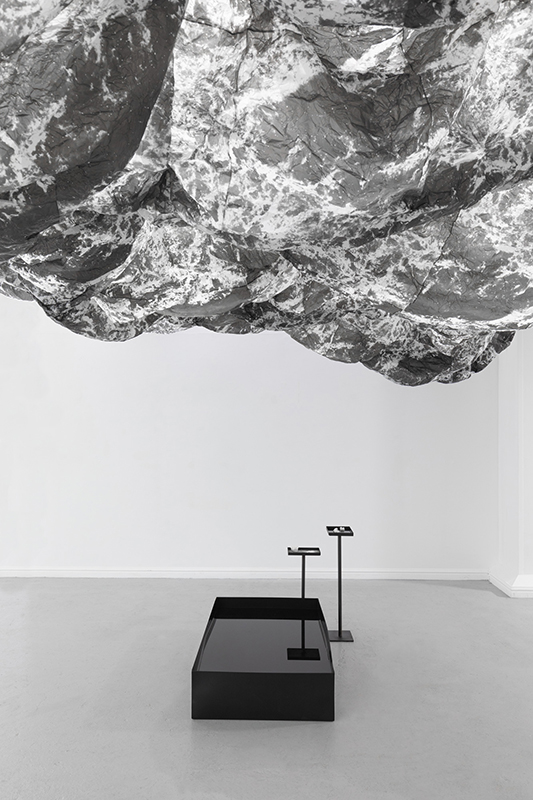
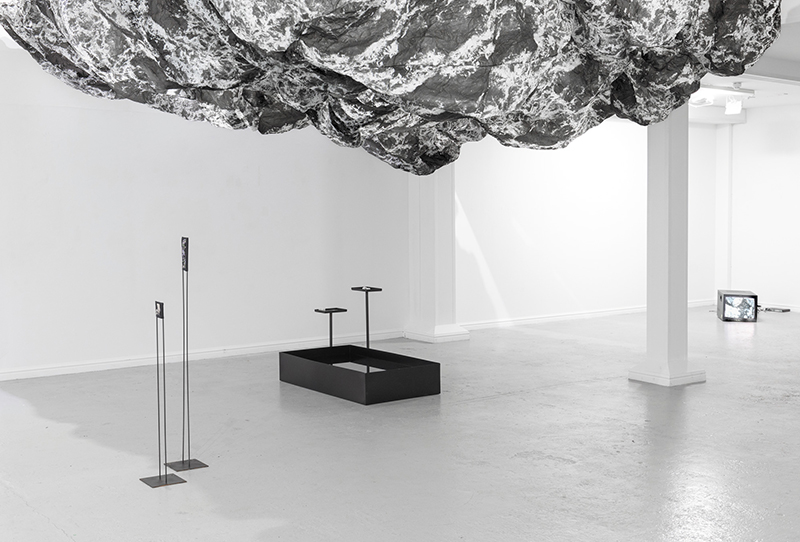
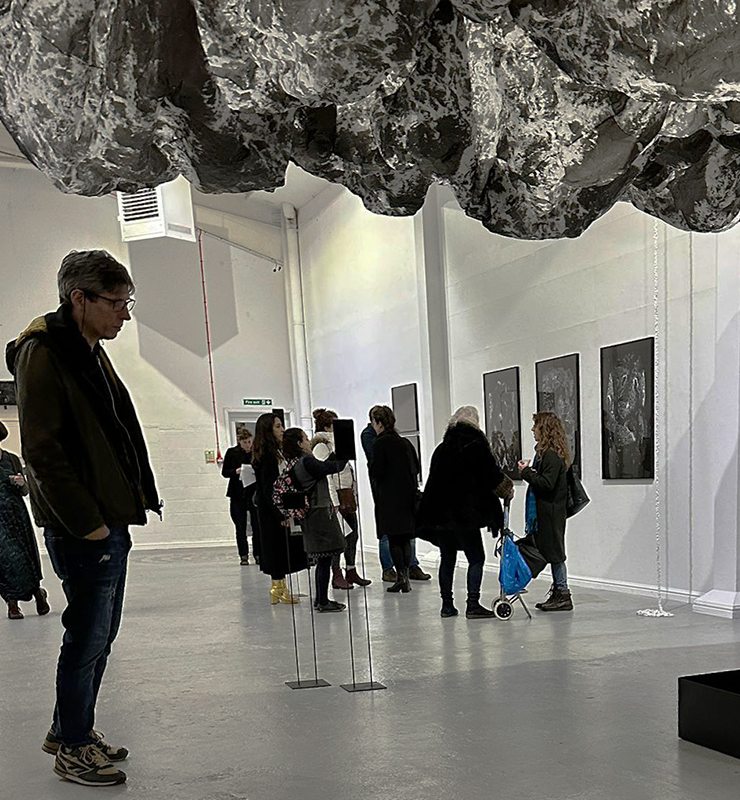
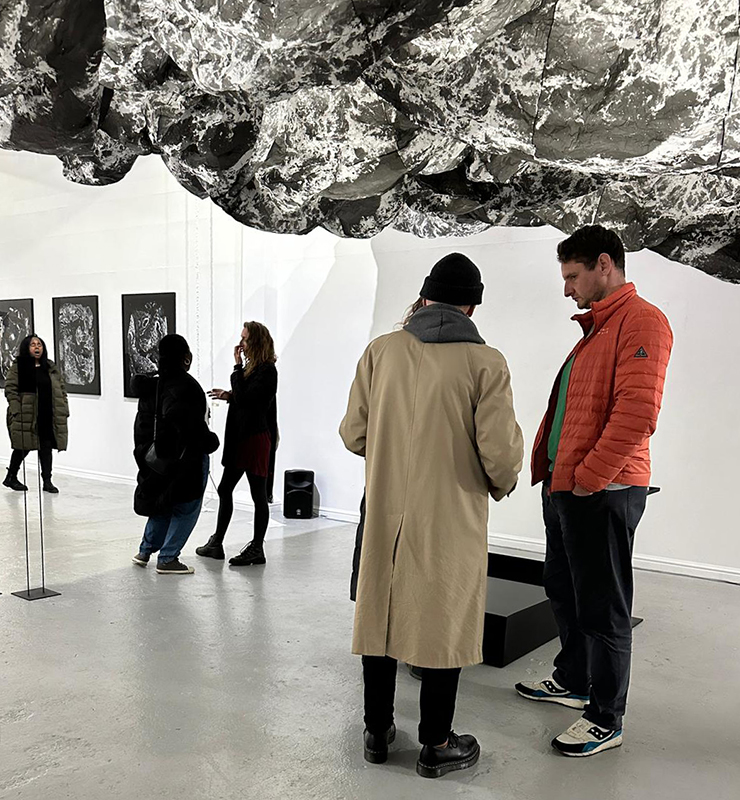
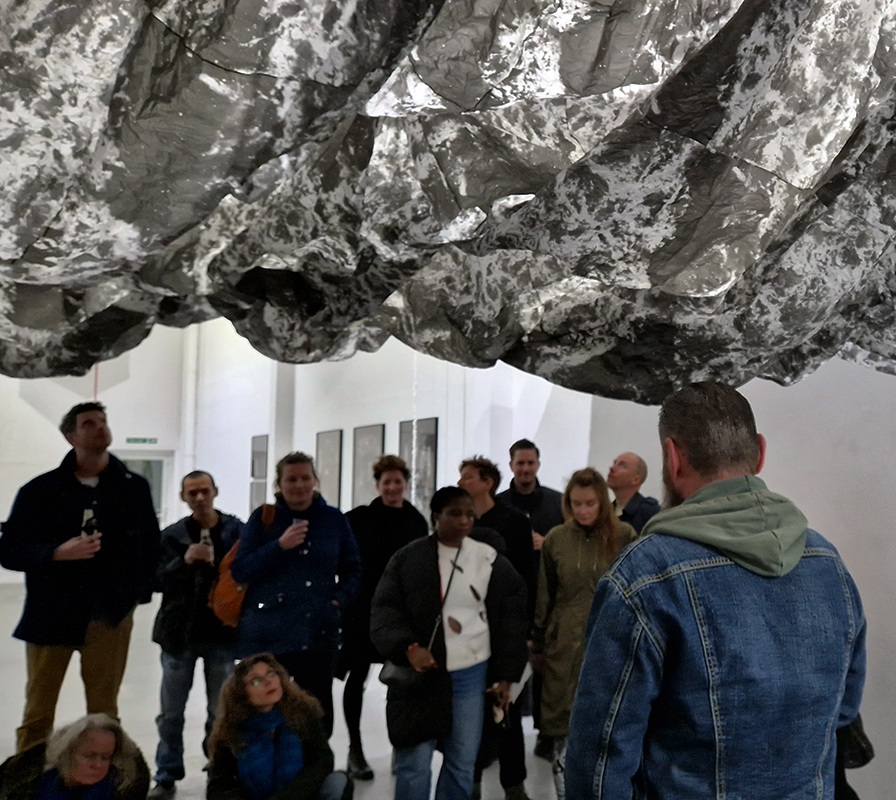
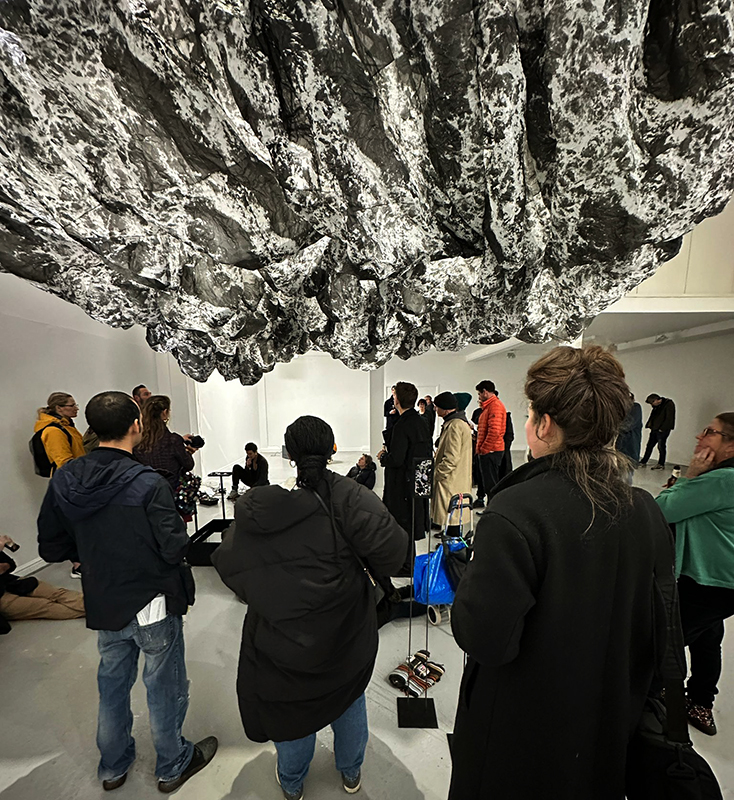
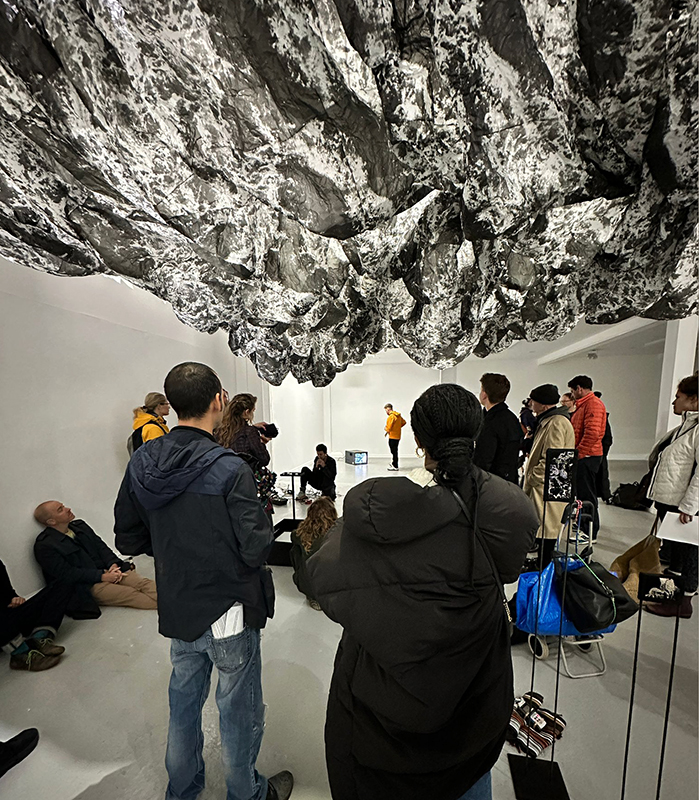
Julie F Hill explores the entwined darknesses of earth and cosmos. Crystalline and mineral substances from the deep earth fuse with astronomical data to suggest the deep-earth as an instrument for coming to know the cosmos. Crystalline and mineral substances formed in the continuum of deep earth and deep space allow us to peer back into cosmic time, both through the technologies created with them and the geological record they hold. Whilst darkness often indicates uncertainty and lack of knowledge, Hill asserts that it’s through darkness when we can be most perceptive to the interconnectedness between earth and cosmos. Through it we are able to extend our kinship with the inorganic and expand consciousness of what constitutes nature. Works include a large-scale sculptural print installation made from James Webb Space Telescope data that is reworked into a cavernous space, providing an experience of intimate immensity alongside more smaller sculptural and photographic works.

Images by Ben Deakin Photography

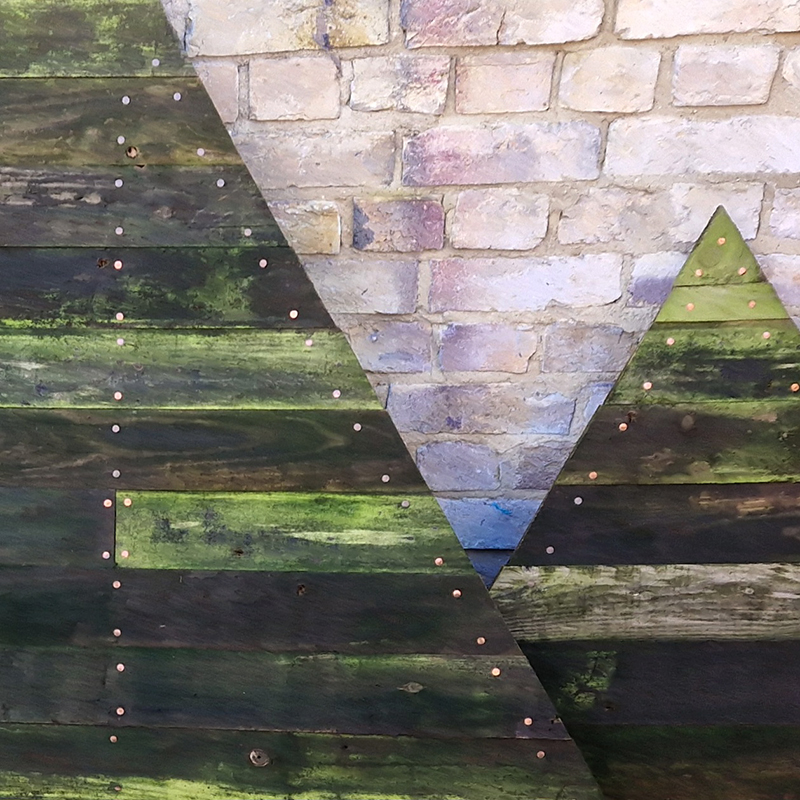
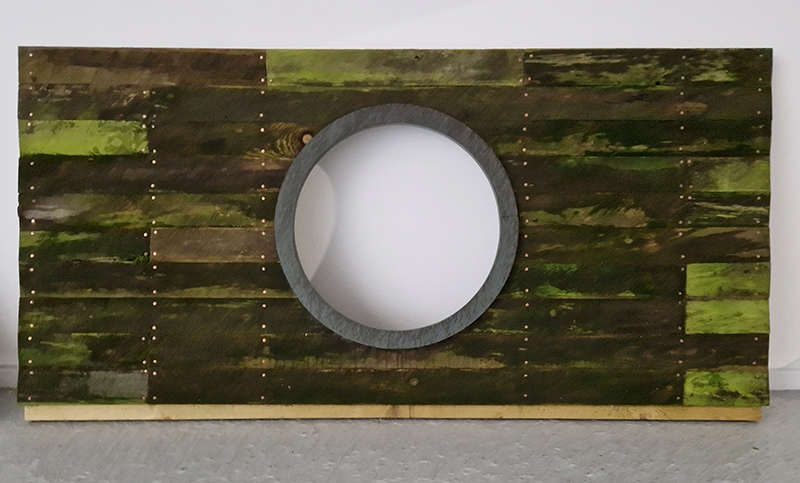
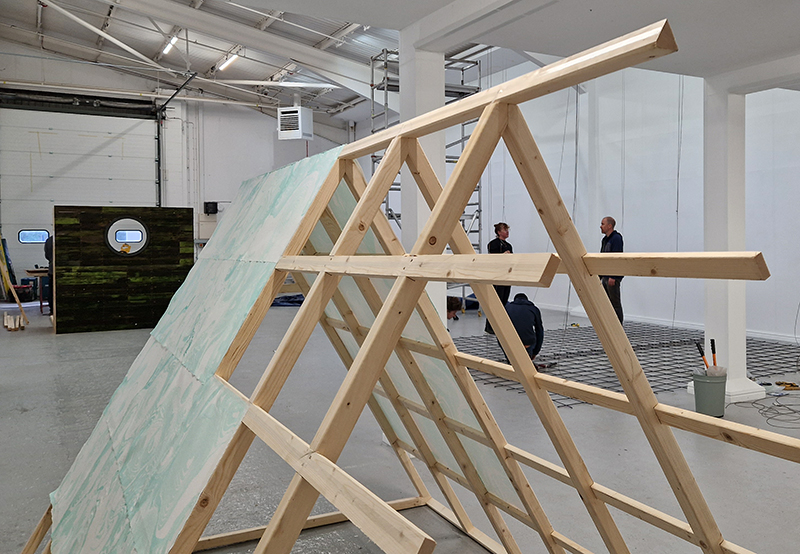
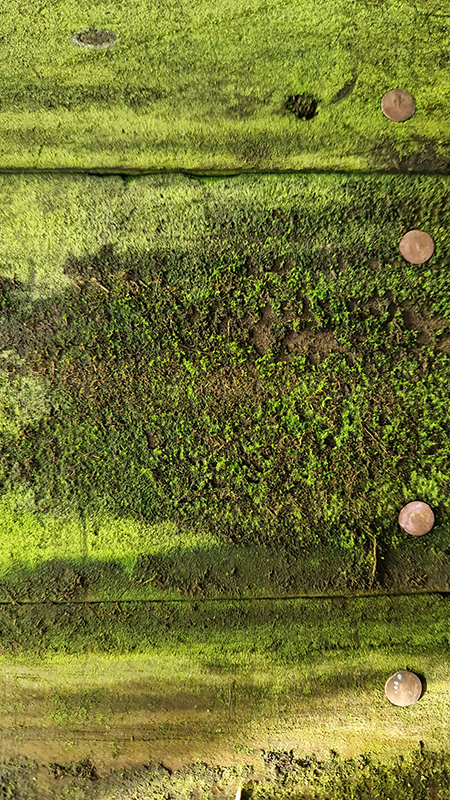
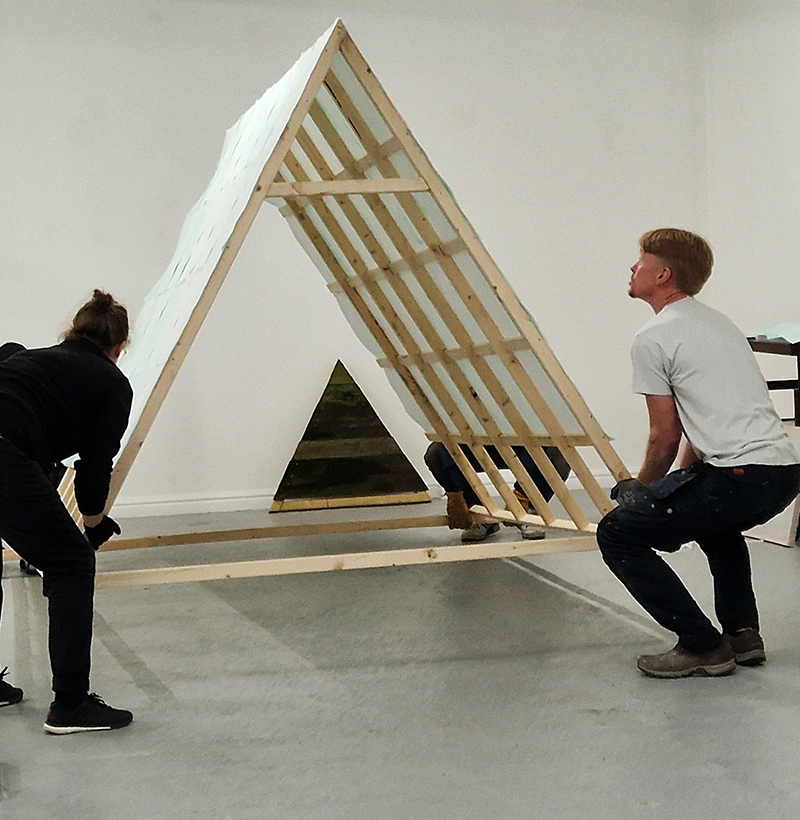
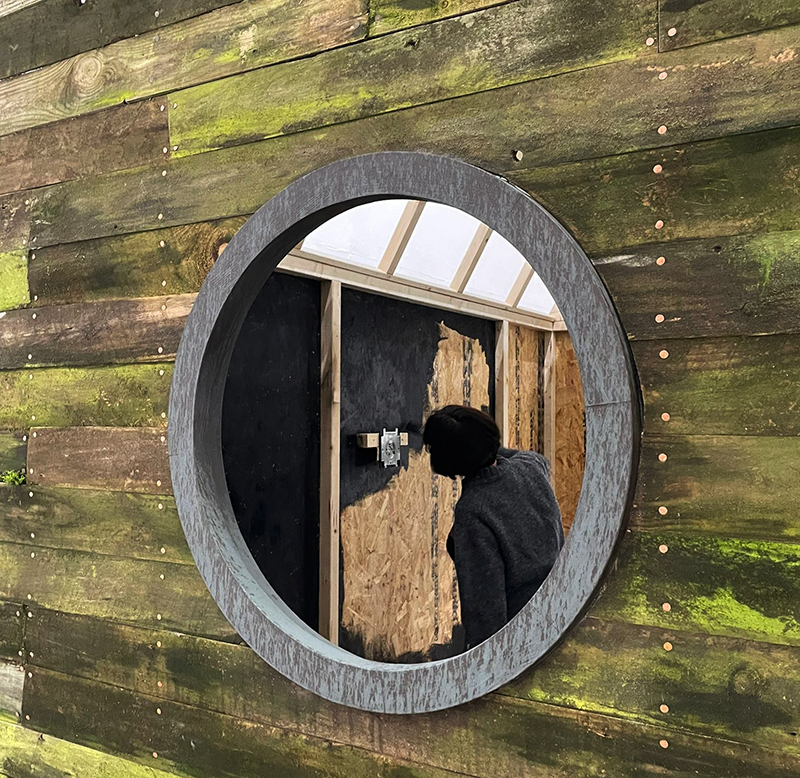
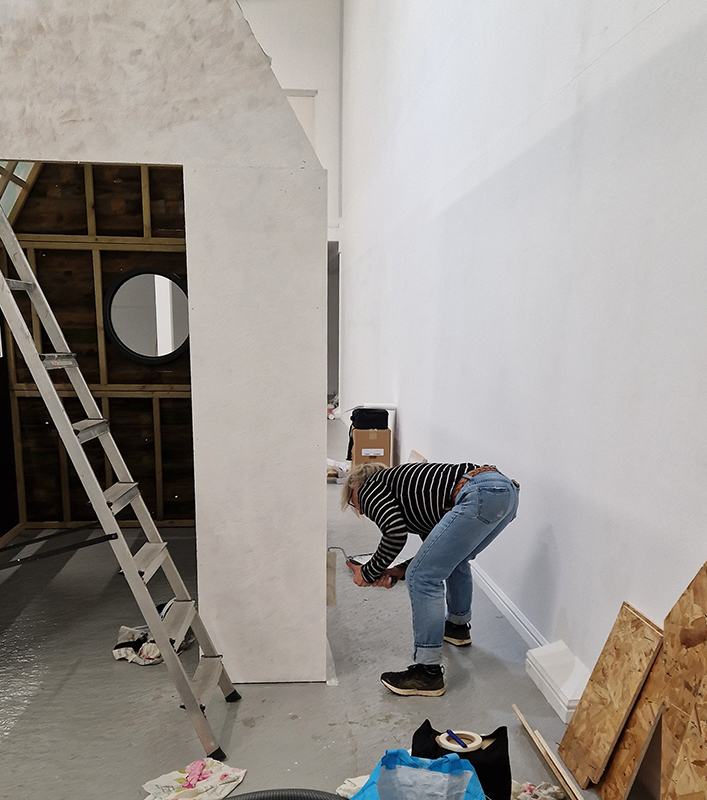
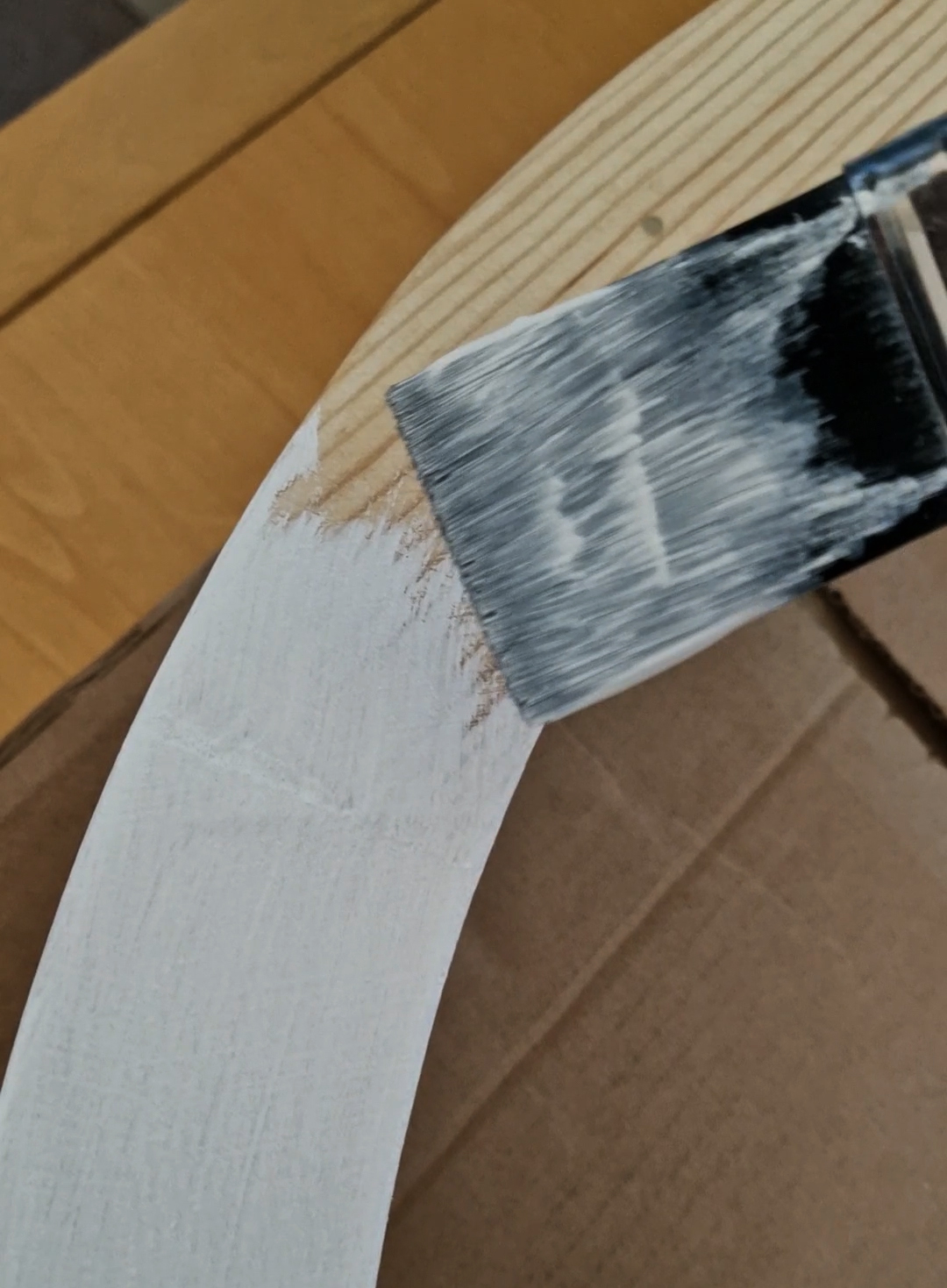
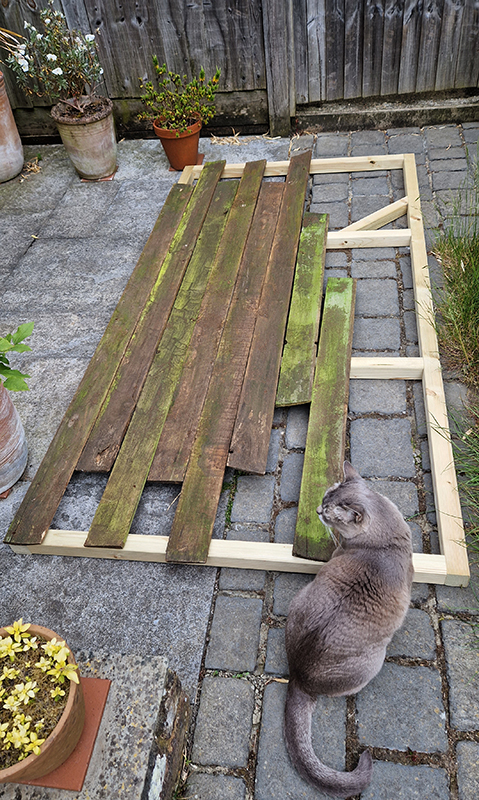
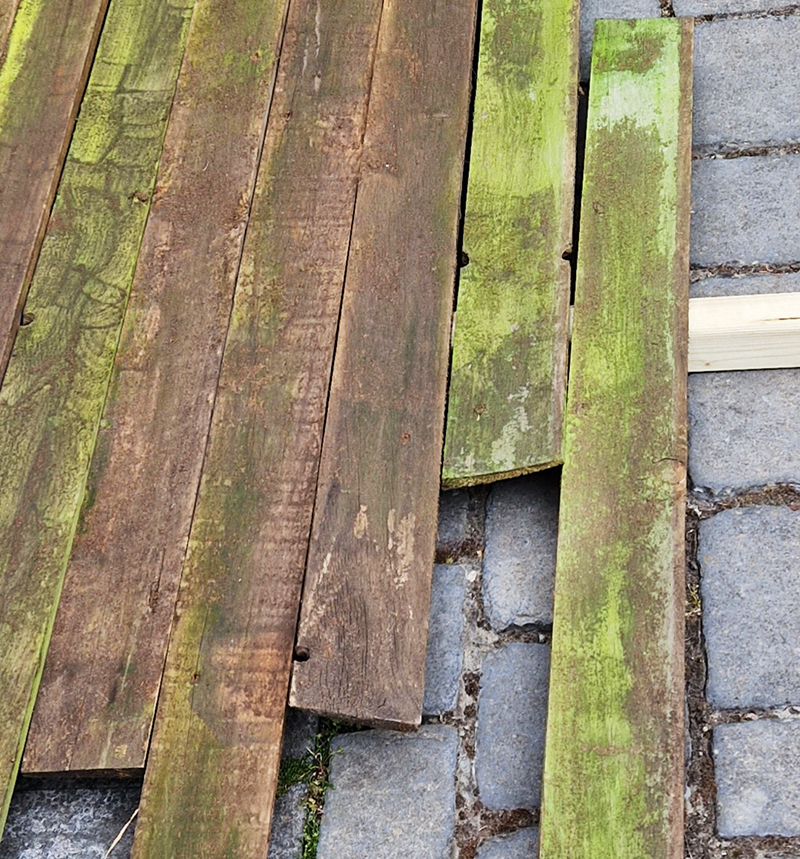
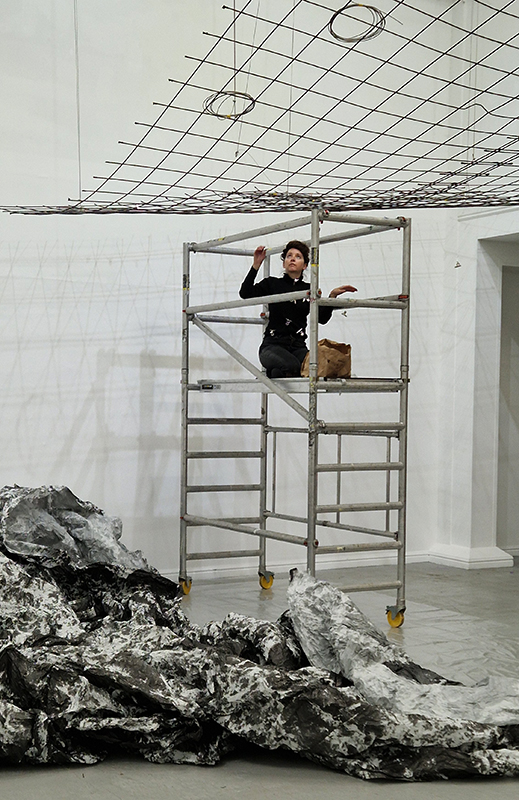
We both had ambitious large scale works to install and were grateful for the help we received from our partners (both Kevins), friends and technicians. Trevor Neale was magnificent in constructing The Absolute Hut. Anne Krinsky patiently helped apply double sided tape to the roof structure ready for the Suminagashi paper tiles and Caroline AreskogJones energetically painted the hut white and neatly edged the two way projection window. I was thrilled that, as a result of a wet few weeks, moss had started to grow on the wooden boards of the north facing wall in time for installation.

A big thank you to everyone that made it to the opening night, we were super chuffed with the positive responses.

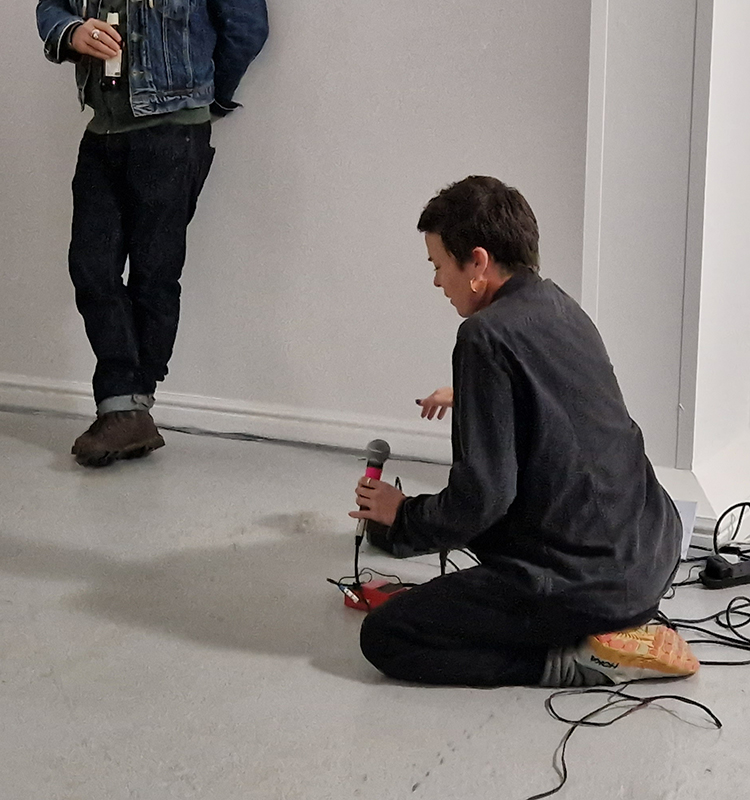
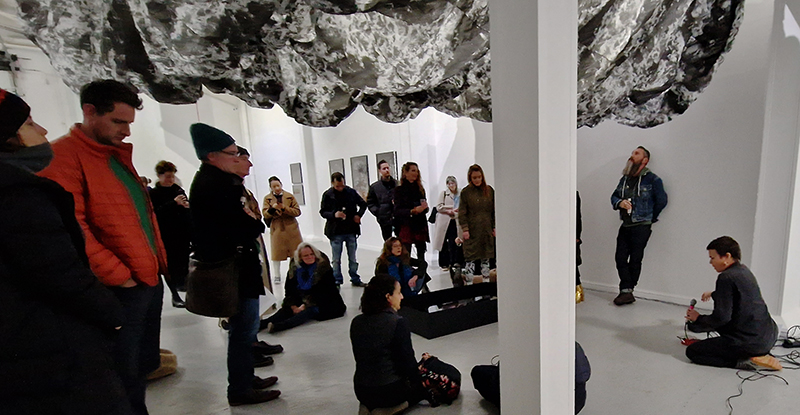
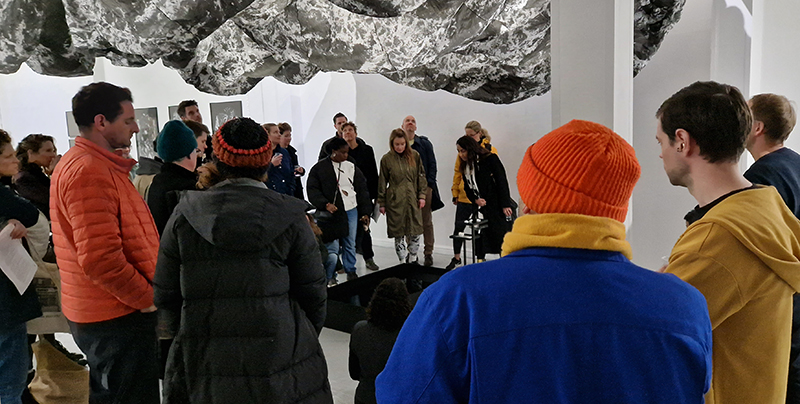
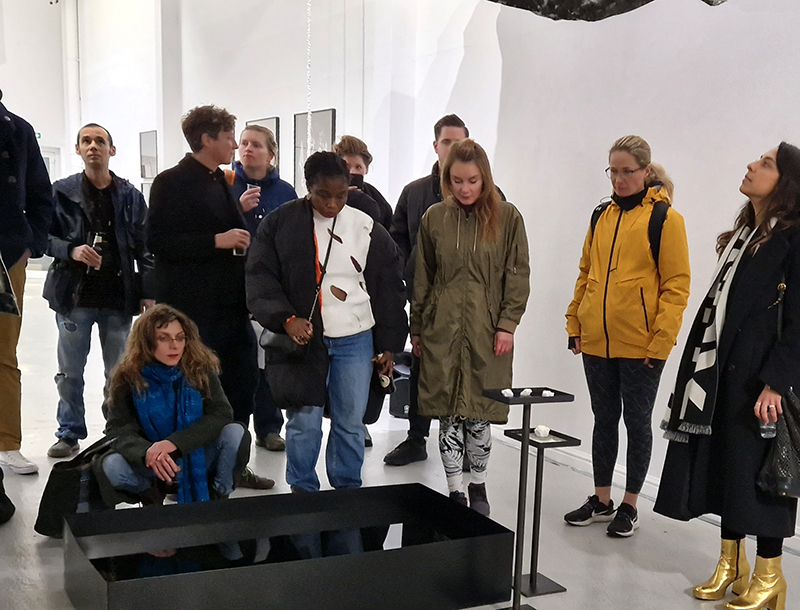
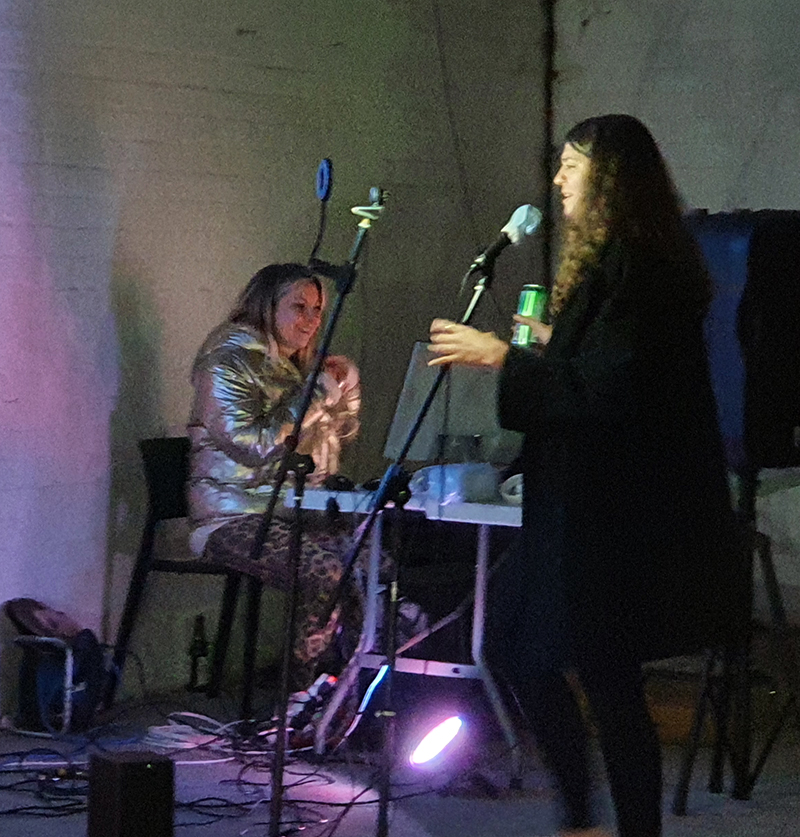
At the private view Julie’s large scale print installation was activated by a vocal performance conjuring abyssal voices of deep, cosmic time, performed and devised with Eleanor Westbrook whose voice produces incredible hauntingly beautiful sound.

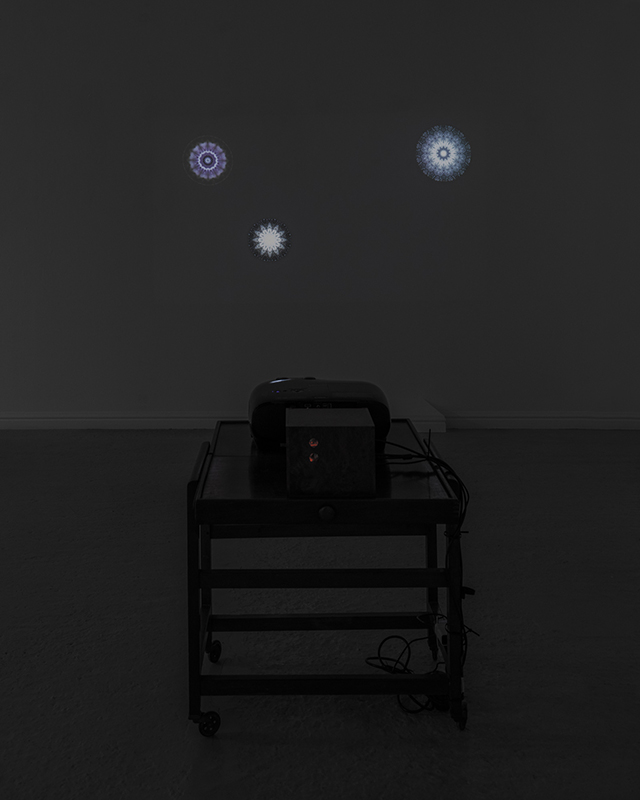
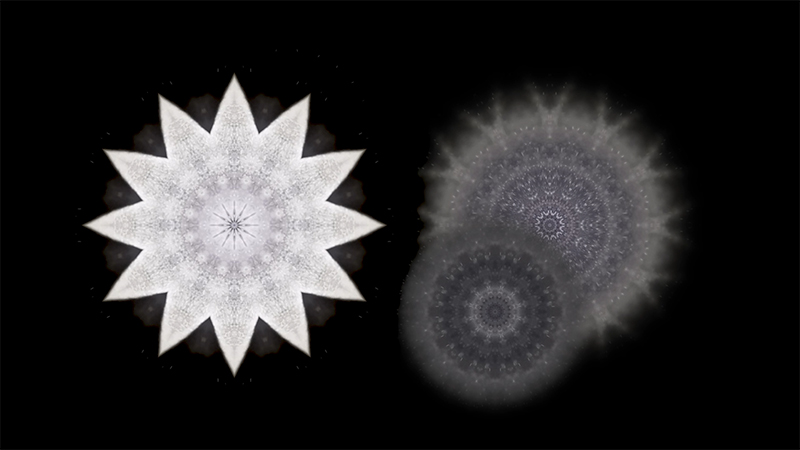
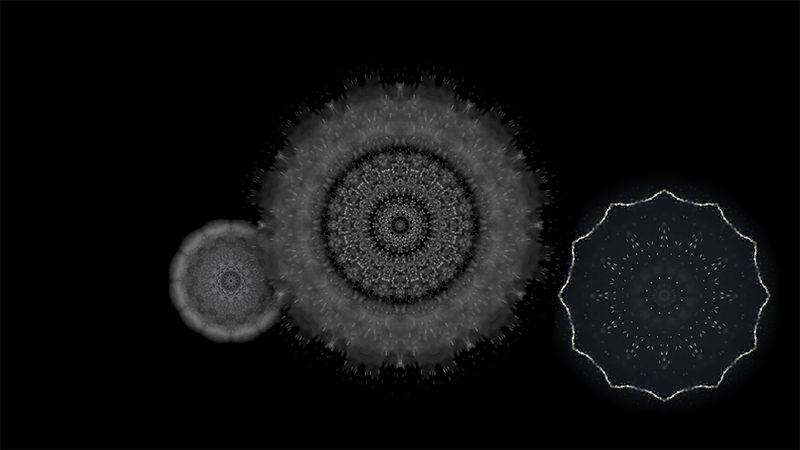
I was particularly excited to share The Breath of Stars, digital video work activated in real time by the passage of cosmic rays through a scintillator detector. After two years in development it was so exciting to watch the random starbursts appear in real time as witness to the unseen activity of cosmic rays passing through the gallery.

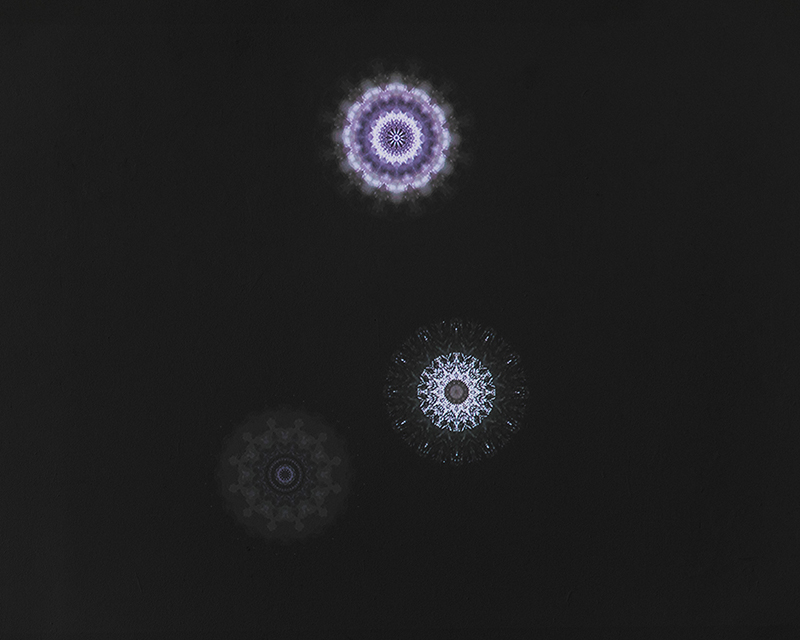
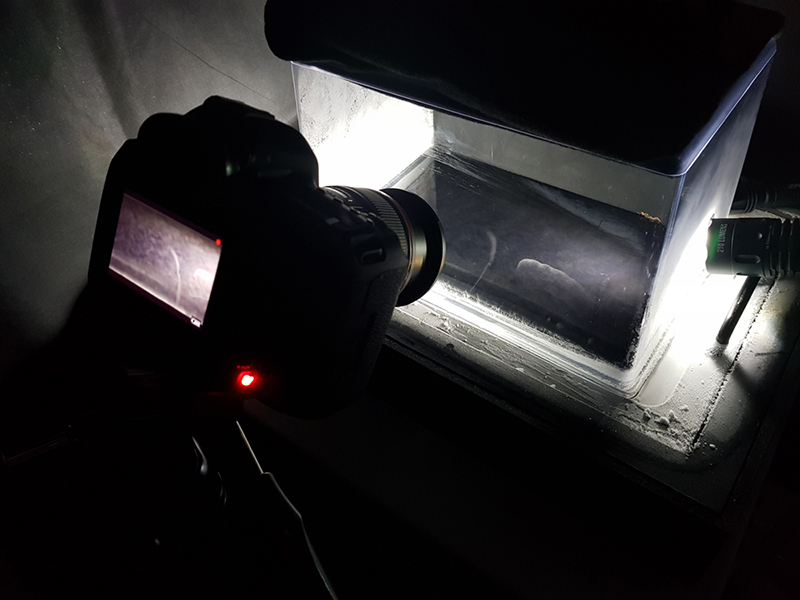
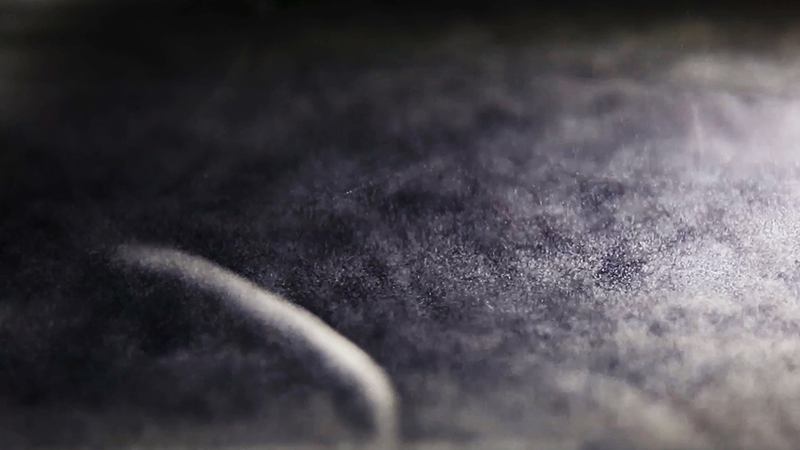
The kaleidoscopic video images that appear for every particle recorded by the detector, are created from footage of cosmic ray trails filmed in a cloud chamber.

The interaction of cosmic rays with atmospheric electrical fields influences the unpredictability of the magnetosphere and this random activity can be witnessed by the sudden flurries and silent gaps of the live video imagery.

These subatomic visitors from outer space power across the universe with unimaginable energy, coming from the heart of exploding stars or the depths of black holes; some may come from phenomena yet to be discovered or even from other dimensions. Travelling at close to the speed of light cosmic rays spiral along magnetic field lines, strike the edge of the Earth’s atmosphere, break apart and shower down upon us. Some particles collide and silently interact with atoms and technology on Earth. Most cosmic rays heading for Earth are deflected by the planet’s magnetic field and without this protection life on Earth could not survive this bombardment of radioactive matter. The interaction of cosmic rays and the solar wind with atmospheric electrical fields combines to influence the unpredictability of Earth’s magnetosphere, impacting the functioning of GPS satellite technology and computer processors on which humans have come to rely in daily life.

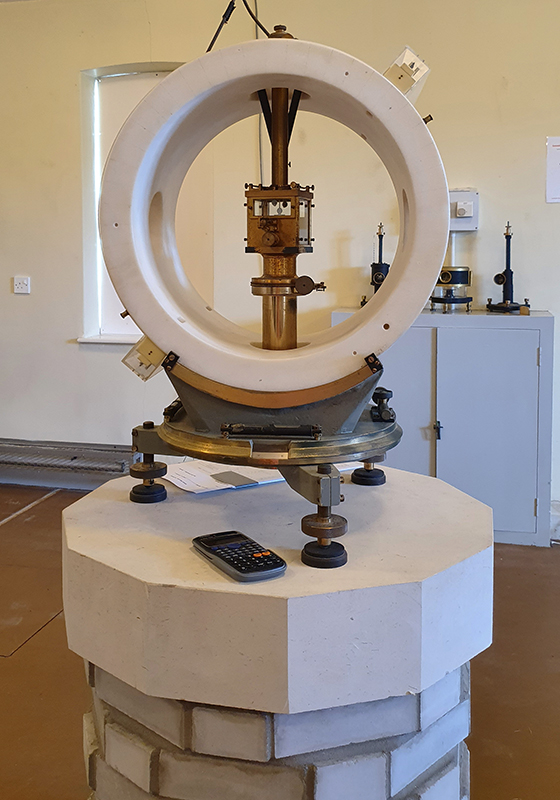
My research trip to Hartland Magnetic Observatory in North Devon was a catalyst for this body of work centring around a north facing observation hut aligned with an obelisk as a fixed azimuth mark. I am very grateful to The British Geological Survey for allowing me access to the site and particularly to Tom Martyn who shared his knowledge and gave a fascinating tour of the observatory.

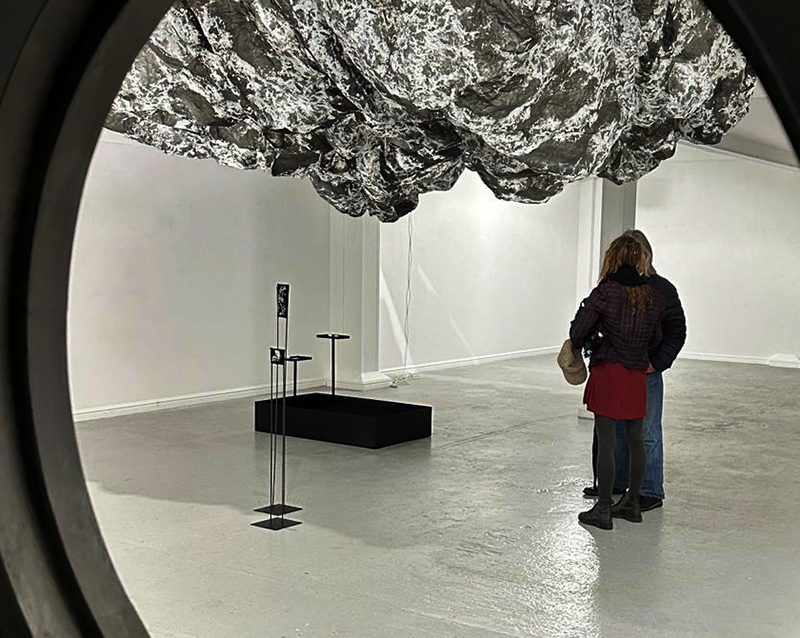
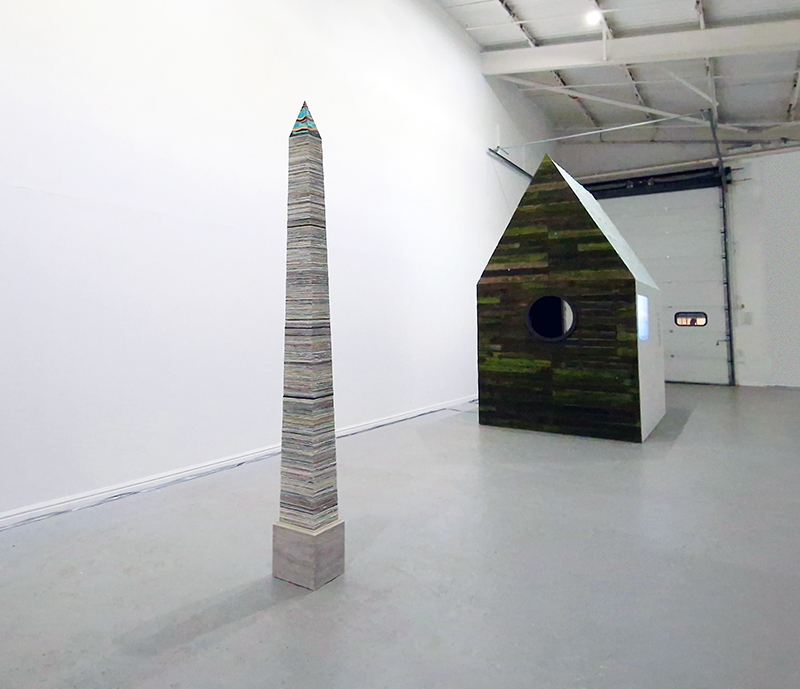
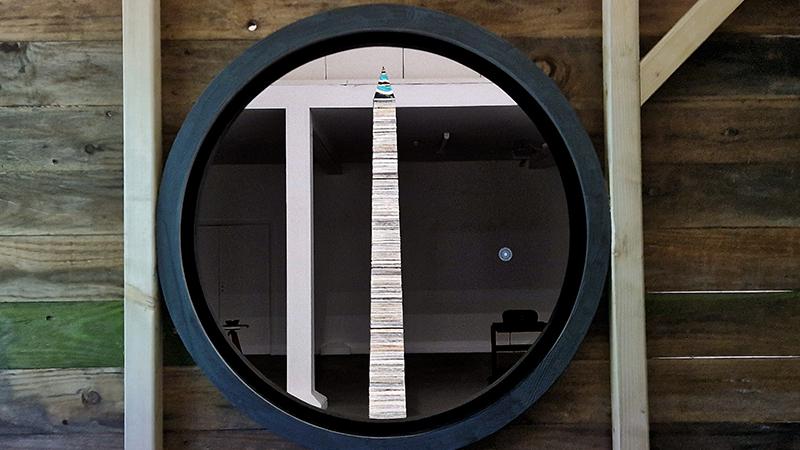
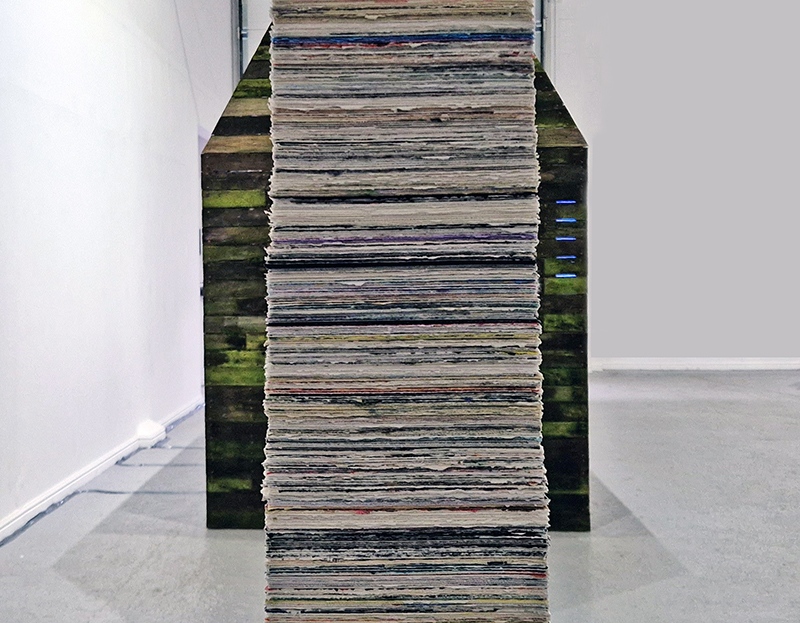
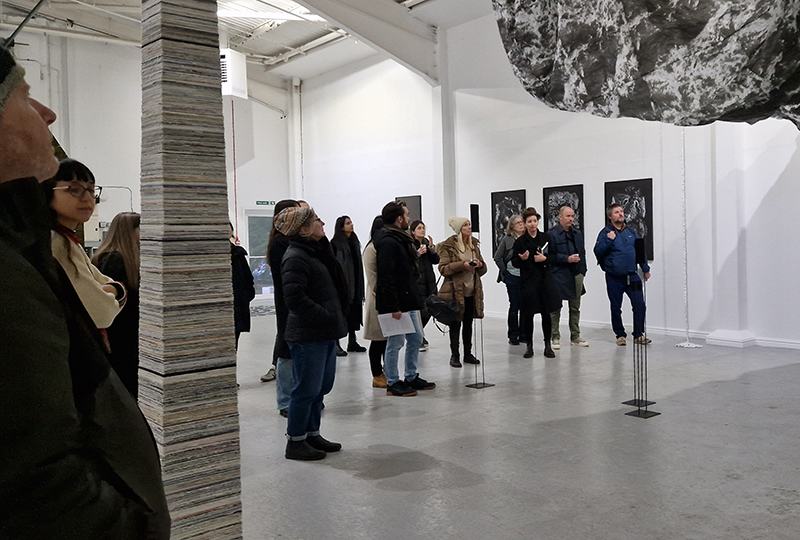
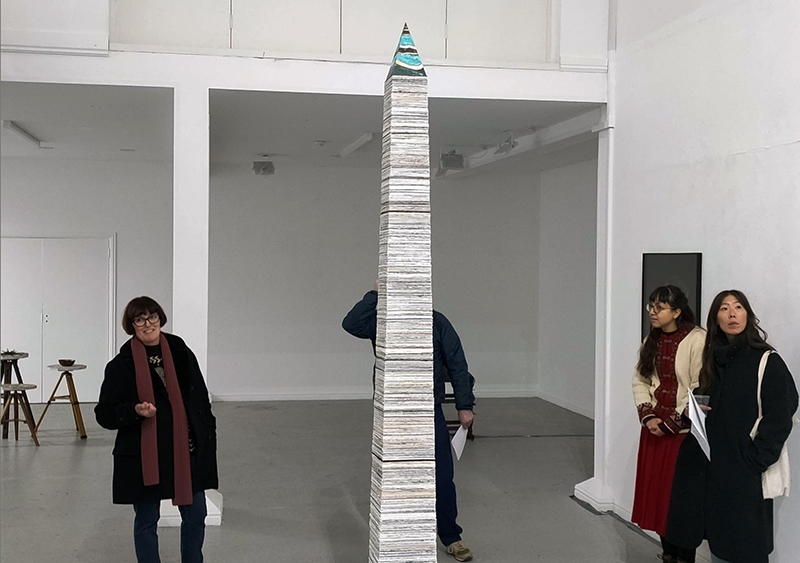
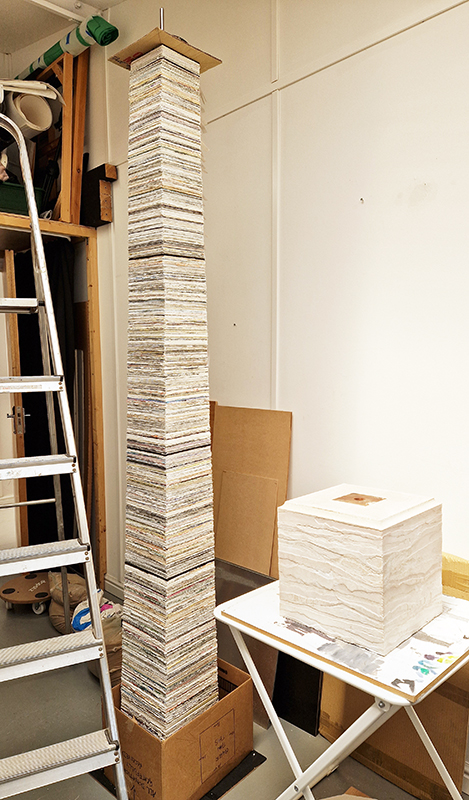
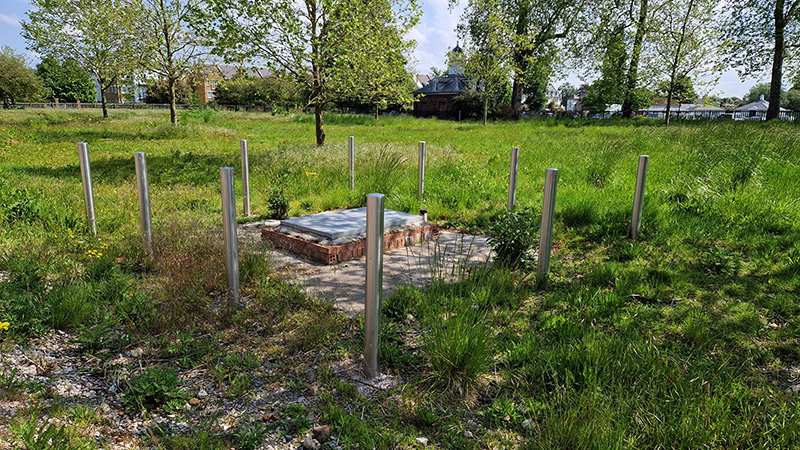
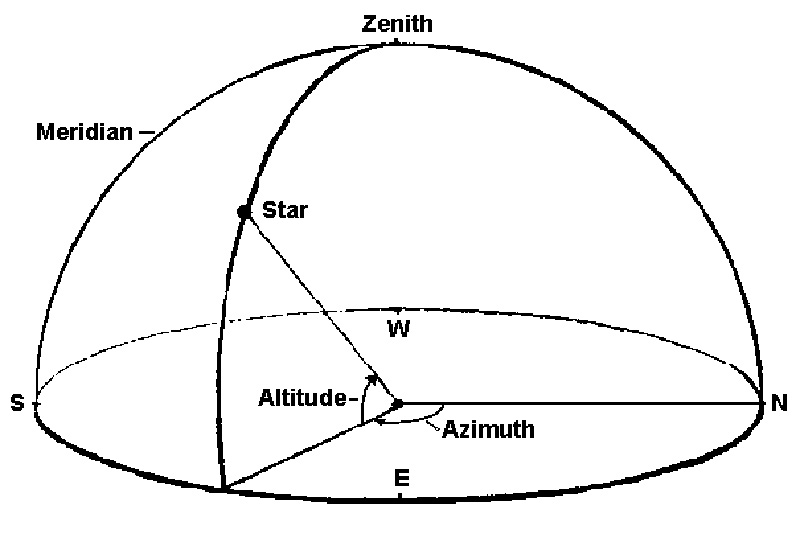
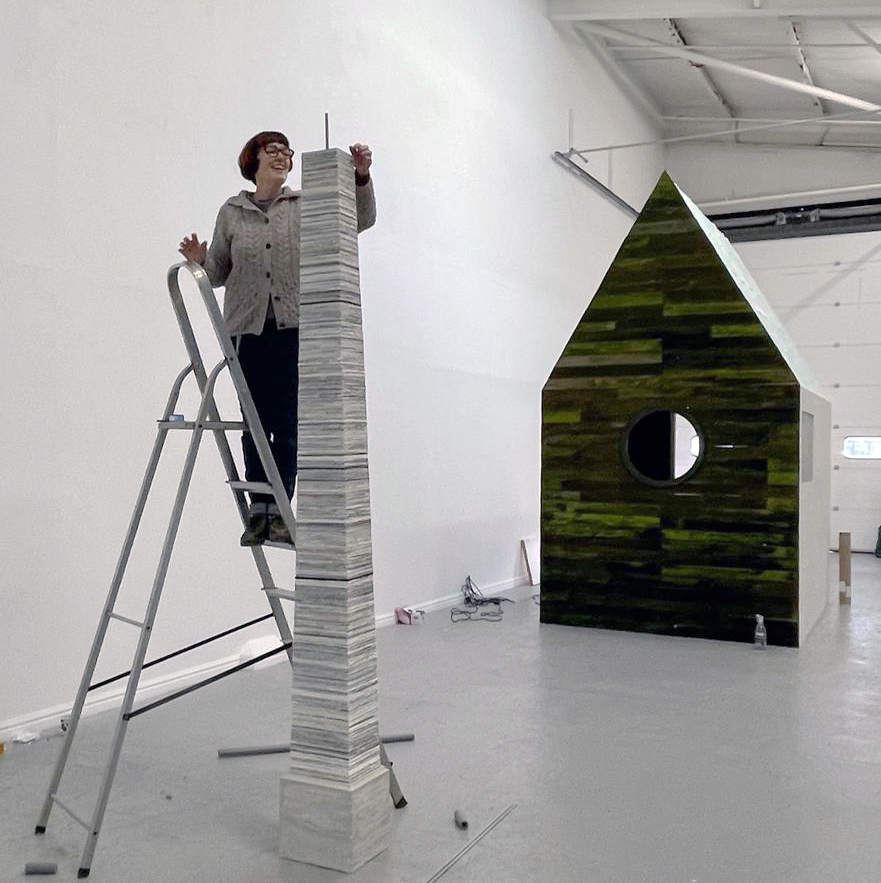
The Azimuth Obelisk (of sedimentary knowledge) is a reimagining of an obelisk erected at Hartland Magnetic Observatory in the late 1950’s near the site’s northern boundary. Viewed through the window in the north wall of The Observing Building (also known as the Absolute Hut) it acts as a permanent azimuth mark from which the drift of the magnetic north pole is monitored. Currently almost hidden by undergrowth, the observatory’s concrete azimuth mark has been replaced by a digital GPS position. Much as the Earth’s geological and magnetic history is secreted into the strata of sedimentary rock, this sculpture also expresses the passage of time through the layering of recycled paper prints and drawings whose history becomes embedded within the stacked layers.

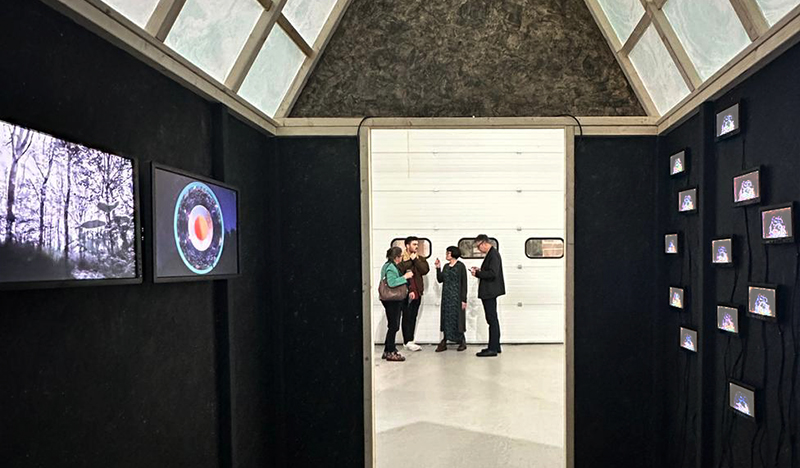
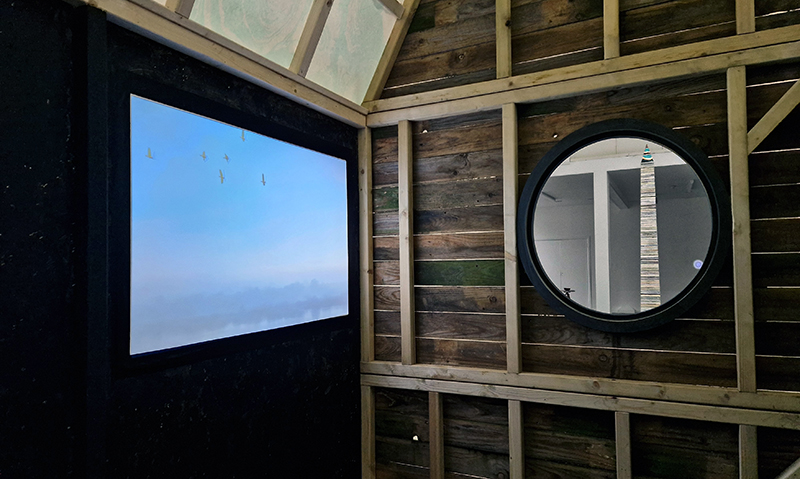
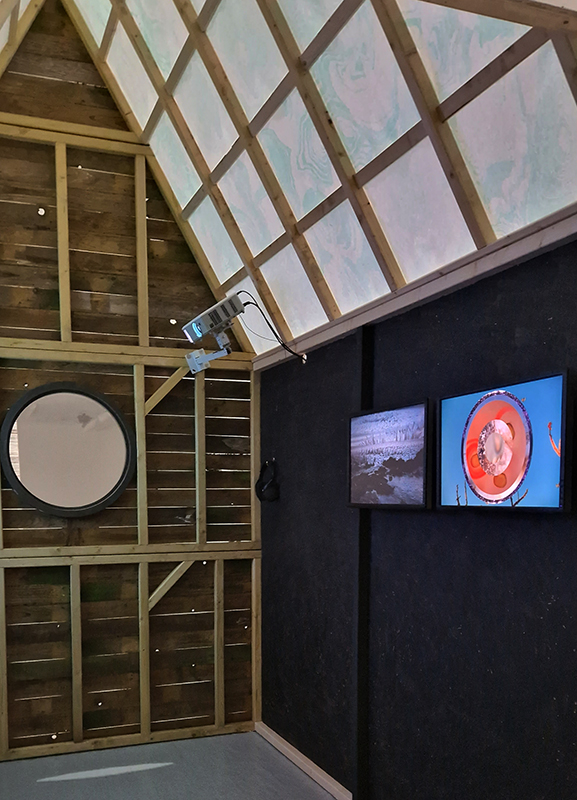
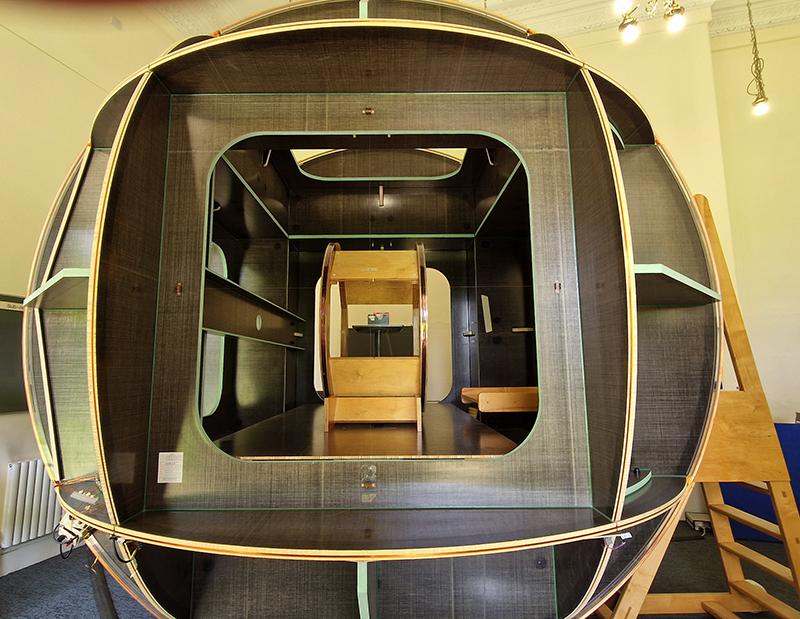
The Absolute Hut (of action potential) operates as a sensory hub with video screens suggesting portals into a web of neural pathways where a range of actions and processes are running concurrently reflecting on the dynamics between the Earth’s geologic structure and navigation using the magnetic field.

The title refers to the way neurons send information electrochemically around the body. The signals they send are called action potentials which is a temporary shift from negative to positive within the cell caused by certain ions entering the cell. Action potentials can be triggered by an interaction with the magnetic field causing a reaction in the body.

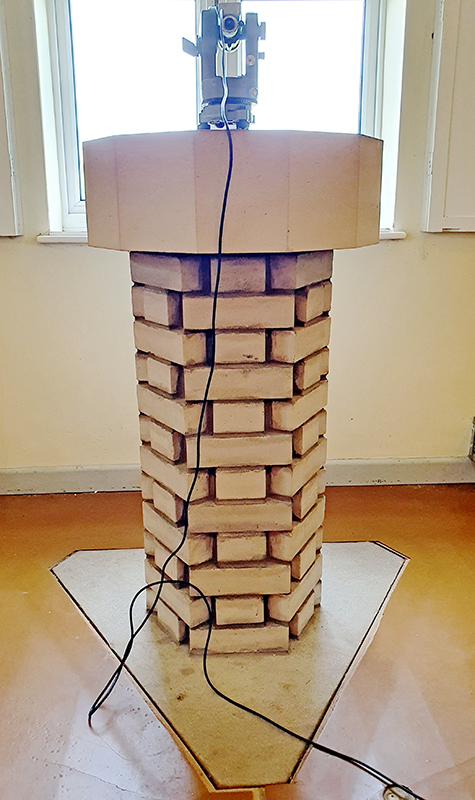
The installation is conceived from a combination of features, impressions and functions of the observing building and instruments at Hartland Magnetic Observatory in North Devon and the observation huts built in the 18th century at The Kings Observatory in Kew for meteorological and magnetic observations.

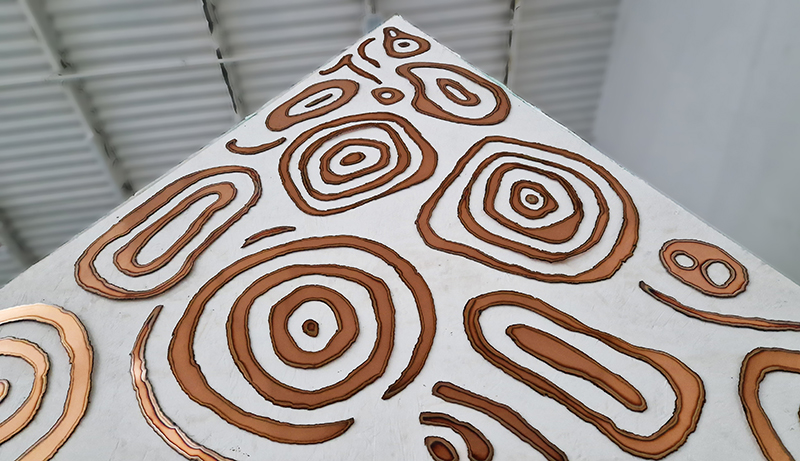
Topological contours of suminagashi marbling and plasma cut copper reflect the fluid motion of the Earth’s molten iron core and the pulsating alpha waves of the human brain when subjected to magnetic fields.

‘the internal skies have their own birds’ Italo Calvino Cosmicomics

The fascinating and perilous journeys made by migrating birds has been a natural wonder for centuries with the first records of this phenomena made more than 3,000 years ago. The innate knowledge of migratory birds is mentioned in Job and Jeremiah and the ancient Greek writers Homer, Hesiod and Aristotle noted their passage.

Job 39:26 Doth the hawk fly by thy wisdom and stretch her wings towards the south?

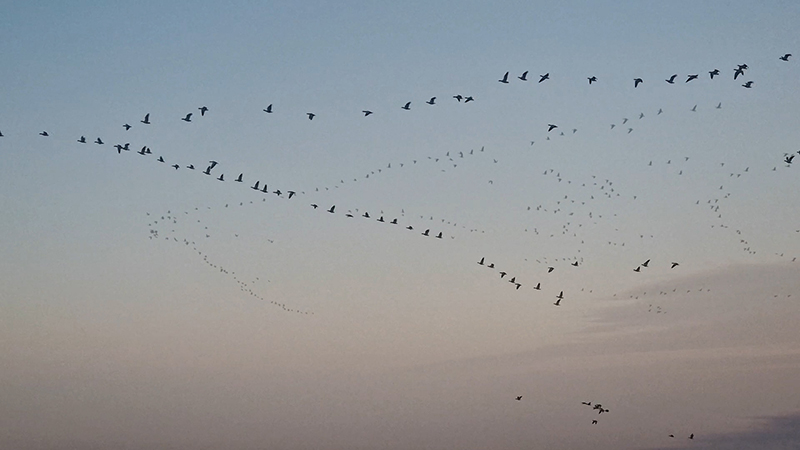
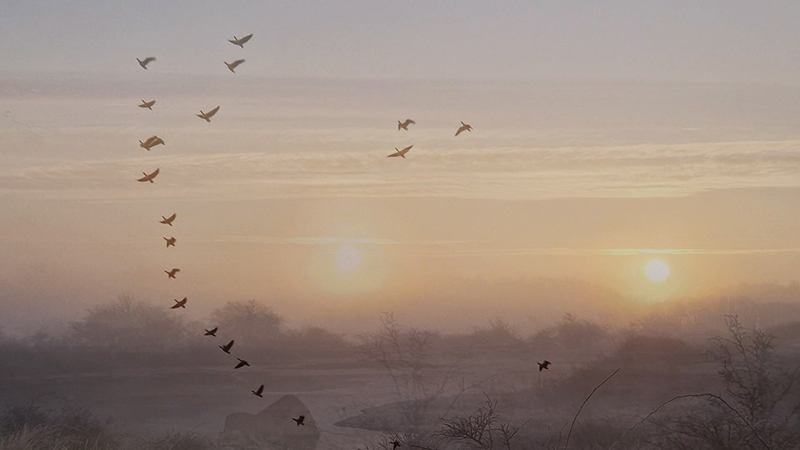
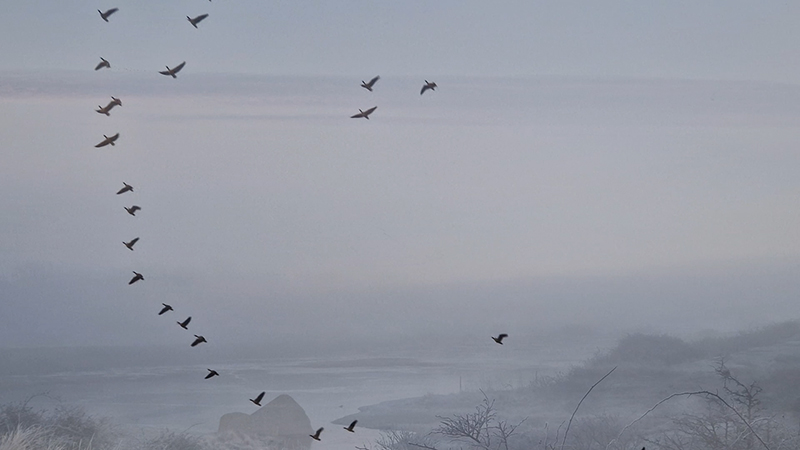
Wintering light two way video projection of migratory pink footed geese filmed at RSPB Snettisham on the North Norfolk coast.

Research has proven that birds and many other animals can use the earth’s magnetic field for navigation. There are two ways this happens. In birds there is a protein in the retina of the eye – (cryptochrome molecules) which trigger action potentials enabling them to visualise the magnetic field. In other animals and magnetotactic bacteria tiny crystals of magnetite respond to the field. This may also be true of humans as we do have these crystals in our brain cells.

Birds use three different compasses to navigate across the globe; the sun, the stars and the magnetic field.

Birds are also able to detect rapid movement such as individual flashes or flickering of a fluorescent light which humans see as a continuous light. Hawks which pursue other birds through dense forests at high speeds, follow the movement of their prey while avoiding branches and other obstacles. To humans travelling at this speed, the fleeing prey, branches and obstacles would just be a blur.

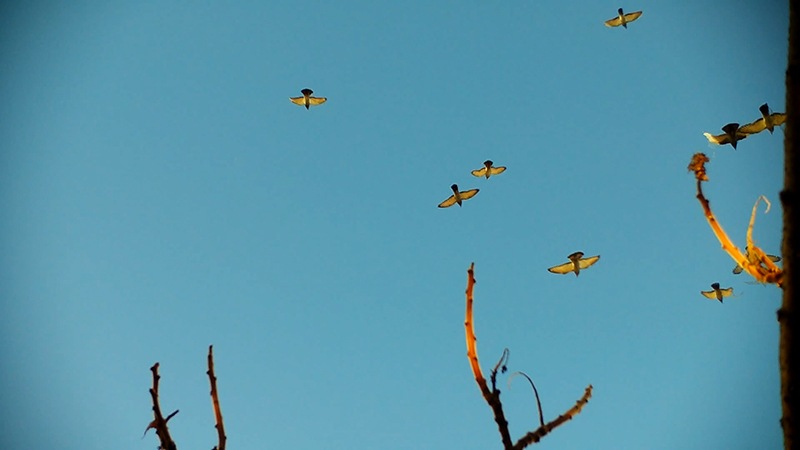
Degrees of Variation considers what it might be like to have the sensory powers of a bird where a protein in the eye is excited by polarised light making it possible to see the magnetic field and follow a visual navigatory cue in an accelerated world. The video imagines flight over water and through woods while being guided by the force of a magnetic field.

Calvino’s story The Stone Sky is wonderfully descriptive of the volatile geological structure of the Earth. This fluidity is what makes life on Earth possible. Only planets with fluid cores have magnetic fields. The geological interior generates a field that reaches into outer space offering a protective shield.

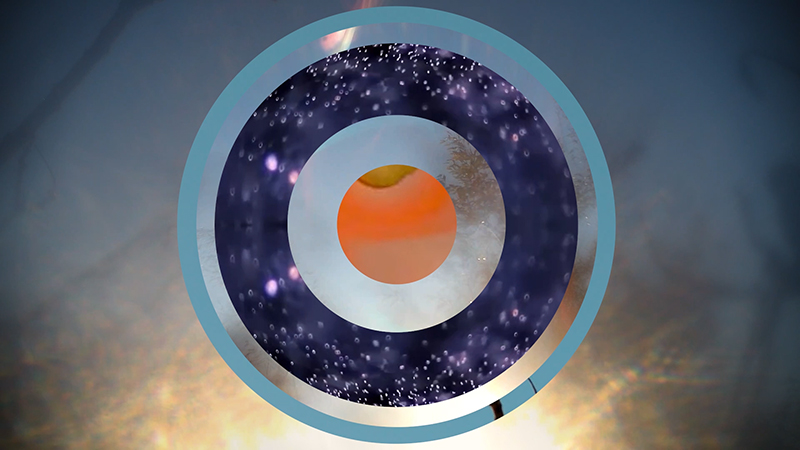
internal skies : external spheres video sequences within concentric circles mimic the geological structure of the Earth to explore the relationship between Earth’s magnetic field and various methods of navigation including via magnetoreception and celestial observation. Sequences include star trails around Polaris (the current north star), birds and bees that use the magnetic field for navigation, magnetotactic bacteria, magnetised iron filings, aerial views of the coastline around Hartland and early morning polarised light which excites the cryptochrome protein in a birds eye.

The Earth’s geomagnetic field is created by a combination of three separate fields and timescales. The main field is generated in the earth’s molten iron core.  Observing the field gives clues to the planet’s deep interior which is inaccessible to direct observations. Changes are measured in the annual drifting of magnetic poles. Secondly electrical currents caused by solar weather and cosmic rays bouncing off the Earth’s main  field charge the surrounding ionosphere causing fluctuations in the field. This field changes by the micro second as we orbit the sun. The Earth’s magnetic field also acts as a shield against most potentially harmful charged particles from outer space. Finally the residual magnetisation of the geology of the rocky mantle and crust, measured in deep geological time also offers clues to the geological history of Earth.

The understanding of the world surrounding us forms in the darkness of our skulls. 

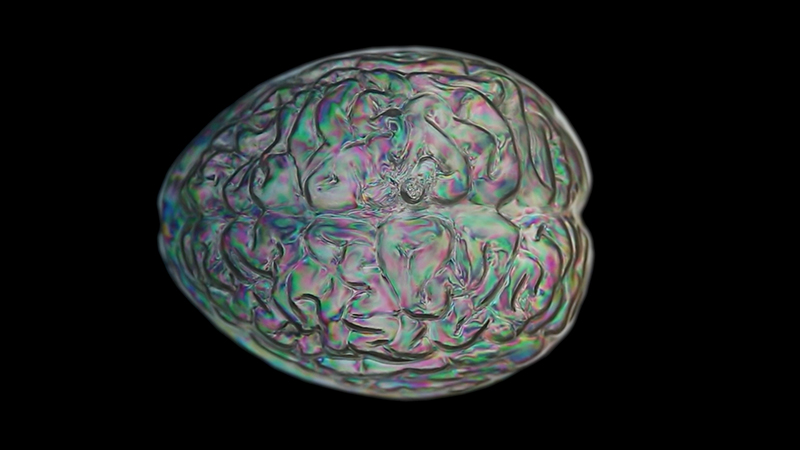
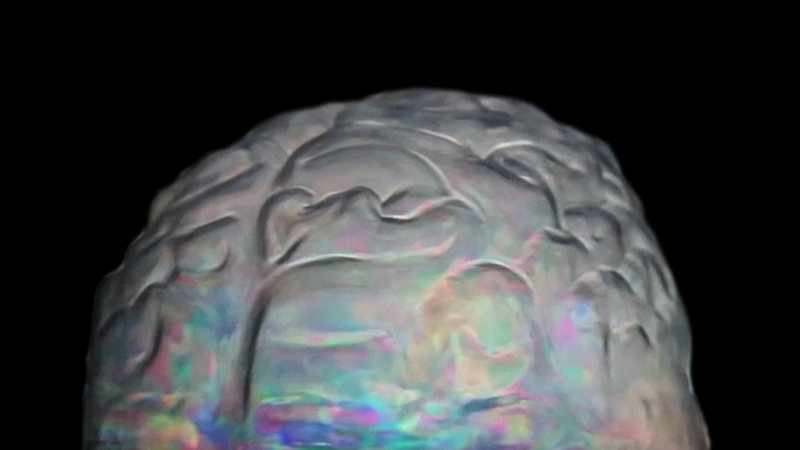
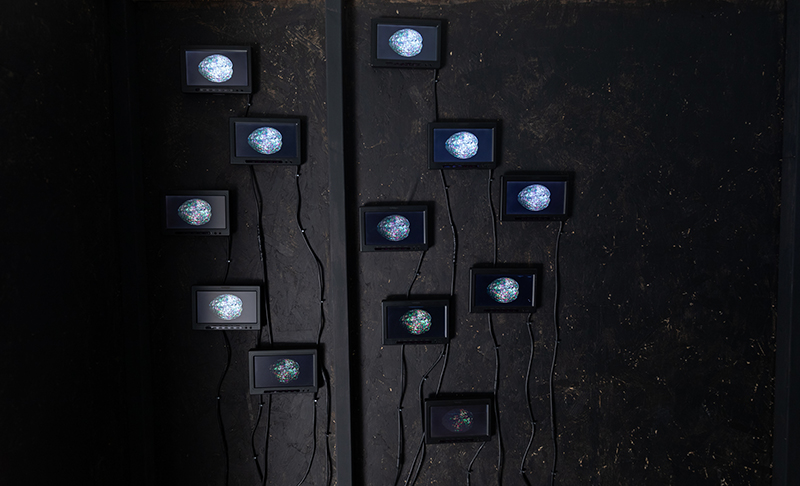
interference – a panel of 12 small video screens inside The Absolute Hut (of action potential), showing images of the human brain filmed by using polarizing filters to create pulsating birefringence colours, relate to the narrative pinned to the outside of the hut.

The narrative is a mix of fact and fiction based on a real experiment carried out at Caltech where scientists found Alpha waves in the human brain do respond to Earth’s magnetic field and other research suggesting that it could be possible for the magnetic field in one animal’s brain to transmit information to another animal’s brain by triggering action potentials creating the same thoughts and emotions.

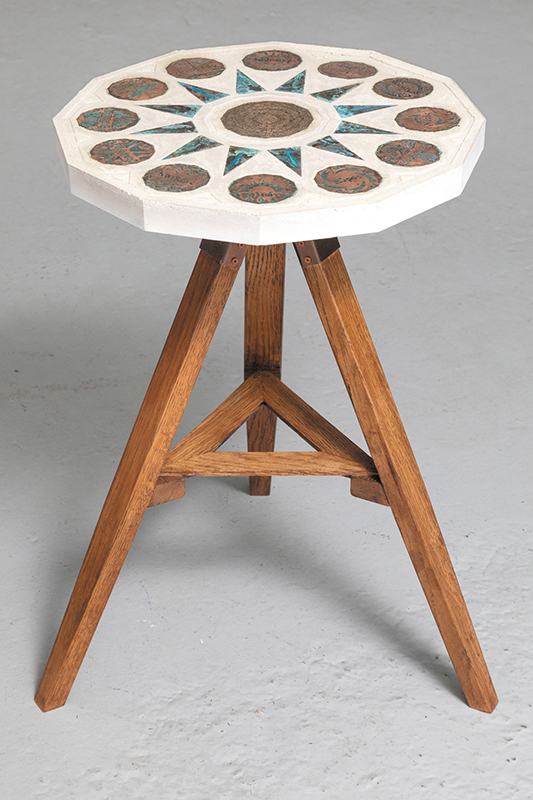
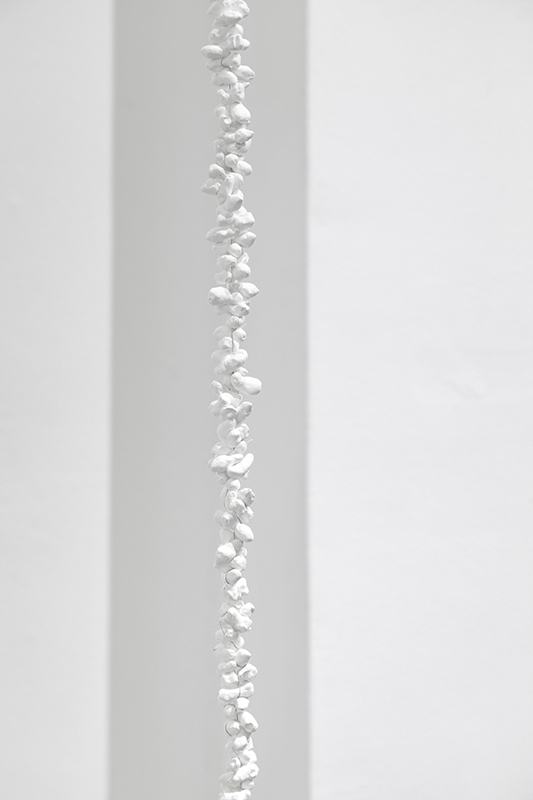
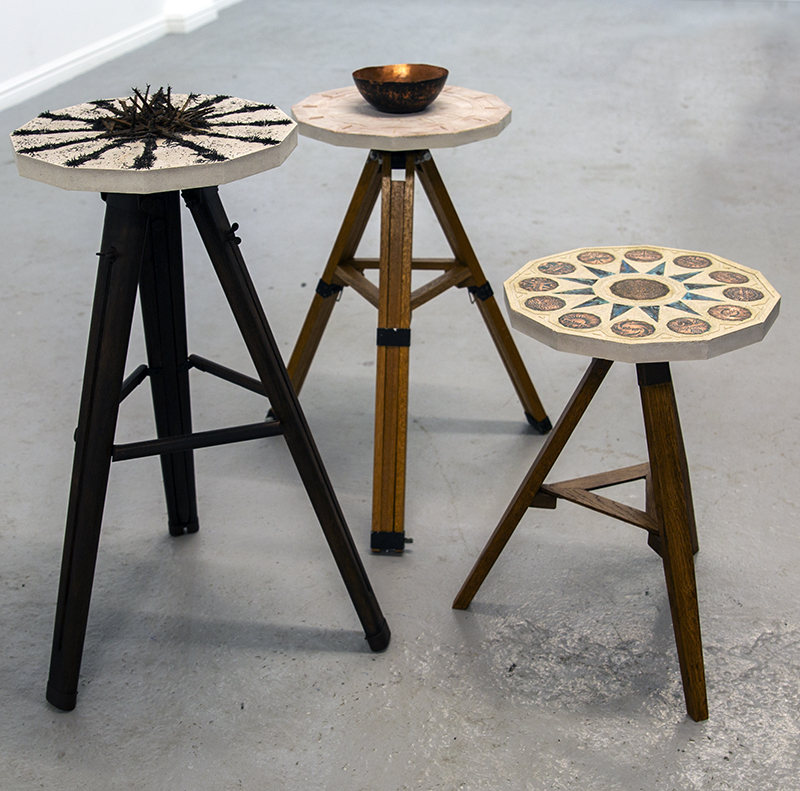
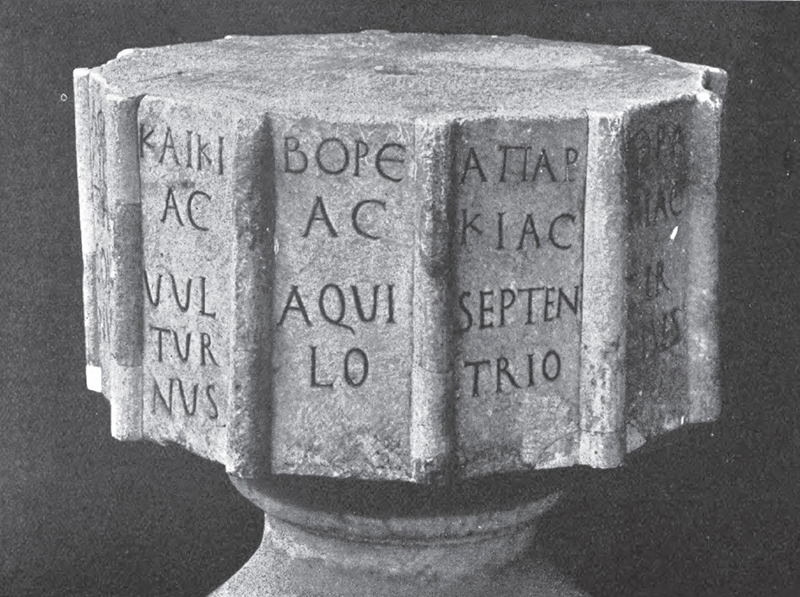
Instruments of the Anemoi are a set of dodecagon tablets cast in Snowcrete, a non-magnetic cement, as used in a magnetic observatory. Suggestive of the pedestals that support various instruments used in monitoring the Earths’ magnetic field they also respond to an ancient anemoscope “table of the winds” carved in marble around eighteen hundred years ago and inscribed with the Greek and Latin names of classical winds on each of its twelve sides. Envisaged here as speculative objects, instruments and schematics wrought by the wind gods, the first emissaries of navigation and orientation.

One tablet holds a copper bowl with a ‘silver fish’ floating in water. The shape of the ‘silver fish’ is based on the oval shaped compass needle (illustrated in Breve Compendio de la Sphera de la arte Navegar by Martin Cortes 1551)  and refers back to wafer thin fish shaped iron leaves used by 11th century Chinese geomancers.

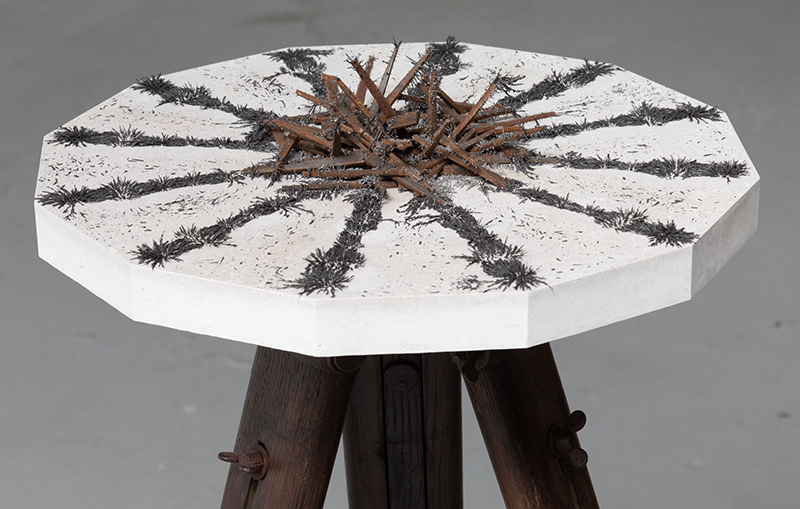
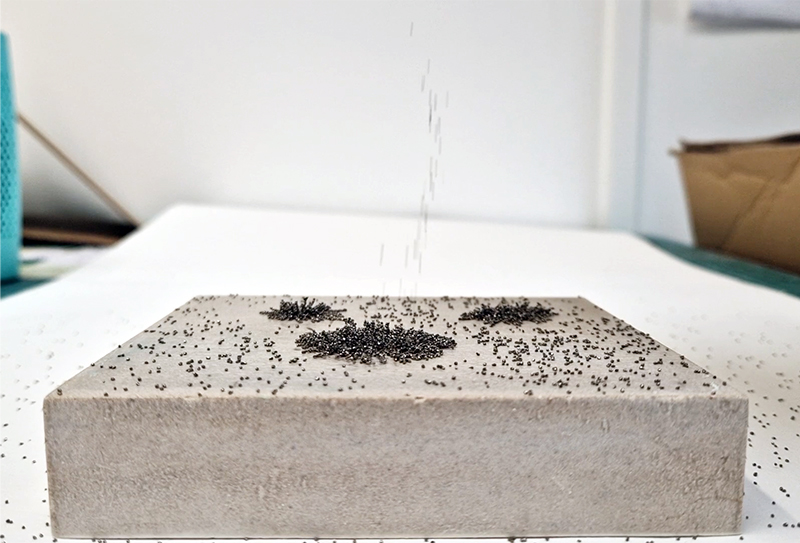
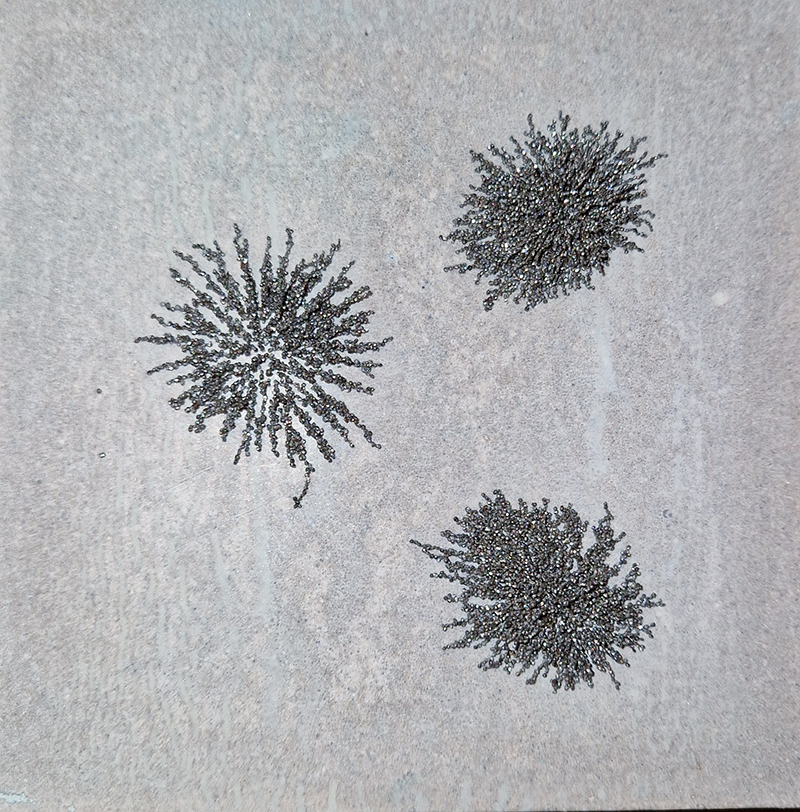
Nails and iron filings on the second tablet reveal an embedded magnetic field recalling a legend that the discovery of the lodestone was made by a Greek shepherd who noticed the nails in his boots were attracted to the rock (magnetite) beneath his feet.

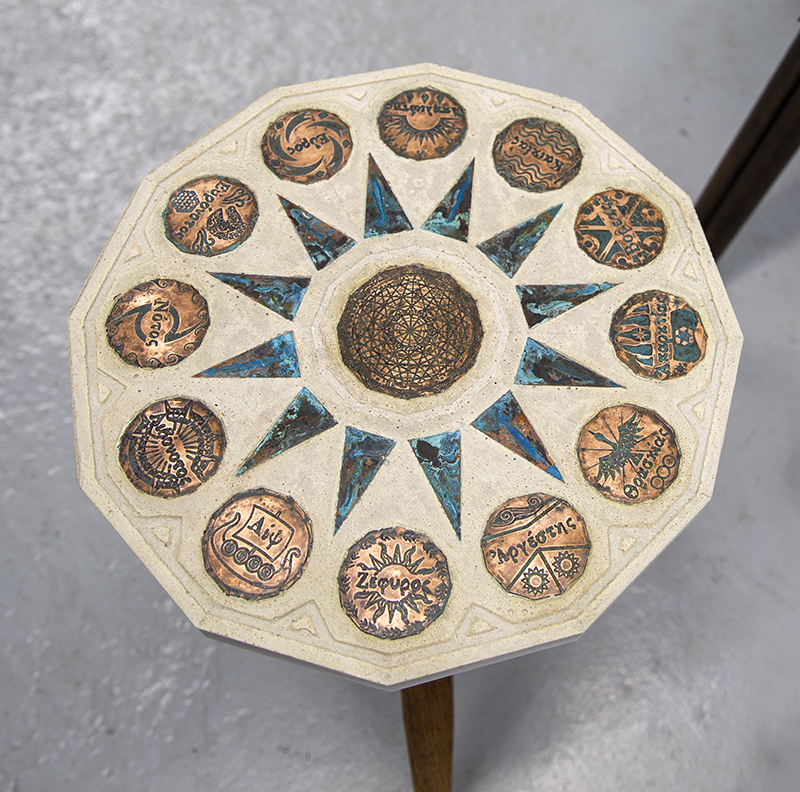
The third tablet is embedded with copper etched with images and names based on associations and attributes of the twelve Greek wind gods set in a traditional compass rose.

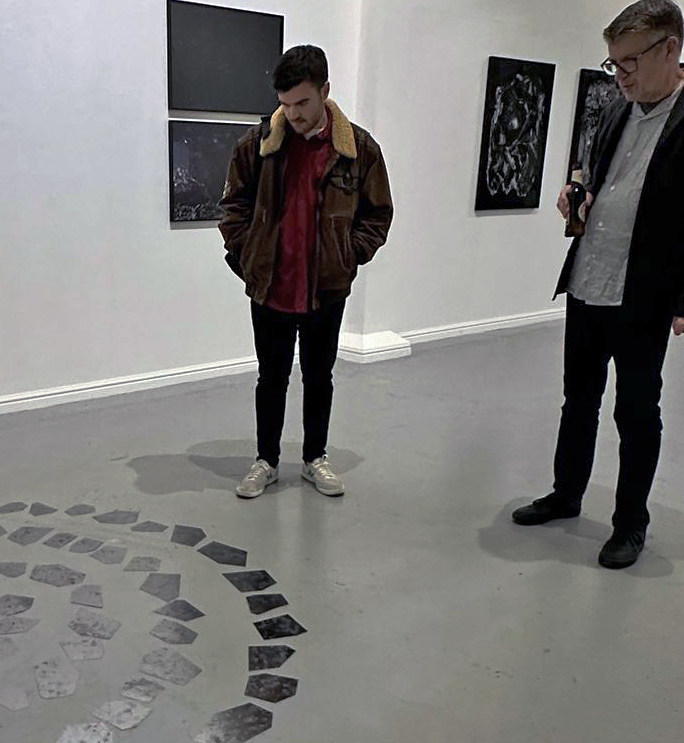
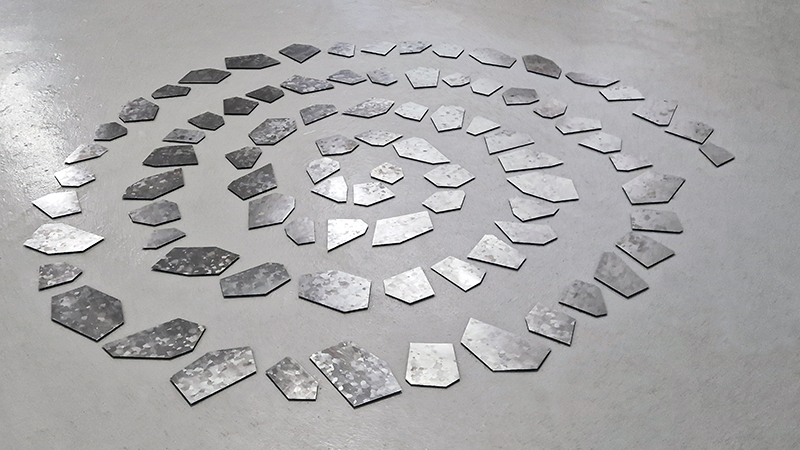
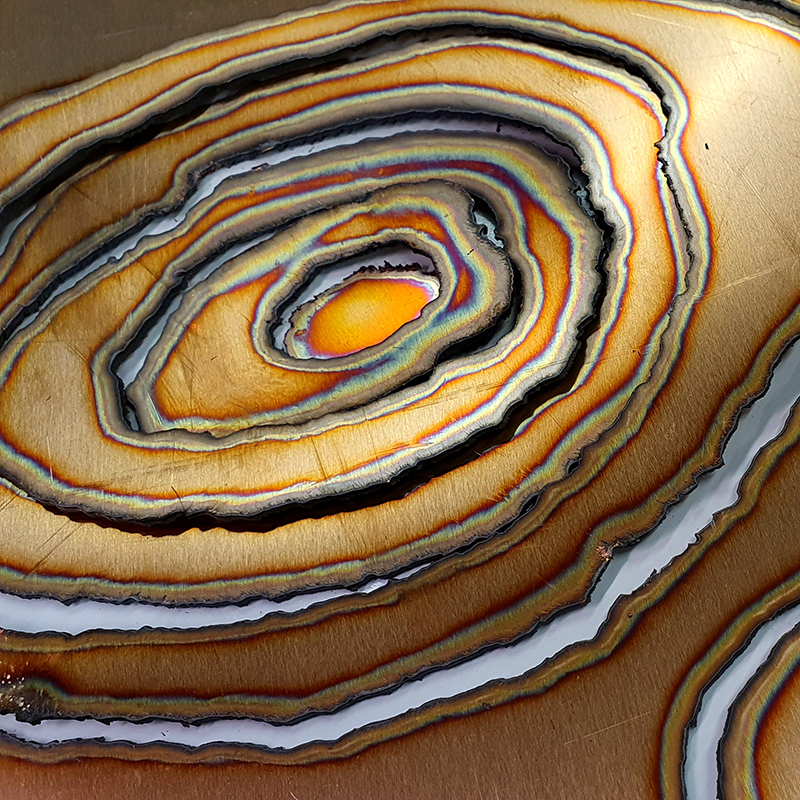
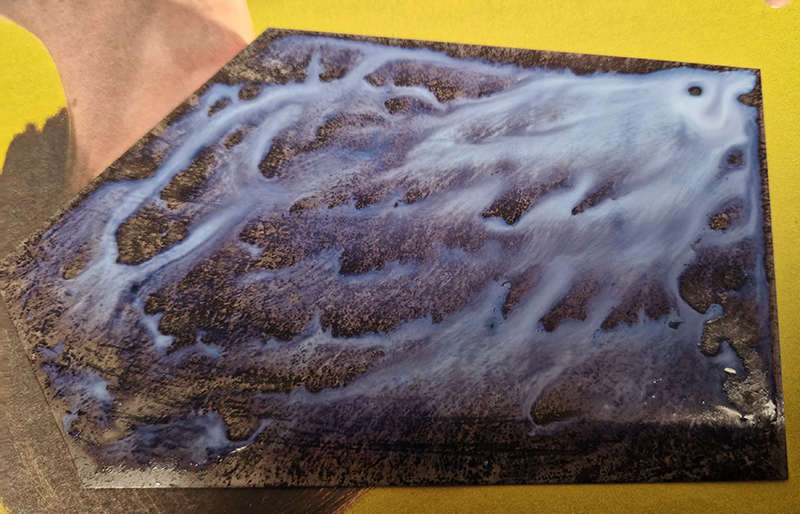
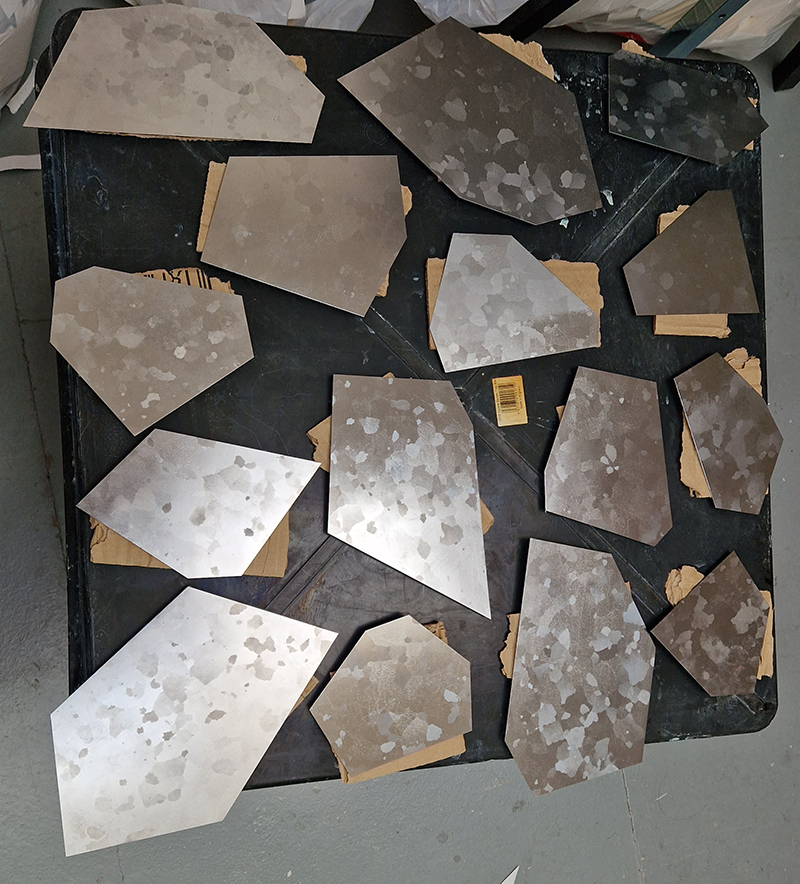
Domain of the Devil Valley Master uses industrial directional magnetic steel, sanded and etched to reveal the Goss texture of rolled iron silicon alloy crystals. The jigsaw pattern of magnetic domains give this material exceptional magnetic properties. The simple evocation of a spiral described in geologically informed polygons draws upon many references, from the shape of our own Milky Way Galaxy sculpted by vast cosmological magnetic fields and the spiralling molten dynamo generating Earth’s magnetic field, to the inner pathway of spiritual growth and the route to the symbolic omphalos (navel) at the centre of the world where the sky entrance and the underworld meet. The title of this work originates from an ancient Chinese manual on the skills of persuasion, The Book of the Devil Valley Master, containing the first known mention of a compass, known at the time as a south-pointer.

The exhibition closed with an afternoon event launching our publication which includes the essay Dark Nights and Signs of Unseen Things by Anjana Janardhan. There was also a live cloud chamber demonstration of mesmerising cosmic ray trails, artist tours and informal readings.

Publication available – DM via blog comments box for more details or visit Julie’s shop

It is within my mind then, that I measure time. I must not allow my mind to insist that time is something objective.  When I measure time, I am measuring something in the present of my mind. St. Augustine of Hippo, 397

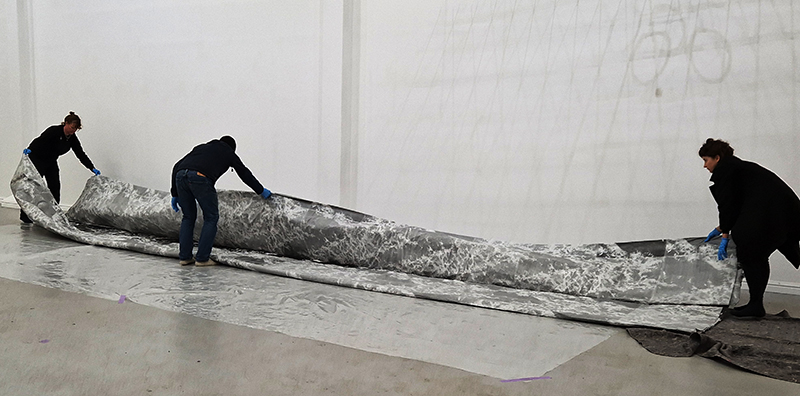
The many layers of paper comprising The Azimuth Obelisk (of sedimentary knowledge) sculpture have been prepared ready for final assembly. The next step will be patinating and assembling the copper pyramidion. This sculpture is a reimagining of the obelisk erected at Hartland Magnetic Observatory in 1955 which is now almost hidden by undergrowth. Although manual readings via a theodolite are still taken from the Observing Building north facing window, this concrete permanent azimuth mark has been replaced by a GPS position. The sculpture expresses the passage of time, made from recycled paper prints and drawings whose history is embedded in the stacked layers, much as the Earth’s geological and magnetic history is secreted into sedimentary strata of rock.

What is below our feet can be as much of a mystery as what is above our heads. The furthest humans have drilled below the surface of the Earth is just over 12 km but it is 6,370 km to the centre of the Earth. One way of exploring the Earth’s core is by studying geoneutrinos. Geoneutrinos are neutrinos, the lightest subatomic particle, released by the natural radioactive decay of potassium, thorium, and uranium in Earth’s interior. By studying geoneutrinos, scientists can better understand the composition and spatial distribution of materials in the mantle and core. Neutrinos can pass through matter uninhibited and are not affected by magnetism. Geoneutrinos are low-energy electron antineutrinos, and scientists need to use large detectors to record them but because they  are so elusive, they don’t capture very many events each year. Some of the heat emanating from the interior of our planet comes from this radioactive decay and is responsible for everything from creating the molten iron core that generates Earth’s magnetic field to the spread of the sea floor and motion of the continents.

At the centre of the Earth is a hot sphere of solid iron which has its own ocean of molten iron, surging and churning with hurricanes and whirlpools powered by the Coriolis forces of Earth’s rotation. These complex motions generate our planet’s magnetosphere. The turbulent dynamo process also means the magnetic field is in a constant state of change and the poles are always on the move. From James Clark Ross first locating the magnetic north pole in 1831 to when Roald Amundsen found the pole again almost a century later it had moved at least 50 km since the days of Ross. Both poles continue to wander as varying speeds. Magnetic stripes around mid-ocean ridges reveal the history of Earth’s magnetic field for millions of years and record magnetic field reversals in the magnetism of ancient rocks. Field reversals come at irregular intervals averaging about 300,000 years with the last one 780,000 years ago. Reversals take a few thousand years to complete, and during that time the magnetic field does not vanish but becomes twisted and tangled with magnetic poles appearing in unaccustomed places. Although in a state of turmoil with possible weak areas it can still protect us from space radiation and solar storms.

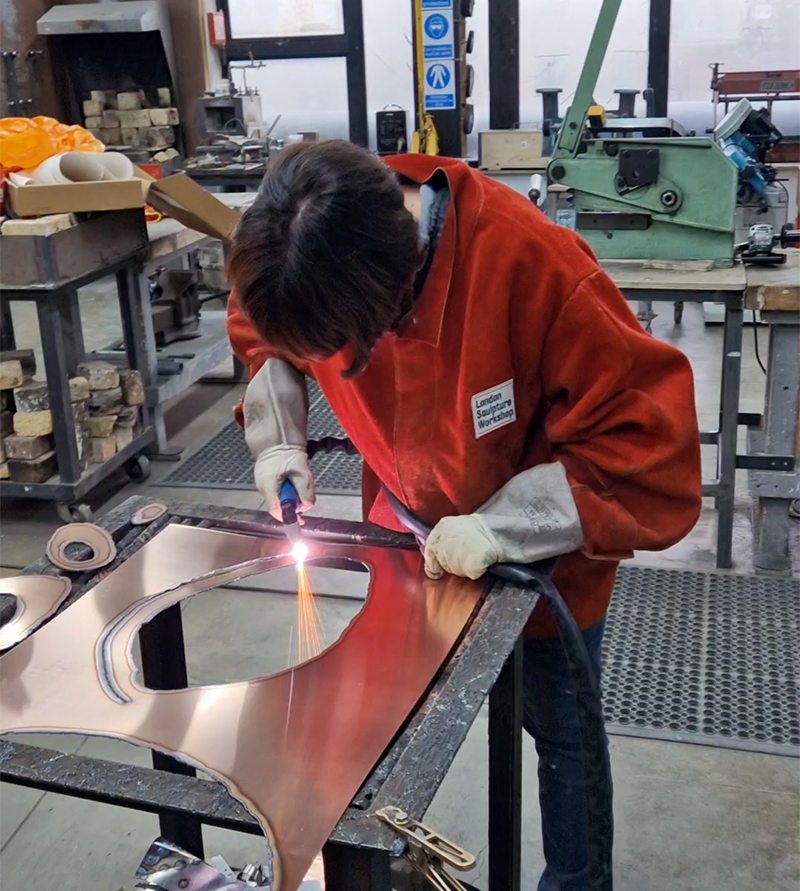
I took up membership of London Sculpture Workshop supported by a professional practice and creative development bursary from The Artists Information Company. Great to have access to the facilities here to work on sculptures responding to research visits to magnetic observatories. I had a couple of sessions cutting copper with a plasma gun. The intense heat colours the edges of the metal with blues, yellows and crimsons. Unfortunately some of the colour gets lost when they are lacquered so I have left some without coating this time to see if they lose the colour anyway. These topographical contours which are destined for the installation The Absolute Hut (of action potential), reflect the fluid motion of the Earth’s interior and also the pulsating alpha waves emanating from the human brain subjected to magnetic fields.

I have started editing and gathering together video footage for The Absolute Hut installation. Inside the hut I am planning to have video screens suggesting portals into a modulated web of neural pathways and one larger window with a two way projection film of the migratory pink footed geese at Snettisham in Norfolk. Natural navigation techniques and extra-sensory methods used by the non-human realm will form the basis for speculation as to the ability for humans to perceive the Earth’s magnetic field. 

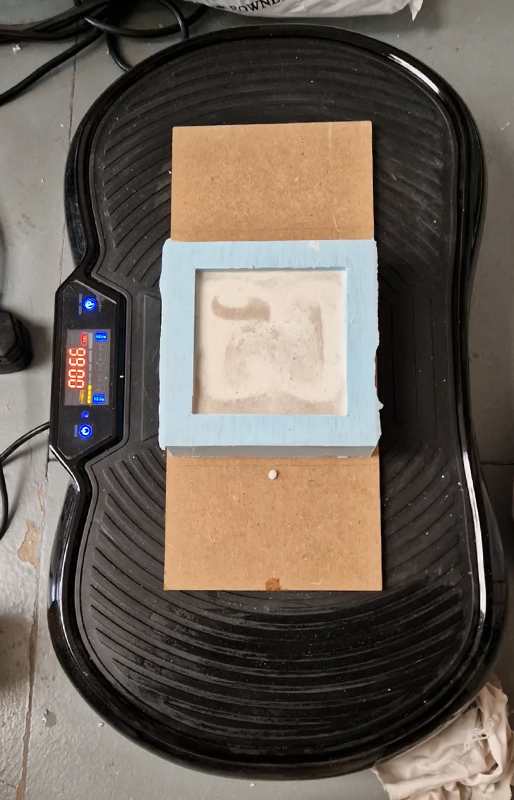
Following on from concrete casting tuition with Anna Hughes as part of my a-n creative development bursary I have been testing casting concrete with embedded magnets. I had an idea to try removing bubbles from the concrete by putting it on an exercise vibrating plate. The motion is quite violent and undulating and my mix was quite loose so it had an effect like a small wave machine sloshing side to side – there were no bubbles in the results though. These tests are towards making a series of dodecagon tablets cast in Snowcrete, a non-magnetic cement, as used in a magnetic observatory. Suggestive of the pedestals that support various instruments used in monitoring the Earths’ magnetic field they also respond to an ancient anemoscope “table of the winds” carved in marble around eighteen hundred years ago and inscribed with the Greek and Latin names of classical winds on each of its twelve sides.

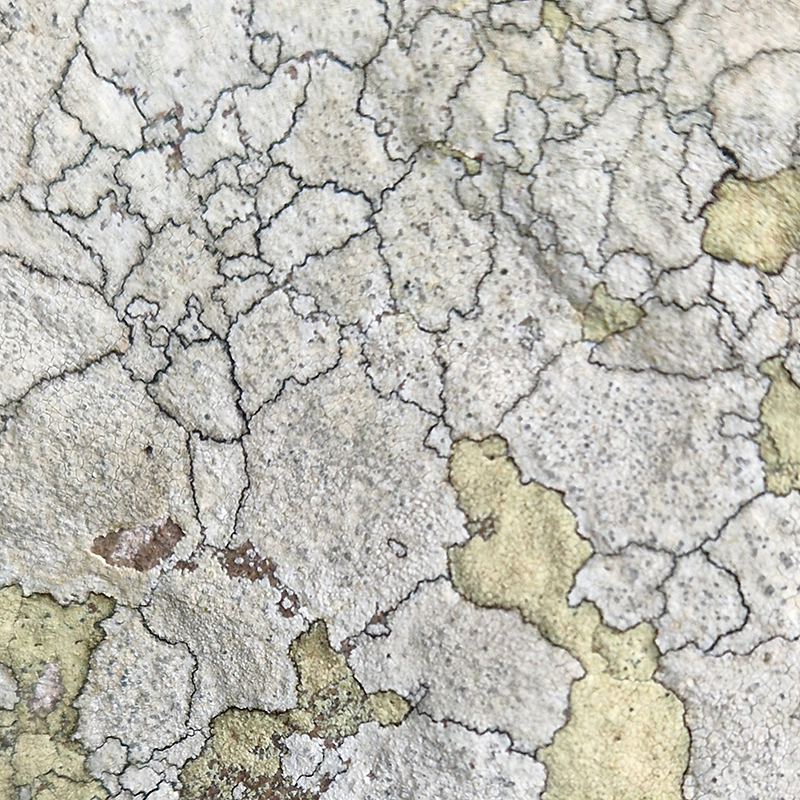
Lichen boundaries seen on a trip to Somerset reminded me of the magnetic domains of the directional magnetic steel when sanded and etched to reveal the Goss texture of rolled iron silicon alloy crystals. The jigsaw pattern of magnetic domains give this material exceptional magnetic properties.

I had a great time interacting via zoom with volunteer mediators who will serve as conversationalists for visitors who come to the Carbon exhibition at Science Gallery Bengaluru where my video Cosmic Chiasmus: crossing the universe will be shown later in the year. Mediators are an integral part of each exhibition-season at Science Gallery Bengaluru (SGB). By providing each visitor the unique opportunity to deeply engage with the exhibits, events, and programmes, the mediators are at the backbone of our commitment to public engagement at SGB.

The session was designed to gain an understanding of the work to be shown, the process behind its creation, and the key concepts explored in it. Cosmic Chiasmus: crossing the universe offers a glimpse into a subatomic world where cosmic rays travel from distant galaxies to collide and silently interact with atoms and technology on Earth. Not only is all life physically permeated by cosmic rays with the potential for nuclei collisions but some cascading particles smash into atoms of nitrogen to create carbon-14. Carbon-14 then combines with oxygen in the atmosphere to create radioactive carbon-dioxide  – this is ingested by plants and animals through the food cycle. In making the film I was interested in exploring the interconnectedness of ourselves to our wider environment, even outer space and the influence intangible phenomena such as cosmic rays can have on everyday life and human technology.  It is an incredible journey that cosmic rays make, blasted across space, spiralling along magnetic field lines to end up entangled with carbon in our bodies.

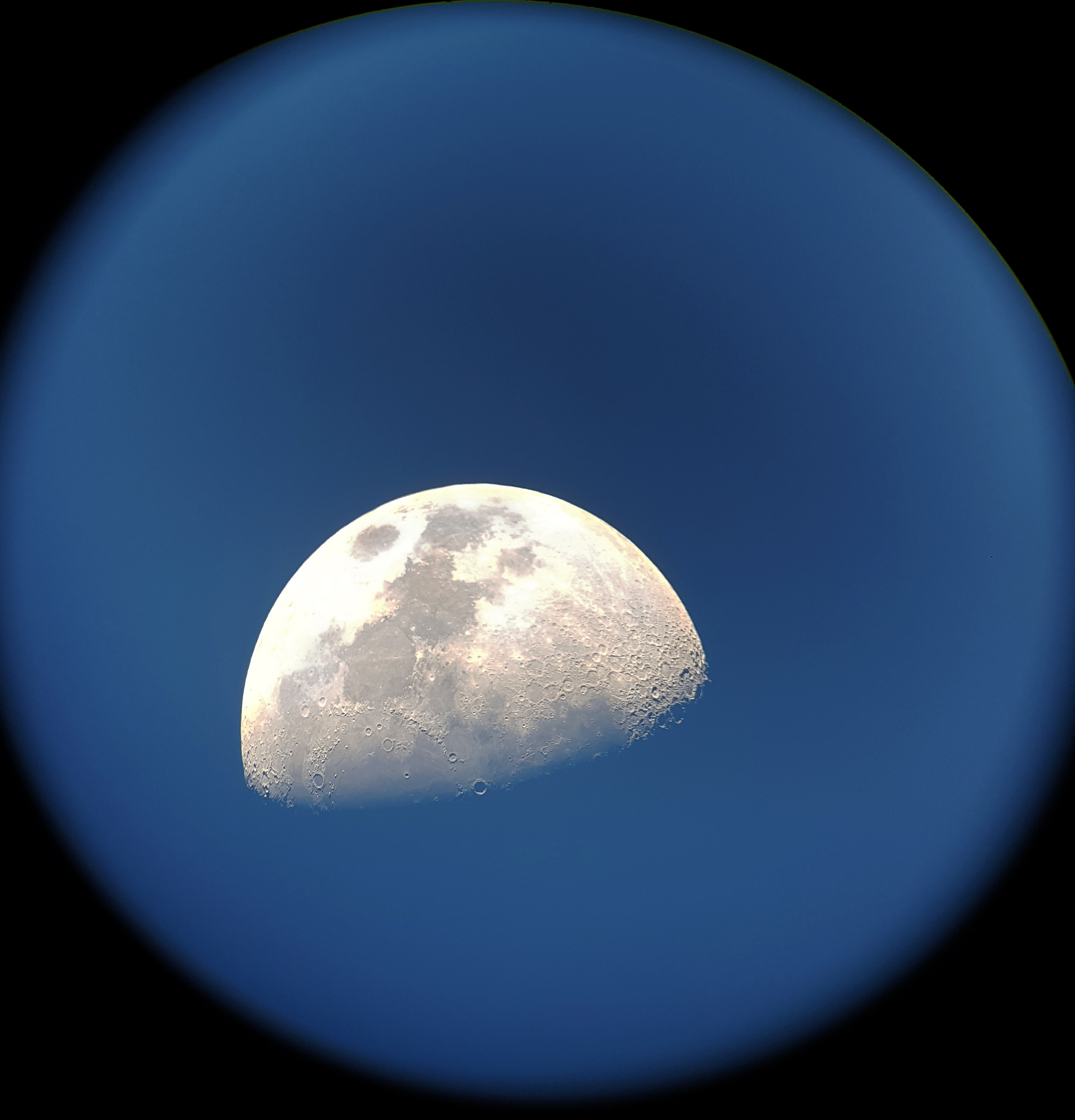
Most years have twelve full moons, but as our calendar is not perfectly synchronized with astronomical events, every now and then there is more than one full moon in a month which can be known as a blue moon. It takes the moon 27.3 days to orbit the Earth but about 29.5 days to go through all of its eight phases waxing from new to full and waning back again. We can hope to see a super blue moon next month.

Carey Young’s Plato Contract – only gains status as an artwork once it has been installed, following explicit instructions, in the impact crater, Plato, on the moon.

Royal Society Summer Lates – Interesting new research in the search for dark matter from UCL High Energy Physics team using quantum sensors. Tiny glass spheres levitated in a vacuum and super cooled means these are extremely sensitive to any slight gravitational interaction should dark matter be made of very light particles. Instead of a vast tank of Xenon installed in a disused goldmine this new search for dark matter is quite a contrast in scale.

Also got to cause gravitational lensing with my own body mass and enjoy some splendid cocktails with surreal smoke bubble topping. Love Royal Society events.

Melanie Jackson Rouge Flambé at San Mei Gallery with a fascinating accompanying essay by Esther Leslie. Rouge flambé is a red oxide ceramic glaze with a long history of use, spreading across the globe from its origins in China. Together these works celebrate forces that hold a primordial fascination – fire, colour, alchemy which bridge the scientific with the mythological.

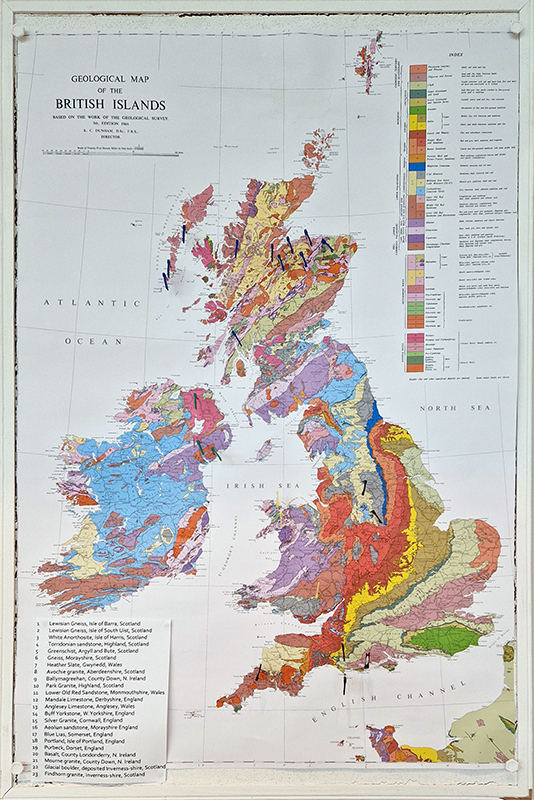
Angela Palmer Deep Time: uncovering our hidden past at Pangolin London. The exhibition explores time through the material history of Great Britain – charting its 3-billion-year lithic timeline to arrive in our current age of the Anthropocene. Featuring the UK’s 16 geological periods, starting with one of the world’s most ancient rocks, the 3-billion-year-old Lewisian Gneiss from the Outer Hebrides. Further stones include 2.5-billion-year-old White Anorthosite sourced in the Outer Hebrides that was also found on the Moon by the astronauts of Apollo 15 in 1971, as well as 66-milion-year-old Northern Irish Black Basalt marking the extinction of the dinosaur. The exhibition also includes teak sculptures salvaged from the ocean where it lay for a century while marine boring insects carved into its surfaces. Many of these works have minimal intervention from the artist in their presentation. The work has been done in the sourcing and extraction.

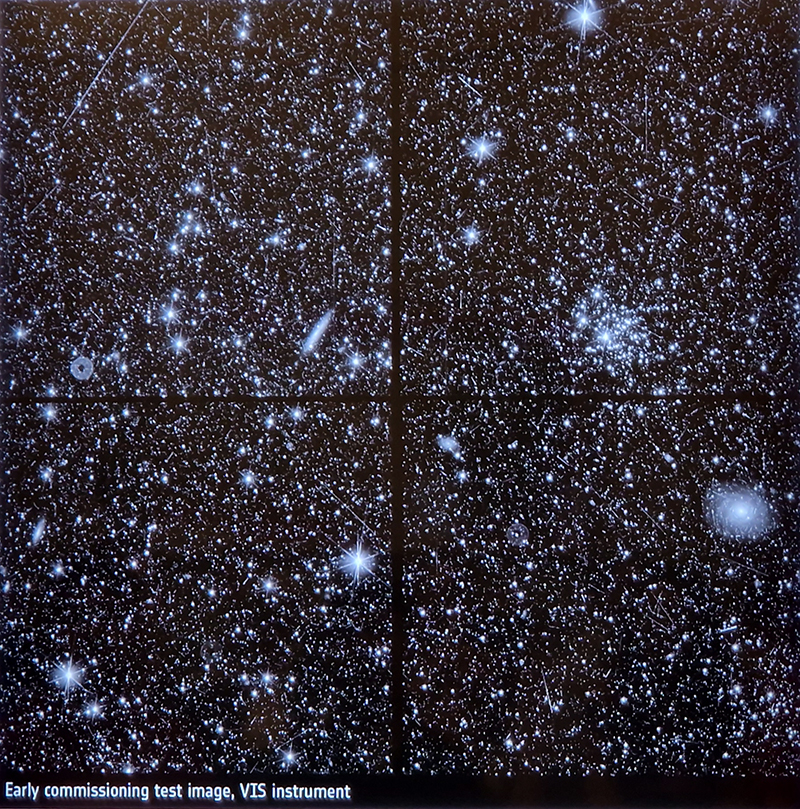
I attended the UCL Space Domain Summer Celebration. The event was introduced by Victor Buchli – Co-Chair of the UCL Space Domain which draws in researchers from across disciplines whose work touches on space exploration in some way. Guest speakers, artist Lisa Pettibone and poet Simon Barraclough, gave presentations on their work and involvement with the Mullard Space Science Laboratory and subsequent inclusion of work on the Euclid Spacecraft (launched on 1st July 2023) in the form of a plaque depicting ‘The Fingertip Galaxy’ a collaborative project created with hundreds of mission scientists and engineers’ painted fingertips, along with specially commissioned lines from Simon’s poetry. We were privileged to see the very first image sent back from the Euclid Space Telescope whose mission is to map out the dark side of our universe by analyzing billions of galaxies that reside up to about 10 billion light-years away. Every point of light is a galaxy.

Reading

Compass – a story of exploration and innovation by Alan Gurney. Full of fascinating historical anecdotes charting the invention of the magnetic compass for navigation at sea from lodestone floating in a bowl of water to the precision marine liquid compass, gyrocompass and fluxgate compass used today. Although early experiments came under the auspices of scientific expeditions the compass cannot be untangled from its commercial propagation and employment in colonialism and the slave trade. The first ship charted solely for a scientific expedition, The Paramore, launched from The Royal Dockyard at Deptford in 1694, to compass the globe and measure magnetic variation. It was however approved for funding by The Royal Society, Queen Mary and The Admiralty based on the benefits it would bring for navigation and trade. One of the many delays in launching the Paramore was the novel decision of how many guns should be fitted in a ship bound for scientific research. Pirates were at large and nation wars would flare up while ships were out at sea so a friend at launch might be a hostile force at the next harbour without the means for the crew to receive this news before it was too late. Many many lives were lost at sea during these turbulent times through aggression but also shipwrecks from the poor quality, misuse or misinterpretation of the ship’s compass. Magnetic variation, deviation and iron introduced onto the ships meant the compass needle could not be relied upon to show true north. It took centuries to comprehend the unpredictable power of magnetism and the Earth’s magnetic field.

Listening

The End of the Universe Gresham Lecture from Professor Katherine Blundell. The relocation of matter. Spacetime is expanding ever faster due to dark energy. Galaxies do not expand as they are held together by gravity. It is the space between galaxies that is getting bigger and will continue until in some distant future astronomers in one galaxy will not be able to see any other galaxies. Black holes eventually evaporate.

Also from Professor Katherine Blundell Cosmic Vision: Fast & Furious.

Cosmic rays are particles that move extremely fast. They are raining down on planet earth all the time. Although they are called rays they are not like photons, as light is made of, as they have mass but they do travel at nearly the speed of light. The kinetic energy in just one particle can be equivalent to the energy of a cricket ball bowled by the fastest bowler on the planet  – so much energy squeezed into one tiny particle gives it a huge velocity. Light travels a thousand billion kilometres in one year – a light year – no object with mass can travel at the speed of light but an ultra-high energy cosmic ray would only lag behind the photon by 100th of the diameter of human hair. Some ultra high energy cosmic ray particles that arrive on Earth have 1000 billion times more energy than particle colliders on earth can generate. These ultra high energy particles are very rare – with only about 1 per square metre per century. We know many cosmic rays come from supernova explosions in distant galaxies especially from what are called starburst galaxies where lots of supernovae are happening. Supernovae expand very very fast into the interstellar medium of their galaxy – this causes shocks as the plasma expands and where there are compressed magnetic fields particles can be accelerated to very high speeds. There is a formula called the Hillas Criterion which states – the maximum velocity a particle can be accelerated to depends on three things –  the strength of the magnetic field  – the speed of the plasma –  and the size of the region over which the acceleration can take place. New research shows that ancient Radio Galaxies such as Centaurus A – which is over 1 million light years across or the smaller Fornax A Galaxy are good candidates for the propagation of the ultra high energy particles as these galaxies have the huge size necessary to allow the particles to gather speed in the giant regions of radio emission which extend well beyond the galaxies visible structure.

I am very grateful to a-n The Artists Information Co for awarding me a professional practice and creative development bursary to expand on my research and respond to the many ways Earth’s magnetic field impacts life on earth. The award will be used for a research trip to the remote location of Eskdalemuir Magnetic Observatory and Kielder Dark Skies Observatory. Fingers crossed for an Aurora experience. I will also gain expert tuition in concrete casting and mould making from Anna Hughes and make use of the facilities at The London Sculpture Workshop.

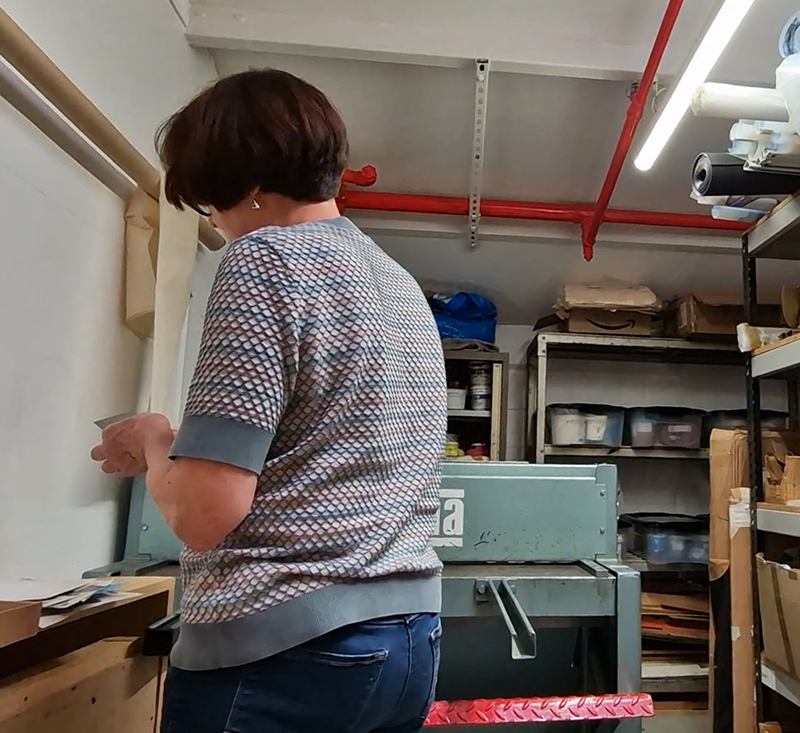
Domain of the Devil Valley Master – work in progress. It is likely that compasses were first used in China to divine an alignment of order and harmony for important sites and rituals. Jade hunters discovered they could also help to keep them from getting lost long before Europeans used them for navigation. The first mention of a south-pointer is in a fourth-century BCE text – The Book of the Devil Valley Master, and it is this that I am referencing in the title of this sculpture. Other references in the work are the rotation of the Earth’s core and geological formations of polygonal prisms. A magnetic domain is a region within a magnetic material in which the individual magnetic strength and orientation of the atoms are aligned with one another and they point in the same direction. The work uses directional magnetic steel stripped of its industrial coating to reveal the jigsaw pattern which comes from rolling single crystals of an iron silicon alloy into thin sheets to minimise magnetic losses for use in industry. The sheets have been sanded, etched, guillotined, treated for rust and sealed.

The Earth’s core is made almost entirely of iron and nickel. Siderophiles are elements that form alloys easily with iron and are concentrated in the Earth’s core. When the Earth formed about 4.5 billion years ago from the collision, accretion and compression of matter it was rock all the way through. Heat from the massive violence of formation and radioactive decay caused the planet to get hotter and hotter. After about 500 million years of heating up it finally reached the melting point of iron. As the iron liquified lighter material rose to the surface becoming the mantle and crust and the heavy metals like iron and nickel fell towards the centre becoming the core. The siderophiles that descended into the core are gold, platinum, and cobalt along with around 90% of the Earth’s sulphur. Hence the smelly sulphur vents around the volcanic regions.

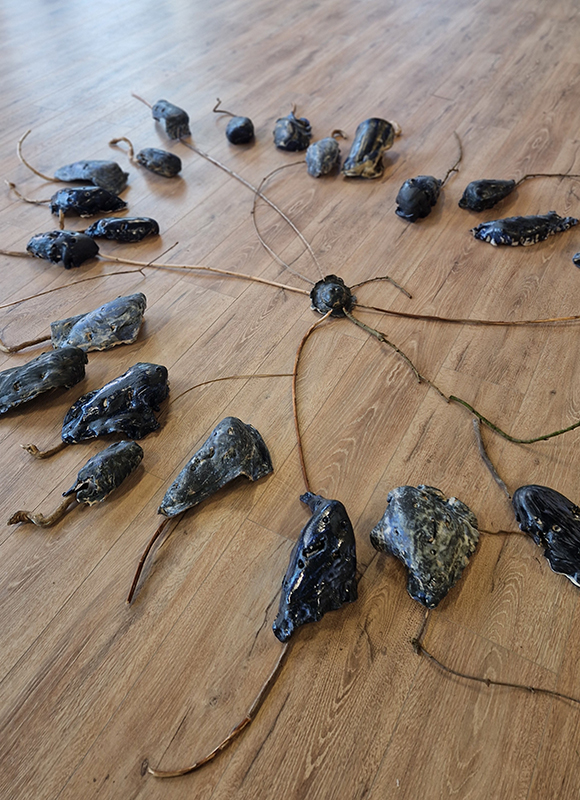
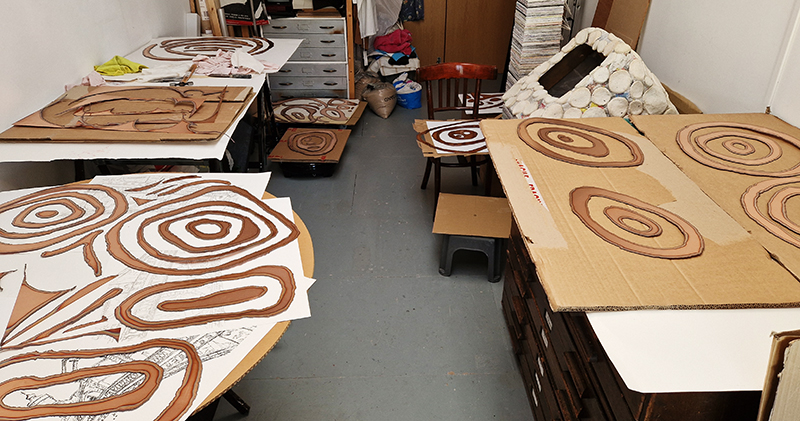
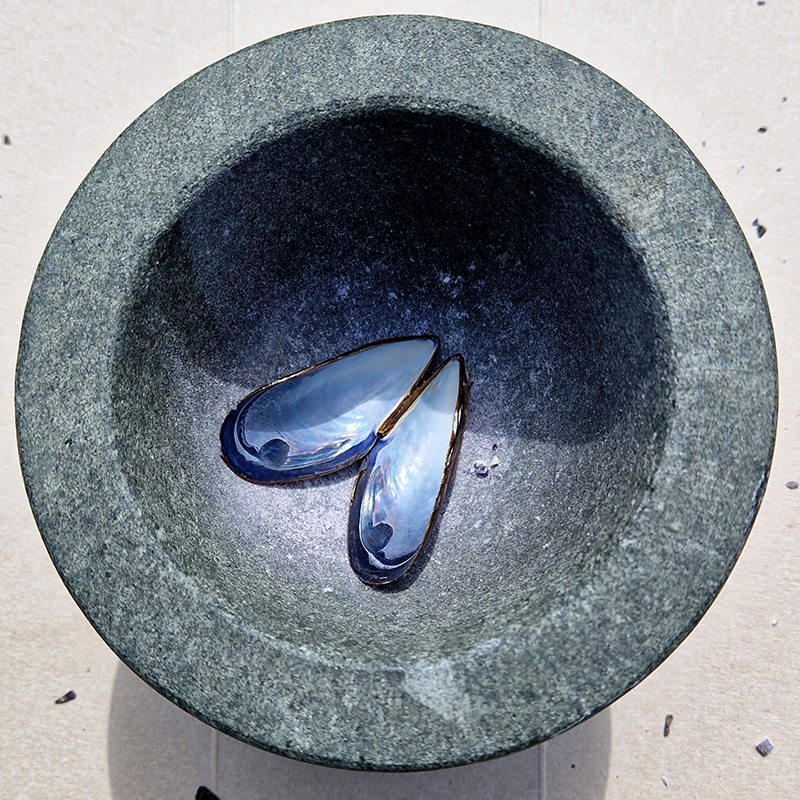
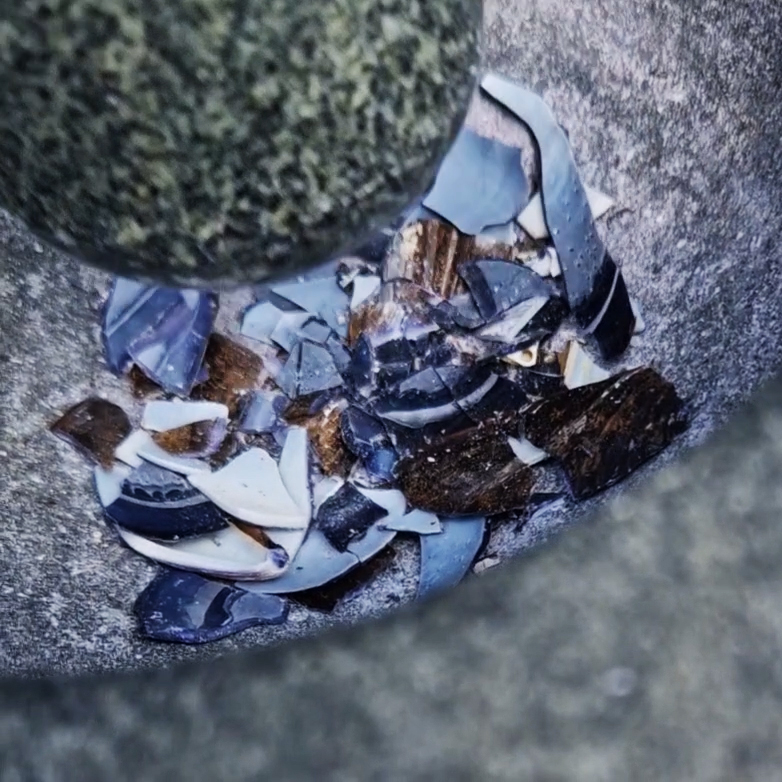
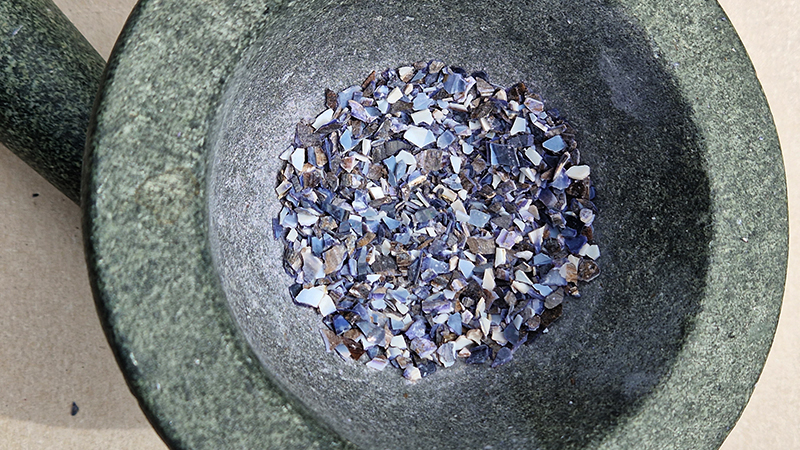
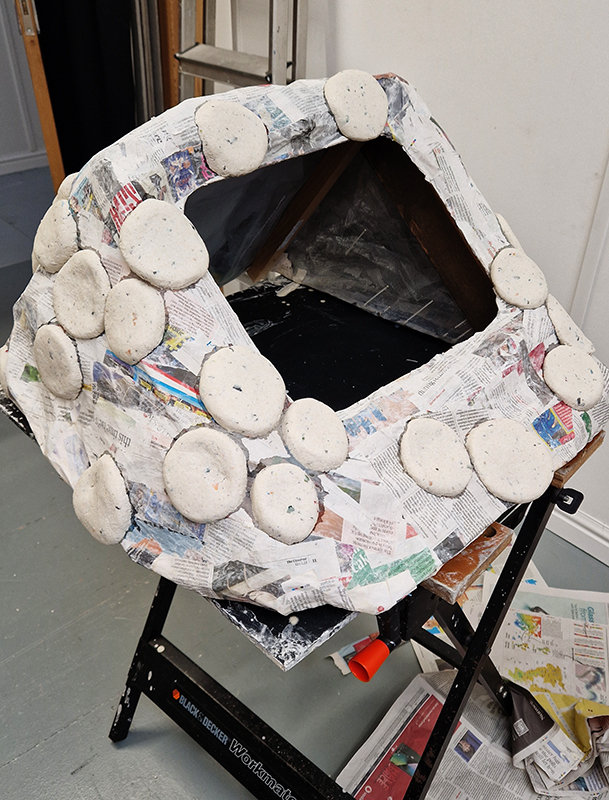
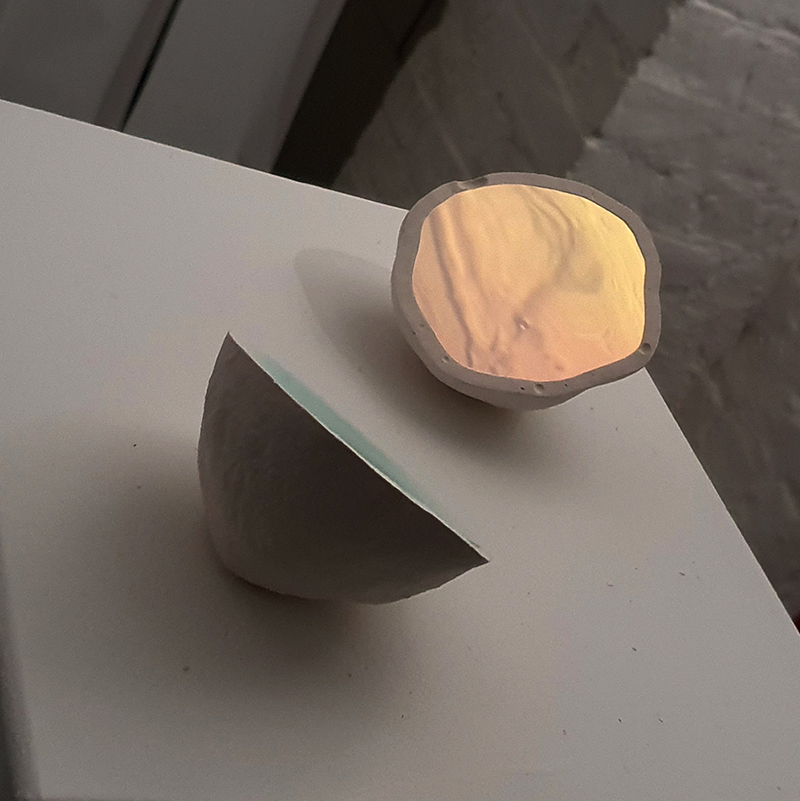
Belly of a Rock – work in progress. Making paper clay discs to build the surface of this hybrid sculpture and crushing mussel and oyster shells to use as texture.

The geographic north pole lies in the middle of the Arctic Ocean, covered in shifting sea ice, where the sun rises and sets only once per year. All lines of longitude converge here and hence all time zones. It is known as true north to distinguish it from the magnetic north pole. However, as the Earth’s axis of rotation wobbles slightly in an irregular circle, even this pole is not fixed. The magnetic north pole, also called the magnetic dip pole, is where the planet’s magnetic field is vertical and a compass needle here would dip and try to point straight down. The north and south dip poles are not found directly opposite each other. These dip poles are located by experiment in the field but as they are found in the most remote and harsh regions of the planet they are not easy to track. Also they can move around over considerable distances during each day, tracing out oval shapes as they are acted upon by dynamic electrical current systems of the magnetosphere, which are in turn defined by the activity of the solar wind. There is an equivalent (but fictional) magnetic dipole at the centre of the Earth assigned from global modelling of the geomagnetic field. These geomagnetic poles are an approximation arrived at by reducing Earth’s complex and varied magnetic field to that of a simple bar magnet. The north dip pole lies in Northern Canada, the northern dipole is roughly off the northwest coast of Greenland.

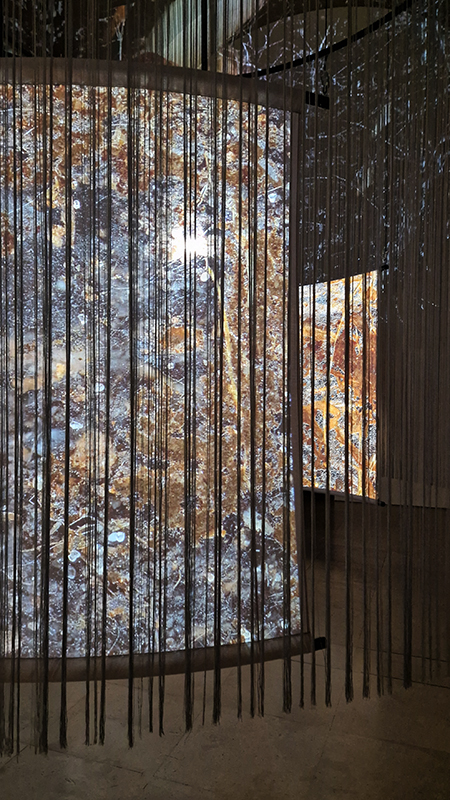
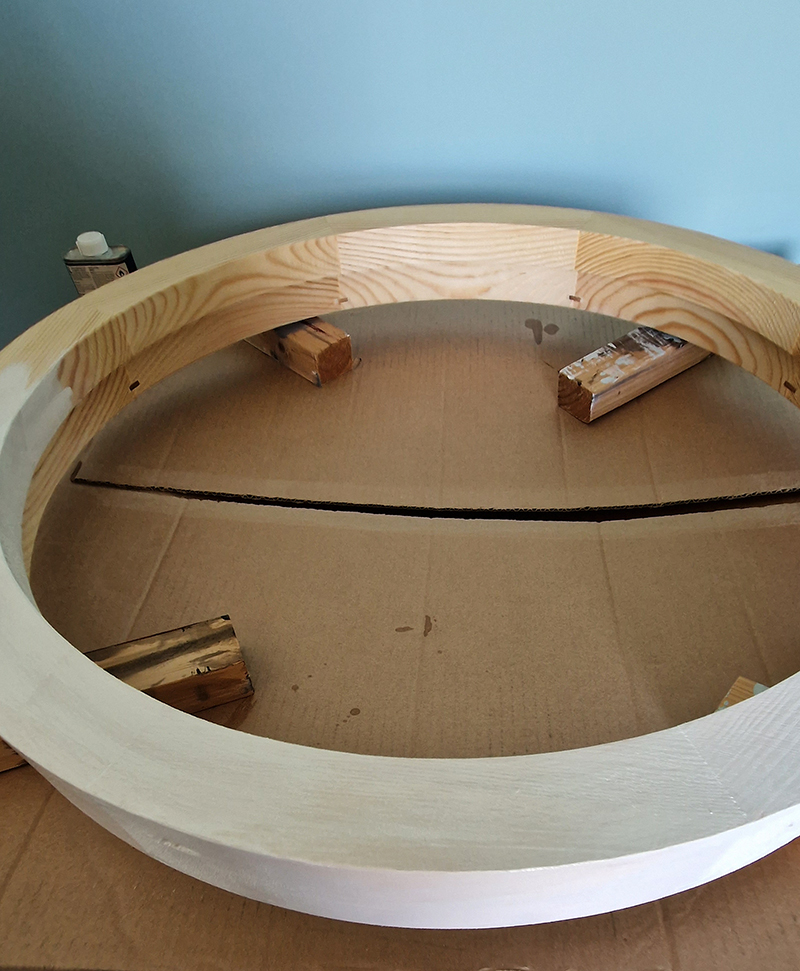
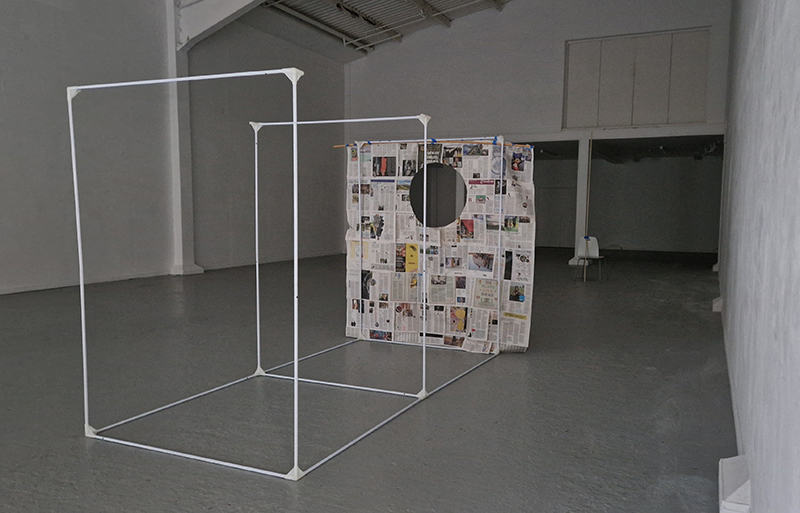
The Absolute Hut – work in progress. This installation is a reimagining of the Absolute Hut at Hartland Magnetic Observatory where monitoring of the Earth’s magnetic field takes place. Topological contours of suminagashi marbling also echo fluid magnetic field lines. Testing scale and alignment in the gallery space. Collecting planks for the north facing wall. Prepping the round window. Suminagashi experiments on different Japanese papers. I want to consider the hut as a sensory hub.

Other exciting news is that APT Gallery have selected a proposal for an exhibition which will take place in March 2024. The exhibition will consider the lifeboat as a metaphor in relation to uncertain times, ecological and social change and shifting landscapes as viewed from the land and the sea. The artists in this group show share an interest in exploring precarity as a site of dynamic transition. I am so happy to be working with these wonderful artists – Rachael Allain, Caroline AreskogJones, Beverley Duckworth, Liz Elton, Kathleen Herbert, Kaori Homma, Anne Krinsky.          

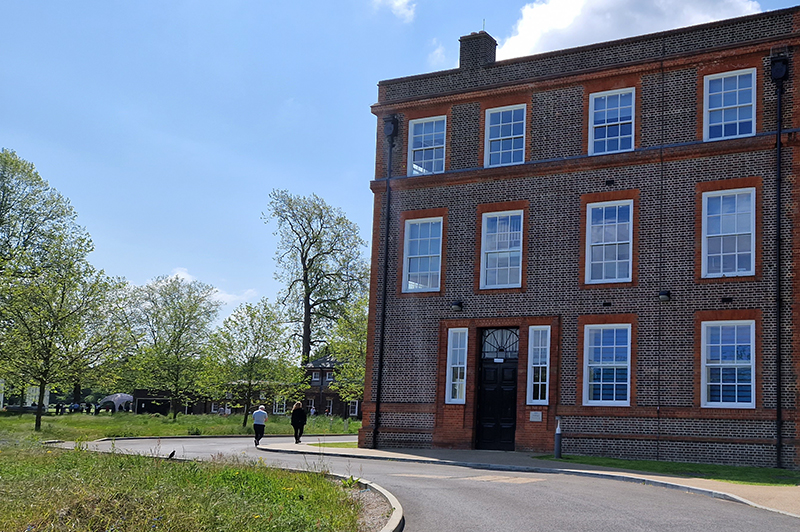
In celebration of World Metrology Day, NPL opened Bushy House and gardens to the public. A chance to see and hear about ever more accurate ways of measuring the physical world. Bushy House was the residence of William, Duke of Clarence (William IV) and his mistress Dora Jordan from 1797, and was offered to the Royal Society by Queen Victoria in 1900 as a location to establish The National Physical Laboratory. The impressive apple tree is from an offcut of one from Newton’s home estate. The magnetic laboratory here is concerned with devising and standardising the instruments used by magnetic observatories such as the one at Hartland that I visited last summer. I saw the 1kg sphere of single crystal silicon, with the smoothest polished surface of any made object and notoriously hard to photograph. The application of a strong magnetic field during the crystal growth process reduces contaminants giving a purer silicon crystal. Developments in technology bring new units and definitions of measurements.

From early concepts of number, patterns in nature (symmetry, branching, spirals, cracks, spots, stripes, chaos, flows, meanders, waves, dunes, bubbles, foam, arrays, crystals, and tilings) magnitude, and form came mathematics, meaning subject of instruction. This has evolved into complex theory from an understanding of negative numbers to imaginary numbers which combined with real numbers have been found necessary to describe quantum mechanics.

The colour coding of Saturn’s rings according to particle size used radio occultation to determine the different regions. Radio signals were sent from the Cassini spacecraft during orbits which placed Earth and Cassini on opposite sides of Saturn’s rings. This remote sensing technique measures how the radio waves bend around the matter they encounter to assess the physical properties of a planetary atmosphere or ring system. The purple colour indicates regions where most particles are larger than 5 centimeters. Green and blue shades indicate regions where there are mostly particles smaller than 5 centimeters and 1 centimeter. The white band is the densest region where radio signals were blocked preventing accurate representation in this area. The radio observations showed that all rings appear to have a mix of particle size distribution right up to boulder sizes, with several many meters across.

Gallery Visits

It’s Coming From Inside at Bell House, Dulwich. Curated by Sarah Sparkes and Jane Millar. In their thinking about the Impressionist Berthe Morisot, and the exhibitions broader theme of ‘Windows and Thresholds’, the curators see the two different domestic spaces, and the liminal corridors between them, as places expressive of dialogues in both Morisot’s and their invited artists’ works: of confines, dreams of escape, of external inscrutability and internal passion. Exhibiting artists: Fran Burden | Ruth Calland | Helen Carr | Mikey Cuddihy | Janet Currier | Robert Dawson | Andrew Ekins | Liz Elton | Lisa Fielding-Smith | Deborah Gardner | Caroline Gregory | Birgitta Hosea | Mindy Lee | Wayne Lucas | Julia Maddison | Jane Millar | Darren O’Brien | Kim Pace | Sarah Sparkes | Geraldine Swayne

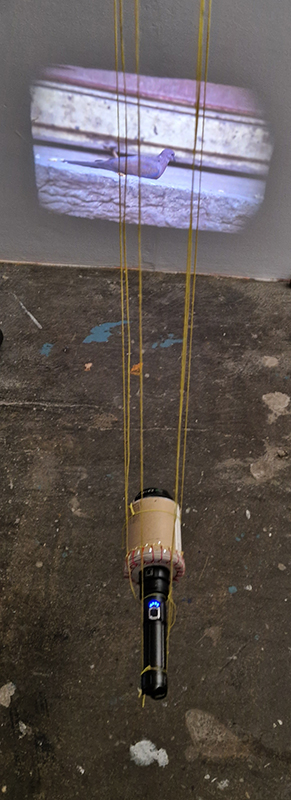
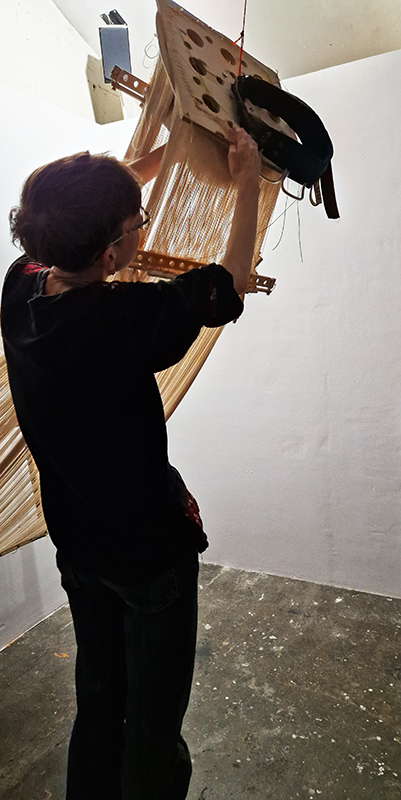
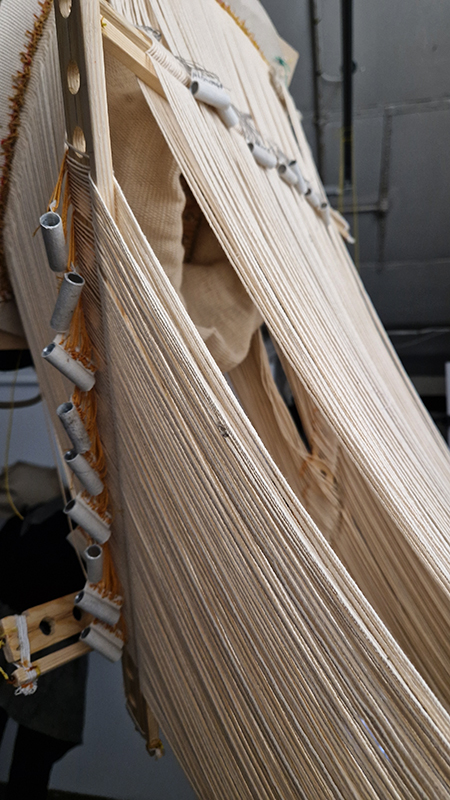
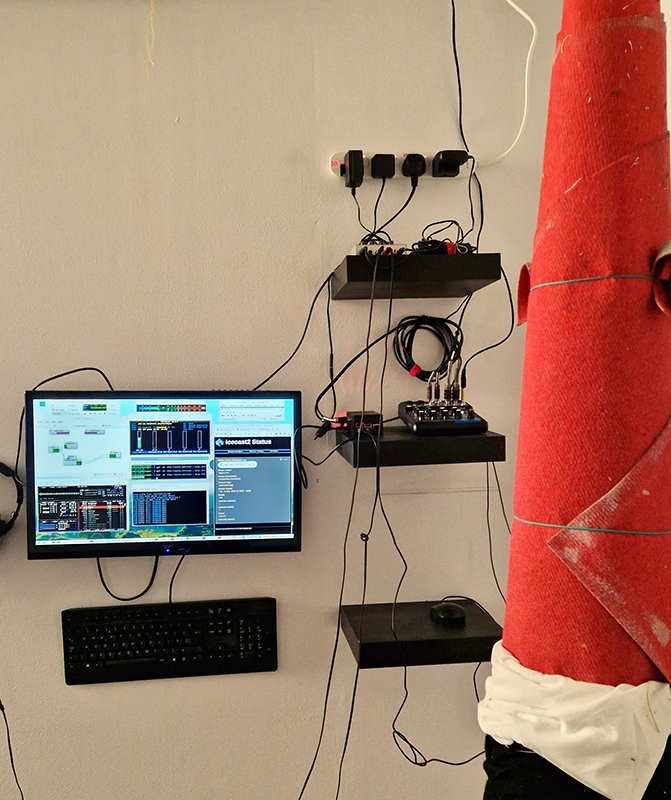
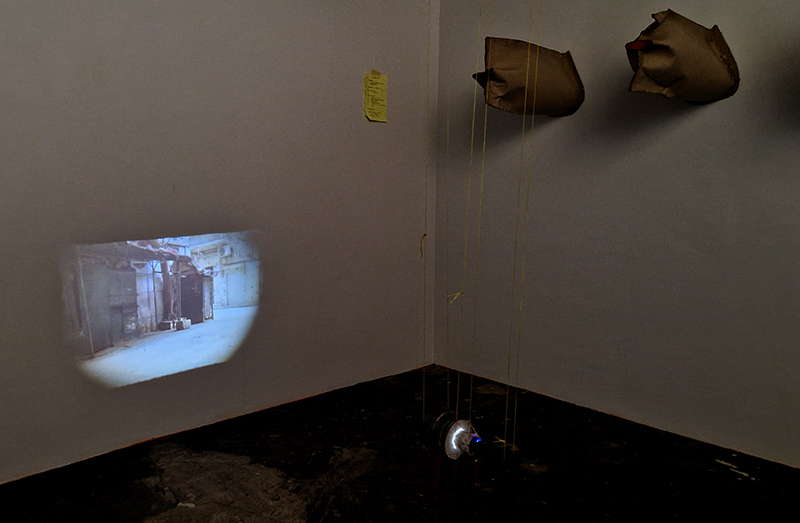
Georgina Sleap Now and here and there together at Cable Depot. A residency undertaken in collaboration with Neil Cheshire, Olive Hardy, Mercedes Melchor, Agnieszka Szczotka, Derek Horton, Farida Youssef and Niamh Riordan. A wonderful installation conjured from simple materials and experimental technology, both analogue and digital that blur the here and there of time and space. Sounds of everyday street noise live from the artist’s Cairo balcony are streamed into the gallery where suspended torches project still slide images onto the wall or inside elongated sculptural forms. A loom for weaving a plain coffin shaped carpet hangs like a hammock next to CCTV recordings of yogic performance while a camera obscura style intervention casts shadows, bringing the local outside in.

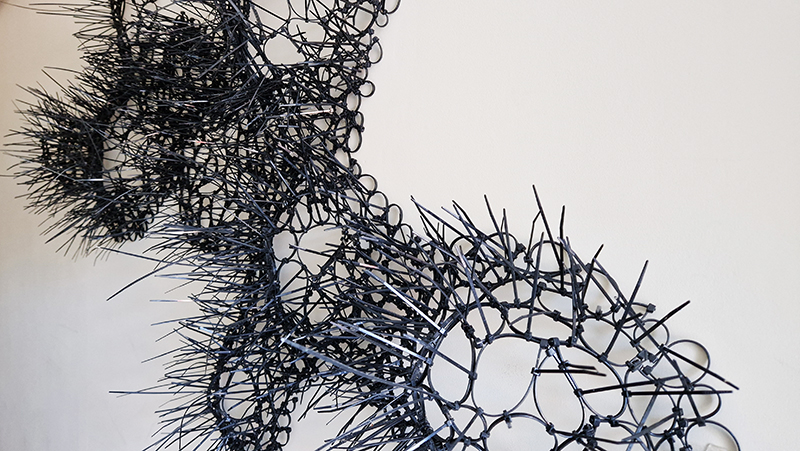
The Shape of Things by Clan, a collective of multidisciplinary artists – Caroline Penn, Liz Lowe, Ashley Goldman, Nicky O’Donnell at Gallery 3, a delightful Georgian property in Margate. The artists examine issues of loss, both personal and environmental, that are balanced by ideas of hope and regeneration. A nice use of recycled and sustainable materials including netting from fruit and cable ties.

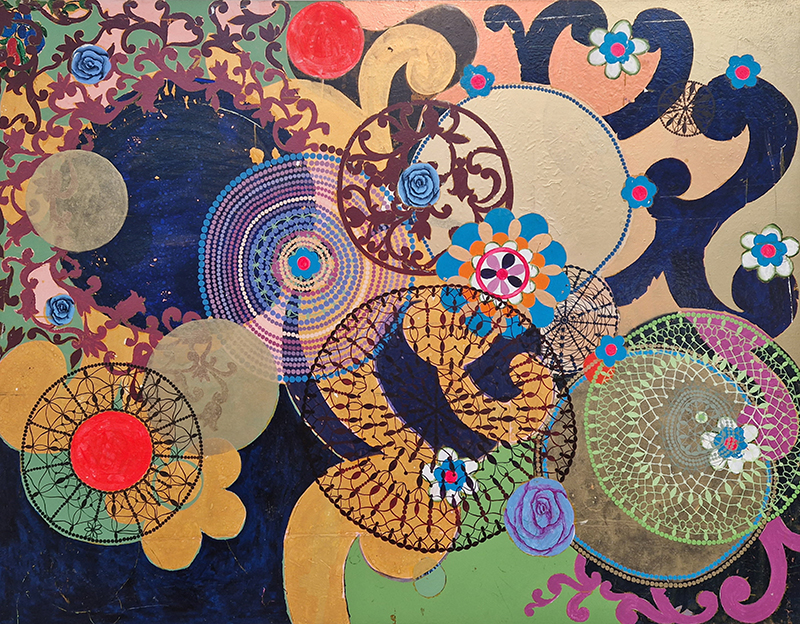
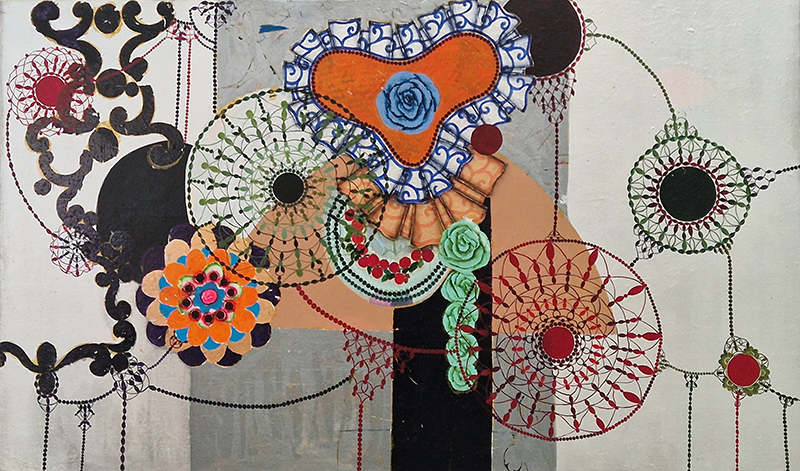
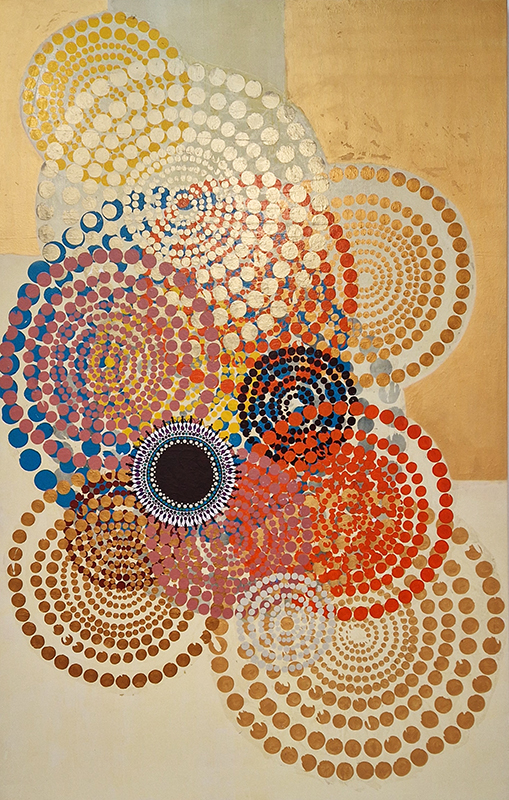
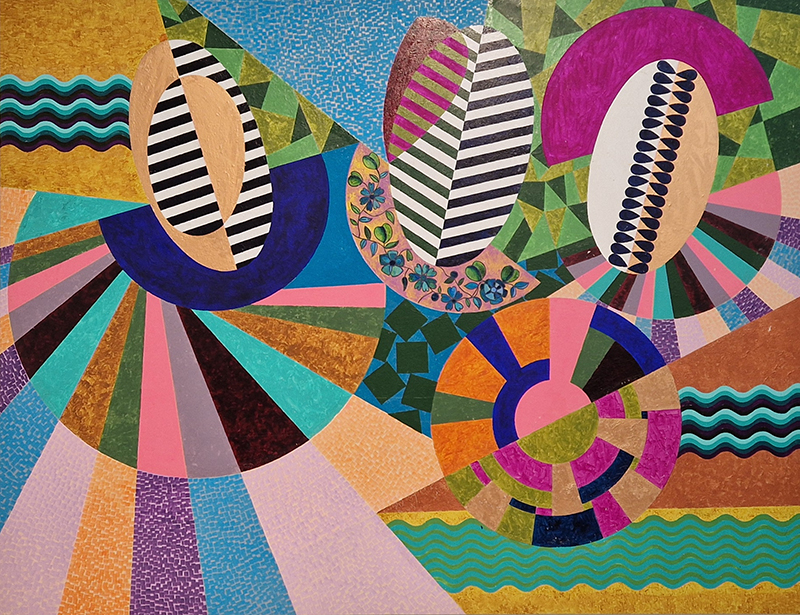
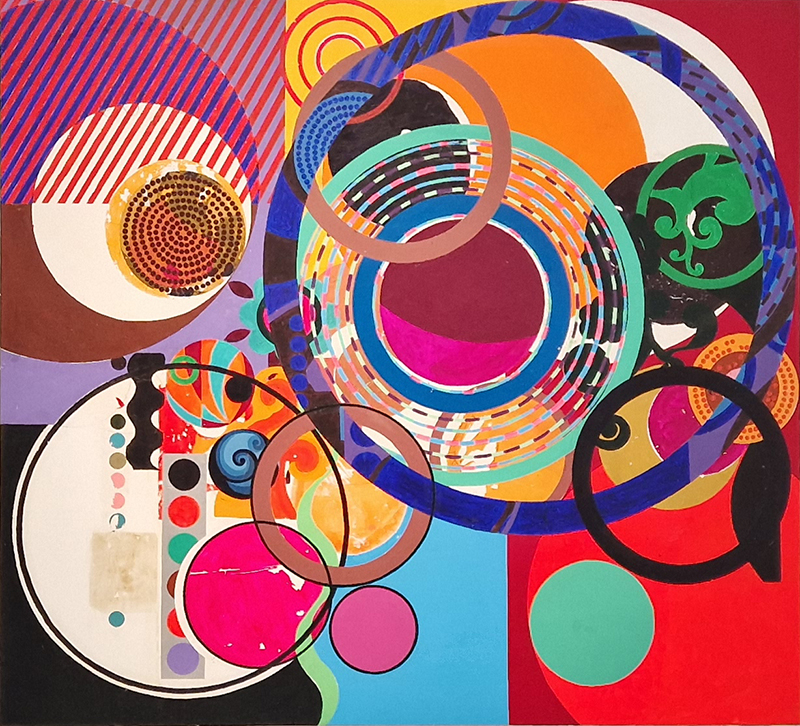
Beatriz Milhazes at Turner Contemporary. Perfect for a summer’s day at the seaside. Exuberant.

Opening event for the new photography centre at the Victoria and Albert Museum. Interesting to hear about the process Noémie Goudal undertakes to create her ambitious illusionist photographic sculptures such as Giant Phoenix VI from the series ‘Post Atlantica’ which has been acquired by the Victoria and Albert Museum for their photography collection, housed in a new dedicated gallery. This work was inspired by her interest in shifting landscapes, the movement of tectonic plates and how landmasses join and separate over millennia. There was also the chance to see her video Inhale Exhale along with behind the scenes footage of her technical team and the scale of the resources involved. Tarrah Krajnak has also had work acquired by the museum and read some of her poetry at the event. Her interests are also in discontinuity, severance and cataclysmic events but on a human scale. Being born from an act of violence she puts her own identity forward to explore power relationships.

Reading

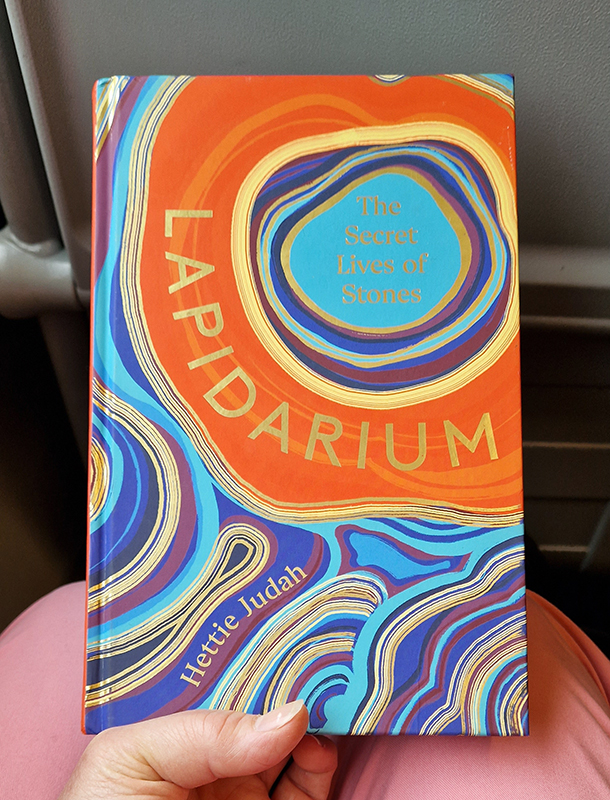
I have really enjoyed the breadth of information delivered so beautifully by Hettie Judah in her book Lapidarium – The Secret Lives of Stones. The character described and stories told of each geological layer, formation, rock and gem brings to life a world often perceived as static, perpetual and dry. This book is a great resource and has been particularly appropriate for me in the run up to the exhibition A Stone Sky with Julie F. Hill as we explore the intimate connections between the rocky planet earth and space.

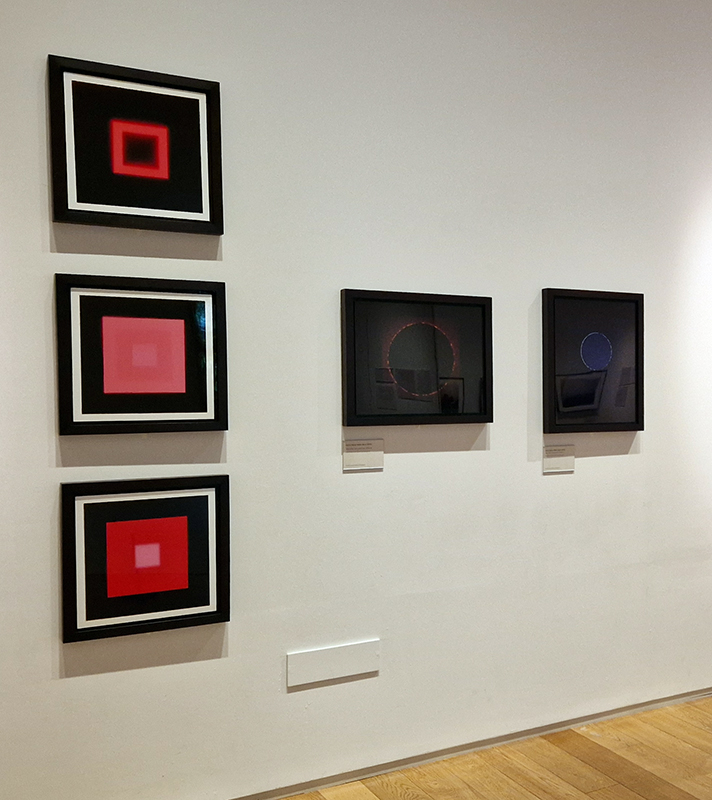
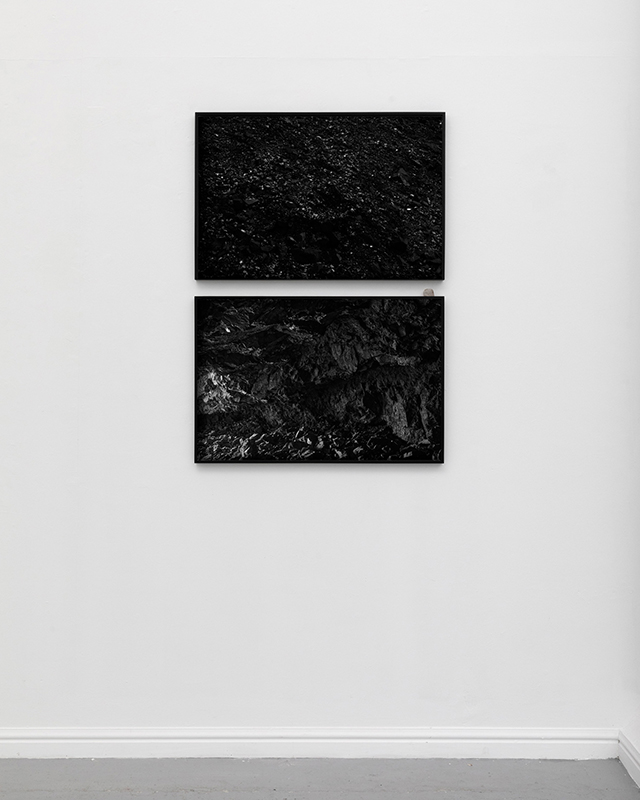
New work has been framed – these pieces consider the potential for the human eye to perceive the Earth’s magnetic field. Research shows birds have this capability activated by molecules in the retina of the eye when excited by blue light. The molecules produce radical pair electrons sensitive to the magnetic field and as these molecules are found within the photoreceptor cells it is possible birds may visualise the magnetic field lines to aid navigation. A similar molecule is also found in the human eye and I am speculating that this is a sense we may once have experienced and could tap into again. It is of course the brain that must receive a signal from the eye by which we see. Independently of the cryptochrome molecule, research monitoring alpha wave activity shows the human brain does appear to be sensitive to a magnetic field albeit unconsciously.
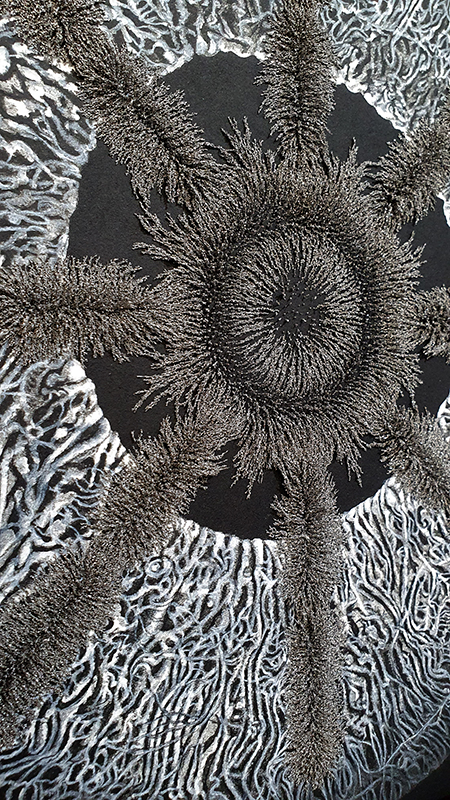
The Compass Eye Etching with chinagraph pencil, magnets, iron filings

Pole Receptor 2022 27 x 27 x 3 cm Etching, magnet and iron filings

Framework made a neat job of the frames enabling the magnets to be released to reset the iron filings if necessary. The Compass Eye doesn’t have glass and maybe that was a mistake but I prefer the thin frame.

Progress is being made on new work Breath of Stars. This will be a screen based work triggered by cosmic ray activity. Every time an event is registered by a photomultiplier attached to a 5cm square piece of plastic scintillator, a star burst video image will flash up on the screen. The size of the starburst will correspond to the energy of the particle that has just arrived from space. The starburst videos are made in Adobe After Effects using footage from my cloud chamber experiments.

I have got some help with coding from gaming programmer Jamie Howard so am not feeling so out of my depth in the python maze. One problem we may have though is the shortage of Raspberry Pi processors. It could be months before we are able to get one with a high enough spec to process the video layering. In the meantime I am testing ideas and creating video clips.

It was wonderful to see so many people visiting the first Open Studios at Thames-side since 2019 despite the rail strike difficulties that weekend. The Compass Eye was hanging in the Thames-side Gallery Studio Holders Showcase exhibition. Thank you to everyone who came to visit and found their way to my studio, it was great to discuss everything from Plato to Planck.

Super happy to have my video Cosmic Chiasmus: crossing the universe included in the May Fair Showreel screening at the very smart May Fair Theatre as part of Mayfair Art Weekend. The departure point for the curated selection was the word ‘PROCESS’, which was inspired by the video work by Wolf Vostell, Auto-Faber (1973). It was a great experience to see all the amazing nominated films and meet the selectors -Elisa Tosoni, Angel Leung and Eugene Macki and art weekend project manager Cheri Silver.

What a lovely write up in the Winchester School of Art Yearbook 2022 from one of the Fine Art students on the Images In The Making sessions that I ran.

I am delighted that my installation The Forms has been selected for exhibition in the splendid Wells Cathedral as part of Wells Art Contemporary 2022.

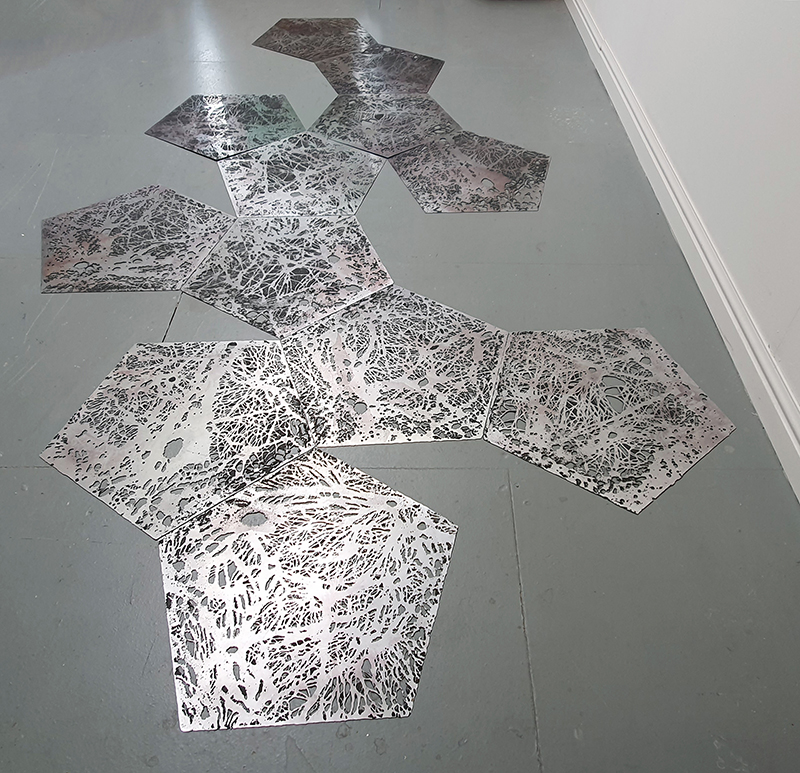
Twelve aluminium plates in the shape of pentagons that together make up the net of a dodecahedron have been deep etched with imagery taken from data visualisation of dark matter provided to me by KIPAC, Stanford University. The etching process used a screen printed sugar lift technique where the bite was allowed to penetrate completely through the plate leaving holes in some areas.

Excited to be selected for a satellite exhibition at the international print conference IMPACT12 to be installed at a former police station in Bristol. At a distance will be shown in The Anxiety of Interdisciplinarity, an exhibition which seeks to reframe printmaking as a site of interdisciplinarity – a testing ground for ‘The important work…done at the surfaces between adjacent disciplines’ (Carter, 1998).

Drawing on the physical language of print that embodies touch, separation and mirroring the semaphore flags in this work have been printed using hand painted dye sublimation inks applied via a heat press. This process transfers the ink from a paper matrix onto the substrate textile. The image passes momentarily across space in a dematerialized state as vapour before being reformed as its mirror opposite.

Out of Studio

Billed as an immersive experience like no other Dreamachine offers a unique journey into the potential of your mind. Stimulated by strobe lighting playing rhythms on your eyelids and spatial sound fed directly into your ears, your mind creates its own images behind closed eyes. Inspired by a 1959 invention from artist–inventor Brion Gysin it has been reimagined by Collective Act, in collaboration with Turner Prize-winning artists Assemble, Grammy and Mercury nominated composer Jon Hopkins, and a team of leading technologists, scientists and philosophers.

It was pretty amazing. From a deep orange glow of swirling matter kaleidoscopic shapes emerge with geometric patterns that form and explode into vibrant pulsating honeycomb structures. Felt sure I was seeing some of my recent work in there. Swept away on a tide of colour with a big smile it was like a roller coaster ride through the forming of a technicolour universe. Wonderful.

Interesting to read that the frequency range of light emitted by Brion Gysin’s Dream Machine corresponds to alpha waves, electrical oscillations normally present in the human brain while relaxing. The pulsating light stimulates the optical nerve and alters the brain’s electrical oscillations. I have been looking at scientific research that explores a connection between the Earth’s magnetic field and human vision when stimulated by blue or polarised light depending on the orientation of the viewer. The human brain’s alpha waves can be seen to react to the local geomagnetic field. Some research correlates the nature of our dreams to magnetic field activity with calmer dreams resulting from high activity and more bizarre dreams when activity is low.

Going from Dreamachine to Libby Heaney’s quantum world of morphing fluid shapeshifting worlds The Evolution of Ent @Arebyte was a nice continuation of mind bending immersion.

Ent-er. Ent-anglements. Ent-ropy. Ent-wining. Ent- hralling. Ent-icing.

Looking at the potential futures created by quantum computing where the digital mode of binary gives way to superposition and quantum entanglement. Daniel Cavalcanti has provided a useful quantum glossary in the exhibition catalogue. Explaining superposition as like looking through a window and seeing outside and yourself reflected simultaneously, two configurations happening at the same time.

I was very excited to visit The World of Stonehenge at The British Museum to see the Nebra Sky Disc, having been introduced to the existence of this amazing object by archaeoastronomer Carolyn Kennett while on the Lizard Point Residency in 2019. Found by metal detectorists in Germany the gold used in this ancient map of the cosmos can be traced to Cornwall.

Carolyn explaining the history of this most ancient of cosmological objects.

The actual disc was much larger than I expected and almost translucently thin.

Six thousand years ago in the final 1,500 years of the stone age was the British Neolithic period. A time of stone axes for chopping. Woodlands cleared for farming. Stone held meaning. Offerings were made to spirits. Hundreds of stone and wooden circles were raised across the land. A cosmic inversion, connecting earth to sky. The first stones were brought to Stonehenge about 5000 years ago to create a burial ground which was transformed 500 years later into the symbolic site where the large sarsen stones were placed in alignment with the sun as it rises at midsummer solstice and sets in midwinter. Some astonishing objects in the exhibition, the power of the sun celebrated and reflected in gold.

I had high hopes for Our Time on Earth exhibition in the Barbican Curve – the aim was for technology to bring us closer to nature and highlight our place as one species among millions of others, striving to live together in a delicate balance. There was some enticing imagery and interesting ideas but as an experience it was tech overload, information overload all crammed into quite a tight space. Too much to take in and too removed from a lived time on Earth for me to engage and absorb anything meaningful.

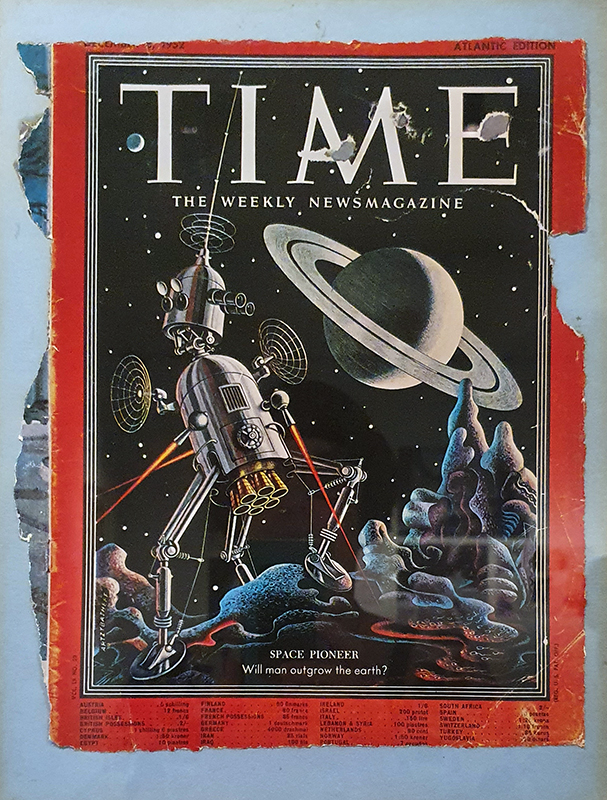
Postwar Modern at the Barbican Gallery explores the art produced in Britain between 1945 and 1965 in the wake of a cataclysmic war. Including; Denis Williams Painting in Six Related Rhythms 1954; Eduardo Paolozzi Will Man Outgrow The Earth? collage form the series Bunk 1952/1971; the lovely Aphra Shemza’s grandfather Anwar Jalal Shemza painting fusing Western ideas of abstraction with Eastern influence and Gustav Metzger Liquid Crystal Environment  made using heat-sensitive liquid crystals that are placed between glass slides and inserted into projectors where they are are rotated to create movement within the liquid causing the crystals to change colour as they are heated and cooled.

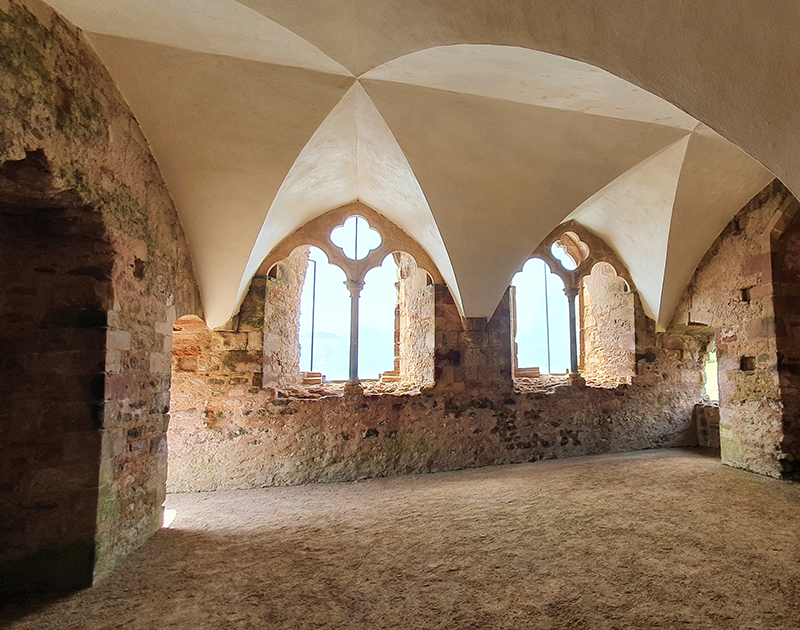
I was fascinated to learn about the numbering system used by Cistercian Monks while visiting the impressive ruins of 12th century Cleeve Abbey in Somerset. A single cypher can represent numbers up to 9999.

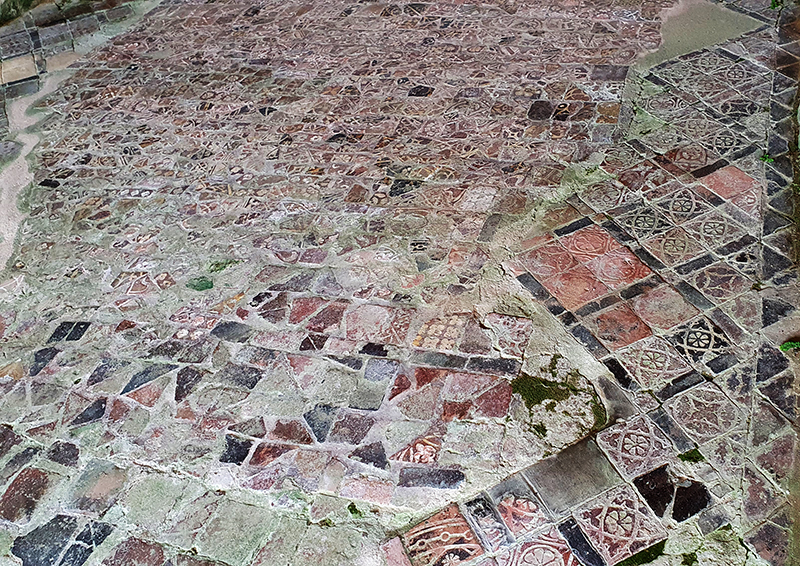
The abbey church was destroyed by Henry VIII during the dissolution in 1536 but the cloister buildings, gatehouse, 15th century refectory and 13th century heraldic tiles survived destruction as they were being used as farm buildings at the time and it’s ancient tiled floor was protected from the elements by a cabbage field.

Lode – a way or path, a watercourse, a vein of metallic ore.

A lodestone is a naturally occurring magnet possibly created by a lightning strike. Early compasses were made of lodestone suspended on a cord.

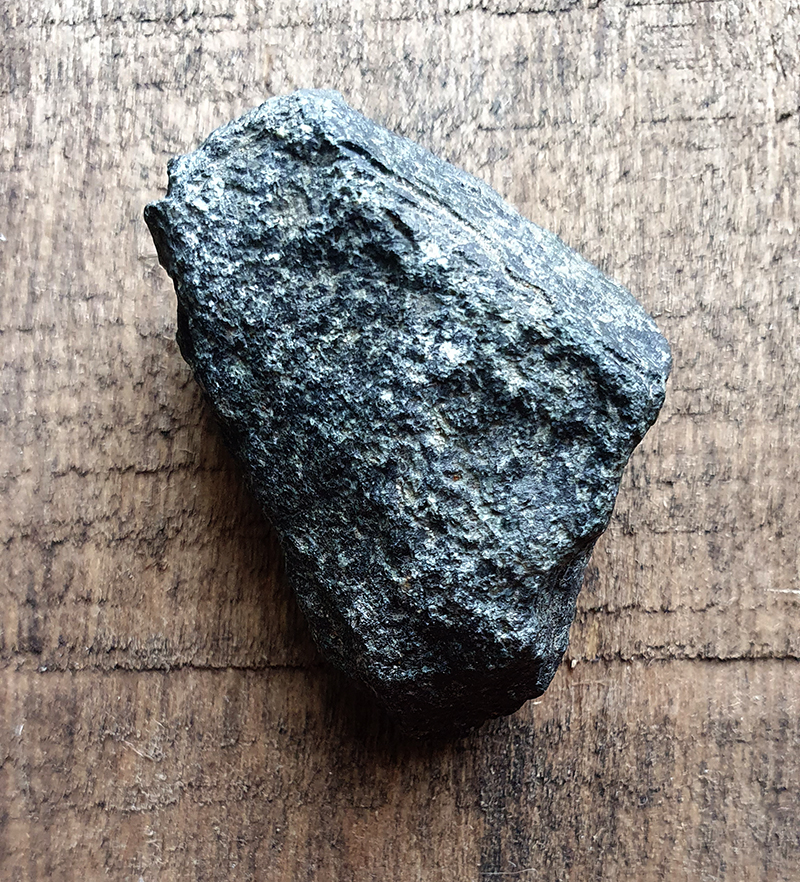
Magnetite is a common mineral that has an attraction to a magnet but is not magnetic in itself.

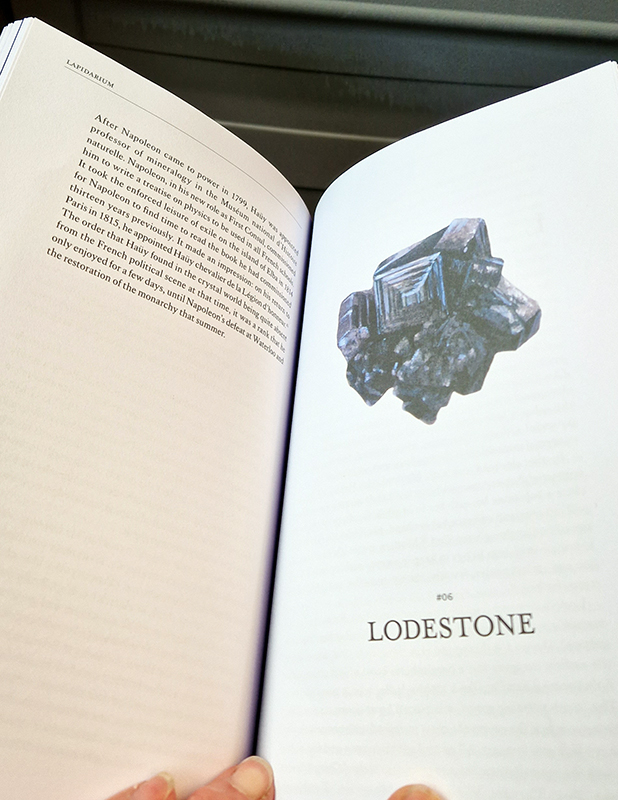
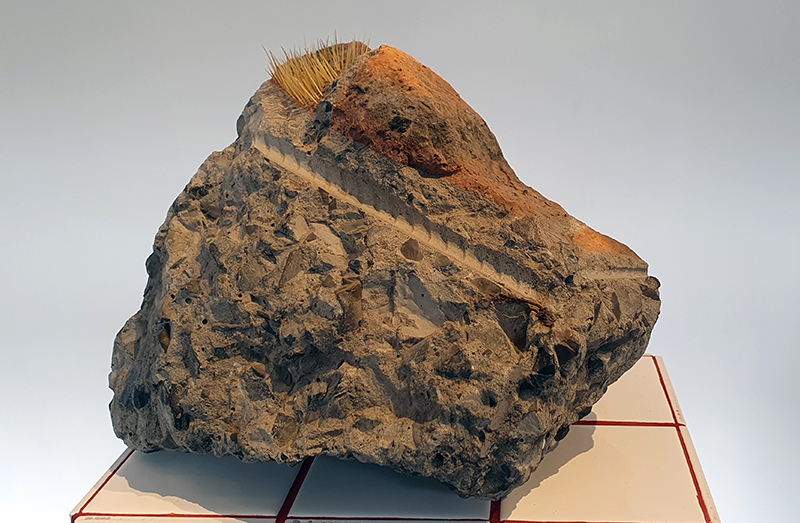
The image shows magnetite, sold on eBay as a Lodestone though at £2 what did I expect.

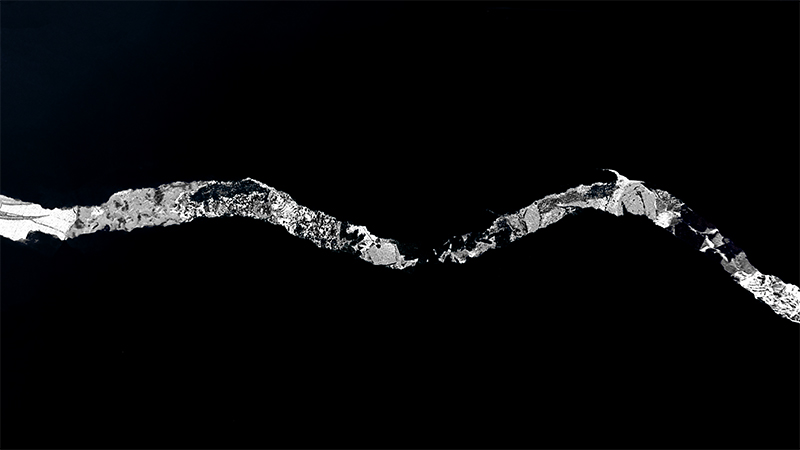
Fluid activity hidden deep in the Earth’s interior can be visualised through plotting the magnetic field and its fluctuations.

The geomagnetic field, generated by the Earth’s molten core, varies through time; the magnetic poles migrate, go on excursions or reverse polarity. During these periods of flux the strength of the magnetic field changes and this phenomenon is recorded in archaeological artifacts, volcanic rocks, and sediments. The mineral deposits of stalactites store a paleomagnetic history of declination (the deviation of magnetic from geographic north).

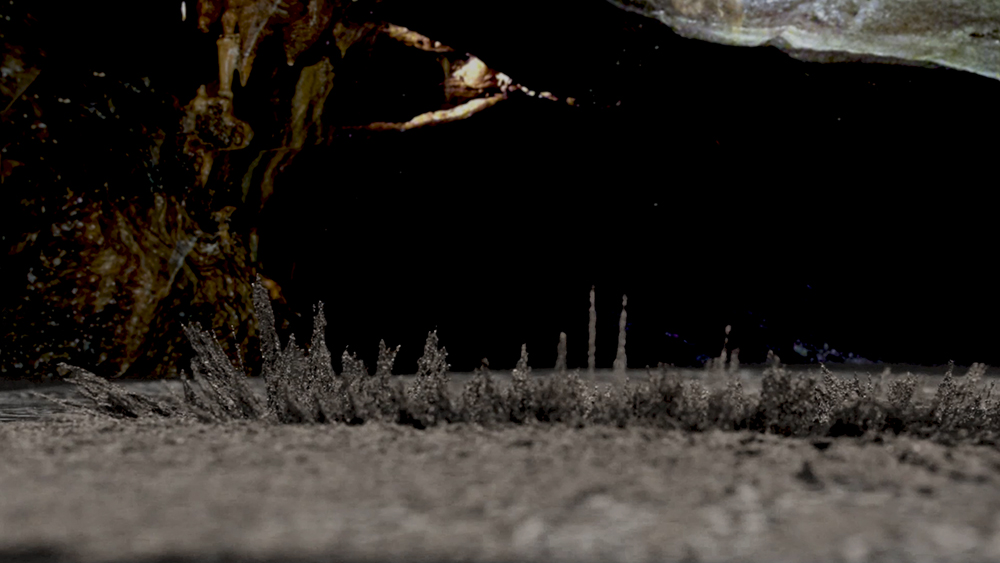
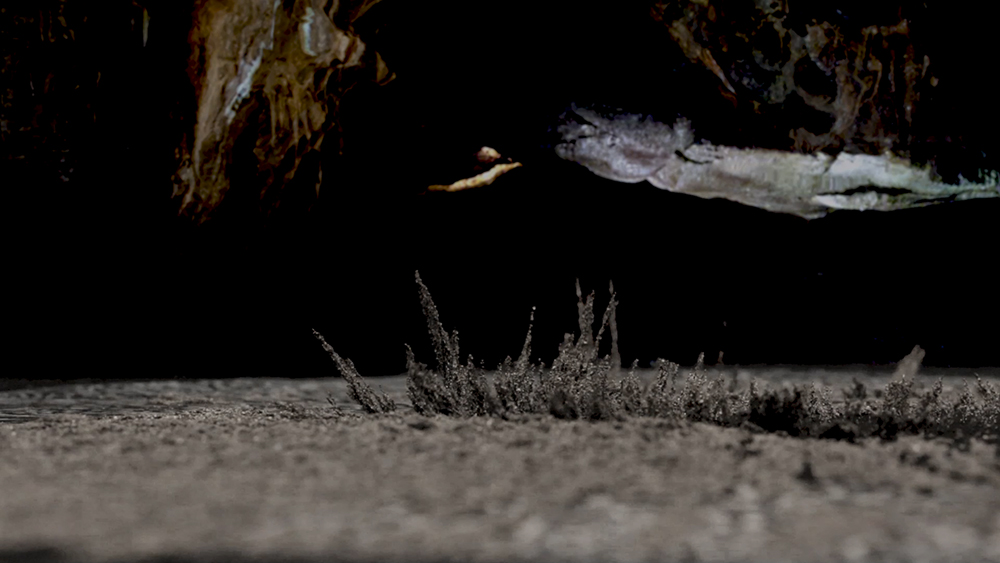
Thinking about how magnetic pole reversals are stored in geology. I am modelling some paper clay rocks for future filming visualising the magnetic field using iron filings.

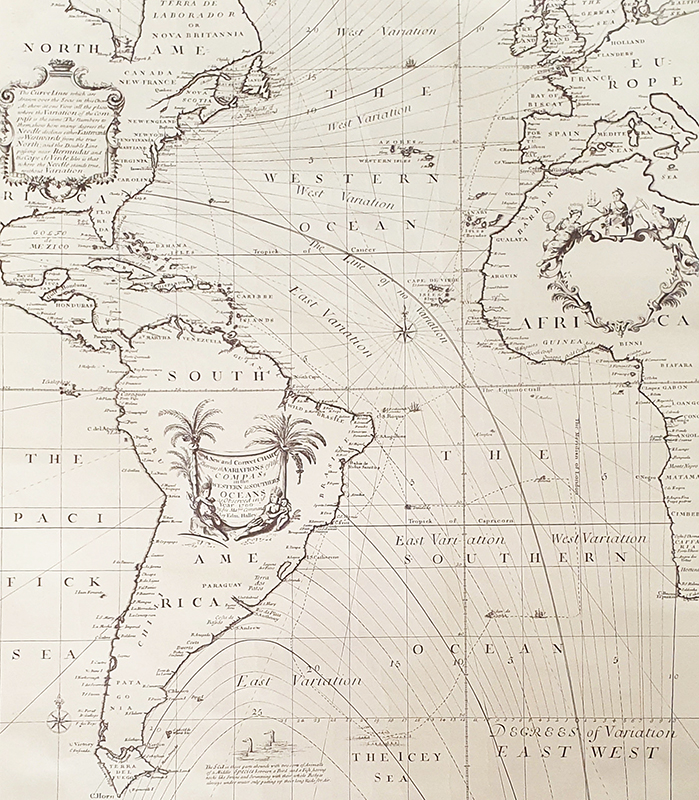
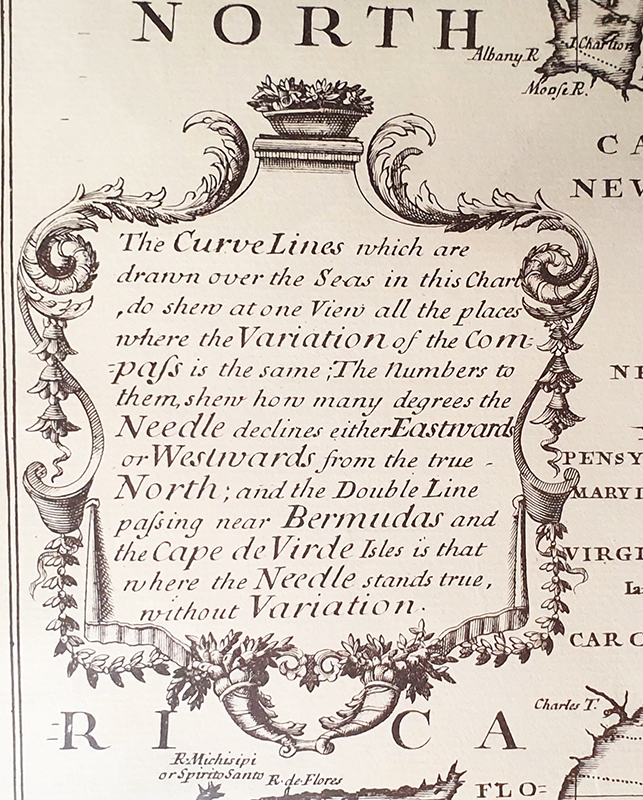
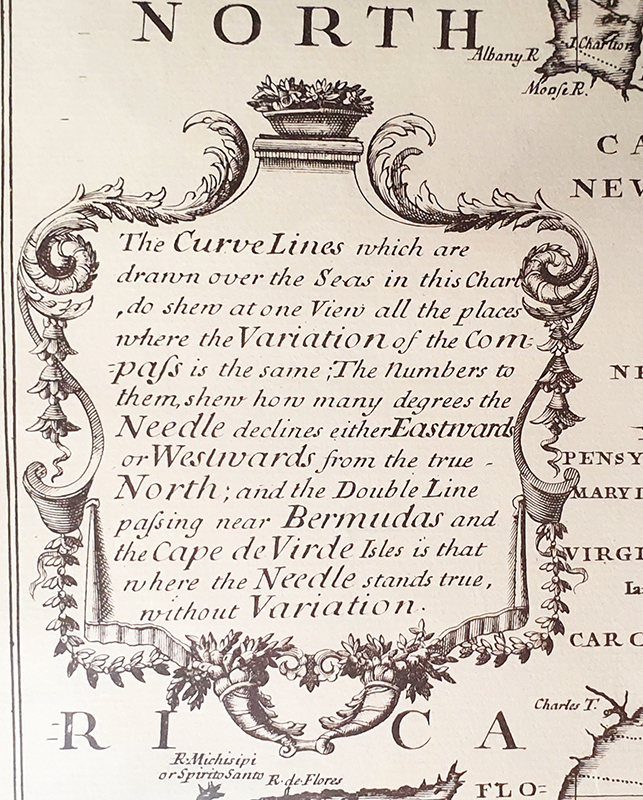
Early navigators using the compass around the 15th century became aware that geomagnetic north would roam position. In 1701 the first map charting the magnetic field declination was produced by British astronomer Edmund Halley.

In the 19th century the study of geomagnetism became one of many passions for explorer polymath Alexander von Humboldt who studied

“what keeps the innermost of the world together, how all is woven together”

and was the first to connect climate with interactions between atmosphere, oceans, land and plant ecology. From meticulous observations he noticed the Earth’s magnetic field intensity increases from the equator to the pole, and that it was also influenced by auroras and solar activity causing magnetic storms.

Magnetic observatories to monitor the Earth’s magnetic field were set up around the globe including one at Greenwich which had to relocate twice due to infrastructure interference (electric railways) and is now based in Devon with a permanent azimuth mark on a concrete obelisk viewed from the north window of the Absolute Hut. I wonder if it is possible to visit.

Magnetotactic bacteria align themselves with the Earth’s magnetic field to navigate using nanoparticles of magnetite crystals covered in biological material called magnetosomes. Each nanoparticle is about 100,000 times smaller than a grain of rice. They are mostly found in water and sediment with little or no oxygen. It has been found that magnetosomes can be biodegraded (dissolved) in human stem cells losing magnetism at first but then reforming into human cells with magnetic sensitive qualities.

There is a daily variation in the magnetosphere caused by sunlight hitting the ionosphere, a layer of the atmosphere about 1000km up. The electrical conductivity of this layer is affected by the solar wind which pressures and squashes the field on the sunlit side while creating a magnetotail pluming from the dark side of the Earth.

Capturing garden activity through the solar cycle with a spycam.

The rotation of the Earth around its axis results in a molecular clock evolved by organisms in alignment with the solar cycle. The Earth’s magnetic field can influence animals’ circadian clocks, through the photoreceptor cryptochrome, which is activated by blue light.

I have recently acquired a drone and have been for a couple of practice flights in Richmond Park’s designated area taking along a few pentagon mirrors. Excited by the possibilities.

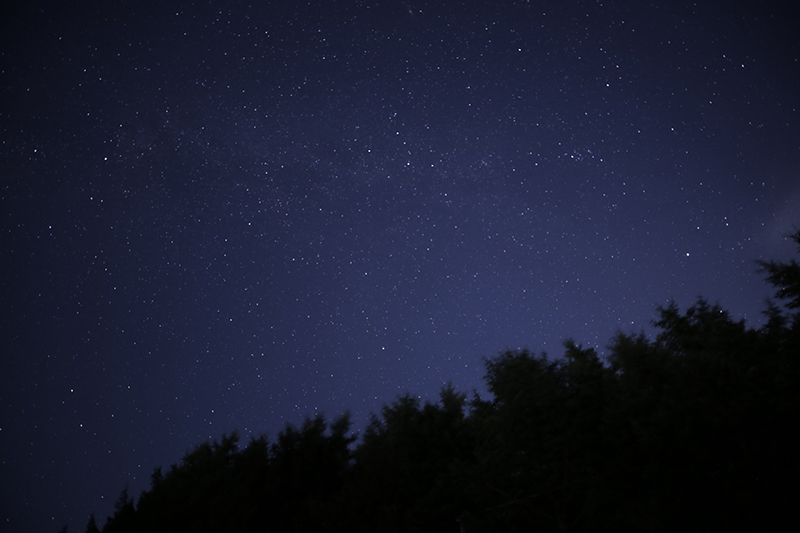
Up at 5am to see the tiny points of light that are Venus and Jupiter approaching their conjunction which they performed the following morning hidden by clouds

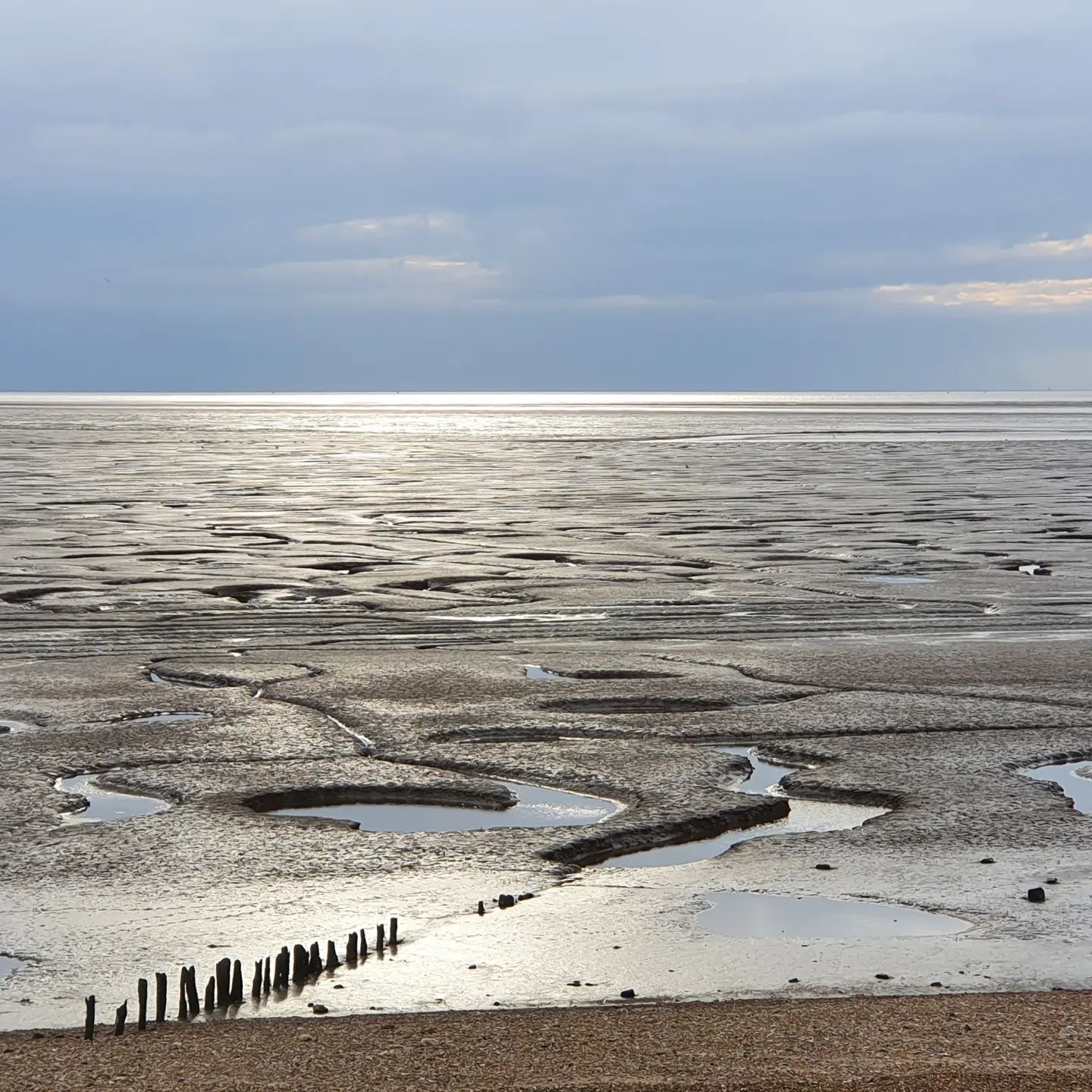
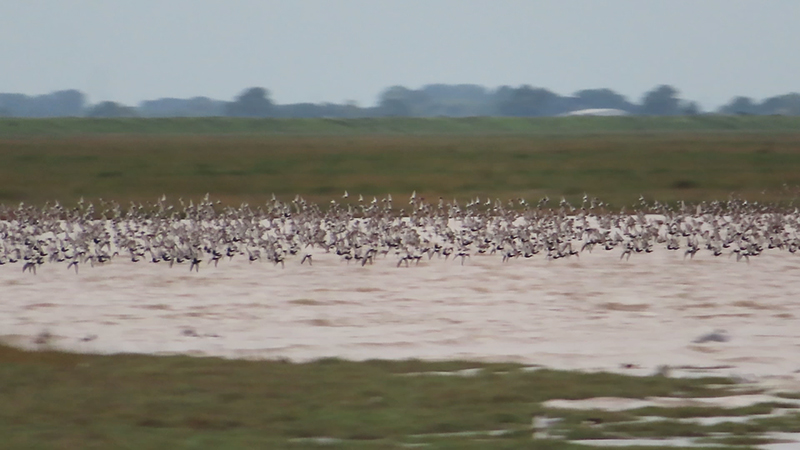
Research trip to RSPB Snettisham in North Norfolk to see the Whirling Wader Spectacle. The high spring tides push the birds from their feeding grounds on the mudflats of The Wash onto the lagoons of the reserve. The spectacle occurs when the tide is super high during daylight hours in early spring or late autumn when the birds are migrating to and from this site. It is surprising how fast the tide comes in. On arrival in the early evening the sea is a distant strip of light.

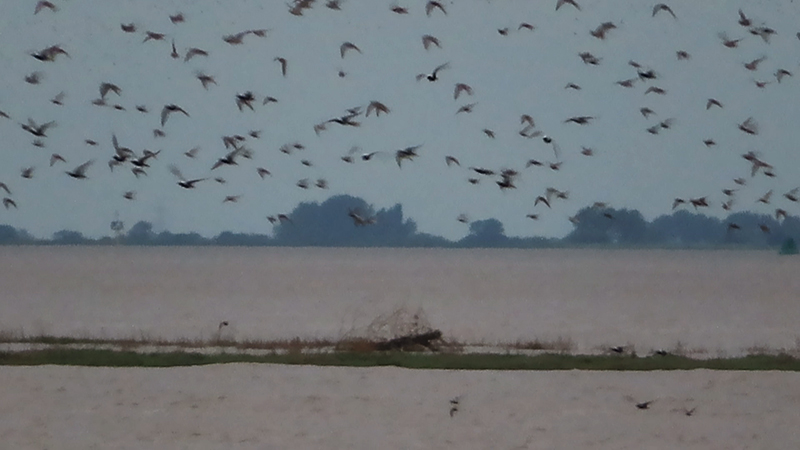
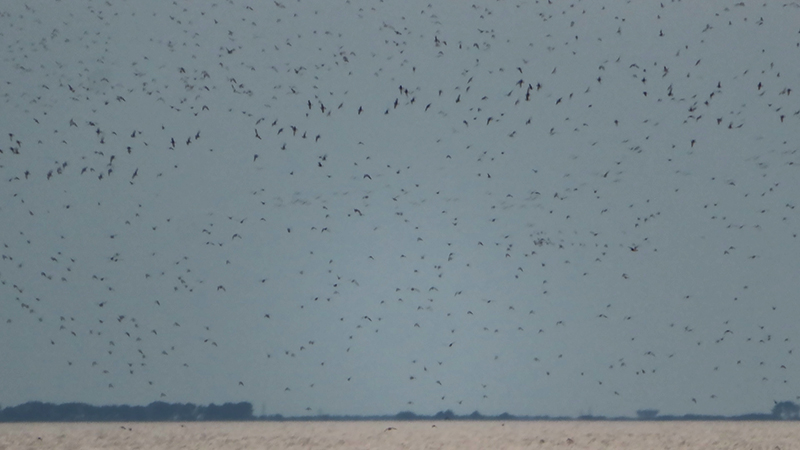
Suddenly the gullies are filling and the first murmurations of knots are forming low over the incoming water. The speed of the birds is extraordinary. I was totally ill equipped to capture the spectacle on video.

Fascinating research discussed in the webinar Scientific American live: Bird Migration and Song featuring Professor of Chemistry University of Oxford, Peter Hore, an expert on magnetoreception.

Radicals are molecules that contain an odd number of electrons and are therefore unstable. For most molecules the electrons are paired which cancels out the magnetic force. Birds use three different compasses to navigate across the globe; the sun, the stars and the magnetic field. The Artic tern makes the longest migratory journey, a staggering 25,000 miles.

The theory that birds may use the Earth’s magnetic field to navigate began in the middle of the 19th century, but experiments in Germany with European Robins in the 1960s were the first to prove the connection. The Earth’s magnetic field is extremely weak so the mechanism that can detect this weak force must be very sensitive. Because free radicals are very unstable it doesn’t take much energy to have big effects. The particular cryptochrome molecule used is found in the retina of the eye with the photoreceptor cells. Blue light shined onto Cryptochrome 4 produces radical pairs which are sensitive to the magnetic field. It is excited by blue light but does not respond to red light. The molecules work like a pendant compass, distinguishing the direction of the magnetic field towards pole or equator. This feature arises from the spin direction of the free radical pairs. Both radicals may spin in the same direction or one may spin one way and the other the opposite. There is a lot of processing in the eye before a signal is sent to the brain to act upon.

It is possible birds form a visual perception of the magnetic field. The cone cells in the eye are used by day but may be taken over at night for navigation as this is when birds migrate. Light pollution and electromagnetic noise pollution such as AM radio masts can cause disorientation.

I still have questions about how the birds know where to head for. They may have a map but they still need a destination.

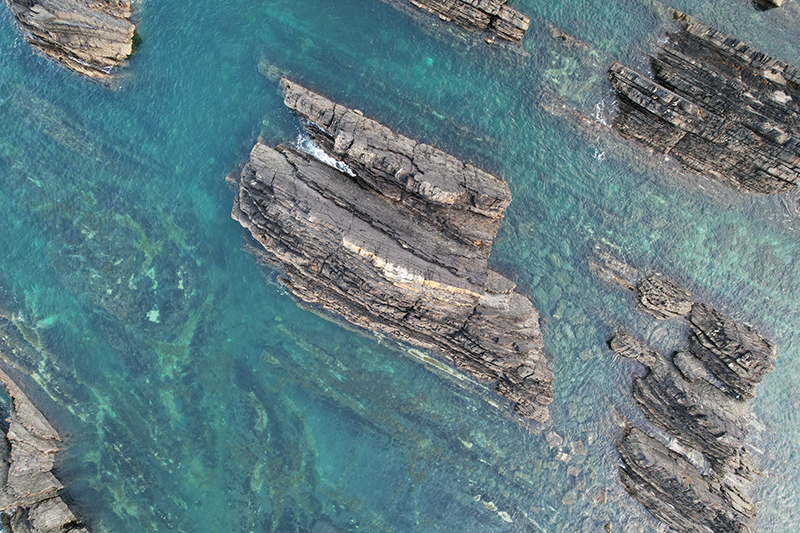
Stunning North Norfolk coastline. It’s so flat here that cliffs are unexpected. Hunstanton Beach was once under a tropical sea 108 million years ago when sea levels were 200m higher. Somewhere in these strata evidence of magnetic pole reversals will be stored.

So much to explore at the National Physical Laboratory Open Day but my favourite room was Magnetic Materials and Sensors. They don’t allow any photography so I can’t share some of the amazing experiments I saw but I have been able to recreate my favourite as it was also the simplest; a magnet dropped into a copper pipe creates an electric current as it falls which gently slows its progress through the tube. So cool. I will be filming this.

Experiments with lenses. It’s often the way that having spent time on a proposal that doesn’t get accepted those ideas do not get wasted but ultimately feed into new work.

Testing ‘The Forms’ as a floor piece.

The immutable truths Plato discovered in geometry belong to the realm of abstract thought and ideals he called The Forms. Twelve pentagons form a dodecahedron which Plato defined as ‘a fifth construction, which the god used for embroidering the constellations on the whole heaven.’ Today it is dark matter that science believes holds the stars in the heavens. In visualisations of dark matter created from cosmological data we see familiar organic patterns emerge; the fronds of dark matter spanning between galaxies could be the spreading branches of trees or the veins under our skin.

Thanks to KIPAC Stanford University for the data visualisations.

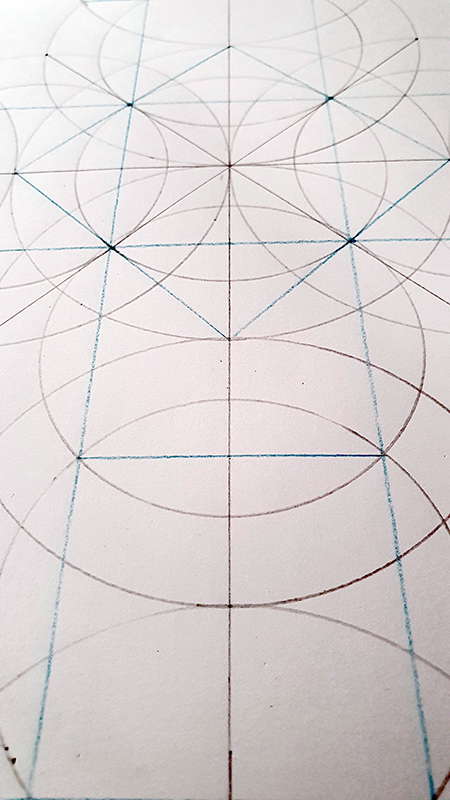
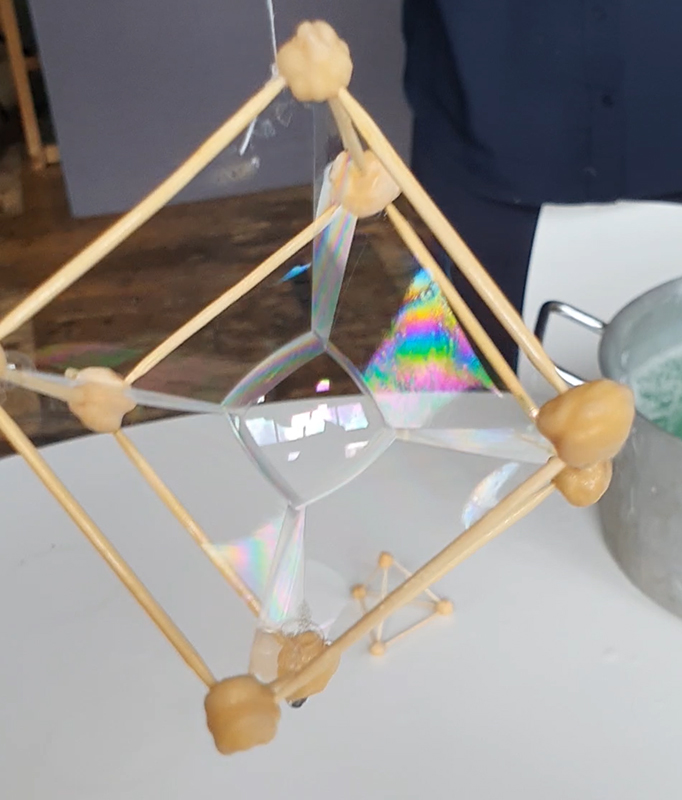
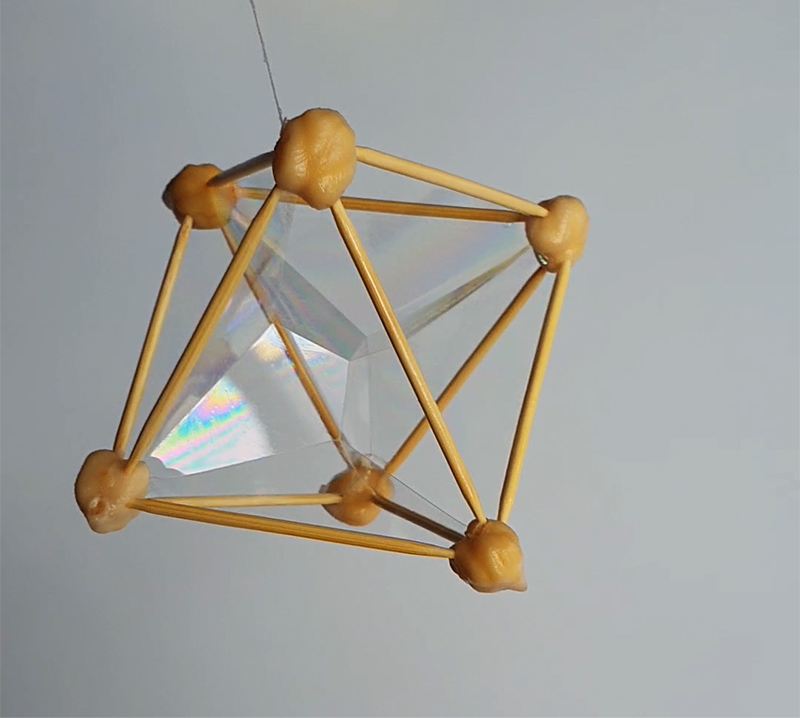
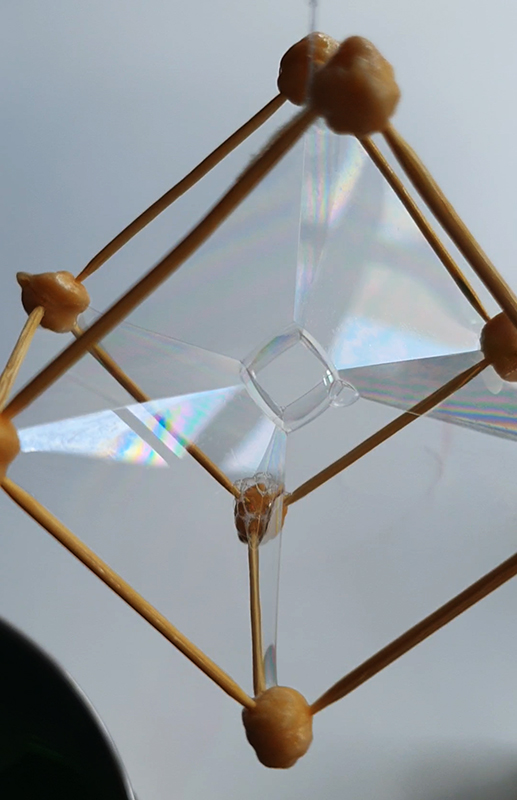
Enjoyed a one day 3D Geometry class with Leila Dear at the Princes School of Traditional Arts. I gained so much from the RCA exchange week here that fed into my work for the past several years that I thought a refresher would be useful – and that was before I knew we would be making geometric bubbles. Irresistible.

Out of Studio

Reflections at Workplace Gallery

Sculpture by women artists Nicola Ellis, Hsi-Nong Huang, Patricia Ayres and Olivia Bax.

All works offer up a satisfying conjunction of materiality and form but especially loving Nicola’s ‘Quite a Structure’ which is like a slice of the Earth’s molten core.

HEAVEN NEITHER BURNING FARTHER at The Crypt, St. John on Bethnal Green

Erika Blumenfeld writes “The material comprising our bodies shares cosmic origins with the material comprising the planets, asteroids and comets in our solar system. Scientifically, this material, having derived from distant stars across time, threads back to the primordial material that emerged moments after our universe burst into being. Culturally, our star gazing has filled us with wonder across all civilizations, sparking art and architecture, philosophy and science, mythology, folklore as well as navigation and place-making”.

Visual journeys have been created using the archive, modern science, performative poetry, scanned glacier-ice sent by image transmission, laser-based mapping originally sourced from the Rosetta space mission, the use of historic adaptations, the layering of earthly minerals, and a hunt for asteroid fragments. Held in a crypt under-ground the exhibition takes a poignant look at the myth and science that surround comets, which in theory brought life to Earth but could also end it.

Artists: Julie F Hill, Leah Beeferman, Barry Stone, Pedro Torres, Fryd Frydendahl, Ports Bishop, Claudio Pogo & Magdalena Wysocka Curated by Lucy Helton

Fascinating and beautiful work in this subterranean gateway to the cosmos which rewards following up each artist’s research.

POST TOTEM at OHSH Projects pop up on Oxford Street, curated by Adam Dix and Dale Adcock.
I found the concept of this exhibition very appealing. Reaching back to what connects us. Some innate sense of the sacred.

‘Imagine an artist holding the metaphorical hand of an artist from the previous generation and that artist, doing the same, and so on, back through time, back 30 to 40 thousand years into the unimaginably distant past, when we made the great cave paintings of Lascaux and Maros-Pangkep karst. This imaginative exercise creates an image of an unbroken woven human connection, stretching back through time uniting, individuals into a group, linked by imagination, action and materials.’

Artists showing: Dale Adcock, Simon Burton, Adam Dix, Tim Ellis, Lisa Ivory, Simon Burton, Rachel Howard, Henry Hussey, Dean Melbourne, Yelena Popova, Chantal Powell, Joanna Rajkowska, Alexis Soul Gray, Suzanne Treister.

Seth Price – Art Is Not Human at Sadie Coles

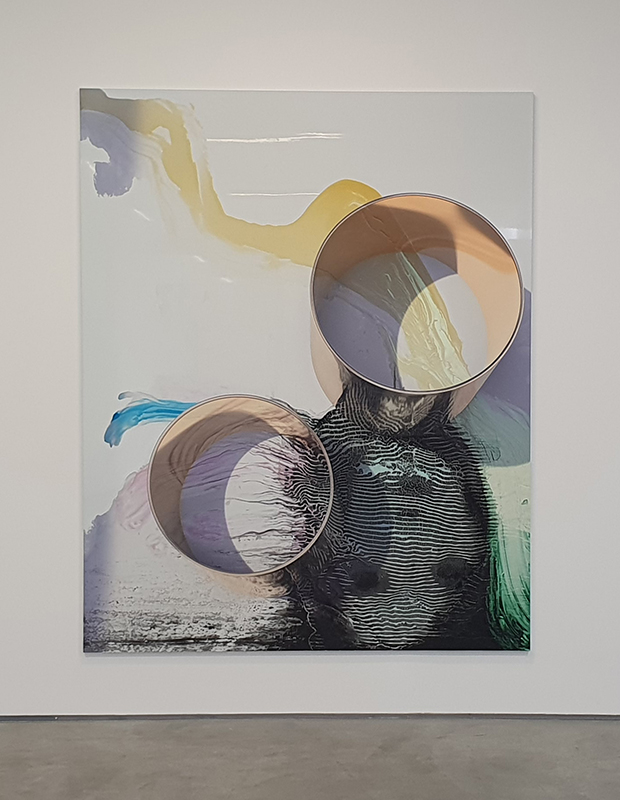
An interesting entanglement of hand and digital process. Raw paintings are photographed and imported to a 3D digital space of geometric shapes, tubes and directional lighting. The effects are then exported and printed onto the original painting.

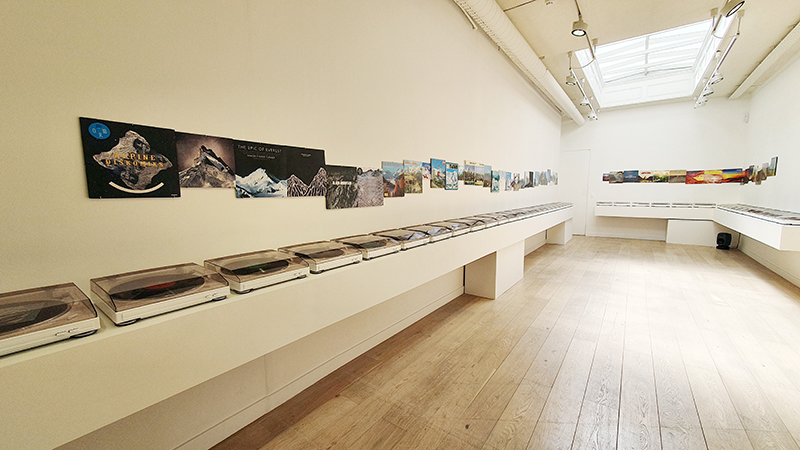
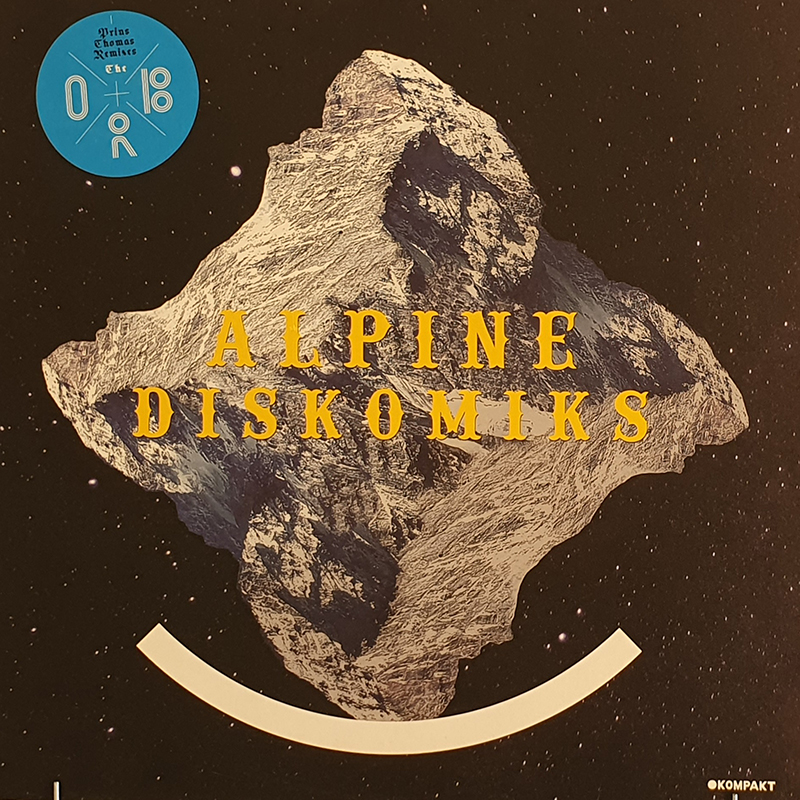
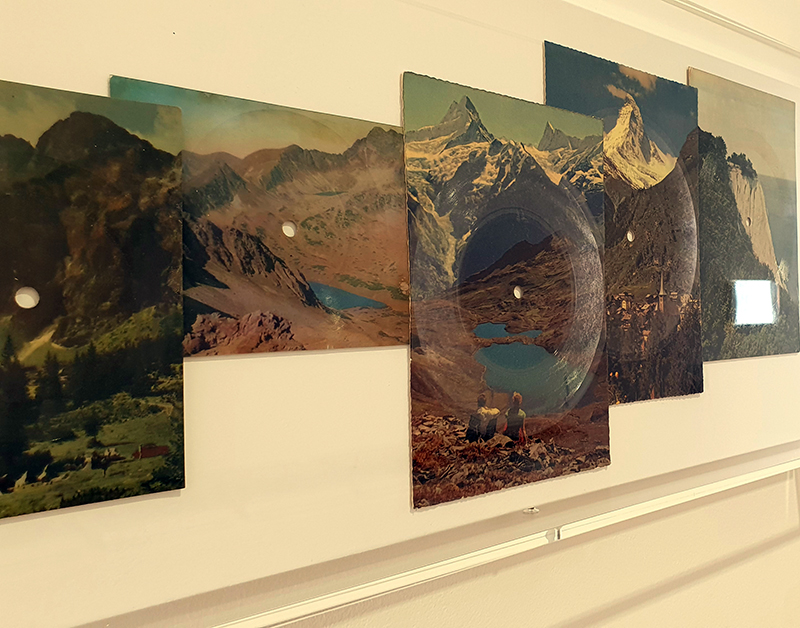
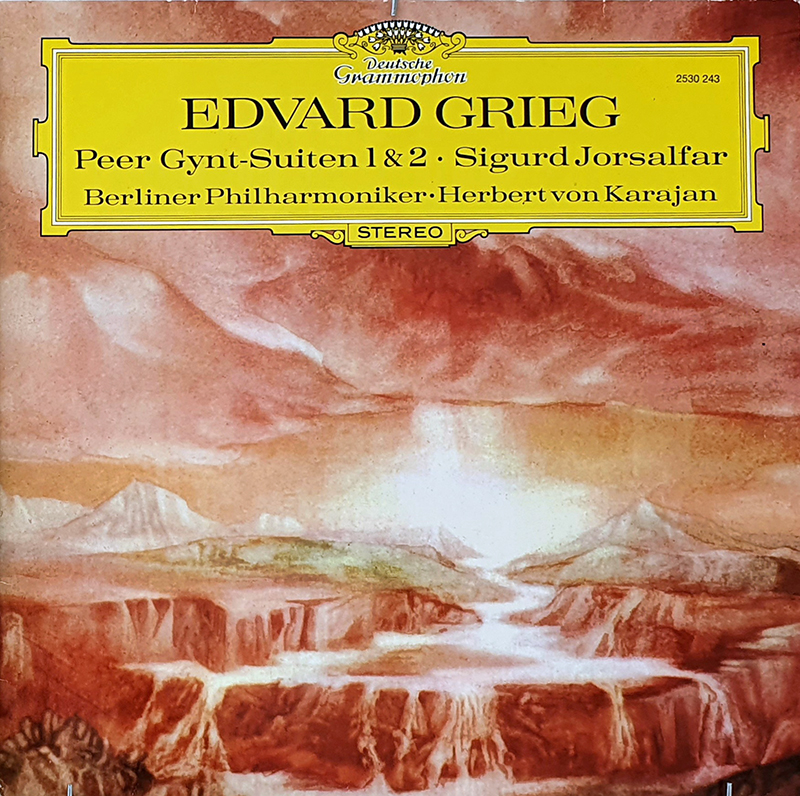
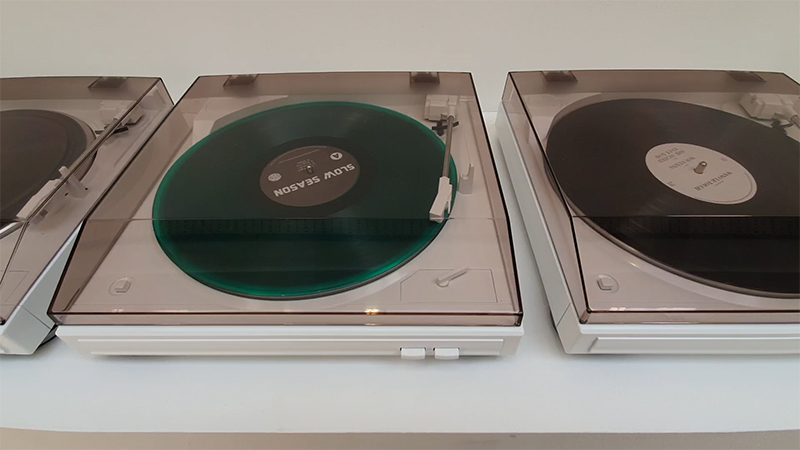
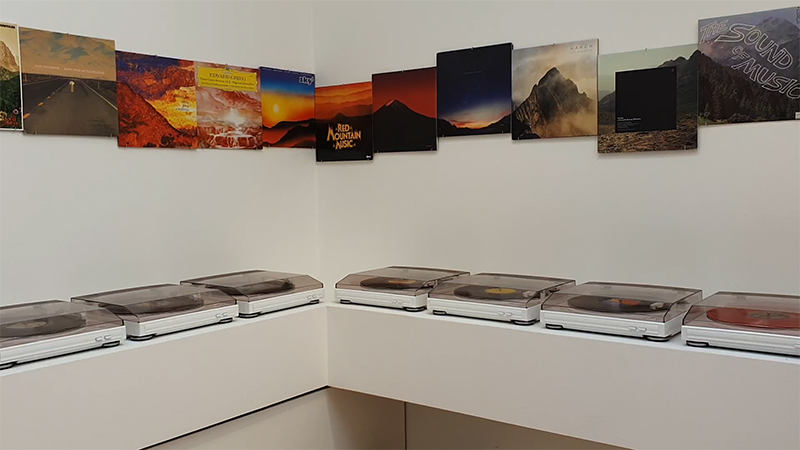
Melanie Manchot Alpine Diskomiks at Parafin.

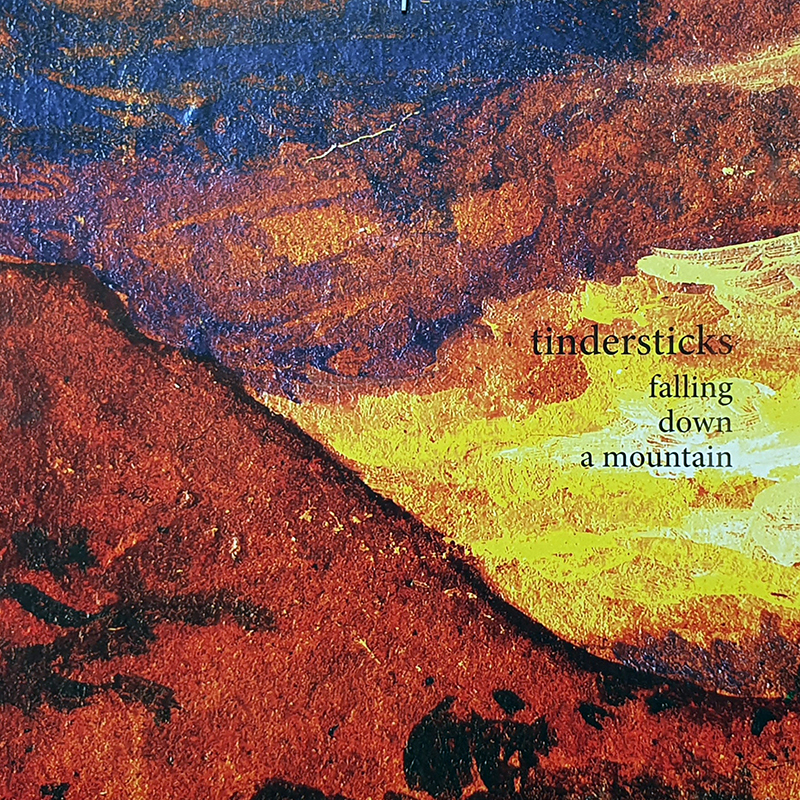
Questioning the mediation of the mountain experience. A mountain skyline created from album covers and soundscape from the combined mix of recorded content. Imagine a steady build of music to accompany the climb to a dramatic mountain peak and the overwhelming crescendo as you reach that majestic summit of the sublime. Downstairs choreographed snowploughs score grooves in looping folkdance sequence.

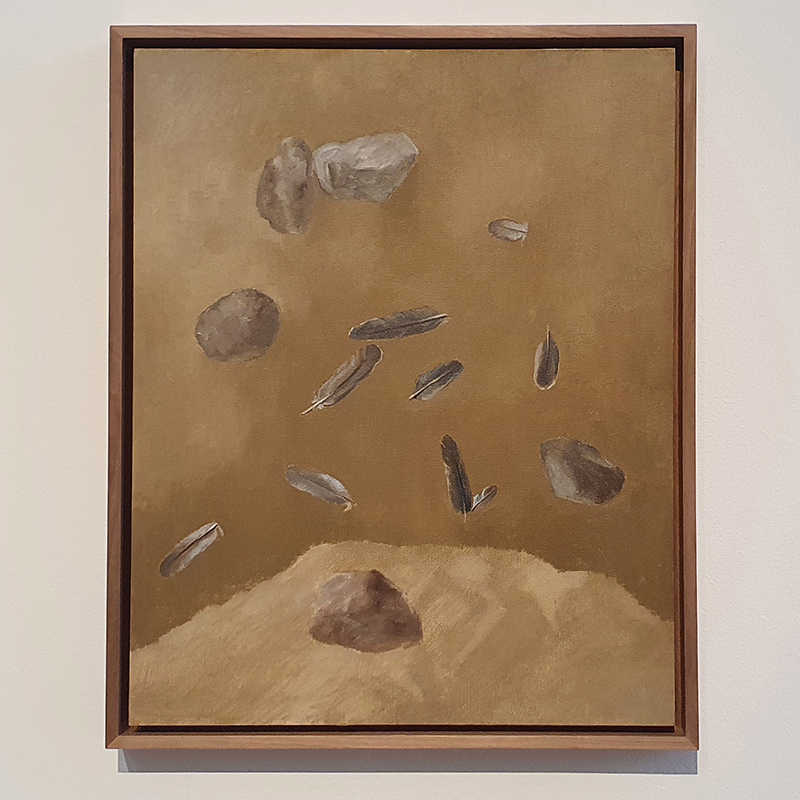
This painting by Luchita Hurtado at Hauser and Wirth made me think of the practical demonstration by Brian Cox showing that in a vacuum a feather and a rock (bowling ball) would fall at the same speed.

 “The reason the bowling ball and the feather fall together is because they’re not falling. They are standing still. There is no force acting on them at all.”

“(Einstein) reasoned that if you couldn’t see the background, there would be no way of knowing that the ball and the feathers were accelerating toward the Earth.”

Larry Bell at Hauser and Wirth

‘Although we tend to think of glass as a window, it is a solid liquid that has at once three distinctive qualities: it reflects light, it absorbs light, and it transmits light all at the same time.’ Larry Bell

Everything is Made of Light at Bermondsey Project Space. The artists refer to Jacques Rancière, in his essay, Are Some Things Unrepresentable?, who scrutinizes the challenges faced by images in depicting the world around us.

Mark Kasumovic tackles the problem of trying to represent the invisible through a juxtaposition of images of spaces of discovery and text listing scientific non sequiturs. Mary O’Neill presents us with a world of fragments from which personal narratives must be assembled. Isabella Streffen’s work explores perception and the spaces between digital and emotional communication. Matthew Pell stretches time through capturing light in otherwise transient momentary events.

I felt very in tune with intent of the work here. Particularly Mark Kasumovic’s texts that felt like a snapshot of a research artist’s notebook. All those tantalising lines of enquiry. I liked the premise from Mary O’Neill of the introduction of creatures from the mundanity of an overlooked life, that when situated in a new context, conceive paradise.

Marcus Cope Silver Linings at Peer

Fabulous potent paintings of those vivid memories that are seared into the synapses from times of heightened emotions.

Beautiful and terrible.

Alice Bucknell Swamp City at Hoxton 253 Project Space

Like a dollop of dream topping on a large turd the work offers up a speculative future of luxury ecotourism as investment opportunity in the face of a climate crisis that feels almost inevitable.

Charlotte Johannesson Circuit at Hollybush Gardens.

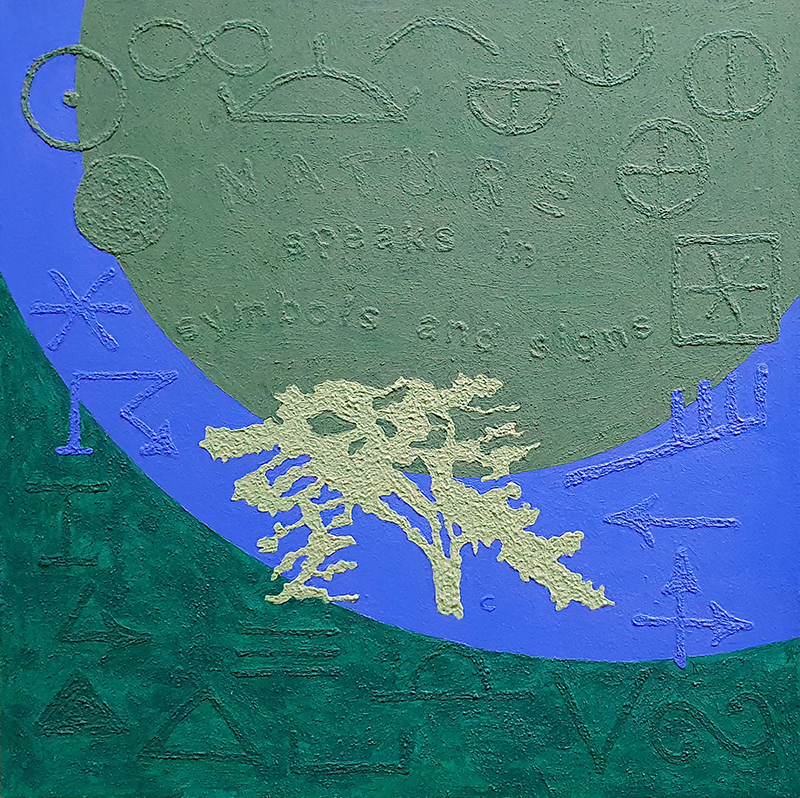
“Nature speaks in symbols and signs.”

Evolution from weave to code and back again. Beautiful works full of metaphor and shared history.

Reading – Braiding Sweetgrass Robin Wall Kimmerer; reciprocity – don’t take more than you need and always give something back.

Mercurius Patrick Harpur; no easy route to the conjunction of soul, spirit and matter.

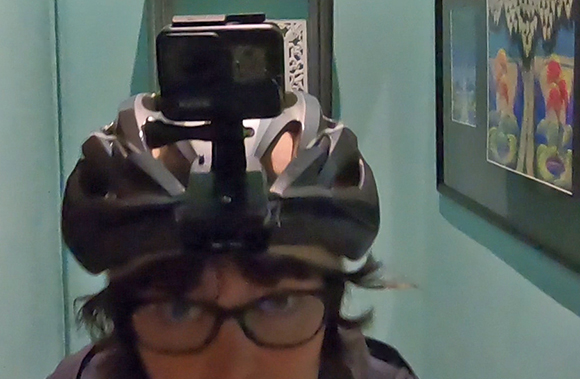
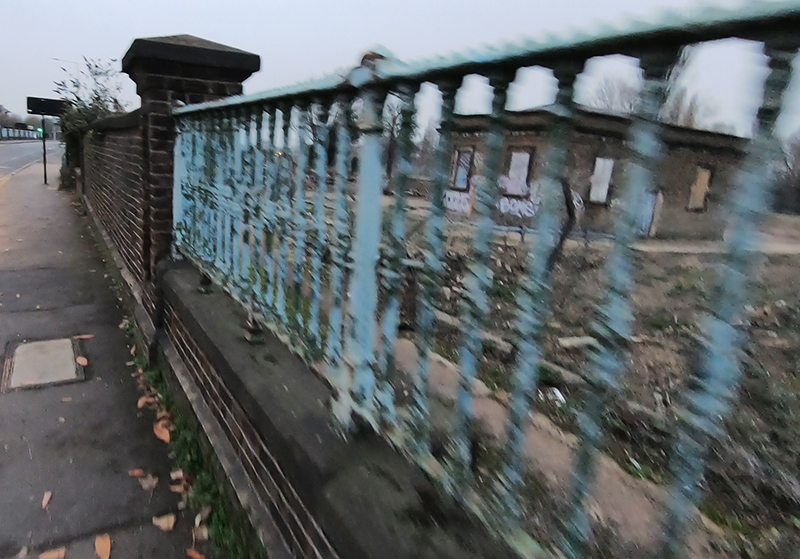
Progressing new work Seeker Seer Scientist. I have completed walks to my south and west horizon points wearing a head camera.

2011 south walk

Each walk starts at dawn and takes the most direct route to a point on the map 3 miles from my home. For an average height observer, the visible horizon is approximately 3 miles distant. The true horizon is usually hidden.
2011 south map

‘Horizon’ derives from the Greek ‘horizōn kyklos’ meaning “separating circle” which in turn comes from the verb to divide as in creating a boundary. 

2011 South 1

2011 south destination

The walk west was the longest of the four as the winding River Thames disrupted a very direct route.

2011 west 1

2011 west 2

After walking to each of the four compass points NESW I have about 5 hours of footage which I have edited down to about a 6 minute journey to the horizon edge. I am aiming for the final film to be viewed while on a treadmill to experience the meditative rhythm created by walking which heightens creative thought processes. The work will consider the existence of many more dimensions than we are aware of in our known and knowable universe from the perspective of mathematical theory and levels of consciousness.

‘We have many tools at our disposal to gather information about the world. Physicists are tuning their instruments to an unprecedented level of sensitivity. Ultimately, however, whatever external instruments we use, all data is experienced by our bodily senses. These senses turn out to be more finely tuned and calibrated than anything we have yet invented.‘ Ansuman Biswas

My friend has leant me her grandfather’s beautiful compass to use in the film. The magnetic compass was first invented as a device for divination as early as the Chinese Han Dynasty.

‘Scales of Intangibility’ an installation using cosmic trail projections within a velvet lined chamber was planned to be included at the 2020 Hidden Door Festival in Edinburgh. Due to the ongoing pandemic this was to be postponed until late spring 2021 but could now be postponed further.

In readiness I am running my cloud chamber to get some new footage.

The cloud chamber gives us a glimpse into the invisible world of particles produced in the radioactive decay of naturally occurring elements and those generated when cosmic rays strike the top of the earth’s atmosphere. The interactive experience brings alive the fact that these visitors from outer space are everywhere. Filmed on 4th November, the day of the American Presidential Election, this V for victory was an encouraging message from the stars.

2011 cosmic trail V

It’s also quite cool when a puff of air gets into the chamber.

2011 cloud chamber

Watched the London Screen Archives film about Woolwich which shows clips from Paradise Place. This has given me an idea for new work taking rubbings from the walls of paradise once I can travel about again in London.

Also testing the raster folding for the work 90 light years home. A raster scan, is the line by line pattern of image capture and reconstruction used in early television transmission. Work based on the idea that there may be a habitable planet orbiting HD 70642, a yellow dwarf star in the constellation of Puppis. At 90 light years away, extremely faint early broadcasts from Earth are now passing this planetary system. Representing the Stern, or Poop deck, of the Argo Navis, Puppis is one of the three constellations that once formed the huge constellation Argo Navis (the ship of the Argonauts). Looking at a contemporary (space) ship symbolizing adventures into the unknown that could be transmitted as raster image.

I found participating in Robbie Coleman and Jo Hodge’s Shoreline to Shoreline a very moving experience. This collective pilgrimage in the time of Covid to stand at the edge of any significant nearby body of water at 3pm on 20th December 2020 to remember, mark or memorialise loss was an invitation to feel grief without suppression and feel a connection through commonality.

Every droplet of rain, every snowflake that falls is on a circular journey. Water that evaporates from the surface of a puddle may arrive on the other side of the world as part of a wave crashing onto a beach. The journey may have taken a few days carried in clouds across the sky or a thousand years trapped in a glacier creeping through the Northern darkness.

2012 shoreline to shoreline

This coincided with the Winter solstice return of the light. Grief like a wave, swelling and rolling over you, making you gasp for air. We struggle against it but here I let it wash over me a little. I stood on the bank of the little Hogsmill river which is our nearest body of water and somewhere I visited often during lockdown and also on the day my Mother died when it seemed particularly vibrant.

Also checking on the progress of ‘stumpy’ in winter guise.
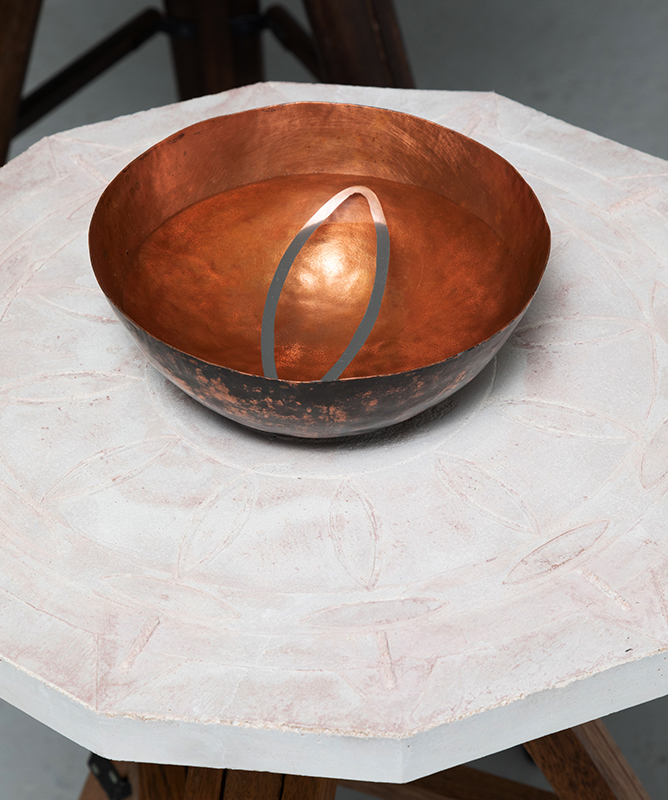
2012 stumpy

As night fell Saturn and Jupiter edged closer together. The 2020 great conjunction of Jupiter and Saturn is the closest these planets appear since 1623 and the closest observable since 1226.

2012 great conjunction

The winter solstice is the precise moment at which the Northern Hemisphere is at maximum tilt away from the Sun. At that moment, the sun’s rays are directly over the Tropic of Capricorn (my birth sign). It is the day with the shortest period of daylight and longest night of the year. The shadow at noon is the longest a noontime shadow can be.

‘There’s something wrong! There’s something wrong – It’s high noon and my shadow’s long!’ Was Not Was One White Crow

After an exciting fun packed real life opening event, a stop and start exhibition between lockdowns Bow Arts Nye Thompson led Visions II programme at the Nunnery Gallery closed. It is still possible to view the films on the Nunnery Gallery YouTube Channel

During the window of opportunity between lockdowns I was able to enjoy a journey through Andy Holden’s cartoon world of existential angst The Structure of Feeling (A Ghost Train Ride) at Block 336.

Also an up close visit to the winding labyrinth of Terra Nexus, a network of interconnected installations questioning the role of the human as part of ecology at Proposition Studios and was lucky to be guided through by curator Gabriella Sonabend. Excellent poetic film One Day As I Was Driving Home by WR Saunders, which simultaneously condenses and stretches the experience of time exposing the unrelenting power of entropy. Great to see the congealed organicly industrial cavern Swimming in the Mud by Emma Jane Whitton. Whole show ambitiously moving to South Bank in New year.

Just squeezed in a trip to The Botanical Mind at Camden Art Centre.

The ceremonial use of entheogenic, or mind altering plants is closely associated with the shamanic tradition and many different cultures and traditions work with plant medicines for psycho-spiritual transformation. It has been suggested by academics and researchers that the evolution of human consciousness was catalysed by psychoactive plants. In the Amazon rainforest, the patterns found in nature are the basis of sacred geometries that indigenous people incorporate into their everyday world through their art and which trace a connection to a primordial reality where the material, immaterial, visible and invisible planes of existence were once unified and whole.