Archives for posts with tag: dark skies

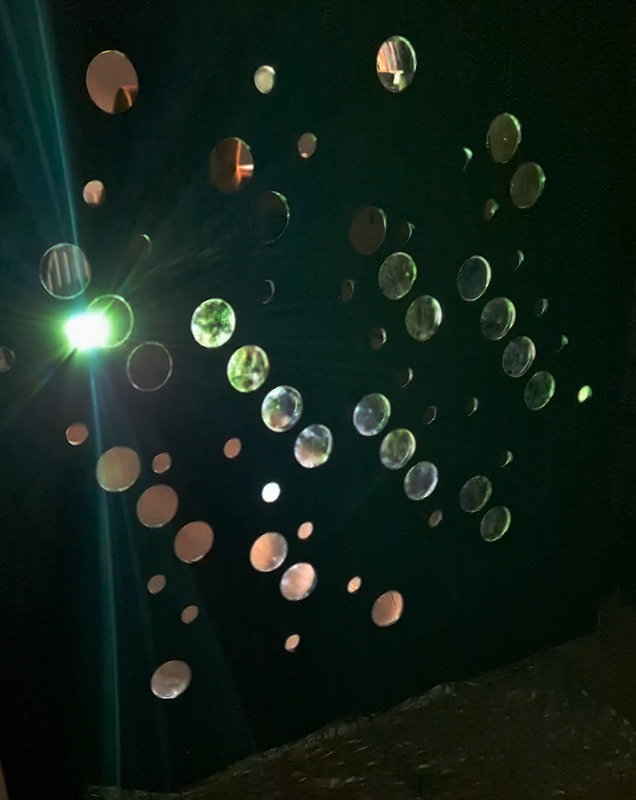
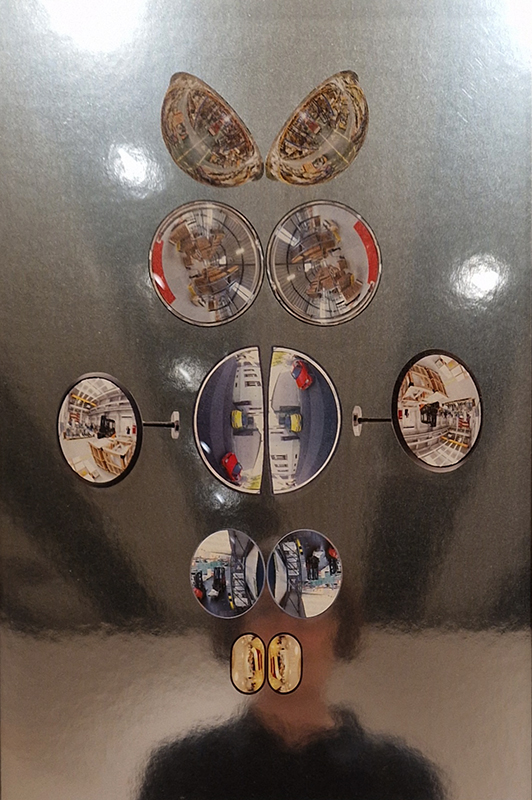
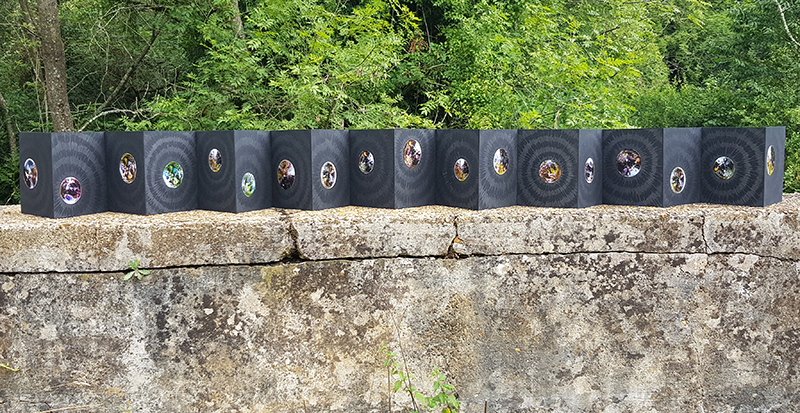
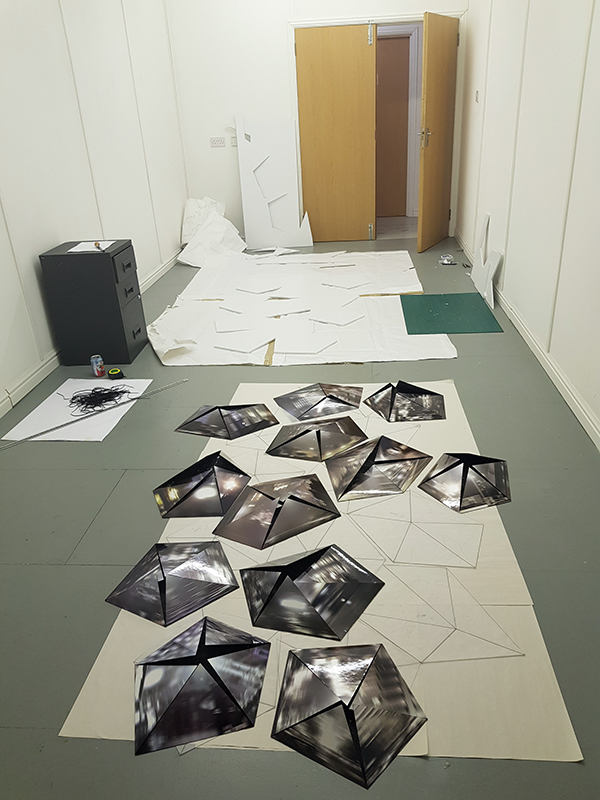
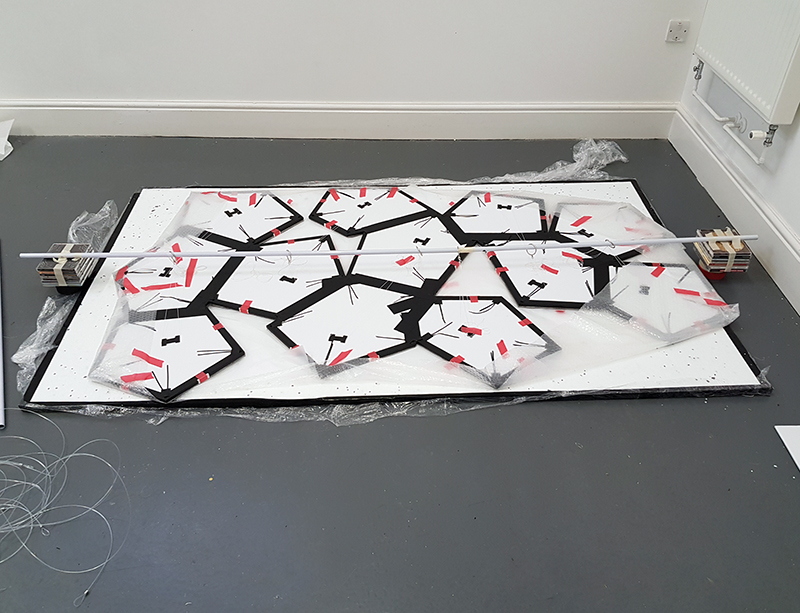
Speculating on a view of the world projected from the perspective of the rock. In the studio drilling more holes for optical lenses set out in a pattern based on the crystal structure of the naturally magnetic mineral magnetite which was determined in 1915 as one of the first crystal structures to be obtained using X-ray diffraction. Found in igneous rocks, sedimentary deposits and sand across the globe in many locations, magnetite is also found in the cells of organisms from bacteria to humans. Magnetite contains both ferrous (divalent) and ferric (trivalent) iron along with oxygen.

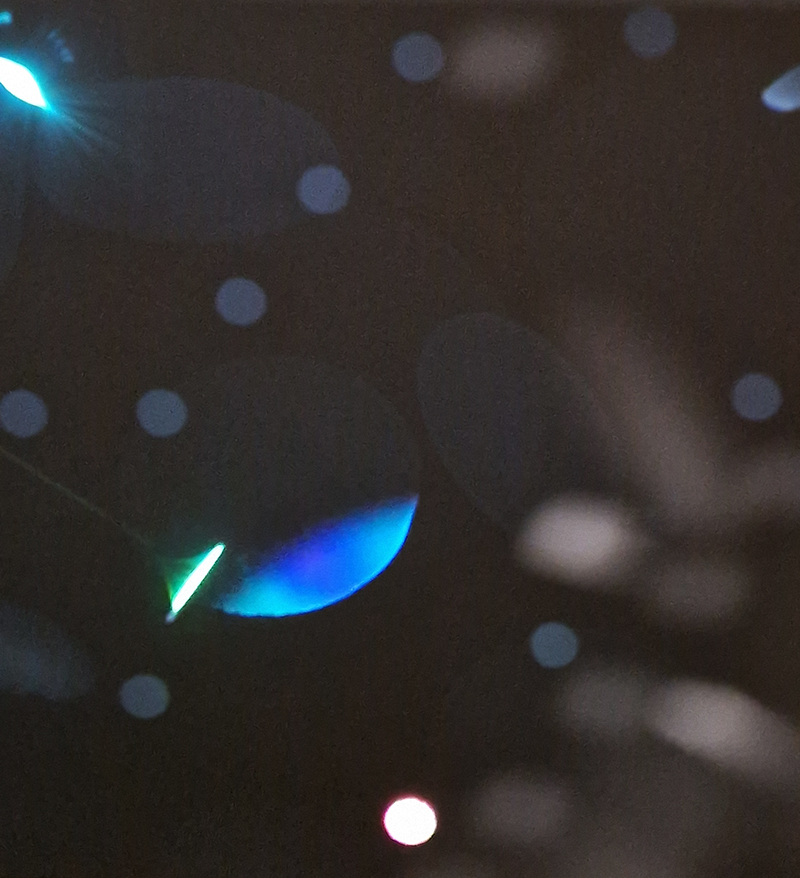
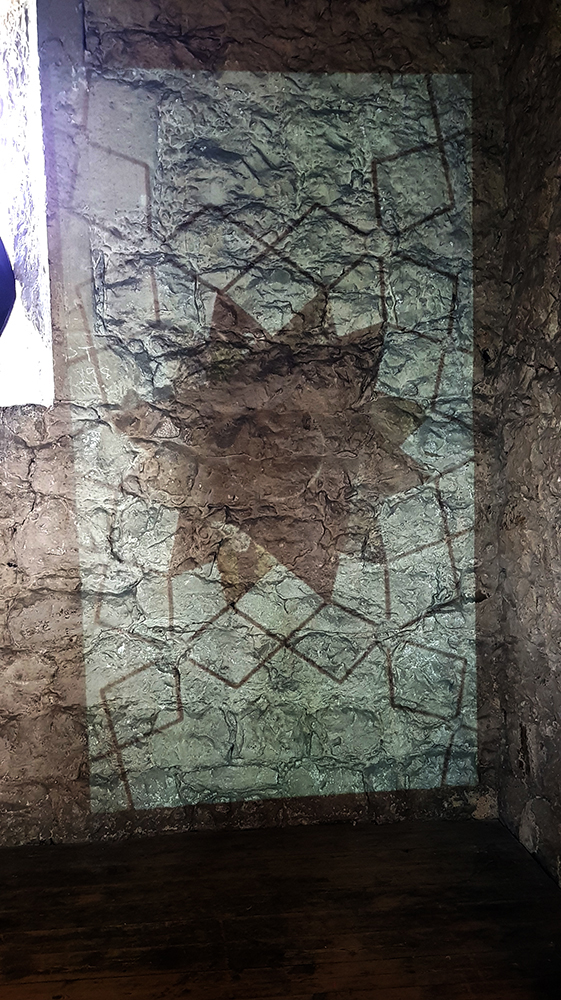
Testing projecting through the optical lenses I’m excited to see how the different lenses cause images to overlap and distort.

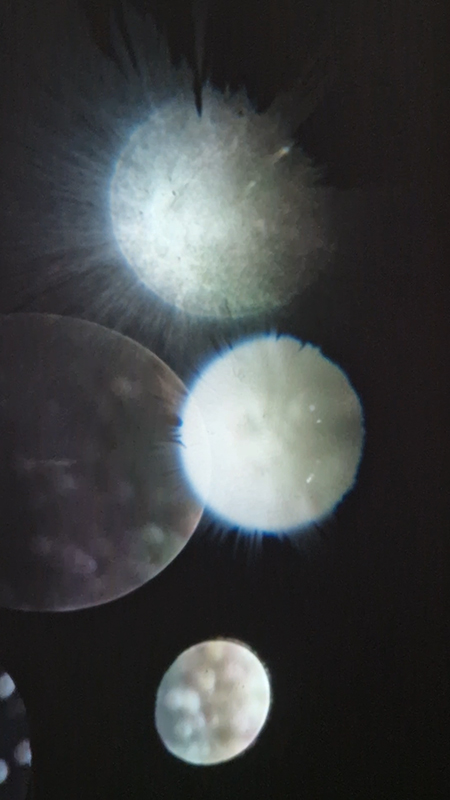
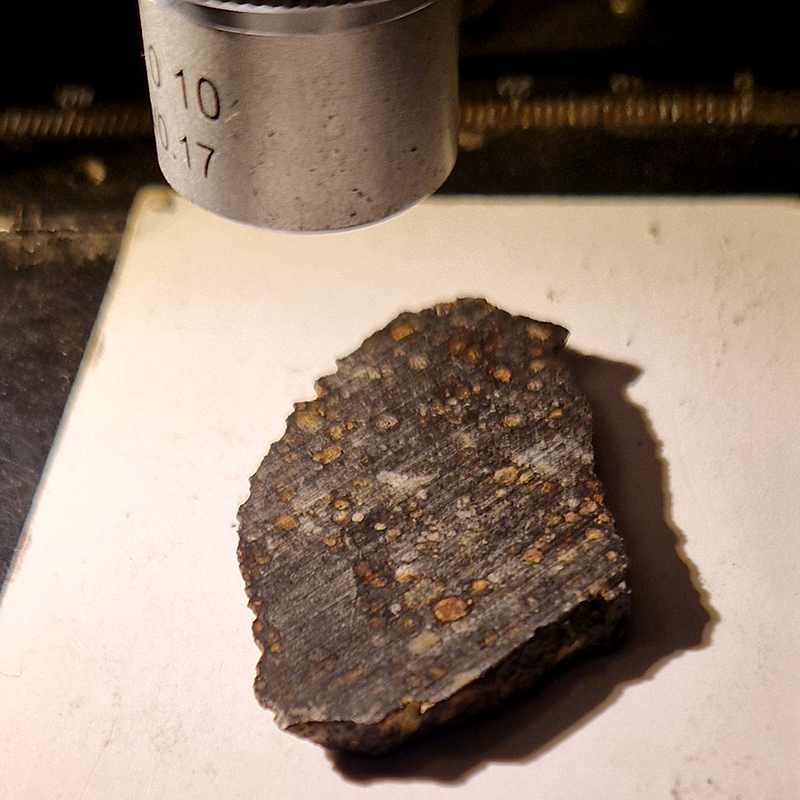
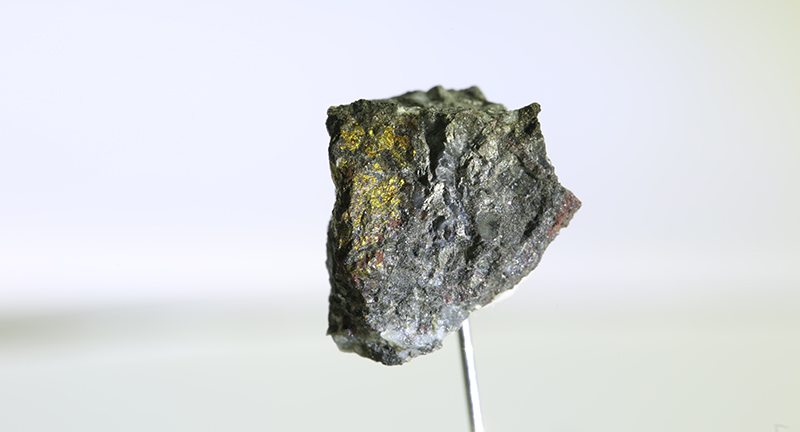
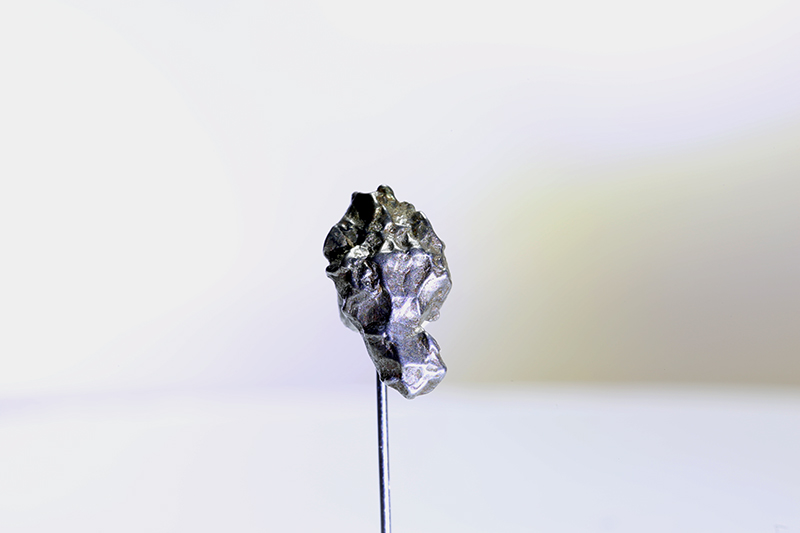
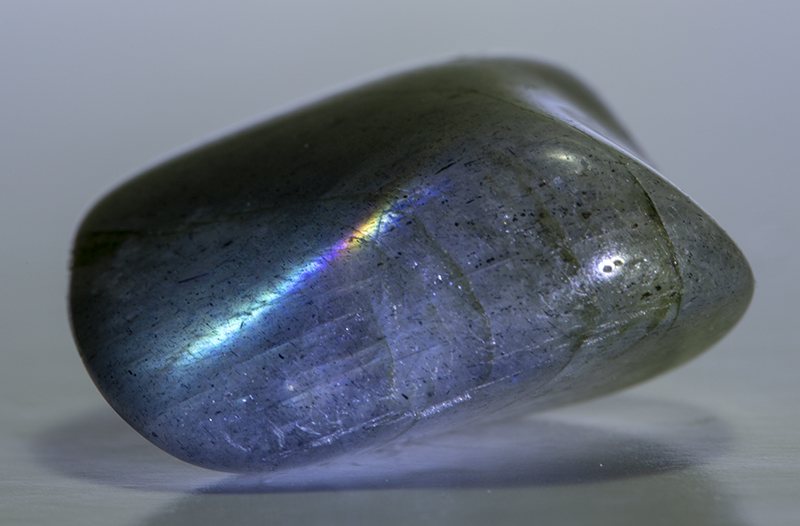
I received a Digital Microscope for my birthday and a selection of rocks and meteorites to look at. So far I have only used the lens with the least magnification capabilities yet this is revealing wonderful detail in the rocks which are further enhanced by using a polarising filter. I have chosen to look at rocks which originate near areas of tectonic activity or that may have magnetite in them.

Images on left have no filter, those on the right have a polarising filter.

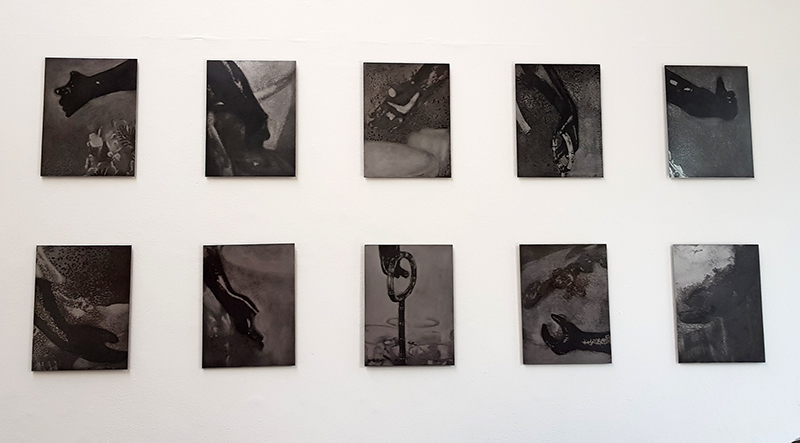
This thin slice of Deep Ocean Pebble was collected in 1979 three miles deep in the Pacific Ocean Clarion Clipperton Fracture Zone. This zone is regularly considered for deep-sea mining due to the abundant presence of manganese nodules. In 2016, investigation of the seafloor in the zone was found to contain an abundance and diversity of life – more than half of the species collected were new to science.

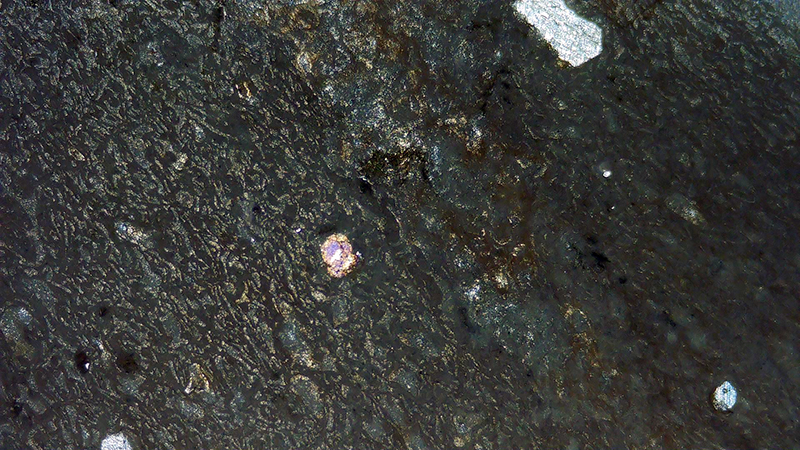
This slice of Lewisian Gneiss is 3 billion years old. These ancient rocks from the Isle of Lewis were caught up in a mountain building cycle roughly 490–390 million years ago and were pushed above younger rocks formed during the late stages of this tectonic event.

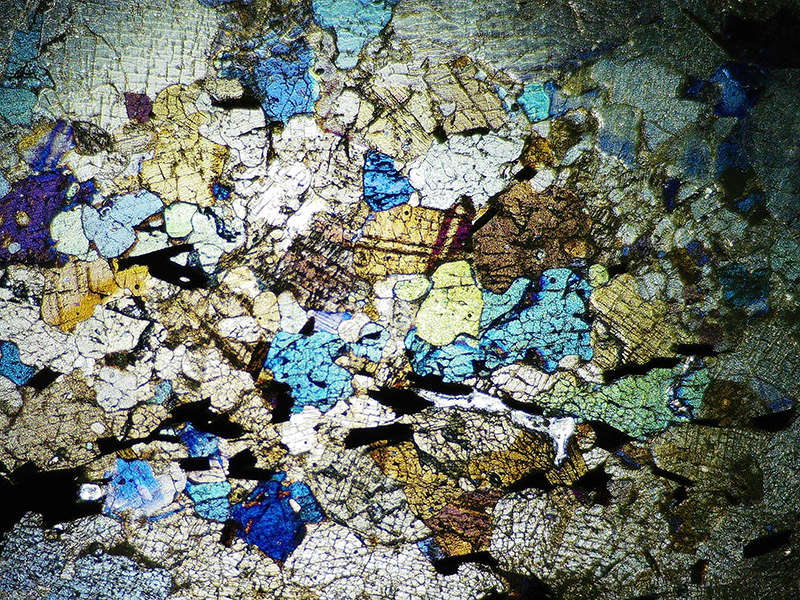
This slice of Olivine Basalt comes from Þingvallavatn, a rift valley lake in southwestern Iceland. The area is covered by lava. The cracks and faults around the lake is where the Eurasian and North American tectonic plates meet. This may be the only place where one can stand with two feet on two different tectonic plates. The sample is a mid oceanic ridge basalt (MORB) fine grained but consisting of small olivine, clinopyroxene fragments in ground mass dominated by plagioclase laths, an opaque magnetite.

This slice of Vesicular Basalt Lava – a type of lava that solidifies into a rock with trapped gas bubbles leaving small holes as the lava cools, comes from the Mid Atlantic Ridge near the Azores Islands.

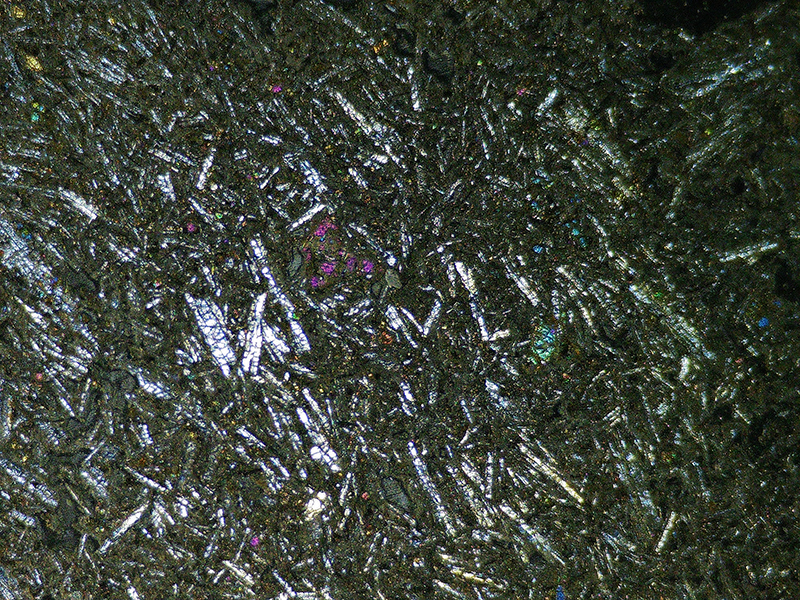
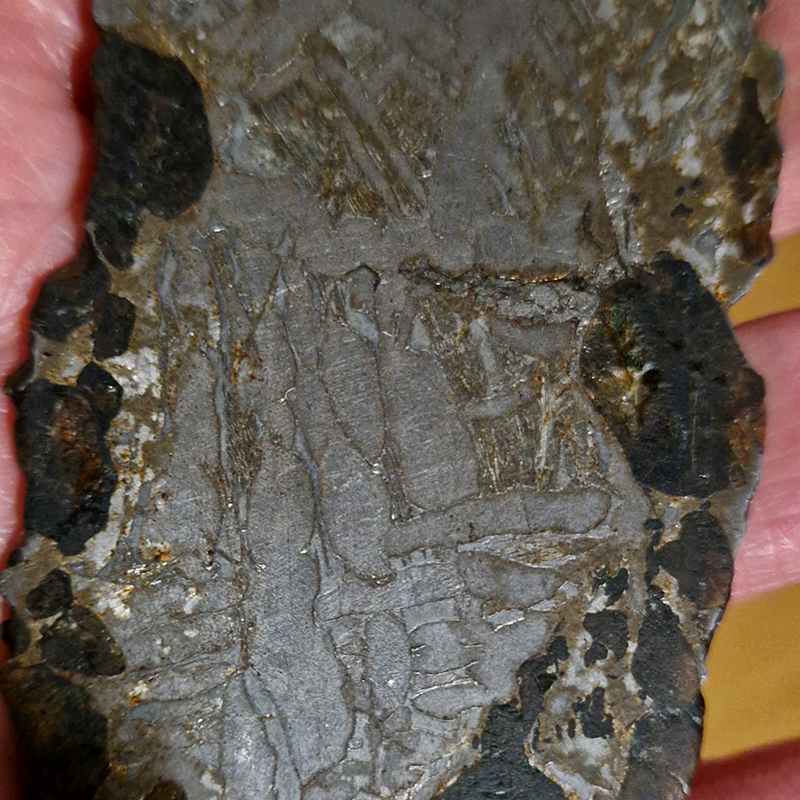
I also have a piece of Jepara taken from a pallasite, a class of stony–iron meteorite, discovered in Indonesia in 2008 during building excavations. The outside is heavily weathered but when cut and polished the inside reveals a translucent structure of densely packed olivine and magnetite. The sample has been coated with acrylic which has surface scratches so I think some of the detail has been compromised but it is still beautiful. No filters used here.

I am making use of public access to historical magnetograms recording of Earth’s magnetic declination to feed into new work inspired by palaeomagnetism. Magnetic studies of the ocean in the 1950’s had determined that the ocean floor was covered by bands of magnetic stripes that varied between normal polarity and reversed polarity. The Earth’s magnetic field has reversed polarity many times over the past hundreds of millions of years. These magnetic stripes were found to be symmetrical on the ocean floor about the mid-oceanic ridge. In 1963 British scientists, Fred Vine and D. H. Matthews proposed that the magnetic striping was caused by paleomagnetism, the storing of Earth’s ancient magnetic field in the sedimentary rocks that were forming as lava spewed up and spread across the ocean floor setting the history of pole reversals in stone.

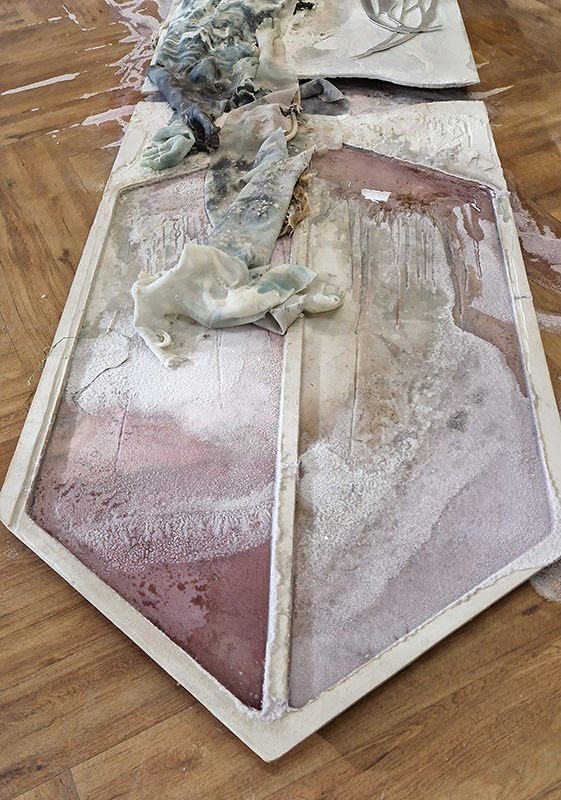
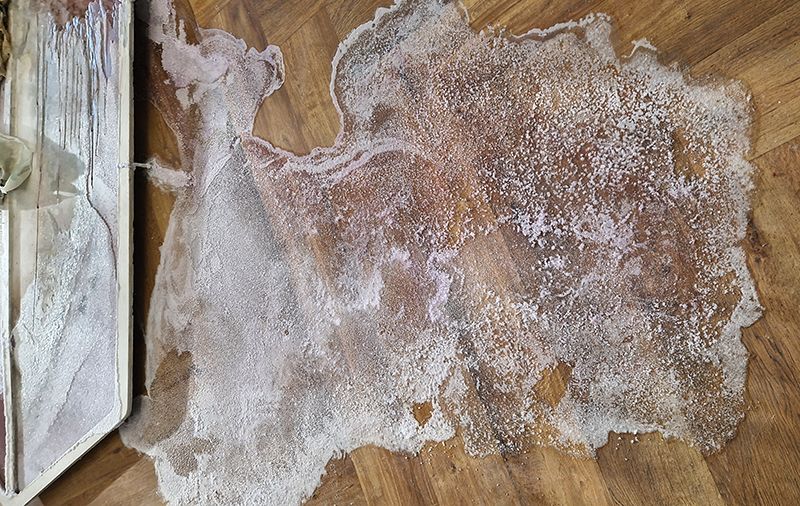
I have embarked on some crystal growing experiments using a seed crystal in a saturated solution of mono-ammonium phosphate and aluminium potassium sulphate. I am hoping these might become objects to view through a lovely old wooden magnifying box I have. The last time I experimented with crystals was when I was amazed by the speed and glut of salt crystals overwhelming the test area. Before that made a time lapse video over 5 days of crystal growth for the installation Time Crystals in Reading Stones at St. Augustine’s Tower 2019. I will be learning more about this as workshops are developed for The Geological Unconscious public engagement programme which will run alongside the exhibition at Hypha HQ Euston this coming spring. Both Julie F Hill and Sophie Mei Birkin work with crystal structures and growth in their own practices and will be leading on the workshops we will run in partnership with a local primary school.

A crystal is like a class of children arranged for drill, but standing at ease, so that while the class as a whole has regularity both in time and space, each individual child is a little fidgety. Dame Kathleen Lonsdale, 1948

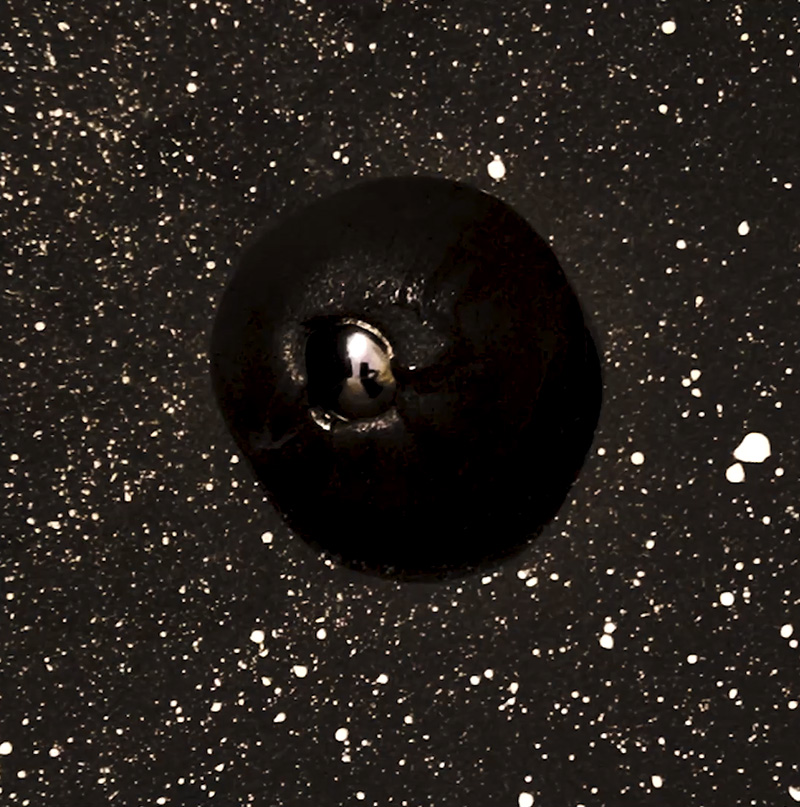
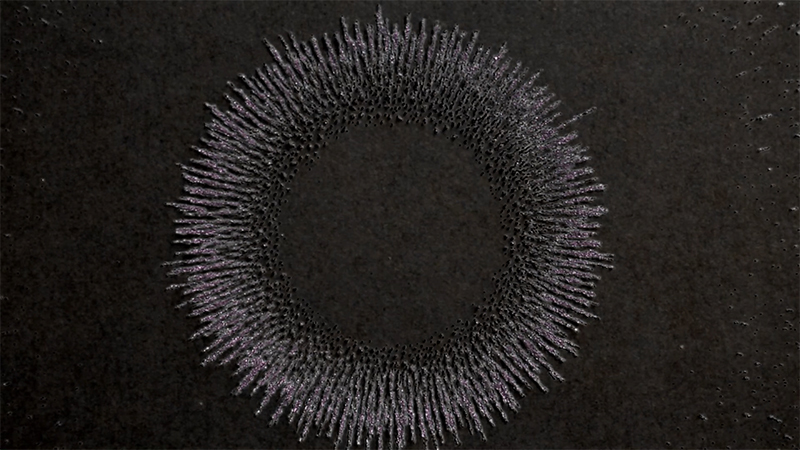
Had some studio fun testing the possibilities of magnetic putty for future video ideas. Mesmerising the way it very slowly swallows the magnet.

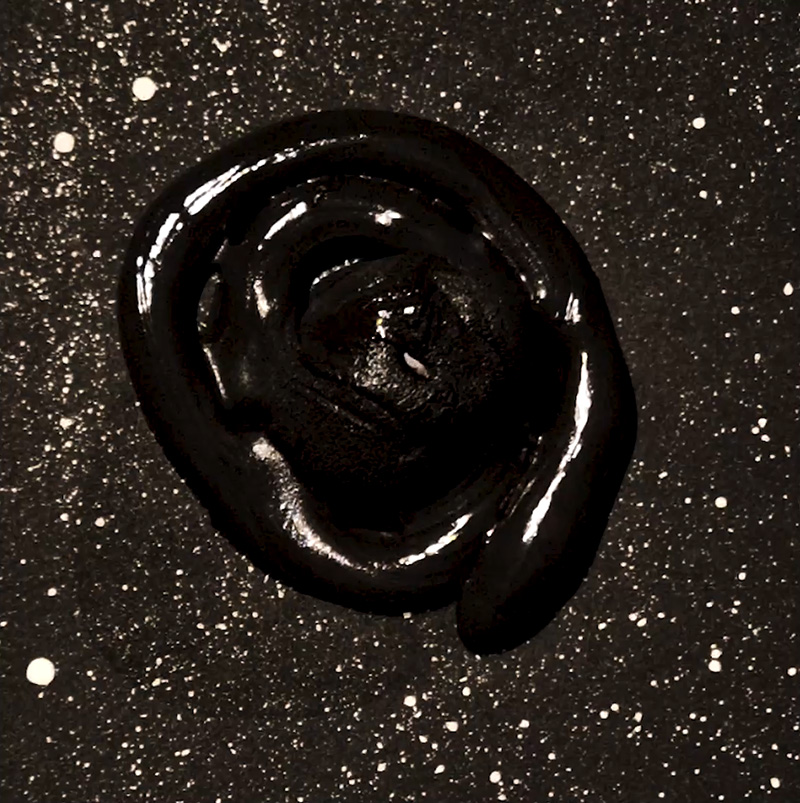
I began the magical process of making copper ink. Soaking pieces of copper in vinegar and salt, stirring daily and watching the liquid turn a milky turquoise blue. Looking forward to using this to patinate copper but also to paint with on paper.

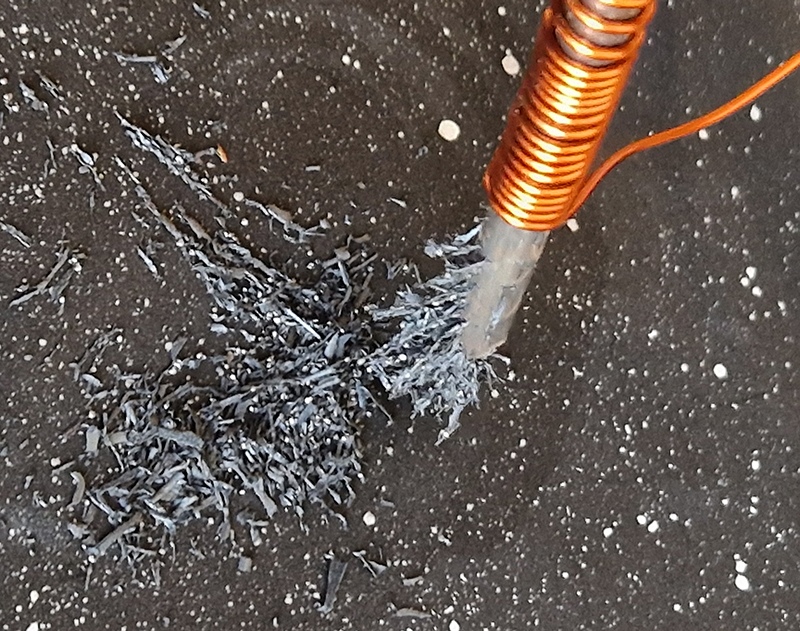
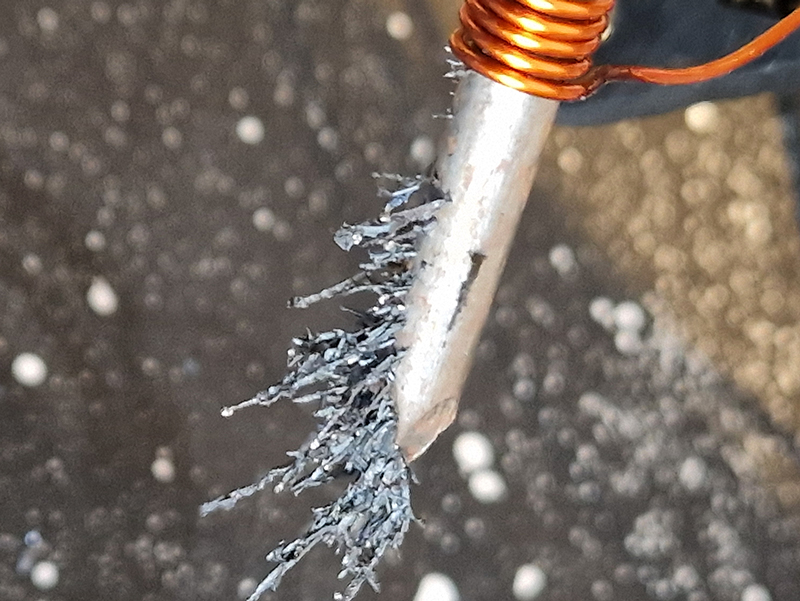
Experimenting winding a copper wire around an iron nail and connecting the wire to a battery cell. A magnetic field is generated around the nail which stays for a little while after the nail is removed from the coil. I used a 9v battery and large nail– it wasn’t a very strong magnet – a welding stick was better and seemed to retain the magnetic field for longer but in both cases the battery got very hot. I had hoped to maybe develop this idea to magnetise a sculpture threaded with iron. Needs more investigation.

I have been exploring the updated Digital Materials Library at the Institute of Making which led me to the Mindsets website which has some cool magnetic materials for sale. Future experiments upcoming.

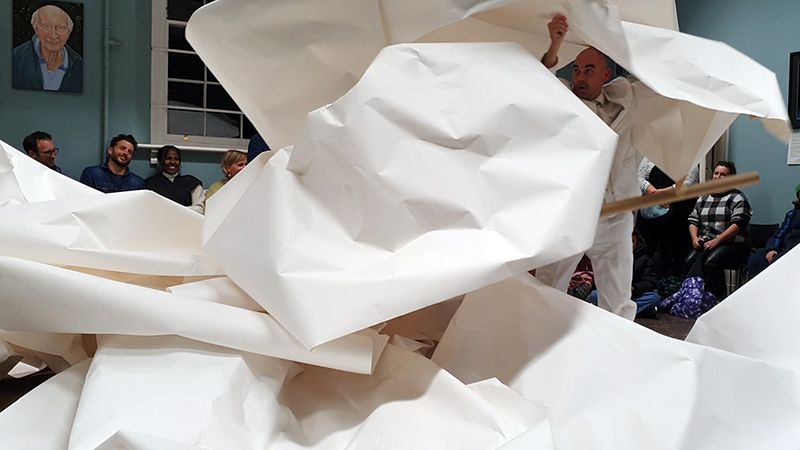
Exploring paper weaving patterns with a view to reinventing past works while thinking about ideas of cosmic planes in The Rosicrucian Cosmo-Conception, a 1909 text by Max Heindel. This text, setting out a theory of seven Worlds and seven Cosmic Planes, supposes an intermingling of spirit with matter where the intersection of the material and metaphysical world are not one above another in space, but inter-penetrate each with the other.

Astonishing that the preserved remains of the ancient kauri trees of New Zealand, alive over 42,000 years ago, can reveal the time of the last significant magnetic pole excursion within their rings. During what is known as ‘The Laschamps Excursion’, the north and south magnetic poles swapped places for about 500-800 years before swapping back again. During a magnetic pole reversal the magnetic field weakens so many more cosmic particles reach the surface of Earth. This means much more Carbon-14 is produced in the atmosphere and absorbed by plants.

Changes in radiocarbon levels were recorded from four ancient kauri logs found buried in peat swamps which seals them in a chemically balanced environment. Through high precision carbon dating processes at the University of Waikato in New Zealand the scientists discovered the most dramatic time was the lead-up to the reversal, when the poles were migrating across the Earth and our magnetic field practically disappeared, leaving life here very vulnerable to cosmic radiation. It appears, this weakening 42,000 years ago, in combination with a period of low solar magnetic activity – captured in evidence from ice cores, caused damage to the ozone layer and disrupted atmospheric conditions impacting the global climate so that devastating environmental changes took place. The research team links this climate change to extinction events which occurred at the same time, Neanderthals vanishing from Europe, and a proliferation of cave paintings appearing in Europe and Asia as humans find shelter from the turbulent weather and increased electrical storms. They have dubbed this period of excursion ‘The Adams Event’ in honour of Douglas Adams who wrote in The Hitchhikers Guide to the Galaxy that ‘42’ was the answer to life, the universe, and everything

Studio Visits

Julie F Hill and I have been visiting the other artists participating in the upcoming exhibition The Geological Unconscious at Hypha HQ Euston. We are so happy to be working with Charlie Franklin who considers control, physical experience and memory within the natural landscape, Deborah Tchoudjinoff who considers what the form is through the process of material and visual experimentations, Rona Lee who centres on the politics and aesthetics of Geo-materiality along with the human /more than-human entanglements of contemporary life and Sophie Mei Birkin who investigates the generative potential in the transformation of matter through a variety of material processes such as growing salt crystals and exploring amorphous and decomposing substances.

I have also been lucky to have Charly Blackburn and Victoria Rance visit my studio to chat about our respective work and shared interests. Charly is beginning a period of research into rare earth materials and extractive processes and we share a fascination with things magnetic. Victoria came to chat about our shared interest in the sun but is also interested in magnetic fields and the potential they offer for brain to brain communication.

Gallery Visits

Haegue Yang Leap Year at Hayward Gallery. With colourful works festooned by garlands of bells and strewn with fairy lights this was a perfect show for the festive period. Folklore, surrealism and ritual, collage and costumes combine with the modern domestic/utilitarian in hybrid works that have a playful carnival air.
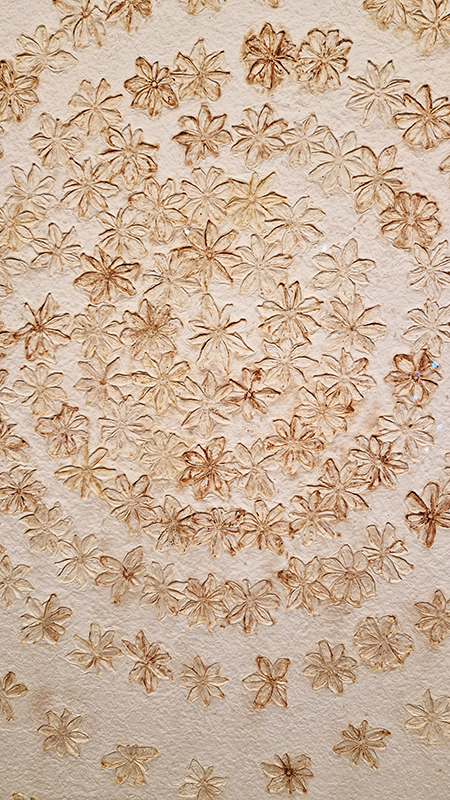
Thoughtful works beautifully presented Each Place Its Own Mind at Edel Assanti with Mirtha Dermisache | Noémie Goudal | Sky Hopinka | Anna Hulačová | Marguerite Humeau | Bronwyn Katz | Kat Lyons | Yukultji Napangati | Emmanuel Van der Auwera. An ongoing collective reimagining of our relationship with the living world, rooted in revelations from indigenous knowledge, ecological research, literature, science, and artistic experimentation. Each Place Its Own Mind  borrows its title from ecologist David Abram’s 1996 book The Spell of the Sensuous, which traces the ways the human mind came to renounce its “sensory bearings” in the natural world, visualising a myriad of “lost” faculties that link the “inner, psychological world and the perceptual terrain that surrounds us.”

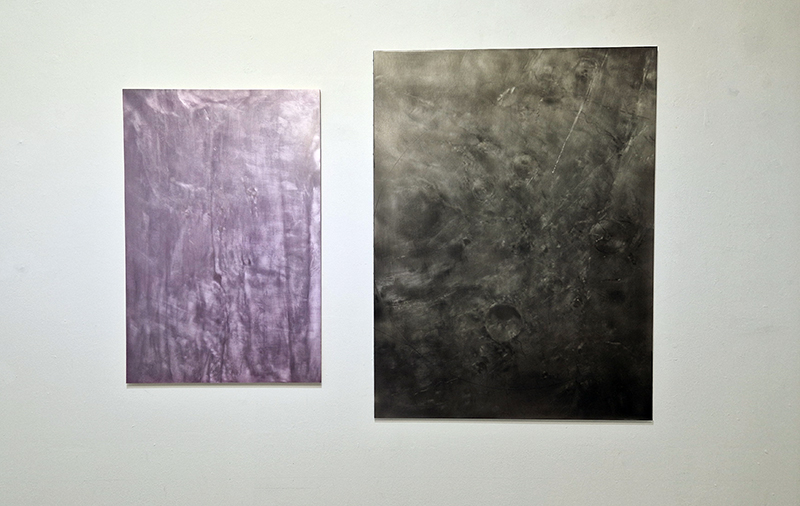
Damian Taylor Things Past at Thames-side Studios Gallery. These paintings hover on the edge of discovery where content and surface are ambiguous but reward study with tantalizing recognizable glimpses.
Events

A little out of my depth at the A&G Highlights Meeting at The Geological Society where some talks were quite specialised, involving graphs and terminology beyond my understanding. I do enjoy hearing clever people talk though, even if I can’t grasp exactly what they are explaining. A fascinating presentation by writer Nilanjan Choudhury on ‘The Square Root of a Sonnet’, his play which explores the fraught personal relationship between the brilliant Indian-American astrophysicist Subrahmanyan Chandrasekhar and his mentor, Sir Arthur Eddington of Cambridge University who publicly humiliated him at a Royal Astronomical Society meeting 90 years ago to the day. Guardian Article here

Dr Jessica Irving (Bristol University) gave The Harold Jeffreys Lecture on ‘Hearing planetary hearts: seismology of the cores of Earth and Mars’. An engaging speaker, she led us through the milestones of the last 130 years of theories on what is at the centre of the Earth and the discoveries made using seismology.

Dr Chris Lovell (University of Portsmouth) spoke on his research into ‘Accelerated modelling of the entire observable Universe’. I recognised the dark matter simulations and was fascinated by the different views of a galaxy depending on the band of the light spectrum used to observe it.

I joined a sobering Royal Astronomical Society webinar We Need to Talk About Space Junk presented by Professor Mike Lockwood. Our use of space is increasingly limited and threatened by space junk. The concern is that we are heading towards a runaway effect called the Kessler syndrome, in which the debris from one collision causes many others, to the point where space becomes unusable.

I went to see the fast paced RSC production of Kyoto at Soho Place. Welcome to the Kyoto Conference Centre, 11 December 1997. The nations of the world are in deadlock and 11 hours have passed since the UN’s landmark climate conference should have ended. Time is running out and agreement feels a world away. The greatest obstacle: American oil lobbyist and master strategist, Don Pearlman… Set nearly 20 years ago its depressing how little progress was made and we are currently sliding backwards. Would never have guessed it at the time but now am nostalgic for the politics and positivity of the 90’s.

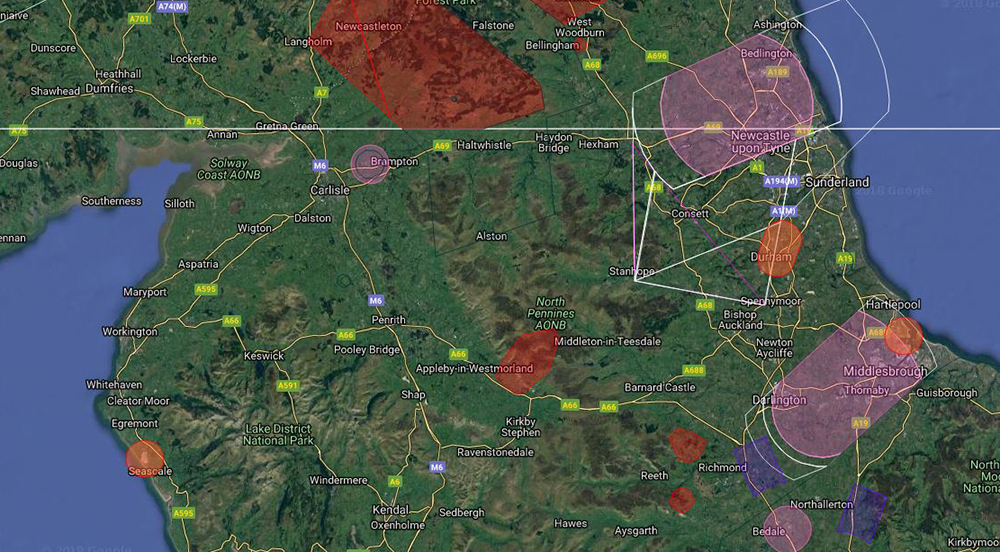
Time to email your MP to join The All-Party Parliamentary Group for Dark Skies. The group’s primary focus is to preserve the night sky within the UK and promote the adoption of dark sky friendly lighting and planning policies. Surprisingly the committee is made up mostly of tories – come on the rest of you!

Go to this link where it is quick and easy to message your MP to act on this important issue.

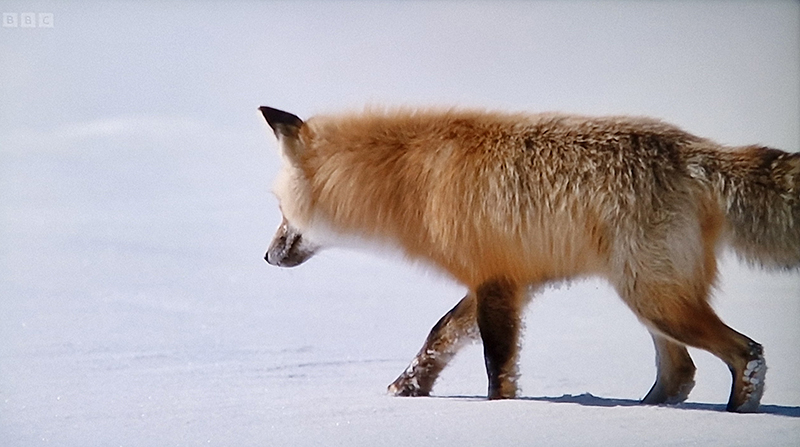
Watching Chris Packham’s The Wonder of Animals – Foxes A red fox catches its prey using more than pinpoint hearing and an accurate pounce: it also involves alignment to the slope of Earth’s magnetic fields. I contacted Peter Hore FRS, Professor of Chemistry and Magnetoreception expert at Oxford University who was so helpful to me before in explaining how birds ‘see’ the magnetic field to see if he had come across any new research on this. He has pointed me in the direction of other research conducted by the group looking at fox behaviour so this is something I will pursue further.

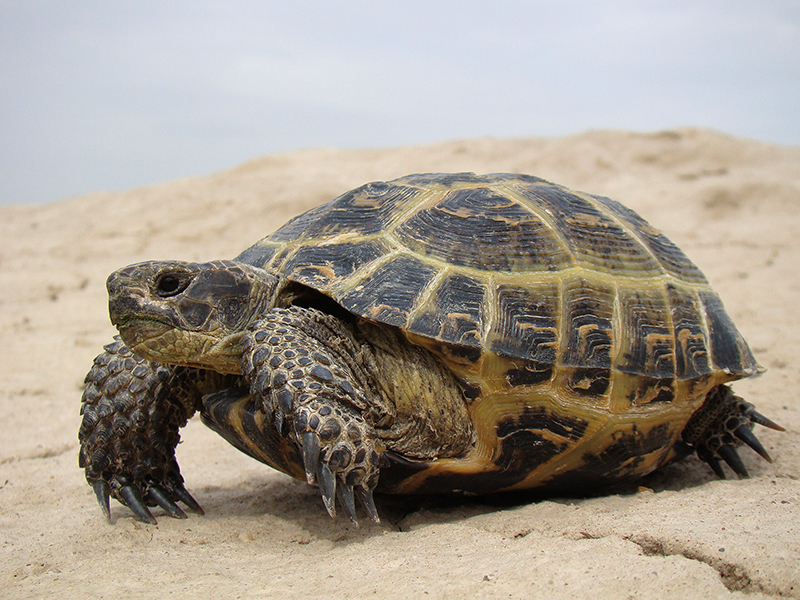
Listening to What? Seriously?? with special guest Helen Sharman, the first British astronaut, about how humans learned to survive in space. Quite a few animals were sent to space before humans including two Russian Steppe tortoises (Testudo horsfieldi), who did a circuit of he moon and returned to Earth – alive but starved. The tortoises were chosen as they have a unique ability in the animal world to resist radiation and their blood may be useful in the treatment of radiation sickness. In recent research a string of amino acids have been extracted from the blood of these tortoises and if you inject those amino acids into other animals they become radiation resistant too.

Listening to The Year in Science 2024 podcast – One of the UK’s first military communication satellites’ Skynet 1a launched in 1969 was abandoned a few years later above Africa. Orbital dynamics should have dragged it out somewhere above India but it has been found wandering above the Americas in a busy area of live satellites and no-one knows why. Space consultants think it must have been commanded to move in the 1970’s but can find no record of this and although research has been undertaken it is still a mystery how this satellite moved. BBC article

There is no mention of a cosmic ray interaction forcing the command, but that would be my theory!

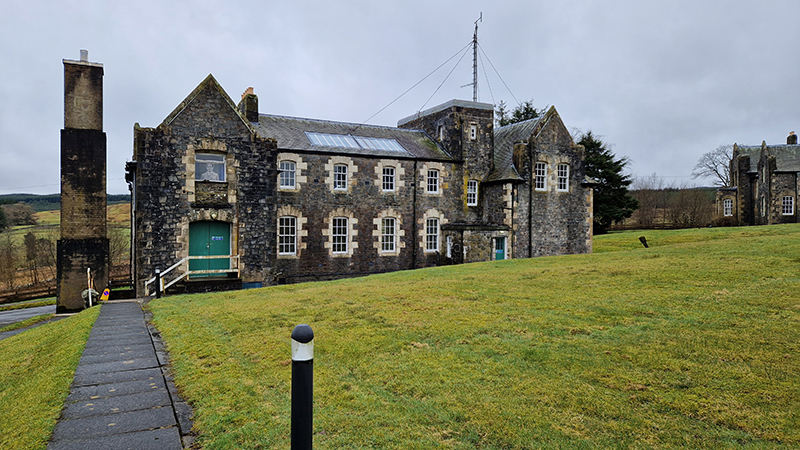
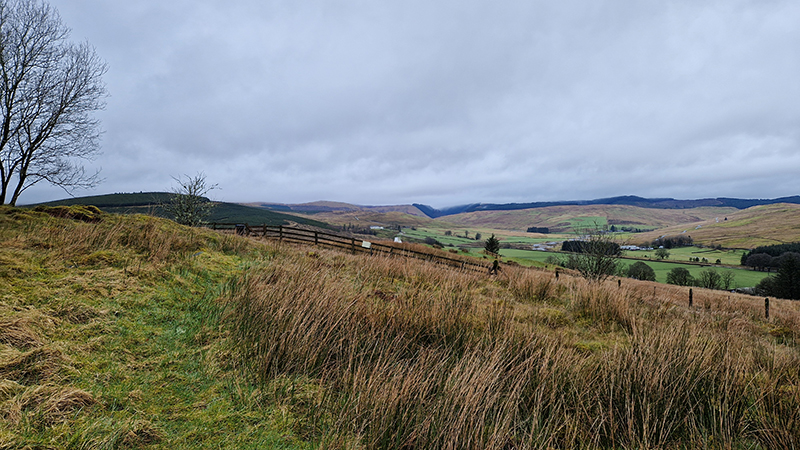
I am extremely grateful to a-n Artists Newsletter for the professional practice and creative development bursary that allowed me to visit Kielder Observatory in Northumberland and Eskdalemuir Observatory, Dumfriesshire to research how space weather impacts Earth’s magnetic field. I am also grateful to Claire Brown, site manager at Eskdalemuir Magnetic Observatory, for her time showing me around the site and explaining the many measurement processes that happen here. Despite the first survey of the site at Eskdalemuir, by the National Physical Laboratory in 1903, reporting back that “the weather was wet and stormy, and somewhat unfavourable to “field work” an observatory was established in this remote location, and recordings monitoring Earth’s magnetic field have been made from this site for 120 years.

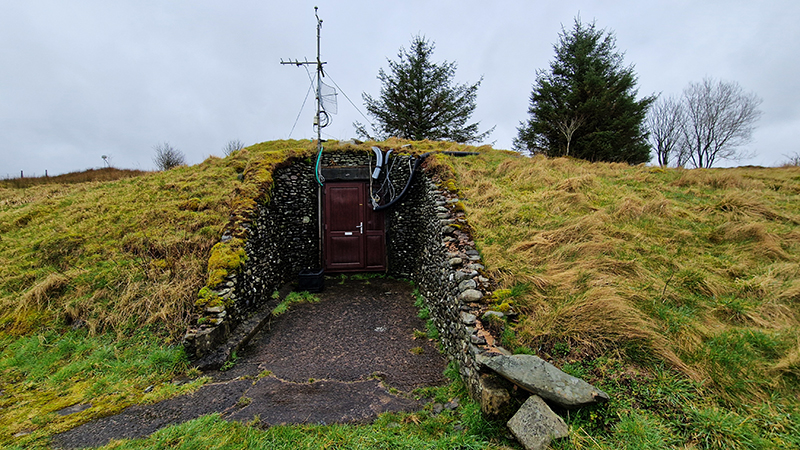
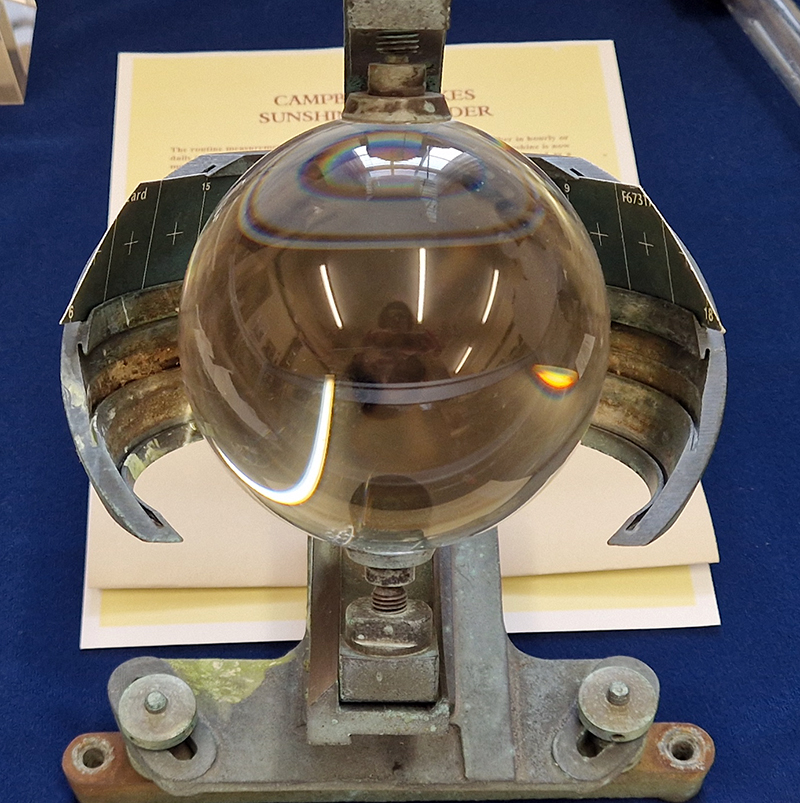
I was able to visit the East Absolute Hut, the Underground Chamber, and the Seismic Vault along with the main building and museum rooms. The interaction of space weather with magnetic currents in the surface of the Earth is monitored here, and there is a camera on the roof to record visual aurora on a loop which is then sent to the British Geological Survey research teams in Edinburgh for analysis. Meteorological observations are also made here, along with solar radiation, atmospheric pollution, and seismological activity. The monitoring of radiation pollution was inaugurated here after the Chernobyl incident in 1986 when explosions at the nuclear plant scattered radioactive elements over a wide area across Europe.

95% of Earth’s magnetic field comes from the swirling outer core of the Earth and changes are due to convection pattern turbulence. As compasses have been used for over 400 years, and records kept of magnetic declination, there is a long history of measurements to refer to. The magnetic north pole had been drifting westwards at about 55km a year up until 2020 but has recently slowed to 45km. Consistency of observations is very important for magnetic field modelling, which is why many of the instruments at Eskdalemuir are located underground to maintain an even temperature.

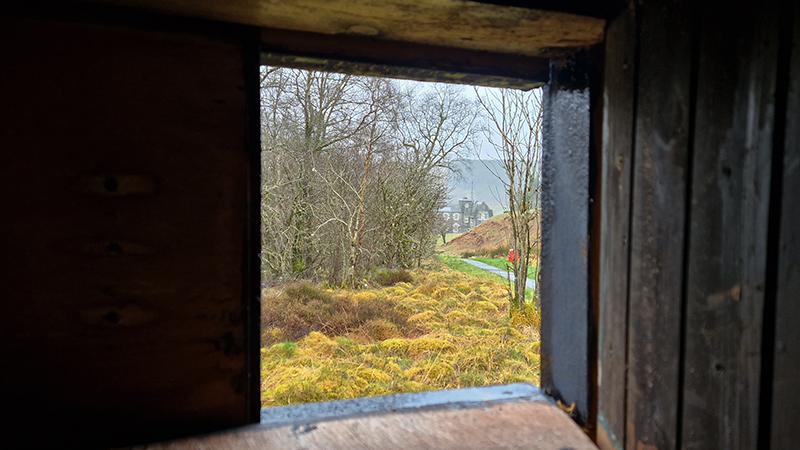
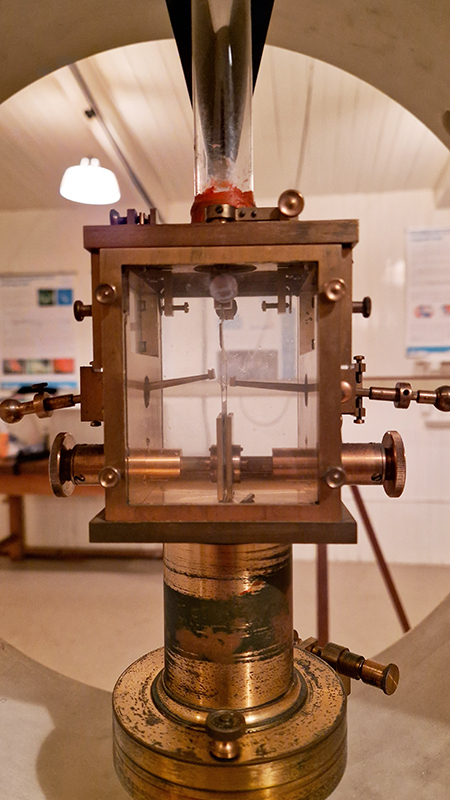
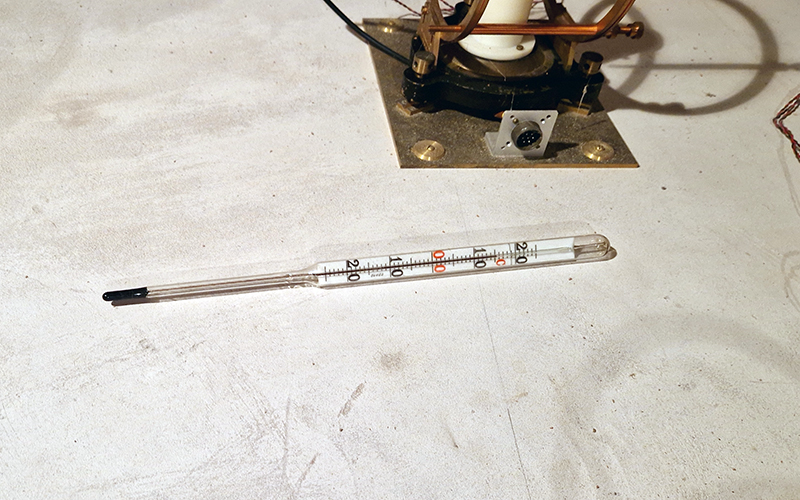
Manual observations of the direction of the magnetic field are taken once a week from the East Absolute Hut. A small sliding window in the wooden hut is pulled back to reveal a distant fixed azimuth mark, not always easily visible during inclement weather. The mark, viewed through the fluxgate theodolite, must be lined up with the north south meridian line until the reading on the digital recorder is at zero. At the same time the digital clock must read zero. These numbers fluctuate rapidly but once both machines read zero a measurement of the position of the magnetic north pole can be recorded. A separate recording is taken through a series of 12 angles on the theodolite to give an accurate position. The instrument is very sensitive and the operator wears the same clothes each time with no metal fixings etc to ensure consistency in the records. The measurements are then plotted on a graph which usually follows a smooth line describing the drift of the magnetic north pole. Sudden deviations alert the operator to errors in the recordings or dramatic movement in the field known as a geomagnetic jerk.

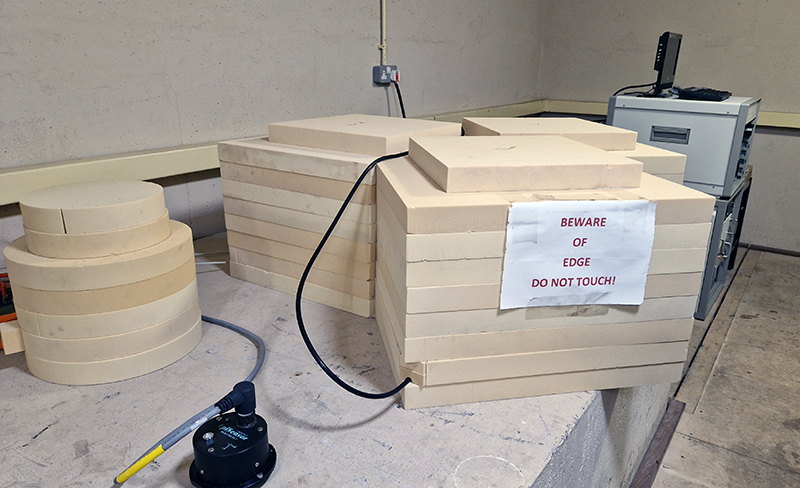
The instruments in the underground chamber measure the strength of the magnetic field in three directions.

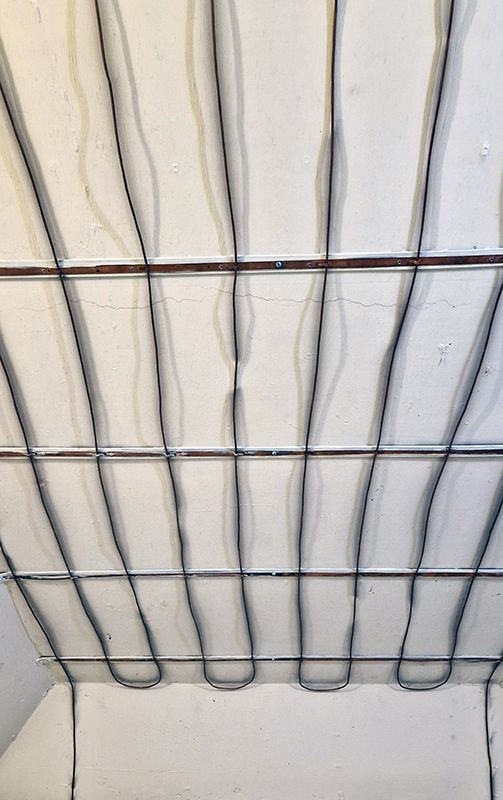
Surface readings are also taken automatically from instruments in small enclosures in the back field. During my visit these instruments were used to record data rather than those I came in close contact with.

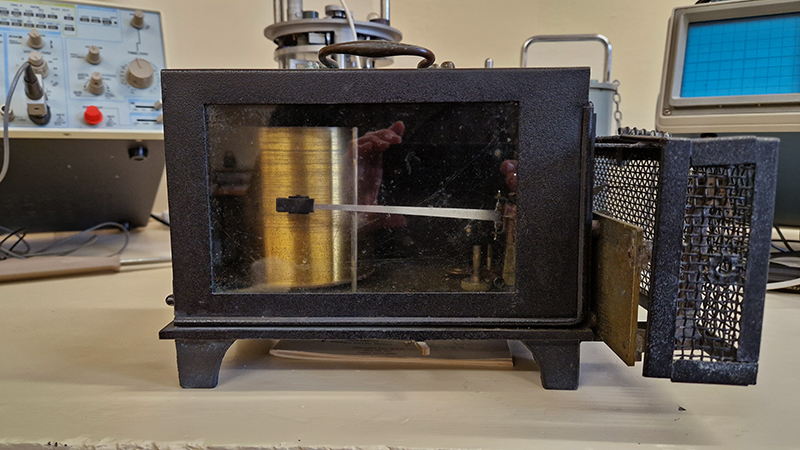
In the vault, seismograph readings are made of vibrations in the bedrock. Seismic activity around the UK is fairly low level but sensitive structures can still be effected. These instruments pinpointed the magnitude 4.7 Longtown earthquake on Boxing Day 1979, and a swarm of tremors in the Dumfries area in 2001. The network also detected the air crash at Lockerbie in 1988, accurately recording the time of impact for crash investigators.

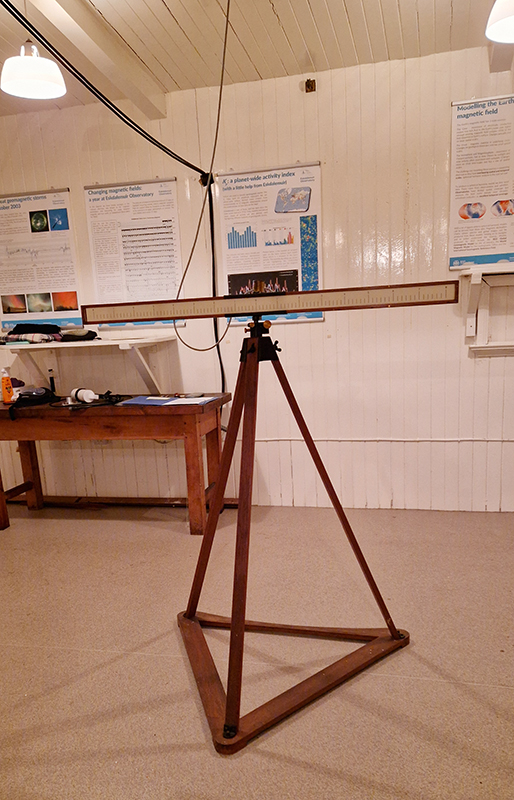
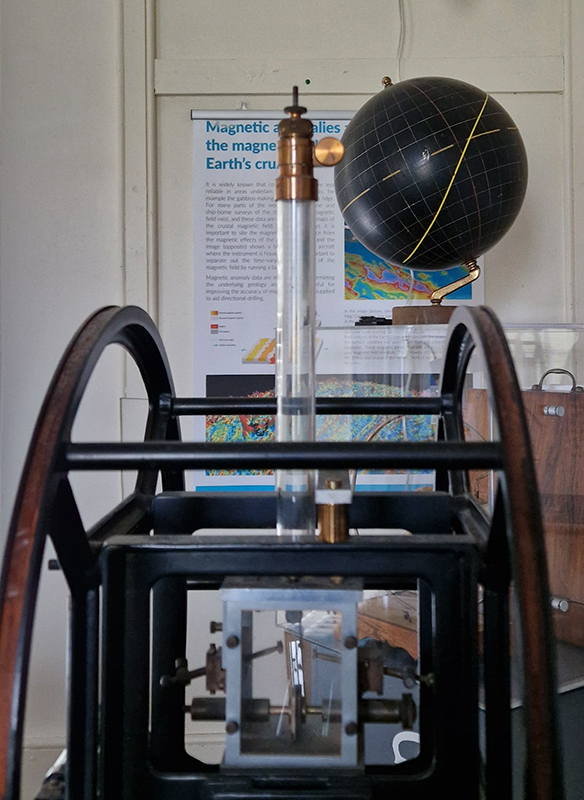
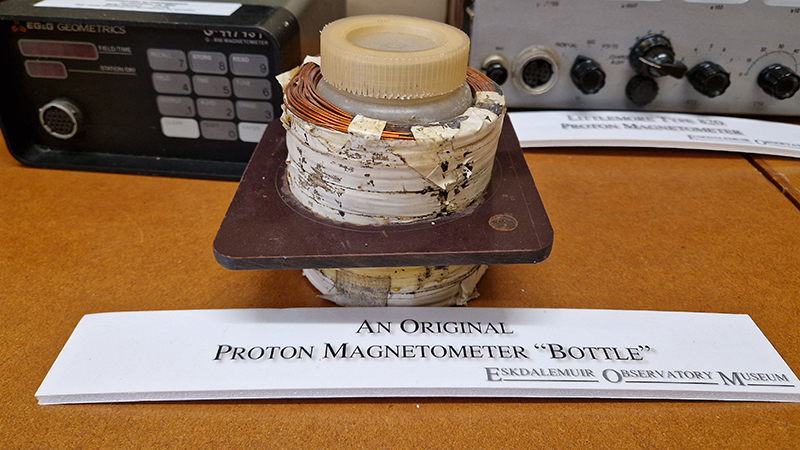
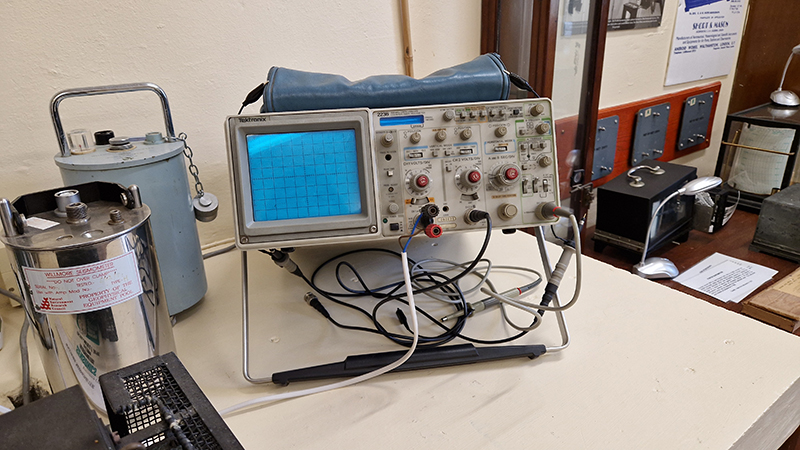
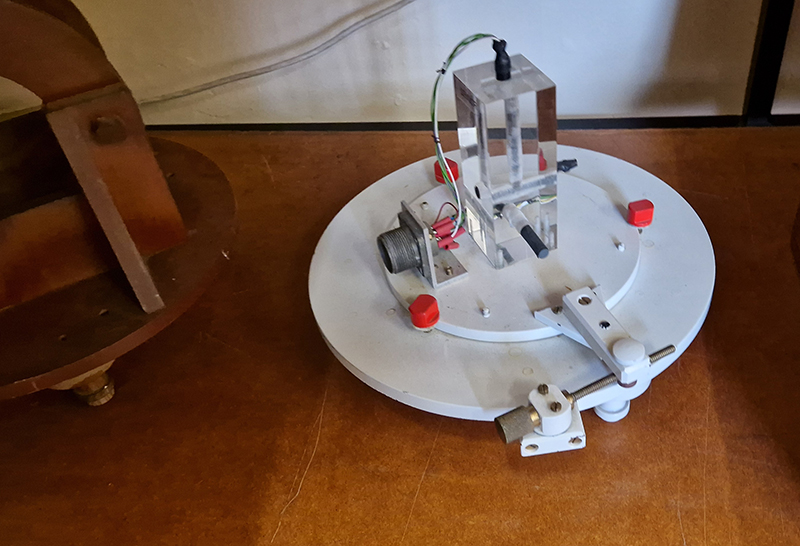
The museum holds a wonderful collection of mysterious instruments.

I attended Aurora Night at Kielder Observatory, established in 2008 under some of the darkest skies in Europe, to learn about how solar activity interacts with Earth’s atmosphere and creates the Aurora. The skies were very dark but also cloudy, and the sun was quiet, so no chance of seeing any aurora or even stargazing. However, we were given fascinating presentations on what causes the ethereal coloured lights seen at Earth’s poles and further towards the equator when solar activity is peaking.

We were also given some cool meteorites to handle including a carbonaceous chondrite, one of the most primitive objects in our solar system.

The sun rotates faster at the equator than at the poles and this causes disruption in its magnetic field. The solar flares that we see loop out from the surface of the Sun are caused by localised incidents of polarity, where plasma and particles loop around what could be thought of as areas acting like independent bar magnets. Millions of tons of plasma and chunks of magnetic field can be ejected during one coronal mass ejection and this matter hurtles out into space, if we are in the line of fire we will be bombarded with energetic particles and Earth’s magnetic field will be disrupted. The solar wind brings the particles from the Sun that envelop Earth and are drawn to the polar regions by the geomagnetic field. The aurora is caused by the interaction of these high energy particles (usually electrons) with neutral atoms in the earth’s upper atmosphere. The particle collisions that occur in the upper atmosphere cause photons of light to be emitted. The Earth’s geomagnetic field is not symmetrical and changes as the Earth rotates, it responds to the disturbance of particles coming from the Sun and as the field adjusts to this disturbance, magnetic energy is released, thereby accelerating charged particles to high energies. These charged particles are forced to stream along the geomagnetic field lines which is why the aurora lights can appear in vertical columns or other dancing shapes depending on where in the magnetosphere they entered the atmosphere. The colours of the lights are dependent on which atmospheric gas is being excited by the solar particles, oxygen emits either a greenish or a red light and nitrogen gives off a blue light.

Solar activity is monitored and space weather forecasts are posted online. To be in with a chance of seeing the Aurora in the UK, the KP level should be 5 or above as this index increases as the aurora’s southern edge moves southward. It can take up to three days for the particles ejected from the Sun in a CME to reach the Earth. The lights are fainter than sunlight so a dark night sky is needed to see them. It is also often the case that the greater photo sensitivity of a camera can capture lights that are barely visible to the human eye. The aurora is more likely to be visible during the spring and autumn equinox because of the angle of the Earth’s magnetic field in relation to the Sun, not because storms are more frequent.

2024 is predicted to have a high number of solar storms so there may be opportunities to see the Aurora but it also comes with the risk of severe space weather that could cause havoc with our reliance on satellites and related technologies.

The connection between solar activity and the impact on technology was made during the 1859 Carrington Event, the most intense geomagnetic storm in recorded history. Strong auroral displays were reported globally and even seen in London, while sparking and fires occurred in multiple telegraph stations.

Satellites are vulnerable to space weather which can cause ongoing degradation or single event upsets where a charged particle can trigger a command in the satellite. During space weather events the ionosphere can become enhanced making it harder to communicate with satellites. Errors can occur in precision navigation and timing situations. Aviation crews are at risk to higher doses of radiation during solar activity and the HF radio communication system can have interference. Induced geoelectric fields in the ground can cause currents to flow in power grids and railway lines damaging transformers.

During the 2003 ‘Hallowe’en’ solar storms, when the largest single solar flare ever recorded was followed by severe storms, over half of all Earth-orbiting spacecrafts were impacted, disrupting satellite TV and radio services, GPS systems, damaging a Japanese scientific satellite beyond repair, sending several deep-space missions into safe mode or complete shutdown, and destroying the Martian Radiation Environment Experiment. The solar storms also led to communication problems for flights passing over the North Pole and Antarctic science groups had a full communications blackout for several days.

In acknowledging these risks we can gain an awareness of our vulnerability to the forces of nature and a respect for the power of the sun, the protection offered by our home planet and the interconnectedness of the universe.

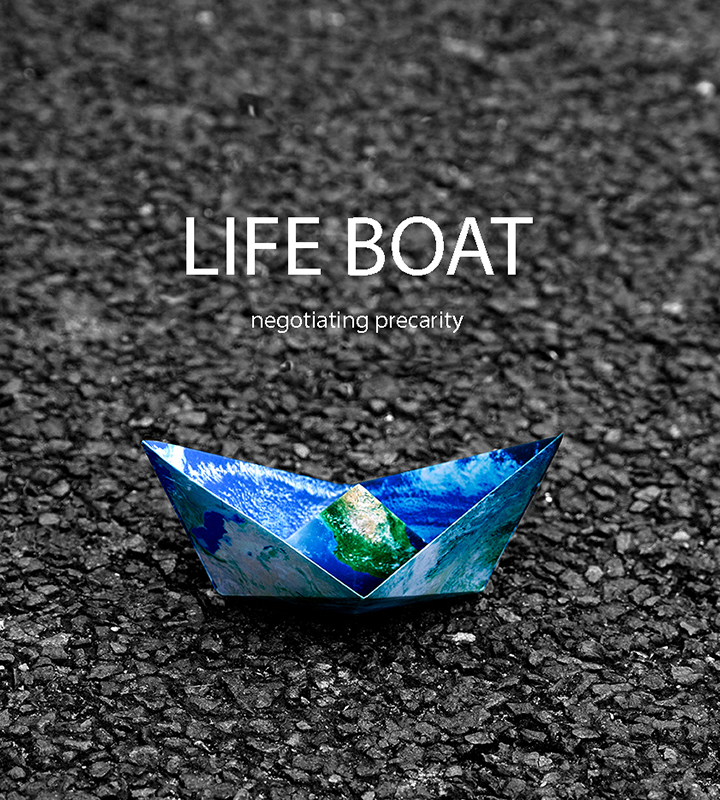
Life Boat at APT Gallery

Life Boat brings together artists with a shared interest in exploring precarity as a site of dynamic transition. Each takes an investigative approach to the environmental, social and historical themes evoked by the lifeboat, as a means of addressing ecological crisis, liminal landscapes, close and distant horizons, boundaries and displacement, lines of rescue, navigation and transformation.

Very happy to be exhibiting with Rachael Allain, Caroline AreskogJones, Beverley Duckworth, Liz Elton, Kathleen Herbert, Kaori Homma and Anne Krinsky.

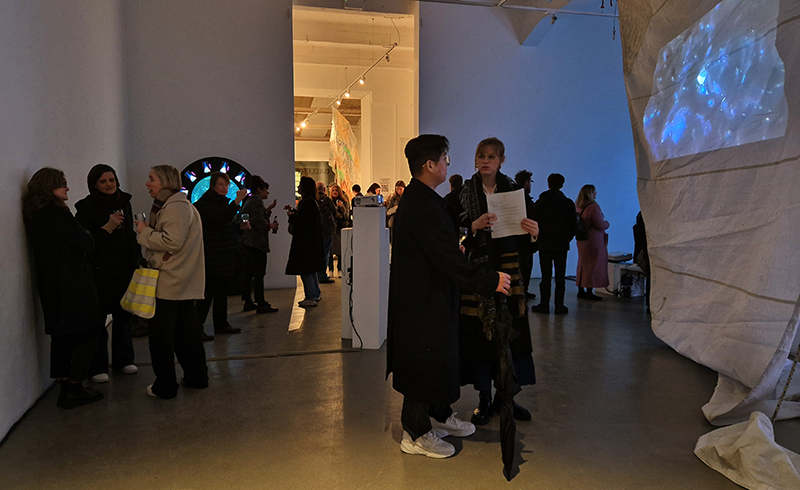
We had a fantastic opening night.

I was showing submīrārī (earthbound) and a new video installation Orbital – these works both consider transient landscapes, ecological landscapes on the cusp of disappearance and the digital landscape at risk from obliteration by an extreme solar storm.

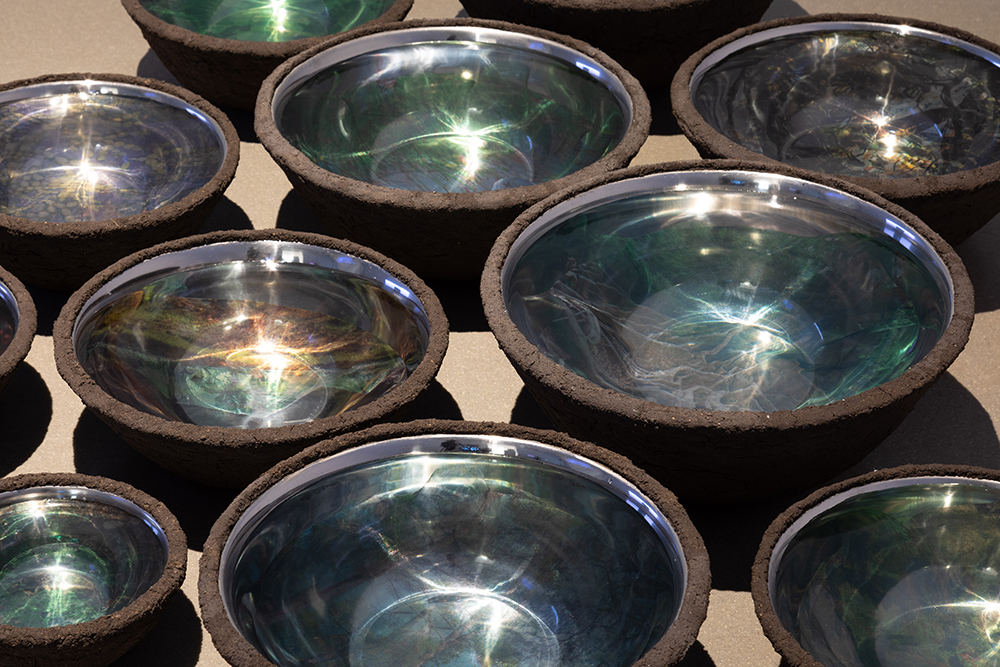
submīrārī (earthbound), 2018, steel, earth, water, sublimation printed textile, 12 pieces dimensions variable approx. 200 x 200 cm. Reflections of a no longer certain world hover in pools fluctuating on the cusp of disappearance. The ethereal images float or submerge revealing the hidden activity of water which also refracts light across the surface prompting the viewer to repeatedly shift perspective. Donna Haraway, drawing from Latour, proposes the ‘Earthbound’ as those humans who are ready to rethink and create new narratives with Gaia at the centre, who recognise the entanglement of society and nature and aim to pursue a ‘nonarrogant collaboration with all those in the muddle’. The shift in perspective embraced by the ‘Earthbound’ embodies a grief shared with other species at loss of habitat and disappearing landscapes. It is not a nostalgia for paradise lost but a reappraisal of what paradise could be.

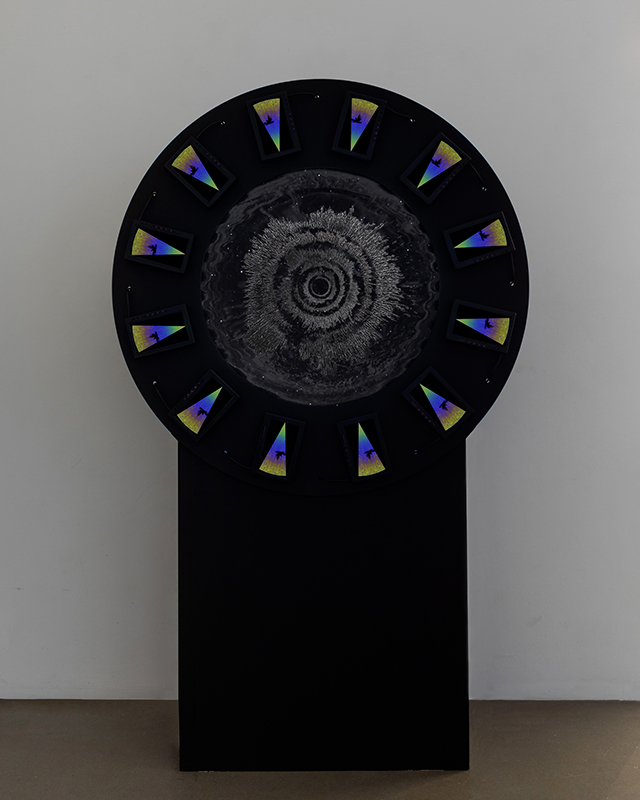
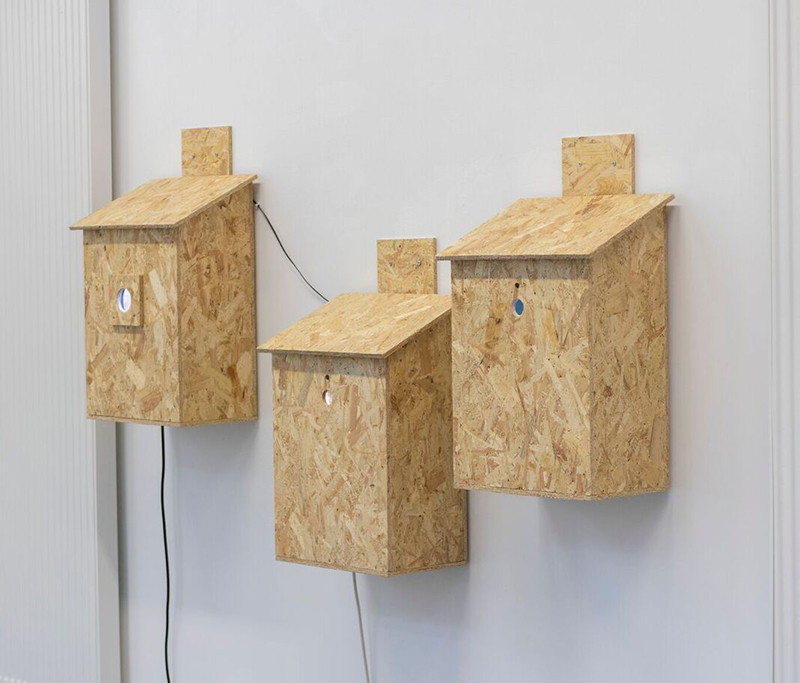
Orbital, 2024, Back projection video, mini screen array, board, installation 122 x 200 x 50 cm, video 05:44 min. An exploration of the potential risks of space weather on human technology and infrastructure and non-human navigation.

The Sun is about 150 million kilometres (93 million miles) from Earth, but space weather can affect Earth and the rest of the solar system. It can cause damage to satellites and electrical blackouts on Earth. Small satellites have come to dominate low Earth orbit, and we have become reliant on this technology for communication, military strategy, and data gathering.

A blast of high energy particles hitting Earth during a solar storm can interfere with Earth’s magnetic field, confusing birds that use this for navigation. In America, pigeon racers postpone the big race if bad space weather is predicted. There is also new research that might suggest the number of satellites orbiting Earth and the growing satellite space junk graveyard could weaken Earth’s protective magnetic field, making us even more vulnerable to space weather and cosmic radiation.

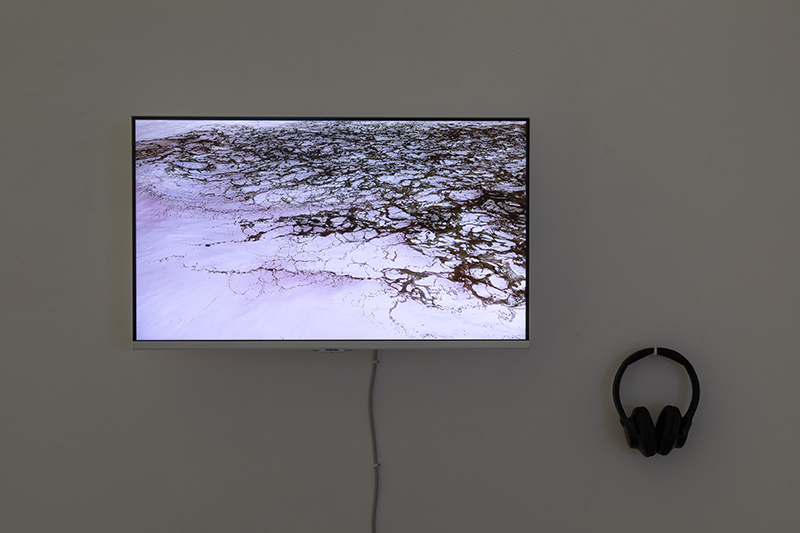
Rachael Allain’s current doctoral project ‘Above and Below the Horizon: A practice-led investigation into liminal thresholds of bodies of water’ has been undertaken in response to various aquatic locations. The work shown in this exhibition documents mapping aspects of an unexpected journey of discovery made in the upper reaches of the Arctic Ocean during an international art and science expeditionary residency in the Svalbard Archipelago during midsummer 2022. ‘Circumnavigation of a ‘Bergy Bit’’ is a film with sound of a close and intimate encounter with a section of an iceberg, calved from its mass and found beached and melting close to shore in Eolusneset, Sorgfjorden in the Bay of Grief.

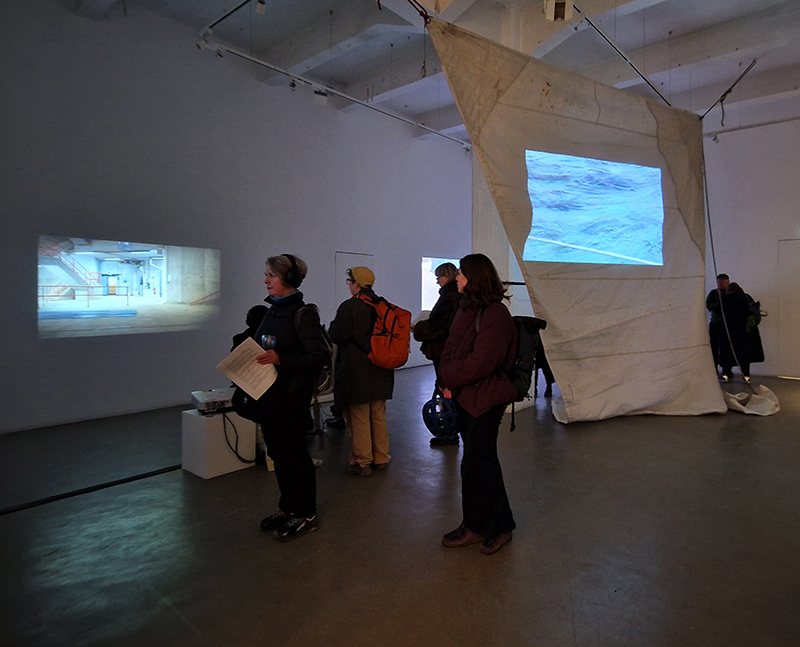
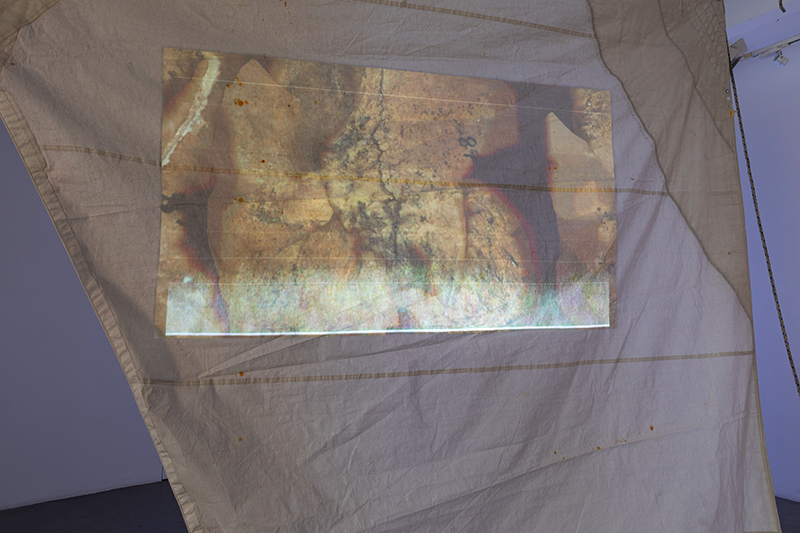
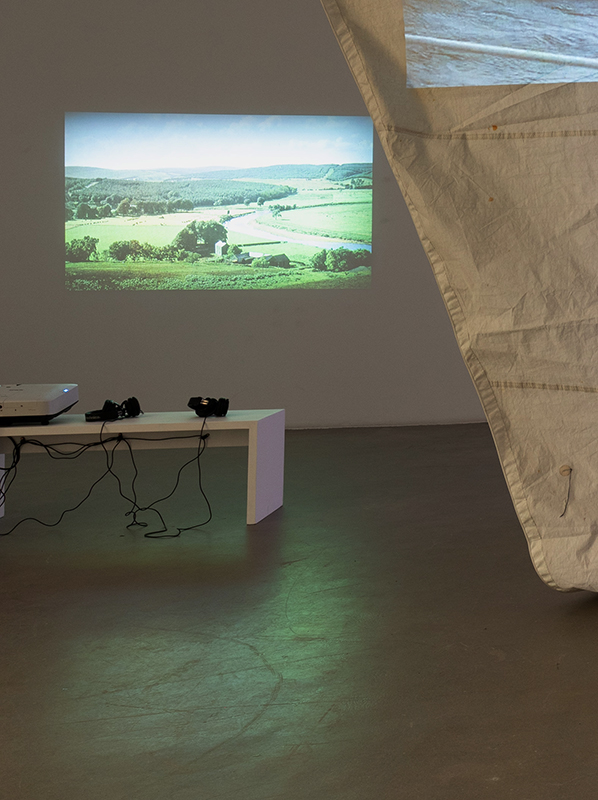
In 2019 Caroline AreskogJones spent time on the Sea of Hebrides making a series of responses whilst researching more viscerally the ocean as a site of ‘field research’ and gathering recordings. ‘Sounding Line’ (2024, sail, audio/video single channel as projection 07:32 min. Sail courtesy of Sail Britain) was created in deliberate wave format being inspired by Jean Painleve, whose hybrid films overlaid with jazz soundtracks occupy the uncertain space between art and science. Oskar Jones was invited to create the sonic composition in response – the saxophone being a wind instrument of extraordinary virtuosity.  Since 2023 Caroline has been visiting the Natural History Museum Cetacean Archive – at the invitation of Principal Curator, Richard Sabin. Through conversations including those with environmental historian Sophia Nicolov, her research has broadened and this updated presentation includes recordings of the two remaining Orcas who inhabit the Sea of Hebrides courtesy of the Hebridean Whale and Dolphin Trust.

Anne Krinsky Boiling Seas Acid Seas (Work-in-progress), 2024, Video, 12:26 min, filmed on location at Long Beach Peninsula in the Pacific Northwest.

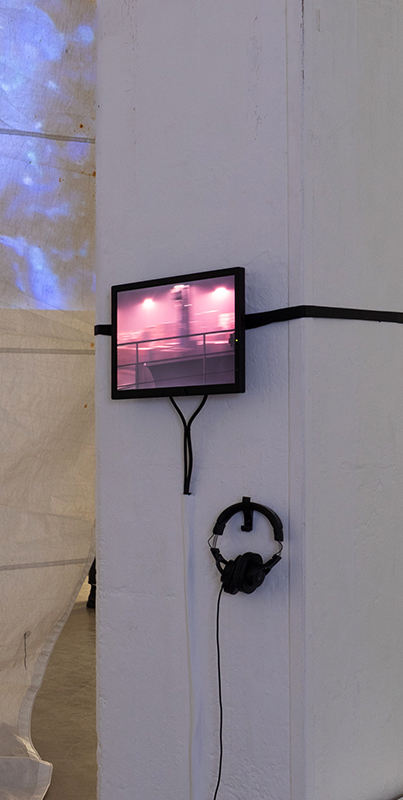
A History Of The Receding Horizon (2015, HD Video, 16:9, sound, projection, 28 min) is a digital film installation by Kathleen Herbert, exploring different concepts of time within the landscape. Based upon Kielder in Northumberland, the narrator whose script was developed from the artists research interviews with environmental historians, astronomers at Kielder Observatory and local people from the area, leads the viewer through the film weaving together past, present and future timelines. The Chaplin (2006,  standard HD video, 4:3, sound, monitor, 07: 20 min) is a film installation recalling a conversation held between the artist, Kathleen Herbert, and the Port Chaplin based at the Mission to Seafarers centre in Avonmouth docks. The Port Chaplin boards every ship as it enters the docks, his role is to provide emotional and practical support to seafarers while they are in port. The piece was produced while Kathleen was based at the centre researching for a new commission by Picture This Moving Image and Situations Bristol. Her research at the centre culminated in a 3 day voyage aboard a cargo ship in which she took her camera and the extracts of film from this journey provide the visual background of the film.

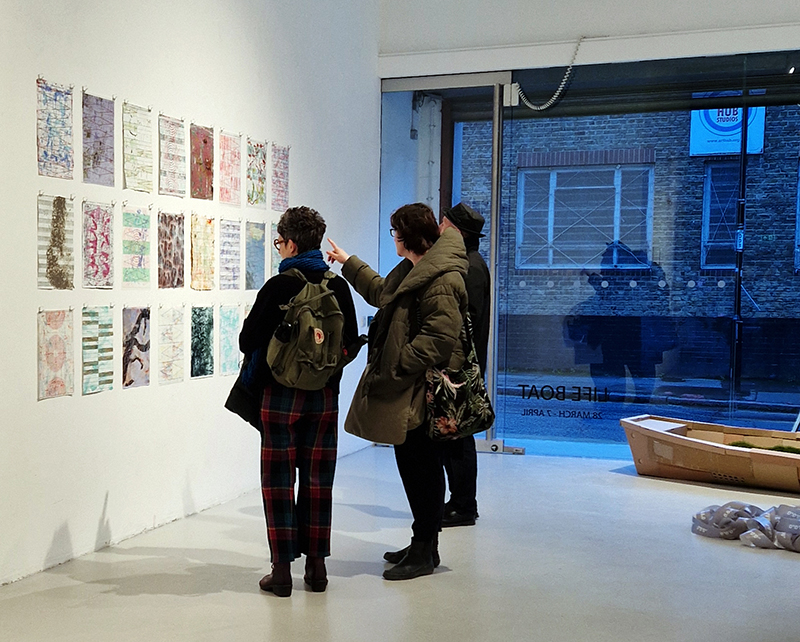
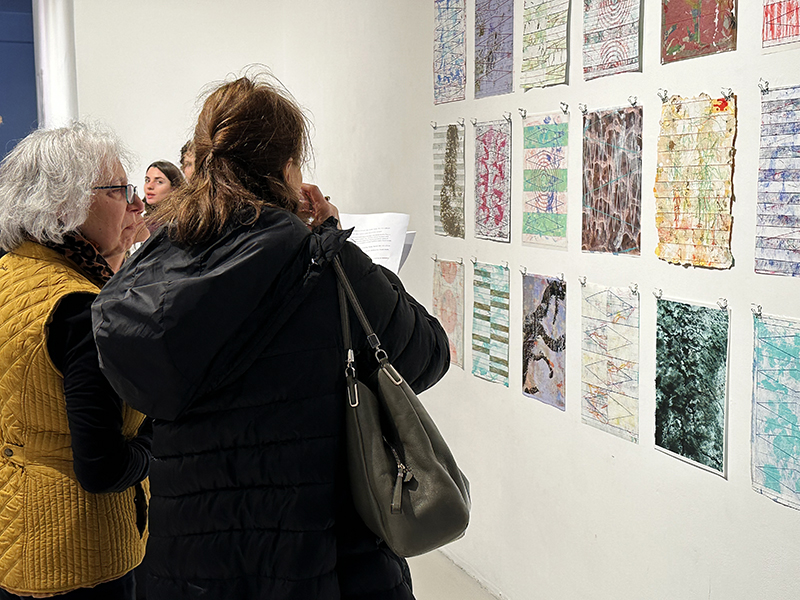
Fragility and vulnerability are embodied in layered works on paper, a large suspended sculpture made from delicate compostable material and living installations incorporating transient elements that transform over the exhibition period.

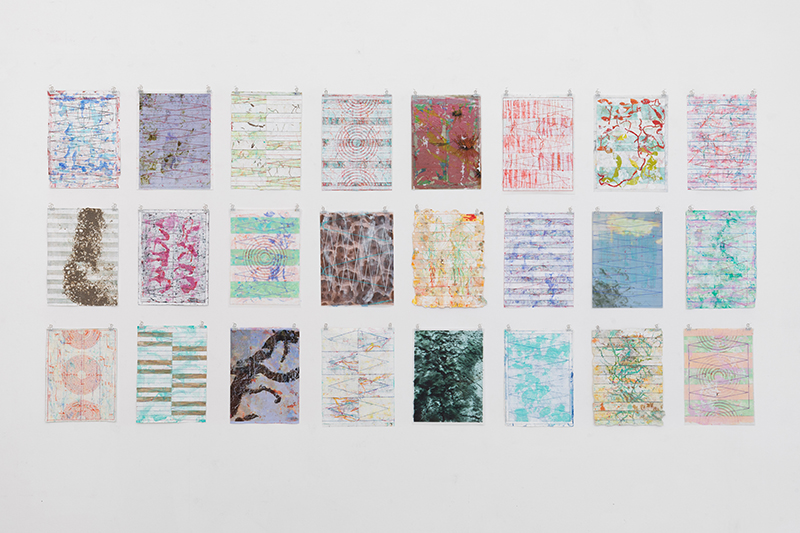
Anne Krinsky has been working on a research-based project about vulnerable wetlands and climate change since 2018. Coastal wetlands worldwide are at risk from rising sea levels caused by climate change, while inland watersheds are threatened by heat, drought and agricultural runoff. These ecosystems are critical to the plants and animals that inhabit them and to human survival. She is drawn to biodiverse habitat edges – where water meets land or where fresh water meets the sea and is interested in recording both the beauty of – and human impacts on – fragile habitats. She uses documentation as an archive of raw materials to generate work in other media, including site-responsive print and video installation and tactile work on paper. In responding creatively to wetlands and watersheds, she wants to raise public awareness of climate threats to these life-sustaining habitats. Before They Vanish, 2024, 24 small works: paper, mylar, acrylic, digital print, mixed media, 150 x 300 cm.

Caroline AreskogJones Float 2023, Paper lithography on shoji, 60 x 120 cm forms part of a series of works inspired by the Natural History Museum Cetacean Archive, rendered onto Shoji paper, used in museum conservation.

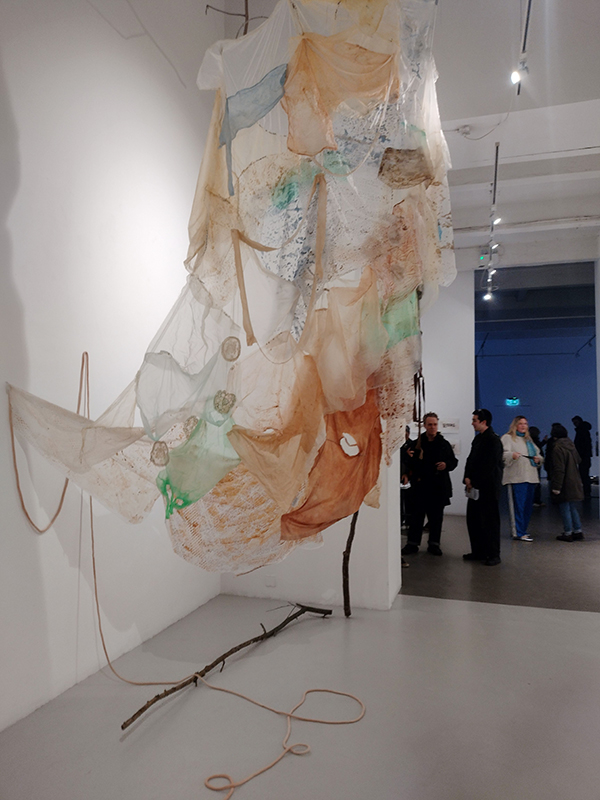
Liz Elton begins in landscape and still-life painting to explore the potential of waste and the recycling of matter.  Her ephemeral work is often made on compostable ground, coloured with kitchen waste and embedded with seeds. Showing Habitat, 2024, Compostable cornstarch food waste recycling bags, household textiles from a house clearance, vegetable dyes from kitchen waste, water colour, silk, soil from various locations and gleaned from vegetables bought in the market, vegetable seeds saved from food preparation, seeds of varieties of self-seeding edible plants typically found on the wasteland around Deptford creek, found wood, Approx. 360 x 250 x 150 cm (variable).

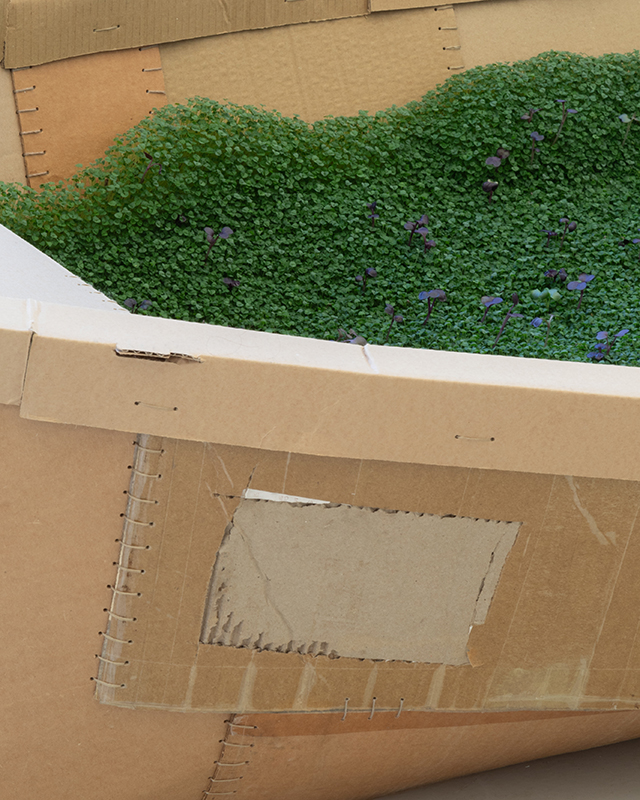
Working with living sculpture and installation, Beverley Duckworth creates spaces and moments which connect the smallest, poetic actions of plants with precarious issues facing humanity. Her practice centres on the afterlife of the discarded and is rooted in small acts of reparation – sewing scraps together, watering fragile seedlings and nurturing the regenerative power of composting from waste materials. Works include Husk, 2024, Discarded cardboard, thread, flax, seeds, water, 90 x 70 x 280 cm; Raze, 2023, Discarded clothes, binder, 48 x 51 x 10 cm.

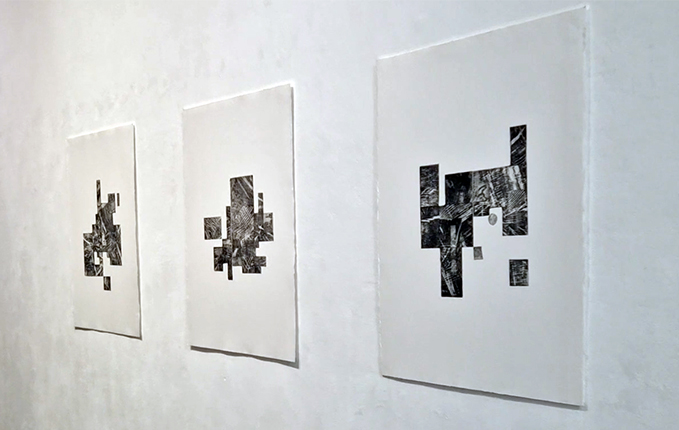
Etchings and spatial interventions explore the use of the natural world as human resource and land as a site of geopolitical conflict.

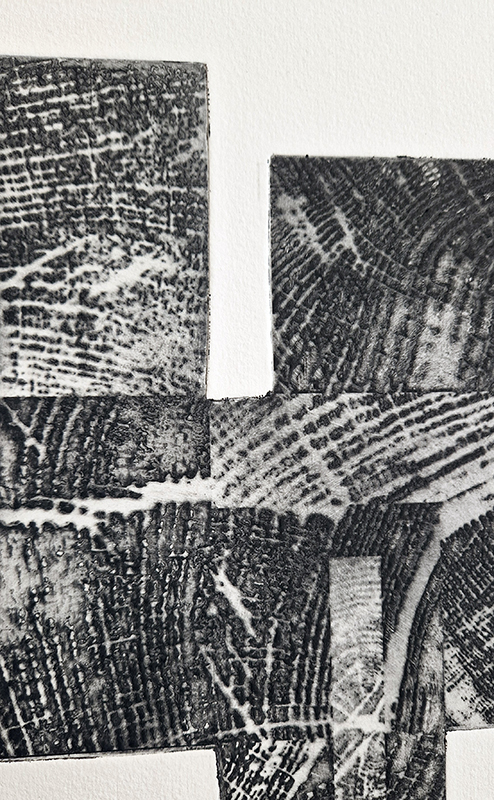
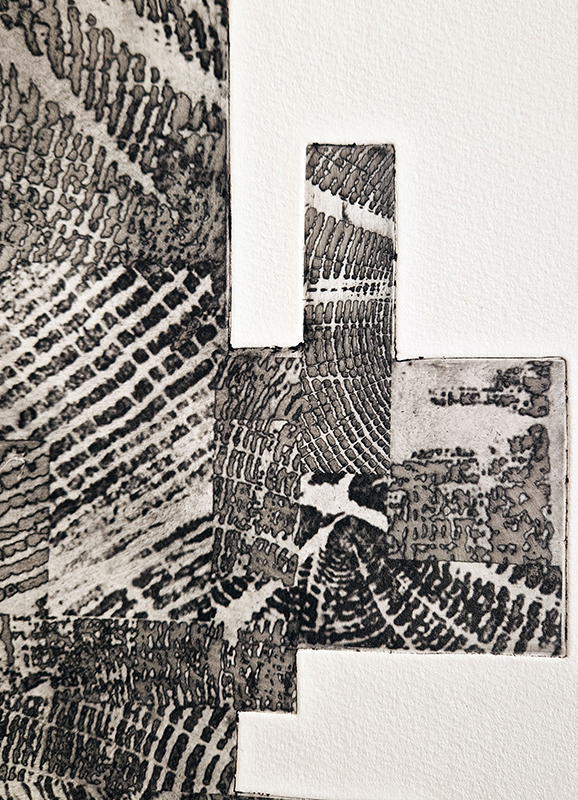
Kathleen Herbert Lost Dimensions I, II, III, 2022-23, Photopolymer Etching on Somerset Satin Paper, 75 x 57 cm.

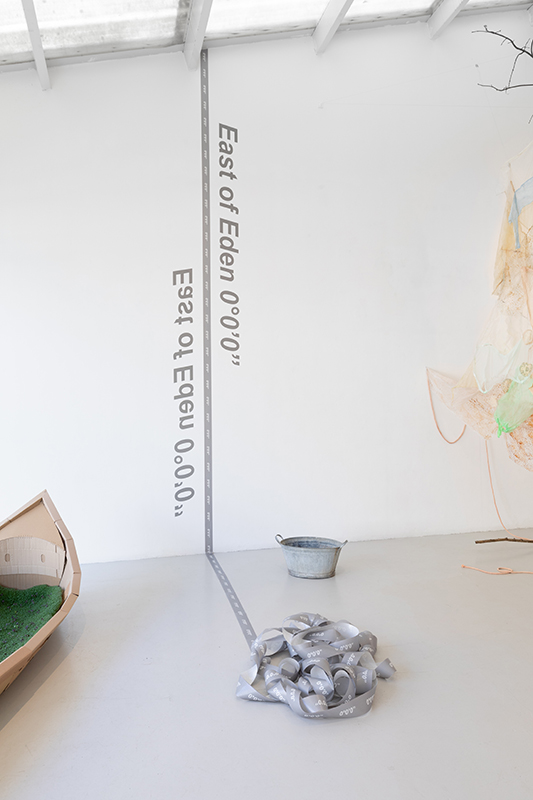
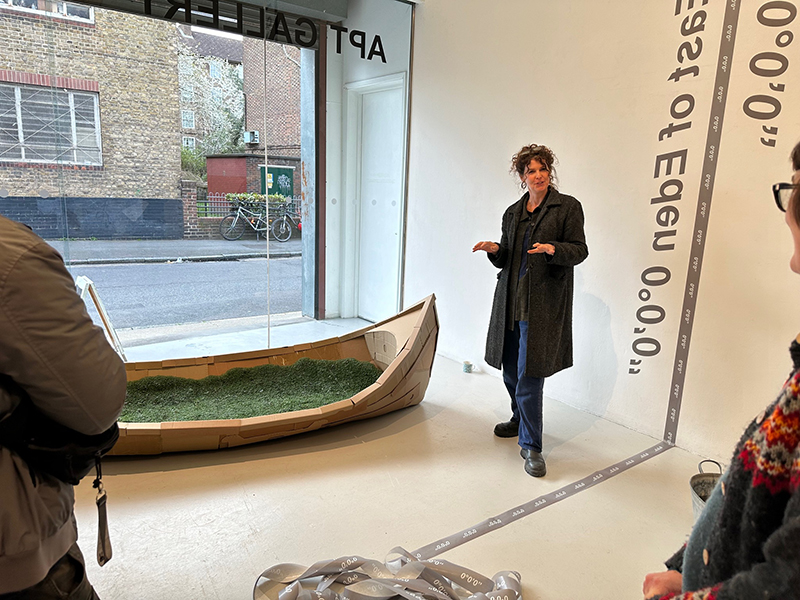
Kaori Homma’s multi-site Homma Meridian project asks us to reconsider and to challenge the cartographic demarcations that govern so much of our world and that we so frequently take for granted. With the deceptively simple move of ‘repositioning’ the Greenwich Prime Meridian, the artist radically shifts our perspective, as well as our sure footing, both figuratively and even literally. At each of its iterations (which have included Budapest, Margate, Wales, Paris, London and Pennsylvania) the artist and participating audiences draw an impermanent line running north-south, always using ephemeral materials, as a substitute for the ‘Prime’ meridian. The project’s act of displacement and its ephemerality work to highlight the imaginary nature of boundaries and to shake up our perception of our position on the earth as it spins on its titled axis. Works include Homma Meridian, Deptford, 2024, Vinyl Letters, tape, dimensions variable; Floating 0 degree Longitude, 2024, Abrudashi Fire Etching, Water, Bucket, 60 x 38 x 25 cm; Four corners of the earth, 2024, Aburidashi Fire Etching on Paper, 50 x 80 x 3 cm

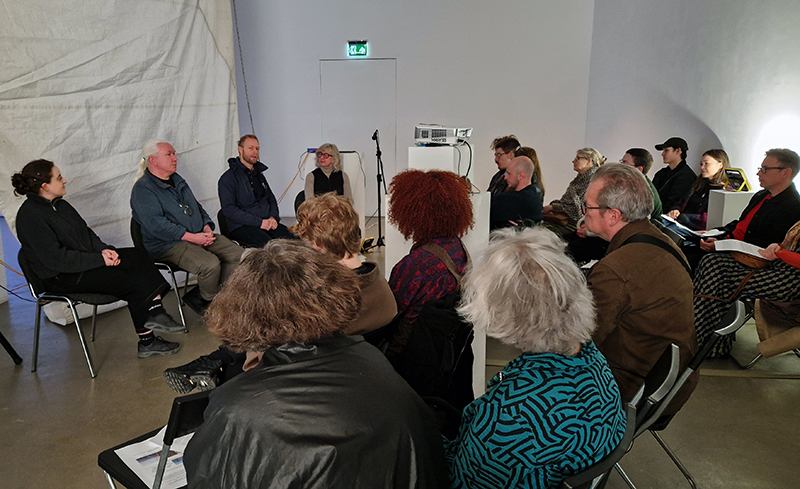
Alongside the exhibition we held a series of events including a Low Tide Walk in Deptford Creek – led by Anne Krinsky in partnership with Creekside Discovery Centre followed by refreshments and a tour of the Life Boat exhibition at APT Gallery just two minutes from this amazing natural habitat in Deptford.

FIELDWORK AS PRACTICE – A live sonic performance by Oskar Jones and a conversation led by Caroline AreskogJones bringing together Oliver Beardon (Founder and Skipper of ‘Sail Britain’) Richard Sabin (Principal Curator of Mammals at the Natural History Museum, London) and Sophie Nicolov (AHRC Early Career Research Fellow, Natural History Museum, London) for a discussion around the potential overlaps between ‘field’ and research, artistic practice and ecological activism.

Homma Meridian and the Secret of Invisible Ink/Fire Etching Workshop where Kaori Homma shared her technique using Invisible Ink as part of the Aburidashi/Fire Etching process, historically used for espionage, she also gave a fascinating presentation on the history of this process and how it relates to her own art practice and her Homma Meridian Project.

In tackling concepts of the perilous, the vulnerable and the lost, Life Boat raises the alarm on the passive position of waiting for rescue and encourages urgent action in troubled waters.

Gallery Visits

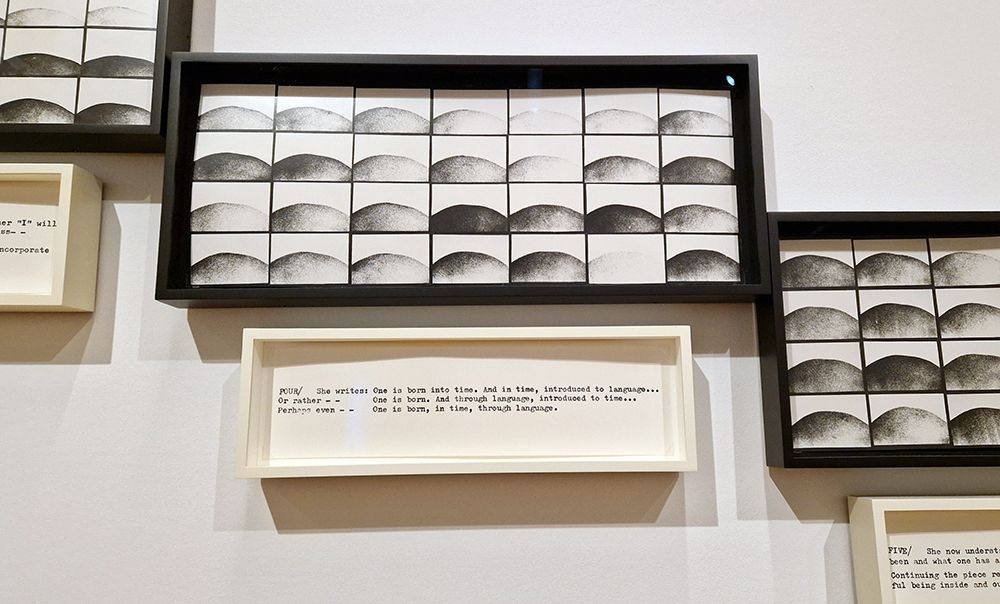
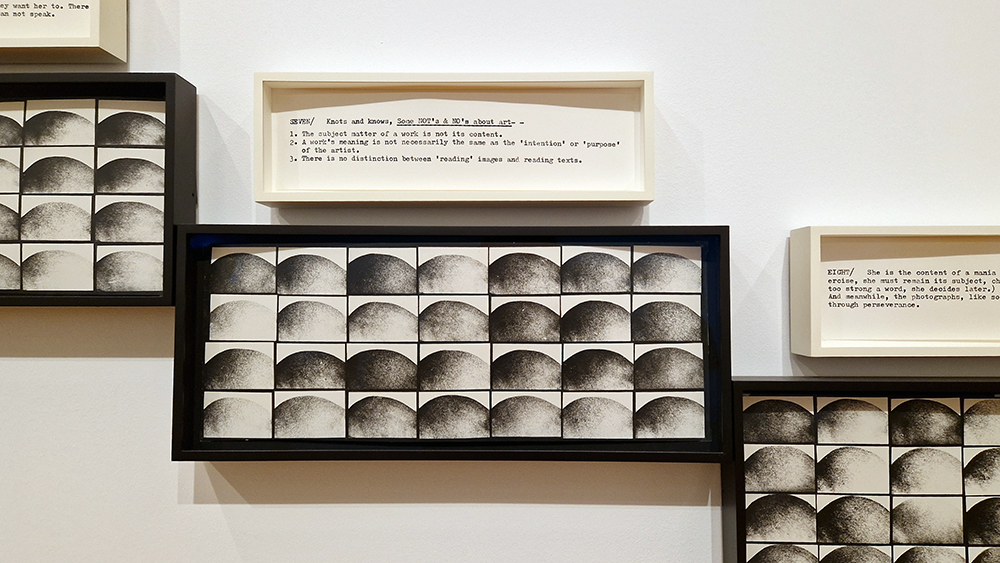
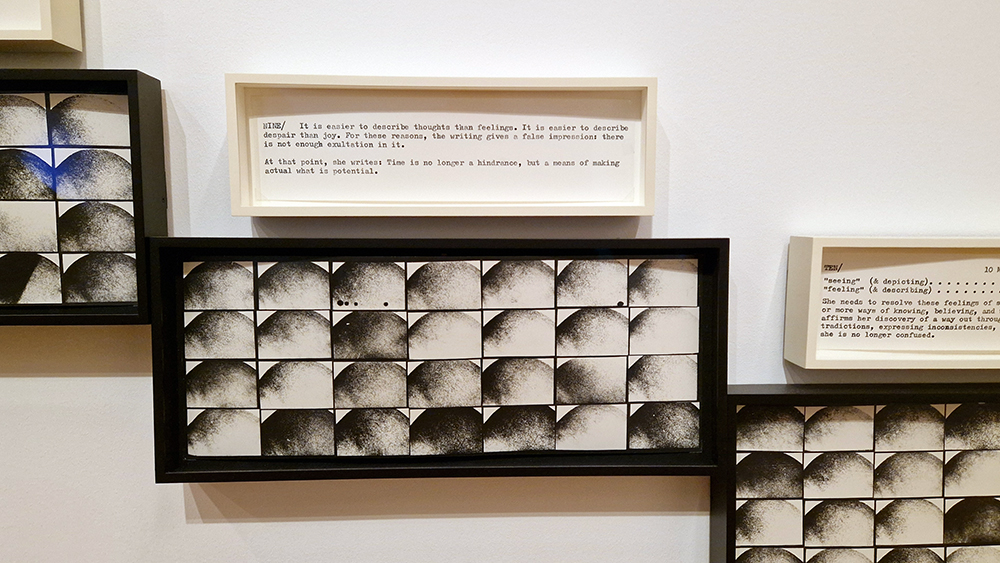
Women In Revolt at Tate Britain. A lot of documentation here of social history. Many texts, posters, zines, not so much art but a great piece from the inimitable Susan Hiller, with personal incites accompanying images of her ever increasing pregnant belly such as: – She writes, one is born into time. And in time introduced to language….Or rather — one is born. And through language, introduced to time…Perhaps even — one is born, in time, through language.

Mary Yacoob, captivates with astonishing precision of detail as always in Brutal Space at Bobinska Brownlee exploring the subject of future adaptations to life in space.

Listening

A webinar from British Geological Survey on how we measure the magnetic field, everyday applications and mitigating the threats of space weather. From the Earth’s core to outer space: understanding the magnetic field

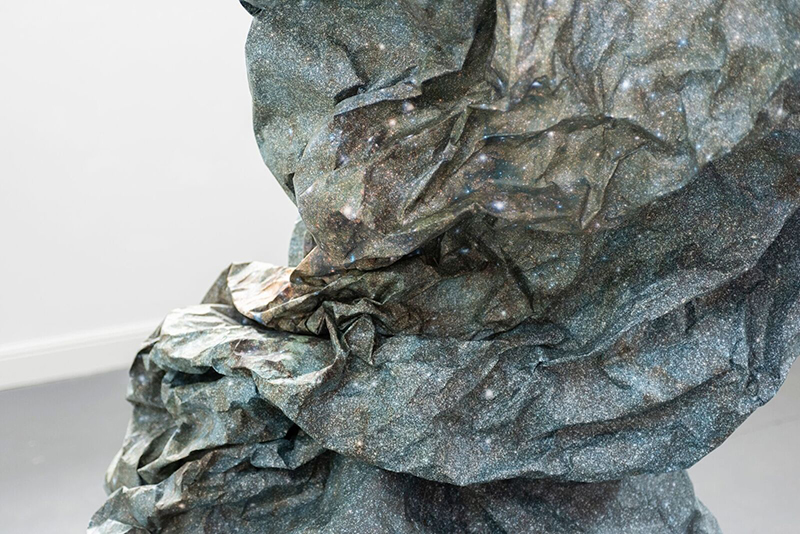
Photoshoot with Warren King Photography resulted in some great images of my work ready for the press release and promotion of A STONE SKY – the upcoming joint exhibition, with Julie F Hill, that we have been working towards for many months. The exhibition will be at Thames-side Studios Gallery 11th – 26th November 2023 with a private view on 10th November 6-9pm.

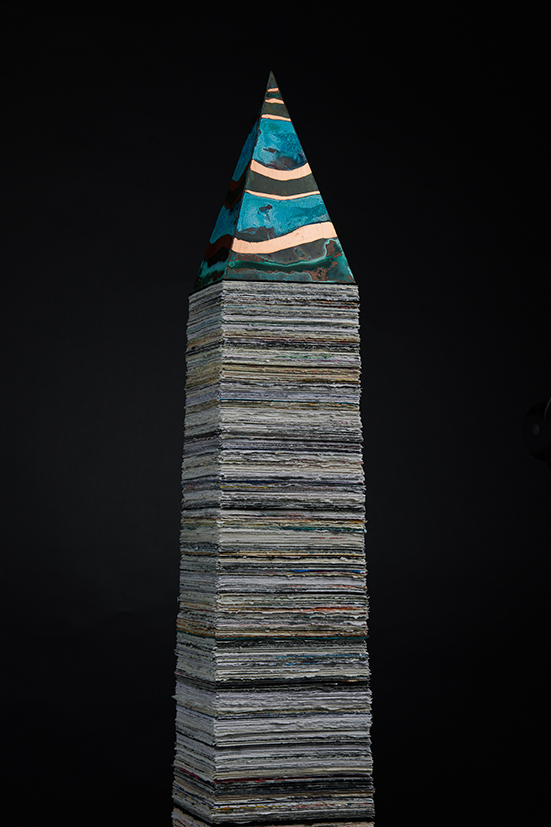
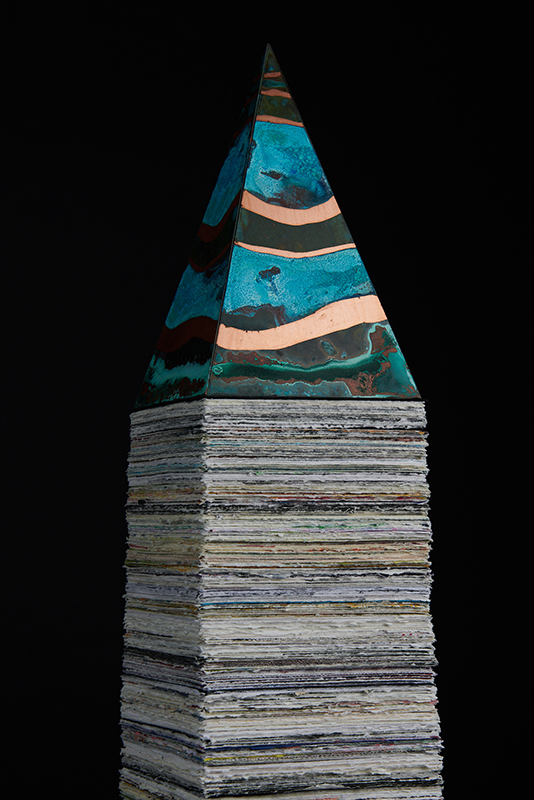
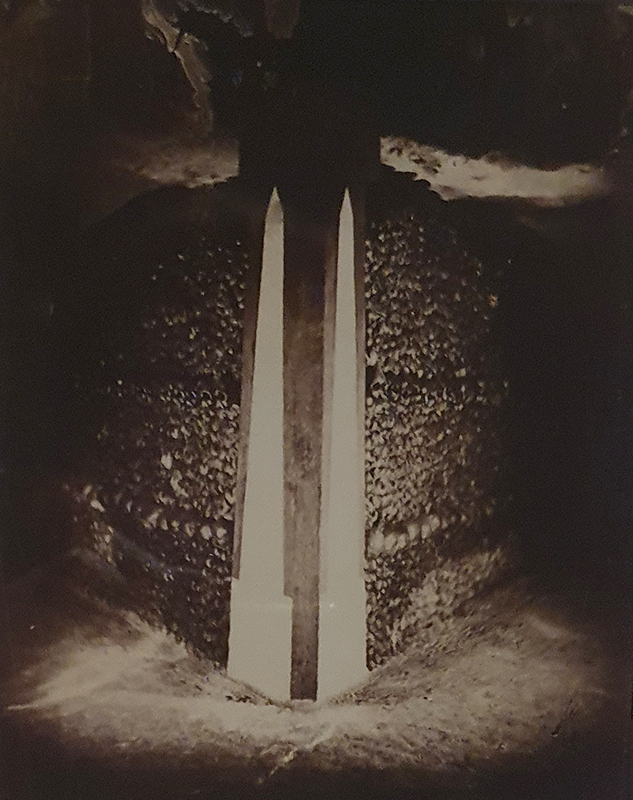
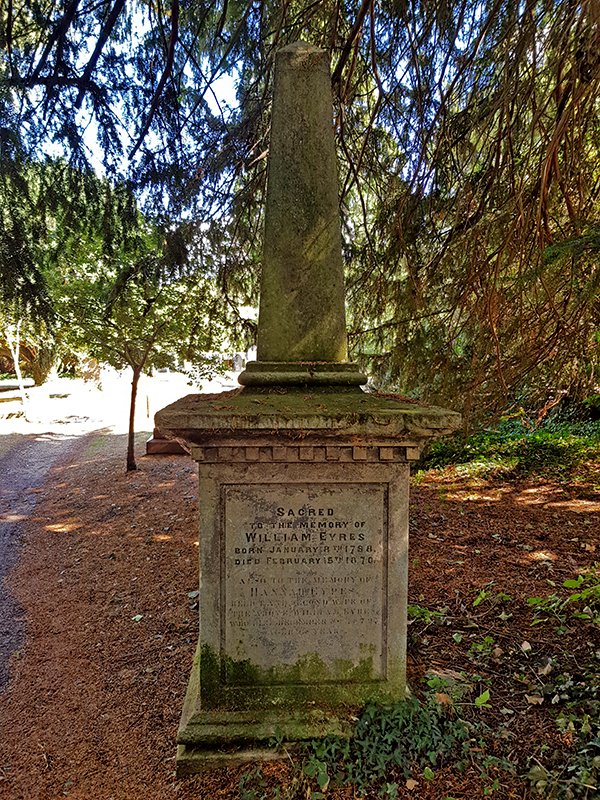
Susan Eyre, Azimuth Obelisk (of sedimentary knowledge), paper, concrete, patinated copper, 2023 (detail) Photo Warren King Photography
Julie F Hill, Cave, physically manipulated print of infrared James Webb data of barred, spiral galaxy NGC 5068, 2023 (detail).
Photo Julie F Hill

A Stone Sky brings together the works of multi-disciplinary artists Julie F Hill and Susan Eyre who traverse cosmic layers from the deep earth to deep space, exploring manifestations of darkness and its associations with the unknown and undiscovered. Reimagining the idea of an observatory, their sculptures and installations reach for scales and orders that surpass the human, revealing the cosmic at our feet. The exhibition proposes a cavernous realm of real and speculative possibilities that arise from beyond the limits of human perception. Engaging with the extended sensory range offered by technologies such as orbiting space telescopes through to the ability of birds to ‘see’ the Earth’s magnetic field, the artists’ reveal intimate connections between earth and space.

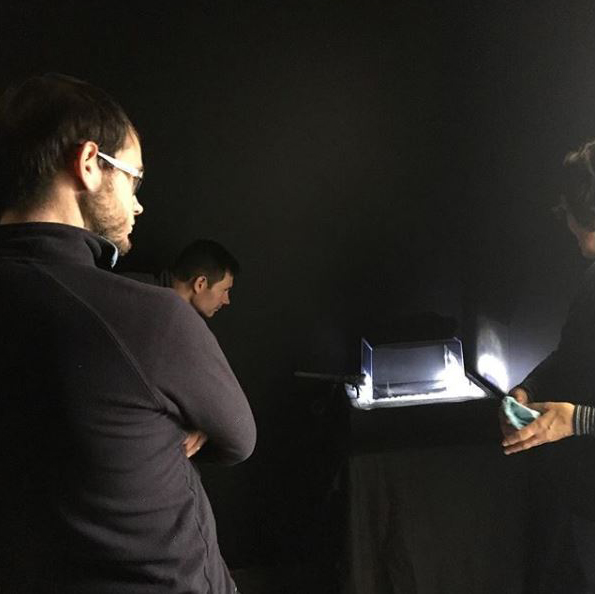
It was great to meet Anjana Janardhan who we have commissioned to write an essay for a publication which will be launched on the final weekend of the exhibition. We are also planning to give some informal readings, tours of the work and I will be running the cloud chamber so visitors can see the trails of cosmic rays – a way of visualising these unseen visitors from the stars.

The Azimuth Obelisk (of sedimentary knowledge) sculpture is an almost 3m tall reimagining of the obelisk erected at Hartland Magnetic Observatory in 1955 as an azimuth mark to be viewed from the Observing Room or Absolute Hut to monitor the drift of the magnetic north pole.

I have obtained an old wooden trolley to put the cosmic ray detectors and projector on for the digital video work The Breath of Stars. This feels in keeping with the original furniture used at Hartland Magnetic Observatory. The Breath of Stars directly interacts with cosmic rays – as each cosmic ray particle strikes a plastic scintillator its energy is recorded and a starburst image video is projected. The interaction of cosmic rays and the solar wind with atmospheric electrical fields combines to influence the unpredictability of the magnetosphere. Most radioactive particles heading for Earth are deflected by the magnetosphere. Without the Earth’s magnetic field deflecting the majority of cosmic rays, life on this planet could not survive.

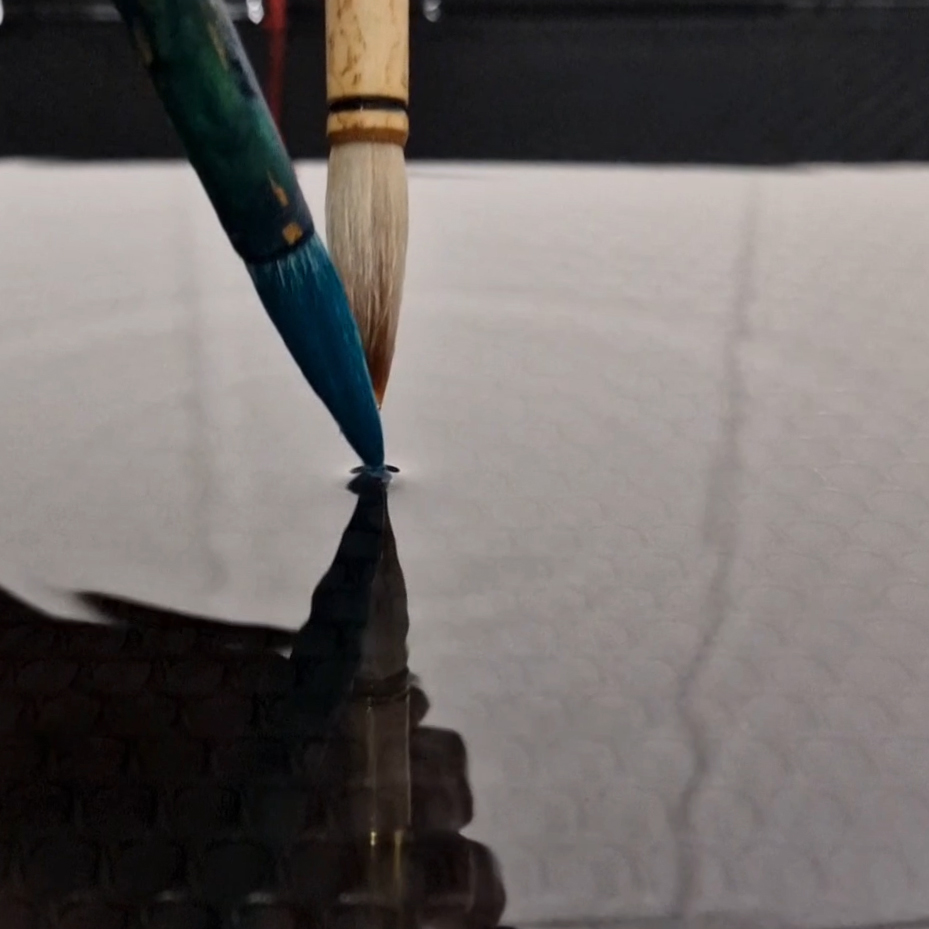
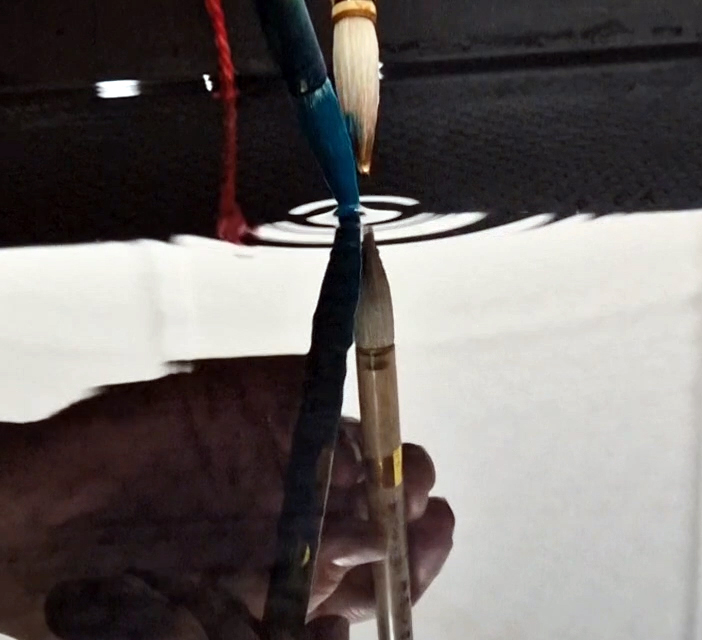
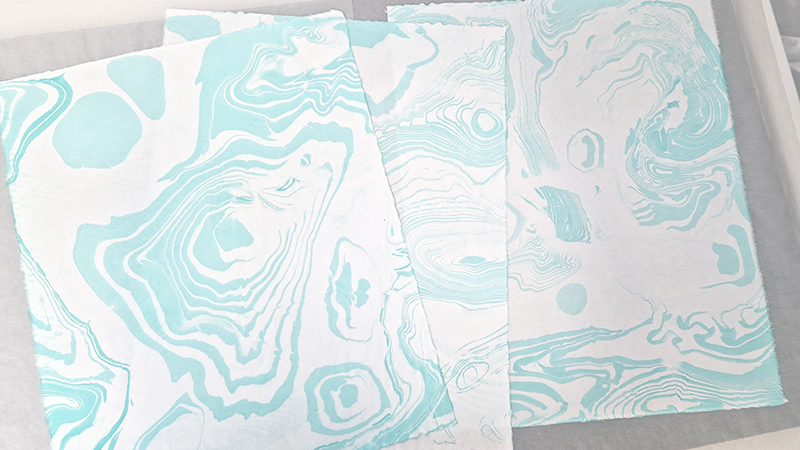
The 48 paper tiles for the roof of The Absolute Hut (of action potential) are made using the suminagashi technique of marbling with a colour to reflect both the sky and the patinated copper roof tiles of the Observation Hut at Hartland Magnetic Observatory. The paper is Japanese Osho Select and is very fragile when wet so has to be pulled from the water tray using a supporting mesh. Topological contours of suminagashi marbling reflect the fluid motion of the Earth’s magnetic dynamo and the pulsating alpha waves of the human brain when subjected to magnetic fields.

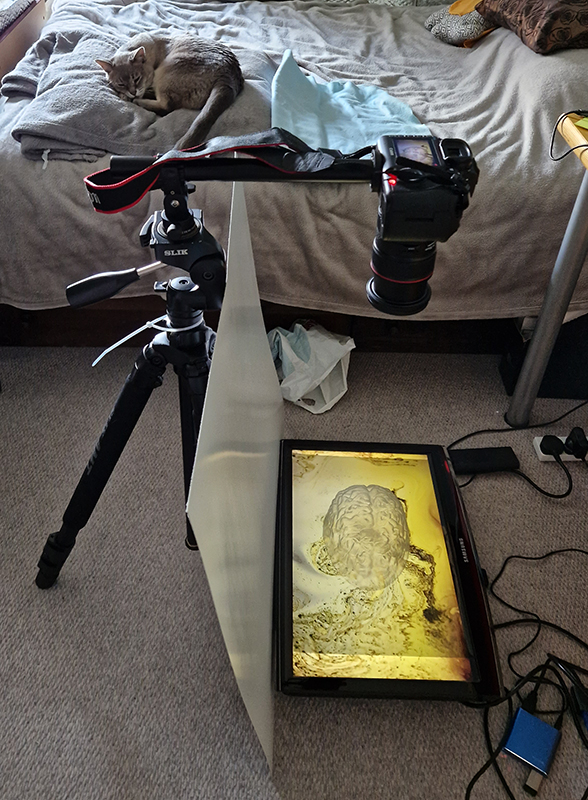
If you place a polarising filter over a screen that emits polarised light and use a polarising lens on the camera, then any plastic, photographed in this method, especially injection-moulded plastic, reveals stress points with a kaleidoscope of colours known as birefringence. Cryptochrome, the protein molecule found in a birds eye that enables birds to ‘see’ the magnetic field is excited by polarised light. Polarisation may also reveal the existence and properties of magnetic fields in the space medium light has travelled through. Research suggests that human alpha brainwaves react to a changing magnetic field. These ideas are brought together in a video work speculating on human magnetoreception via magnetite crystals in brain cells.

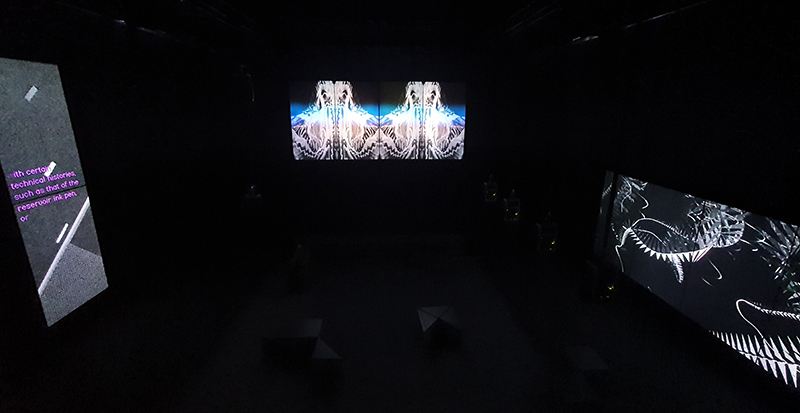
This video work will be shown on multiple small screens inside The Absolute Hut (of action potential) alongside two larger monitors showing companion video pieces exploring dynamics between the Earth’s geologic structure and navigation using the magnetic field.

I have replicated the experiment I saw at the National Physical Laboratory, dropping a magnet down a copper pipe to see how the magnetic field generated slows the magnet down considerably. I filmed this and added a tiny led light with the magnet.

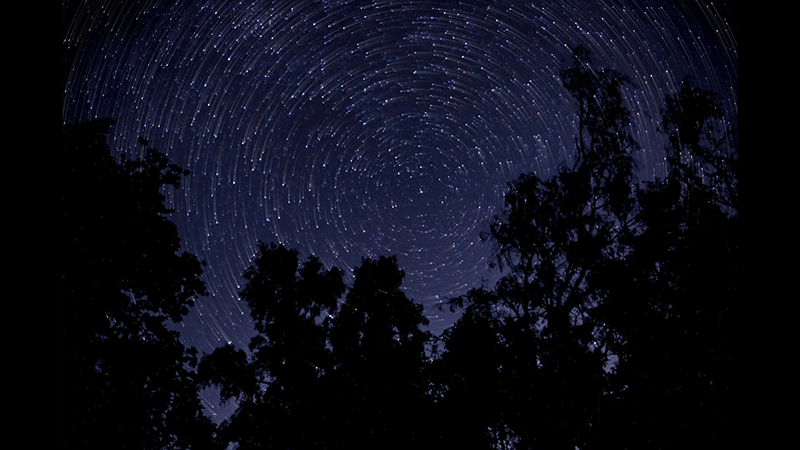
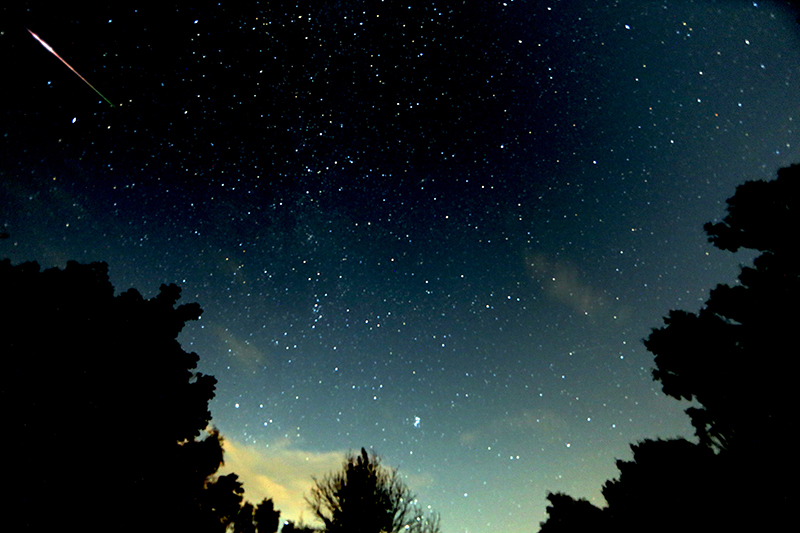
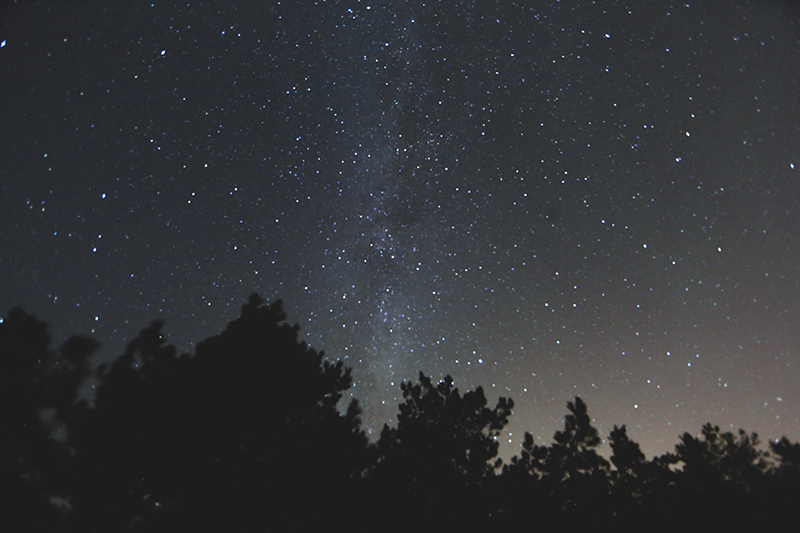
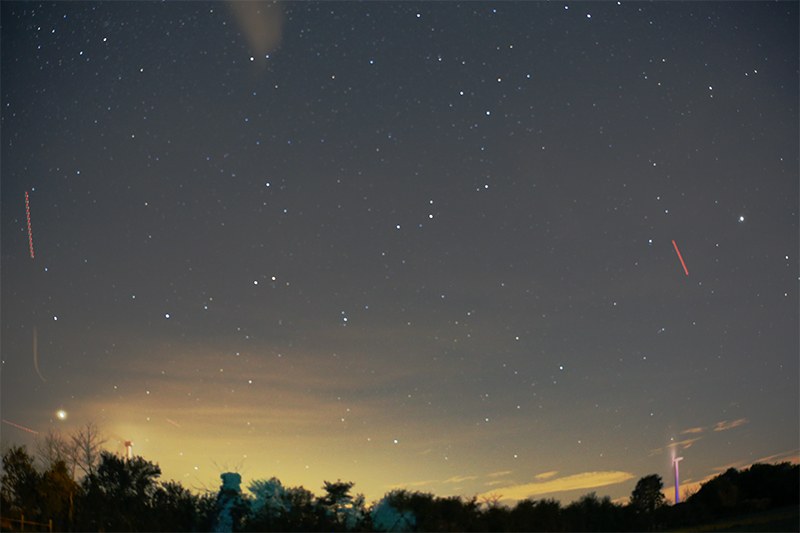
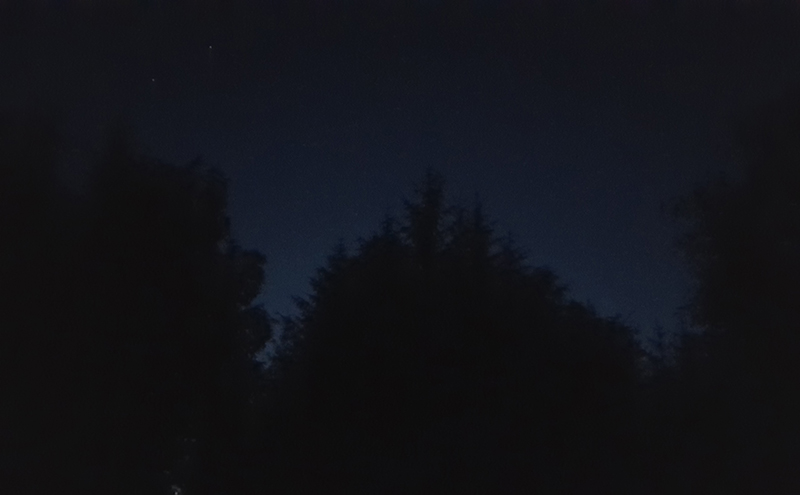
Finally dark skies and fine weather coincided so I was able to go and make a time lapse of the stars rotating around Polaris.

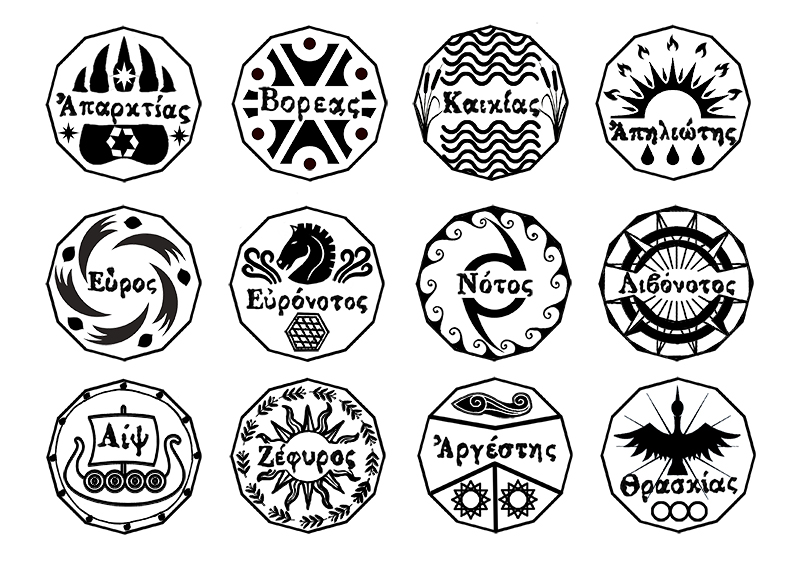
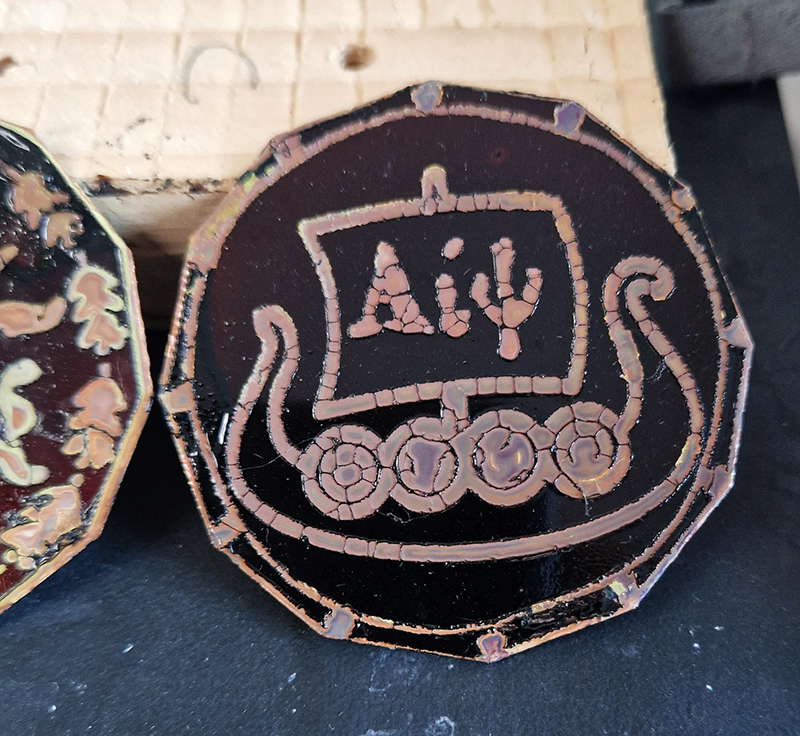
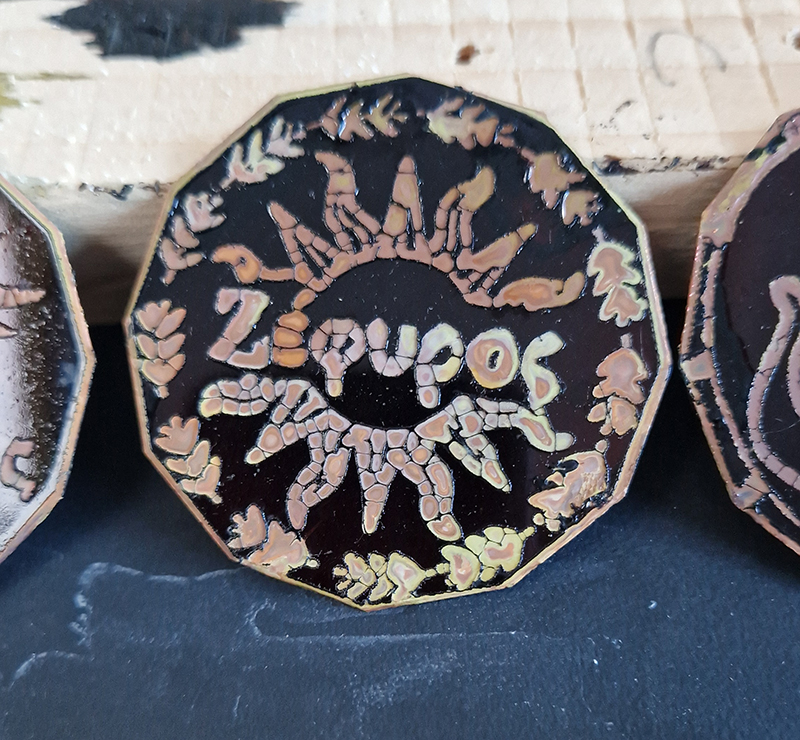
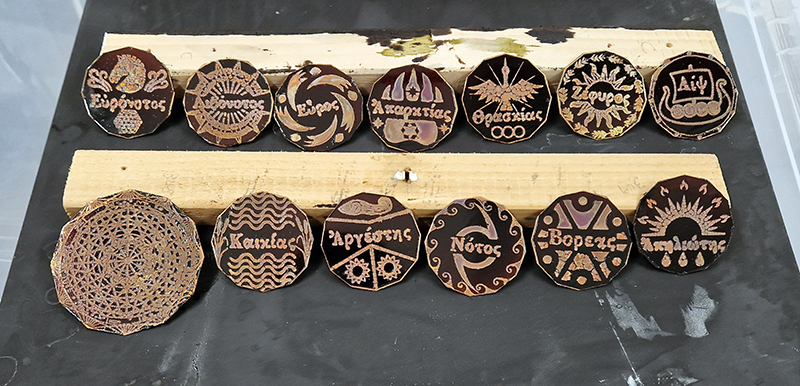
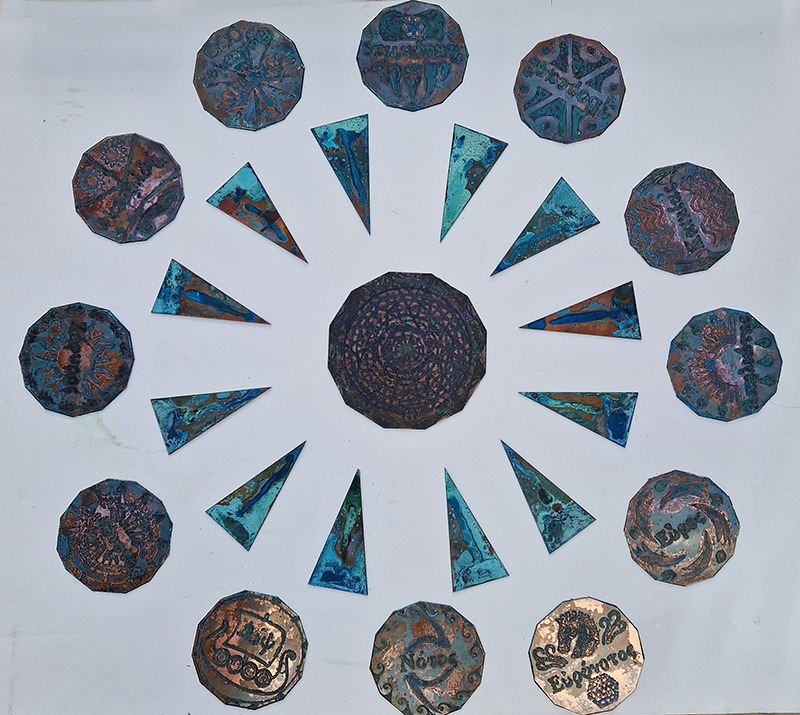
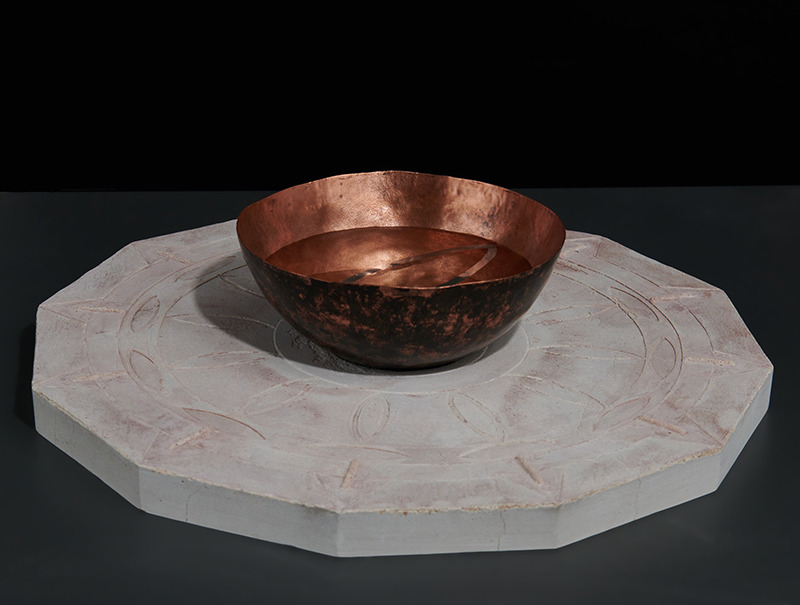
Instruments of the Anemoi is a set of three dodecagon tablets cast in Snowcrete, a non-magnetic cement, as used in a magnetic observatory. Suggestive of the pedestals that support various instruments used in monitoring the Earths’ magnetic field they also respond to an ancient anemoscope “table of the winds” inscribed with the Greek and Latin names of classical winds on each of its twelve sides.

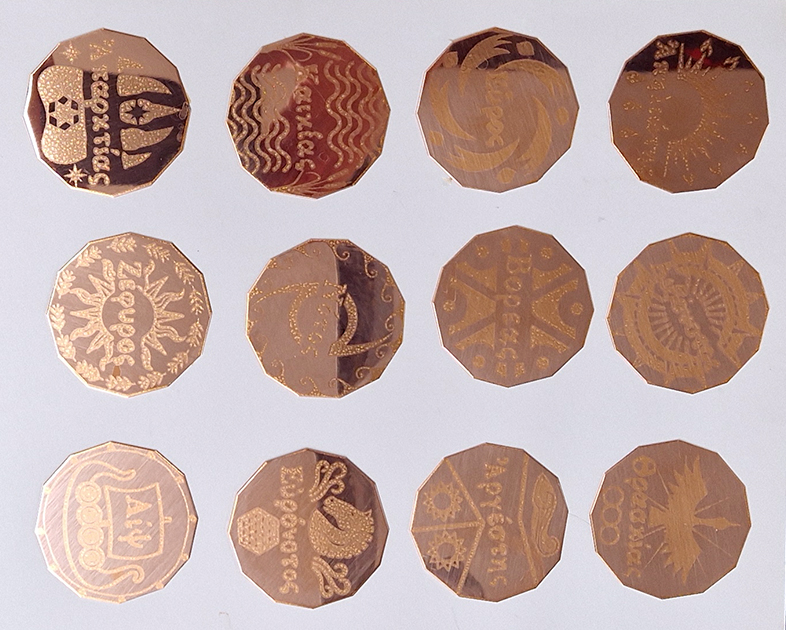
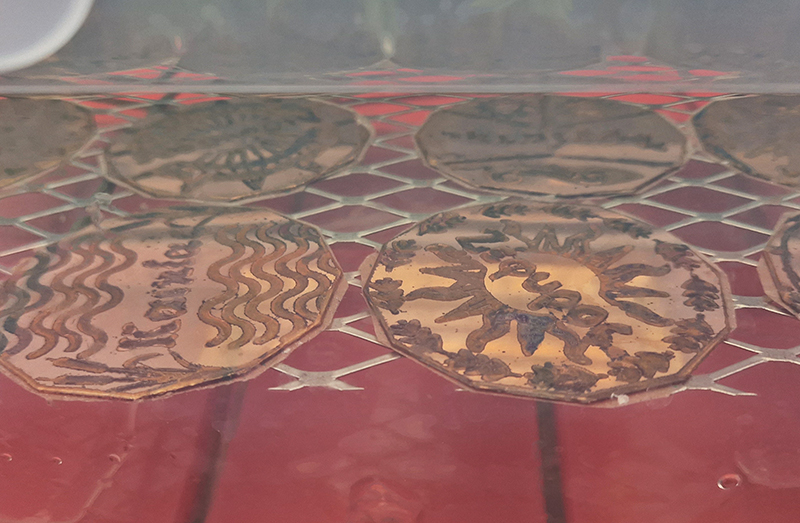
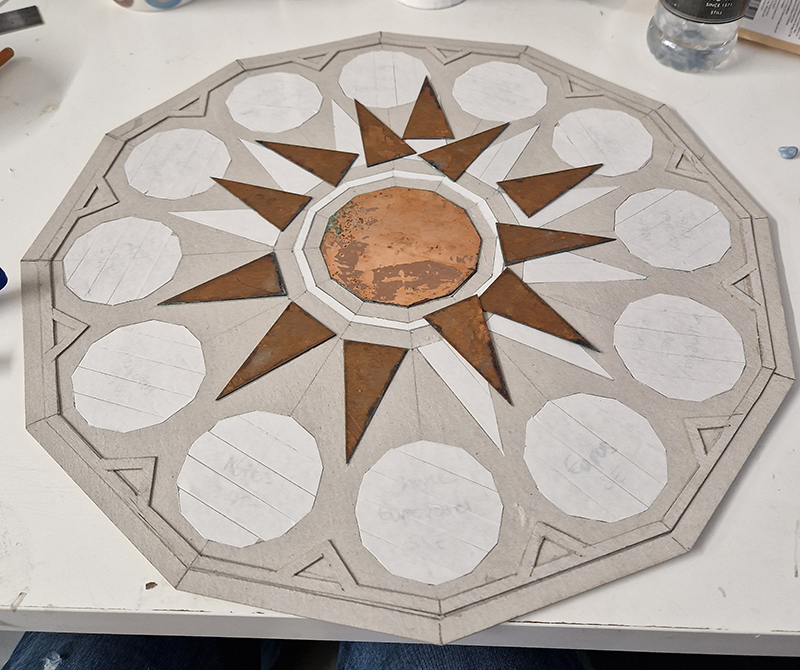
Hand cut copper pieces to be etched with images based on associations and attributes of the twelve Greek wind gods.

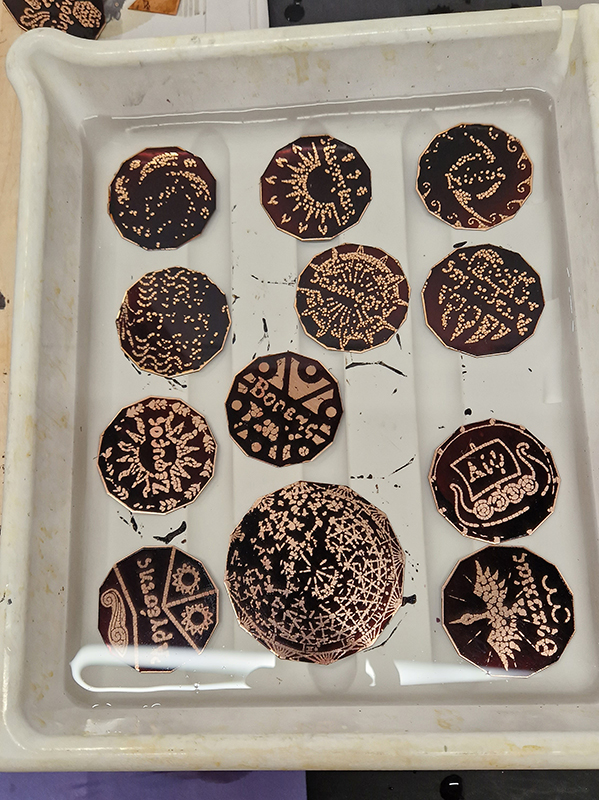
Sugar lift solution is screen printed onto the copper pieces.

These are then dipped in bitumen and immersed in hot water where the sugar slowly dissolves to reveal the image.

They are then left to dry before being etched.

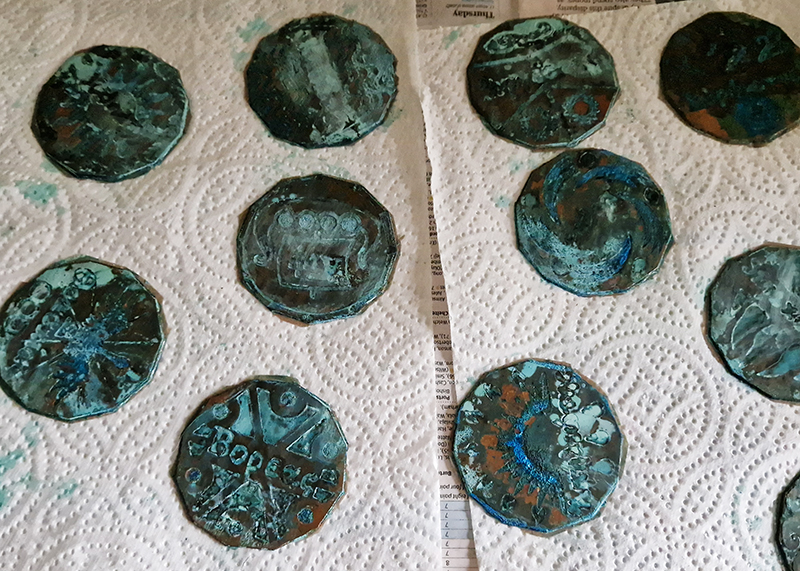
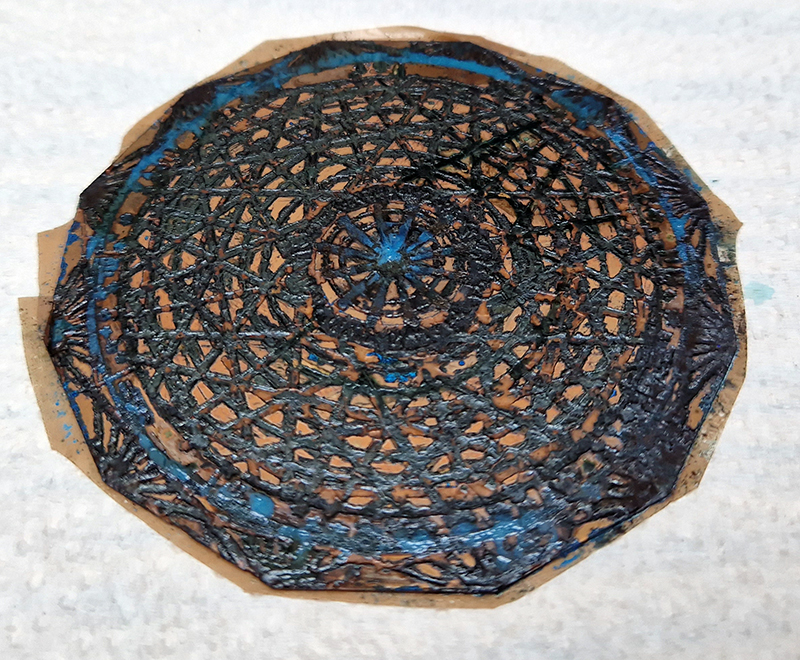
These were etched for 2 hours in an Edinburgh Etch solution, made with ferric chloride, citric acid and water to get a deep etch. The detail in the bitumen held very well. I constructed a collagraph from card to attach them to for casting in concrete. Once etched the detail areas were painted with a soy sauce solution before being placed in an ammonia vapour bath.

After a few hours patinating they are removed to dry before being cleaned up.

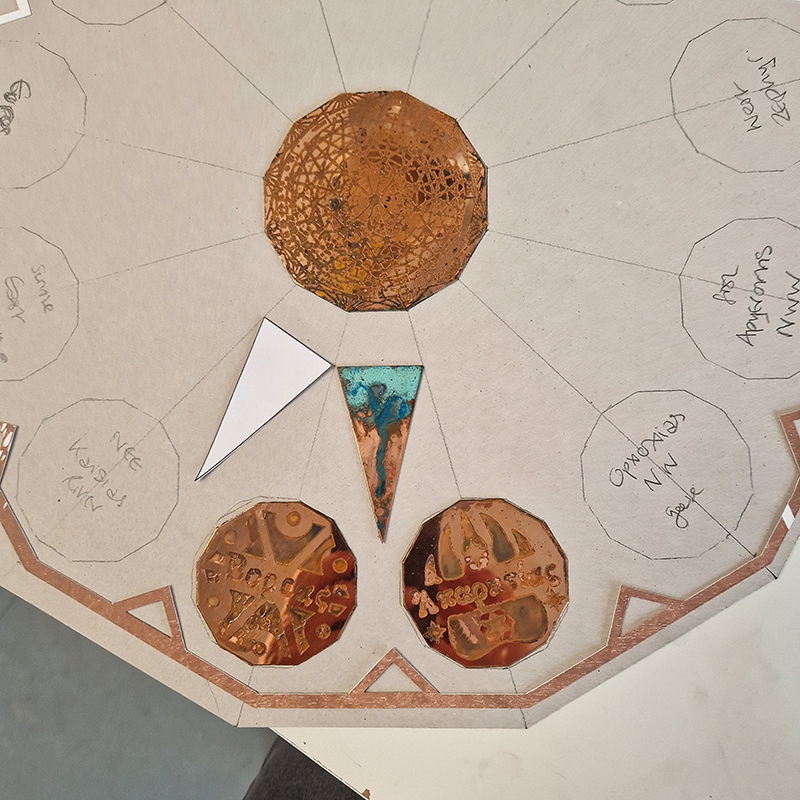
Positions are marked out on the collagraph and double sided tape is used to secure the pieces in place face down. The collagraph is then placed in the silicon mould ready for casting with Snowcrete – the same non-magnetic concrete used at a magnetic observatory.

This is the third of the tablets to be cast for the work Instruments of the Anemoi. The first holds a copper bowl with a ‘silver fish’ floating in water based on the oval shaped compass needle (illustrated in Breve Compendio de la Sphera de la arte Navegar by Martin Cortes 1551) as symbol of the silver fish – wafer thin fish shaped iron leaves used by 11th century Chinese geomancers.

Photo Warren King Photography

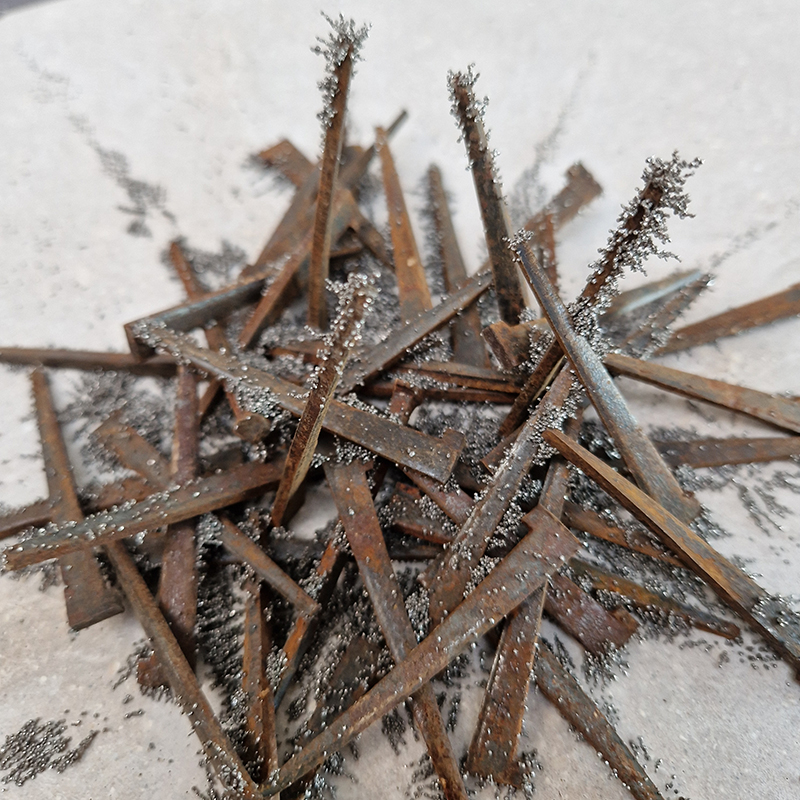
The second has embedded magnets in a pattern revealed by old nails and iron filings over the surface. One legend on the discovery of the lodestone recalls a Greek shepherd who noticed the nails in his boots were attracted to the lodestone (also known as magnetite a naturally occurring mineral).

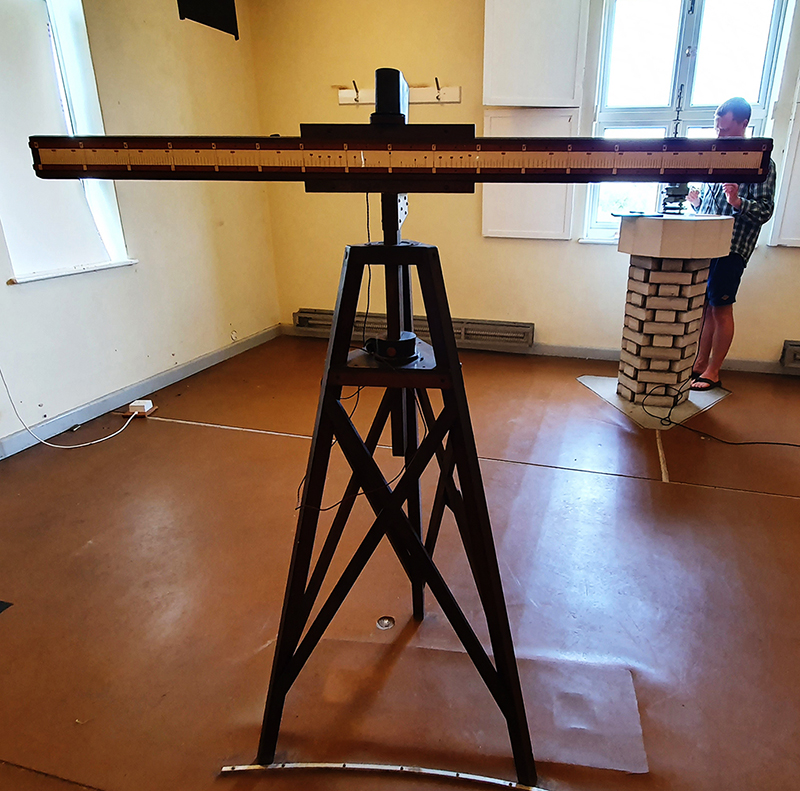
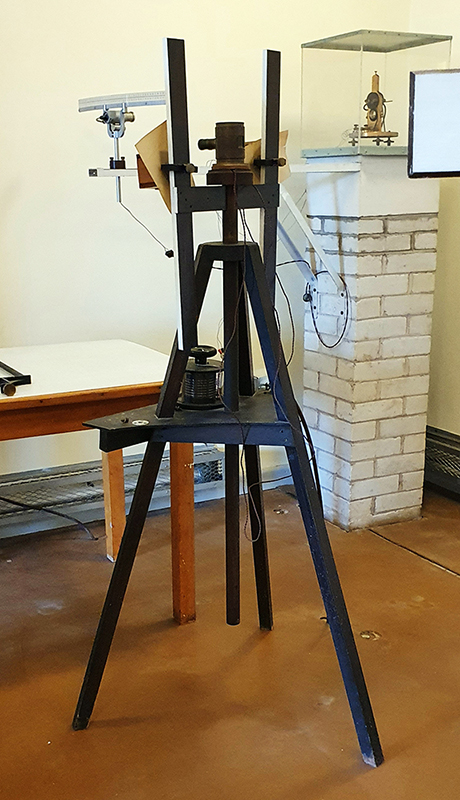
The tablets will be shown on adapted wooden theodolite or telescope tripods in the spirit of equipment seen below during my research trip to Hartland Magnetic Observatory.

Gallery Visits

Seismic Mother curated by Charly Blackburn and Holly Birtles at Hypha Space – an exhibition of 20 artists whose work attempts to communicate the seemingly incomprehensible nature of the earth’s magnitude and magnificence, temerity and resilience as it endures, regenerates and struggles to survive through the slow violence of ecological catastrophe. I visited for the book launch and performative reading from Stephen Cornford whose book, Petrified Matter, I bought. It’s an enlightening read on the links between photography and fossils through mineral, chemical and data recording processes, going on to speculate on future geology and the impossibility of reversing the extraction process by separating minerals used in mobile phones and other technology to return these back to the soil.

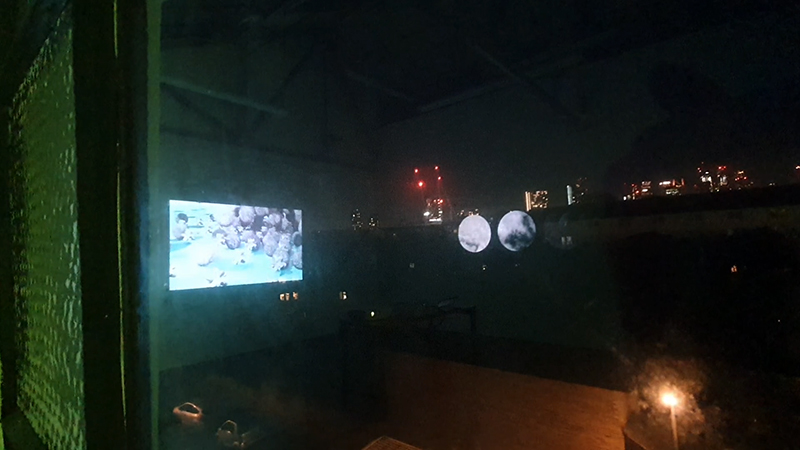
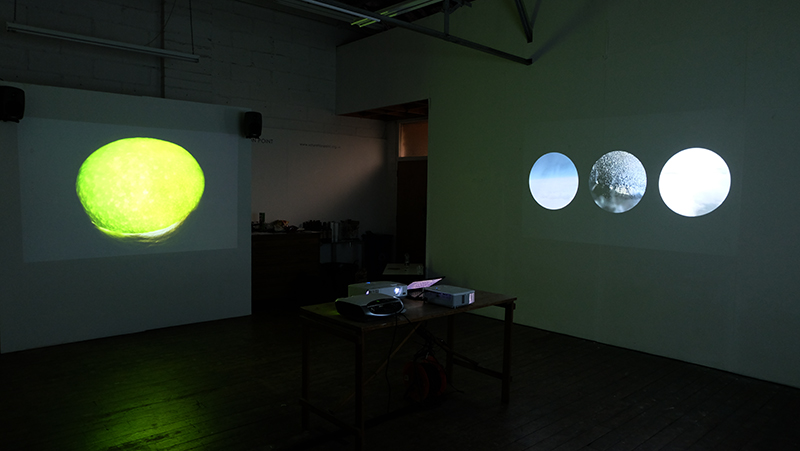
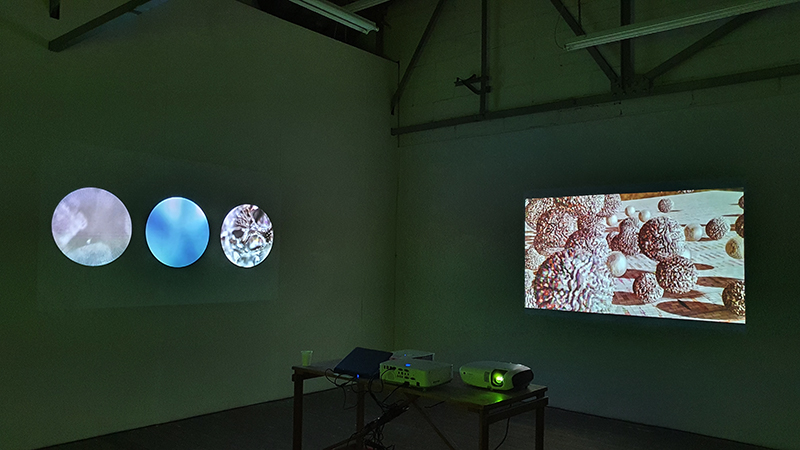
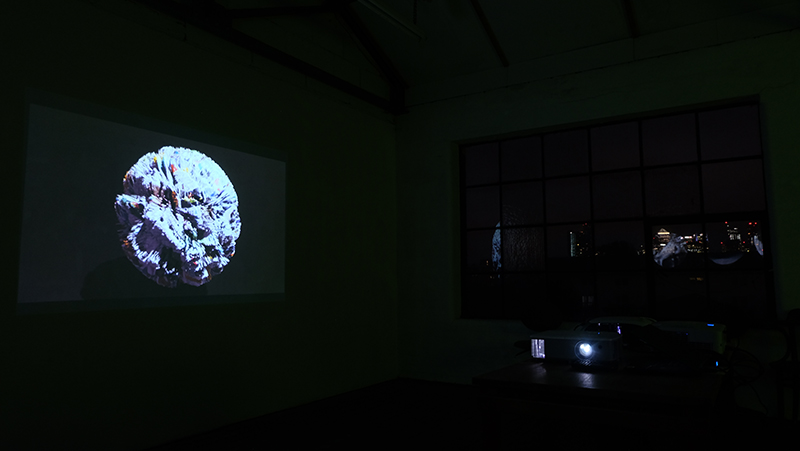
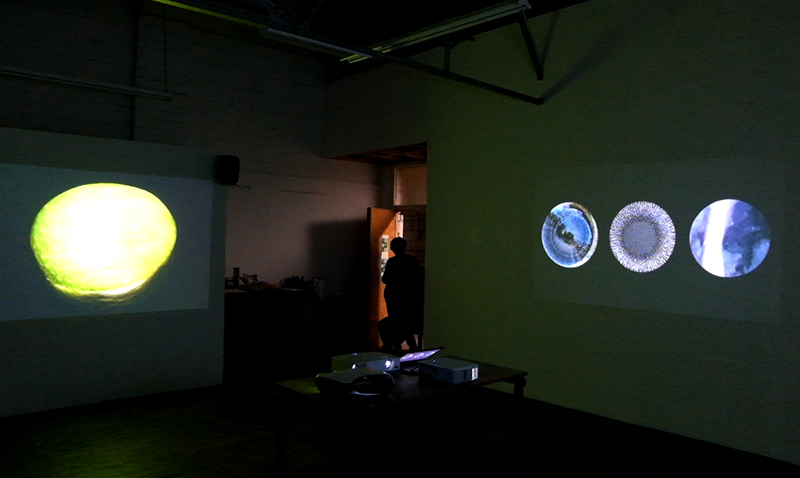
It was such a pleasure to show with Sandra Crisp and Jockel Liess at Saturation Point. We were very pleased with how our films worked together in Projected Topographies and reflected out into the night skies of London.

Sandra Crisp: E_Life uses 3D generated animation, presenting intensely textured and dynamic geometry sequenced over time.

Multiple constantly transforming organic forms, each originating from a simple 3D sphere are mapped with eclectic visuals such as emojis, fragmented images borrowed from 24-hour online rolling-news media and others downloaded via a search engine. Particle systems generate repeated, yet varied objects throughout the film which appear to have a life of their own. Overall suggesting the possibility of a simulated future/ nature.

Jockel Liess: Variations on a theme is a generative audiovisual system which starts from a point of fascination with the aesthetics of irregular organic patterns.

Visually as well as sonically the aesthetic of natural patterns thrives on their intrinsic imperfection which are never distributed even or orderly, are never replications of themselves. They are rather reoccurring variations that form a recognisable tapestry of familiarity across an otherwise chaotic and unpredictable structure. Prospering from the tension that arises between repetition and asymmetry, and playfully inhabit the border region between order and randomness.

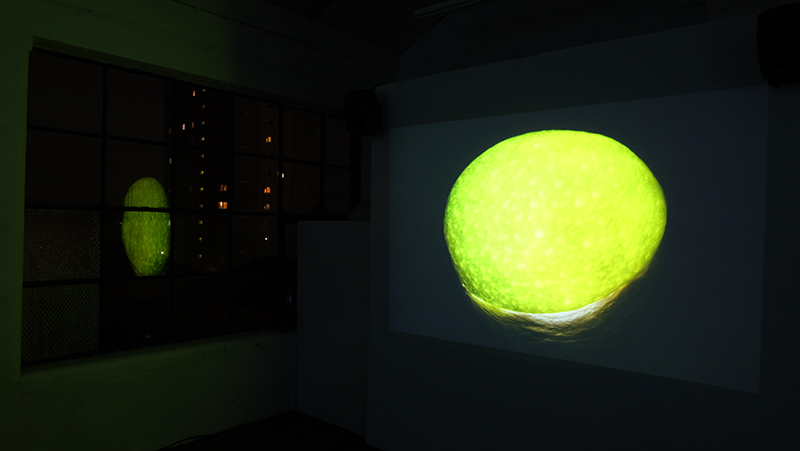
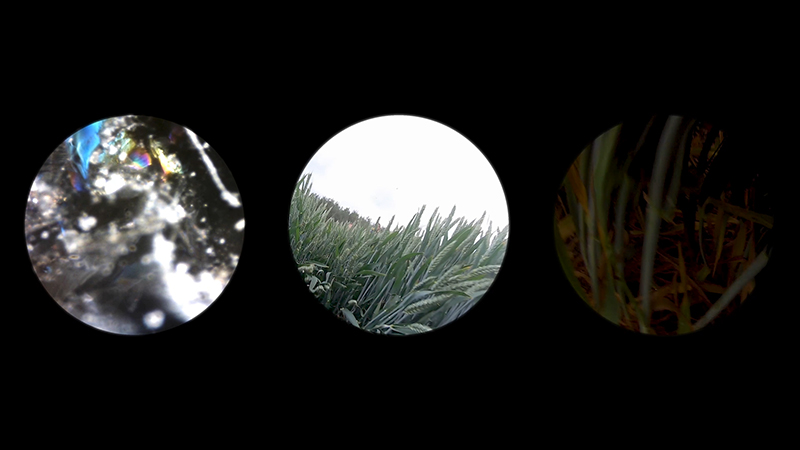
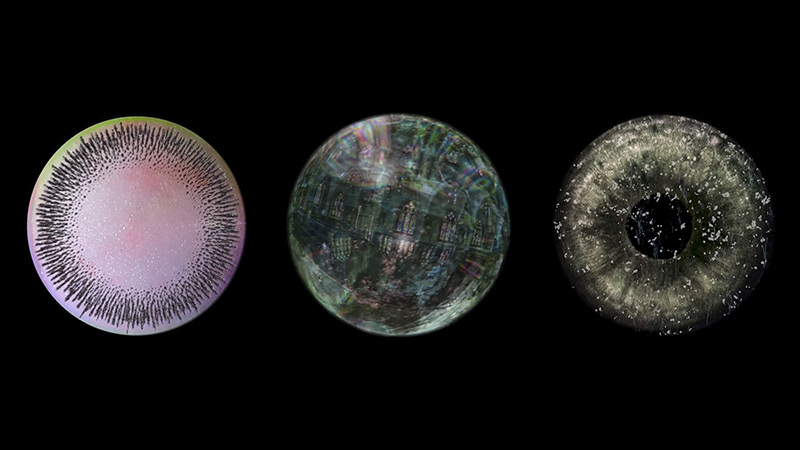
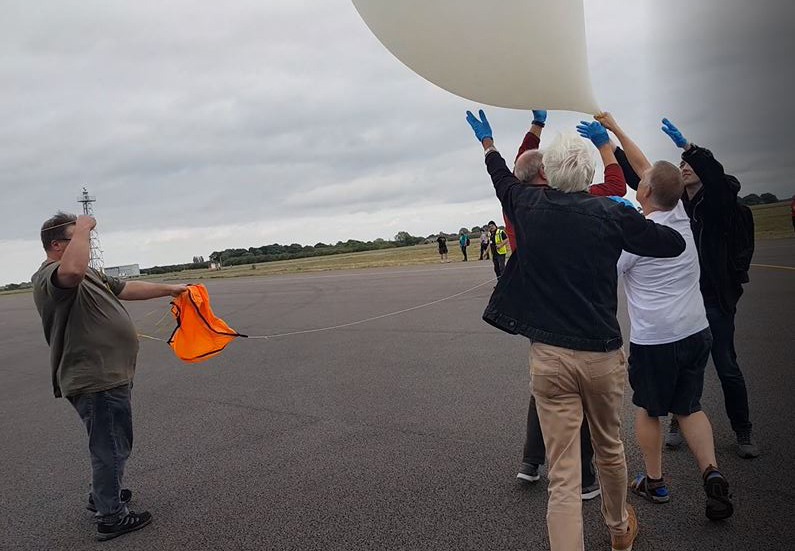
Susan Eyre: Aóratos transports the viewer between everyday locations and terrains visually transformed via use of an endoscope, a microscope,and cameras launched in a high altitude balloon.

It is not impossible that wormholes exist in our universe.

Aóratos imagines journeying through hidden landscapes, distorted spacetime and alternative perspectives. Envisaging potential encounters with cosmic strings, space foam, primordial chemistry, radioactive particles and escaping gravity the work conjectures on the enduring allure of traversing a wormhole.

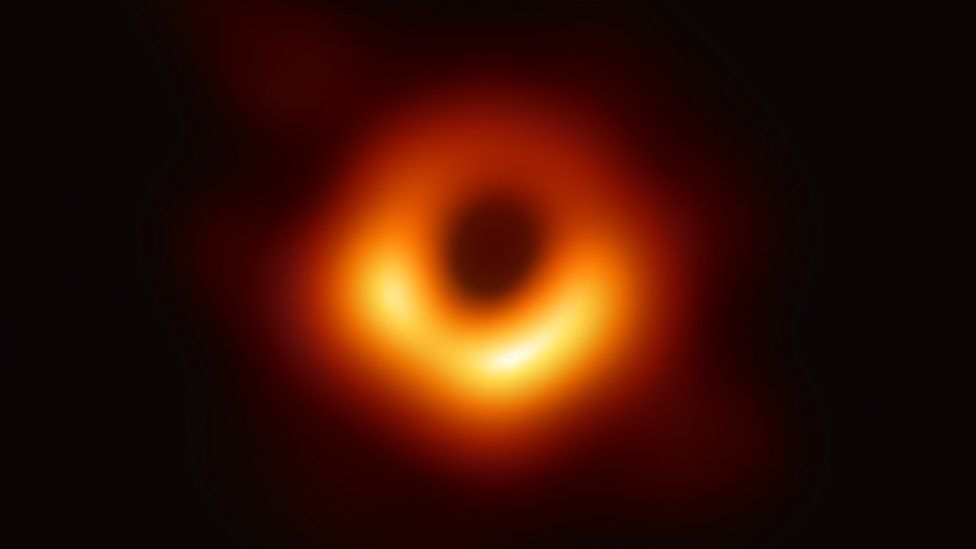
Black holes were once thought to be pure science fiction but in recent decades scientists have discovered that these extraordinary objects exist throughout our universe in all shapes and sizes and  astoundingly have even produced images of them.

Einstein’s theory of general relativity written in 1915 predicted the existence of black holes and is also consistent with the possibility of gravitational tunnels known as wormholes. It could be that there is a hidden web of planck scale wormholes linking all points in space. Theoretically, threaded through these tiny holes would be filaments of cosmic strings created in the primitive goo of early matter and flung across space when the universe burst into existence.

To traverse space by means of a wormhole would require vast amounts of negative energy, not something usually found on Earth yet in the current political climate in no short supply.

The risks and obstacles of entering a wormhole include creating enough negative energy to open the wormhole mouth wide enough to weaken the gravitational tidal forces which would rip travellers apart; keeping it from collapsing so travellers are not indefinitely trapped inside; exceeding the speed of light and avoiding incineration from deadly high radiation.

The video work explores hidden landscapes, the distortion of space and the permeability of barriers such as force fields and human skin to the unseen particles that constantly teem at near light speed across the universe.

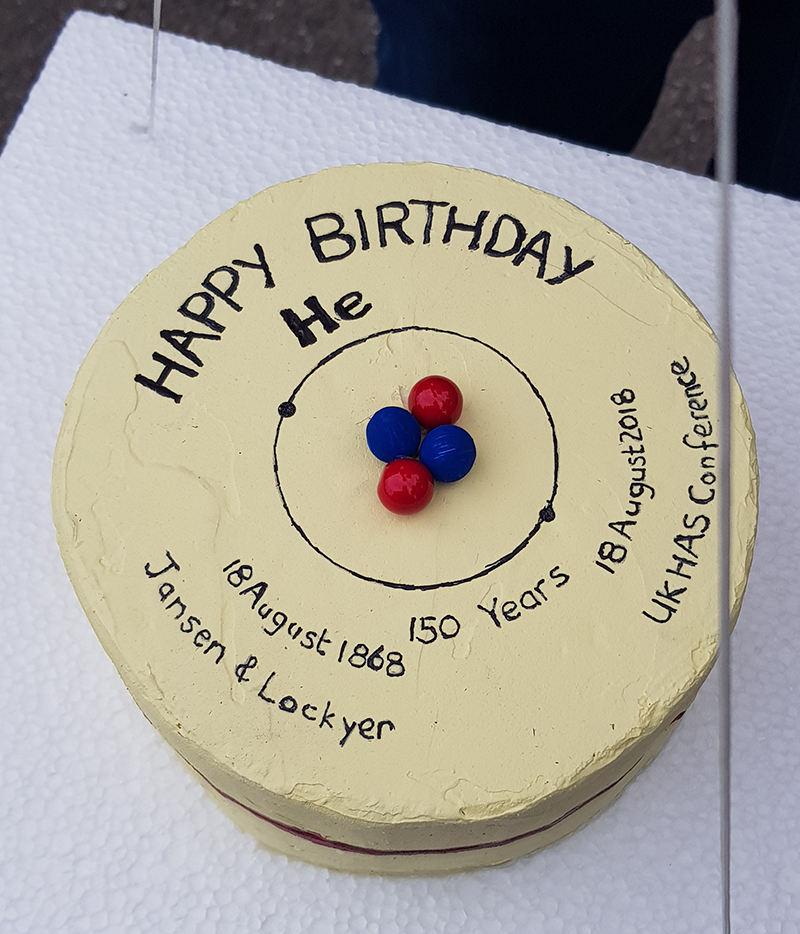
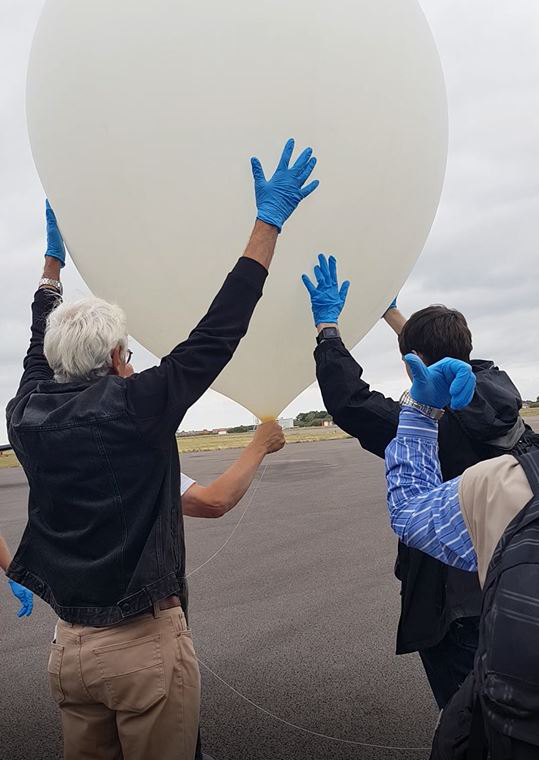
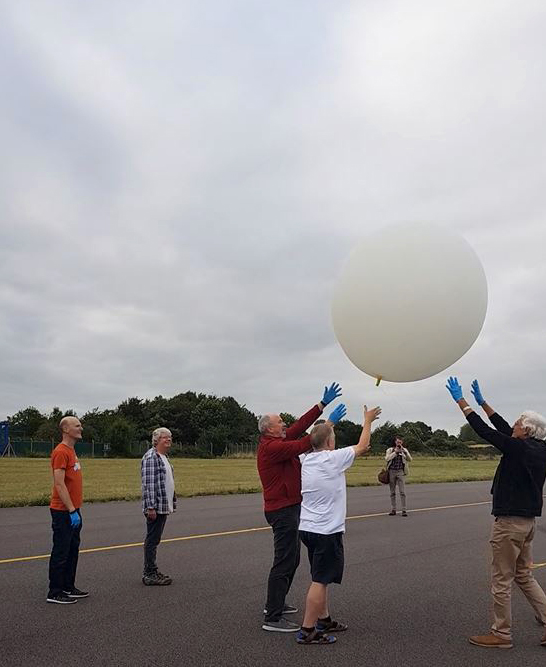
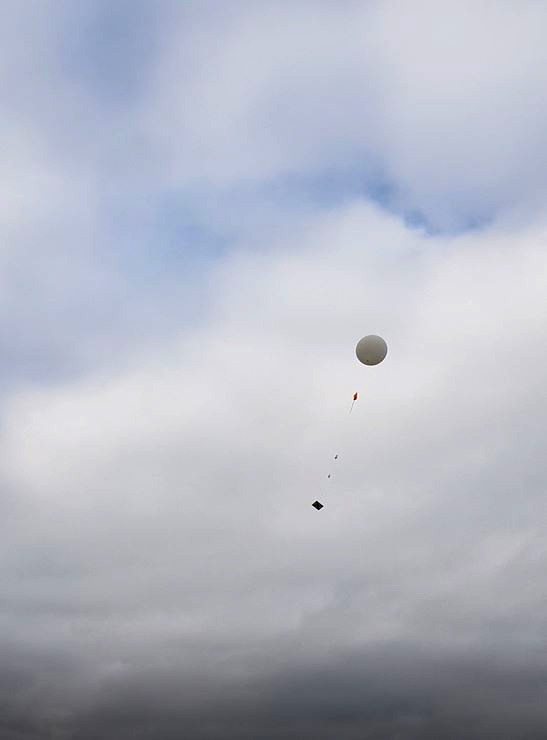
Edge of atmosphere footage was achieved with the help of Sena Harayama, Romain Clement De Givry and Medad Newman from Imperial College Space Society supervised by senior lecturer in spacecraft engineering Dr Aaron Knoll. We also had help from the UK High Altitude Society. My ambition was to film cosmic particles at the point where most of the activity of collisions takes place, about 15km up and so we launched a cloud chamber in the payload of a high-altitude balloon. Unfortunately the prepared chamber was broken the night before the launch and the replacement was not really adequate. Also due to a turbulent launch the camera inside the payload was knocked to one side so we were unable to film this cosmic activity but did get amazing footage above the clouds, gained a height of 35km and successfully retrieved the payload from a field of horses.

Space travellers can ‘see’ cosmic rays as they pass through the retina and cause the rods and cones to fire, triggering a flash of light that is really not there. The retina functions as a mini cloud chamber where the recording of a cosmic ray is displayed by a trail left in its wake.

Aóratos translates as ‘unseen’.

It was a real treat to be invited by Alan Smith and Helen Ratcliff for a short residency at Allenheads Contemporary Arts in Northumberland as part of the Being Human Festival – a celebration of humanities research through public engagement with North Pennines Observatory at Allenheads Contemporary Arts partnering with Durham University to present an evening of discussion and potential stargazing. After a few days of conversations, preparing presentations and meeting the other speakers we were looking forward to the event but unfortunately this was cancelled at the last minute due to flood warnings in the area. We are hoping it can be rescheduled.

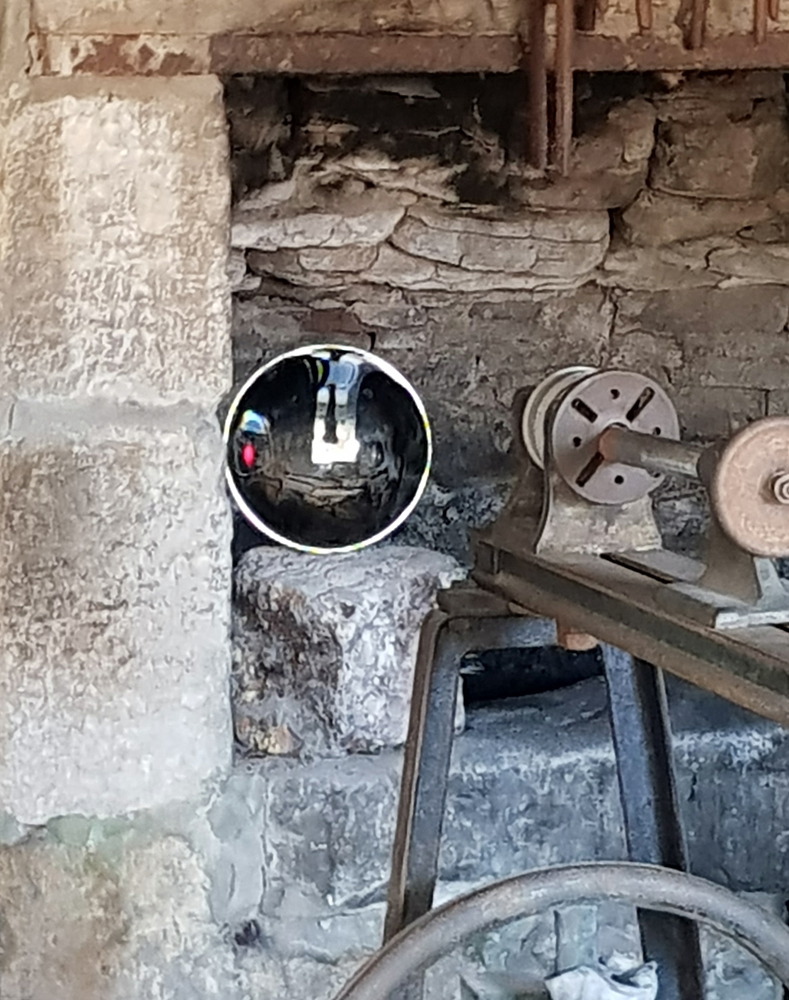
While the weather was clear I headed to Allenheads village for a walk and called in at the Blacksmith’s forge where I had previously shown Aóratos as a site specific participatory installation.

I am appreciative of the dark skies in this location which feels like it is on top of the planet and therefore closer to the sky. I live in south west London so it is a real treat to be away from light pollution. While there, I was keen to make some time lapse film of the stars circling Polaris as research for work about the earth’s magnetic field and magnetoreception. Birds can see the magnetic field and use this extra sense as well as the sun, the moon and the stars to navigate on their migration routes. I am also speculating about the possibility for humans to sense the magnetic field

As the centuries go by, the North Celestial Pole shifts and different stars become the North Star. It takes about 25,800 years for the Earth’s axis to complete a single wobble. Polaris became the north star in about the fifth century and will get closer to straight above the Earth’s north pole until sometime in 2102. Before Polaris was the North Star it was Thuban and next up is Vega.

The skies were clear for a few hours when I first arrived at ACA so I was able to build a short star trail sequence but after that the fog and then the rain settled in.

When reading about the history of Hartland Magnetic Observatory, established in 1955, it mentions ‘A permanent distant mark or azimuth mark was erected on a concrete obelisk 7 or 8 feet high near the site’s northern boundary. Viewed through the window in the north wall of the Absolute Hut, its azimuth is 11º27’54” E of N. It is still in use today.’ I was intrigued that an obelisk should be used for the azimuth mark. I had hoped to see it on my research trip to Hartland but found it is currently inaccessible with just the tip protruding from dense undergrowth.

I am reimagining this object as a sculpture made from stacked recycled paper to appear stratified like the sedimentary rock that holds clues to the Earth’s magnetic field reversals and am working to the dimension ratios recommended to avoid emotional unrest.

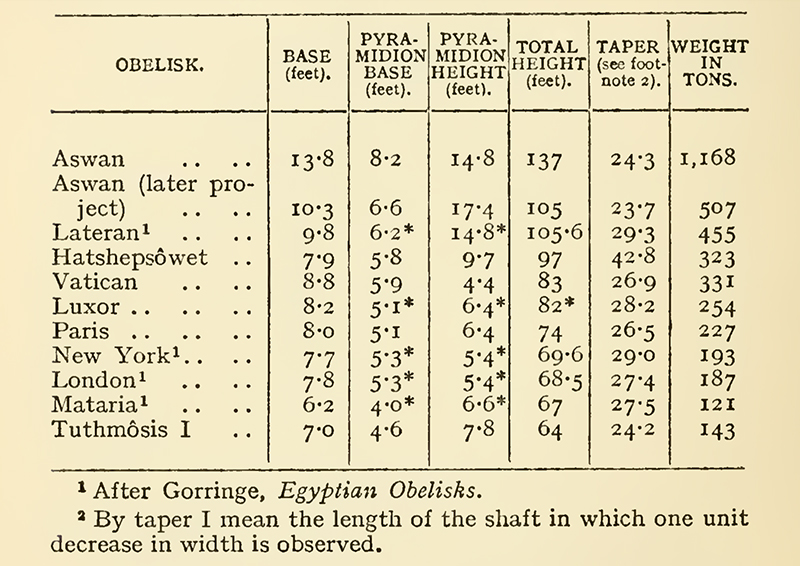
Obelisk dimensions from “The Problem of Obelisks” catalogued by Egyptologist with the Cairo Museum Reginald Engelbach, 1923.

Before the Meridian Line was moved to Greenwich, London time was calculated from the King’s Observatory at Kew.
There are three obelisks in the Old Deer Park used as meridian marks to adjust the instruments at the Observatory built by George III to observe the transit of Venus in 1769.

As I plan to make the obelisk pyramidion in copper I signed up for the Sheet Copper Sculpture Worksop taught by Robert Worley at The London Sculpture Workshop. To begin we were shown how to beat out a bowl shape and apply a dark patina using chemicals and heat.

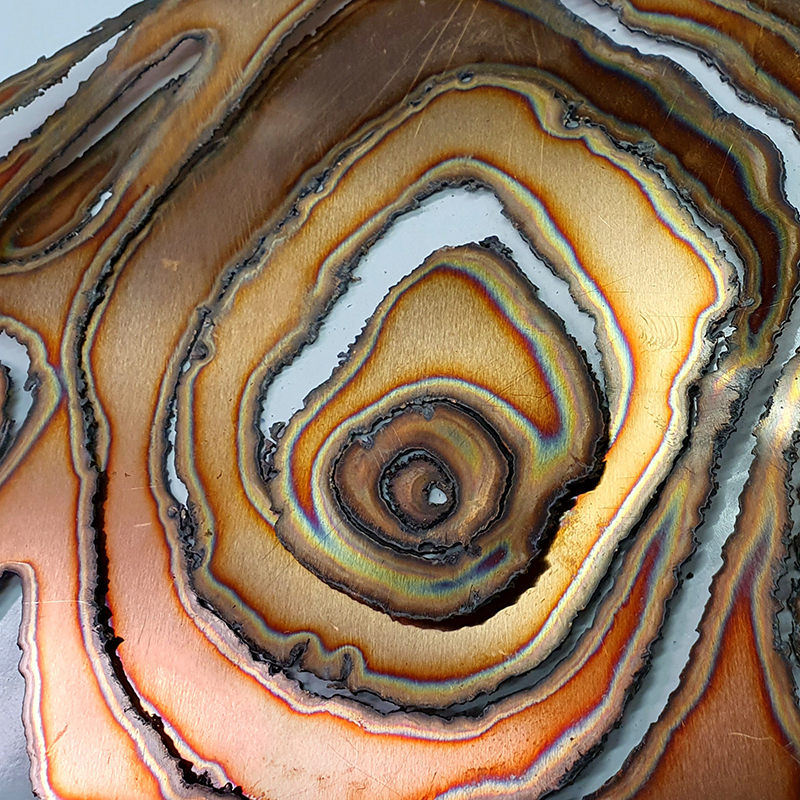
I was introduced to the plasma gun. Very satisfying cutting with the fourth state of matter. These shapes are based on the fluid fluctuations of the Earth’s geomagnetic field and I plan to use these on the north wall of The Absolute Hut sculpture in my show next year, tacked over moss with copper pins.

Magnetism is caused by the motion of electric charges. Electrons spinning around the nucleus in atoms generate an electric current and cause each electron to act like a tiny magnet. In most substances, equal numbers of electrons spin in opposite directions, which cancels out their magnetism. In iron, cobalt, and nickel, most of the electrons spin in the same direction which makes the atoms in these substances strongly magnetic. By rubbing a piece of iron along a magnet, the north-seeking poles of the atoms in the iron line up in the same direction creating a magnetic field and turning the iron into a magnet. A magnetic field can also be created by running electricity through a coil of wire, but the field will disappear when the electric current is turned off.

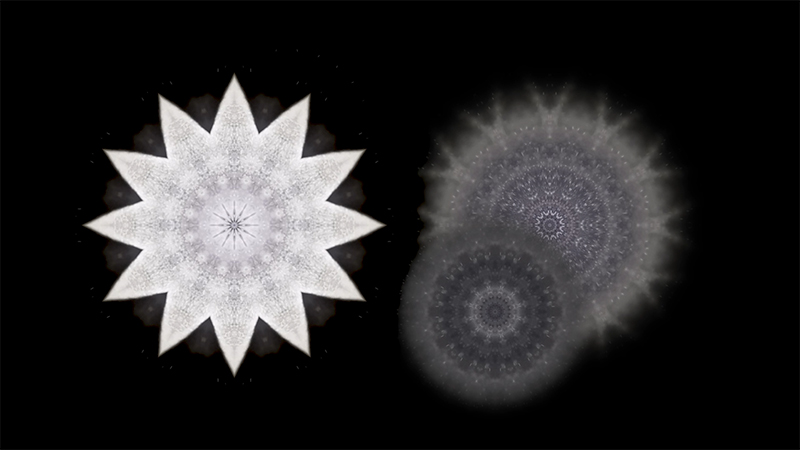
Work in progress on Breath of Stars (the cosmic ray detector interactive video) has been to convert all the .avi star burst video files to VP8.webm using Shutter Encoder software. Jamie, the programmer, has code working now to display video files with transparency so they can be layered.

Gallery Visits

Simon Leahy-Clark solo show FEED at Artworks Project Space. Painterly surfaces made from newspaper clippings have unexpected depth in palette, flow and cosmic imagery, considering the origin of each segment. Mesmerizing to study the forms like spotting patterns in the constellations. Really liked this work.

Caroline AreskogJones Tonight Rain, Tomorrow Mud at Filet Space with live sonic response from Oskar Jones incorporating field recordings gathered whilst walking in Andalucía and captured acoustics whilst making the drawings.

A thoughtfully crafted exhibition capturing the fragile landscape that turns to dust without water and mud when the rains come. The beautiful audio accompaniment from Oskar added to the meditative experience of being transported elsewhere while having time to focus of the works installed with a resonant delicacy.

Lisa Chang Lee showing HZ-0 at Enclave Projects Lake, a sensory device created in collaboration with James Wilkie that creates soundscapes responding to the void around it. Equipped with seven sensors measuring temperature, light, air pollution, sound etc data is fed into an algorithmic software based on the Lydian scale. I hadn’t heard of this scale but am interested to discover it’s connections to gravity and magnetism. The Lydian Chromatic Scale is the most complete expression of the total self-organized tonal gravity field with which all tones relate on the basis of their close to distant magnetism to a Lydian tonic. Tonal gravity is the heart of the Lydian Chromatic Concept. Simply put, the basic building block of tonal gravity is the interval of the perfect fifth. Every tone within Western music’s equal tempered tuning relates to every other tone by either being close to – or distant from – the center of gravity, which is the tonic (or “DO”) of the Lydian Scale. There are 3 states of tonal gravity: Vertical, Horizontal, and Supra-Vertical.

This is a fascinating work thinking about other ways to experience a space.

Hollow Earth: Art, Caves & The Subterranean Imaginary at Nottingham Contemporary.

Inspired by the hundreds of caves hand carved into the rock beneath the city of Nottingham this exhibition explores questions of thresholds, darkness and prehistory. ‘Every culture and religion has told stories about what lies beneath. Caves are where extraordinary events come to pass, the domain of gods and monsters, of births, burial and rebirth. Dark, dangerous and unstable, caves are places of visions and experiences both sacred and profane. More recently, they have become home to data farms, seed vaults and doomsday bunkers.’

Artists include: Hamed Abdalla, Lee Bontecou, Sofia Borges, Brassaï, The Center for Land Use Interpretation, Steven Claydon, Matt Copson, Juan Downey, Chioma Ebinama, Mary Beth Edelson, Laura Emsley, Barry Flanagan, Ilana Halperin, Frank Heath, Ed Herring, Michael Ho, Hans Hollein, Peter Hujar, Athanasius Kircher, Alison Knowles, Antti Lovag, Goshka Macuga, René Magritte, Gordon Matta-Clark, Emma McCormick-Goodhart, Santu Mofokeng, Henry Moore, Nadar, Ailbhe Ní Bhriain, Pauline Oliveros, Lydia Ourahmane, Gordon Parks, Flora Parrott, Walter Pichler, Giuseppe Pinot-Gallizio, Liv Preston, Ben Rivers, Robert Smithson, Michelle Stuart, N.H. Stubbing, Caragh Thuring, Kaari Upson, Jeff Wall, Aubrey Williams, Joseph Wright of Derby.

This was a research trip with Julie Hill towards our joint show next year. The geological resonates through both our work, for Julie through the deep chasms of geology echoing those occurring cosmologically and for myself in the generation of the geomagnetic field deep in the earth which emanates out, reaching into space.

EVERY CLOUD at Bruce Castle Museum.

Nine artists celebrate the life and work of the Namer of Clouds and Tottenham resident, Luke Howard (1772 – 1864) to mark the 250th Anniversary of his birth.

Artists include Tam Joseph, Andrew Miller, Doodleganger, Gabriela Schutz, Helen Currie, Kerry Duggan, Lisa-Marie Price, Mary Yacoob, Siân Dorman with a live cloud sculpture performance from Alexander Costello.

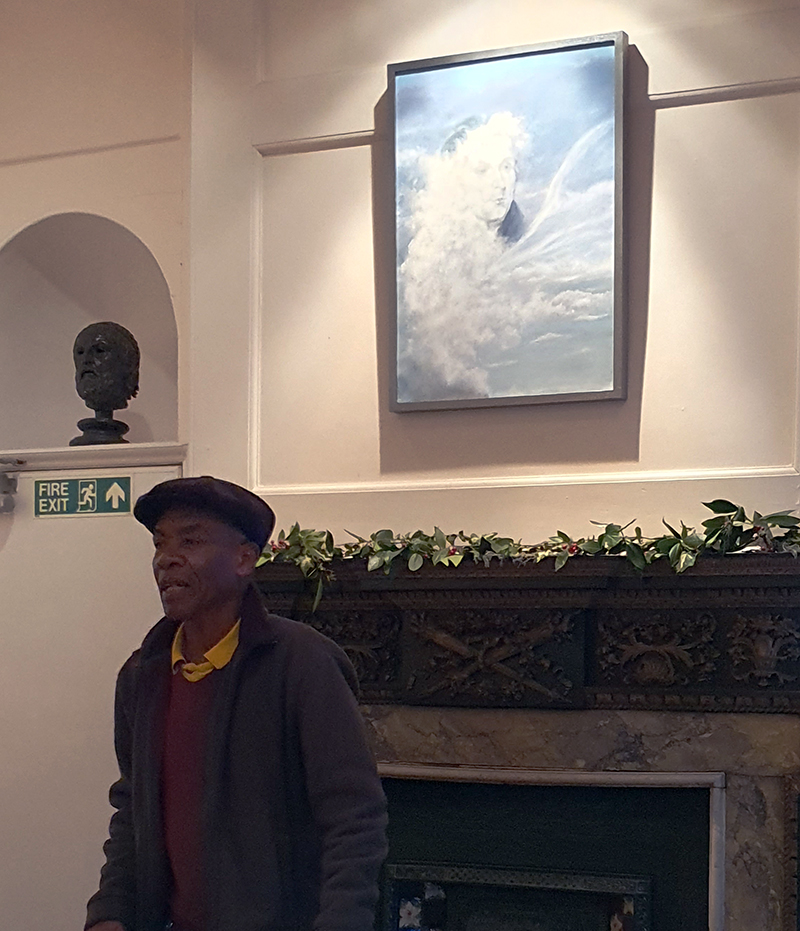
Tam Joseph gave a heartfelt speech about his discovery of Luke Howard from seeing a blue plaque with the citation ‘Namer of Clouds’ which to him spoke of first nation peoples connection to nature and piqued his curiosity to learn more about this poetic origin; the difficulty of painting clouds – never from a photograph – a cloud is never still and a photograph loses the inherent transience; and the shared passion for the shapes and patterns found in the ocean of air above our heads.

Reading

Some history of early speculation, experiments and discoveries of three men who respectively broke new ground in understanding the Earth’s magnetic field, measuring time mechanically and mapping the hidden strata of the Earth.

Latitude and The Magnetic Earth by Stephen Pumfrey. The story of William Gilbert (1544 – 1603), a radical new thinker who questioned the perceived Aristotelian philosophy of the day, developing his own theory of magnetic philosophy of the Earth. His book On the Magnet and Magnetic Bodies, and on the Great Magnet the Earth was published in 1600 in which he concluded that the Earth was itself magnetic.

The lines of latitude and longitude remain fixed as the world flexes and shifts beneath them. Extraordinary to think these lines were drawn centuries BCC and mapped by Ptolemy in the second century on his many atlases.

The zero degree line of latitude is fixed by nature whereas that of longitude is a political decision. The founding philosophy of the Greenwich Observatory viewed astronomy as a means to an end – all the stars needed to be catalogued to chart a course for sailors to cross the globe. Ptolemy first set the meridian off the northwest coast of Africa and many countries set their own starting point for 0 longitude. Eventually, after publication of a series of star charts beginning in 1767, made by the then Royal Astronomer, that became used world wide for nautical navigation, Greenwich was declared prime meridian of the world in 1884 (except by France who took another 27 years to accept the decision).

Longitude by Dava Sobel tells the story of the battle between proponents of the lunar distance method and the mechanical clock to solve the problem of determining longitude at sea. Astronomers and engineers became adversaries spurred by a financial reward offered to the one who came up the most accurate and reliable method. John Harrison (1693 – 1776) carpenter turned clockmaker spent his life perfecting the marine chronometer.

The Map That Changed The World by Simon Winchester might have some historical merit in telling the story of William ‘Strata’ Smith (1769 – 1839) but I found it over perambulatory in the telling.

Work in progress on the Azimuth Obelisk sculpture has taken a new direction and I have abandoned the idea of casting the obelisk in aerated concrete. I also have new dimensions to work with having found an interesting article on the historic dimensions of obelisks with the advice that ‘designs that have too large a gap in scaling between elements will lack hierarchical cooperation and lead to a sense of emotional unrest‘.

Looking at layering of sedimentary rock holding memory of magnetic field information I am aiming to make the sculpture from layered paper to echo the effect of strata, using unwanted old work on paper as well as other paper that would otherwise be discarded. It has been satisfying tearing down old prints that were languishing in plan chests and old work from foundation courses and art classes. It even has an obelisk within the obelisk. I am collecting donations from everyone I know who works with paper as I have estimated I need about 8,000 sheets to reach a height of over 2m.

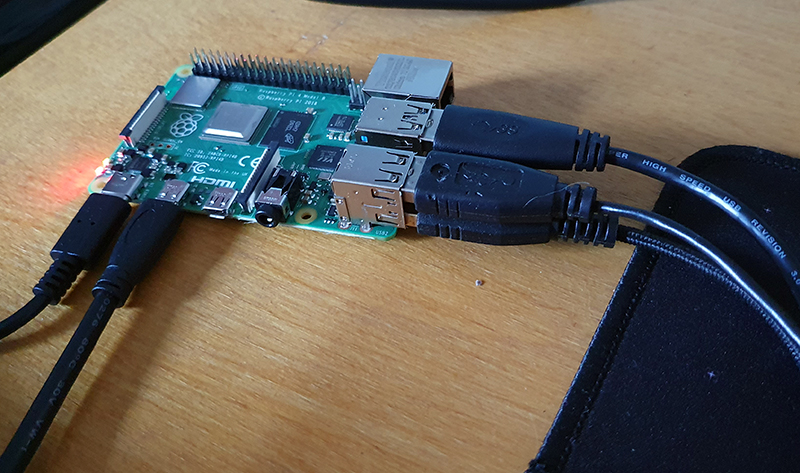
Work in progress on The Breath of Stars cosmic ray interactive work is still pending. After spending hours formatting and loading the raspberry pi with the video files of cosmic trail starbursts I heard from Jamie the programmer that .avi files are not going to work and these might need converting to WebM files which might not be easy. Hoping to find a solution to this soon.

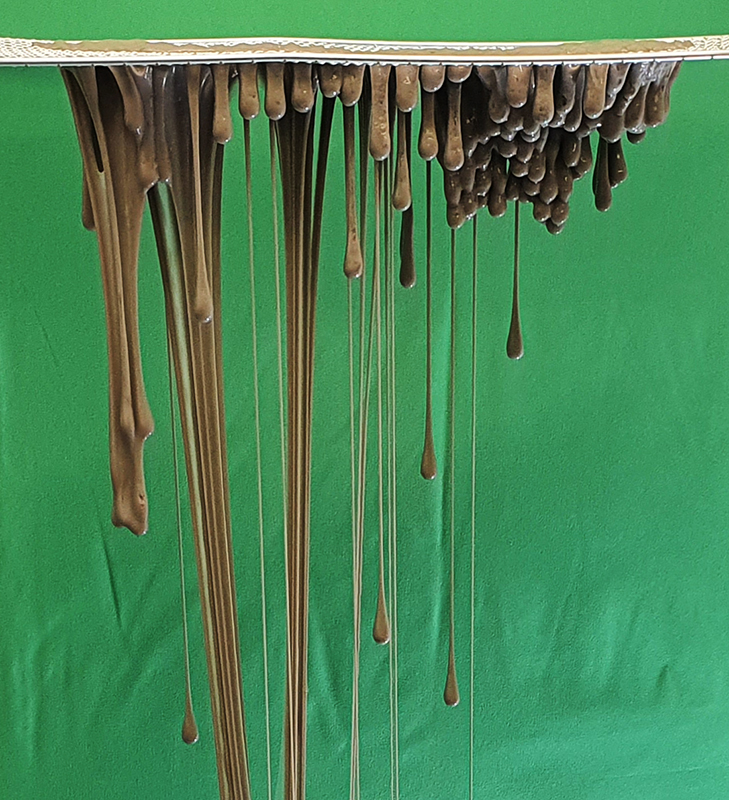
Great fun greenscreen filming slime for Belly of a Rock – a video sculpture partly inspired by the Cosmicomics story The Spiral and partly inspired by paleomagnetism where magnetic minerals in rocks can archive a record of the direction and intensity of the magnetic field when they form.

“I began to give off excretions which took on a curving shape all around” The Spiral, Italo Calvino

“..I accompanied the effort of making the shell with the effort of thinking I was making something, that is anything: that is, I thought of all the things it would be possible to make. So it wasn’t even a monotonous task, because the effort of thinking which accompanied it spread towards countless types of thoughts which spread, each one, towards countless types of actions that might each serve to make countless things, and making each of these things was implicit in making the shell grow, turn after turn…” Italo Calvino The Spiral

Fabulous shells lent to me by my neighbour for spiralling inspiration. The size of them not easily appreciated in these images. They are huge. I have no idea how old the molluscs that made these could be.

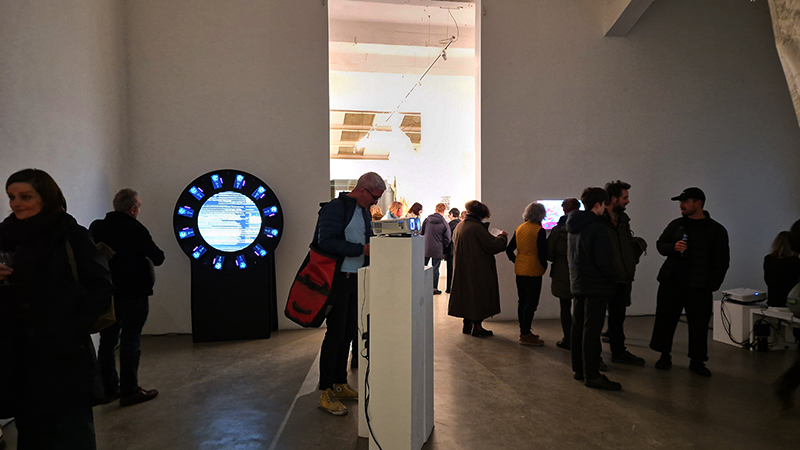
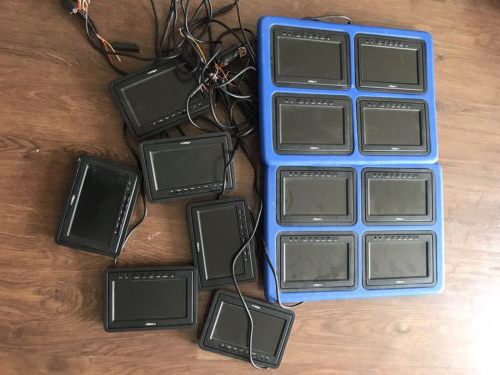
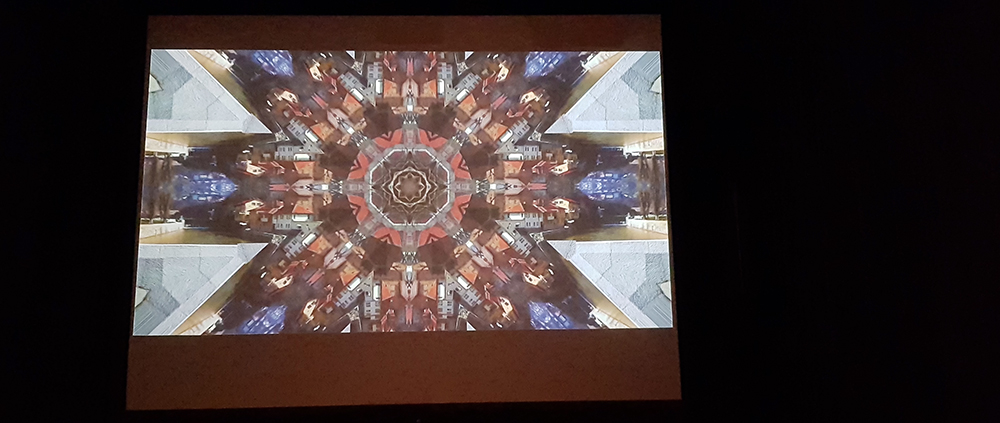
Other work in progress is towards using the small monitors bought as a good deal on eBay set in a circle displaying video dissected into twelfths. Testing ideas with kaleidoscopic images from soap bubble videos and relying on technical help from next door getting the monitors to work

Delighted to be invited to join Sandra Crisp and Jockel Liess for an exciting moving image event. Each artist has a unique approach to film incorporating the study of form, surface and location. DM for an invitation.

Sandra Crisp: E_Life uses 3D generated animation to present a digital environment populated with intensely textured and dynamic geometry.

Jockel Liess: Variations on a theme is a generative audiovisual system which starts from a point of fascination with the aesthetics of irregular organic patterns.

My work Aóratos (new edit for this event) transports the viewer between everyday locations and terrains visually transformed via the use of an endoscope, a microscope, and cameras launched in a high-altitude balloon.

Paused to see the wonderful World Time Linear Clock at Piccadilly Circus Underground Station built in the early1920s and recently refurbished.

The band of roman numerals scrolls West at the same relative speed as the earth rotates, completing a circuit in 24 hours.

“The clock by which we measure time on our watches and digital devices is very misleading; it is determined by the daily rotation of the Earth around its axis and its annual rotation around the sun. This astronomical time is linear and regular. But the actual clock by which we live our socioeconomic lives is an emergent phenomenon determined by the collective forces of social interaction: it is continually and systematically speeding up relative to objective astronomical time.”    Geoffrey West

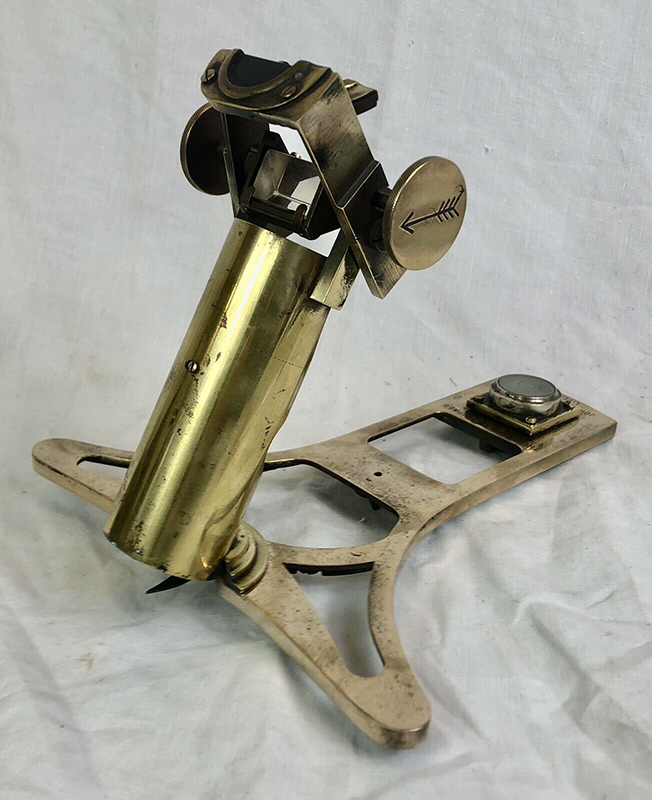
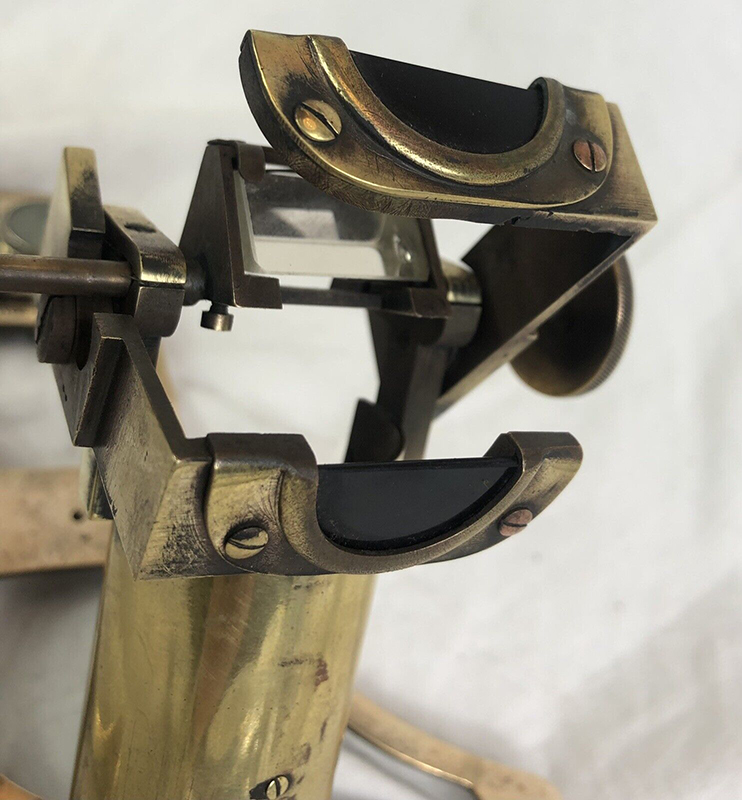
I also did a little research to find out more about the Azimuth Mirror I was given as a present. An azimuth mirror is used for taking the bearings of terrestrial and celestial objects. An azimuth is defined, from any given observation point, as the angle between an object or point and a reference line, usually to true North, moving away from that reference line in a clockwise direction on a horizontal plane. Through the use of mirrors, lenses and prisms, the instrument allows both, the readings of the compass card, and the object to be seen at the same time and in the same direction. It is portable equipment which is placed over a magnetic or gyro compass to aid navigation using either a landmark, when the arrows would be pointed down, or from a celestial object when the arrow would be pointed up. The little glass circle was once a spirit level but that has dried up. The word azimuth is used in all European languages today, it originates from medieval Arabic meaning “the directions”.

Finally made it to meet the Go Stargazing Walton Astronomy Group at their monthly session. We found them on the green at Esher which has been recently over illuminated with bright LED streetlights by a thoughtless council ruining the skies for astronomical observation and disorientating local wildlife and plant life. The local MP Dominic Raab IS NOT A MEMBER of the All Party Parliamentary Group for Dark Skies. Click on the link and ask your MP to join in protecting our dark skies.

When we look up to the heavens, we largely see the same view that captivated and inspired our ancestors. The constellations, the Milky Way, shooting stars, and the night sky are woven into the fabric of our society, cultures and religions. The night sky is one of the most inspirational views that our planet offers.

We are on the precipice of losing the night sky. Right now, SpaceX and other companies are planning to launch tens of thousands of bright satellites in orbit around the Earth.

There is an Avaaz petition at this link urging protection of the night skies.

Bringing back memories of the 2015 Nelly Ben Hayoun film Disaster Playground

….NASA celebrates a Smashing Success – A team of researchers confirmed that the DART spacecraft’s impact with Dimorphos successfully altered the moonlet’s orbit around its parent asteroid by 32 minutes – marking the first time humans have changed the trajectory of a celestial object in space.

To me this feels like a major historical event. What has this little nudge set in motion?

Exhibition visits

Expanded film at the BFI London Film festival.

Framerate: Pulse of the Earth by ScanLAB Projects presents Destruction, extraction, habitation, construction, harvests, growth and erosion are presented as a shared immersive experience. The 3D time-lapse scans of British landscapes observe change on a scale impossible to see with traditional filmmaking techniques.

One of my favourites was Monoliths by Lucy Hammond, Hannah Davies, Asma Elbadawi and Carmen Marcus – we are shaped by the spaces that made us. Through footage shot in the north of England and personal narrative the women embody three monoliths – standing stones, whose symbolic power becomes increasingly important as the women talk.

Elizabeth Murton and Jane Glynn, explore the dynamics of time and movement in Fluid Time at The WaterMill, Mill Green Museum, Hatfield with live dance performance of Elizabeth Murton’s The Giant Weave from BEEE Creative full of joy and energy.

Libby Heaney in remiQXing still at Fiumano Clase. A solo presentation of video and physical works exploring the emerging field of quantum computing as both a subject and medium, turning the gallery space into the showroom of her fictional quantum computing company QX (Quantum eXperience). Some fabulous super shiny prints on mirrored dibond and ethereal prints direct to media on clear acrylic.

Transports of Delight at Danielle Arnaud curated by Edward Chell. In the 1830s, East London doctor and amateur naturalist Dr Nathaniel Bagshaw Ward invented a sealed glass case, an ecosphere in which plants could survive heavily polluted air. Named after its inventor the Wardian case enabled the transport of plants by sea around the world and transformed global economies and environments, shaping the world we live in. Exhibition includes works by

Anna Barriball | Daphne Wright | David Cotterrell | Edward Chell | Gerard Ortín Castellví | Günther Herbst | Harun Morrison | Helen Maurer | Joseph Banks | Joy Gregory | Laure Prouvost | Lee Maelzer | Leelou Gordon-Fox | Maria Thereza Alves | Mariele Neudecker | Nick Laessing | Nils Norman | Owen Griffiths | Peter Hofer | Pia Östlund | Rosa Nguyen | Stephen Lee | Uriel Orlow |

ABSURD at OHSH Projects exploring the absurdity and strange rituals of our daily lives, the bizarreness of
which are brought to light when taken out of context. The institutions, structures and traditions we have built around ourselves and imbued with power and importance can highlight this most starkly; through religion, schooling, government, work and even our own homes. Curated by Henry Hussey and Sophia Olver. Exhibition includes works by Gillies Adamson Semple, Samuel Bassett, Jonny Briggs, Tom Bull, Ladina Clement, Janina Frye, Johnny Hogland, Mark Jackson, Lea Rose Kara, James Lomax, Hynek Martinec, Rasmus Nosstring and Lottie Stoddart.

Hypha Studios presents a showcase of some previously selected artists at the project space on Conduit Street. Hypha Studios matches artists with empty spaces across the UK. Artworks include those by Beverley Duckworth, Foka Wolf, Dion Kitson, Futures After and Josh Wright’s “Lost in a Just In time Supply Chain”, Anna Fearon, Tom Skipp, Molly Stredwick, Gabriela Pelczarska, Salvatore Pione.

Subatomic at The Science Gallery is a project by composer Christo Squier and experimental particle physicist Dr. Teppei Katori that looks at ways of interacting with cosmic rays, something I have been working on myself in the work The Breath of Stars for the last year or so. I was equally excited and anxious to see what they were presenting. They have created a particle shrine which takes data from the Super-Kamiokande observatory in Japan as well as live data from cosmic ray detectors to create a light and sound experience with vibrating mirrors. Rather jealous of the technical resources this project had access to.

There was also a performance of live music by a small orchestra responding in real time to data from the Super-Kamiokande observatory and compositions inspired by cosmic ray observation data.

A lot of the data used in the music responses and the particle shrine is publicly available data from the Super-Kamiokande observatory in Japan. I did notice that the cosmic watch detectors hooked up to the particle shrine are not set in coincidence mode to be sure it is cosmic particles that are being recorded. A lot of what Christo said during his presentation echoed how I feel about cosmic rays, the fact that they come from other galaxies and pass through us making that physical connection with outer space.

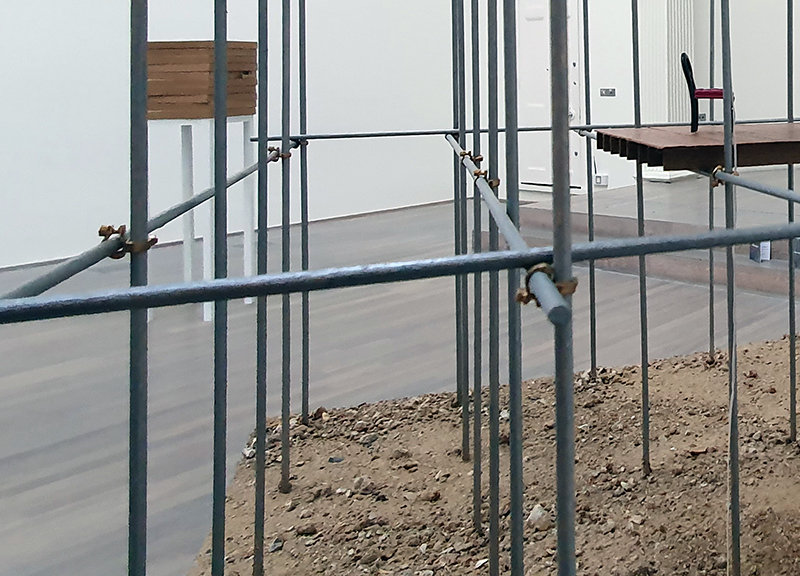
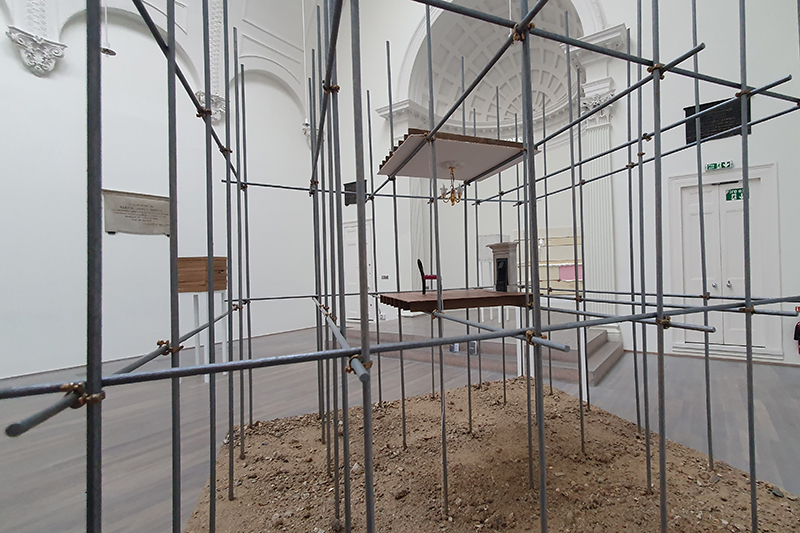
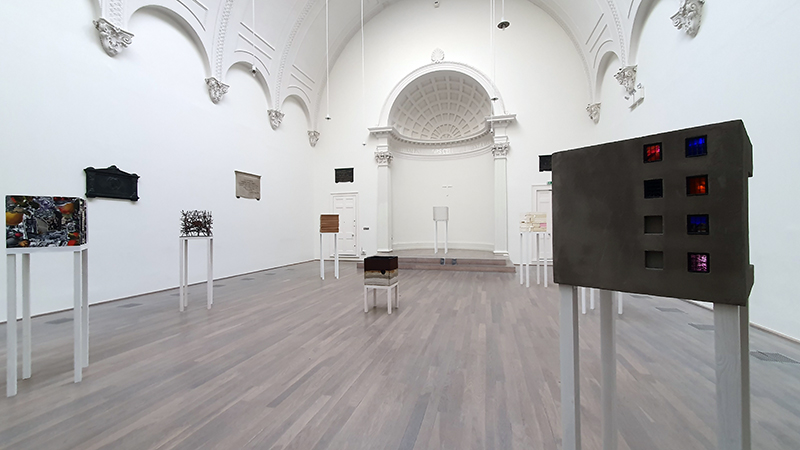
Sanctuary at The Swiss Church takes inspiration from the disparate and striking surrounding architecture, and the stories of people within the Covent Garden community, artists Ali Clarke and Gary Scholes have created a series of structures that symbolise individual sanctuaries. Amazing detail in some of the constructions, especially impressed with the scaffolding bolts.

Reading

Came across some great finds at the local Oxfam bookshop on mapping and magnetism and time, all interconnected.

I read Conquest of the Useless as I thought it might be relevant to research on exploration of the unknown. It was definitely a worthwhile read portraying the total dedication to following through a dream, the power of the creative urge. Watched the film Fitzcarraldo afterwards which although extraordinary doesn’t convey the true life drama and hardship recorded in the book experienced by the actors and film crew in telling the story.

Listening

BBC Radio 4 In our Time – The Earth’s Core. Melvyn Bragg and guests discuss the Earth’s solid inner core and liquid outer core, their structures and their impact on life on Earth.

2010 at a distance

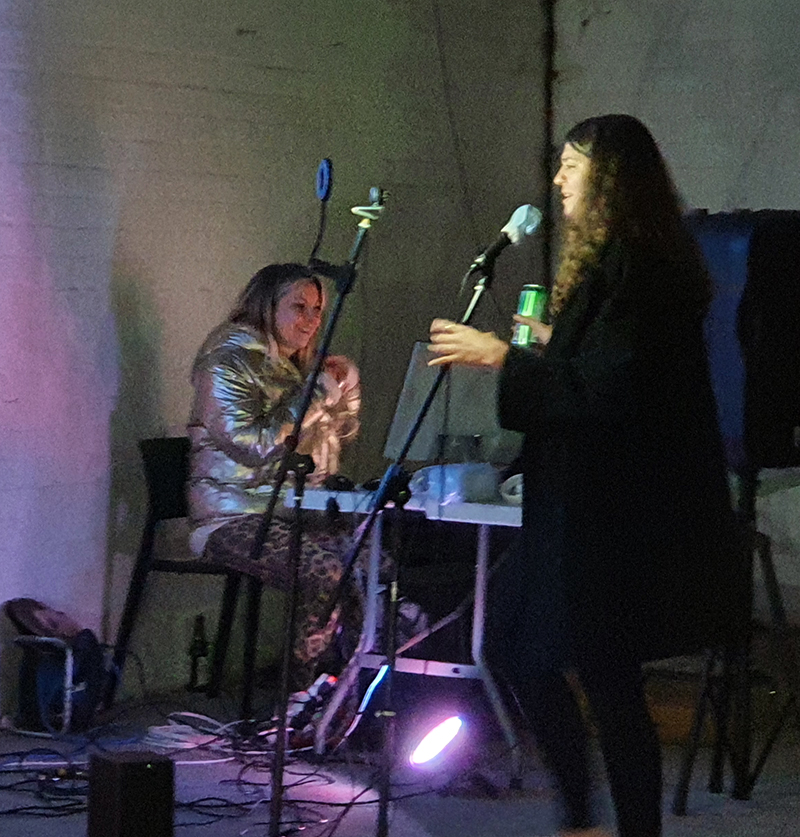
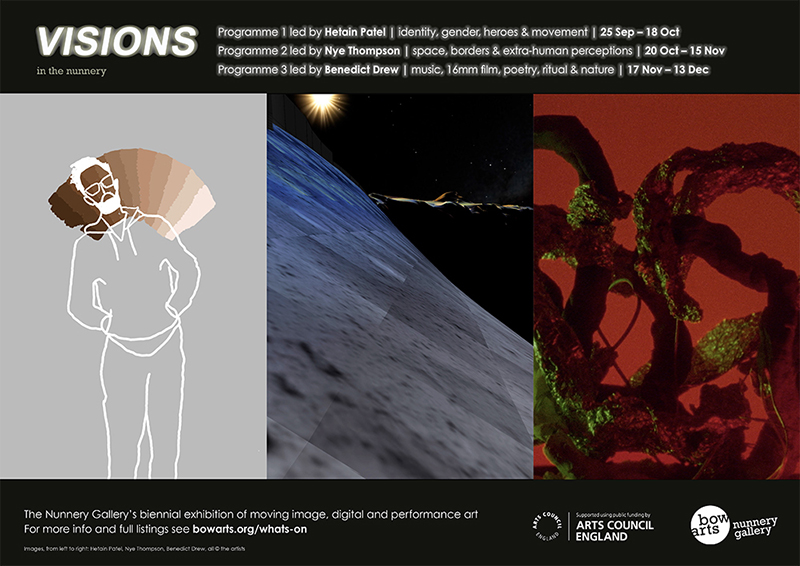
Delighted to be included in Visions In The Nunnery at Bow Arts and so good to be at the opening with live performances. Robert Luzar with Timo Kube Tracing Someone Else’s Skin and Libby Heaney presenting Top of the Bots karaoke where audience members embody pop idols via AI technology. 2010 Visions Robert LuzarBodies touching and people singing seemed illicit and extra joyful. 2010 Top of The BotsVisions in the Nunnery is Bow Arts’ biennial showcase of international moving image and performance art.

2010 VisionsLeaflet_Digital-2

Lead artist for Programme 2 is Nye Thompson. Creating new data-generating artist software systems she explores the hidden impact of new technologies. For Visions she premieres /artefact, an immersive work building a colossal border wall on Mars through satellite and google earth imagery accompanied by a throaty space-filled soundtrack.

2010 Visions Nye Thompson

For the first time, all Visions 2020 works will also be available online for international audiences and those shielding. The themes of programme 2 include digital mediation, digital infrastructure, the remote gaze, CCTV, borders and separation, other worlds and alternate geographies.

2010 at a distance 2

In At a Distance solitary figures using semaphore flags sign ‘We Are One’ out across the ocean. Filmed on 29th March 2019, the first date the UK was supposed to leave the EU.

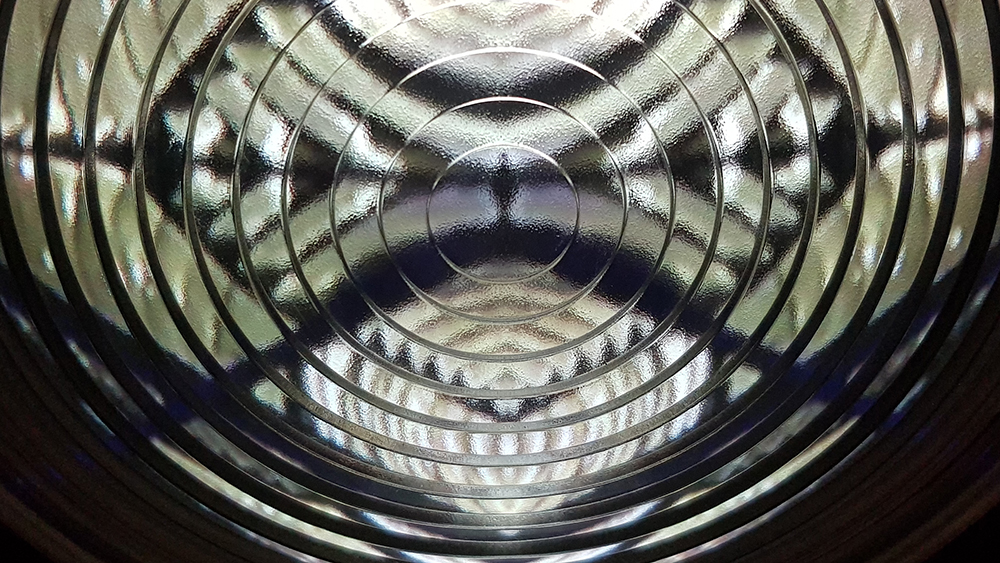
As in quantum entanglement theory where two paired electrons mirror each other at a distance it is hoped the message will be echoed back. This mysterious twinning of electrons where particles link in a way that they instantly affect each other, even over vast distances is what Einstein famously called ‘spooky action at a distance’.  The 4m video includes mirrored footage of the iconic Lizard Point Lighthouse and covers the time it takes for the lamp to power up. The video is back projected onto a Fresnel lens, similar to that found in lighthouses to increase luminosity of the lamps beam.

Exhibition and launch images below by Rob Harris courtesy of The Nunnery Gallery.

Updated my website Finding Paradise project pages with Paradise(suspended).

2009 featured image

Making (slow) progress on new moving image work Seeker, Seer, Scientist.

We each have a personal distance to the horizon based on our specific height of eye from the ground and the local elevation from sea level at which we stand. It is a place we can never reach as it always recedes as we approach.

Walking East at dawn.

2010 East 1

In my enthusiasm I may’ve set off a little too early and some footage has turned out to be rather dark, though passing the Sewage Treatment Works at this hour was an uncanny futuristic experience. It was the hummmm.

2010 East 2

Grappling with abstract space as I research for the audio track. Revisiting a lecture I attended at UCL on the 7th dimension by Jason D. Lotay

As you go up in dimensions there are more symmetries that you cannot see. There are special symmetries that only happen in the 7th dimension, this holonomy set of transformations is called G2.

There are 7 new numbers known as Octonians. The symmetry of the Octonians is precisely G2.

2010 symmetry

M theory unites the various different string theories into one master theory but in order to do this there must be 11 dimensions. These 11 dimensions are the 4 we know (3 dimensions + time) + 7 new dimensions (related to G2) (which I think allows for the multiverse to exist)

The 7th dimension is closely related to soap films and soap bubbles in that these try to minimise their surface area. Seventh dimensional things with holonomy G2 also try to minimise a kind of energy or area.

1810 freezing bubble

I am continuing to film soap film as light is spectacularly reflected from the surface. The colours depend on the thickness of the water sandwiched between the soap and as the membrane becomes so thin just before breaking the colours fade away.

2010 membrane filming

Trying a new soap bubble recipe with lots more glycerin and a different brand of washing-up liquid. I also have a larger frame for the soap film so I don’t know which factor has effected the results most but I’m getting falling rainbow stripes morphing to grey and black swirls.

2010 membrane 22010 membrane 1

Finally ventured back into the Print Studio to clean my screens ready for potential new work. It’s the first time I had been back for months. I’m working on images of glacial water which has been trapped for 80,000 years.

Everything we can see, everything we know exists, makes up just five percent of the matter and energy in the universe.

I watched the live stream Dark Matter Day event live from Sanford Underground Research Facility and Boulby Underground Laboratory and was struck by the use of the word shielding, it’s all about shielding which of course is something we hear a lot about now amid the pandemic. In the case of dark matter detection experiments it is about shielding from cosmic rays. On the surface of the earth 2/3 Muons pass through your hand every second, in the underground labs this is reduced by a factor of 10,000,000 to about once a month.

2010 particle trail

I also learnt that gravity travels at the speed of light.

Some wonderful online discussions are being had by The Diagram Research Group (DRG), a collaboration between artists David Burrows, John Cussans, Dean Kenning and Mary Yacoob. Each collaborator conducts an illustrated discussion that explores their interest in diagrams in relation to Flat Time and Latham’s ideas concerning the unification of scientific and artistic bodies of knowledge and the primacy of time and event (rather than space and matter).

As part of the National Parks Virtual Dark Skies Week 2020 there were a series of online events available such as a talk on The Search For Dark Energy from Dr Luke Tyas. The Dark Energy Spectroscopic Instrument (DESI) will measure the effect of dark energy on the expansion of the universe. It will obtain optical spectra for tens of millions of galaxies and quasars, constructing a 3D map spanning the nearby universe to 11 billion light years. 

2010 stargazing

Looking at new ways to experience dimensions, Laure Provoust explores her approach to installations as living works, with sculptural elements and films that function in 3-D, invoking the viewer’s senses of taste and touch. In an online talk hosted by Yorkshire Sculpture Park she introduces us to her installation at Lisson Gallery where we are invited to learn a new language, new ways of connecting and associating.

2010 Laure Prouvost

It reminds me of the Carsten Höller perception-altering device I experienced back in 2015 that fed each eye with a different woodland perspective. I found it very unsettling. Like my brain was splitting. 

2010 Carsten Holler

This year I had to experience the London Film Festival at home with streamed content but was able to visit the BFI Blue room for the Expanded programme The Expanse, a gallery of immersive 360 videos and interactive virtual reality experiences. This was all free with lots of Covid safe help on hand to enjoy the VR.

Icarus – ‘don’t think of my fall, think of me soaring to the sun.’

2010 Icarus BFI

THE END Heather Phillipson’s sculpture of excess on the Fourth Plinth transmits a live feed of Trafalgar Square picked up by the drone’s camera and visible on a dedicated website www.theend.today giving a sculpture’s eye perspective.

2010 heather phillipson The End

Fascinating work by Trevor Paglen at Pace Gallery uncovers the hidden agendas and bias present in systems which now govern many aspects of our lives.

The works in this exhibition seek to provide a small glimpse into the workings of platforms that track faces, nature and human behaviour, and into the underlying data that structures how machines ‘perceive’ humans and landscapes.

You can visit virtually through a live web portal connected to cameras placed in the gallery, observe gallery visitors experiencing the work in real time and can even be “present” in the space by streaming your own webcam onto monitors displayed within the exhibition. Or you can visit in person as I did where I was assessed and evaluated by ‘ImageNet Roulette’ an interactive artwork that classifies people’s digitally-captured portraits according to one of the most widely-used datasets used for training and evaluating computer vision systems.

My classification oscillated between ‘dosser’ and ‘char’.

‘Bloom’, a series of large-scale photographs that depict flower formations conceptualized by various computer vision algorithms created to analyse the constituent parts of real-life photographs. The colours and shapes in the images represent similar areas that the AI has detected in learning from other images of flowers. They do not represent real-to-life colours so much as what the AI thinks the different parts of the images are.

‘The Standard Head’ is a large-scale reconstruction of the 1960’s mathematical model of a “standard head” by the pioneering researcher funded by the CIA, Woody Bledsoe. Conceived from the average measurements of the faces Bledsoe experimented with, Paglen reconstructed the “standard head” from rare information left behind in Bledsoe’s archives at the University of Texas. Artificial intelligence algorithms are designed and trained to look for faces, unique key points, lines, circles, and areas of interest as they attempt to deconstruct the underlying reality into a more simplified series of sections or shapes.

2010 Trevor Paglen 7

‘The Model (Personality)’, a plated bronze phrenology skull derived from the current categories that are used in predictive policing and sentencing algorithms that intend to gauge someone’s level of criminality by measuring their psychological attributes and behaviours.

2010 Trevor Paglen 1

‘Distracted Drivers’ and ‘Classifications of Gait’ showcase grids composed of thousands of smaller images used to evaluate people’s behaviours for commercial purposes.

The dataset for ‘Distracted Drivers’, for example, is a collection of images used to recognise if someone is distracted while driving by an AI system. This dataset was created by State Farm insurance to adjust their insurance premiums in real-time, based on that information.

The group exhibition Washing Line curated by Neil Zakiewicz and Patrick Morrissey at Thames-side Gallery took work away from the gallery walls and strung it across space. This made for a dynamic viewing experience negotiating a route to new perspectives. Two dimensional work hanging out in the world of three dimensions.

Robert Good’s stream(ers) of questions from Google News Feed rams home not only the overwhelming assault of media but the constant interrogation we are subject to. Another form of surveillance.

2010 Robert Good

Elizabeth Price raising the ghosts of a lost era in Slow Dans an Artangel presentation at The Assembly Rooms on Borough Road. This was a haunting and fascinating evocation of lost landscapes and what is quite recent but rapidly disappearing social history. Mineshafts, ink-wells, the human throat connect a geological past with a technological present.

2010 Elizabeth Price 12010 Elizabeth Price 22010 Elizabeth Price 3

Work underway for the upcoming Reading Stones exhibition with artists Anne Krinsky and Carol Wyss. We will be installing site-specific works in response to the history and architecture of the ancient stone Tower of Saint Augustine, Hackney’s oldest building. Built in the 13th century, the tower houses a magnificent 16th century clock whose mechanisms still strike the hours, occupying three floors connected by steep spiral stone stairs.

1908 clock.jpg

The nature of time itself was a concept that St Augustine of Hippo grappled with in his philosophical texts sixteen centuries ago and is still perplexing us today; namely, how to equate the subjective experience of time with an objective understanding.

I am working on a video which makes reference to the scientific theory of time crystals; a model which proposes a structure that repeats in time, as well as in space.

1908 Time Crystal 2 wip

Patterns used in the film aim to mirror the crystal structure of the mineral beryl, commonly used to fashion the original reading stones which were used to magnify texts before the invention of optical glass. Reading Stones could be considered the first instruments used to create an enhanced sensory experience.

1907 reading stones WIP 1

I am playing with speeding up, slowing down and overlapping events to deconstruct a linear flow of time and interrogate the methods used to measure and experience time. I  spent a couple of nights in remote car parks setting up a time lapse sequence under darkish skies in anticipation of  the Perseids Meteor Shower and was rewarded with my first experience of live meteor action.

1908 perseids

I also think there was a faint glimmer of the Milky Way. These weren’t true dark sky areas but not bad for an hour to two hour drive from London.

1908 milky way

Also set up a time lapse station overnight on the Suffolk coast with the two wind turbine’s in view that dominate the Kessingland village skyline. I was surprised to see how much aerial activity goes on usually unnoticed.

1908 wind turbines

Another times lapse experiment focused on crystal growing over a week period.

1908 crystal growing
Filming slowing down time with a Go Pro set at 240 frames per second to record smashing rocks.

1908 stone smash

I made some earth meteorites to collide with the ground but the results not so great.

1908 earth meteorites

1908 earth collision.JPG

Beautiful light in Richmond Park when photographing the tree clock’s I plan to make into spinning time portals

1908 tree rings

Hot Sunday morning traipsing around a car boot sale for ceramic atrocities to line up for an energy exchange experience.

1908 time is up


A site visit to St. Augustine’s Tower gave me pause for thought over the hanging sculpture I had planned which would possibly be dangerous to attempt. So looking at projecting directly onto the brickwork in that corner instead. This is giving me all sorts of issues over projecting in portrait mode and whether the projector will cope being on its side.

1908 projection test

Testing ideas for a viewing circle on the tower roof.

1908 viewing circle test

Inside the circle will be the image of a rock or meteorite.

I have been auditioning candidates.

1908 rock candidate

1908 meteorite

On the final day of the exhibition we will have extra activities which will include a lithomancy board and the chance to have your fortune told by the fall of the stones.

The act of “reading stones” can refer to both the scientific practice of geological investigation and the ritual of lithomancy which seeks to interpret the patterns of stones cast by those wishing to divine the future.

1908 laboradite

Made a trip to Box Hill Fort for a photo shoot of the artists books I had made for the Insatiable Mind Exhibition. The Fort is one of a line of 13 mobilisation centres built in the 1890’s to protect London from the threat of invasion from continental Europe. Never used for its intended purpose, it is now part of the National Trust Box Hill property and home to three species of bats that have taken up residence in the tunnels originally built for ammunition storage.

1908 old fort box hill

1908 unbound detail

‘Unbound’ depicts images taken from my cloud chamber. A cloud chamber is a supersaturated sealed environment that enables us to see the trails of cosmic rays. These high energy particles know no boundaries, travel at high speed across the universe and continuously pass unseen through us and our world. The twelve pentagons form a dodecahedron, the solid described by Plato as ‘the fifth construction, which the god used for embroidering the constellations on the whole heaven.’

1908 unbound

1908 InOUT detail

‘In/Out’ expresses the energy and randomness of quantum fluctuation as particles pop in-and-out of existence in empty space. At this tiny scale the universe is mysterious and unpredictable. Originating from a large crystal ball which reflects and absorbs its surrounding landscape, the bright spheres act as a series of portals to alternative perspectives.

1908 InOUT

Chilled evening at the Science Gallery for Zen-On a collaborative presentation from artist Ansuman Biswas and astroparticle physicist Chamkaur Ghag.

‘We have many tools at our disposal to gather information about the world. Physicists are tuning their instruments to an unprecedented level of sensitivity. Even burying super-cooled xenon under a mountain in the hope of detecting the faintest, most elusive particles of matter.

Ultimately, however, whatever external instruments we use, all data is experienced by our bodily senses. These senses turn out to be more finely tuned and calibrated than anything we have yet invented. And they are available to all of us, for free.

In this interactive performance we will draw parallels between the physical world around us and the physical experience of the body. We will explore the instrumentation we have available to us and discover its limits and possibilities in search of the subtlest and most elusive elements of reality.’

1908 zen-on polaroid

I enjoyed the parallels drawn between the search for dark matter and the search for inner peace, both of which require PURITY, QUIET and SENSITIVITY in processing data, looking for patterns and understanding knowledge.

The Dark Matter exhibition at Science Gallery was not so inspiring in its curation but there were a few nuggets to be gleaned.

Through the AEgIS from Semiconductor

1908 Science gallery semiconductor

Images gathered from data captured from the AEGIS experiment based at CERN of violent collisions between matter and antimatter, along with tracks of newly created particles, all of which are too small to see with the human eye reveal the chaos of the unseen.  The artists call it a “space time-lapse” work, showing an animation created from around 100,000 still images.

Mirror Matter by Emilija Škarnulytė

1908 Science gallery Emilija Škarnulytė
In thousands of years, how will the gigantic structures dedicated to the pursuit of science be viewed? Will their remains be viewed the same way we think of Stonehenge or the pyramids – relics of a previous civilisation? Mirror Matter is set 10,000 years from now, with an all-seeing alien eye surveying the ruins of scientific machines that once probed and measured the Universe.

The public engrossed in building Utopia at Tate Modern Turbine Hall

1908 Tate Turbine Hall lego

Olafur Eliasson In Real LIfe at Tate Modern works well for social media posts but on the day I felt mostly disappointed with one or three exceptions, this may be because it was like an unruly crèche or being swamped with spectacle.

  1. Waterfall 2019 against a grey London sky

1908 Olafur Eliasson Waterfall 2019

2. Model Room 2003

1908 Olafur Eliason model room

3. Glacial Currents 2018


and A description of a reflection 1995

1908 Olafur Eliason description reflection

Loved this idea

1908 Olafur Eliason magnetic field

Went on to see Takis Sculptor of Magnetism, Light and Sound which was great (also no babies)

1908 Takis magnetism

‘Plato speaks of an artist turning the invisible world into the visible. I hope that someone seeing my sculpture is lifted out of his ordinary state’

1908 Takis Telelumiere No 4

‘I cannot think of my work as entirely my work, I’m only a transmitter, I simply bathe in energy’

1908 Takis sound and silence

‘We have chased the sacred symbols into the desert and replaced them with electronic eyes’

1908 Takis Music of the Spheres

Reading Timothy Morton ‘Being Ecological’ I started off thinking I am going to love this book but after a chapter of multiple examples of how to look at ‘being ecological’ this way or that way I was a bit frustrated. I missed the reading group to see how everyone else got on.

I did find it interesting to discover that the Anthropocene has a proposed official start date and it’s very recent – 1945 – the time when the first atomic bomb was detonated.

1908 nuclear explosion 1945.jpg

In January 2015, 26 of the 38 members of the International Anthropocene Working Group published a paper suggesting the Trinity test on 16 July 1945 as the starting point of the proposed new epoch.

Insatiable Mind exhibition opened at Salisbury Arts Centre with space inspired food and a heartfelt speech from visual arts and exhibitions manager Mirka Golden-Hann who writes in the accompanying catalogue;

“I was driven by the overarching urge which is innate to humanity. The urge to break away, the urge to explore, the urge which would force a human to construct a spaceship and the urge of another human to step into it in order to walk on the Moon: the same compulsion behind the collective force to bring down the Berlin Wall and with it the Iron Curtain. It was the power of human curiosity and the dissatisfaction with the familiar that provided the basis for this exhibition.”

1905 Insatiable Mind

The installation of my suspended sculpture Pentacoronae was surprisingly smooth considering the height of the supporting beams.

1905 Insatiable mind install 1

There was a great team to help and although one or two anxious moments when hooks came away from loops it went up very well.

1905 Insatiable mind install 2

This work was made to highlight the importance and need to preserve dark sky areas. As powerful technology opens new areas of the universe to our view, generating imagery we could never see with our naked eyes, we are drawn to experience space via mediated technologies. Our ancestors mapped the stars and drew shapes across the darkness which became familiar anchors for navigation, described mythological characters and foretold fortunes. Through this work the viewer is encouraged to seek darkness, stargaze, wonder, and map their own stories across the sky.

1905 Insatiable mind install 3

I also had two concertina books installed in the gallery cabinet.

Making these books turned out to be quite a fiddly process.

For the book Unbound I used images from my cloud chamber printed on transparencies cut into pentagons. Cosmic Rays know no boundaries as they pass through us all the time. The twelve pentagons form a dodecahedron, the solid described by Plato as ‘the fifth construction, which the god used for embroidering the constellations on the whole heaven.’

1905 unbound final book

In/Out expresses the energy and randomness of quantum fluctuation as particles pop in-and-out of existence in empty space. At this tiny scale the universe is mysterious and unpredictable.

I has thought I would draw the energy fields in white china-graph pencil but it turned out graphite looked much better

The bright spheres are four colour separation screen prints and act as a series of portals to alternative perspectives.

1905 In Out final book

It was great to meet some of the other artists in the show whose work was really interesting and beautiful.

1905 Eunmi Mimi Kim

Eunmi Mimi Kim Me Time video installation which uses her own sensitivity to sensory overload to explore sensory deprivation and isolation.


Katayoun Dowlatshahi  presented work form her series Orbit looking at the former cold war secret rocket testing site West High Down on the Isle of Wight.

19052 insatiable mind Katayoun Dowlatshahi

Oksana Chepelyk Collider immersive film screening in the theatre. Throwing significant moments in history into the collider to see what future particles get thrown out.

1905 Insatiable mind Oksana Chepelyk

I have been meeting up with students Sena Harayama, Romain Clement De Givry and Medad Newman from Imperial College Space Society.

1905 ICSEDS team

Supervised by senior lecturer in spacecraft engineering Dr Aaron Knoll they are building a cloud chamber to withstand a journey to the edge of the atmosphere in the payload of a high-altitude balloon. The chamber must be able to withstand the low pressure at high altitude which might make it break apart.

1905 cloud chamber

There needs to be a heat pad controlled by an Arduino processor to keep the batteries running to power the tracking device and cameras and maintain a suitable environment in the chamber to allow alcohol vapour to fall and create a cloud.

1905 Arduino

A cloud chamber enables us to see ionising trails made by radioactive and charged particles. Cosmic particles continuously collide violently with the Earth’s atmosphere then break up and shower down upon us.

1905 manufacture of chamber

Keeping the weight of components down is vital. The payload must not be over 2kg.

1905 weighing the chamber

We are hoping to capture cosmic ray activity on video as well as a view of Earth’s atmosphere as it blends from blue into the darkness of space. This footage will become part of the video installation I am creating for Continuum midsummer weekend at Allenheads Contemporary Arts.

1905 enter portal

This new work Aóratos will be installed at Allenheads Blacksmith’s Forge.

Black holes were once thought to be pure science fiction but in recent decades scientists have discovered that these extraordinary objects exist throughout our universe in all shapes and sizes and this year astoundingly have even produced an image of one.

1904 Black hole image

Einstein’s theory of general relativity written in 1915 predicted the existence of black holes and is also consistent with the possibility of gravitational tunnels known as wormholes. It could be that there is a hidden web of planck scale wormholes linking all points in space. Theoretically, threaded through these tiny holes would be filaments of cosmic strings created in the primitive goo of early matter and flung across space when the universe burst into existence.

However, to traverse space by means of a wormhole would require vast amounts of negative energy, not something usually found on Earth yet in the current political climate in no short supply.

Making use of the Blacksmith’s hearth visitors will be invited to burn offerings of negative energy to power a ‘wormhole’.

1905 forge hearth.jpg

Special paper will be provided for people to write, draw or furiously scribble their own symbols of negative energy. These offerings will be burnt in the forge hearth releasing any pent-up negative energy to power the wormhole portal above.

I have been experimenting with chemicals to make the paper.

Really pleased with the results.

1905 chemical burn

1905 magic fire chemicals
It’s fine. I am sealing the chemicals inside two sheets of paper so no skin contact for visitors.

1905 paper burn.jpg

In my search to discover how to make coloured fire I did make a visit to Davenports magic shop in a very unprepossessing but not uninhabited pedestrian subway. A dismal setting for a dismal shop where I got no help at all. Felt an absolute muggle.

1905 davenports magic shop

The risks and obstacles of entering a wormhole include creating enough negative energy to open the wormhole mouth wide enough to weaken the gravitational tidal forces which would rip travellers apart; keeping it from collapsing so travellers are not indefinitely trapped inside; exceeding the speed of light and avoiding incineration from deadly high radiation.

On Earth we are protected from radioactive particles by the atmosphere and the magnetic field.

1905 magnetic field dark.jpg

Aóratos translates as ‘unseen’. The videos in the installation will look at hidden landscapes and usually unseen perspectives. For research I have been exploring rabbit holes, bee holes, mice holes and abandoned tunnels with my endoscope camera.
1905 ON LOCATION

A fascinating dark world of root webs and filaments interconnecting tunnels.


1905 turbulence.jpg

The reading group is persevering with Geoffrey West’s Scale despite the woolly editing and rambling digressions it does hold some interesting facts. I liked the section about turbulence. Fluid motion is chaotic and objects moving through water or air are subject to very different outcomes at different scales. Froude introduced a scaling methodology used in industry that has become increasingly sophisticated. Lord Raleigh emphasized the primary role of the ‘dimensionless’ number in scaling. This is a pure number such as pi which does not change depending on which unit of measurement is used, the ratio of a circumference of a circle to its diameter is always the same. “Pi embodies the universal quality of ‘circleness'”

1905 Gaia Luke Jerram

Visited the impressive sphere Gaia by Luke Jerram in Salisbury Cathedral as part of Salisbury International Arts Festival. Stunning architecture.

1905 salisbury cathedral1905 salisbury cathedral 1

Extraordinary that this majestic building piercing the sky has the most shallow of foundations and unless they keep a regular check on the water level through a little door in the floor the weight of the spire would not only bend the supporting columns but might tumble down.

I was excited to find a dodecahedron at the pinnacle amongst platonic solids topping an elaborate tomb.

1905 dodecahedron

Also the oldest working clock was fascinating to see

1905 oldest working clock

“How can the past and future be, when the past no longer is, and the future is not yet? As for the present, if it were always present and never moved on to become the past, it would not be time, but eternity.”

― St. Augustine of Hippo

New work pentacoronae installed at Grizedale Project Space for In Search of Darkness exhibition curated by art collective Lumen Studios.

1809 Pentacoronae

“Sky glow” is the yellow umbra leaching into the night sky from light polluting urban areas; obscuring our view of the constellations, shrinking our universe and severing our relationship to the stars.
Our ancestors mapped the stars and the shapes and patterns they drew across the darkness became familiar anchors for navigation; describing mythological characters; aligning celestial cycles with the fortunes of everyday life and revealing harbingers of portentous events. This rich history is being lost to a population bathed in the radiant intensity of artificial illumination.

1809 Pentacoronae 2
Light doesn’t always make things more visible. There are other ways to discover the mysteries of the universe and look beyond what our immediate senses tell us is there. Dark Matter is a significant component of the universe, yet we cannot see it. It doesn’t reflect or emit light and so scientists are finding other ways to detect it. In digital visualisations of Dark Matter, organic patterns emerge that could be the veins under our skin or the spreading branches of trees.

1809 Pentacoronae 1
As ever more powerful telescopes and data gathering equipment open new areas of the universe to our view, generating imagery we could never see with our naked eyes, we are drawn to experience space via mediated technologies. Dark sky areas such as Grizedale Forest are precious locations where we can still stargaze, wonder and map our own stories across the sky.

1809 Grizedale Forest

Following on from the group residency earlier in the year we returned

1809 Forest WIP

with new work responding to the naturally dark skies of the Grizedale area  Maria Luigia Gioffre  – a re-tracing of the astral map of 7 July 2018

1809 Maria Luigia Gioffre credit John Hooper

Maria Luigia Gioffre Genealogy of an Asemantic Night – photo John Hooper

Eunjung Kim the journey of unseen travellers across time, memory, the cosmos

1809 eunjumg kim

Julie Hill-‘intimate immensity’ the milky way as bodily encounter

1809 Julie Hill credit John Hooper

Julie F. Hill Dark River photo John Hooper

Anthony Carr– circadian rhythms disrupted

1809 Anthony Carr credit John Hooper

Anthony Carr The Moon, Is The Only Light We’ll See photo John Hooper

Melanie King– ancient light captured

1809 Melanie King credit John Hooper

Melanie King Ancient Light, Grizedale Forest  photo John Hooper

Louise Beer— sounds of the tides slowed; an echo from 420 million years ago

1809 Louise Beer credit John Hooper

Louise Beer Beneath the Moon’s Gaze photo John Hooper

Rebecca Huxley— twilight transitions, a manifesto to darkness

1809 rebecca huxley

Rebecca Huxley 18 degrees below the Horizon 

Diego Valente— “Forests aren’t simply collections of trees….”

1809 Diego Valente

Diego Valente A Copy With No Original

and William Arnold – common lepidopteran misadventures in artificial light

1809 William Arnold 2

William Arnold Dark Spectacle

1809 project Space.jpg

I had the cloud chamber running at the opening event. Photo courtesy of Lumen

1809 Cloud Chamber demo

A cloud chamber gives us a glimpse into the invisible world of particles produced in the radioactive decay of naturally occurring elements and those generated when cosmic rays strike the top of the Earth’s atmosphere. It is a sealed environment containing a supersaturated vapour of pure alcohol sitting over dry ice. Charged particles passing through the chamber cause the vapour to condense resulting in tiny cascading trails. These particles pass though us continuously without our awareness. Witnessing this usually unseen activity can lead us to look beyond what our immediate senses tell us is there and consider the possibility of other intangible phenomena.

1809 Cloud Chamber demo 2

Finale! (another great shot from John Hooper)
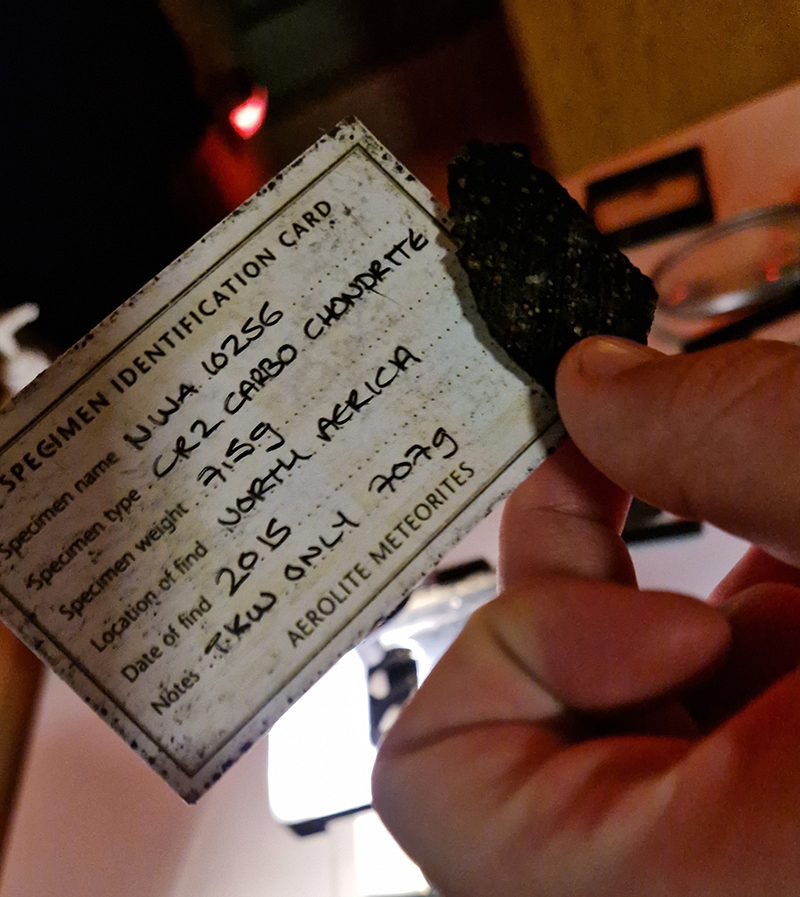
1809 dry ice credit John Hooper

At the studio I am moving just across the corridor – mostly so I will have a window but I also gain more space which was great timing to lay out and assemble the suspended sculpture for Grizedale in an empty room.

1809 laying out

1809 assembling

So glad I spent time on careful packing for transporting

1809 preparing for install– getting it up on the scaffolding and hanging was not easy when only one person present has ladder training and therefore allowed at height due to local council health and safety directives.  Thankfully Sean took it in his stride.

1809 install angst

Out of the Studio
Holly Graham Sweet Swollen at Jerwood Project Space. The seductive title is evocative of succulent ripened fruit but also the tenderness of a bruise. This poignant work draws on the history of sugar as a luxury brought to our shores in the 18th century with the taint of colonial violence and the demeaning of those forced to produce treats for European palates. A series of sugar lift etchings depict hands in isolation, the gestures originating from the stylised ‘blackamoor’ figurines that ornament receptacles of the bitter sweet cargo.

1809 Holly Graham

Charmaine Watkiss showing beautiful ephemeral work at the MA Drawing Final Show at Wimbledon College of Art. A collision of then and now, displacement of body and soul, reaching back for symbols of meaning.

Highlights at this years New Scientist Live were talks from Jon Butterworth – Journeys into Particle Physics, Roberto Trotta – What Has Einstein ever done for you? and Dean Burnett – What makes your brain happy?

I came away thinking about what influences my perception of time and the chemicals that subtlety alter how I experience the world.

If you travel close to the speed of light, distances contract in your direction of motion, while time will dilate more and more the faster you move.  A muon lives: about 2.2 microseconds on average. The speed limit of the Universe = the speed of light. Something moving at the speed of light that only lives 2.2 microseconds, should make it only 0.66 kilometers before decaying. A muon has similar properties to an electron. However, it is 200 times heavier. Muons travel at approximately 98% of the speed of light. The closer you move to the speed of light, the slower your clock appears to run. Cosmic ray muons have such high energies that a journey which takes about 300 microseconds from our point-of-view only takes about 1 microsecond for the muon. Time dilation allows these particles to live.

1802 muon

I am beginning research for the High Altitude Balloon project. I need so much help! The good people of the HAB community are thankfully giving me lots of advice. One big concern is that the Allenheads Contemporary Arts potential launch site is high up and in the centre of a very narrow bit of the UK.  Wind makes for a difficult launch and could just take it straight out to sea.
1809 windy HAB.jpg

One of my first jobs is to check with the Civil Aviation Authority that the launch site is safe from their perspective.

18090 CAA.JPG

I want to film particularly at the altitude where peak cosmic ray activity takes place – this is where the secondary particles that we see in the cloud chamber are smashed into existence.  As the particle activity will be invisible I want to film the aesthetics of the curve of the earth and blue haze of the atmosphere bleeding into the blackness of space. I think my target height will be 30km.

1809 cosmic trails.jpg

Cosmic rays are mostly protons and atomic nuclei created in stars and super novae explosions or other unknown events.  Sometimes a rare one will arrive with unimaginably high energy. The first “Oh-My-God particle” was recorded in October 1991 and had an energy 40 million times greater than the Large Hadron Collider can generate with 100 quintillion the photon energy of visible light, it was travelling at 99.999 999 999 999 999 999 999 51% the speed of light. One of these could be passing through you right now.


I realised how much I have to learn about weather ballooning while attending the UK High Altitude Society Conference where I was kindly invited to give a short presentation about my hopes to launch my own balloon to film at the edge of the earth’s atmosphere. It was also Helium’s birthday and a cake had been prepared to launch into near space.

1808 UKHAS Balloon launch cake

I found much of the language of the day to be beyond my knowledge with many of the enthusiasts also keen coders and electronic wizards.

1808 UKHAS Balloon launch 1

Still my presentation received a warm response and I am hoping I now have some contacts to call upon as I begin to get to grips with the logistics and add to my list of what is required.

1808 UKHAS Balloon launch

There was a particular enthusiasm to actually launch a cloud chamber. This could be a first if we manage to achieve such a venture.

1808 UKHAS Balloon launch 6.jpg

It is all a delicate balance of weight, helium and wind direction.

1808 UKHAS Balloon launch 4

Wonderful to see the launch.

1808 UKHAS Balloon launch 5

The really tricky bit is the tracking and retrieval. I’m not sure yet if they did get it back as I haven’t yet mastered navigating the websites let alone the skies.

In the studio

– work in progress for In Search of Darkness exhibition at Grizedale Project Space began with some tiny maquettes.

1808 pentagon layout

With valuable advice from John Purcell‘s team helping to choose suitable card I scaled up.

1808 pentacoronae wip 5

Added hand thrown acquatint etched starry skies

1808 pentacoronae wip 4

some screen printed dark matter visualisations and hand drawn star maps

1808 pentacoronae wip 3

folded with light pollution images printed on metallic c-type (from the print space)

1808 pentacoronae wip

and repeated 12 times to reflect the sides of a dodecahedron.

1808 pentacoronae wip 2

Out of the studio

– excellent afternoon spent captivated by Guy Oliver’s performative Songs of Eternal Praise for And You Thought I Was Bad at Zabludowicz Collection. Delivered in sermon style with attendant angelic voiced choir and backing musician; politics and pop culture collide in excruciating discord.

1808 Guy Oliver

Enjoyed Lee Bul’s exuberant mix of materials from the organic to the industrial and all encompassing diatribe on power, politics and the decay under the gloss of idealism at Hayward Gallery.

1808 Lee Bul 3

Lee Bul – Willing To Be Vulnerable

‘I’m fascinated by failures, as well as by the dreams that the dreamers knew could never materialize’  Lee Bul

1808 Lee Bul 2

Lee Bul Thaw (Takaki Masao)

changing landscapes – brutalist concrete edifices – impact of an individual – held in ice – history returning – climate change

1808 Lee Bul 1

Lee Bul Heaven and Earth

Dark depths of the psyche.

Came across this obelisk out in Wiltshire. It is rather stubby and further prevented from piercing the sky by the tree that has grown over the last 250 years to embrace it.

1808 Melksham obelisk

William Eyres – we almost share a name and do share a birth day and month. Born at the time when the Herschel brother and sister astronomers were discovering Uranus and its moons; the moons of Saturn, infrared radiation and performing deep sky surveys. You died just before electric light spread its glow into the night.
Dark skies were yours.