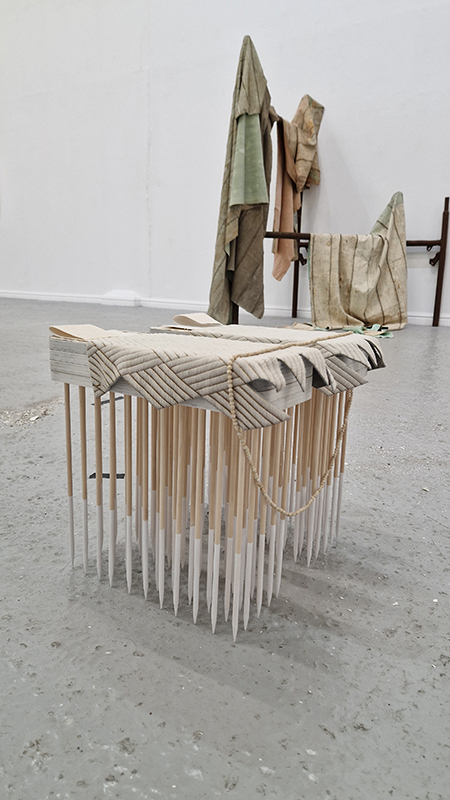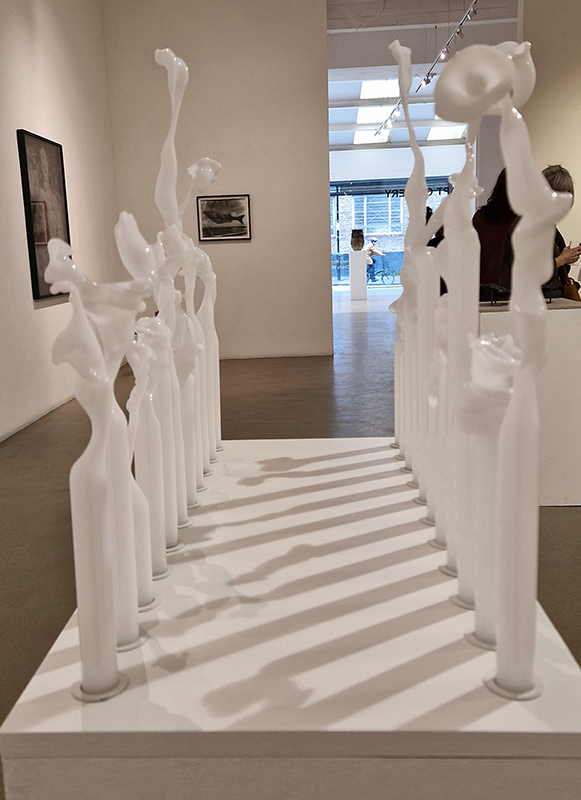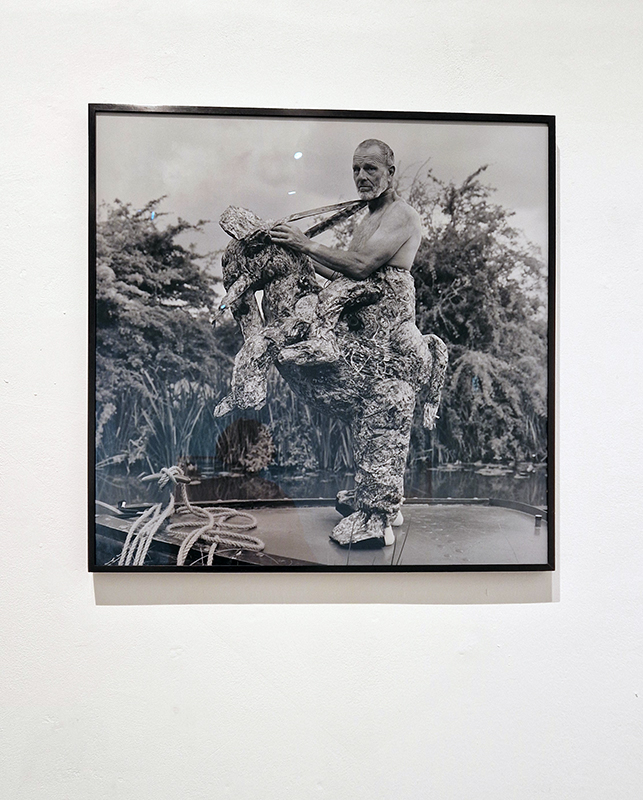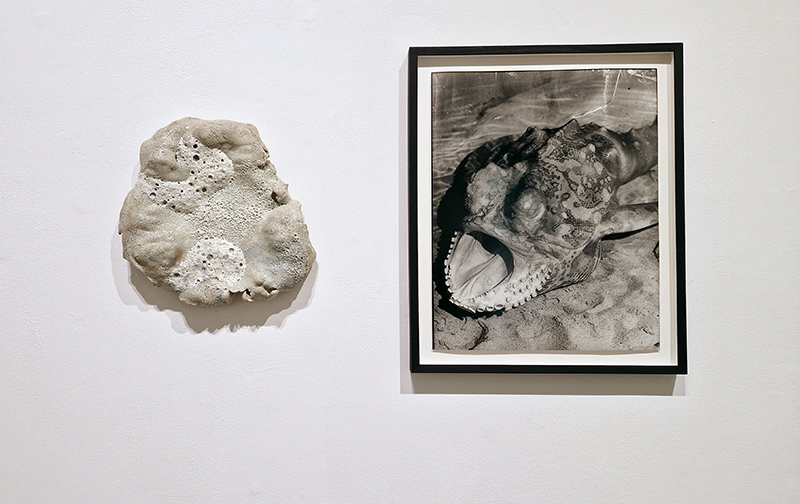
Archives for posts with tag: Kate Fahey

‘What truth could be more unexpected ….than the one in which the mineral envisions while also being envisioned.’ Jason Groves, The Geological Unconscious
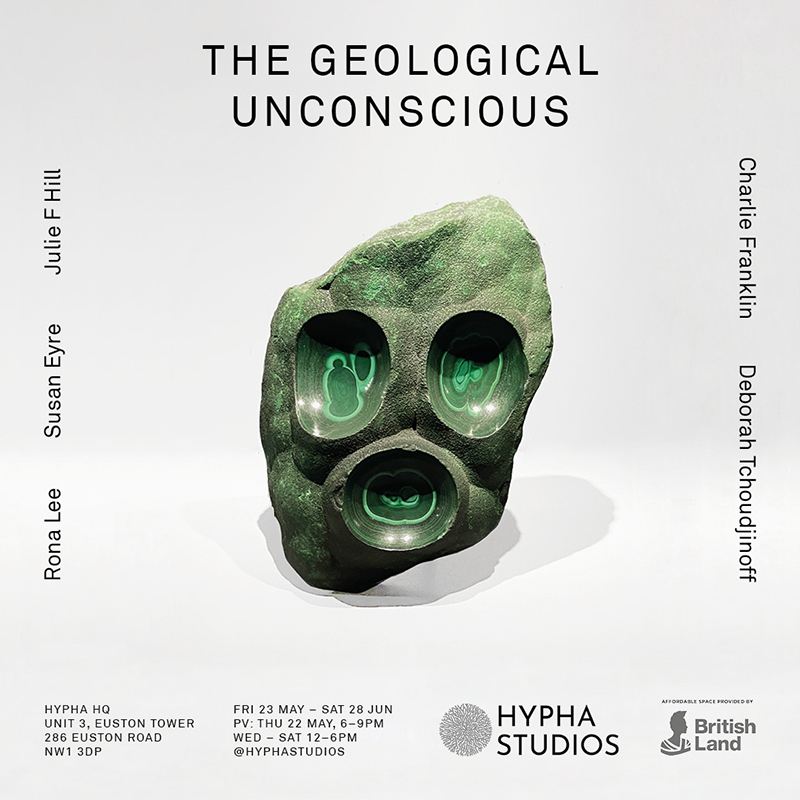
‘This is the blueprint of nature itself; both hidden and revealed in a nodule of silica.’
Roger Caillois, The Writing of Stones

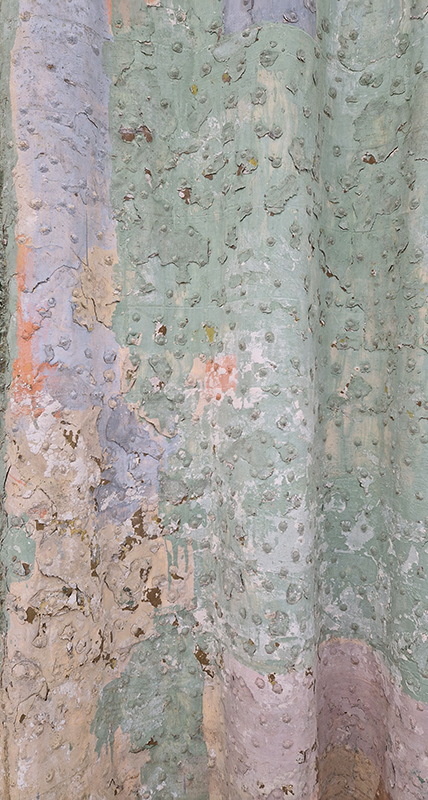
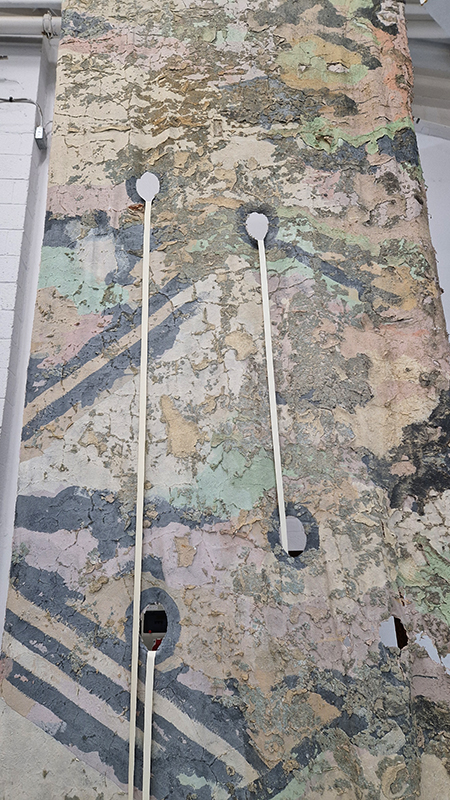
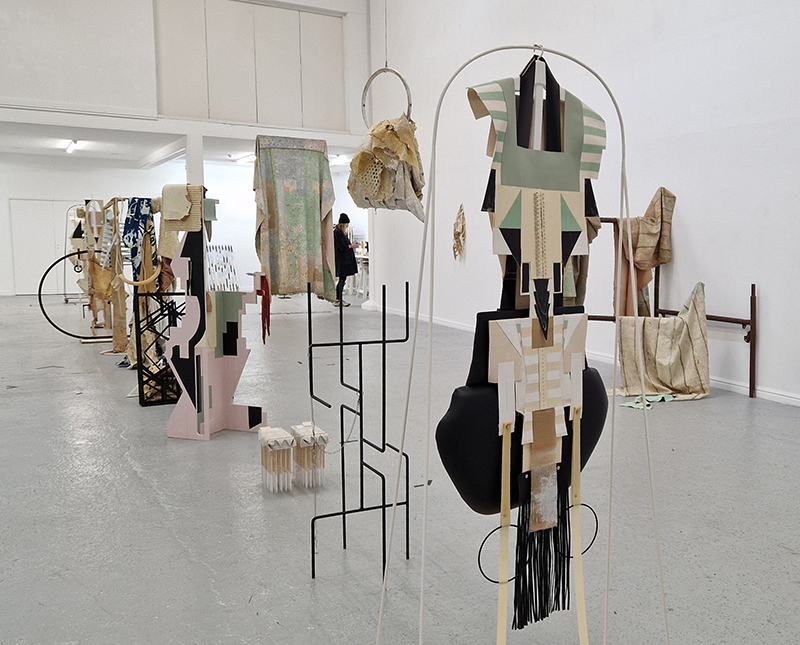
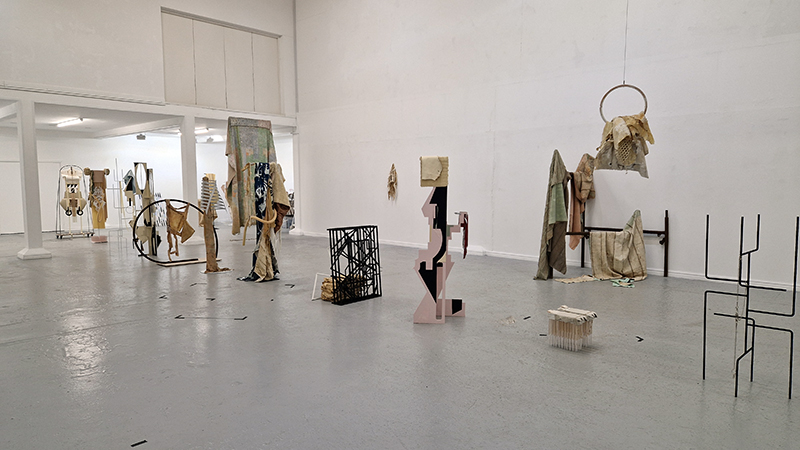
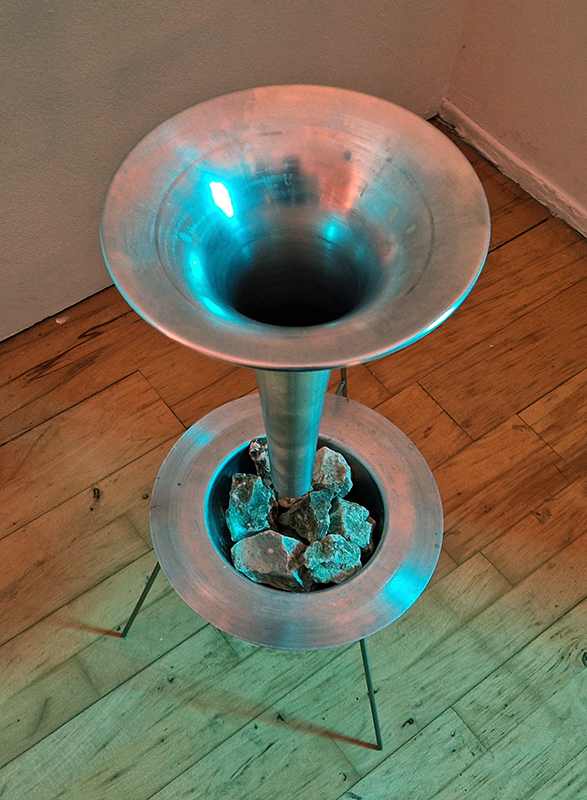
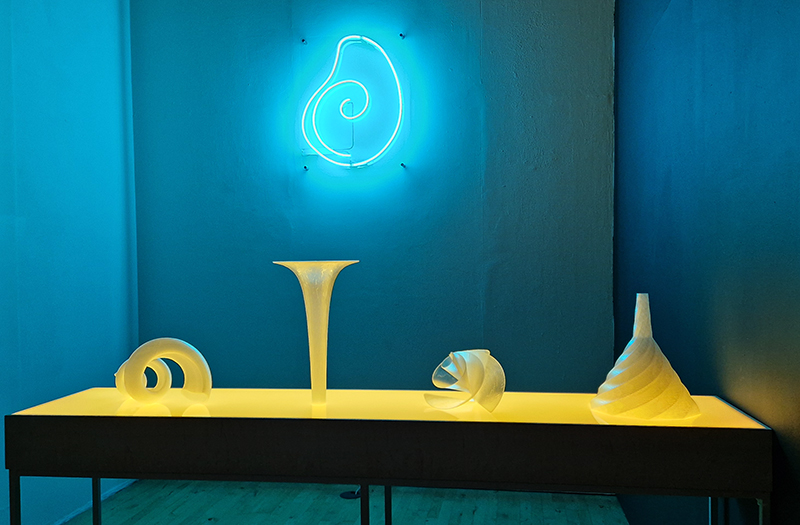
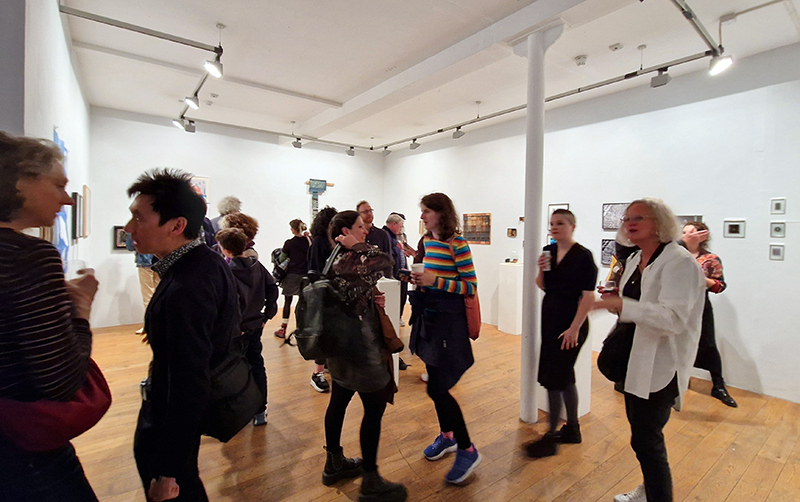
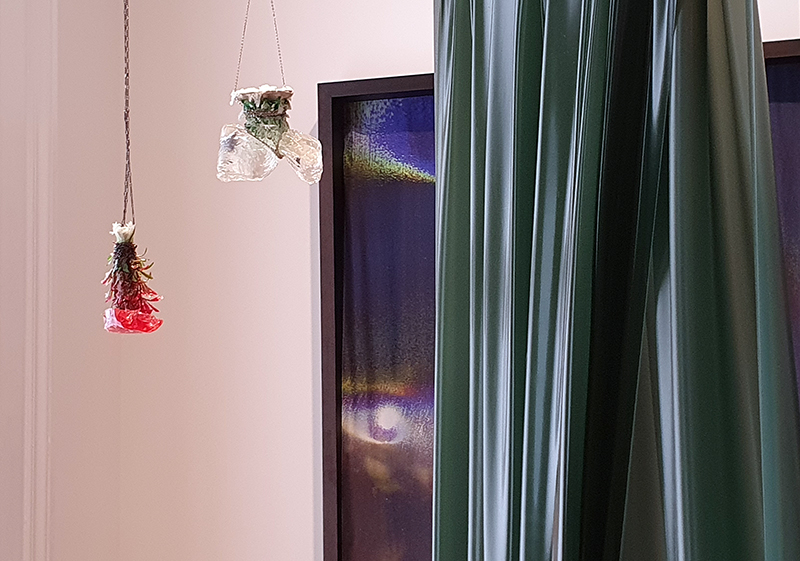
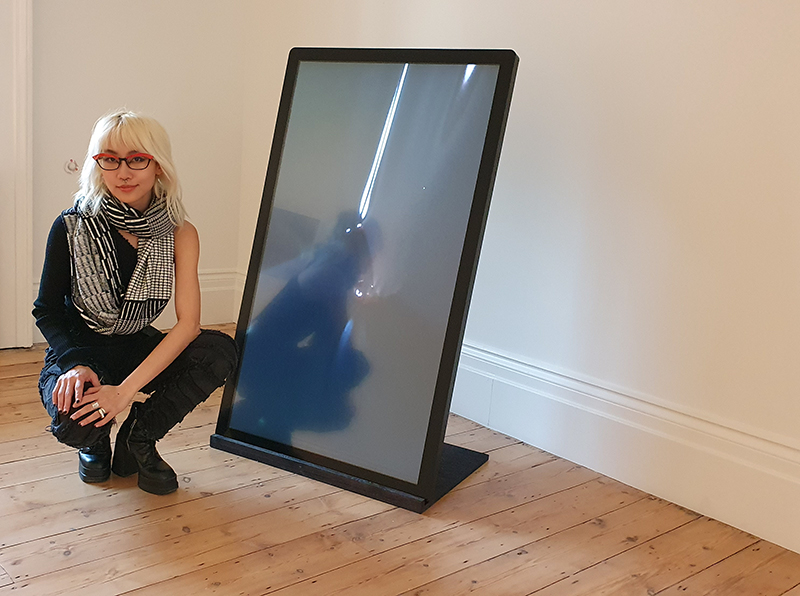
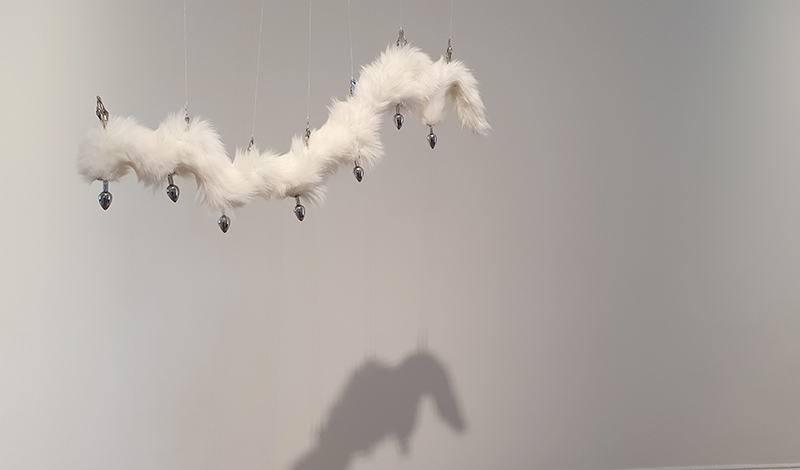
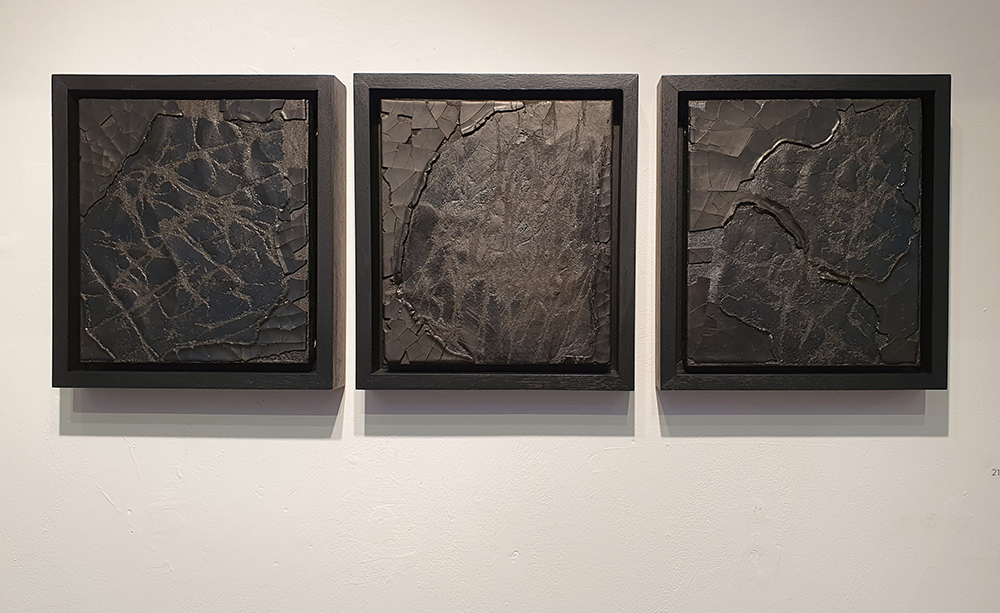
The Geological Unconscious opened with an exceptionally busy Private View. It was a fantastic evening with lots of great feedback. With a multi-disciplinary approach, large-scale installations and sculptural works sit alongside embroidery, video, expanded print and photographic work, to create material intimacies that help situate us in scales beyond the human.

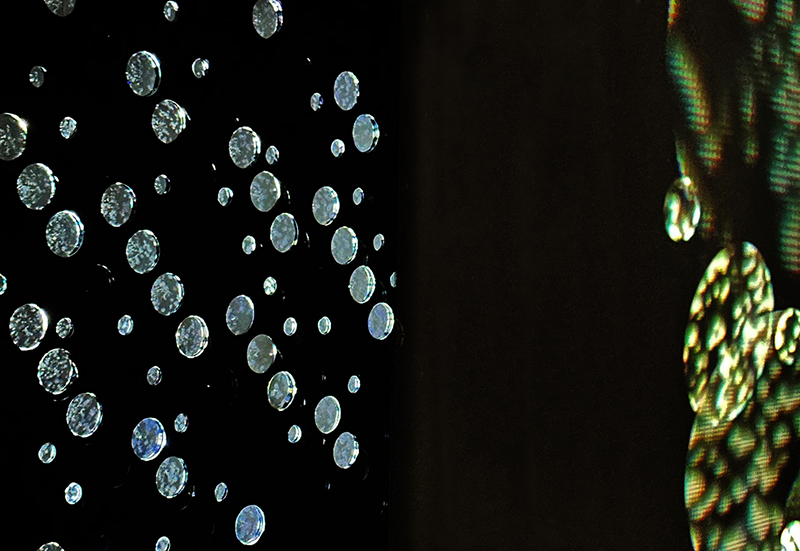
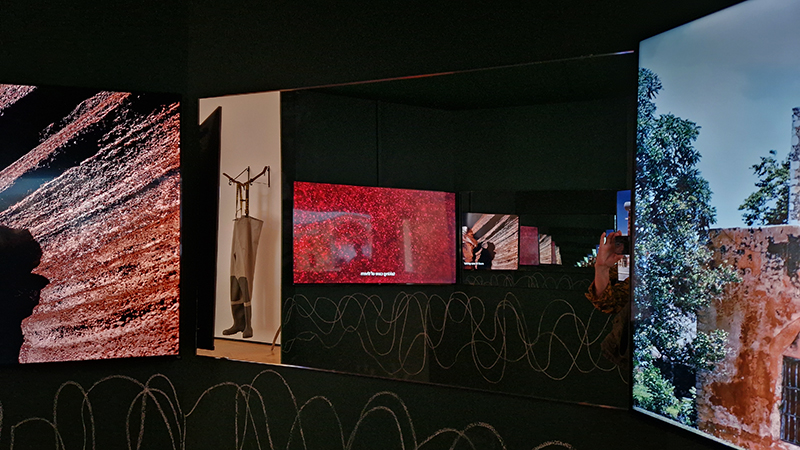
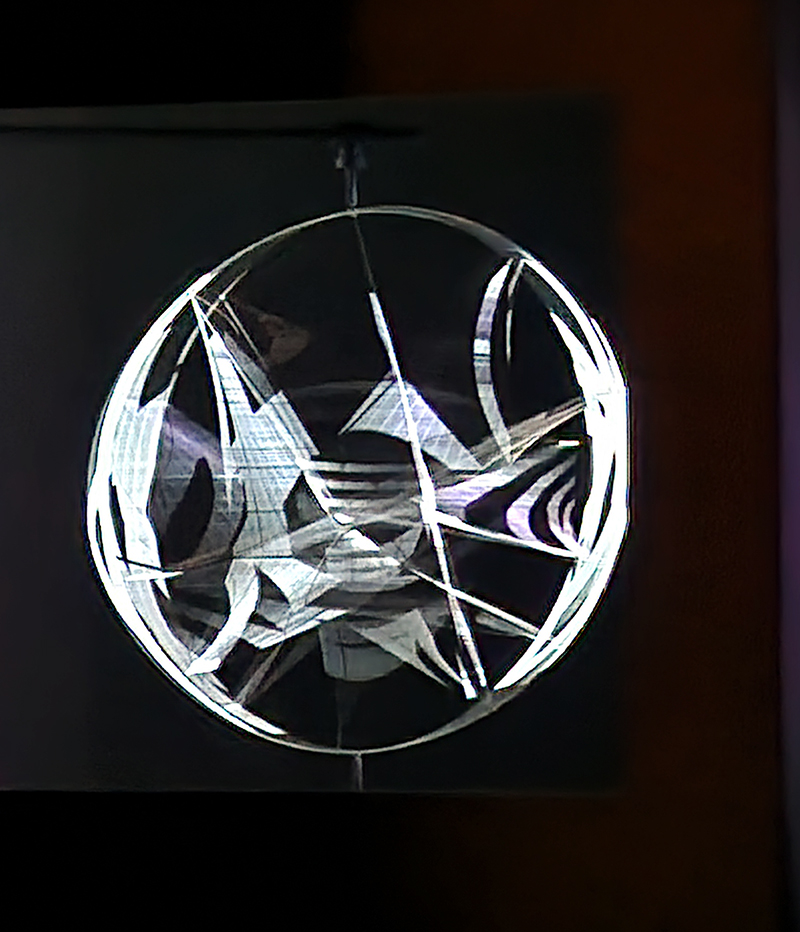
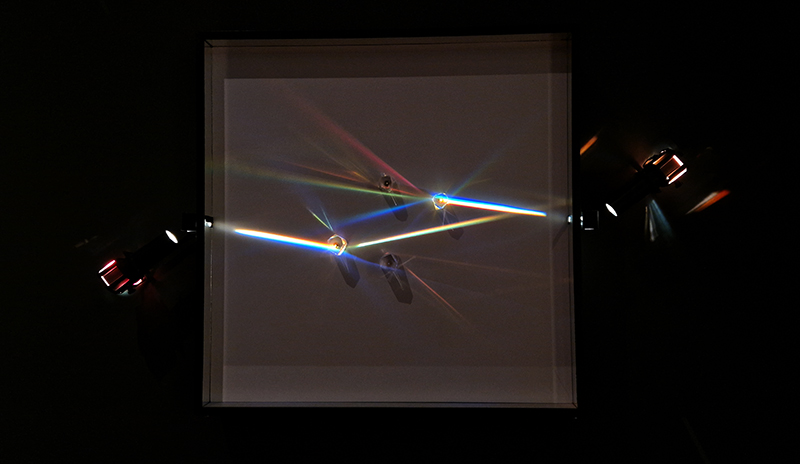
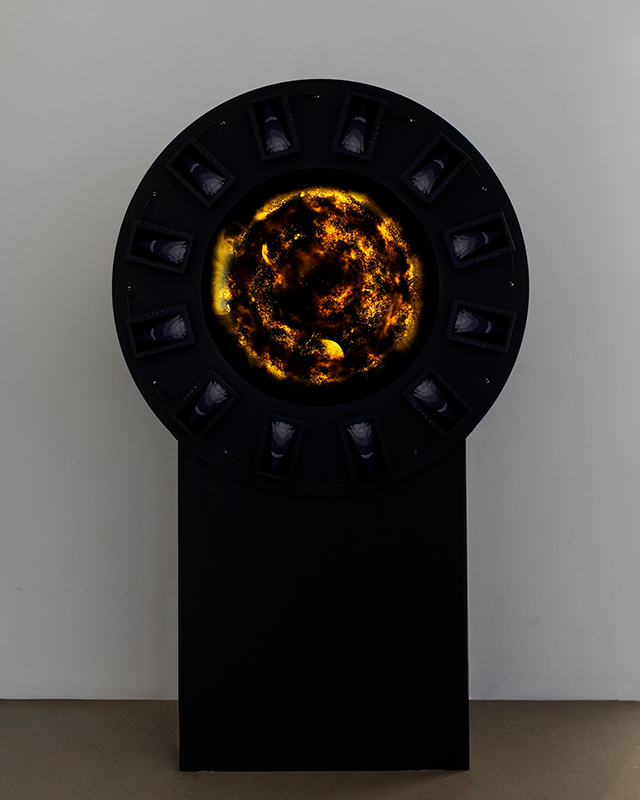
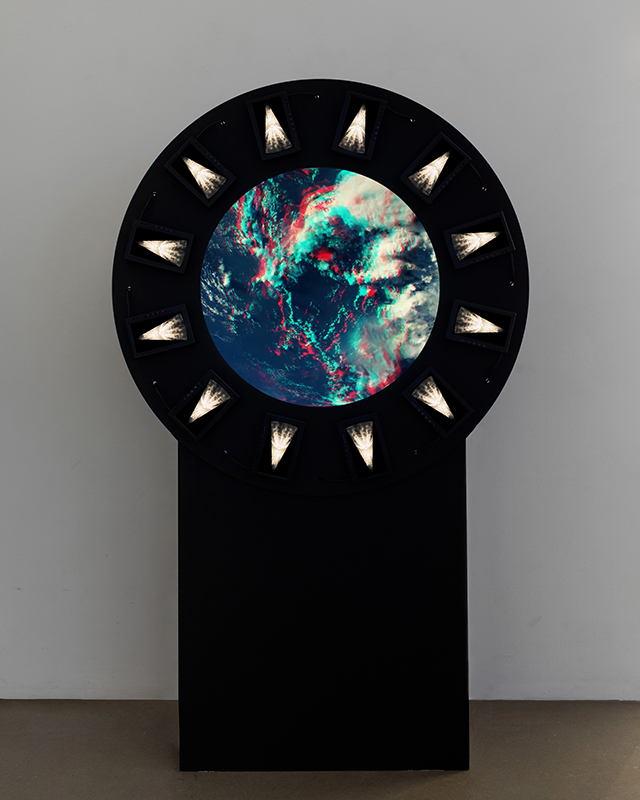
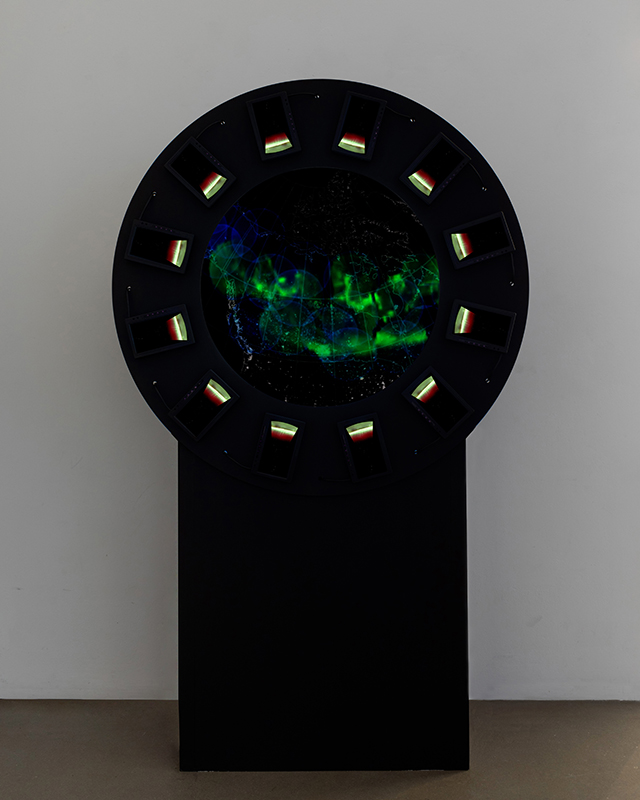
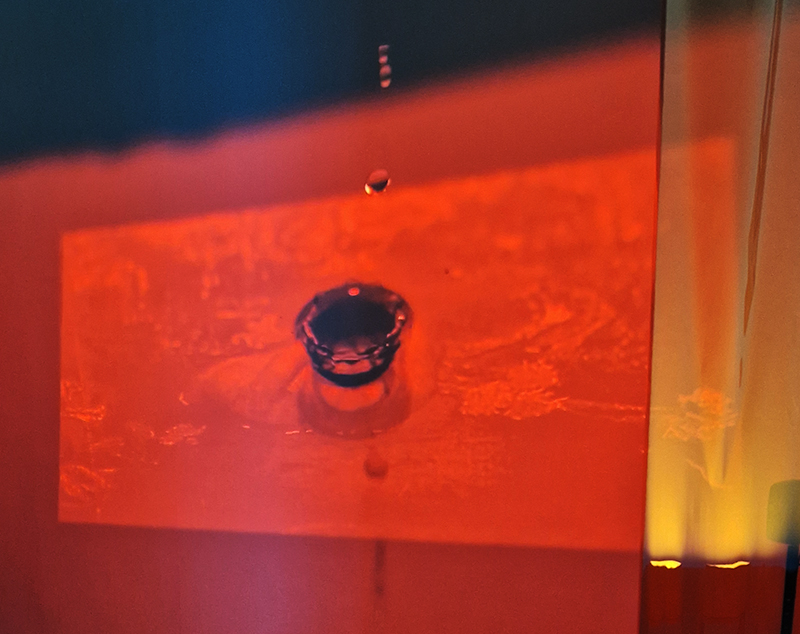
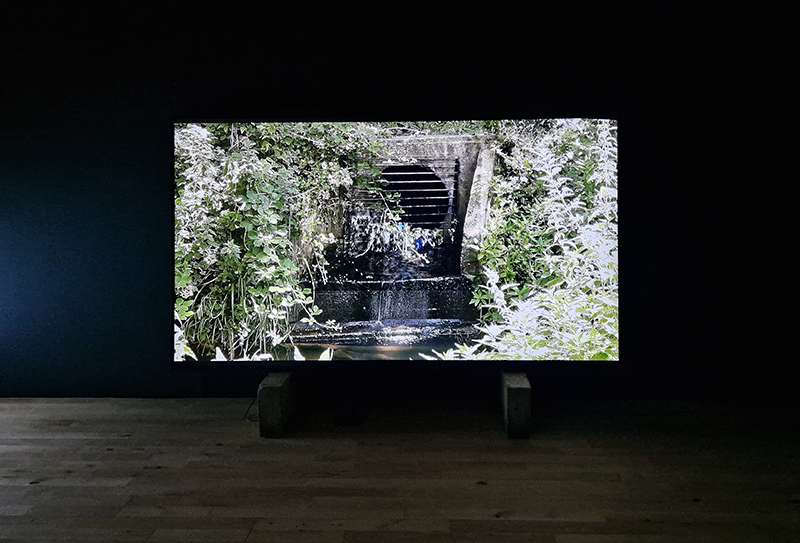
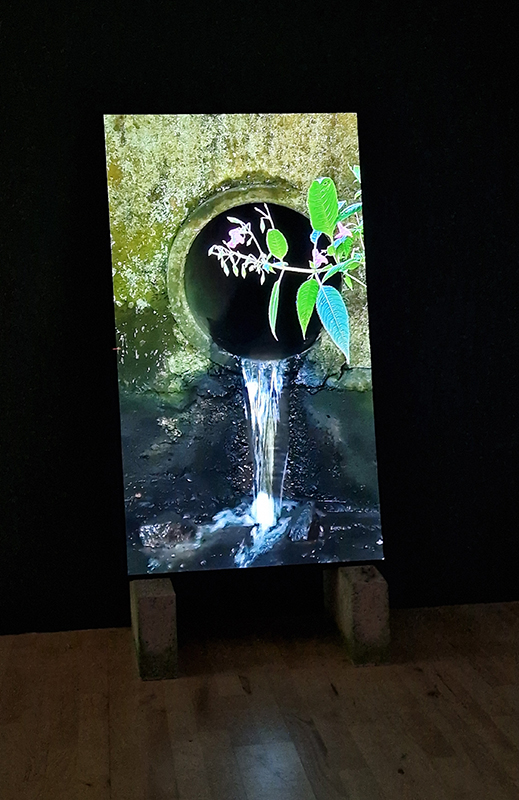
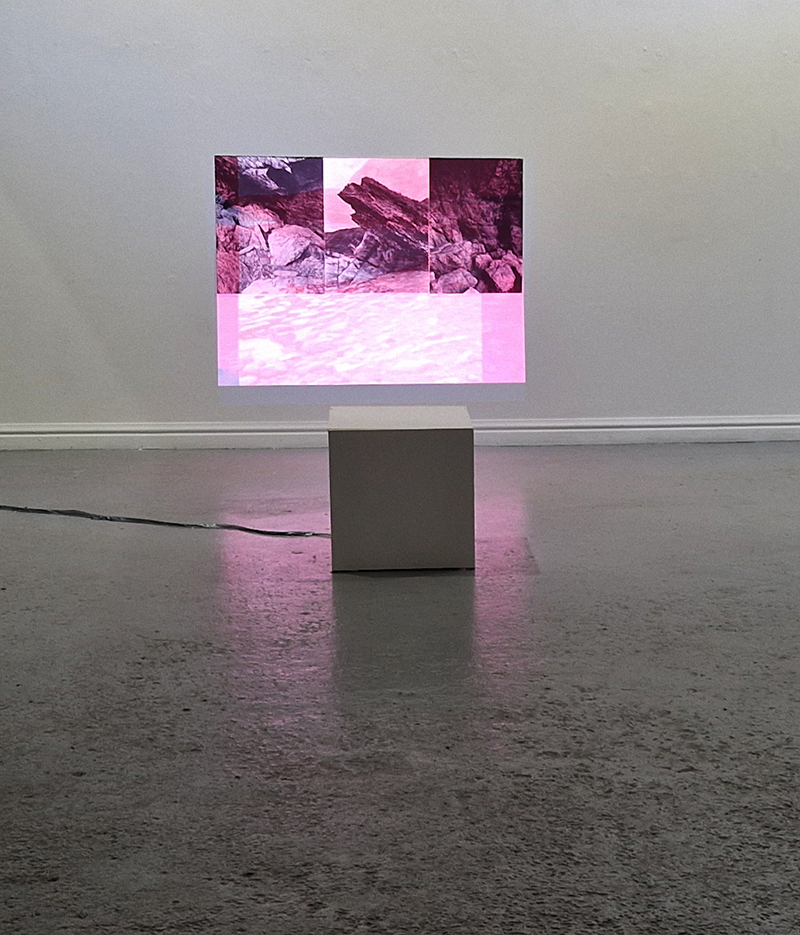
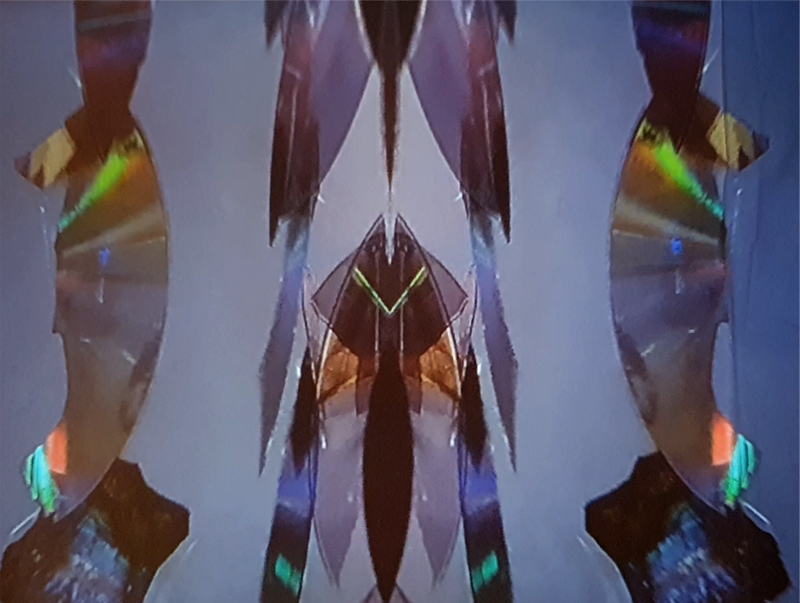
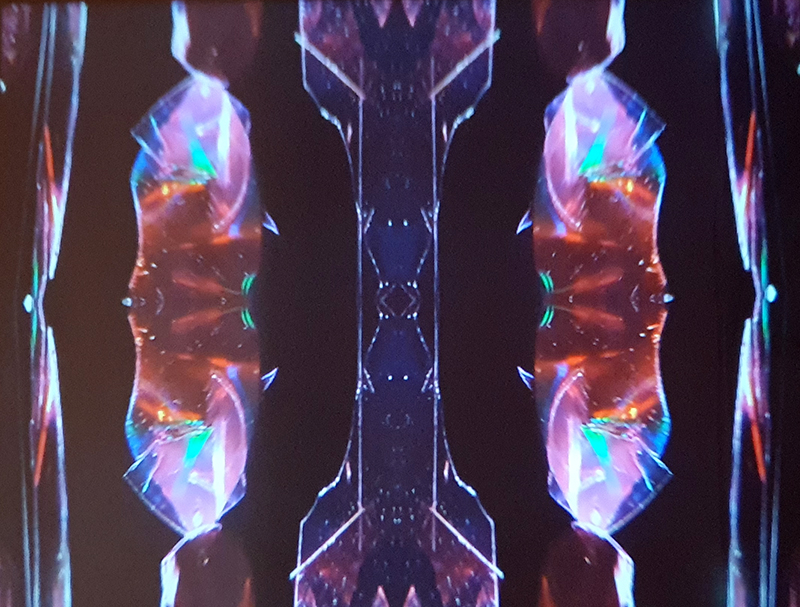
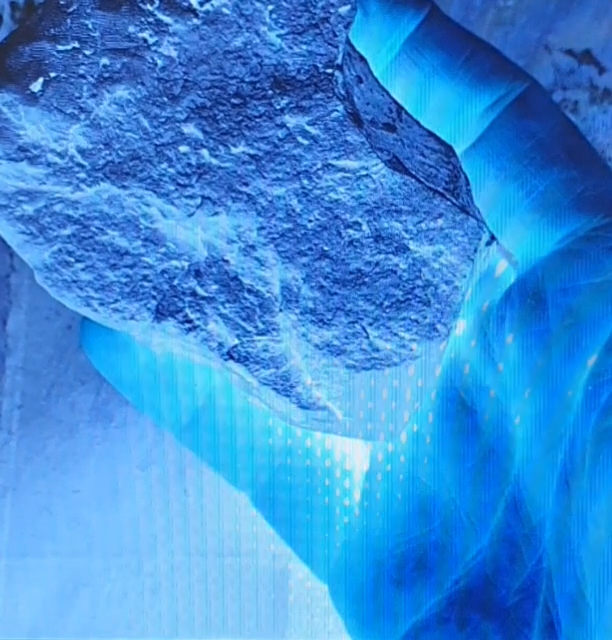
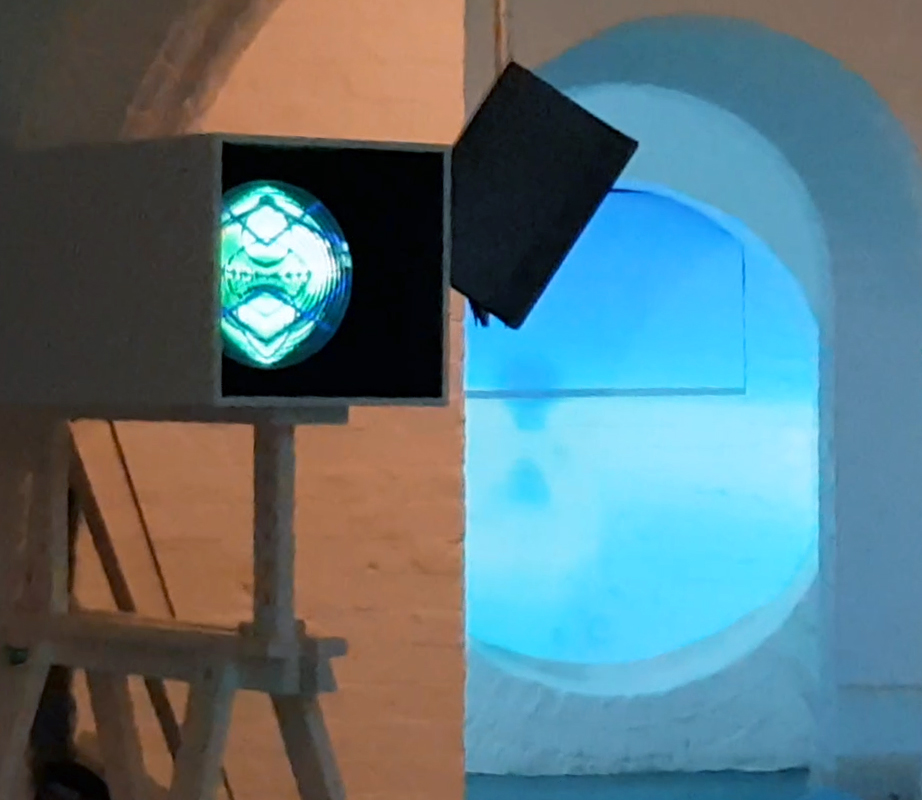
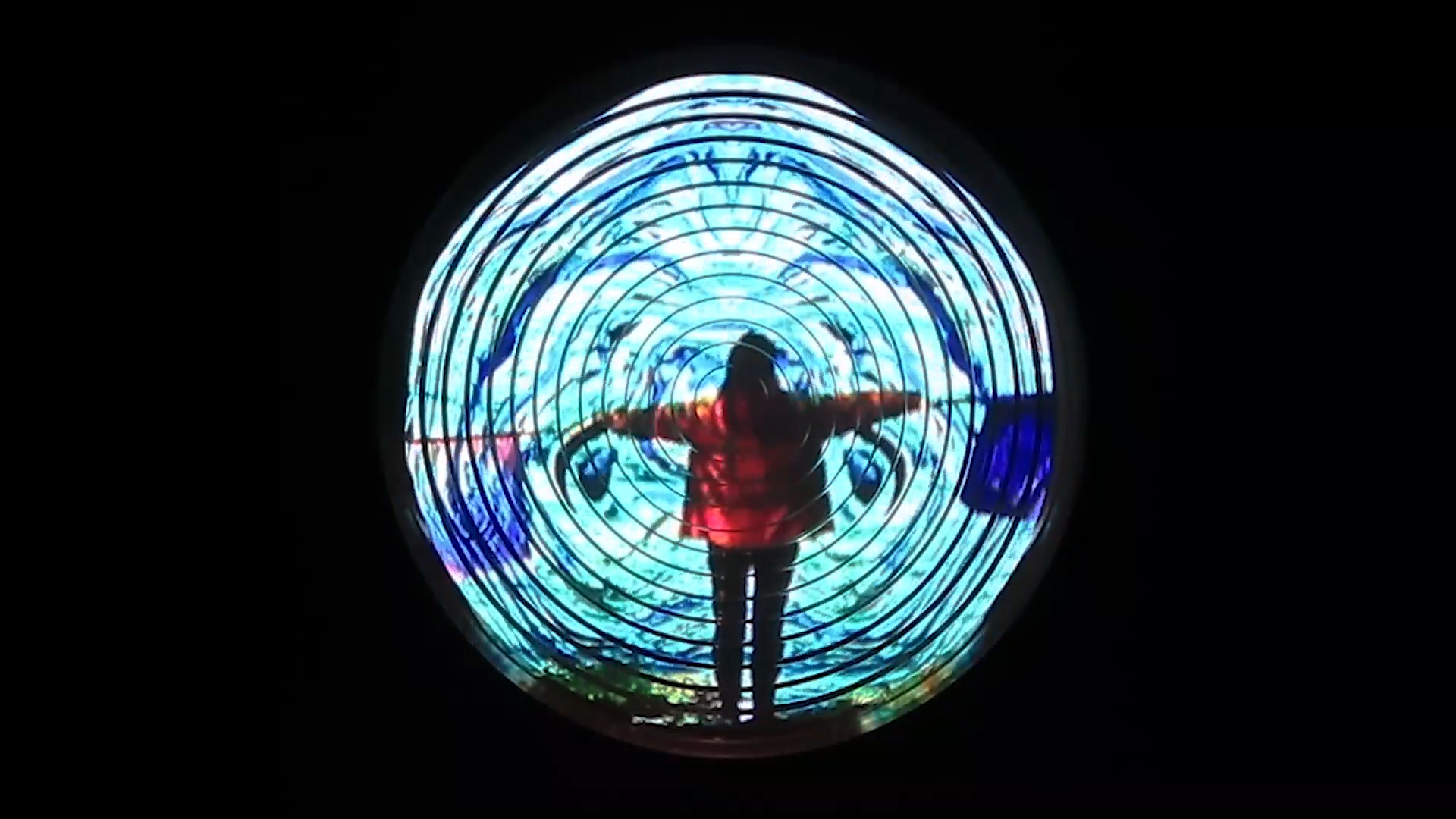
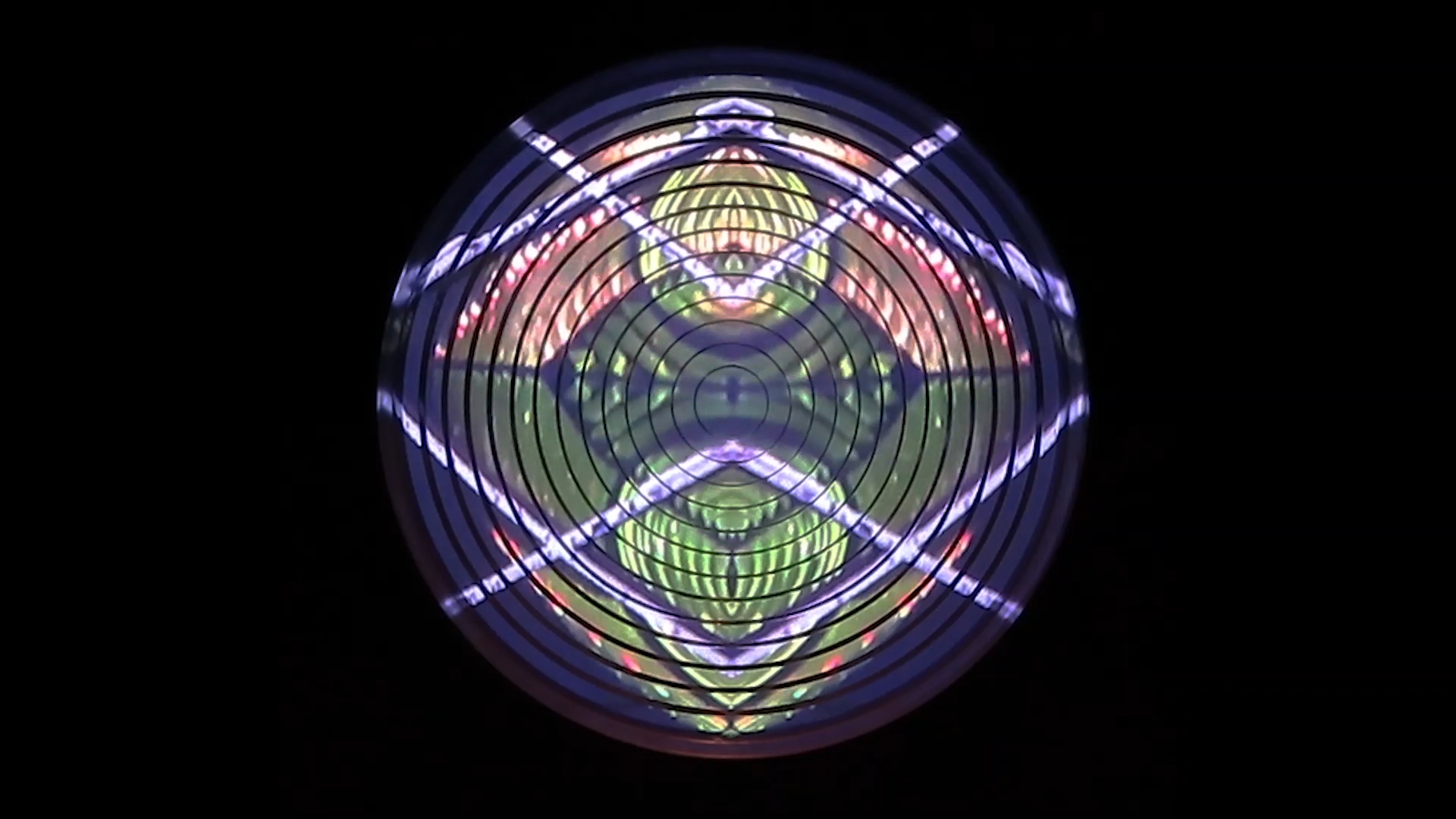
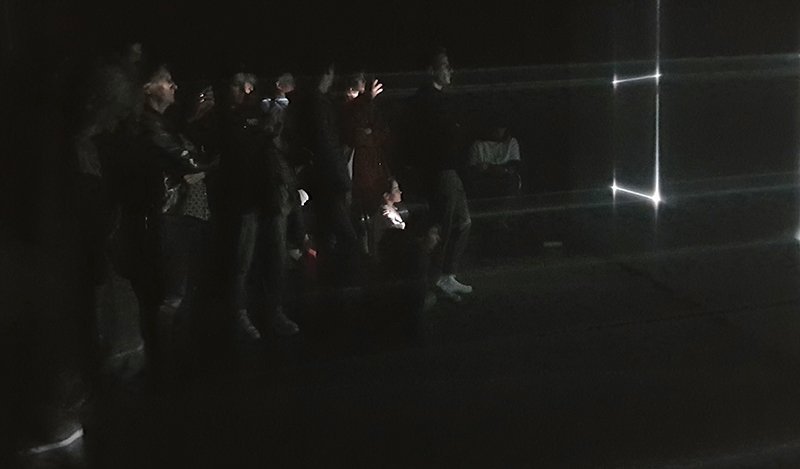
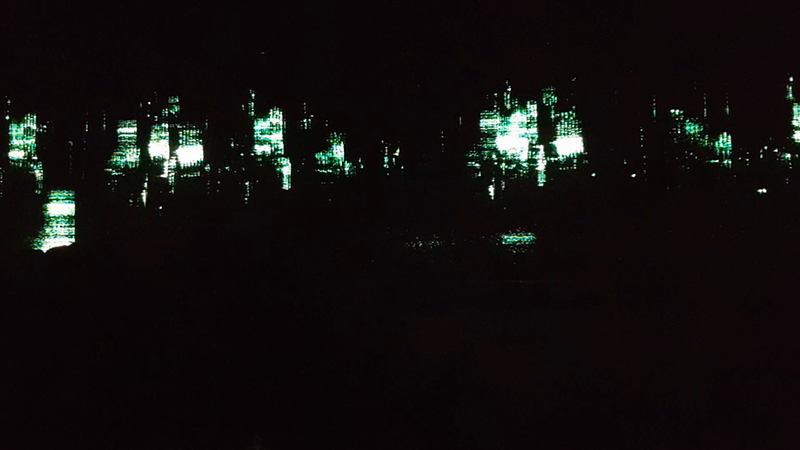
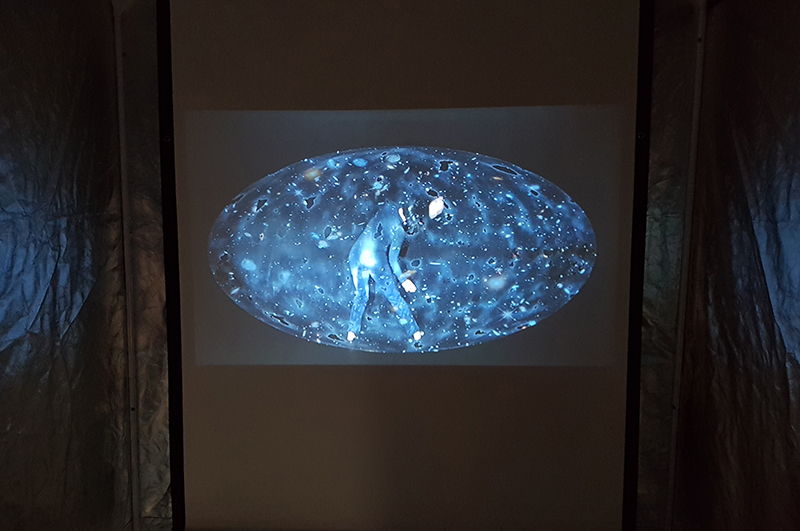
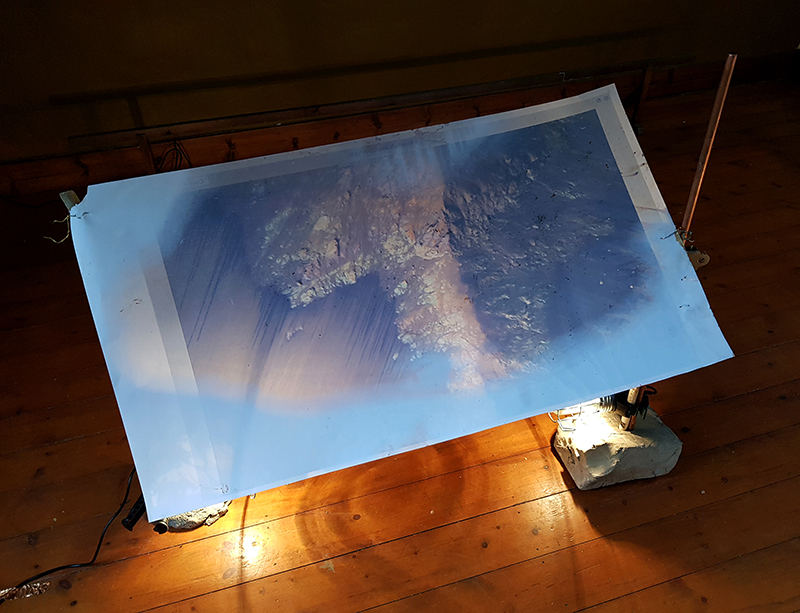
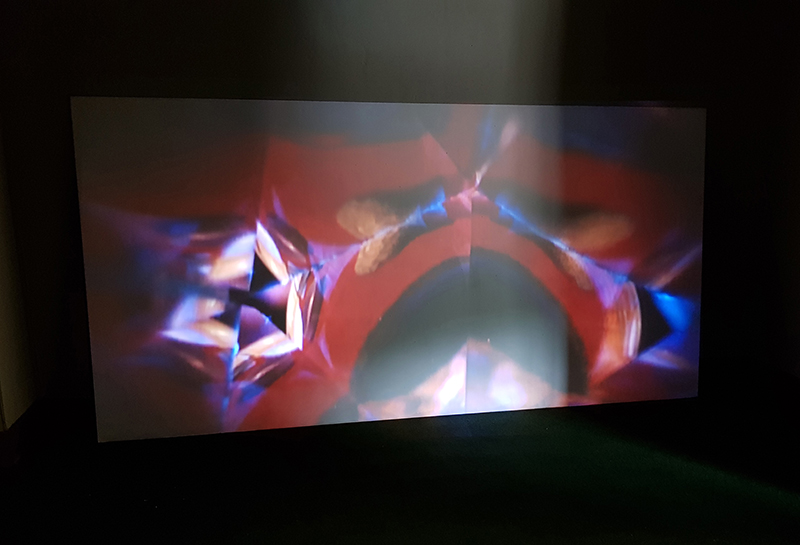
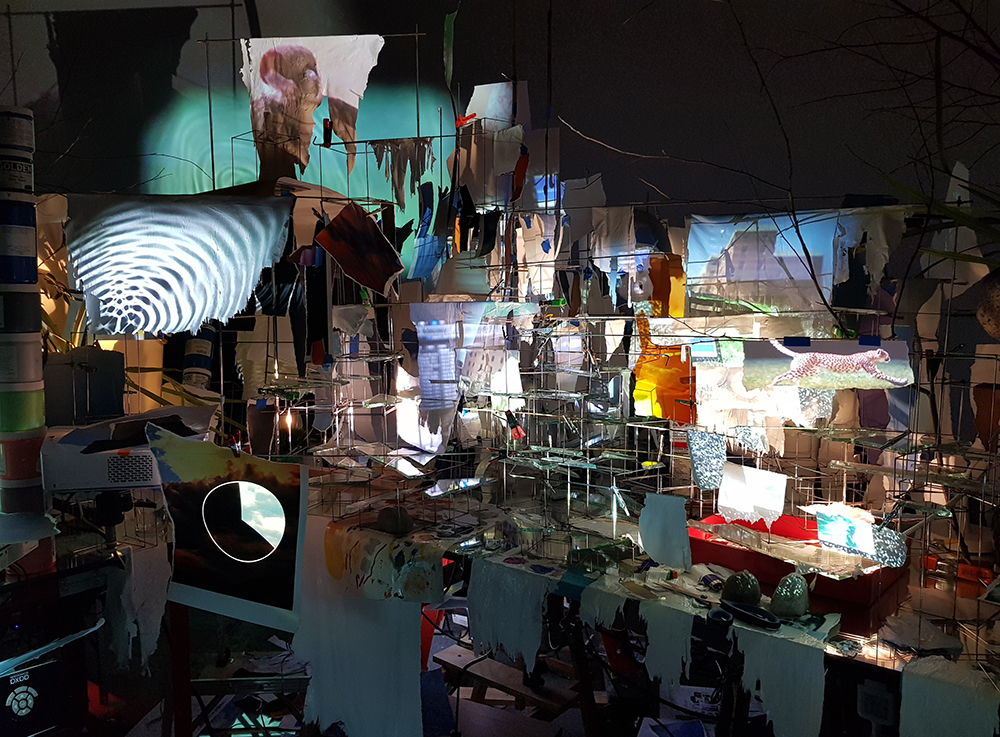
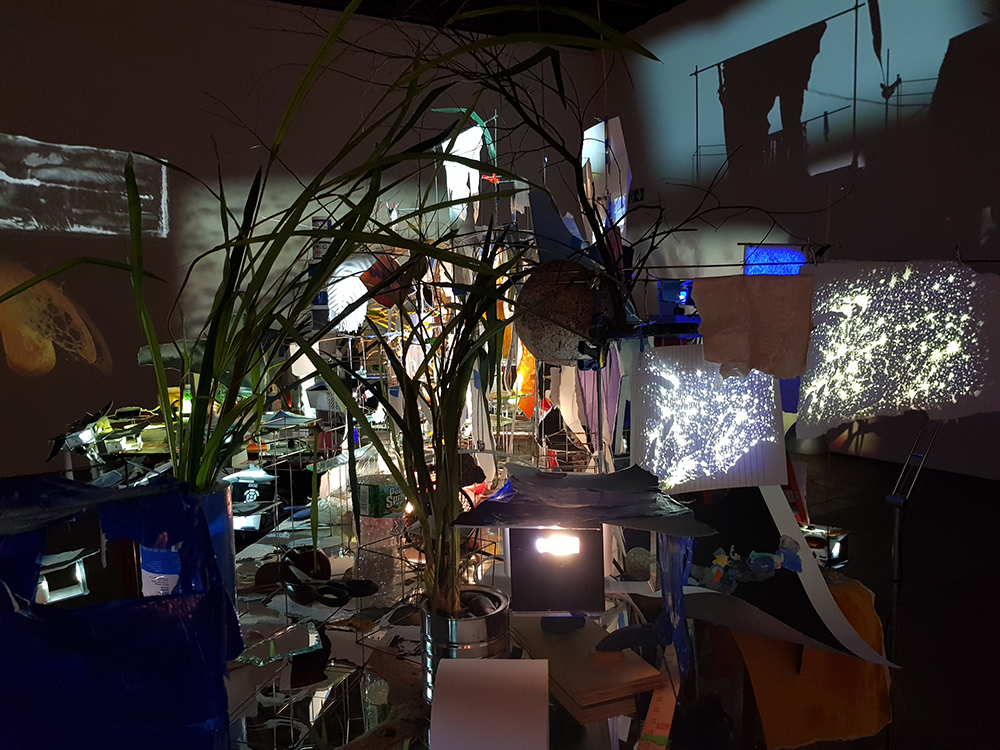
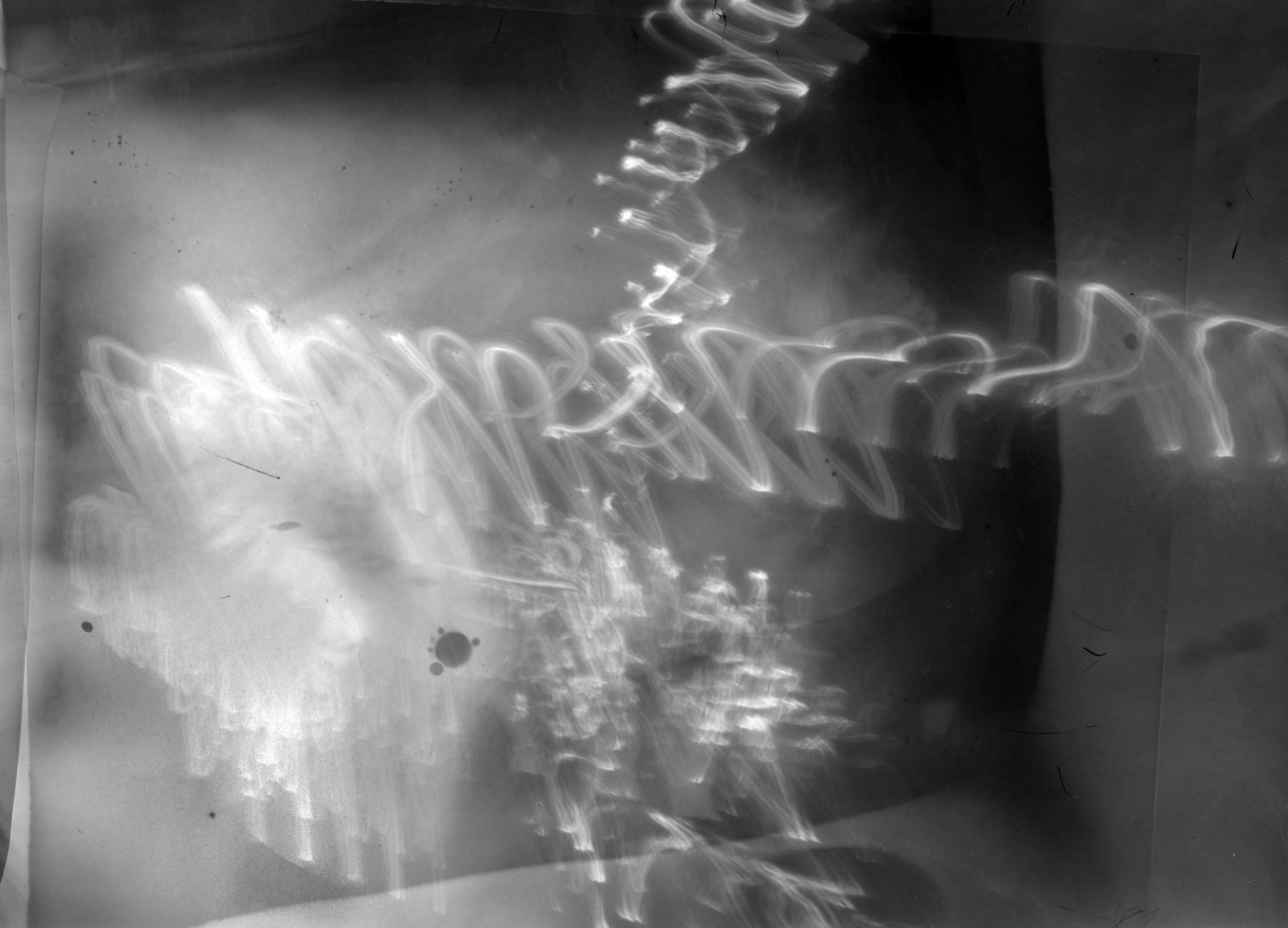
My video installation Lithos Panoptes imagines a view of the world from the perspective of the rock via the molecular structure of magnetite. Referencing a many-eyed giant of Greek mythology, Argos Panoptes (always eyes still awake), the work considers the perpetual vigilance of rock as record keeper and witness.
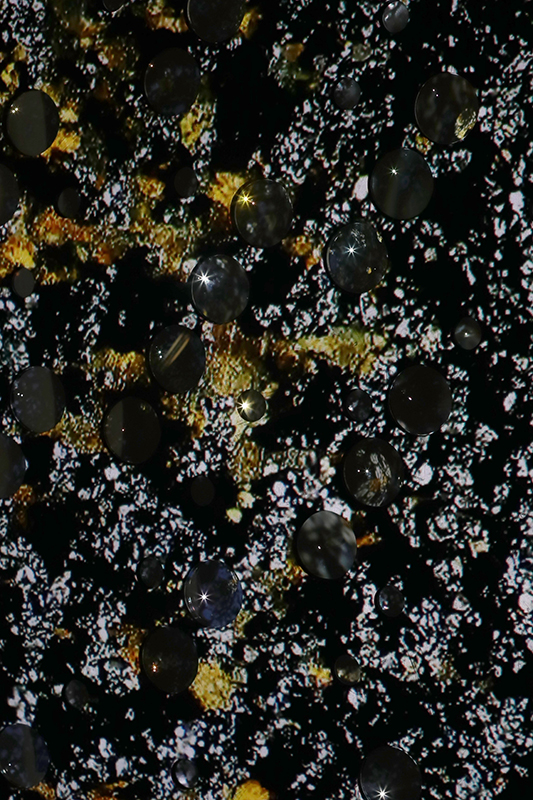
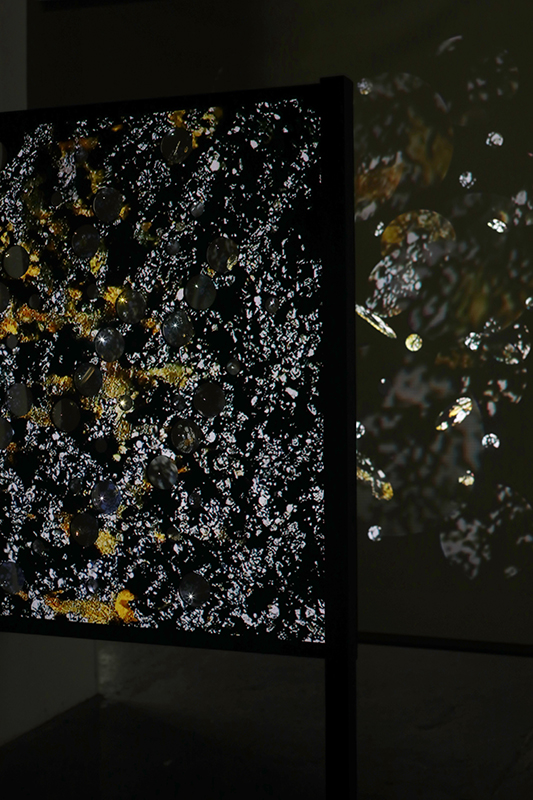
Video of human activity projected through distorting optical lenses transforms the anthropocentric position to imagine the perspective of the rock.

Magnetite is a mineral found in magma and metamorphic rock in Earth’s crust as well as in meteorites. Magnetite nanoparticles are also found naturally in organisms and are known to aid magnetoreception, a
means whereby animals and birds orientate themselves by sensing polar direction.
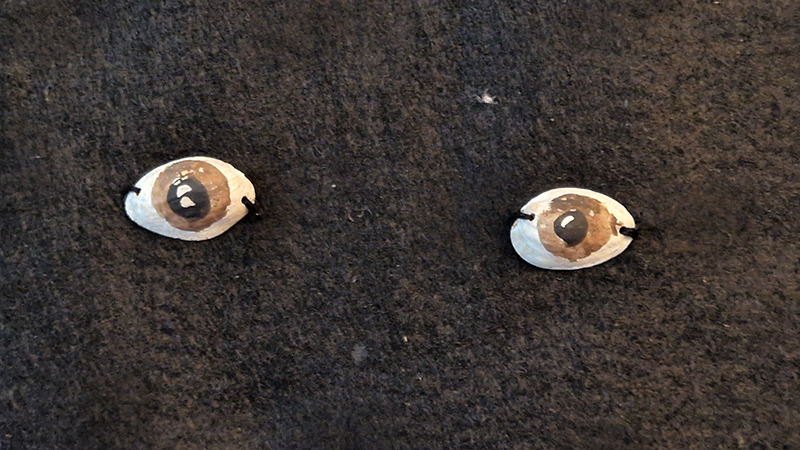
Through these actual and metaphoric lenses the relationship between the organic and non-organic is explored. Imagery includes allusions to scientific research into the dramatic overwhelming of innate magnetite in human brain cells by nanoscale pollutant particles of magnetite released into the air by traffic; the unique qualities of the chiton, a mollusc with hundreds of tiny eyes made from rock rather than biological material and teeth primed with magnetite and containing recently discovered mineral santabarbaraite; Saint Barbara, patron saint of miners and tunnellers, adopted when the use of explosives in mining escalated in the 1600’s and whose benedictions are still sought today with shrines installed at tunnel entrances at Crossrail and even at CERN, the epicentre of scientific rigour.
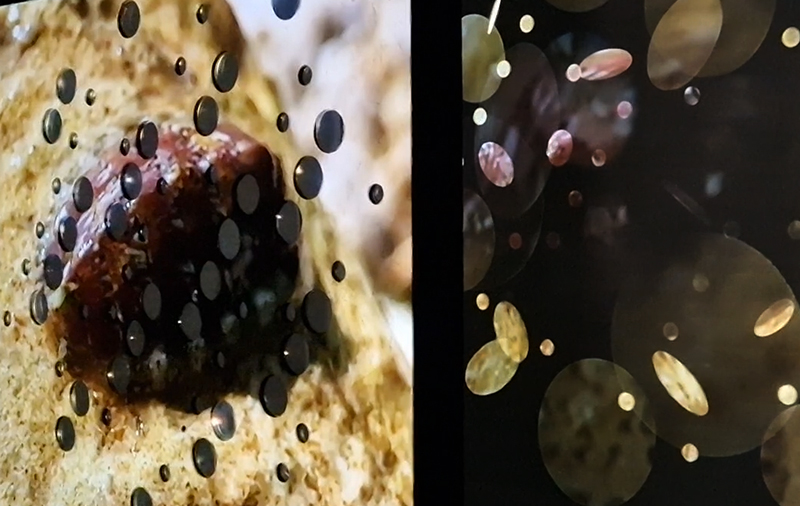
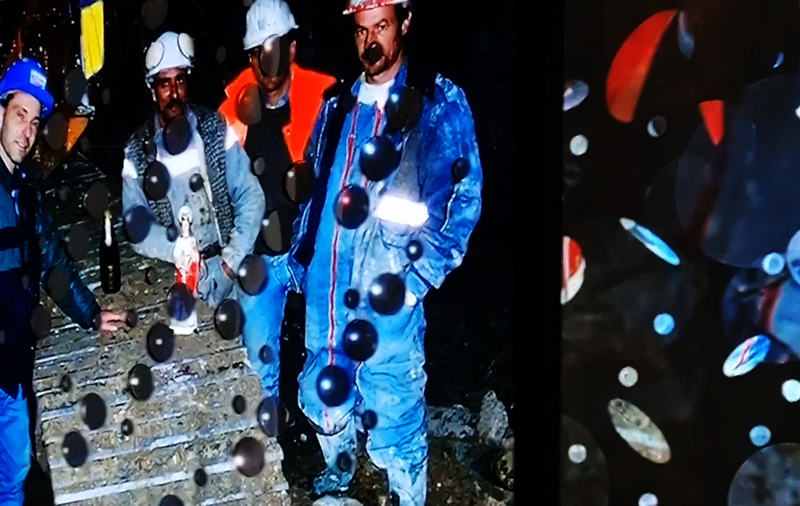
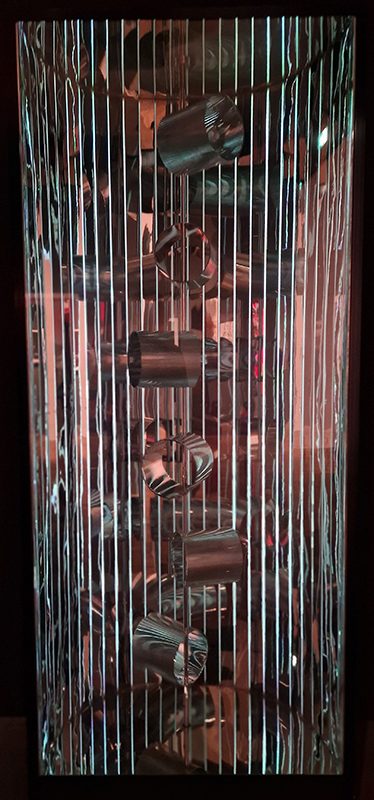
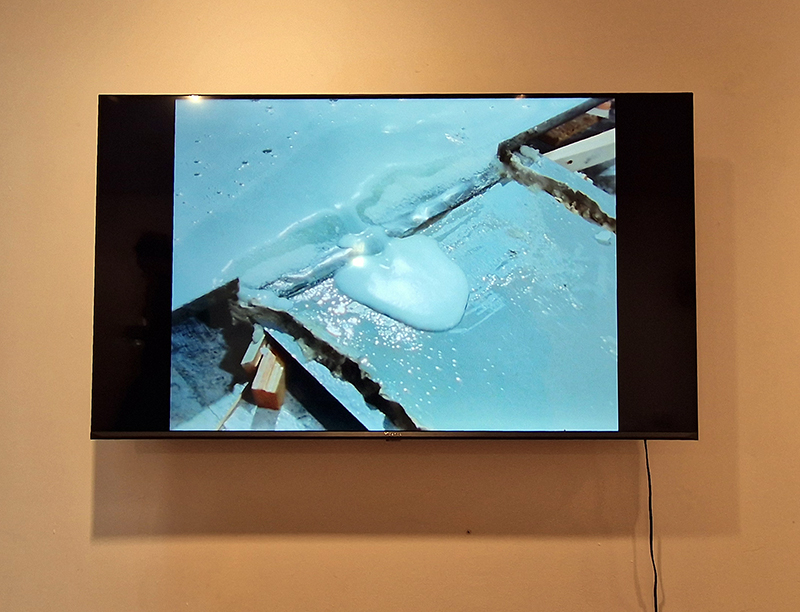
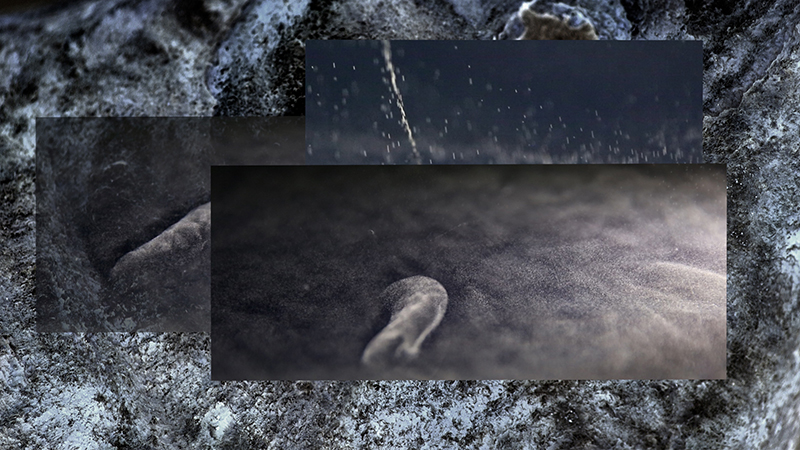
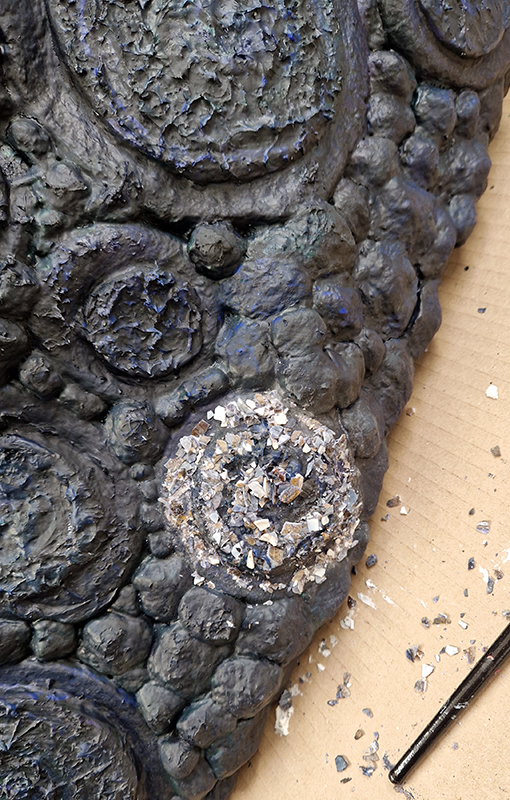
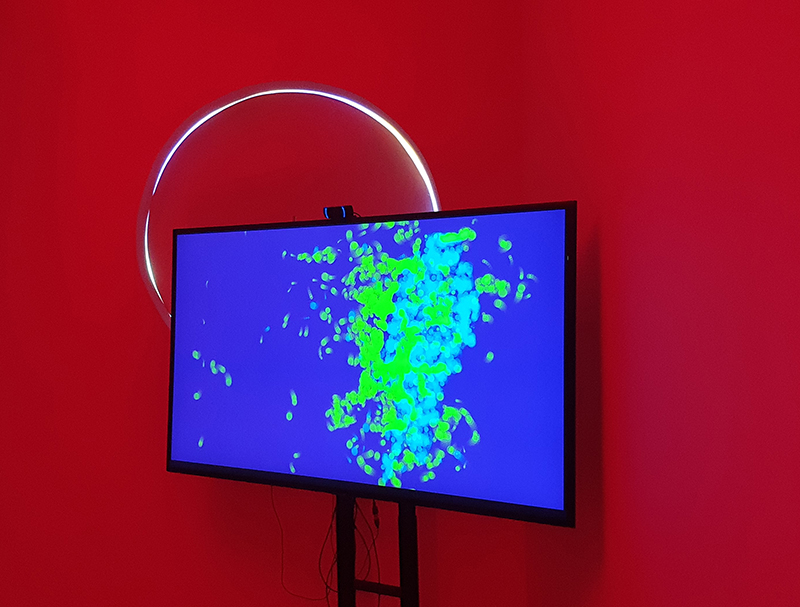
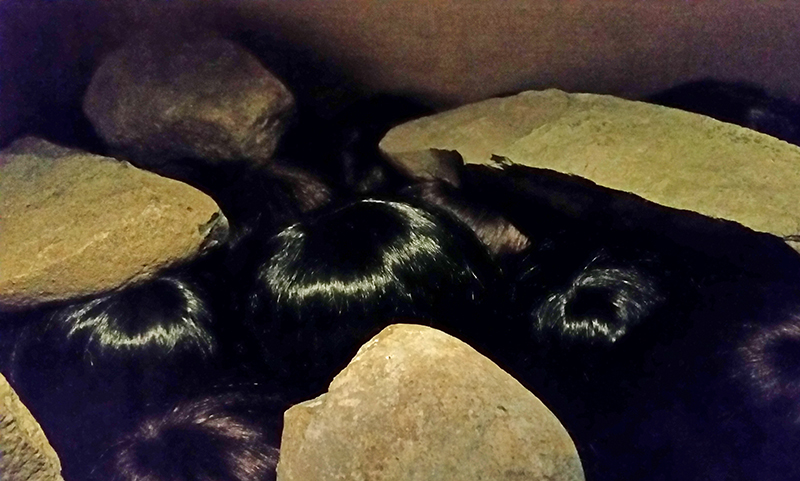
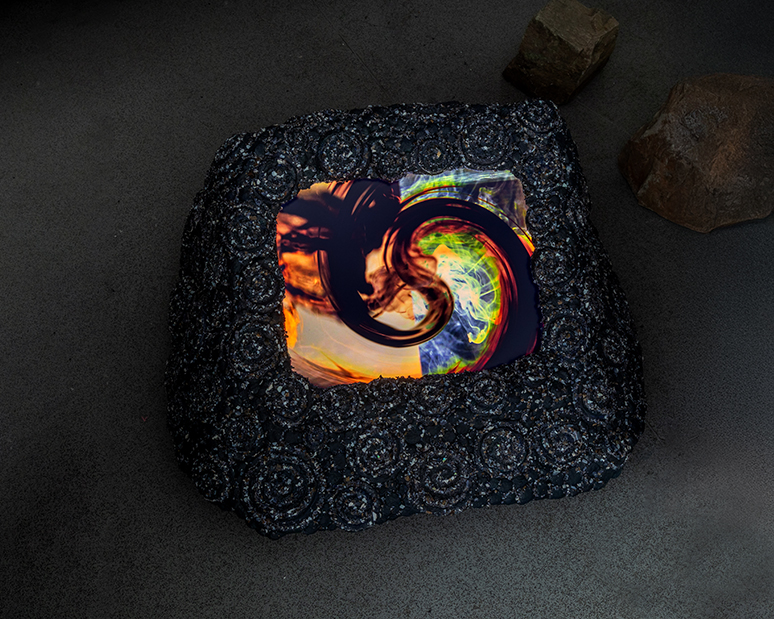
Also showing the video sculpture Belly of a Rock – describing an imagined place of chemical conversations at the intersection of the animate and inanimate. Under a crusted shell, surfaces slide and scrape along lines of fissure, distended innards ooze and rocks moan as they are distorted by untold pressure. The turbulent spiralling of the molten core births rock and lifeforms which are acted upon by the drag of an oscillating magnetic field.
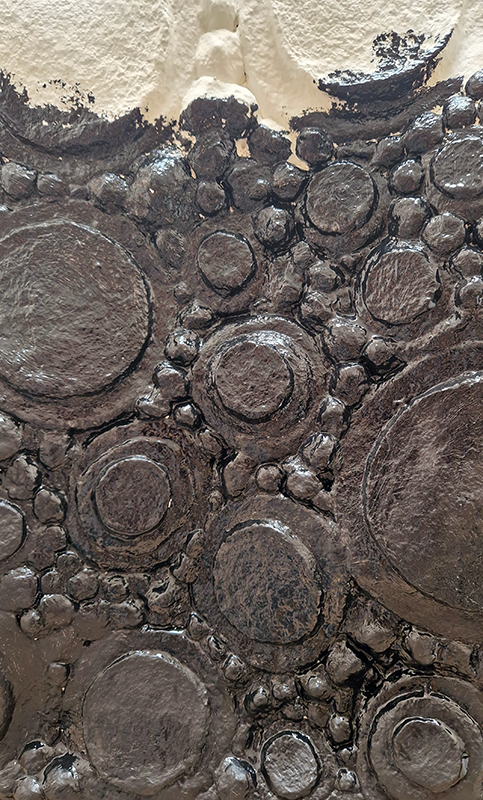
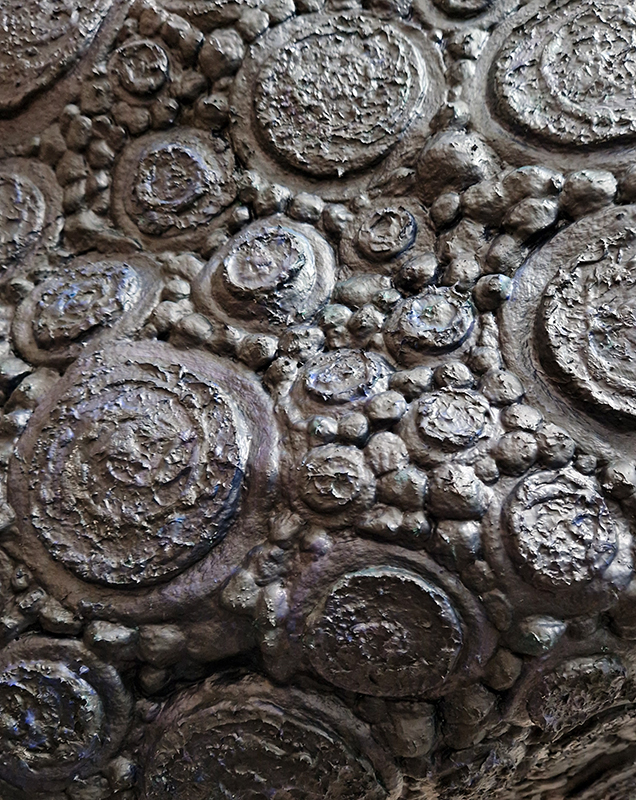
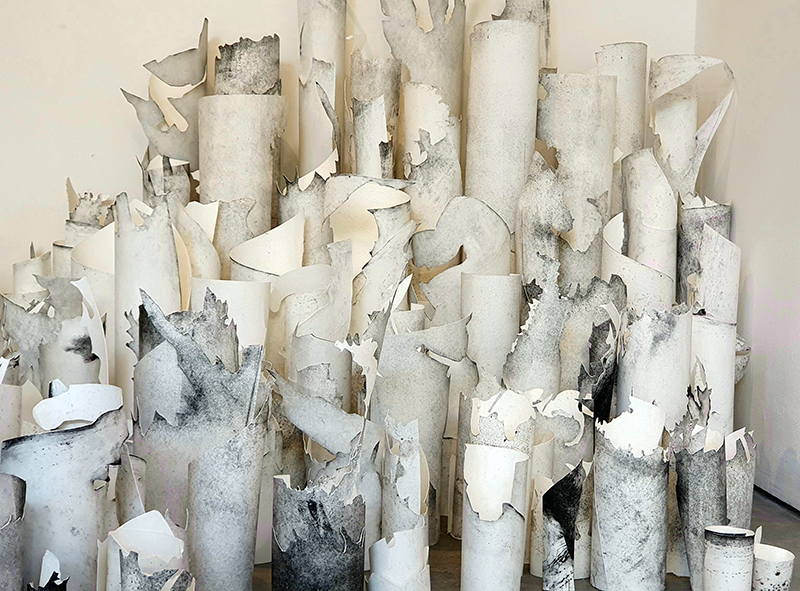
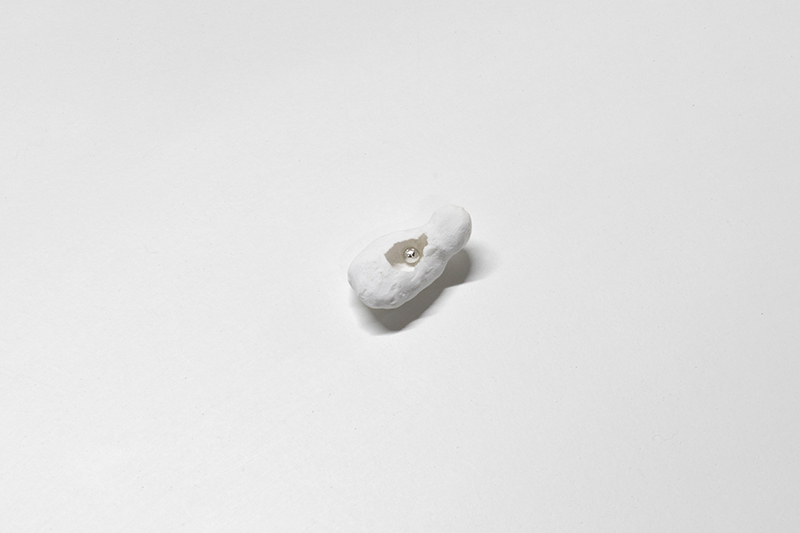
Julie F Hill’s large-scale sculptural print installation Parent Body, uses scanning electron microscope imagery of samples recently returned from asteroid Bennu. The data features detail of carbon-rich and organic ‘nano-globules’ which have been theorised as ‘proto-cells’. The sculpture evokes astro-geological-biological material lineages across deep space and cosmological time. In a contrast of scale, Julie is also showing Return, 3d print of asteroid Itokawa cast in plaster-of-paris with a bead of Iridium. Iridium is an rare-earth element more abundant in asteroids than the Earth’s crust. This miniature work considers the cross exchanges between space and earth and in a gesture of reverse sample return (scientific missions and human extractive processes both take), a bead of Iridium is returned to the belly of asteroid Itokawa.
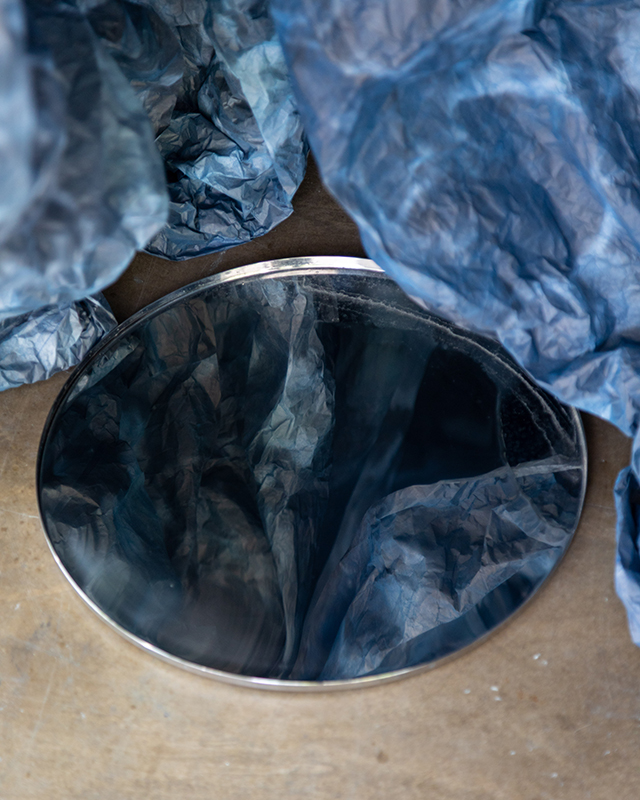
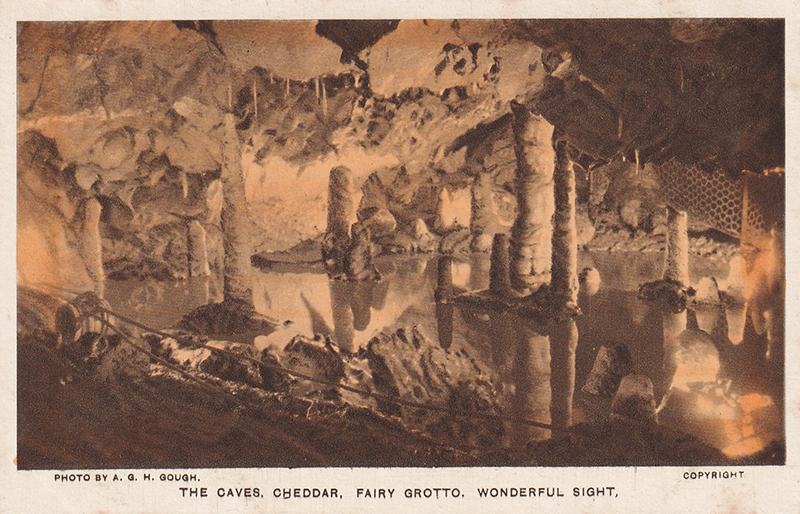
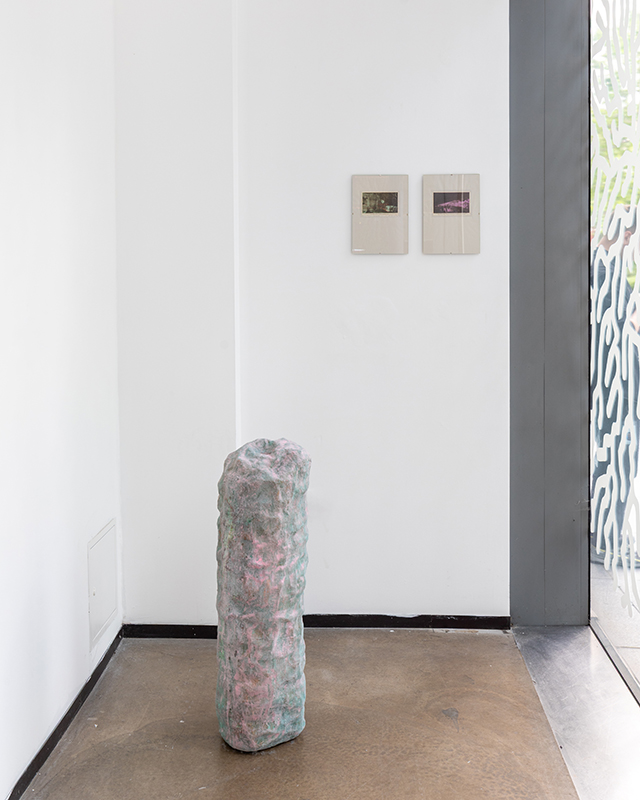
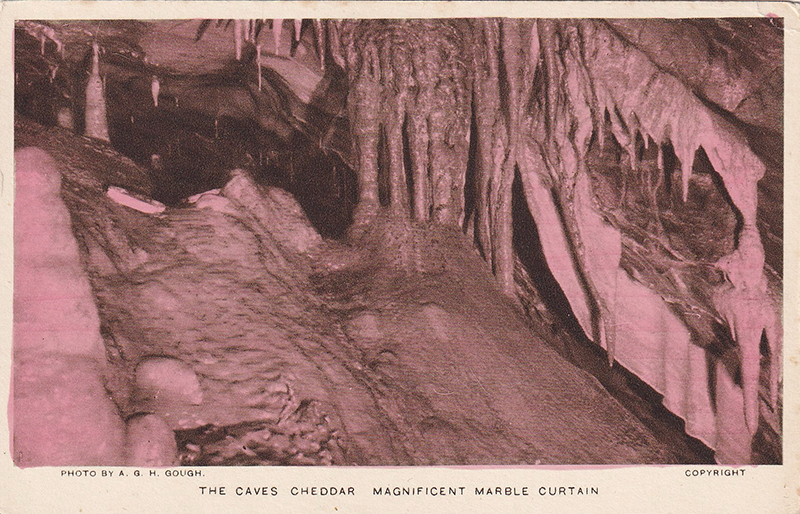
Charlie Franklin’s work considers control, physical experience and memory within the natural landscape. Her research includes how formations such as standing stones, grottos and geological debris remain or change across time. With a particular interest in materials and the properties they hold, she is experimental in her approach to making. Everyday items including cardboard, plastic sheeting and gaffer tape are repurposed to build the foundations of her sculptural work. Franklin also collects found imagery such as postcards and photographs, which she reworks to become something else.
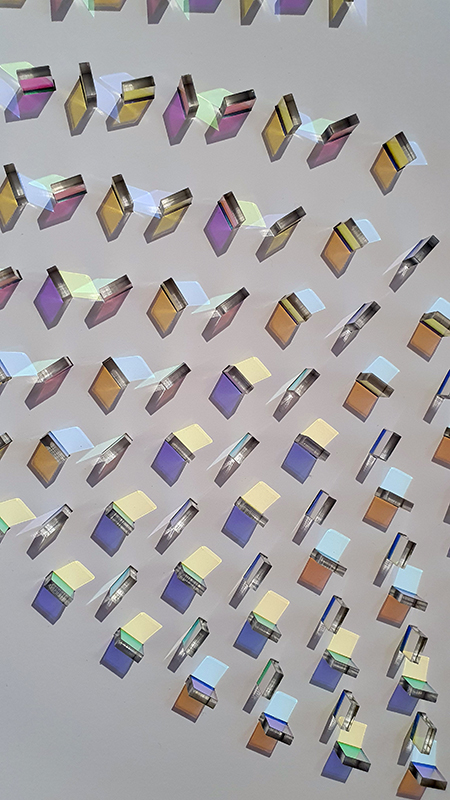
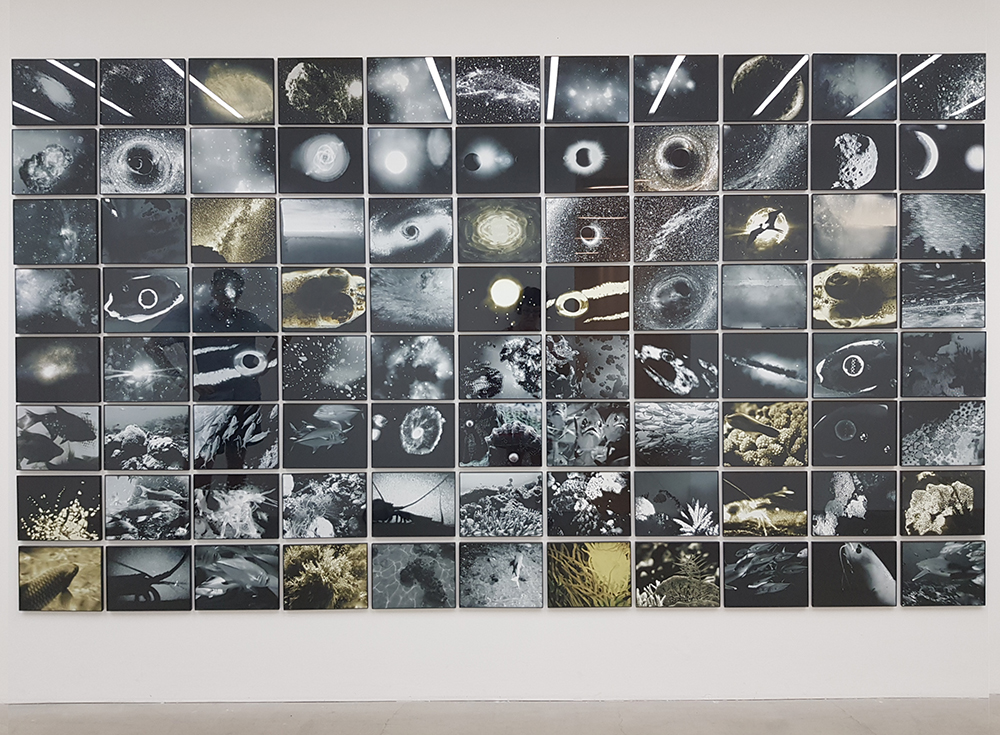
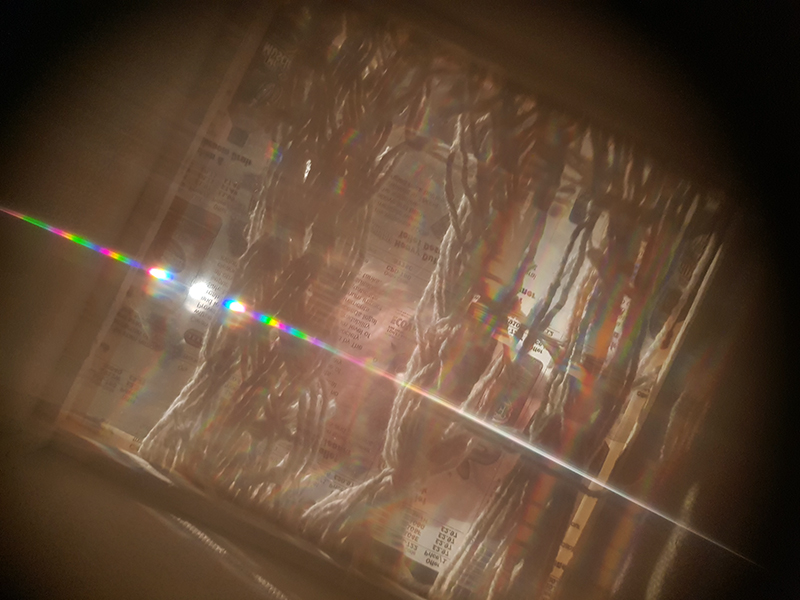
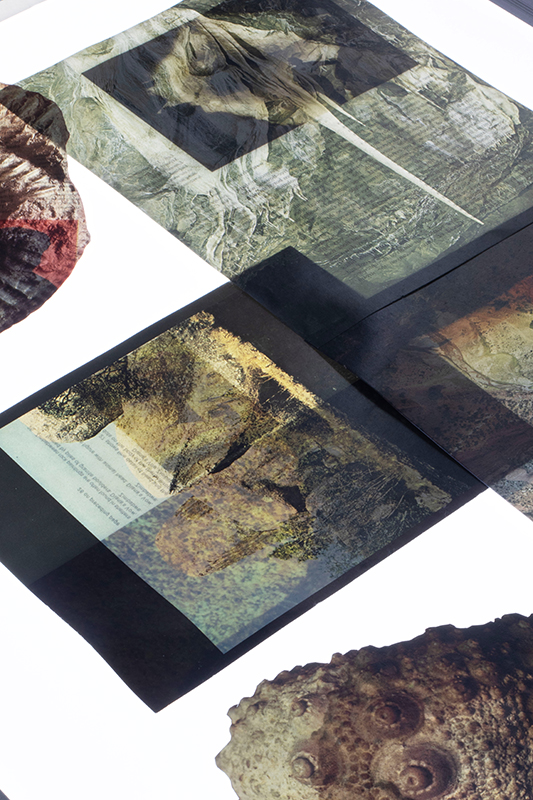
In Litho/Domous, Rona Lee layers photographic plates from mass produced ‘coffee table’ books onto lighting panels, utilising the ‘bleed’ between them that this reveals, to evoke the tectonic instabilities of
contemporary eco relations. Originating in the post war ‘golden age of capitalism’, and designed as statement pieces for home display, the aspirational focus of these image-rich publications on culture, travel, landscape, can be said to prefigure the arc of the smartphone in making the world consumable. At the same time titles such as The Mineral Kingdom and Library of Nations speak to the legacies of the Enlightenment project, offering up an order of things in which Mankind / the Anglophone world is positioned as ascendant and Nature – along with ‘other’ cultures – is ‘put on the table’.
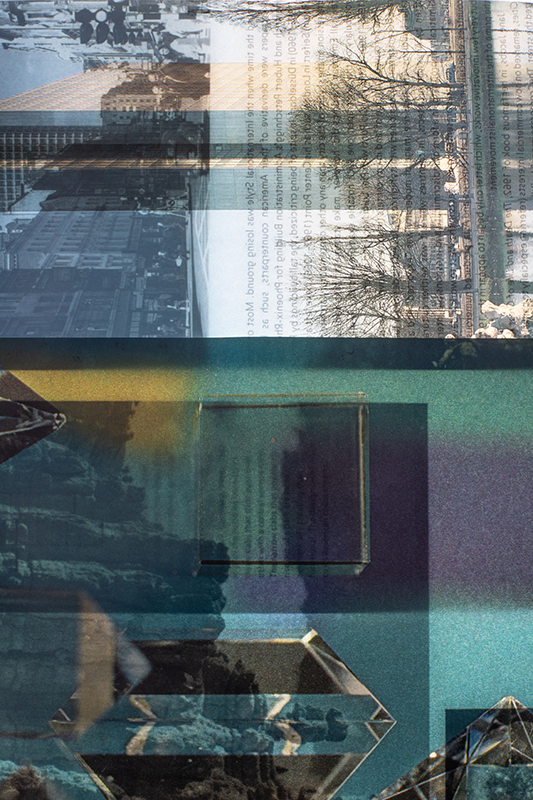
Deborah Tchoudjinoff’s video installation The City of Gold takes a speculative look at Earth in the far future. Her work considers vast, beyond human, geological timescales where continents have once again become one. Past supercontinents create room to speculate upon future ones if we understand Earth as shifting, moving matter. Starting as a short fiction text Tchoudjinoff began to form an imagined world of cities in a future supercontinent of Amasia. The fictional cities named after the minerals that are heavily sought – rare earths, copper, uranium, gold, and coal – hinting at the narrative of an Earth depleted of the resources we rely on. The City of Gold is one of five imagined cities.
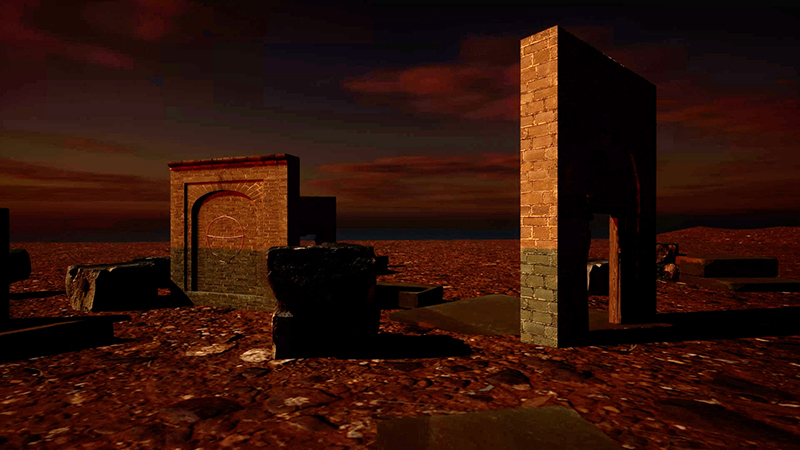
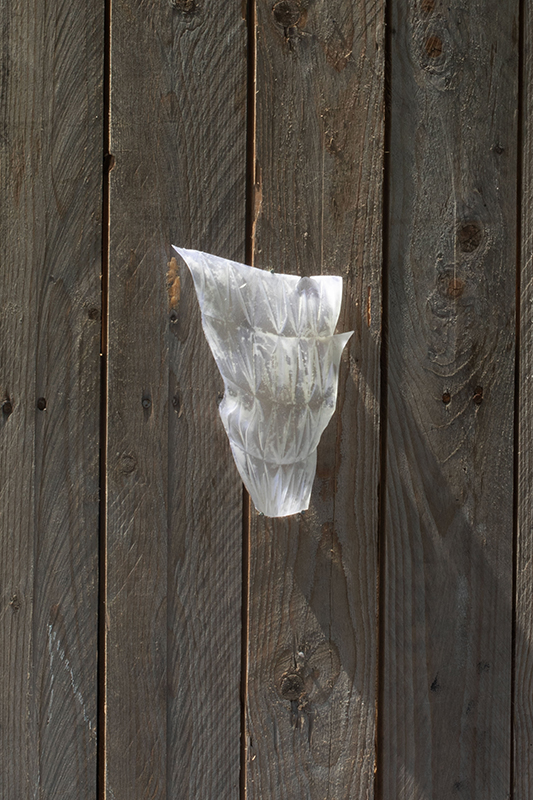
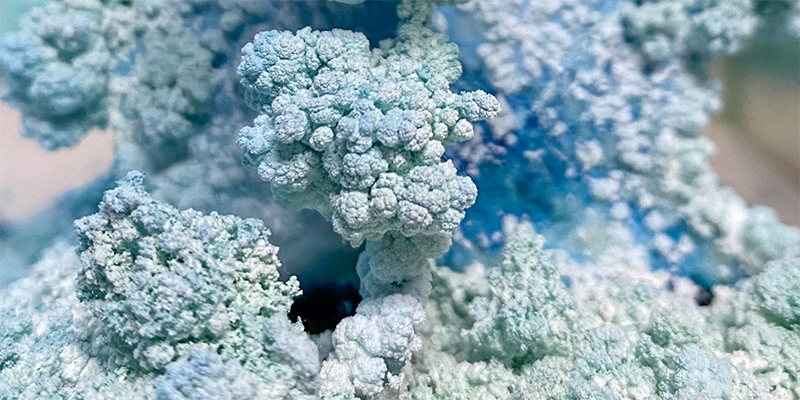
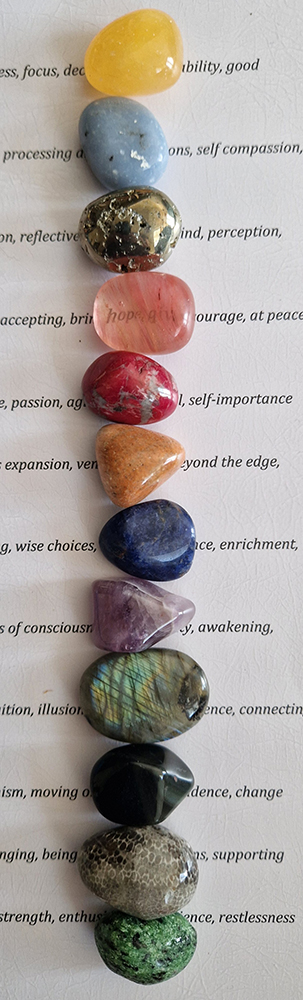
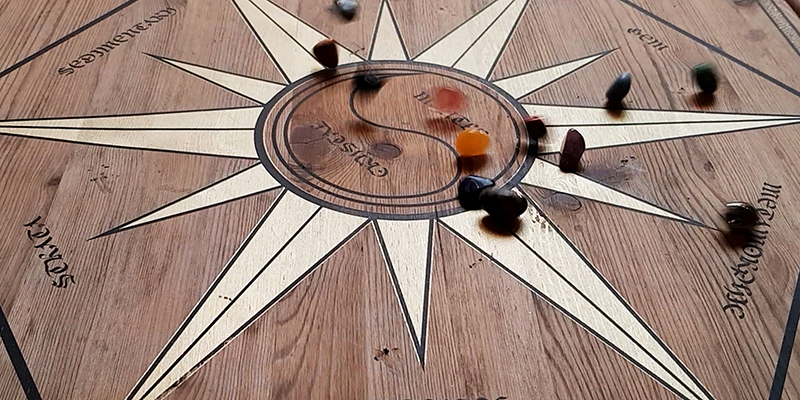
An accompanying events programme includes an urban geology walk with Geologist Ruth Siddall, discussing the origins of the local built environment; Cheong tasting by chef Moonhyung Lee who explores human-mineral entanglements through digestion; a crystal growing workshop led by Julie F Hill and I will be offering visitors lithomancy readings every Friday afternoon. The reading of stones proposes insights into the power and allure of stones emanating from the symbolic meanings attributed to them and exposes the entangled relations between the human and the geologic found in our language and desire to align the human condition with the lithic.
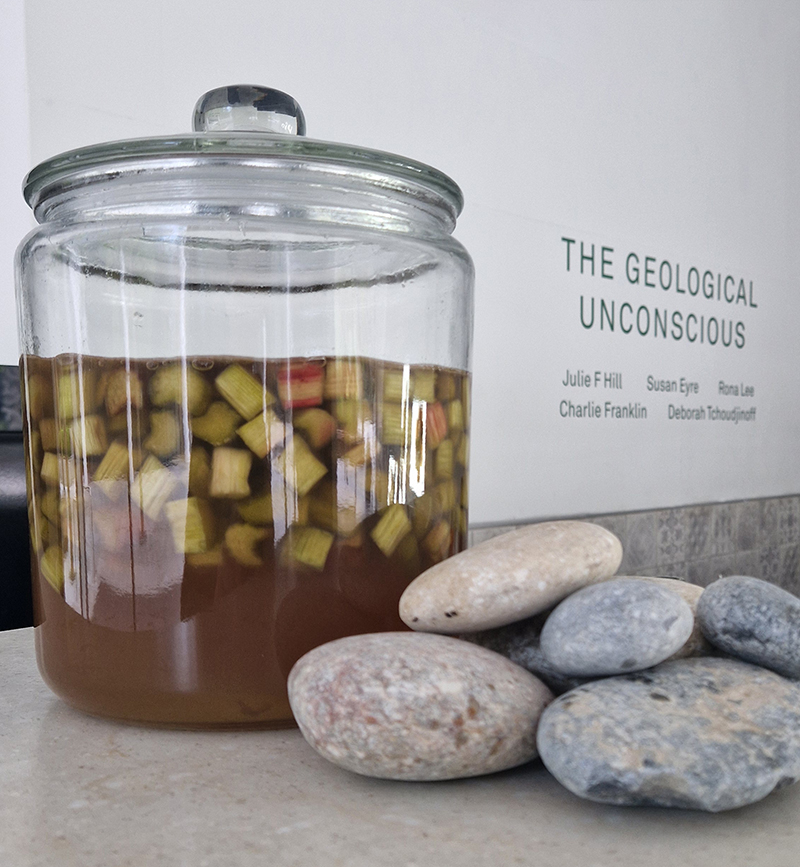
Once I start thinking of minerals as something we swallow to make our body function, I also start to think of how our body comes to be composed of these minerals, and that when we gradually decay after death we become mineral components again. So, the gesture of swallowing a tablet or vitamin pill is as magical, or let’s say as supernatural, as we want, because we really are swallowing a stone. – Otobong Nkanga

Link to Marina Walker essay The Writing of Stones published by Cabinet Magazine.

London once had many stones. They made convenient landmarks for gatherings and councils, or else marked boundaries or distances. As a result, they often crop up in place names – Link to The Londonist ‘Lost Stones of London’.

Gallery visits

Mónica Alcázar-Duarte in Cultural Reforesting Exhibition at Orleans House Gallery. In this exhibition, the artists remind us that we not only have a relationship with nature but also that we are nature. We are human animals. Together, with our more-than-human neighbours, we are a growing, singing, howling forest. 
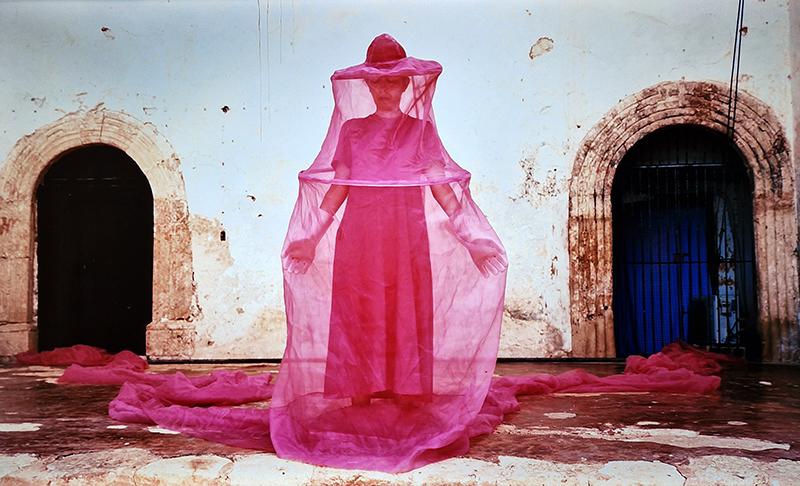
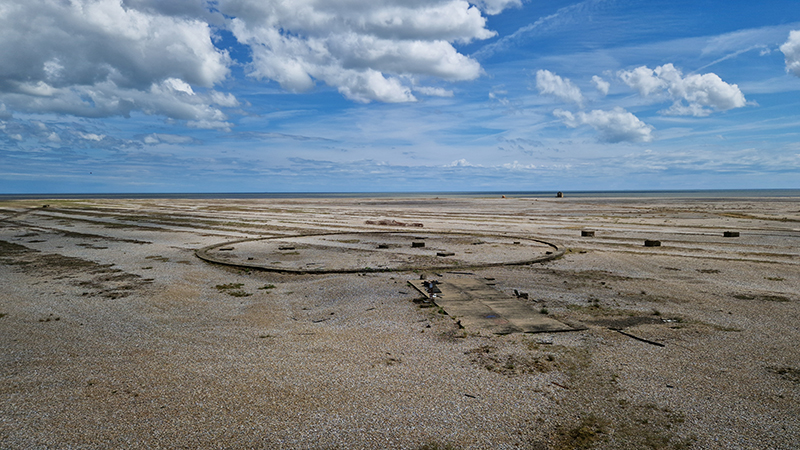
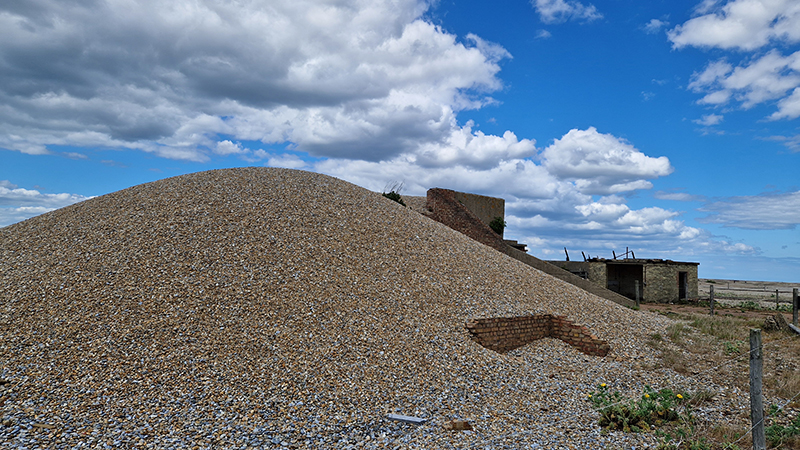
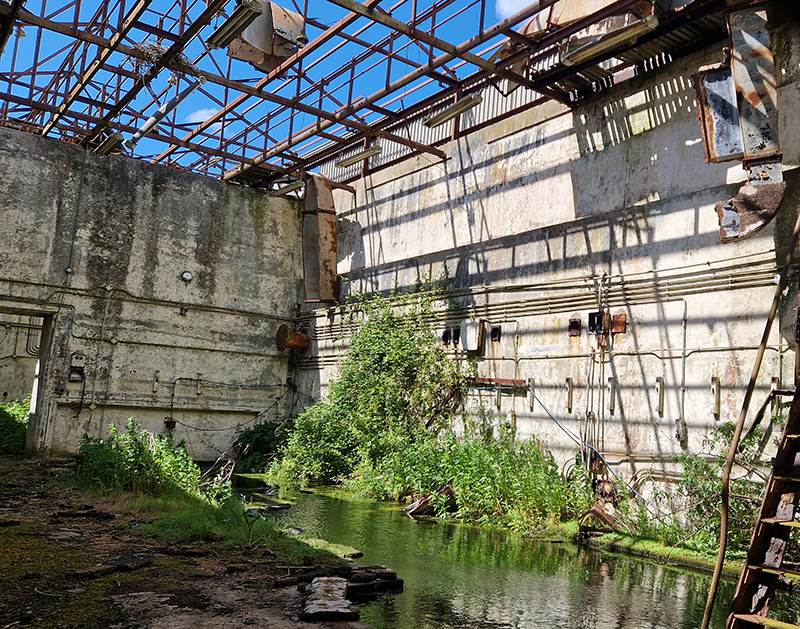
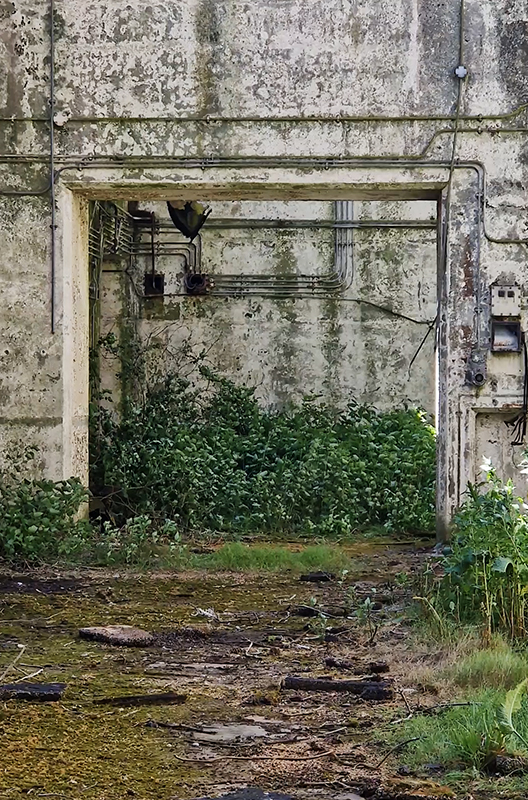
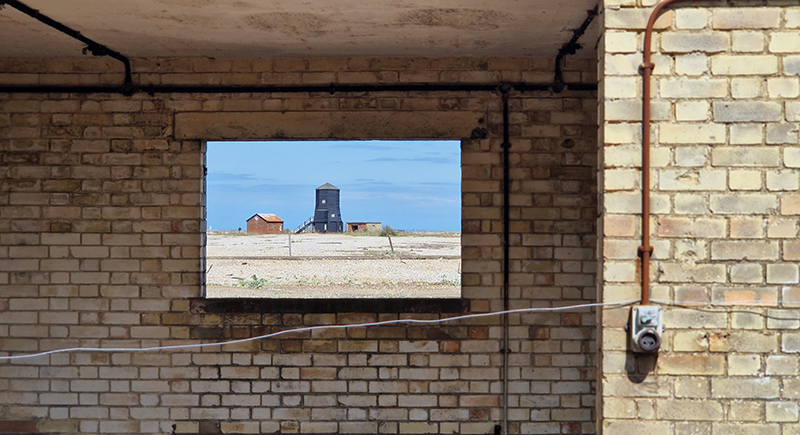
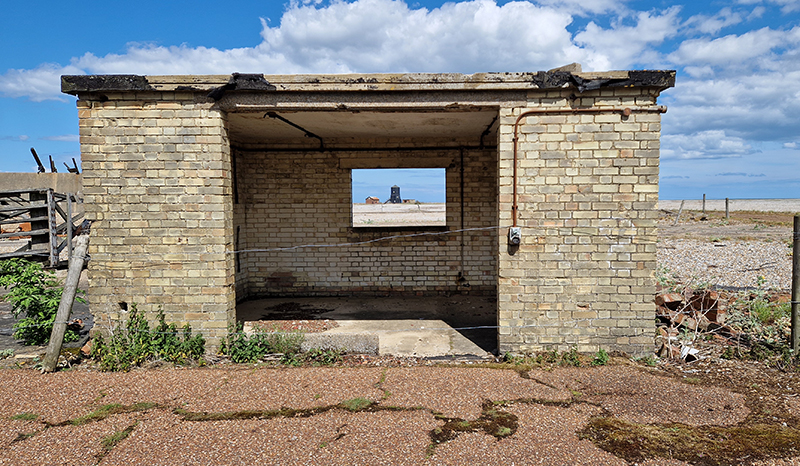
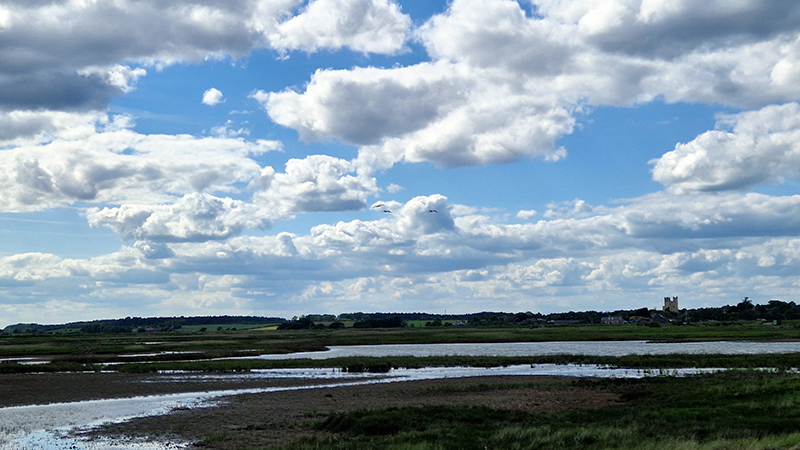
Under the big Suffolk skies of Orford Ness. Walking landscape that bears the scars, physical and emotionally resonant, of years of intense military top secret experiments. Here radar was developed, the aiming of bombs was refined, material vulnerability was tested with destructive, explosive projectiles under simulations of attack and famously it is the site of environmental tests during the late 50’s, early 60’s, in the development for detonation of the atomic bomb. 

The weight of the shingle shored up around the buildings and on the roofs used to dampen the explosions.

There is a lot to respond to. It is now a spectacular nature reserve but apparently not so many birds here this year. We were lucky to see a short eared owl hunting and some gangly spoonbills in flight.
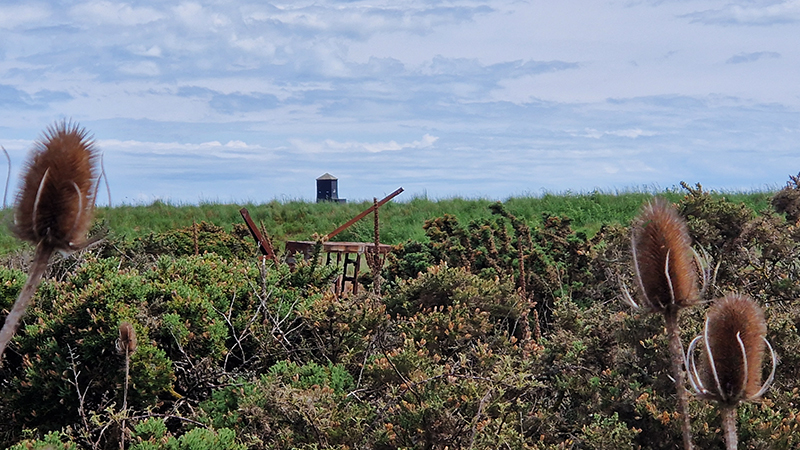
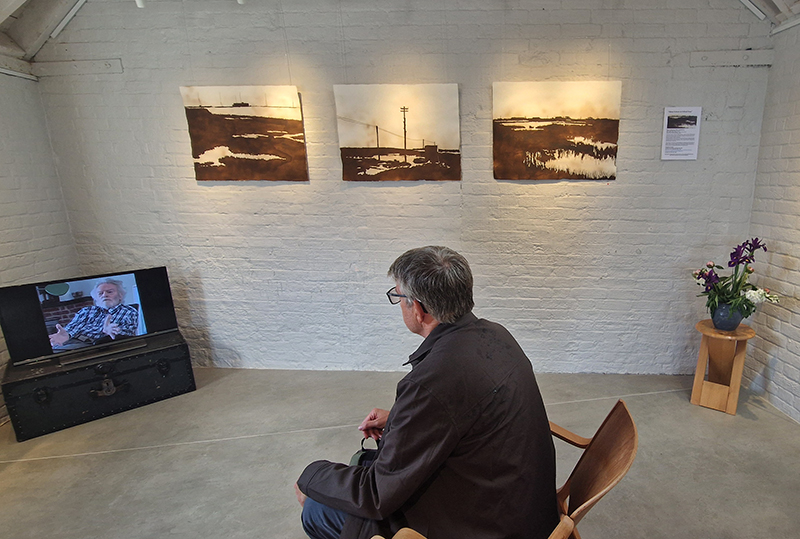
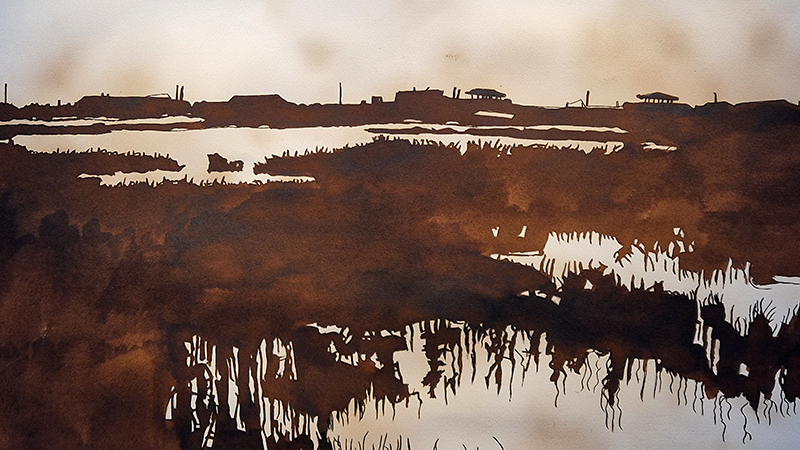
Kaori Homma Silent Echoes at The Watch House, Orford Quay – Inspired by Orford Ness, the UK’s only site of atomic experimentation, this exhibition explores the hidden histories and lingering memories within its landscape. Through the unconventional method of Aburi dashi or fire etching, the artist explores not only the visible remnants of the secret history of Orford Ness, but also the unspoken memories that linger in the air. Unlike ordinary drawings made by the pigments on the surface of paper, Homma’s works are made by fire which etches the images into the body of paper as a burn mark.

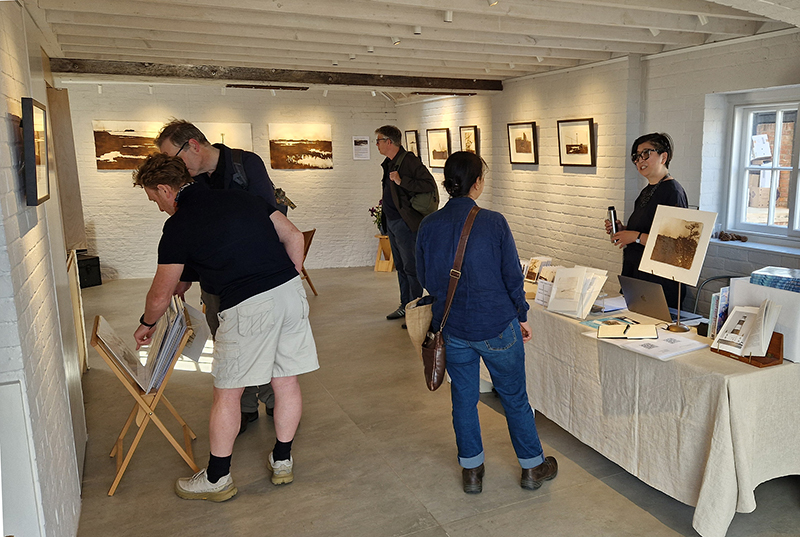
Electric Dreams at Tate Modern celebrates the early innovators of optical, kinetic, programmed and digital art, who pioneered a new era of immersive sensory installations and automatically-generated works. This major exhibition brings together ground breaking works by a wide range of international artists who engaged with science, technology and material innovation. 
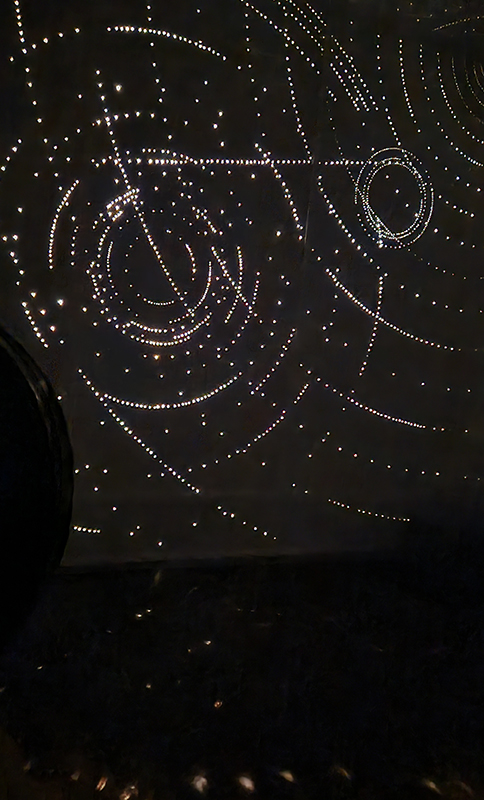
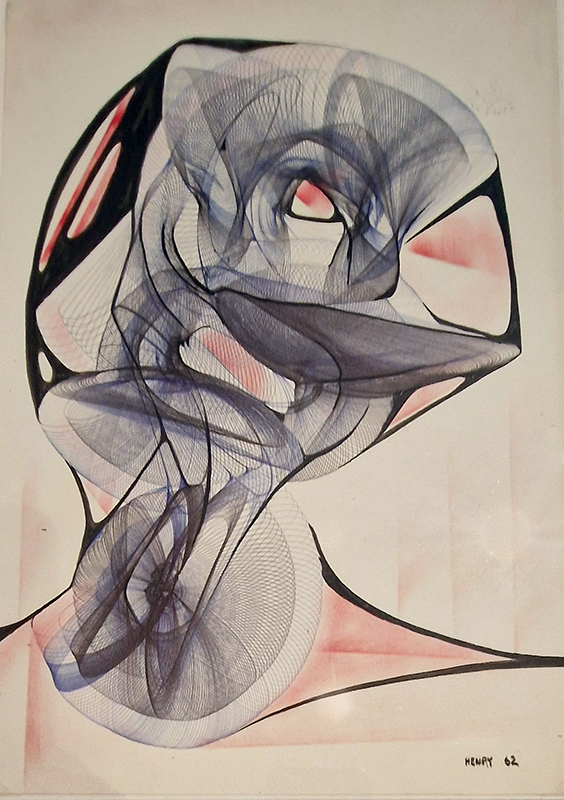
Desmond Paul Henry used a repurposed bombsight computer, designed to drop bombs more accurately, as developed at Orford Ness, to make a drawing machine which he then hand embellished.

The Pleasure of Misuse curated by Indira Dyussebayeva-Ziyabek and Maria Hinel at Royal Society of Sculptors. ‘The humour that springs from manipulating or referencing the mundane is paradoxically self-reflexive – appropriated objects suddenly appear anthropomorphic, our laughter becomes directed at ourselves and the intermittent absurdity of the human condition. The Pleasure of Misuse explores the mechanics and psychology of humour in the everyday, considering its potential to heal and its power to disarm, creating the sense of complicity and the space for self-reflection amid these anxious times.’

Images – Andy Holden, Ty Locke, Peter Fischli & David Weiss, Cornelia Parker, Richard Wentworth
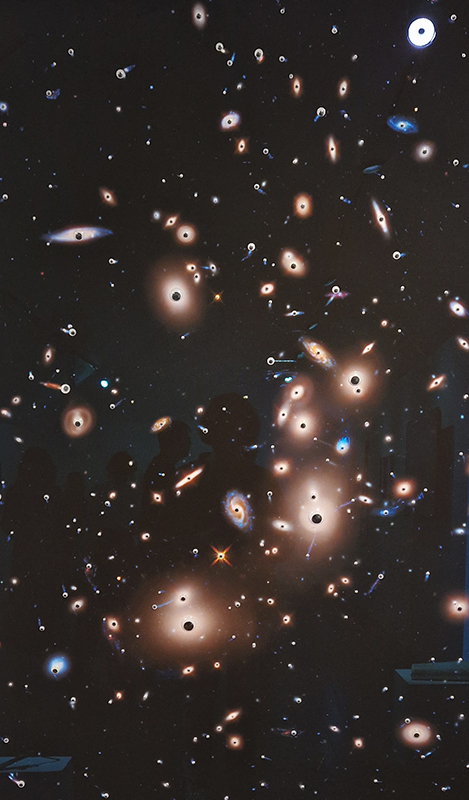
Samuel Zealey, Angela Eames, Tony Fleming, Charlotte Guerard, John Strutton and Kate Fahey in Heavenly Skeletons at Coleman Project Spacesix contemporary artists whose work repositions drawing as an expanded multidisciplinary field.  Heavenly Skeletons is a dynamic investigation of how drawing translates abstract concepts into tangible form… 

Gorgeous show with thoughtfully chosen works that like Samuel Zealey’s vertiginous sculpture balance perfectly.
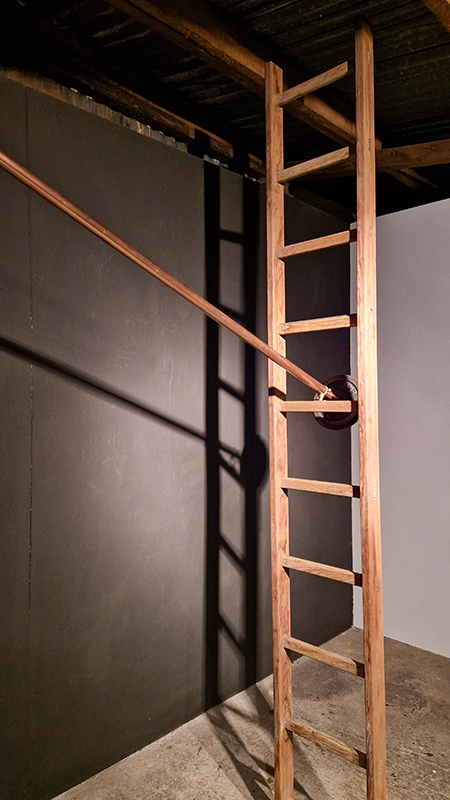
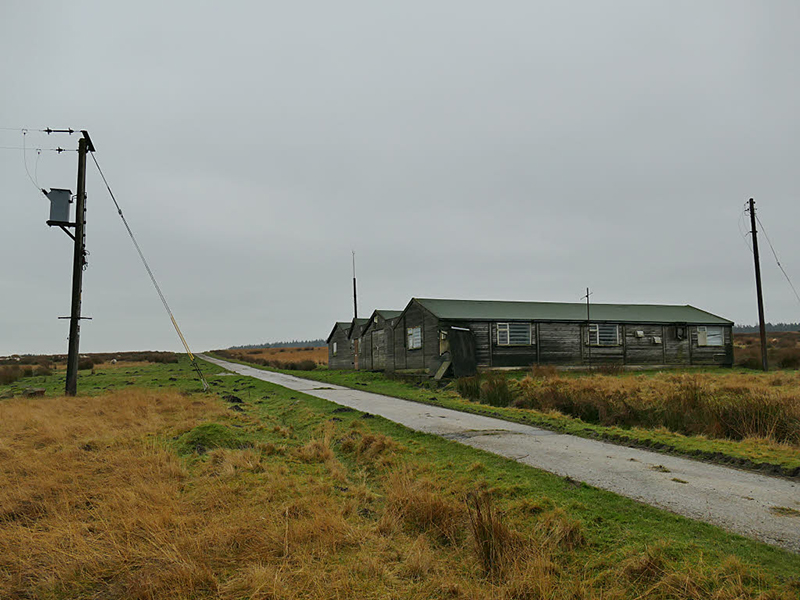
I am excited to be planning a visit to Haverah Park, the site of a cosmic ray air shower detection array consisting of water Cherenkov detectors distributed over an area of 12 km2 on the Pennine moorland, North Yorkshire. The experiment was operated by University of Leeds for 20 years, and was switched off in 1987. During its lifetime many 1000’s of extensive air showers were recorded including four exceptional ones of such size that the cosmic rays that generated them must have had energies greater than 10eV. These particles are the highest energy form of radiation known to exist anywhere in the universe and their origin is one of science’s greatest mysteries. Having reimagined The Absolute Hut seen at Hartland Magnetic Observatory for the exhibition A Stone Sky I am hoping a future project may be the reimagining of the huts from Haverah Park.

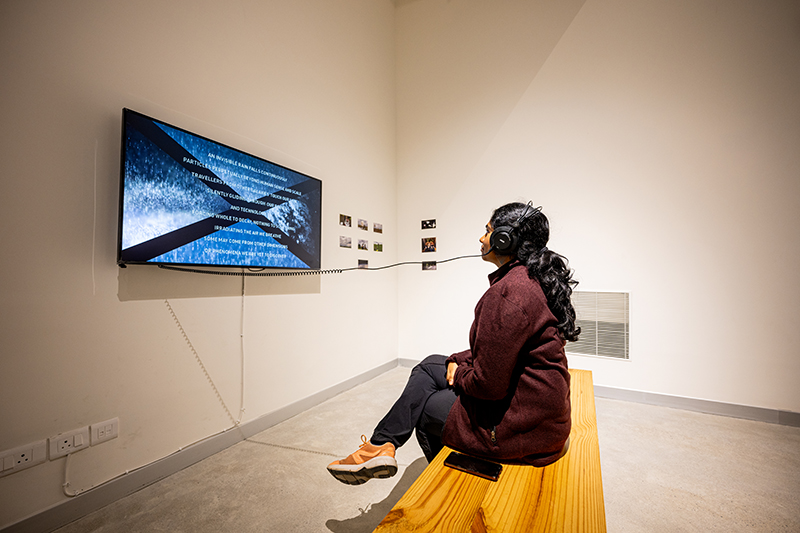
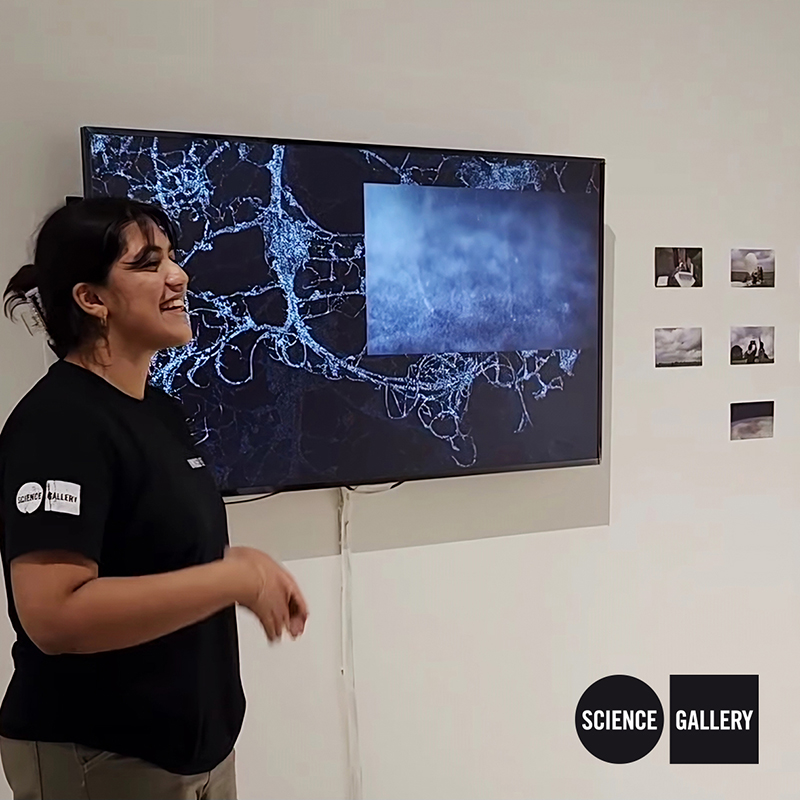
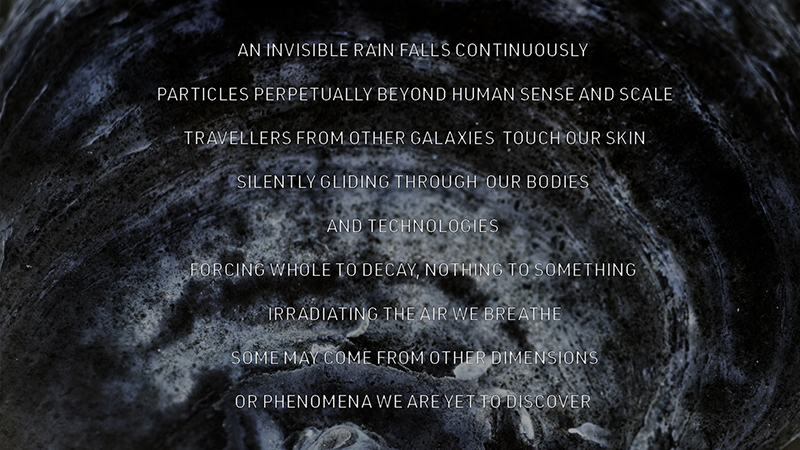
The exhibition Carbon: under pressure at Science Gallery Bengaluru is still running and I am so proud to have my work Cosmic Chiasmus: crossing the universe included in this amazing show. This video offers a glimpse into a subatomic world where cosmic rays travel from distant galaxies to collide and silently interact with atoms and technology on Earth. Cosmic rays go through a violent process of creation, transformation and decay. From the heart of stars or the depths of black holes these particles power across the universe with unimaginable energy colliding with life on Earth and triggering other processes such as cell mutation, computer data corruption and carbon-14 formation.

I am fascinated to learn more about cosmic magnetism and its influence on the development of early life.

The Universe is magnetic. From stars to galaxies to intergalactic space, magnetic fields thread the cosmos. Yet the origin of cosmic magnetism is still unknown, so astronomers are attempting to make maps of the magnetic fields inside massive galaxy clusters to determine if cosmic magnetism came from the early origin of the universe or developed over time. If it is discovered that there is an alignment of fields across the universe this would point to a primordial source of the cosmic magnetic structure rather than a slow emergence from seed magnetic fields. Understanding the origin of cosmic magnetism may give clues to the development of life on Earth and the possibility of life elsewhere in the universe. Only planets with a magnetic field have an atmosphere and offer protection from most radioactive cosmic rays.

Those cosmic rays that do penetrate the atmosphere may have influenced the development of early life. Chirality, also known as handedness, is the existence of mirror-image versions of molecules. Like the left and right hand, two chiral forms of a single molecule reflect each other in shape but don’t line up if stacked. All known life-forms show specific chiral properties in chemical structures as well as macroscopic anatomy, development and behaviour. The sugars that make up DNA, for example, are all right-handed. The amino acids that make up proteins are all left-handed. It is not clear how this asymmetry evolved but one theory suggests that magnetic surfaces on minerals in bodies of water on the primordial Earth, charged by the planet’s magnetic field, could have served as “chiral agents” that attracted some forms of molecules more than others, kicking off a process that amplified the chirality of biological molecules.

Another theory proposes that the influence of cosmic rays on early life may explain nature’s preference for a uniform “handedness” among biology’s critical molecules. Before life emerged on Earth, self-replicating molecules were slowly evolving beneath a constant shower of energetic particles from space. Researchers believe that cosmic rays with the ability to penetrate matter were potentially colliding with chiral molecules on Earth and everywhere else in the universe. These tiny differences in the mutation rate would have been most significant when life was beginning and the molecules involved were very simple and more fragile. Under these circumstances, the small but persistent chiral influence from cosmic rays could have, over billions of generations of evolution, produced the single biological handedness we see today.

Chirality is also seen in the spiral of a mollusc shell. I am in the process of finishing the sculpture shell for belly of a rock a hybrid work of chemical conversations at the intersection of the animate and inanimate, inspired by Italo Calvino’s Cosmicomics story The Spiral. Paper clay with crushed mussel shells.

My most recent video installation Orbital shown in Life Boat at APT Gallery focused on the potential risks to technology and life on Earth from extreme solar storms.

The following month, a barrage of large solar flares and coronal mass ejections jettisoning clouds of charged particles and magnetic fields, travelling at speeds up to 3 million mph toward Earth, created the strongest solar storm to reach Earth in two decades, and possibly one of the strongest displays of auroras on record in the past 500 years. There were even perfectly clear skies to view this extraordinary event, yet I missed it. So envious of all those who did get to see the displays of Aurora at such low latitudes. I am hoping there will be another chance to see the Aurora in the UK during this current year of peak solar activity, but not so dramatic a storm as to cause an ‘internet apocalypse’.

Gallery Visits

Andrea V. Wright Eyes of Skin at Thames-side Studios Gallery curated by Thorp Stavri. This exhibition explores the permeability and interactions between the body and architecture and the tensions arising from the ever-changing precariousness of our external and internal constructed environments. It was good to be able to chat with Andrea about her influences from fashion tribes and processes such as casting skins from buildings tumbling into ruins and tactics to avoid being vulnerable working in remote locations.

Holly Birtles and Charly Blackburn in Bog Bodies at APT Gallery. interrogate the complexities of wetland mysteries in the Thames Estuary and the Fenland Marshes exploring life, death, and metamorphosis through ceramics and photography. The Bog preserves the body in death enabling us to travel back in time as far as the Mesolithic period. Conditions inside the bog are acidic. They are perpetually wet, entangled with plants and peat, muddy and monstrous. A dense soup inhabited by complex ecologies that thrive in the anaerobic surroundings, creating a unique biochemical and physical occurrence that facilitates the mummification of prehistoric humans. This exhibition however, confounds expectations of oozing mud and swampy detritus. These ‘artefacts’ are presented in a pristine white cube setting, there maybe a slight whiff of smoke lingering from the ceramics but all is clean and orderly and the framing is thoughtful with a nice use of colour contrasts between image and frame. Good to be surprised.

SALON FOR A SPECULATIVE FUTURE: HOW TO BE IN THE FUTURE? at Vestry St – Cross Lane Projects with works from Aideen Barry, Quilla Constance, Lisa Chang Lee, Kate Fahey, Young In Hong, Evy Jokhova, Huma Mulji, Koushna Navabi, Monika Oechsler, Rebecca Scott, Jo Stockham. Postulating hope for a better future Rebecca Solnit (in an article in the Guardian, 2016): wrote “Hope is an embrace of the unknown”. Living in times of unprecedented change, uncertainty, she says, has “the power to influence the future”. Taking inspiration from the ‘future thinking’ of speculative fiction and looking at a wide range of fields from science and technology to spiritual, ecological and socio-economic issues, the exhibition highlights multiplicities and the complex interplay at work in global dynamics. The works, individually and collectively, draw on associations from different  subjectivities and contested /histories facilitating a space for contemplation and the discussion of positive futures. Strong shift shaping work here that gets under the skin, fake facades, hairy hissing and an AI doctored doctrine, make for an unsettling present from which to speculate on the future.

The Tipping Point at Bell House. The tipping point may arrive seemingly out of the blue as a slight change heralding a new way forward.  It can be magical or malevolent.  More than 40 artists in six individually curated spaces will examine different kinds of tipping points, both minor and major, literal and metaphorical. Sarah Sparkes and Jane Millar curate The Gowan Room using Octavia Butler’s dystopian novel, ‘Parable of the Sower’, as a point of reference. Jonathan Callan, Chudamani Clowes, Sarah Doyle, Lydia Julien, Marq Kearey, David Leapman, Yair Meshoulam, Jane Millar, Stephen Nelson, Victoria Rance, Alke Schmidt, Lex Shute, Ania Tomaszewska-Nelson, Sarah Sparkes, Sara Trillo, Marianne Walker and Alice Wilson explore a new awareness of change and exchange, a constant shifting of strange identities, the malleability of being, interspecies communication and the strength and vulnerability of community. Imagining new ways to merge; ways to intelligently and sensually live in the flux of a perpetual tipping point. Léonie Cronin curates the Lutyens room as a procession through objects of different artistic beliefs, pointing to new myths, a point of Syncretism where ideas become merged and the old symbols get incorporated into new systems.

Thomas Pausz in Haunted Ecologies at Stanley Picker Gallery. A very interesting show drawing threads of local history together with current urgencies such as sewage pollution of the local endangered chalk stream Hogsmill River. From spirit photography and the dark room experiments of Kingston’s Eadweard Muybridge, to digital manipulation, rendering and 3D scanning – Our perception of contemporary environment and culture is always haunted by spectres of the past and by hopes and visions of the future.

Symbiosis II group exhibition exploring the relationship between image makers, the more-than-human, and alternative photographic processes at Four Corners Gallery organised by London Alternative Photography Collective  curated by Hayley Harrison, Melanie King, and Ky Lewis. This exhibition considers the connections between symbiosis and alternative photography, and asks if nature is a collaborator or a commodity in alternative photography processes.

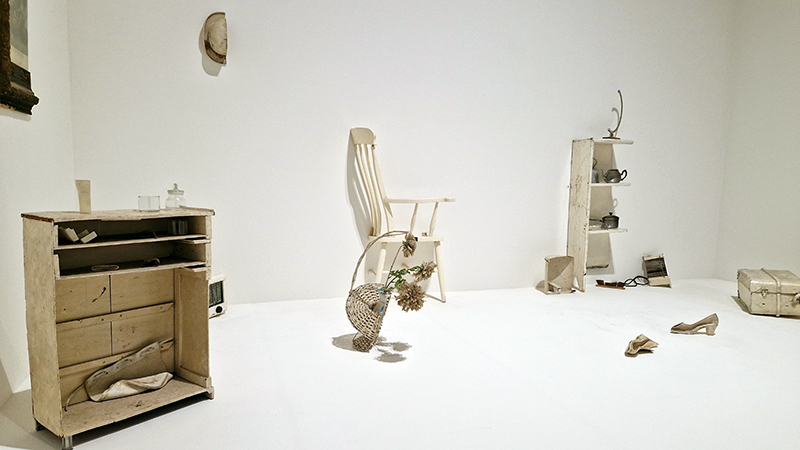
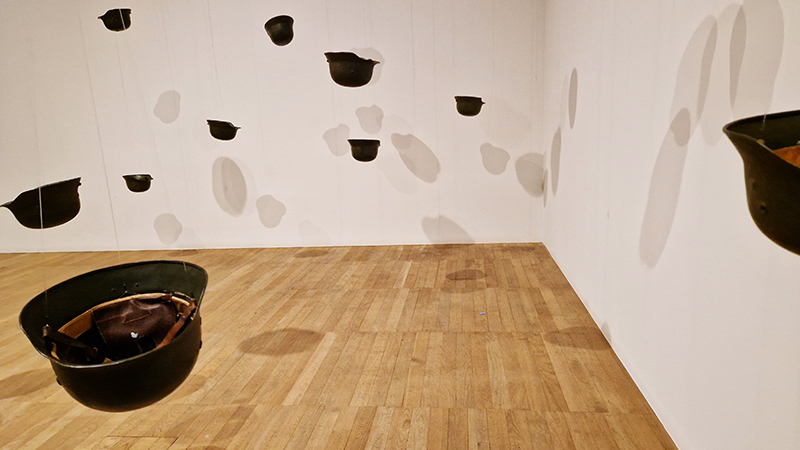
YOKO ONO: MUSIC OF THE MIND at Tate Modern. The main takeaway from this extensive overview of her pioneering work is the sadness that peace hasn’t been given a chance. The works are very direct, may appear simple in content or execution but cut deep into the human psyche. I particularly liked Half a Room, first presented in 1967, this is a room of objects cut in half and painted white. Ono said of this work “Molecules are always at the verge of half disappearing and half emerging…somebody said I should put half a person in the show. But we are halves already.” Another piece, Helmets (pieces of sky) from 2001 invites the audience to take a piece of the sky, which she sees as a hopeful symbol of limitless imagination. Jigsaw pieces of the sky are suspended in German army helmets, and although dispersed, offer the possibility of hope that they can be put back together through collective healing. Many works are participatory. A wall for drawing around your own shadow to create an entanglement of bodies. A boat to add your own wish to an ocean of wishes for the future.

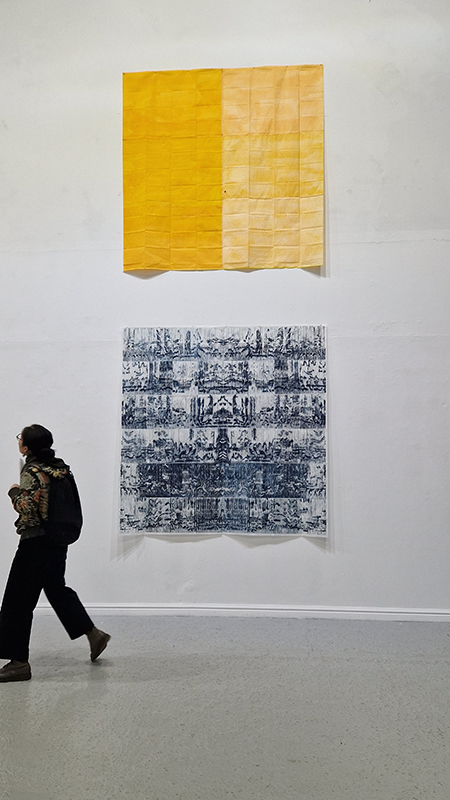
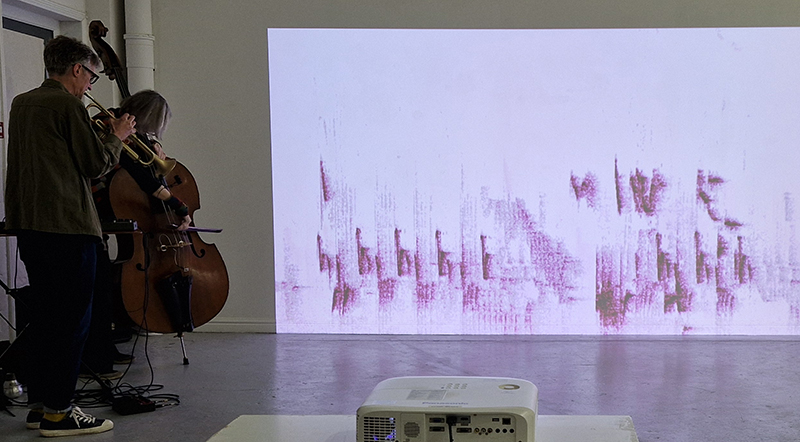
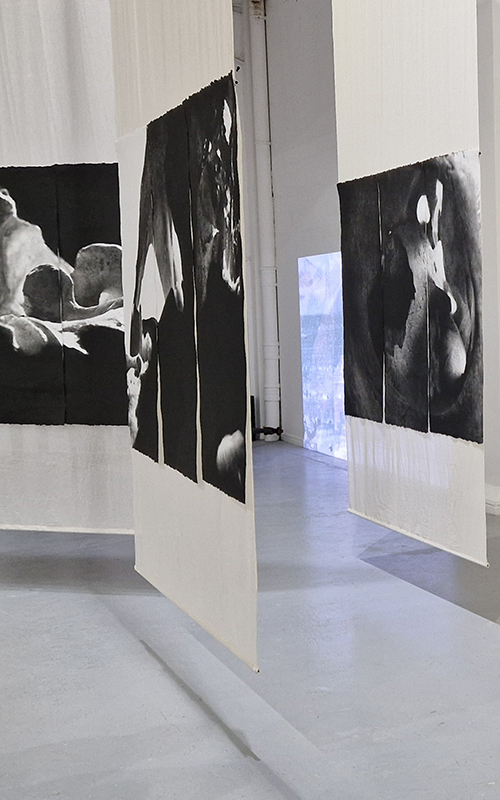
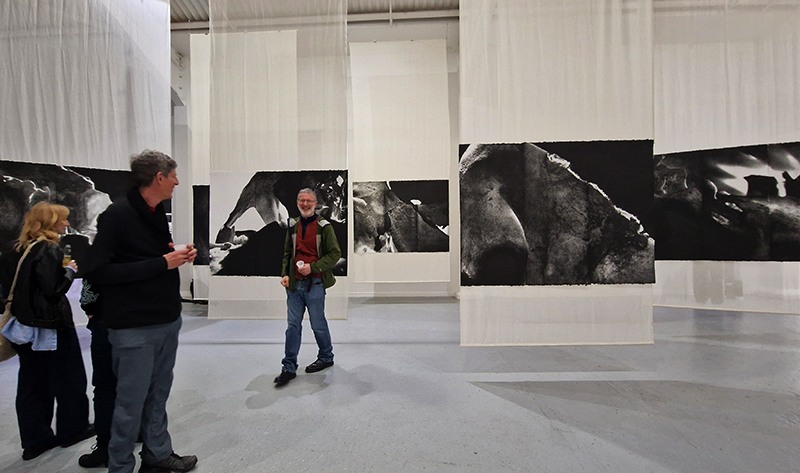
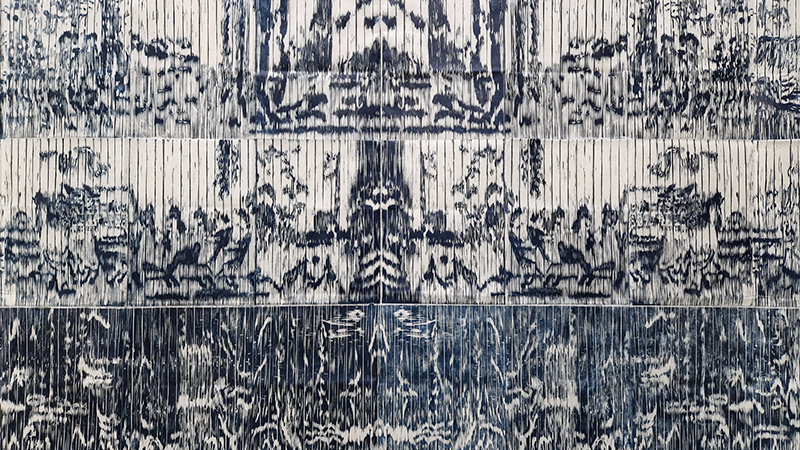
Geographies of Print final iteration of Without Horizon, Without Shore at Thames-side Studios Gallery. Geographies of Print is a collective group created by artists Victoria Ahrens, Carol Wyss and Victoria Arney in 2020. This collective looks to explore and challenge notions of print within wider contemporary discourse and practice. The artists fully inhabit the given space with dramatic large scale pieces, that interact and collaborate to create an exciting and cohesive exhibition. Blocks of colour flash between a maze of hanging muslin panels where etchings of impenetrable blacks and misleading undulations recall both mountain paths and the shadowy mazes of ancient cities. Emotive live music improvisation by Jim Howard (trumpet and electronics) and Julie Walkington (bass) accompanied Victoria Arney’s film reflecting on the epic journey of migrating birds. Landscapes of the mind and the body, a birds eye view and the internal geology of the Earth are beautifully explored.

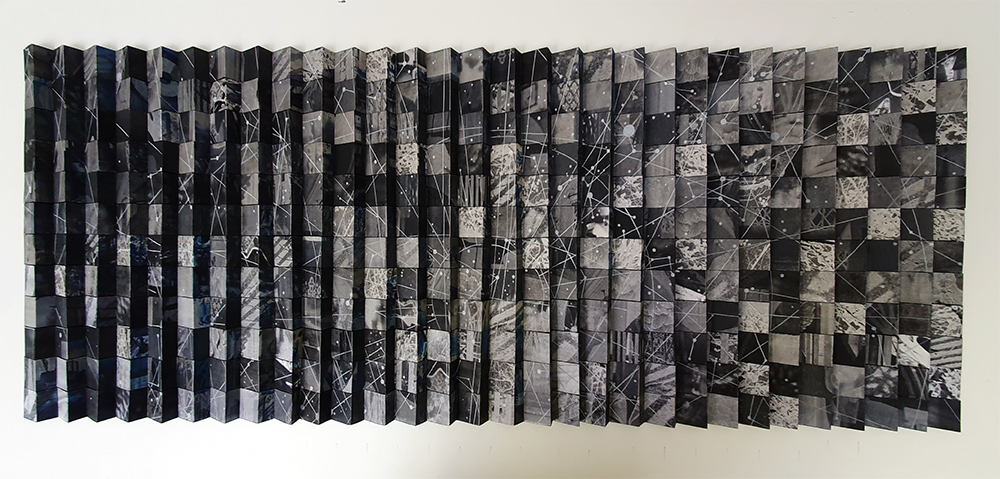
Radio waves and television signals can pierce the ionosphere and travel through space at the speed of light. HD 70642 is a star similar to our sun with a large companion planet that orbits in a circular motion very similar to how the planets orbit here in our solar system.  This means it is possible there maybe Earth-type planets orbiting further in. This star is in the constellation of Puppis about 90 light years away. Early signals from Earth will just be reaching this distant solar system with a potential Earth like planet. The time it has taken the signals to reach this home from home roughly the same as my Mother’s lifetime on Earth.

Final assembly of this work 92 Light Years

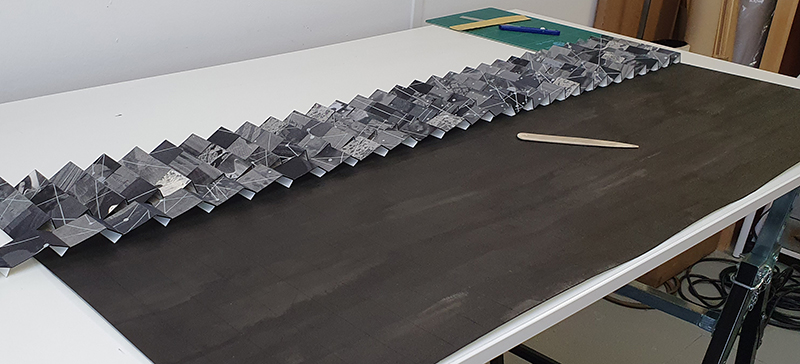
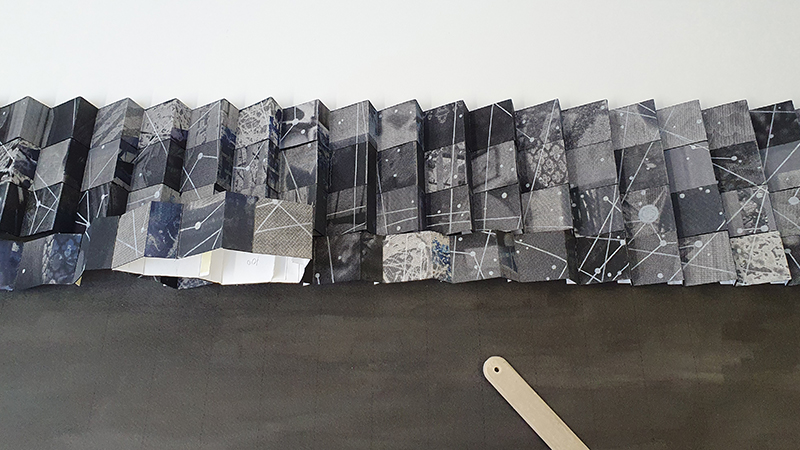
Early TV signals were transmitted in a series of 30 lines to complete one image called a raster pattern.

It is a systematic process of covering an area progressively, similar to how one’s gaze travels when reading lines of text. The signal is sent in fragments and must be interpreted on arrival to make sense of the message.

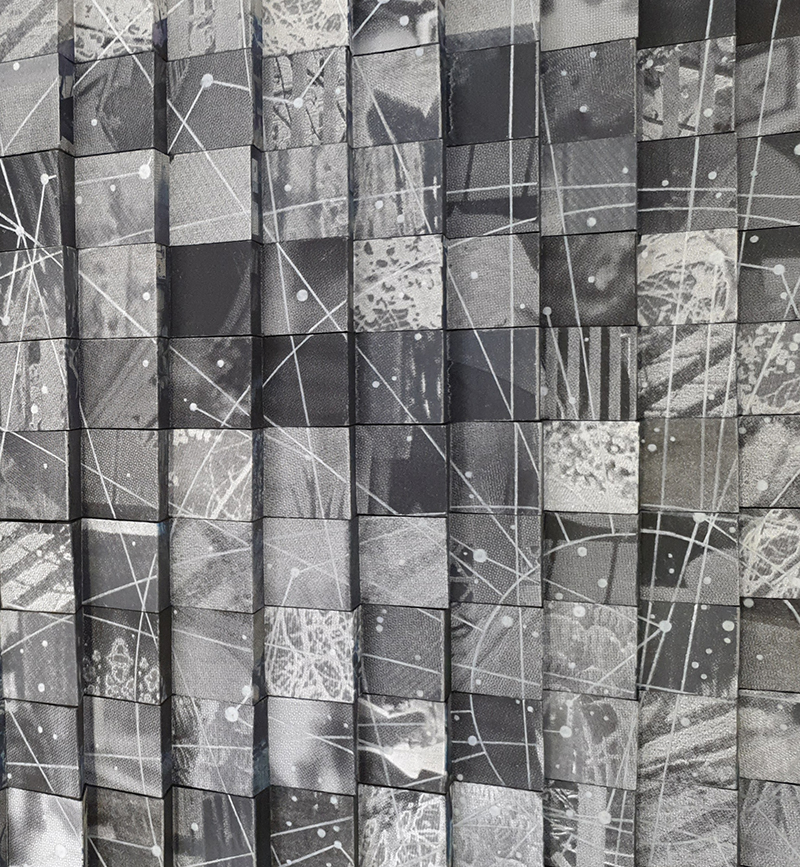
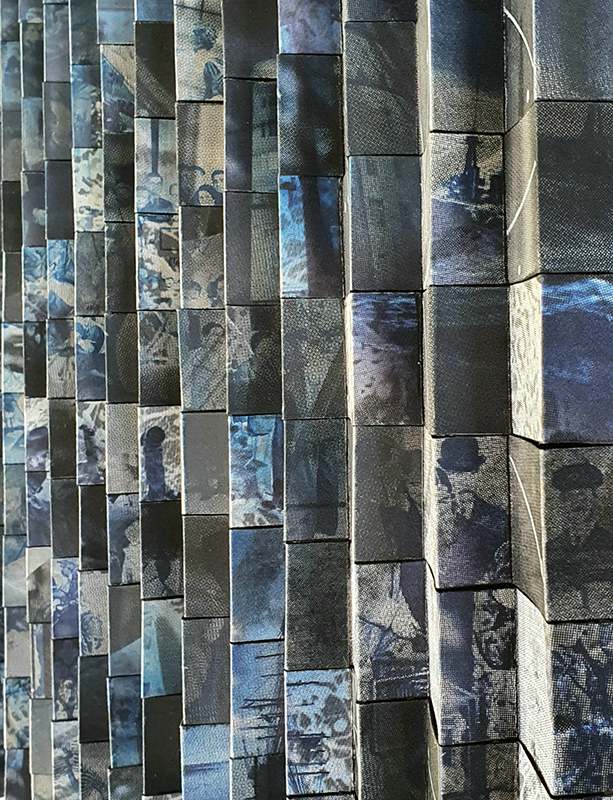
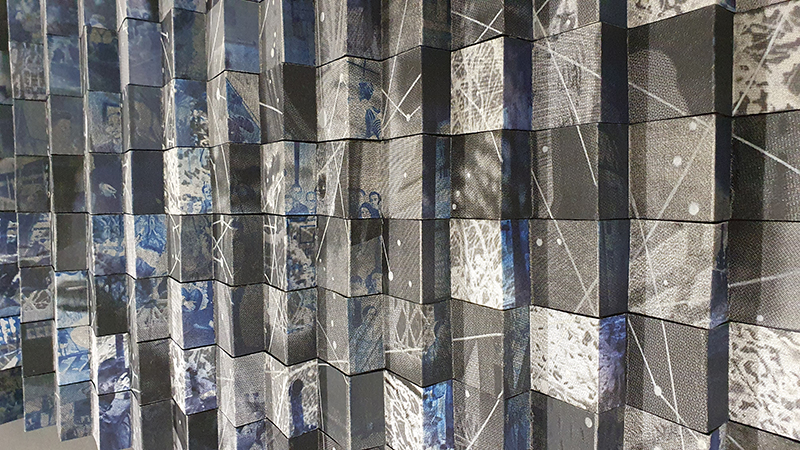
The folded sections in this work emulate the raster pattern and are made from a combination of screen print on textile, dye sublimation print using images from the 1930’s and chinagraph pencil marking out the star chart – a bit like a lenticular image – you see the stars from one side and the fragmented signal from the other.

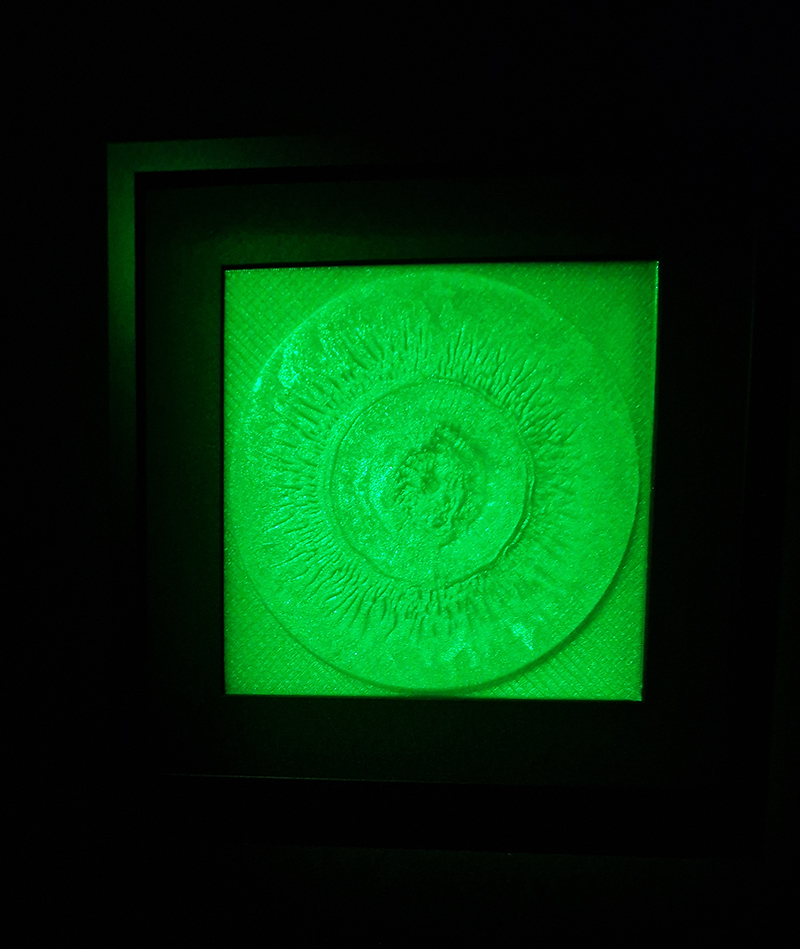
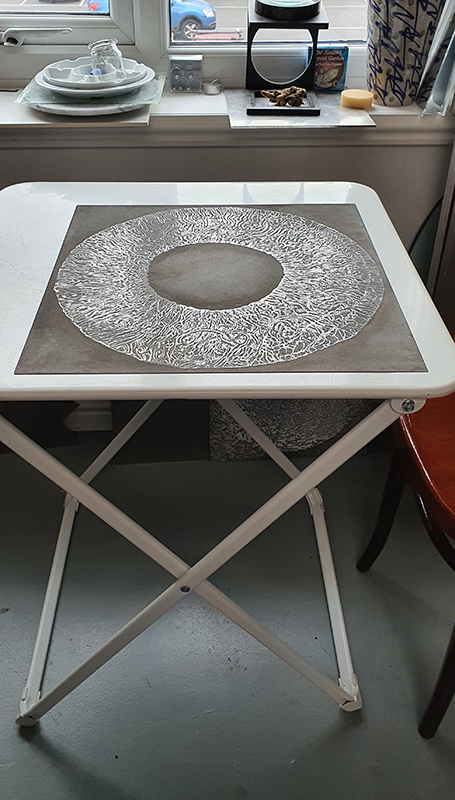
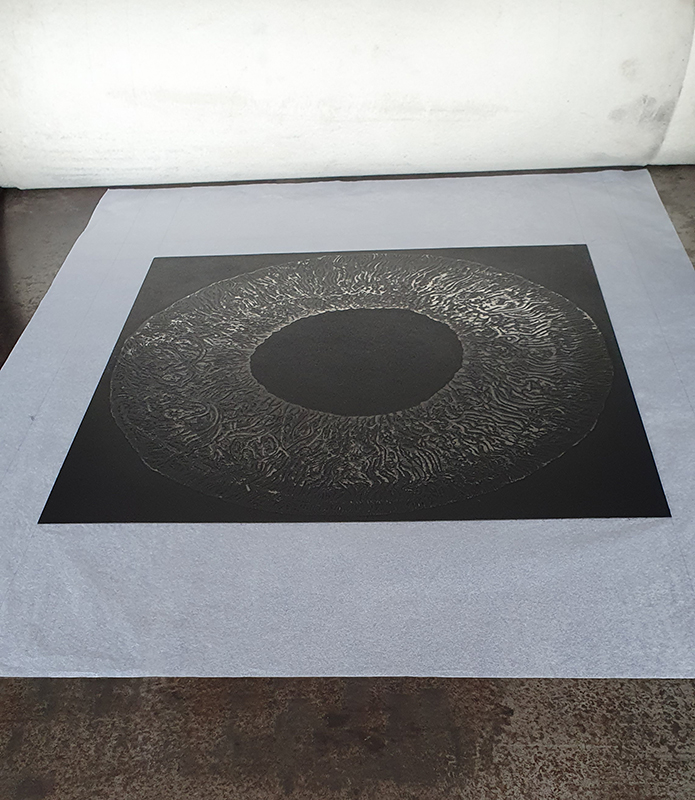
There is a possibility humans retain some residual magnetoreceptor in our eyes that once enabled us to navigate using the Earth’s magnetic field just as birds and other animals do. The steel etching plate I have been working on has had an aquatint added and I have made a couple of test prints.

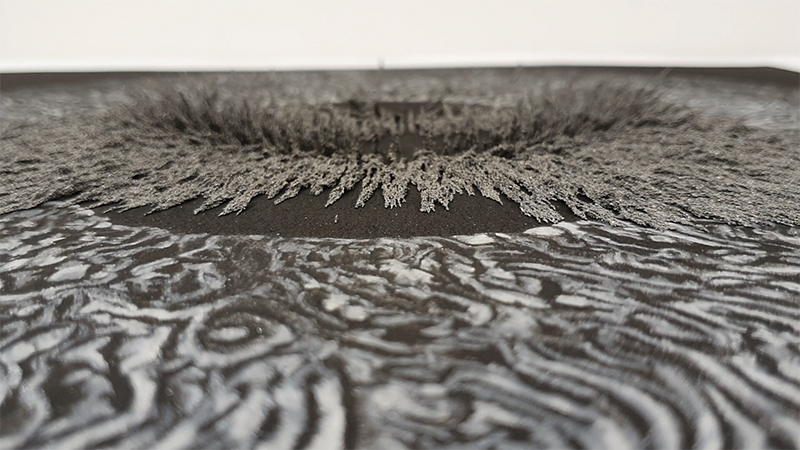
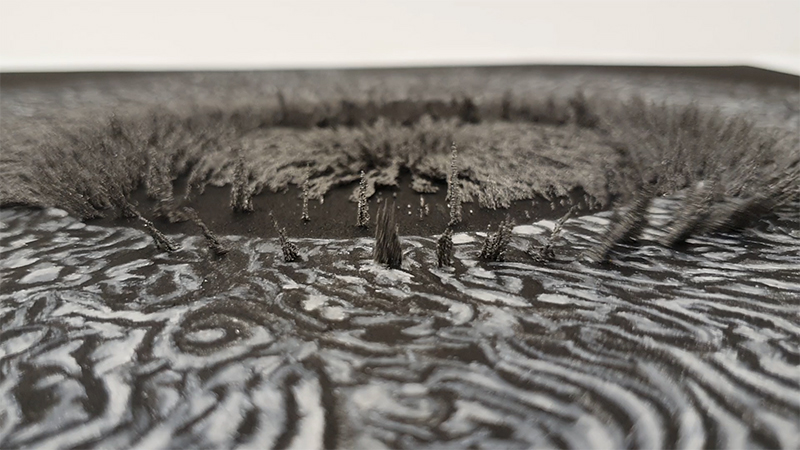
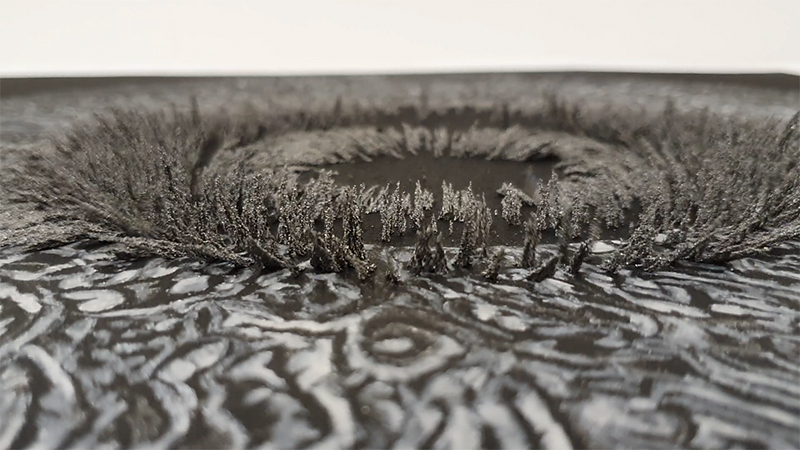
I have done some quick tests with large circle magnets and iron filings pulled across the printed etching of my iris. The effect is quite magical.

I have also tried using magnetic sheet cut to specific shapes. I was pleased that it held the iron filings but it is quite a weak force so the filings don’t stand up like they do with a stronger magnet.

Forest of Eden in Memento Mori at AIR Gallery showcasing the macabre, the grotesque and surreal works of 27 artists from around the world.​ Translated as ‘Remember Death’; the exhibition sets to remind the viewer of their own fragile mortality whilst also providing a poignant commentary on the art world perceptions of beauty and aesthetics. We are always drawn to works that are appealing to the eye, but what happens when we are confronted with uncomfortable depictions of modern life or something visually grotesque? What makes the unappealing difficult to digest but impossible to turn away from?​

The exhibition features a range of Paintings, sculptures, and fine art from artists that highlight the disturbing beauty and curious attraction to the dark and unsettling. Although there are elements that remind us of the inevitability of death, there is dark humour, and elements that also highlight the affirmation of life with each artist presenting new ways for us to reflect on our own mortal state of being.​

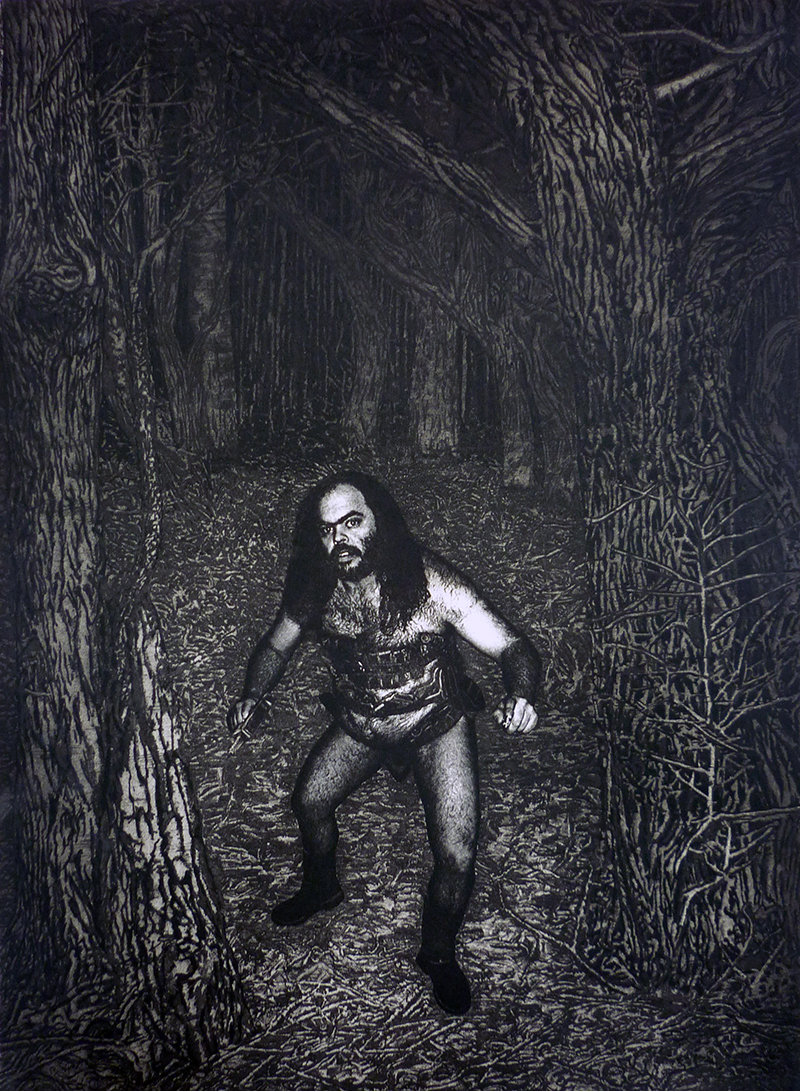
The myth of the wild man stretches back to the tale of Gilgamesh’s quest for immortality.  In history the wild man’s characteristics oscillate between horror and fantasy. They reflect fear of the other as well as aspirations to be at one with nature often violating the taboos of civilization and symbolizing the repressed desires of society. This person who posts photos of himself in charged poses has become an internet meme shared with equal disgust and fascination. In this etching he is placed back in the ancient forest of all our origins.

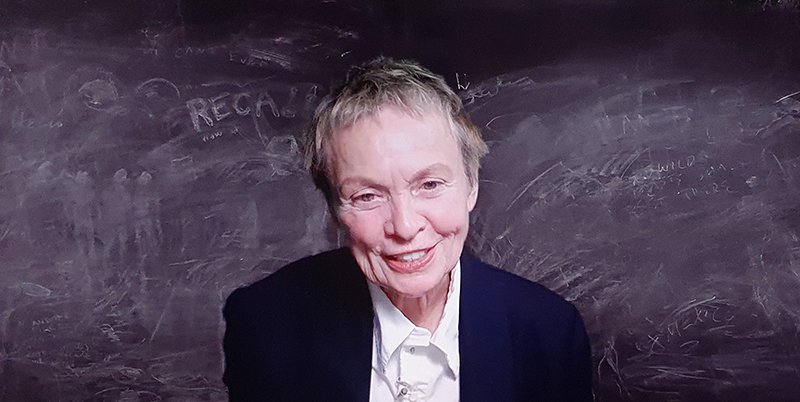
Listened in to Laurie Anderson’s fourth Norton Lecture, The Road with Q&A led by Adam Curtis. The discussion ranged across notions of reality, things that remain invisible in that we can’t get at them like nuclear science and big finance so it’s hard to make sense of the world. In the past the invisible things were god and heaven. Now we strive to make ourselves visible, to be a product of yourself. What can we replace the Avant Garde with?

Out of the studio

A treat to bump into WeiXin Quek Chong with A.I. Gallery at Cromwell Place for her solo show deepdreams_sublimed

A dive into a haptic materiality of tantalizing tactile surfaces.

A solo exhibition by artist WeiXin Quek Chong bringing together sculpture, video, print as well as installation exploring the theme of tactility through sound and material with underlying references to historical & cultural figures and elements.

Reflection Curated by Alexander Hinks at The Cello Factory with artists Christina Augustesen, Paul Bonomini, Sibéal Colley, Alison Goodyear, Fiona Grady, Susan Gunn, Susan Haire, Alexandra Harley, Alexander Hinks, Judith Jones, Anna Lytridou, Genetic Moo, Sirpa Pajunen-Moghissi, Simon Pike, Sumi Perera, Michael Petry, Charley Peters, Anna Reading, Paul Tecklenberg, Chris Wood, Andrea V Wright.

“The relation between what we see and what we know is never settled. Each evening we see the sun set. We know that the earth is turning away from it. Yet the knowledge, the explanation, never quite fits the sight.”   John Berger, Ways of Seeing 

New iteration of Without Horizon Without Shore from Geographies of Print artists Victoria Arney, Carol Wyss and Victoria Ahrens at The Stone Space

Expanding the territories of print while crossing geological and metaphorical borders of lived landscapes.

‘Without Horizon, Without Shore offers a contemplative view of the organic threads that connect us – giving voice to our encounter with the intrinsic fluidity and melody of the landscapes we inhabit, external and internal. These are depictions and sounds beyond visible shores, static horizons. These fragments and mineral particles retain indelible marks that serve to capture a haptic sense of ourselves, touching, quite literally – on the liminal spaces or connective threads that bind us. In a shifting landscape both metaphorical and actual, these ephemeral traces of our physical experiences compel us to find new ways to embody them.’

Kate Fahey solo show Blubbing at Commonage Projects

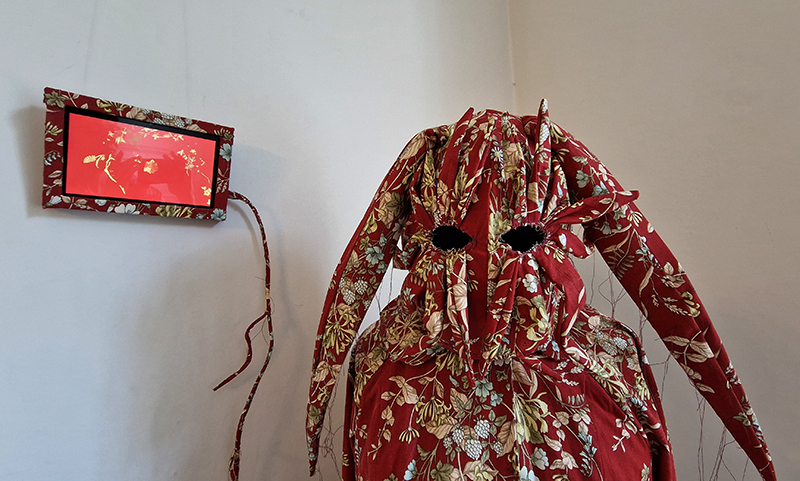
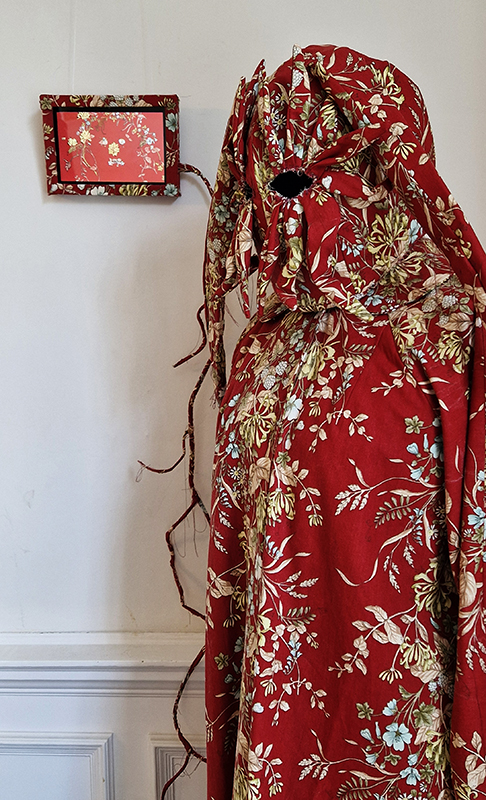
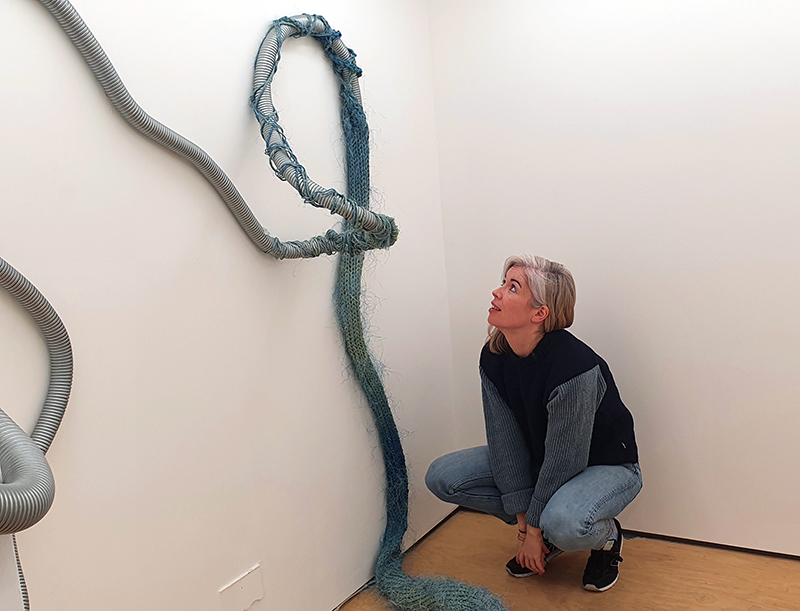
Suitably unsettling for All Hallows weekend visit these sculptures ooze an almost tangible animated spirit, something has been captured here and collectively they own the space you have entered.

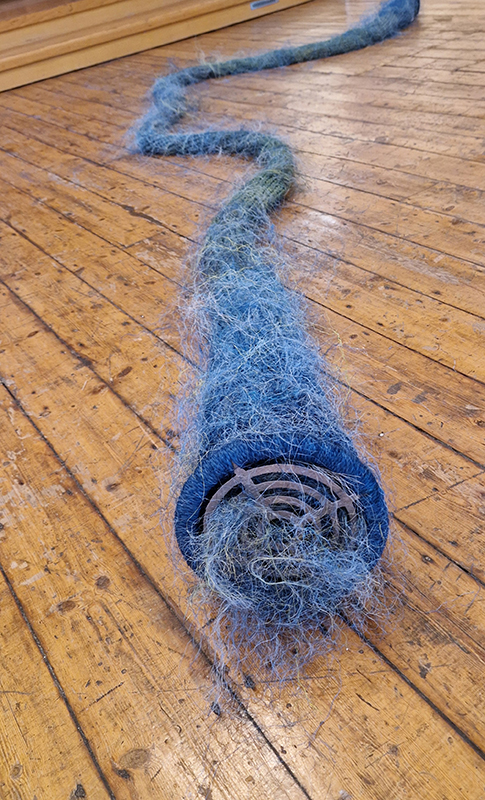
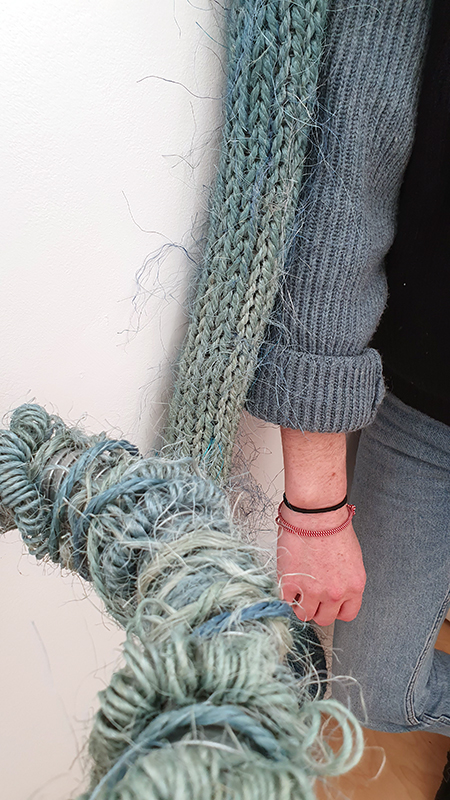
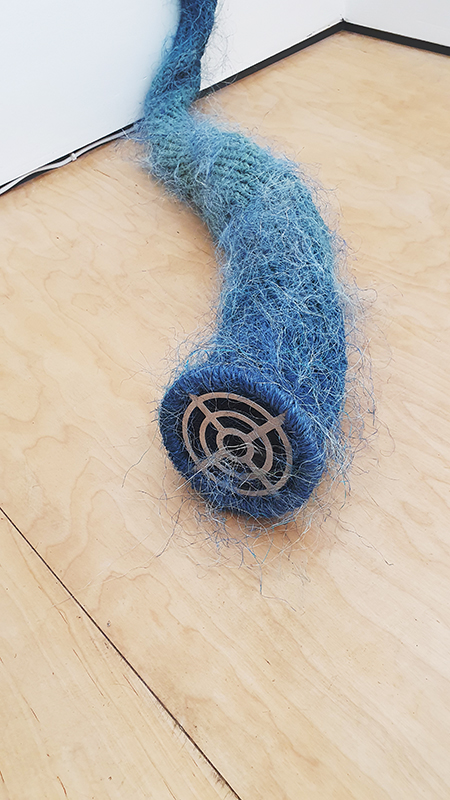
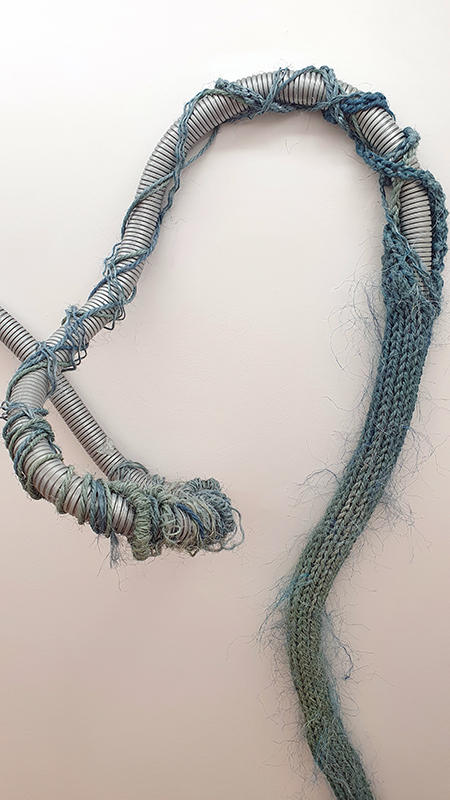
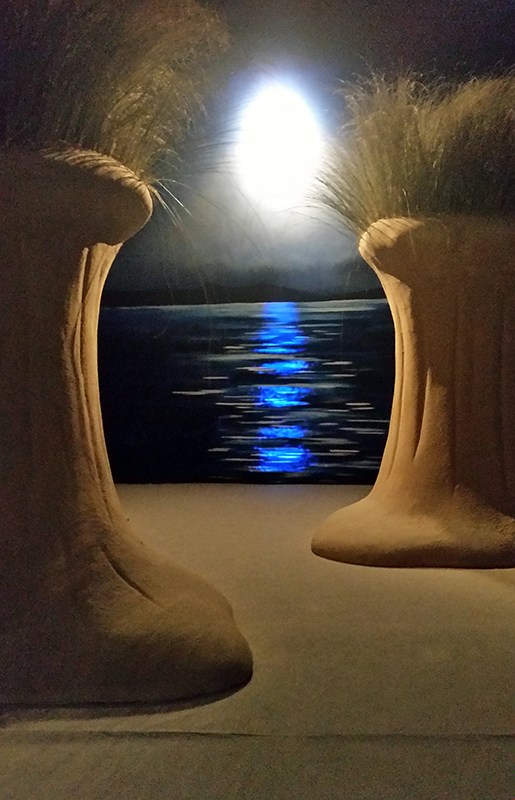
In the subterranean space, Fahey’s installation explores the fluidity and underneath-ness of both membranes and sensations. The architecture mimics corporeality, becoming permeable: leaking, seeping, oozing, dripping, weeping…experiments in viscous physicality. Biomorphic forms twist and coil, we are mirrored in their tendrilous movements. A knitted conduit, that both amplifies and muffles, slinks towards us, our bodies might bend to share an interaction. The coolness of a contorting pipe and the looping of digital technologies are softened and warmed with biology.’

Lizard Point Residency Exhibition travelled from the rambling halls of The Museum of Cornish Life in Helston to the subterranean curves of Lumen Studios Crypt at St. John on Bethnal Green London. A squeeze for eighteen artists but helped by the crossovers in work created responding to the communication heritage and dark skies of the Cornish Coast experienced during the early spring residency.

1910 at a distance sculpture

My contribution to this exhibition At a distance (click for video link) 

Solitary figures using semaphore flags sign ‘We Are One’ out across the ocean; filmed on 29th March 2019 (the first date the UK was supposed to leave the EU).

1910 At a distance semaphore

As in entanglement theory where two paired electrons mirror each other at a distance it is hoped the message will be echoed back.

1910 At a distance echo

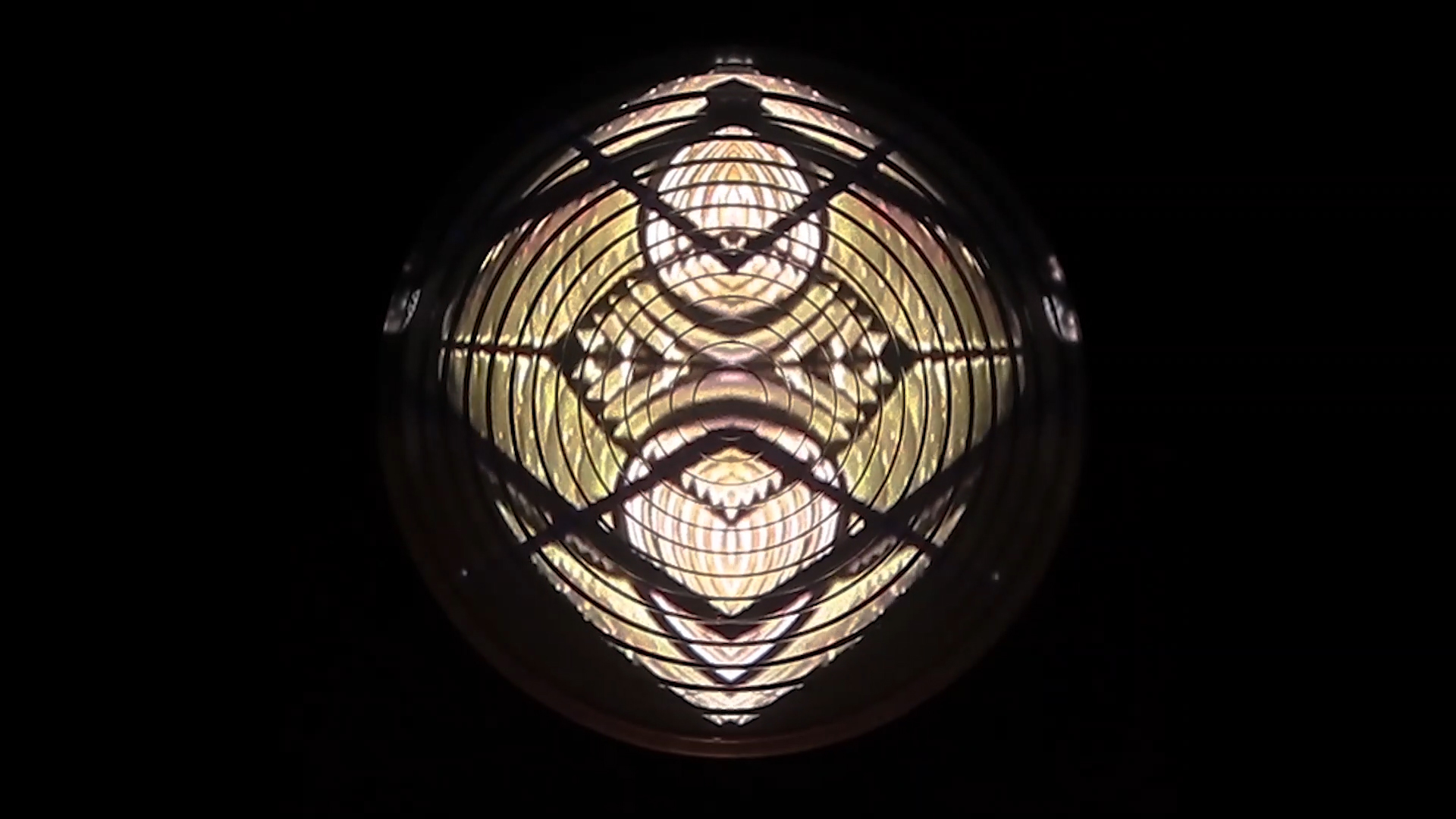
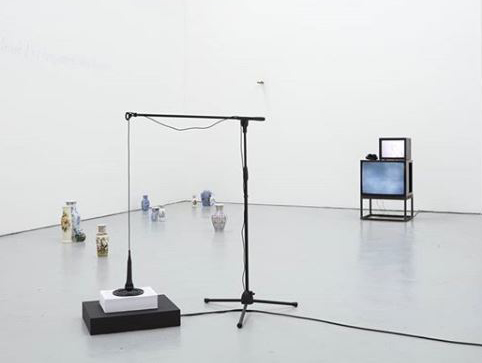
The work looks at methods of communication across space. It relates this to the mysterious twinning of electrons in quantum entanglement where particles link in a way that they instantly affect each other, even over vast distances, and which Einstein famously called ‘spooky action at a distance’. The resulting video is back projected onto a Fresnel lens, the type found in lighthouses to increase luminosity of the lamps beam, another form of messaging over distance.

1910 At a distance lamp 1

The semaphore sequences interplay with mirrored imagery of the lizard lighthouse lamp as it powers up gaining brilliance as darkness falls.

1910 At a distance lamp 2

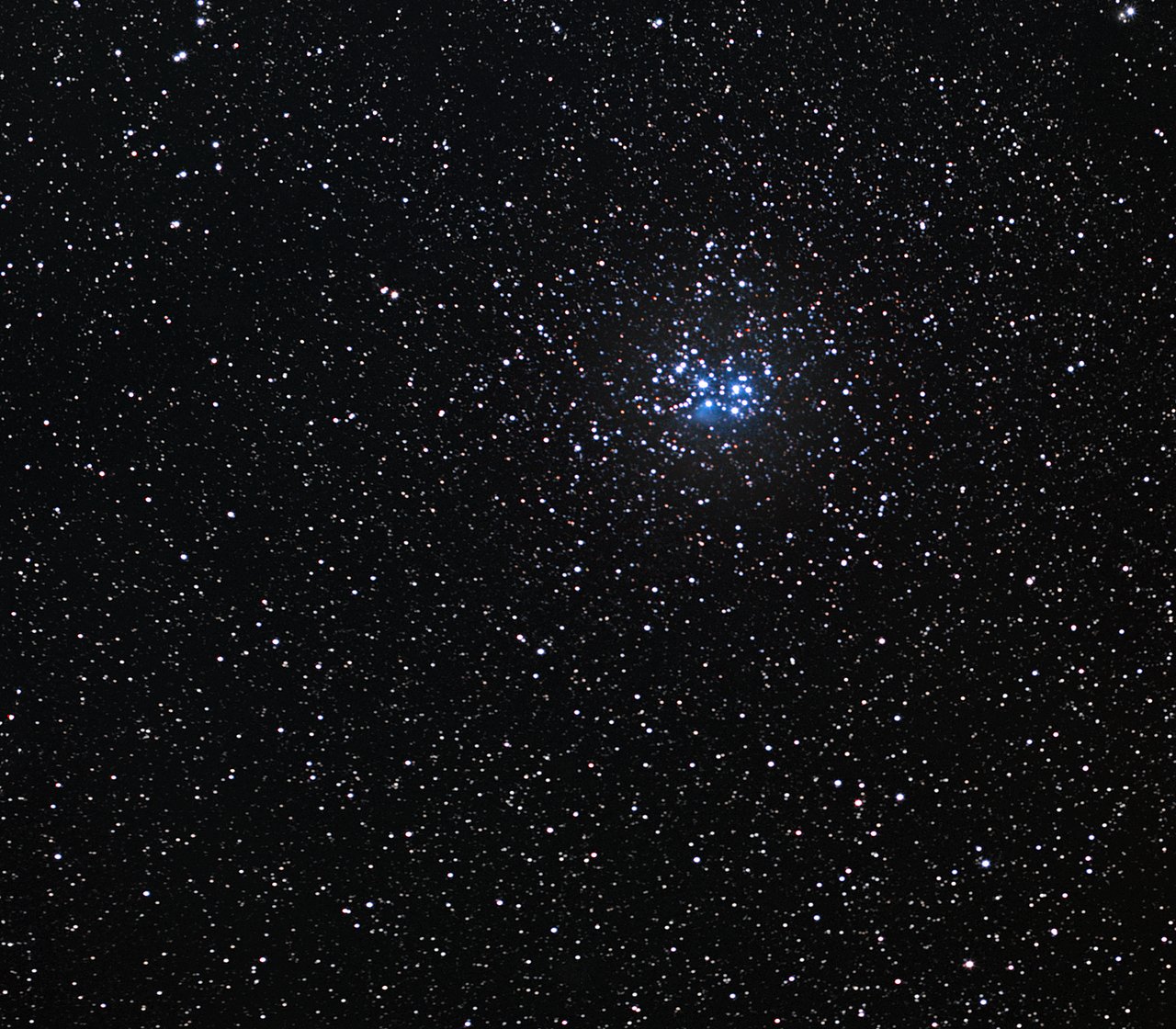
Astro-archaeologist Carolyn Kennet gave a very interesting talk at the exhibition private view. We often think about how long it takes light to travel from the stars to us but as she pointed out, this year sees the 400 year anniversary of Lizard Lighthouse and if you were looking back towards Earth from the Pleiades which are around 400 lightyears away you would just be seeing the photons of light arriving from the lighthouse as the first fires were lit to guide the ships navigating the treacherous rocky seas.

1910 The Pleiades.jpg

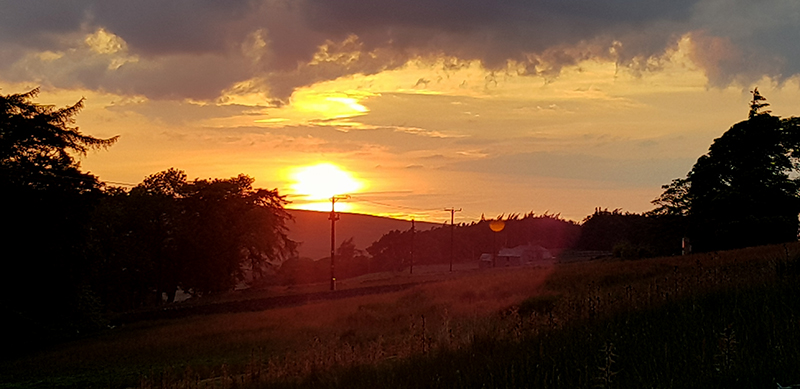
A short video documenting Continuum has been released by Allenheads Contemporary Arts. An inspiring season of art, science and speculative fiction ending in a midsummer’s weekend of extraordinary events.

1910 ACA solstice sunset.jpg

Out of Studio…

Other Spaces at 180 The Strand

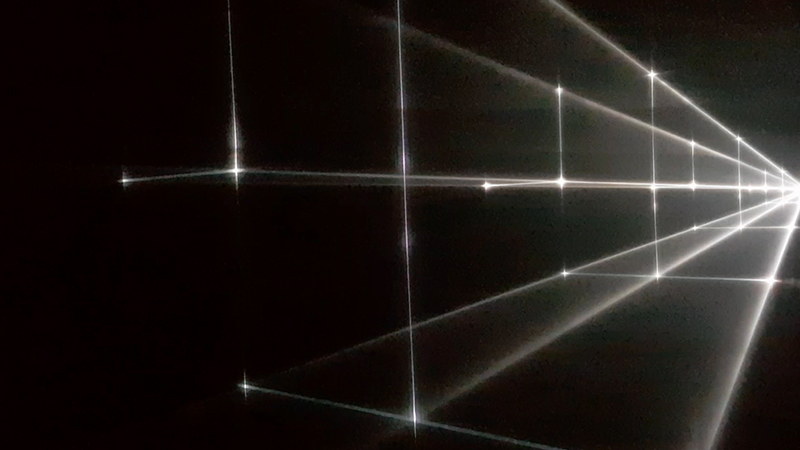
Light and Sound Installations from London-based United Visual Artists founded by Matt Clark who integrate new technologies with traditional media such as painting, sculpture, performance, and site-specific installation.

Vanishing Point is inspired by Renaissance drawings by Leon Battista Alberti, Leonardo Da Vinci and Albrecht Durer.

1910 UVA (1)1910 UVA (2)

The Great Animal Orchestra –  a soundscape of animal recordings, captured in their natural habitats around the world by sound ecologist Bernie Krause visualised by UVA into abstract spectrogram landscapes of the environments where the animals live.

1910 UVA Bernie Krause

ERRATA (Extreme Remote Rural Artist Travel Agency) Gaada hosted by Creekside Artists for Artlicks Weekend 2019.

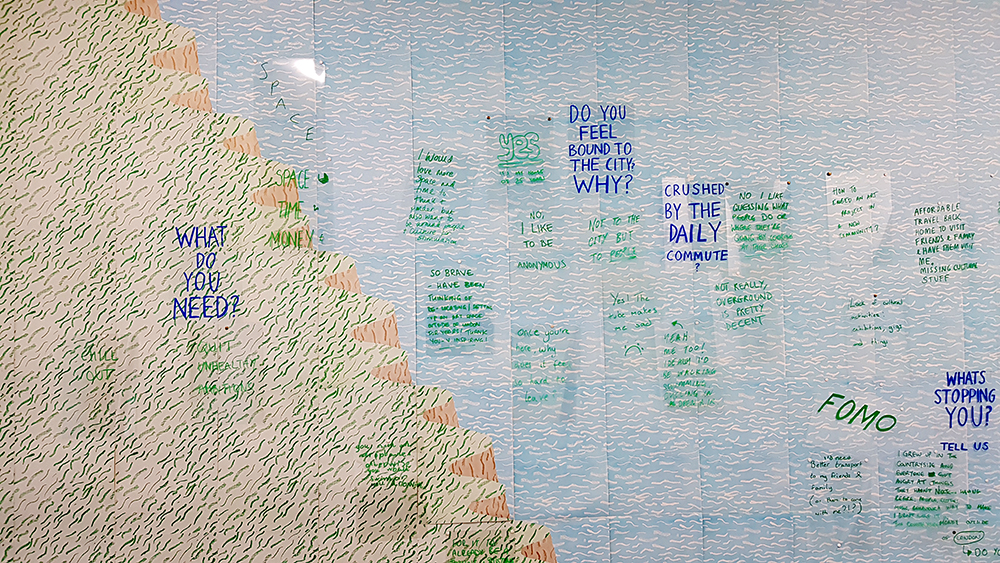
Ever wished to leave the city for a far away place + a new island life? Shetland artist-led initiative Gaada critically explore the barriers and benefits of contemporary art practice in extreme, remote, rural contexts. What does an art ecology look like without buyers / galleries / studios / making facilities / public transport links ?

London visitors were invited to answer questions posed by the artists and consider how an art practice might be sustained outside of the city.

1910 GAADA.jpg

Emerging Cosmic Landscapes Symposium at University College London.

An event exploring the benefits of art/science relationships at the culmination of Lisa Pettibone’s year-long residency at Mullard Space Science Laboratory (UCL) along with collaborator Dr Tom Kitching, science lead on MSSL’s Euclid Mission and Ben Murray (Kings College London and co-director of Phenotypica). What came across was the shared benefit of cross discipline collaboration. The artist enjoying access to question the motivations of the scientists and observe their operations while opening up a more sensory approach for the scientists to engage with materials and use hands on ‘play’ to explore ideas.

‘The ability to perceive or think differently is more important than the knowledge gained’ David Bohm

1910 Lisa Pettibone

The Star Survey Workshop at Guest Projects created by Niccolò Moronato.

‘We base our knowledge of the universe on science and scientific exactitude, but at the same time, we can’t help but use exotic drawings in the sky to orient our searching and predict future events. So what would happen if we moved to an entirely new context?’

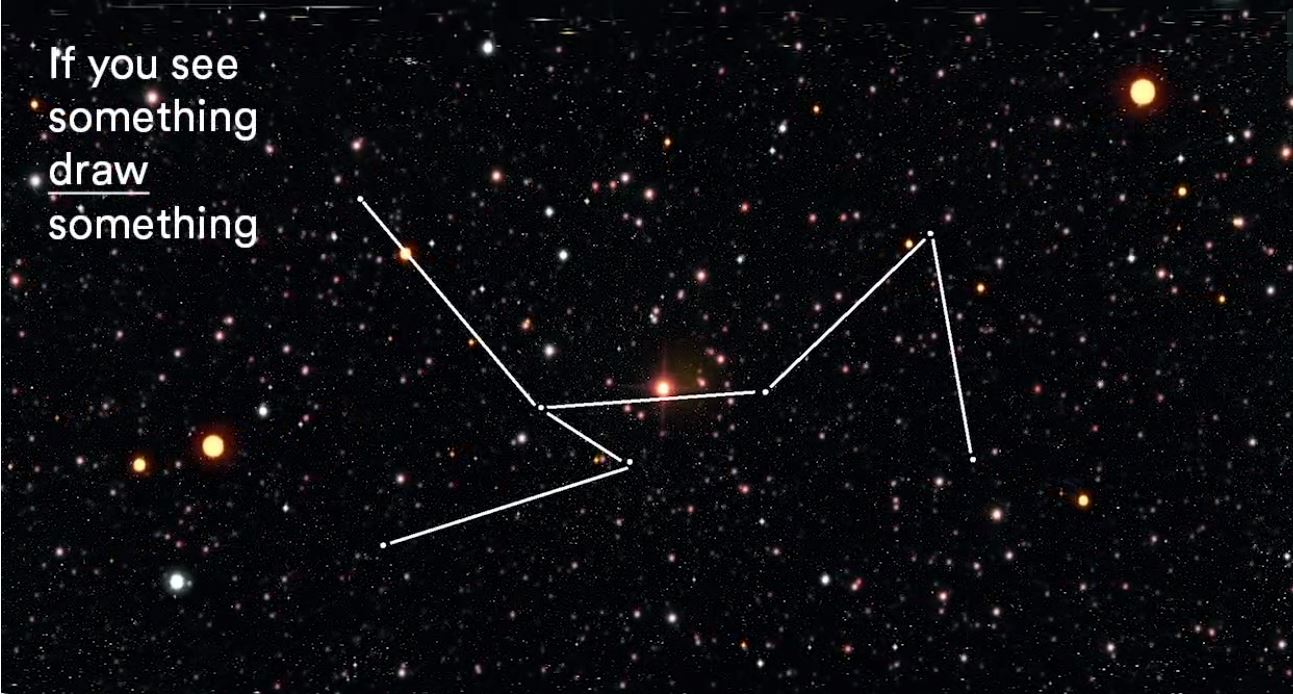
Through a scientific collaboration with Chicago’s Adler Planetarium Niccolò Moronato was able to obtain the first photographic view of the sky from Trappist-1, a ‘twin’ planet of Earth located 40 light years away and make an attempt to become familiar with the new sky.

In the workshop we were invited to draw upon random patterns taken from the Trappist sky. Our interpretations were then looked at by the group to tell a story from the collective imagination which would become the mythology of this alien constellation.

1910 star survey workshop

Artist Workshops at The Bomb Factory with Kate Fahey and curator Séamus McCormack as part of  ‘Scaffold’

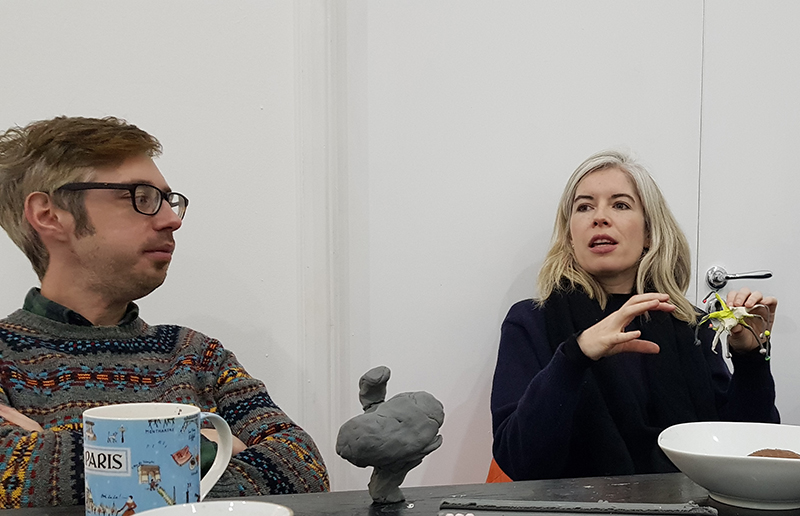
We were invited to bring along an object / text / image, which has been key in the development of a recent work or has been sitting in the studio and is in someway relevant to a project you are working on or your wider artistic practice. We each wrote our thoughts about one of the items brought and then discussed our responses as a group. This led to wider conversations about work methods and outcomes which helped analyse the process of creating to give us shared insights into the creative process. This was followed by a discussion on support structures an artist relies on and a closer look at how an artists time and energy is divided between creativity and practice maintenance such as social media, open calls, galleries and finance.

1910 workshop

The exhibition Scaffold looks at the structures we may encounter in our daily and digital lives and the anxiety we feel when those structures break down. Situations are posed of an overload of information, loss of a wi-fi signal, loss of memory, incomprehensible data, the inability to access information. The fallibility of how information is stored and communicated whether in the mind, on a data stick, a book, in radio waves, remotely via drone and digital signals is considered. The overall effect leaves the viewer on unstable ground looking for that scaffolding to hold onto to, a return to the body and the physically known.

1910 Scaffold

Kate Fahey’s practice explores embodied experiences with contemporary screen-based, techno-scientific images, reimagining bodily presence in the military’s highly mediated representation of warfare online. Adam Gibney’s works highlight the relationship between scientific uncertainties and the anxious state we sometimes occupy. Jonathan Mayhew is interested in moments when edges blur and ideas of ourselves along with the world around us are ruptured.


Brilliant Finale Weekend for BEYOND Residency. Such a pleasure to be part of this project with such wonderful artists and hosts at Allenheads Contemporary Arts.

I was screening the video soft borders made with dance artist Paola Napolitano upstairs in the ACA gallery.

1807 Beyond Finale Weekend Susan Eyre

Sharing space with Alex Hughes photographic sculptures Fluid Planes which also looks at material bodies as permeable membranes.

1807 Beyond Finale Weekend Alex Hughes (1)

1807 Beyond Finale Weekend Alex Hughes (2)

1807 Beyond Finale Weekend Susan Eyre 2

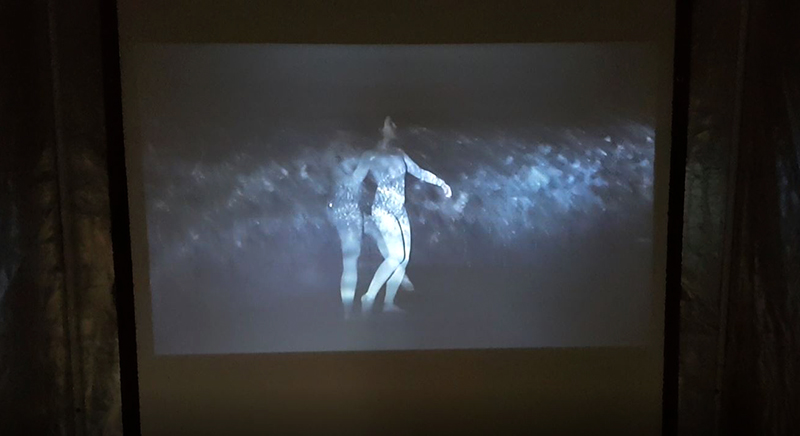
In soft borders phenomena beyond human scale are proportioned to that of the body, aiming to bring cosmic and quantum dimensions into an intimate sensory experience. Movement sequences performed by dance artist Paola Napolitano relate to Rudolf Laban’s dance notation system, choreutics, in turn influenced by Plato and the geometries of the platonic solids. Using the dodecahedron as motif, the boundaries of the universe are brought within reach; pliant and permeable as the body bathed in cosmic particles that do not recognise borders but pass unseen through spacetime and matter.

In the gallery downstairs there was work from Nicola Ellis, Tom Beesley, Alan Smith, Jim Lloyd, Manpreet Kambo, Katie Turnbull and Kit MacArthur, Annie Carpenter, Lucien Anderson, Daksha Patel, Phyllida Bluemel, Robert Good.

Outside was Lucien Andersons The Humble Space Telescope. No telescope, no computer, only the human eye and the night sky. This will be set sail on the ACA cosmic pond to drift on the water whilst a porthole arbitrarily frames the stars, constellations and planets.

1807 Beyond Finale weekend Lucien Anderson (1)

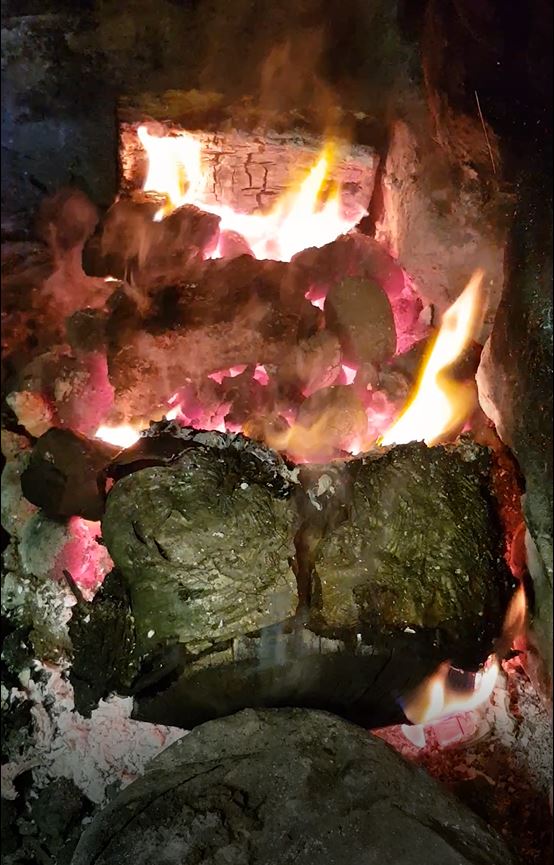
There was an intervention Fire, Fluorspar, Water and Ice at the Blacksmith’s Forge from Nicola Ellis in response to local historical mining in the North Pennines and the future mining of near-earth asteroids.

Relighting the fire with added peat from a local ancient.

1807 Beyond Finale blacksmiths fire.JPG

Nicola Ellis video projection mash up of three sources of propellants from the past present and future of mining practices.

1807 Beyond Finale Weekend Nicola Ellis

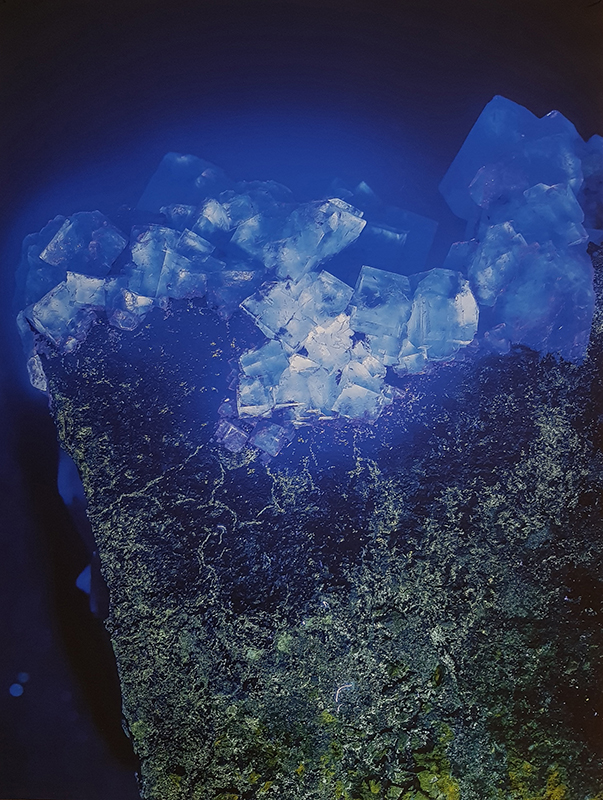
The local mineral Fluorspar under UV light photographed by Jim Lloyd.

1807 Beyond Finale Weekend Jim Lloyd

Up at ACA Old School house was an installation of work from the OUTSTATION #1 project in which Robbie Coleman and Jo Hodges imagine an alternative history of the Soviet Space Program. OUTSTATION #2 was a twilight road trip travelling blindfolded through collapsing time zones, alternate histories and possible futures. Out on the darkening windy moors Deep Navigation techniques were deployed to guided our unconscious minds inwards.1807 Beyond Finale weekend Outstation 2

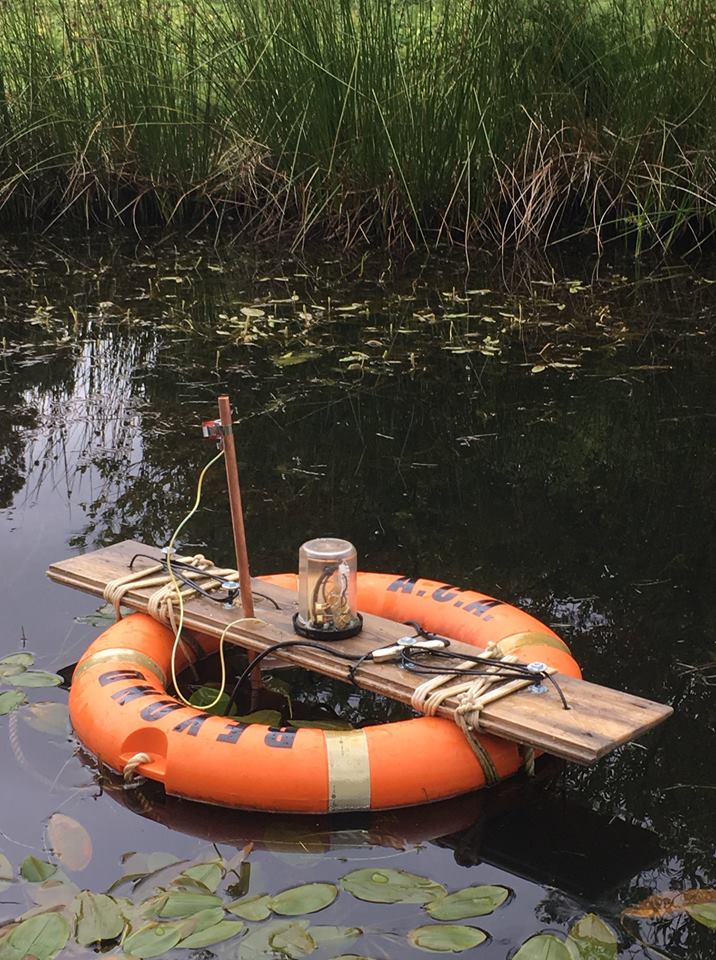
At the North Pennines Observatory and Cosmic Pond Sarah Sparkes and Ian Thompson presented a chance to listen to the microcosmos of pond life whilst watching the celestial life above through the observatory telescope or relaxing in the listening pod. It was an extraordinary experience, so noisy, like being in the jungle with the same whoops, buzzes and calls that resound from unknown depths.

1807 Beyond Finale Sarah Sparkes and Ian Thompson

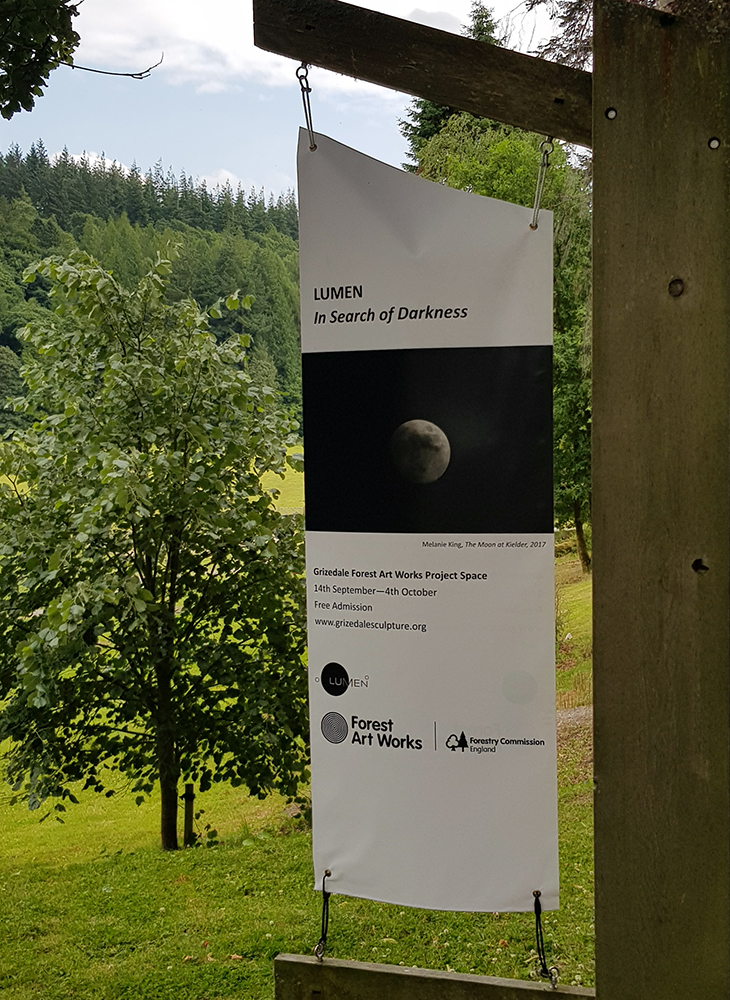
In Search of Darkness research residency with Lumen in Grizedale forest was an opportunity to experience dark skies and make plans for the upcoming exhibition at Grizedale Forest Project Space.

1807 Grizedale banner.jpg

We had a warm welcome from Grizedale Forest Art Works and The Forestry Commission. There was a guided tour of the many and varied forest areas following ranger John’s vehicle along scorched dry tracks that sent up dust clouds worthy of a desert landscape, blinding and coating us in fine particles but adding to the excitement of being inducted into the forest. We were then given the key to the forest access gates to allow us to explore independently and try out ideas for future work.

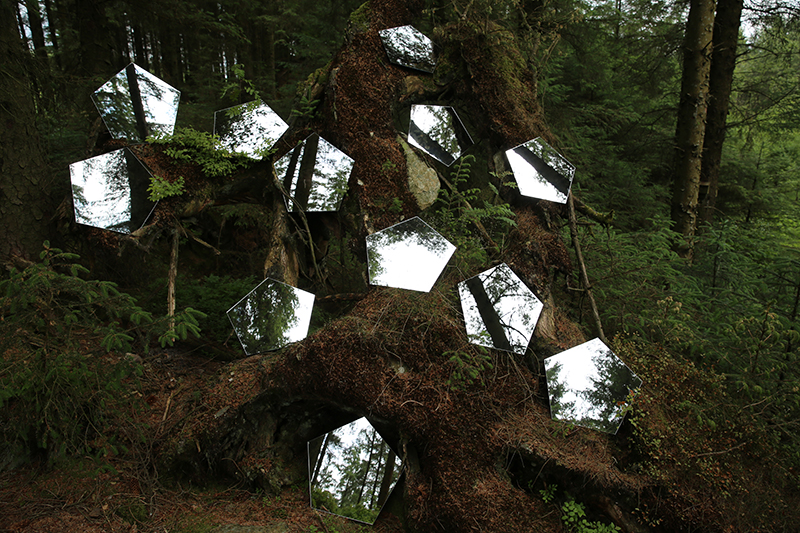
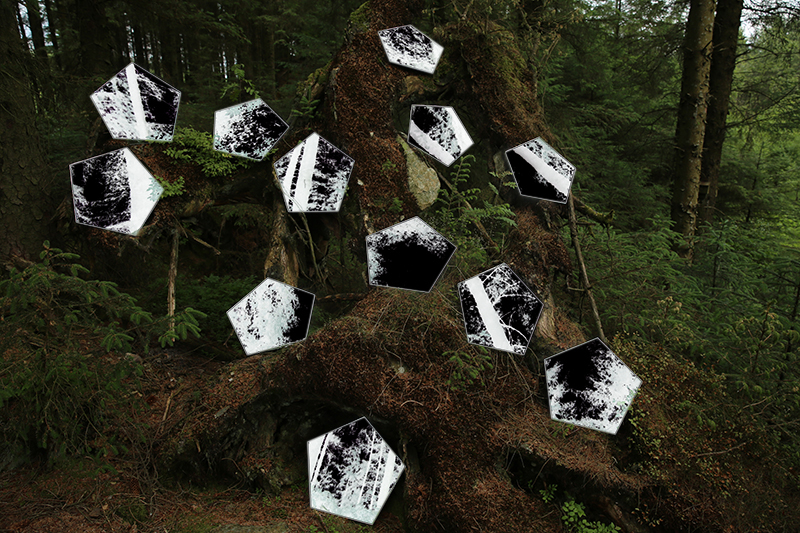
I had brought along some mirror pentagons.

1807 Grizedale forest WIP.jpg

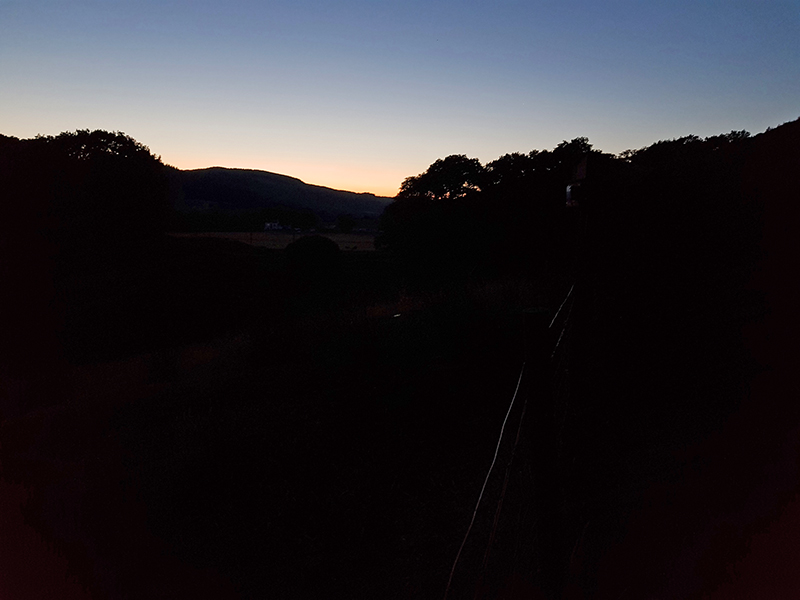
We waited for sundown.

1807 Grizedale sundown

Then headed into the forest

1807 Grizedale nightime trek

To lay in the dark and gaze at the stars

1807 Grizedale stargazing

Allowing time for our eyes to adjust to the dark skies; the landscape becomes alien terrain

1807 alien darkness.jpg

Back in London a beautiful installation from Kate Fahey at Lewisham Art House repetitive strain gently leads the audience into the minds of those subjected to the physical and psychological trauma of conflict to consider bodily displacement, visual interference and its impact on the psyche as they lie under a billowing silver foil ceiling tinted with warm pinks reflected from a video that is always slightly beyond a point of focus.

1807 Kate Fahey.jpg

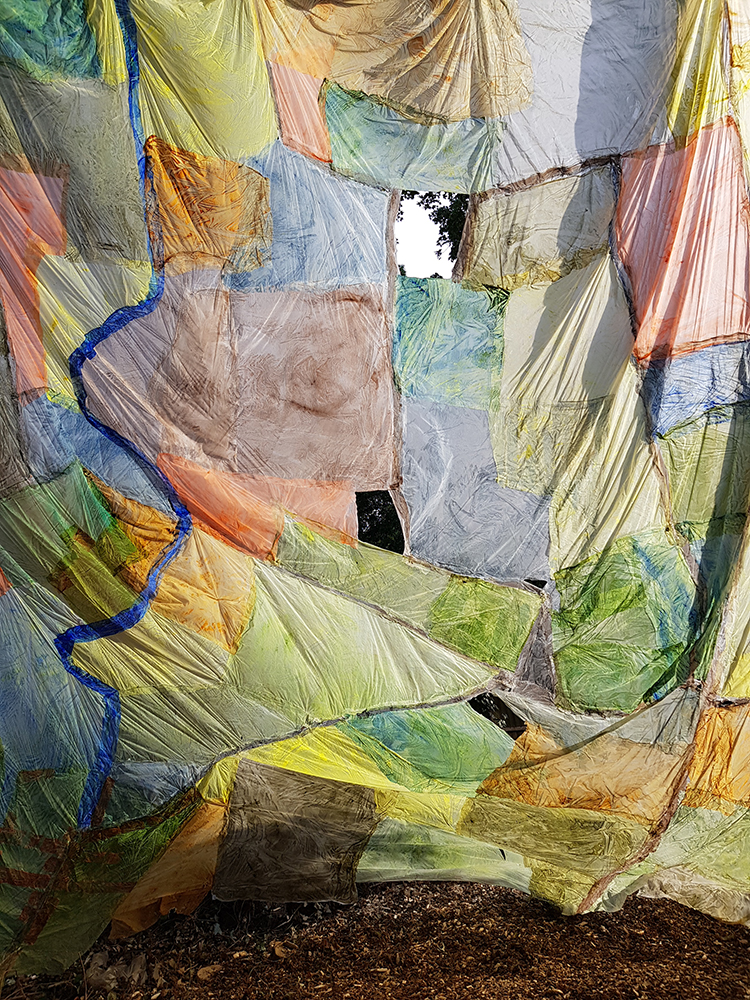
Liz Elton’s painting Fields (echoing the past local agricultural patchworked landscape) using degradable recycling bags creates a dramatic encounter when visiting the Florence Trust Summer Show.

1807 Liz Elton

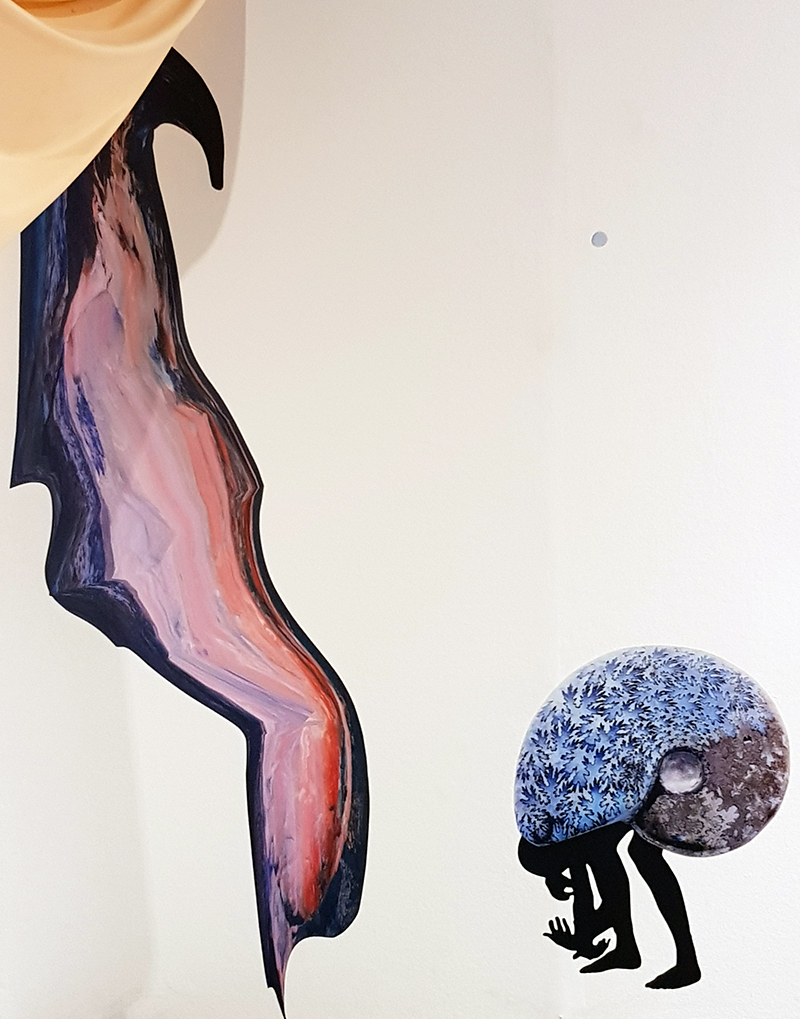
Dancer Sara Ruddock embodied the primordial in a performance presented  by Mayra Martin Ganzinotti drawing on fusions between life, fossils and rock in deep time geology.

1807 Mayra Ganzinotti 2

Patterns that appear familiar yet are from ancient ammonite fossils reach out from the past

1807 Mayra Ganzinotti

Kristina Chan works into her screen prints on birch plywood to give them a sense of aging and decay and reflect the history and natural entropy of the objects depicted.

1807 Kristina Chan

Visions Bleeding Edge Symposium on nonhuman vision, liquid and crystal intelligence and AI hosted by RCA research students. Esther Leslie, professor of Political Aesthetics at Birkbeck and Joanna Zylinska, professor of New Media and Communications at Goldsmiths gave fascinating talks.

1807 Visions Bleeding Edge

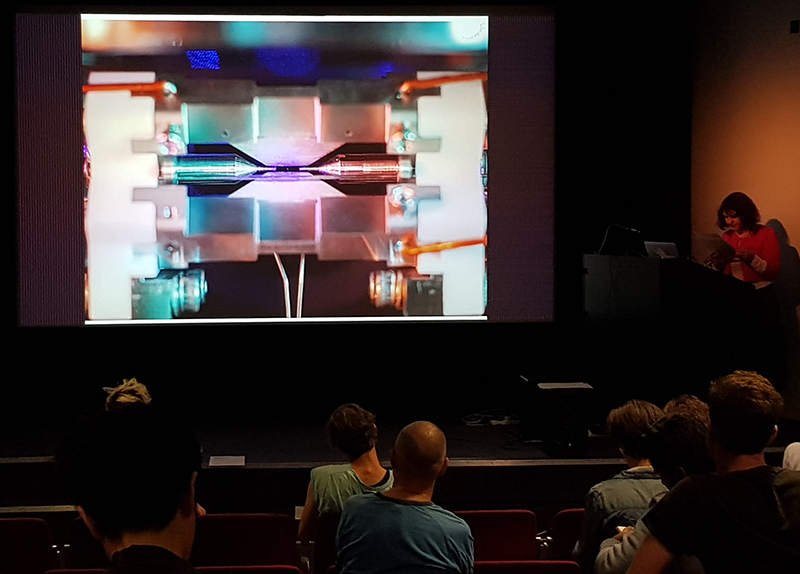
I was stunned by the image of a single atom of the metal strontium suspended in electric fields Single Atom In An Ion Trap, captured using an ordinary digital camera on a long exposure shot by David Nadlinger who said “The idea of being able to see a single atom with the naked eye had struck me as a wonderfully direct and visceral bridge between the minuscule quantum world and our macroscopic reality.” The atom is visible in this photograph because it absorbs and re-emits the bright light of the laser.

Further in awe at visuals of digital clay – matter that can be manipulated as easily as pixels in Photoshop. Discussions included turbidity; the cloudiness or haziness of a fluid caused by large numbers of individual particles that are generally invisible to the naked eye, similar to smoke in air. The measurement of turbidity is a key test of water quality.  Liquid Intelligence – nature holding memories, matter looking back at us (surveillance).  Imprint of matter – radial atoms in bones. Process – tactile scanning, post optical photography at the nano level.

AI = The Anthropocene Imperative.

When a computer watches, what can it deduce?

Over the last ten years or so, powerful algorithms and artificial intelligence networks have enabled computers to “see” autonomously. What does it mean that “seeing” no longer requires a human “seer” in the loop?
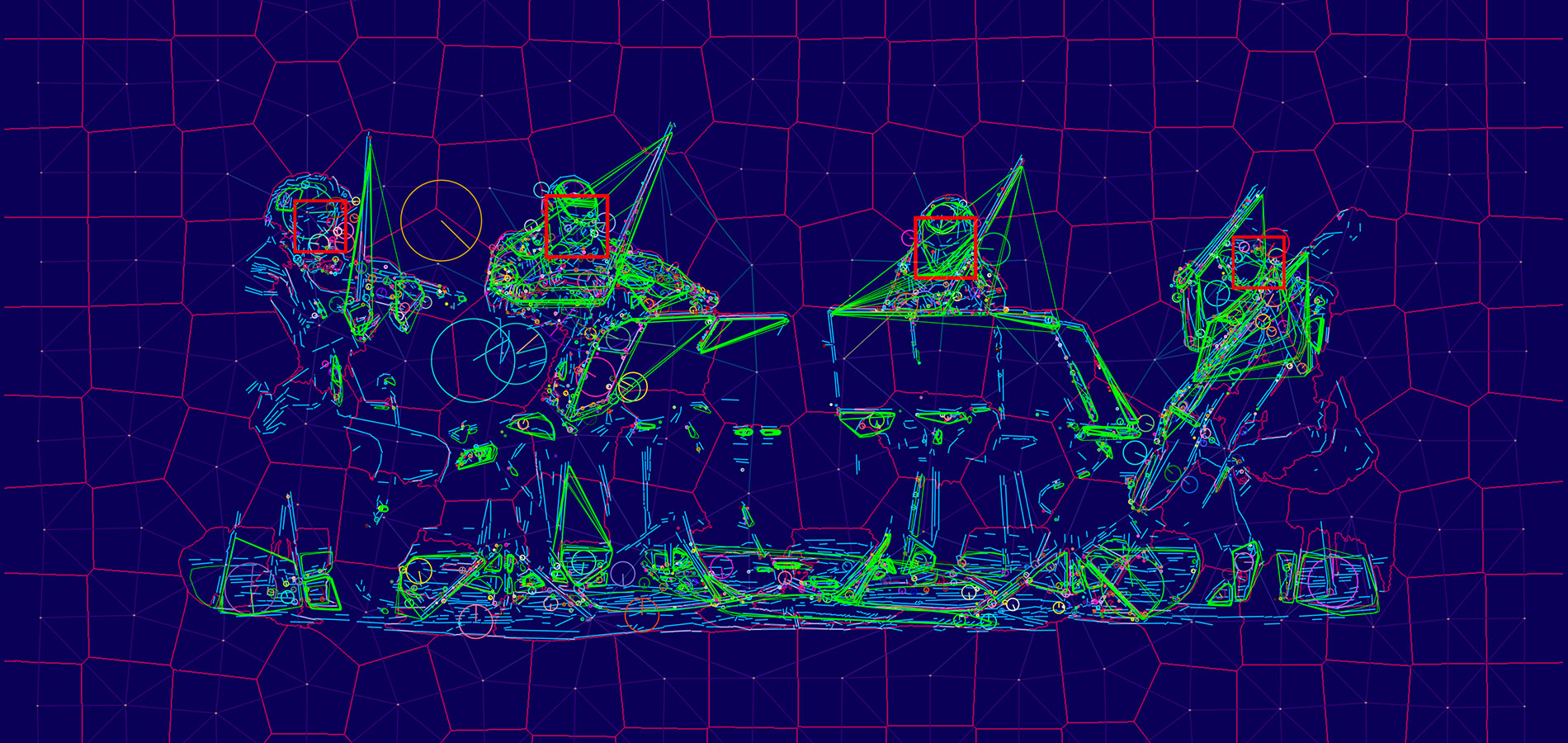
Tevor Paglen’s “Sight Machine” demonstrates to a live audience how machines “see” the world. ‘One of the most important reasons to create art is to make known the unknown’ –  Obscura worked with Paglen’s team to develop the computer and video systems to take a live video feed of the renowned Kronos Quartet’s performance, run it through actual off-the-shelf artificial intelligence surveillance algorithms and project what the AIs see and how they interpret it onto a screen above the musicians.

1807 Trevor Paglen Sight Machine 2

With Paglen the framing becomes the work rather than what he shows. ( The parergon)

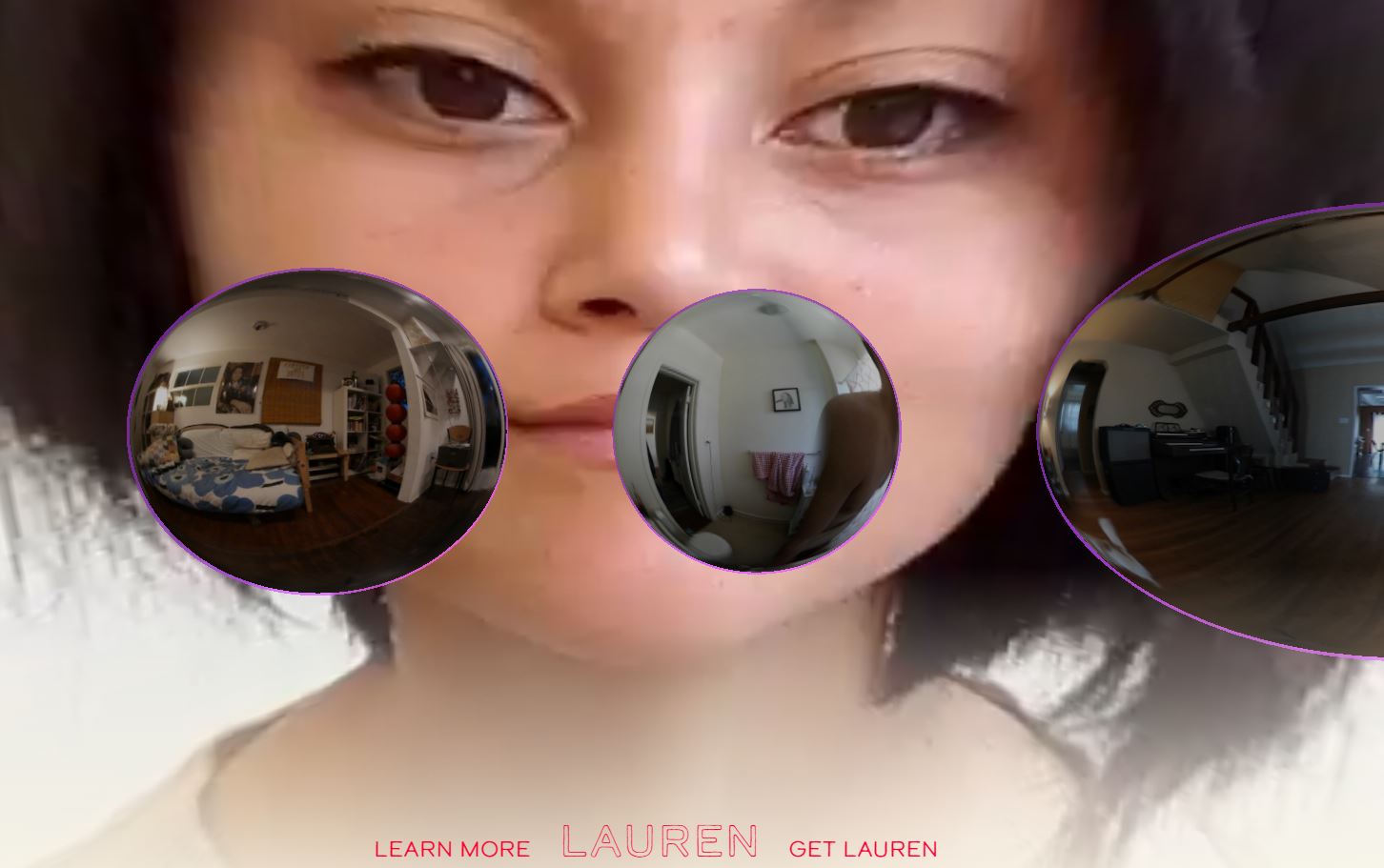
Artist Lauren McCarthy  offers to replace Alexa in your home. Bringing the human back. Lauren may not answer questions as quickly as Alexa but can respond with insight and emotion to your needs.

1807 Get Lauren

After Image at Victoria Miro. Which are the images that stay with you, burnt on your retina and loaded into memory, out of the thousands upon thousands of images consumed daily? Sarah Sze always nails it. 

1807 Sarah Sze 2

Sarah Sze Images in Debris

1807 Sarah Sze 1

The scrunched paper of the tree images – like dark matter has suddenly become visible.

1807 Sarah Sze 4

The split stones were a second reminder recently of a time when Karen and I (aged about 12) used to ride our bikes to the beach to collect flint stones in our anorak hoods – bringing them back to ‘over the field’ and smashing them apart to see the colours inside.

1807 Sarah Sze 6

Proliferation of pond weed  – vibrant matter in action

1807 Sarah Sze 3

Sarah Sze Hammock (for A. Martin)

Superb work from Michelle Stuart in The Nature of Time at Alison Jacques Gallery, ‘Addressing the metaphysical while remaining profoundly rooted in in its own materiality.’

1807 Michelle Stuart 1

Michelle Stuart In the Beginning: Time and Dark Matter

1807 Michelle Stuart 2

Michelle Stuart Sacred Solstice Alignment

Into the dark recesses of The Horse Hospital for The Art Of Magic an exhibition and performance based on missing artefacts once housed in the archive of the Museum of Witchcraft and Magic.

Coloured strings first soaked in Alum dried over a wood fire and plaited together to form ‘a string of hurting’ they are worn wound around the neck, their purpose being to reduce swollen glands and restore loss of voice.

1807 Art of Magic 1

In the studio WIP testing ideas to relate the loss of knowledge of the night sky through urban light pollution to the unknown mysteries of the universe yet to be revealed.

1807 Grizedale forest WIP 2


Progress is slowly underway on my dodecahedron sculpture. Beginning with a rough mock up in card to gauge the size.

1701 maquette.jpg

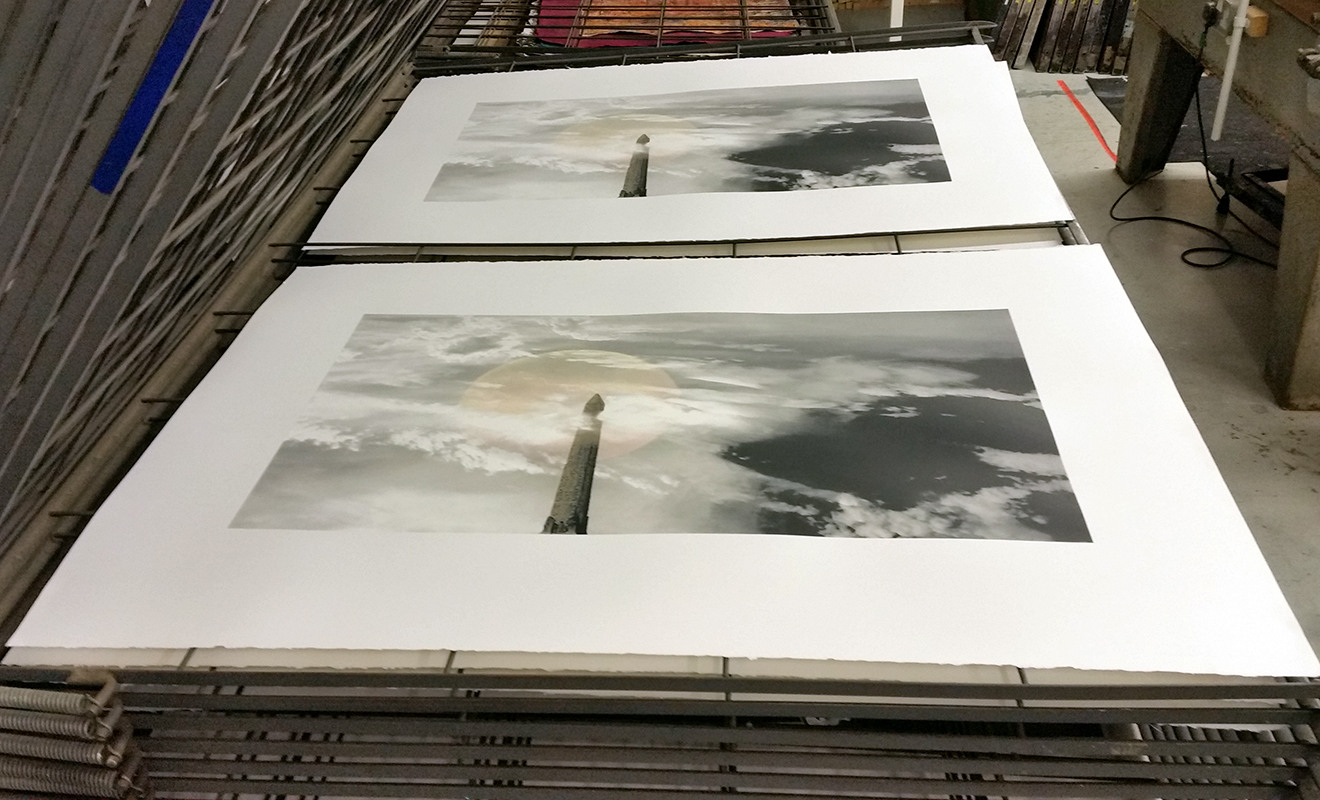
I was relieved to finally finish screen printing the curse of the obelisk. Never had so many setbacks in a piece of work.

1701 Cloud Obelisk.jpg

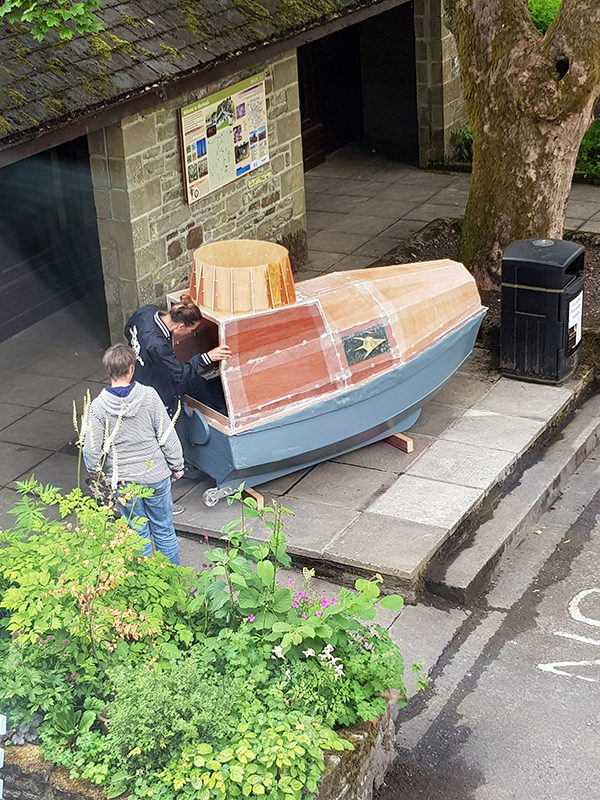
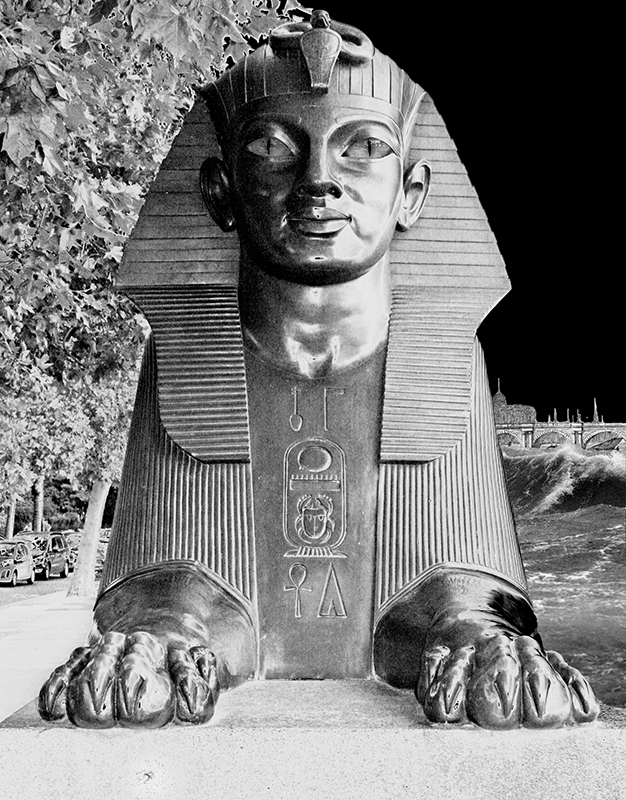
Made of one single stone, dedicated to the solar gods, an obelisk is a fusion of the earthly and the divine. A symbol of power, piercing entry to the fickle world of the gods beyond the clouds, cursed and desired. Over 3,500 years old, the London Obelisk, raised on The Embankment for convenience sake, snubbed by a state embarrassed to revere a shady political gift made by a country they were about to undermine, fought its removal from the soil it was hewn from stands alone, separated from its twin. The gift to state made in 1811 lay fallen and uncollected in Alexandria until an eccentric Victorian adventurer (Sir James Edward Alexander, Knt.,C.B., K.C.L.S, F.R.C.E.) saw the twin in Paris and discovered that Britain’s prize had never been brought home. He found a fellow enthusiast with money and the pair designed a special vessel to contain the obelisk that could be towed behind a ship. The Olga set sail in 1877 but met a violent storm that broke the tow ropes and cast the obelisk adrift. Six men struck out in the storm to rescue the vessel but were never seen again. The obelisk however did not sink and was later discovered, recaptured and finally towed up the Thames to be set incongruously upon a plinth under the unblinking guardianship of Victorian repro Sphinx’s who traditionally would be outward facing to ward off evil, but spend their days eyeing the needle.

1701 sphinx.jpg

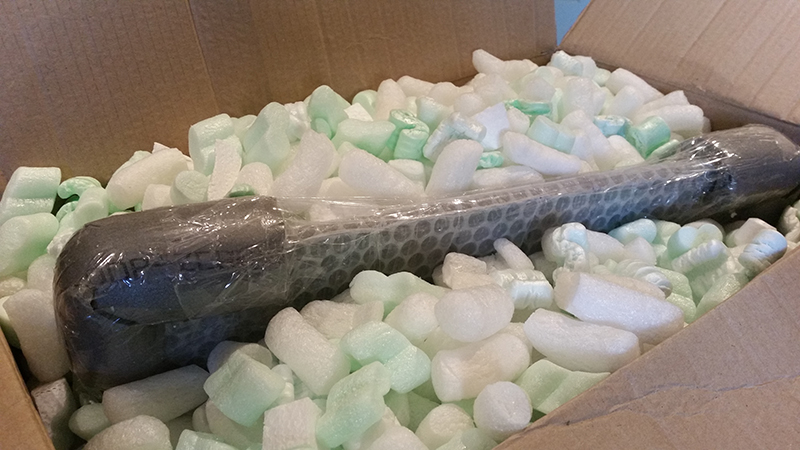
I had an intriguing parcel arrive from the incredibly helpful Alan Walker from the School of Physics and Astronomy at The University of Edinburgh who is giving me loads of advice on building my cloud chamber. He has very kindly had an anodised aluminium plate made for me in his workshops. The plate is the one crucial component that has to be specially made so it was wonderful to find that he had done this for me.

1701-cloud-chamber-parcel

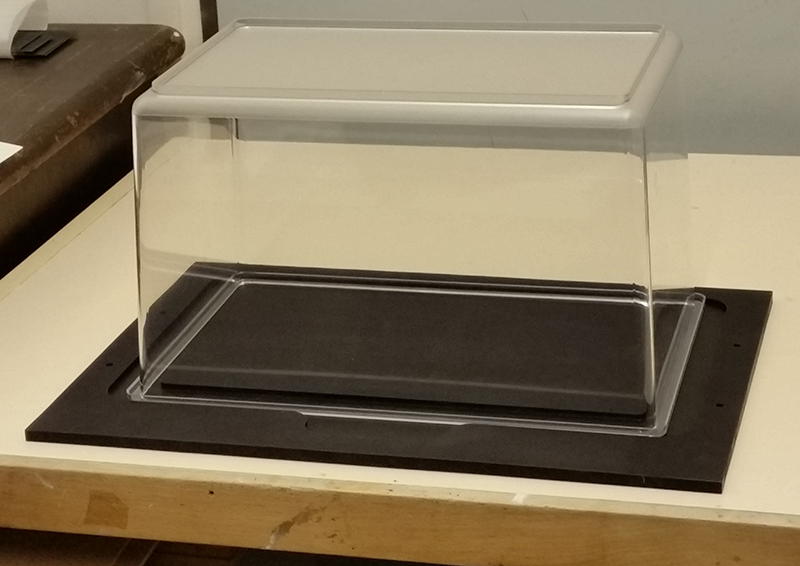
The black metal plate will sit on dry ice, it will be the viewing backdrop for all the cosmic particle trails and I can now get on with the next stage – making the insulated box.

1701-cloud-chamber-1

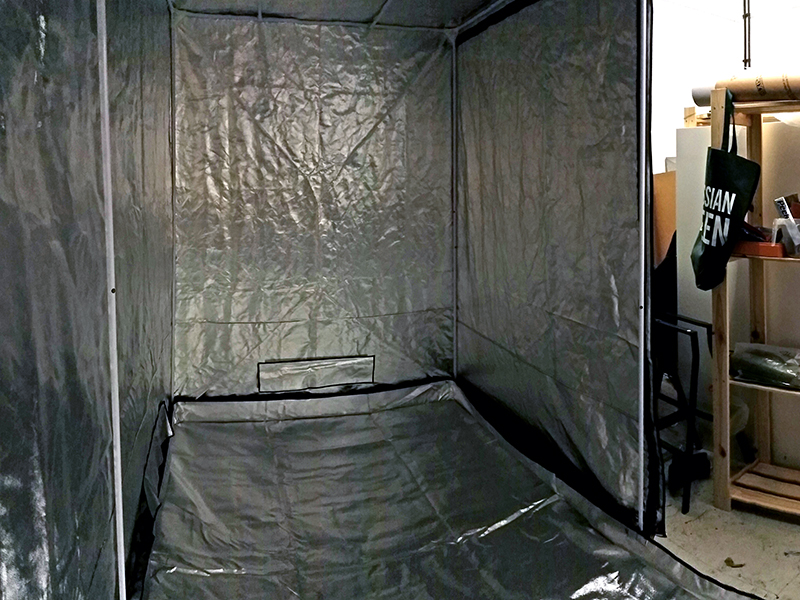
I have set up a hydroponics tent in my studio to create a dark space ready for filming once the cloud chamber is fully assembled and ready to test.

1701-dark-room

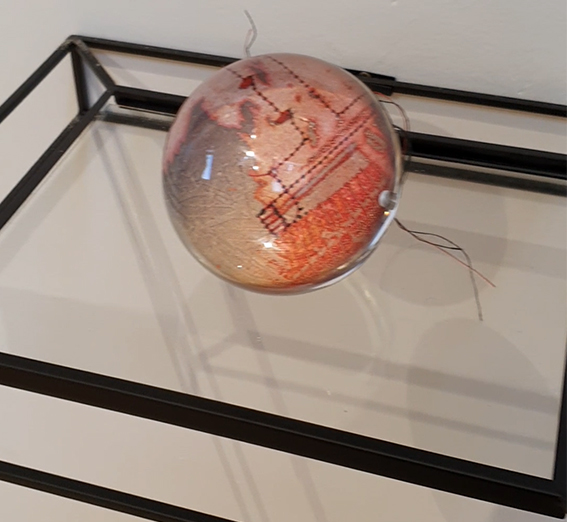
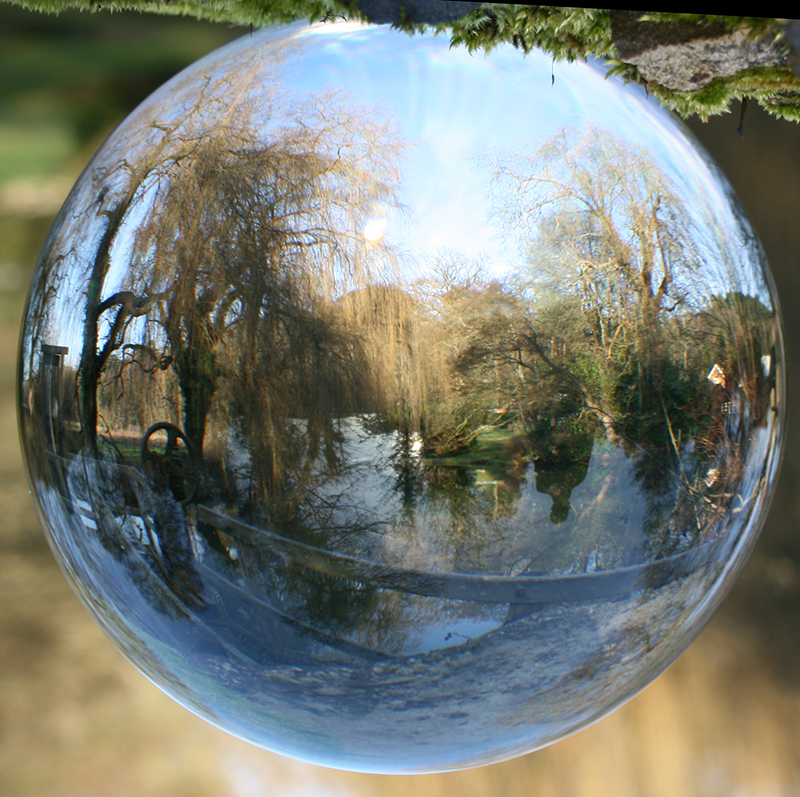
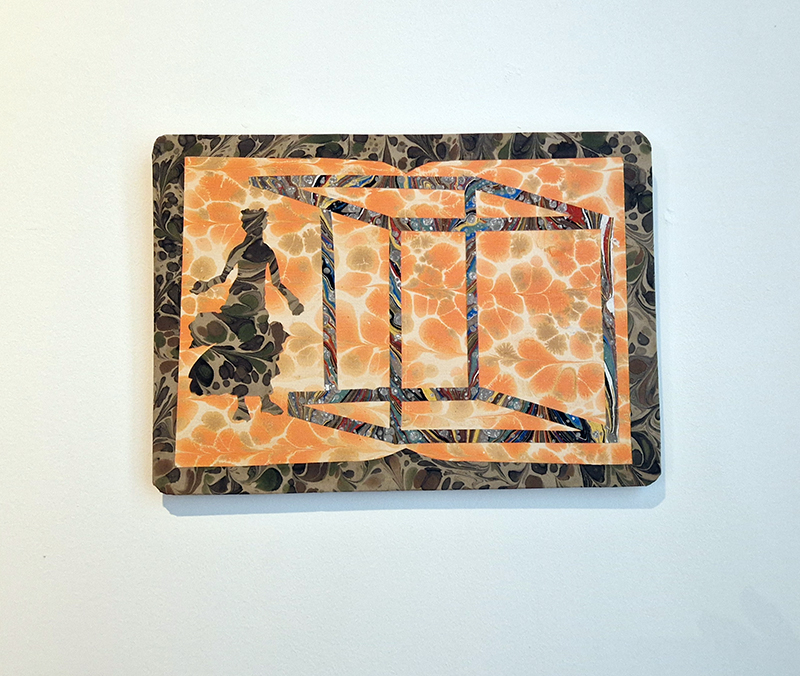
On a very crisp bright day I took the crystal ball a short walk along the banks of the River Wey to the ruins of  Waverley Abbey.
1701-waverley

This was the very first Cistercian monastery founded in Britain 900 years ago by an Abbot and 12 monks from France.

1701 waverley abbey 1.jpg

These images of the crystal ball set in different locations are part of research with a view to making a work about portals in time, space and imagination.

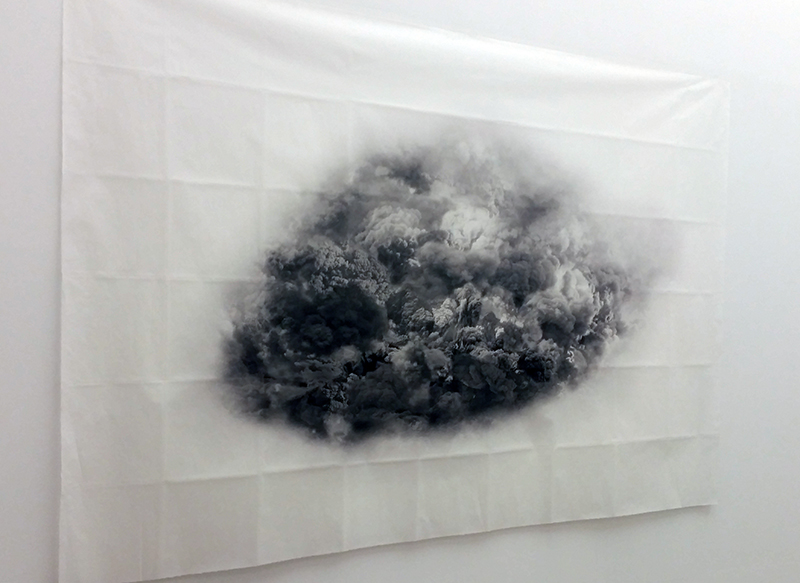
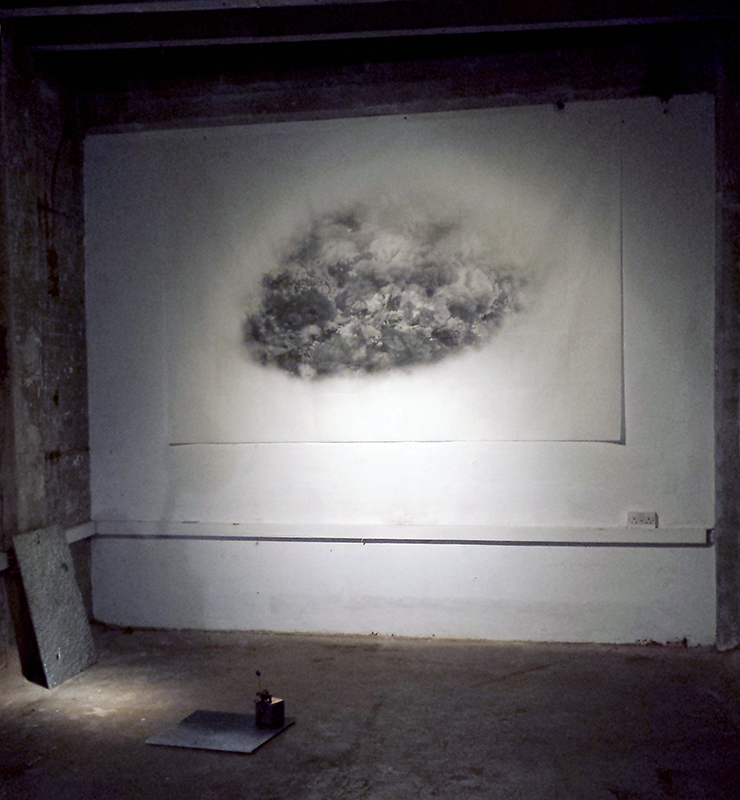
The first work you see at Bloomberg New Contemporaries, ICA is Kate Fahey’s delicate plumes from a multitude of explosions billowing into one giant cloud – Cumulative Loss.

1701 Kate Fahey.jpg

Through scale and fragility we sense the dust caught momentarily before it settles over devastation upon devastation. It sets a thoughtful tone to enter the lower gallery.

Lisa Porter’s glazed stoneware Connection X (Thank Finch for That) and Rodrigo Red Sandoval’s installation Satellite reflections were two works I was drawn to.

1612-kate-fahey-superficie-ii

Kate Fahey Superficie I

Kate Fahey’s Superficie images developed during a residency on the remote Isle of Coll were included in Reference Mollusk, a beautifully curated exhibition  with some timely concerns at new gallery space Gossamer Fog in Deptford.

1612-solveig-settemsdal

Solveig Settemsdal Singularity (video still)

“We are the goo that slipped out of the oceans 430 million years ago, the goo that changed the earth beyond repair, the goo that will fossilise, leaving only future archaeological relics”

1612-justyna-kabala

Justyna Kabala Feel Better

Helen Maurer re Composing at Danielle Arnaud had a delicate touch.

1612-helen-maurer-1

Transferring from the forsaken voids of the Church of The Holy Trinity in York it brought with it the quiet sense of unease that comes when entering a darkened space on a summers day.

1612-helen-maurer-3

The gentle chimes sounding from hidden spaces under cabinets added to the undercurrent of something slightly sinister

by exposing the construction of this fairy tale landscape Maurer adds rather than depletes mystery

1612-helen-maurer-2

This was a captivating transformation of space at the House of St. Barnabus Chapel. Staccato is an audio-visual installation by Evy Jokhova

1612-evy-jokhova-2

exploring the interconnection between music, movement and ceremonial architecture

1612-evy-jokhova-3

featuring three sculptural works and a soundtrack made in collaboration with James Metcalfe.

1612-evy-jokhova-1

In similar vein, I was struck by Dr Rupert Till’s comment ‘architecture and acoustics are the same thing.’ He was speaking on the Radio 4 programme Did Stonehenge Sing? explaining the mysterious hum that emanates from the stones and how much more powerful the sounds would have been 3,000 years ago when all the stones were still standing. Thanks to Dr Till the lost sounds of Stonehenge have been reimagined for us to experience today.

1612-stonehenge-credit-ap

Finally made it to a meeting of the New Materialism reading group. The text was Veronica Strang Fluid Consistencies: Materiality and meaning in human engagements with water http://dro.dur.ac.uk/19432/1/19432.pdf  Points that struck me were the observation from Tilley that ‘knowledge of a thing is grounded in our bodily experience of it’ and it made me think of Plato’s debate on true belief and knowledge, although a different kind of knowledge it does come back to the idea of being there, of engaging on a physical level. We think of flowing rivers, water carried in clouds but not always of the movement of water around the globe held in a juicy pineapple or mango or even our own bodies. I was introduced  to the work of Samara Scott and her liquid painting Developer created with bio-degradable dyes in the Pleasure Garden Fountains in Battersea Park.

1612 Samara-Scott-Developer.jpg

The reading group meets at the Wellcome Trust Reading Room. On the same evening, another group was meeting to discuss materials as part of an collaborative programme between artists and scientists. I didn’t get to note down the names of participants, but a magician and an expert from the Institute of Materials had each brought along objects to spark debate. 1612 Wellcome Trust debate materials.jpg I liked the relationship struck between that of the magician as performer and the idea that the materials themselves are performing.

Turner Prize visit. Materials were performing here.

I found the materials of Helen Marten (left) difficult – though there were some I could enjoy like this wonderful ceramic disc I felt more of a connection to the materials of Michael Dean (right). It is something very basic about a reaction to the surface and the connotations it brings with it.

1612-helen-marten

Marten’s sculptures are very busy visually. Like a car boot sale, unexpected juxtapositions and mostly cheap and nasty material. (though I do appreciate the thought in her designs). Anthea Turner offered more open space, albeit surrounded by brick walls and facing giant theme park style buttocks, moving on to the next room offers open blue skies but also disturbing chastity belts. Heaven/Hell.
1612-anthea-hamilton

Josephine Pryde brought us homely goods; thick kitchen worktops bleached by the sun leaving hazy shadows of random objects. Also painted fingernails. A sit on size train tastefully graffitied encountering leaves on the track.1612-josephine-pryde

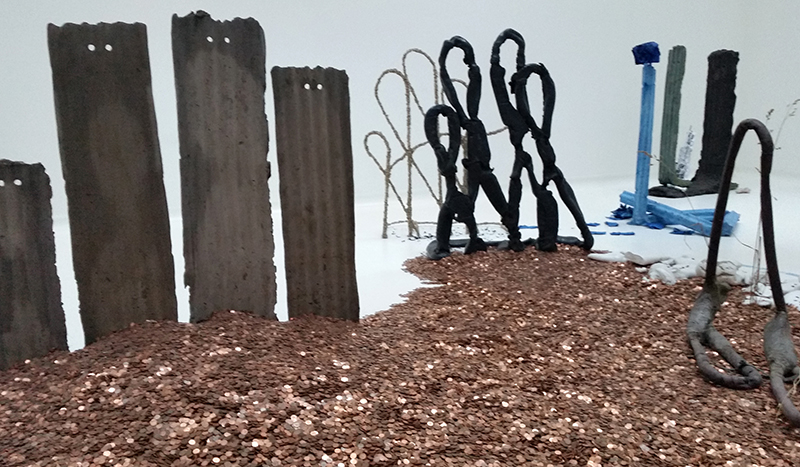
Finally entering the space of Michael Dean; smoothly curved walls morph into the floor, a strange unworldly lighting (as in James Turrell light works – the walls disappear)  and you are in a void or maybe underwater.

1612-michael-dean-3

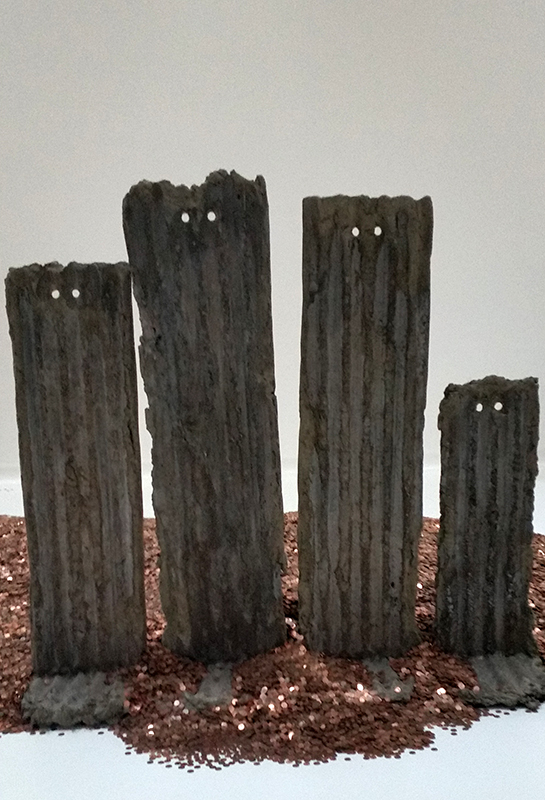
The work (United Kingdom poverty line for two adults and two children: twenty thousand four hundred and thirty six pounds sterling as published on 1st September 2016) consists of £20,436 in pennies. This is the amount of money the government states is the minimum that two adults and two children need to survive for a year in the UK.

1612-michael-dean

One penny has been removed. A family on the shore line/breadline, trying to keep their heads above water.

1612 Michael Dean 1.jpg

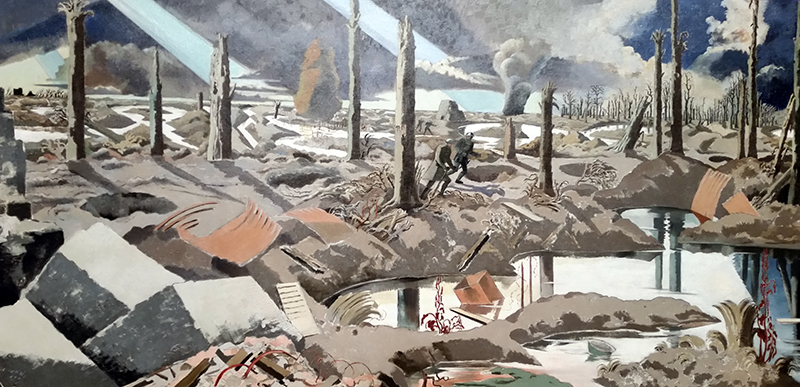
This landscape has similarities to the war blasted landscapes of Paul Nash showing concurrently at Tate Britain.

1612-paul-nash

He too acknowledges the primitive power of single vertical forms.

Enjoyed the playful narrative of Bedwyr Williams’ The Gulch in the Barbican Curve.

1612-bedwyr-williams-2

Always intriguing and despite ominous undertones uplifting through the sheer joy of following the surreal twists and turns of his stories.

1612-bedwyr-williams-1

The simplicity of his constructions are part of the exuberance in his work, they provide the outlines for the journey.
1612-mealnie-king-pulsar002

Went to see Melanie King’s installation Pulsar Oscillograph as part of SPACE/LCN showcase of projects that have been developed by artists with the support of the LCN programme over the course of 6 months.  
1701 Melanie King.PNG

Transforming audio pulsar data (supplied by artist and former astronomer Steve Aishman), Melanie uses laser beams and mirrors to draw these “sounds” captured from outer space onto phosphorescent paper. The images layering, building and fading to the frenetic beat of the spinning collapsed star. As part of The Laboratory of Dark Matters experimental residency at Guest Projects Melanie will develop an Oscillograph  to visualise data obtained from dark matter research scientists in their search for the missing 85% of matter.


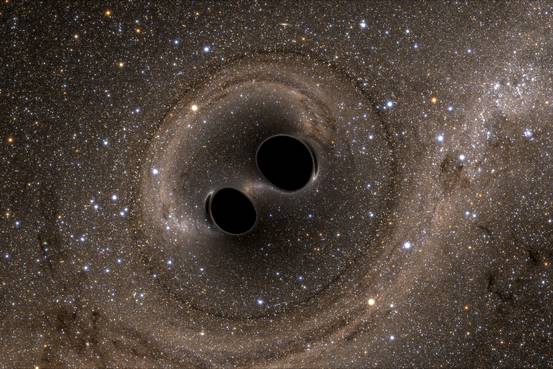
Relationships. The discovery of gravitational waves was the inspiration for some recent etchings. Trying the same image in softground on steel and hardground on zinc.

As I understand it gravity is the result of a relationship between the bending of space time and mass. The recording of these waves pulsing for the briefest flash of time when  two black holes collided and merged into one has excited scientists. This merging of two black holes was such a massive event that it caused ripples in the fabric of space time to spread out across the universe. 1604 two black holes

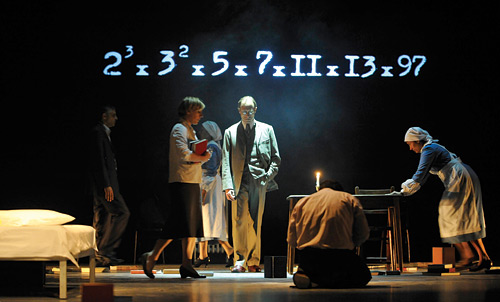
I was first introduced to the idea of beauty in mathematics and the extraordinary collaboration  of Cambridge professor G.H. Hardy with Srinivasa Ramanujan, a self-taught mathematician from India by the Complicite production A Disappearing Number.

1603 a disappearing number

Raymond Flood’s Gresham College lecture on the value of collaboration between these mathematicians along with J.E. Littlewood and Mary Cartwright gave further insight to their relationship and the advances they made in mathematical analysis and number theory. What interested me was Littlewood’s summation of four distinguishable phases  in creative work: preparation, incubation, illumination and verification or working out. Preparation is the conscious research and the problem should be kept in mind at all times. Incubation is the work of the subconscious and the waiting time can be several years. Illumination can happen in a fraction of a second; it is the emergence of the creative idea into the conscious mind and implies a mysterious rapport between the subconscious and the conscious. The verification is then just a matter of realising the idea, the hard work has been done. I feel this.

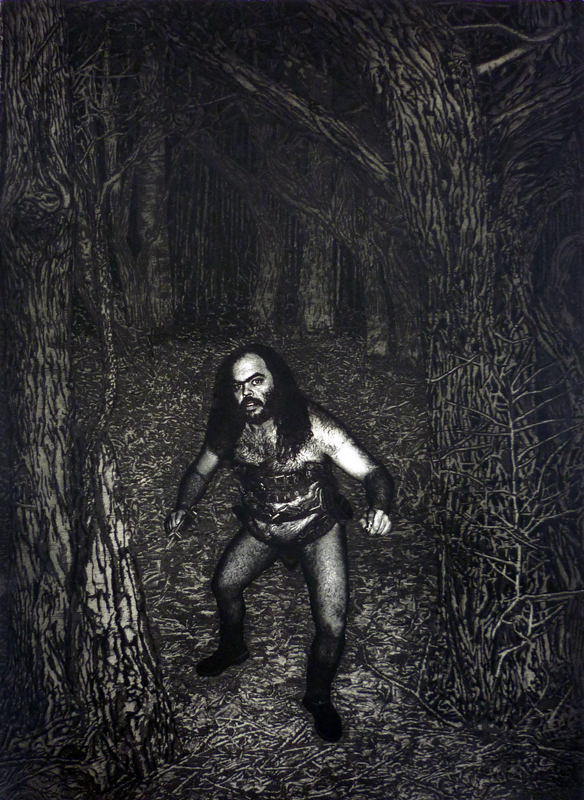
My etching ‘Forest of Eden’ was selected for ‘Blind Plural’ at Hundred Years Gallery. The exhibition ‘comments on or plays with issues related to the nature of hostility, its forms and representation…’

1409 Forest of Eden

Susan Eyre Forest of Eden

In history the wild man’s characteristics reflect topical fears and aspirations, violating the taboos of civilization and symbolizing the repressed desires of society; they oscillate between horror and fantasy. I wondered who a contemporary wild man might be. Someone on the edges of society, both fascinating and repulsive. I had come across images on the internet of this person who posts photos of himself posing almost naked with guns strapped to his body. An internet meme shared with equal disgust and fascination – I placed him back in the forest of all our origins.

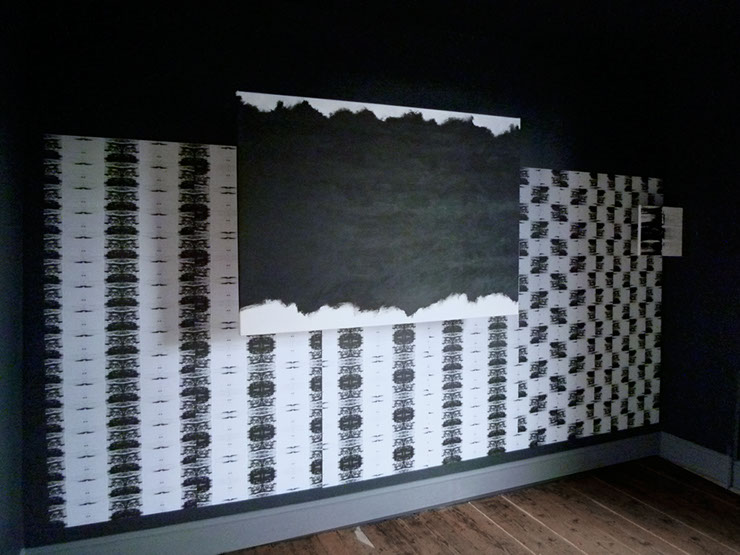
Jane Boyer raised some interesting questions about self awareness with her solo show A project space called I at ARTHOUSE1. An exhibition of the I-artist curated by the I-curator.

1604 Jane Boyer enigma

Jane Boyer enigma wall

My own mind struggles. How can I separate myself as artist and myself as curator with regards to my own work. 1604 Jane Boyer Minerva

Surely I want the same things in both those roles. I start by thinking I can see how this works if I separate myself as chef and artist. Looking at different roles I play and how I react to people from these different perspectives. A bit like cross curriculum activities, but within myself. I think I’m going to need a chat with Jane about this sometime.


Alongside this I have been reading Seven Brief Lessons on Physics by Carlo Rovelli whose final lesson Ourselves tells me that I am a process which adheres to the laws of nature. There is not an ‘I’ and ‘the neurons in my brain’. They are the same thing. My unique sense of self is the rich culmination of billions of interactions and processes within my brain that reflect my personal history of experience. So with this in mind the works in the solo show are the markers, the process made manifest and as Jane presents; an autobiographical curation of a self.

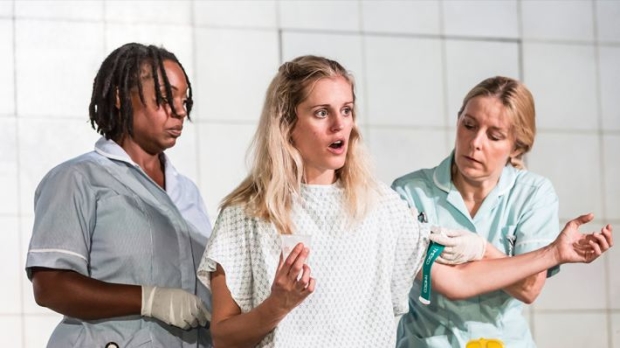
Denise Gough playing Emma in the play People, Places and Things makes a plaintive cry to the world at large – why is it that she can’t cope with reality, why is it that she is overwhelmed by the unjust nature of the world and must resort to mind altering chemicals as a means of escape when everyone else seems just fine with it. The audience joins her in a spiral of despair.  Denise Gough’s performance is extraordinary and totally captivating, how she can put herself through such emotion every night is another question this play raises about how we separate ourselves from reality. The clinical rehab set protrudes into the audience arena like a neuron connection within our collective brain.1601 People Places and ThingsThe play is a visceral interrogation of self and relationships. The cause and effect of actions between mind and body. Self destruction and self renewal.
1601 Denise Gough

People, Places and Things

When Emma finally emerges from months of tortuous self analysis to face the world alone she is advised that to maintain her freedom from addiction she must avoid anything that might trigger associations with her past life causing her to relapse – she must avoid people, places and things.

1604 Govt collection

As part of London Open House weekend I visited the Government Art collection on a guided tour and behind-the-scenes look at how this major collection of British art operates. There was a lot of security and in most areas no photography. Our Government (us then) owns a collection of around 13,000 works of art mainly by British artists from the sixteenth century to the present day.  About 75 per cent of the collection is on display in British Government buildings in the UK and in Embassies and Residences around the world. The idea is to help promote British art. There is a meagre budget to purchase new work with most of the funding going to conservation, transportation and installation. A nice perk of being a civil servant is to have the choice of some great works for your office, for the rest of us they do offer a lunchtime tour of a small viewing gallery and the racks to see what’s been left in storage.

The raw space of the Bargehouse on the South Bank was a great setting for the meditative pieces of Kate Fahey. The degraded building echoing the degraded web images she appropriates into her work.

1601 Kate Fahey

Kate Fahey

Pulling the digital from the screen into the world of matter, she reverses the process of the viewers visual overload of images.

1604 Kate Fahey Possible-Object

Kate Fahey Possible Object

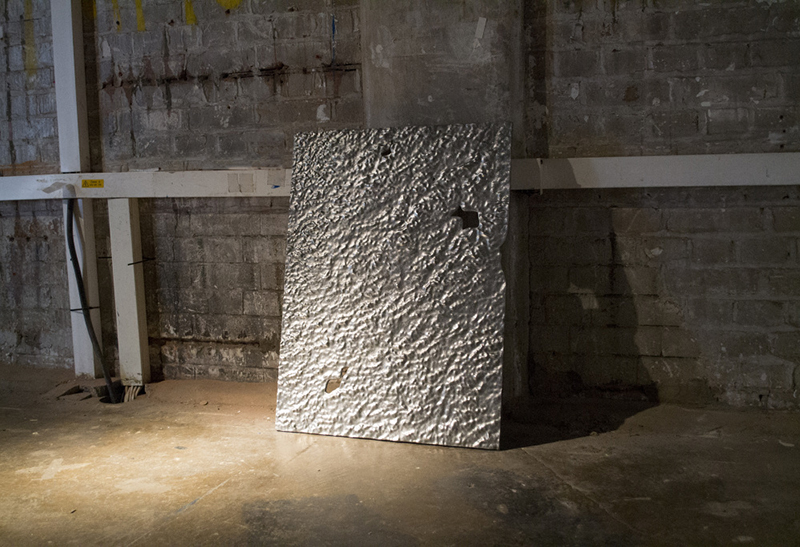
A hundred explosion images become one, one grainy image is cast solid in aluminium and a slow beat metronome stills us.

1604 Kate Fahey Counting-Uncounting

Kate Fahey counting/uncounting

We are in a war zone, in slow motion.

Bedwr Williams animated line drawings that made up the film Writ Stink at Limoncello showed the deconstruction of a man obsessed with hiding his secrets – turning on fellow creatures, suspicious of everyone he meets – maybe with good reason – life becomes a battle to preserve, to hide away and disengage.

1601 Bedr Williams

Surreal, comedic and tragic we are left wondering about the power of knowledge.