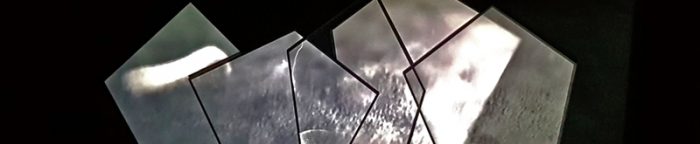
I am delighted to have work included in Drive Your Plow Over the Bones of the Dead showing at Hypha Studios, Gallery One, 1 Poultry, London.
Curated by Maria Hinel, the exhibition invites audiences to consider the lives of animals as sentient beings capable of communication, organisation and even vengeance. Dismantling the vision of non-human animals as voiceless and inert, the works in different ways grant them a space to act – to signal their unrest, seek freedom and express grievance. Drawing on the novel by Nobel Prize-winning author Olga Tokarczuk and the works of William Blake, the exhibition asks what forms of empathy might emerge when animals are recognised as ethical and political agents in their own right.
I have seen the 2017 film Spoor based on the book and the incredible Complicite production and read the brilliant book so it is wonderful to be in an exhibition drawing on this novel.
Artists include: Francis Alÿs | Sara Anstis | Odonchimeg Davaadorj | Susan Eyre | Andy Holden | Jochen Lempert | Kat Lyons | Anne Marie Maes | Tiziana Pers |Amalia Pica & Rafael Ortega | Bryndìs Snæbjörnsdóttir & Mark Wilson.
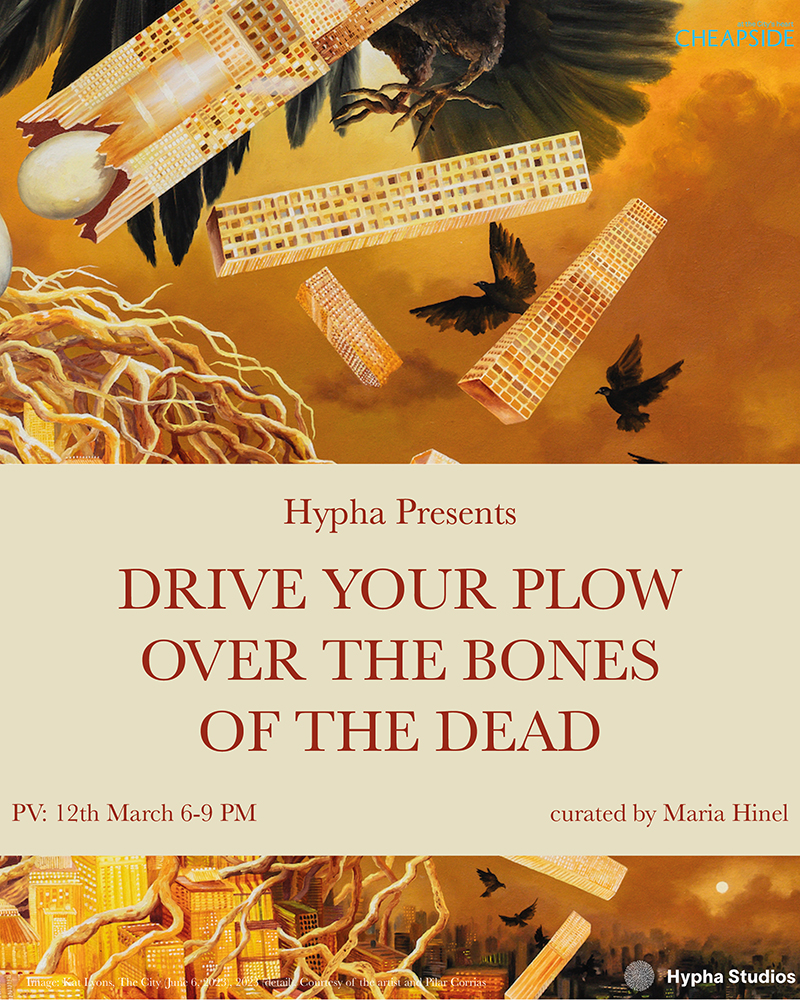
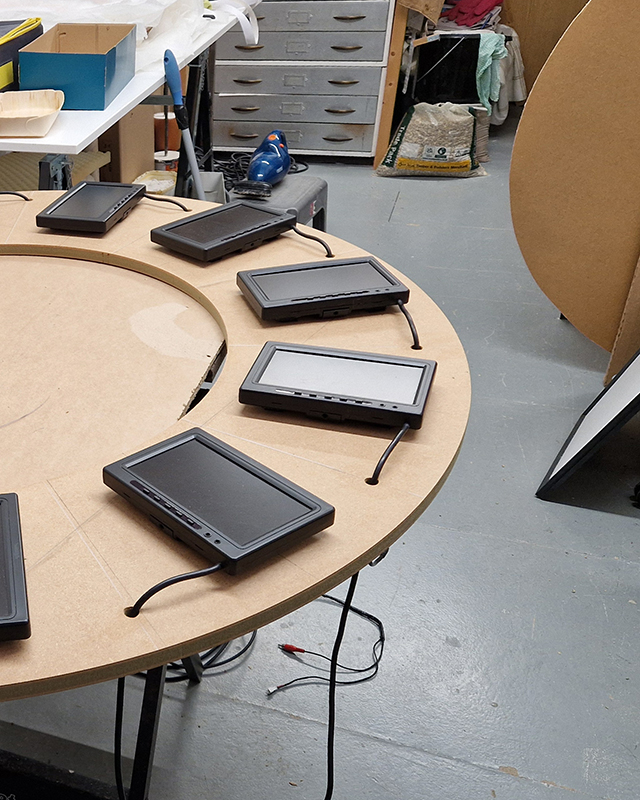
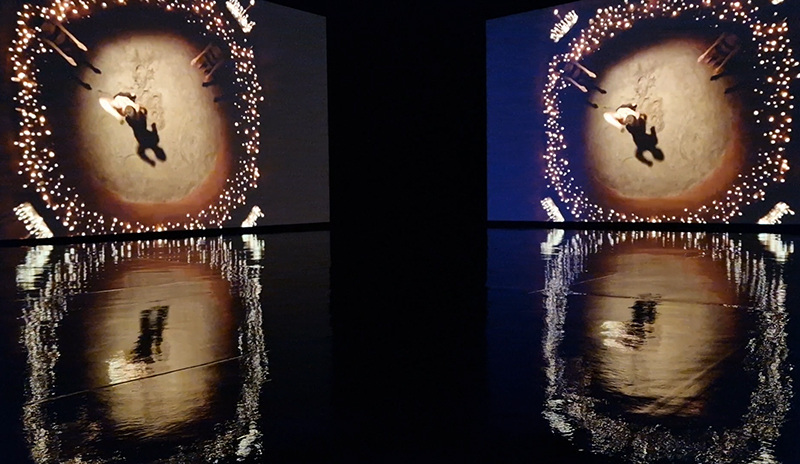
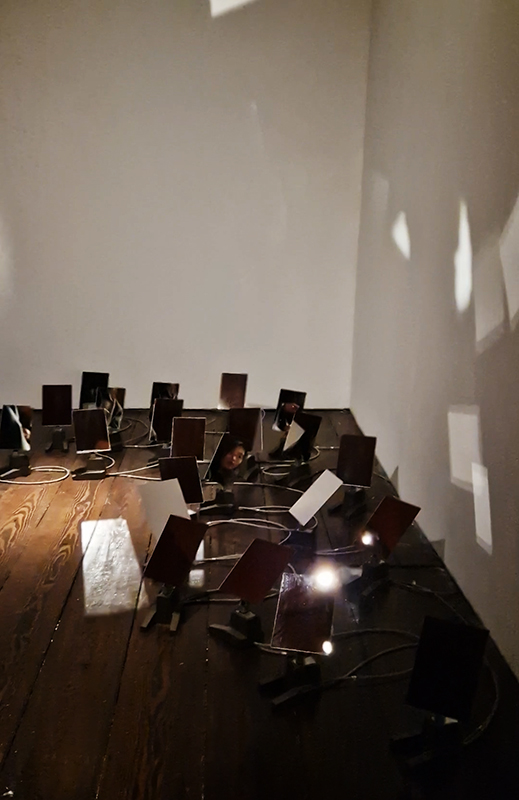
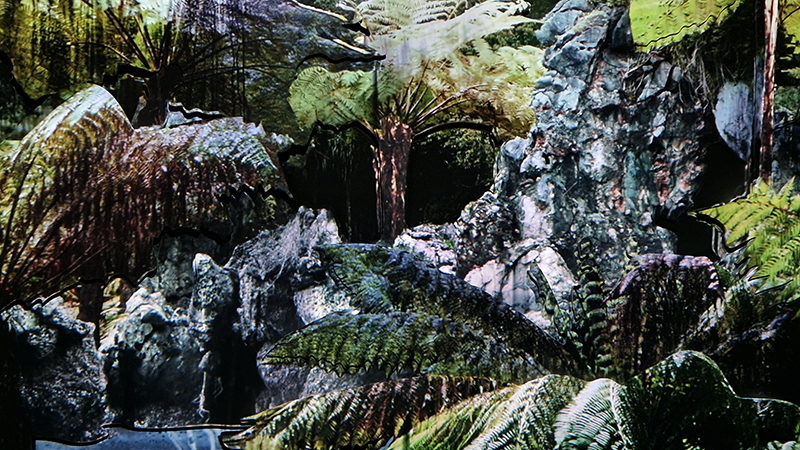
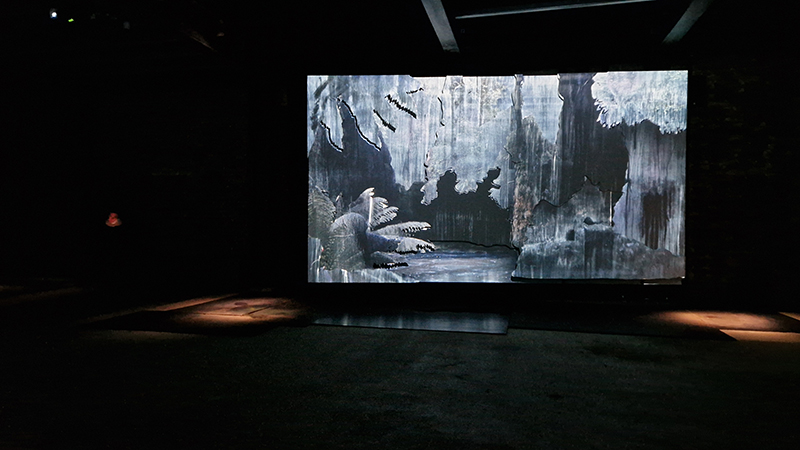
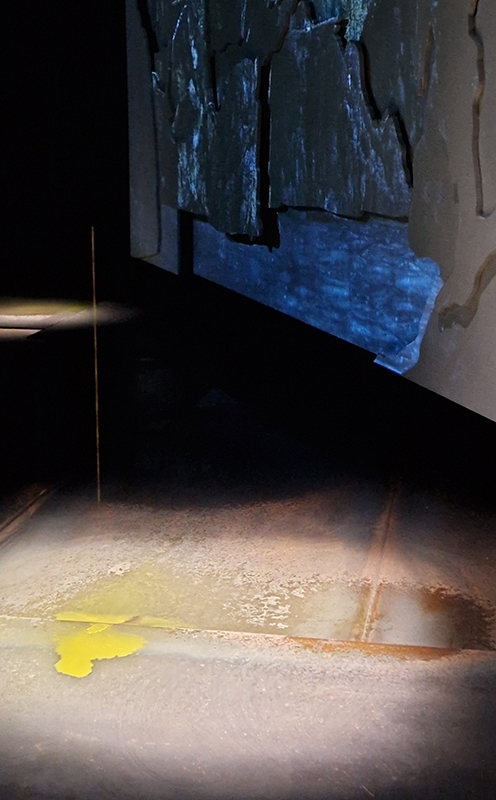
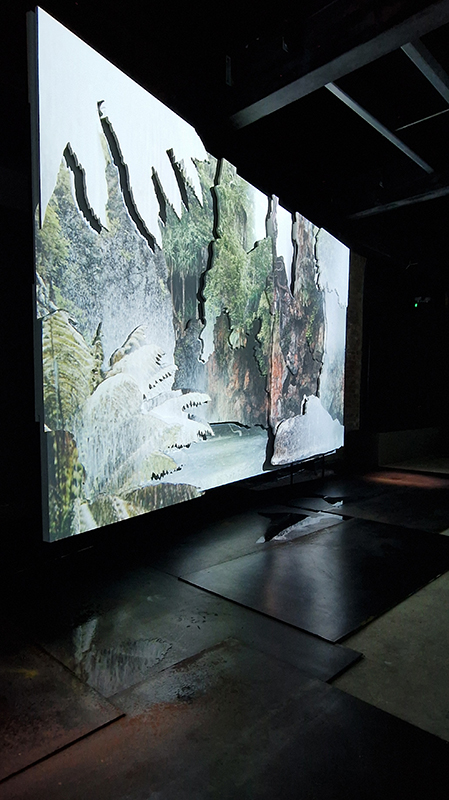
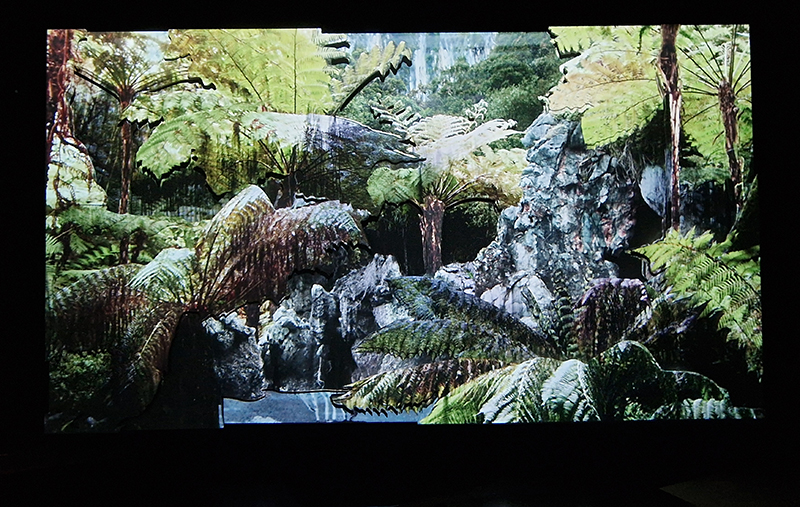
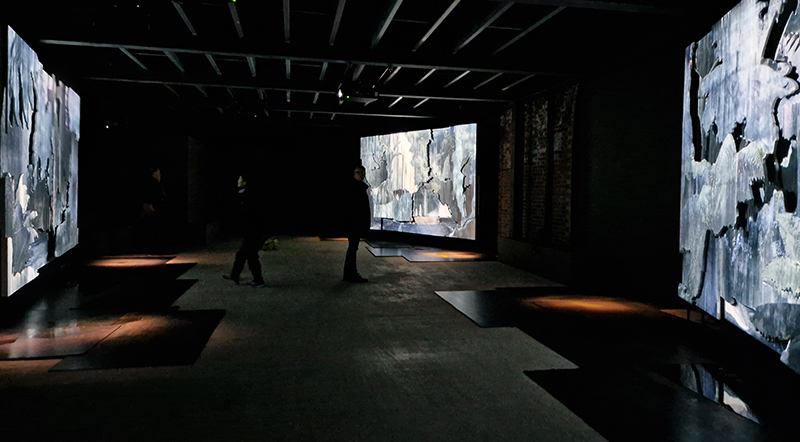
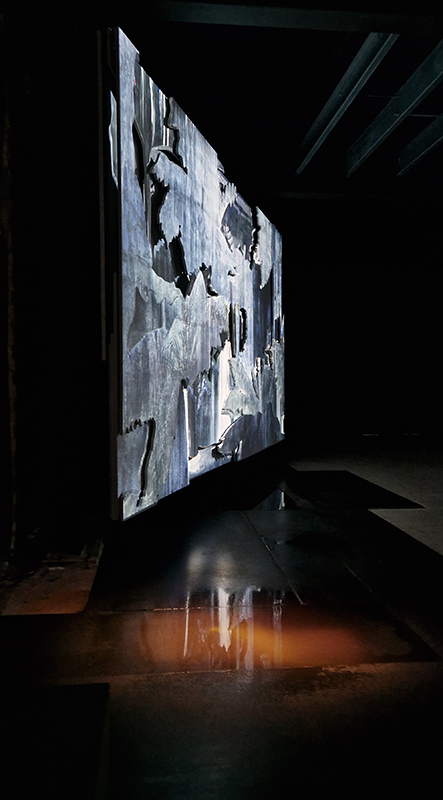
I will be showing the two channel video Radical Pair 2023 04:48 min.
Research has proven that many animals, including birds, bees and even bacteria use the Earth’s magnetic field to orientate themselves, sometimes in conjunction with the sun and the stars.
In the context of this exhibition, Radical Pair highlights the very different and subtle ways animals experience the world that we share. Considering the perspectives of fellow creatures is a step towards building alliances between humans and non-humans in a damaged world, as expressed by Donna Haraway in Staying with the Trouble: Making Kin in the Chthulucene (2016) where she urges humans to build a non-hierarchical, and interdependent world embracing all beings as part of complex, interconnected systems.
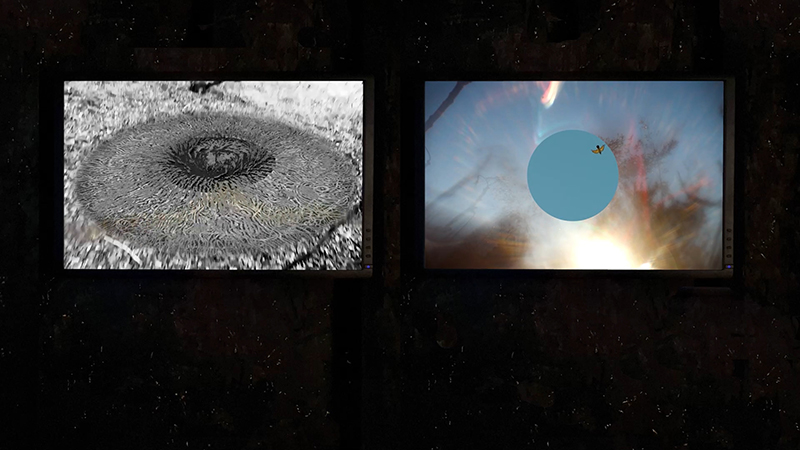
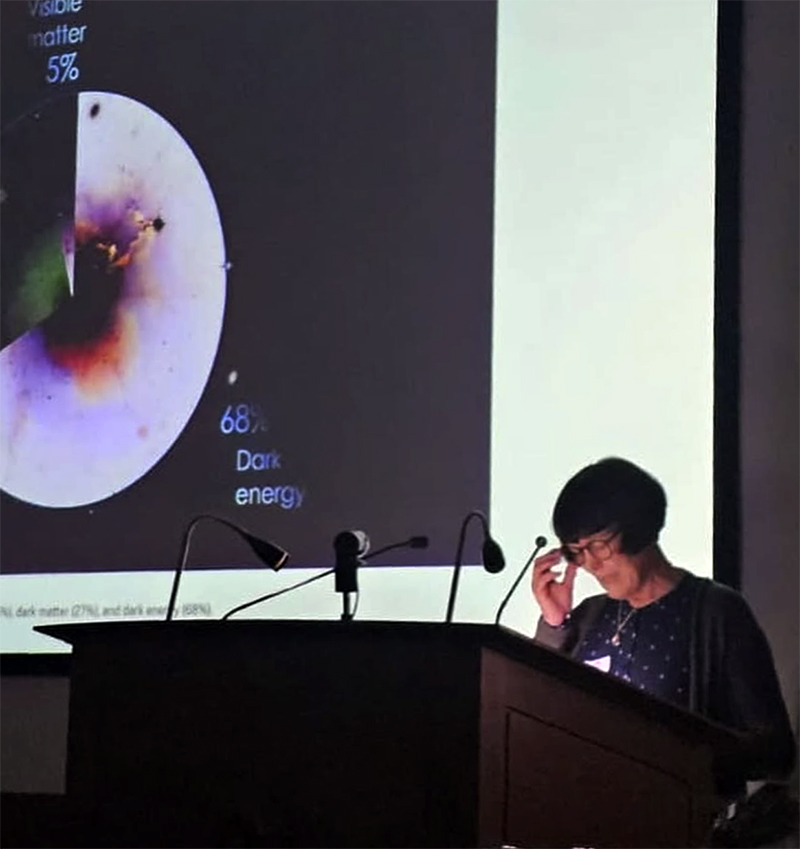
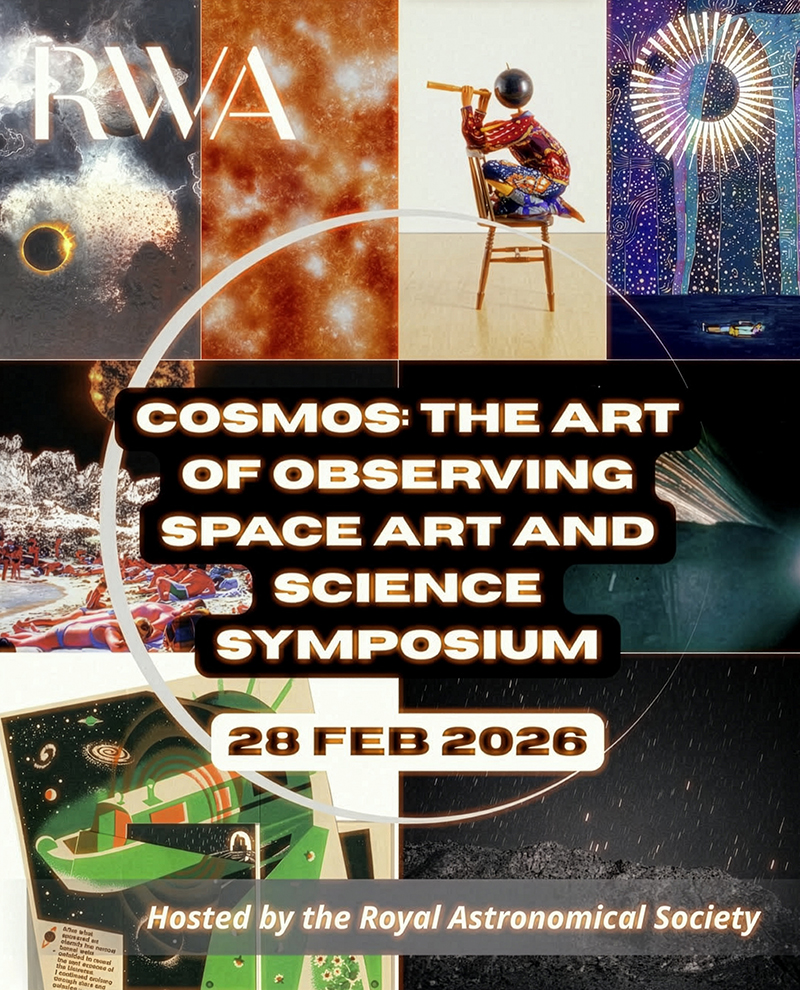
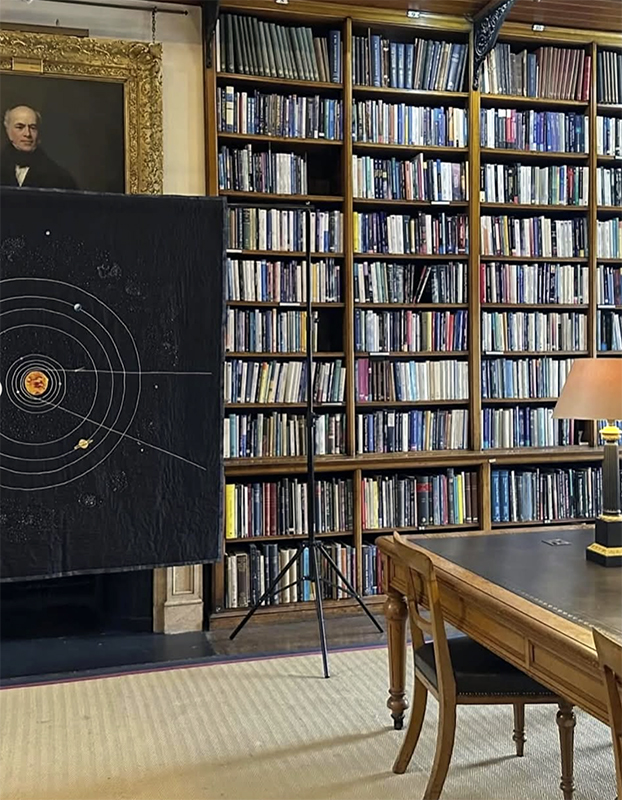
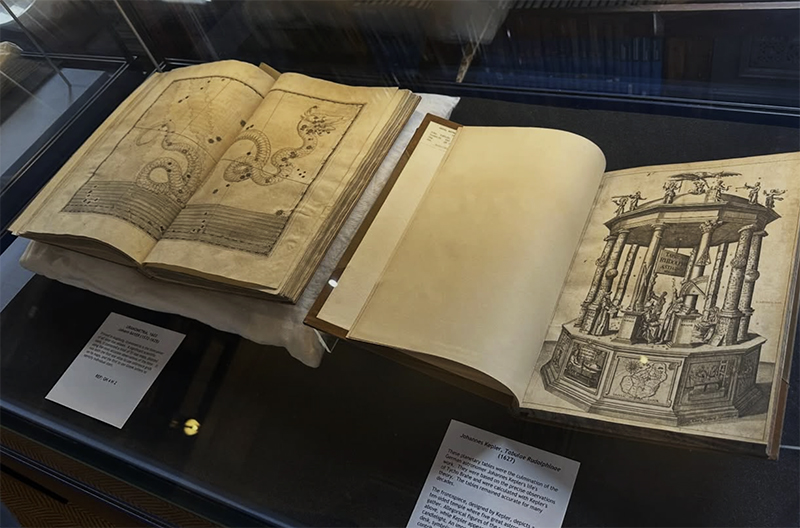
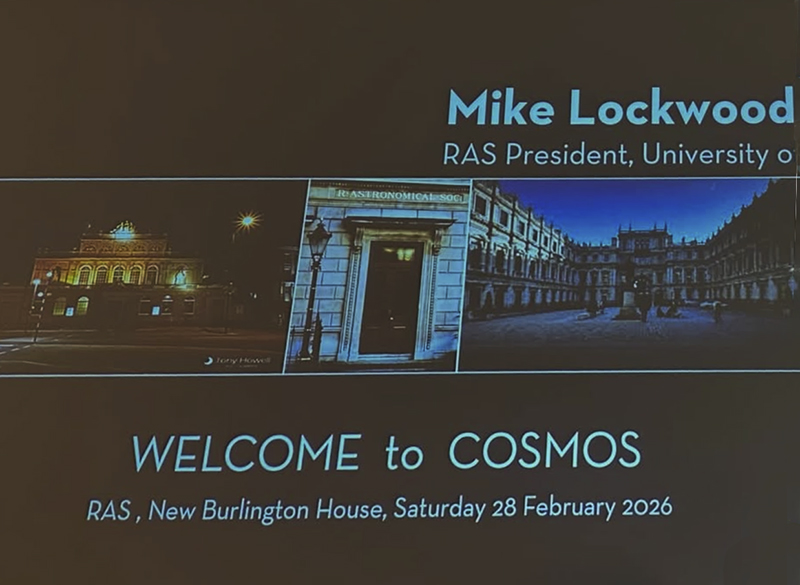
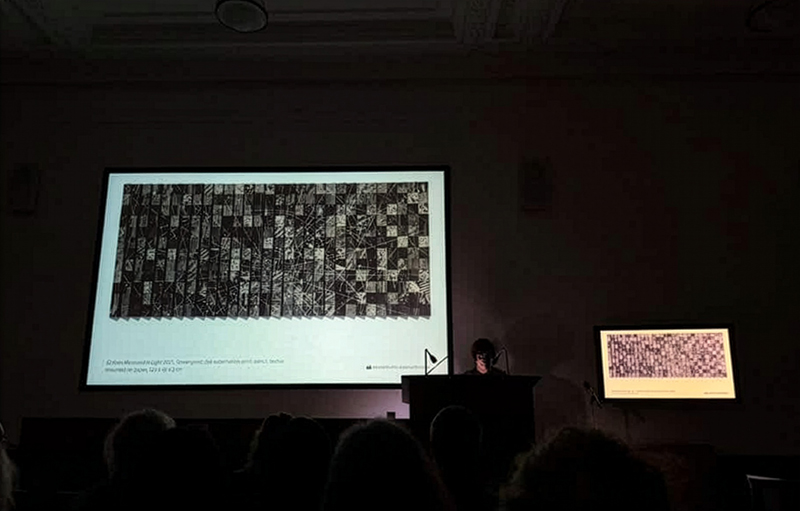
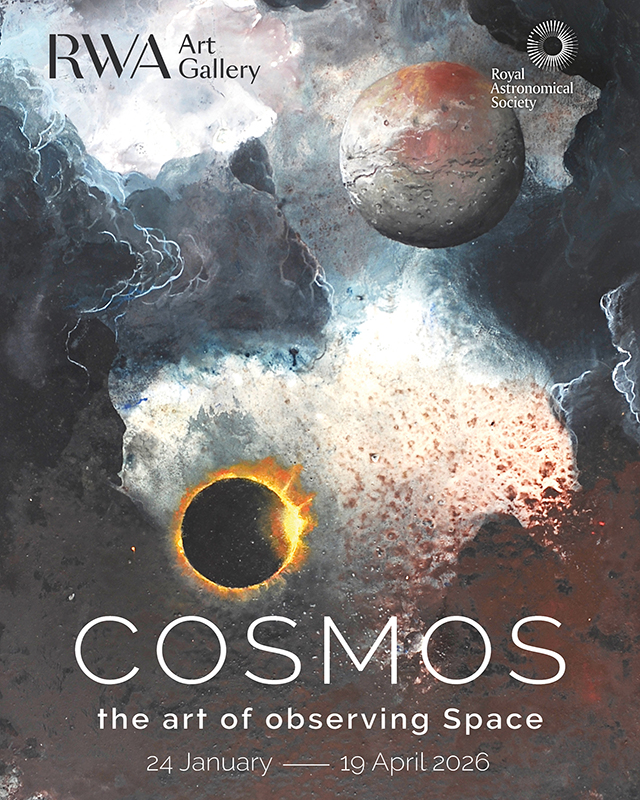
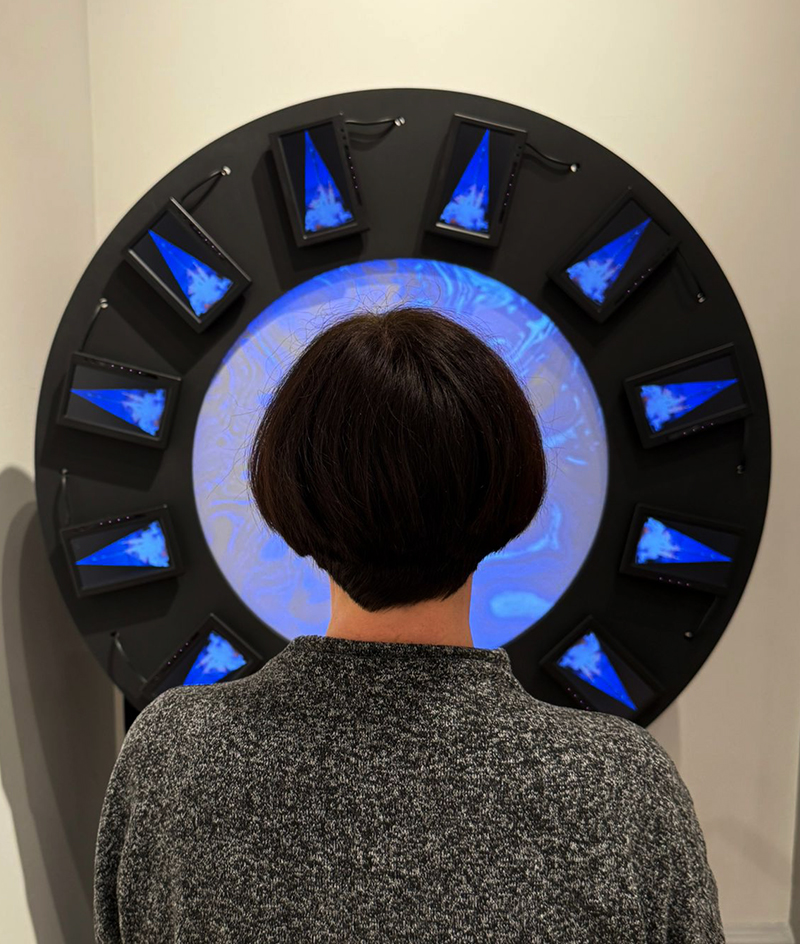
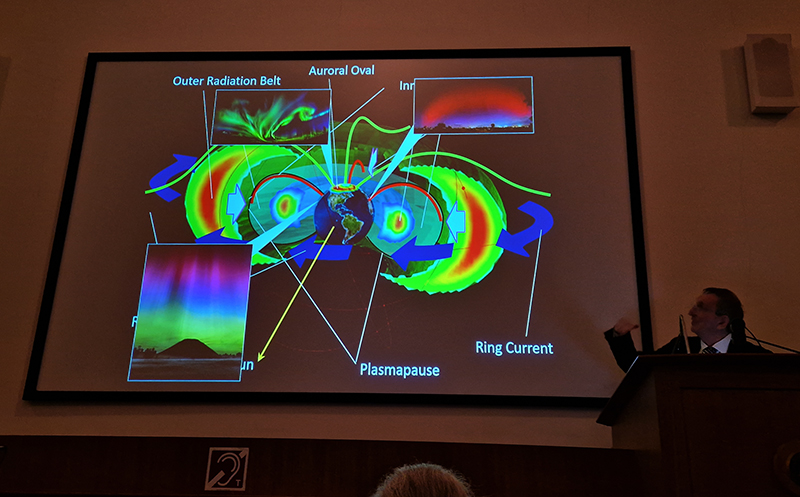
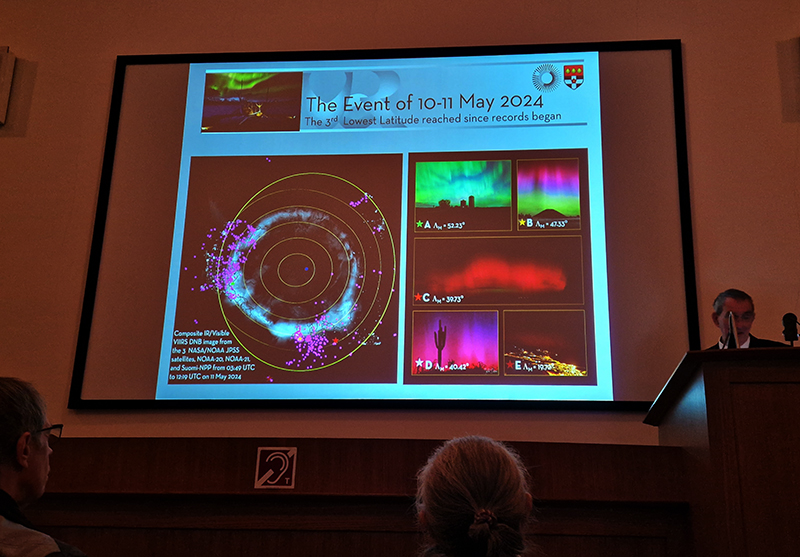
I had a wonderful day at the Royal Astronomical Society delivering my talk Revealing the Unseen as part of the symposium bringing together voices from art and science to celebrate the exhibition Cosmos: the art of observing space currently on show in Bristol at the Royal West of England Academy.
Alongside myself speakers included:
Professor Mike Lockwood, President Royal Astronomical Society who regaled us with some extraordinary astronomical facts such as the concept that light does not travel and experiences no time passing. | Ren Renwick, Director of the RWA who was happily able to promote Cosmos as one of the most successful exhibitions at the RWA | Ione Parkin RWA, curator of Cosmos: the art of observing space who expressed for all of us the human fascination for the mysteries of the universe as well as a look at the evocative planetary surfaces of her own work| Dr Sian Prosser, archivist at the RAS who shared her motivation for the library to be active in the production of knowledge and not just a repository for artefacts. | Kate Bernstein, book artist who gave an insight into her making process and collaboration with the RAS. | Lynda Laird, multidisciplinary photographic artist who explained the research behind her installation celebrating the astronomical discoveries of Caroline Herschel | Johanna Love, artist, academic and researcher who revealed a microscopic world of dust and mysterious asteroids explored through drawing. | Annie Cattrell RSA FRSS, interdisciplinary artist who shared her research and inspiration leading to the creation of many impressive large scale installations that explore ways of experiencing what is generally out of reach. | Christopher Le Brun PPRA Hon RWA, internationally renowned painter who spoke about how he uses the motif of the moon as a means to explore light and dark, a push and pull, through the medium of paint. | Ian Chamberlain RWA RE, printmaker and researcher who delved into how time is relevant in his deeply observational etchings | Louise Beer, artist and curator who spoke from the heart on the importance of dark skies to feel a connection to the cosmos. | Gillian Adair McFarland, visual artist and researcher who shared her dynamic process of creating imagined planets from blown glass. | Amaury Triaud, Professor of Exoplanetology at the University of Birmingham, who talked about his passion for bringing art into the laboratory and science into the gallery.
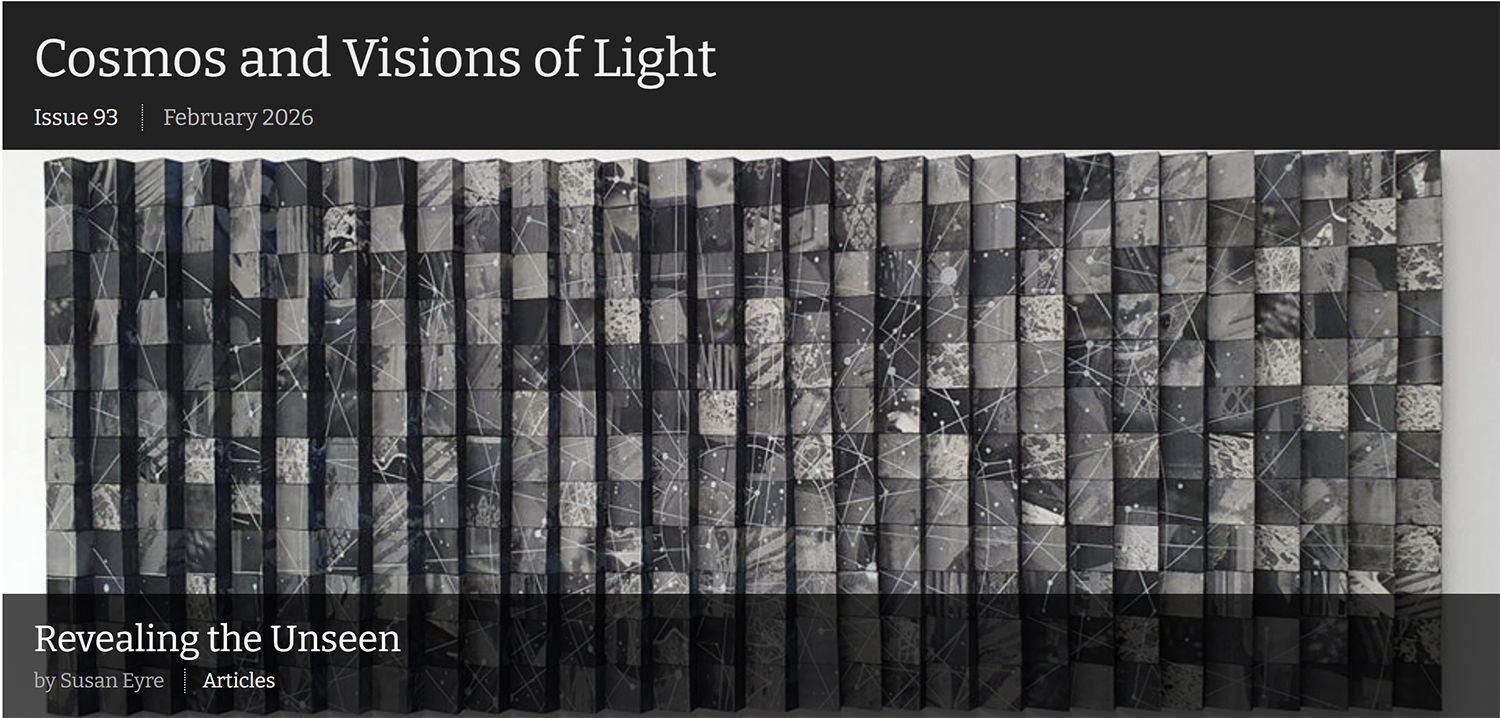
I am very pleased to have been invited to contribute an article for the current issue of Interalia Magazine Cosmos and Visions of Light – An online magazine, edited by Richard Bright. This issue, explores, among other things, art and cosmological phenomena; light and pattern; geometrical shapes and mathematical laws; information and radio astronomy; topology and wormholes; colour and evolution.
Contributions include interviews with Louise Beer and Ben Rowe; articles by Ione Parkin, Chris Wood, Susan Eyre, Geraldine Cox, Steven Giovinco, Siobhan McDonald, Florian Neukart, John Etnyre, Enrique Gaztanaga, Jonathan Goldenberg, Csanád Horváth & Natasha Hurley-Walker.
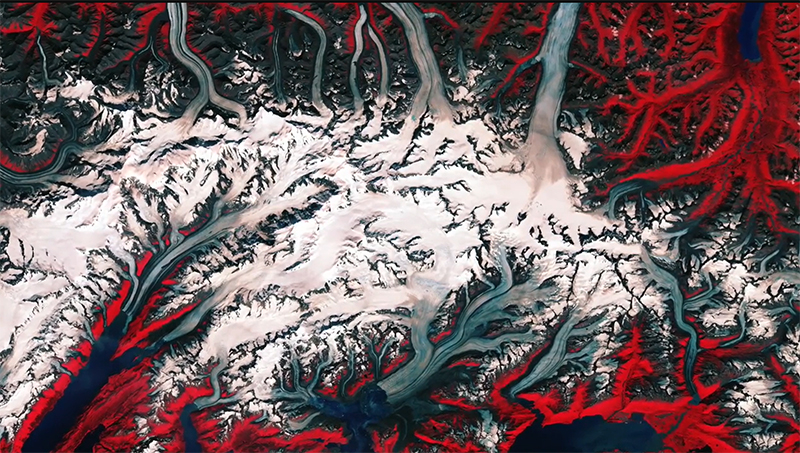
Following an application to the ArtEO Earth Stories Open Call I have been invited to join the ArtEO R&D Community. ArtEO helps artists to work with environmental data and imagery, connecting them with tools and expertise to help tell Earth’s story. Although I wasn’t included in the funded programme, this online initiative sounds like it could offer some exciting opportunities. It has been designed for artists who want to work at the intersection of art and Earth Observation (EO) and aims to offer access to specialised tools, selected ArtEO and curated EO data, workshops and events alongside a network of peer artists and technical experts. Image credit ESA and NASA Earth Observatory.
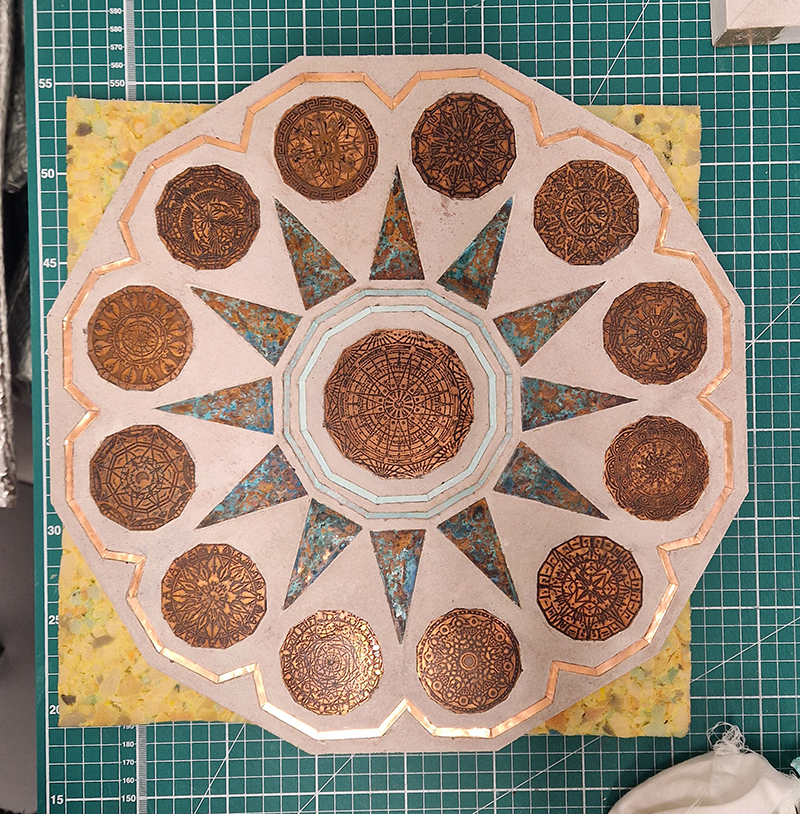
In the studio
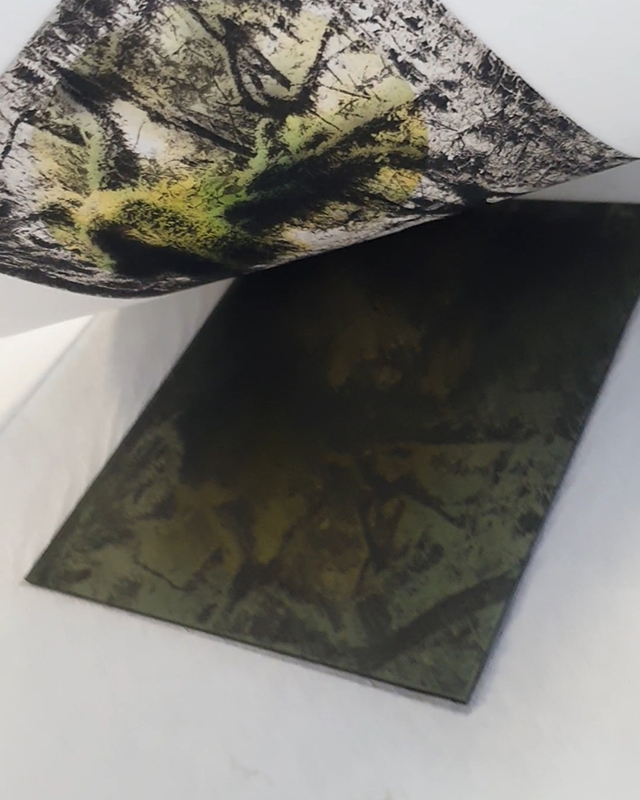
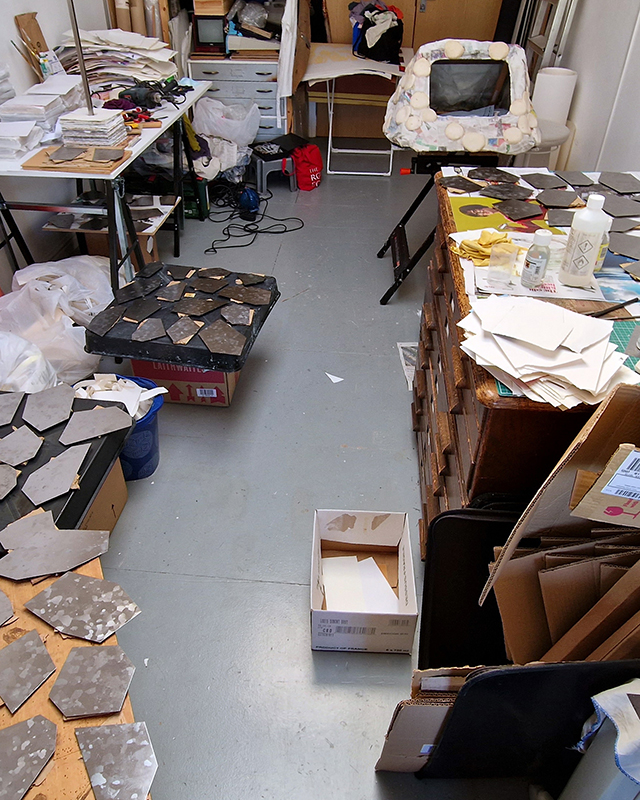
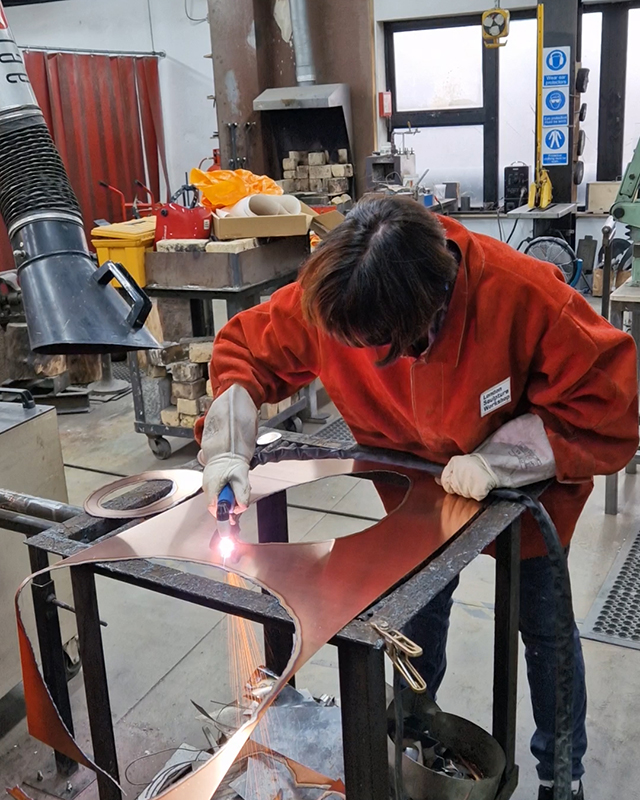
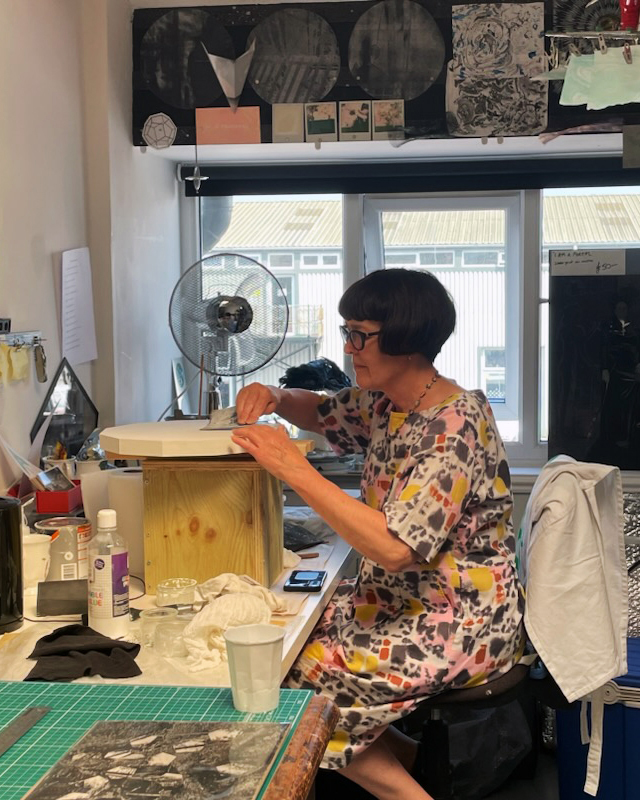
I have finished adding copper pieces and applying patination ink to the new tablet in the Instruments of the Anemoi series of concrete tablets. These sculptures reflect on early means of navigation. This one looks at wind rose origins and replaces one I made earlier.
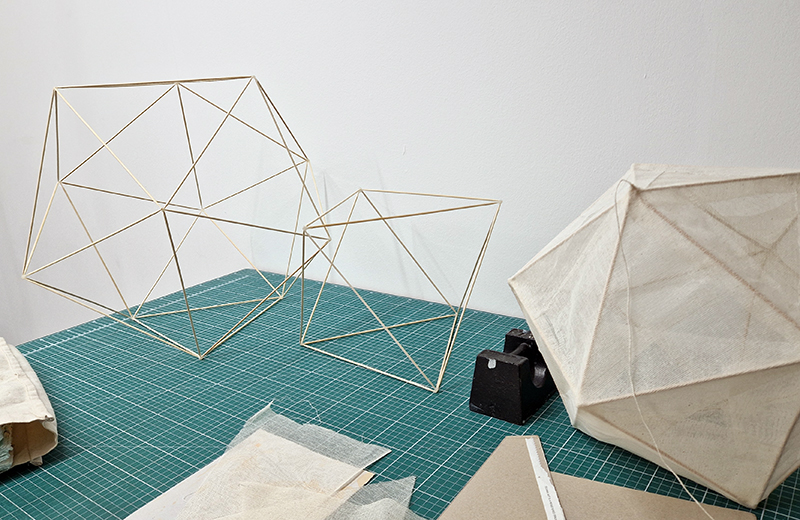
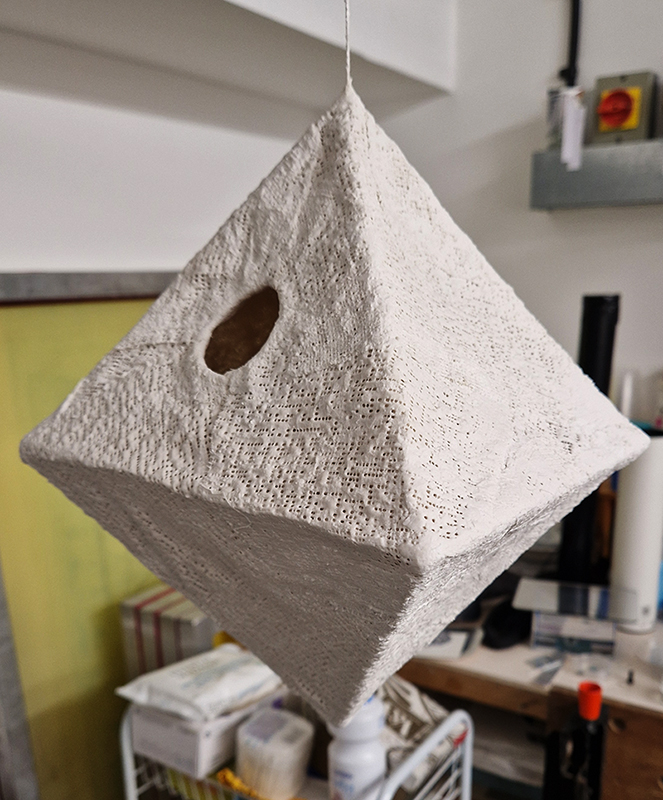
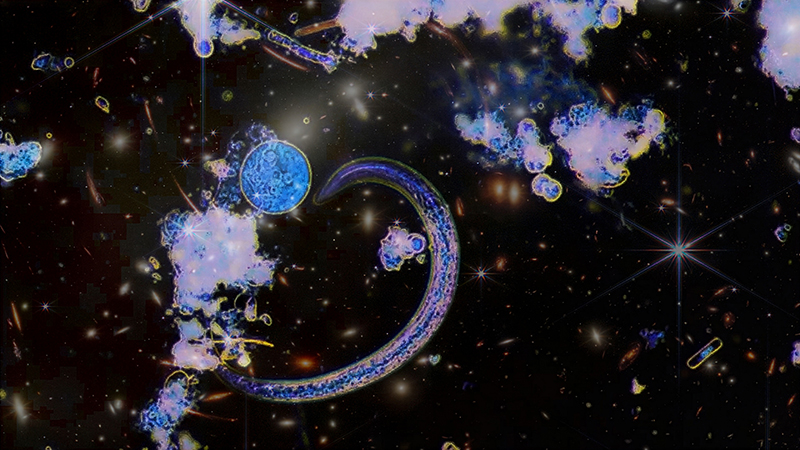
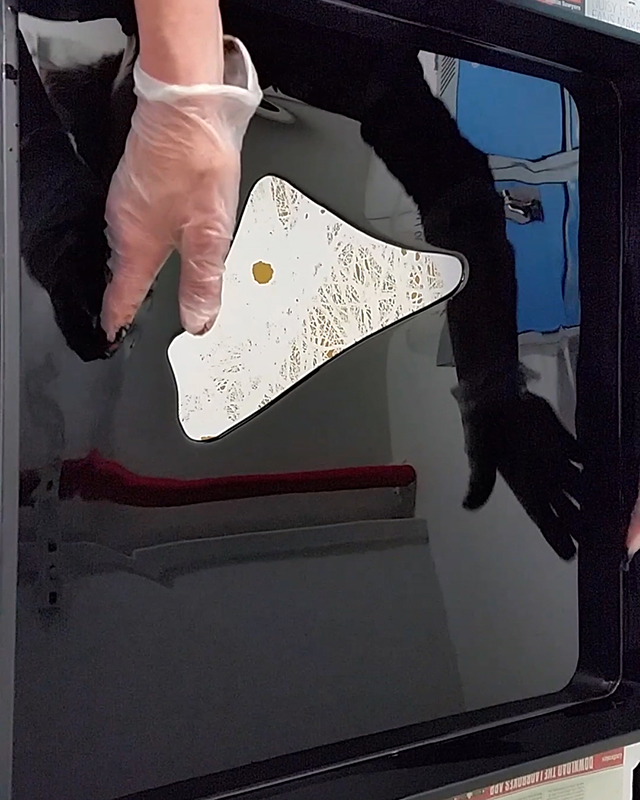
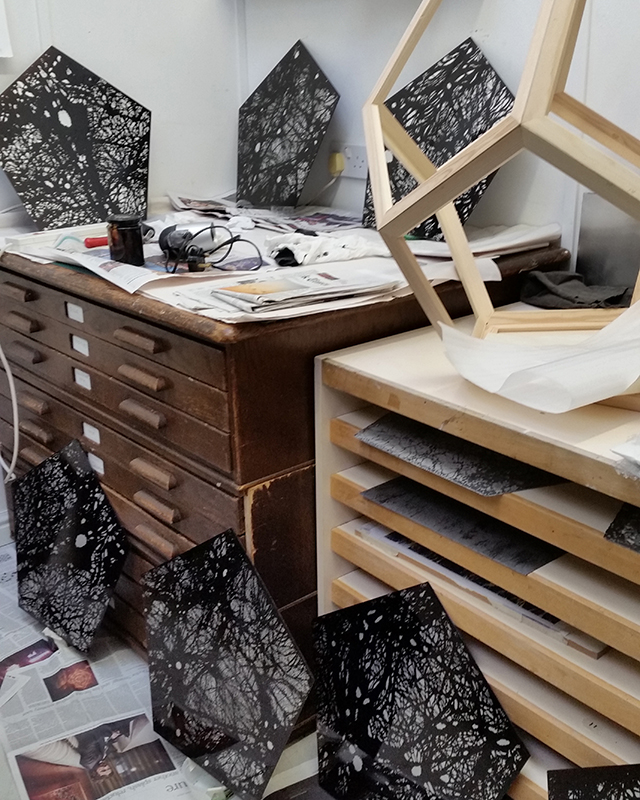
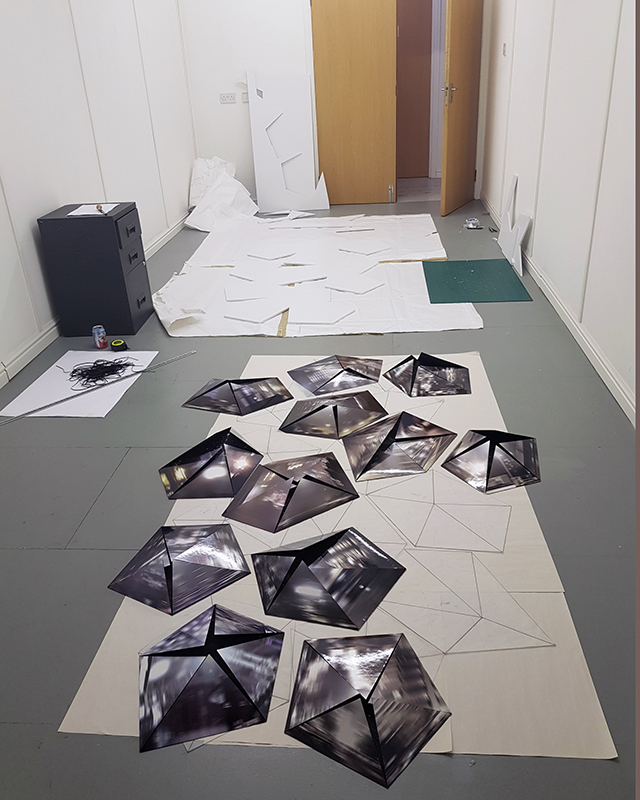
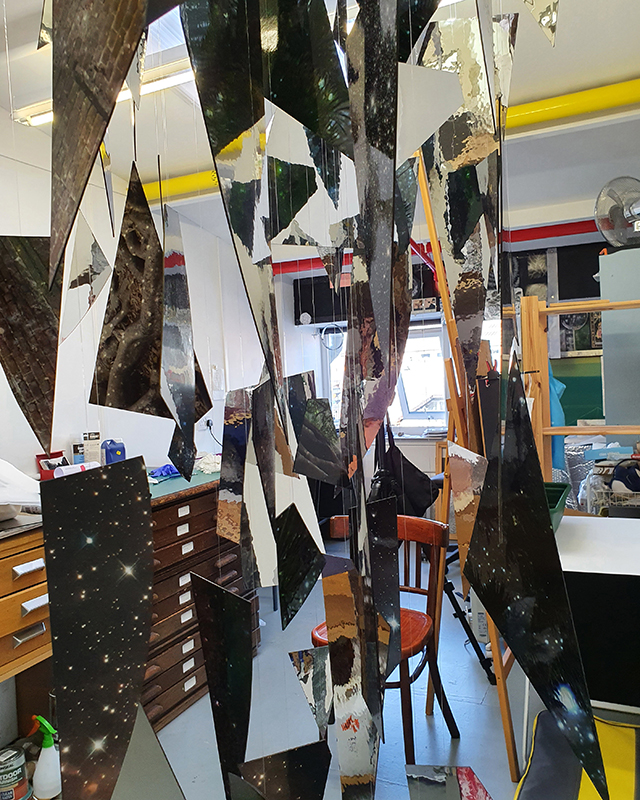
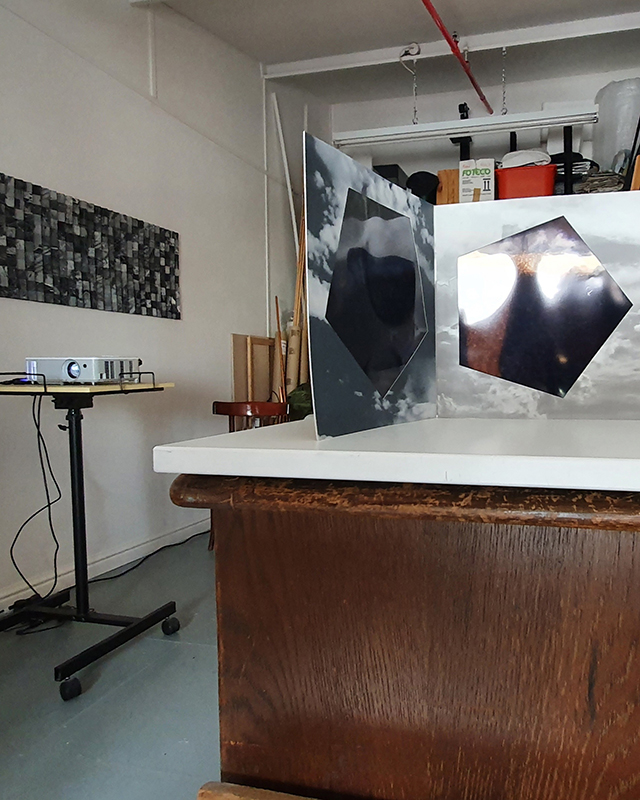
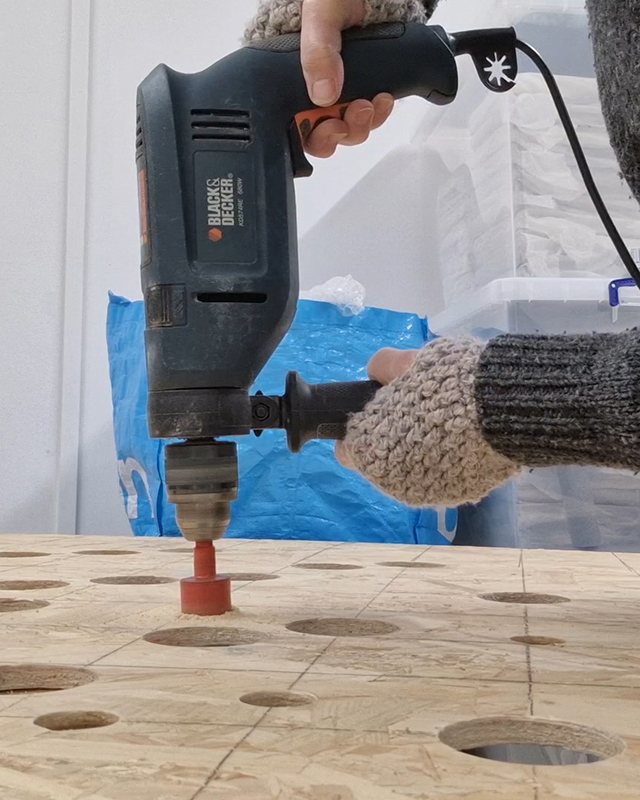
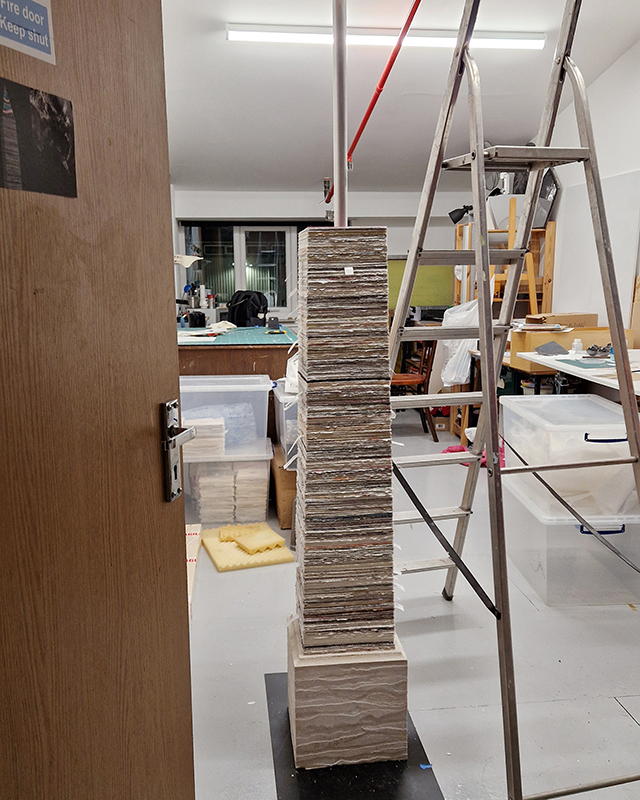
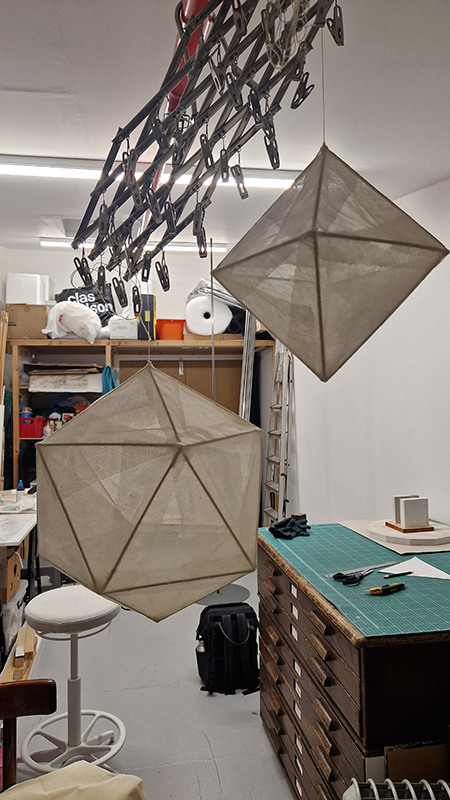
Work in progress for upcoming exhibition Strange Company: at the Safehouses. Alluding to Oscar Wilde’s familiar quote We are all in the gutter but some of us are looking at the stars, this work considers the otherworlds inhabited by creatures of the gutter as exotic places of discovery. I am experimenting with making models based on the platonic solids that represent water and air as speculative modular living capsules for space exploration.
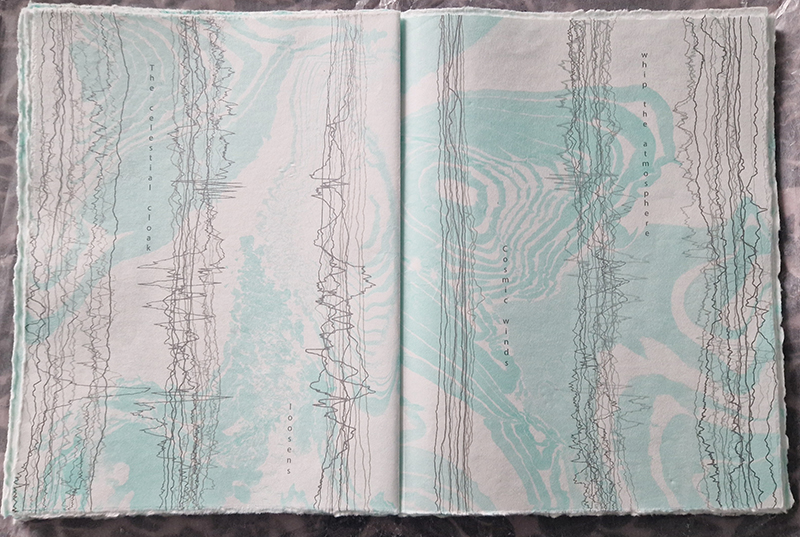
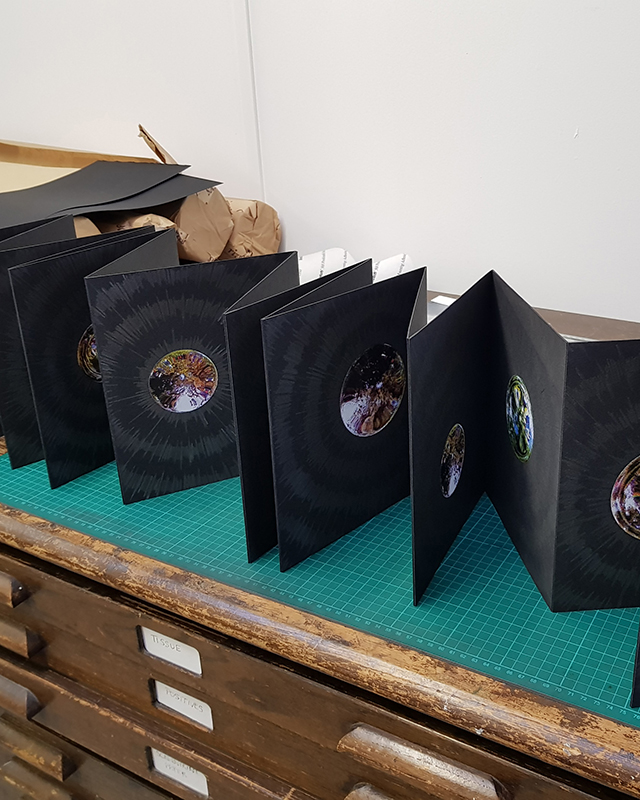
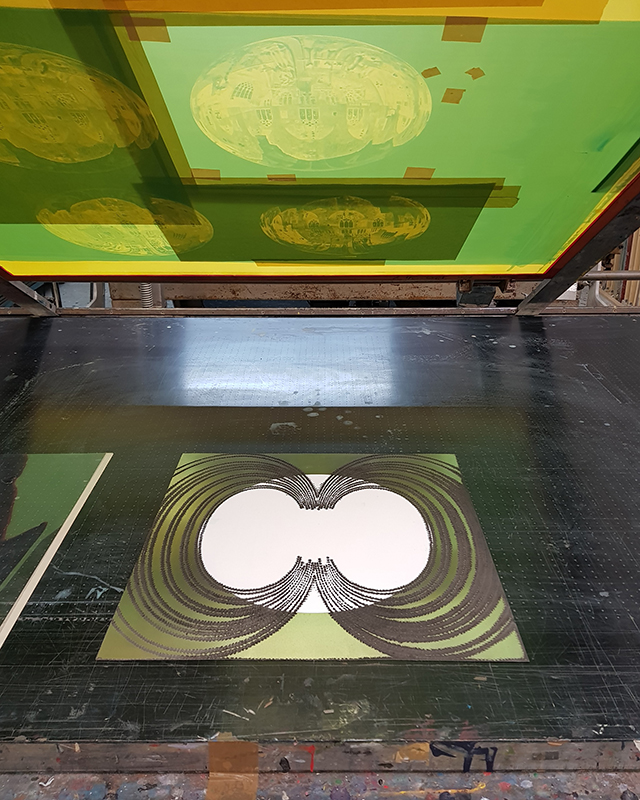
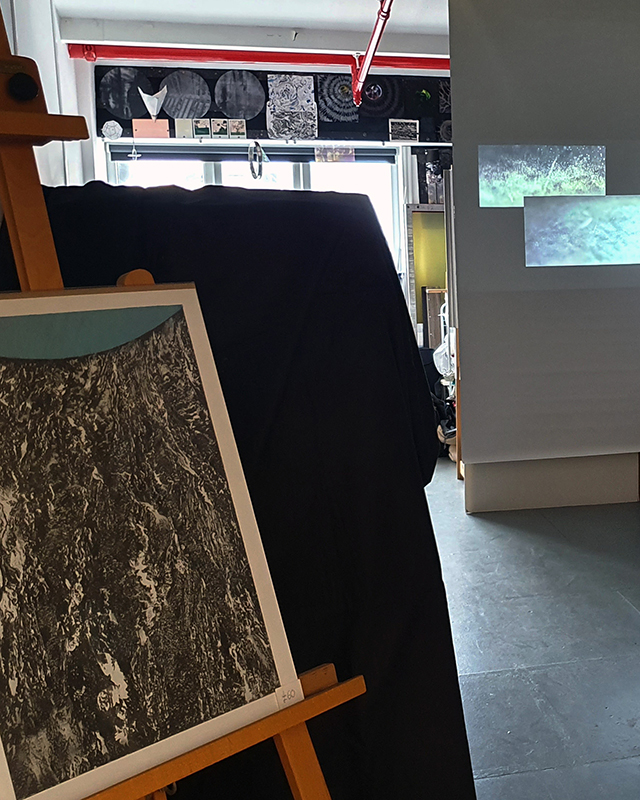
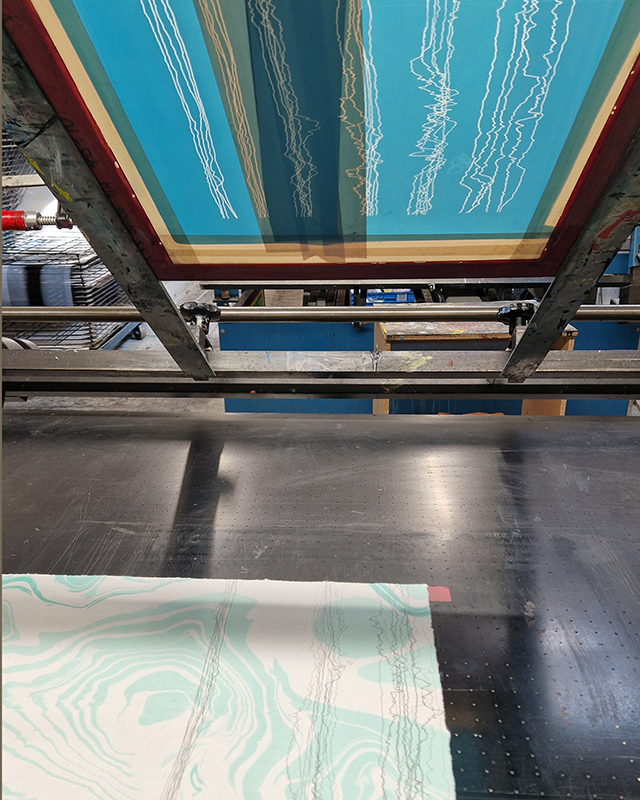
I have made some decisions and printed the text for The Book of Reversals – an artist’s book that offers a poetic interpretation of the creation of Earth’s turbulent magnetic field, its liability to flip poles and how the secrets of the inner core have been discovered through seismic tremors. I have printed the text in a vertical format to echo the lines of the magnetic stripes secreted in the minerals by spreading lava on ocean floor.
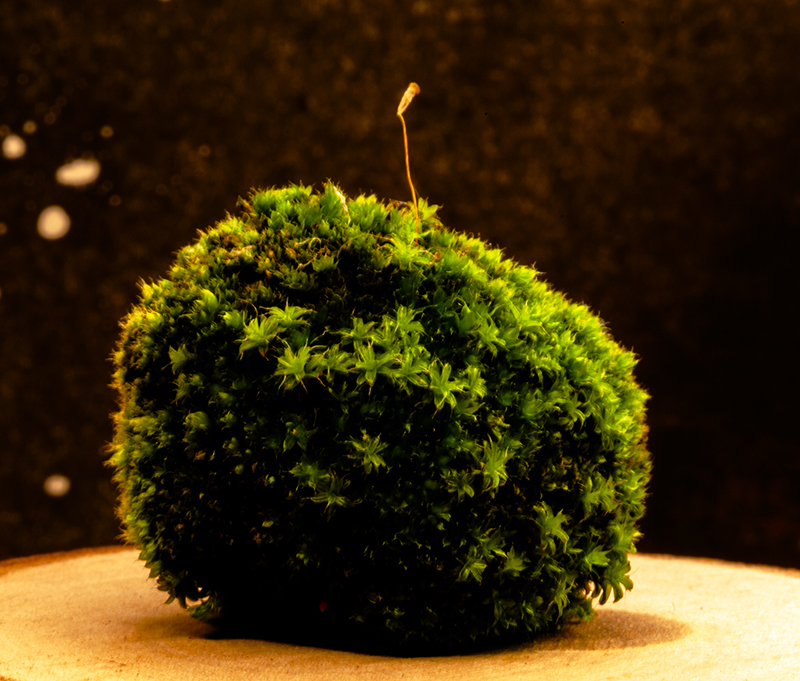
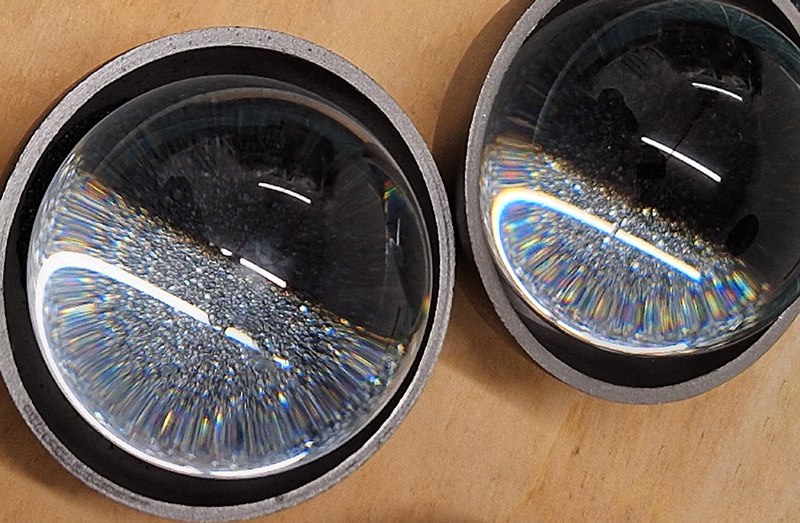
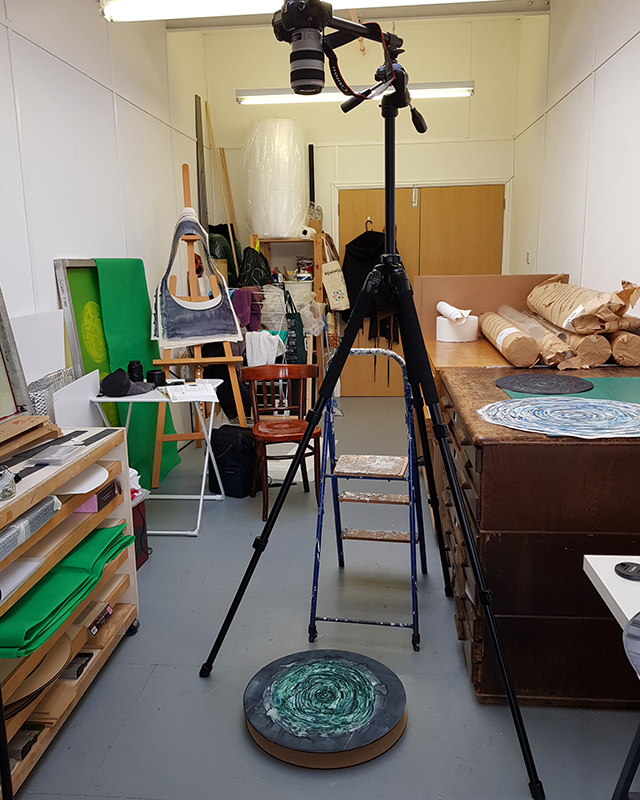
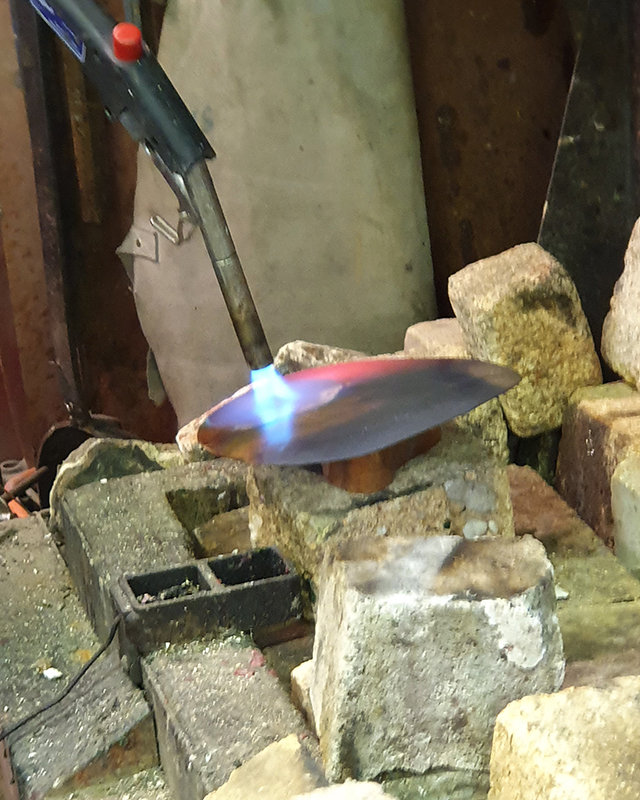
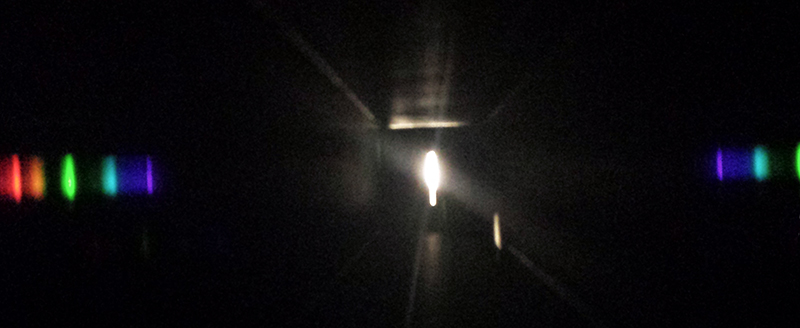
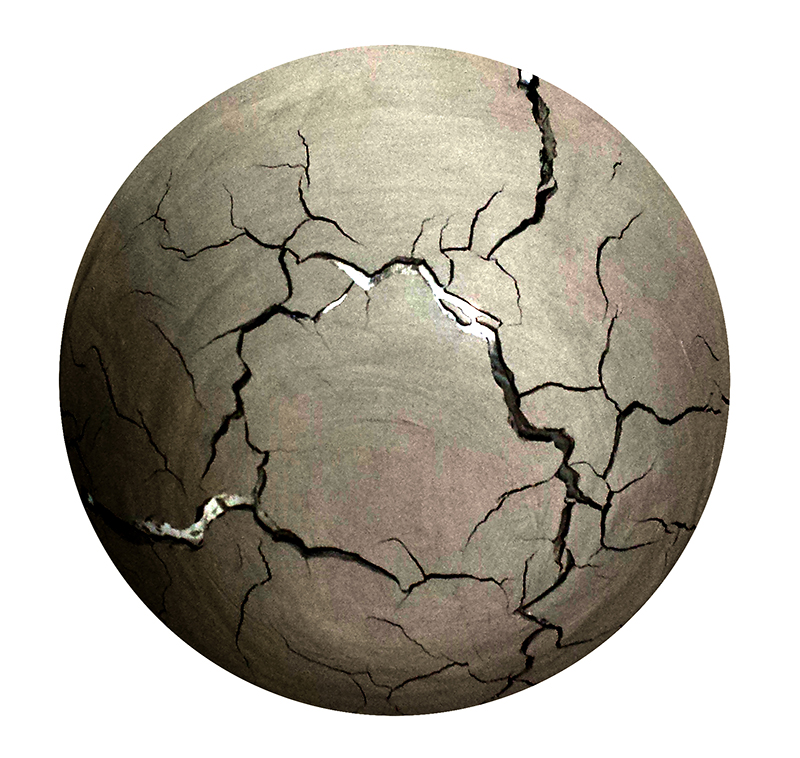
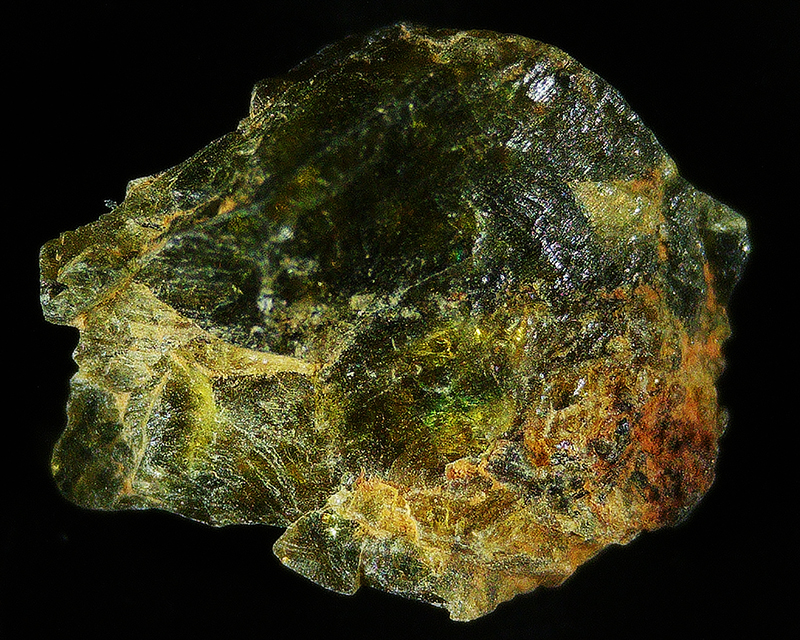
I have been experimenting with crystal spheres, iron half spheres and different sands. I’m not sure where these ideas might be going as yet. There is something planetary and spectrographic about these.
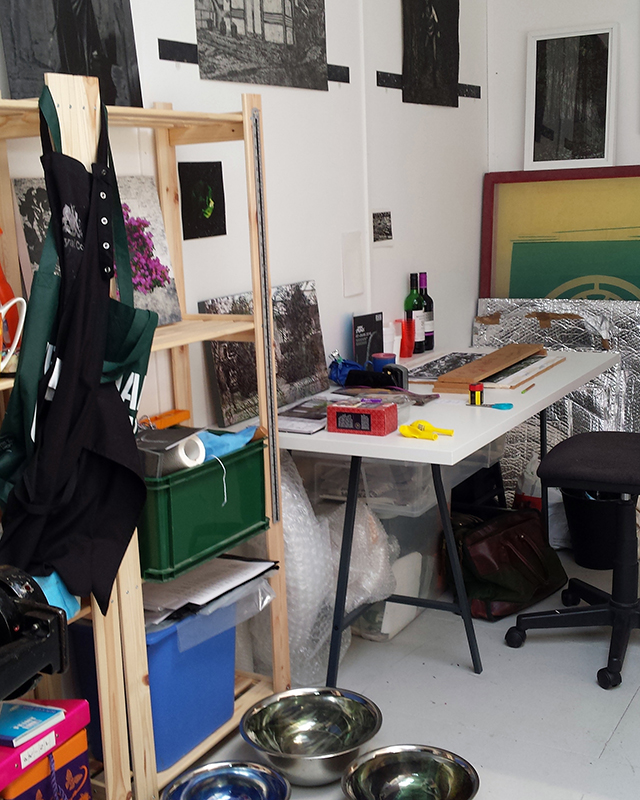
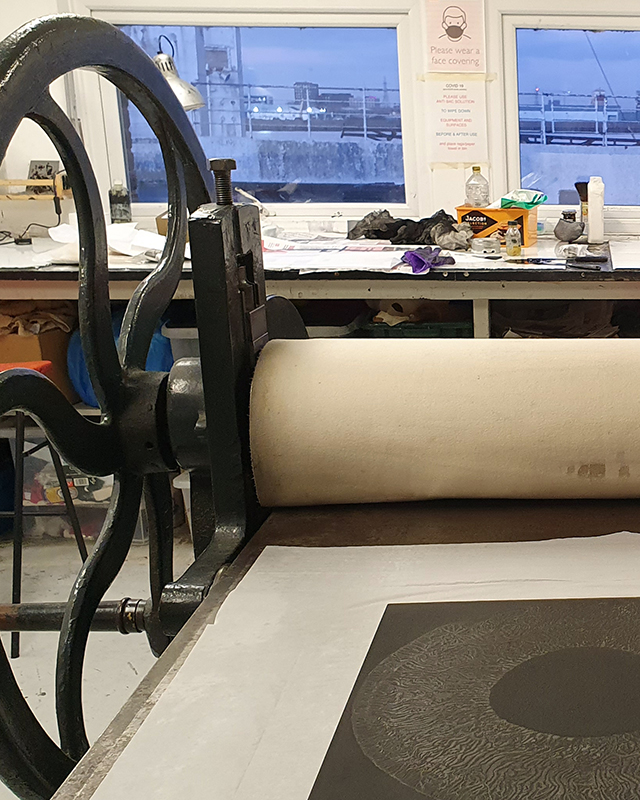
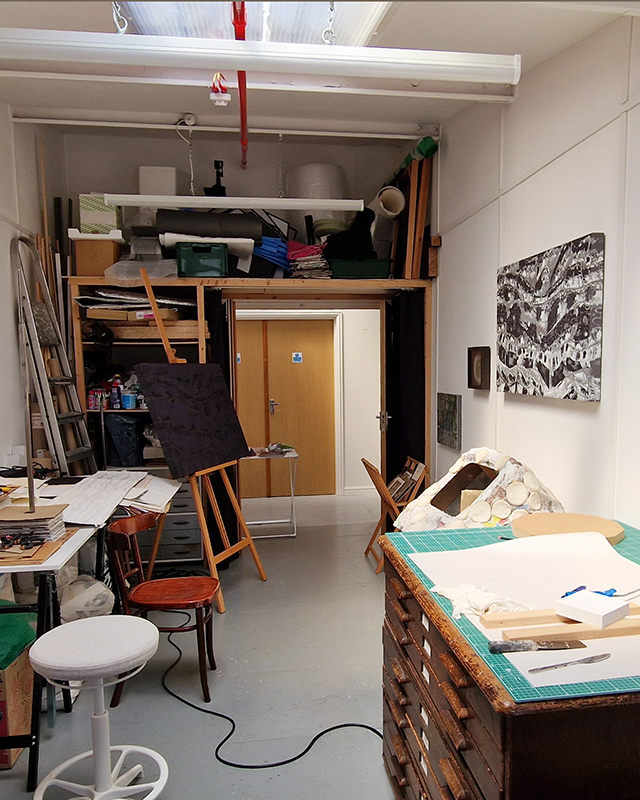
It was rather a surprise to realise I have been at Thames-side Studios for 10 years! Taking my first studio here after completing my MA. From labyrinthine depths with no natural light, to nearer the print studio with a half share, to my own space but no window and finally to where I am now with skylight and window. It’s brilliant to have Thames-side Print Studio just up the corridor from my studio and also The Gate Dark Room and London Sculpture Workshop on site, plus the amazing gallery that I’ve been lucky to show in. I love the community here.
Out and About and Online
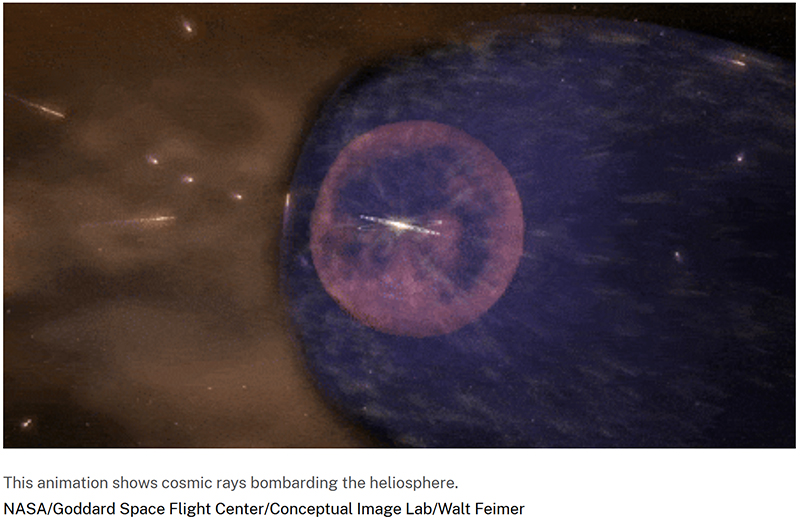
Mapping the heliosphere, the huge bubble created by the Sun’s wind that encapsulates our entire solar system – IMAP spacecraft was launched September 2025 to measure interplanetary magnetic fields and solar wind particles.
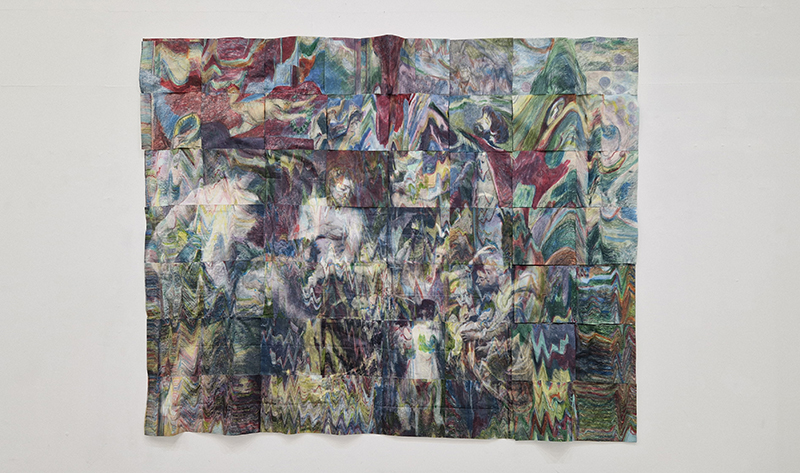
I popped into Thames-side Gallery to see Disturbances a group show embracing interruption and disturbance as a catalyst to shift perspective. I was impressed by the large collaged work of Caroline Macdonald which is combination of digital print and monoprint, and Benjamin Deakin’s surreal super realist paintings.
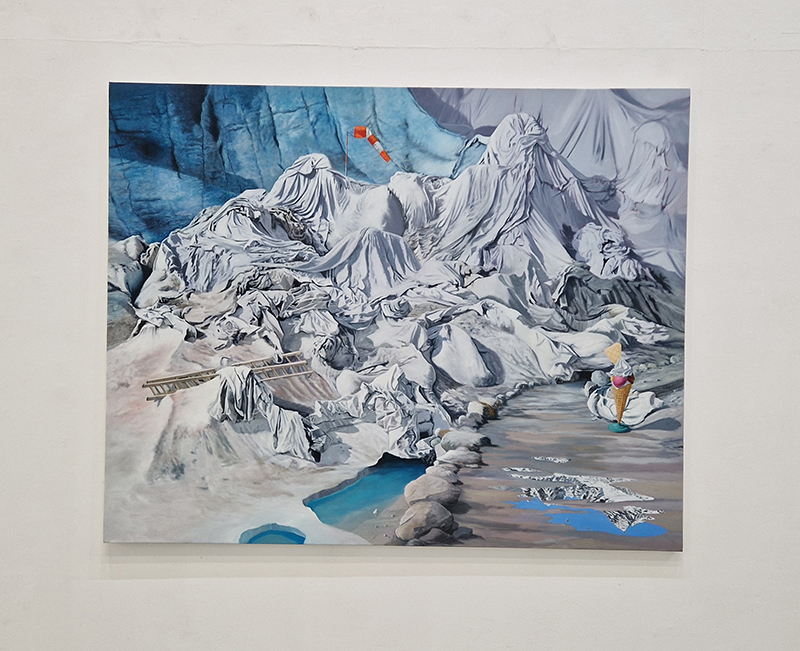
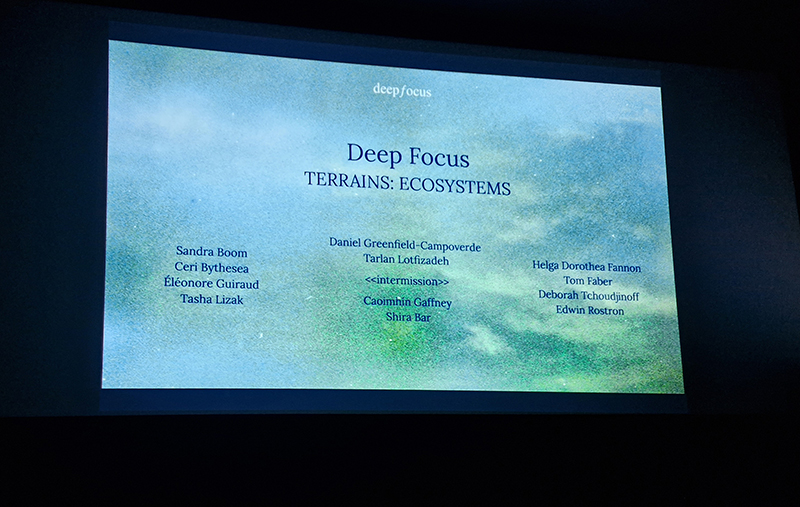
I enjoyed the selection of films showing in Deep Focus: Terrains: Ecosystems at Goldsmiths Cinema. Looking at varied and personal approaches to landscape. I liked the idea of Tom Faber’s The Hiding Place as questioning whether the character was influencing the weather through their own emotional state or was being influenced by the weather. This didn’t come across to me in the film but I really liked the drama of the film where sequences of extreme weather were suddenly scrunched up as if on a painted canvas. This techno wizardry is done using Blender. It was also great to see Deborah Tchoudjinoff’s latest digital film, in her world building series, based on a future where certain minerals have become extinct. This one is The City of Coal and instead of a dark gritty place, it is full of light, set in the bowl of an inactive volcano where the last block of coal is enshrined in a baurtiful translucent block, like an ice cube. What once seemed ubiquitous, burnt without conscience is now held up as a marvellous relic. All the forests that went into making the seams of coal are gone, in their place are new forms of hybrid trees.
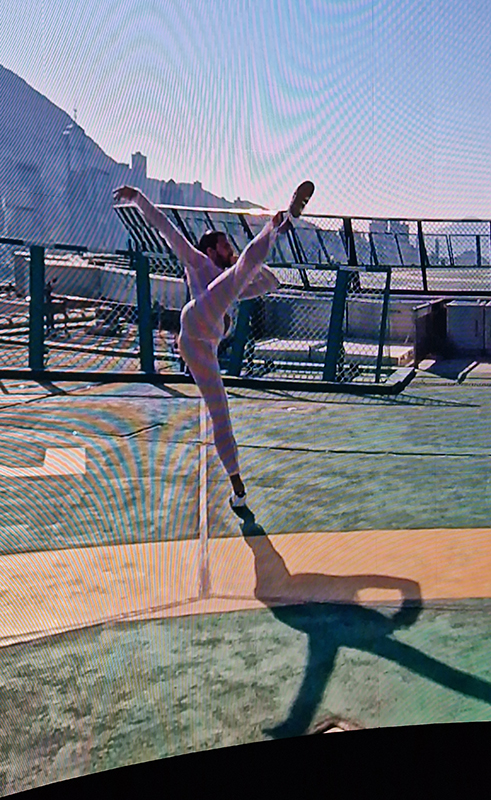
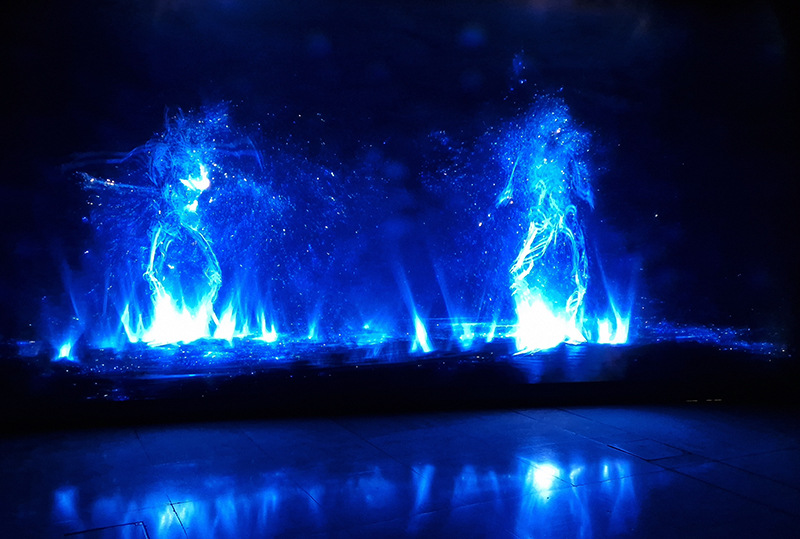
On the Other Earth at Stone Nest a 57-minute 3D, 360° installation places you at the heart of a virtual performance. Surrounded by a 3D panoramic LED environment, you can see every detail as hyperreal dancers from Company Wayne McGregor and the Hong Kong Ballet move around you. Right in the middle of the 3D action, it’s hard not to move out of the way a a dancer passes right up to and though you. I really like the section when the dancers were all upside down, like bats, but dressed in white and when they leaped it was like they flew momentarily. Wonderful.
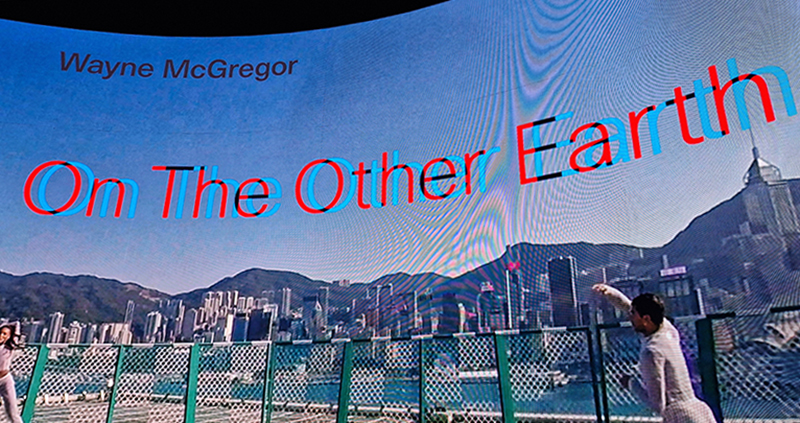
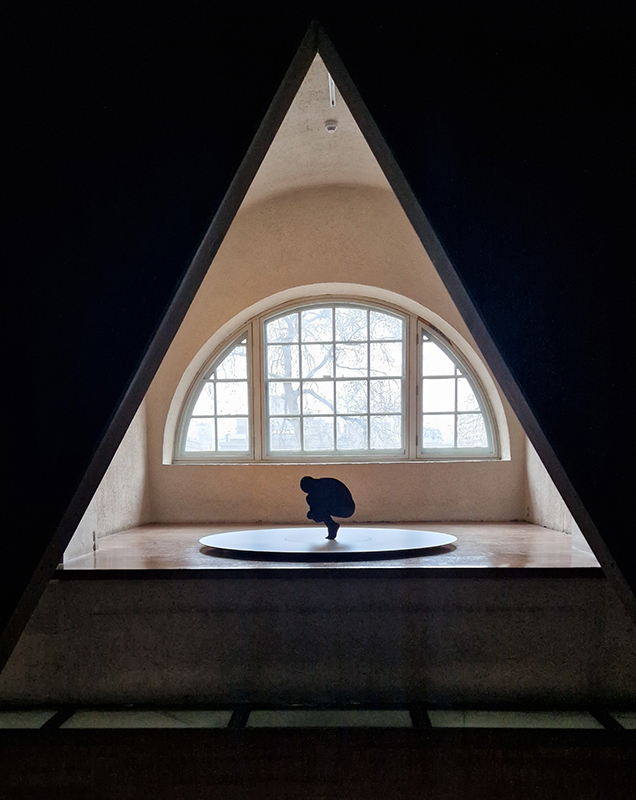
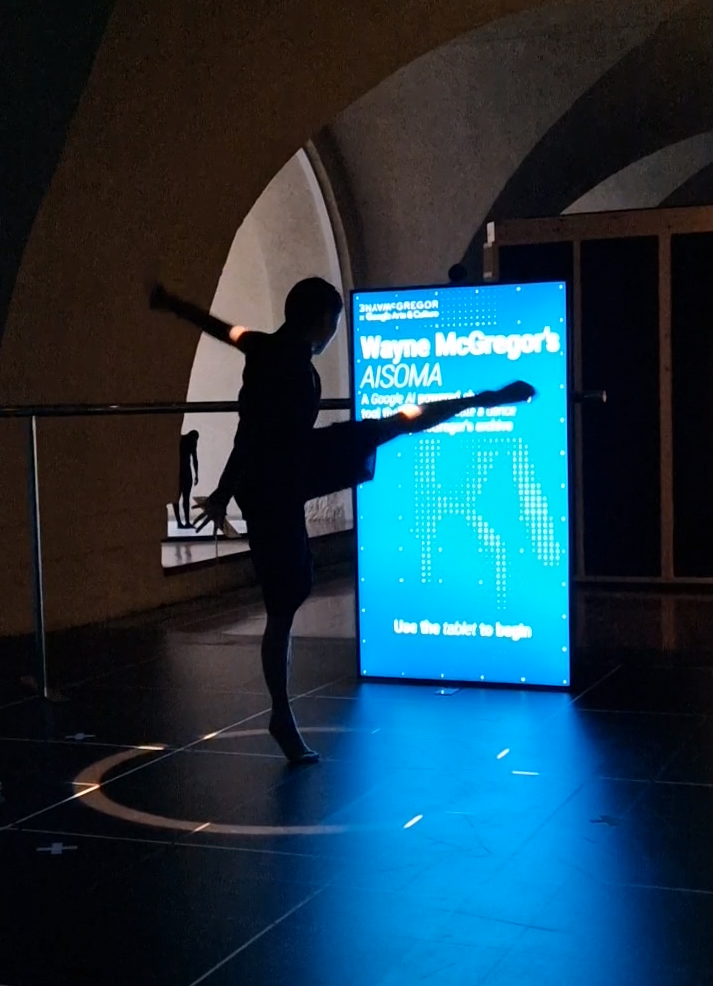
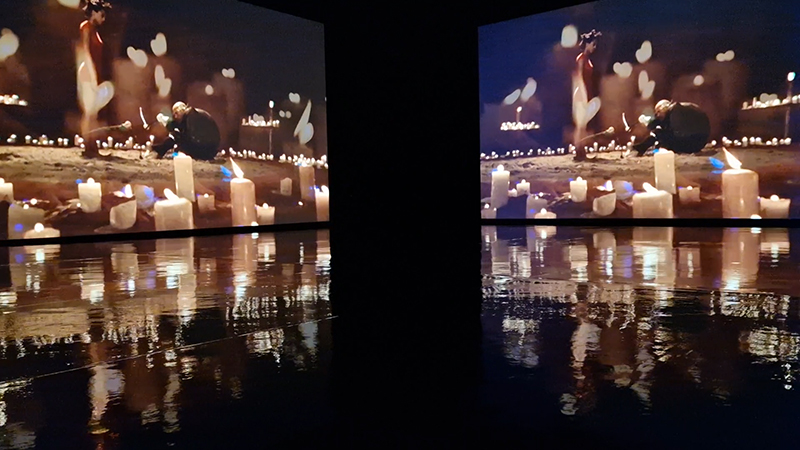
Some beautiful and thoughtful experiences in Infinite Bodies examining how Wayne McGregor’s work responds to the evolving relationship between the human body and technology. Human still wins. Thankfully.
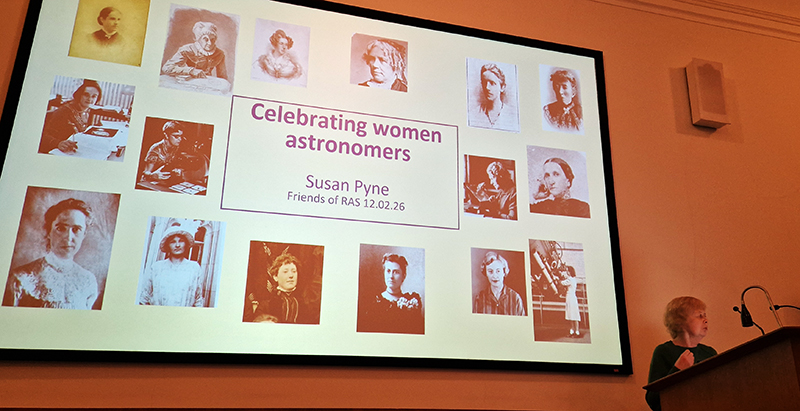
Dr. Susan Pyne gave a talk at the Royal Astronomical Society Celebrating Women Astronomers. For centuries, women astronomers made discoveries that were often overlooked or credited to men. Focusing on five of the many women who transformed our understanding of the Universe she reminded us how very difficult it was for women to advance in the field of astronomy, firstly being denied education and admittance to university, but even once admitted, not being awarded a degree despite studying for it, having to leave employment on marriage, not being allowed to use the instruments at an observatory. It was a long slow road to the first woman Astronomer Royal, Prof. Michele Dougherty, being appointed just last year. Caroline Herschel (1750-1848), famous for her discovery of comets was the first woman to be paid a salary as an astronomer; Annie Maunder (1868-1947) who persevered as a human computer at Greenwich, recorded the first evidence of the movement of the sunspot emergence from the poles toward the equator over the 11-year solar cycle and published The Heavens and Their Story in 1908; Cecilia Payne (1900-1979) determined that stars were composed primarily of hydrogen and helium.
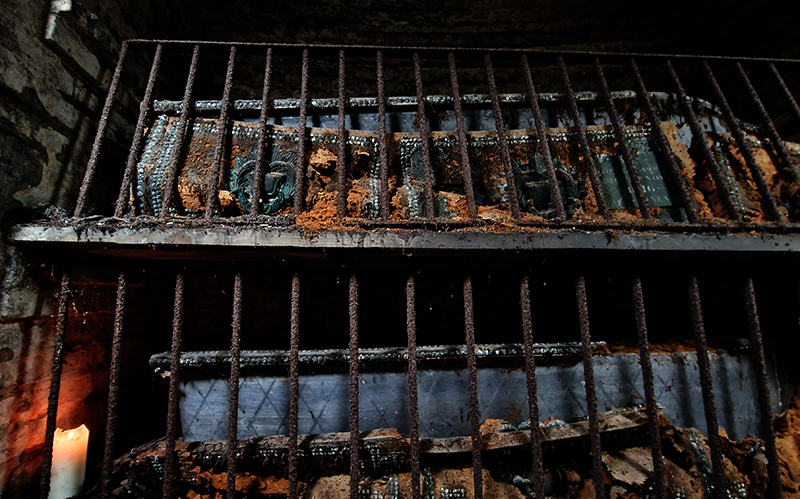
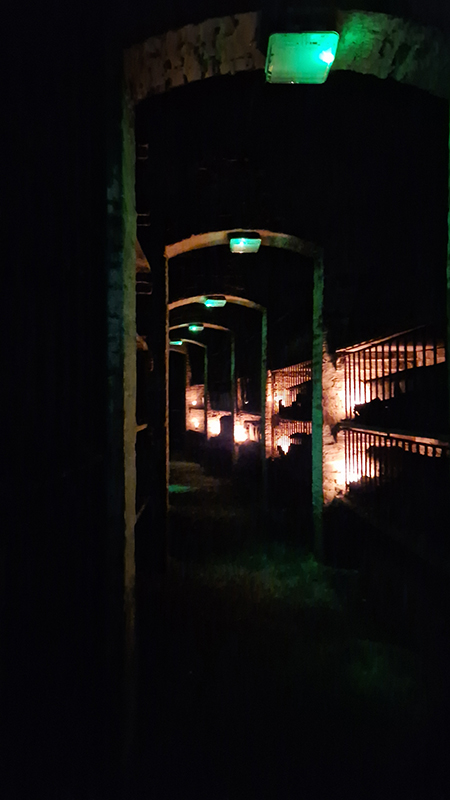
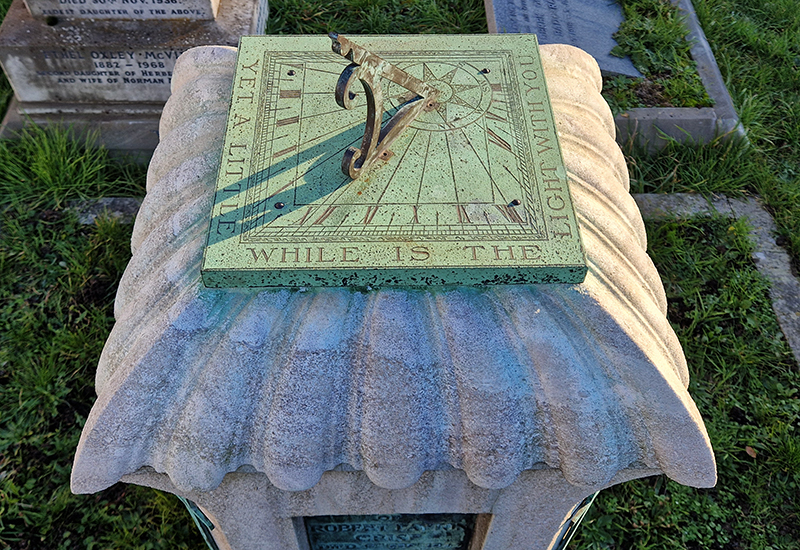
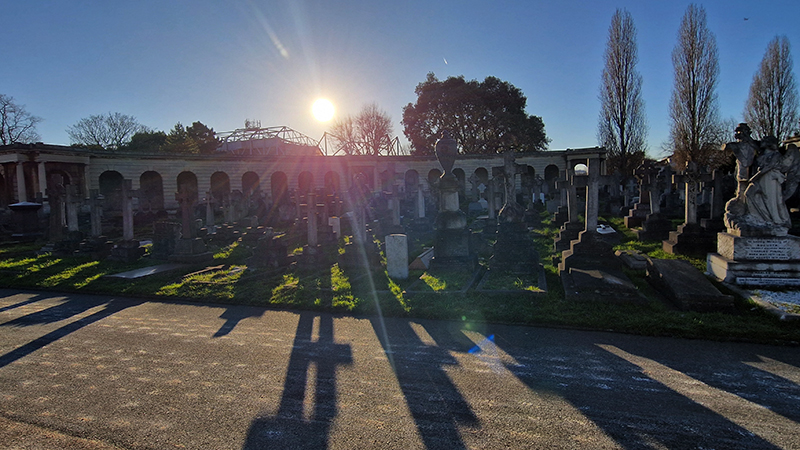
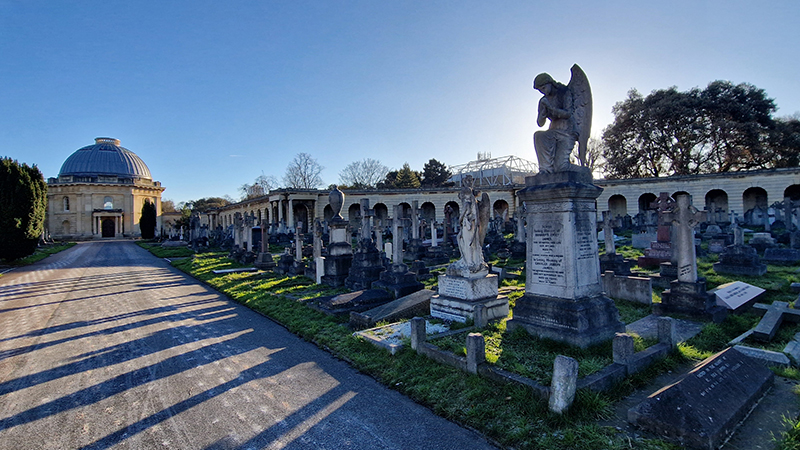
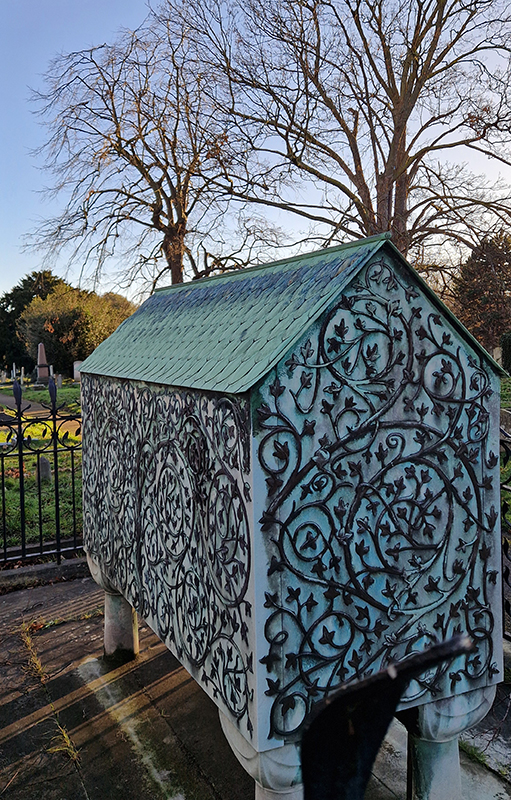
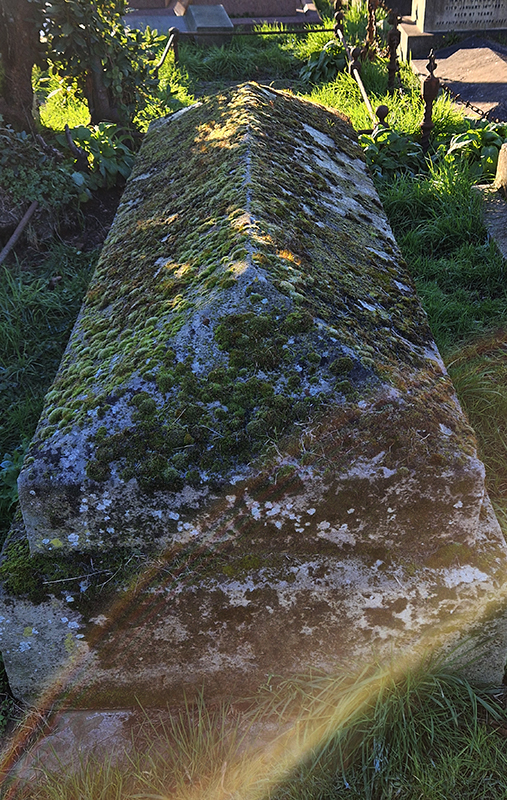
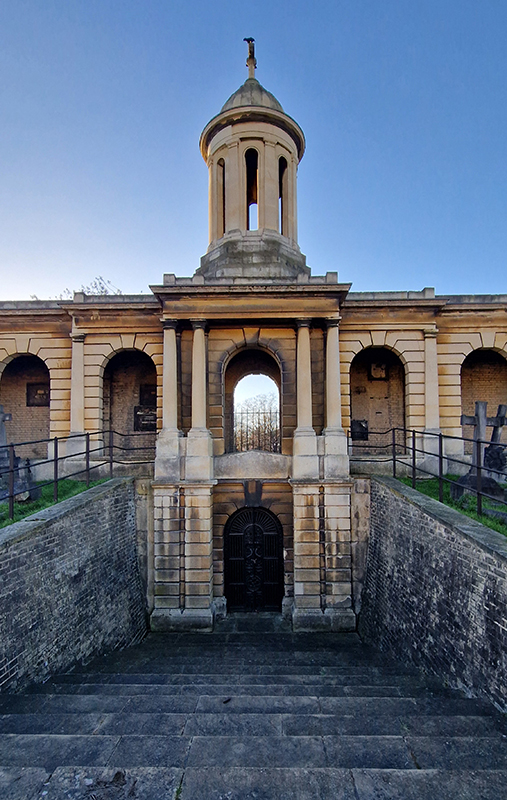
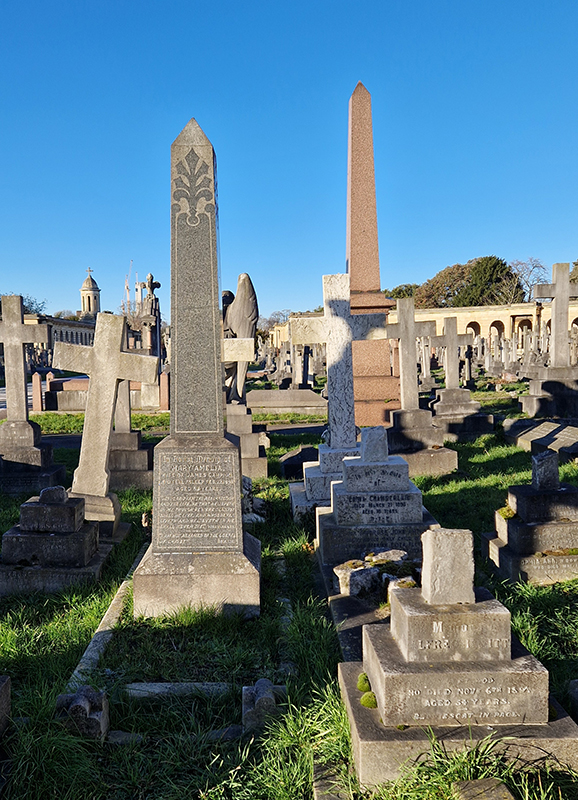
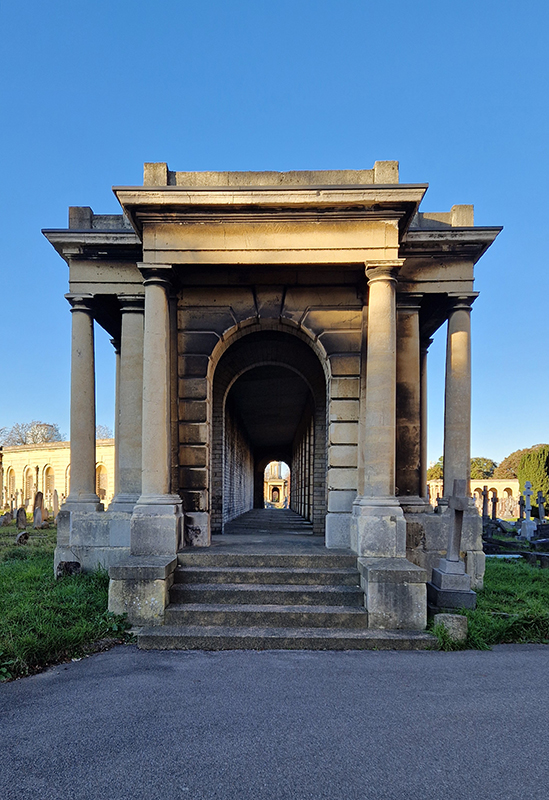
Illuminating tour of Brompton Cemetery Catacombs. These subterranean tunnels offered the Victorians – status, security and sentimentality when body snatchers were rife. The lead lined coffins were supposed to be airtight, preserving the body within, but many it seems were not.
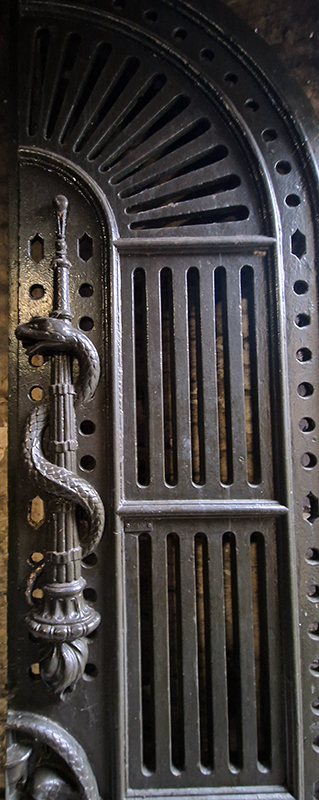
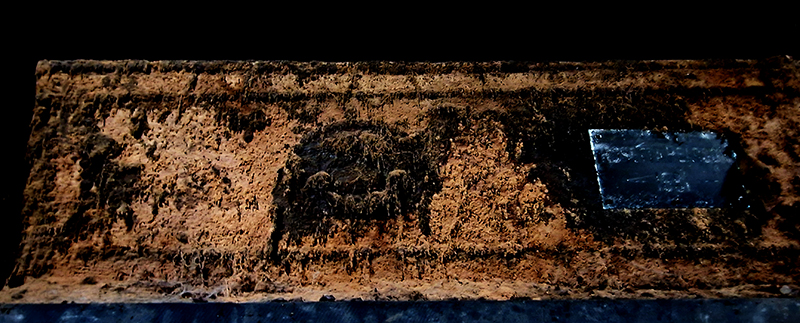
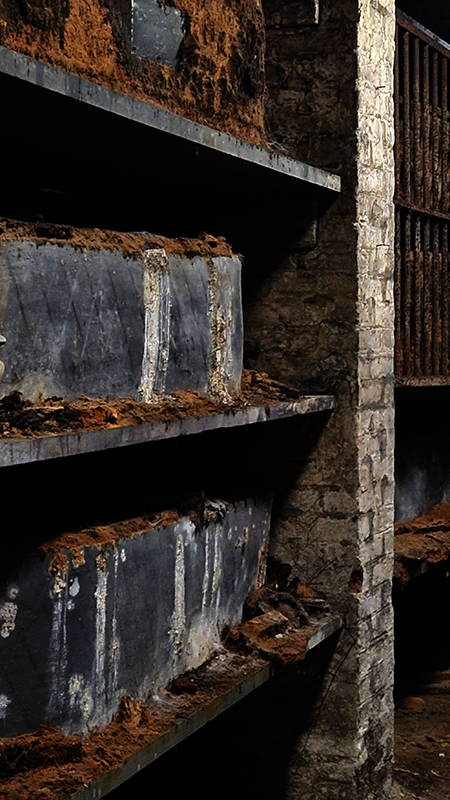
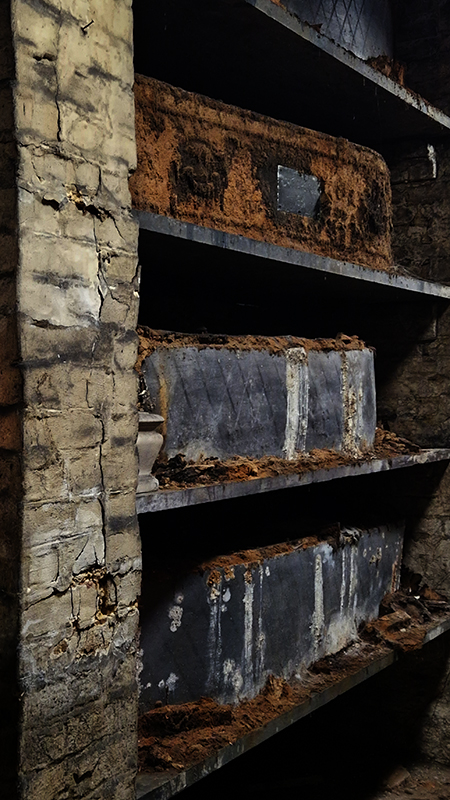
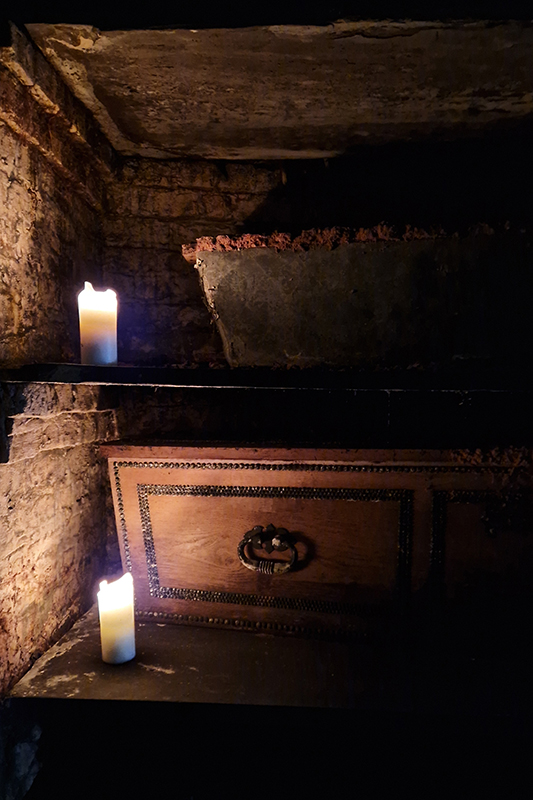
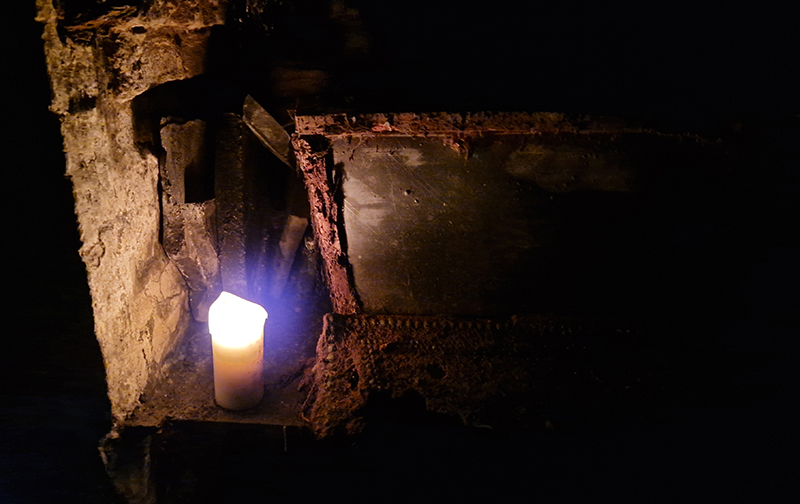
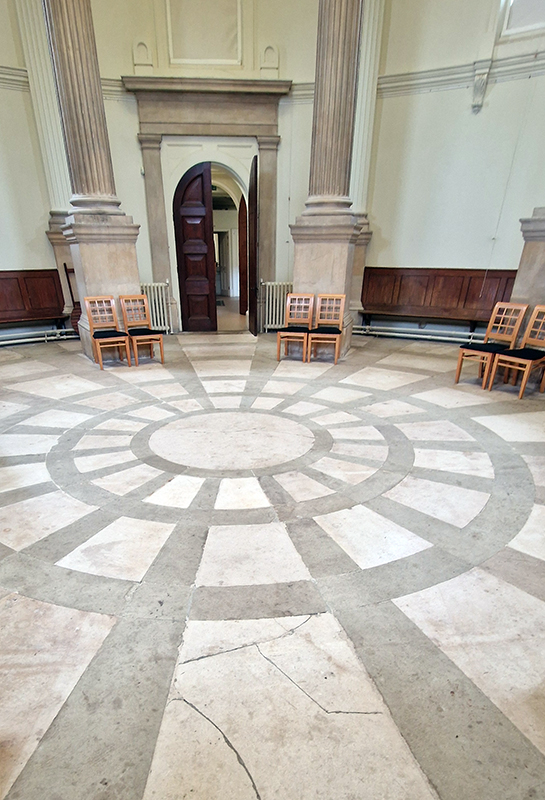
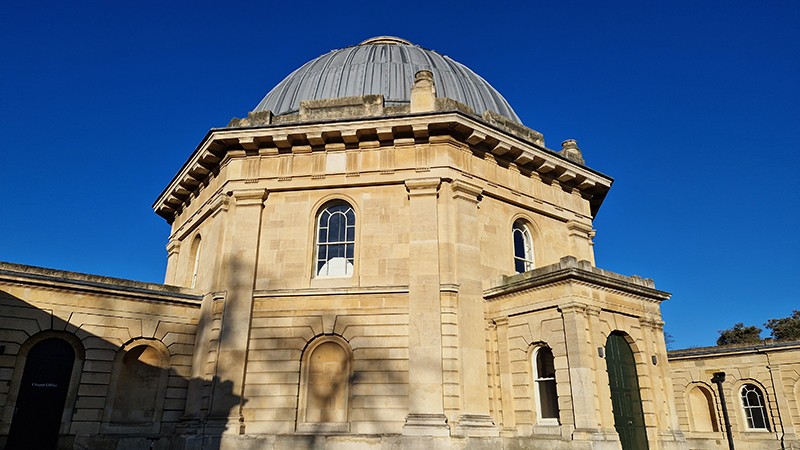
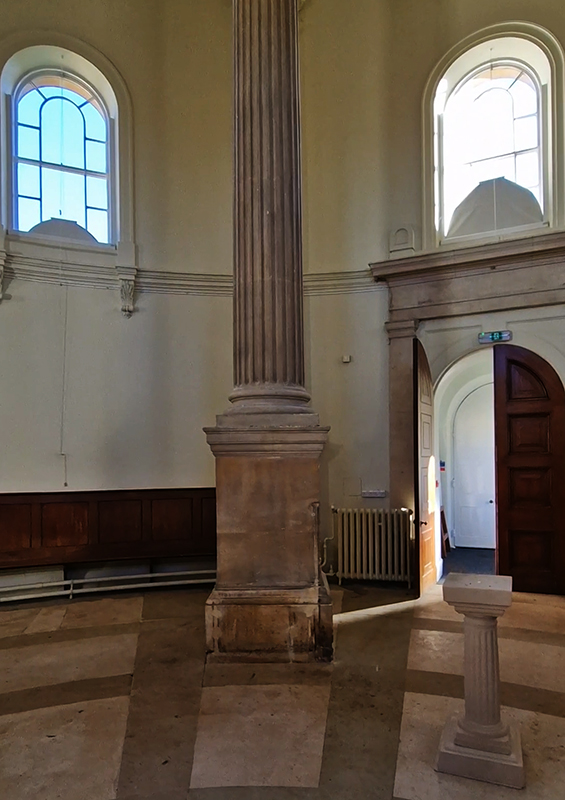
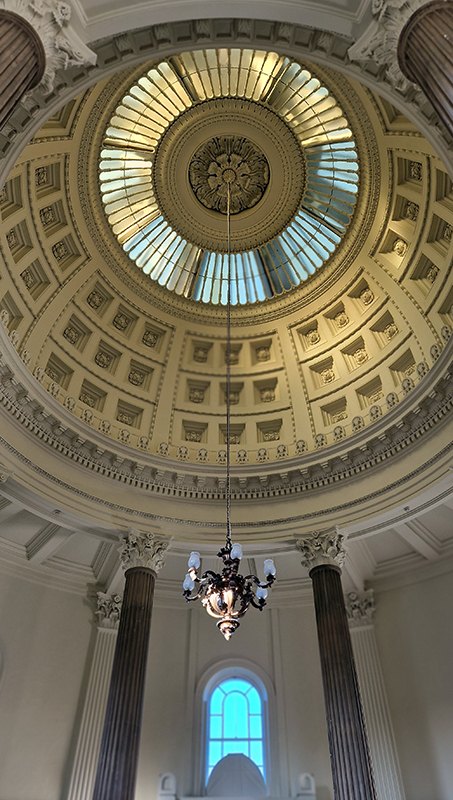
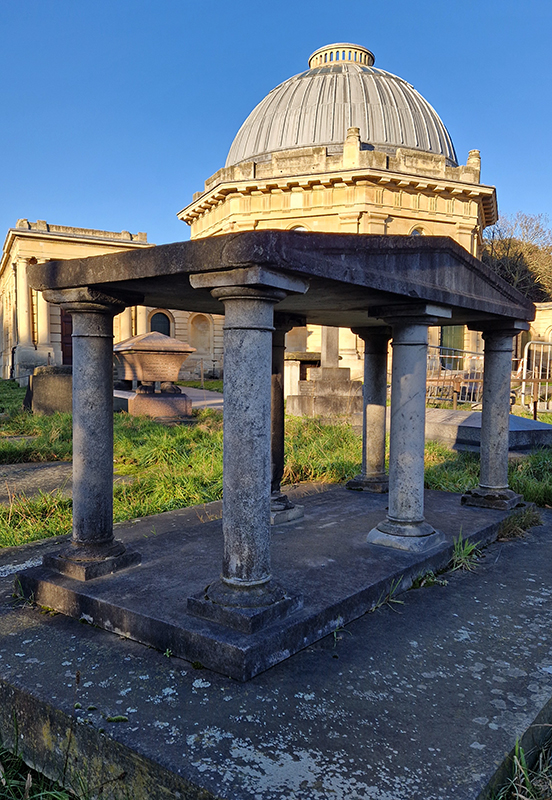
I also had a chance for another quick look at the majestic octagonal Cemetery Chapel where I will be having a solo show later in the year.
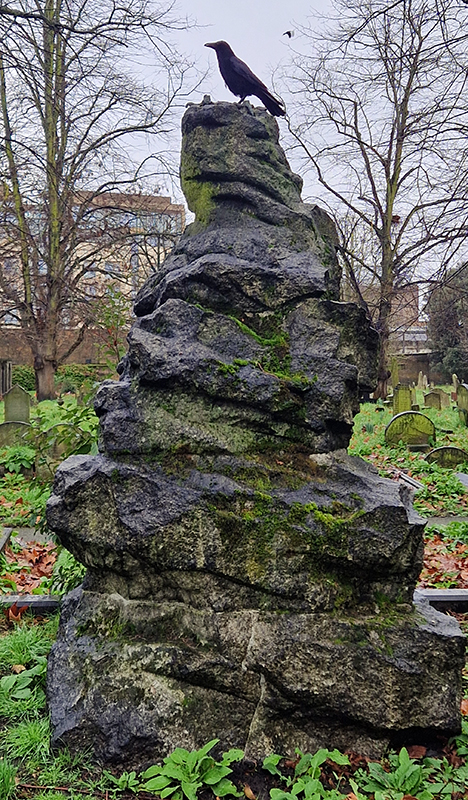
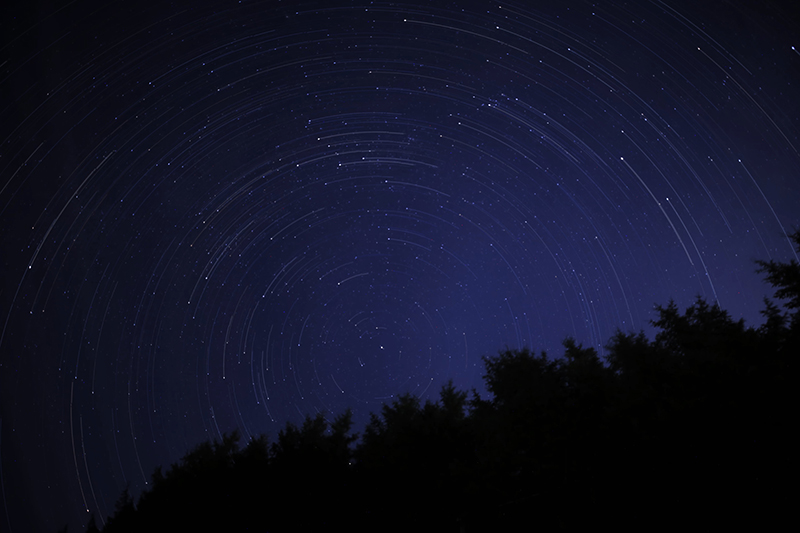
Listening to the Inside Science podcast Should we rethink navigating by GPS? I was fascinated to hear that a report from the Royal Institute of Navigation recommends teaching sailors to navigate by the stars again as a top priority.
Reliance on satellite GPS is no longer viable in a world of conflict where jamming and spoofing of GPS is putting maritime and aviation safety and security in jeopardy. All countries have their own GPS systems but all are vulnerable to interference. The satellites are 20km away, twice the diameter of the earth, but are basically a 5okw lightbulb in space which is very easy to drown out with more local noise. It is now also easy to spoof a position with software readily available online. As well as ships these jamming and spoofing signals are effecting1500 planes a day which have to reset and counter spoof signals, also trains, mobile phones and anything that accesses GPS can be effected. There are technological solutions that can be put in place to determine where the signal is coming from but it looks like there will forever be a need to read the stars.
The program goes on to look at satellites under fire from solar weather which can also effect navigation systems. Predicting space weather is difficult but Imperial College London have developed some magnetic field detector instruments which are on the Solar Orbiter probe, speeding through space, to give us more warning about solar activity which could affect us here on earth and be valuable info for the safety of the next launch to the moon.
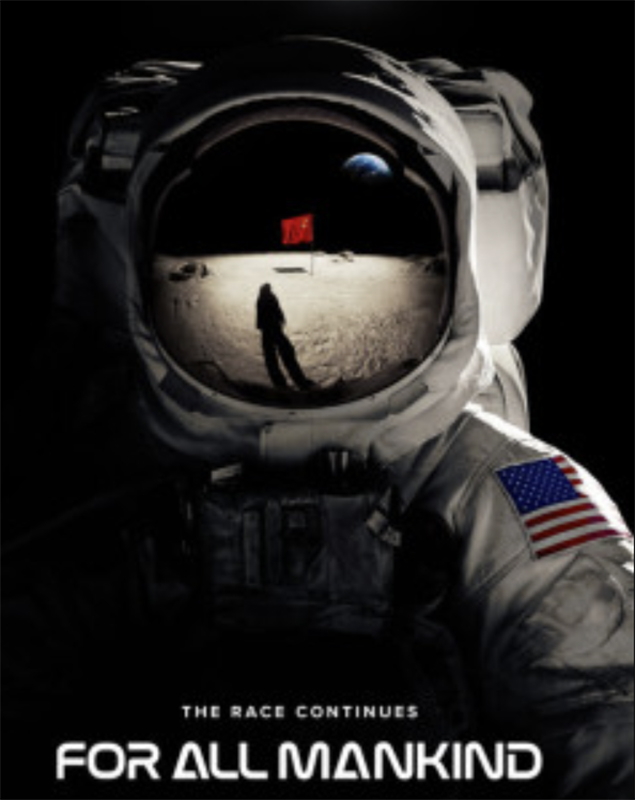
I have also been enjoying the first series of For All Mankind which was originally aired in 2019. The series dramatizes an alternate history depicting “what would have happened if the global space race had never ended” after the Soviet Union succeeds in the first crewed Moon landing ahead of the United States. It is entertaining TV, some nice 60’s/70’s sets and what if scenarios.





 Susan Eyre