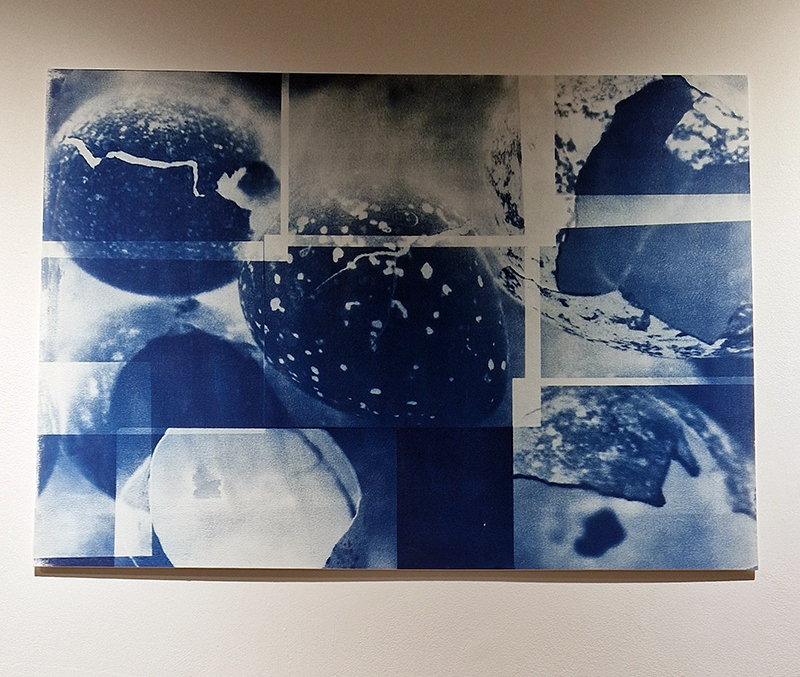
Archives for posts with tag: polarised light

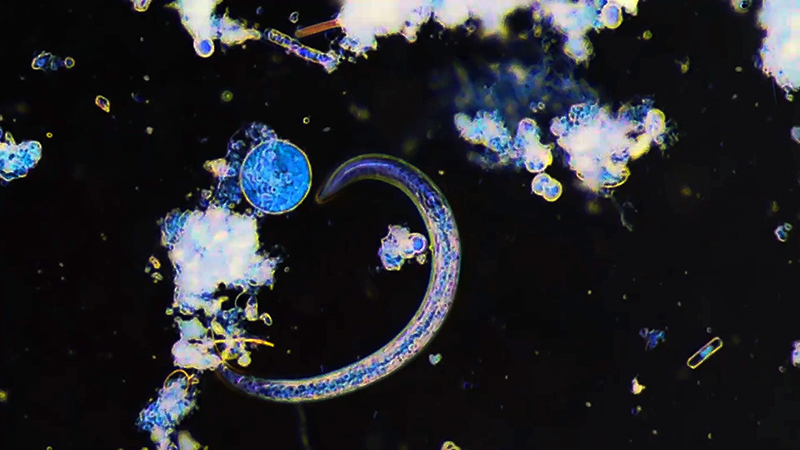
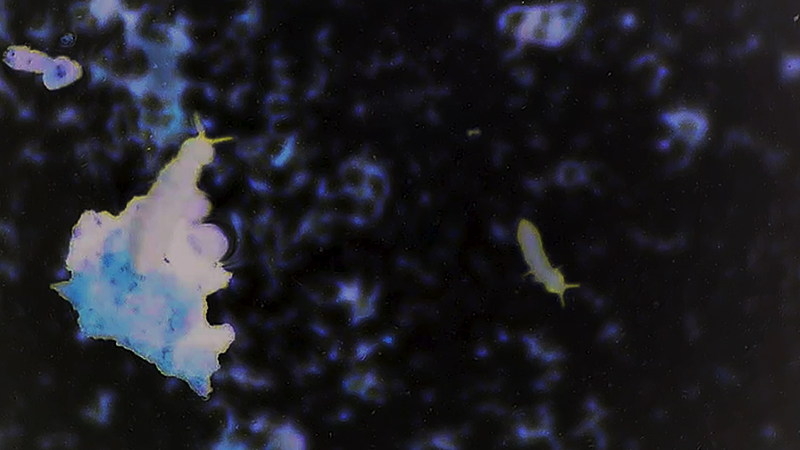
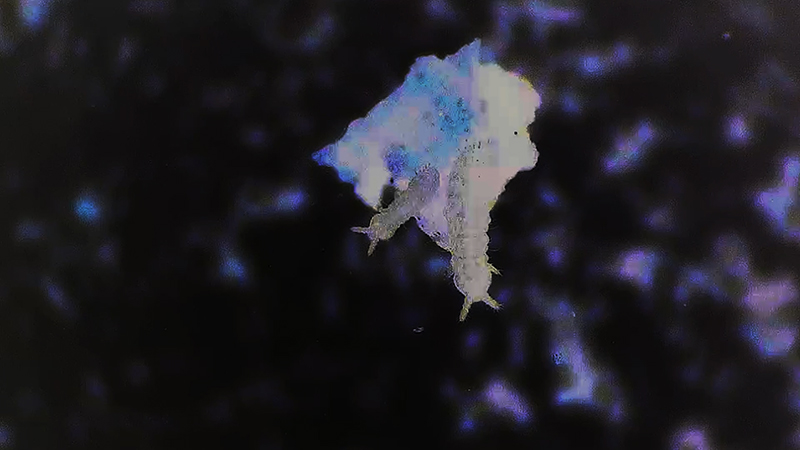
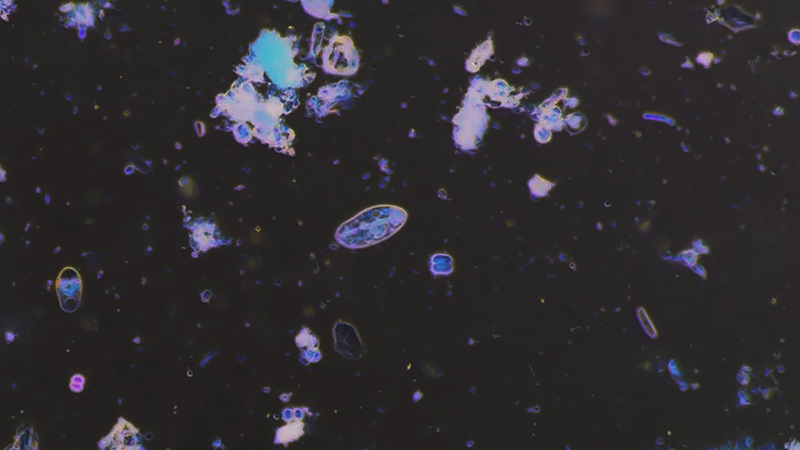
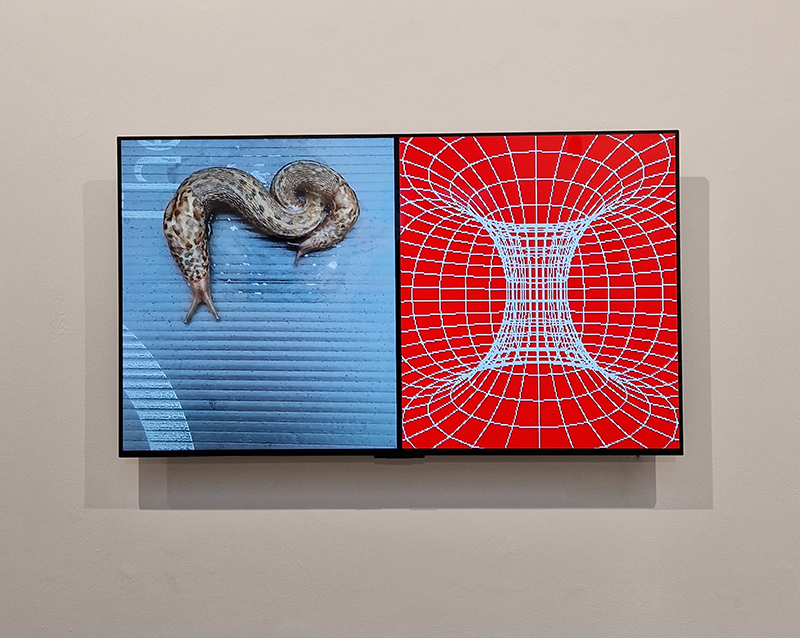
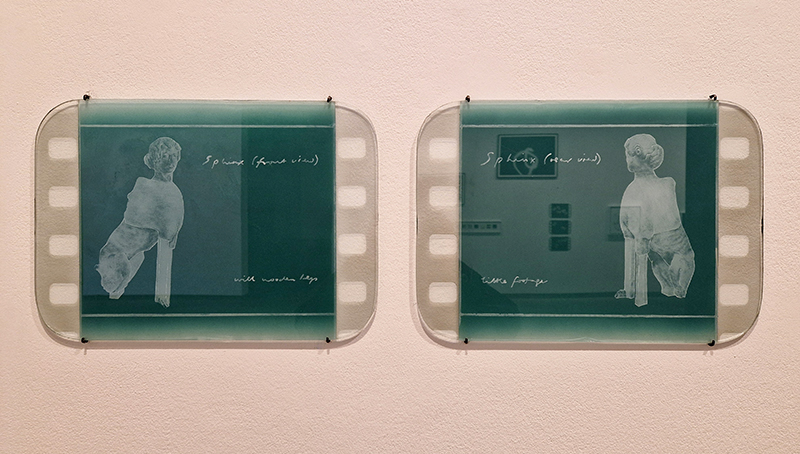
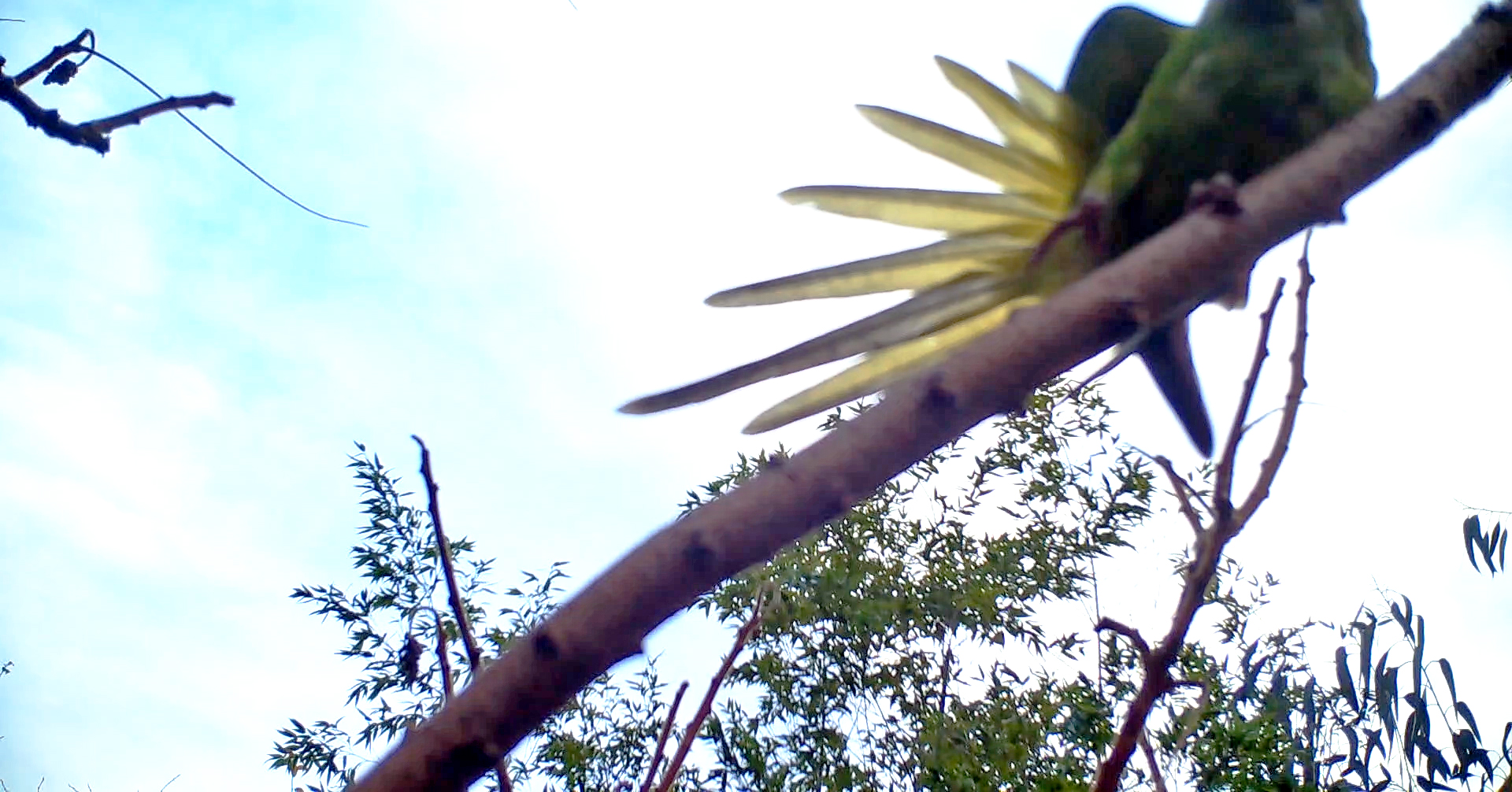
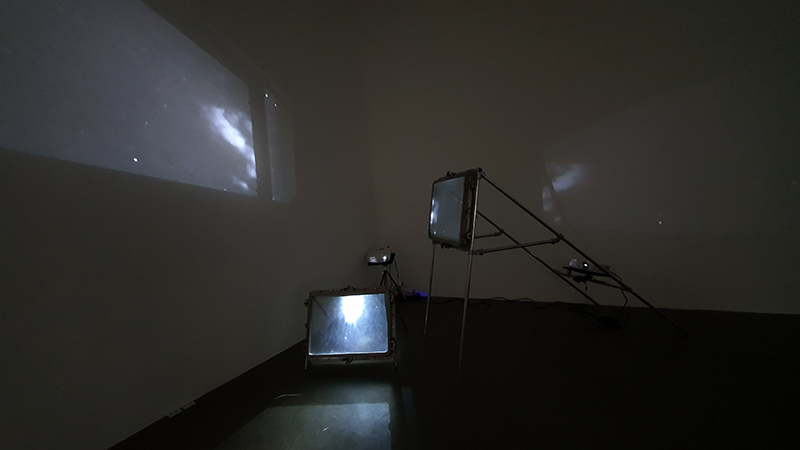
I am enjoying discovering the gutter creatures who share my home. Gathering video footage of an alternative cosmos to go towards making work which will be shown in Occupied: Strange Company at the Safehouse next year, a group exhibition curated by Julie Hoyle.
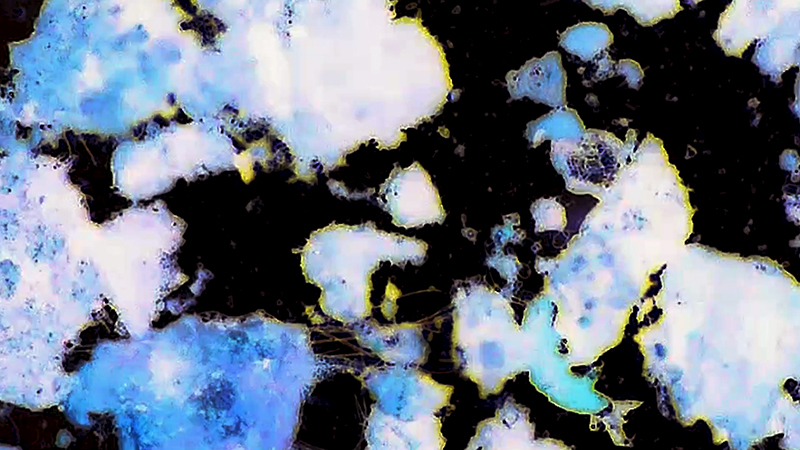
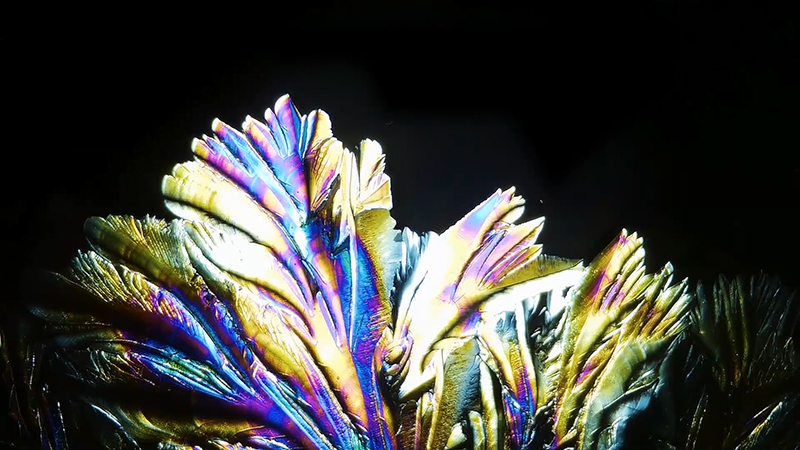
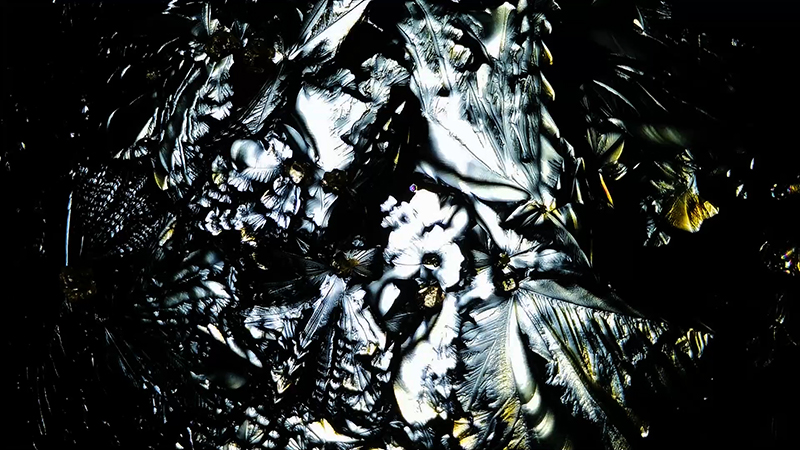
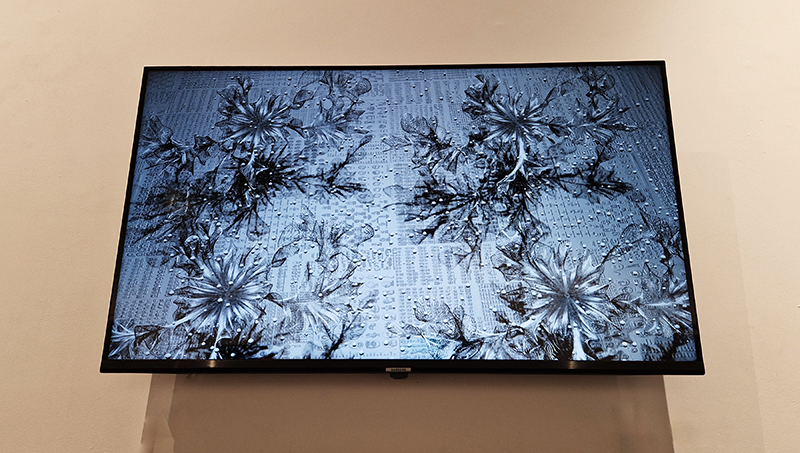
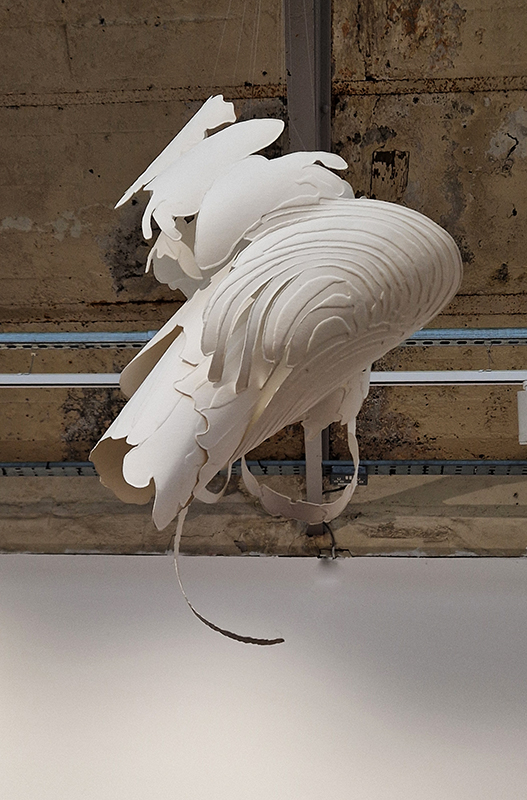
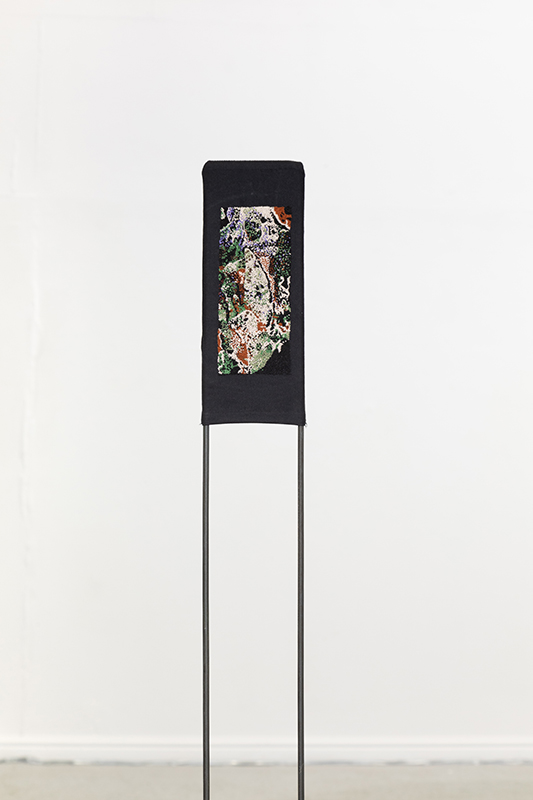
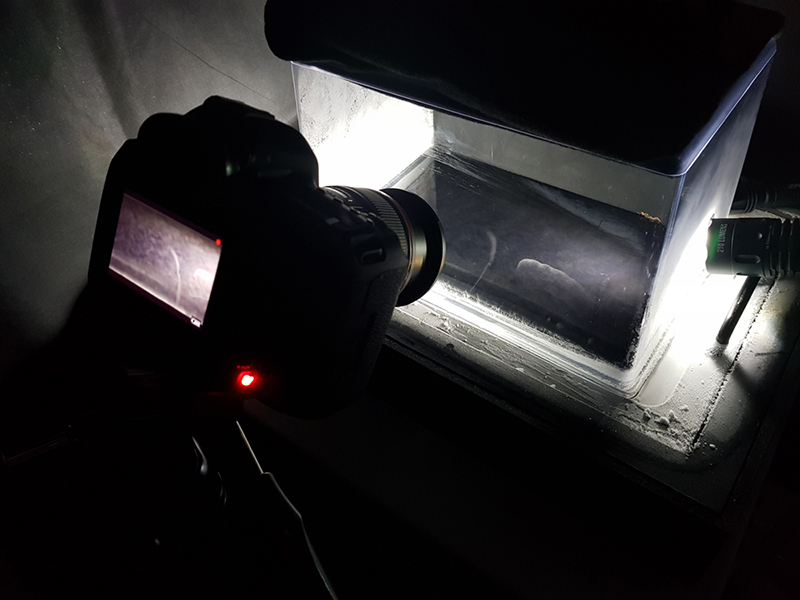
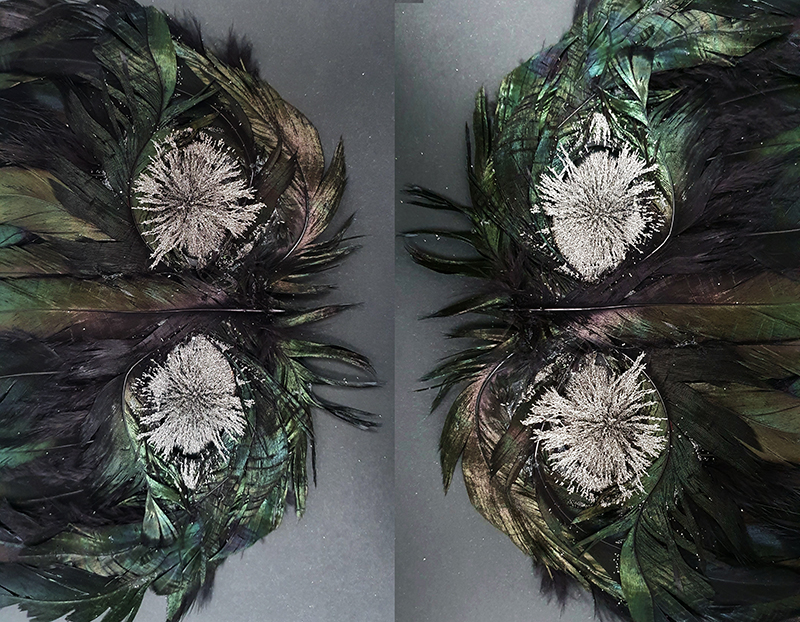
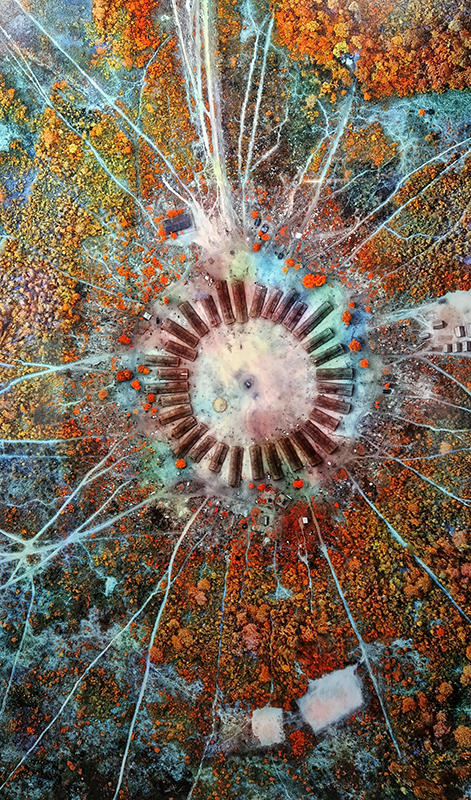
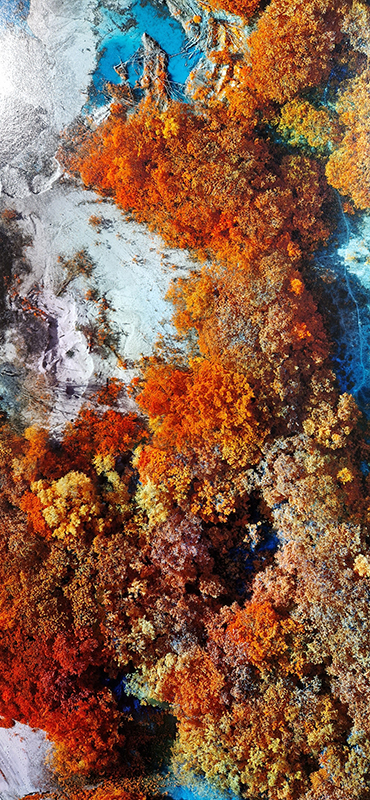
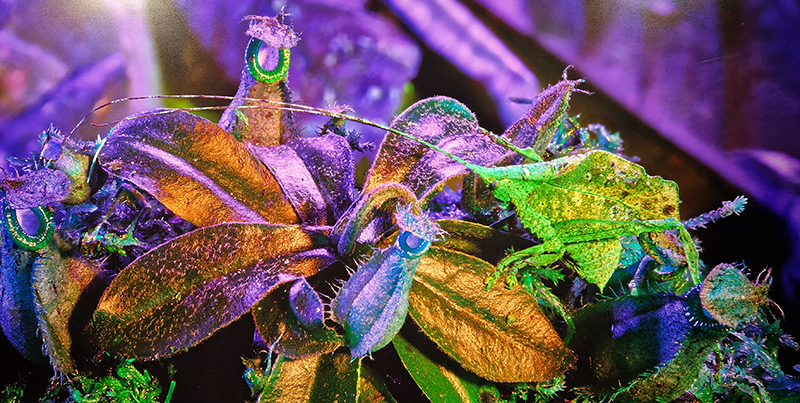
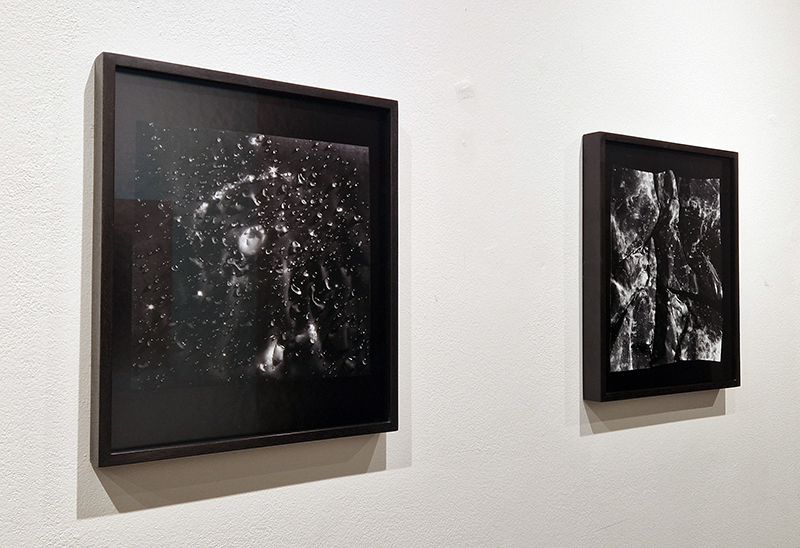
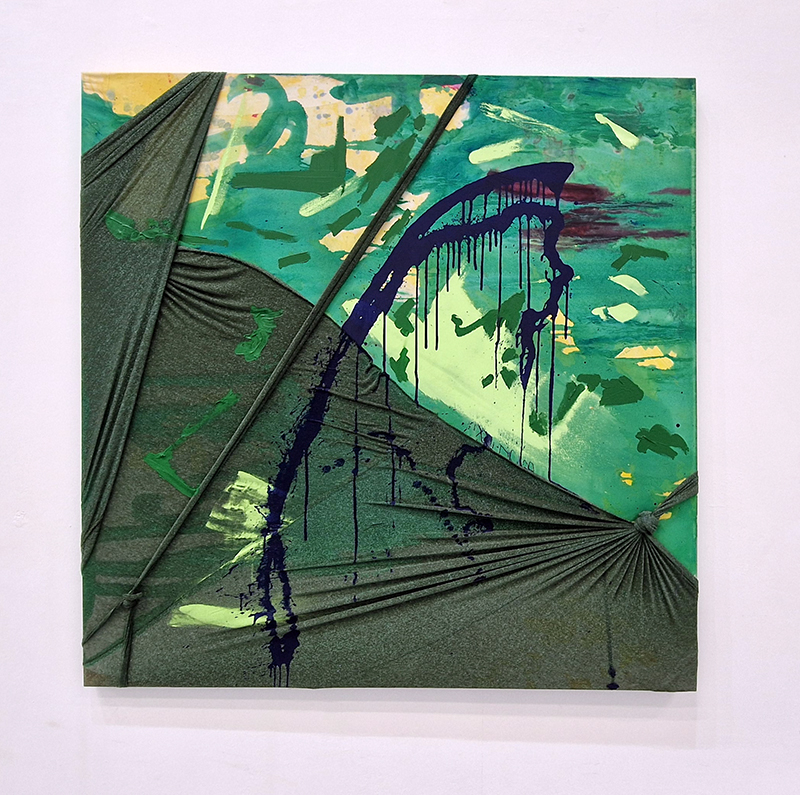
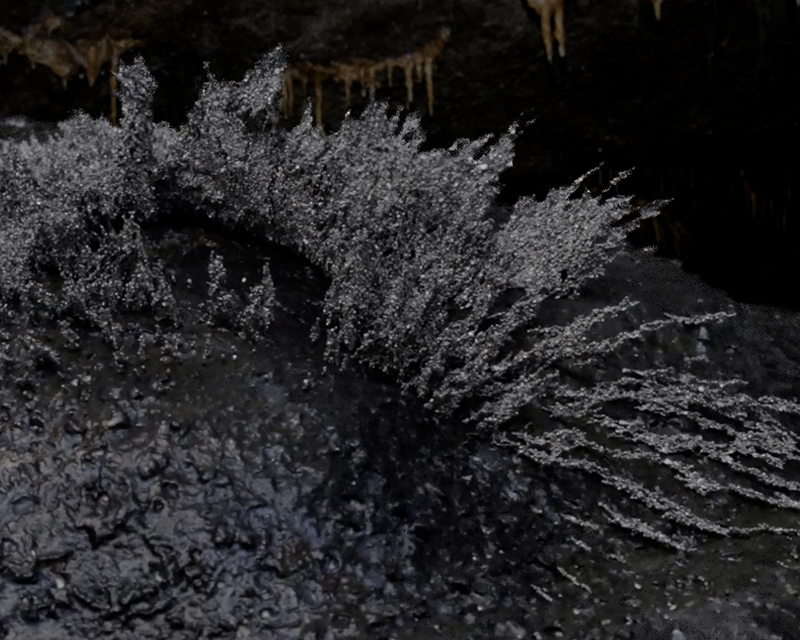
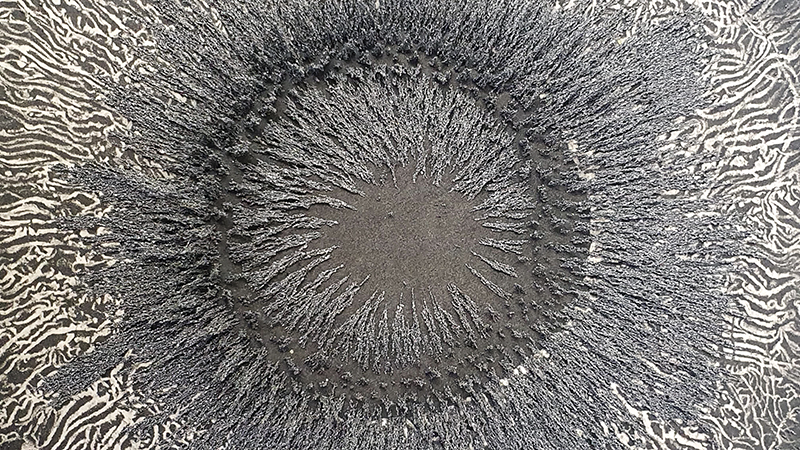
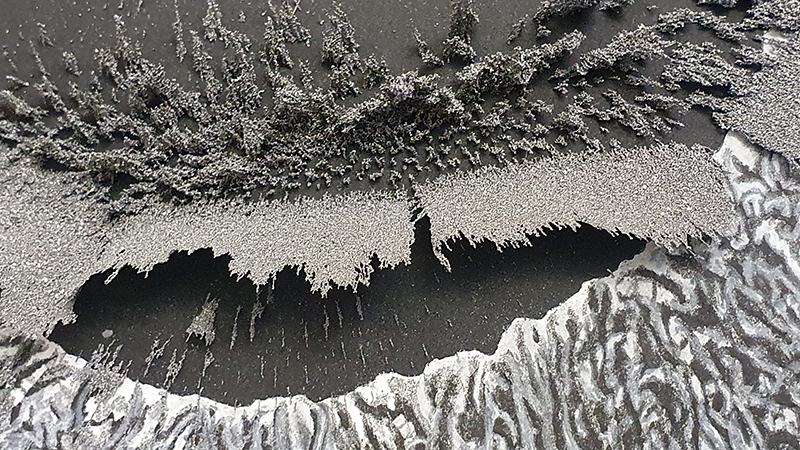
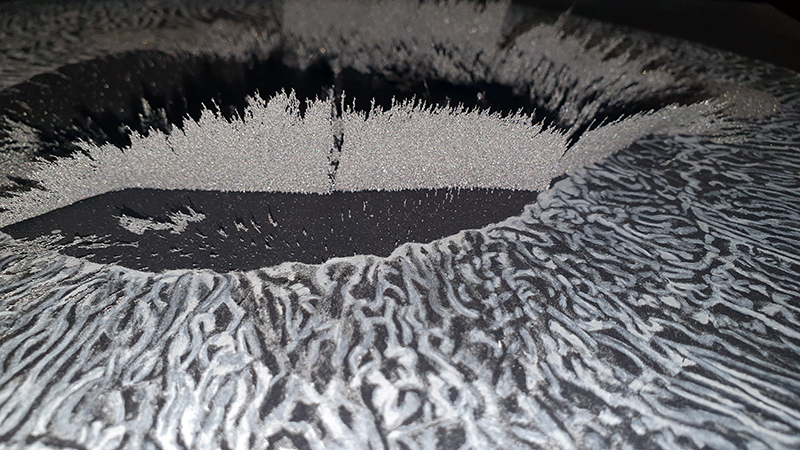
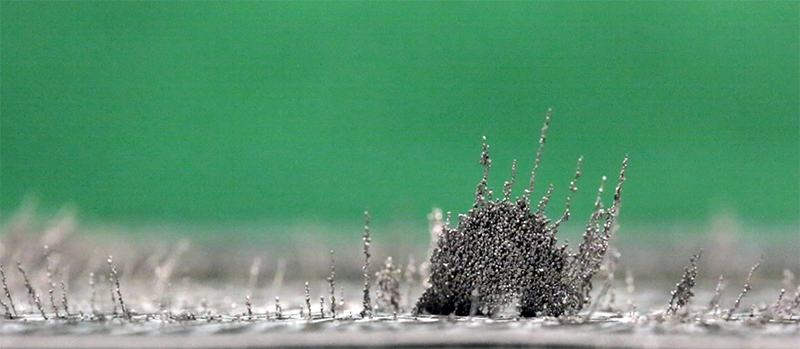
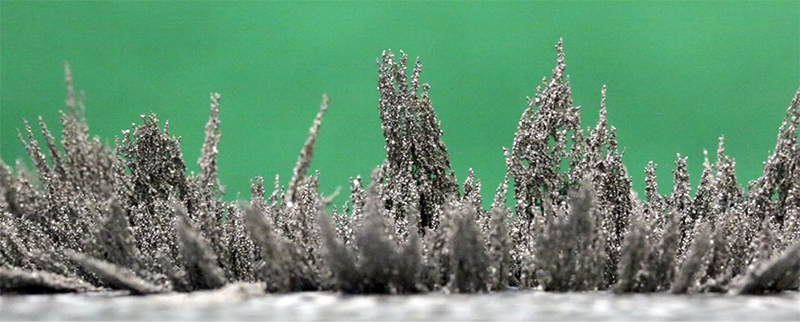
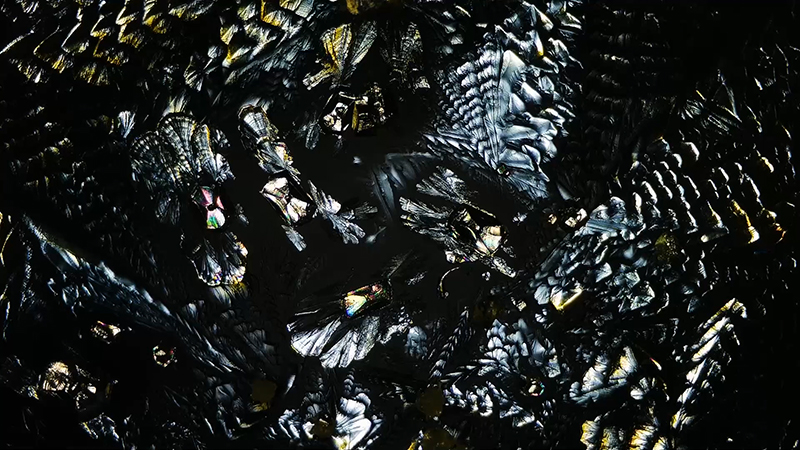
My experiments growing citric acid crystals have been going well. I am filming these transformations under polarised light which reveals the many vibrant colours but I also like the images without the filter. The structures remind me of feathers so I am thinking about creatures that flutter as well as those that swim.

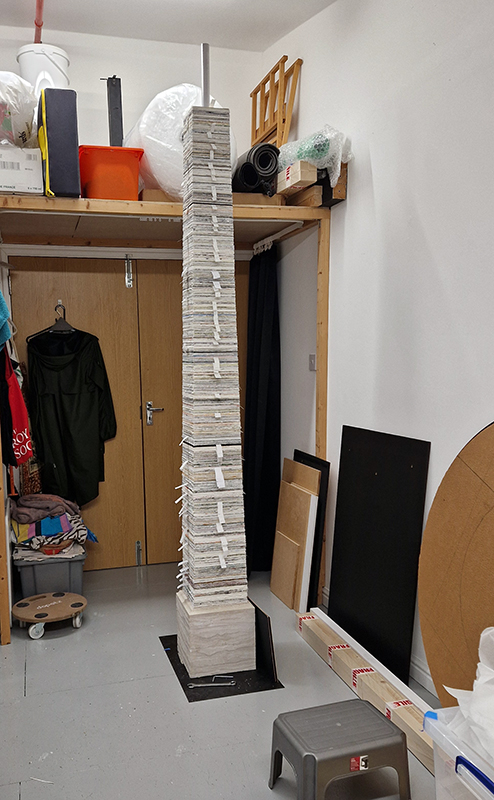
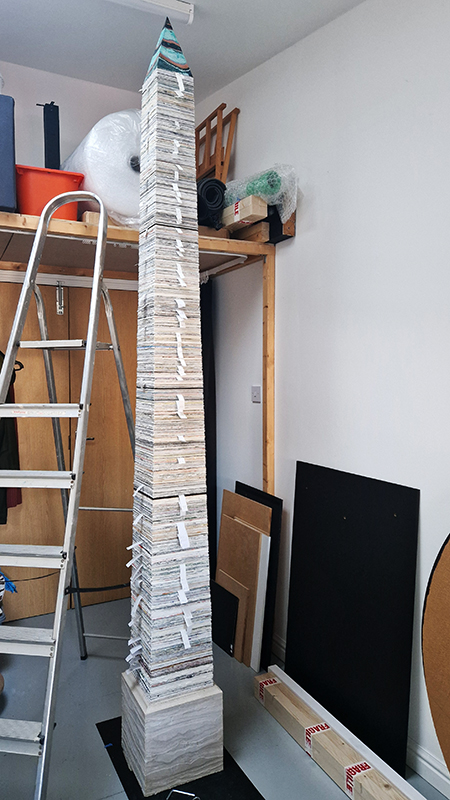
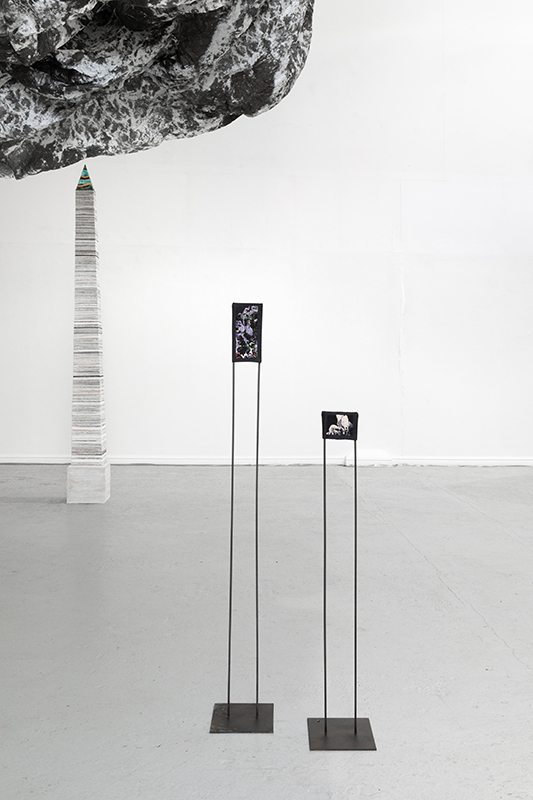
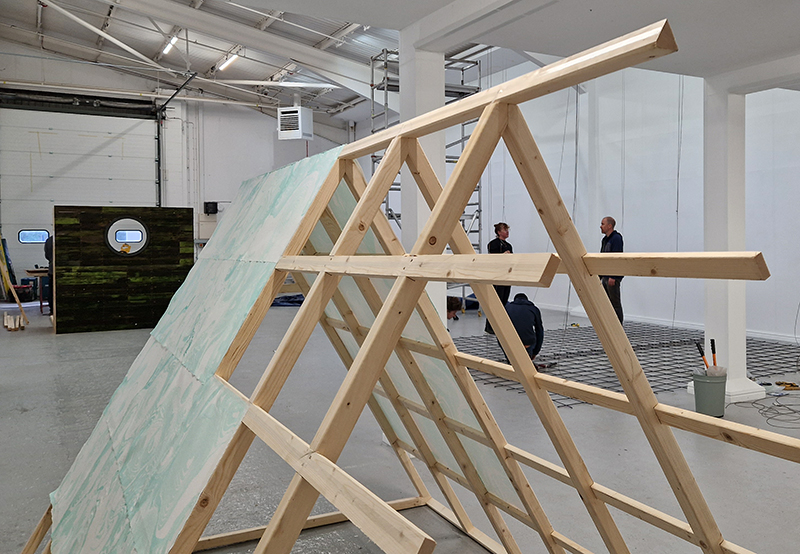
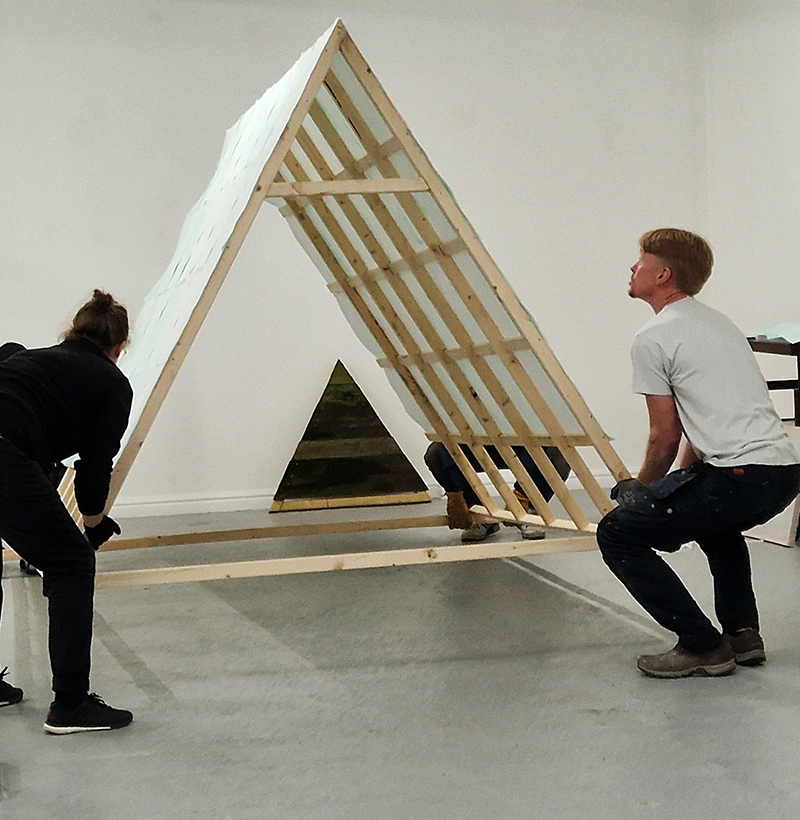
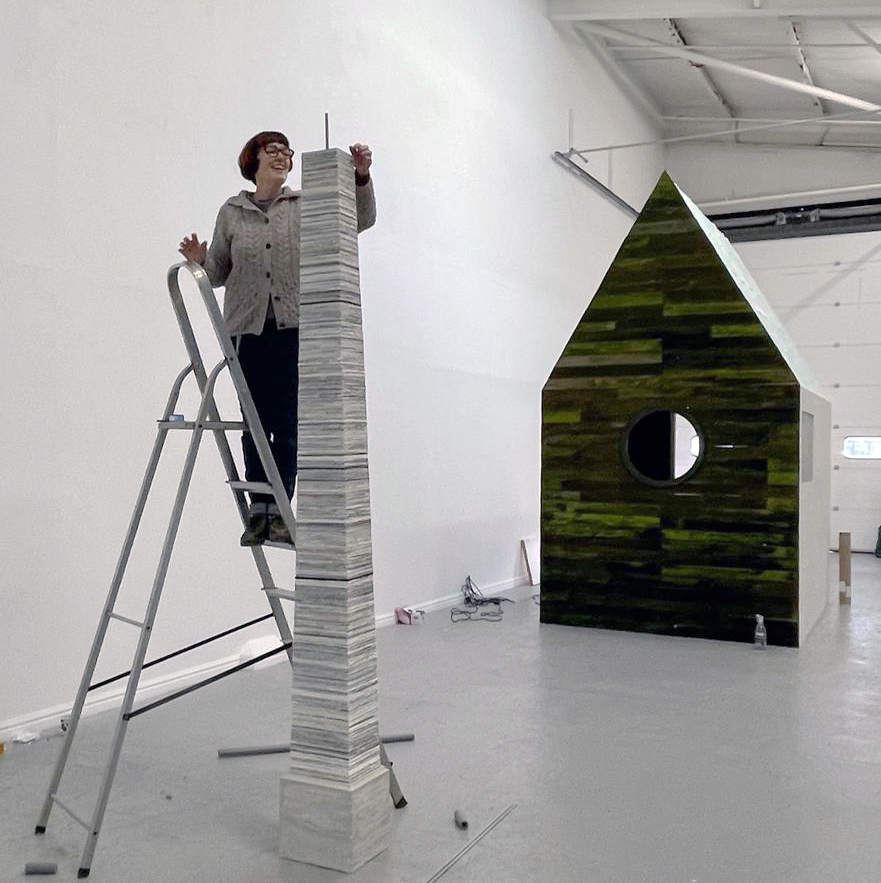
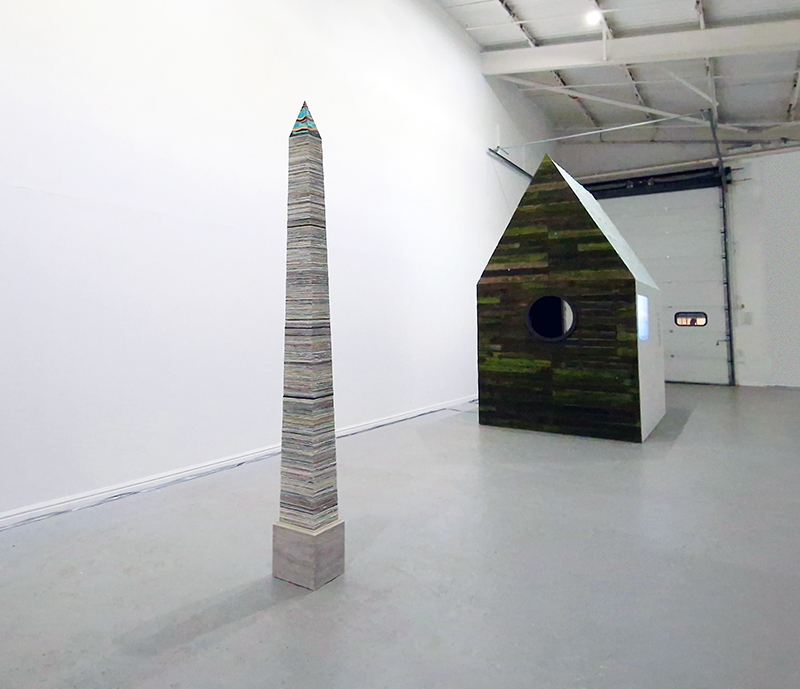
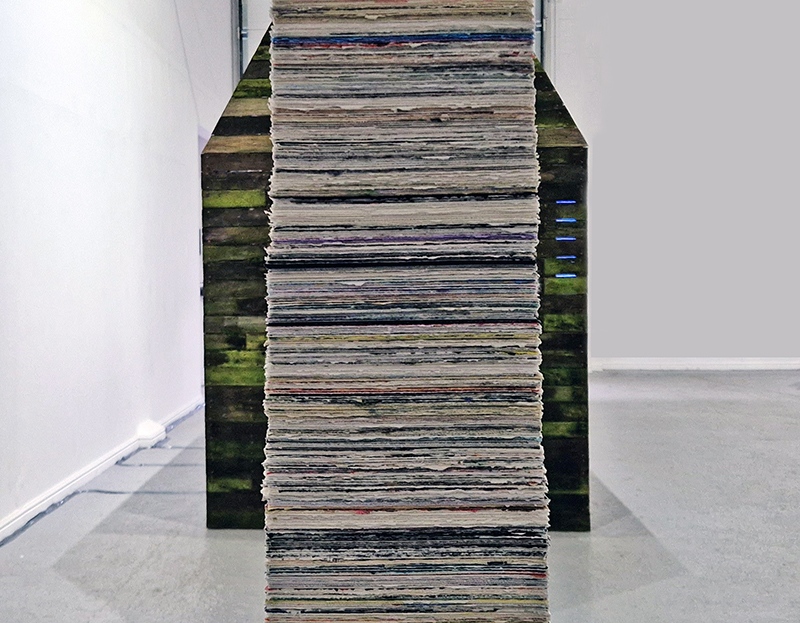
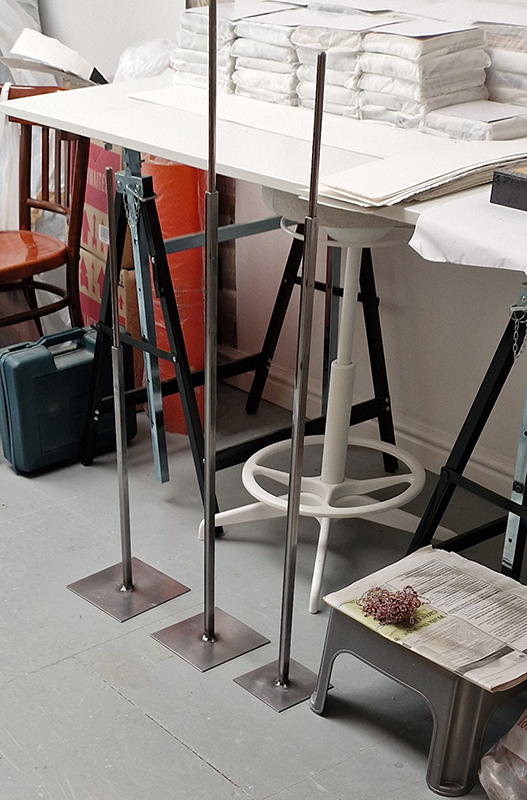
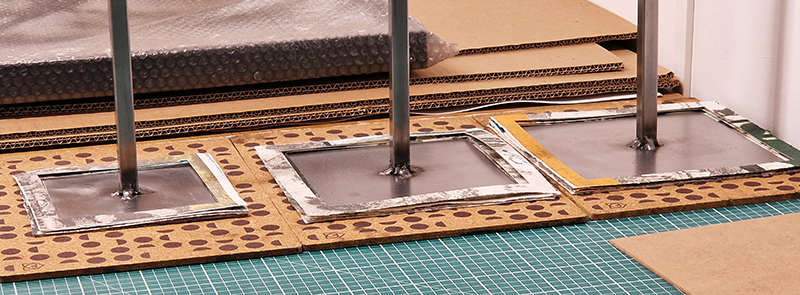
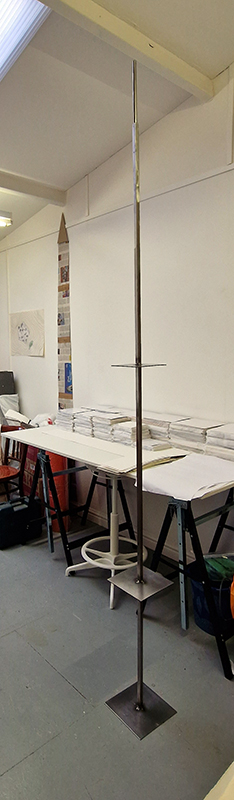
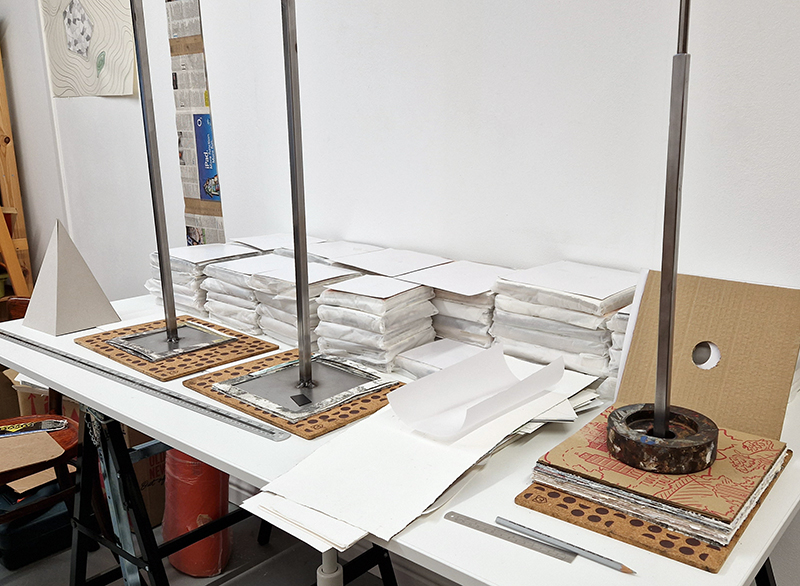
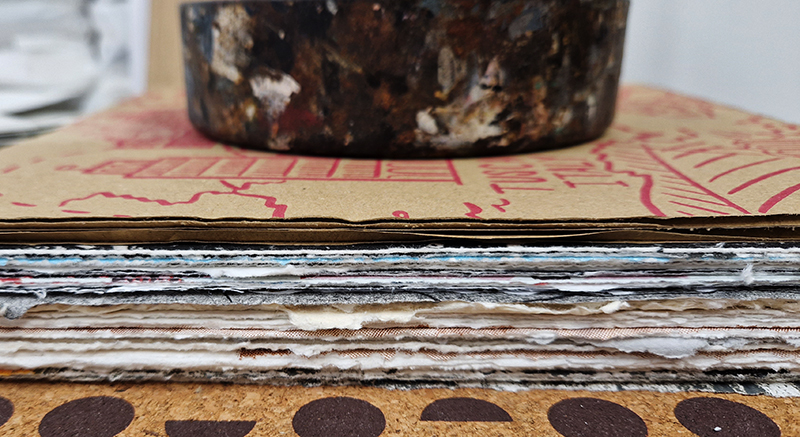
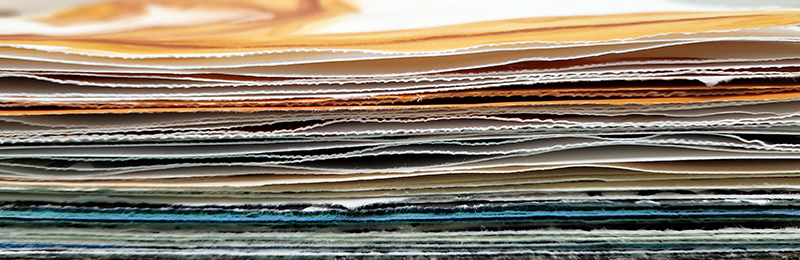
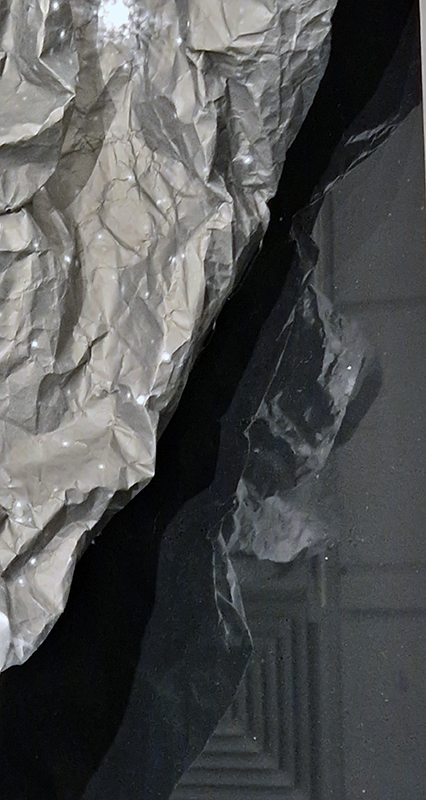
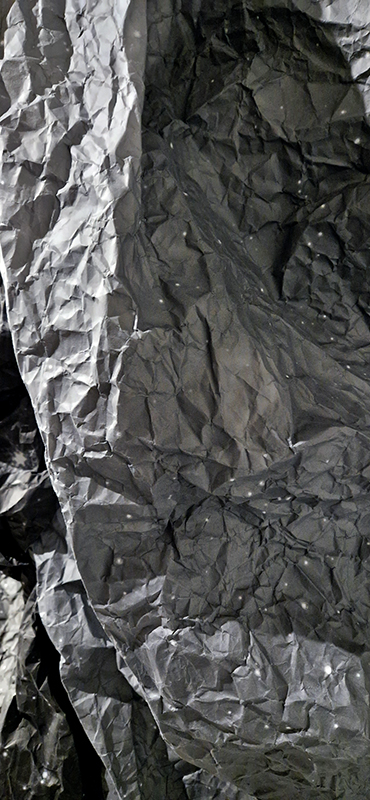
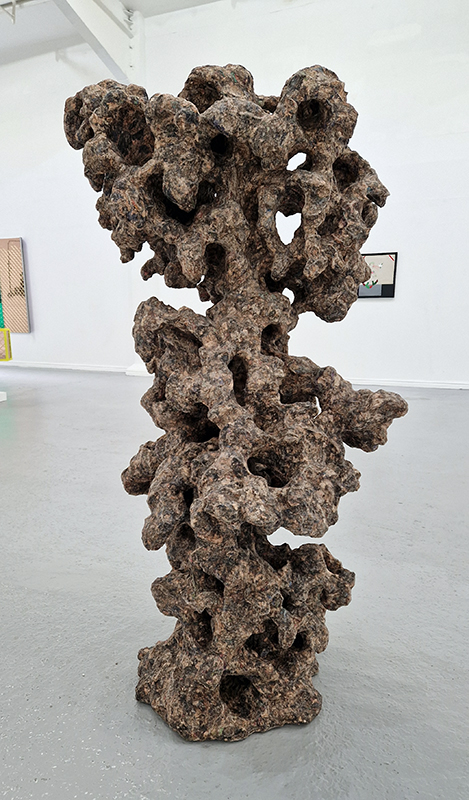
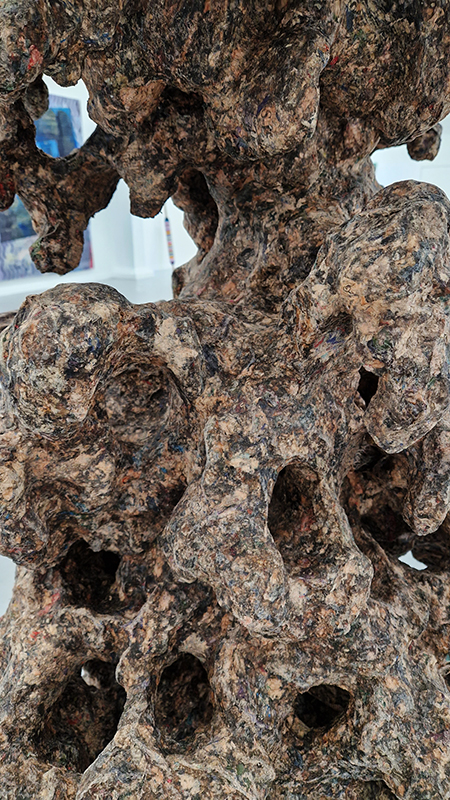
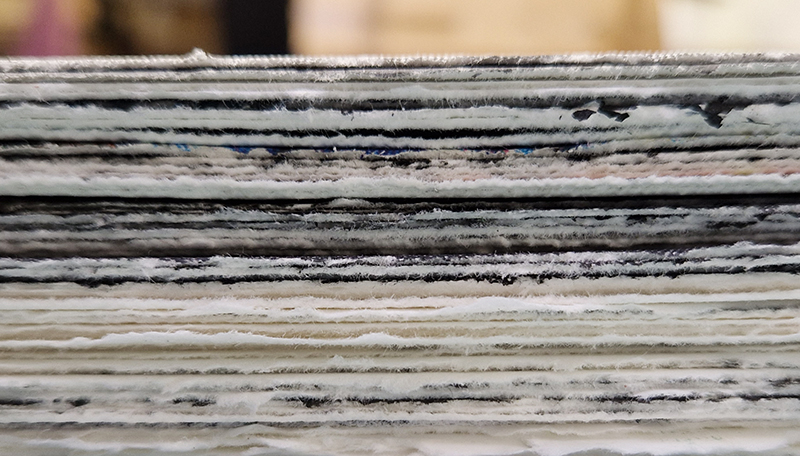
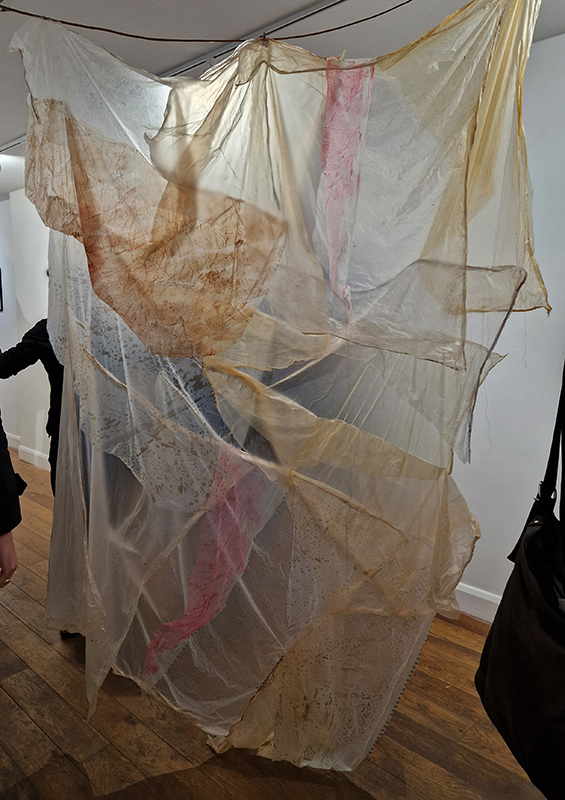
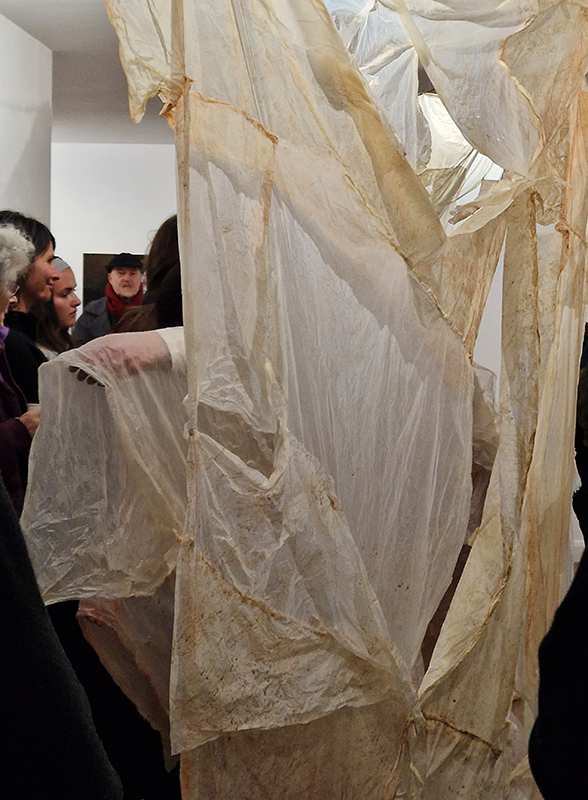
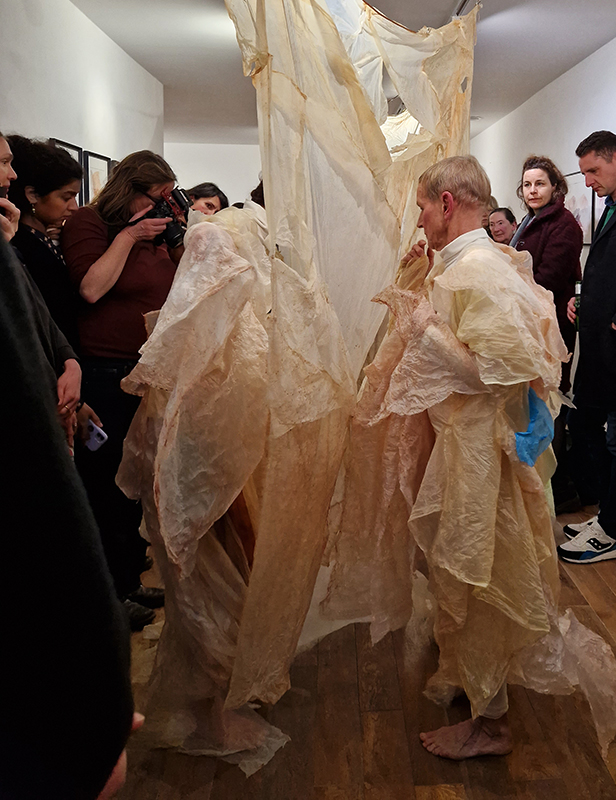
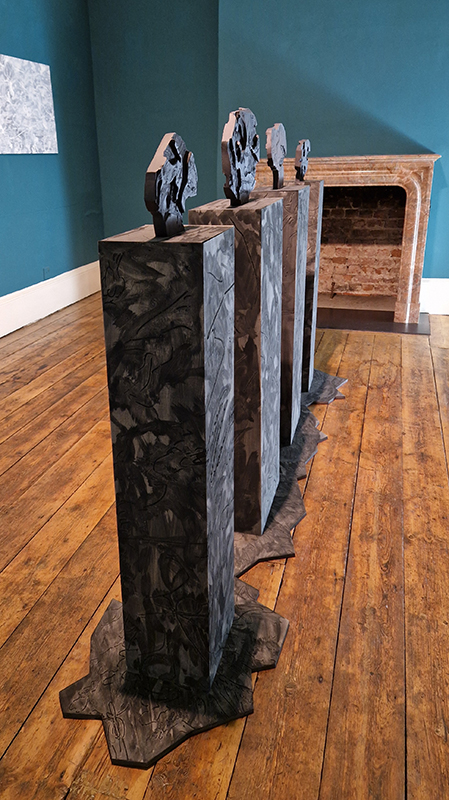
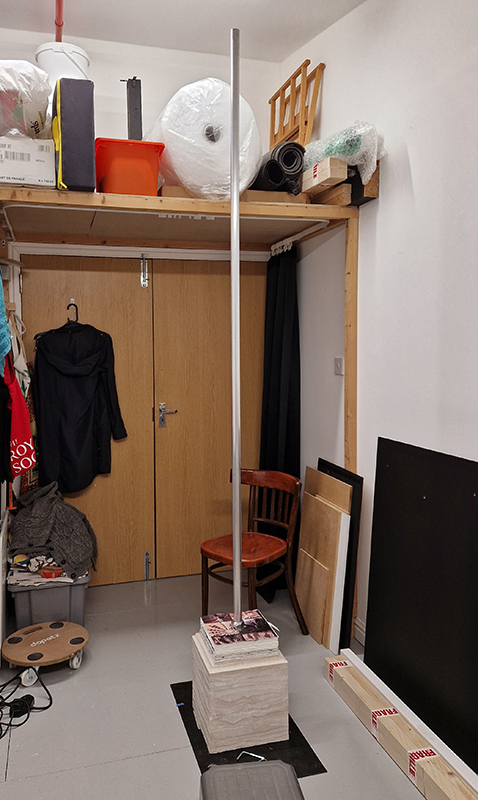
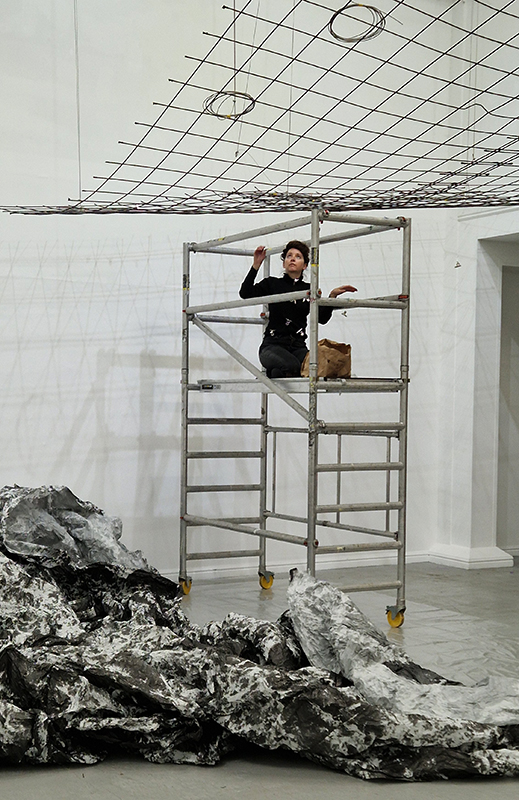
Time in the studio has been spent checking over and preparing works that will be showing in Cosmos: The Art of Observing Space curated by Ione Parkin which opens in the new year. I am thrilled to be part of this exhibition bringing together contemporary and historic artists and featuring an extraordinary range of work inspired by the cosmos. I have completed a test build of The Azimuth Obelisk (of sedimentary knowledge) using a new internal structure for before packing it all away again ready for transport to The Royal West of England Academy in Bristol. This work is a reimagining of an permanent azimuth mark erected at Hartland Magnetic Observatory in North Devon from which the drift of the magnetic north pole is monitored. Made of many layers hand torn from recycled works on paper it echoes the geological and magnetic history of the Earth which is secreted in the strata of sedimentary rock. The protruding tabs of paper seen in these studio images are markers for each section of paper squares of a tapering size and will get tucked away at installation in the gallery. With the added thickness of my new studio roof insulation the obelisk only just fits in now.
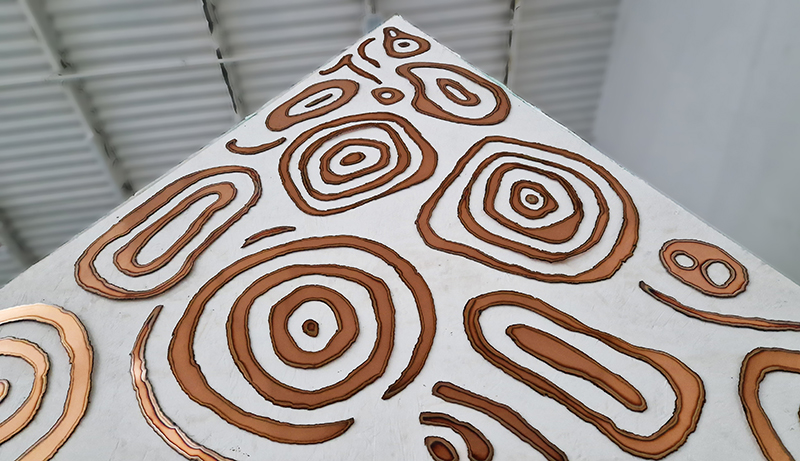
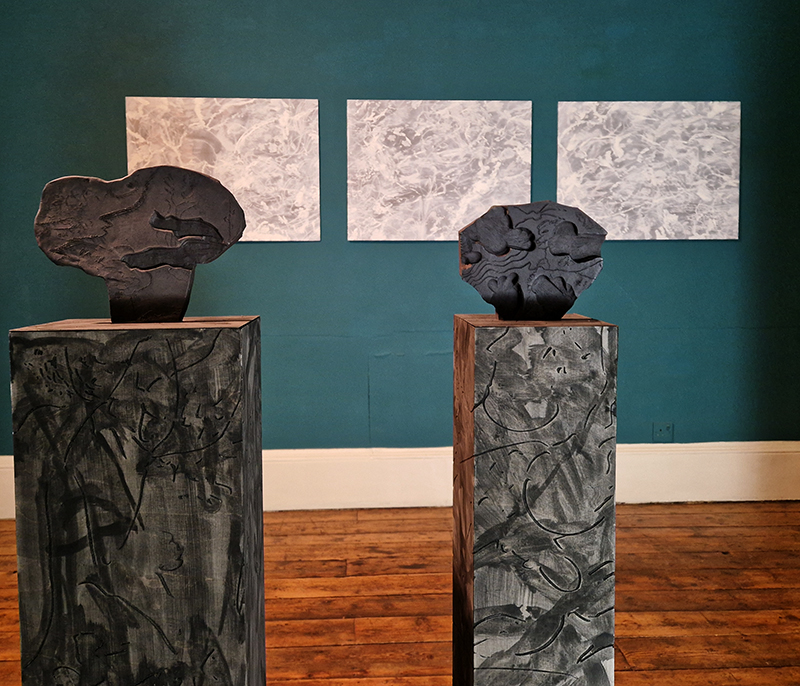
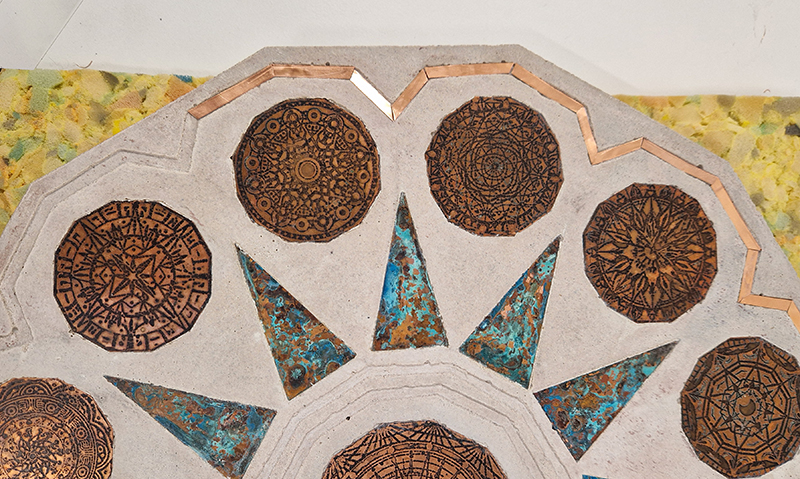
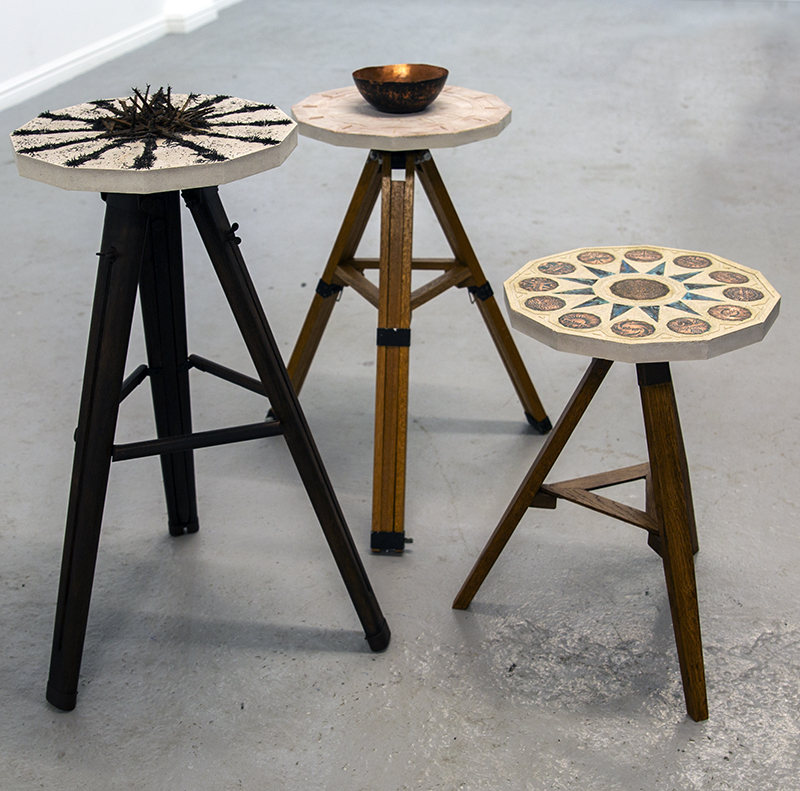
I have started work on inserting copper segments into the new sculpture for the Instruments of the Anemoi series. The other larger pieces of etched and patinated copper were added at the time of casting, held in place with tape and hope when the concrete was poured into the mould. This series of sculptures are suggestive of the pedestals that support various instruments used in monitoring the Earths’ magnetic field but are envisaged here as speculative objects used by the wind gods as the first emissaries of navigation.

I am still battling with writing text for The Book of Reversals, an artist book that responds to the record of Earth’s magnetic field reversals being written in bands of minerals on the ocean floor.
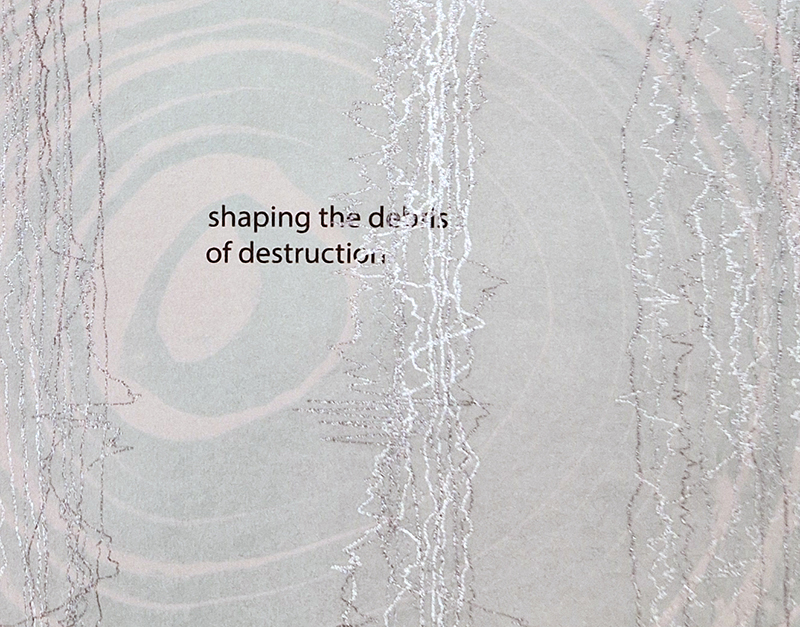
The crisp crust fractures / Fragments slide across a viscous veneer

Submarine mountains tower / Ocean trenches gape

Tectonic plates subduct / melting into the mantle 

Deep time traces are consumed / surfaces ceaselessly reformed

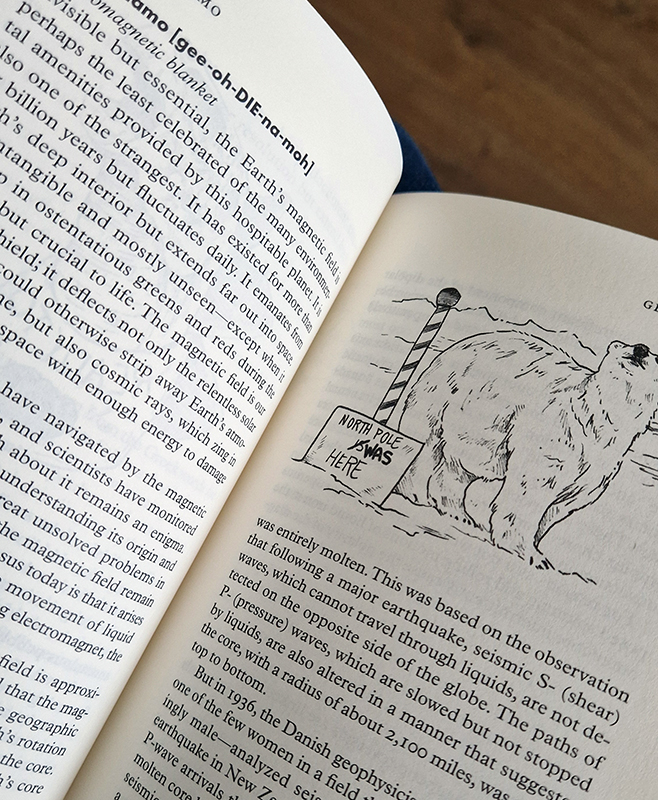
The Earth’s magnetic field has been a fascinating mystery for many hundreds of years and Gillian Turner’s book North Pole, South Pole recounts the stories of those who sought to solve its origin and mechanism. Something I hope to look at in more depth is how pottery and bricks preserve the direction of the magnetic field in their minerals during the process of firing which heats and then cools the clay – the same process that occurs in a lava flow. Iron-bearing minerals (like magnetite) in clay become “magnetic” when heated in a kiln. As the pottery cools, these minerals lock into the Earth’s magnetic field direction and strength at that time. The study of the magnetic properties of ancient pottery, known as archaeomagnetism, has been used to make records of the inclination of the magnetic field from past millennia. Inspired by these studies of manmade artefacts to determine the historical position of the north magnetic pole, physicists Bernard Brunhes and Pierre David took samples from exposed lava flows and their underlying clay in central France. In 1906 they came to the astonishing conclusion that about six million years ago the magnetic field seemed to point in the opposite direction, the first indication of magnetic field reversals.
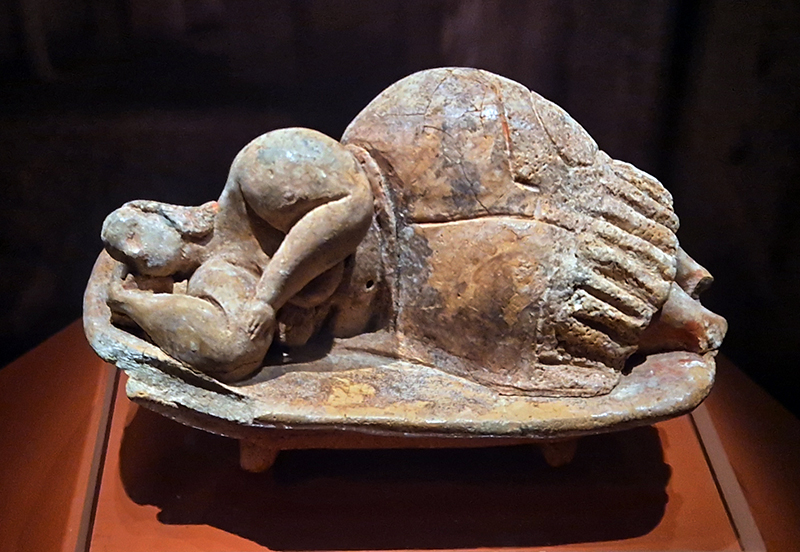
Also with thanks to Gillian Turner’s book North Pole, South Pole I have learnt that there were early hydrogen balloon ascents to determine if the Earth’s magnetic field intensity varied with altitude, helping to decide if the magnetic field came from within the Earth or was extra terrestrial. In 1804 Jean-Baptiste Biot and Joseph Louis Gay-Lussac made a pioneering ascent to 4,000 feet (1.2km). In Turner’s book she writes that the dip needle necessary to take the measurements iced up and so the results were unreliable. I feel for them, but it seems they conducted many other experiments on temperature and gases in the atmosphere while aloft and in any case we now know they would have needed to ascend many kilometres higher than they achieved to notice any weakening in the magnetic field.
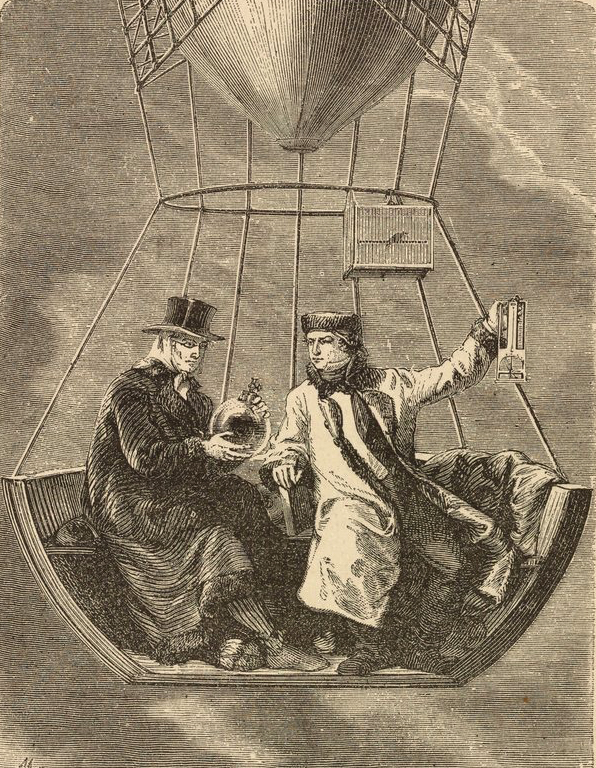
This plate is from John Howard Appleton’s (1844-1930) Chemistry, Developed by Facts and Principles Drawn Chiefly from the Non-Metals, published in 1884.

I am trying to remember when I first had the idea to launch a cloud chamber in the payload of a high altitude balloon. I knew about the hot-air balloon experiments carried by Victor Hess to determine the origin of cosmic radiation, and his discovery in 1912, when he made an ascent to over 5km during a near-total eclipse of the Sun, that radiation had to be coming from further out in space.
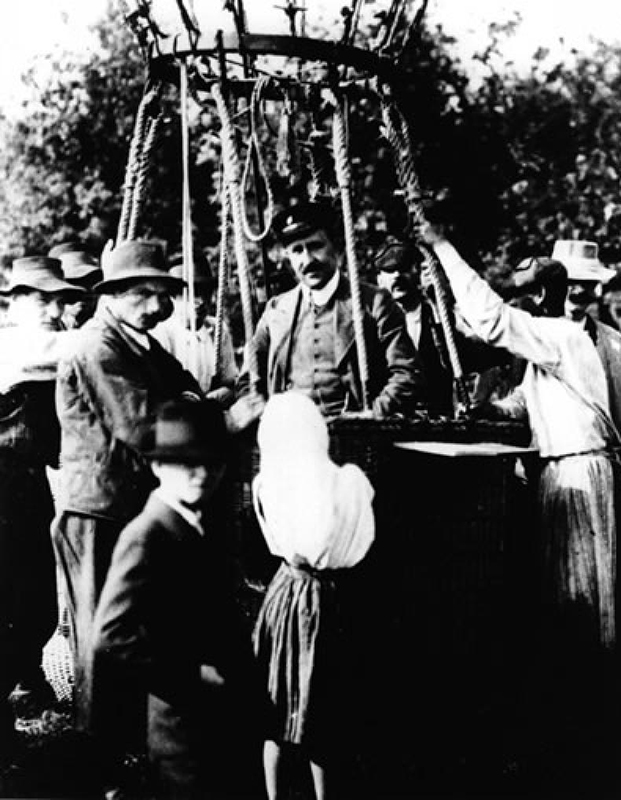
Hess on his return from the 1912 balloon ascent – Alan Watson pointed out that this was obviously staged at another time as he would not have been standing looking so well after his ordeal.

I remember looking into the dark skies during a residency at Allenheads Contemporary Arts and wondering about all the activity that I couldn’t see. I decided then I would like to film at 15km where most subatomic cosmic ray activity takes place, even if nothing would show on the film.
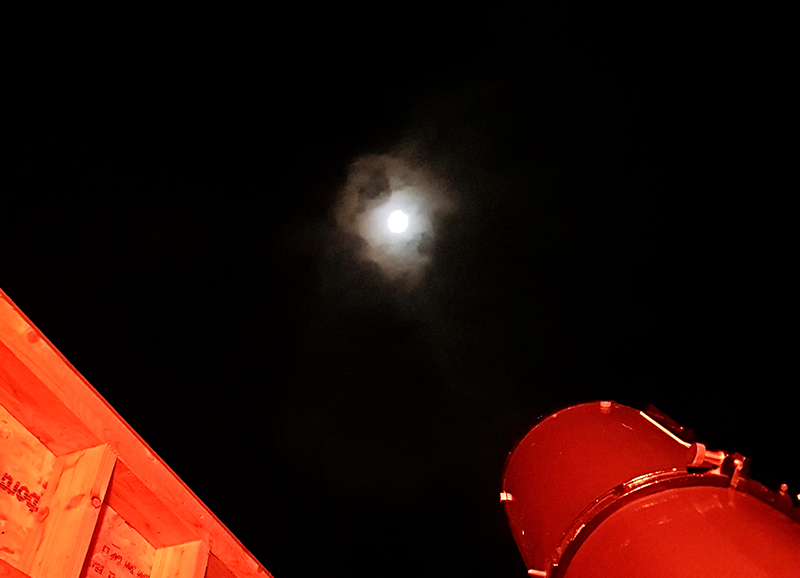
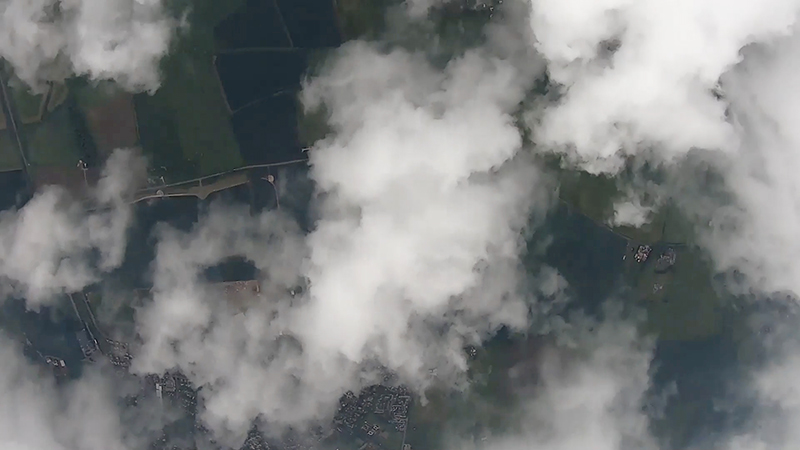
A high altitude balloon flight seemed the perfect solution and I was very grateful for the help I subsequently received from Imperial College Space Society and The UK High Altitude Society. The decision to include a cloud chamber in the payload was always a risk and as it turned out nothing of the cosmic ray activity was captured on film. However, the balloon did reach an altitude of over 37km and the payload was successfully recovered with some amazing video footage of its journey.
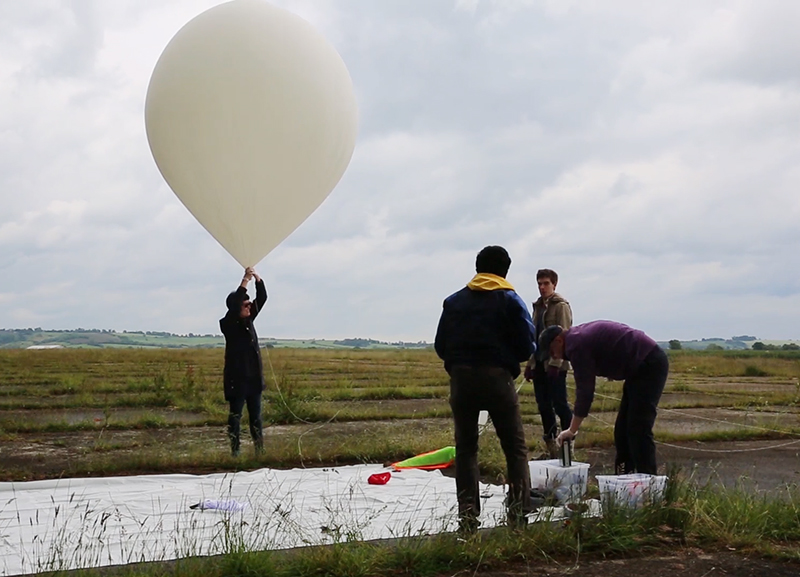
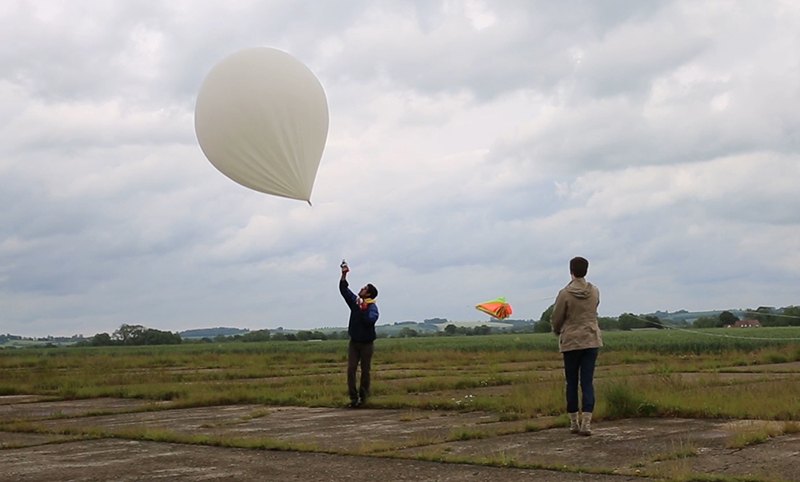
The record height for a hot air balloon ascent is 21km so in theory it could be possible to send a cloud chamber up in a hot-air balloon and film at altitude with potential for more success if some brave person were on board to operate the camera. Unlikely to be me.
Some intriguing news of ORC’s on the RAS websiteThe most distant and most powerful ‘odd radio circle’ (ORC) known so far has been discovered by astronomers. These curious rings are a relatively new astronomical phenomenon, having been detected for the first time just six years ago. Only a handful of confirmed examples are known – most of which are 10-20 times the size of our Milky Way galaxy. ORCs are enormous, faint, ring-shaped structures of radio emission surrounding galaxies which are visible only in the radio band of the electromagnetic spectrum and consist of relativistic, magnetised plasma. the three new cosmic rings – discovered not by automated software but by sharp-eyed citizen scientists – represent an important step toward unlocking the secrets of these vast, puzzling structures.

Out and About

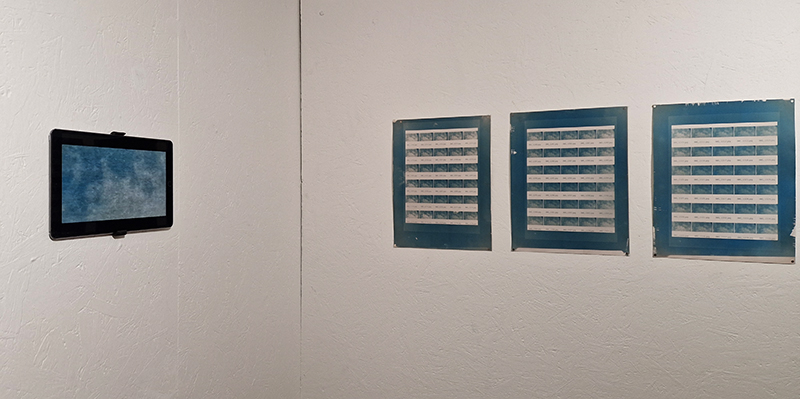
A wonderful evening with artist in residence Melanie King at Passengers connecting the celestial with the architecture of the grade II listed Brunswick Centre in Bloomsbury, London. Melanie used the residency opportunity to explore the duotone cyanotype process using multiple layers of cyanotype to mimic astronomical imaging construction and even used cyanotypes to create an of the Moon. The beautiful results were presented at an evening event with the additional treat of live telescope viewing of the Moon and Saturn from the second floor terrace of the Brunswick centre under the engaging guidance of astronomer and science communicator Paul Hill.
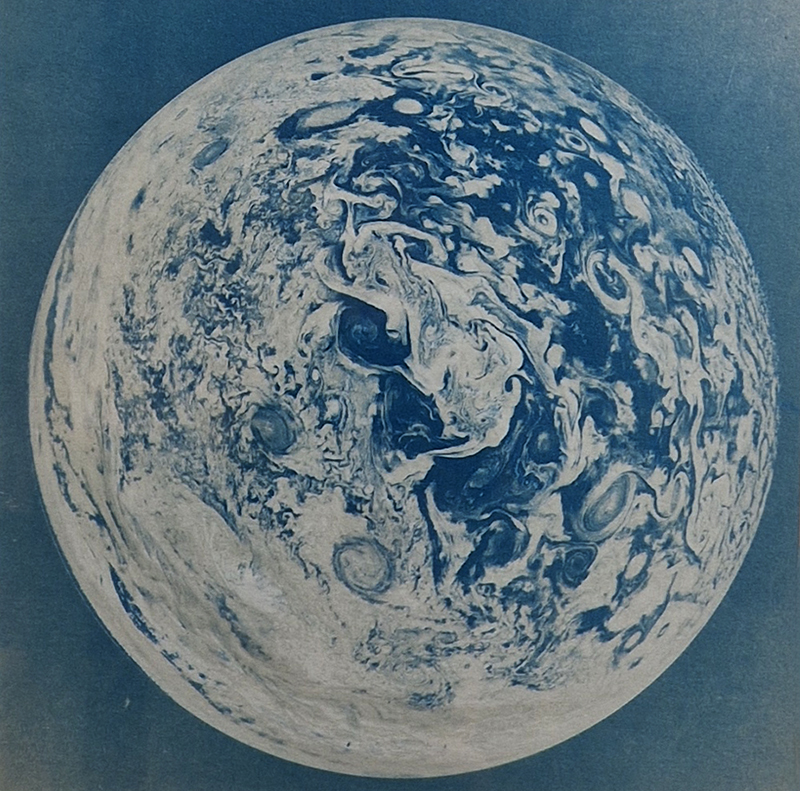
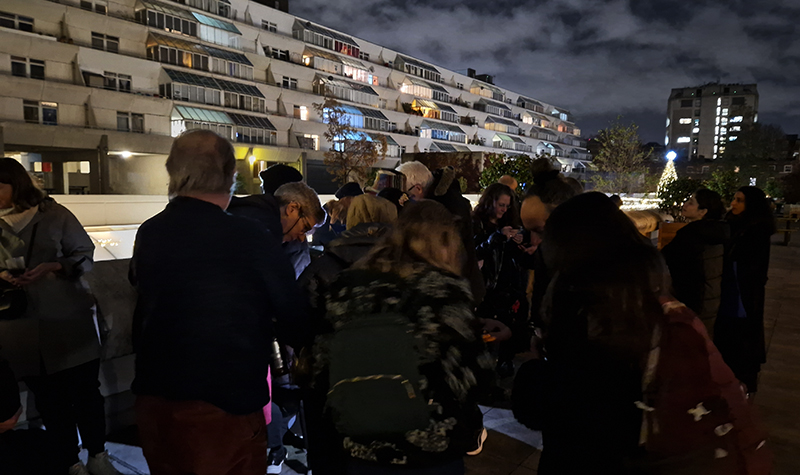
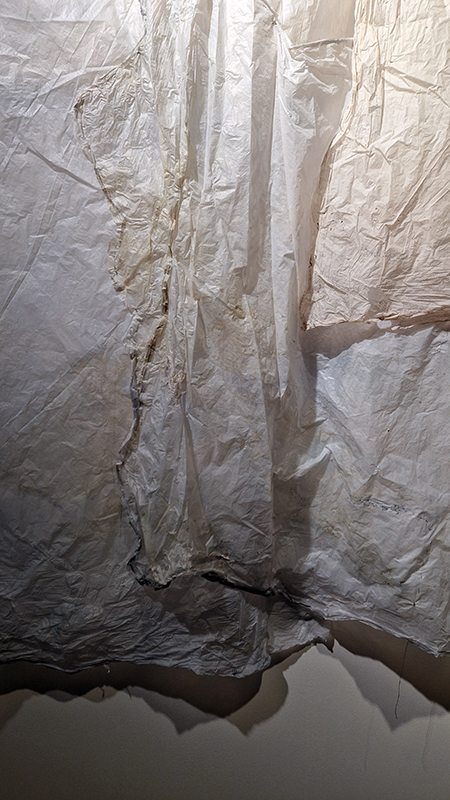
Liz Elton’s sensitive work Black and Blue (compostable bio materials, cabbage and fruit dye saddened with iron, silk, poppy and sage seeds) showing in A Changed Environment at Messums London. This group show examines changing ideas of beauty, ecology, and sustainability, as well as themes of place, memory, and identity, revealing how connections to the natural world can inspire both understanding and hope. I love the delicacy of this new work and the term ‘saddened by iron’ which is used in the dying process to dull a colour, and which, as Liz says, also emotes the hardships of industrial life.

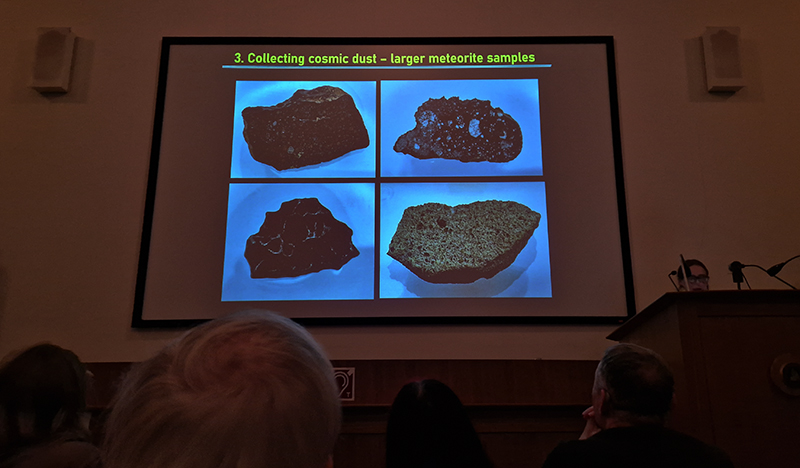
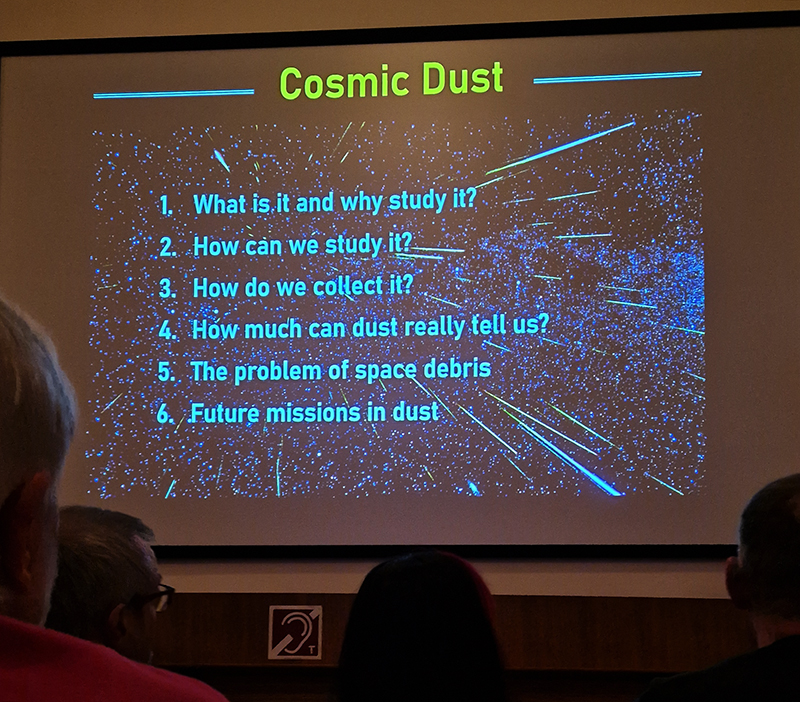
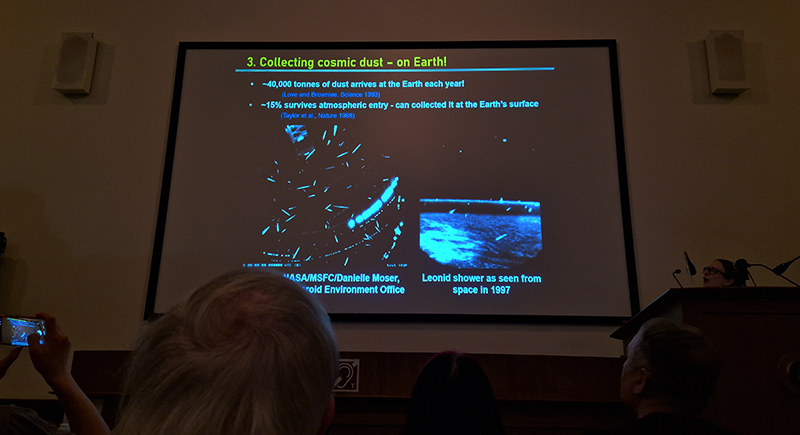
Cosmic Dust talk by expert on extraterrestrial space dust, and how it can impact astronomy and wider human endeavours in space, Penny Wozniakiewicz at The Royal Astronomical Society. ‘Natural’ cosmic dust is being polluted by man made dust from space debris. This is a real problem created by dead satellites, old upper stages of rockets, fragments form exploded rocket or stages, flecks of paint, aluminium oxide spheres from solid rocket burns, dropped space equipment. When any of this debris collides a cloud of smaller debris is ejected, this process is self propagating and even the tiniest piece of debris can cause serious damage to spacecraft and satellites. This is called the Kessler syndrome, a cascading effect that could render orbital space unusable for generations, threatening satellites, the International Space Station, and future space travel.
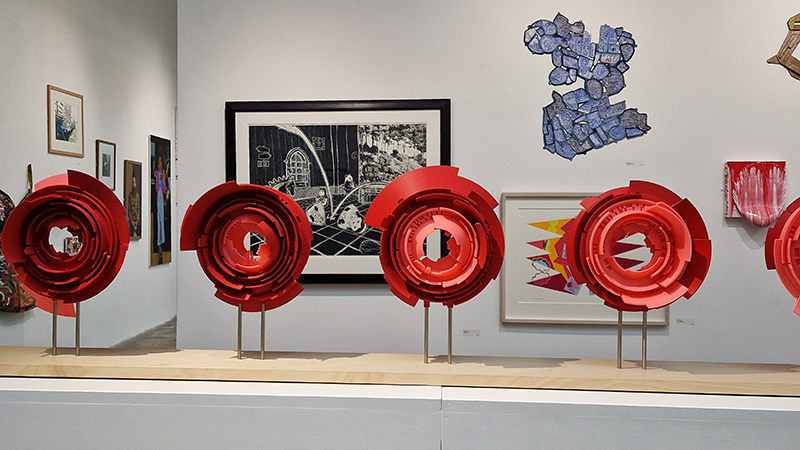
Good to visit the The London Group show 2025 at Copeland Gallery where lots of friends are showing excellent work and also to discover new work and artists.

I found Majid Majid’s video Faith Amongst The Ruins a difficult but compelling work. So scary and horrific because we know this is real footage, some of which I had seen before at the time of the attacks on hotels housing asylum seekers and refugees, but it is still so disturbing to watch these people, with so many children present, cheer on the violence. They have no empathy with the terrified people trapped inside the hotel or for the person in the car who is ambushed and stabbed. The glee of those filming the assault is chilling.

He writes: “As a refugee, I know places shaped by fear and rejection. This work revisits UK sites of last summer’s Islamophobic and racist violence, a mosque, a street, and a hotel housing asylum seekers transforming them through prayer. Placing a mat where hostility flared, I reclaim space as sacred ground. Video and traces of violence form a counter-narrative of dignity, belonging, and resilience.”

Images: Majid Majid, Sayako Sugawara, R James Healy, Victoria Rance, Jonathan Armour, Sandra Crisp, Jenny Wiggins, Victoria Arney, Carol Wyss, Sandra Crisp, Genetic Moo, Jacqueline Yuen-Ling Chiu.

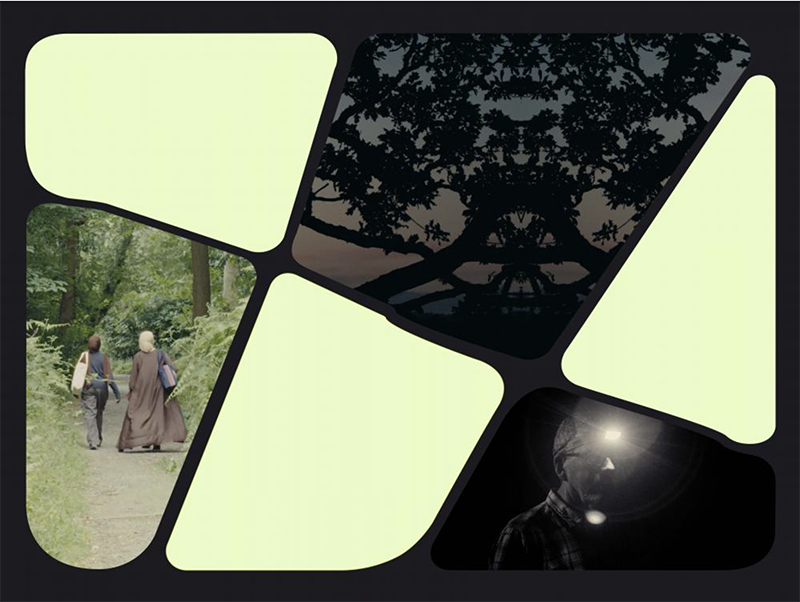
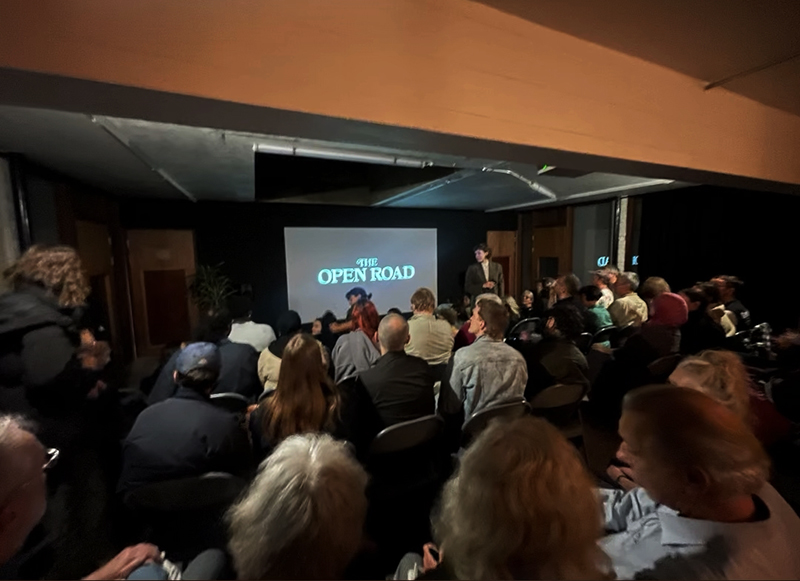
Three beautifully directed films screened at FormaHQ as part of The Open Road series of artists moving image works, co-commissioned by a partnership of visual arts organisations. The works are loosely inspired by The Canterbury Tales, drawing from a disparate cast of characters to recount competing stories in a patchwork of styles. David Blandy (Commons), Amaal Said (Open Country) and Sam Williams (The Eel’s Tale) each draw on storytelling traditions to give fresh perspectives on their journeys, on foot, by sea and through time. Heartbreaking to hear how terrified Amaal Said was to leave London for the open country of the south coast, especially with the current rise in overt racism, when out looking for locations and that they did suffer racist abuse while filming. Hers is a gentle and warm study of a mother and daughter and an absent grandmother, a longing for home and to feel ‘at home’. Sam William’s film sets the plight of the highly endangered glass eels who journey 4,000 miles from the Sargasso Sea to the Medway wetlands in Kent, swept along by currents, undergoing bodily transformation, following an instinctive desire on this epic migration alongside two other watery tales of transformative journeys across boundaries of identity and freedom. Coincidently, a recent episode of the Infinite Monkey Cage is all about these mysterious eels. David Blandy turned his attention to the vast and disparate collection of artefacts held in the Tunbridge Wells museum and gave some of these specimens a voice to tell of how they had lived before they became a part of this collective of human taxonomy.
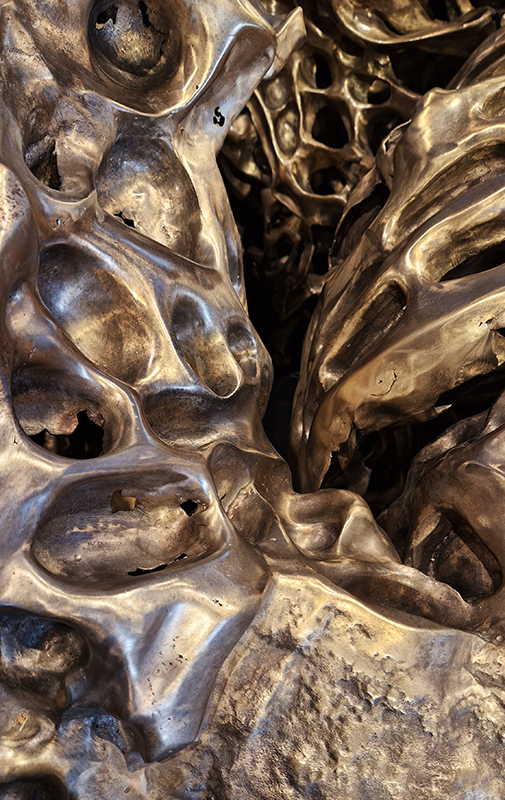
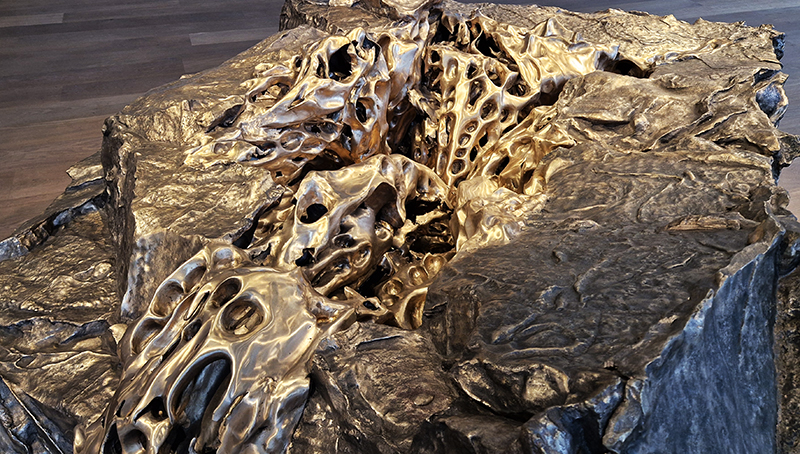
Cristina Iglesias The Shore at Hauser & Wirth features large-scale bronze works from the artist’s Littoral (Lunar Meteorite) series, part of her ongoing exploration of geological themes. The word ‘littoral’ refers to something relating to or situated along a coast or shore, or the region where the land meets the water. The weightiness of the objects is impressive ( I can’t imagine how they were brought into the gallery even with the technology available today – after coming here from the talk on stone henge and the incredible feat of bringing the standing stones across rough terrain for many kilometres and up a slope 5000 years ago seems even more impossible – yet there they are). The sound of water bubbling within each piece draws you to peer within and stay with the piece perhaps longer. The audience is invited to touch the sculptures. The bronze is polished and does need to be used and worn away in a more effective organic and dirty process. They are very clean.
The Royal Astronomical Society lecture Sighting the Sun and Moon? at Stonehenge – by Archaeoastronomist Prof. Clive Ruggles. Debunking many myths and overspeculation, concerning the use of the monument for observations of the sky the professor was clear about what can sensibly be said about the relationship of Stonehenge to the Sun, considering the conventional archaeological evidence that has been uncovered in recent years. He also recommended visiting the day before or after the actual solstice if possible for an experience without the many crowds as the alignment is almost identical. Also visiting at sunset can be just as magical and quieter. He turned his attention to the Moon, questioning if our prehistoric forebears also celebrated the occurrence of a major lunar standstill, an event occurring every 18.6 years around which time the Moon can be seen at fortnightly intervals exceptionally far to the north and south.

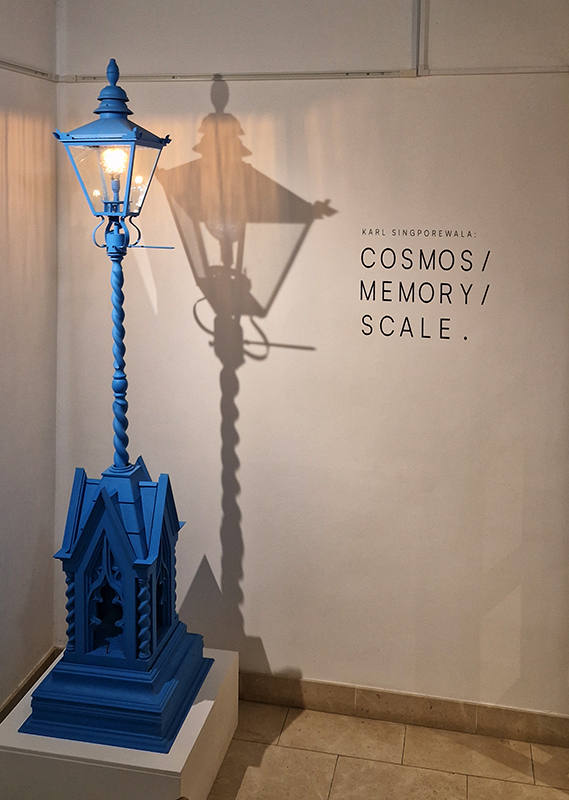
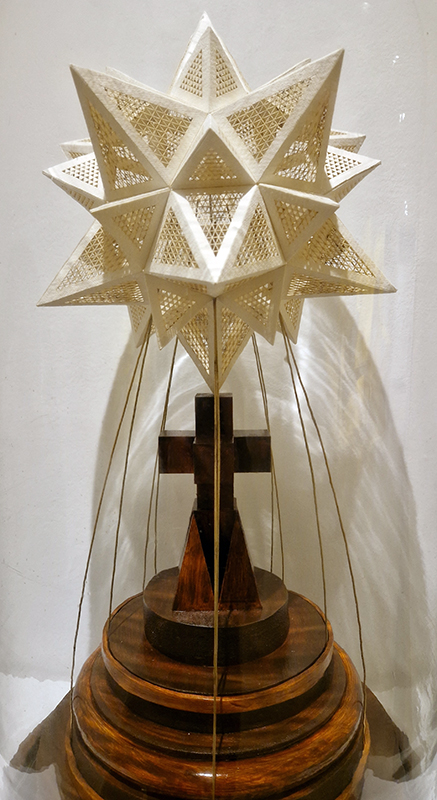
Karl Singporewala’s sculptural interpretations of Zoroastrian symbolism in Cosmos, Memory, Scale at SOAS Gallery convey a meditation on how material and memory intersect to shape the human experience. Cosmos speaks to both his fascination with astrophysics together with a metaphysical belief in the alignments of life. Stars and geometric forms recur as motifs, refracting both spiritual navigation and mathematical structure. Memory is treated as a living, shifting phenomenon. Inspired by oral tradition, family stories and inherited rituals. Scale, is used both literally and metaphorically in shifting perspectives and unexpected relationships. Good Thoughts, Good Words, Good Deeds.
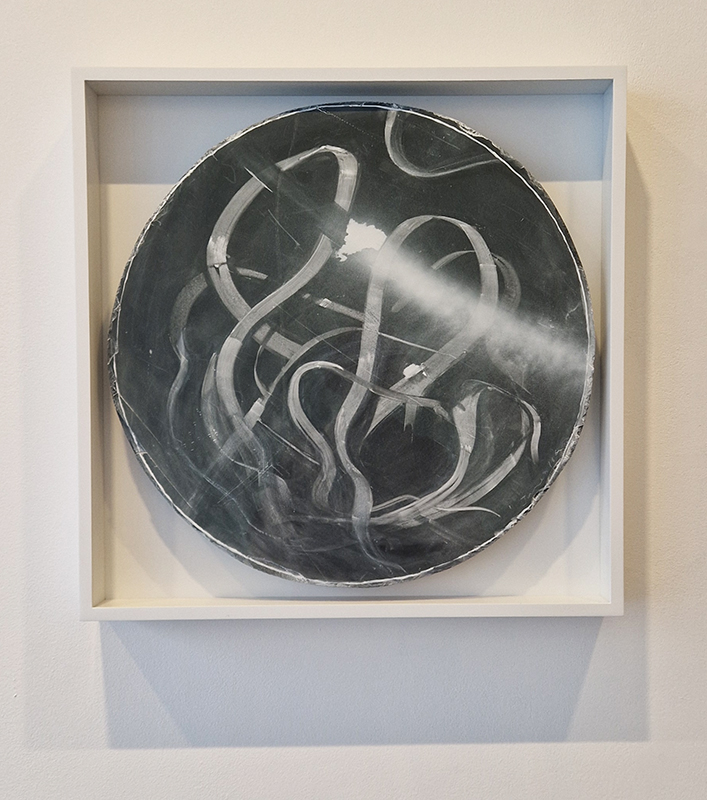
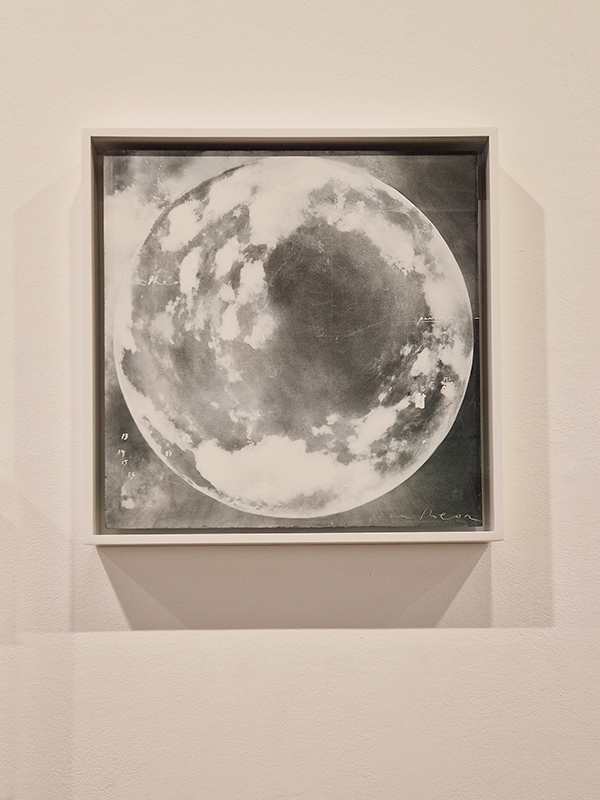
Dusty, chalky mythical drawings and solar eclipse traces from Tacita Dean in Black, Grey, Green and White at Frith Street Gallery Golden Square.
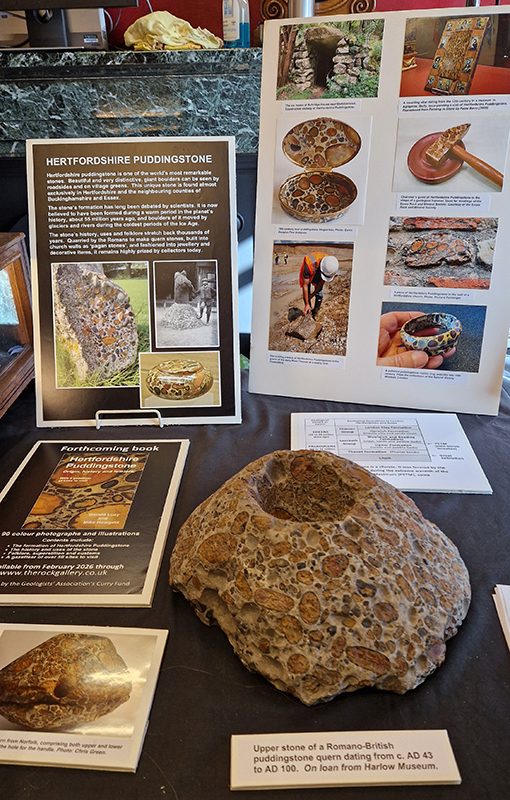
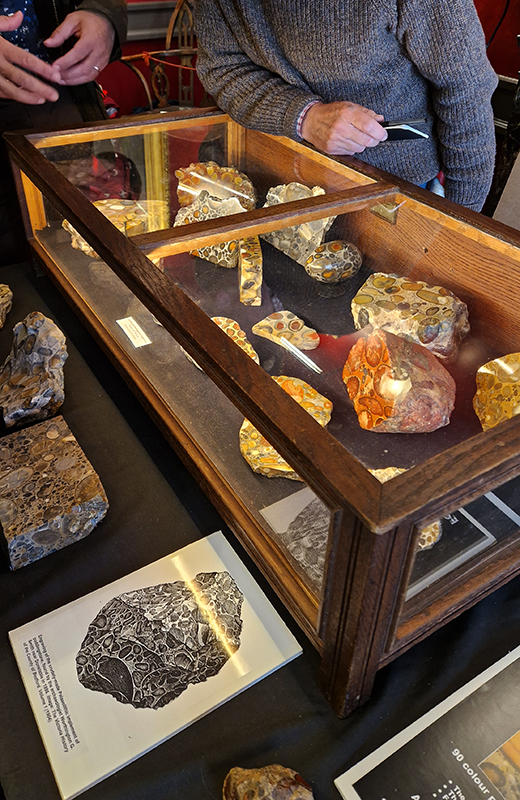
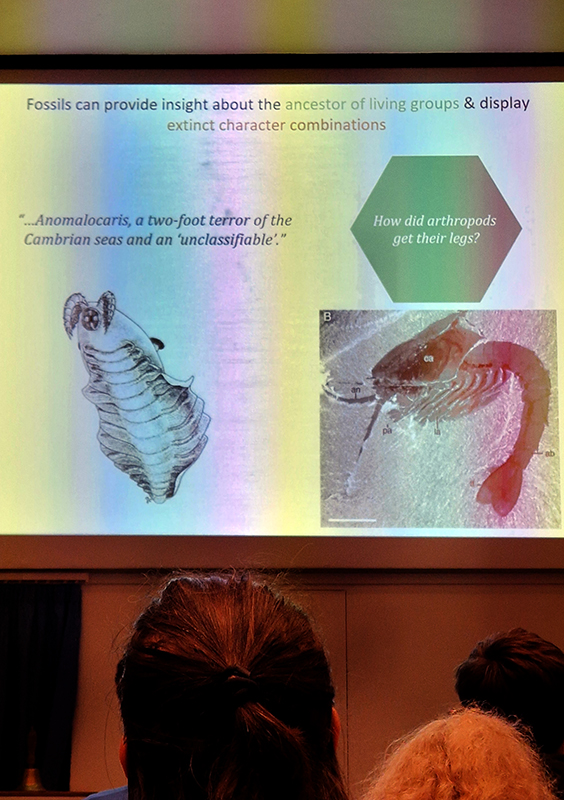
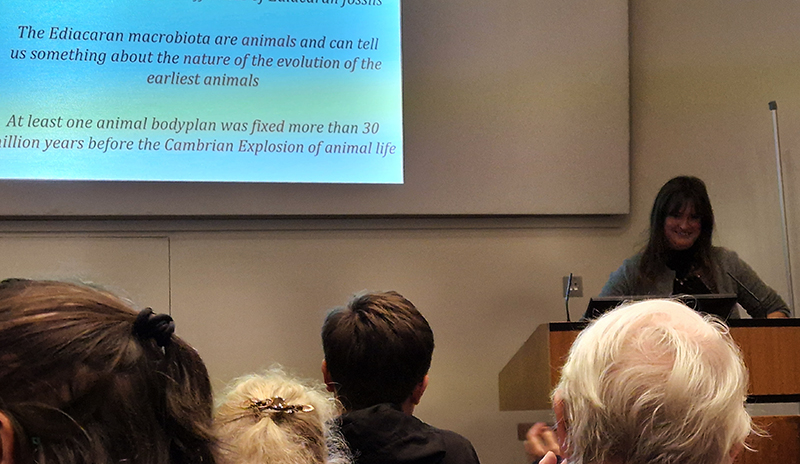
I spent a happy morning at the Geologists Association Festival of Geology 2025. This included a fascinating lecture The Early Evolution of Animal Life by palaeobiologist Frankie Dunn focused on the origin and early evolution of animals and particularly on the fossil record of the late Ediacaran Period (approximately 570 – 540 million years ago) – just before the Cambrian explosion of life. The aim of her research is to understand how animal body plans evolved in deep time. There also was some amazing and unique pudding stone on display.
I also picked up a great little book full of wonderful geologically enriching words by Marcia Bjornerud.

‘A stone sky rotated above our heads’ – Italo Calvino, Cosmicomics

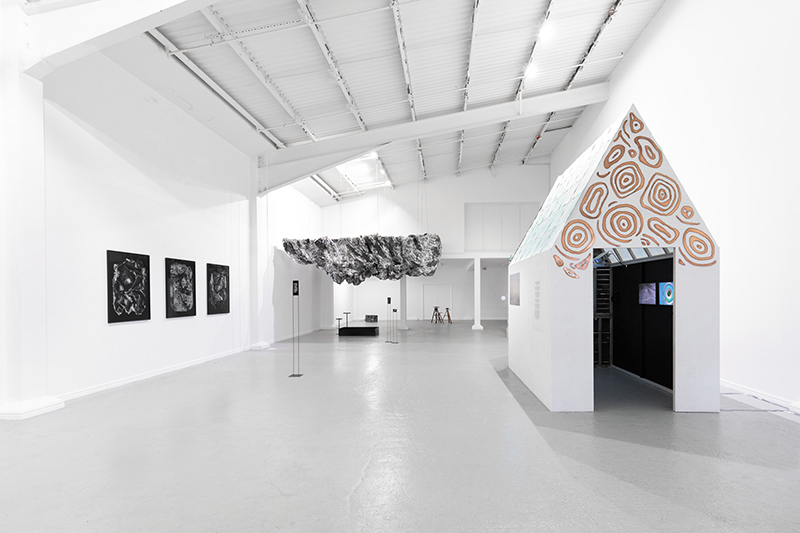
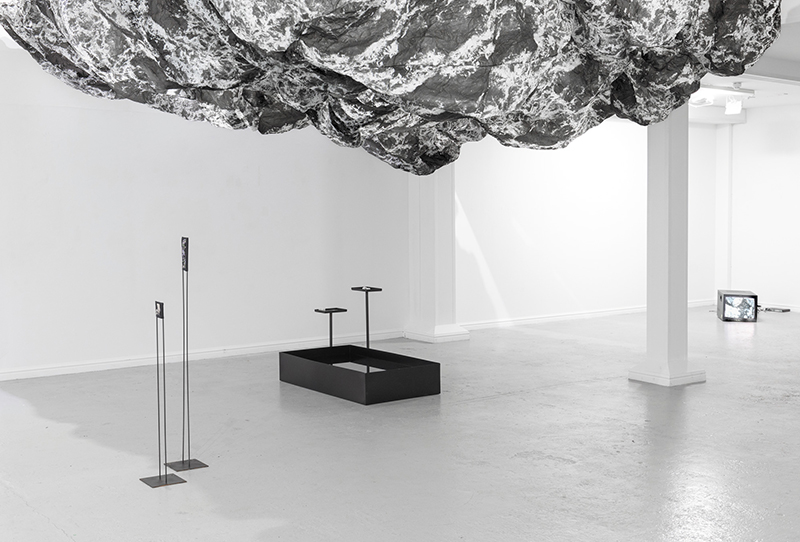
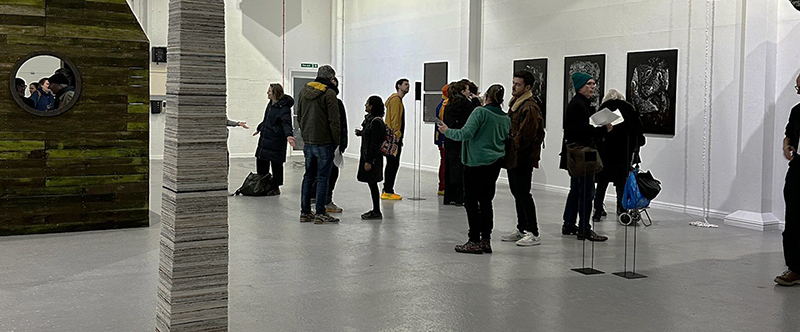
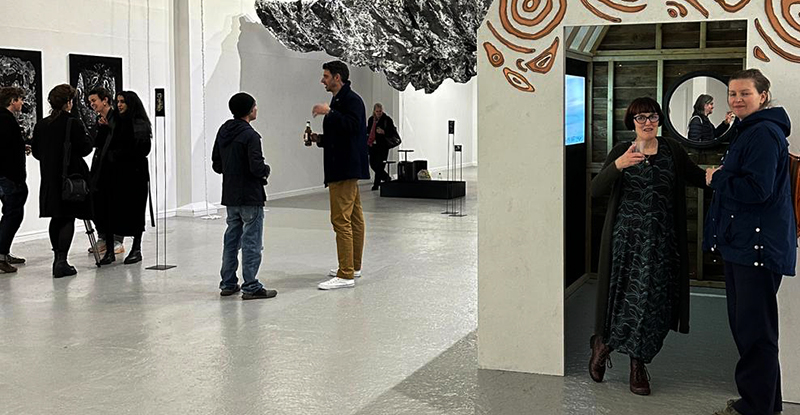
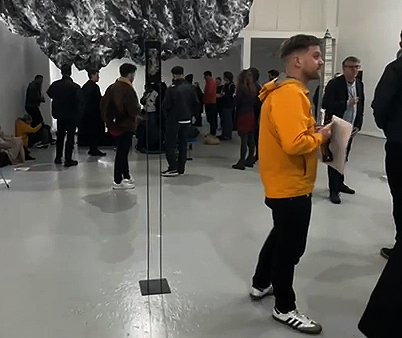
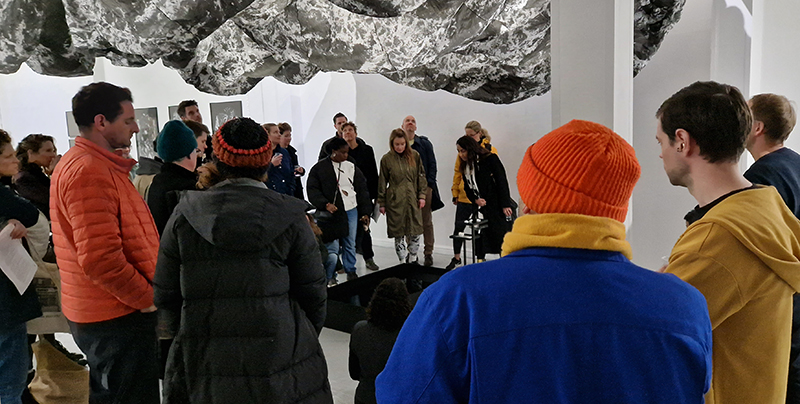
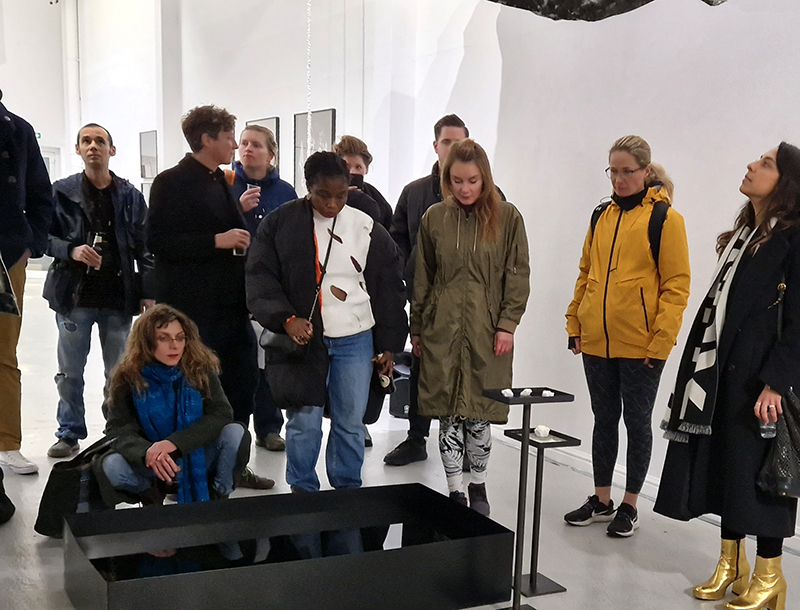
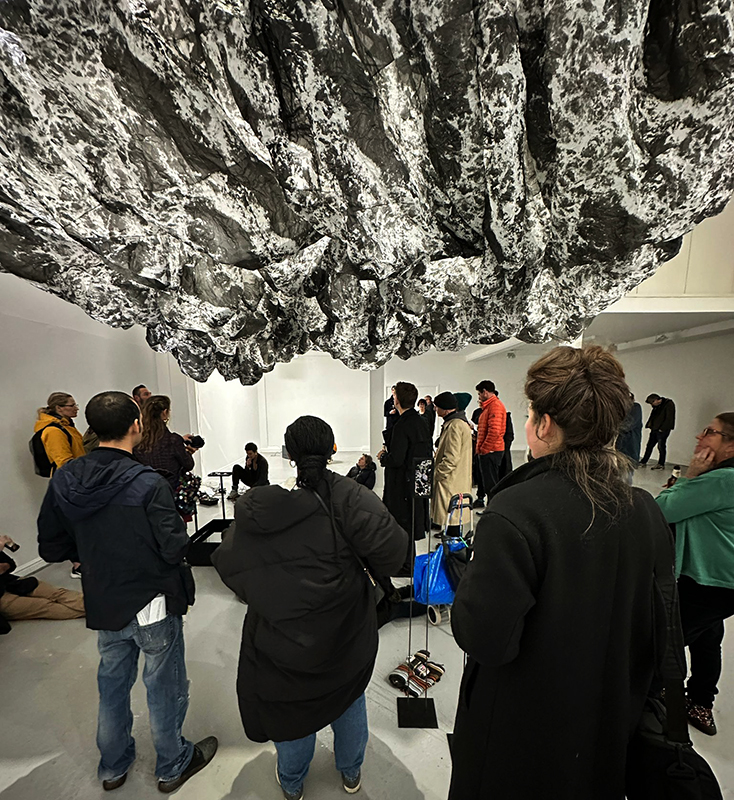
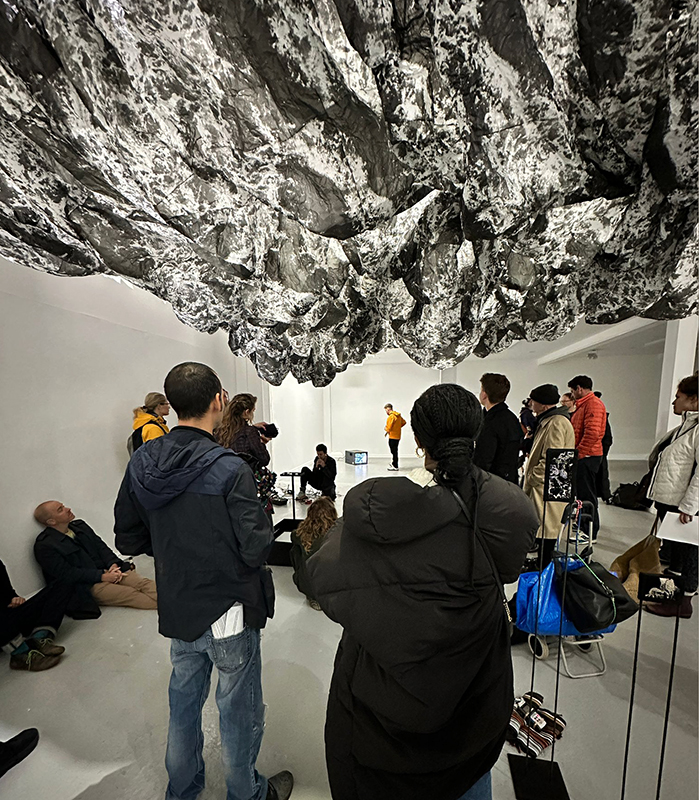
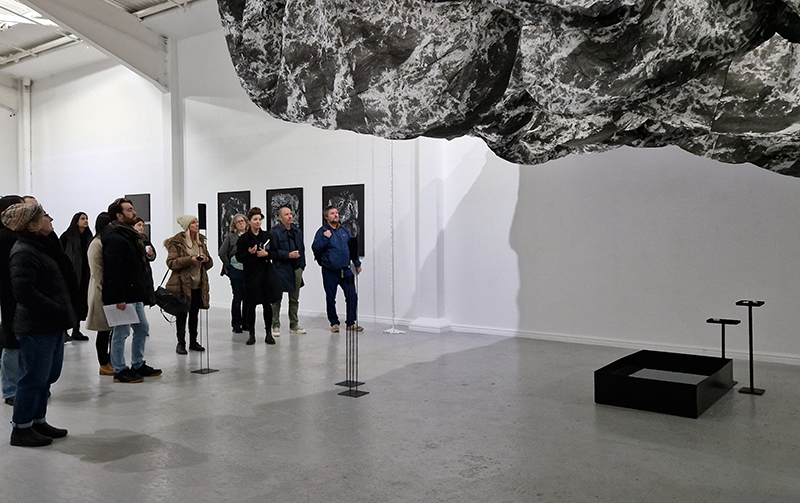
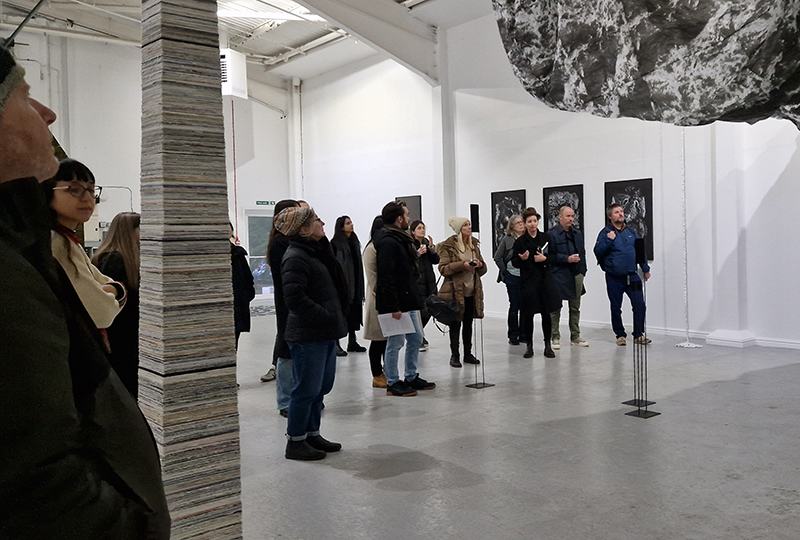
The culmination of two years work – A STONE SKY duo exhibition with Julie F Hill opened at Thames-side Studios GalleryReimagining the idea of an observatory – the exhibition proposes a cavernous realm of real and speculative possibilities that arise from beyond the limits of human perception. Engaging with the extended sensory range offered by technologies such as orbiting space telescopes through to the ability of birds to ‘see’ the Earth’s magnetic field, the artists’ reveal intimate connections between earth and space.

Installation shot by Ben Deakin Photography.

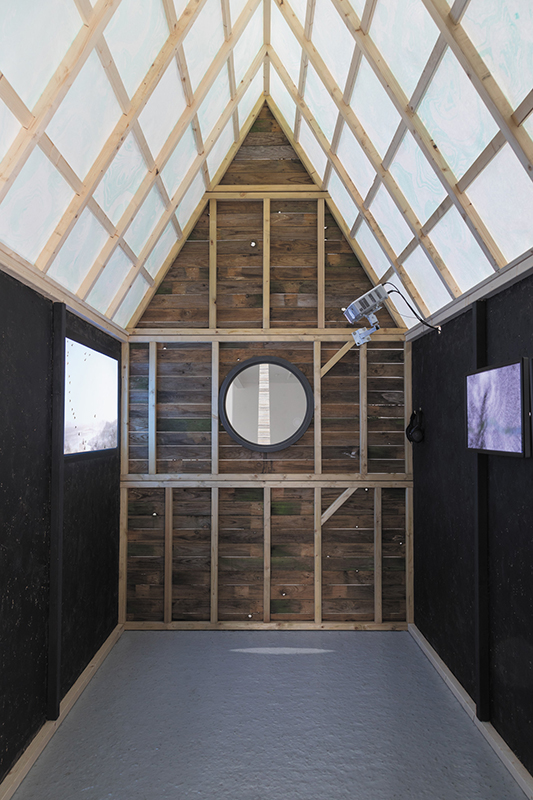
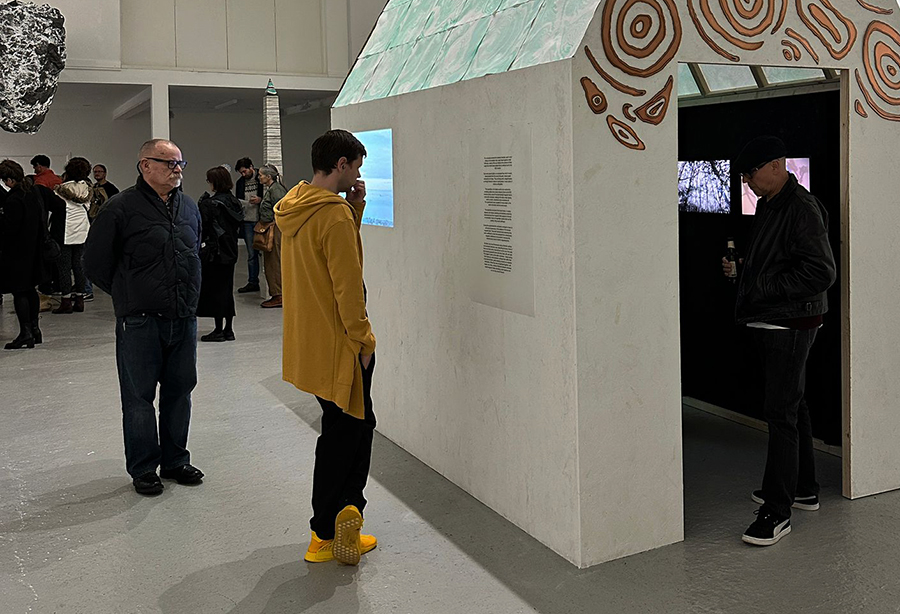
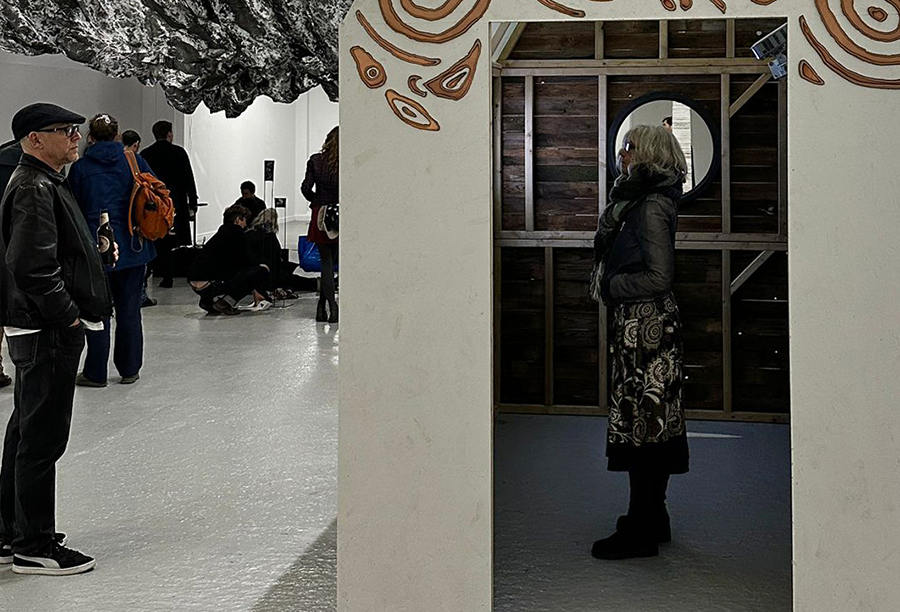
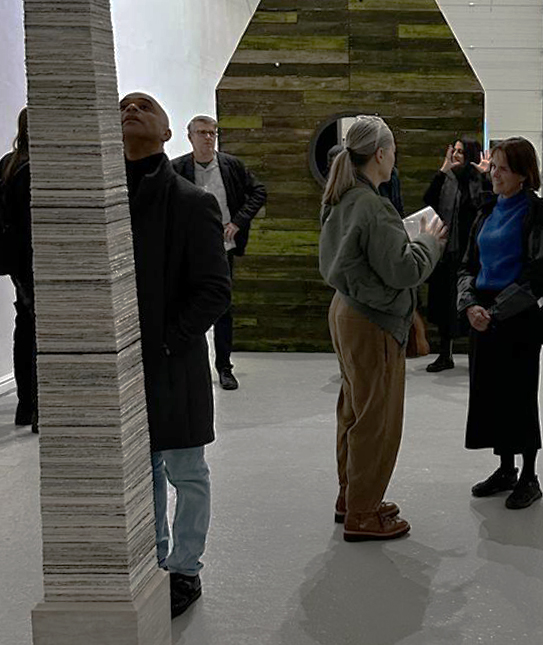
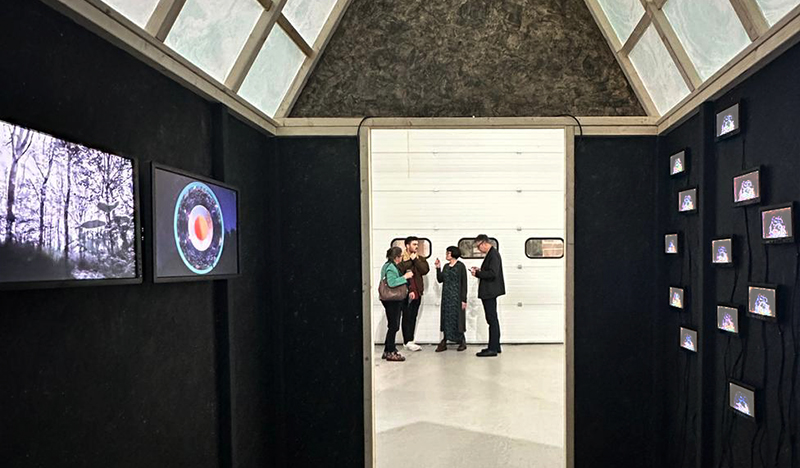
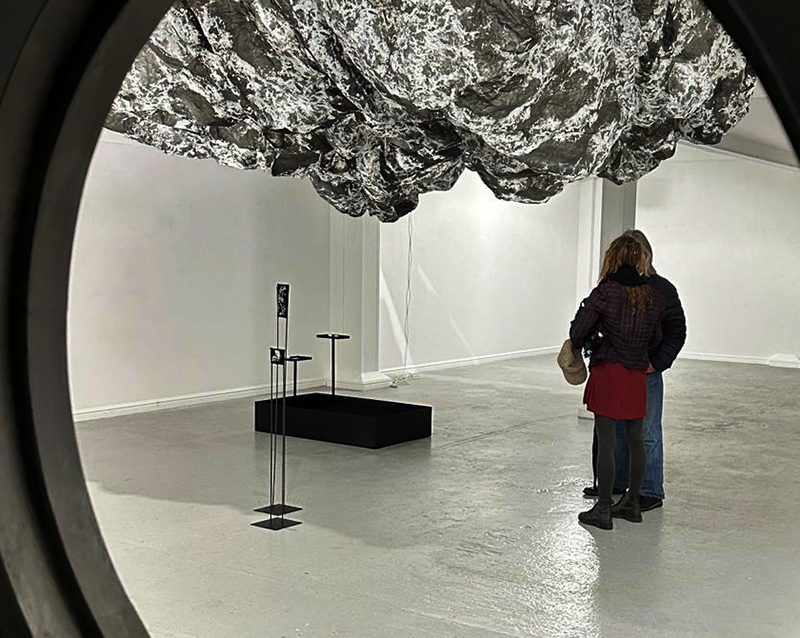
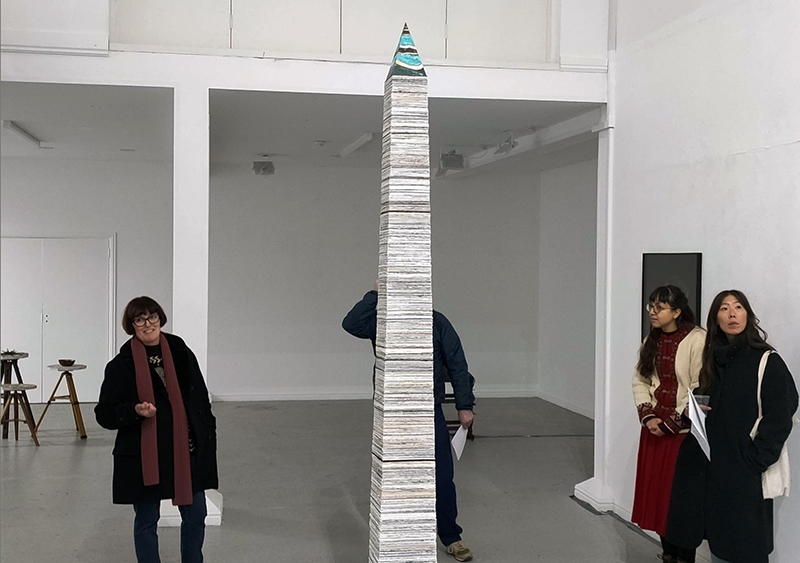
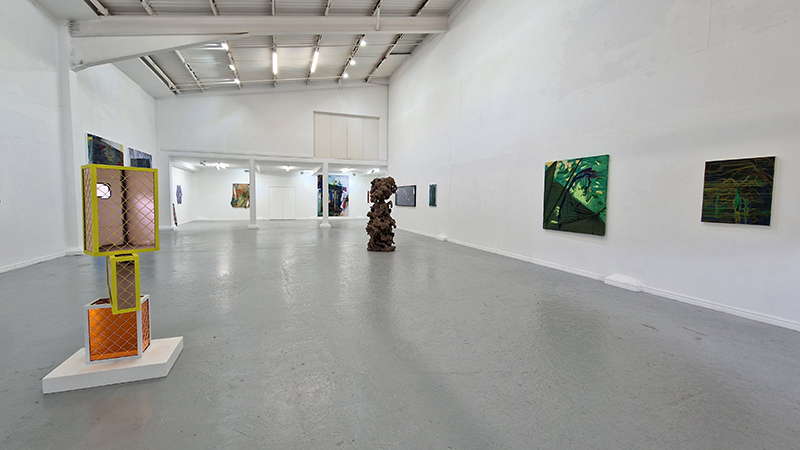
Susan Eyre seeks to navigate a path across time from the first human encounter with the magical qualities of the lodestone to current understanding of the interaction of the magnetic field with terrestrial life. Her works respond to the architecture, instruments and materials, found at a magnetic observatory while scientific objectives are expanded to include natural navigation techniques and extra-sensory methods used by the non-human realm, to form the basis of speculation as to the ability for humans to perceive the Earth’s magnetic field. Installation, sculpture and moving image works include a reimagined observation hut operating as a sensory hub with video screens suggesting portals into a web of neural pathways; an obelisk of layered recycled paper echoing Earth’s geological and magnetic history secreted in sedimentary strata of rock and a digital video work activated in real time by the passage of cosmic rays through a scintillator detector.

Images by Ben Deakin Photography

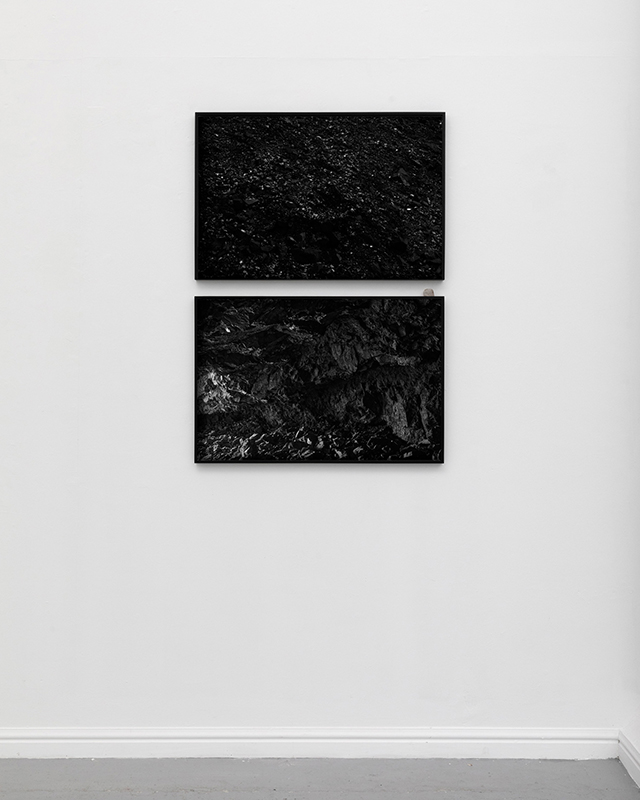
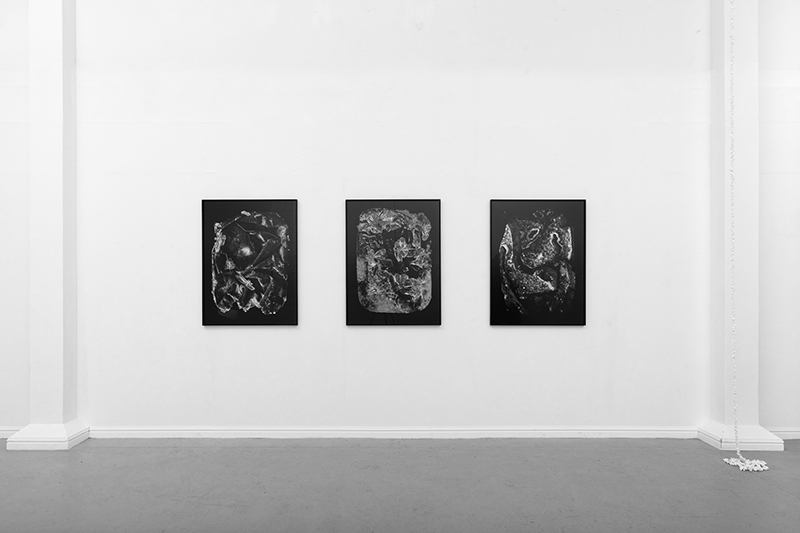
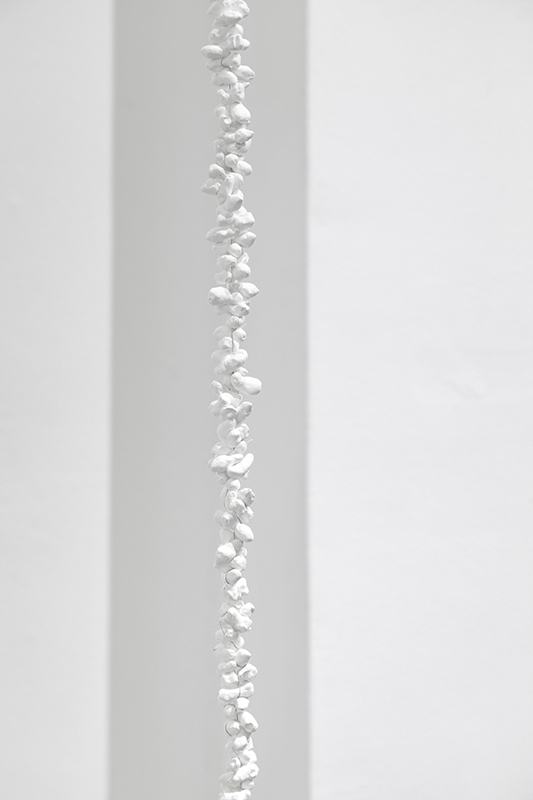
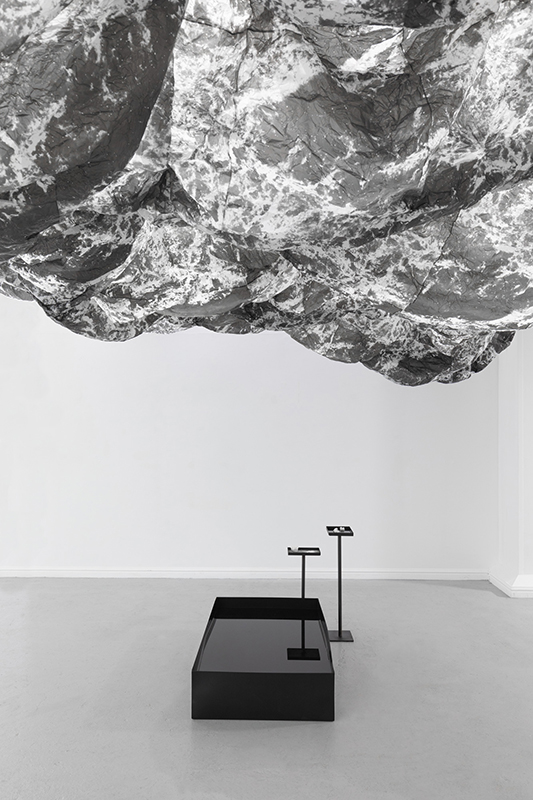
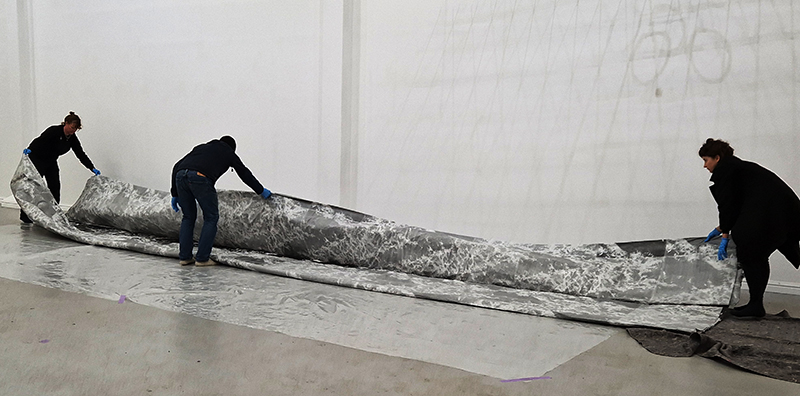
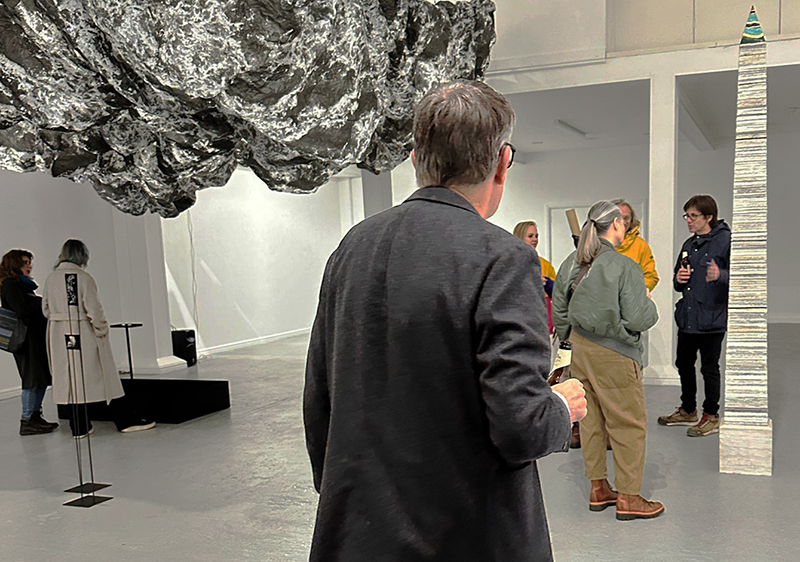
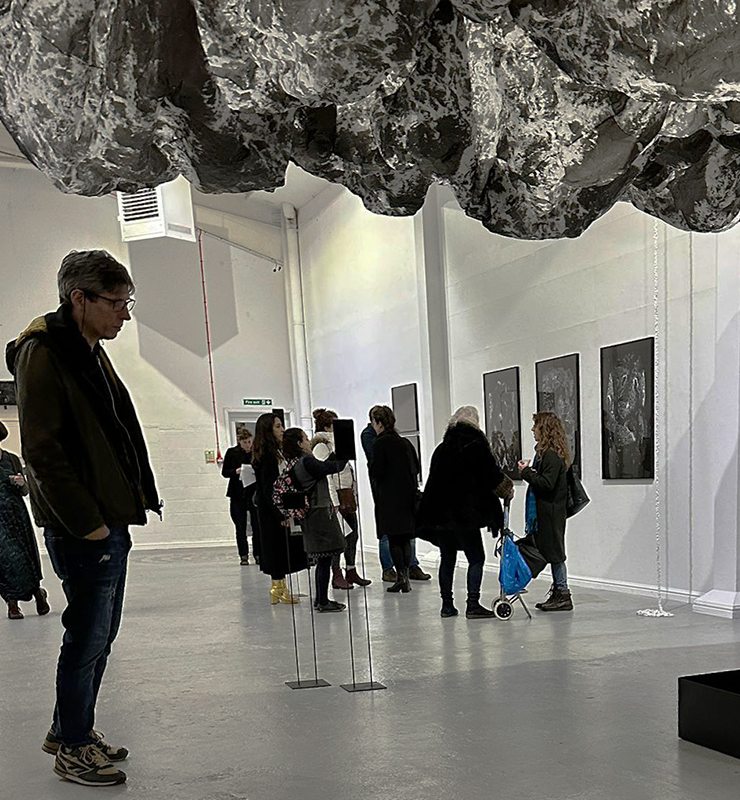
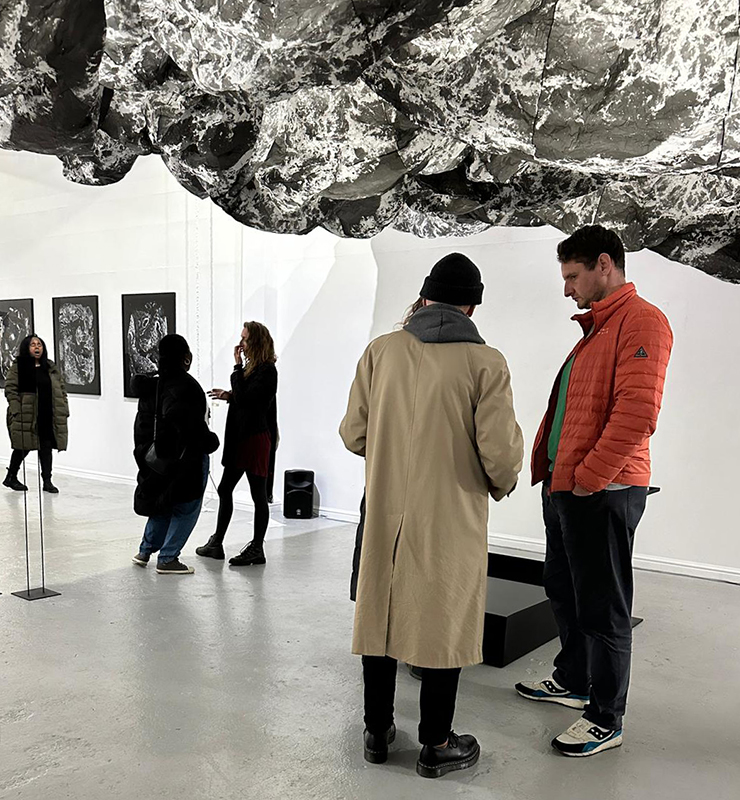
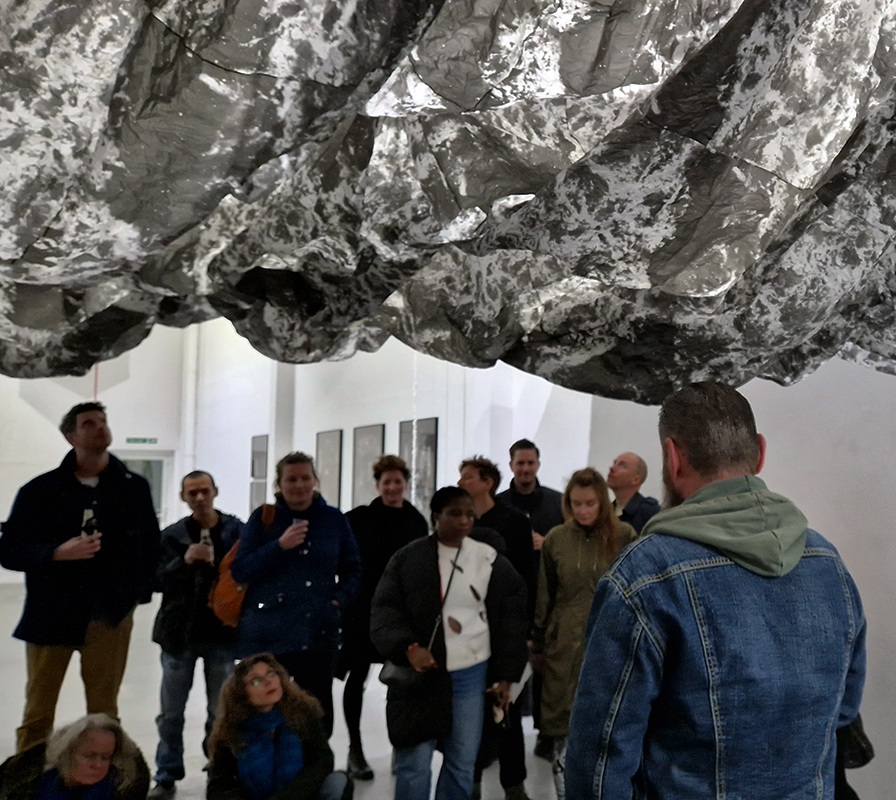
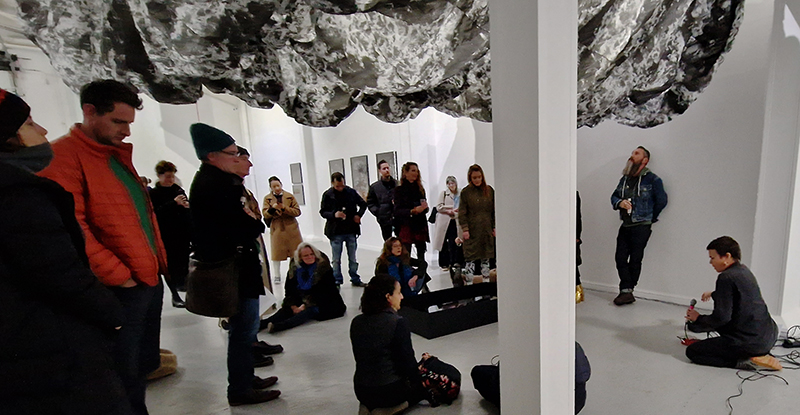
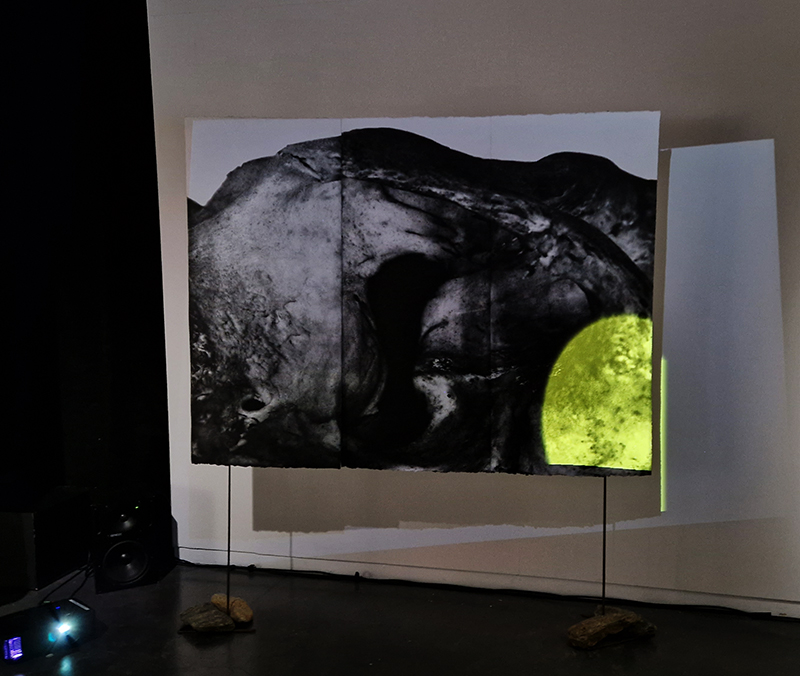
Julie F Hill explores the entwined darknesses of earth and cosmos. Crystalline and mineral substances from the deep earth fuse with astronomical data to suggest the deep-earth as an instrument for coming to know the cosmos. Crystalline and mineral substances formed in the continuum of deep earth and deep space allow us to peer back into cosmic time, both through the technologies created with them and the geological record they hold. Whilst darkness often indicates uncertainty and lack of knowledge, Hill asserts that it’s through darkness when we can be most perceptive to the interconnectedness between earth and cosmos. Through it we are able to extend our kinship with the inorganic and expand consciousness of what constitutes nature. Works include a large-scale sculptural print installation made from James Webb Space Telescope data that is reworked into a cavernous space, providing an experience of intimate immensity alongside more smaller sculptural and photographic works.

Images by Ben Deakin Photography

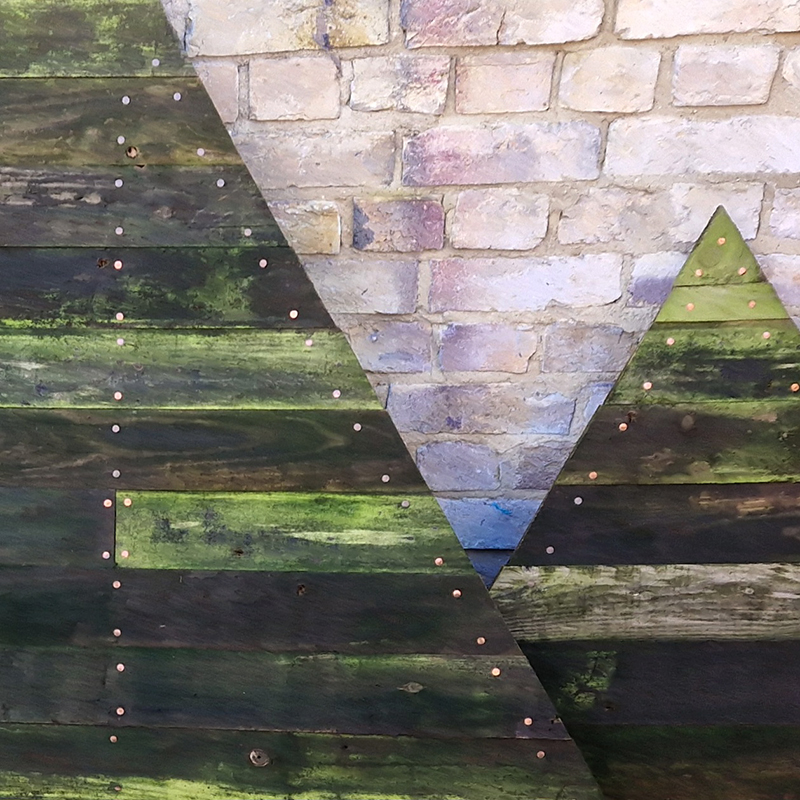
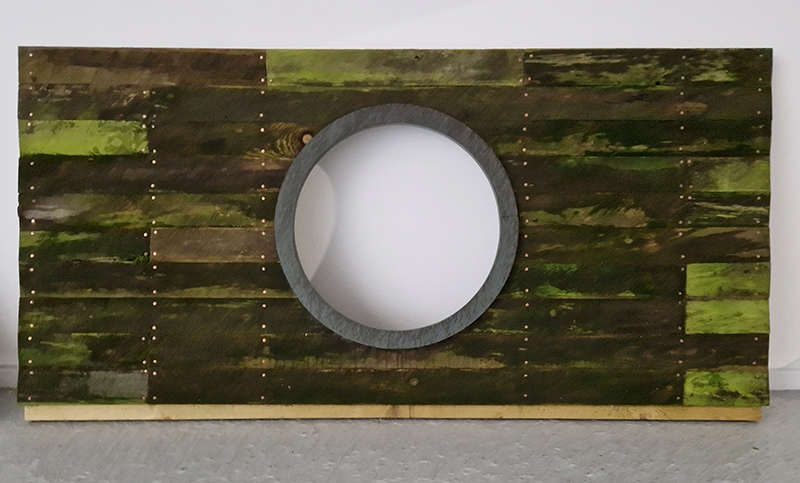
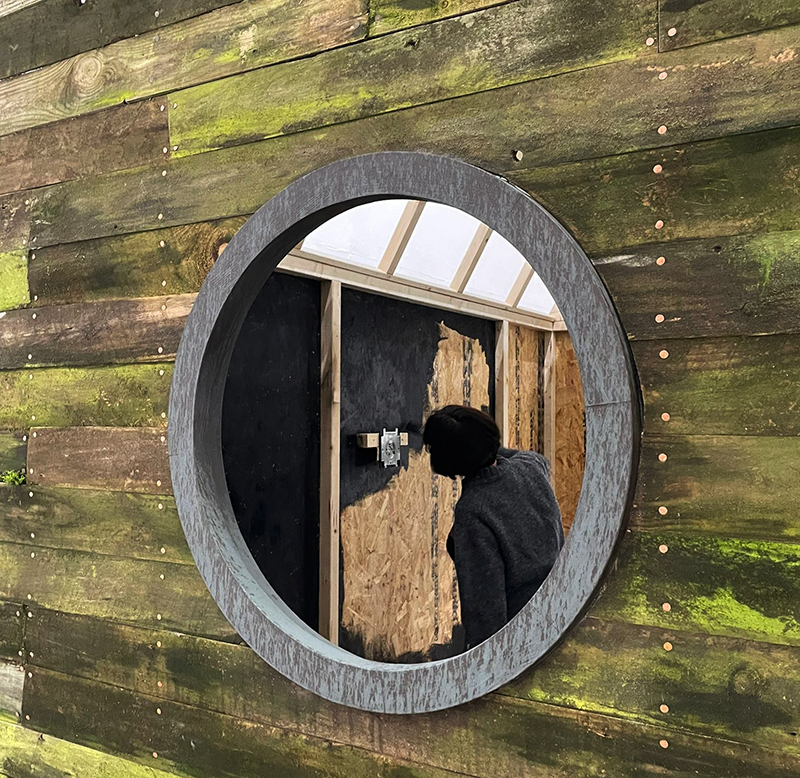
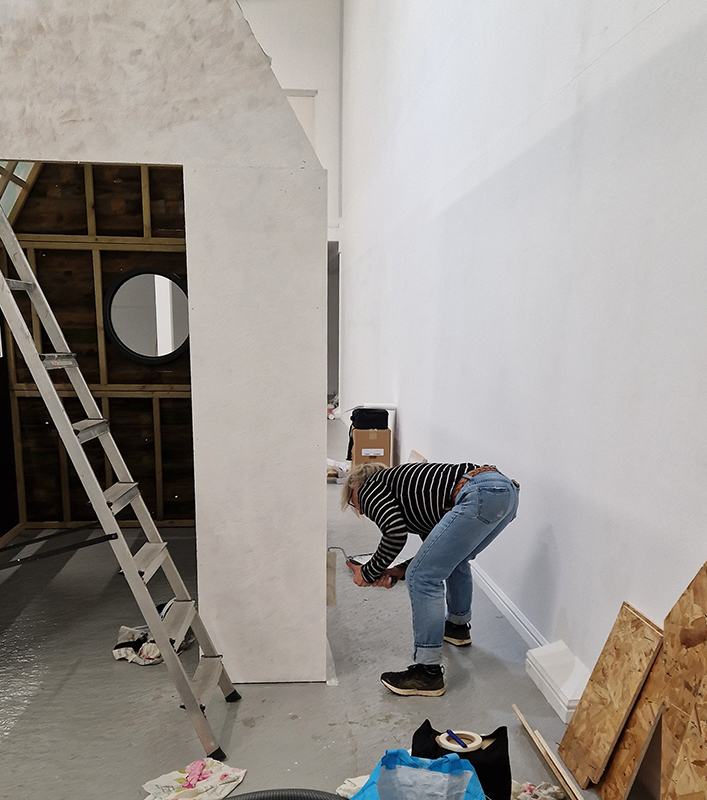
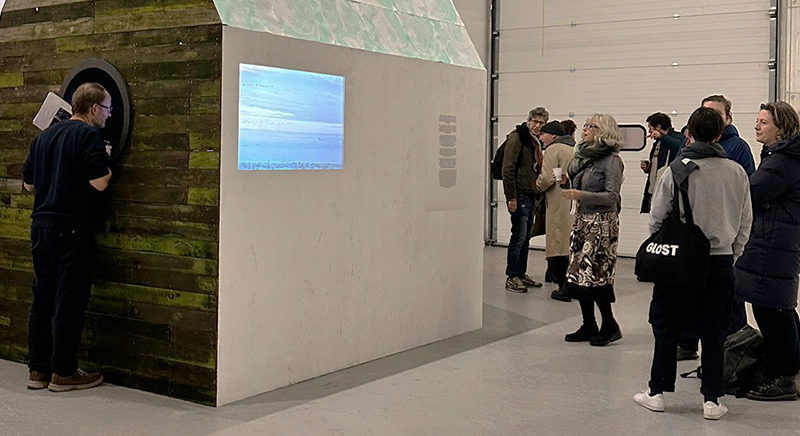
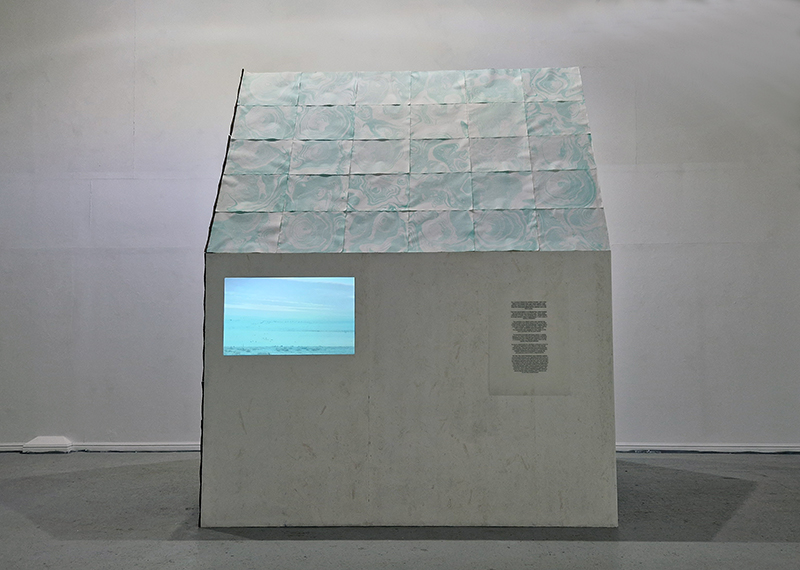
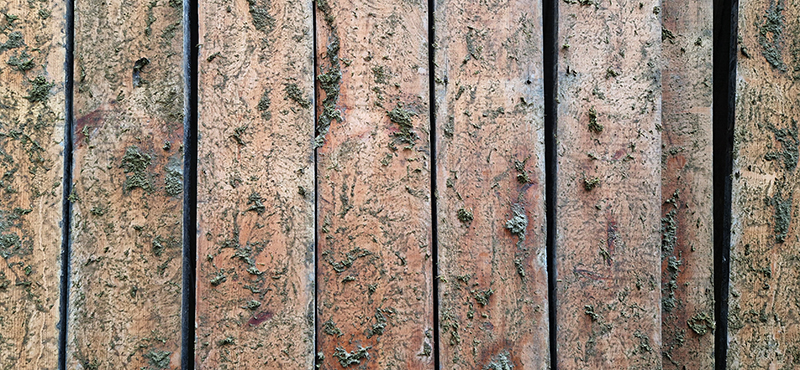
We both had ambitious large scale works to install and were grateful for the help we received from our partners (both Kevins), friends and technicians. Trevor Neale was magnificent in constructing The Absolute Hut. Anne Krinsky patiently helped apply double sided tape to the roof structure ready for the Suminagashi paper tiles and Caroline AreskogJones energetically painted the hut white and neatly edged the two way projection window. I was thrilled that, as a result of a wet few weeks, moss had started to grow on the wooden boards of the north facing wall in time for installation.

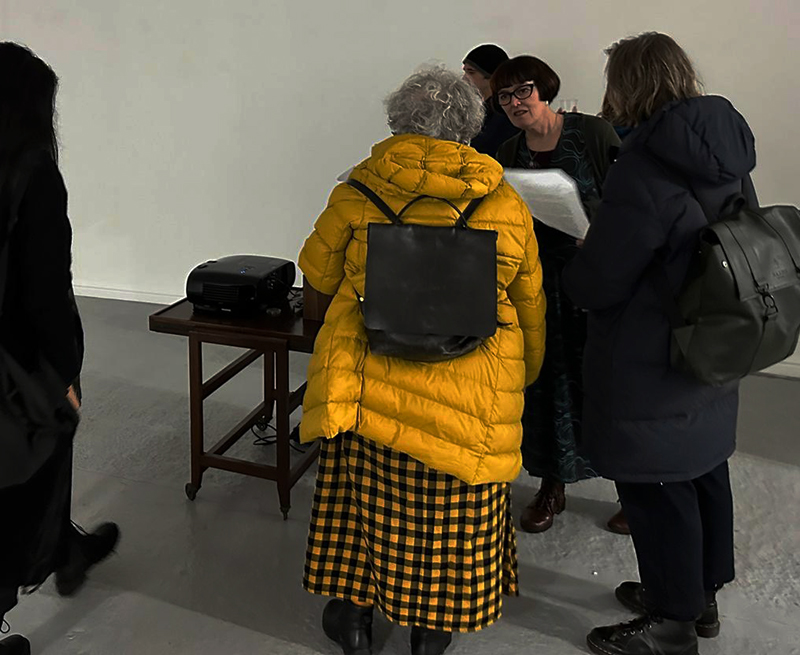
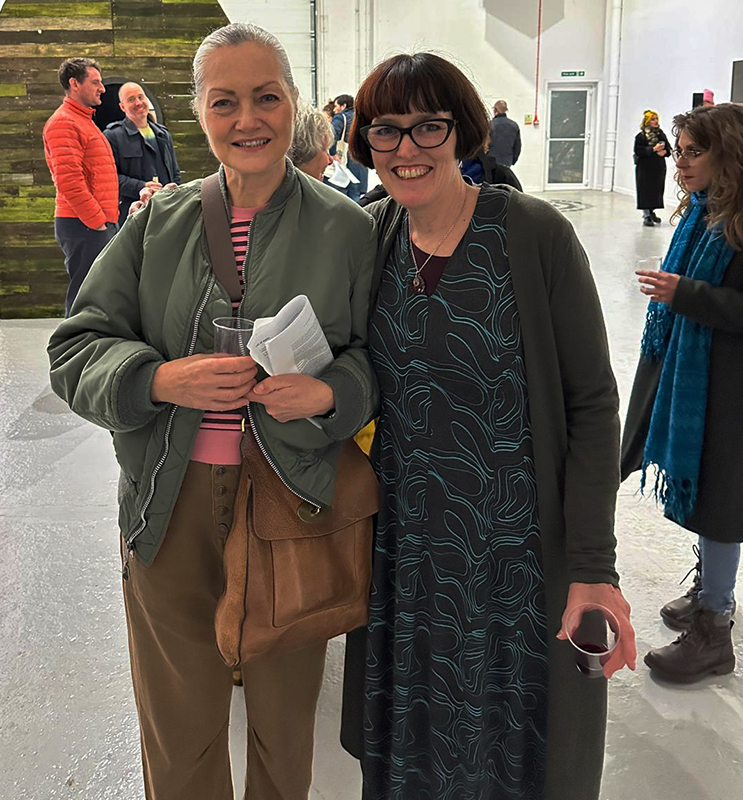
A big thank you to everyone that made it to the opening night, we were super chuffed with the positive responses.

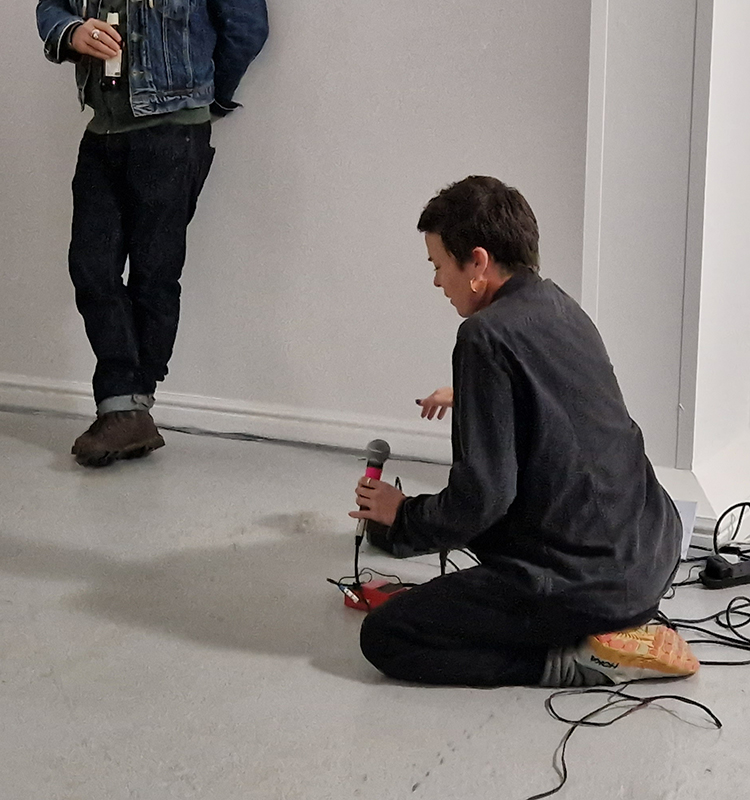
At the private view Julie’s large scale print installation was activated by a vocal performance conjuring abyssal voices of deep, cosmic time, performed and devised with Eleanor Westbrook whose voice produces incredible hauntingly beautiful sound.

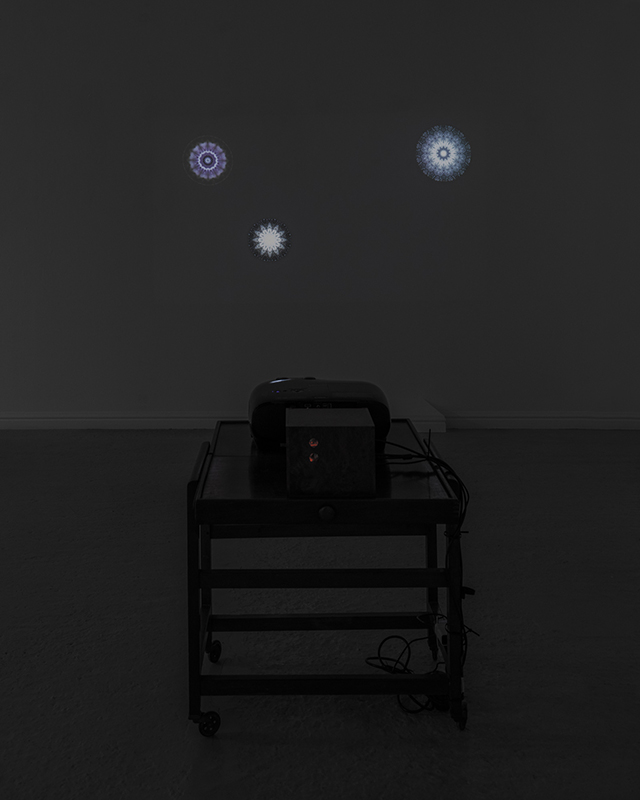
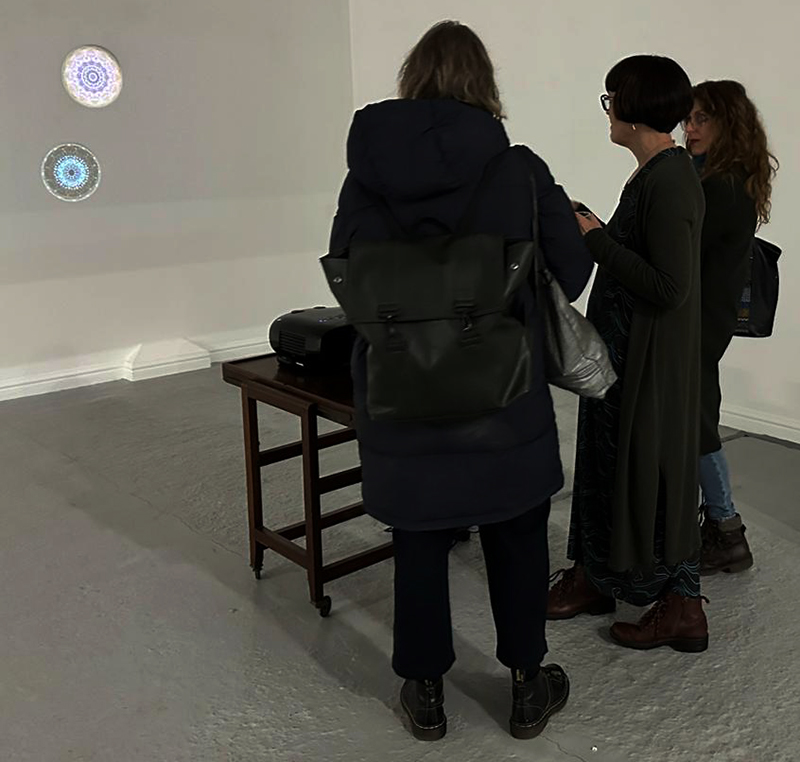
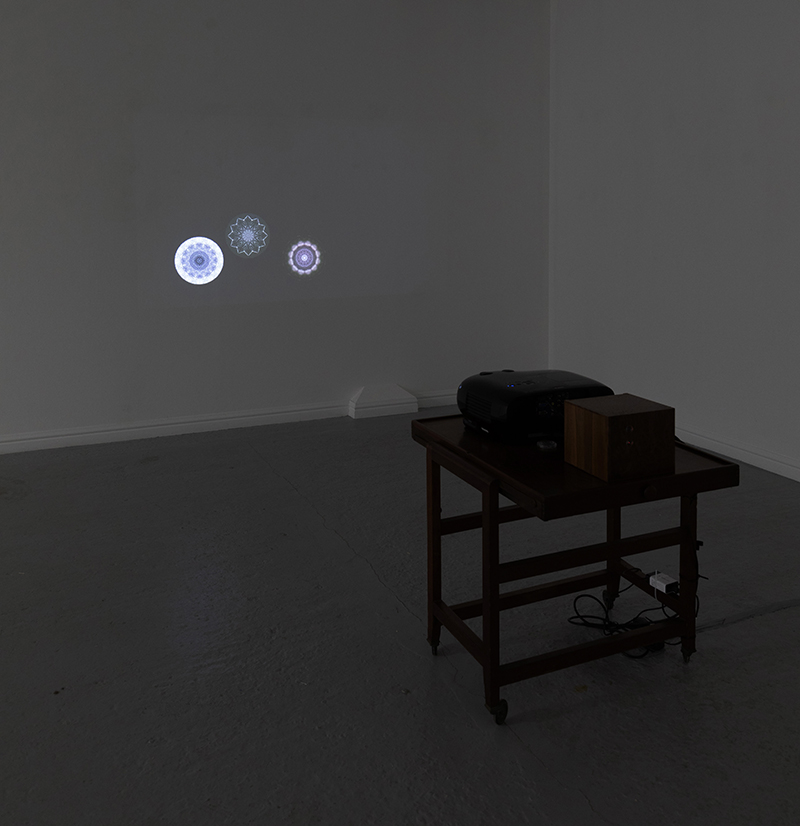
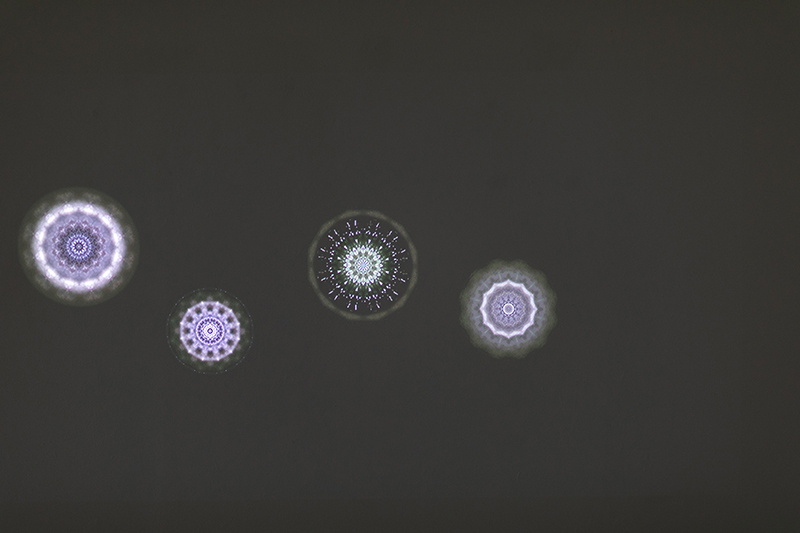
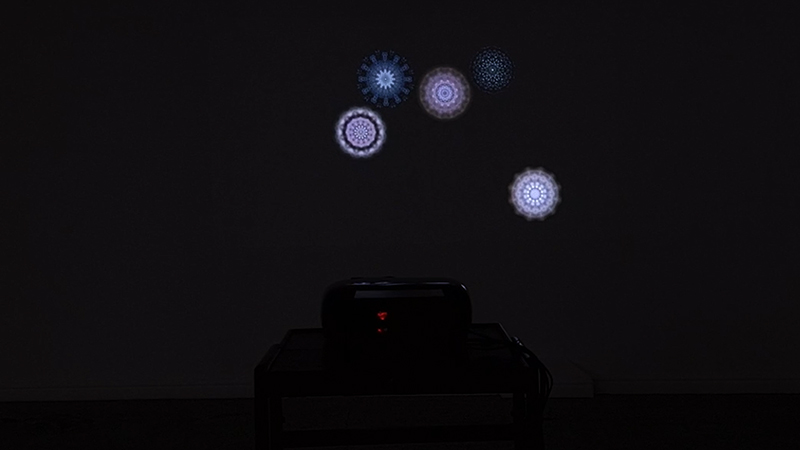
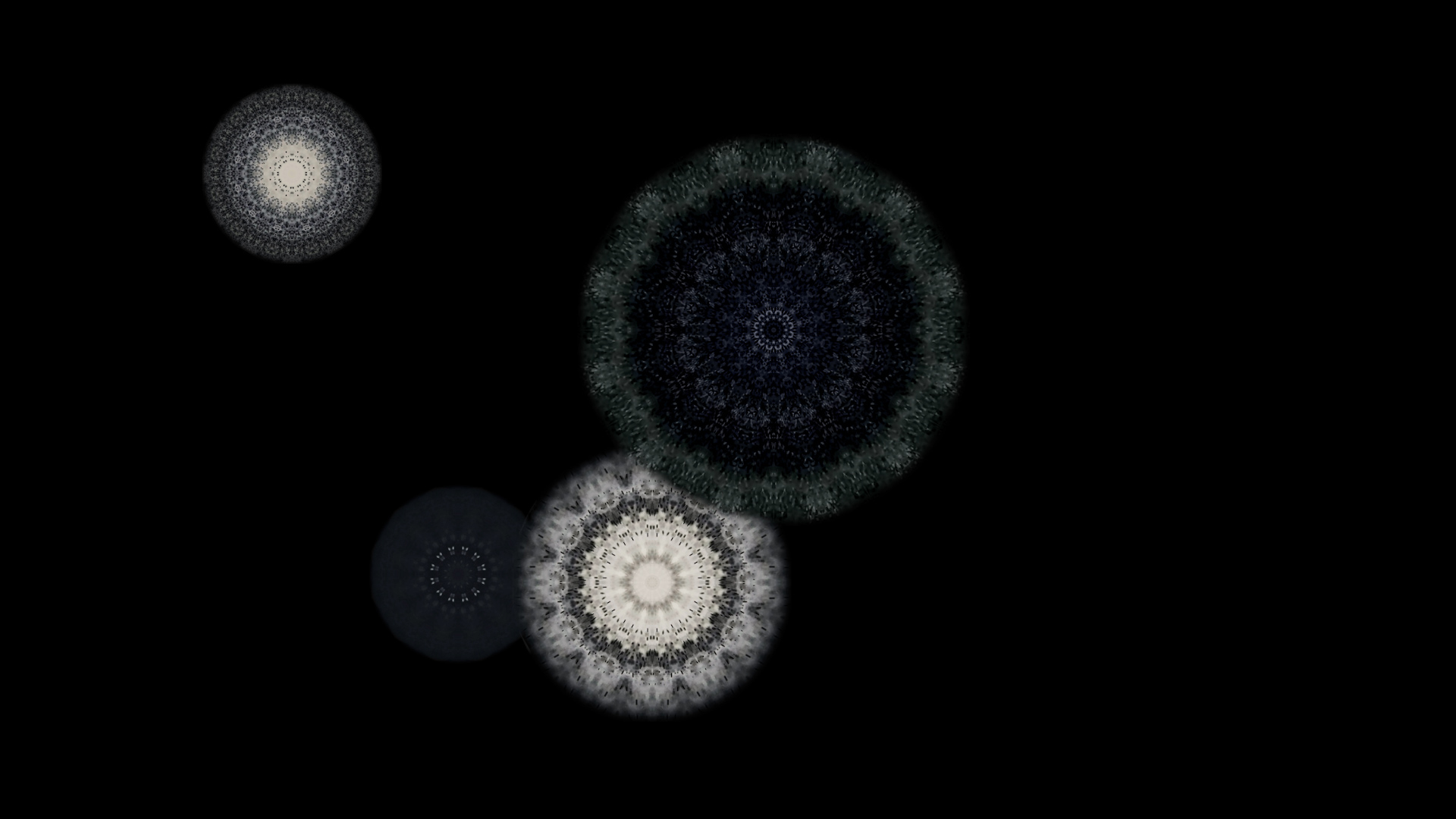
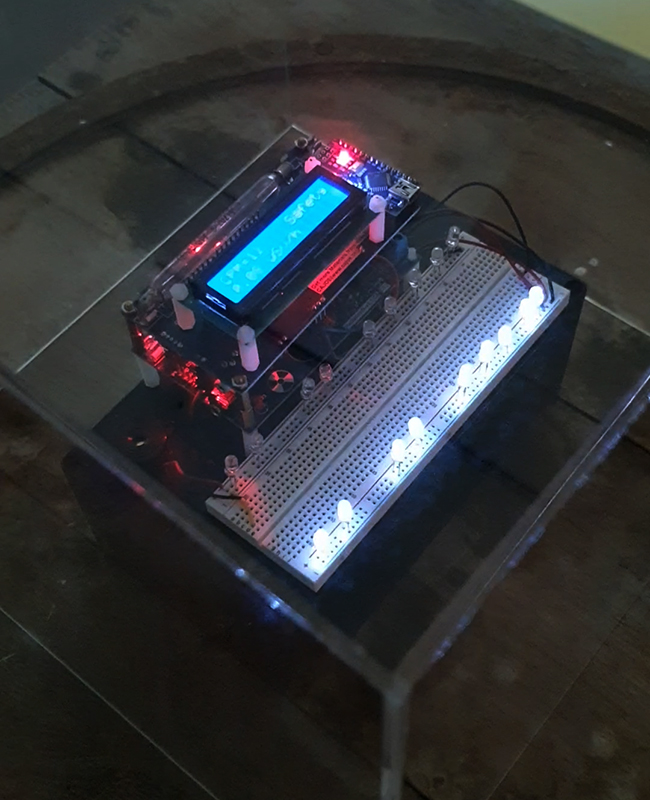
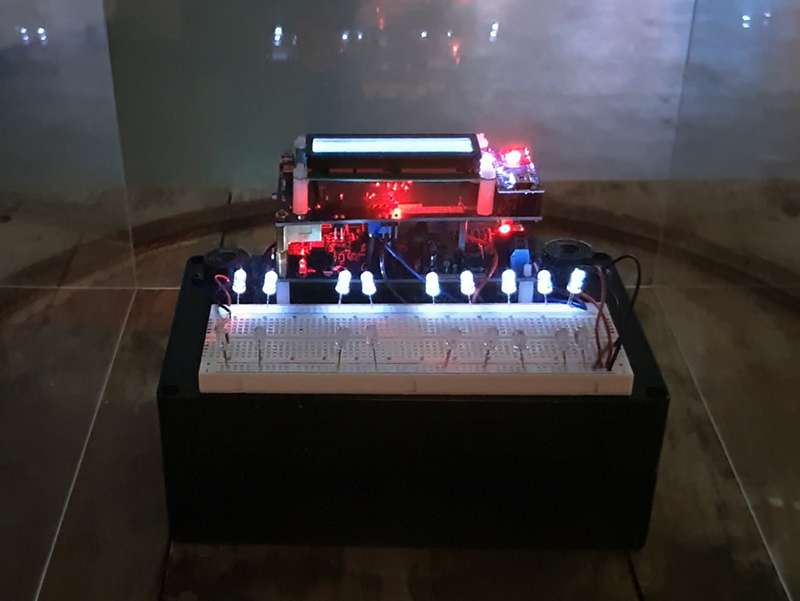
I was particularly excited to share The Breath of Stars, digital video work activated in real time by the passage of cosmic rays through a scintillator detector. After two years in development it was so exciting to watch the random starbursts appear in real time as witness to the unseen activity of cosmic rays passing through the gallery.

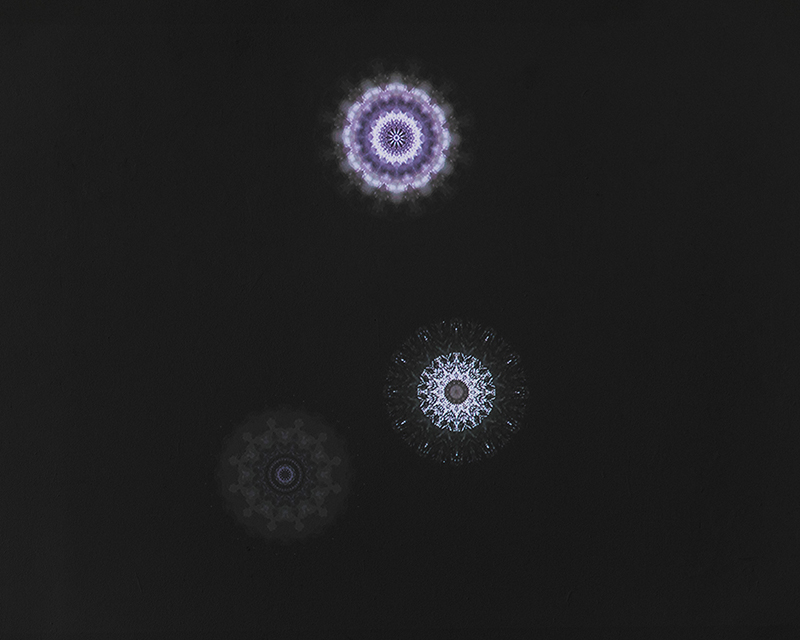
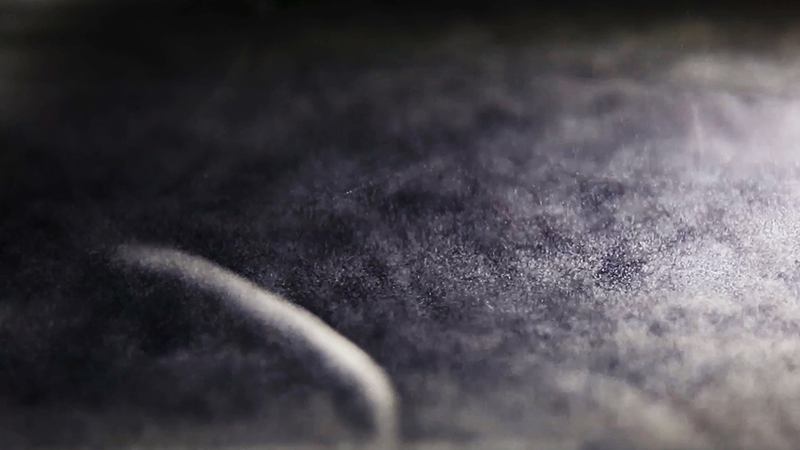
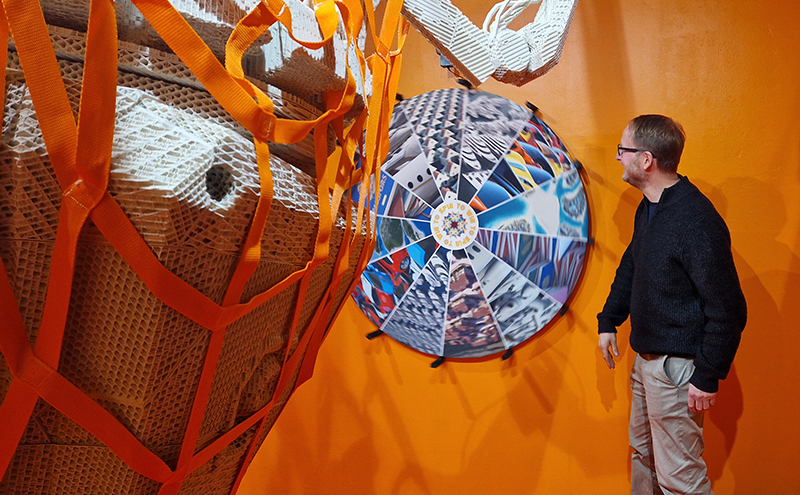
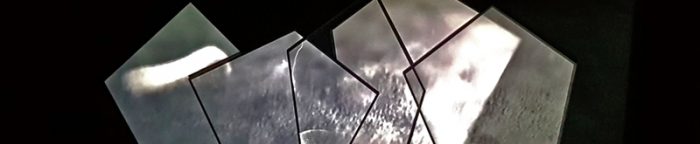
The kaleidoscopic video images that appear for every particle recorded by the detector, are created from footage of cosmic ray trails filmed in a cloud chamber.

The interaction of cosmic rays with atmospheric electrical fields influences the unpredictability of the magnetosphere and this random activity can be witnessed by the sudden flurries and silent gaps of the live video imagery.

These subatomic visitors from outer space power across the universe with unimaginable energy, coming from the heart of exploding stars or the depths of black holes; some may come from phenomena yet to be discovered or even from other dimensions. Travelling at close to the speed of light cosmic rays spiral along magnetic field lines, strike the edge of the Earth’s atmosphere, break apart and shower down upon us. Some particles collide and silently interact with atoms and technology on Earth. Most cosmic rays heading for Earth are deflected by the planet’s magnetic field and without this protection life on Earth could not survive this bombardment of radioactive matter. The interaction of cosmic rays and the solar wind with atmospheric electrical fields combines to influence the unpredictability of Earth’s magnetosphere, impacting the functioning of GPS satellite technology and computer processors on which humans have come to rely in daily life.

My research trip to Hartland Magnetic Observatory in North Devon was a catalyst for this body of work centring around a north facing observation hut aligned with an obelisk as a fixed azimuth mark. I am very grateful to The British Geological Survey for allowing me access to the site and particularly to Tom Martyn who shared his knowledge and gave a fascinating tour of the observatory.

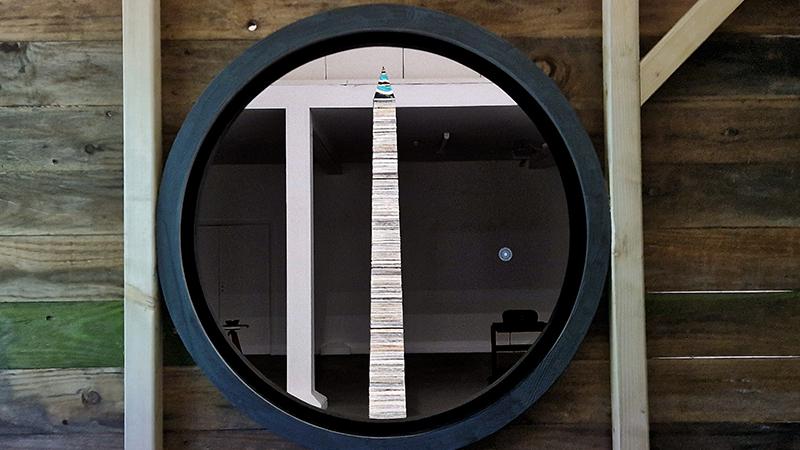
The Azimuth Obelisk (of sedimentary knowledge) is a reimagining of an obelisk erected at Hartland Magnetic Observatory in the late 1950’s near the site’s northern boundary. Viewed through the window in the north wall of The Observing Building (also known as the Absolute Hut) it acts as a permanent azimuth mark from which the drift of the magnetic north pole is monitored. Currently almost hidden by undergrowth, the observatory’s concrete azimuth mark has been replaced by a digital GPS position. Much as the Earth’s geological and magnetic history is secreted into the strata of sedimentary rock, this sculpture also expresses the passage of time through the layering of recycled paper prints and drawings whose history becomes embedded within the stacked layers.

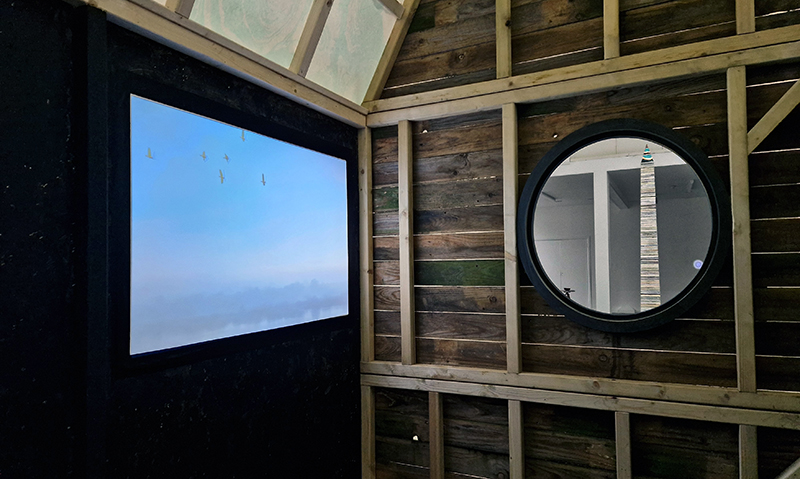
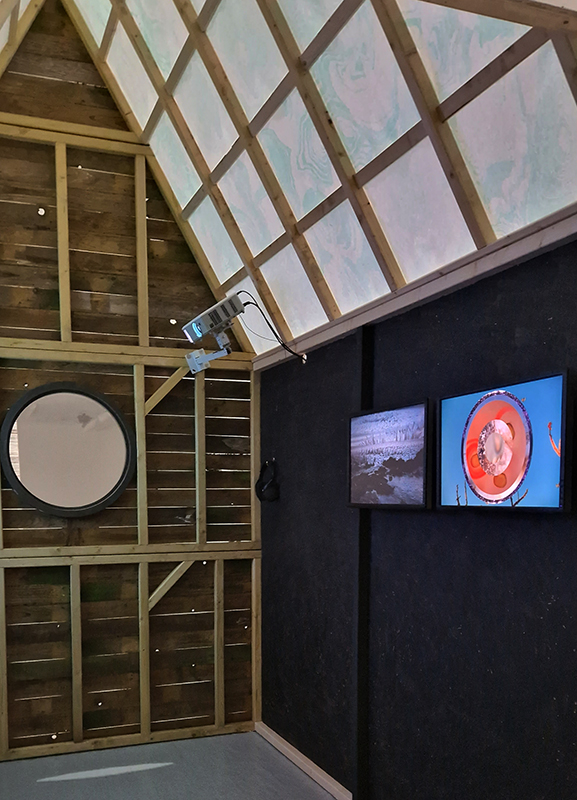
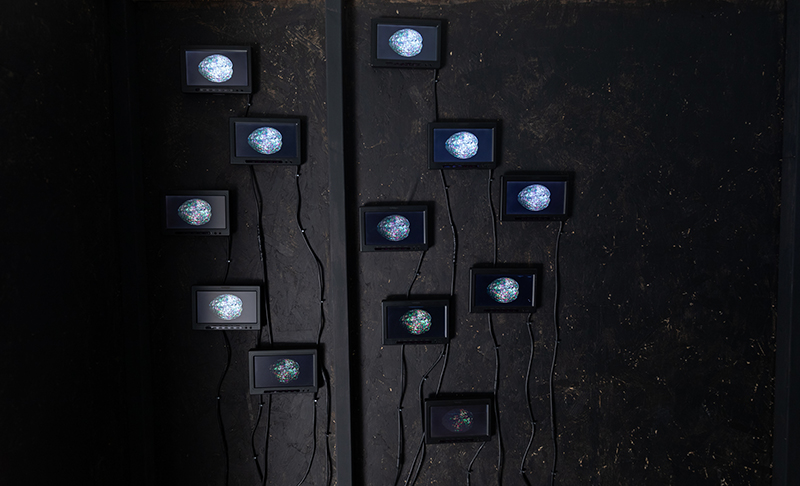
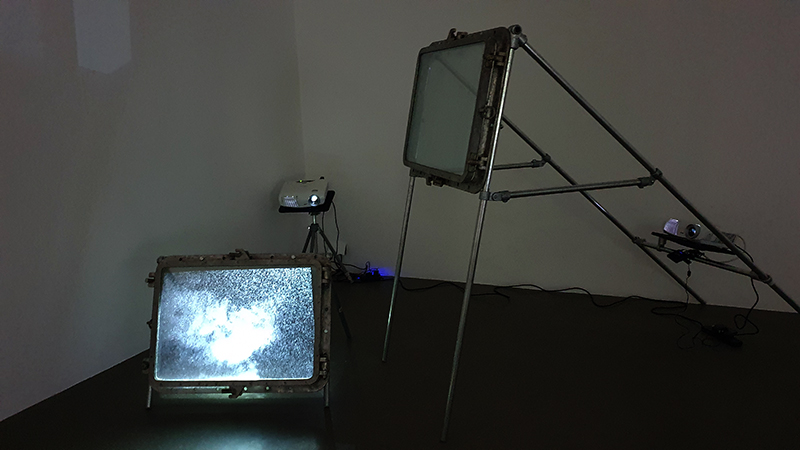
The Absolute Hut (of action potential) operates as a sensory hub with video screens suggesting portals into a web of neural pathways where a range of actions and processes are running concurrently reflecting on the dynamics between the Earth’s geologic structure and navigation using the magnetic field.

The title refers to the way neurons send information electrochemically around the body. The signals they send are called action potentials which is a temporary shift from negative to positive within the cell caused by certain ions entering the cell. Action potentials can be triggered by an interaction with the magnetic field causing a reaction in the body.

The installation is conceived from a combination of features, impressions and functions of the observing building and instruments at Hartland Magnetic Observatory in North Devon and the observation huts built in the 18th century at The Kings Observatory in Kew for meteorological and magnetic observations.

Topological contours of suminagashi marbling and plasma cut copper reflect the fluid motion of the Earth’s molten iron core and the pulsating alpha waves of the human brain when subjected to magnetic fields.

‘the internal skies have their own birds’ Italo Calvino Cosmicomics

The fascinating and perilous journeys made by migrating birds has been a natural wonder for centuries with the first records of this phenomena made more than 3,000 years ago. The innate knowledge of migratory birds is mentioned in Job and Jeremiah and the ancient Greek writers Homer, Hesiod and Aristotle noted their passage.

Job 39:26 Doth the hawk fly by thy wisdom and stretch her wings towards the south?

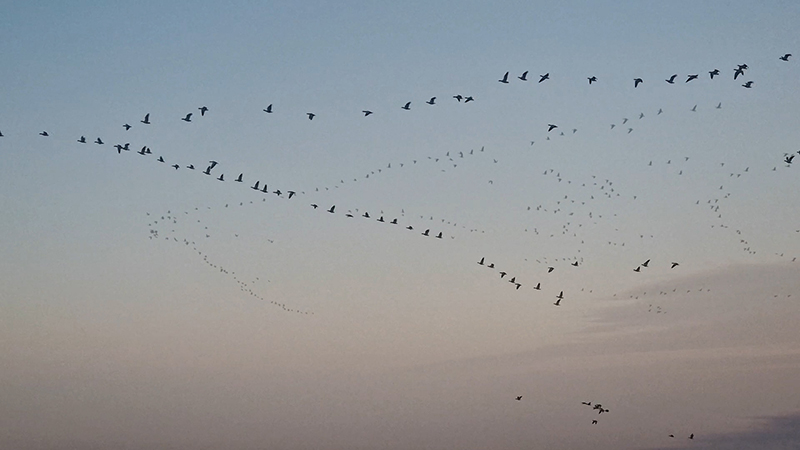
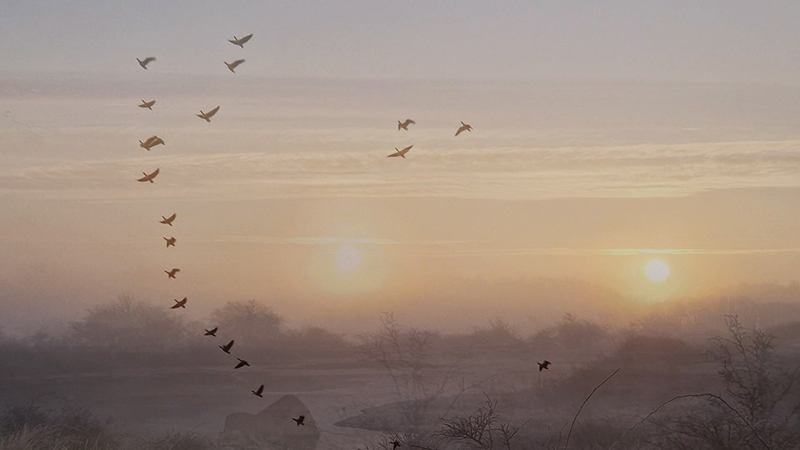
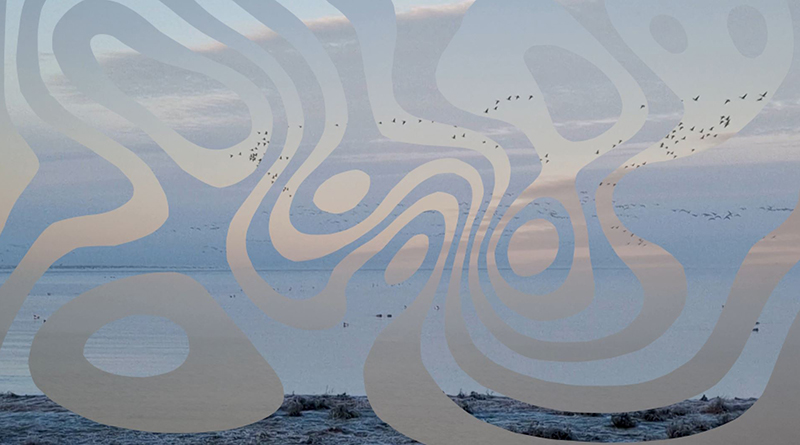
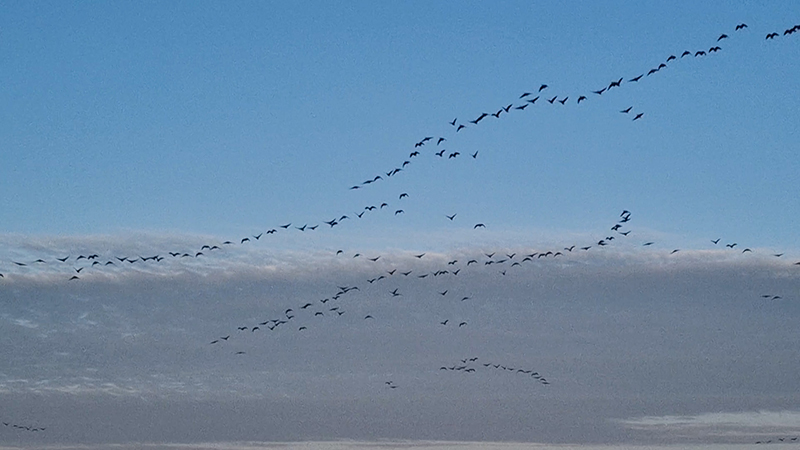
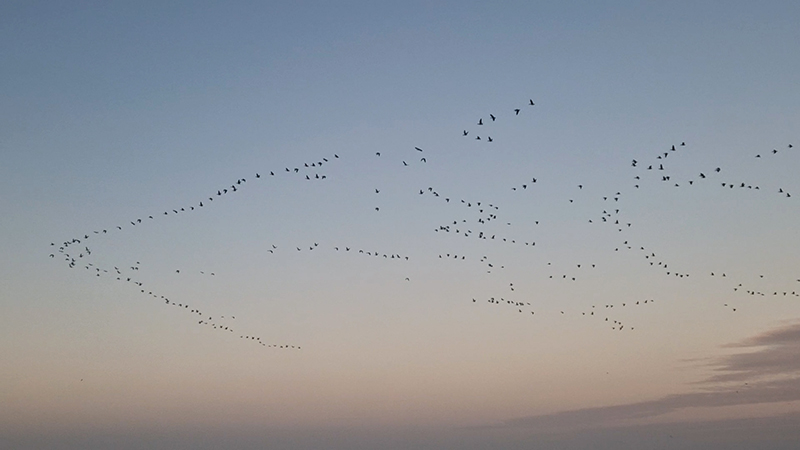
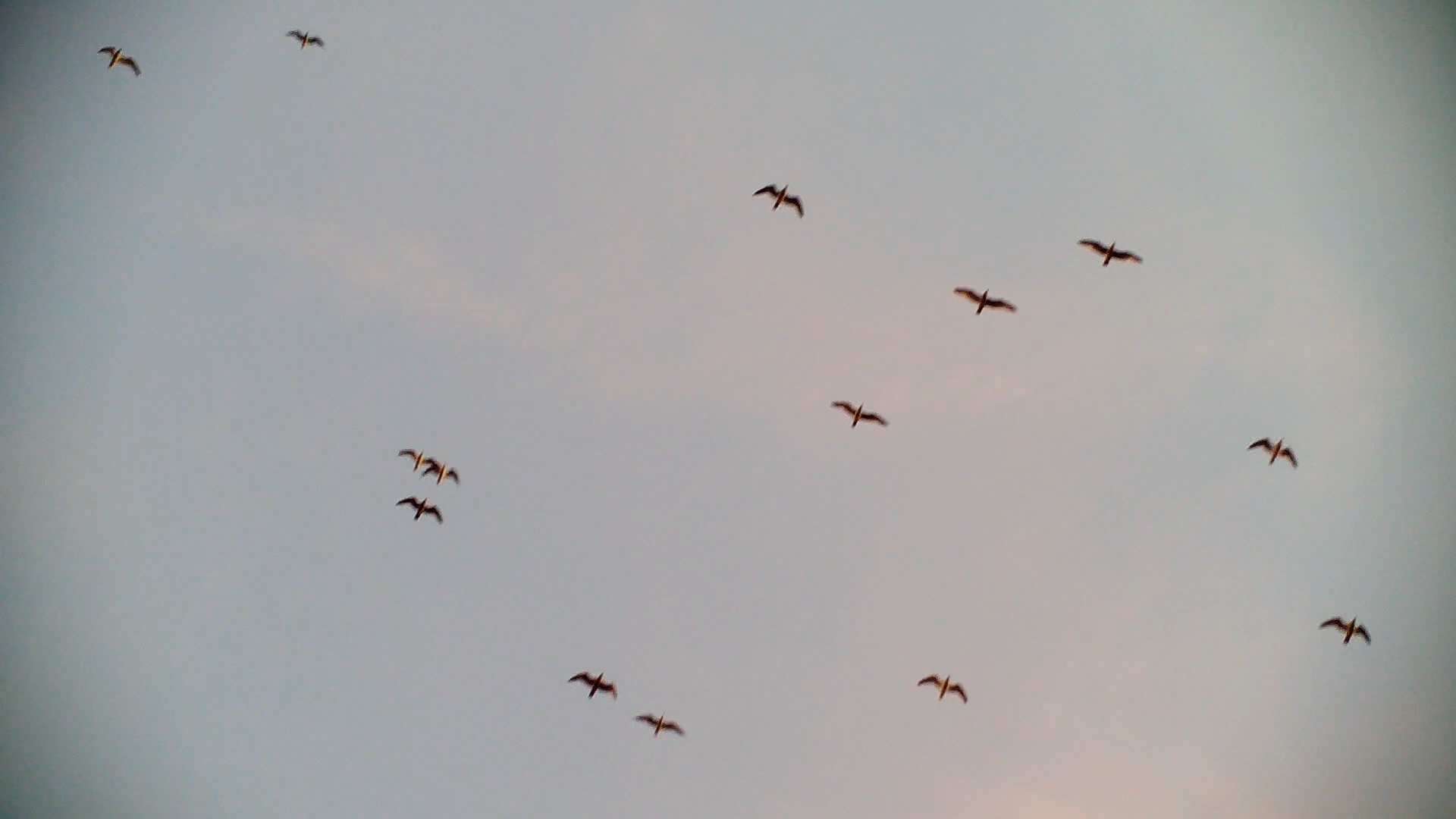
Wintering light two way video projection of migratory pink footed geese filmed at RSPB Snettisham on the North Norfolk coast.

Research has proven that birds and many other animals can use the earth’s magnetic field for navigation. There are two ways this happens. In birds there is a protein in the retina of the eye – (cryptochrome molecules) which trigger action potentials enabling them to visualise the magnetic field. In other animals and magnetotactic bacteria tiny crystals of magnetite respond to the field. This may also be true of humans as we do have these crystals in our brain cells.

Birds use three different compasses to navigate across the globe; the sun, the stars and the magnetic field.

Birds are also able to detect rapid movement such as individual flashes or flickering of a fluorescent light which humans see as a continuous light. Hawks which pursue other birds through dense forests at high speeds, follow the movement of their prey while avoiding branches and other obstacles. To humans travelling at this speed, the fleeing prey, branches and obstacles would just be a blur.

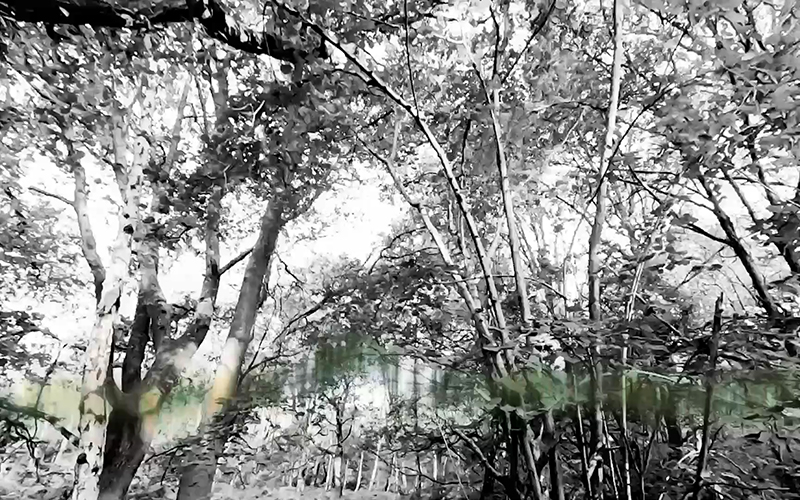
Degrees of Variation considers what it might be like to have the sensory powers of a bird where a protein in the eye is excited by polarised light making it possible to see the magnetic field and follow a visual navigatory cue in an accelerated world. The video imagines flight over water and through woods while being guided by the force of a magnetic field.

Calvino’s story The Stone Sky is wonderfully descriptive of the volatile geological structure of the Earth. This fluidity is what makes life on Earth possible. Only planets with fluid cores have magnetic fields. The geological interior generates a field that reaches into outer space offering a protective shield.

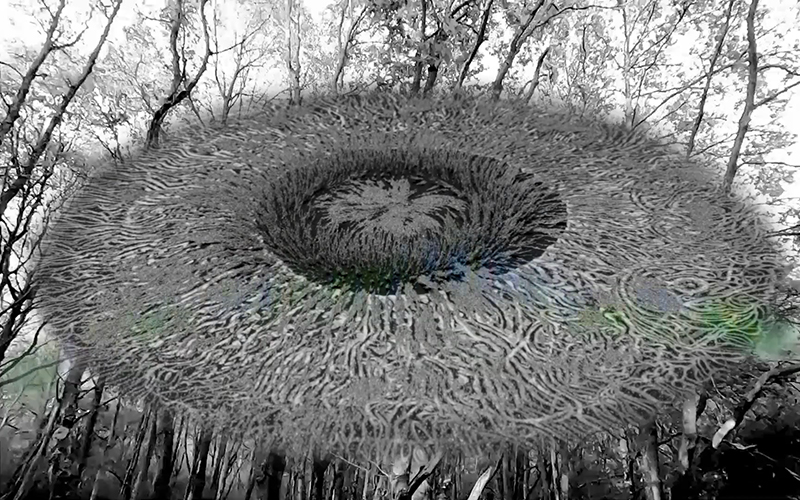
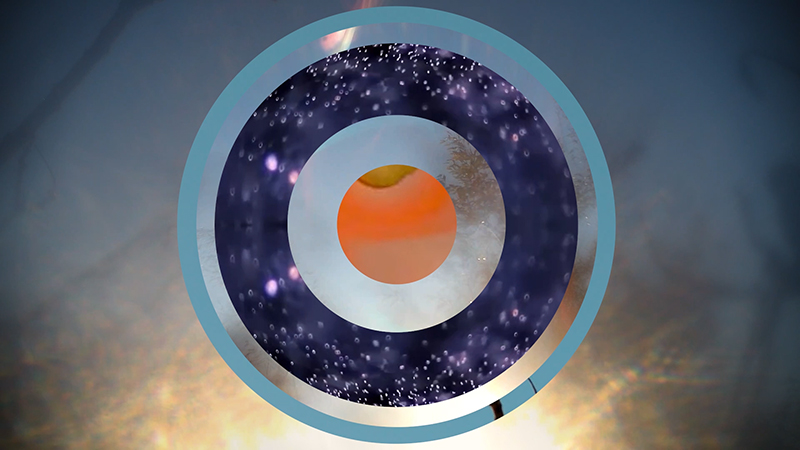
internal skies : external spheres video sequences within concentric circles mimic the geological structure of the Earth to explore the relationship between Earth’s magnetic field and various methods of navigation including via magnetoreception and celestial observation. Sequences include star trails around Polaris (the current north star), birds and bees that use the magnetic field for navigation, magnetotactic bacteria, magnetised iron filings, aerial views of the coastline around Hartland and early morning polarised light which excites the cryptochrome protein in a birds eye.

The Earth’s geomagnetic field is created by a combination of three separate fields and timescales. The main field is generated in the earth’s molten iron core.  Observing the field gives clues to the planet’s deep interior which is inaccessible to direct observations. Changes are measured in the annual drifting of magnetic poles. Secondly electrical currents caused by solar weather and cosmic rays bouncing off the Earth’s main  field charge the surrounding ionosphere causing fluctuations in the field. This field changes by the micro second as we orbit the sun. The Earth’s magnetic field also acts as a shield against most potentially harmful charged particles from outer space. Finally the residual magnetisation of the geology of the rocky mantle and crust, measured in deep geological time also offers clues to the geological history of Earth.

The understanding of the world surrounding us forms in the darkness of our skulls. 

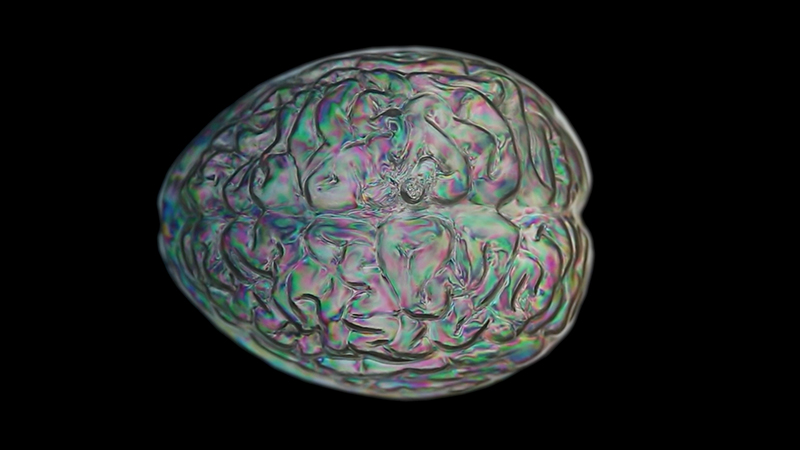
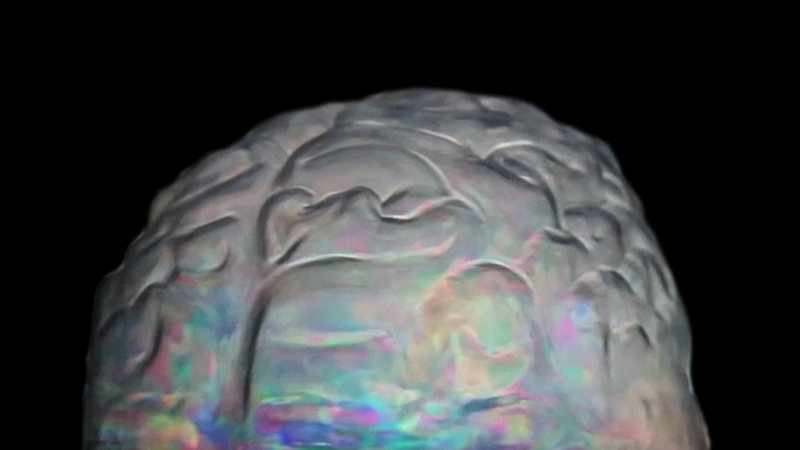
interference – a panel of 12 small video screens inside The Absolute Hut (of action potential), showing images of the human brain filmed by using polarizing filters to create pulsating birefringence colours, relate to the narrative pinned to the outside of the hut.

The narrative is a mix of fact and fiction based on a real experiment carried out at Caltech where scientists found Alpha waves in the human brain do respond to Earth’s magnetic field and other research suggesting that it could be possible for the magnetic field in one animal’s brain to transmit information to another animal’s brain by triggering action potentials creating the same thoughts and emotions.

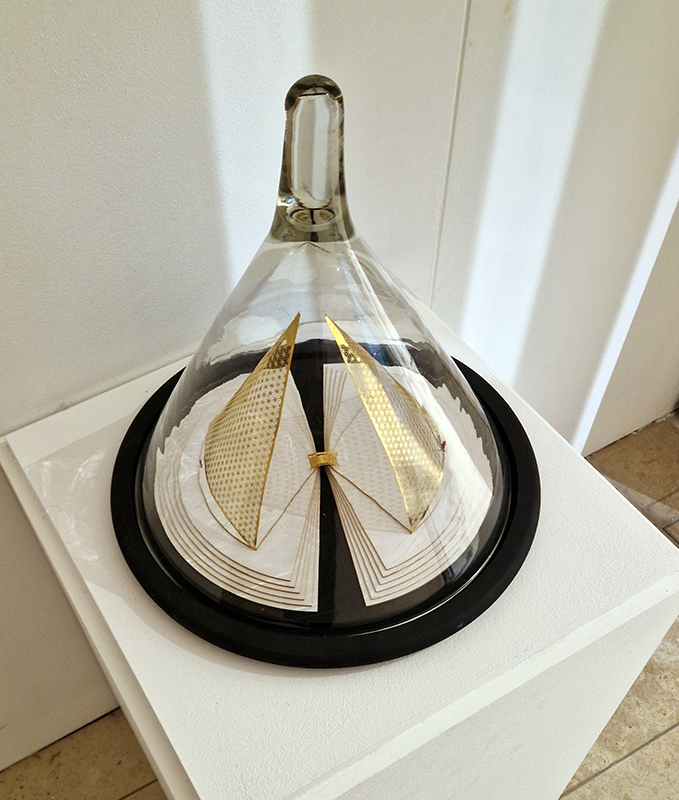
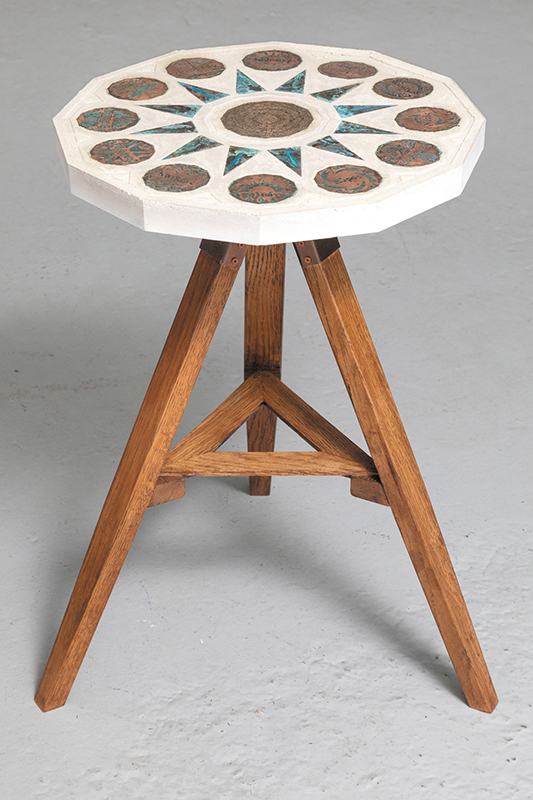
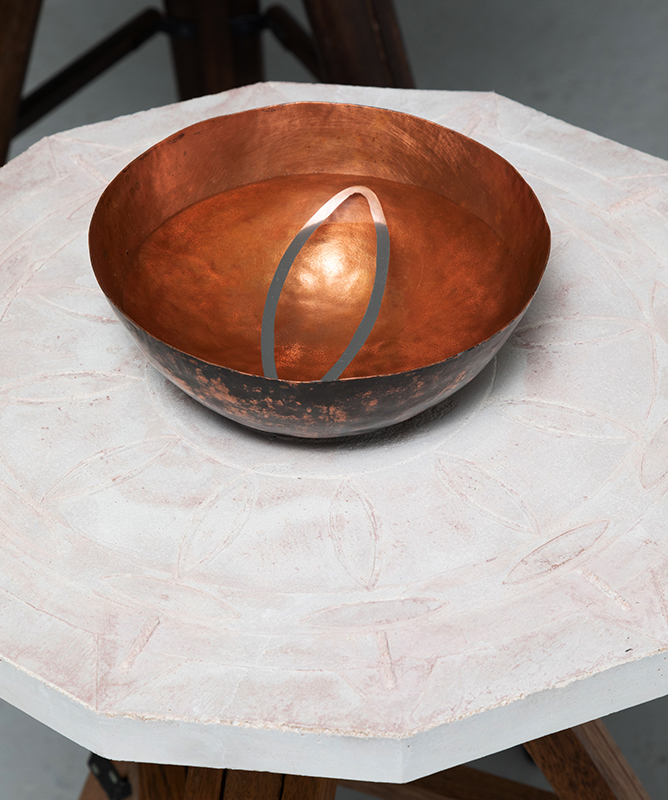
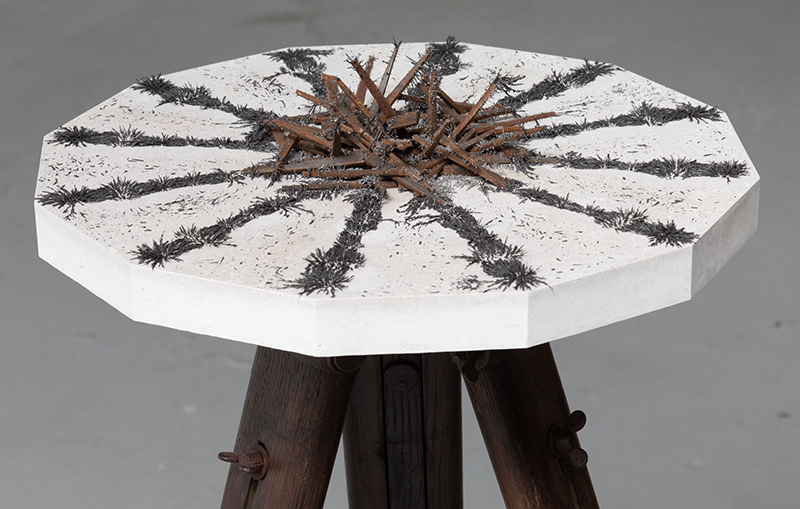
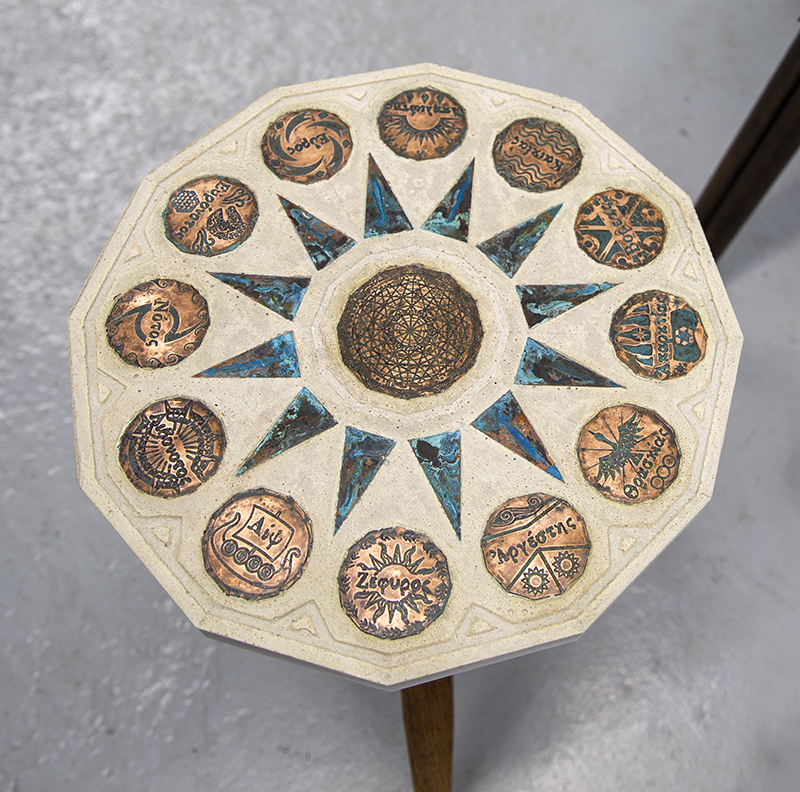
Instruments of the Anemoi are a set of dodecagon tablets cast in Snowcrete, a non-magnetic cement, as used in a magnetic observatory. Suggestive of the pedestals that support various instruments used in monitoring the Earths’ magnetic field they also respond to an ancient anemoscope “table of the winds” carved in marble around eighteen hundred years ago and inscribed with the Greek and Latin names of classical winds on each of its twelve sides. Envisaged here as speculative objects, instruments and schematics wrought by the wind gods, the first emissaries of navigation and orientation.

One tablet holds a copper bowl with a ‘silver fish’ floating in water. The shape of the ‘silver fish’ is based on the oval shaped compass needle (illustrated in Breve Compendio de la Sphera de la arte Navegar by Martin Cortes 1551)  and refers back to wafer thin fish shaped iron leaves used by 11th century Chinese geomancers.

Nails and iron filings on the second tablet reveal an embedded magnetic field recalling a legend that the discovery of the lodestone was made by a Greek shepherd who noticed the nails in his boots were attracted to the rock (magnetite) beneath his feet.

The third tablet is embedded with copper etched with images and names based on associations and attributes of the twelve Greek wind gods set in a traditional compass rose.

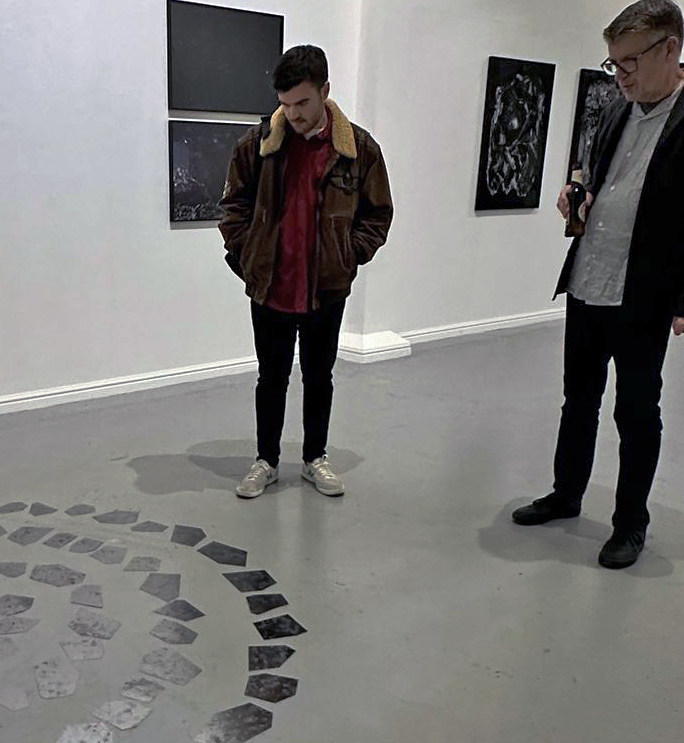
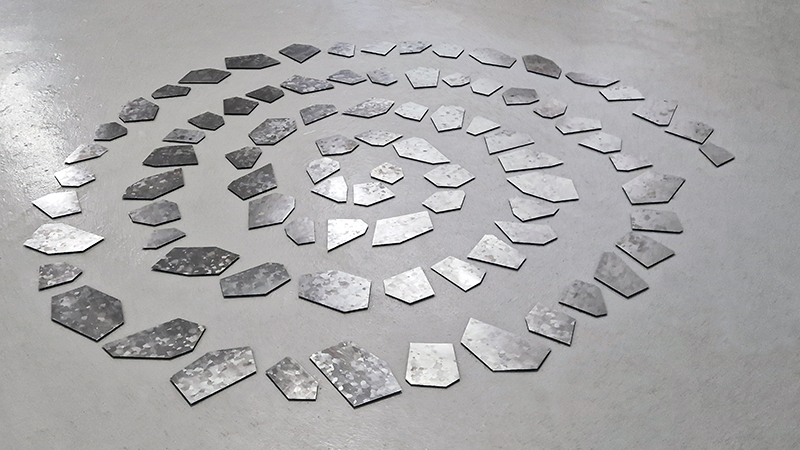
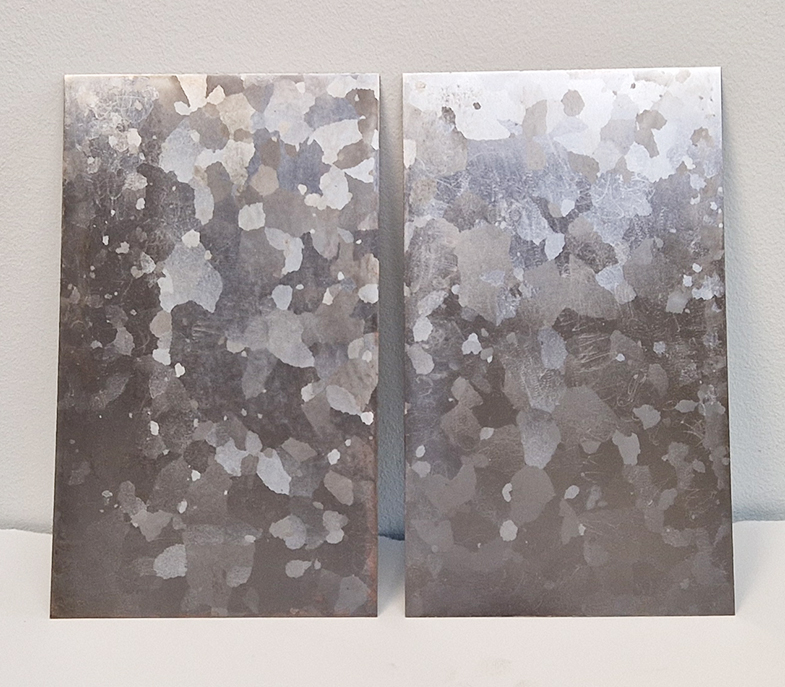
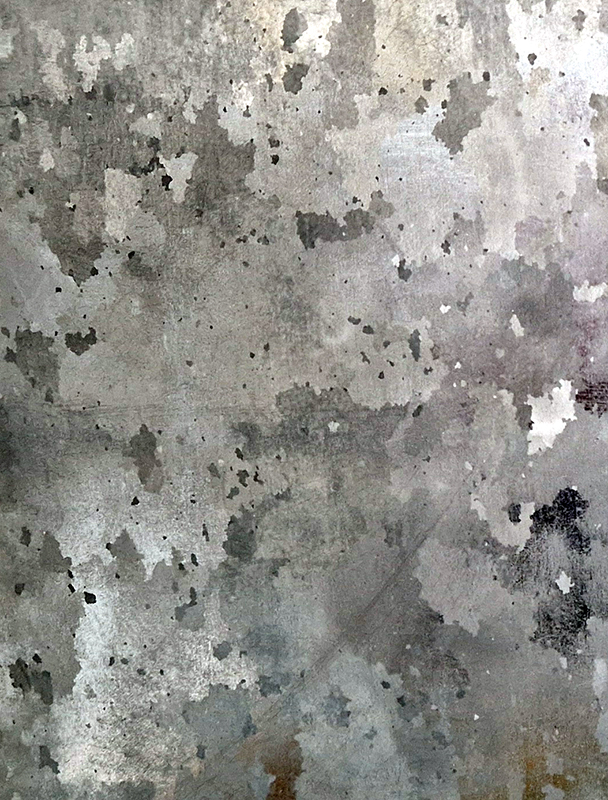
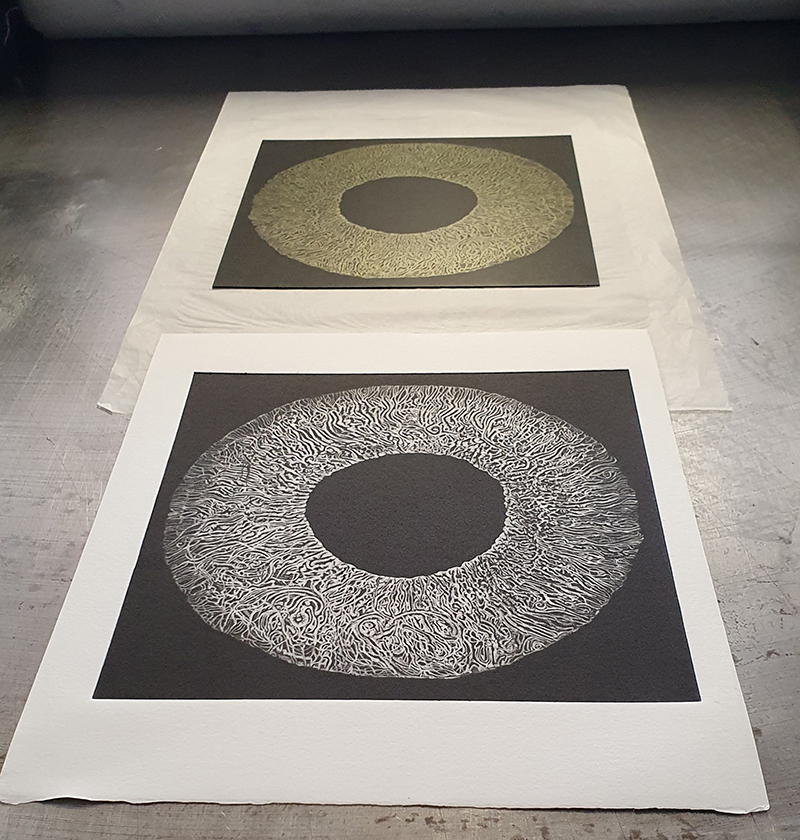
Domain of the Devil Valley Master uses industrial directional magnetic steel, sanded and etched to reveal the Goss texture of rolled iron silicon alloy crystals. The jigsaw pattern of magnetic domains give this material exceptional magnetic properties. The simple evocation of a spiral described in geologically informed polygons draws upon many references, from the shape of our own Milky Way Galaxy sculpted by vast cosmological magnetic fields and the spiralling molten dynamo generating Earth’s magnetic field, to the inner pathway of spiritual growth and the route to the symbolic omphalos (navel) at the centre of the world where the sky entrance and the underworld meet. The title of this work originates from an ancient Chinese manual on the skills of persuasion, The Book of the Devil Valley Master, containing the first known mention of a compass, known at the time as a south-pointer.

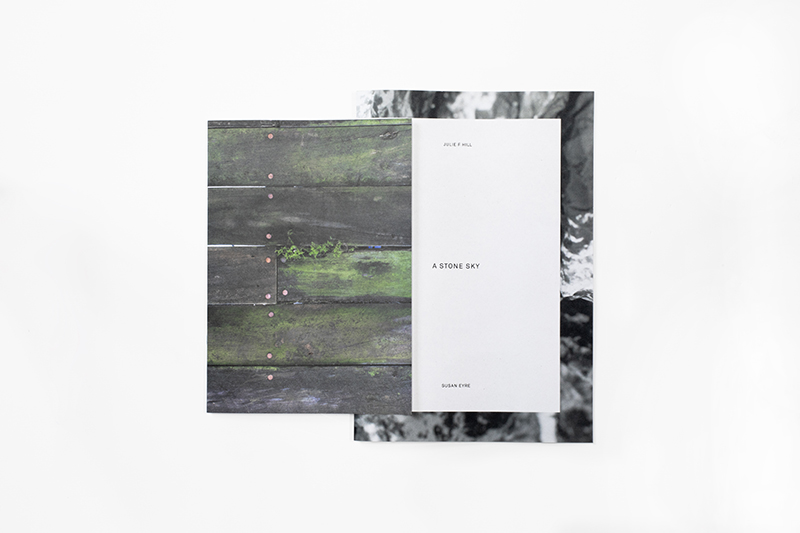
The exhibition closed with an afternoon event launching our publication which includes the essay Dark Nights and Signs of Unseen Things by Anjana Janardhan. There was also a live cloud chamber demonstration of mesmerising cosmic ray trails, artist tours and informal readings.

Publication available – DM via blog comments box for more details or visit Julie’s shop

Really pleased with the results I am getting from the new batch of directional magnetic steel sent from Union Steel Products. These are coming out better than in previous tests.

Norman P. Goss invented grain-orientated steel in 1934. It was produced through a two-stage cold rolling process with intermediate annealing between the cold rolling stages. Grain-oriented electrical steel enabled the development of highly efficient electrical machines, especially transformers. Today, the magnetic cores of all high-voltage high-power transformers are made of grain-oriented electrical steel. The strong preferred crystallographic orientation is known as a Goss texture.

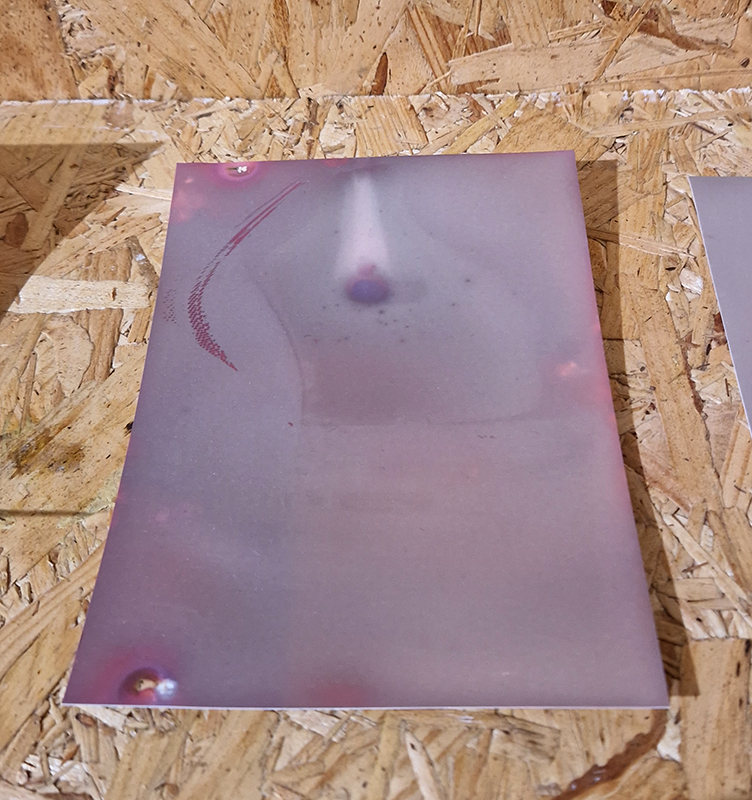
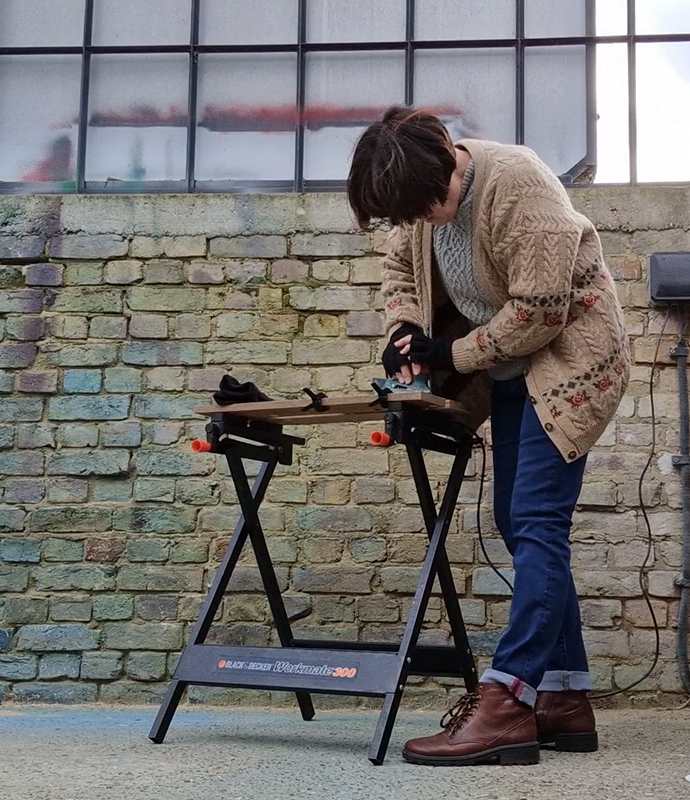
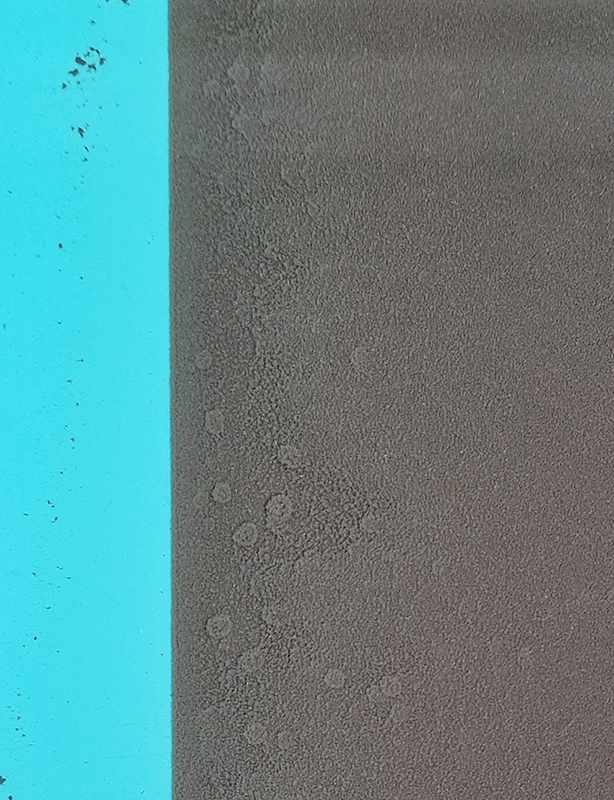
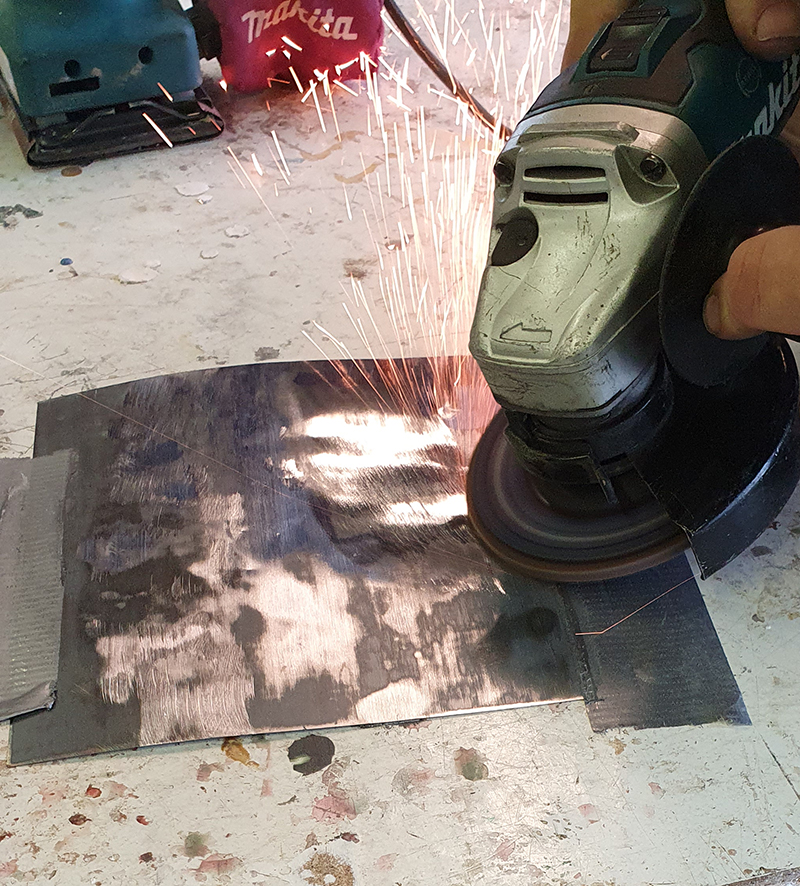
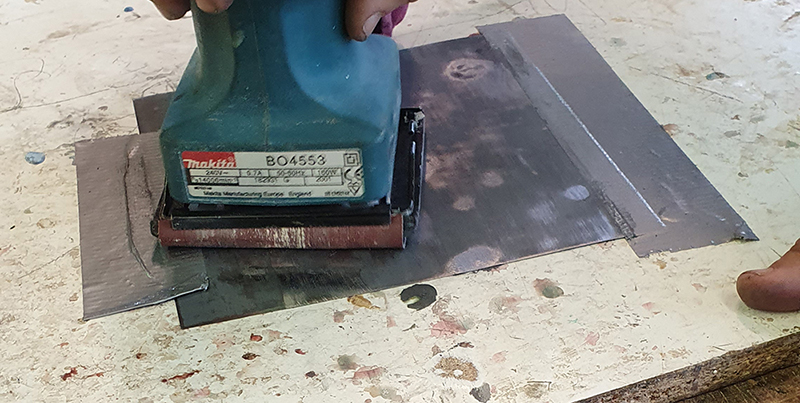
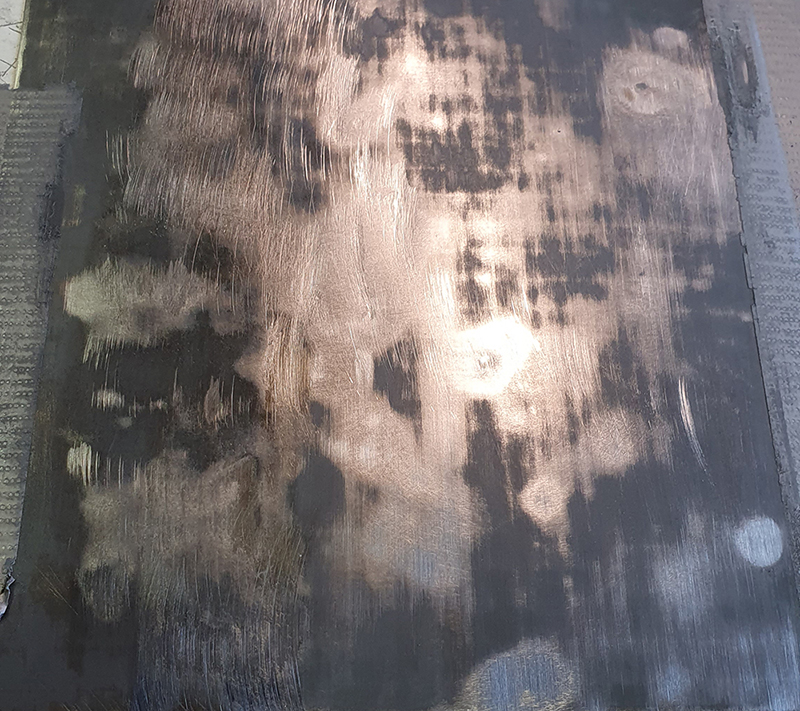
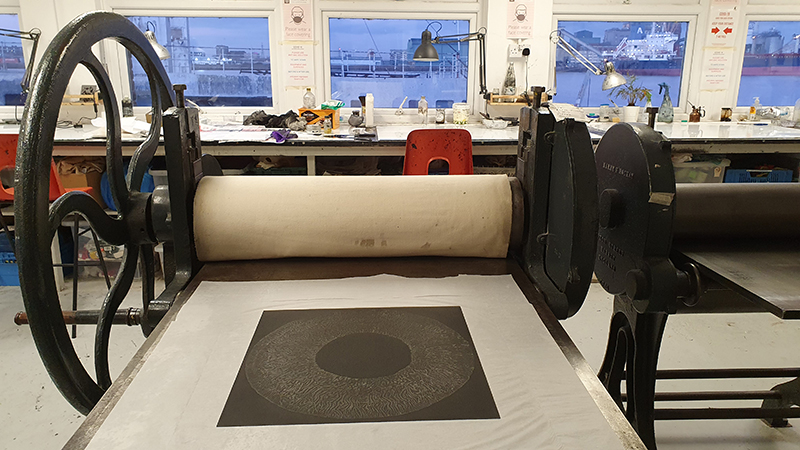
When I receive the electrical steel it has a grey insulation coating which has been applied to both sides of the sheet to avoid eddy currents between the stacked sheets when used in a transformer core. I am removing this coating by sanding. I then etch the sheets in copper sulphate solution for 20 minutes. The plate must be dried very quickly when it is taken out of the etching bath. I then lightly polish and wax the surface. Some detail is lost quite quickly and areas can become muddy after etching so I still need to experiment a little more with alternative cleaning and sealing methods.

A previous batch had a different coating that proved impossible to remove cleanly even with the most extreme methods. This new batch has two different types of sheet which have a slightly different pattern to reveal. It is quite hard work but a fascinating material to experiment with.

I have been considering using the Directional Magnetic Steel Pieces in some form of suspended sculpture as movement causes the surface to catch the light revealing the patterned surface of this material. I might use it to mark the line of declination across the gallery floor from True North to Magnetic North at the time of installation.

Thinking about moving sculptures –

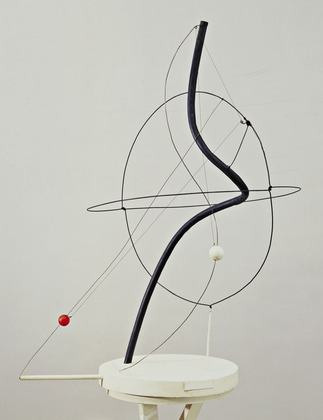
Imagine holding Einstein’s attention for the forty minutes it takes your work to revolve. A Universe by Alexander Calder 1934, painted iron pipe, steel wire, motor, and wood with string. One of the first artists to explore kinetic and motor driven sculpture, expanding drawing into 3D and painting into motion. A nice intro to Calder from 2016 – The Universe of Alexander Calder with Dara Ó Briain.

Work continues on the Azimuth Obelisk with the construction of the metal frame to support the structure and hold the layered paper sheets. Thanks to Giles Corby of the London Sculpture Workshop for getting to grips with my diagrams and welding the frame. The frame is made in three interlocking parts to distribute the weight and make for easier storage and transportation. This sculpture is a response to the concrete obelisk erected in 1955 at Hartland Magnetic Observatory, near the site’s northern boundary as a permanent azimuth mark. It is viewed via a theodolite through a window in the north wall of the Absolute Hut, its azimuth being 11º27’54” E of N and marks the point from which the magnetic north pole is tracked as it drifts westwards.

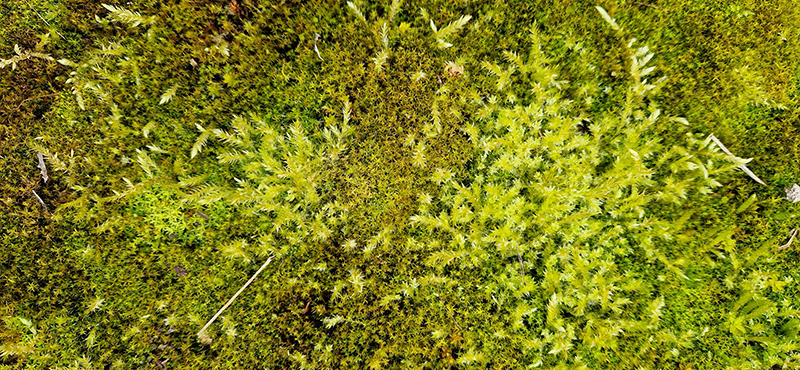
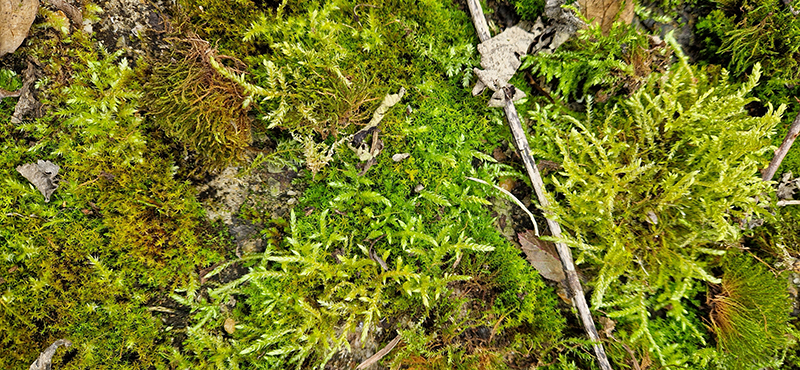
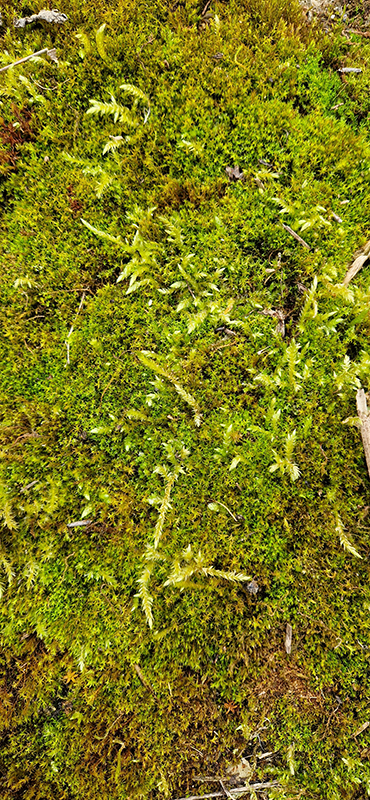
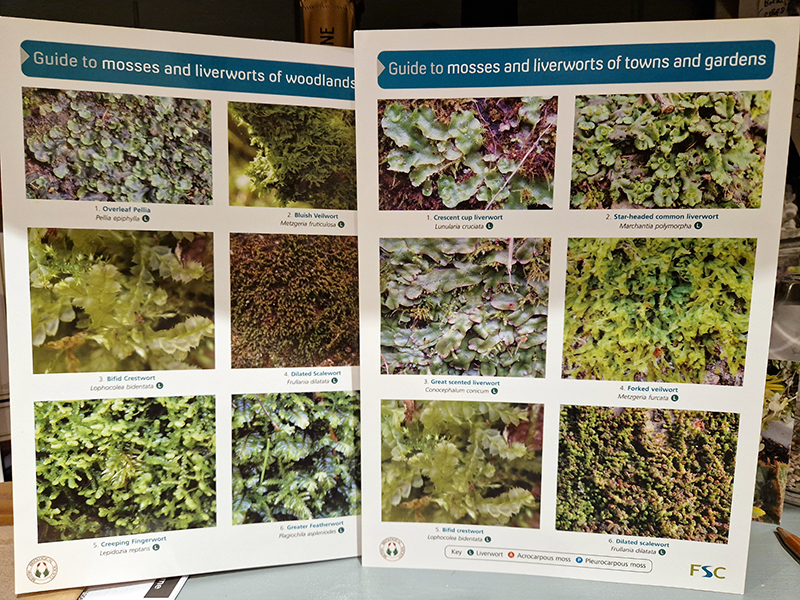
The British Bryological Society celebrates its centenary this year, promoting the study of mosses and liverworts. I have been searching their website for clues on growing moss. Most of the information is on the identification of mosses but I did find a useful downloadable pdf of The Moss Growers Handbook by Michael Fletcher. No mention of liquidising moss with yoghurt as a starter culture though.

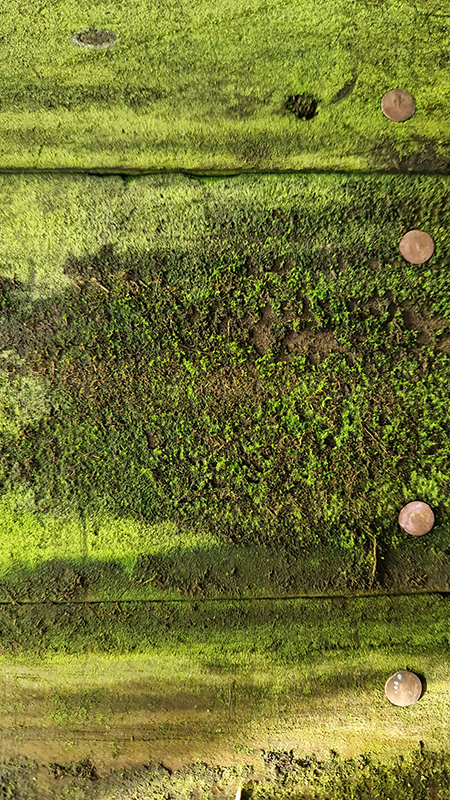
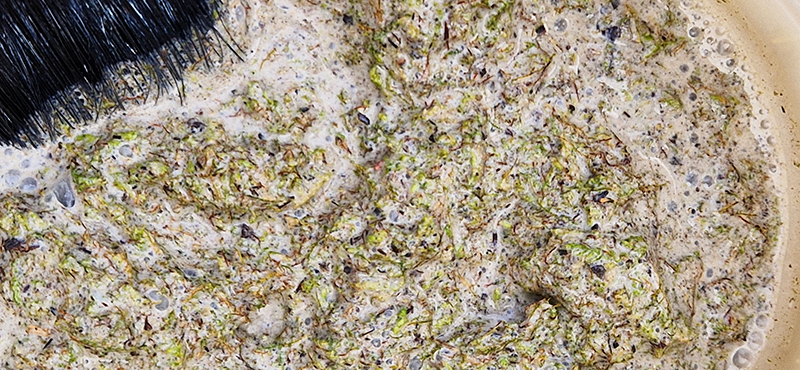
Gathering moss, liquidising with yoghurt and painting on to reclaimed old boards.

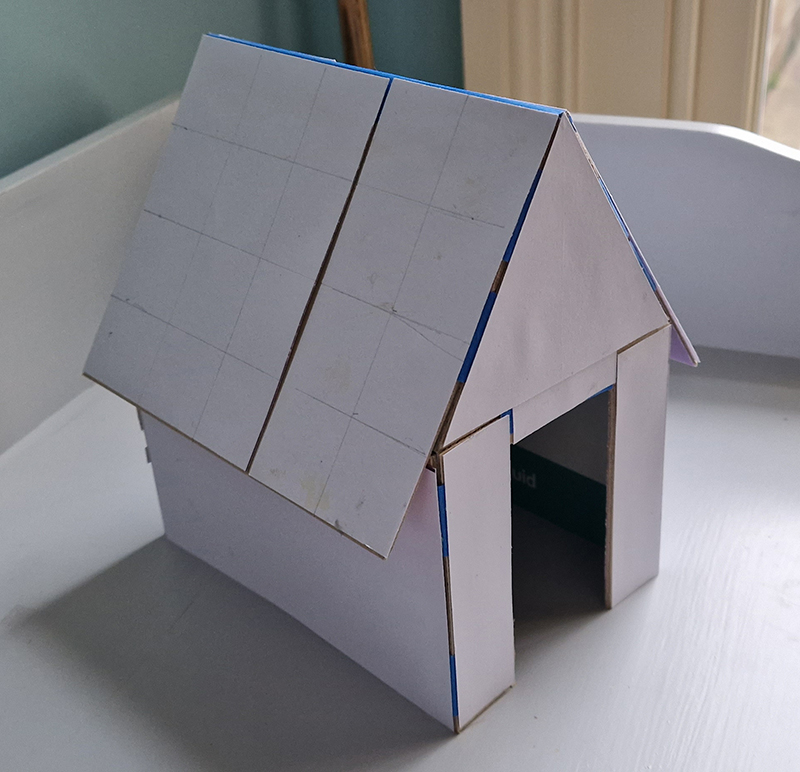
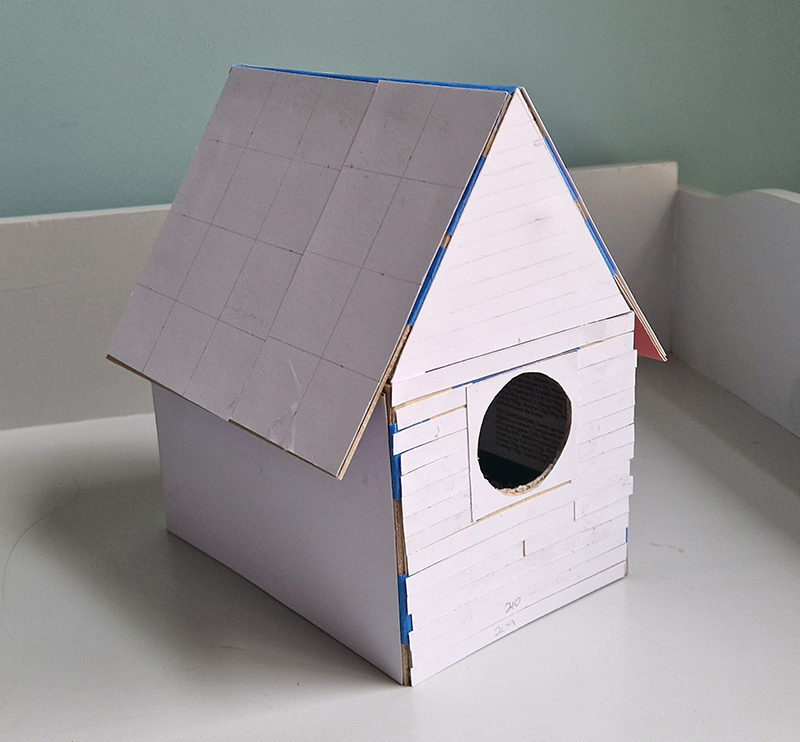
I made a rough model of The Absolute Hut to work out how many boards I will need for the north facing wall to try and grow moss on. I like that it turned out looking like a bird house as inside will be video exploring the magnetoreception of birds. This work is a reimagining of the Absolute Hut at Hartland Magnetic Observatory where monitoring of the Earth’s magnetic field takes place.

Some speculation on human magnetoreception:

Neurons send information electrochemically around the body. The signals they send are called action potentials which is a temporary shift from negative to positive within the cell caused by certain ions entering the cell. Research has proven that some animals can sense the magnetic field via cryptochrome molecules in the retina which trigger action potentials. New studies have been carried out looking at iron particles (Fe3O4) found in the brain using supersensitive magnetic sensors to read the brain’s magnetic field. Receptor cells containing crystals of magnetite could register changes in magnetic fields and report this information to the brain.  

One study suggests that it could be possible for the magnetic field in one animal’s brain to transmit information to another animal’s brain by triggering action potentials creating the same thoughts and emotions. There have been experiments with rats and fruit bats which claim brain to brain communication has occurred. Alpha waves in the human brain have been shown to respond to magnetic fields. Alpha waves are always present, but are more prominent when at rest. The experiment, carried out at Caltech, mimicked how a person might experience the Earth’s magnetic field when turning their head. 

Maybe putting our heads together can exchange thoughts telepathically.

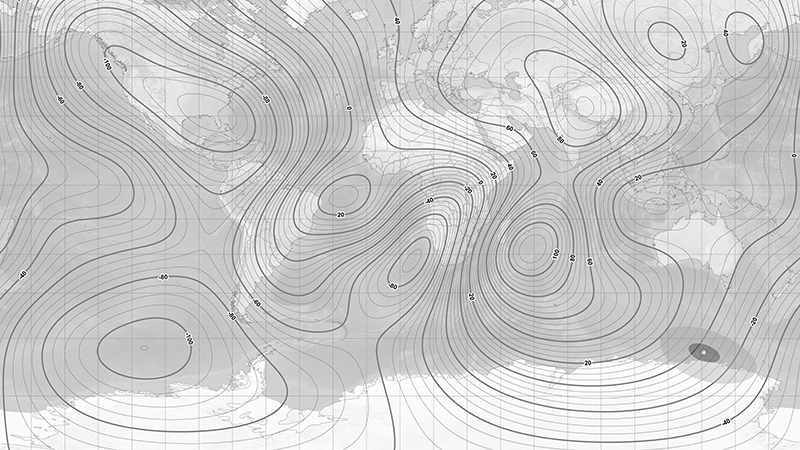
I have taken the contour lines from a publicly available World Magnetic Model Field Map as a framework for layering in the video work on bird magnetoreception.

An early frosty morning captured the sun melting the ice on the lens of the spy cam in the garden.

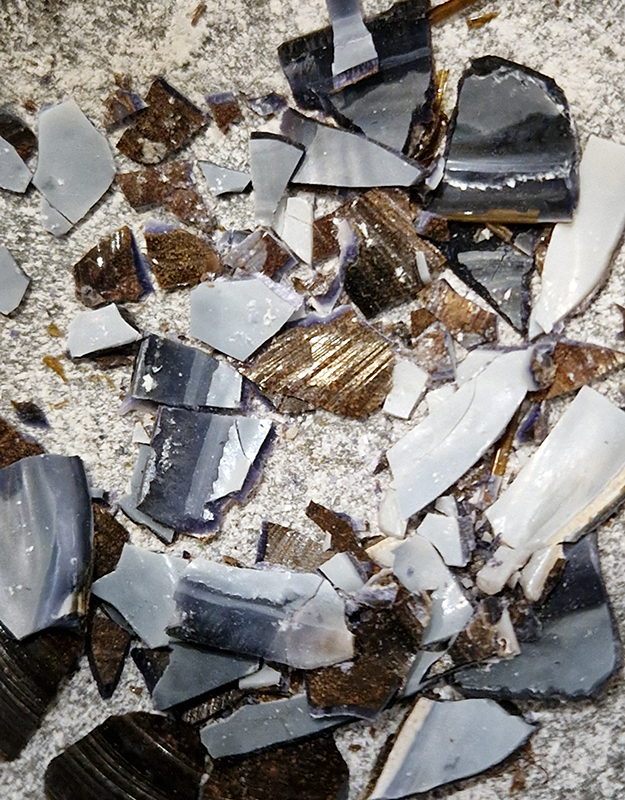
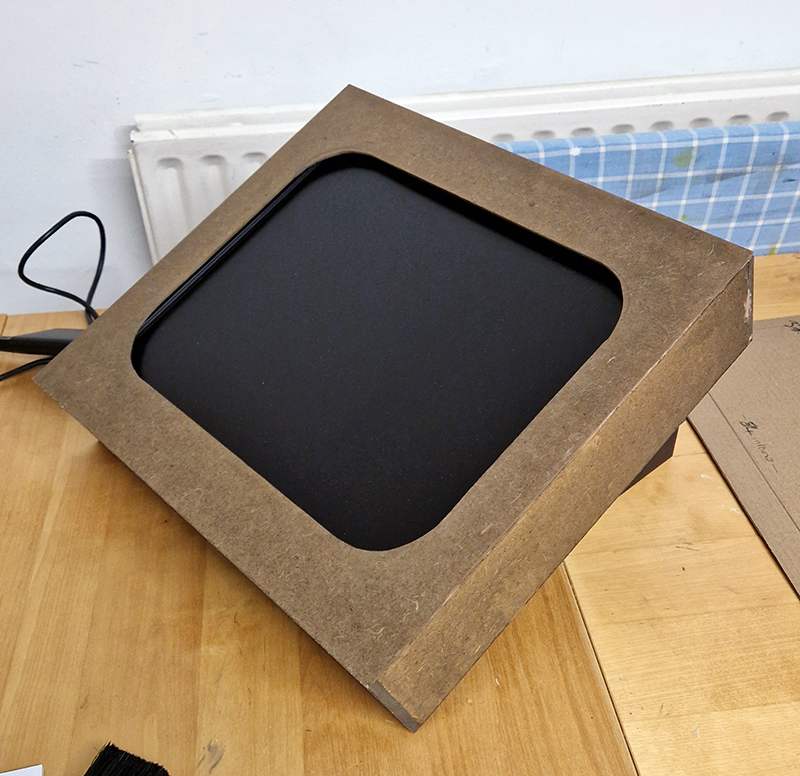
I have built the protective box frame for the monitor that will be inside the mollusc/rock sculpture Belly of a Rock. Thanks to Pete next door for cutting the wood for me. I plan to build the shape up with mesh covered in paper clay. I have had the idea to make small circular paper clay clumps with swirls of crushed shell on each one and build the form up from these. I have been given a lot of oyster shells and have collected mussel shells which I have tested crushing with a pestle and mortar.

The drift of the magnetic North pole was first recorded in 1831 and historically would wander between 0–15 km a year but since the 1990’s it has sped up to drift 50–60 km a year. Tracking changes in the magnetic field can tell researchers how the iron in Earth’s core moves.

Earth’s magnetic field is created in the swirling outer core. Magnetism in the outer core is about fifty times stronger than it is on the rocky surface of the Earth. At the centre of the Earth is the inner core which is divided into eastern and western hemispheres. In the inner core, the temperature is so high, materials lose their permanent magnetic properties as the atoms are so thermally excited they can no longer align to a magnetic point. This is known as the Curie temperature.

The hemispheres of the inner core have distinct crystalline structures and the western hemisphere seems to be crystallizing rapidly whereas the eastern hemisphere may actually be melting.  Geoscientists have also recently discovered that the inner core has an inner core. A radical geologic change about 500 million years ago may have caused this inner inner core to develop. Here the crystals are oriented east-west instead of north-south and are not aligned with either Earth’s rotational axis or magnetic field. The inner inner core crystals may have a completely different structure to the hexagonal close-packed (HCP) phase of iron that is stable only at extremely high pressure and so may exist at a different phase.

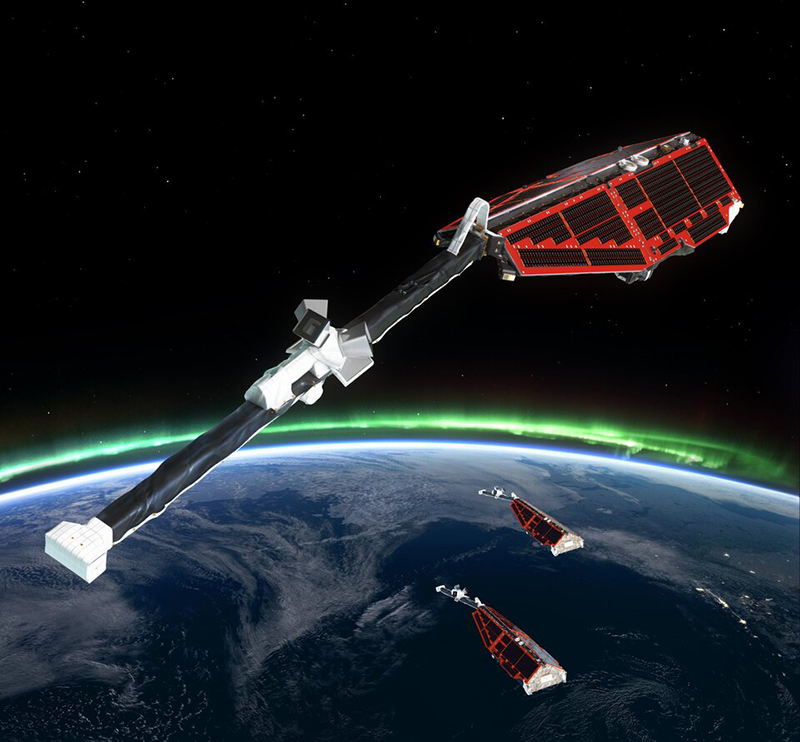
ESA’s three-satellite Swarm mission was launched in 2013 to monitor Earth’s magnetic field by measuring magnetic signals from Earth’s core, the crust, oceans, ionosphere and magnetosphere. Using data from the Swarm mission, scientists have discovered energy generated by electrically-charged particles in the solar wind, which can be disruptive to communication systems, flows asymmetrically into Earth’s atmosphere towards the magnetic north pole more than towards the magnetic south pole. They have also discovered a completely new type of magnetic wave that sweeps across the outermost part of Earth’s outer core every seven years. These magnetic waves are likely to be triggered by disturbances deep within the Earth’s fluid core. Research suggests that other such waves are likely to exist, probably with longer periods.

Geomagnetic jerks are sudden powerful waves that occur about every three to 12 years and are not consistent across the globe. It seems these jerks originate from rising blobs of molten matter that form in the planet’s core up to twenty five years before the related jerk takes place. The current findings from Swarm are part of a long-term project to predict the evolution of the geomagnetic field over the coming decades.

Polarised light is when the waves of electric and magnetic fields vibrate preferentially in certain directions. This can happen when light bounces off a reflective surface like a mirror or the sea. It can also happen in space as starlight travels through gas and dust clouds. Polarisation carries a wealth of information about what happened along a light ray’s path and astronomers can study the physical processes that caused the polarisation.

The Milky Way is filled with a mixture of gas and dust from which stars are born. Cosmic dust grains are almost always spinning rapidly, tens of millions of times per second, due to collisions with photons and rapidly moving atoms. The spinning dust grains become aligned to the direction of the magnetic field. They emit light at very long wavelengths from the infrared to the microwave domain which comes out vibrating parallel to the longest axis of the grain, making the light polarised.

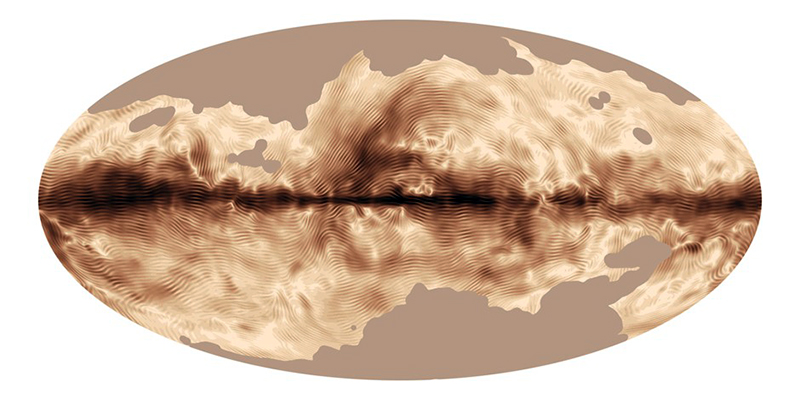
Visualisation of data from ESA’s Planck satellite shows the interaction between interstellar dust in the Milky Way and the structure of our Galaxy’s magnetic field. Polarisation-sensitive detectors were able to capture the data as interstellar dust grains tend to align their longest axis at right angles to the direction of the magnetic field resulting in light emitted by clouds of gas and dust being partly ‘polarised’. Researchers are using the polarised light from interstellar dust to reconstruct the Galaxy’s magnetic field and study its role in galaxy evolution and star formation. From this data it can be seen that across the galactic plane there is a strong regular pattern but in some areas there are tangled features where the local magnetic field is particularly disorganised.

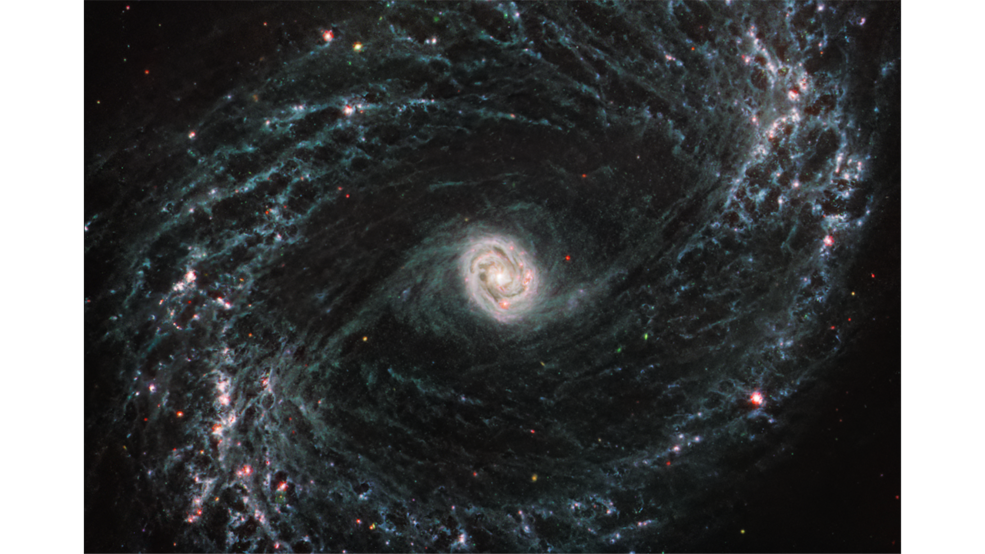
New images from NASA’s James Webb Space Telescope show star formation, gas, and dust in nearby galaxies with unprecedented resolution at infrared wavelengths. NGC 1433 is a barred spiral galaxy with a particularly bright core surrounded by double star forming rings. For the first time, in Webb’s infrared images, scientists can see cavernous bubbles of gas where forming stars have released energy into their surrounding environment.

The Observable Universe 2018 by Pablo Carlos Budasi. The furthest we can see is the faint glow from the cosmic microwave background emitted 13.8 billion years ago.

From Earth we become the centre of the eye that gazes out but we have no idea of the full size of the universe or if we are embedded in a multiverse.

The unobservable universe makes up the vast majority, around 95% of the universe. Zero, a symbol to mark nothing, sits on the boundary between absence and presence indicating what might have been or might come to be. Where we thought there was nothing we have found so much.

Gallery Visits

Preconscious Landscape at Exposed Arts Projects – an interesting space for arts based research projects. Artists: Lynne Abrahamson, Gabriele Beveridge, Matilde Cerruti Quara, Konstantinos Giotis, Sotiris Gonis, Ramona Güntert, Raksha Patel, Hamish Pearch, Anna Perach, Chantal Powell, Candida Powell-Williams, Paloma Proudfoot, Aziza Shadenova, Holly Stevenson, Maro Theodorou, Adia Wahid & Meng Zhou all grapple with an unresolvable psychoanalytic question: what does it mean for the conscious mind to try to understand its own preconsciousness?

Richard Mosse Broken Spectre at 180 The Strand. Seventy minutes of emotionally uncomfortable yet beautifully riveting viewing. Endless overwhelming destruction. Burnt forest. Subterranean fires. Intensive cattle farming. Aggressive gold mining. Wide wide screen images that slip between dreamlike garish colour and chilling monochrome with a soundtrack that sounds like the forest itself crying. The brutal disrespect for the land, the non-human and the people of the Amazon rainforest captured in heartbreaking detail as it slips through our fingers. Having been looking at moss recently the large photographic works at the entrance to the film come across very moss like and emphasises the micro and macro nature of the world.

Cable Depot presents Insert Coin, a project by Bob Bicknell-Knight exploring predatory monetisation practices within video games, specifically loot boxes, and the ongoing insertion of gambling mechanics into virtual experiences. Tapping into our desires and the addictive thrill of winning Bob Bicknell-Knight invites us across the digital divide into a luminous world of pixels and 3D printing. I was delighted to win an island. Here everything is free so there is no uncertainty and debt to mar the experience.

As our physical lives are becoming increasingly gamified the game industry has, for almost twenty years, been inserting ways of gambling real world money into video games. From purchasing extra lives to play another level in Candy Crush to buying new cosmetic options for your guns in Call of Duty, spending money within video games has become increasingly prevalent.

One of the most prevalent and destructive forms of monetization are loot boxes, consumable virtual items that are bought within video games which can be redeemed to receive a randomised selection of further virtual items, ranging from simple customization options for a player’s avatar or character to game-changing equipment such as weapons and armour. As the items are randomised players have previously spent thousands of pounds attempting to gain specific products in different games. As these gambling mechanics have become more prevalent, with considerable harm being done to young people and players with gambling addictions, loot boxes are now illegal in several countries, whereas recently the UK government decided that loot boxes will not be regulated under betting laws.

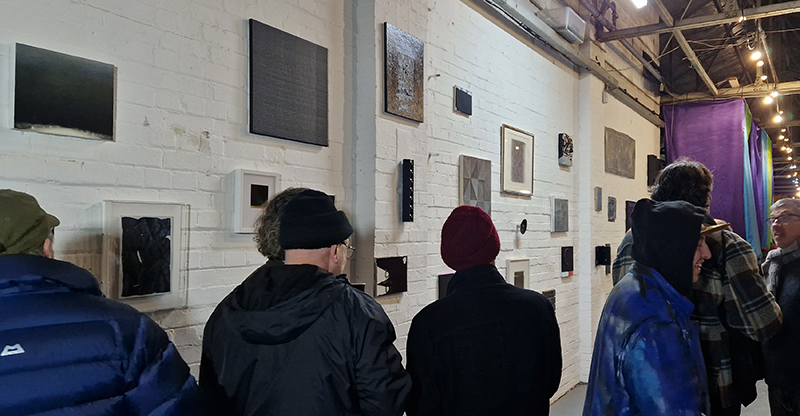
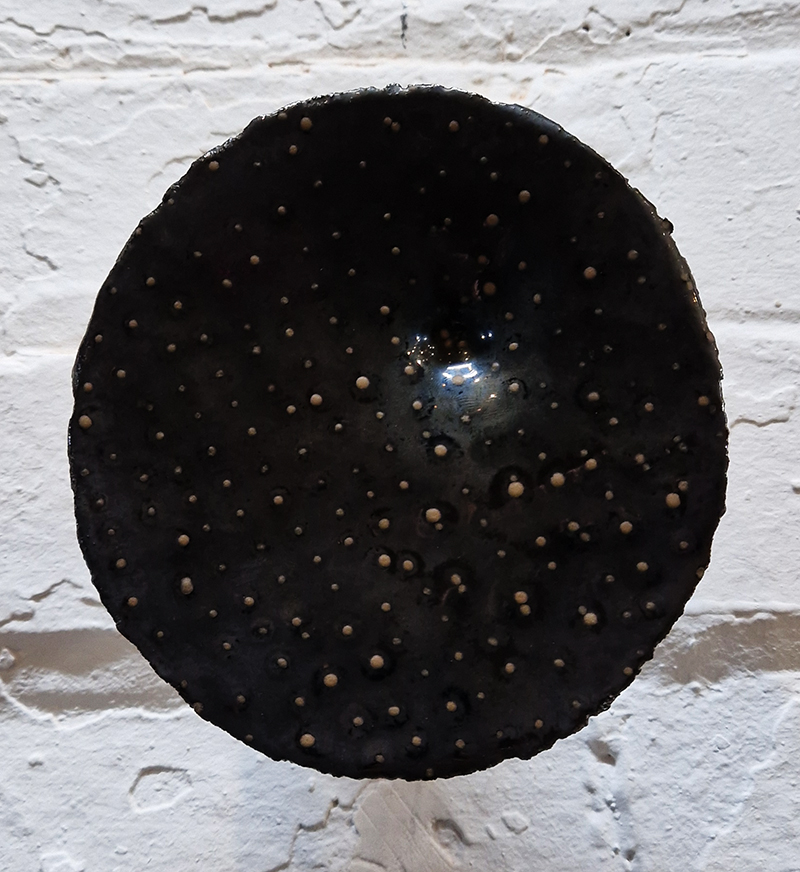
Champs Noir curated by Simon Leahy-Clark at Terrace Gallery. A carefully chosen collection of works in black from a great catalogue of artists. Featuring: Michael Ashcroft, Bensley and Dipre, Diane Bielik, Andy Black, Cedric Christie, Gemma Cosse, Graham Crowley, A Ee, Nicky Hodge, Mandy Hudson, Michael Kaul, Sarah Ken, Sharon Leahy-Clark, Simon Leahy-Clark, Graham Lister, Brendan Lyons, Alistair MacKillop, Mutalib Man, Enzo Marr, Donna Mclean, Neil Metzner, Jane Millar, Josh Mitchell, Jost Munster, Stephen Palmer, Kasper Pincis, Andrew Seto, Peter Suchi, Sally Taylor, Chris Tosic, Mark Wainwright & Tom Wilmott. Selected image: Jane Millar: Test Bed, ceramic media, 12cm diameter, 2019.

Julie F Hill Earth, Water, Night at The Stone Space

We so often look out at the night sky forgetting it is gazing back at us.

‘… The [pool] is the very eye of the landscape, the reflection in water the first view that the universe has of itself …’ —Gaston Bachelard,

Holding the poetic and alchemical in contrast to the objective and scientific, astronomical data of deep space folds into Earth’s deep time. Light and shadow gather in pools of water, forming images that suggest consciousness is a fundamental property of all matter.

Beautiful and contemplative works capturing the milkyness of the Milky Way caught in the folds of the night sky; distorted reflections rippling across dark pools; illusory depths oscillating between dimensions.

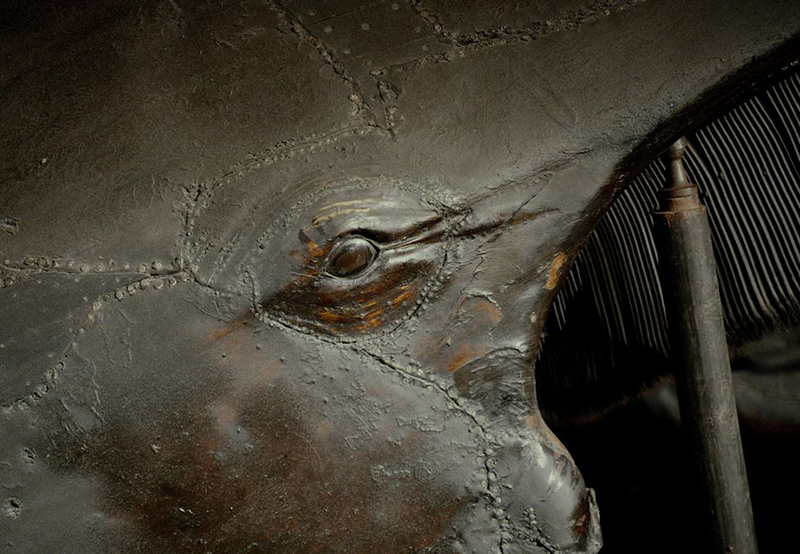
Sam Williams Deep in The Eye and The Belly (Part One) at San Mei Gallery. It was a busy night at the opening and I didn’t take any photos. There was a large projection on one wall and two other films showing on monitors with headphones. The work describes stories of cetacean bodies, interlacing actual historical events with speculative narratives. The camp narration of the main film deliberately jars with the emotive subject matter, but is given context through the supporting films as the protagonist who features across each film is seen reclining wearing feathers and glittery regalia speaking in long drawn and world weary sentences or lamenting the loss of the whale in absurd song from the vantage of a lighthouse.

Reverse Parking at Thames-side Gallery curated by Peter Lamb and Katie Pratt.

Reverse Parking presents seven artists (Gordon Cheung, Will Cruickshank, Cristallina Fischetti, Oona Grimes, Paul Hosking, Peter Lamb and Katie Pratt) whose work explores the duality of reality and the technological sublime. A bold and vibrant show. Good to see some large work from Oona Grimes and to chat with her in the gallery; her battle scenes encompassing battles down the ages coincidentally emerged at the onset of war in Ukraine. Also interesting to hear Katy Pratt discuss her language of abstract painting on the excellent Art Fictions podcast.

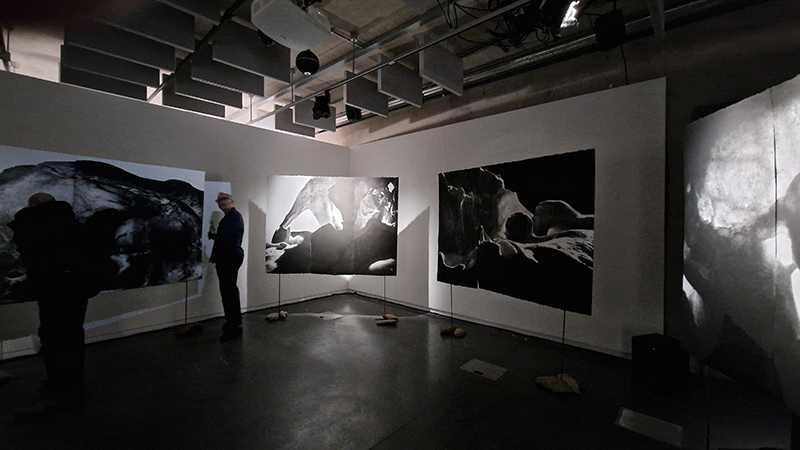
…not necessarily in the right order at Stephen Lawrence Gallery takes a playful cue from the Morecambe and Wise sketch with special guest Andre Previn which is embedded in British cultural history. Work from the featured artists (Carol Wyss, Dominic Murcott, Graeme Miller, Dirty Electronics and Dushume) overlaps and layers through still image, sound and projection. Exhibited is the third iteration of Carol Wyss’s giant etchings that expose the inner recesses of the human skull. Here they are made luminous and their sculpted landscapes all the more surreal by the animated light sequences traversing their surfaces.

Reading

Not observant enough to realise I bought the pocket guide version of The Natural Navigator by Tristan Gooley I ended up with an unembellished rather prosaic read with lots of facts and charts and possibly useful information that requires a large investment of dedication to the cause to learn many of these techniques. What was amusing though was finding the section headed Mosses and Lichens opens with the paragraph –

‘There is a commonly held belief that “Moss grows on the north side of trees and buildings.” It does, sometimes, but will also grow on every other side.

He goes on to say that moss doesn’t care about direction, but it does care about moisture. So in the northern hemisphere the side away from the sun is preferred by moss as it retains moisture for longer. Gradient is also important to prevent run off of water. I have tried to prop my planks at as low an angle as possible in the side passage but may need to find somewhere I can lie them down more.

I am enjoying dipping in to Florian Freistetter’s A History of the Universe in 100 Stars. No longer a swathe of uniform twinkling points of light but each star has its own character and story. It starts with 100 stories but we can extrapolate that to consider each of the many billion stars as individuals.

Listening

In Our Time – Superconductivity Excellent guest speakers (Nigel Hussey, Professor of Experimental Condensed Matter Physics at the University of Bristol; Suchitra Sebastian, Professor of Physics at the Cavendish Laboratory at the University of Cambridge; Stephen Blundell, Professor of Physics at the University of Oxford) on this podcast. Superconductivity was a surprising discovery in 1911 by the Dutch physicist Heike Kamerlingh Onnes who found that when he lowered the temperature of mercury close to absolute zero and ran an electrical current through it, there was no resistance to the current. Many other materials have also been found to share this property when cooled to a pivotal temperature when the material suddenly enters a different phase and behaves in a completely different way. As water moves from solid to liquid to gas at different temperatures so metals can move between solid, liquid and superconductor. Further research found that a superconductor also expels magnetic fields and this has been exploited in the making of MRI scanners and to speed particles through the Large Hadron Collider.

I also enjoyed hearing how, what were once impossible numbers, called imaginary numbers by Descartes, have turned out to be fundamental and integral to explaining oscillations and the sort of wave like structures in the universe that we encounter when diving into a quantum world.

The Curious cases of Rutherford and Fry – The impossible number

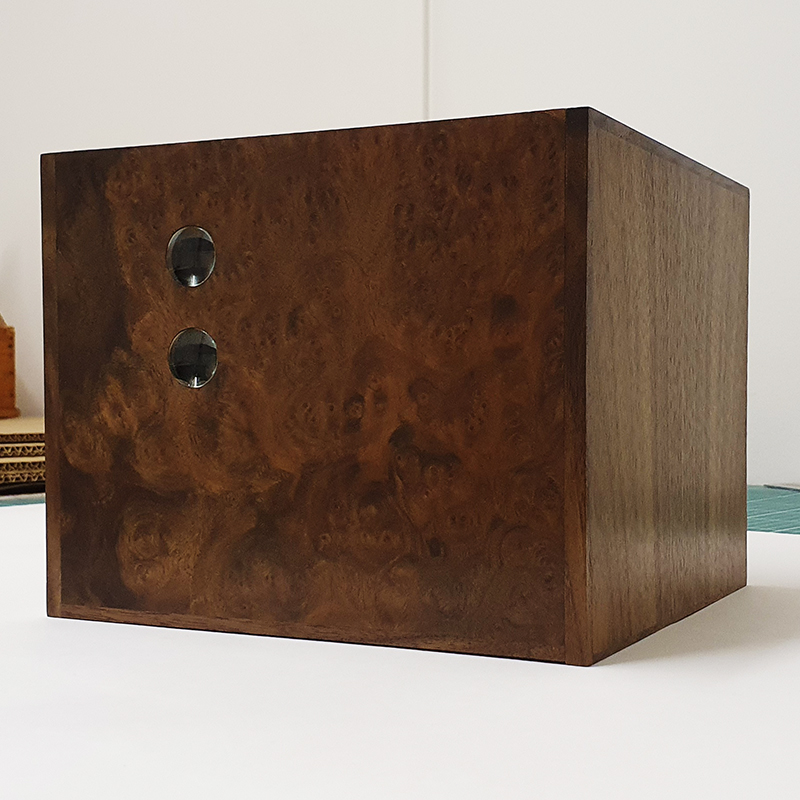
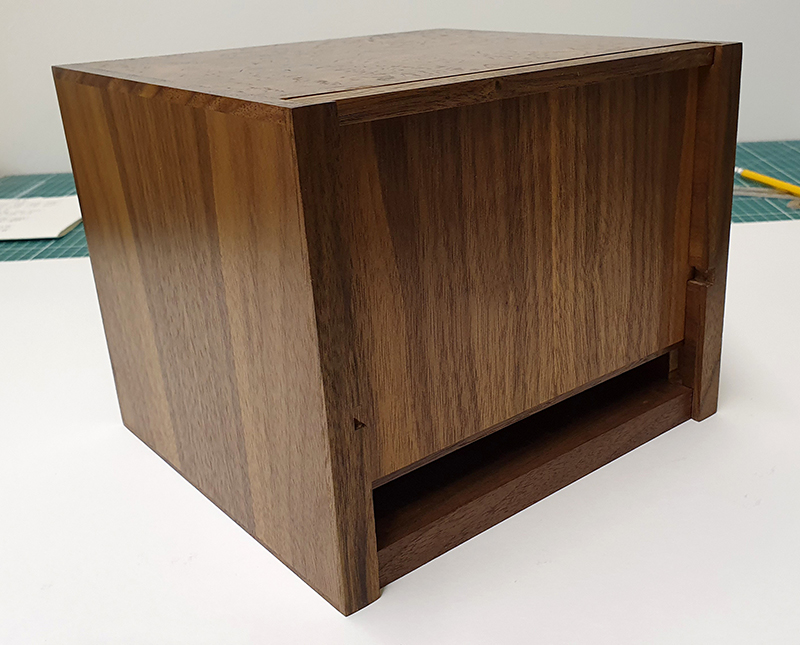
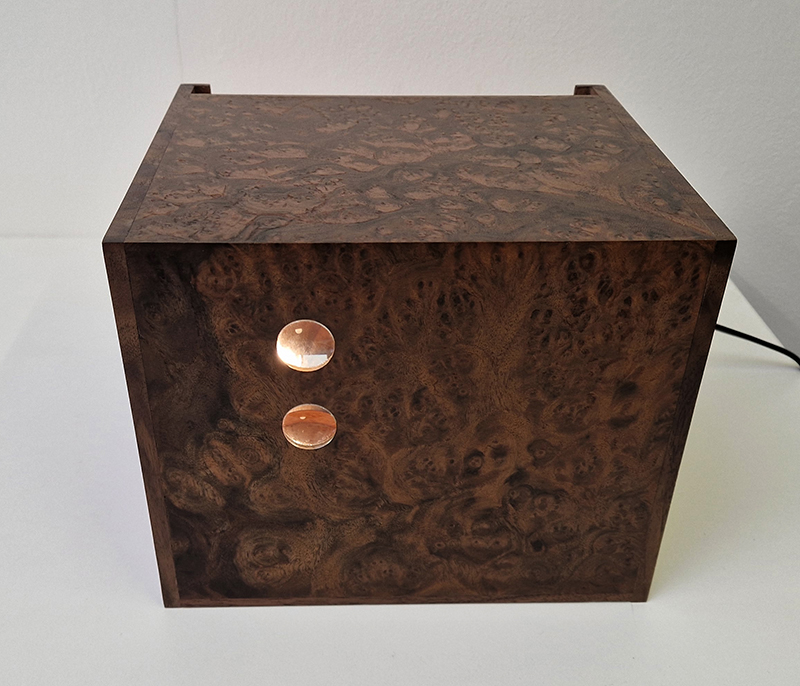
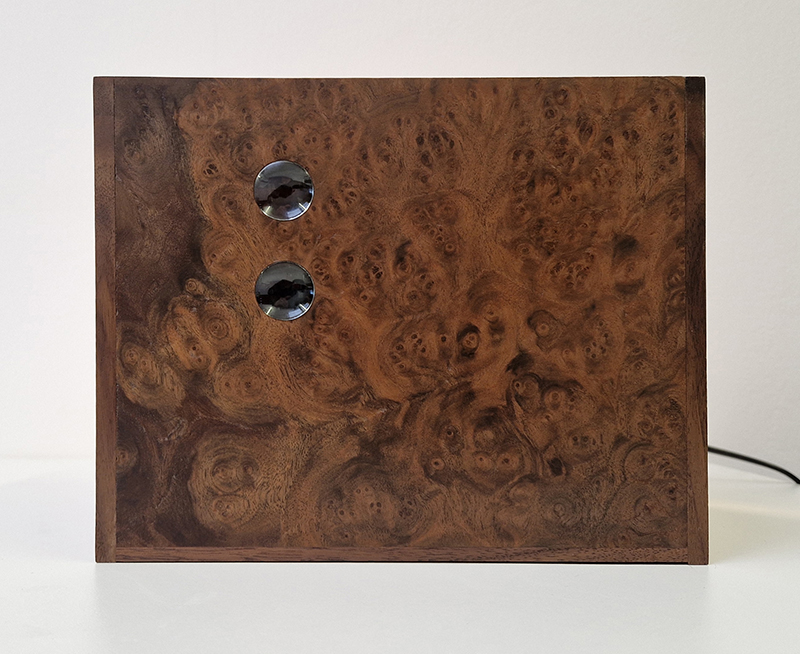
Super happy with the beautiful box, with walnut burr veneer, made by the skilled hands of Bruce Watson to house my cosmic ray detectors for cosmically interactive work The Breath of Stars. Bruce has a workshop opposite my studio at Thames-side Studios. The attention to detail is immaculate.

The Breath of Stars is a digital video work activated in real time by the passage of cosmic particles travelling from distant galaxies. These subatomic visitors from outer space are created during super nova explosions or by phenomena we are yet to discover.

Work in progress continues with tearing down paper squares for the Azimuth Obelisk.

Single vertical forms embody a primitive power. Etymologically, an obelisk should be made from a single quarried stone. To quarry one enormous piece of rock without it fracturing required power and money. To erect it required complex engineering skills. Since the first obelisks were raised in Egypt, often in gateway pairs with gilded tips for the sun god Re to anoint, they have escaped the confines of their original meaning. Originally a motif of immortality and communion between heaven and earth, its phallic symbolism has been co-opted by many nations, institutions and companies for its crude assertion of male power. Mystics shape crystals into obelisks as symbols of pent up negative energy in need of release. Perhaps the many memorials to the dead, marked by an obelisk usually cast in concrete, attempt to embrace the notion of immortality through remembrance in those carved names.

I don’t know why an obelisk was chosen as the azimuth marker at Hartland Magnetic Observatory. It’s hard to establish its actual shape as it can barely be seen now through the woods. Perhaps one day I will go back with binoculars.

I have imagined my obelisk sculpture as sedimentary rock with the layers holding clues to the fluctuations of the Earth’s magnetic field it stands as constant sentinel to. Made from recycled prints it is also a memorial to all the images buried in its form.

Looking North.

After unsuccessfully trying RHS Wisley for a book or advice on growing moss I have got some guides from the Field Studies Council. Hopefully these will help me choose the sort of moss that will be appropriate to use for the north wall of the Absolute Hut Installation. I am also beginning to collect wood to grow the moss on. The exhibition is several months away but I think it can take a while for moss to get established. The advice seems to be to liquidise some moss with yoghurt and spread it on the surface you want it to grow on.

The geographic north pole lies in the middle of the Arctic Ocean covered in shifting sea ice where the sun rises and sets only once per year. All lines of longitude converge here and hence all time zones. It is known as true north to distinguish it from the magnetic north pole.

However, as the Earth’s axis of rotation wobbles slightly in an irregular circle called the Chandler wobble this pole is not fixed. Where Earth’s rotational axis meets its surface is known as the instantaneous north pole and the north pole of balance, lies at the centre of this circle. The celestial north pole is where the axis line of the Earth extends into the night sky.

The magnetic north pole is where the planet’s magnetic field is vertical and a compass needle here would dip and try to point straight down – hence its other name: the magnetic dip pole.

The north geomagnetic pole is the northern dipole of the planet. When looked at from space the Earth may look like a bar magnet with two dipoles, but the geomagnetic poles are an approximation arrived at by reducing Earth’s complex and varied magnetic field to that of a simple bar magnet. The north dip pole lies in Northern Canada, the northern dipole is roughly off the northwest coast of Greenland.

The magnetic field lines of the Earth flow from south to north magnetic pole which is the opposite of a bar magnet where the lines flow north to south.  The north magnetic dip pole is where the earth’s magnetic field lines pull toward the planet, acting like the south pole of a bar magnet. The north pole of a bar magnet is attracted to the magnetic north pole of the Earth, not resisted as two north poles on magnets repel one another.

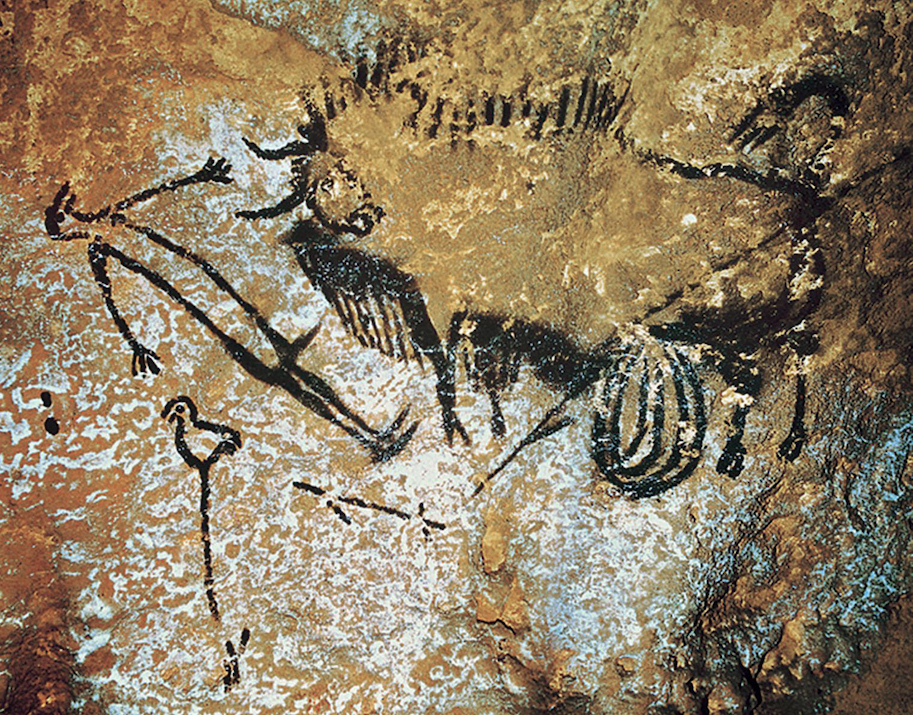
The extraordinary paintings in the Lascaux Caves of southwestern France may include representations of constellations and therefore be the earliest star maps dating back to nearly twenty thousand years ago. The dots set around an Aurochs eye in the Hall of Bulls may be the Hyades star cluster around the star Aldebaran as the eye of Taurus. Other dots are similar in configuration to the Pleiades. Now sealed off from the contamination of human breath the public can visit a replica site to gain a sensory experience of the scale and artistry. Painted on to the wall of the shaft is a bull, a strange bird-man and a mysterious bird on a stick. which according to Dr Rappenglueck, form a map of the sky with the eyes of the bull, birdman and bird representing the three prominent stars Vega, Deneb and Altair. Around 17,000 years ago, this region of sky would never have set below the horizon and would have been especially prominent at the start of spring.

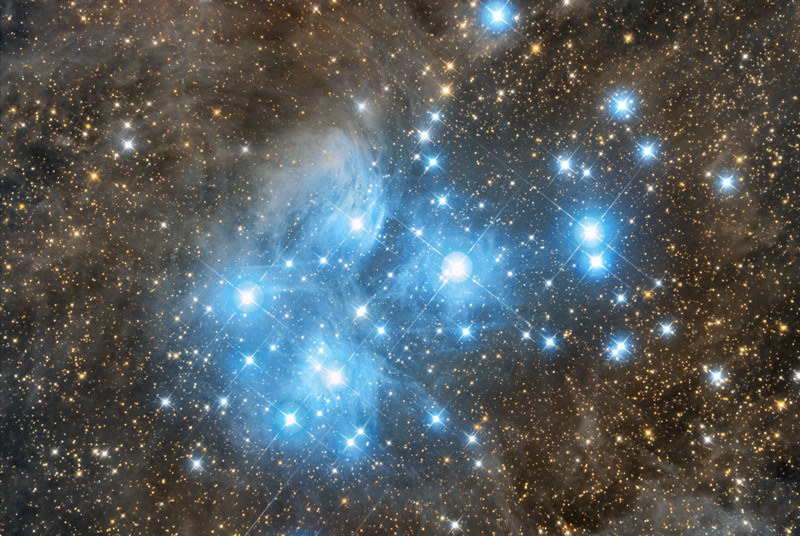
The Pleiades visible to the naked eye from almost anywhere on Earth appear as a small asterism of six or seven stars. At a distance of about 444 light years, it is among the nearest star clusters to Earth. Chased by Orion the seven sisters were transformed by Zeus and flung into the sky to escape the hunter. Through a lens, we can now see there are a lot more sisters drifting through a cloud of interstellar dust which scatters the light into a misty blue cloak. Image by Emil Ivanov.

A third research trip to Snettisham.

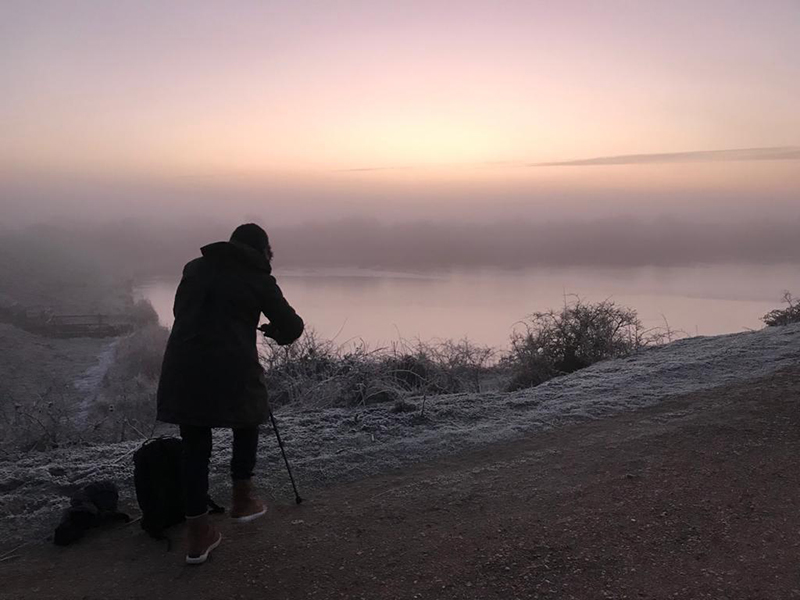
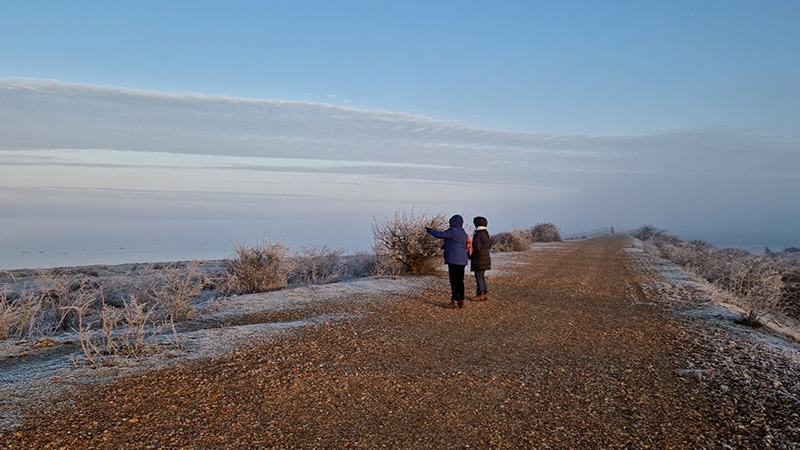
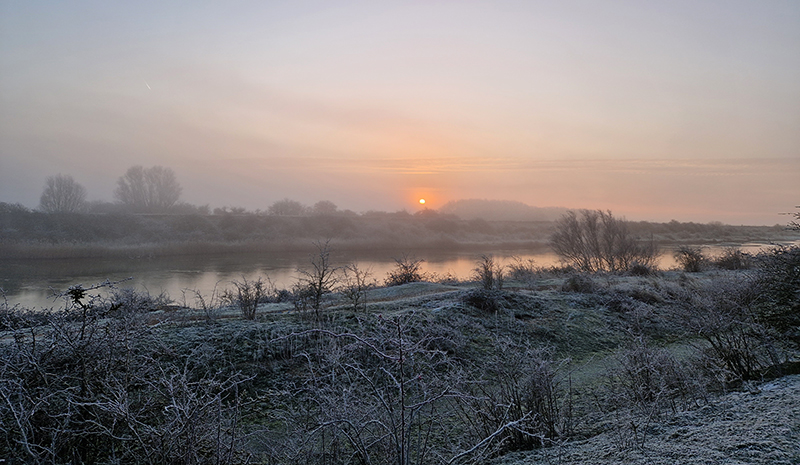
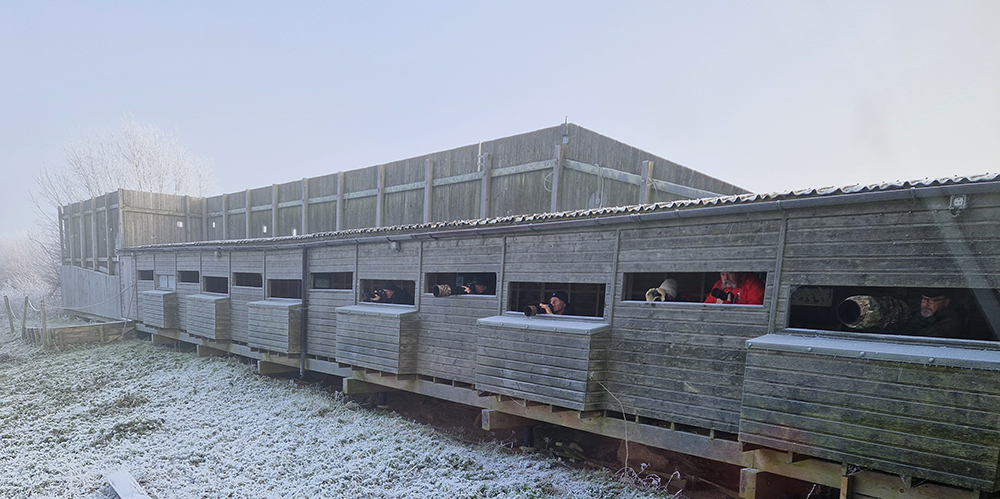
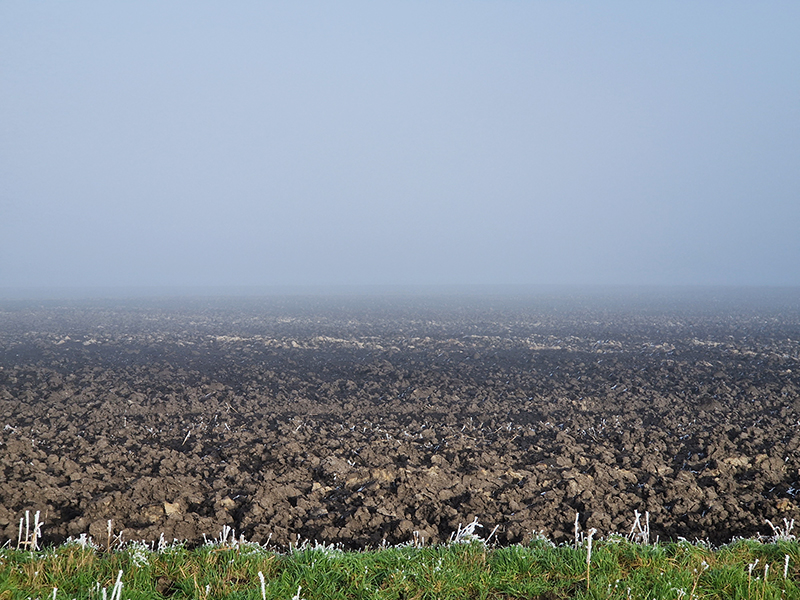
This time I shared the experience with good friends Ruth and Odile and we joined an RSPB group visit which allowed parking nearer the viewing site avoiding the usual long walk in the dark. The drive along the narrow potholed track, with no headlights which would alarm the birds, is a challenge and I was grateful for another car who had visited before leading the way. It was a chilling -7 at 7am making it difficult to use the camera with frozen fingers.

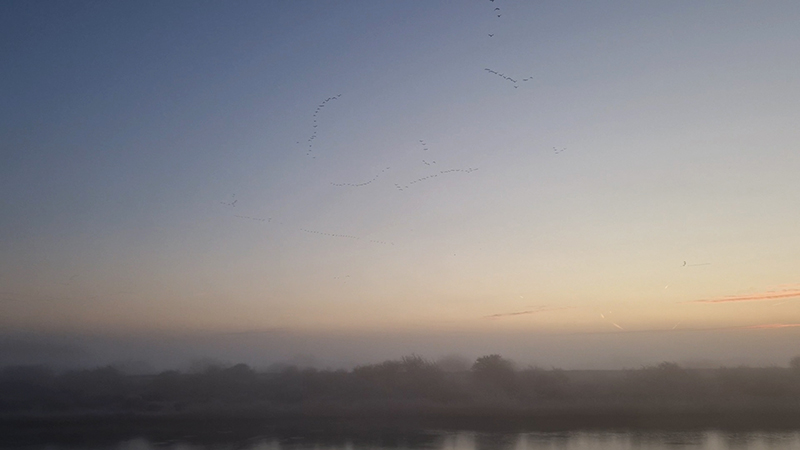
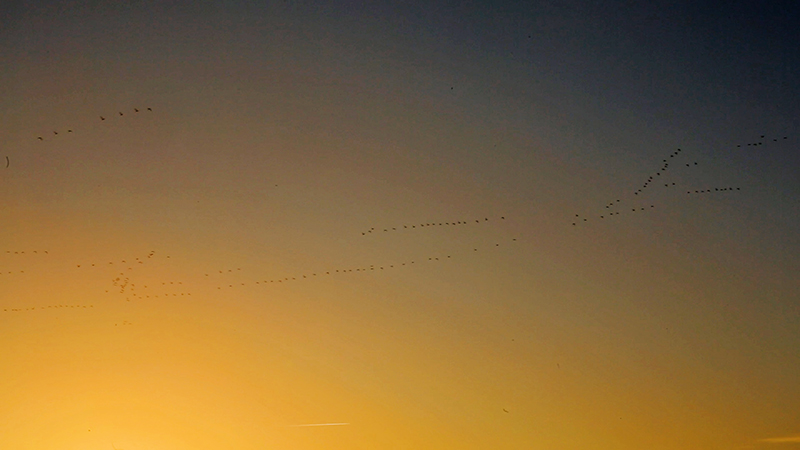
Eventually the sun cut through the low mist giving us stunningly beautiful skies to watch the skeins of pink footed geese leave their roost to go in search of sugar beet fields.

Having spent the night on the mudflats to avoid predators they leave at dawn in family groups. If there is a bright moon shining, they might not return from the feeding grounds at night as they can see if there is any danger approaching.

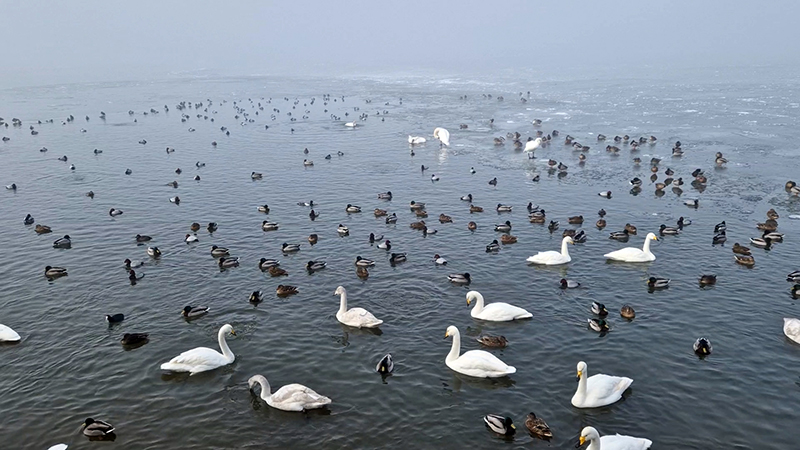
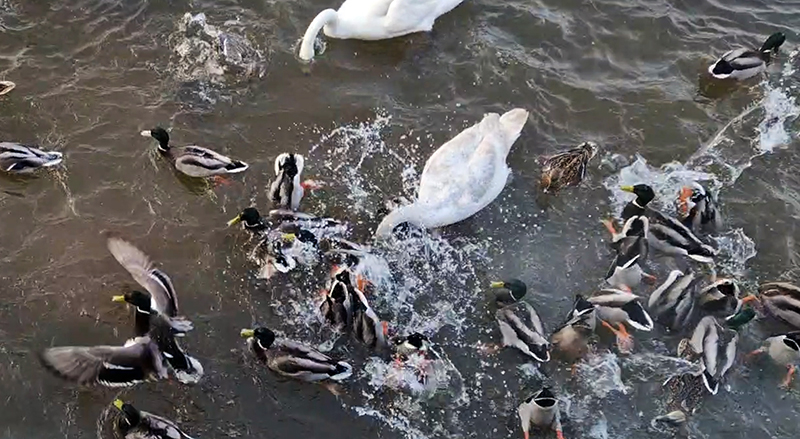
Before leaving Norfolk we visited Welney Wetland Centre, Britain’s largest area of seasonally-flooded land and the setting for mass winter gatherings of many thousands of wild ducks, geese and swans. Each winter thousands of Bewick’s and whooper swans make their winter migration to the UK, to escape colder countries.

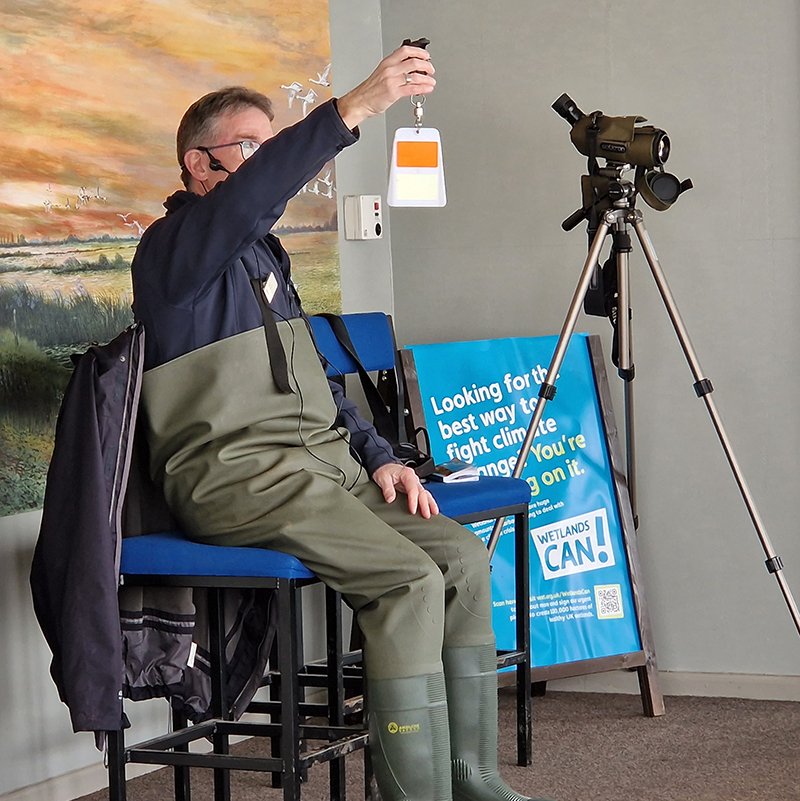
They have popular swan feeding sessions and talks about the site and the work they do to protect the wildlife here such as liaising with the electric companies to hang reflectors on the overhead cables to make them more visible to flying birds.

Walking around the frozen fens reminded me of the James Turrell installations of diffuse light that makes it hard for the eye to focus.

The light-sensitive molecules that allow perception of the Earth’s magnetic field, could also influence other responses such as control of circadian rhythms and tracking the difference between night and day. In birds, Cryptochrome molecules are located in photoreceptors in the eye and react to the Earth’s magnetic field when excited by blue light enabling orientation and navigation. Light sensitive molecules can also be found in cell nuclei and may influence physiological processes, such as fattening and migratory motivation, working as a trigger for changes in behaviour.

Light vibrates up and down as it travels in waves and these vibrations can be vertical, horizontal, or at any angle in between. The waves that make up sunlight are evenly distributed across all angles but polarised light is made up of waves with the vibrations at only one angle. Polarising lenses absorb horizontal light while letting through the vertical waves reducing the overall intensity of the light that passes through. Light also becomes partially polarized when it reflects at an angle from a surface such as when the sun is low in the sky. Research led by Rachel Muheim has shown that birds are better able to use their magnetic compass when the direction of polarised light exciting the cryptochrome molecules is parallel to the magnetic field. She suggests that it is more useful for birds to sense the magnetic field during sunrise and sunset for orientation to determine their direction before migrating or leaving the roost. In the middle of the day, when the polarised light is approximately perpendicular to the magnetic field, it can be an advantage that the magnetic field is less visible, so that it does not interfere at a time when visibility is important to locate food and to detect predators.

Gallery Visits

Sarah Kent and Claire Loussouam performance interacting with iterations of the work Graft at the finissage of Liz Elton’s Work in Progress residency at Fitzrovia Gallery. Great to see the gallery filled with these delicate wafting landscapes made from biodegradable materials and natural dyes.

Strange Clay at Hayward Gallery explores the possibilities of thinking through making.

The exhibition features works by Aaron Angell, Salvatore Arancio, Leilah Babirye, Jonathan Baldock, Lubna Chowdhary, Edmund de Waal, Emma Hart, Liu Jianhua, Rachel Kneebone, Serena Korda, Klara Kristalova, Beate Kuhn, Takuro Kuwata, Lindsey Mendick, Ron Nagle, Magdalene Odundo, Woody De Othello, Grayson Perry, Shahpour Pouyan, Ken Price, Brie Ruais, Betty Woodman and David Zink Yi.

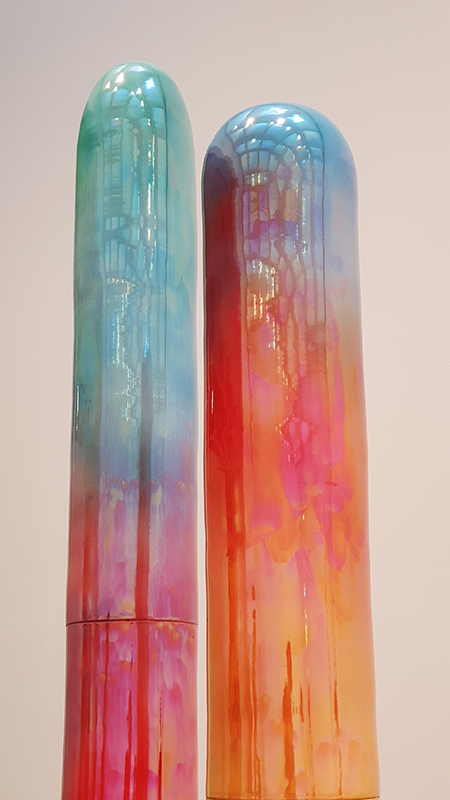
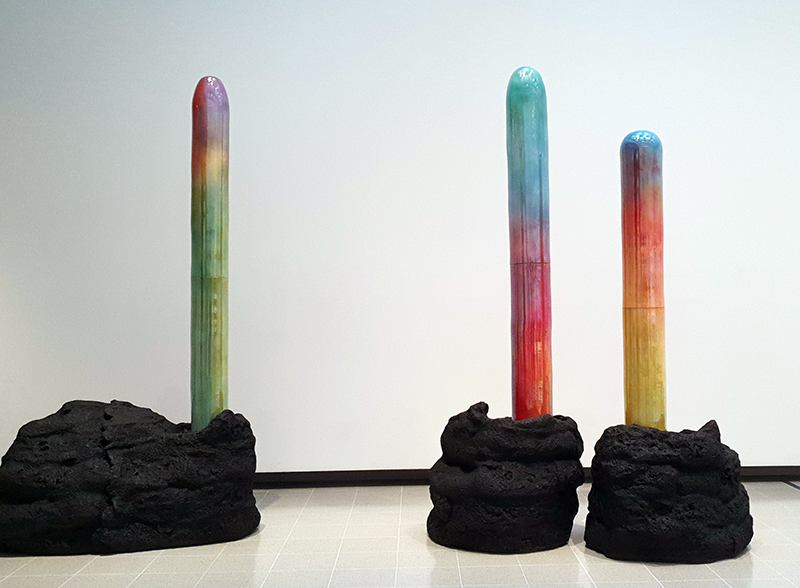
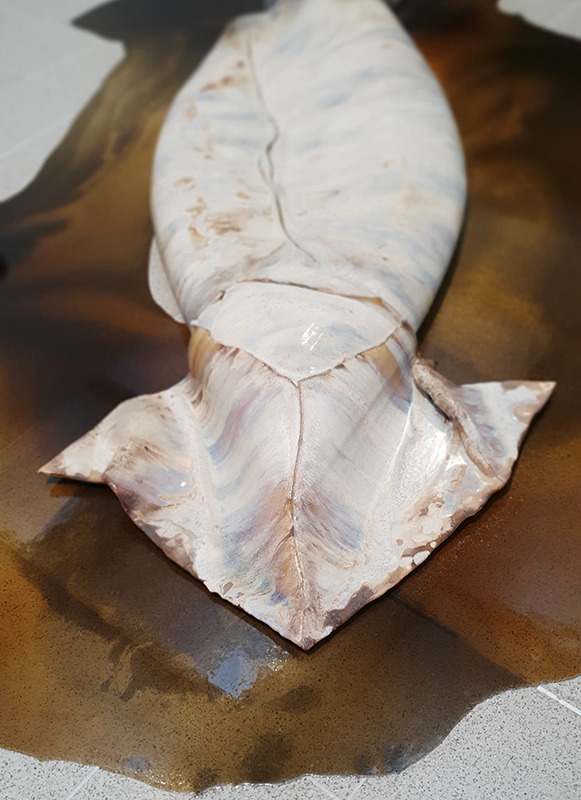
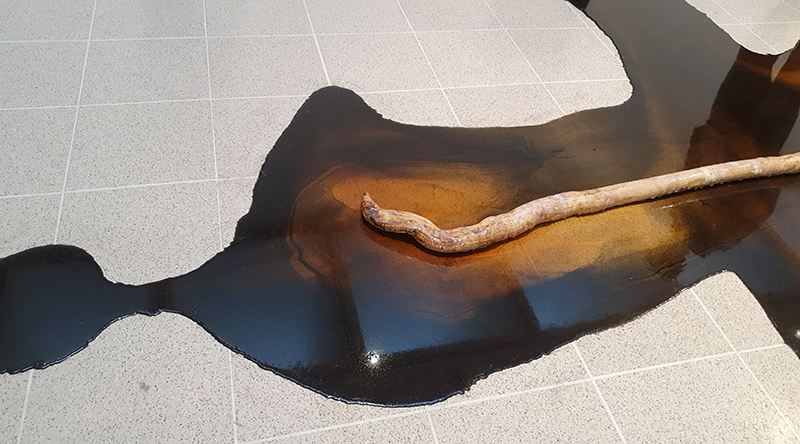
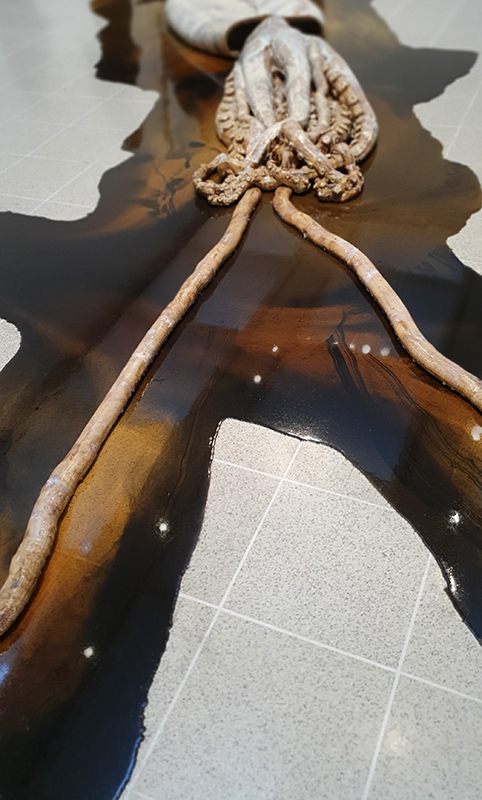
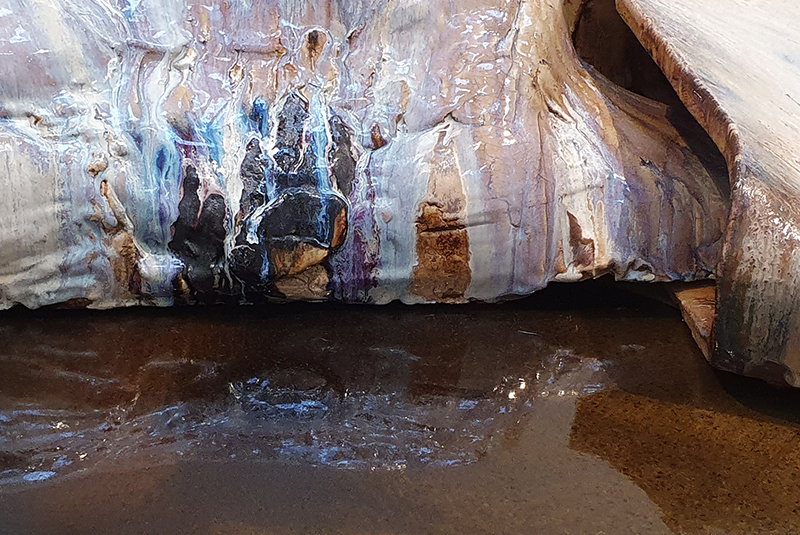
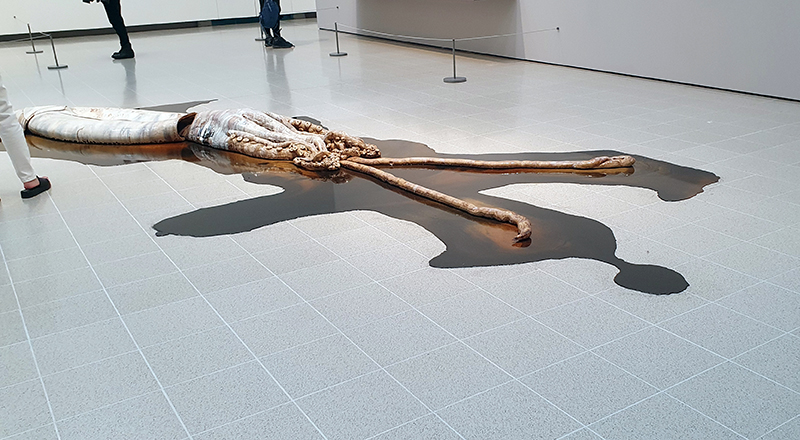
Stand out favourites were the dark volcanic and glistening contrasting surfaces of Salvatore Arancio’s work and the extraordinary and impressive scale of the squid in a pool of corn syrup and Japanese ink by David Zink Yi

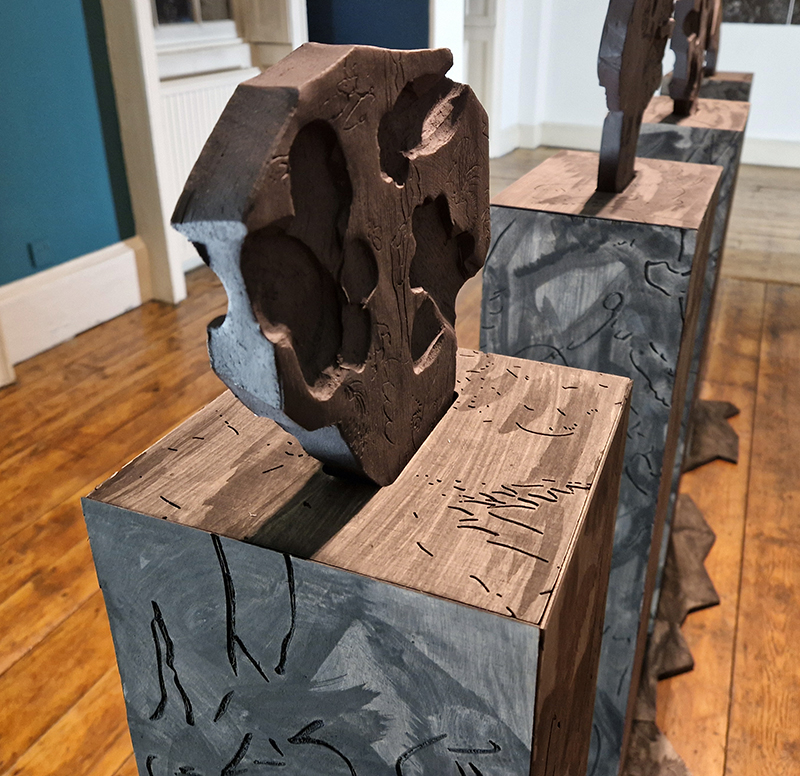
Abraham Kritzman A Hand Beneath The Hills at Danielle Arnaud. I was intrigued to visit to see the small pillar structures and the interesting use of ceramics. Kritzman doesn’t like to give a lot away about his work so impressions are not pre-directed. The camouflage paintwork on the sculptures, crenellations and frenetic lines in the prints had a war like ambience. The influences however appear to come from the insect world of metamorphism, burrowing and speed.
Reading

Being a Human by Charles Foster. I got this book as I thought it might offer some points for discussion at the upcoming debate Being Human in relation to the night sky to be held at Allenheads Contemporary Arts. Unfortunately it didn’t have any useful insights and was rather judgemental and smug despite some clever and comic attempts at self effacement. The sort of smugness that emanates from those of devout faith where the judgement is on those unfortunate enough not to share or even aspire to the same definitive experience as that of the author. It also has some of the smugness of the parent loudly interacting with their offspring in public to show off their parenting skills/precocious/cute child. I did appreciate it was well written and researched. Acres of endnotes and a huge reading list which could turn out to be useful. Some points were well made about the edge as the site of all change and the idea that what is imagined is no less real but the packaging just wasn’t for me.
Listening

The Magnetic Mystery – investigate the mysterious power of magnets, with the help of wizard-physicist Dr Felix Flicker and materials scientist Dr Anna Ploszajski.

https://www.bbc.co.uk/programmes/m001h49f

The fascinating and perilous journeys made by migrating birds has been a natural wonder for centuries with the first records of this phenomena made more than 3,000 years ago. The innate knowledge of migratory birds is mentioned in Job and Jeremiah and the ancient Greek writers Homer, Hesiod and Aristotle noted their passage.

Sensing the Earth’s magnetic field allows birds and other animals to determine their approximate position on the Earth. Research looking at how birds navigate over vast distances has shown many species are able to sense the compass direction of the Earth’s magnetic field and process this information. Non-migratory birds also have this ability using magnetoreception to orientate themselves in a local sense to map habitat.

There are two basic mechanisms involving magnetism used by animals; one method uses the iron based mineral magnetite found in the body’s cells and the other involves a protein found in the eye which is sensitive to light of different colours and intensities.

In plants and some animals, the light sensitive cryptochrome molecules are also involved in the control of the body’s circadian rhythms by tracking the difference between night and day. They can be found in cell nuclei of mammals and in the retina of several bird species. Ilia Solov’yov from the University of Southern Denmark has found the particular structure of cryptochrome Cry4 is unique and when light hits Cry4 cryptochromes in the eye of a migrating bird, they undergo chemical reactions that are influenced by the direction of Earth’s magnetic field, providing a signal of the bird’s orientation.

This light sensitive magnetic compass used by birds is affected by the polarisation direction of light. This was discovered by Rachel Muheim in a study where zebra finches were set the task of finding food in a maze. The birds were only able to use their magnetic compass when the direction of the polarised light was parallel to the magnetic field, when the polarised light was perpendicular to the magnetic field the birds became completely disorientated.

Researchers have put forward a theory that polarised light at sunrise and sunset accentuates the magnetic field at times when birds are ready to migrate or roost but in the middle of the day when the polarised light is approximately perpendicular to the magnetic field and less visible to them they can rely on sight to hunt and spot predators.

Magnetite is the most magnetic of Earth’s naturally-occurring minerals and microscopic particles are found in the cells of animals. Unlike the cryptochrome protein found in the eye and used by birds to perceive the Earth’s magnetic field, a magnetite-based magnetic sense does not need light to function.

Mole rats navigate their tunnels using this method which works like an internal compass. Birds also use this mechanism based on magnetite as an additional method to determine their position.

Sensing Earth’s geomagnetism is a functional ability seen in many creatures from bacteria and birds to turtles and bats. It is an evolutionary advantage to be able to orientate and navigate. Joseph Kirschvink and researchers at Caltech have completed experiments testing the human capacity to sense the magnetic field. Volunteers inside a chamber shielded from electromagnetic interference were subjected to an altered magnetic field while their brainwaves were monitored. The team found clear evidence that the subjects’ alpha brain waves were effected suggesting a rudimentary magnetic “sense”. The scientists believe that cells containing crystals of magnetite could register changes in magnetic fields and report this information to the brain. It is already known that magnetotactic bacteria have structures containing nanoscale magnetite crystals called magnetosomes that act as biological compasses, allowing the bacteria to navigate.

This research suggests that human alpha brainwaves react to a changing magnetic field. Alpha waves are always present, but are more prominent when in a relaxed and idle state of mind. Noticing a dip in the amplitude of the alpha waves would indicate the neurons in the brain becoming engaged in a task. The experiment was conducted to mimic how the Earth’s magnetic field would be experienced by the brain. The laboratory field was similar in strength to the Earth’s and the researchers moved it slowly to simulate how the field would change when turning one’s head. 

More experiments with iron filings, etchings and magnets.

Large etching on steel plate and small polymer etching.

Also some green screen filming towards the video work I am creating on this subject.

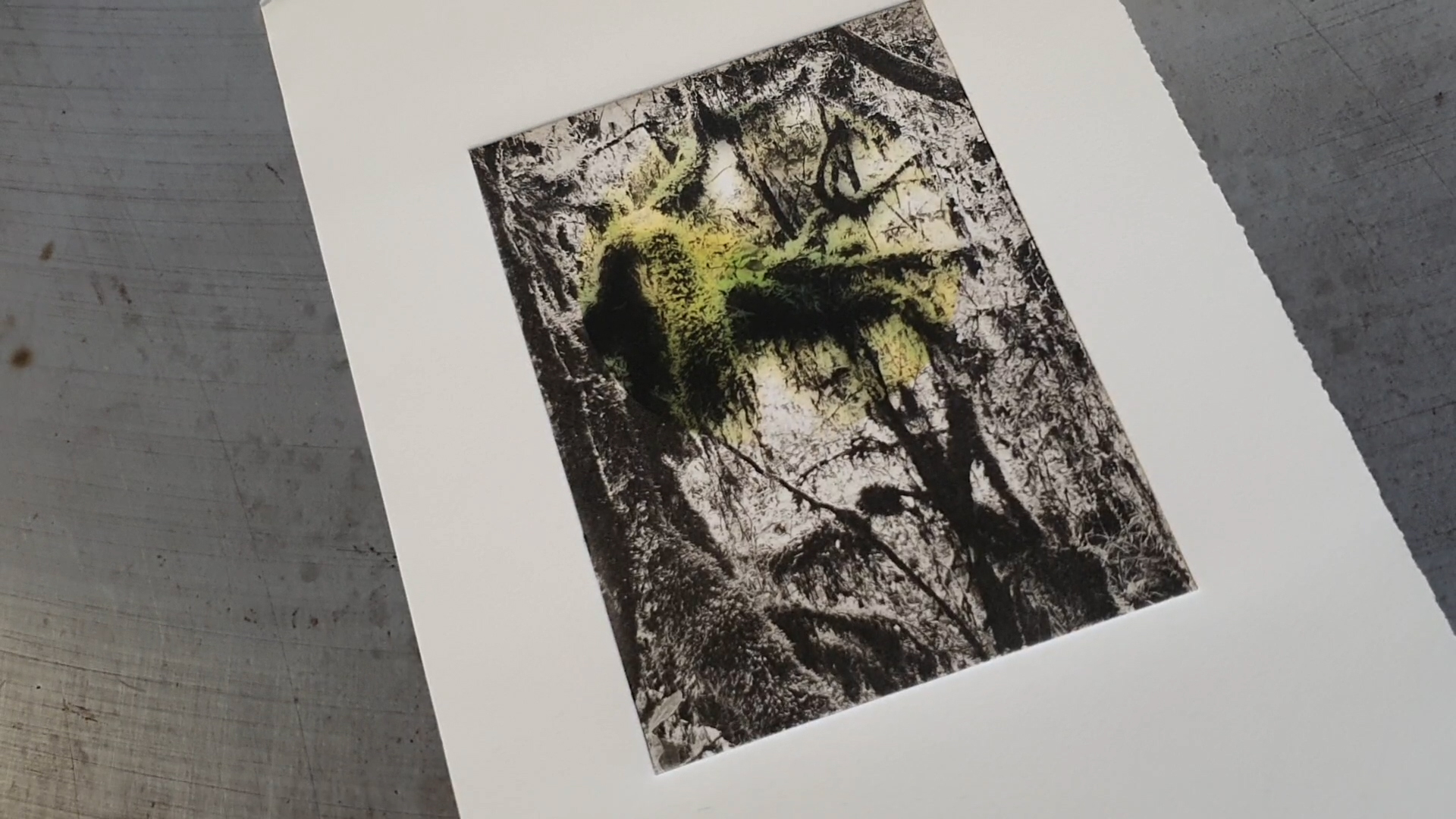
While back in the print studio I made some more prints of the mossy forest and added a little burst of colour.

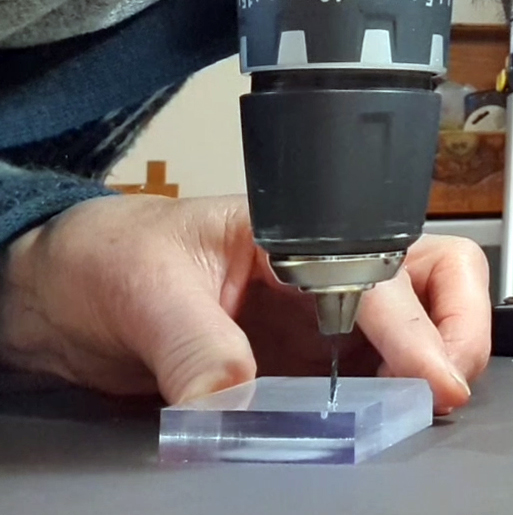
A little progress with building the cosmic ray detector. I have drilled the holes in the plastic scintillator which was quite stressful as the project notes say it is easy to break. I did a test first in acrylic to gauge the size of the drill bit needed. The scintillator turned out to be much softer though and so I am hoping the holes are not too big now. I sent the Printed Circuit Board off to get the components soldered. I really wanted to do the soldering myself but am glad I went for help as there have been some issues with getting the voltage correct for the connection to the SiPM PCB.

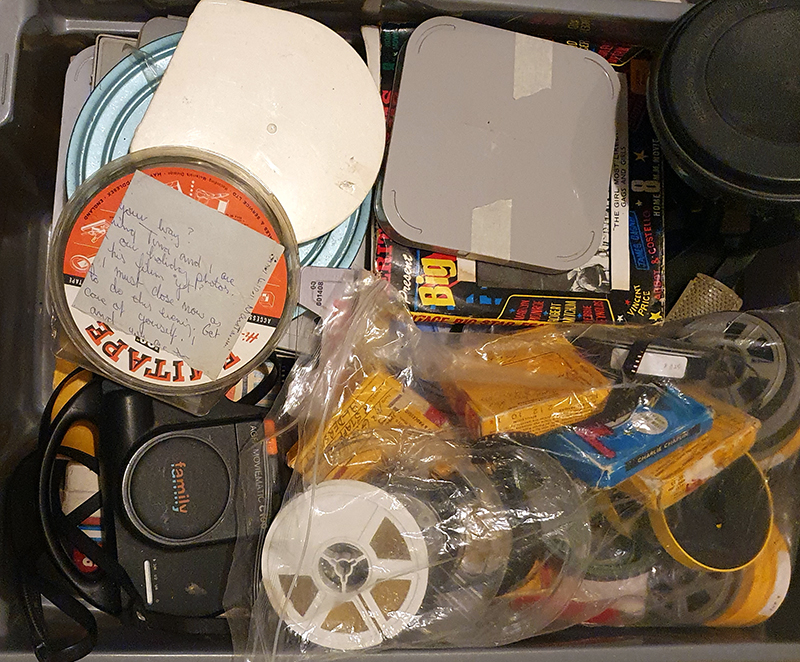
I was lucky to grab a bargain box of Super 8 filming kit though haven’t had time yet to explore this fully and see if I can work out how to operate everything.

Out of studio

A visit to APT Gallery to see Periastra curated by Paul Malone looking at methodologies of curiosity within the fields of art and astrophysics.

I really like the presentation by Nicola Rae of a collection of fireball videos collected by the meteor watch group UKMON

I was excited to meet John Berman who was showing a muon detector he had built. He has used a Geiger Müller (GM) tube, for his detector which can be bought as a kit . A GM tube will detect alpha particles, beta particles, gamma rays and Cosmic Muons. It can be adapted to run in coincidence mode – this is when two or more tubes are connected and only when all tubes register a particle passing through at the same time can it be certain it is a cosmic particle and not background radiation. There is some downtime in a GM tube after each ionisation is recorded so it is possible not all particles are registered. When a particle passes through the tube the LED’s will flash.