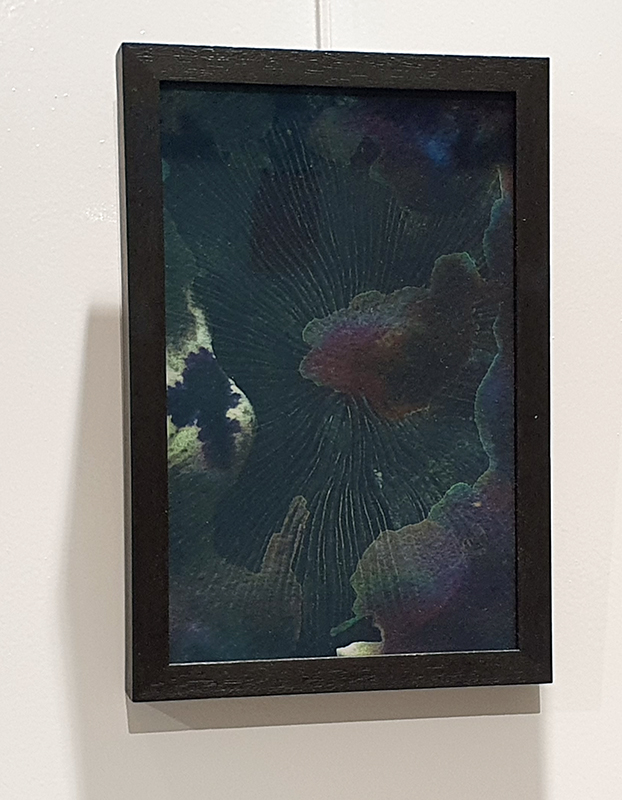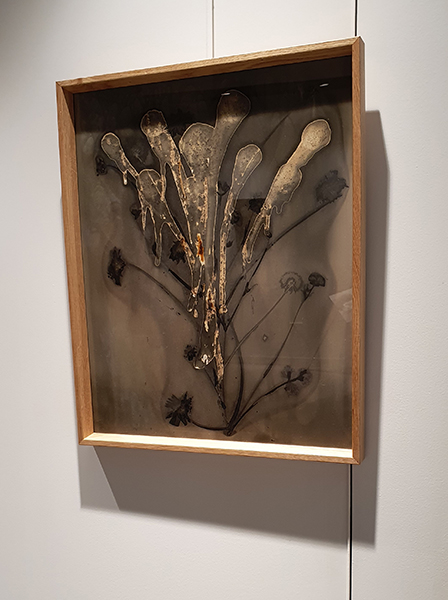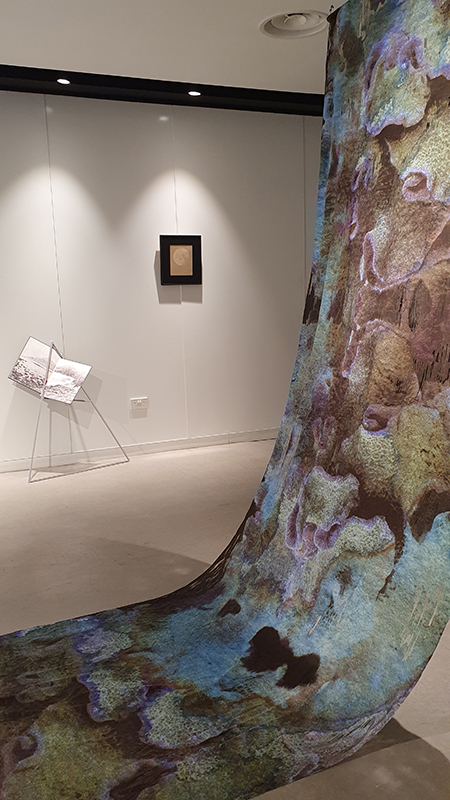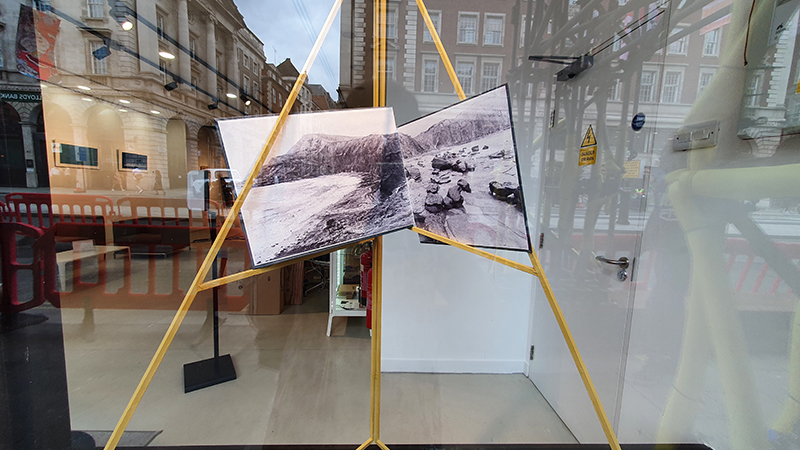
Archives for posts with tag: Melanie King

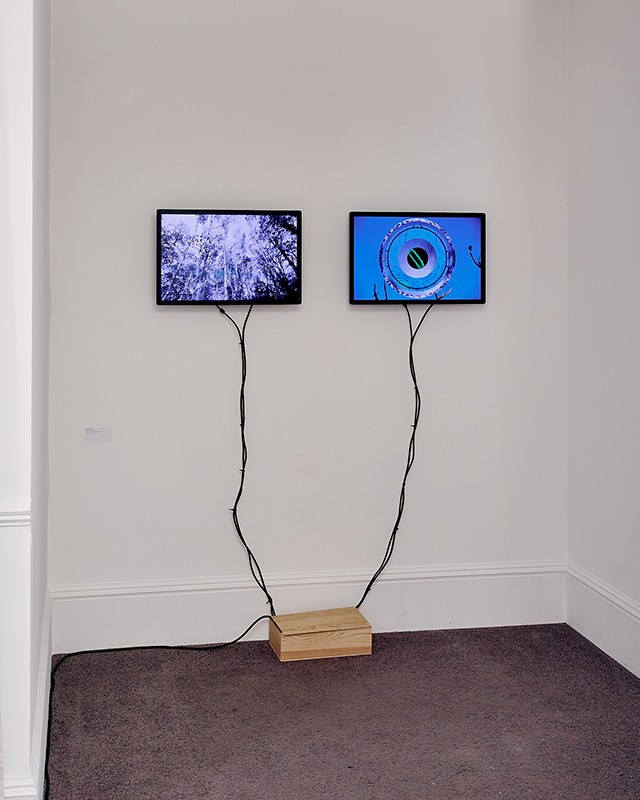
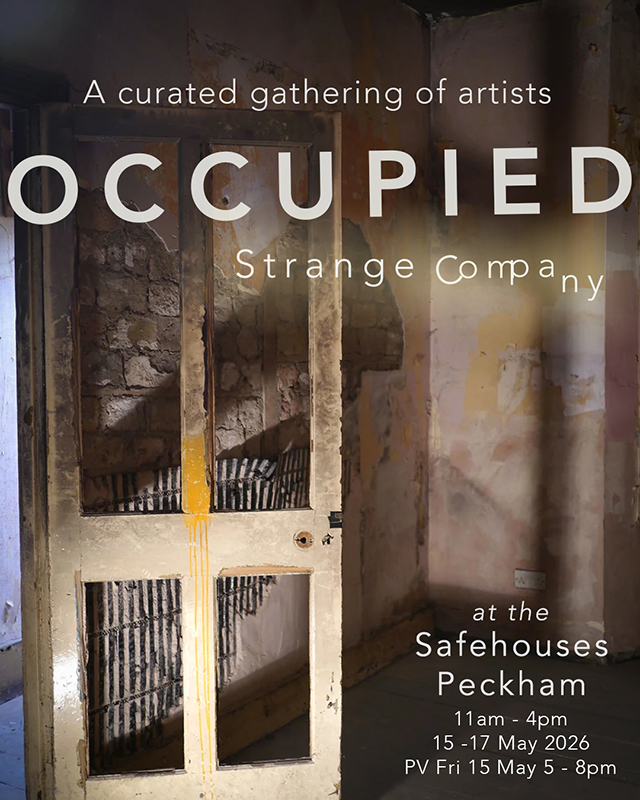
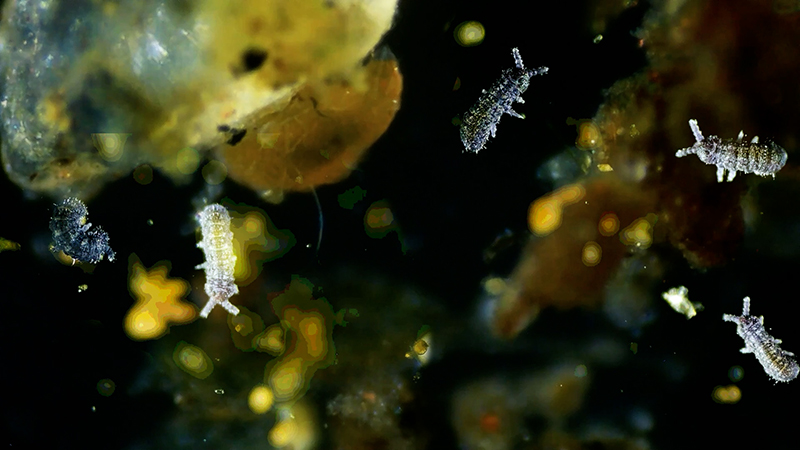
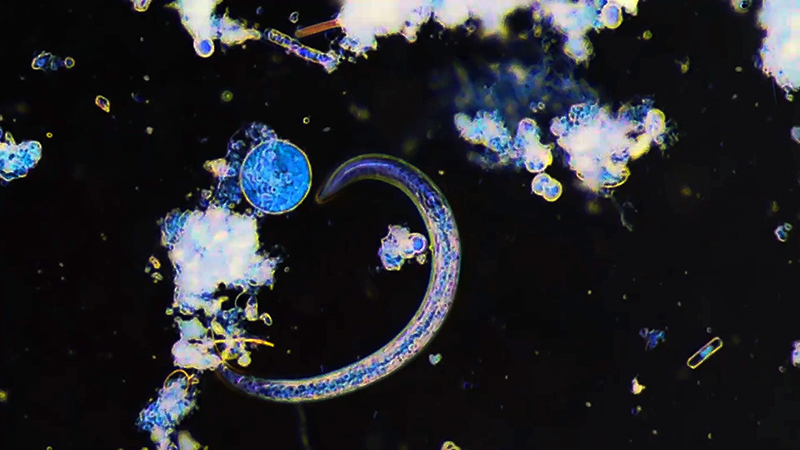
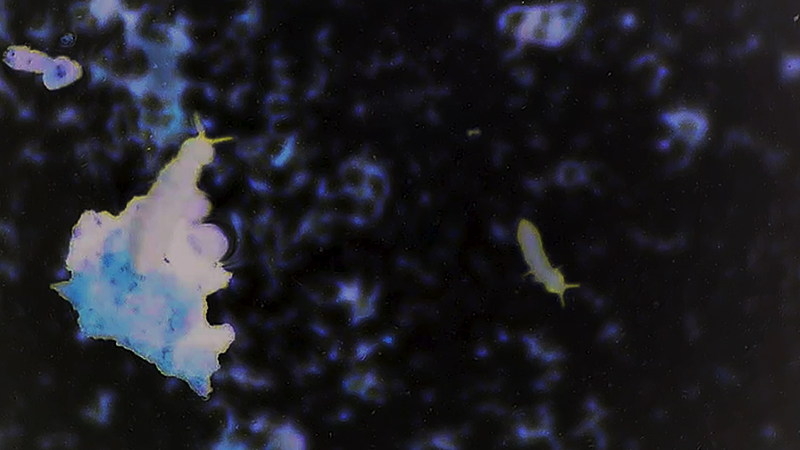
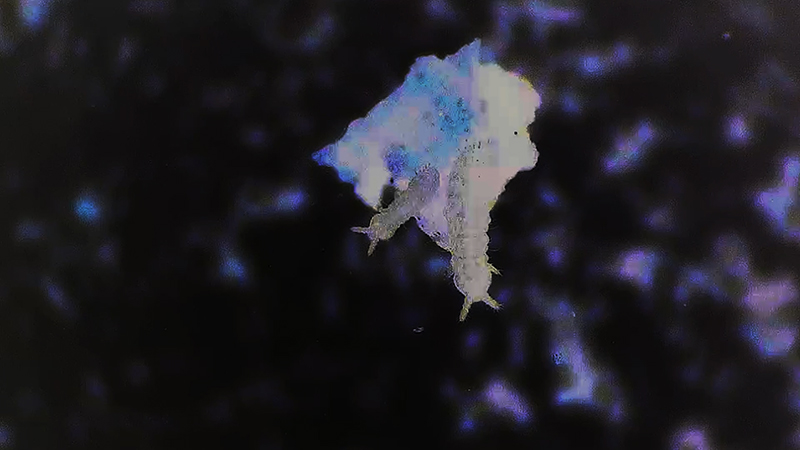
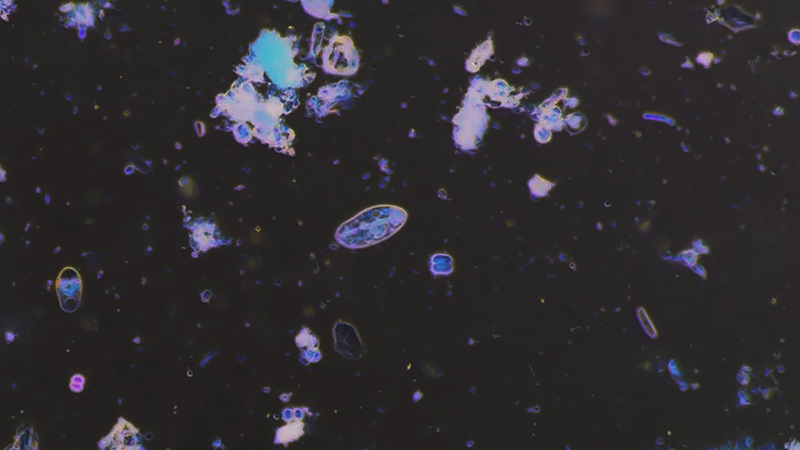
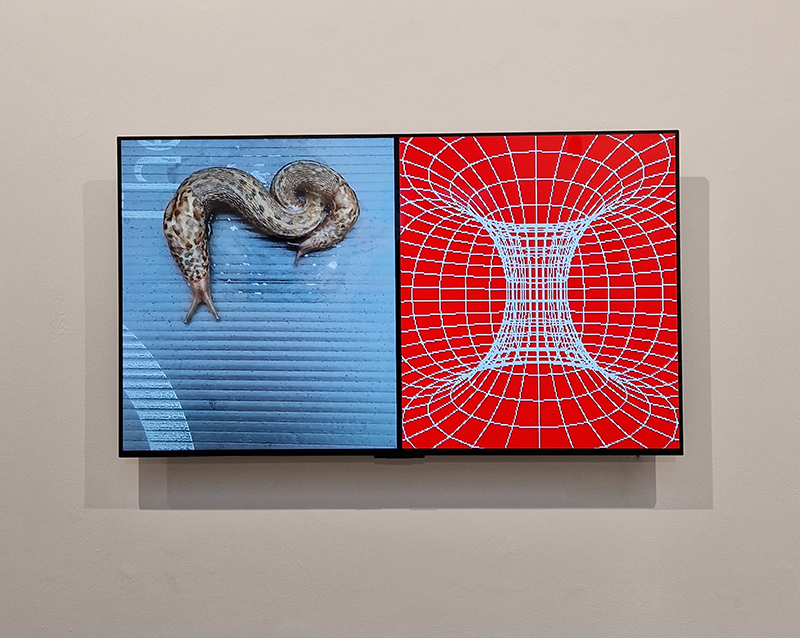
I am enjoying discovering the gutter creatures who share my home. Gathering video footage of an alternative cosmos to go towards making work which will be shown in Occupied: Strange Company at the Safehouse next year, a group exhibition curated by Julie Hoyle.

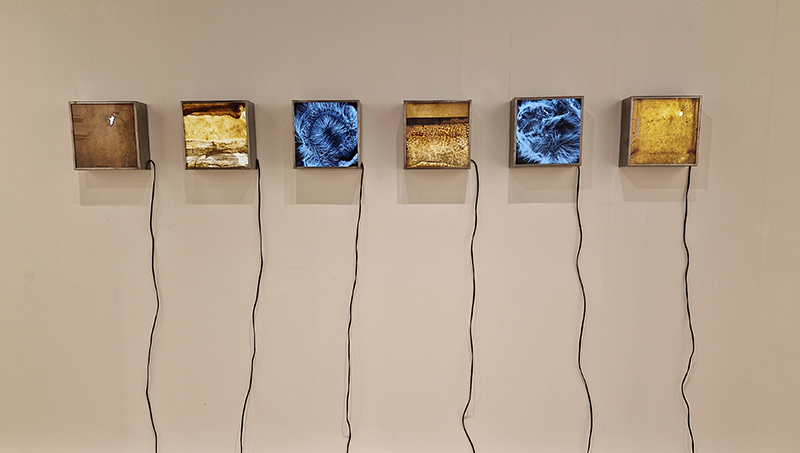
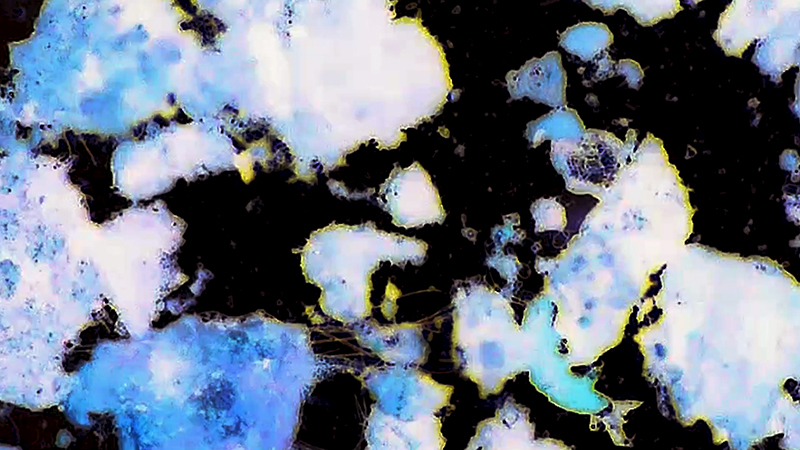
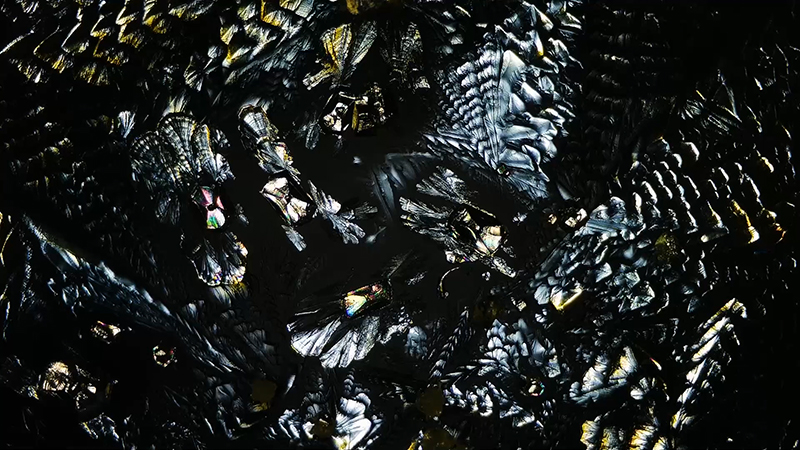
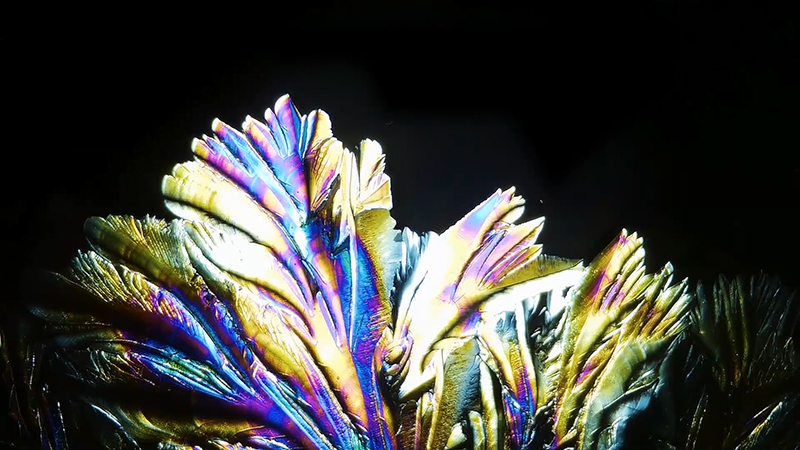
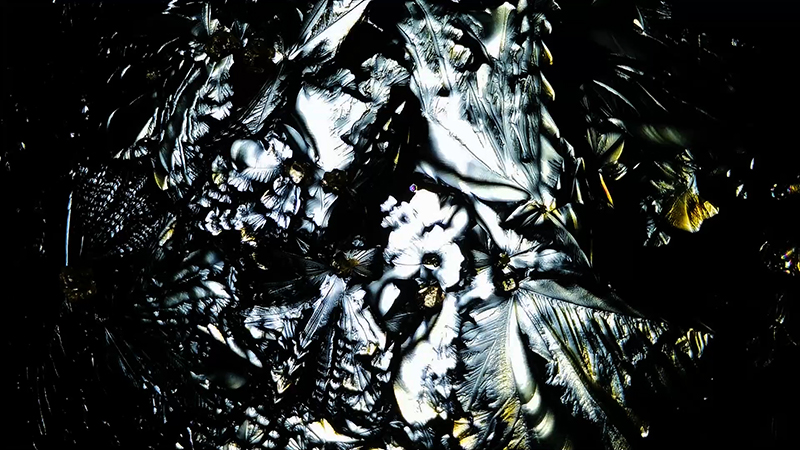
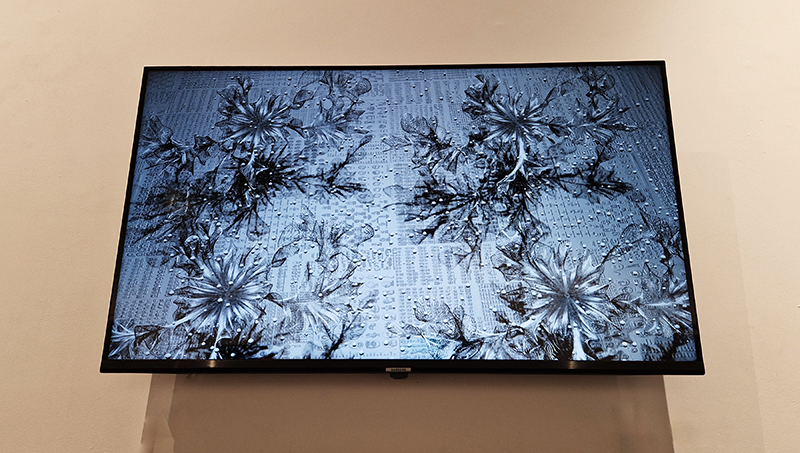
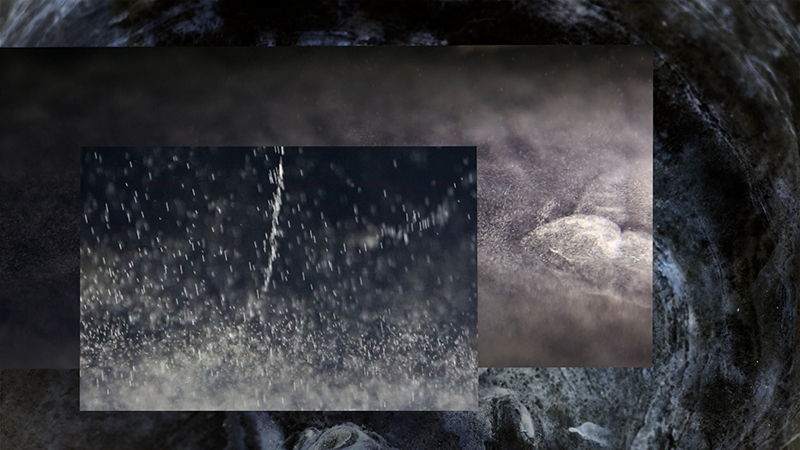
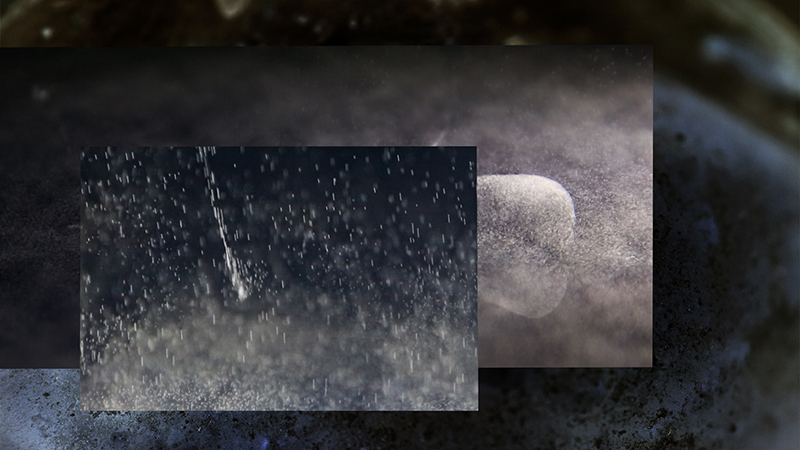
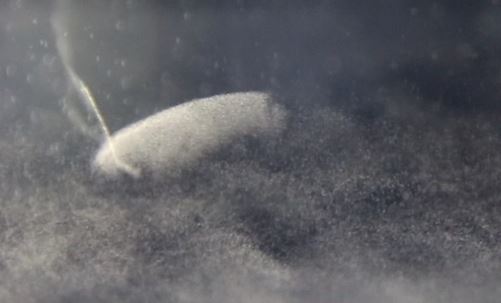
My experiments growing citric acid crystals have been going well. I am filming these transformations under polarised light which reveals the many vibrant colours but I also like the images without the filter. The structures remind me of feathers so I am thinking about creatures that flutter as well as those that swim.

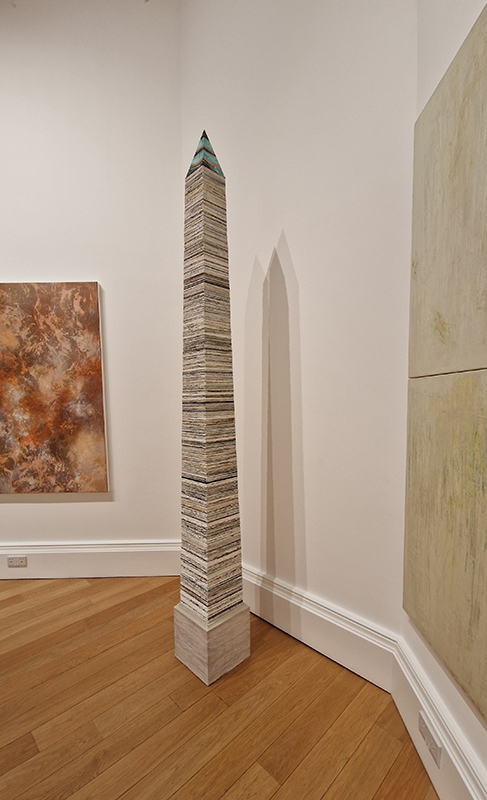
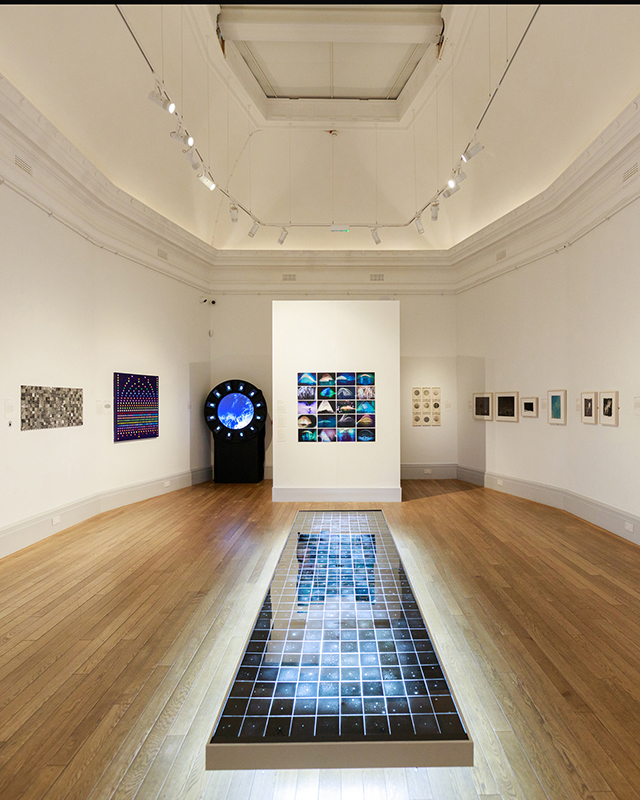
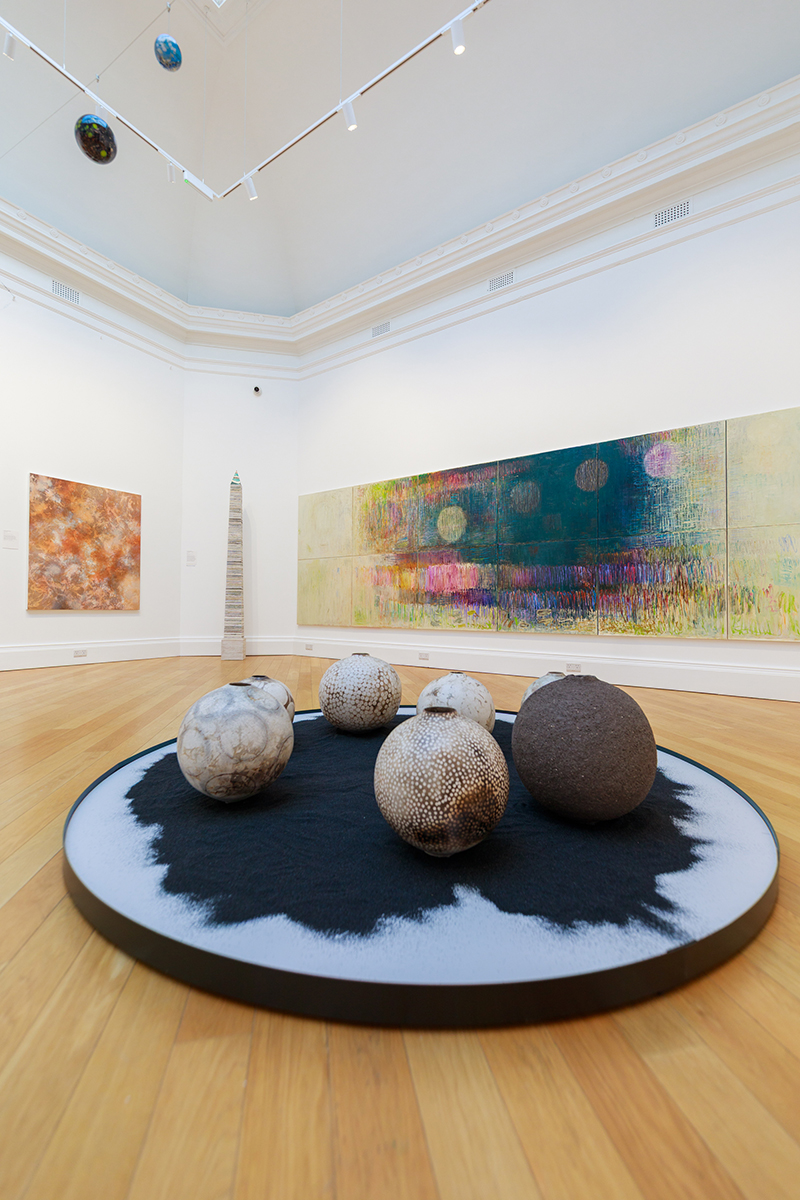
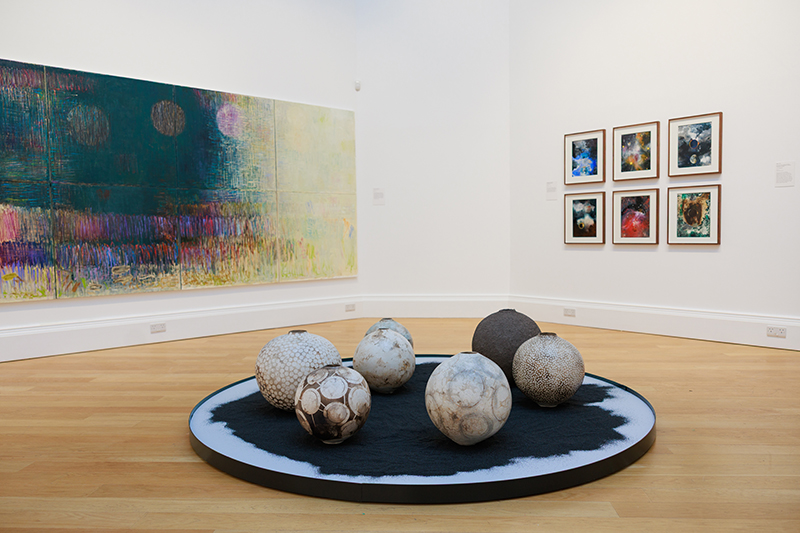
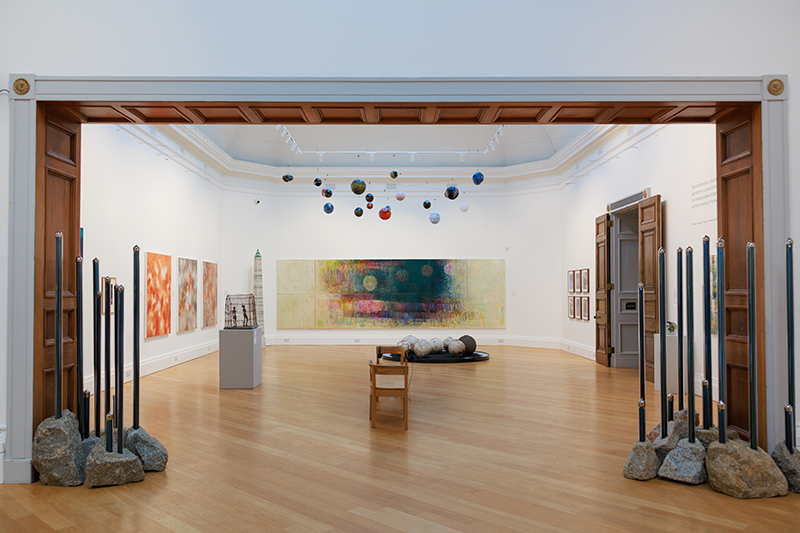
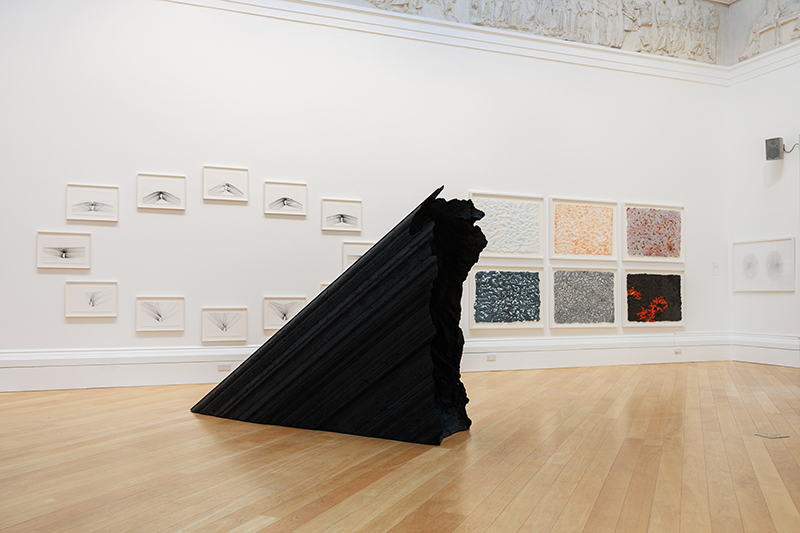
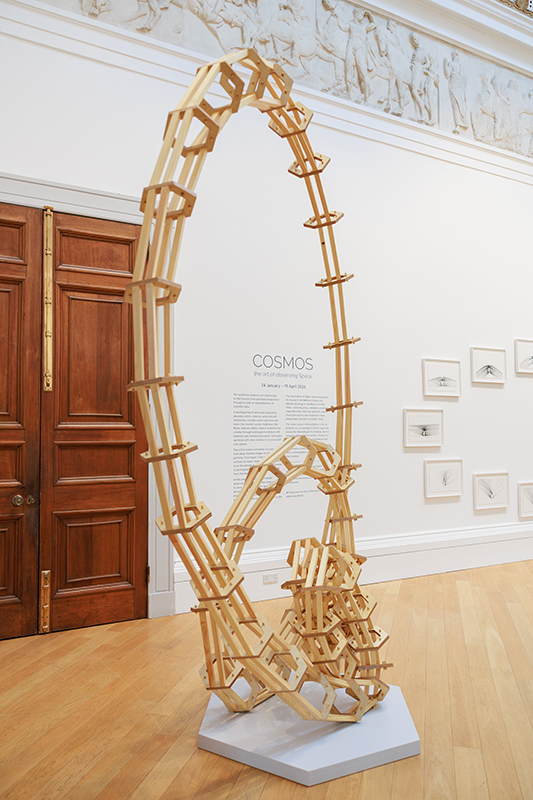
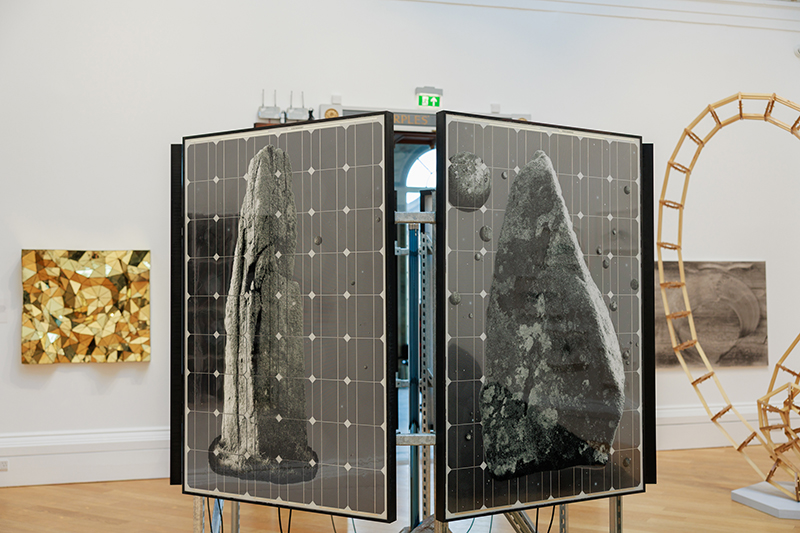
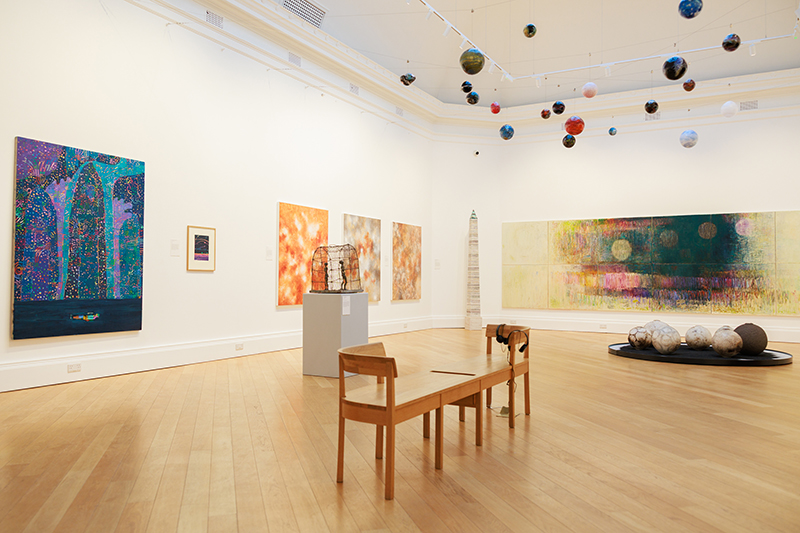
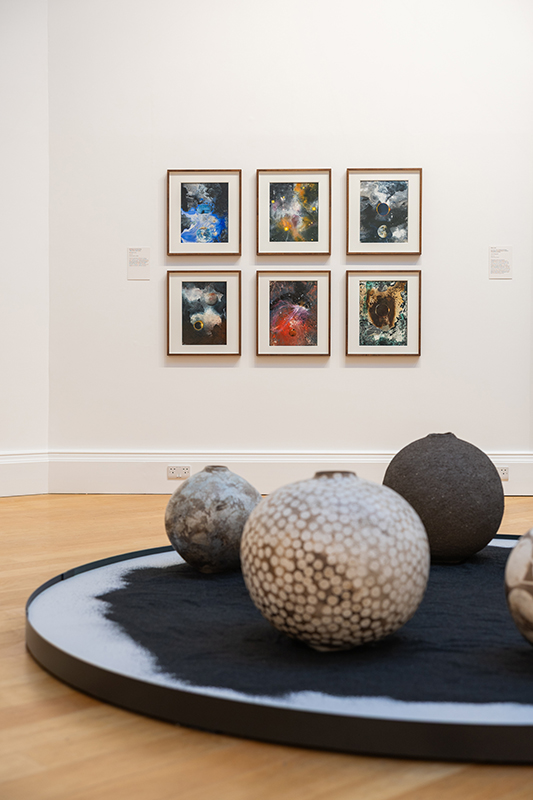
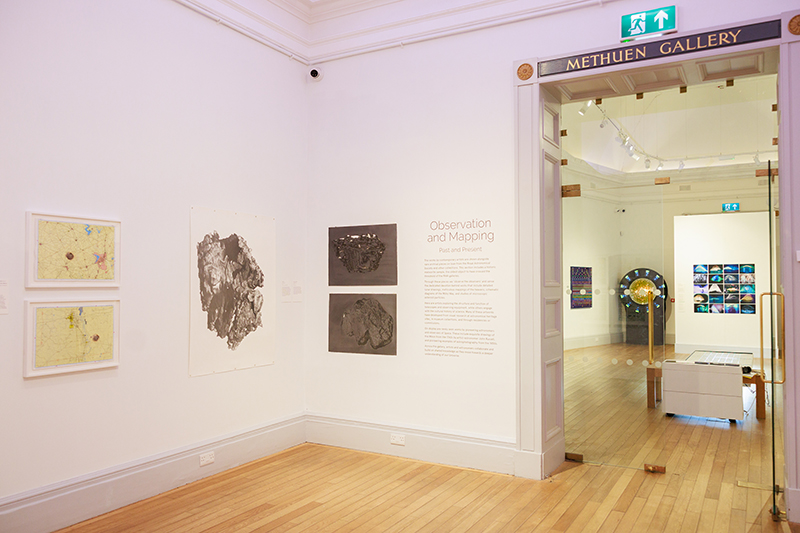
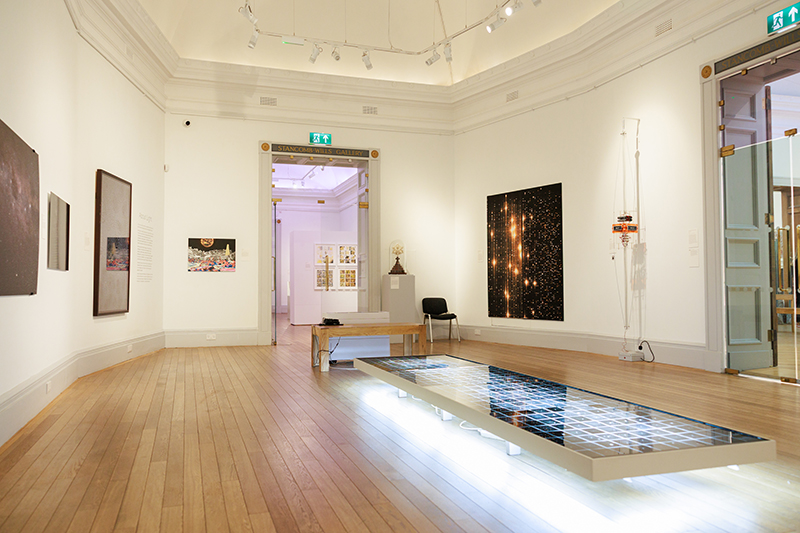
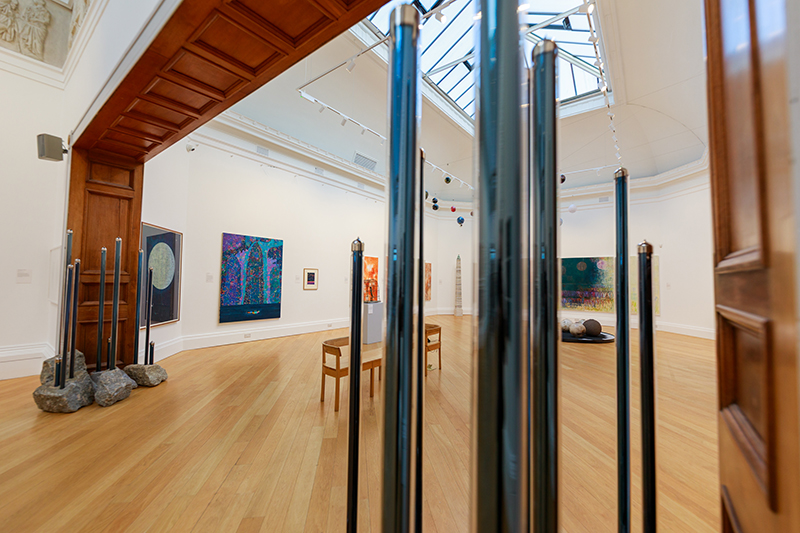
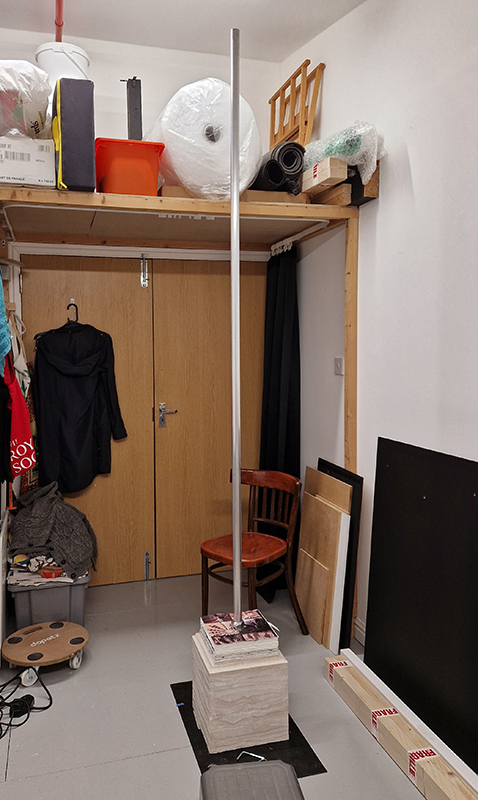
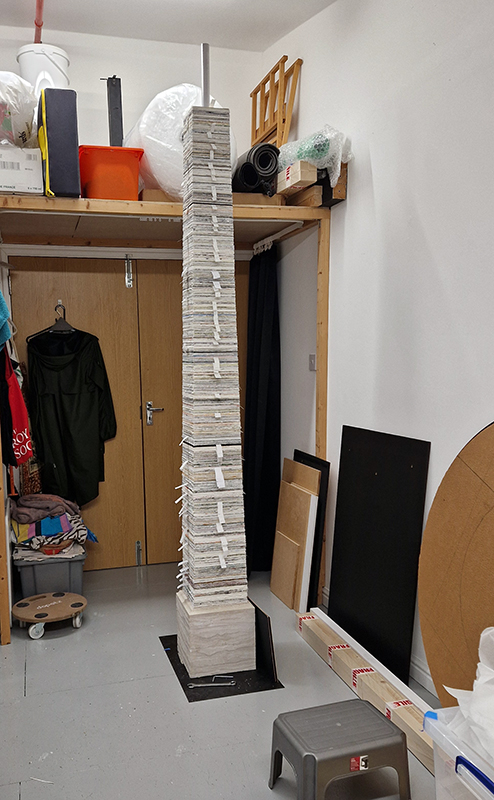
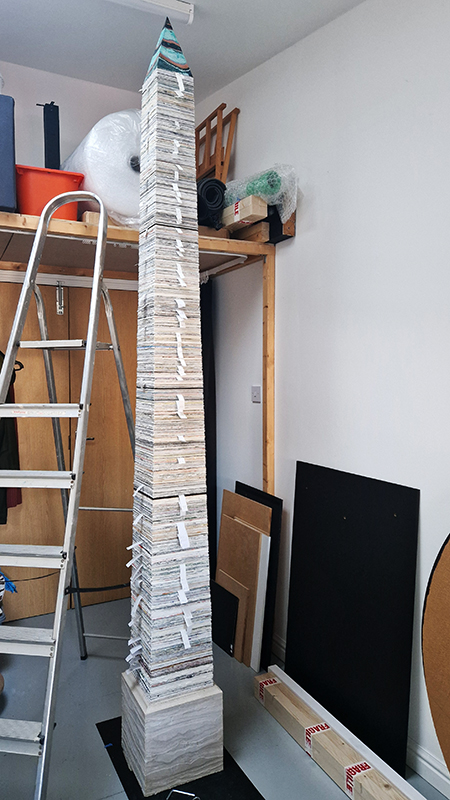
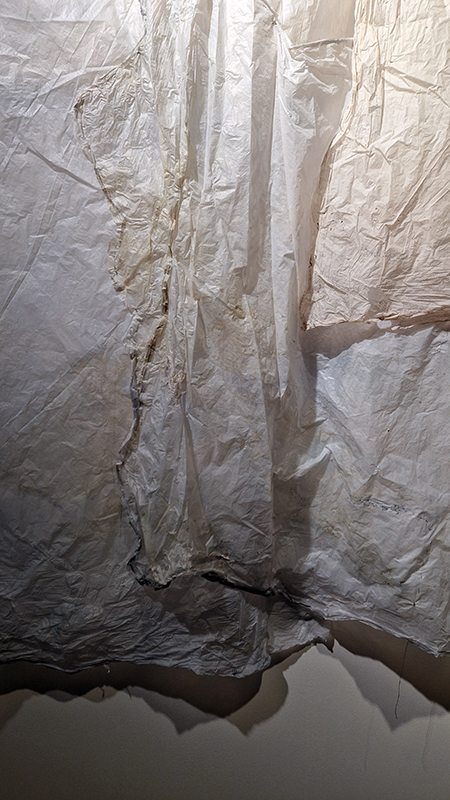
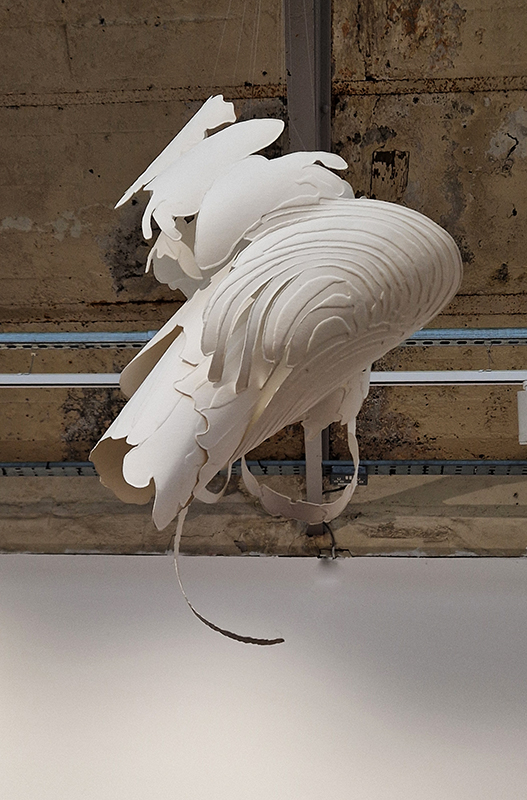
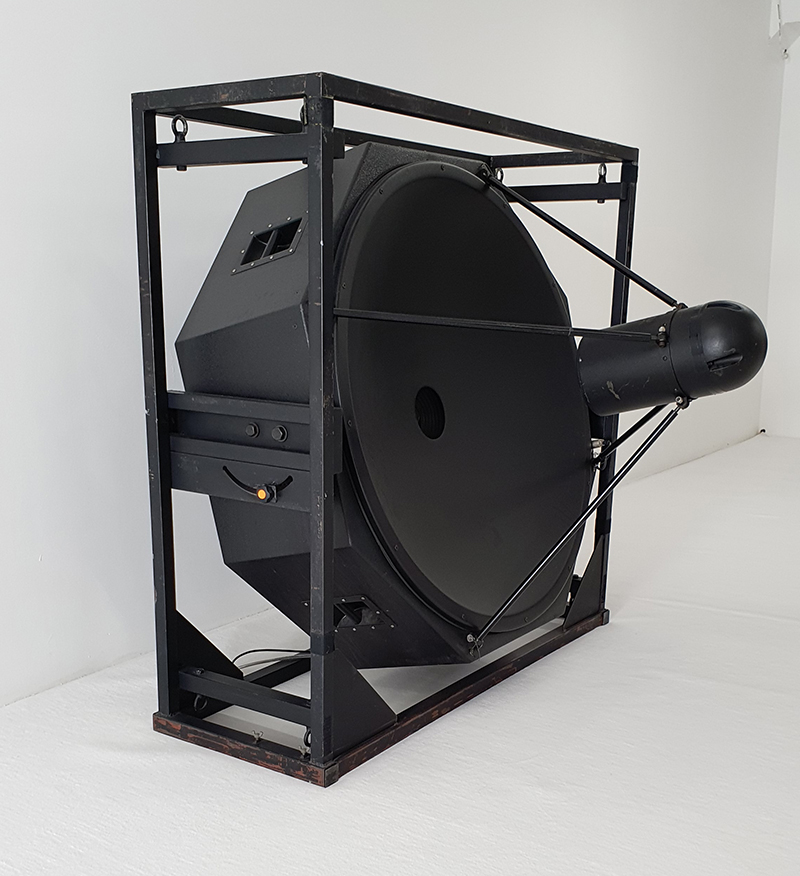
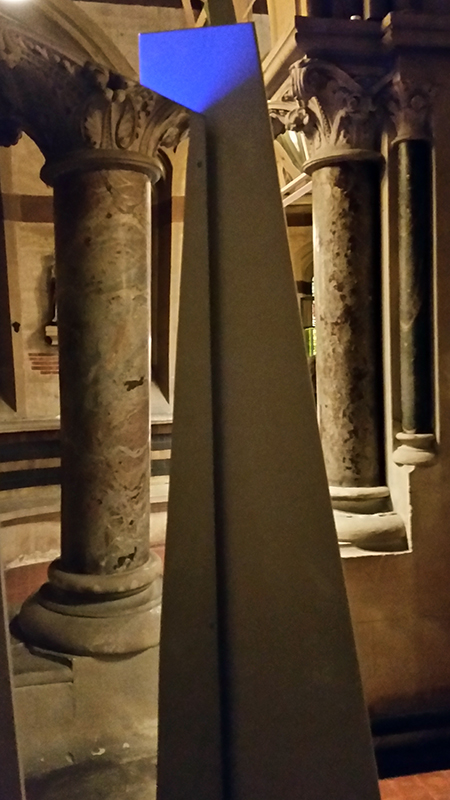
Time in the studio has been spent checking over and preparing works that will be showing in Cosmos: The Art of Observing Space curated by Ione Parkin which opens in the new year. I am thrilled to be part of this exhibition bringing together contemporary and historic artists and featuring an extraordinary range of work inspired by the cosmos. I have completed a test build of The Azimuth Obelisk (of sedimentary knowledge) using a new internal structure for before packing it all away again ready for transport to The Royal West of England Academy in Bristol. This work is a reimagining of an permanent azimuth mark erected at Hartland Magnetic Observatory in North Devon from which the drift of the magnetic north pole is monitored. Made of many layers hand torn from recycled works on paper it echoes the geological and magnetic history of the Earth which is secreted in the strata of sedimentary rock. The protruding tabs of paper seen in these studio images are markers for each section of paper squares of a tapering size and will get tucked away at installation in the gallery. With the added thickness of my new studio roof insulation the obelisk only just fits in now.

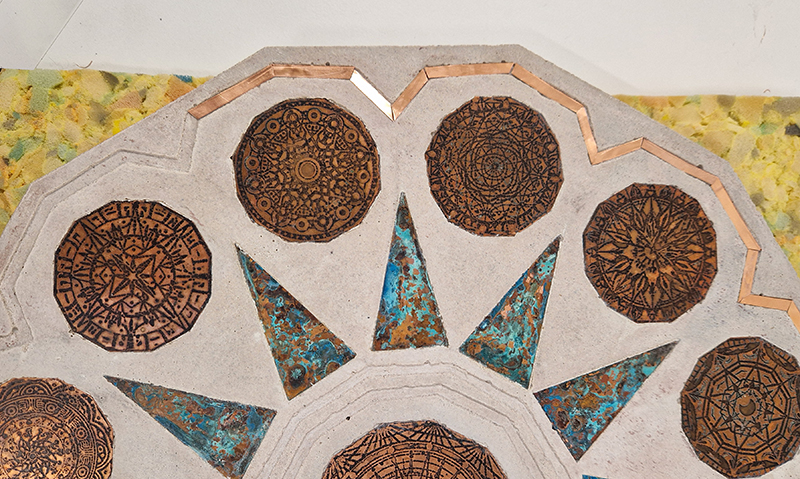
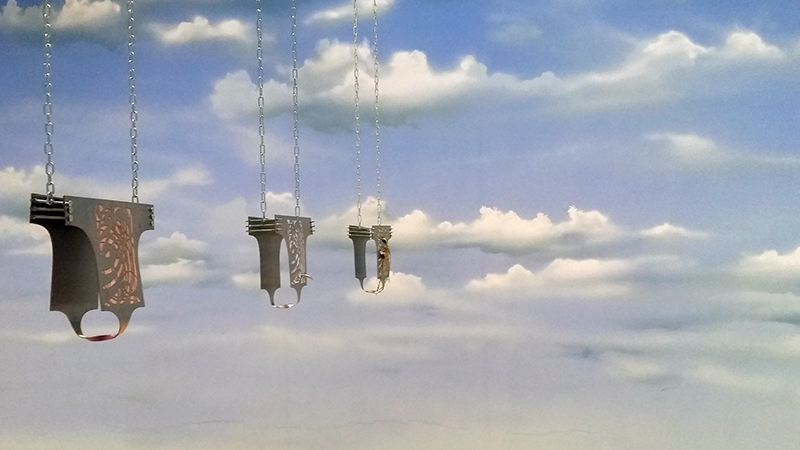
I have started work on inserting copper segments into the new sculpture for the Instruments of the Anemoi series. The other larger pieces of etched and patinated copper were added at the time of casting, held in place with tape and hope when the concrete was poured into the mould. This series of sculptures are suggestive of the pedestals that support various instruments used in monitoring the Earths’ magnetic field but are envisaged here as speculative objects used by the wind gods as the first emissaries of navigation.

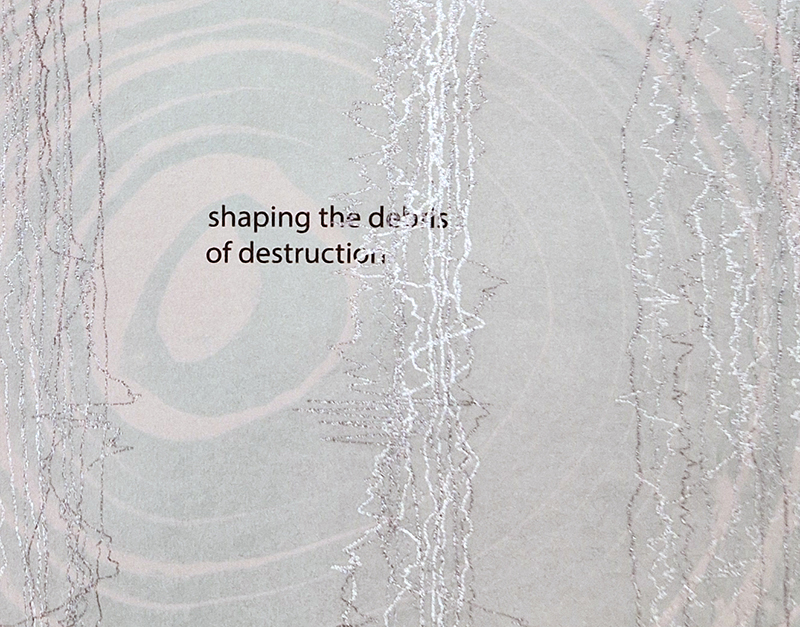
I am still battling with writing text for The Book of Reversals, an artist book that responds to the record of Earth’s magnetic field reversals being written in bands of minerals on the ocean floor.

The crisp crust fractures / Fragments slide across a viscous veneer

Submarine mountains tower / Ocean trenches gape

Tectonic plates subduct / melting into the mantle 

Deep time traces are consumed / surfaces ceaselessly reformed

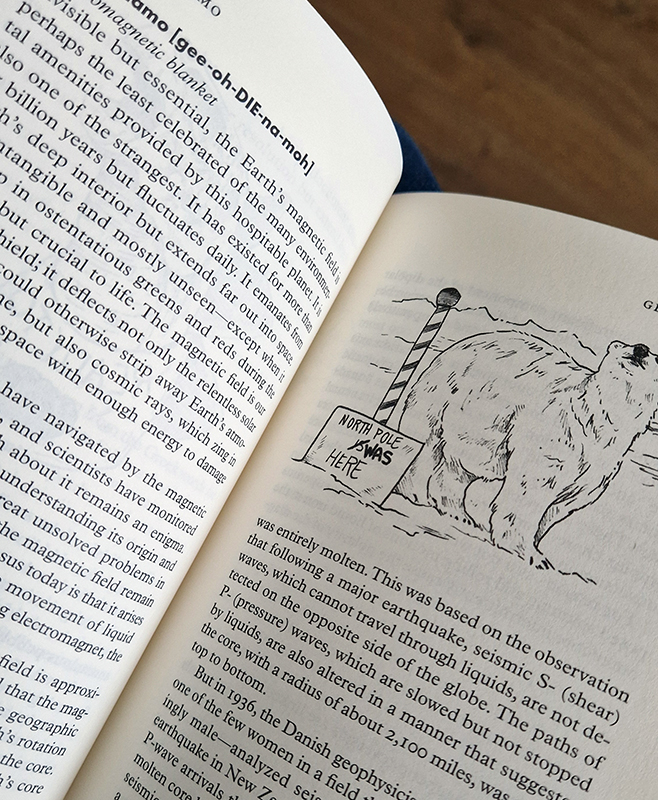
The Earth’s magnetic field has been a fascinating mystery for many hundreds of years and Gillian Turner’s book North Pole, South Pole recounts the stories of those who sought to solve its origin and mechanism. Something I hope to look at in more depth is how pottery and bricks preserve the direction of the magnetic field in their minerals during the process of firing which heats and then cools the clay – the same process that occurs in a lava flow. Iron-bearing minerals (like magnetite) in clay become “magnetic” when heated in a kiln. As the pottery cools, these minerals lock into the Earth’s magnetic field direction and strength at that time. The study of the magnetic properties of ancient pottery, known as archaeomagnetism, has been used to make records of the inclination of the magnetic field from past millennia. Inspired by these studies of manmade artefacts to determine the historical position of the north magnetic pole, physicists Bernard Brunhes and Pierre David took samples from exposed lava flows and their underlying clay in central France. In 1906 they came to the astonishing conclusion that about six million years ago the magnetic field seemed to point in the opposite direction, the first indication of magnetic field reversals.

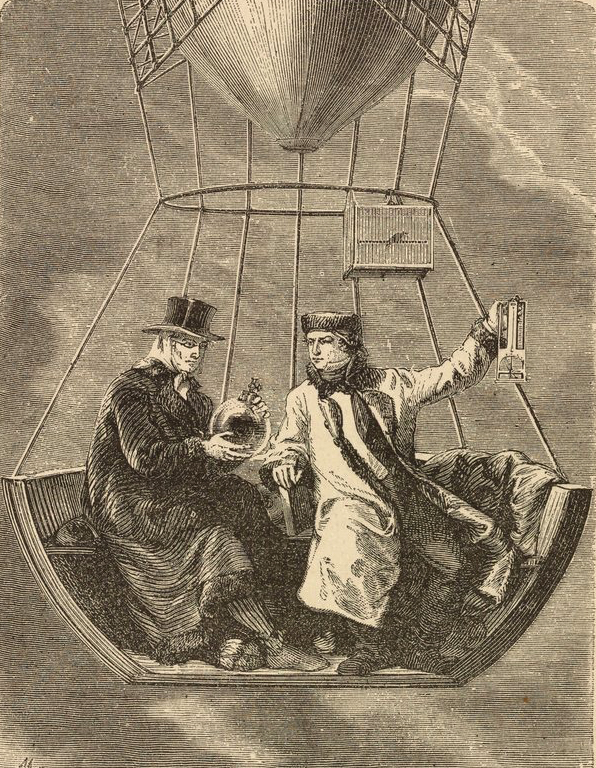
Also with thanks to Gillian Turner’s book North Pole, South Pole I have learnt that there were early hydrogen balloon ascents to determine if the Earth’s magnetic field intensity varied with altitude, helping to decide if the magnetic field came from within the Earth or was extra terrestrial. In 1804 Jean-Baptiste Biot and Joseph Louis Gay-Lussac made a pioneering ascent to 4,000 feet (1.2km). In Turner’s book she writes that the dip needle necessary to take the measurements iced up and so the results were unreliable. I feel for them, but it seems they conducted many other experiments on temperature and gases in the atmosphere while aloft and in any case we now know they would have needed to ascend many kilometres higher than they achieved to notice any weakening in the magnetic field.
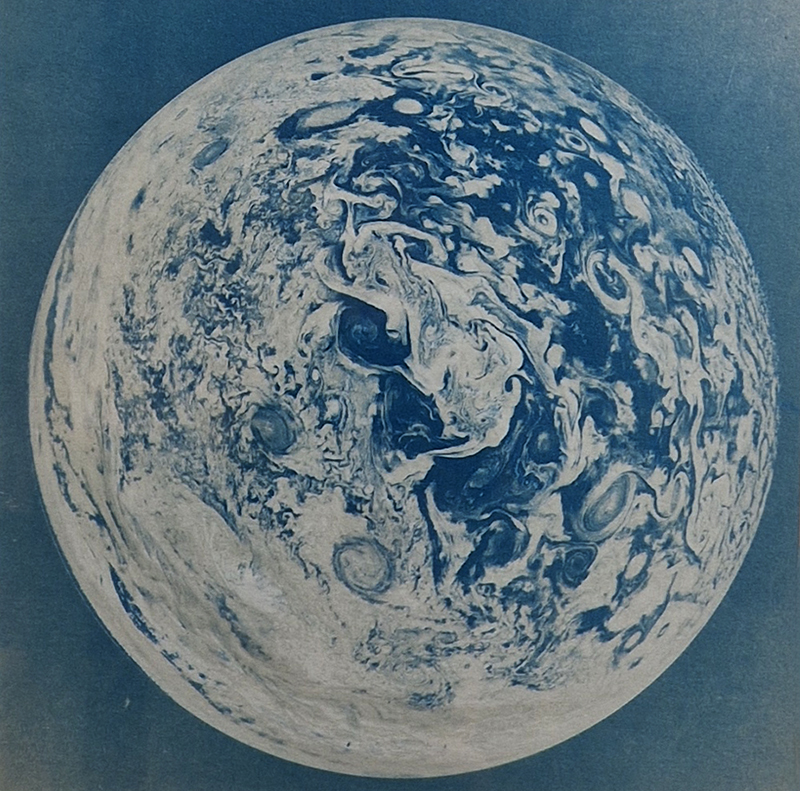
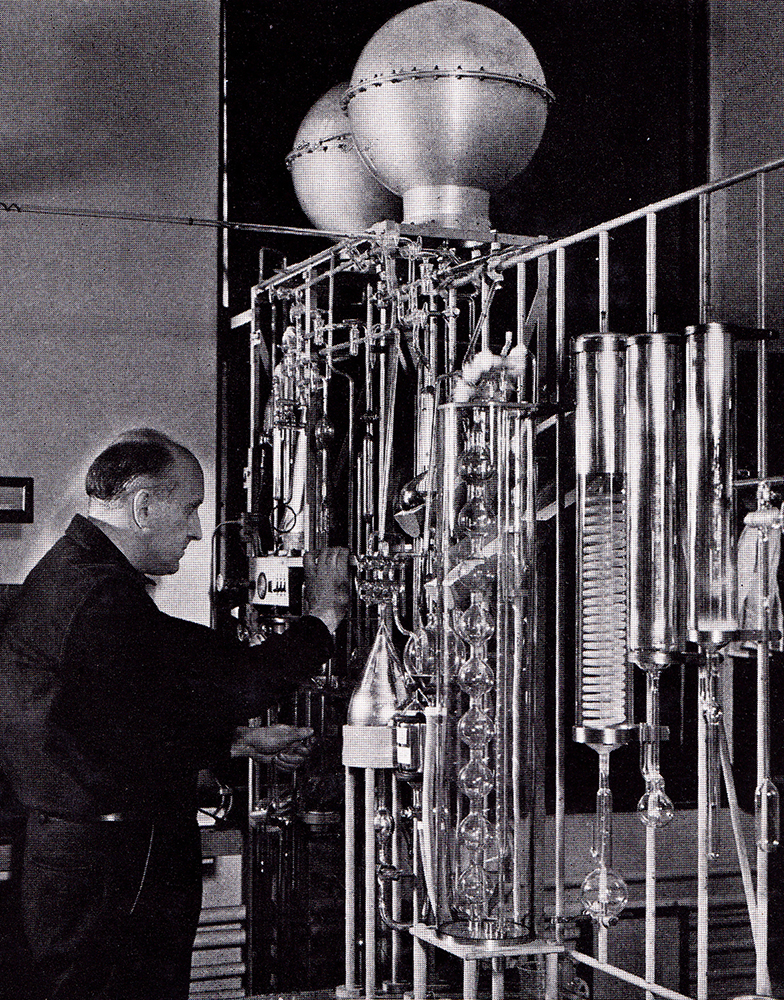
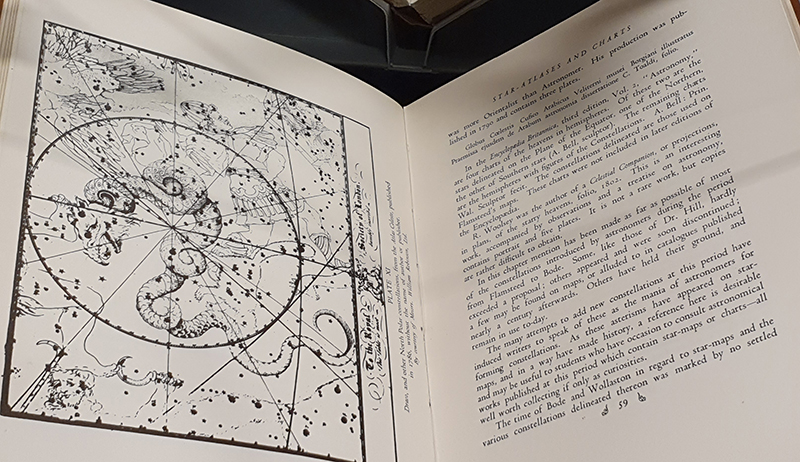
This plate is from John Howard Appleton’s (1844-1930) Chemistry, Developed by Facts and Principles Drawn Chiefly from the Non-Metals, published in 1884.

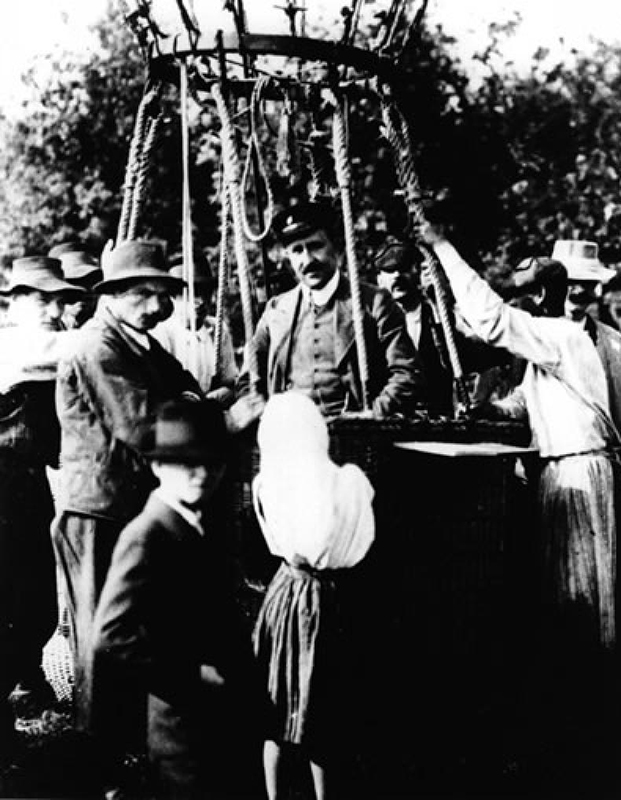
I am trying to remember when I first had the idea to launch a cloud chamber in the payload of a high altitude balloon. I knew about the hot-air balloon experiments carried by Victor Hess to determine the origin of cosmic radiation, and his discovery in 1912, when he made an ascent to over 5km during a near-total eclipse of the Sun, that radiation had to be coming from further out in space.

Hess on his return from the 1912 balloon ascent – Alan Watson pointed out that this was obviously staged at another time as he would not have been standing looking so well after his ordeal.

I remember looking into the dark skies during a residency at Allenheads Contemporary Arts and wondering about all the activity that I couldn’t see. I decided then I would like to film at 15km where most subatomic cosmic ray activity takes place, even if nothing would show on the film.

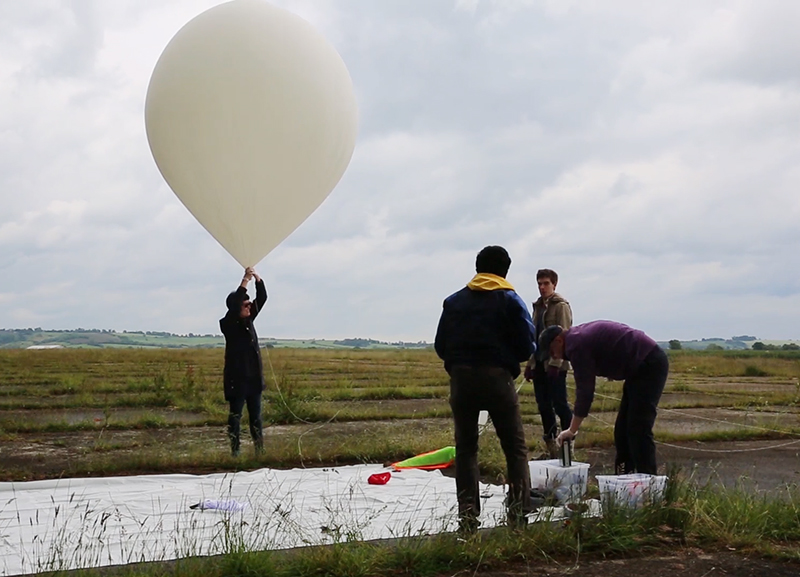
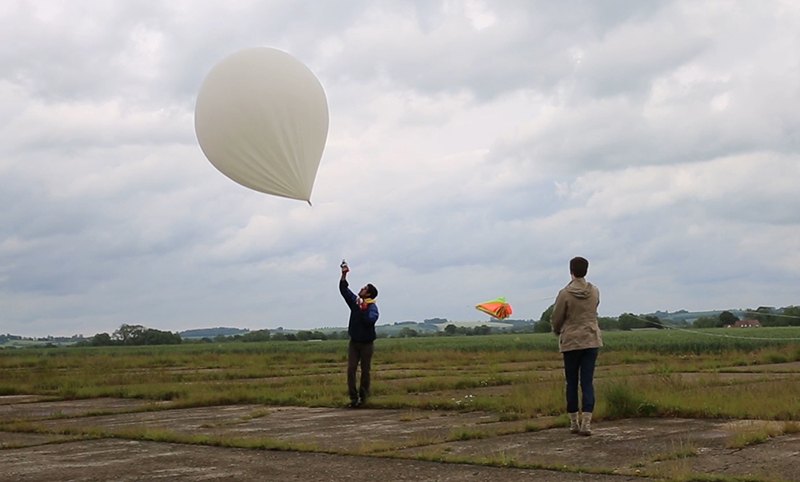
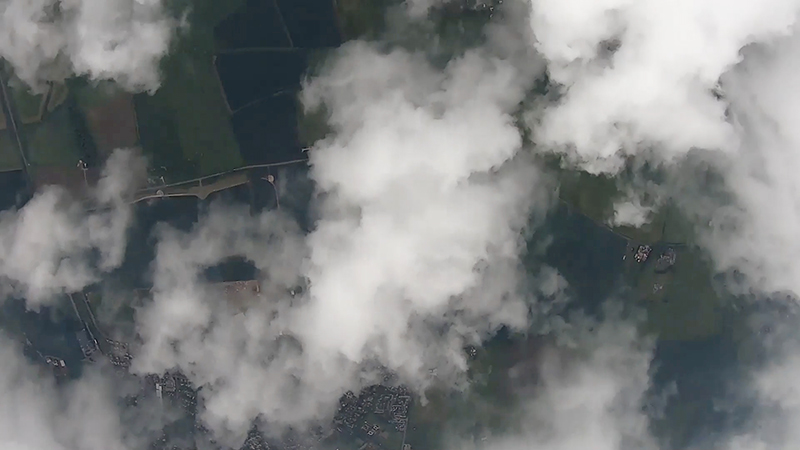
A high altitude balloon flight seemed the perfect solution and I was very grateful for the help I subsequently received from Imperial College Space Society and The UK High Altitude Society. The decision to include a cloud chamber in the payload was always a risk and as it turned out nothing of the cosmic ray activity was captured on film. However, the balloon did reach an altitude of over 37km and the payload was successfully recovered with some amazing video footage of its journey.

The record height for a hot air balloon ascent is 21km so in theory it could be possible to send a cloud chamber up in a hot-air balloon and film at altitude with potential for more success if some brave person were on board to operate the camera. Unlikely to be me.

Some intriguing news of ORC’s on the RAS websiteThe most distant and most powerful ‘odd radio circle’ (ORC) known so far has been discovered by astronomers. These curious rings are a relatively new astronomical phenomenon, having been detected for the first time just six years ago. Only a handful of confirmed examples are known – most of which are 10-20 times the size of our Milky Way galaxy. ORCs are enormous, faint, ring-shaped structures of radio emission surrounding galaxies which are visible only in the radio band of the electromagnetic spectrum and consist of relativistic, magnetised plasma. the three new cosmic rings – discovered not by automated software but by sharp-eyed citizen scientists – represent an important step toward unlocking the secrets of these vast, puzzling structures.

Out and About

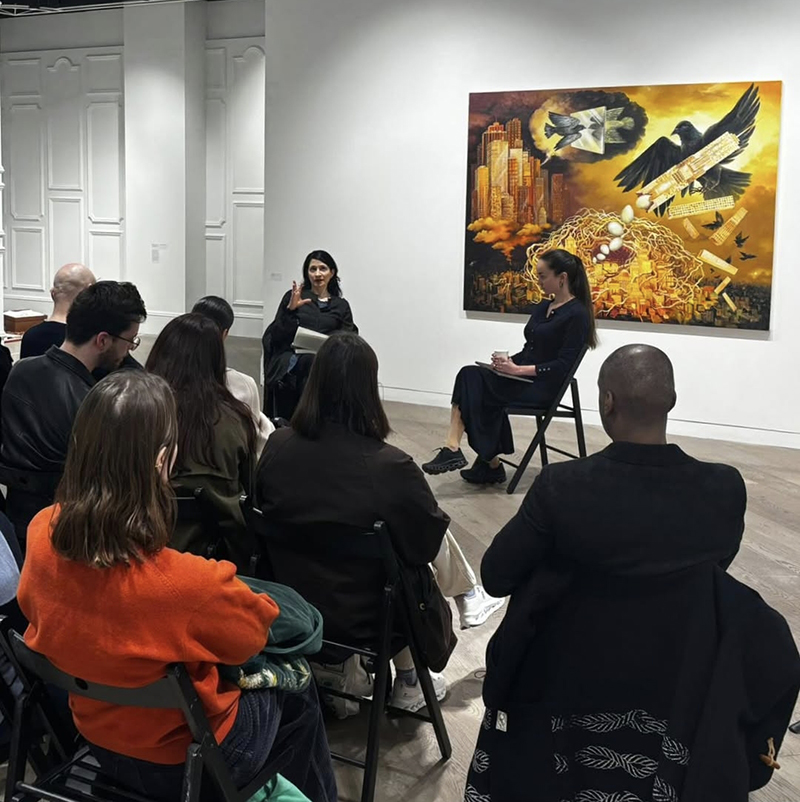
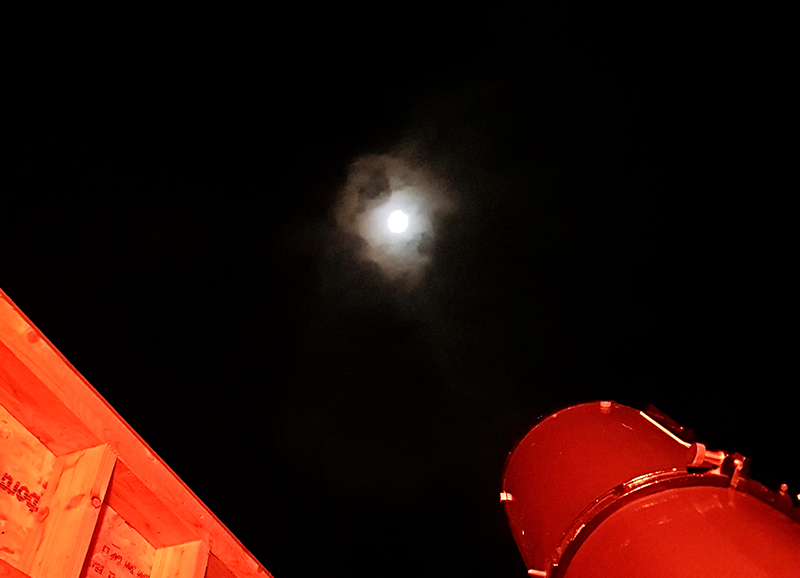
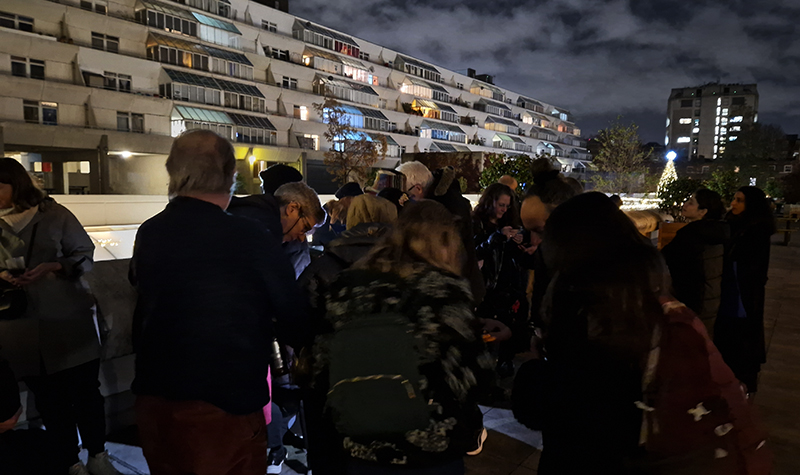
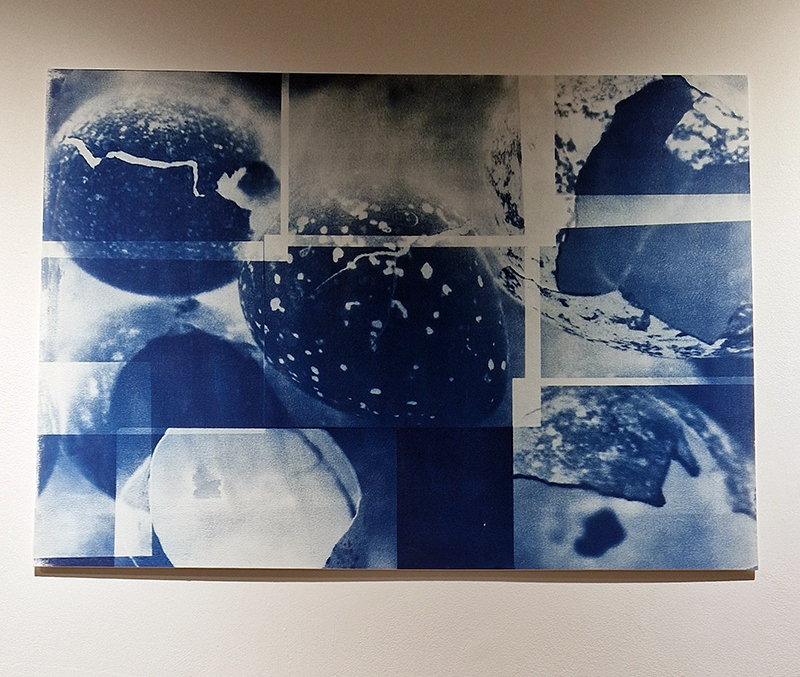
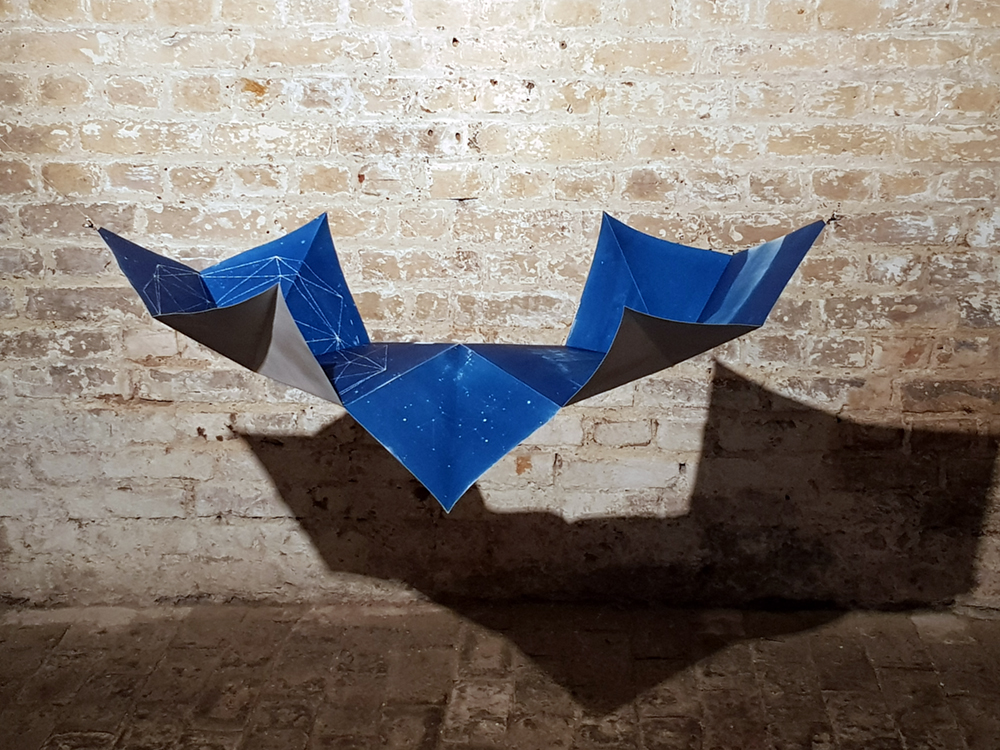
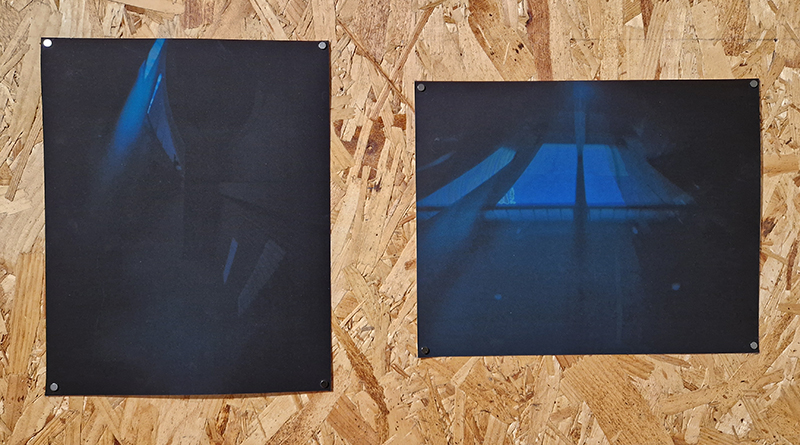
A wonderful evening with artist in residence Melanie King at Passengers connecting the celestial with the architecture of the grade II listed Brunswick Centre in Bloomsbury, London. Melanie used the residency opportunity to explore the duotone cyanotype process using multiple layers of cyanotype to mimic astronomical imaging construction and even used cyanotypes to create an of the Moon. The beautiful results were presented at an evening event with the additional treat of live telescope viewing of the Moon and Saturn from the second floor terrace of the Brunswick centre under the engaging guidance of astronomer and science communicator Paul Hill.

Liz Elton’s sensitive work Black and Blue (compostable bio materials, cabbage and fruit dye saddened with iron, silk, poppy and sage seeds) showing in A Changed Environment at Messums London. This group show examines changing ideas of beauty, ecology, and sustainability, as well as themes of place, memory, and identity, revealing how connections to the natural world can inspire both understanding and hope. I love the delicacy of this new work and the term ‘saddened by iron’ which is used in the dying process to dull a colour, and which, as Liz says, also emotes the hardships of industrial life.

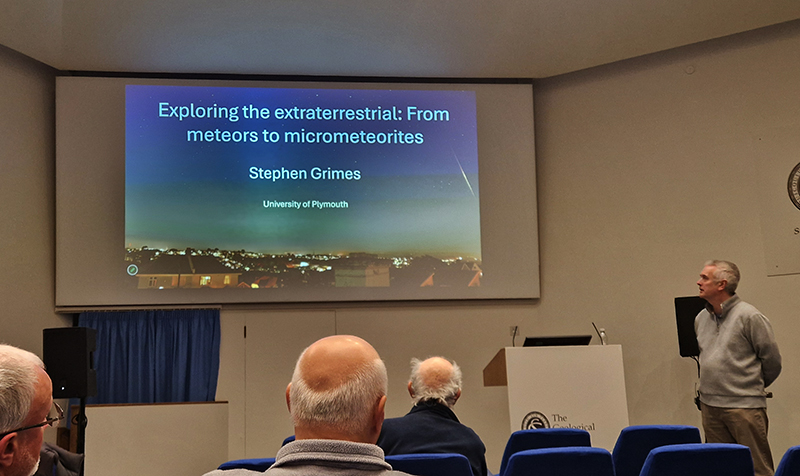
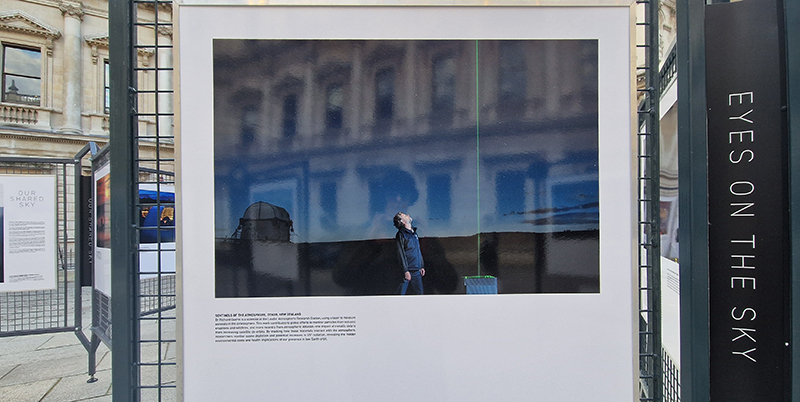
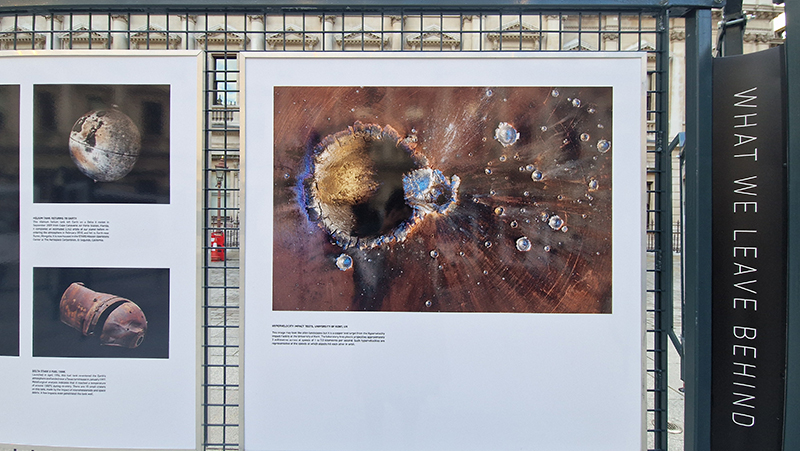
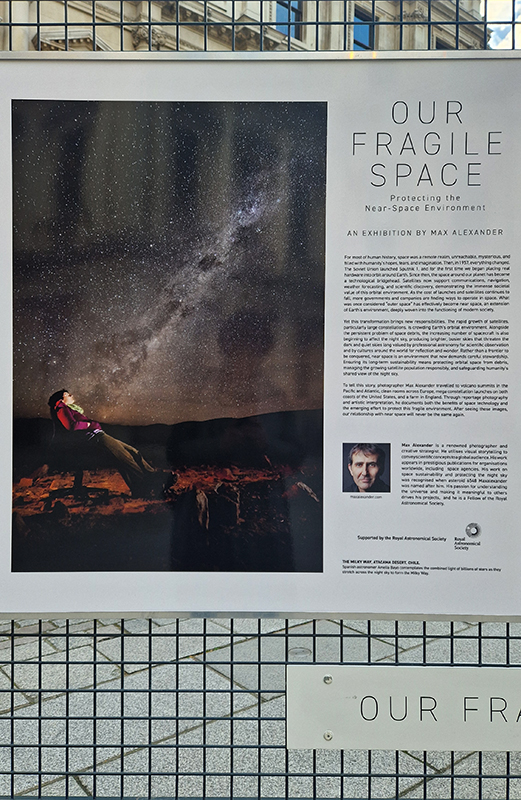
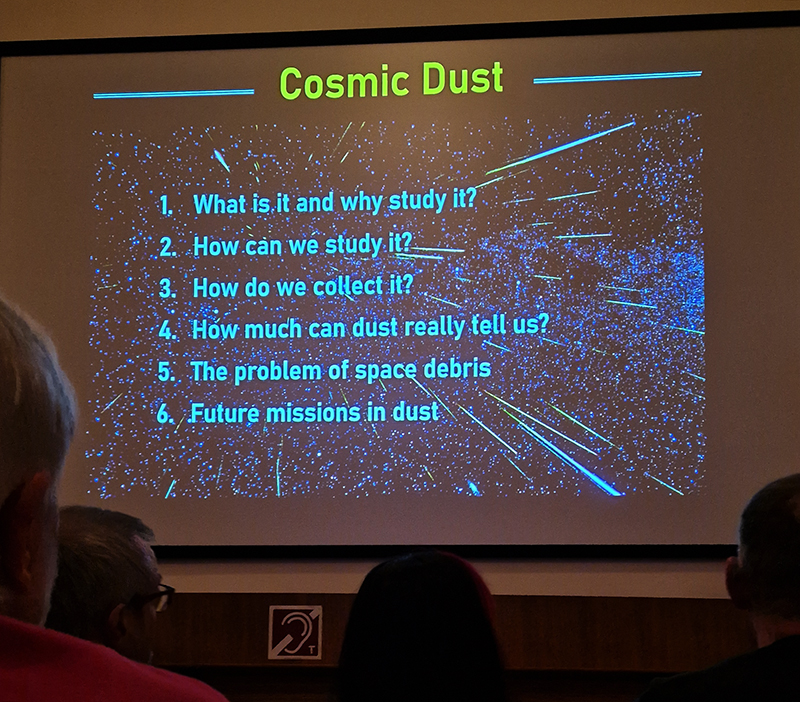
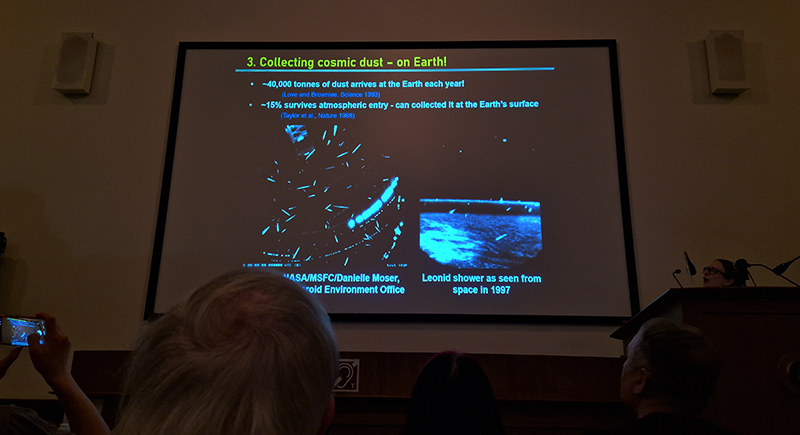
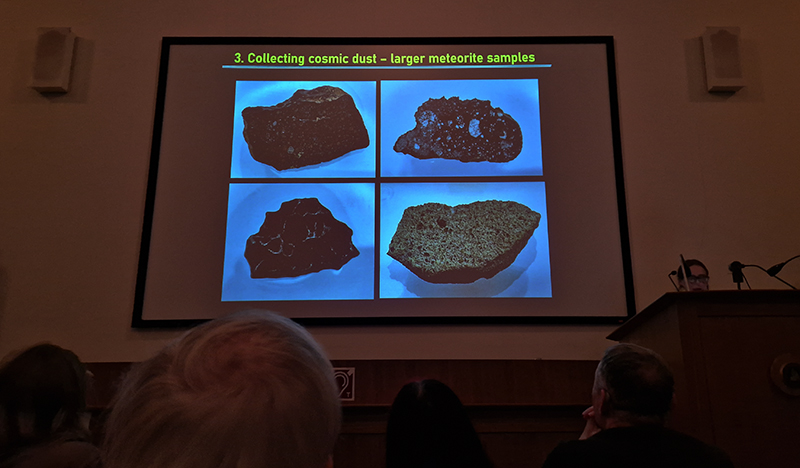
Cosmic Dust talk by expert on extraterrestrial space dust, and how it can impact astronomy and wider human endeavours in space, Penny Wozniakiewicz at The Royal Astronomical Society. ‘Natural’ cosmic dust is being polluted by man made dust from space debris. This is a real problem created by dead satellites, old upper stages of rockets, fragments form exploded rocket or stages, flecks of paint, aluminium oxide spheres from solid rocket burns, dropped space equipment. When any of this debris collides a cloud of smaller debris is ejected, this process is self propagating and even the tiniest piece of debris can cause serious damage to spacecraft and satellites. This is called the Kessler syndrome, a cascading effect that could render orbital space unusable for generations, threatening satellites, the International Space Station, and future space travel.

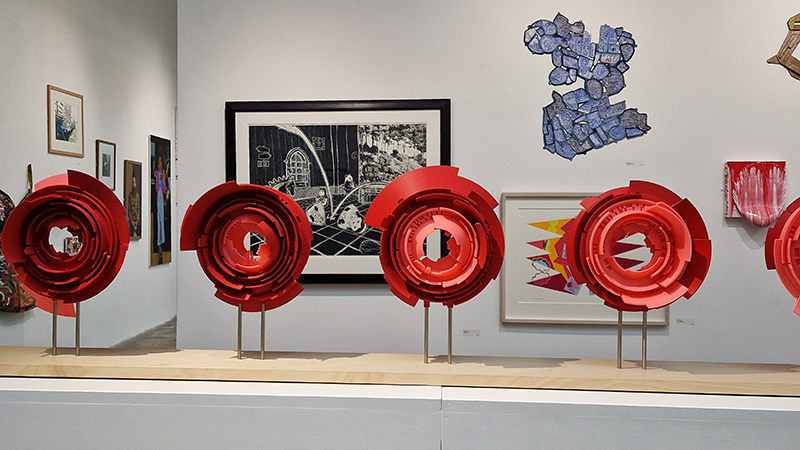
Good to visit the The London Group show 2025 at Copeland Gallery where lots of friends are showing excellent work and also to discover new work and artists.

I found Majid Majid’s video Faith Amongst The Ruins a difficult but compelling work. So scary and horrific because we know this is real footage, some of which I had seen before at the time of the attacks on hotels housing asylum seekers and refugees, but it is still so disturbing to watch these people, with so many children present, cheer on the violence. They have no empathy with the terrified people trapped inside the hotel or for the person in the car who is ambushed and stabbed. The glee of those filming the assault is chilling.

He writes: “As a refugee, I know places shaped by fear and rejection. This work revisits UK sites of last summer’s Islamophobic and racist violence, a mosque, a street, and a hotel housing asylum seekers transforming them through prayer. Placing a mat where hostility flared, I reclaim space as sacred ground. Video and traces of violence form a counter-narrative of dignity, belonging, and resilience.”

Images: Majid Majid, Sayako Sugawara, R James Healy, Victoria Rance, Jonathan Armour, Sandra Crisp, Jenny Wiggins, Victoria Arney, Carol Wyss, Sandra Crisp, Genetic Moo, Jacqueline Yuen-Ling Chiu.

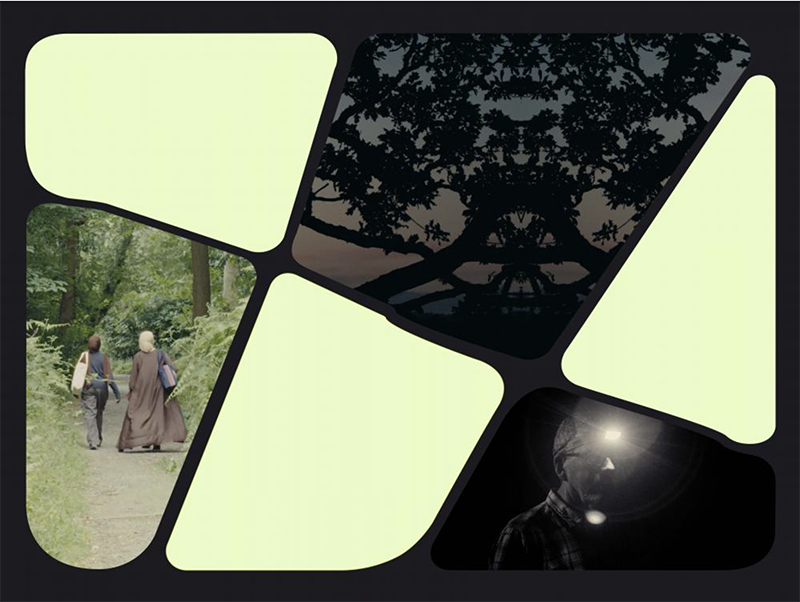
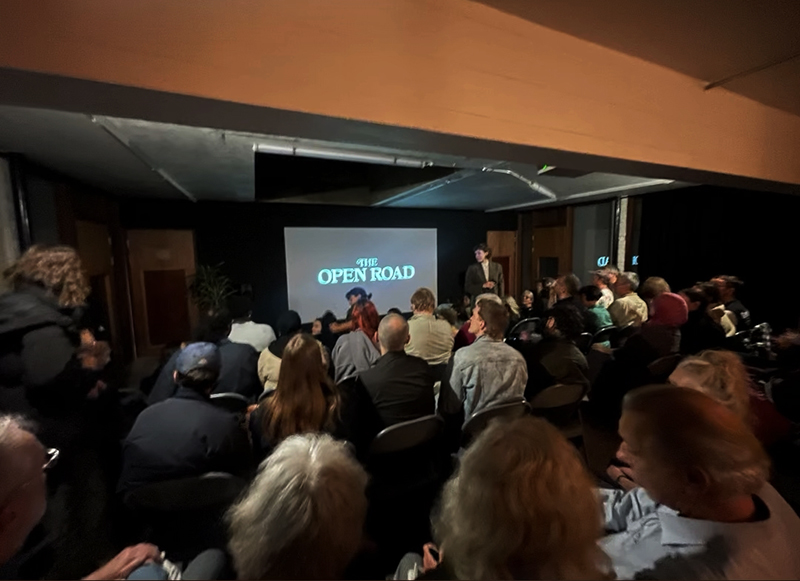
Three beautifully directed films screened at FormaHQ as part of The Open Road series of artists moving image works, co-commissioned by a partnership of visual arts organisations. The works are loosely inspired by The Canterbury Tales, drawing from a disparate cast of characters to recount competing stories in a patchwork of styles. David Blandy (Commons), Amaal Said (Open Country) and Sam Williams (The Eel’s Tale) each draw on storytelling traditions to give fresh perspectives on their journeys, on foot, by sea and through time. Heartbreaking to hear how terrified Amaal Said was to leave London for the open country of the south coast, especially with the current rise in overt racism, when out looking for locations and that they did suffer racist abuse while filming. Hers is a gentle and warm study of a mother and daughter and an absent grandmother, a longing for home and to feel ‘at home’. Sam William’s film sets the plight of the highly endangered glass eels who journey 4,000 miles from the Sargasso Sea to the Medway wetlands in Kent, swept along by currents, undergoing bodily transformation, following an instinctive desire on this epic migration alongside two other watery tales of transformative journeys across boundaries of identity and freedom. Coincidently, a recent episode of the Infinite Monkey Cage is all about these mysterious eels. David Blandy turned his attention to the vast and disparate collection of artefacts held in the Tunbridge Wells museum and gave some of these specimens a voice to tell of how they had lived before they became a part of this collective of human taxonomy.

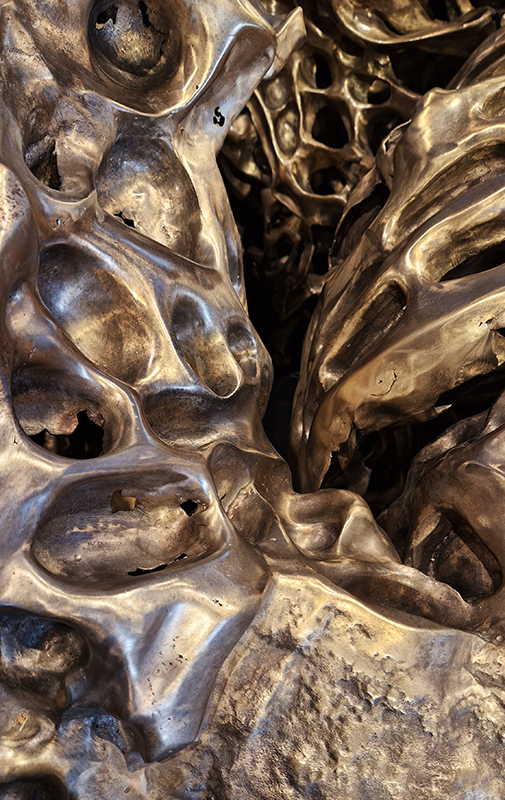
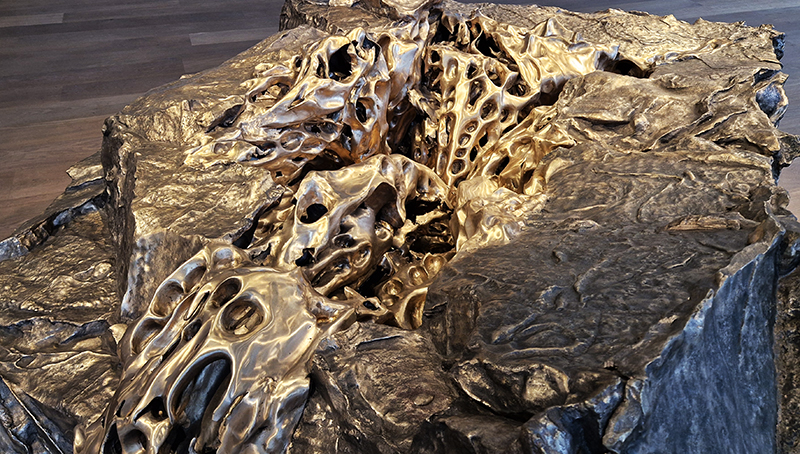
Cristina Iglesias The Shore at Hauser & Wirth features large-scale bronze works from the artist’s Littoral (Lunar Meteorite) series, part of her ongoing exploration of geological themes. The word ‘littoral’ refers to something relating to or situated along a coast or shore, or the region where the land meets the water. The weightiness of the objects is impressive ( I can’t imagine how they were brought into the gallery even with the technology available today – after coming here from the talk on stone henge and the incredible feat of bringing the standing stones across rough terrain for many kilometres and up a slope 5000 years ago seems even more impossible – yet there they are). The sound of water bubbling within each piece draws you to peer within and stay with the piece perhaps longer. The audience is invited to touch the sculptures. The bronze is polished and does need to be used and worn away in a more effective organic and dirty process. They are very clean.
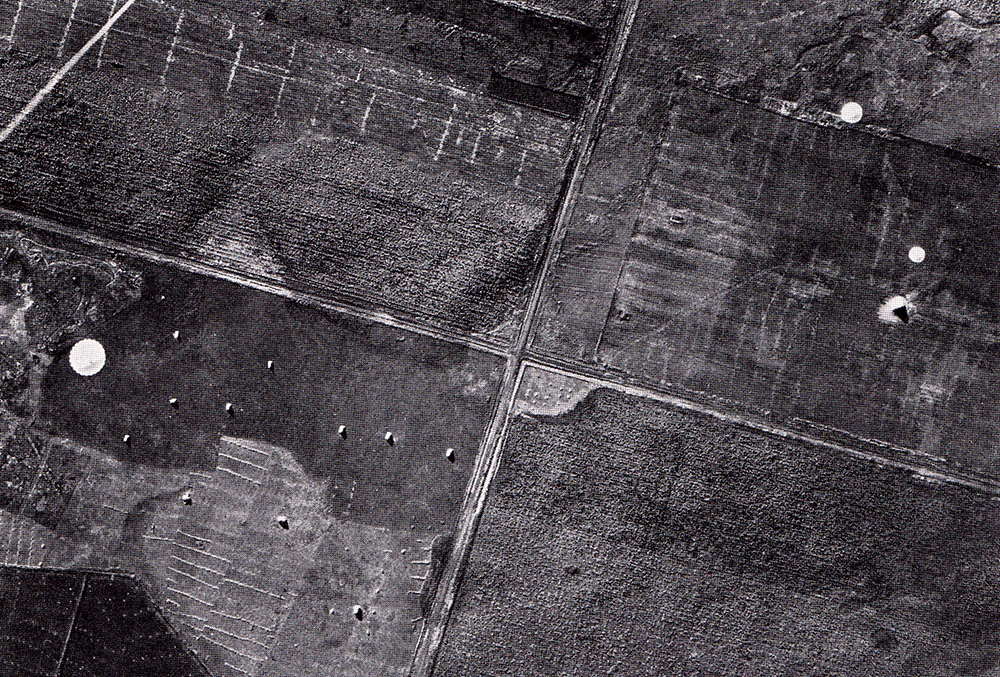
The Royal Astronomical Society lecture Sighting the Sun and Moon? at Stonehenge – by Archaeoastronomist Prof. Clive Ruggles. Debunking many myths and overspeculation, concerning the use of the monument for observations of the sky the professor was clear about what can sensibly be said about the relationship of Stonehenge to the Sun, considering the conventional archaeological evidence that has been uncovered in recent years. He also recommended visiting the day before or after the actual solstice if possible for an experience without the many crowds as the alignment is almost identical. Also visiting at sunset can be just as magical and quieter. He turned his attention to the Moon, questioning if our prehistoric forebears also celebrated the occurrence of a major lunar standstill, an event occurring every 18.6 years around which time the Moon can be seen at fortnightly intervals exceptionally far to the north and south.

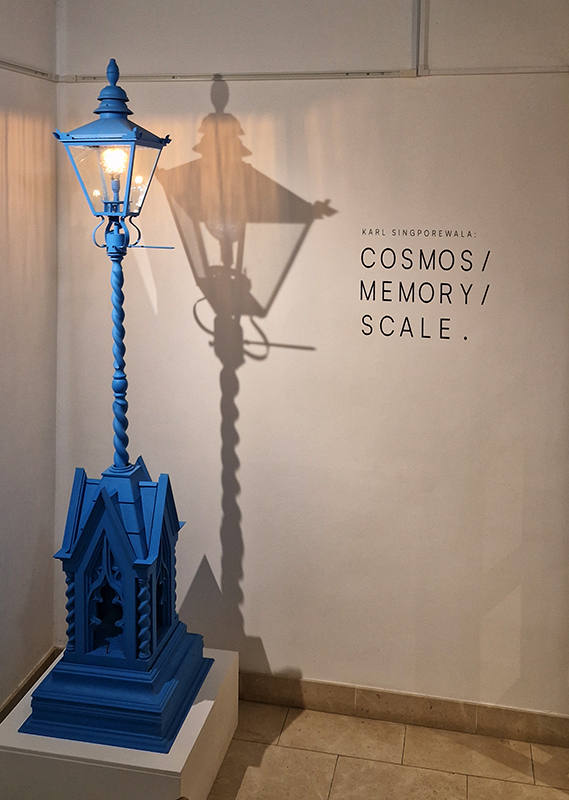
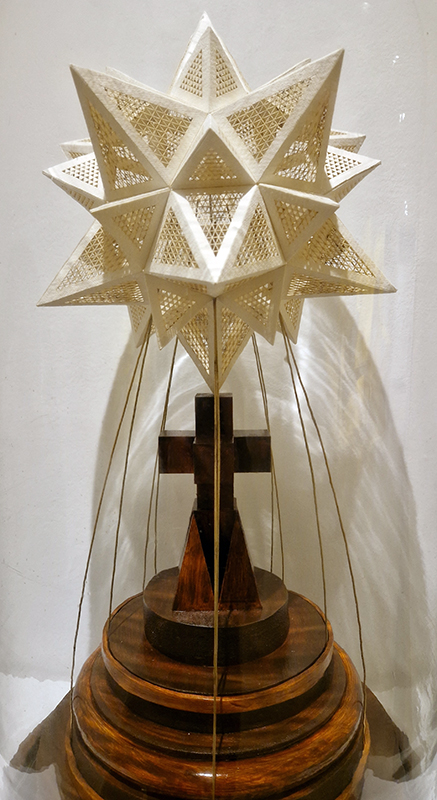
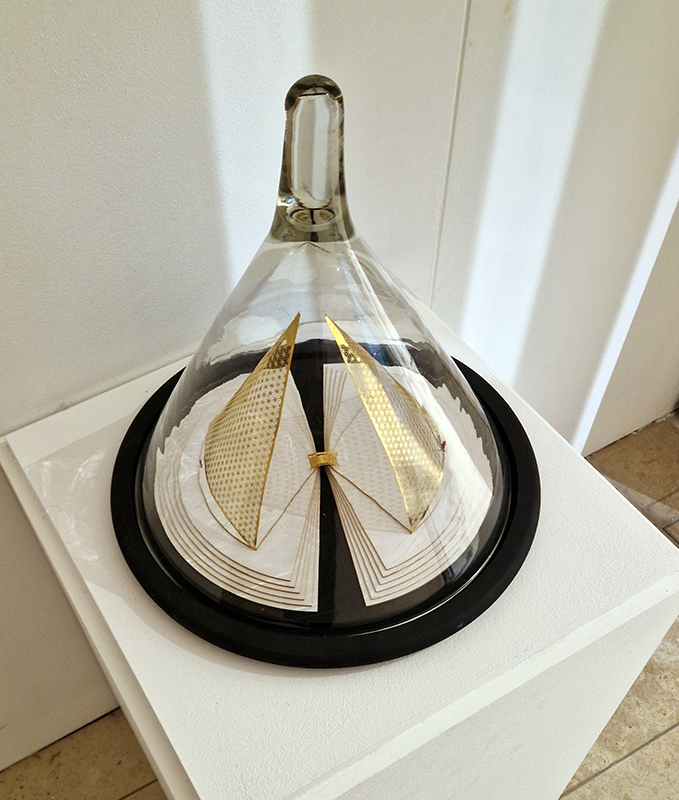
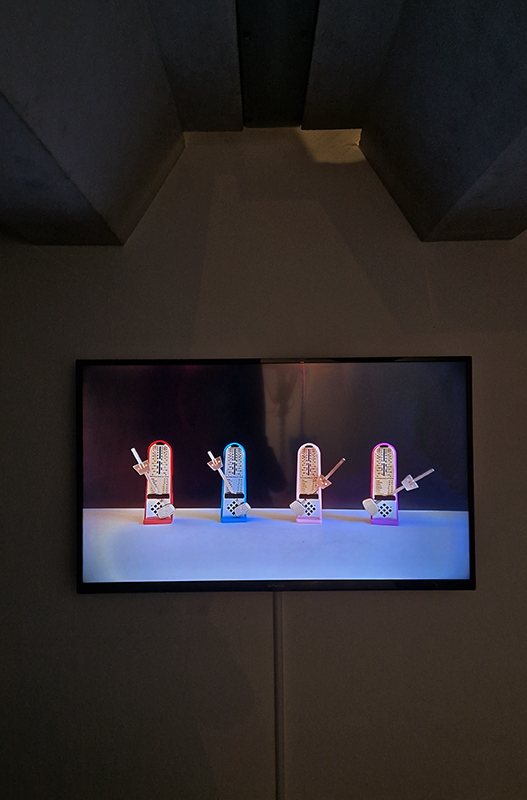
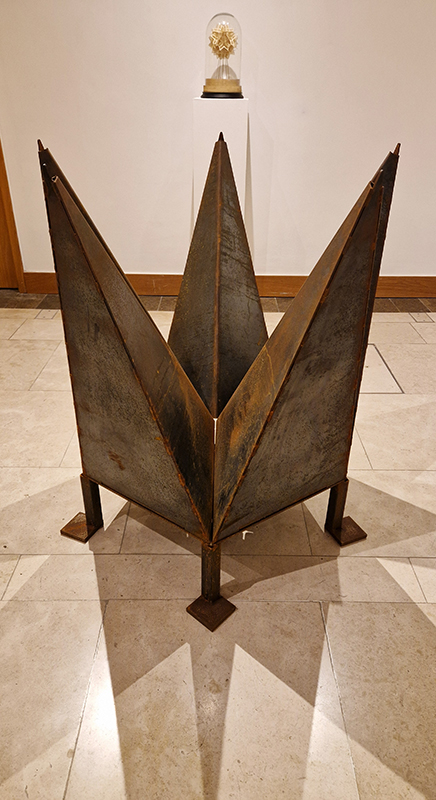
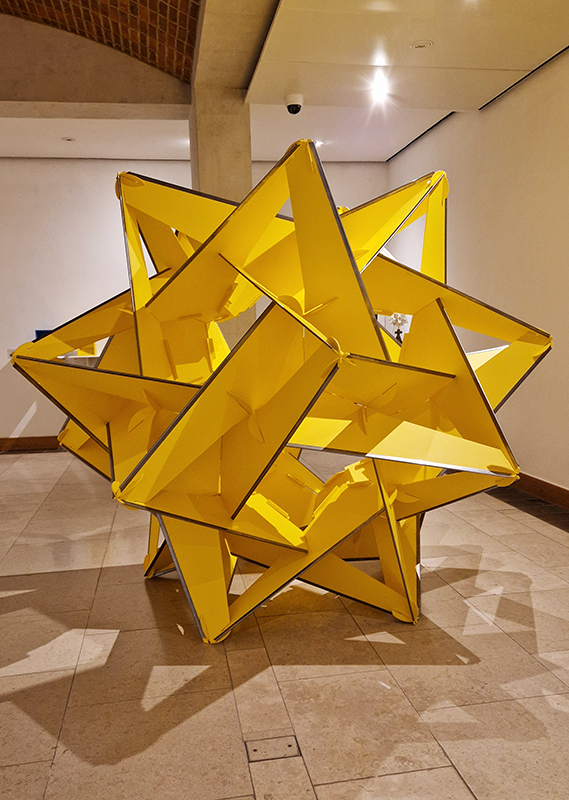
Karl Singporewala’s sculptural interpretations of Zoroastrian symbolism in Cosmos, Memory, Scale at SOAS Gallery convey a meditation on how material and memory intersect to shape the human experience. Cosmos speaks to both his fascination with astrophysics together with a metaphysical belief in the alignments of life. Stars and geometric forms recur as motifs, refracting both spiritual navigation and mathematical structure. Memory is treated as a living, shifting phenomenon. Inspired by oral tradition, family stories and inherited rituals. Scale, is used both literally and metaphorically in shifting perspectives and unexpected relationships. Good Thoughts, Good Words, Good Deeds.

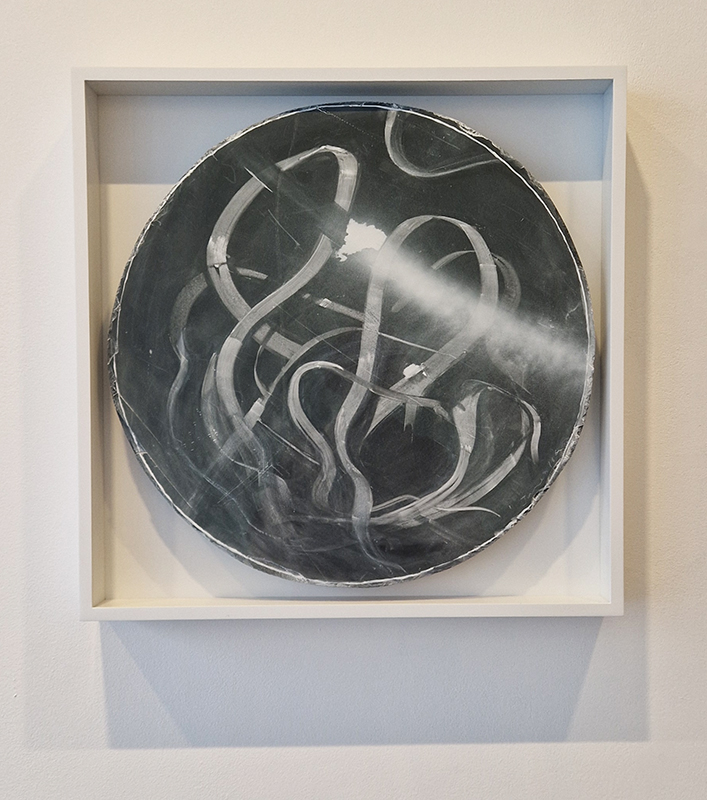
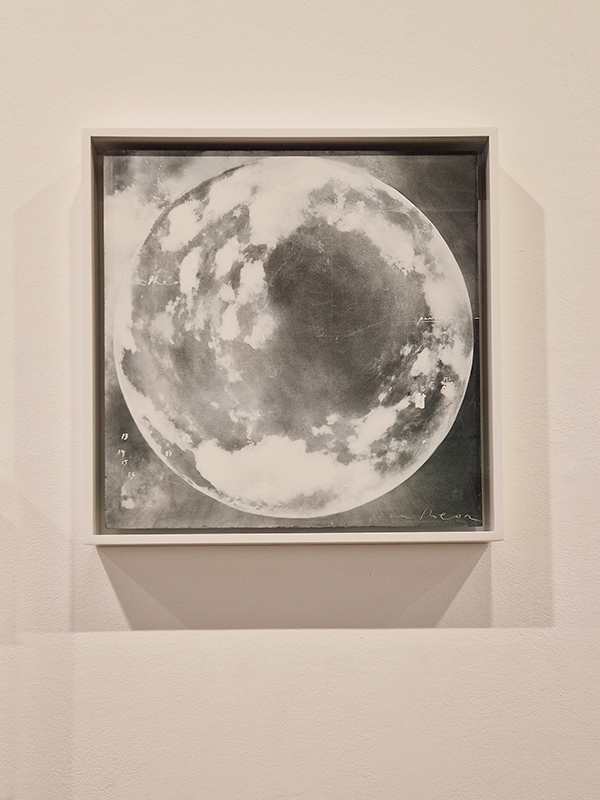
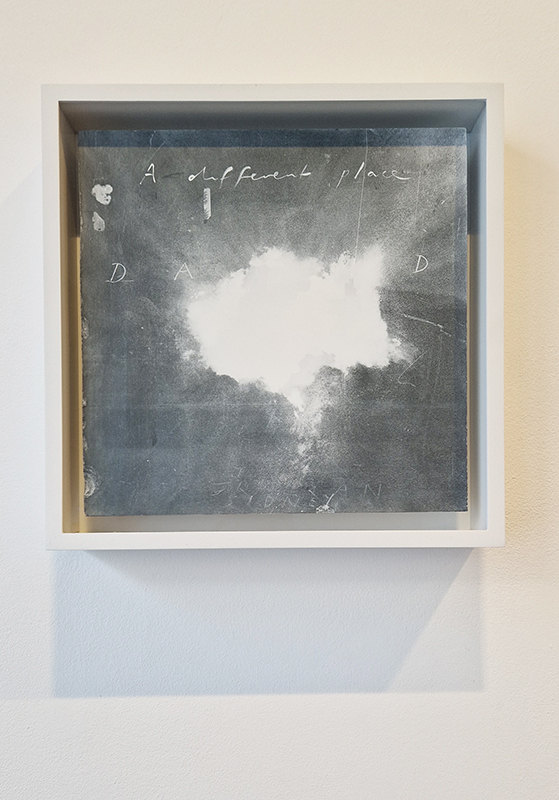
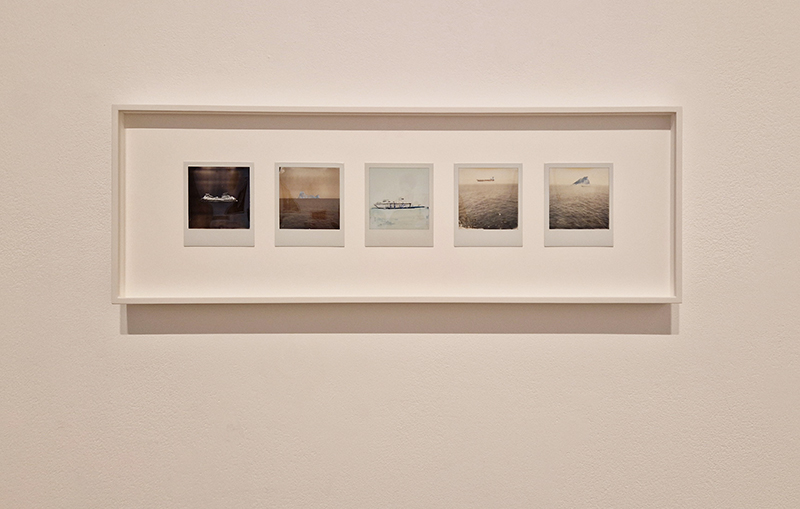
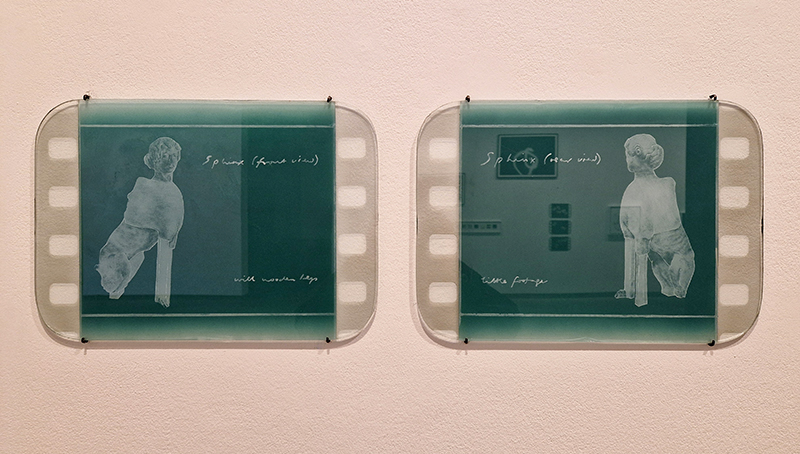
Dusty, chalky mythical drawings and solar eclipse traces from Tacita Dean in Black, Grey, Green and White at Frith Street Gallery Golden Square.

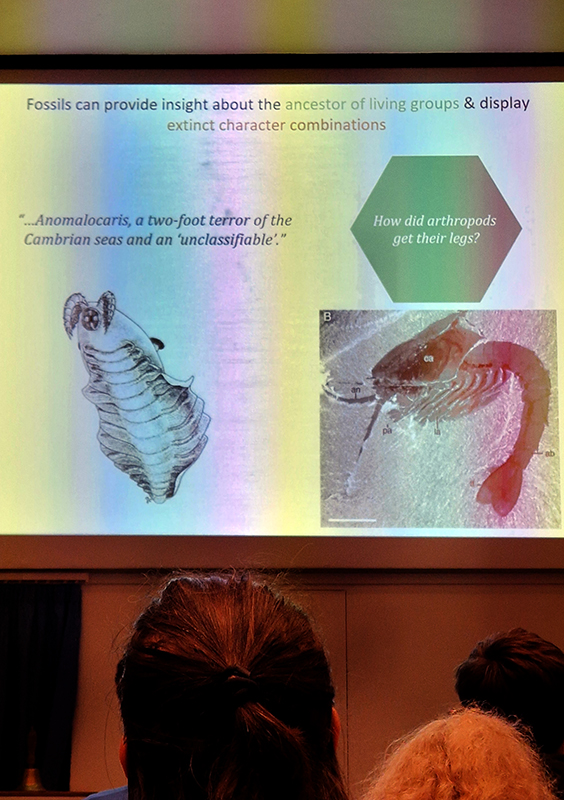
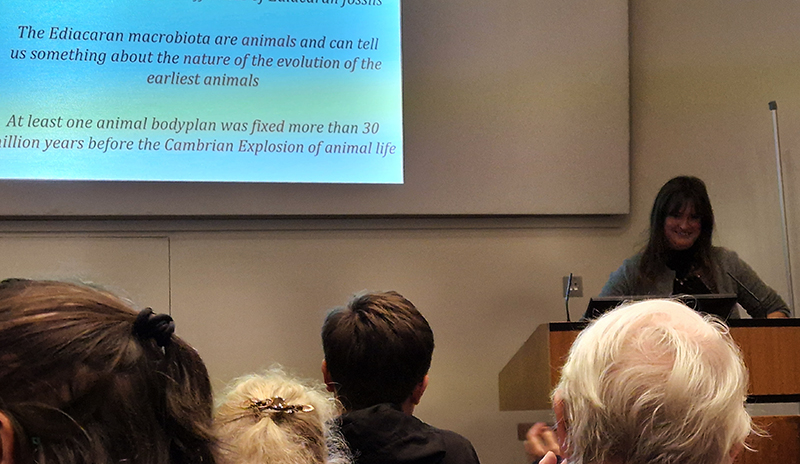
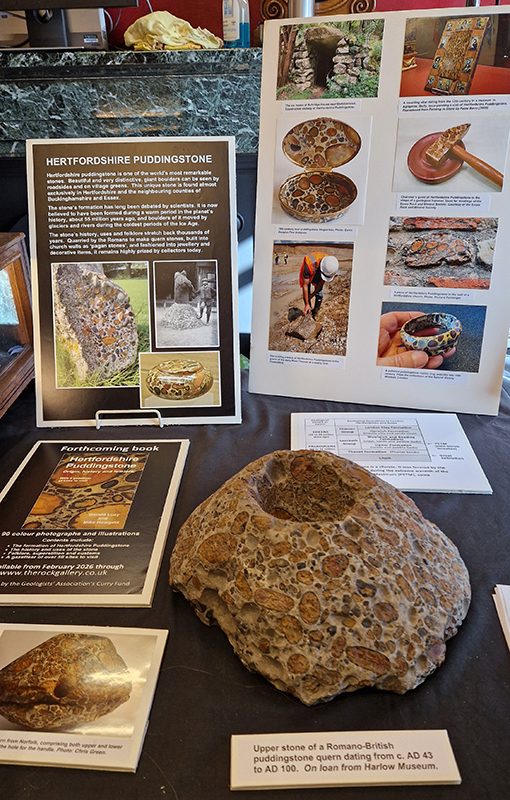
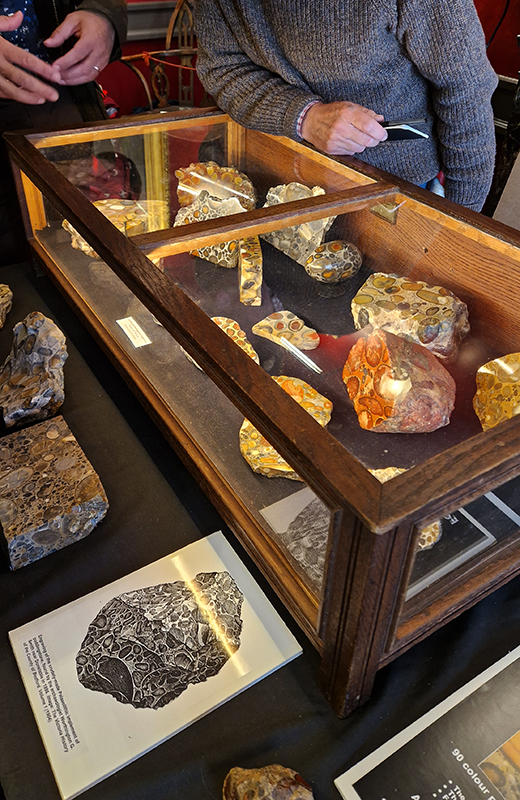
I spent a happy morning at the Geologists Association Festival of Geology 2025. This included a fascinating lecture The Early Evolution of Animal Life by palaeobiologist Frankie Dunn focused on the origin and early evolution of animals and particularly on the fossil record of the late Ediacaran Period (approximately 570 – 540 million years ago) – just before the Cambrian explosion of life. The aim of her research is to understand how animal body plans evolved in deep time. There also was some amazing and unique pudding stone on display.

I also picked up a great little book full of wonderful geologically enriching words by Marcia Bjornerud.

We are made of carbon, it is the basic building block in virtually every cell in our body. Most of the carbon in the world is carbon-12 which contains six neutrons and six protons. However about 15 km above our heads radioactive carbon-14 is formed as neutrons from cosmic rays interact with the atmosphere.

Protons and atomic nuclei created by events such as exploding stars speed across space and collide violently with the Earth’s atmosphere creating a chain reaction of cascading particles. Some of these tiny travellers may come from distant galaxies or be created by phenomena that we are yet to discover. Our body is continuously permeated at a subatomic scale by these particles fired into our world – an almost tangible contact with outer space.

Carbon-14 has six protons and eight neutrons and has a half-life of 5,730 years. This means that after 5,730 years dead matter which absorbed Carbon-14 when alive will contain half the amount it had when it died and after another 5,730 years that amount will have halved again. Radioactive decay is random but in a sample there are enough atoms to work out an average time it will take for the nucleus to lose the extra neutrons.

This radioactive carbon-dioxide in the atmosphere is absorbed by plants which are eaten by animals and humans.

Cosmic ray activity gives us carbon dating techniques.

I am working on a video, Cosmic Chiasmus, meaning crossing.

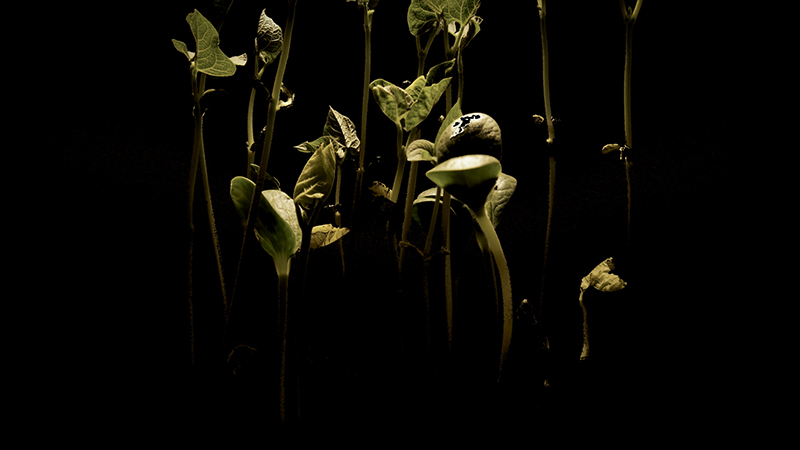
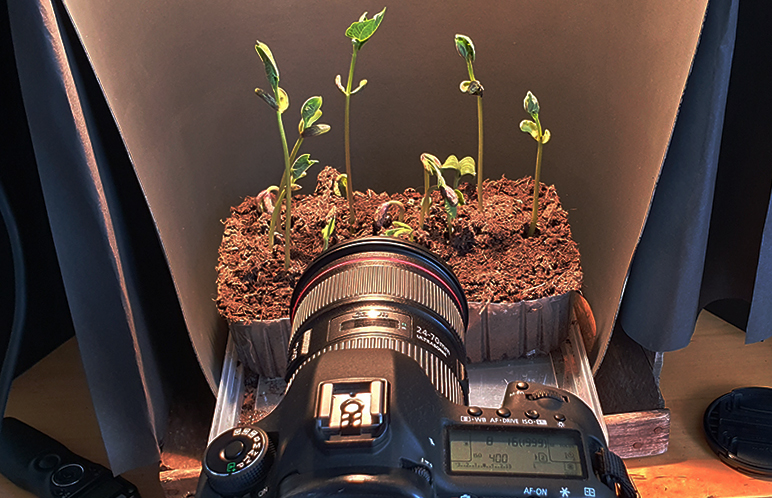
Plant time lapse filming is fascinating to see how plants are so animated just at a different time scale to us. Also I have recently finished reading Richard Powers Overstory, a very powerful sobering read, which celebrates the slow yet socially active time of trees.

Carbon dating is performed by measuring Carbon-14 in organic matter. Radiocarbon decays slowly while an organism is alive but is continually replenished as long as the organism takes in air or food.

When an organism dies no more Carbon-14 is absorbed and that which is present starts to decay at a constant rate.

By measuring the radioactivity of dead organic matter, the current carbon-14 content can be determined and the time of death established.

The oldest matter that can reliably be carbon dated is about 50,000 years old. Currently techniques are being refined as they have often relied on the assumption that Carbon-14 levels in the atmosphere are constant but they are not.

The burning of fossil fuels which have lost all their radiocarbon dilutes the amount of Carbon-14 with carbon dioxide and nuclear explosions add huge amounts of ‘bomb carbon’ to the atmosphere. During planetary magnetic field reversals more solar radiation cosmic rays enter the atmosphere producing more Carbon-14. Also the oceans suck up carbon circulating it for centuries.

There are a number of uncertainties for dating shell.

On the surface of the earth two to three Muons pass through your hand every second, underground this is reduced to about once a month.

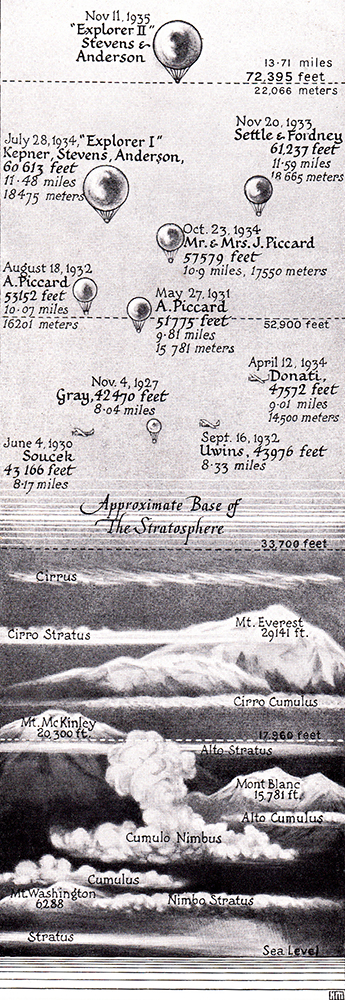
I came across some articles about balloon voyages made in the 1930’s to the stratosphere to record cosmic ray activity in old National Geographic magazines .

Intrepid explorers. These early explorations were innovative but also dangerous. In July 1934 a flight developed tears in the balloon fabric at about 57,000 feet and began to break apart, as it did so the hydrogen in the balloon exploded and the crew had to parachute to safety.

Physicist Victor Hess had already made a series of daring ascents in a balloon to take measurements of radiation in the atmosphere. In 1912 he made an ascent to 17,000 feet during a near-total eclipse of the Sun to determine if the source of the radiation was coming from the Sun and made the discovery that it had to be coming from further out in space.

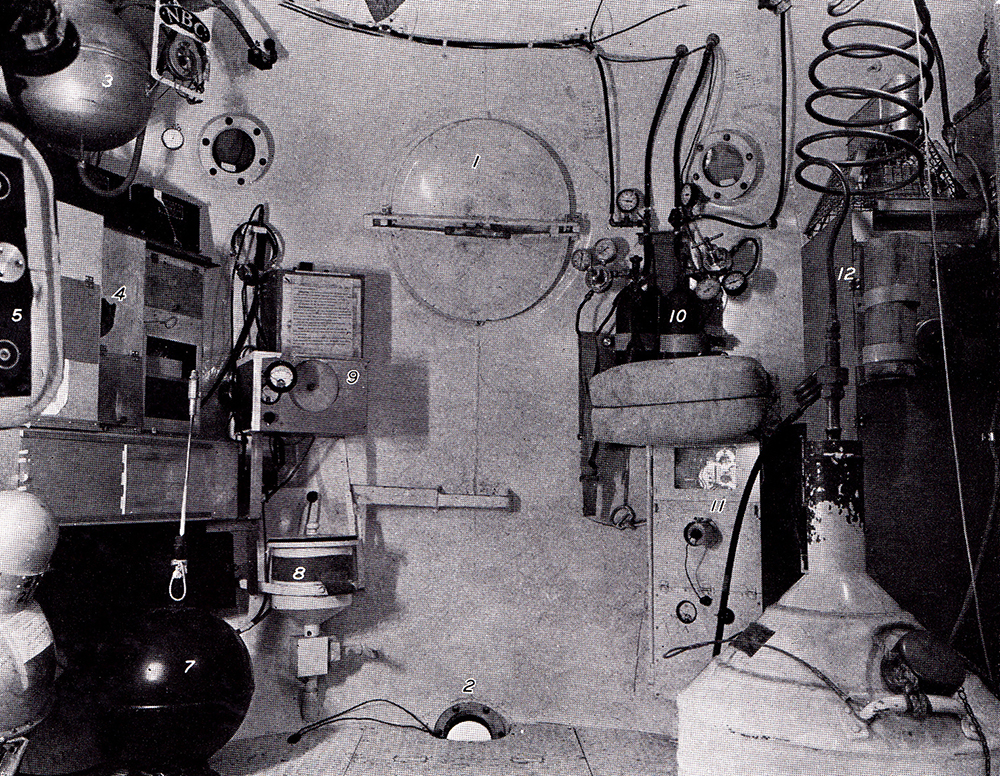
The stratosphere balloon Explorer II was designed to carry heavy instruments for cosmic ray measurements to a height of 13 miles and more above sea level.

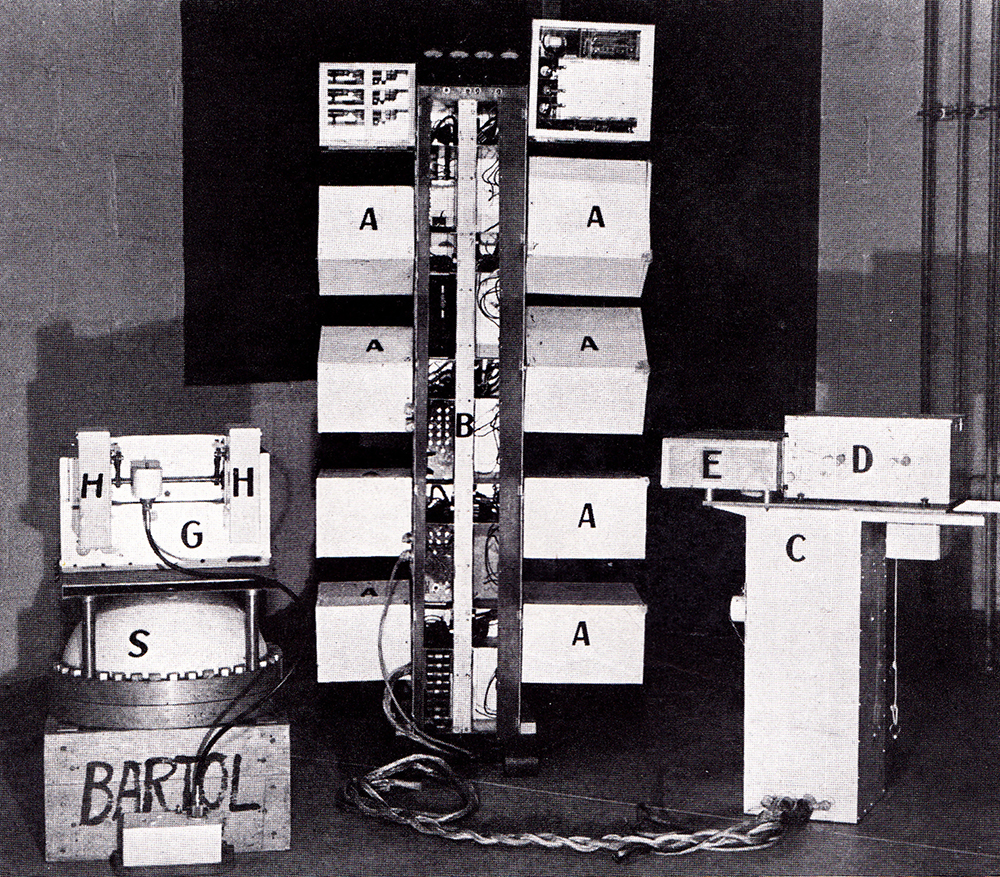
Scientists designed a system of cosmic ray telescopes to record the numbers of cosmic rays coming in from several angles above the horizon. Most of the cosmic rays counted are secondary particles shot out from the atoms of the air by the primary rays entering and colliding from space. During this flight the height at which most secondary cosmic rays are produced was determined and the first records of bursts of energy from atom disruption by cosmic rays was made.

Also, the first track ever made directly in the emulsion of a photographic plate by an alpha-particle cosmic ray with enormous energy of 100,000,000 electron volts was achieved. Two boxes of photographic plates coated with special emulsion were wrapped in light tight paper and attached to the balloon gondola. When the plates were developed there were no visible images but when put under a microscope tracks could be seen where the particles had ploughed through the emulsion.

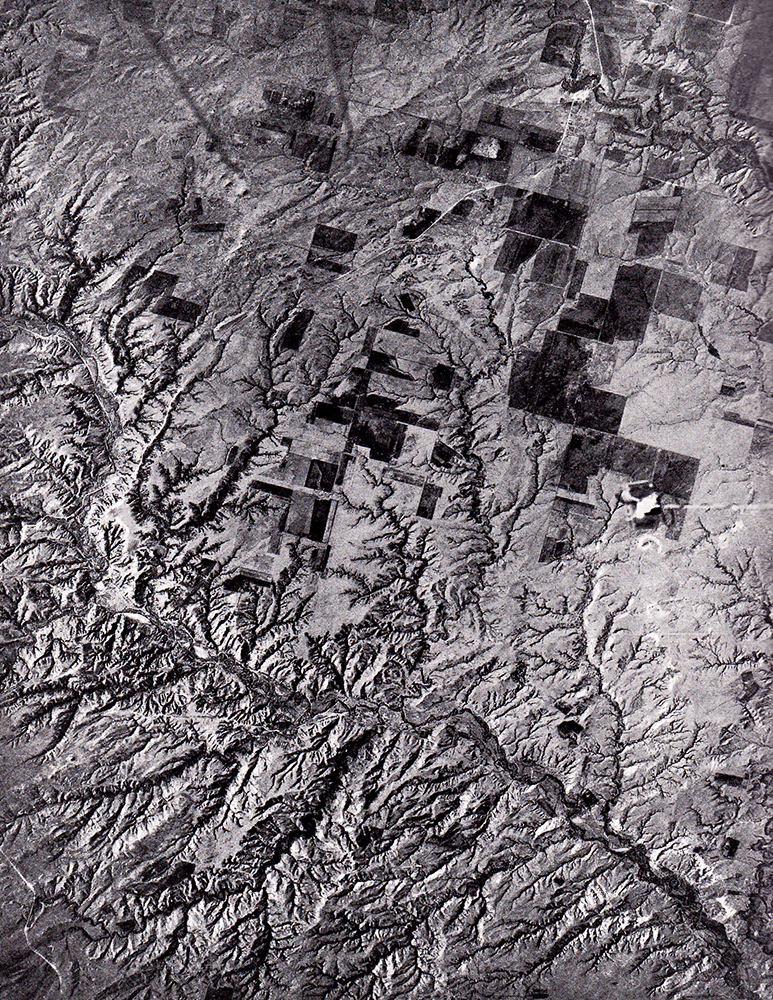
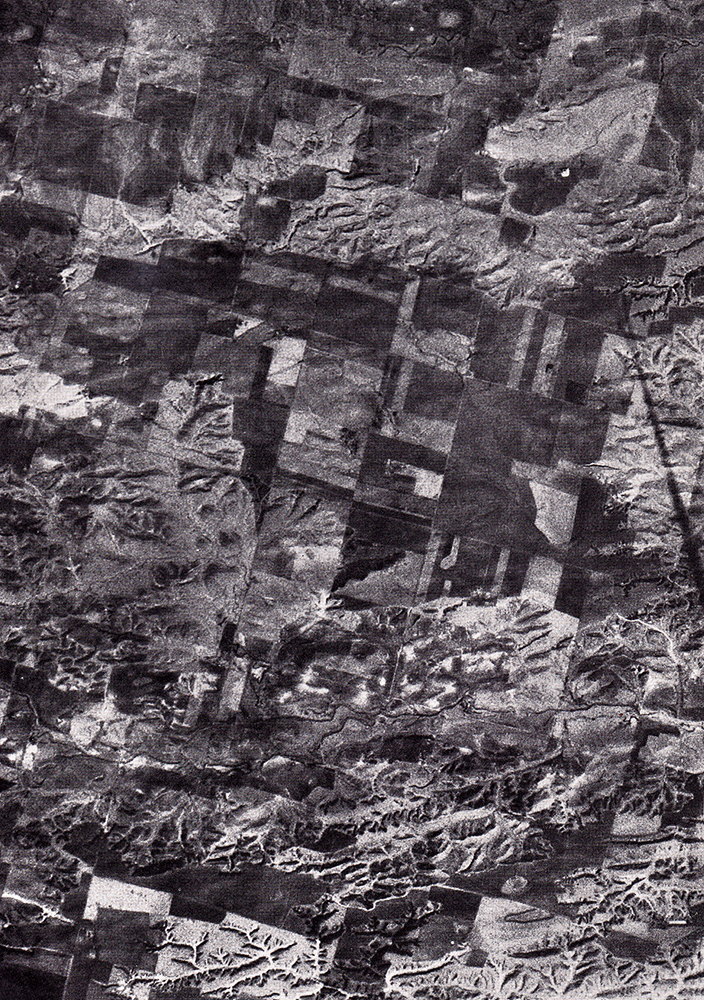
Early google earth. They also took the highest altitude photographs of the Earth ever made.

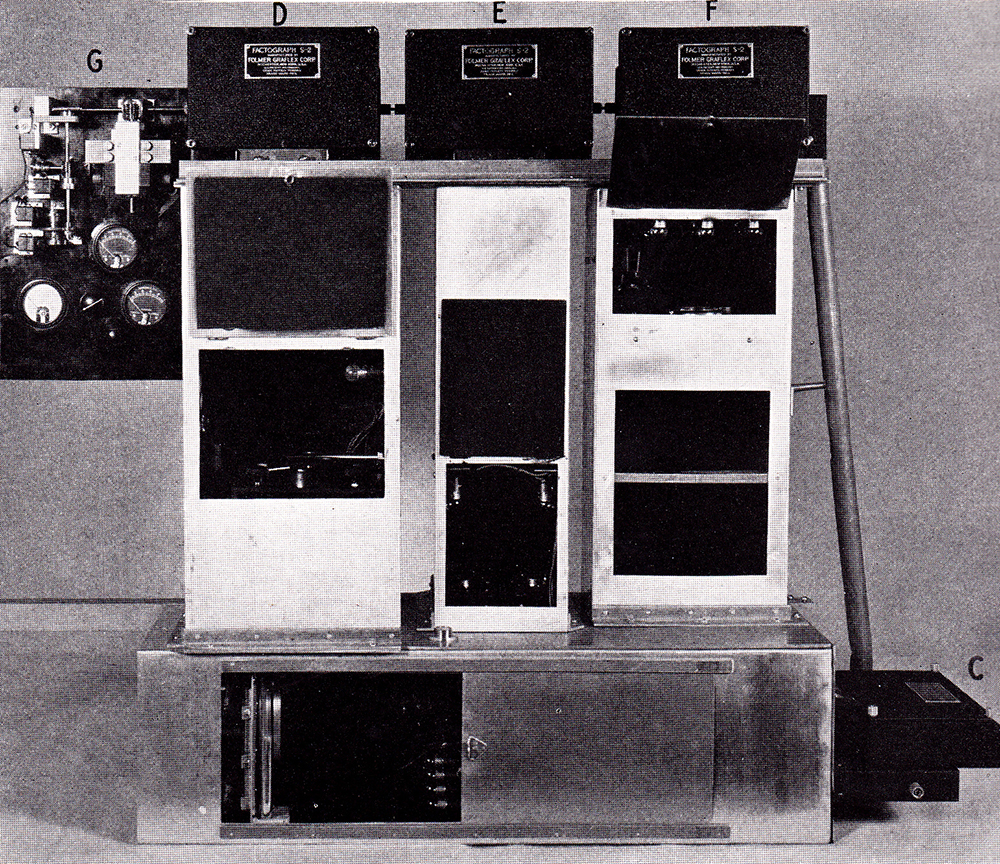
To record data they had a series of cameras set to take automatic photographs of the dials on the different apparatus.

Analysing air captured from the stratosphere.

On Earth we are protected from most radioactive particles by the atmosphere and the magnetic field.

It has been clearly demonstrated that birds are able to sense the direction of the Earth’s magnetic field and that they can use this information as part of a compass sense. It may be possible humans retain some residual magnetoreceptor in our eyes that once allowed us to navigate using the Earth’s magnetic field. Current research suggests that some people do indeed perceive magnetic fields, albeit unconsciously.

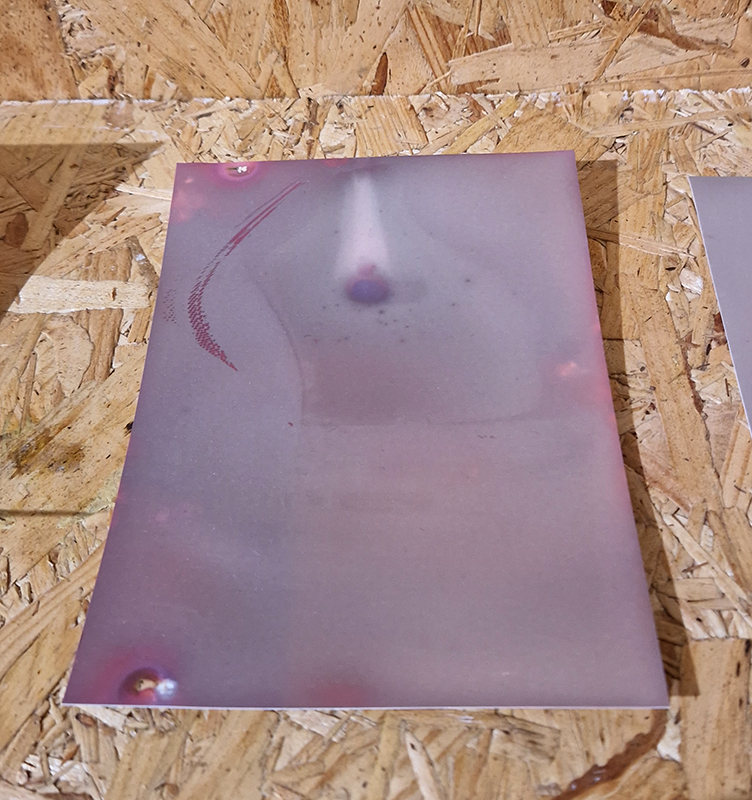
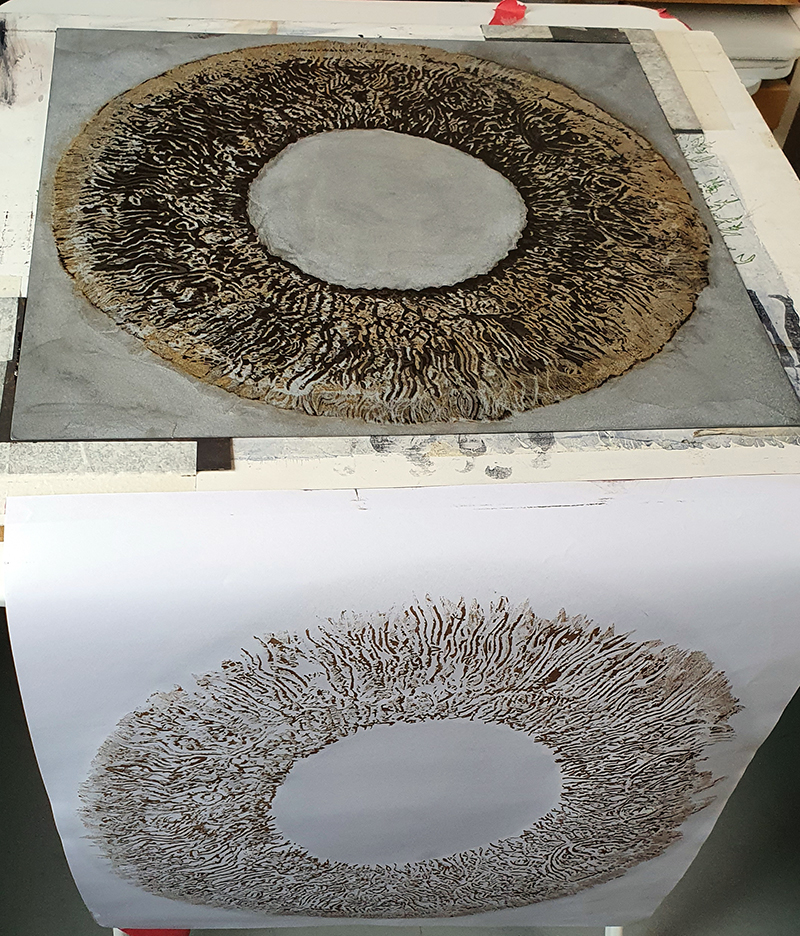
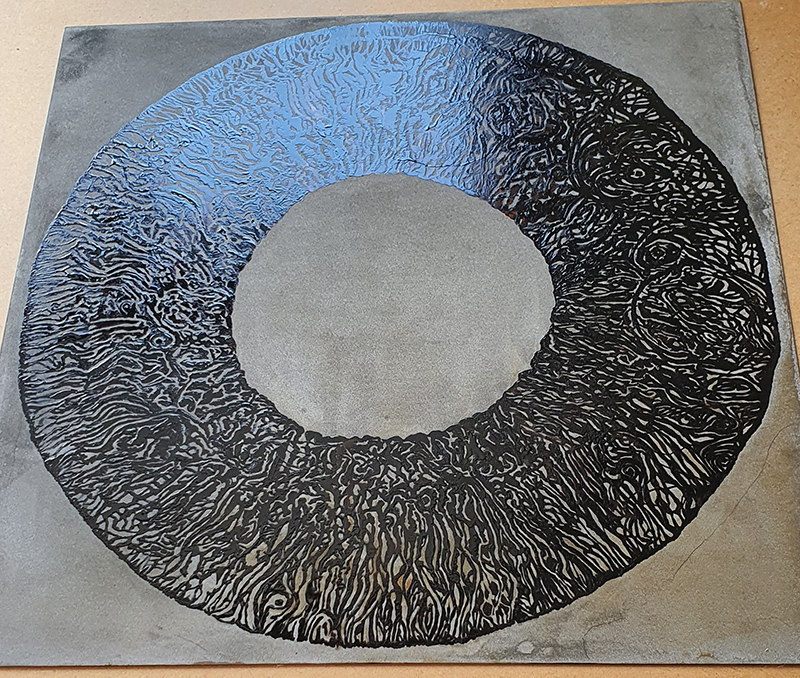
Work in progress on navigation by magnetic receptors. Working on a soft ground etching of my iris with aquatint. Not sure yet if I will use the plate or the print in the final work which will have iron filings activated across the surface.

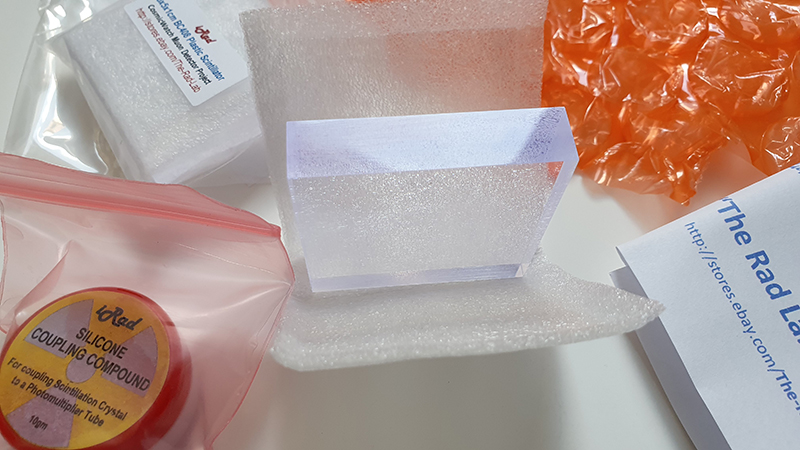
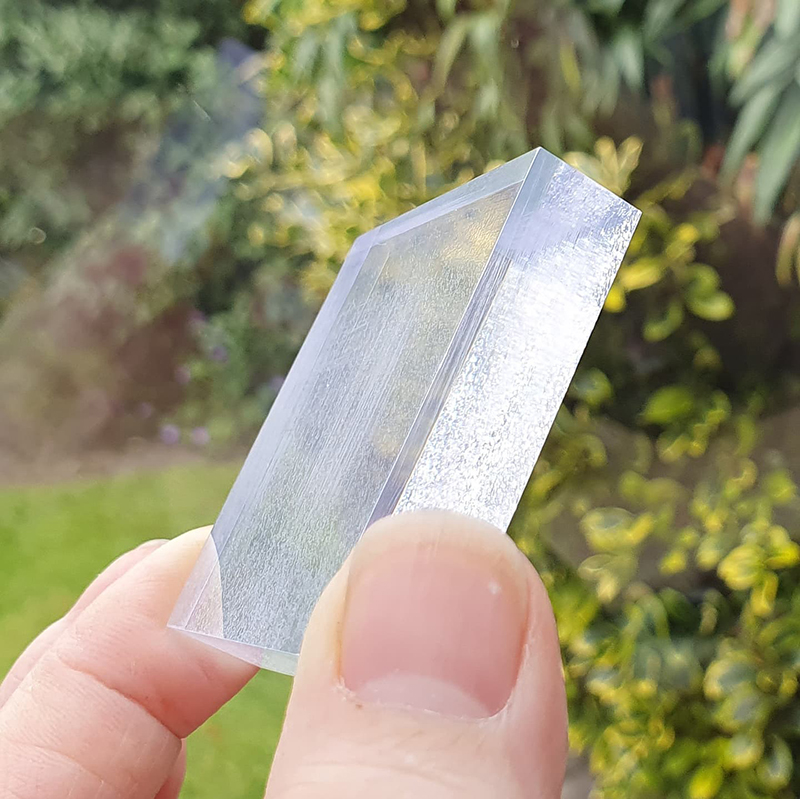
First components have arrived from America for my attempt to build my own cosmic ray detector to create an interactive artwork. The plastic block converts the energy of the charged particle passing through to a photon which can be read by a silicon photo-multiplier and the information fed to an Arduino processor. Daunting and exciting.

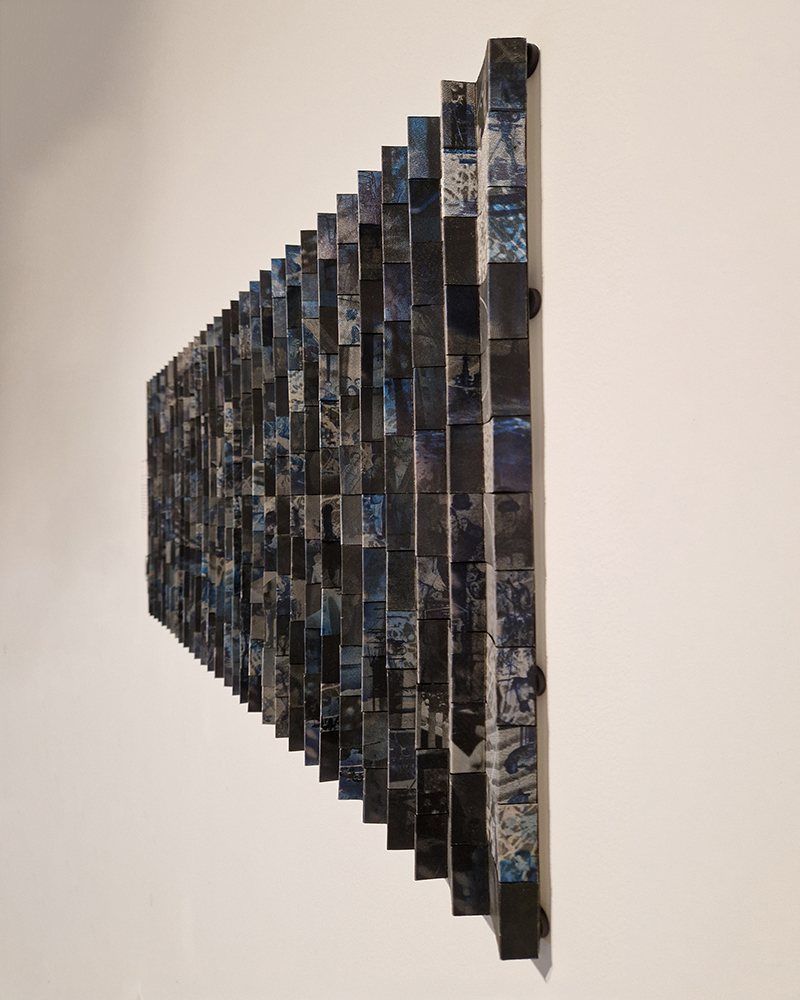
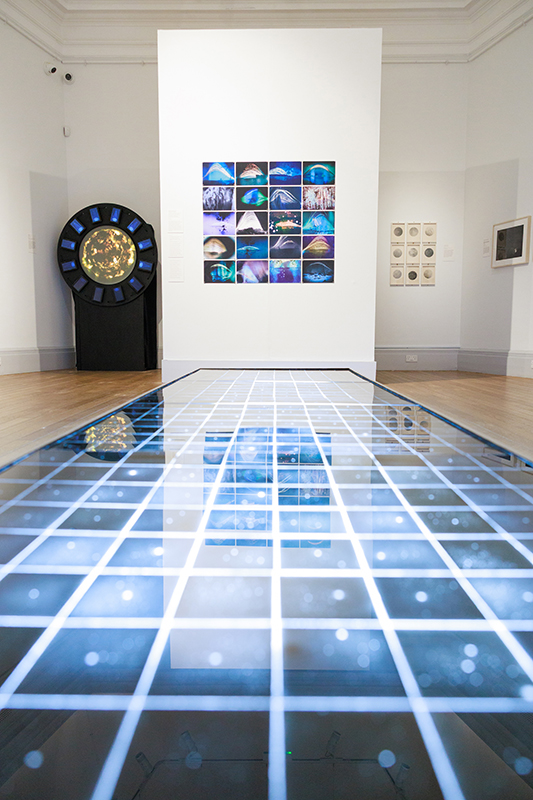
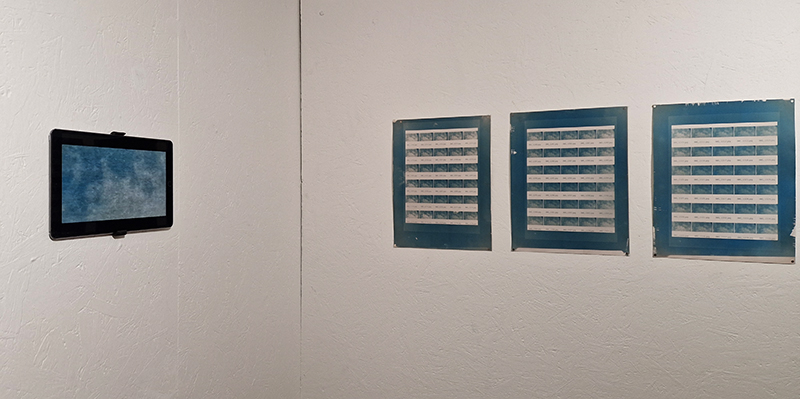
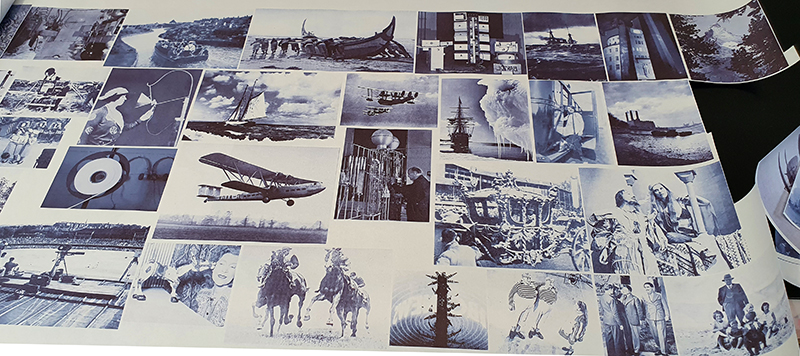
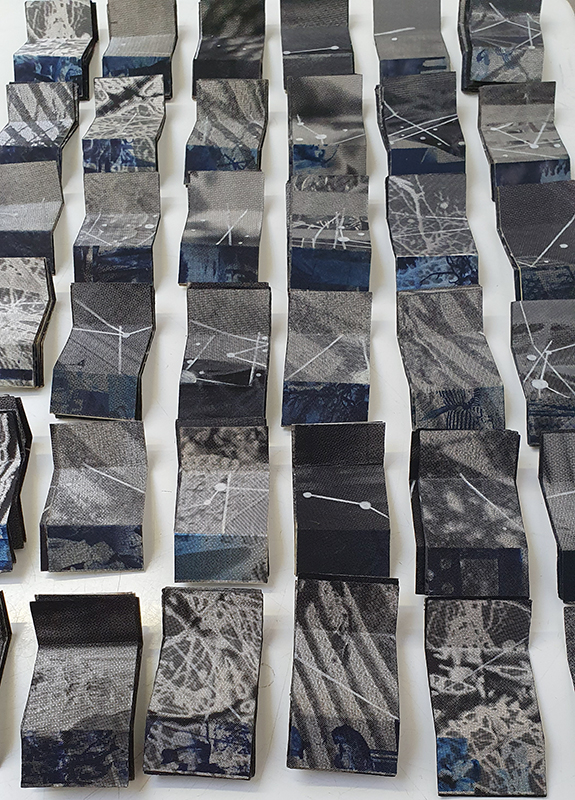
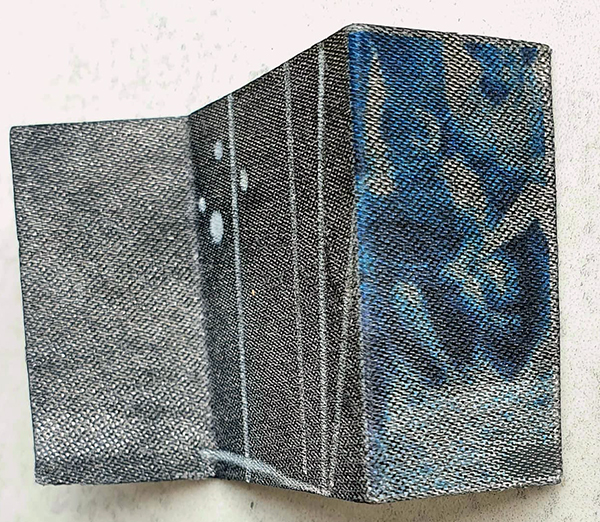
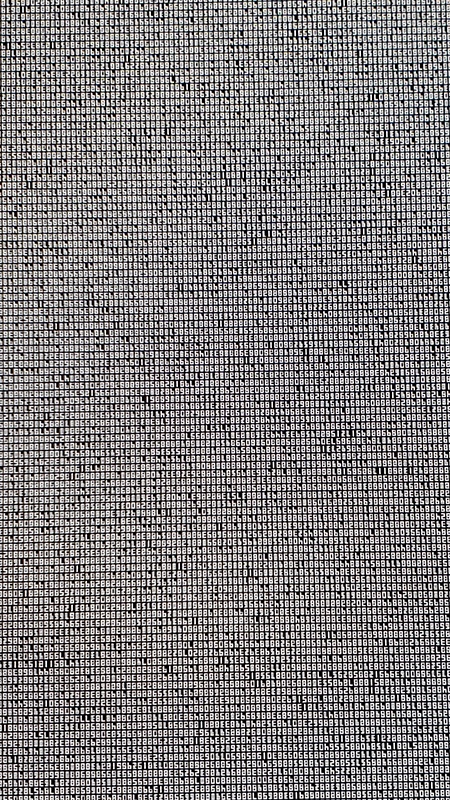
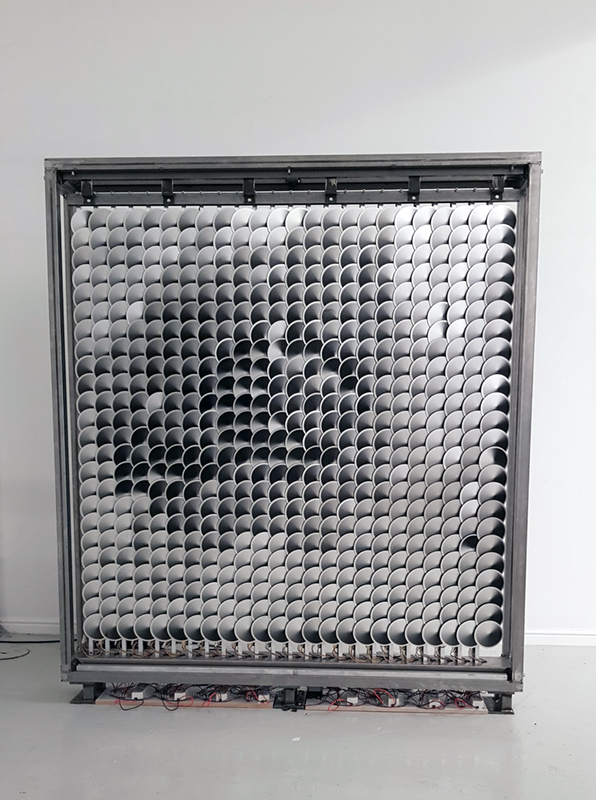
New work in progress – I collected a selection of images from the 1930’s including some from family, including my Mum aged 3, which I have tinted blue and had printed on sublimation dye paper for transfer to the tiles making up the raster pattern based on early television signals. FM radio and television signals can pierce the ionosphere and travel through space at the speed of light. The first signals will have travelled about 90 lightyears now to arrive at a solar system very similar to our own. Fragments travelling through space for light years with the potential for alien life to decipher.

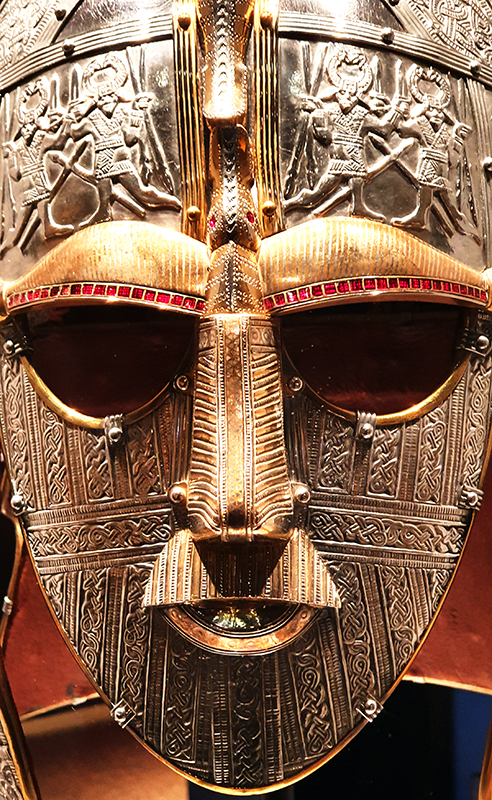
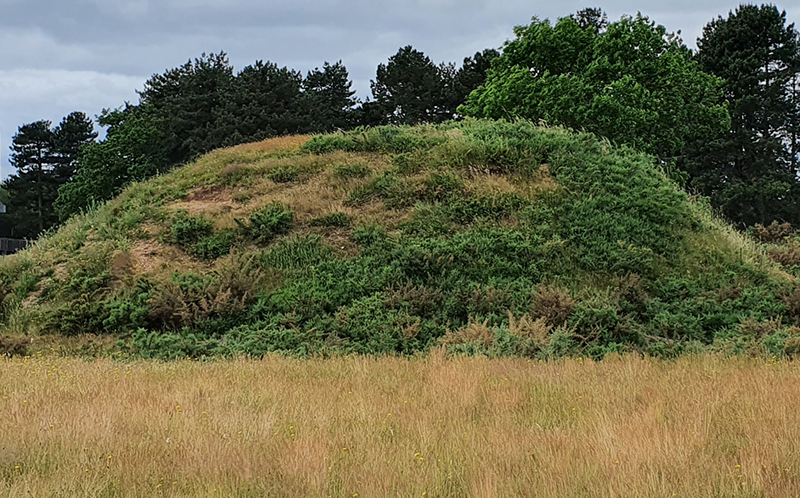
Visit to Sutton Hoo where the ever increasing accuracy of radio carbon dating has provided astonishing clues to the past history of this intriguing site. Archaeologists can determine the age of objects in decades as opposed to centuries.

Sutton Hoo is the site of two early medieval cemeteries dating from the 6th to 7th centuries near Woodbridge, in Suffolk, England. In 1939 landowner Mrs Edith Pretty asked local archaeologist Basil Brown to investigate the largest of several Anglo-Saxon burial mounds on her property. Inside, he made one of the most spectacular archaeological discoveries of all time.

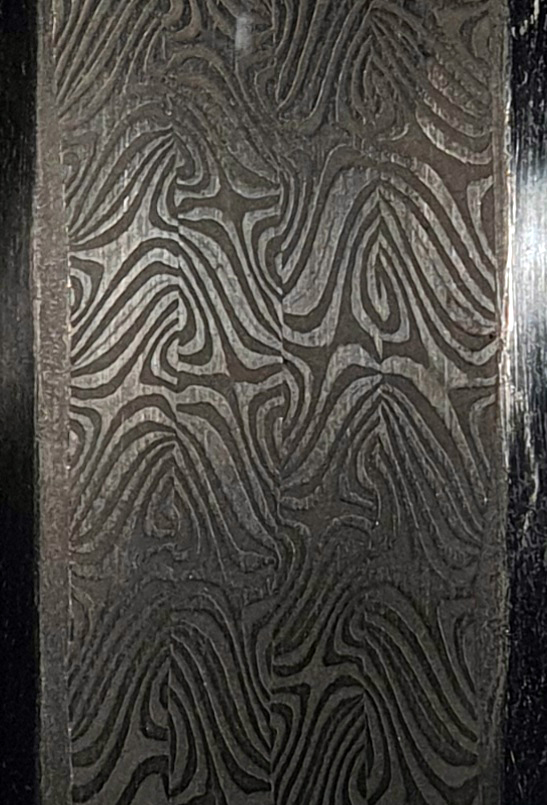
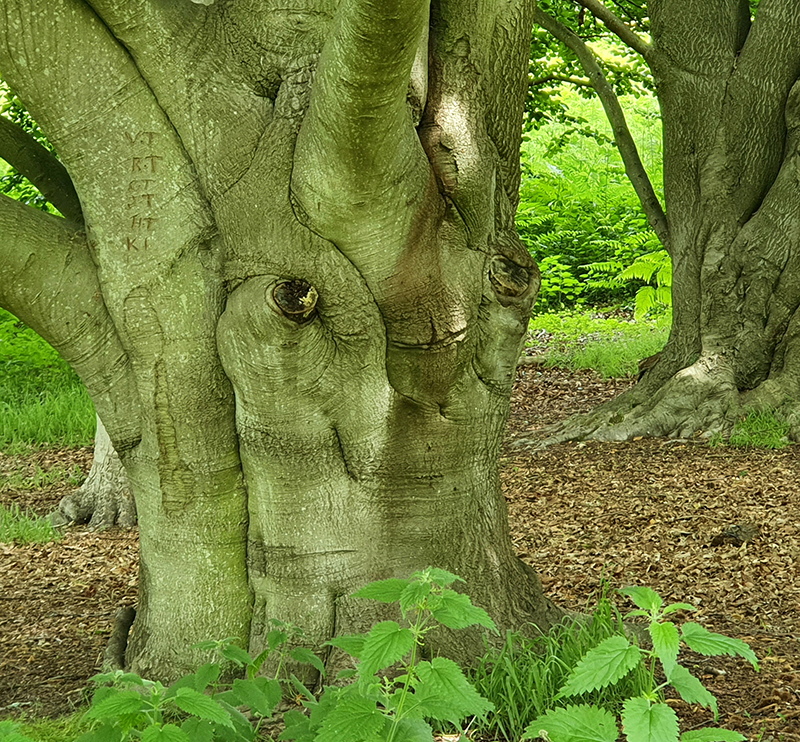
Past, present and future finds. Ancient trees. Burials of Kings. Amazing sword of beaten twisted wrought iron and steel. Basil Brown’s star charts.

The agency and aura of objects was investigated with the intent to generate new relations between objects and their associations with the world around them in the beautiful group show Can We Ever Know The Meaning Of These Objects curated by Sarah Sparkes and Kevin Quigley at Gallery 46.

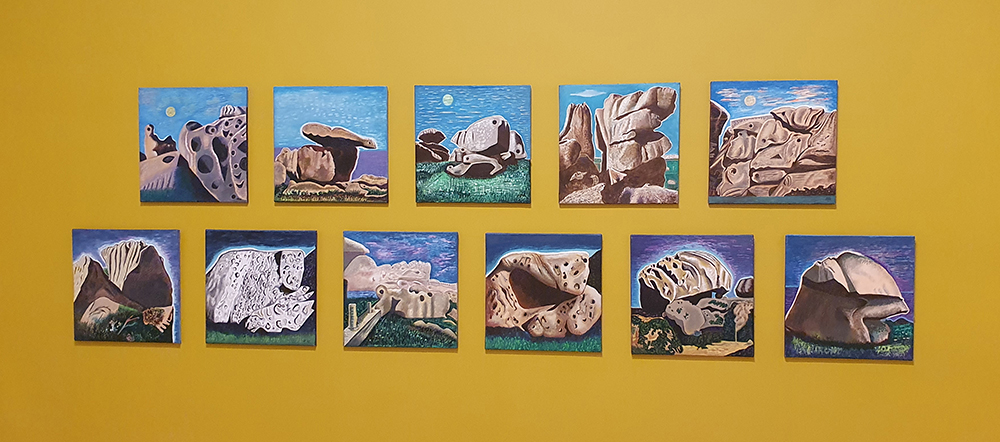
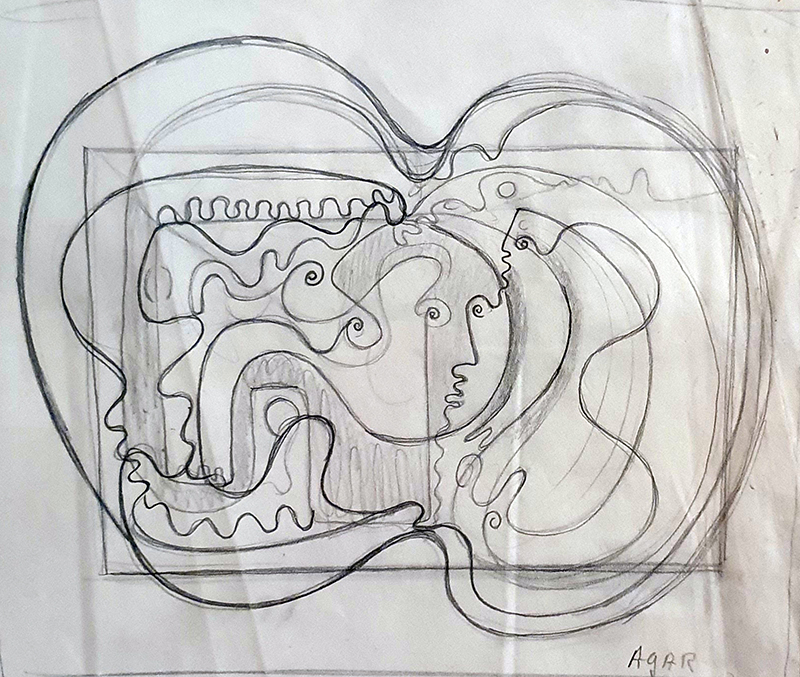
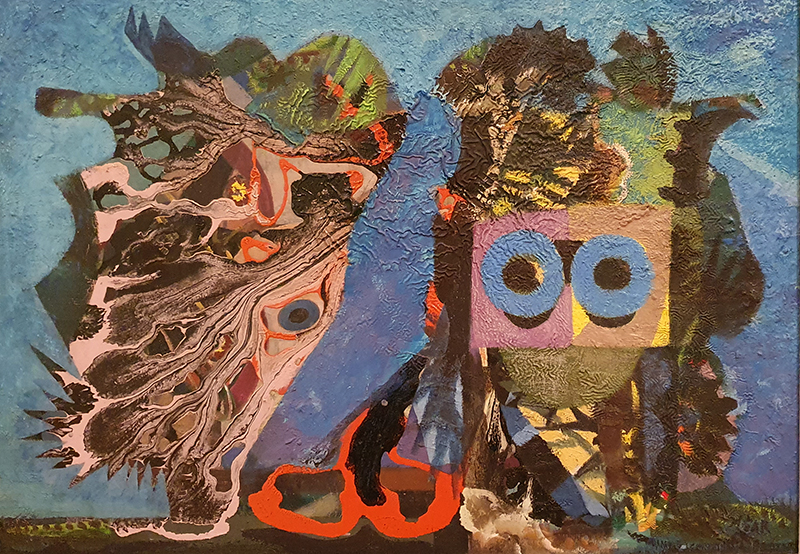
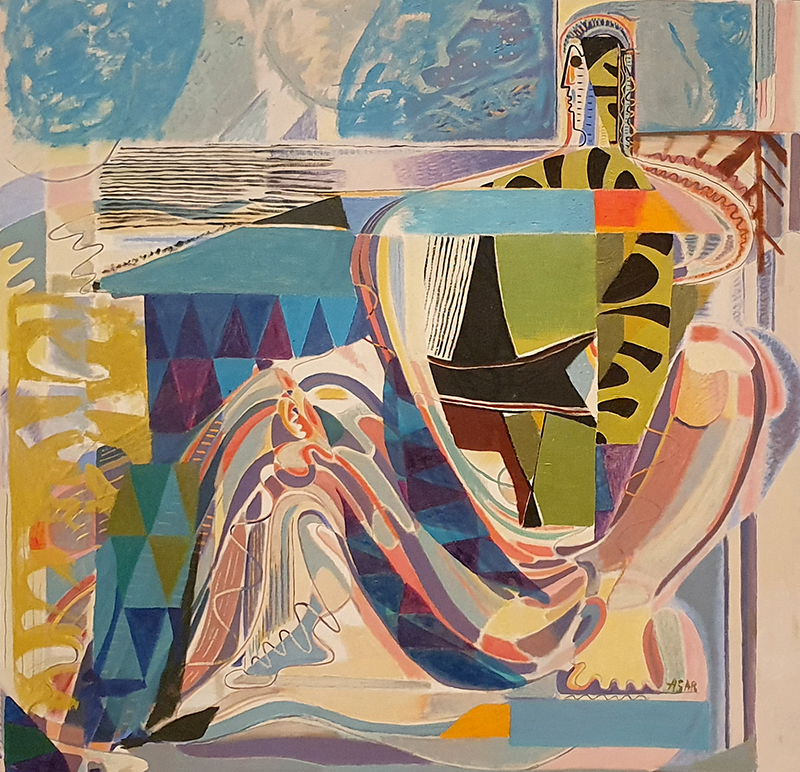
Eileen Agar Angel of Anarchy at Whitechapel Gallery exposing the subconscious entwined with the material of nature. Enjoyed the decomposition of space into lines like foliations and contour lines. Which angel would you choose? Anarchy or Mercy?

I joined a zoom presentation from Sophie Williamson on her current project undead matter which dips into the deep time entanglement of geological ancestry. Leaving a mark in the past as a way of communicating with the future and creating a lineage for ourselves. Eras mingle with each other as ancient footprints resurface, ice melts, secreted narratives emerge. The permafrost holds vast amounts of carbon. Whole forests.

Zircon crystal contains radioactive uranium with a half-life of 4.5 billion years, which makes it useful for dating extremely old materials much much older than those containing Carbon-14. These crystals may hold clues to the origin of life. The carbon necessary for life may have arrived here in space dust from outer space via asteroids or comets.

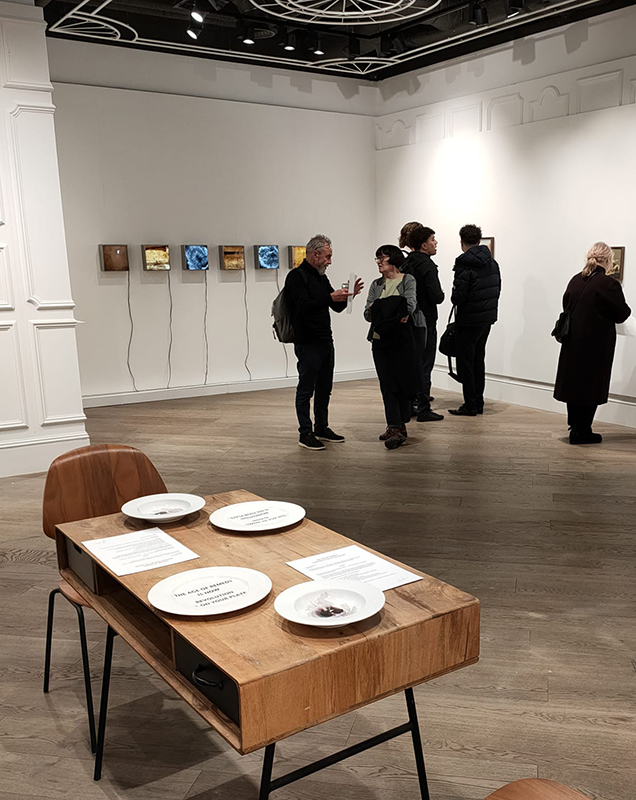
WHAT ON EARTH group show from artists including Victoria Ahrens, Melanie King and Diego Valente using photographic processes with an emphasis on the material environment, tactility and sustainability.

Michael Armitage – Paradise Edict at the Royal Academy. Digital images do not do justice to the glow and vibrancy of these paintings. Can feel the heat pulsating with unsettling shape-shifting undercurrents.

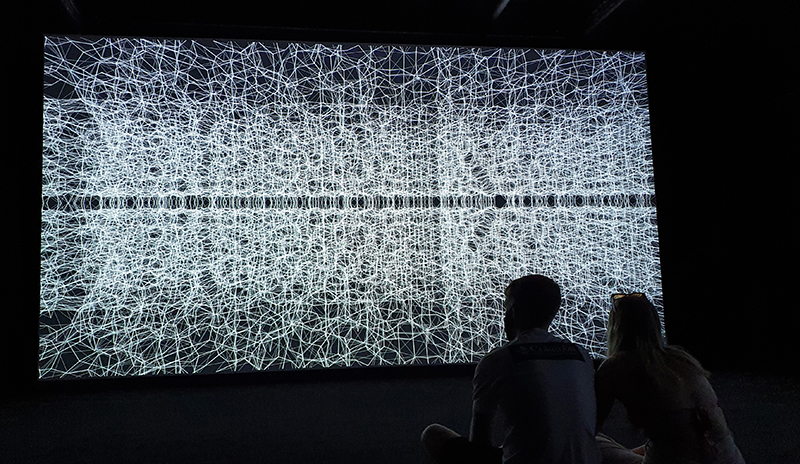
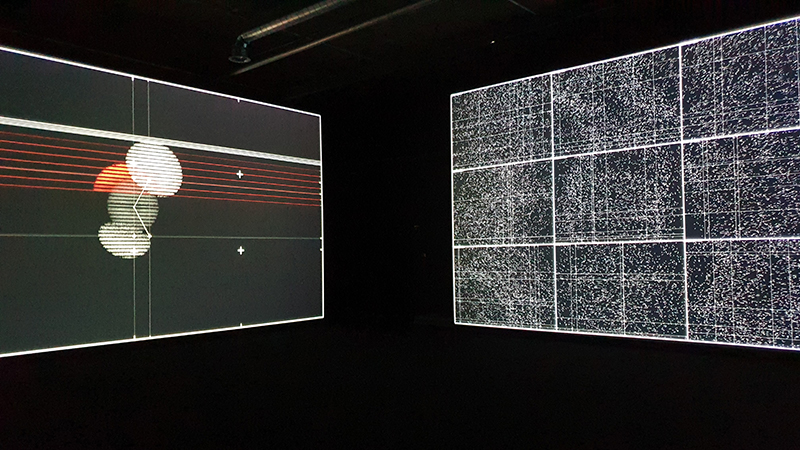
180 The Strand with Ryoji Ikeda’s digital showcase was an intense assault on the senses using light and sound as medium to create immersive experiences. Brightness is the number of photons per second hitting your eye. Pushing the limits of what our senses can tolerate.

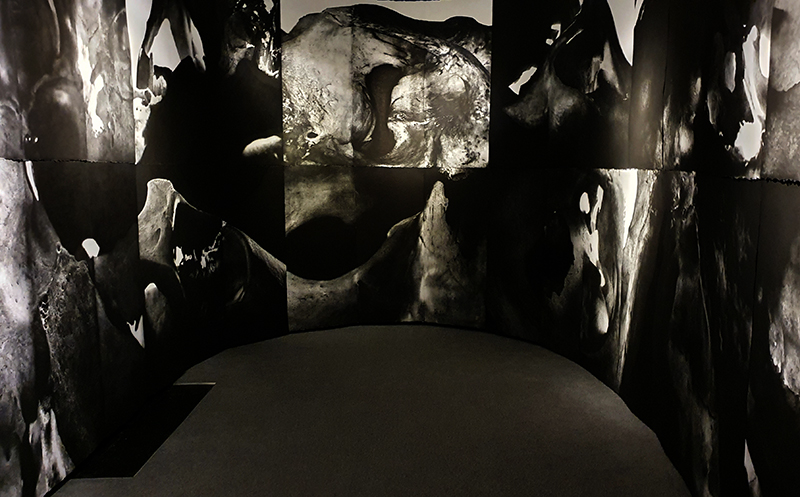
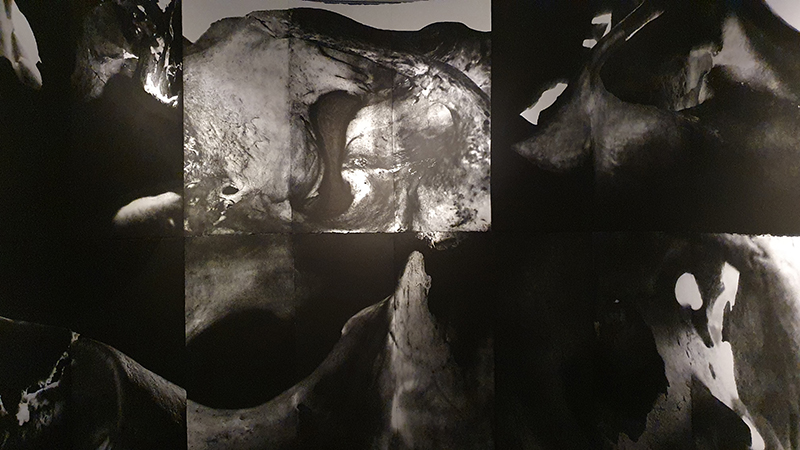
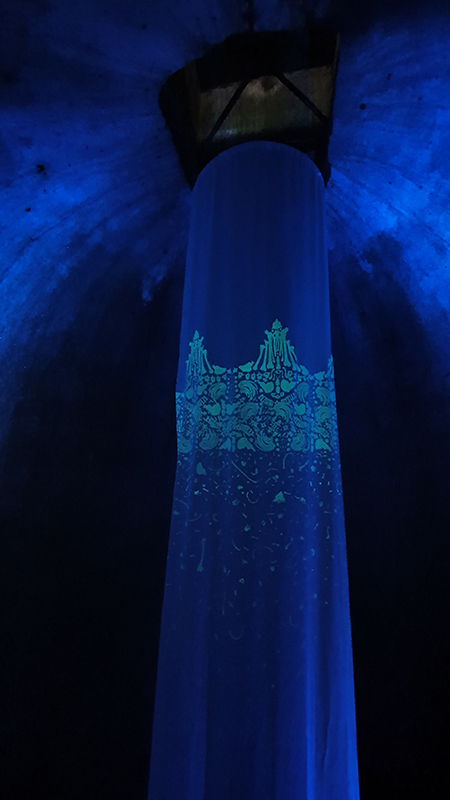
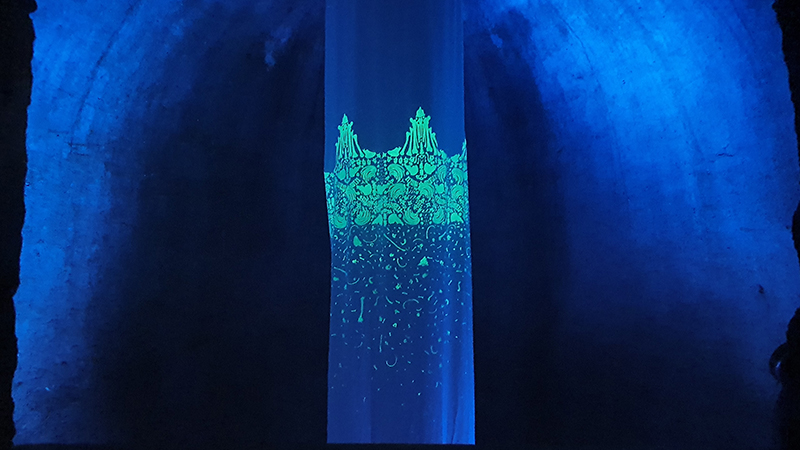
Took a trip to the Lake District to visit Brantwood, John Ruskin’s beautiful home to see Carol Wyss The Mind Has Mountains and Crown of Creation installations. Having seen the work that went into the printing of the large etchings at Thames-side Print Studio it was wonderful to be able to see the work finally installed and step inside the mysterious depths of the human skull; a space echoed by the surrounding mountains. The light installation is suspended in the dark chill of the Ice House vault, viewed from the top of rugged steps carved into the rock. Here the fragility of the human skeleton fades and glows accompanied by an evocative soundscape made by Natasha Lohan capturing the echoing chamber and the water that courses through everything.

We decide to build a wall.

Add some signage designed by Daniel Clark and we are ready for our first Open Lab. at Guest Projects.

1704 Laboratory Open.jpg

The idea is that we work in the space and are open for visitors to drop in and see what we are up to and chat about the work and the ideas around dark matter research that we are investigating.

We set up a reading table and information hub with artist profiles, research material and info on Boulby Underground Laboratory   which we visited last spring to discover for ourselves this hidden world where dark matter research and experiments take place.

During the first two weeks at Guest Projects we ran workshops and tested ideas in the space.

Chroma-key body suits needed a test run from Amy Gear.

1704 Amy greensuit

Elizabeth Murton was considering dark matter as a connective material in the universe, setting up a tension of competing forces that may be as powerful as those of fission and fusion.

1704 Elizabeth Murton testing

I ran Cloud Chamber workshops.

1704 Cloud Chamber workshop.jpg

Thankfully everyone was able to ‘capture’ their own particle trails in the mini cloud chambers they made and were duly captivated by the tiny missiles they observed.

1704 Cosmic Trail 6

The cloud chamber gives us a glimpse into the invisible world of particles produced in the radioactive decay of naturally occurring elements and those generated when cosmic rays strike the top of the Earth’s atmosphere.

1704 Cosmic Trail 8

It is a sealed environment containing a supersaturated vapour of pure alcohol, warmed at the top and super cooled at the bottom with dry ice.

1704 dry ice remains.jpg

Charged particles passing through the chamber cause the alcohol molecules to gain an electric polarisation and condense into liquid droplets which look like tiny airplane trails.

1704 Cosmic Trail 9

To see the trails the particles leave as they tear through the cloud it must be very dark with a bright light shining across the floor of the chamber.

1704 Cloud Chamber setup

The activity takes place very near to the base of the chamber just a centimetre or two deep.

1704 Cosmic Trail 5

There is so much activity going on and these particles are whizzing through us all the time.

1704 Cosmic Trail 4

It seems we shouldn’t actually see some of these visitors at all but due to the weird way special relativity works we do. Muons are typically produced around 15 km up in the atmosphere, a distance which takes around 50 microseconds to cross at the speed of light— this is over 20 muon lifetimes and so they shouldn’t be able to make it to the earth’s surface before they decay.

1704 Cosmic Trail 1

However, since they are travelling quite near the speed of light, time in their frame of reference is significantly dilated as seen by an observer on Earth, meaning that a significant fraction can, in fact, make it to the surface. I have to be honest I can’t get my head round this but I love the idea of a particle having its own time frame of reference.

1704 Cosmic Trail 3

As well as Muons we see particles from background radiation. Radioactivity is a random naturally occurring process.  Alpha particles are released by high mass, proton rich unstable nuclei. The alpha particle is a helium nucleus; it consists of two protons and two neutrons. It contains no electrons to balance the two positively charged protons. Alpha particles are positively charged particles moving at high speeds. Beta particles are emitted by neutron rich unstable nuclei. Beta particles are high energy electrons. These electrons are not electrons from the electron shells around the nucleus, but are generated when a neutron in the nucleus splits to form a proton and an accompanying electron. Beta particles are negatively charged. For the particle to cause a trail it must have a charge which will ionize the vapour as they pass through, we don’t see neutrinos as they do not have a charge.

1704 Cosmic Trail 2Once you have the right set up it’s surprisingly easy to witness this turbulent landscape with it’s own little microclimate.
1704 frosty edges

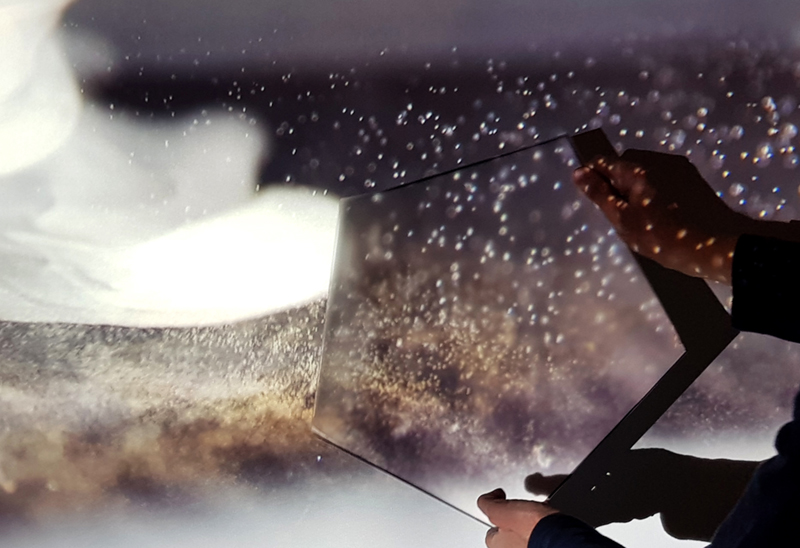
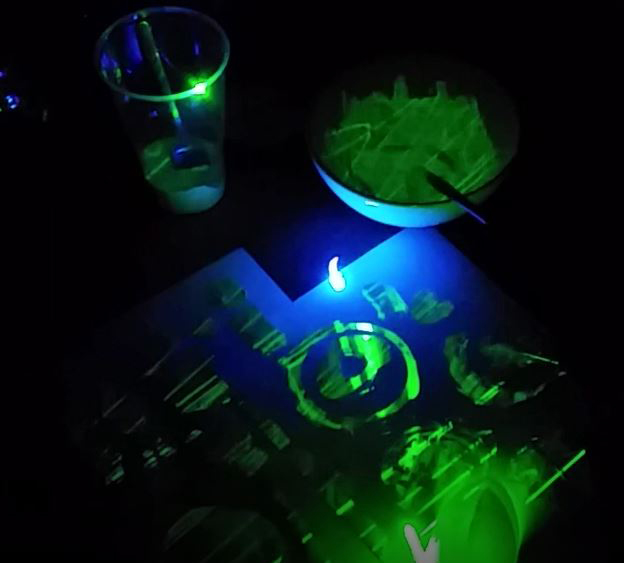
Melanie King ran a day of hypnotic workshops painting with phosphorescent powder and using lasers to activate the phosphorescence which absorbs light then slowly releases it, allowing patterns to build up, layer and fade away.

1704 Melanie King phosphorence workshop 1

1704 melanie king Phosphoresence

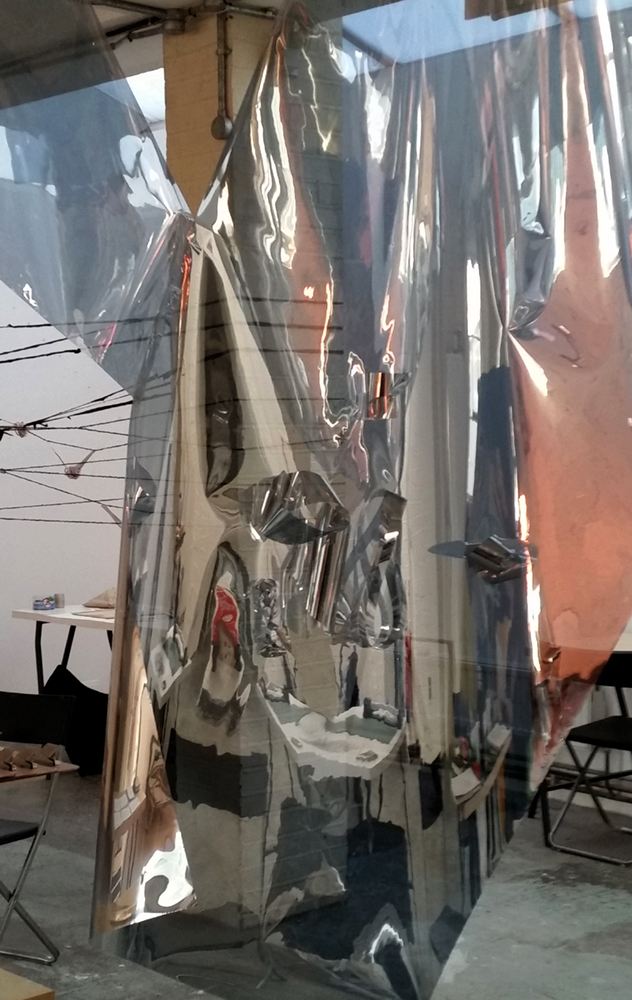
The very knowledgeable Jennifer Crouch founder of Making in Transit and member of Art/Physics collective Jiggling Atoms ran a Super Symmetry workshop for us transforming the space with shimmering two way reflective veils

1704 Jennifer Crouch Super Symmetry 1

explaining the different types of particle and how easy or not it is to detect them, the contested theories of supersymmetry and the use of a black mirror (Claude glass) for observing nature

new particles were ‘created’, observed and drawn

Amy Gear invited anyone who identified as female to join a green screen/self defence workshop under the guidance of martial arts expert Jiff Higman to explore the visibility of women in the universe. The points of body contact echoing the anticipated nudge of the target xenon nucleus when a dark matter particle hits it and causes a scintillation of energy that the scientists can record. In the final video work only 5% of the bodies will be visible.

There was a spellbinding Hour Of Listening curated by Jennifer Boyd and Amy Pettifer. As the light faded we listened to Dark Matter Gushes From The Mouth Into The Open Air – ‘Latent gurgles, murmurs rising… a tone begins in the depths of the belly and strives in the throat before escaping – a burst of vocal dark matter. ‘

1704 Dark matter gushes from the mouth.jpg

Jocelyn Monroe, Professor of Physics at the Royal Holloway University of London kindly shared some links to her research areas.

1704 SNO chamber

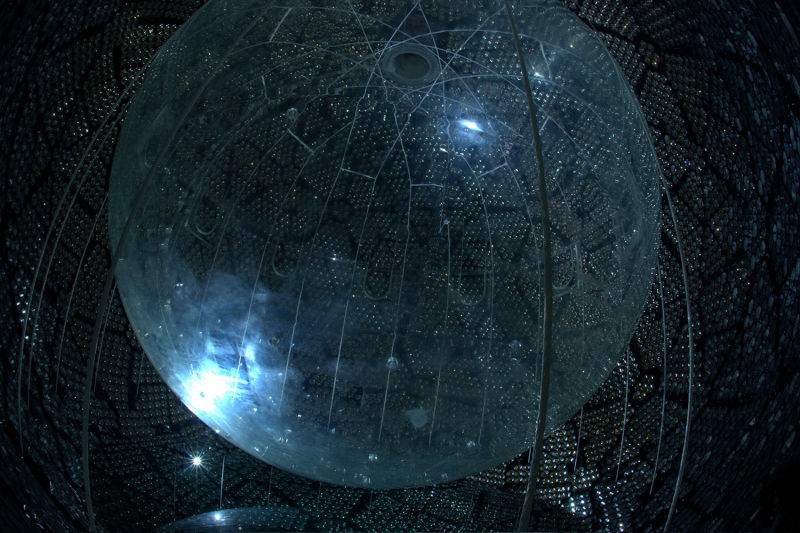
She works in an underground laboratory SNOLAB where the DEAP dark matter search experiment takes place in Canada. She also works with the The Dark Matter Time Projection Chamber project and has written an article for symmetry magazine about the search for the dark matter wind which could give an idea of the direction dark matter comes from.

Lecturer in accelerator physics at Lancaster University and a member of the Cockcroft Institute of Accelerator Science and Technology, Ian Bailey shared his fascinating research searching for new particles and forces at both high energies and low energies.

1704 Ian Bailey cascade

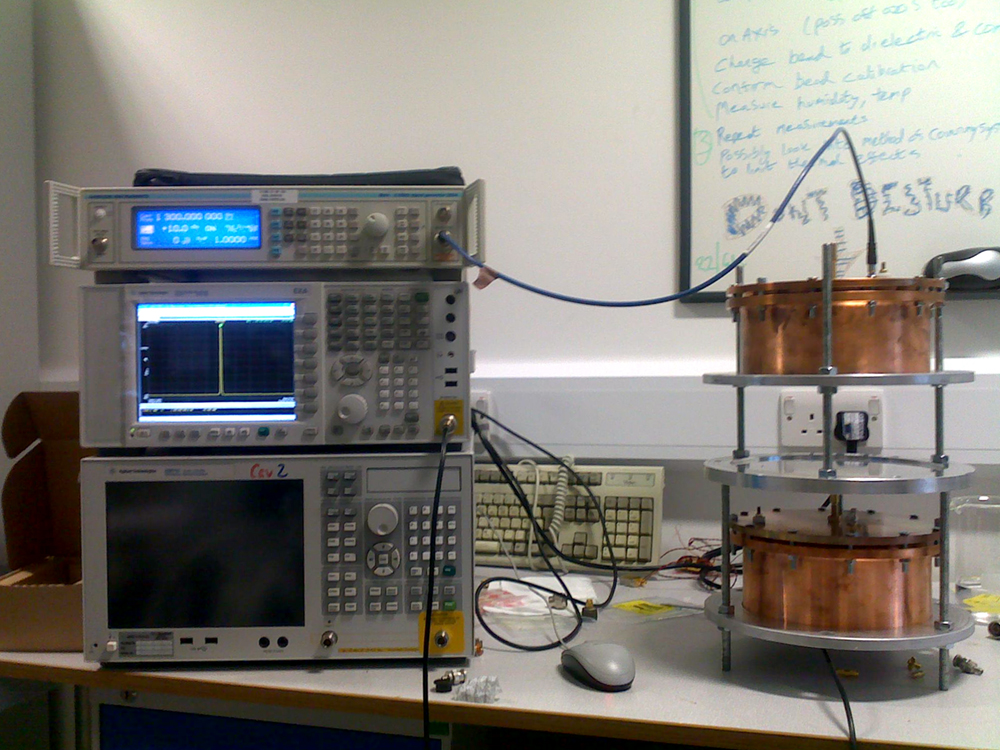
He works with microwave cavities that are in some ways similar to household microwave ovens to look for the effects of hypothetical particles such as axions or hidden-sector photons. These particles are sometimes generically called weakly-interacting slim particles (WISPs). Just like their heavy cousins, the WIMPs (weakly interacting massive particles), WISPs may also be a major constituent of dark matter.

1704 Ian Bailey Cascade cooling

If they exist, hidden-sector photons (dark photons) would allow normal light to penetrate through walls in a way that it cannot normally do. The experiments that look for this effect are called light-shining-through-a-wall experiments and one such experiment has taken place at the Cockcroft Institute recently. It may be possible that dark matter could have subtle effects on the motion of light.

So from looking into this a bit it seems regular photons are changed to dark photons (axions)  by applying an intense magnetic field or maybe some other force – a barrier is set up that regular photons cannot pass through but dark photons can – the dark photons pass through the barrier and then turn back into visible photons which can be detected.

He is also involved in the design of the International Linear Collider, a potential new 31 km long particle accelerator which will try to produce WIMPS by colliding intense beams of electrons and positrons (anti-electrons) at high energies.

1704 ILC

I was invited to write a lead article for Run Riot listing site of cultural happenings in and around London explaining how the project had come about. Great dealing with the lovely Ava Szajna-Hopgood.

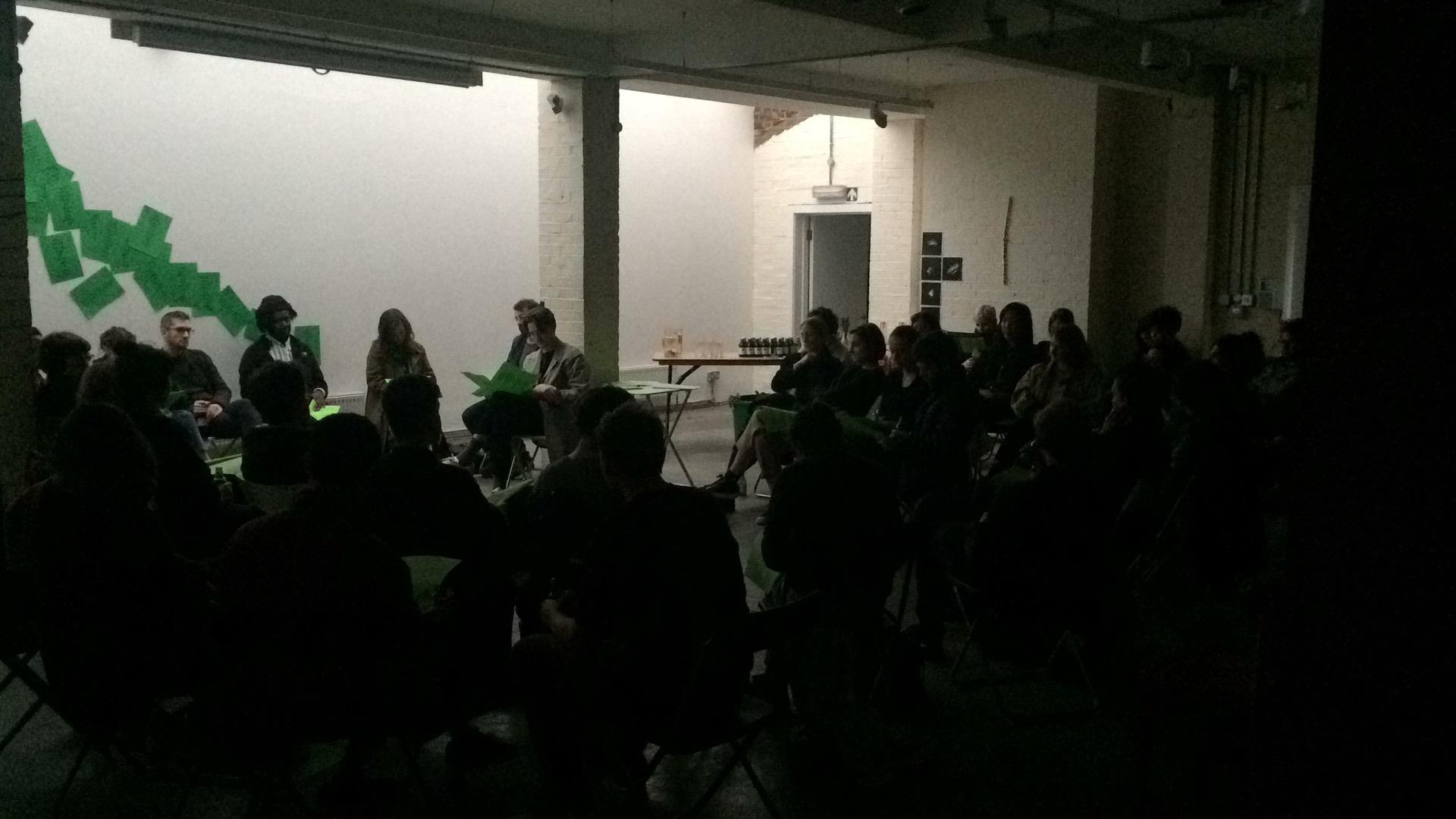
Elizabeth Murton curated and expertly chaired our Lab. Talks+ sessions. We opened with a live link to Boulby Underground Laboratory for a remote tour with lab. director Prof Sean Paling who made our visit to the lab. last year possible.

1704 live link to Boulby

Chair of UK Dark Matter, LUX collaborator, UCL lecturer and enormously generous supporter of our project Dr Cham Ghag gave us an in depth talk on the latest dark matter detection experiments and theories

1704 Guest Projects symposium Cham Ghag

Extraordinarily super clever Libby Heaney had us entangled with quantum theory, weaving and whispering and negotiating being in two states at the same time.

UCL History and Philosophy of Science lecturer Dr Chiara Ambrosio gave us her insights on visualising the invisible, and what can happen when art and science collide

1704 Guest Projects symposium Chiara Ambrosio

ending with a panel discussion joined by Kate Fahey on ideas from the day

1704 Panel discussion

and lots of conversations over supper…

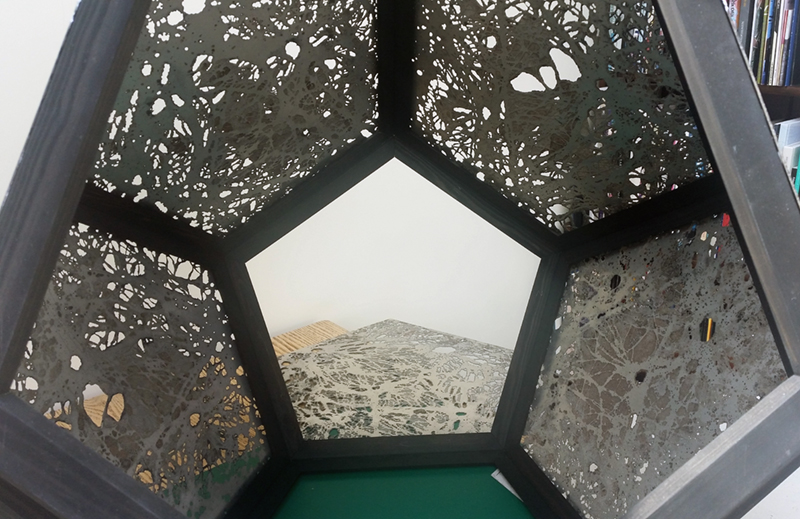
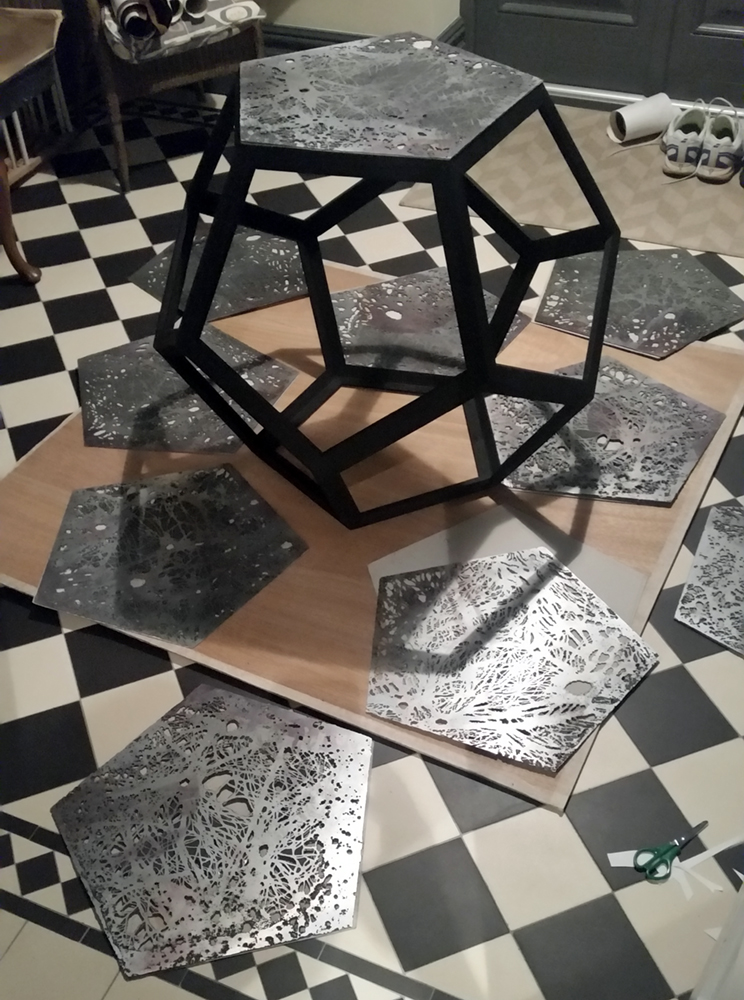
I had finished etching the pentagon plates and I had made the dodecahedron frame – it was time to put it all together.

1704 test plates on frame

I did a test fit. Then spent 5 hours back at home heat pressing the plates with sublimation images; hints of dream worlds.

1704 heatpress aftermath.jpg

I was quite pleased with the results and went to bed

1704 universe puzzle.jpg

In the morning the colours had undergone some reaction to the metal and had either vanished or changed to a sort of purple hue (funnily enough often used to colour dark matter visualisations). I was also feeling I might just be making a large Moroccan lamp.

Time to embrace unexpected outcomes….


Progress is slowly underway on my dodecahedron sculpture. Beginning with a rough mock up in card to gauge the size.

1701 maquette.jpg

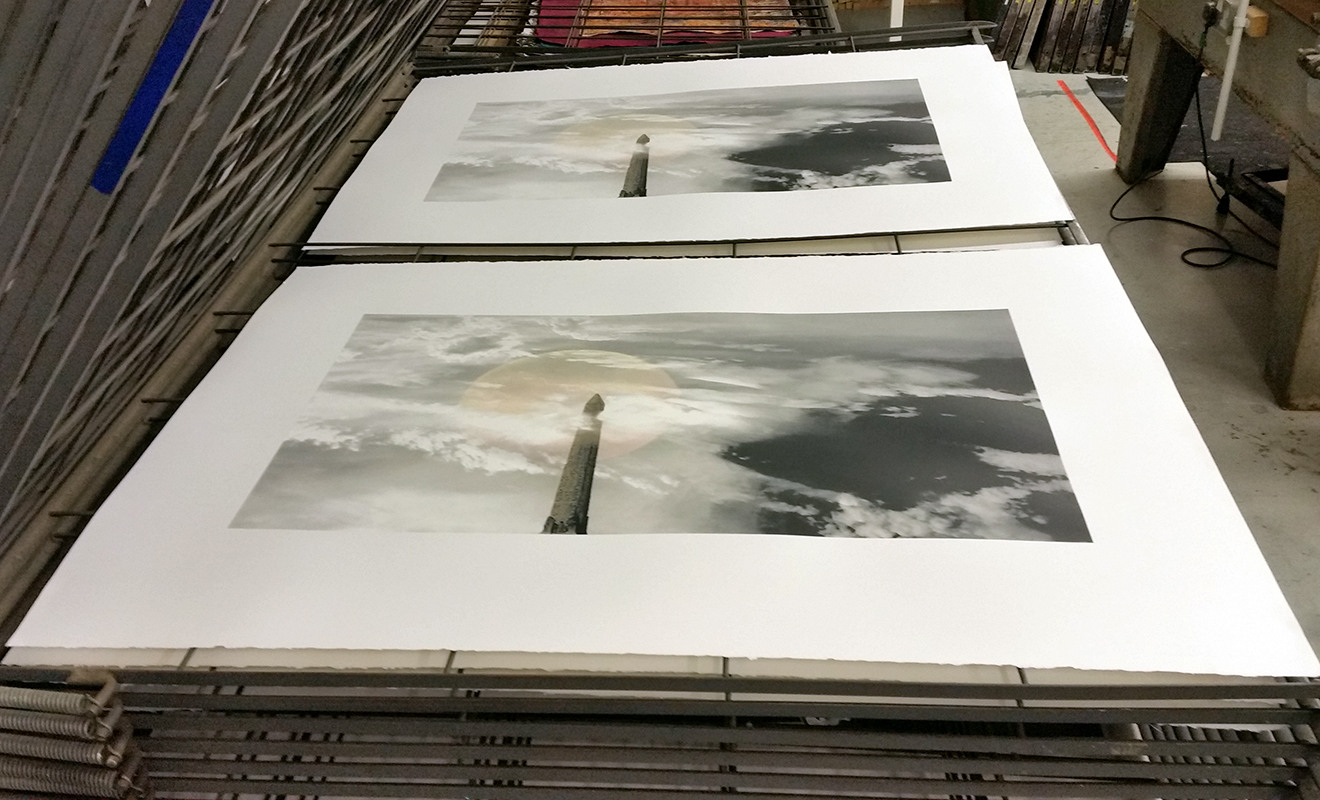
I was relieved to finally finish screen printing the curse of the obelisk. Never had so many setbacks in a piece of work.

1701 Cloud Obelisk.jpg

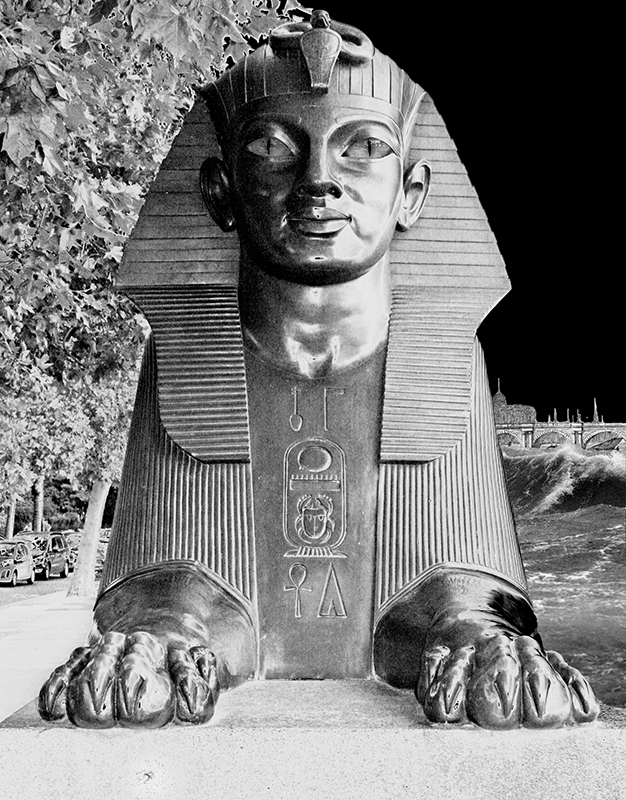
Made of one single stone, dedicated to the solar gods, an obelisk is a fusion of the earthly and the divine. A symbol of power, piercing entry to the fickle world of the gods beyond the clouds, cursed and desired. Over 3,500 years old, the London Obelisk, raised on The Embankment for convenience sake, snubbed by a state embarrassed to revere a shady political gift made by a country they were about to undermine, fought its removal from the soil it was hewn from stands alone, separated from its twin. The gift to state made in 1811 lay fallen and uncollected in Alexandria until an eccentric Victorian adventurer (Sir James Edward Alexander, Knt.,C.B., K.C.L.S, F.R.C.E.) saw the twin in Paris and discovered that Britain’s prize had never been brought home. He found a fellow enthusiast with money and the pair designed a special vessel to contain the obelisk that could be towed behind a ship. The Olga set sail in 1877 but met a violent storm that broke the tow ropes and cast the obelisk adrift. Six men struck out in the storm to rescue the vessel but were never seen again. The obelisk however did not sink and was later discovered, recaptured and finally towed up the Thames to be set incongruously upon a plinth under the unblinking guardianship of Victorian repro Sphinx’s who traditionally would be outward facing to ward off evil, but spend their days eyeing the needle.

1701 sphinx.jpg

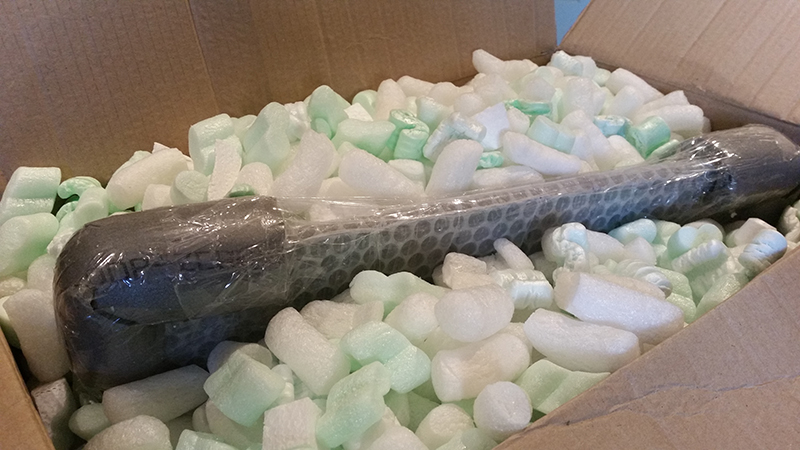
I had an intriguing parcel arrive from the incredibly helpful Alan Walker from the School of Physics and Astronomy at The University of Edinburgh who is giving me loads of advice on building my cloud chamber. He has very kindly had an anodised aluminium plate made for me in his workshops. The plate is the one crucial component that has to be specially made so it was wonderful to find that he had done this for me.

1701-cloud-chamber-parcel

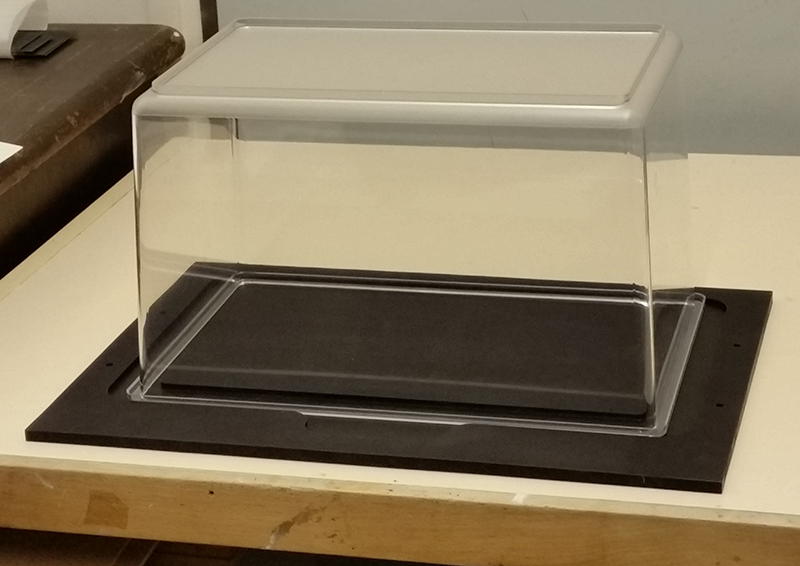
The black metal plate will sit on dry ice, it will be the viewing backdrop for all the cosmic particle trails and I can now get on with the next stage – making the insulated box.

1701-cloud-chamber-1

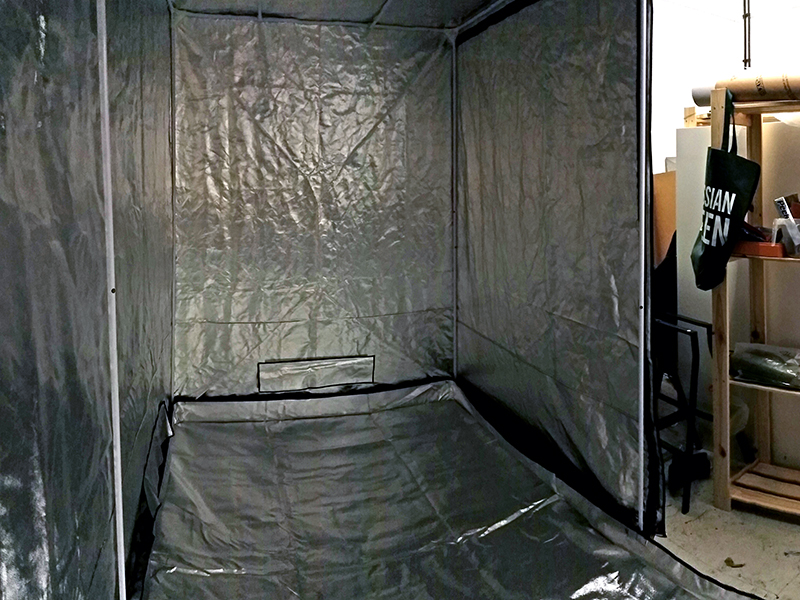
I have set up a hydroponics tent in my studio to create a dark space ready for filming once the cloud chamber is fully assembled and ready to test.

1701-dark-room

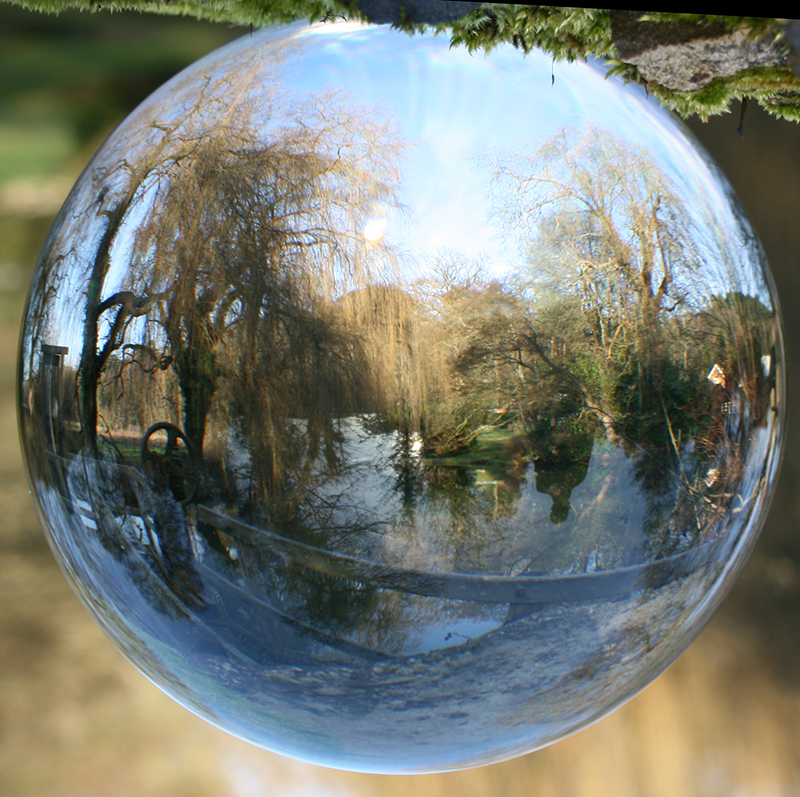
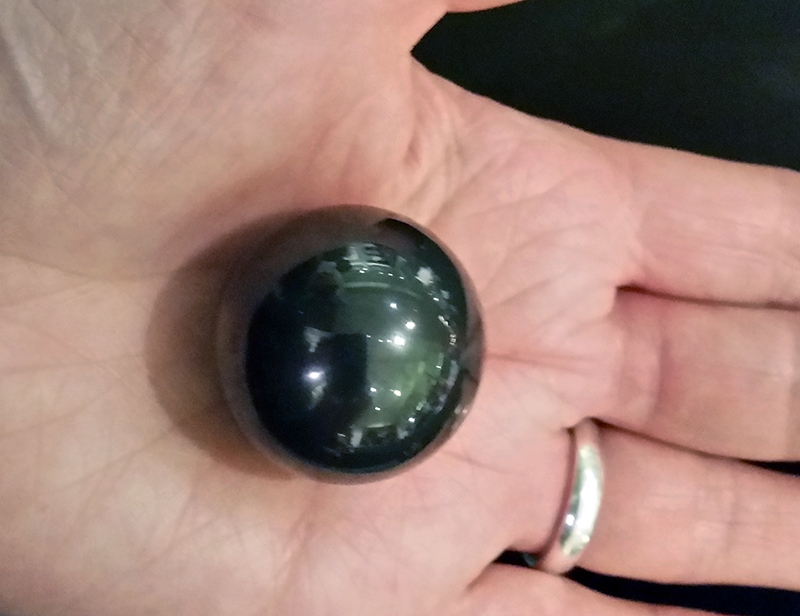
On a very crisp bright day I took the crystal ball a short walk along the banks of the River Wey to the ruins of  Waverley Abbey.

1701-waverley

This was the very first Cistercian monastery founded in Britain 900 years ago by an Abbot and 12 monks from France.

1701 waverley abbey 1.jpg

These images of the crystal ball set in different locations are part of research with a view to making a work about portals in time, space and imagination.

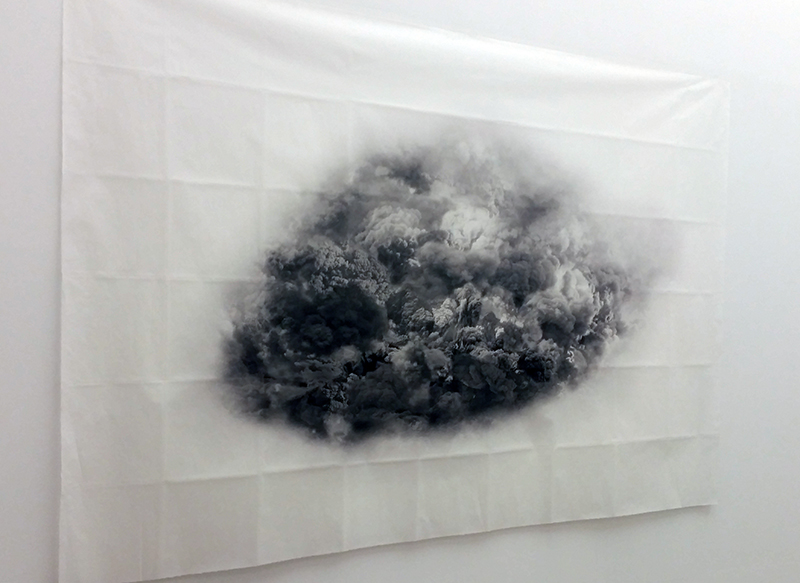
The first work you see at Bloomberg New Contemporaries, ICA is Kate Fahey’s delicate plumes from a multitude of explosions billowing into one giant cloud – Cumulative Loss.

1701 Kate Fahey.jpg

Through scale and fragility we sense the dust caught momentarily before it settles over devastation upon devastation. It sets a thoughtful tone to enter the lower gallery.

Lisa Porter’s glazed stoneware Connection X (Thank Finch for That) and Rodrigo Red Sandoval’s installation Satellite reflections were two works I was drawn to.

1612-kate-fahey-superficie-ii

Kate Fahey Superficie I

Kate Fahey’s Superficie images developed during a residency on the remote Isle of Coll were included in Reference Mollusk, a beautifully curated exhibition  with some timely concerns at new gallery space Gossamer Fog in Deptford.

1612-solveig-settemsdal

Solveig Settemsdal Singularity (video still)

“We are the goo that slipped out of the oceans 430 million years ago, the goo that changed the earth beyond repair, the goo that will fossilise, leaving only future archaeological relics”

1612-justyna-kabala

Justyna Kabala Feel Better

Helen Maurer re Composing at Danielle Arnaud had a delicate touch.

1612-helen-maurer-1

Transferring from the forsaken voids of the Church of The Holy Trinity in York it brought with it the quiet sense of unease that comes when entering a darkened space on a summers day.

1612-helen-maurer-3

The gentle chimes sounding from hidden spaces under cabinets added to the undercurrent of something slightly sinister

by exposing the construction of this fairy tale landscape Maurer adds rather than depletes mystery

1612-helen-maurer-2

This was a captivating transformation of space at the House of St. Barnabus Chapel. Staccato is an audio-visual installation by Evy Jokhova

1612-evy-jokhova-2

exploring the interconnection between music, movement and ceremonial architecture

1612-evy-jokhova-3

featuring three sculptural works and a soundtrack made in collaboration with James Metcalfe.

1612-evy-jokhova-1

In similar vein, I was struck by Dr Rupert Till’s comment ‘architecture and acoustics are the same thing.’ He was speaking on the Radio 4 programme Did Stonehenge Sing? explaining the mysterious hum that emanates from the stones and how much more powerful the sounds would have been 3,000 years ago when all the stones were still standing. Thanks to Dr Till the lost sounds of Stonehenge have been reimagined for us to experience today.

1612-stonehenge-credit-ap

Finally made it to a meeting of the New Materialism reading group. The text was Veronica Strang Fluid Consistencies: Materiality and meaning in human engagements with water http://dro.dur.ac.uk/19432/1/19432.pdf  Points that struck me were the observation from Tilley that ‘knowledge of a thing is grounded in our bodily experience of it’ and it made me think of Plato’s debate on true belief and knowledge, although a different kind of knowledge it does come back to the idea of being there, of engaging on a physical level. We think of flowing rivers, water carried in clouds but not always of the movement of water around the globe held in a juicy pineapple or mango or even our own bodies. I was introduced  to the work of Samara Scott and her liquid painting Developer created with bio-degradable dyes in the Pleasure Garden Fountains in Battersea Park.

1612 Samara-Scott-Developer.jpg

The reading group meets at the Wellcome Trust Reading Room. On the same evening, another group was meeting to discuss materials as part of an collaborative programme between artists and scientists. I didn’t get to note down the names of participants, but a magician and an expert from the Institute of Materials had each brought along objects to spark debate. 1612 Wellcome Trust debate materials.jpg I liked the relationship struck between that of the magician as performer and the idea that the materials themselves are performing.
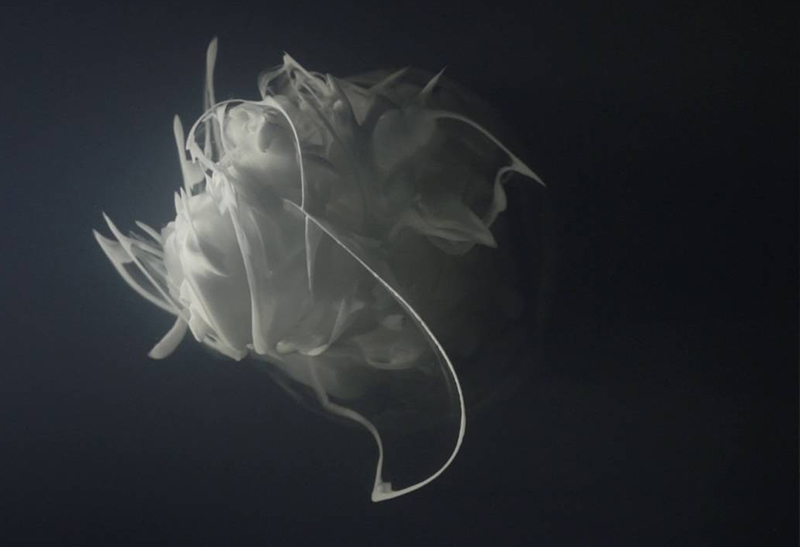
Turner Prize visit. Materials were performing here.
I found the materials of Helen Marten (left) difficult – though there were some I could enjoy like this wonderful ceramic disc I felt more of a connection to the materials of Michael Dean (right). It is something very basic about a reaction to the surface and the connotations it brings with it.
1612-helen-marten

Marten’s sculptures are very busy visually. Like a car boot sale, unexpected juxtapositions and mostly cheap and nasty material. (though I do appreciate the thought in her designs). Anthea Turner offered more open space, albeit surrounded by brick walls and facing giant theme park style buttocks, moving on to the next room offers open blue skies but also disturbing chastity belts. Heaven/Hell.

1612-anthea-hamilton

Josephine Pryde brought us homely goods; thick kitchen worktops bleached by the sun leaving hazy shadows of random objects. Also painted fingernails. A sit on size train tastefully graffitied encountering leaves on the track.1612-josephine-pryde

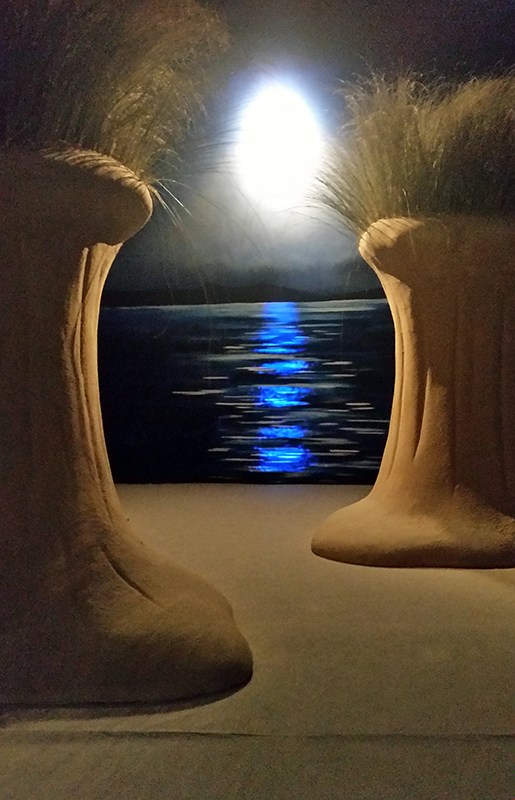
Finally entering the space of Michael Dean; smoothly curved walls morph into the floor, a strange unworldly lighting (as in James Turrell light works – the walls disappear)  and you are in a void or maybe underwater.

1612-michael-dean-3

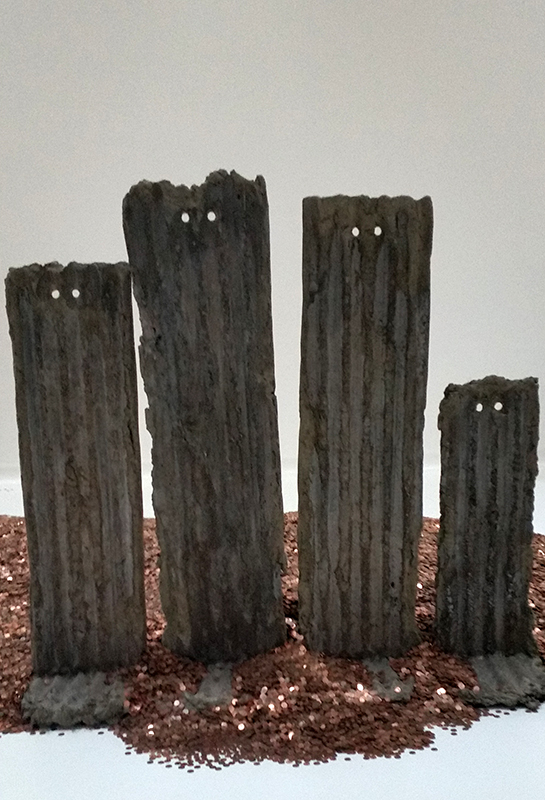
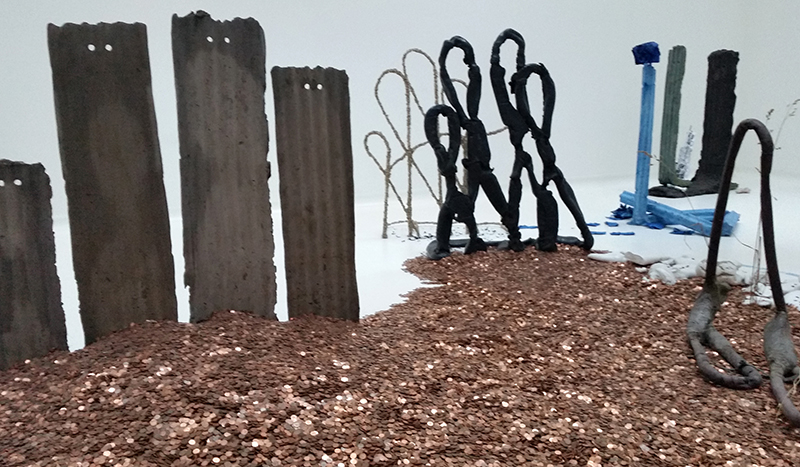
The work (United Kingdom poverty line for two adults and two children: twenty thousand four hundred and thirty six pounds sterling as published on 1st September 2016) consists of £20,436 in pennies. This is the amount of money the government states is the minimum that two adults and two children need to survive for a year in the UK.

1612-michael-dean

One penny has been removed. A family on the shore line/breadline, trying to keep their heads above water.

1612 Michael Dean 1.jpg

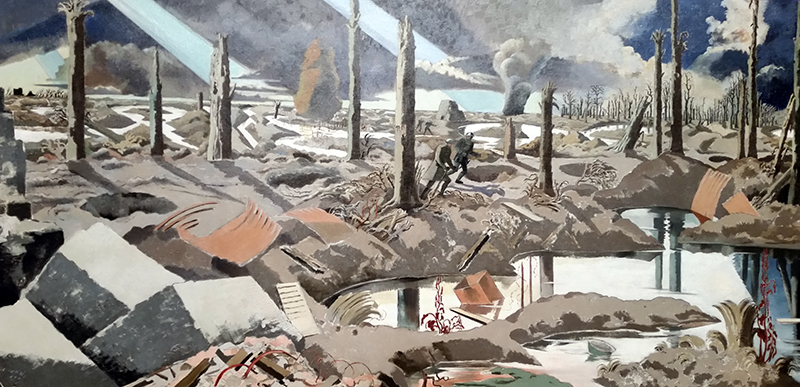
This landscape has similarities to the war blasted landscapes of Paul Nash showing concurrently at Tate Britain.

1612-paul-nash

He too acknowledges the primitive power of single vertical forms.

Enjoyed the playful narrative of Bedwyr Williams’ The Gulch in the Barbican Curve.

1612-bedwyr-williams-2

Always intriguing and despite ominous undertones uplifting through the sheer joy of following the surreal twists and turns of his stories.

1612-bedwyr-williams-1

The simplicity of his constructions are part of the exuberance in his work, they provide the outlines for the journey.

1612-mealnie-king-pulsar002

Went to see Melanie King’s installation Pulsar Oscillograph as part of SPACE/LCN showcase of projects that have been developed by artists with the support of the LCN programme over the course of 6 months.  

1701 Melanie King.PNG

Transforming audio pulsar data (supplied by artist and former astronomer Steve Aishman), Melanie uses laser beams and mirrors to draw these “sounds” captured from outer space onto phosphorescent paper. The images layering, building and fading to the frenetic beat of the spinning collapsed star. As part of The Laboratory of Dark Matters experimental residency at Guest Projects Melanie will develop an Oscillograph  to visualise data obtained from dark matter research scientists in their search for the missing 85% of matter.