Archives for posts with tag: copper

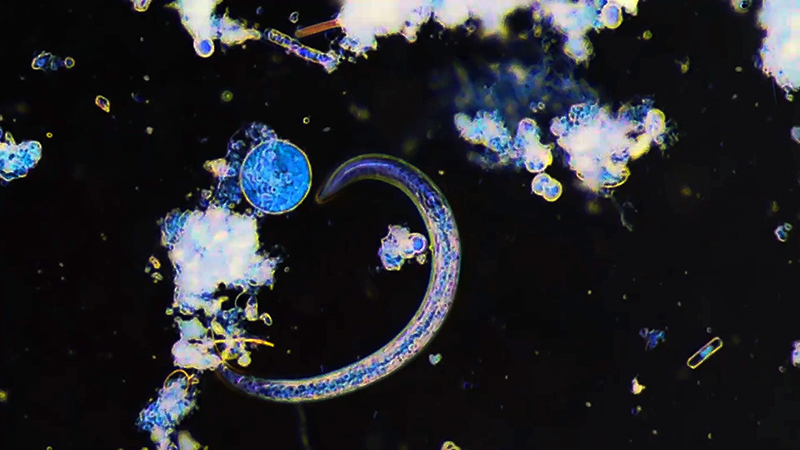
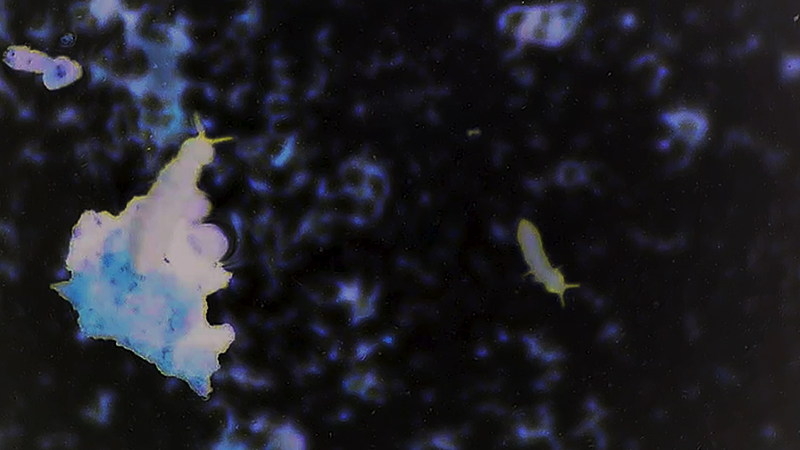
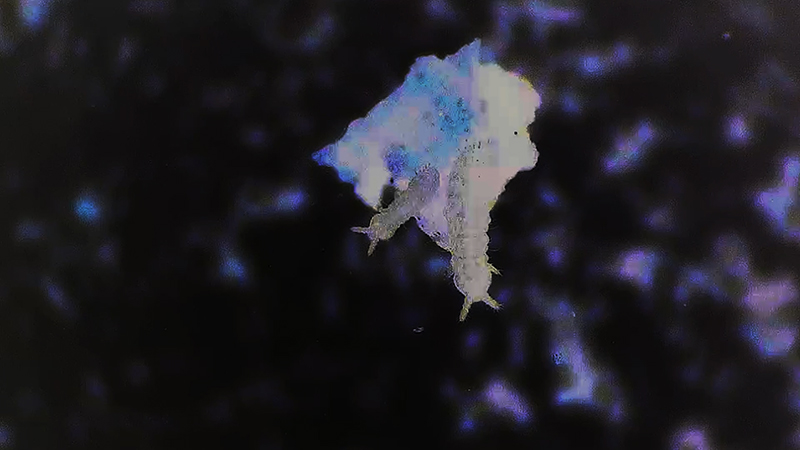
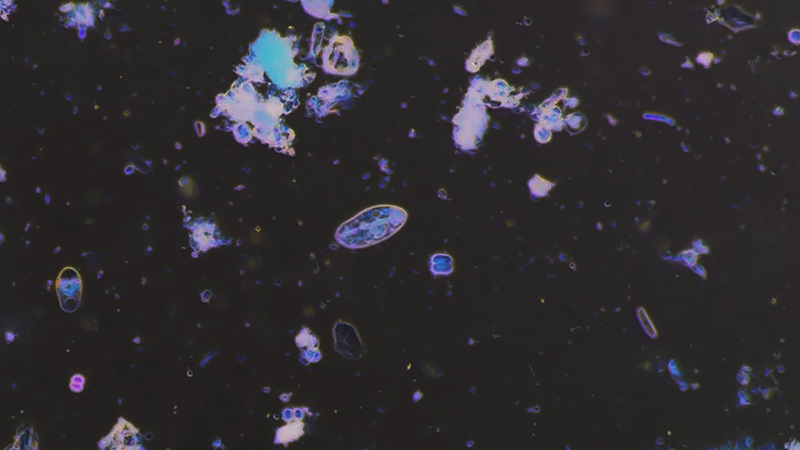
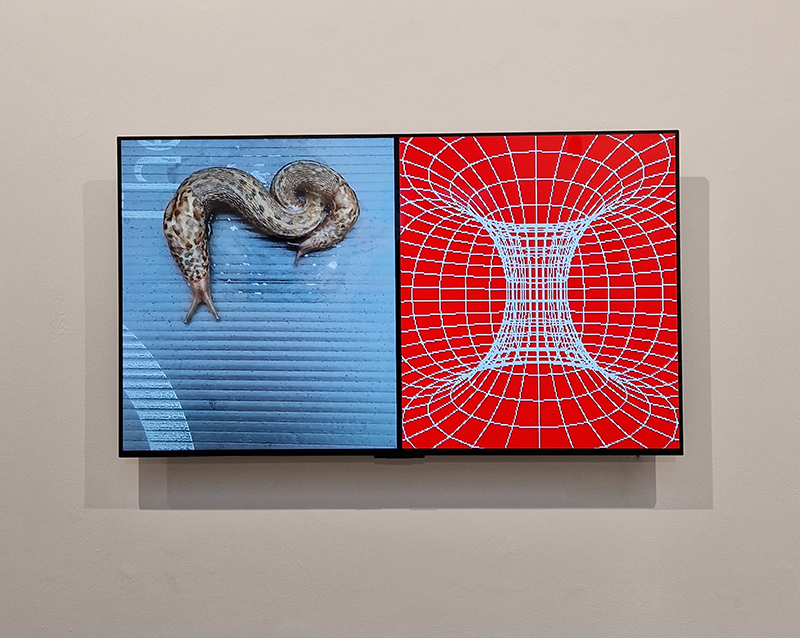
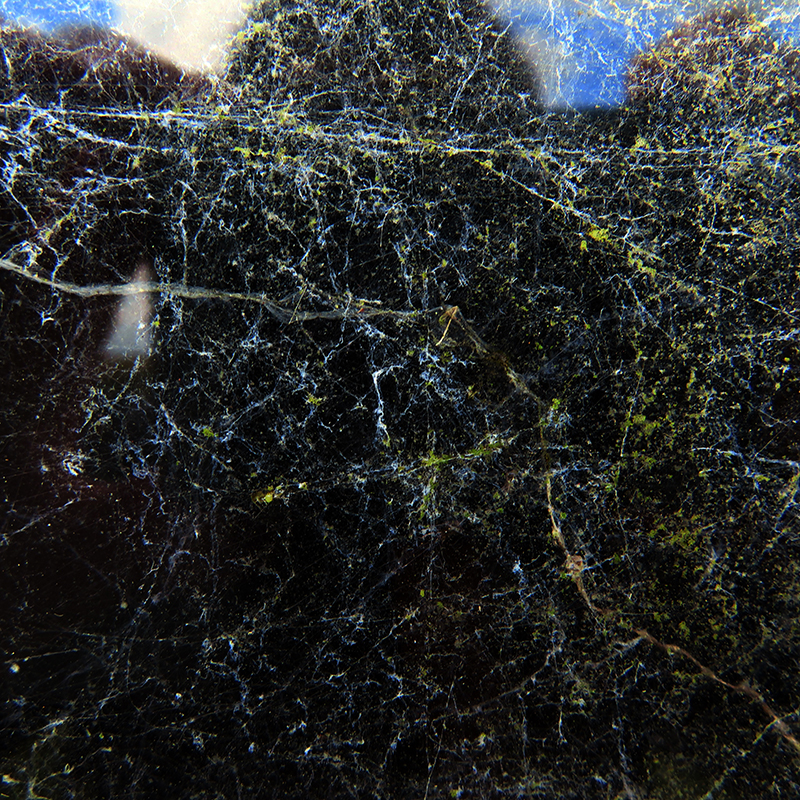
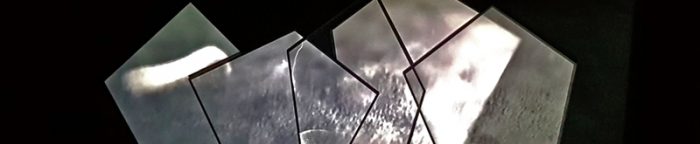
I am enjoying discovering the gutter creatures who share my home. Gathering video footage of an alternative cosmos to go towards making work which will be shown in Occupied: Strange Company at the Safehouse next year, a group exhibition curated by Julie Hoyle.
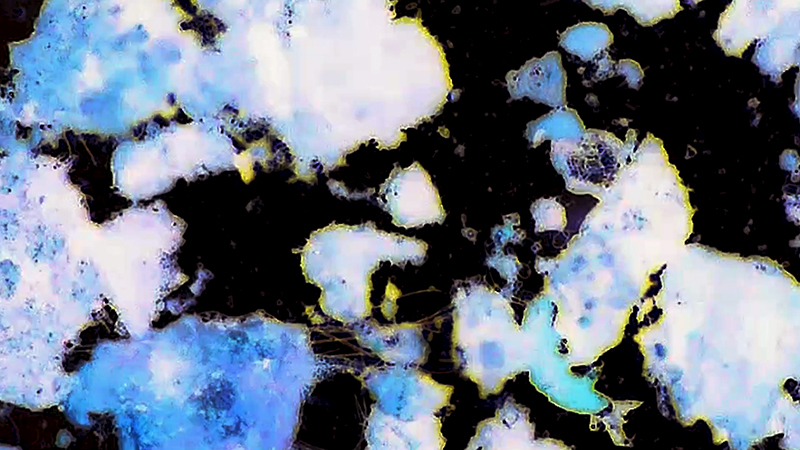
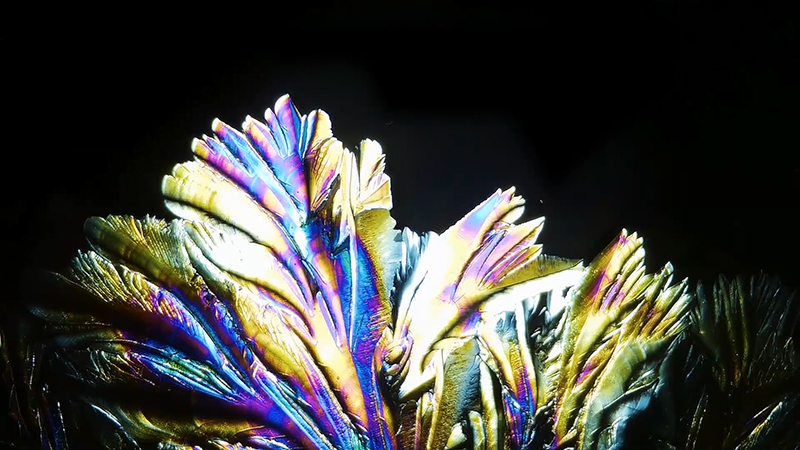
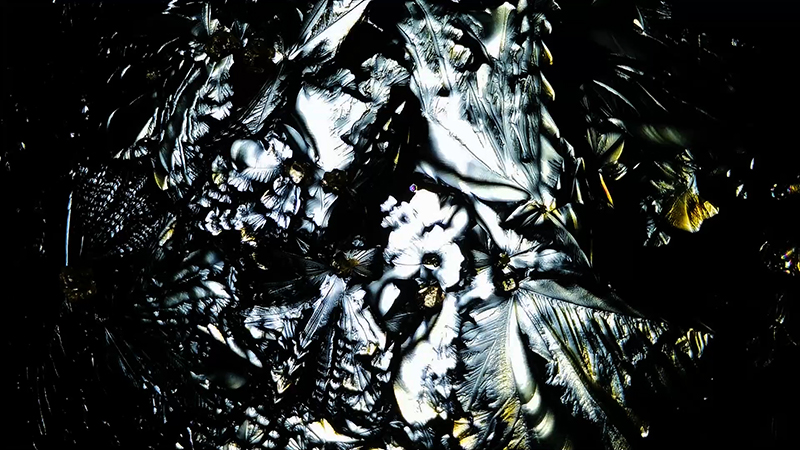
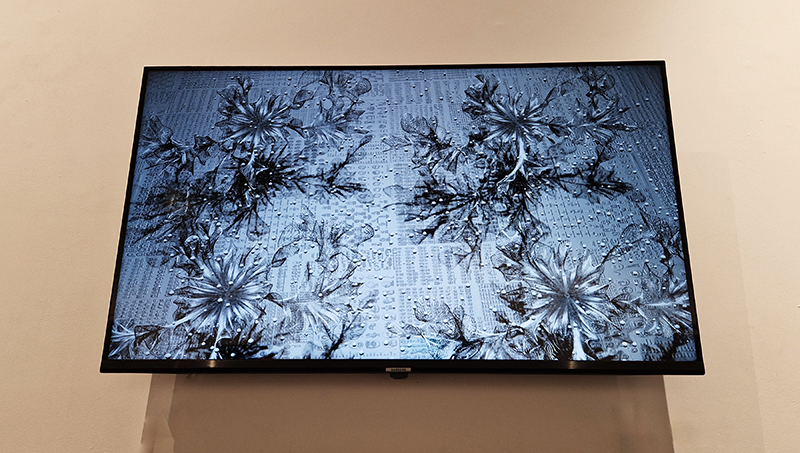
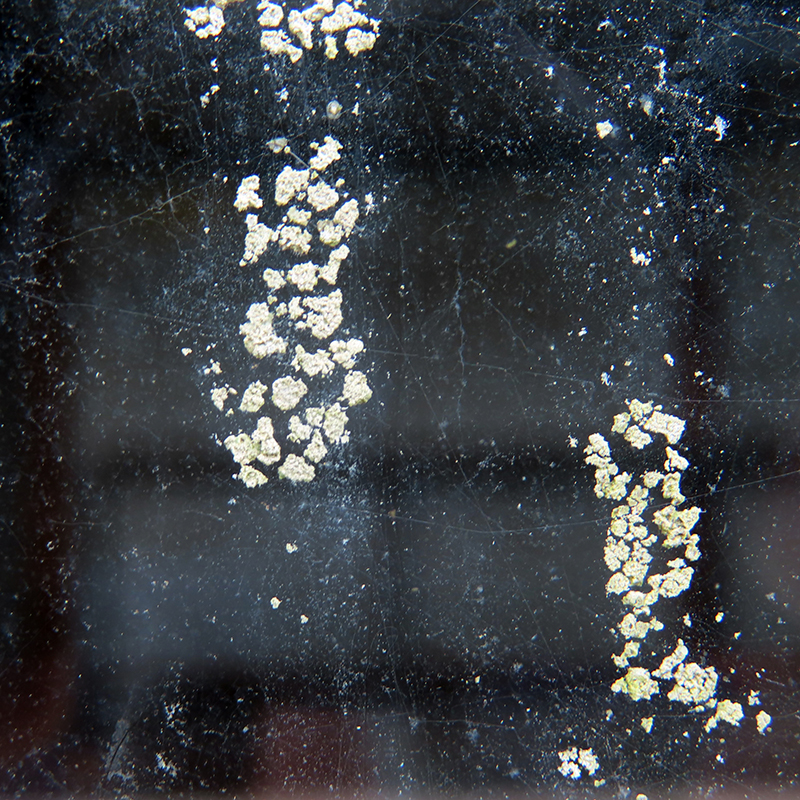
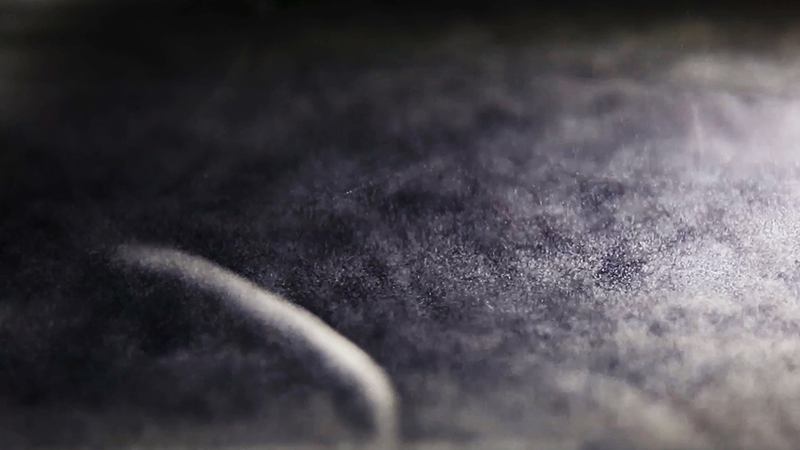
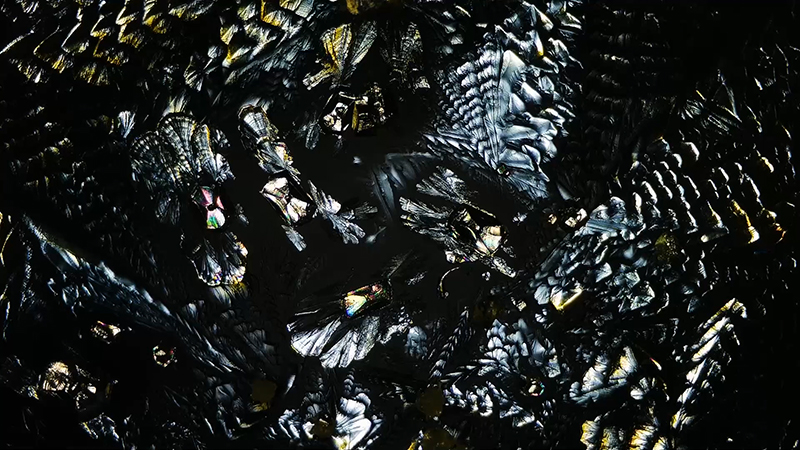
My experiments growing citric acid crystals have been going well. I am filming these transformations under polarised light which reveals the many vibrant colours but I also like the images without the filter. The structures remind me of feathers so I am thinking about creatures that flutter as well as those that swim.

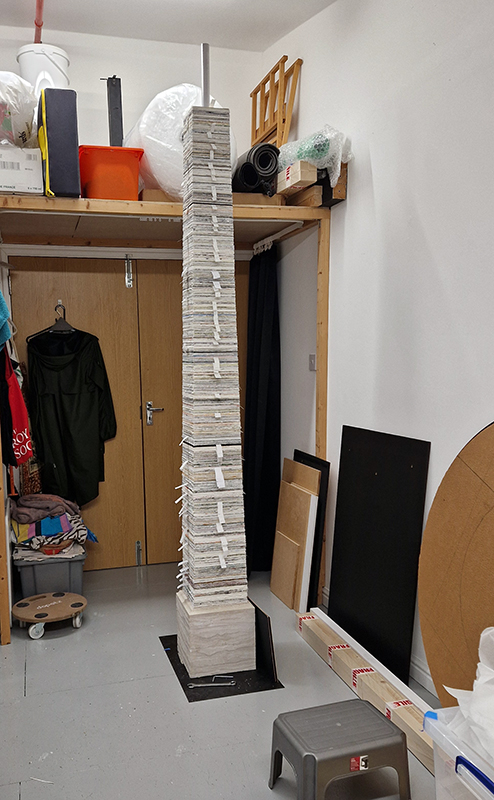
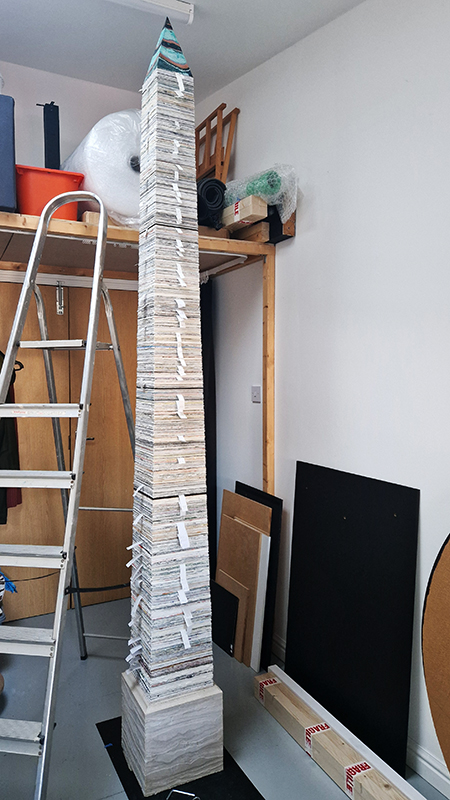
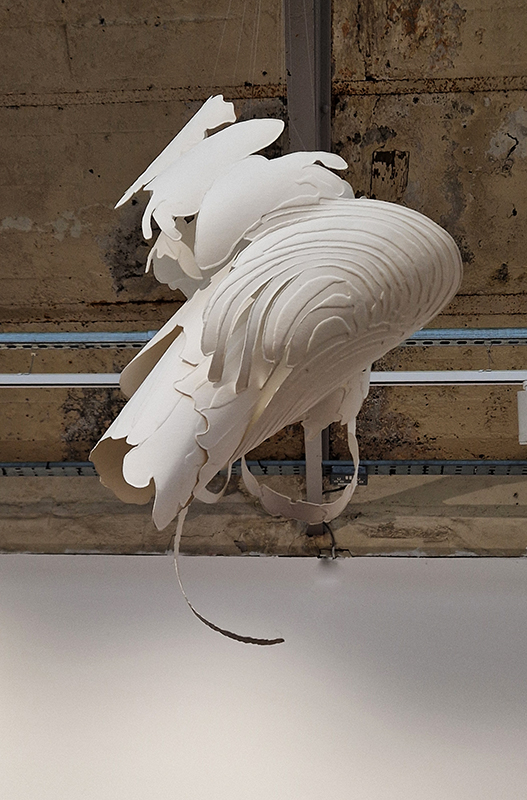
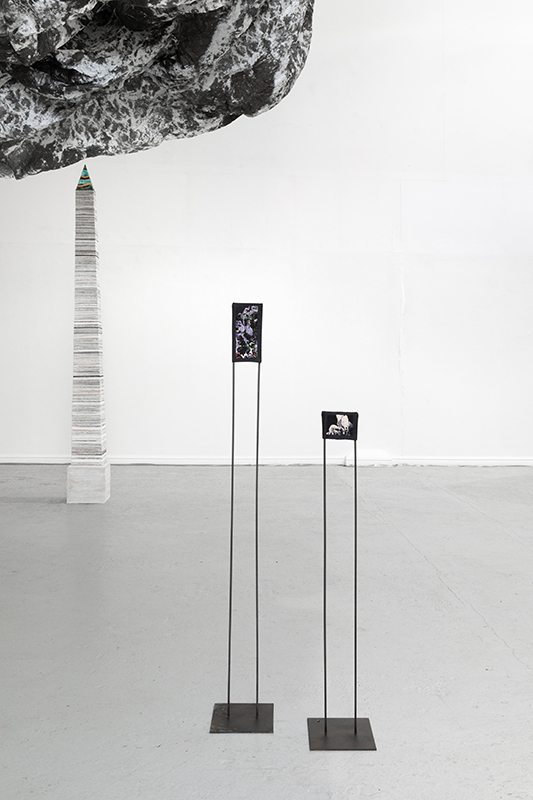
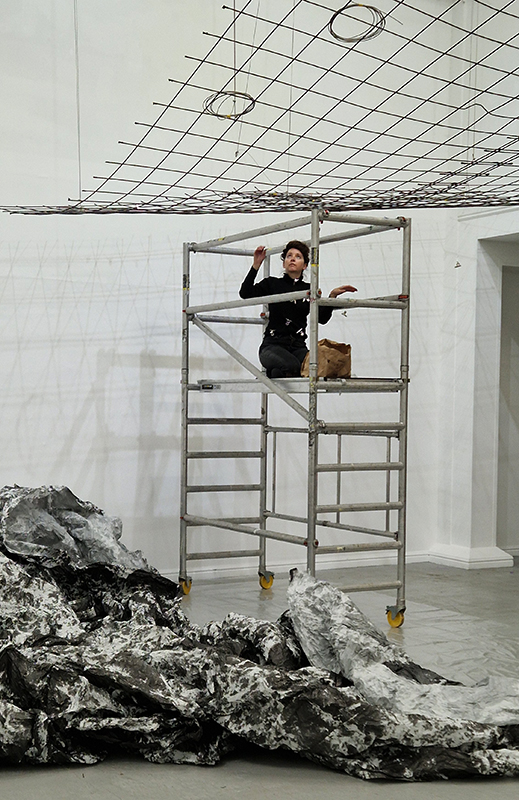
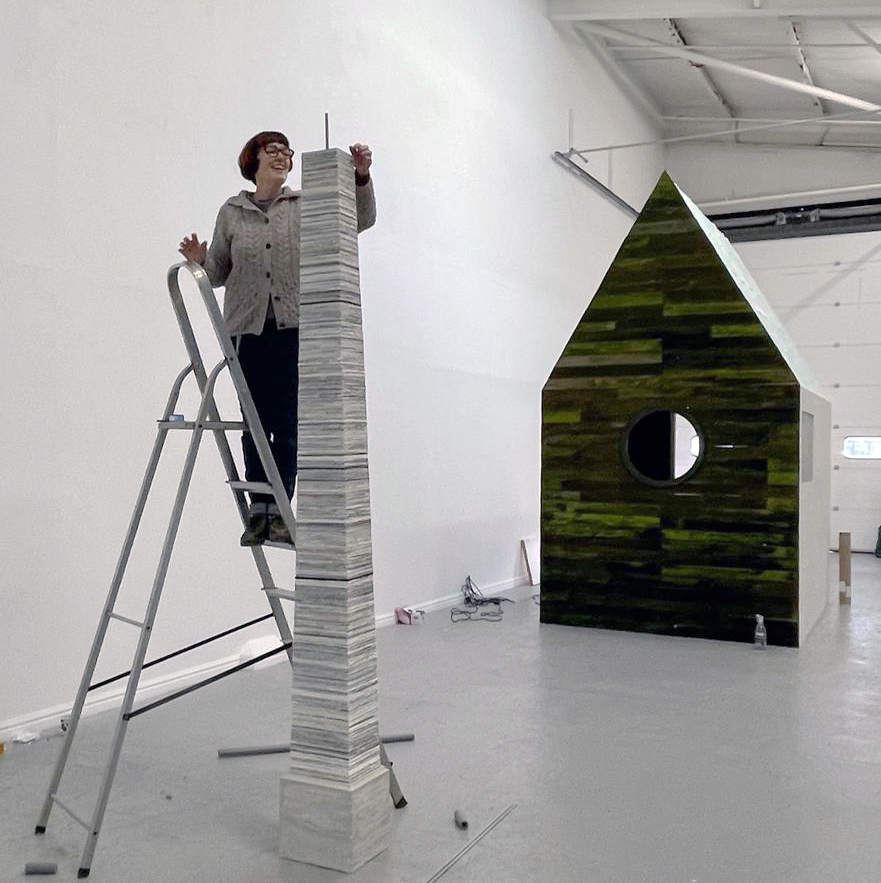
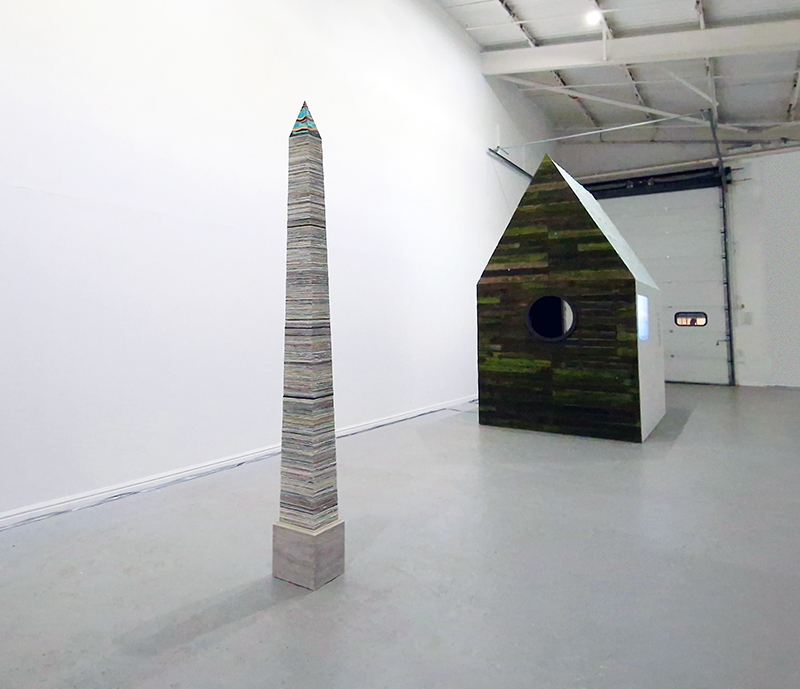
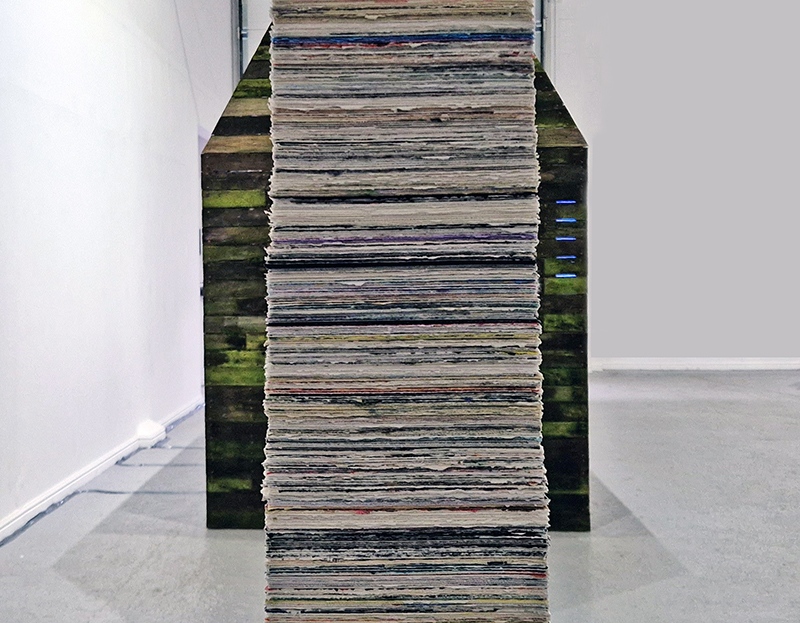
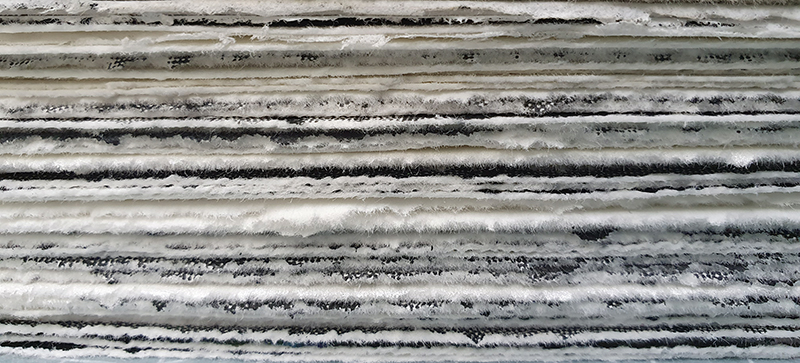
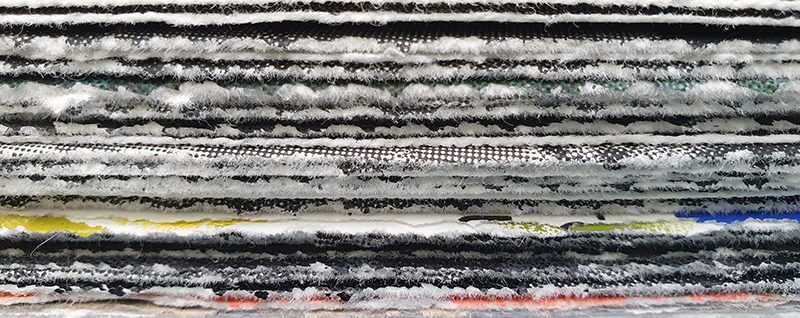
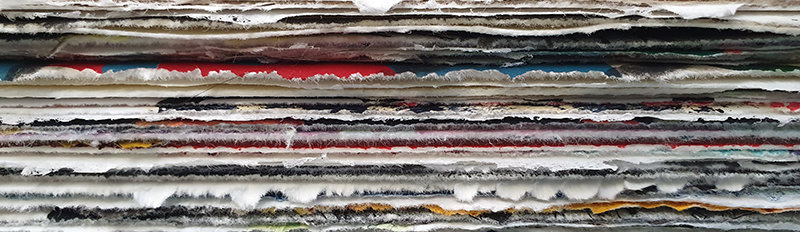
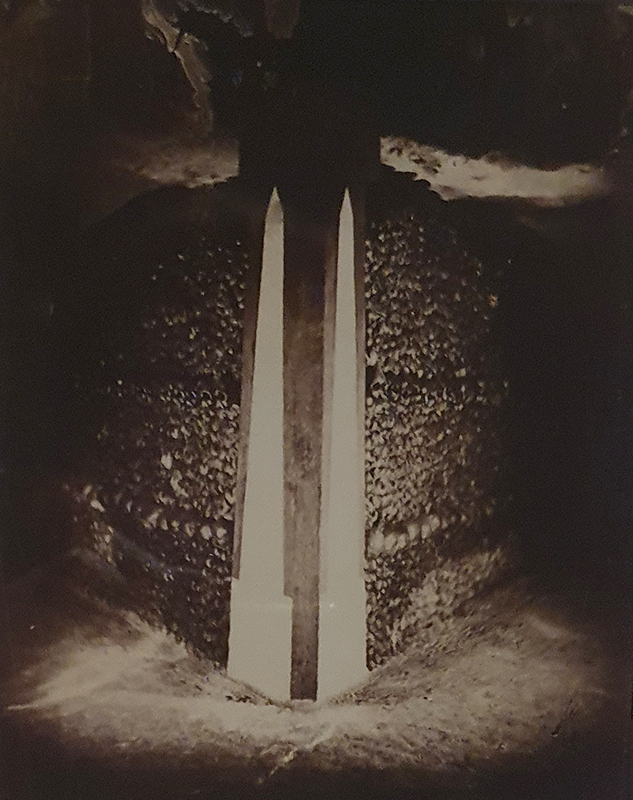
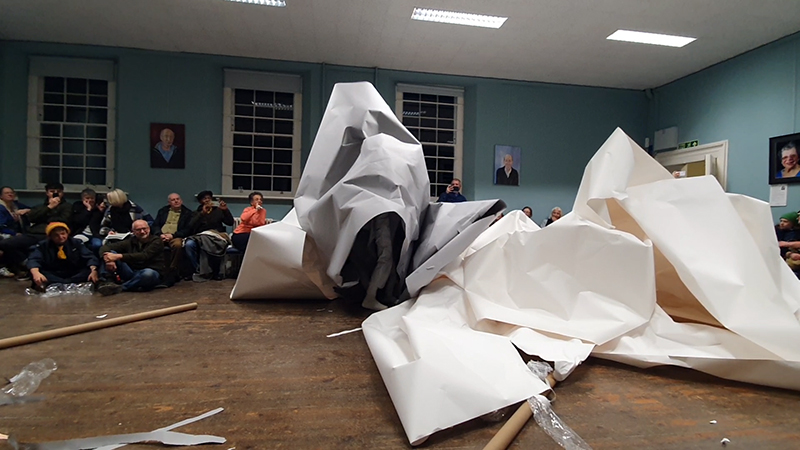
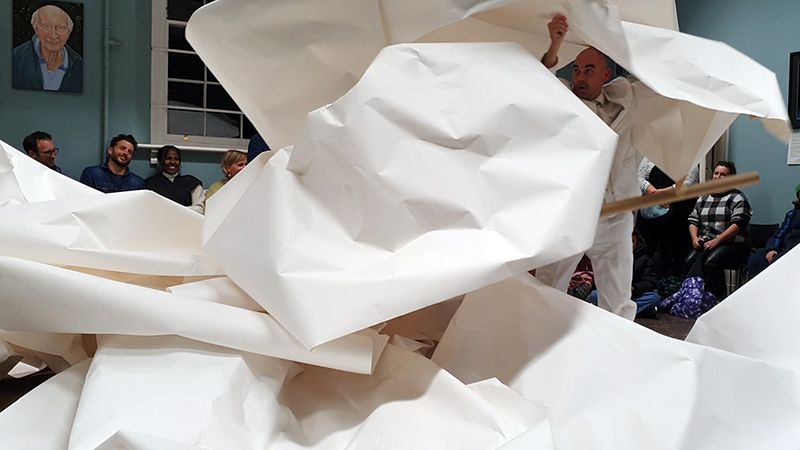
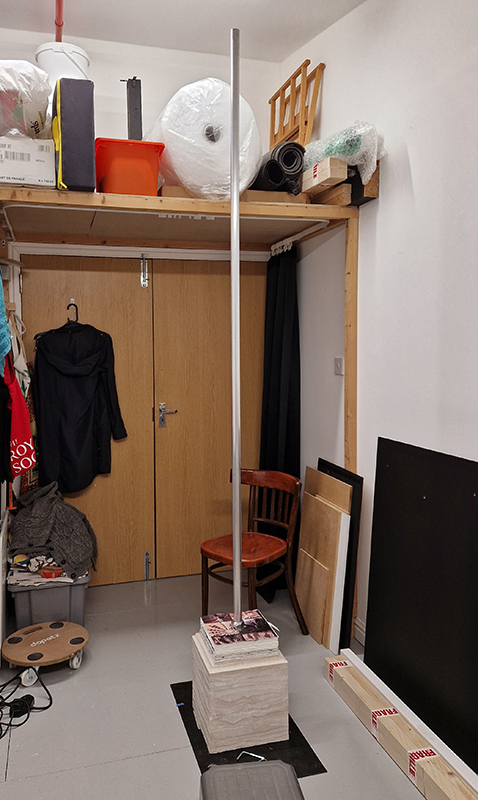
Time in the studio has been spent checking over and preparing works that will be showing in Cosmos: The Art of Observing Space curated by Ione Parkin which opens in the new year. I am thrilled to be part of this exhibition bringing together contemporary and historic artists and featuring an extraordinary range of work inspired by the cosmos. I have completed a test build of The Azimuth Obelisk (of sedimentary knowledge) using a new internal structure for before packing it all away again ready for transport to The Royal West of England Academy in Bristol. This work is a reimagining of an permanent azimuth mark erected at Hartland Magnetic Observatory in North Devon from which the drift of the magnetic north pole is monitored. Made of many layers hand torn from recycled works on paper it echoes the geological and magnetic history of the Earth which is secreted in the strata of sedimentary rock. The protruding tabs of paper seen in these studio images are markers for each section of paper squares of a tapering size and will get tucked away at installation in the gallery. With the added thickness of my new studio roof insulation the obelisk only just fits in now.
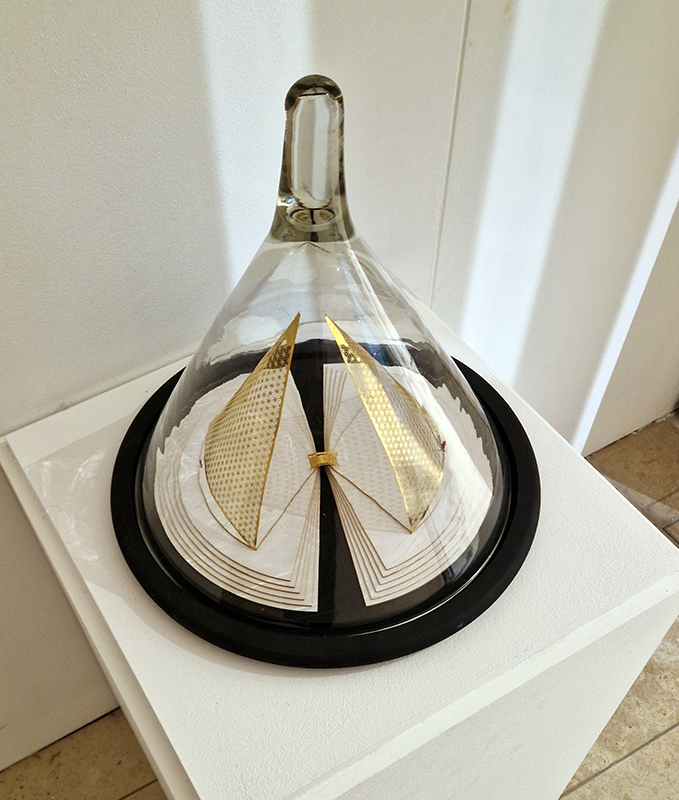
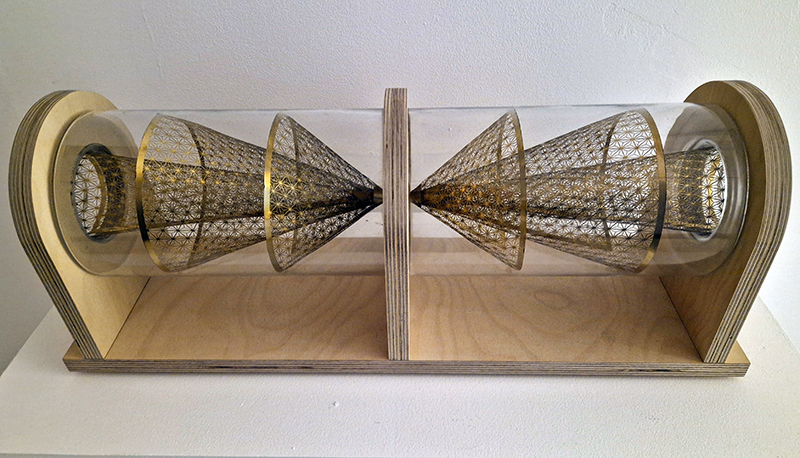
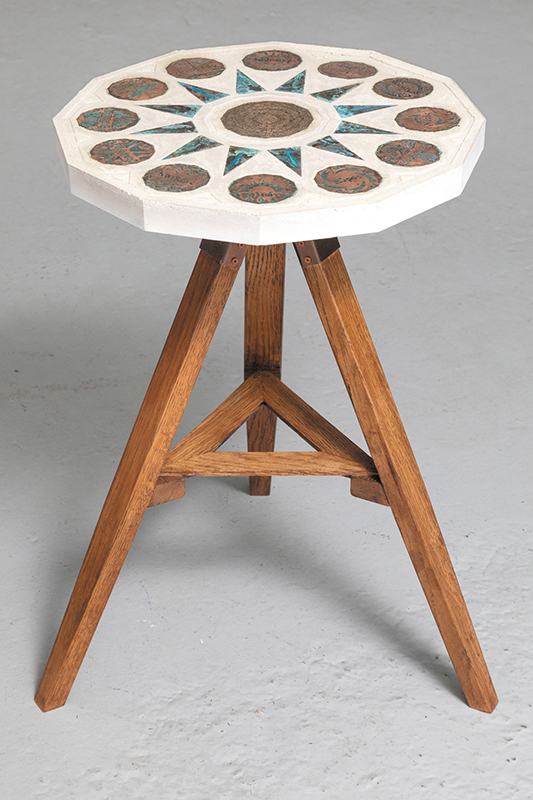
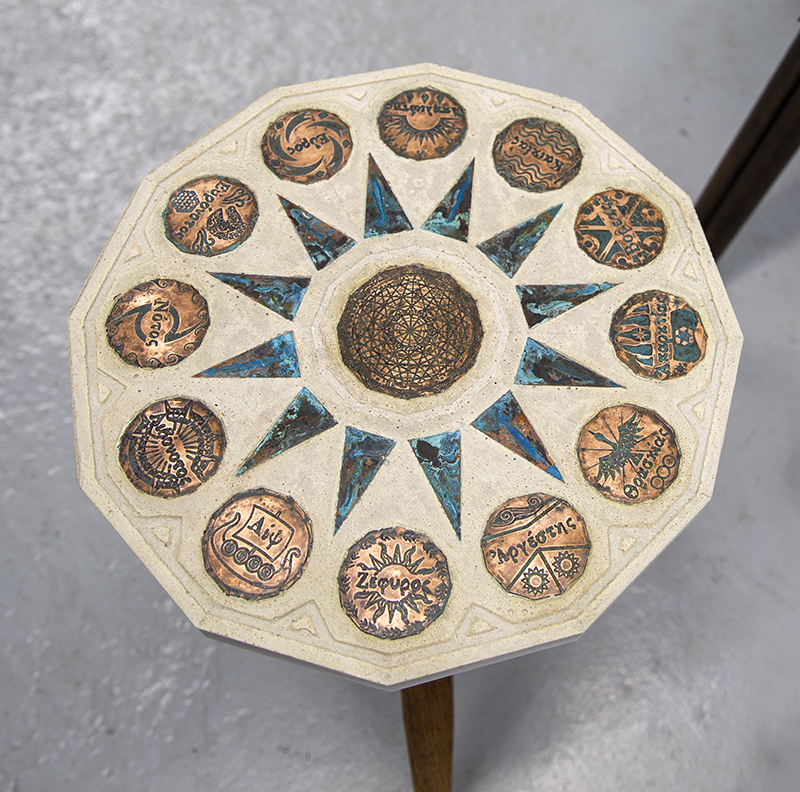
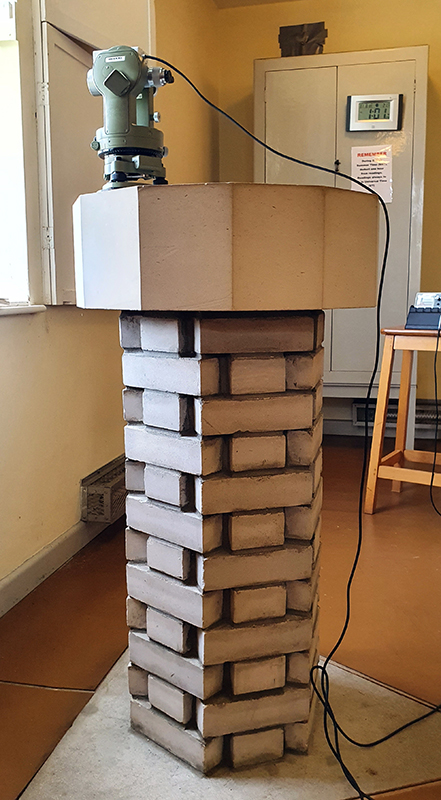
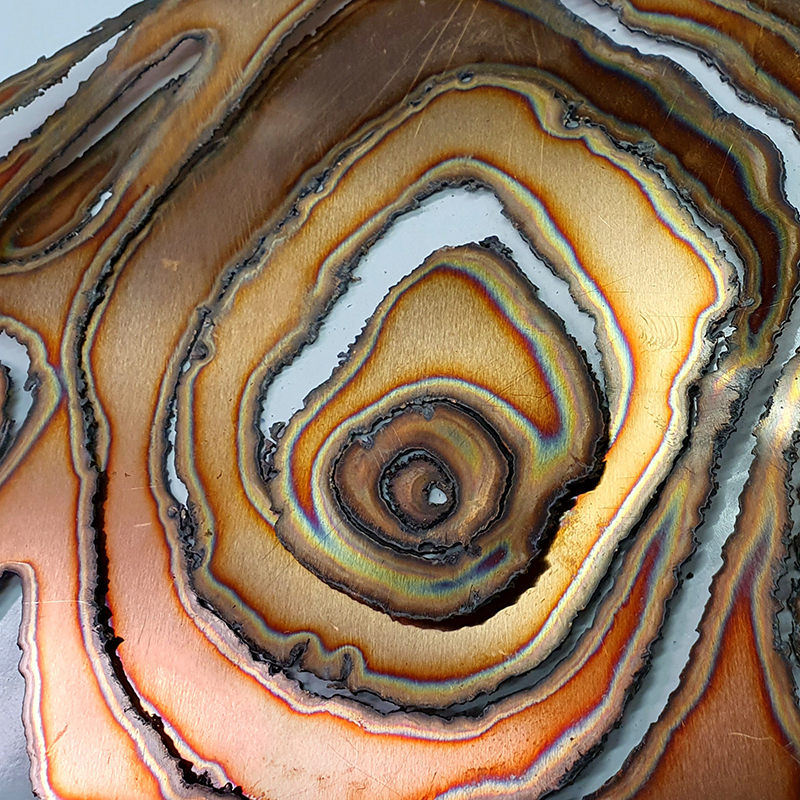
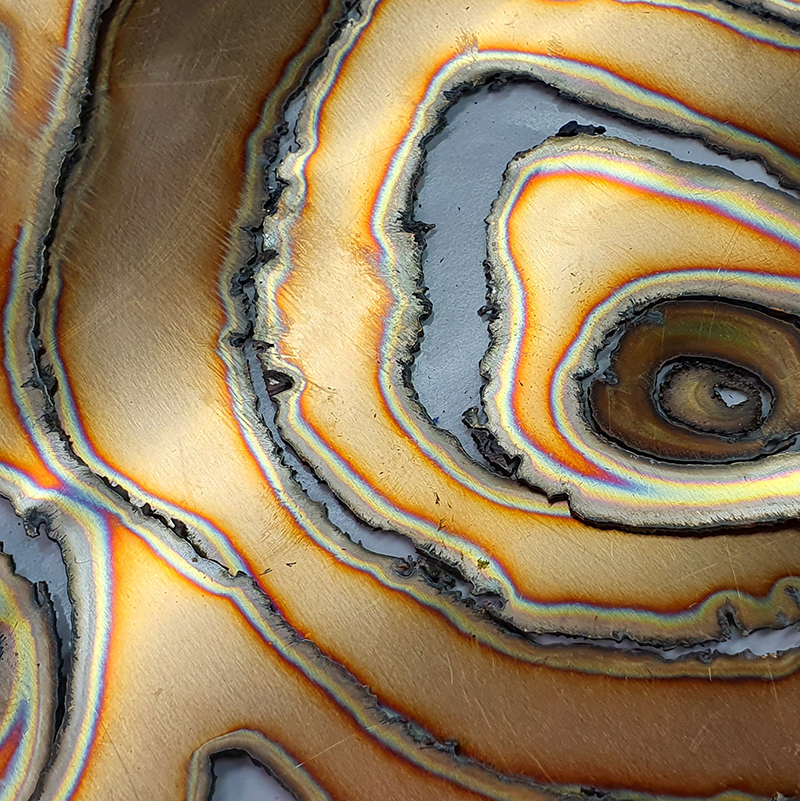
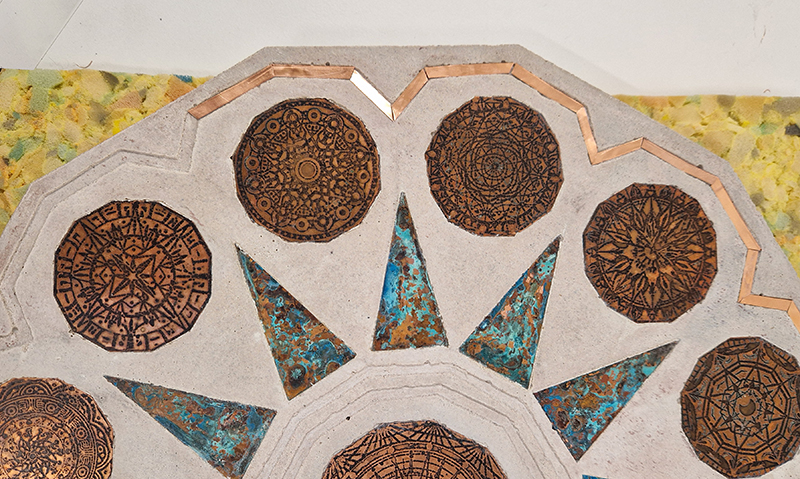
I have started work on inserting copper segments into the new sculpture for the Instruments of the Anemoi series. The other larger pieces of etched and patinated copper were added at the time of casting, held in place with tape and hope when the concrete was poured into the mould. This series of sculptures are suggestive of the pedestals that support various instruments used in monitoring the Earths’ magnetic field but are envisaged here as speculative objects used by the wind gods as the first emissaries of navigation.

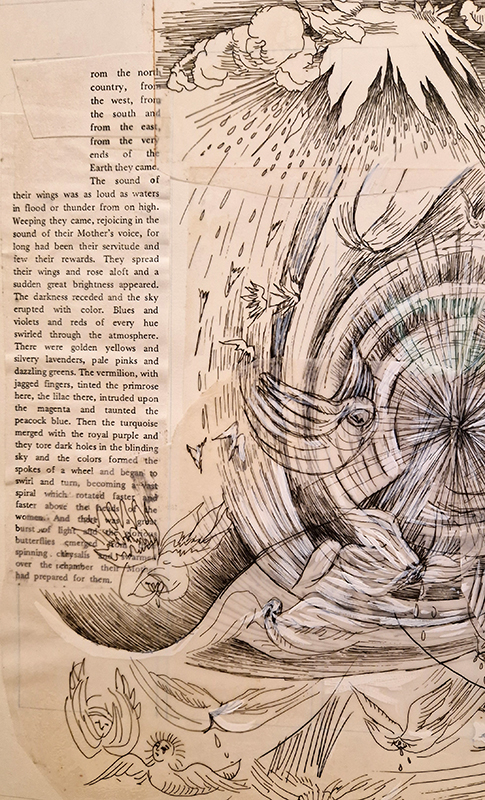
I am still battling with writing text for The Book of Reversals, an artist book that responds to the record of Earth’s magnetic field reversals being written in bands of minerals on the ocean floor.
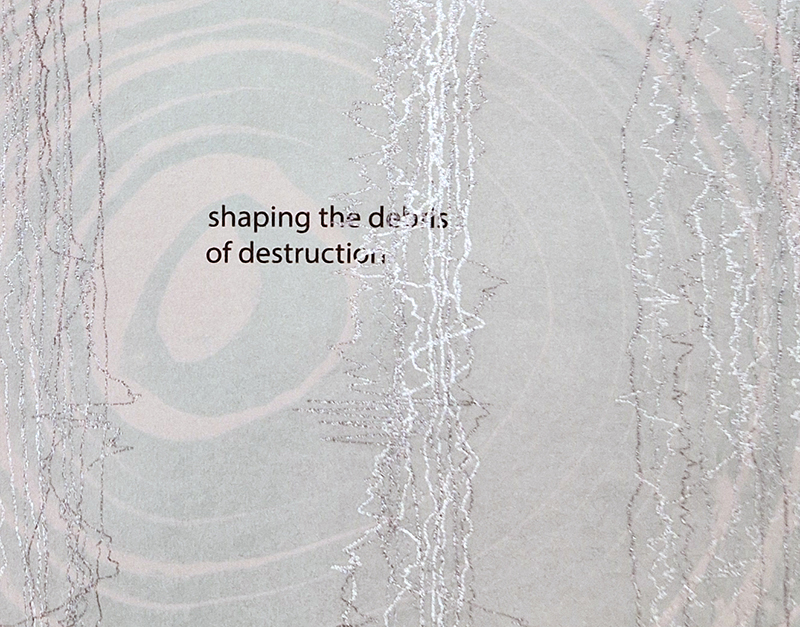
The crisp crust fractures / Fragments slide across a viscous veneer

Submarine mountains tower / Ocean trenches gape

Tectonic plates subduct / melting into the mantle 

Deep time traces are consumed / surfaces ceaselessly reformed

The Earth’s magnetic field has been a fascinating mystery for many hundreds of years and Gillian Turner’s book North Pole, South Pole recounts the stories of those who sought to solve its origin and mechanism. Something I hope to look at in more depth is how pottery and bricks preserve the direction of the magnetic field in their minerals during the process of firing which heats and then cools the clay – the same process that occurs in a lava flow. Iron-bearing minerals (like magnetite) in clay become “magnetic” when heated in a kiln. As the pottery cools, these minerals lock into the Earth’s magnetic field direction and strength at that time. The study of the magnetic properties of ancient pottery, known as archaeomagnetism, has been used to make records of the inclination of the magnetic field from past millennia. Inspired by these studies of manmade artefacts to determine the historical position of the north magnetic pole, physicists Bernard Brunhes and Pierre David took samples from exposed lava flows and their underlying clay in central France. In 1906 they came to the astonishing conclusion that about six million years ago the magnetic field seemed to point in the opposite direction, the first indication of magnetic field reversals.
Also with thanks to Gillian Turner’s book North Pole, South Pole I have learnt that there were early hydrogen balloon ascents to determine if the Earth’s magnetic field intensity varied with altitude, helping to decide if the magnetic field came from within the Earth or was extra terrestrial. In 1804 Jean-Baptiste Biot and Joseph Louis Gay-Lussac made a pioneering ascent to 4,000 feet (1.2km). In Turner’s book she writes that the dip needle necessary to take the measurements iced up and so the results were unreliable. I feel for them, but it seems they conducted many other experiments on temperature and gases in the atmosphere while aloft and in any case we now know they would have needed to ascend many kilometres higher than they achieved to notice any weakening in the magnetic field.
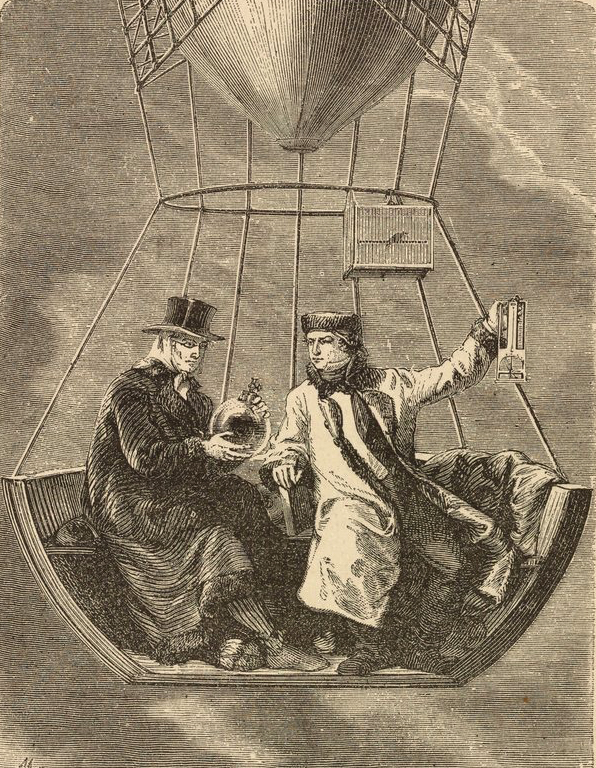
This plate is from John Howard Appleton’s (1844-1930) Chemistry, Developed by Facts and Principles Drawn Chiefly from the Non-Metals, published in 1884.

I am trying to remember when I first had the idea to launch a cloud chamber in the payload of a high altitude balloon. I knew about the hot-air balloon experiments carried by Victor Hess to determine the origin of cosmic radiation, and his discovery in 1912, when he made an ascent to over 5km during a near-total eclipse of the Sun, that radiation had to be coming from further out in space.
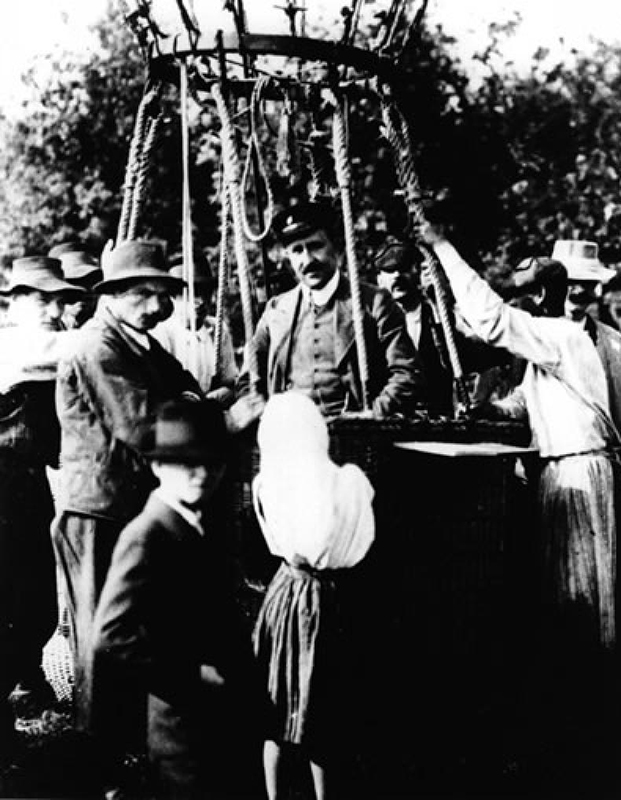
Hess on his return from the 1912 balloon ascent – Alan Watson pointed out that this was obviously staged at another time as he would not have been standing looking so well after his ordeal.

I remember looking into the dark skies during a residency at Allenheads Contemporary Arts and wondering about all the activity that I couldn’t see. I decided then I would like to film at 15km where most subatomic cosmic ray activity takes place, even if nothing would show on the film.
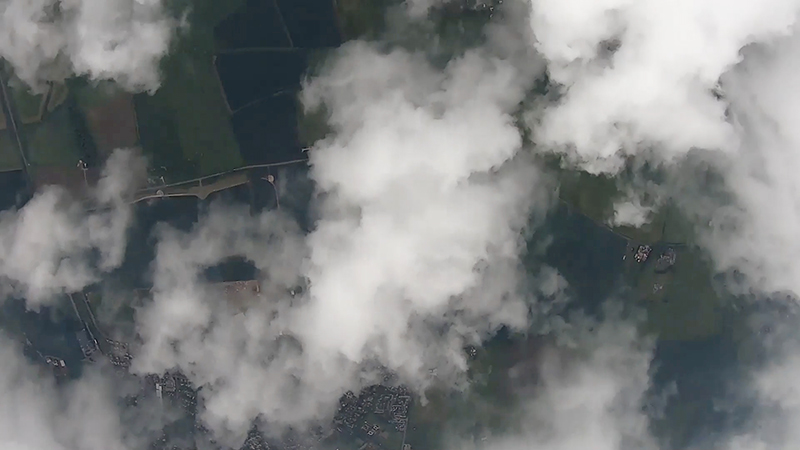
A high altitude balloon flight seemed the perfect solution and I was very grateful for the help I subsequently received from Imperial College Space Society and The UK High Altitude Society. The decision to include a cloud chamber in the payload was always a risk and as it turned out nothing of the cosmic ray activity was captured on film. However, the balloon did reach an altitude of over 37km and the payload was successfully recovered with some amazing video footage of its journey.
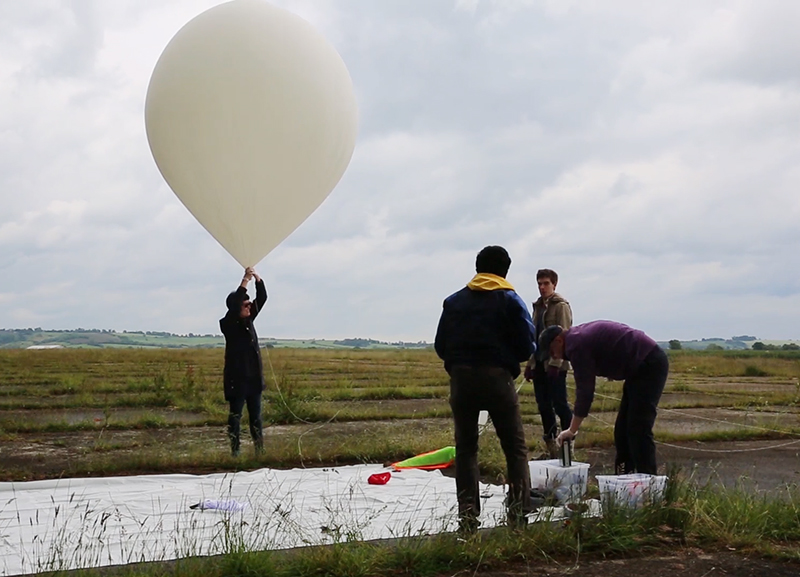
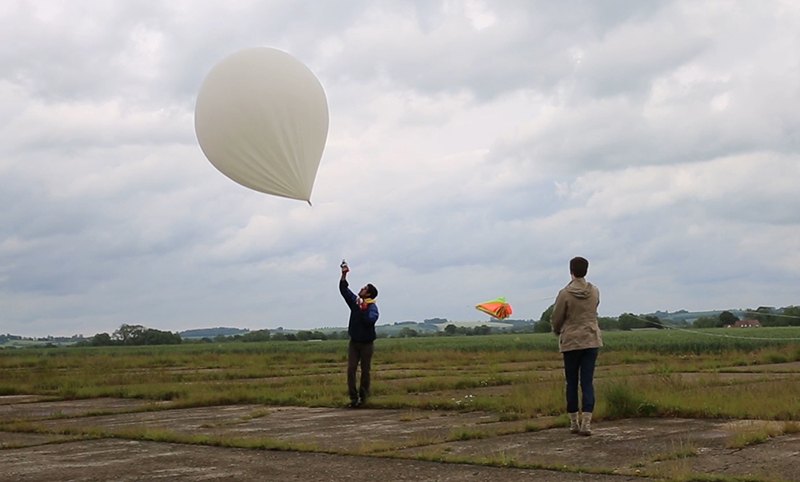
The record height for a hot air balloon ascent is 21km so in theory it could be possible to send a cloud chamber up in a hot-air balloon and film at altitude with potential for more success if some brave person were on board to operate the camera. Unlikely to be me.
Some intriguing news of ORC’s on the RAS websiteThe most distant and most powerful ‘odd radio circle’ (ORC) known so far has been discovered by astronomers. These curious rings are a relatively new astronomical phenomenon, having been detected for the first time just six years ago. Only a handful of confirmed examples are known – most of which are 10-20 times the size of our Milky Way galaxy. ORCs are enormous, faint, ring-shaped structures of radio emission surrounding galaxies which are visible only in the radio band of the electromagnetic spectrum and consist of relativistic, magnetised plasma. the three new cosmic rings – discovered not by automated software but by sharp-eyed citizen scientists – represent an important step toward unlocking the secrets of these vast, puzzling structures.

Out and About

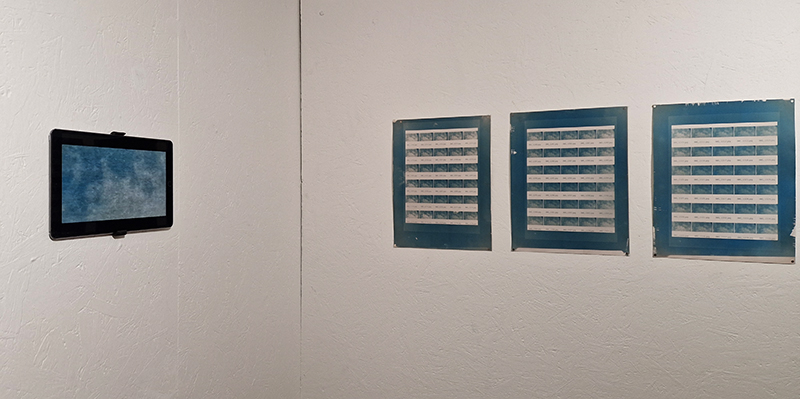
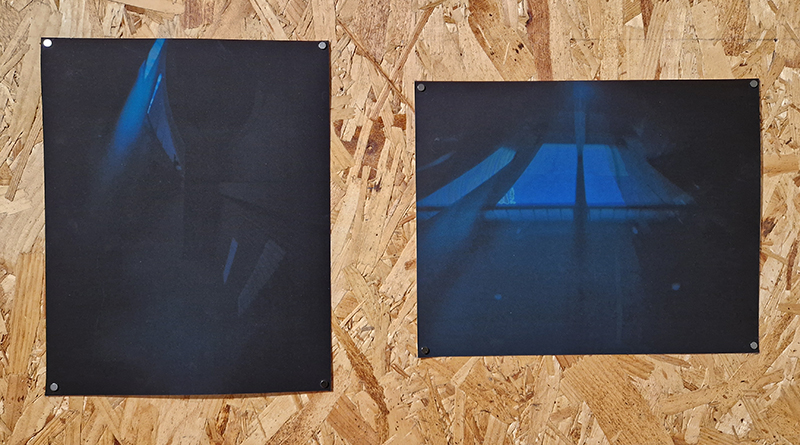
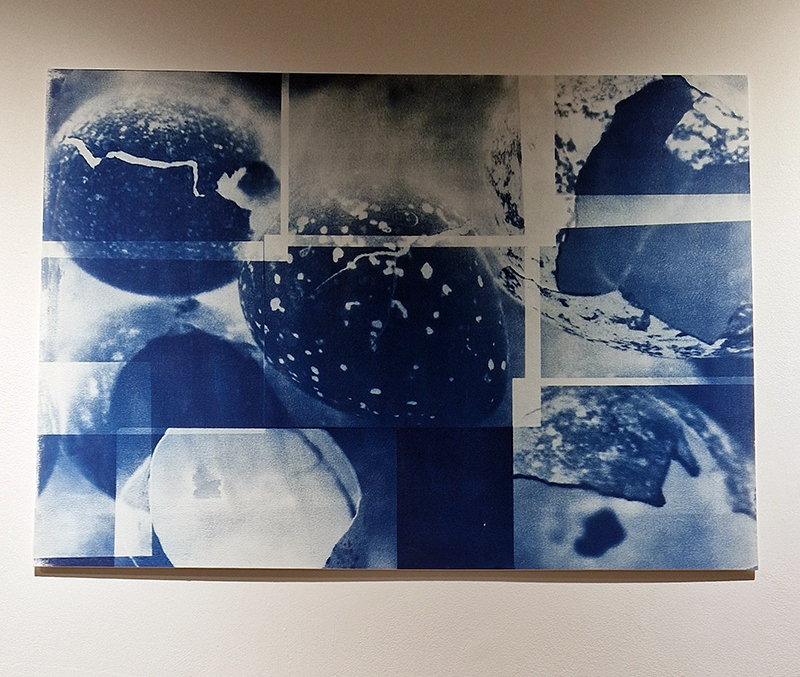
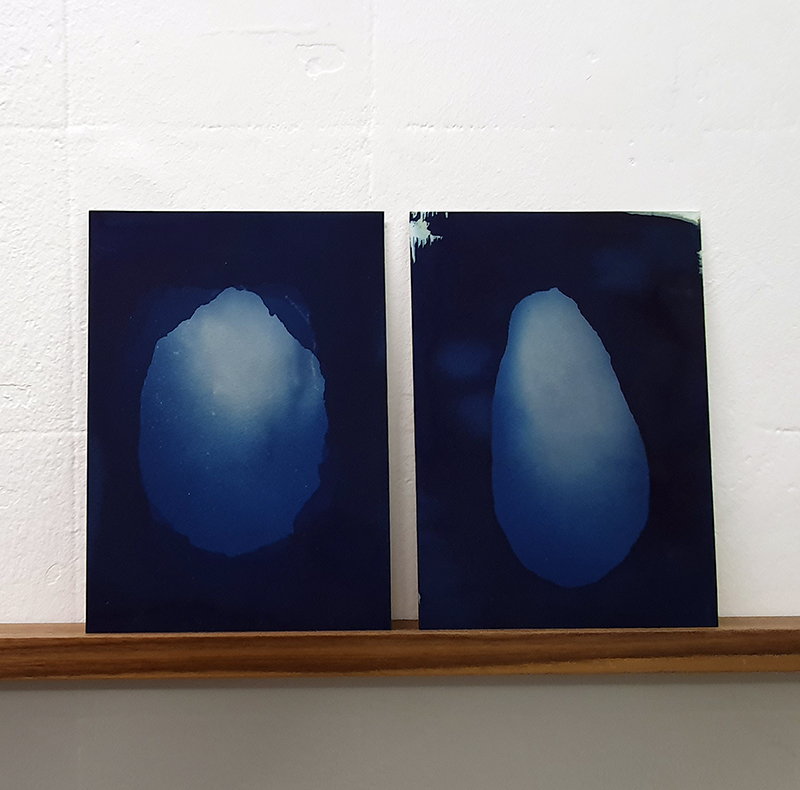
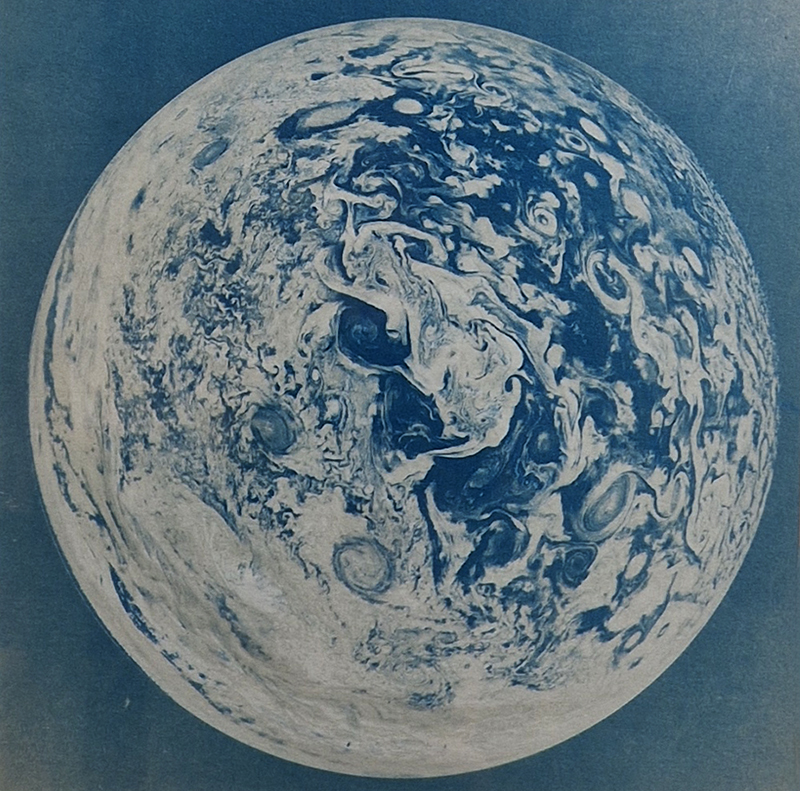
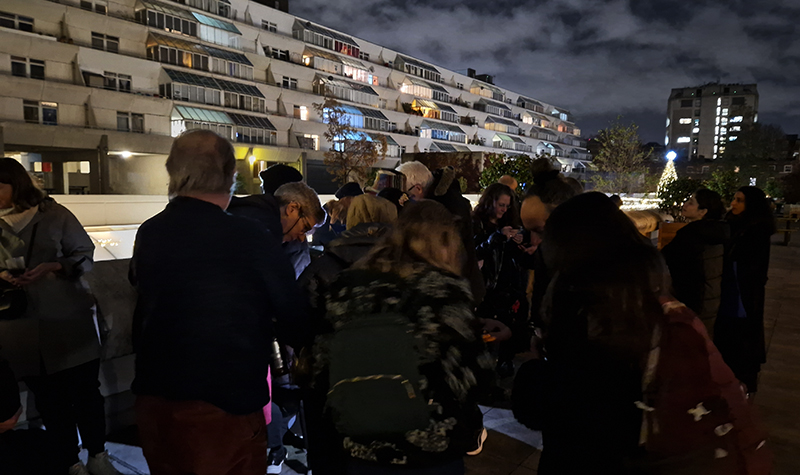
A wonderful evening with artist in residence Melanie King at Passengers connecting the celestial with the architecture of the grade II listed Brunswick Centre in Bloomsbury, London. Melanie used the residency opportunity to explore the duotone cyanotype process using multiple layers of cyanotype to mimic astronomical imaging construction and even used cyanotypes to create an of the Moon. The beautiful results were presented at an evening event with the additional treat of live telescope viewing of the Moon and Saturn from the second floor terrace of the Brunswick centre under the engaging guidance of astronomer and science communicator Paul Hill.
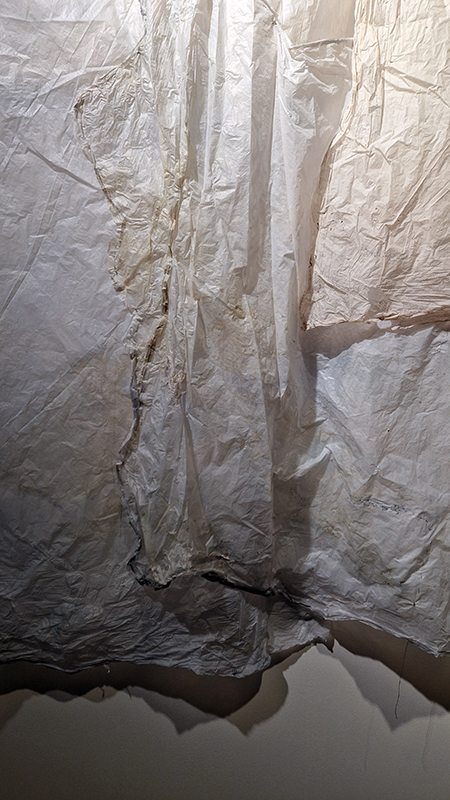
Liz Elton’s sensitive work Black and Blue (compostable bio materials, cabbage and fruit dye saddened with iron, silk, poppy and sage seeds) showing in A Changed Environment at Messums London. This group show examines changing ideas of beauty, ecology, and sustainability, as well as themes of place, memory, and identity, revealing how connections to the natural world can inspire both understanding and hope. I love the delicacy of this new work and the term ‘saddened by iron’ which is used in the dying process to dull a colour, and which, as Liz says, also emotes the hardships of industrial life.

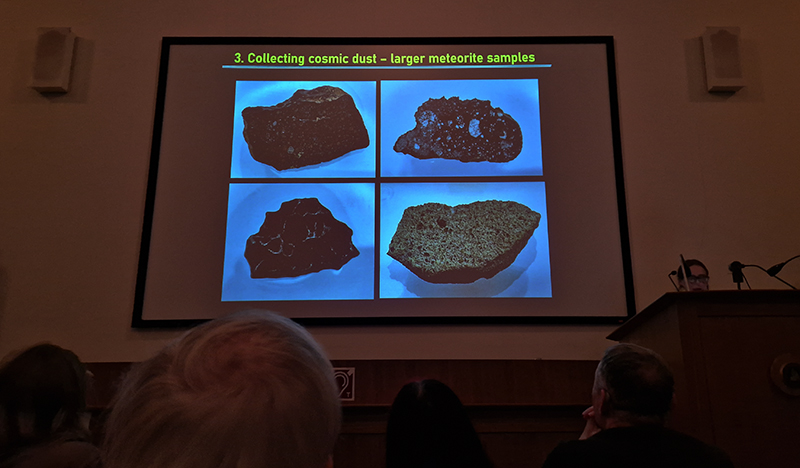
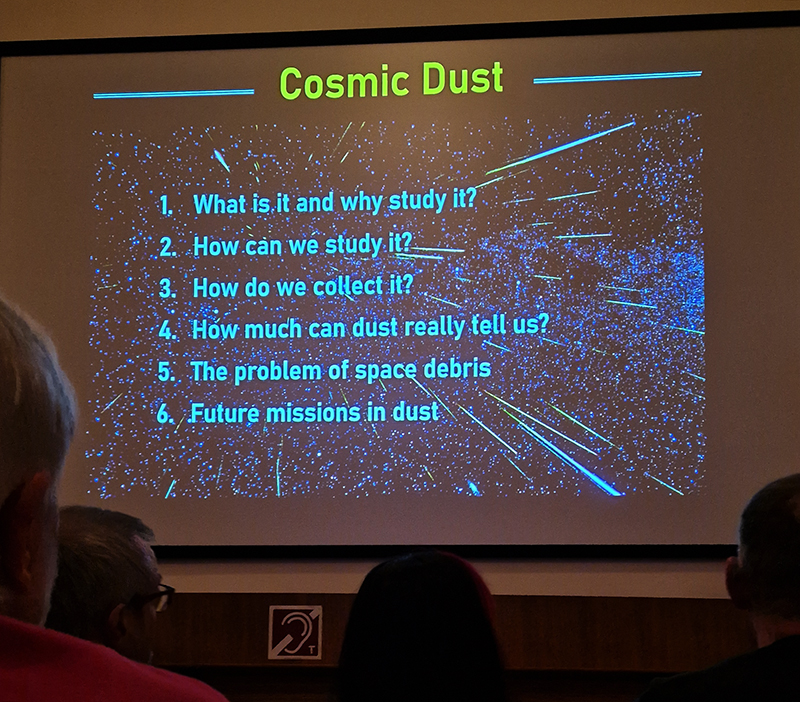
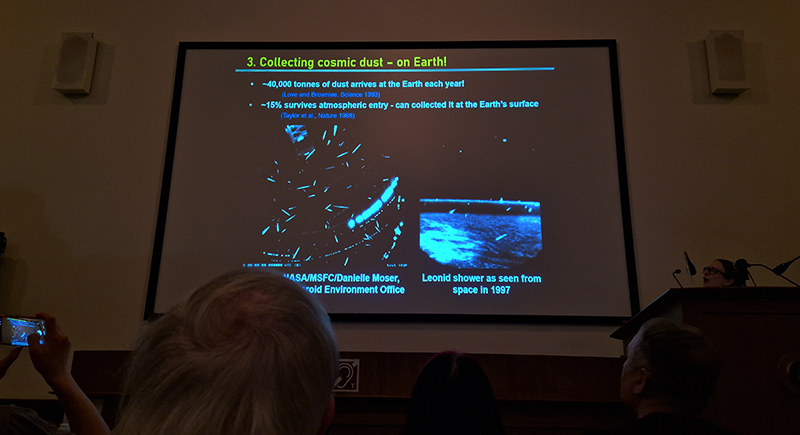
Cosmic Dust talk by expert on extraterrestrial space dust, and how it can impact astronomy and wider human endeavours in space, Penny Wozniakiewicz at The Royal Astronomical Society. ‘Natural’ cosmic dust is being polluted by man made dust from space debris. This is a real problem created by dead satellites, old upper stages of rockets, fragments form exploded rocket or stages, flecks of paint, aluminium oxide spheres from solid rocket burns, dropped space equipment. When any of this debris collides a cloud of smaller debris is ejected, this process is self propagating and even the tiniest piece of debris can cause serious damage to spacecraft and satellites. This is called the Kessler syndrome, a cascading effect that could render orbital space unusable for generations, threatening satellites, the International Space Station, and future space travel.
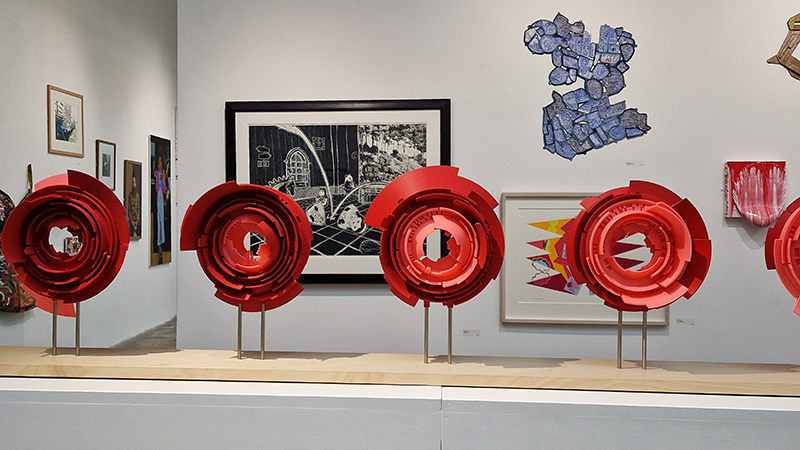
Good to visit the The London Group show 2025 at Copeland Gallery where lots of friends are showing excellent work and also to discover new work and artists.

I found Majid Majid’s video Faith Amongst The Ruins a difficult but compelling work. So scary and horrific because we know this is real footage, some of which I had seen before at the time of the attacks on hotels housing asylum seekers and refugees, but it is still so disturbing to watch these people, with so many children present, cheer on the violence. They have no empathy with the terrified people trapped inside the hotel or for the person in the car who is ambushed and stabbed. The glee of those filming the assault is chilling.

He writes: “As a refugee, I know places shaped by fear and rejection. This work revisits UK sites of last summer’s Islamophobic and racist violence, a mosque, a street, and a hotel housing asylum seekers transforming them through prayer. Placing a mat where hostility flared, I reclaim space as sacred ground. Video and traces of violence form a counter-narrative of dignity, belonging, and resilience.”

Images: Majid Majid, Sayako Sugawara, R James Healy, Victoria Rance, Jonathan Armour, Sandra Crisp, Jenny Wiggins, Victoria Arney, Carol Wyss, Sandra Crisp, Genetic Moo, Jacqueline Yuen-Ling Chiu.

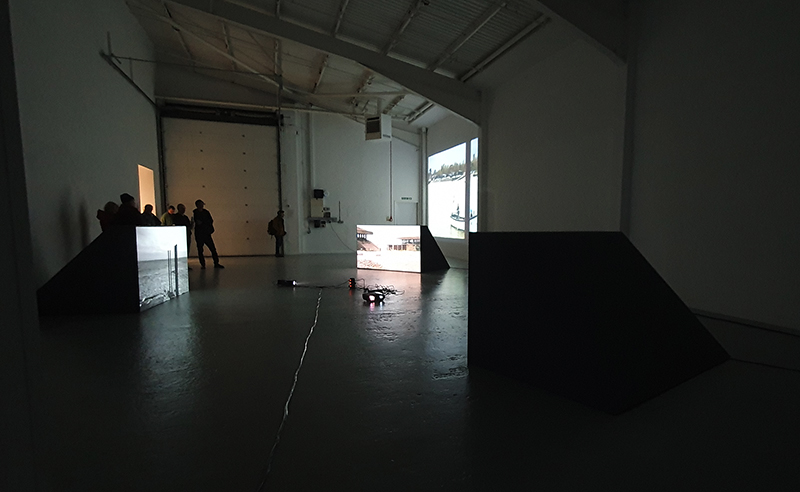
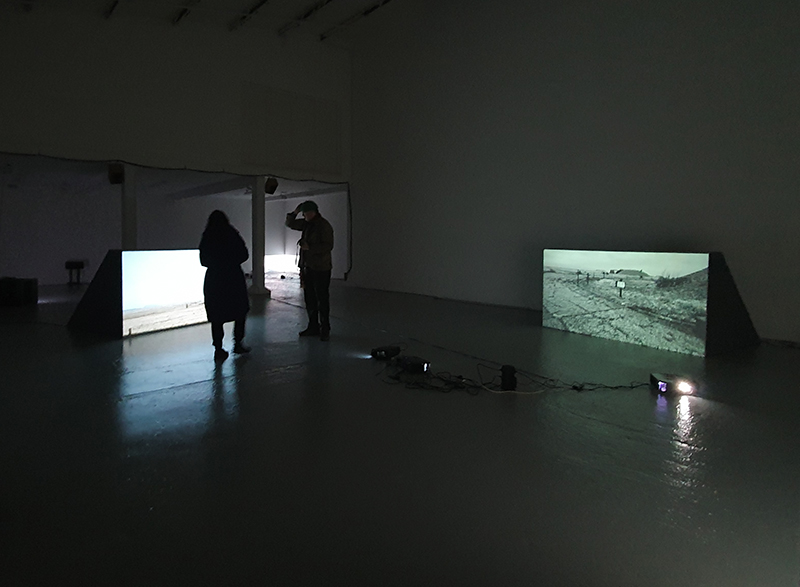
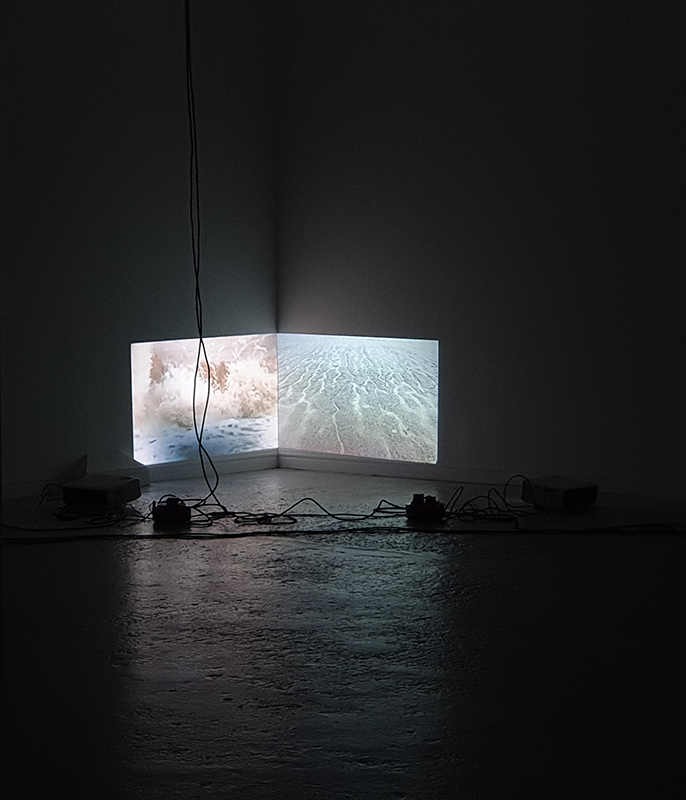
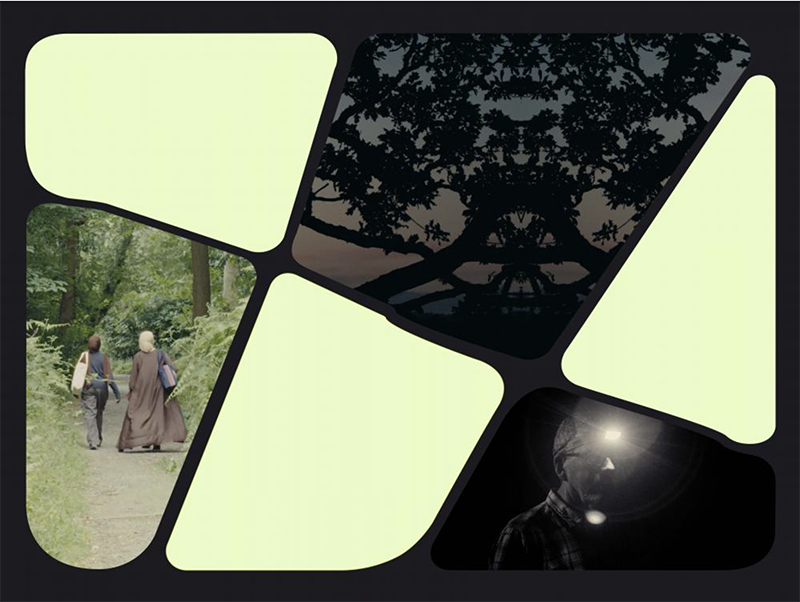
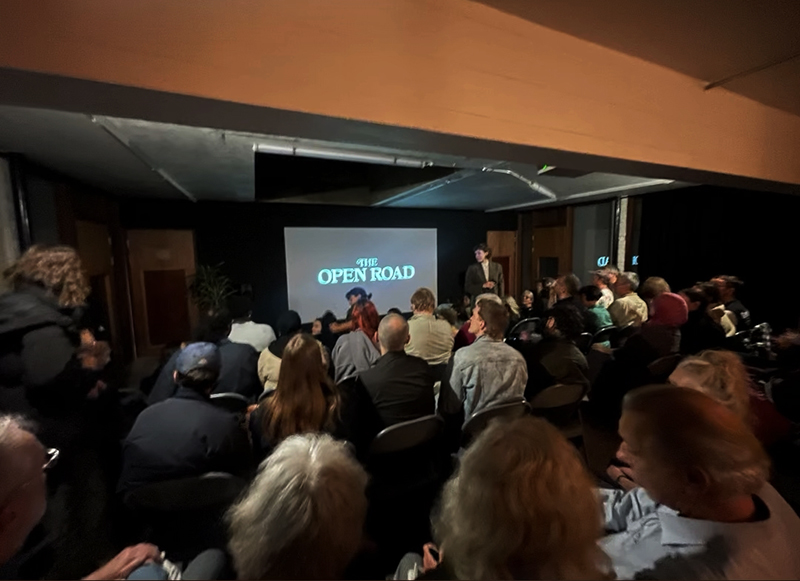
Three beautifully directed films screened at FormaHQ as part of The Open Road series of artists moving image works, co-commissioned by a partnership of visual arts organisations. The works are loosely inspired by The Canterbury Tales, drawing from a disparate cast of characters to recount competing stories in a patchwork of styles. David Blandy (Commons), Amaal Said (Open Country) and Sam Williams (The Eel’s Tale) each draw on storytelling traditions to give fresh perspectives on their journeys, on foot, by sea and through time. Heartbreaking to hear how terrified Amaal Said was to leave London for the open country of the south coast, especially with the current rise in overt racism, when out looking for locations and that they did suffer racist abuse while filming. Hers is a gentle and warm study of a mother and daughter and an absent grandmother, a longing for home and to feel ‘at home’. Sam William’s film sets the plight of the highly endangered glass eels who journey 4,000 miles from the Sargasso Sea to the Medway wetlands in Kent, swept along by currents, undergoing bodily transformation, following an instinctive desire on this epic migration alongside two other watery tales of transformative journeys across boundaries of identity and freedom. Coincidently, a recent episode of the Infinite Monkey Cage is all about these mysterious eels. David Blandy turned his attention to the vast and disparate collection of artefacts held in the Tunbridge Wells museum and gave some of these specimens a voice to tell of how they had lived before they became a part of this collective of human taxonomy.
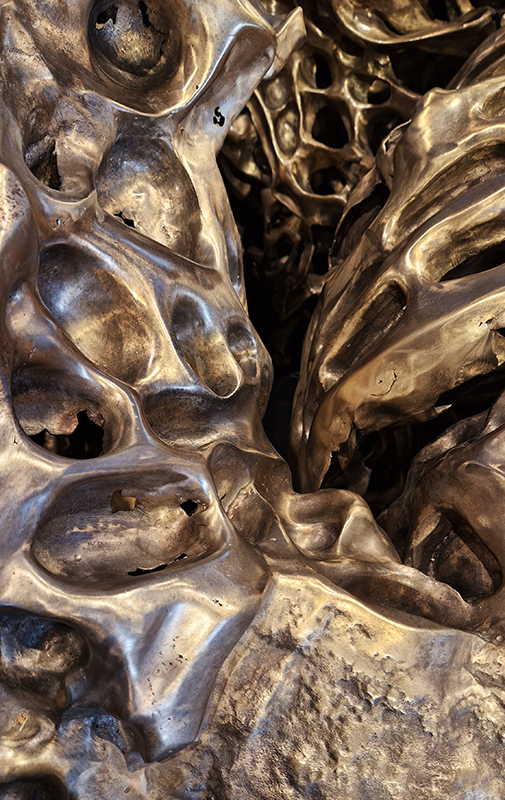
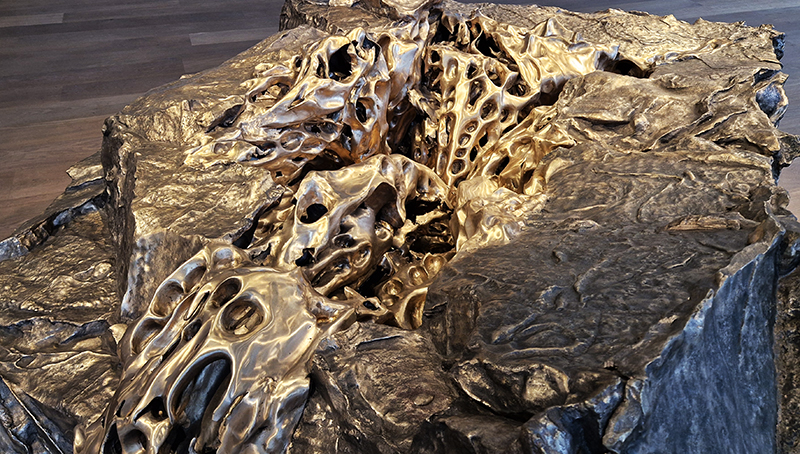
Cristina Iglesias The Shore at Hauser & Wirth features large-scale bronze works from the artist’s Littoral (Lunar Meteorite) series, part of her ongoing exploration of geological themes. The word ‘littoral’ refers to something relating to or situated along a coast or shore, or the region where the land meets the water. The weightiness of the objects is impressive ( I can’t imagine how they were brought into the gallery even with the technology available today – after coming here from the talk on stone henge and the incredible feat of bringing the standing stones across rough terrain for many kilometres and up a slope 5000 years ago seems even more impossible – yet there they are). The sound of water bubbling within each piece draws you to peer within and stay with the piece perhaps longer. The audience is invited to touch the sculptures. The bronze is polished and does need to be used and worn away in a more effective organic and dirty process. They are very clean.
The Royal Astronomical Society lecture Sighting the Sun and Moon? at Stonehenge – by Archaeoastronomist Prof. Clive Ruggles. Debunking many myths and overspeculation, concerning the use of the monument for observations of the sky the professor was clear about what can sensibly be said about the relationship of Stonehenge to the Sun, considering the conventional archaeological evidence that has been uncovered in recent years. He also recommended visiting the day before or after the actual solstice if possible for an experience without the many crowds as the alignment is almost identical. Also visiting at sunset can be just as magical and quieter. He turned his attention to the Moon, questioning if our prehistoric forebears also celebrated the occurrence of a major lunar standstill, an event occurring every 18.6 years around which time the Moon can be seen at fortnightly intervals exceptionally far to the north and south.

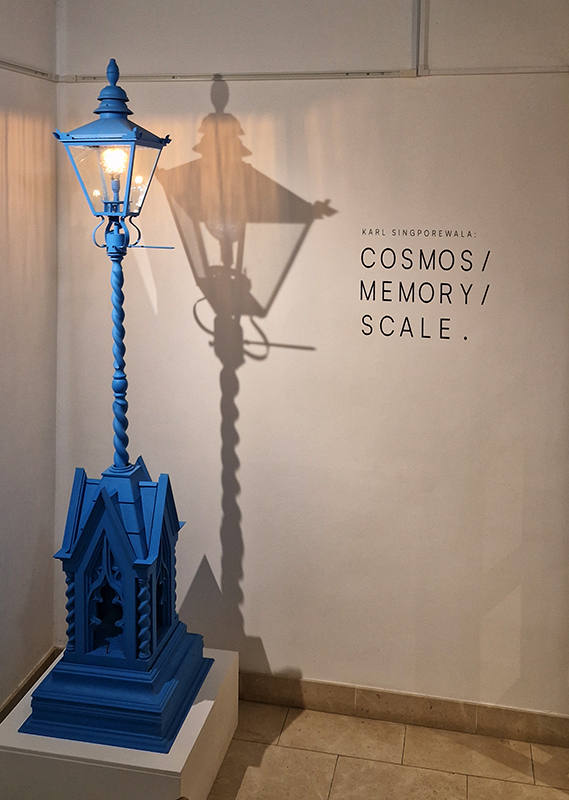
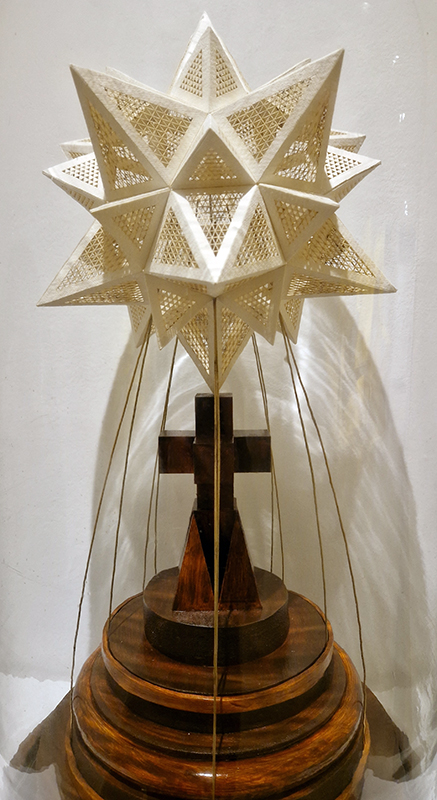
Karl Singporewala’s sculptural interpretations of Zoroastrian symbolism in Cosmos, Memory, Scale at SOAS Gallery convey a meditation on how material and memory intersect to shape the human experience. Cosmos speaks to both his fascination with astrophysics together with a metaphysical belief in the alignments of life. Stars and geometric forms recur as motifs, refracting both spiritual navigation and mathematical structure. Memory is treated as a living, shifting phenomenon. Inspired by oral tradition, family stories and inherited rituals. Scale, is used both literally and metaphorically in shifting perspectives and unexpected relationships. Good Thoughts, Good Words, Good Deeds.
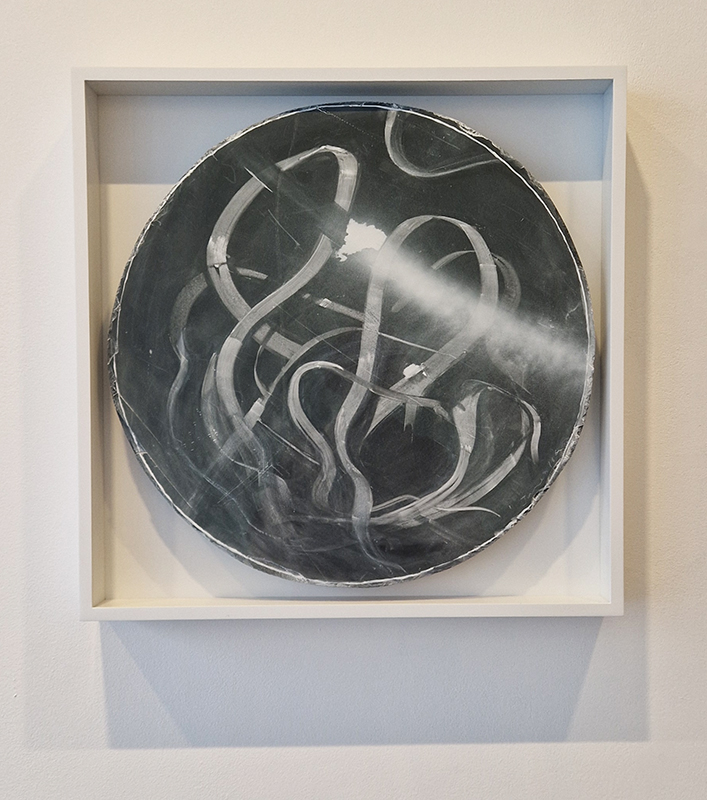
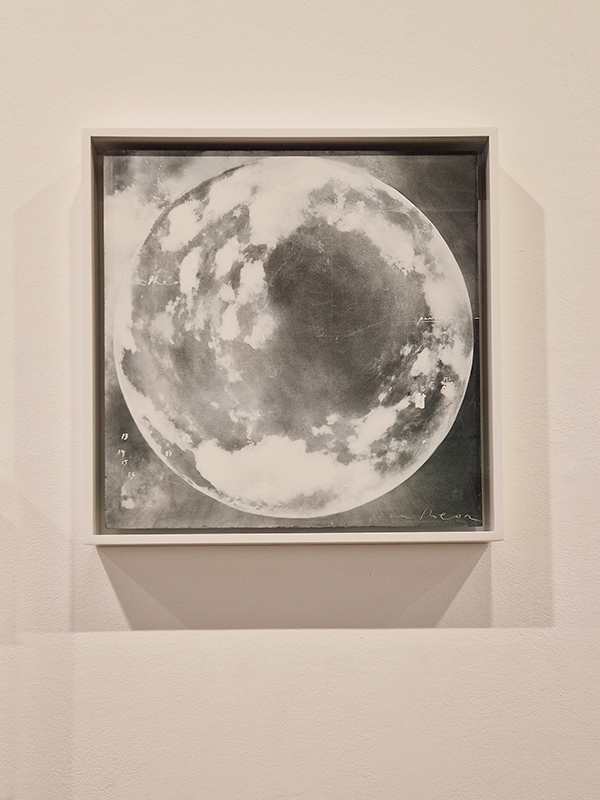
Dusty, chalky mythical drawings and solar eclipse traces from Tacita Dean in Black, Grey, Green and White at Frith Street Gallery Golden Square.
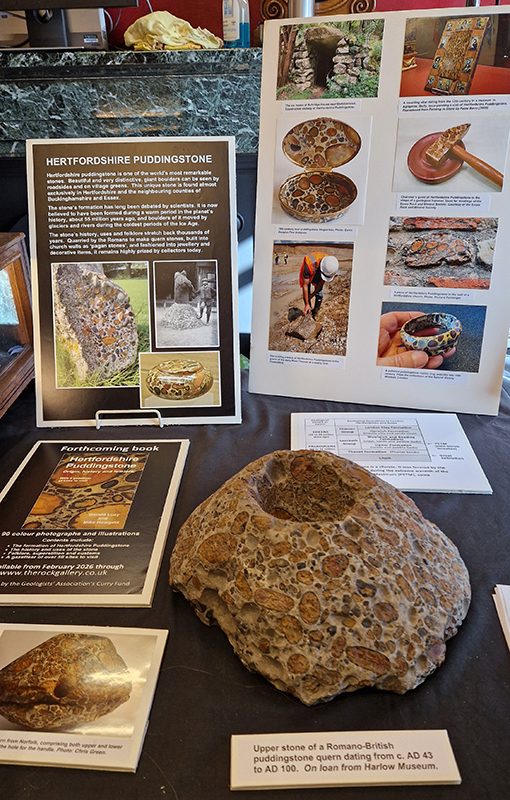
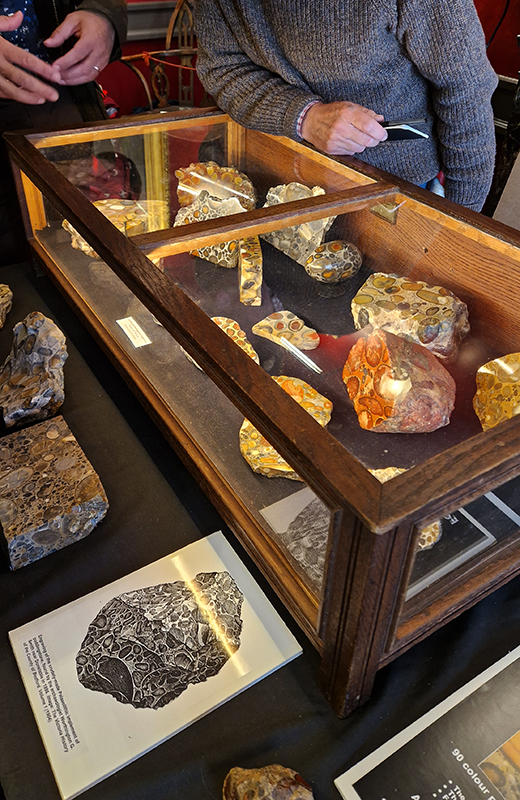
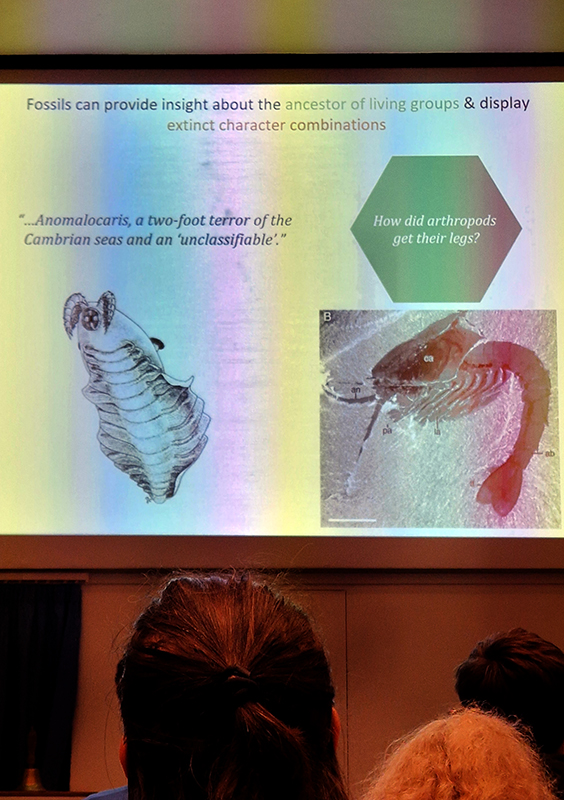
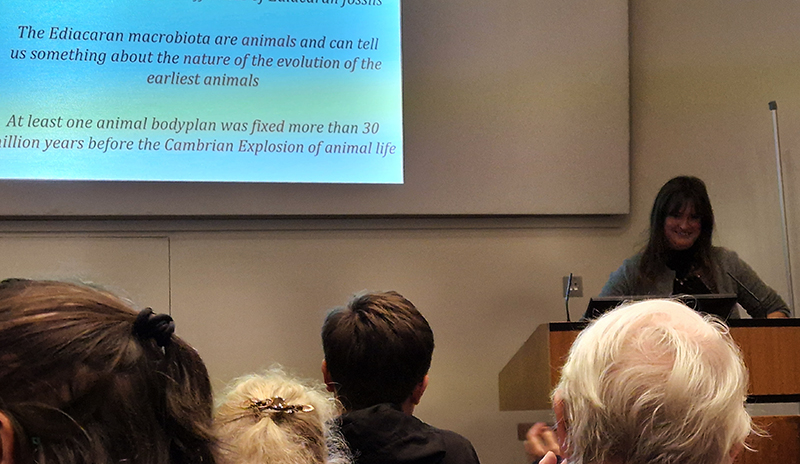
I spent a happy morning at the Geologists Association Festival of Geology 2025. This included a fascinating lecture The Early Evolution of Animal Life by palaeobiologist Frankie Dunn focused on the origin and early evolution of animals and particularly on the fossil record of the late Ediacaran Period (approximately 570 – 540 million years ago) – just before the Cambrian explosion of life. The aim of her research is to understand how animal body plans evolved in deep time. There also was some amazing and unique pudding stone on display.
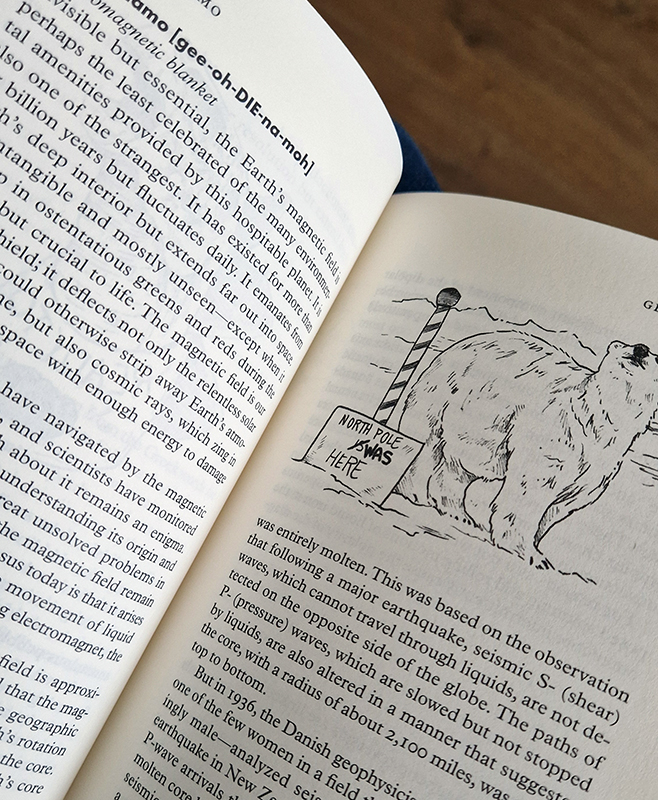
I also picked up a great little book full of wonderful geologically enriching words by Marcia Bjornerud.

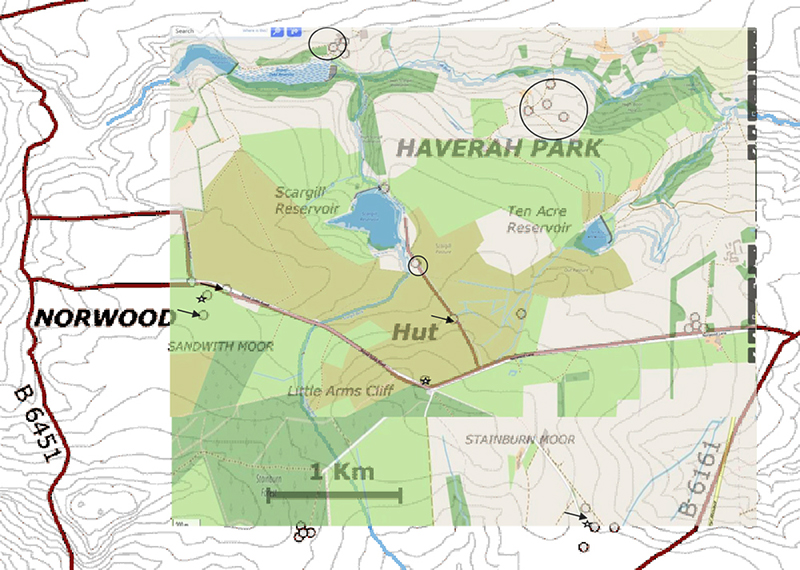
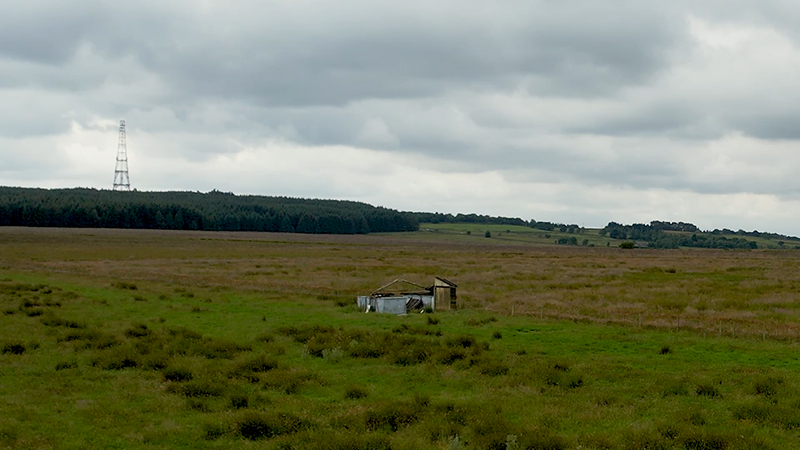
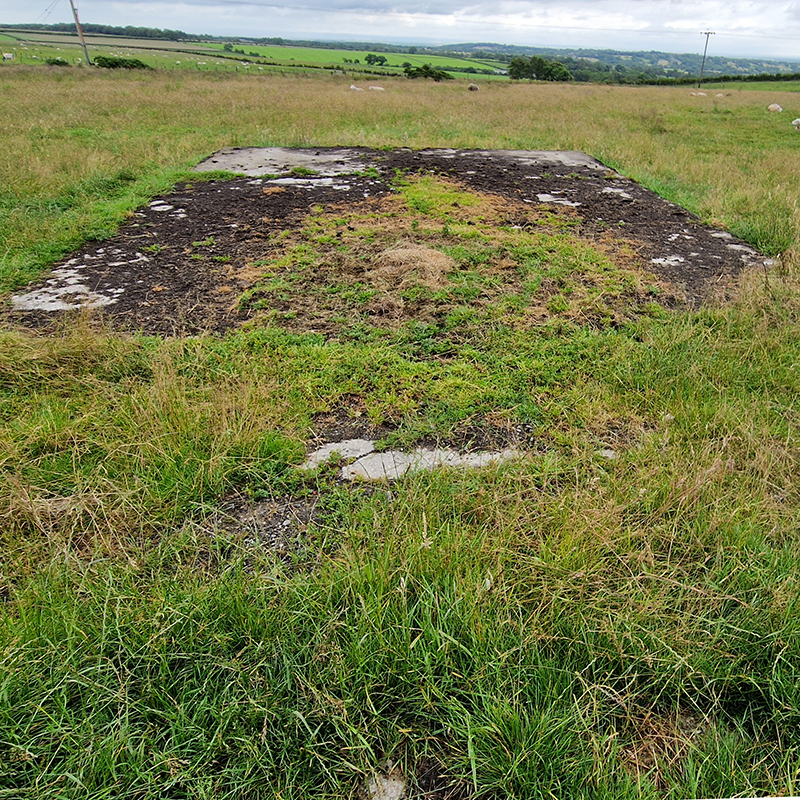
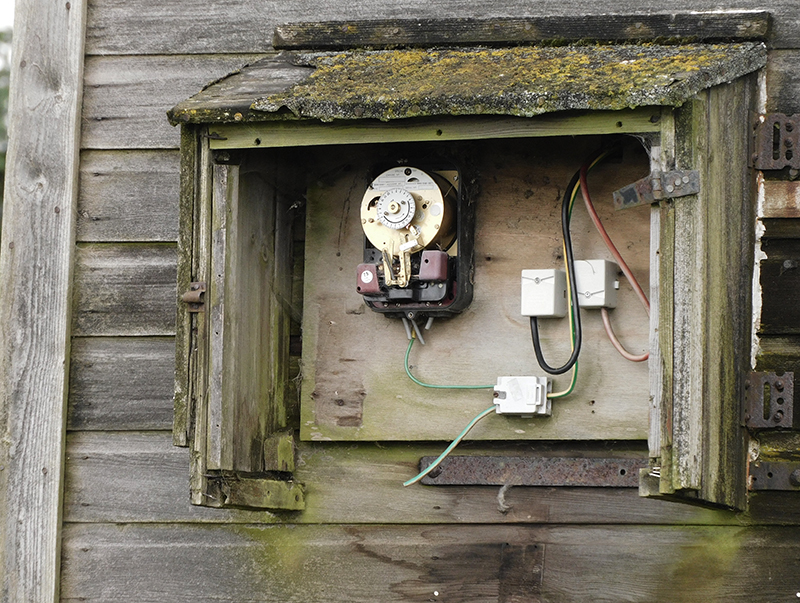
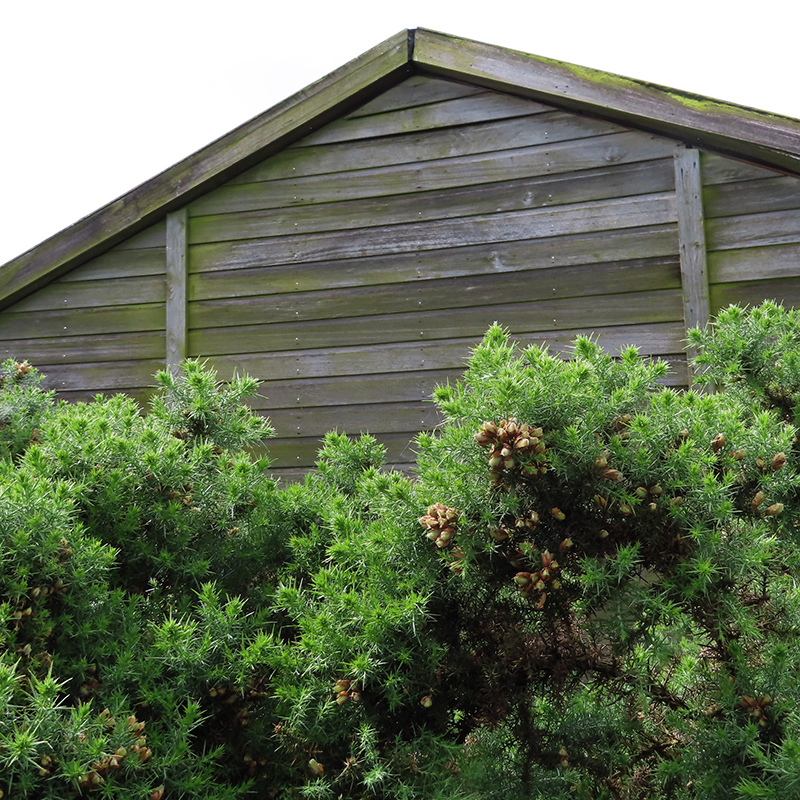
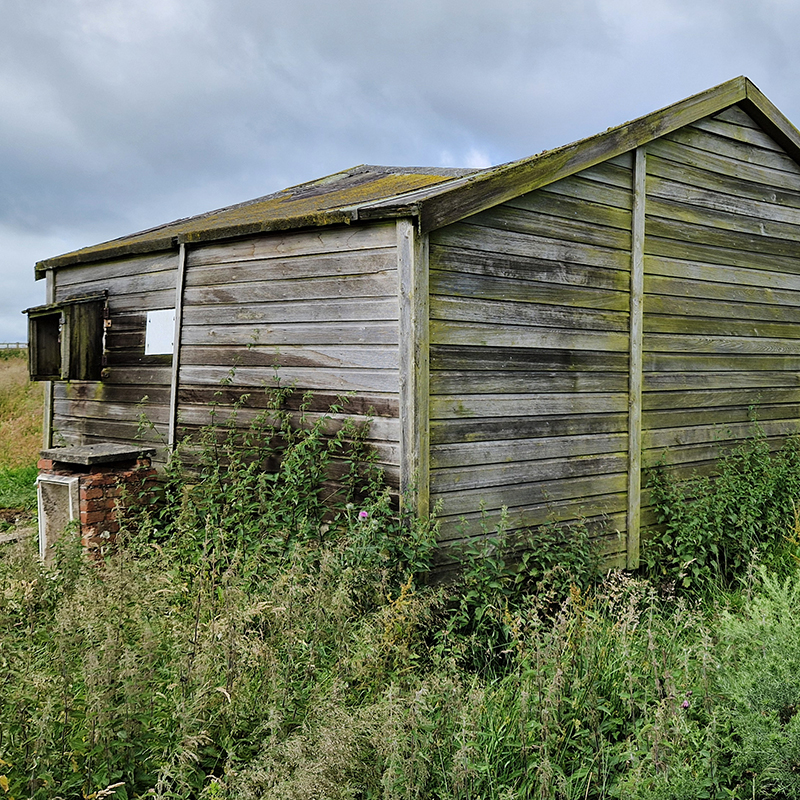
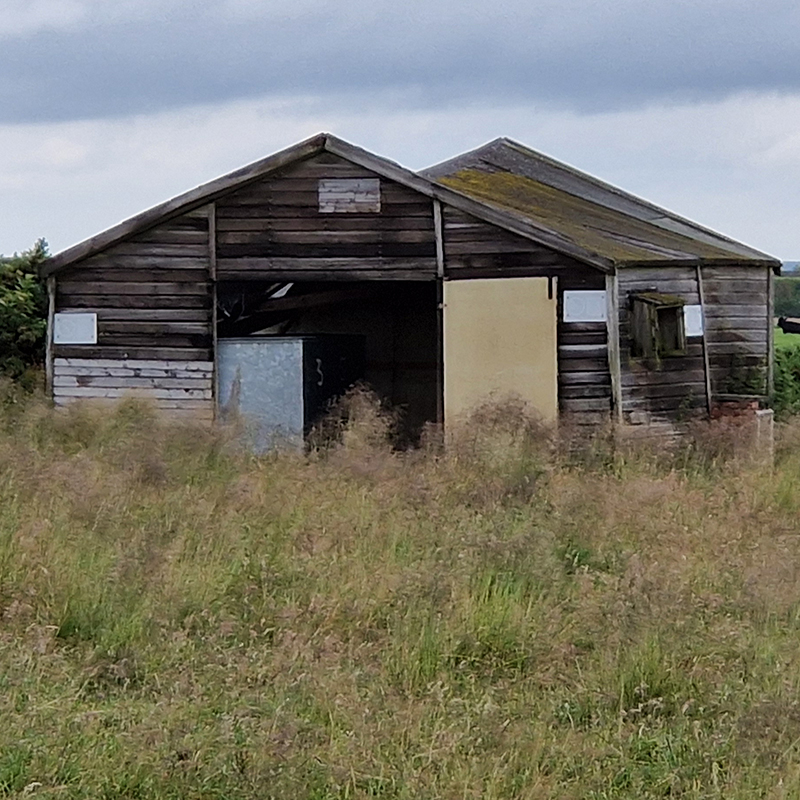
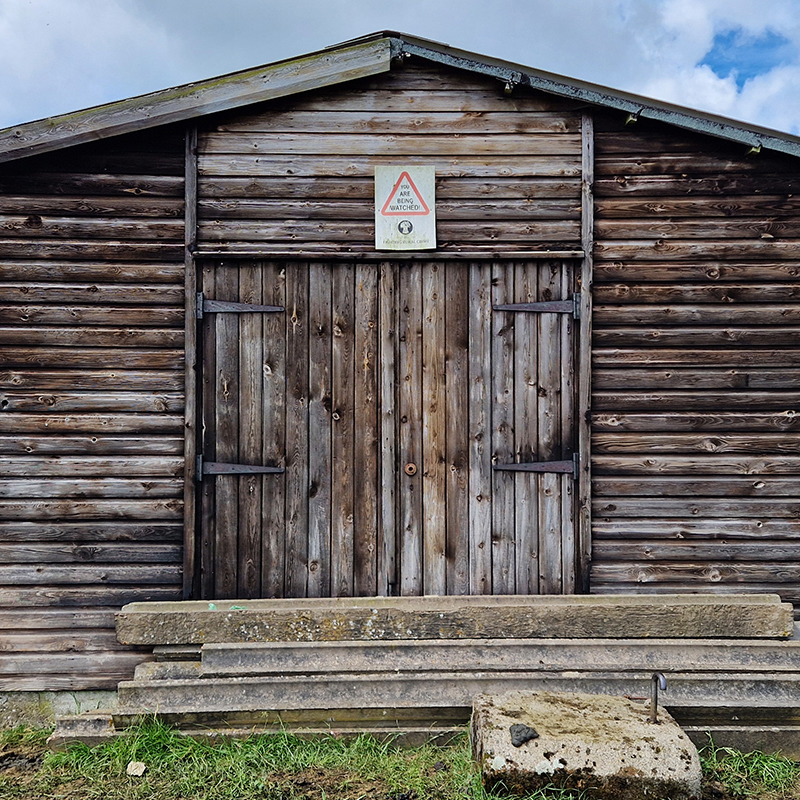
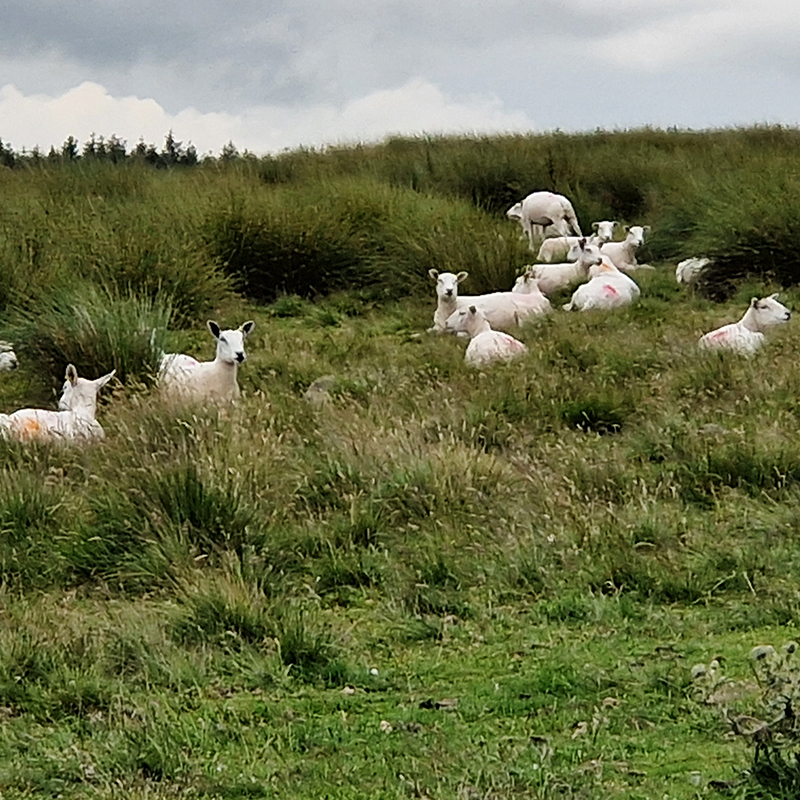
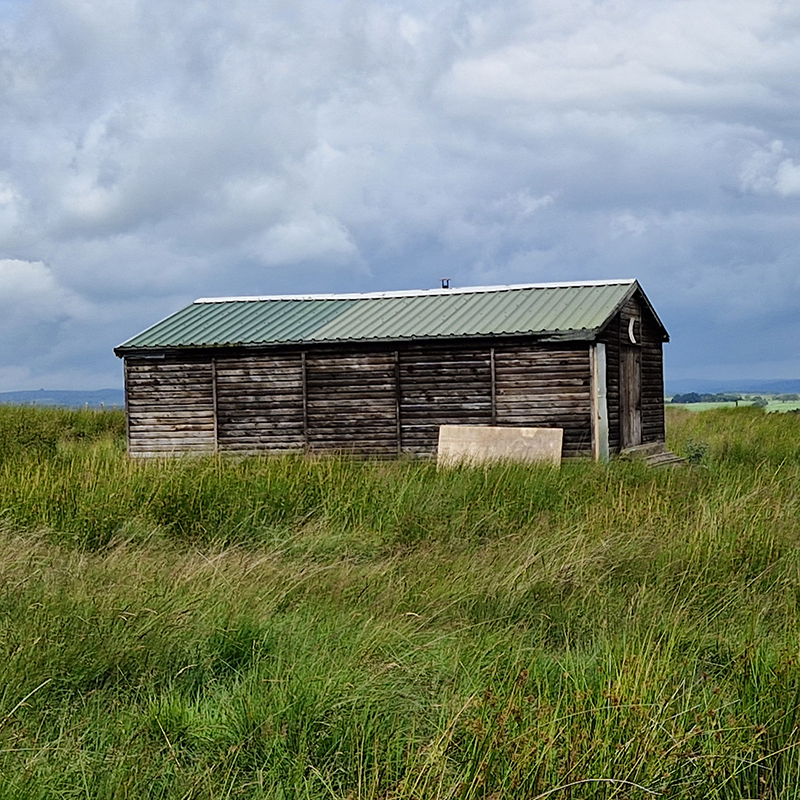
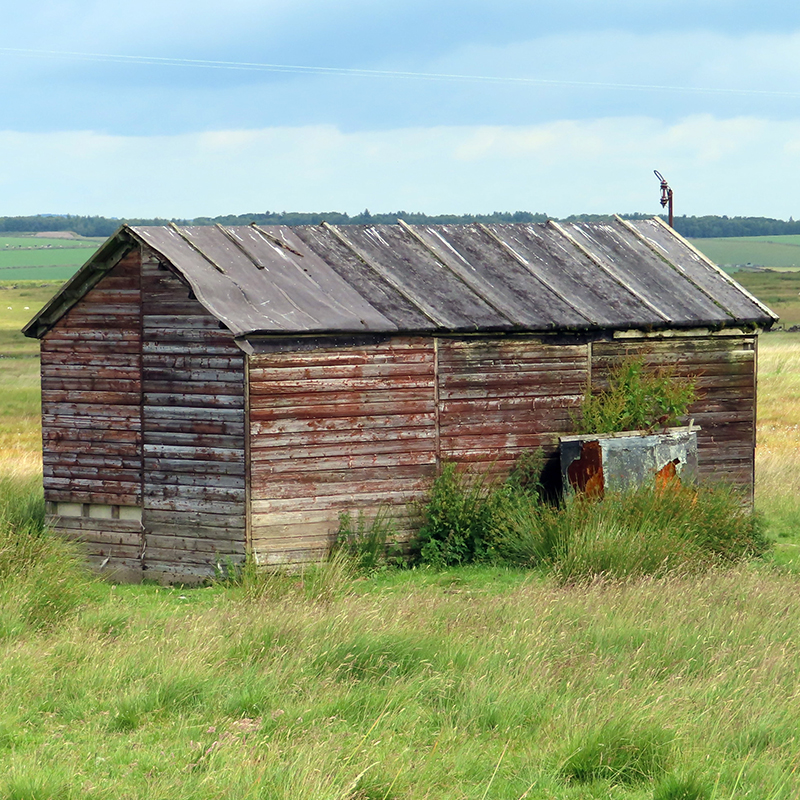
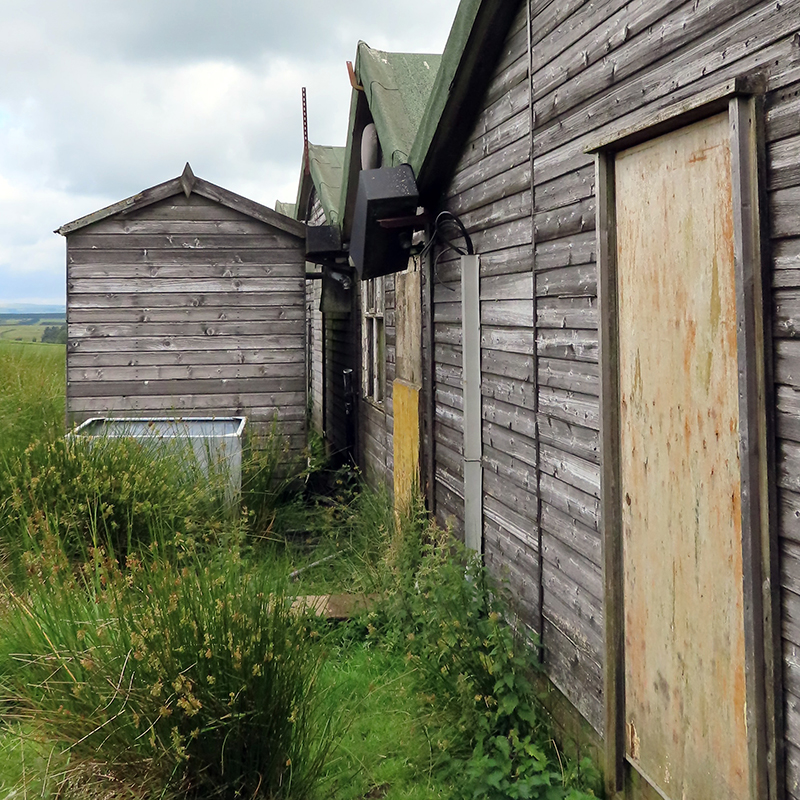
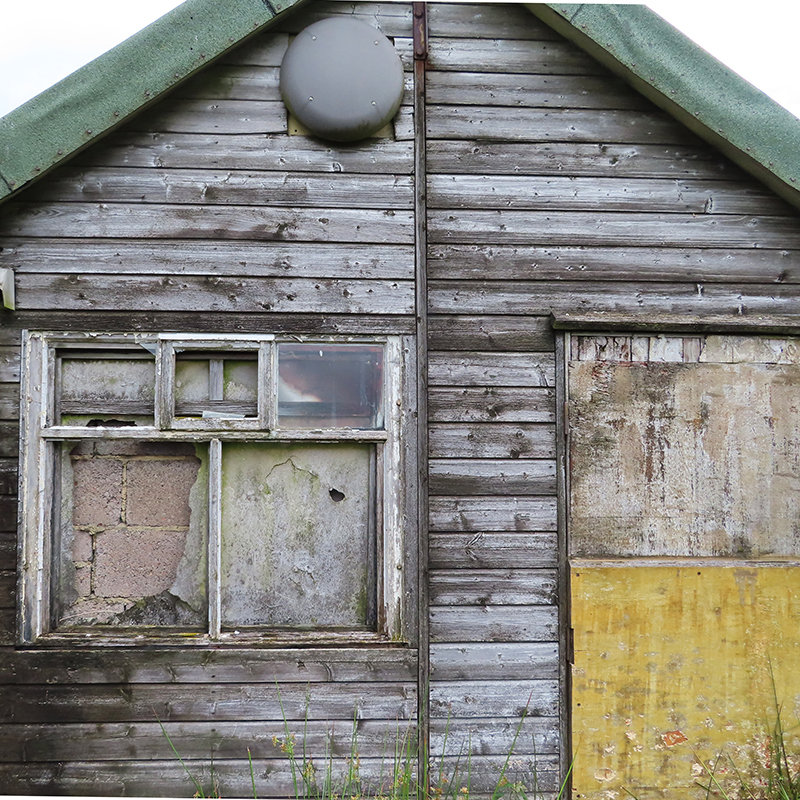
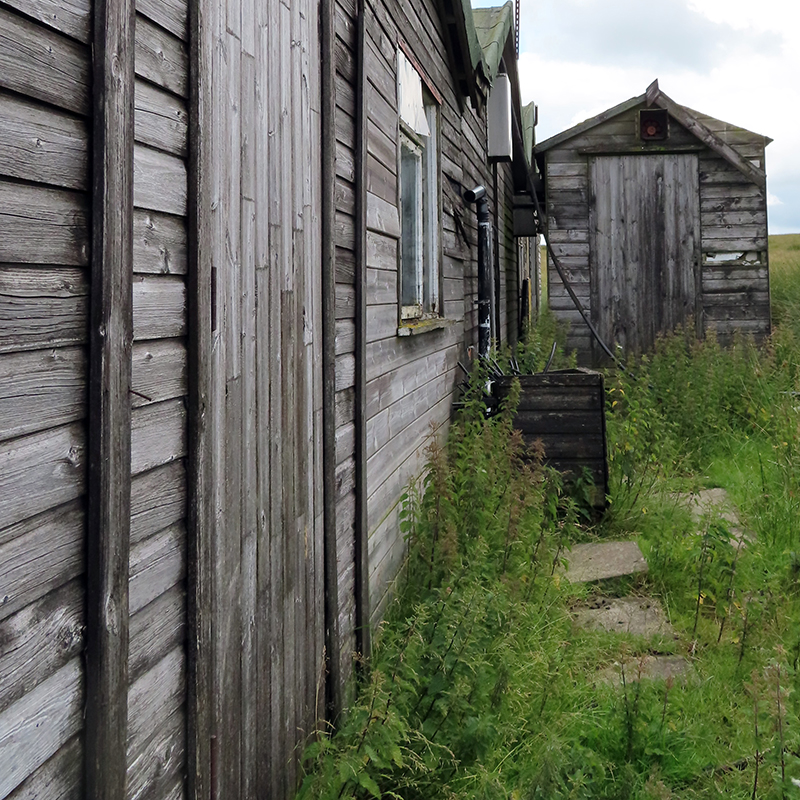
In search of huts. I have been on a mission to locate and document the remaining huts from a cosmic ray detection experiment at Haverah Park on the Pennine moorland in North Yorkshire.

When high-energy cosmic rays enter the atmosphere, they set off a chain-reaction particle cascade known as an extensive air shower. The Haverah Park experiment was home to one of the largest extensive cosmic ray air shower arrays in the world.

It was operated by the Physics Department of the University of Leeds for 20 years, closing in 1987. An array of over 200 water-Cherenkov detectors covering 12 km2 were active during its operation and many 1000’s of extensive air showers were recorded, including ones of such size that the cosmic rays that generated them had energies previously unthought of, adding to the mystery of where they come from.
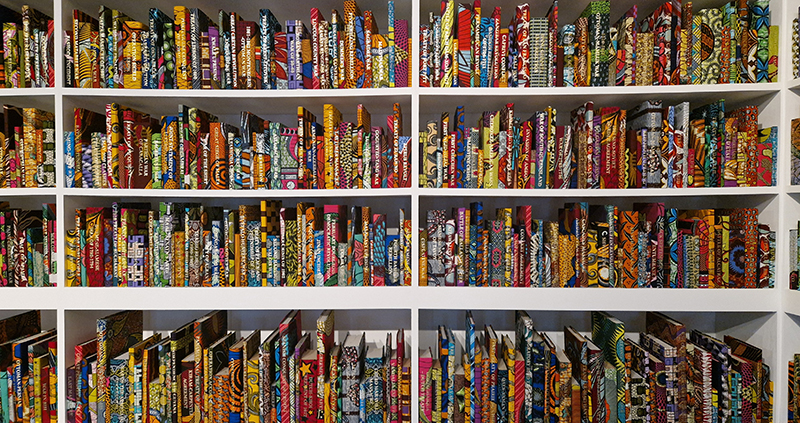
The large energy density of cosmic rays is close to that of starlight, adding their own glow to the sky as they blast across the universe. Cosmic rays are the atomic nuclei of elements ranging from hydrogen to uranium accelerated to high energies, with half being protons and most positively charged.
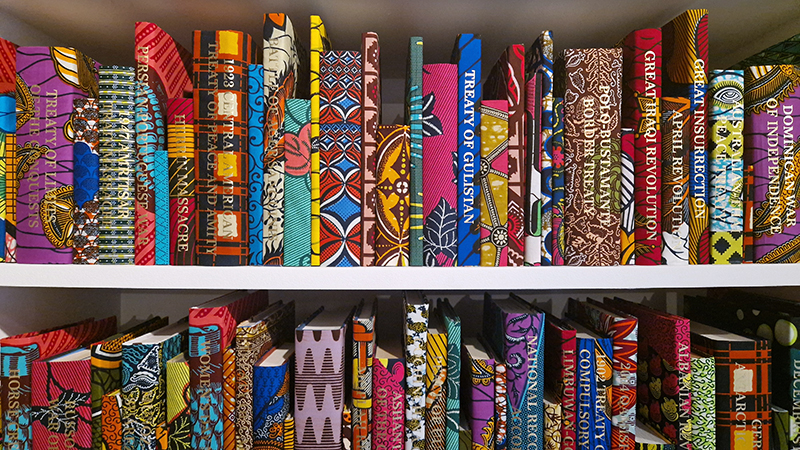
Much of the technology used to observe cosmic rays has changed little over the decades since first inventions and still plays a role within newer technologies.
It appeals to me that the excitement of observing particles from other galaxies happened at these unassuming structures.

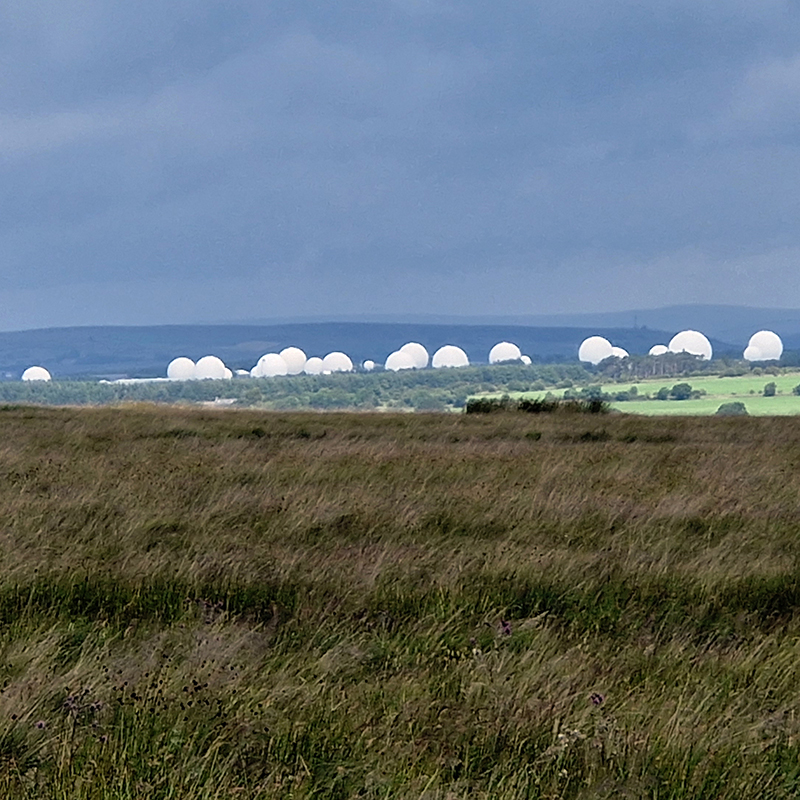
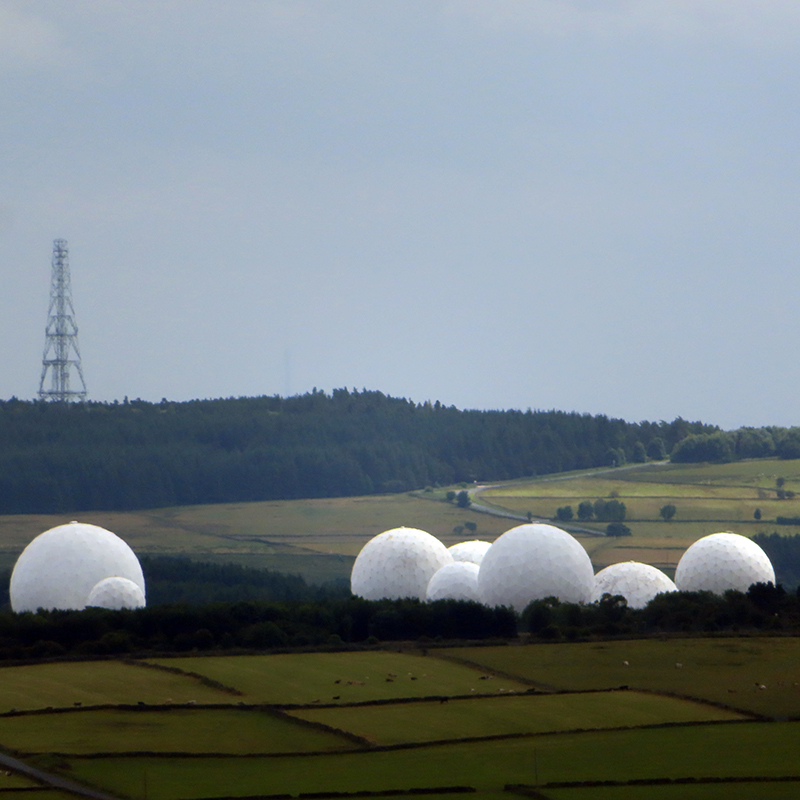
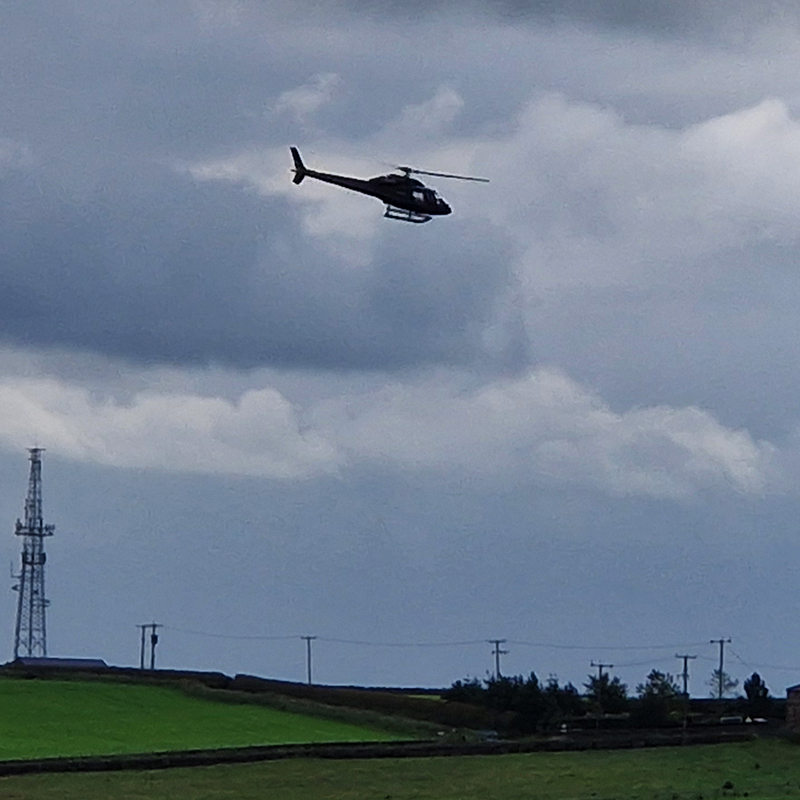
Sharing the landscape of Haverah Park cosmic ray air shower detector array huts are the striking white radomes that shield secret radar equipment at RAF Menwith Hill. The spy station has been there since the cold war space race began in the mid-fifties. Little is known about what goes on here but broadly it is said to gather electronic intelligence and is operated by US National Security Agency (NSA) and UK Government Communications Headquarters (GCHQ). As satellite technology has increased so has the number of radomes which now number 37 at the site. It is worth noting that satellites are vulnerable to unpredictable space weather and cosmic ray interference.

The total number of particles detected in a shower can be used to estimate the energy of the primary cosmic ray. Some particles contain the highest energy form of radiation known to exist anywhere in the universe and their origin is one of science’s greatest mysteries. Air showers of secondary particles generated from a primary cosmic ray hitting the Earth’s atmosphere are spread over many kilometres when they hit the ground so it is useful to have detectors spread over a large area. The difference in the time of arrival of recorded particles at multiple detectors can be used to estimate the arrival direction of the primary cosmic ray. However, this does not necessarily reveal the origin of the particle as magnetic fields within the galaxies bend their trajectories so that the memory of their original direction is obfuscated.

The cosmic ray detectors I made for the The Breath of Stars use a block of plastic scintillator which emits a short burst of UV light when a charged particle passes through it which is picked up by a single-photon-sensitive device. The detectors used at Haverah Park are water Cherenkov detectors. These are large steel tanks of purified water with photon sensitive detectors in the water.

While the speed of light in a vacuum is a universal constant its speed through a material may be significantly reduced as it is slowed by the medium. A particle passing through a material faster than that at which light can travel through the material loses electrons thereby emitting light. When cosmic rays pass through the water tanks, they emit Cherenkov radiation because they travel faster than the speed of light in water. Cherenkov light is similar to the production of a sonic boom when an airplane is traveling through the air faster than sound waves can move through the air. Pavel Cherenkov along with Ilya Frank and Igor Tamm discovered and demonstrated this phenomenon in 1934, astonishingly, it had been predicted in 1888 by Oliver Heaviside, and in 1910 Marie Curie had noticed a strange blue glow from her radium experiments.

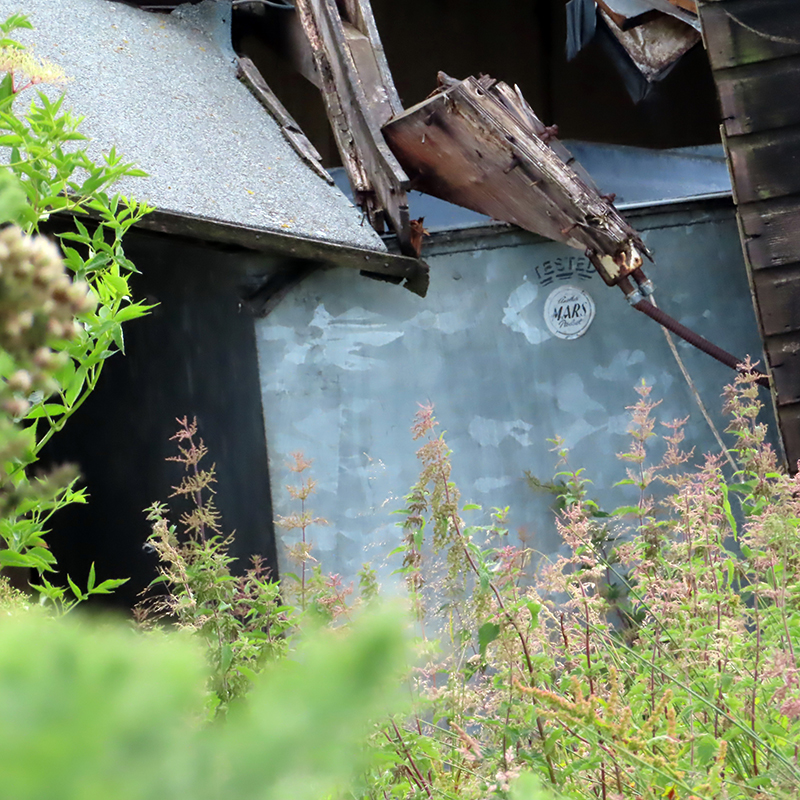
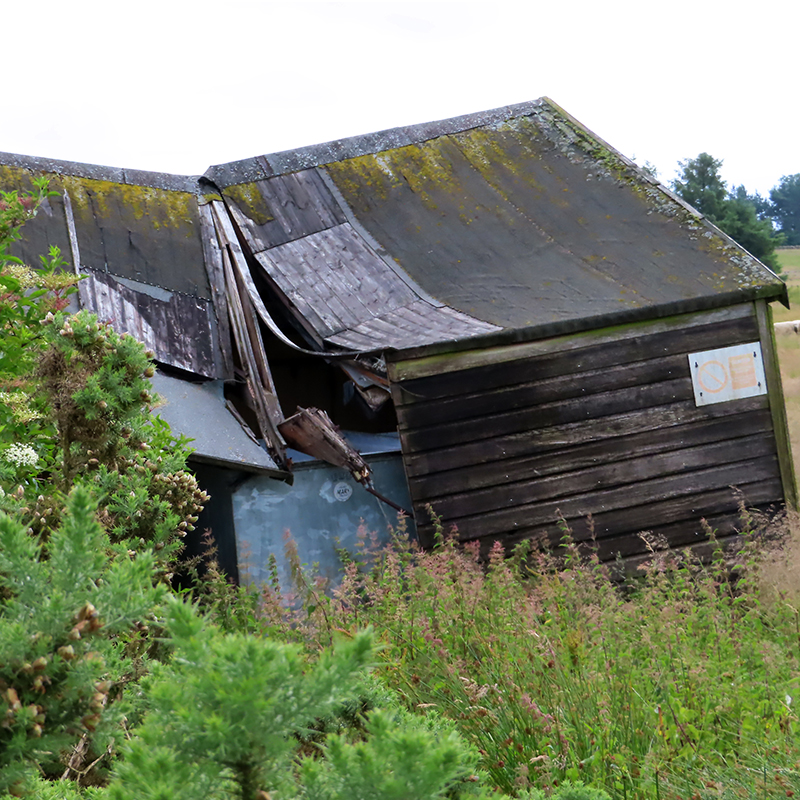
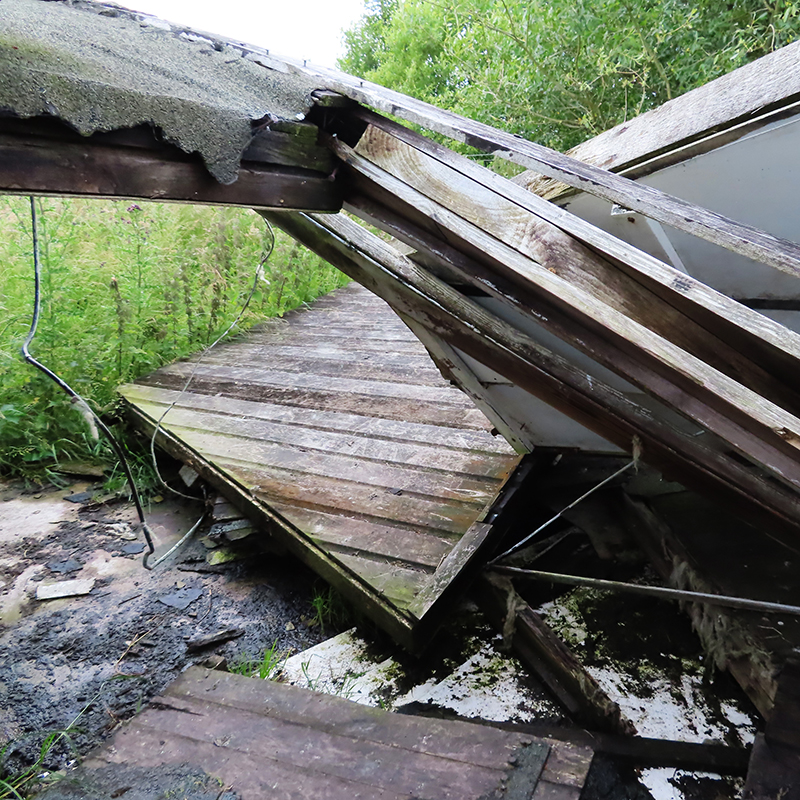
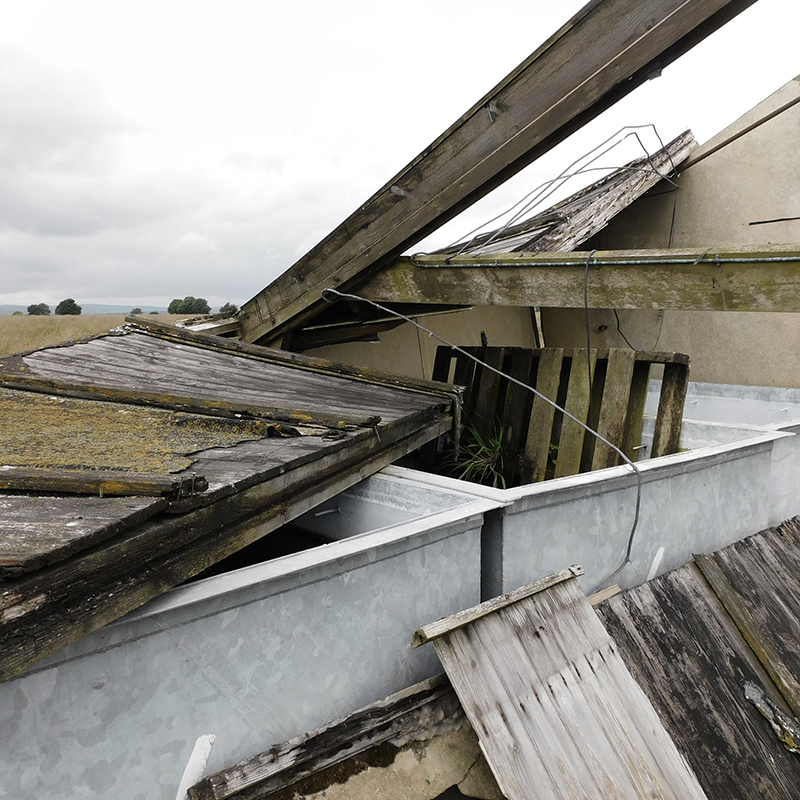
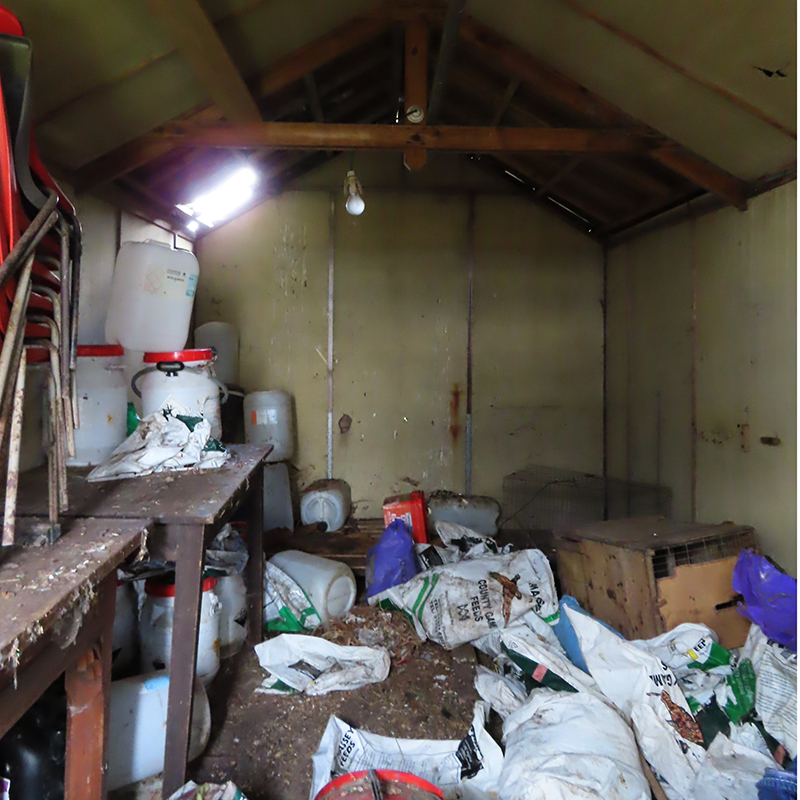
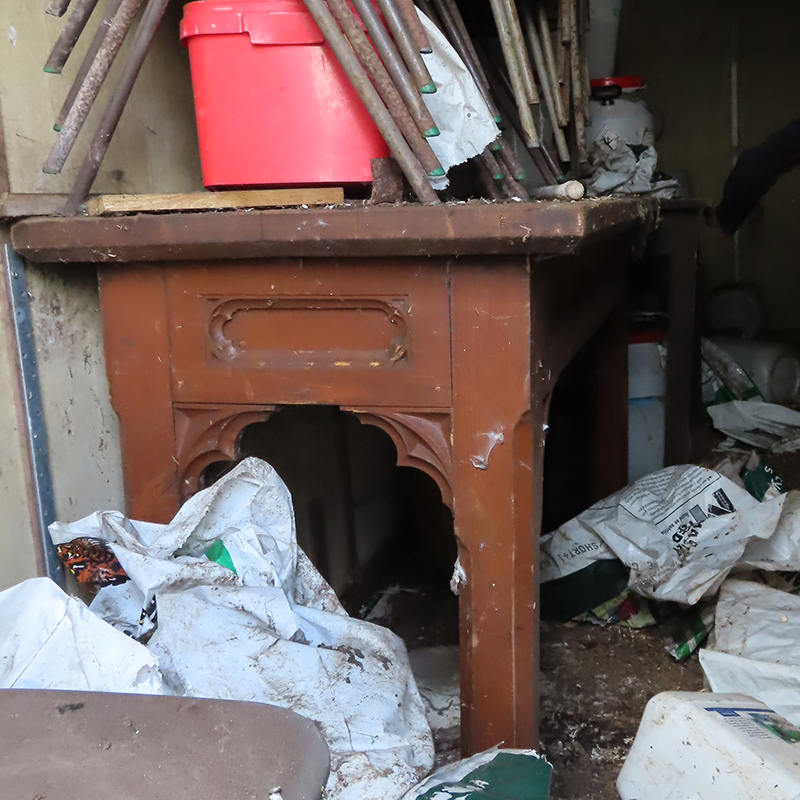
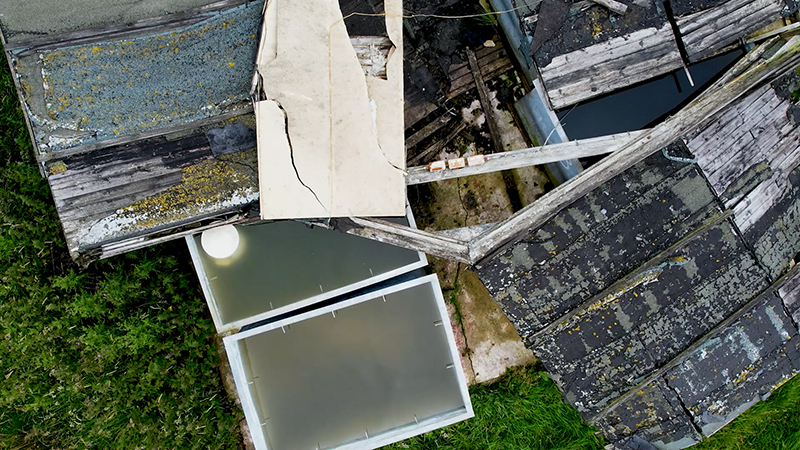
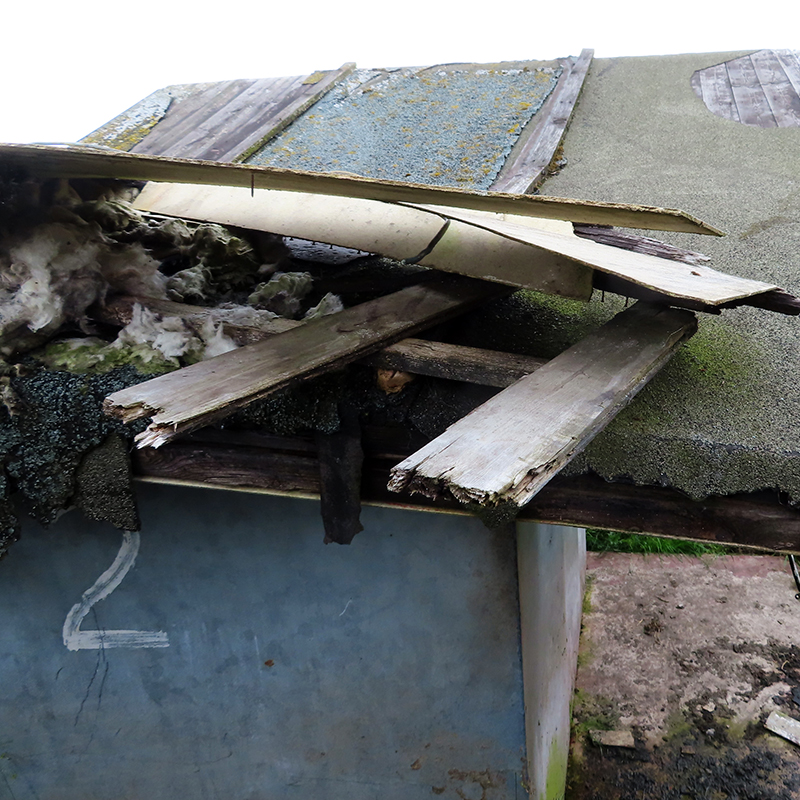
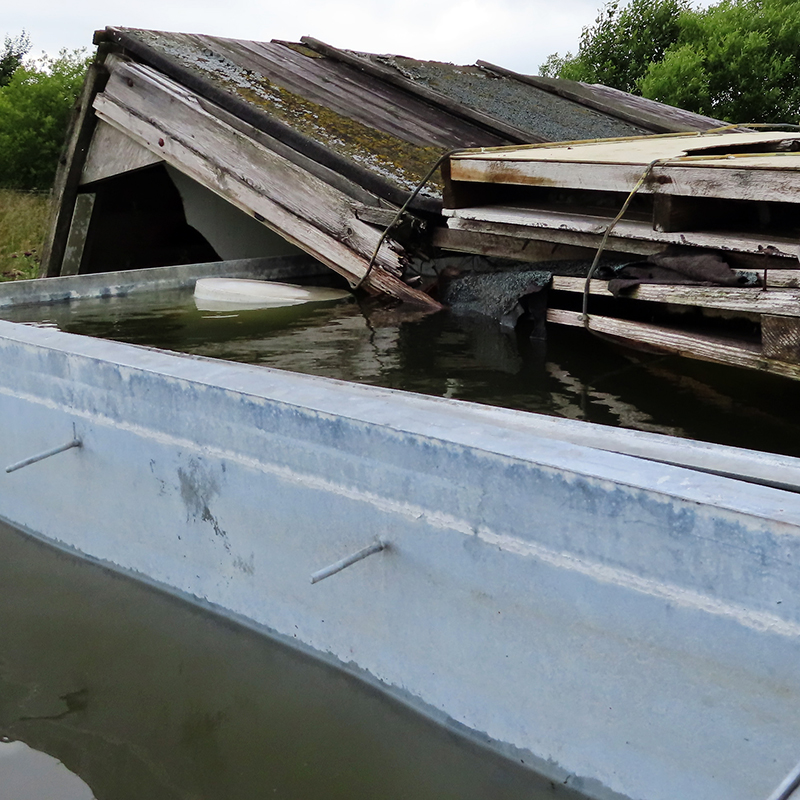
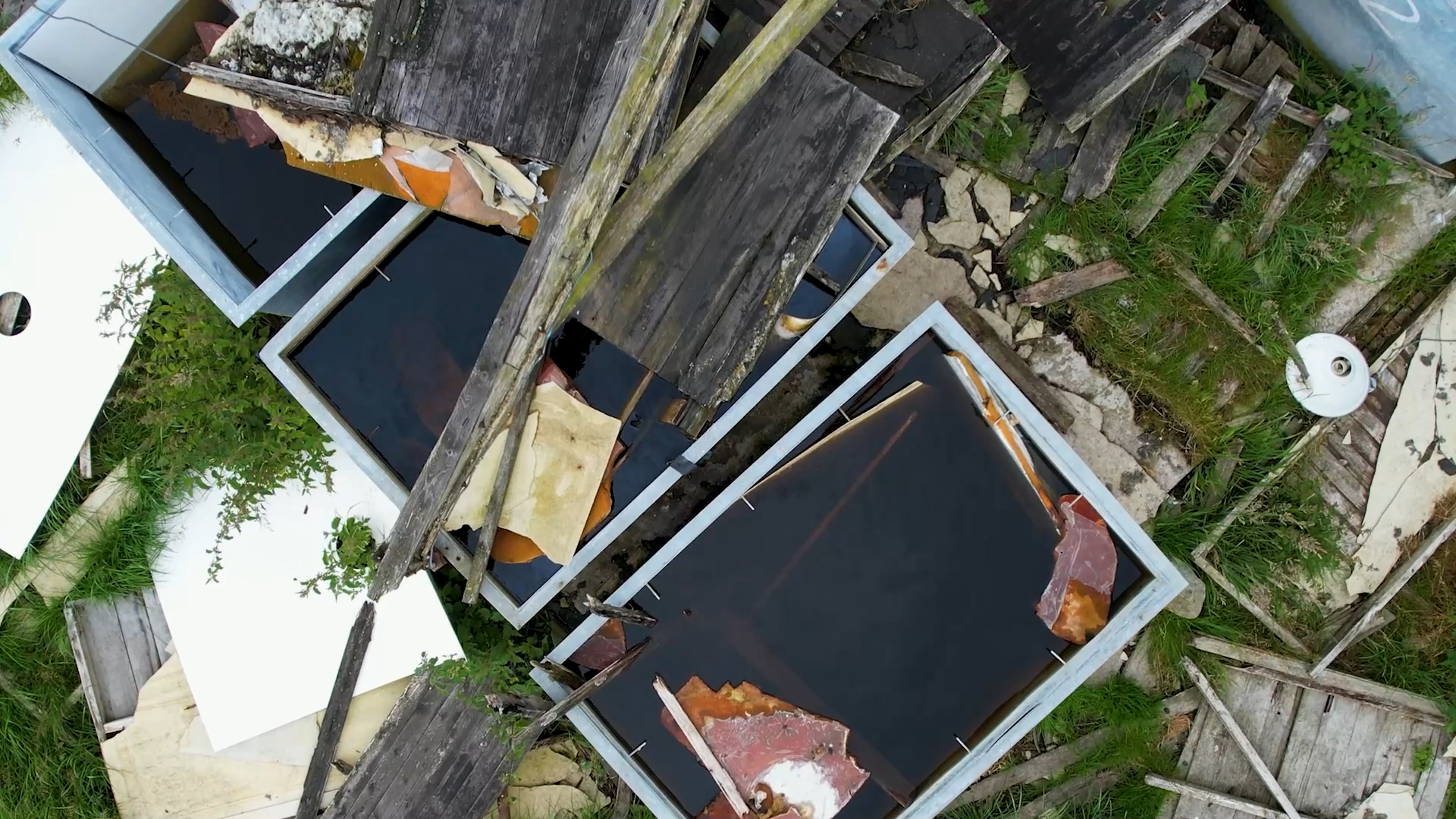
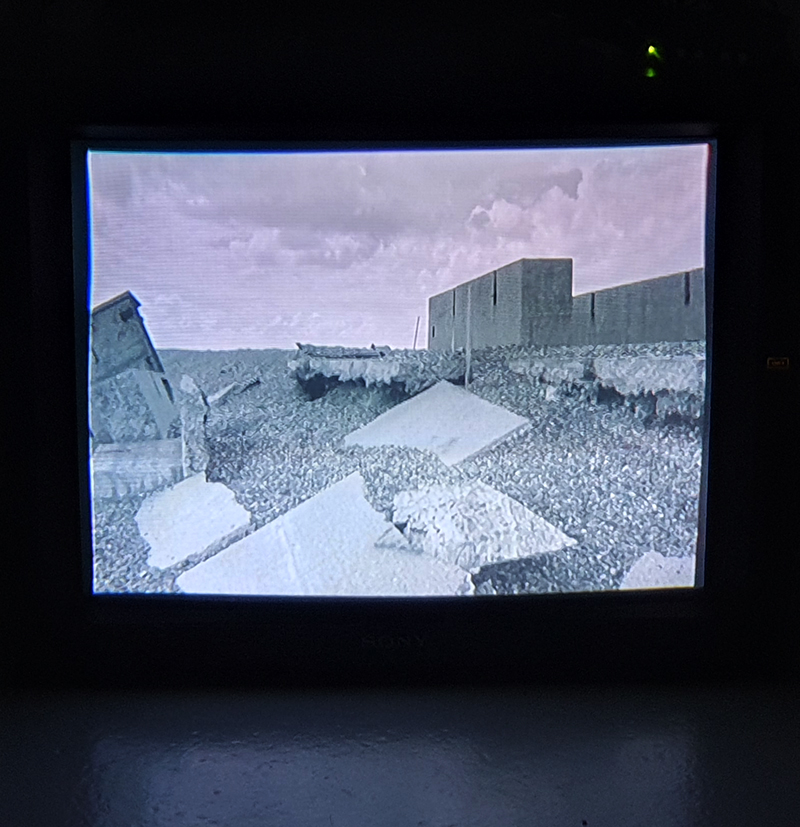
Other huts from the Haverah Park experiment are in a state of collapse.

There are so many high energy particles hurtling around the universe that they almost equal starlight in energy density. Cosmic rays travel at almost the speed of light and because they are charged particles most cosmic rays are confined, spiralling within our galaxy for a million years or more, by the magnetic fields which permeate it.

Five million cosmic rays pass through your body each day. Some will collide with atomic nuclei. A particle passing through a material at a velocity greater than that at which light can travel through the material emits light. Maybe we glow a little.

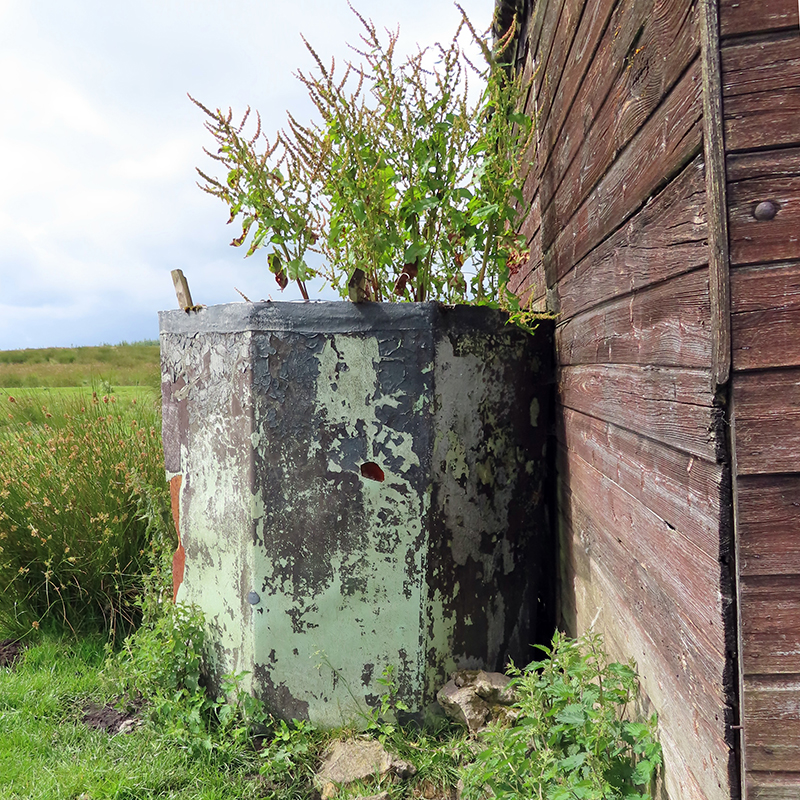
Following the disappearing trail. Haverah Park hut with an intriguing hexagon tank.

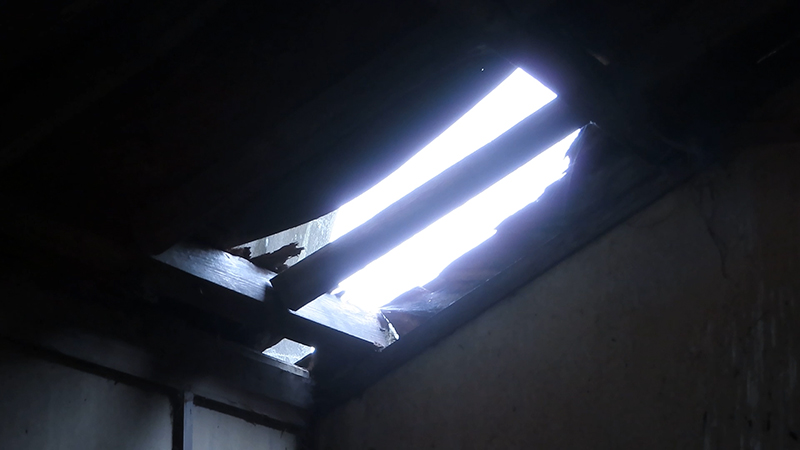
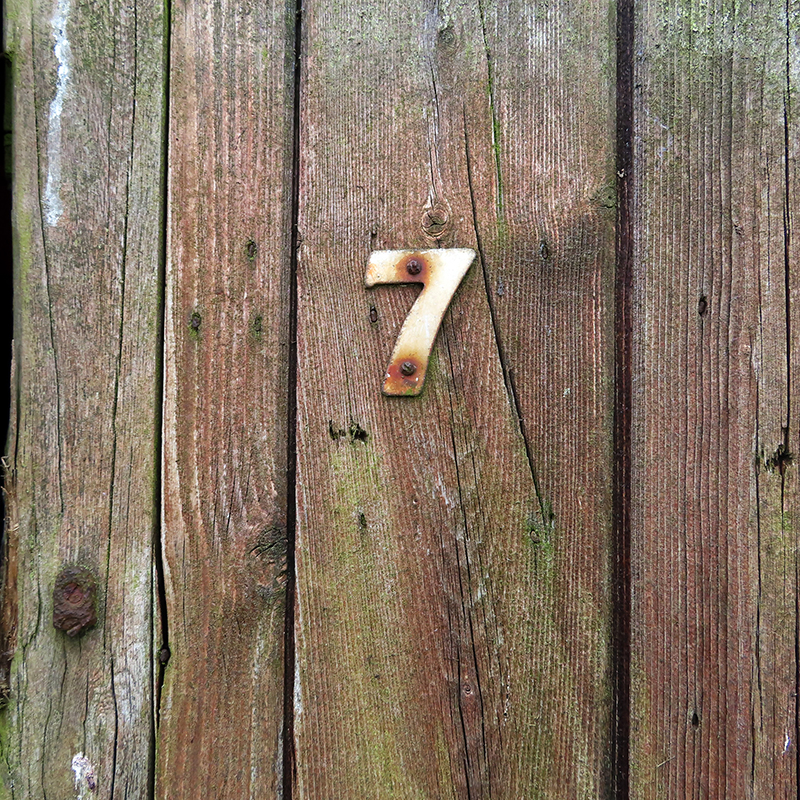
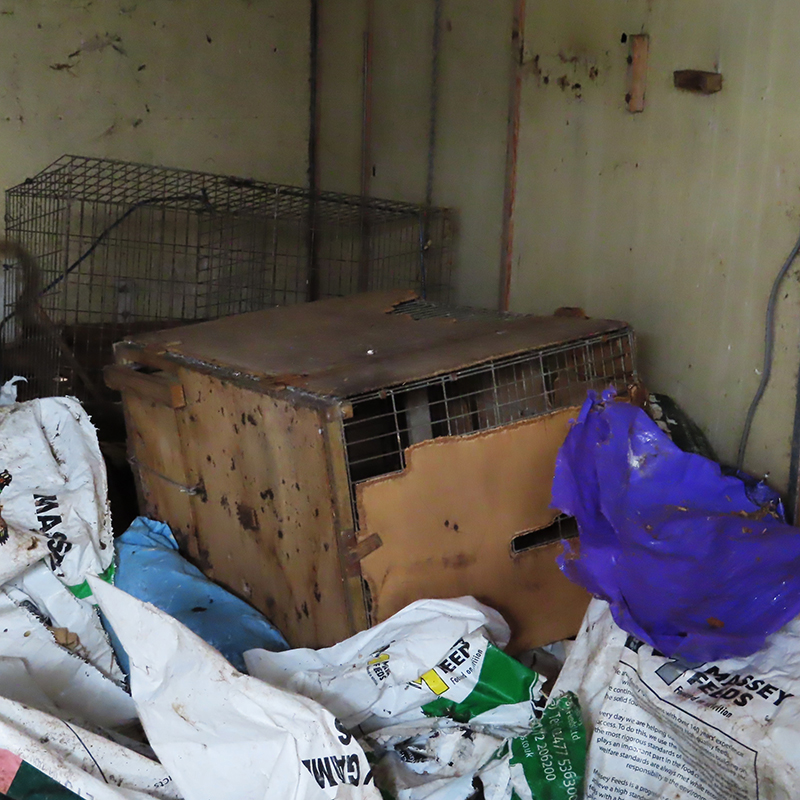
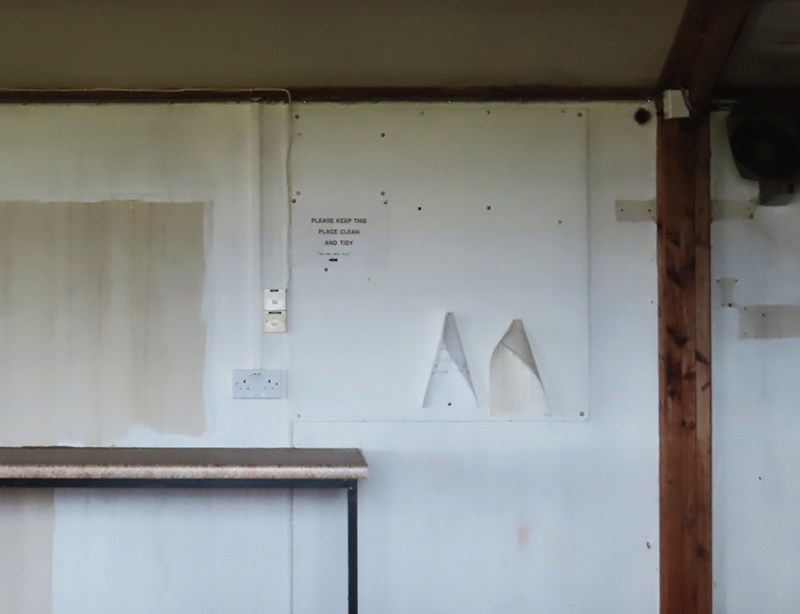
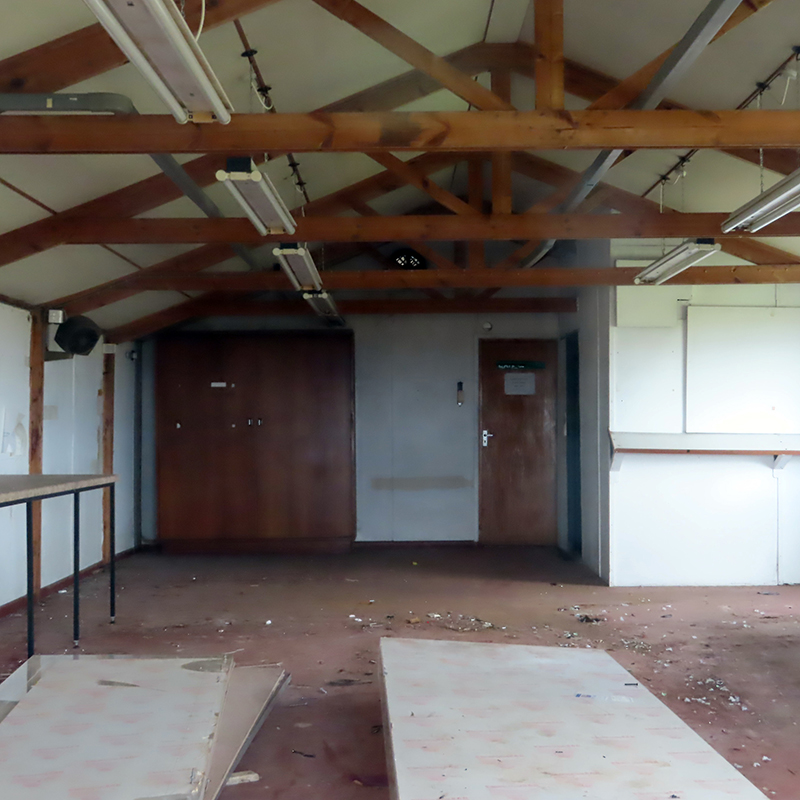
Inside Hut no. 7 is a dumping ground. Waste is a big problem in space as well as on Earth. The thickening shell of space junk in low Earth orbit, if left to accumulate, could cause a conductive shield to form, weakening the effectiveness of the magnetosphere, which protects life on earth from most cosmic radiation.

A decaying wall map of the entire Haverah Park experiment is just visible through a window of one of the huts in the central hub, but not much else remains inside.

It looks like these huts have been recently emptied into a skip which, by chance, was collected while I was there. Unfortunately, the driver had no enlightening information for me about the future of the huts.

Cherenkov radiation is a form of energy that gives off a blue glow when electrically charged particles are moving at speeds faster than light is able to travel through the same medium. The experimental physicist Blackett, who received the 1948 Nobel Prize in Physics for his investigations into cosmic rays, believed that extensive air showers should produce flashes of light that could be perceived by the human eye when lying down and looking upwards under dark skies. Whether he achieved seeing this phenomena himself is not known, but he inspired colleagues Galbraith and Jelley, in 1952, to devise an experiment to detect light from air showers using a rubbish bin painted black on the inside, a recycled searchlight mirror and a small phototube. With these simple items, they made the first observation of Cherenkov light produced by cosmic rays passing through the atmosphere. Not all the twinkling in the night sky is starlight.

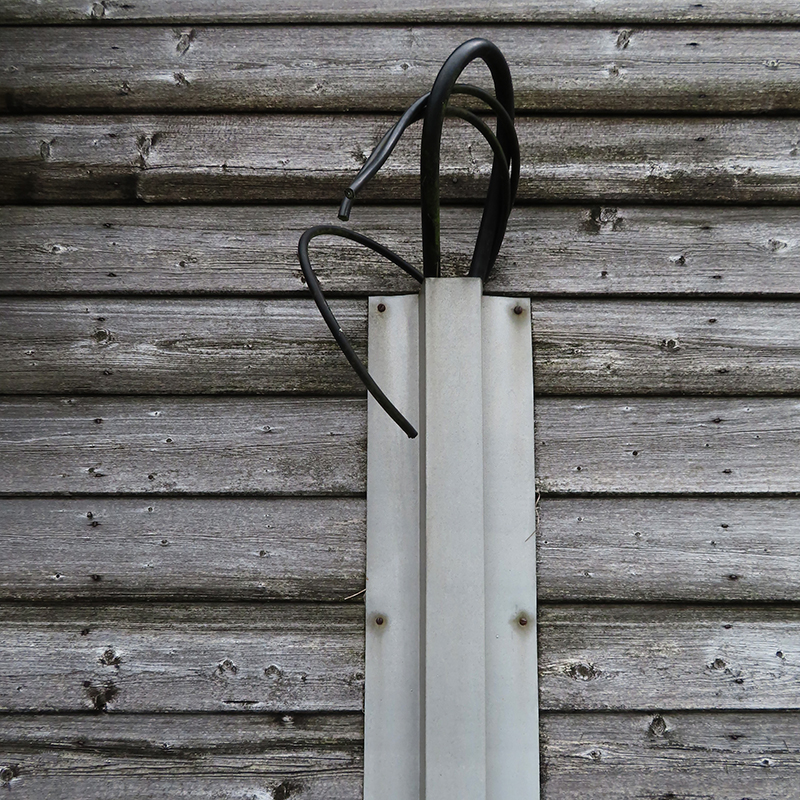
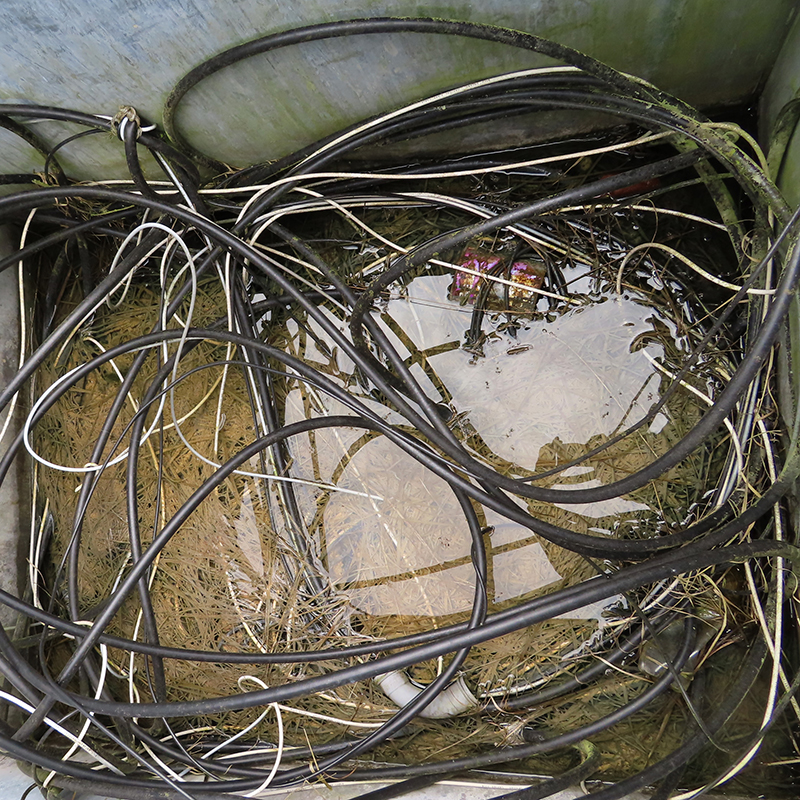
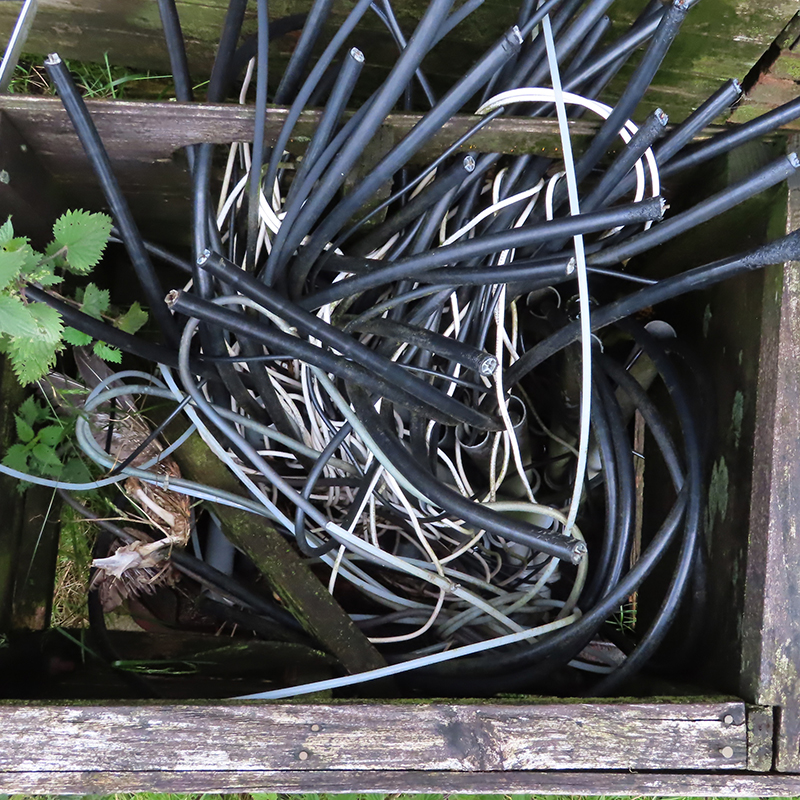
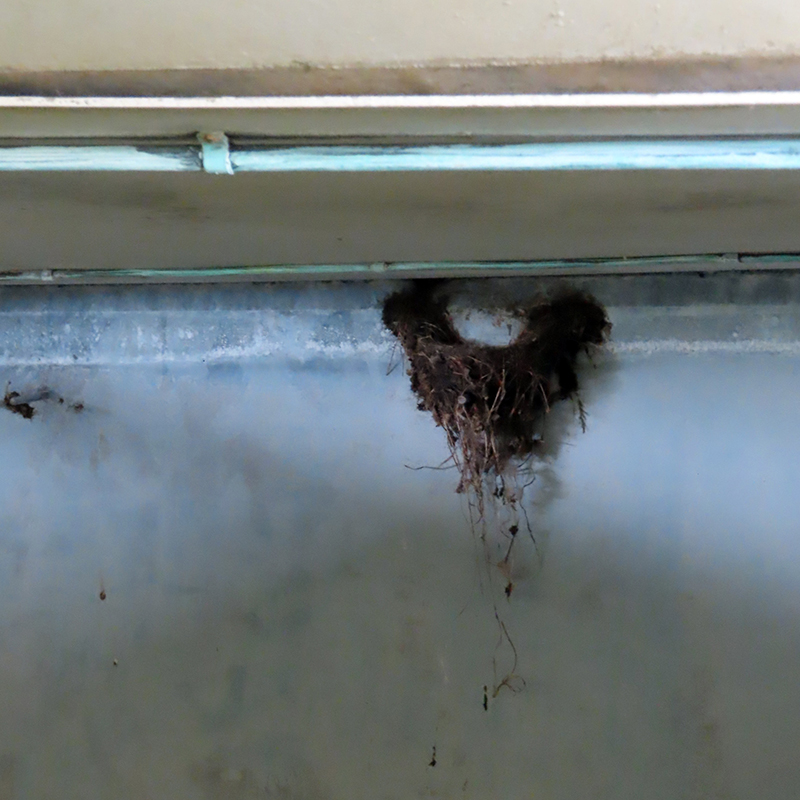
During the Haverah Park experiment, the water Cherenkov detectors deployed across the moors were connected by underground cables and transmitted information to the control huts via radio signals in the microwave frequency range. All communication is now severed. Cut cables coil in rain filled tanks. The cosmic rays are still pounding down upon these new unwatched ecosystems but the detectors have moved elsewhere.

I am looking forward to meeting Professor Alan Watson FRS here in the autumn. He is eminent in the field of cosmic rays and helped initiate the extensive air shower project, working at Haverah Park for 25 years. He has kindly agreed to meet and share his insider knowledge of the history and operations at the site.

The idea to build a truly giant shower array was launched by Alan Watson and Jim Cronin shortly after Haverah Park was decommissioned and thanks to the ground breaking work undertaken in these huts, it evolved to become the vast Pierre Auger Observatory in Argentina, named in honour of the man who first discovered extensive air showers.

Peering into the darkness, trying to fathom the structures of the universe or what’s inside the hut, and the nature of that relationship.

The ultra high energy particles detected at Havarah Park and new arrays across the globe are very rare, possibly less than one per square kilometre per century, so it is big news when one arrives. Because they have such high energy, it is thought they shouldn’t be affected by galactic magnetic fields, and therefore, the direction of the particle could be determined and the source located. The Amaterasu particle, named after the sun goddess in Japanese mythology, the second most powerful particle to be recorded, appears to have emerged from the Local Void, ana area with no astronomical objects that might produce such a particle. There is no explanation of where these particles come from, just hints of bigger mysteries to unfold.

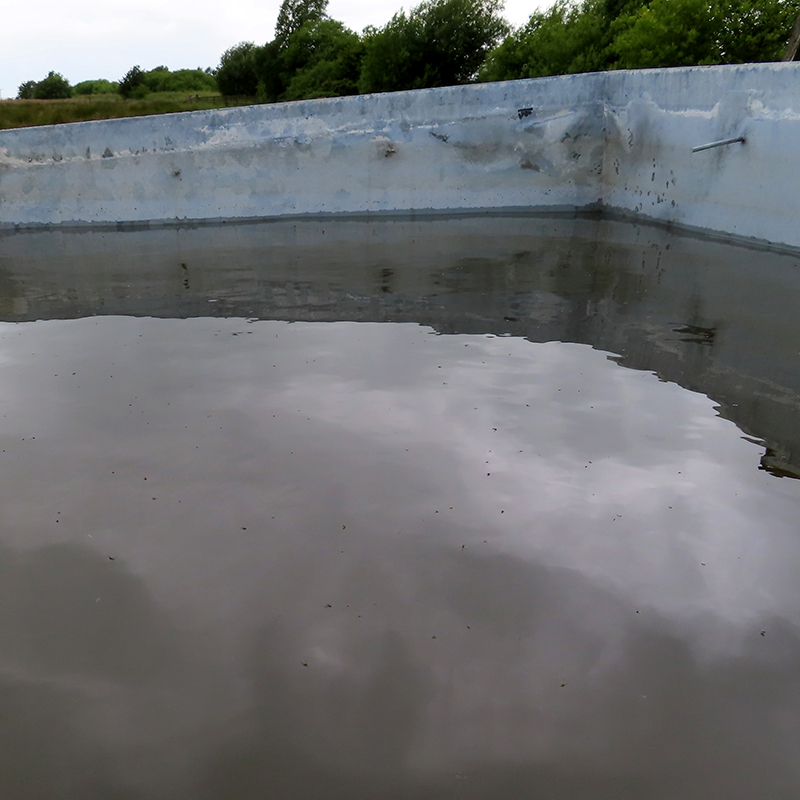
Many water tanks remain around Haverah Park, stripped of their purpose as water Cherenkov detectors they now reflect the sky in the rainfall they collect rather than record showers of particles from space.

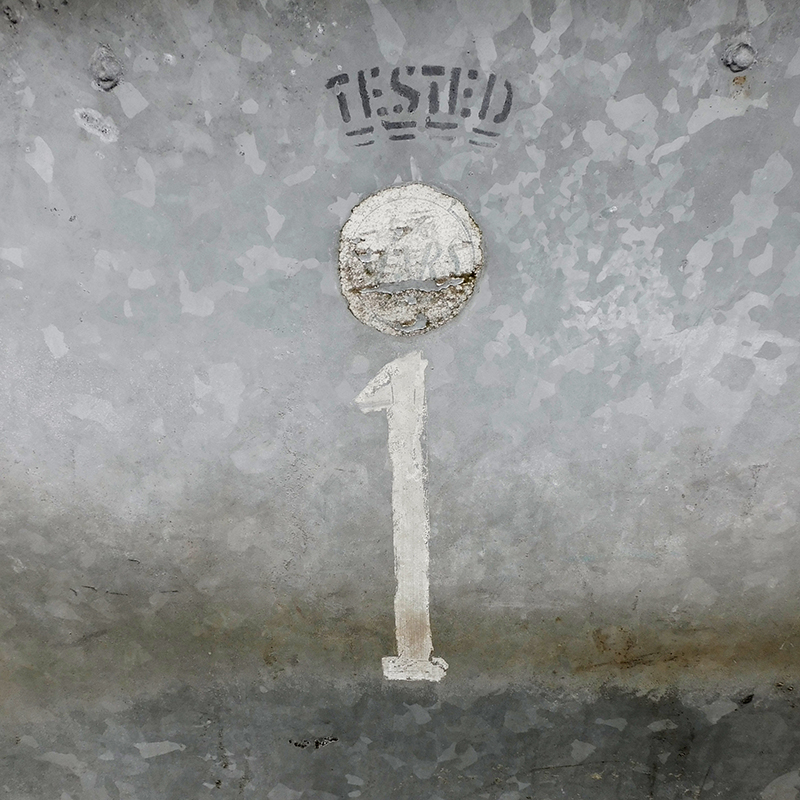
During operation, huts were built in groups of three, each with six large galvanised steel tanks lined with white plastic to diffuse the light and filled with local purified water. Each tank was monitored by extremely sensitive photon detectors which recorded the Cherenkov light emitted as particles passed through the water. At the end of the large array experiment, one of the detectors was opened, and the water was found to be crystal clear and good enough to drink. The proof that water could be kept bacteria-free in a sealed container for over 25 years gave confidence in using the same technology for a future larger cosmic ray detector array to be developed.

Haverah Park was once one of the largest extensive air shower arrays in the world, with an area of 12 km2, but in the end, it just wasn’t big enough.

When Alan Watson and Jim Cronin proposed building a new 3000 km2 shower array, the question from funders was, ‘why do you want to make the array so large?’. The answer is, of course, to discover those known and unknown unknowns, but funders don’t usually like unpredictable outcomes. Luckily their plea was bolstered by the Fly’s Eye Cosmic Ray Detector Array out in the Utah Desert recording the Oh-My-God particle in 1991, it’s energy was 40 million times greater than that of any particles ever produced in any terrestrial particle accelerator. This and other evidence of extremely high energy particles sparked interest in the field of astrophysics and validated the discovery of similar particles at Haverah Park, which had not been taken seriously at the time. This ambitious proposal gained momentum during the 1990s to become the Pierre Auger Observatory in Argentina, with the detector design developed from the water Cherenkov tanks so successfully operated at Haverah Park. The huts here may be in ruins, but their legacy lives on at the world’s largest extensive air shower detector array, which is edging closer to answer the question ‘Where do ultra-high-energy cosmic rays come from?’

I am looking forward to developing work responding to the legacy of the Haverah Park experiment and building on my experience of creating The Absolute Hut (of absolute potential) New surfaces to explore, more moss, and also lichens here.

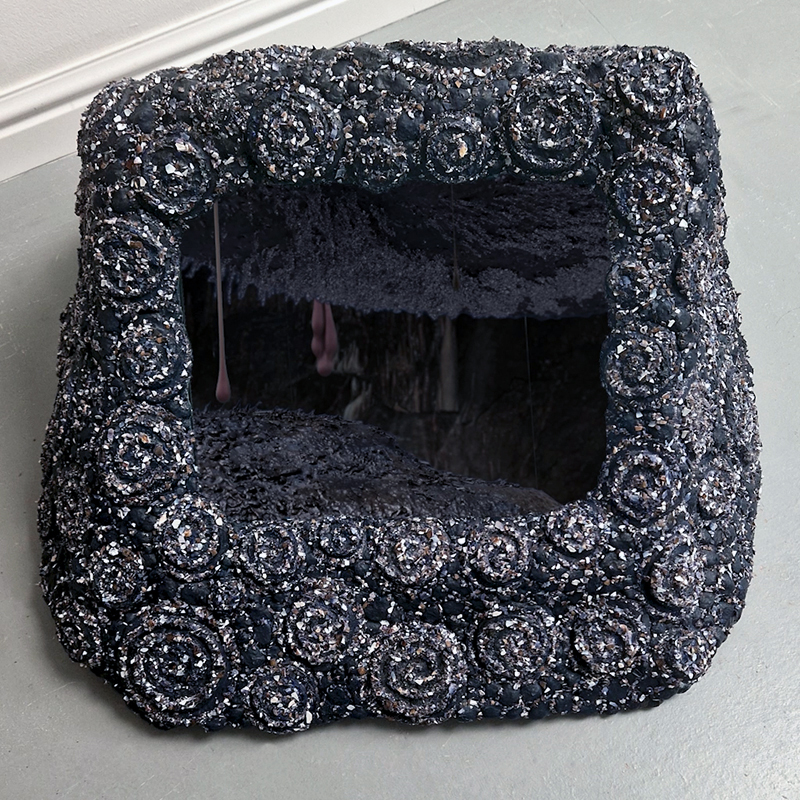
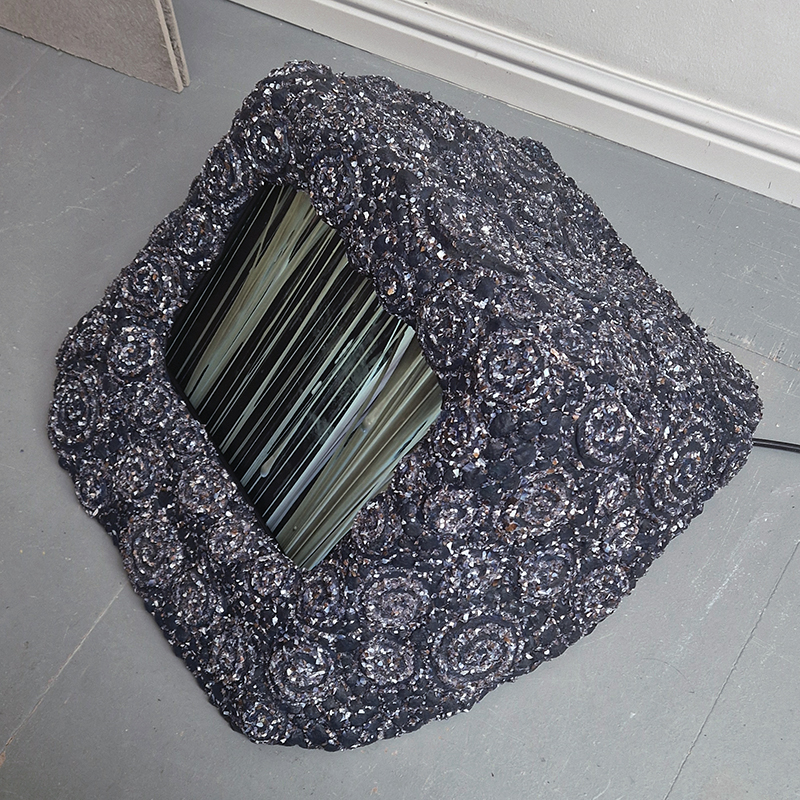
‘The Belly of a Rock’ video has waited a long time for its crusted shell. A hybrid between rock, mollusc, and technology inspired by the chemical conversations and urge to create described by Italo Calvino in his story ‘The Spiral’. We don’t always know what we are creating. Within ‘the belly’ surfaces slide and scrape along lines of fissure, distended innards ooze and rocks moan as they are distorted by untold pressure. The turbulent spiralling of the core births rock and lifeforms acted upon by the drag of the oscillating magnetic field.  

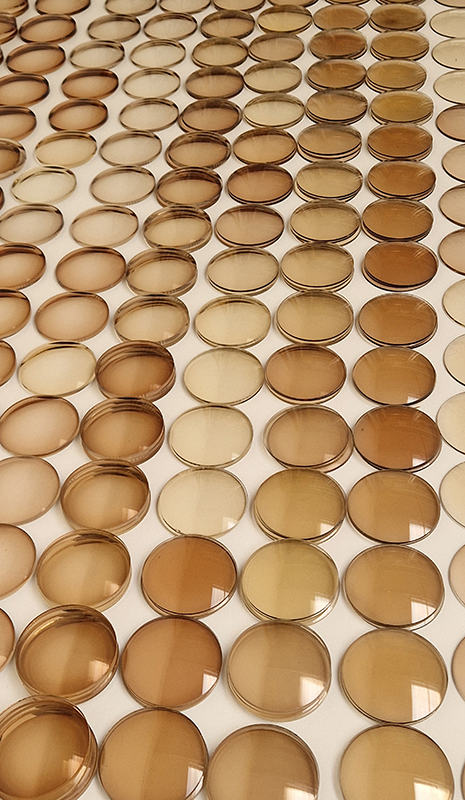
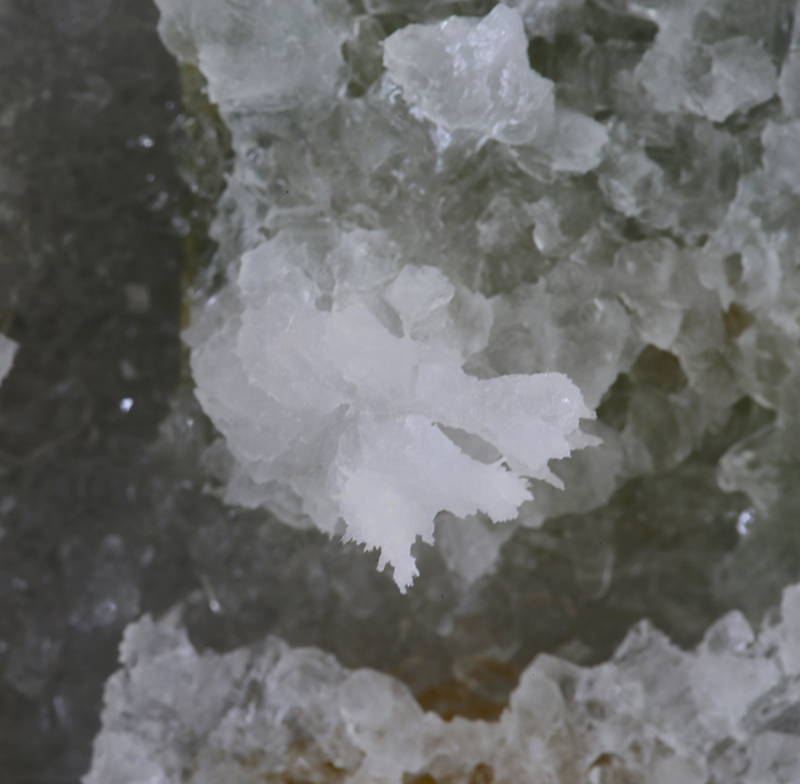
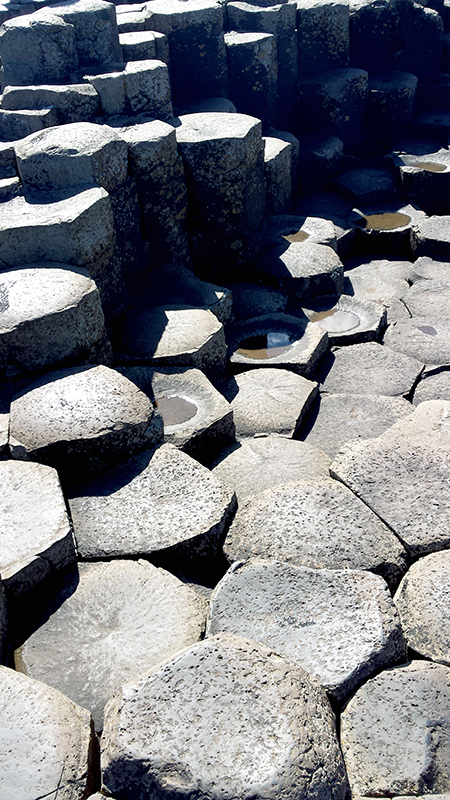
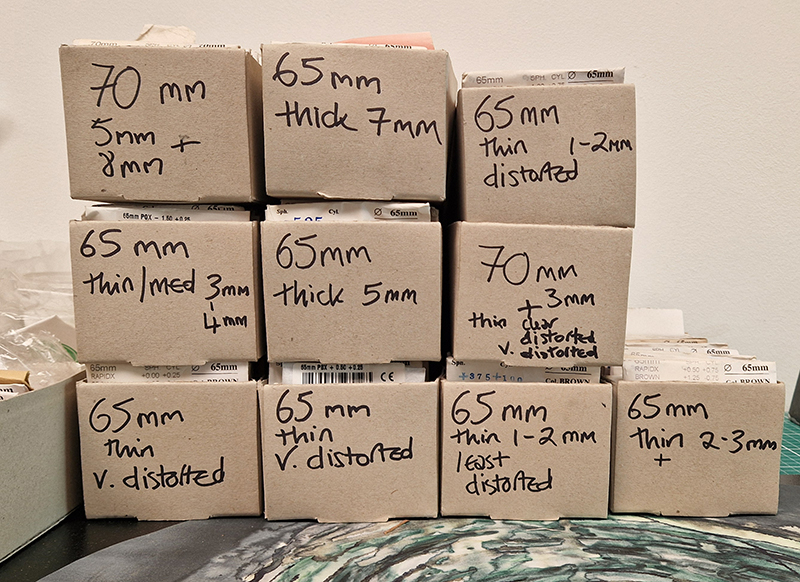
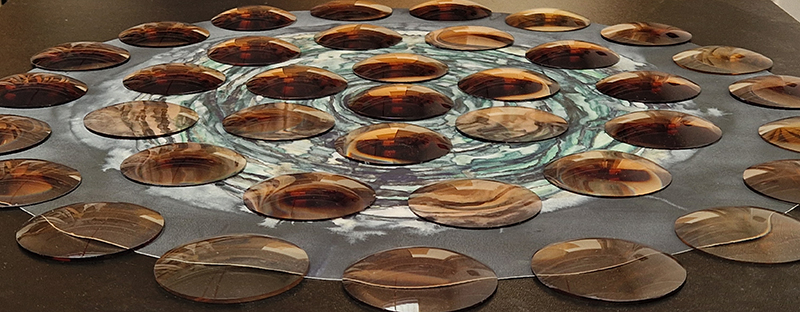
I have acquired a large number of photochromic optical lenses. These I have sorted by diameter, thickness and distortion. Initial thoughts about their use include using them as petri dishes to grow crystals which are embedded into small concrete hexagonal pillars of differing heights with reference to the geology of giants causeway. Using them to create composite windows into a new hut structure filled with video projections referencing the fly’s eye cosmic detector array.

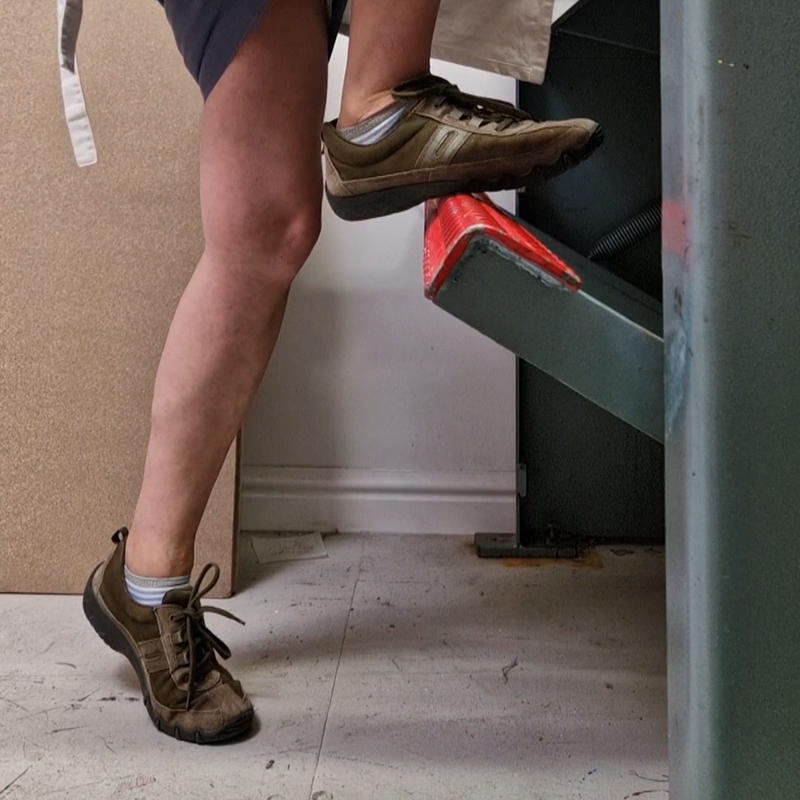
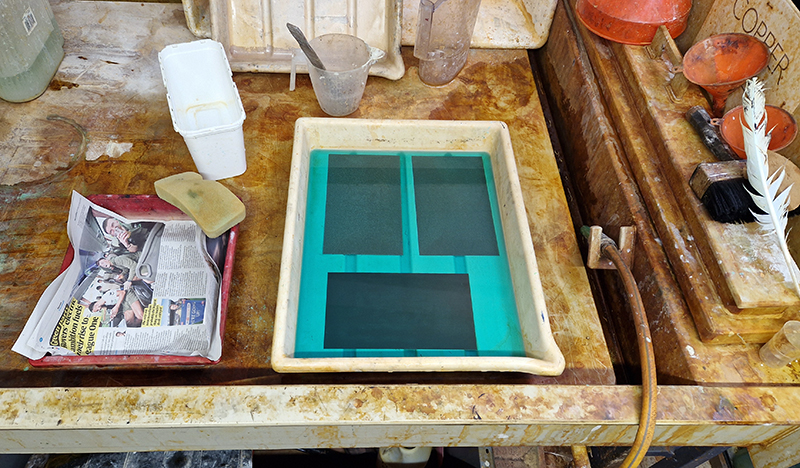
A good workout on the guillotine making 201 cuts in copper sheet in preparation for a new concrete tablet in the Instruments of the Anemoi sculpture series.

Gallery and other outings:

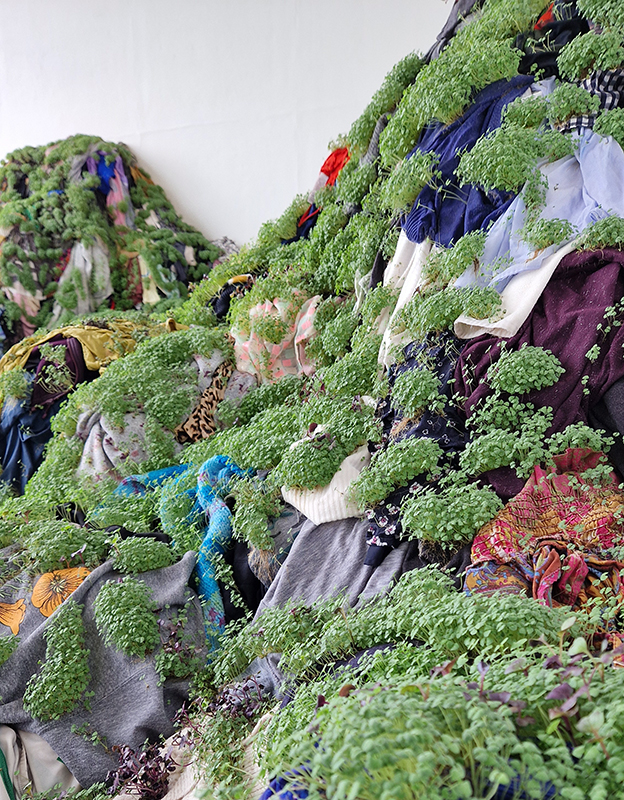
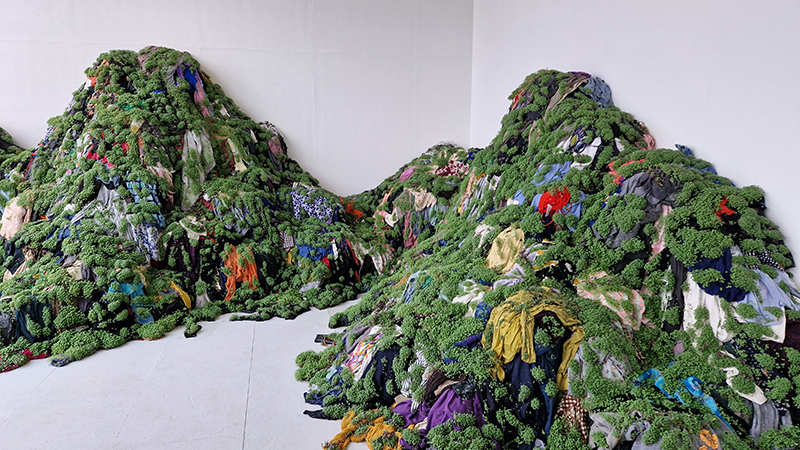
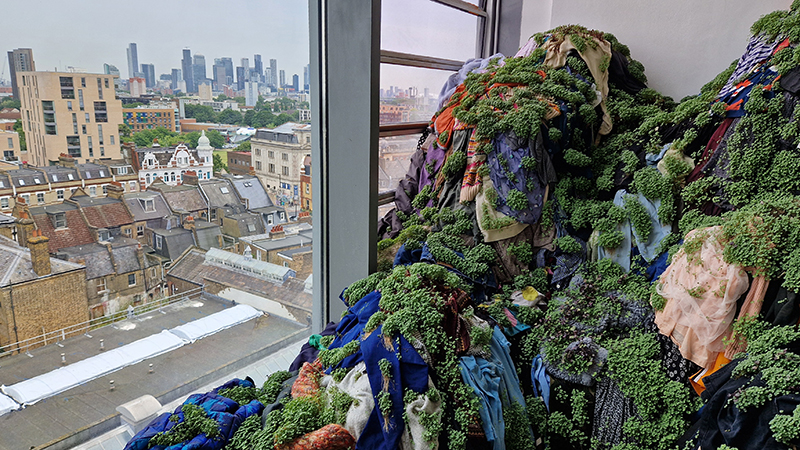
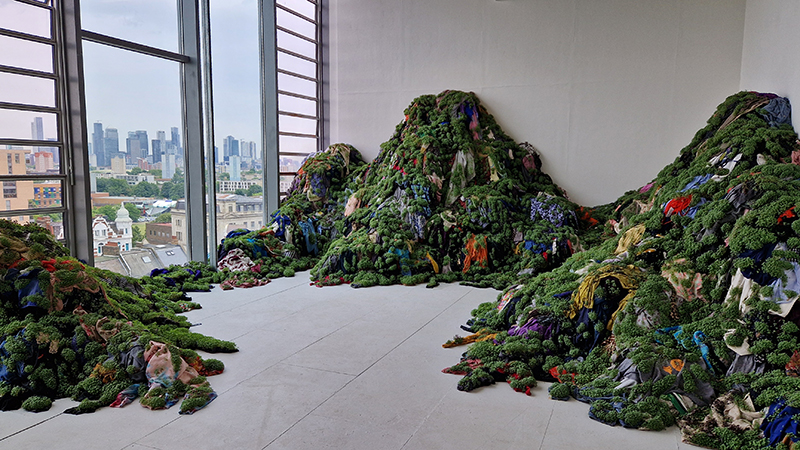
Beverley Duckworth’s installation Surplus at Goldsmiths MFA final show. Beverley’s work is grown through a diligent process of care. Found materials are literally given new life in the seeds which are embedded into them, which then transform and colour them. The installation includes an intermittent sound element of recordings of the melody played by waste trucks in Taiwan to call people to bring out their rubbish.

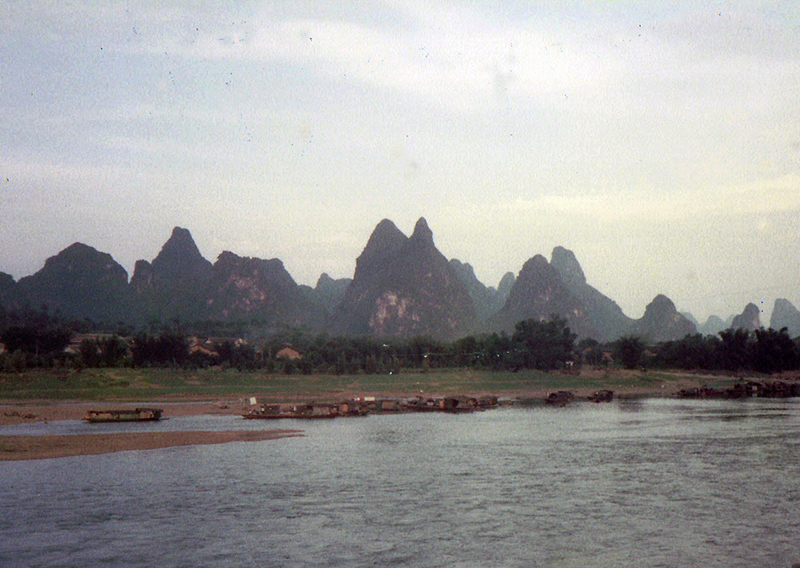
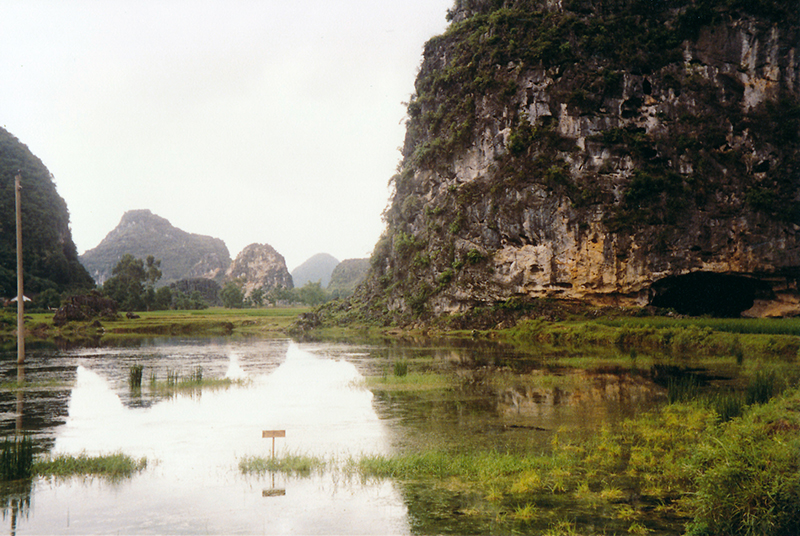
Apparently I wasn’t the first person to be struck by similarities to the landscape of Yangshuo near Guilin China. I visited in 1984 and think it is no longer a quiet little village.

It was the first time I had been back inside the Ben Pimlott building at Goldsmiths since by own graduation, a scary twenty years ago. The building was brand new then and the views with little visible green fed into my installation Re:construction – a large screen print with tiny viewing hole to a tiny oasis amidst the grey, albeit a synthetic one.

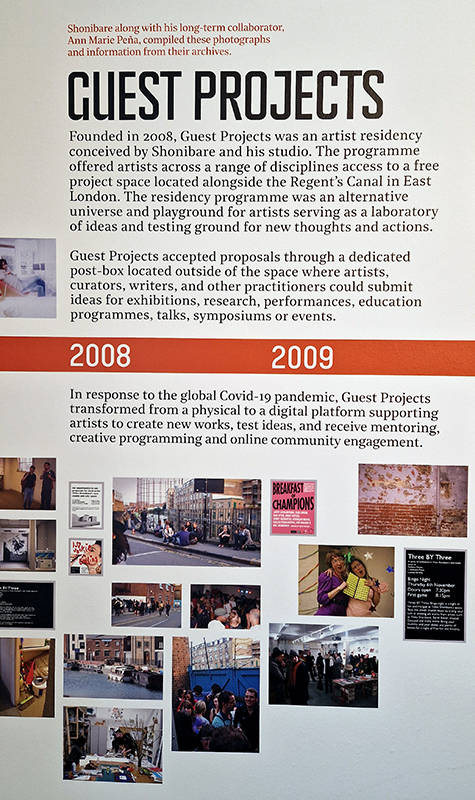
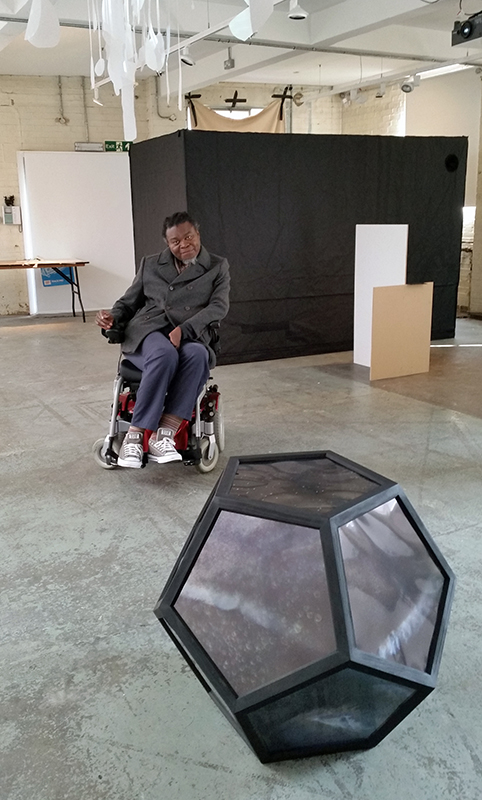
Yinka Shonibare Suspended States at Serpentine South. Horrors of war and colonialism are filed under dazzling colour, birds on the brink of extinction stare in plea or accusation, beacons of light in the darkness come from miniature replicas of sanctuaries.

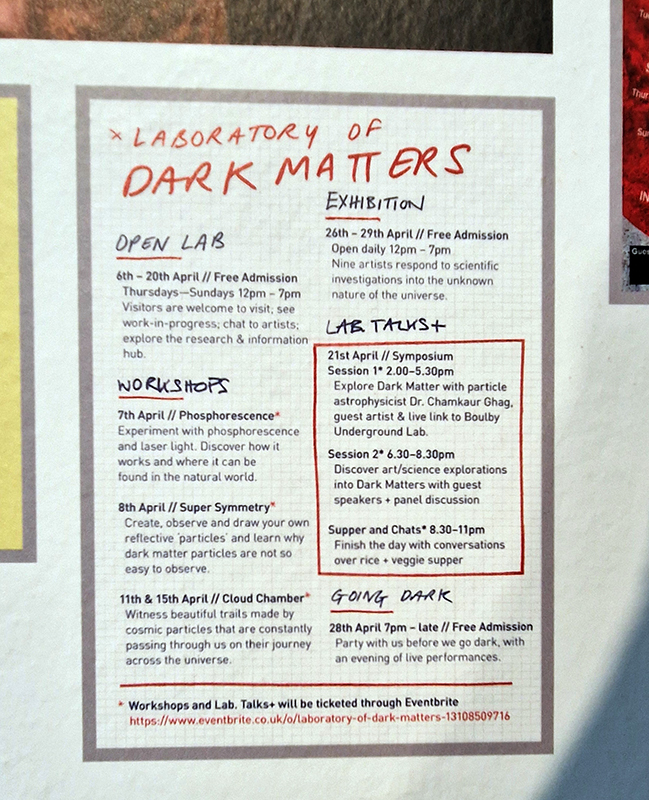
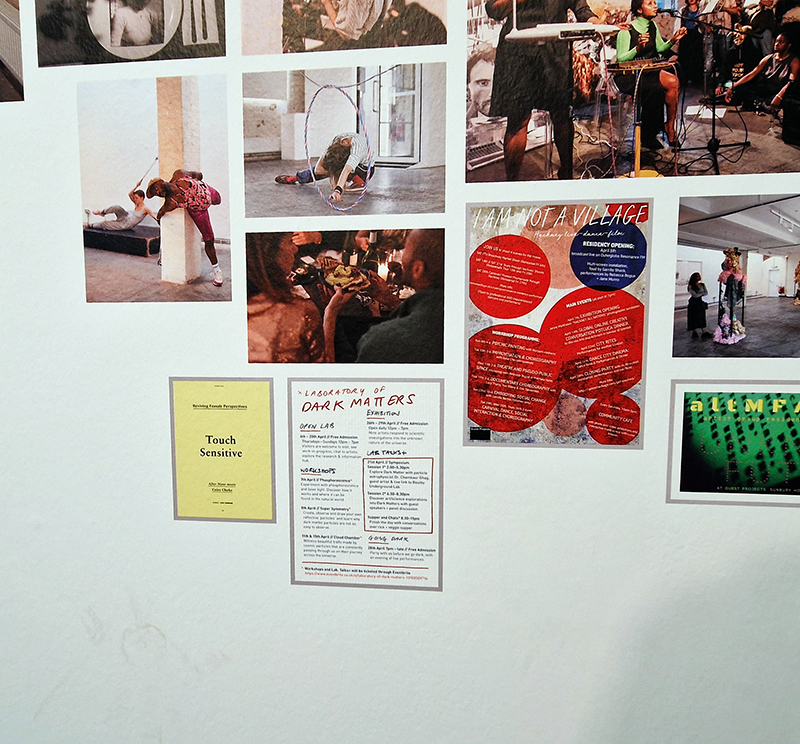
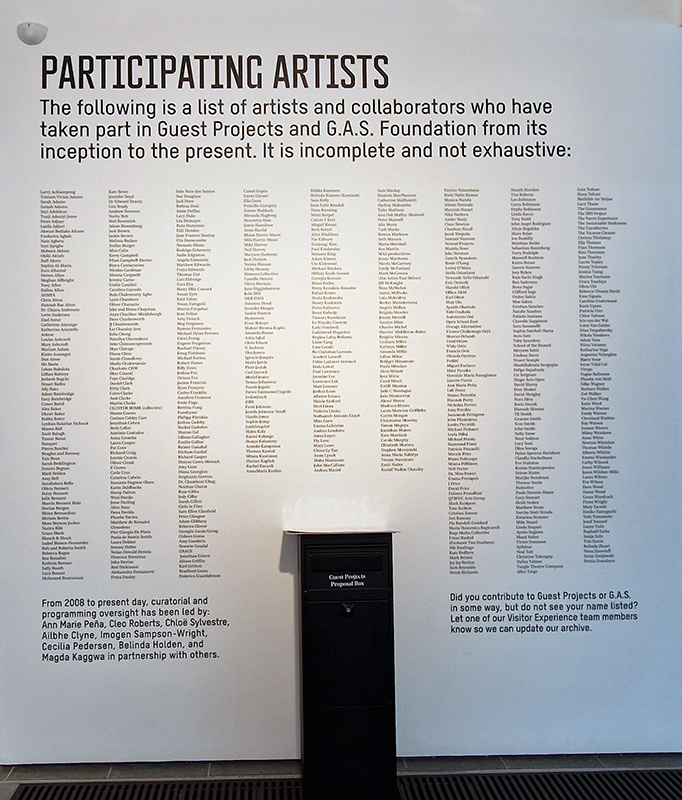
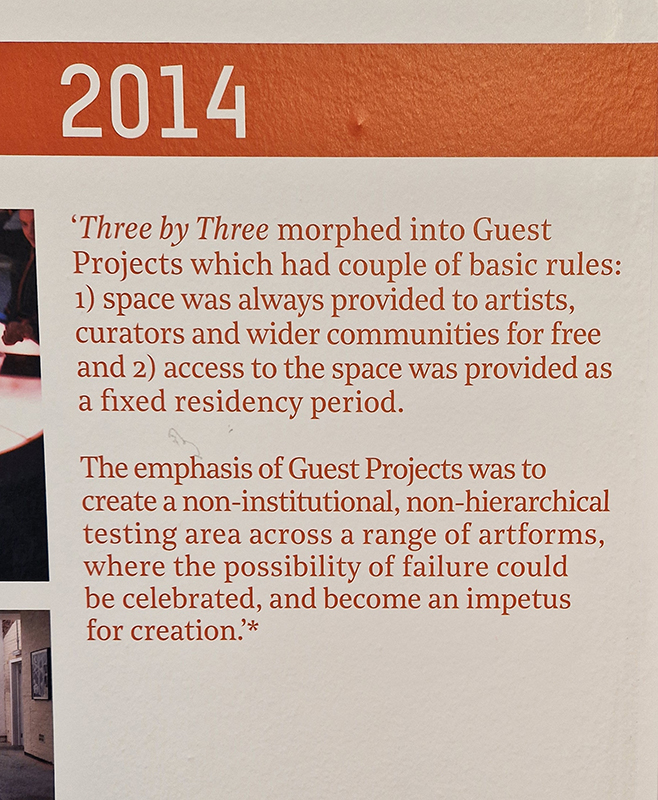
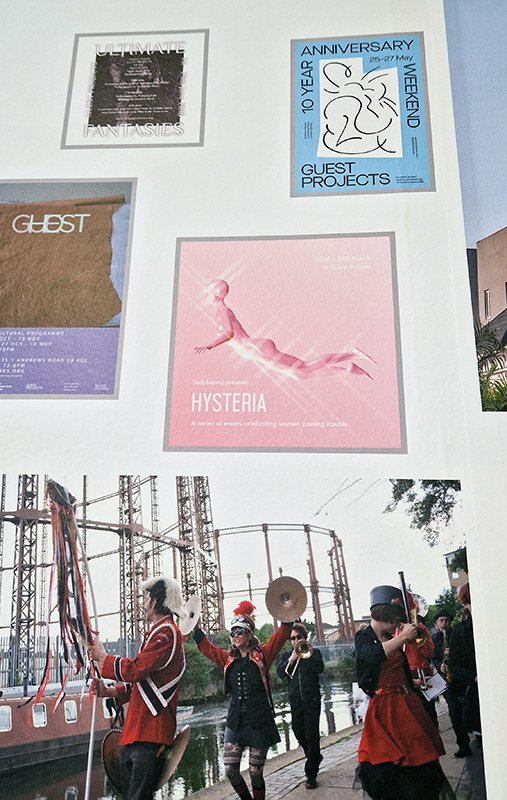
Yinka’s socially engaged inclusive practice spills over into real help for artists and communities. The exhibition celebrates Guest Projects and G.A.S. Foundation in Lagos. Guest Projects is such a generous idea and I have been so lucky to benefit from it with the project Laboratory of Dark Matters

Being awarded a month’s residency at Guest Projects was crucial to the success of Laboratory of Dark Matters as a site for developing ideas and subsequently touring the project. Wonderful to meet Yinka and also to be part of the selection committee for the next round of projects.

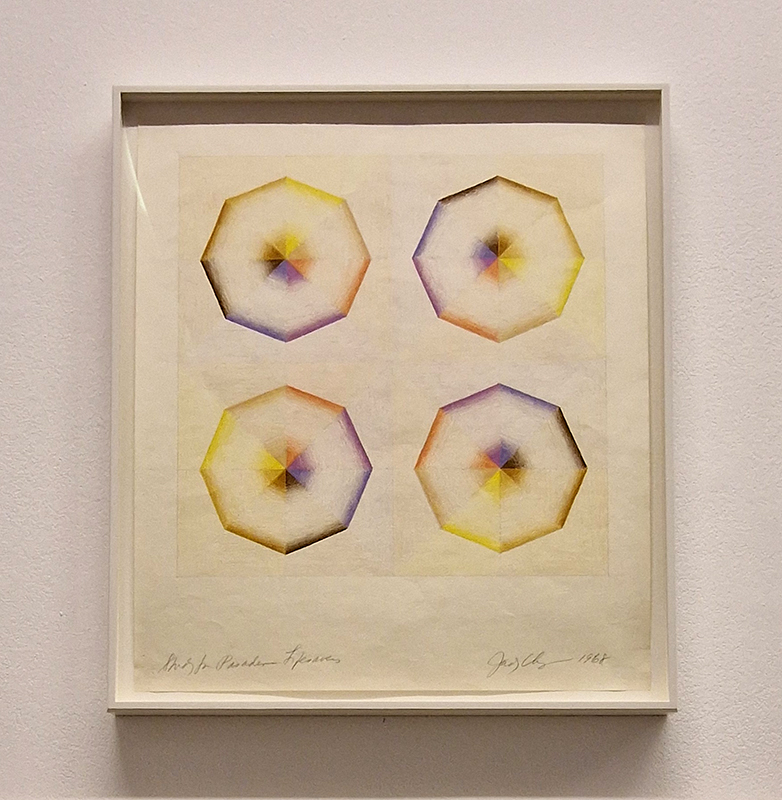
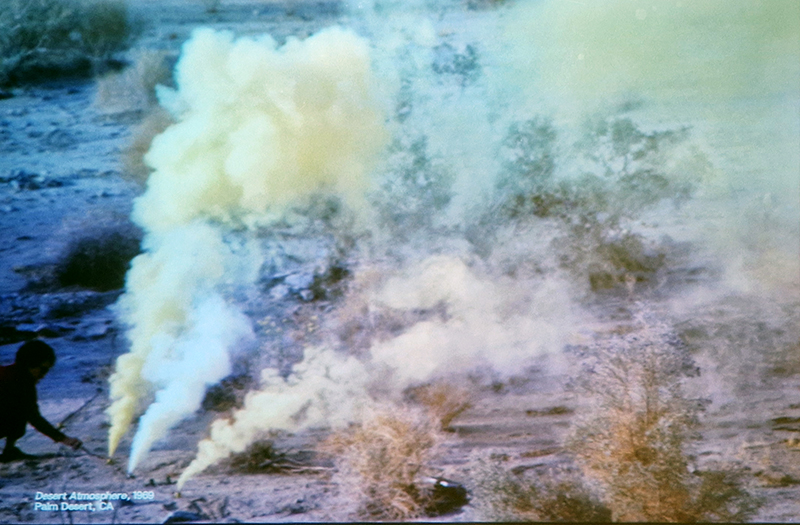
Judy Chicago Revelations at Serpentine North. The highlight of this show is the video documenting The Dinner Party (1974-79) installation and the preparatory drawings and sample plate. What a shame the actual installation wasn’t here, I will have to visit the Brooklyn Museum, New York sometime to see it. The research, collaborations, crafts and designs that went into creating it was phenomenal.

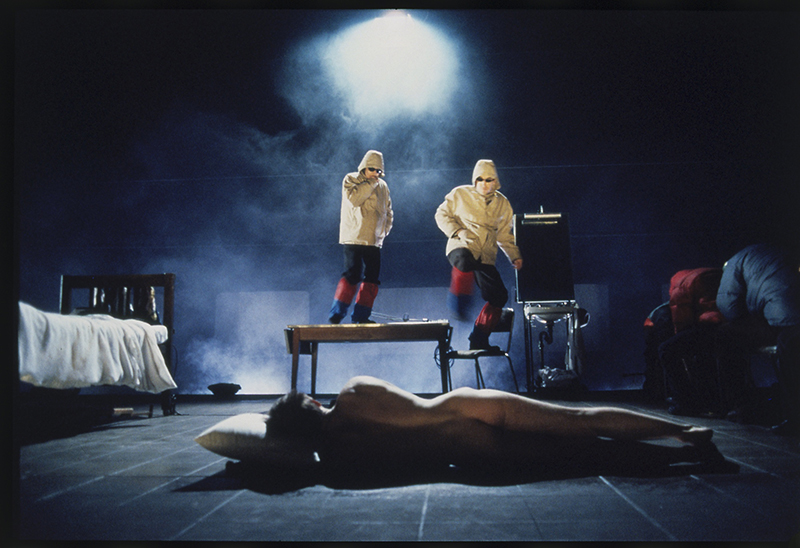
Saw Complicité’s excellent Mnemonic at The National Theatre, 25 years after first seeing it at Riverside Studios. ‘A body is found in the ice, and a woman is looking for her father while a man searches for his lost lover. Mnemonic is as much about origins as it is about memory, and remembering what is lost. Mnemonic asks us: what is our place in the natural world? How have human relationships with the environment shaped patterns of migration? Who are we, and where do we come from? ‘

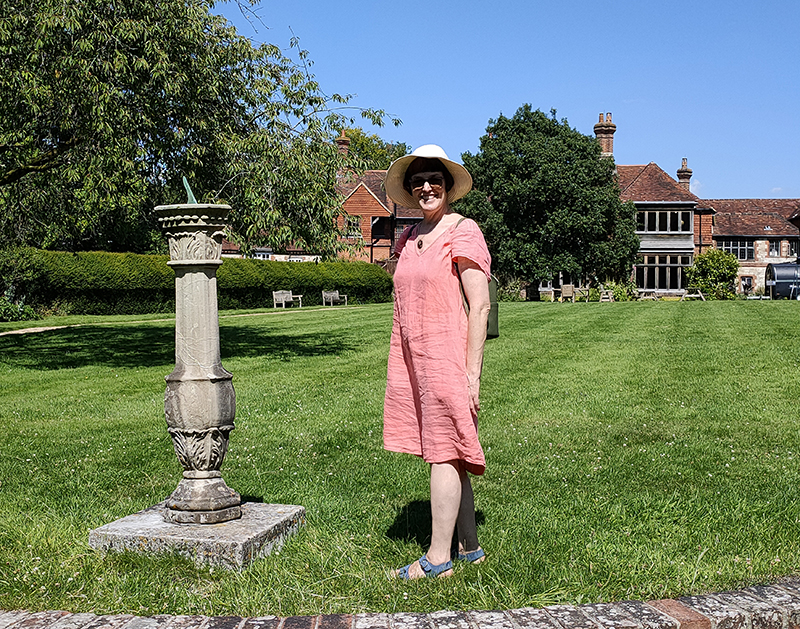
Visited the delightful mellow brick country home and extensive gardens of pioneering naturalist Gilbert White at Selborne. His book ‘The Natural History of Selborne’ (1789) has never been out of print since it was published more than 230 years ago. He was brought to many people’s attention, including mine, during the pandemic and lockdowns of 2020 when writer Melissa Harrison included his diary readings in her podcast The Stubborn Light of Things.

‘A stone sky rotated above our heads’ – Italo Calvino, Cosmicomics

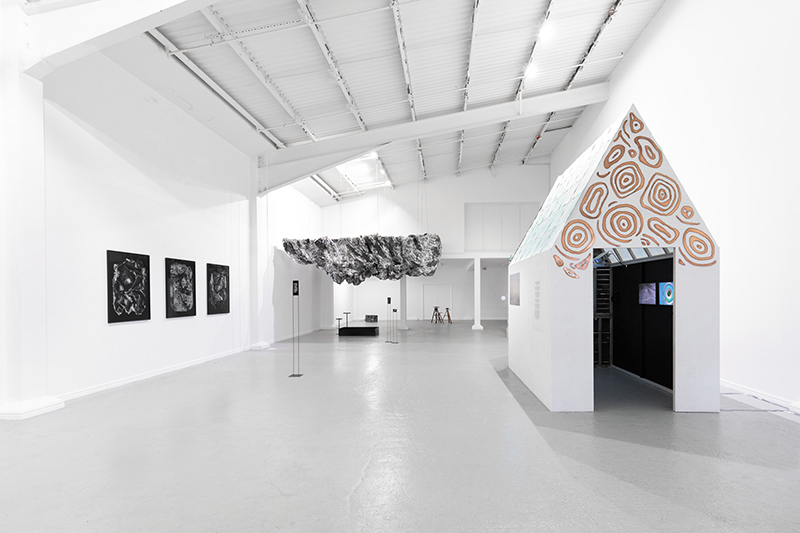
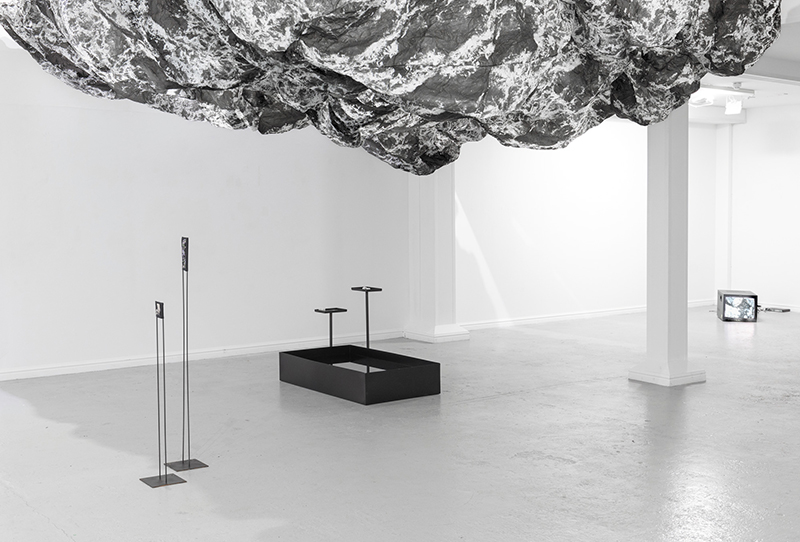
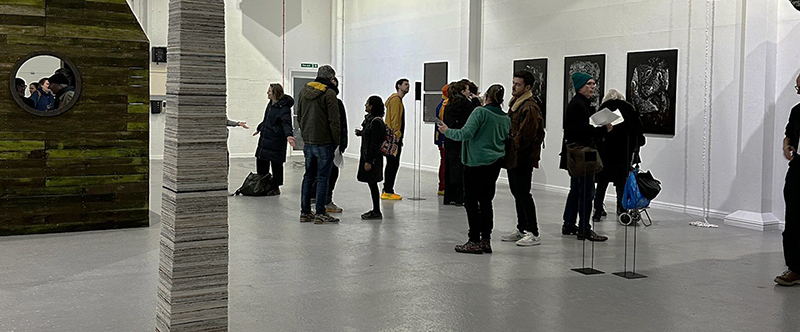
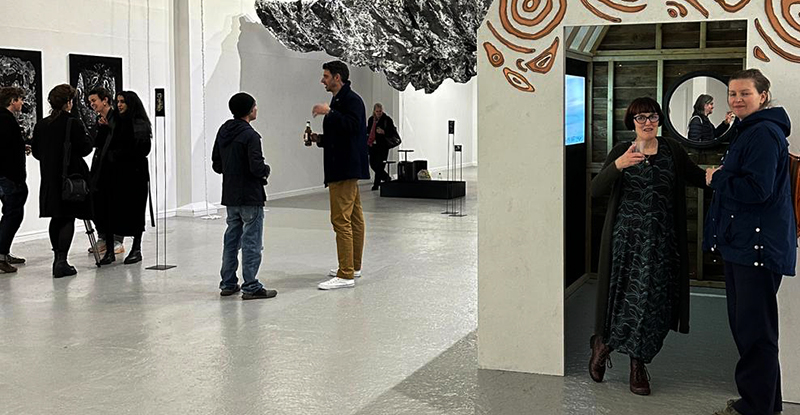
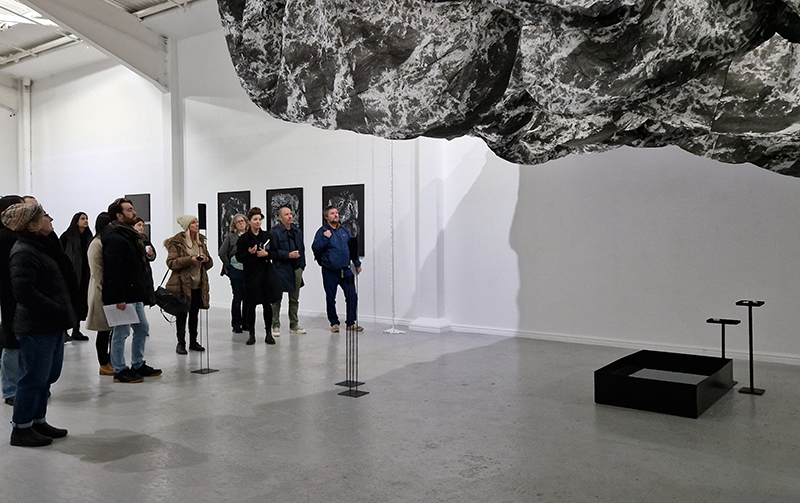
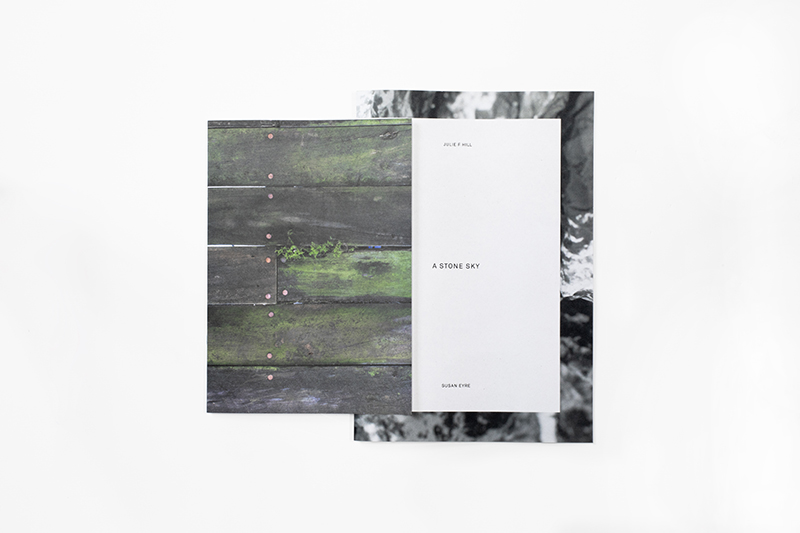
The culmination of two years work – A STONE SKY duo exhibition with Julie F Hill opened at Thames-side Studios GalleryReimagining the idea of an observatory – the exhibition proposes a cavernous realm of real and speculative possibilities that arise from beyond the limits of human perception. Engaging with the extended sensory range offered by technologies such as orbiting space telescopes through to the ability of birds to ‘see’ the Earth’s magnetic field, the artists’ reveal intimate connections between earth and space.

Installation shot by Ben Deakin Photography.

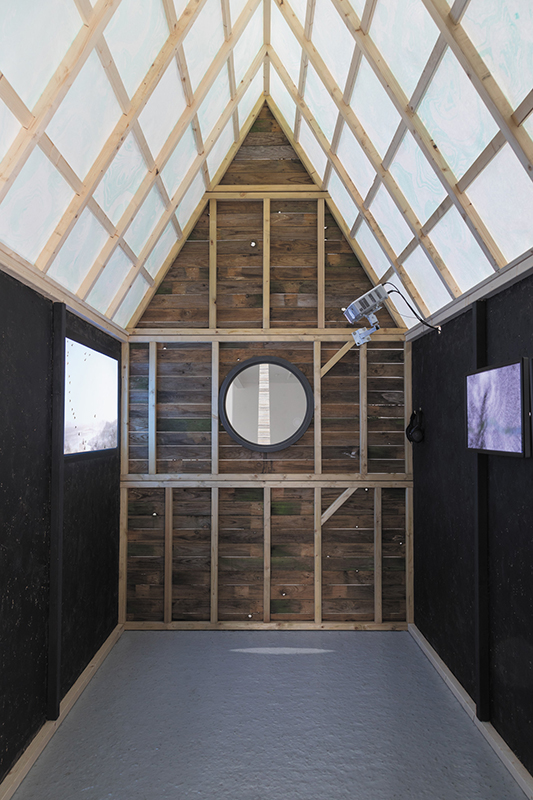
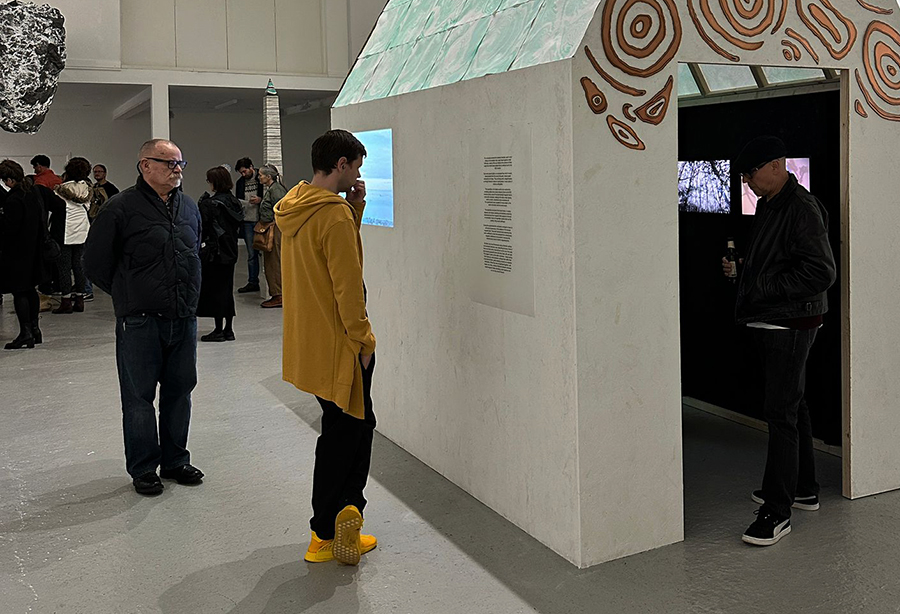
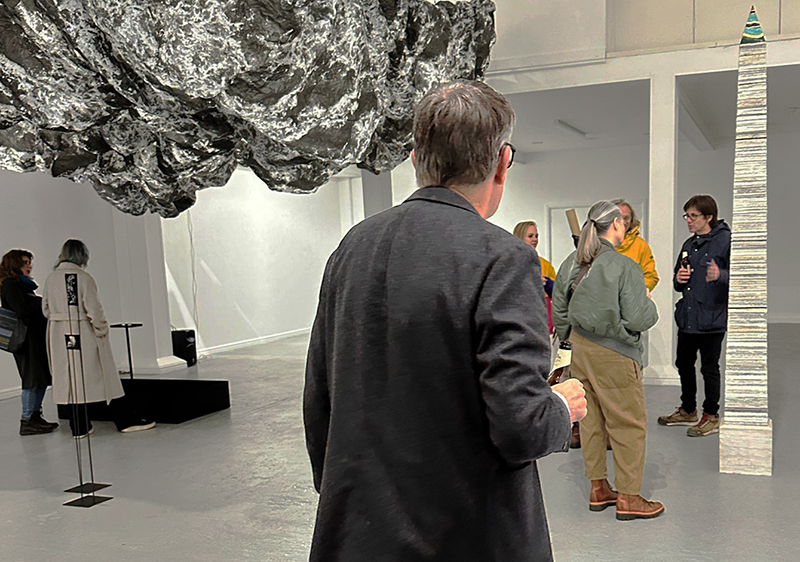
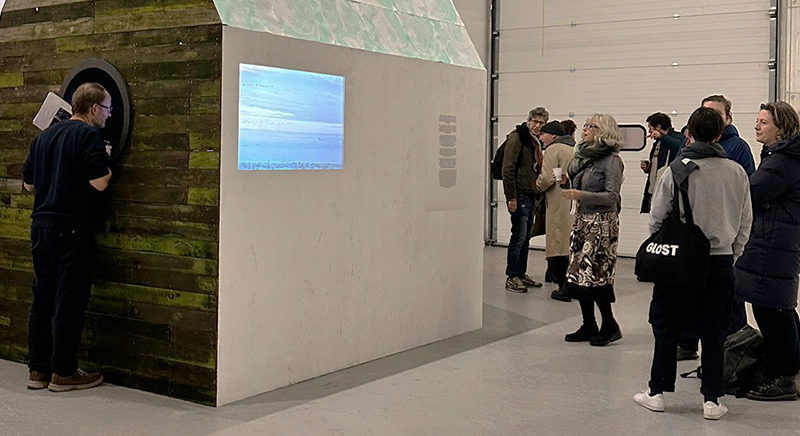
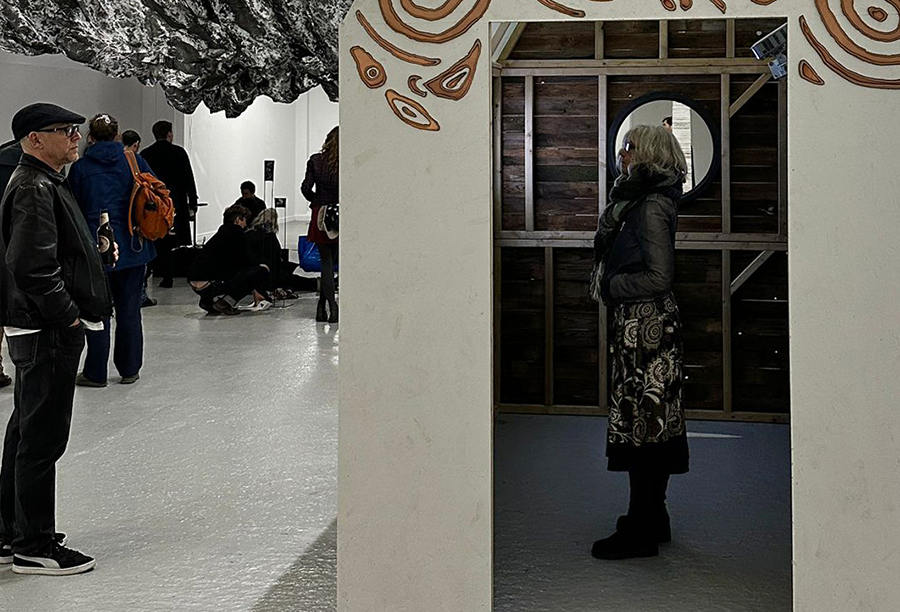
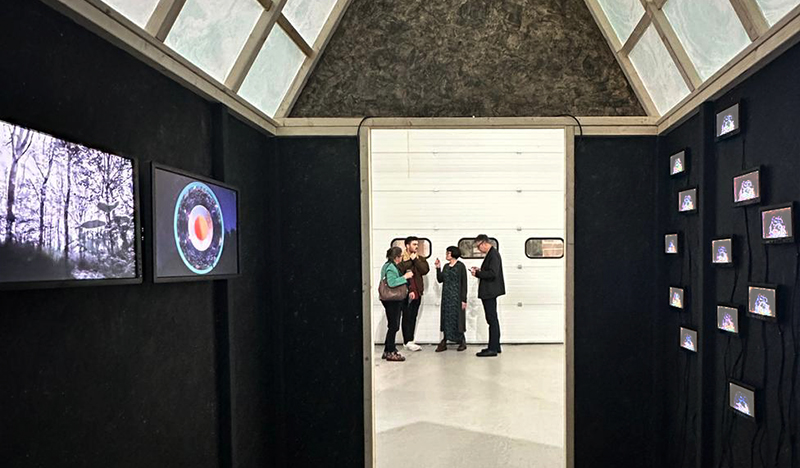
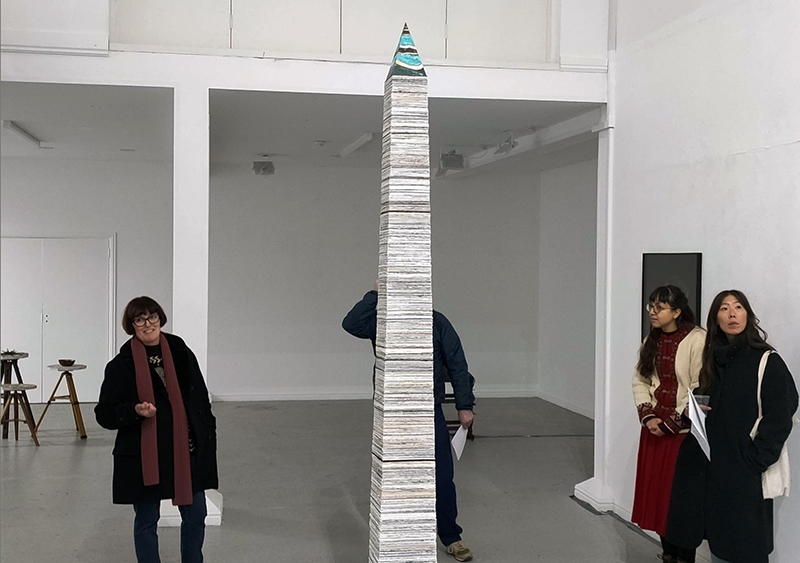
Susan Eyre seeks to navigate a path across time from the first human encounter with the magical qualities of the lodestone to current understanding of the interaction of the magnetic field with terrestrial life. Her works respond to the architecture, instruments and materials, found at a magnetic observatory while scientific objectives are expanded to include natural navigation techniques and extra-sensory methods used by the non-human realm, to form the basis of speculation as to the ability for humans to perceive the Earth’s magnetic field. Installation, sculpture and moving image works include a reimagined observation hut operating as a sensory hub with video screens suggesting portals into a web of neural pathways; an obelisk of layered recycled paper echoing Earth’s geological and magnetic history secreted in sedimentary strata of rock and a digital video work activated in real time by the passage of cosmic rays through a scintillator detector.

Images by Ben Deakin Photography

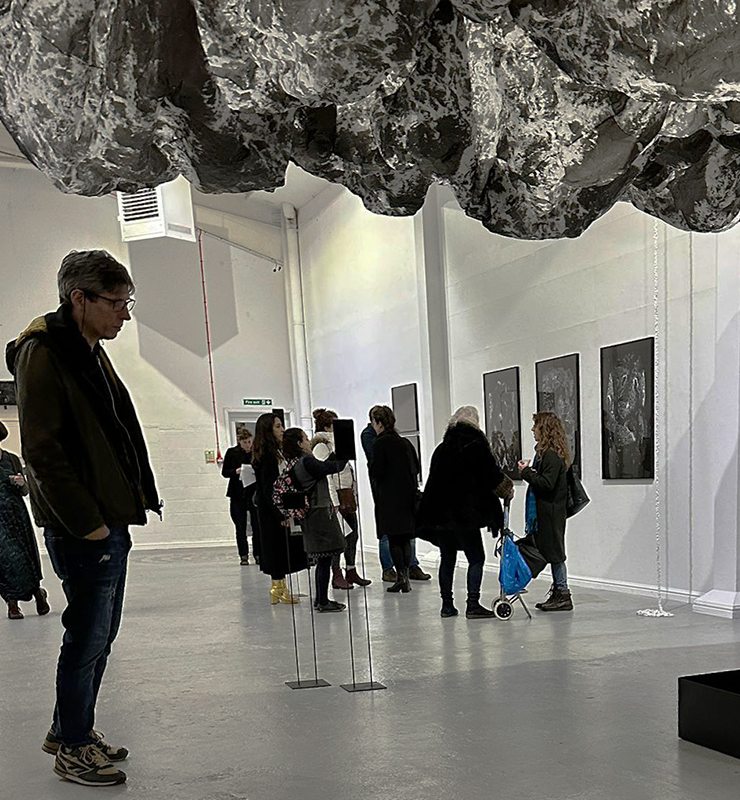
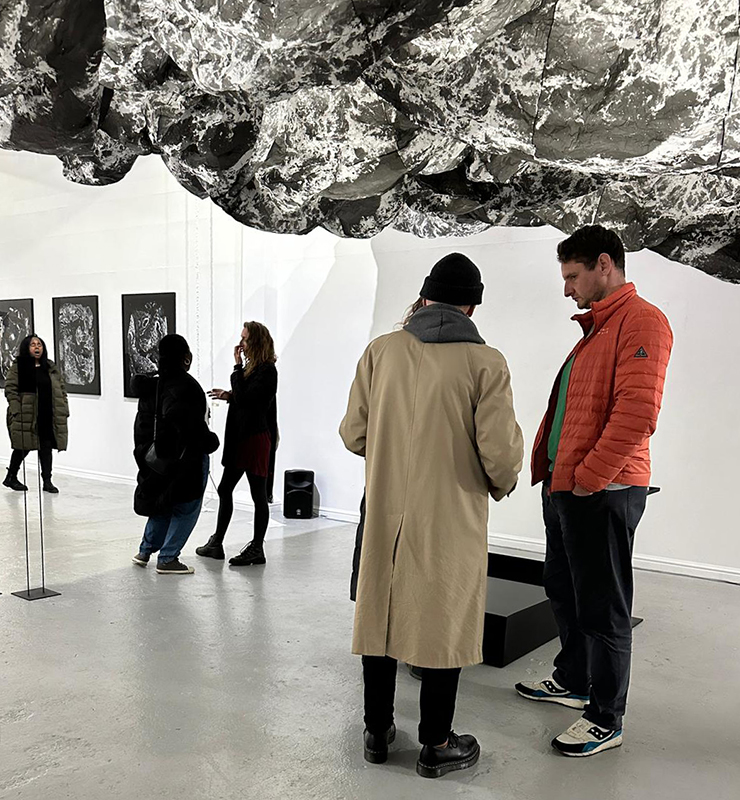
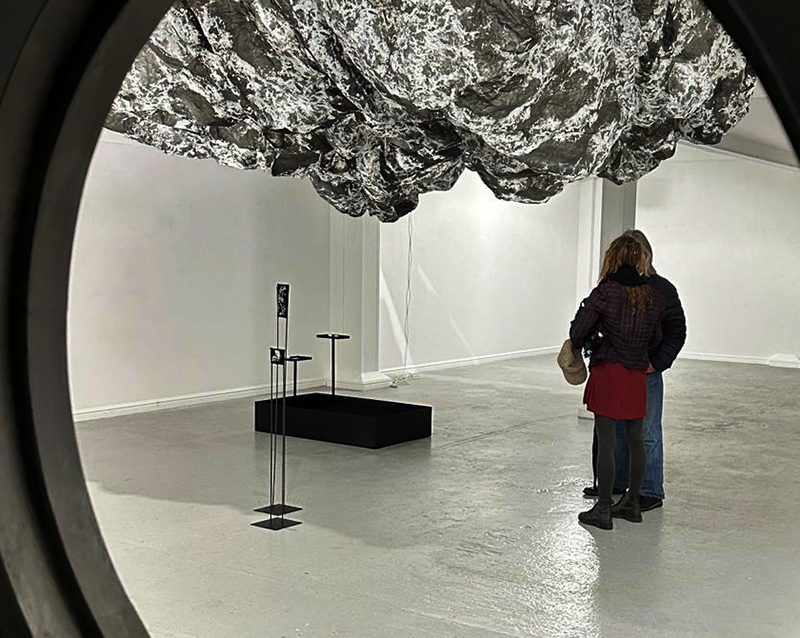
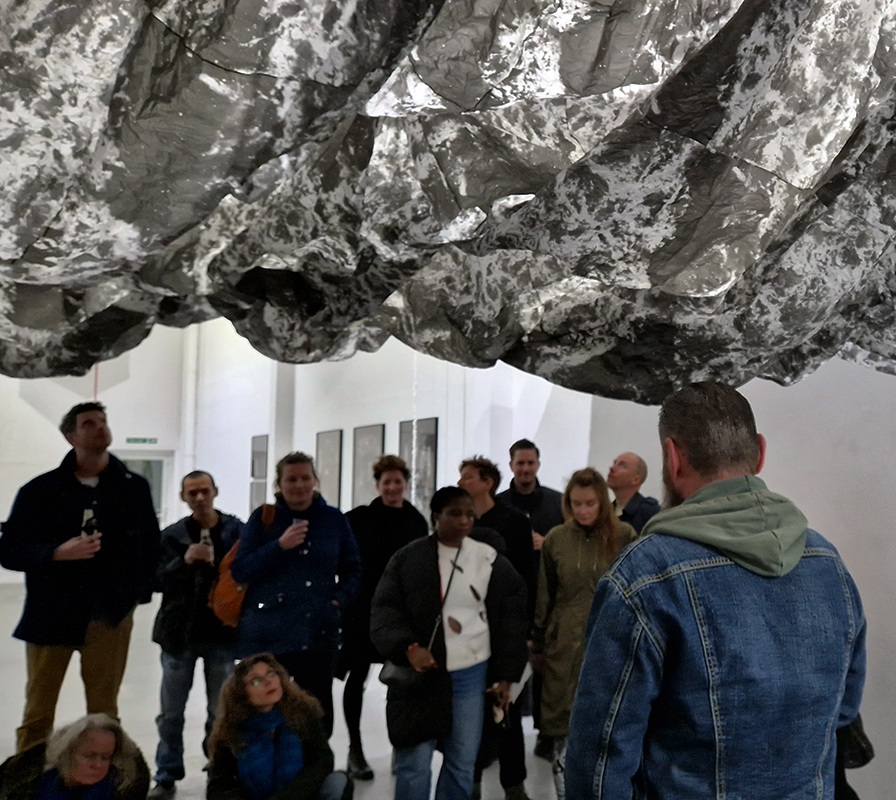
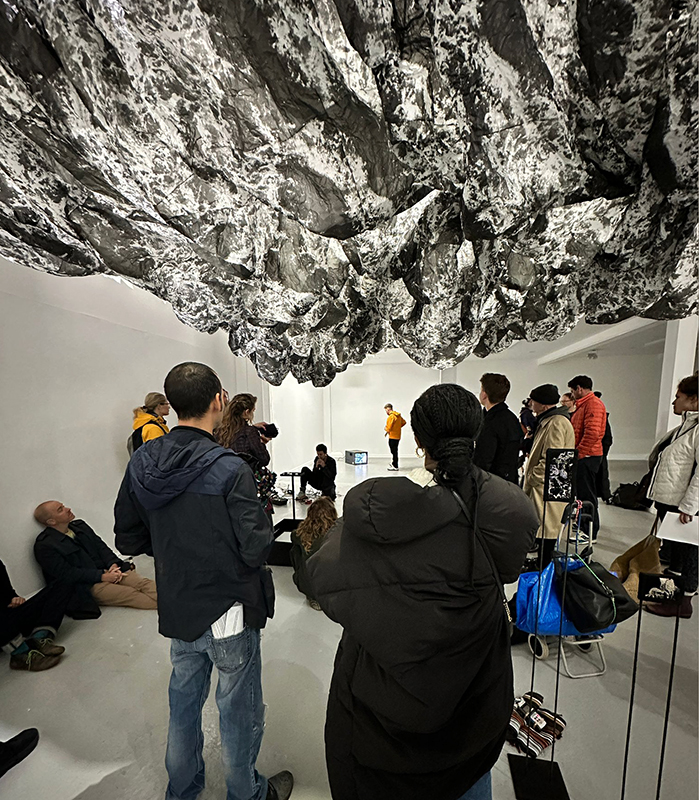
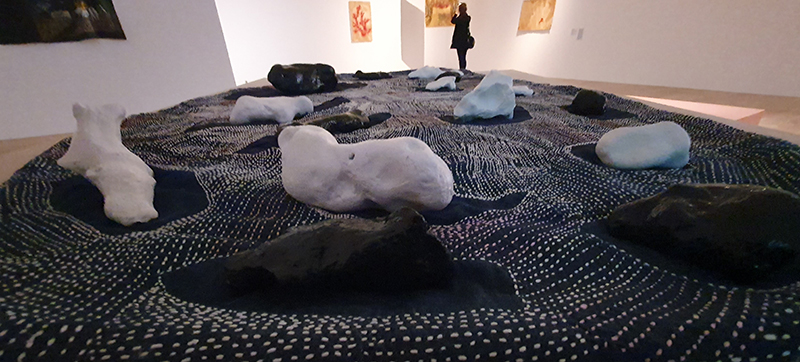
Julie F Hill explores the entwined darknesses of earth and cosmos. Crystalline and mineral substances from the deep earth fuse with astronomical data to suggest the deep-earth as an instrument for coming to know the cosmos. Crystalline and mineral substances formed in the continuum of deep earth and deep space allow us to peer back into cosmic time, both through the technologies created with them and the geological record they hold. Whilst darkness often indicates uncertainty and lack of knowledge, Hill asserts that it’s through darkness when we can be most perceptive to the interconnectedness between earth and cosmos. Through it we are able to extend our kinship with the inorganic and expand consciousness of what constitutes nature. Works include a large-scale sculptural print installation made from James Webb Space Telescope data that is reworked into a cavernous space, providing an experience of intimate immensity alongside more smaller sculptural and photographic works.

Images by Ben Deakin Photography

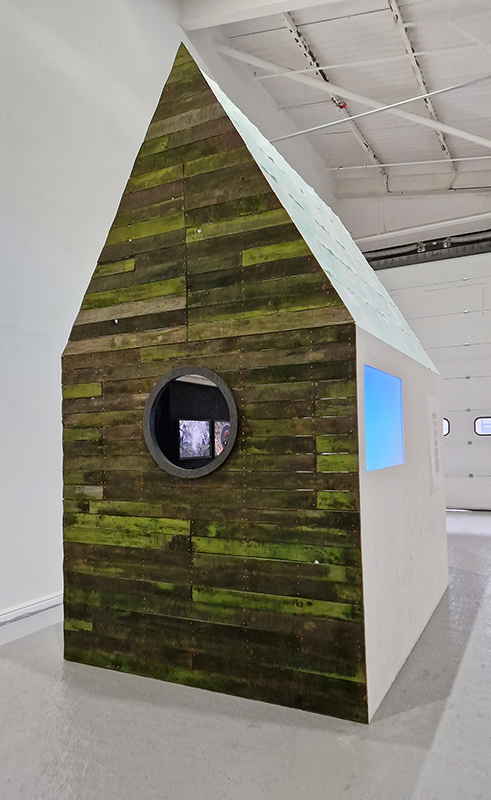
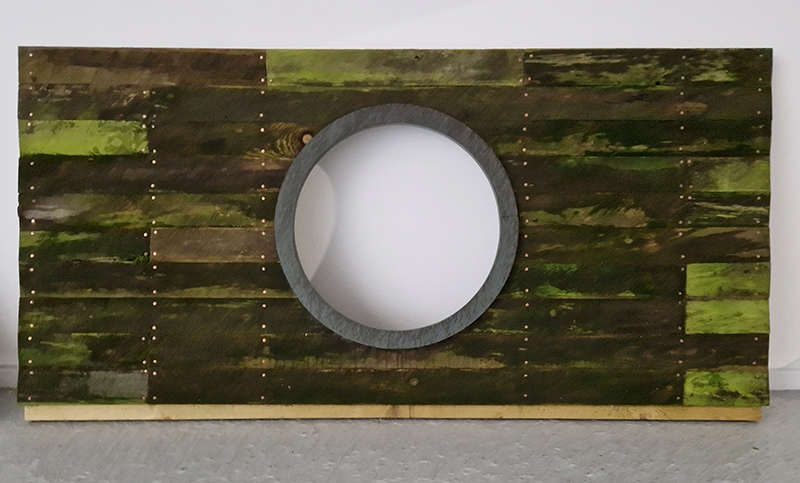
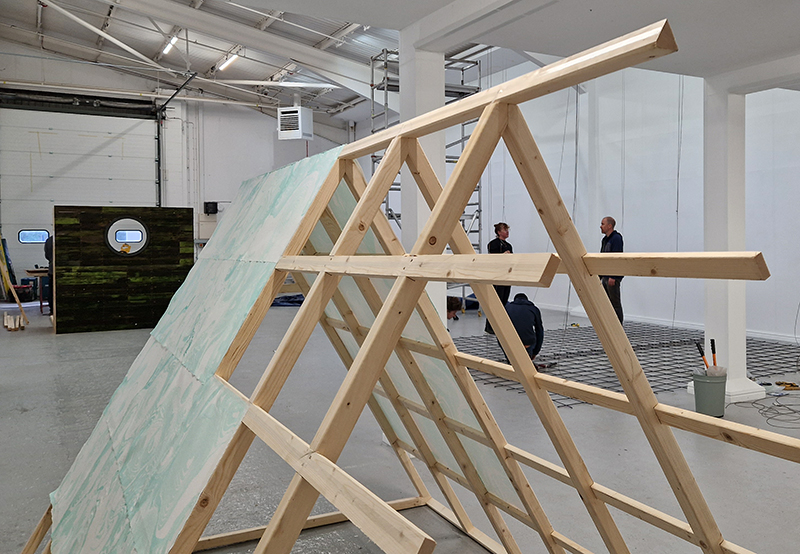
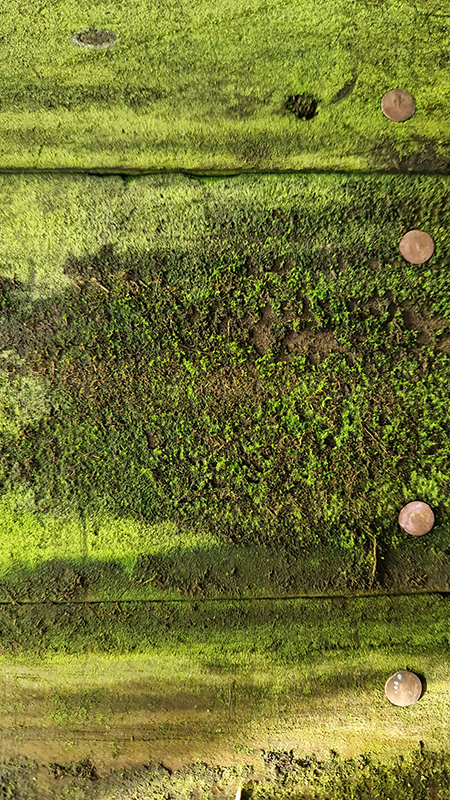
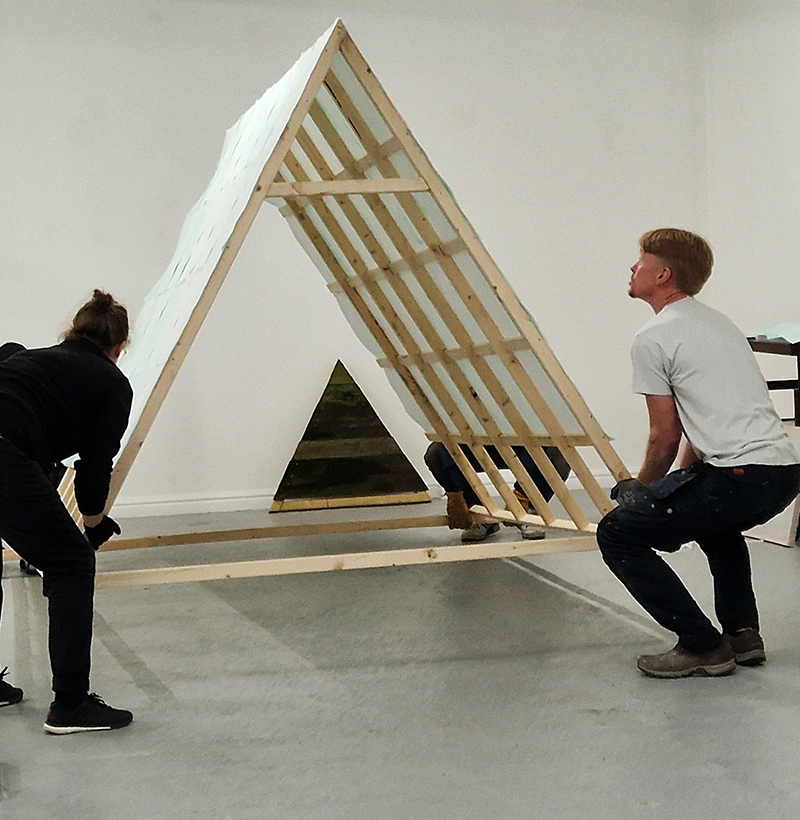
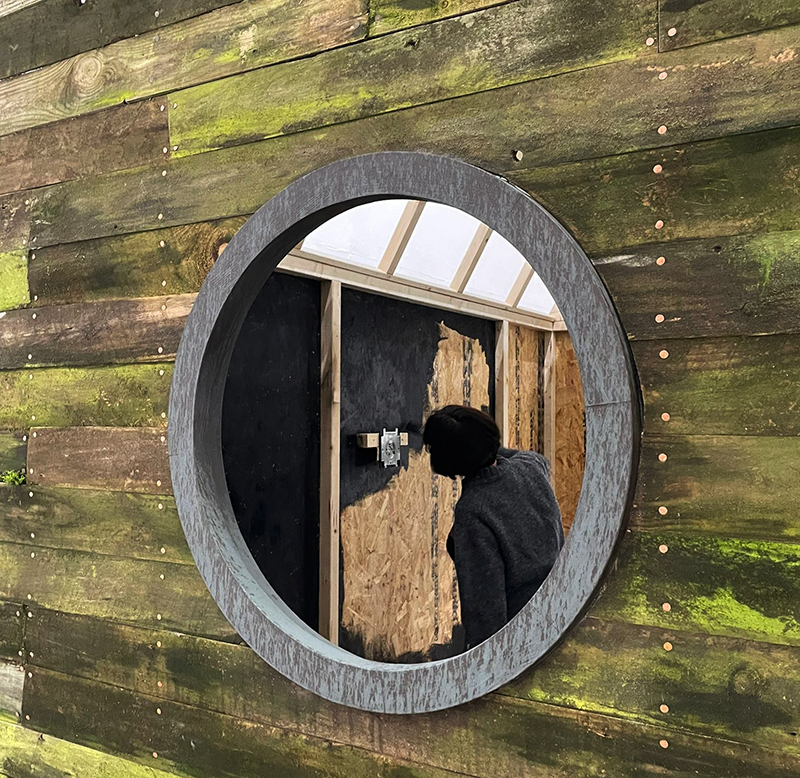
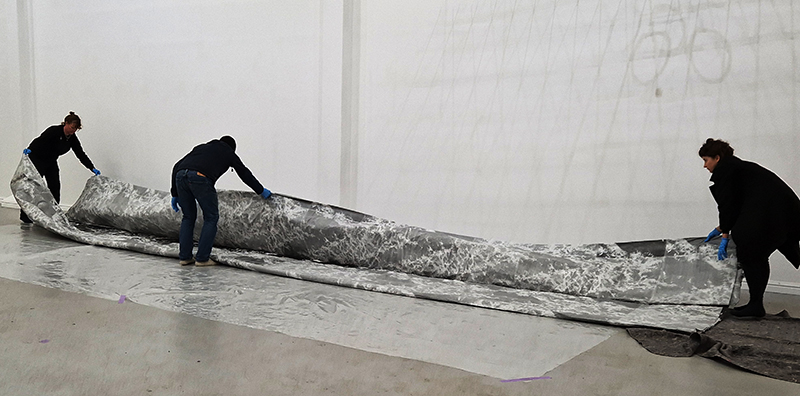
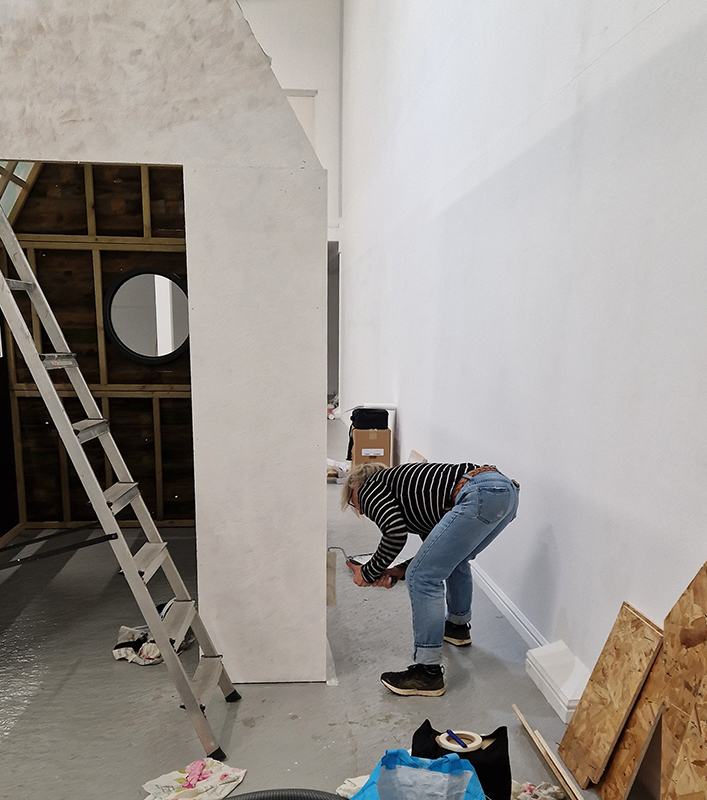
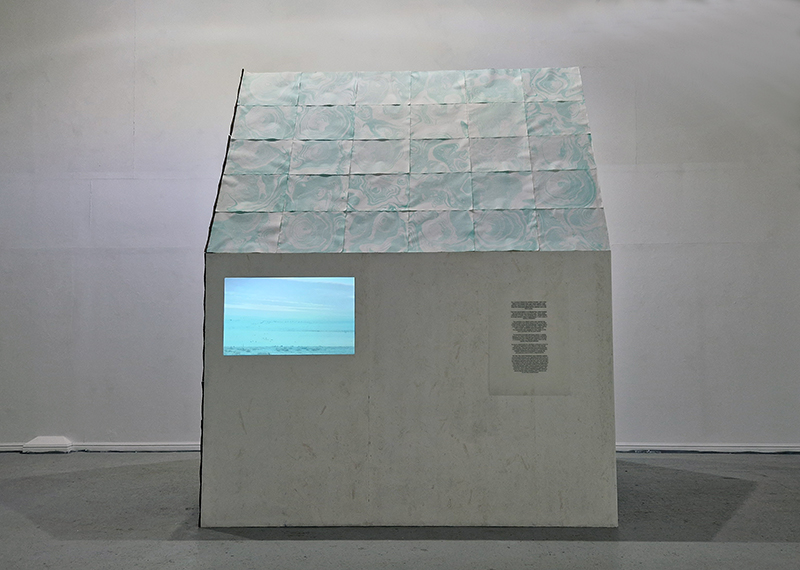
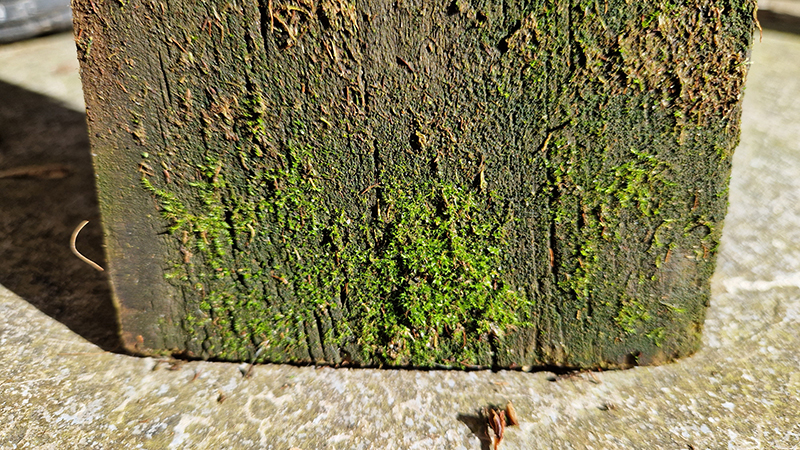
We both had ambitious large scale works to install and were grateful for the help we received from our partners (both Kevins), friends and technicians. Trevor Neale was magnificent in constructing The Absolute Hut. Anne Krinsky patiently helped apply double sided tape to the roof structure ready for the Suminagashi paper tiles and Caroline AreskogJones energetically painted the hut white and neatly edged the two way projection window. I was thrilled that, as a result of a wet few weeks, moss had started to grow on the wooden boards of the north facing wall in time for installation.

A big thank you to everyone that made it to the opening night, we were super chuffed with the positive responses.

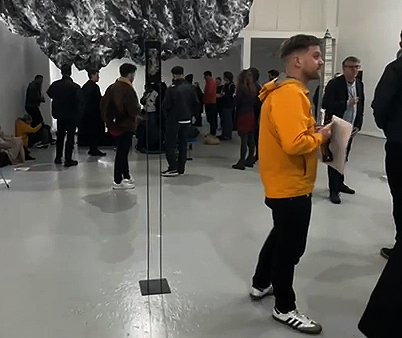
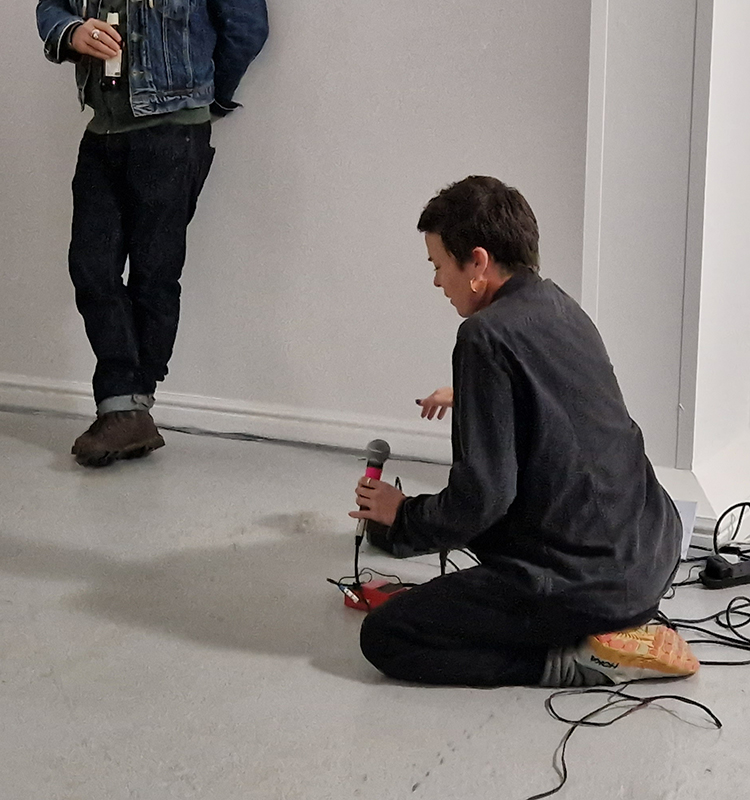
At the private view Julie’s large scale print installation was activated by a vocal performance conjuring abyssal voices of deep, cosmic time, performed and devised with Eleanor Westbrook whose voice produces incredible hauntingly beautiful sound.

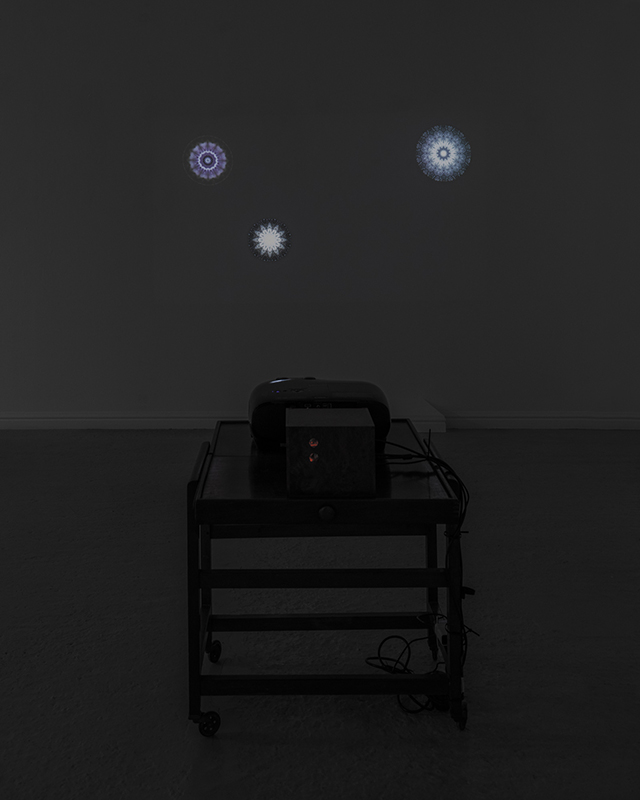
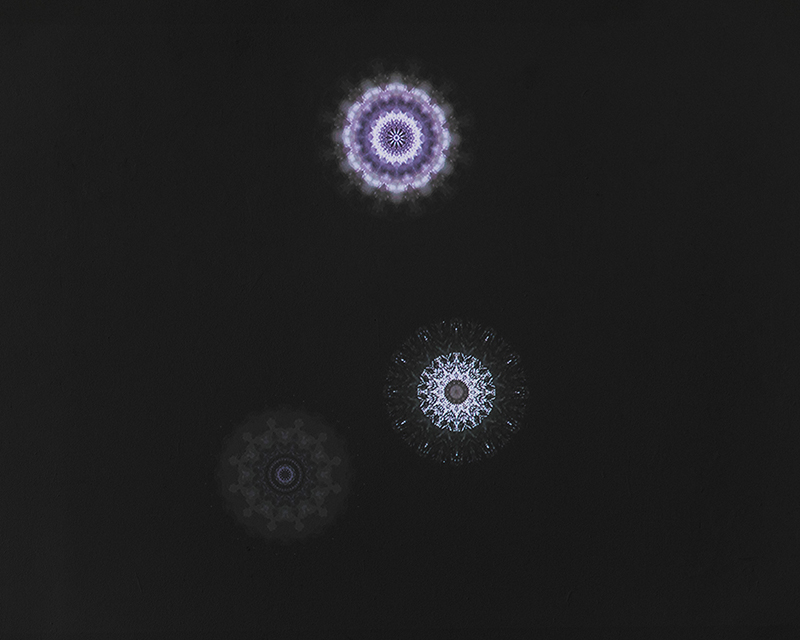
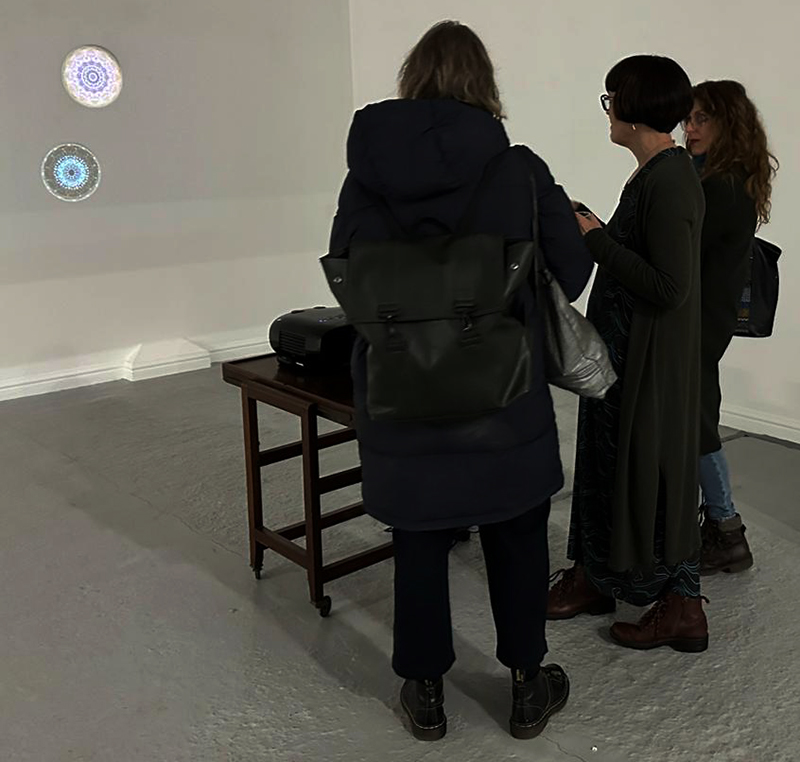
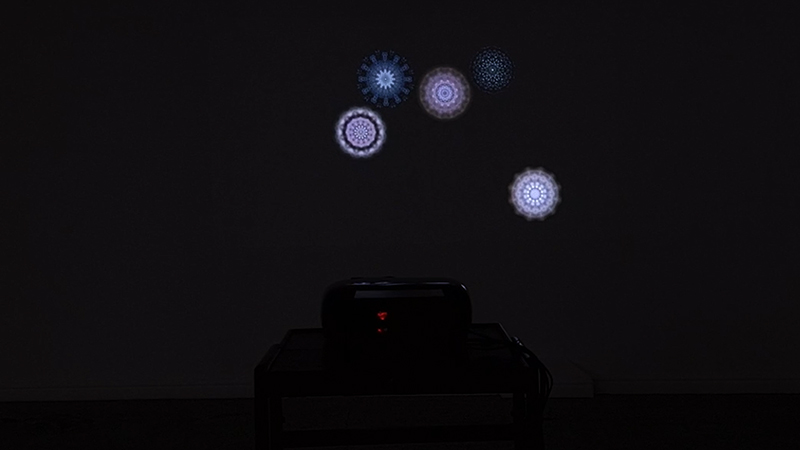
I was particularly excited to share The Breath of Stars, digital video work activated in real time by the passage of cosmic rays through a scintillator detector. After two years in development it was so exciting to watch the random starbursts appear in real time as witness to the unseen activity of cosmic rays passing through the gallery.

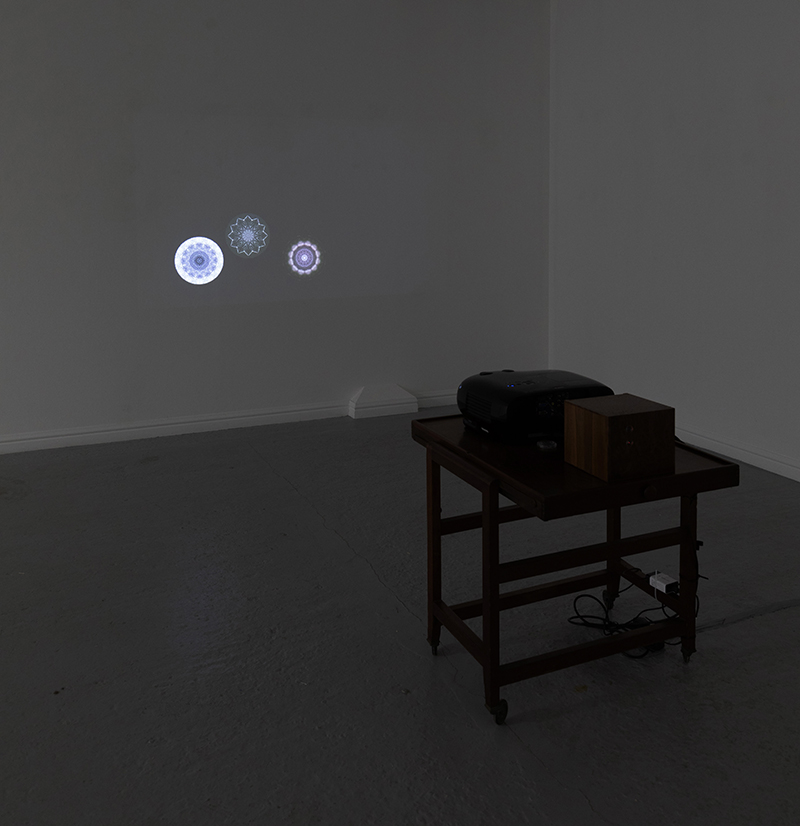
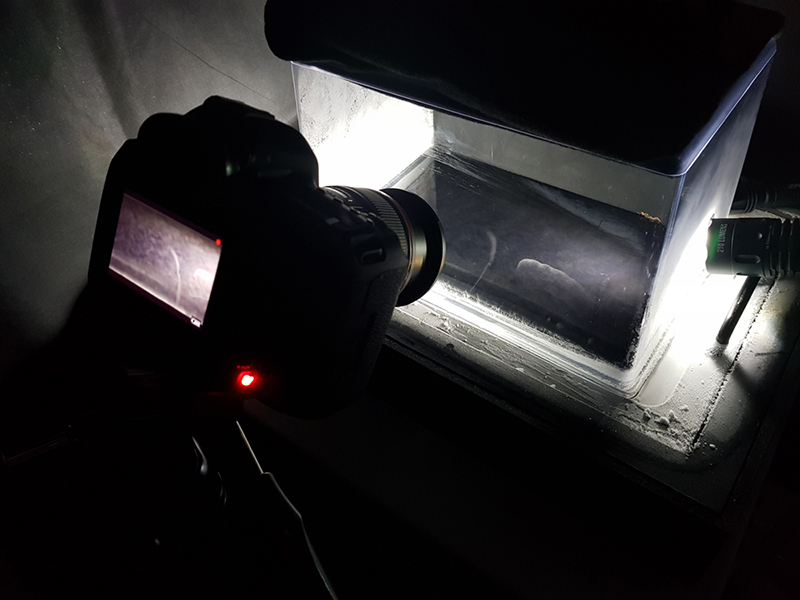
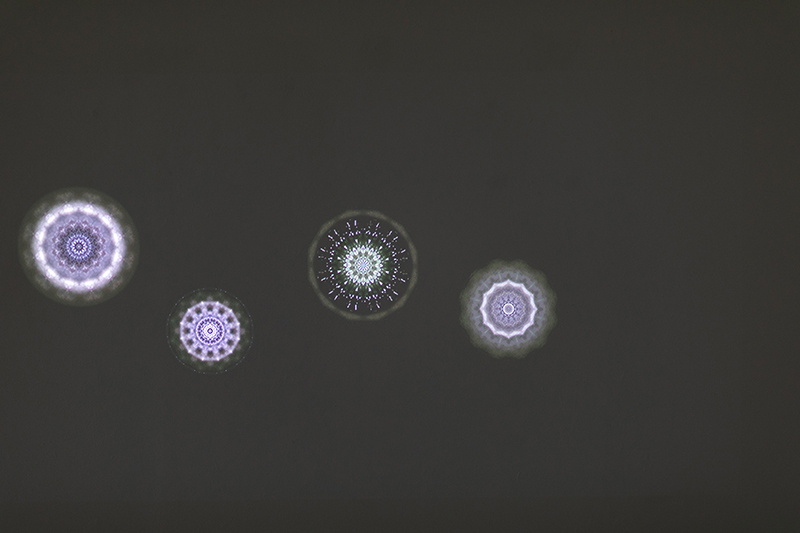
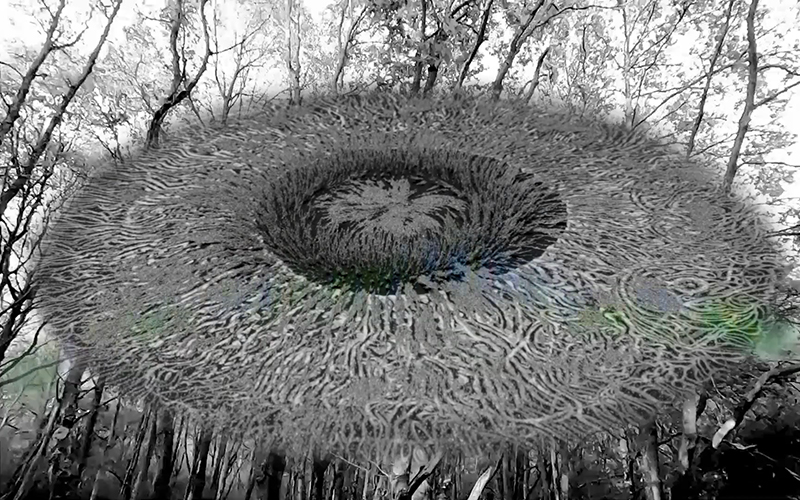
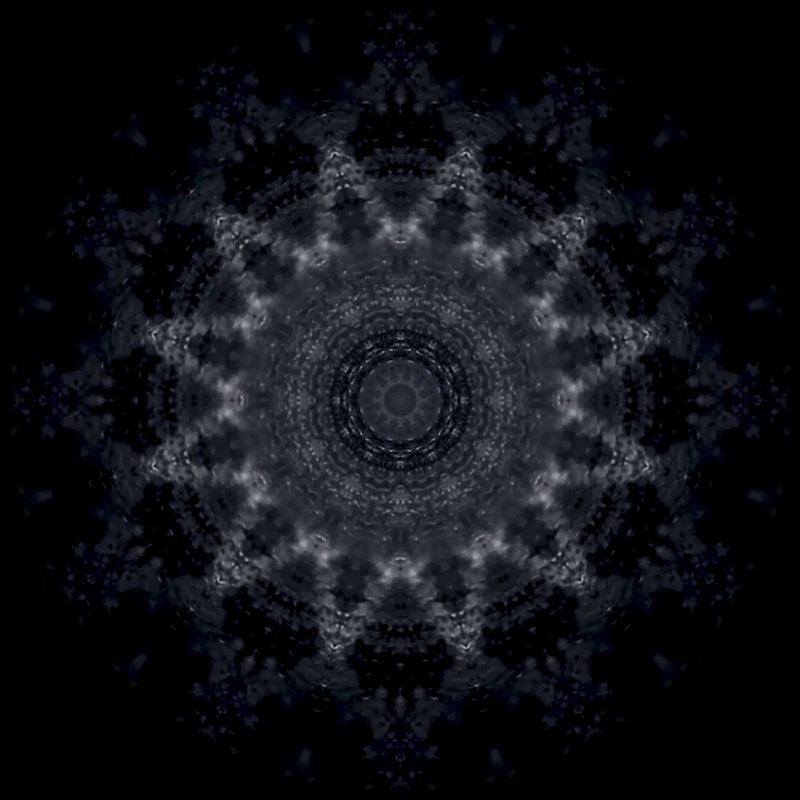
The kaleidoscopic video images that appear for every particle recorded by the detector, are created from footage of cosmic ray trails filmed in a cloud chamber.

The interaction of cosmic rays with atmospheric electrical fields influences the unpredictability of the magnetosphere and this random activity can be witnessed by the sudden flurries and silent gaps of the live video imagery.

These subatomic visitors from outer space power across the universe with unimaginable energy, coming from the heart of exploding stars or the depths of black holes; some may come from phenomena yet to be discovered or even from other dimensions. Travelling at close to the speed of light cosmic rays spiral along magnetic field lines, strike the edge of the Earth’s atmosphere, break apart and shower down upon us. Some particles collide and silently interact with atoms and technology on Earth. Most cosmic rays heading for Earth are deflected by the planet’s magnetic field and without this protection life on Earth could not survive this bombardment of radioactive matter. The interaction of cosmic rays and the solar wind with atmospheric electrical fields combines to influence the unpredictability of Earth’s magnetosphere, impacting the functioning of GPS satellite technology and computer processors on which humans have come to rely in daily life.

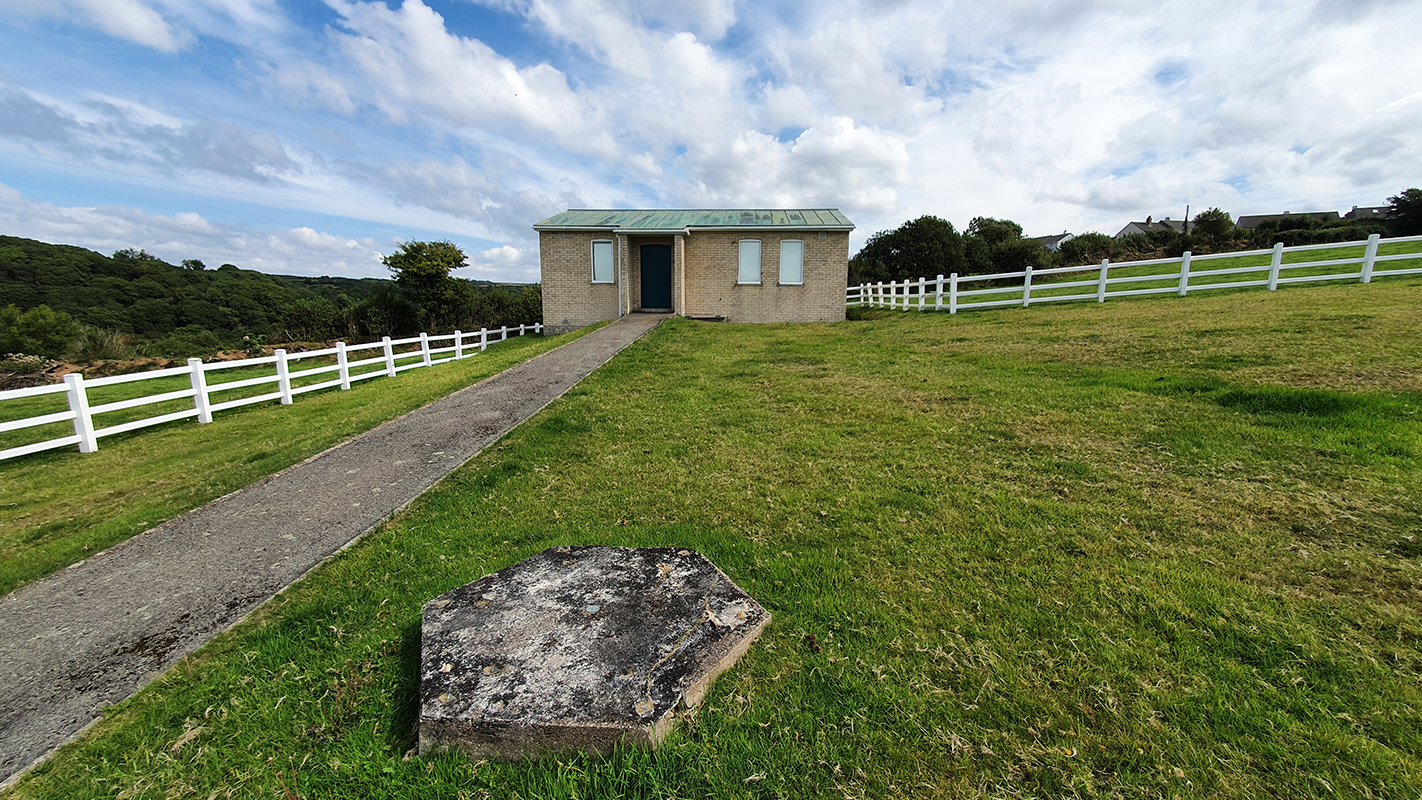
My research trip to Hartland Magnetic Observatory in North Devon was a catalyst for this body of work centring around a north facing observation hut aligned with an obelisk as a fixed azimuth mark. I am very grateful to The British Geological Survey for allowing me access to the site and particularly to Tom Martyn who shared his knowledge and gave a fascinating tour of the observatory.

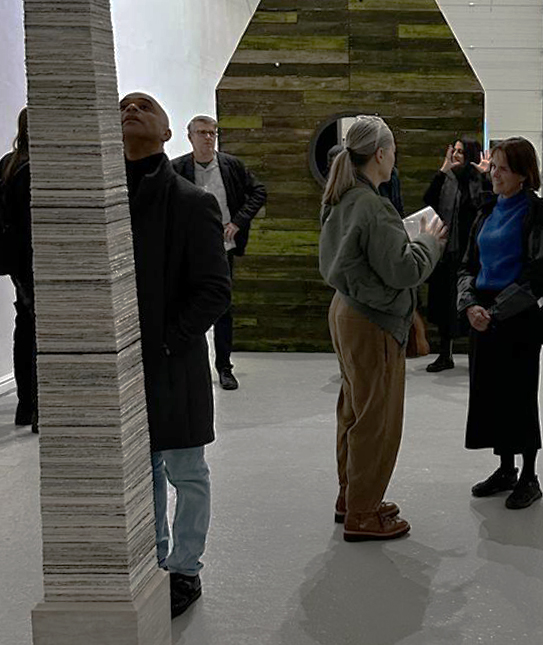
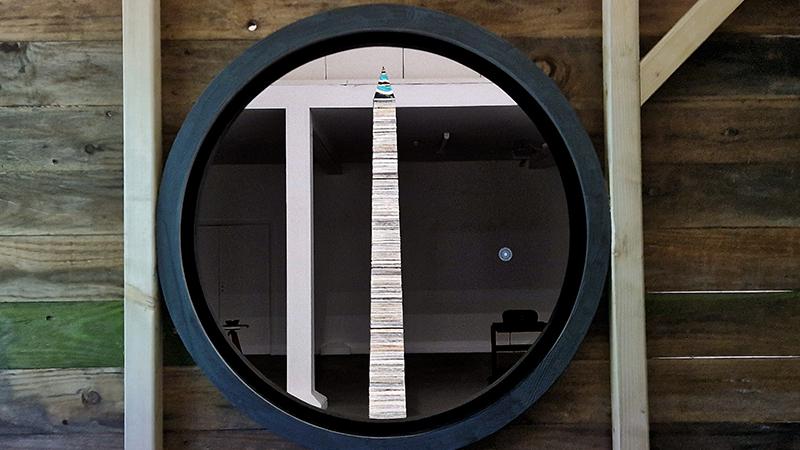
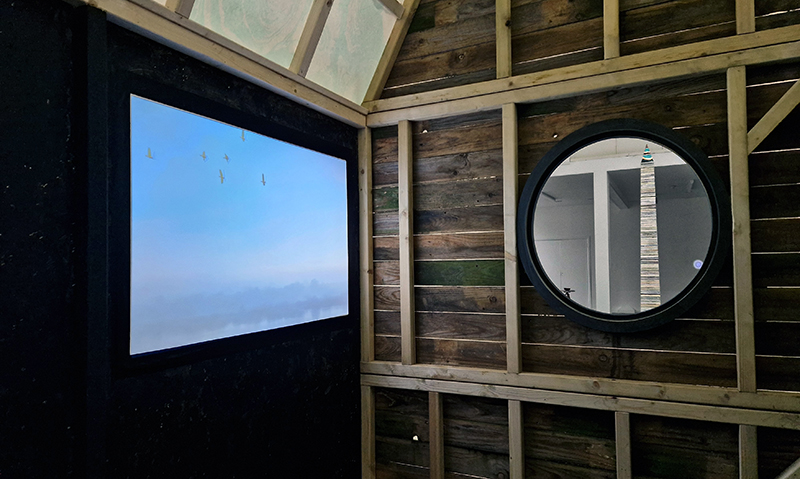
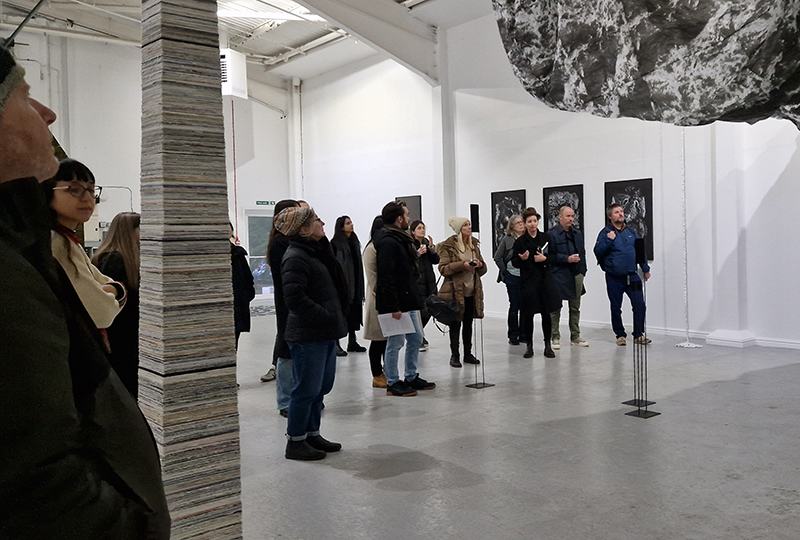
The Azimuth Obelisk (of sedimentary knowledge) is a reimagining of an obelisk erected at Hartland Magnetic Observatory in the late 1950’s near the site’s northern boundary. Viewed through the window in the north wall of The Observing Building (also known as the Absolute Hut) it acts as a permanent azimuth mark from which the drift of the magnetic north pole is monitored. Currently almost hidden by undergrowth, the observatory’s concrete azimuth mark has been replaced by a digital GPS position. Much as the Earth’s geological and magnetic history is secreted into the strata of sedimentary rock, this sculpture also expresses the passage of time through the layering of recycled paper prints and drawings whose history becomes embedded within the stacked layers.

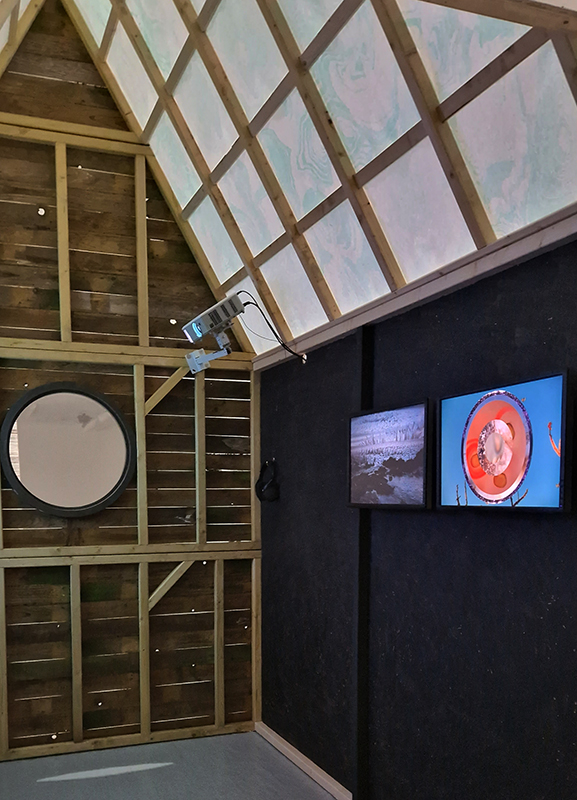
The Absolute Hut (of action potential) operates as a sensory hub with video screens suggesting portals into a web of neural pathways where a range of actions and processes are running concurrently reflecting on the dynamics between the Earth’s geologic structure and navigation using the magnetic field.

The title refers to the way neurons send information electrochemically around the body. The signals they send are called action potentials which is a temporary shift from negative to positive within the cell caused by certain ions entering the cell. Action potentials can be triggered by an interaction with the magnetic field causing a reaction in the body.

The installation is conceived from a combination of features, impressions and functions of the observing building and instruments at Hartland Magnetic Observatory in North Devon and the observation huts built in the 18th century at The Kings Observatory in Kew for meteorological and magnetic observations.

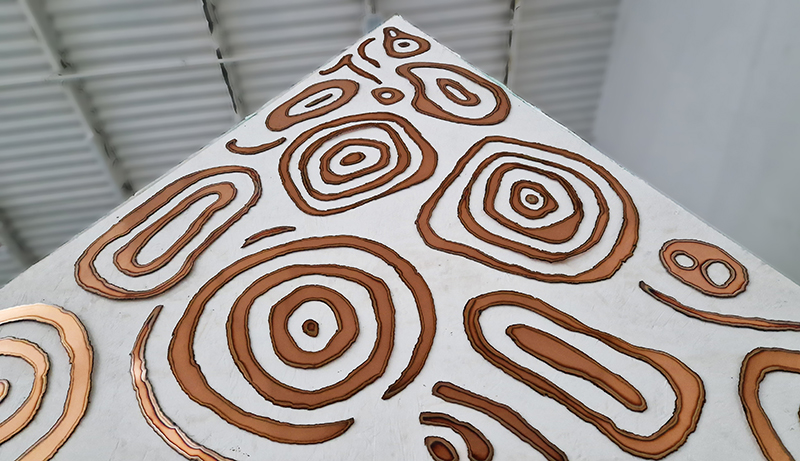
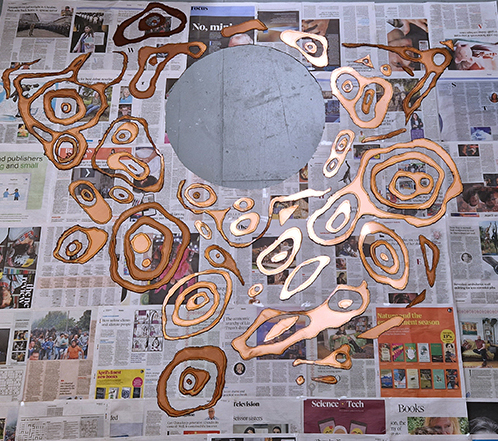
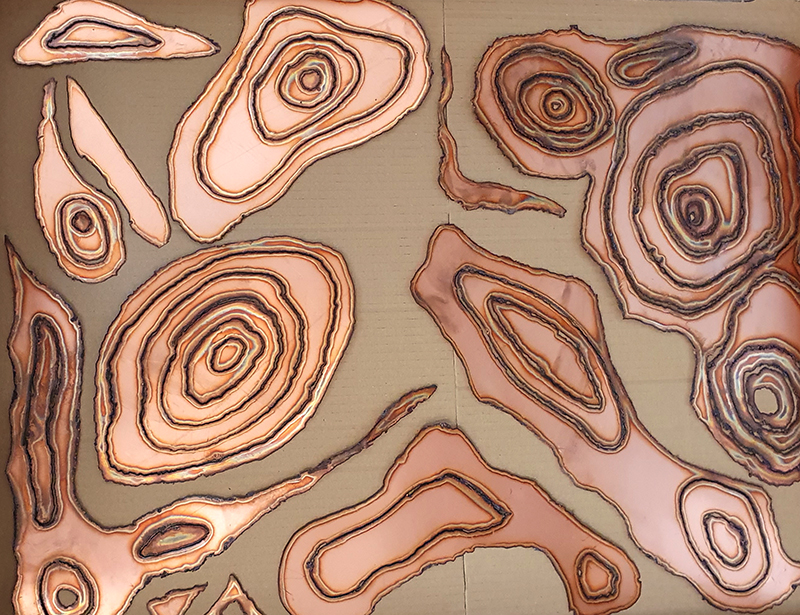
Topological contours of suminagashi marbling and plasma cut copper reflect the fluid motion of the Earth’s molten iron core and the pulsating alpha waves of the human brain when subjected to magnetic fields.

‘the internal skies have their own birds’ Italo Calvino Cosmicomics

The fascinating and perilous journeys made by migrating birds has been a natural wonder for centuries with the first records of this phenomena made more than 3,000 years ago. The innate knowledge of migratory birds is mentioned in Job and Jeremiah and the ancient Greek writers Homer, Hesiod and Aristotle noted their passage.

Job 39:26 Doth the hawk fly by thy wisdom and stretch her wings towards the south?

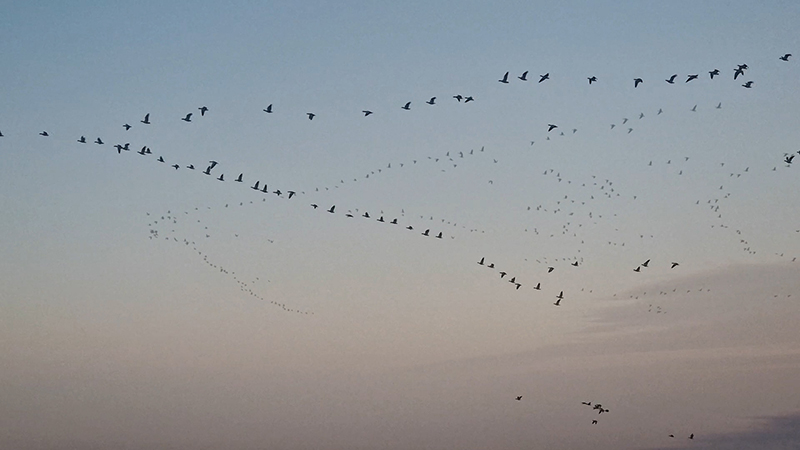
Wintering light two way video projection of migratory pink footed geese filmed at RSPB Snettisham on the North Norfolk coast.

Research has proven that birds and many other animals can use the earth’s magnetic field for navigation. There are two ways this happens. In birds there is a protein in the retina of the eye – (cryptochrome molecules) which trigger action potentials enabling them to visualise the magnetic field. In other animals and magnetotactic bacteria tiny crystals of magnetite respond to the field. This may also be true of humans as we do have these crystals in our brain cells.

Birds use three different compasses to navigate across the globe; the sun, the stars and the magnetic field.

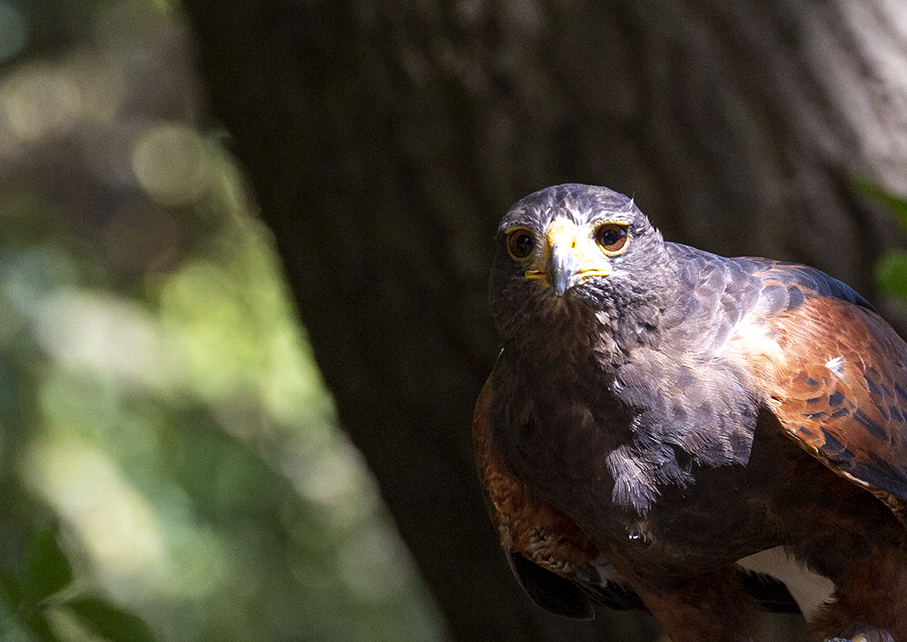
Birds are also able to detect rapid movement such as individual flashes or flickering of a fluorescent light which humans see as a continuous light. Hawks which pursue other birds through dense forests at high speeds, follow the movement of their prey while avoiding branches and other obstacles. To humans travelling at this speed, the fleeing prey, branches and obstacles would just be a blur.

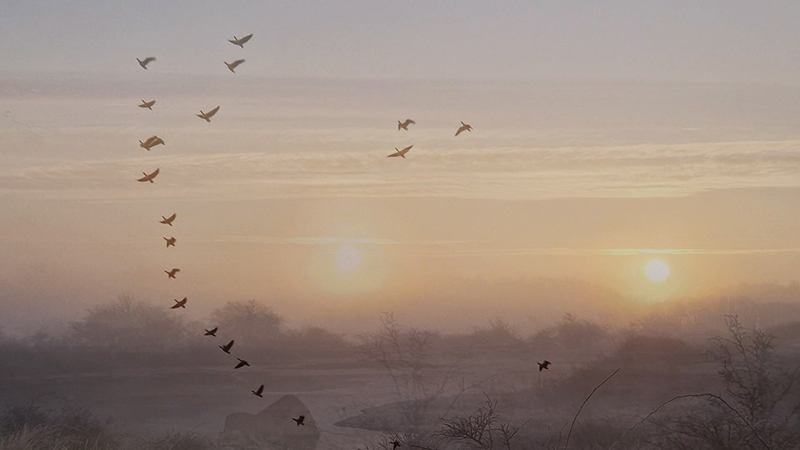
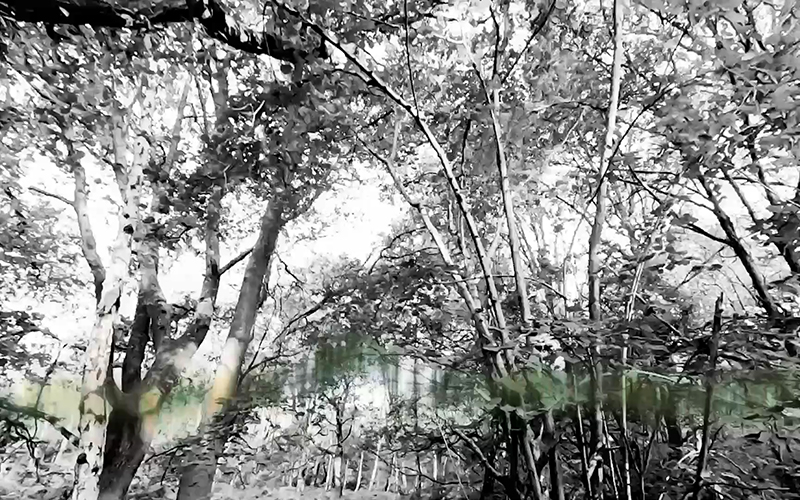
Degrees of Variation considers what it might be like to have the sensory powers of a bird where a protein in the eye is excited by polarised light making it possible to see the magnetic field and follow a visual navigatory cue in an accelerated world. The video imagines flight over water and through woods while being guided by the force of a magnetic field.

Calvino’s story The Stone Sky is wonderfully descriptive of the volatile geological structure of the Earth. This fluidity is what makes life on Earth possible. Only planets with fluid cores have magnetic fields. The geological interior generates a field that reaches into outer space offering a protective shield.

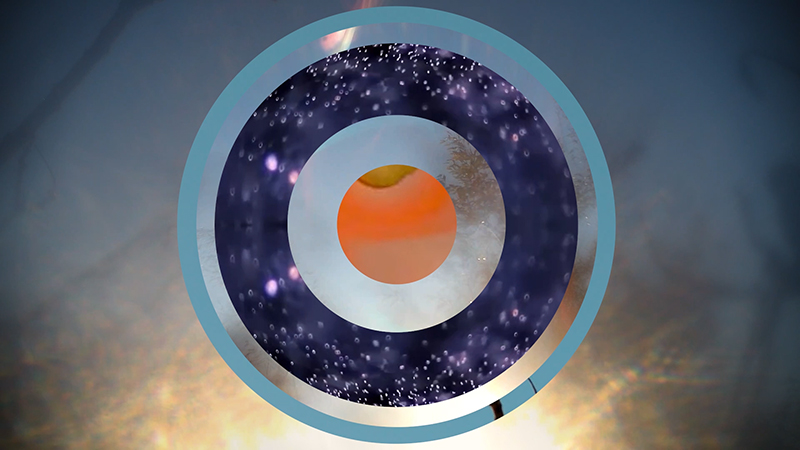
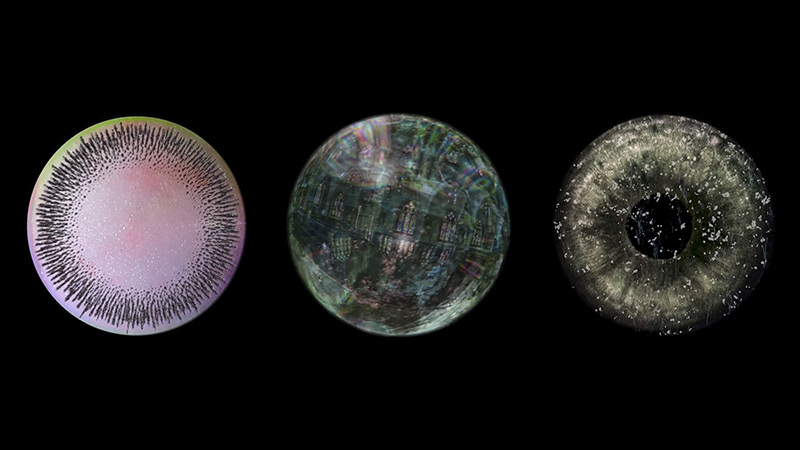
internal skies : external spheres video sequences within concentric circles mimic the geological structure of the Earth to explore the relationship between Earth’s magnetic field and various methods of navigation including via magnetoreception and celestial observation. Sequences include star trails around Polaris (the current north star), birds and bees that use the magnetic field for navigation, magnetotactic bacteria, magnetised iron filings, aerial views of the coastline around Hartland and early morning polarised light which excites the cryptochrome protein in a birds eye.

The Earth’s geomagnetic field is created by a combination of three separate fields and timescales. The main field is generated in the earth’s molten iron core.  Observing the field gives clues to the planet’s deep interior which is inaccessible to direct observations. Changes are measured in the annual drifting of magnetic poles. Secondly electrical currents caused by solar weather and cosmic rays bouncing off the Earth’s main  field charge the surrounding ionosphere causing fluctuations in the field. This field changes by the micro second as we orbit the sun. The Earth’s magnetic field also acts as a shield against most potentially harmful charged particles from outer space. Finally the residual magnetisation of the geology of the rocky mantle and crust, measured in deep geological time also offers clues to the geological history of Earth.

The understanding of the world surrounding us forms in the darkness of our skulls. 

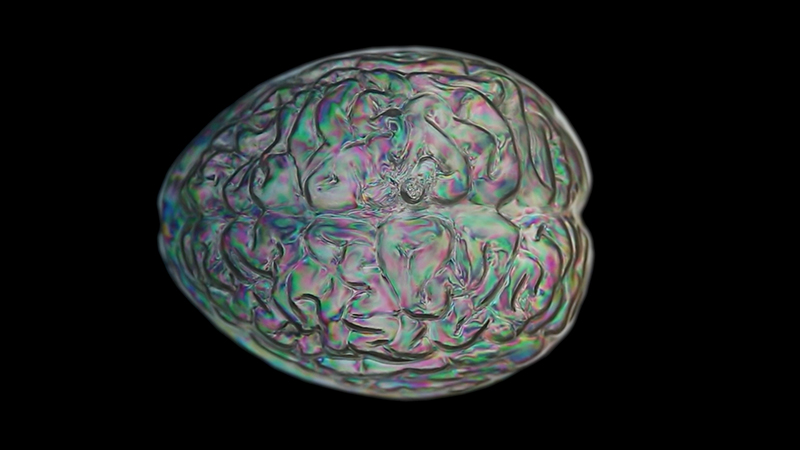
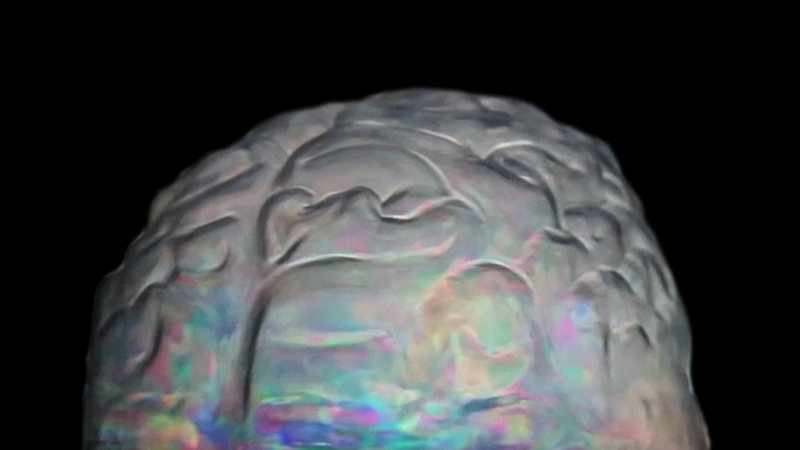
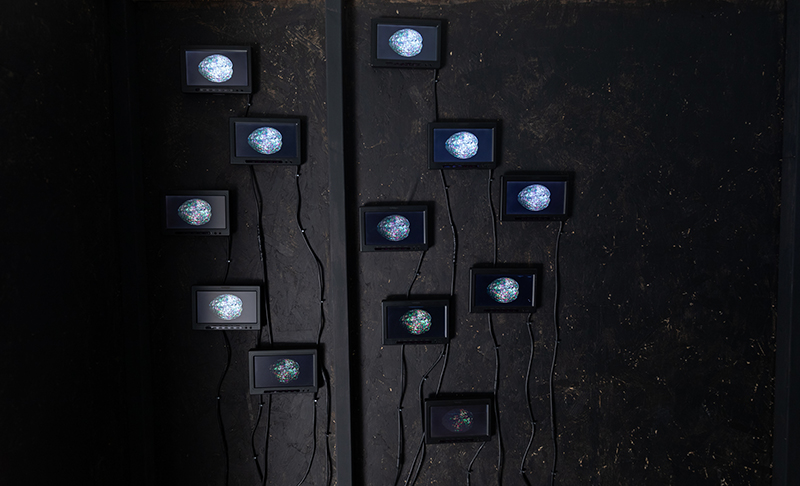
interference – a panel of 12 small video screens inside The Absolute Hut (of action potential), showing images of the human brain filmed by using polarizing filters to create pulsating birefringence colours, relate to the narrative pinned to the outside of the hut.

The narrative is a mix of fact and fiction based on a real experiment carried out at Caltech where scientists found Alpha waves in the human brain do respond to Earth’s magnetic field and other research suggesting that it could be possible for the magnetic field in one animal’s brain to transmit information to another animal’s brain by triggering action potentials creating the same thoughts and emotions.

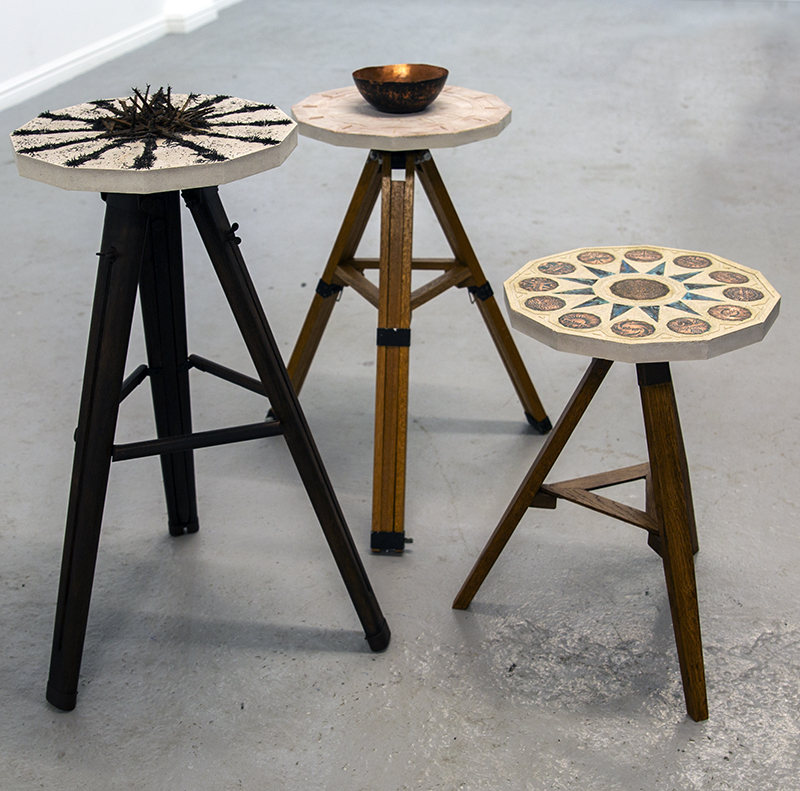
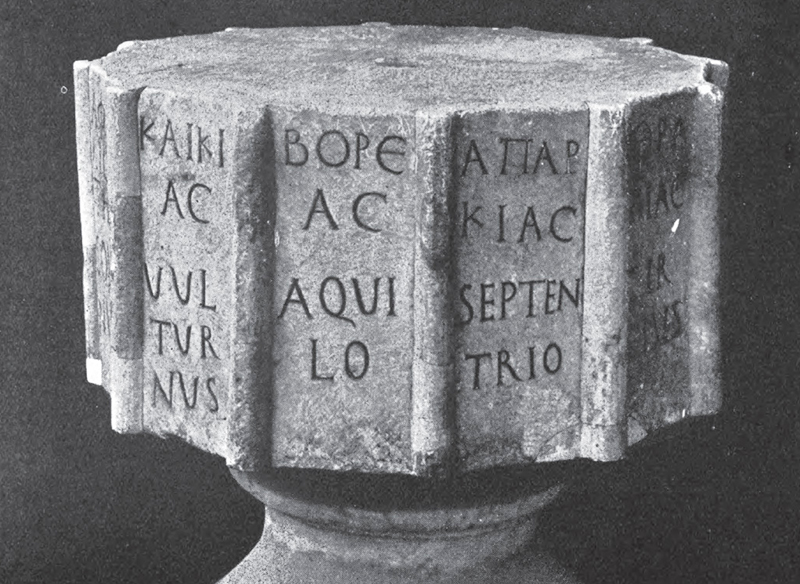
Instruments of the Anemoi are a set of dodecagon tablets cast in Snowcrete, a non-magnetic cement, as used in a magnetic observatory. Suggestive of the pedestals that support various instruments used in monitoring the Earths’ magnetic field they also respond to an ancient anemoscope “table of the winds” carved in marble around eighteen hundred years ago and inscribed with the Greek and Latin names of classical winds on each of its twelve sides. Envisaged here as speculative objects, instruments and schematics wrought by the wind gods, the first emissaries of navigation and orientation.

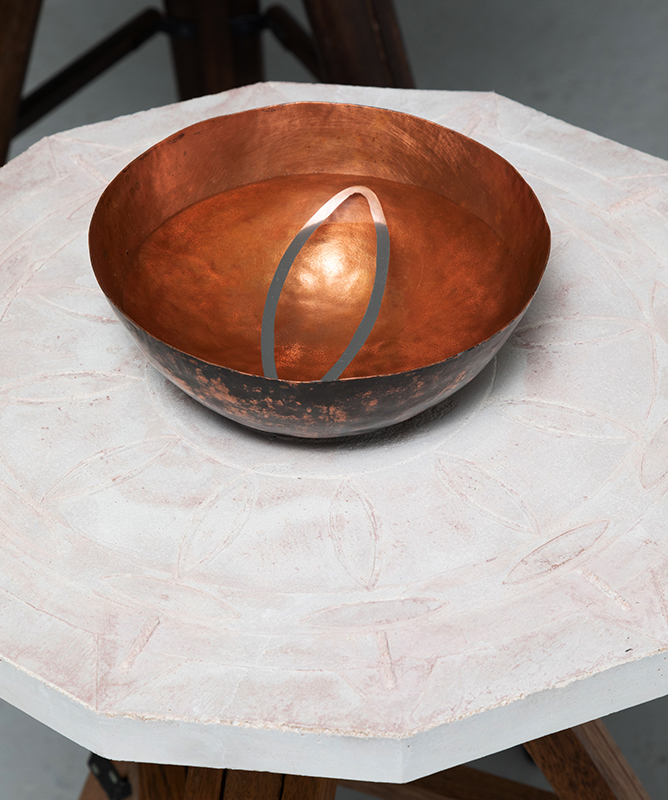
One tablet holds a copper bowl with a ‘silver fish’ floating in water. The shape of the ‘silver fish’ is based on the oval shaped compass needle (illustrated in Breve Compendio de la Sphera de la arte Navegar by Martin Cortes 1551)  and refers back to wafer thin fish shaped iron leaves used by 11th century Chinese geomancers.

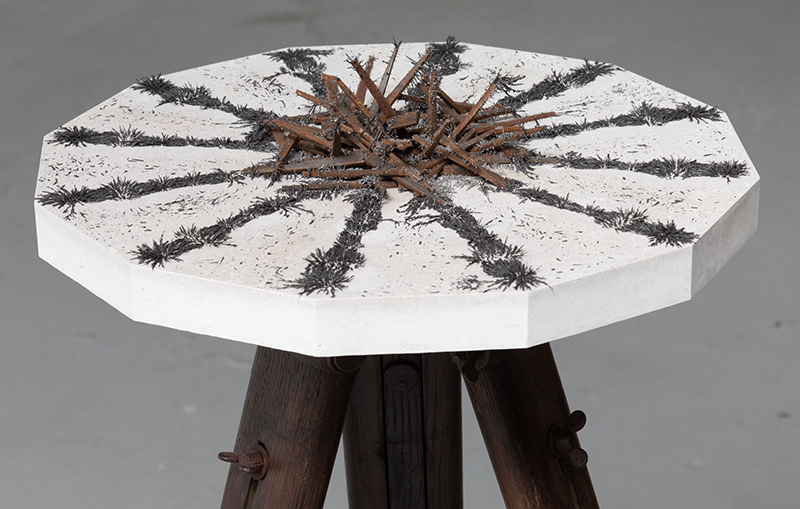
Nails and iron filings on the second tablet reveal an embedded magnetic field recalling a legend that the discovery of the lodestone was made by a Greek shepherd who noticed the nails in his boots were attracted to the rock (magnetite) beneath his feet.

The third tablet is embedded with copper etched with images and names based on associations and attributes of the twelve Greek wind gods set in a traditional compass rose.

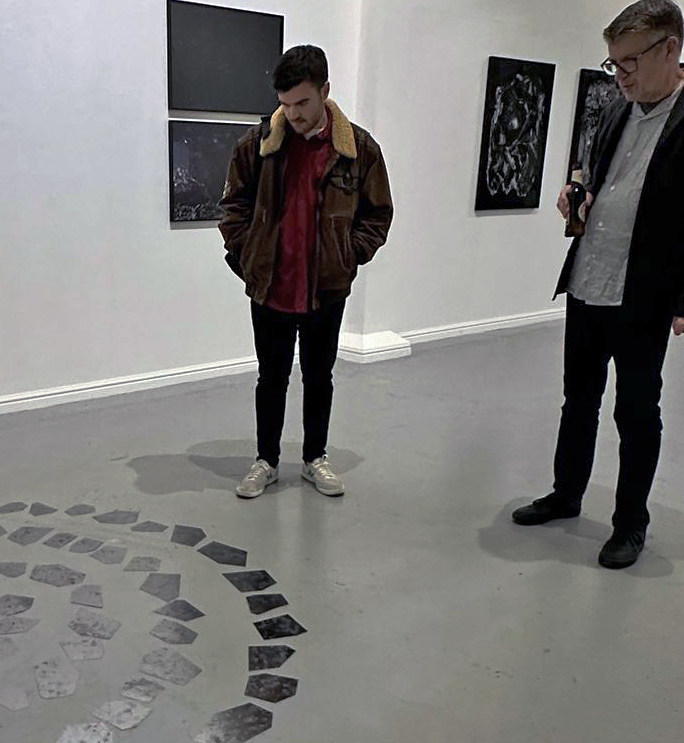
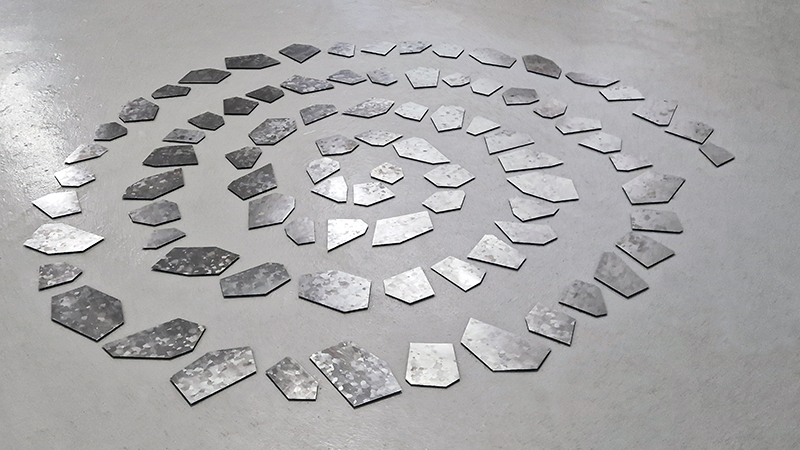
Domain of the Devil Valley Master uses industrial directional magnetic steel, sanded and etched to reveal the Goss texture of rolled iron silicon alloy crystals. The jigsaw pattern of magnetic domains give this material exceptional magnetic properties. The simple evocation of a spiral described in geologically informed polygons draws upon many references, from the shape of our own Milky Way Galaxy sculpted by vast cosmological magnetic fields and the spiralling molten dynamo generating Earth’s magnetic field, to the inner pathway of spiritual growth and the route to the symbolic omphalos (navel) at the centre of the world where the sky entrance and the underworld meet. The title of this work originates from an ancient Chinese manual on the skills of persuasion, The Book of the Devil Valley Master, containing the first known mention of a compass, known at the time as a south-pointer.

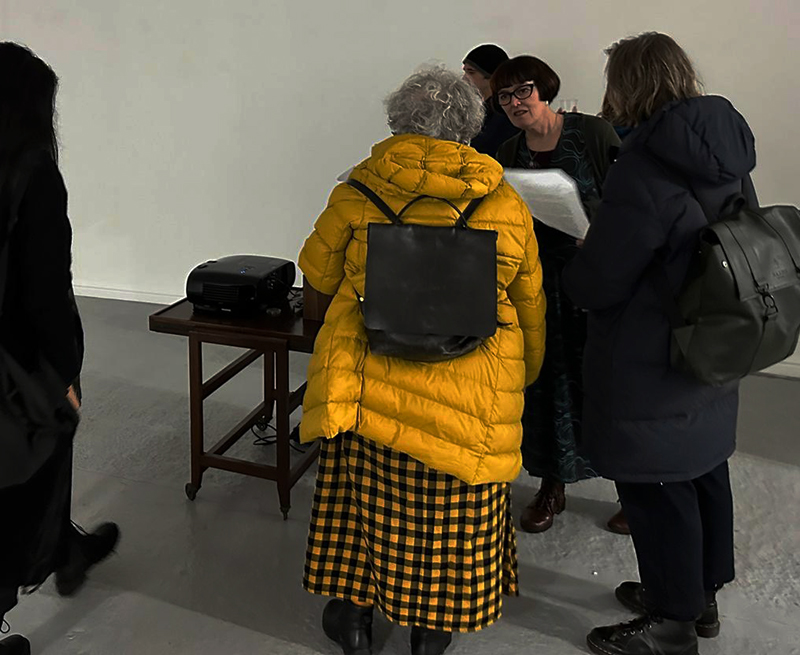
The exhibition closed with an afternoon event launching our publication which includes the essay Dark Nights and Signs of Unseen Things by Anjana Janardhan. There was also a live cloud chamber demonstration of mesmerising cosmic ray trails, artist tours and informal readings.

Publication available – DM via blog comments box for more details or visit Julie’s shop

 “How do you calculate upon the unforeseen? It seems to be an art of recognizing the role of the unforeseen, of keeping your balance amid surprises, of collaborating with chance, of recognizing that there are some essential mysteries in the world and thereby a limit to calculation, to plan, to control.”  Rebecca Solnit, A Field Guide to Getting Lost

At Hartland Magnetic Observatory and other magnetic observatories around the world solar activity is examined daily and forecasts are given if this is likely to have any geomagnetic effect on Earth. The main geomagnetic field is also constantly changing due to convection flows and waves in the Earth’s core. As this change cannot be predicted, uncertainty slowly increases over time.

Most of my work at the moment is towards the exhibition A Stone Sky, with Julie F. Hill at Thames-side Studios Gallery later in the year. Very excited to be working alongside Julie and to have space to be ambitious in scale.

The Absolute Hut installation, reimagining the magnetic observatory room, will be a combination of planning to build the structure and unpredictability through processes used for the surfaces. Measuring for the north facing wall to be built in sections for easier transportation. Testing scale and coverage of field contour shapes cut in copper with a plasma gun.

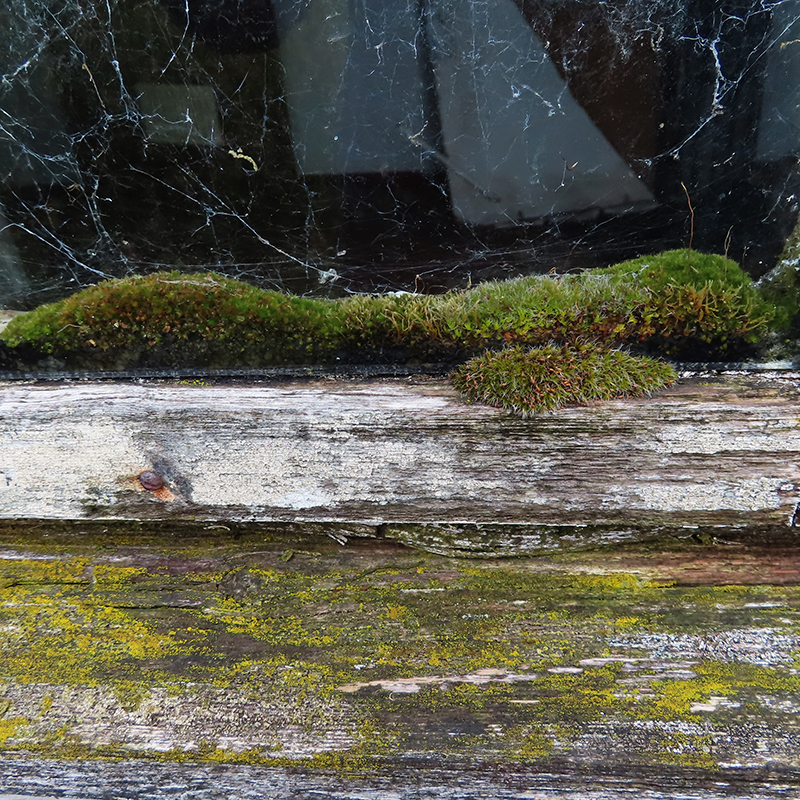
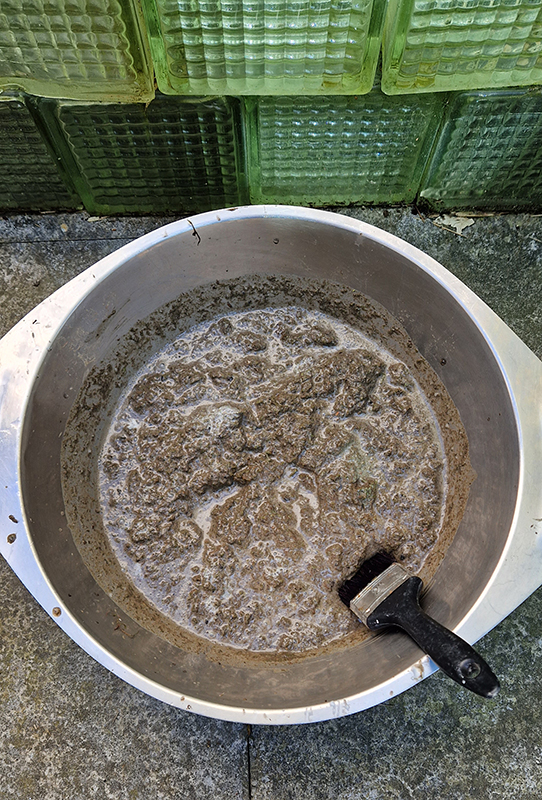
I am hoping the north wall structure can be made up soon and the boards attached. I will then keep it outside facing north until the exhibition in an attempt to grow some moss on its surface. I have only had some very small success so far growing moss, despite trying a new culture recipe and being very diligent misting every morning and evening.

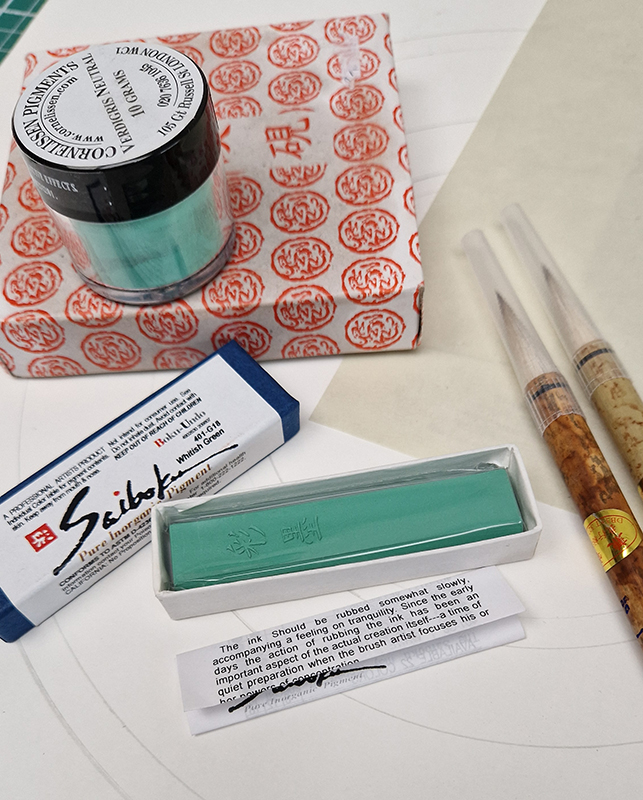
The topological contours of suminagashi marbling, which also echo fluid magnetic field lines, have inspired me to experiment with this idea for The Absolute Hut roofing. I have bought a sumi ink stick in whiteish green, an ink grinding stone and some verdigris pigment from Cornelissen in preparation to try this idea out. In this process the magnetic field lines appear embedded into the fabric of the hut that monitors (senses) the emanations from the Earth’s core.

Through the north facing window of The Absolute Hut, The Azimuth Obelisk (Obelisk of sedimentary knowledge) will be viewed. The sculpture is formed by tearing, drilling and layering sheets of paper. As sedimentary rocks build over time, so the obelisk has a lot of time invested in its making and conceals the history of past events in the hidden layers of the recycled prints and drawings.

I am still working on etching the Directional Magnetic Steel pieces. It can be a frustrating process as some batches work well and some do not etch well at all but come out dull and patchy and I’m not sure why. My idea was to use these pieces to draw a line across the gallery floor signifying the westward drift of the magnetic field from geographical north but now I am thinking more about mapping out a spiral shape in shaped pieces to echo the rotation of the Earth’s molten core.

All information about the Earth’s core has come from studying seismic data, analysis of meteorites, lab experiments with temperature and pressure, and computer modelling. Seismometers convert vibrations due to seismic waves into electrical signals. The velocity and frequency of seismic waves changes with pressure, temperature, and rock composition. The discovery that Earth has a liquid layer beneath the crust and a solid inner core has come from detailed analysis of the different types of waves that pass through the body of the Earth. Looking at the composition of meteorites, fragments of asteroids, formed about the same time, and from about the same material, as Earth provides clues to what minerals the core might contain. Diamond anvil cells are instruments used to recreate the pressure existing deep inside the planet by squeezing materials between two diamonds surfaces. A combination of this data is used to in complex computer modelling programs resulting in detailed animations of the geodynamo, a process powered by the convection of heat in the outer core along with the rotation of the planet.

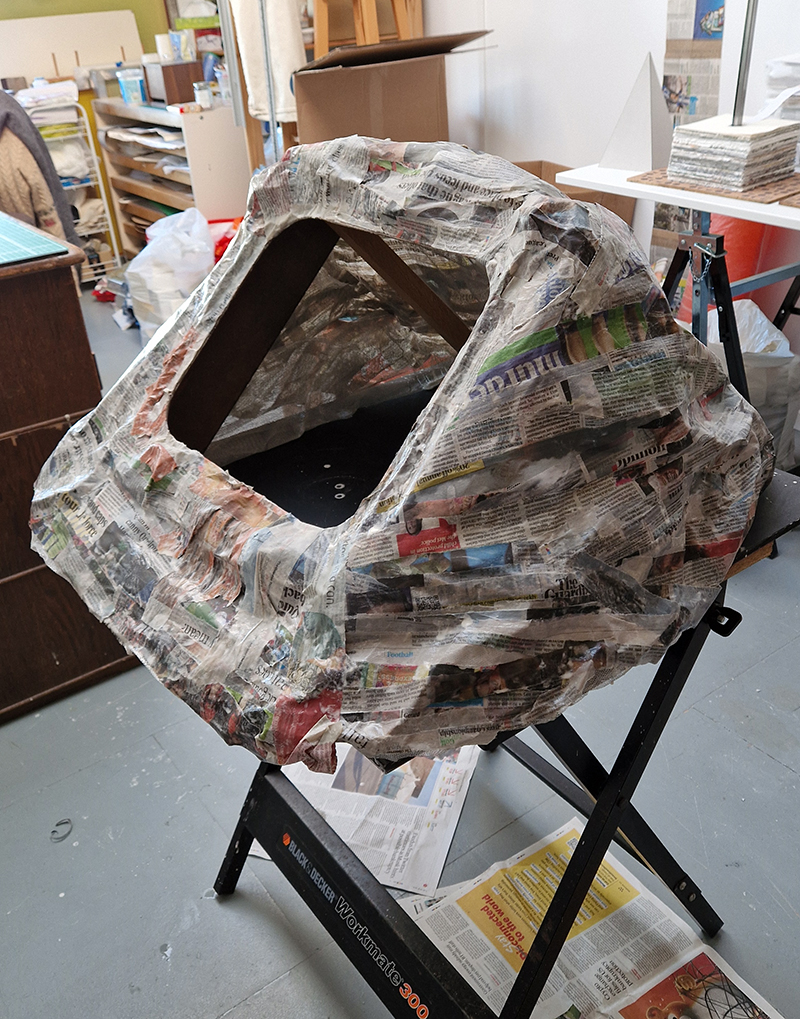
Also a few more layers of papier mâché have been applied to the sculpture that will house a screen with video for the work Belly of a Rock.

Other work in the research stage looks at the first use of a magnetic compass, the cardinal points of navigation and the compass predecessor the wind rose.

In classical antiquity, a time stretching from Homer to the early middle ages, geographic orientation usually referred to landmarks or astral phenomena to determine direction. Eos meaning dawn, and Hesperus, evening were named for sunrise and sunset with north (arctos) being marked by the constellation Ursa Major and later the Pole Star. The winds also became associated with direction, and named in accordance with their qualities such as hot and humid or cold and dry. In Greek mythology Astraeus, the god of dusk, and Eos, the goddess of dawn, gave birth to many sons of the twilight including the Anemoi, the four gods of the winds, each ascribed a cardinal direction. Boreas being the god of the cold north wind,  Notus the god of the hot south wind, Eurus from the east and gentle Zephyrus from the west.

The number of points on a wind rose began with the four cardinal points which were added to and refined over time. The winds were often given names that referred to a particular locality from where they seem to blow, so different places came up with various local names. Aristotle designed an asymmetrical 10 point wind rose which was later refigured by Timosthenes who is credited with inventing the system of twelve winds and using this more for navigation than for “the study of things high in the air.

Classical wind roses were eventually replaced by the modern compass rose during the middle ages.

The “Vatican table” is a marble Roman anemoscope dating from the 2nd or 3rd Century CE, held by the Vatican Museums. Usually an anemoscope would be topped with a weather vane. Divided into twelve equal sides, each one is inscribed with the names of the classical winds, both in Greek and in Latin. 

At a quantum scale, all matter is underpinned by uncertainty. My fascination with particle physics began from simply wondering what everything was made of when you looked really closely. I looked up ‘fundamental building blocks of the universe’ and was blown away by this mysterious other world, so far away in terms of scale I can comprehend, yet a part of me and everything I interact with.

Quanta is a discrete unit that cannot be divided. Quantum physics is the study of energy and matter at the most fundamental level. The chemical reactions in a birds eye that allow it to ‘see’ Earth’s magnetic field involves the quantum entanglement of radical pairs of electrons. These electrons are excited by light, particularly the blue of twilight.

Photography was the first available demonstration that light could indeed exert an action sufficient to cause changes in material bodies. William Henry Fox Talbot 

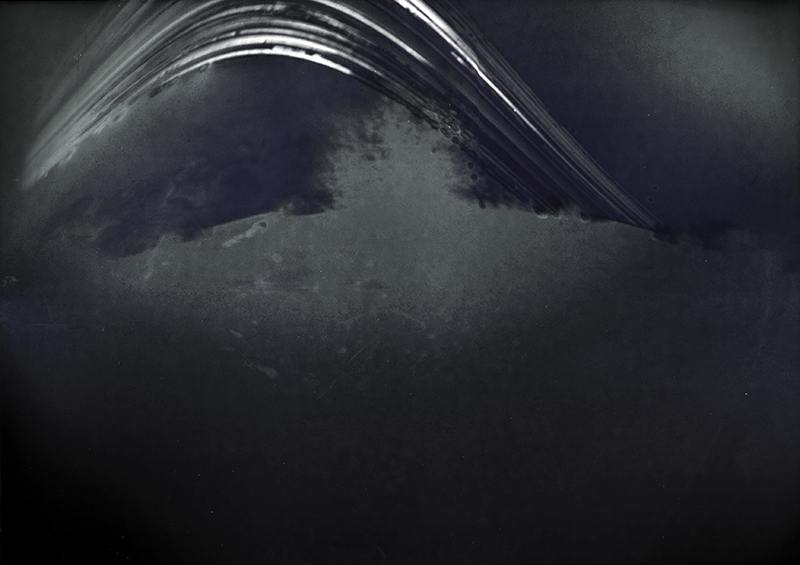
The subject of the photograph (the sun) has transcended the idea that a photograph is simple a representation of reality,  and has physically come through the lens and put it’s hand onto the final piece. Sunburn Chris McCaw

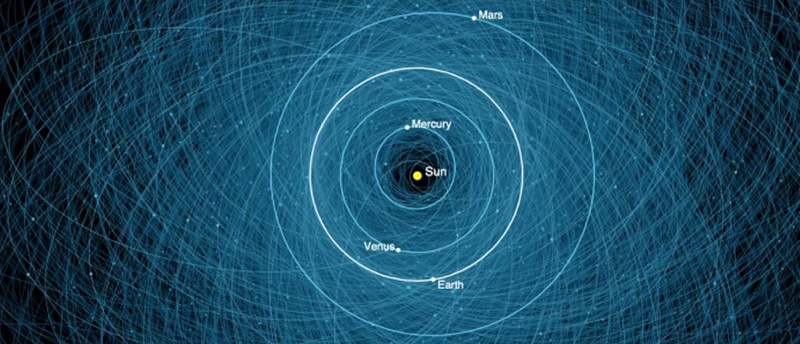
This month NASA announced a new planetary defence strategy to protect Earth from an asteroid impact. NASA’s Double Asteroid Redirection Test (DART) on 11th October 2022, changed the orbit of the Dimorphos Asteroid in the first full-scale demonstration of asteroid deflection technology.

This marks humanity’s first time purposely changing the motion of a celestial object.

“An asteroid impact with Earth has potential for catastrophic devastation, and it is also the only natural disaster humanity now has sufficient technology to completely prevent,” Lindley Johnson, NASA’s planetary defense officer. First any potential collision objects must be identified. This will be the job of the Near Earth Object Surveyor, along with ground-based optical telescope capabilities, to find the still undiscovered population of asteroids and comets that could impact our planet.

A magnetometer is being sent on an eight year journey to Jupiter. It was launched this month from Europe’s Spaceport in French Guiana.

ESA’s Jupiter Icy Moons Explorer (Juice) has magnetic and electric field sensors on the end of the magnetometer boom. The boom is folded in three parts and packed against the side of the spacecraft for launch. Once unfolded in space, the sensors will extend clear of the main body of the spacecraft, allowing very accurate measurements without magnetic interference from the spacecraft itself.

The boom’s instruments will measure Jupiter’s magnetic field, its interaction with the internal magnetic field of Ganymede, and will help study the subsurface oceans of the icy moons.

Ganymede is the only moon in the solar system known to have its own magnetic field. The magnetic field causes auroras, which are ribbons of glowing, hot, electrified gas, in regions circling the north and south poles of the moon. Because Ganymede is close to Jupiter, its magnetic field is embedded in, or lies within, Jupiter’s magnetic field.

The discovery of the moons orbiting Jupiter by Galileo Galilei in 1610 was the first time a moon was discovered orbiting a planet other than Earth. The discovery eventually led to the understanding that planets in our solar system orbit the Sun, instead of our solar system revolving around Earth.

Gallery Visits

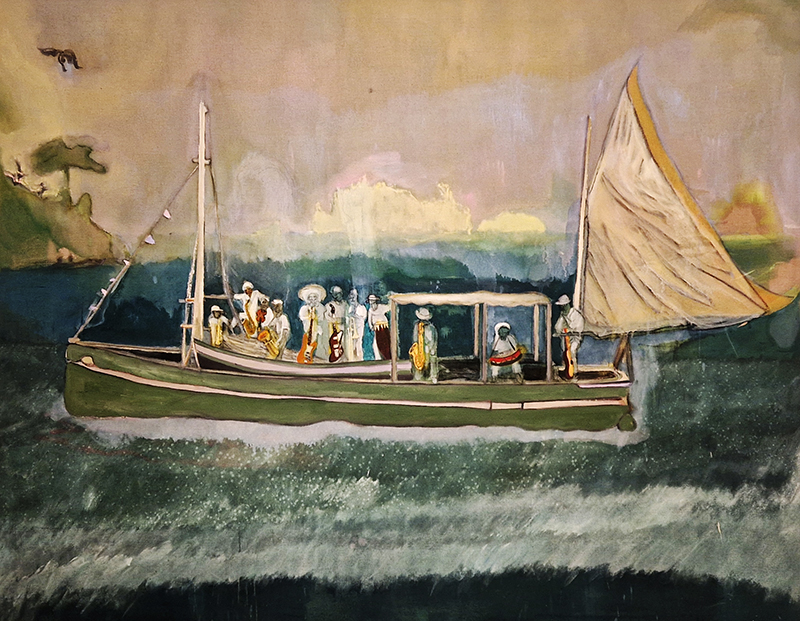
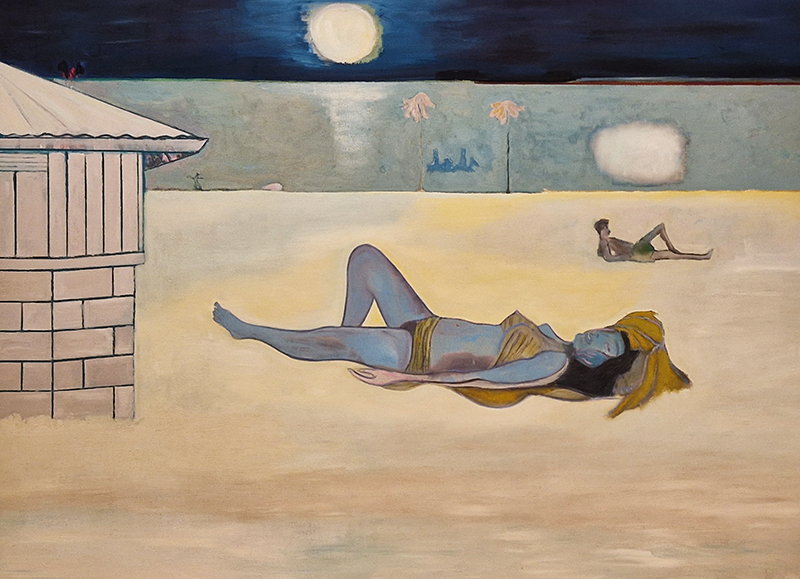
Peter Doig at The Courtauld. My highlights were the luminous moons, moon bathing and an etching of a cave.

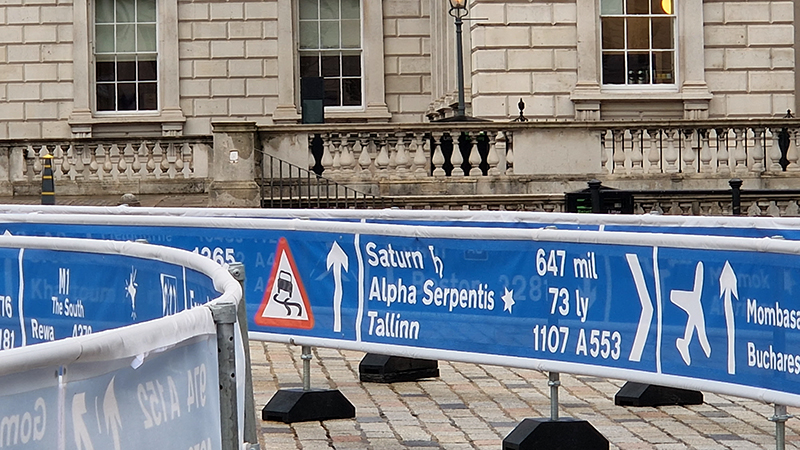
Jitish Kallat Whorled (Here After Here After Here) at Somerset House had a romantic premise with a prosaic aesthetic. I love the concept and the theory and it’s certainly a jarring juxtaposition to be directed to celestial destinations by motorway signage. Routes through the work map circular movements through space and time. Is this the Hitchhiker’s guide to the galaxy?

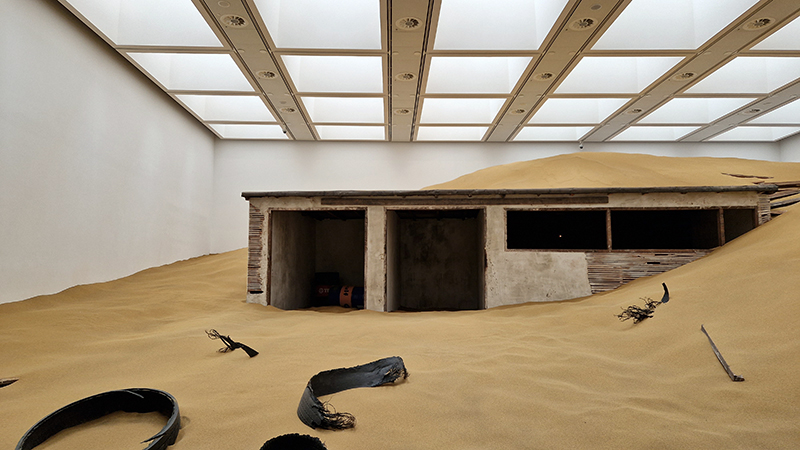
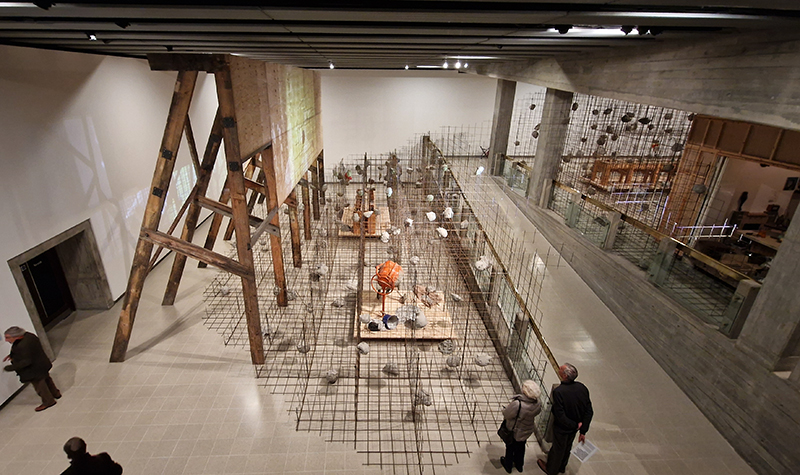
Mike Nelson Extinction Beckons at Hayward Gallery.

The impact is in the SCALE. Punchdrunk meets abandoned engineering.

Editing footage for the video Belly of a Rock which will be shown on an old monitor encased in a sculptural hybrid form relating to both mollusc and rock. The giant sea slug of the mollusc family, can derive directional cues from the magnetic field of the earth which is then modified in response to the lunar cycle. It orients its body between north and east prior to a full moon. In the slug’s nervous system, four particular neurons are stimulated by changes in the applied magnetic field, and two are inhibited by such changes suggesting that the animal uses its magnetic sense continuously to help it travel in a straight line.

The Earth can be divided into the inner core, the outer core, the mantle, and the thin crust. The outer core is about 1,367 miles thick and mostly composed of liquid iron and nickel. It is very malleable and in a state of violent convection. The churning liquid metal of the outer core creates and sustains Earth’s magnetic field. At the boundary between the inner and outer core temperatures can reach 6,000° C which is as hot as the surface of the sun. The inner core is a dense ball of mostly iron, but with a temperature above the melting point of iron, it is not liquid or even molten. Intense pressure from the rest of the planet and its atmosphere prevents the iron inner core from melting as the iron atoms are unable to move into a liquid state. It could be described as a plasma behaving as a solid. The inner core rotates eastward, like the surface of the planet, but it’s a little faster, making an extra rotation about every 1,000 years.  Geoscientists think that the iron crystals in the inner core align north-south, along with Earth’s axis of rotation and magnetic field and are arranged in a hexagonal close-packed pattern. The orientation of the crystal structure means that seismic waves travel faster when going north-south than when going east-west. Seismic waves travel four seconds faster pole-to-pole than through the Equator. 

The Earth is still cooling and as it does so, bits of the liquid outer core solidify or crystallize causing the solid inner core to grow by about a millimetre every year. The growth is not uniform, it is influenced by activity in the mantle and is more concentrated around regions where tectonic plates are slipping from the lithosphere into the mantle, drawing heat from the core and cooling the surrounding area. The crystallization process is very slow, and further slowed by the constant radioactive decay of Earth’s interior. Scientists estimate it would take about 91 billion years for the core to completely solidify but the sun will burn out in just 5 billion years. 

I have nervously passed the cosmic ray detectors over to programmer Jamie. It was hard to let them out of my sight after so much work to get them built but he can’t test the code he has written without them. The Breath of Stars directly interacts with cosmic rays in real time to trigger a digital reaction via a mini computer attached to a block of plastic scintillator and a sensitive photomultiplier. As each particle strikes the plastic scintillator its energy is recorded and a starburst image video relative to the energy released is projected, with the largest images representing the particles with the highest energy.

I am constructing an Obelisk sculpture in response to the concrete obelisk erected in 1955 at Hartland Magnetic Observatory, near the site’s northern boundary as a permanent azimuth mark. It is viewed via a theodolite through a window in the north wall of the Absolute Hut, its azimuth being 11º27’54” E of N and marks the point from which the magnetic north pole is tracked as it drifts westwards. Layers of torn recycled paper are stacked like sedimentary rock that holds clues to the Earth’s magnetic field reversals in its strata.

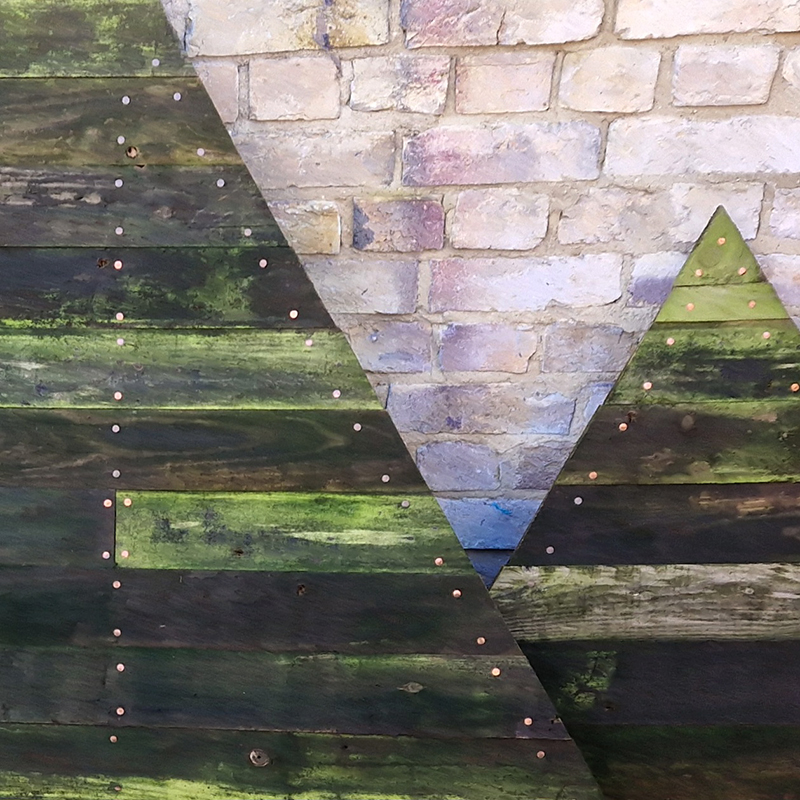
Copper contours of magnetic field lines have been lacquered to preserve the heat patina from plasma gun cutting. These shapes will be pinned to the north facing mossy wall of the Absolute Hut installation, a reimagining of the Absolute Hut at Hartland Magnetic Observatory. I will also employ a north facing window from which to observe the azimuth mark of the Obelisk sculpture.

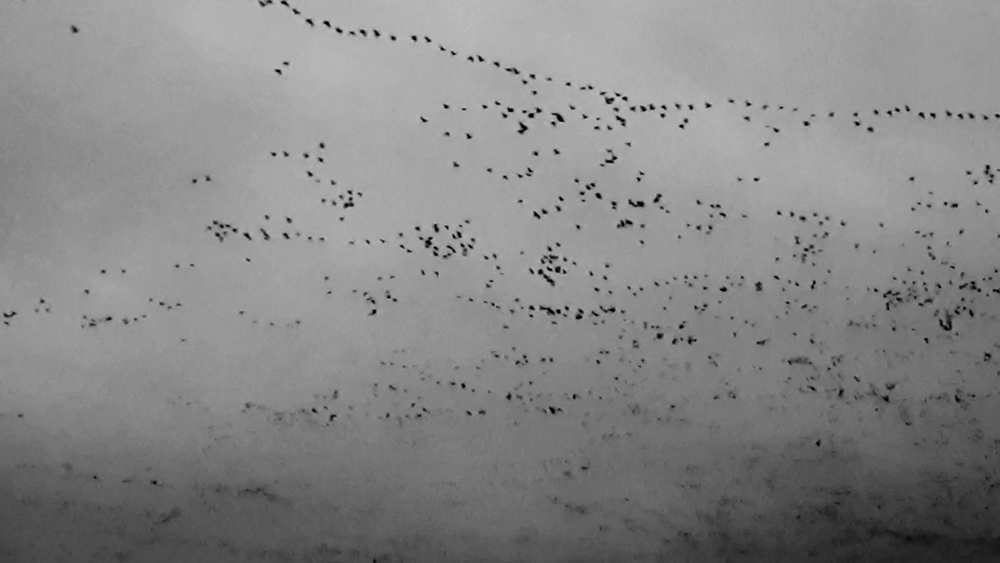
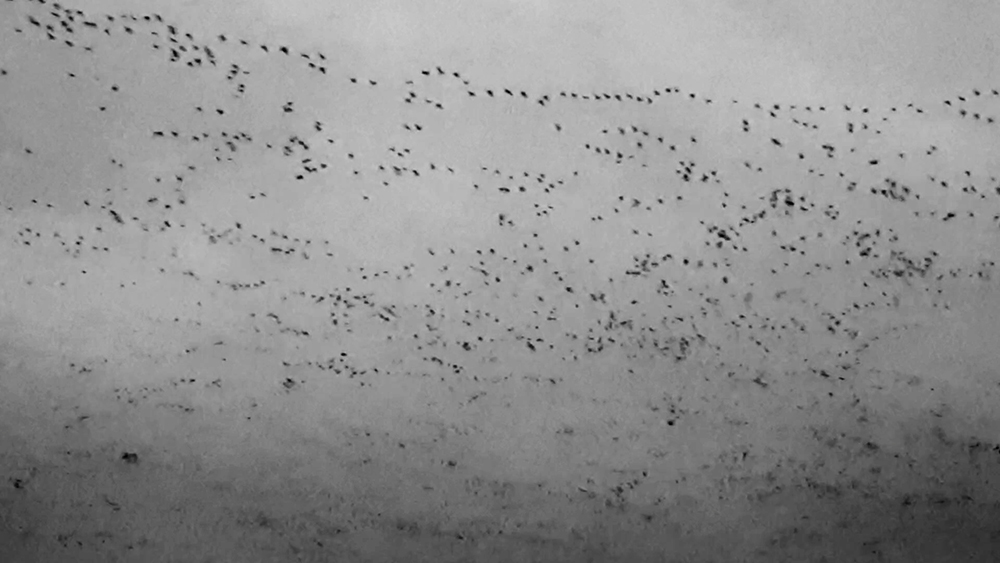
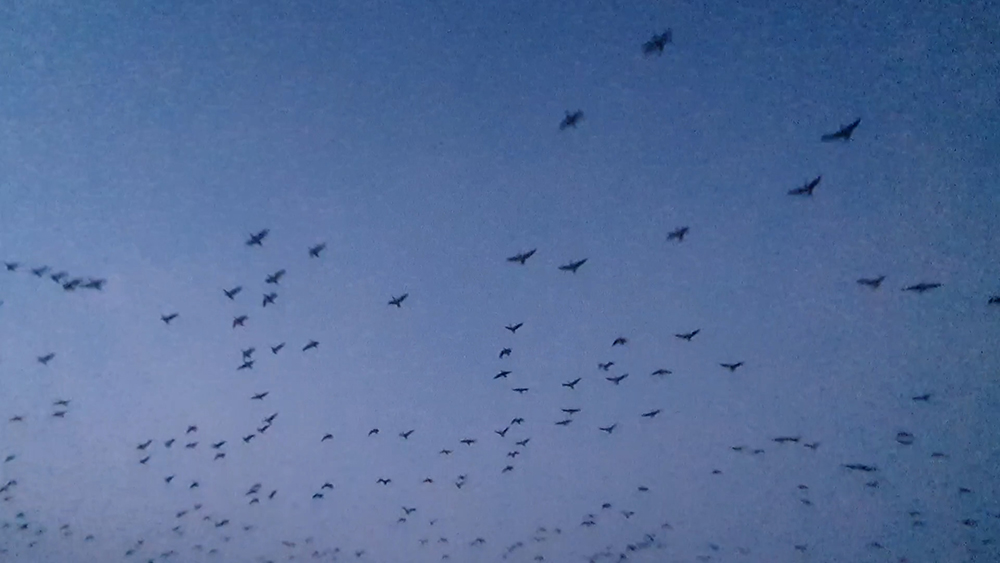
A second research visit to RSPB Snettisham, this time to see the pink footed geese (which over winter on the mudflats here) leave their roost at dawn to fly to the fields to feed.

The walk from the car park to the viewing area is over 2km and takes about half an hour to walk. Setting out before first light the weather felt promising but just as I erected the camera tripod the rain came down hard and didn’t stop for the rest of the morning.

Made a second attempt the next morning leaving a little earlier and although it remained dry there was heavy fog over the sea. Not great for filming with my very basic kit but very atmospheric to experience as the geese emerged from the sea mists.

The noise they make is incredible, a constant chattering building to a crescendo of honking calls as they rise from the water and swarm across the sky in their hundreds. They come in waves but look like particles. At one point what sounded like a few gunshots fired out across the bay in the distant darkness. This sudden disturbance set off a slow deep rumble which drew closer accompanied by a low dark cloud growing heavily stronger building and rising as a huge tidal wave of geese rose simultaneously into the sky in panicked disarray. Extraordinary to witness.

Birds are able to “see” Earth’s magnetic field lines and use that information for navigation. Their compass ability comes from a quantum effect in radical pairs, formed photochemically in the eyes. This light sensitive magnetic compass used by birds is affected by the polarisation direction of light. Exposure to blue light excites an electron, which causes the formation of a radical-pair whose electrons are quantum entangled, enabling the precision needed for magnetoreception.

In chemistry a radical is an unpaired electron which is can be highly chemically reactive. In the radical pair mechanism a pair of electrons with opposite spins have a chemical bond. Light can cause the electrons to change spin direction which can break the bond giving the electron a chance to react with other molecules. In magnetoreception two cryptochrome molecules, found in the rod cells in the eyes of birds, each with unpaired electrons, exist in states either with their spin axes in the same direction, or in opposite directions, oscillating rapidly between the two states. That oscillation is extremely sensitive and can detect the weak magnetic field of the Earth. Birds then move their heads to read the spin of the molecules and therefore detect the orientation of the magnetic field.

While in North Norfolk staying in a beach chalet away from light pollution I was able to make a couple of short time lapse videos centering on Polaris.

Birds can detect the slow arc of the sun and the rotation of the constellations across the sky which is imperceptible to humans and allows migrating birds to orient themselves using celestial navigation as well as magnetoreception.

Birds are also able to detect rapid movement such as individual flashes or flickering of a fluorescent light which humans see as a continuous light. Hawks which pursue other birds through dense forests at high speeds, follow the movement of their prey while avoiding branches and other obstacles. To humans travelling at this speed, the fleeing prey, branches and obstacles would just be a blur.

Gallery Visit

Thames-side Gallery ‘The Accurate Perception Available When Our Eye Becomes Single’ is an immersive multi-screen installation evoking the emotional specifics of place (Orford Ness on the Suffolk coast) while exploring the elasticity of time and history. It is an audio-visual collaboration between Richard Ducker (video) and Ian Thompson (sound) with no linear narrative; sound and image are not synchronised, so each viewing is a unique experience. Sarah Sparkes also makes an enigmatic performative appearance both in the video and live in the gallery.

The crashing sea on shingle, open spaces and brutalist bunker architecture of Orford Ness are echoed in the gallery with audio pitched to envelop and resonate but not overwhelm. Nicely done.

Listening

I really enjoy the Inside Science podcasts with Gaia Vince and this one interviewing cosmologist and theoretical physicist Laura Mersini-Houghton about finding evidence that supports her multiverse theory was particularly fascinating.

Multiverses, melting glaciers and what you can tell from the noise of someone peeing

According to Laura the single universe theory is mathematically impossible.

Reading

Merlin Sheldrake’s Entangled Life. A remarkable reveal of an other world, so different yet so entwined with our own. Beautifully clear analogies help to bridge an understanding between human and fungi.

The ability to detect and respond to chemicals is a primordial sensory ability.

In humans when a molecule lands on our olfactory epithelium and binds to a receptor it causes nerves to fire triggering thoughts and emotional responses.

A mycelial network is one large chemically sensitive membrane: a molecule can bind to a receptor anywhere on its surface and trigger a signalling cascade that alters fungal behaviour.

Fungal lives are lived in a flood of sensory information.

They have light receptors, are sensitive to touch and it also looks like fungi may form fantastically complex networks of electrically excitable cells – a potential ‘fungal computer’ using electrical signalling as a basis for rapid communication and decision making which could learn and remember.

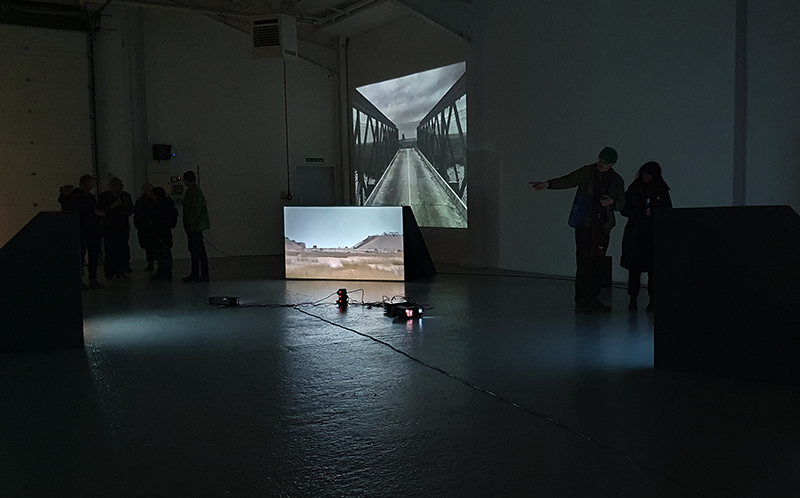
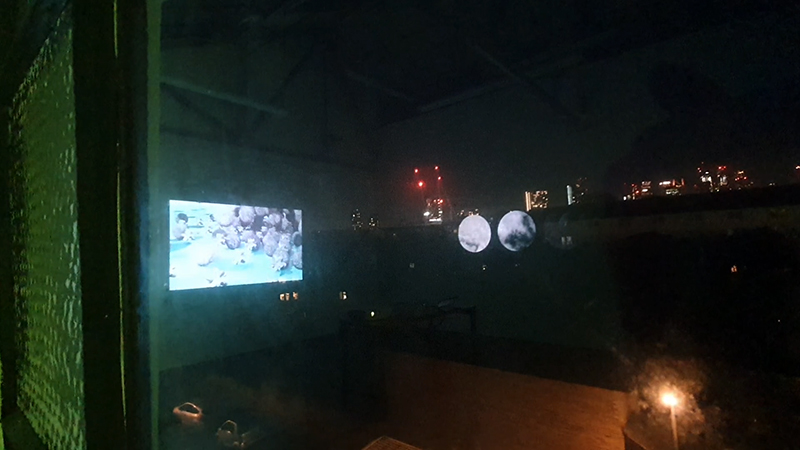
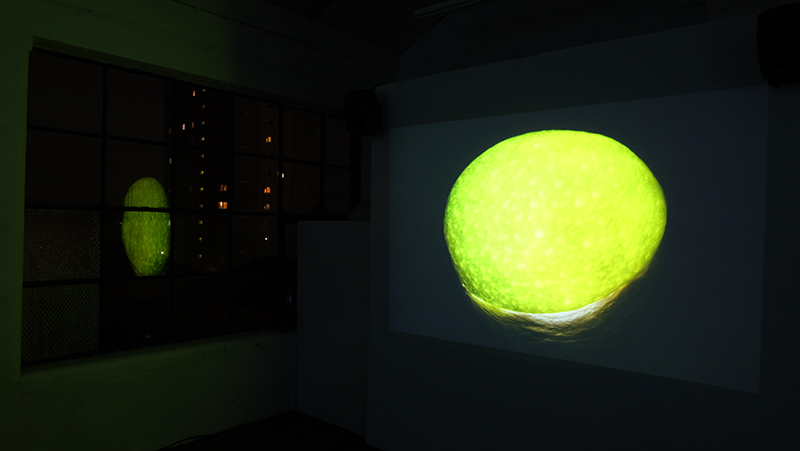
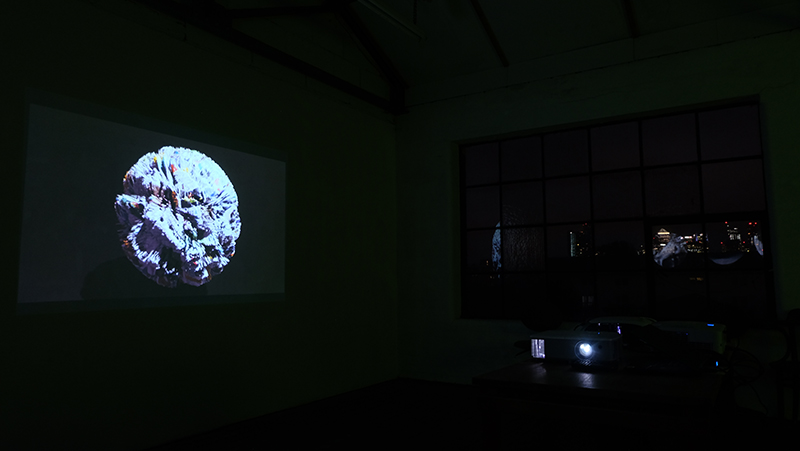
It was such a pleasure to show with Sandra Crisp and Jockel Liess at Saturation Point. We were very pleased with how our films worked together in Projected Topographies and reflected out into the night skies of London.

Sandra Crisp: E_Life uses 3D generated animation, presenting intensely textured and dynamic geometry sequenced over time.

Multiple constantly transforming organic forms, each originating from a simple 3D sphere are mapped with eclectic visuals such as emojis, fragmented images borrowed from 24-hour online rolling-news media and others downloaded via a search engine. Particle systems generate repeated, yet varied objects throughout the film which appear to have a life of their own. Overall suggesting the possibility of a simulated future/ nature.

Jockel Liess: Variations on a theme is a generative audiovisual system which starts from a point of fascination with the aesthetics of irregular organic patterns.

Visually as well as sonically the aesthetic of natural patterns thrives on their intrinsic imperfection which are never distributed even or orderly, are never replications of themselves. They are rather reoccurring variations that form a recognisable tapestry of familiarity across an otherwise chaotic and unpredictable structure. Prospering from the tension that arises between repetition and asymmetry, and playfully inhabit the border region between order and randomness.

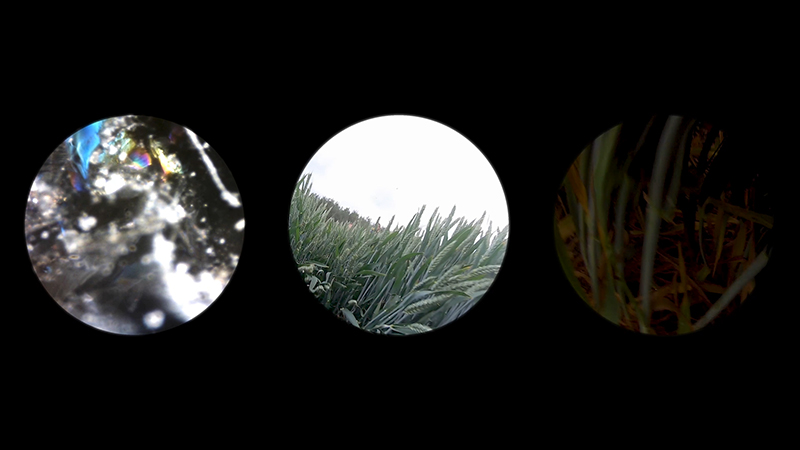
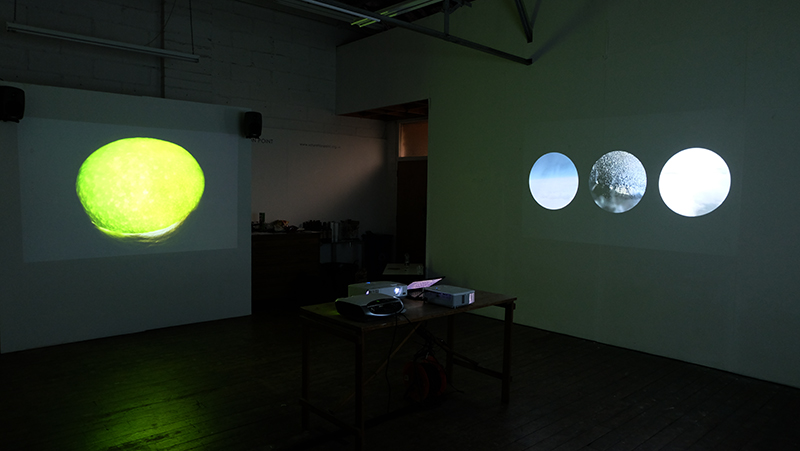
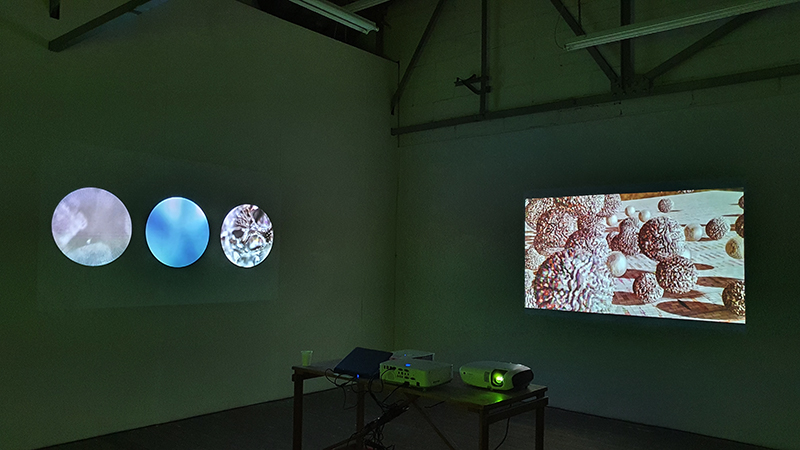
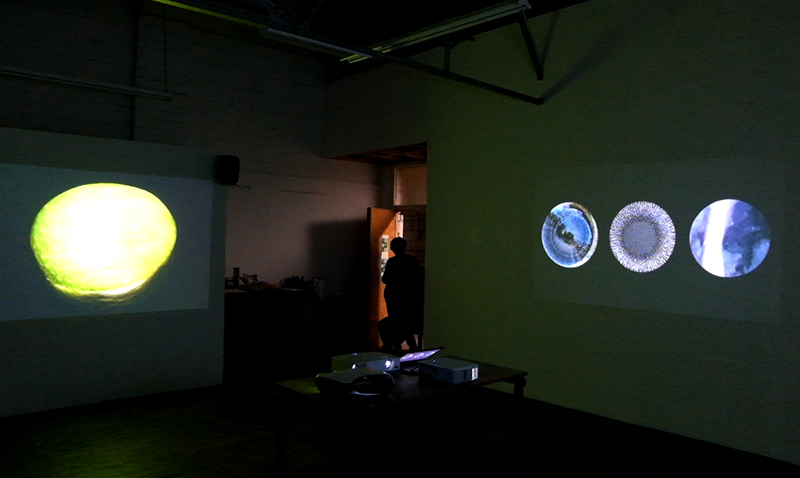
Susan Eyre: Aóratos transports the viewer between everyday locations and terrains visually transformed via use of an endoscope, a microscope,and cameras launched in a high altitude balloon.

It is not impossible that wormholes exist in our universe.

Aóratos imagines journeying through hidden landscapes, distorted spacetime and alternative perspectives. Envisaging potential encounters with cosmic strings, space foam, primordial chemistry, radioactive particles and escaping gravity the work conjectures on the enduring allure of traversing a wormhole.

Black holes were once thought to be pure science fiction but in recent decades scientists have discovered that these extraordinary objects exist throughout our universe in all shapes and sizes and  astoundingly have even produced images of them.

Einstein’s theory of general relativity written in 1915 predicted the existence of black holes and is also consistent with the possibility of gravitational tunnels known as wormholes. It could be that there is a hidden web of planck scale wormholes linking all points in space. Theoretically, threaded through these tiny holes would be filaments of cosmic strings created in the primitive goo of early matter and flung across space when the universe burst into existence.

To traverse space by means of a wormhole would require vast amounts of negative energy, not something usually found on Earth yet in the current political climate in no short supply.

The risks and obstacles of entering a wormhole include creating enough negative energy to open the wormhole mouth wide enough to weaken the gravitational tidal forces which would rip travellers apart; keeping it from collapsing so travellers are not indefinitely trapped inside; exceeding the speed of light and avoiding incineration from deadly high radiation.

The video work explores hidden landscapes, the distortion of space and the permeability of barriers such as force fields and human skin to the unseen particles that constantly teem at near light speed across the universe.

Edge of atmosphere footage was achieved with the help of Sena Harayama, Romain Clement De Givry and Medad Newman from Imperial College Space Society supervised by senior lecturer in spacecraft engineering Dr Aaron Knoll. We also had help from the UK High Altitude Society. My ambition was to film cosmic particles at the point where most of the activity of collisions takes place, about 15km up and so we launched a cloud chamber in the payload of a high-altitude balloon. Unfortunately the prepared chamber was broken the night before the launch and the replacement was not really adequate. Also due to a turbulent launch the camera inside the payload was knocked to one side so we were unable to film this cosmic activity but did get amazing footage above the clouds, gained a height of 35km and successfully retrieved the payload from a field of horses.

Space travellers can ‘see’ cosmic rays as they pass through the retina and cause the rods and cones to fire, triggering a flash of light that is really not there. The retina functions as a mini cloud chamber where the recording of a cosmic ray is displayed by a trail left in its wake.

Aóratos translates as ‘unseen’.

It was a real treat to be invited by Alan Smith and Helen Ratcliff for a short residency at Allenheads Contemporary Arts in Northumberland as part of the Being Human Festival – a celebration of humanities research through public engagement with North Pennines Observatory at Allenheads Contemporary Arts partnering with Durham University to present an evening of discussion and potential stargazing. After a few days of conversations, preparing presentations and meeting the other speakers we were looking forward to the event but unfortunately this was cancelled at the last minute due to flood warnings in the area. We are hoping it can be rescheduled.

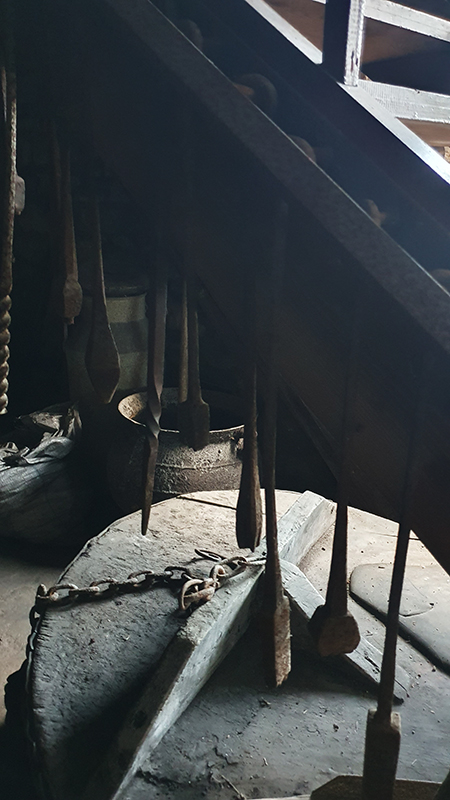
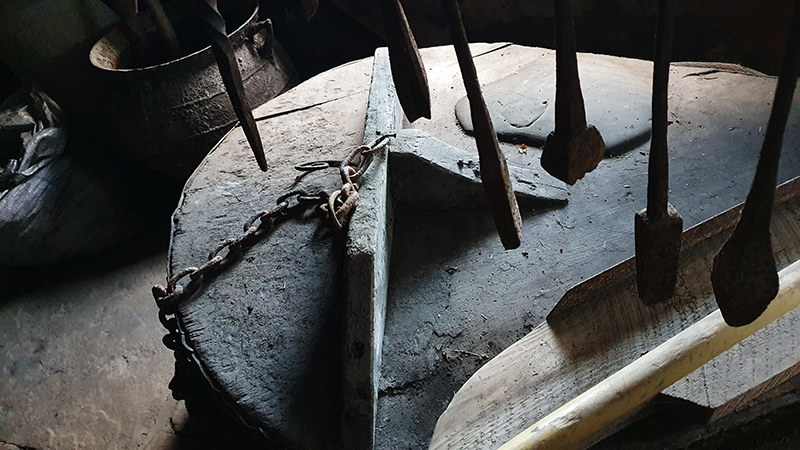
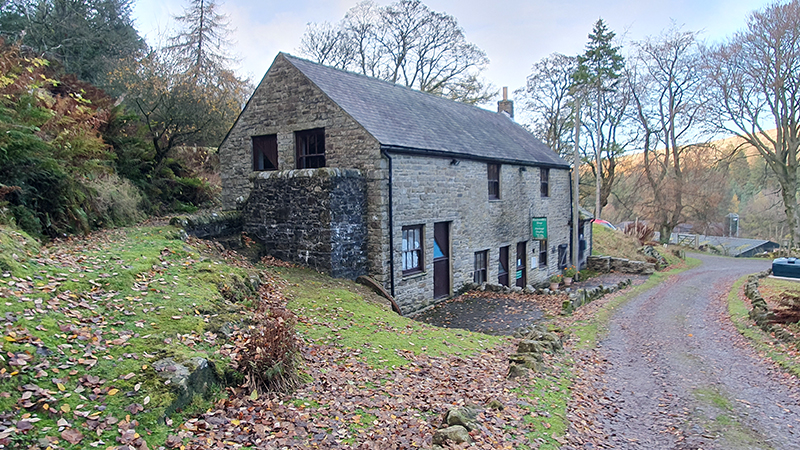
While the weather was clear I headed to Allenheads village for a walk and called in at the Blacksmith’s forge where I had previously shown Aóratos as a site specific participatory installation.

I am appreciative of the dark skies in this location which feels like it is on top of the planet and therefore closer to the sky. I live in south west London so it is a real treat to be away from light pollution. While there, I was keen to make some time lapse film of the stars circling Polaris as research for work about the earth’s magnetic field and magnetoreception. Birds can see the magnetic field and use this extra sense as well as the sun, the moon and the stars to navigate on their migration routes. I am also speculating about the possibility for humans to sense the magnetic field

As the centuries go by, the North Celestial Pole shifts and different stars become the North Star. It takes about 25,800 years for the Earth’s axis to complete a single wobble. Polaris became the north star in about the fifth century and will get closer to straight above the Earth’s north pole until sometime in 2102. Before Polaris was the North Star it was Thuban and next up is Vega.

The skies were clear for a few hours when I first arrived at ACA so I was able to build a short star trail sequence but after that the fog and then the rain settled in.

When reading about the history of Hartland Magnetic Observatory, established in 1955, it mentions ‘A permanent distant mark or azimuth mark was erected on a concrete obelisk 7 or 8 feet high near the site’s northern boundary. Viewed through the window in the north wall of the Absolute Hut, its azimuth is 11º27’54” E of N. It is still in use today.’ I was intrigued that an obelisk should be used for the azimuth mark. I had hoped to see it on my research trip to Hartland but found it is currently inaccessible with just the tip protruding from dense undergrowth.

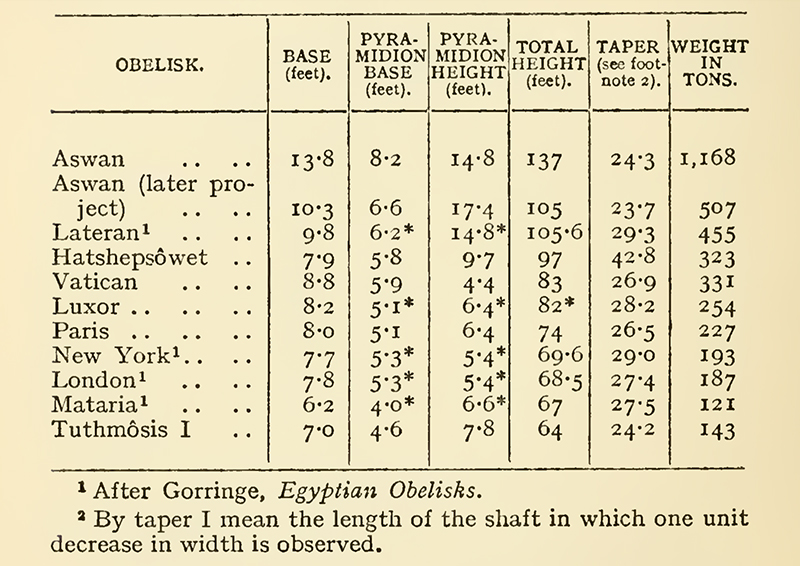
I am reimagining this object as a sculpture made from stacked recycled paper to appear stratified like the sedimentary rock that holds clues to the Earth’s magnetic field reversals and am working to the dimension ratios recommended to avoid emotional unrest.

Obelisk dimensions from “The Problem of Obelisks” catalogued by Egyptologist with the Cairo Museum Reginald Engelbach, 1923.

Before the Meridian Line was moved to Greenwich, London time was calculated from the King’s Observatory at Kew.
There are three obelisks in the Old Deer Park used as meridian marks to adjust the instruments at the Observatory built by George III to observe the transit of Venus in 1769.

As I plan to make the obelisk pyramidion in copper I signed up for the Sheet Copper Sculpture Worksop taught by Robert Worley at The London Sculpture Workshop. To begin we were shown how to beat out a bowl shape and apply a dark patina using chemicals and heat.

I was introduced to the plasma gun. Very satisfying cutting with the fourth state of matter. These shapes are based on the fluid fluctuations of the Earth’s geomagnetic field and I plan to use these on the north wall of The Absolute Hut sculpture in my show next year, tacked over moss with copper pins.

Magnetism is caused by the motion of electric charges. Electrons spinning around the nucleus in atoms generate an electric current and cause each electron to act like a tiny magnet. In most substances, equal numbers of electrons spin in opposite directions, which cancels out their magnetism. In iron, cobalt, and nickel, most of the electrons spin in the same direction which makes the atoms in these substances strongly magnetic. By rubbing a piece of iron along a magnet, the north-seeking poles of the atoms in the iron line up in the same direction creating a magnetic field and turning the iron into a magnet. A magnetic field can also be created by running electricity through a coil of wire, but the field will disappear when the electric current is turned off.

Work in progress on Breath of Stars (the cosmic ray detector interactive video) has been to convert all the .avi star burst video files to VP8.webm using Shutter Encoder software. Jamie, the programmer, has code working now to display video files with transparency so they can be layered.

Gallery Visits

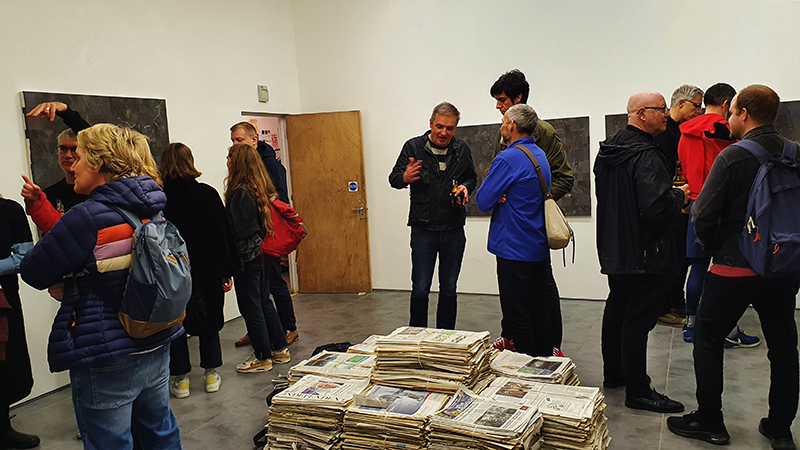
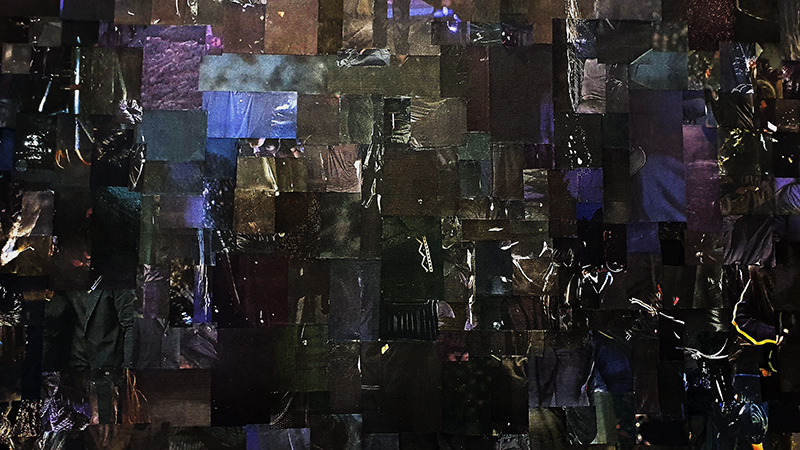
Simon Leahy-Clark solo show FEED at Artworks Project Space. Painterly surfaces made from newspaper clippings have unexpected depth in palette, flow and cosmic imagery, considering the origin of each segment. Mesmerizing to study the forms like spotting patterns in the constellations. Really liked this work.

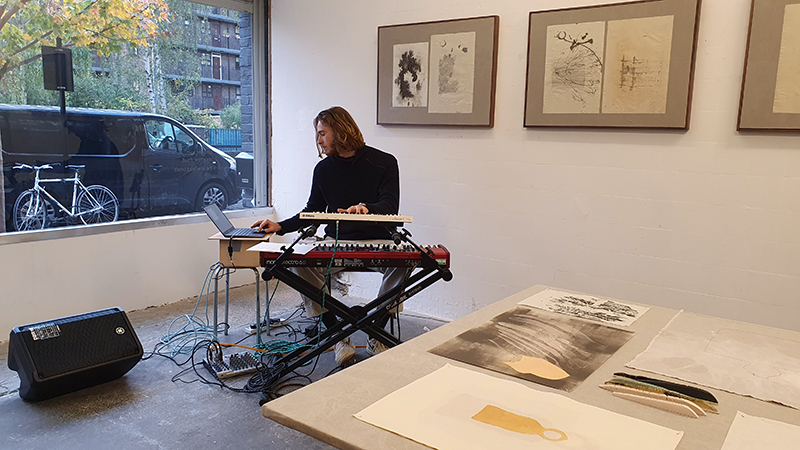
Caroline AreskogJones Tonight Rain, Tomorrow Mud at Filet Space with live sonic response from Oskar Jones incorporating field recordings gathered whilst walking in Andalucía and captured acoustics whilst making the drawings.

A thoughtfully crafted exhibition capturing the fragile landscape that turns to dust without water and mud when the rains come. The beautiful audio accompaniment from Oskar added to the meditative experience of being transported elsewhere while having time to focus of the works installed with a resonant delicacy.

Lisa Chang Lee showing HZ-0 at Enclave Projects Lake, a sensory device created in collaboration with James Wilkie that creates soundscapes responding to the void around it. Equipped with seven sensors measuring temperature, light, air pollution, sound etc data is fed into an algorithmic software based on the Lydian scale. I hadn’t heard of this scale but am interested to discover it’s connections to gravity and magnetism. The Lydian Chromatic Scale is the most complete expression of the total self-organized tonal gravity field with which all tones relate on the basis of their close to distant magnetism to a Lydian tonic. Tonal gravity is the heart of the Lydian Chromatic Concept. Simply put, the basic building block of tonal gravity is the interval of the perfect fifth. Every tone within Western music’s equal tempered tuning relates to every other tone by either being close to – or distant from – the center of gravity, which is the tonic (or “DO”) of the Lydian Scale. There are 3 states of tonal gravity: Vertical, Horizontal, and Supra-Vertical.

This is a fascinating work thinking about other ways to experience a space.

Hollow Earth: Art, Caves & The Subterranean Imaginary at Nottingham Contemporary.

Inspired by the hundreds of caves hand carved into the rock beneath the city of Nottingham this exhibition explores questions of thresholds, darkness and prehistory. ‘Every culture and religion has told stories about what lies beneath. Caves are where extraordinary events come to pass, the domain of gods and monsters, of births, burial and rebirth. Dark, dangerous and unstable, caves are places of visions and experiences both sacred and profane. More recently, they have become home to data farms, seed vaults and doomsday bunkers.’

Artists include: Hamed Abdalla, Lee Bontecou, Sofia Borges, Brassaï, The Center for Land Use Interpretation, Steven Claydon, Matt Copson, Juan Downey, Chioma Ebinama, Mary Beth Edelson, Laura Emsley, Barry Flanagan, Ilana Halperin, Frank Heath, Ed Herring, Michael Ho, Hans Hollein, Peter Hujar, Athanasius Kircher, Alison Knowles, Antti Lovag, Goshka Macuga, René Magritte, Gordon Matta-Clark, Emma McCormick-Goodhart, Santu Mofokeng, Henry Moore, Nadar, Ailbhe Ní Bhriain, Pauline Oliveros, Lydia Ourahmane, Gordon Parks, Flora Parrott, Walter Pichler, Giuseppe Pinot-Gallizio, Liv Preston, Ben Rivers, Robert Smithson, Michelle Stuart, N.H. Stubbing, Caragh Thuring, Kaari Upson, Jeff Wall, Aubrey Williams, Joseph Wright of Derby.

This was a research trip with Julie Hill towards our joint show next year. The geological resonates through both our work, for Julie through the deep chasms of geology echoing those occurring cosmologically and for myself in the generation of the geomagnetic field deep in the earth which emanates out, reaching into space.

EVERY CLOUD at Bruce Castle Museum.

Nine artists celebrate the life and work of the Namer of Clouds and Tottenham resident, Luke Howard (1772 – 1864) to mark the 250th Anniversary of his birth.

Artists include Tam Joseph, Andrew Miller, Doodleganger, Gabriela Schutz, Helen Currie, Kerry Duggan, Lisa-Marie Price, Mary Yacoob, Siân Dorman with a live cloud sculpture performance from Alexander Costello.

Tam Joseph gave a heartfelt speech about his discovery of Luke Howard from seeing a blue plaque with the citation ‘Namer of Clouds’ which to him spoke of first nation peoples connection to nature and piqued his curiosity to learn more about this poetic origin; the difficulty of painting clouds – never from a photograph – a cloud is never still and a photograph loses the inherent transience; and the shared passion for the shapes and patterns found in the ocean of air above our heads.

Reading

Some history of early speculation, experiments and discoveries of three men who respectively broke new ground in understanding the Earth’s magnetic field, measuring time mechanically and mapping the hidden strata of the Earth.

Latitude and The Magnetic Earth by Stephen Pumfrey. The story of William Gilbert (1544 – 1603), a radical new thinker who questioned the perceived Aristotelian philosophy of the day, developing his own theory of magnetic philosophy of the Earth. His book On the Magnet and Magnetic Bodies, and on the Great Magnet the Earth was published in 1600 in which he concluded that the Earth was itself magnetic.

The lines of latitude and longitude remain fixed as the world flexes and shifts beneath them. Extraordinary to think these lines were drawn centuries BCC and mapped by Ptolemy in the second century on his many atlases.

The zero degree line of latitude is fixed by nature whereas that of longitude is a political decision. The founding philosophy of the Greenwich Observatory viewed astronomy as a means to an end – all the stars needed to be catalogued to chart a course for sailors to cross the globe. Ptolemy first set the meridian off the northwest coast of Africa and many countries set their own starting point for 0 longitude. Eventually, after publication of a series of star charts beginning in 1767, made by the then Royal Astronomer, that became used world wide for nautical navigation, Greenwich was declared prime meridian of the world in 1884 (except by France who took another 27 years to accept the decision).

Longitude by Dava Sobel tells the story of the battle between proponents of the lunar distance method and the mechanical clock to solve the problem of determining longitude at sea. Astronomers and engineers became adversaries spurred by a financial reward offered to the one who came up the most accurate and reliable method. John Harrison (1693 – 1776) carpenter turned clockmaker spent his life perfecting the marine chronometer.

The Map That Changed The World by Simon Winchester might have some historical merit in telling the story of William ‘Strata’ Smith (1769 – 1839) but I found it over perambulatory in the telling.