Archives for posts with tag: Noémie Goudal

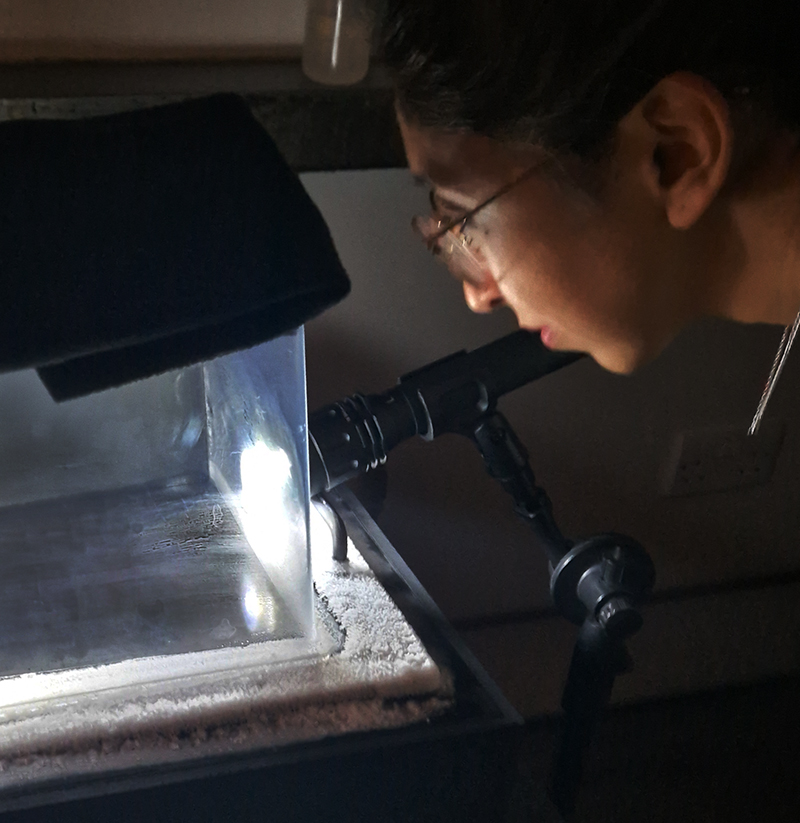
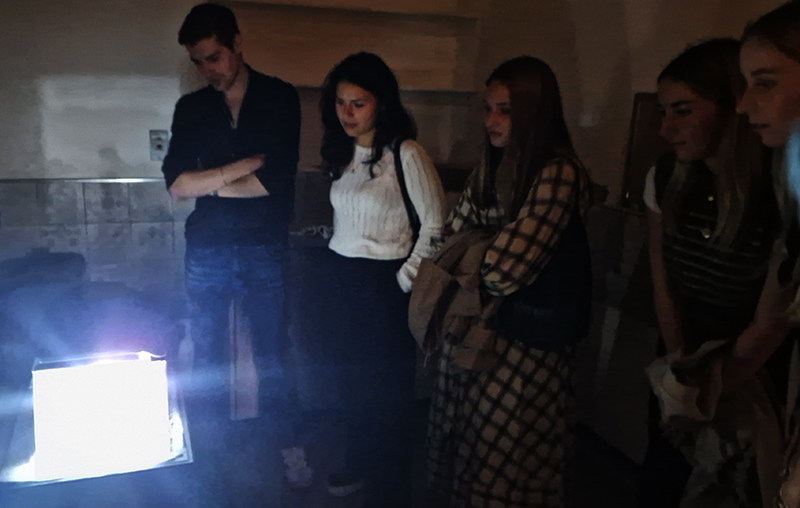
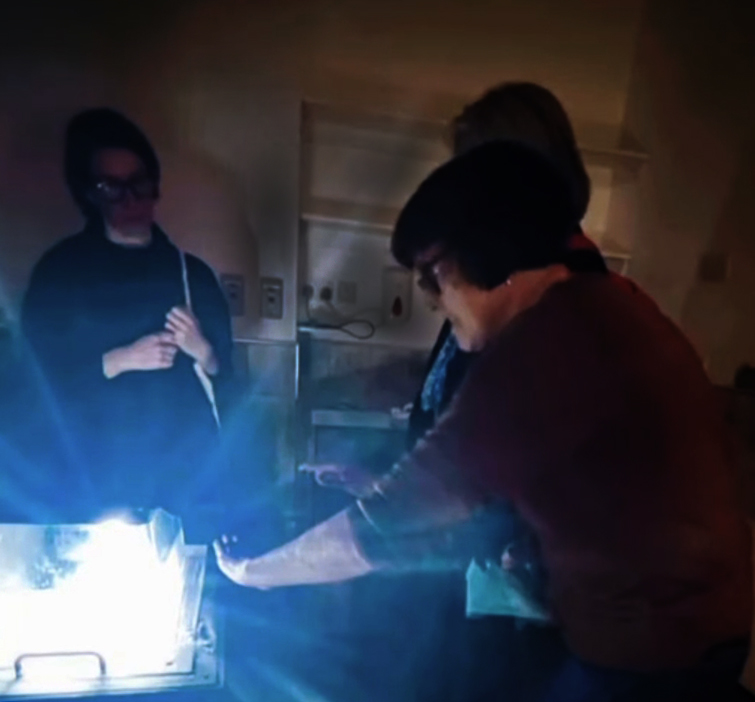
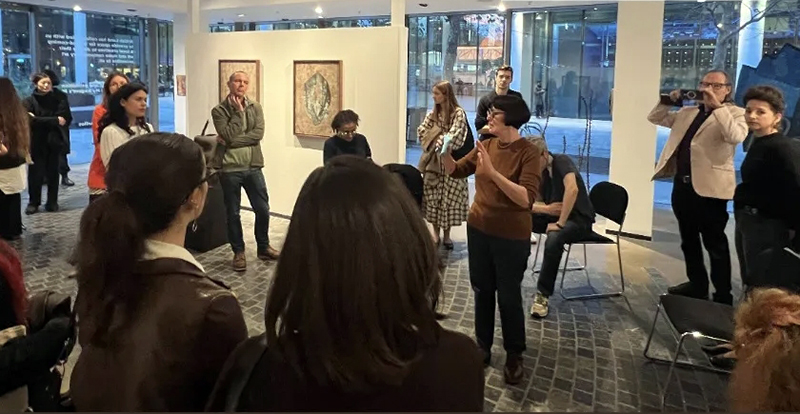
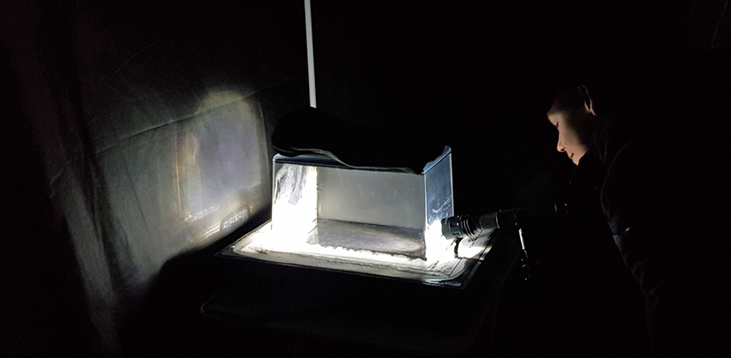
The finale of the exhibition programme of Carbon, Carbon Everywhere co-curated by Indira Dyussebayeva-Ziyabek and Maria Hinel at Hypha HQ included an exhibition tour, a BREAT(HOLD) workshop led by Ania Mokrzycka and an invitation to view cosmic particle trails passing through a cloud chamber.

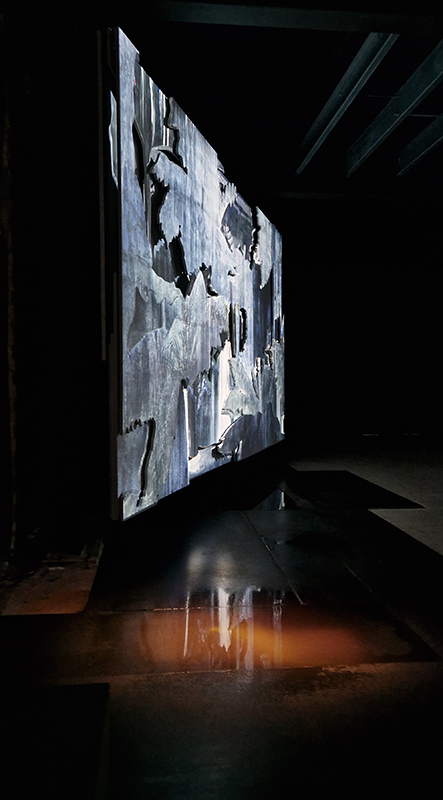
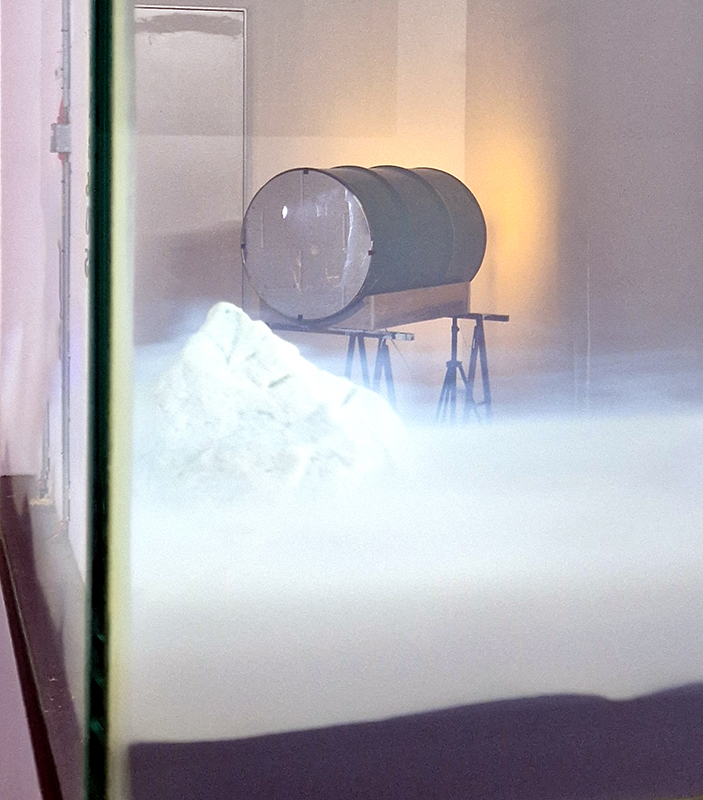
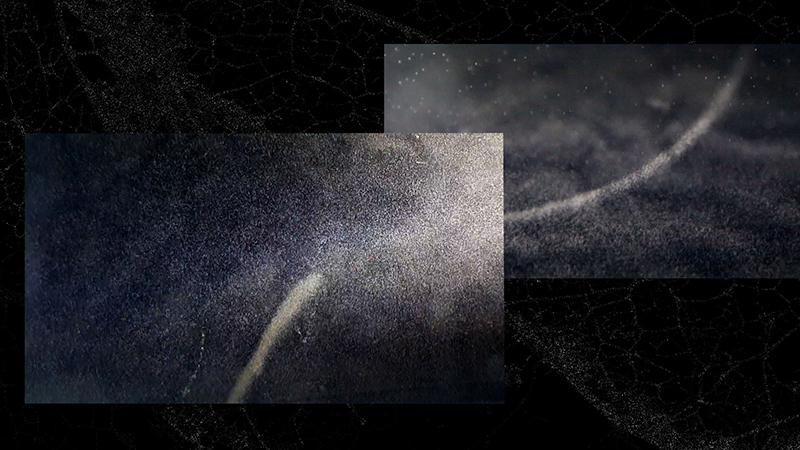
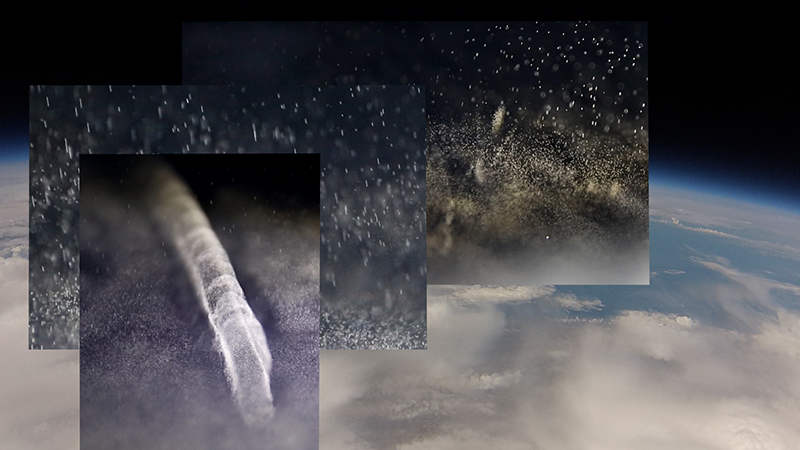
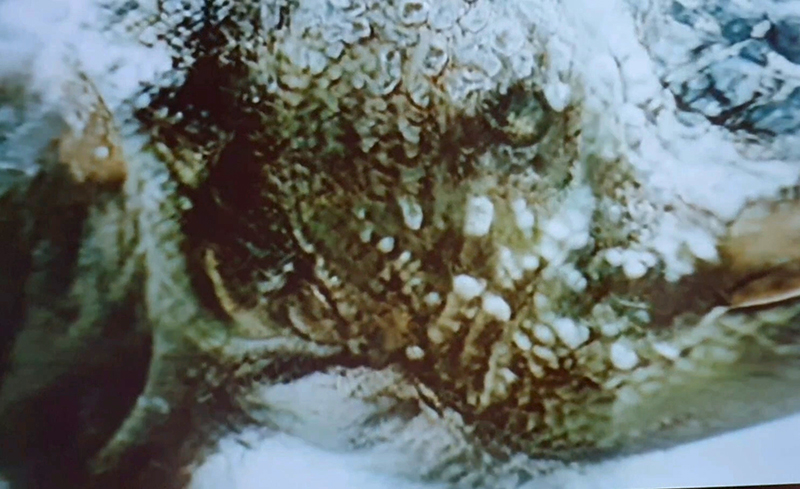
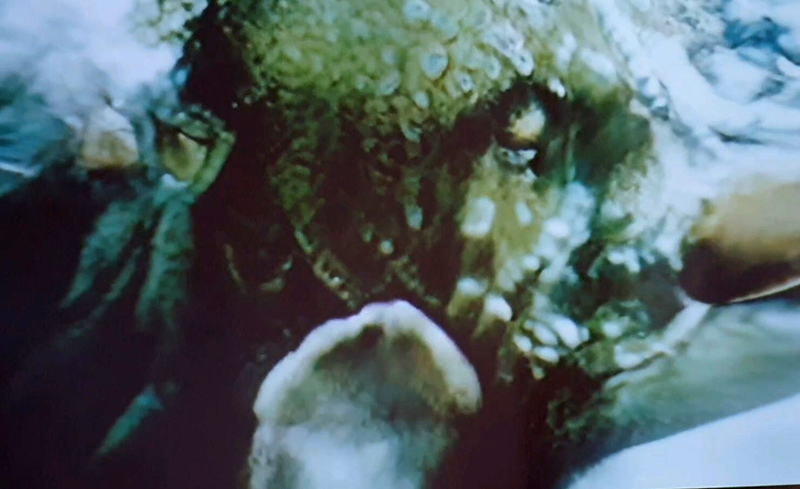
This simple equipment of a plastic tank saturated with isopropyl alcohol vapour over a metal tray sitting on dry ice was used to capture footage for the video Cosmic Chiasmus: crossing the universe showing in the exhibition. Cosmic rays are fast-moving particles, blasted across space, spiralling along magnetic field lines to end up entangled with carbon in our bodies.

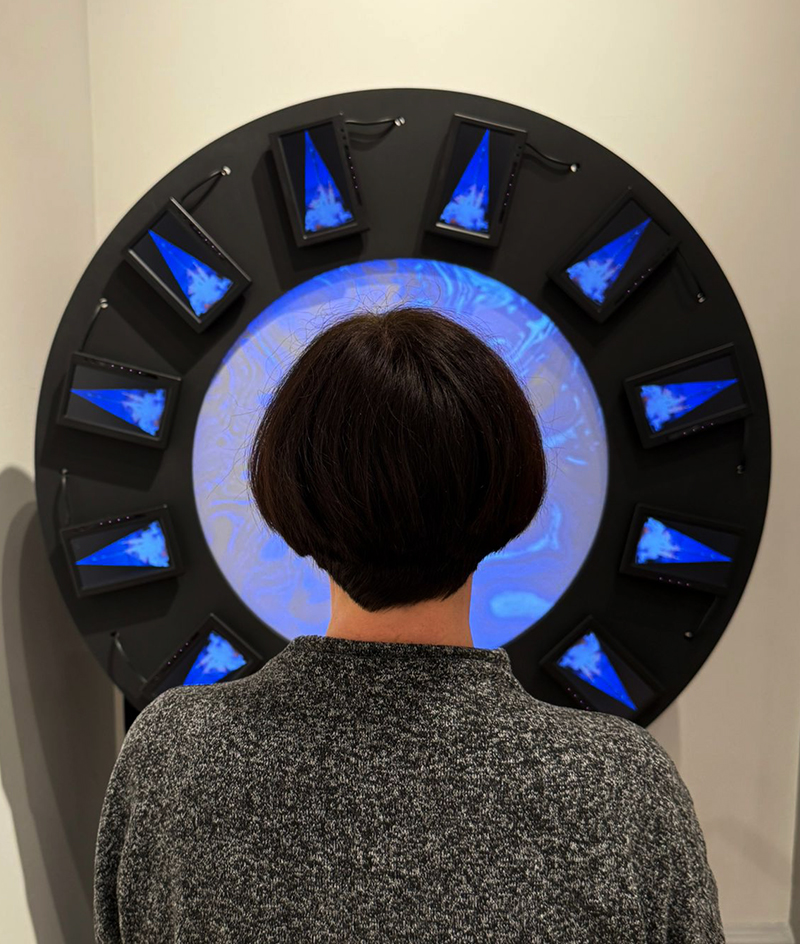
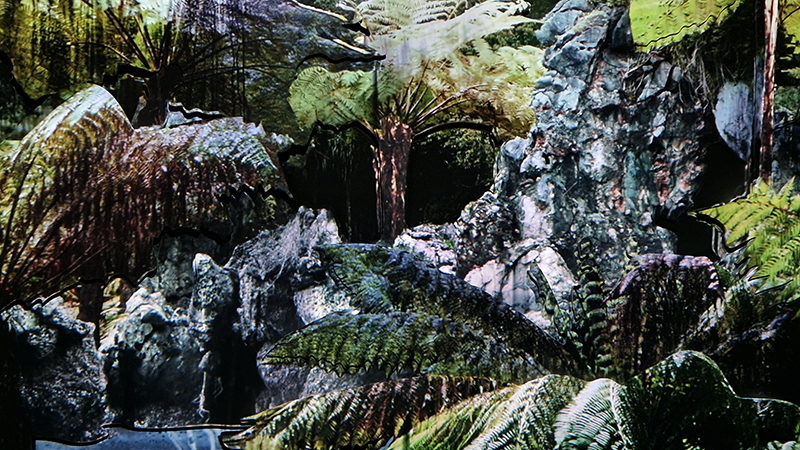
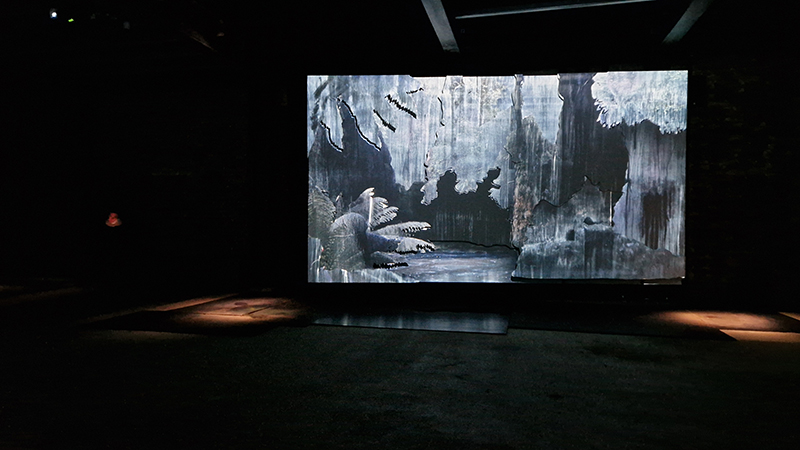
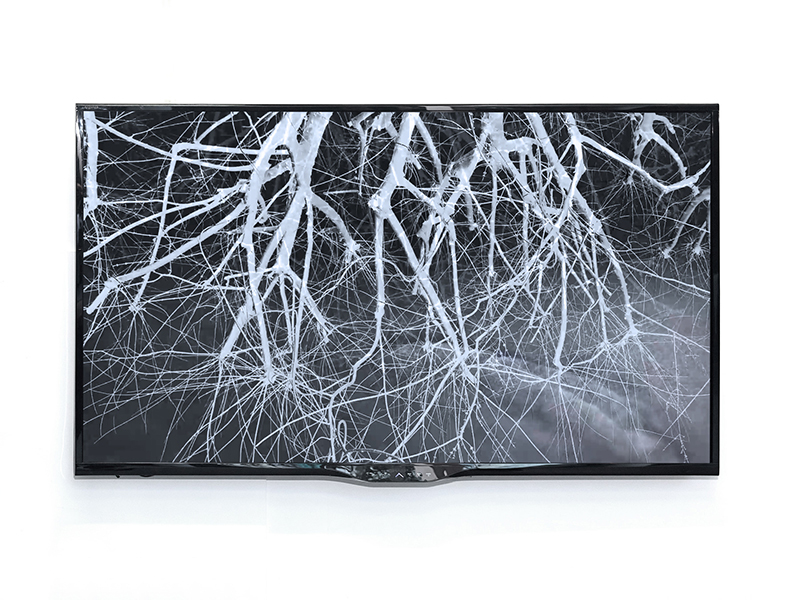
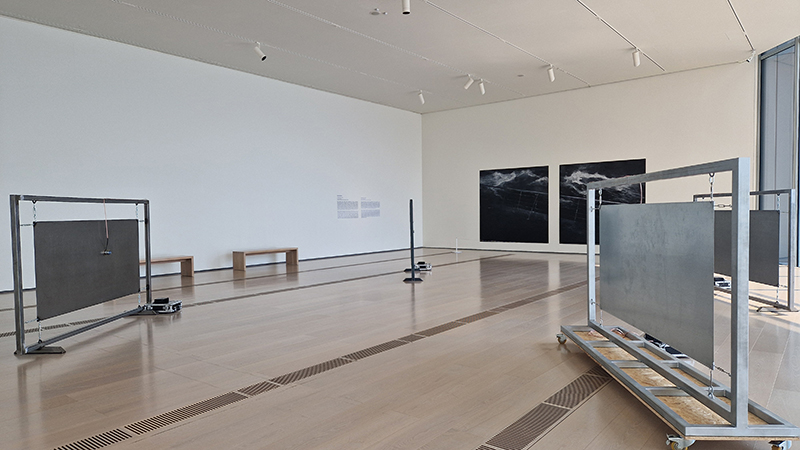
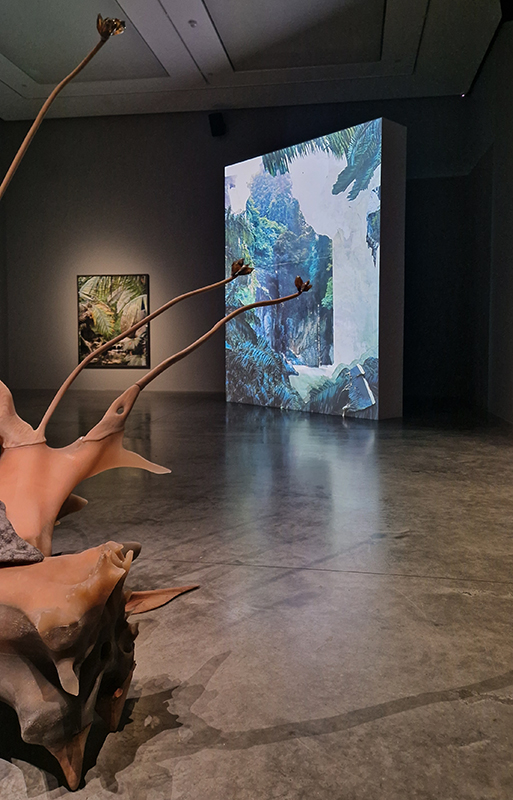
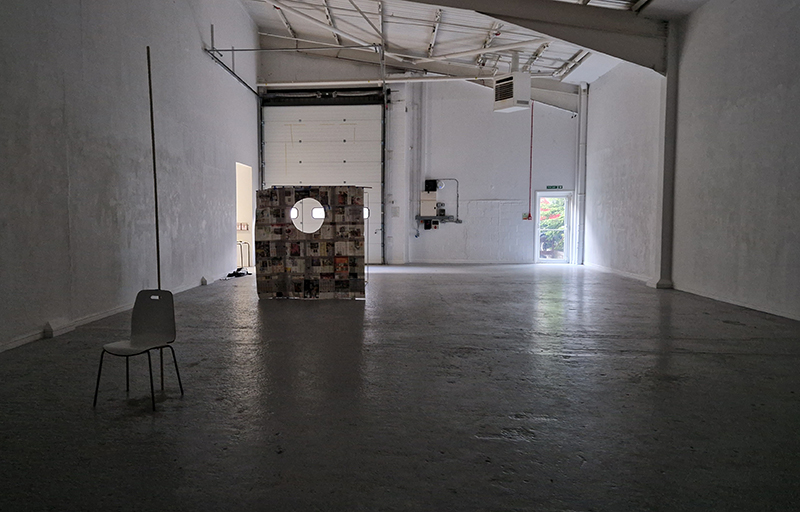
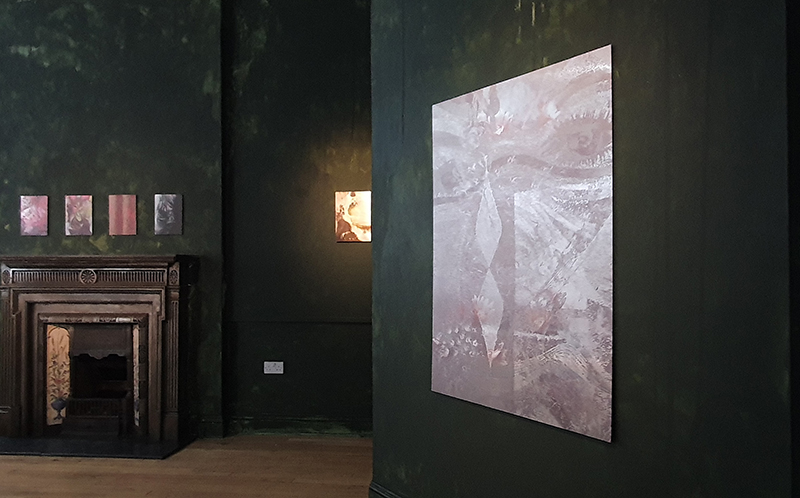
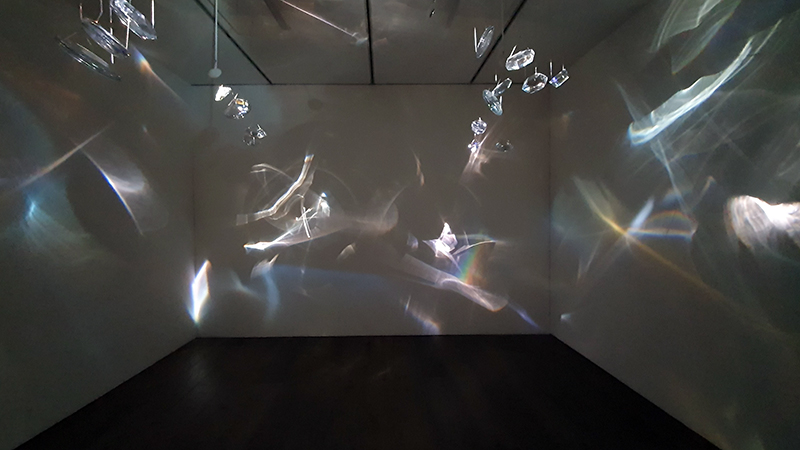
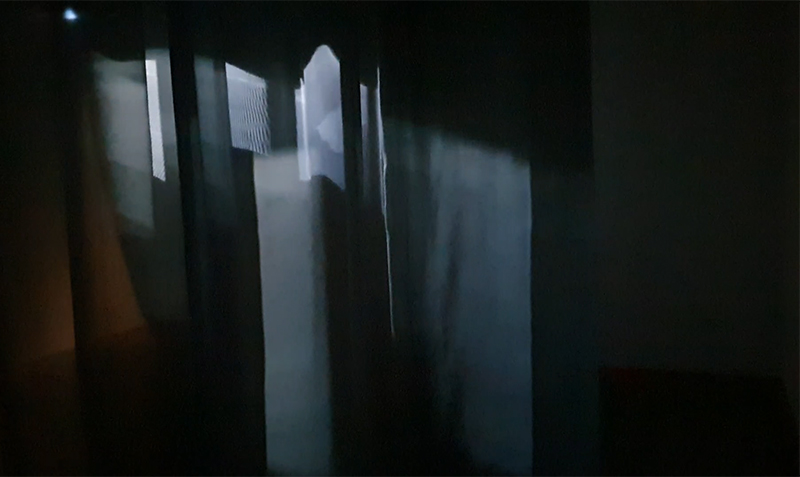
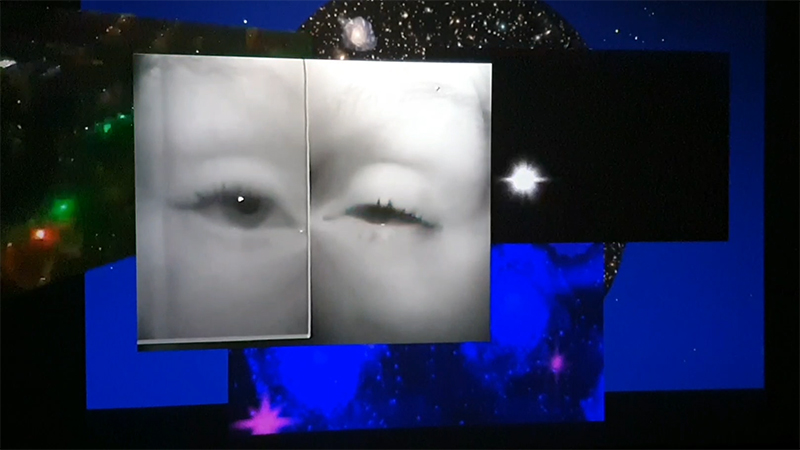
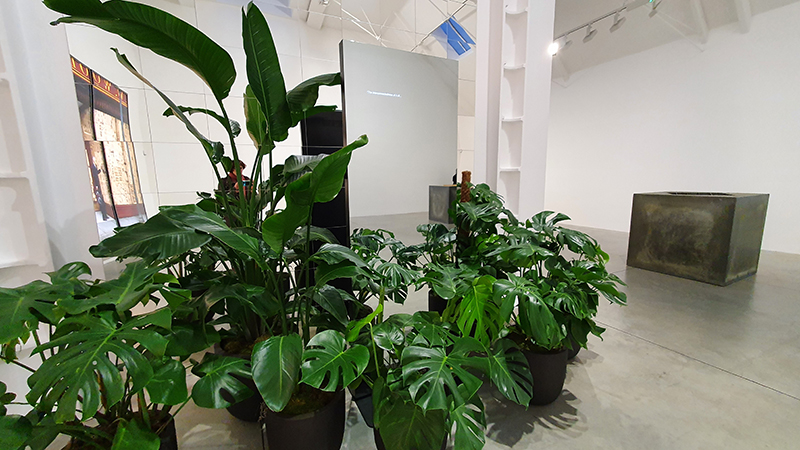
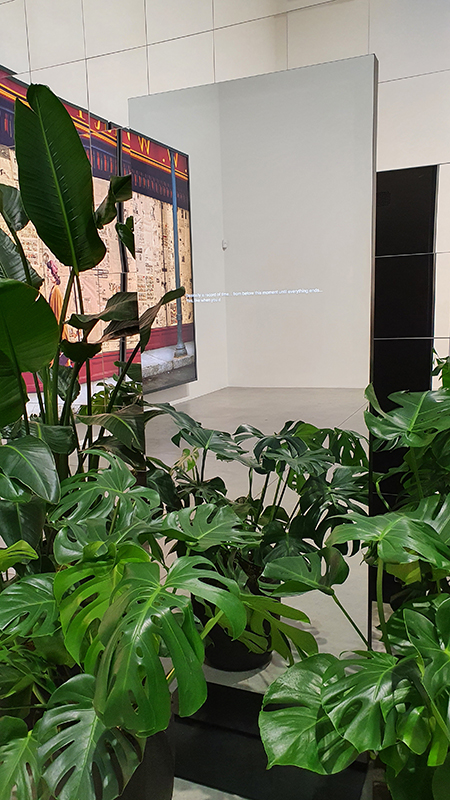
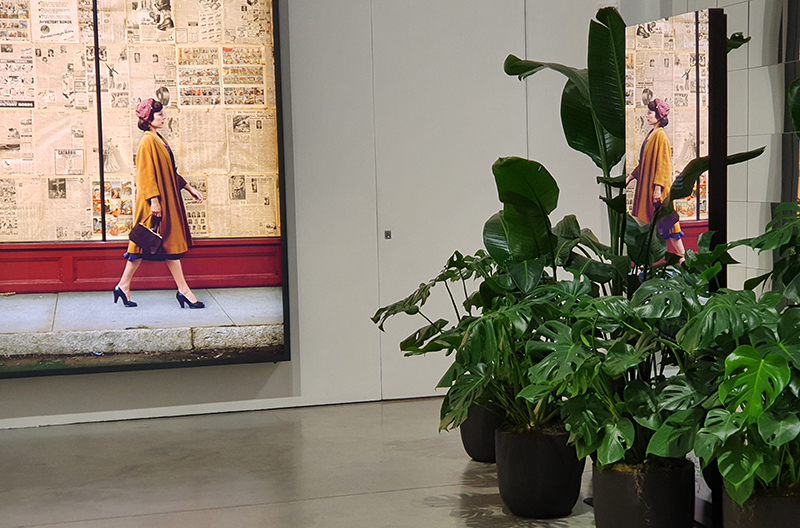
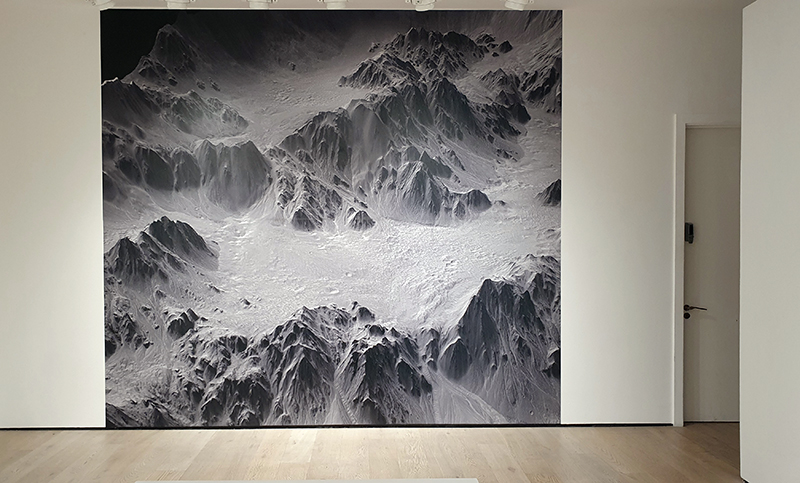
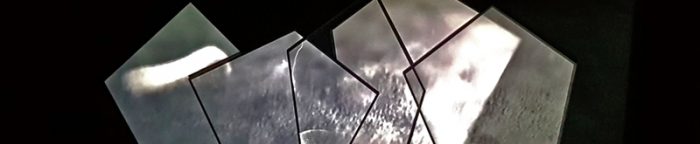
Installation image of Cosmic Chiasmus: crossing the universe

Not only is all life physically permeated by cosmic rays with the potential for nuclei collisions but some cascading particles smash into atoms of nitrogen to create carbon-14 which combines with oxygen in the atmosphere to create radioactive carbon-dioxide which enters the food cycle via photosynthesis.  Cosmic ray activity creating Carbon-14 allows us to perform carbon dating techniques offering insights into Earth’s past climate, magnetic field, solar activity, and changes in the carbon cycle, helping to understand historical patterns and establish timelines for ancient human history.

The title of the exhibition, Carbon, Carbon Everywhere, is a quote from the landmark essay Carbon by the writer and chemist Primo Levi. In the essay, Levi traces a journey of a single atom of carbon across distinct states and beings, from the monotony of being embedded in limestone for hundreds of millions of years, to entering the world of ‘things that change’ – swiftly shifting from the atmosphere to the lungs of a falcon, to the sea, to the trunk of a cedar, and eventually entering the writer’s own body from a glass of milk on his desk, crossing into the brain cell that controls the hand writing its own story. Resolutely specific yet universal, Levi’s story highlights the singularity of carbon as an element that inherently connects all things through its relentless transformation. It fossilises, mutates, preserves, pollutes and nourishes. From its ancient geological formations to its current atmospheric volatility, carbon is never still, shifting between forms and contexts in an ongoing process of exchange.

‘It is possible to demonstrate that this completely arbitrary story is true. I could tell innumerable other stories, and they would all be true: literally true, in the nature of the transitions, in their order and data. The number of atoms is so great that one could always be found whose story coincides with any capriciously invented story’ Primo Levi

This was a beautiful show and I was thrilled to be invited to exhibit alongside such amazing artists including Emii Alrai, Anousha Payne, Kate Daudy, Konstantin Novoselov, Ania Mokrzycka, Nissa Nishikawa, Mariele Neudecker, Simon Faithfull, Aimee Parrott, Lucia Pizzani, Lizi Sanchez and Meng Zhou.

I am very excited to have an invitation to exhibit at the Safehouses in Peckham next year with a group of wonderful artists and friends. Curated by Julie Hoyle, the artists have been selected for the way their work resonates with the atmosphere of the Safehouses — places where traces of the past meet the imagined and the unseen. Together, the works will form a dialogue between beauty and unease, the real and the imagined, reanimating the stripped-bare rooms with strange company. We had a productive site visit and I have two spaces in mind to work with – one above and one below.

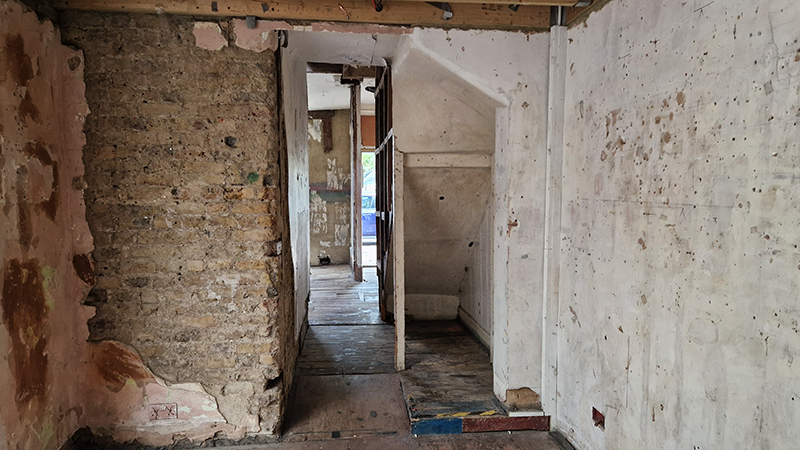
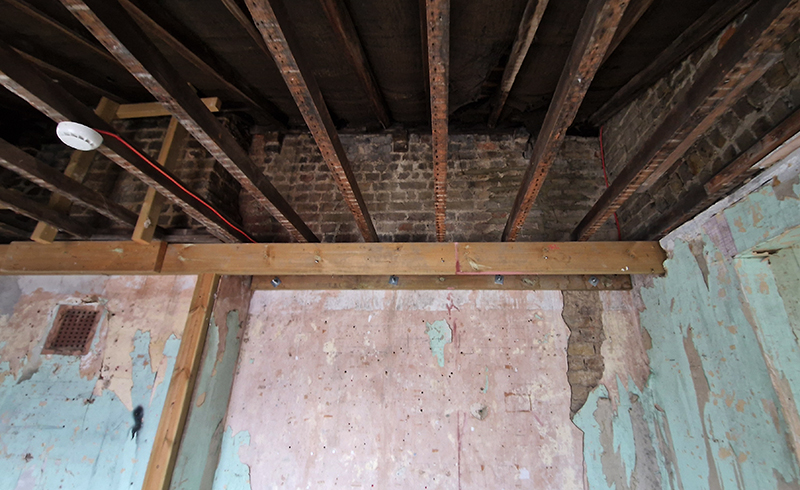
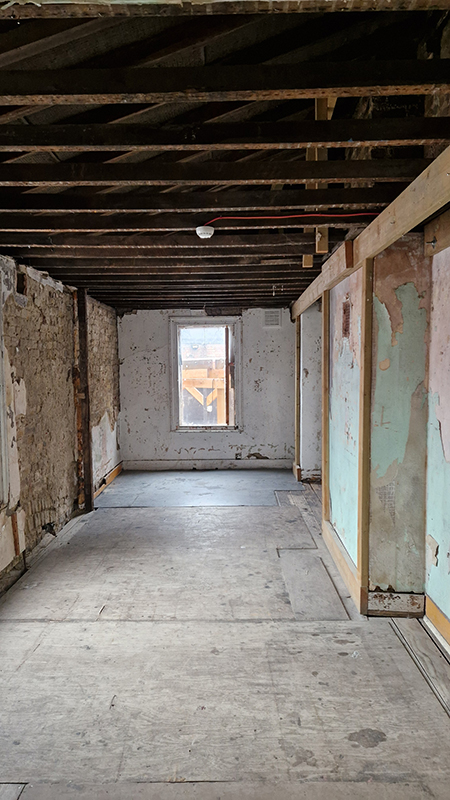
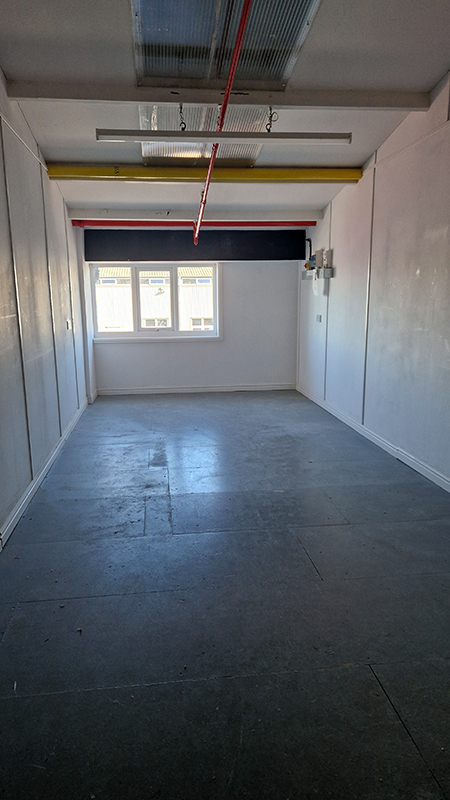
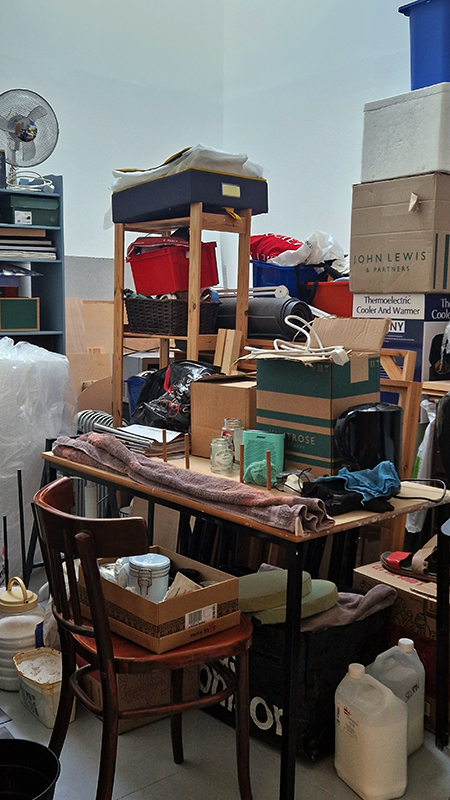
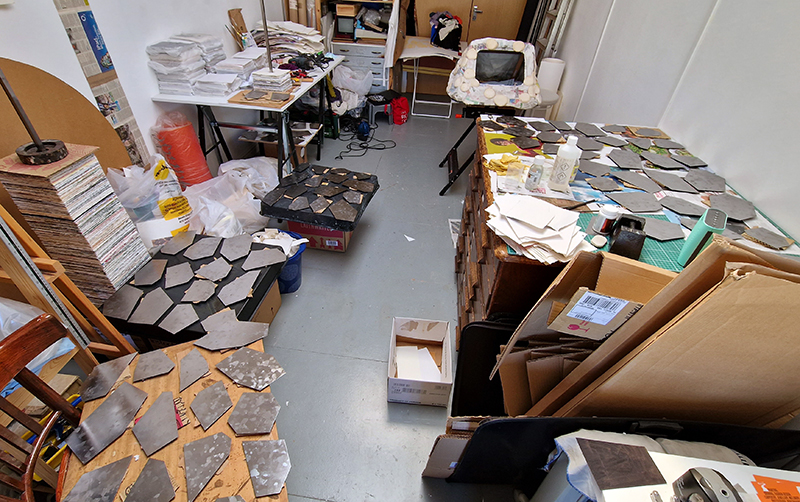
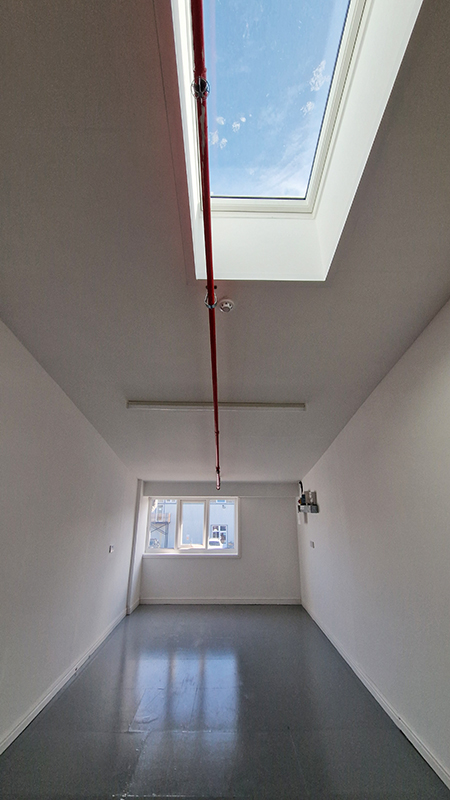
There is an ongoing refurbishment project at my studio complex which although welcome improvements has caused a little disruption to my ability to work there recently. My unit has had a new roof installed and each studio is being insulated with a new ceiling and opening Velux window. When the new roof went on we lost our ceiling windows so it is wonderful to have natural light from above again. Having to move everything out of my studio for a couple of weeks has been a good exercise in discovering long hidden materials and putting it all back has forced my hand to have a bit of a clear out of items I am unlikely to use and pass these on to other studio holders. Images show before, during and after.

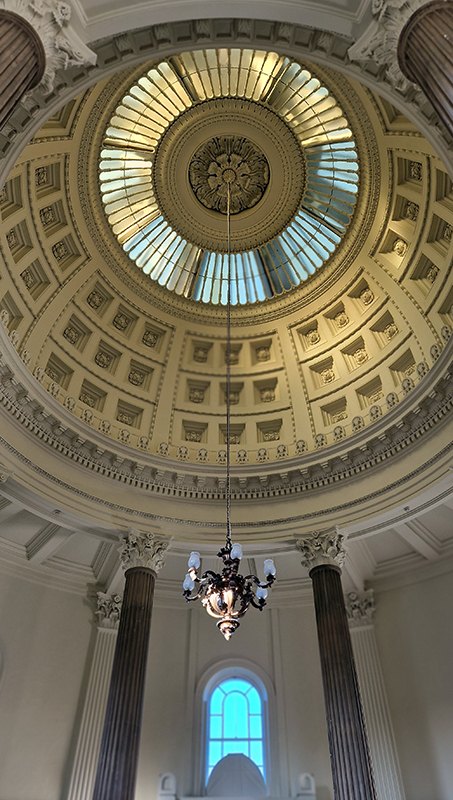
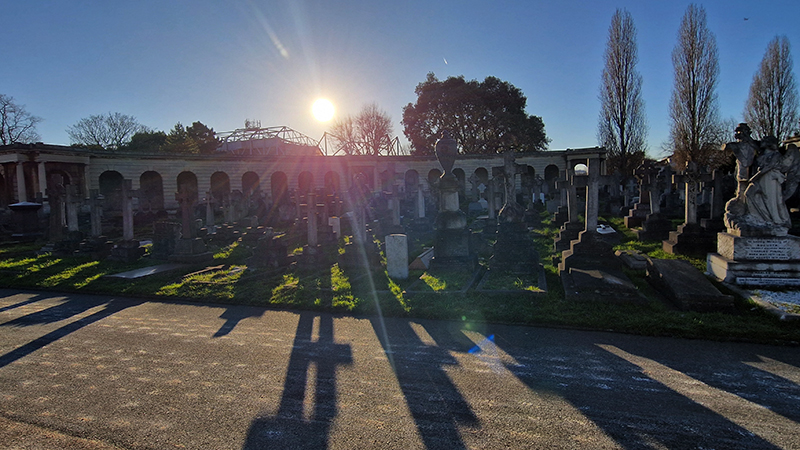
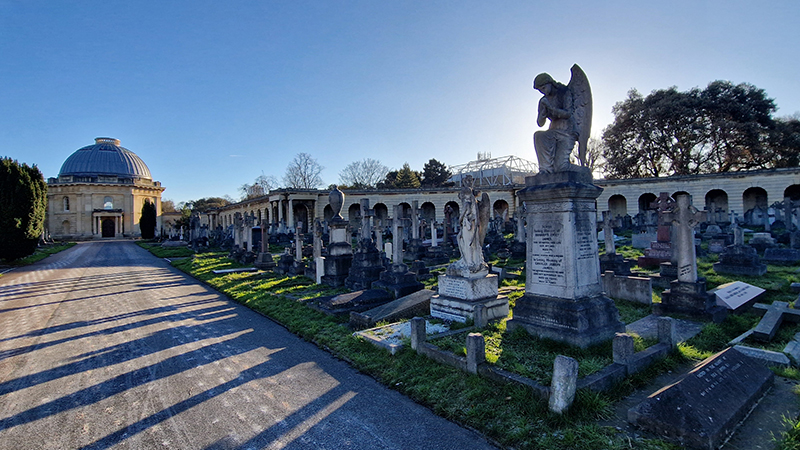
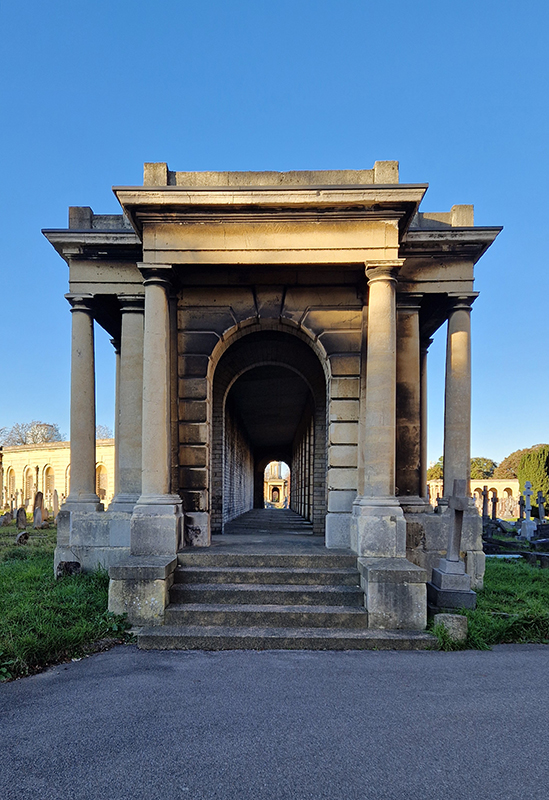
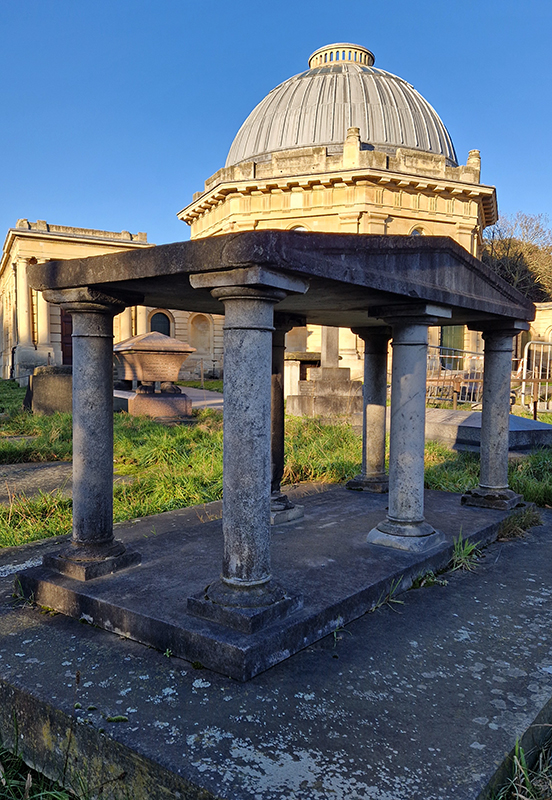
I managed to get everything back into my studio just in time for a studio visit from curator Catherine Li to discuss the possibility of exhibiting at Brompton Cemetery Chapel next year. It is a stunning building so I am very excited about this upcoming project.

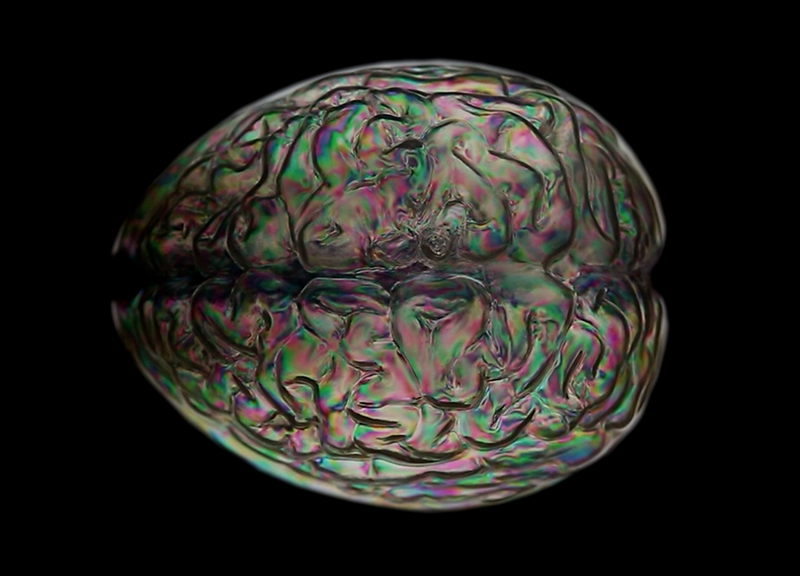
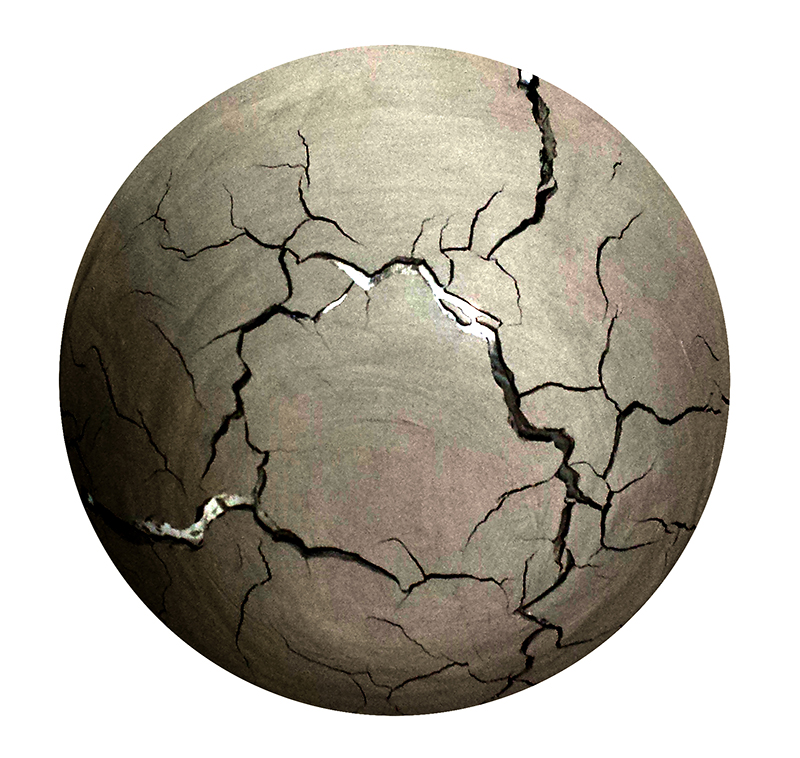
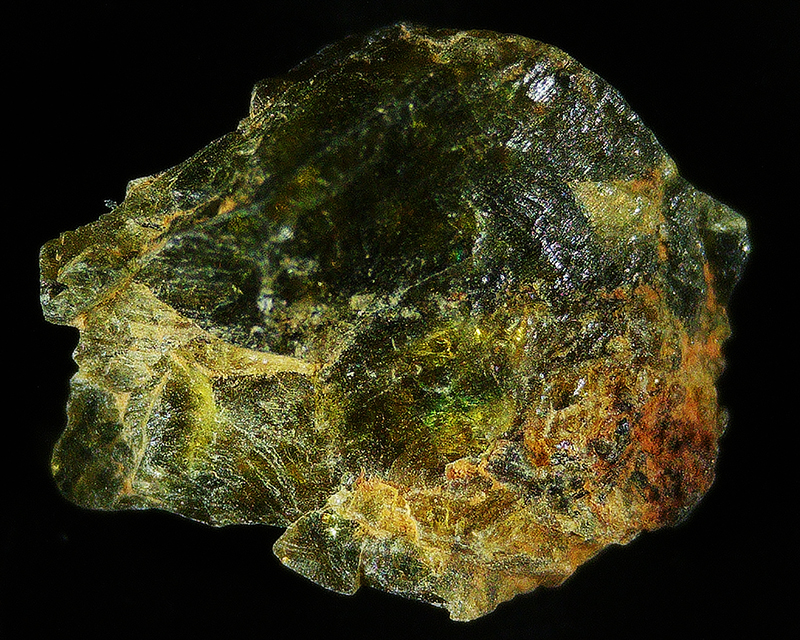
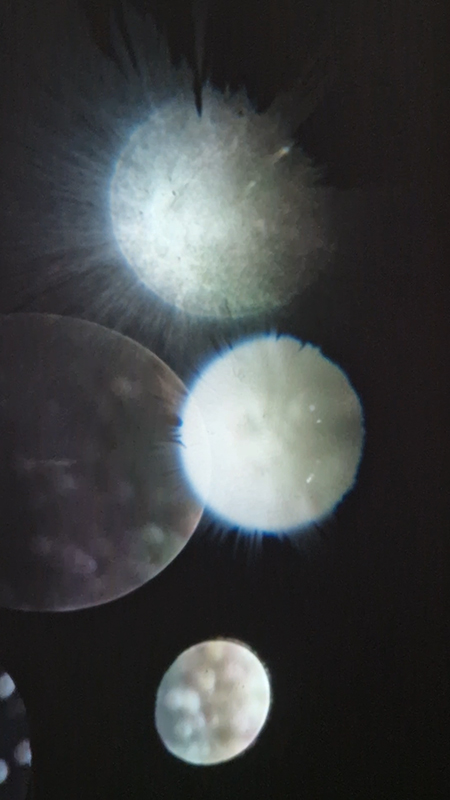
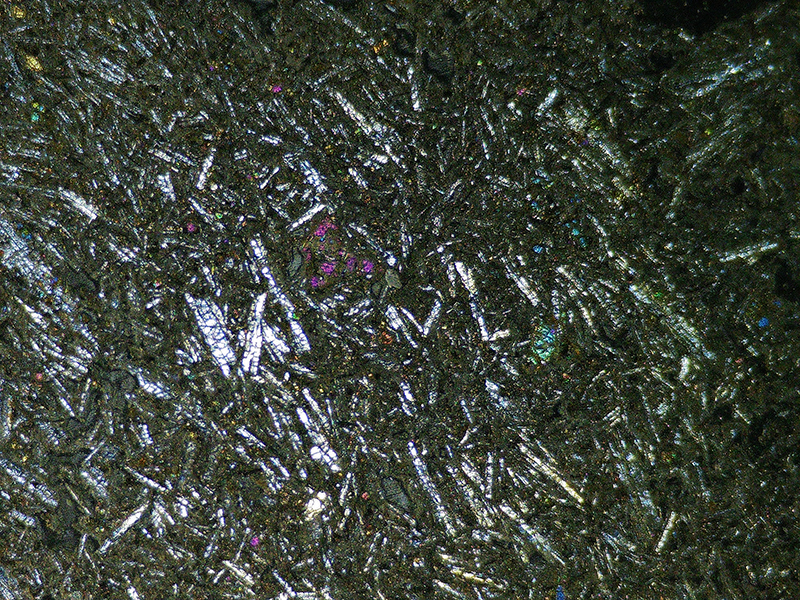
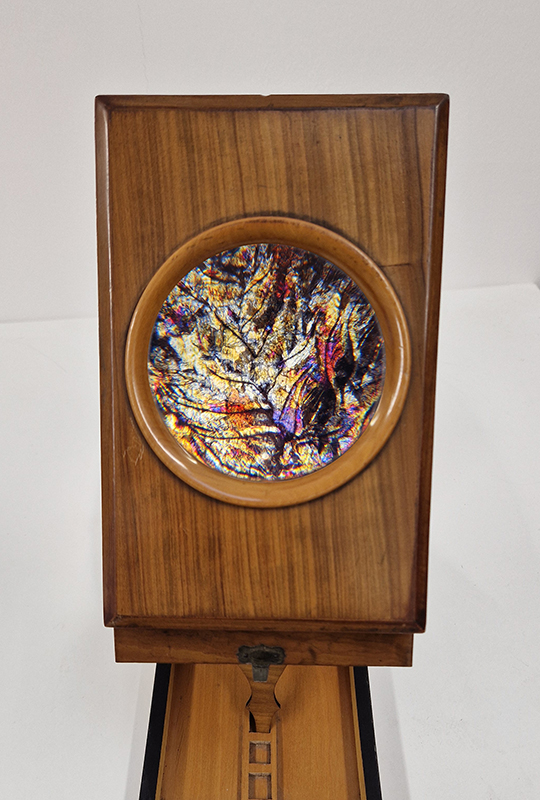
I have been experimenting with an old wooden slide viewer, printing images onto acetate from my microscope camera of polarised crystal and rock structures.

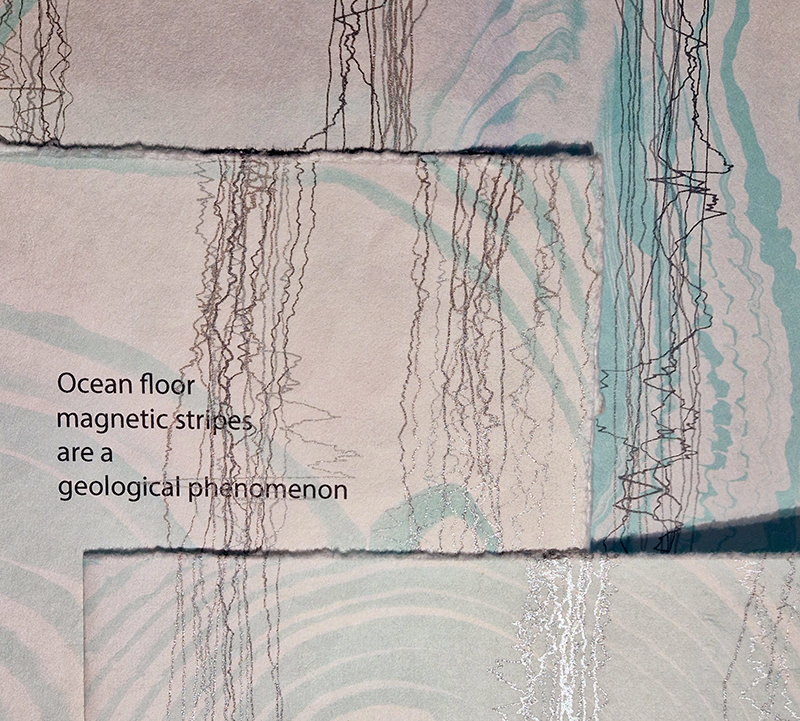
Work in progress on The Book of Reversals, writing text to print over the screen-printed magnetic graph lines. Ocean floor magnetic stripes are formed as magma cools at mid-ocean ridges. These alternating bands show Earth’s magnetic field reversals, with minerals in the crust aligning to current polarity and recording each change in pattern.

Colossal forces spinning dust

Aeons of accretion and gravity / shaping the debris of destruction

Searing elements separate /  amidst violence and decay

The weighty fall, pulled down, digested / feeling pressure only diamonds can survive

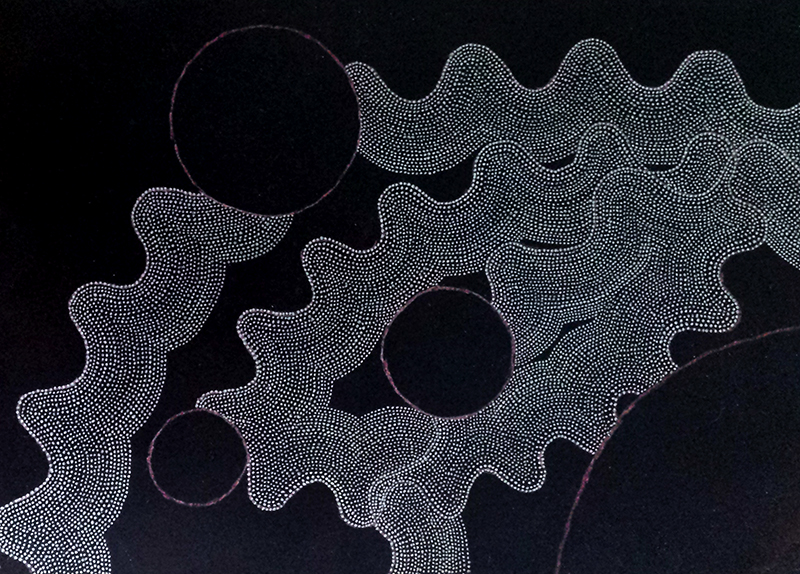
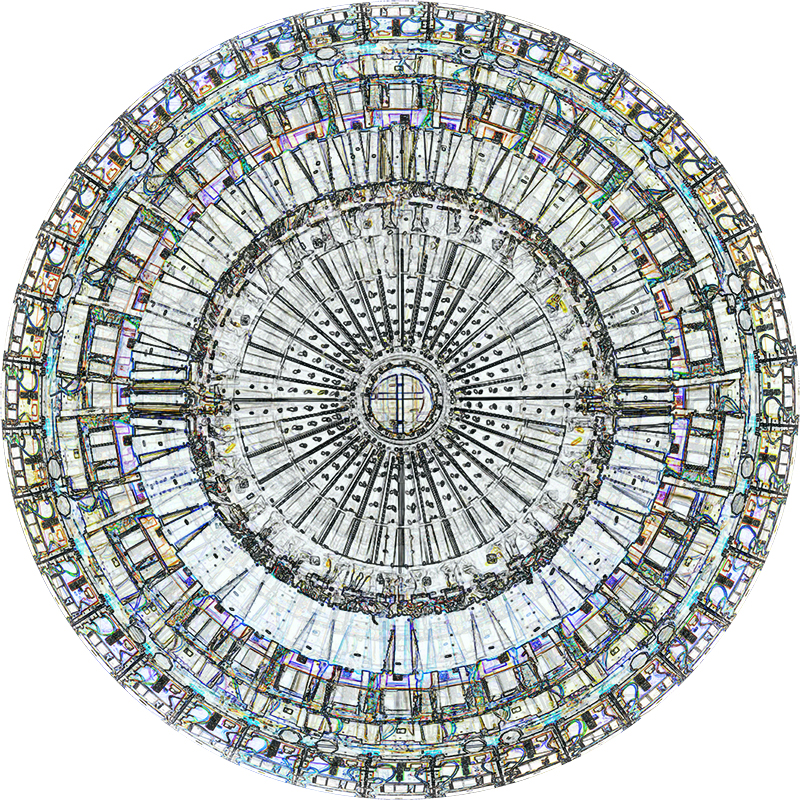
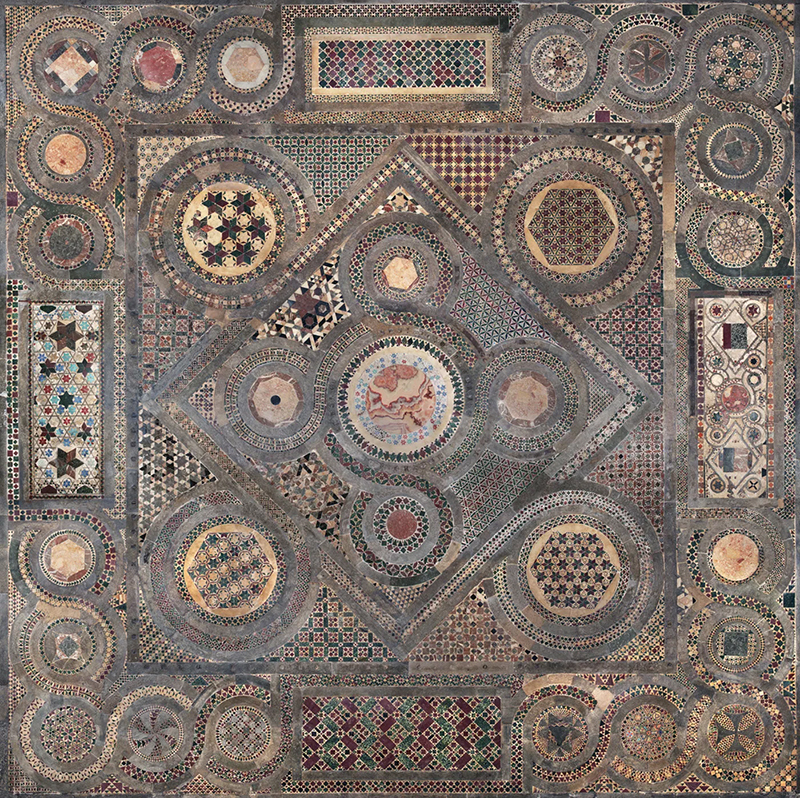
Work in progress looking at the sacred geometry of the Westminster Abbey Cosmati Pavement and relating medieval symbolism with contemporary iconography to think about changing relationships to fire, water, earth, air and the cosmos. Reimagining imagery from the Cosmati Pavement and particle accelerator at CERN.

Out and About

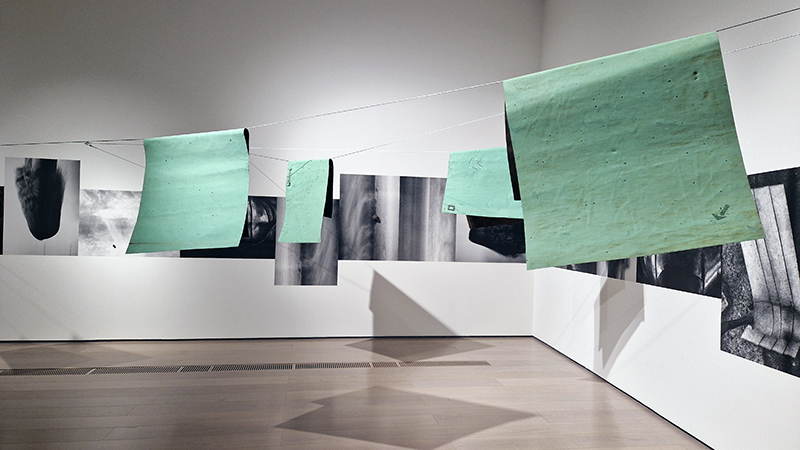
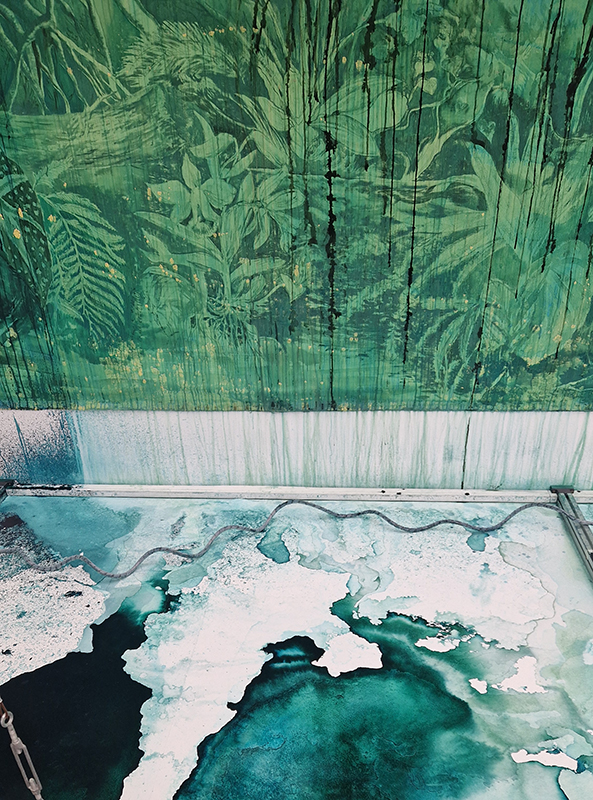
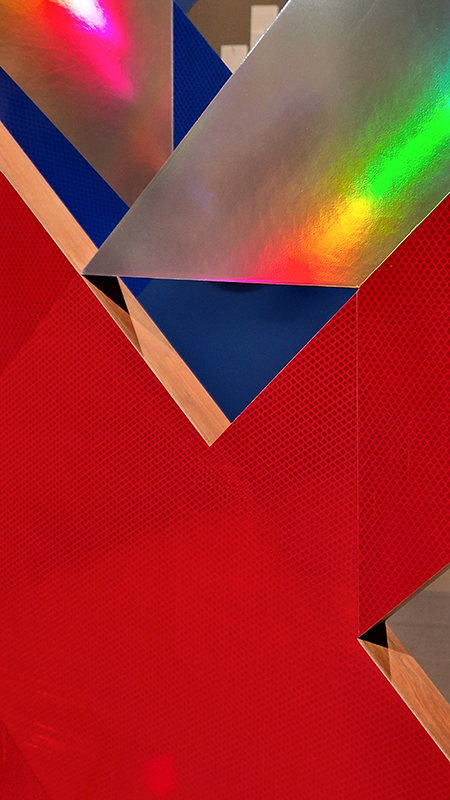
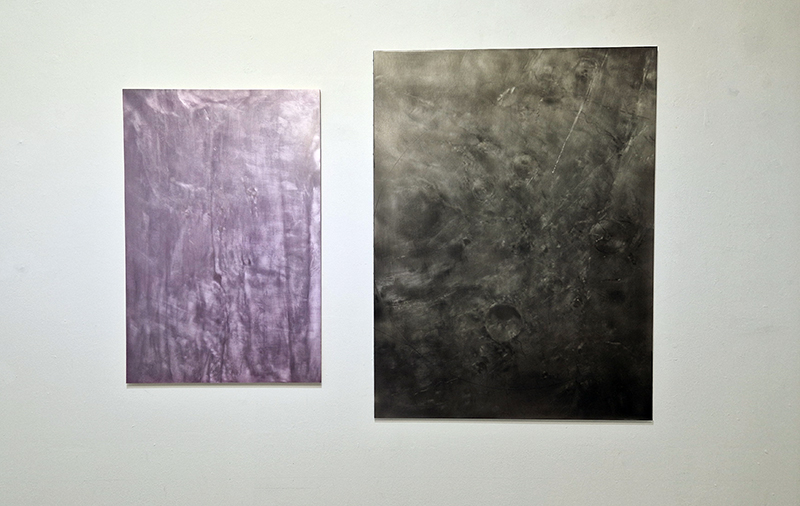
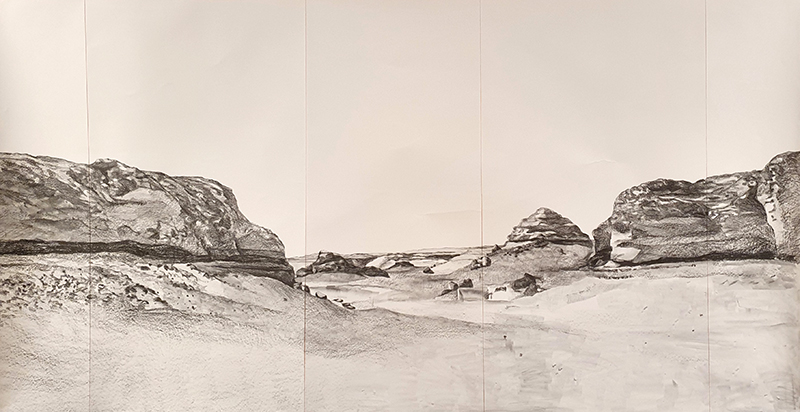
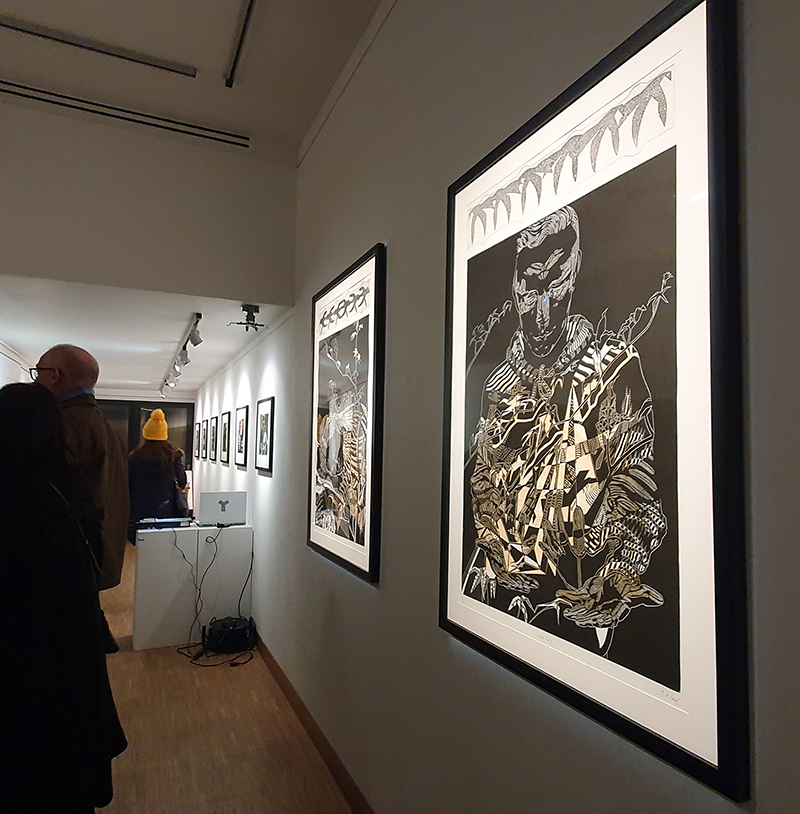
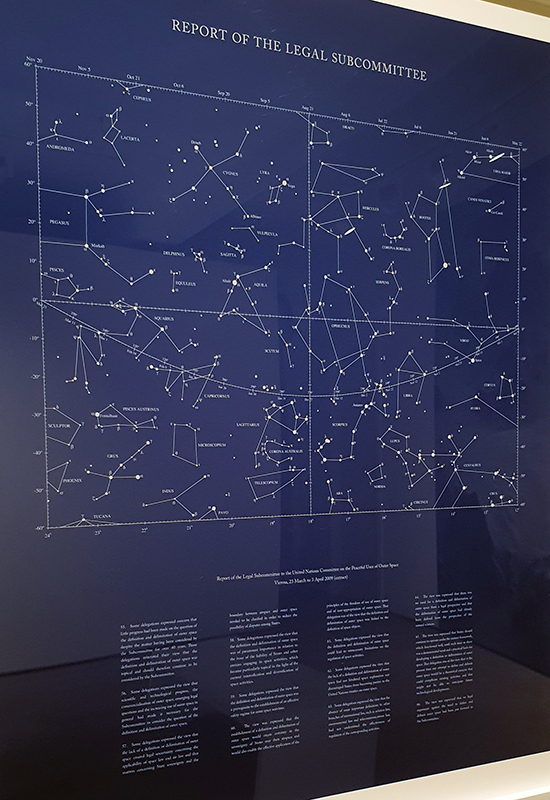
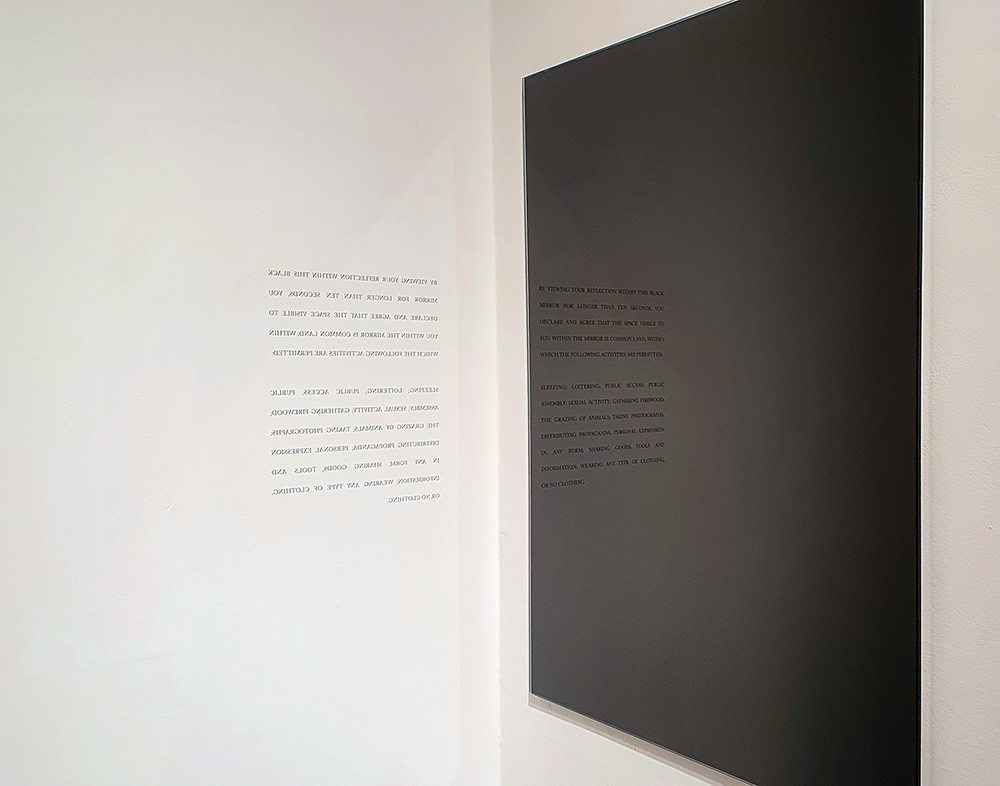
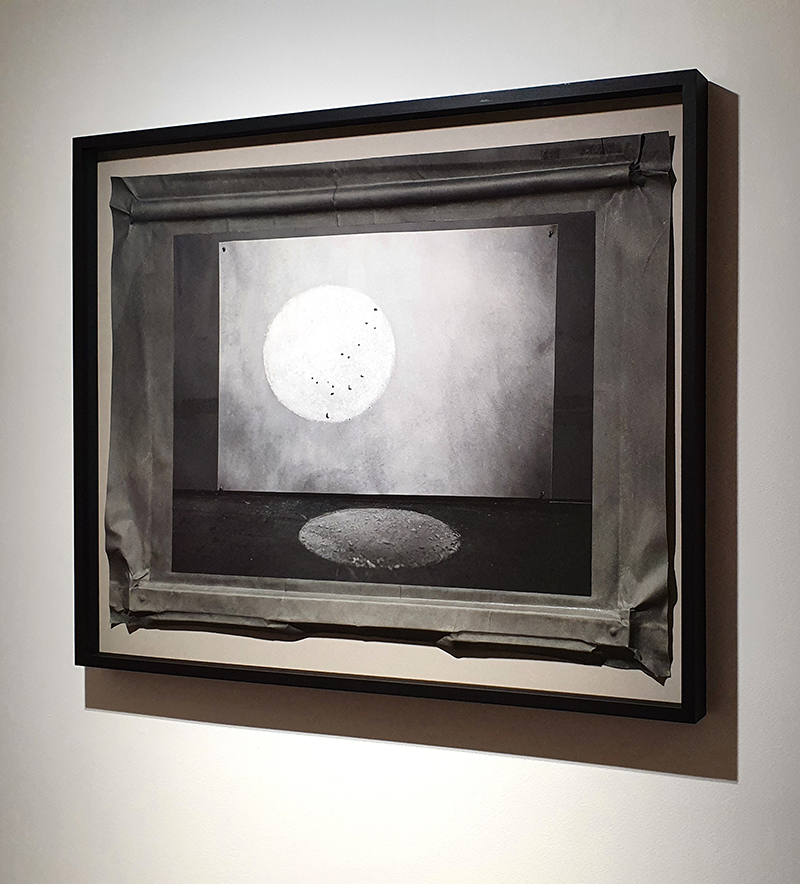
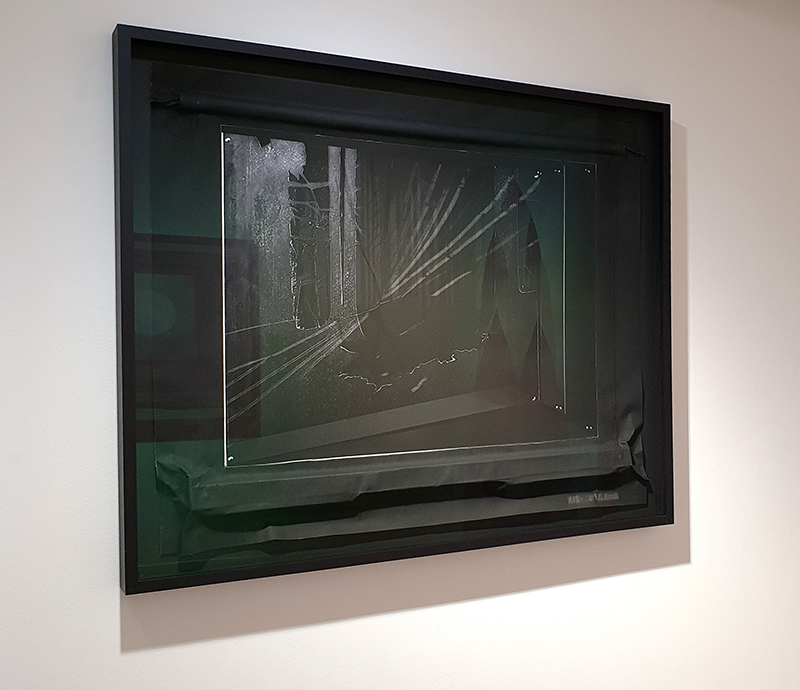
Noémie Goudal And yet it still moves at Edel Assanti. Mesmerizing work. I especially found the work Rocks very effective, an inkjet print on photographic paper with a video projection that moves across the image highlighting certain parts as though a torch is traversing a dark landscape. I always enjoy the theatricality of her large scale video installations even if they do purport a world collapsing around us.

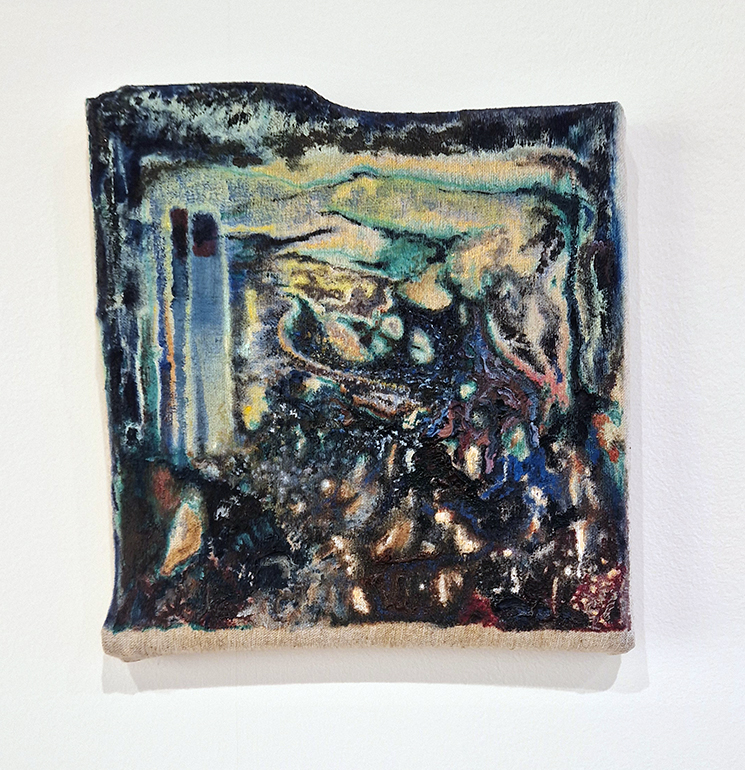
Gorgeous paintings by Helen Baines in Striding Edge at The Department Store, Brixton. Photos don’t capture the ethereal luminosity.

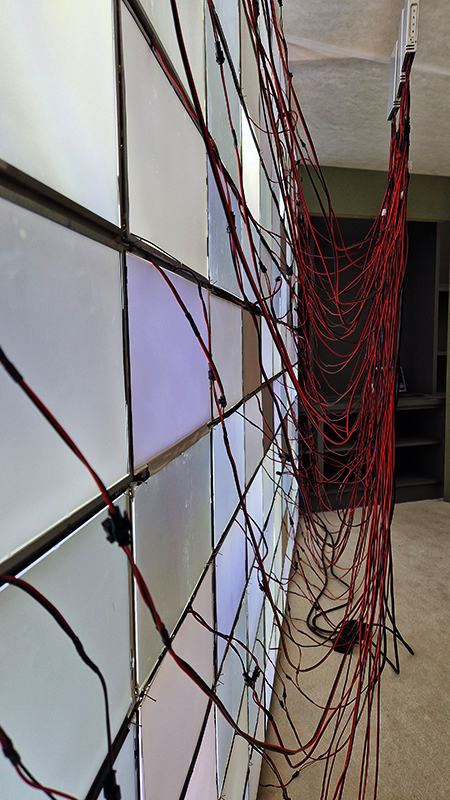
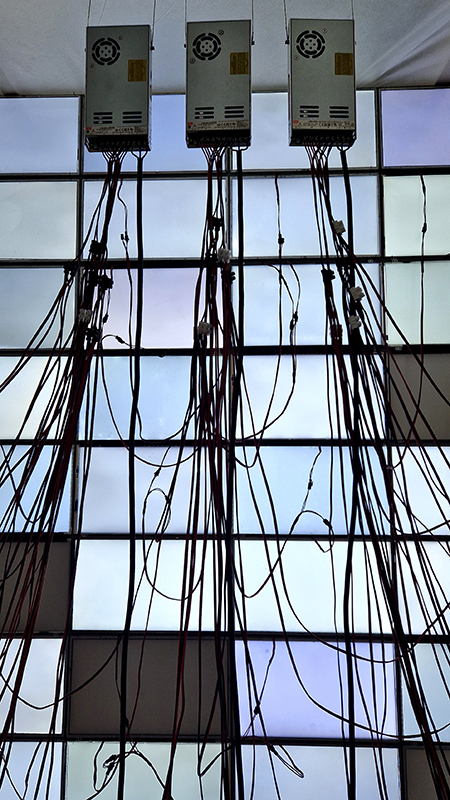
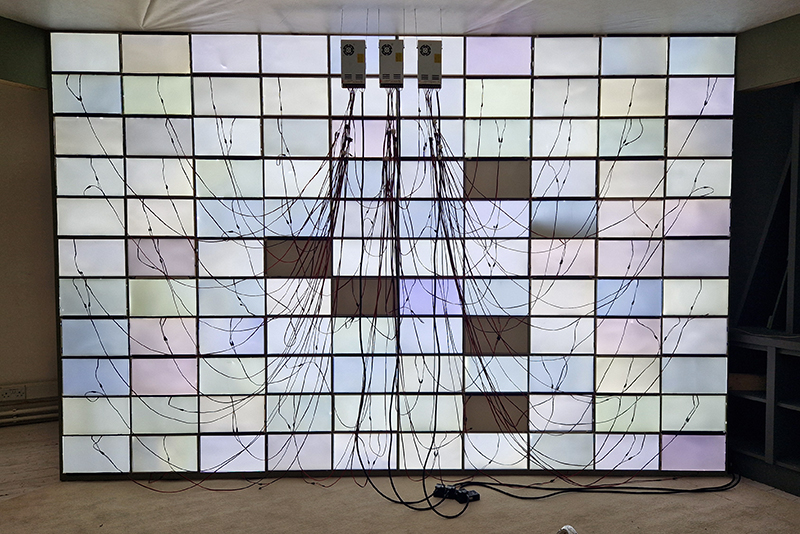
The hypnotic monument of modified LED laptop screens Wiped (Free Palastine) by Katrin Hanusch in Return of the Repressed curated by Toby Ziegler at an empty office block 10 Heddon Street. A show examining alienation and abstraction of the human experience in a climate of digital technology and AI.

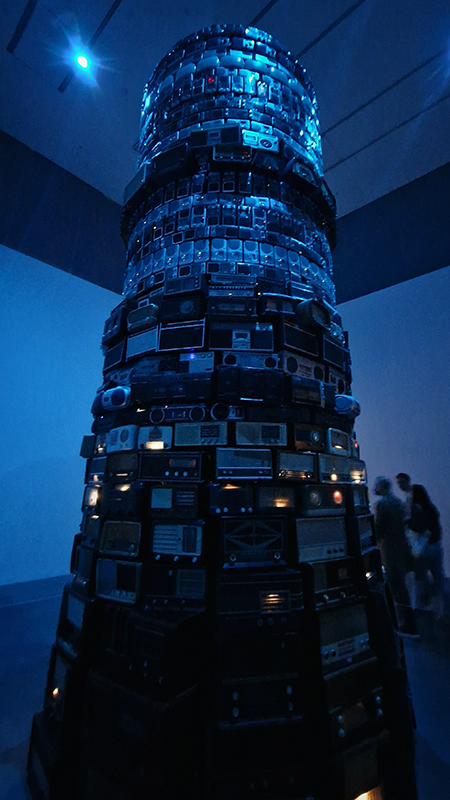
The magnificent Babel by Cildo Meireles at Tate Modern. With slightly dalek vibes, this thrumming ‘tower of incomprehension’ relates to the biblical story of the Tower of Babel, a tower tall enough to reach the heavens. God was offended by this structure, and caused the builders to speak in different languages. No longer able to understand one another, they became divided and scattered across the earth, and so began all mankind’s conflicts. Here we are, punished for our curiosity, again. This work though is a joy.

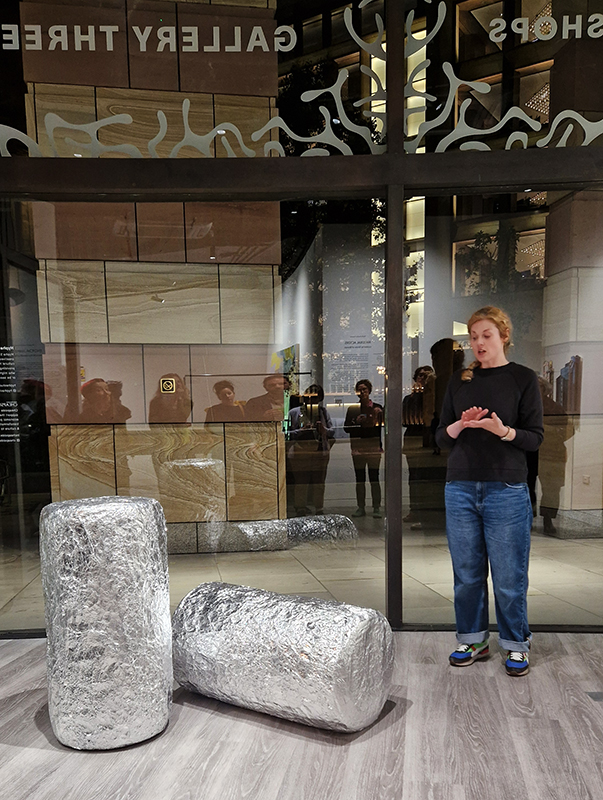
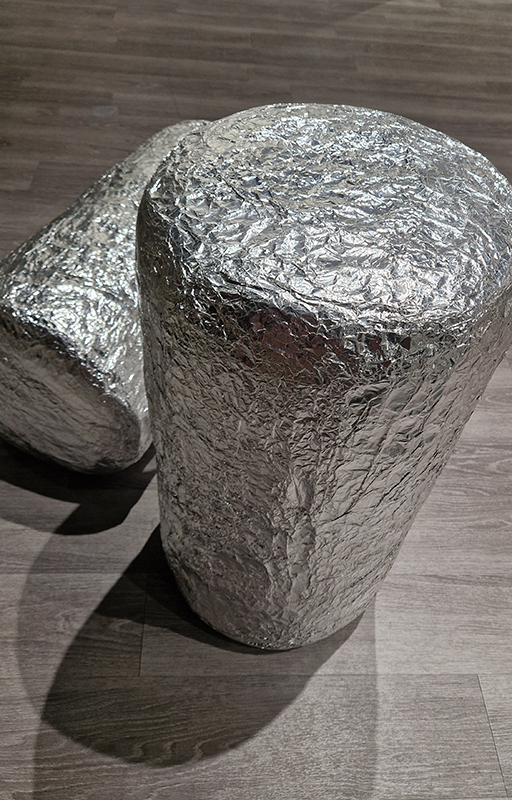
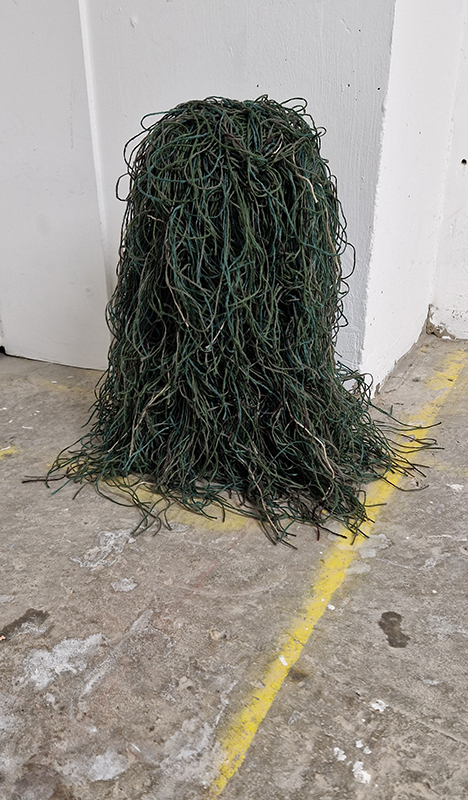
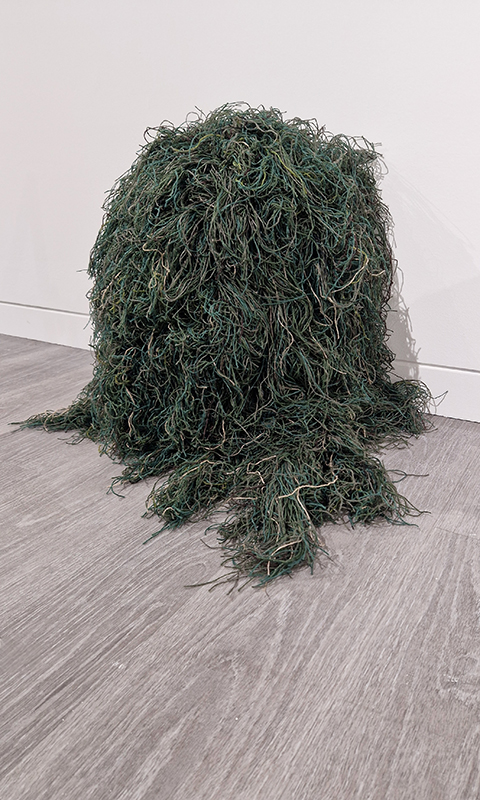
Material Actors curated by binder of women at Hypha Gallery 3 / No. 1 Poultry, London explores the tipping point of formal representation into the theatrical and cinematic world of mimicry and artifice. The artists include Alice Browne, Charlie Franklin, Lauren Godfrey, Oona Grimes, Pia Pack, Milly Peck, Michelle Williams Gamaker and Laura White. Material process and the façade are key in many of the works that surprise and confound definition.

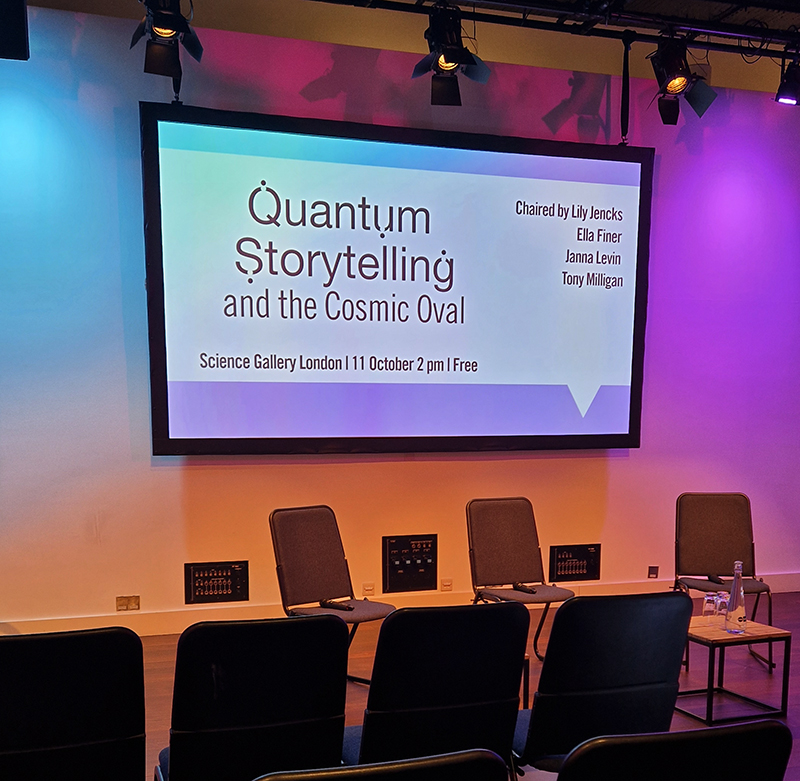
Quantum Storytelling and the Cosmic Oval – a fascinating discussion exploring how cosmic discoveries influence cultural narratives and the composing of histories. Physicist and author Janna Levin in conversation with writer Ella Finer to celebrate the launch of a new book commission The Cosmic Oval. Chaired by Lily Jencks, Keeper of Vision at The Cosmic House, with further insight from Tony Milligan, Research Fellow in the Philosophy of Ethics, Department of Theology and Religious Studies at King’s College London.

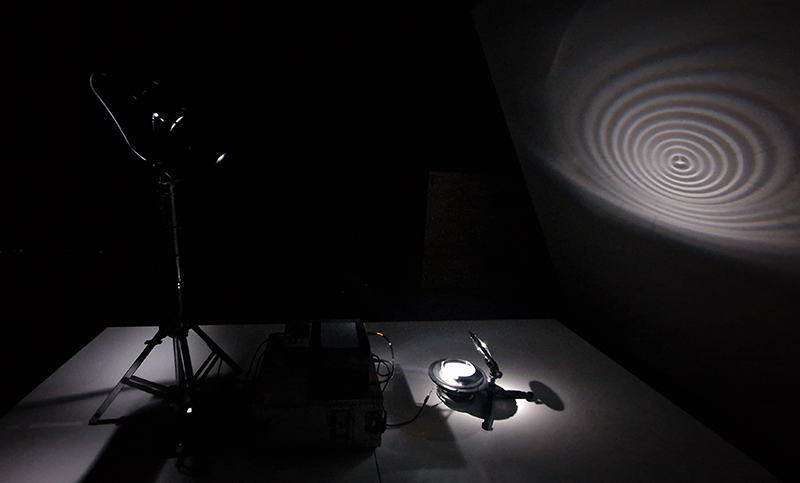
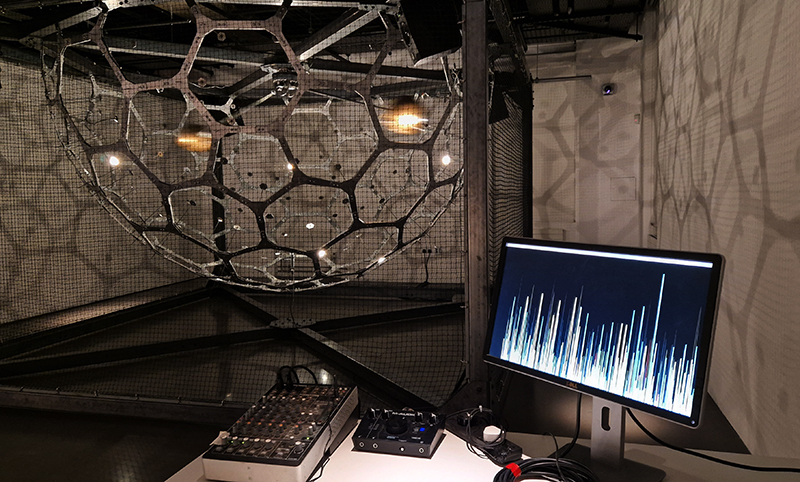
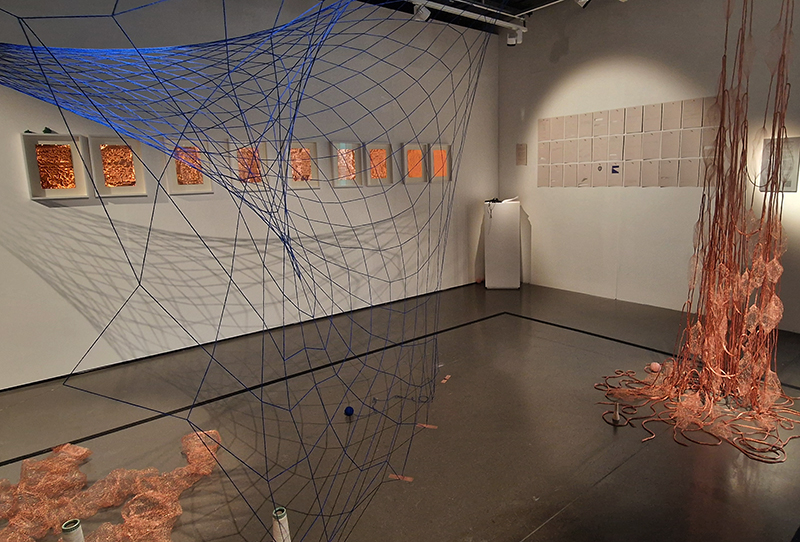
Quantum Untangled at The Science Gallery, London. I liked the simplicity of Alistair McClymont’s An Early Universe where wave patterns caused in water by low frequency sound vibrations are projected via a lens to reference quantum oscillations created when the universe was rapidly expanding after the big bang. Two large installations from Conrad Shawcross use the play of shadows to signify intangible forces of the universe. In Ringdown two caged spherical pendulums oscillate in violent motion to evoke the spiralling motion of gravitational waves in the moments after two black holes merge, a phase known as ‘ringdown.’ The artwork is probed with sensors to trace the magnetic field generated, which is displayed on a monitor. The Blind Proliferation explores the idea that our Universe is one of many co-existing ‘bubble universes’ formed in the period of rapid expansion at the beginning of time. Two ‘scientist’s offices sit either side of a structure casting complex shadows. In a nod to Plato, the scientists can only see the shadows from which they must determine their origin. There are slight differences between the two offices to suggest the idea of the multiverse where many worlds may exist with only slight variations. Daniela Brill Estrada & Monica C. LoCascio, Begriff des Körpers reflect on the nature of perception and shared understanding through their use of copper, a key material in quantum technologies, to create sculptures that describe the diagrammatic language of scientists when explaining spacetime and quantum phenomena.

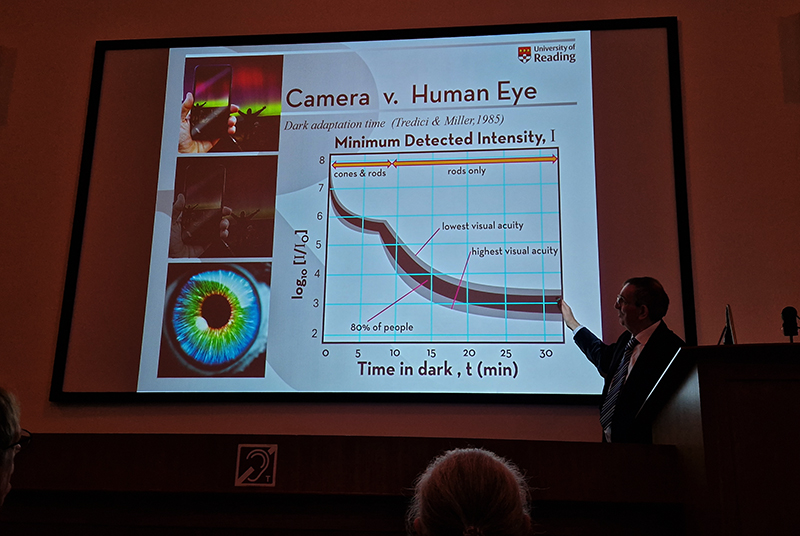
It is always exciting to enter a truly dark space – NOWISWHENWEARE (The Stars) at the Rambert Dance Studios as part of the LFF Expanded program promised a breath-taking journey through light and sound when you would enter a meditative state and come face to face with your inner self. With nearly 4,000 reactive LED lights and a 496-channel soundscape it was an enjoyable experience but perhaps not quite as awe inspiring as hoped.

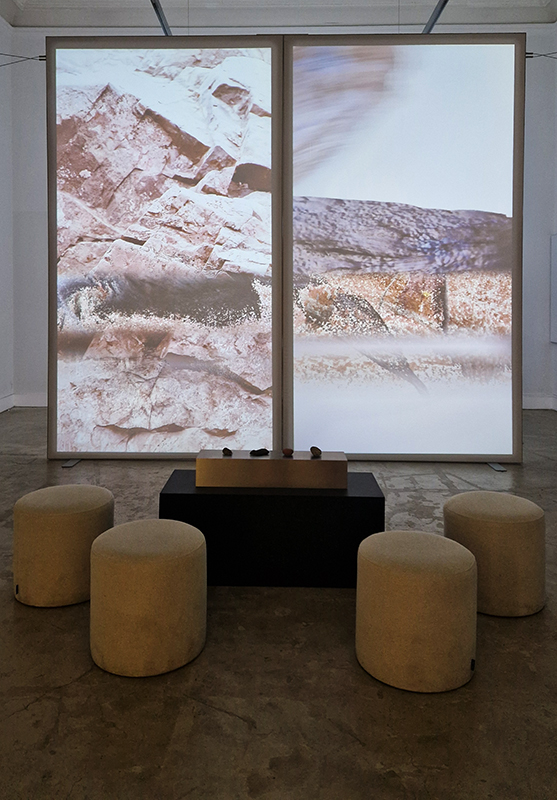
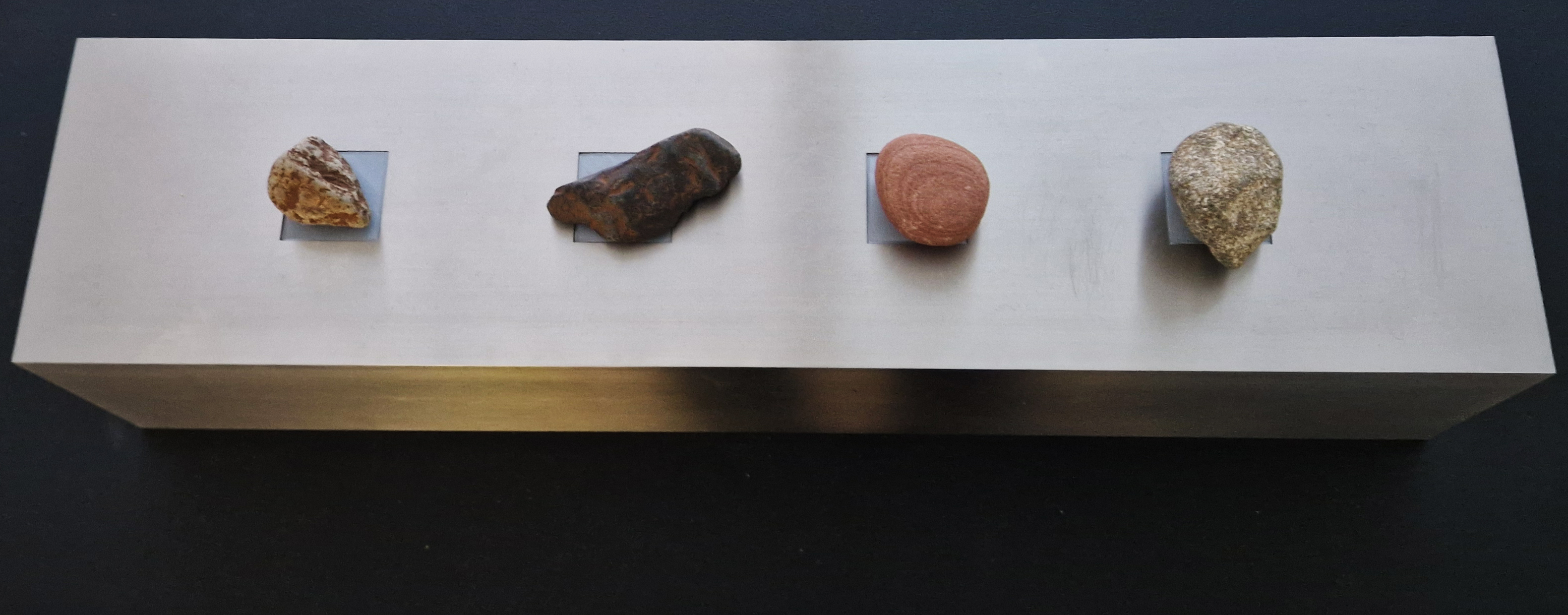
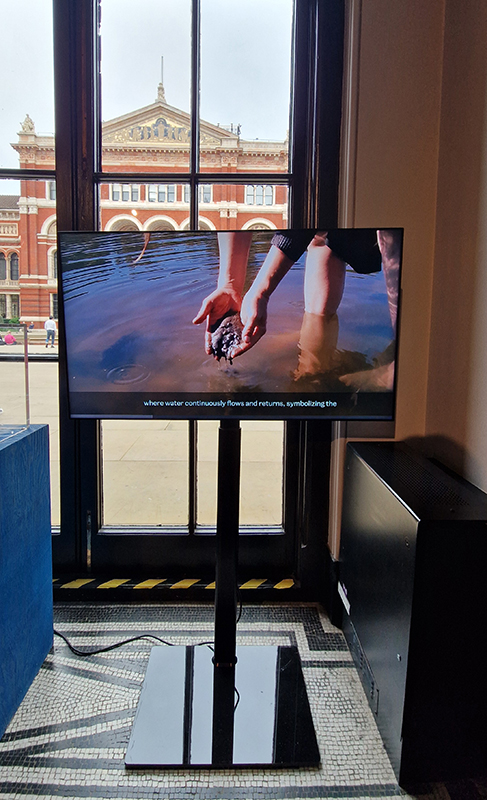
(S)low Tech AI by Studio Above & Below (Daria Jelonek and Perry-James Sugden) at Victoria and Albert Museum. ‘This installation examines artificial intelligence through the lens of geology. A sculptural interface of four rocks activates a slow, responsive AI system that reacts to touch with evolving sound and image. Each new rock arrangement adds a line to a growing digital landscape, echoing sedimentary layers shaped by collective interaction. The imagery is drawn from four geologically significant sites in Scotland, where ancient stone carvings show early examples of symbolic data recording. Using simple algorithms, the work invites reflection on AI as a slow, ethical, and materially-aware process.’ I couldn’t determine what changes were set in motion when the stones were moved, it does say it is a slow process so perhaps I shouldn’t have expected to notice the impact of my moving the stones and it is something that builds into the algorithm later. It was still quite mesmerising to watch.

Luca Bosani Unidentified Performing Objects at Victoria and Albert Museum

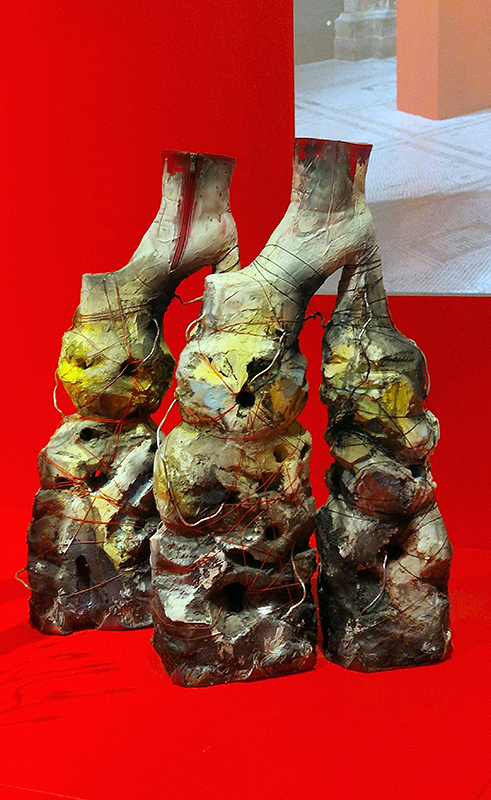
Loved these boots that look like they have been torn from the rock. Magnes might have felt a slight tug as the nails in his boots clung to the magnetite beneath his feet but imagine the weight, the feeling of increased gravity walking in boots of rock.

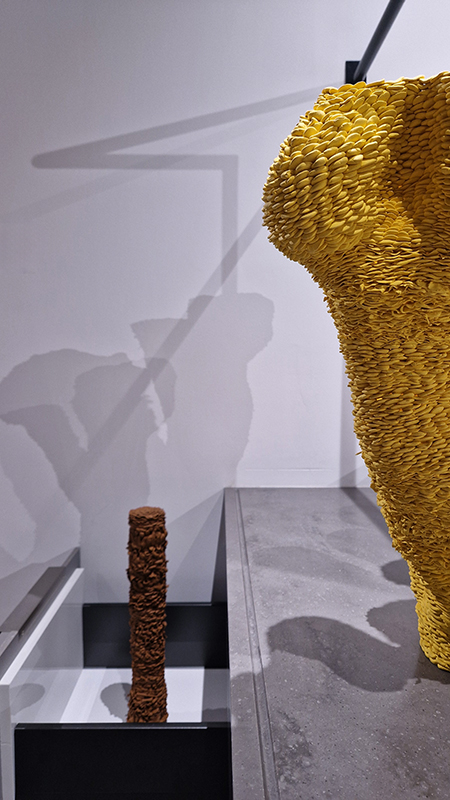
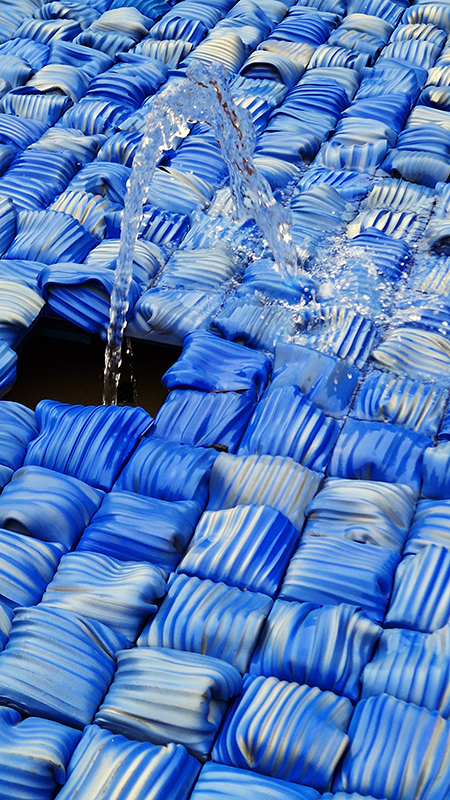
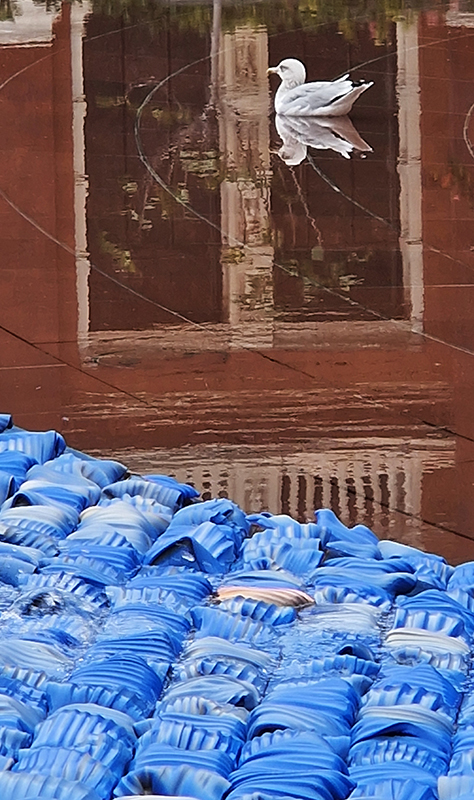
The Ripple Effect by Alicja Patanowski blending materials from one of the largest mining waste reservoirs in Europe with clay to create a tiled seating installation in the John Madejski Garden.

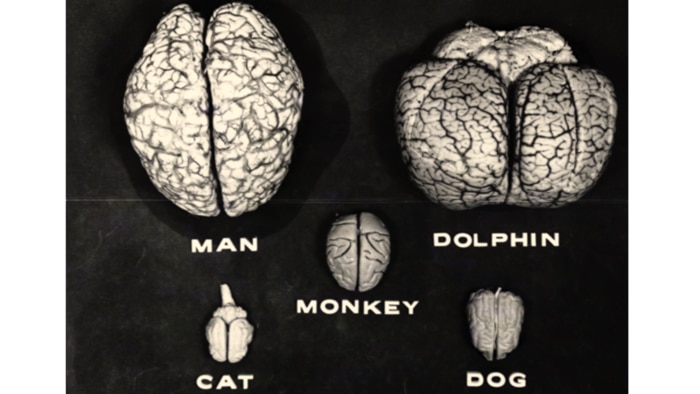
Screening as part of the London Film Festival, John Lilly and The Earth Coincidence Control Office directed by Michael Almereyda and Courtney Stephens, explores Lilly’s radical experiments with isolation tanks and LSD to study consciousness, as well as his theory that a hidden entity called the Earth Coincidence Control Office (E.C.C.O.) secretly influences human events. Despite his desire to communicate with cetaceans believing them to be intelligent conscious beings he exhibits a cold disconnect to their physical and emotional welfare. A lot of the footage is shocking to a contemporary audience in its cruelty but his research into human consciousness was trailblazing at the time and his conclusion that humans were at risk from an outside technology based intelligence does have some prescience considering current concerns over AI.
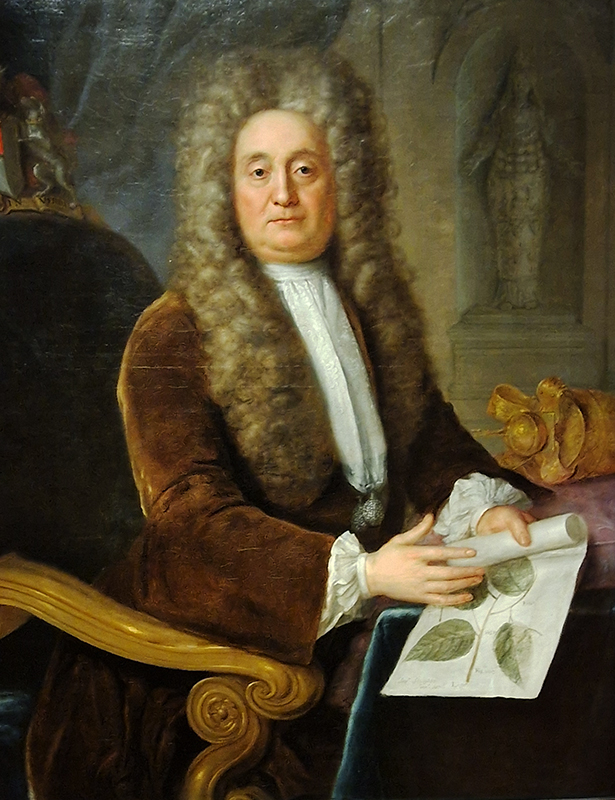
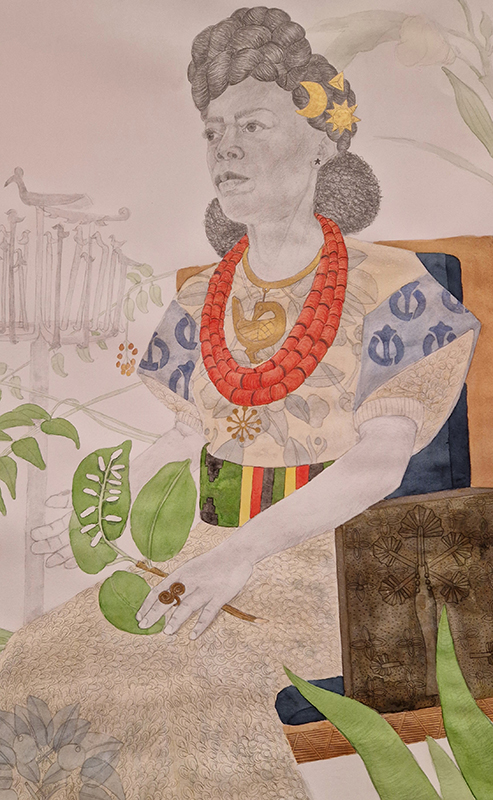
Artists First: Contemporary perspectives on portraiture at The National Portrait Gallery commissioned several artists to respond to an artwork of their choice. Charmaine Watkiss chose the portrait of Sir Hans Sloane, a botanist and collector who travelled to Jamaica in 1687 taking advantage of enslaved people’s indigenous knowledge of the location, properties and medicinal uses of local plants to boost his collection and furnish his publication. Charmaine’s beautifully crafted response To reimagine an African Queen shifts the dynamic to reflect the dissonance between these two human’s relationship to nature, one built on wisdom and respect and one which based on extraction and mastery.

Reading

The Stone Woman by A.S. Byatt. An evocative journey into becoming other.

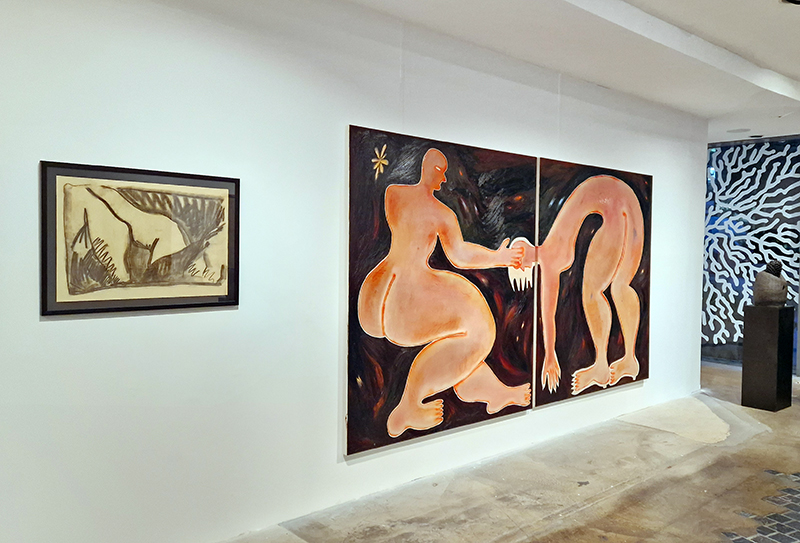
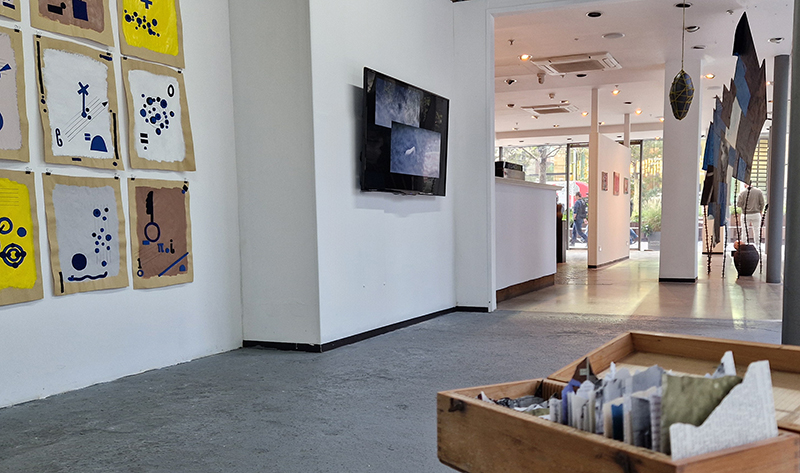
Carbon, Carbon Everywhere opened at Hypha HQ co-curated by Maria Hinel & Indira Dyussebayeva-Ziyabek with exhibiting artists Emii Alrai, Kate Daudy, Konstantin Novoselov, Susan Eyre, Ania Mokrzycka, Simon Faithfull, Nissa Nishikawa, Mariele Neudecker, Anousha Payne, Aimée Parrott, Lucia Pizzani, Lizi Sanchez, Meng Zhou.

The title of the exhibition is taken from the chapter Carbon in the book The Periodic Table by the writer and chemist Primo Levi. Levi traces a journey of a single atom of carbon across distinct states and beings, from resting in a bed of limestone for hundreds of millions of years, to entering the world of ‘things that change’ – swiftly shifting from the atmosphere to the lungs of a falcon, to the sea, to the trunk of a cedar, and eventually entering the writer’s own body from a glass of milk on his desk. Resolutely specific yet universal, Levi’s story highlights the singularity of carbon as an element that inherently connects all things through its relentless transformation. It fossilises, mutates, preserves, pollutes and nourishes. From its ancient geological formations to its current atmospheric volatility, carbon is never still, shifting between forms and contexts in an ongoing process of exchange.

I am very happy to be exhibiting my video Cosmic Chiasmus: crossing the universe alongside the work of the other amazing artists.

Not only is all life physically permeated by cosmic rays with the potential for nuclei collisions but some cascading particles smash into atoms of nitrogen to create carbon-14 which combines with oxygen in the atmosphere to create radioactive carbon-dioxide. Carbon-14 enters the food cycle via photosynthesis as plants absorb it from the atmosphere. It is constantly renewed in all living organisms. On death, the amount of carbon-14 in the tissues begins to decay at a known rate which can be measured to determine the time of death. Cosmic ray activity therefore allows us to perform carbon dating techniques offering insights into Earth’s past climate and magnetic field, solar activity, and changes in the carbon cycle, helping us to understand historical patterns and establish timelines for ancient human history. Understanding the past can help us plan for the future.

Installation shot: Cosmic Chiasmus: crossing the universe 2021, video 05:25 min

Gallery Visits

I loved the textures of the sandy cementy surface of the mixed media painting by Antoni Tàpies in Point and Counterpoint at Centro Botin, Santander.
ENREDOS (entanglements) II at Centro Botin, Santander. Nuno da Luz amplifies the frequencies of the waves and the winds felt in the Bay of Santander, interweaving them with their oscillations of the building itself. The sound installations generate shared listening spaces, converting the environmental data of the Santander coast into vibrations and amplifying the building’s own vibrations, extending and intensifying their intrinsic energies.

The exhibition also includes works by Javier Arce: a series of oil paintings titled On What is Nearby and the sculpture Cambium – cast from the last ring of a tree stump – this is the most recent ring under the bark where new wood cells are formed as the tree grows.

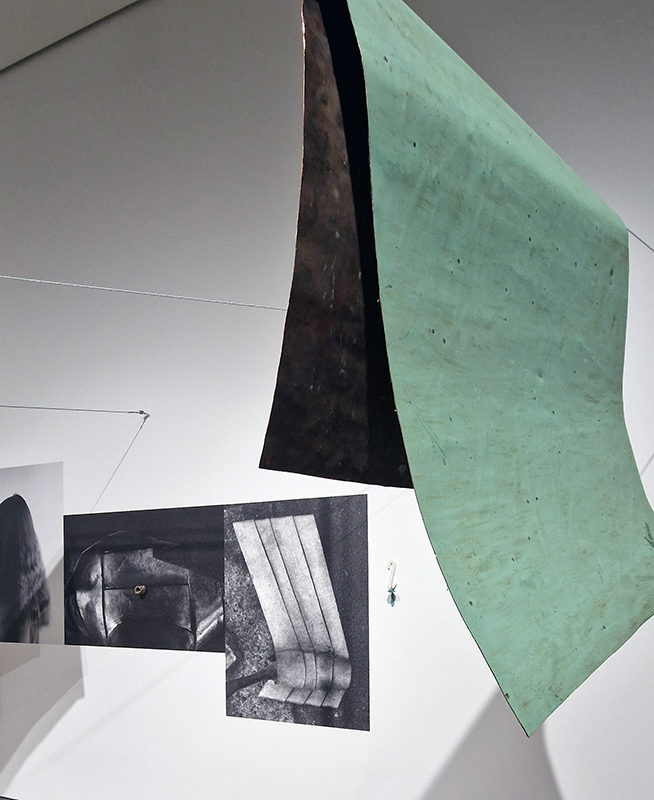
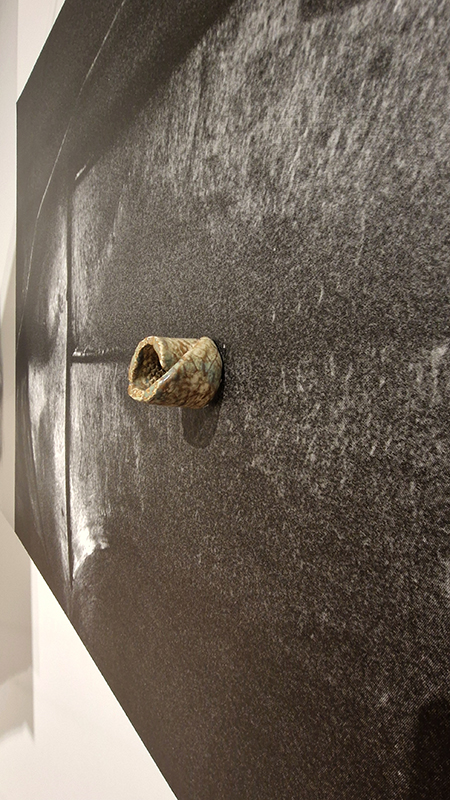
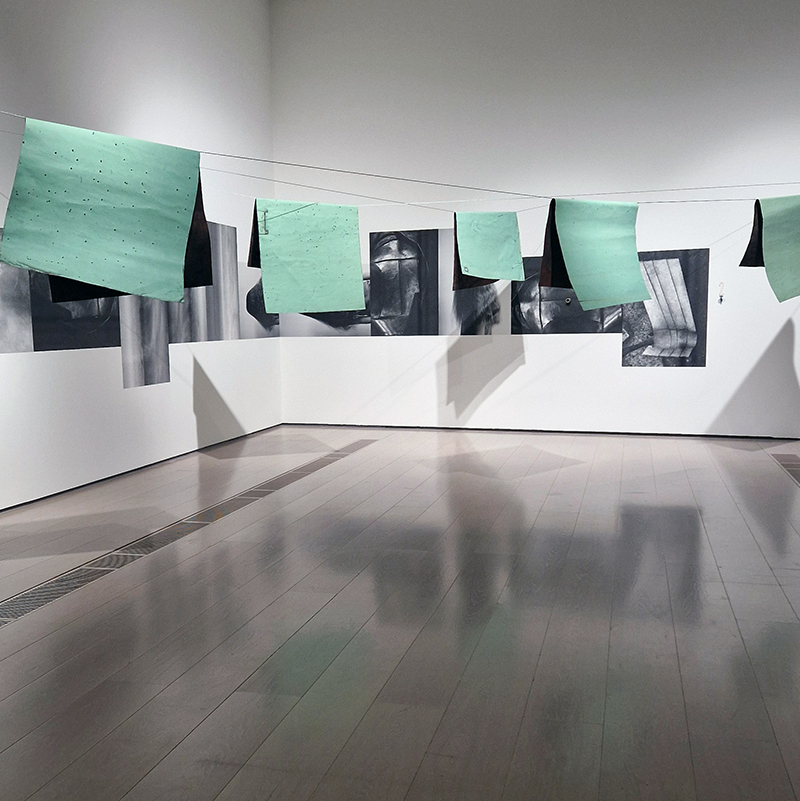
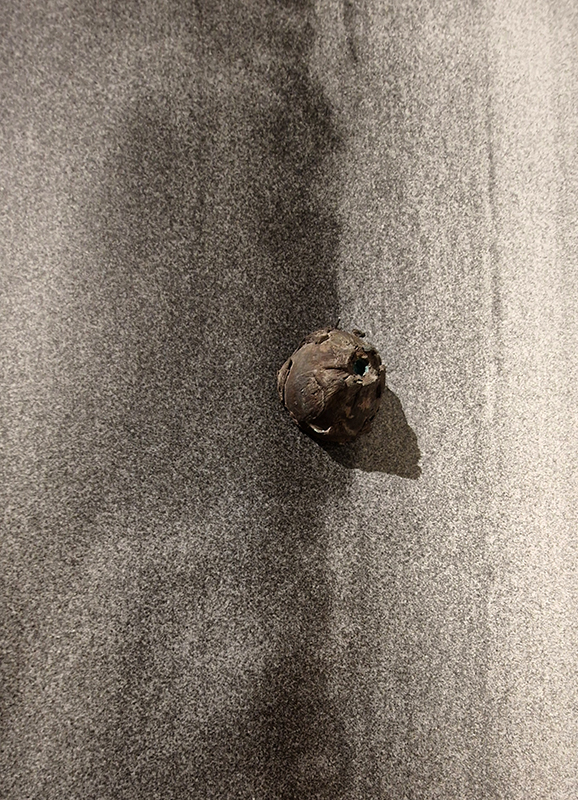
Katinka Bock: A striking installation Feuilles de temperatures which incorporates weather patinated copper sheets rescued from the dome of Anzeiger-Hochhaus in Hannover a legendary site of editorial histories, alongside Some and any, fleeting, an installation of large digital prints set with tiny bronze, ceramic and copper sculptures.

The video Core, a collaboration between sculptor June Crespo and cinematographer Maddi Barber which documents the different states through which the sculptor’s material passes: rock, dust, liquid, and solid. Connecting the processes of hands that touch and manipulate the cement sculptures, and the rock extraction and transformation process in a quarry.

Tacita Dean The Wet Prayer in reference to the final plea of Saint Paul as he was shipwrecked off the coast of Malta. In this exhibition the ephemeral chalk of Dean’s ocean waves resonate with the sound waves recorded from the bay outside and played back within the gallery space.

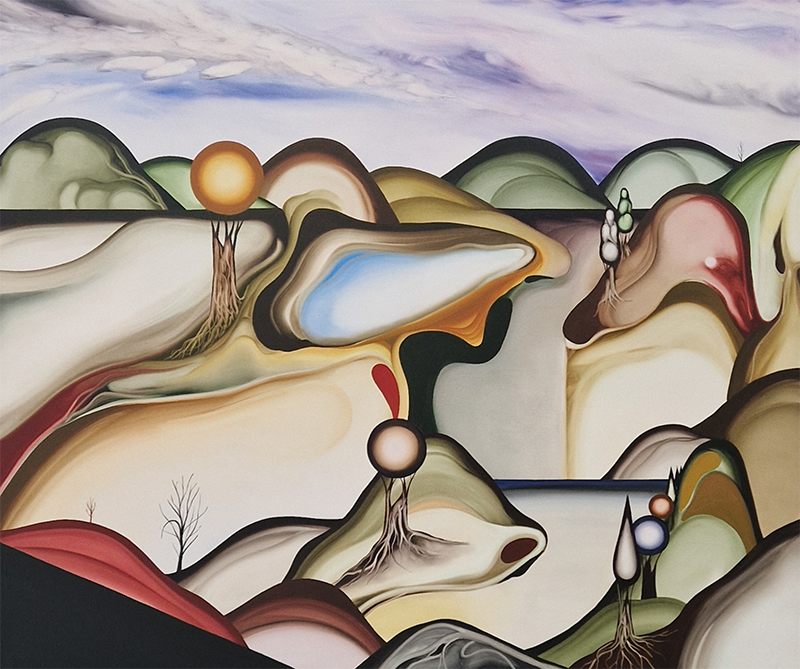
Great curation by Susanna Greeves of engaging works in Alien Shores at White Cube Bermondsey. In every depiction of landscape is a reflection of the values and beliefs of the society that created it. Landscape is not the world, but the world through human eyes.

Exhibiting artists included: Michael Armitage A kind of belief, oil on Lubugo bark cloth.

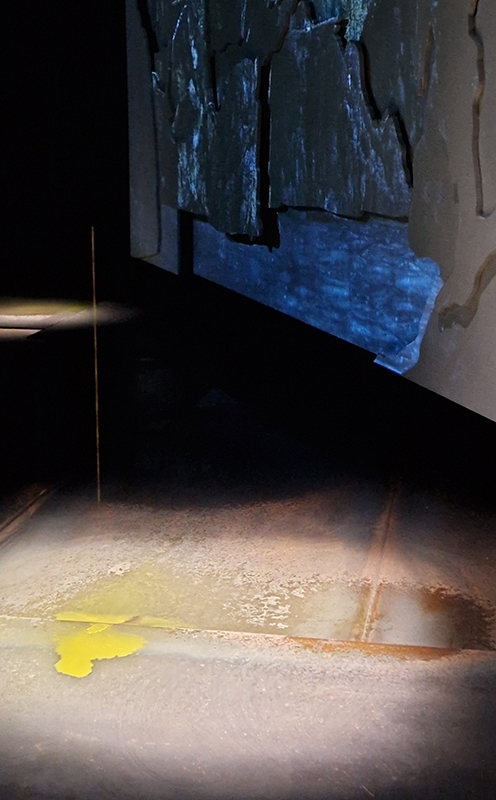
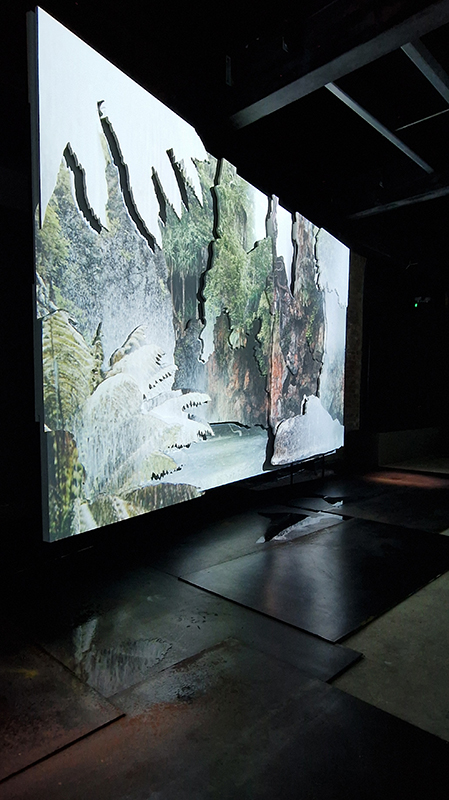
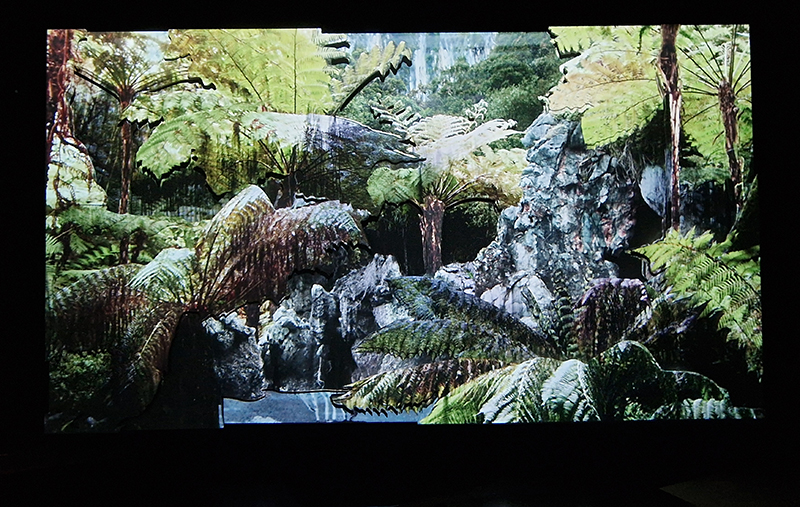
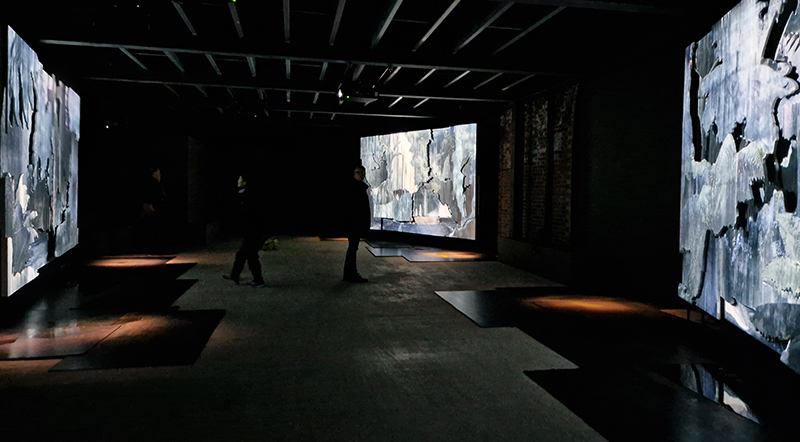
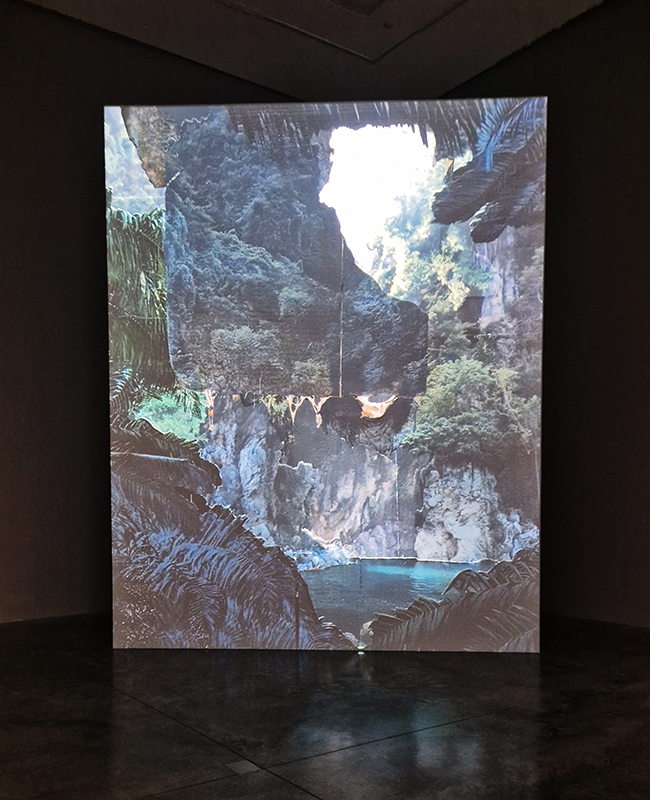
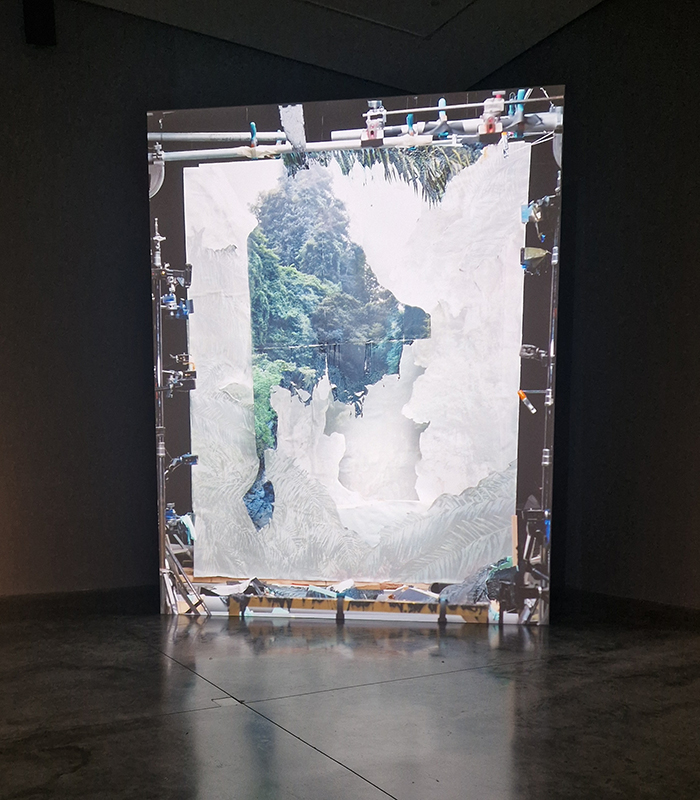
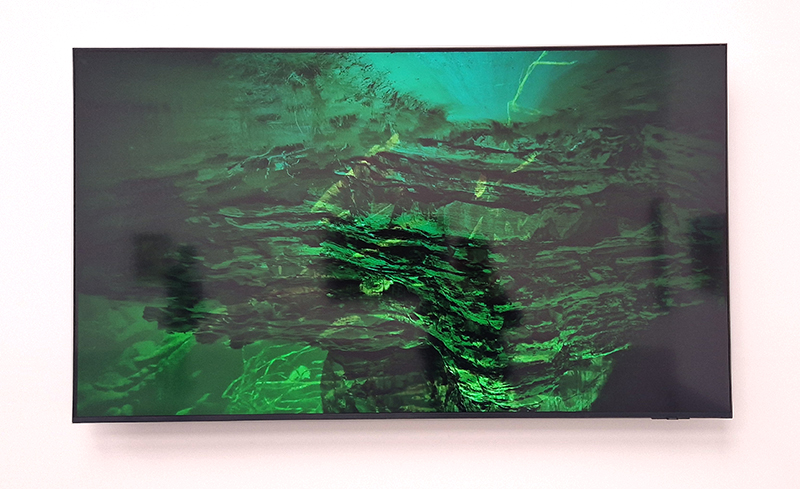
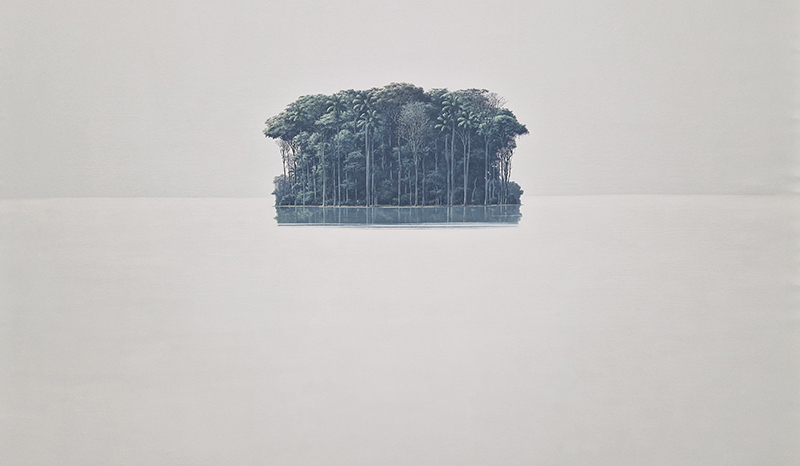
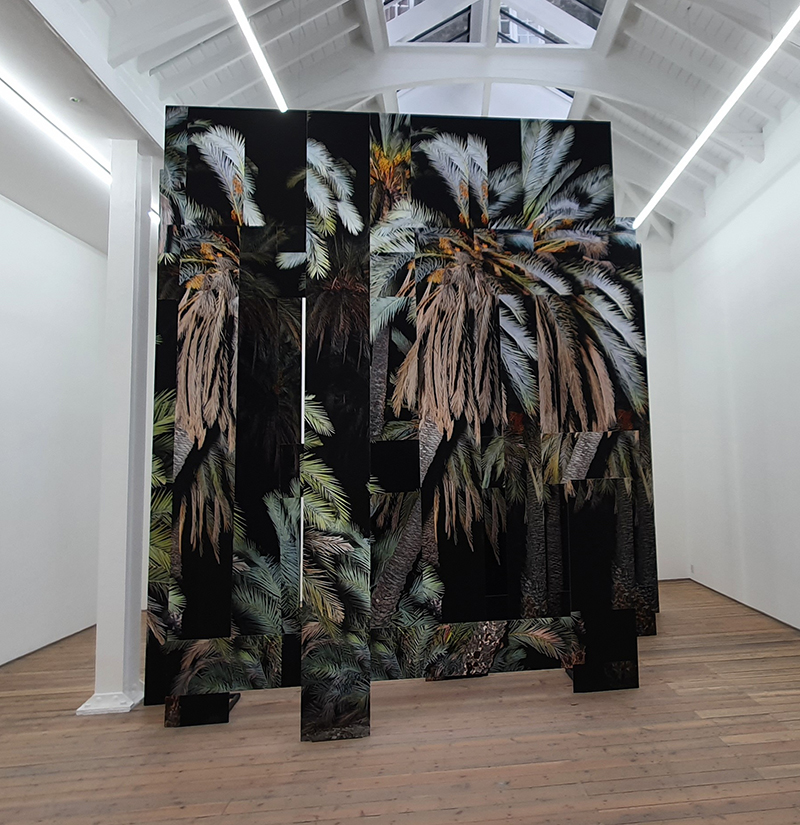
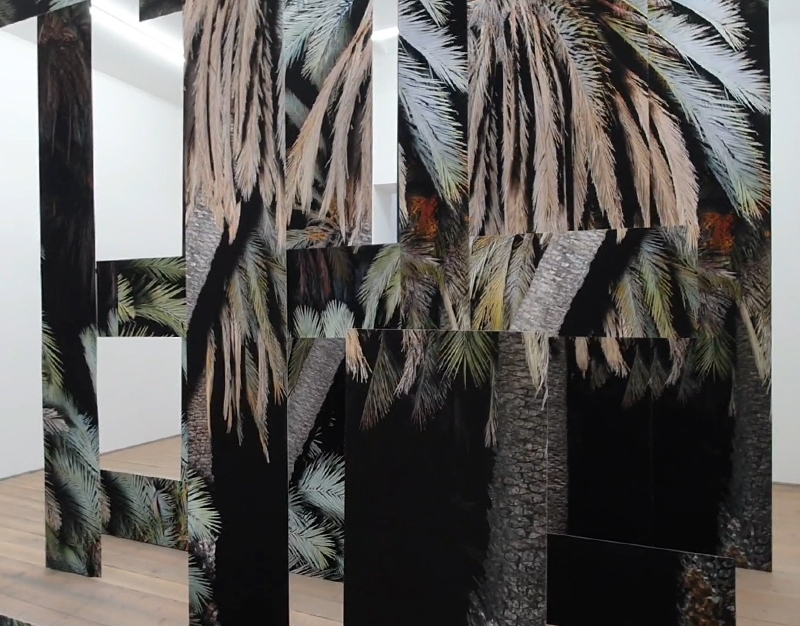
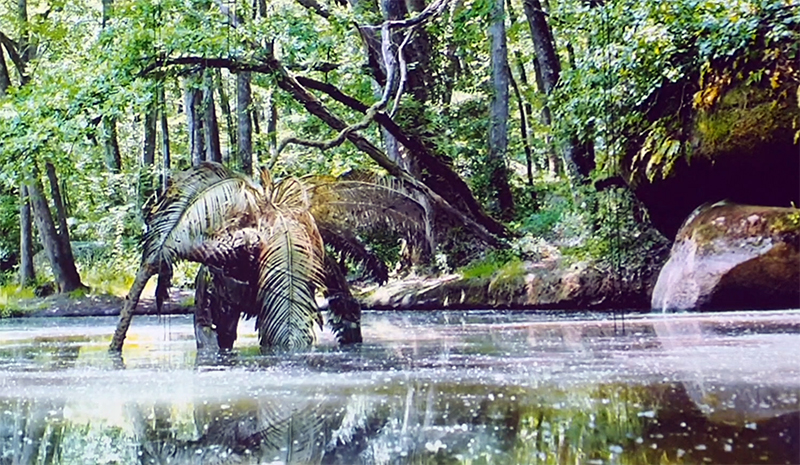
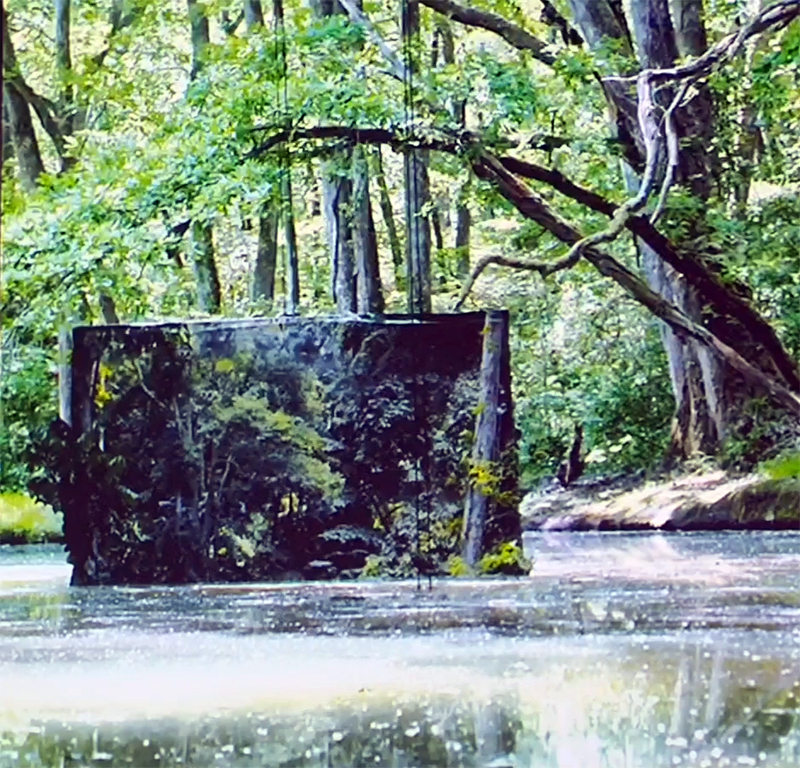
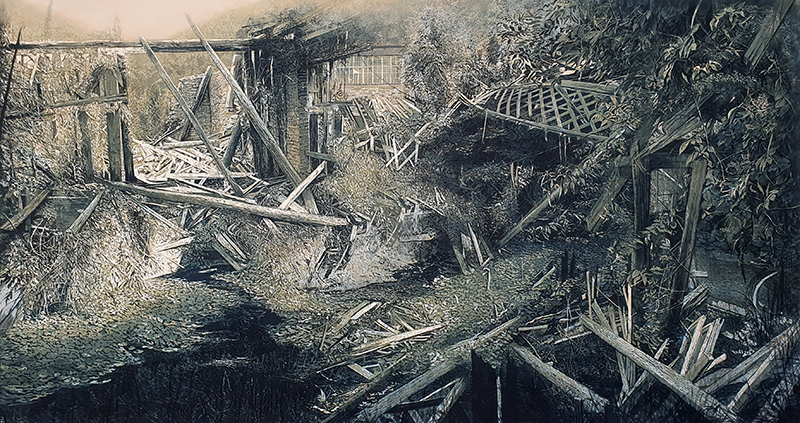
Noémie Goudal Tropiques IV, inkjet print and the mesmerizing collapse of dissolving landscapes in Supra Strata, HD video as layer after layer warps, stetches, tears and falls until there is nothing.

Sky Hopinka shapeshifting video Mnemonics of Shape and Reason

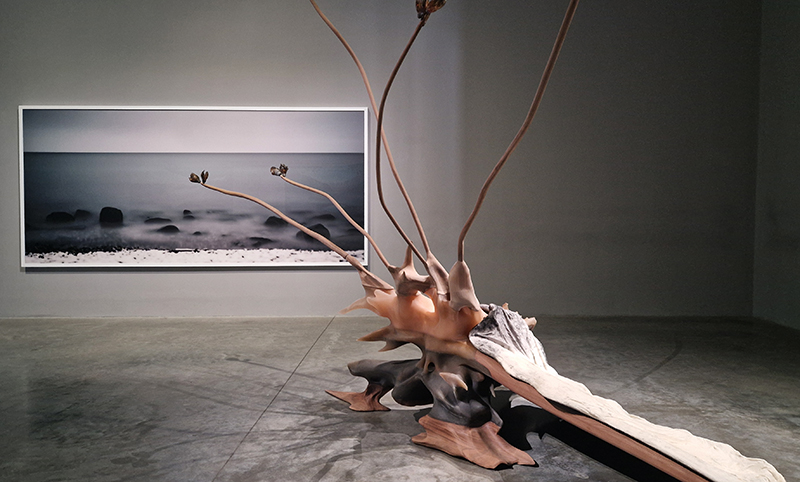
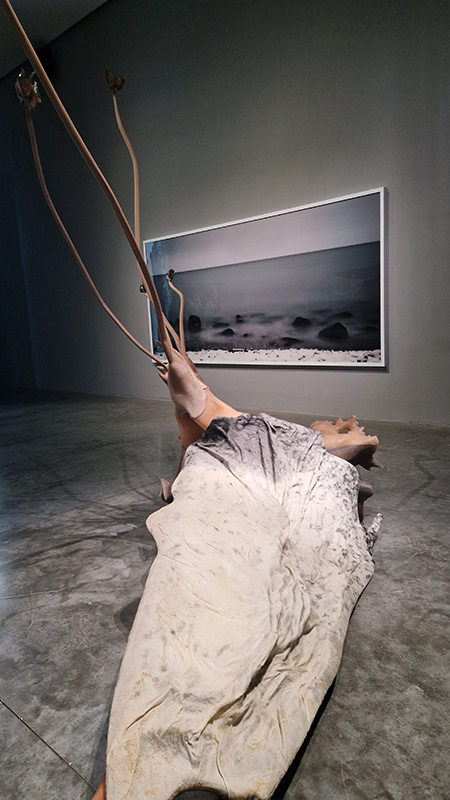
Marguerite Humeau Skero ( the dormant), embellished silk double organza, cast rubber, sediments, pigments, handblown glass, milled walnut, polyurethane foam, epoxy resin and stainless steel paired with Darren Almond’s haunting Fullmoon@Baltic Coastline, latex print.

Hung Fai, optically intriguing The Six Principles of Chinese Painting: Transmission XXII (with Hung Hoi), ink and colour on paper.

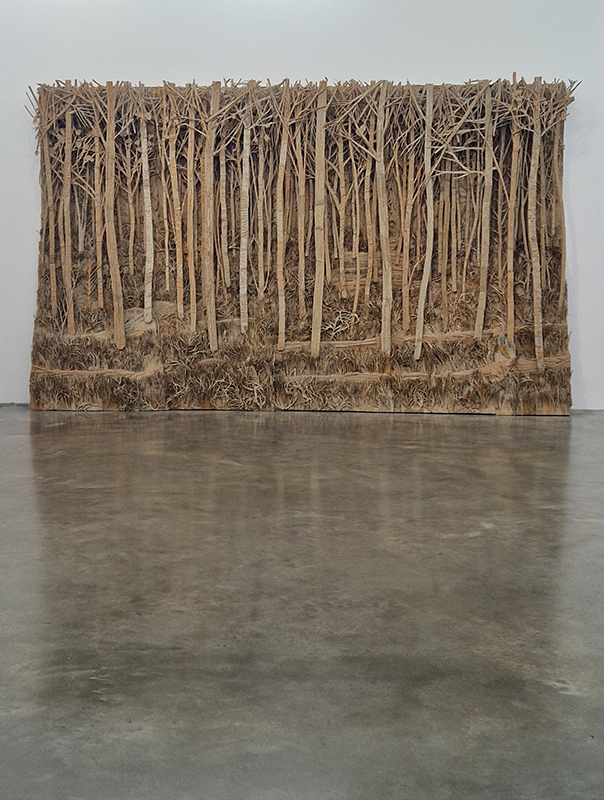
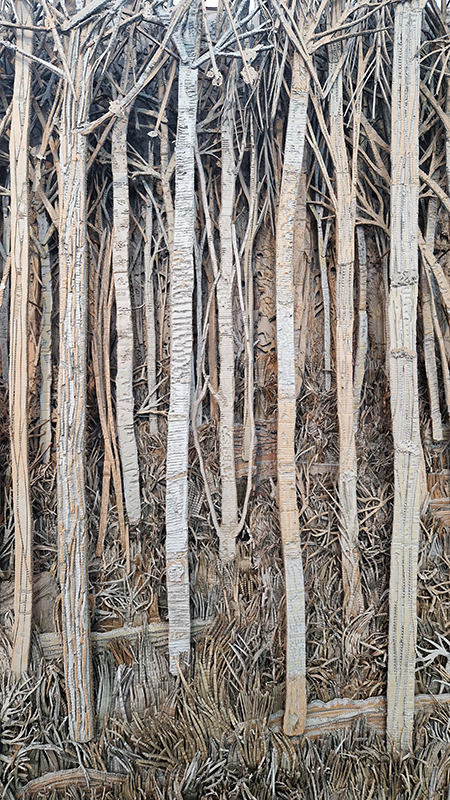
Eva Jospin, Forêt, cardboard and wood.

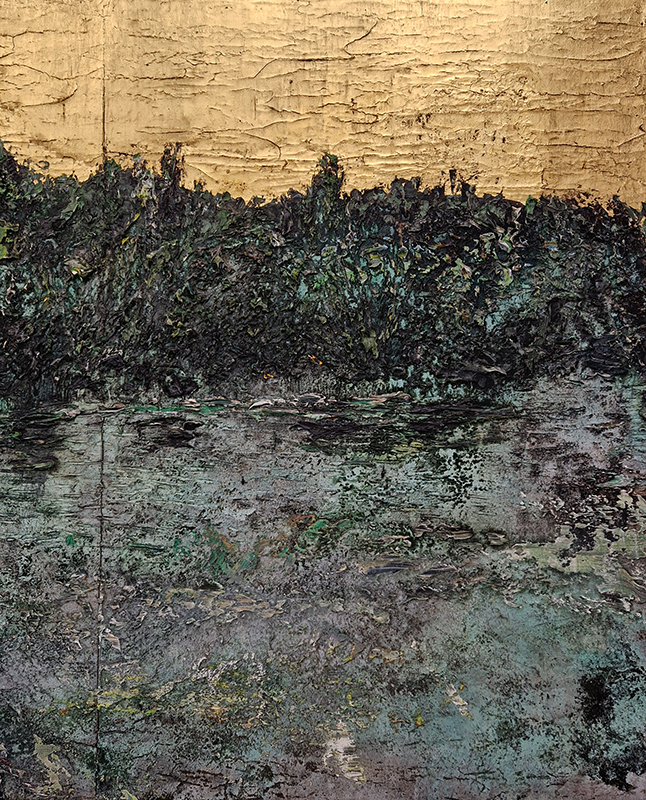
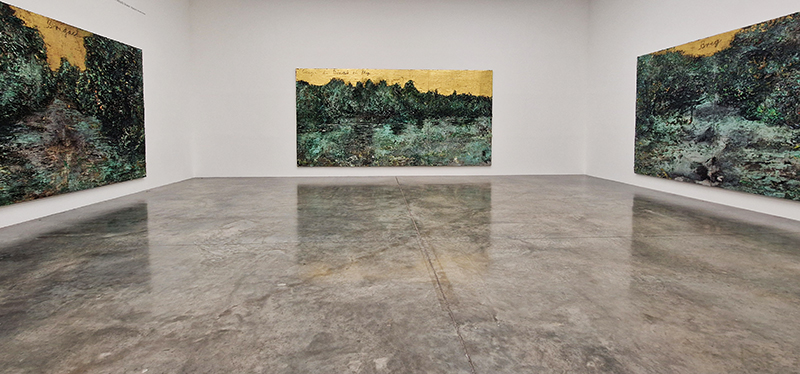
Anselm Kiefer Brigach und Breg bringen die Donau zu Weg, three panels emulsion, oil, acrylic, shellac, gold leaf and sediment of electrolysis on canvas.

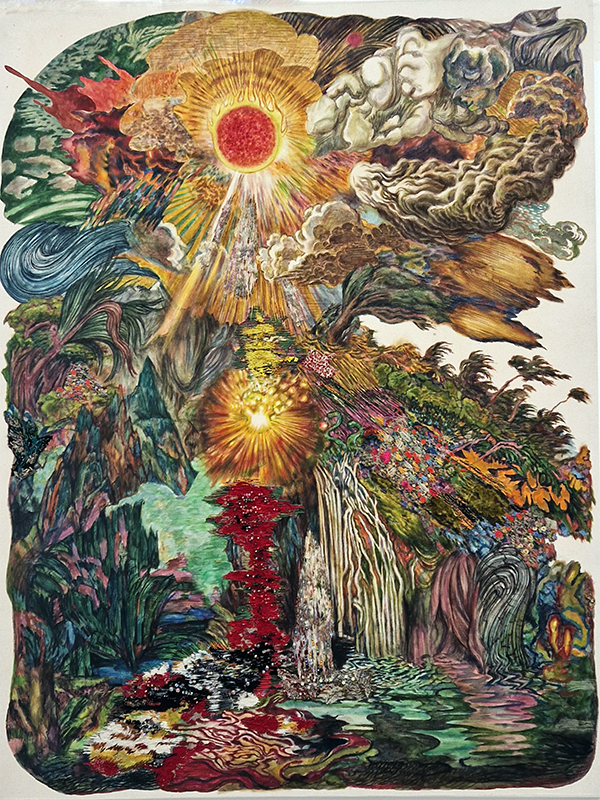
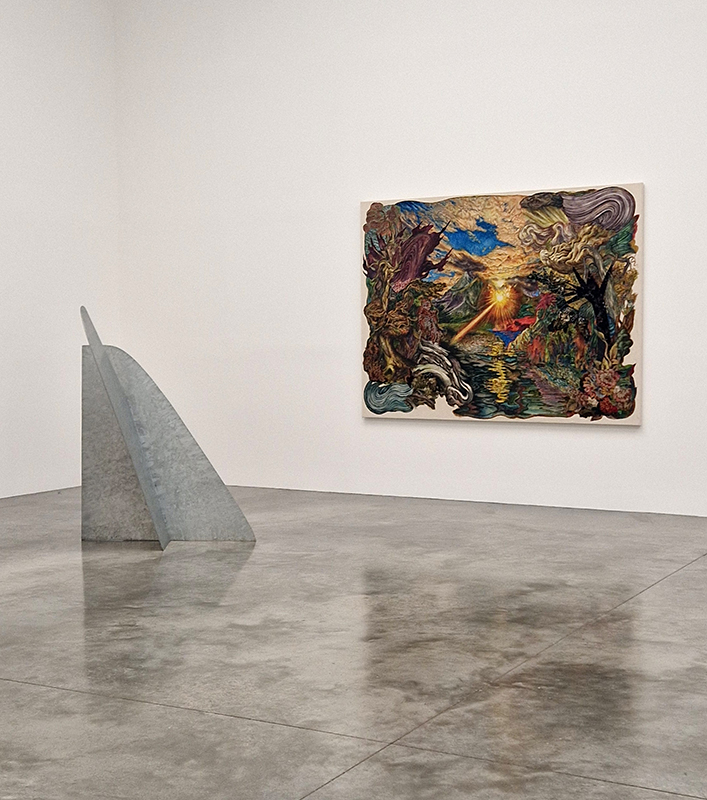
Ken Gun Min Everything We Can Imagine As Light Baroque pearl, crystal, assorted gemstones, vintage beads, Korean pigment, silk embroidery, thread, found fabrics and oil paint on canvas. I love exuberance of his painting and the title made me think of the epic Anthony Doerr book All The Light We Cannot See and the beautiful film All We Imagine As Light written and directed by Payal Kapadia both of which I found deeply moving.

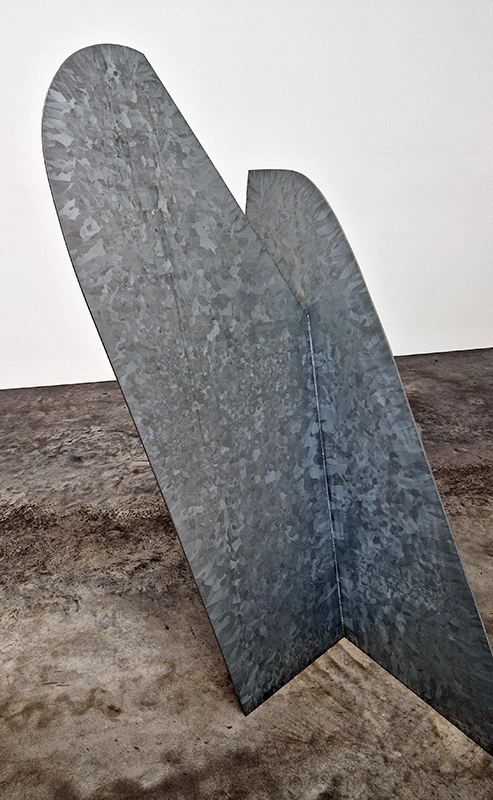
Isamu Noguchi Mountains Forming hot dipped galvanised steel.

Bagus Pandega and Kei Imazu, Artificial Green by Nature Green 4.1, Painting and erasing machine, water based paint on linen canvas, modular synthesiser, LED screen, PC and jelly palm tree. This was not in action when I visited.

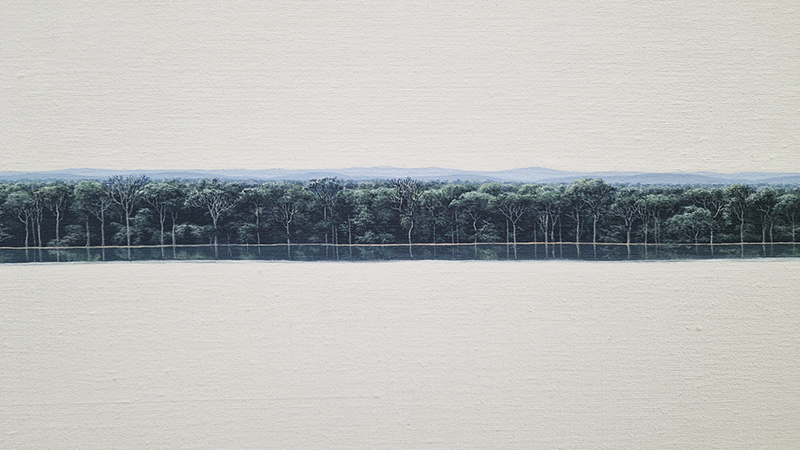
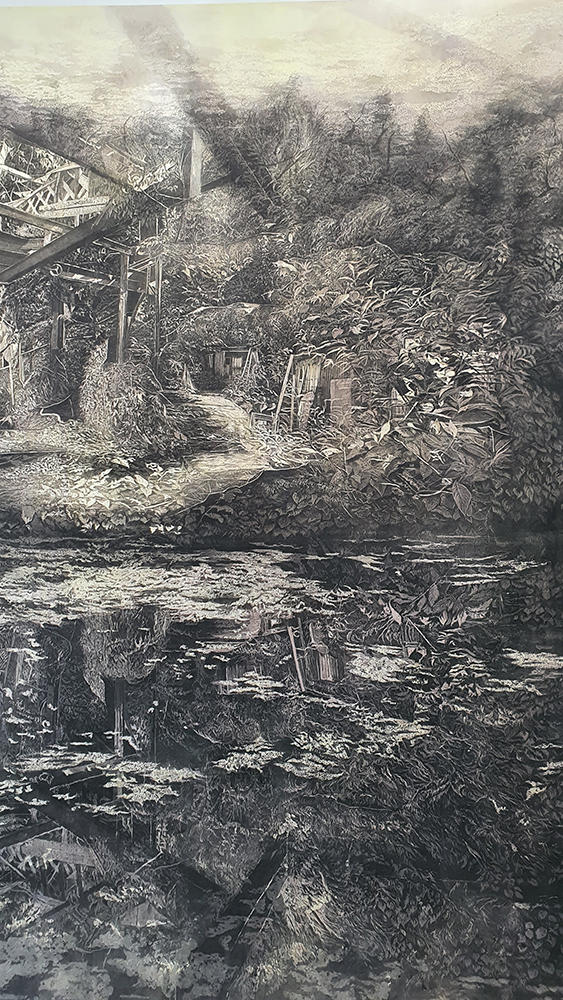
The delicate detailed forests on the cusp of erasure of Tomás Sánchez

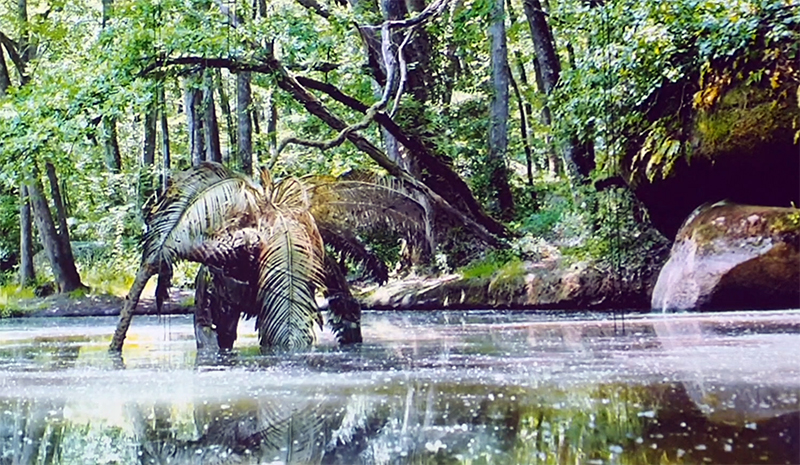
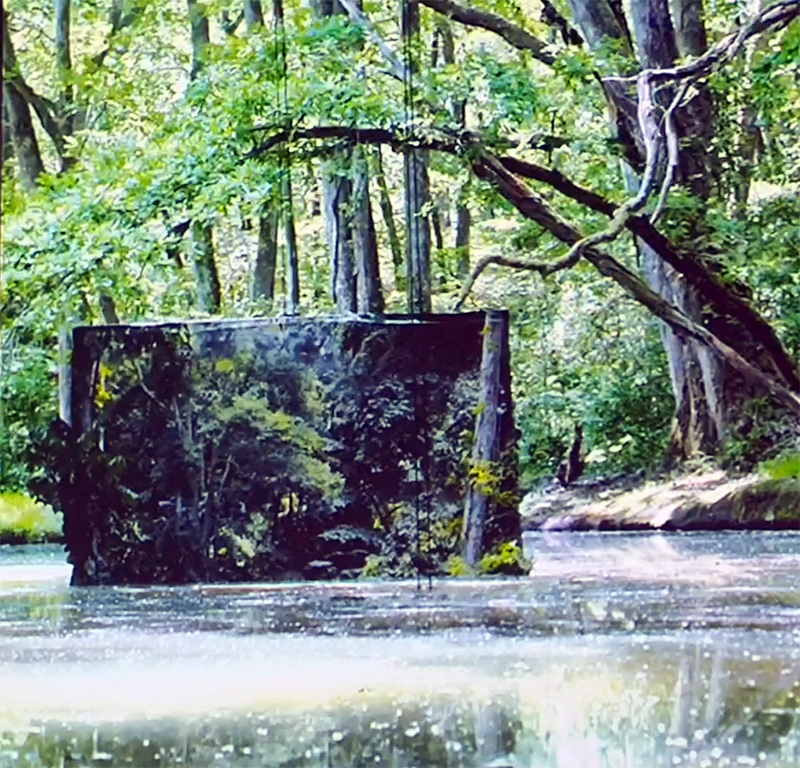
Emma Webster mega painting Borrow Every Forest which has echoes of Noemi Goudall’s video in it’s staged nod to artifice.

Robert Zehnder Hip Bone, oil on canvas on panel.

Out and About

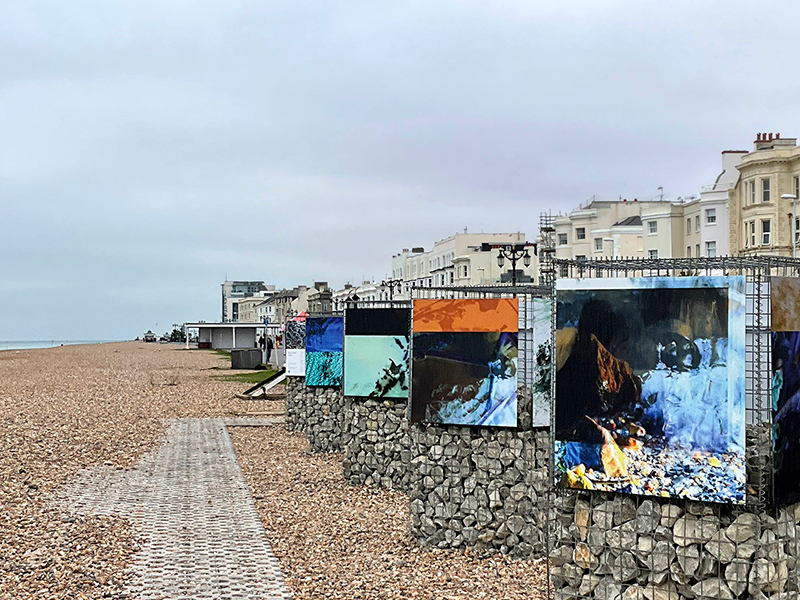
Not to forget that as backdrop to everything that occurs at the moment is the horrific genocide being perpetrated in Gaza. It seems impossible that such cruelty can happen, is still happening and the powers that could stop it do nothing. Santander beach protest for a free Palestine that I was able to walk alongside.

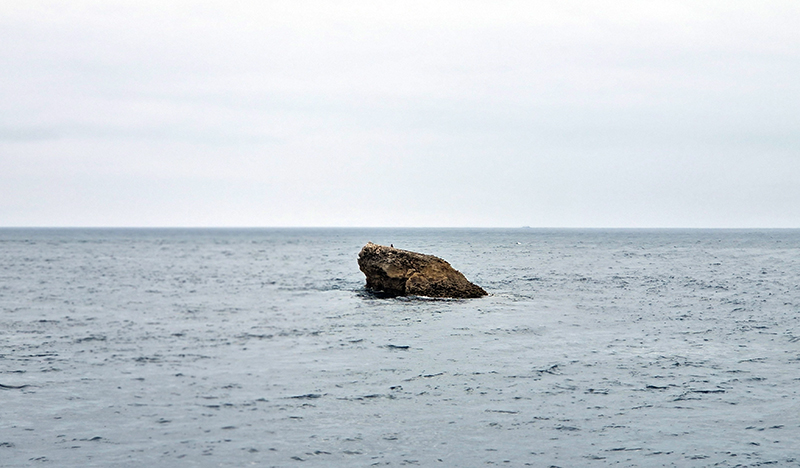
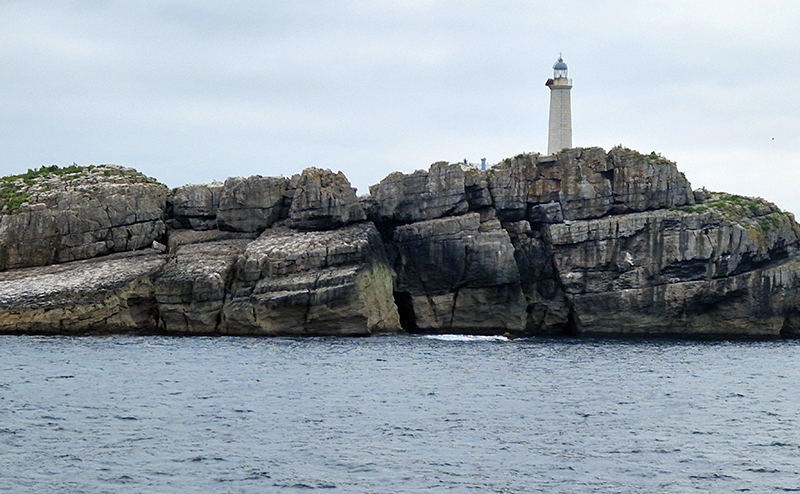
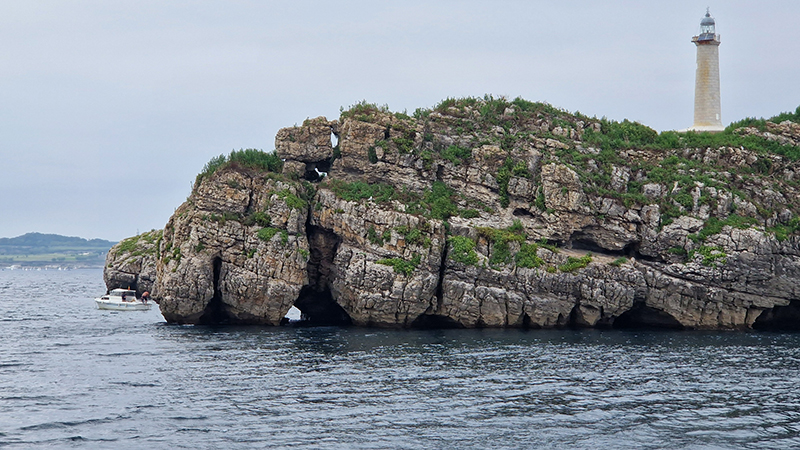
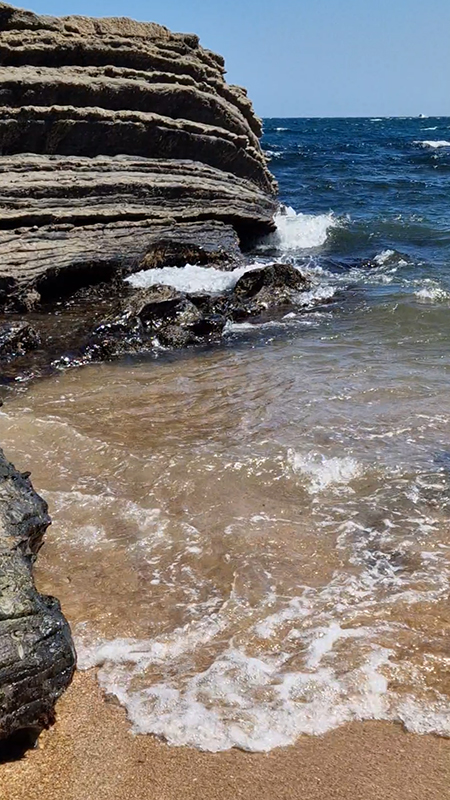
Contemplating geological time, rock gazing along the Santander coast.

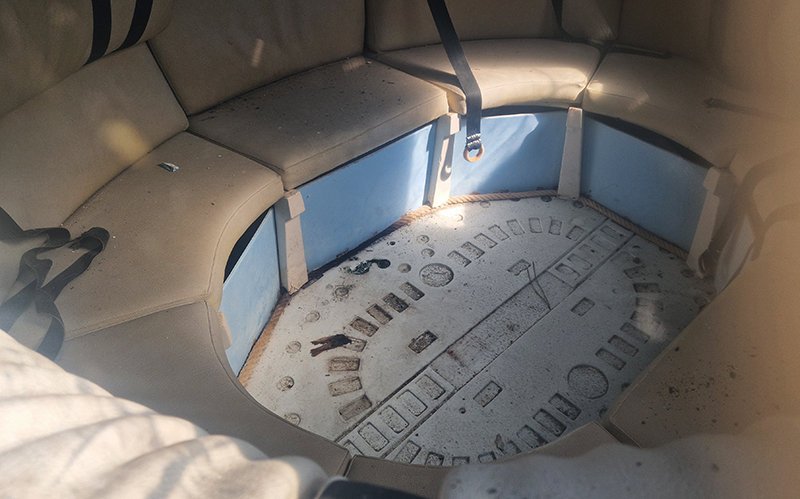
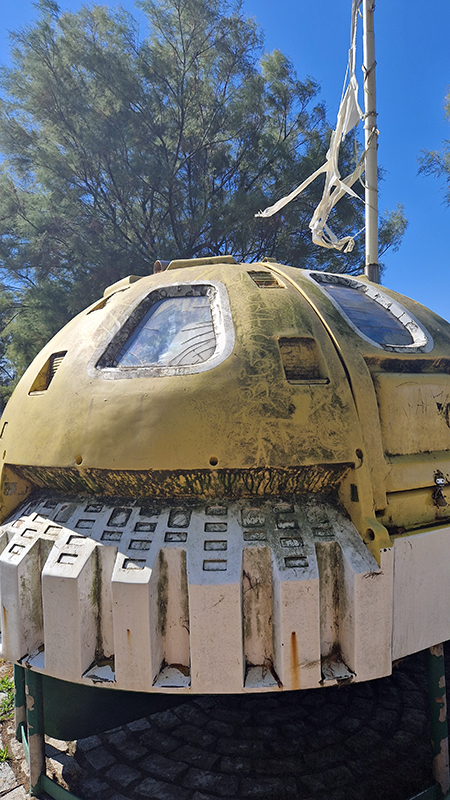
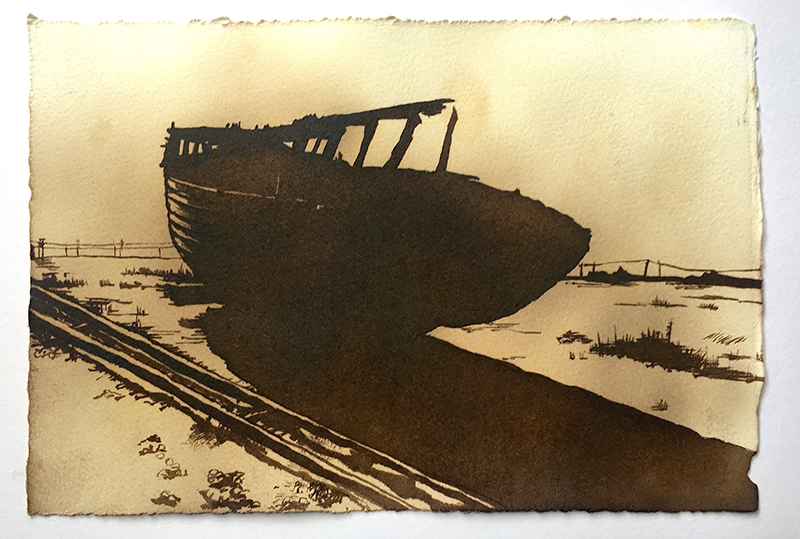
This sci-fi looking experimental lifeboat was designed by Spanish explorer Vital Alsar as part of his project El Hombre y la Mar. It has a capacity for 12 castaways and was towed across the Atlantic from Mexico to Santander in 1978, the culmination of his expedition to emulate the one undertaken in 1542 by Francisco de Orellana from Ecuador on foot across the Andes to navigate the length of the Amazon to the ocean. Through his expeditions, including the longest crossing of the Pacific Ocean by raft, Alsar wanted to prove that by respect for, and harmony with nature, humans can cross oceans, feed themselves and live sustainably.

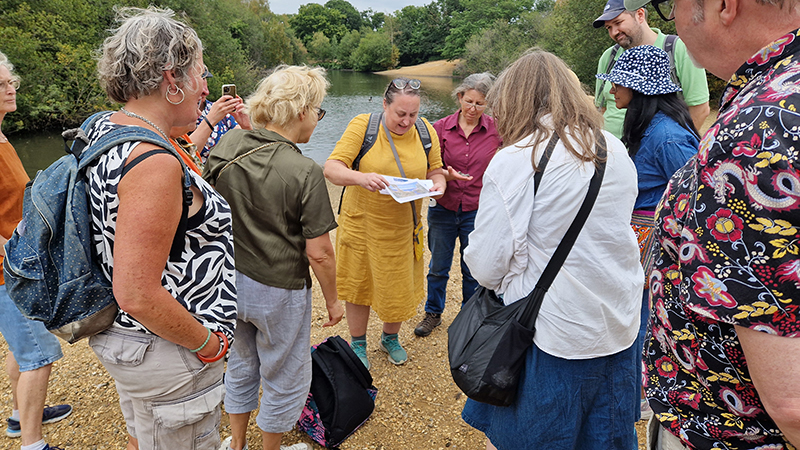
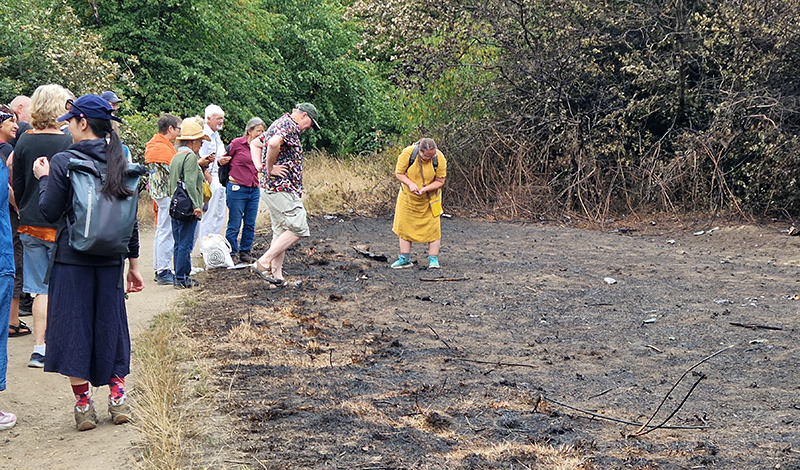
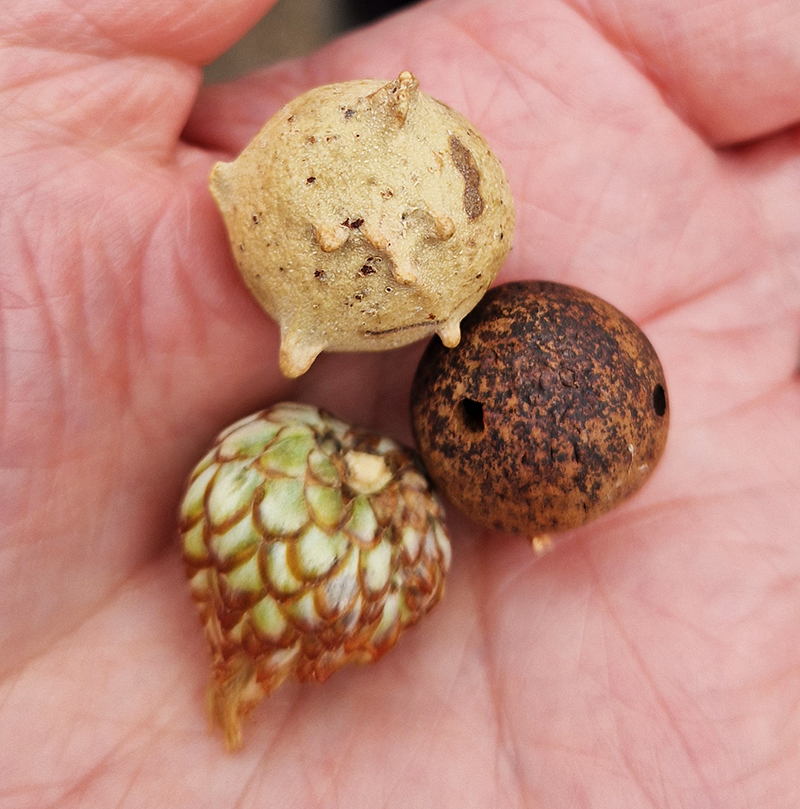
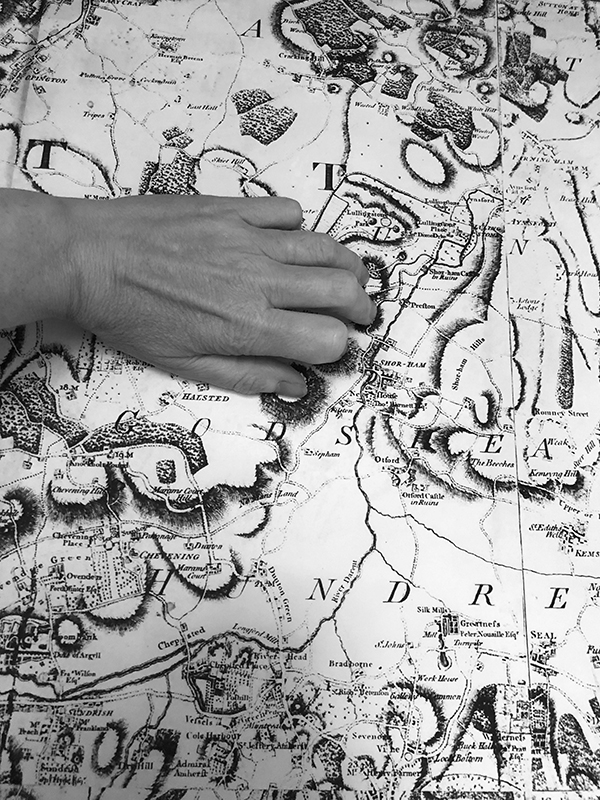
Inspiral London; Re/Walk Festival: Rivers, Reservoirs, Ice and Sea. The colours and layers of Walthamstow revealed by artist Gail Dickerson and geologist Ruth Siddall both members of London Geodiversity a group concerned with the natural and human aspects of landscape, focused on the rocks, sediments, soils, the landscape topography and the processes that act on the landscape. We were not only enlightened on the deep time history of this urban landscape as we stood and imagined when glaciers reached as far as Epping and woolly mammoths wandered the land here but were instructed on how to make shimmering ink from galls, how to make charcoal in a bonfire and use earth’s rich pigments to paint with. Galls form when an organism (like an insect) penetrates or irritates plant tissue, triggering the plant to grow and enclose the organism. 

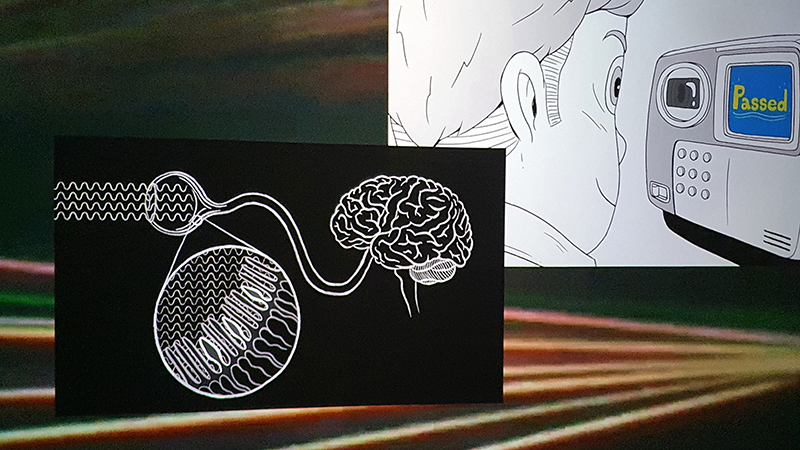
Something I recently found out, amid the hype of the new movie, was that the Fantastic Four super hero characters got their powers from exposure to cosmic rays on an ill fated/serendipitous (depending on how you look at it) space mission. The original story was from 1961, the year Yuri Gagarin was the first human to orbit in space. Cosmic rays are a real danger to astronauts as these high energy radioactive particles can cause cell damage. Astronauts also experience directs hits on the retina from cosmic rays which they see as tiny flashes of light but this wouldn’t have been knowledge in 1961.

Reading

Patterns of Thought: The hidden meaning of the great pavement of Westminster Abbey by Richard Foster. The book offers a thorough investigation into of what is known as the Cosmati Pavement; a unique work laid down in 1268 by order of Henry III who commissioned workmen from Rome, led by Odoricus, who were skilled in a type of inlaid stone decoration known as Cosmati work.

The provenance of the stones and the history of the pavement is interesting but the most compelling aspect of the pavement is its intriguing inscription in Latin which promises the reader disclosure of the end of time. It translates as

Four years before this Year of Our Lord 1272,                                                                                             King Henry III, the Court of Rome, Odoricus and the Abbot                                                                            set in place these porphyry stones.                                                                                                                   If the reader wittingly reflects upon all that is laid down,                                                                               he will discover here the measure of the primum mobile:                                                                                              the hedge stands for three years,                                                                                                                             add in turn dogs, and horses and men,                                                                                                       stags and ravens, eagles, huge sea monsters, the world:                                                                             each that follows triples the years of the one before.                                                                                    Here is the perfectly rounded sphere which reveals                                                                                                    the eternal pattern of the universe.

The fateful day expressed in terms of the multiplied life-spans of various creatures apparently arrives at the sum of 19,683. The book offers fascinating insight into the beliefs of medieval cosmology, Christian philosophy and sacred geometry that together formed the thoughts that were meticulously laid down in stone.
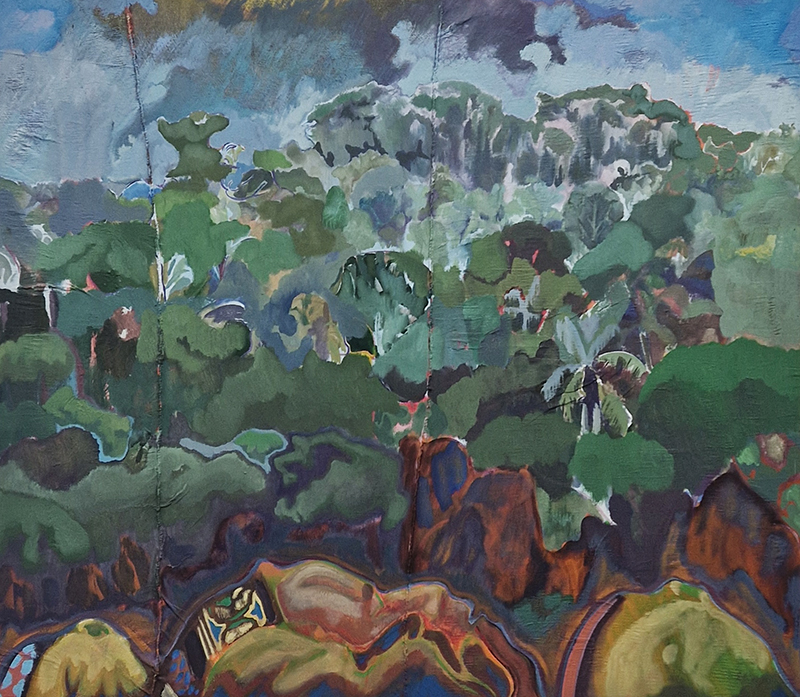
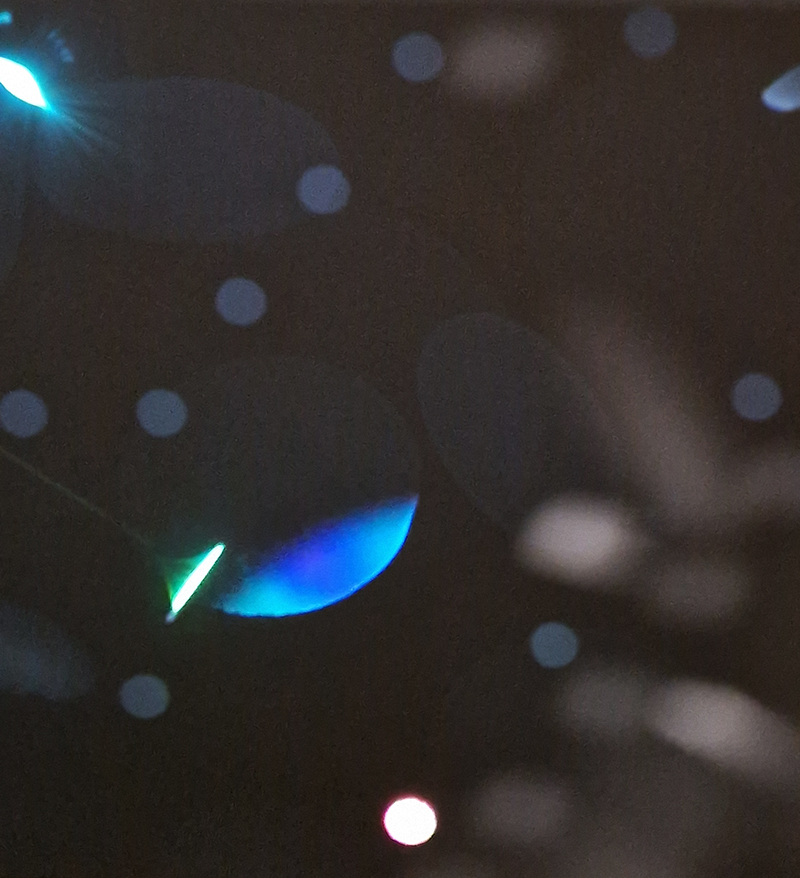
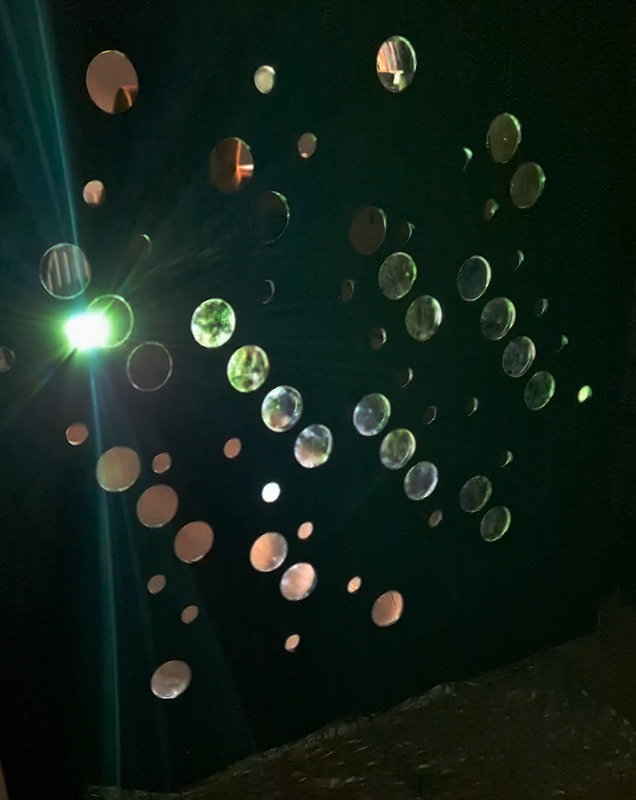
Speculating on a view of the world projected from the perspective of the rock. In the studio drilling more holes for optical lenses set out in a pattern based on the crystal structure of the naturally magnetic mineral magnetite which was determined in 1915 as one of the first crystal structures to be obtained using X-ray diffraction. Found in igneous rocks, sedimentary deposits and sand across the globe in many locations, magnetite is also found in the cells of organisms from bacteria to humans. Magnetite contains both ferrous (divalent) and ferric (trivalent) iron along with oxygen.

Testing projecting through the optical lenses I’m excited to see how the different lenses cause images to overlap and distort.

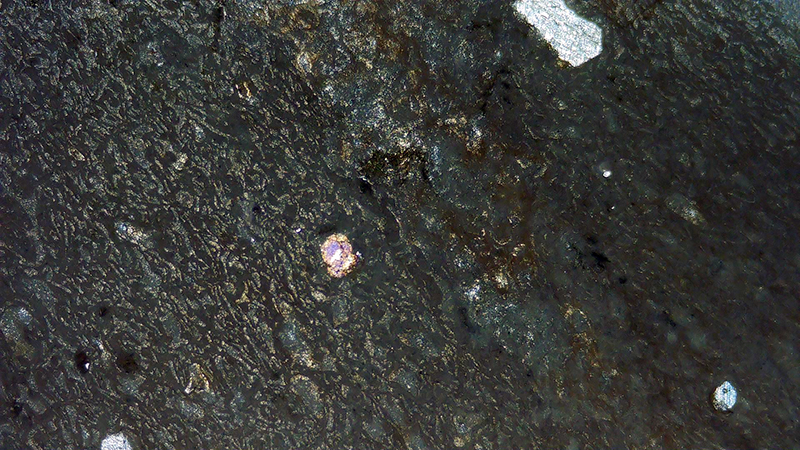
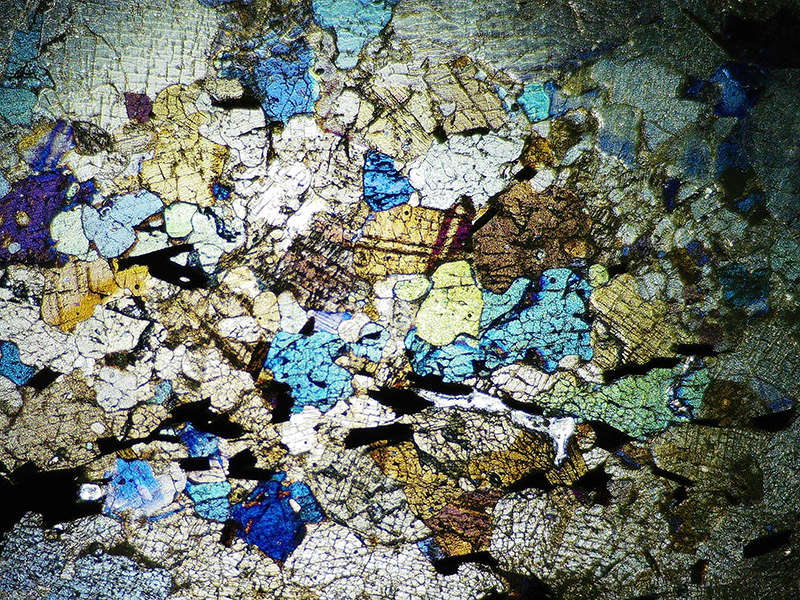
I received a Digital Microscope for my birthday and a selection of rocks and meteorites to look at. So far I have only used the lens with the least magnification capabilities yet this is revealing wonderful detail in the rocks which are further enhanced by using a polarising filter. I have chosen to look at rocks which originate near areas of tectonic activity or that may have magnetite in them.

Images on left have no filter, those on the right have a polarising filter.

This thin slice of Deep Ocean Pebble was collected in 1979 three miles deep in the Pacific Ocean Clarion Clipperton Fracture Zone. This zone is regularly considered for deep-sea mining due to the abundant presence of manganese nodules. In 2016, investigation of the seafloor in the zone was found to contain an abundance and diversity of life – more than half of the species collected were new to science.

This slice of Lewisian Gneiss is 3 billion years old. These ancient rocks from the Isle of Lewis were caught up in a mountain building cycle roughly 490–390 million years ago and were pushed above younger rocks formed during the late stages of this tectonic event.

This slice of Olivine Basalt comes from Þingvallavatn, a rift valley lake in southwestern Iceland. The area is covered by lava. The cracks and faults around the lake is where the Eurasian and North American tectonic plates meet. This may be the only place where one can stand with two feet on two different tectonic plates. The sample is a mid oceanic ridge basalt (MORB) fine grained but consisting of small olivine, clinopyroxene fragments in ground mass dominated by plagioclase laths, an opaque magnetite.

This slice of Vesicular Basalt Lava – a type of lava that solidifies into a rock with trapped gas bubbles leaving small holes as the lava cools, comes from the Mid Atlantic Ridge near the Azores Islands.

I also have a piece of Jepara taken from a pallasite, a class of stony–iron meteorite, discovered in Indonesia in 2008 during building excavations. The outside is heavily weathered but when cut and polished the inside reveals a translucent structure of densely packed olivine and magnetite. The sample has been coated with acrylic which has surface scratches so I think some of the detail has been compromised but it is still beautiful. No filters used here.

I am making use of public access to historical magnetograms recording of Earth’s magnetic declination to feed into new work inspired by palaeomagnetism. Magnetic studies of the ocean in the 1950’s had determined that the ocean floor was covered by bands of magnetic stripes that varied between normal polarity and reversed polarity. The Earth’s magnetic field has reversed polarity many times over the past hundreds of millions of years. These magnetic stripes were found to be symmetrical on the ocean floor about the mid-oceanic ridge. In 1963 British scientists, Fred Vine and D. H. Matthews proposed that the magnetic striping was caused by paleomagnetism, the storing of Earth’s ancient magnetic field in the sedimentary rocks that were forming as lava spewed up and spread across the ocean floor setting the history of pole reversals in stone.

I have embarked on some crystal growing experiments using a seed crystal in a saturated solution of mono-ammonium phosphate and aluminium potassium sulphate. I am hoping these might become objects to view through a lovely old wooden magnifying box I have. The last time I experimented with crystals was when I was amazed by the speed and glut of salt crystals overwhelming the test area. Before that made a time lapse video over 5 days of crystal growth for the installation Time Crystals in Reading Stones at St. Augustine’s Tower 2019. I will be learning more about this as workshops are developed for The Geological Unconscious public engagement programme which will run alongside the exhibition at Hypha HQ Euston this coming spring. Both Julie F Hill and Sophie Mei Birkin work with crystal structures and growth in their own practices and will be leading on the workshops we will run in partnership with a local primary school.

A crystal is like a class of children arranged for drill, but standing at ease, so that while the class as a whole has regularity both in time and space, each individual child is a little fidgety. Dame Kathleen Lonsdale, 1948

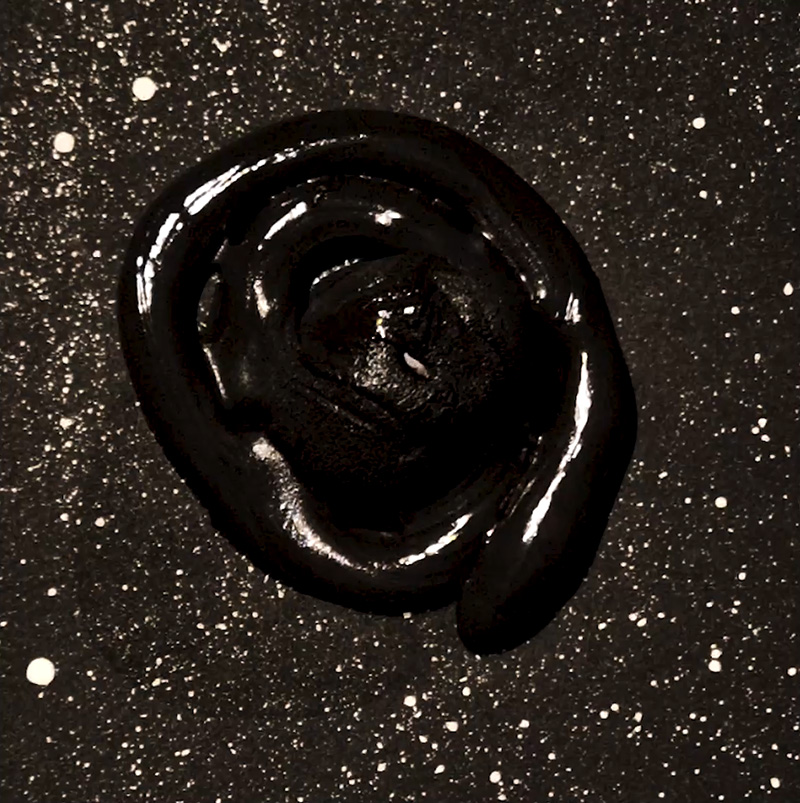
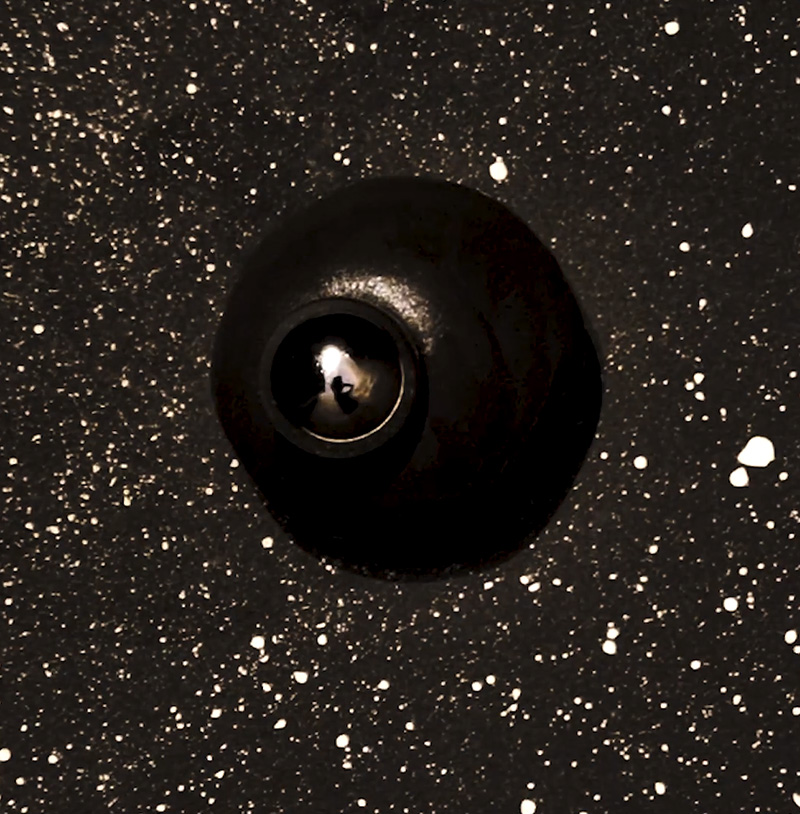
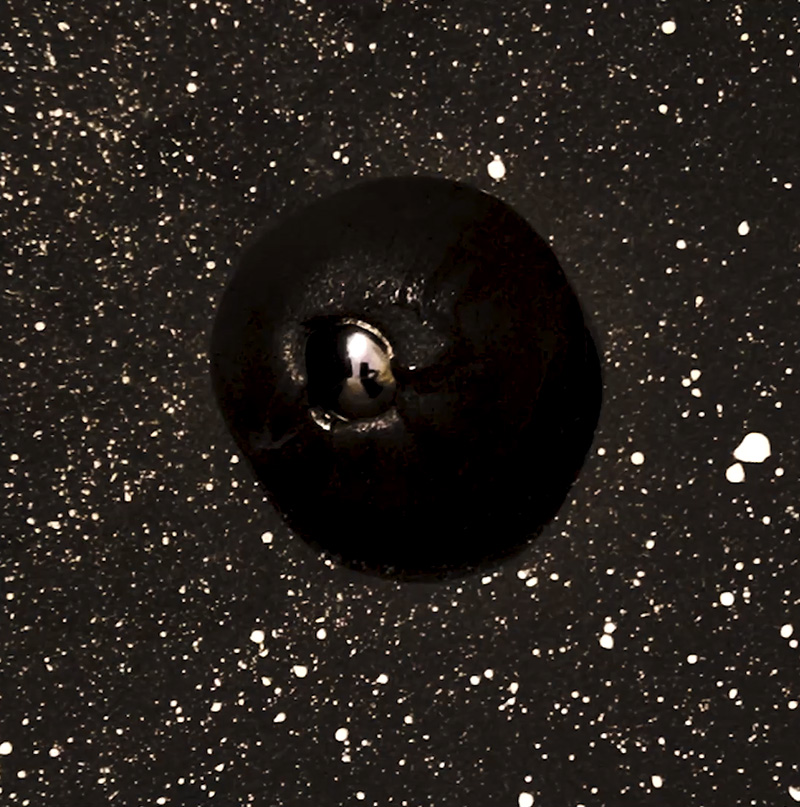
Had some studio fun testing the possibilities of magnetic putty for future video ideas. Mesmerising the way it very slowly swallows the magnet.

I began the magical process of making copper ink. Soaking pieces of copper in vinegar and salt, stirring daily and watching the liquid turn a milky turquoise blue. Looking forward to using this to patinate copper but also to paint with on paper.

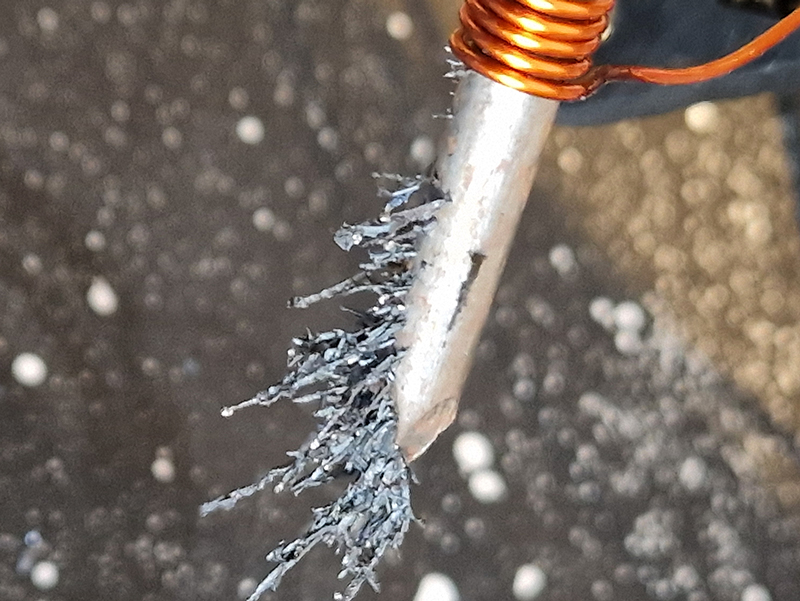
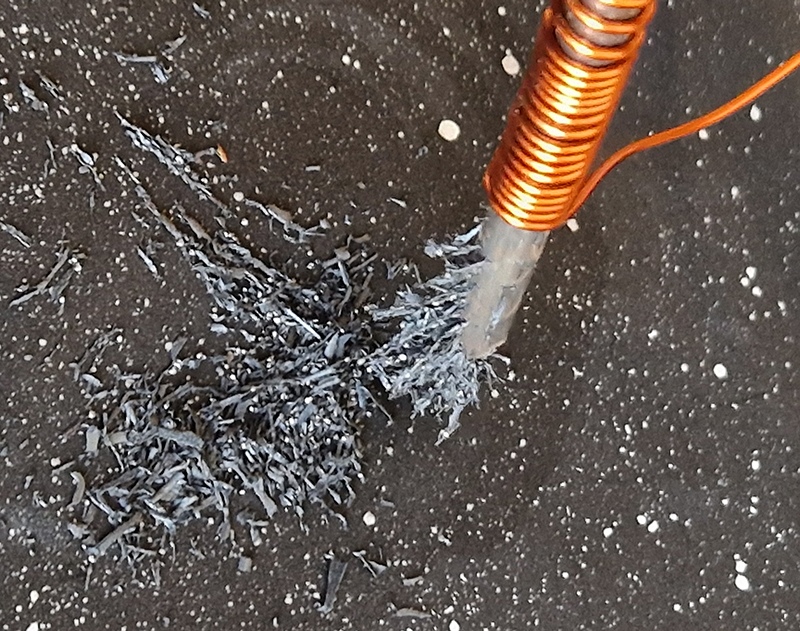
Experimenting winding a copper wire around an iron nail and connecting the wire to a battery cell. A magnetic field is generated around the nail which stays for a little while after the nail is removed from the coil. I used a 9v battery and large nail– it wasn’t a very strong magnet – a welding stick was better and seemed to retain the magnetic field for longer but in both cases the battery got very hot. I had hoped to maybe develop this idea to magnetise a sculpture threaded with iron. Needs more investigation.

I have been exploring the updated Digital Materials Library at the Institute of Making which led me to the Mindsets website which has some cool magnetic materials for sale. Future experiments upcoming.

Exploring paper weaving patterns with a view to reinventing past works while thinking about ideas of cosmic planes in The Rosicrucian Cosmo-Conception, a 1909 text by Max Heindel. This text, setting out a theory of seven Worlds and seven Cosmic Planes, supposes an intermingling of spirit with matter where the intersection of the material and metaphysical world are not one above another in space, but inter-penetrate each with the other.

Astonishing that the preserved remains of the ancient kauri trees of New Zealand, alive over 42,000 years ago, can reveal the time of the last significant magnetic pole excursion within their rings. During what is known as ‘The Laschamps Excursion’, the north and south magnetic poles swapped places for about 500-800 years before swapping back again. During a magnetic pole reversal the magnetic field weakens so many more cosmic particles reach the surface of Earth. This means much more Carbon-14 is produced in the atmosphere and absorbed by plants.

Changes in radiocarbon levels were recorded from four ancient kauri logs found buried in peat swamps which seals them in a chemically balanced environment. Through high precision carbon dating processes at the University of Waikato in New Zealand the scientists discovered the most dramatic time was the lead-up to the reversal, when the poles were migrating across the Earth and our magnetic field practically disappeared, leaving life here very vulnerable to cosmic radiation. It appears, this weakening 42,000 years ago, in combination with a period of low solar magnetic activity – captured in evidence from ice cores, caused damage to the ozone layer and disrupted atmospheric conditions impacting the global climate so that devastating environmental changes took place. The research team links this climate change to extinction events which occurred at the same time, Neanderthals vanishing from Europe, and a proliferation of cave paintings appearing in Europe and Asia as humans find shelter from the turbulent weather and increased electrical storms. They have dubbed this period of excursion ‘The Adams Event’ in honour of Douglas Adams who wrote in The Hitchhikers Guide to the Galaxy that ‘42’ was the answer to life, the universe, and everything

Studio Visits

Julie F Hill and I have been visiting the other artists participating in the upcoming exhibition The Geological Unconscious at Hypha HQ Euston. We are so happy to be working with Charlie Franklin who considers control, physical experience and memory within the natural landscape, Deborah Tchoudjinoff who considers what the form is through the process of material and visual experimentations, Rona Lee who centres on the politics and aesthetics of Geo-materiality along with the human /more than-human entanglements of contemporary life and Sophie Mei Birkin who investigates the generative potential in the transformation of matter through a variety of material processes such as growing salt crystals and exploring amorphous and decomposing substances.

I have also been lucky to have Charly Blackburn and Victoria Rance visit my studio to chat about our respective work and shared interests. Charly is beginning a period of research into rare earth materials and extractive processes and we share a fascination with things magnetic. Victoria came to chat about our shared interest in the sun but is also interested in magnetic fields and the potential they offer for brain to brain communication.

Gallery Visits

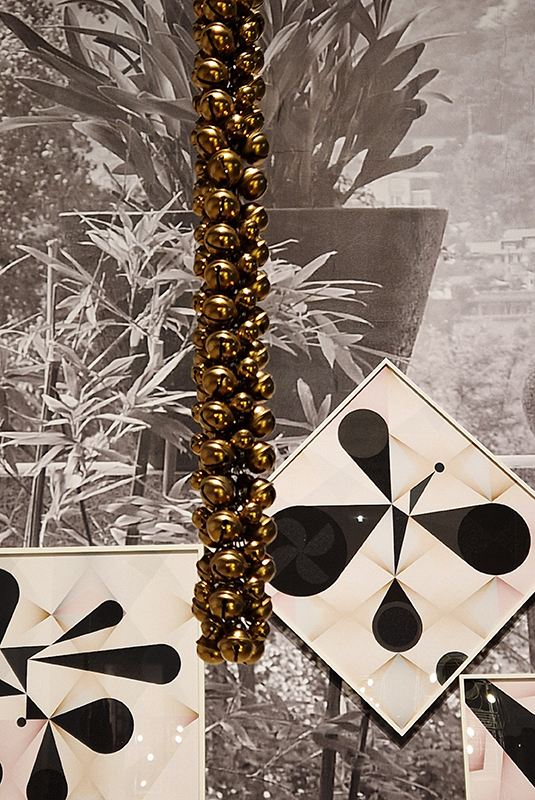
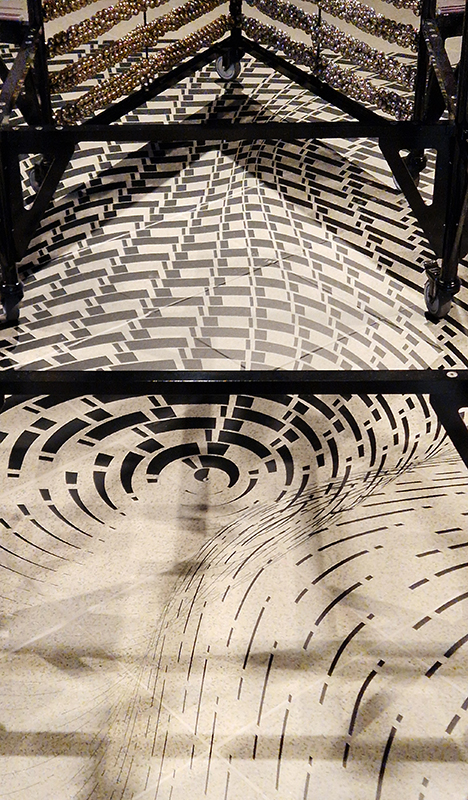
Haegue Yang Leap Year at Hayward Gallery. With colourful works festooned by garlands of bells and strewn with fairy lights this was a perfect show for the festive period. Folklore, surrealism and ritual, collage and costumes combine with the modern domestic/utilitarian in hybrid works that have a playful carnival air.

Thoughtful works beautifully presented Each Place Its Own Mind at Edel Assanti with Mirtha Dermisache | Noémie Goudal | Sky Hopinka | Anna Hulačová | Marguerite Humeau | Bronwyn Katz | Kat Lyons | Yukultji Napangati | Emmanuel Van der Auwera. An ongoing collective reimagining of our relationship with the living world, rooted in revelations from indigenous knowledge, ecological research, literature, science, and artistic experimentation. Each Place Its Own Mind  borrows its title from ecologist David Abram’s 1996 book The Spell of the Sensuous, which traces the ways the human mind came to renounce its “sensory bearings” in the natural world, visualising a myriad of “lost” faculties that link the “inner, psychological world and the perceptual terrain that surrounds us.”

Damian Taylor Things Past at Thames-side Studios Gallery. These paintings hover on the edge of discovery where content and surface are ambiguous but reward study with tantalizing recognizable glimpses.

Events

A little out of my depth at the A&G Highlights Meeting at The Geological Society where some talks were quite specialised, involving graphs and terminology beyond my understanding. I do enjoy hearing clever people talk though, even if I can’t grasp exactly what they are explaining. A fascinating presentation by writer Nilanjan Choudhury on ‘The Square Root of a Sonnet’, his play which explores the fraught personal relationship between the brilliant Indian-American astrophysicist Subrahmanyan Chandrasekhar and his mentor, Sir Arthur Eddington of Cambridge University who publicly humiliated him at a Royal Astronomical Society meeting 90 years ago to the day. Guardian Article here

Dr Jessica Irving (Bristol University) gave The Harold Jeffreys Lecture on ‘Hearing planetary hearts: seismology of the cores of Earth and Mars’. An engaging speaker, she led us through the milestones of the last 130 years of theories on what is at the centre of the Earth and the discoveries made using seismology.

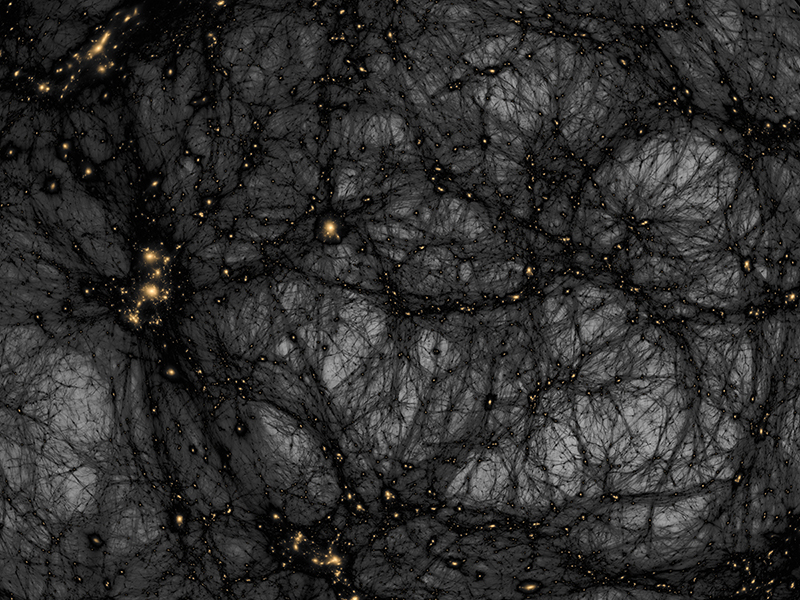
Dr Chris Lovell (University of Portsmouth) spoke on his research into ‘Accelerated modelling of the entire observable Universe’. I recognised the dark matter simulations and was fascinated by the different views of a galaxy depending on the band of the light spectrum used to observe it.

I joined a sobering Royal Astronomical Society webinar We Need to Talk About Space Junk presented by Professor Mike Lockwood. Our use of space is increasingly limited and threatened by space junk. The concern is that we are heading towards a runaway effect called the Kessler syndrome, in which the debris from one collision causes many others, to the point where space becomes unusable.

I went to see the fast paced RSC production of Kyoto at Soho Place. Welcome to the Kyoto Conference Centre, 11 December 1997. The nations of the world are in deadlock and 11 hours have passed since the UN’s landmark climate conference should have ended. Time is running out and agreement feels a world away. The greatest obstacle: American oil lobbyist and master strategist, Don Pearlman… Set nearly 20 years ago its depressing how little progress was made and we are currently sliding backwards. Would never have guessed it at the time but now am nostalgic for the politics and positivity of the 90’s.

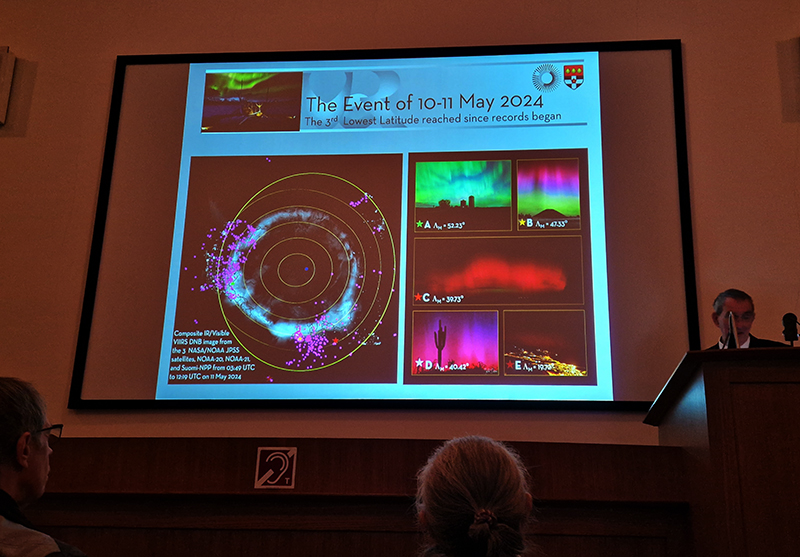
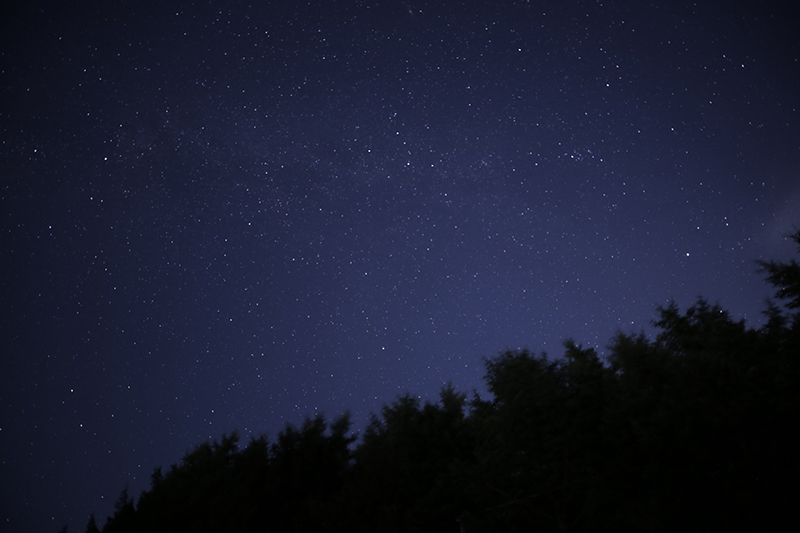
Time to email your MP to join The All-Party Parliamentary Group for Dark Skies. The group’s primary focus is to preserve the night sky within the UK and promote the adoption of dark sky friendly lighting and planning policies. Surprisingly the committee is made up mostly of tories – come on the rest of you!

Go to this link where it is quick and easy to message your MP to act on this important issue.

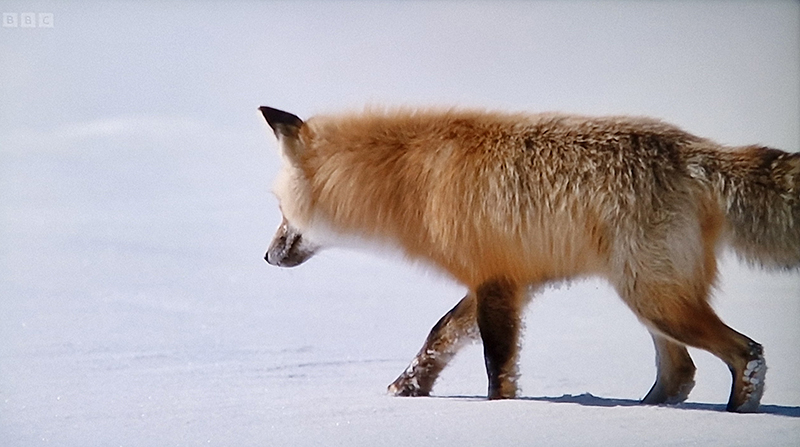
Watching Chris Packham’s The Wonder of Animals – Foxes A red fox catches its prey using more than pinpoint hearing and an accurate pounce: it also involves alignment to the slope of Earth’s magnetic fields. I contacted Peter Hore FRS, Professor of Chemistry and Magnetoreception expert at Oxford University who was so helpful to me before in explaining how birds ‘see’ the magnetic field to see if he had come across any new research on this. He has pointed me in the direction of other research conducted by the group looking at fox behaviour so this is something I will pursue further.

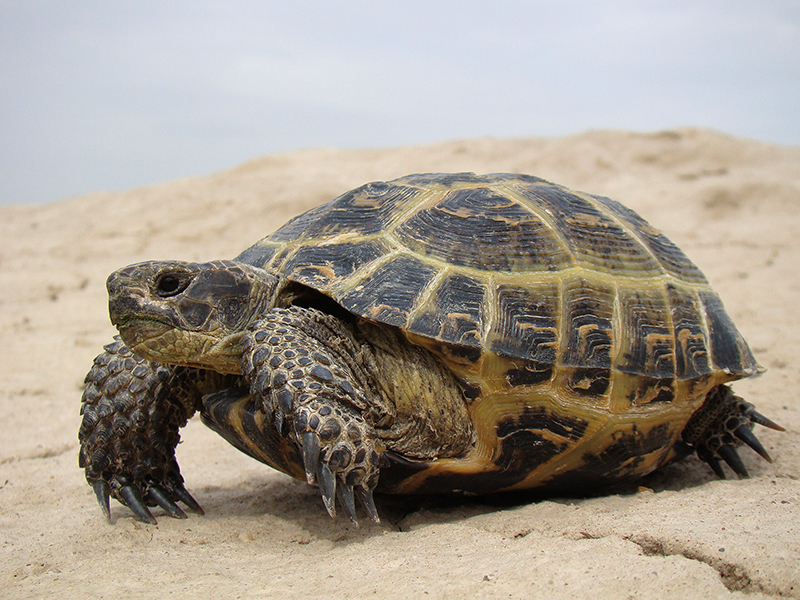
Listening to What? Seriously?? with special guest Helen Sharman, the first British astronaut, about how humans learned to survive in space. Quite a few animals were sent to space before humans including two Russian Steppe tortoises (Testudo horsfieldi), who did a circuit of he moon and returned to Earth – alive but starved. The tortoises were chosen as they have a unique ability in the animal world to resist radiation and their blood may be useful in the treatment of radiation sickness. In recent research a string of amino acids have been extracted from the blood of these tortoises and if you inject those amino acids into other animals they become radiation resistant too.

Listening to The Year in Science 2024 podcast – One of the UK’s first military communication satellites’ Skynet 1a launched in 1969 was abandoned a few years later above Africa. Orbital dynamics should have dragged it out somewhere above India but it has been found wandering above the Americas in a busy area of live satellites and no-one knows why. Space consultants think it must have been commanded to move in the 1970’s but can find no record of this and although research has been undertaken it is still a mystery how this satellite moved. BBC article

There is no mention of a cosmic ray interaction forcing the command, but that would be my theory!

I am very grateful to a-n The Artists Information Co for awarding me a professional practice and creative development bursary to expand on my research and respond to the many ways Earth’s magnetic field impacts life on earth. The award will be used for a research trip to the remote location of Eskdalemuir Magnetic Observatory and Kielder Dark Skies Observatory. Fingers crossed for an Aurora experience. I will also gain expert tuition in concrete casting and mould making from Anna Hughes and make use of the facilities at The London Sculpture Workshop.

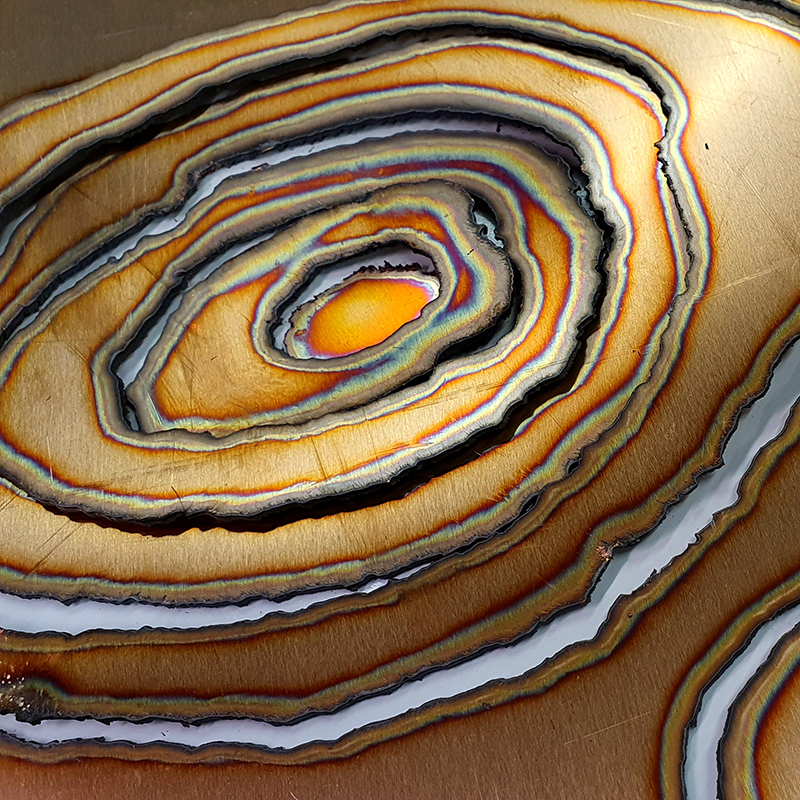
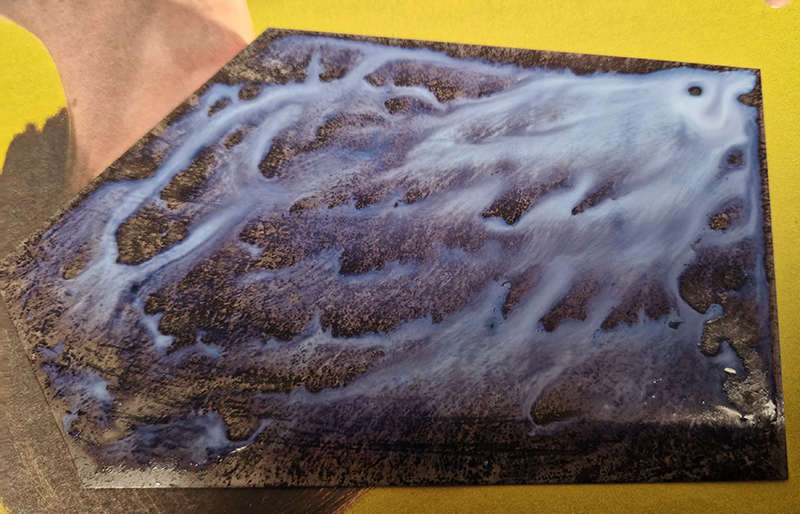
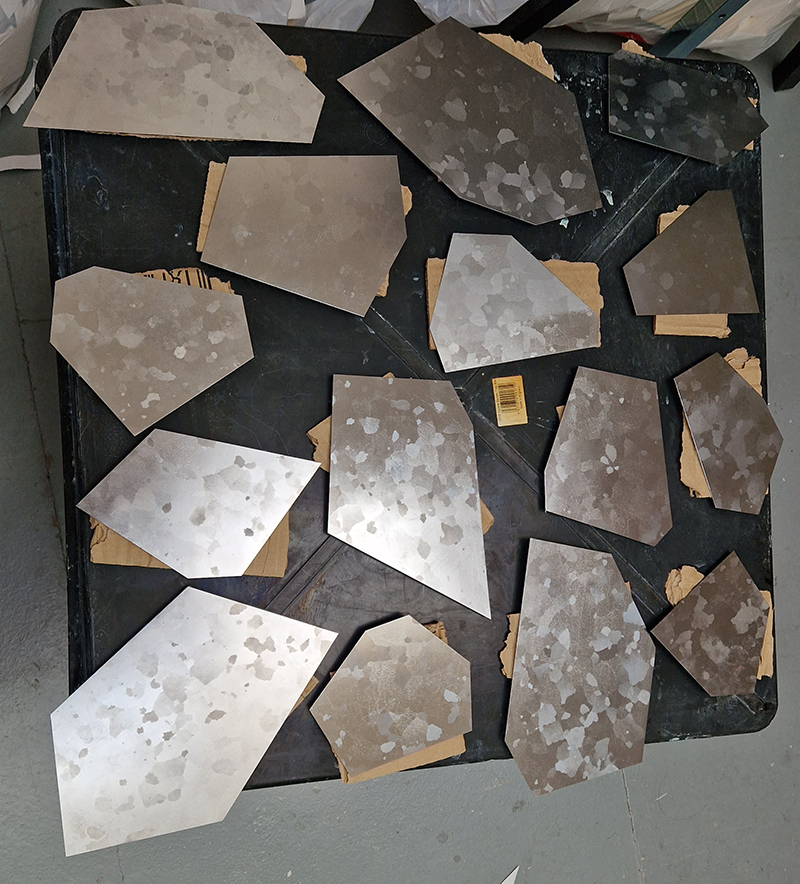
Domain of the Devil Valley Master – work in progress. It is likely that compasses were first used in China to divine an alignment of order and harmony for important sites and rituals. Jade hunters discovered they could also help to keep them from getting lost long before Europeans used them for navigation. The first mention of a south-pointer is in a fourth-century BCE text – The Book of the Devil Valley Master, and it is this that I am referencing in the title of this sculpture. Other references in the work are the rotation of the Earth’s core and geological formations of polygonal prisms. A magnetic domain is a region within a magnetic material in which the individual magnetic strength and orientation of the atoms are aligned with one another and they point in the same direction. The work uses directional magnetic steel stripped of its industrial coating to reveal the jigsaw pattern which comes from rolling single crystals of an iron silicon alloy into thin sheets to minimise magnetic losses for use in industry. The sheets have been sanded, etched, guillotined, treated for rust and sealed.

The Earth’s core is made almost entirely of iron and nickel. Siderophiles are elements that form alloys easily with iron and are concentrated in the Earth’s core. When the Earth formed about 4.5 billion years ago from the collision, accretion and compression of matter it was rock all the way through. Heat from the massive violence of formation and radioactive decay caused the planet to get hotter and hotter. After about 500 million years of heating up it finally reached the melting point of iron. As the iron liquified lighter material rose to the surface becoming the mantle and crust and the heavy metals like iron and nickel fell towards the centre becoming the core. The siderophiles that descended into the core are gold, platinum, and cobalt along with around 90% of the Earth’s sulphur. Hence the smelly sulphur vents around the volcanic regions.

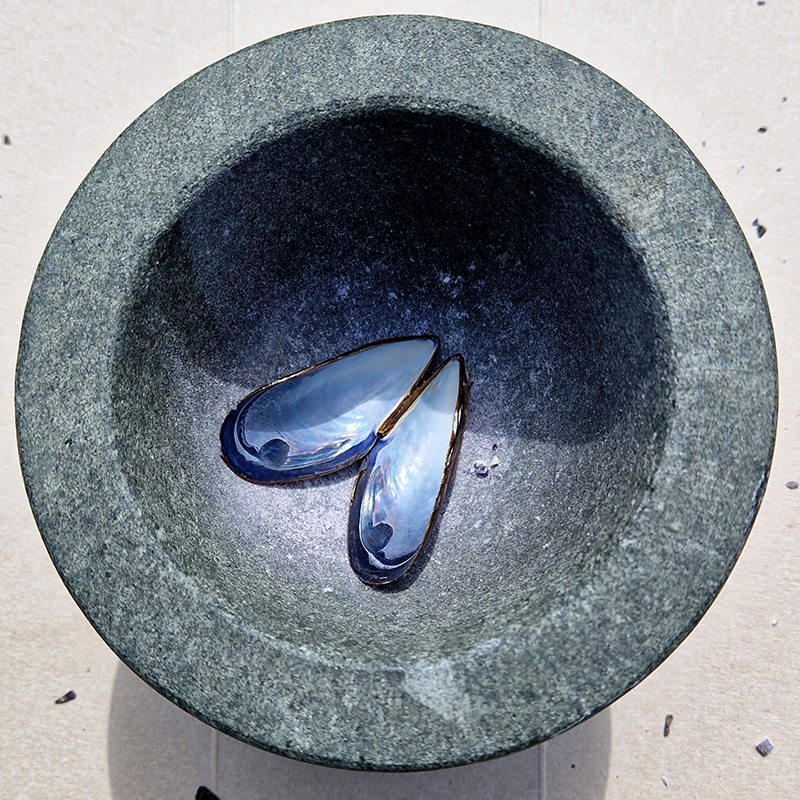
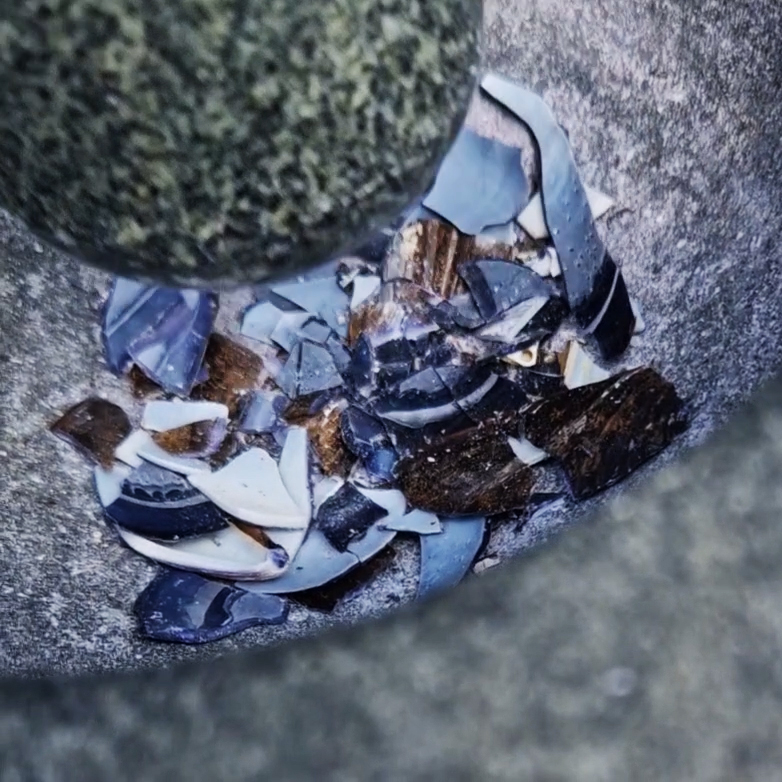
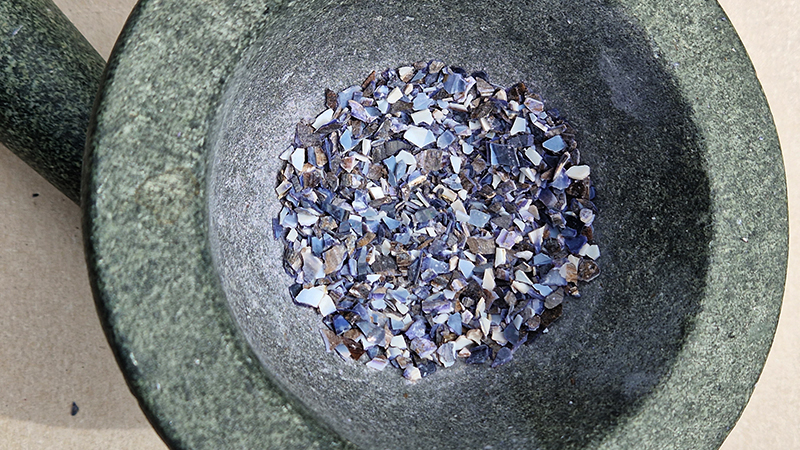
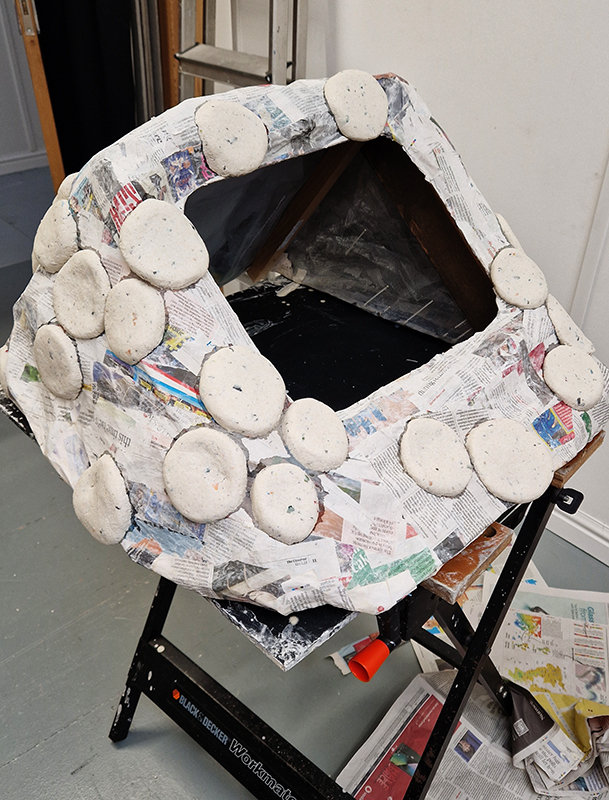
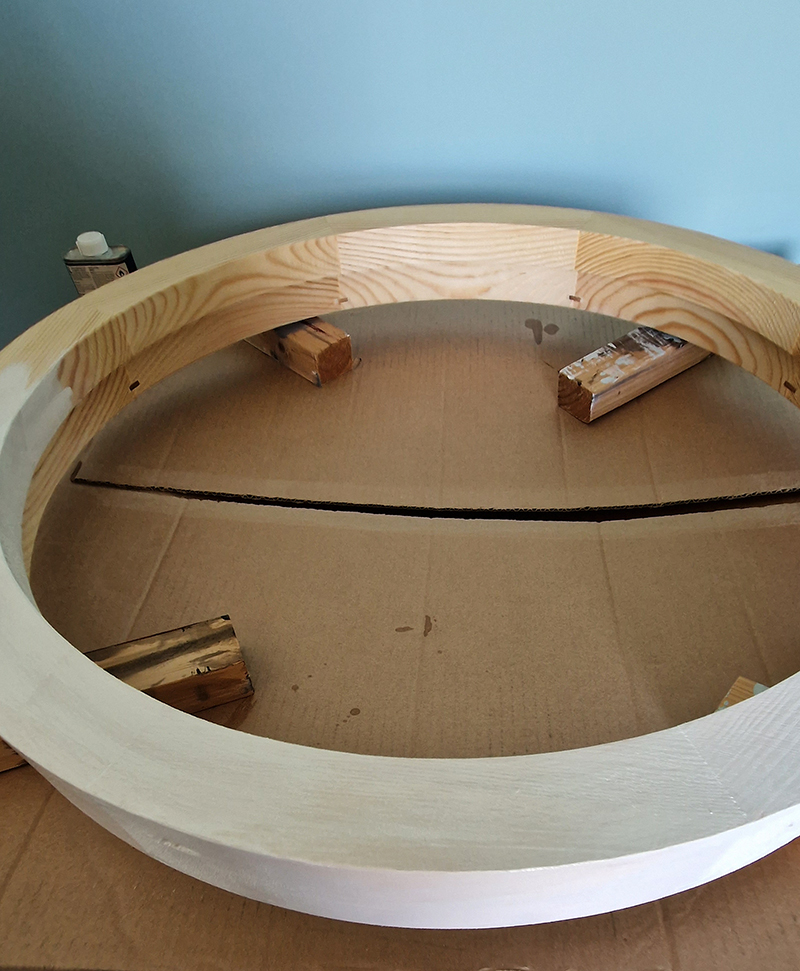
Belly of a Rock – work in progress. Making paper clay discs to build the surface of this hybrid sculpture and crushing mussel and oyster shells to use as texture.

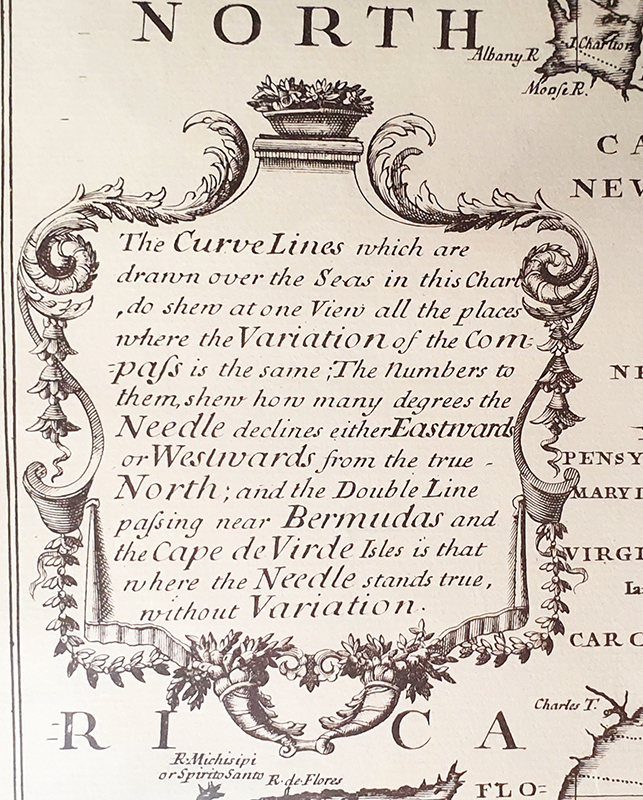
The geographic north pole lies in the middle of the Arctic Ocean, covered in shifting sea ice, where the sun rises and sets only once per year. All lines of longitude converge here and hence all time zones. It is known as true north to distinguish it from the magnetic north pole. However, as the Earth’s axis of rotation wobbles slightly in an irregular circle, even this pole is not fixed. The magnetic north pole, also called the magnetic dip pole, is where the planet’s magnetic field is vertical and a compass needle here would dip and try to point straight down. The north and south dip poles are not found directly opposite each other. These dip poles are located by experiment in the field but as they are found in the most remote and harsh regions of the planet they are not easy to track. Also they can move around over considerable distances during each day, tracing out oval shapes as they are acted upon by dynamic electrical current systems of the magnetosphere, which are in turn defined by the activity of the solar wind. There is an equivalent (but fictional) magnetic dipole at the centre of the Earth assigned from global modelling of the geomagnetic field. These geomagnetic poles are an approximation arrived at by reducing Earth’s complex and varied magnetic field to that of a simple bar magnet. The north dip pole lies in Northern Canada, the northern dipole is roughly off the northwest coast of Greenland.

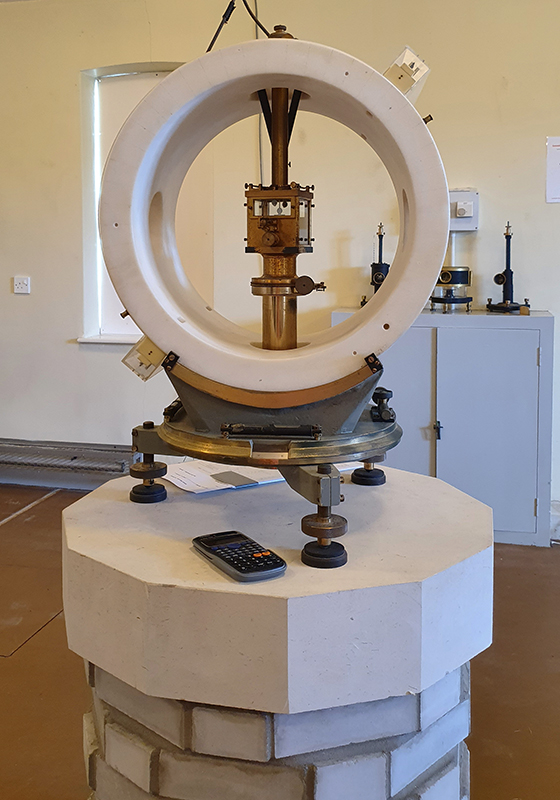
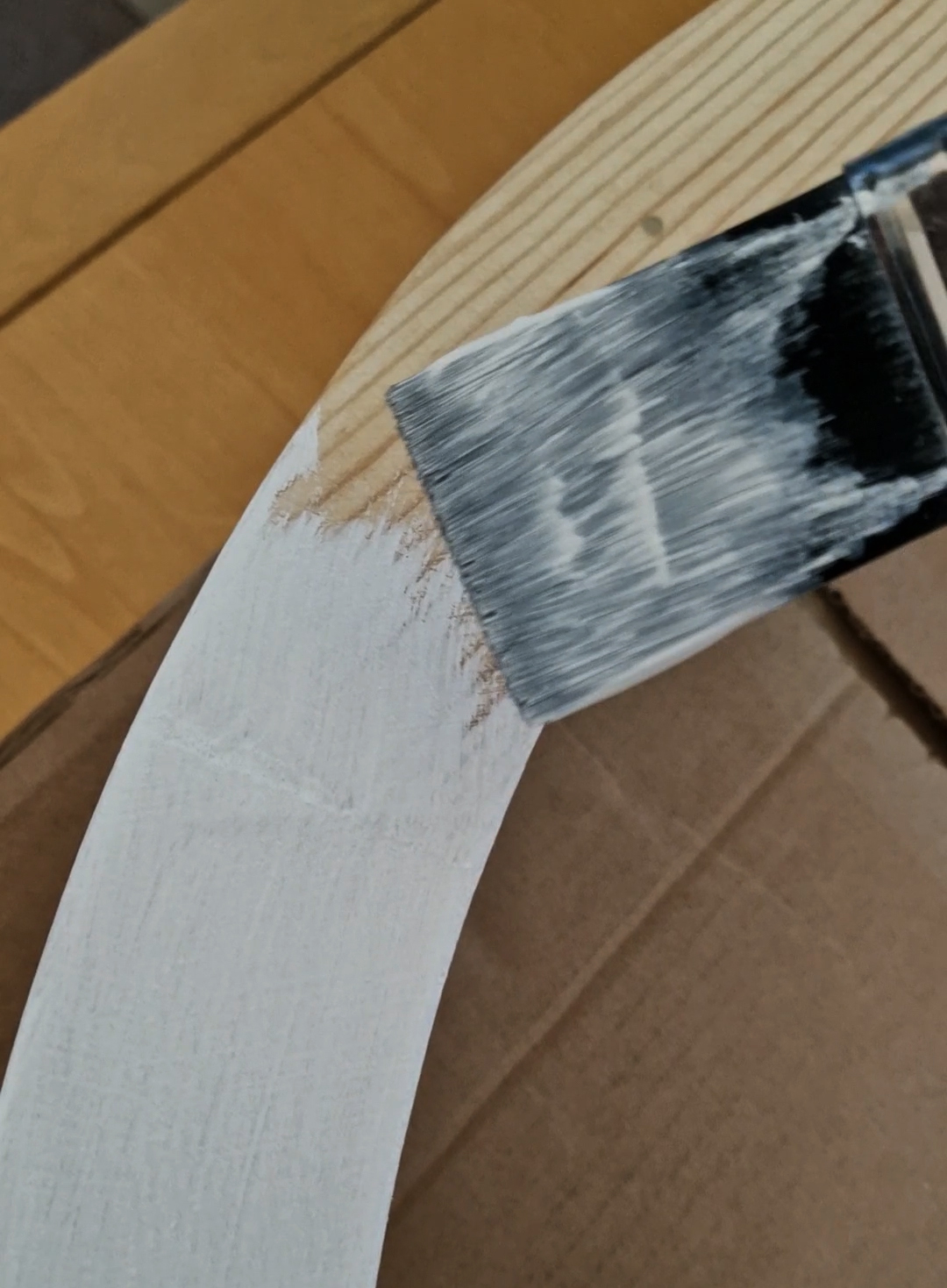
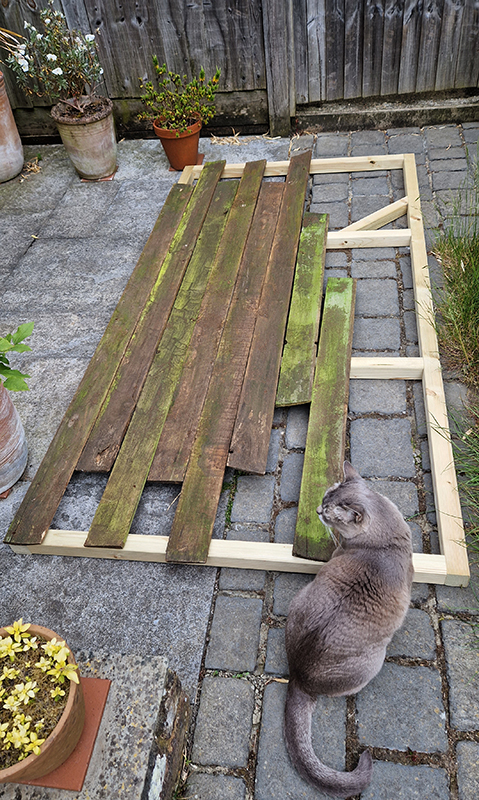
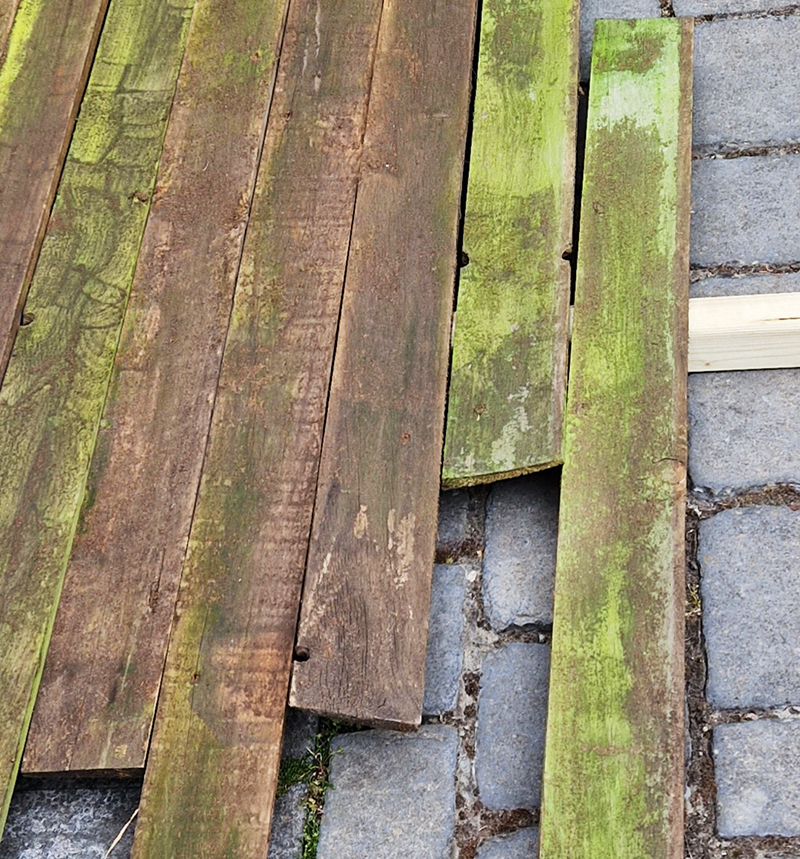
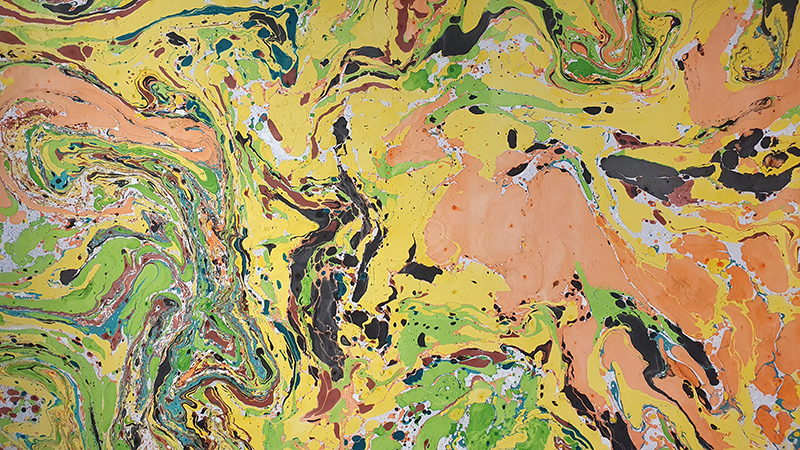
The Absolute Hut – work in progress. This installation is a reimagining of the Absolute Hut at Hartland Magnetic Observatory where monitoring of the Earth’s magnetic field takes place. Topological contours of suminagashi marbling also echo fluid magnetic field lines. Testing scale and alignment in the gallery space. Collecting planks for the north facing wall. Prepping the round window. Suminagashi experiments on different Japanese papers. I want to consider the hut as a sensory hub.

Other exciting news is that APT Gallery have selected a proposal for an exhibition which will take place in March 2024. The exhibition will consider the lifeboat as a metaphor in relation to uncertain times, ecological and social change and shifting landscapes as viewed from the land and the sea. The artists in this group show share an interest in exploring precarity as a site of dynamic transition. I am so happy to be working with these wonderful artists – Rachael Allain, Caroline AreskogJones, Beverley Duckworth, Liz Elton, Kathleen Herbert, Kaori Homma, Anne Krinsky.          

In celebration of World Metrology Day, NPL opened Bushy House and gardens to the public. A chance to see and hear about ever more accurate ways of measuring the physical world. Bushy House was the residence of William, Duke of Clarence (William IV) and his mistress Dora Jordan from 1797, and was offered to the Royal Society by Queen Victoria in 1900 as a location to establish The National Physical Laboratory. The impressive apple tree is from an offcut of one from Newton’s home estate. The magnetic laboratory here is concerned with devising and standardising the instruments used by magnetic observatories such as the one at Hartland that I visited last summer. I saw the 1kg sphere of single crystal silicon, with the smoothest polished surface of any made object and notoriously hard to photograph. The application of a strong magnetic field during the crystal growth process reduces contaminants giving a purer silicon crystal. Developments in technology bring new units and definitions of measurements.

From early concepts of number, patterns in nature (symmetry, branching, spirals, cracks, spots, stripes, chaos, flows, meanders, waves, dunes, bubbles, foam, arrays, crystals, and tilings) magnitude, and form came mathematics, meaning subject of instruction. This has evolved into complex theory from an understanding of negative numbers to imaginary numbers which combined with real numbers have been found necessary to describe quantum mechanics.

The colour coding of Saturn’s rings according to particle size used radio occultation to determine the different regions. Radio signals were sent from the Cassini spacecraft during orbits which placed Earth and Cassini on opposite sides of Saturn’s rings. This remote sensing technique measures how the radio waves bend around the matter they encounter to assess the physical properties of a planetary atmosphere or ring system. The purple colour indicates regions where most particles are larger than 5 centimeters. Green and blue shades indicate regions where there are mostly particles smaller than 5 centimeters and 1 centimeter. The white band is the densest region where radio signals were blocked preventing accurate representation in this area. The radio observations showed that all rings appear to have a mix of particle size distribution right up to boulder sizes, with several many meters across.

Gallery Visits

It’s Coming From Inside at Bell House, Dulwich. Curated by Sarah Sparkes and Jane Millar. In their thinking about the Impressionist Berthe Morisot, and the exhibitions broader theme of ‘Windows and Thresholds’, the curators see the two different domestic spaces, and the liminal corridors between them, as places expressive of dialogues in both Morisot’s and their invited artists’ works: of confines, dreams of escape, of external inscrutability and internal passion. Exhibiting artists: Fran Burden | Ruth Calland | Helen Carr | Mikey Cuddihy | Janet Currier | Robert Dawson | Andrew Ekins | Liz Elton | Lisa Fielding-Smith | Deborah Gardner | Caroline Gregory | Birgitta Hosea | Mindy Lee | Wayne Lucas | Julia Maddison | Jane Millar | Darren O’Brien | Kim Pace | Sarah Sparkes | Geraldine Swayne

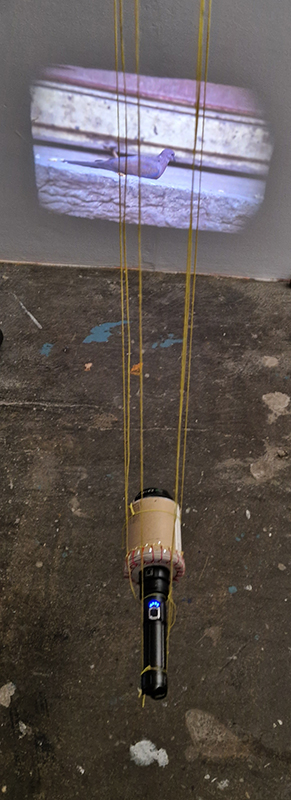
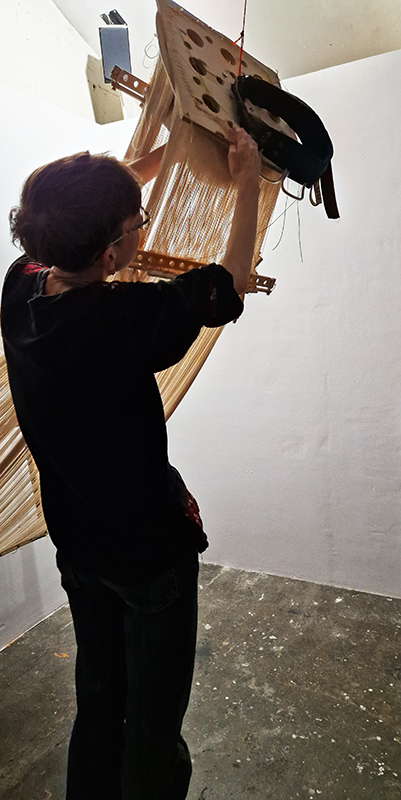
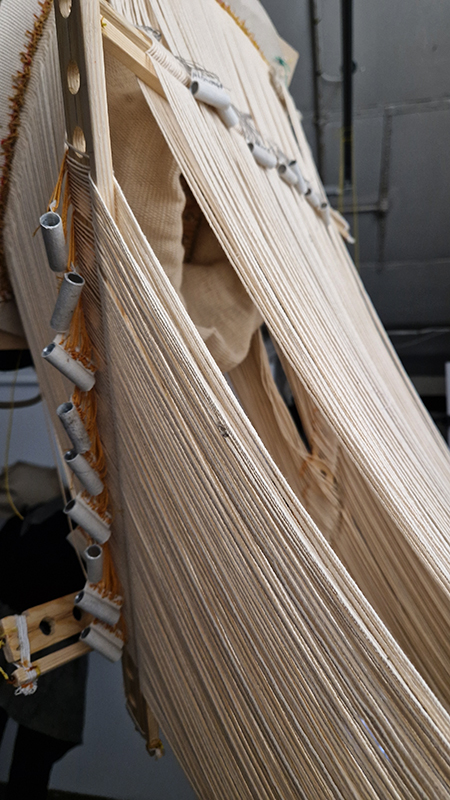
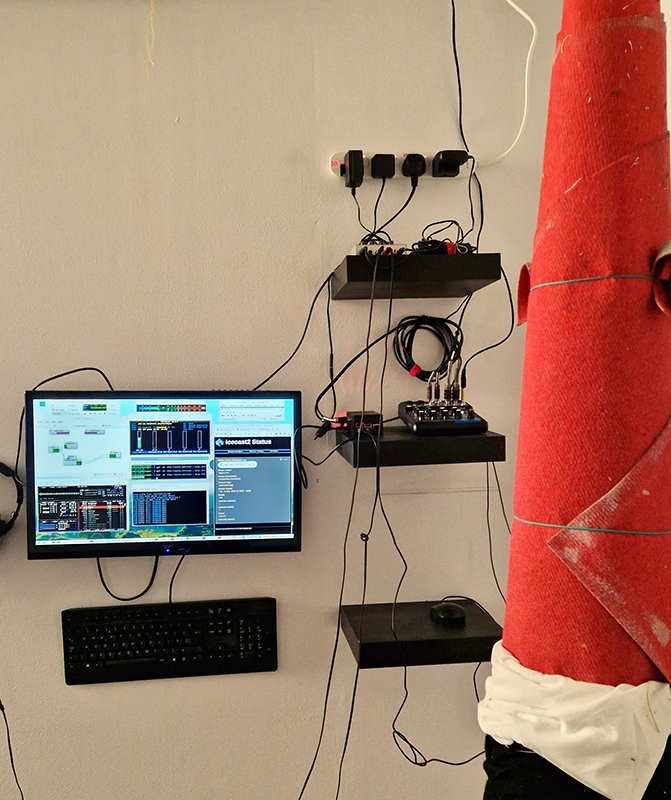
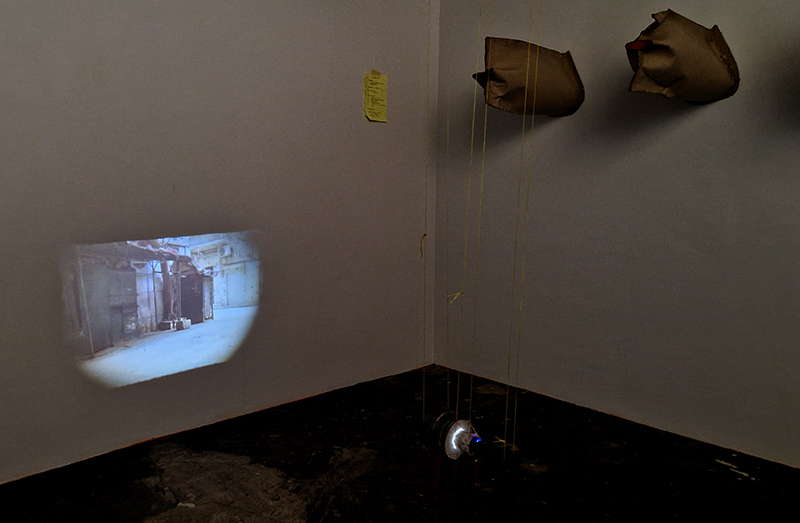
Georgina Sleap Now and here and there together at Cable Depot. A residency undertaken in collaboration with Neil Cheshire, Olive Hardy, Mercedes Melchor, Agnieszka Szczotka, Derek Horton, Farida Youssef and Niamh Riordan. A wonderful installation conjured from simple materials and experimental technology, both analogue and digital that blur the here and there of time and space. Sounds of everyday street noise live from the artist’s Cairo balcony are streamed into the gallery where suspended torches project still slide images onto the wall or inside elongated sculptural forms. A loom for weaving a plain coffin shaped carpet hangs like a hammock next to CCTV recordings of yogic performance while a camera obscura style intervention casts shadows, bringing the local outside in.

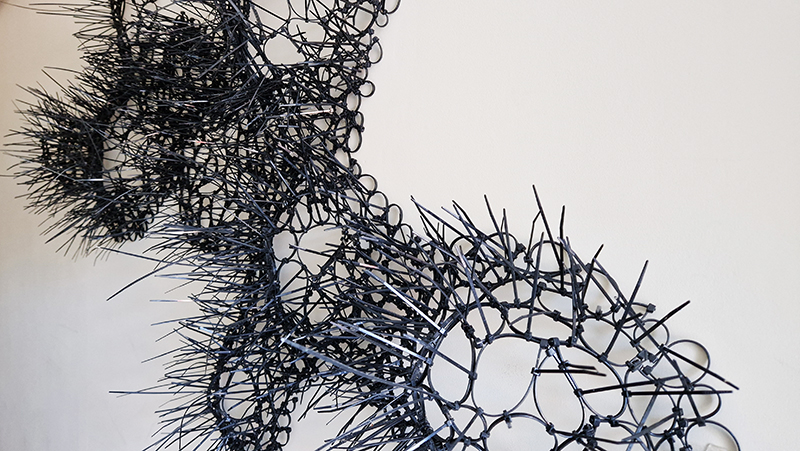
The Shape of Things by Clan, a collective of multidisciplinary artists – Caroline Penn, Liz Lowe, Ashley Goldman, Nicky O’Donnell at Gallery 3, a delightful Georgian property in Margate. The artists examine issues of loss, both personal and environmental, that are balanced by ideas of hope and regeneration. A nice use of recycled and sustainable materials including netting from fruit and cable ties.

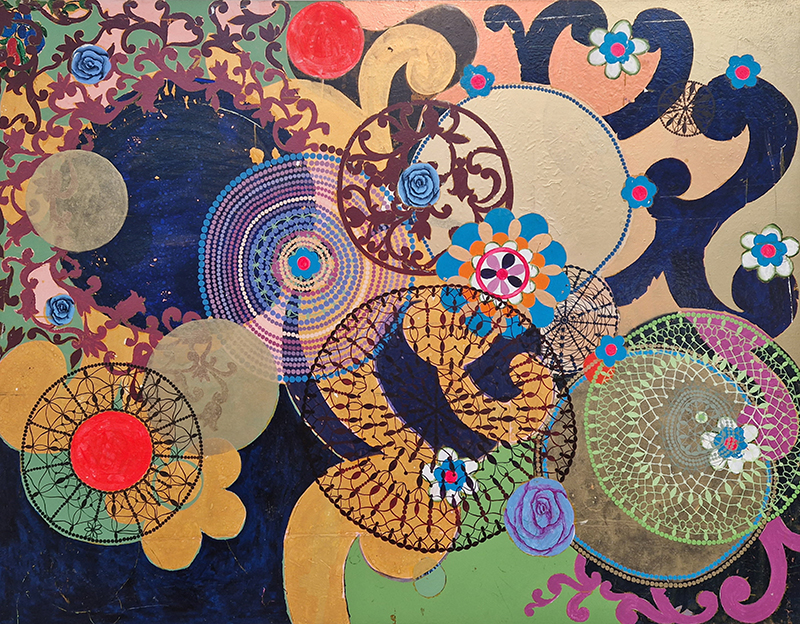
Beatriz Milhazes at Turner Contemporary. Perfect for a summer’s day at the seaside. Exuberant.

Opening event for the new photography centre at the Victoria and Albert Museum. Interesting to hear about the process Noémie Goudal undertakes to create her ambitious illusionist photographic sculptures such as Giant Phoenix VI from the series ‘Post Atlantica’ which has been acquired by the Victoria and Albert Museum for their photography collection, housed in a new dedicated gallery. This work was inspired by her interest in shifting landscapes, the movement of tectonic plates and how landmasses join and separate over millennia. There was also the chance to see her video Inhale Exhale along with behind the scenes footage of her technical team and the scale of the resources involved. Tarrah Krajnak has also had work acquired by the museum and read some of her poetry at the event. Her interests are also in discontinuity, severance and cataclysmic events but on a human scale. Being born from an act of violence she puts her own identity forward to explore power relationships.


Reading

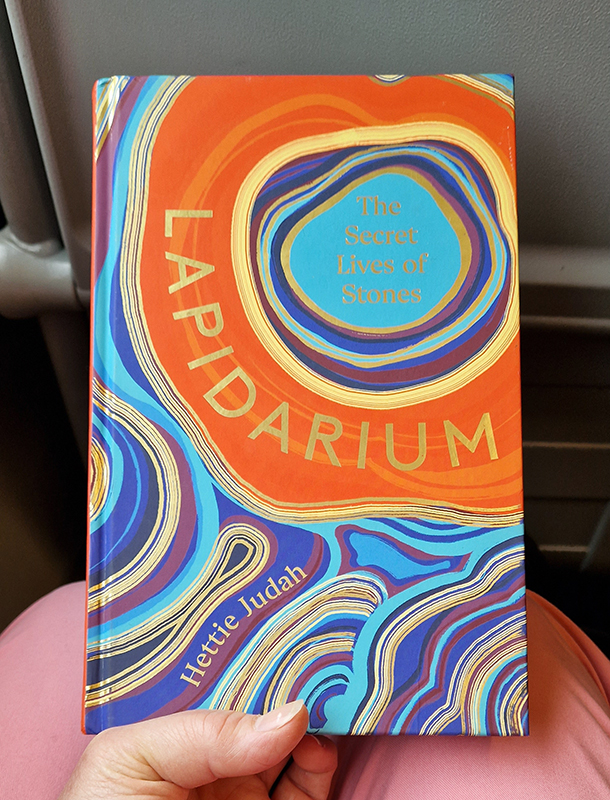
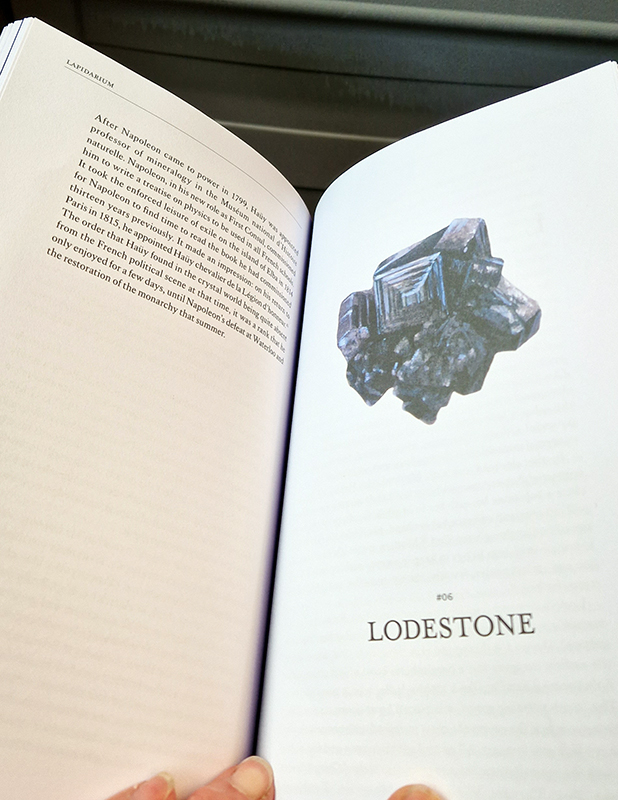
I have really enjoyed the breadth of information delivered so beautifully by Hettie Judah in her book Lapidarium – The Secret Lives of Stones. The character described and stories told of each geological layer, formation, rock and gem brings to life a world often perceived as static, perpetual and dry. This book is a great resource and has been particularly appropriate for me in the run up to the exhibition A Stone Sky with Julie F. Hill as we explore the intimate connections between the rocky planet earth and space.

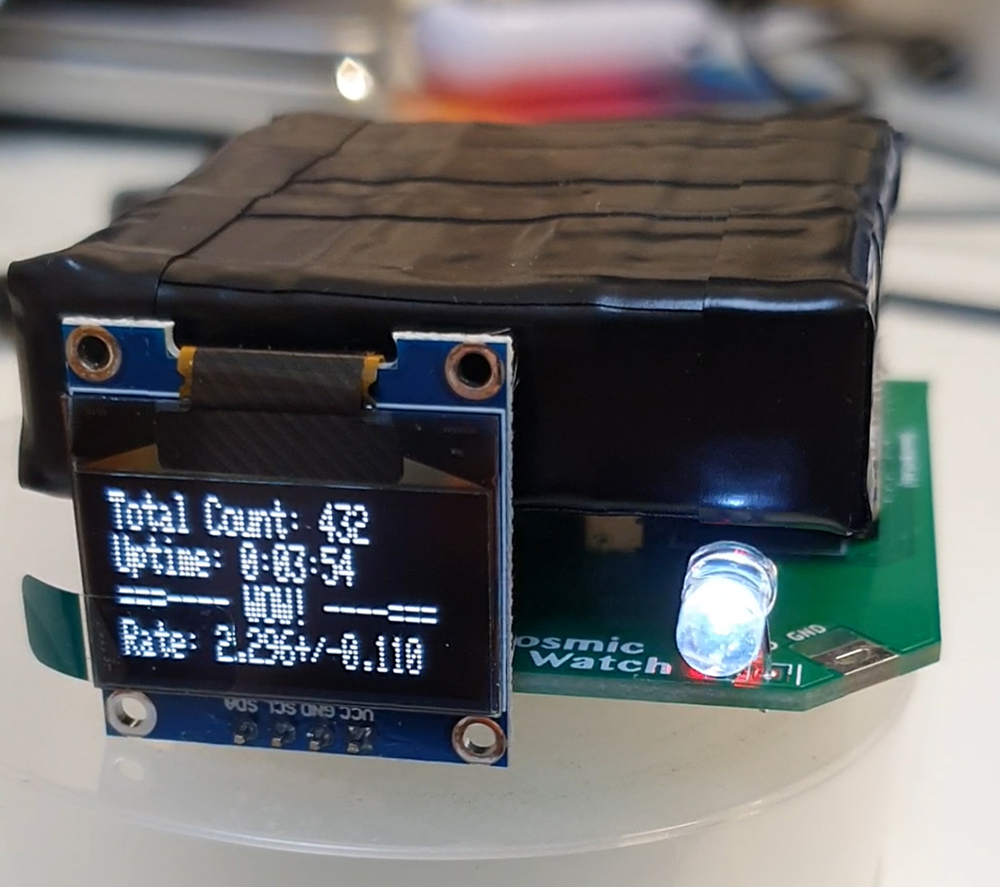
The big excitement this month was to get the cosmic ray detector assembled and working. It may not look very exciting to see an LED flash but knowing it was caused by a tiny traveller from outer space I do find quite something to acknowledge.

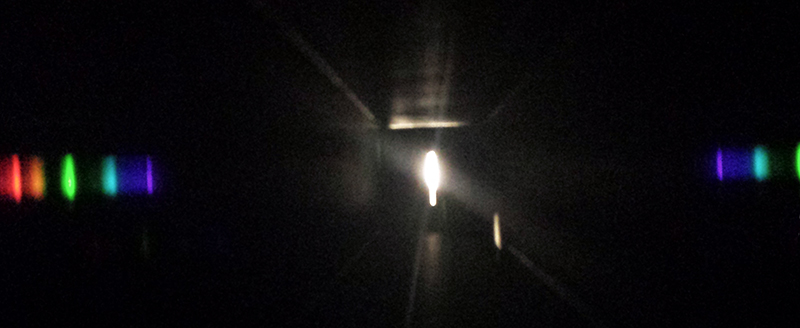
The detector uses a small slab of plastic scintillator as a detection medium and a silicon photomultiplier (SiPM) for light collection from charged particles as they pass through the scintillator. Flashing the plastic block with light from a UV torch causes a big scintillation burst.

The signal from the photomultiplier is sent to an Arduino microprocessor which measures the amplitude of the signal. The small OLED screen updates every second and an LED flashes every time an event is registered.

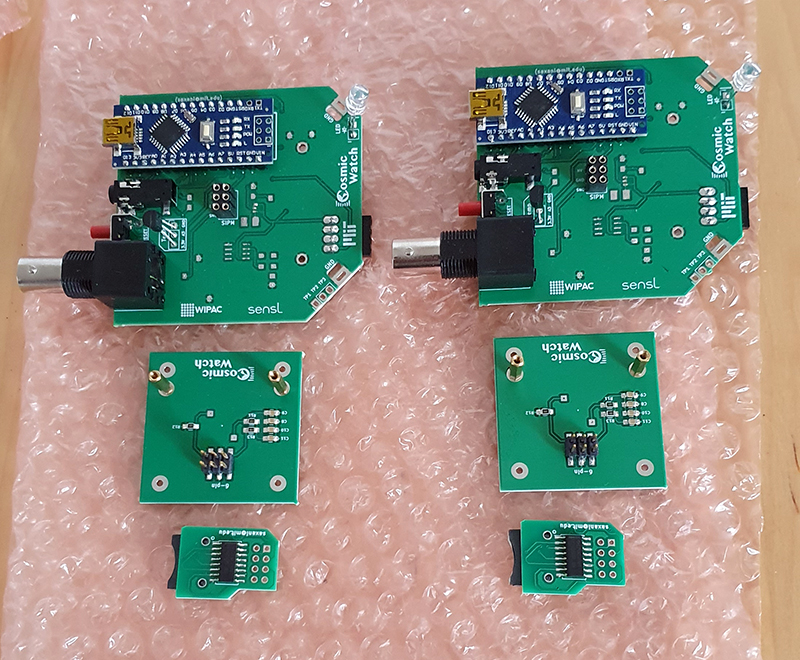
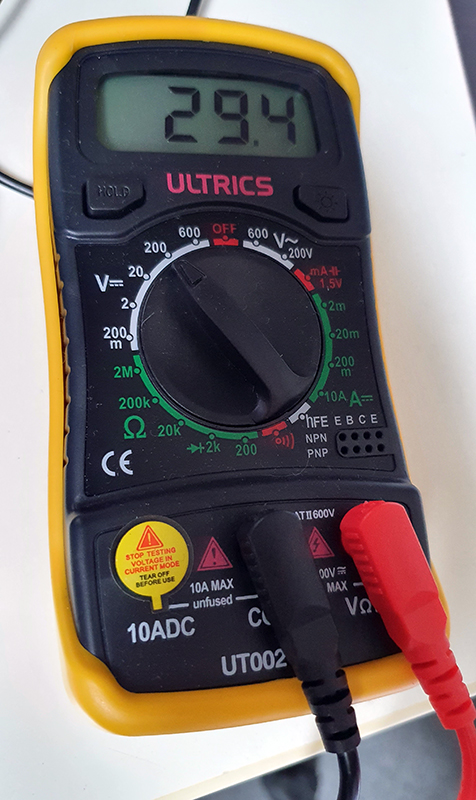
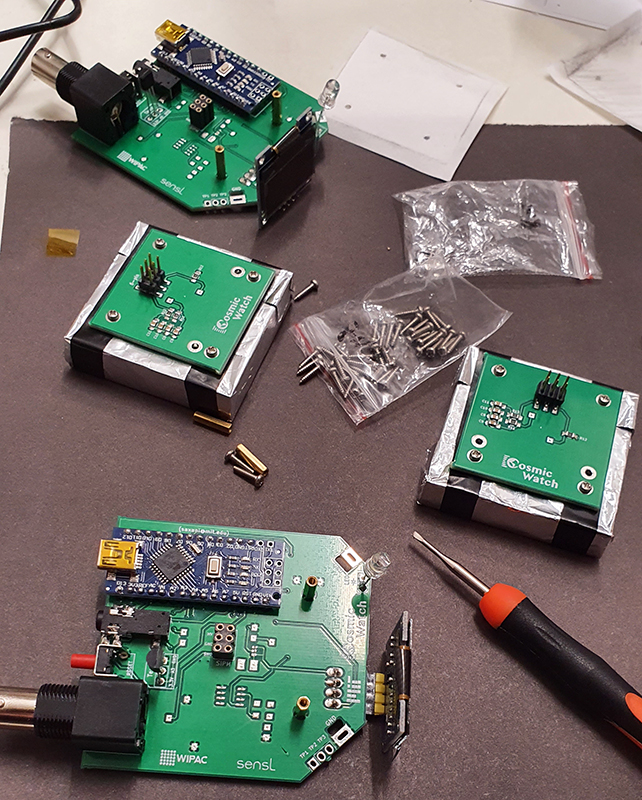
I have the skills and patience of ABL Circuits to thank for soldering the tiny SMT components to the PCB boards and then working out which part had the fault and replacing it so that the correct voltage was supplied to the SiPM PCB. It needed to read approximately +29.5 V as anything over 30 might damage the SiPM so it was a big relief when this was achieved.

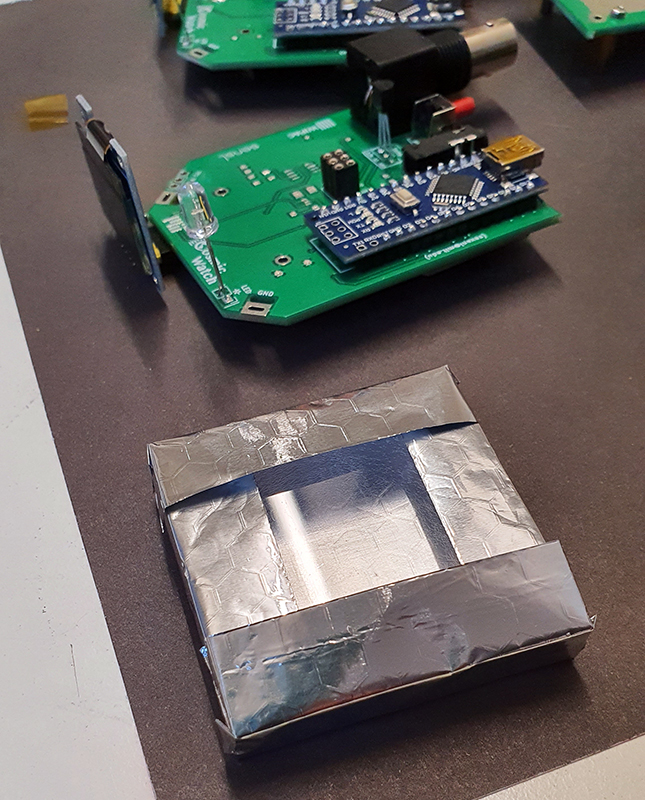
Once I had the printed circuit boards assembled I could wrap the scintillator plastic in foil, apply optical gel and attach it to the SiPM and then wrap this in electrical tape to make it light tight. I had a little bit of soldering left to do myself and then it could be slotted together.

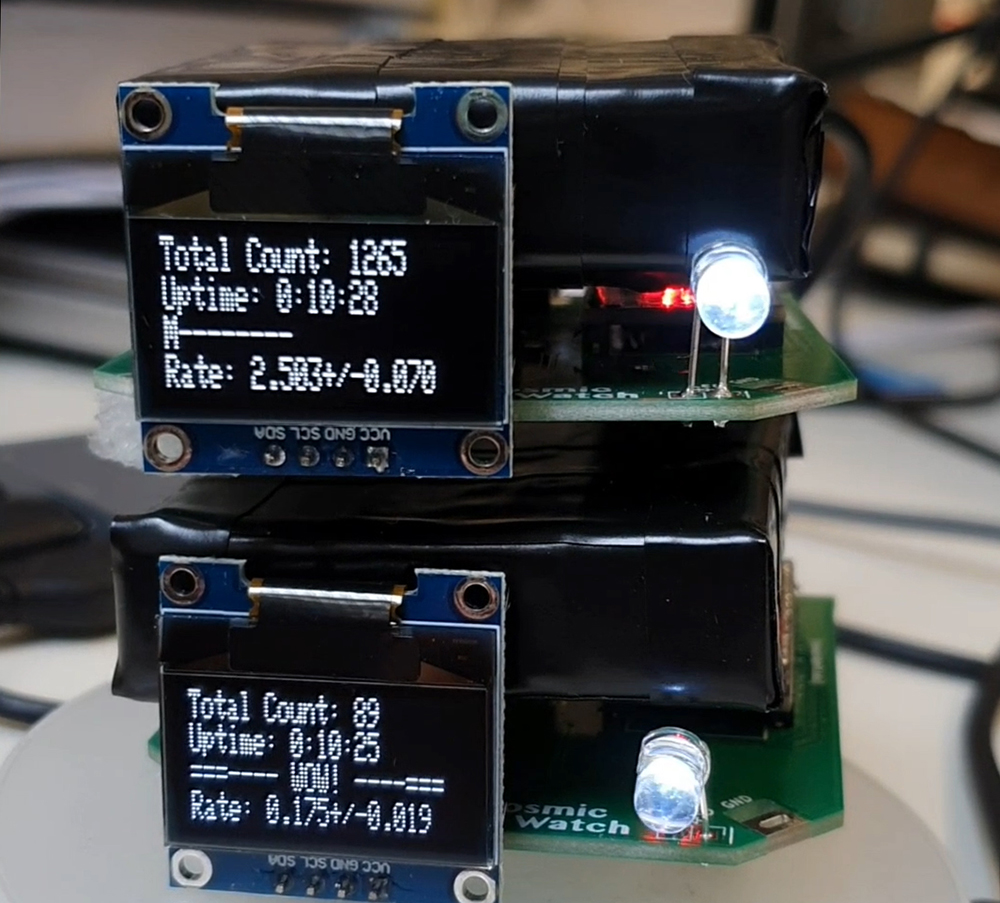
When I had both detectors working independently I could set them up in coincidence mode to differentiate cosmic rays from background radiation particles.

The top detector is reading all local background radiation and the bottom one is just recording cosmic rays. The lights flash in unison when a particle travels through the top and bottom detector at the same time. The top detector labelled ‘M’ I will call mother and the bottom ‘S’ I will call son, (not the historical terminology suggested).

The horizontal lines record the energy of that particle – look out for the WOW particles!

So happy to have got this far with the project, now for the difficult bit translating that signal into an action triggering an interactive artwork.

Not only can cosmic rays be observed using a cloud chamber but they also trigger the formation of everyday clouds.

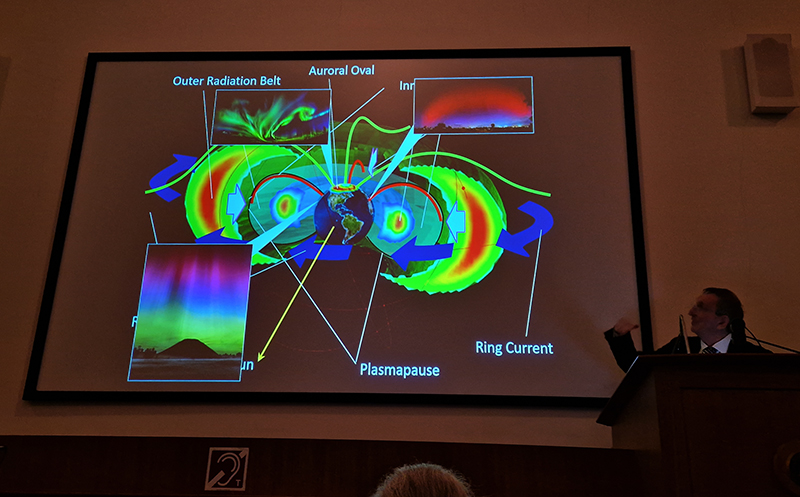
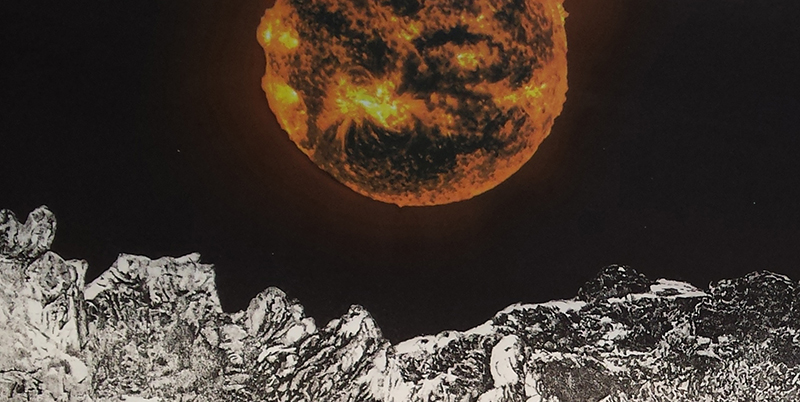
The Solar Wind is made up mainly of hydrogen and helium ions (ions are the nucleus of atoms separated from their accompanying electrons) known as solar protons. Travelling at up to 5 million miles per hour, the solar wind carries a million tons of matter from the sun into space every second. When massive amounts of energy stored in the magnetic fields of the sun are suddenly released in a solar flare explosion the particles are accelerated to even greater speeds.

Coronal mass ejections fire off great clouds of hot gas and the explosions are so powerful that they also rip away knots of magnetism from the surface of the sun which are sent sweeping past Earth deflecting the path of cosmic rays that would otherwise strike our planet. This effect is called the Forbush Decrease where increased solar activity results in a reduction of cosmic rays coming from outside our solar system.

Cosmic rays are super-charged subatomic particles produced by exploding stars, black holes and other phenomena many times more violent than any solar flare explosion but one coronal mass ejection can reduce cosmic rays for a few weeks and continued solar activity can keep cosmic ray counts low for sustained periods of time.

The Sun’s magnetic field goes through a cycle where north and south poles switch places about every 11 years. It then takes another 11 years for the poles to flip back again. Sunspot activity caused by the magnetic field are affected by the solar cycle but it is hard to predict how active a cycle might be. Usually at the beginning of the cycle there are fewer sunspots causing eruptions which then increase over time reaching solar maximum in the middle of the solar cycle before gradually retuning to solar minimum before the cycle begins again. The first solar cycle to be recorded was in 1751 and we are currently in cycle 25 with peak activity expected in 2025.

Research at the Technical University of Denmark has shown that the number of comic rays reaching the Earth has a significant impact on the warming of the oceans. When solar explosions deflect the number of cosmic rays hitting our planet there is a shortage of small aerosols – the chemical specks in the air that grow until water vapour can condense on them to become the water droplets of low-level clouds. The aerosol robotic network AERONETT also noticed a slight change in the colour of sunlight during times of low cosmic ray activity and found that violet light from the Sun looked brighter than usual. They put this down to the shortage of small aerosols usually provided by the cosmic rays which scatter violet light as it passes through the air. Without the growing aerosols, low-altitude clouds begin disappearing about a week after a Forbush Decrease minimum of cosmic rays. The water remains in the atmosphere in vapour form, but unlike cloud droplets it does not get in the way of sunlight warming the ocean. During solar maximum events the decline in cosmic radiation and the loss of low cloud cover persists for long enough to warm the planet.

“The effect of the solar explosions on the Earth’s cloudiness is huge. A loss of clouds of 4 or 5 per cent may not sound very much, but it briefly increases the sunlight reaching the oceans by about 2 watt per square metre, and that’s equivalent to all the global warming during the 20th Century.” Henrik Svensmark DTU

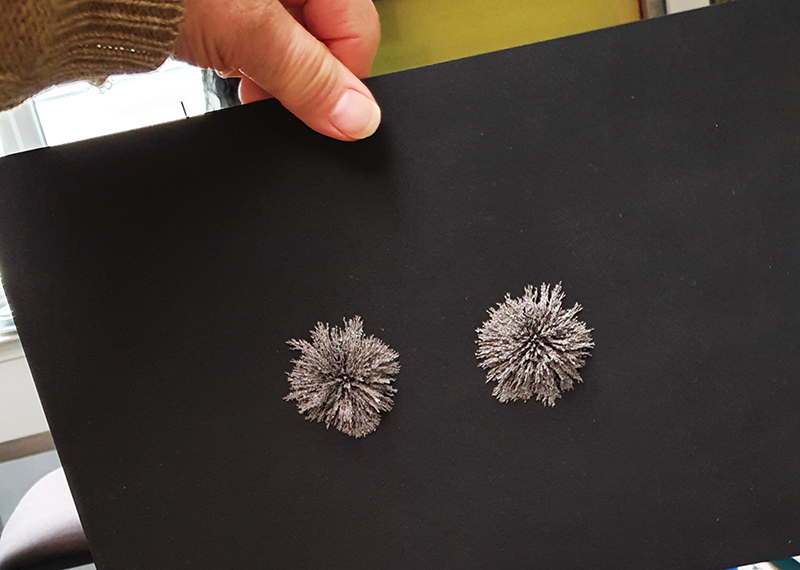
I have been testing new configurations of magnets for a large etching/drawing work looking at magnetoreception.

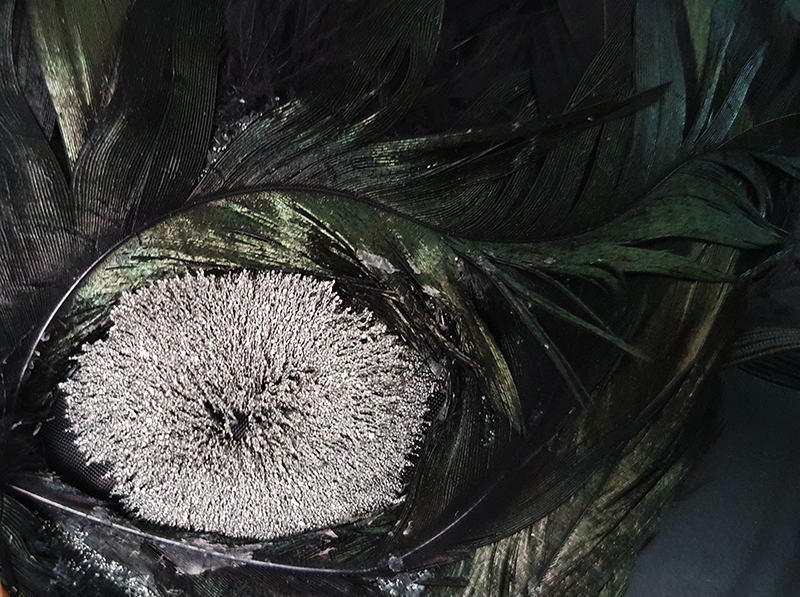
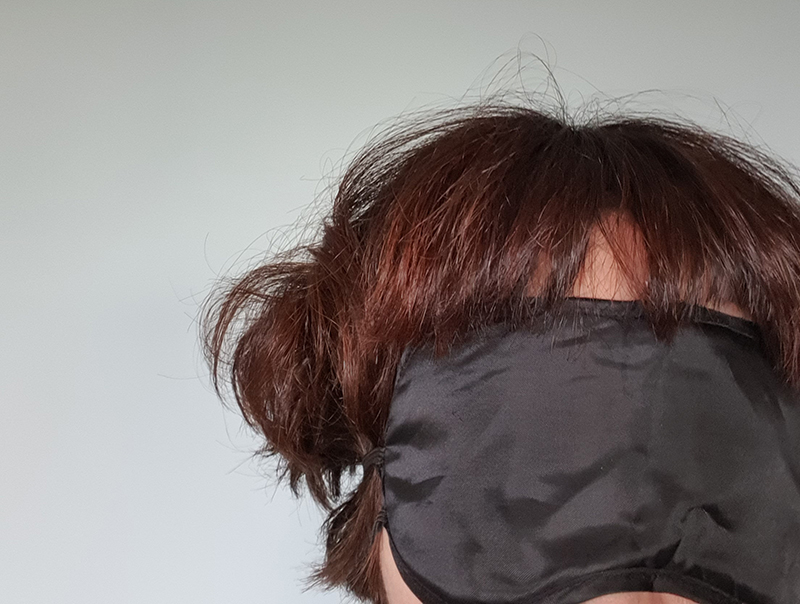
Also testing ideas for a magnetoreception performance mask. It became clear I will have to be careful with the iron filings around the eyes.

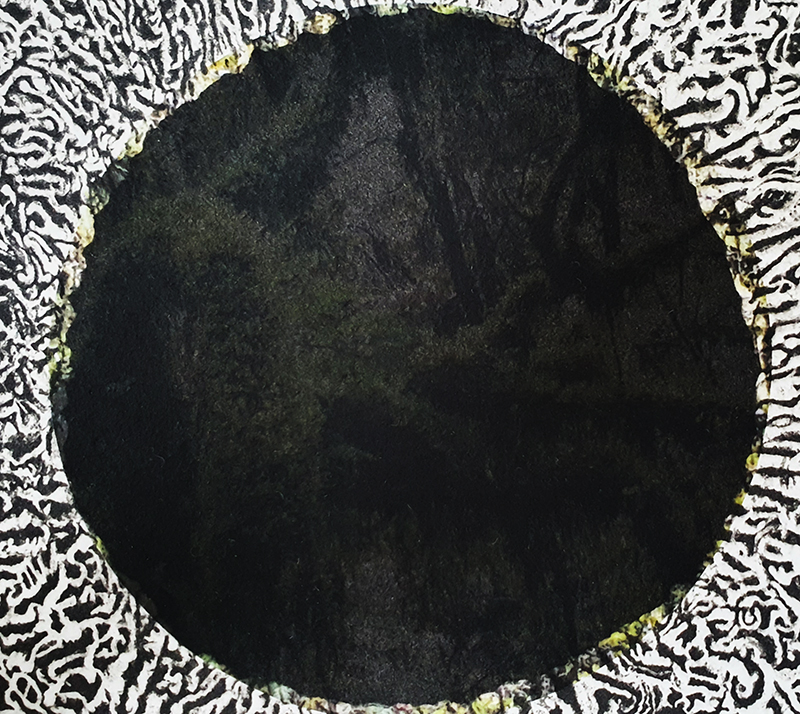
I was excited by the results of testing chine collé under black etching ink. It’s very subtle but I didn’t think it would show at all so was surprised and plan to try this with other ideas.

Great to see the launch of Yinka Shonibare’s new project Guest Artist Space in Lagos – this will be an international space for knowledge exchange between established and emerging artists, it will have urban and rural elements and involve local people as well as visiting artists for a true cultural exchange.

A video which I was invited to contribute to along with many artists Guest Projects has supported in the past is currently being shown as part of The Whitechapel Gallery exhibition programme A Century of the Artist’s Studio – Link to video here.

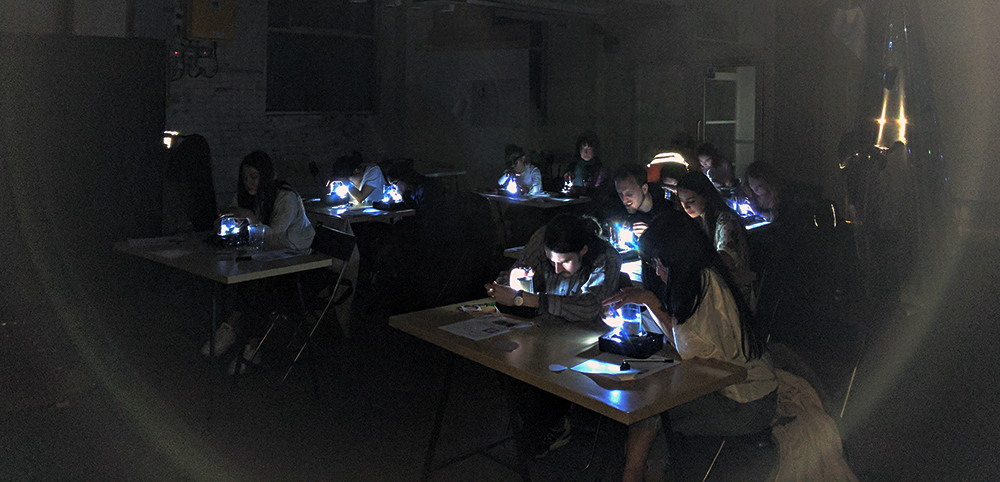
I am so grateful to Yinka Shonibare for his generosity and genuine interest in emerging and early career artists and awarding Laboratory of Dark Matters a month long residency that enabled us to achieve so much in 2017 including developing and running my first Cloud Chamber Workshops.

Exhibition Visits –

Gala Porras-Kim at Gasworks Out of an instance of expiration comes a perennial showing.

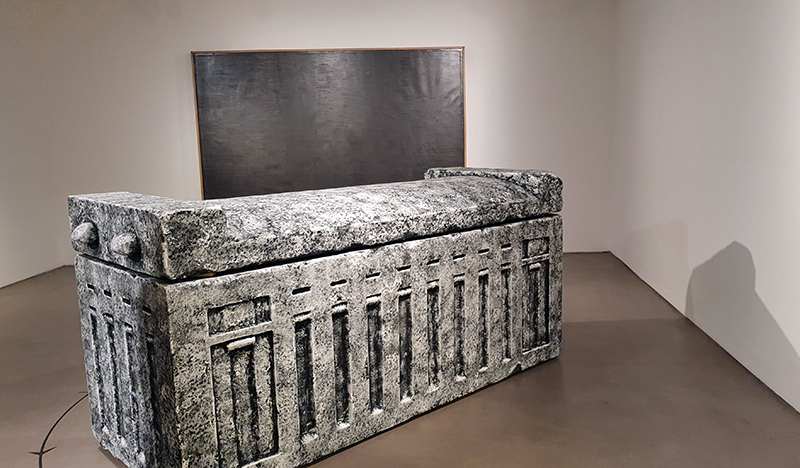
This wonderful exhibition is playful yet thoughtful, giving voice to the spirits of displaced, forgotten or overlooked fragments of history that have been institutionalised. The artworks suggest ways improve the material and spiritual conditions of artefacts stored in archaeological collections around the world such as re-aligning the sarcophagus or offering an awakening deity a more familiar prospect than the modern museum room in which it finds itself. Porras-Kim gives equal value to the dust gathering from artefacts stored in the back rooms of institutions and invites the spirits to communicate in the swirling patterns of marbling inks.

San Mei Gallery showing Laila Majid and Louis Blue Newby – not yet

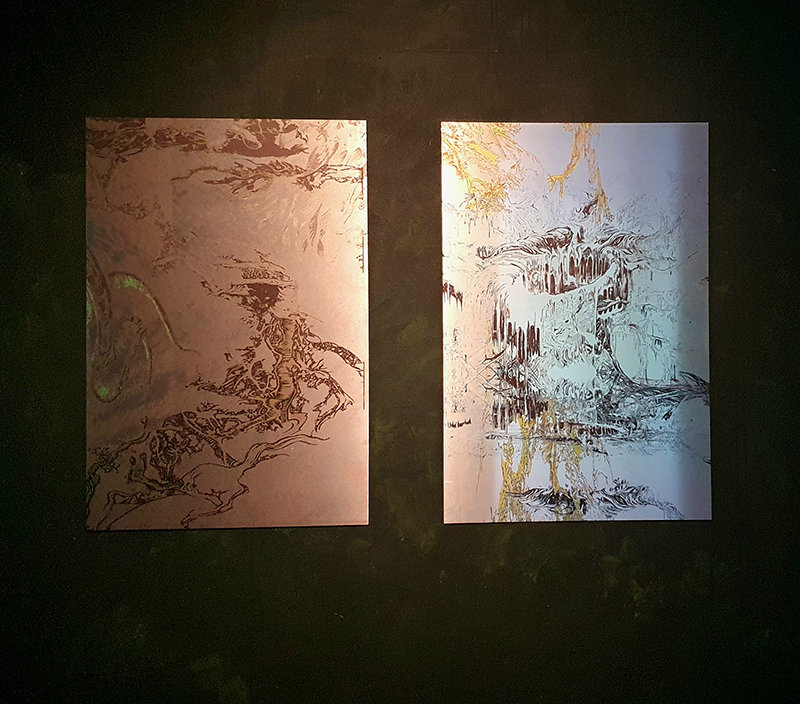
Walls smeared with slime green are hung with prints on aluminium that shimmer in the low light setting with video morphing of a bubbling concoction of swamp things.

Noémie Goudal –  Post Atlantica at Edel Assanti

Luscious imagery dissecting the impact of deep time on landscape and climate.  

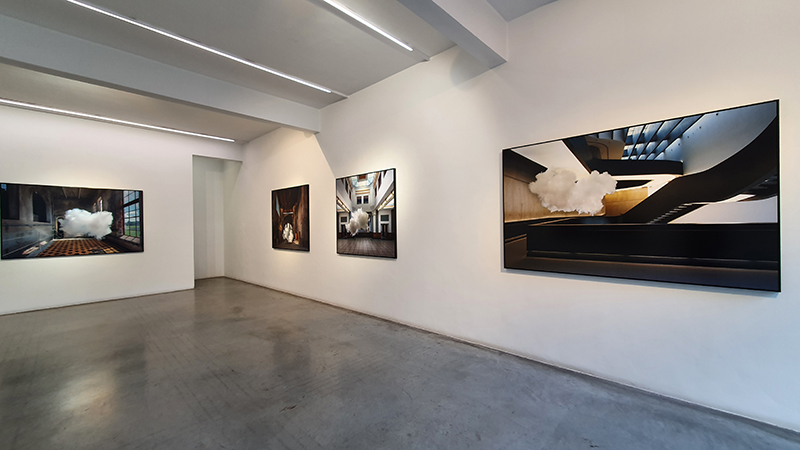
Berndnaut Smilde – Momentum at Ronchini Gallery

I was hoping to see a cloud produced in the gallery but had to settle for the documentation of previous clouds created in various locations presented in the Nimbus photography series. Apparently the artist very rarely makes this work as performance.

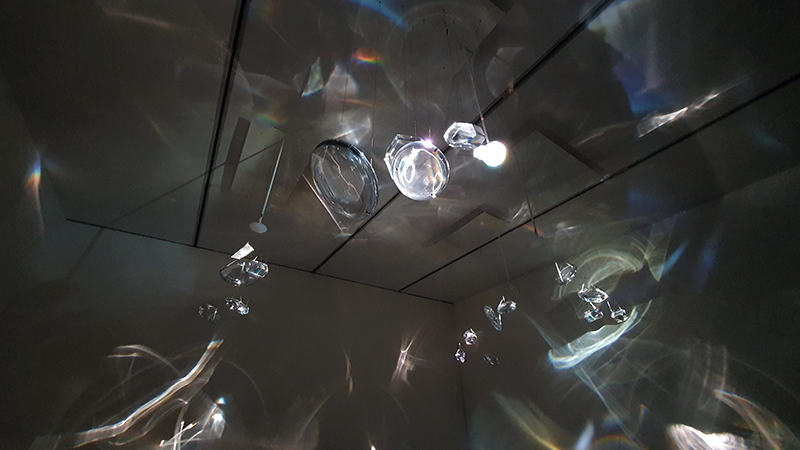
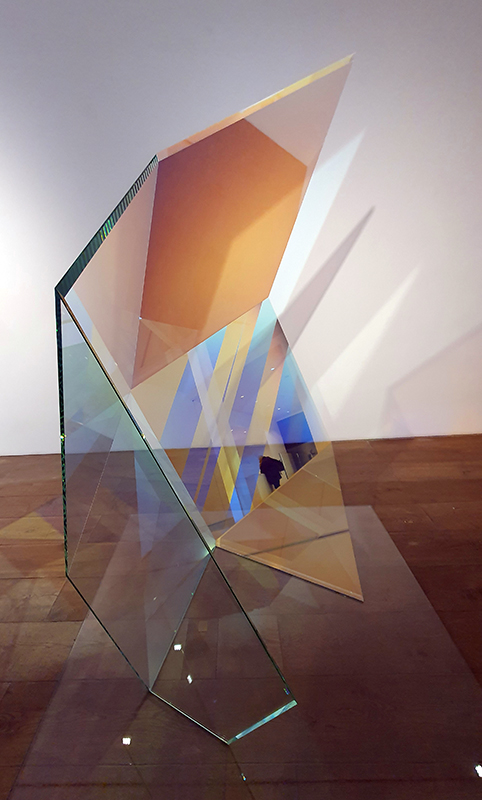
Shuster + Moseley – do not be afraid of the brilliant lights at Gallery Rosenfeld

Light bling of refraction and reflection when photons travel through a glass medium splitting and bouncing in reminder of its own physical presence

Also at Gallery Rosenfeld, Bongsu Park – in dreams we gather

Dreamscapes undulating through the darkness, echoing active brainwaves producing light within our sleeping skulls.

Rivane Neuenschwander Commonplace 1999 in Tate Tanks

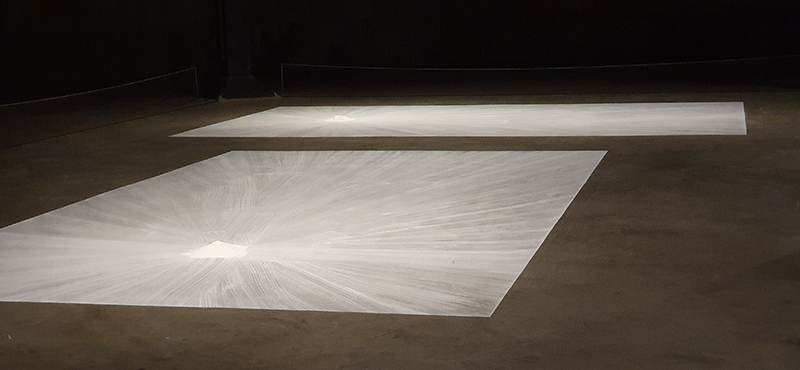
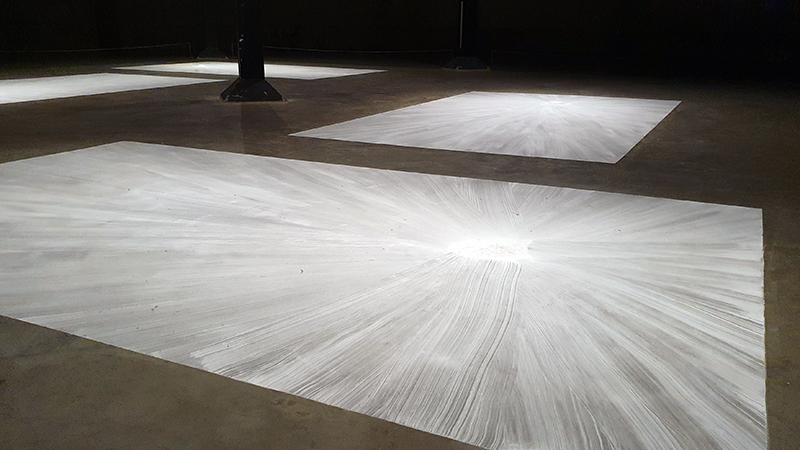
Talcum powder is brushed into rectangular shapes on the floor, being remade every time it is exhibited. Simple gestures turn the stuff of everyday life into something unfamiliar and poetic.

James Freeman Gallery – Juliette Losq and Stuart Sandford in Elysian Fields

Interesting pairing of decay and perceived perfection.

Paintings rather than the layered installations I admire from Juliette Losq here. Delicate pale light seeping through these landscapes caught in the haze of a slow and gentle decomposition.

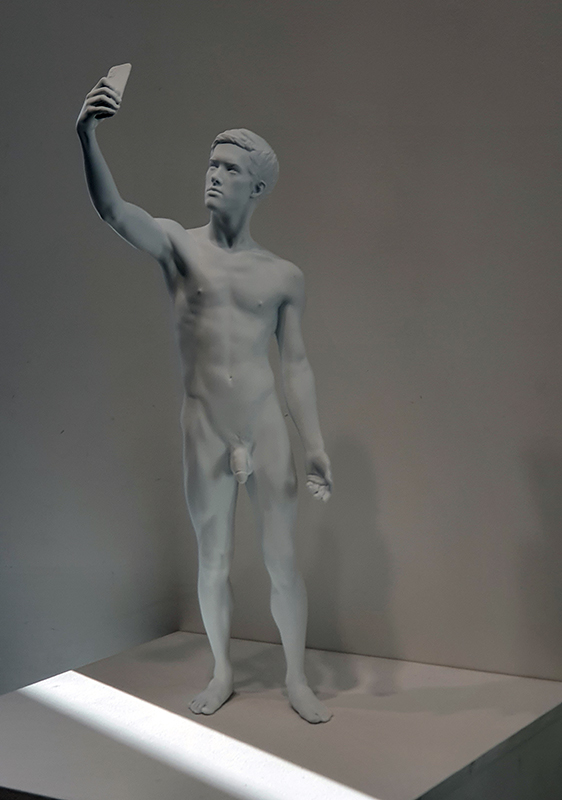
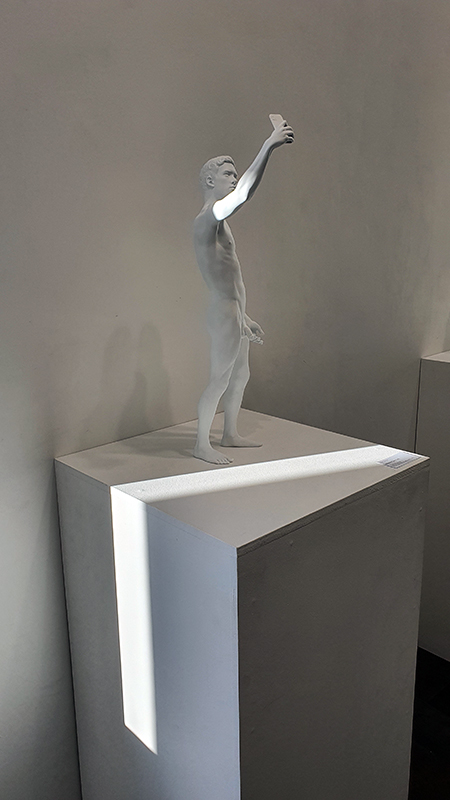
A close encounter with a full size Narcissus is only available through scanning a QR code to be experienced via the screen. Only his small pornworld counterparts were present, cast from the idealism of the digital realm into bronze.

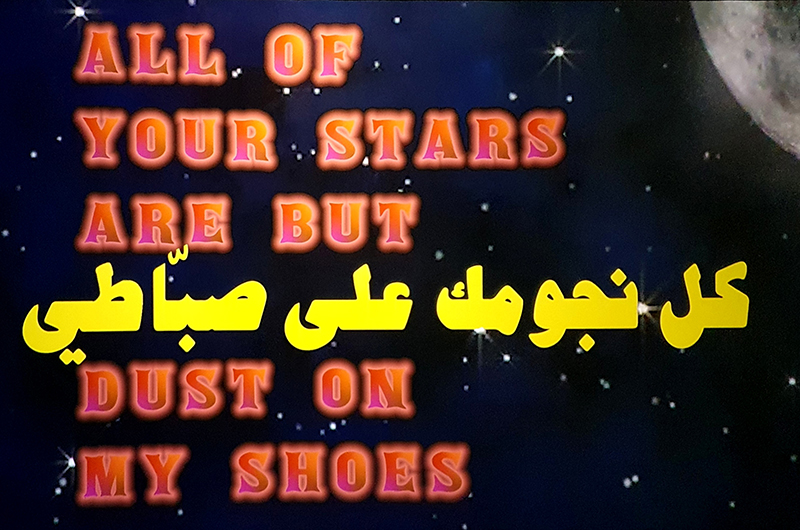
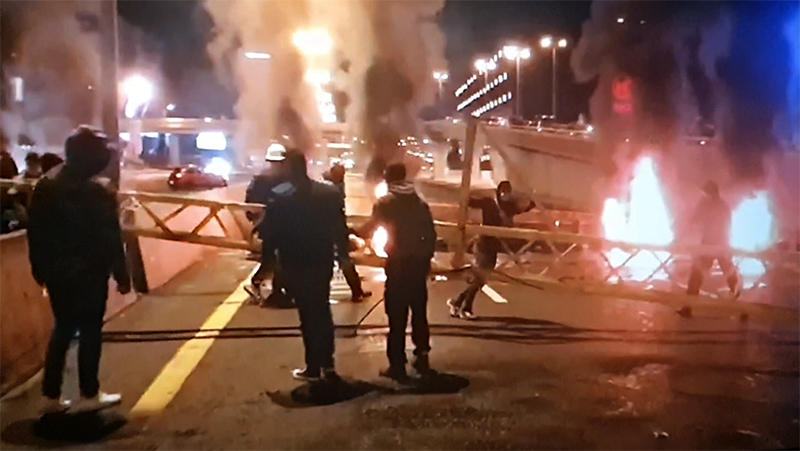
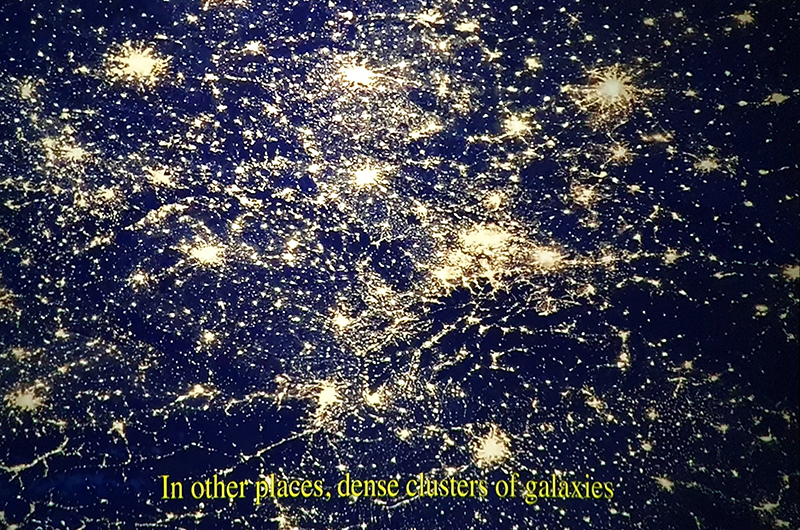
Haig Aivazian All of your stars are but dust on my shoes at The Showroom

Two very moving films looking at light and fire, primordial gifts and how they are used for power and control.

Geo-poetic is a great description of how these films traverse history and borders exposing who decides what is seen and what is not and who holds the flaming torch over the touch paper.

Portals at Lisson Gallery curated by Ossian Ward

Images include Susan Hiller, Ryan Gander, Rodney Graham, Shirazeh Houshiary, John Latham, Mary Corse and Sean Scully.

A mixed offering of thresholds to alternative spaces, visible, conceptual, mythical or speculative.

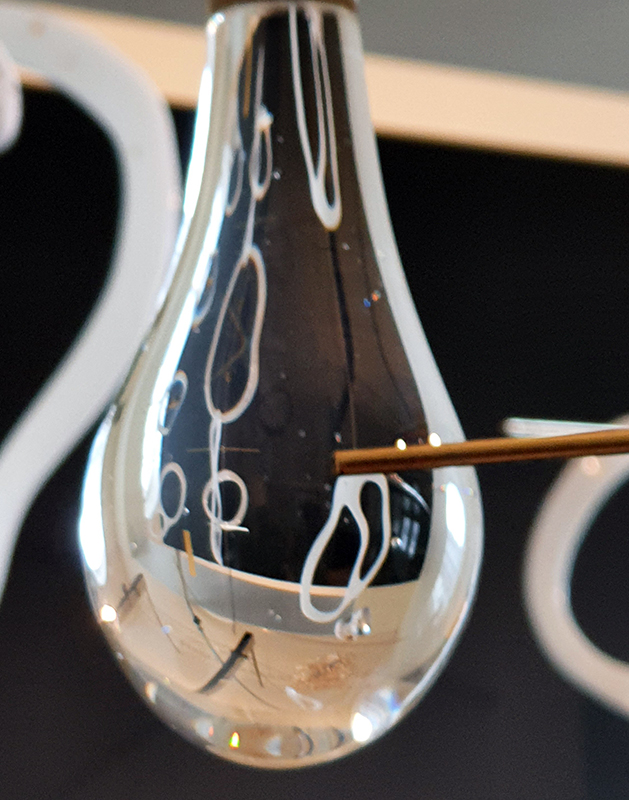
Richenda Court Glass Town at The Muse at 269

Luminous work reflecting a fragile crystalline world

Good to see Lisa Pettibone’s suspended sculpture Instrument of Thought – A meditation on Matter and Light. The physics of the cosmos held in delicate balance as mirrored surfaces, crystals and rocks interplay hinting at ideas such as gravity, dark matter and the speed of light.

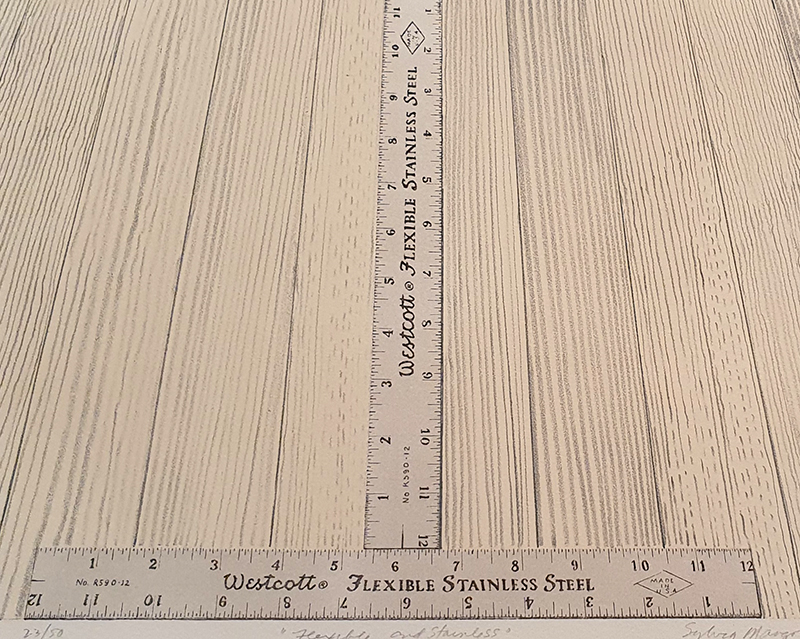
On Hannah Arendt: The Conquest of Space at Richard Saltoun with works by Sylvia Plimack Mangold, Elaine Reichek and Carey Young considering the question Has man’s conquest of space increased or diminished his stature?

The question is central to Arendt’s essay written in 1963 which rings alarm bells on the direction science and technology may be leading the human experience. The possible future Arendt foresaw of a world remade by the curiosity of the human race but transformed into somewhere unrecognisable to the humanist where even the scientist loses some essence of human nature as the world is described in a mathematical language that cannot be experienced with human senses may be bearing down upon us.

Lots to think about from this encounter. I think writing when she did, when the first man in space was quite recent history and before the internet, her concerns about a loss of what it is to be human, driven by technology effecting every part of our lives until there is no part left that hasn’t or isn’t in some way remade by humans was very prescient. I wonder how she would feel today as we rush into space like never before and not so much for exploration as exploitation. Arendt described herself as “a kind of phenomenologist” which I understand as looking at things purely as they appear to us without trying to explain why or how and accept meaning that comes from direct sensory experience. Works of art can act as mediators between the consciousnesses of the author and the reader as a direct attempt to communicate the experience of being human and the world around. Phenomenologists are interested in the way we come to share similar understanding of the world a collective subconscious or implicit agreement about how the world looks, sometimes referred to as the life-world.

An introduction to the essay link here presented by Roger Berkowitz, director of the Hannah Arendt Center at Bard College. Science transforms what it means to be human although we are still bound to our earthly bodies and subject to fate and fortune. Science does not give a human experience of the world, it confounds common sense. If our growth in understanding can only be expressed in mathematical terms then we have lost rather than gained a way of describing our world experience. Human thinking comes from metaphors and our thoughts are earthly, if we are taken off planet then the Earth becomes an object not our home.

Secret of Lightness at Parafin

Aimée Parrott, Andrew Pierre Hart, Tim Head, Andrea Heller, Laurence Kavanagh

Beautiful selection of works curated by Louisa Hunt that reflect the premise of Calvino’s text to pull against what holds us down and make a creative leap opening onto a new perspective.

‘Whenever humanity seems condemned to heaviness, I think I should fly like Perseus into a different space. I don’t mean escaping into dreams or into the irrational. I mean that I have to change my approach, look at the world from a different perspective, with a different logic and with fresh methods of cognition and verification. The images of lightness that I seek should not fade away like dreams dissolved by the realities of the present and future…’

Italo Calvino, Six Memos for the Next Millennium: Lightness (1985)

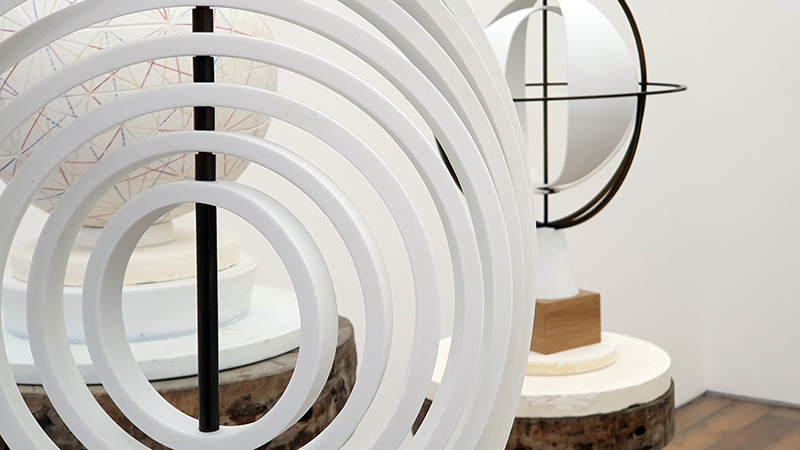
Of the Surface of Things at Alison Jacques showing works by Maria Bartuszová, Sheila Hicks, Hannah Wilke, Erika Verzutti.

Spending so much time thinking about the intangible it was refreshing to be exposed to some raw materials.

The curator refers to the 1919 poem ‘Of the Surface of Things’ of Wallace Stevens and the untethering of the imagination when exposed to the particularities of reality in simplified raw form.

In my room, the world is beyond my understanding;
But when I walk I see that it consists of three or four
        hills and a cloud.