Archives for posts with tag: Tacita Dean

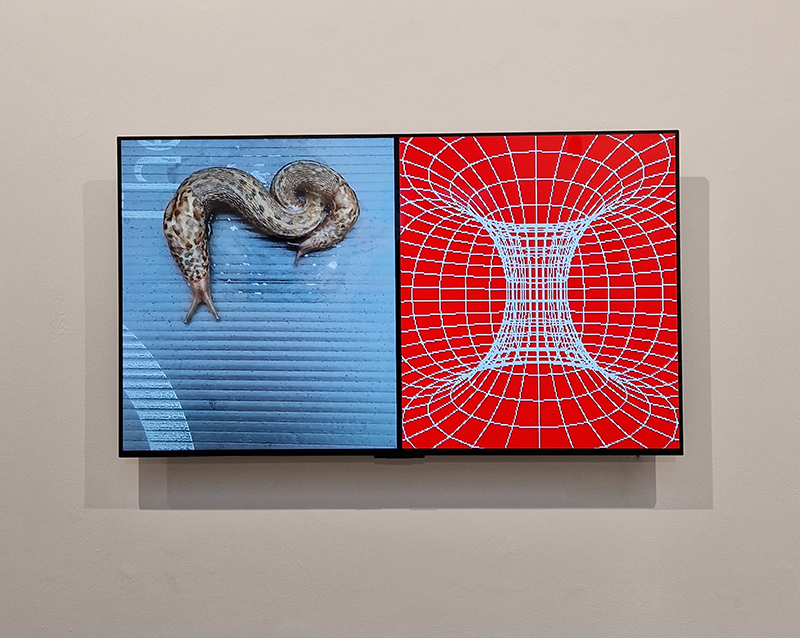
I am enjoying discovering the gutter creatures who share my home. Gathering video footage of an alternative cosmos to go towards making work which will be shown in Occupied: Strange Company at the Safehouse next year, a group exhibition curated by Julie Hoyle.
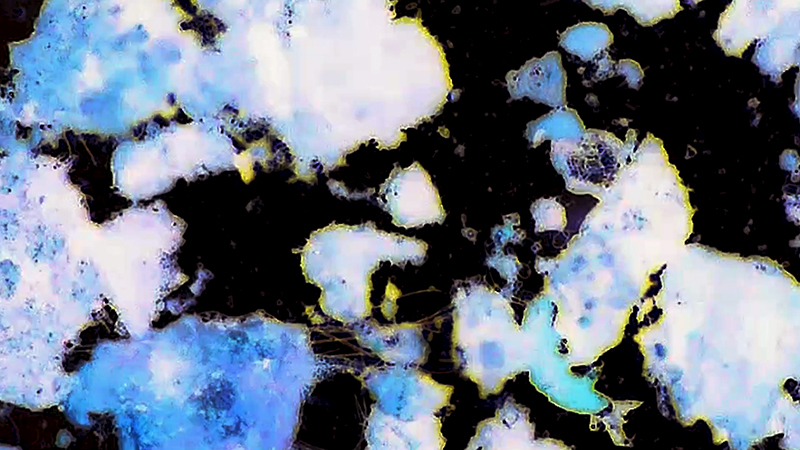
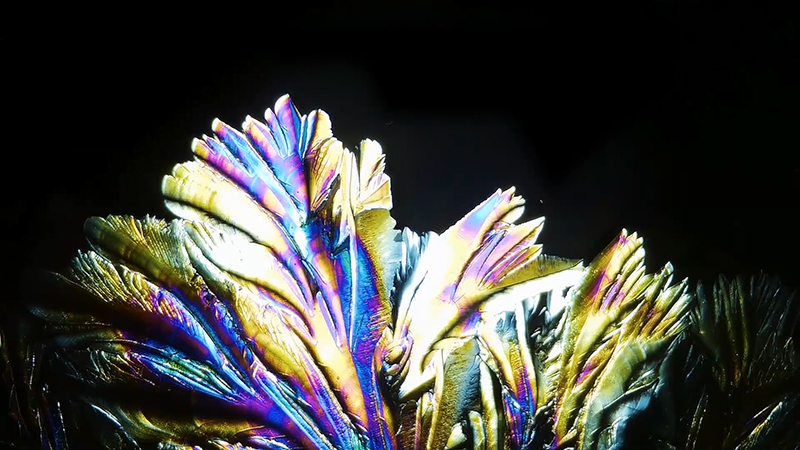
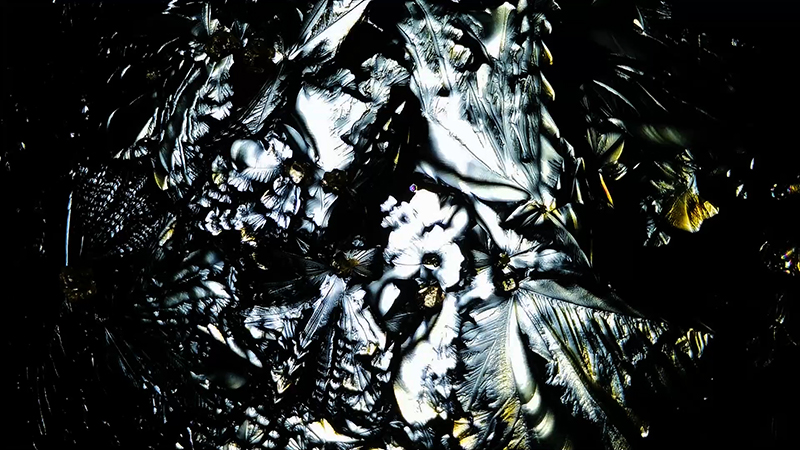
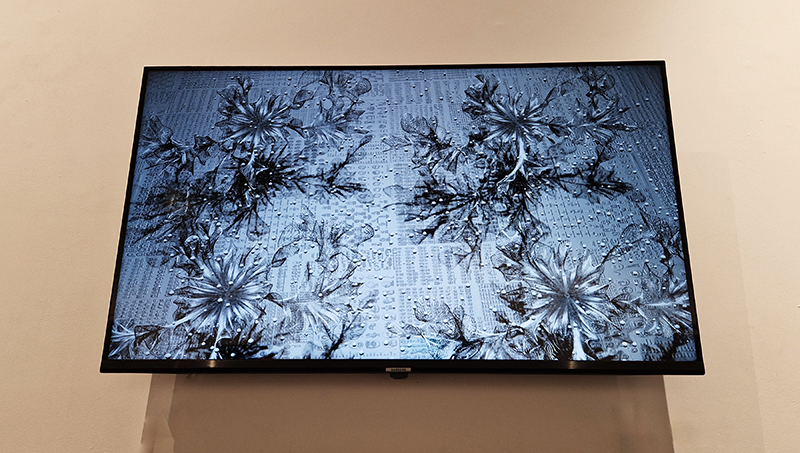
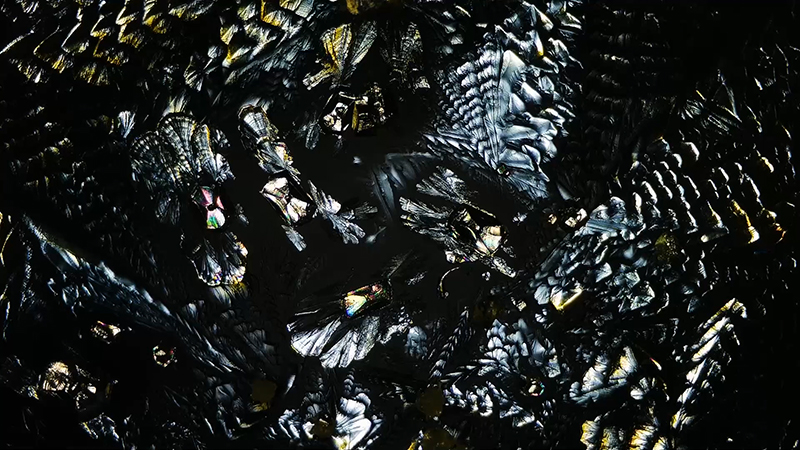
My experiments growing citric acid crystals have been going well. I am filming these transformations under polarised light which reveals the many vibrant colours but I also like the images without the filter. The structures remind me of feathers so I am thinking about creatures that flutter as well as those that swim.

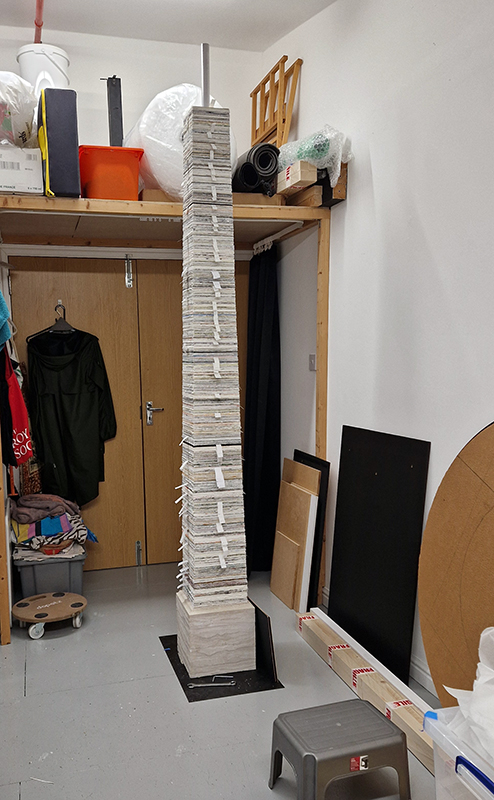
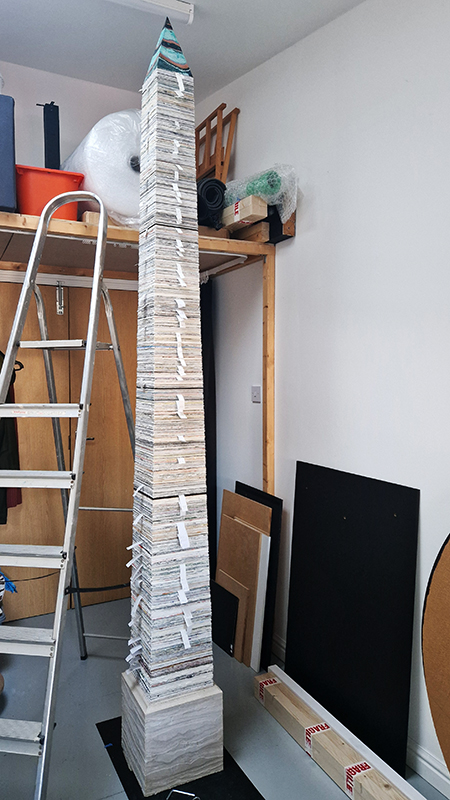
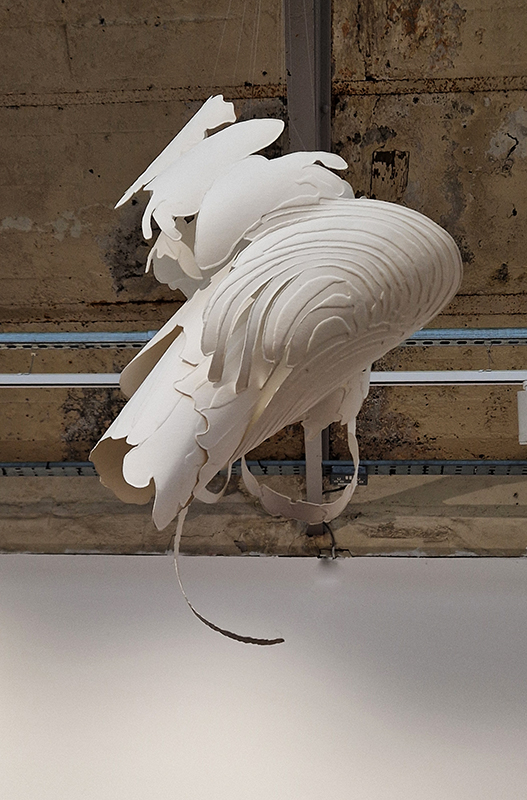
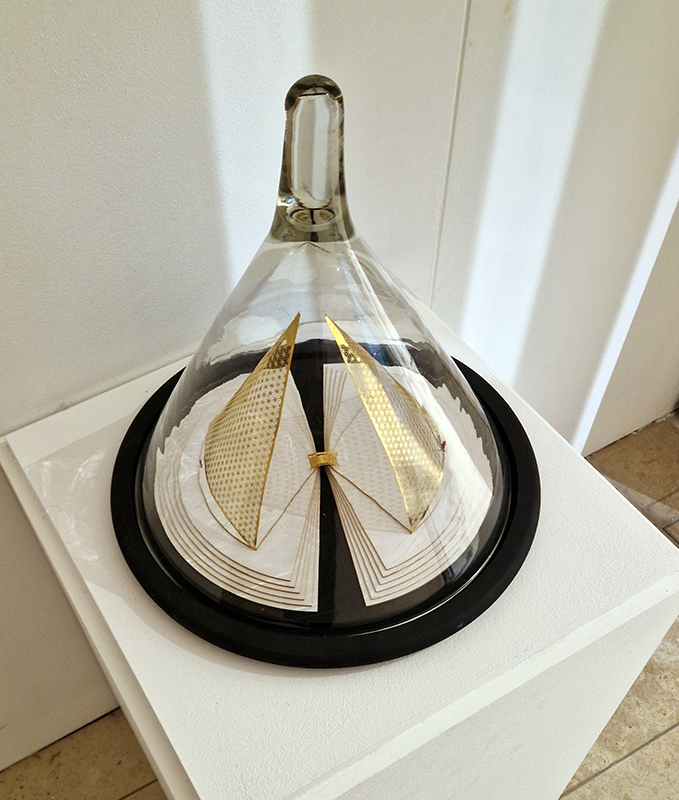
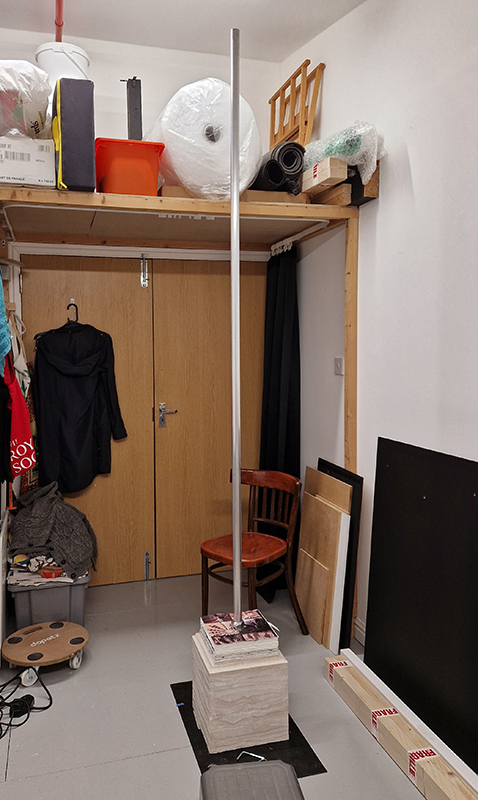
Time in the studio has been spent checking over and preparing works that will be showing in Cosmos: The Art of Observing Space curated by Ione Parkin which opens in the new year. I am thrilled to be part of this exhibition bringing together contemporary and historic artists and featuring an extraordinary range of work inspired by the cosmos. I have completed a test build of The Azimuth Obelisk (of sedimentary knowledge) using a new internal structure for before packing it all away again ready for transport to The Royal West of England Academy in Bristol. This work is a reimagining of an permanent azimuth mark erected at Hartland Magnetic Observatory in North Devon from which the drift of the magnetic north pole is monitored. Made of many layers hand torn from recycled works on paper it echoes the geological and magnetic history of the Earth which is secreted in the strata of sedimentary rock. The protruding tabs of paper seen in these studio images are markers for each section of paper squares of a tapering size and will get tucked away at installation in the gallery. With the added thickness of my new studio roof insulation the obelisk only just fits in now.
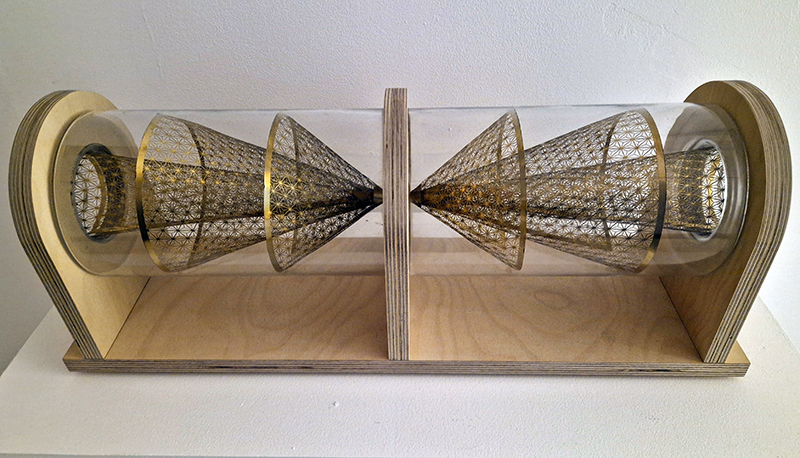
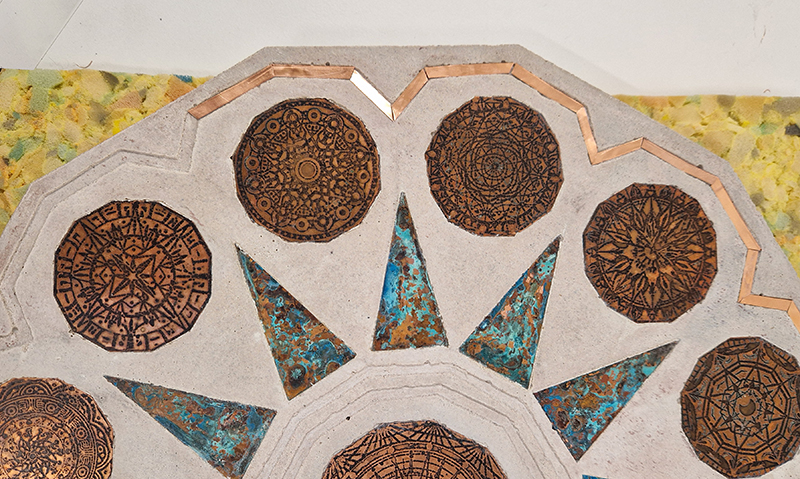
I have started work on inserting copper segments into the new sculpture for the Instruments of the Anemoi series. The other larger pieces of etched and patinated copper were added at the time of casting, held in place with tape and hope when the concrete was poured into the mould. This series of sculptures are suggestive of the pedestals that support various instruments used in monitoring the Earths’ magnetic field but are envisaged here as speculative objects used by the wind gods as the first emissaries of navigation.

I am still battling with writing text for The Book of Reversals, an artist book that responds to the record of Earth’s magnetic field reversals being written in bands of minerals on the ocean floor.
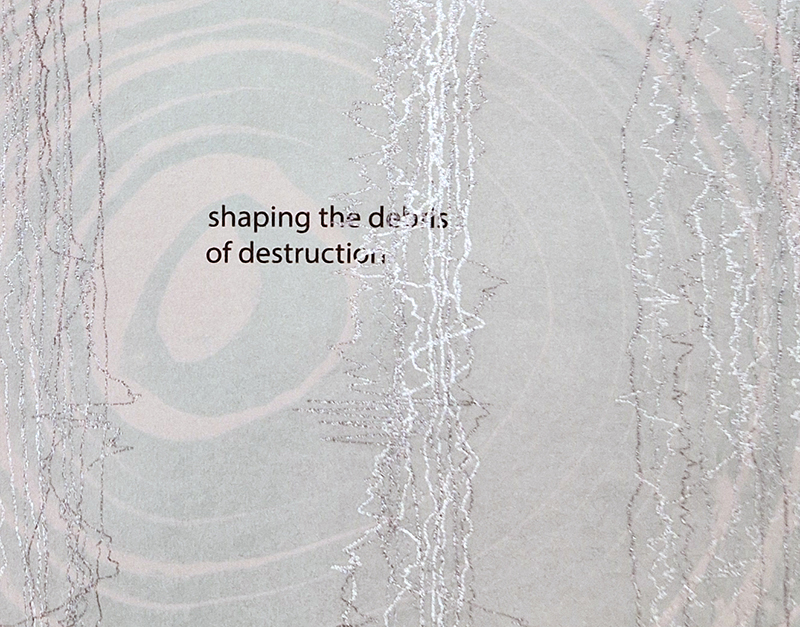
The crisp crust fractures / Fragments slide across a viscous veneer

Submarine mountains tower / Ocean trenches gape

Tectonic plates subduct / melting into the mantle 

Deep time traces are consumed / surfaces ceaselessly reformed

The Earth’s magnetic field has been a fascinating mystery for many hundreds of years and Gillian Turner’s book North Pole, South Pole recounts the stories of those who sought to solve its origin and mechanism. Something I hope to look at in more depth is how pottery and bricks preserve the direction of the magnetic field in their minerals during the process of firing which heats and then cools the clay – the same process that occurs in a lava flow. Iron-bearing minerals (like magnetite) in clay become “magnetic” when heated in a kiln. As the pottery cools, these minerals lock into the Earth’s magnetic field direction and strength at that time. The study of the magnetic properties of ancient pottery, known as archaeomagnetism, has been used to make records of the inclination of the magnetic field from past millennia. Inspired by these studies of manmade artefacts to determine the historical position of the north magnetic pole, physicists Bernard Brunhes and Pierre David took samples from exposed lava flows and their underlying clay in central France. In 1906 they came to the astonishing conclusion that about six million years ago the magnetic field seemed to point in the opposite direction, the first indication of magnetic field reversals.
Also with thanks to Gillian Turner’s book North Pole, South Pole I have learnt that there were early hydrogen balloon ascents to determine if the Earth’s magnetic field intensity varied with altitude, helping to decide if the magnetic field came from within the Earth or was extra terrestrial. In 1804 Jean-Baptiste Biot and Joseph Louis Gay-Lussac made a pioneering ascent to 4,000 feet (1.2km). In Turner’s book she writes that the dip needle necessary to take the measurements iced up and so the results were unreliable. I feel for them, but it seems they conducted many other experiments on temperature and gases in the atmosphere while aloft and in any case we now know they would have needed to ascend many kilometres higher than they achieved to notice any weakening in the magnetic field.
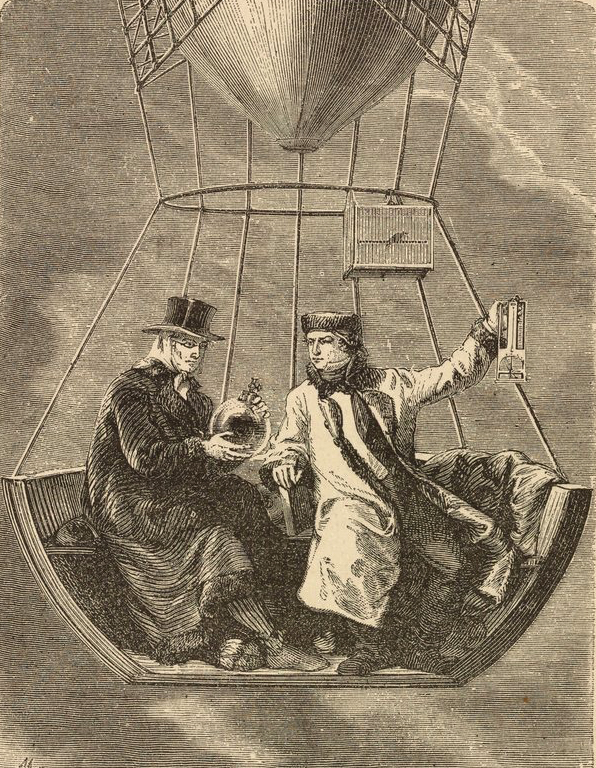
This plate is from John Howard Appleton’s (1844-1930) Chemistry, Developed by Facts and Principles Drawn Chiefly from the Non-Metals, published in 1884.

I am trying to remember when I first had the idea to launch a cloud chamber in the payload of a high altitude balloon. I knew about the hot-air balloon experiments carried by Victor Hess to determine the origin of cosmic radiation, and his discovery in 1912, when he made an ascent to over 5km during a near-total eclipse of the Sun, that radiation had to be coming from further out in space.
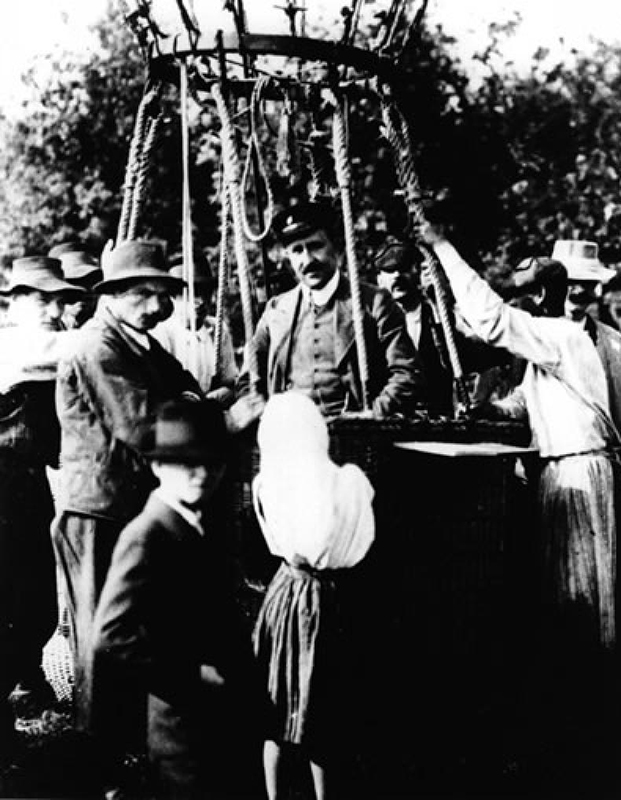
Hess on his return from the 1912 balloon ascent – Alan Watson pointed out that this was obviously staged at another time as he would not have been standing looking so well after his ordeal.

I remember looking into the dark skies during a residency at Allenheads Contemporary Arts and wondering about all the activity that I couldn’t see. I decided then I would like to film at 15km where most subatomic cosmic ray activity takes place, even if nothing would show on the film.
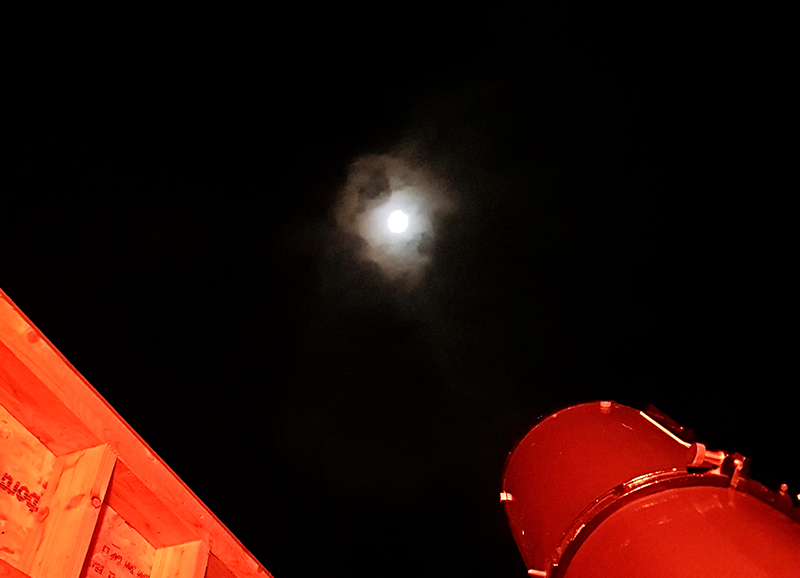
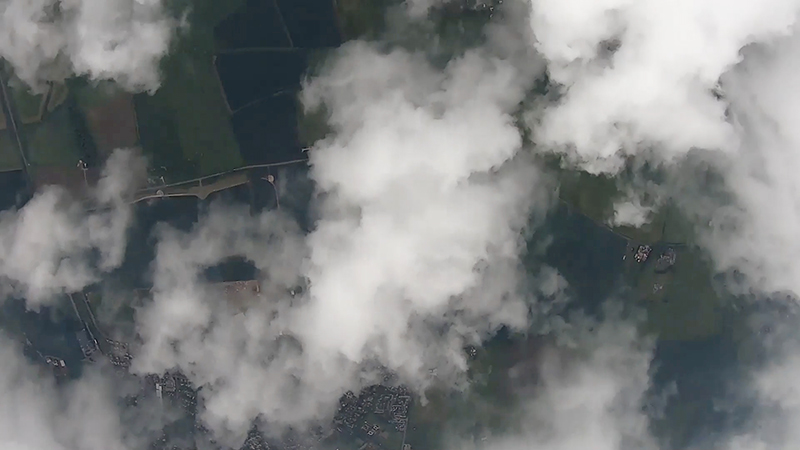
A high altitude balloon flight seemed the perfect solution and I was very grateful for the help I subsequently received from Imperial College Space Society and The UK High Altitude Society. The decision to include a cloud chamber in the payload was always a risk and as it turned out nothing of the cosmic ray activity was captured on film. However, the balloon did reach an altitude of over 37km and the payload was successfully recovered with some amazing video footage of its journey.
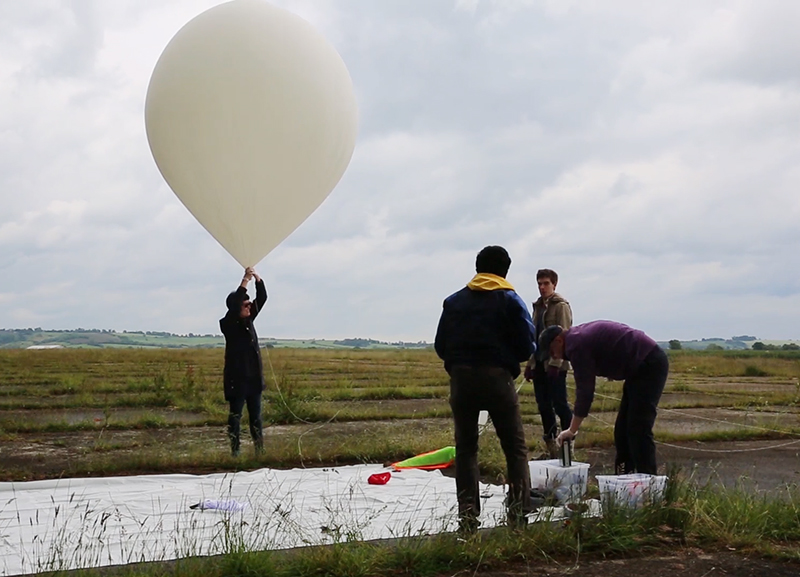
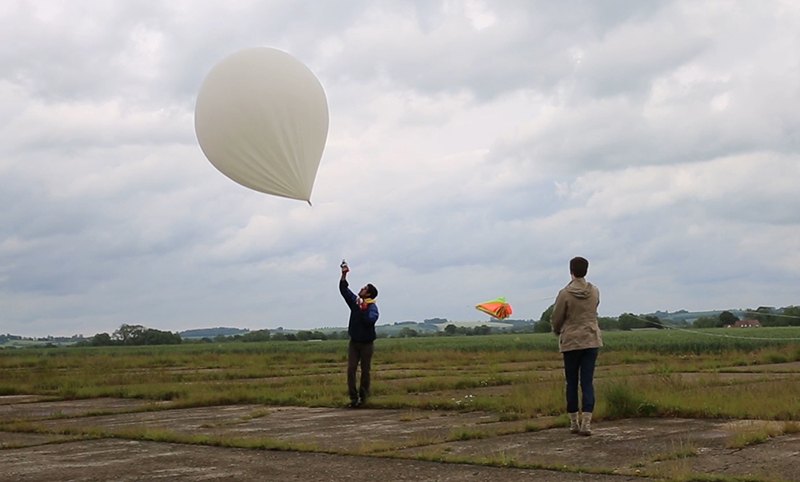
The record height for a hot air balloon ascent is 21km so in theory it could be possible to send a cloud chamber up in a hot-air balloon and film at altitude with potential for more success if some brave person were on board to operate the camera. Unlikely to be me.
Some intriguing news of ORC’s on the RAS websiteThe most distant and most powerful ‘odd radio circle’ (ORC) known so far has been discovered by astronomers. These curious rings are a relatively new astronomical phenomenon, having been detected for the first time just six years ago. Only a handful of confirmed examples are known – most of which are 10-20 times the size of our Milky Way galaxy. ORCs are enormous, faint, ring-shaped structures of radio emission surrounding galaxies which are visible only in the radio band of the electromagnetic spectrum and consist of relativistic, magnetised plasma. the three new cosmic rings – discovered not by automated software but by sharp-eyed citizen scientists – represent an important step toward unlocking the secrets of these vast, puzzling structures.

Out and About

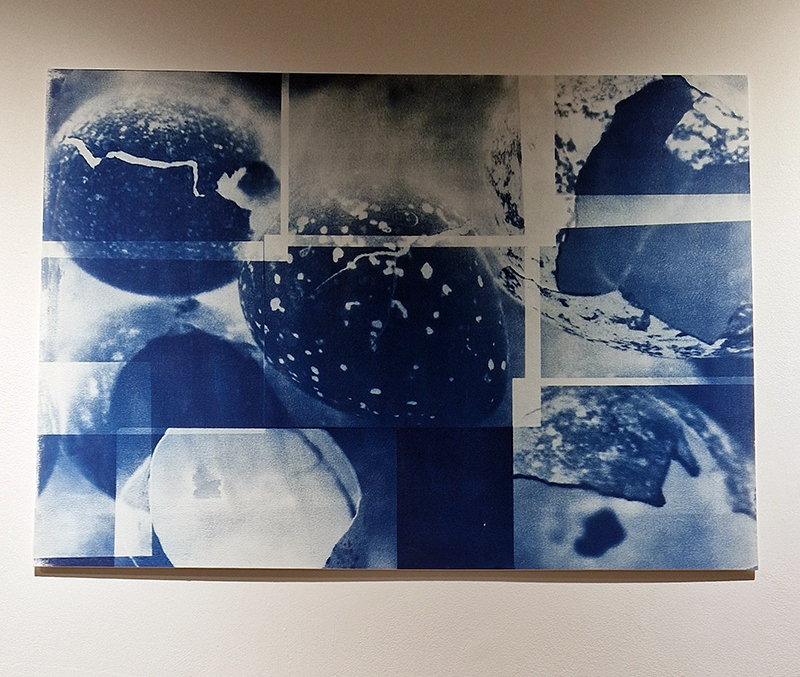
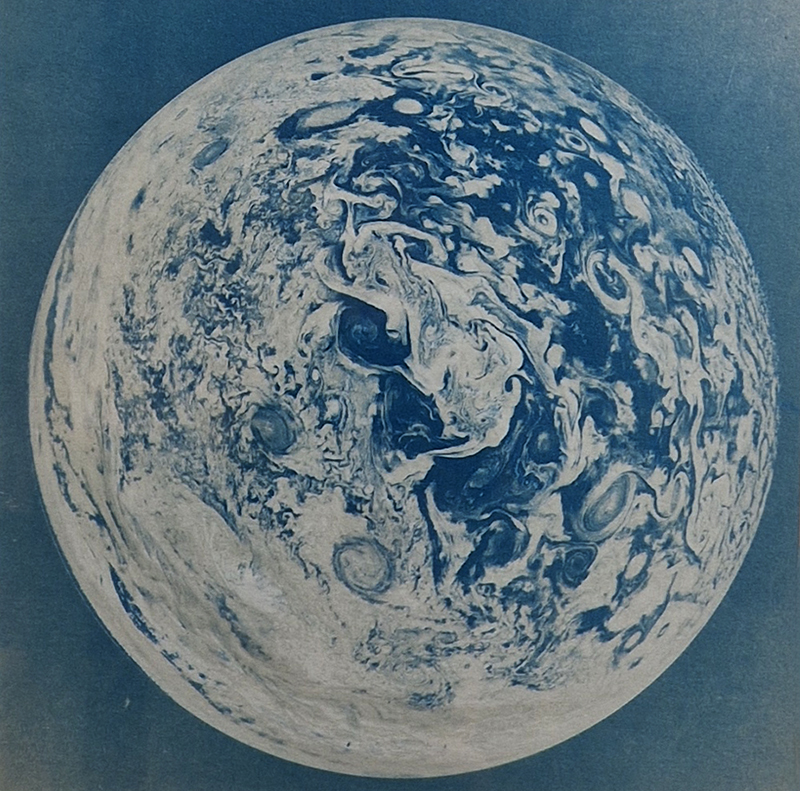
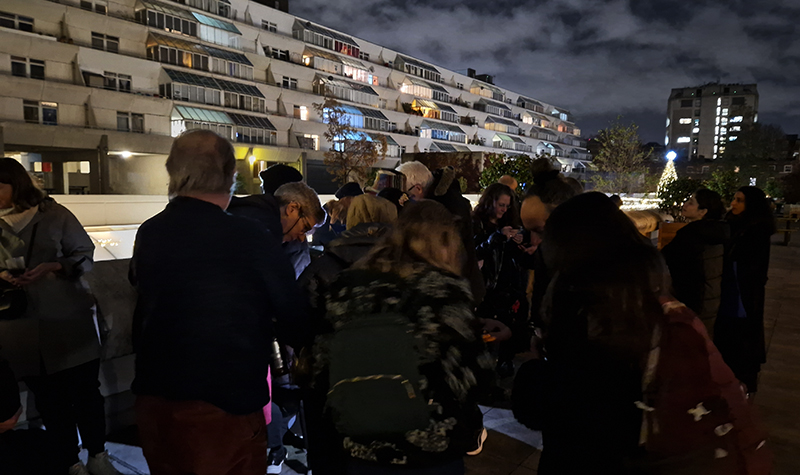
A wonderful evening with artist in residence Melanie King at Passengers connecting the celestial with the architecture of the grade II listed Brunswick Centre in Bloomsbury, London. Melanie used the residency opportunity to explore the duotone cyanotype process using multiple layers of cyanotype to mimic astronomical imaging construction and even used cyanotypes to create an of the Moon. The beautiful results were presented at an evening event with the additional treat of live telescope viewing of the Moon and Saturn from the second floor terrace of the Brunswick centre under the engaging guidance of astronomer and science communicator Paul Hill.
Liz Elton’s sensitive work Black and Blue (compostable bio materials, cabbage and fruit dye saddened with iron, silk, poppy and sage seeds) showing in A Changed Environment at Messums London. This group show examines changing ideas of beauty, ecology, and sustainability, as well as themes of place, memory, and identity, revealing how connections to the natural world can inspire both understanding and hope. I love the delicacy of this new work and the term ‘saddened by iron’ which is used in the dying process to dull a colour, and which, as Liz says, also emotes the hardships of industrial life.

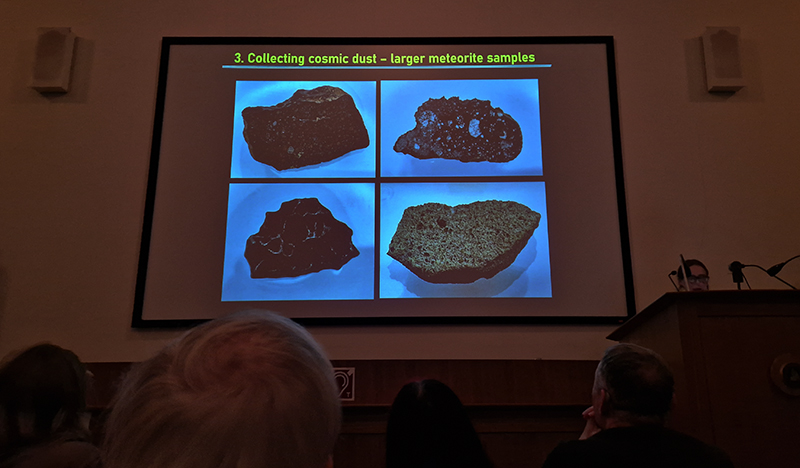
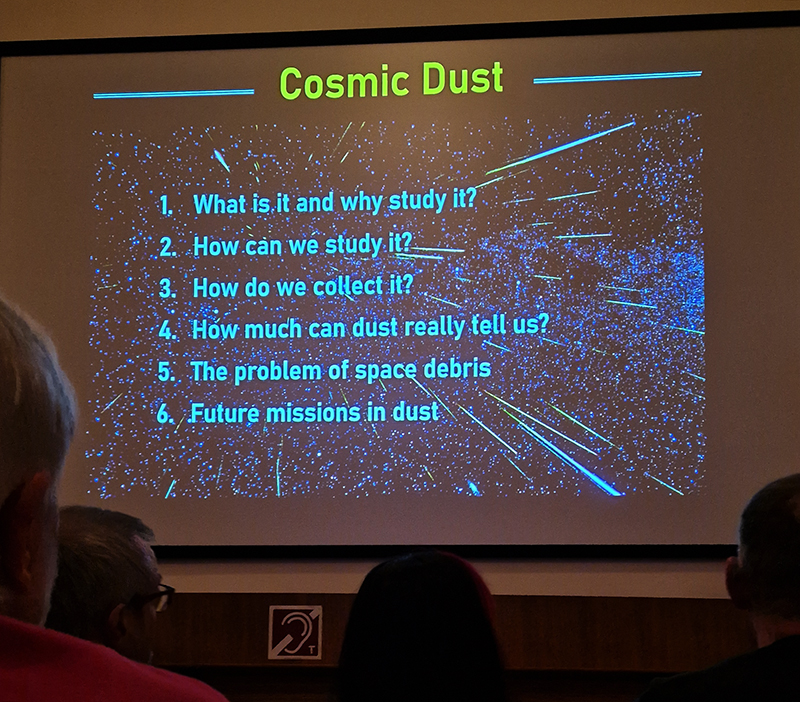
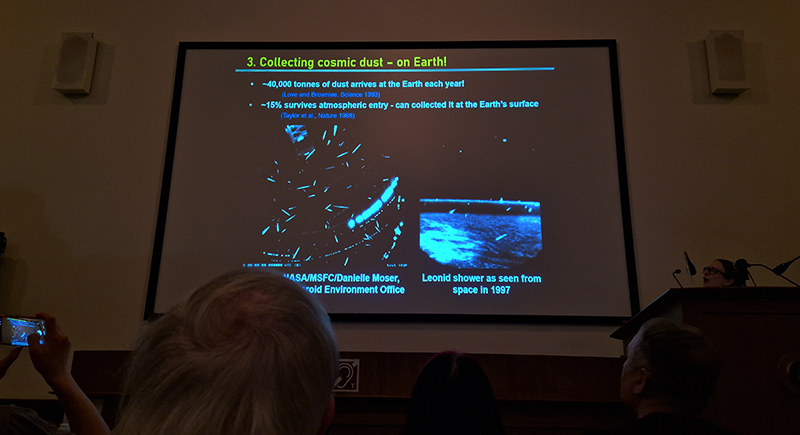
Cosmic Dust talk by expert on extraterrestrial space dust, and how it can impact astronomy and wider human endeavours in space, Penny Wozniakiewicz at The Royal Astronomical Society. ‘Natural’ cosmic dust is being polluted by man made dust from space debris. This is a real problem created by dead satellites, old upper stages of rockets, fragments form exploded rocket or stages, flecks of paint, aluminium oxide spheres from solid rocket burns, dropped space equipment. When any of this debris collides a cloud of smaller debris is ejected, this process is self propagating and even the tiniest piece of debris can cause serious damage to spacecraft and satellites. This is called the Kessler syndrome, a cascading effect that could render orbital space unusable for generations, threatening satellites, the International Space Station, and future space travel.
Good to visit the The London Group show 2025 at Copeland Gallery where lots of friends are showing excellent work and also to discover new work and artists.

I found Majid Majid’s video Faith Amongst The Ruins a difficult but compelling work. So scary and horrific because we know this is real footage, some of which I had seen before at the time of the attacks on hotels housing asylum seekers and refugees, but it is still so disturbing to watch these people, with so many children present, cheer on the violence. They have no empathy with the terrified people trapped inside the hotel or for the person in the car who is ambushed and stabbed. The glee of those filming the assault is chilling.

He writes: “As a refugee, I know places shaped by fear and rejection. This work revisits UK sites of last summer’s Islamophobic and racist violence, a mosque, a street, and a hotel housing asylum seekers transforming them through prayer. Placing a mat where hostility flared, I reclaim space as sacred ground. Video and traces of violence form a counter-narrative of dignity, belonging, and resilience.”

Images: Majid Majid, Sayako Sugawara, R James Healy, Victoria Rance, Jonathan Armour, Sandra Crisp, Jenny Wiggins, Victoria Arney, Carol Wyss, Sandra Crisp, Genetic Moo, Jacqueline Yuen-Ling Chiu.

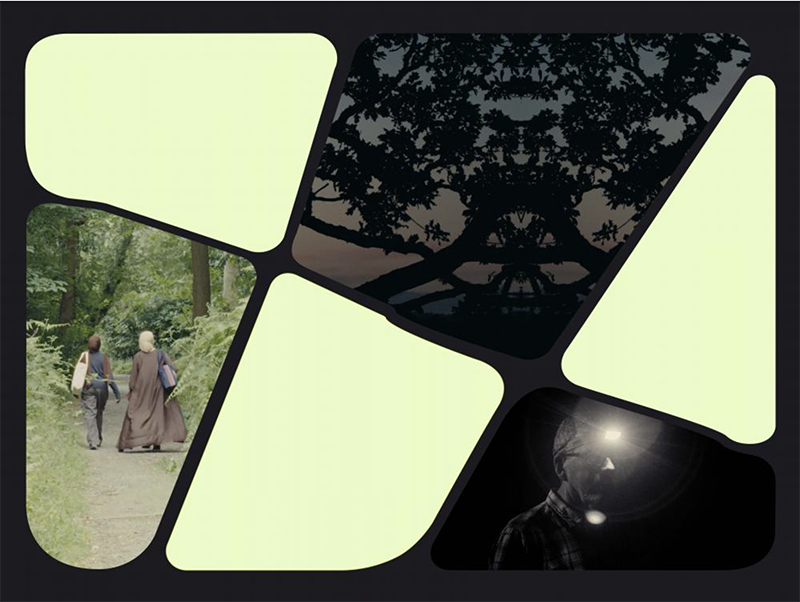
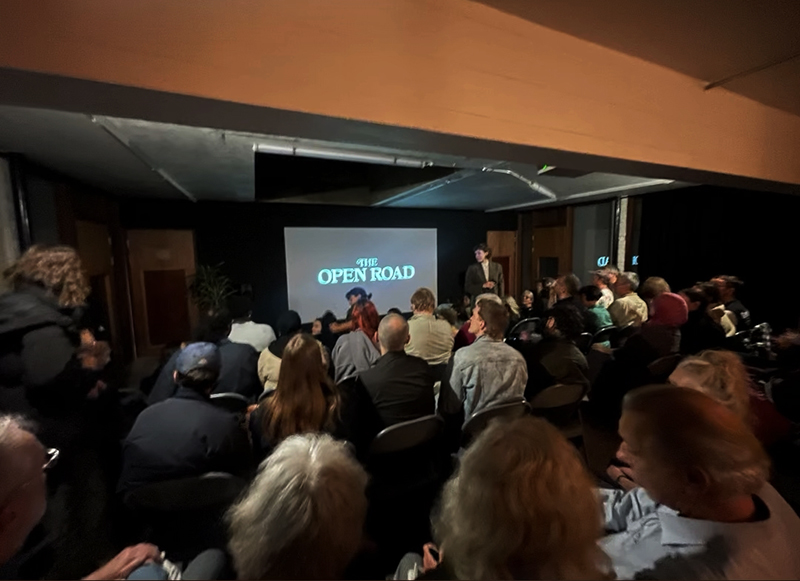
Three beautifully directed films screened at FormaHQ as part of The Open Road series of artists moving image works, co-commissioned by a partnership of visual arts organisations. The works are loosely inspired by The Canterbury Tales, drawing from a disparate cast of characters to recount competing stories in a patchwork of styles. David Blandy (Commons), Amaal Said (Open Country) and Sam Williams (The Eel’s Tale) each draw on storytelling traditions to give fresh perspectives on their journeys, on foot, by sea and through time. Heartbreaking to hear how terrified Amaal Said was to leave London for the open country of the south coast, especially with the current rise in overt racism, when out looking for locations and that they did suffer racist abuse while filming. Hers is a gentle and warm study of a mother and daughter and an absent grandmother, a longing for home and to feel ‘at home’. Sam William’s film sets the plight of the highly endangered glass eels who journey 4,000 miles from the Sargasso Sea to the Medway wetlands in Kent, swept along by currents, undergoing bodily transformation, following an instinctive desire on this epic migration alongside two other watery tales of transformative journeys across boundaries of identity and freedom. Coincidently, a recent episode of the Infinite Monkey Cage is all about these mysterious eels. David Blandy turned his attention to the vast and disparate collection of artefacts held in the Tunbridge Wells museum and gave some of these specimens a voice to tell of how they had lived before they became a part of this collective of human taxonomy.
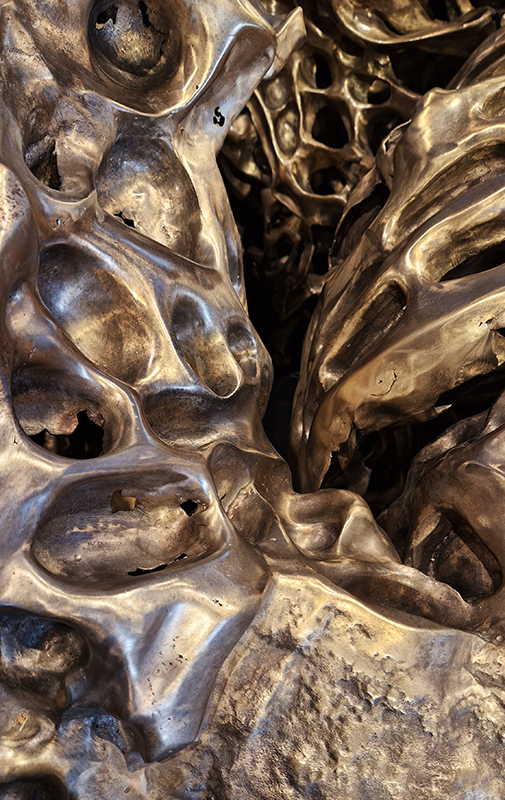
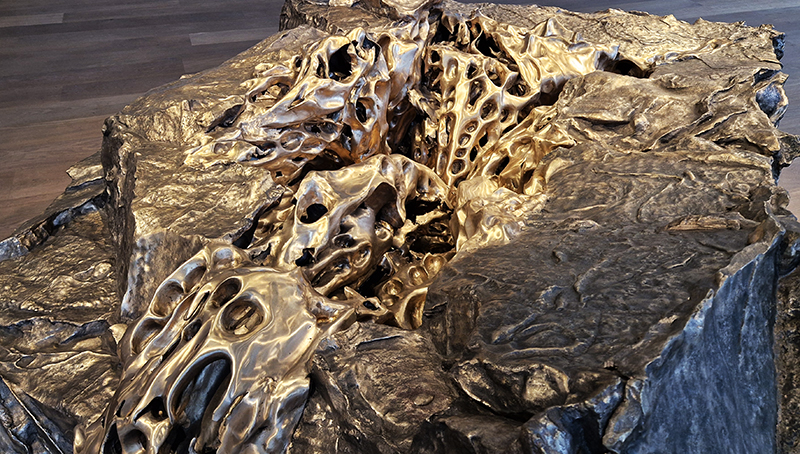
Cristina Iglesias The Shore at Hauser & Wirth features large-scale bronze works from the artist’s Littoral (Lunar Meteorite) series, part of her ongoing exploration of geological themes. The word ‘littoral’ refers to something relating to or situated along a coast or shore, or the region where the land meets the water. The weightiness of the objects is impressive ( I can’t imagine how they were brought into the gallery even with the technology available today – after coming here from the talk on stone henge and the incredible feat of bringing the standing stones across rough terrain for many kilometres and up a slope 5000 years ago seems even more impossible – yet there they are). The sound of water bubbling within each piece draws you to peer within and stay with the piece perhaps longer. The audience is invited to touch the sculptures. The bronze is polished and does need to be used and worn away in a more effective organic and dirty process. They are very clean.
The Royal Astronomical Society lecture Sighting the Sun and Moon? at Stonehenge – by Archaeoastronomist Prof. Clive Ruggles. Debunking many myths and overspeculation, concerning the use of the monument for observations of the sky the professor was clear about what can sensibly be said about the relationship of Stonehenge to the Sun, considering the conventional archaeological evidence that has been uncovered in recent years. He also recommended visiting the day before or after the actual solstice if possible for an experience without the many crowds as the alignment is almost identical. Also visiting at sunset can be just as magical and quieter. He turned his attention to the Moon, questioning if our prehistoric forebears also celebrated the occurrence of a major lunar standstill, an event occurring every 18.6 years around which time the Moon can be seen at fortnightly intervals exceptionally far to the north and south.

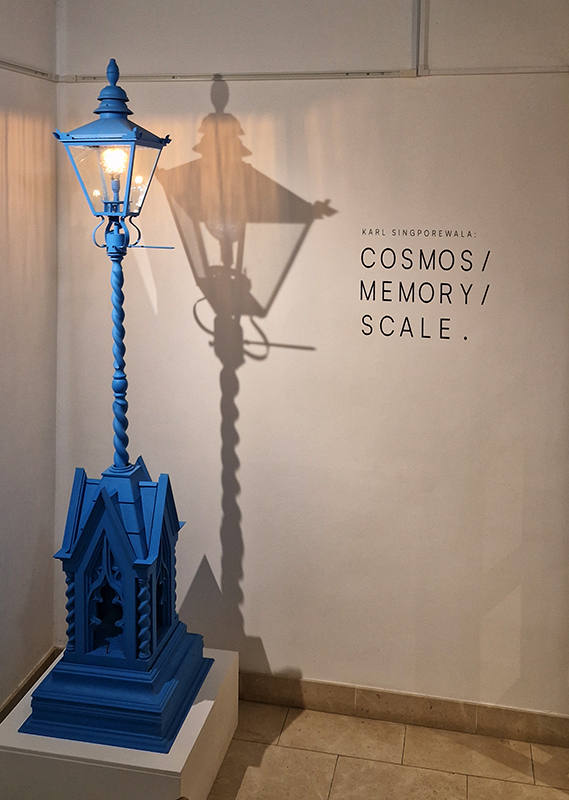
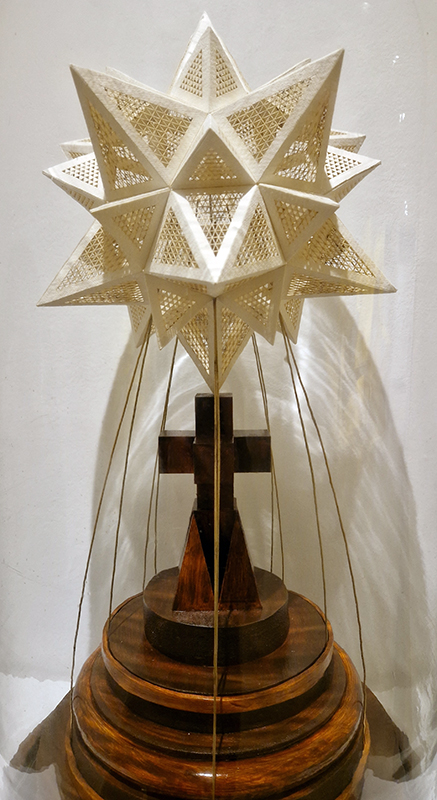
Karl Singporewala’s sculptural interpretations of Zoroastrian symbolism in Cosmos, Memory, Scale at SOAS Gallery convey a meditation on how material and memory intersect to shape the human experience. Cosmos speaks to both his fascination with astrophysics together with a metaphysical belief in the alignments of life. Stars and geometric forms recur as motifs, refracting both spiritual navigation and mathematical structure. Memory is treated as a living, shifting phenomenon. Inspired by oral tradition, family stories and inherited rituals. Scale, is used both literally and metaphorically in shifting perspectives and unexpected relationships. Good Thoughts, Good Words, Good Deeds.
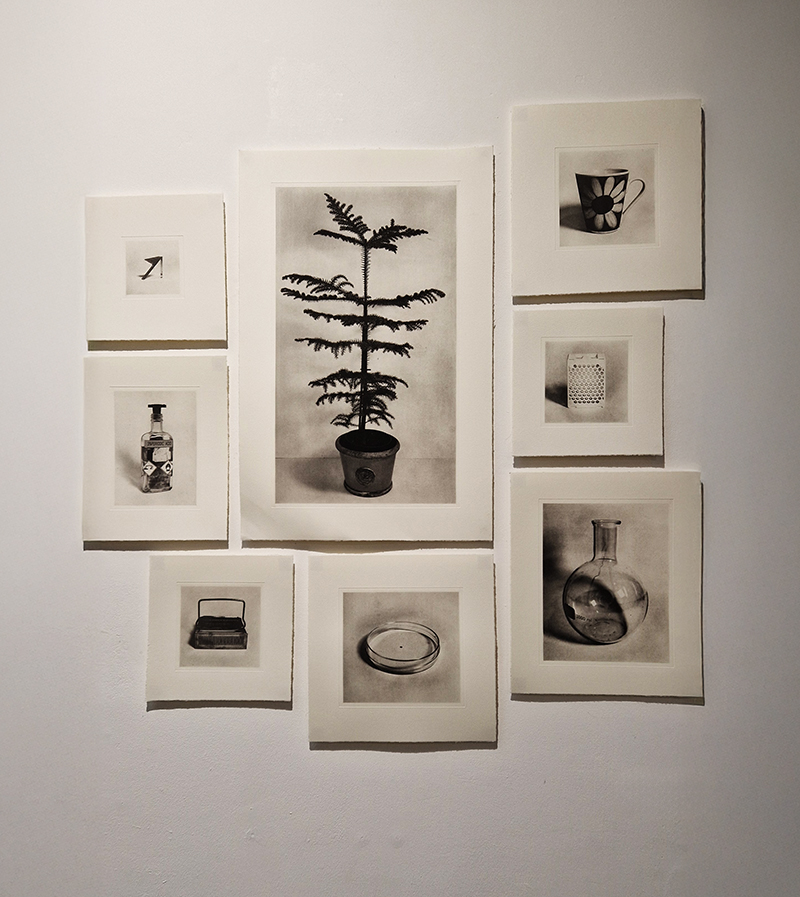
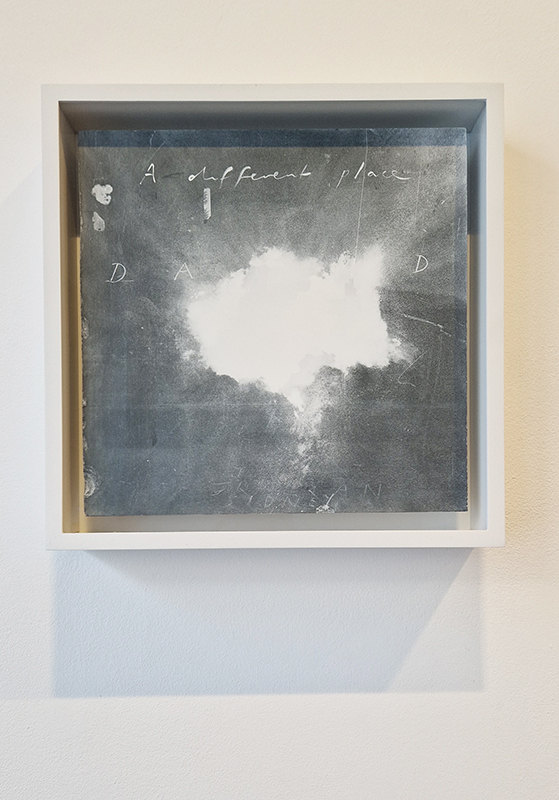
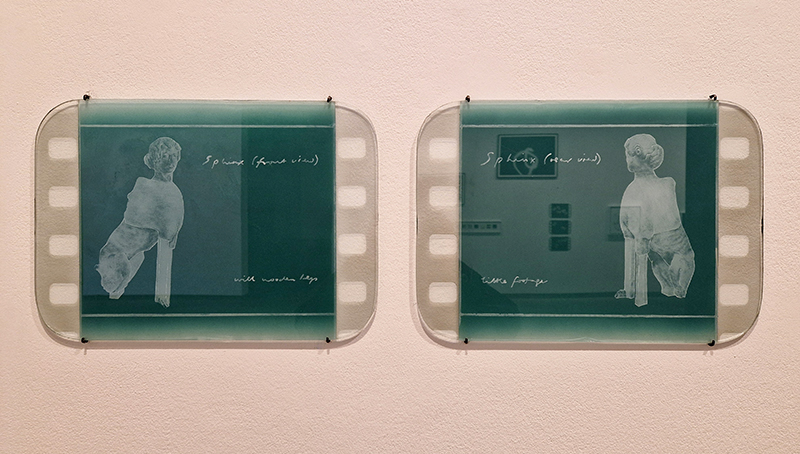
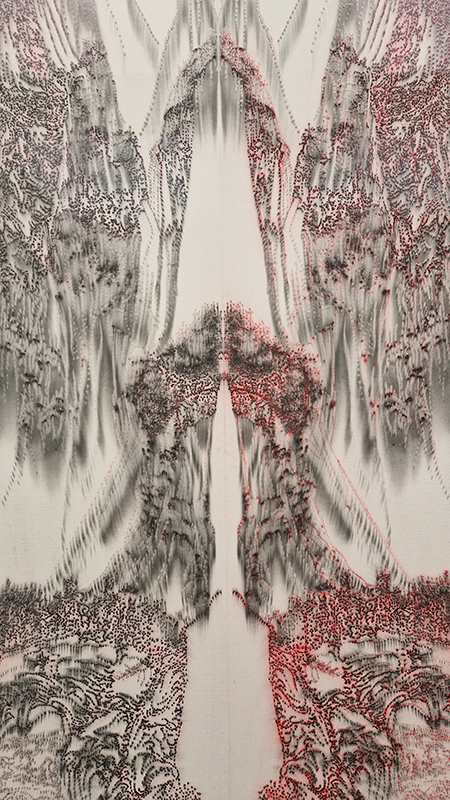
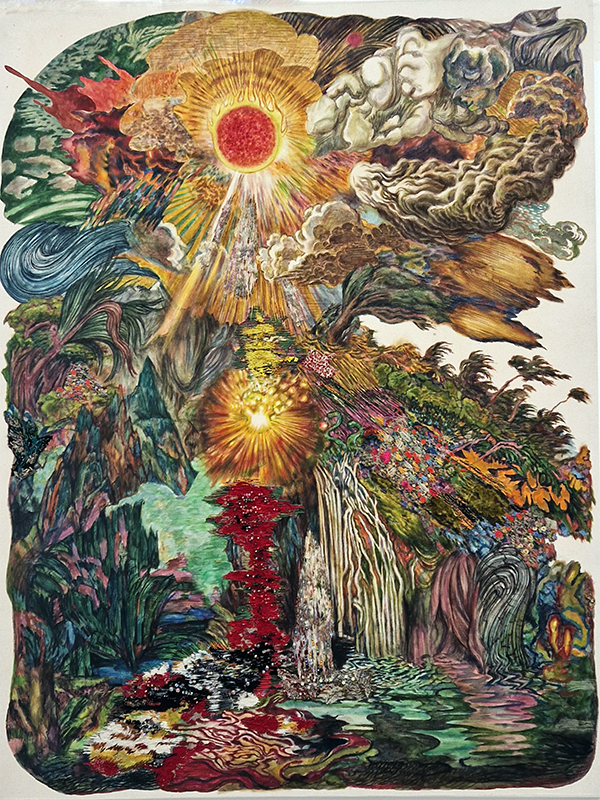
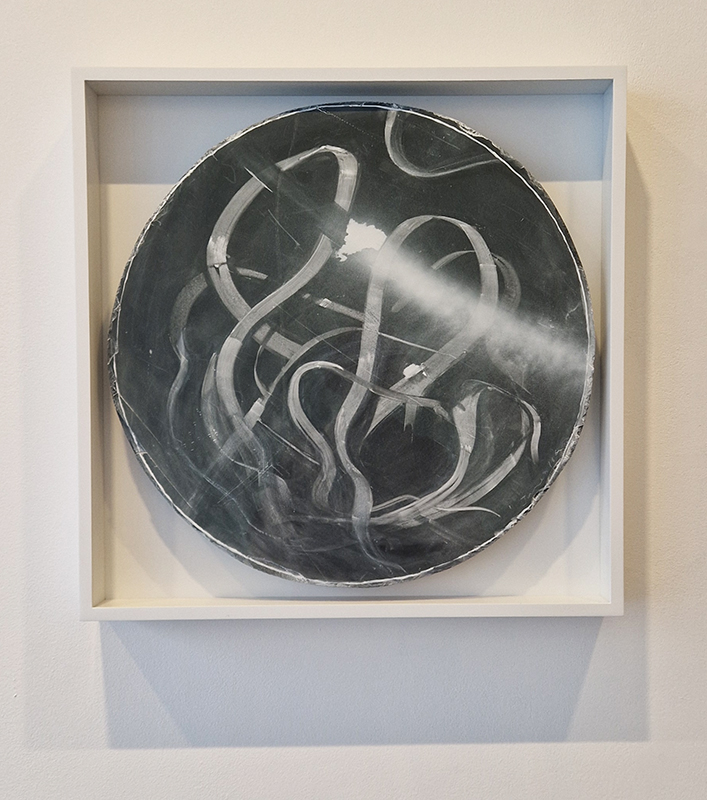
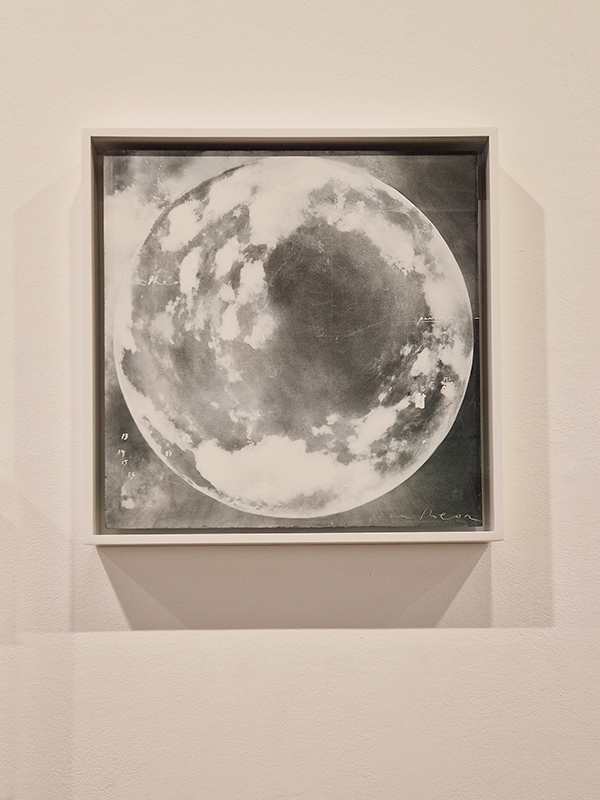
Dusty, chalky mythical drawings and solar eclipse traces from Tacita Dean in Black, Grey, Green and White at Frith Street Gallery Golden Square.
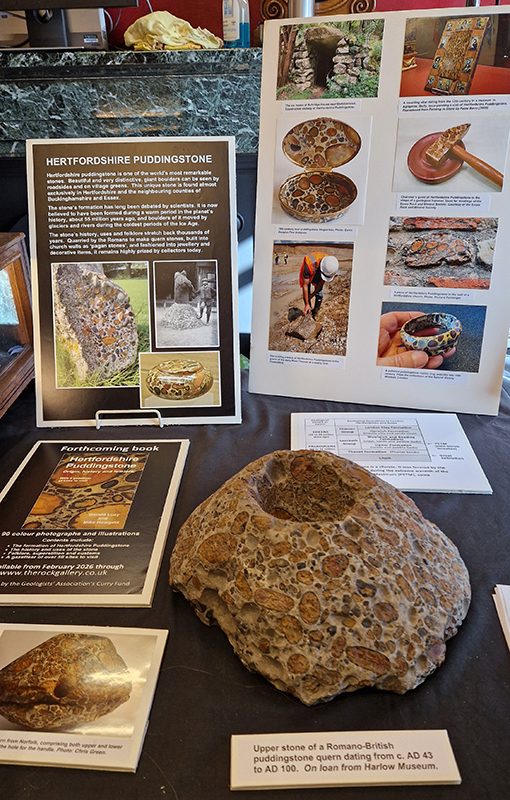
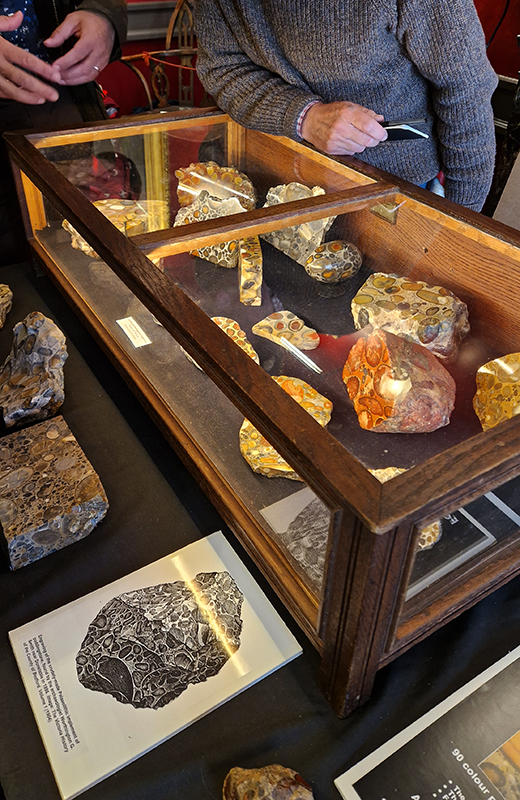
I spent a happy morning at the Geologists Association Festival of Geology 2025. This included a fascinating lecture The Early Evolution of Animal Life by palaeobiologist Frankie Dunn focused on the origin and early evolution of animals and particularly on the fossil record of the late Ediacaran Period (approximately 570 – 540 million years ago) – just before the Cambrian explosion of life. The aim of her research is to understand how animal body plans evolved in deep time. There also was some amazing and unique pudding stone on display.
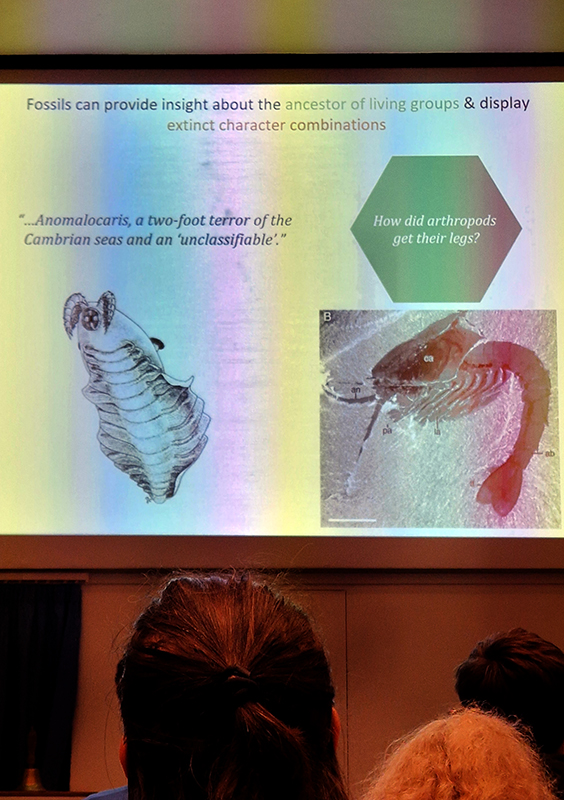
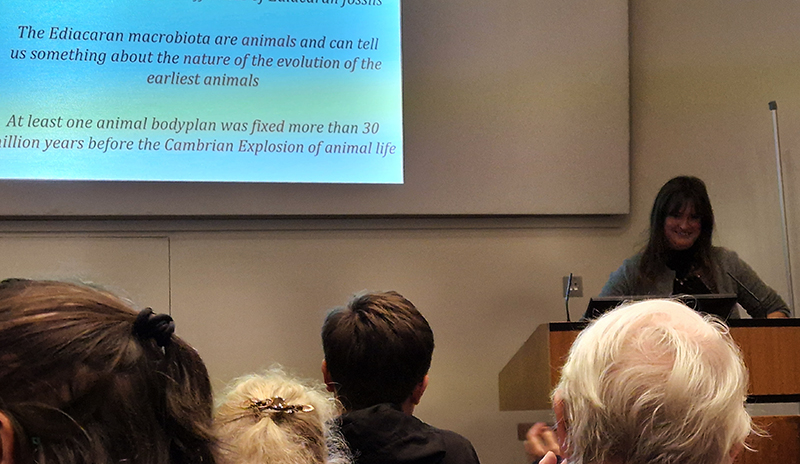
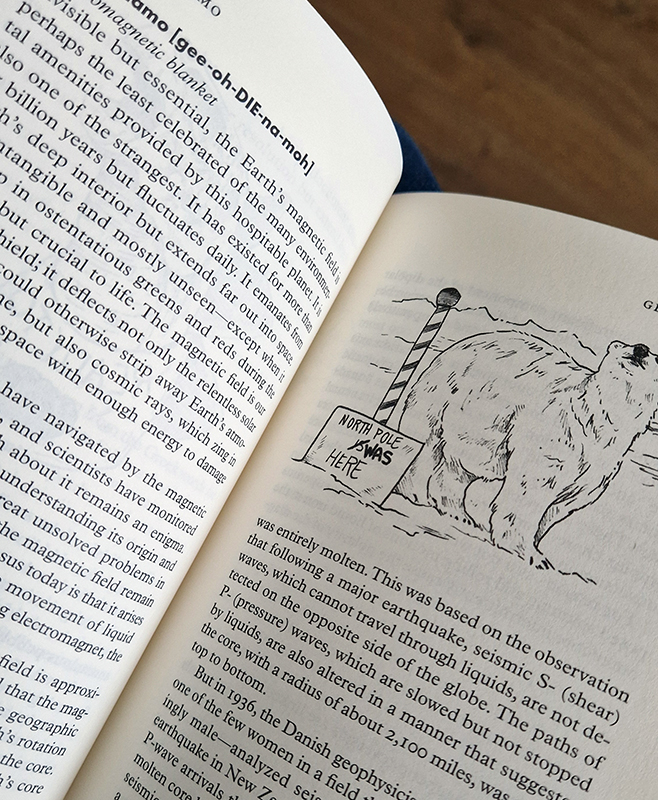
I also picked up a great little book full of wonderful geologically enriching words by Marcia Bjornerud.

Carbon, Carbon Everywhere opened at Hypha HQ co-curated by Maria Hinel & Indira Dyussebayeva-Ziyabek with exhibiting artists Emii Alrai, Kate Daudy, Konstantin Novoselov, Susan Eyre, Ania Mokrzycka, Simon Faithfull, Nissa Nishikawa, Mariele Neudecker, Anousha Payne, Aimée Parrott, Lucia Pizzani, Lizi Sanchez, Meng Zhou.

The title of the exhibition is taken from the chapter Carbon in the book The Periodic Table by the writer and chemist Primo Levi. Levi traces a journey of a single atom of carbon across distinct states and beings, from resting in a bed of limestone for hundreds of millions of years, to entering the world of ‘things that change’ – swiftly shifting from the atmosphere to the lungs of a falcon, to the sea, to the trunk of a cedar, and eventually entering the writer’s own body from a glass of milk on his desk. Resolutely specific yet universal, Levi’s story highlights the singularity of carbon as an element that inherently connects all things through its relentless transformation. It fossilises, mutates, preserves, pollutes and nourishes. From its ancient geological formations to its current atmospheric volatility, carbon is never still, shifting between forms and contexts in an ongoing process of exchange.

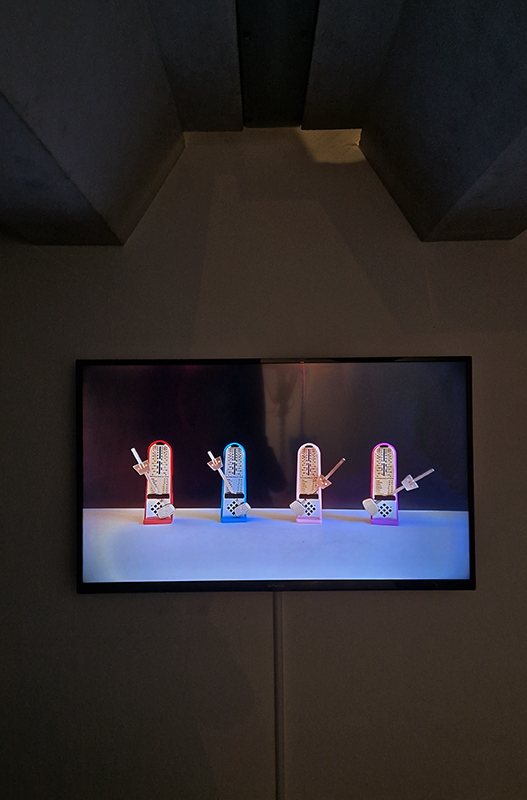
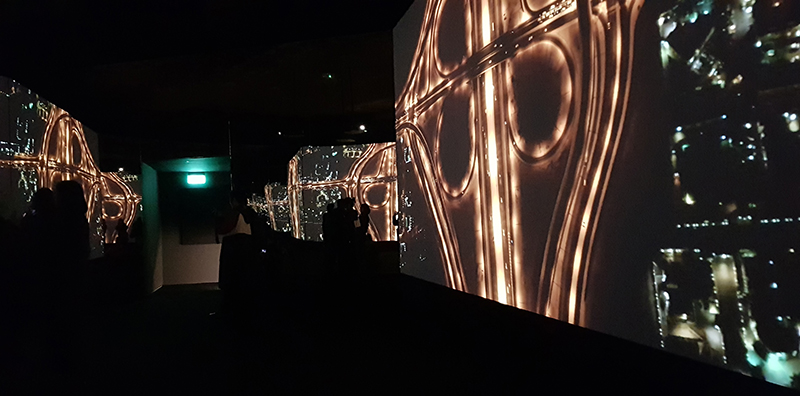
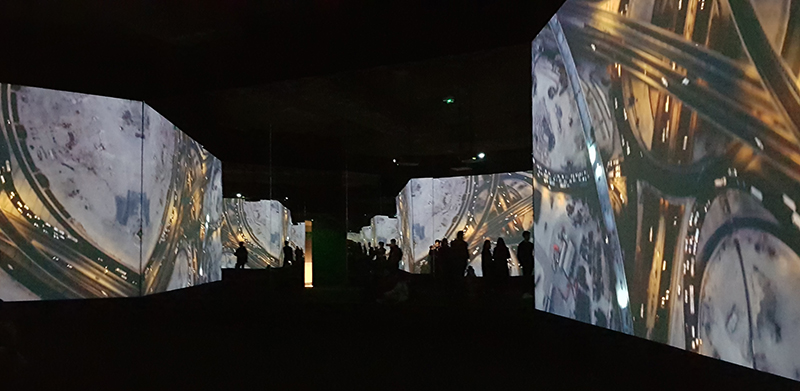
I am very happy to be exhibiting my video Cosmic Chiasmus: crossing the universe alongside the work of the other amazing artists.

Not only is all life physically permeated by cosmic rays with the potential for nuclei collisions but some cascading particles smash into atoms of nitrogen to create carbon-14 which combines with oxygen in the atmosphere to create radioactive carbon-dioxide. Carbon-14 enters the food cycle via photosynthesis as plants absorb it from the atmosphere. It is constantly renewed in all living organisms. On death, the amount of carbon-14 in the tissues begins to decay at a known rate which can be measured to determine the time of death. Cosmic ray activity therefore allows us to perform carbon dating techniques offering insights into Earth’s past climate and magnetic field, solar activity, and changes in the carbon cycle, helping us to understand historical patterns and establish timelines for ancient human history. Understanding the past can help us plan for the future.

Installation shot: Cosmic Chiasmus: crossing the universe 2021, video 05:25 min

Gallery Visits

I loved the textures of the sandy cementy surface of the mixed media painting by Antoni Tàpies in Point and Counterpoint at Centro Botin, Santander.

ENREDOS (entanglements) II at Centro Botin, Santander. Nuno da Luz amplifies the frequencies of the waves and the winds felt in the Bay of Santander, interweaving them with their oscillations of the building itself. The sound installations generate shared listening spaces, converting the environmental data of the Santander coast into vibrations and amplifying the building’s own vibrations, extending and intensifying their intrinsic energies.

The exhibition also includes works by Javier Arce: a series of oil paintings titled On What is Nearby and the sculpture Cambium – cast from the last ring of a tree stump – this is the most recent ring under the bark where new wood cells are formed as the tree grows.

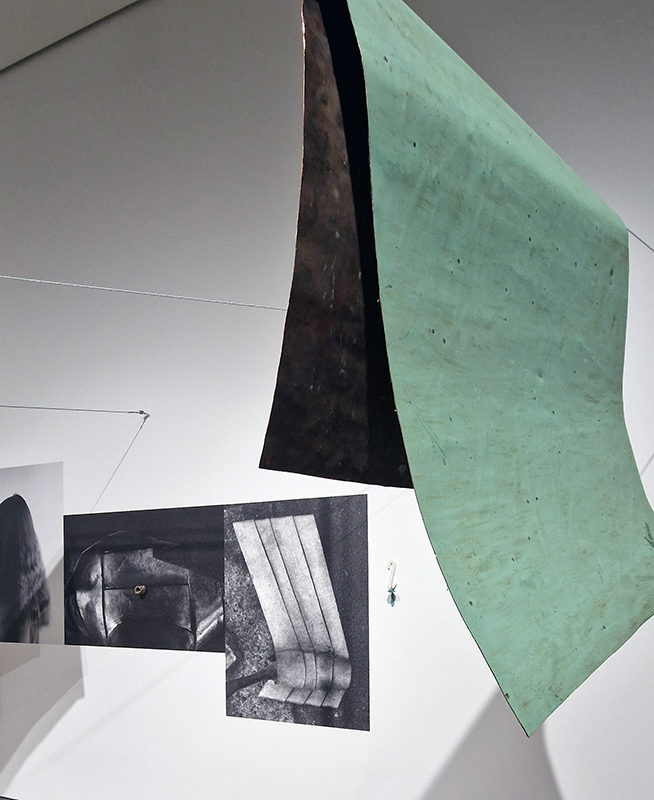
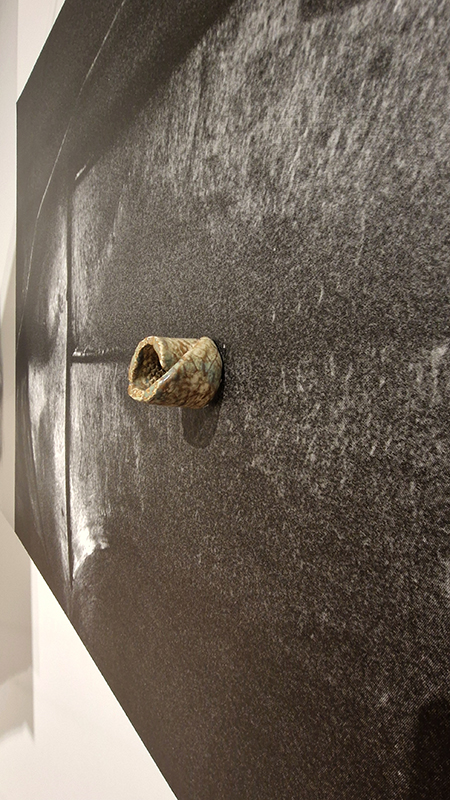
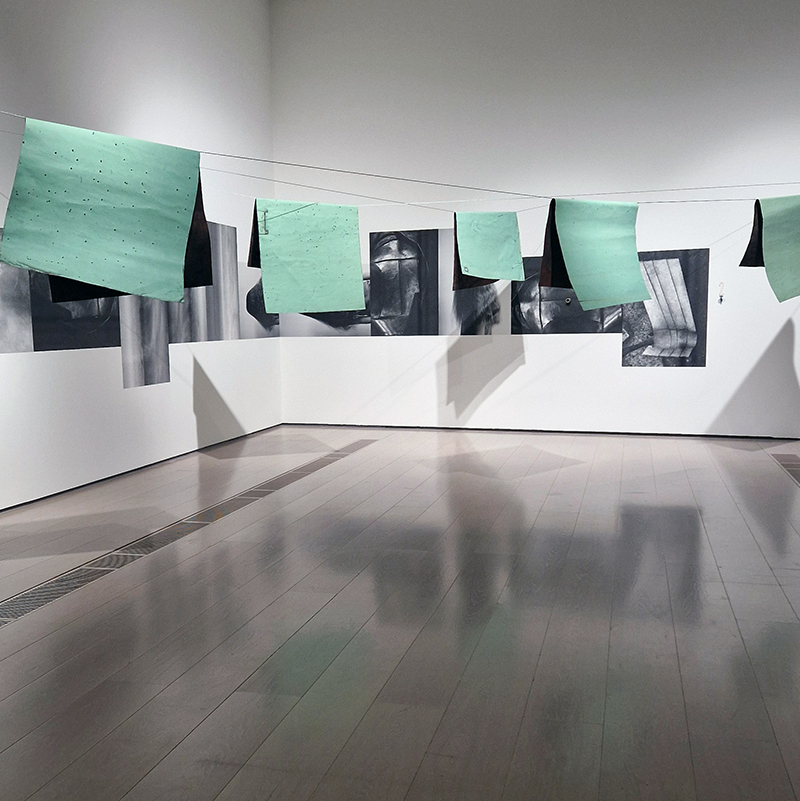
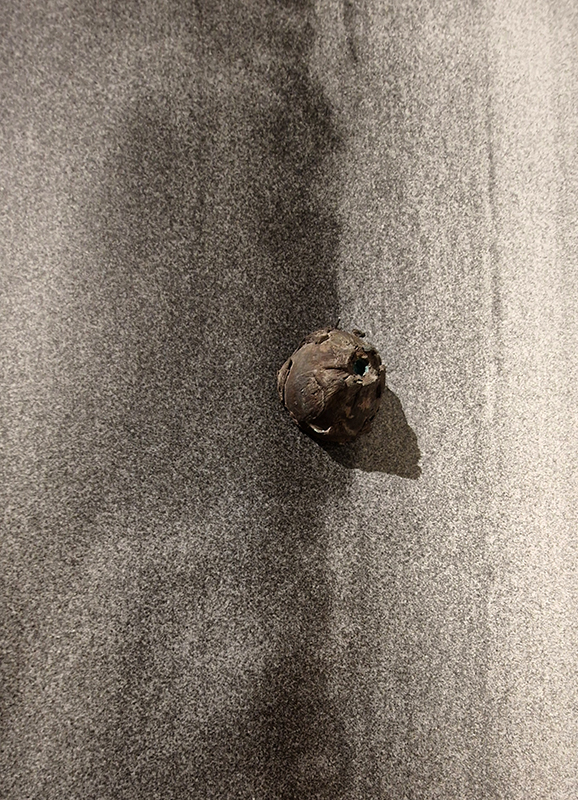
Katinka Bock: A striking installation Feuilles de temperatures which incorporates weather patinated copper sheets rescued from the dome of Anzeiger-Hochhaus in Hannover a legendary site of editorial histories, alongside Some and any, fleeting, an installation of large digital prints set with tiny bronze, ceramic and copper sculptures.

The video Core, a collaboration between sculptor June Crespo and cinematographer Maddi Barber which documents the different states through which the sculptor’s material passes: rock, dust, liquid, and solid. Connecting the processes of hands that touch and manipulate the cement sculptures, and the rock extraction and transformation process in a quarry.

Tacita Dean The Wet Prayer in reference to the final plea of Saint Paul as he was shipwrecked off the coast of Malta. In this exhibition the ephemeral chalk of Dean’s ocean waves resonate with the sound waves recorded from the bay outside and played back within the gallery space.

Great curation by Susanna Greeves of engaging works in Alien Shores at White Cube Bermondsey. In every depiction of landscape is a reflection of the values and beliefs of the society that created it. Landscape is not the world, but the world through human eyes.

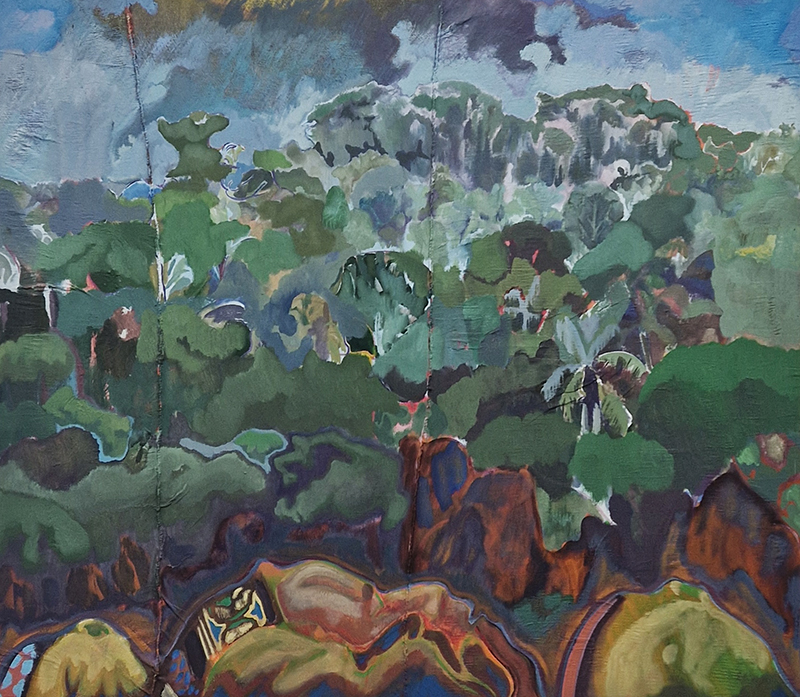
Exhibiting artists included: Michael Armitage A kind of belief, oil on Lubugo bark cloth.

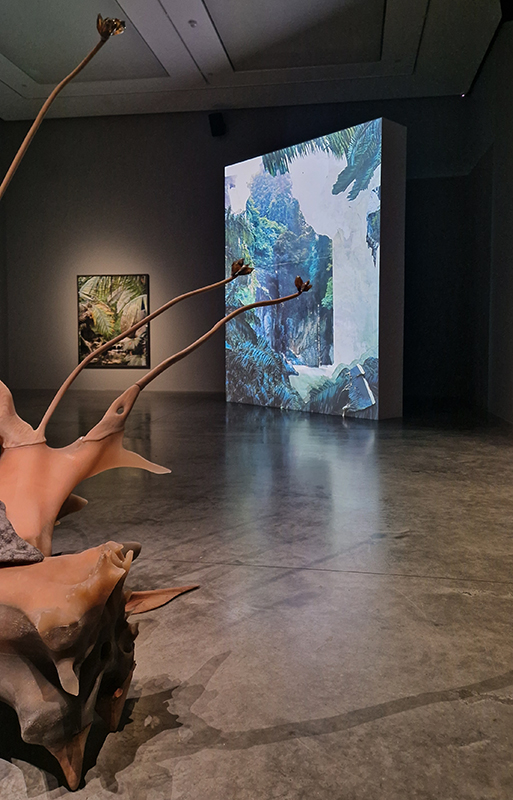
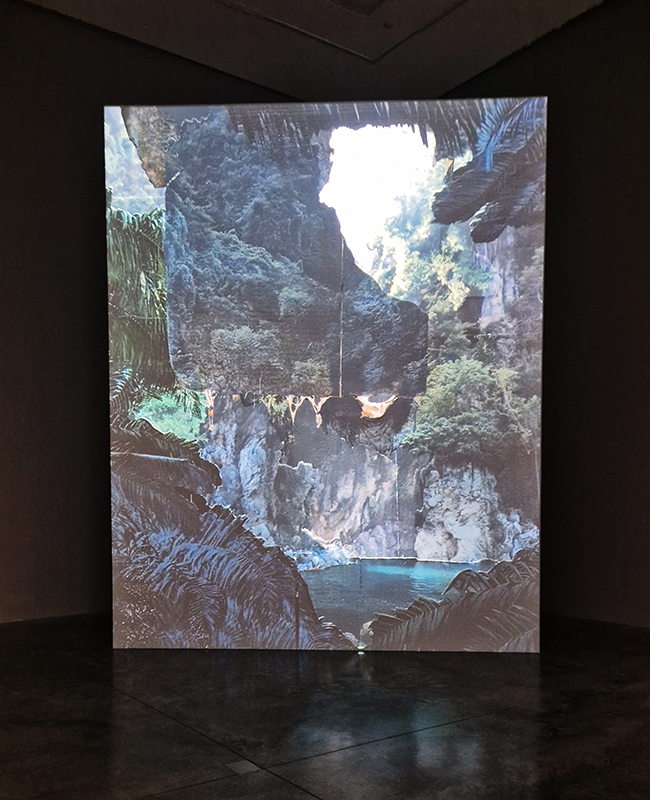
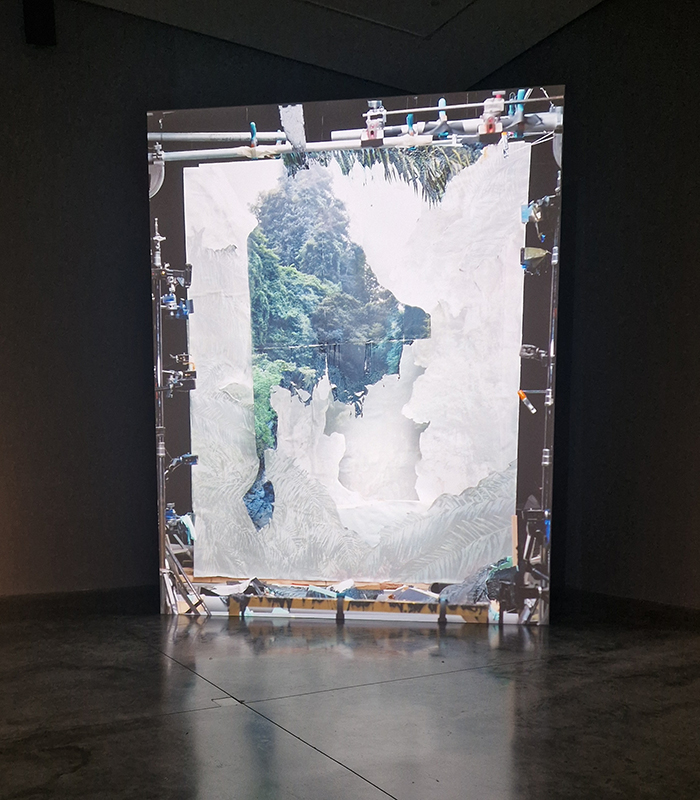
Noémie Goudal Tropiques IV, inkjet print and the mesmerizing collapse of dissolving landscapes in Supra Strata, HD video as layer after layer warps, stetches, tears and falls until there is nothing.

Sky Hopinka shapeshifting video Mnemonics of Shape and Reason

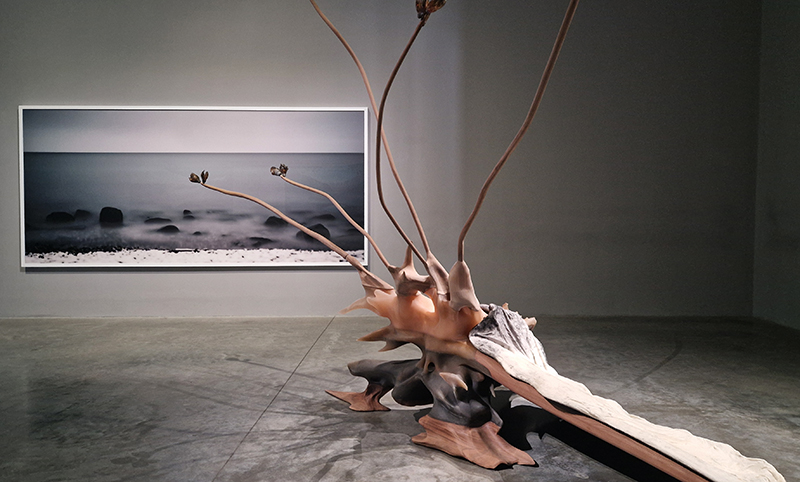
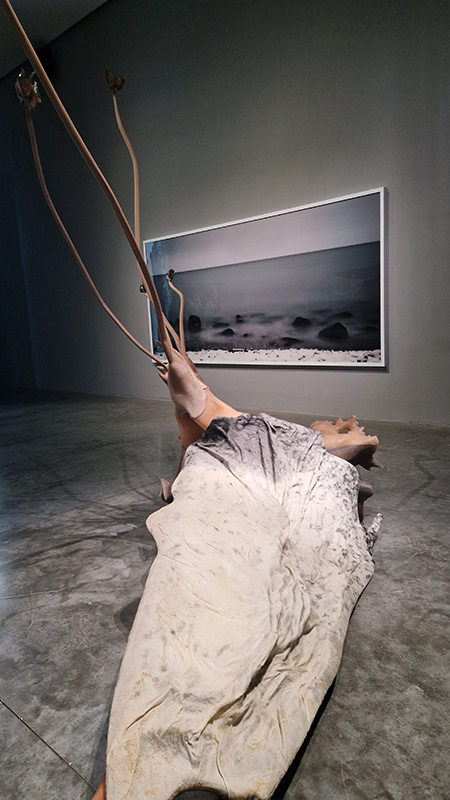
Marguerite Humeau Skero ( the dormant), embellished silk double organza, cast rubber, sediments, pigments, handblown glass, milled walnut, polyurethane foam, epoxy resin and stainless steel paired with Darren Almond’s haunting Fullmoon@Baltic Coastline, latex print.

Hung Fai, optically intriguing The Six Principles of Chinese Painting: Transmission XXII (with Hung Hoi), ink and colour on paper.

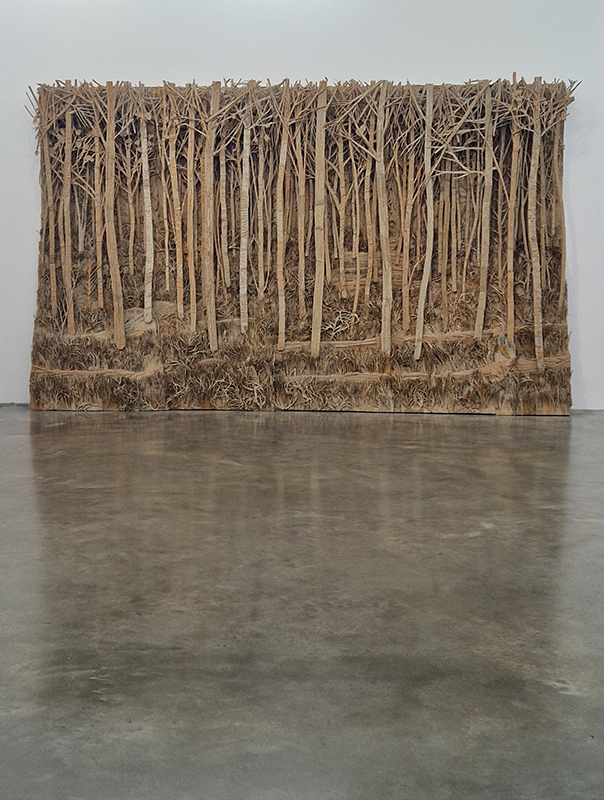
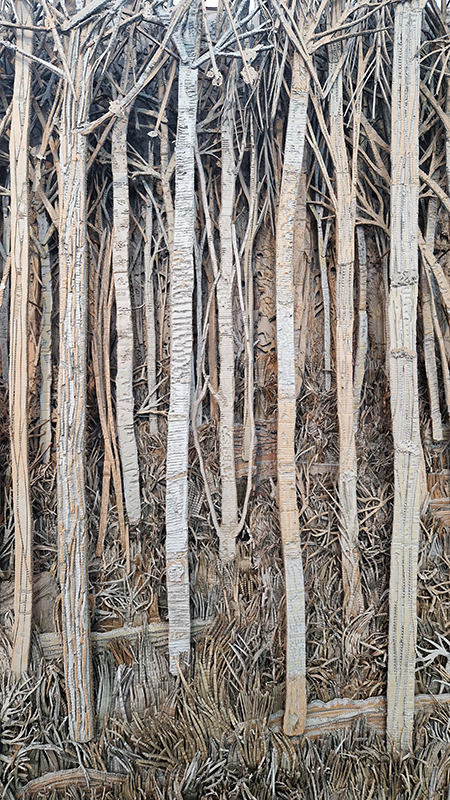
Eva Jospin, Forêt, cardboard and wood.

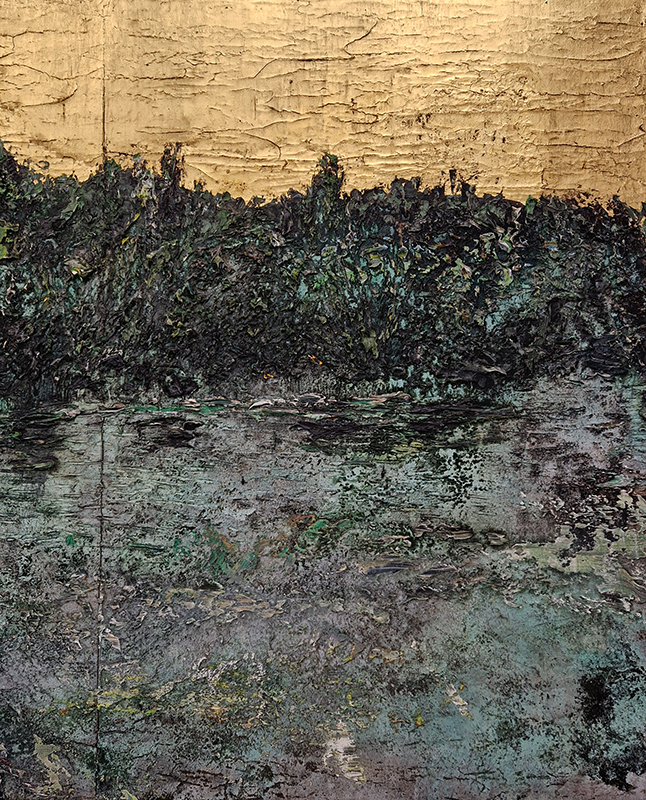
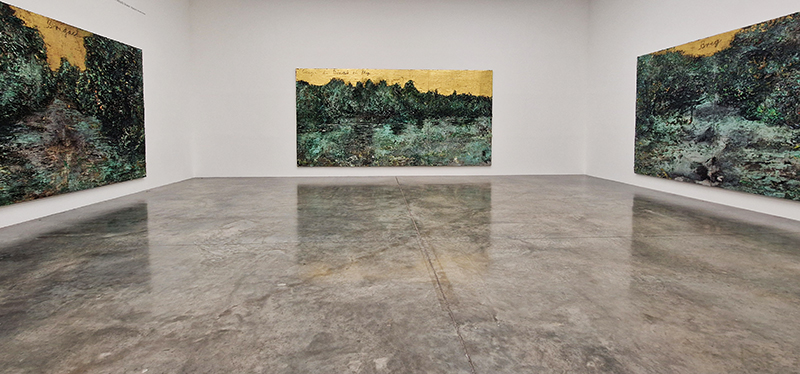
Anselm Kiefer Brigach und Breg bringen die Donau zu Weg, three panels emulsion, oil, acrylic, shellac, gold leaf and sediment of electrolysis on canvas.

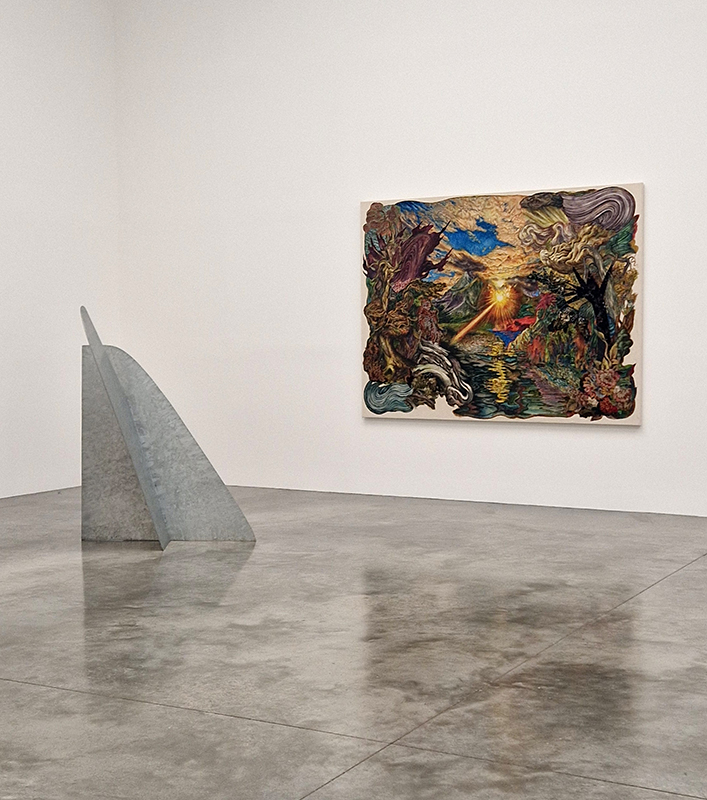
Ken Gun Min Everything We Can Imagine As Light Baroque pearl, crystal, assorted gemstones, vintage beads, Korean pigment, silk embroidery, thread, found fabrics and oil paint on canvas. I love exuberance of his painting and the title made me think of the epic Anthony Doerr book All The Light We Cannot See and the beautiful film All We Imagine As Light written and directed by Payal Kapadia both of which I found deeply moving.

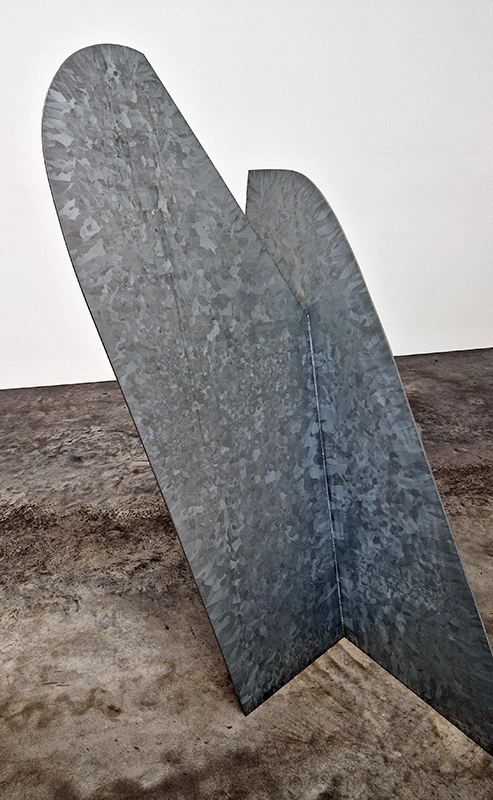
Isamu Noguchi Mountains Forming hot dipped galvanised steel.

Bagus Pandega and Kei Imazu, Artificial Green by Nature Green 4.1, Painting and erasing machine, water based paint on linen canvas, modular synthesiser, LED screen, PC and jelly palm tree. This was not in action when I visited.

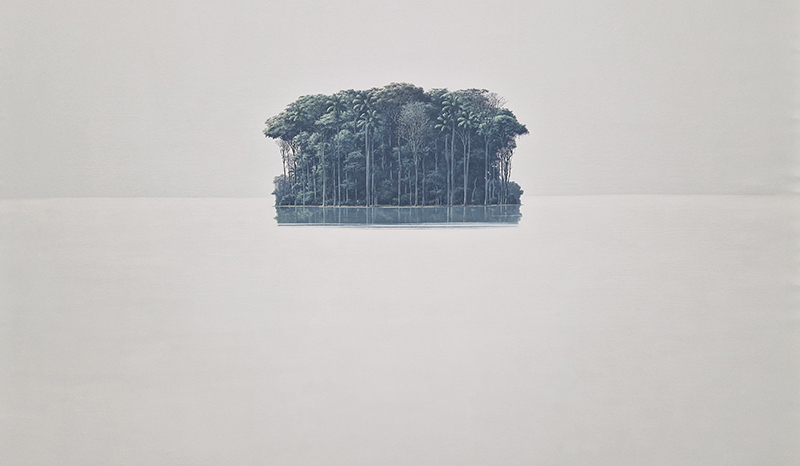
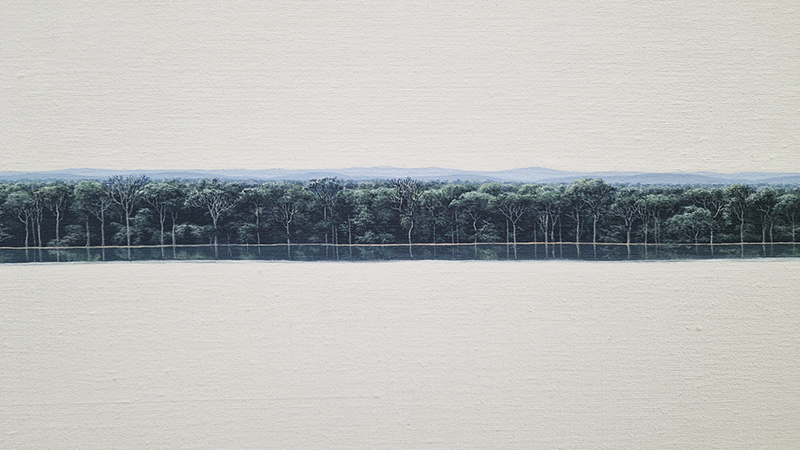
The delicate detailed forests on the cusp of erasure of Tomás Sánchez

Emma Webster mega painting Borrow Every Forest which has echoes of Noemi Goudall’s video in it’s staged nod to artifice.

Robert Zehnder Hip Bone, oil on canvas on panel.

Out and About

Not to forget that as backdrop to everything that occurs at the moment is the horrific genocide being perpetrated in Gaza. It seems impossible that such cruelty can happen, is still happening and the powers that could stop it do nothing. Santander beach protest for a free Palestine that I was able to walk alongside.

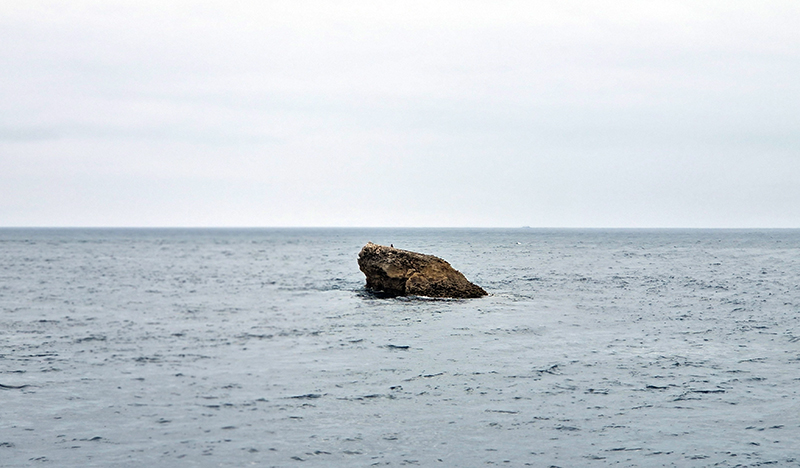
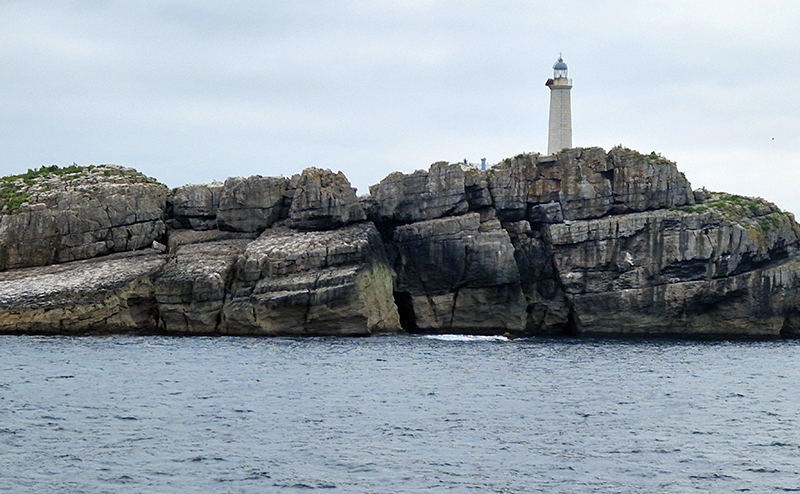
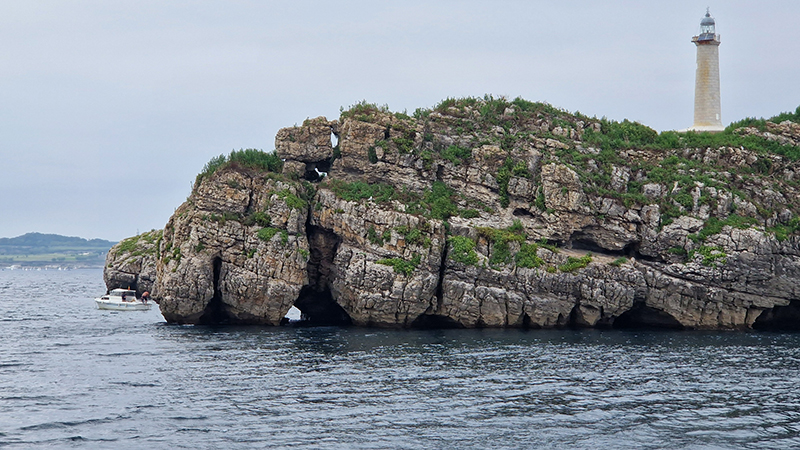
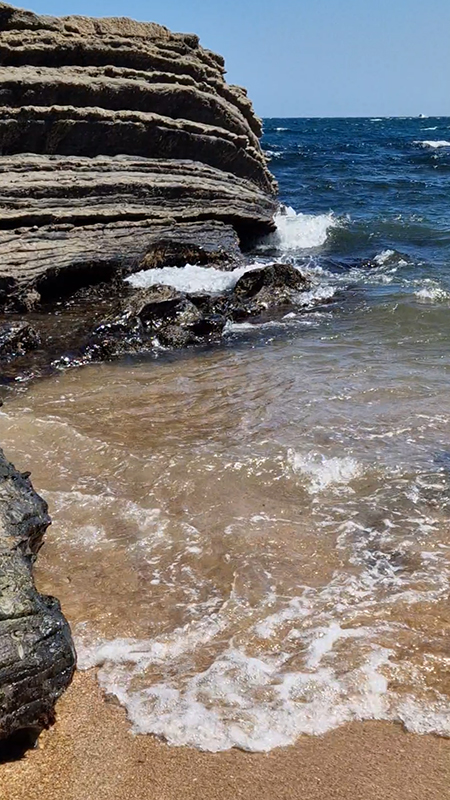
Contemplating geological time, rock gazing along the Santander coast.

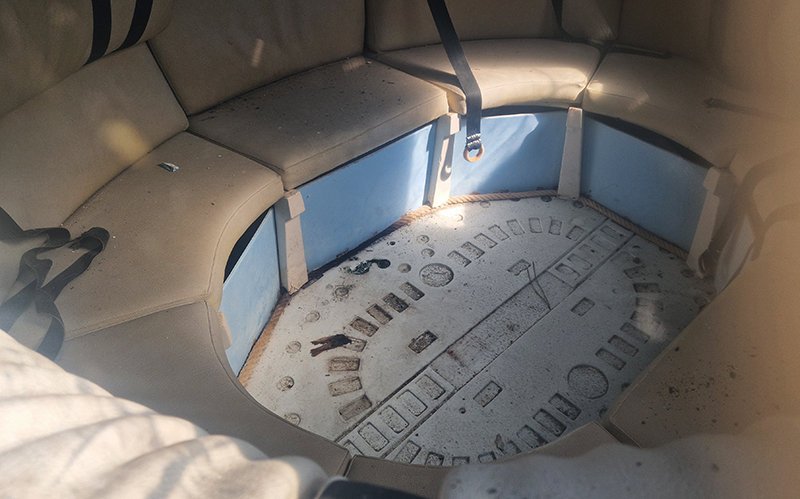
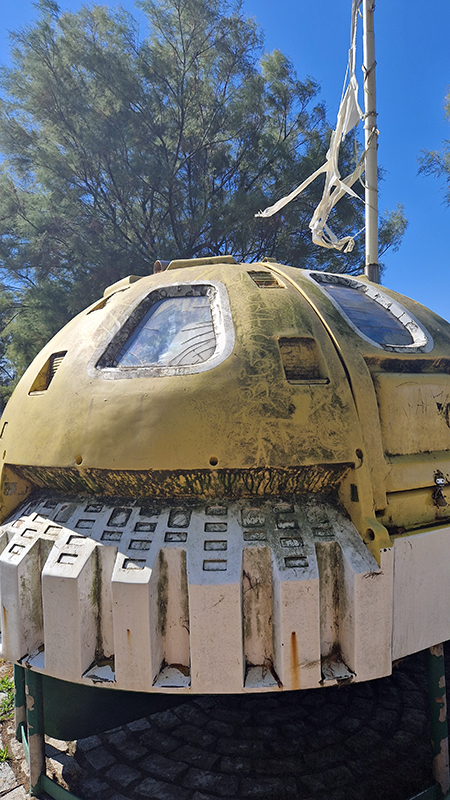
This sci-fi looking experimental lifeboat was designed by Spanish explorer Vital Alsar as part of his project El Hombre y la Mar. It has a capacity for 12 castaways and was towed across the Atlantic from Mexico to Santander in 1978, the culmination of his expedition to emulate the one undertaken in 1542 by Francisco de Orellana from Ecuador on foot across the Andes to navigate the length of the Amazon to the ocean. Through his expeditions, including the longest crossing of the Pacific Ocean by raft, Alsar wanted to prove that by respect for, and harmony with nature, humans can cross oceans, feed themselves and live sustainably.

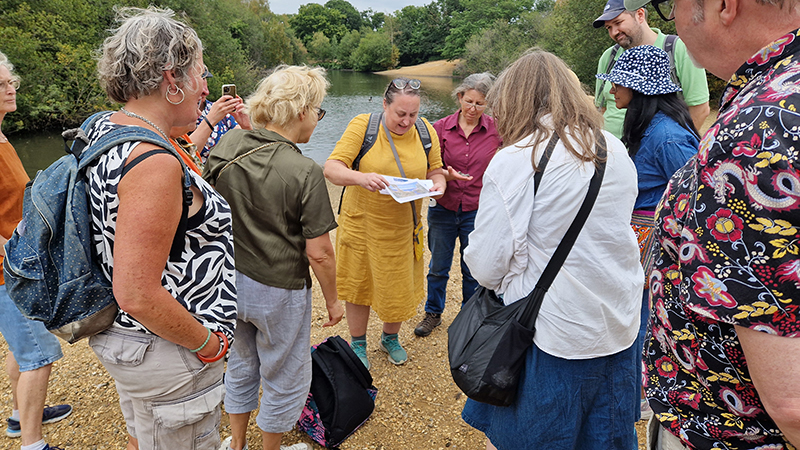
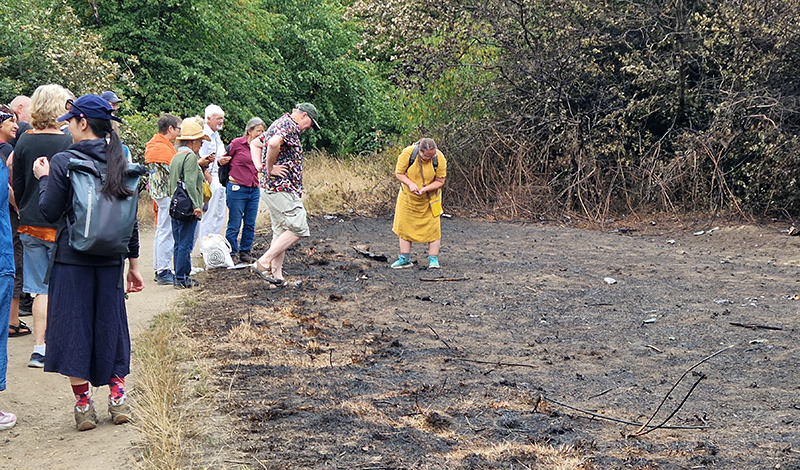
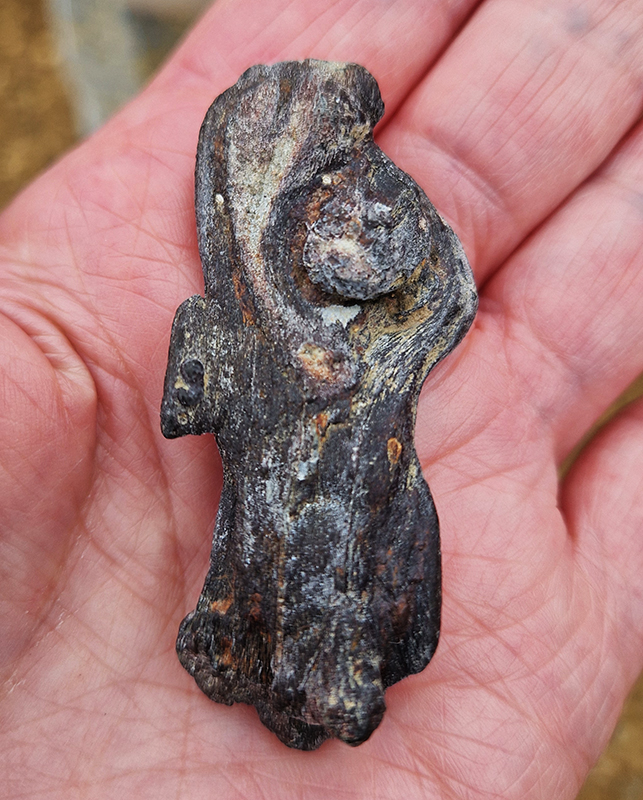
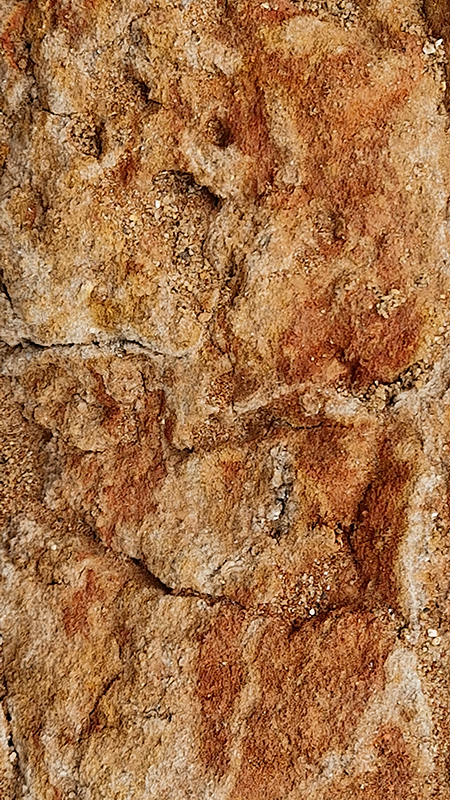
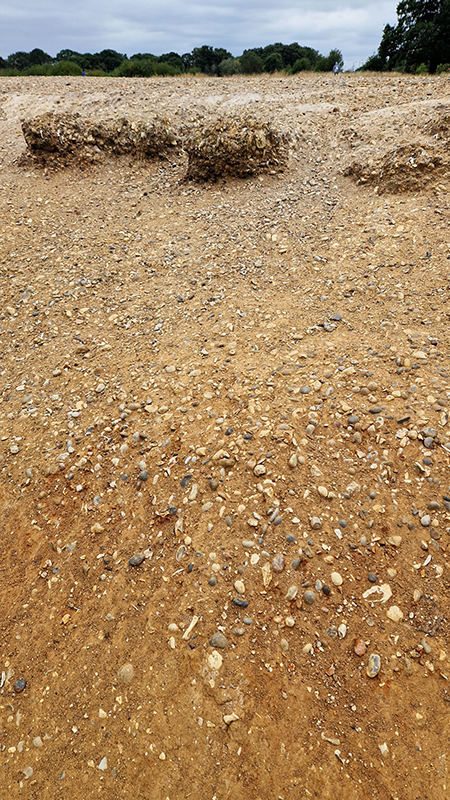
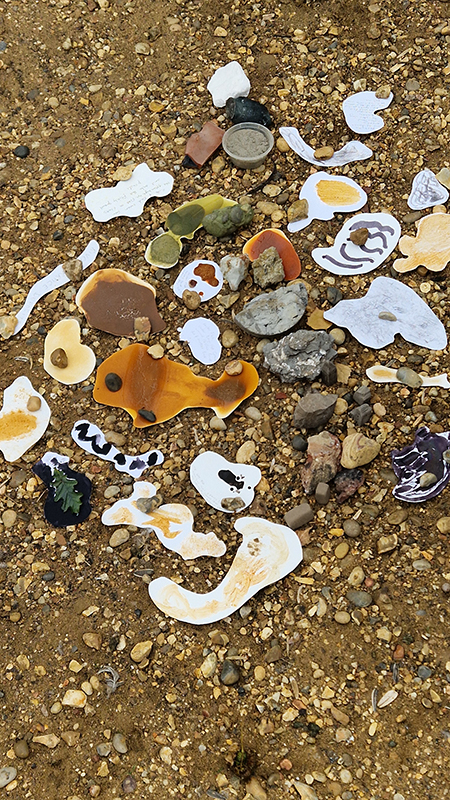
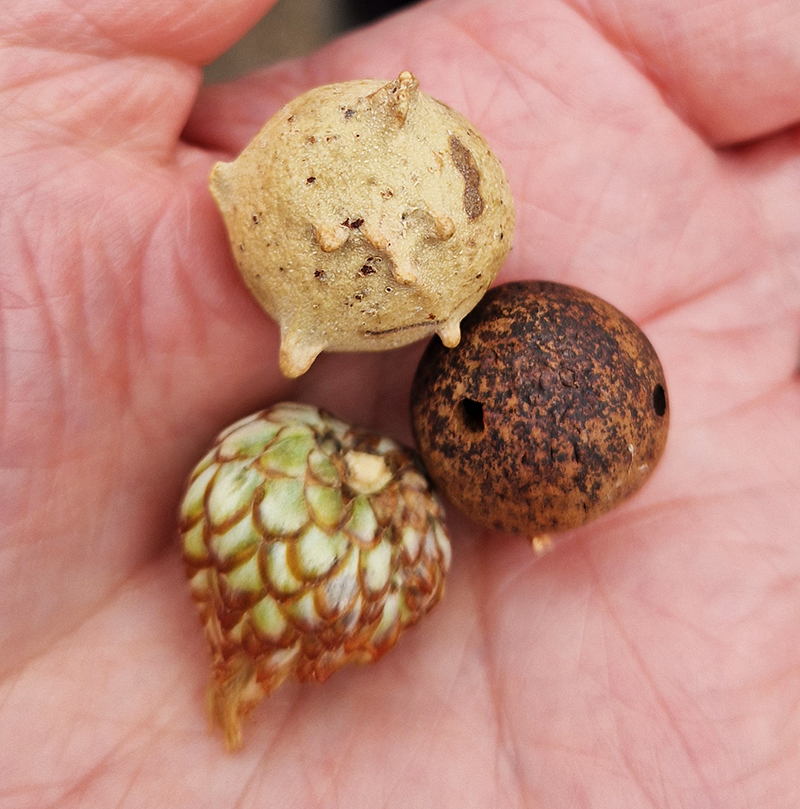
Inspiral London; Re/Walk Festival: Rivers, Reservoirs, Ice and Sea. The colours and layers of Walthamstow revealed by artist Gail Dickerson and geologist Ruth Siddall both members of London Geodiversity a group concerned with the natural and human aspects of landscape, focused on the rocks, sediments, soils, the landscape topography and the processes that act on the landscape. We were not only enlightened on the deep time history of this urban landscape as we stood and imagined when glaciers reached as far as Epping and woolly mammoths wandered the land here but were instructed on how to make shimmering ink from galls, how to make charcoal in a bonfire and use earth’s rich pigments to paint with. Galls form when an organism (like an insect) penetrates or irritates plant tissue, triggering the plant to grow and enclose the organism. 

Something I recently found out, amid the hype of the new movie, was that the Fantastic Four super hero characters got their powers from exposure to cosmic rays on an ill fated/serendipitous (depending on how you look at it) space mission. The original story was from 1961, the year Yuri Gagarin was the first human to orbit in space. Cosmic rays are a real danger to astronauts as these high energy radioactive particles can cause cell damage. Astronauts also experience directs hits on the retina from cosmic rays which they see as tiny flashes of light but this wouldn’t have been knowledge in 1961.

Reading

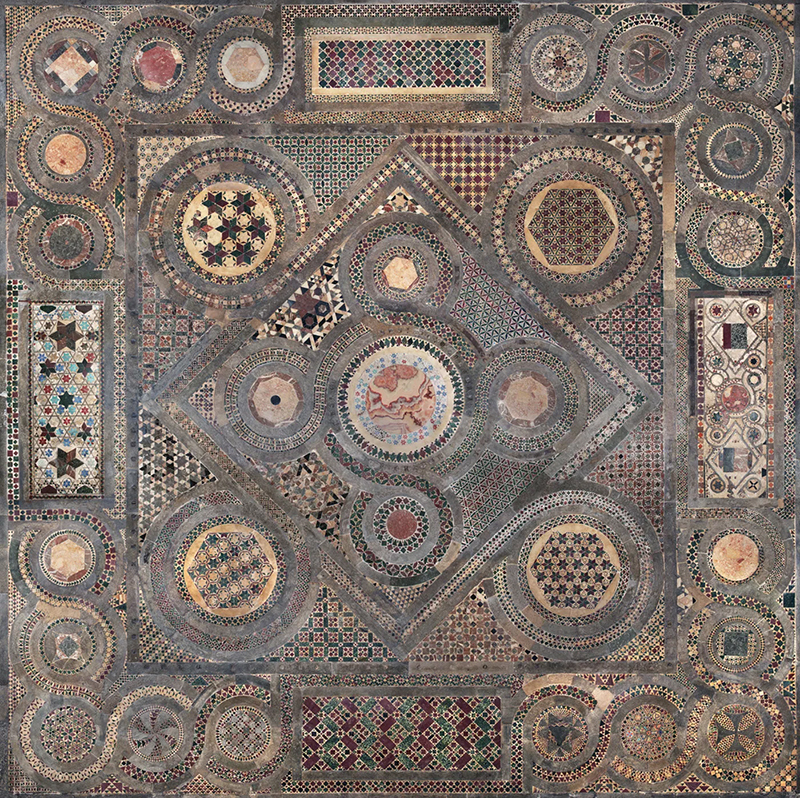
Patterns of Thought: The hidden meaning of the great pavement of Westminster Abbey by Richard Foster. The book offers a thorough investigation into of what is known as the Cosmati Pavement; a unique work laid down in 1268 by order of Henry III who commissioned workmen from Rome, led by Odoricus, who were skilled in a type of inlaid stone decoration known as Cosmati work.

The provenance of the stones and the history of the pavement is interesting but the most compelling aspect of the pavement is its intriguing inscription in Latin which promises the reader disclosure of the end of time. It translates as

Four years before this Year of Our Lord 1272,                                                                                             King Henry III, the Court of Rome, Odoricus and the Abbot                                                                            set in place these porphyry stones.                                                                                                                   If the reader wittingly reflects upon all that is laid down,                                                                               he will discover here the measure of the primum mobile:                                                                                              the hedge stands for three years,                                                                                                                             add in turn dogs, and horses and men,                                                                                                       stags and ravens, eagles, huge sea monsters, the world:                                                                             each that follows triples the years of the one before.                                                                                    Here is the perfectly rounded sphere which reveals                                                                                                    the eternal pattern of the universe.

The fateful day expressed in terms of the multiplied life-spans of various creatures apparently arrives at the sum of 19,683. The book offers fascinating insight into the beliefs of medieval cosmology, Christian philosophy and sacred geometry that together formed the thoughts that were meticulously laid down in stone.

I am continuing to look at research showing it may be possible that humans retain some residual magnetoreceptor in our eyes that once allowed us to navigate using the Earth’s magnetic field. We know animals and birds have this ability and current studies suggest that some people do indeed perceive magnetic fields, albeit unconsciously.

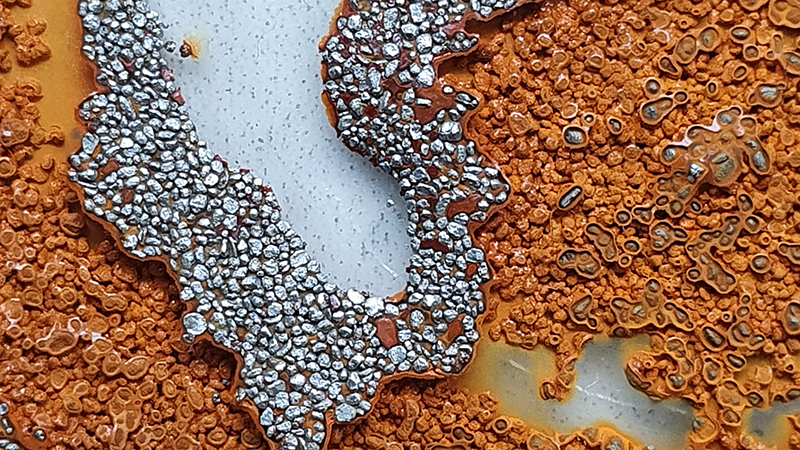
I dropped some iron filings into a little water which evaporated leaving a pleasing deposit. I wanted to see if the filings lose their magnetism once oxidized and how the rusted filings would sit on the iris image.

I was invited by Luci Eldridge and Ian Dawson to present a talk and run a Cloud Chamber Workshop as part of the Images In The Making series, a Communities of Practice cross-years project at Winchester School of Art.

Images in the Making considers images in an expanded sense in terms of process, materiality, interaction, exploring how artworks evolve and come into being.

Images – be they human or machine – are entities that are made. They are drawn, sculpted, painted, mapped out, captured, rendered, visualised, spliced, amalgamated. Images in the Making considers images in the broadest sense, exploring them as fluid, dynamic entities that emerge and transform through making, unmaking, and remaking. Process is at the core of this project and we will think about ‘imaging’ as an unfolding activity, investigating how artworks change as they are made and circulated.

Writing the presentation allowed me to revisit and consider how I use process in a practice broadly to do with visualising the unseen.

As my starting point is often an unseen or maybe even an imagined object this might mean visualising a close approximation of something to open up the imagination to phenomena that is beyond our capability to visualise. This would include things like dark matter, higher dimensions in spacetime, or the aura of an object. Or it may be using technology to make visible something otherwise outside the limitations of our senses. Or a conflation of real and imagined such as seeing a galaxy in a frozen puddle.

In Patrick Harpur’s book The Philosophers’ Secret Fire – A History of the Imagination he talks about those inbetween spaces where things are not quite ‘there’ and not quite ‘not there’ which I think is an interesting space to look at when trying to bring the unseen out of the shadows. The book relates how myths have long been used to make sense of the world. For most of our evolution humans have believed in an otherworld of spirits – a metaphysical realm governed by archetypes. Daimons are given context in the book as elusive, contradictory, both material and immaterial concepts that still reside in our culture but are now so far removed from their personified shapes that we fail to recognise them.

All human experience is an edited account of full reality as neuroscientist Anil Seth tells us

“You’re locked inside a bony skull trying to figure what’s out there in the world. There’s no light inside the skull, there’s no sound either, all you’ve got to go on are streams of electrical impulses which are only indirectly related to things in the world, whatever they may be. Perception, figuring out what’s there has to be a process of informed guesswork”

 and then tangled with our reality according to Harpur

“…daimons inhabit another, often subterranean world which fleetingly interacts with ours. They are both material and immaterial, both there and not-there – often small, always elusive shape-shifters whose world is characterized by distortions of time and space and, above all, by an intrinsic uncertainty.

– the subatomic realm, like the unconscious, is where the daimons took refuge once they were outcast from their natural habitat.”

A few years ago when I was visiting and photographing streets and roads called Paradise trying to capture the aura of such a place I stopped to wonder what everything was made of. Did I need to look closer to find hidden patterns or clues in the everyday which might point to something sublime. This is when I turned to particle physics. I found the language to be quite like that of mythology, full of mysterious characters; the quarks, the muons, neutrinos. Characters governed by fundamental forces like the strong force and the weak force that are defined by their characteristics, just like the mythical gods. I also found the theories of particle physics to be as fantastical as the ancient tales where the laws of classical physics do not apply. I was amazed at the time to discover that most of the universe is hidden from us as mysterious dark matter and dark energy. 

To provide a relevant backdrop for the online presentation I set my dodecahedron sculpture Diazôgraphô by the window to light up the images of cosmic particle trails within. The dodecahedron is used here as a motif for the universe. The title translates from Greek as ‘to embroider’. Plato described the dodecahedron as ‘a fifth construction, which the god used for embroidering the constellations on the whole heaven.’

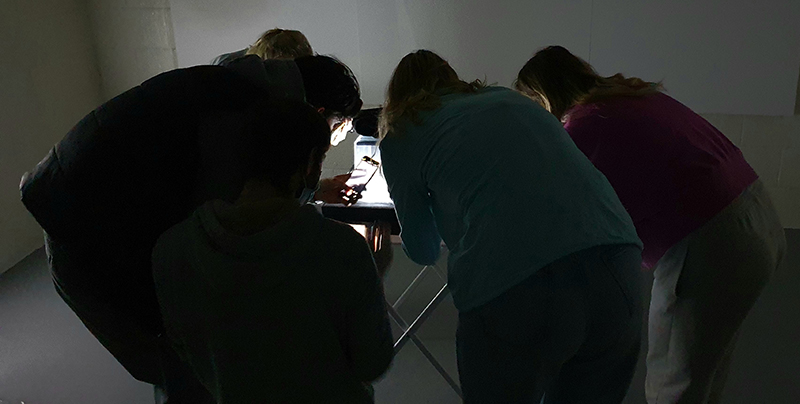
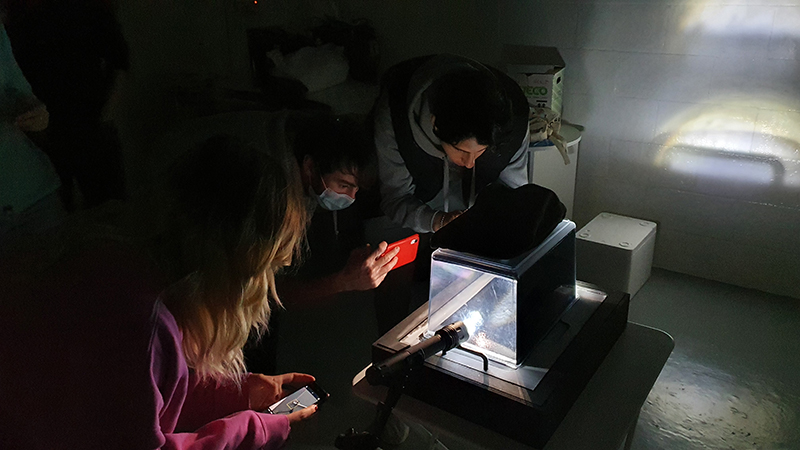
The cloud chamber workshop gave students a chance to experience the otherworld of subatomic particles. Dark matter might be inaccessible to us but cosmic particles offer a more tangible contact  – although too small to see we can witness their effects through quite simple processes. In the chamber we see trails from naturally occurring background radiation as well as particles from outer space.

Out of the Studio

Not Painting at Copperfield

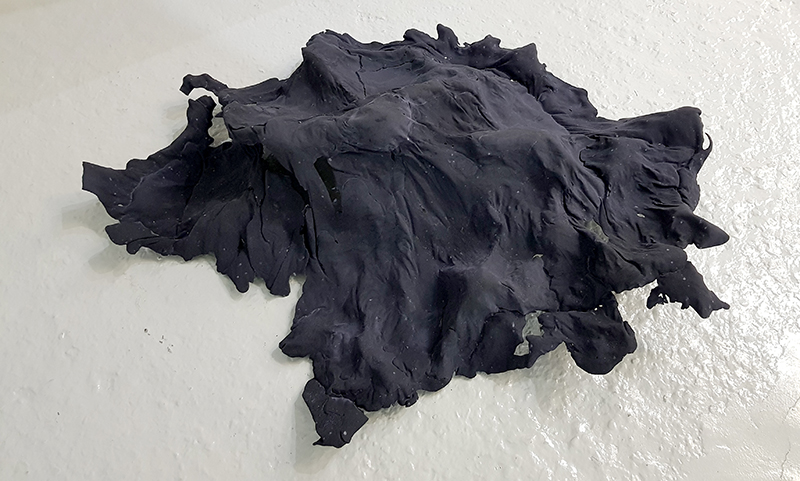
Inspired work by Nicola Ellis from Dead Powder series (first pic) in a show hitting the zeitgeist of rethink, repurpose the materials around us. Some beautiful and thoughtful work here much of which will confound you as to its material origins.

Darkness At Noon: Nigredo of a Pandemic at APT curated by Ruth Calland for Contemporary British Painting

Great to see some of Sarah Sparkes exquisite ghost painting series along with Chantal Powell’s alchemical totems and other works from 27 artists.

Alchemy is all about transformation from one state to another, the pursuit of a deeper truth as precious treasure. Alchemists were engaged in the Middle Ages with a physical process, trying to turn base materials into gold through a series of chemical processes, a metaphor for the transformation of the soul. There had to be a Nigredo, a dark night of the soul in order to purify it. Death and decay, destruction of the old to make way for the new, are both real and symbolic in these precarious times of ours. 

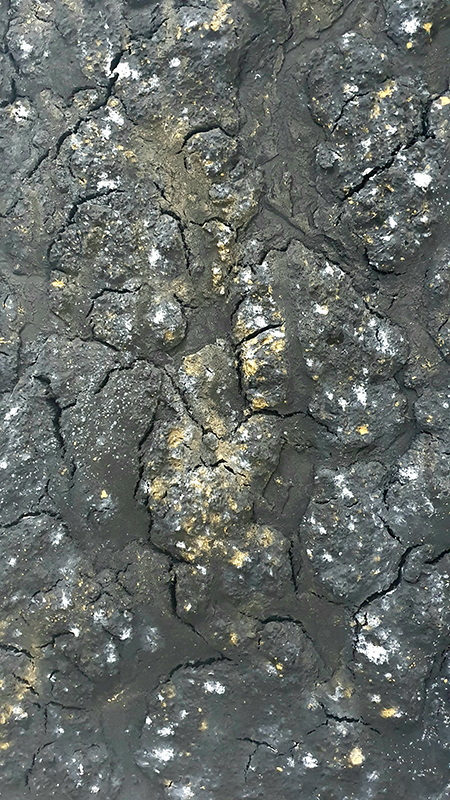
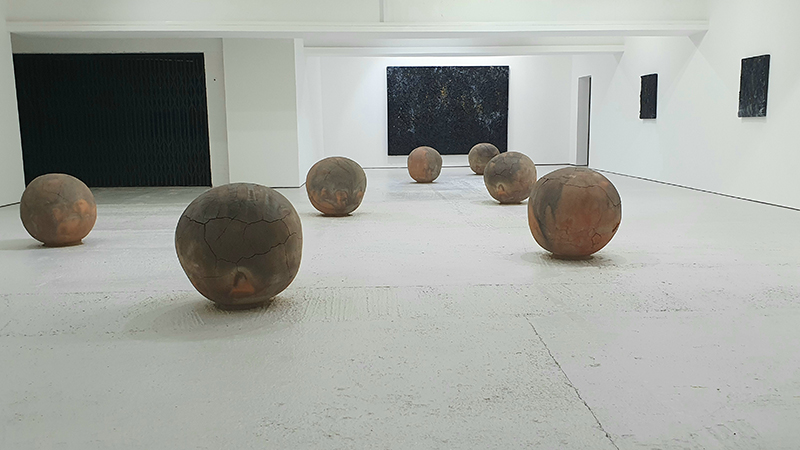
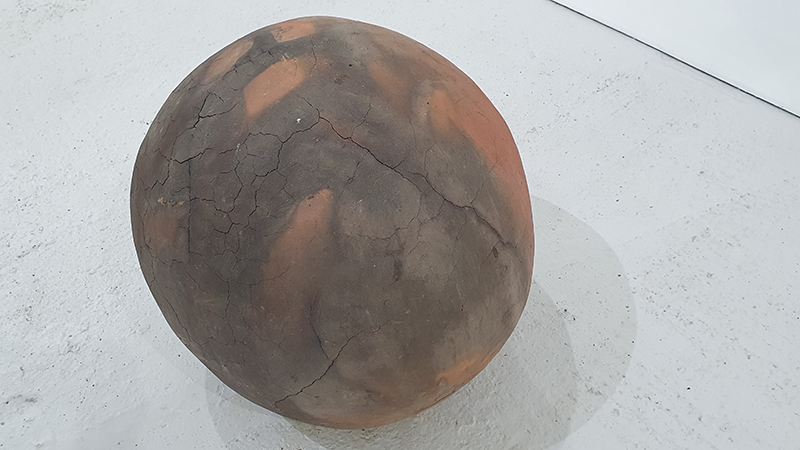
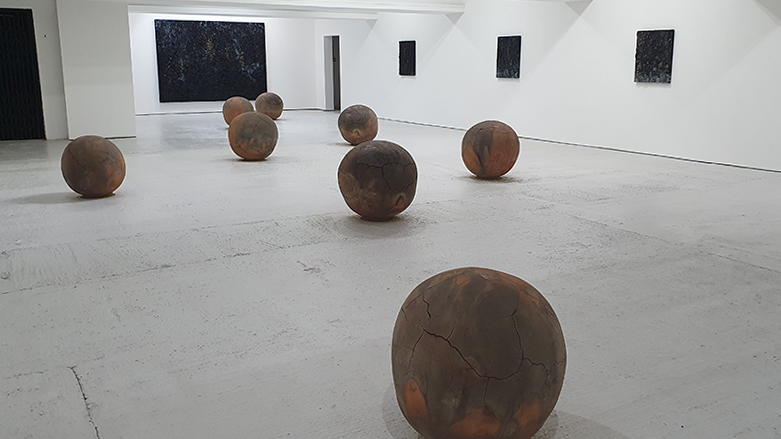
Bosco Sodi Totality at König London presents a grounded solar system we are able to walk amongst, surveying the raw materials of our creation. Heat, minerals and time. Very satisfying.

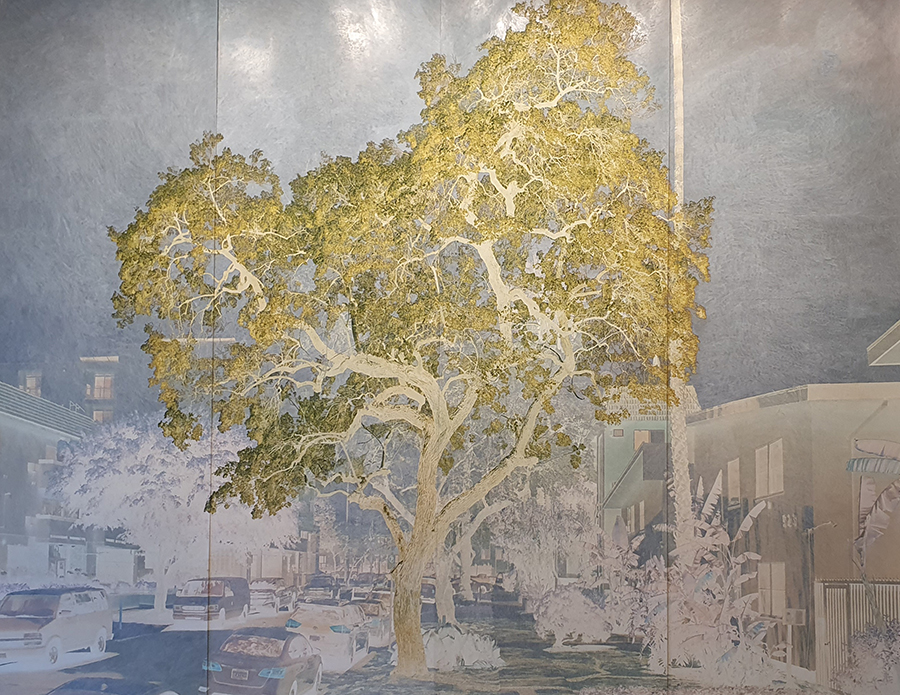
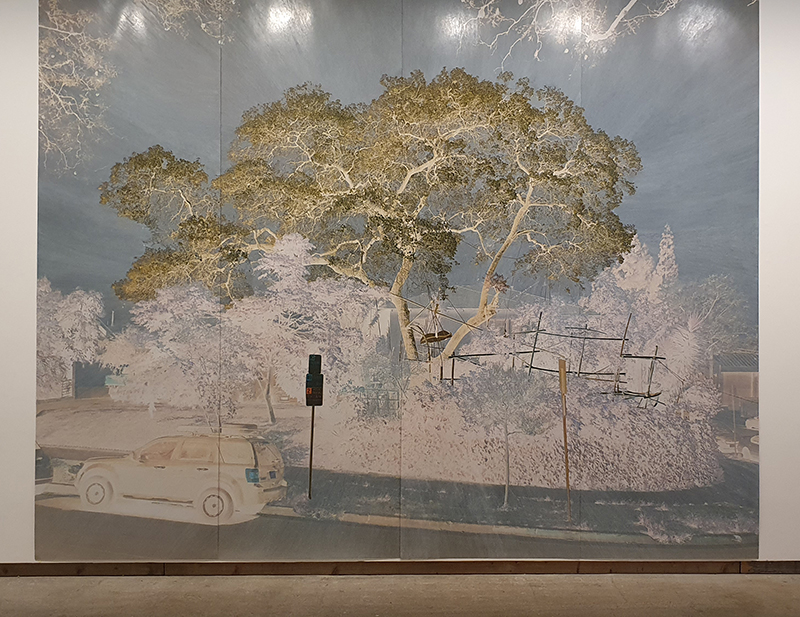
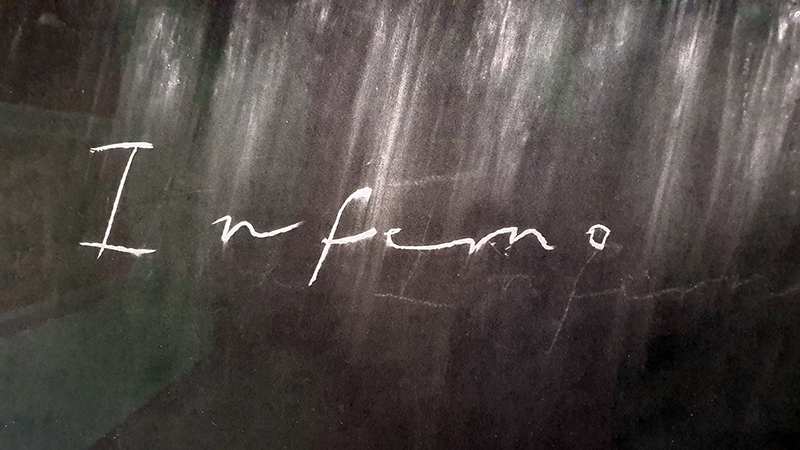
Tacita Dean – The Dante Project at Frith Street Gallery, Golden Square

Hell made heavenly in silvery surfaces, paradise emerges glimmering from the streets of LA.

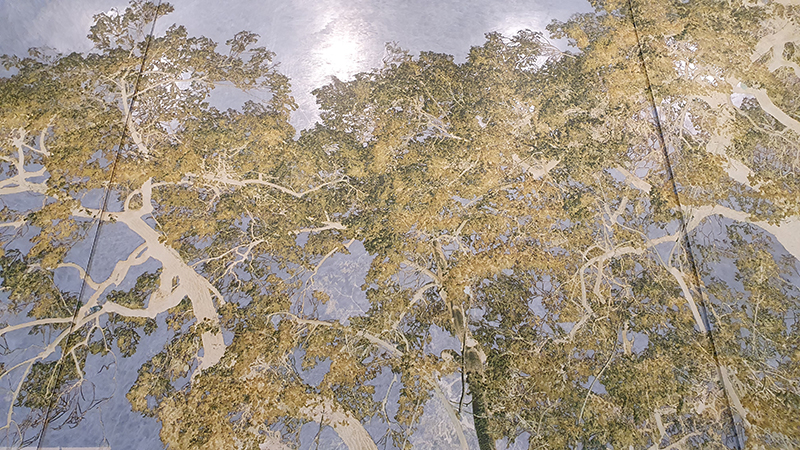
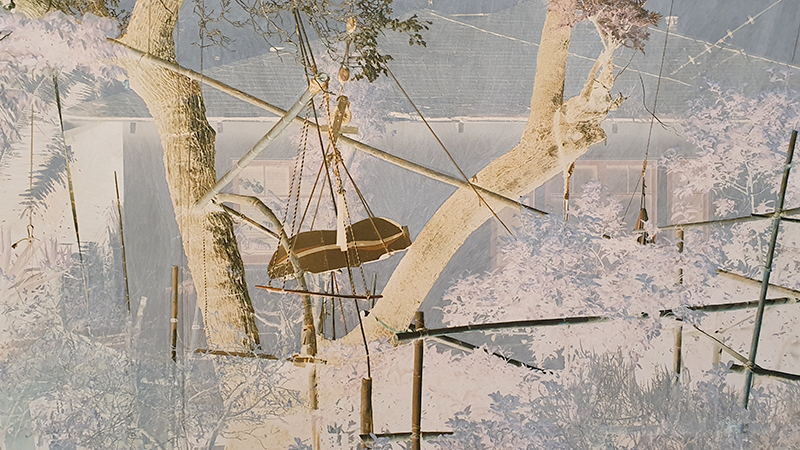
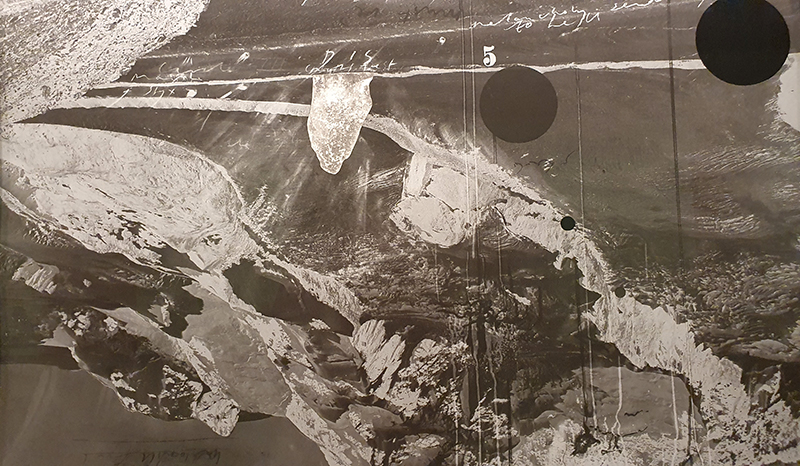
Magical otherworlds. These stunning backdrops were created for the ballet based on Dante Alighieri’s 1320 narrative poem The Divine Comedy choreographed by Wayne McGregor at The Royal Opera House but can also transport you in their own right. I was lucky to also see them on stage. The sets progress from the monochrome backdrop of Inferno, through the luminous transitional state of Purgatorio into a circling colourfields of Paradiso.

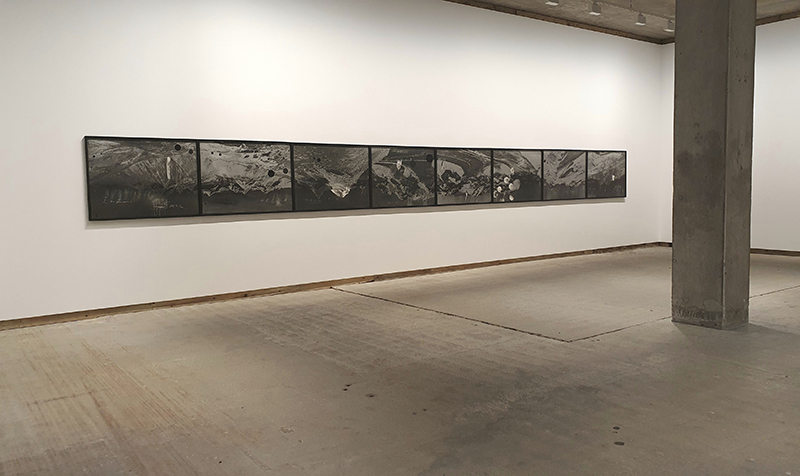
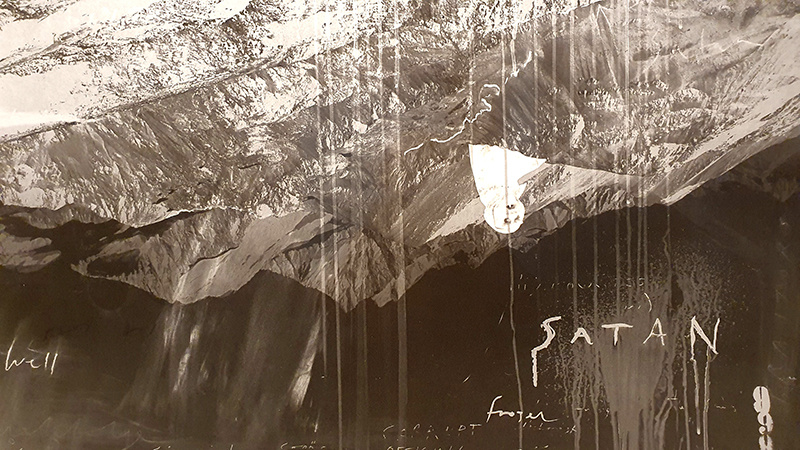
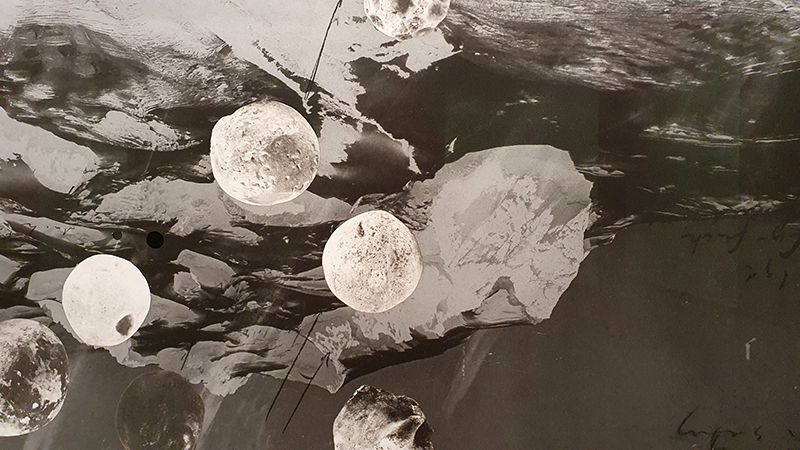
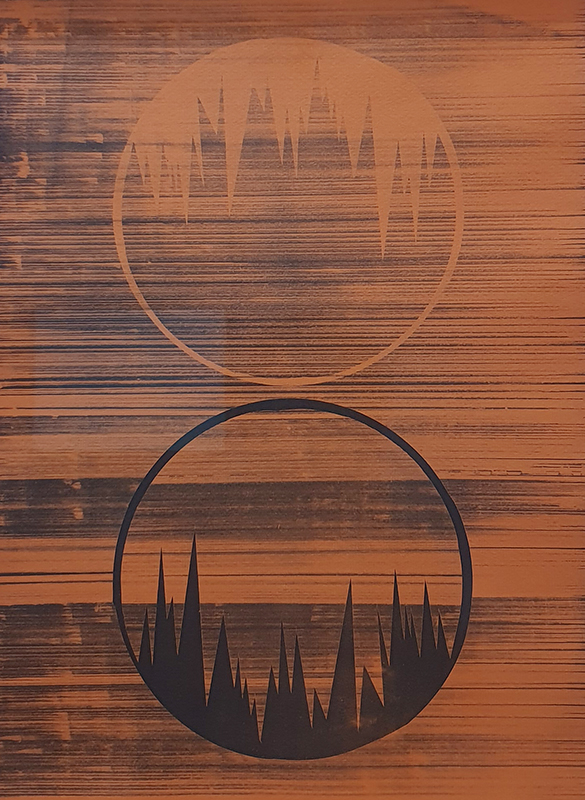
The large-scale photographs printed as negatives are of Jacaranda Trees which bloom in hot climates when the entire foliage turns into purple blossoms. In negative the purple becomes an otherworldly green and the background streetscape is muted with white pencil. The monochrome photogravures of an inverted mountainous terrain in negative using silver ink reference Botticelli’s drawings which signify Dante and Virgil’s descent through the nine circles of hell.

Tacita Dean Monet Hates Me at Frith Street Gallery, Soho Square

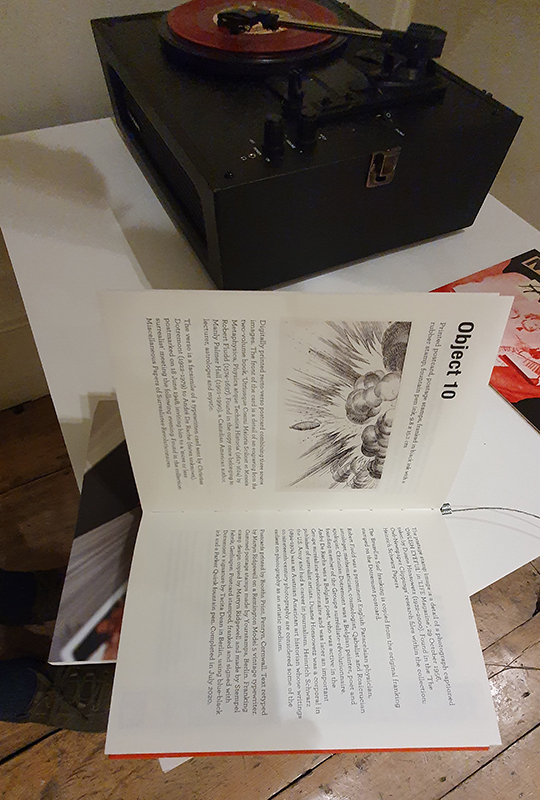
The importance of objective chance as a tool of research used as the basis to craft 50 objects inspired by the random choice of a box of artefacts at The Getty Research Centre, Los Angeles. The objects pertaining to ‘an exhibition in a box’ include ‘the forged signature of Christian Dotremont, a long-dead Belgian surrealist, on a postcard; a letterpress copy of Piet Mondrian’s carte de visite, hand-corrected by Dean to match a pencilled correction on the original; Fluxus artist George Brecht’s Stamp Out Stamping stamped on vintage index cards; a vinyl record of Dean reading a montage of text fragments collated from her working photocopies; and ‘a foot of feet’ – a foot-long strip of film made of sixteen frames of found images of feet. Object 1, is a small book which also acts as the key to the provenance and manufacture of the other 49 objects.’

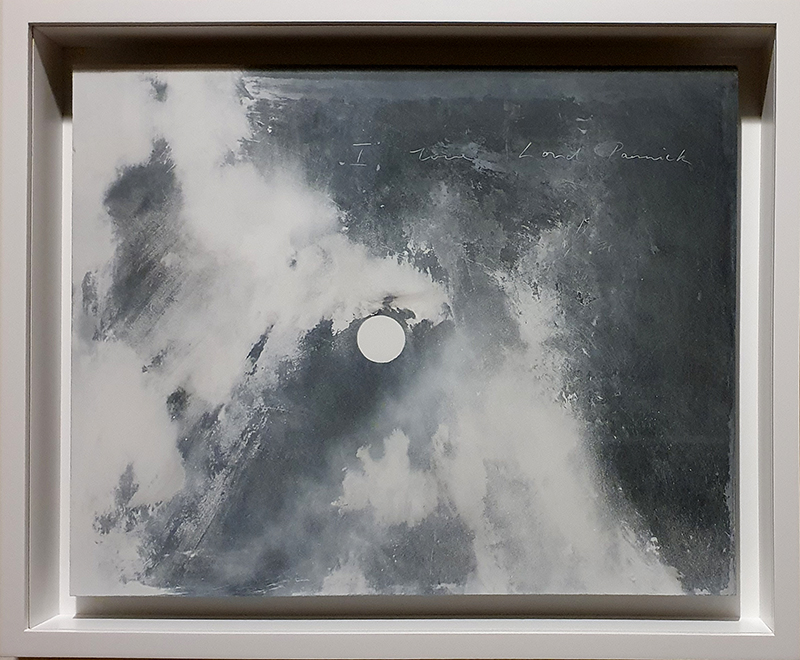
The enigmatic painting I love Lord Pannick sits outside the viewing area for Pan Amicus, filmed in 16mm on the Getty Estate but transporting the viewer to a golden classical Arcadia littered with Greek and Roman objects and imbued with the spirit of Pan “The Piper at the Gates of Dawn” from Kenneth Grahame’s The Wind in the Willows (1908).

Mixing It Up; Painting Today an exhibition of painting at the Hayward Gallery.

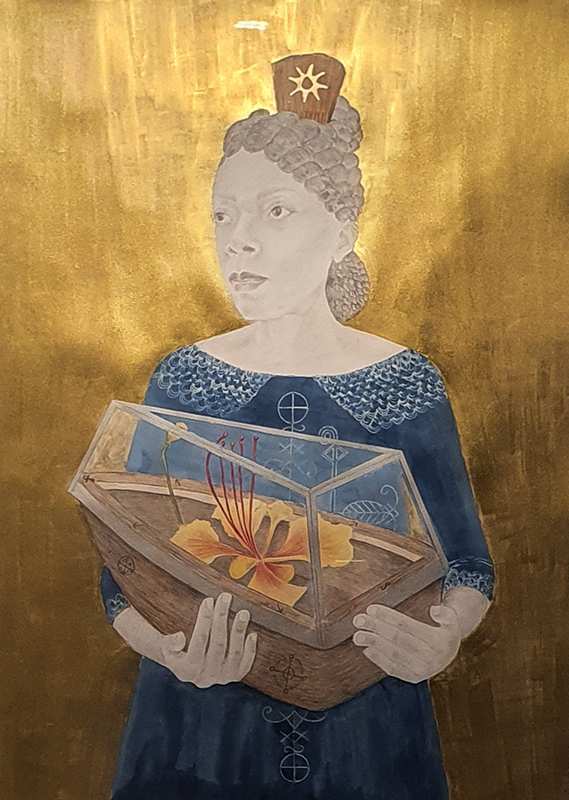
Charmaine Watkiss showing with Tiwani Contemporary at Cromwell Place.

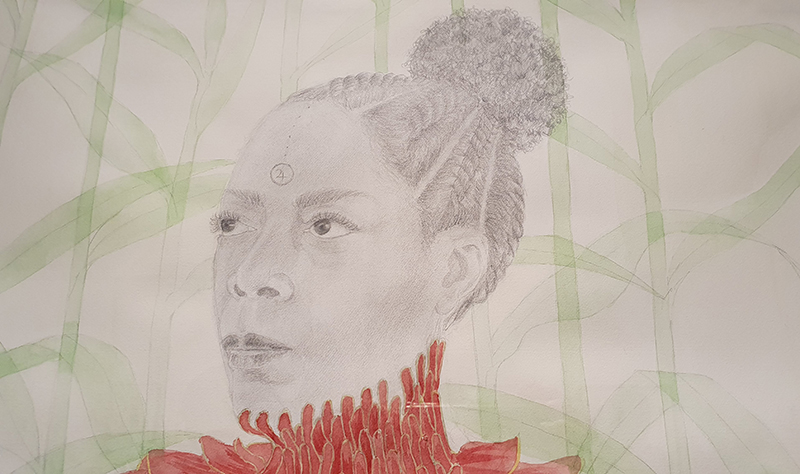
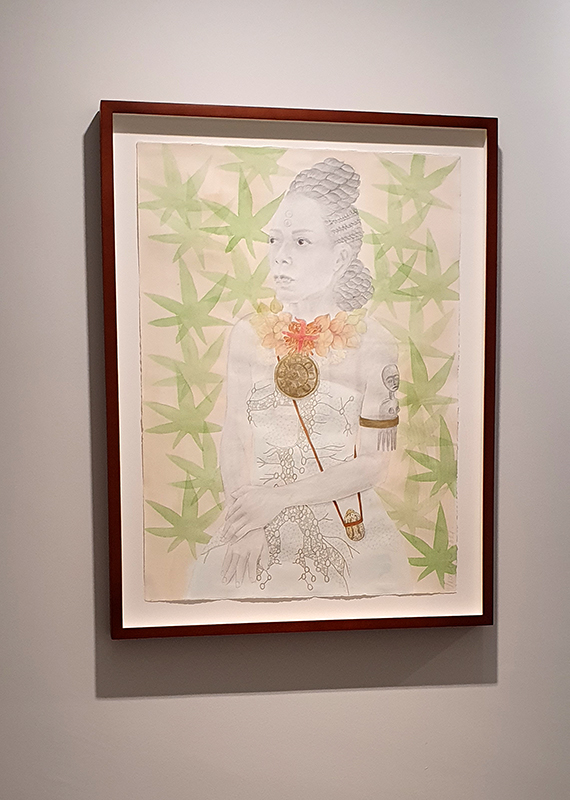
Meet The Seed Keepers in Charmaine’s magical collection of works on paper. Powerful images brought to life with a luminous delicacy full of hidden symbolism waiting to be discovered.

Researching the medicinal and psychical capabilities of plants, Watkiss has personified a matrilineal pantheon of plant warriors safeguarding and facilitating cross-generational knowledge and empowerment.

Visit to UCL’s Astronomical Observatory in Mill Hill.

1912 UCL observatory 3

Thanks to knowledgeable hosts Mark Fuller and Thomas Schlichter for a wonderful tour of the UCL observatory and to Lumen London for organising.

1912 UCL observatory 1

Shame it was cloudy but I enjoyed seeing the telescopes and hearing the history of this beautiful site. Looking forward to future collaborations.

We didn’t see the stars outside but an archive image and a loop lens proved fascinating.

1912 UCL observatory 71912 UCL observatory 8

In the studio back after a busy year I have been tidying up, building mezzanine storage shelves and planning new work looking at cosmic planes, thinking about star HD70642 – a possible home from home and what lies beyond the horizon that I can never reach.


New Doggerland at Thames-side Gallery presents a future imagining of physical and cultural re-connection between Britain and the European mainland.

Doggerland was an area of land that once connected Britain to continental Europe. At the end of the last ice age a warming climate exposed land for habitation but gradually the lowlands were flooded as temperatures rose further then about 8,200 years ago, a combined melting of a glacial lake and a tsunami submerged Doggerland beneath the southern North Sea. Great work including these from Jane Millar, Oona Grimes and Sarah Sparkes.

It was the place to be on 31/01/2020.

Nam June Paik at Tate Modern. Amazing pioneer of technology in art. Colliding nature, entanglement, connectedness, meditation, transmission.


Trevor Paglin From ‘Apple’ to ‘Anomaly’ (Pictures and Labels) at The Barbican Curve.

The long wall is filled with thousands of pinned photographs taken from ImageNet, a publicly available data set of images, which is also used to train artificial intelligence networks. ImageNet contains more than fourteen-million images grouped into labelled categories which include the unambiguous ‘apple’ along with such terms as ‘debtors’, ‘alcoholics’ and ‘bad persons’. These definitions applied to humans by AI algorithms present an uncomfortable future of machine induced judgement.

 ‘Machine-seeing-for-machines is a ubiquitous phenomenon, encompassing everything from facial-recognition systems conducting automated biometric surveillance at airports to department stores intercepting customers’ mobile phone pings to create intricate maps of movements through the aisles. But all this seeing, all of these images, are essentially invisible to human eyes. These images aren’t meant for us; they’re meant to do things in the world; human eyes aren’t in the loop.’ Trevor Paglen

Interestingly there was no photography allowed in the Trevor Paglen show. So I tried Image net for an image to post. I searched for ‘artist’ but ImageNet is under maintenance so I tried Google and this is the first image I got.

2001 artist

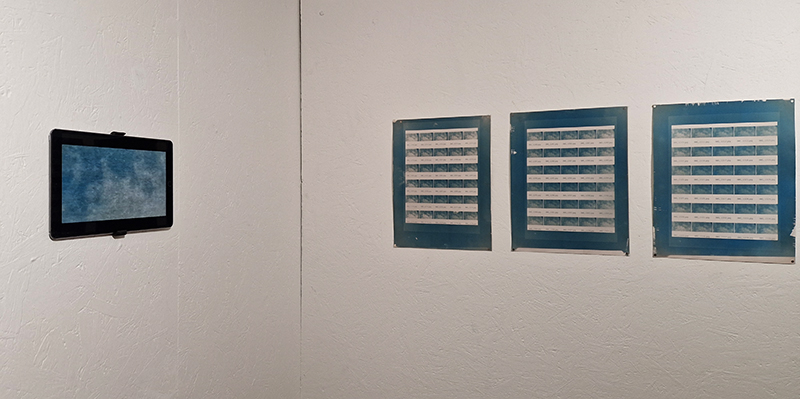
Another great show from Kathleen Herbert, A Study of Shadows at Danielle Arnaud. Using the cyanotype to interrogate the history and science of Prussian Blue and discover what emerges from the shadows through process and research. We learn – ‘Prussian Blue has a unique chemical structure and was originally created through the cyanotype process. It was the colour used to measure the blueness of the sky and was also used in the UK during the Chernobyl disaster as an antidote to radiation poisoning, preventing Caesium 137 from entering the food chain. Prussian Blue also has the ability to heal itself; if the intensity of its colour is lost through light-induced fading, it can be recovered by being placed in the dark.’
2001 Kathleen Herbert 4

The sound and video work Everything is Fleeing to its Presence relates a narrative of impressions and scientific facts while the visuals of varying tones of blue appear and disappear in hypnotic succession. Together the effect is of immersion, like the chemically coated paper, in a pool of blue.

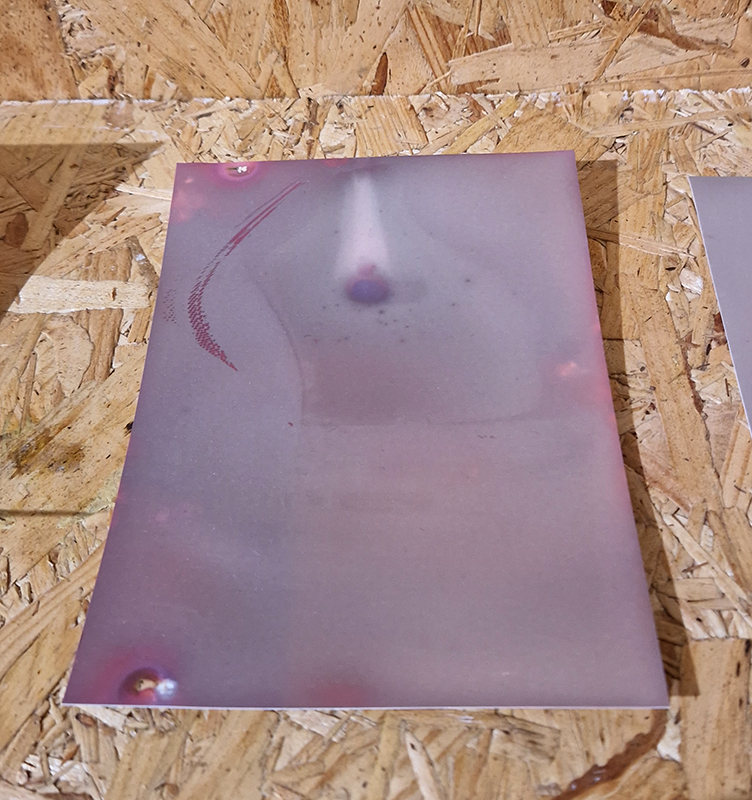
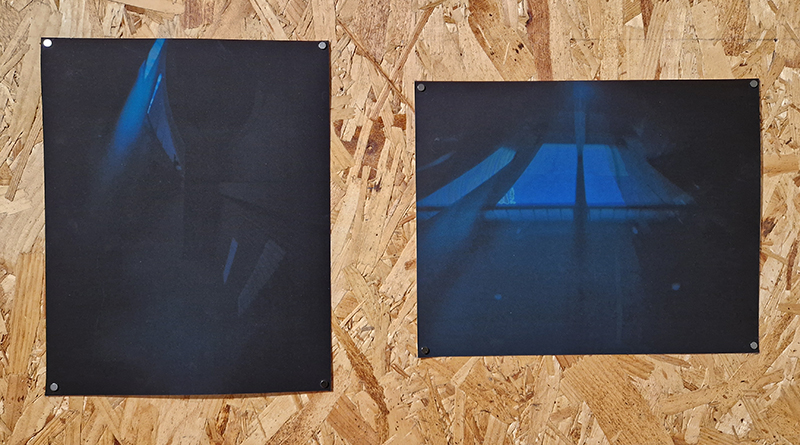
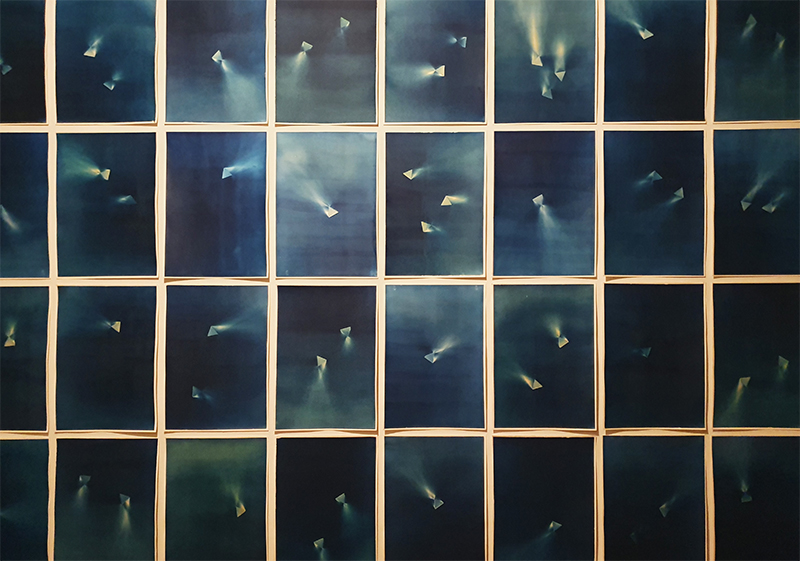
Mary Yacoob Schema at Five Years Gallery. Also using cyanotypes, but here exploring the architectural roots of this process through precise silhouettes, detailed drawing, structure and form which is then exposed to the unpredictable chemistry to produce beautiful outcomes.

2001 Mary Yacoob (1)

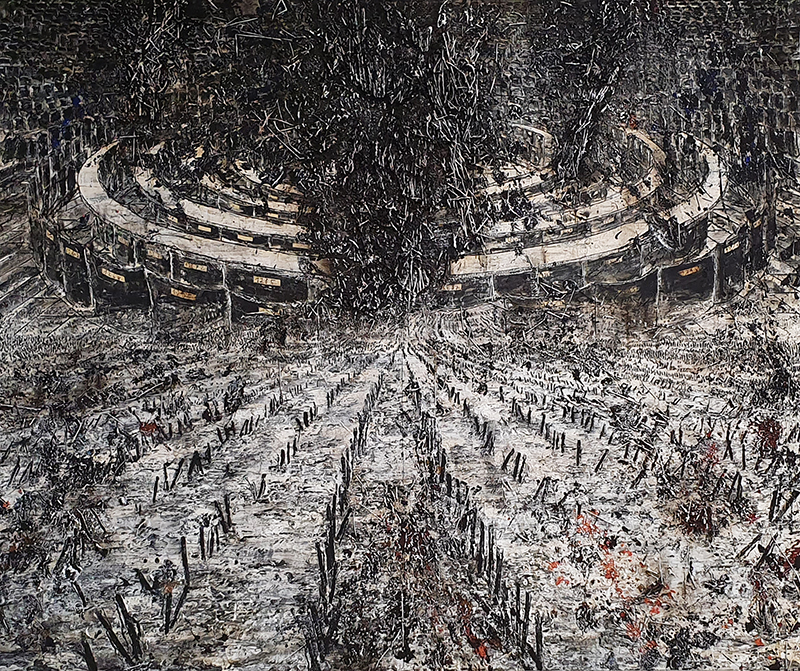
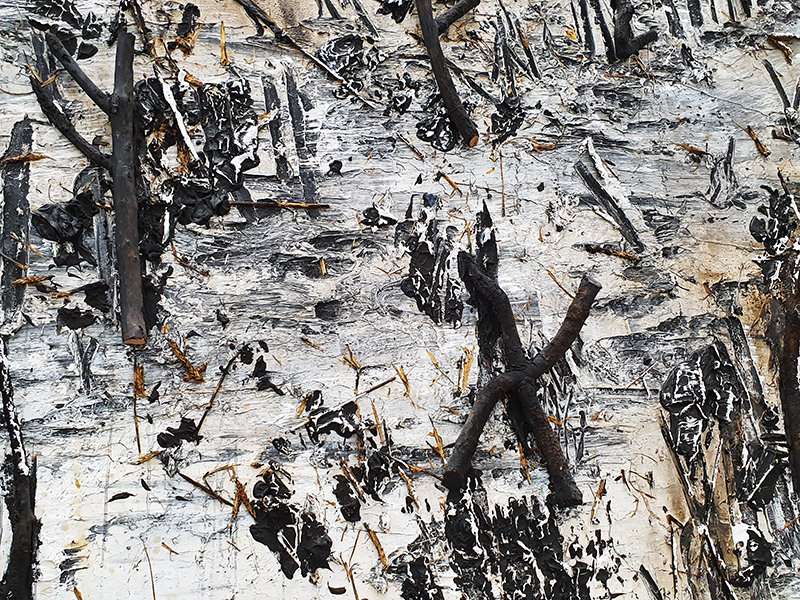
Anselm Keifer at White Cube Bermondsey.  Superstrings, Runes, The Norns, Gordian Knot all tied together in characteristically monumental paintings thick with stuff in an attempt to connect complex scientific theory with ancient mythology.

2001 Anselm Keifer 12001 Anselm Keifer 2

William Blake at Tate Britain. What visions, such torment. So much mortal flesh.

Anne Hardy The Depth of Darkness, the Return of the Light winter commission for Tate Britain, a sort of after party dystopia with an impressive soundscape of rain, thunder, birds and insects inspired by pagan descriptions of the winter solstice – the darkest moment of the year.

2001 Tate Britain Anne Hardy

We sit together for a minute at Thames-side Gallery. Alex Simpson and Alice Hartley share a similar sensibility making dynamic and intuitive works. The gallery is alive with gestural forms, captured fragments and movement held momentarily in stasis, both fragile and immediate.

2001 Alex Simpson2001 Alice Hartley

The Computer Arts Society, The Lumen Prize and Art in Flux join London Group members at The Cello Factory for a second In The Dark curated mash up of light and technology artworks that overlap and collide in Even darker. Curated by clever duo interactive filmmakers Genetic Moo, artists include Carol Wyss and Sumi Perera.


Bridget Riley at Hayward Gallery. Messing with perception; undulations and vibrations.

2001 Bridget Riley (1)

Mark Leckey O’ Magic Power Of Bleakness at Tate Britain. Sense of bleakness achieved in synthetic bridge recreation which gave gallery awkward angles. Voyeuristic social commentary, old rave footage. Magic found interspersed in otherworldly images contrast to dank underworld.

2001 Mark Leckey

Some beautiful artefacts in The Moon exhibition at Royal Maritime Museum Greenwich celebrating 50 years since the Apollo 11 Moon landing.
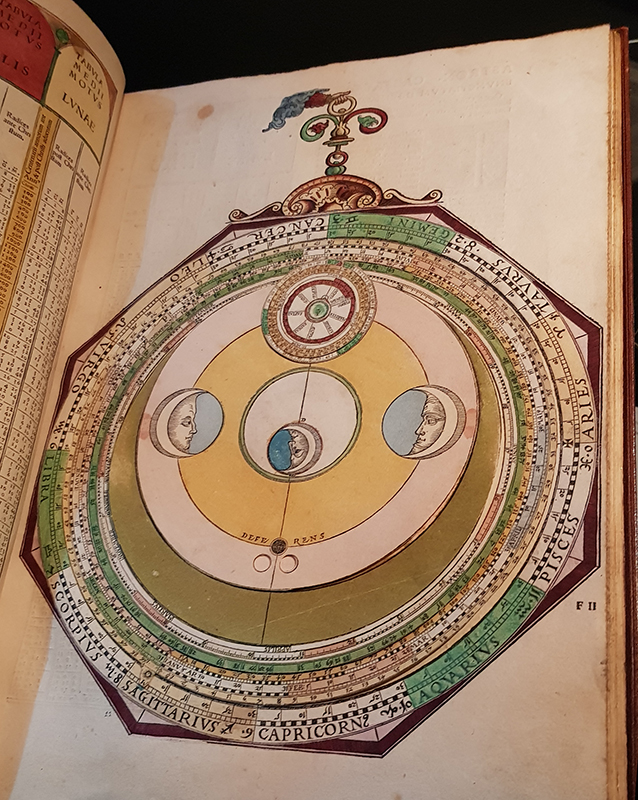
Astronomicum Caesarean 1540 – rotating paper discs are used to track the moon’s position which the physician would then interpret to predict if the patient might improve or relapse.

1912 Moon Exhibition volvelle

Orrery 1823-27 by John Addison includes a special geared section to show the rise and fall of the moon and mimicking the tilt of its orbit.

1912 Moon Exhibition orrery

Selenographia 1797 by John Russell. It models the slight wobble or libration of the moon meaning that over time a little more than half of the side of the moon is visible from Earth.1912 Moon Exhibition selenographia

Moon rocks, encased.
1912 Moon Exhibition rocks

A Distant View III by United Visual Artists. A 3D rendering in wood of original NASA data imaging of the moon’s surface from the Orbiter mission 1966/7
1912 Moon Exhibition UVA

Very lucky to be invited by Rachael Allain for a tour of The Queen’s House at the National Maritime Museum Greenwich led by curator Matilda Pye. We saw the Susan Derges commission Mortal Moon inspired by the Armada Portrait of Queen Elizabeth 1 and a celestial globe, dating from 1551.

1912 susan derges-mortal-moon

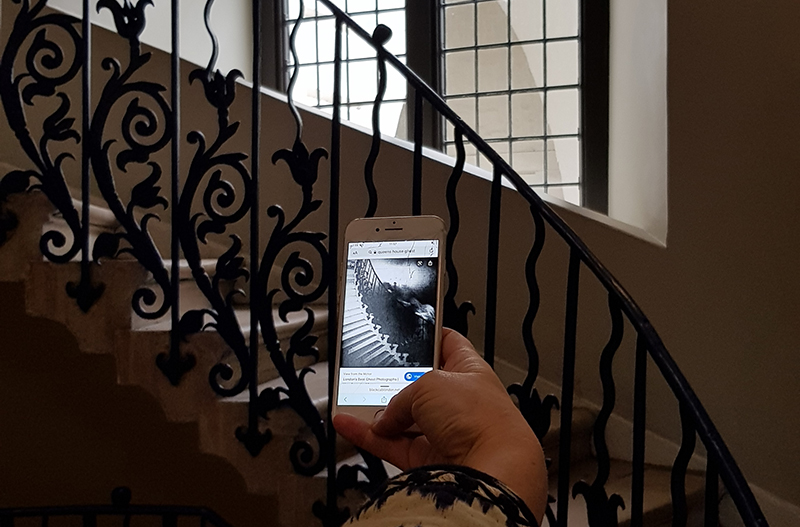
The fractal elegance of the Tulip staircase.

1912 Queen's House Tulip Staircase

Which is also where the Queen’s House ghosts were inadvertently photographed by retired Canadian Reverend R.W Hardy on his visit in 1966. Recreated in situ by Matty with mobile. Apparently photographic experts examined the original negative and found no signs of tampering.

1912 Queen's House Ghosts

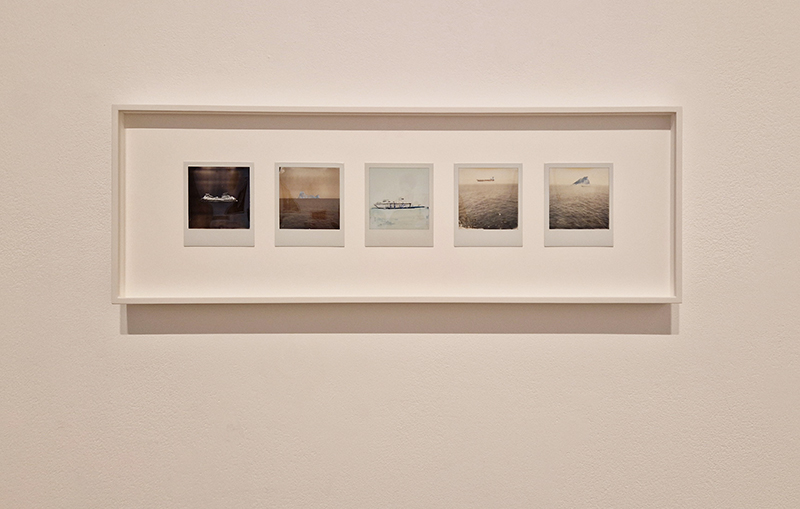
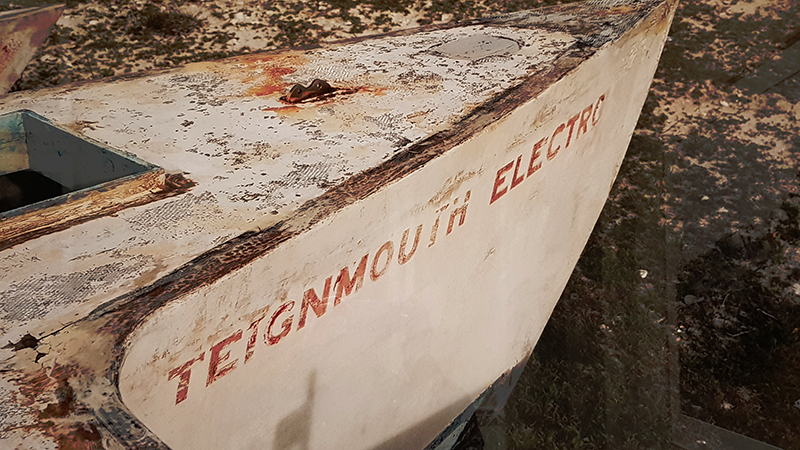
Ending the tour with Tacita Dean’s poignant photos of the desolate shell of the Teignmouth Electron, the yacht that bore Donald Crowhurst to his miserable and solitary death. It looks so small.

1912 Tacita Dean

Immersive installations inviting a change of consciousness at TRANSFORMER: A Rebirth Of Wonder presented by The Store X The Vinyl Factory. Including Doug Aitken NEW ERA dramatic video-scape looking at the first phone call and future communication highway.

1911 Doug Aitken 21911 Doug Aitken

Mark Bradford’s paintings in Cerberus at Hauser & Wirth London recall the vibrant matter of creation, the splitting of the earth in molten rivulets to expose the dark underbelly.

1911 Mark Bradford

I am reading W. G. Sebald’s rambling Rings of Saturn. Revisiting my home county and local haunts through his eyes. He set off in 1992 but it feels like a journey back further in time as there are so many reminiscences and anecdotes from the past. Among the vaguely defined histories is the story of the demise of the estate of Henstead Hall under guardianship of the eccentric Major Wyndham Le Strange who shunned the outside world and took to a literally underground existence.

These images from 2014 when I visited the abandoned walled garden at Henstead became fragments for my work titled Pairi Daêza, an ancient Iranian word meaning ‘around’ and ‘wall’; the origin of ‘paradise’.

1705 Open Studios Pairi Daeza

A tenuous link but I discovered Henstead Hall subsequently become home to Douglas Farmiloe a self-described “Mayfair playboy” who had found himself in the scandal pages of the News of the World during the 1930s, after an indiscretion with a hostess from the West End ‘Paradise Club’.