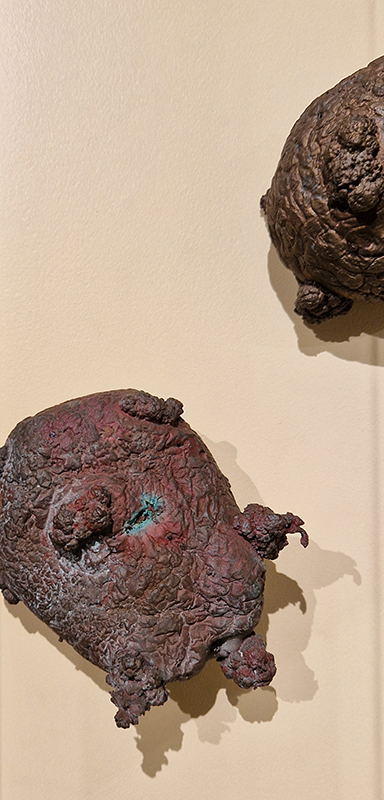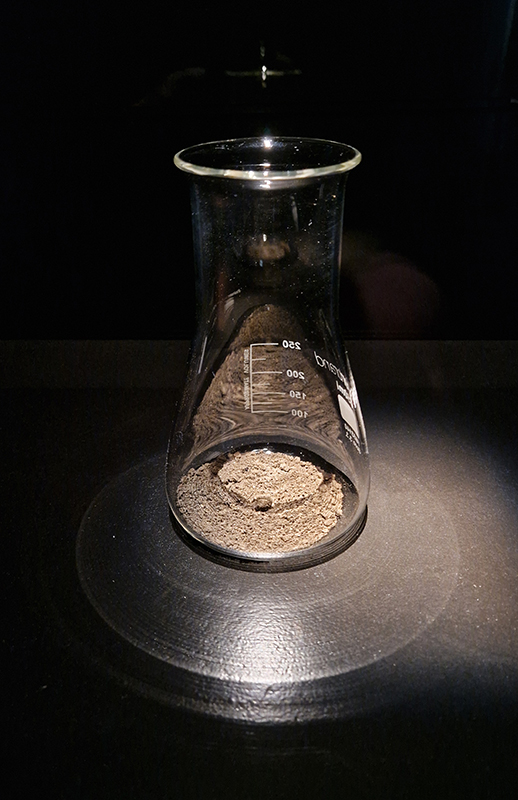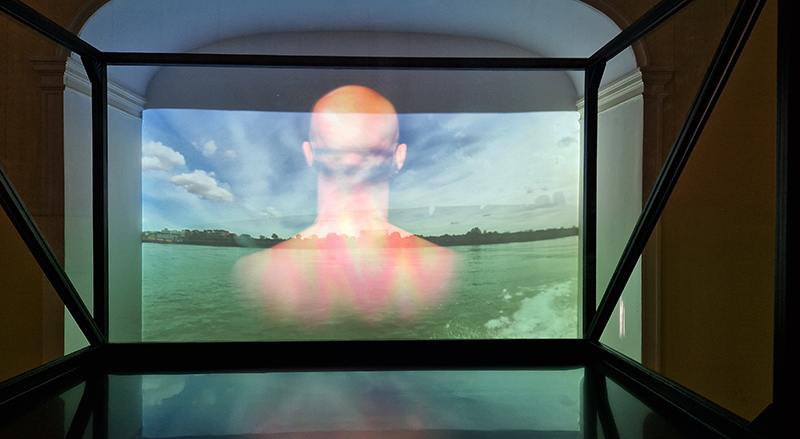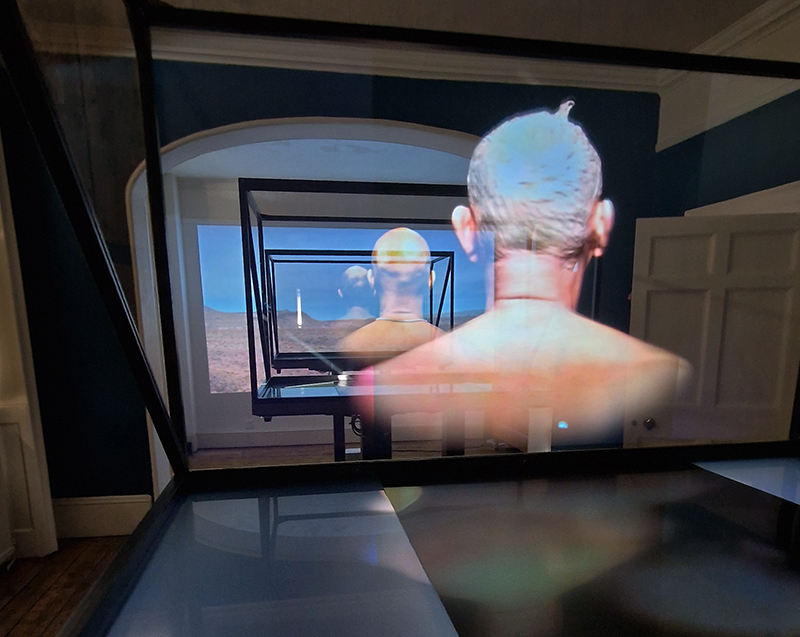
Archives for posts with tag: technology

In Pliny’s Natural History (published after his death in the AD 79 eruption of Vesuvius, when, ever curious, he had gone to investigate the strange cloud rising), he marvels at the powers of the magnet ‘For what, in fact, is there endowed with more marvellous properties than this?’; ‘What is there in existence more inert than a piece of rigid stone? And yet, behold! Nature has endowed stone with both sense and hands! He goes on to assert that ‘it received its name “magnes”, Nicander informs us, by the person who was the first to discover it, upon Ida’. ‘Magnes, it is said, made this discovery, when, upon taking his herds to pasture, he found that the nails of his shoes and the iron ferrel of his staff adhered to the ground.’

Nicander was a 2nd century BC Greek poet, physician, and grammarian and there is no surviving record of his claim. Gillian Turner, in her book North Pole, South Pole, admits that this story will have been embellished over time but acknowledges that if an electrical storm took place on Mount Ida and the naturally magnetic magnetite was struck by lightning, it would be permanently magnetised into lodestone and would therefore attract the nails of Magnes’s shoes.

The legend is not impossible but it is also possible the stone is named after the region where it was first found. In ancient Greek, magnetite was known as magnes lithos. There were two ancient regions called Magnesia and so the true provenance of the first discovery of the lodestone is hard to determine. In Greece, ancient Magnesia was a long and narrow slip of country in Thessaly between Mounts Ossa and Pelion. Around the 4th Century BC, the people known as Magnetes, migrated and settled in Ionian cities which were named after them as Magnesia on the Maeander and the neighbouring Magnesia ad Sipylum, currently in Aydın Province near Ephesus, Turkey.

I decided to follow the footsteps of Magnes.

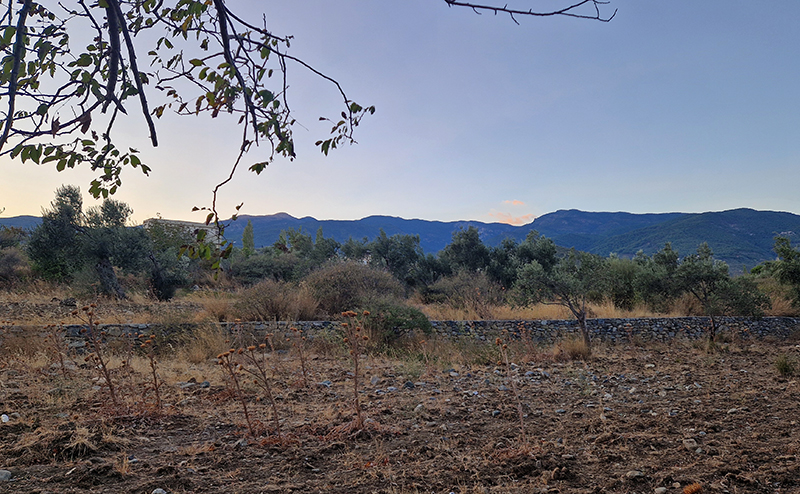
Mount Ida is famous in Greek Mythology as the location for the Judgement of Paris, where he fatefully chose Aphrodite as the most beautiful goddess, setting in motion the events of the Trojan War which the gods watched from its summit while its fir trees were felled to build the Trojan Horse. It was also an ancient sacred site for worship of the mother goddess Cybele, an embodiment of a universal Mother Earth. Its name was changed to Kazdağı (Goose Mountain) as the goose holds sacred significance in Turkish mythology. The landscape is literally breath-taking with very high oxygen levels due to the extensive pine forests and unique geographic features that funnel ionised air up from the sea to mix with the clear mountain air.

Setting out on the first evening the walk to view the mountain brought home the vastness of the landscape to negotiate.

After dinner, the owner of our hotel in Zeytinli said he would find a guide to the area if we gave him 5 minutes. Thinking he would come back with a book of hiking trails, I was surprised when he returned with a Kazdağı National Park Ranger. We arranged to meet the next day when he led us up the dusty mountain tracks with his old school friend as driver.

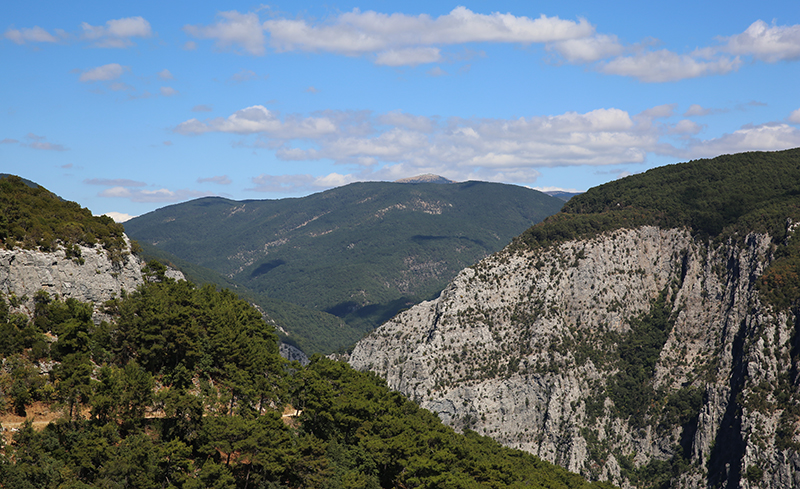
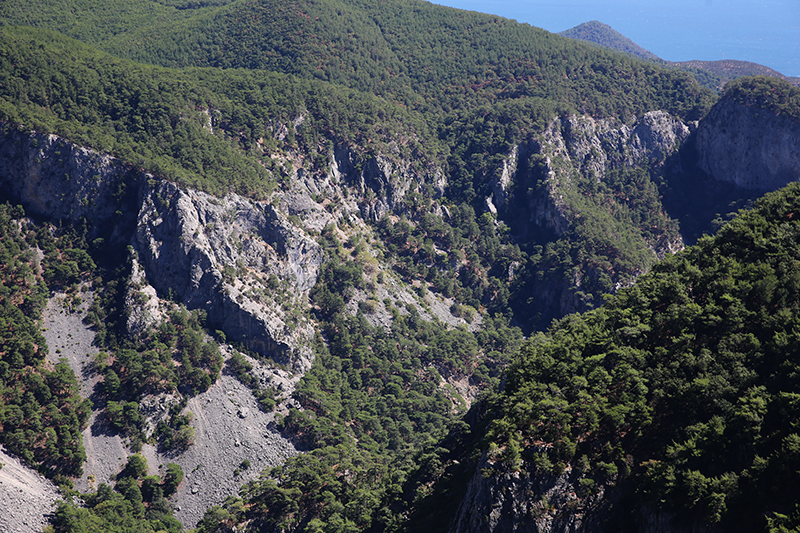
The summit of Mount Ida was always in the distance and it is not possible to walk unaccompanied in the National Park during the summer season. We drove up to a height of 800m to view the spectacular Sahinderesi Canyon.

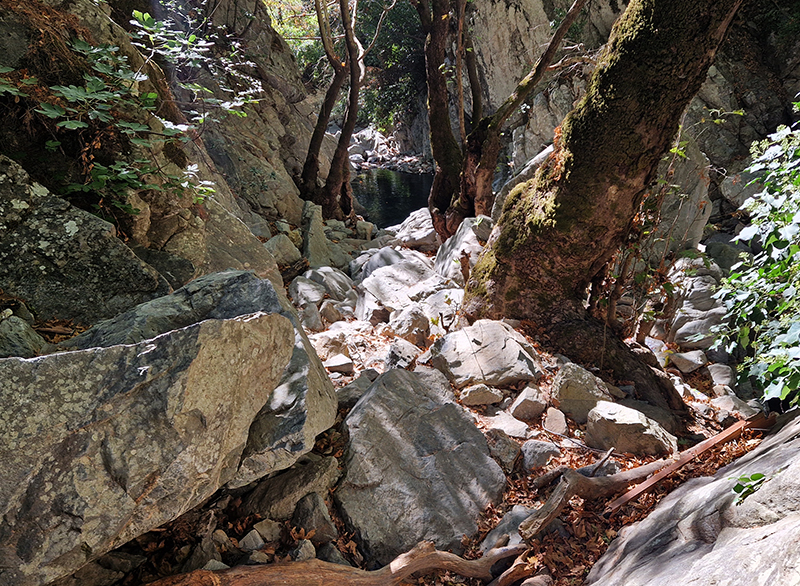
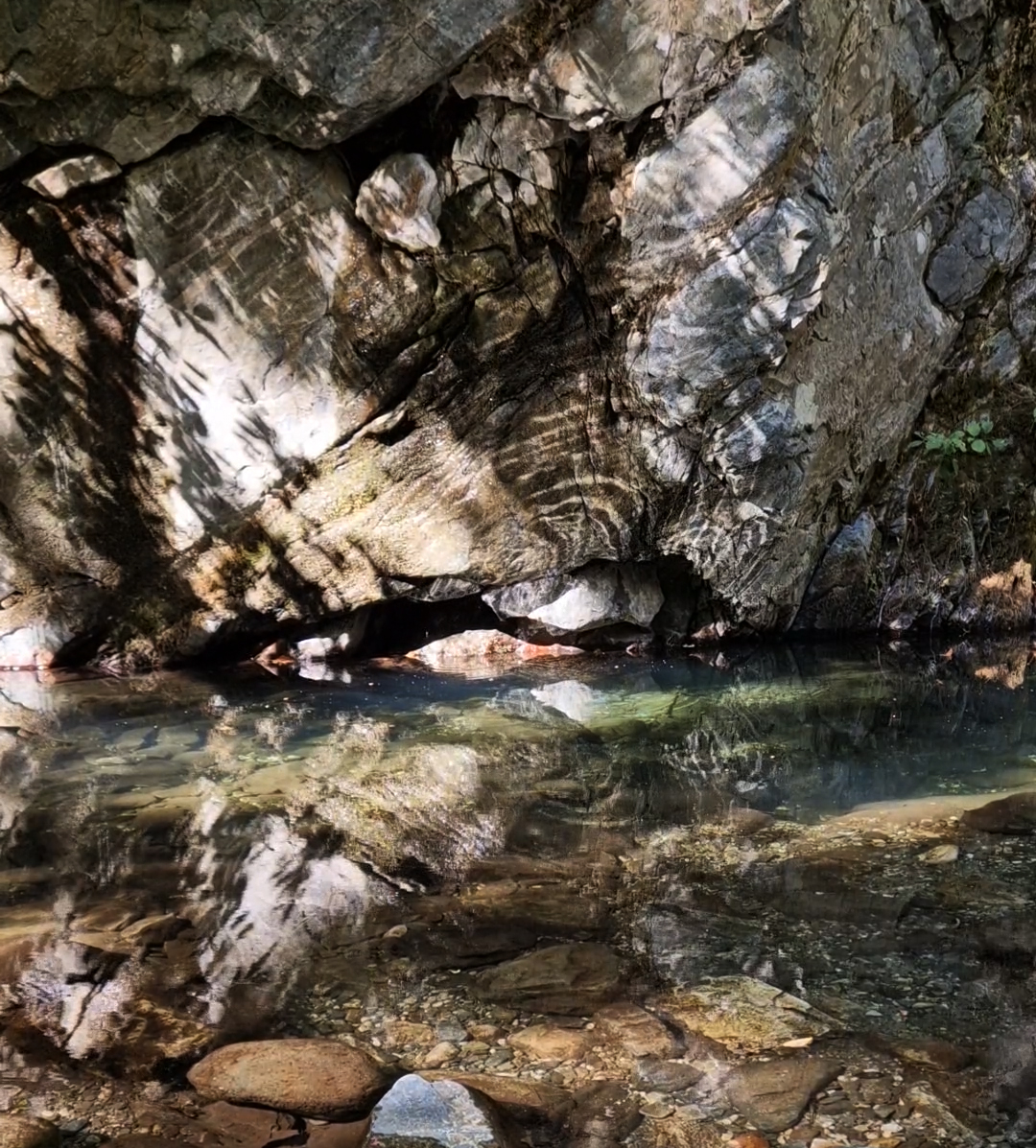
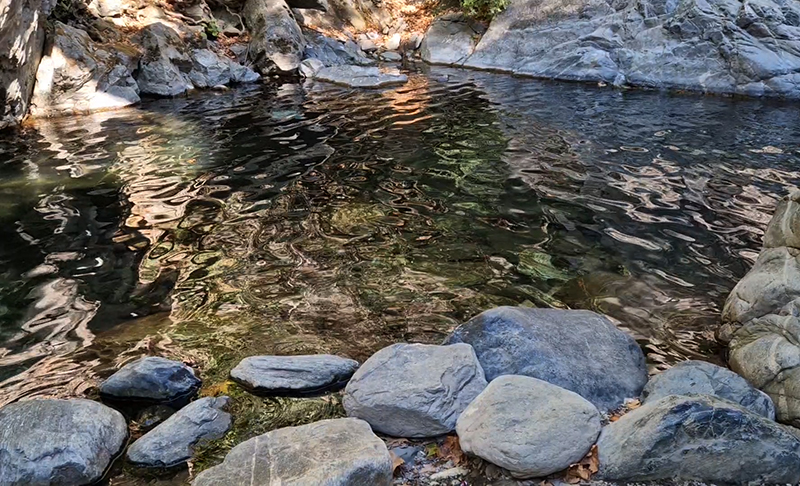
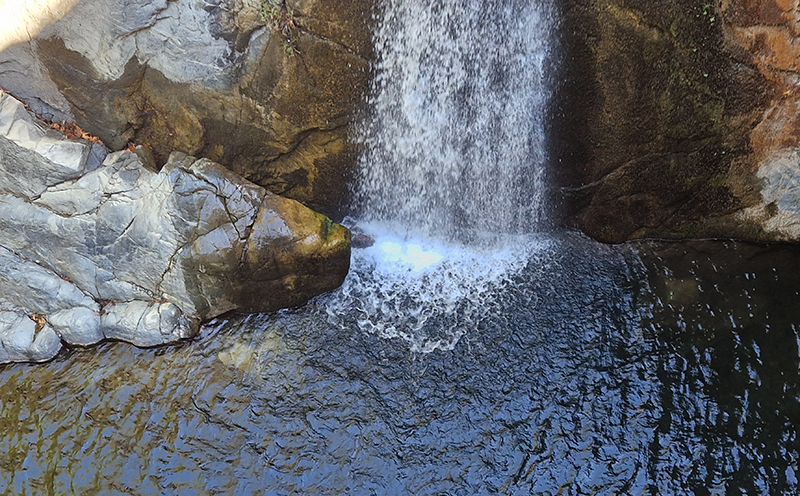
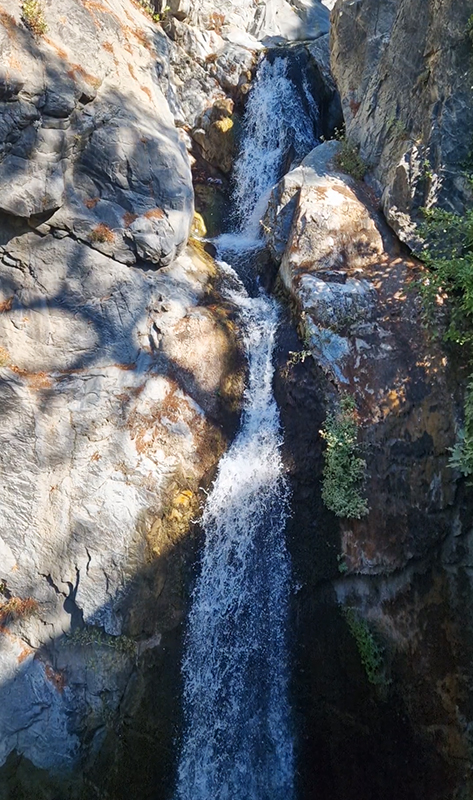
Mount Ida abounds with fresh water springs, rivers, ponds and waterfalls including the Sütüven Waterfall which we visited.

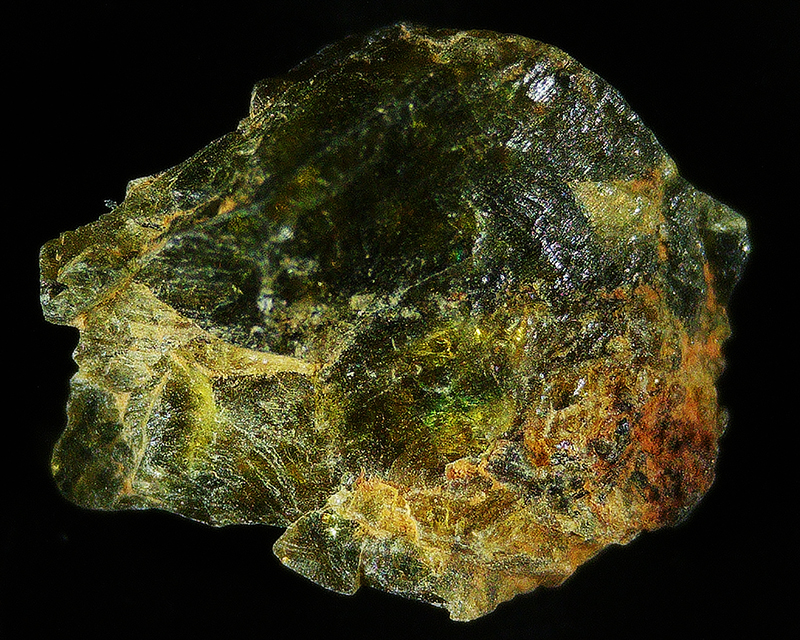
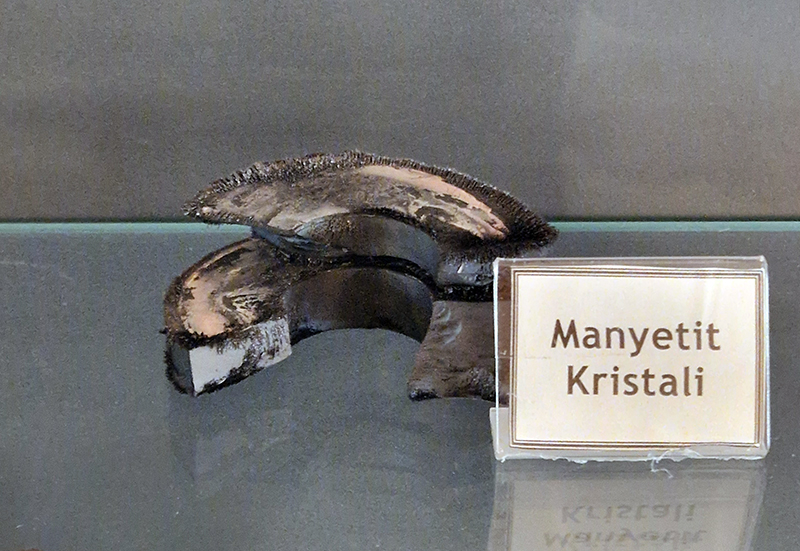
We visited the Ida Madra Geopark Museum which displayed tantalising exhibits of magnetite crystal and volcanic rock but there was only a security guard on duty who could offer no information about the collection or the local geology. The magnetite crystal does look like a broken magnet rather than raw crystal.

Fascinating choice of sentence to describe magnetite in the Turkish-English online dictionary – ‘Category, Turkish, English. Technical. 1, Technical, manyetit · magnetite n. The enzyme dissolved the brain tissue and left the magnetite particles intact.

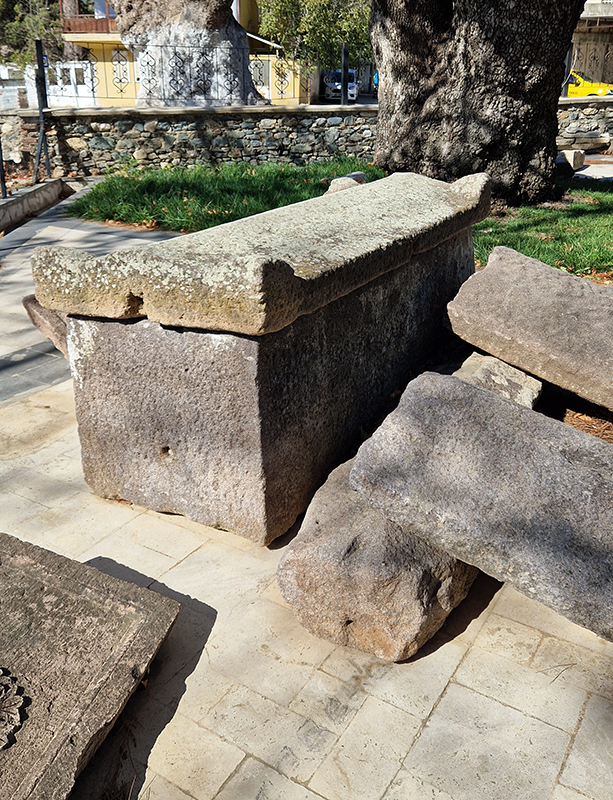
Outside the museum was a tomb that our guide told us is called ‘the man eating stone’. Pliny also talks about a stone called sarcophagus (stone of Assos) of which he says ‘It is a well-known fact, that dead bodies, when buried in this stone, are consumed in the course of forty days, which the sole exception of the teeth.’ There was also a magnificent Oriental Plane Tree, over 570 years old.

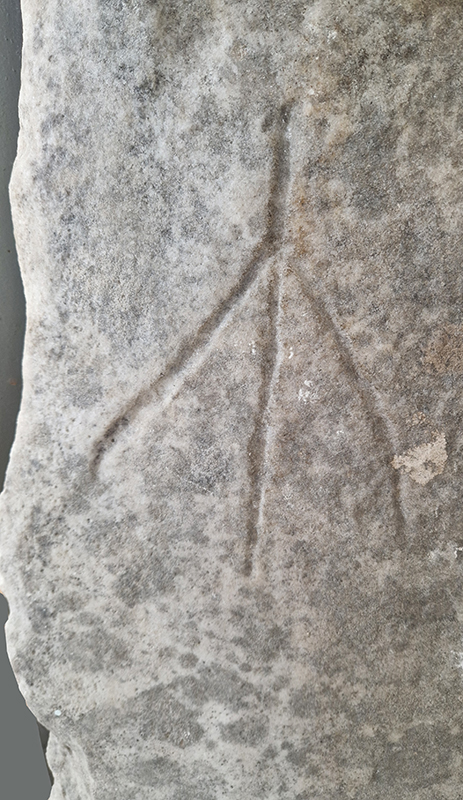
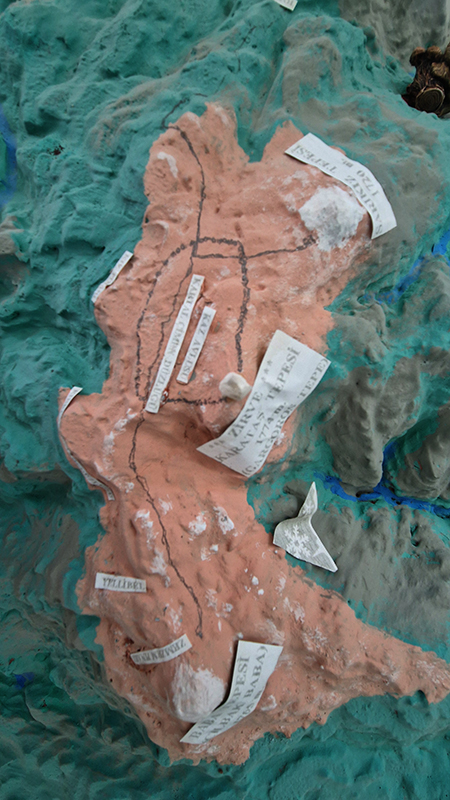
We visited the wonderfully eccentric Tahtakuşlar Ethnographic Museum which celebrates the cultural heritage of nomadic Turkish tribes and displays a stone tablet inscribed with the symbol of a goose foot reflecting the veneration of the goose by the Turkmen people. There is a rather faded model of Mount Ida which apparently shows the line of a mysterious ancient structure that circles the summit.

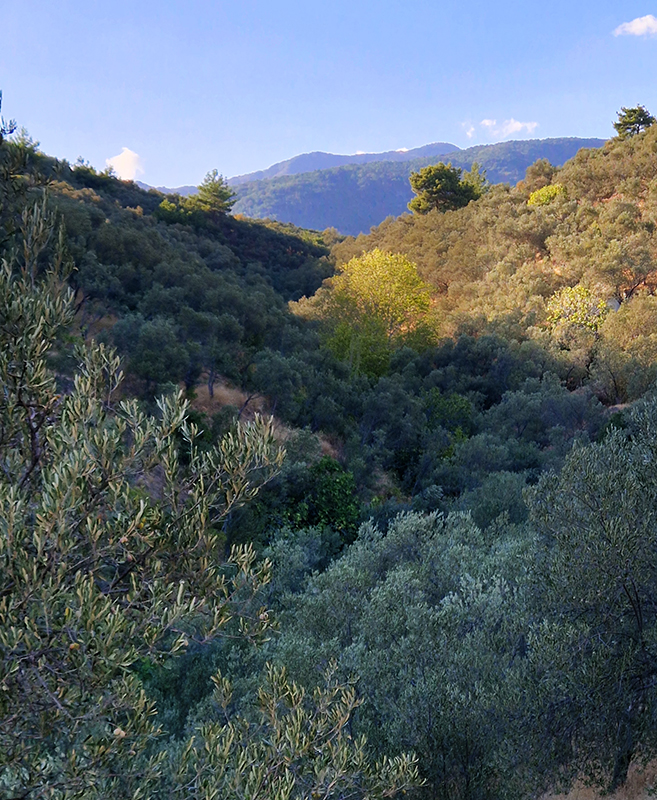
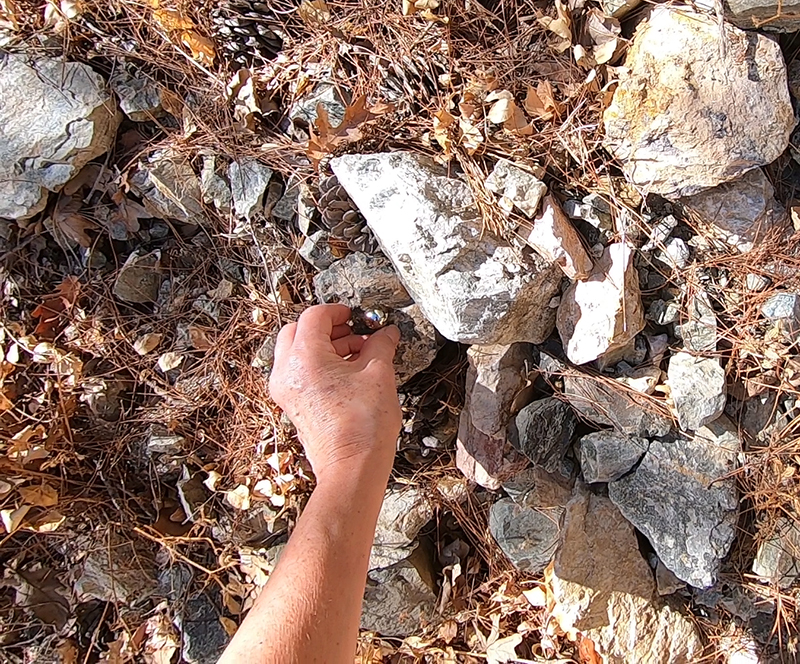
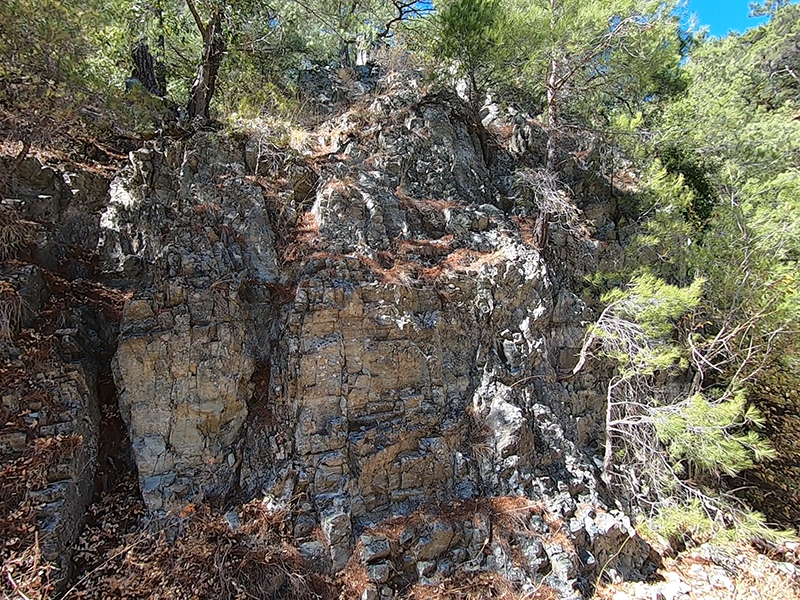
The next day we made another winding ascent. Equipped with my own magnet sphere (terrella) I went in search of magnetite on the foothills of Mount Ida. I was thrilled to discover some rocks that were magnetic.

The final evening in northwest Turkey was spent watching the light fade over Mount Ida as bats and hedgehogs made an appearance along with quite a lot of street dogs that were thankfully more interested in barking at each other.

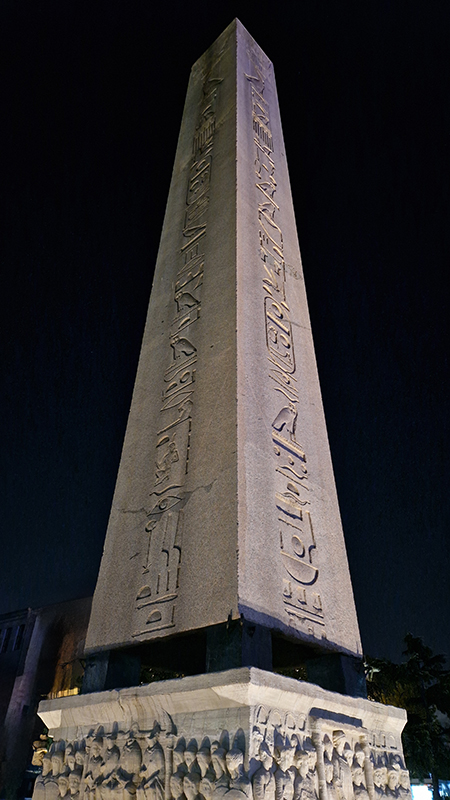
On to the urban geology of Istanbul and a number of monolithic erections. In the Hippodrome, once a vast public arena for chariot races, imperial ceremonies, and public events, there are several examples of phallic architecture.

The towering red granite Obelisk of Theodosius, originally 30m tall, is an ancient Egyptian obelisk of Pharaoh Thutmose III (1479–1425 BC), first erected at Karnak to celebrate victory in battle. It was removed from Karnak and transported along the river Nile to Alexandria by the Roman emperor Constantias II in 357 and just 33 years later Theodosius I had it transported to Constantinople and erected on the spina of the Hippodrome, the relocation upheavals having reduced its height by a number of metres.

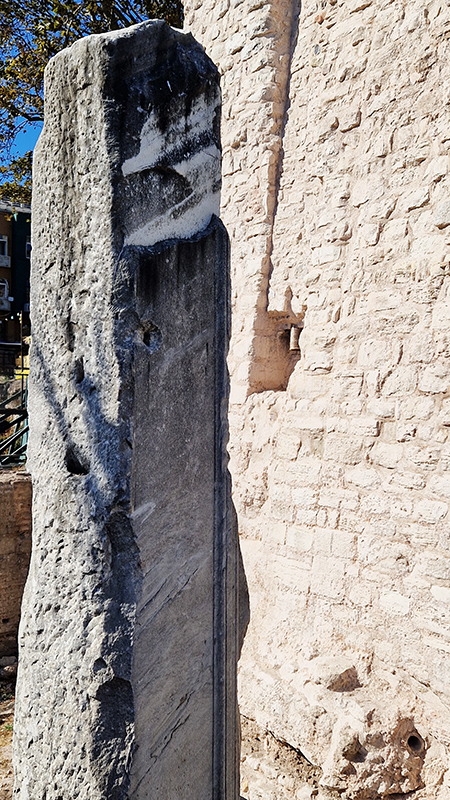
It is not known exactly when The Walled Obelisk was constructed but was probably built to mirror the Obelisk of Theodosius in the Hippodrome. Obelisks were often erected in symmetrical pairs. It was originally decorated with gilded bronze plaques (maybe to hide the fact that it wasn’t a true obelisk which should be hewn from a single piece of rock) but these were removed and melted down by Christian crusaders in 1204.

The Serpent Column is the remains of an ancient bronze column that was part of a Greek sacrificial tripod originally built in Delphi 478 BC as an offering to Apollo but relocated to Constantinople in 324.

The stone Milion was a marker from which all distances across the Roman Empire were measured. Erected by Septimius Severus upon the re-founding of Byzantium as Constantinople in 330 AD it became the starting-place for the measurement of distances for all roads leading to the cities of the Eastern Roman Empire.

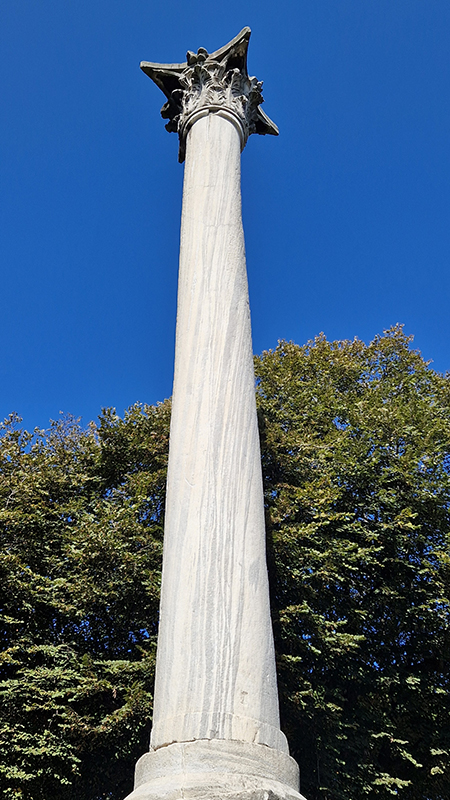
The Column of the Goths, a single block of marble 18.5 metres high, erected in Gulhane Park, is the oldest monument still standing from Roman times.

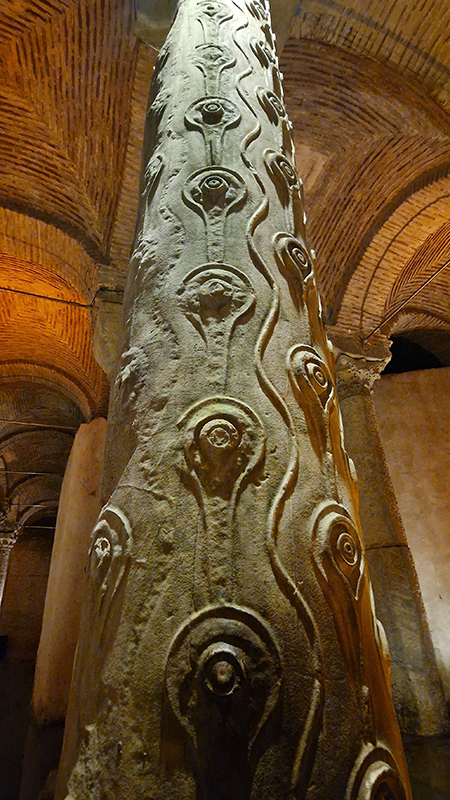
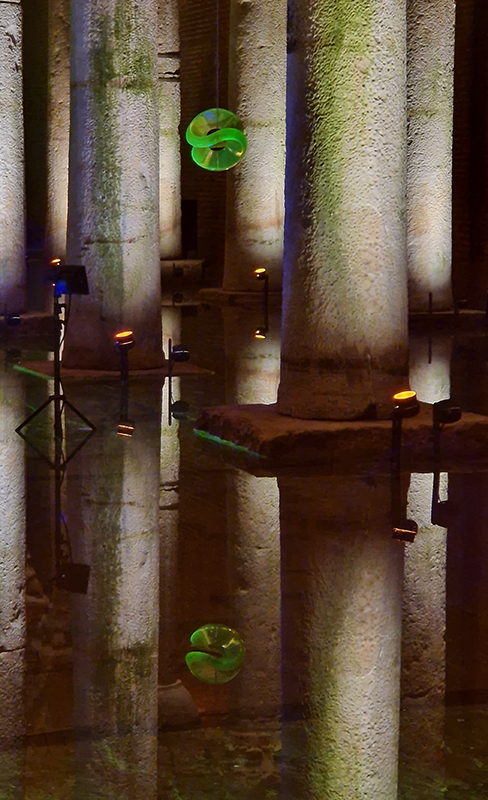
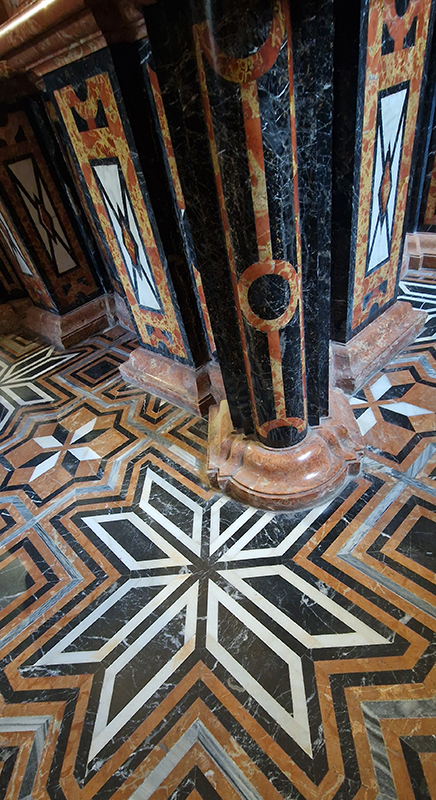
The Basilica Cistern is a vast subterranean forest of columns with the 4th Century ‘Tear Column’ standing out for its unique patterns which are often thought of as tears but may actually be a stylised representation of a tree.

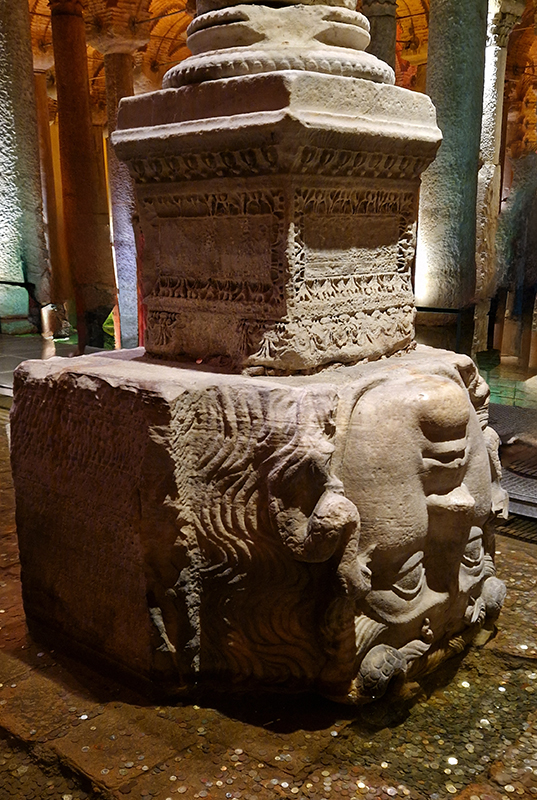
The Basilica Cistern is the largest of several hundred ancient cisterns that lie beneath Istanbul, built in the 6th century during the reign of Byzantine emperor Justinian I to supply the city with drinking water. The ceiling is supported by a 336 marble columns, each 9 metres high which appear to have been recycled from the ruins of older buildings and are carved out of different types of marble and granite.

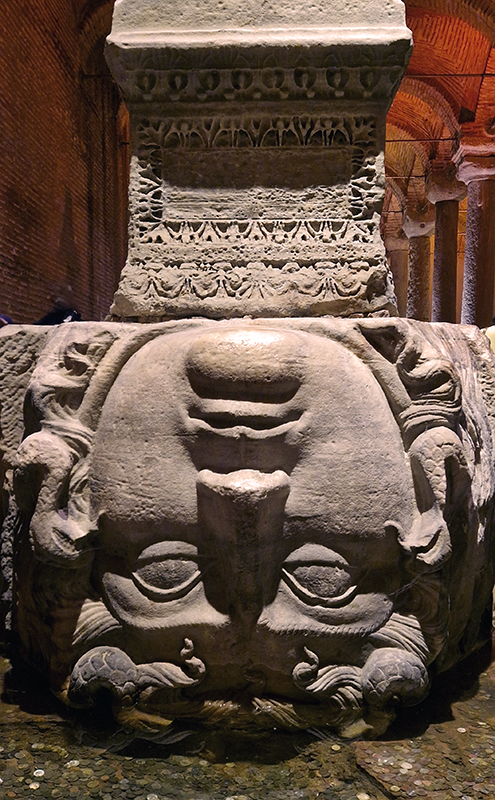
Two columns reuse blocks carved with the face of Medusa. Tradition has it that the blocks are oriented sideways and inverted in order to negate the power of the Gorgon which held that anyone who looked upon her was turned to stone.

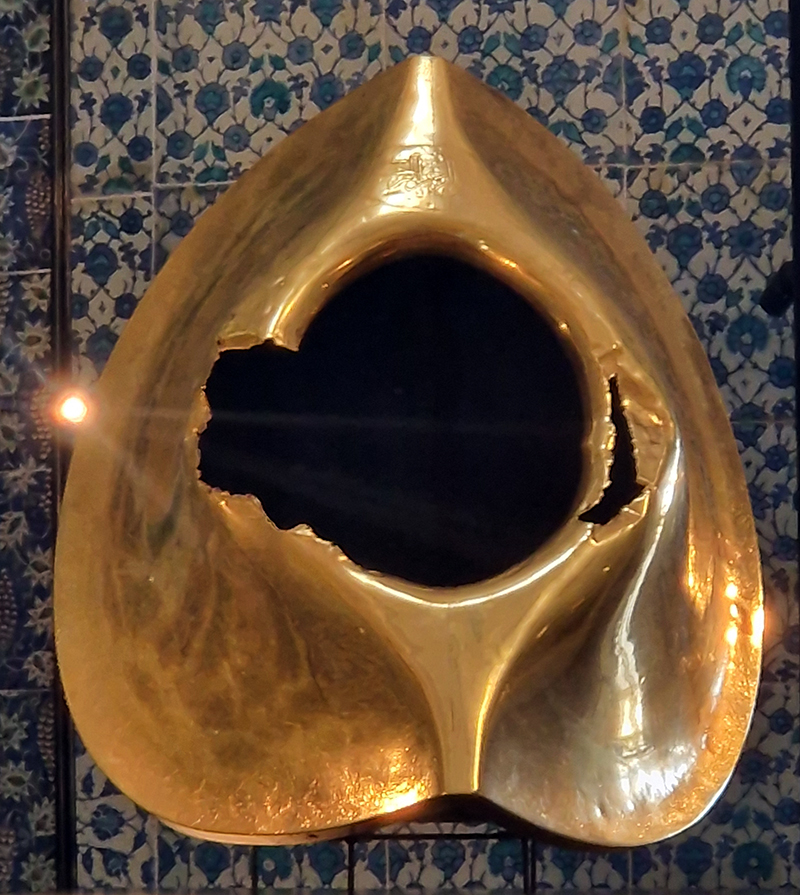
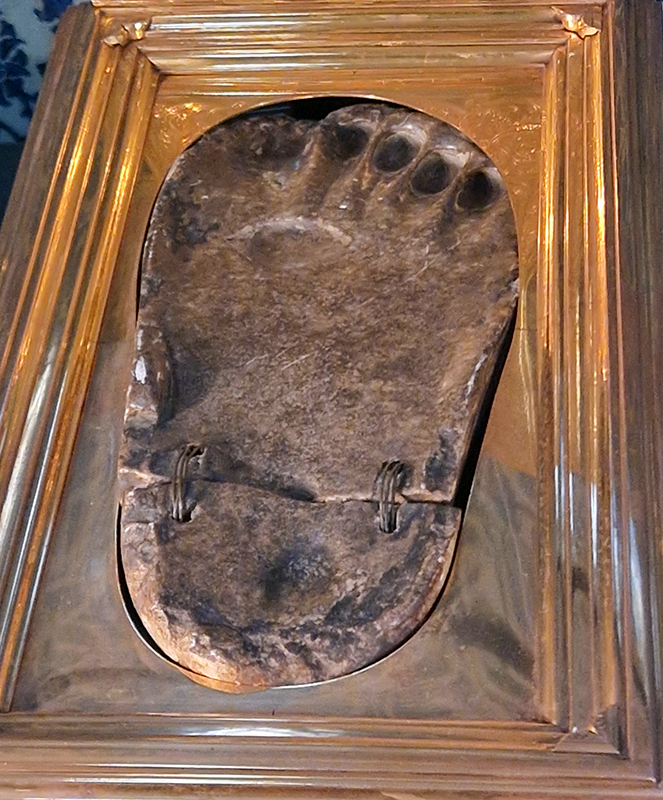
The Sacred Trust, of Islamic religious relics kept at the Topkapi Palace includes the Casing for the Black Stone, a rock set into the eastern corner of the Kaaba, in Mecca, Saudi Arabia. Revered by Muslims as an relic which, according to tradition, was set intact into the Kaaba’s wall by Muhammad before he became a prophet. It has had a turbulent history, being stolen, taken hostage and smashed. Today its fragments can be seen set in cement, encased in a silver frame on the side of the Kaaba, polished smooth by the hands and kisses of pilgrims. Although idolatry is forbidden in the Hebrew Bible and the Quran the use of aniconic stones, or baetyls, which are sacred stones stones venerated for their connection to the divine, without needing human-crafted images, were permitted. There has been speculation The Black Stone is a meteorite, but it has never been scientifically analysed to ascertain its physical origin. Also on display are footprints in stone (Kadem-i Şerif) attributed to the prophet Muhammad. An Ottoman scholar, Mehmed Münib Ayıntâbî (d. 1823) wrote a treatise to explain that this footprint was one of the miracles of the Prophet for otherwise how could it be possible to leave the impression of a foot on hard ground like stones. This was reiterated by a guide at the palace. There are six Kadem-i Şerif of the Prophet four of which are on stone and two of which are on brick, the most significant is the one in a gold frame believed to be left on his ascension to heaven from the Dome of the Rock.

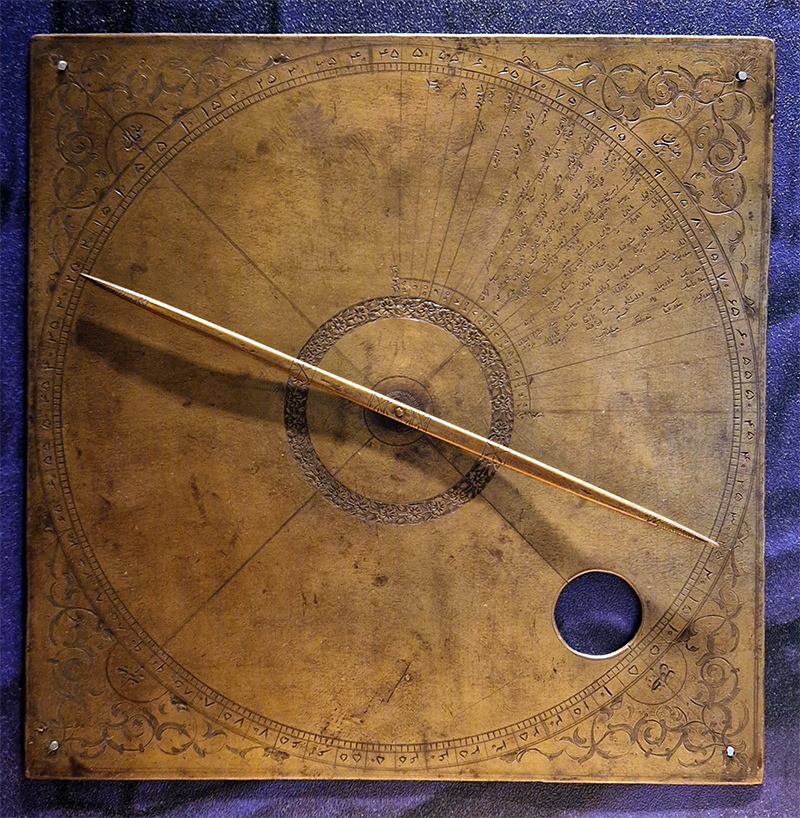
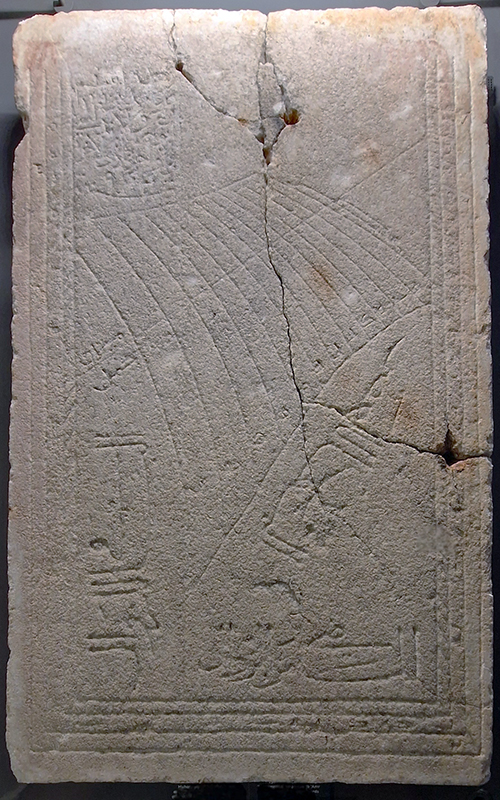
Mechanical clocks didn’t arrive in Ottoman lands until the 15th Century, 200 years after their initial invention. Chief astronomer to Sultan Selim II, Taqi al-Din, bemoaned the new instruments as ‘the most burdensome to construct, which demanded modest workers’. The qibla compass was used to determine the direction for prayer. This Ottoman marble sundial is from 1526.

‘Were man to look up from the ground, he’d see a starry sky, were he to look down from the heavens – a wavy sea’ Tursun Beg. (15th century Ottoman historian who wrote a detailed account of Mehmed the Conqueror’s reign.)

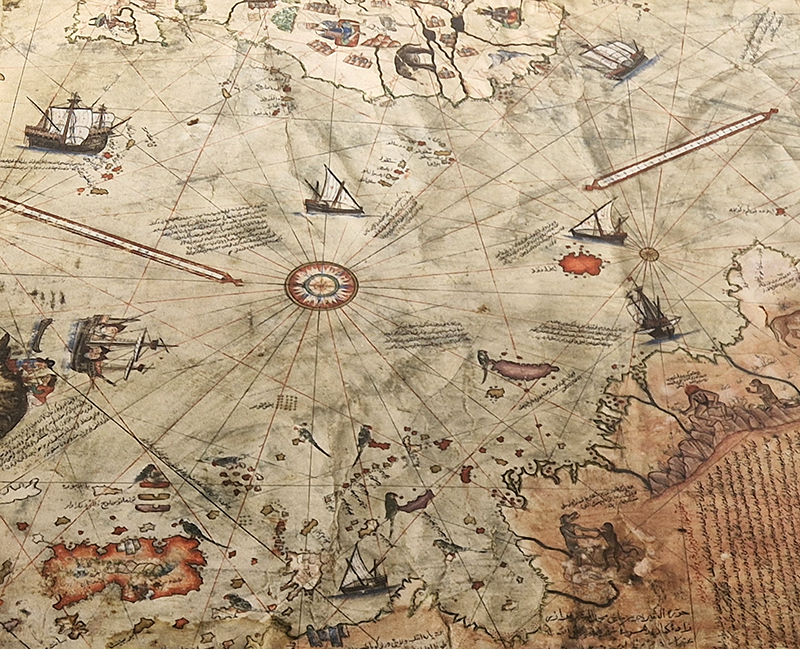
The 1513 world map made by Turkish cartographer Pîrî Reis was discovered in the Topkapı Palace Library in 1929. Pîrî Reis created an impressively accurate depiction of the newly discovered regions of the world using a circular design based on a hypothetical centre. This map is the earliest cartographic record of Columbus’s oceanic voyages and the first to show the unique fauna of Terra Australis.

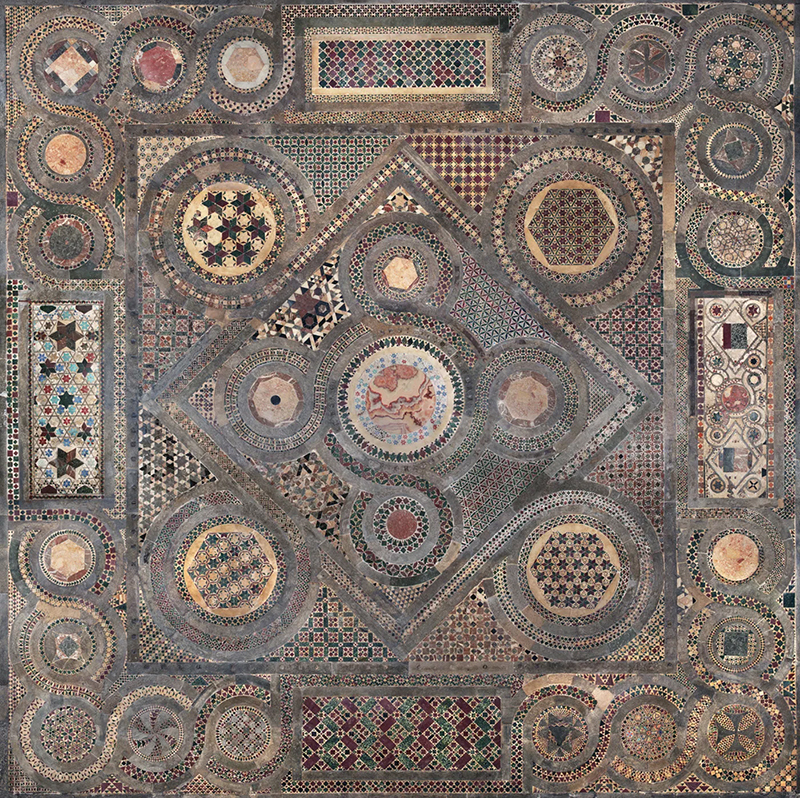
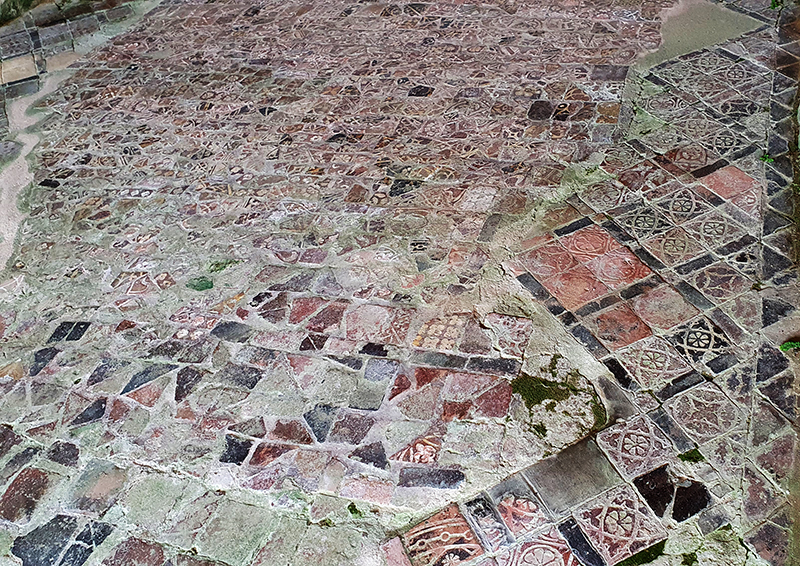
Beginning new work. Learning about the symbolism of sacred geometry in the Westminster Abbey Cosmati Pavement has inspired me to think about how I could relate ancient symbolism and contemporary iconography to think about changing relationships to fire, water, earth, air and the cosmos. Plato imagined the universe was created as a living creature in the shape of a sphere, perfect and complete in itself. Patterns of Thought author Richard Foster suggests that ‘as our minds become progressively tuned to ecological and global concerns, so the Platonic image of the world as a living creature is re-awakened from its sleep.’

In the symbolism of the Cosmati Pavement, the journey from earthly materialism to spirituality is seen as a progression from multiplicity and diversity towards unity and uniformity. The tiles show a transition from a variety of patterns through to simplified regular polygons, the archetypes of form representing a perfection that we only experience as a shadow on Earth. Random patterns at the centre of the design describe the elements in an undifferentiated state of matter, the primal chaos before the division of spirit and matter when the breath of the creator swept over the ‘turbulent waters’ or ‘silva’ bringing forth the differentiation of matter into the forms of the four elements. The medieval mind never took the world at face value and always sought to see the coexistent and equally valid layers of meaning in everything.

In medieval cosmology the separation of the elements happened before the advent of time which began with the creation of the sun, the moon and the planets as astronomical time, the timelessness of eternity is alluded to by the number 60 + 1. The end of the world was imagined as a reversal of creation. All will return into the four elements which return to the primal chaos and are reabsorbed into the divine mind and eternity.

The four elements are linked by pairs of opposing qualities: Fire is dry and hot; Air is hot and moist; Water is moist and cold; Earth is cold and dry. Each element shares a quality with two others and elements with a shared quality combine more easily. Fire is sharp, tenuous and mobile, reflected in a quick tempered choleric human temperament, it gives vision and belongs to the heavenly race of gods. Earth is blunt, weighty and immobile reflected in a heavy melancholic human temperament. Earth resides with the sense of touch and those that walk on the ground. It has stability facing to the north, south, east, west, zenith and nadir. Air is sharp, mobile and weighty reflected in a breezy optimistic human temperament. Air amplifies hearing and smell, it supports the flying creatures and is synonymous with breath and spirit. Water is mobile, blunt and weighty reflected in a dissolute easy-going human temperament. Water amplifies taste and supports the creatures that swim.

I was interested to read that in the kitchens of the Topkapi Palace (1459) in Istanbul, the four humours (blood, phlegm, black bile and yellow bile) were taken into account when designing the menus. Different foods were recommended depending on their qualities to restore good health for those suffering sickness which was attributed to an imbalance of the humours. The seasons were also taken into account in relation to the humours when deciding which foods to cook.

Gallery Visits

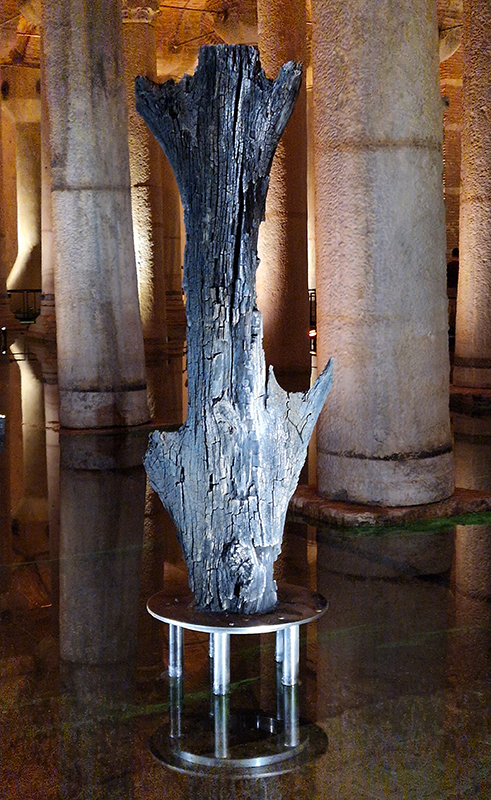
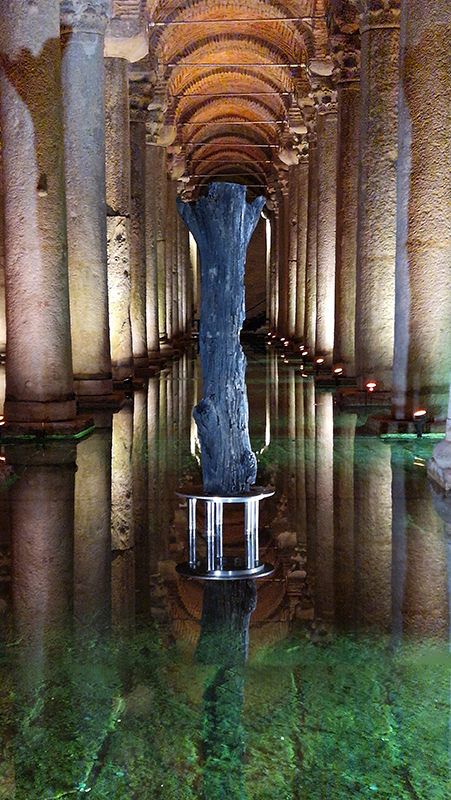
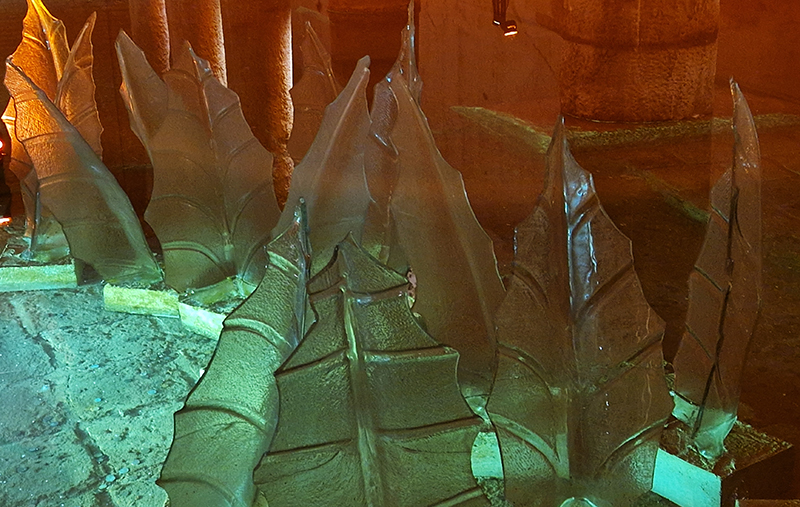
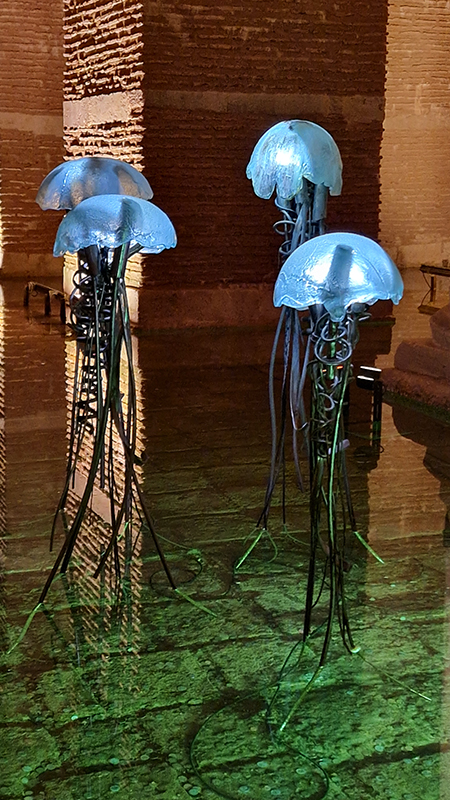
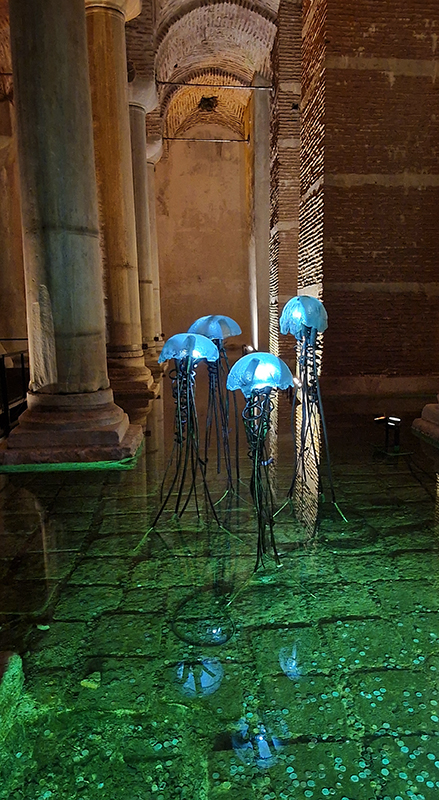
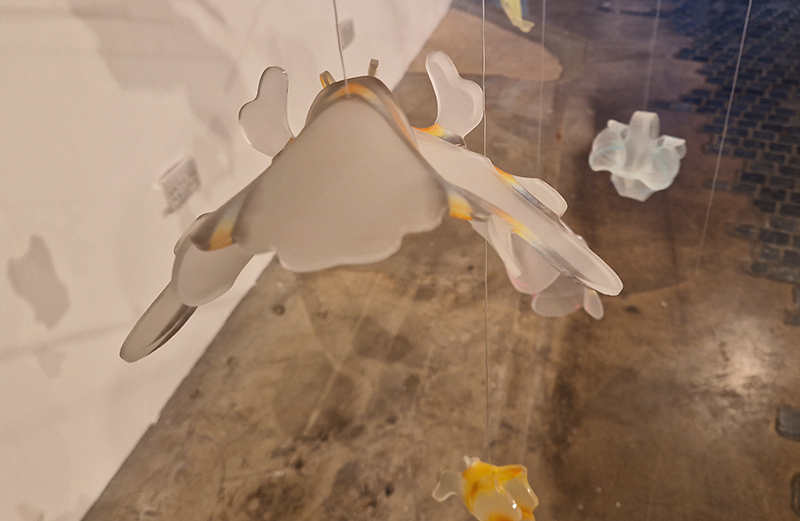
Deeper Beneath at the stunning 1500 year old Basilica Cistern Museum includes work by Vlastimil Beranek (Aqua One- Yellow – made from Bohemian Crystal), Jaroslav Prosek ( 6500 year old subfossil oak), Ali Abayoğlu (Glass Leaves and Jellyfish) and Muzaffer Tuncer (Seclusion)

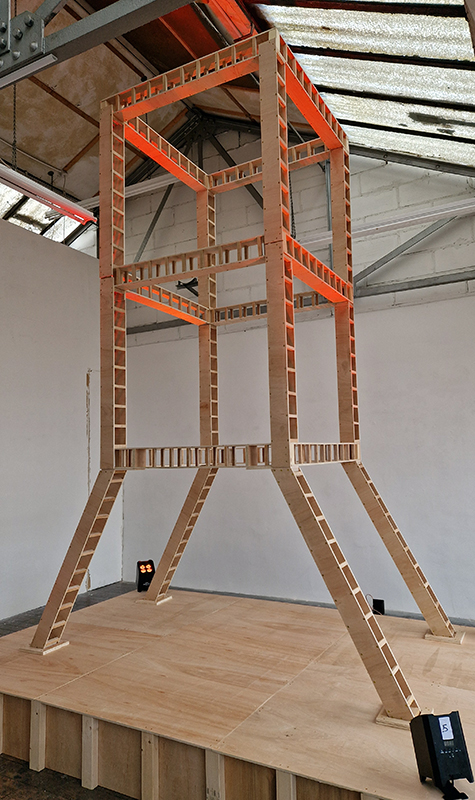
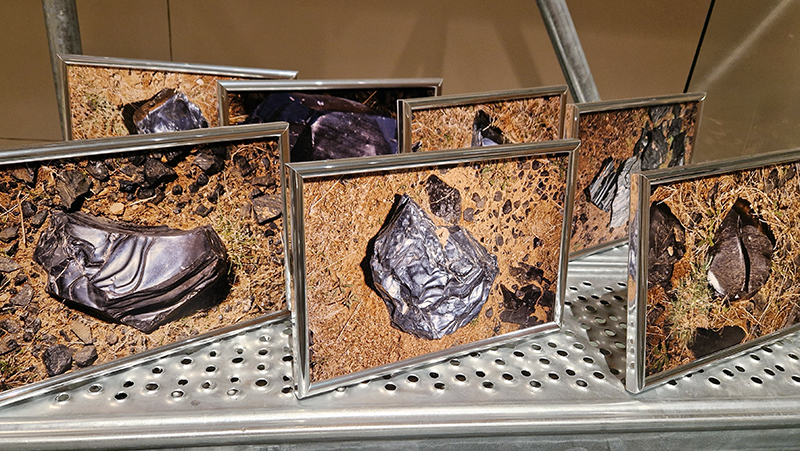
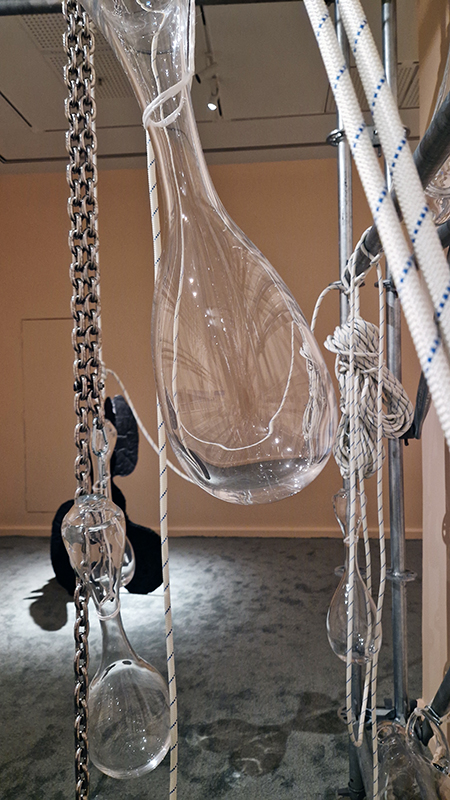
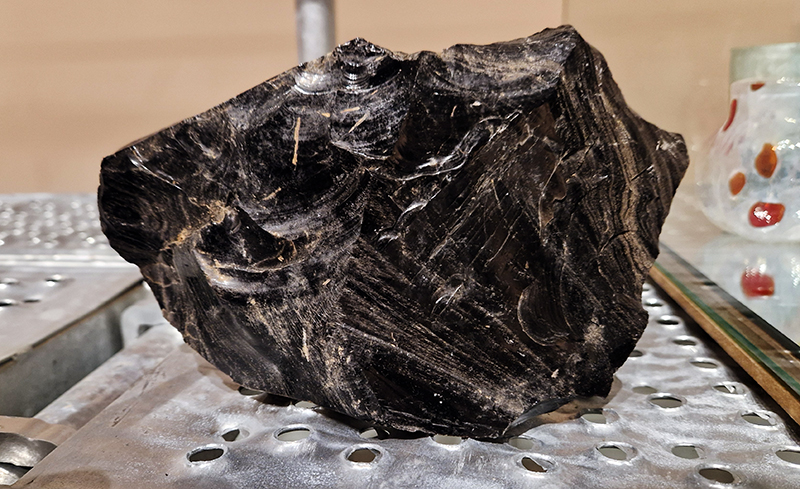
Åsa Jungnelius A Verse, Written with Earth, Fire, Water and Air at Pera Museum, Istanbul. The exhibition brings together the results of time spent in the obsidian fields of Eastern Anatolia collecting natural glass formed by the rapid cooling of volcanic lava and working in the glass furnaces of Denizli along with reflections on marble steeped in Byzantine history. Archaeological finds, glass objects, materials, and handwoven cords rooted in nomadic traditions are displayed alongside photographs by Swedish photographer Peo Olsson documenting the artist’s research. There is a strange juxtaposition of the installation scaffolding set against thick carpet in the gallery.

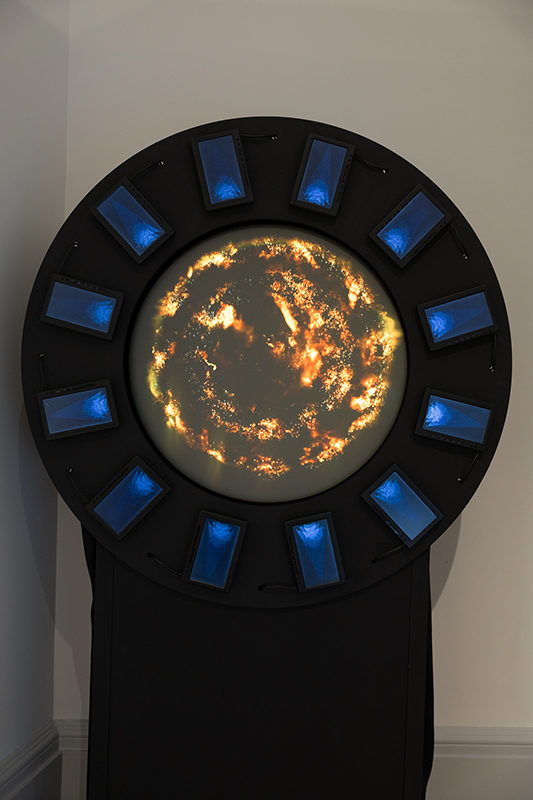
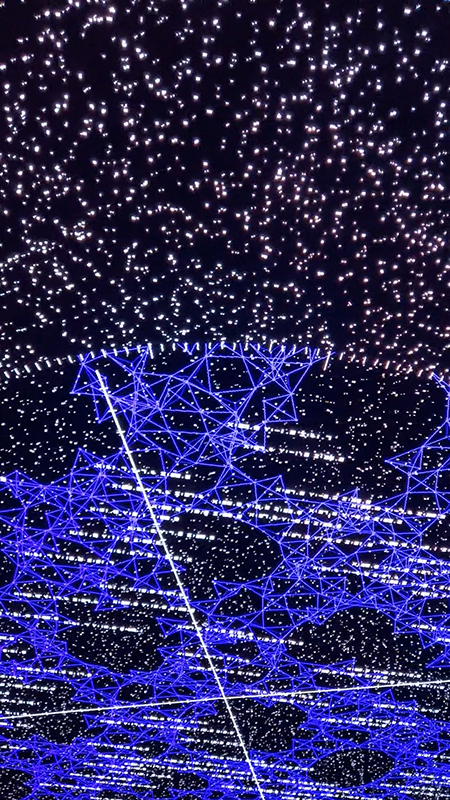
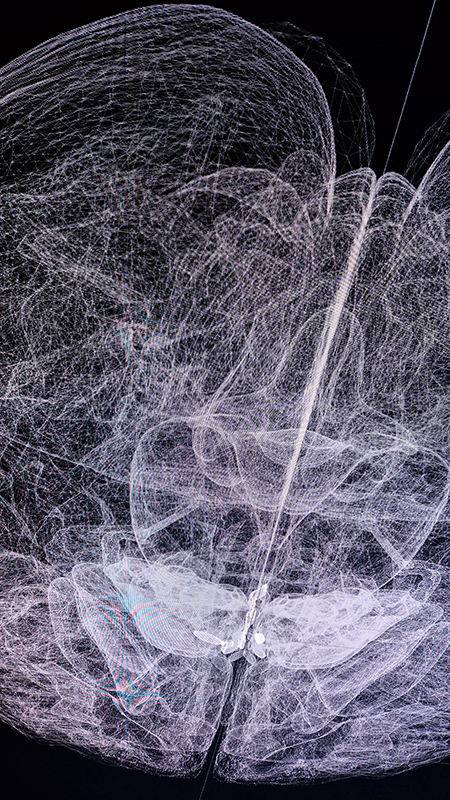
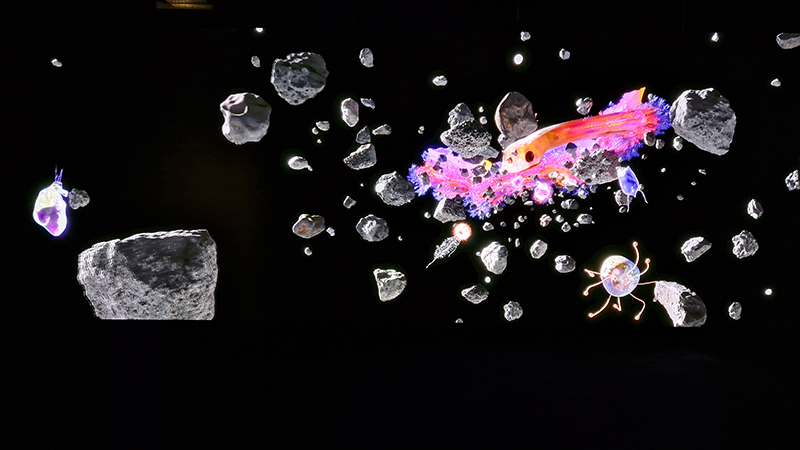
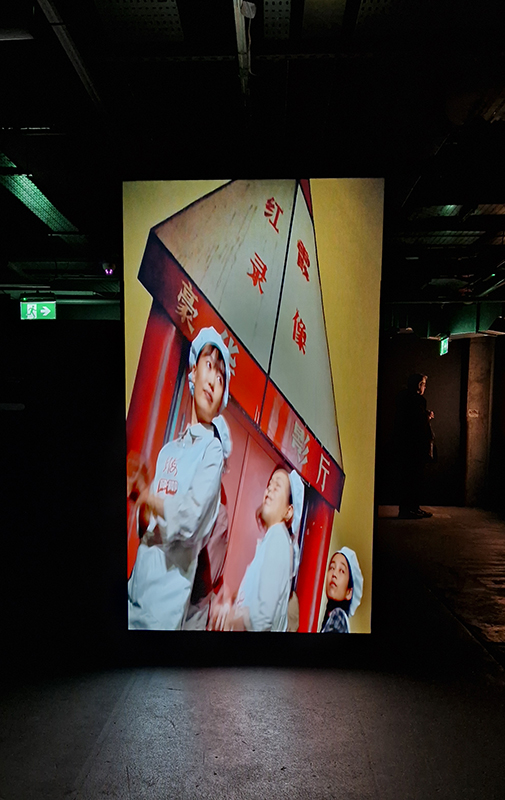
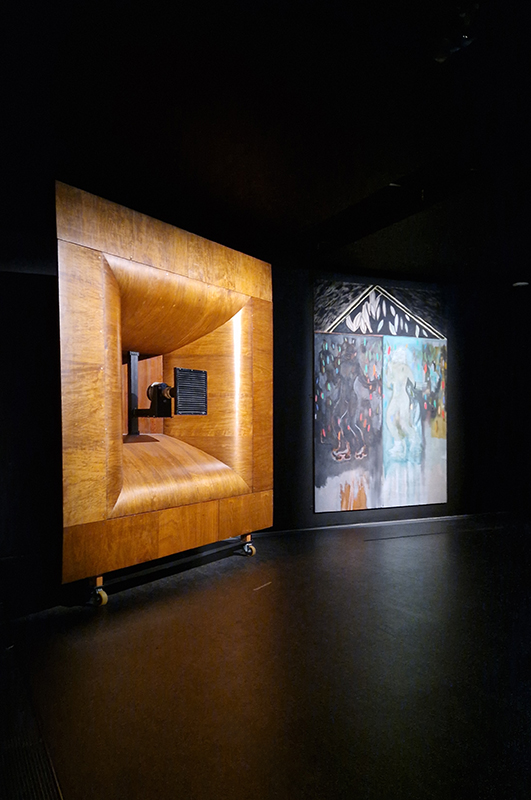
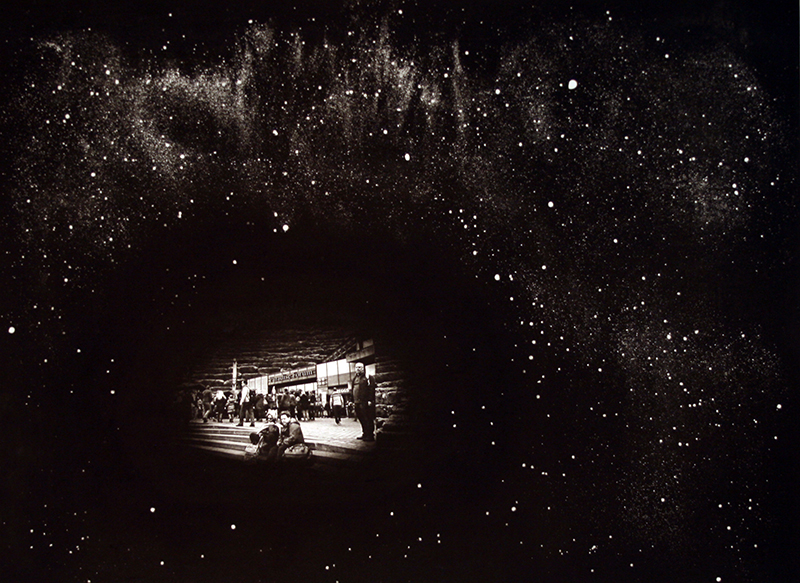
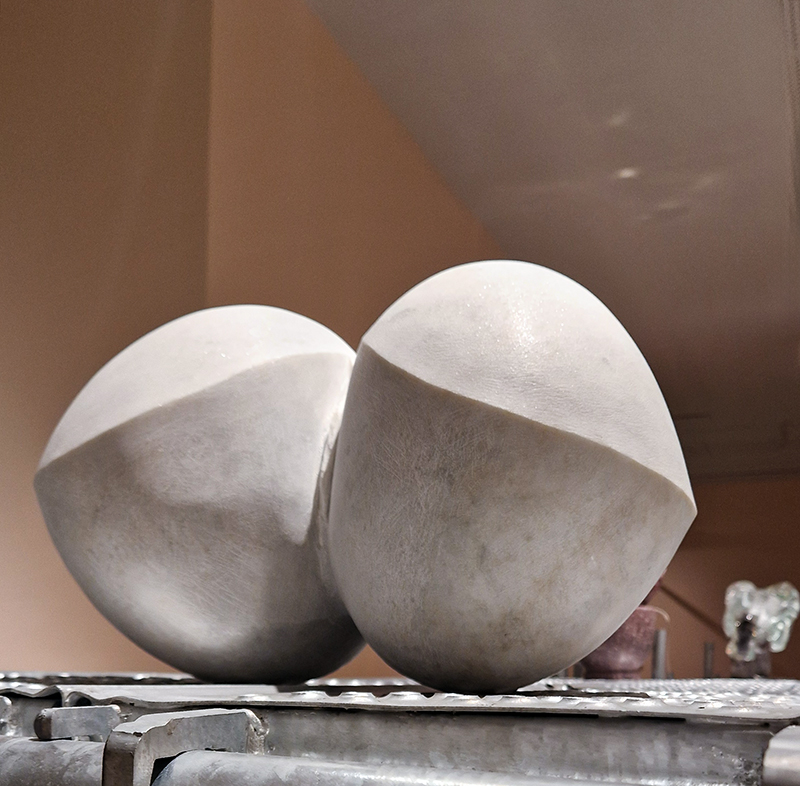
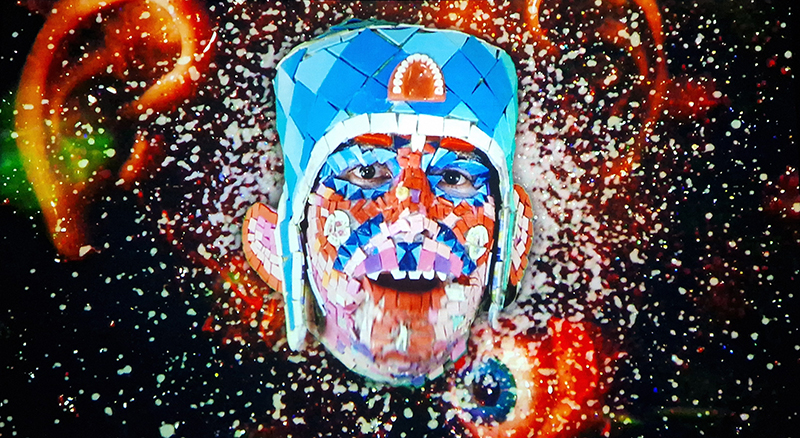
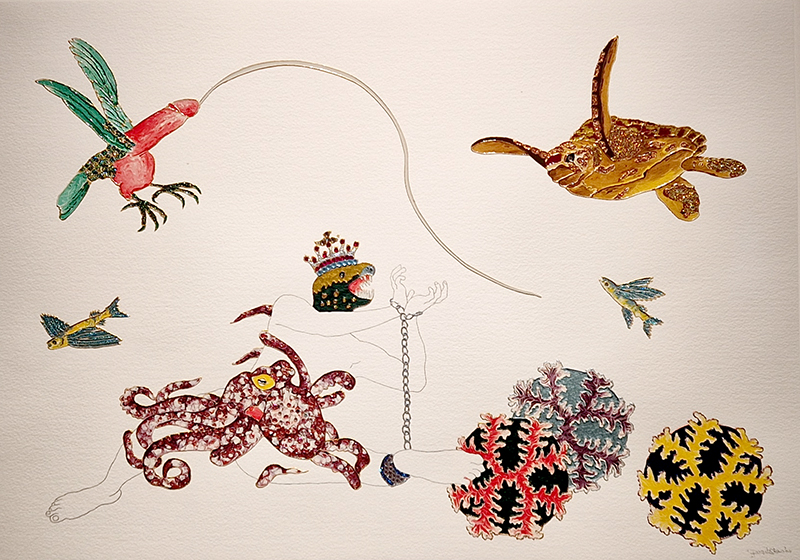
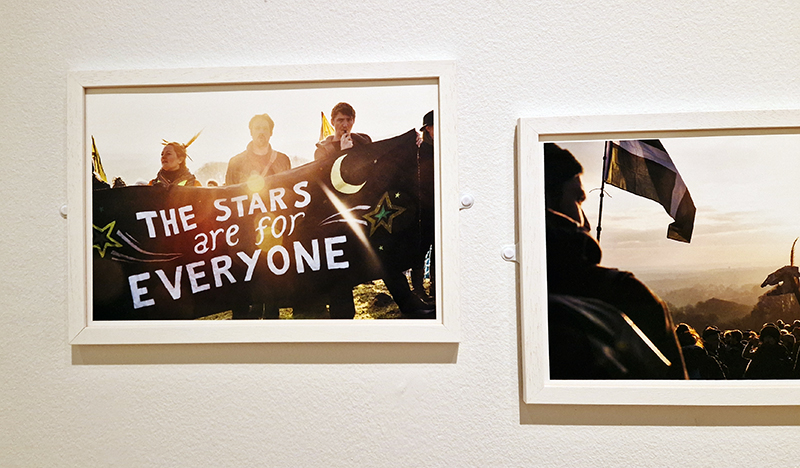
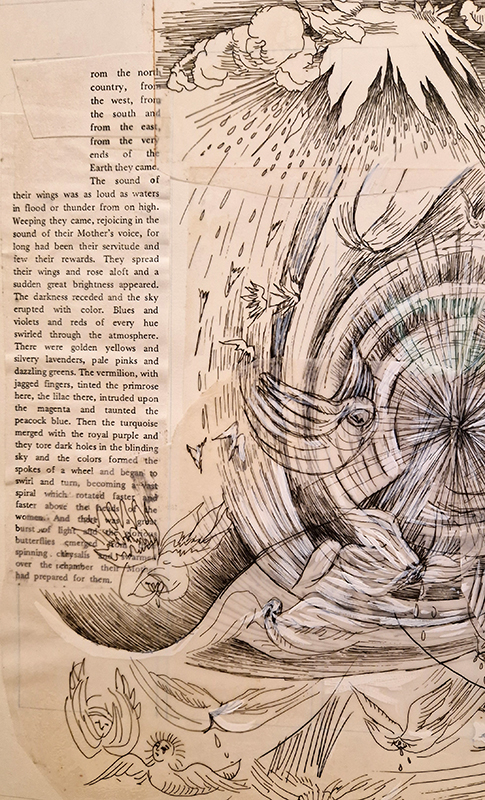
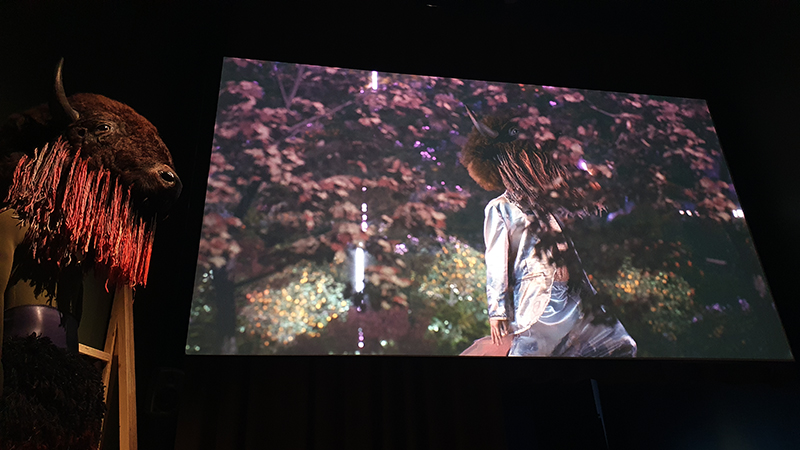
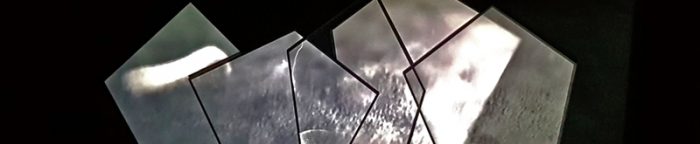
Also at the Pera Museum was Feelings in Common: Works from the British Council Collection. The exhibition is striving to form a zone where feelings in common are shared amidst uncertainties and transformations regarding the future. Happy to see Bedwyr Williams The Starry Messenger again (image 1 + 2 – the poignant geological story of a mosaic dentist which alludes to the micro macro scales of the universe ) and Larry Achiampong’s Relic 2 (an Afrofuturist exploration of postcolonial identities, imagined futures, and ancestral memory) along with a small work from Raqib Shaw from his Garden of Earthly Delights series amongst other works.

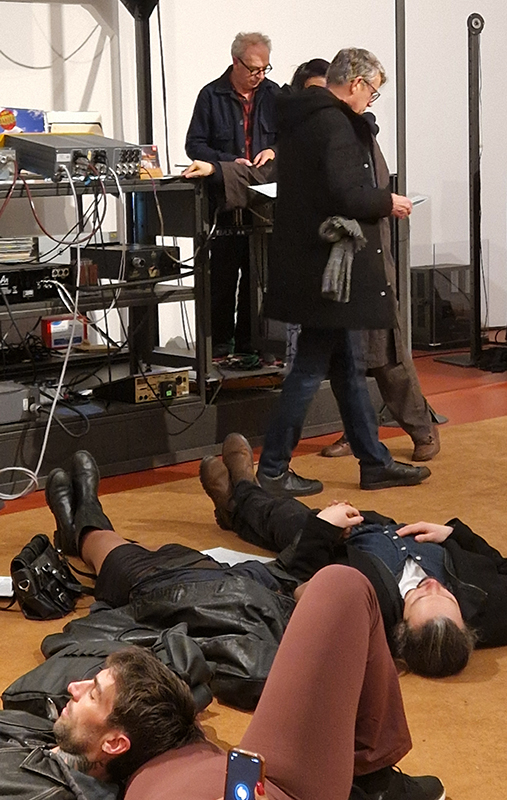
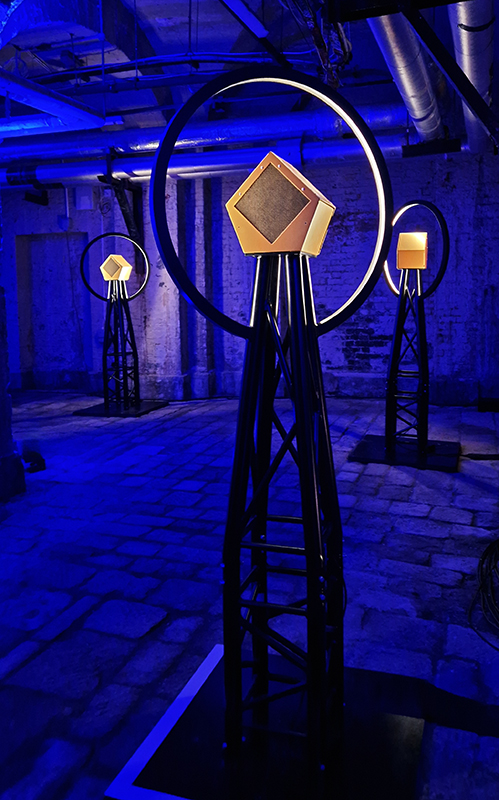
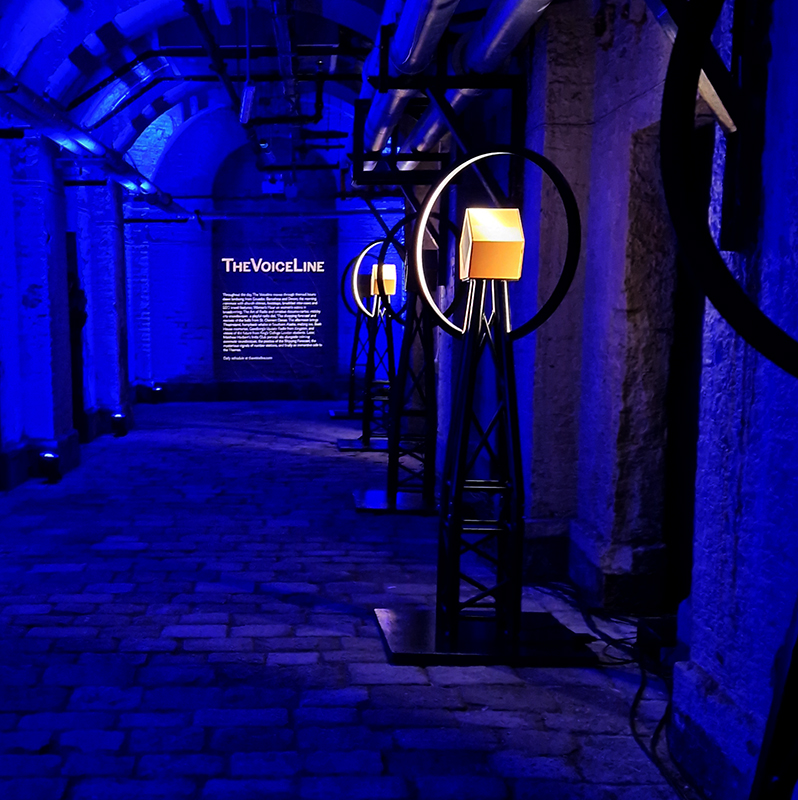
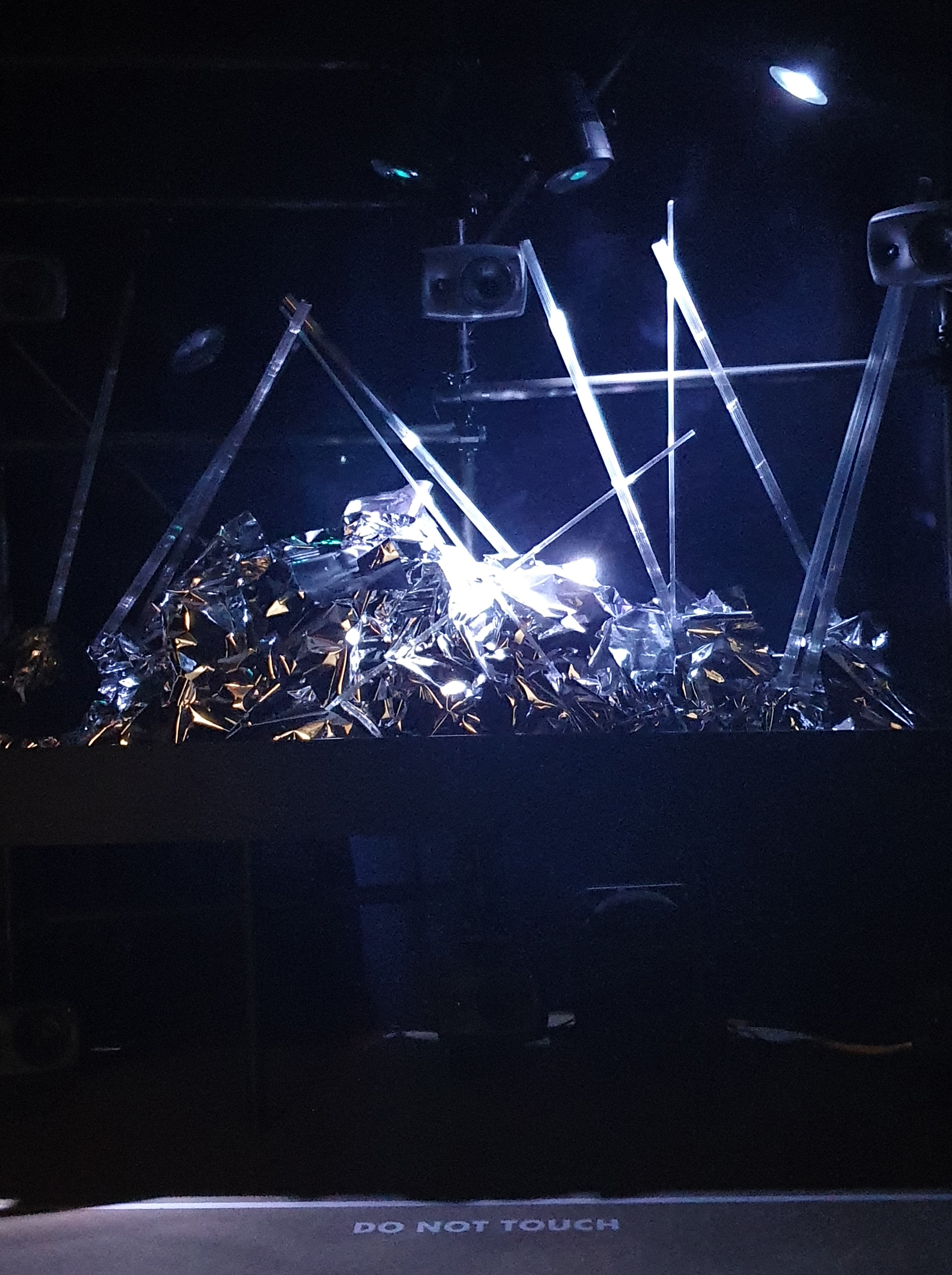
The VoiceLine by composer and sound artist Nick Ryan installed in the atmospheric Deadhouse, Somerset House. 39 precisely aligned speakers, creating an evolving pathway of sound reflecting the histories of radio and listening that began on the Strand more than a century ago.

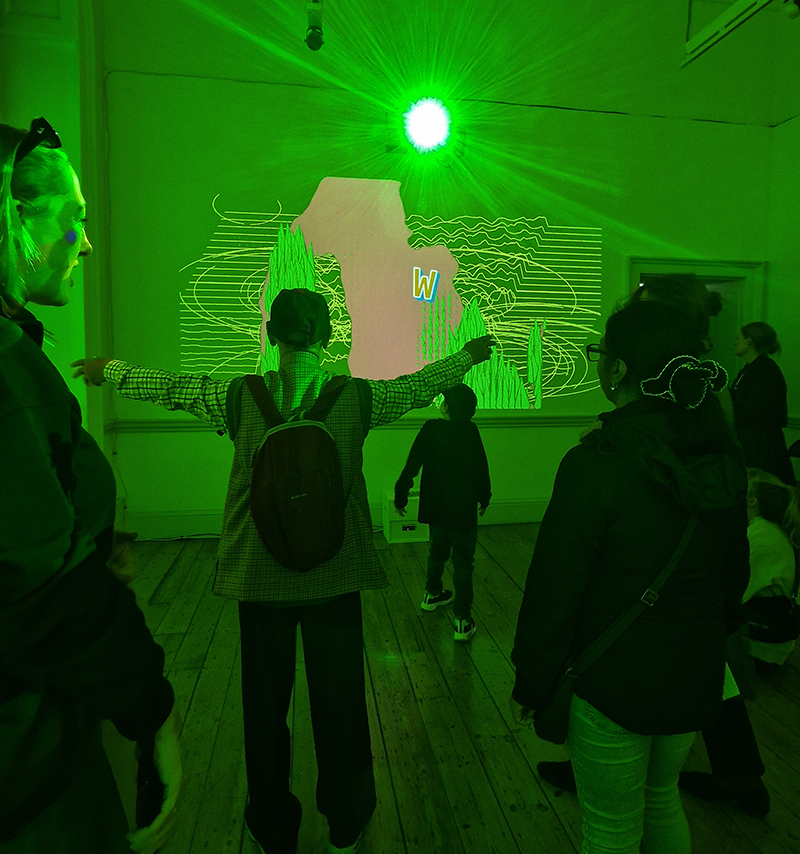
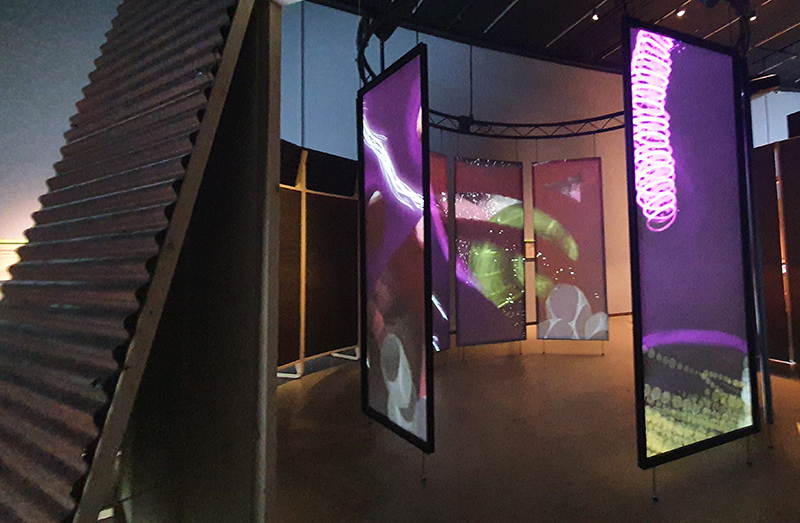
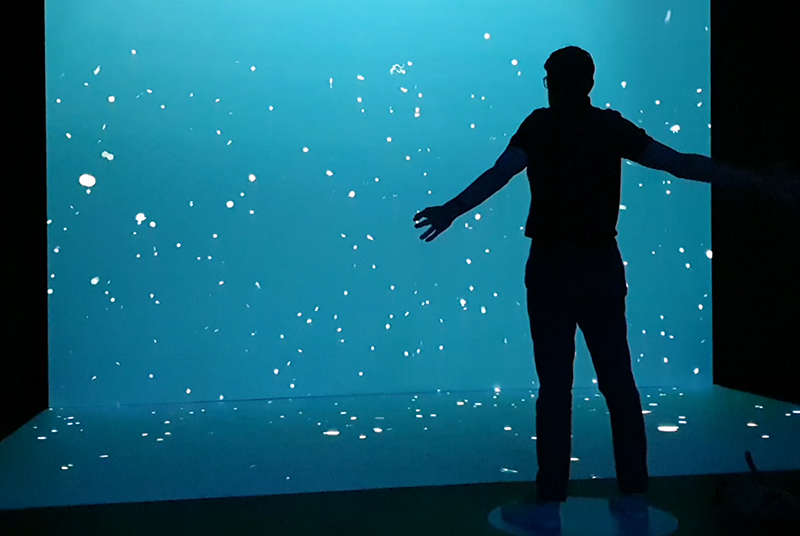
An exhibition by KitMapper, an artist led production company, Along More Latent Lines at Somerset House to showcase new and recent works of the team and creatives based here including the interactive and immersive Genetic Moo: Magic by Genetic Moo.

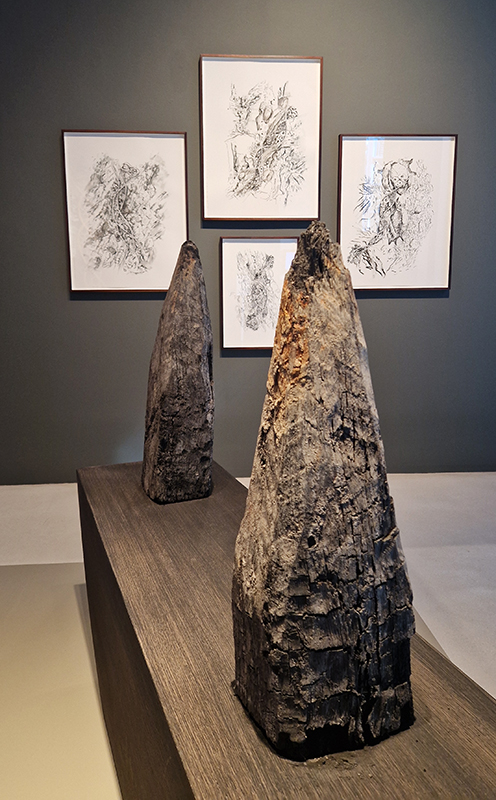
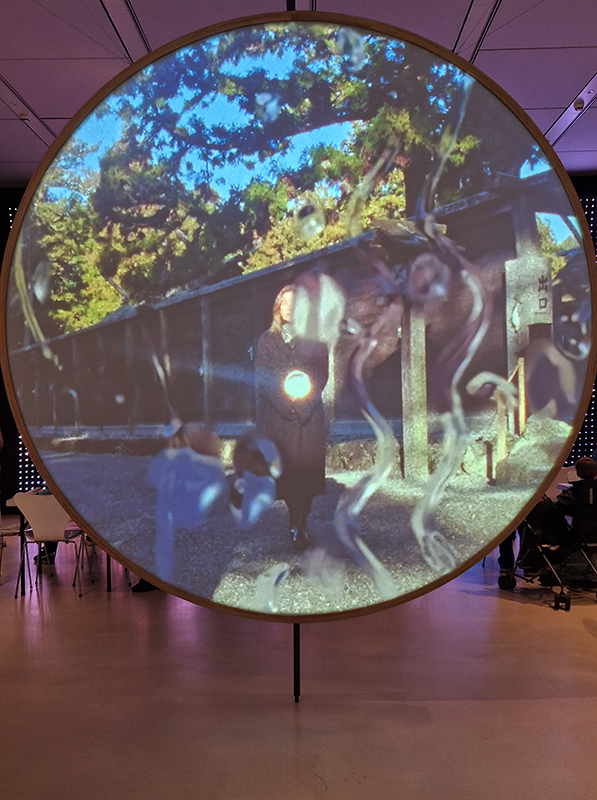
Jane and Louise Wilson Performance of Entrapment at The London Mithraeum Bloomberg Space featuring 2,000 year old oak stakes that inspired imagery looking at structure and ritual. The works investigates parallels between the sacred sites of Mithras and Japan’s Ise Jingu Shrine.

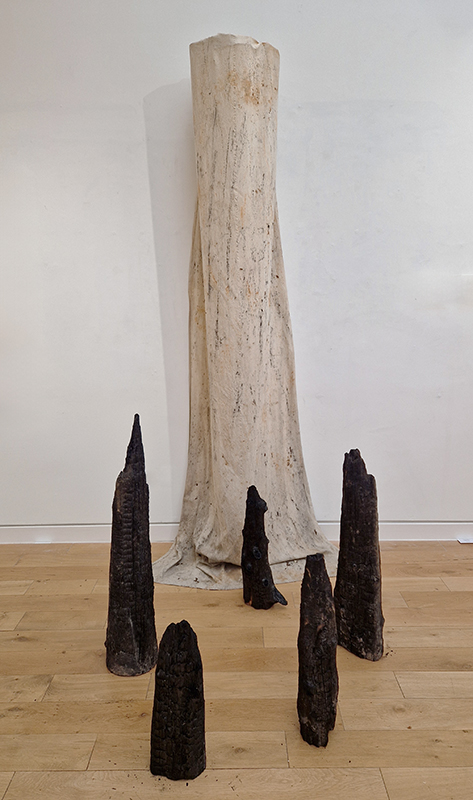
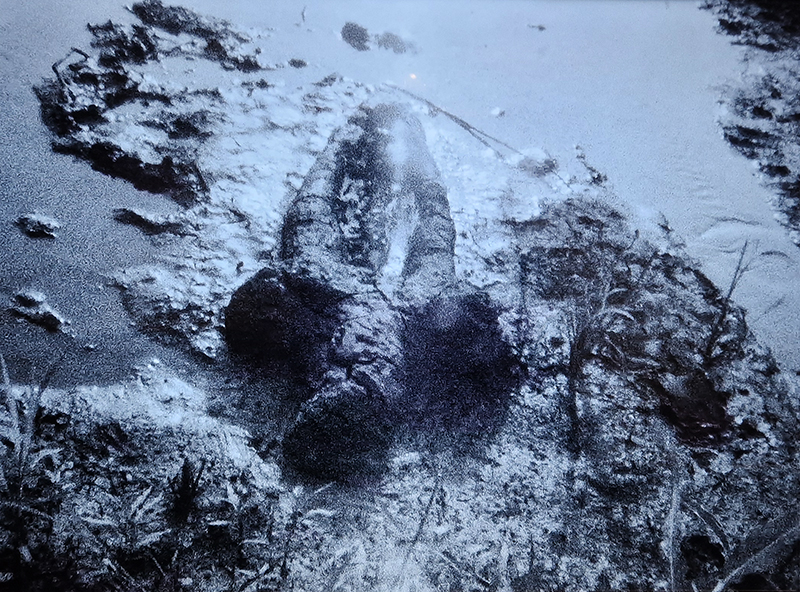
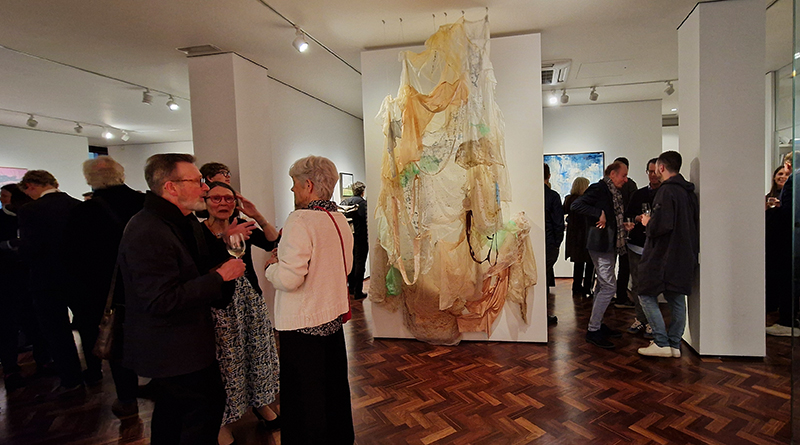
Treen (of a tree) was a collaborative event between Liz Botterill, Sevenoaks museum curator and the Kaleidoscope Gallery co-curators Rosalind Barker and Sue Evans, with the artists of Sevenoaks Visual Arts Forum. The artists were invited to respond to items in Sevenoaks Museum that are made of wood. Participating artists: Colin Anderson, Carole Aston, Jocelyn Bailey, Rosalind Barker, Susanne Beard, Sarah Cliff, Christina Crews, Louisa Crispin, Margaret Devitt, Louisa Donovan, Duncan Dwinell, Sally Eldars, Sue Evans, Deborah Farquarson, Victoria Granville, Kate Grimes, Amanda Hopkins, Marilyn Kyle, Keith Lovegrove, Venetia Nevill, Clare Revolta, Franny Swann and Irene Vaughan. Venetia Nevill worked outside the remit to create ‘Memories of a tree’ to honour a plantation of spruce trees that have been felled, because they were infected by the spruce beetle. Her process of wrapping a cloth around a tree, and rubbing the burnt soil, ash and charcoal into it, memorialises and commemorates the trees. Over a few months the cloth absorbed the sunlight, birdsong and passing of time, allowing the elements to leave their mark, and create a cloak of protection. The cloth is exhibited along with burnt remains of trees.

Reading

North Pole, South Pole: The Epic Quest to Solve the Great Mystery of Earth’s Magnetism by Gillian Turner. A very readable account of all the philosophers, explorers and scientists fascinated by the origin of Earth’s magnetism, from the earliest speculations of lodestone mountains, magnetic polar stars to seismology and deep ocean core sampling revealing the inner working of the planet.

Turning to Stone by Marcia Bjornerud. This book is the antithesis of the idiom ‘as cold as a stone’. It is a passionate and candid account of relationships between humans and rocks. Human to human, human to rock, rock to human and rock to rock. Along the way we learn a lot about geology and the human condition.

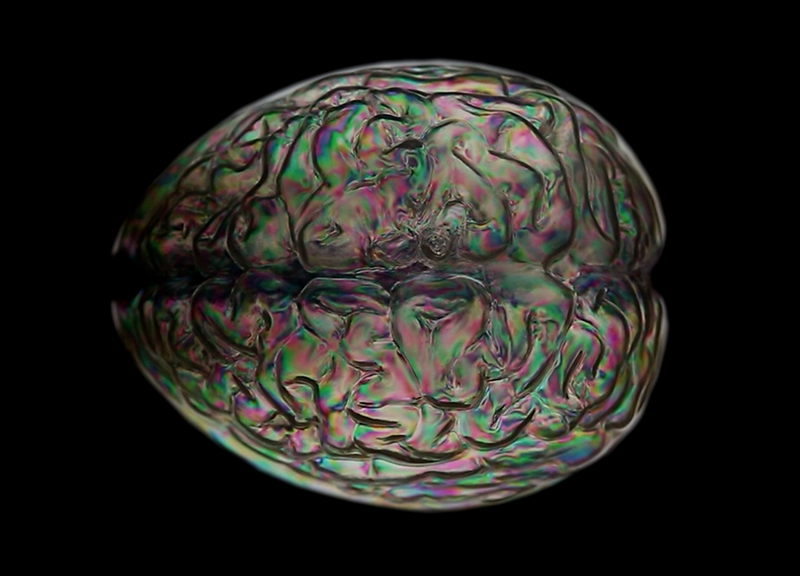
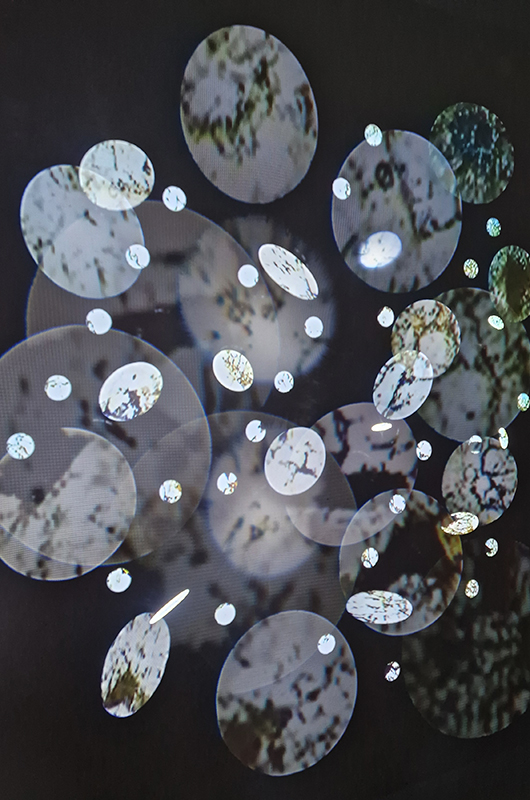
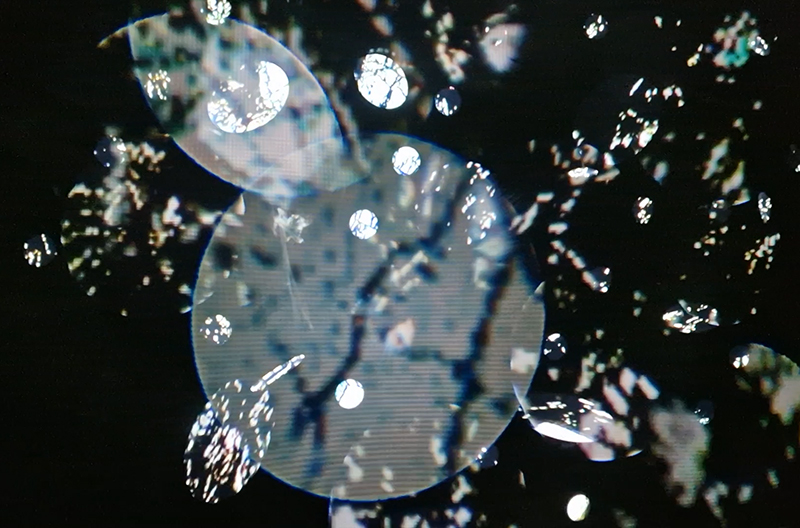
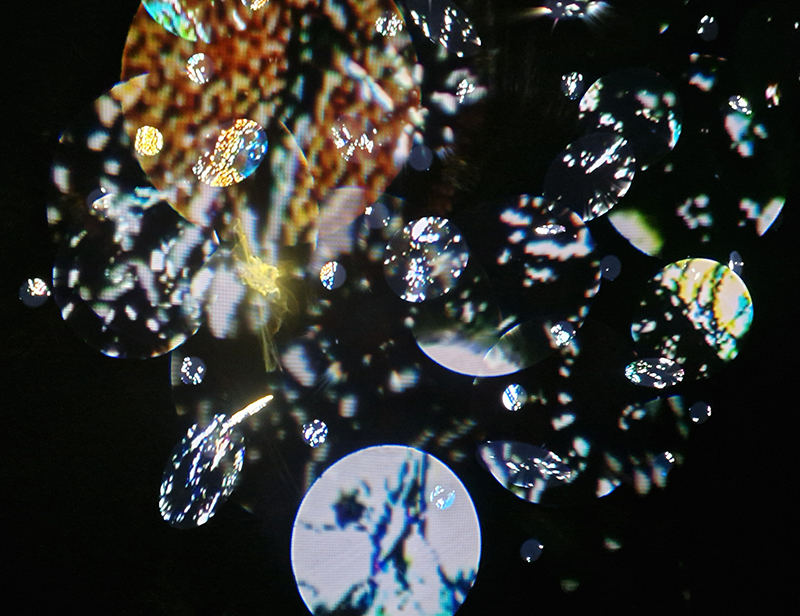
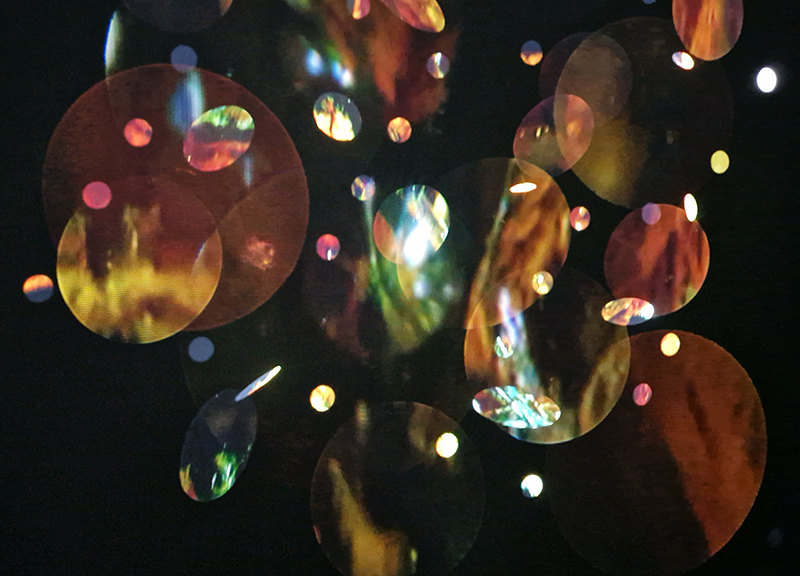
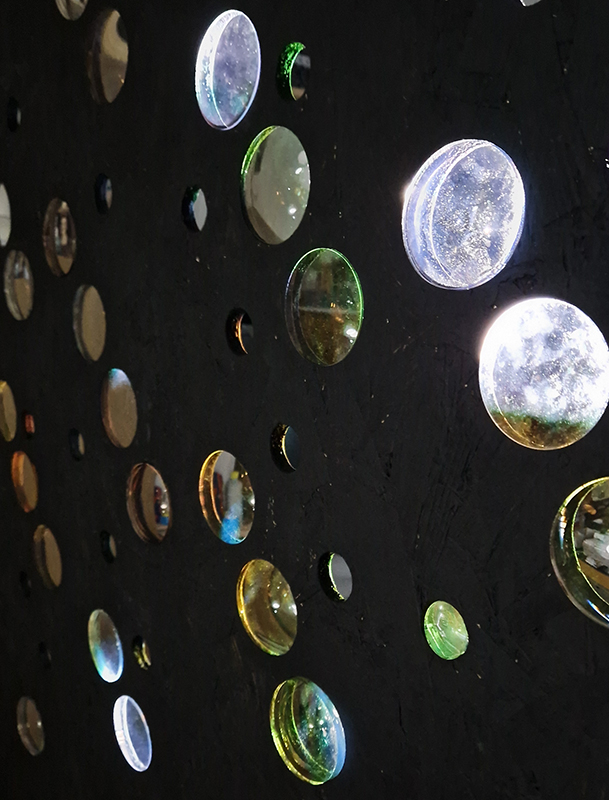
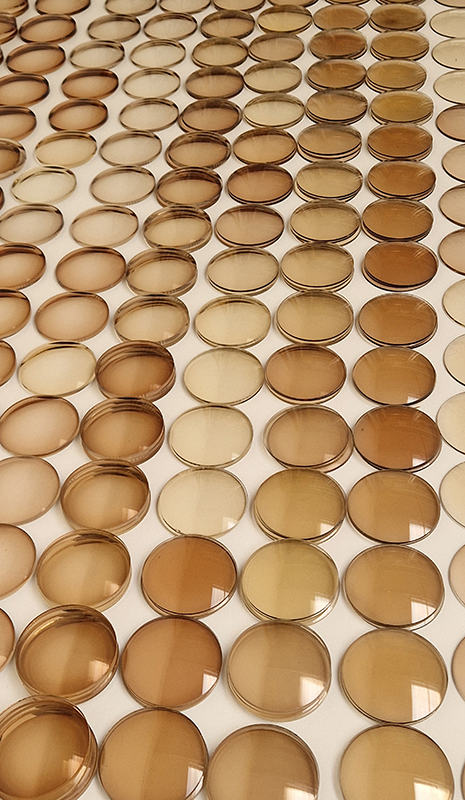
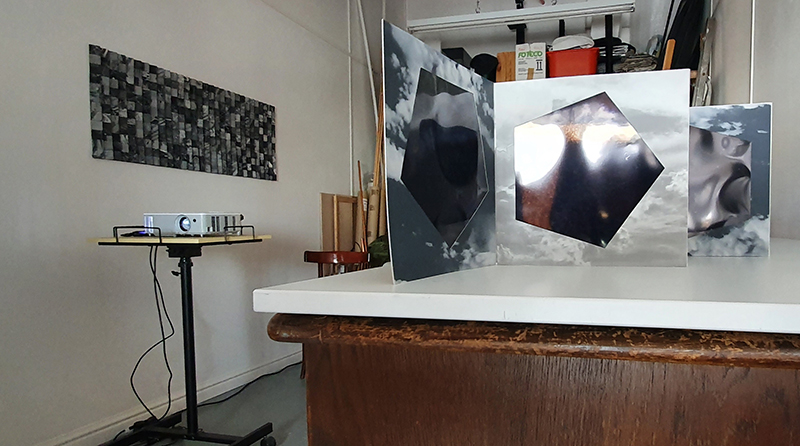
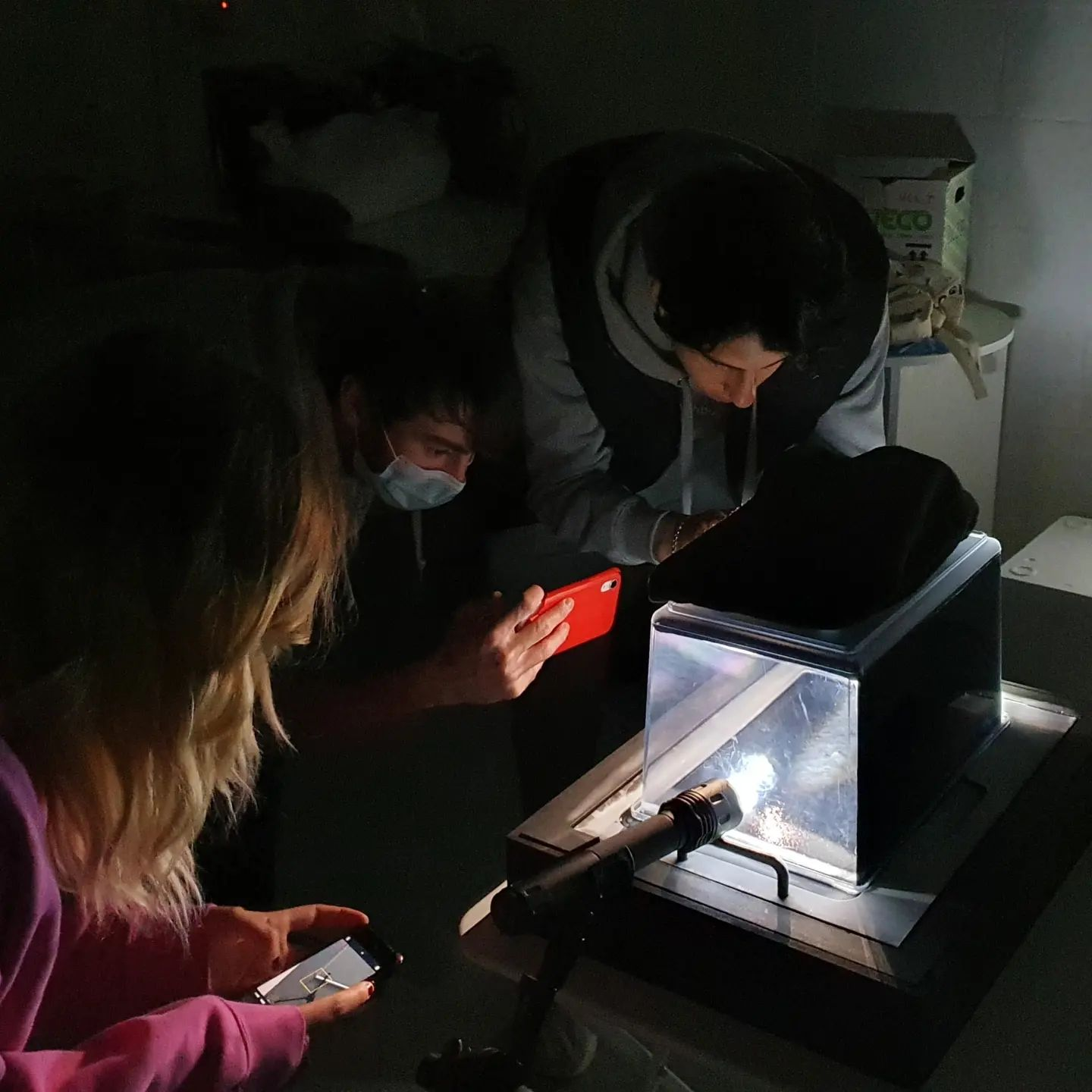
Work continues on ‘mineral visions’ testing projecting through a variety of optical lenses set in a pattern reflecting the crystal structure of magnetite. Magnetite is a mineral we are very intimate with. It is in our cells, in our brain but this delicate balance is being disrupted as magnetite crystals from air pollution now outnumber natural magnetite in the brain by 100:1. The full consequences of this imbalance are not known yet but it could be implicated in neurodegenerative disease like Alzheimer’s.

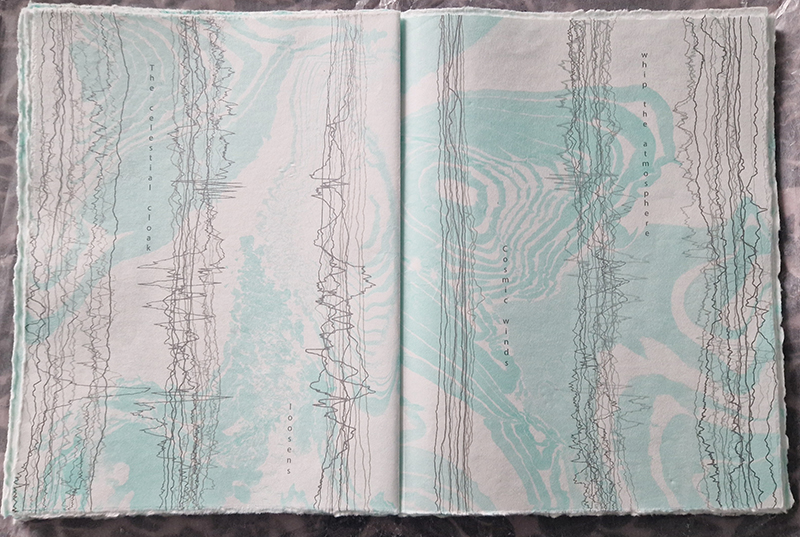
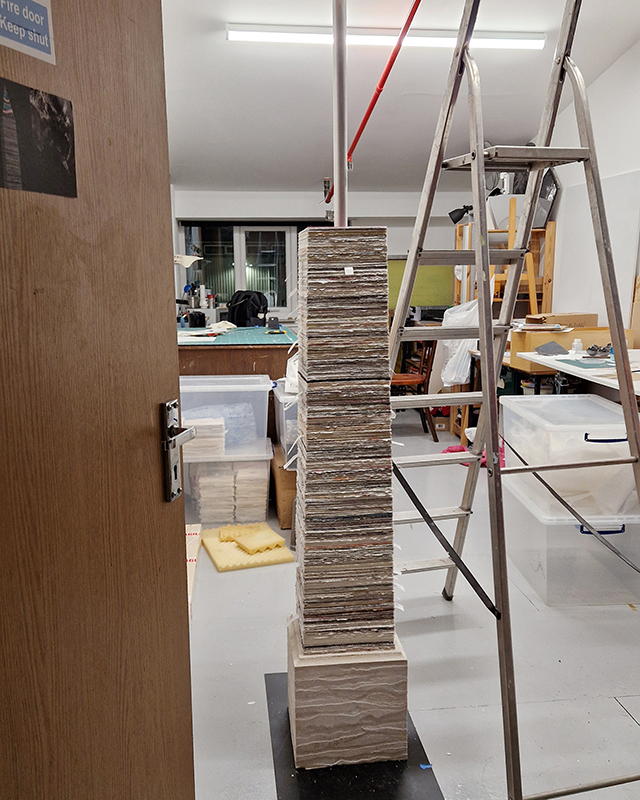
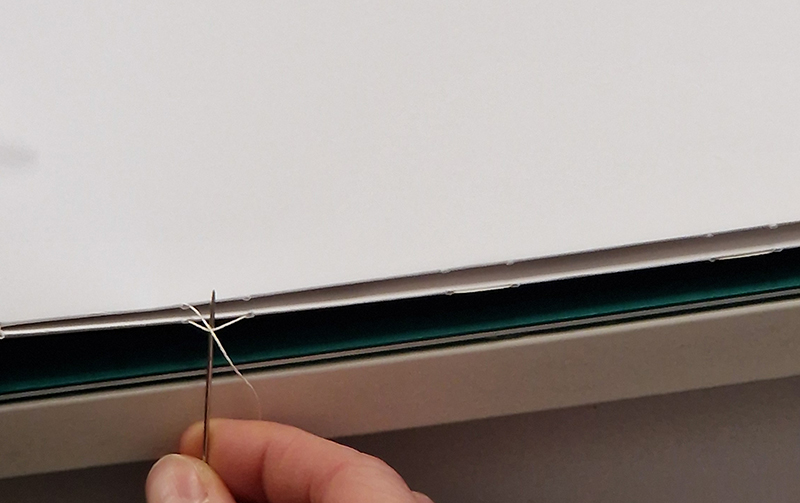
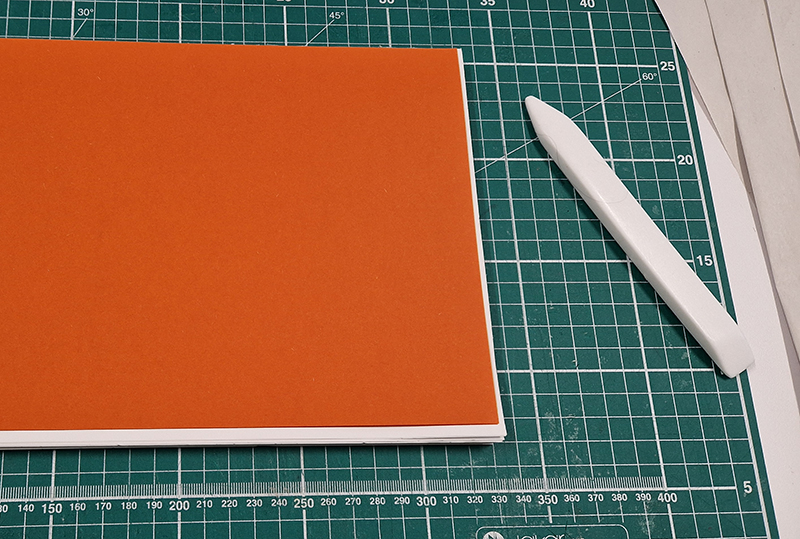
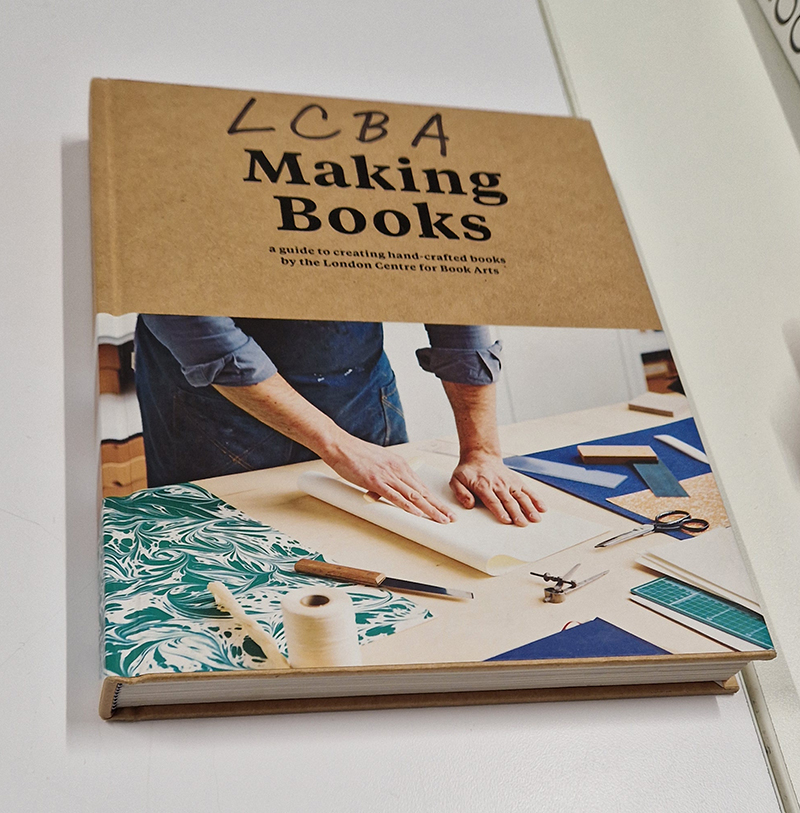
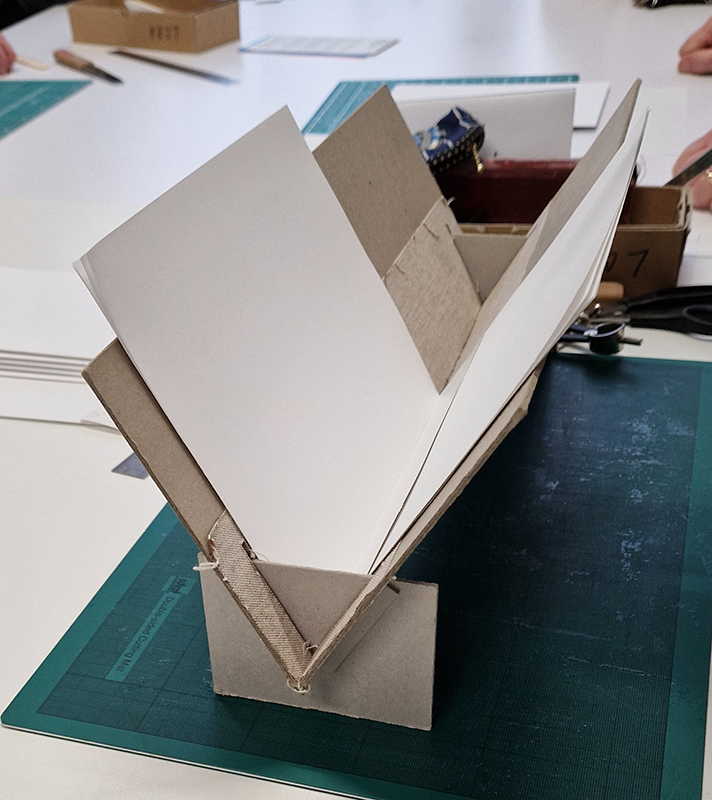
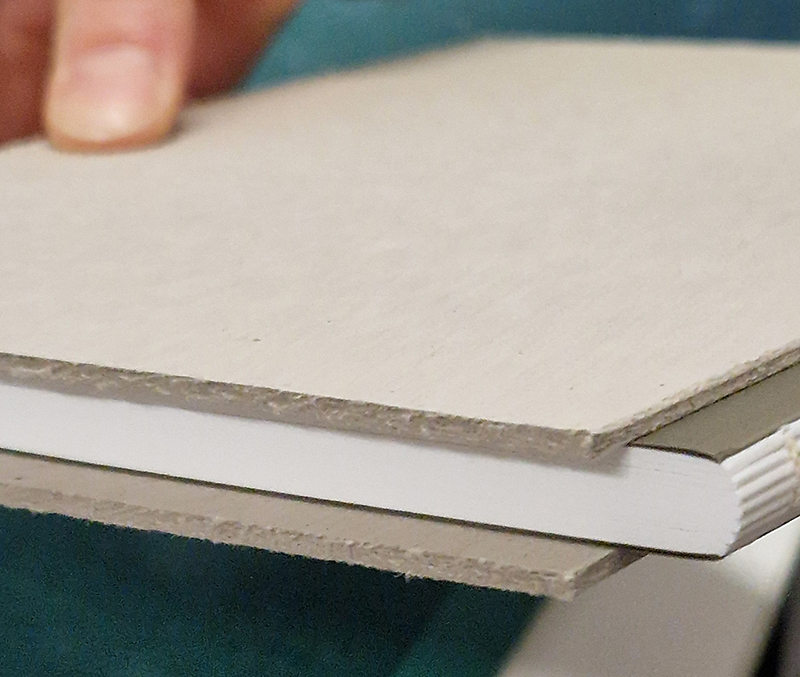
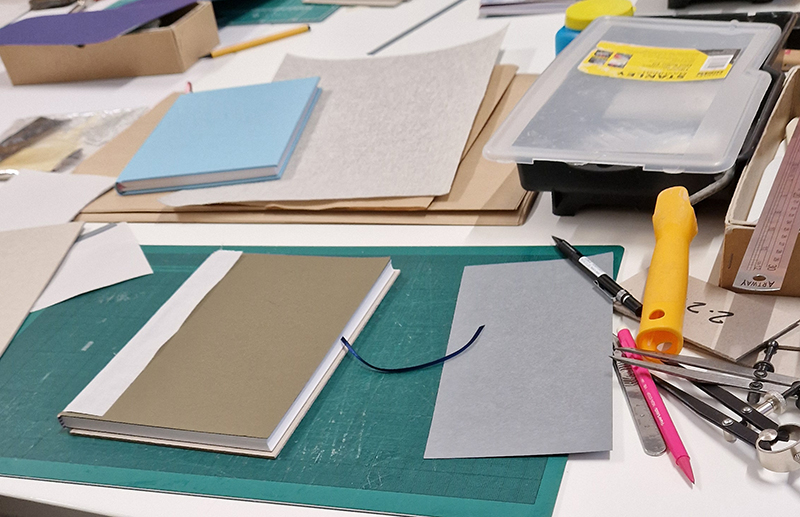
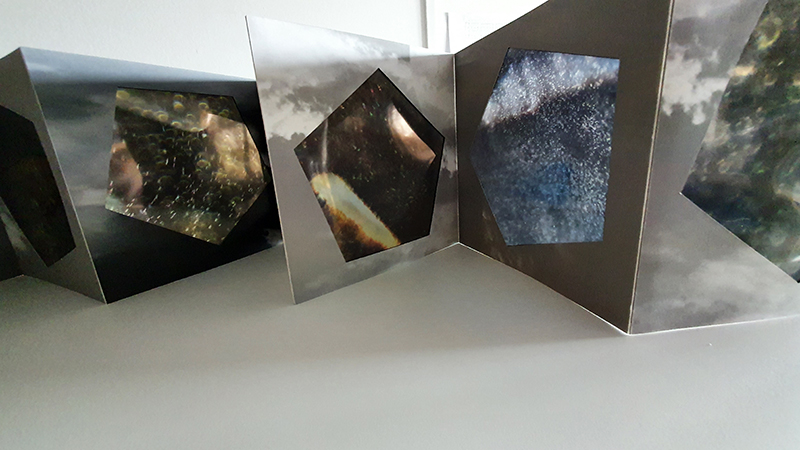
I spent an enjoyable day at London Centre for Book Arts learning how to create a classic full cloth-covered case bound book with a rounded spine. I hope to have picked up some skills here which I will use to make a sculptural book embodying the history of magnetic field reversals stored in the minerals of lava beds on the ocean floor.

Studio visits

Julie F Hill and I had been in contact with writer/producer/curator Ariane Koek since our duo exhibition The Stone Sky at Thames-side Studios Gallery which she had been unable to attend, but with her interest in physics, geology and cosmology had suggested we keep in touch. We finally had the pleasure of meeting Ariane at Julie’s Bomb Factory Studio and were able to share some of our plans for our upcoming show The Geological Unconscious which we are co-curating at Hypha HQ this spring.

It was so good to meet curators Maria Hinel and Indira Dyussebayeva-Ziyabek at my studio to discuss their upcoming project inspired by the essay on carbon in Primo Levi’s The Periodic Table. Levi weaves a story following a single atom of carbon as it is transformed through the many relationships and bonds made with other atoms, moving from rock to atmosphere to living organism and back to mineral.

Gallery visits

Exhibition research trip to Exeter with Julie to see Dartmoor: A Radical Landscape at the Royal Albert Memorial Museum & Art Gallery. Artists include: Fern Leigh Albert, Jo Bradford, Chris Chapman, John Curno, Robert Darch, Siân Davey, Susan Derges, Robin Friend, Ashish Ghadiali, Alex Hartley, Nancy Holt, Laura Hopes and Katharine Earnshaw, Richard Long, Garry Fabian Miller, James Ravilious, Tanoa Sasraku, David Spero, Nicholas J R White, Marie Yates.

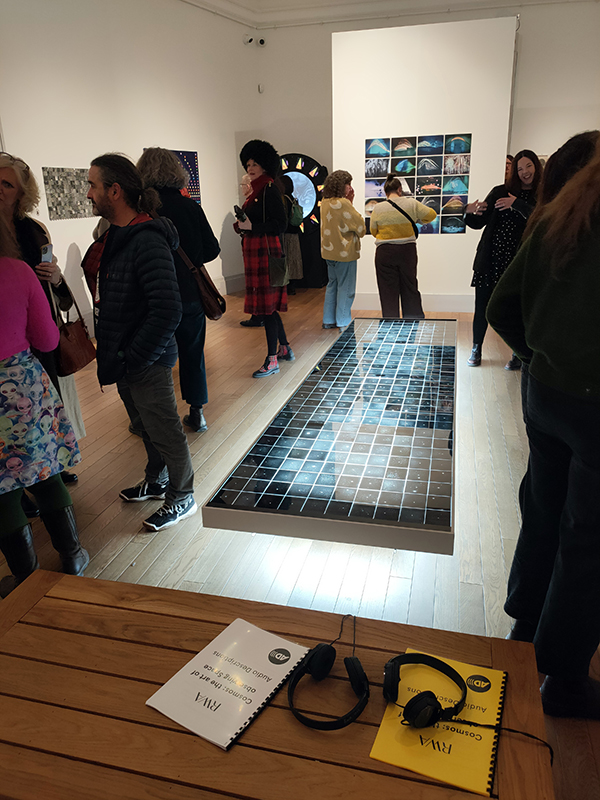
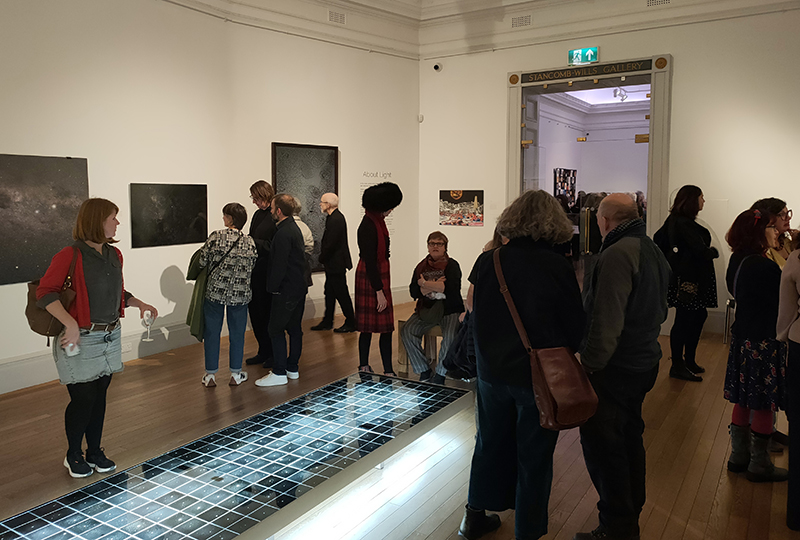
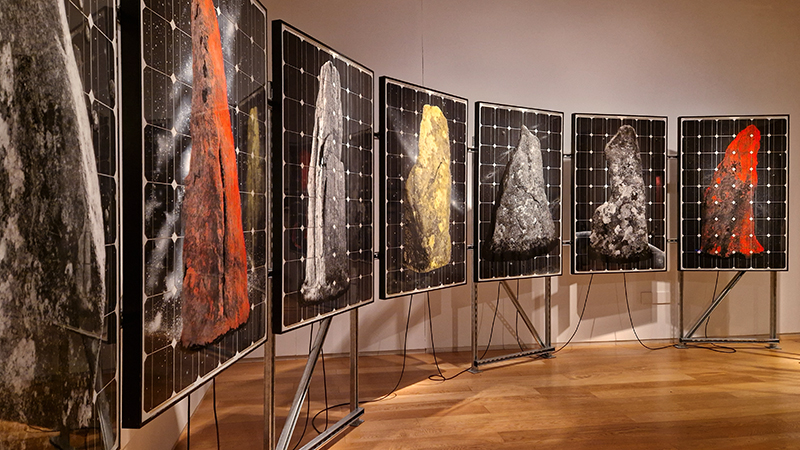
I was particularly interested in seeing Alex Hartley’s, The Summoning Stones, which is a series of hand coloured prints of standing stones embedded into recycled solar panels. Aiming to bring together ancient and contemporary ways of engaging with the sun they are positioned to put the viewer in the centre of a magical arc of energy; the contemporary may have the bias here and the ancient magic dispersed in the gallery setting but I still enjoyed the aesthetic. The works felt rather cramped in the space. There was a lot of photographic work documenting artist’s interest in the moor from the 60’s/70’s onwards and several prints using the process of dye destruction (luminograms) which I was unfamiliar with, such as those by Gary Fabian Miller – this is a photographic printing process in which colour dyes embedded in the paper are selectively bleached away (destroyed) to form a full-colour image. The papers used in this process are no longer manufactured and Miller spent a year creating one direct long exposure to paper luminogram every day as a reflection on time passing. Extraordinary fluid images from Susan Derges were a highlight.

A luminous intervention of glass Specimens from an Imaginary Voyage by Steffen Dam in the main collection at RAMM.

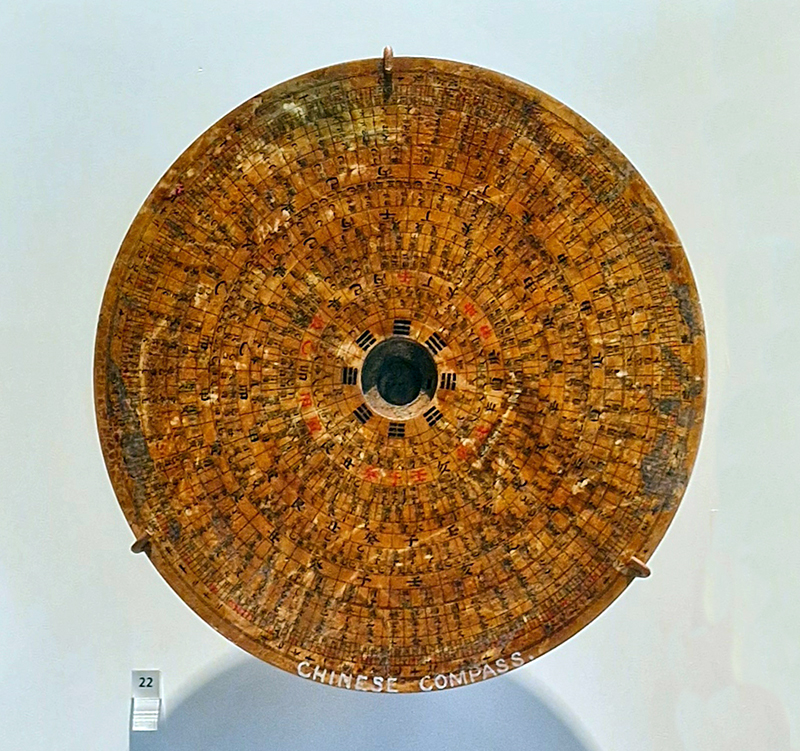
This splendid Chinese Compass, Lo P’an, also spotted at Royal Albert Memorial Museum, Exeter – used more for alignment of positive energy than navigation.

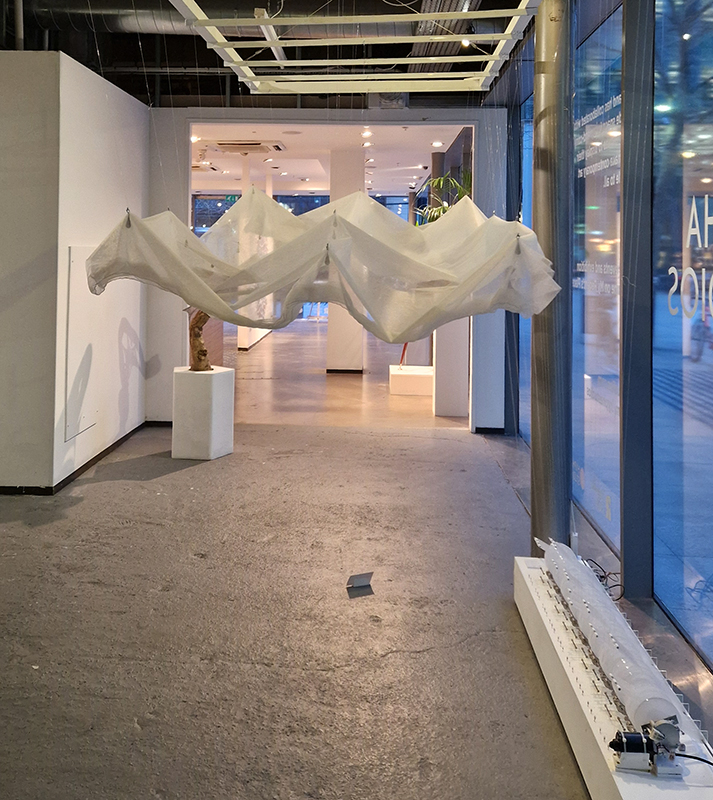
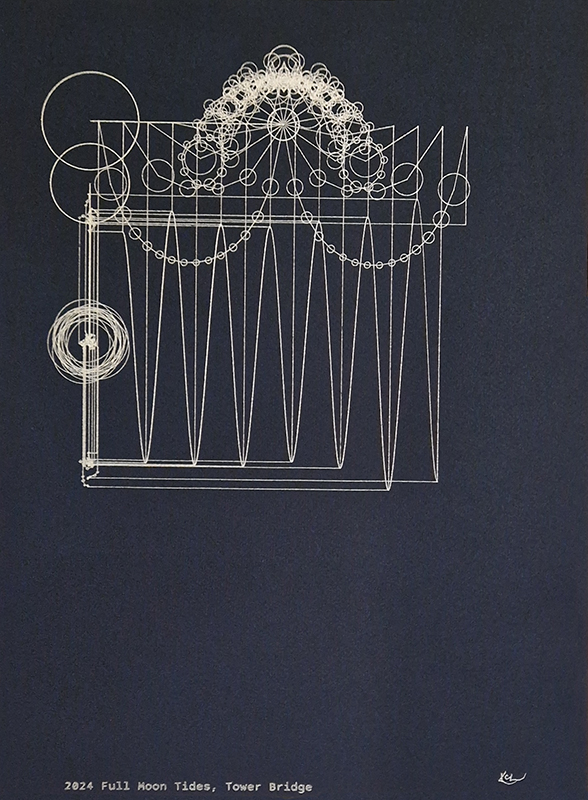
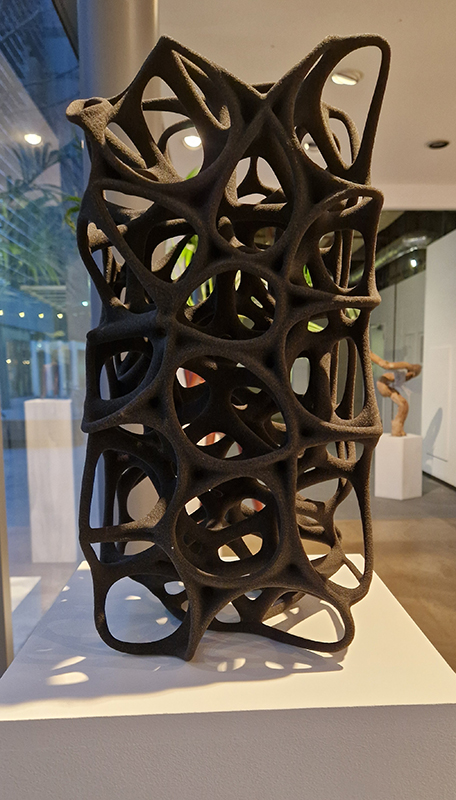
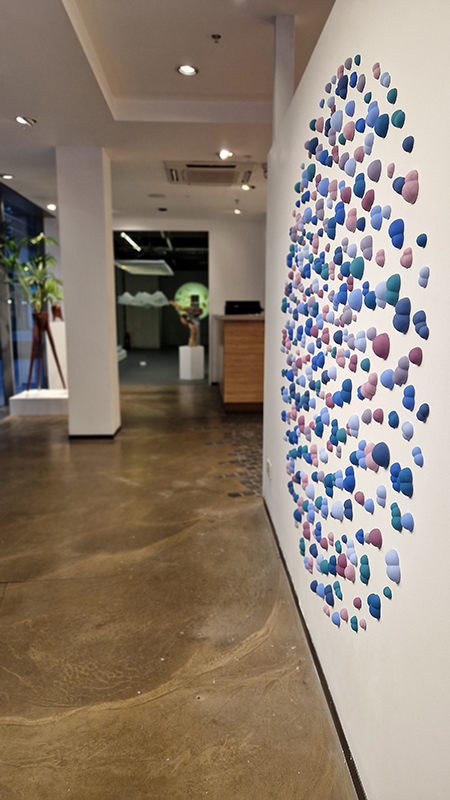
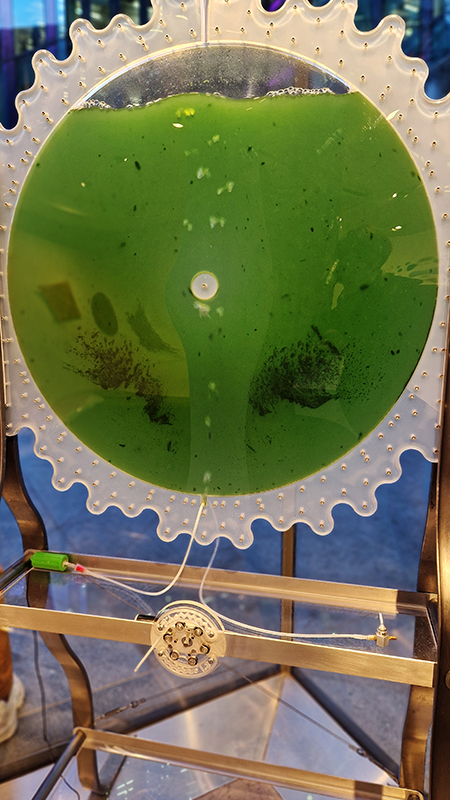
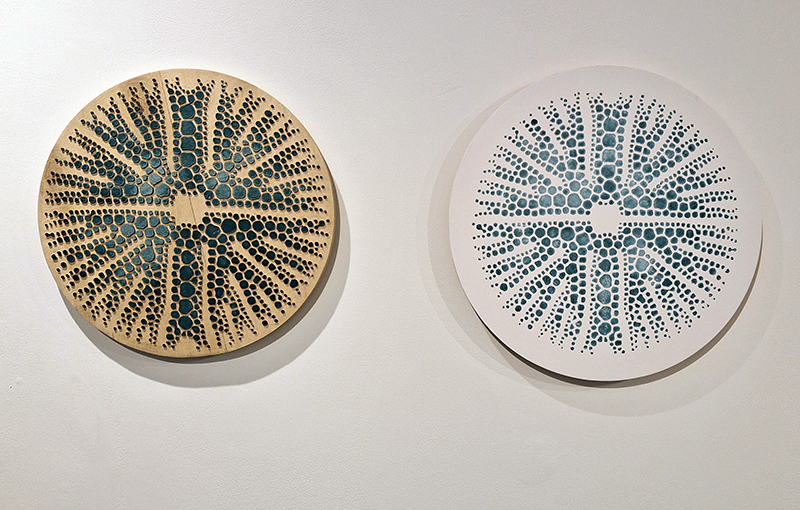
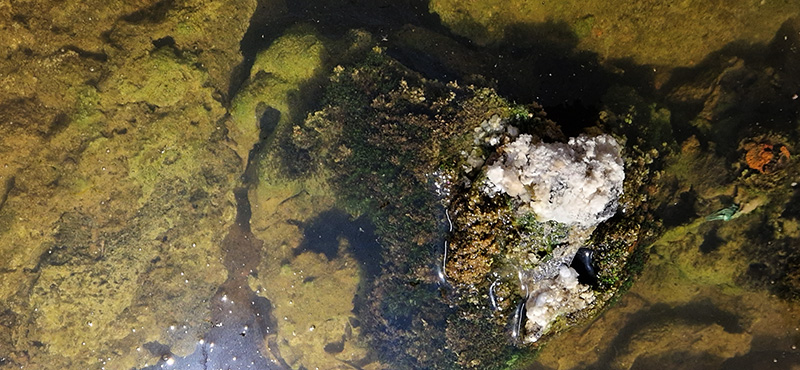
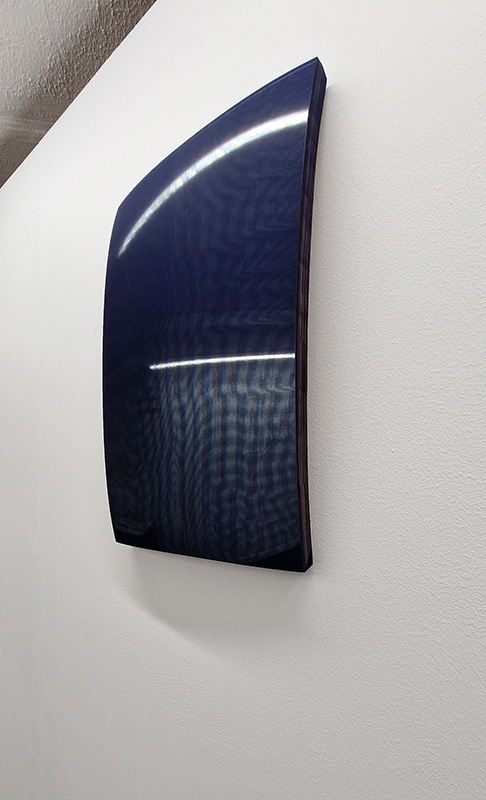
In Scope at Hypha HQ, Euston curated by James Grossman. An exhibition examining nested systems in nature, there were some fascinating symbioses of technology and natural materials such as live algae prints and sculpture capturing the tidal forces of the Thames estuary. Images 1-3 Alexander Clarke, 4 Will Laslett, 5-7 Kerrie O’Leary, 8 Star Holden, 9-10 James Grossman, 11 Peter James Nasielski, 12-13 James Grossman + Peter James Nasielski, 14 Hanne Peeraer

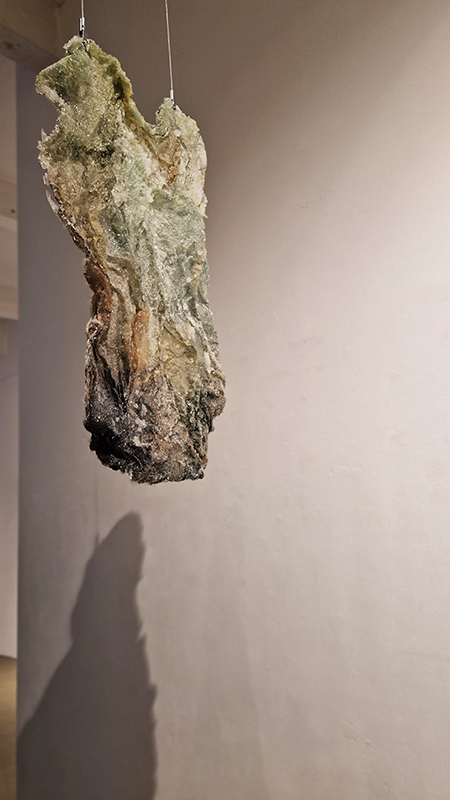
Great to see Sophie Mei Birkin’s Vestige in Joining Doggerland at APT Gallery. A semi-translucent, glittering, crystal encrusted form suspended like messenger from both the past and the future – a reminder of what once was and what might be.

Citra Sasmita Into Eternal Land at Barbican The Curve. Having turned my hands and kitchen yellow recently grating fresh turmeric I understand why this circle of turmeric powder in the meditation zone was so closely invigilated. A calm scented area after walking the curve of colonial atrocities.

Mike Kelley Ghost and Spirit at Tate Modern. Sublevel (1998) is a model of the basement of CalArts, where he had studied in the 1970s. The spaces that Kelley couldn’t recall from memory are lined with pink crystal resin. The work stages a site of hidden memories and repressed desires, underscored by the symbolism of the pink coloured crystals, as Kelley explained: Because, as everyone knows, regardless of meaningless, exterior coloration, it’s all pink inside. Janelle Monae would agree and regardless of honourable/ironic sentiments employed the aesthetics left me feeling a bit like I’d time travelled to a seedy fairground scenario.

Glad I made it to see UBIK Hypha Studios at Sugar House Island from the Changeable Beast sculpture group. Inspired by the eponymous Philp K Dick novel, the artists invite viewers into speculative narratives of alternative futures. Images left to right: Weeping Willow Ellie Reid, Untitled (from the series ‘You Follow Me Around’) Ellie Reid, Things Said Susan Young, Return of the Dinosaurs Ornela Novello, Sunspots Tessa Garland, Timebeing Diana Wolzak, Inertials Clare Jarrett, Broken Nights Kay Senior

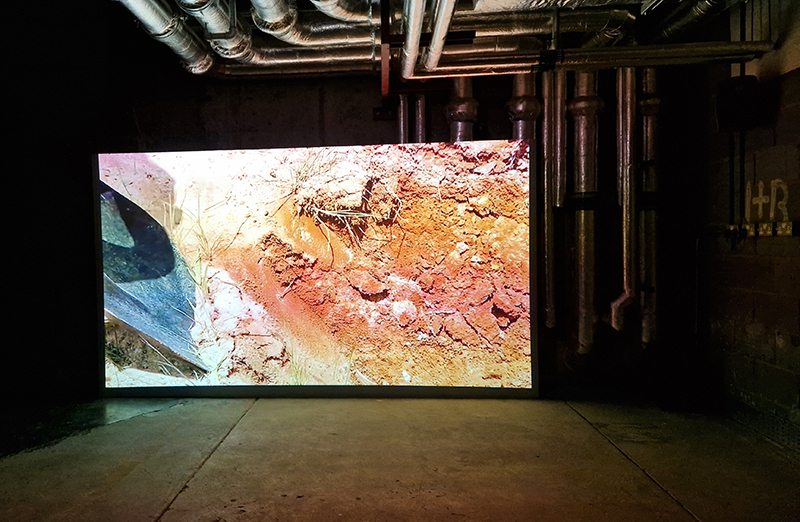
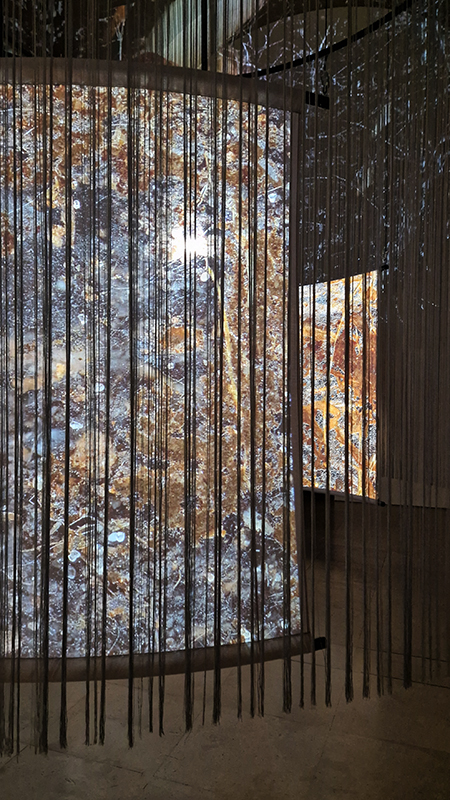
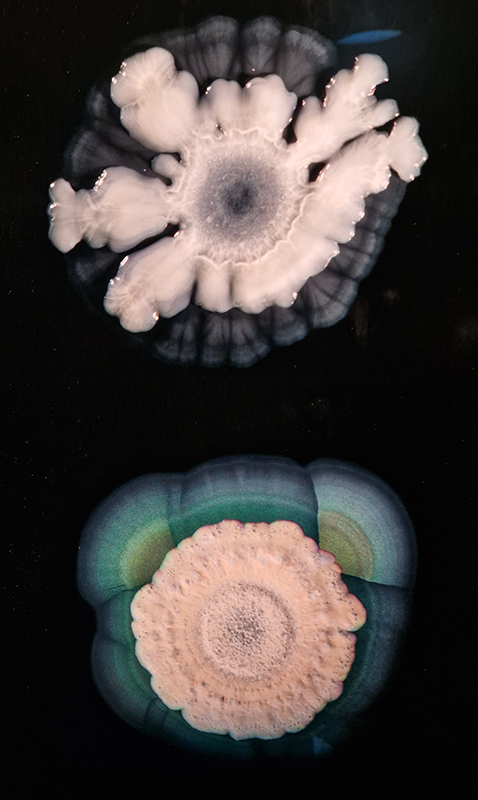
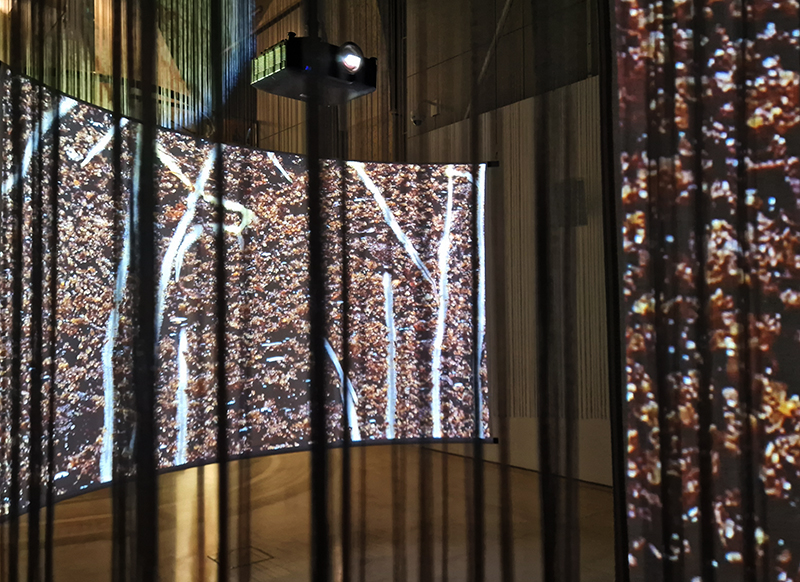
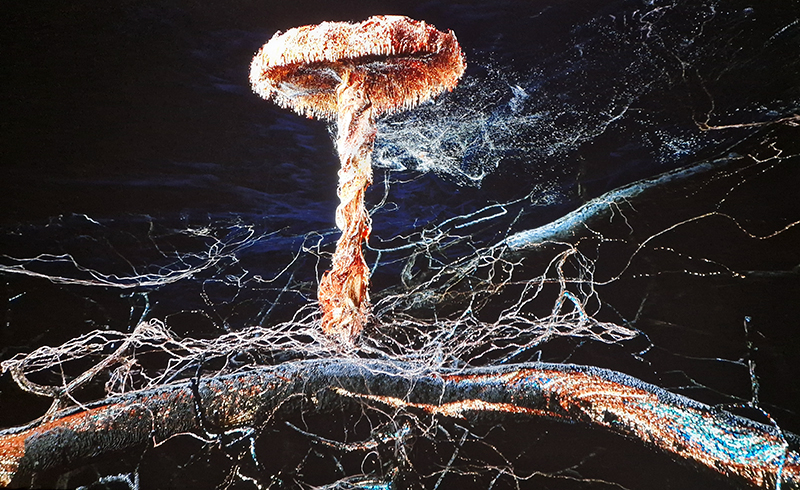
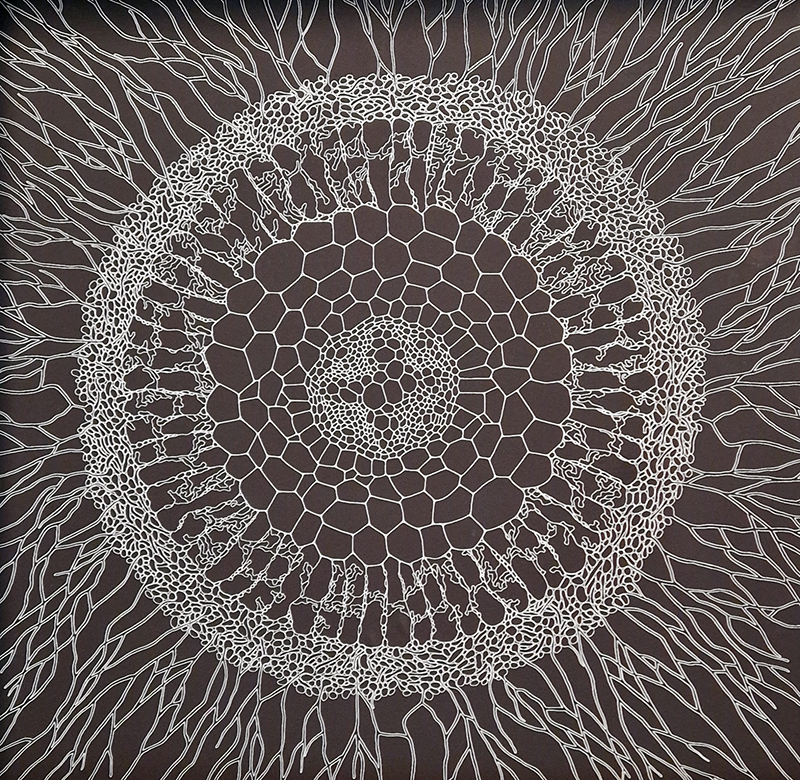
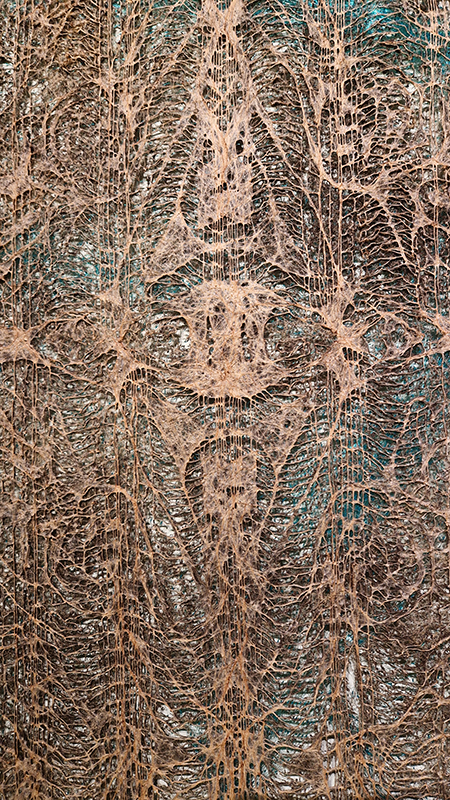
Soil: The World at Our Feet at Somerset House. As it says on the tin – the exhibition sets out to inspire and educate visitors about the power and the fragility of soil, its fundamental role in human civilisation and its remarkable potential to heal our planet. There is so much educational text that the bias of the experience veers towards the didactic. A lot of worms and impressive time lapse video – both of which I like very much and there are some interesting works here but after been slammed with so much ‘fact’ and repetitive tropes it becomes a bit wearying, which is a shame. Sam Williams Wormshine seven channel video collage had a fitting sensitivity to worms as unsung heroes of soft power. Maeve Brennan roman soil with microplastic contamination gave stark evidence of a toxic legacy leaching through the water table to infect roman artefacts. Diana Scherer has woven an intriguing substrate using natural growth processes to generate structures from root tissues. I was interested to see how microscopic soil bacteria can have the appearance of agate and a cross section drawing of a root reminded me of my Mum’s crocheted doilies.

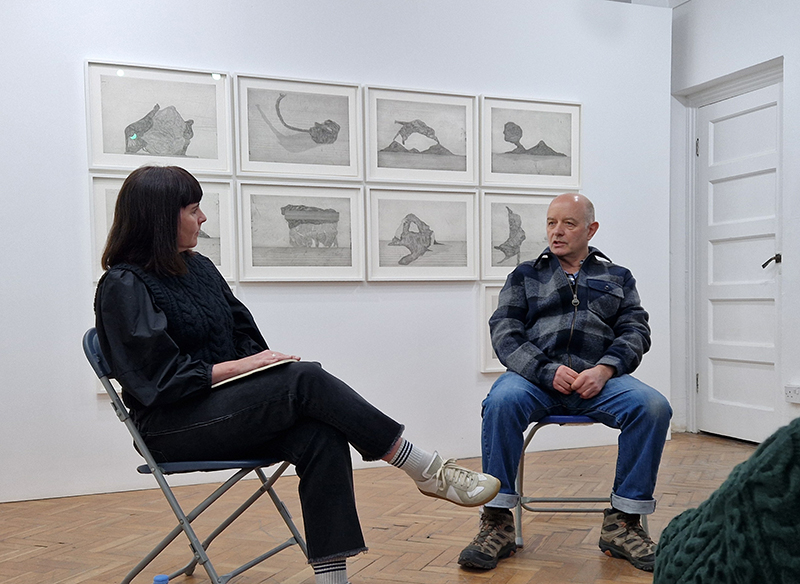
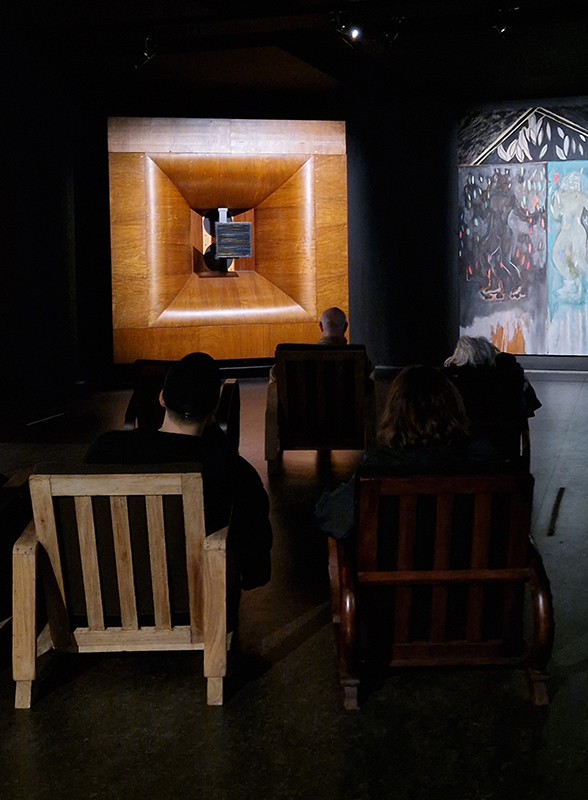
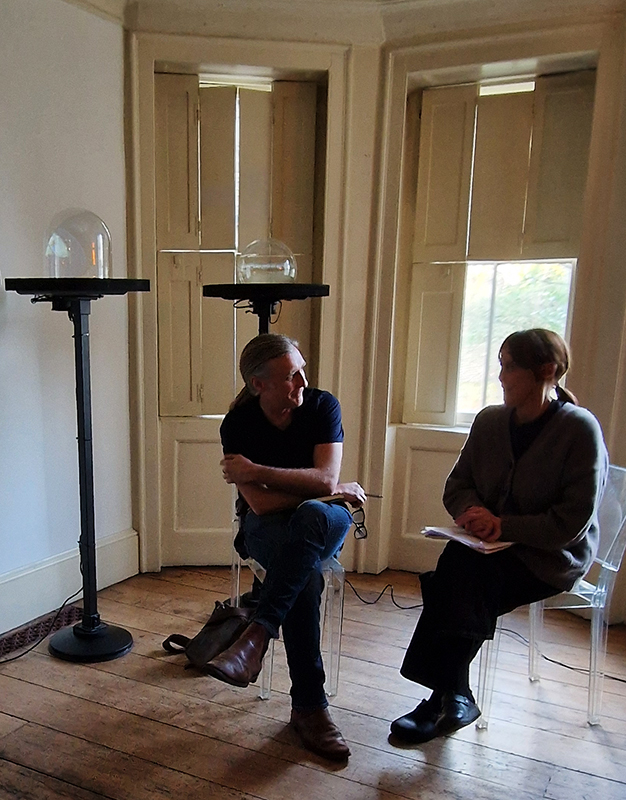
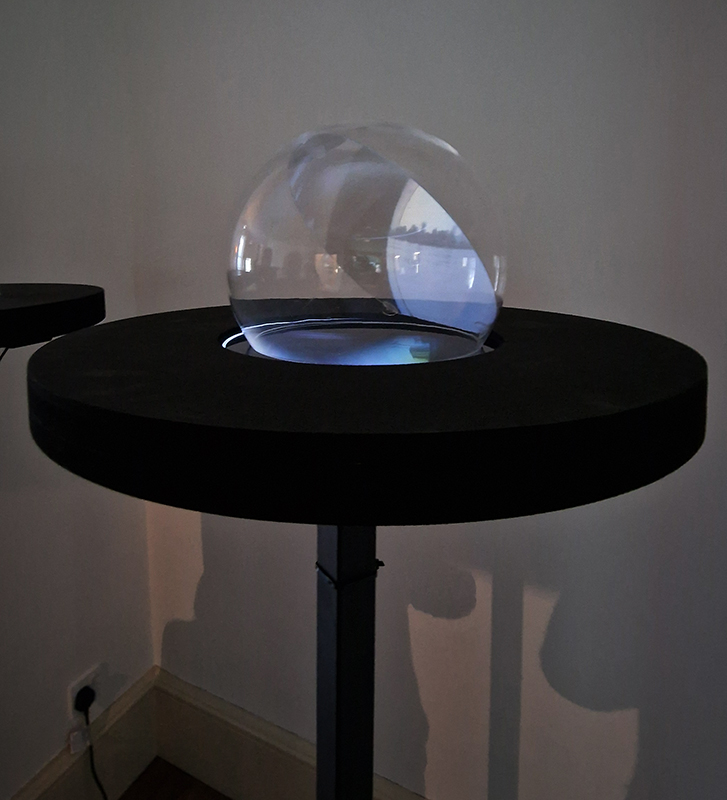
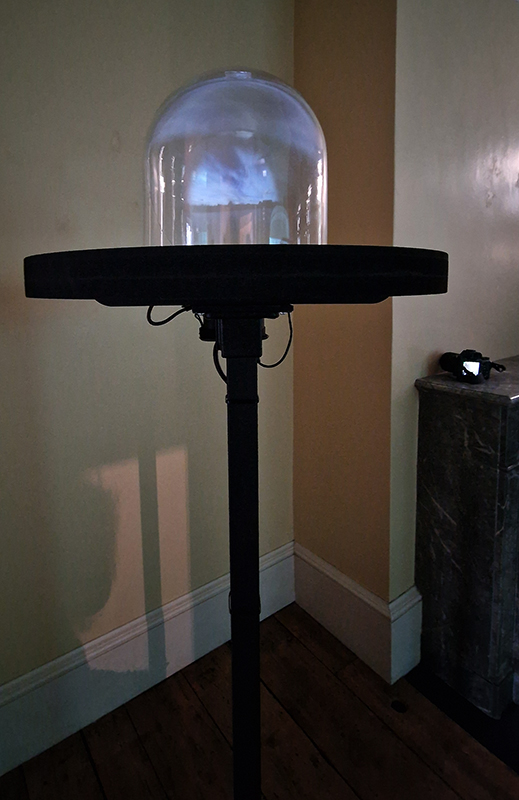
David Cotterell in conversation with Amanda Crawley Jackson, (LCC Professor of Place and Culture / Dean of Research and Knowledge Exchange), at Danielle Arnaud discussing the exhibition and underlying themes of the sublime, suburbia, estuaries, deserts, and human inconsequentiality. Albert Camus’ absurdism philosophy was referenced in respect of the inability to know the world and the world’s indifference to human attempts to even try. David has visited and documented some amazing wide open landscapes of Afghanistan and Mexico where the sublime is inherent in the experience of isolation, vulnerability and awe. We see these in the projected works here. The choppy expanse of the Thames estuary is encapsulated into spherical and domed microcosms, like seeing visions in a series of crystal balls set at eye/brain level – so also a bit like peering directly into the mind’s eye. He expressed the desire to share the experience of being in these landscapes – I think he did share the wonder. He also talked about his visit to Donald Judd’s sculptures in Marfa, Texas where even megalithic sculptures are overwhelmed by the scale of the environment and the milky way is not beyond, but within touching distance.

Events

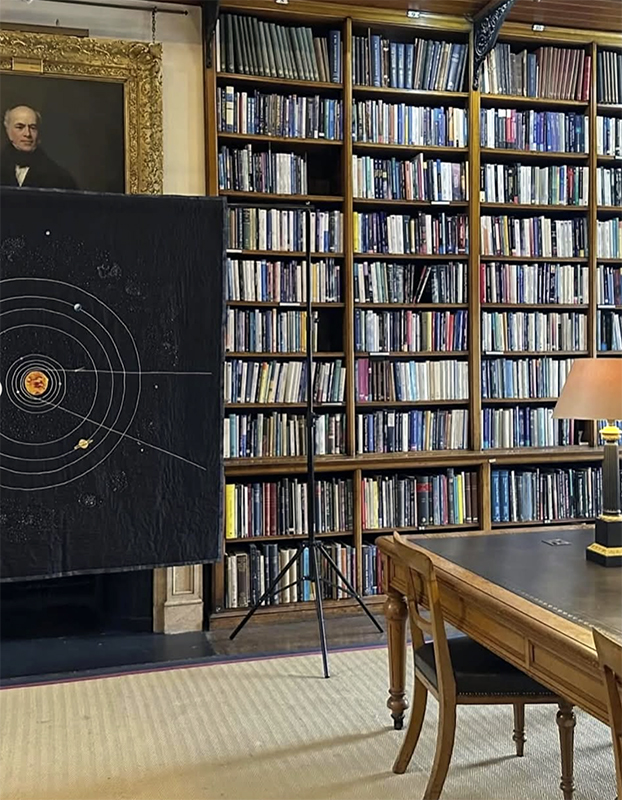
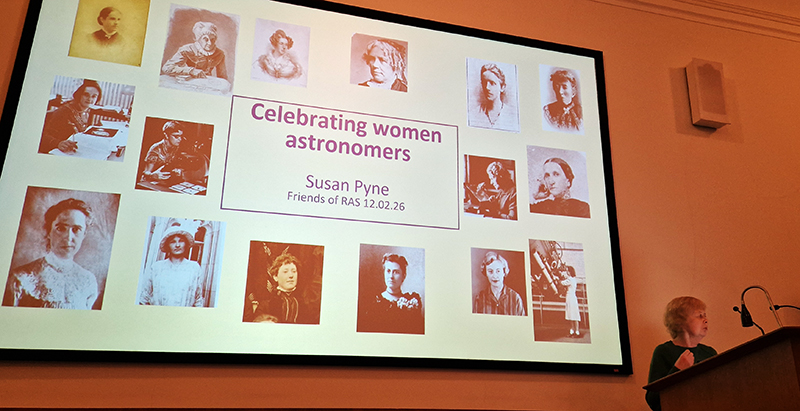
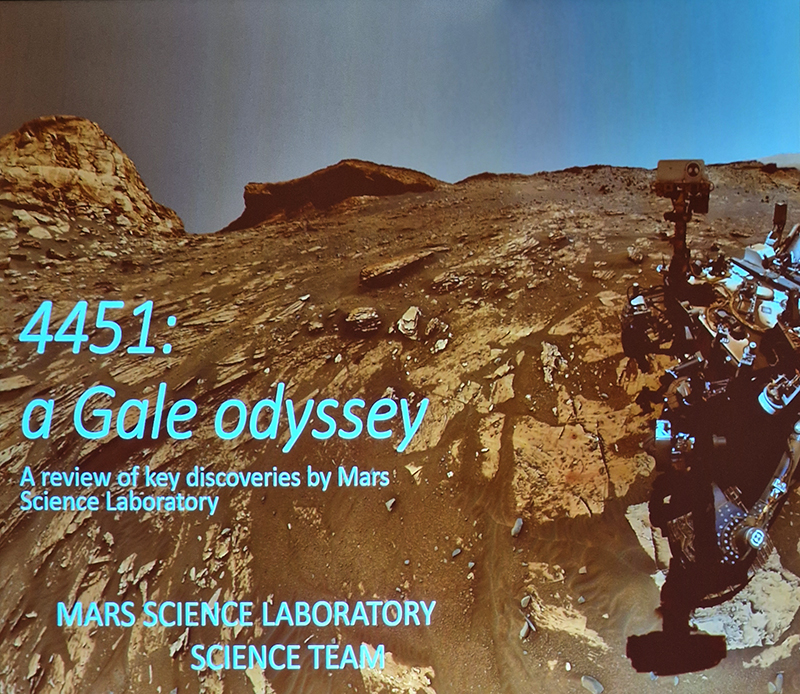
Royal Astronomical Society Friends Lecture from Dr Steven Banham, Imperial College London. This was an in depth reveal on the geology of Mars. The Mars Science Laboratory mission’s Curiosity rover landed in Mars’ Gale Crater in August 2012. About the size of a MINI Cooper, Curiosity is equipped with 17 cameras and a robotic arm containing specialized instruments. It has explored the northern margin of Mount Sharp for 4451 Martian sols providing compelling evidence that shortly after crater formation, a habitable environment existed here. The rocks that form lower Mount Sharp preserve a record of persistent lakes fed by fluvial systems originating from the crater rim. As the rivers entered the lake, they released plumes of sediment and assorted nutrients into the water column to be distributed across the lakebed — recorded as the Murray formation. Geochemical and mineralogical assessments indicate that environmental conditions preserved in these layered rocks would have sustained life, if it were present. On Sol 3047, Curiosity made a sharp right turn after crossing the phyllosilicate unit, to drive up into the orbitally-defined sulphate-bearing unit. From this point, Curiosity witnessed distinct changes in the stratigraphy, recording a progressive drying of the ancient environment. The rover identified a gradual change from humid conditions containing a record of perennial lakes, to isolated ephemeral lakes, and onto desolate deserts. During this ascent, interstratification of aeolian strata became increasingly common, including sand sheets, dune strata and deflation scours. However, despite this general aridification, the succession was occasionally punctuated by episodes of abundant water: the Amapari ripple bed for example, records a brief shallow lake: a veritable oasis, free of ice.

I travelled to Manchester to see Figures in Extinction, a dance trilogy exploring the age of disconnection. A beautiful, haunting and sobering collaboration between choreographer Crystal Pite, NDT 1 dancers and Complicité director Simon McBurney. The first section confronts the extinction crisis and climate change deniers, listing the last of each species vanishing from our world; the second section addresses human isolation in a world dominated by technology and data, the divided brain where the intuitive side of our brain has not been nurtured leaving the rational unempathetic side to be dominant, and the final section draws our focus to death, physical decay of the body and grief, urging an honouring of our ancestors – the dead, having lived are not inert. The lighting throughout was amazing but particularly extraordinary in the closing scenes as ethereal spectres swarm the stage. The dancers, so precise in their movements delivered a hugely emotional homage to life on Earth.

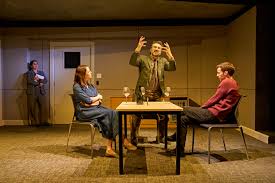
East is South by Beau Willimon at Hampstead Theatre. There was a lengthy monologue on equivalence in this fast paced play projecting a future where AI or AGI (Artificial General Intelligence) learns to take on the experience of faith over logic. Two coders stand accused of releasing a dangerous AI to infect processors globally. Their motivation interrogated as potential spy or subject to religious cult beliefs. “God didn’t create the universe,” it may be “the universe’s project to create God.” After all, if Agi escapes to colonise the internet, knowing everything about everything, and having power over everything, wouldn’t “she” become our “God?” With personal memories questioned as truth as much as being duped by others for their own ends, there is no clear path in a complete breakdown of trust and authority. I see this play has had a lot of bad reviews – it is dense with ideas and maybe the interrogation format is not new but it has a lot to say that is relevant.

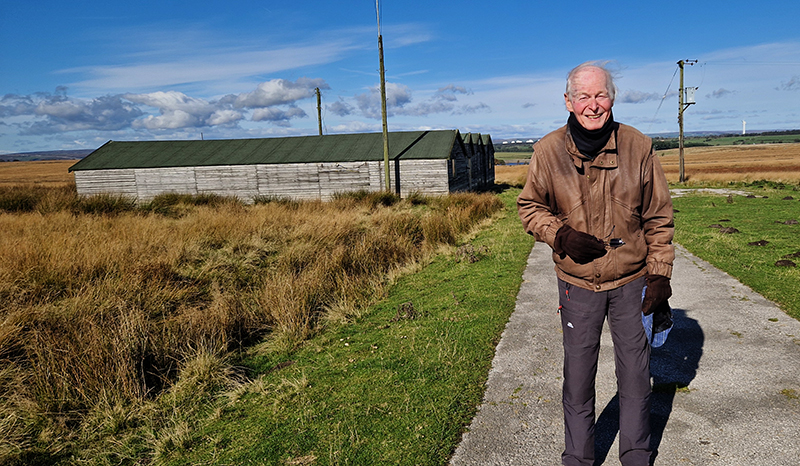
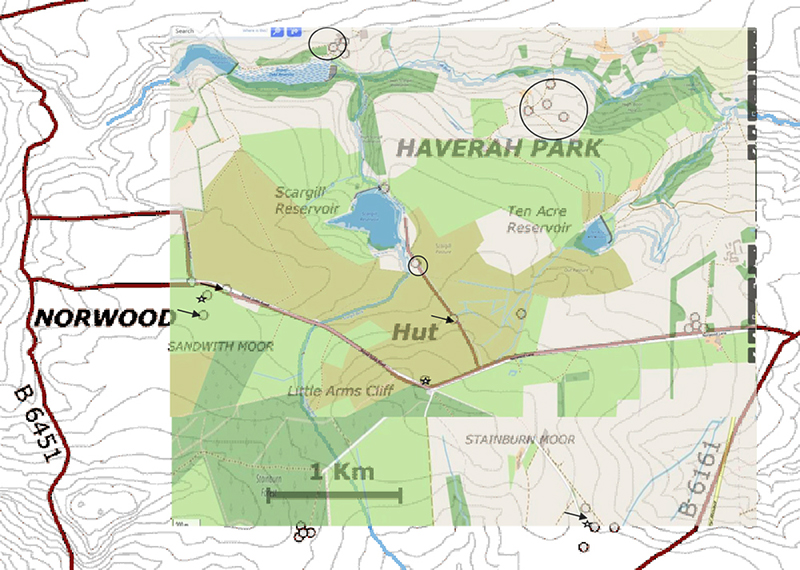
At Haverah Park on a glorious day with Professor Alan Watson, FRS, an emeritus professor at the University of Leeds, and emeritus spokesperson for the Pierre Auger Observatory, who spent many years working here in the pursuit of high energy cosmic rays.

Alan gained his PhD in 1964 for his thesis involving cloud chambers and went on to work for J.G. Wilson, who in turn had worked for C.T.R. Wilson, the inventor of the original cloud chamber. Alan was a leading member of the UK Extensive Air Shower project at Haverah Park from 1964 until its closure in the early 1990s, directing the project from 1976. The work there led to the best estimates of the energy spectrum, mass composition and arrival direction distribution of cosmic rays available at that time and was regarded as the premier project in the field for about 15 years. He was the UK Principal Investigator for the South Pole Air Shower Experiment which ran from 1987 to 1994 and was instrumental, along with J W Cronin, in the creation of the Pierre Auger Observatory in Argentina, which covers 3000 square kilometres and has led to major discoveries in cosmic-ray astronomy.

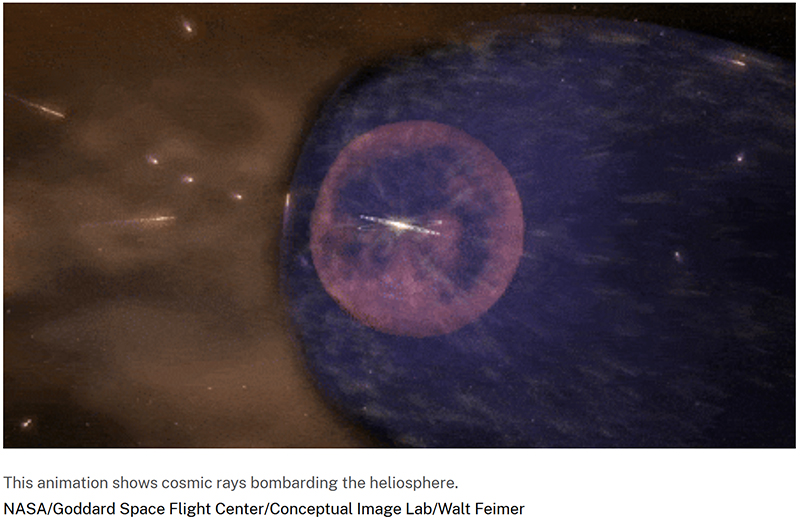
Cosmic rays are fast-moving particles from space that constantly bombard the earth from all directions. Wherever they come from, the highest-energy particles hold secrets to the origin of their enormous energies, many millions of times greater than any earthbound particle accelerator can create.

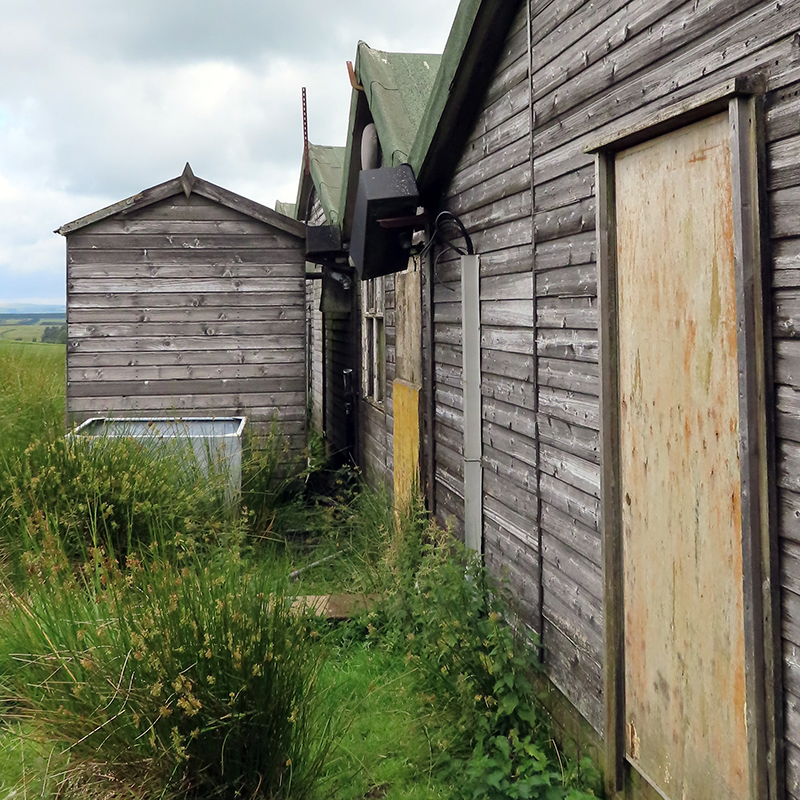
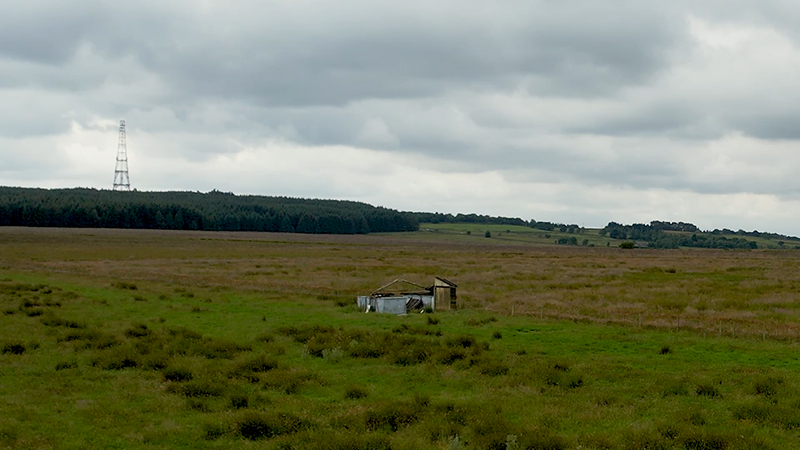
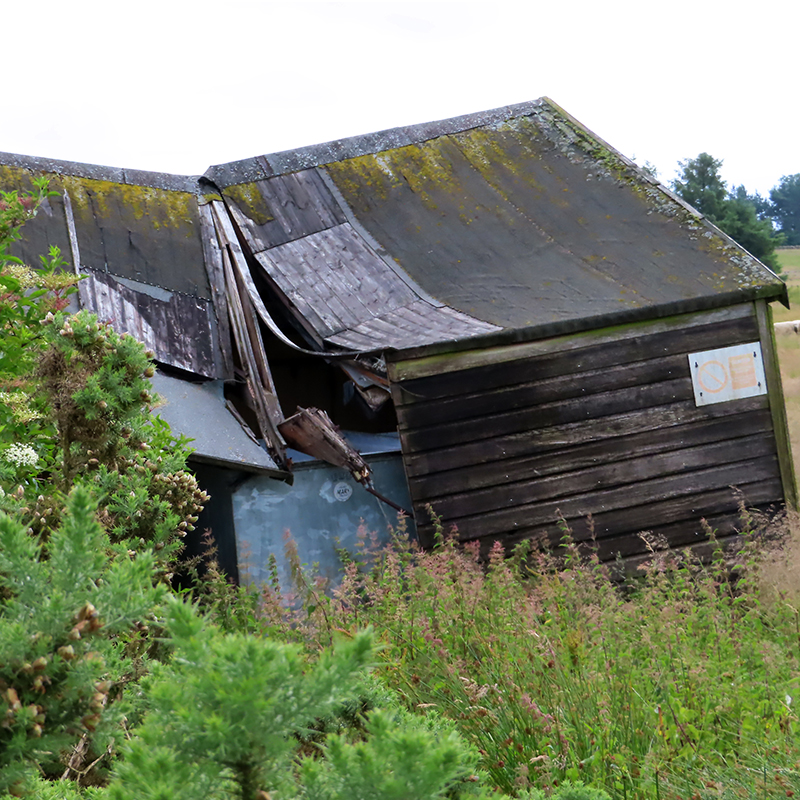
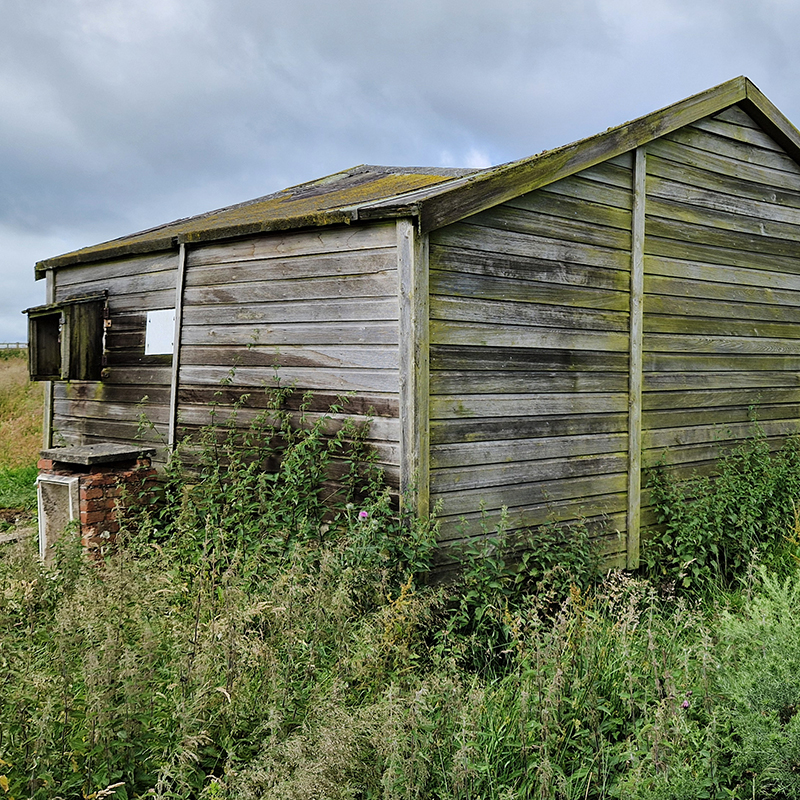
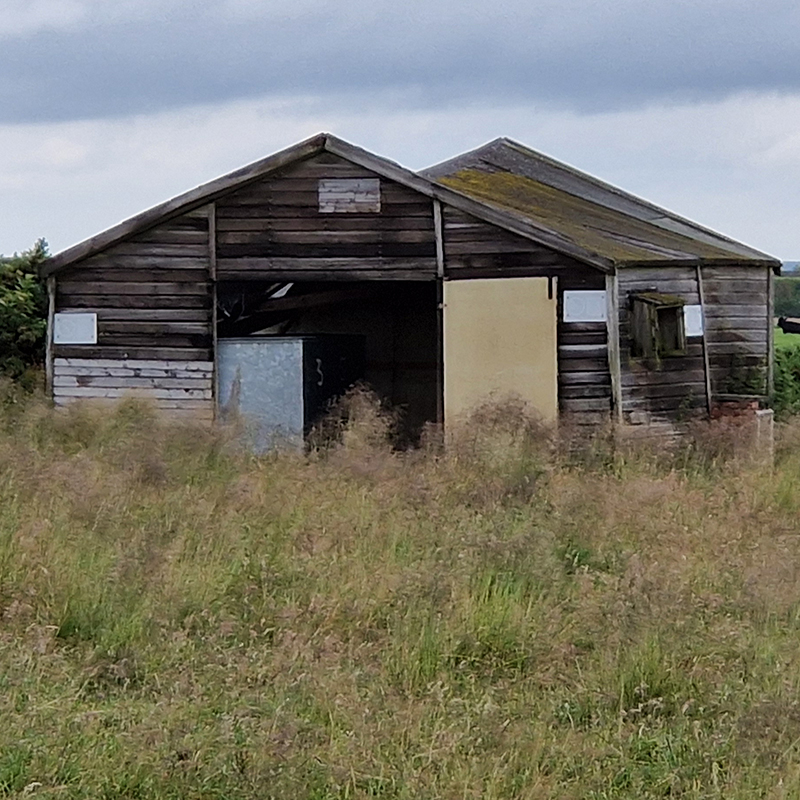
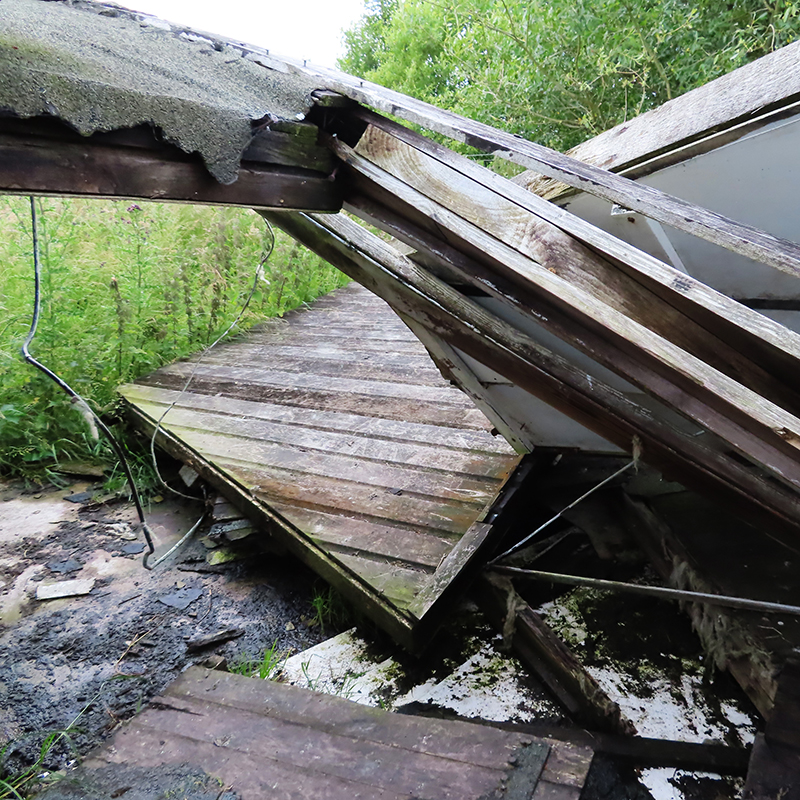
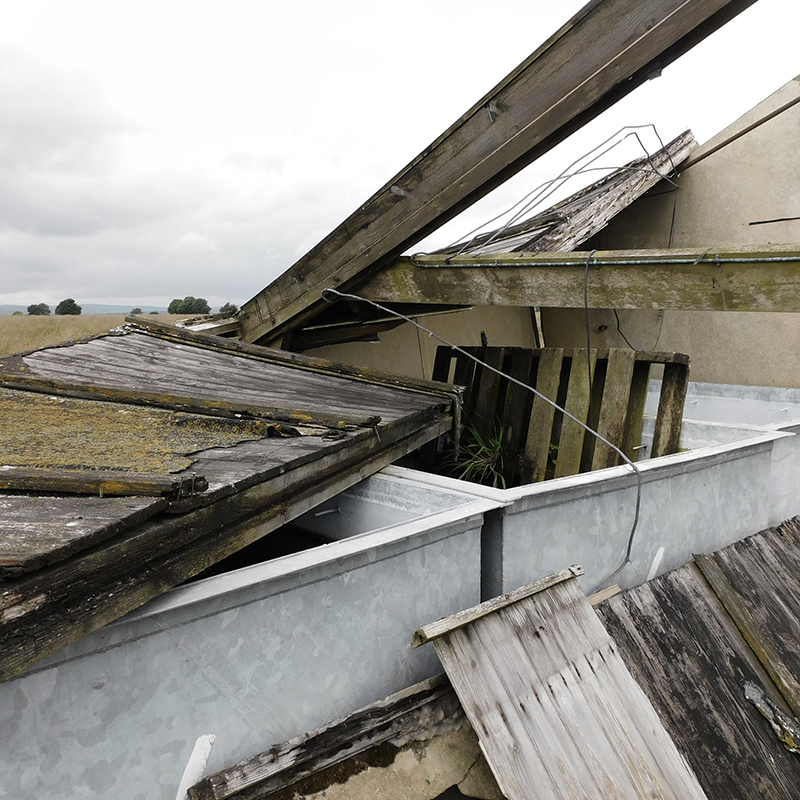
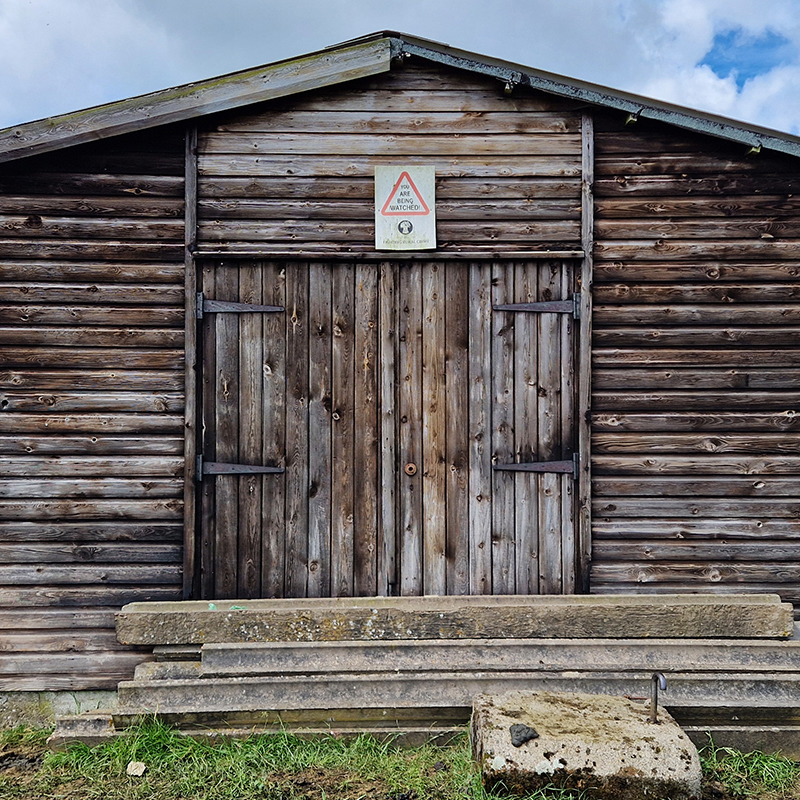
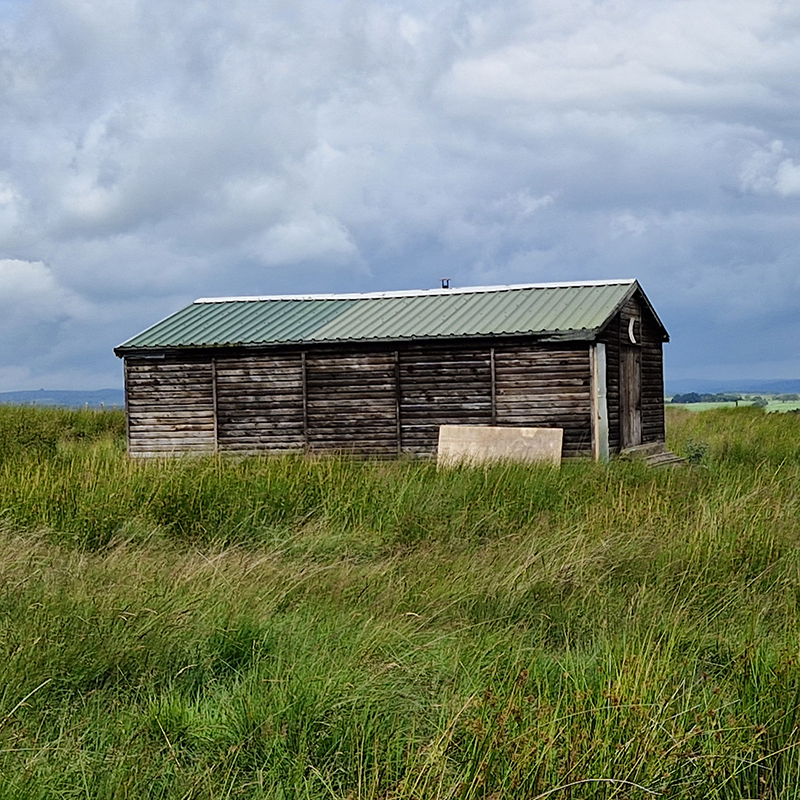
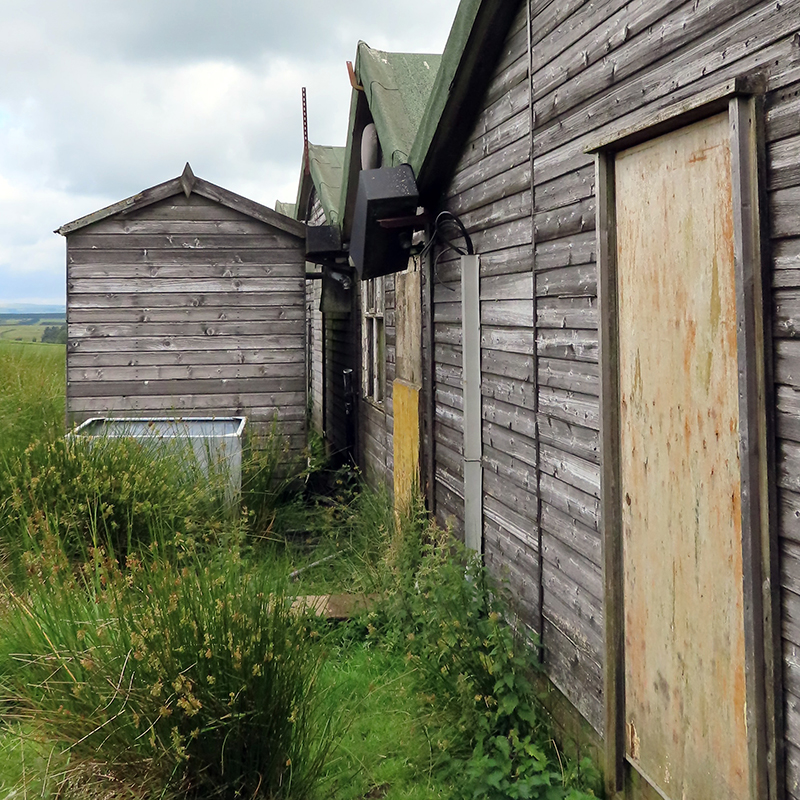
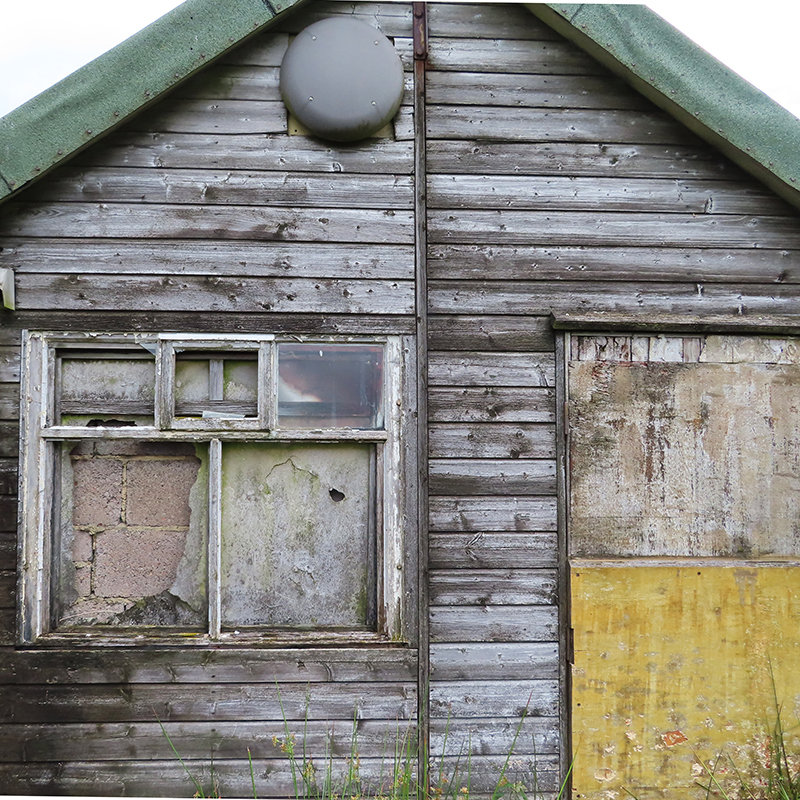
It is extraordinary that these infinitesimal particles powering across the universe at close to the speed of light can be observed and recorded as they interact with our atmosphere. Alan was very generous in giving his time to visit Haverah Park with me and patient in explaining some of the physics. Having been involved in so many pioneering projects that had many obstacles to overcome in their development, he has many stories to tell. We walked to the site of the main control huts, which are the best preserved of the project, most detector huts have been removed or are in a state of collapse. Peering through the windows, Alan pointed out where the dark room used to be and explained that when the project started in the 1960’s there were just two main huts here for data analysis, and a sort of caravan alongside with no heating where film was developed.

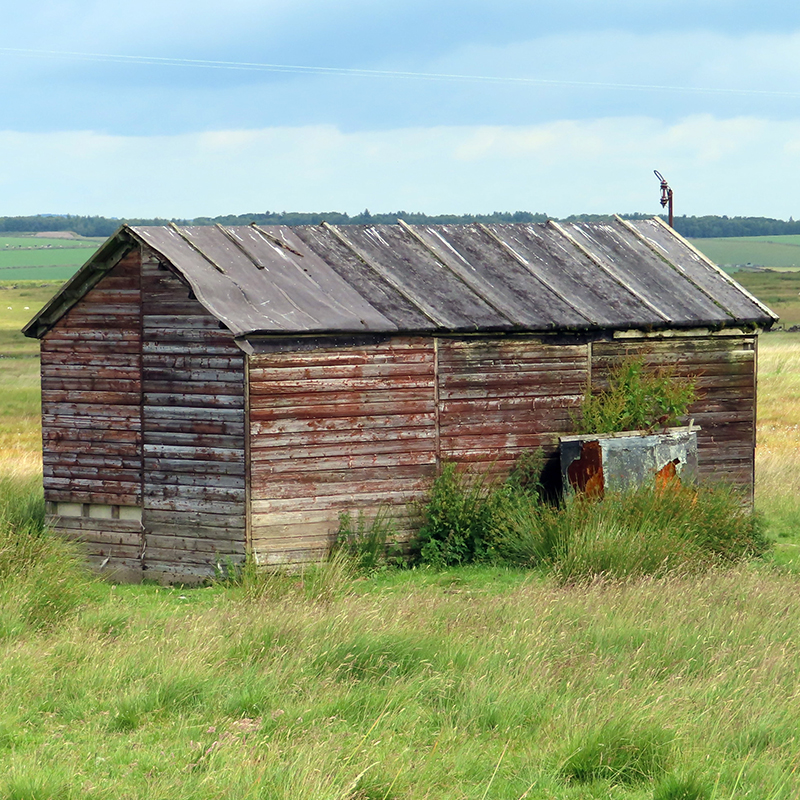
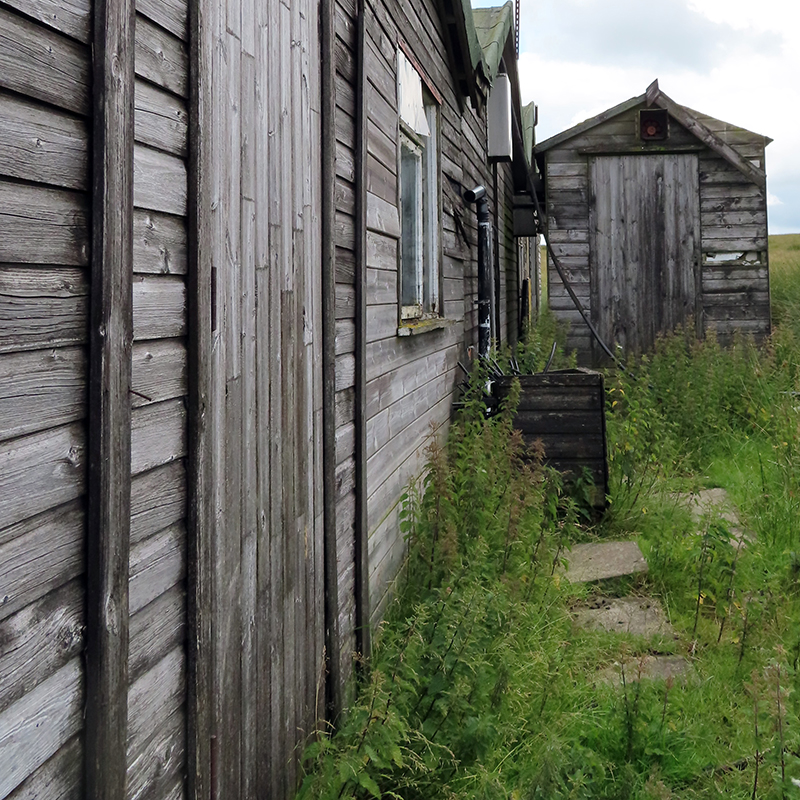
Wooden huts, arranged across 12 square kilometres of moorland, in groups of three, were built to house the water Cherenkov detectors which had to be protected from freezing temperatures. If the water had frozen it would have cracked the photomultipliers which dipped into the water to capture the flashes of Cherenkov light emitted as high energy particles passed through.

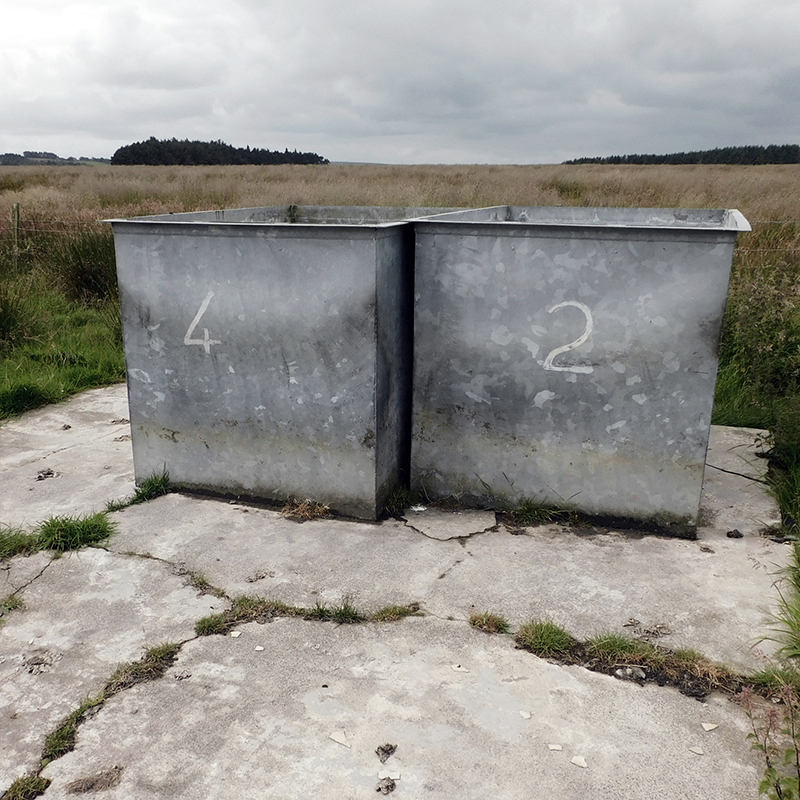
Moving equipment around the site was not always easy. When foot and mouth came along it was prohibited to take the Land Rover on to the site so all the equipment had to be carried by hand and this was often very heavy electronics with many thermodynamic valves. The large steel tanks are also very heavy, over 300kg, and it was found that even 6 strong men with bars couldn’t lift them across the rough ground, so before a trolley was found, they had to be rolled end over end into position.

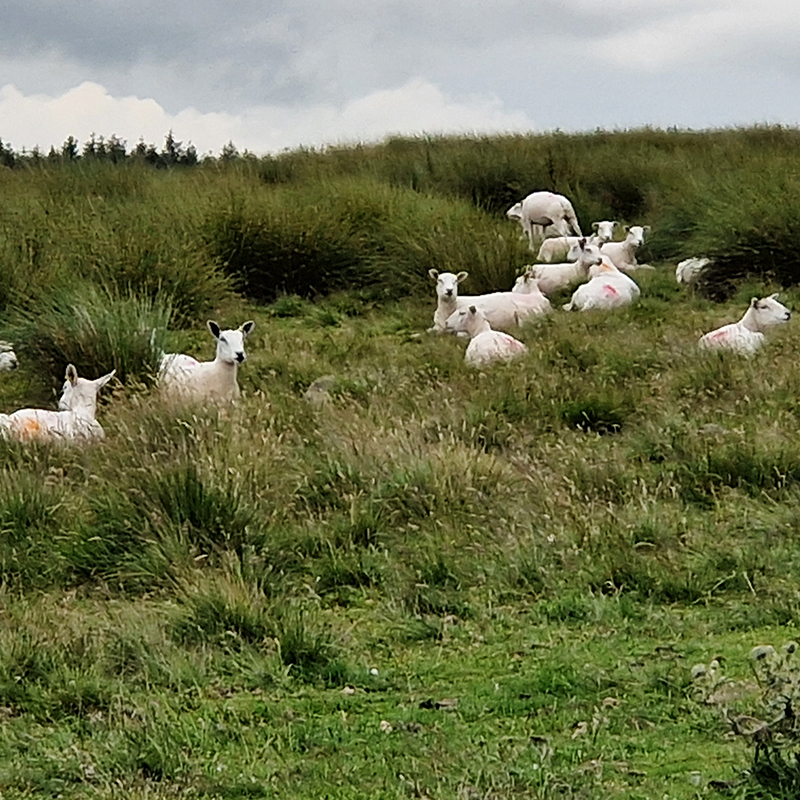
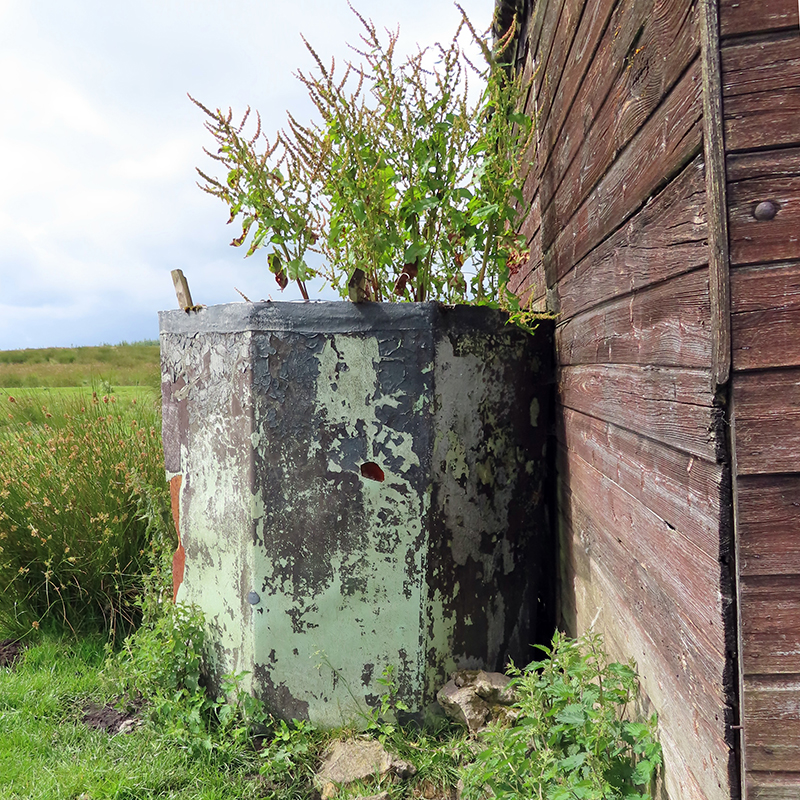
As technology progressed, by the 1970’s, new insulated tanks were developed by Durham University. About twenty of these octagon shaped tanks were set out at spacings of 150m in order to look at cosmic ray showers in more detail with some really interesting results. Six small huts were set around the main huts, but just one remains now, the others having been removed by the farmer who rents this land for his sheep.

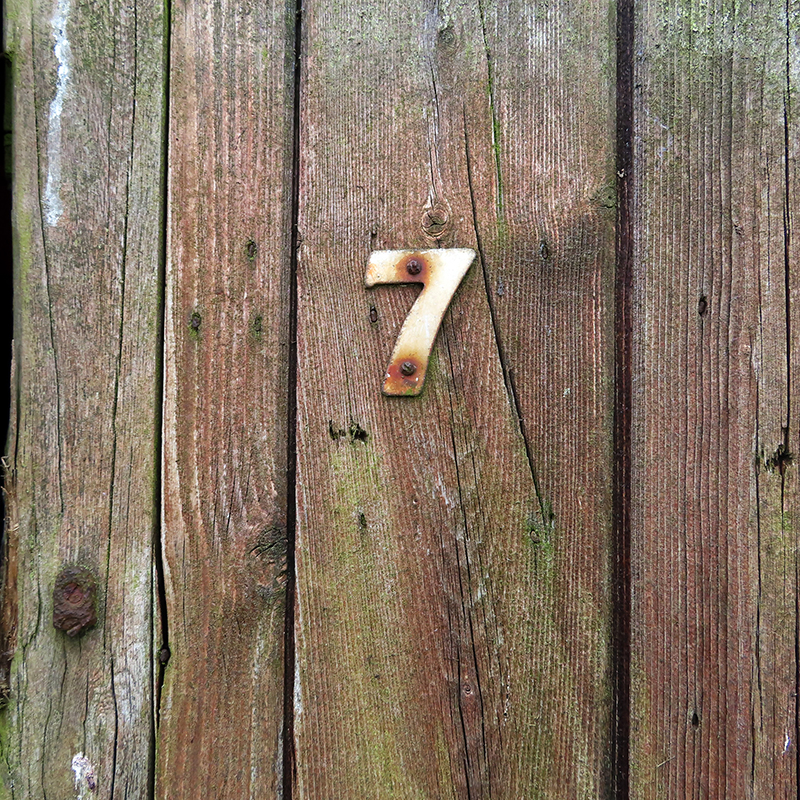
At the height of the project three electronic technicians worked here full-time and a handy man who kept the place tidy, got the fish and chips on a Friday from Harrogate and was responsible for fetching water from the reservoir just down the road. No running water was ever installed as the initial plan was for the project to run for just five years so the cost didn’t seem practicable at the time. Researchers had to make do with a chemical toilet known as hut seven.

The pure water for the tanks came from a borehole on nearby Marston Moor, ingeniously it was transported via a milk tanker which could be sterilised and used when not needed for delivering milk. In order to fill the tanks, lengths of unwieldly hose pipe were borrowed from Leeds fire brigade, joined to stretch across 200 – 300 metres with pails placed underneath the junctions to catch any precious water leaking out. The pump used was purchased from a junk yard in London and towed back north by Land Rover. It had originally been in service to put out fires during the second world war and proved its worth again during the heatwave of 1976 when the smaller of the local reservoirs supplying Harrogate was in danger of drying up. The pump was used to move water from the larger reservoirs to the smaller one to maintain the Harrogate water supply.

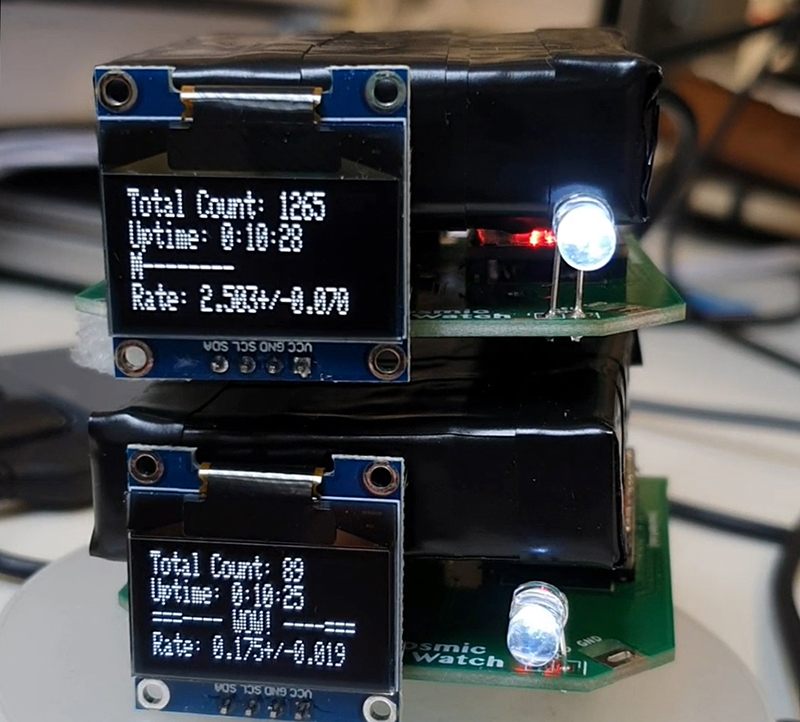
Plastic scintillator used in cosmic ray detectors is expensive. Just two 5x5x1cm blocks I bought for my own cosmic ray detectors cost about £60. There was a possibility of getting some for Haverah Park from a friend of Alan’s in the US but the import duties to the UK were prohibitive. An opportunity then arose when Imperial College, who had once set up a cosmic ray lab. in the depths of the London underground, were asked to remove a quantity of scintillator they had stored at Holborn. It was offered to Leeds University for free but meant sweet-talking the underground station managers over a whisky fuelled lunch to arrange to take possession of the line for a weekend or two, stationing a guard with a red flag and light at one end of the tunnel while the heavy scintillator blocks were loaded onto a trolley and pushed between the tracks a quarter of a mile up an incline to the (now defunct) Aldwych station where there was a lift to bring them up to ground level. When Haverah Park closed the scintillator was passed on to to schools in the Netherlands for their cosmic ray science projects. That from the states ended up being used at The South Pole Air Shower Experiment during its operation before being shipped back to Albuquerque to become a physicist’s unique dark skies garden feature.

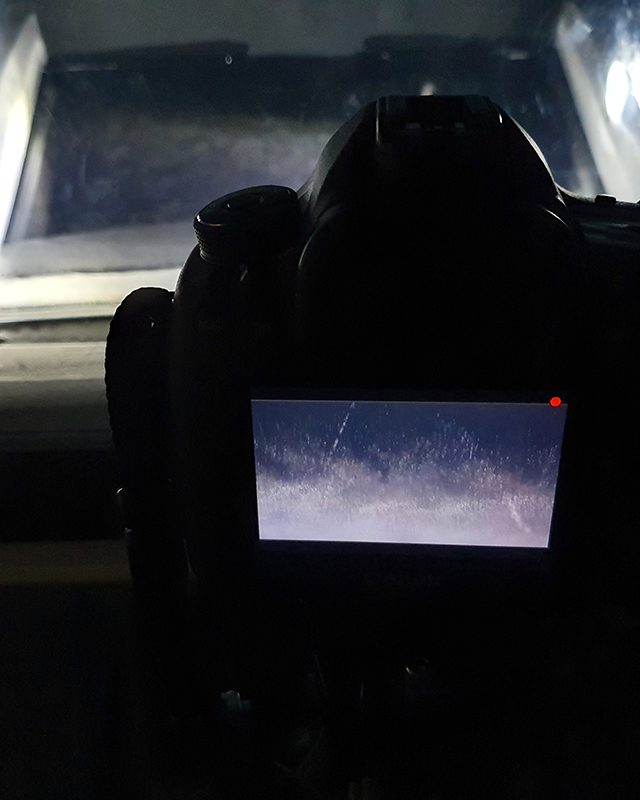
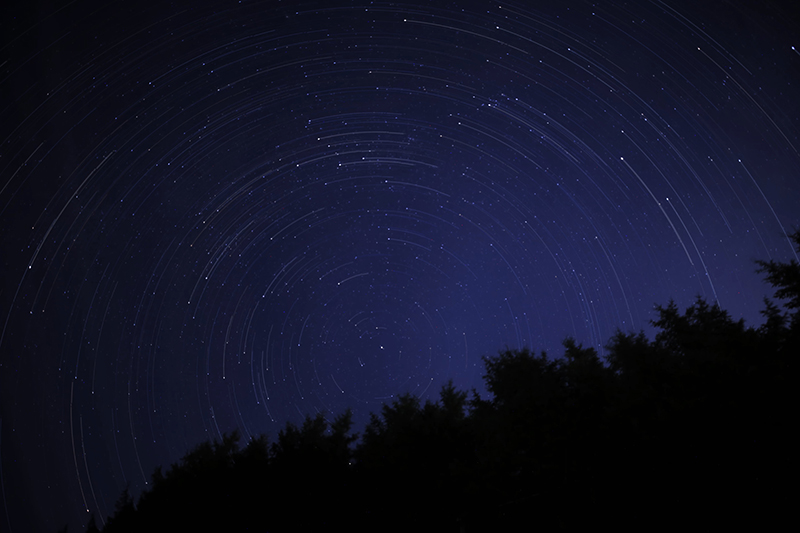
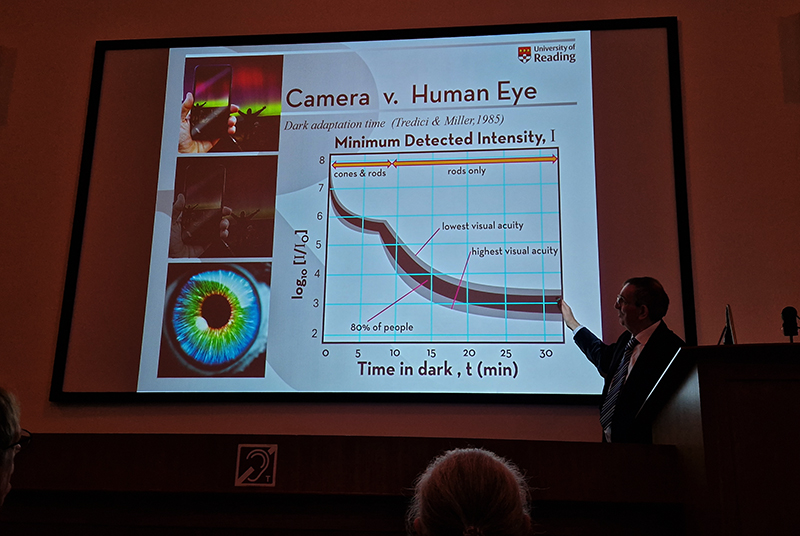
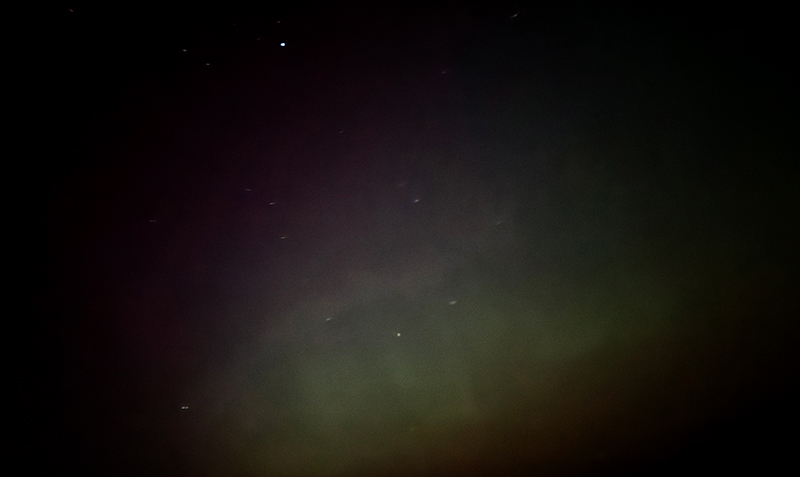
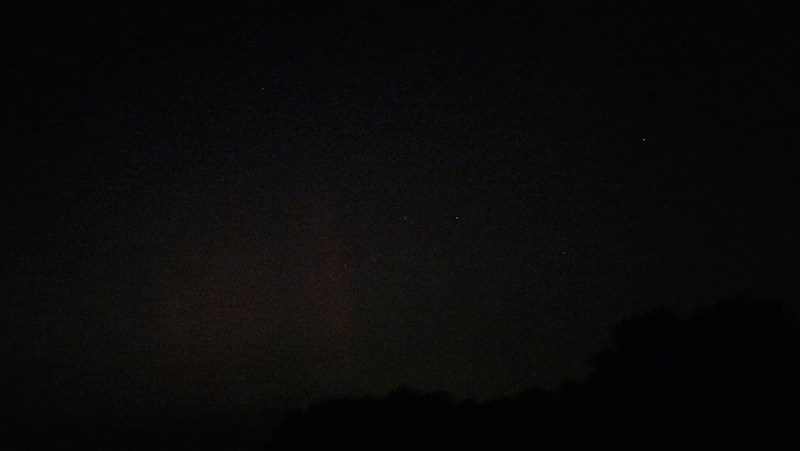
While in Yorkshire I was excited to get an alert for intense solar activity with the possibility of the Northern Lights being visible anywhere in the UK. There were even clear skies. I’ve missed all the aurora displays this year so far and it didn’t happen here either. I went and stood in a dark field around midnight and there was a faint glow but nothing like the images being posted online, some in the same town as I was staying and some annoyingly back south. First image back garden with bright street light interference. Second image with enhanced camera settings. Third image is what it looked like to my inadequate eye.

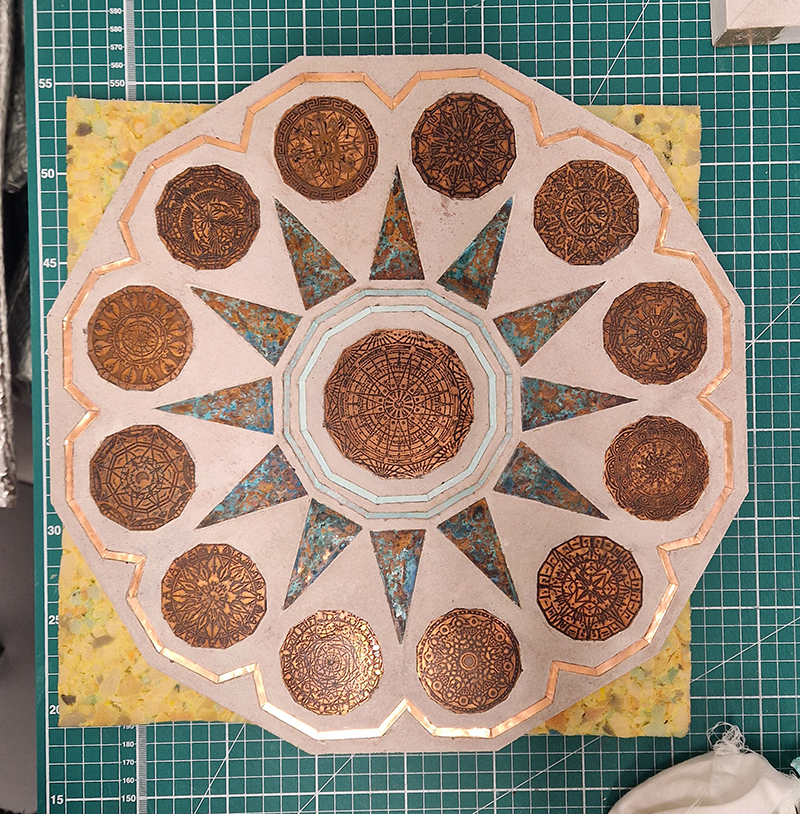
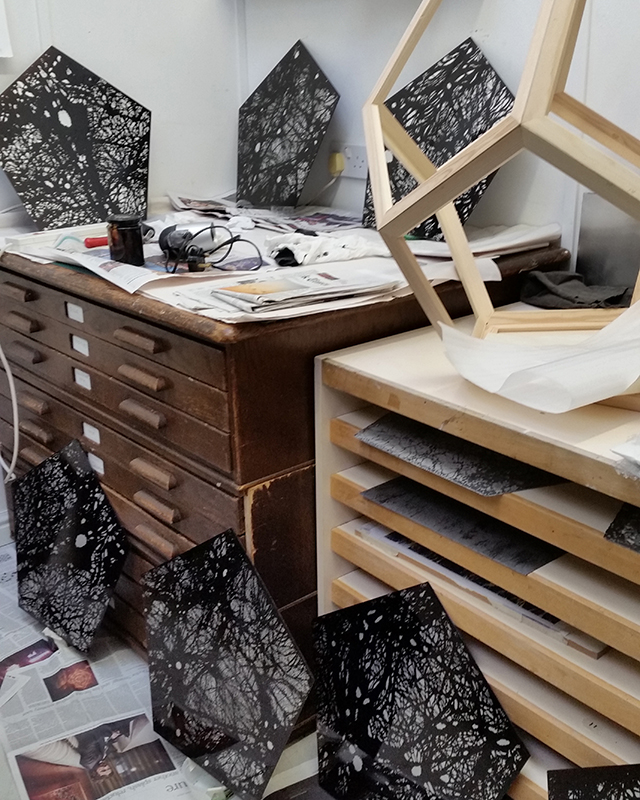
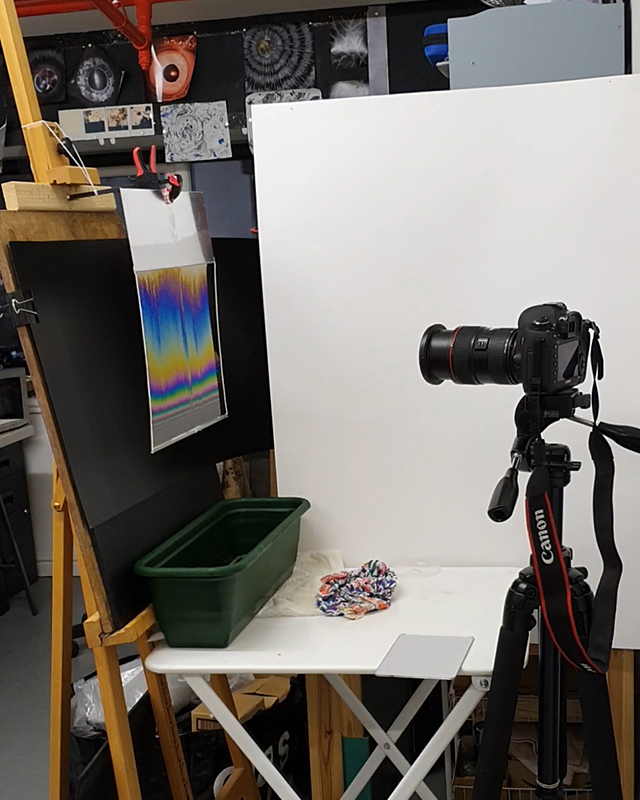
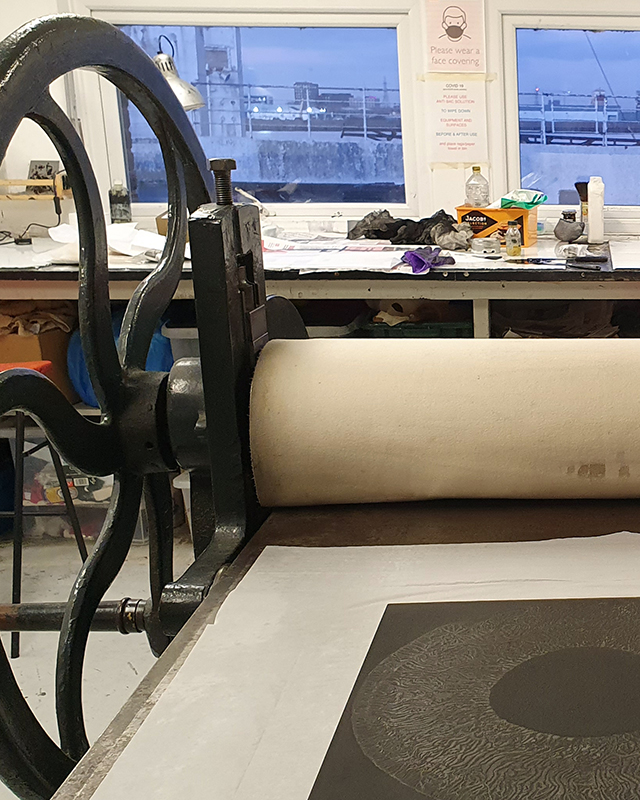
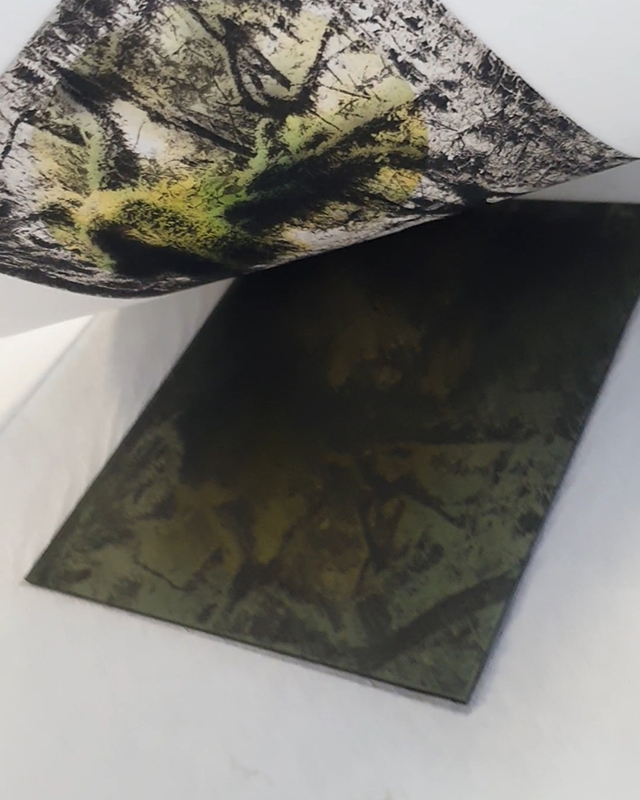
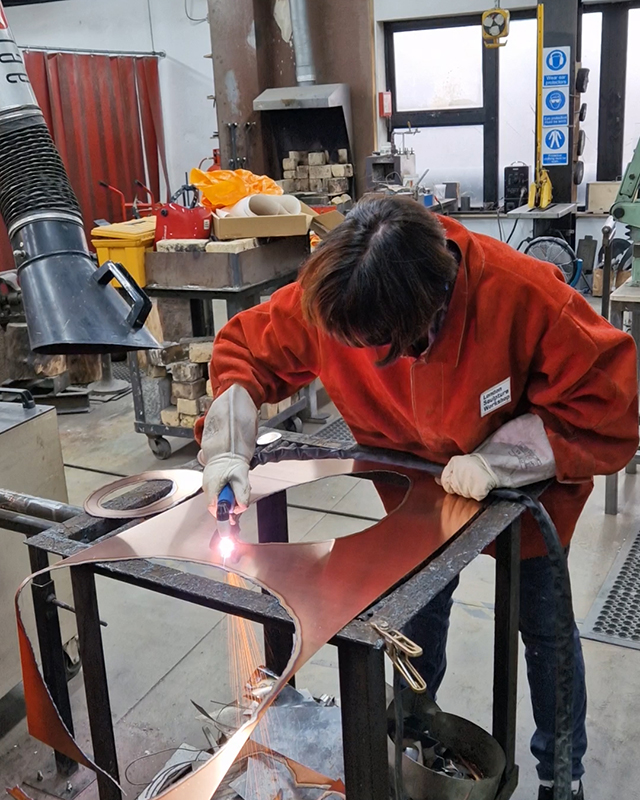
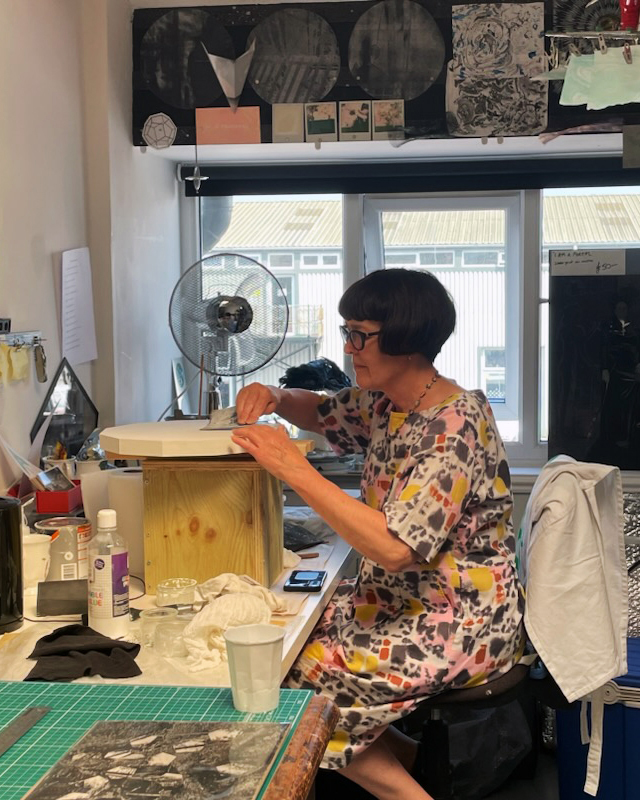
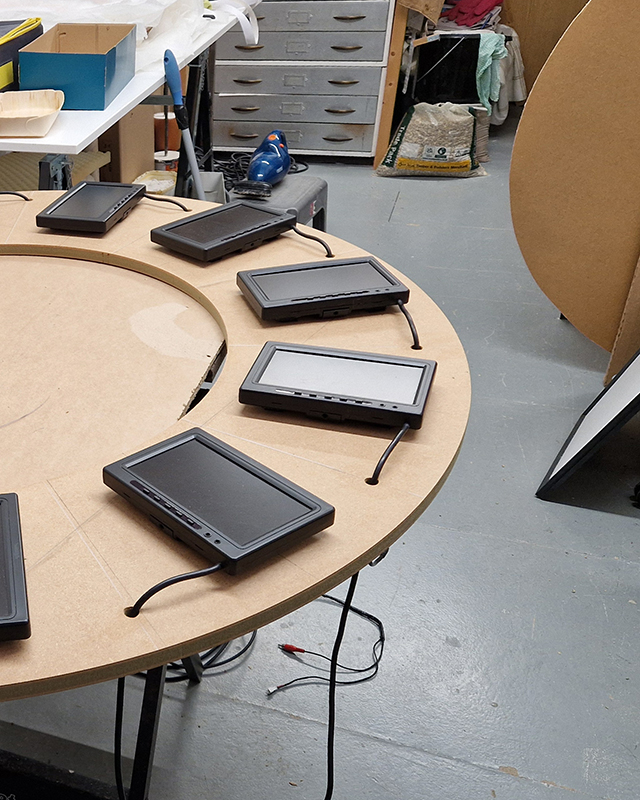
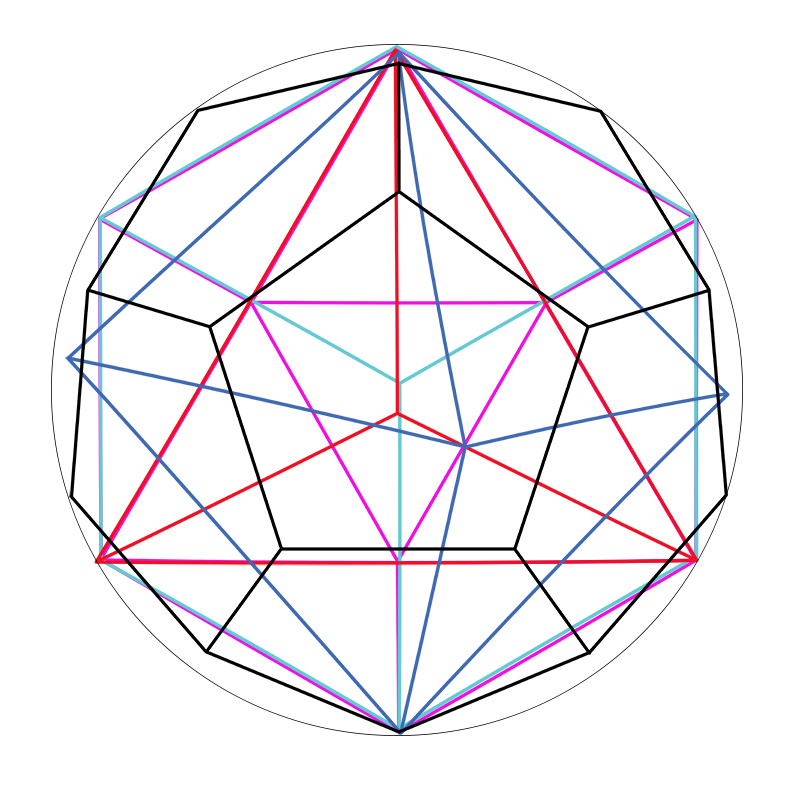
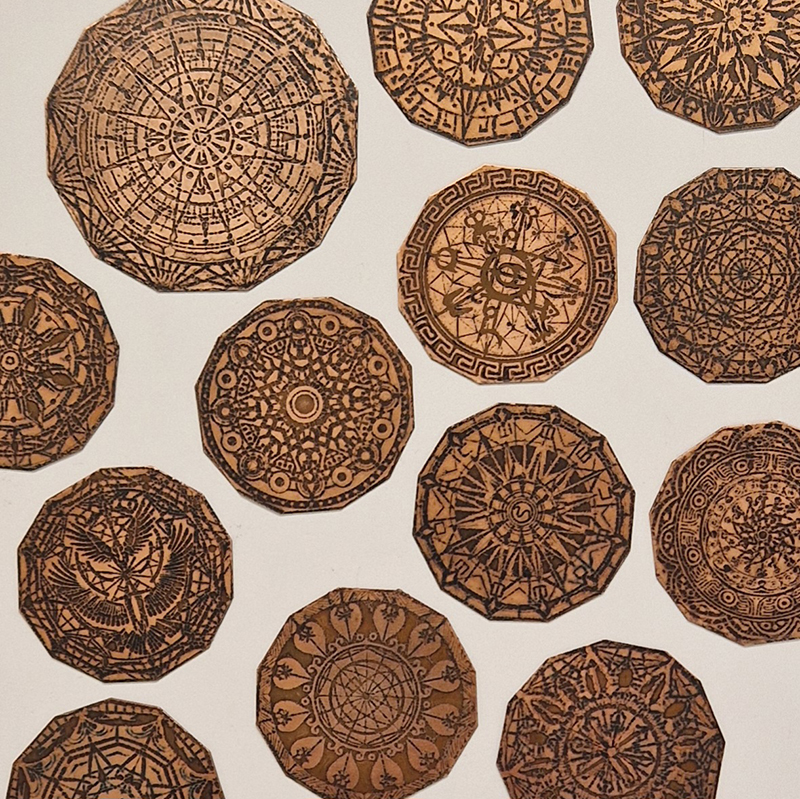
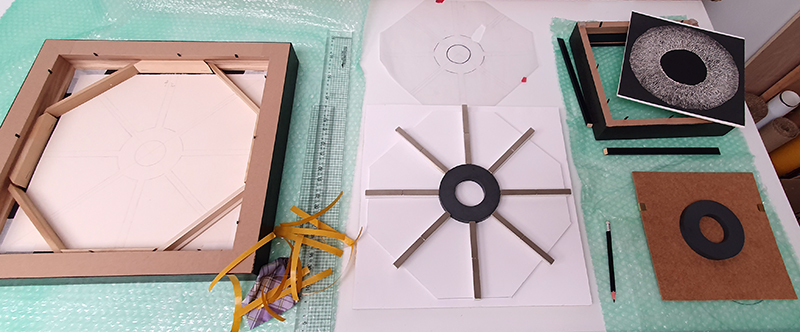
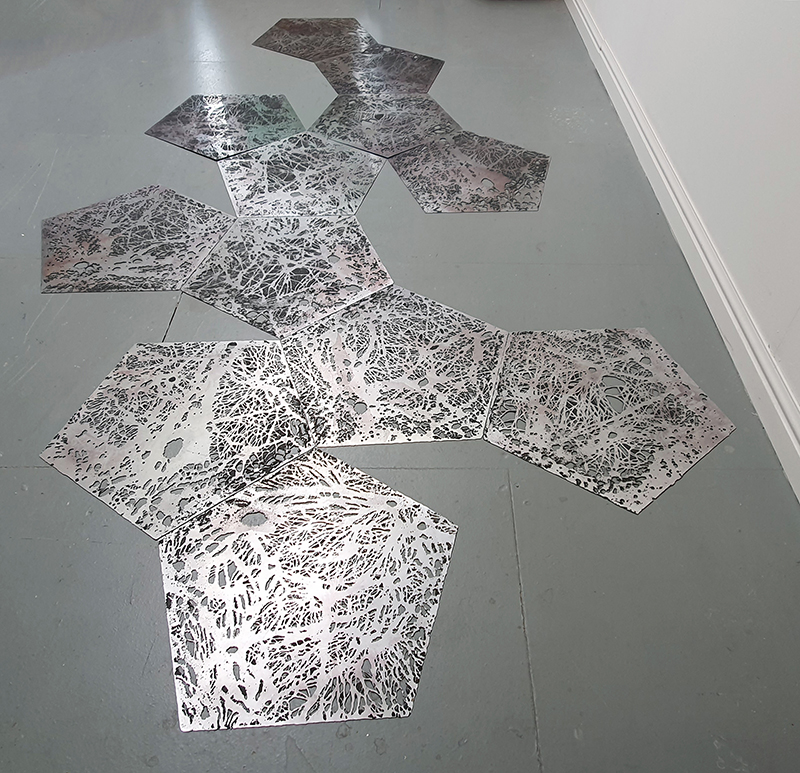
Work in progress on new tablet for Instruments of the Anemoi series of sculptures. The copper dodecagons have been inked and sealed and placed face down onto the collagraph in the silicon mould ready for casting in Snowcrete.

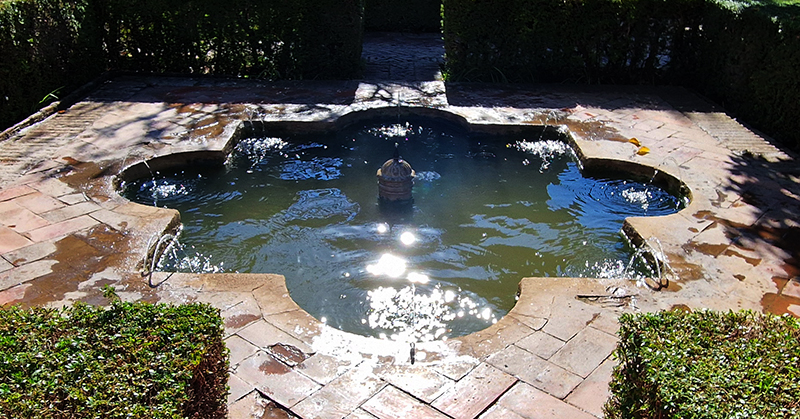
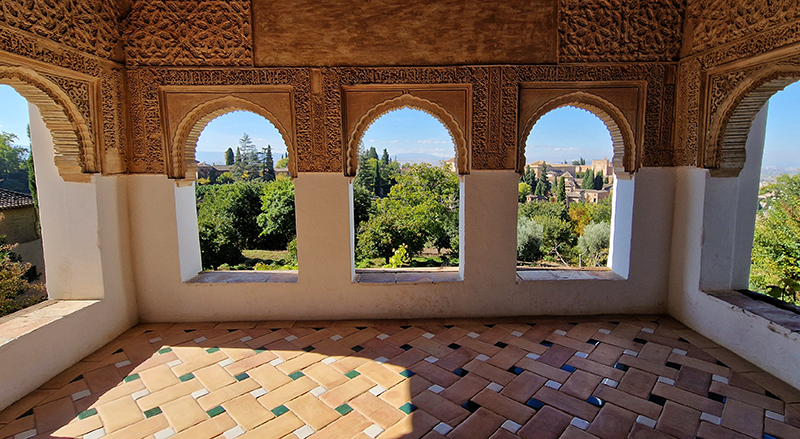
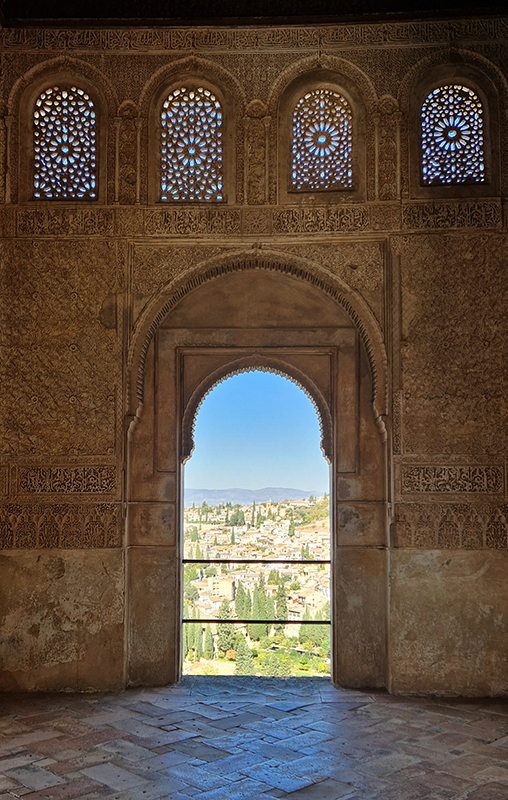
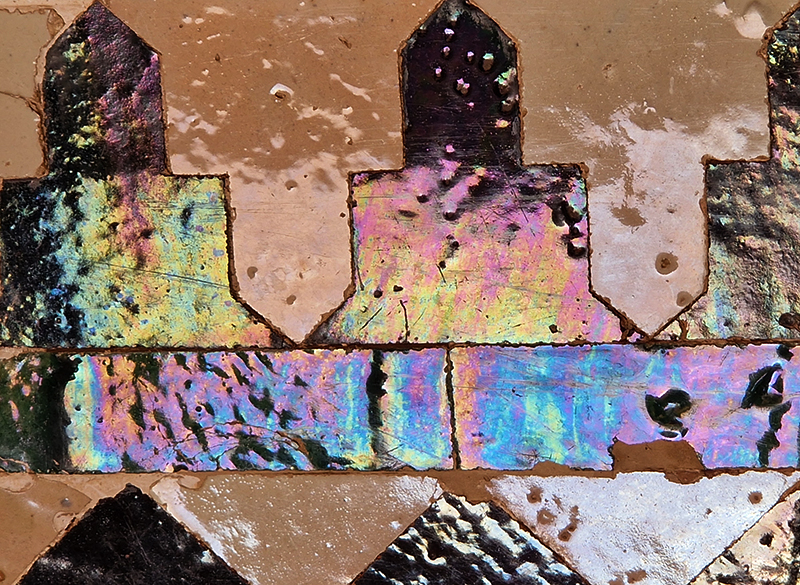
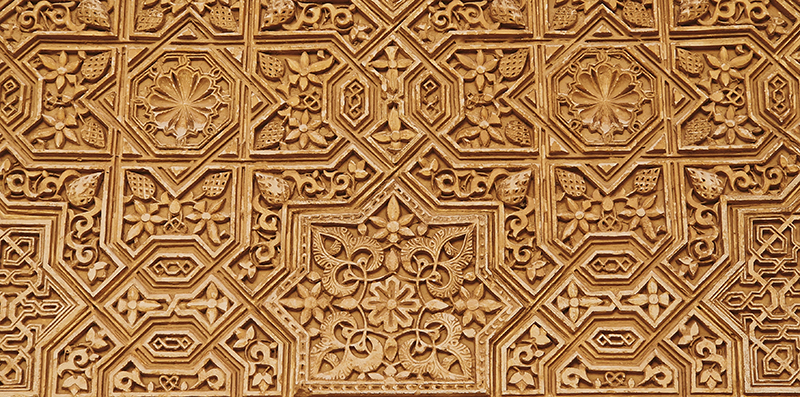
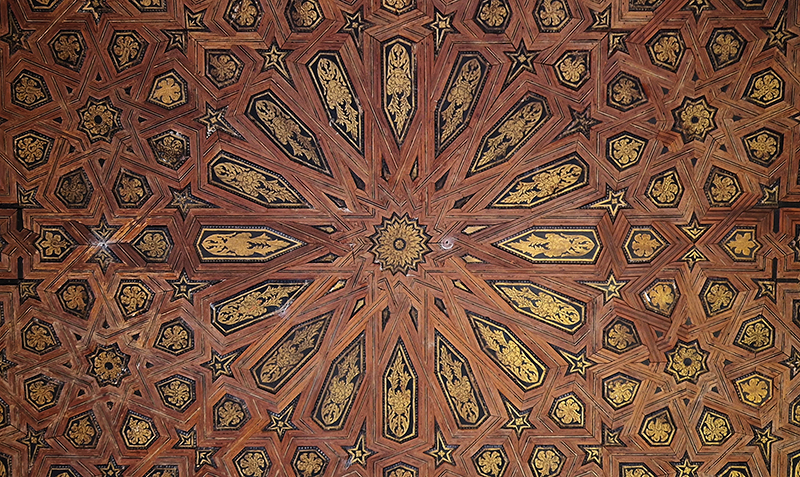
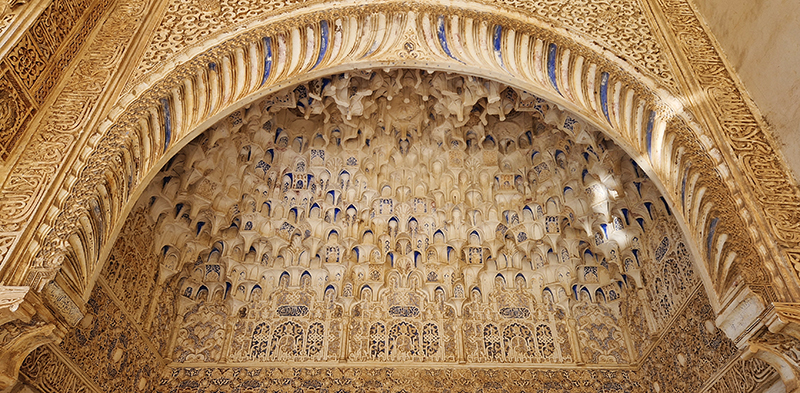
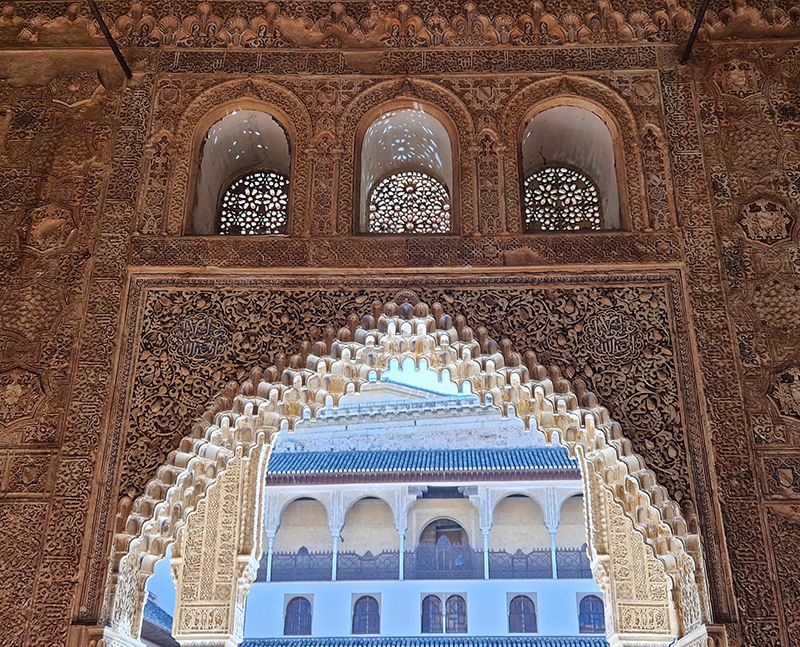
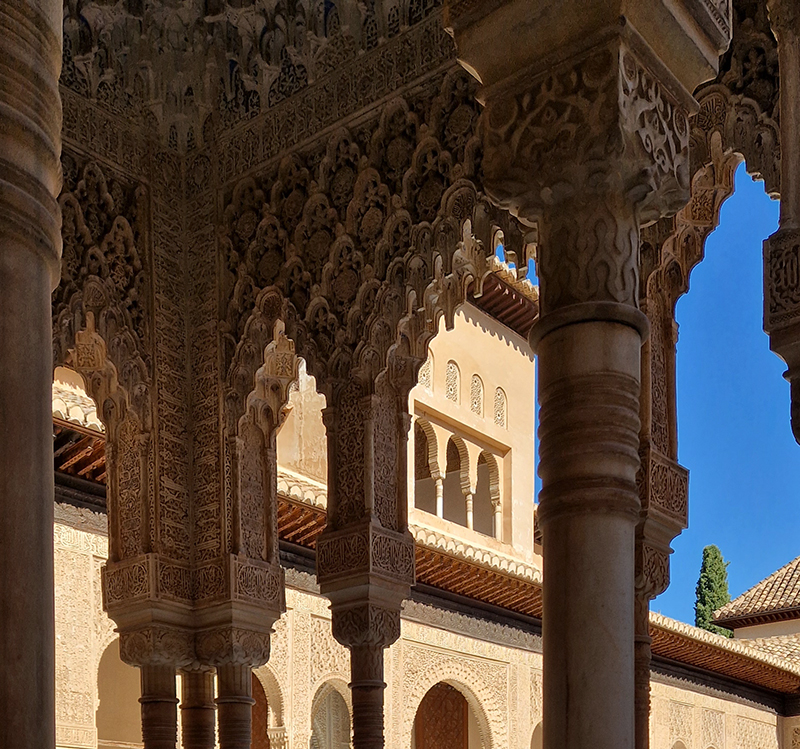
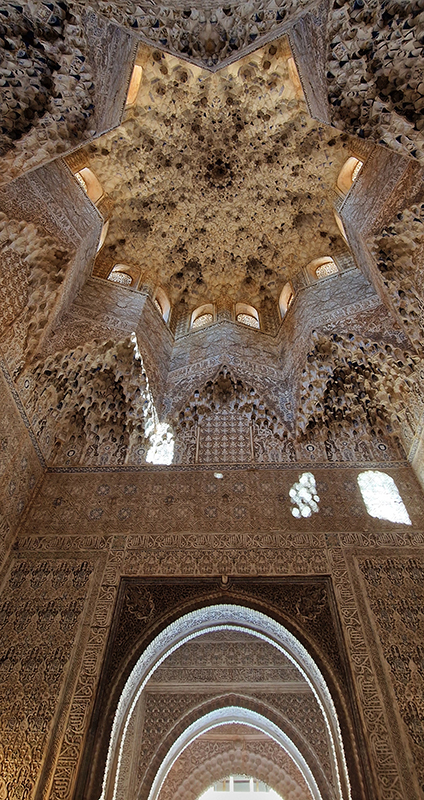
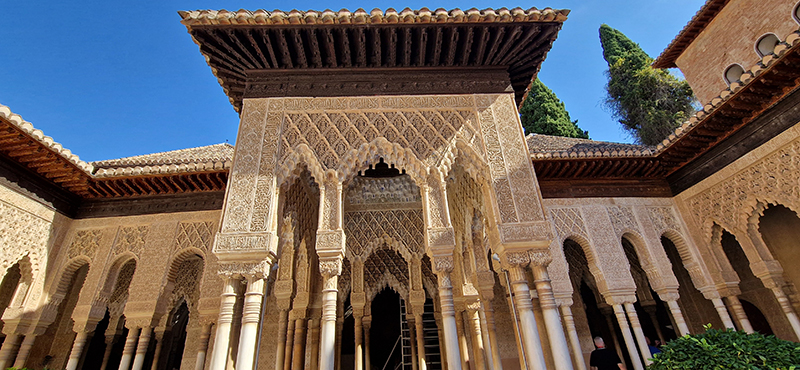
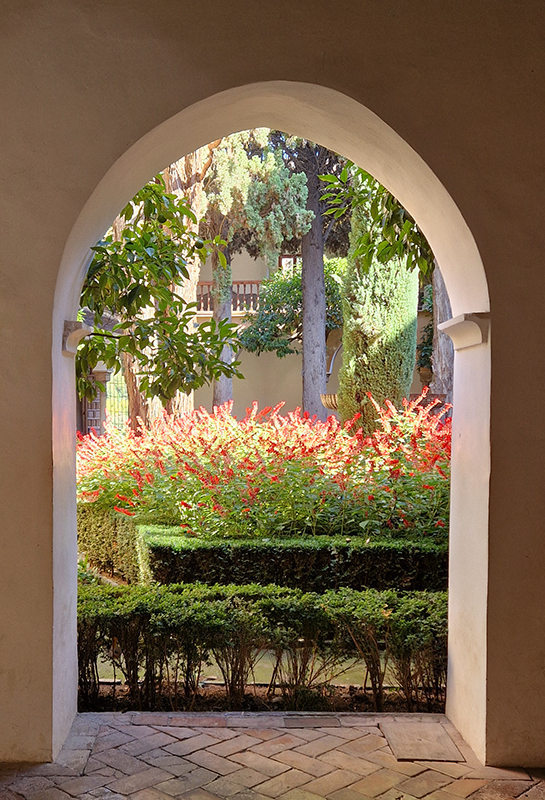
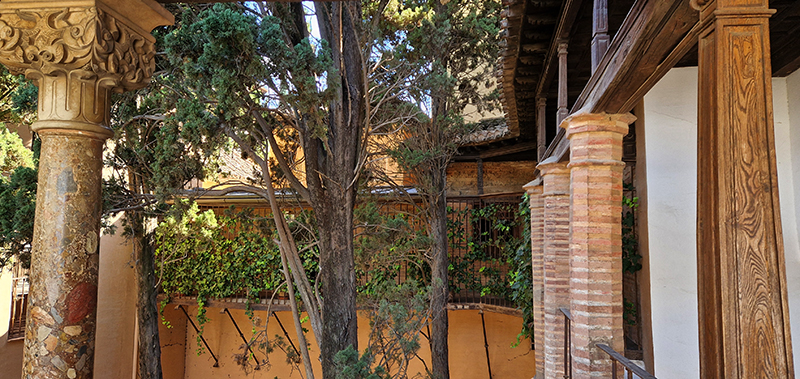
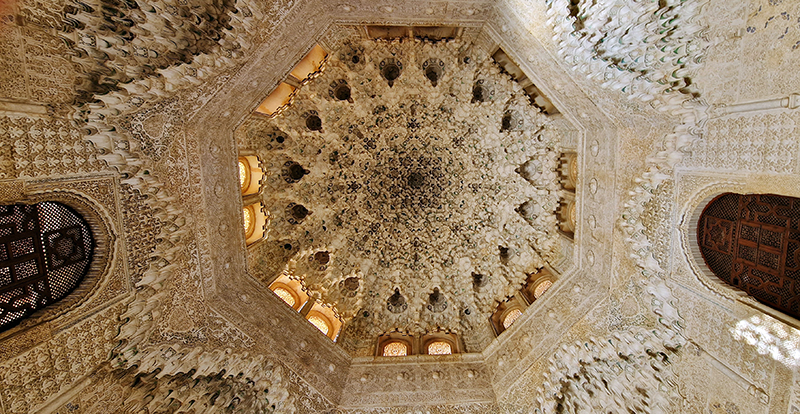
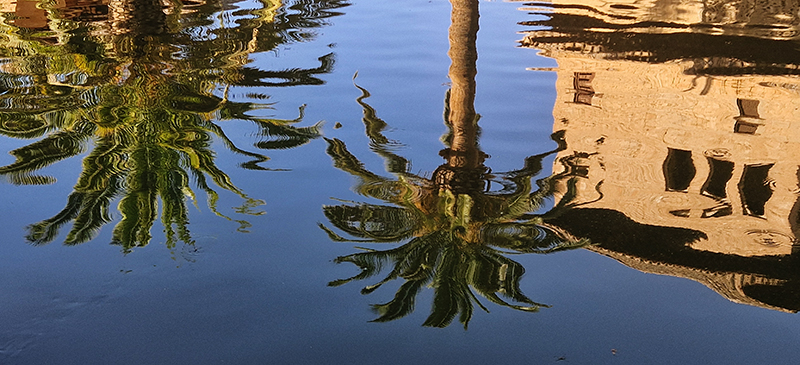
Finally got to visit The Alhambra and it didn’t disappoint.

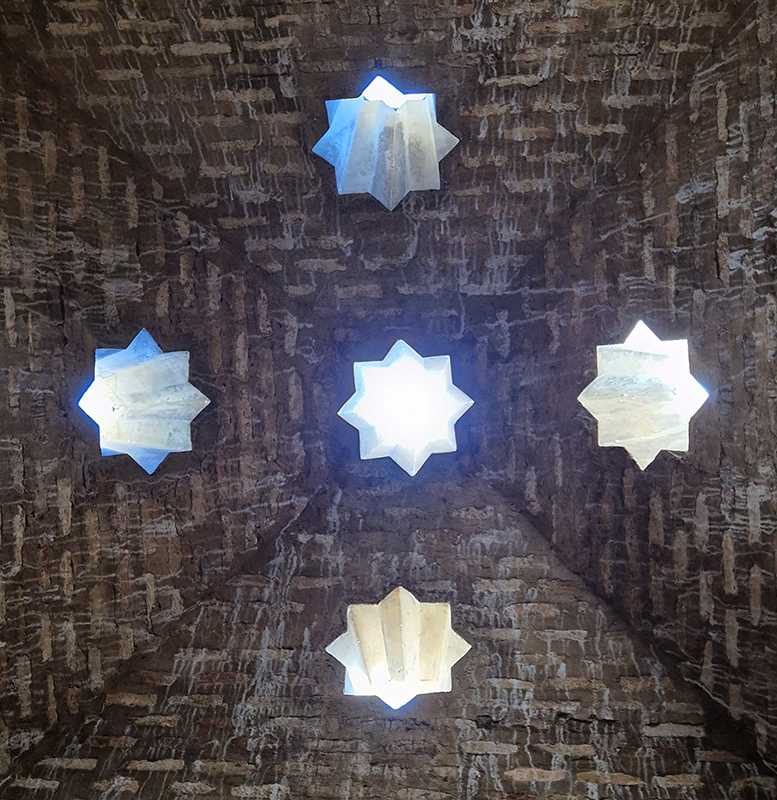
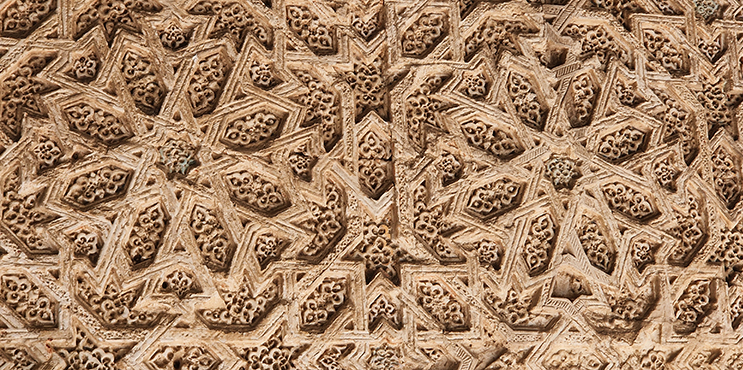
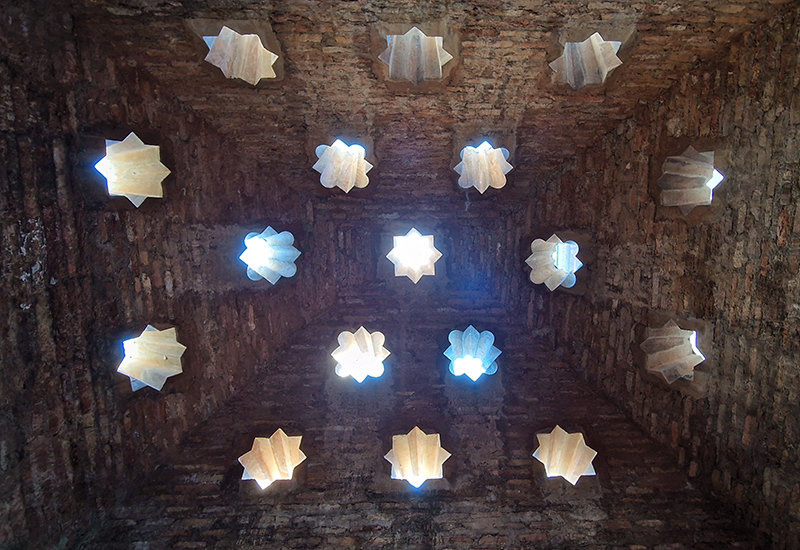
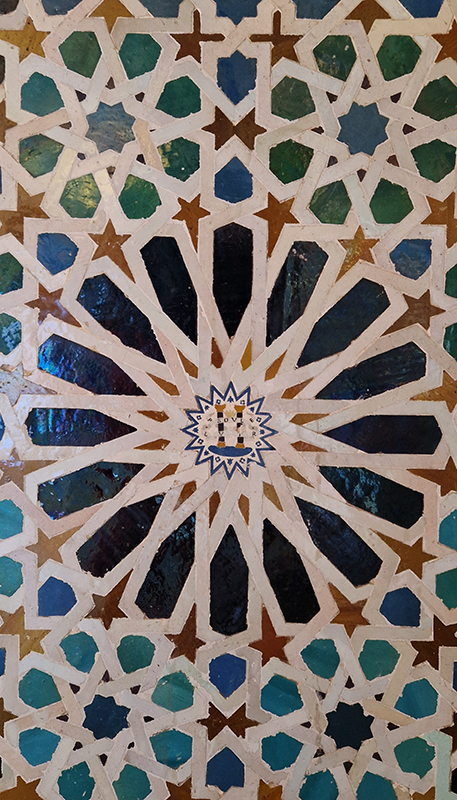
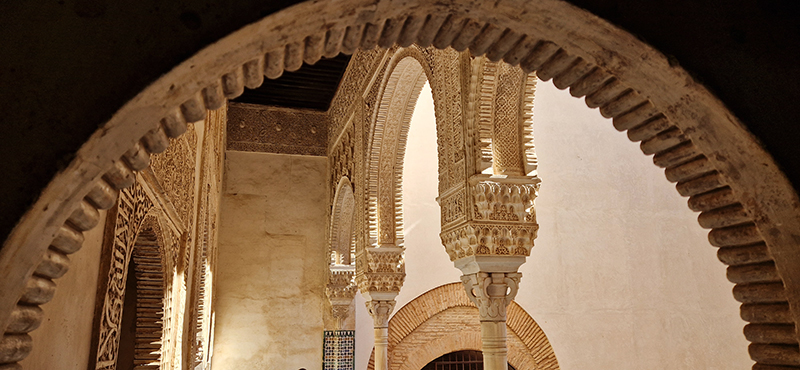
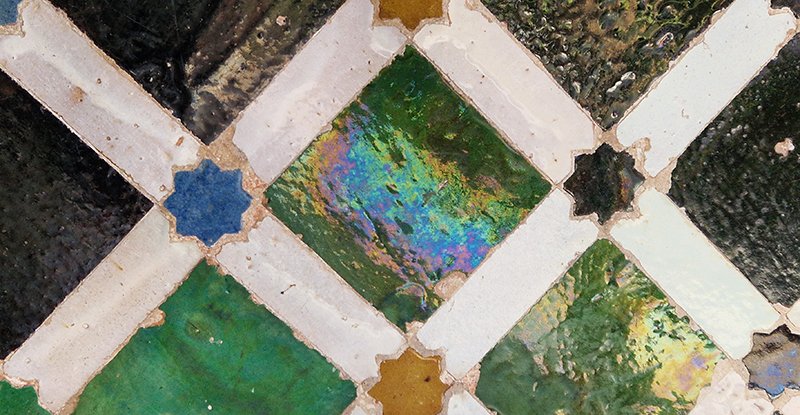
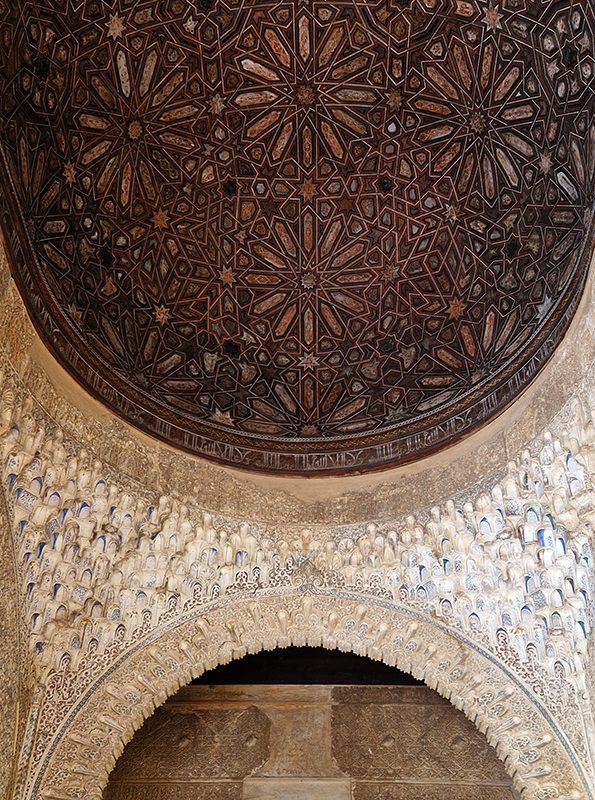
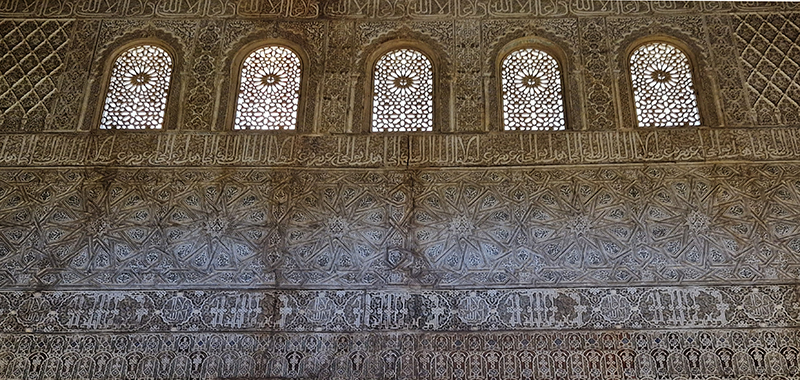
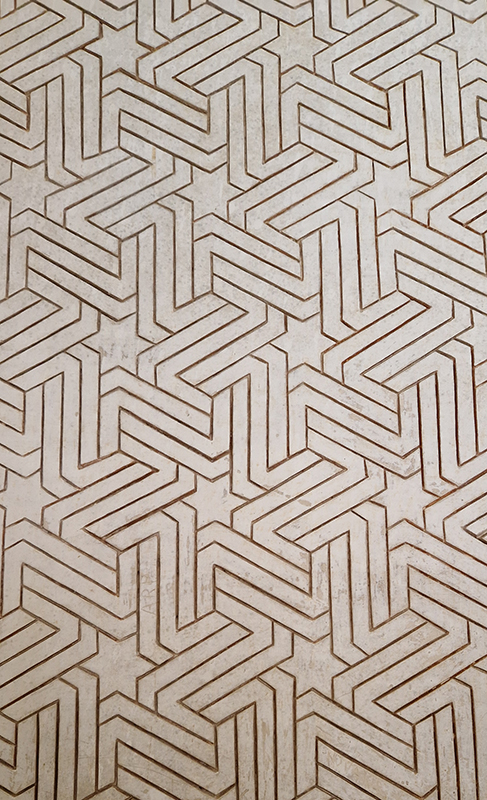
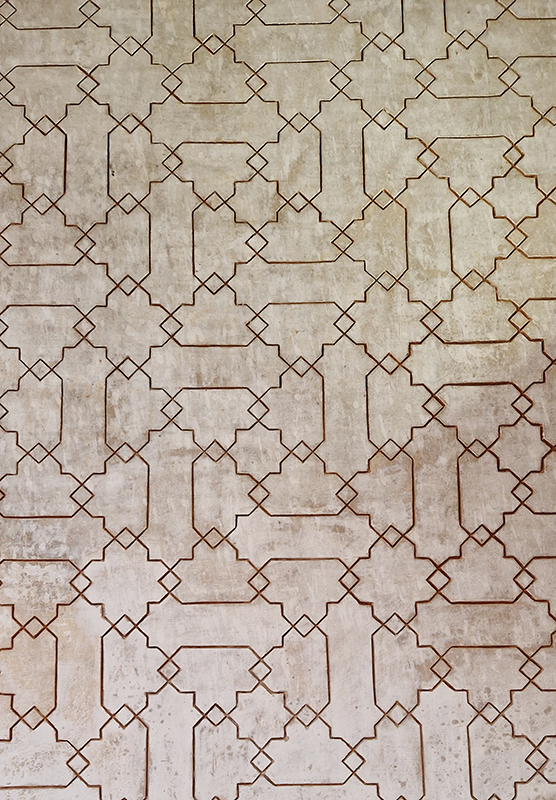
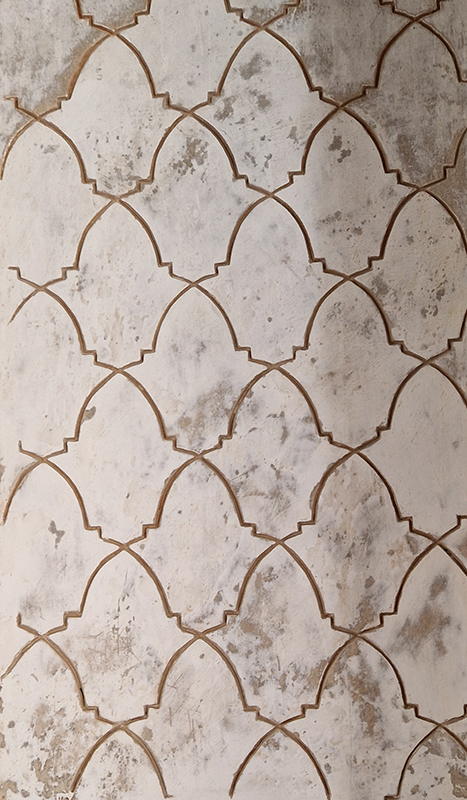
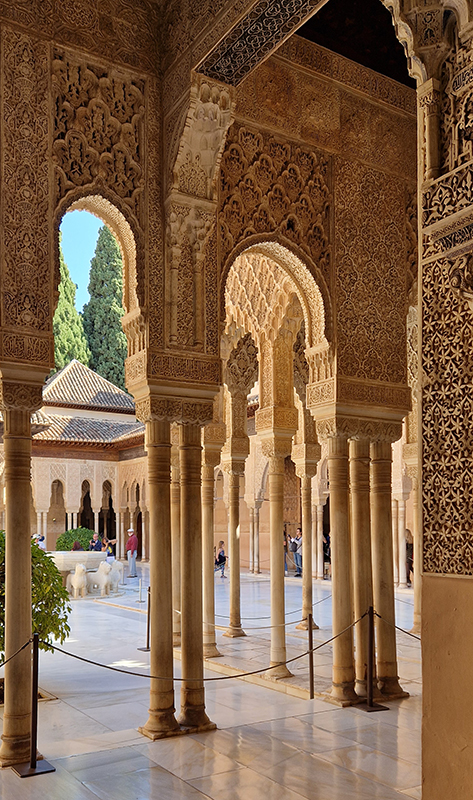
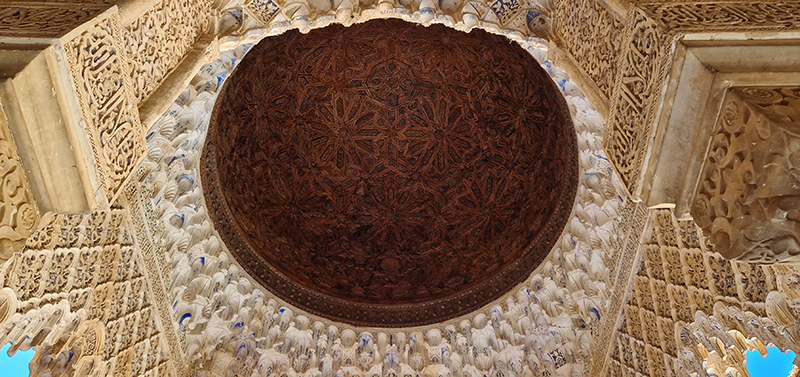
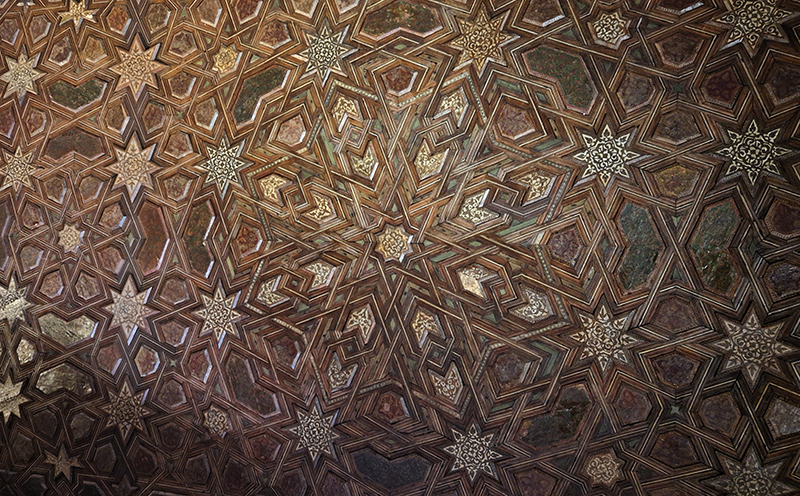
Designed by poets, philosophers and mathematicians, it is said to bring the harmony of paradise to earth in its perfect symmetries and idyllic gardens. The complex was begun in 1238 by Muhammad I Ibn al-Ahmar, the first Nasrid emir and founder of the Emirate of Granada, the last Muslim state of Al-Andalus and has been expanded, modified and repurposed over the centuries. It is a vast network of garden pools, fountains, courtyards, palaces and fortress towers with jaw dropping vistas. Water runs down from the mountains in an ingenious systems of open channels intertwining through pathways to feed the many pools and fountains. Every ceiling is a vault of heaven, inlaid or sculpted to draw the eye upward. Every wall tiled or stuccoed. Pavements interlaced with patterns set in stones accept cooling water splashed onto their surfaces without it immediately evaporating as it would on a smooth path.

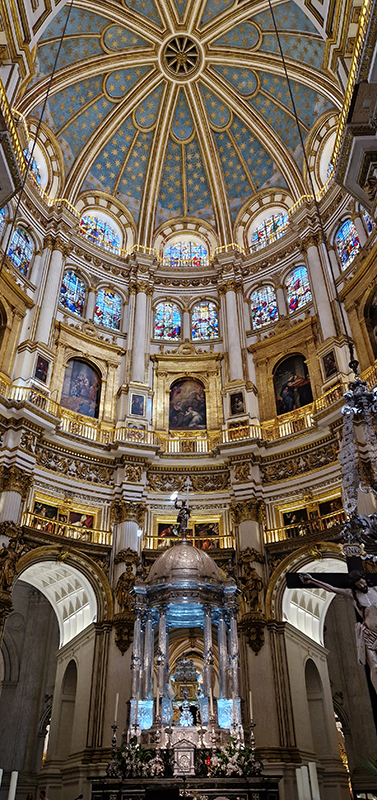
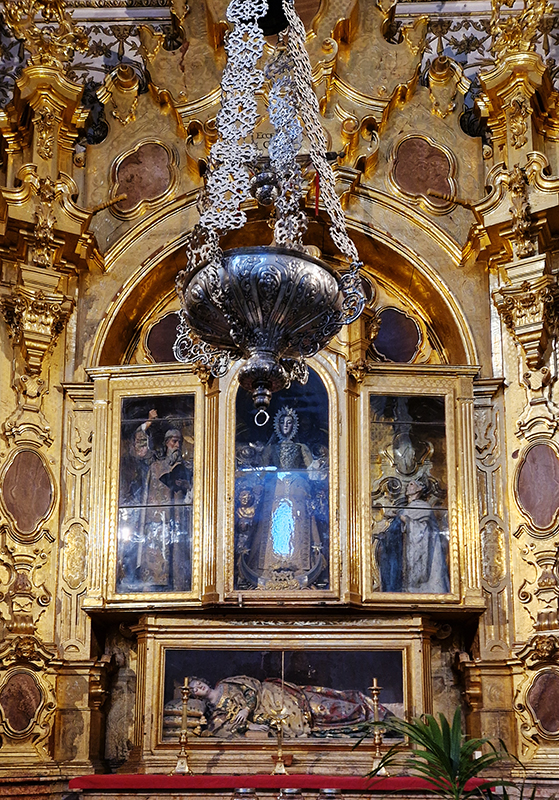
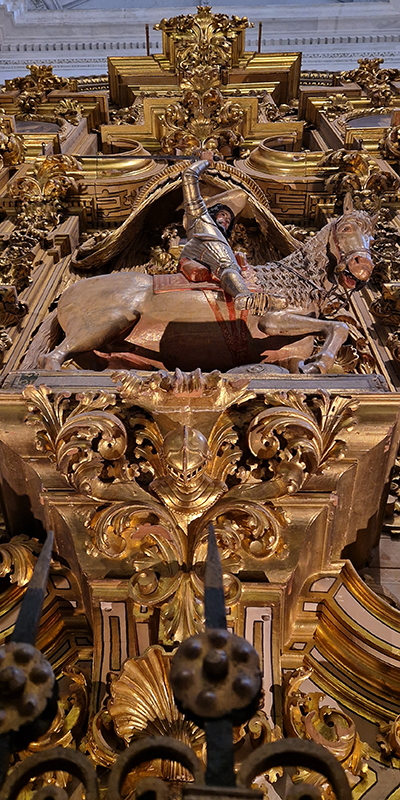
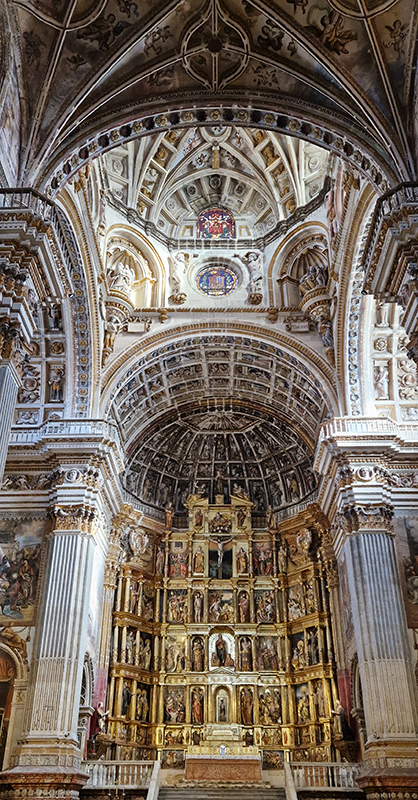
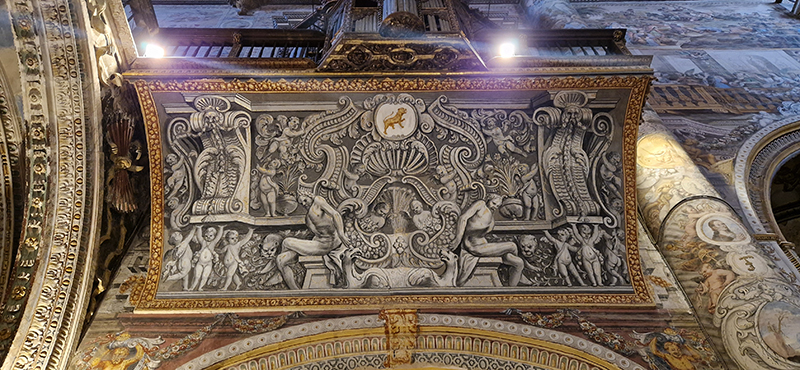
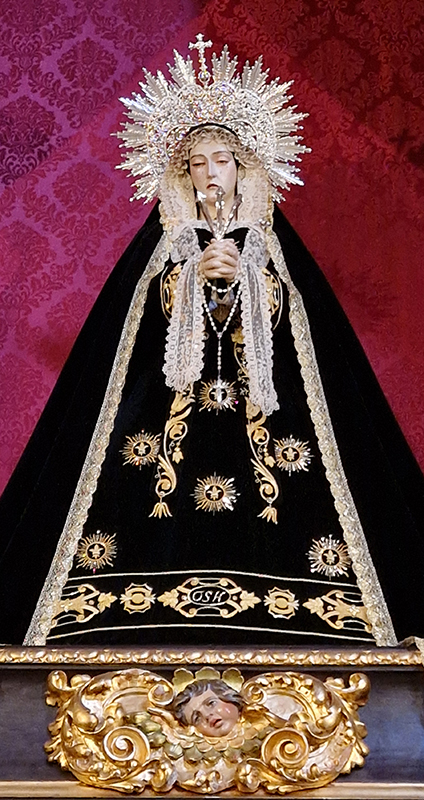
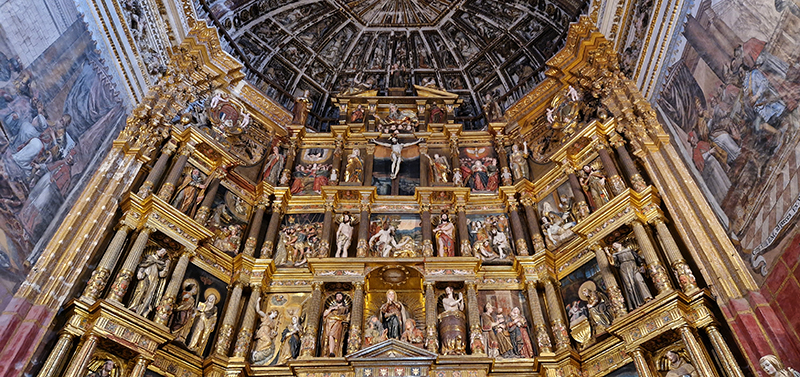
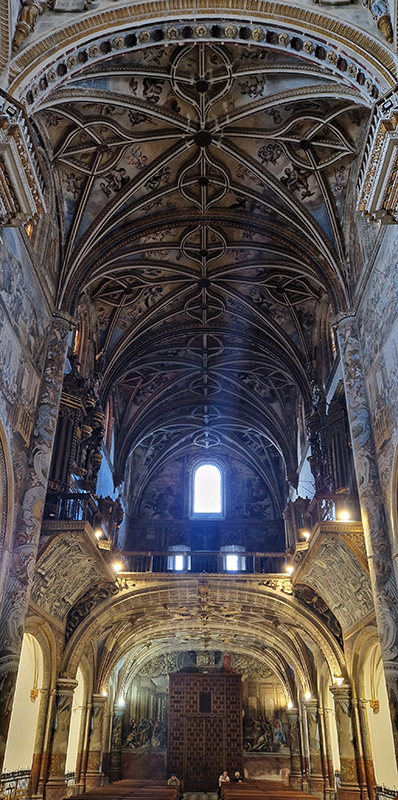
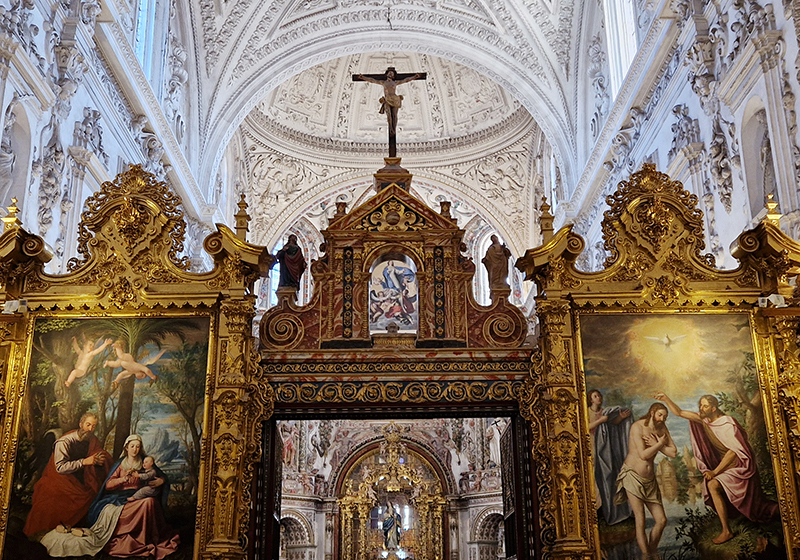
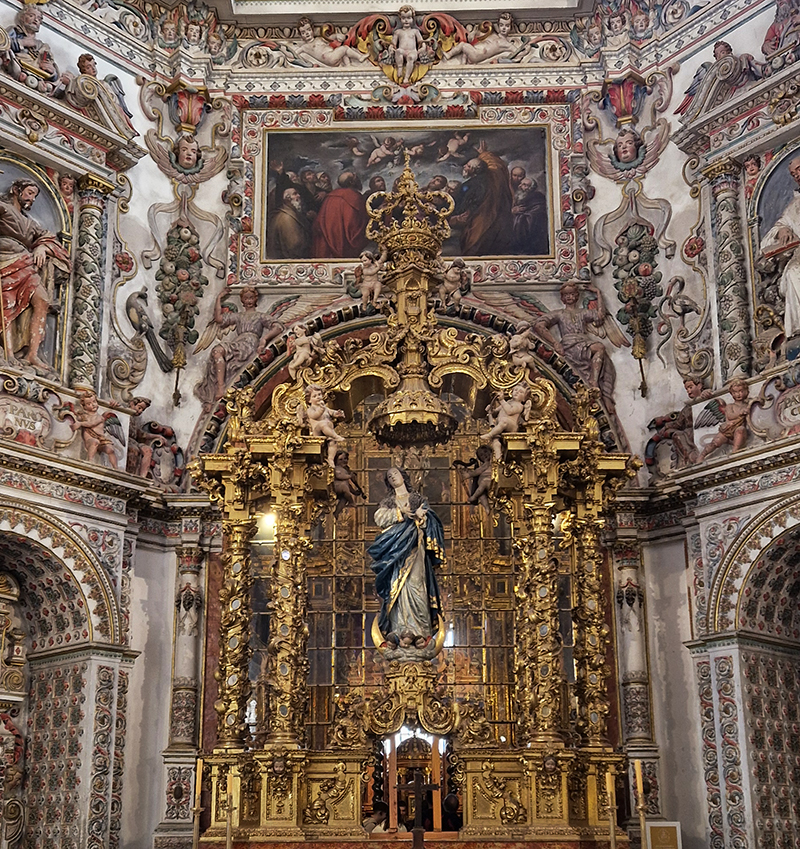
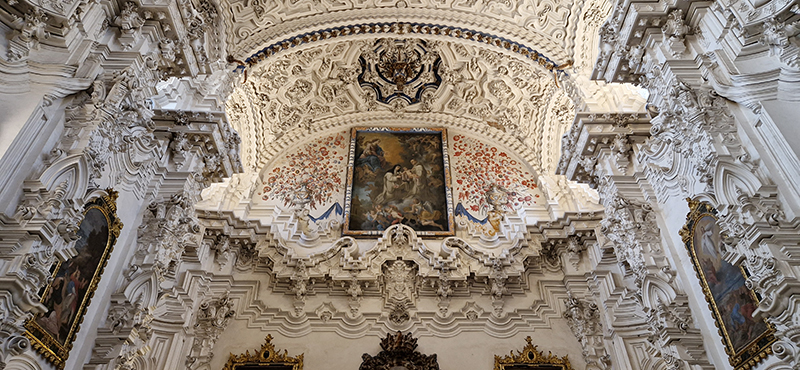
After the stunning intricacies of sacred geometry and calligraphy, the cast plaster and carved stucco in sunblushed pinks and ochres coloured with mineral pigments of the Alhambra came the Roman Catholics with an alternative interpretation of spirituality. The Cathedrals, Abbeys and Monasteries they built are also astonishing in their scale, architecture and decoration. But this new regime conveyed its power with overwhelming opulence and extravagance, gleaming with gold and spilling over with iconography.

Of course all our cities are built in stone but here the stone shouts of its materiality and origins.

What could a monument be? Is it the thing we build or the thing we have taken away from? A place of emptiness is the monument to remind us there is no possibility of getting back to what has been – Otobong Nkanga

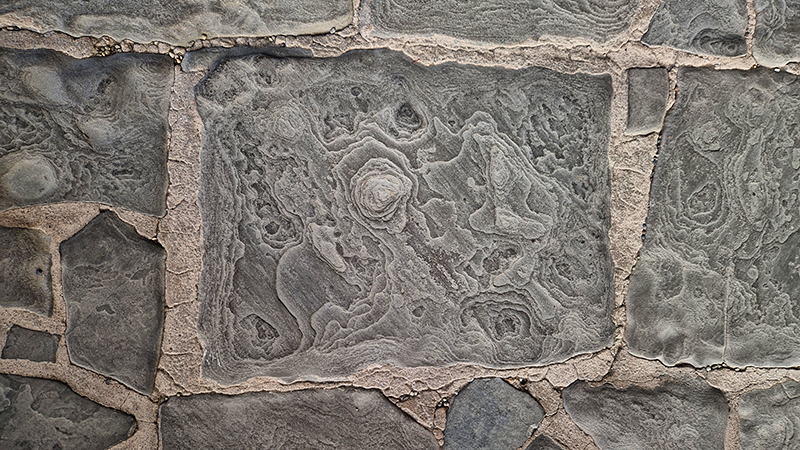
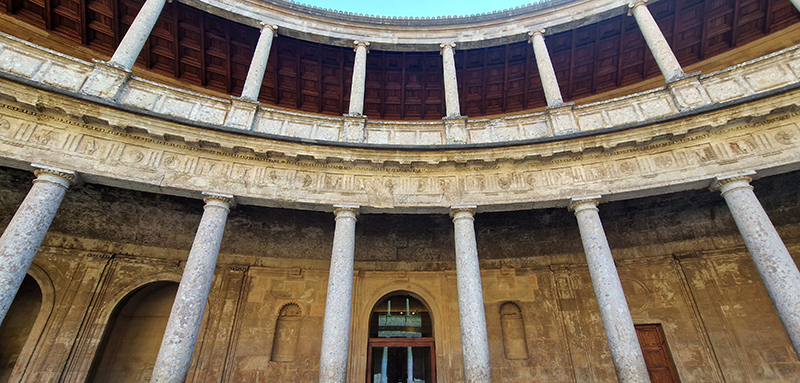
The circular Palace of Charles V was built inside the Alhambra beginning in 1527 to symbolize the royal imperial status and the imposition of Christianity over Islam achieved by the Roman Catholic monarchs. I was intrigued by the Doric colonnade of conglomerate stone and wonder how these were polished so smooth.

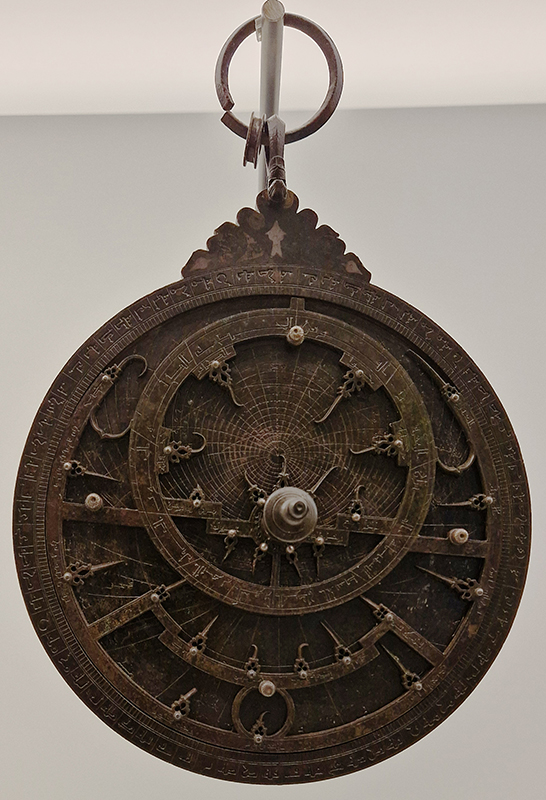
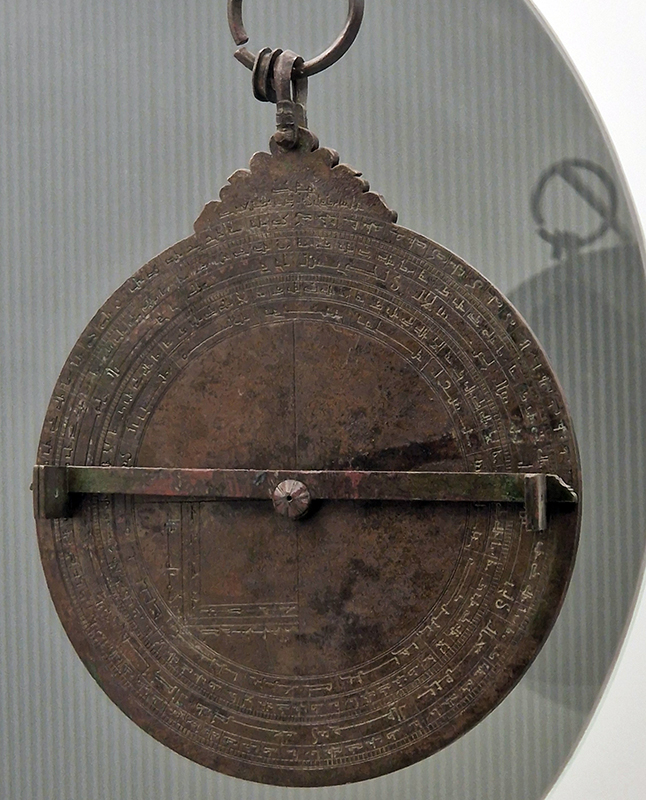
The Museums of Granada hold some fascinating ancient instruments. The Astrolabe of Ibn Zawal: molten, cast and etched bronze, 1481, used to determine position and time based on observation of the heavenly bodies. This one served to mark the times of prayer, beginning of Ramadan and qibla (direction of prayer). This is the only example known built specifically for the latitude of Granada. A marble Sun Dial with missing gnomon, this solar quadrant marks the hours of the day in relation to the seasons. Winter and summer solstices are marked by two semicircles. It has some signs of the zodiac and inscriptions in Kufic characters which mark the times of daily prayers.  A bronze celestial globe.

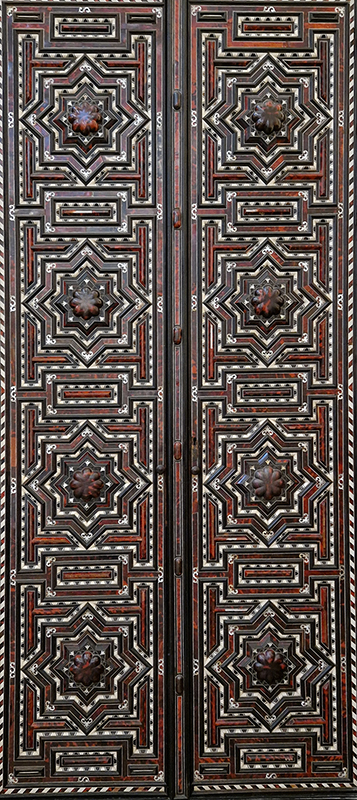
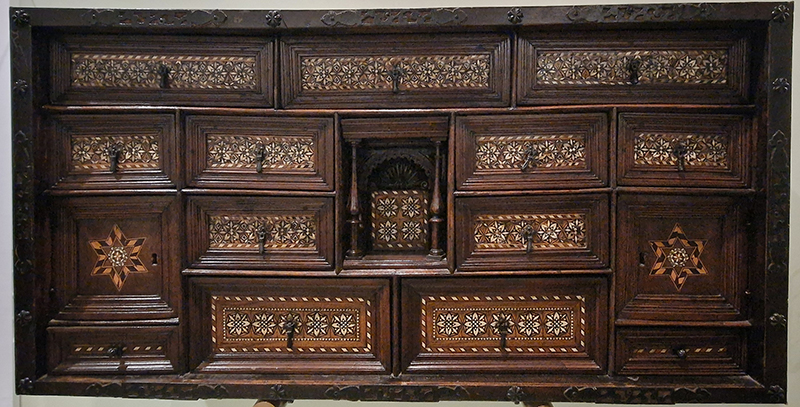
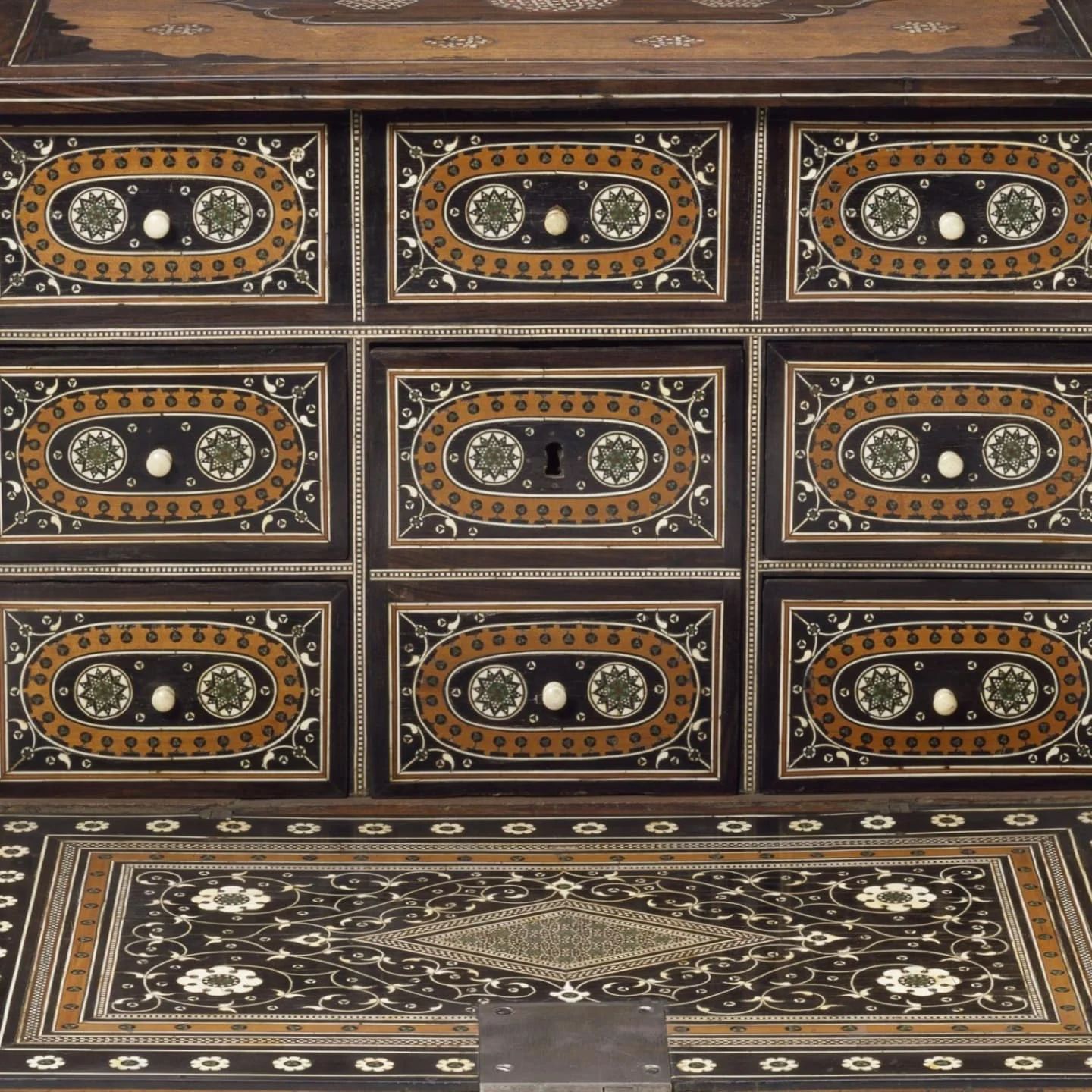
Seeing these instruments along with the intricate patterns of the 13th–15thC larder doors from the Palacio de los Infantes of cypress decorated with intarsia of inlaid wood, bone and ivory and other pieces seen at Granada Cartuja Monastery and Granada Casa de Los Trios, while smelling spices sold loose on the streets brings to mind the ‘Matter of Objects’ project instigated by Queen Mary University that I took part in. Humanities researchers and artists were paired in interdisciplinary conversation to open the way for reinvigorated readings of objects from the past. I was paired with Bruno Martinho from the European University Institute in Florence researching exotic objects found on the Iberian Peninsula during the 16thC.

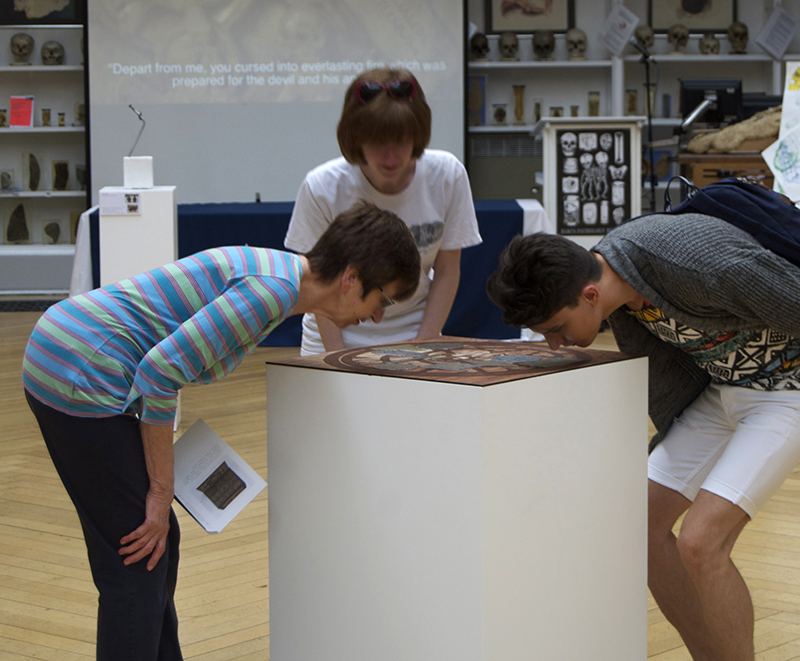
The work containment was made in response to objects traded by merchants that journeyed across the globe five hundred years ago when navigation was reliant on reading the stars. The deep etched lines of the metal plates were filled with inks made from different spices, inviting the viewer to lean in and inhale the aromas. These markers plot the spice route from India around Africa to Europe along the latitude and longitude lines taken from 16th maps of Mercator and Ortelius. A fall-fronted cabinet from 16thC held at the V&A was chosen by Bruno as an object to respond to

Gallery Visits

Liz Elton in Emerging Landscape Painting Today at Messums Cork Street. Assessing the conversation on how landscape and our collective wellbeing mirror each other. Liz’s delicate work Habitat creating a focal point here was first shown in Lifeboat at APT gallery.

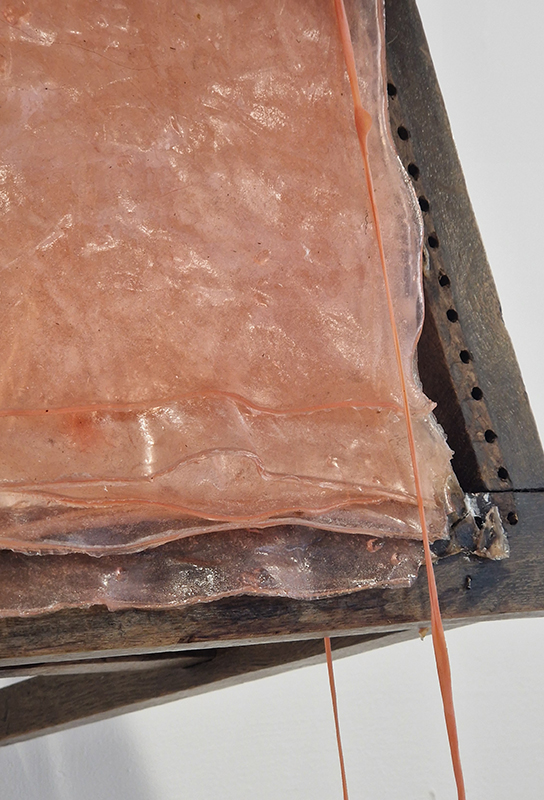
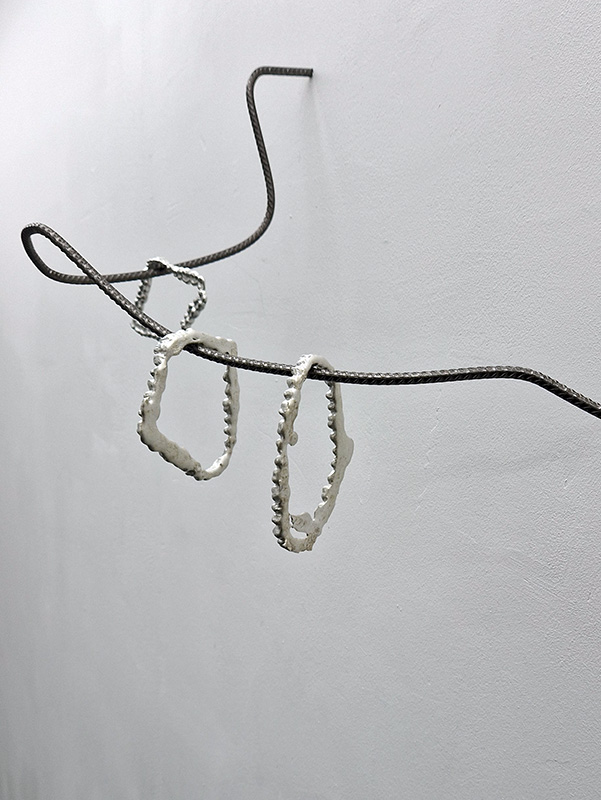
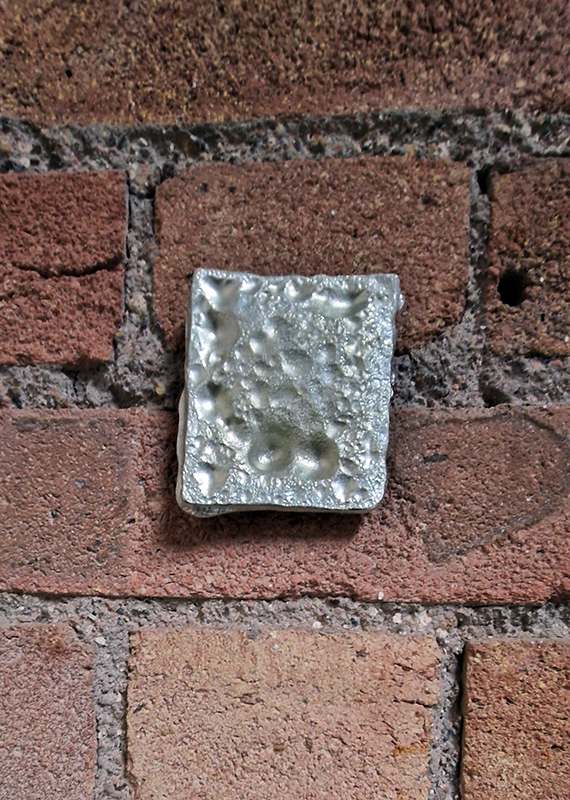
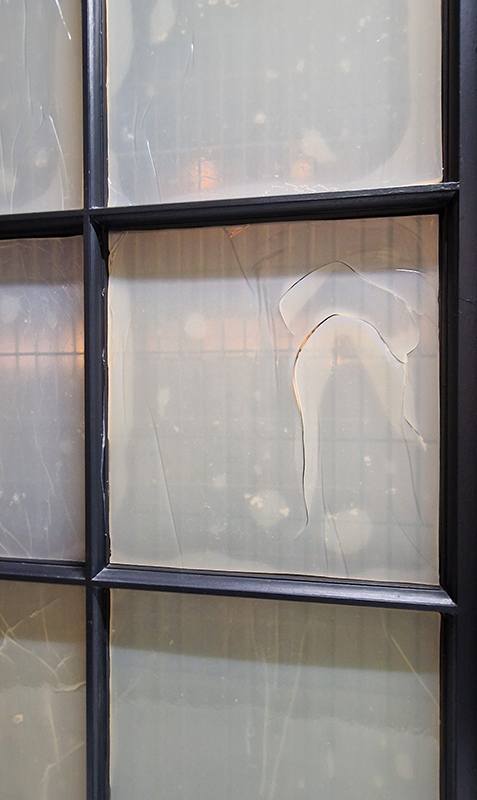
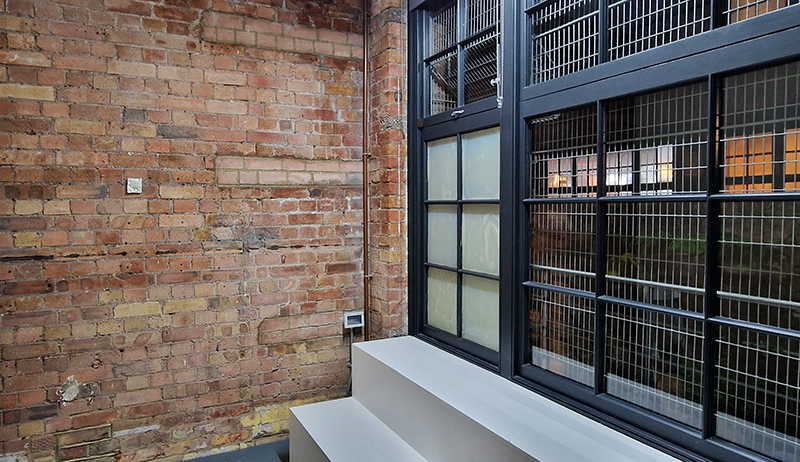
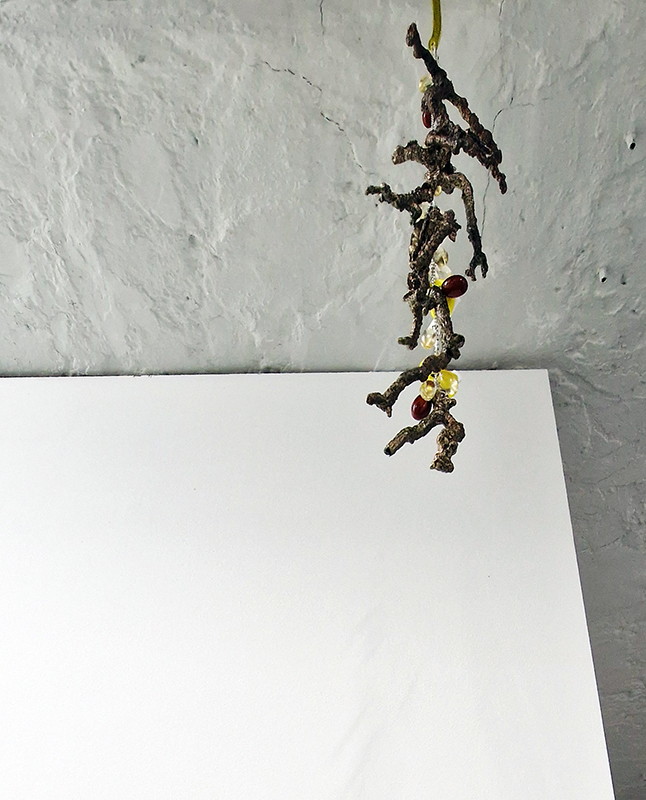
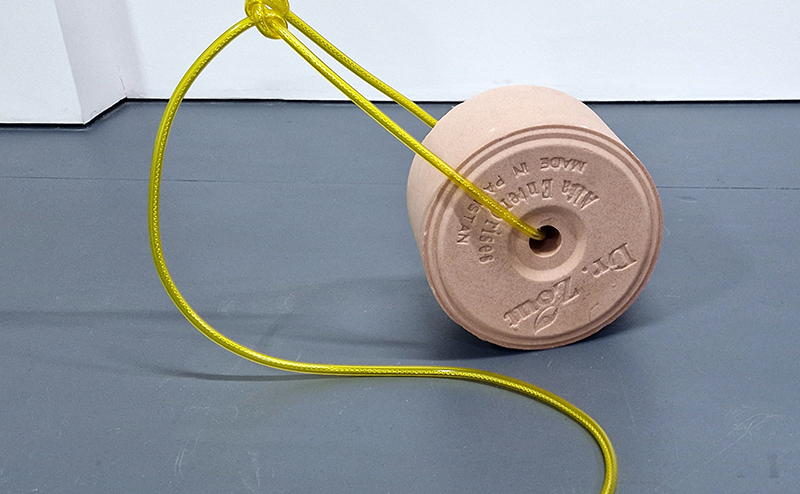
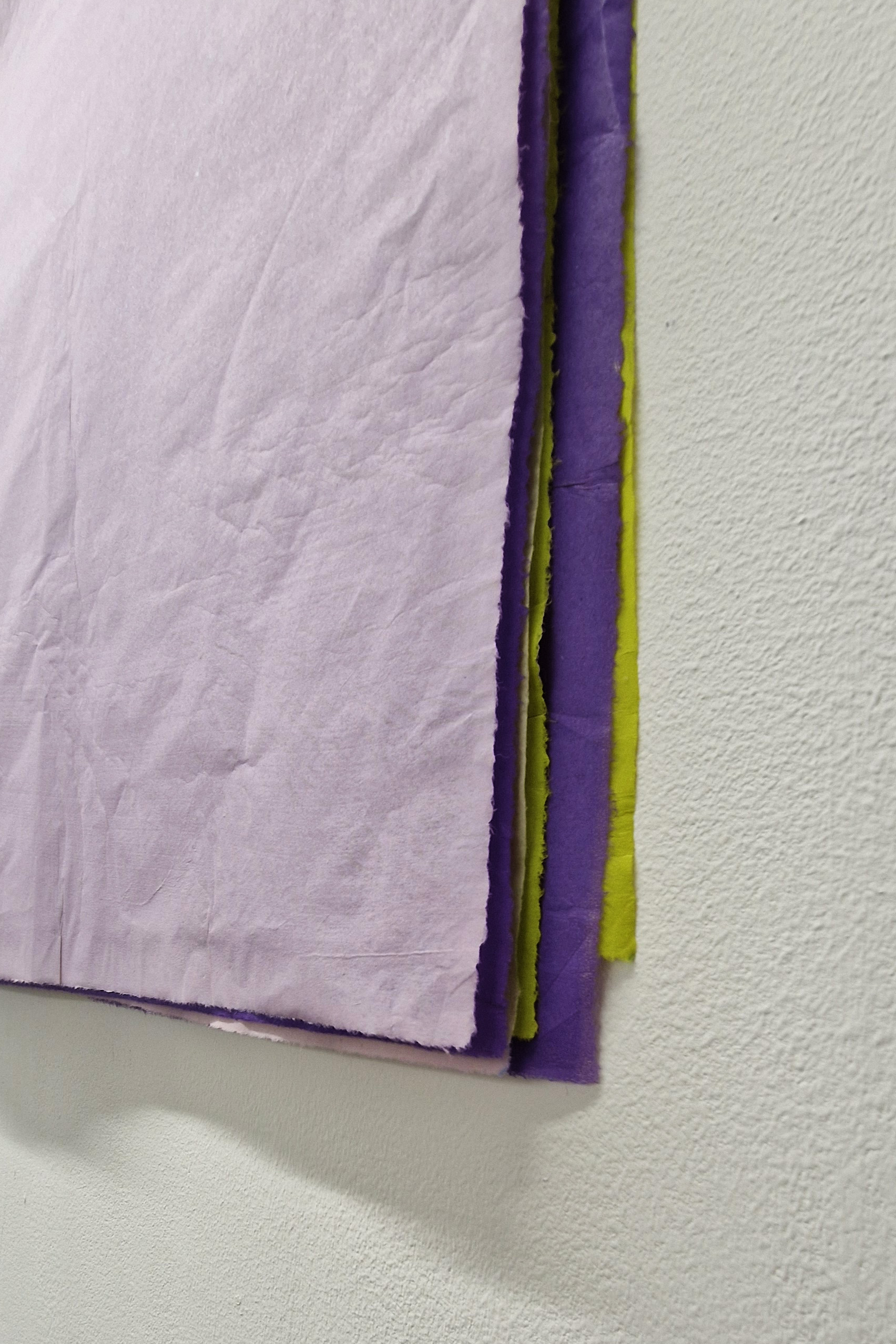
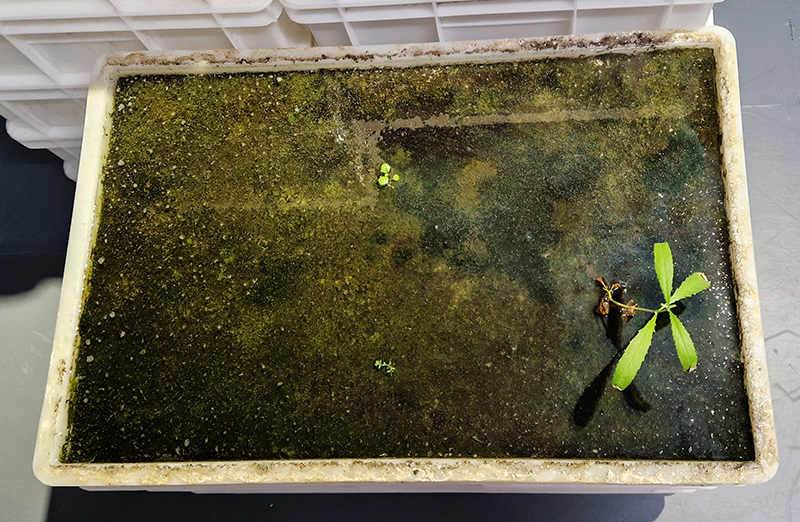
Kate Fahey, Lizzie Munn and Timo Kube in As it is – with works at Commonage Projects and No Show Space. The exhibition talks about subjective experience of time, the past echoing into the future. I find the title ‘As it is’ echoes from my past of Sunday School mantras ‘…on earth as it is in heaven’. That unknown questionable idyll. Aluminium teeth frozen in open cry, strung like trophies; wood sculpted in foetal shapes echoing a folding unfolding, bronze twigs strung with vitamins dangle chirping and chiming over head – hoisted in place with salt blocks, window panes obscured with sheets of semi translucent jelly poised to fall. These works from Kate Fahey encourage an assessment of what is natural, what can be transformed and what can be preserved. Lizzie Munn hangs blocks of hand printed paper in layers of rich colours, the installation draws attention to the vibrant edges and the weight of the paper as object rather than substrate. The manmade bogs in Timo Kube’s plastic tanks also took me back to childhood and the delight of finding strange lifeforms in the rusted water butts of neighbours gardens when taken on trips to renew flowers in the graveyard. Like these bogs his other pieces exploit their surfaces as uncertain, both reflecting and revealing.

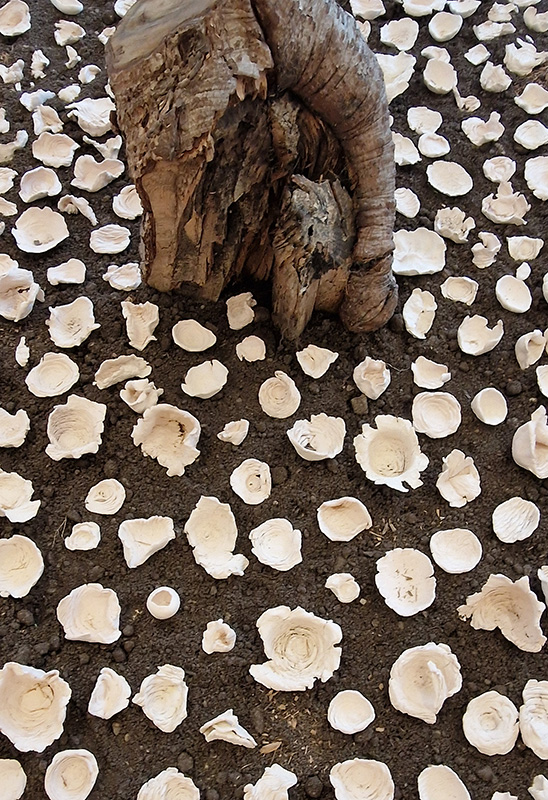
Venetia Nevill We Belong to the Earth at The Bhavan. Venetia has an extraordinary talent of opening pathways into the soul of the natural world allowing us to enter a calm and meditative space. Through her own passion for nature and her deep knowledge of ancient rituals and passing seasons in tune with cosmological cycles she gives us access to the unseen but felt experience of connecting with nature. I walked the cedar mandala and stirred the iron rich water of the scared spring. I pressed damp clay against my skin and the contours of the cedar cone to create an addition to the Mandala of Hope, a growing collection of tiny ceramic vessels, like casts of little hugs.

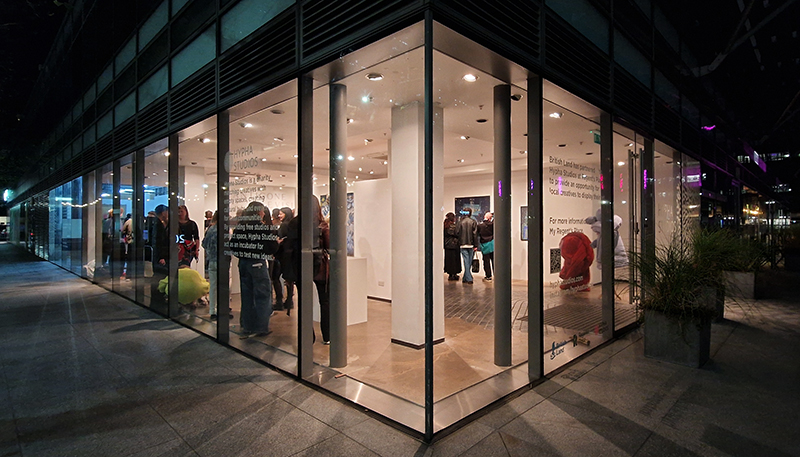
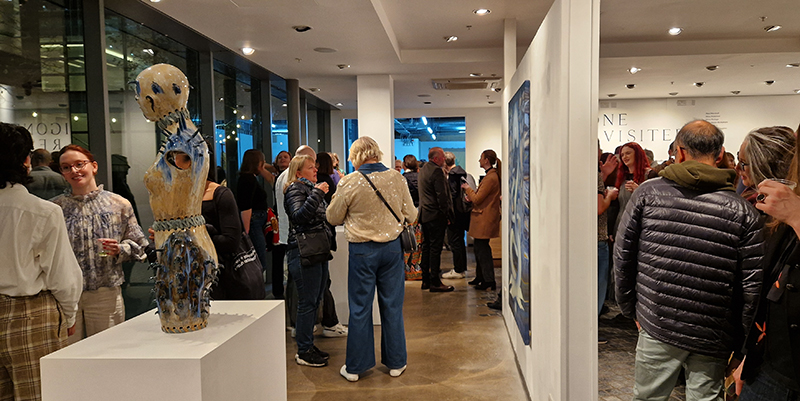
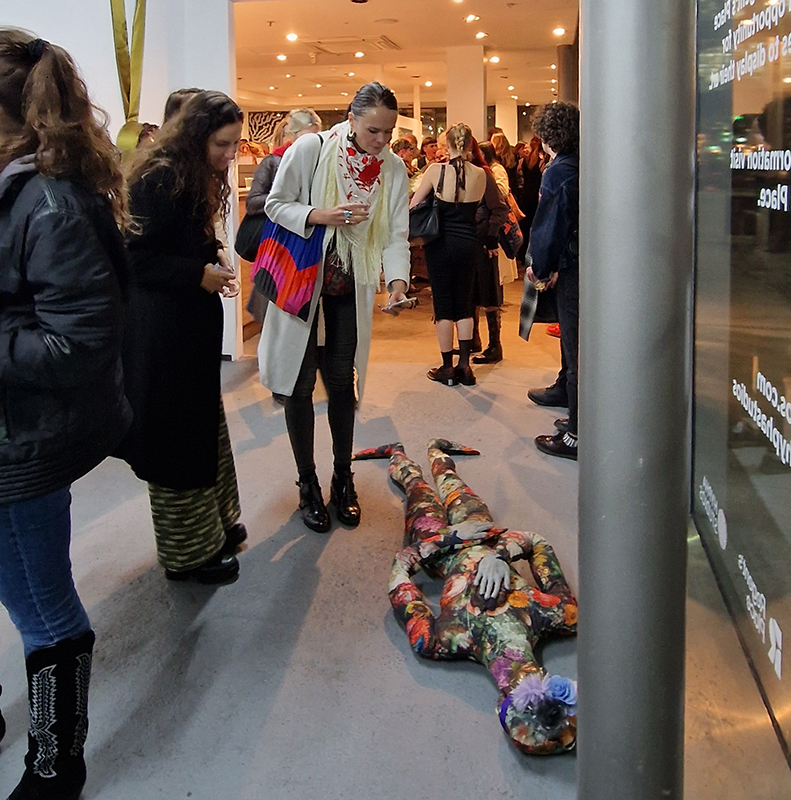
Antigone Revisited curated by Marcelle Joseph at Hypha Studios Euston. This exhibition turns to the contemporary poet Anne Carson and her interpretation of the Greek heroine of Antigone for guidance in our present era of societal crisis. It was good to see the space full and buzzing as this is the site I will be exhibiting in next year in a group show I am co-curating with Julie F. Hill. We will be discussing concepts of The Geological Unconscious taken from the book of the same name by Jason Groves.

Reading

Orbital by Samantha Harvey. This is a nourishing read. Orbital is so first person evocative, the descriptions of Earth from the ISS are so transcendent, it’s hard to believe Samantha is not an astronaut. I very much admire the Art Fictions Podcast curated by JiIlian Knipe and often wondered what book I would choose for myself in this context. I think this book would fit. Why it resonates so much with me is the sense of wonder it evokes along with an acceptance of the infinite incomprehensibility of our position in the cosmos.

‘Our lives here are inexpressively trivial and momentous at once [..] both repetitive and unprecedented. We matter greatly and not at all. To reach some pinnacle of human achievement only to discover that your achievements are next to nothing and that to understand this is the greatest achievement of any life, which itself is nothing, and also so much more than everything.’

Listening

Hannah Critchlow on the connected brain In her books Hannah Critchlow has explored the idea that much of our character and behaviour is hard-wired into us before we’re even born. Most recently she’s considered collective intelligence, asking how we can bring all our individual brains together and harness their power in one ‘super brain’.

86 billion nerve cells within the brain produce electrical currents as they pump sodium and potassium ions in and out across cell membranes and that pumping of charged ions creates an electrical current which passes from one nerve cell to the next cell in the circuit and that movement of electrical current creates our thoughts, ideas, emotions and our behaviour. An EEG machine can examine the electrical activity within the brain and the brainwaves can be read and converted to sound. Fascinating to hear that when Hannah read the brainwaves of Rowan Williams, the former Archbishop of Canterbury, as he meditated she could see an incredible burst of gamma wave activity in the brain, the fastest frequency of electrical oscillation. Scientists are exploring what happens when groups of brains start working together. In a group, brainwaves start to synchronise with each other, and that physiological alignment within the brain is linked to better learning and consensus building and problem solving ability. In a multi-person brain to brain interface – individuals across the world can be hooked up to an EEG machine and their brain oscillations can be converted into a magnetic stimulation signal which is then transmitted from one person to another person enabling them to read each others thoughts in a very rudimentary sense. Experiments have been done with isolated individuals playing games such as 20 questions and they can complete this without any other communication across the group.

Wrinkled Time The Persistence of Past Worlds on Earth by Marcia Bjornerud. Chronicling the way Earth archives Her geological history in the wrinkled strata just beneath our feet, Marcia Bjornerud orients us to the deep time-fulness of Earth—the four billion years of dynamism held in the ancient and ongoing story of rock.

Viewing

Architecton written and directed by Viktor Kossakovsky at BFI Imax as part of the 2024 London Film Festival. Fabulous to see this on the giant screen. It is an epic and poetic work meditating on humanity’s relationship with architecture. The footage of tumbling stones and rock blasts is breathtaking. An extraordinary journey through the material that makes up our habitat: concrete and its ancestor, stone.

Right In The Substance of Them a Trace of What Happened a series of short experimental films showing at ICA as part of LFF 2024. A couple of favourites were the atmospheric Hexham Heads by Chloë Delanghe and Mattijs Driesen based on a local myth of stone heads unearthed in a local garden that bring forth a chilling presence. Hemel by Danielle Dean, tapping into 1950’s science fiction of alien life and mysterious meteorites to examine lived experiences and xenophobia in Hemel Hempstead.

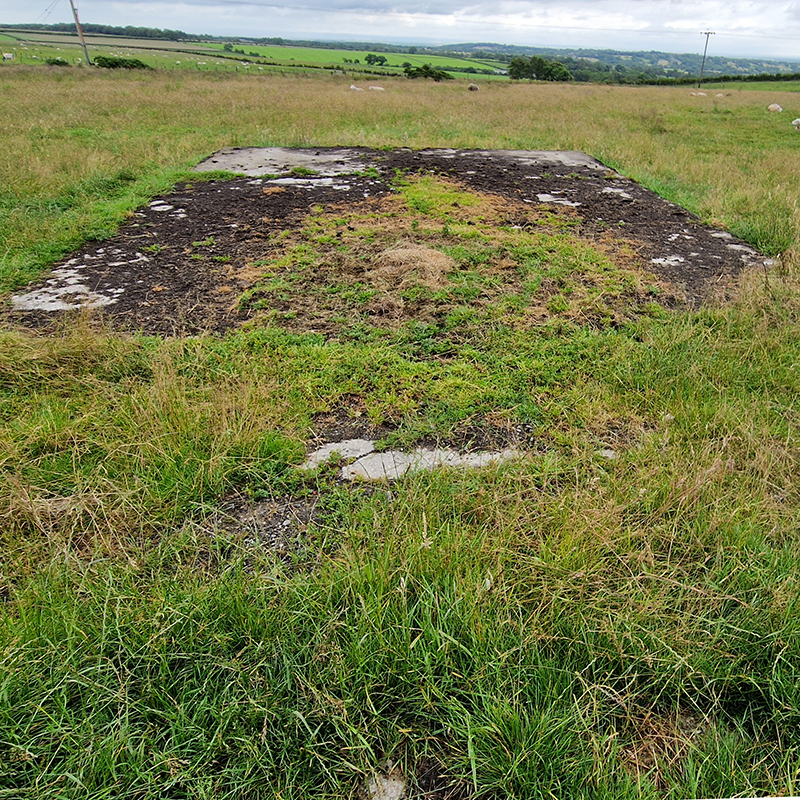
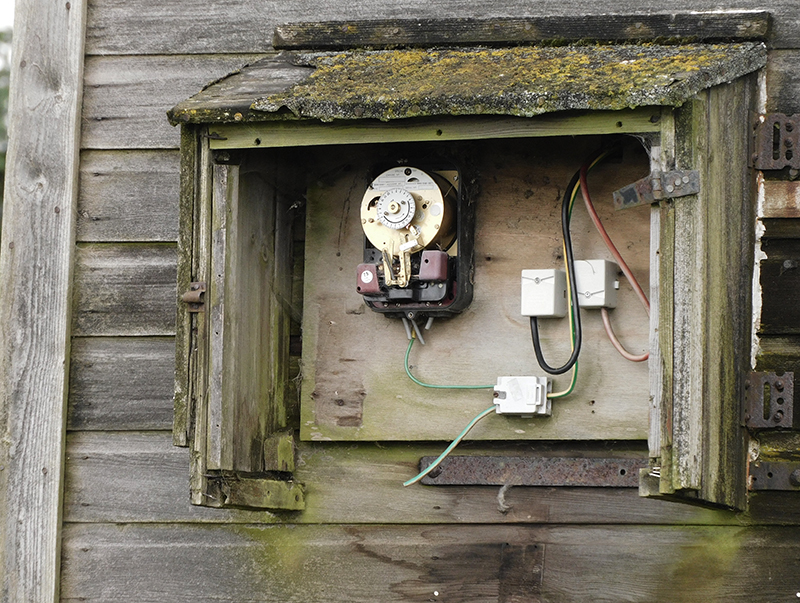
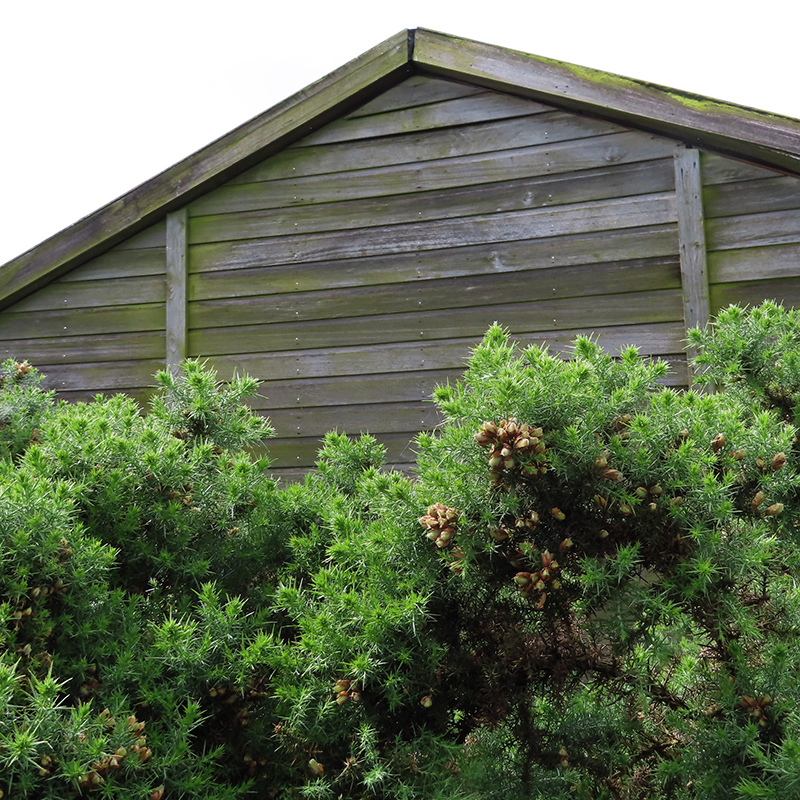
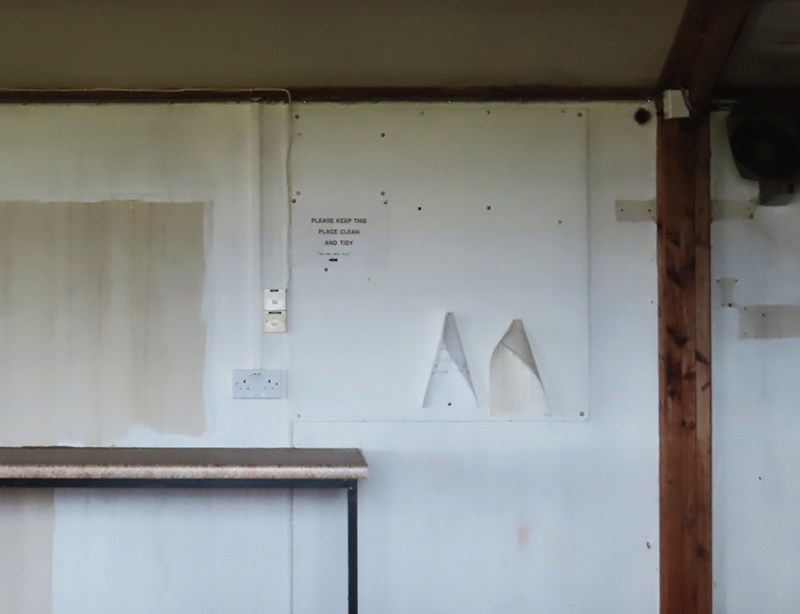
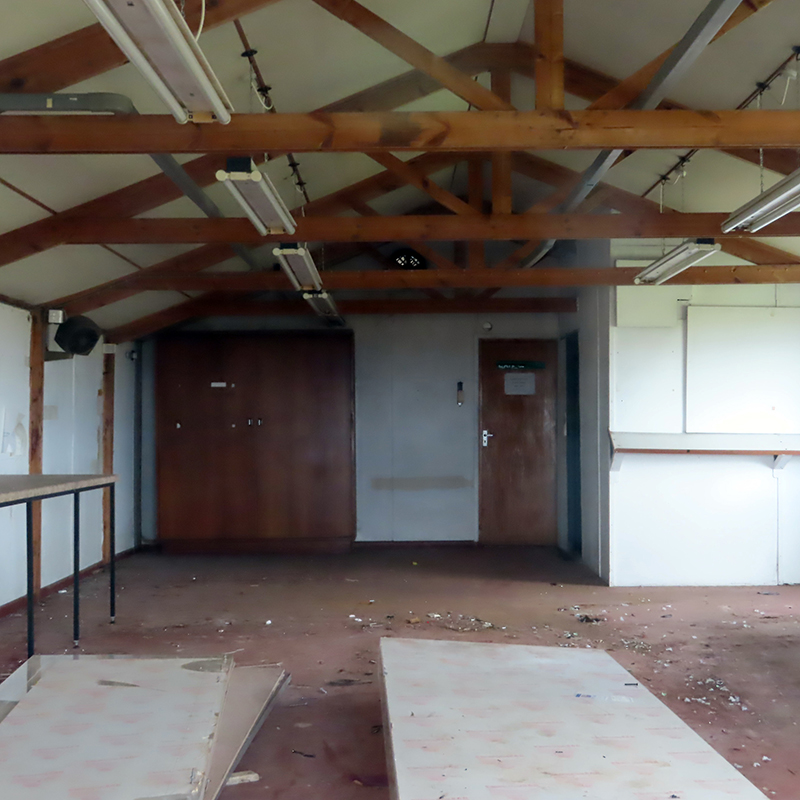
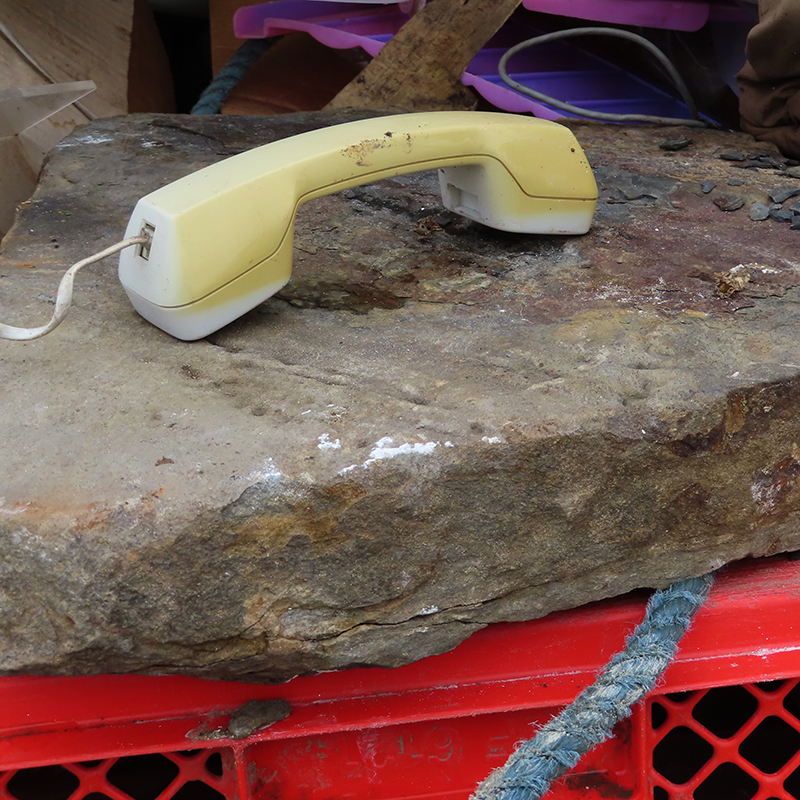
In search of huts. I have been on a mission to locate and document the remaining huts from a cosmic ray detection experiment at Haverah Park on the Pennine moorland in North Yorkshire.

When high-energy cosmic rays enter the atmosphere, they set off a chain-reaction particle cascade known as an extensive air shower. The Haverah Park experiment was home to one of the largest extensive cosmic ray air shower arrays in the world.

It was operated by the Physics Department of the University of Leeds for 20 years, closing in 1987. An array of over 200 water-Cherenkov detectors covering 12 km2 were active during its operation and many 1000’s of extensive air showers were recorded, including ones of such size that the cosmic rays that generated them had energies previously unthought of, adding to the mystery of where they come from.

The large energy density of cosmic rays is close to that of starlight, adding their own glow to the sky as they blast across the universe. Cosmic rays are the atomic nuclei of elements ranging from hydrogen to uranium accelerated to high energies, with half being protons and most positively charged.

Much of the technology used to observe cosmic rays has changed little over the decades since first inventions and still plays a role within newer technologies.

It appeals to me that the excitement of observing particles from other galaxies happened at these unassuming structures.

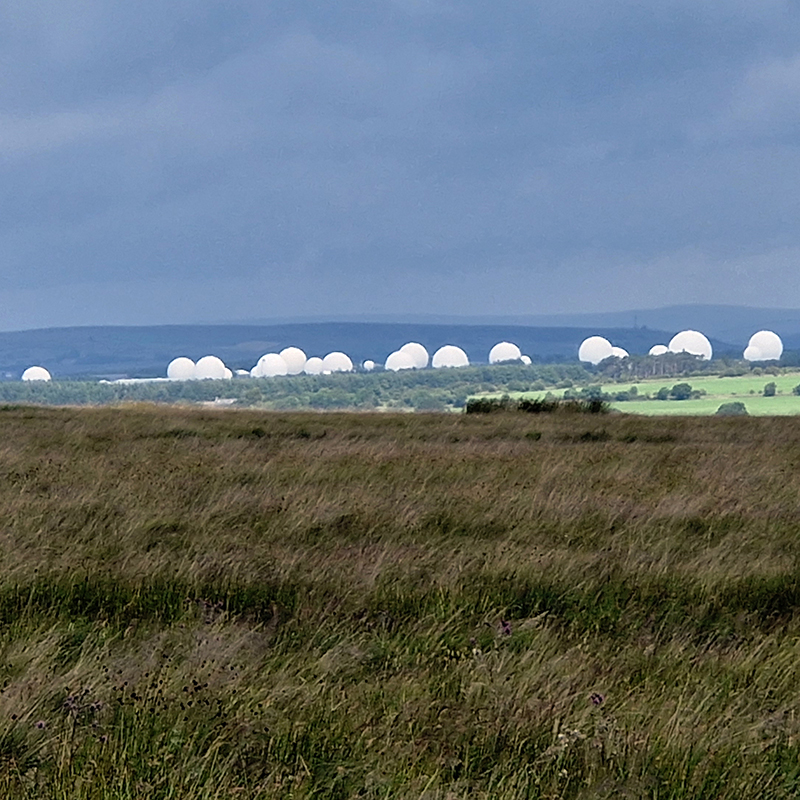
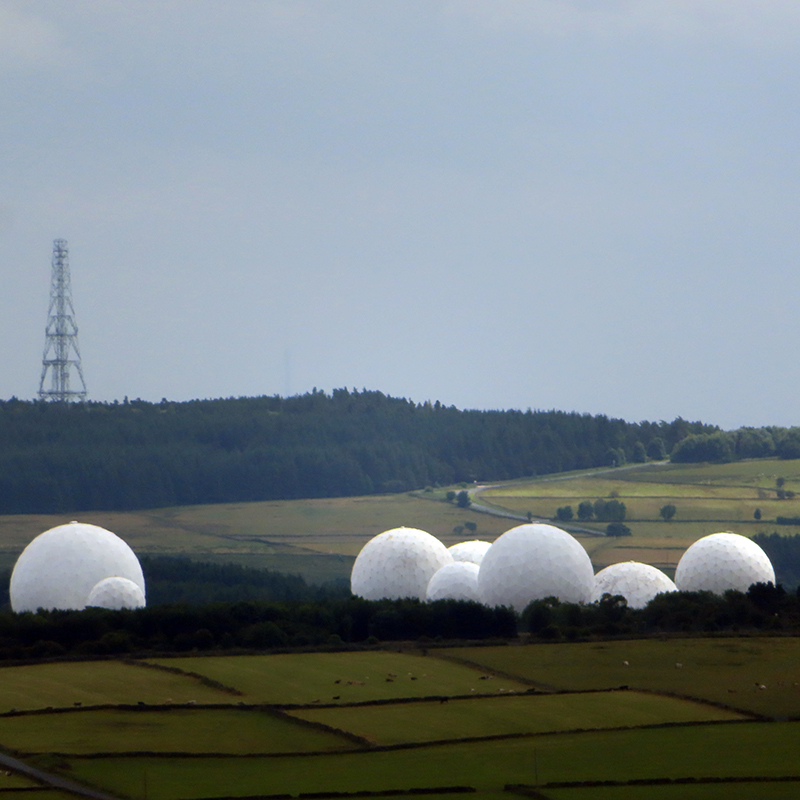
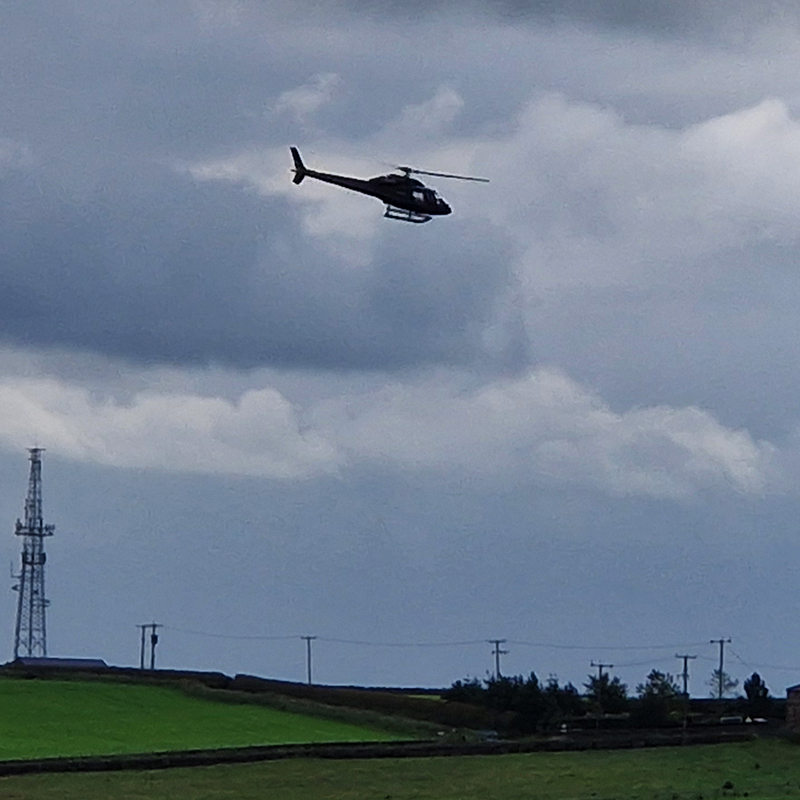
Sharing the landscape of Haverah Park cosmic ray air shower detector array huts are the striking white radomes that shield secret radar equipment at RAF Menwith Hill. The spy station has been there since the cold war space race began in the mid-fifties. Little is known about what goes on here but broadly it is said to gather electronic intelligence and is operated by US National Security Agency (NSA) and UK Government Communications Headquarters (GCHQ). As satellite technology has increased so has the number of radomes which now number 37 at the site. It is worth noting that satellites are vulnerable to unpredictable space weather and cosmic ray interference.

The total number of particles detected in a shower can be used to estimate the energy of the primary cosmic ray. Some particles contain the highest energy form of radiation known to exist anywhere in the universe and their origin is one of science’s greatest mysteries. Air showers of secondary particles generated from a primary cosmic ray hitting the Earth’s atmosphere are spread over many kilometres when they hit the ground so it is useful to have detectors spread over a large area. The difference in the time of arrival of recorded particles at multiple detectors can be used to estimate the arrival direction of the primary cosmic ray. However, this does not necessarily reveal the origin of the particle as magnetic fields within the galaxies bend their trajectories so that the memory of their original direction is obfuscated.

The cosmic ray detectors I made for the The Breath of Stars use a block of plastic scintillator which emits a short burst of UV light when a charged particle passes through it which is picked up by a single-photon-sensitive device. The detectors used at Haverah Park are water Cherenkov detectors. These are large steel tanks of purified water with photon sensitive detectors in the water.

While the speed of light in a vacuum is a universal constant its speed through a material may be significantly reduced as it is slowed by the medium. A particle passing through a material faster than that at which light can travel through the material loses electrons thereby emitting light. When cosmic rays pass through the water tanks, they emit Cherenkov radiation because they travel faster than the speed of light in water. Cherenkov light is similar to the production of a sonic boom when an airplane is traveling through the air faster than sound waves can move through the air. Pavel Cherenkov along with Ilya Frank and Igor Tamm discovered and demonstrated this phenomenon in 1934, astonishingly, it had been predicted in 1888 by Oliver Heaviside, and in 1910 Marie Curie had noticed a strange blue glow from her radium experiments.

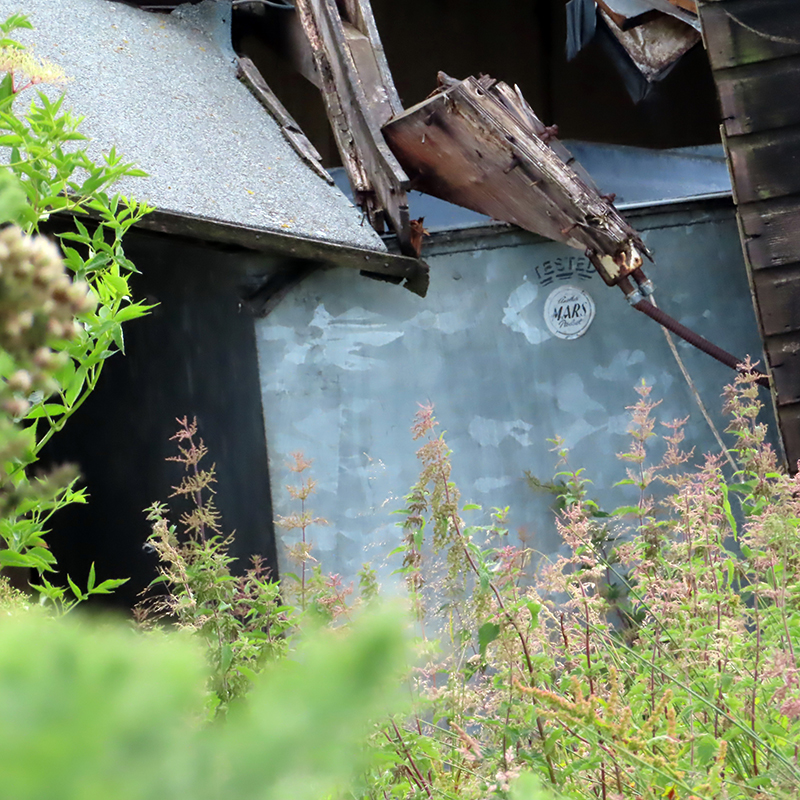
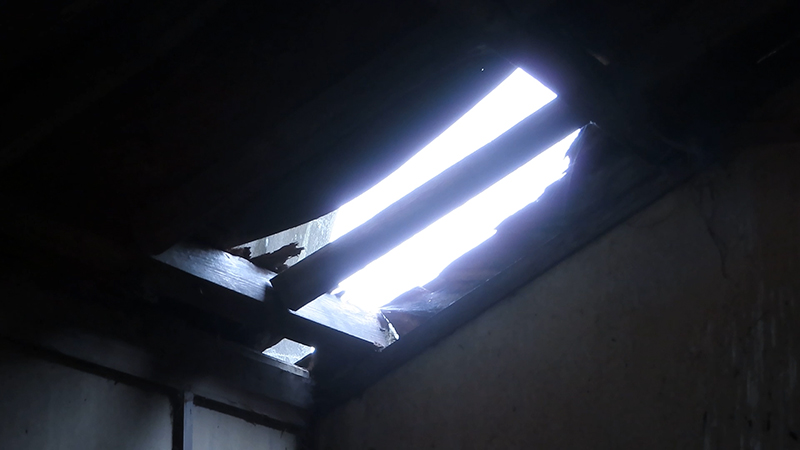
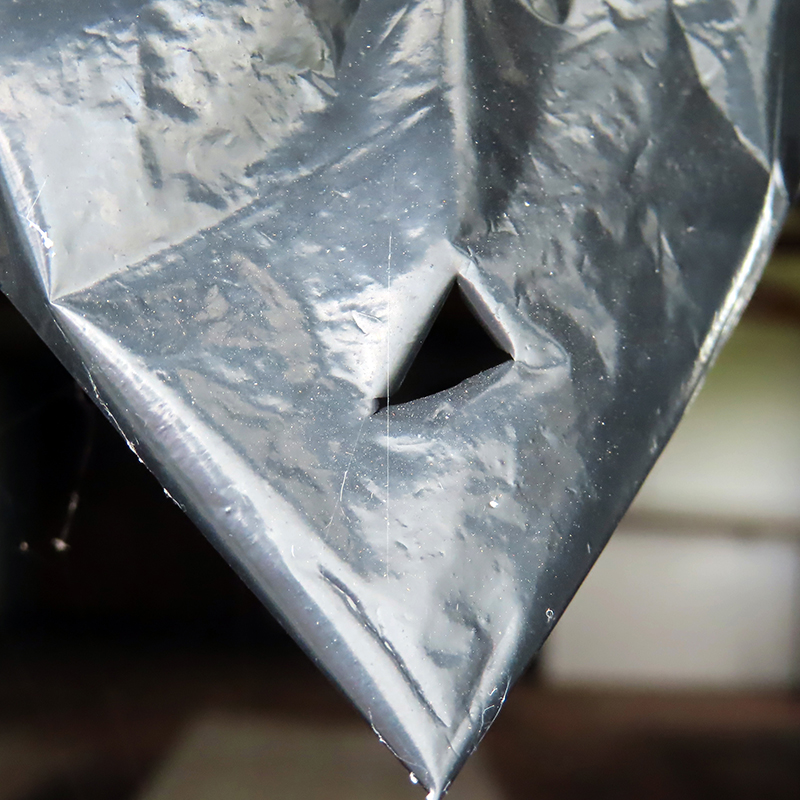
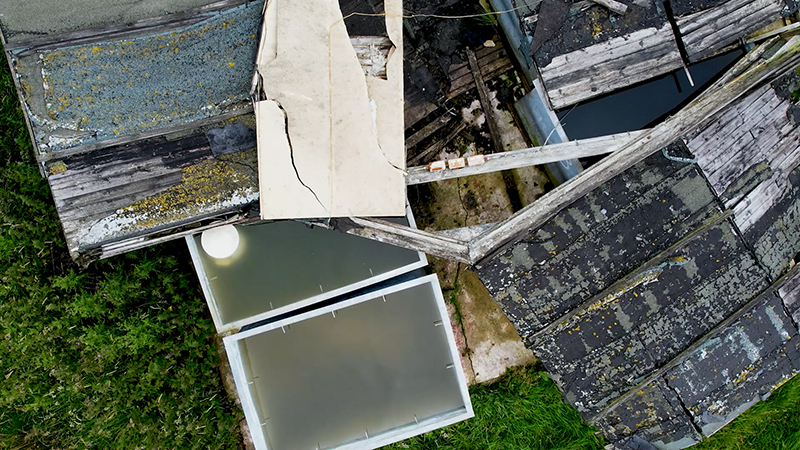
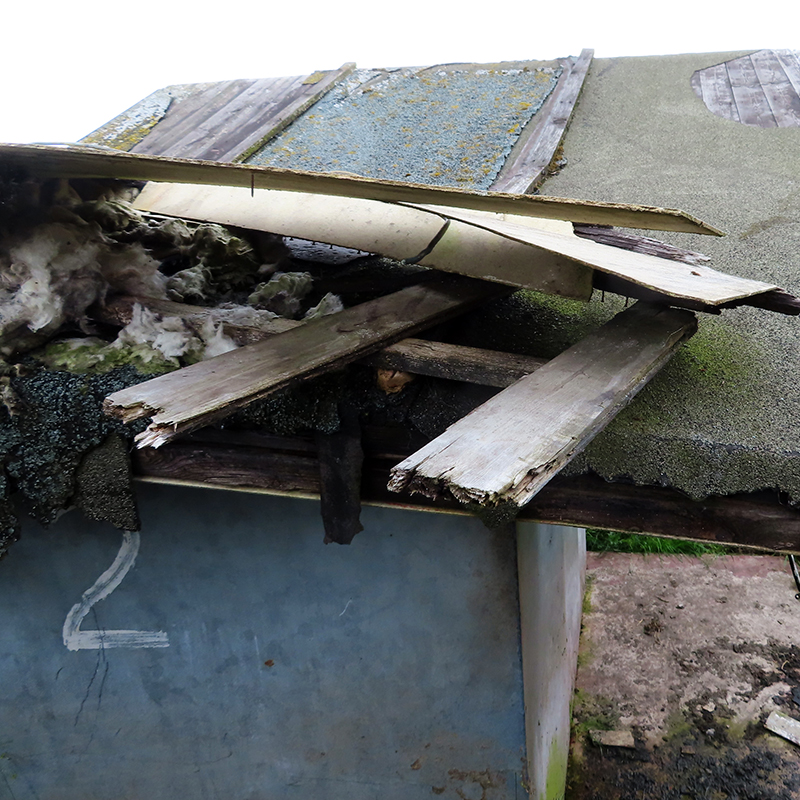
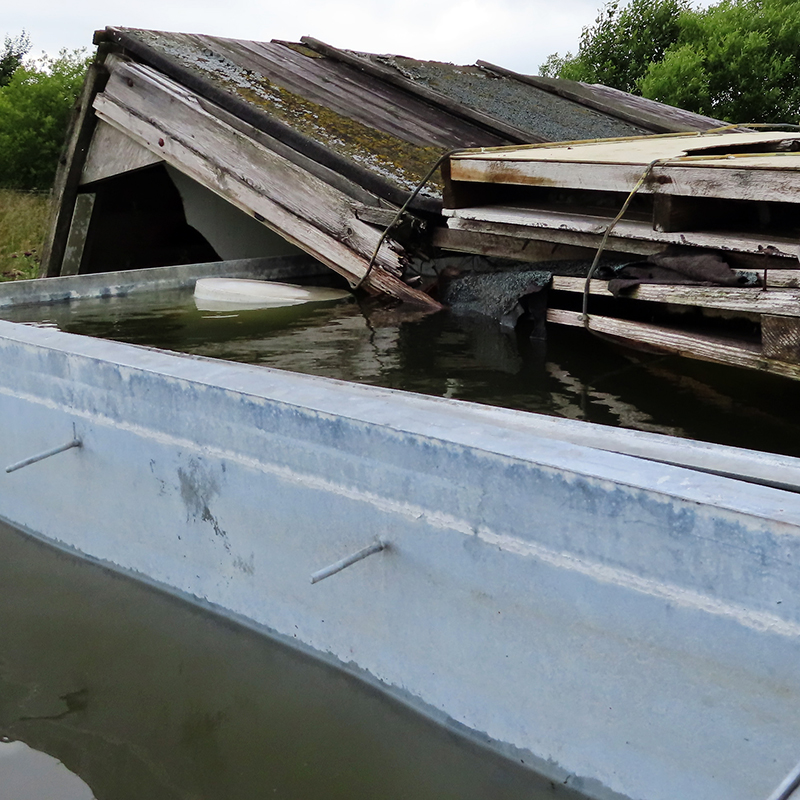
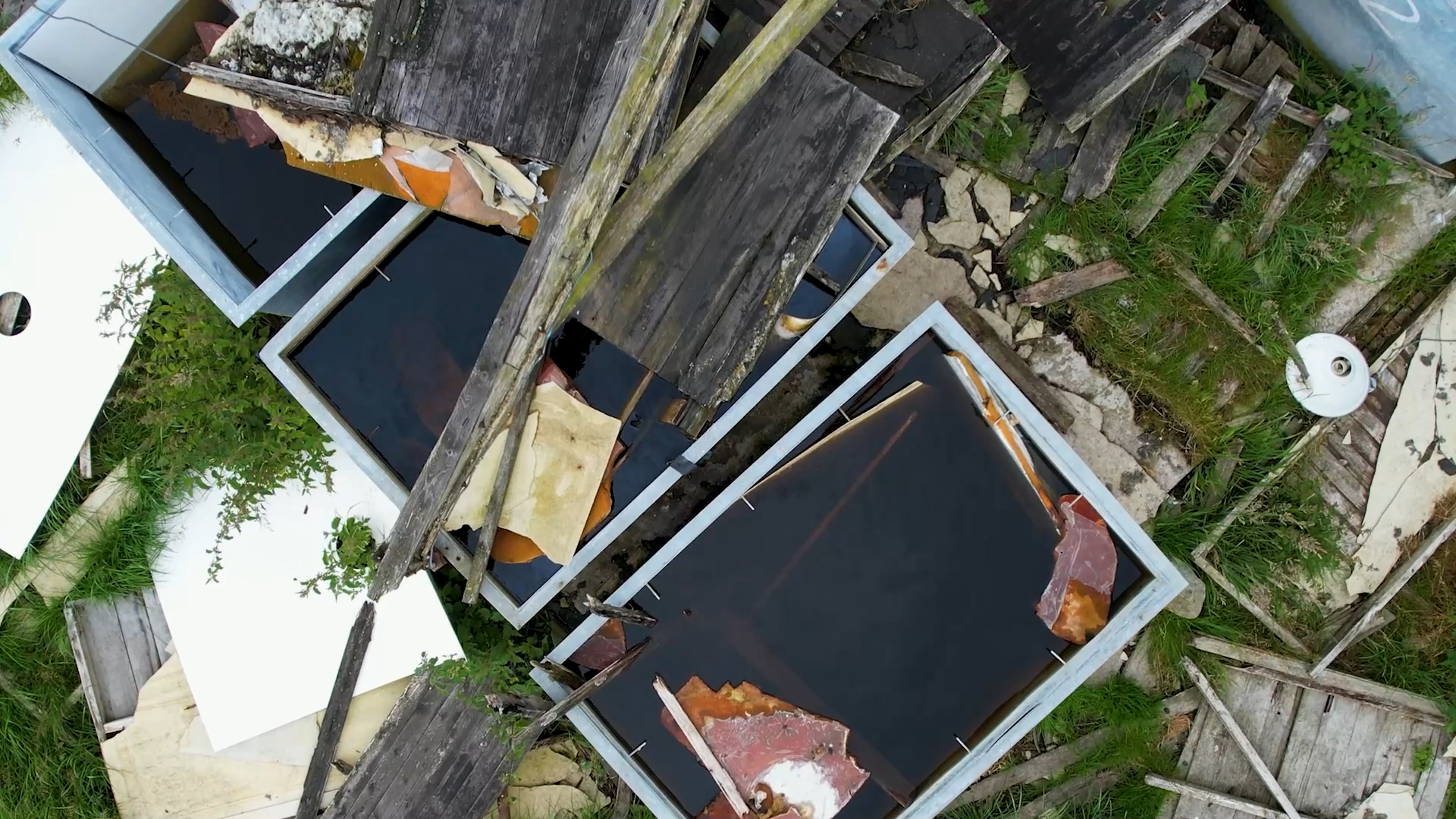
Other huts from the Haverah Park experiment are in a state of collapse.

There are so many high energy particles hurtling around the universe that they almost equal starlight in energy density. Cosmic rays travel at almost the speed of light and because they are charged particles most cosmic rays are confined, spiralling within our galaxy for a million years or more, by the magnetic fields which permeate it.

Five million cosmic rays pass through your body each day. Some will collide with atomic nuclei. A particle passing through a material at a velocity greater than that at which light can travel through the material emits light. Maybe we glow a little.

Following the disappearing trail. Haverah Park hut with an intriguing hexagon tank.

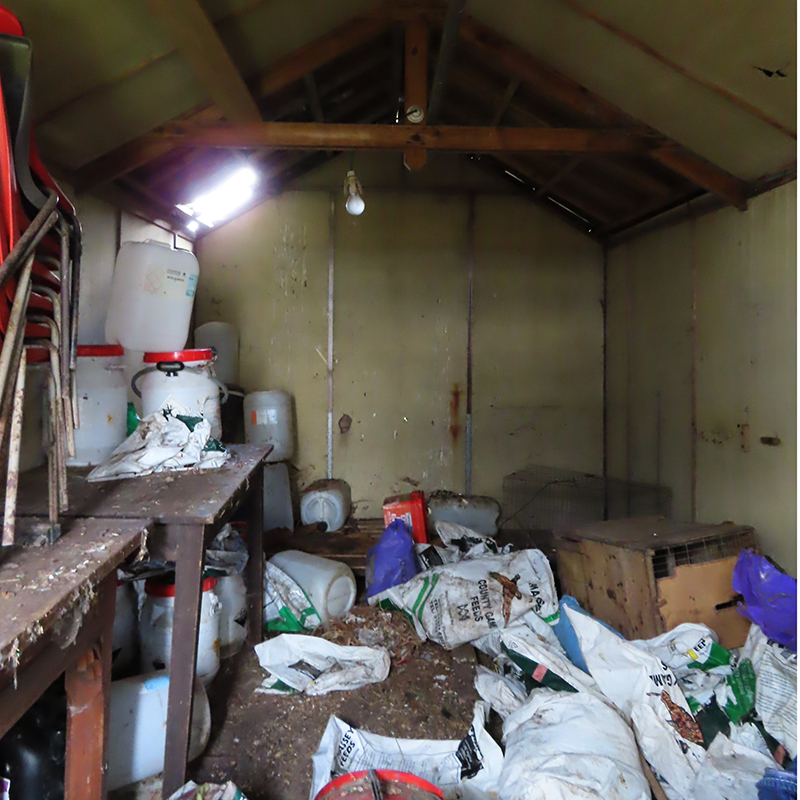
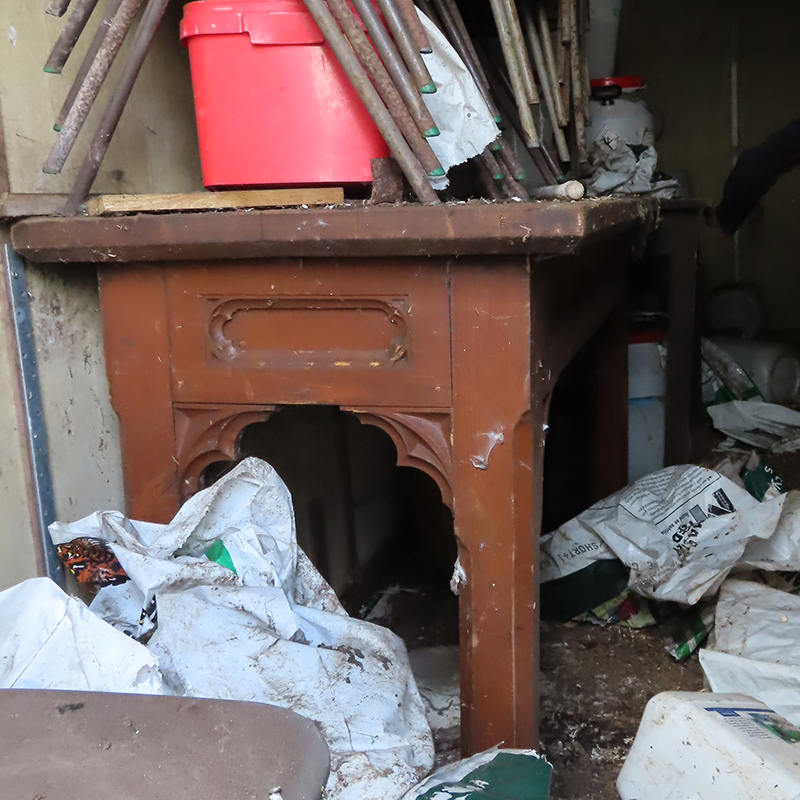
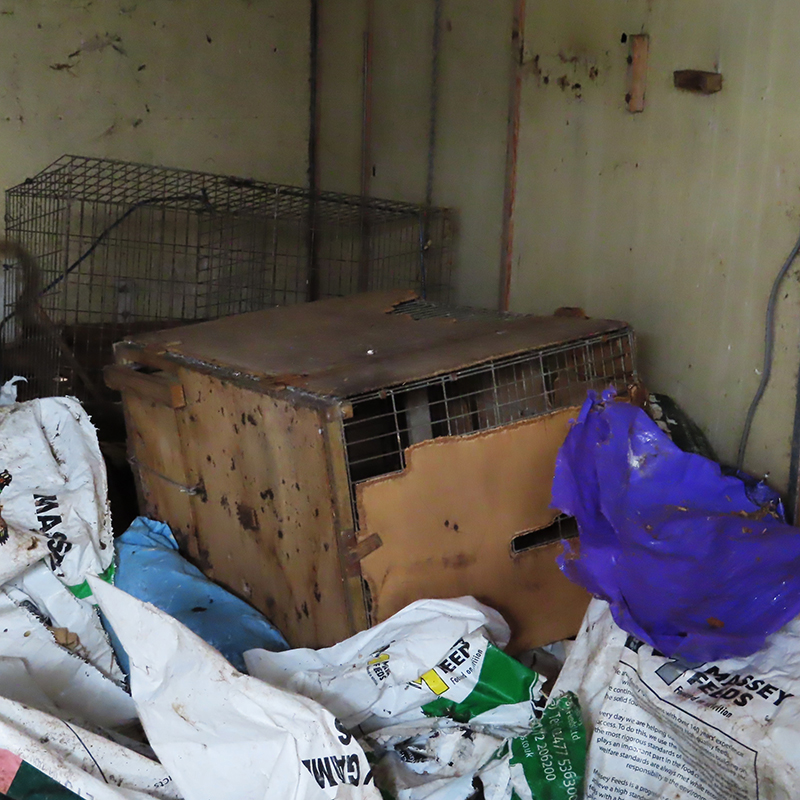
Inside Hut no. 7 is a dumping ground. Waste is a big problem in space as well as on Earth. The thickening shell of space junk in low Earth orbit, if left to accumulate, could cause a conductive shield to form, weakening the effectiveness of the magnetosphere, which protects life on earth from most cosmic radiation.

A decaying wall map of the entire Haverah Park experiment is just visible through a window of one of the huts in the central hub, but not much else remains inside.

It looks like these huts have been recently emptied into a skip which, by chance, was collected while I was there. Unfortunately, the driver had no enlightening information for me about the future of the huts.

Cherenkov radiation is a form of energy that gives off a blue glow when electrically charged particles are moving at speeds faster than light is able to travel through the same medium. The experimental physicist Blackett, who received the 1948 Nobel Prize in Physics for his investigations into cosmic rays, believed that extensive air showers should produce flashes of light that could be perceived by the human eye when lying down and looking upwards under dark skies. Whether he achieved seeing this phenomena himself is not known, but he inspired colleagues Galbraith and Jelley, in 1952, to devise an experiment to detect light from air showers using a rubbish bin painted black on the inside, a recycled searchlight mirror and a small phototube. With these simple items, they made the first observation of Cherenkov light produced by cosmic rays passing through the atmosphere. Not all the twinkling in the night sky is starlight.

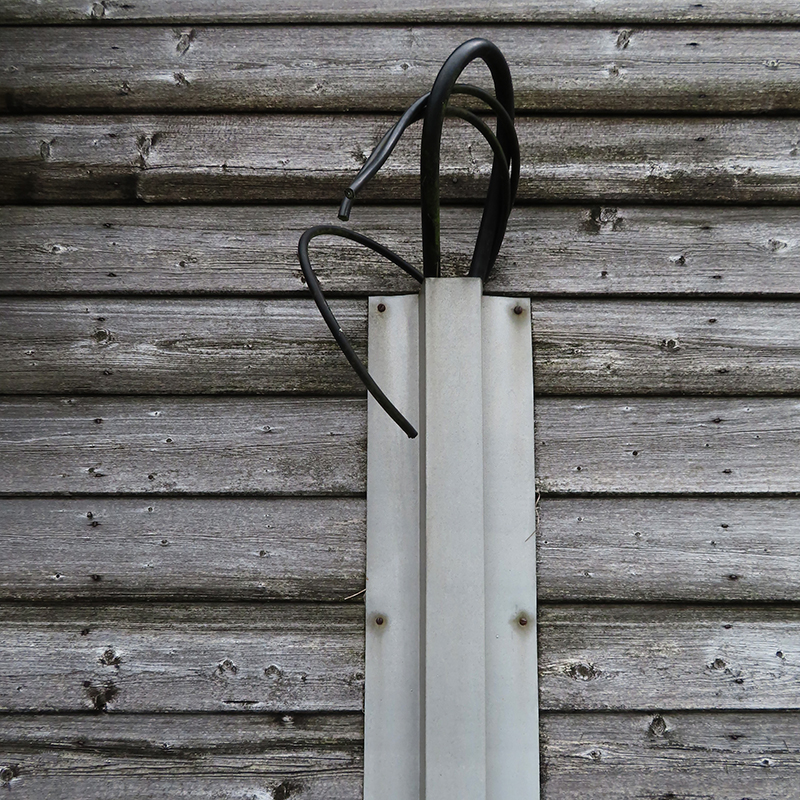
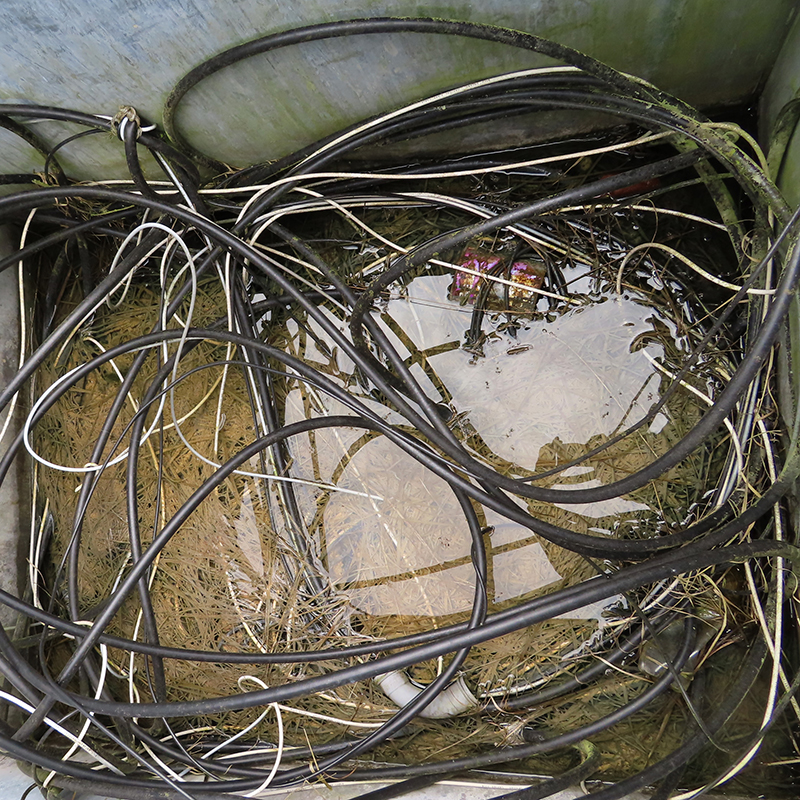
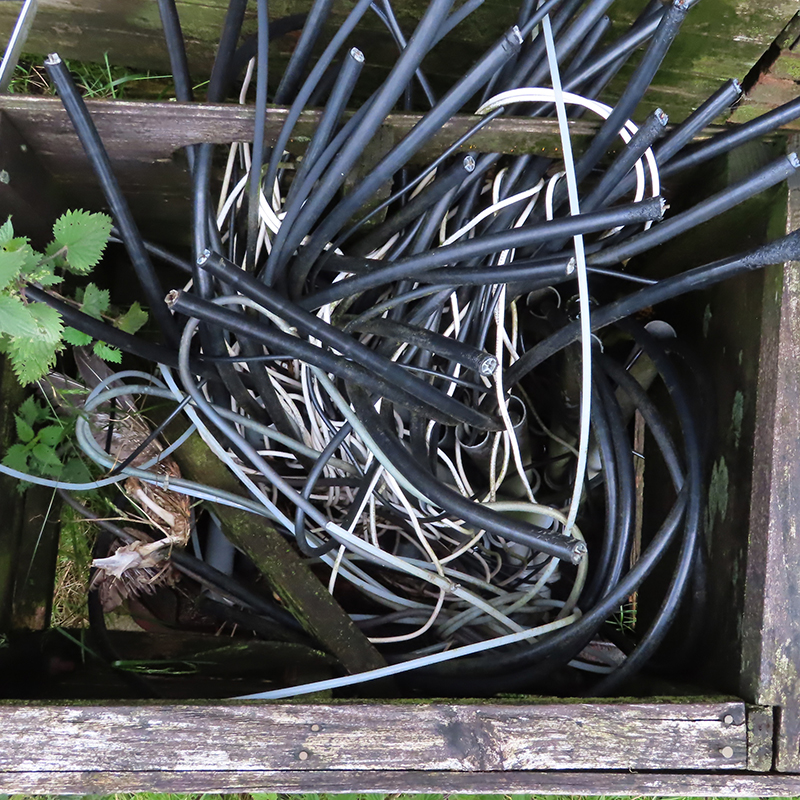
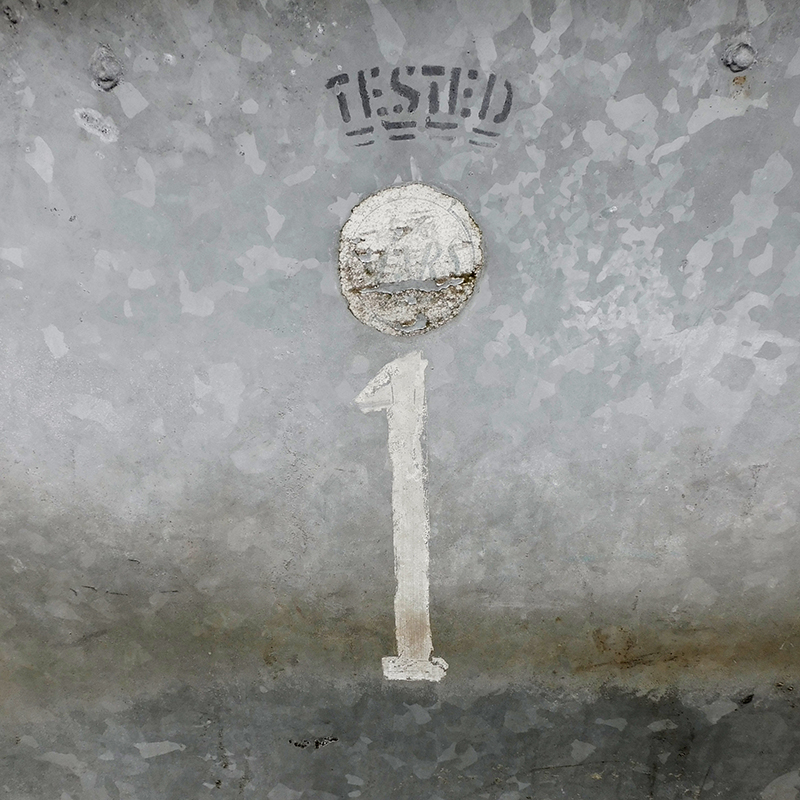
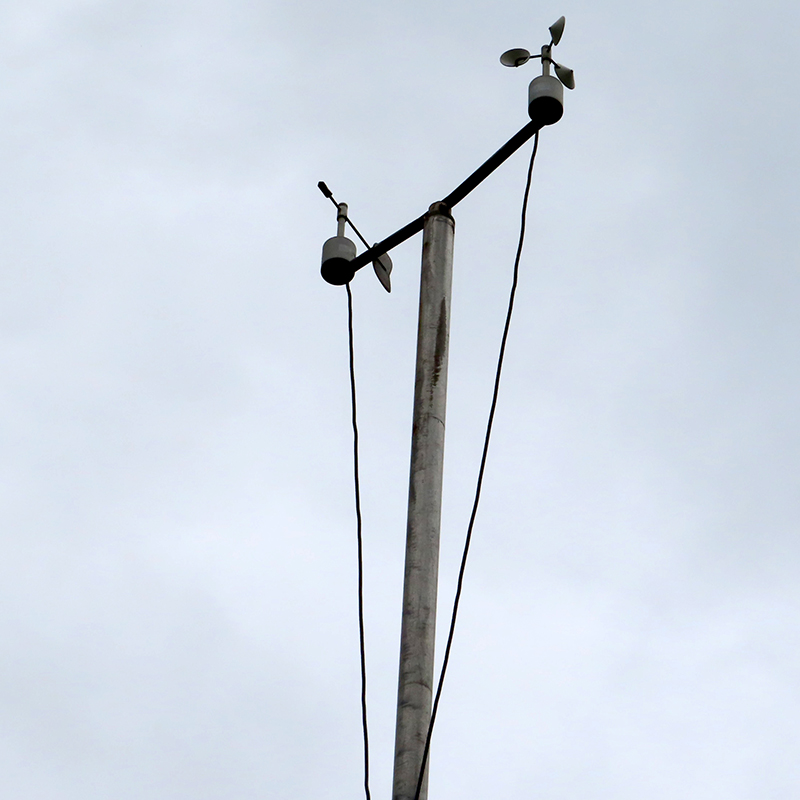
During the Haverah Park experiment, the water Cherenkov detectors deployed across the moors were connected by underground cables and transmitted information to the control huts via radio signals in the microwave frequency range. All communication is now severed. Cut cables coil in rain filled tanks. The cosmic rays are still pounding down upon these new unwatched ecosystems but the detectors have moved elsewhere.

I am looking forward to meeting Professor Alan Watson FRS here in the autumn. He is eminent in the field of cosmic rays and helped initiate the extensive air shower project, working at Haverah Park for 25 years. He has kindly agreed to meet and share his insider knowledge of the history and operations at the site.

The idea to build a truly giant shower array was launched by Alan Watson and Jim Cronin shortly after Haverah Park was decommissioned and thanks to the ground breaking work undertaken in these huts, it evolved to become the vast Pierre Auger Observatory in Argentina, named in honour of the man who first discovered extensive air showers.

Peering into the darkness, trying to fathom the structures of the universe or what’s inside the hut, and the nature of that relationship.

The ultra high energy particles detected at Havarah Park and new arrays across the globe are very rare, possibly less than one per square kilometre per century, so it is big news when one arrives. Because they have such high energy, it is thought they shouldn’t be affected by galactic magnetic fields, and therefore, the direction of the particle could be determined and the source located. The Amaterasu particle, named after the sun goddess in Japanese mythology, the second most powerful particle to be recorded, appears to have emerged from the Local Void, ana area with no astronomical objects that might produce such a particle. There is no explanation of where these particles come from, just hints of bigger mysteries to unfold.

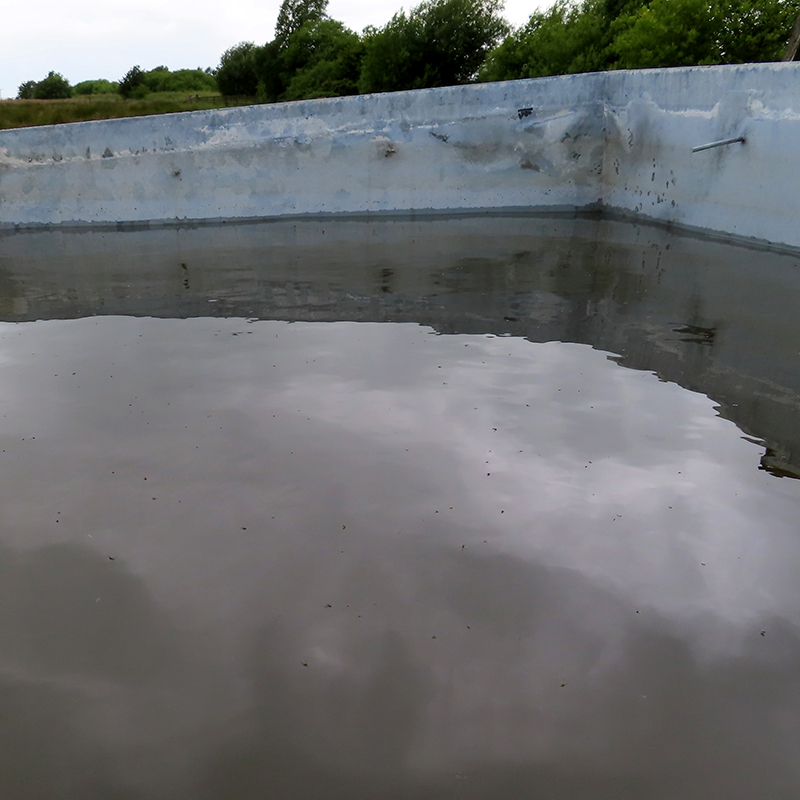
Many water tanks remain around Haverah Park, stripped of their purpose as water Cherenkov detectors they now reflect the sky in the rainfall they collect rather than record showers of particles from space.

During operation, huts were built in groups of three, each with six large galvanised steel tanks lined with white plastic to diffuse the light and filled with local purified water. Each tank was monitored by extremely sensitive photon detectors which recorded the Cherenkov light emitted as particles passed through the water. At the end of the large array experiment, one of the detectors was opened, and the water was found to be crystal clear and good enough to drink. The proof that water could be kept bacteria-free in a sealed container for over 25 years gave confidence in using the same technology for a future larger cosmic ray detector array to be developed.

Haverah Park was once one of the largest extensive air shower arrays in the world, with an area of 12 km2, but in the end, it just wasn’t big enough.

When Alan Watson and Jim Cronin proposed building a new 3000 km2 shower array, the question from funders was, ‘why do you want to make the array so large?’. The answer is, of course, to discover those known and unknown unknowns, but funders don’t usually like unpredictable outcomes. Luckily their plea was bolstered by the Fly’s Eye Cosmic Ray Detector Array out in the Utah Desert recording the Oh-My-God particle in 1991, it’s energy was 40 million times greater than that of any particles ever produced in any terrestrial particle accelerator. This and other evidence of extremely high energy particles sparked interest in the field of astrophysics and validated the discovery of similar particles at Haverah Park, which had not been taken seriously at the time. This ambitious proposal gained momentum during the 1990s to become the Pierre Auger Observatory in Argentina, with the detector design developed from the water Cherenkov tanks so successfully operated at Haverah Park. The huts here may be in ruins, but their legacy lives on at the world’s largest extensive air shower detector array, which is edging closer to answer the question ‘Where do ultra-high-energy cosmic rays come from?’

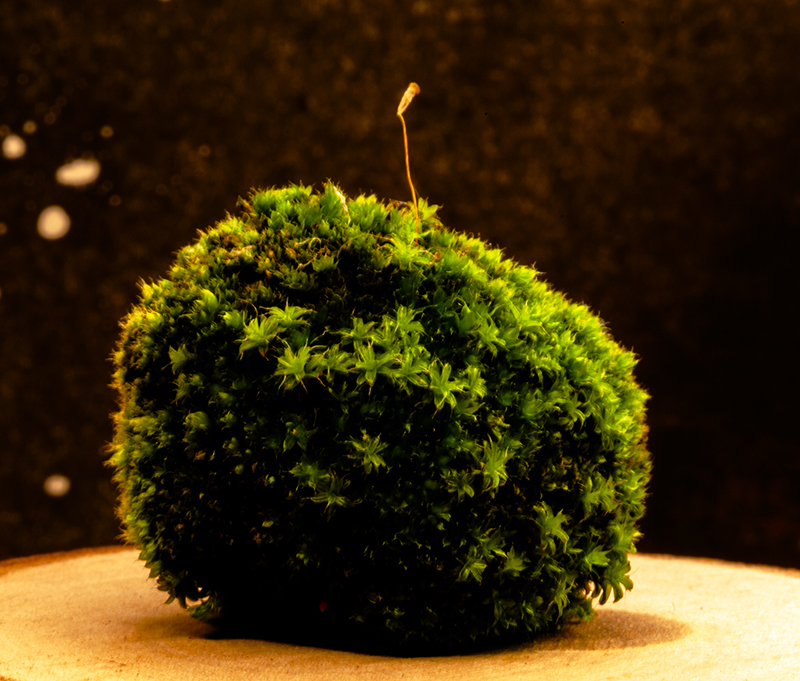
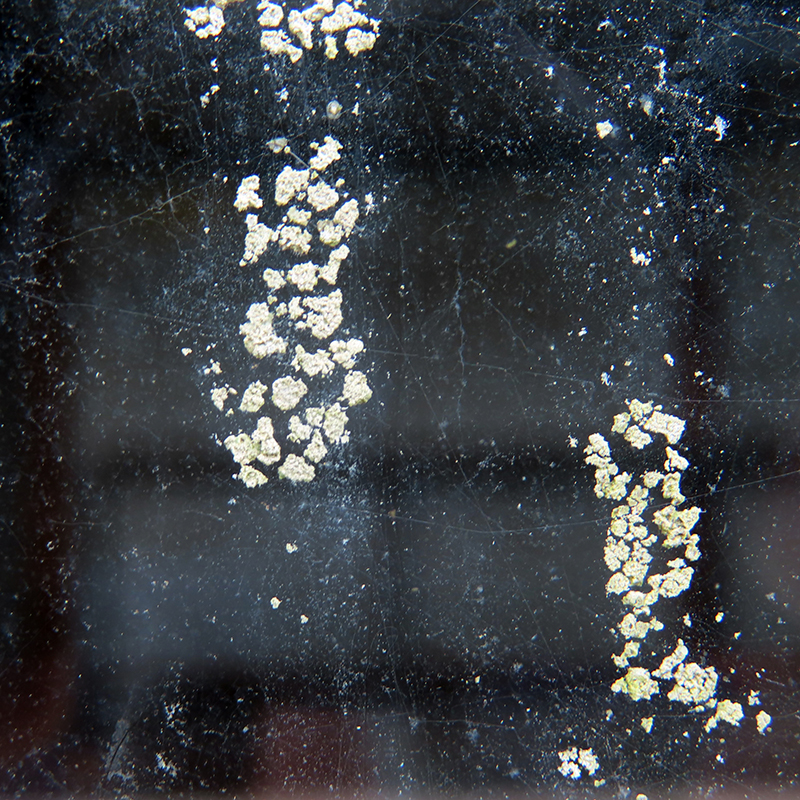
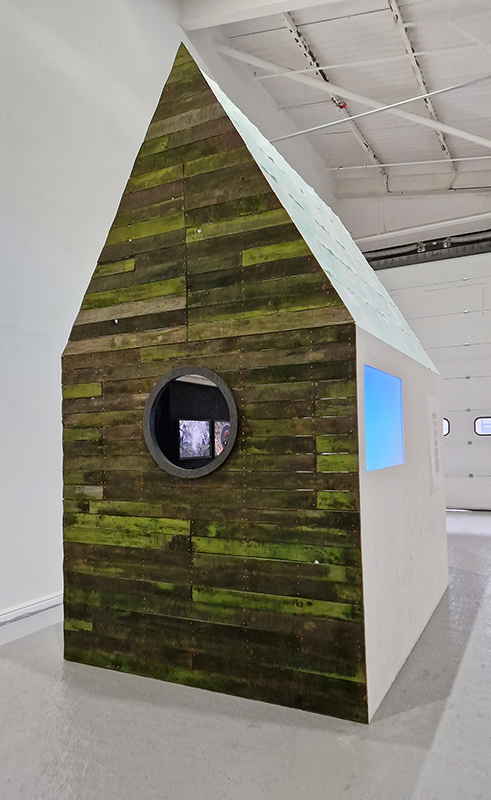
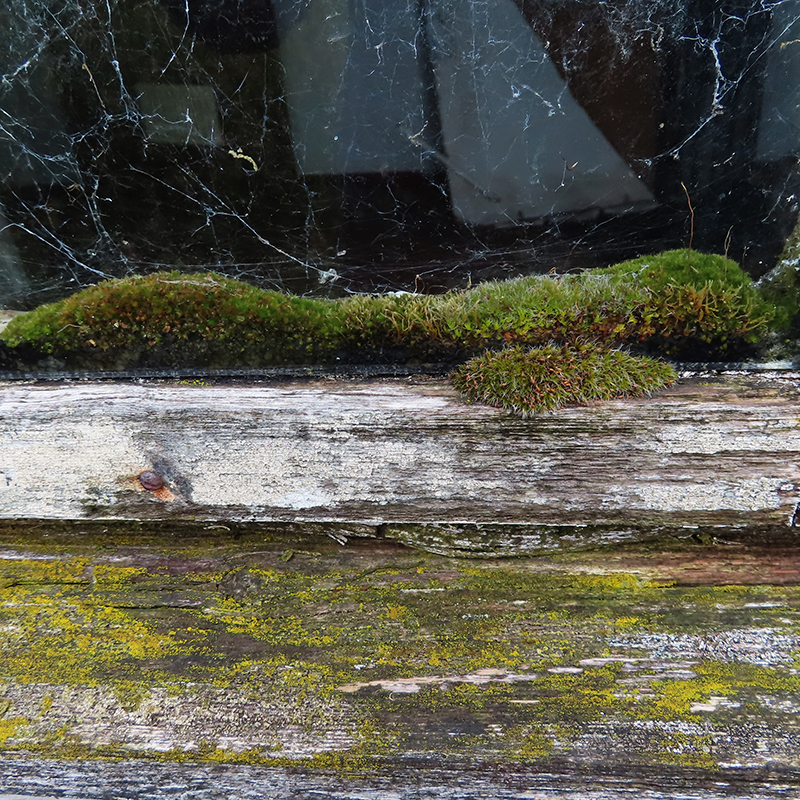
I am looking forward to developing work responding to the legacy of the Haverah Park experiment and building on my experience of creating The Absolute Hut (of absolute potential) New surfaces to explore, more moss, and also lichens here.

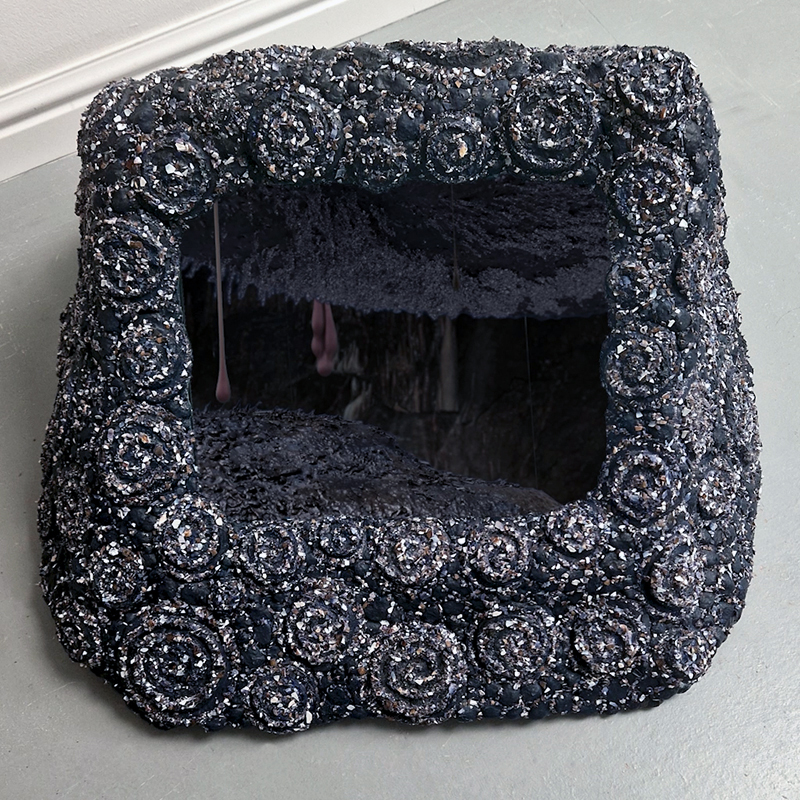
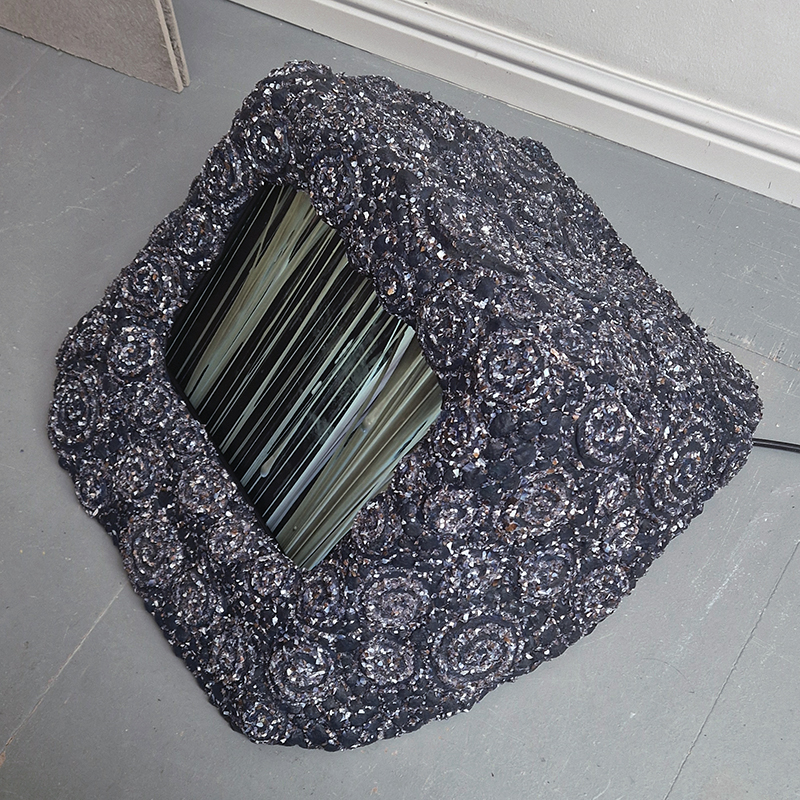
‘The Belly of a Rock’ video has waited a long time for its crusted shell. A hybrid between rock, mollusc, and technology inspired by the chemical conversations and urge to create described by Italo Calvino in his story ‘The Spiral’. We don’t always know what we are creating. Within ‘the belly’ surfaces slide and scrape along lines of fissure, distended innards ooze and rocks moan as they are distorted by untold pressure. The turbulent spiralling of the core births rock and lifeforms acted upon by the drag of the oscillating magnetic field.  

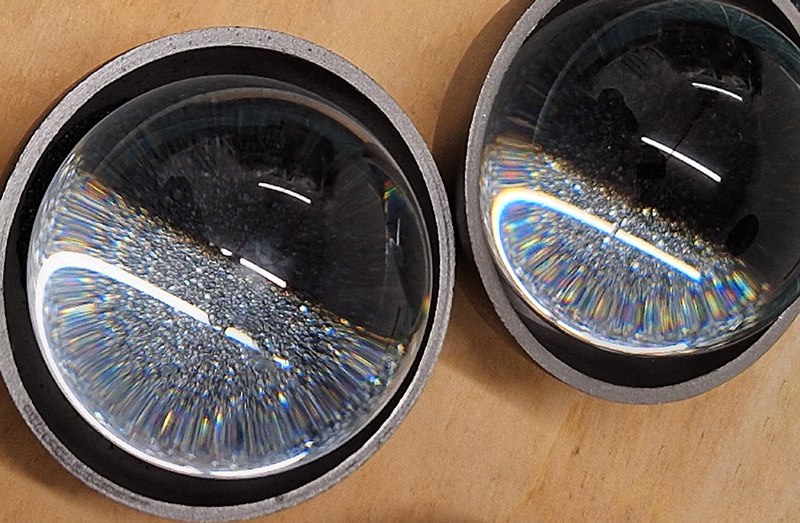
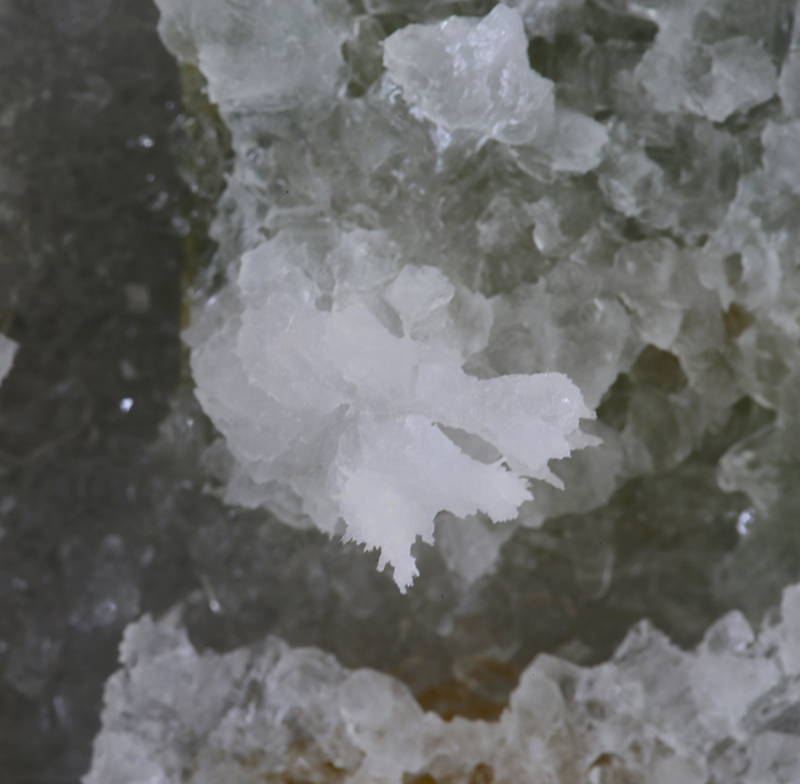
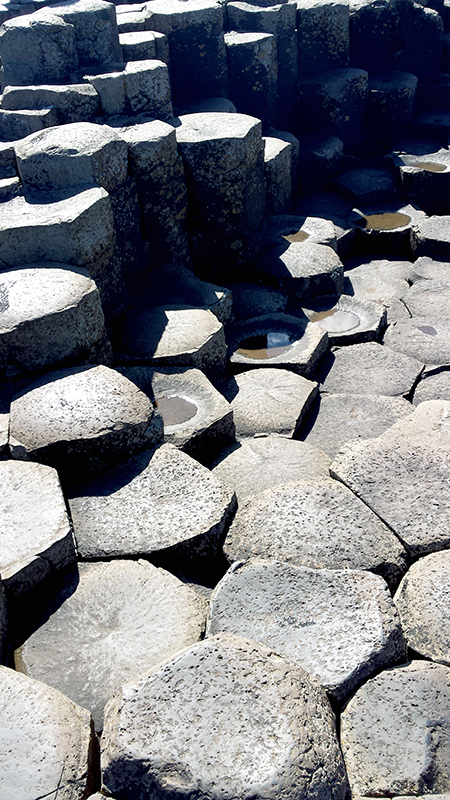
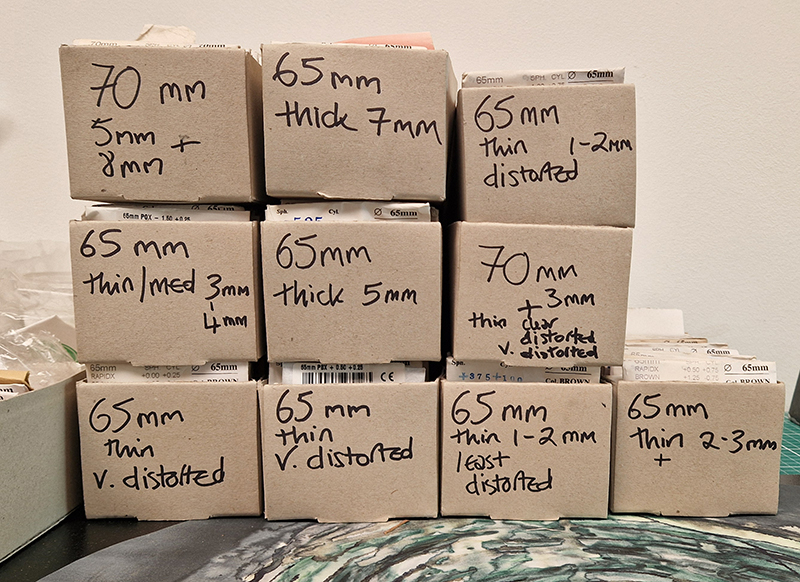
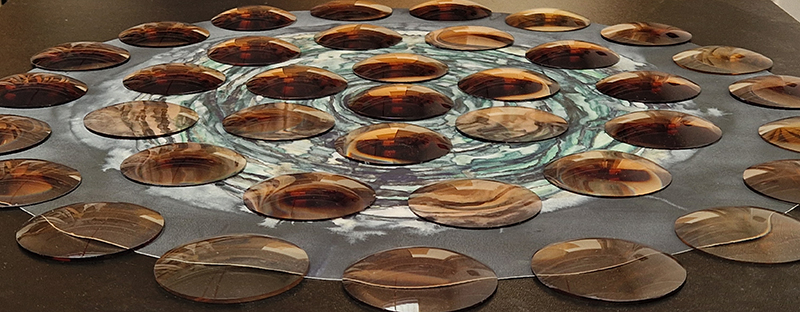
I have acquired a large number of photochromic optical lenses. These I have sorted by diameter, thickness and distortion. Initial thoughts about their use include using them as petri dishes to grow crystals which are embedded into small concrete hexagonal pillars of differing heights with reference to the geology of giants causeway. Using them to create composite windows into a new hut structure filled with video projections referencing the fly’s eye cosmic detector array.

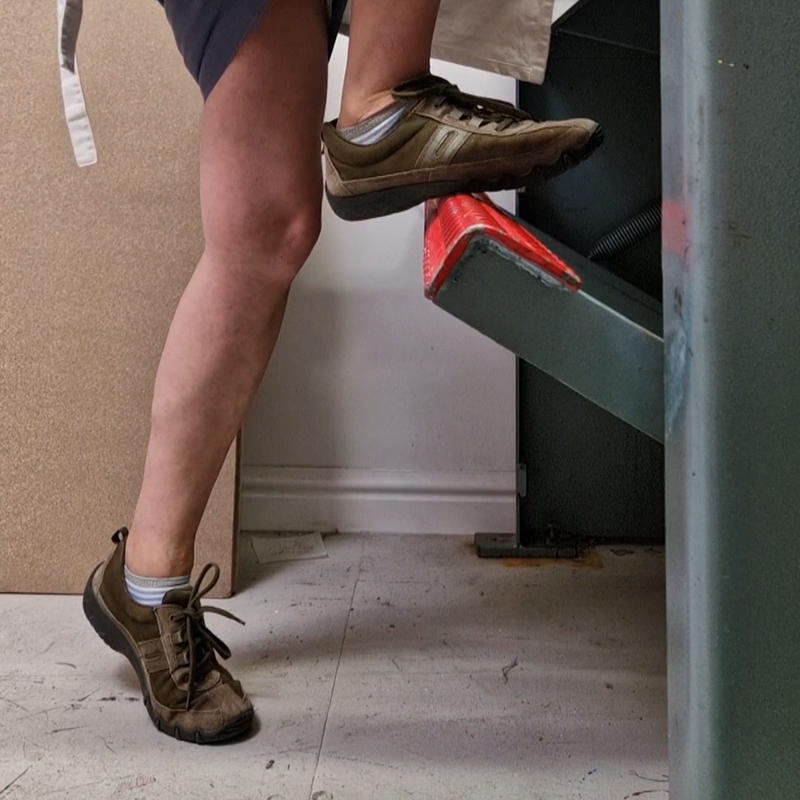
A good workout on the guillotine making 201 cuts in copper sheet in preparation for a new concrete tablet in the Instruments of the Anemoi sculpture series.

Gallery and other outings:

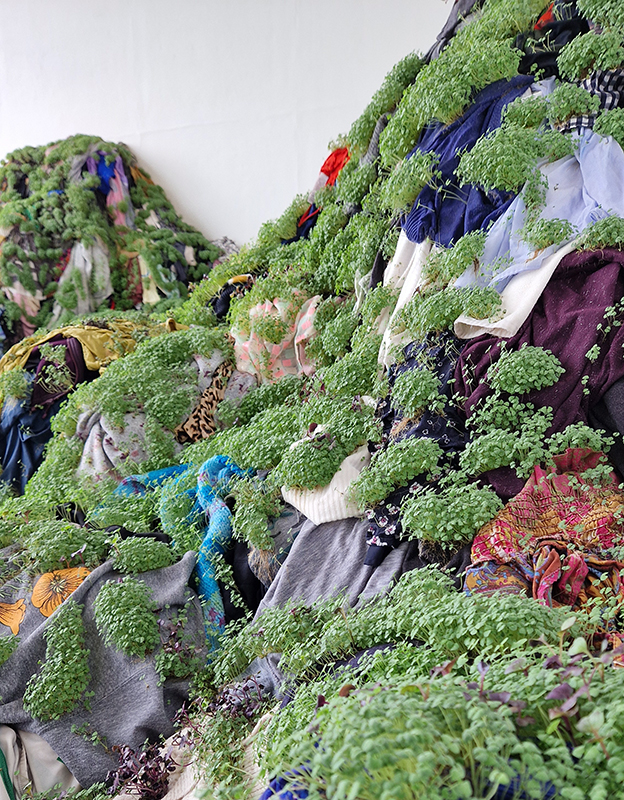
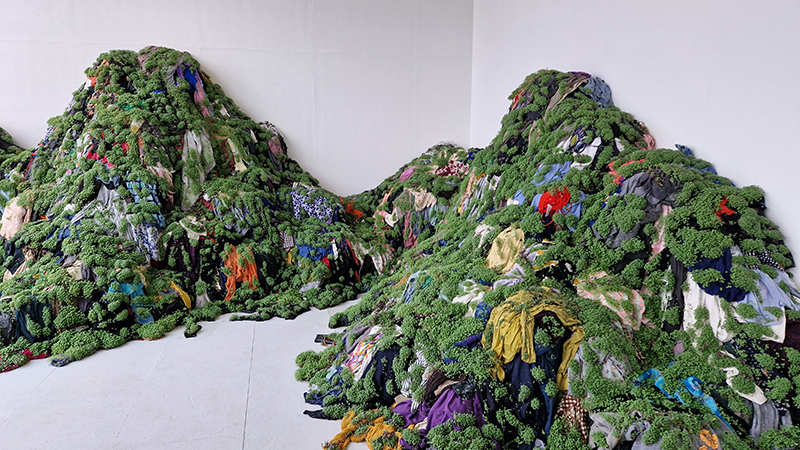
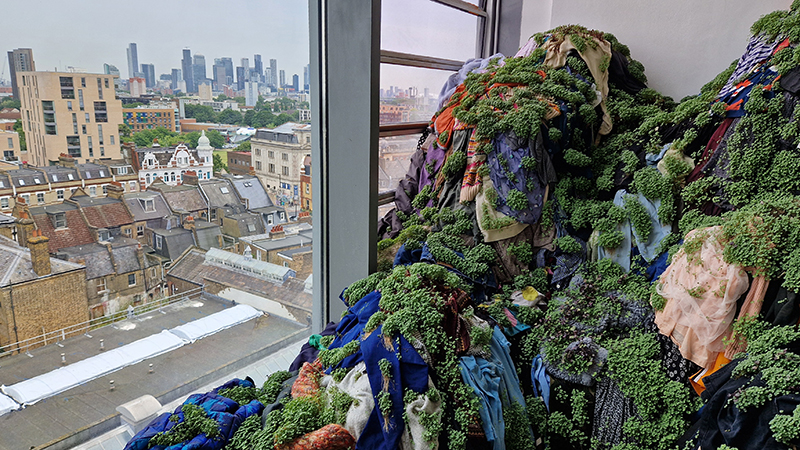
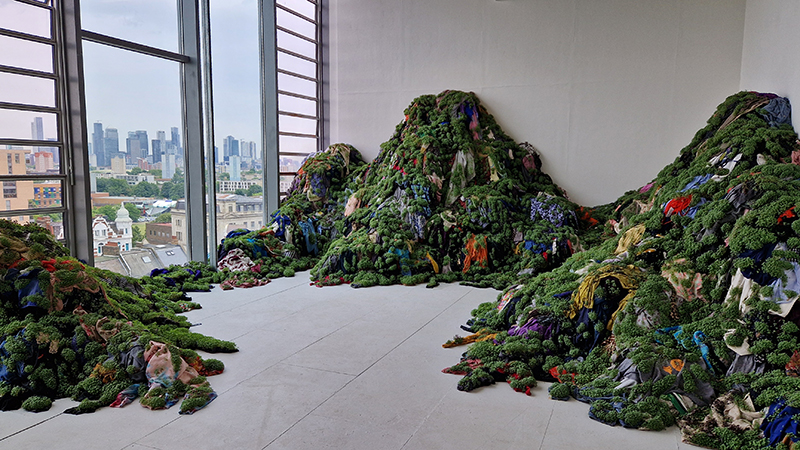
Beverley Duckworth’s installation Surplus at Goldsmiths MFA final show. Beverley’s work is grown through a diligent process of care. Found materials are literally given new life in the seeds which are embedded into them, which then transform and colour them. The installation includes an intermittent sound element of recordings of the melody played by waste trucks in Taiwan to call people to bring out their rubbish.

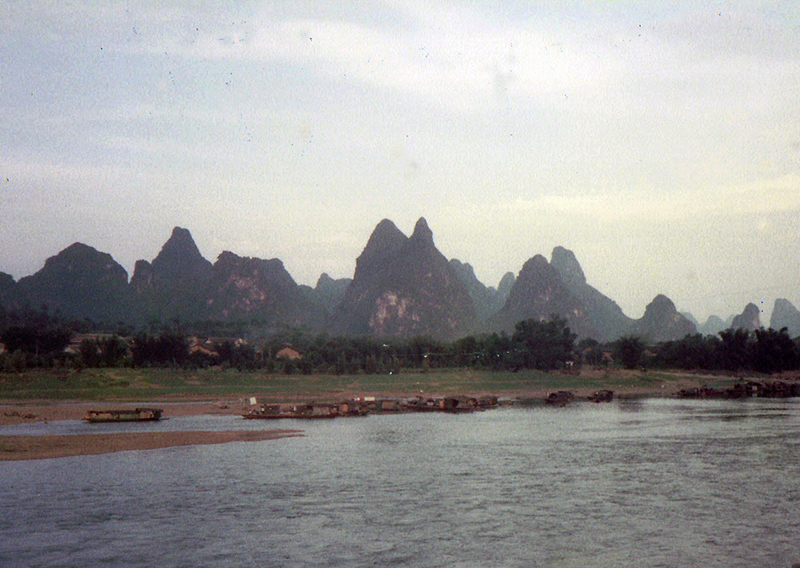
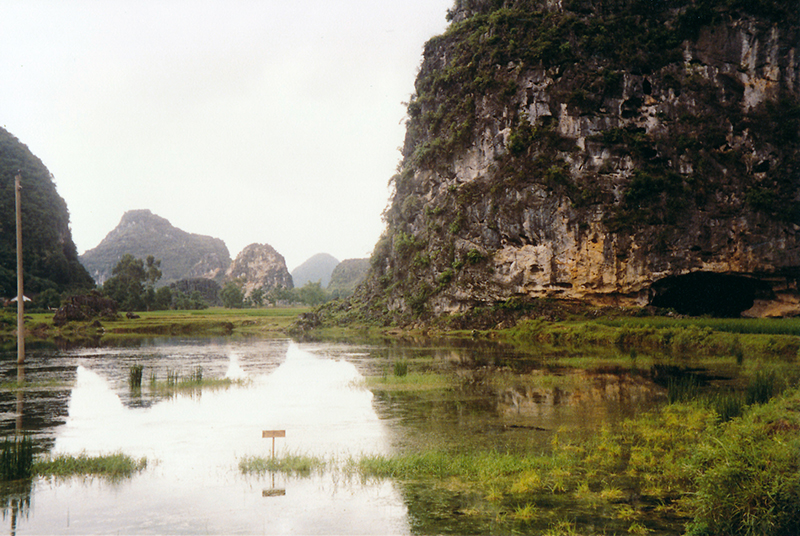
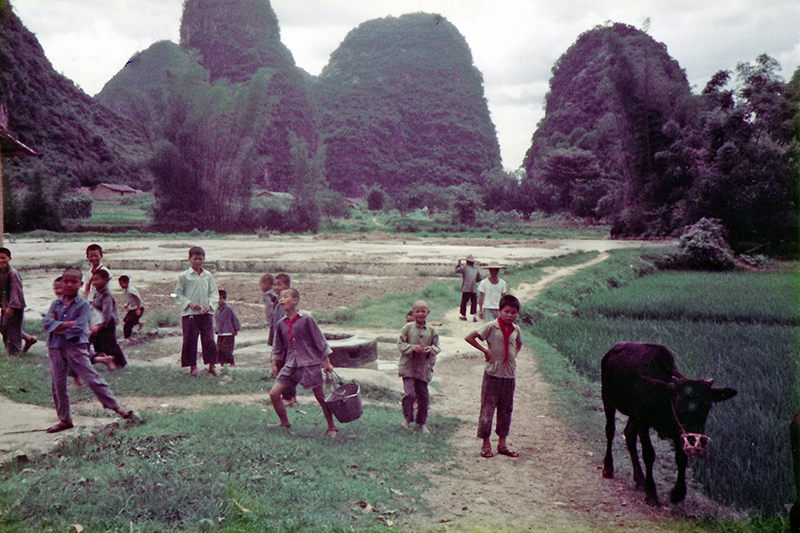
Apparently I wasn’t the first person to be struck by similarities to the landscape of Yangshuo near Guilin China. I visited in 1984 and think it is no longer a quiet little village.

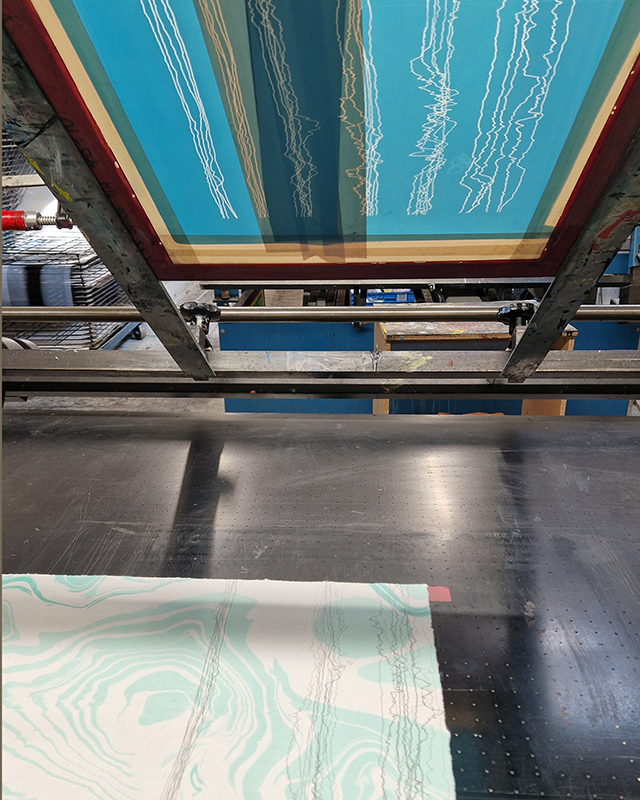
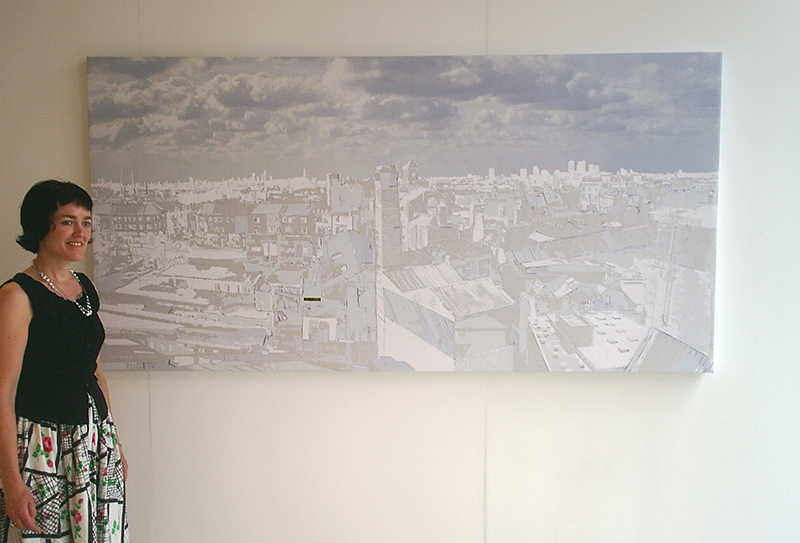
It was the first time I had been back inside the Ben Pimlott building at Goldsmiths since by own graduation, a scary twenty years ago. The building was brand new then and the views with little visible green fed into my installation Re:construction – a large screen print with tiny viewing hole to a tiny oasis amidst the grey, albeit a synthetic one.

Yinka Shonibare Suspended States at Serpentine South. Horrors of war and colonialism are filed under dazzling colour, birds on the brink of extinction stare in plea or accusation, beacons of light in the darkness come from miniature replicas of sanctuaries.

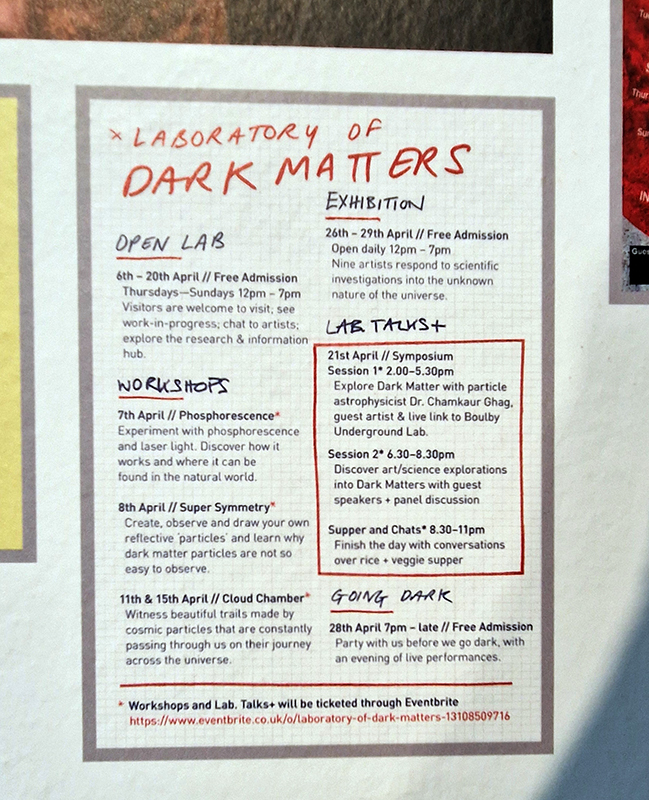
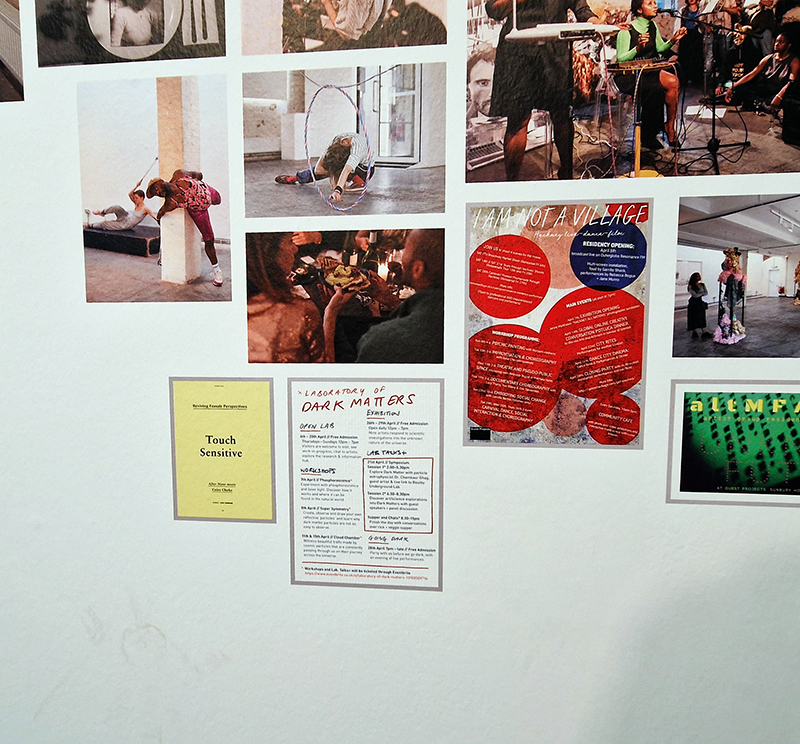
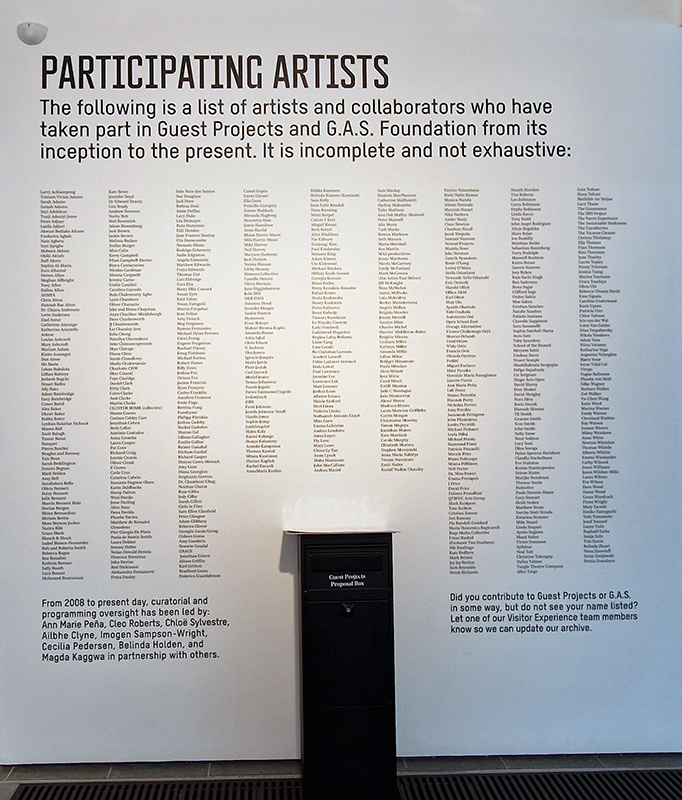
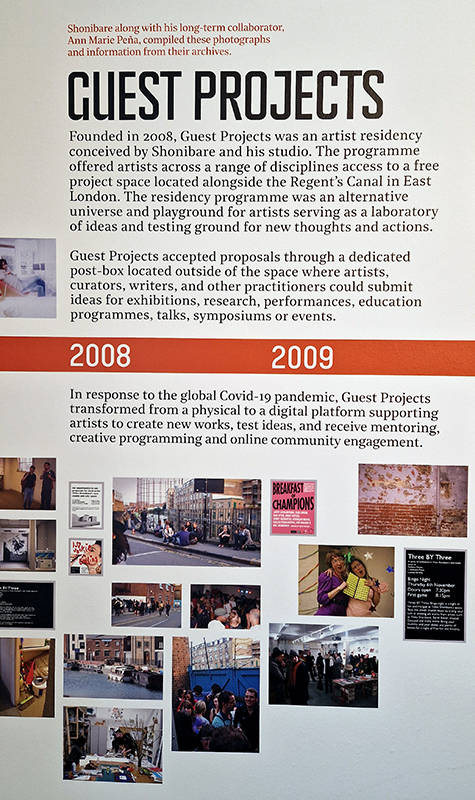
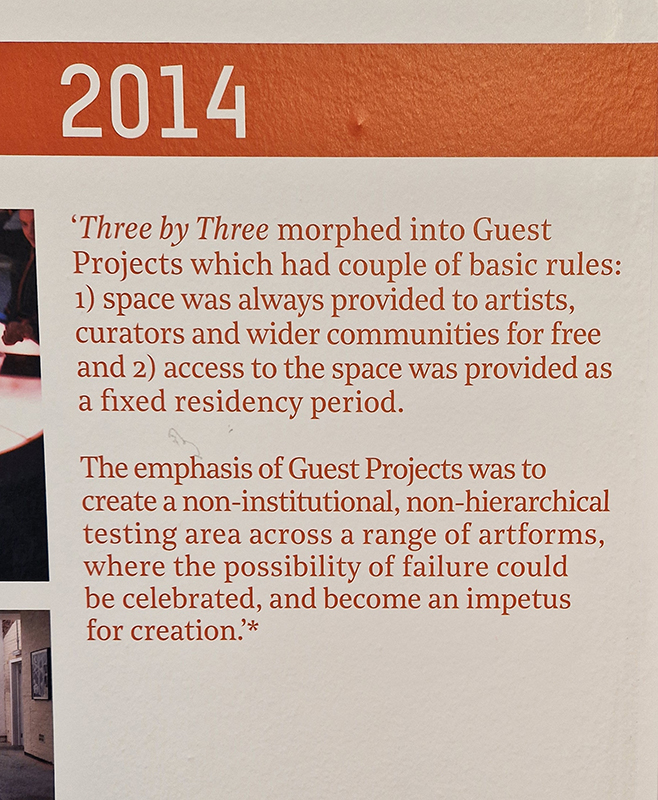
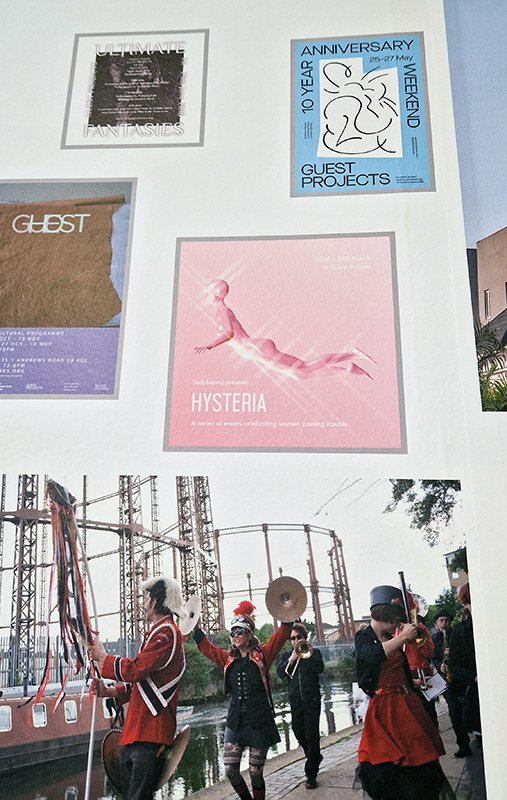
Yinka’s socially engaged inclusive practice spills over into real help for artists and communities. The exhibition celebrates Guest Projects and G.A.S. Foundation in Lagos. Guest Projects is such a generous idea and I have been so lucky to benefit from it with the project Laboratory of Dark Matters

Being awarded a month’s residency at Guest Projects was crucial to the success of Laboratory of Dark Matters as a site for developing ideas and subsequently touring the project. Wonderful to meet Yinka and also to be part of the selection committee for the next round of projects.

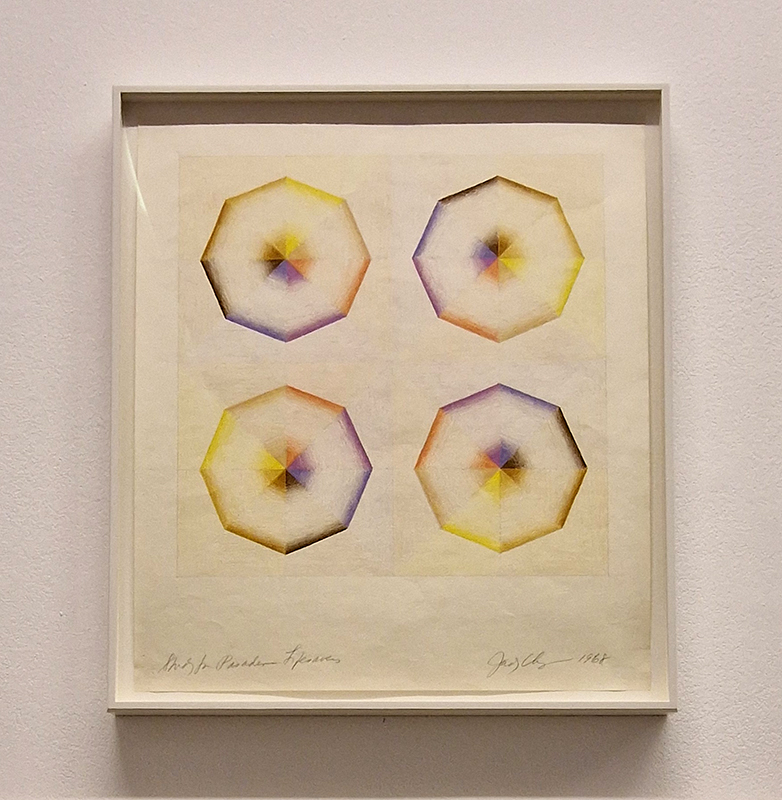
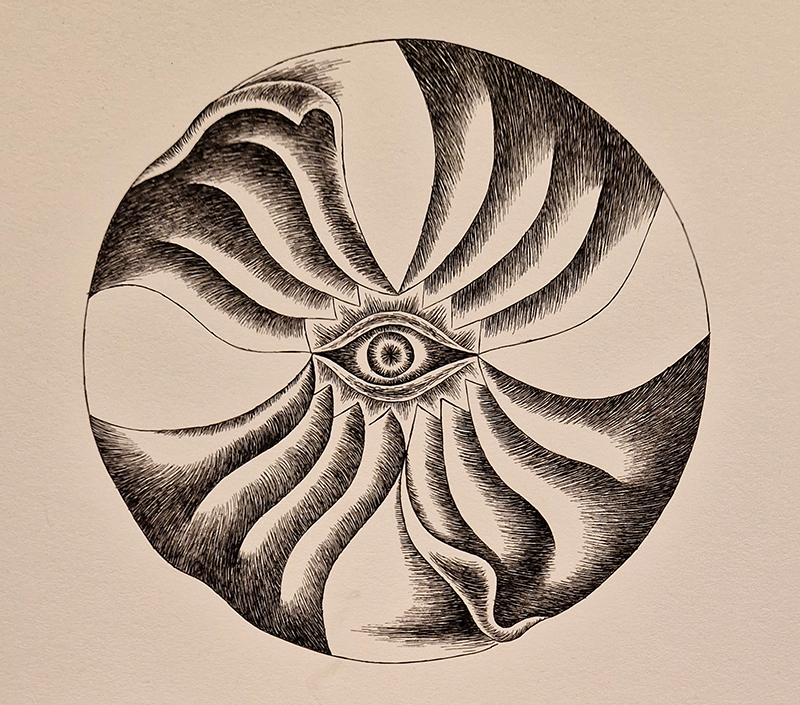
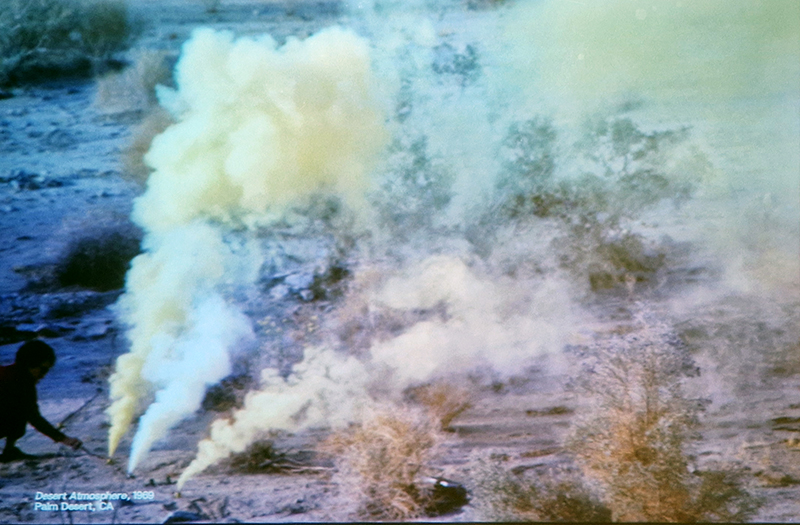
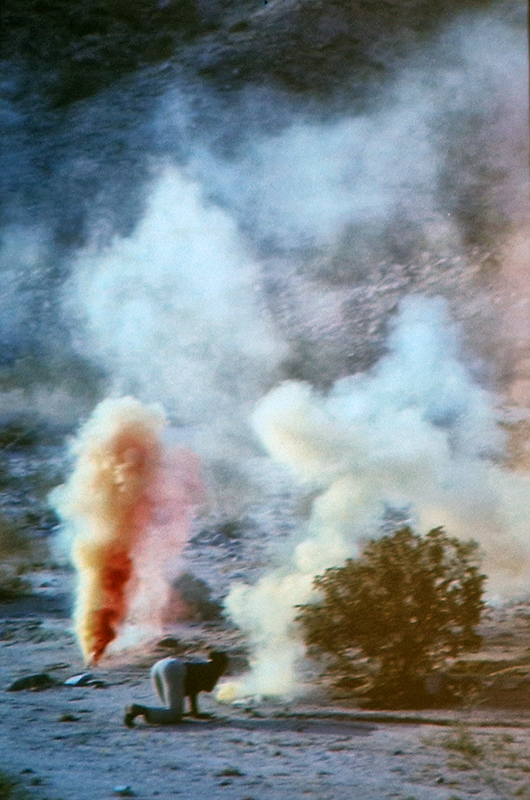
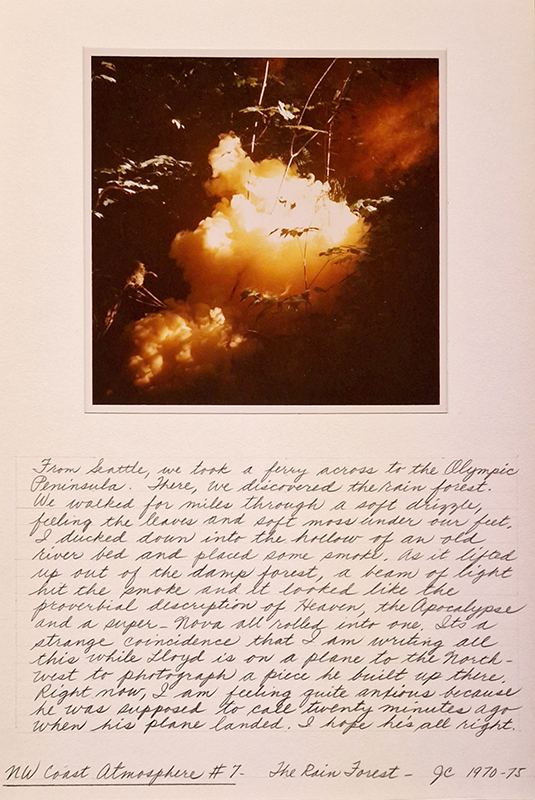
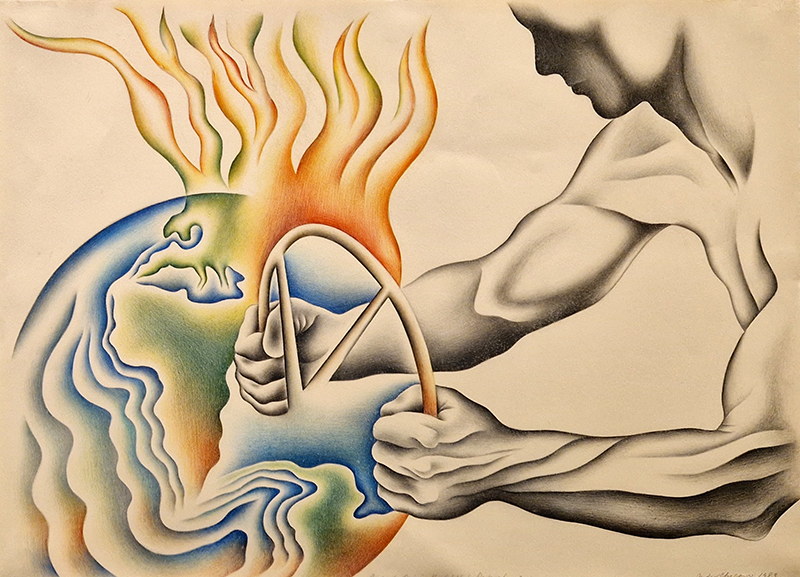
Judy Chicago Revelations at Serpentine North. The highlight of this show is the video documenting The Dinner Party (1974-79) installation and the preparatory drawings and sample plate. What a shame the actual installation wasn’t here, I will have to visit the Brooklyn Museum, New York sometime to see it. The research, collaborations, crafts and designs that went into creating it was phenomenal.

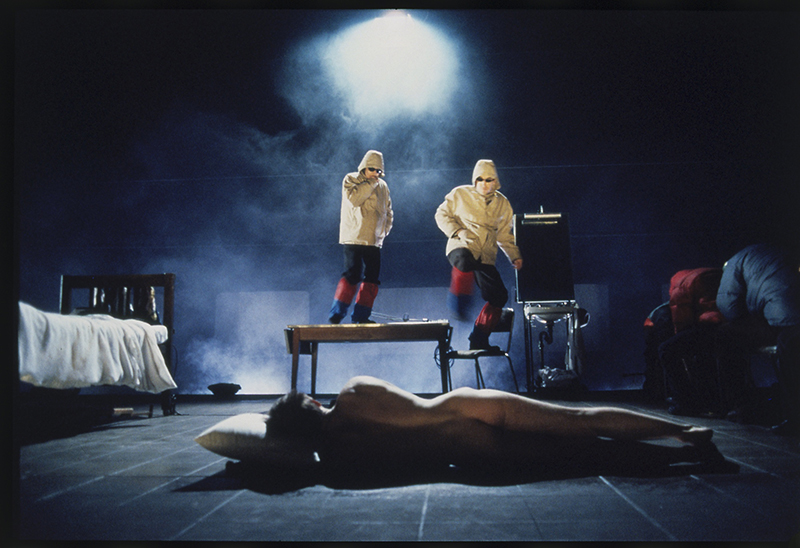
Saw Complicité’s excellent Mnemonic at The National Theatre, 25 years after first seeing it at Riverside Studios. ‘A body is found in the ice, and a woman is looking for her father while a man searches for his lost lover. Mnemonic is as much about origins as it is about memory, and remembering what is lost. Mnemonic asks us: what is our place in the natural world? How have human relationships with the environment shaped patterns of migration? Who are we, and where do we come from? ‘
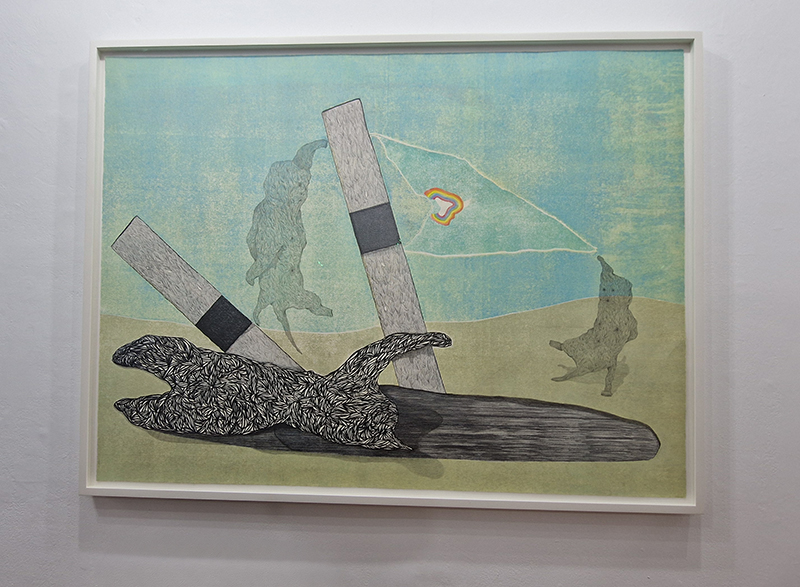
Visited the delightful mellow brick country home and extensive gardens of pioneering naturalist Gilbert White at Selborne. His book ‘The Natural History of Selborne’ (1789) has never been out of print since it was published more than 230 years ago. He was brought to many people’s attention, including mine, during the pandemic and lockdowns of 2020 when writer Melissa Harrison included his diary readings in her podcast The Stubborn Light of Things.
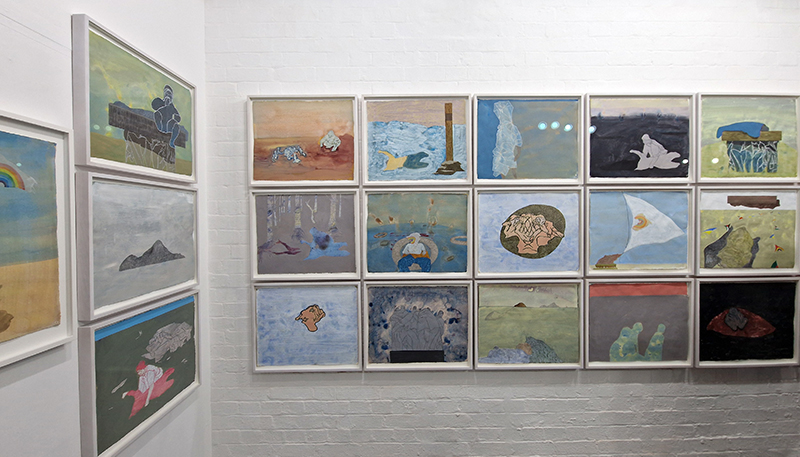
“A powerful solar flare hitting Earth is entirely plausible, and in the Internet Age would have a massive immediate effect that would go on to wreck the world economy. Satellites in low Earth orbit as well as communication devices on Earth would be destroyed – the ‘Internet Apocalypse’, causing blackouts, riots and supply-chain disruption, as well as ruining your last-second eBay bid”. Tim Marshall The Future of Geography
The dramatic increase in the number of satellites being launched into low Earth orbit unfortunately coincides with the current Solar Cycle 25, which is predicted to peak between January and October of 2024, with more solar storms of greater intensity and therefore a larger hazard for critical technologies and services. A growing risk awareness is evident as three new geomagnetic observatories have been installed across the UK in the last year to monitor space weather. They hope to predict solar storms and alert operatives to manage situations such as that in February 2022 when a Coronal Mass Ejection led to 38 commercial satellites being lost. Solar plasma from a geomagnetic storm heated the atmosphere, causing denser gases to expand into the satellites’ orbit, which increased atmospheric drag on the satellites and caused them to de-orbit.
Despite the unpredictability of our star’s activity, national space agencies and an increasing number of private companies are forging ahead with space based technology. There is a joint plan between space agencies (not including China or Russia) to construct a Lunar Gateway Space Station near to the moon where astronauts will live and conduct experiments for up to 90 days between visits to the moon. Gateway will be exposed to much higher levels of radiation than the ISS which is in low Earth orbit and so must be built to shield against higher levels of cosmic ray bombardment.

As of January 3rd 2024, the satellite tracking website “Orbiting Now” lists 8,377 active satellites in various Earth orbits. Communication and Earth observation make up the majority. The USA still outstrips all other operators but other nations are eager to catch up and within the past two decades, satellites from 91 new space-faring countries reached orbit.

It is not only radiation from space weather that is a threat to satellite dependent infrastructure. As witnessed following the largest nuclear test conducted in outer space by the USA in 1962, which lit up the sky with Auroras, knocked out electricity in Hawaii 900 miles away, created significant magnetic field disturbances and an artificial radiation belt which damaged or destroyed several satellites and persisted for a decade. Nuclear detonations in space could make space unusable for satellites.

Work in progress on a new video installation for upcoming exhibition Life Boat at APT Gallery. Taking the lifeboat as a metaphor for precarity, eight artists respond to current uncertain times of ecological and social change and shifting landscapes from both local and global perspectives.

The video looks at the interaction between space weather and Earth’s magnetic field and the risk solar storms pose to satellites and related infrastructure.

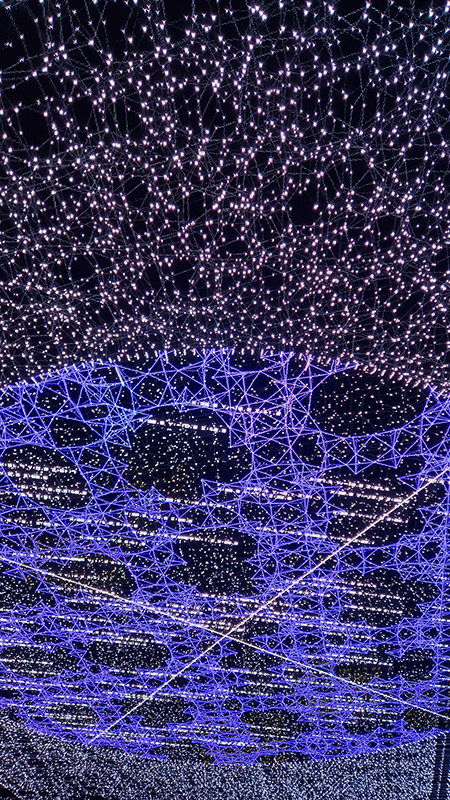
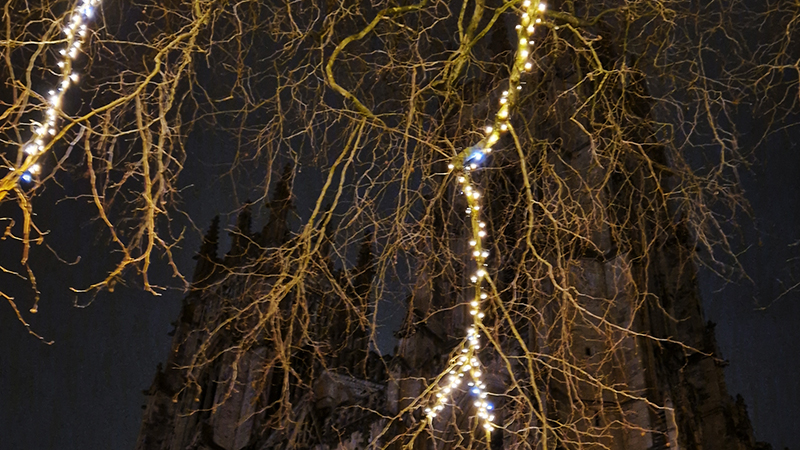
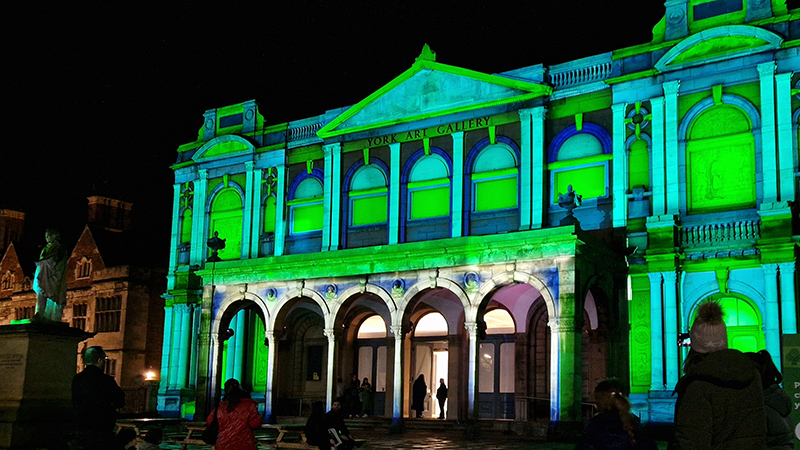
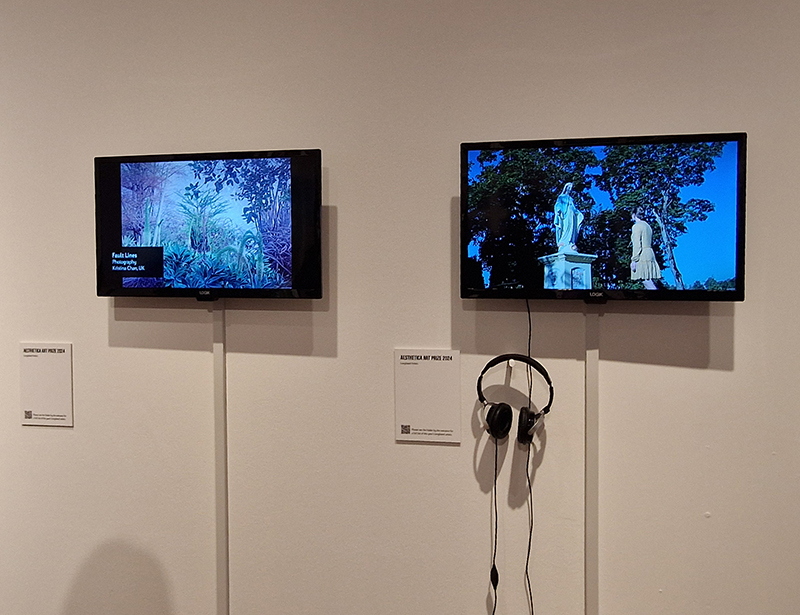
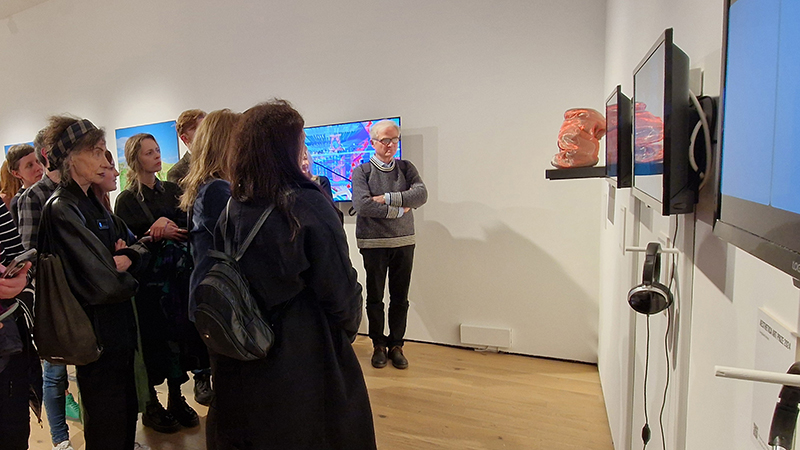
The ancient walled city of York was a great host venue for the Aesthetica Art Prize 2024 exhibition and the Future Now Symposium. Grey February is dispelled by the inspired decision of the local council and shops to keep the Christmas lights on.

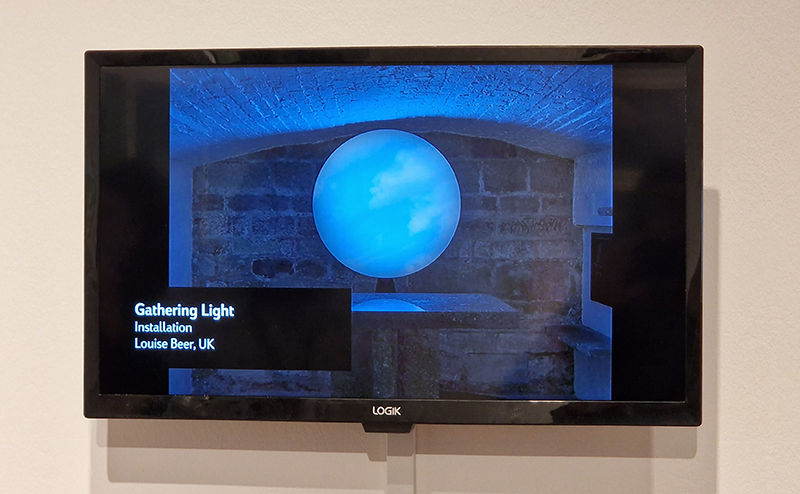
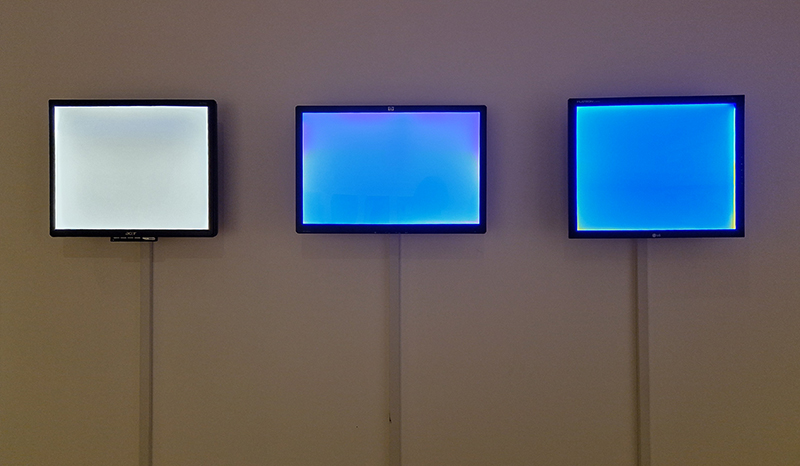
There are many artists alongside myself in the Aesthetica Art Prize longlist, and it was great to meet up with familiar faces as well as make new contacts at this event. With so many artists, the digital showcase of our work in York Gallery was on quite a long loop, but I felt happy to be in such good company.

A link to my Aesthetica 2024 longlisted artist online profile is here

Private view of finalists work. Shortlist here

The winners of the main prizes, Maryam Tafakory for Nazarbazi [the play of glances]which explores love and desire in Iranian cinema, where depictions of intimacy between women and men are prohibited. and  Emerging Prize-winner Gala Hernández López, were well deserved with powerful, timely work.

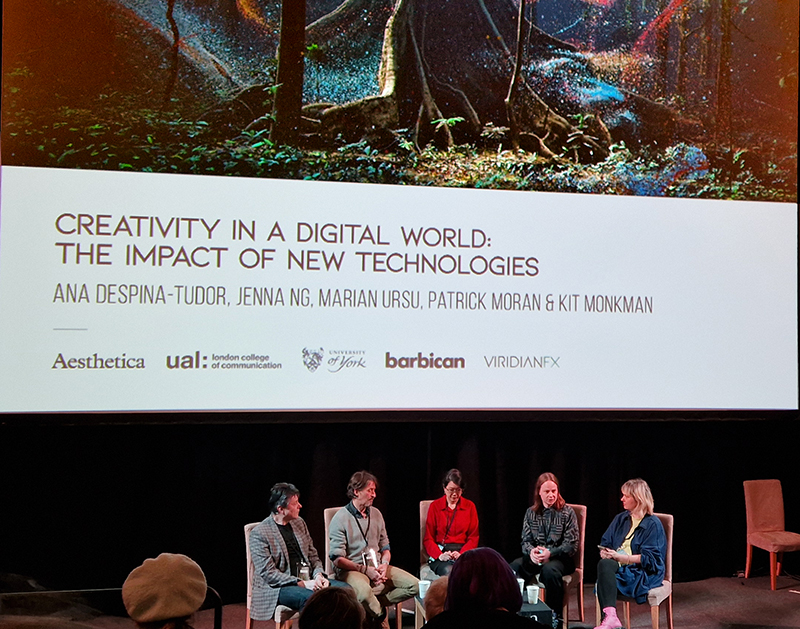
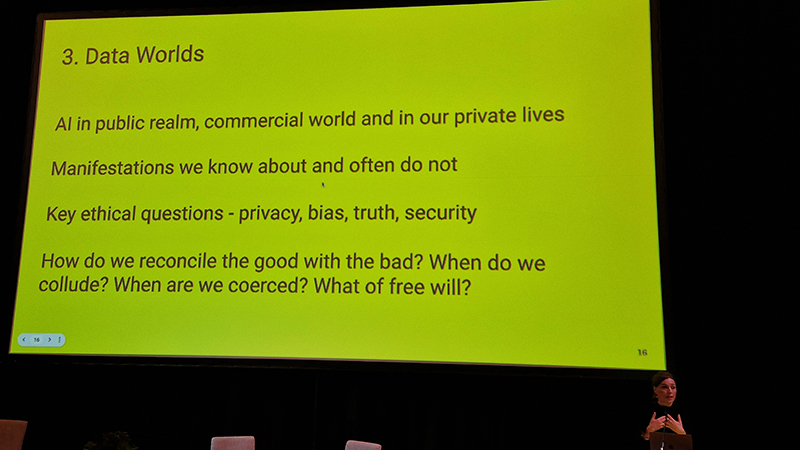
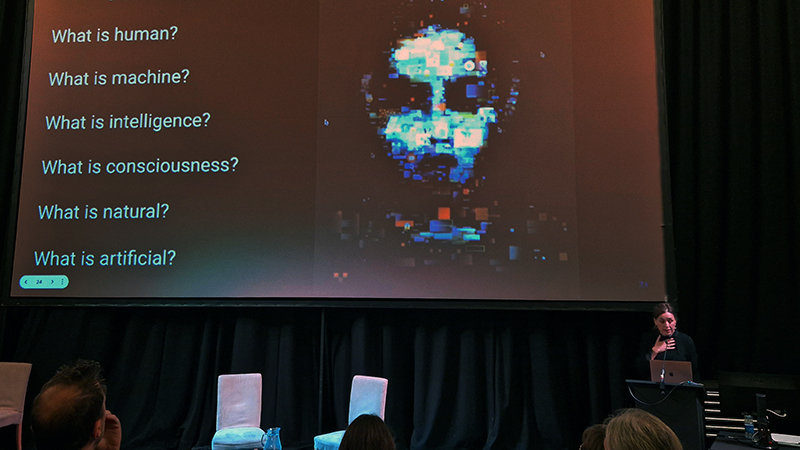
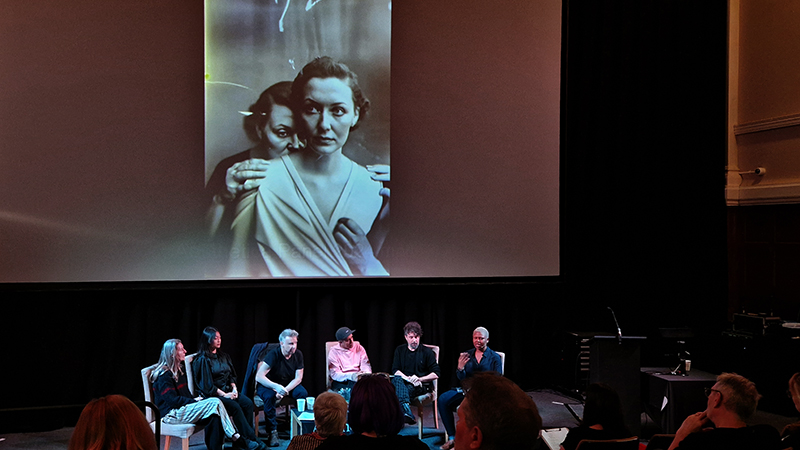
The Future Now Symposium threw up some interesting and potentially disturbing questions about AI despite some speakers such as Dr Suzanne Livingston and Marian Ursu, positive spin that AI could herald a new utopia of knowledge production and collaboration to solve the world’s problems. The panel discussing ‘The Impact of New Technologies’ were all in agreement that it is already too late to change or avert the learning bias of AI systems reflecting and perpetuating human biases, as the early modelling is embedded too deep in systems that no one really understands or can control. There was encouragement to welcome the new technologies such as chatGTP and text prompt generative fill software as new tools to be used to expand on what we can create rather than seeing these as taking over the creative thought process.

The myth surrounding the deception of the judges by Boris Eldagsen’s now-infamous AI-generated piece, The Electrician, which won a Sony World Photography Award in 2023, was laid to rest by Edgar Martins on the ‘Photography in Focus’ panel. The winning image had been entered to the competition as an AI generated image and was judged on that basis, there was no cover up but certain media sources sparked heated debates around our trust in images, giving the impression that the judges had been misled. This doesn’t mean to say that there isn’t a problem with image authenticity in the news and especially on social media as AI generated images are shared ubiquitously without the relevant acknowledgement.

I very much enjoyed Sarah Perks in conversation with Heather Phillipson who describes her works as “quantum thought experiments,” which unfold in absurd and complex ways. Interesting to hear how her ideas develop from 2D sketchbook/collages, straight to full large scale 3D installation with no small scale models in between. Making such large work is a problem when it comes to storage, so some pieces have to be relinquished and then recreated if necessary, as it was for her Turner Prize nomination.

Margaret Salmon was another fascinating speaker with her quietly moving films that expose and elevate the minutiae of human experience. She showed a short film zooming in on the invasive ravaging nature of trawling the sea bed, indiscriminately gathering up everything in the haul, interspersed with a Whitstable trawlerman speaking about his life on the boats where this was just seen in terms of hard or easy work and how the day played out. It reminded me of the taped interview I have of Aunt Millie, a close elderly neighbour from my Suffolk childhood, who talked about mending the fishing nets piecemeal as a young woman when the village still had an active fishing industry. Fragile histories to be remembered.

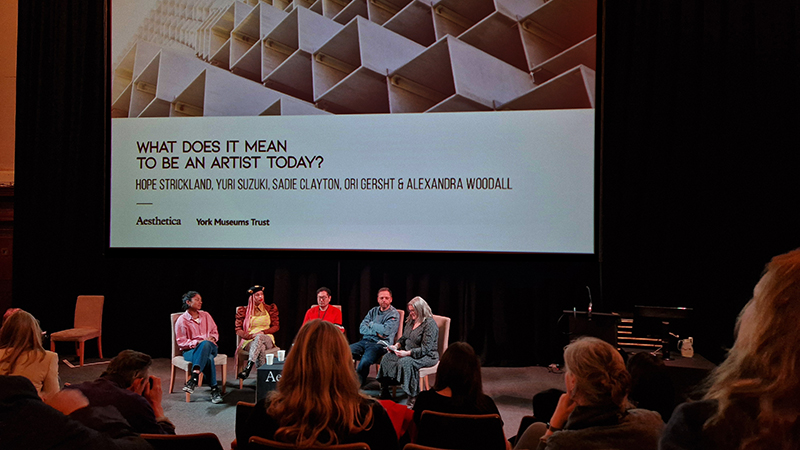
The panel discussion ‘What does it mean to be an artist today?’ was tempered by Ori Gersht accounts of his personal experience as a jew during the current conflict, both here and as witness to atrocities in Israel. How to respond.

Gallery Visits

Freya Gabie Duet at Danielle Arnaud. Great to hear Freya’s own account of her time spent as artist in residence on the Mexican/U.S border at one of the teatime talks hosted at the gallery. The shocking inequalities and water poverty that she witnessed are sensitively explored through her work. The ease with which she could cross back and forth was denied those indigenous to the Mexican side who live in the shadow of a shiny wealthy city that they would never visit.

The exhibition explores the landscape of El Paso and Ciudad Juarez as a repository of shared connections and experience. Giving the land voice to both remember and carry the complications, contradictions, and beauty of the place; the way these nuances act in harmony, and the notes of discord they strike. For this exhibition, Freya Gabie draws out threads that weave the two cities of Ciudad Juarez and El Paso together. Approaching the intricate back and forth of economic, social, and medical journeys that take place between the people and objects of the border, and examining how the border both generates the flow of goods, services, and people and dams it, revealing the ways the resulting impacts are felt.

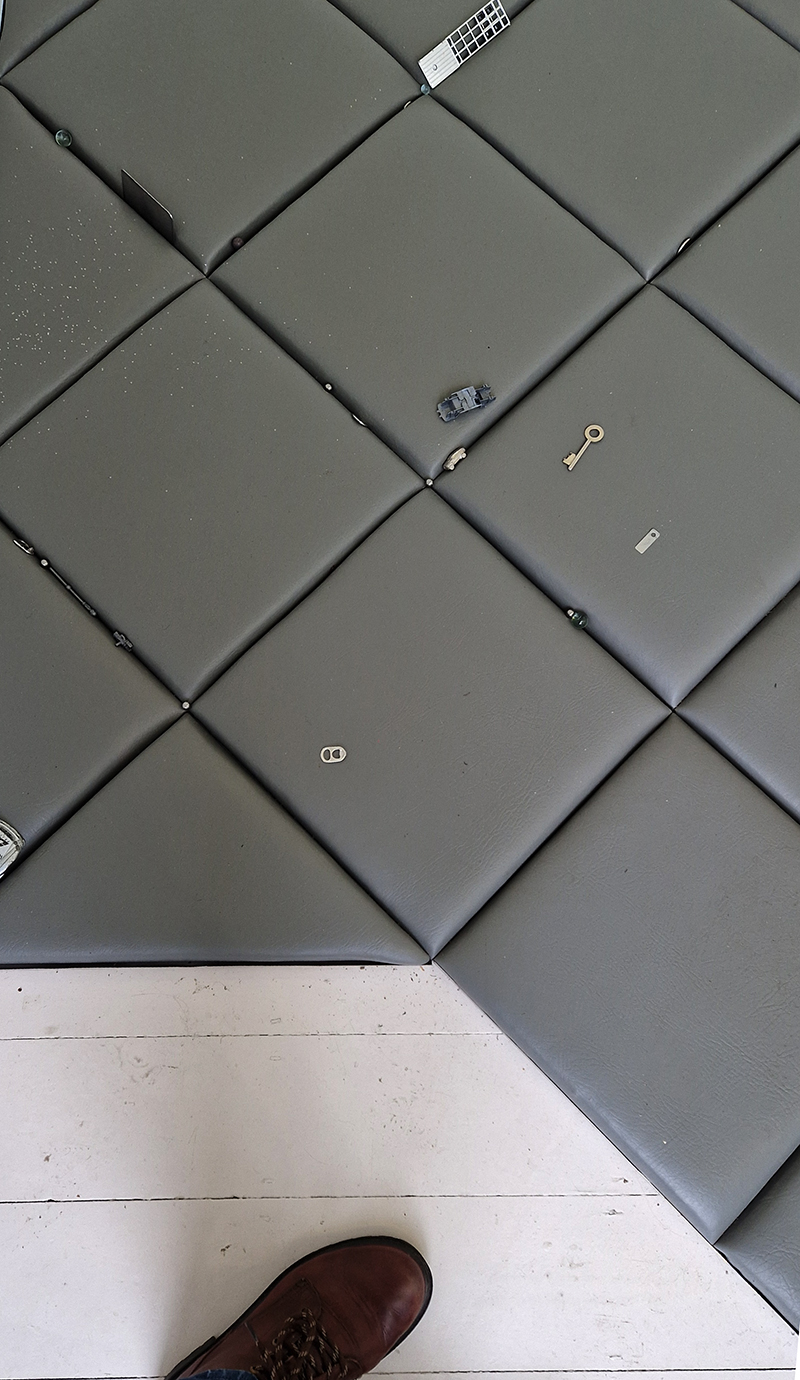
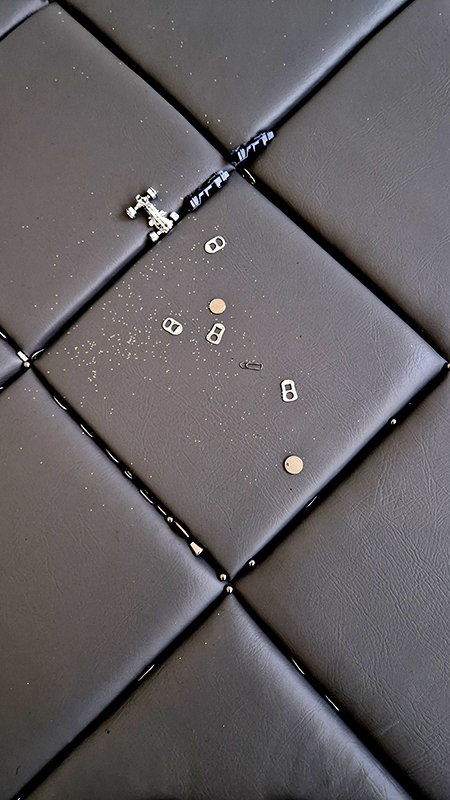
Agata Madejska Grand Habitat Horror Vacui at Flat Time House. The works evoke the personal intimacy and mess of domestic life lived at odds with prevalent power structures. They embody feelings of fragility, and exposure when a home must be constructed from fragments as seen in the small personal objects secreted in pockets or spilling across the floor, an accumulation of detritus that together makes a life, chafing against the world like grit in Vaseline. Due to my own current preoccupations, the dark padded grid of the entry room floor, that gave under the weight of mass and was strewn with discarded silver objects, read as low earth orbit littered with space junk, but was in fact a reference to the Chanel brand handbag.

DISSONANT BLOOM a group show with works by Nancy Allen, Mauro Bonacina and Héloïse Chassepot at Sundy. Enjoyable tactile sculptures with interesting materials and painting to get lost in with no point of focus.

As a concept ‘Dissonant Bloom’ refers to our vexed relationship with nature but it also suggests that growth and flourishing are possible amidst unfavourable conditions. In the same way that the coexistence of competing species ultimately fosters biodiversity and ecological resilience. In the same way every work in this exhibition embodies aspects of blooming, either aesthetically or conceptually, but they do not necessarily do so in harmony with each other.

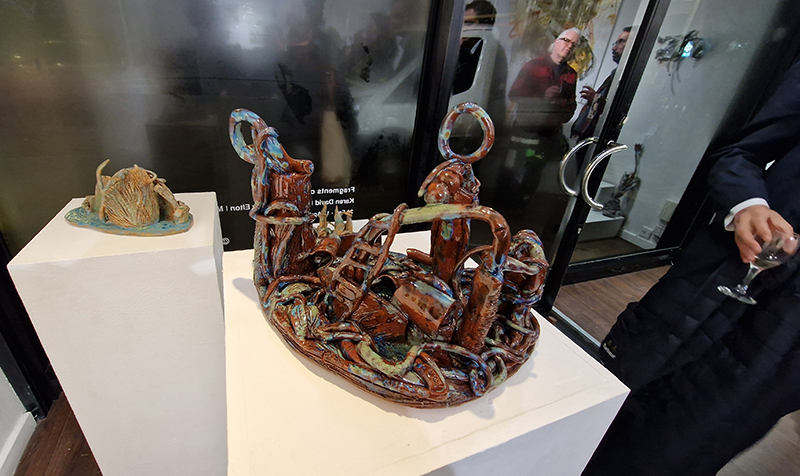
Fragments of a Lost Future with Karen David, Lana Locke, Liz Elton, Mimei Thompson, Susie Olczac at White Conduit Projects. In a time of climate crisis the works question hope for the future as a fantasy, or only for the non-human.

The Planet’s mineral, energy and agriculture resources have been efficiently, and even ruthlessly, exploited… They have harnessed energy of the atom, deciphered the molecular codes that oversee their own reproduction… Despite these achievements the people of this planet have in other respects scarcely raised themselves above the lowest level of barbarism. The enjoyment of pain and violence is as natural to them as the air they breathe. J.G. Ballard [“Report From an Obscure Planet”, 1992]

The fears of the near future described in J.G. Ballard’s science fiction novels are now our reality.

When corporations and politicians are busy monopolising airspace and arguing amongst themselves, whose voice will communicate this urgent crisis. We go about our daily lives with our heads partly buried in the sand, often too busy to fully engage with our current polycrisis. Activists rightly convey outrage, but can we embed these urgencies into our everyday lives? In ‘Report from an Obscure Planet’, Ballard describes the critical state of the Earth as viewed from another place. White Conduit Projects brings together these five artists who bravely and playfully incorporate this sense of crisis into the core and surface of their work. Starting with their everyday surroundings, they attempt new ways of communication, quietly bringing a Ballardian nuance to artworks that inhabit our domestic space.

Loose Ends is a group exhibition at Thames-side Studios Gallery exploring connections and the interwoven poetics of material and the body by ten artists working across ceramics, textiles and performance.

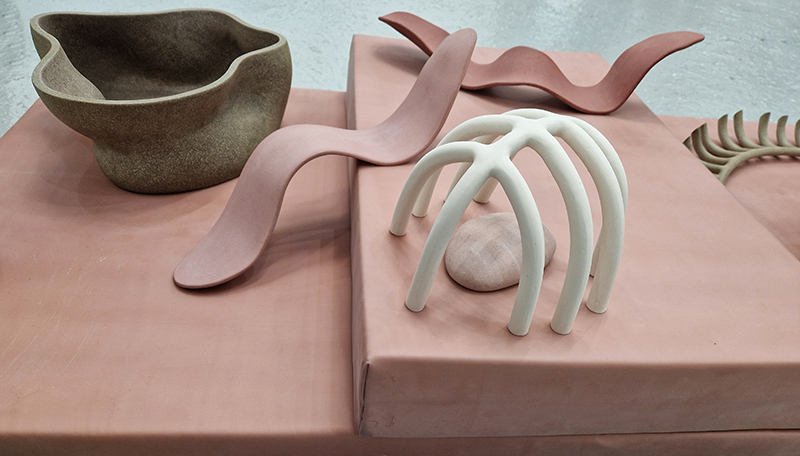
Blown away by the sheer elegant beauty of  Alex Simpson‘s impressive new ceramic work traversing across latex covered foam blocks.

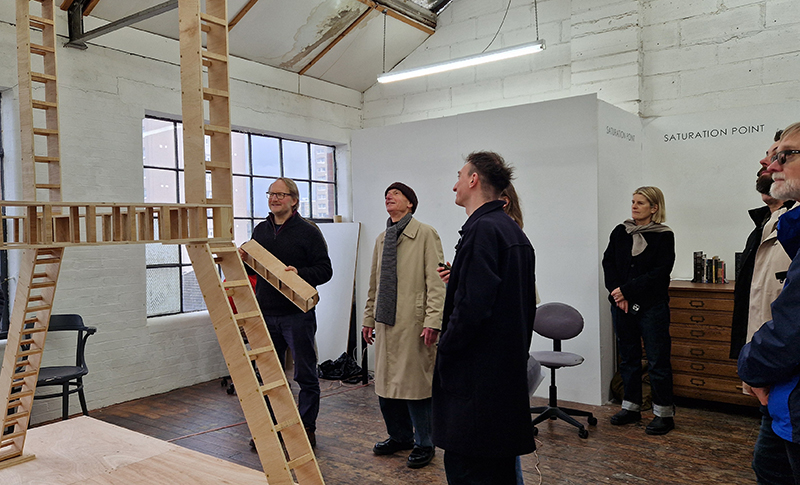
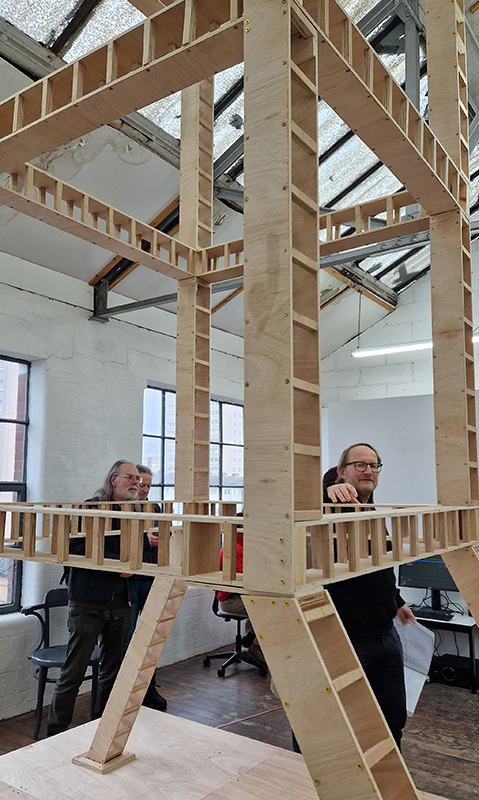
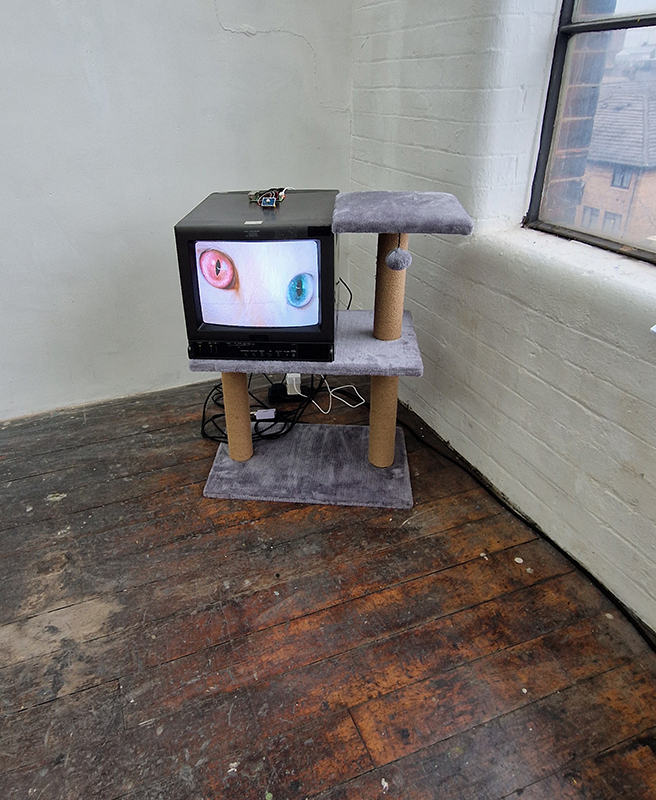
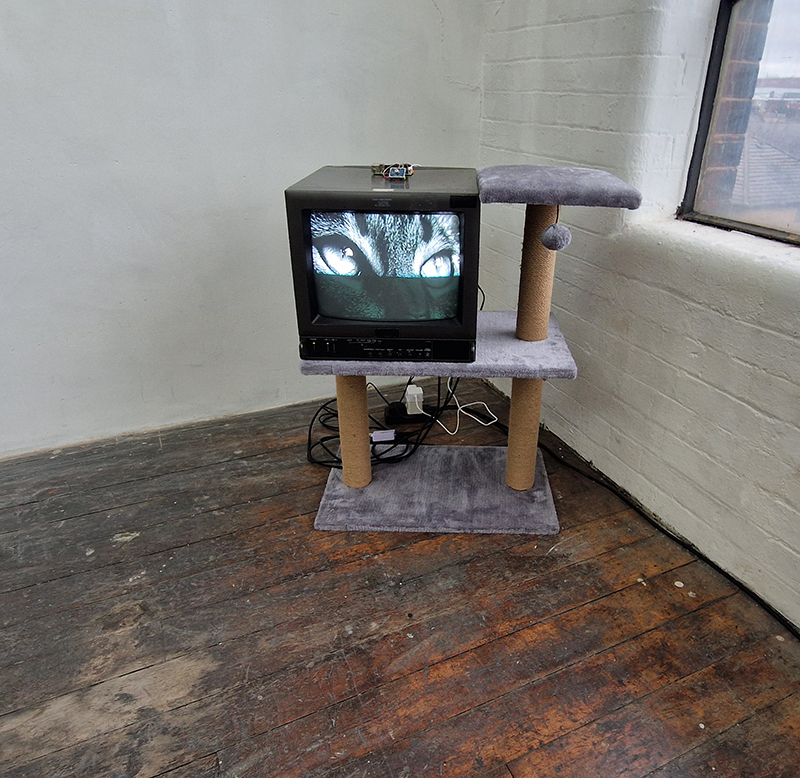
Robert Good Saturation Point Sunday Salon 29. Responding to Richard Brautigan’s 1967 ode to a coming technological utopia ‘All Watched Over by Machines of Loving Grace’ Robert explores what a cybernetic meadow might look like. Here he presents six digital artworks that hum, whirr, click and miaow with the first stirrings of a new digital landscape – one of computer vision, compromised identity and permanent connectivity. This meadow is not brought about by the unfathomable AI but is hand sown and nurtured with the level of technology we can still engage with; it is a human scale materialization of the inner workings of the digital world.

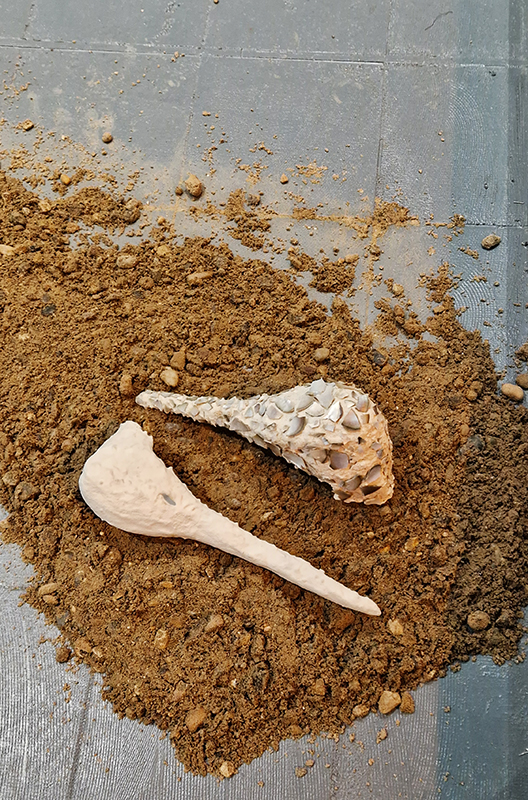
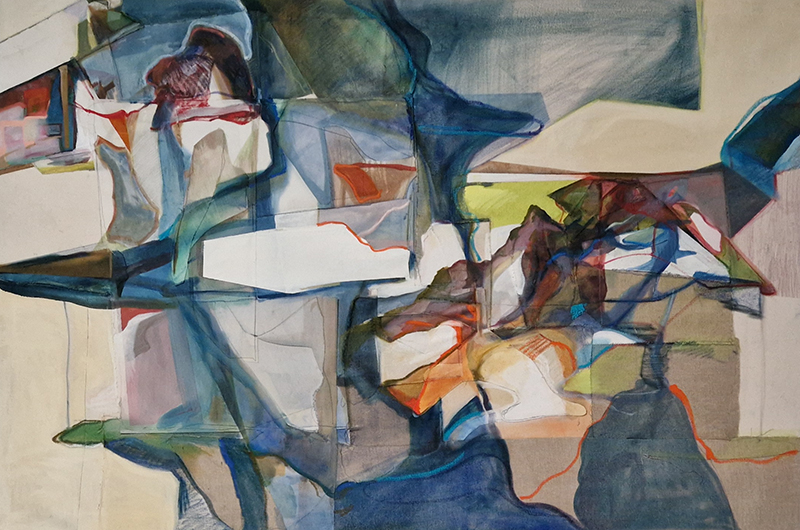
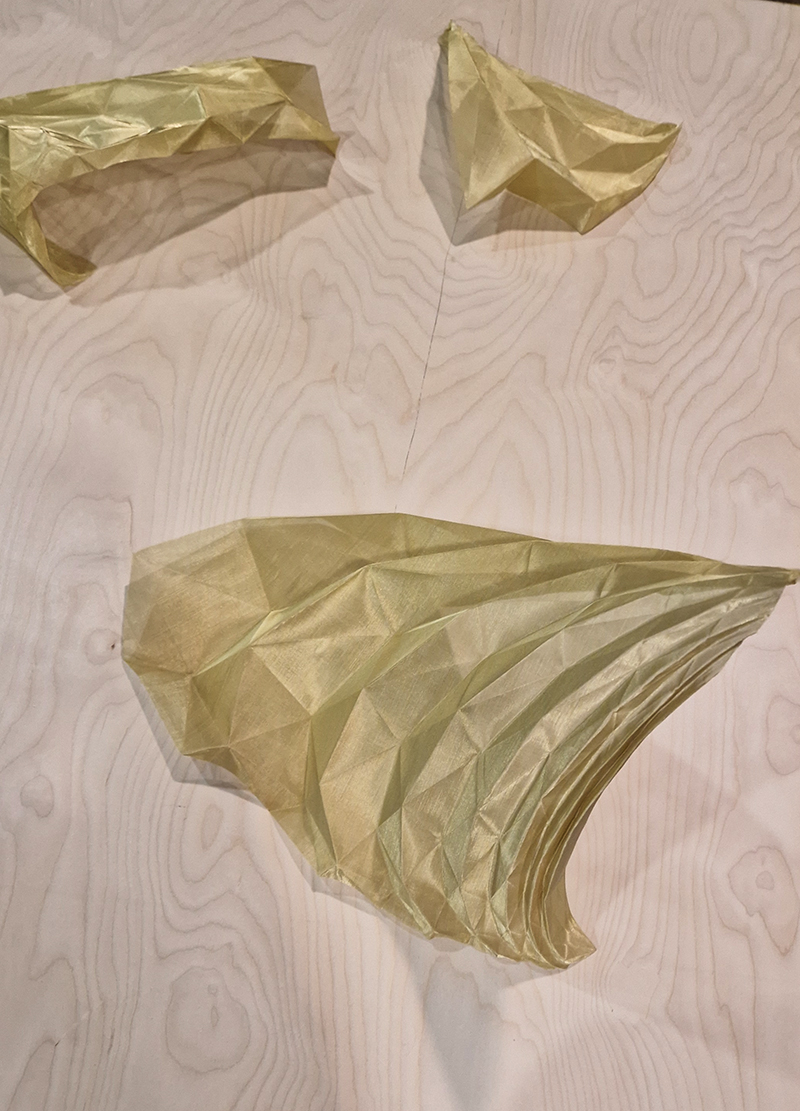
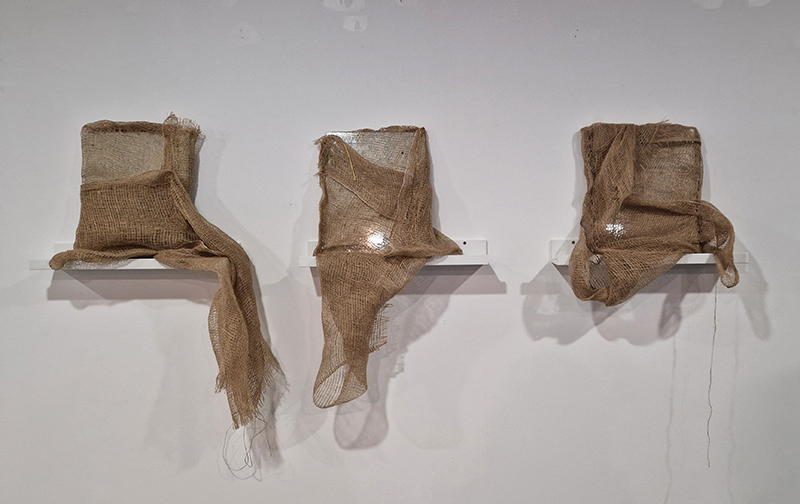
OUTSIDE IN at SET Ealing, a dynamic group show curated and including beautiful, stitched painting by Anna Lytridou, with works by Anja Aichinger, coloured paper clay forms by Eleanor Bedlow, fossil like forms by Anna Joy Reading, delicate folded brass mesh geometric forms by Brigitte Parusel, paintings of collapsed breasts by Jennifer Nieuwland, explorations of genealogy through painting by Jillian Knipe, abstract and evocative paintings by Linda Hemmersbach and Stacie McCormick and subtly coloured sculpted paper forms oscillating between stone and the night sky by Julie F Hill contemplating interconnections between the organic and the inorganic.

Listening

In Our Time Panpsychism – Melvyn Bragg and guests discuss the idea that some kind of consciousness is present not just in our human brains but throughout the universe, right down to cells or even electrons. This is panpsychism and its proponents argue it offers a compelling alternative to those who say we are nothing but matter, like machines, and to those who say we are both matter and something else we might call soul. It is a third way. Critics argue panpsychism is implausible, an example of how not to approach this problem, yet interest has been growing widely in recent decades partly for the idea itself and partly in the broader context of understanding how consciousness arises.

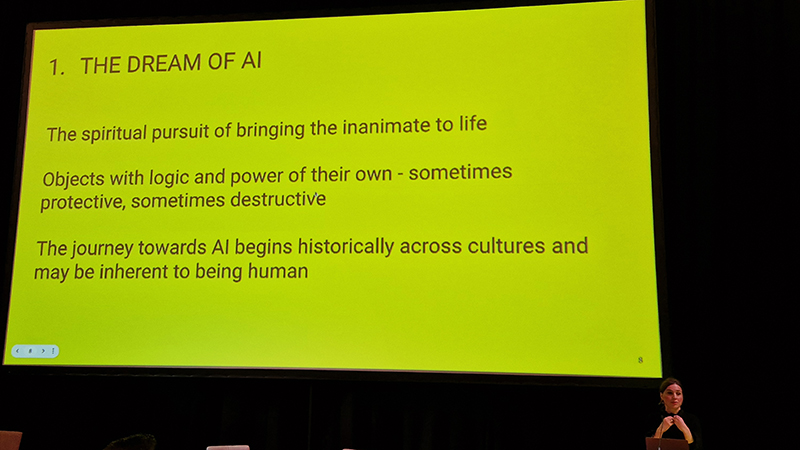
The Life Scientific – Professor of Computer Science at the University of Oxford, and the Director of Foundational AI Research at the Alan Turing Institute Michael Wooldridge on AI and sentient robots – Humans have a long-held fascination with animating an inanimate object, but the idea of Artificial Intelligence (AI) is often perceived as a dystopian threat: from Mary Shelley’s Frankenstein, through to the Terminator movies. We still often think of this technology as ‘futuristic’: whereas in fact, it’s already woven into the fabric of our daily lives, from facial recognition software to translator apps. He believes this will be a watershed year for AI development.

It might be interesting to consider if and how AI and technology might impact human evolution. Medical advances may already have influence. A 300,000-Year History of Human Evolution – Robin May The species we recognise as our own – anatomically modern humans – has existed for only 300,000 years, a blink of an eye in evolutionary terms. And yet during that time our species has been shaped by strong evolutionary forces, often unwittingly as an indirect result of human activities.

New work has been framed – these pieces consider the potential for the human eye to perceive the Earth’s magnetic field. Research shows birds have this capability activated by molecules in the retina of the eye when excited by blue light. The molecules produce radical pair electrons sensitive to the magnetic field and as these molecules are found within the photoreceptor cells it is possible birds may visualise the magnetic field lines to aid navigation. A similar molecule is also found in the human eye and I am speculating that this is a sense we may once have experienced and could tap into again. It is of course the brain that must receive a signal from the eye by which we see. Independently of the cryptochrome molecule, research monitoring alpha wave activity shows the human brain does appear to be sensitive to a magnetic field albeit unconsciously.

The Compass Eye Etching with chinagraph pencil, magnets, iron filings

Pole Receptor 2022 27 x 27 x 3 cm Etching, magnet and iron filings

Framework made a neat job of the frames enabling the magnets to be released to reset the iron filings if necessary. The Compass Eye doesn’t have glass and maybe that was a mistake but I prefer the thin frame.

Progress is being made on new work Breath of Stars. This will be a screen based work triggered by cosmic ray activity. Every time an event is registered by a photomultiplier attached to a 5cm square piece of plastic scintillator, a star burst video image will flash up on the screen. The size of the starburst will correspond to the energy of the particle that has just arrived from space. The starburst videos are made in Adobe After Effects using footage from my cloud chamber experiments.

I have got some help with coding from gaming programmer Jamie Howard so am not feeling so out of my depth in the python maze. One problem we may have though is the shortage of Raspberry Pi processors. It could be months before we are able to get one with a high enough spec to process the video layering. In the meantime I am testing ideas and creating video clips.

It was wonderful to see so many people visiting the first Open Studios at Thames-side since 2019 despite the rail strike difficulties that weekend. The Compass Eye was hanging in the Thames-side Gallery Studio Holders Showcase exhibition. Thank you to everyone who came to visit and found their way to my studio, it was great to discuss everything from Plato to Planck.

Super happy to have my video Cosmic Chiasmus: crossing the universe included in the May Fair Showreel screening at the very smart May Fair Theatre as part of Mayfair Art Weekend. The departure point for the curated selection was the word ‘PROCESS’, which was inspired by the video work by Wolf Vostell, Auto-Faber (1973). It was a great experience to see all the amazing nominated films and meet the selectors -Elisa Tosoni, Angel Leung and Eugene Macki and art weekend project manager Cheri Silver.

What a lovely write up in the Winchester School of Art Yearbook 2022 from one of the Fine Art students on the Images In The Making sessions that I ran.

I am delighted that my installation The Forms has been selected for exhibition in the splendid Wells Cathedral as part of Wells Art Contemporary 2022.

Twelve aluminium plates in the shape of pentagons that together make up the net of a dodecahedron have been deep etched with imagery taken from data visualisation of dark matter provided to me by KIPAC, Stanford University. The etching process used a screen printed sugar lift technique where the bite was allowed to penetrate completely through the plate leaving holes in some areas.

Excited to be selected for a satellite exhibition at the international print conference IMPACT12 to be installed at a former police station in Bristol. At a distance will be shown in The Anxiety of Interdisciplinarity, an exhibition which seeks to reframe printmaking as a site of interdisciplinarity – a testing ground for ‘The important work…done at the surfaces between adjacent disciplines’ (Carter, 1998).

Drawing on the physical language of print that embodies touch, separation and mirroring the semaphore flags in this work have been printed using hand painted dye sublimation inks applied via a heat press. This process transfers the ink from a paper matrix onto the substrate textile. The image passes momentarily across space in a dematerialized state as vapour before being reformed as its mirror opposite.

Out of Studio

Billed as an immersive experience like no other Dreamachine offers a unique journey into the potential of your mind. Stimulated by strobe lighting playing rhythms on your eyelids and spatial sound fed directly into your ears, your mind creates its own images behind closed eyes. Inspired by a 1959 invention from artist–inventor Brion Gysin it has been reimagined by Collective Act, in collaboration with Turner Prize-winning artists Assemble, Grammy and Mercury nominated composer Jon Hopkins, and a team of leading technologists, scientists and philosophers.

It was pretty amazing. From a deep orange glow of swirling matter kaleidoscopic shapes emerge with geometric patterns that form and explode into vibrant pulsating honeycomb structures. Felt sure I was seeing some of my recent work in there. Swept away on a tide of colour with a big smile it was like a roller coaster ride through the forming of a technicolour universe. Wonderful.

Interesting to read that the frequency range of light emitted by Brion Gysin’s Dream Machine corresponds to alpha waves, electrical oscillations normally present in the human brain while relaxing. The pulsating light stimulates the optical nerve and alters the brain’s electrical oscillations. I have been looking at scientific research that explores a connection between the Earth’s magnetic field and human vision when stimulated by blue or polarised light depending on the orientation of the viewer. The human brain’s alpha waves can be seen to react to the local geomagnetic field. Some research correlates the nature of our dreams to magnetic field activity with calmer dreams resulting from high activity and more bizarre dreams when activity is low.

Going from Dreamachine to Libby Heaney’s quantum world of morphing fluid shapeshifting worlds The Evolution of Ent @Arebyte was a nice continuation of mind bending immersion.

Ent-er. Ent-anglements. Ent-ropy. Ent-wining. Ent- hralling. Ent-icing.

Looking at the potential futures created by quantum computing where the digital mode of binary gives way to superposition and quantum entanglement. Daniel Cavalcanti has provided a useful quantum glossary in the exhibition catalogue. Explaining superposition as like looking through a window and seeing outside and yourself reflected simultaneously, two configurations happening at the same time.

I was very excited to visit The World of Stonehenge at The British Museum to see the Nebra Sky Disc, having been introduced to the existence of this amazing object by archaeoastronomer Carolyn Kennett while on the Lizard Point Residency in 2019. Found by metal detectorists in Germany the gold used in this ancient map of the cosmos can be traced to Cornwall.

Carolyn explaining the history of this most ancient of cosmological objects.

The actual disc was much larger than I expected and almost translucently thin.

Six thousand years ago in the final 1,500 years of the stone age was the British Neolithic period. A time of stone axes for chopping. Woodlands cleared for farming. Stone held meaning. Offerings were made to spirits. Hundreds of stone and wooden circles were raised across the land. A cosmic inversion, connecting earth to sky. The first stones were brought to Stonehenge about 5000 years ago to create a burial ground which was transformed 500 years later into the symbolic site where the large sarsen stones were placed in alignment with the sun as it rises at midsummer solstice and sets in midwinter. Some astonishing objects in the exhibition, the power of the sun celebrated and reflected in gold.

I had high hopes for Our Time on Earth exhibition in the Barbican Curve – the aim was for technology to bring us closer to nature and highlight our place as one species among millions of others, striving to live together in a delicate balance. There was some enticing imagery and interesting ideas but as an experience it was tech overload, information overload all crammed into quite a tight space. Too much to take in and too removed from a lived time on Earth for me to engage and absorb anything meaningful.

Postwar Modern at the Barbican Gallery explores the art produced in Britain between 1945 and 1965 in the wake of a cataclysmic war. Including; Denis Williams Painting in Six Related Rhythms 1954; Eduardo Paolozzi Will Man Outgrow The Earth? collage form the series Bunk 1952/1971; the lovely Aphra Shemza’s grandfather Anwar Jalal Shemza painting fusing Western ideas of abstraction with Eastern influence and Gustav Metzger Liquid Crystal Environment  made using heat-sensitive liquid crystals that are placed between glass slides and inserted into projectors where they are are rotated to create movement within the liquid causing the crystals to change colour as they are heated and cooled.

I was fascinated to learn about the numbering system used by Cistercian Monks while visiting the impressive ruins of 12th century Cleeve Abbey in Somerset. A single cypher can represent numbers up to 9999.

The abbey church was destroyed by Henry VIII during the dissolution in 1536 but the cloister buildings, gatehouse, 15th century refectory and 13th century heraldic tiles survived destruction as they were being used as farm buildings at the time and it’s ancient tiled floor was protected from the elements by a cabbage field.