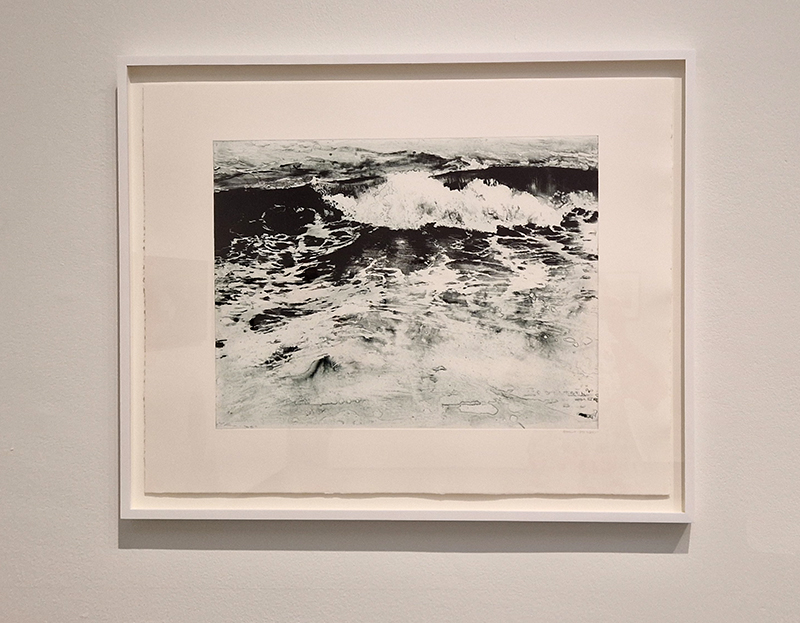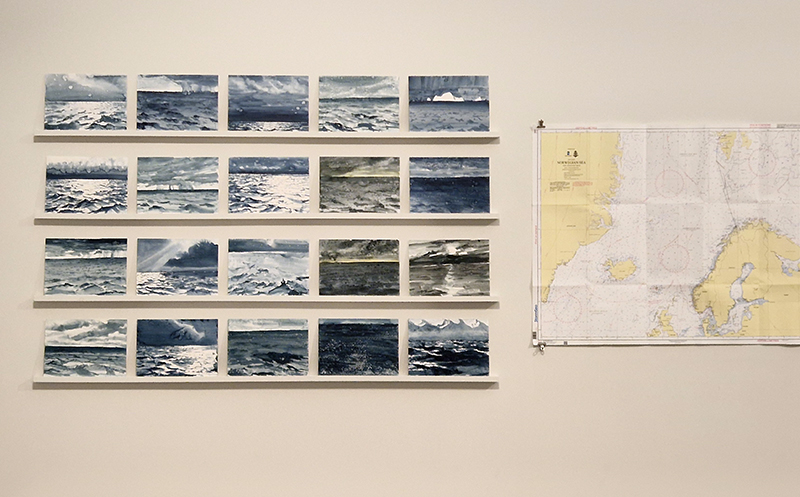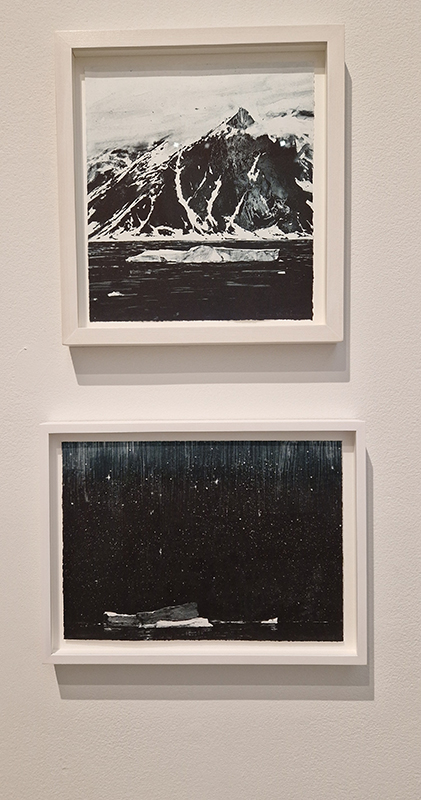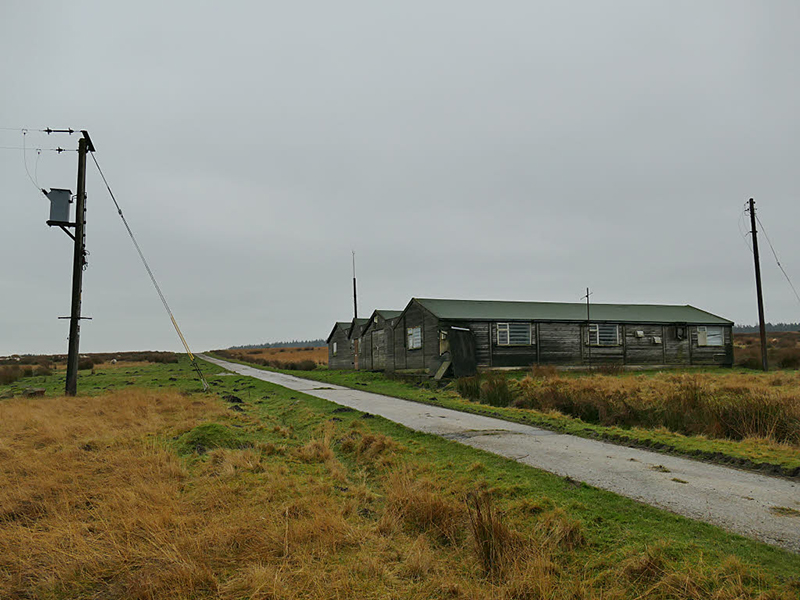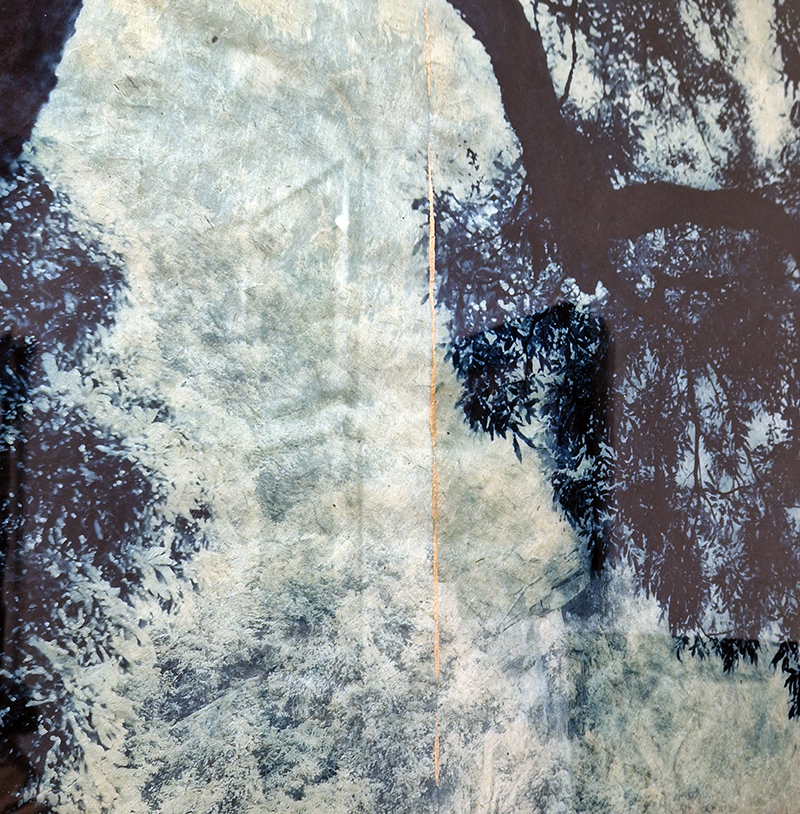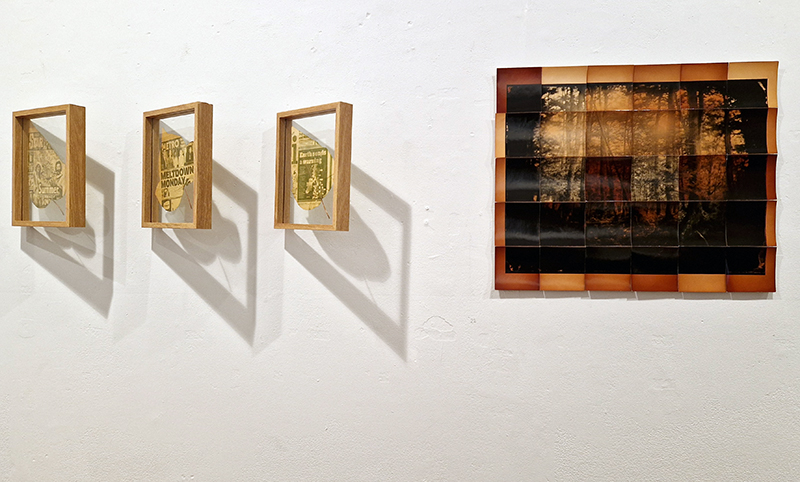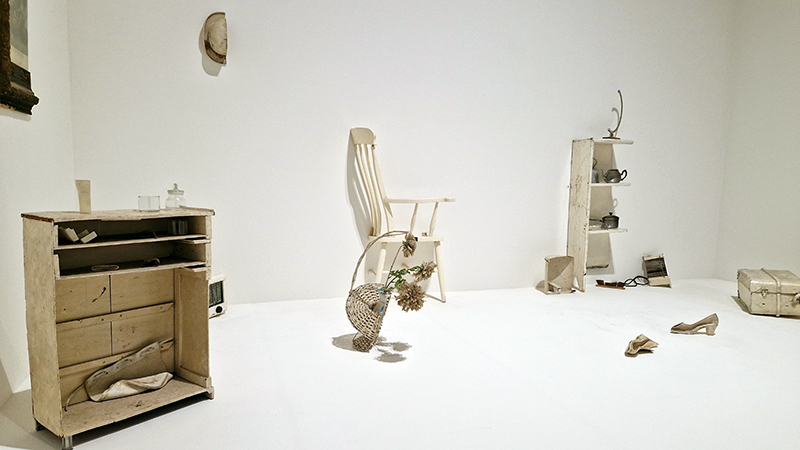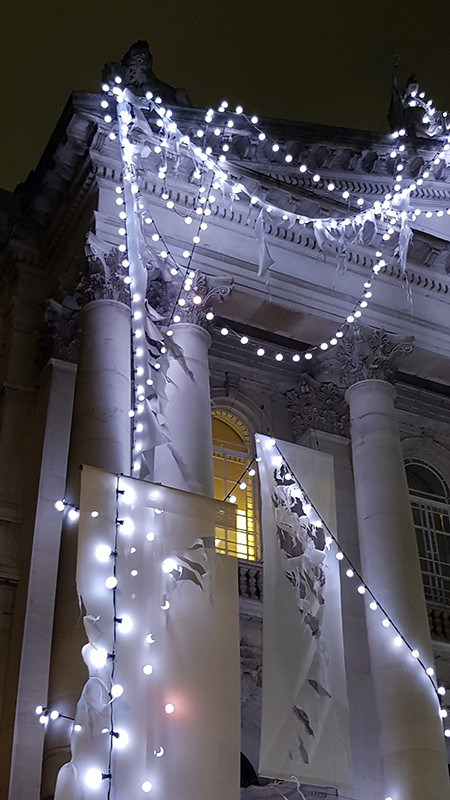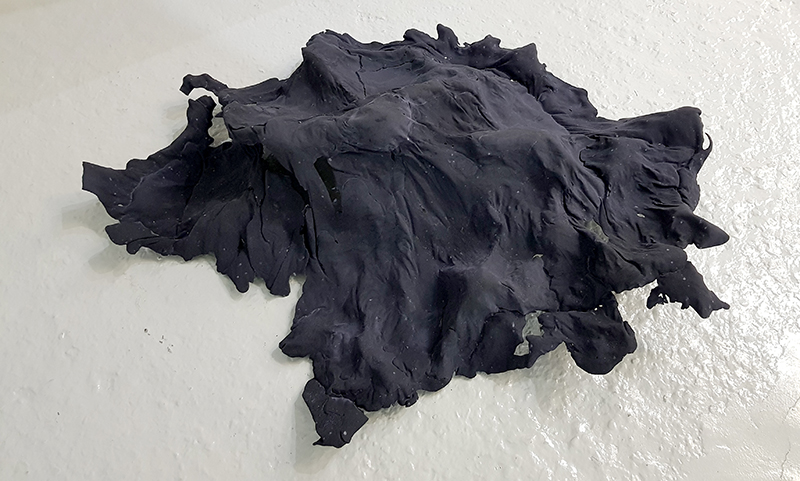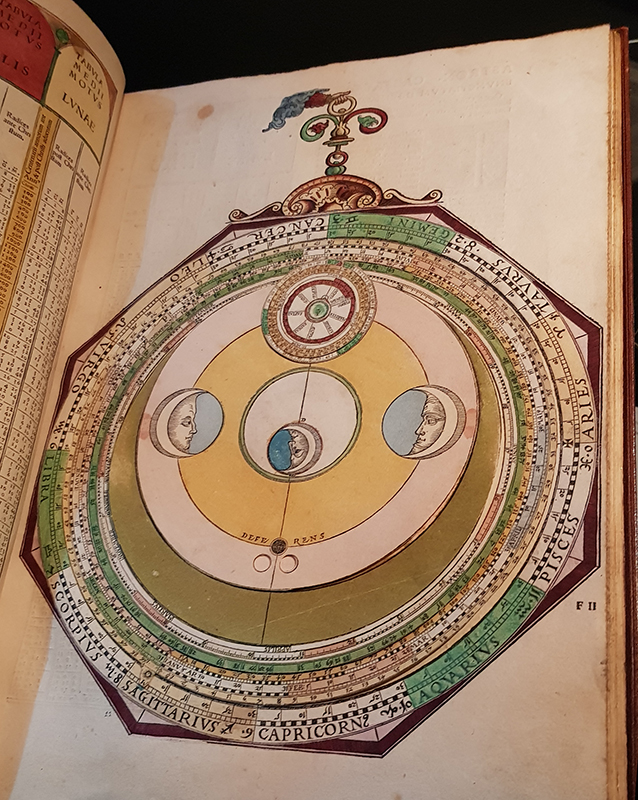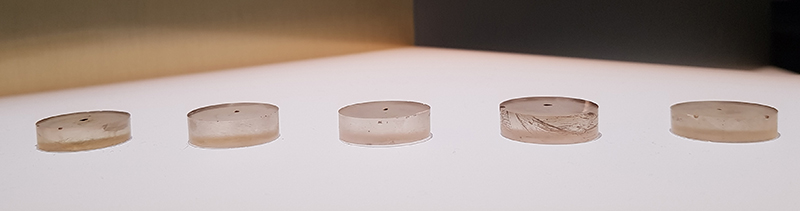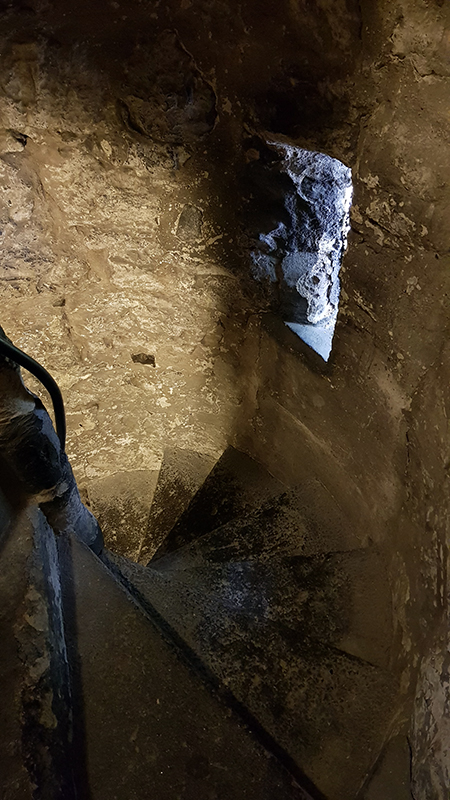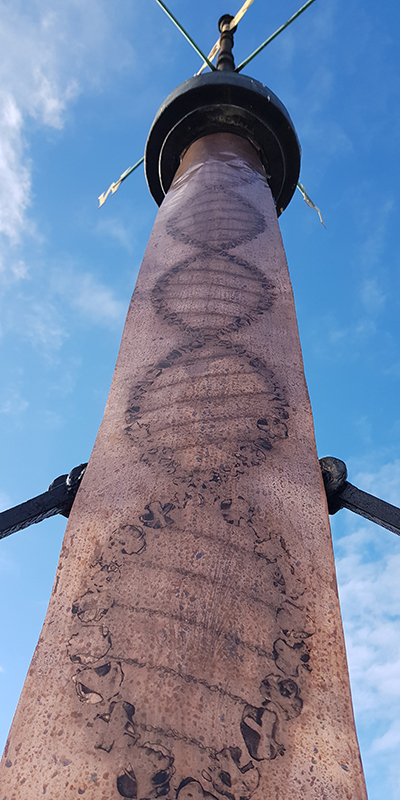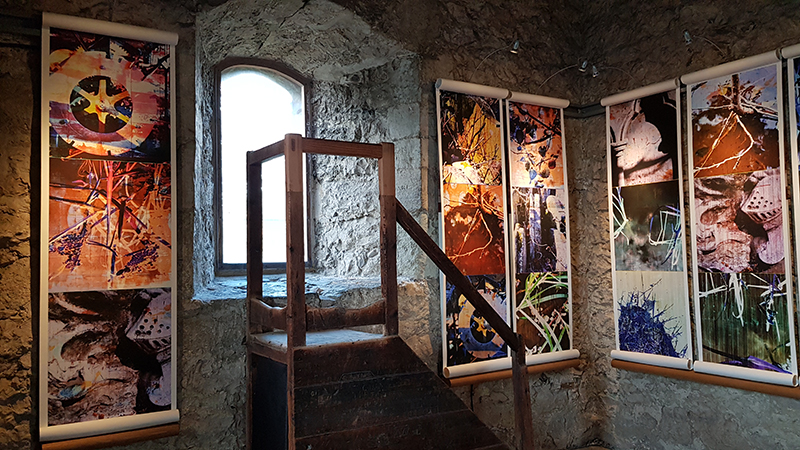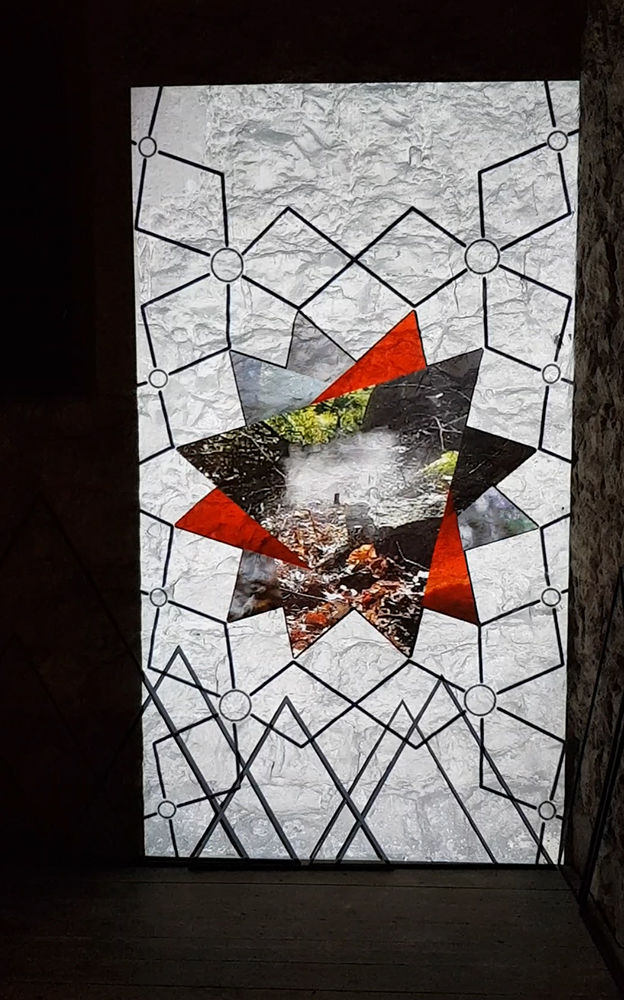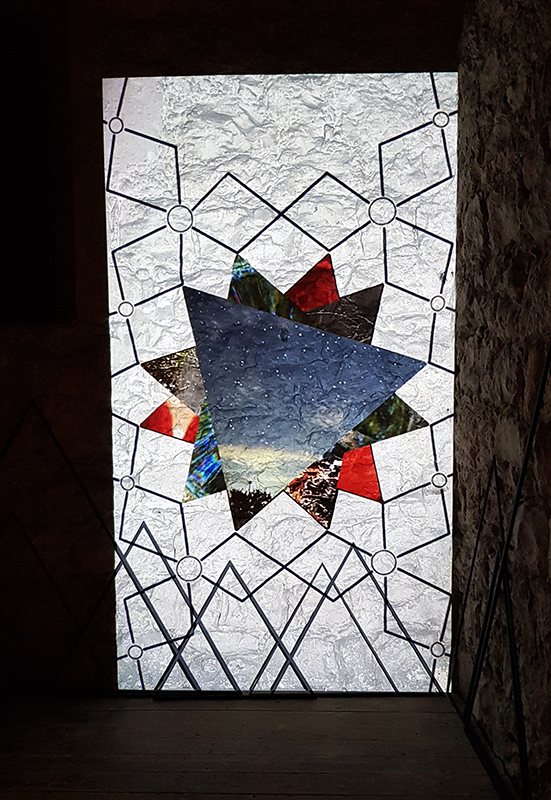
Archives for posts with tag: Carol Wyss

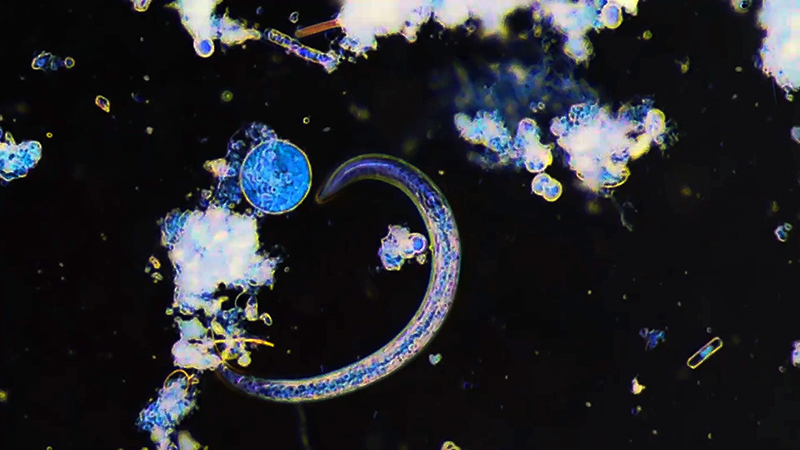
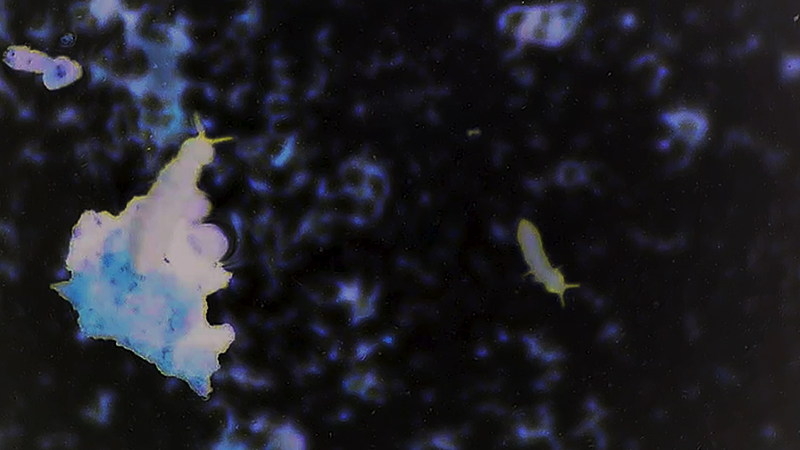
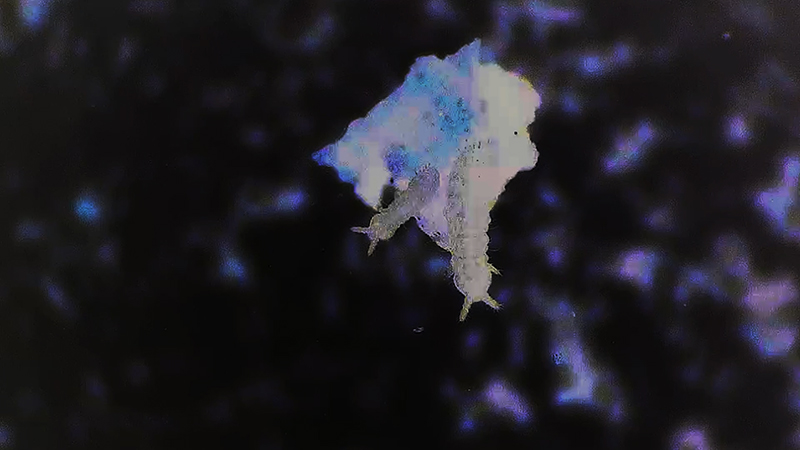
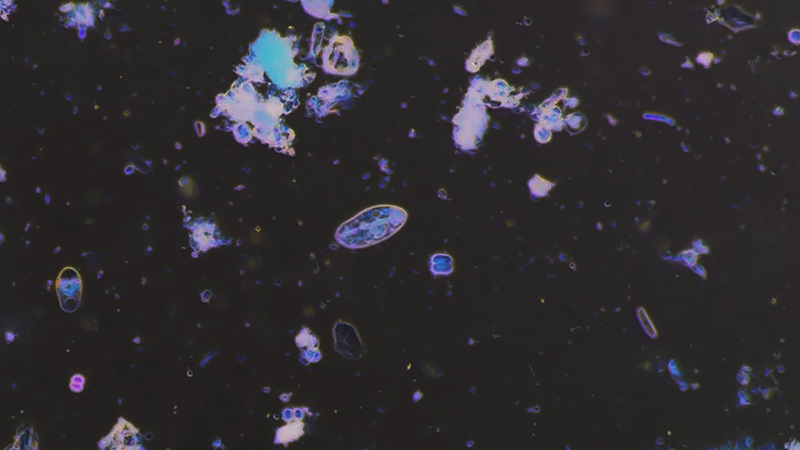
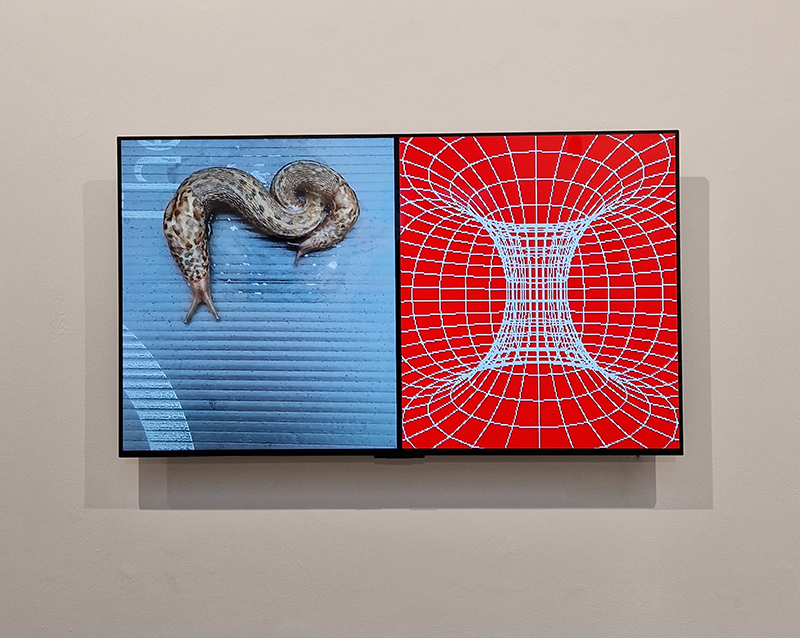
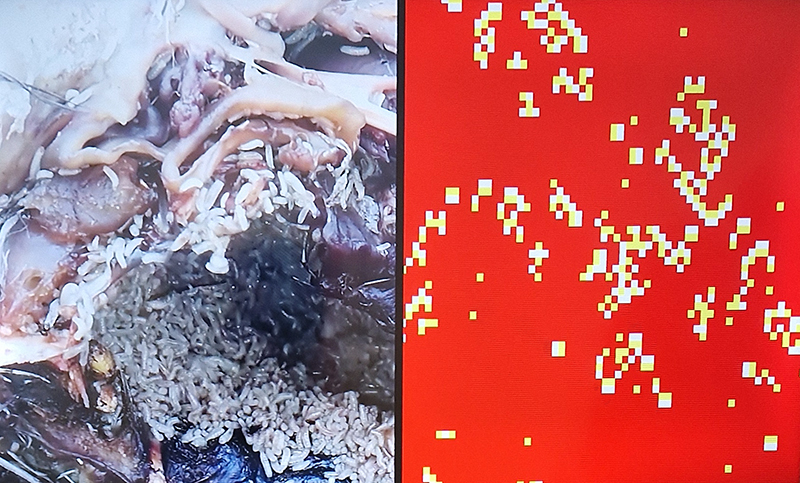
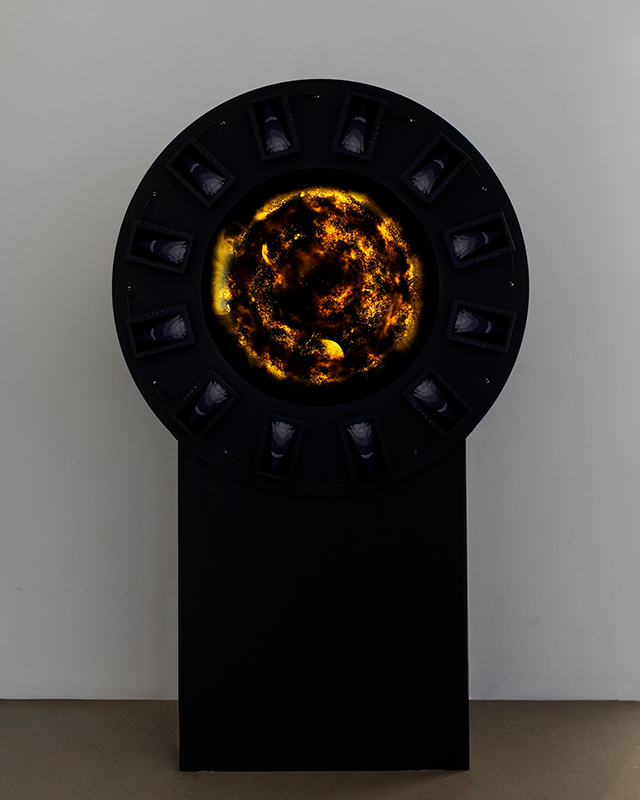
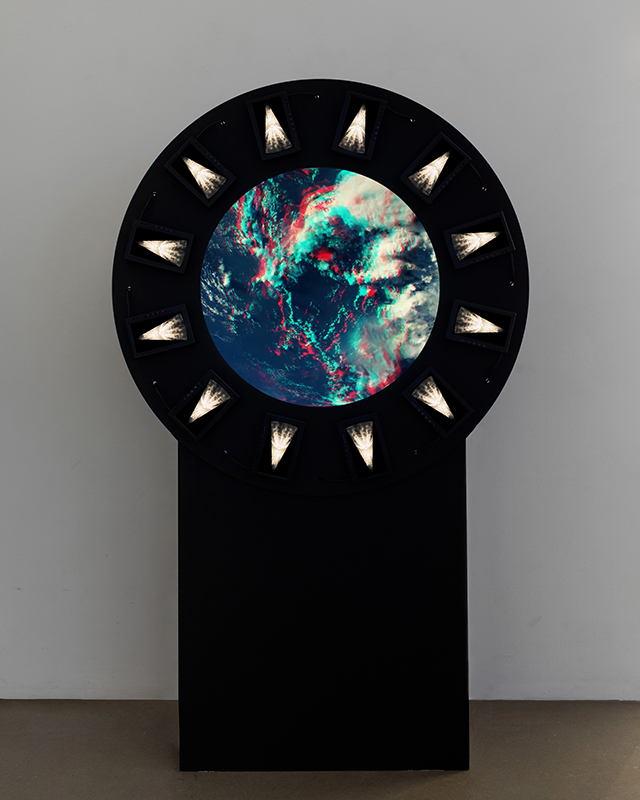
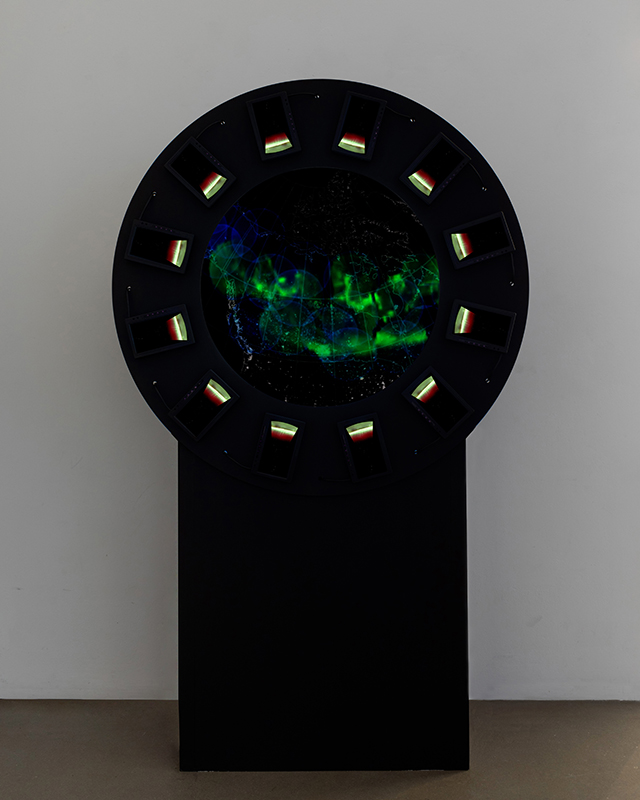
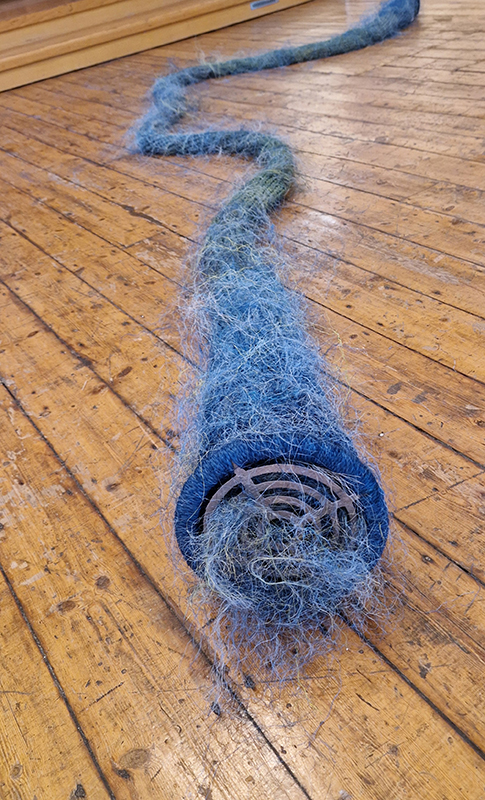
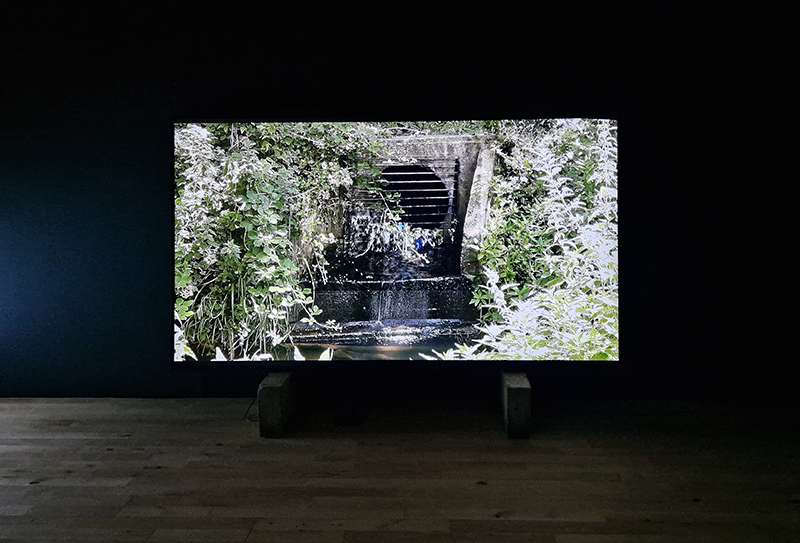
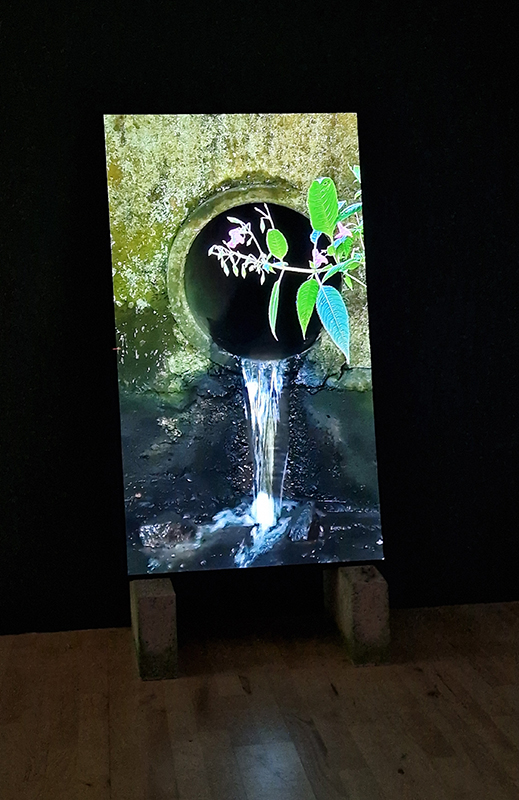
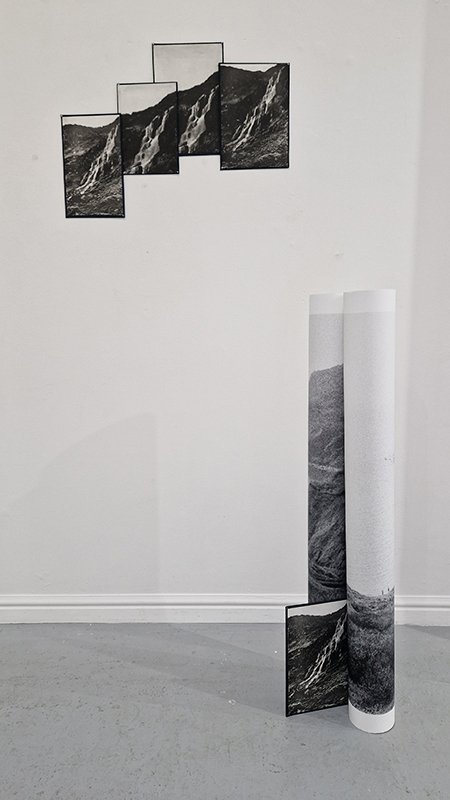
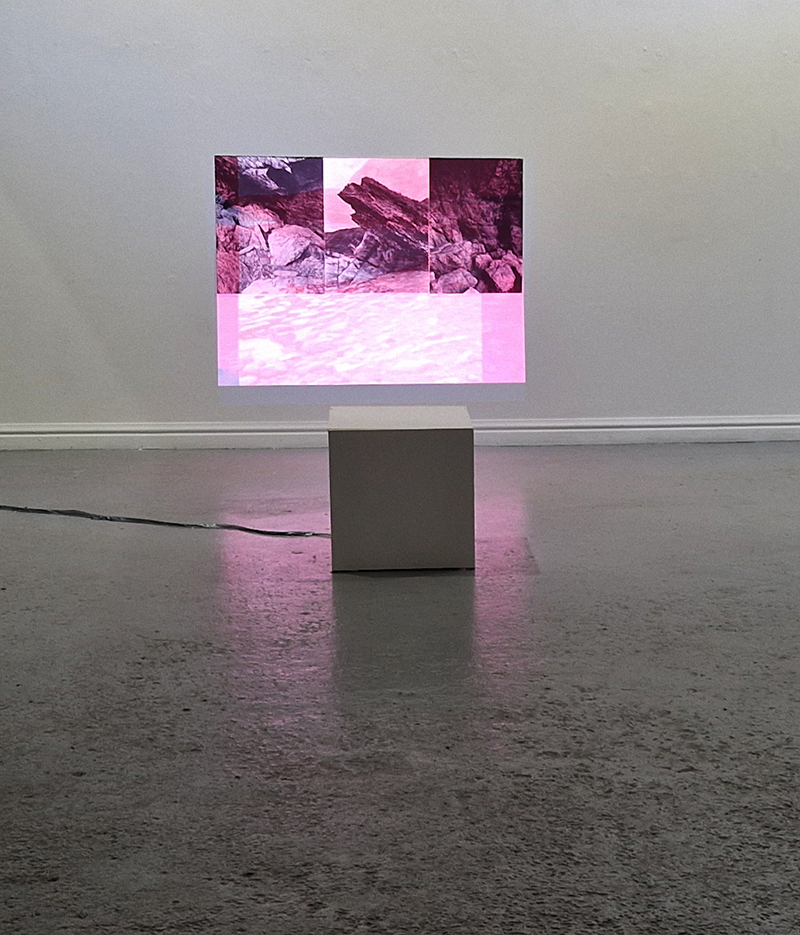
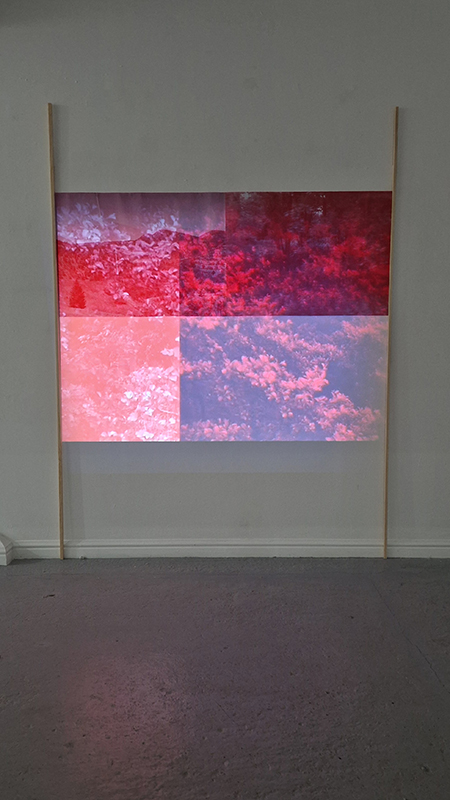
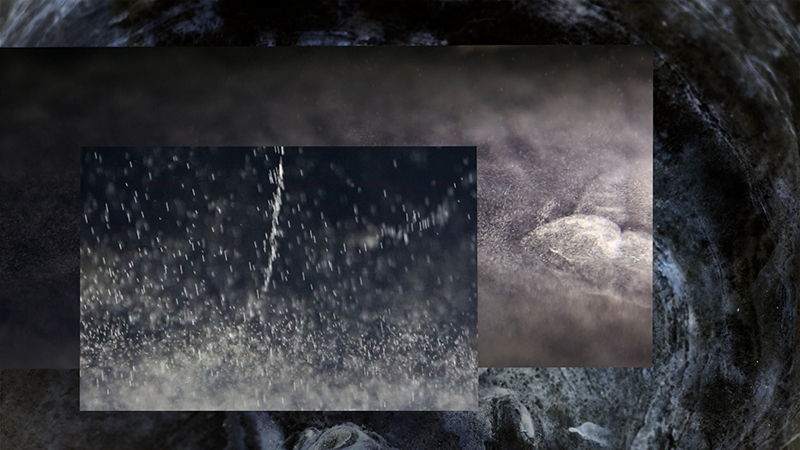
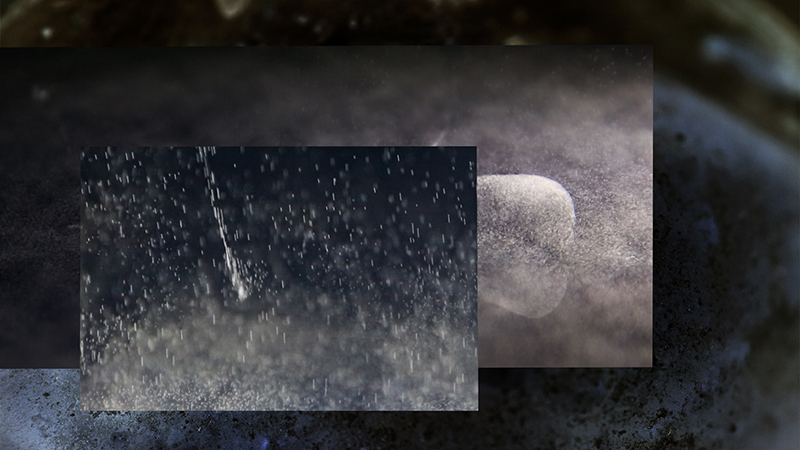
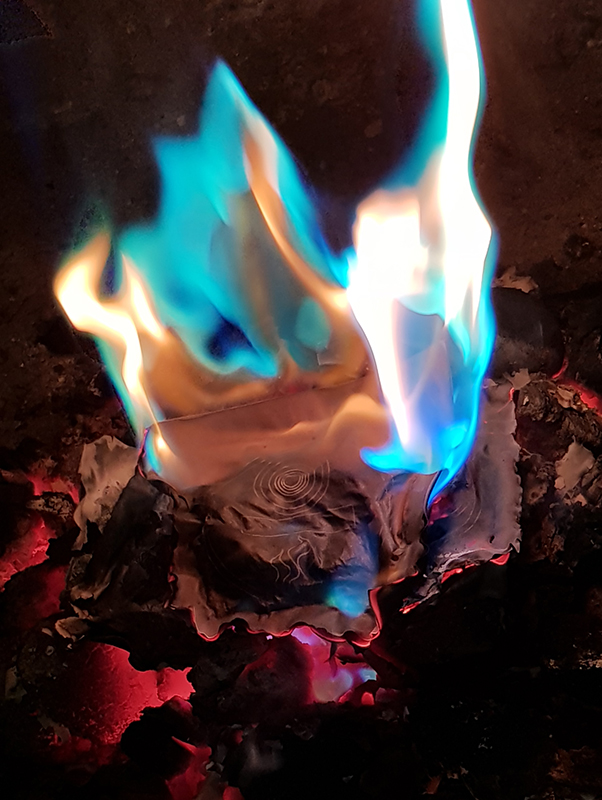
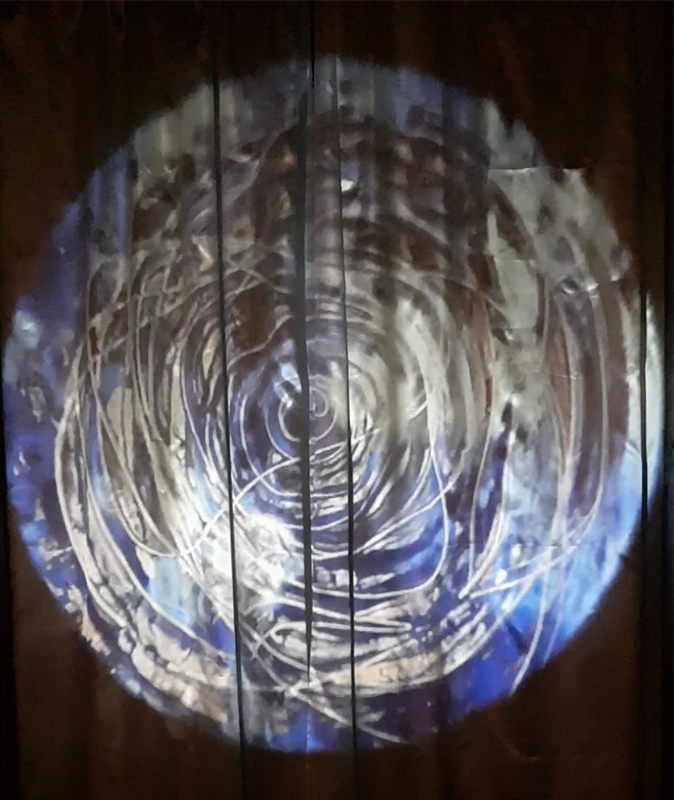
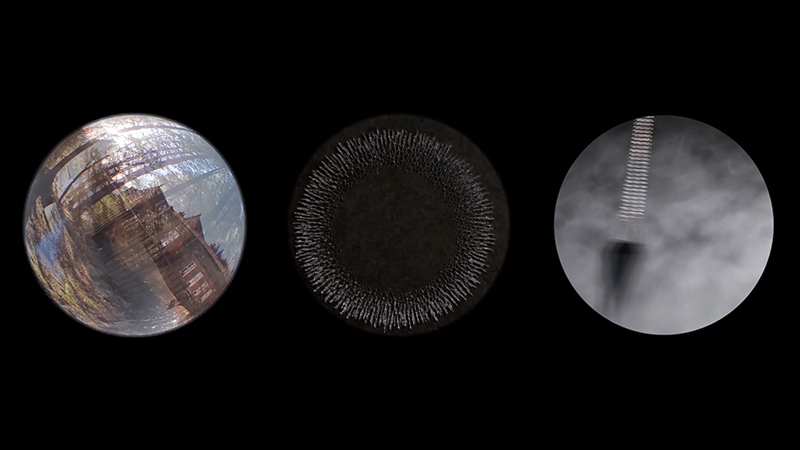
I am enjoying discovering the gutter creatures who share my home. Gathering video footage of an alternative cosmos to go towards making work which will be shown in Occupied: Strange Company at the Safehouse next year, a group exhibition curated by Julie Hoyle.
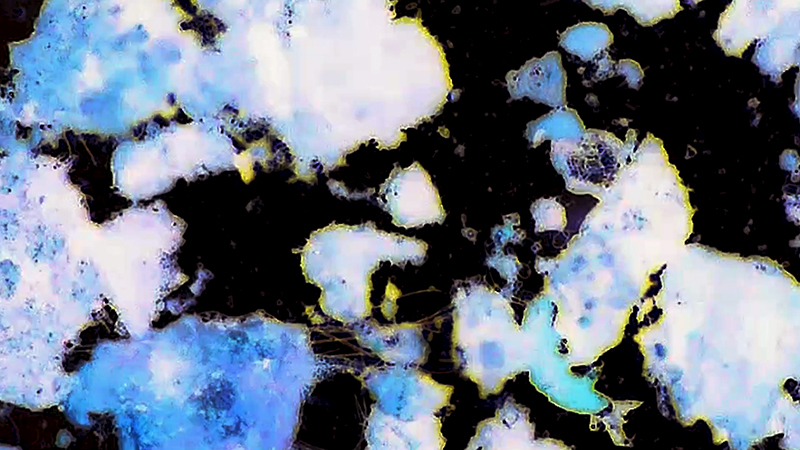
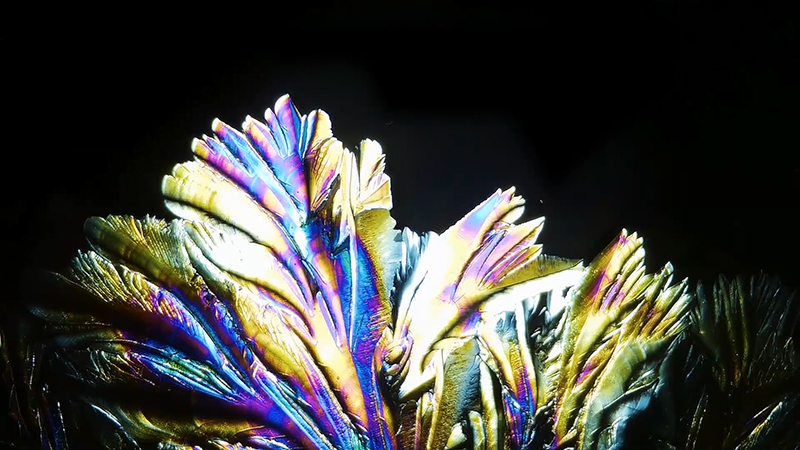
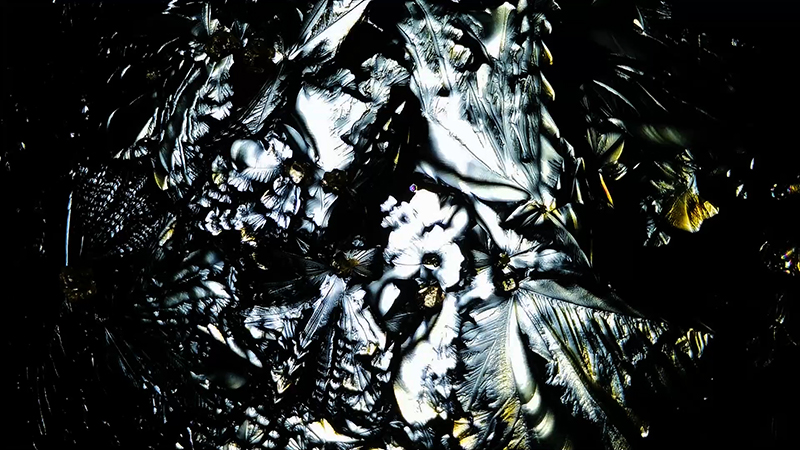
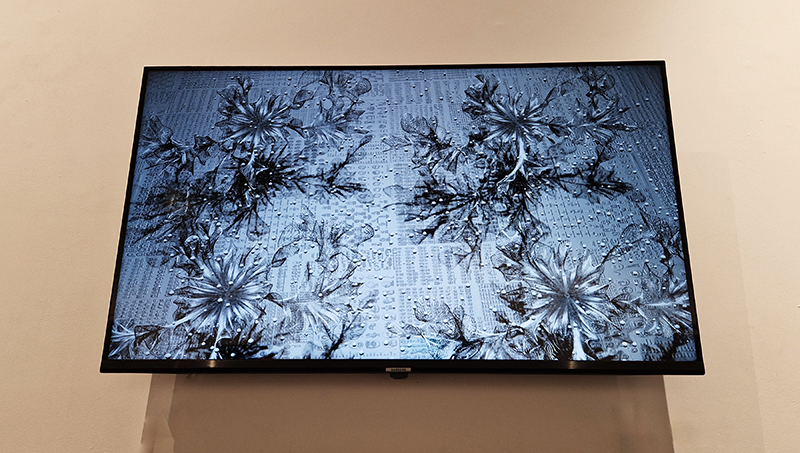
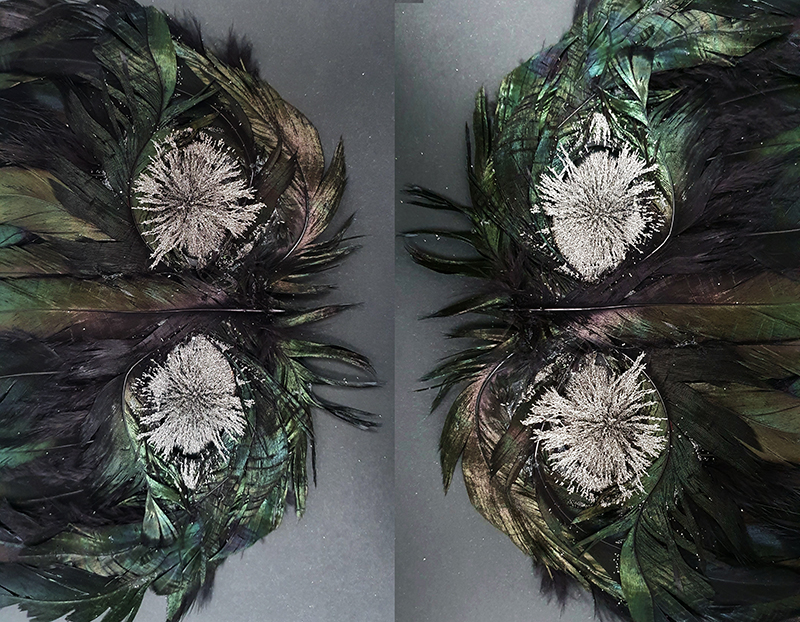
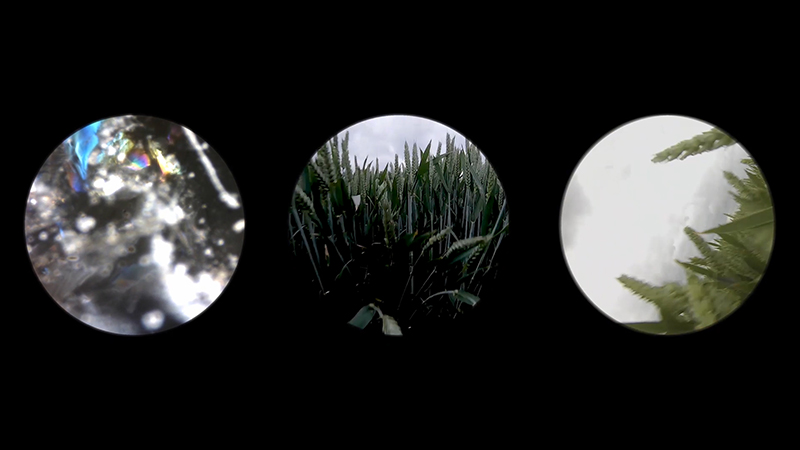
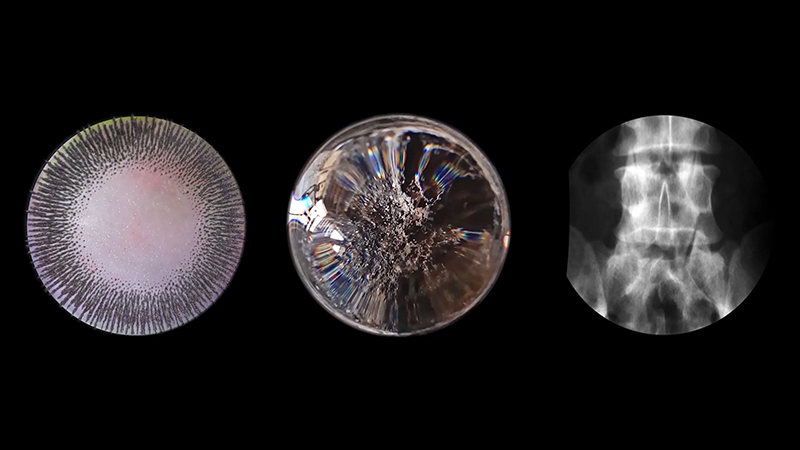
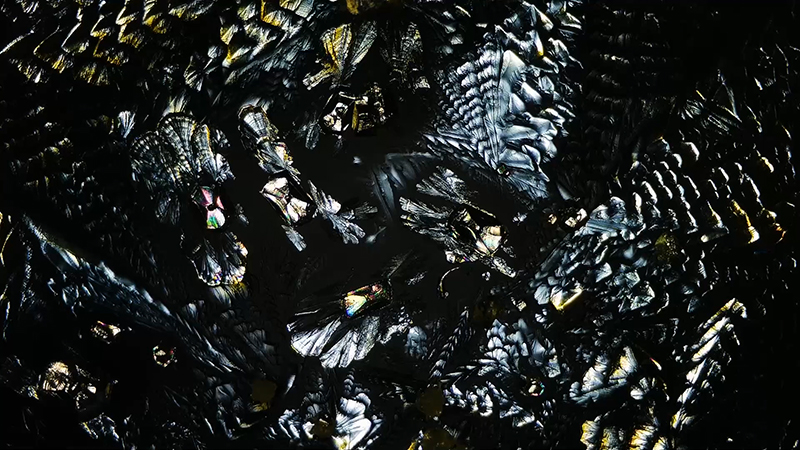
My experiments growing citric acid crystals have been going well. I am filming these transformations under polarised light which reveals the many vibrant colours but I also like the images without the filter. The structures remind me of feathers so I am thinking about creatures that flutter as well as those that swim.

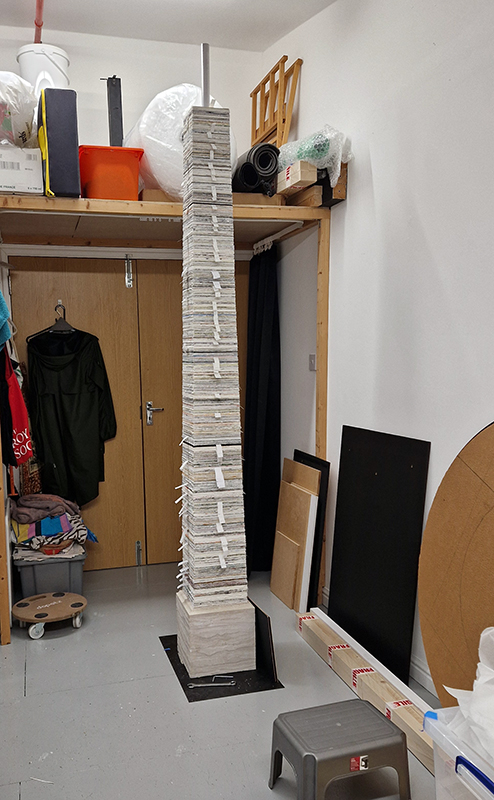
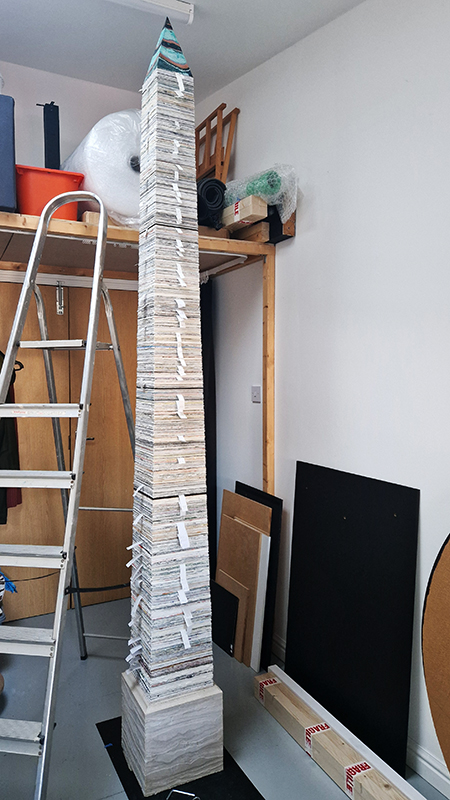
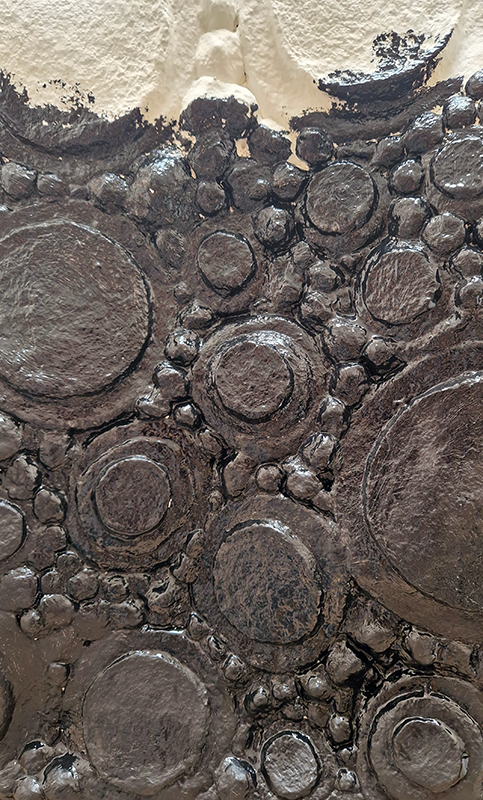
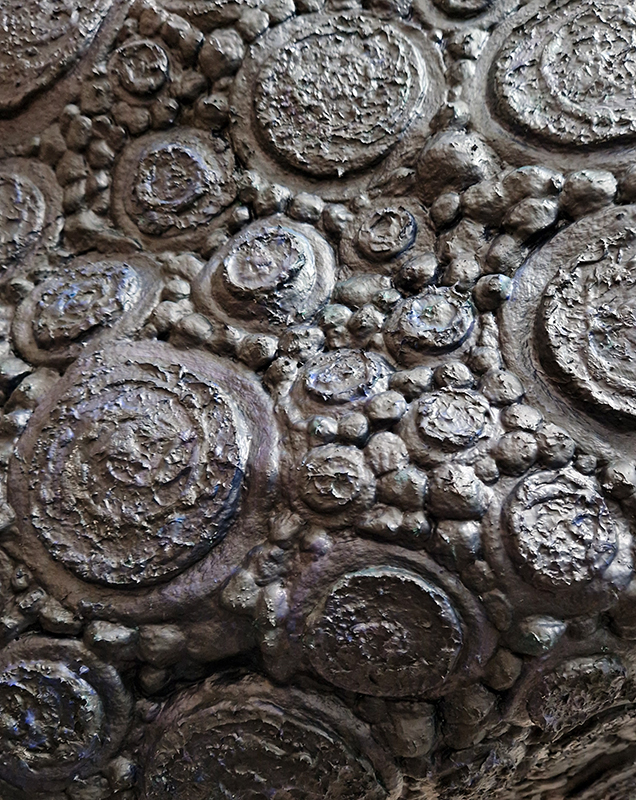
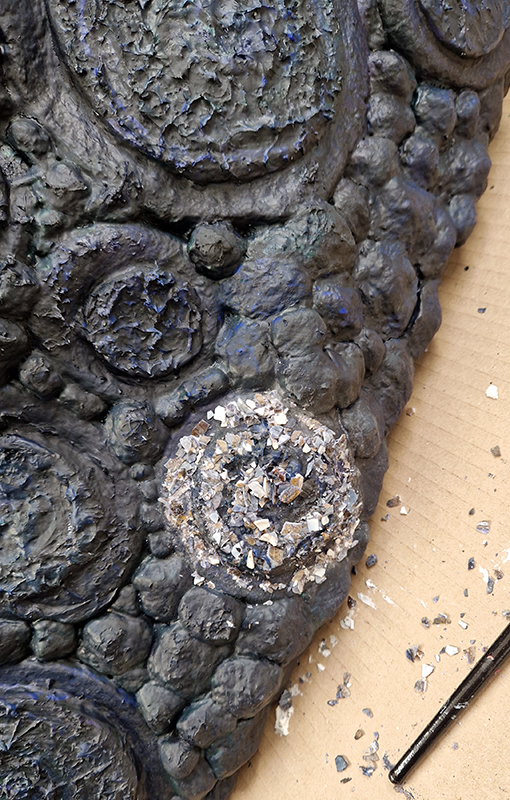
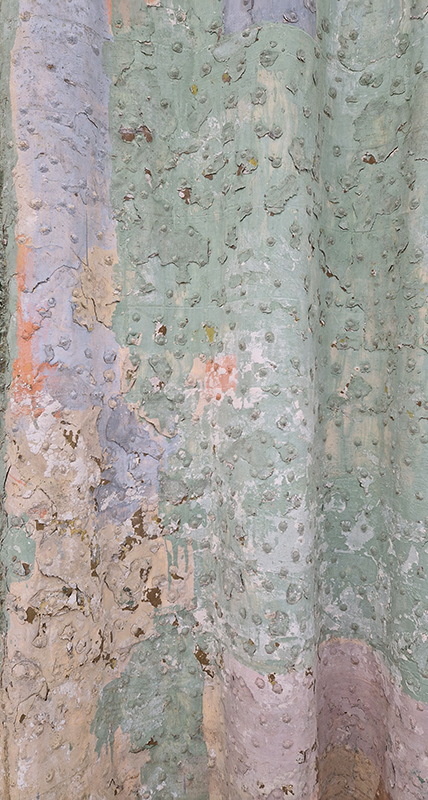
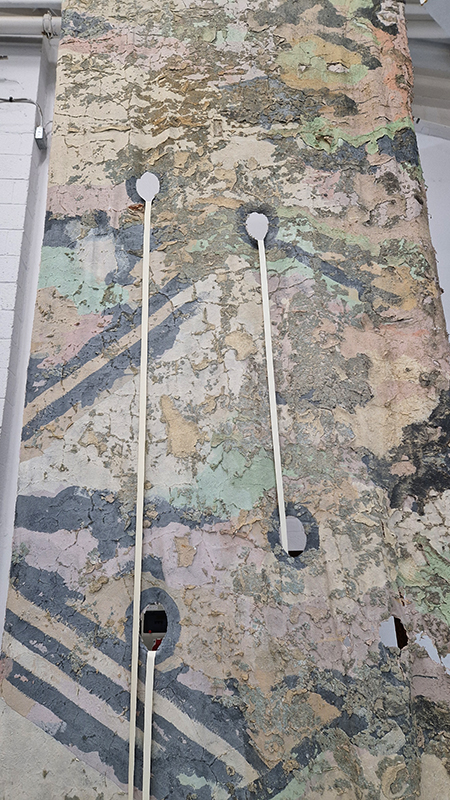
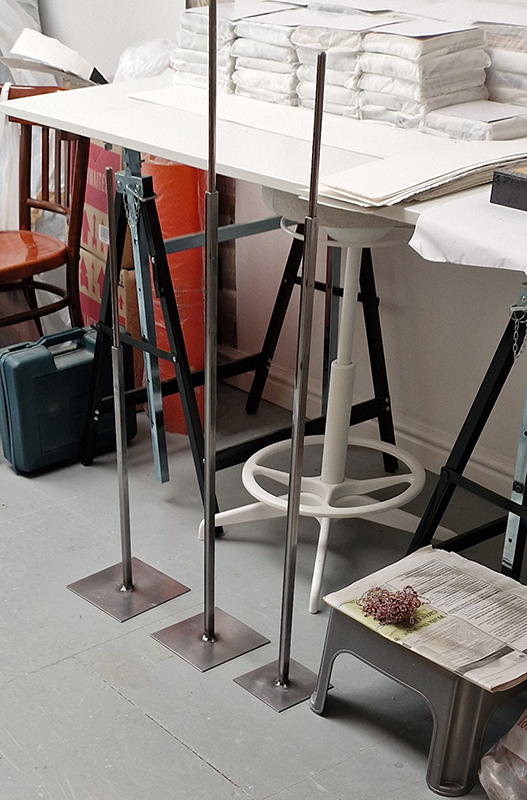
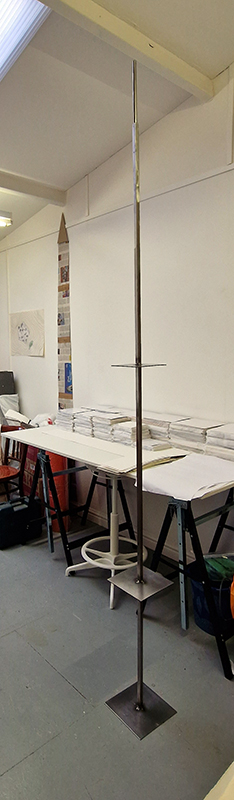
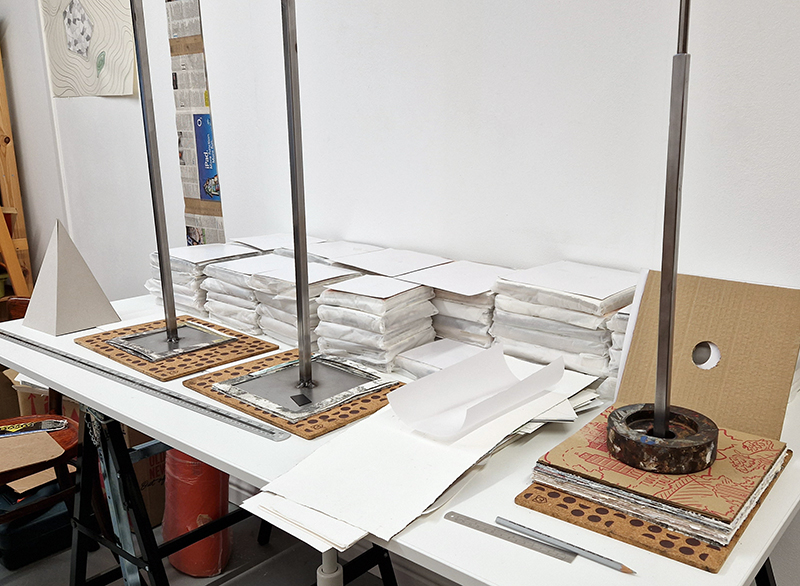
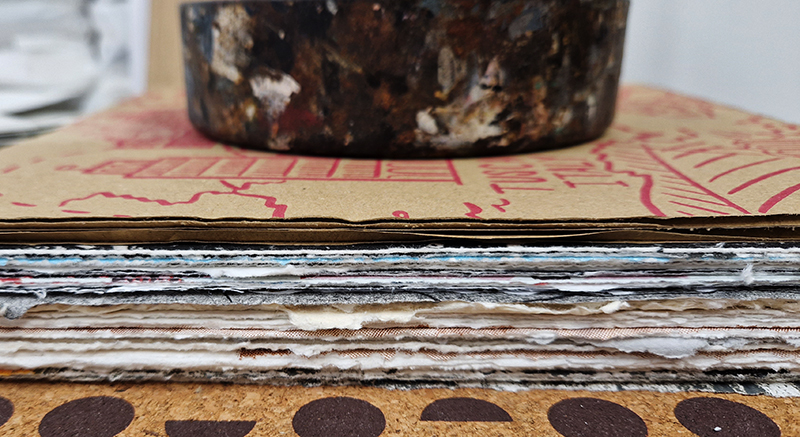
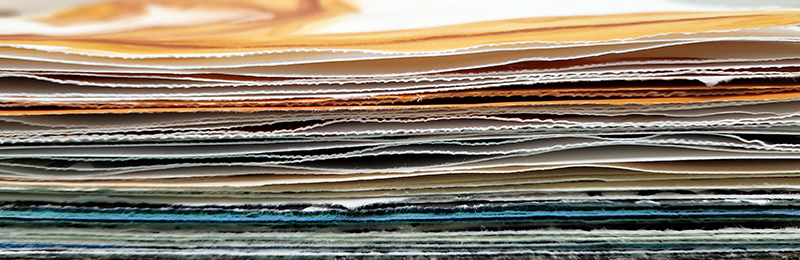
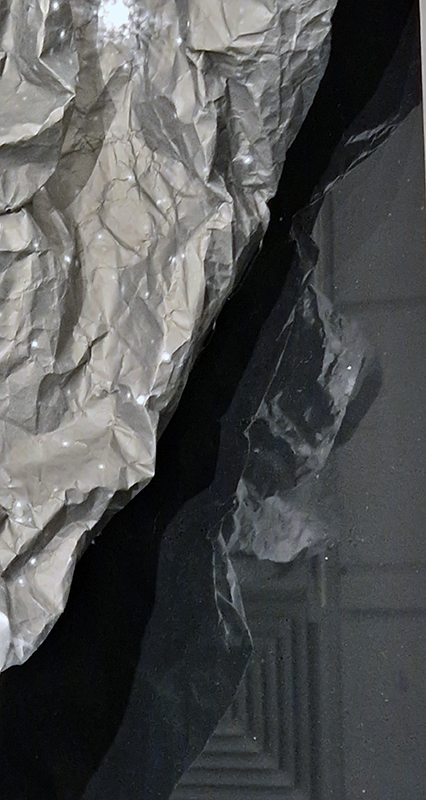
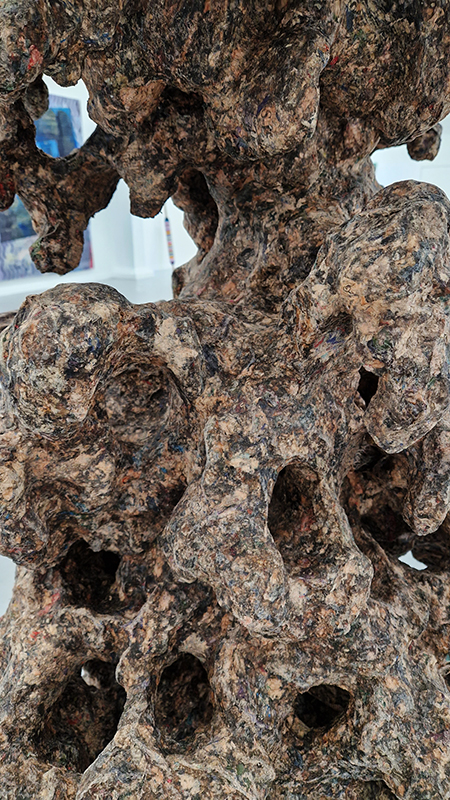
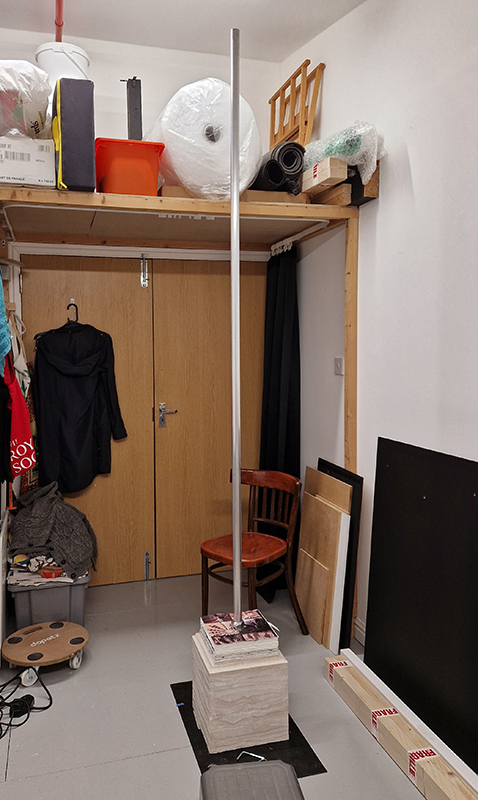
Time in the studio has been spent checking over and preparing works that will be showing in Cosmos: The Art of Observing Space curated by Ione Parkin which opens in the new year. I am thrilled to be part of this exhibition bringing together contemporary and historic artists and featuring an extraordinary range of work inspired by the cosmos. I have completed a test build of The Azimuth Obelisk (of sedimentary knowledge) using a new internal structure for before packing it all away again ready for transport to The Royal West of England Academy in Bristol. This work is a reimagining of an permanent azimuth mark erected at Hartland Magnetic Observatory in North Devon from which the drift of the magnetic north pole is monitored. Made of many layers hand torn from recycled works on paper it echoes the geological and magnetic history of the Earth which is secreted in the strata of sedimentary rock. The protruding tabs of paper seen in these studio images are markers for each section of paper squares of a tapering size and will get tucked away at installation in the gallery. With the added thickness of my new studio roof insulation the obelisk only just fits in now.
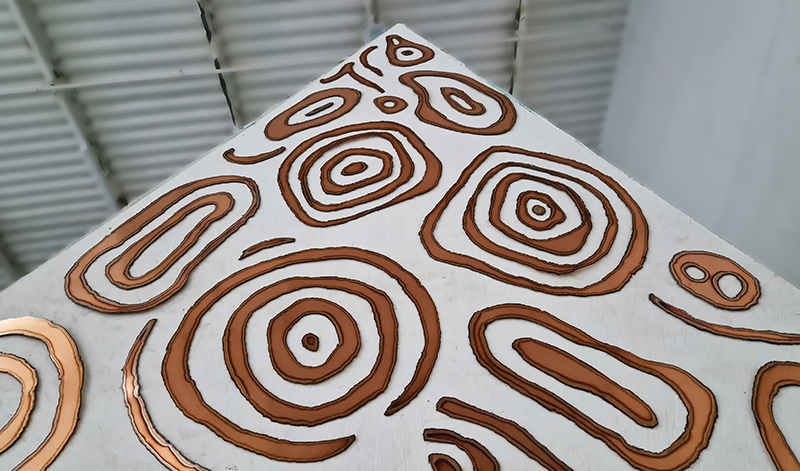
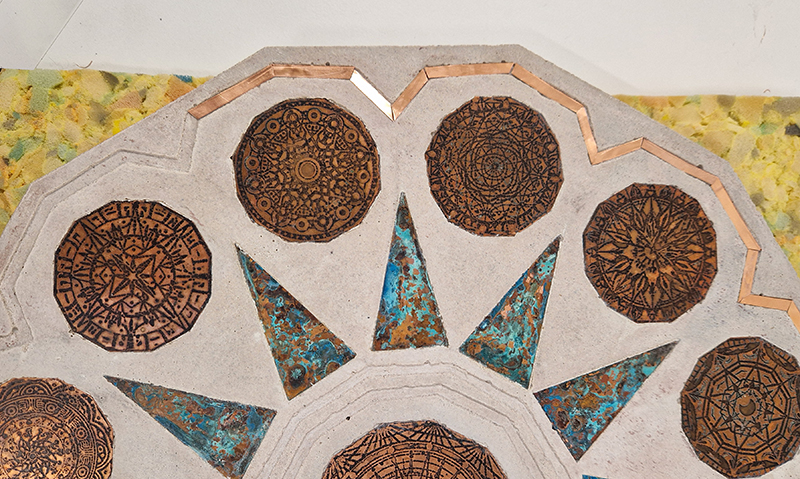
I have started work on inserting copper segments into the new sculpture for the Instruments of the Anemoi series. The other larger pieces of etched and patinated copper were added at the time of casting, held in place with tape and hope when the concrete was poured into the mould. This series of sculptures are suggestive of the pedestals that support various instruments used in monitoring the Earths’ magnetic field but are envisaged here as speculative objects used by the wind gods as the first emissaries of navigation.

I am still battling with writing text for The Book of Reversals, an artist book that responds to the record of Earth’s magnetic field reversals being written in bands of minerals on the ocean floor.
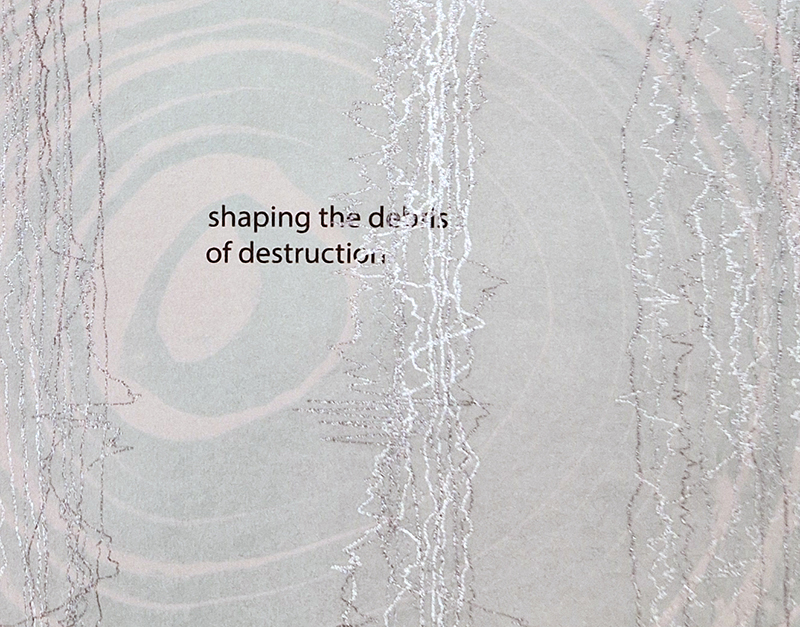
The crisp crust fractures / Fragments slide across a viscous veneer

Submarine mountains tower / Ocean trenches gape

Tectonic plates subduct / melting into the mantle 

Deep time traces are consumed / surfaces ceaselessly reformed

The Earth’s magnetic field has been a fascinating mystery for many hundreds of years and Gillian Turner’s book North Pole, South Pole recounts the stories of those who sought to solve its origin and mechanism. Something I hope to look at in more depth is how pottery and bricks preserve the direction of the magnetic field in their minerals during the process of firing which heats and then cools the clay – the same process that occurs in a lava flow. Iron-bearing minerals (like magnetite) in clay become “magnetic” when heated in a kiln. As the pottery cools, these minerals lock into the Earth’s magnetic field direction and strength at that time. The study of the magnetic properties of ancient pottery, known as archaeomagnetism, has been used to make records of the inclination of the magnetic field from past millennia. Inspired by these studies of manmade artefacts to determine the historical position of the north magnetic pole, physicists Bernard Brunhes and Pierre David took samples from exposed lava flows and their underlying clay in central France. In 1906 they came to the astonishing conclusion that about six million years ago the magnetic field seemed to point in the opposite direction, the first indication of magnetic field reversals.
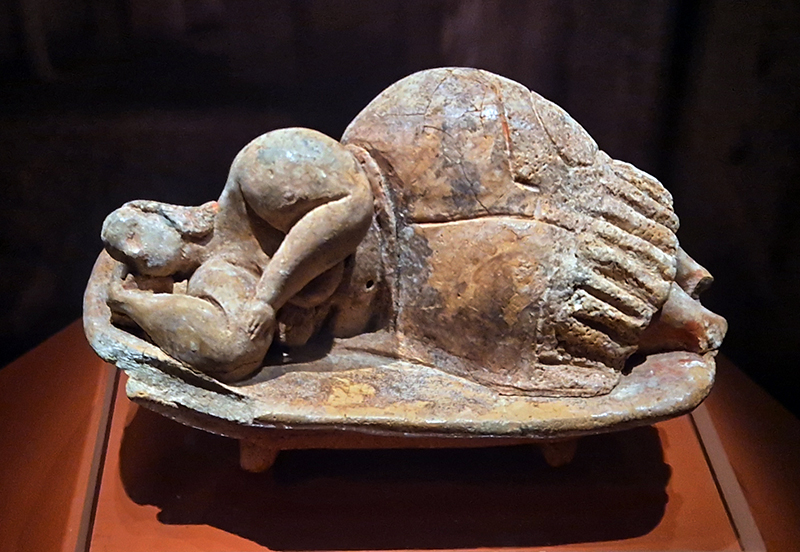
Also with thanks to Gillian Turner’s book North Pole, South Pole I have learnt that there were early hydrogen balloon ascents to determine if the Earth’s magnetic field intensity varied with altitude, helping to decide if the magnetic field came from within the Earth or was extra terrestrial. In 1804 Jean-Baptiste Biot and Joseph Louis Gay-Lussac made a pioneering ascent to 4,000 feet (1.2km). In Turner’s book she writes that the dip needle necessary to take the measurements iced up and so the results were unreliable. I feel for them, but it seems they conducted many other experiments on temperature and gases in the atmosphere while aloft and in any case we now know they would have needed to ascend many kilometres higher than they achieved to notice any weakening in the magnetic field.
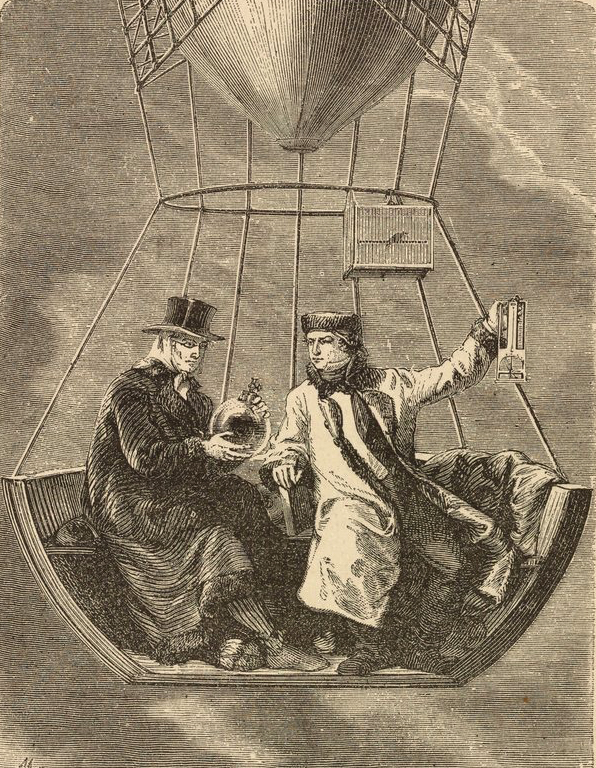
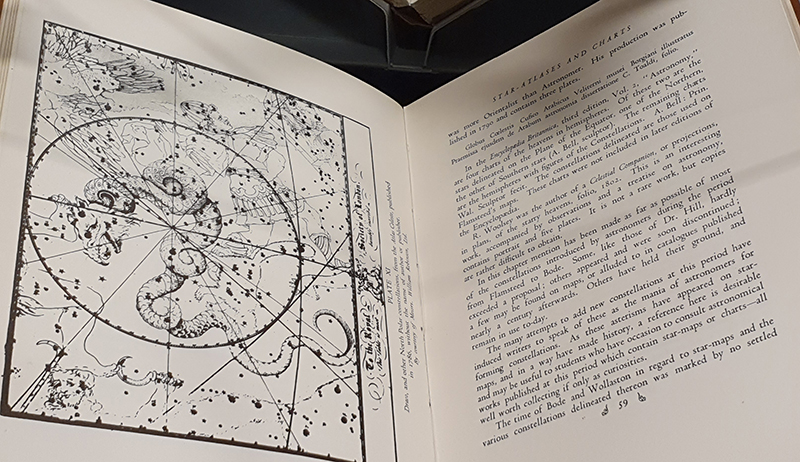
This plate is from John Howard Appleton’s (1844-1930) Chemistry, Developed by Facts and Principles Drawn Chiefly from the Non-Metals, published in 1884.

I am trying to remember when I first had the idea to launch a cloud chamber in the payload of a high altitude balloon. I knew about the hot-air balloon experiments carried by Victor Hess to determine the origin of cosmic radiation, and his discovery in 1912, when he made an ascent to over 5km during a near-total eclipse of the Sun, that radiation had to be coming from further out in space.
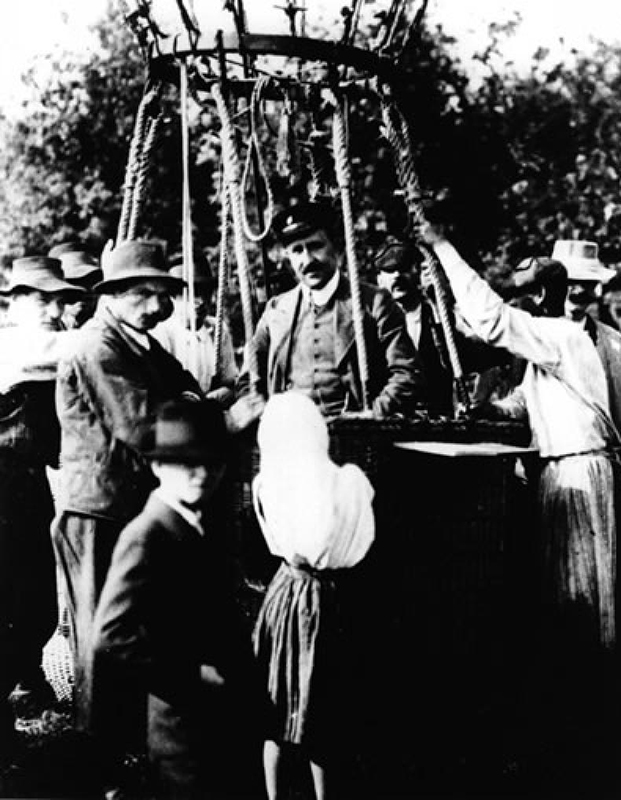
Hess on his return from the 1912 balloon ascent – Alan Watson pointed out that this was obviously staged at another time as he would not have been standing looking so well after his ordeal.

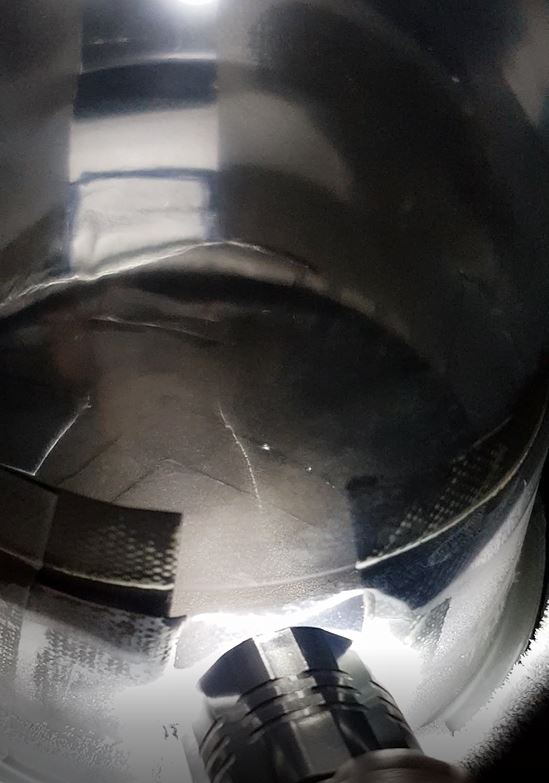
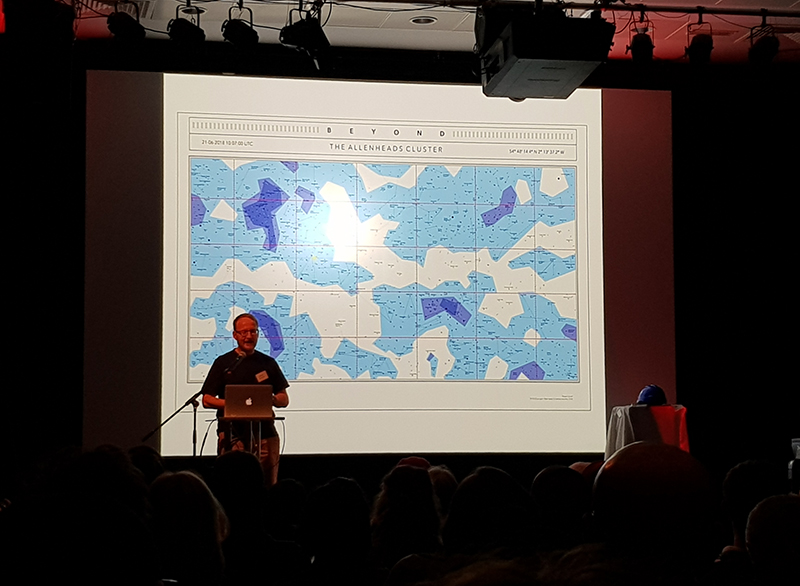
I remember looking into the dark skies during a residency at Allenheads Contemporary Arts and wondering about all the activity that I couldn’t see. I decided then I would like to film at 15km where most subatomic cosmic ray activity takes place, even if nothing would show on the film.
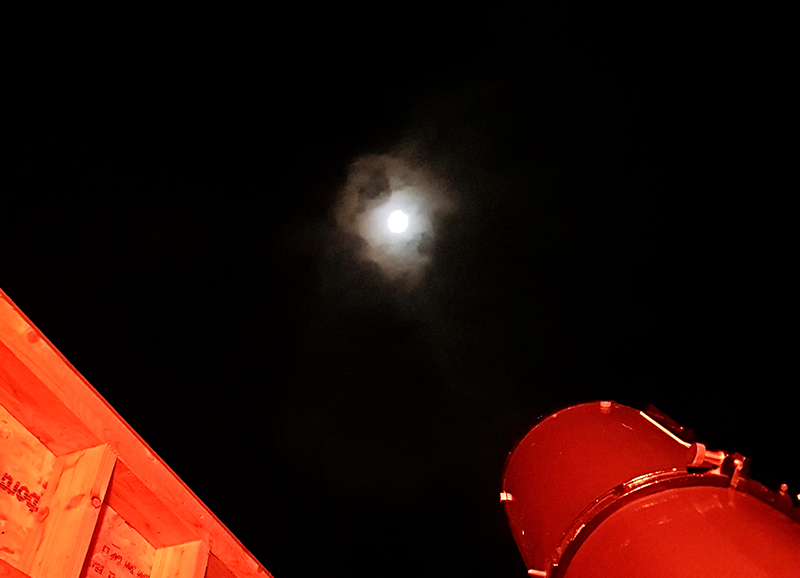
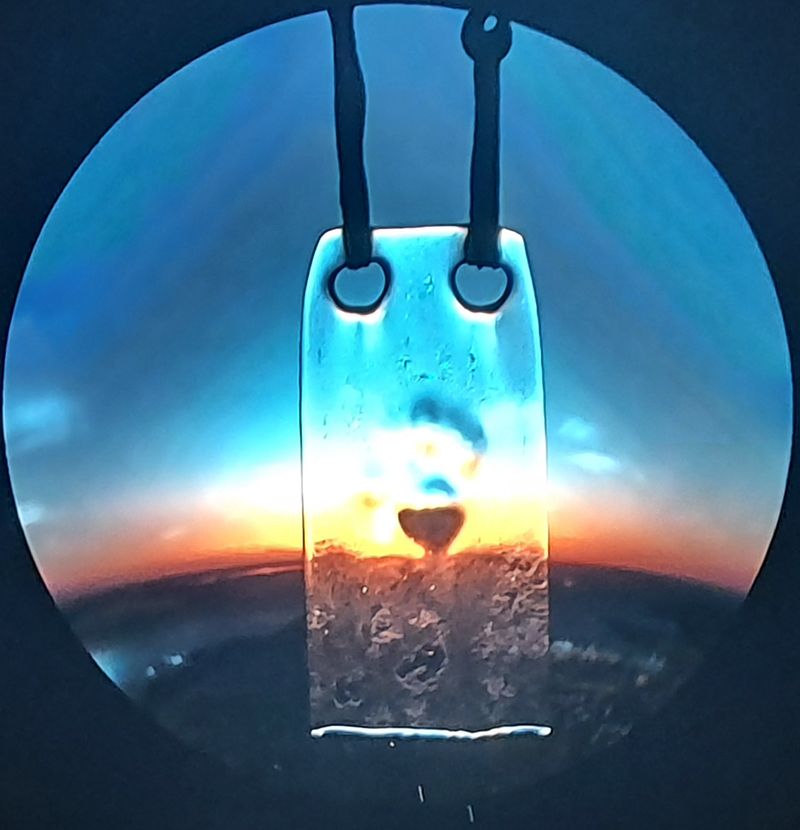
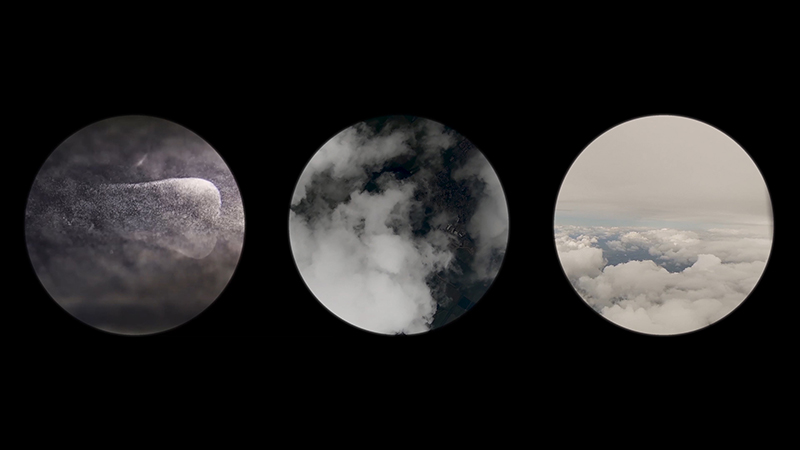
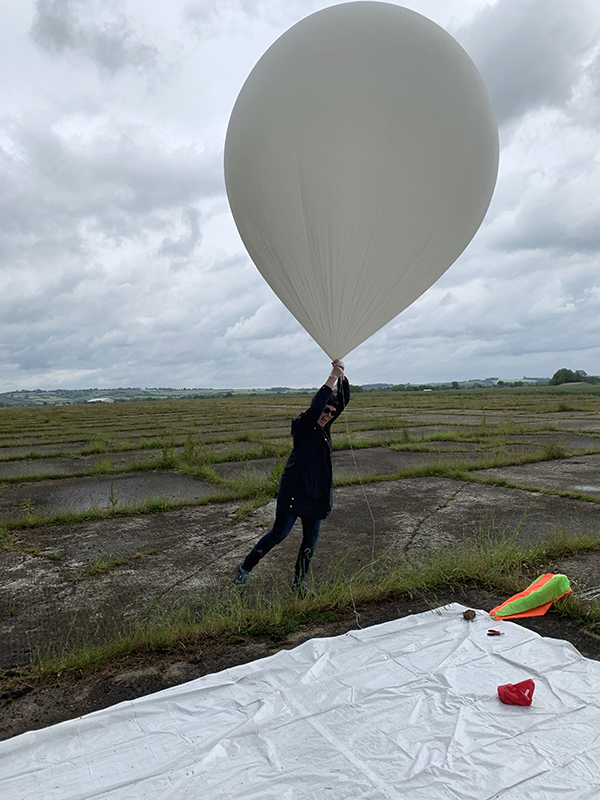
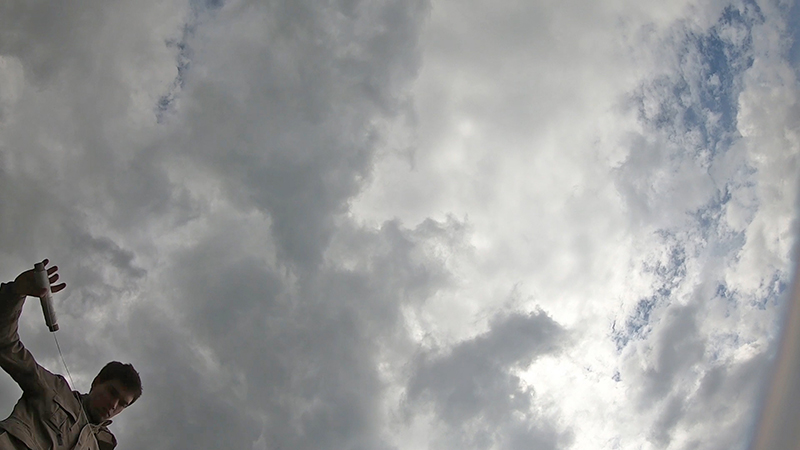
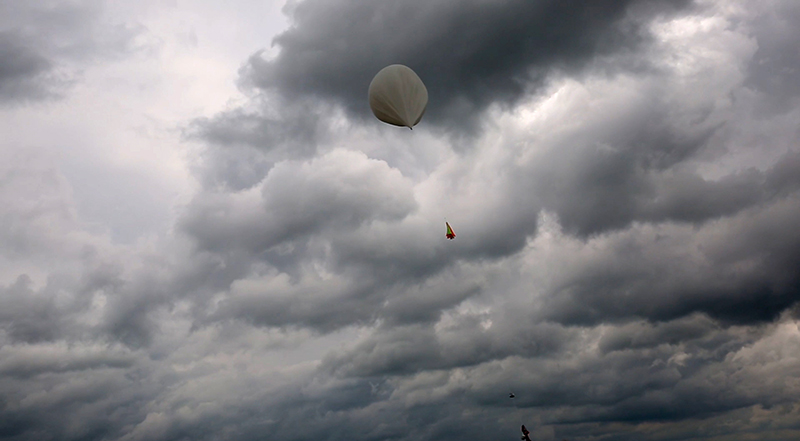
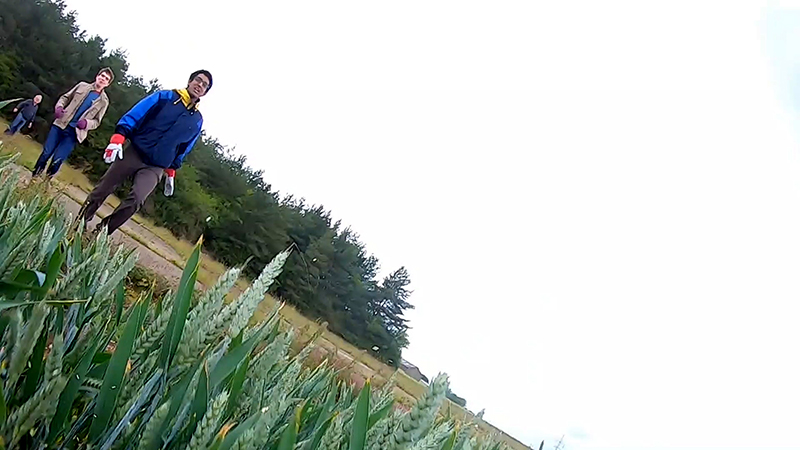
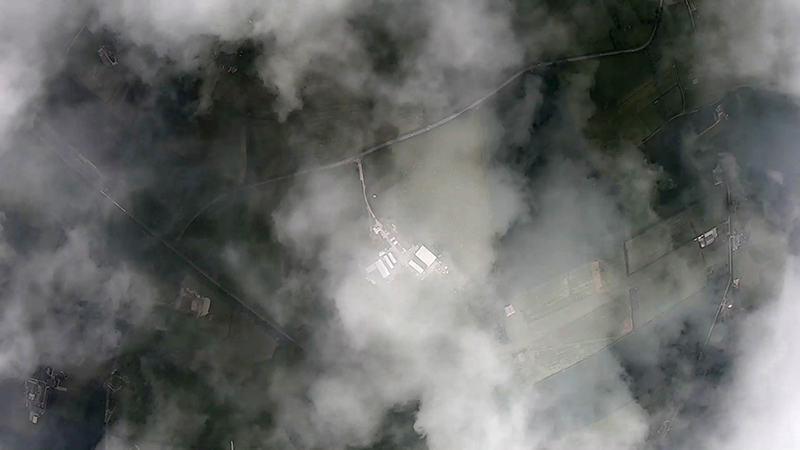
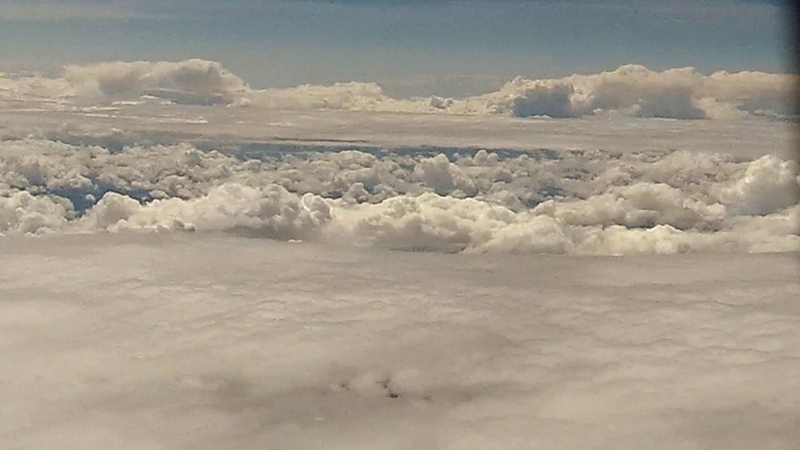
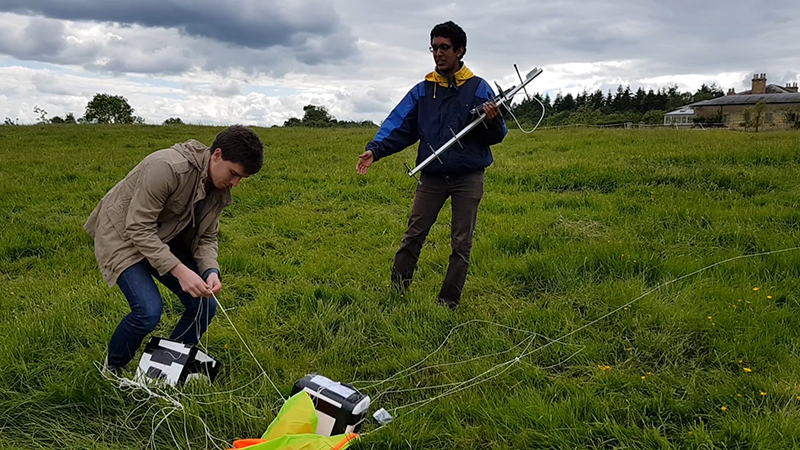
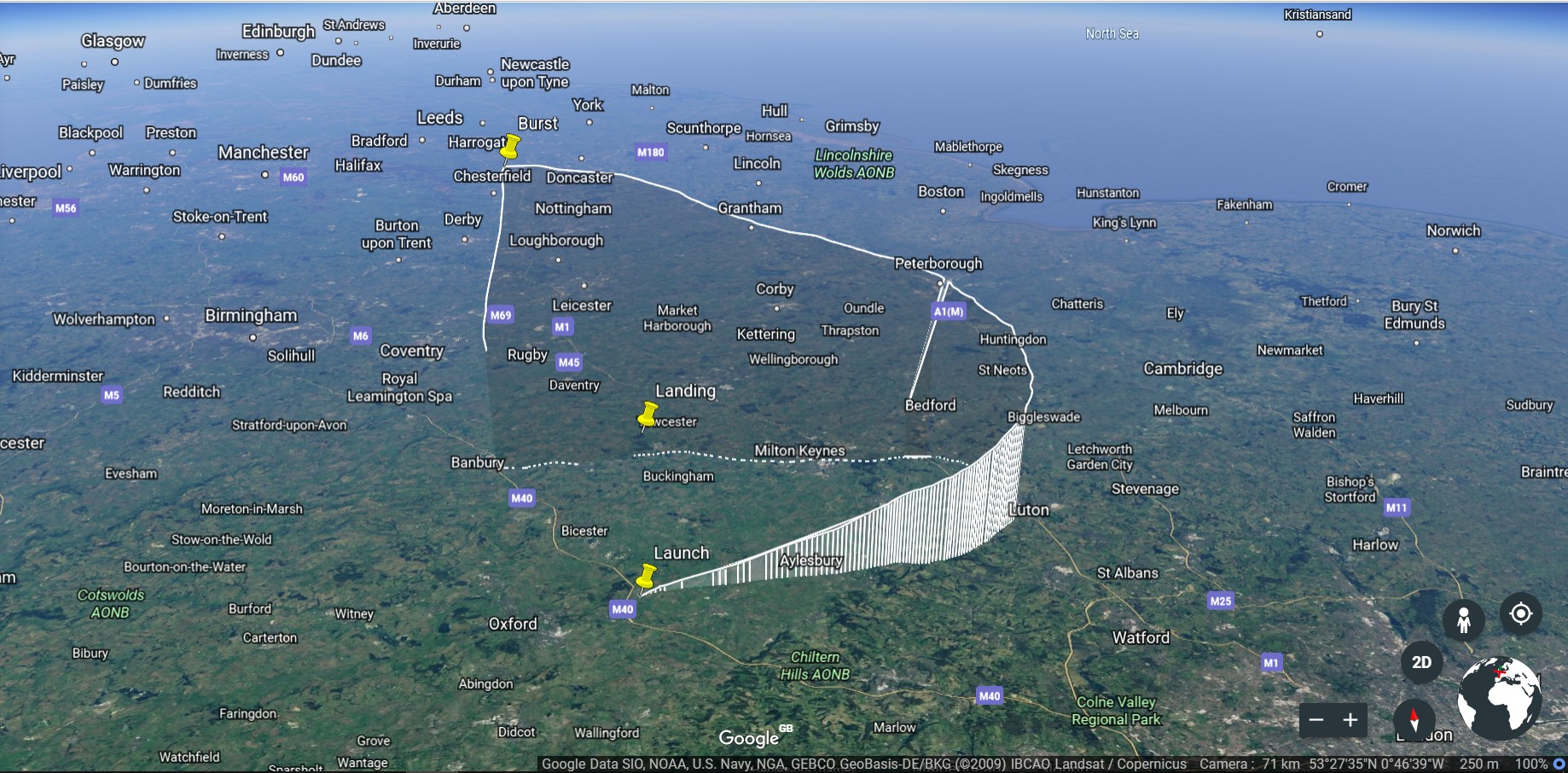
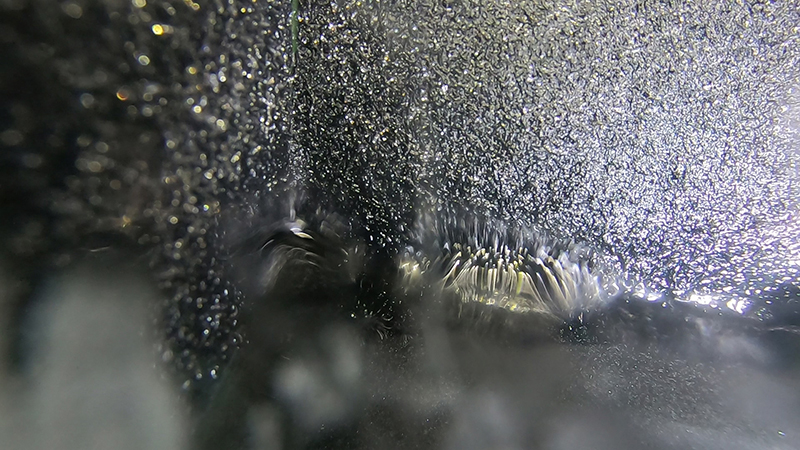
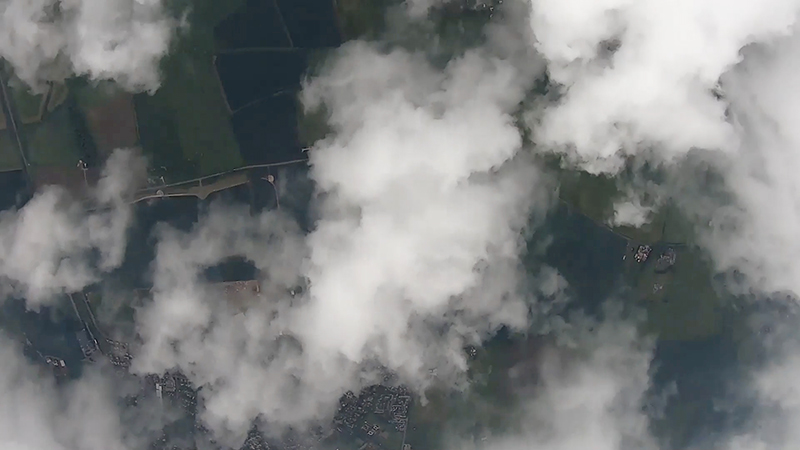
A high altitude balloon flight seemed the perfect solution and I was very grateful for the help I subsequently received from Imperial College Space Society and The UK High Altitude Society. The decision to include a cloud chamber in the payload was always a risk and as it turned out nothing of the cosmic ray activity was captured on film. However, the balloon did reach an altitude of over 37km and the payload was successfully recovered with some amazing video footage of its journey.
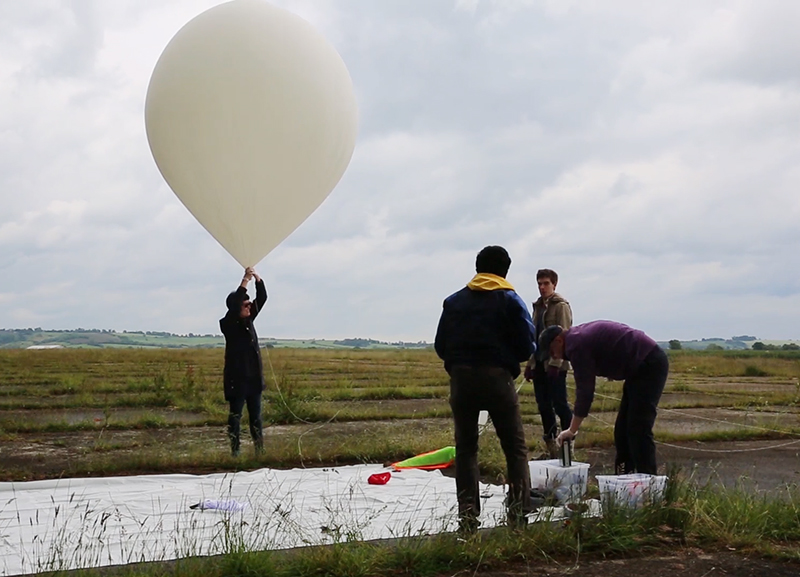
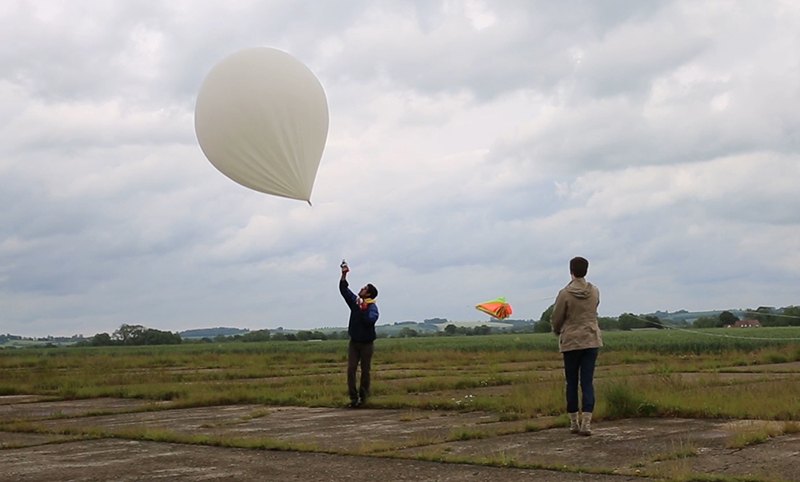
The record height for a hot air balloon ascent is 21km so in theory it could be possible to send a cloud chamber up in a hot-air balloon and film at altitude with potential for more success if some brave person were on board to operate the camera. Unlikely to be me.
Some intriguing news of ORC’s on the RAS websiteThe most distant and most powerful ‘odd radio circle’ (ORC) known so far has been discovered by astronomers. These curious rings are a relatively new astronomical phenomenon, having been detected for the first time just six years ago. Only a handful of confirmed examples are known – most of which are 10-20 times the size of our Milky Way galaxy. ORCs are enormous, faint, ring-shaped structures of radio emission surrounding galaxies which are visible only in the radio band of the electromagnetic spectrum and consist of relativistic, magnetised plasma. the three new cosmic rings – discovered not by automated software but by sharp-eyed citizen scientists – represent an important step toward unlocking the secrets of these vast, puzzling structures.

Out and About

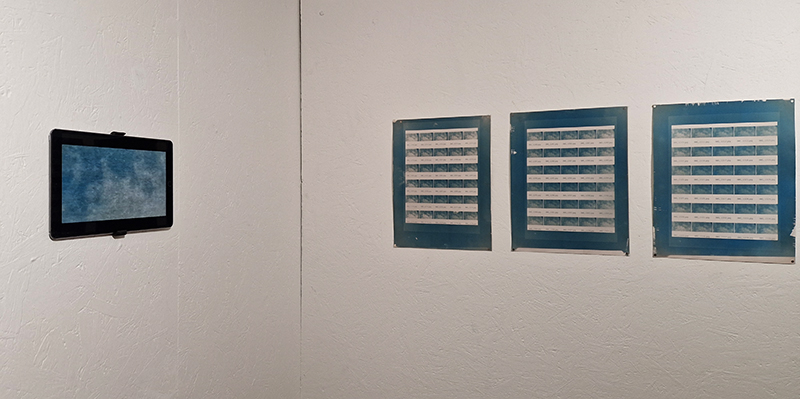
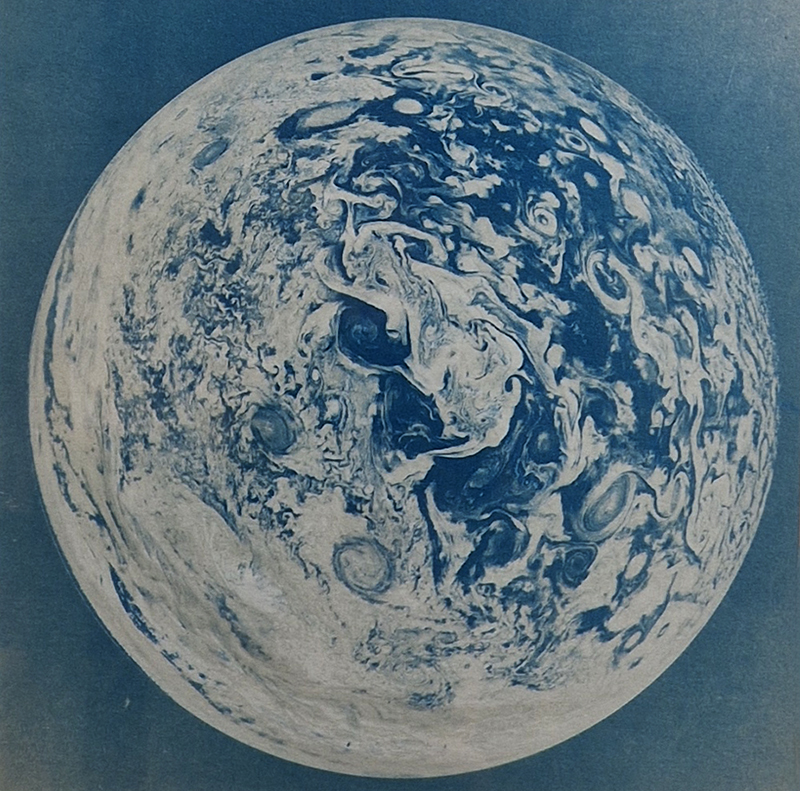
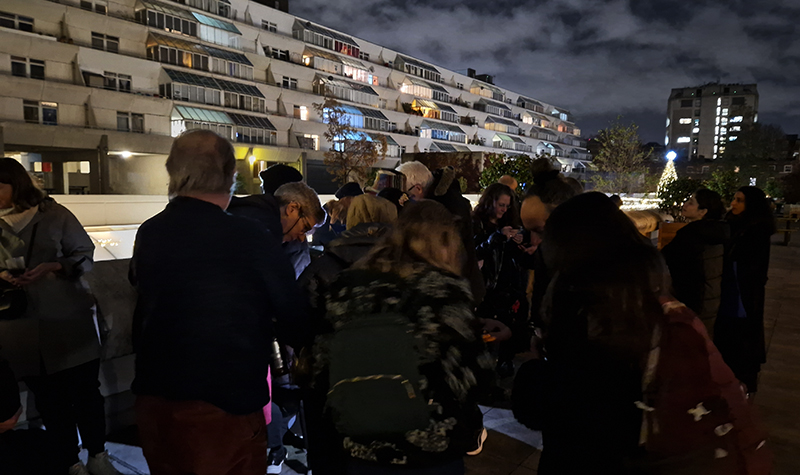
A wonderful evening with artist in residence Melanie King at Passengers connecting the celestial with the architecture of the grade II listed Brunswick Centre in Bloomsbury, London. Melanie used the residency opportunity to explore the duotone cyanotype process using multiple layers of cyanotype to mimic astronomical imaging construction and even used cyanotypes to create an of the Moon. The beautiful results were presented at an evening event with the additional treat of live telescope viewing of the Moon and Saturn from the second floor terrace of the Brunswick centre under the engaging guidance of astronomer and science communicator Paul Hill.
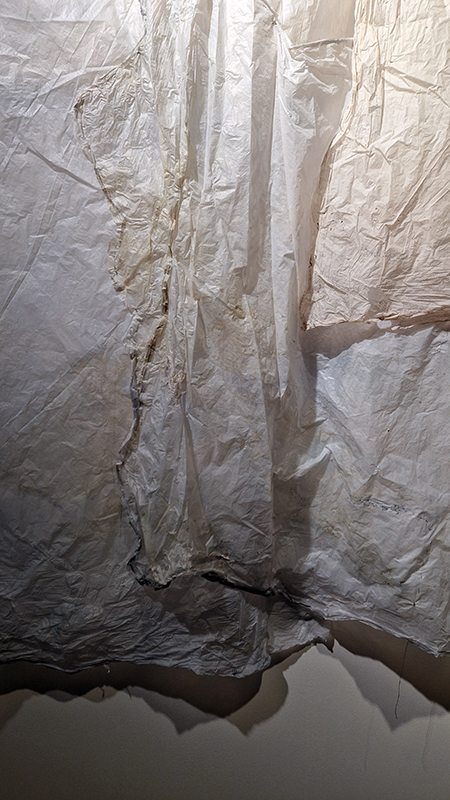
Liz Elton’s sensitive work Black and Blue (compostable bio materials, cabbage and fruit dye saddened with iron, silk, poppy and sage seeds) showing in A Changed Environment at Messums London. This group show examines changing ideas of beauty, ecology, and sustainability, as well as themes of place, memory, and identity, revealing how connections to the natural world can inspire both understanding and hope. I love the delicacy of this new work and the term ‘saddened by iron’ which is used in the dying process to dull a colour, and which, as Liz says, also emotes the hardships of industrial life.

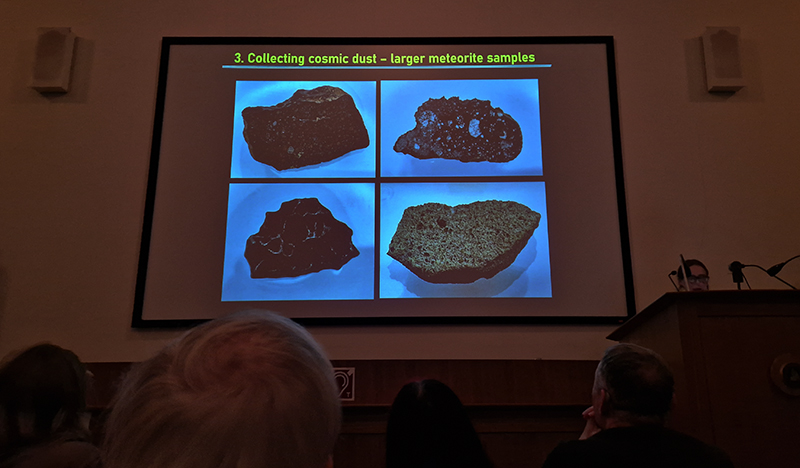
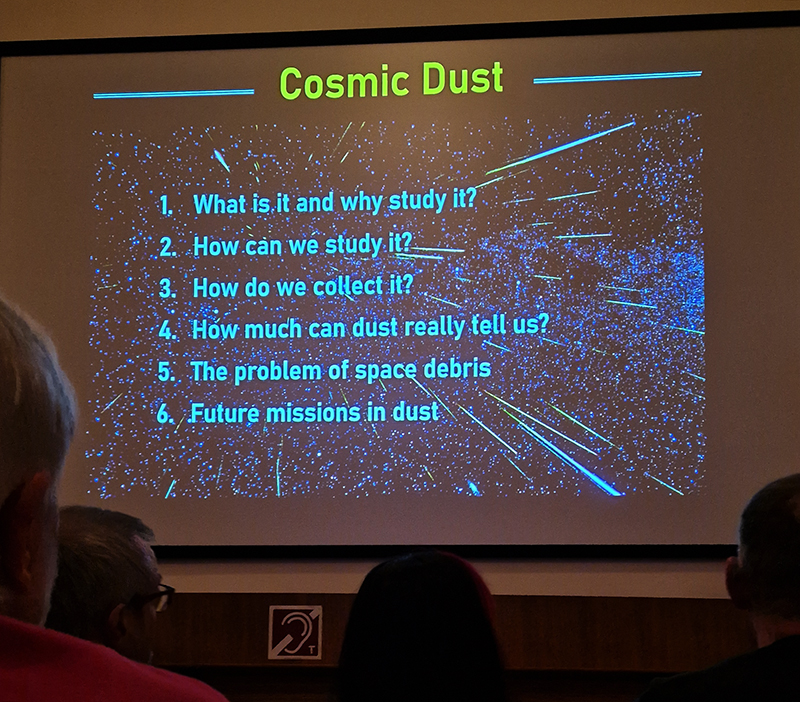
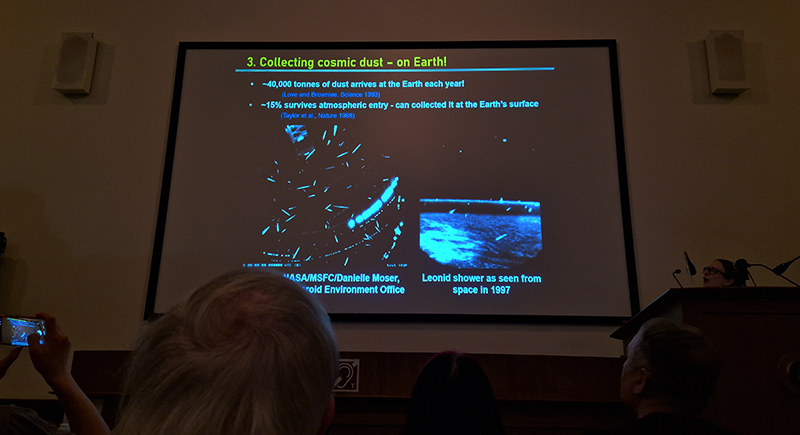
Cosmic Dust talk by expert on extraterrestrial space dust, and how it can impact astronomy and wider human endeavours in space, Penny Wozniakiewicz at The Royal Astronomical Society. ‘Natural’ cosmic dust is being polluted by man made dust from space debris. This is a real problem created by dead satellites, old upper stages of rockets, fragments form exploded rocket or stages, flecks of paint, aluminium oxide spheres from solid rocket burns, dropped space equipment. When any of this debris collides a cloud of smaller debris is ejected, this process is self propagating and even the tiniest piece of debris can cause serious damage to spacecraft and satellites. This is called the Kessler syndrome, a cascading effect that could render orbital space unusable for generations, threatening satellites, the International Space Station, and future space travel.
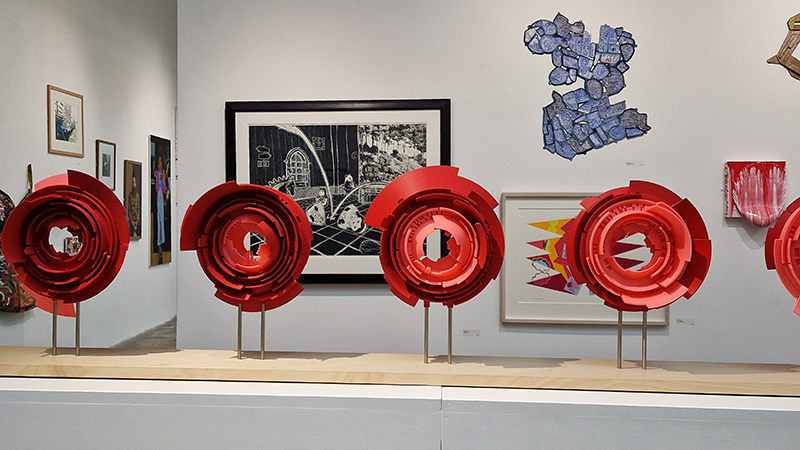
Good to visit the The London Group show 2025 at Copeland Gallery where lots of friends are showing excellent work and also to discover new work and artists.

I found Majid Majid’s video Faith Amongst The Ruins a difficult but compelling work. So scary and horrific because we know this is real footage, some of which I had seen before at the time of the attacks on hotels housing asylum seekers and refugees, but it is still so disturbing to watch these people, with so many children present, cheer on the violence. They have no empathy with the terrified people trapped inside the hotel or for the person in the car who is ambushed and stabbed. The glee of those filming the assault is chilling.

He writes: “As a refugee, I know places shaped by fear and rejection. This work revisits UK sites of last summer’s Islamophobic and racist violence, a mosque, a street, and a hotel housing asylum seekers transforming them through prayer. Placing a mat where hostility flared, I reclaim space as sacred ground. Video and traces of violence form a counter-narrative of dignity, belonging, and resilience.”

Images: Majid Majid, Sayako Sugawara, R James Healy, Victoria Rance, Jonathan Armour, Sandra Crisp, Jenny Wiggins, Victoria Arney, Carol Wyss, Sandra Crisp, Genetic Moo, Jacqueline Yuen-Ling Chiu.

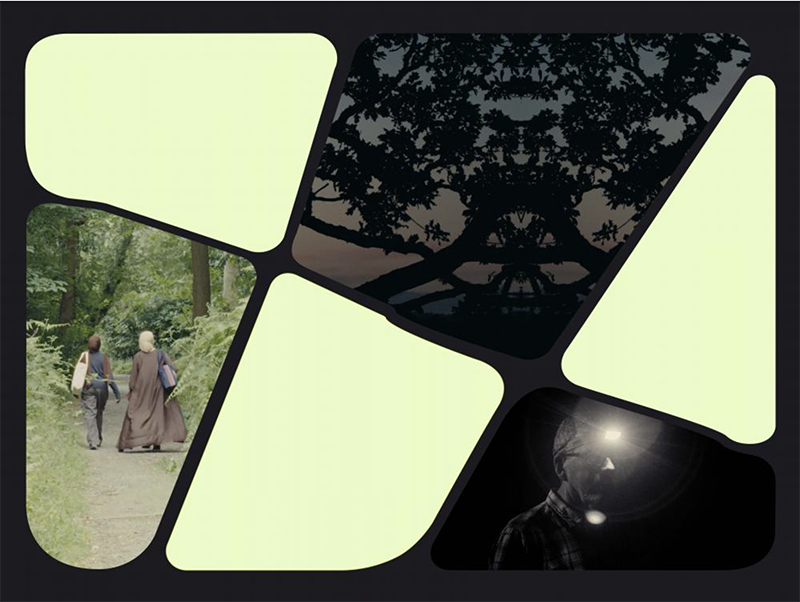
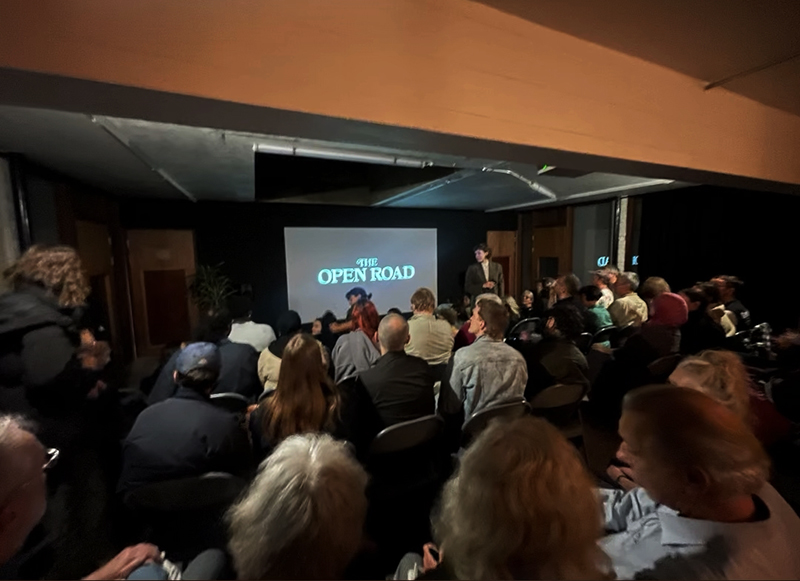
Three beautifully directed films screened at FormaHQ as part of The Open Road series of artists moving image works, co-commissioned by a partnership of visual arts organisations. The works are loosely inspired by The Canterbury Tales, drawing from a disparate cast of characters to recount competing stories in a patchwork of styles. David Blandy (Commons), Amaal Said (Open Country) and Sam Williams (The Eel’s Tale) each draw on storytelling traditions to give fresh perspectives on their journeys, on foot, by sea and through time. Heartbreaking to hear how terrified Amaal Said was to leave London for the open country of the south coast, especially with the current rise in overt racism, when out looking for locations and that they did suffer racist abuse while filming. Hers is a gentle and warm study of a mother and daughter and an absent grandmother, a longing for home and to feel ‘at home’. Sam William’s film sets the plight of the highly endangered glass eels who journey 4,000 miles from the Sargasso Sea to the Medway wetlands in Kent, swept along by currents, undergoing bodily transformation, following an instinctive desire on this epic migration alongside two other watery tales of transformative journeys across boundaries of identity and freedom. Coincidently, a recent episode of the Infinite Monkey Cage is all about these mysterious eels. David Blandy turned his attention to the vast and disparate collection of artefacts held in the Tunbridge Wells museum and gave some of these specimens a voice to tell of how they had lived before they became a part of this collective of human taxonomy.
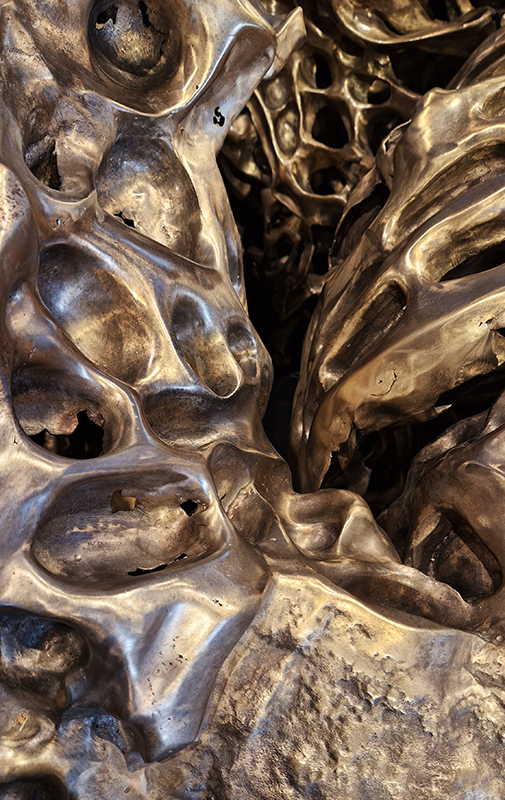
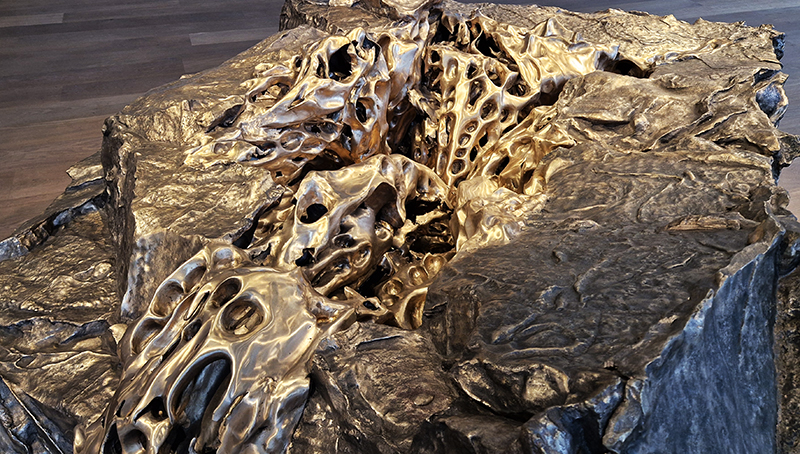
Cristina Iglesias The Shore at Hauser & Wirth features large-scale bronze works from the artist’s Littoral (Lunar Meteorite) series, part of her ongoing exploration of geological themes. The word ‘littoral’ refers to something relating to or situated along a coast or shore, or the region where the land meets the water. The weightiness of the objects is impressive ( I can’t imagine how they were brought into the gallery even with the technology available today – after coming here from the talk on stone henge and the incredible feat of bringing the standing stones across rough terrain for many kilometres and up a slope 5000 years ago seems even more impossible – yet there they are). The sound of water bubbling within each piece draws you to peer within and stay with the piece perhaps longer. The audience is invited to touch the sculptures. The bronze is polished and does need to be used and worn away in a more effective organic and dirty process. They are very clean.
The Royal Astronomical Society lecture Sighting the Sun and Moon? at Stonehenge – by Archaeoastronomist Prof. Clive Ruggles. Debunking many myths and overspeculation, concerning the use of the monument for observations of the sky the professor was clear about what can sensibly be said about the relationship of Stonehenge to the Sun, considering the conventional archaeological evidence that has been uncovered in recent years. He also recommended visiting the day before or after the actual solstice if possible for an experience without the many crowds as the alignment is almost identical. Also visiting at sunset can be just as magical and quieter. He turned his attention to the Moon, questioning if our prehistoric forebears also celebrated the occurrence of a major lunar standstill, an event occurring every 18.6 years around which time the Moon can be seen at fortnightly intervals exceptionally far to the north and south.

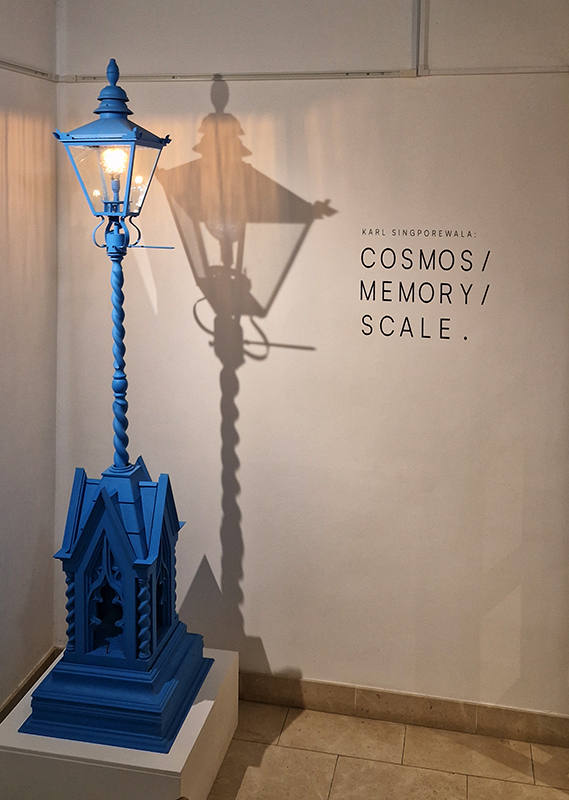
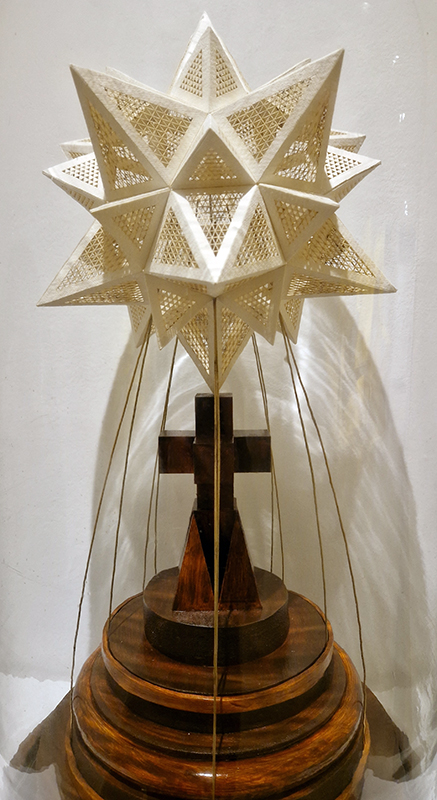
Karl Singporewala’s sculptural interpretations of Zoroastrian symbolism in Cosmos, Memory, Scale at SOAS Gallery convey a meditation on how material and memory intersect to shape the human experience. Cosmos speaks to both his fascination with astrophysics together with a metaphysical belief in the alignments of life. Stars and geometric forms recur as motifs, refracting both spiritual navigation and mathematical structure. Memory is treated as a living, shifting phenomenon. Inspired by oral tradition, family stories and inherited rituals. Scale, is used both literally and metaphorically in shifting perspectives and unexpected relationships. Good Thoughts, Good Words, Good Deeds.
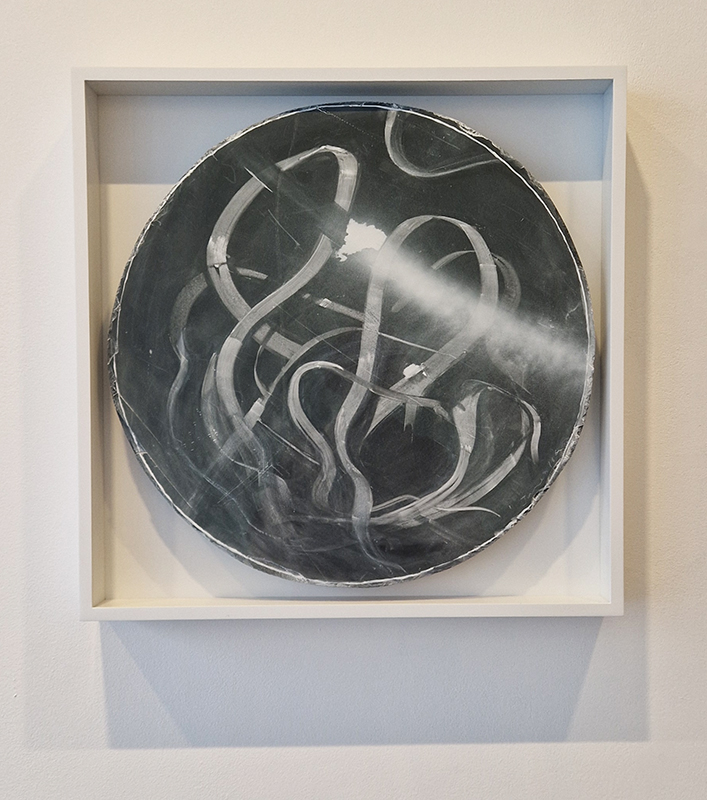
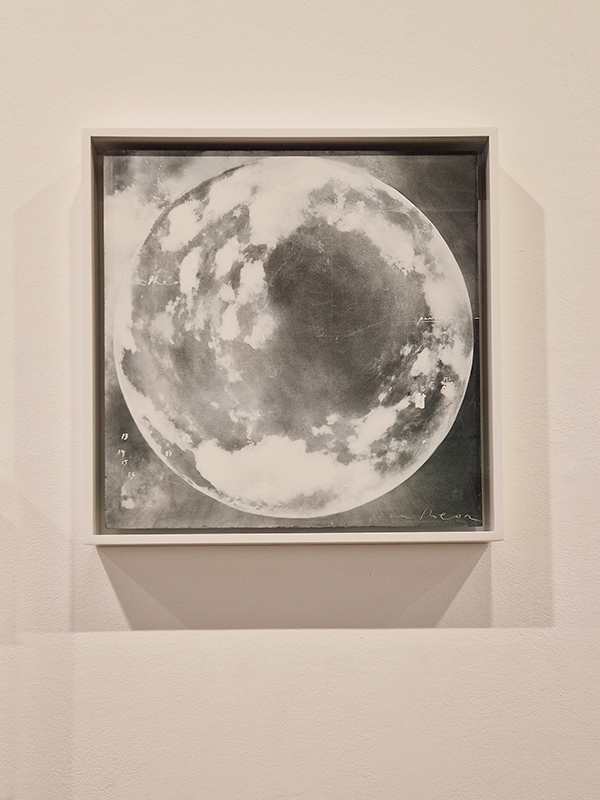
Dusty, chalky mythical drawings and solar eclipse traces from Tacita Dean in Black, Grey, Green and White at Frith Street Gallery Golden Square.
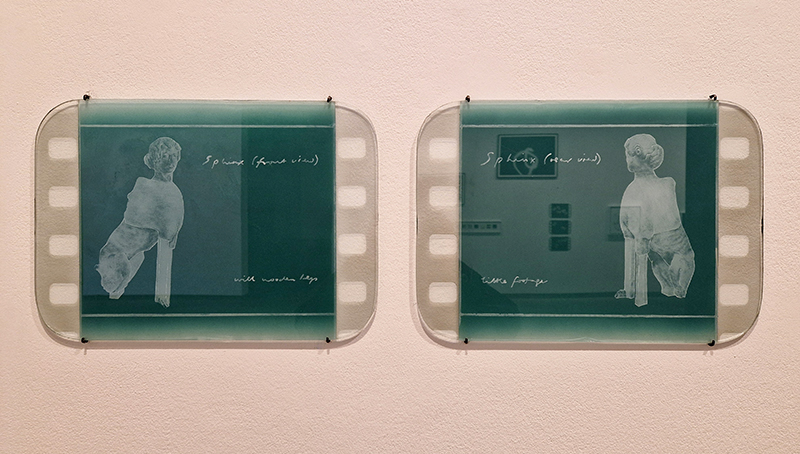
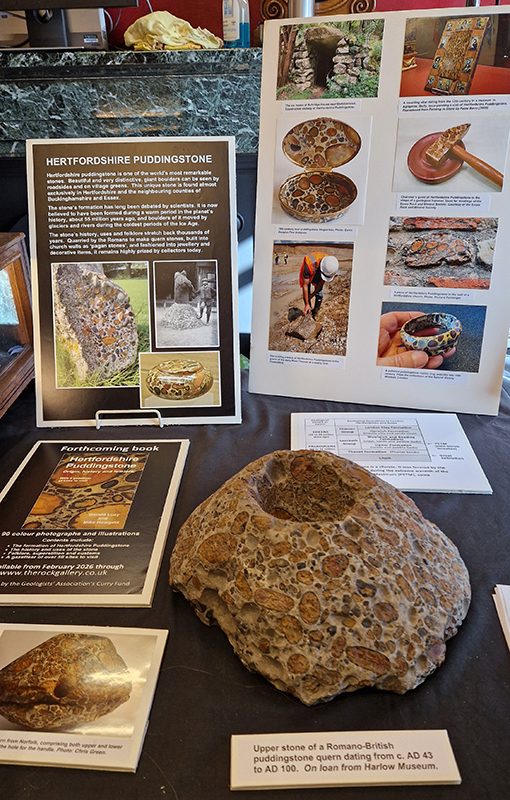
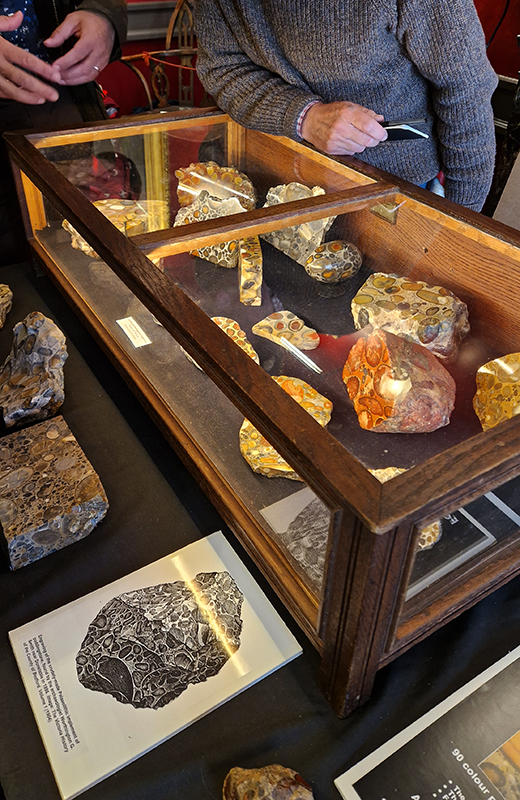
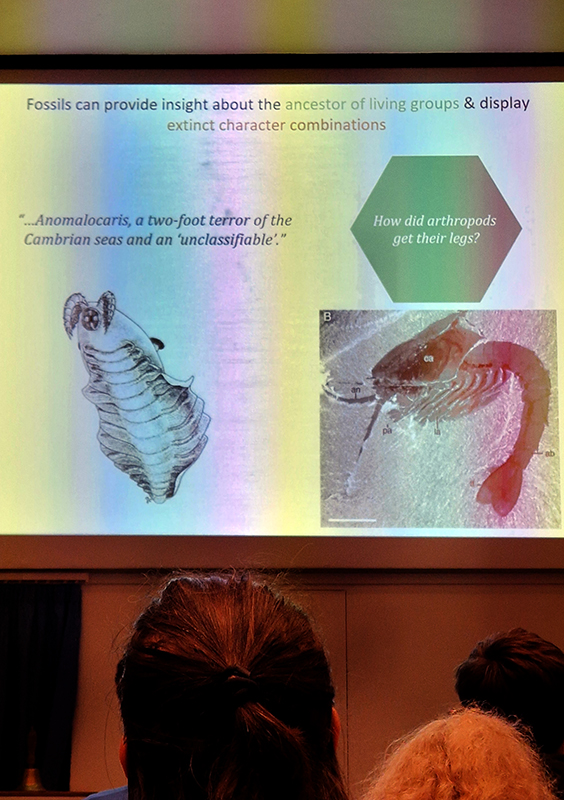
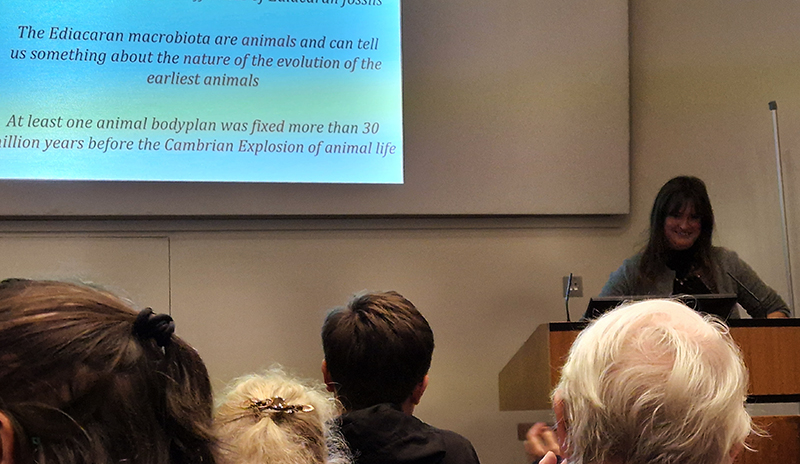
I spent a happy morning at the Geologists Association Festival of Geology 2025. This included a fascinating lecture The Early Evolution of Animal Life by palaeobiologist Frankie Dunn focused on the origin and early evolution of animals and particularly on the fossil record of the late Ediacaran Period (approximately 570 – 540 million years ago) – just before the Cambrian explosion of life. The aim of her research is to understand how animal body plans evolved in deep time. There also was some amazing and unique pudding stone on display.
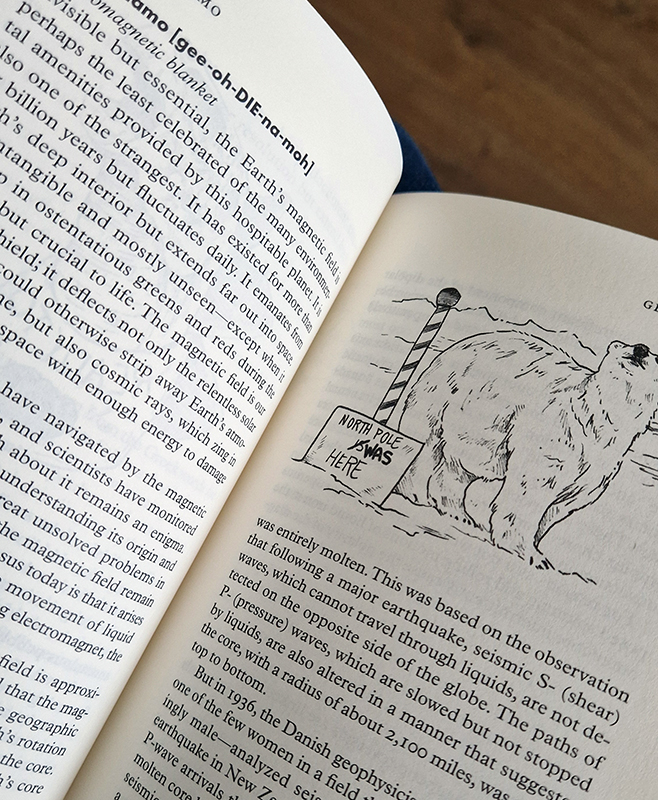
I also picked up a great little book full of wonderful geologically enriching words by Marcia Bjornerud.

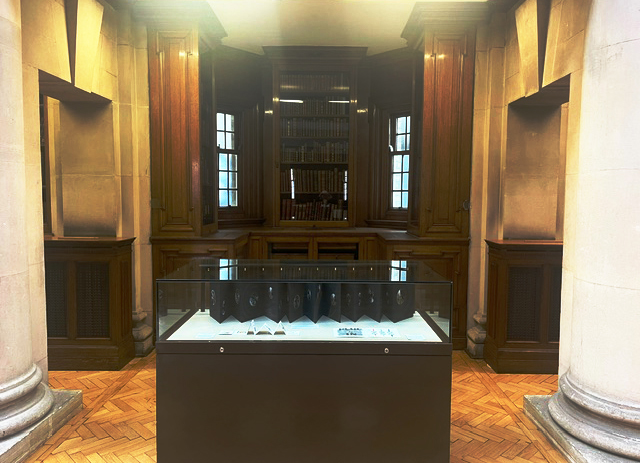
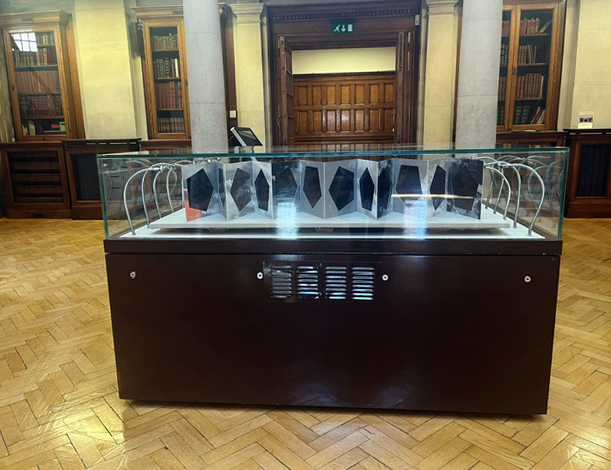
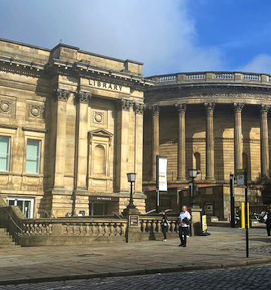
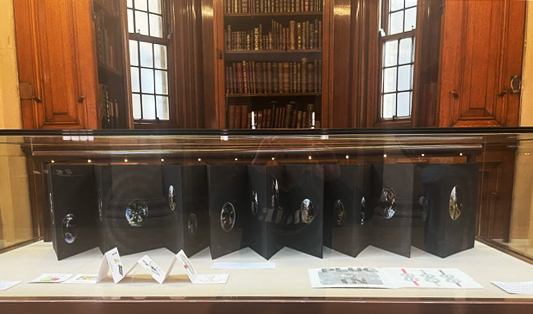
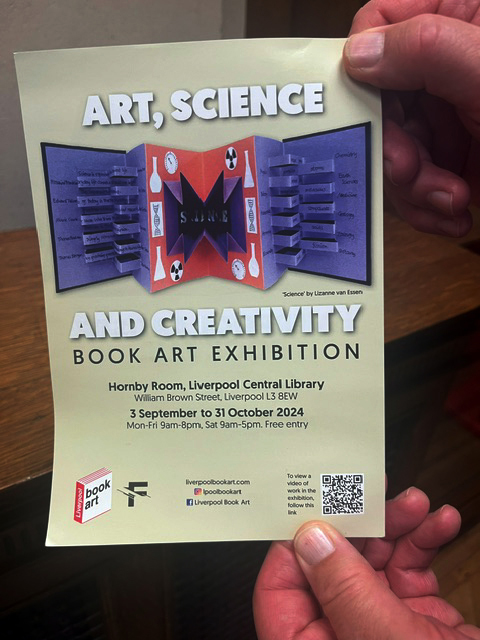
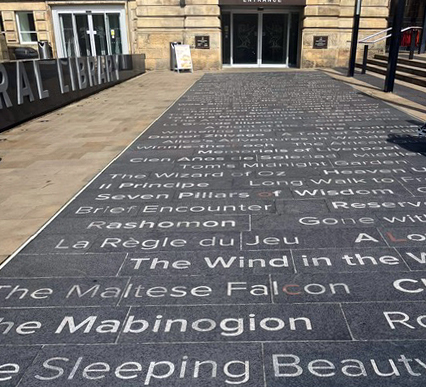
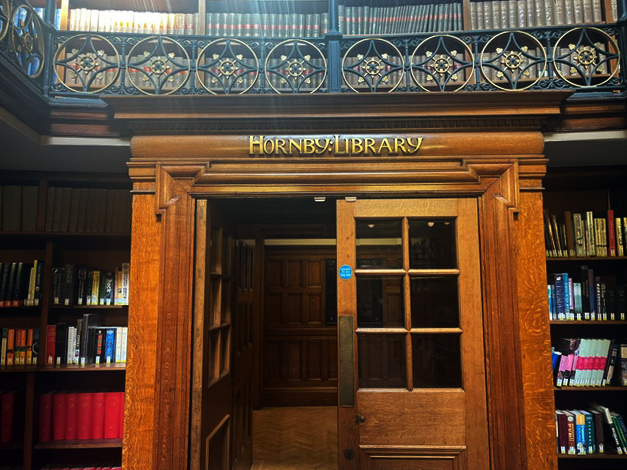
The ‘Art, Science and Creativity’ exhibition at Liverpool’s spectacular Central Library continues. The exhibition is inspired by statements from Albert Einstein, highlighting the fact that creativity is central to explorations in both art and science. As we wonder, and attempt to understand the universe and ourselves, categories can, and perhaps should, become blurred. Distinctions can be both valuable and problematic: ‘art’ versus ‘science’, ‘nature’ versus ‘human’, ‘natural’ versus ‘supernatural’, ‘material’ versus ‘spiritual’, ‘secular’ versus ‘religious’ and so on. And as the great science-fiction writer Arthur C Clarke said “Any sufficiently advanced technology is indistinguishable from magic”.

I am very happy to have two unique books included in the exhibition. In/Out and Unbound.

Liverpool Book Art and Fevered Imagination are collaborating to create a video loop of all the artworks, enabling audiences to get a fuller appreciation of the artists’ creativity than allowed by the use only of display cases. Fevered Imagination is a website dedicated to Artists Books, through which works from the exhibition can be bought.

I am delighted to be invited by Serendipity Arts Foundation to show Cosmic Chiasmus: crossing the universe at Serendipity Arts Festival in Goa later this year.

Serendipity Arts Foundation is an organisation that facilitates pluralistic cultural expressions, sparking conversations around the arts across the South Asian region. Committed to innovation and creativity, the aim of the Foundation is to support practice and research in the arts, as well as to promote sustainability and education in the field through a range of cultural and collaborative initiatives. The Foundation hosts projects throughout the year, which include institutional partnerships with artists and arts organisations, educational initiatives, grants, and outreach programs across India.

Serendipity Arts Festival is one of the largest multi-disciplinary arts initiatives in the South Asian region. It spans the visual, performing, and culinary arts, whilst exploring genres with film, live arts, and literature. Besides the core content, which is conceptualised by an eminent curatorial panel, the Festival has various layers of programming, in the form of educational initiatives, workshops, special projects, and institutional engagements. Through active conversations between the artistic community and the urban, social landscape, the Festival continues to evolve around the mandate of making the arts visible and accessible. The Festival is driven by a spirit of collaboration, hoping to inspire new perspectives and fresh aesthetic encounters. This labour of love is a cultural experiment that also addresses issues such as arts education, patronage culture, interdisciplinary discourse, inclusivity, and accessibility in the arts.

Other exciting news is that Julie F. Hill and myself are working together again on a new project. Following on from our ambitious duo show A Stone Sky at Thames-side Studios Gallery (Nov 23), we will be curating and participating in an exhibition next spring, exploring themes of stone consciousness and human-mineral encounters.

In the studio I have been working on a proposal for the Moon Gallery. Moon Gallery is an international collaborative artwork and a gallery of ideas which aims to set up the first permanent museum on the Moon. Moon Gallery will launch 100 artefacts to the Moon within the compact format of a 10 x 10 x 1cm plate on a lunar lander exterior panelling as early as 2025.

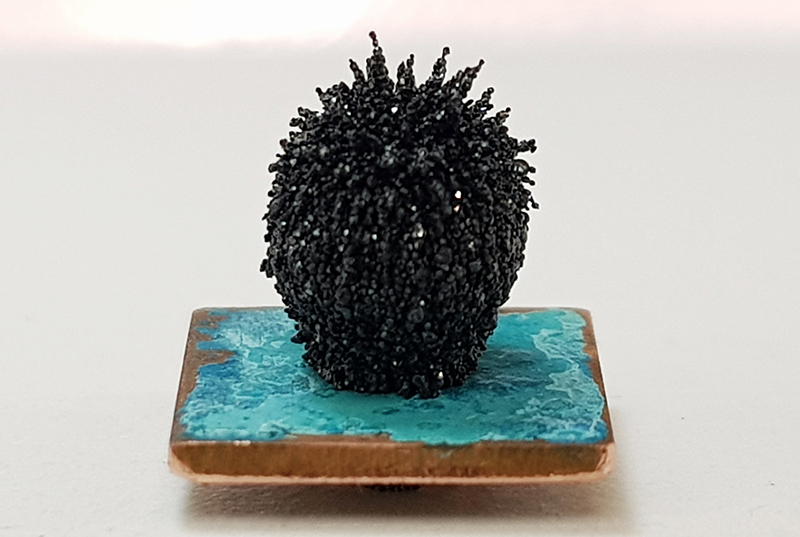
Each sculpture has to fit within a 1cm cube, which is quite challenging. My proposal is a 5mm spherical magnet sparkling with black volcanic sand on a 1cm square of patinated copper. Space exploration means leaving the protective shield of Earth’s magnetic field, placing astronauts and technology at risk from increased levels of harmful high energy particles. This artwork is a small realization of a magnetic field offered as a symbol of safe passage to those venturing beyond our home planet and protection of Earth’s magnetosphere. The black volcanic sand used in this work is naturally magnetic, making visible the force that emanates from the core of the magnet. The patination colour reflects on the astonishing view of our blue planet from the moon and the importance of water to sustain life. The title Core Values, makes reference to the molten core necessary for a planet to generate a magnetic field as well as the ethical principles and beliefs that guide humanity in a positive spirit of peaceful cooperation for the benefit of all. The work operates as a motif for what is in the heart of a body, rocky or otherwise. It also celebrates the beauty of the elements and natural forces that together inspire the human imagination and makes the cosmos so exciting to explore.

I have been sorting out the copper contours from The Absolute Hut (of action potential) as I couldn’t store this work, it had to be dismantled. The copper will be reused in future work.

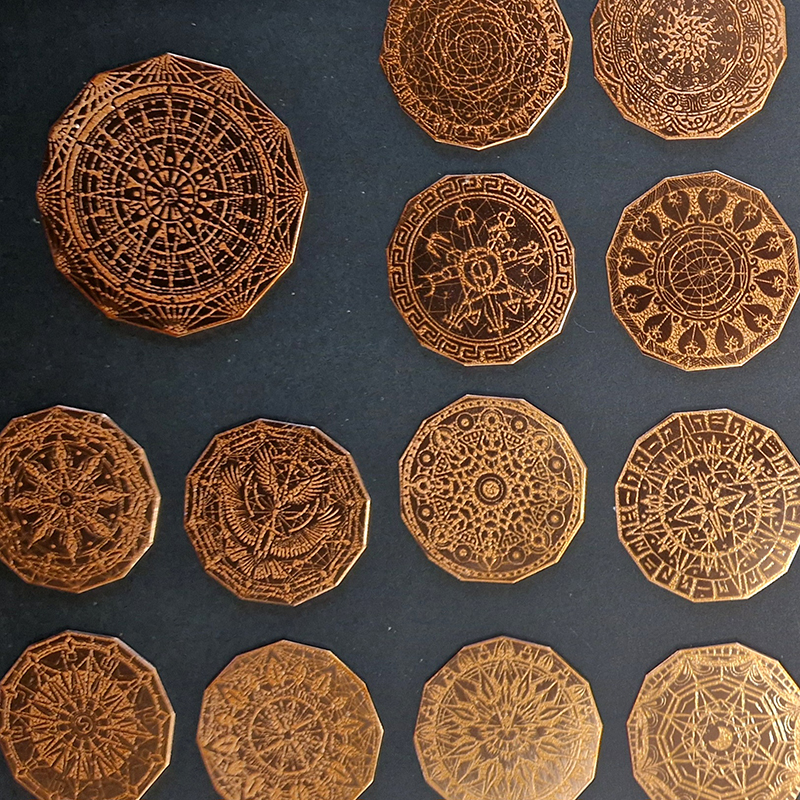
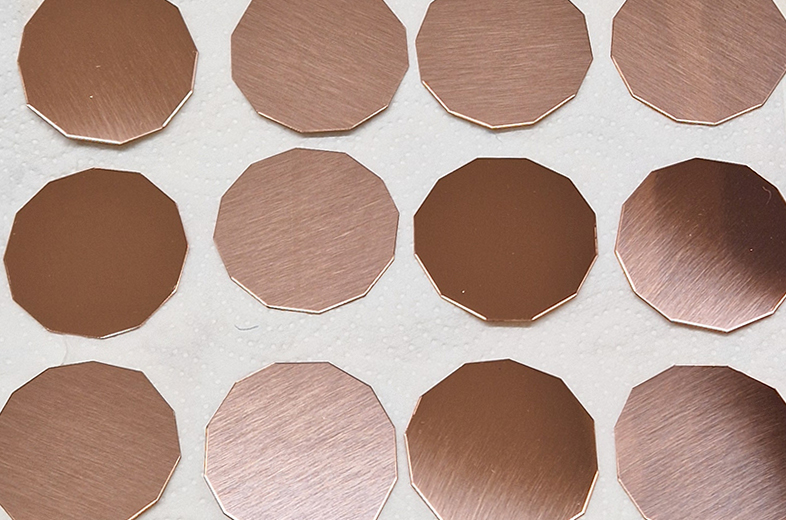
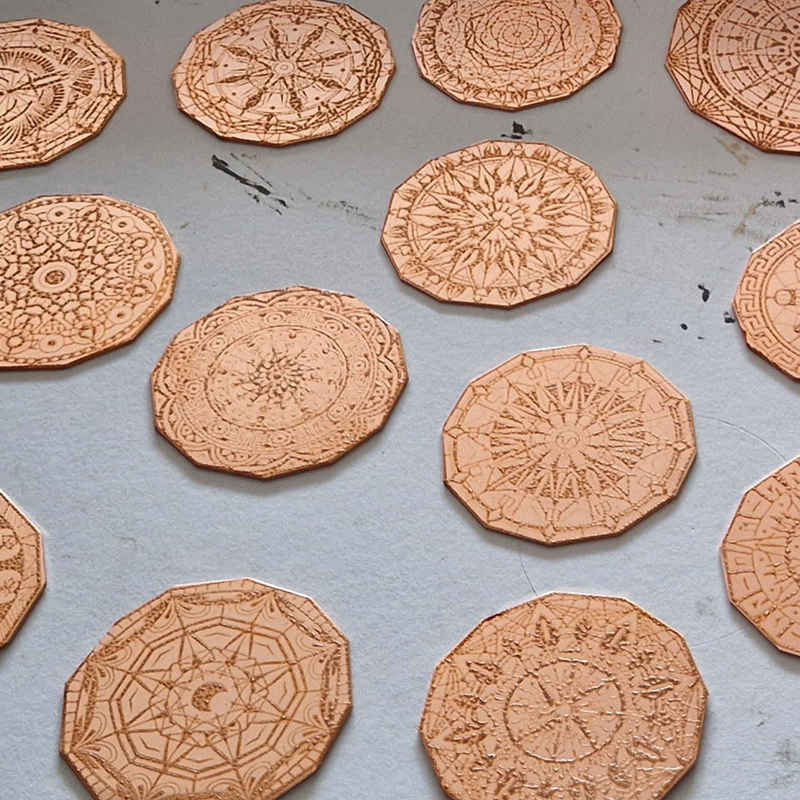
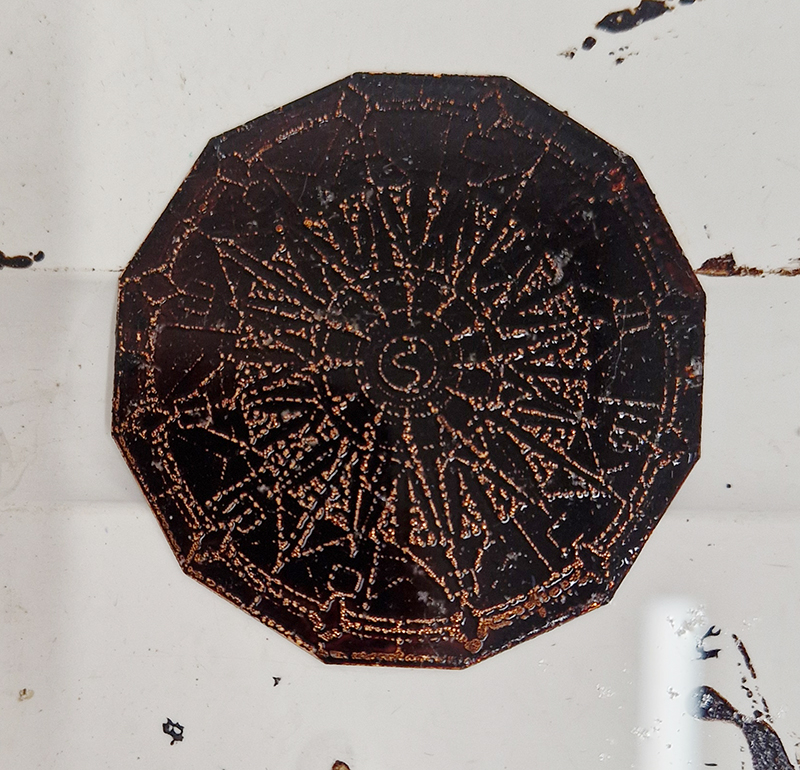
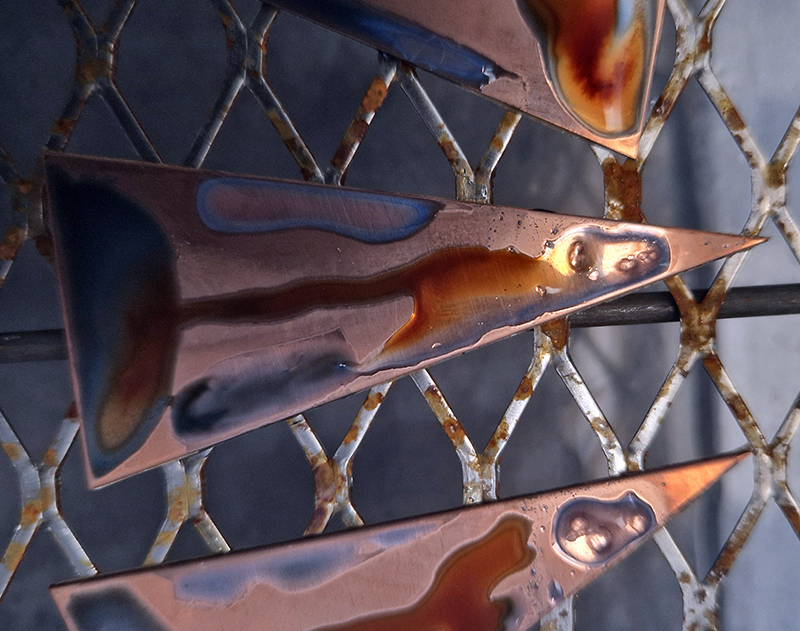
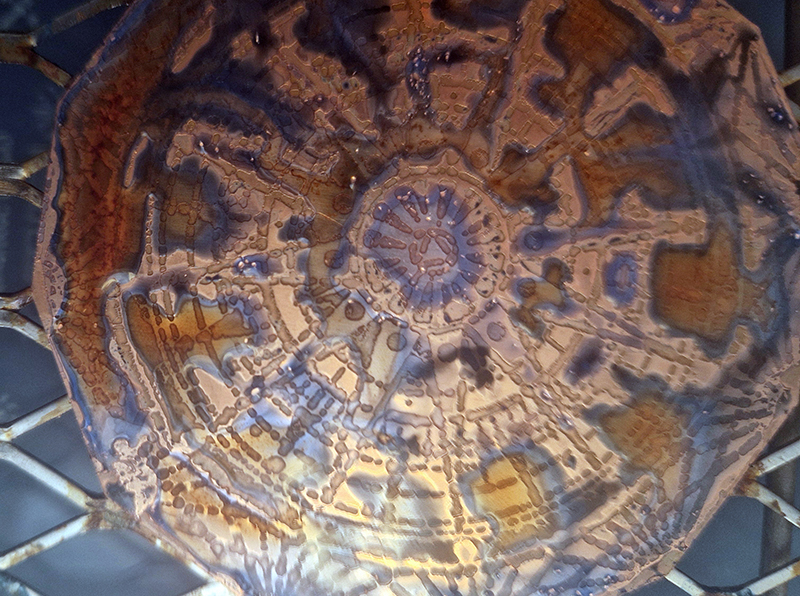
I am making a new concrete tablet for Instruments of the Anemoi series with more detailed compass rose inspired copper insets. The copper is guillotined to shape and screen printed with a sugarlift solution.

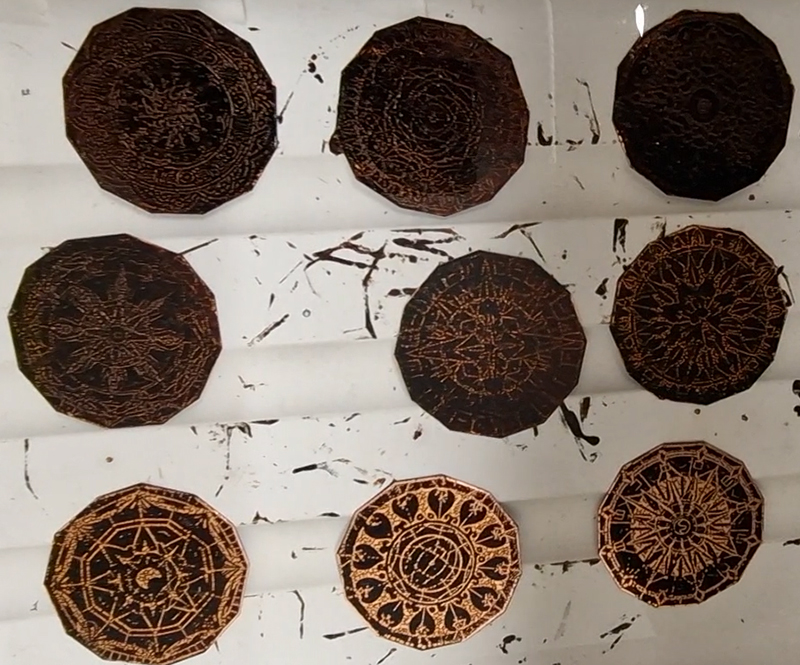
The pieces are then dipped in bitumen and left to dry before putting in a bath of warm water to dissolve the sugar solution, leaving the design ready to be etched.

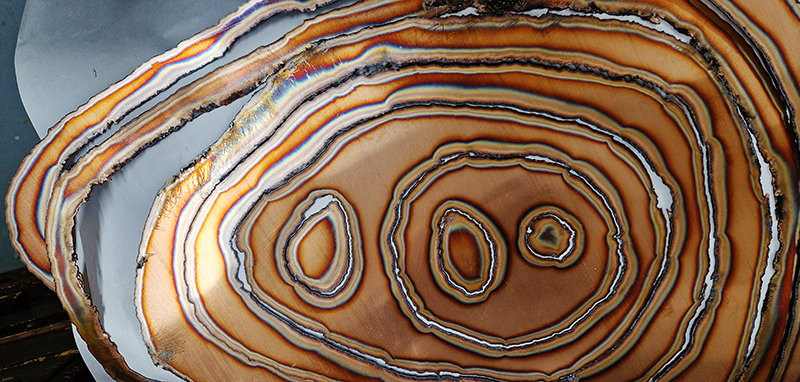
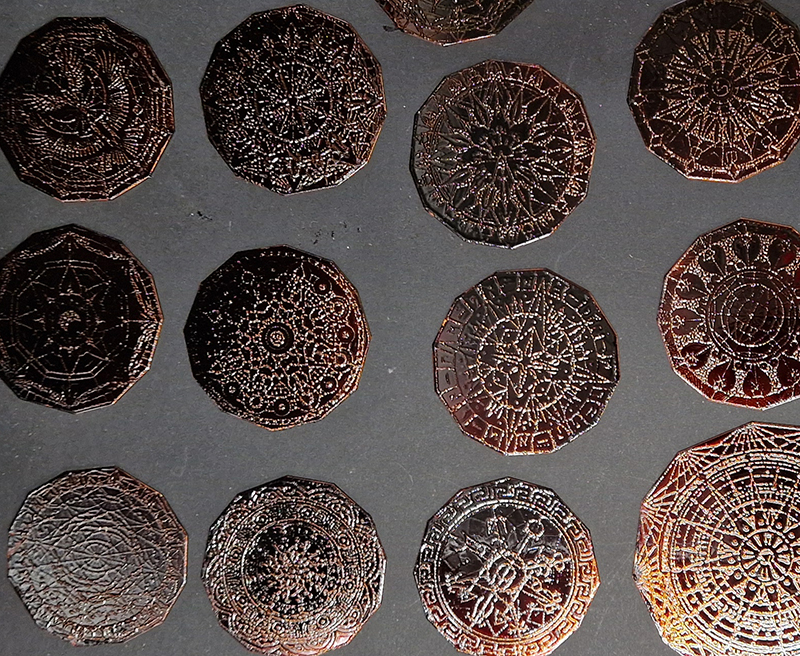
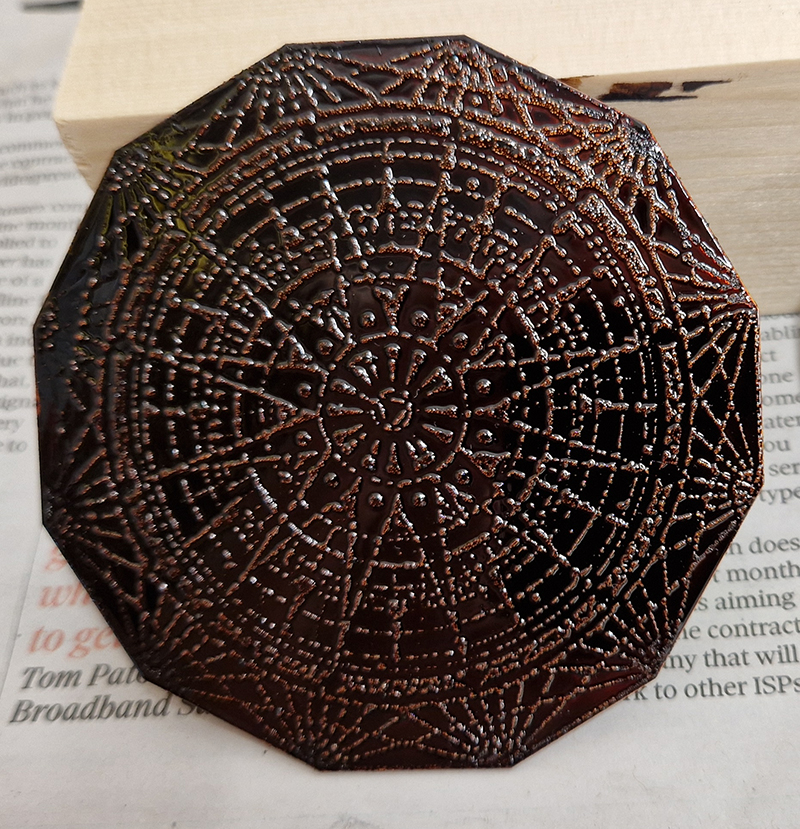
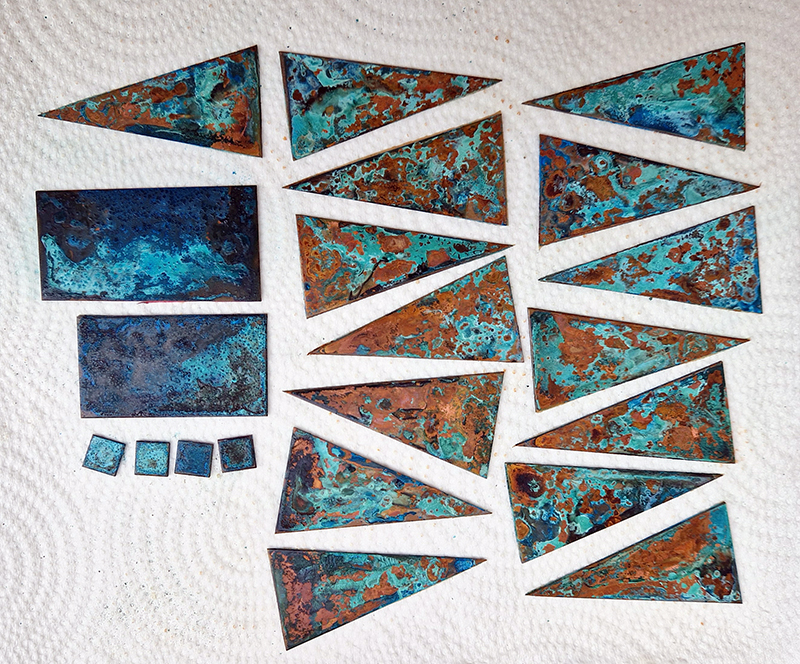
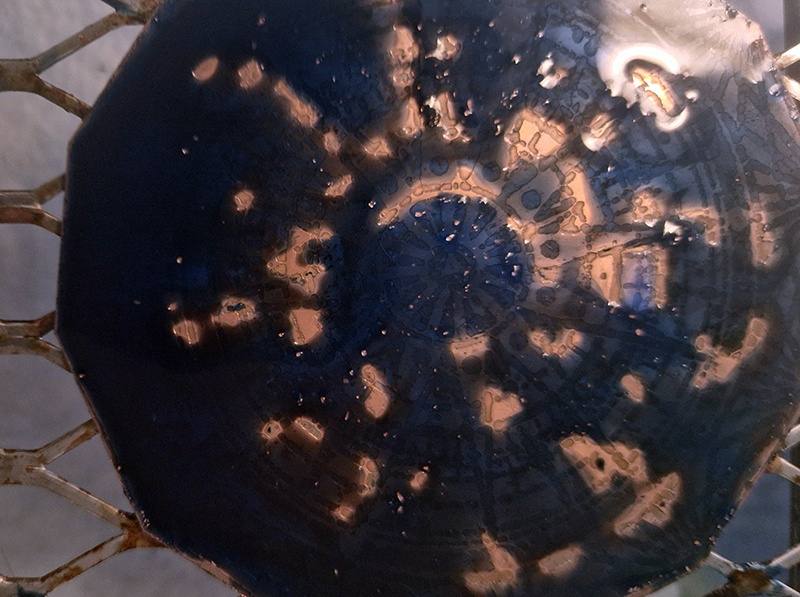
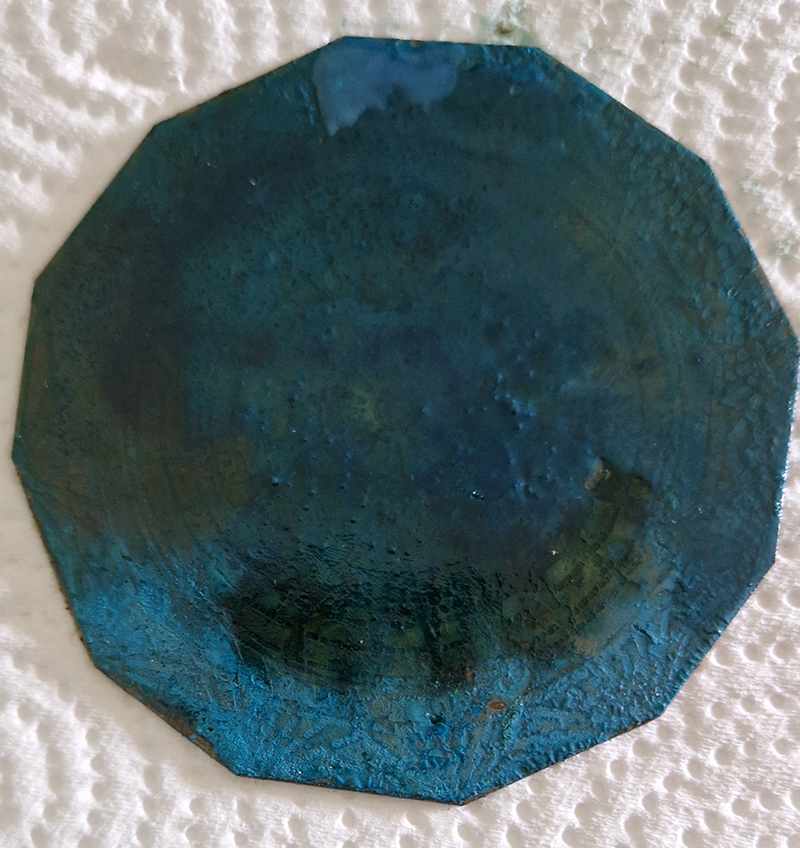
I also cut some copper shapes to patinate, painting the copper with salt and vinegar and soy sauce before fuming in an ammonia bath. I love how the colours change throughout the process.

I was going to patinate the dodecagon shapes as well but in the test I did, I lost a lot of detail, so these will just be inked and left.

Gallery Visits

Charmaine Watkiss showing her beautiful drawings full of symbolism in Hard Graft at Wellcome Collection. The exhibition explores the impact of work on health and her works celebrate the ancestral herbal knowledge of medicinal and edible plants and fruits that carry powerful healing properties.

These were used to secretly cure illnesses and prevent diseases as an act of survival and self-dependency, distinct from Western medicine. The connection between herbal healing and African spiritual practices is represented by cosmological symbols discreetly tattooed on the women’s bodies. Natural dyes – such as Jamaica’s Blue Mountain coffee and indigo – and materials such as brass and raffia palm embed historical knowledge in the fabric of the works. This knowledge is preserved, yet concealed, by the figures who avoid the viewer’s gaze.

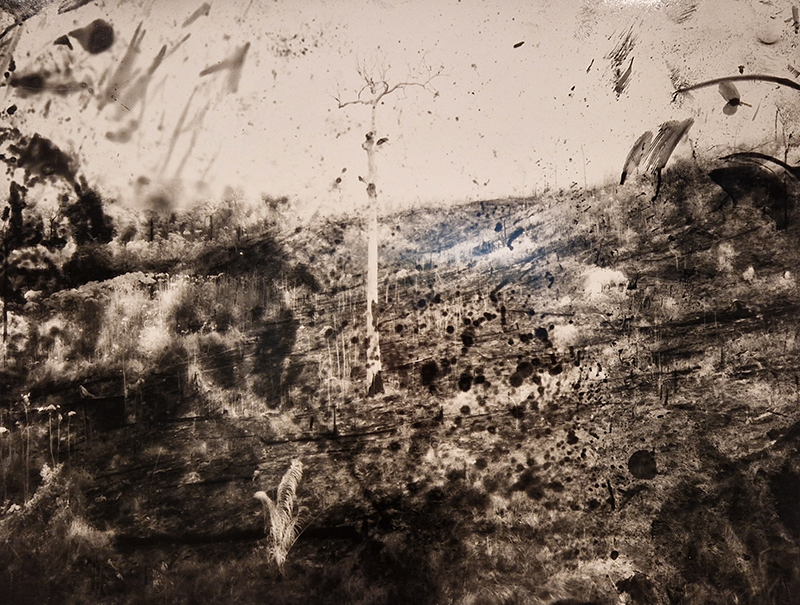
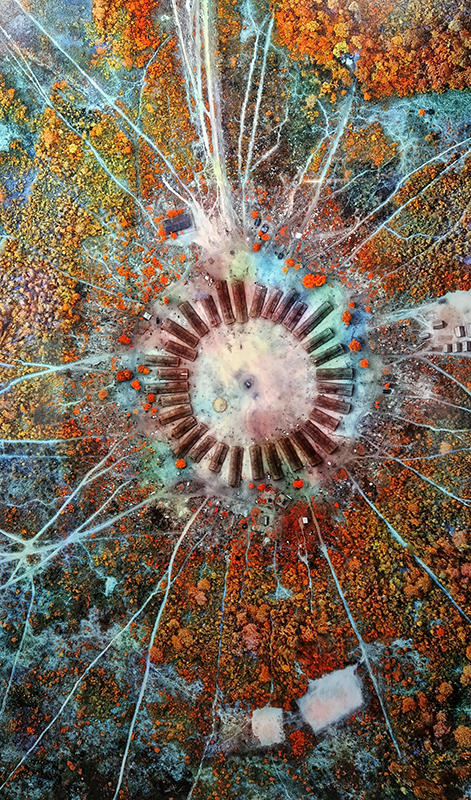
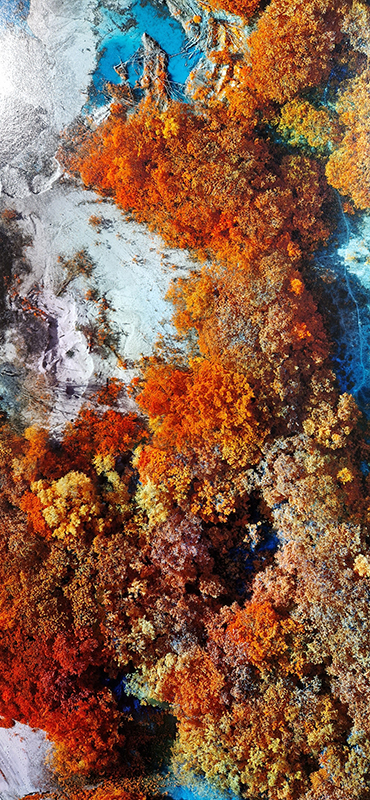
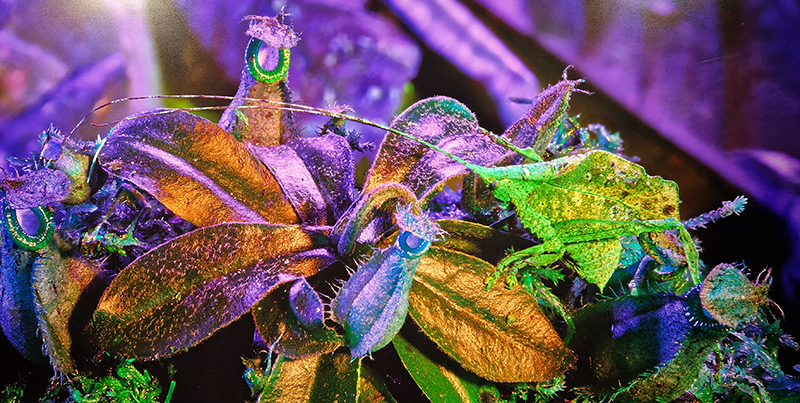
The London Group Stillness in Movement at Bermondsey Project Space. Taking three evocative lines from Four Quartets by T S Eliot as a starting point for this group show. Images – Carol Wyss, Sandra Crisp, Genetic Moo and Beverley Duckworth.

‘Not known, because not looked for
But heard, half heard in the stillness
Between two waves of the sea’


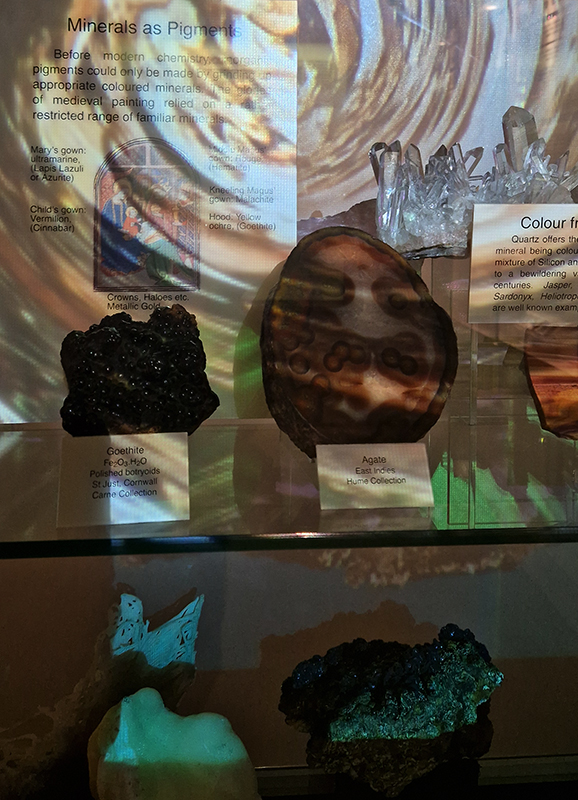
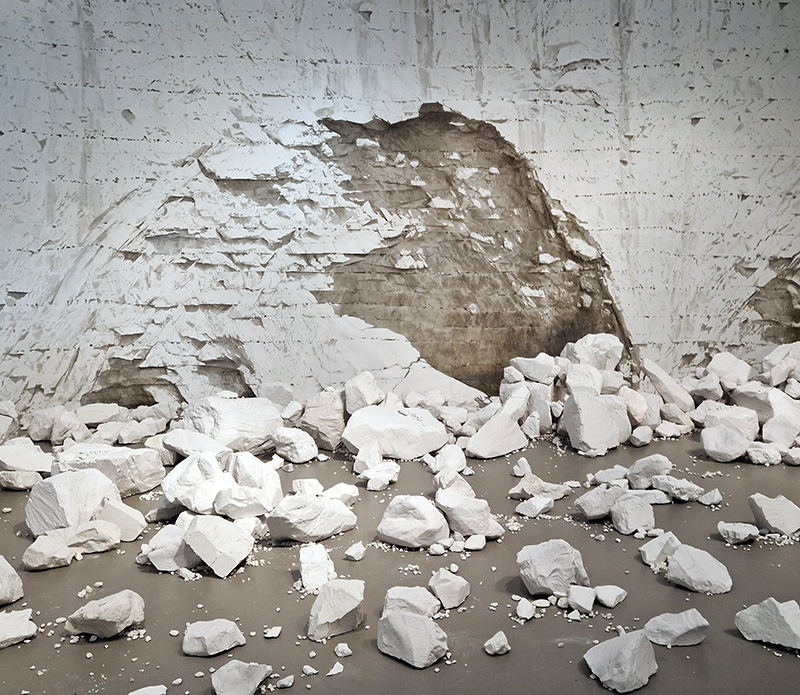
Rona Lee Lithic Entanglements at Sedgewick Museum of Earth Sciences. A considered intervention in the Whewell Mineral Gallery to ‘bring the dirt back in’, making evident the scarred landscapes, physical extraction processes as well as the social strata of those involved in procuring such a collection. There is no denying the allure of minerals and gemstones and the work here captures the beauty of the rocks while also reminding us of the ravaged Earth left scarred and depleted.

A Modern Lapidary a video work, back projected through one of the free-standing cases, animates mid-century scientific photographs of minerals, altering our perception of the samples within as ‘dead’ matter. Elsewhere, in An Extractive Index, digitally collaged photographs of geological field trips are laminated on to the glass, inviting reflection on the social and environmental relationships which these reveal.’ 

The Museum itself was also fascinating to look round and after Rona’s artist talk we were treated to tea in the The John Watson Building Stones Gallery which houses the most complete collection of stones used in construction.

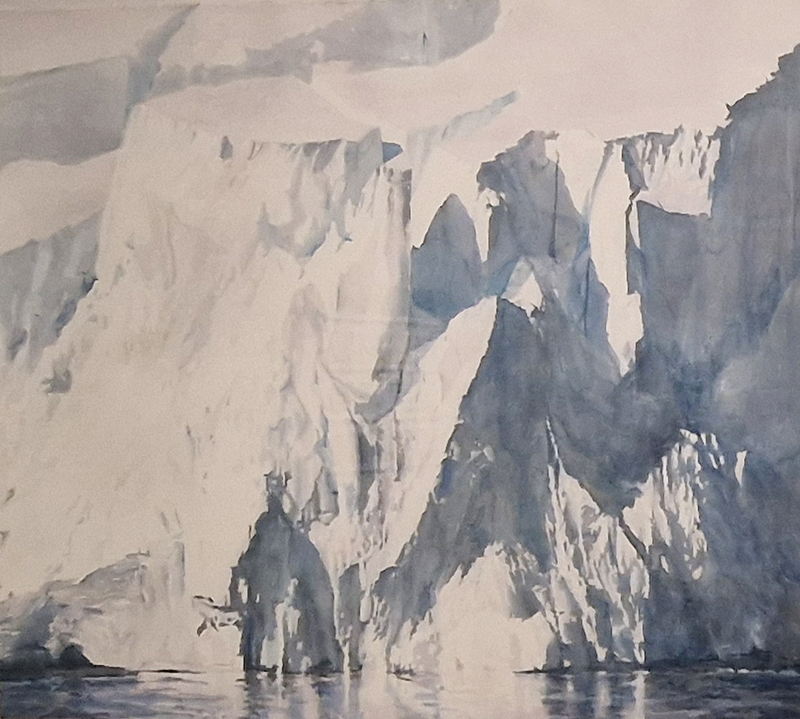
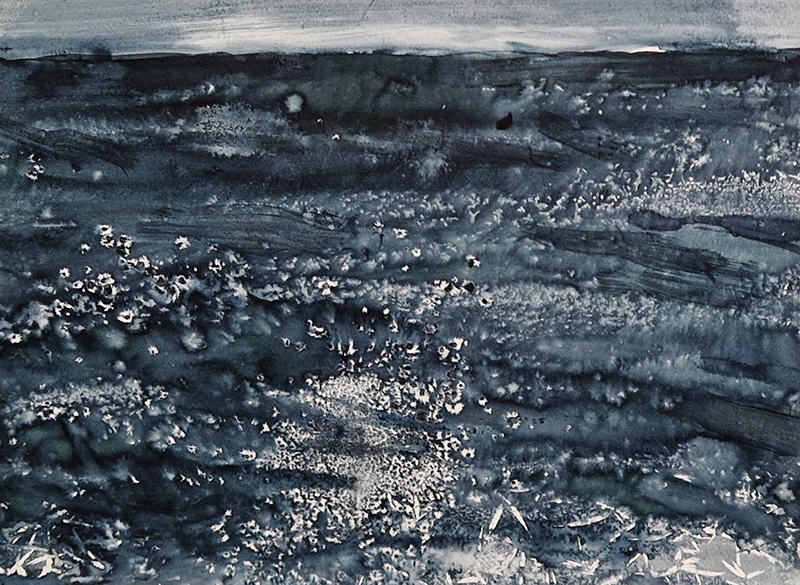
Emma Stibbon Melting Ice | Rising Tides at Towner Eastbourne. A day trip to the see this remarkable body of work so thoughtfully curated. The pale majesty of ice or chalk cliff faces, fragile against pounding seas that Emma witnesses in both the polar and local Sussex coastlines are captured so poignantly. These are portraits of great bodies under stress. Close up, edges and lines break down into fluid, watery strokes, a diaphanous translation of the fast painterly sketches made in often gruelling conditions. Wonderfully immersive, through scale and placement, and the understated palette of deep muted greens and blues, almost blacks and luminous whites which draw the viewer into the landscapes.

Listening

 Sideways – A New Frontier. A four-part podcast about the ethics of space exploration with former NASA astronaut Nicole Stott, new astronaut Ed Dwight, Space Philosopher and author Frank White, Anthropologist of Space and Religion, Deana Weibel, Professor of Religion at Knox College Robert Geraci and former ISRO scientist, Jijith Nadumari Ravi.

Astronauts and space tourists often cite the overview effect as a transformative experience offering the perspective to see a shared planet with no borders. Some however, experience the ‘ultraview’ effect which is the overwhelming and disorienting knowledge of the magnitude of the universe.

BBC Inside Science Podcast. How much of a risk is space junk? As we send more and more metal in the form of satellites up into space, scientists are warning it is becoming more of a risk both here – and up there.

Much space junk comes from defunct satellites. There are plans to launch 60,000 more satellites by 2030. It is estimated there is currently 12, 400 tons of space junk orbiting Earth – 2,500 discarded satellites and 130 million fragments that travel at 10 times the speed of a bullet. Because of the orbiting junk, Space X satellites must make around 275 collision avoidance manoeuvres every day. It is not only dangerous in space but large debris is falling to Earth and not burning up in the atmosphere. It is predicted life will be lost in the next decade as a result of falling space junk, there have already been some near misses. The satellites and launch debris that does burn up in the atmosphere releases large amounts of metal into the atmosphere with unknown consequences.

I am excited to be planning a visit to Haverah Park, the site of a cosmic ray air shower detection array consisting of water Cherenkov detectors distributed over an area of 12 km2 on the Pennine moorland, North Yorkshire. The experiment was operated by University of Leeds for 20 years, and was switched off in 1987. During its lifetime many 1000’s of extensive air showers were recorded including four exceptional ones of such size that the cosmic rays that generated them must have had energies greater than 10eV. These particles are the highest energy form of radiation known to exist anywhere in the universe and their origin is one of science’s greatest mysteries. Having reimagined The Absolute Hut seen at Hartland Magnetic Observatory for the exhibition A Stone Sky I am hoping a future project may be the reimagining of the huts from Haverah Park.

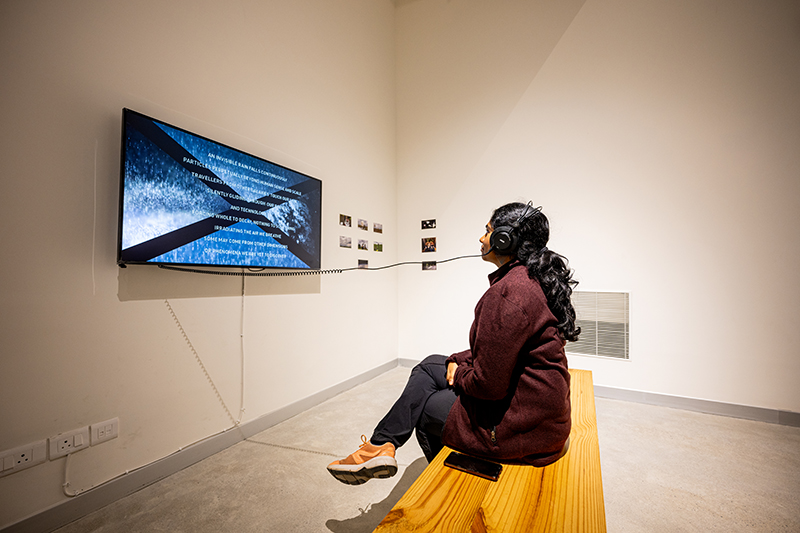
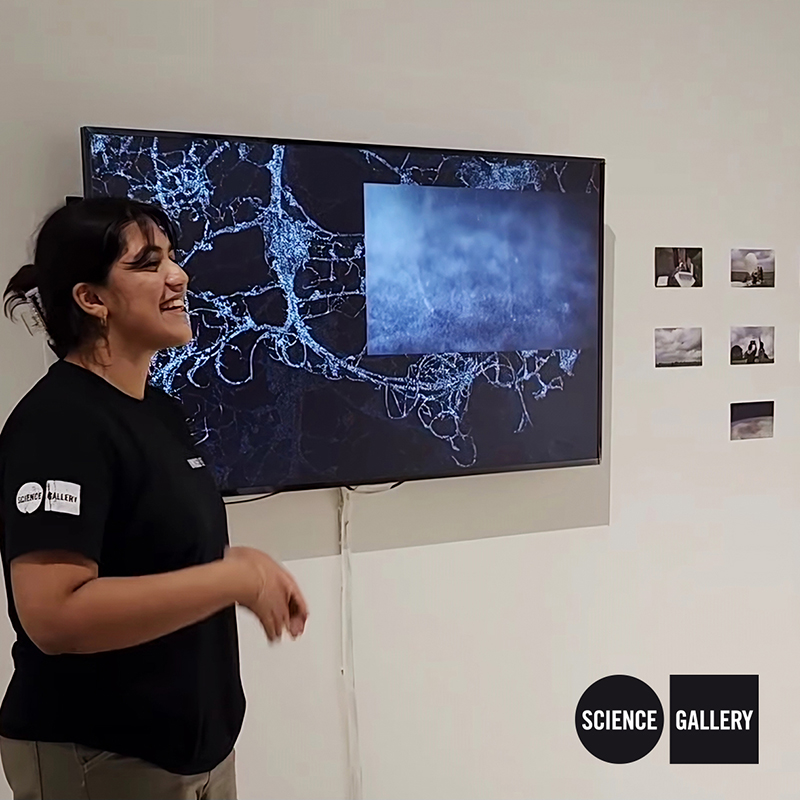
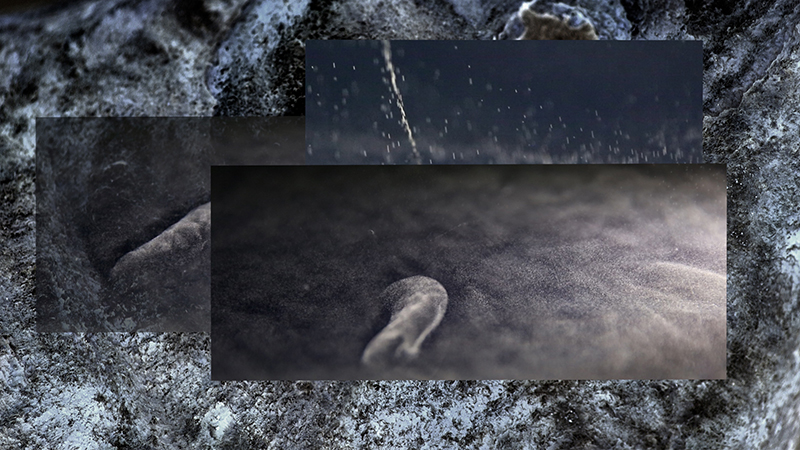
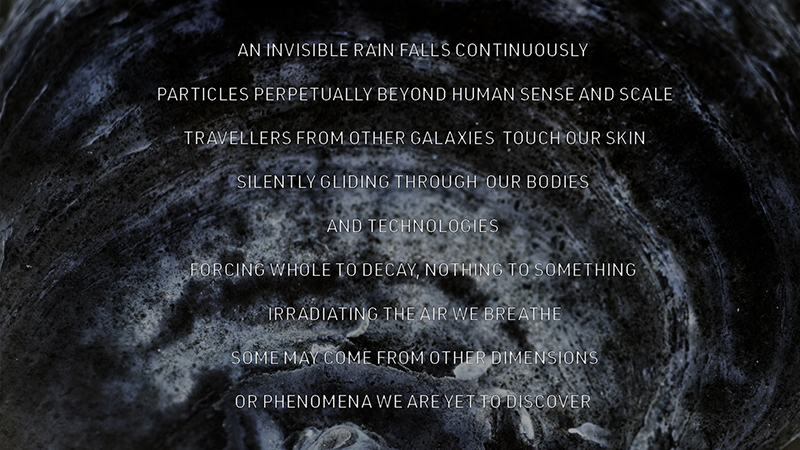
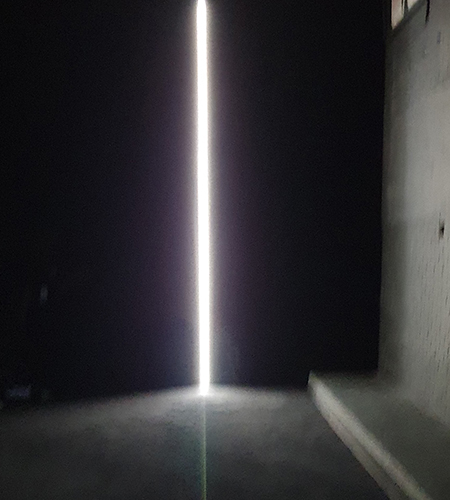
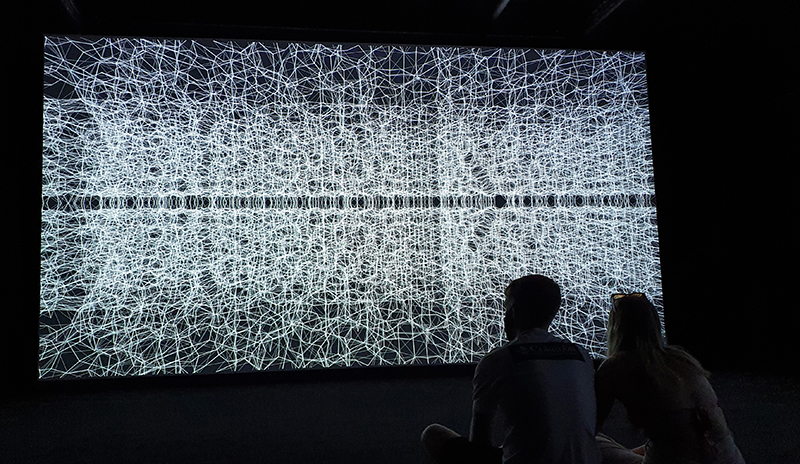
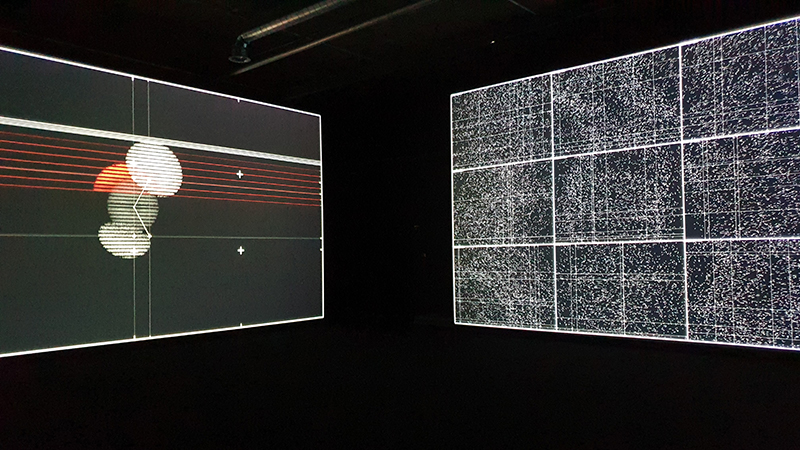
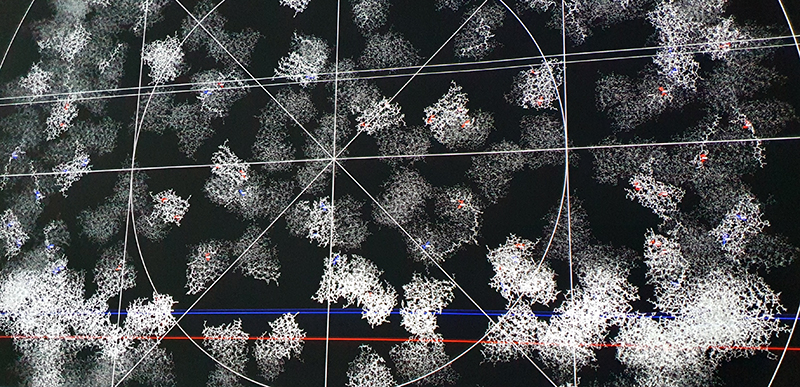
The exhibition Carbon: under pressure at Science Gallery Bengaluru is still running and I am so proud to have my work Cosmic Chiasmus: crossing the universe included in this amazing show. This video offers a glimpse into a subatomic world where cosmic rays travel from distant galaxies to collide and silently interact with atoms and technology on Earth. Cosmic rays go through a violent process of creation, transformation and decay. From the heart of stars or the depths of black holes these particles power across the universe with unimaginable energy colliding with life on Earth and triggering other processes such as cell mutation, computer data corruption and carbon-14 formation.

I am fascinated to learn more about cosmic magnetism and its influence on the development of early life.

The Universe is magnetic. From stars to galaxies to intergalactic space, magnetic fields thread the cosmos. Yet the origin of cosmic magnetism is still unknown, so astronomers are attempting to make maps of the magnetic fields inside massive galaxy clusters to determine if cosmic magnetism came from the early origin of the universe or developed over time. If it is discovered that there is an alignment of fields across the universe this would point to a primordial source of the cosmic magnetic structure rather than a slow emergence from seed magnetic fields. Understanding the origin of cosmic magnetism may give clues to the development of life on Earth and the possibility of life elsewhere in the universe. Only planets with a magnetic field have an atmosphere and offer protection from most radioactive cosmic rays.

Those cosmic rays that do penetrate the atmosphere may have influenced the development of early life. Chirality, also known as handedness, is the existence of mirror-image versions of molecules. Like the left and right hand, two chiral forms of a single molecule reflect each other in shape but don’t line up if stacked. All known life-forms show specific chiral properties in chemical structures as well as macroscopic anatomy, development and behaviour. The sugars that make up DNA, for example, are all right-handed. The amino acids that make up proteins are all left-handed. It is not clear how this asymmetry evolved but one theory suggests that magnetic surfaces on minerals in bodies of water on the primordial Earth, charged by the planet’s magnetic field, could have served as “chiral agents” that attracted some forms of molecules more than others, kicking off a process that amplified the chirality of biological molecules.

Another theory proposes that the influence of cosmic rays on early life may explain nature’s preference for a uniform “handedness” among biology’s critical molecules. Before life emerged on Earth, self-replicating molecules were slowly evolving beneath a constant shower of energetic particles from space. Researchers believe that cosmic rays with the ability to penetrate matter were potentially colliding with chiral molecules on Earth and everywhere else in the universe. These tiny differences in the mutation rate would have been most significant when life was beginning and the molecules involved were very simple and more fragile. Under these circumstances, the small but persistent chiral influence from cosmic rays could have, over billions of generations of evolution, produced the single biological handedness we see today.

Chirality is also seen in the spiral of a mollusc shell. I am in the process of finishing the sculpture shell for belly of a rock a hybrid work of chemical conversations at the intersection of the animate and inanimate, inspired by Italo Calvino’s Cosmicomics story The Spiral. Paper clay with crushed mussel shells.

My most recent video installation Orbital shown in Life Boat at APT Gallery focused on the potential risks to technology and life on Earth from extreme solar storms.

The following month, a barrage of large solar flares and coronal mass ejections jettisoning clouds of charged particles and magnetic fields, travelling at speeds up to 3 million mph toward Earth, created the strongest solar storm to reach Earth in two decades, and possibly one of the strongest displays of auroras on record in the past 500 years. There were even perfectly clear skies to view this extraordinary event, yet I missed it. So envious of all those who did get to see the displays of Aurora at such low latitudes. I am hoping there will be another chance to see the Aurora in the UK during this current year of peak solar activity, but not so dramatic a storm as to cause an ‘internet apocalypse’.

Gallery Visits

Andrea V. Wright Eyes of Skin at Thames-side Studios Gallery curated by Thorp Stavri. This exhibition explores the permeability and interactions between the body and architecture and the tensions arising from the ever-changing precariousness of our external and internal constructed environments. It was good to be able to chat with Andrea about her influences from fashion tribes and processes such as casting skins from buildings tumbling into ruins and tactics to avoid being vulnerable working in remote locations.

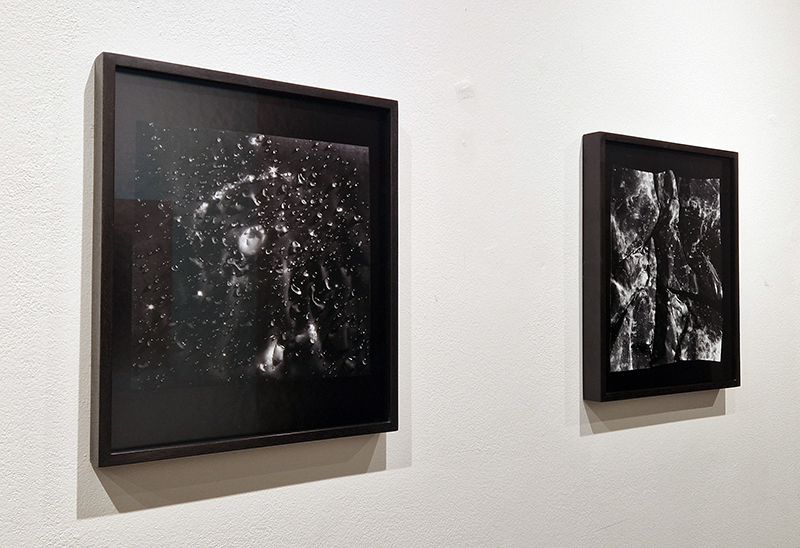
Holly Birtles and Charly Blackburn in Bog Bodies at APT Gallery. interrogate the complexities of wetland mysteries in the Thames Estuary and the Fenland Marshes exploring life, death, and metamorphosis through ceramics and photography. The Bog preserves the body in death enabling us to travel back in time as far as the Mesolithic period. Conditions inside the bog are acidic. They are perpetually wet, entangled with plants and peat, muddy and monstrous. A dense soup inhabited by complex ecologies that thrive in the anaerobic surroundings, creating a unique biochemical and physical occurrence that facilitates the mummification of prehistoric humans. This exhibition however, confounds expectations of oozing mud and swampy detritus. These ‘artefacts’ are presented in a pristine white cube setting, there maybe a slight whiff of smoke lingering from the ceramics but all is clean and orderly and the framing is thoughtful with a nice use of colour contrasts between image and frame. Good to be surprised.

SALON FOR A SPECULATIVE FUTURE: HOW TO BE IN THE FUTURE? at Vestry St – Cross Lane Projects with works from Aideen Barry, Quilla Constance, Lisa Chang Lee, Kate Fahey, Young In Hong, Evy Jokhova, Huma Mulji, Koushna Navabi, Monika Oechsler, Rebecca Scott, Jo Stockham. Postulating hope for a better future Rebecca Solnit (in an article in the Guardian, 2016): wrote “Hope is an embrace of the unknown”. Living in times of unprecedented change, uncertainty, she says, has “the power to influence the future”. Taking inspiration from the ‘future thinking’ of speculative fiction and looking at a wide range of fields from science and technology to spiritual, ecological and socio-economic issues, the exhibition highlights multiplicities and the complex interplay at work in global dynamics. The works, individually and collectively, draw on associations from different  subjectivities and contested /histories facilitating a space for contemplation and the discussion of positive futures. Strong shift shaping work here that gets under the skin, fake facades, hairy hissing and an AI doctored doctrine, make for an unsettling present from which to speculate on the future.

The Tipping Point at Bell House. The tipping point may arrive seemingly out of the blue as a slight change heralding a new way forward.  It can be magical or malevolent.  More than 40 artists in six individually curated spaces will examine different kinds of tipping points, both minor and major, literal and metaphorical. Sarah Sparkes and Jane Millar curate The Gowan Room using Octavia Butler’s dystopian novel, ‘Parable of the Sower’, as a point of reference. Jonathan Callan, Chudamani Clowes, Sarah Doyle, Lydia Julien, Marq Kearey, David Leapman, Yair Meshoulam, Jane Millar, Stephen Nelson, Victoria Rance, Alke Schmidt, Lex Shute, Ania Tomaszewska-Nelson, Sarah Sparkes, Sara Trillo, Marianne Walker and Alice Wilson explore a new awareness of change and exchange, a constant shifting of strange identities, the malleability of being, interspecies communication and the strength and vulnerability of community. Imagining new ways to merge; ways to intelligently and sensually live in the flux of a perpetual tipping point. Léonie Cronin curates the Lutyens room as a procession through objects of different artistic beliefs, pointing to new myths, a point of Syncretism where ideas become merged and the old symbols get incorporated into new systems.

Thomas Pausz in Haunted Ecologies at Stanley Picker Gallery. A very interesting show drawing threads of local history together with current urgencies such as sewage pollution of the local endangered chalk stream Hogsmill River. From spirit photography and the dark room experiments of Kingston’s Eadweard Muybridge, to digital manipulation, rendering and 3D scanning – Our perception of contemporary environment and culture is always haunted by spectres of the past and by hopes and visions of the future.

Symbiosis II group exhibition exploring the relationship between image makers, the more-than-human, and alternative photographic processes at Four Corners Gallery organised by London Alternative Photography Collective  curated by Hayley Harrison, Melanie King, and Ky Lewis. This exhibition considers the connections between symbiosis and alternative photography, and asks if nature is a collaborator or a commodity in alternative photography processes.

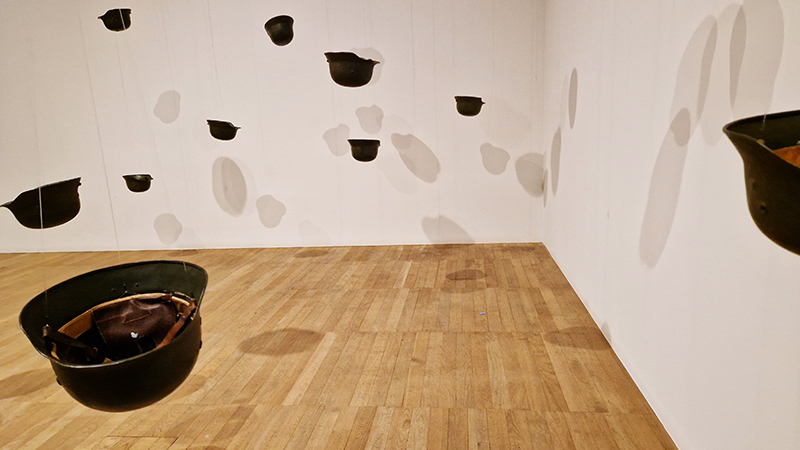
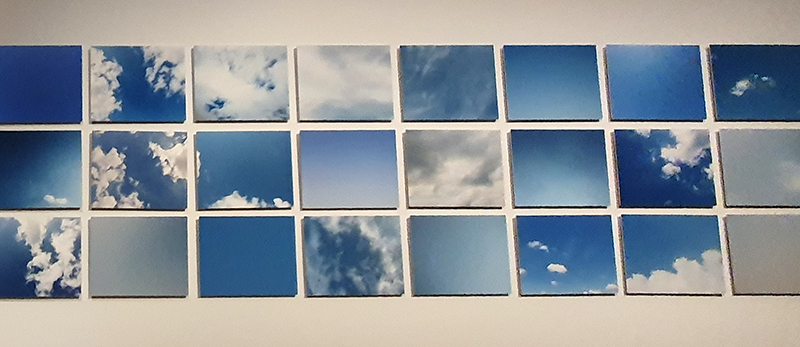
YOKO ONO: MUSIC OF THE MIND at Tate Modern. The main takeaway from this extensive overview of her pioneering work is the sadness that peace hasn’t been given a chance. The works are very direct, may appear simple in content or execution but cut deep into the human psyche. I particularly liked Half a Room, first presented in 1967, this is a room of objects cut in half and painted white. Ono said of this work “Molecules are always at the verge of half disappearing and half emerging…somebody said I should put half a person in the show. But we are halves already.” Another piece, Helmets (pieces of sky) from 2001 invites the audience to take a piece of the sky, which she sees as a hopeful symbol of limitless imagination. Jigsaw pieces of the sky are suspended in German army helmets, and although dispersed, offer the possibility of hope that they can be put back together through collective healing. Many works are participatory. A wall for drawing around your own shadow to create an entanglement of bodies. A boat to add your own wish to an ocean of wishes for the future.

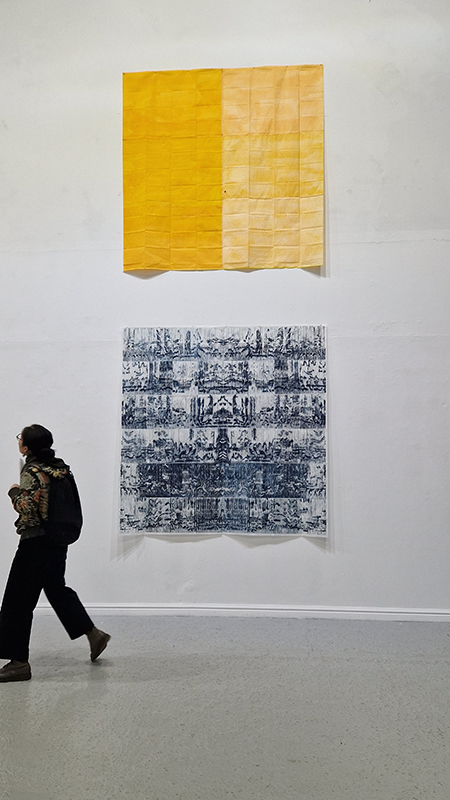
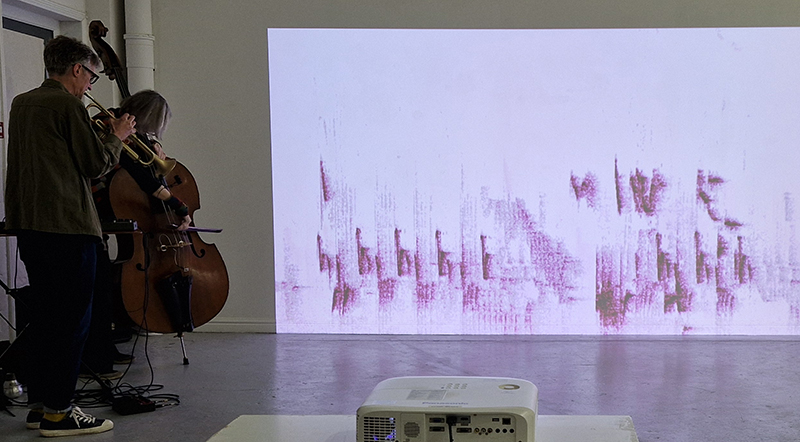
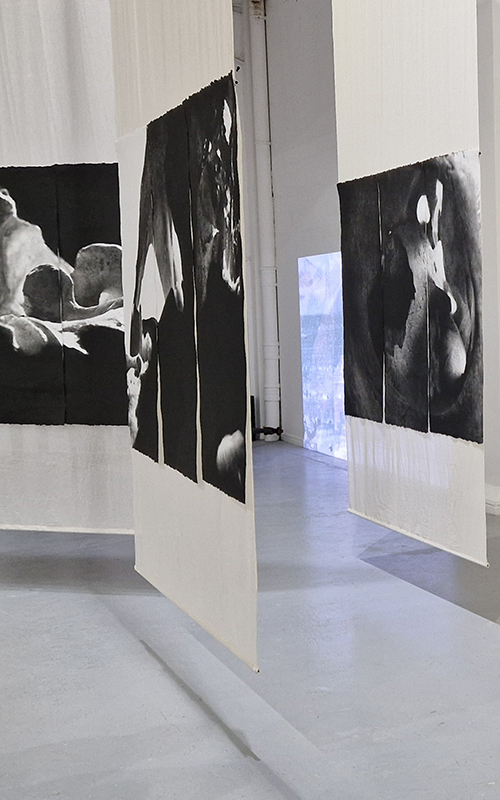
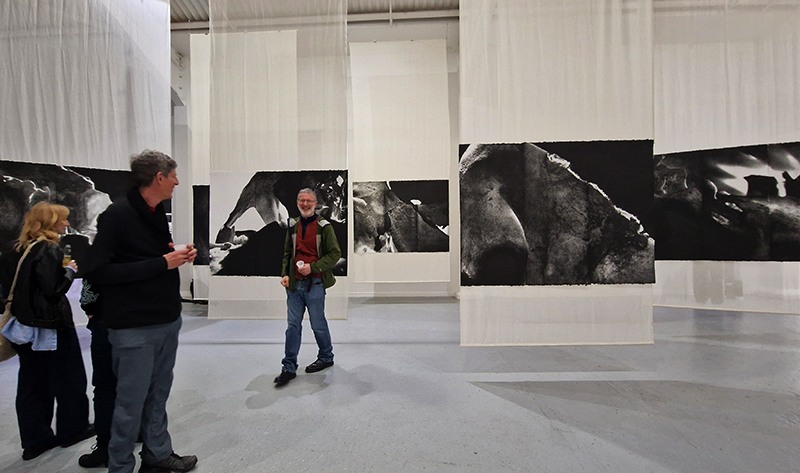
Geographies of Print final iteration of Without Horizon, Without Shore at Thames-side Studios Gallery. Geographies of Print is a collective group created by artists Victoria Ahrens, Carol Wyss and Victoria Arney in 2020. This collective looks to explore and challenge notions of print within wider contemporary discourse and practice. The artists fully inhabit the given space with dramatic large scale pieces, that interact and collaborate to create an exciting and cohesive exhibition. Blocks of colour flash between a maze of hanging muslin panels where etchings of impenetrable blacks and misleading undulations recall both mountain paths and the shadowy mazes of ancient cities. Emotive live music improvisation by Jim Howard (trumpet and electronics) and Julie Walkington (bass) accompanied Victoria Arney’s film reflecting on the epic journey of migrating birds. Landscapes of the mind and the body, a birds eye view and the internal geology of the Earth are beautifully explored.

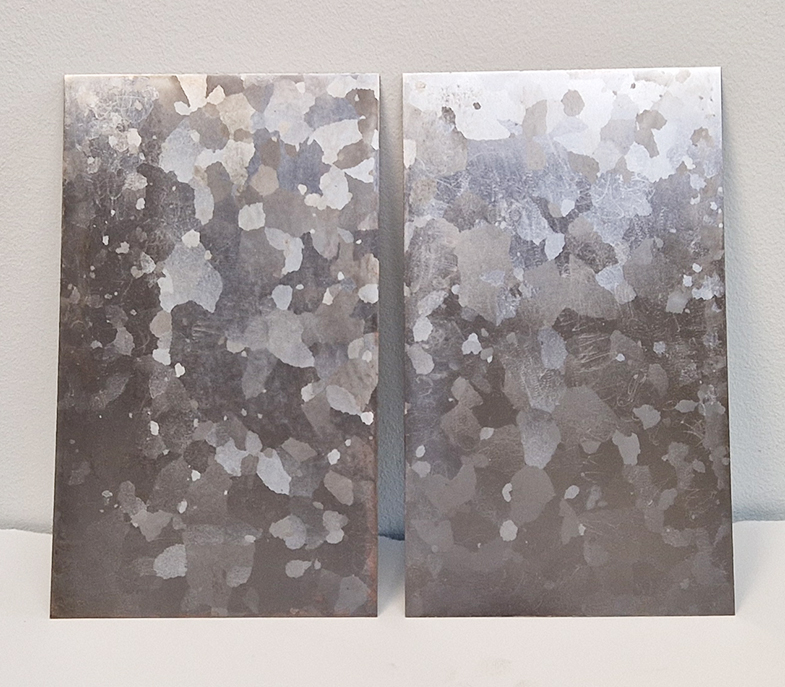
Really pleased with the results I am getting from the new batch of directional magnetic steel sent from Union Steel Products. These are coming out better than in previous tests.

Norman P. Goss invented grain-orientated steel in 1934. It was produced through a two-stage cold rolling process with intermediate annealing between the cold rolling stages. Grain-oriented electrical steel enabled the development of highly efficient electrical machines, especially transformers. Today, the magnetic cores of all high-voltage high-power transformers are made of grain-oriented electrical steel. The strong preferred crystallographic orientation is known as a Goss texture.

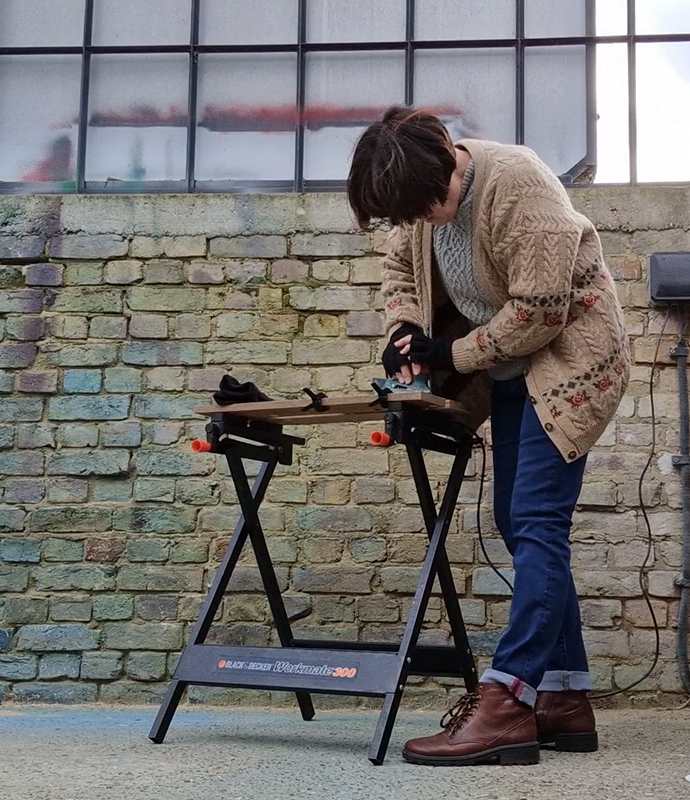
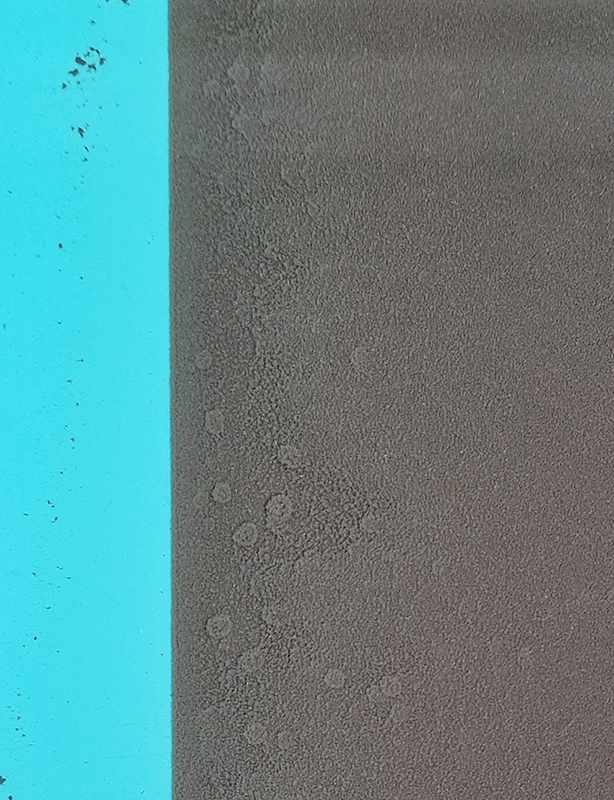
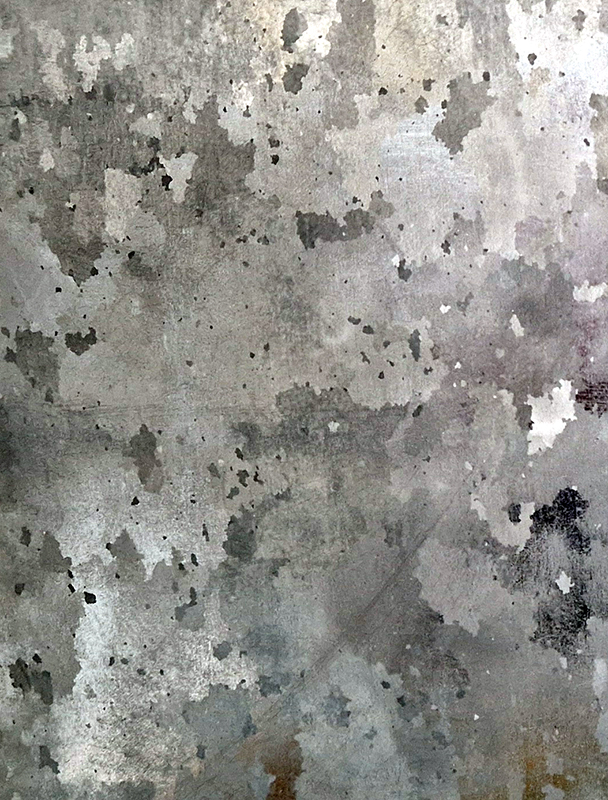
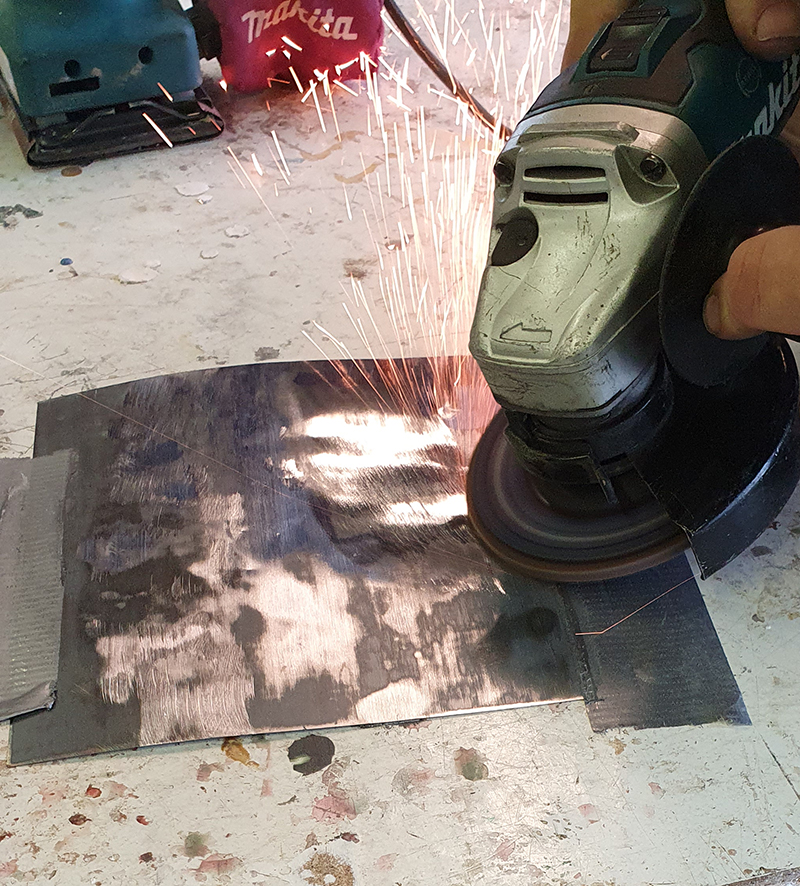
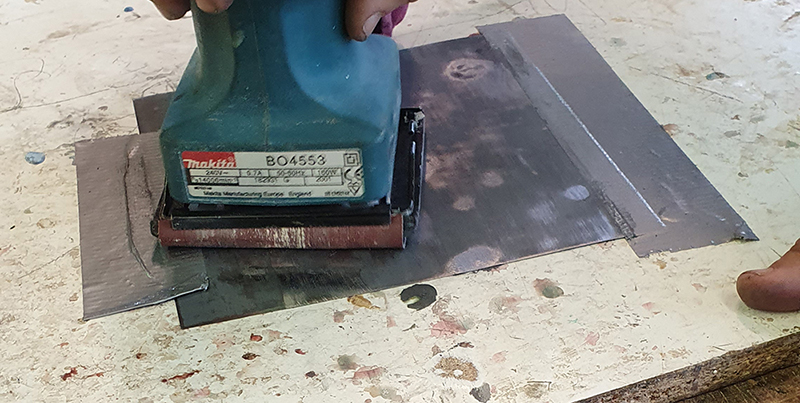
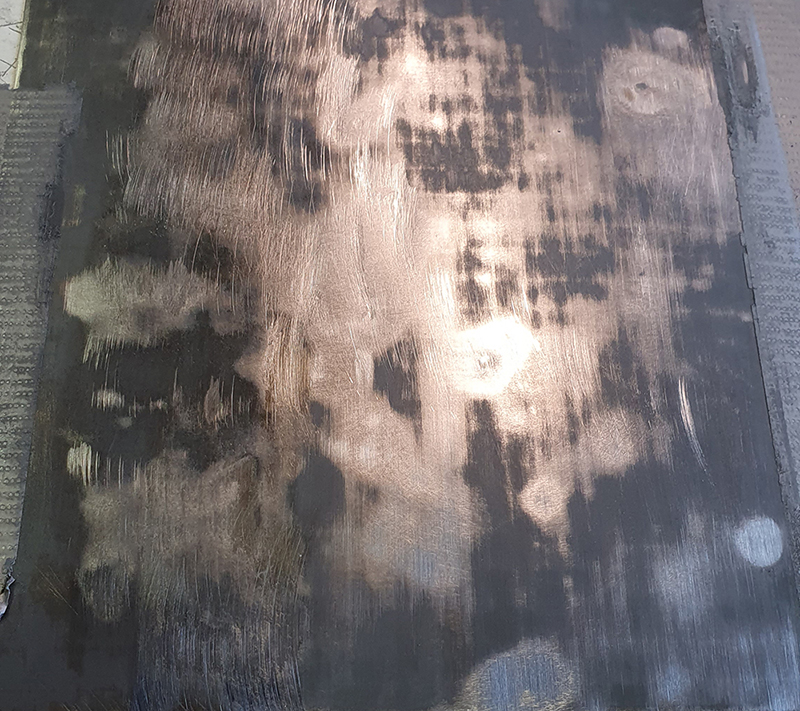
When I receive the electrical steel it has a grey insulation coating which has been applied to both sides of the sheet to avoid eddy currents between the stacked sheets when used in a transformer core. I am removing this coating by sanding. I then etch the sheets in copper sulphate solution for 20 minutes. The plate must be dried very quickly when it is taken out of the etching bath. I then lightly polish and wax the surface. Some detail is lost quite quickly and areas can become muddy after etching so I still need to experiment a little more with alternative cleaning and sealing methods.

A previous batch had a different coating that proved impossible to remove cleanly even with the most extreme methods. This new batch has two different types of sheet which have a slightly different pattern to reveal. It is quite hard work but a fascinating material to experiment with.

I have been considering using the Directional Magnetic Steel Pieces in some form of suspended sculpture as movement causes the surface to catch the light revealing the patterned surface of this material. I might use it to mark the line of declination across the gallery floor from True North to Magnetic North at the time of installation.

Thinking about moving sculptures –

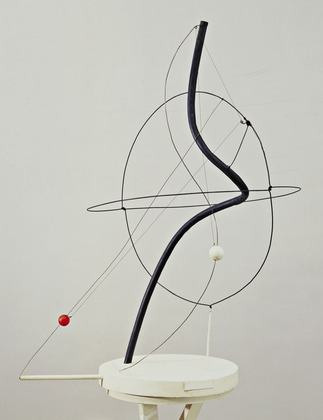
Imagine holding Einstein’s attention for the forty minutes it takes your work to revolve. A Universe by Alexander Calder 1934, painted iron pipe, steel wire, motor, and wood with string. One of the first artists to explore kinetic and motor driven sculpture, expanding drawing into 3D and painting into motion. A nice intro to Calder from 2016 – The Universe of Alexander Calder with Dara Ó Briain.

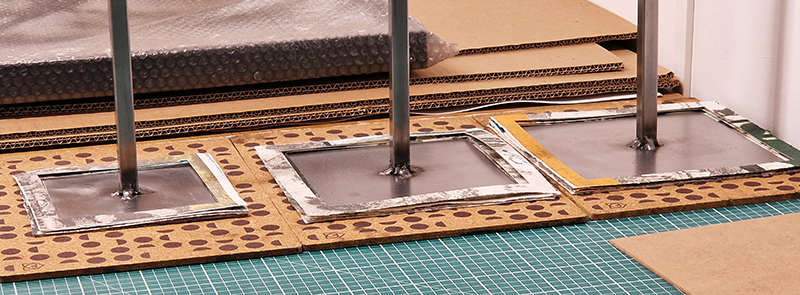
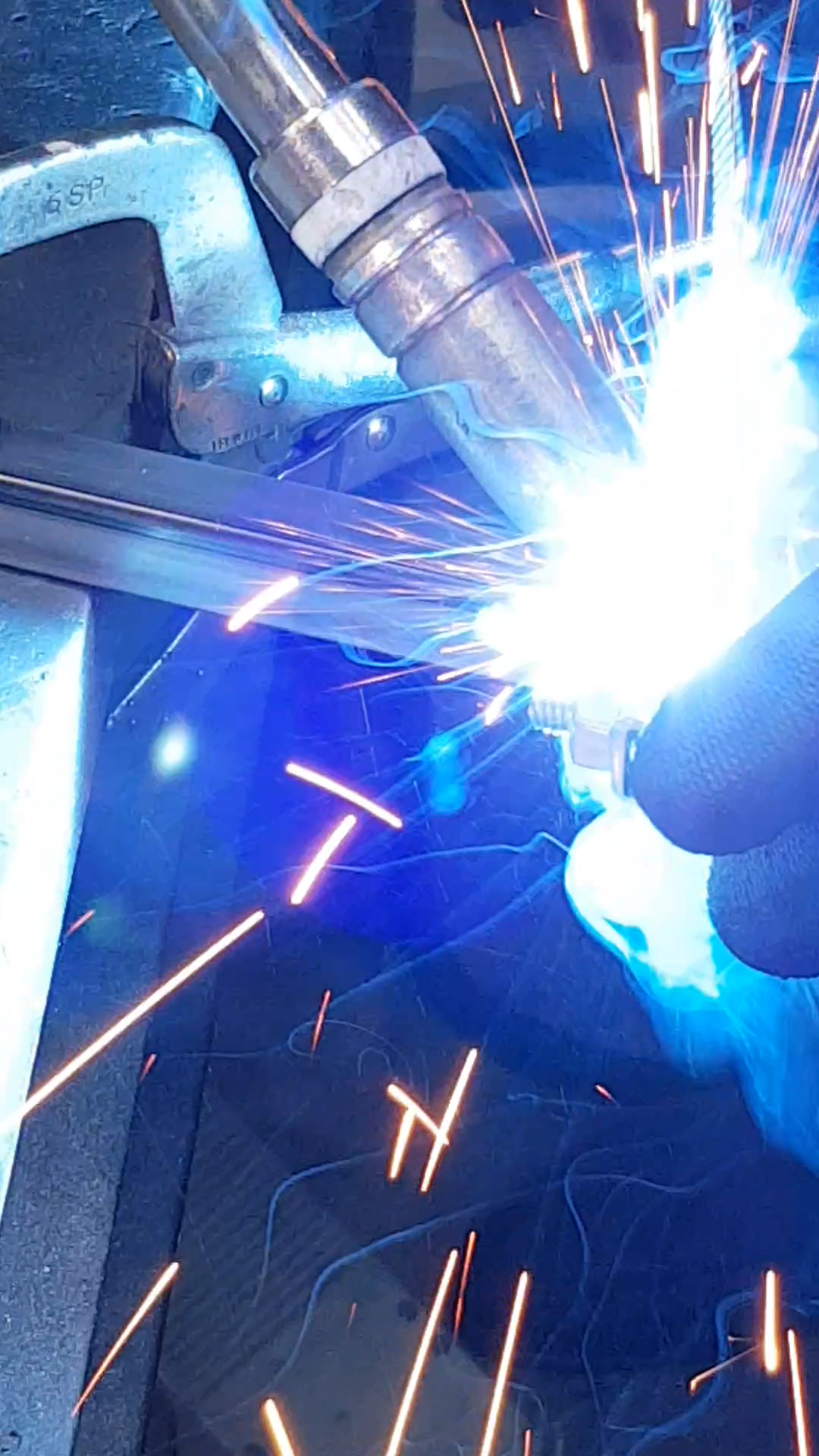
Work continues on the Azimuth Obelisk with the construction of the metal frame to support the structure and hold the layered paper sheets. Thanks to Giles Corby of the London Sculpture Workshop for getting to grips with my diagrams and welding the frame. The frame is made in three interlocking parts to distribute the weight and make for easier storage and transportation. This sculpture is a response to the concrete obelisk erected in 1955 at Hartland Magnetic Observatory, near the site’s northern boundary as a permanent azimuth mark. It is viewed via a theodolite through a window in the north wall of the Absolute Hut, its azimuth being 11º27’54” E of N and marks the point from which the magnetic north pole is tracked as it drifts westwards.

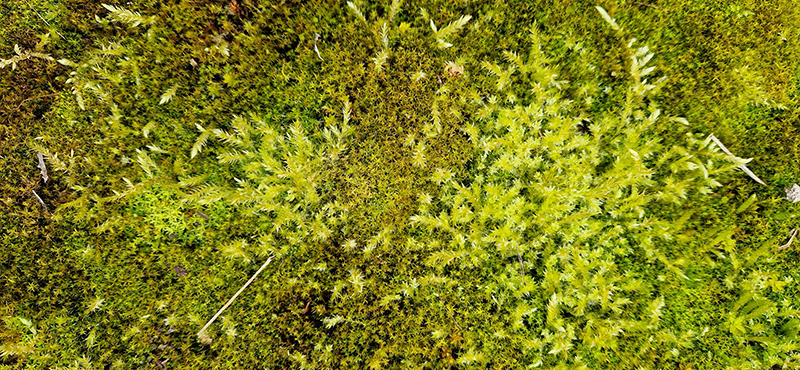
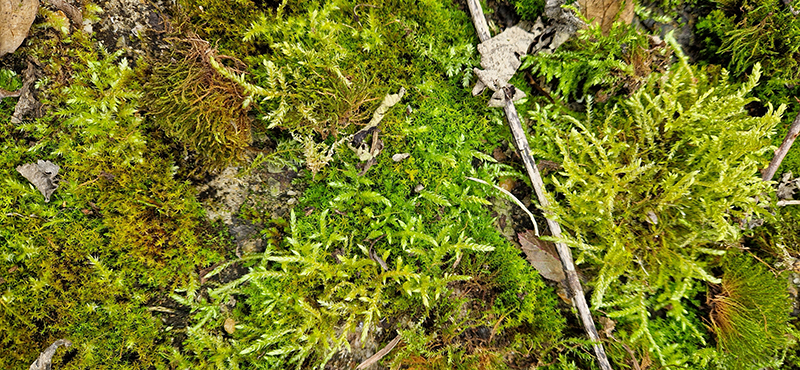
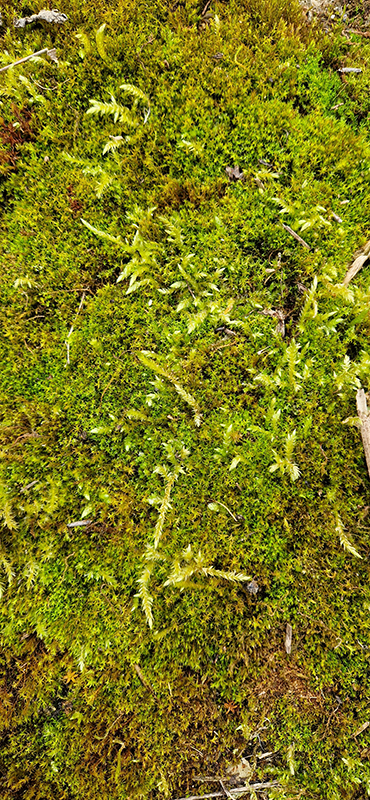
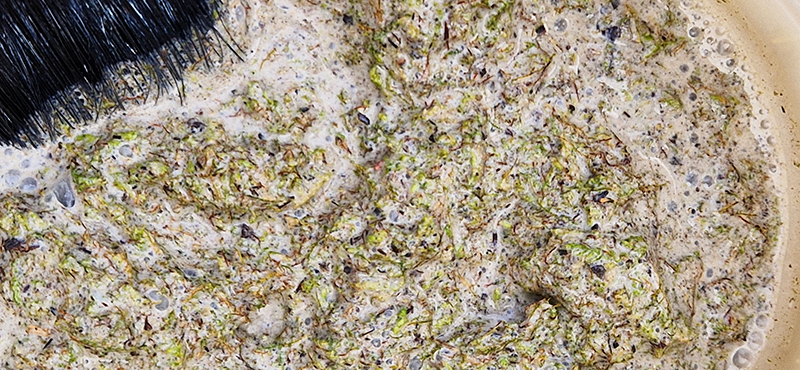
The British Bryological Society celebrates its centenary this year, promoting the study of mosses and liverworts. I have been searching their website for clues on growing moss. Most of the information is on the identification of mosses but I did find a useful downloadable pdf of The Moss Growers Handbook by Michael Fletcher. No mention of liquidising moss with yoghurt as a starter culture though.

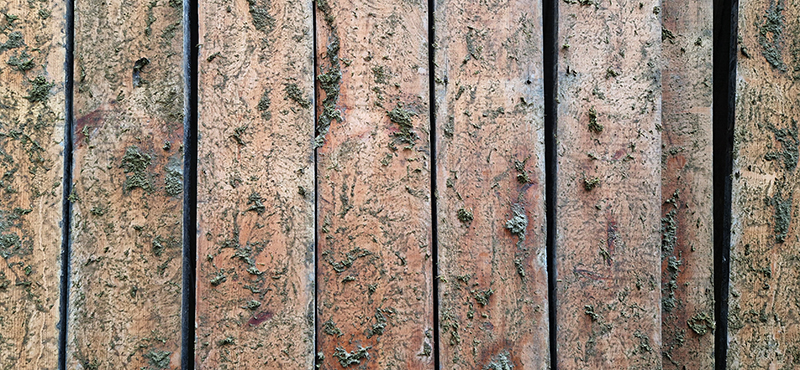
Gathering moss, liquidising with yoghurt and painting on to reclaimed old boards.

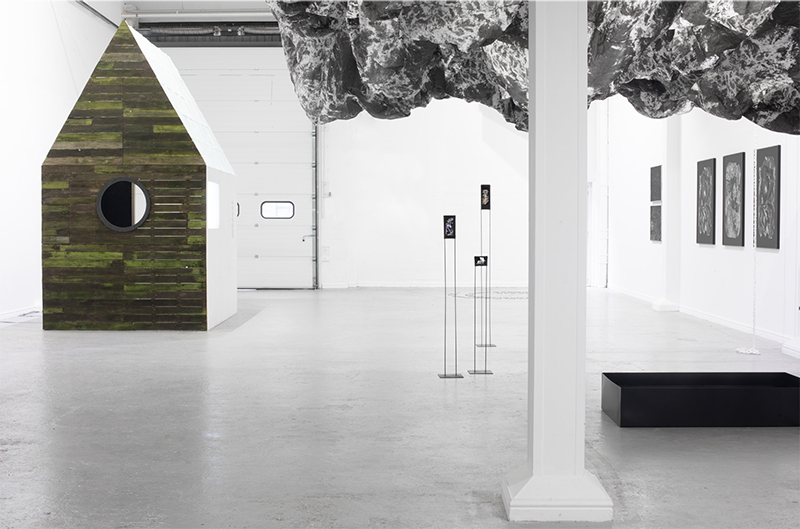
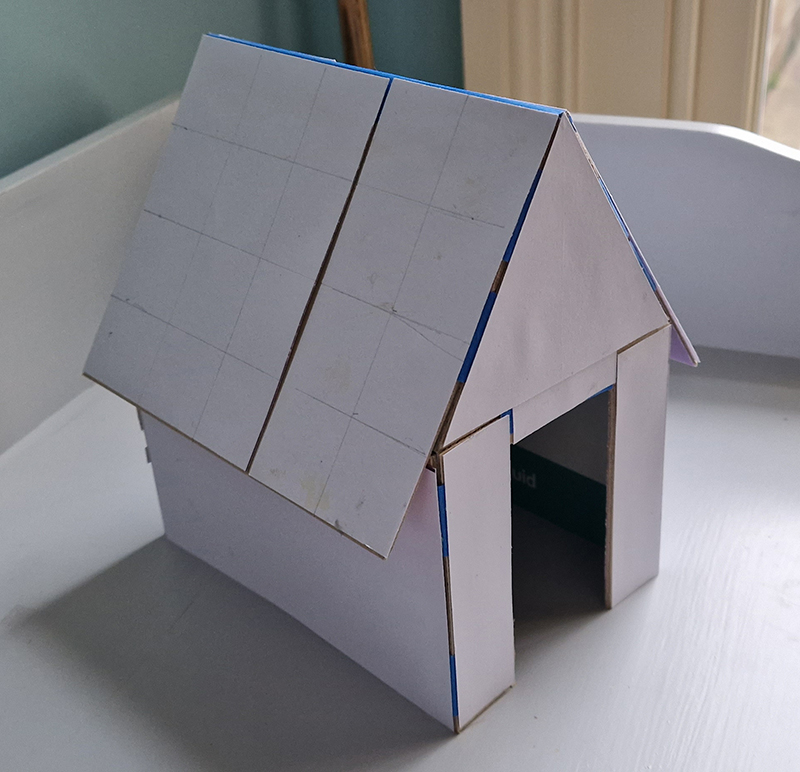
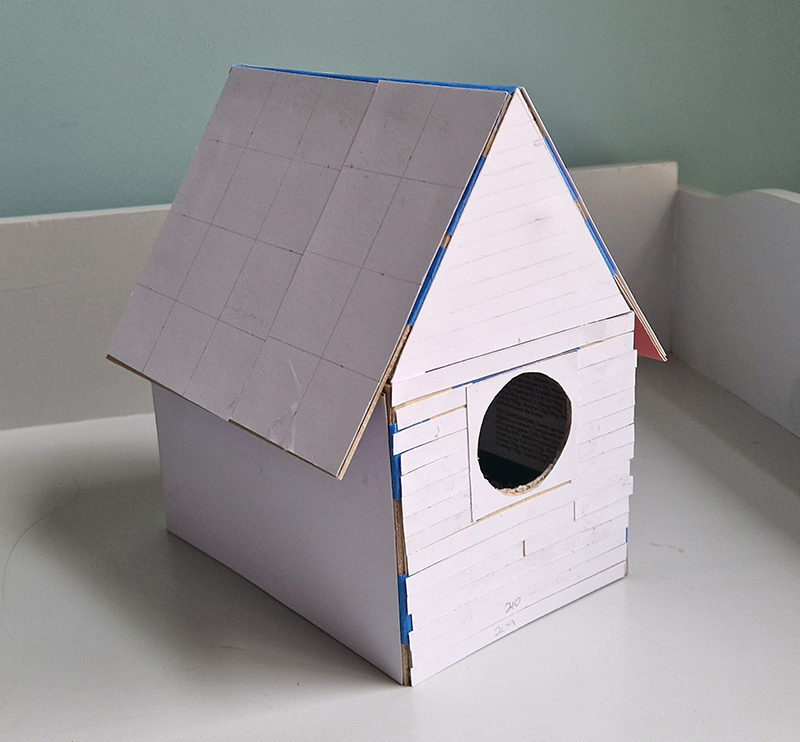
I made a rough model of The Absolute Hut to work out how many boards I will need for the north facing wall to try and grow moss on. I like that it turned out looking like a bird house as inside will be video exploring the magnetoreception of birds. This work is a reimagining of the Absolute Hut at Hartland Magnetic Observatory where monitoring of the Earth’s magnetic field takes place.

Some speculation on human magnetoreception:

Neurons send information electrochemically around the body. The signals they send are called action potentials which is a temporary shift from negative to positive within the cell caused by certain ions entering the cell. Research has proven that some animals can sense the magnetic field via cryptochrome molecules in the retina which trigger action potentials. New studies have been carried out looking at iron particles (Fe3O4) found in the brain using supersensitive magnetic sensors to read the brain’s magnetic field. Receptor cells containing crystals of magnetite could register changes in magnetic fields and report this information to the brain.  

One study suggests that it could be possible for the magnetic field in one animal’s brain to transmit information to another animal’s brain by triggering action potentials creating the same thoughts and emotions. There have been experiments with rats and fruit bats which claim brain to brain communication has occurred. Alpha waves in the human brain have been shown to respond to magnetic fields. Alpha waves are always present, but are more prominent when at rest. The experiment, carried out at Caltech, mimicked how a person might experience the Earth’s magnetic field when turning their head. 

Maybe putting our heads together can exchange thoughts telepathically.

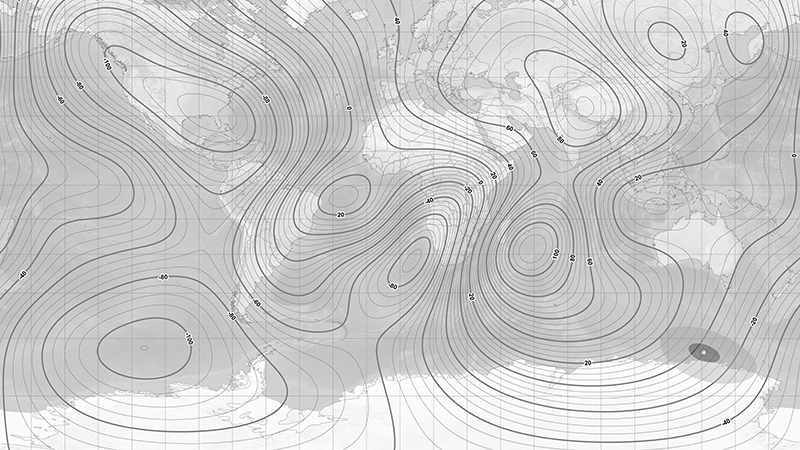
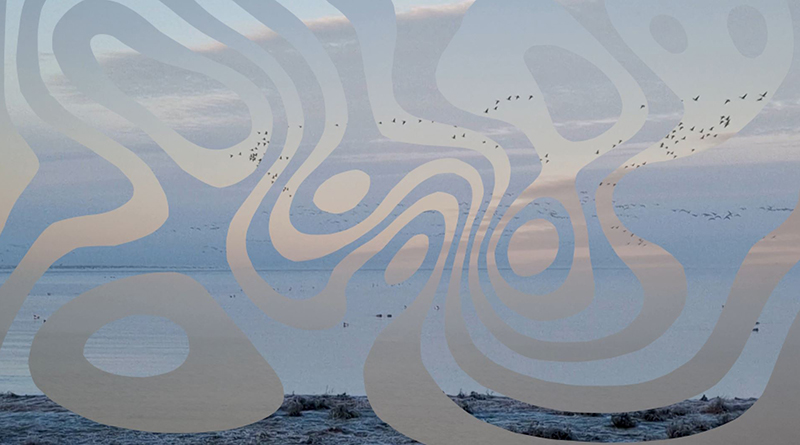
I have taken the contour lines from a publicly available World Magnetic Model Field Map as a framework for layering in the video work on bird magnetoreception.

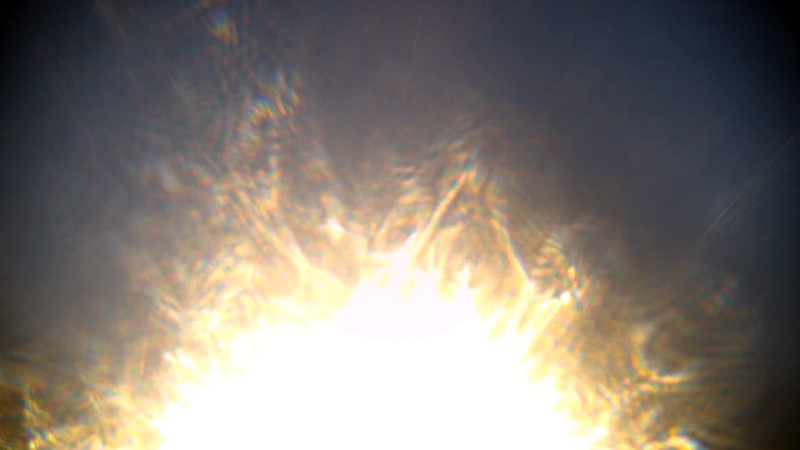
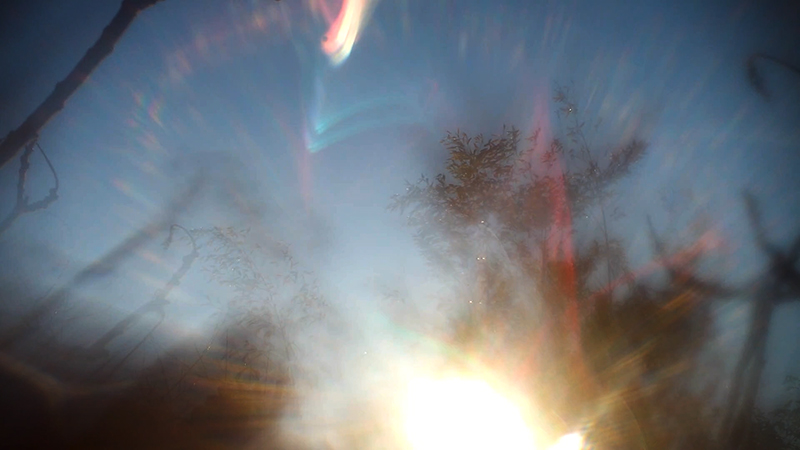
An early frosty morning captured the sun melting the ice on the lens of the spy cam in the garden.

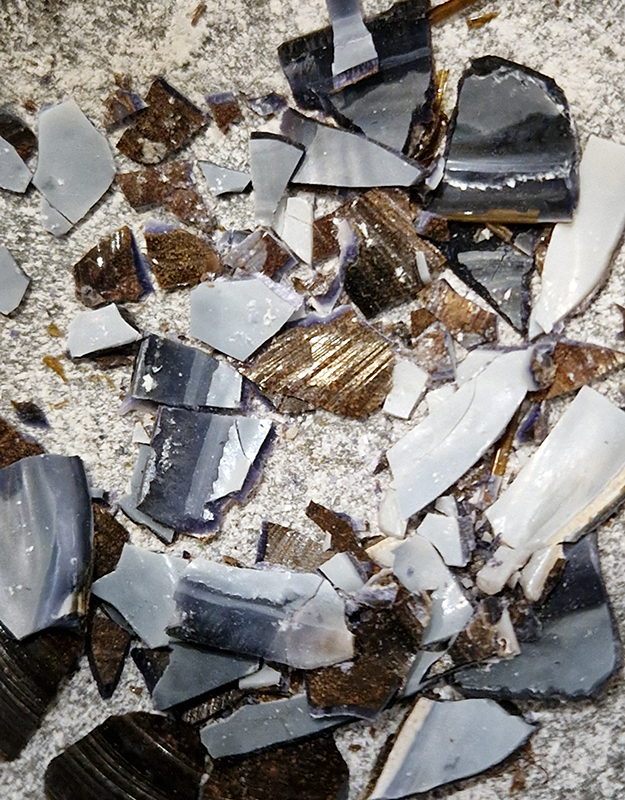
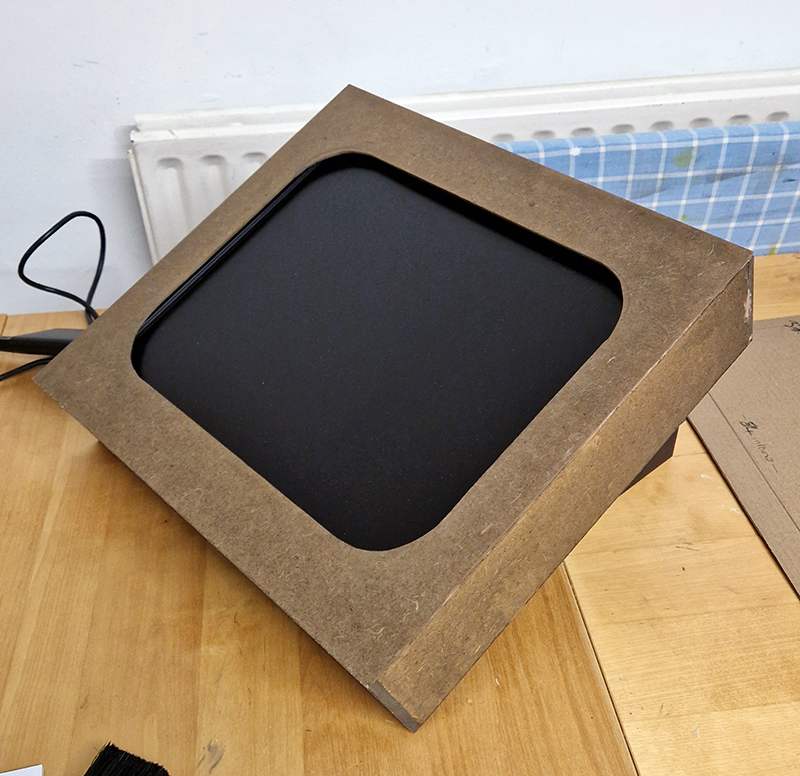
I have built the protective box frame for the monitor that will be inside the mollusc/rock sculpture Belly of a Rock. Thanks to Pete next door for cutting the wood for me. I plan to build the shape up with mesh covered in paper clay. I have had the idea to make small circular paper clay clumps with swirls of crushed shell on each one and build the form up from these. I have been given a lot of oyster shells and have collected mussel shells which I have tested crushing with a pestle and mortar.

The drift of the magnetic North pole was first recorded in 1831 and historically would wander between 0–15 km a year but since the 1990’s it has sped up to drift 50–60 km a year. Tracking changes in the magnetic field can tell researchers how the iron in Earth’s core moves.

Earth’s magnetic field is created in the swirling outer core. Magnetism in the outer core is about fifty times stronger than it is on the rocky surface of the Earth. At the centre of the Earth is the inner core which is divided into eastern and western hemispheres. In the inner core, the temperature is so high, materials lose their permanent magnetic properties as the atoms are so thermally excited they can no longer align to a magnetic point. This is known as the Curie temperature.

The hemispheres of the inner core have distinct crystalline structures and the western hemisphere seems to be crystallizing rapidly whereas the eastern hemisphere may actually be melting.  Geoscientists have also recently discovered that the inner core has an inner core. A radical geologic change about 500 million years ago may have caused this inner inner core to develop. Here the crystals are oriented east-west instead of north-south and are not aligned with either Earth’s rotational axis or magnetic field. The inner inner core crystals may have a completely different structure to the hexagonal close-packed (HCP) phase of iron that is stable only at extremely high pressure and so may exist at a different phase.

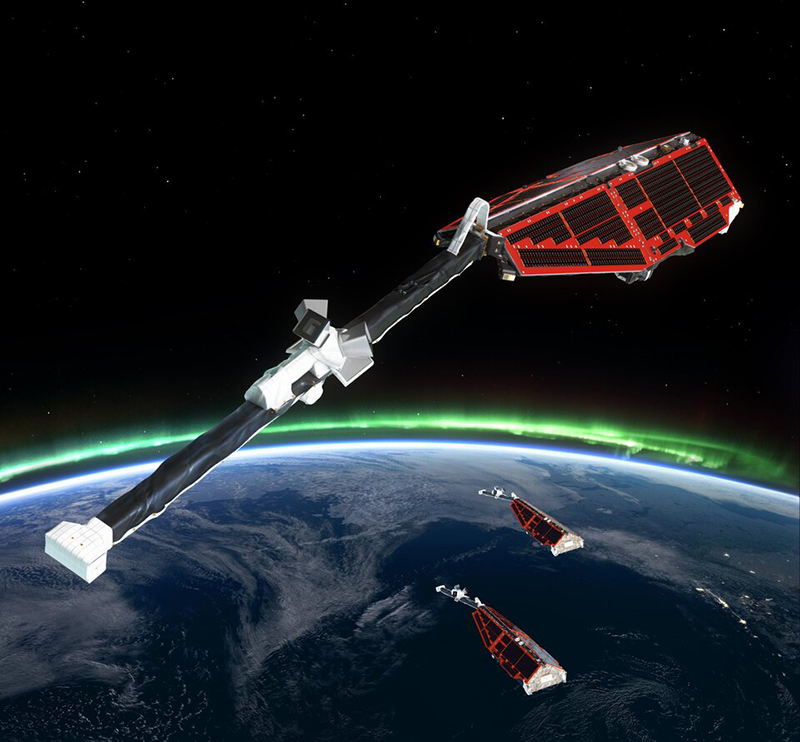
ESA’s three-satellite Swarm mission was launched in 2013 to monitor Earth’s magnetic field by measuring magnetic signals from Earth’s core, the crust, oceans, ionosphere and magnetosphere. Using data from the Swarm mission, scientists have discovered energy generated by electrically-charged particles in the solar wind, which can be disruptive to communication systems, flows asymmetrically into Earth’s atmosphere towards the magnetic north pole more than towards the magnetic south pole. They have also discovered a completely new type of magnetic wave that sweeps across the outermost part of Earth’s outer core every seven years. These magnetic waves are likely to be triggered by disturbances deep within the Earth’s fluid core. Research suggests that other such waves are likely to exist, probably with longer periods.

Geomagnetic jerks are sudden powerful waves that occur about every three to 12 years and are not consistent across the globe. It seems these jerks originate from rising blobs of molten matter that form in the planet’s core up to twenty five years before the related jerk takes place. The current findings from Swarm are part of a long-term project to predict the evolution of the geomagnetic field over the coming decades.

Polarised light is when the waves of electric and magnetic fields vibrate preferentially in certain directions. This can happen when light bounces off a reflective surface like a mirror or the sea. It can also happen in space as starlight travels through gas and dust clouds. Polarisation carries a wealth of information about what happened along a light ray’s path and astronomers can study the physical processes that caused the polarisation.

The Milky Way is filled with a mixture of gas and dust from which stars are born. Cosmic dust grains are almost always spinning rapidly, tens of millions of times per second, due to collisions with photons and rapidly moving atoms. The spinning dust grains become aligned to the direction of the magnetic field. They emit light at very long wavelengths from the infrared to the microwave domain which comes out vibrating parallel to the longest axis of the grain, making the light polarised.

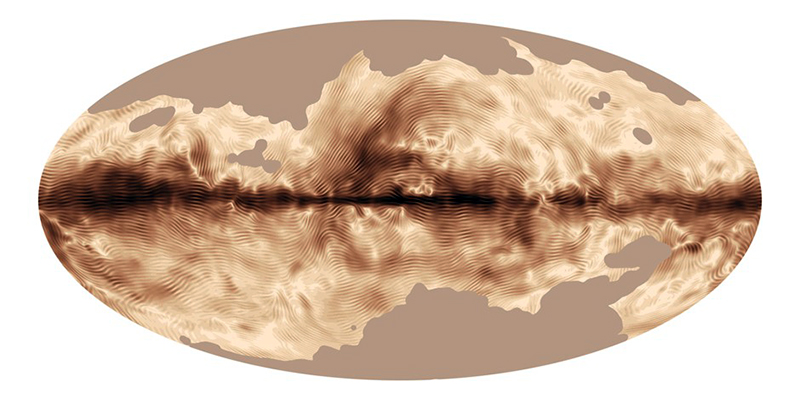
Visualisation of data from ESA’s Planck satellite shows the interaction between interstellar dust in the Milky Way and the structure of our Galaxy’s magnetic field. Polarisation-sensitive detectors were able to capture the data as interstellar dust grains tend to align their longest axis at right angles to the direction of the magnetic field resulting in light emitted by clouds of gas and dust being partly ‘polarised’. Researchers are using the polarised light from interstellar dust to reconstruct the Galaxy’s magnetic field and study its role in galaxy evolution and star formation. From this data it can be seen that across the galactic plane there is a strong regular pattern but in some areas there are tangled features where the local magnetic field is particularly disorganised.

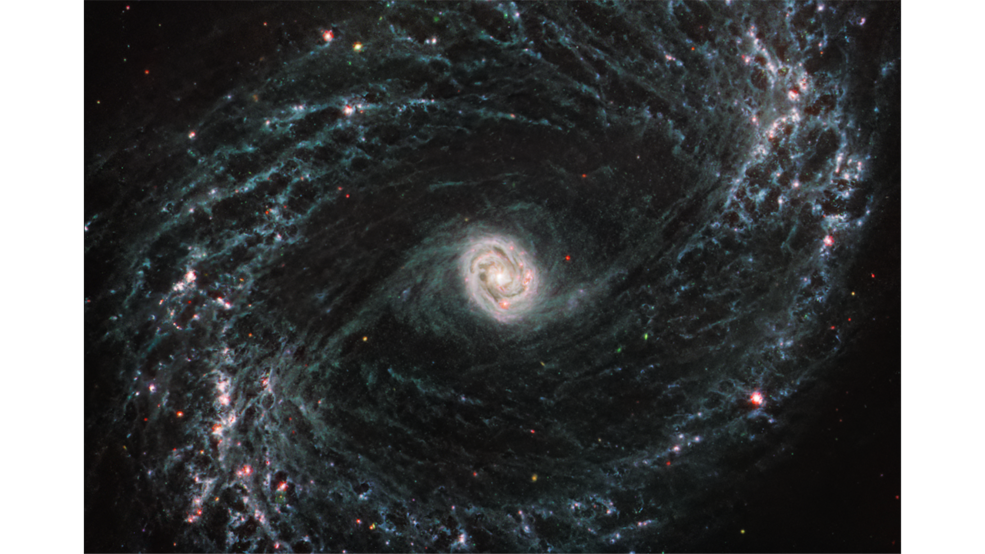
New images from NASA’s James Webb Space Telescope show star formation, gas, and dust in nearby galaxies with unprecedented resolution at infrared wavelengths. NGC 1433 is a barred spiral galaxy with a particularly bright core surrounded by double star forming rings. For the first time, in Webb’s infrared images, scientists can see cavernous bubbles of gas where forming stars have released energy into their surrounding environment.

The Observable Universe 2018 by Pablo Carlos Budasi. The furthest we can see is the faint glow from the cosmic microwave background emitted 13.8 billion years ago.

From Earth we become the centre of the eye that gazes out but we have no idea of the full size of the universe or if we are embedded in a multiverse.

The unobservable universe makes up the vast majority, around 95% of the universe. Zero, a symbol to mark nothing, sits on the boundary between absence and presence indicating what might have been or might come to be. Where we thought there was nothing we have found so much.

Gallery Visits

Preconscious Landscape at Exposed Arts Projects – an interesting space for arts based research projects. Artists: Lynne Abrahamson, Gabriele Beveridge, Matilde Cerruti Quara, Konstantinos Giotis, Sotiris Gonis, Ramona Güntert, Raksha Patel, Hamish Pearch, Anna Perach, Chantal Powell, Candida Powell-Williams, Paloma Proudfoot, Aziza Shadenova, Holly Stevenson, Maro Theodorou, Adia Wahid & Meng Zhou all grapple with an unresolvable psychoanalytic question: what does it mean for the conscious mind to try to understand its own preconsciousness?

Richard Mosse Broken Spectre at 180 The Strand. Seventy minutes of emotionally uncomfortable yet beautifully riveting viewing. Endless overwhelming destruction. Burnt forest. Subterranean fires. Intensive cattle farming. Aggressive gold mining. Wide wide screen images that slip between dreamlike garish colour and chilling monochrome with a soundtrack that sounds like the forest itself crying. The brutal disrespect for the land, the non-human and the people of the Amazon rainforest captured in heartbreaking detail as it slips through our fingers. Having been looking at moss recently the large photographic works at the entrance to the film come across very moss like and emphasises the micro and macro nature of the world.

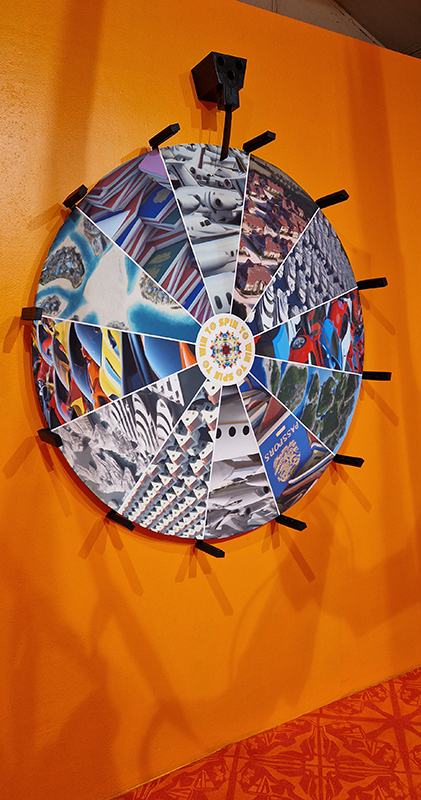
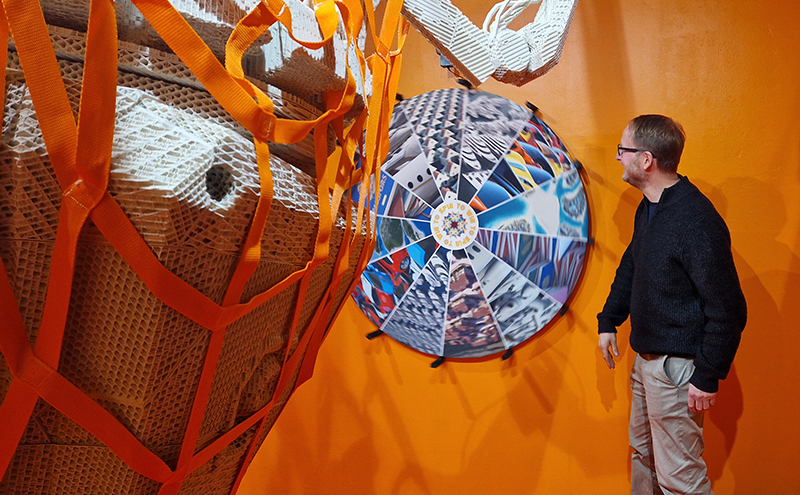
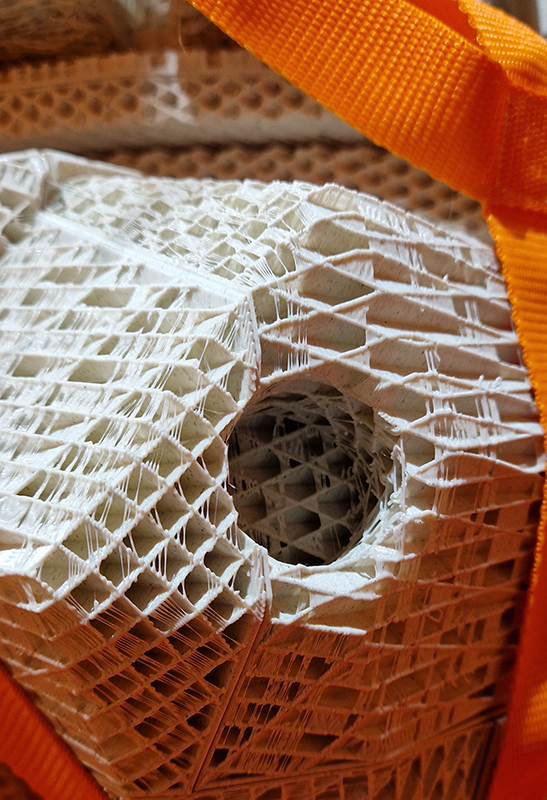
Cable Depot presents Insert Coin, a project by Bob Bicknell-Knight exploring predatory monetisation practices within video games, specifically loot boxes, and the ongoing insertion of gambling mechanics into virtual experiences. Tapping into our desires and the addictive thrill of winning Bob Bicknell-Knight invites us across the digital divide into a luminous world of pixels and 3D printing. I was delighted to win an island. Here everything is free so there is no uncertainty and debt to mar the experience.

As our physical lives are becoming increasingly gamified the game industry has, for almost twenty years, been inserting ways of gambling real world money into video games. From purchasing extra lives to play another level in Candy Crush to buying new cosmetic options for your guns in Call of Duty, spending money within video games has become increasingly prevalent.

One of the most prevalent and destructive forms of monetization are loot boxes, consumable virtual items that are bought within video games which can be redeemed to receive a randomised selection of further virtual items, ranging from simple customization options for a player’s avatar or character to game-changing equipment such as weapons and armour. As the items are randomised players have previously spent thousands of pounds attempting to gain specific products in different games. As these gambling mechanics have become more prevalent, with considerable harm being done to young people and players with gambling addictions, loot boxes are now illegal in several countries, whereas recently the UK government decided that loot boxes will not be regulated under betting laws.

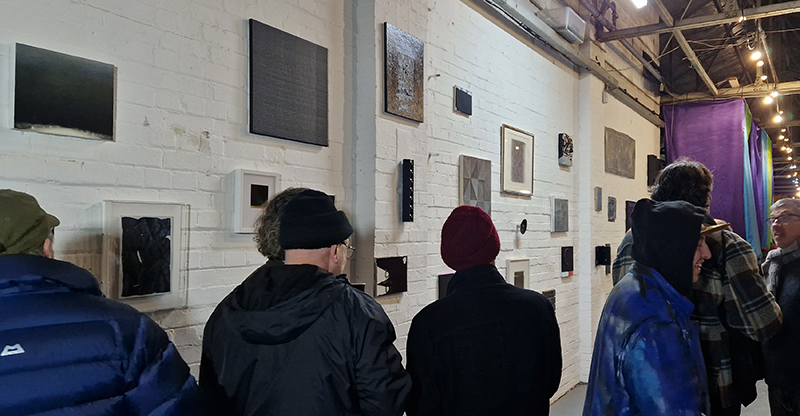
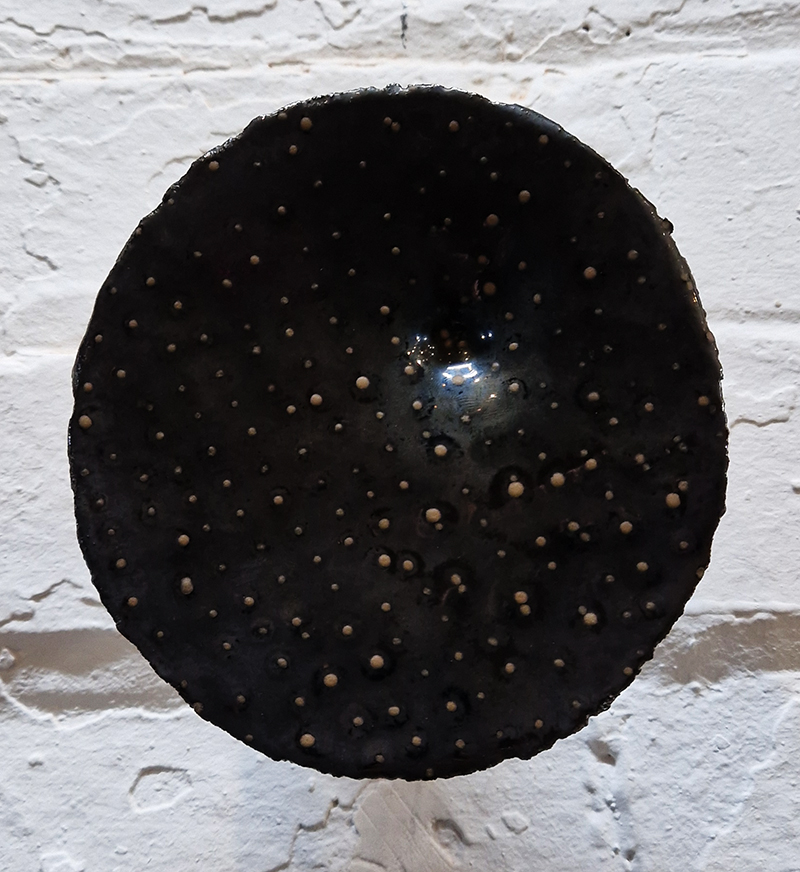
Champs Noir curated by Simon Leahy-Clark at Terrace Gallery. A carefully chosen collection of works in black from a great catalogue of artists. Featuring: Michael Ashcroft, Bensley and Dipre, Diane Bielik, Andy Black, Cedric Christie, Gemma Cosse, Graham Crowley, A Ee, Nicky Hodge, Mandy Hudson, Michael Kaul, Sarah Ken, Sharon Leahy-Clark, Simon Leahy-Clark, Graham Lister, Brendan Lyons, Alistair MacKillop, Mutalib Man, Enzo Marr, Donna Mclean, Neil Metzner, Jane Millar, Josh Mitchell, Jost Munster, Stephen Palmer, Kasper Pincis, Andrew Seto, Peter Suchi, Sally Taylor, Chris Tosic, Mark Wainwright & Tom Wilmott. Selected image: Jane Millar: Test Bed, ceramic media, 12cm diameter, 2019.

Julie F Hill Earth, Water, Night at The Stone Space

We so often look out at the night sky forgetting it is gazing back at us.

‘… The [pool] is the very eye of the landscape, the reflection in water the first view that the universe has of itself …’ —Gaston Bachelard,

Holding the poetic and alchemical in contrast to the objective and scientific, astronomical data of deep space folds into Earth’s deep time. Light and shadow gather in pools of water, forming images that suggest consciousness is a fundamental property of all matter.

Beautiful and contemplative works capturing the milkyness of the Milky Way caught in the folds of the night sky; distorted reflections rippling across dark pools; illusory depths oscillating between dimensions.

Sam Williams Deep in The Eye and The Belly (Part One) at San Mei Gallery. It was a busy night at the opening and I didn’t take any photos. There was a large projection on one wall and two other films showing on monitors with headphones. The work describes stories of cetacean bodies, interlacing actual historical events with speculative narratives. The camp narration of the main film deliberately jars with the emotive subject matter, but is given context through the supporting films as the protagonist who features across each film is seen reclining wearing feathers and glittery regalia speaking in long drawn and world weary sentences or lamenting the loss of the whale in absurd song from the vantage of a lighthouse.

Reverse Parking at Thames-side Gallery curated by Peter Lamb and Katie Pratt.

Reverse Parking presents seven artists (Gordon Cheung, Will Cruickshank, Cristallina Fischetti, Oona Grimes, Paul Hosking, Peter Lamb and Katie Pratt) whose work explores the duality of reality and the technological sublime. A bold and vibrant show. Good to see some large work from Oona Grimes and to chat with her in the gallery; her battle scenes encompassing battles down the ages coincidentally emerged at the onset of war in Ukraine. Also interesting to hear Katy Pratt discuss her language of abstract painting on the excellent Art Fictions podcast.

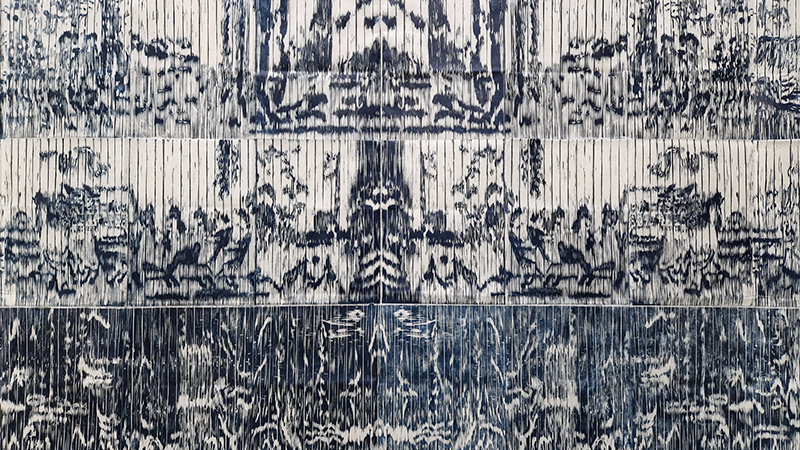
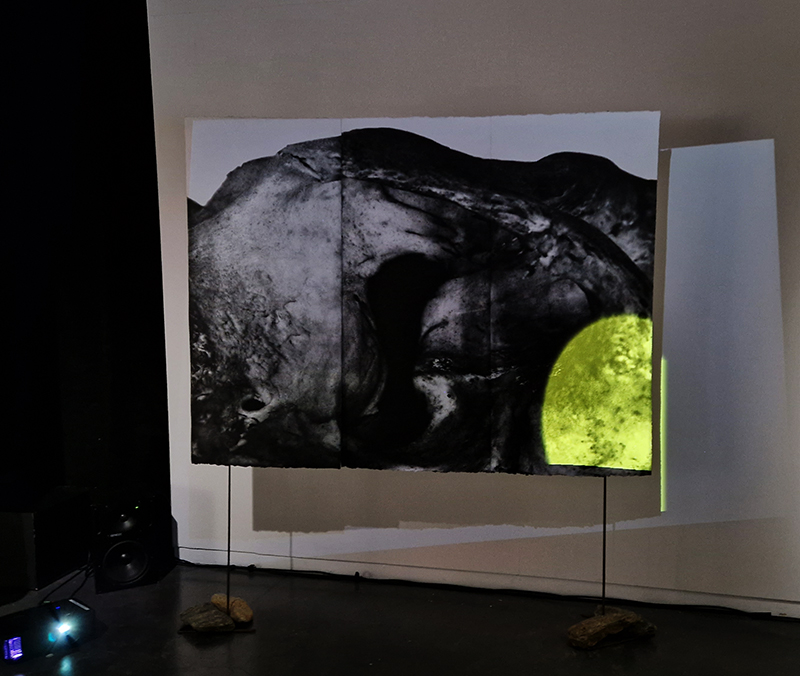
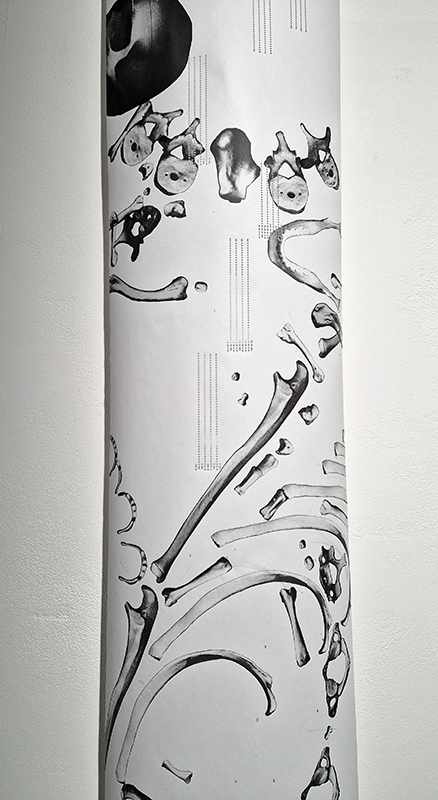
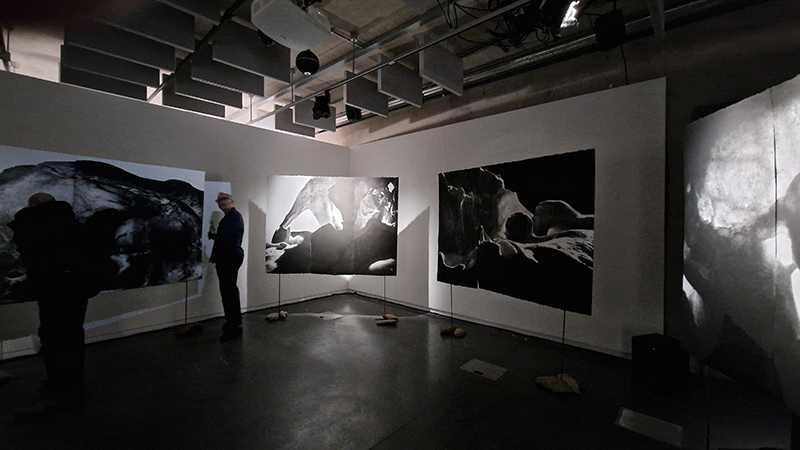
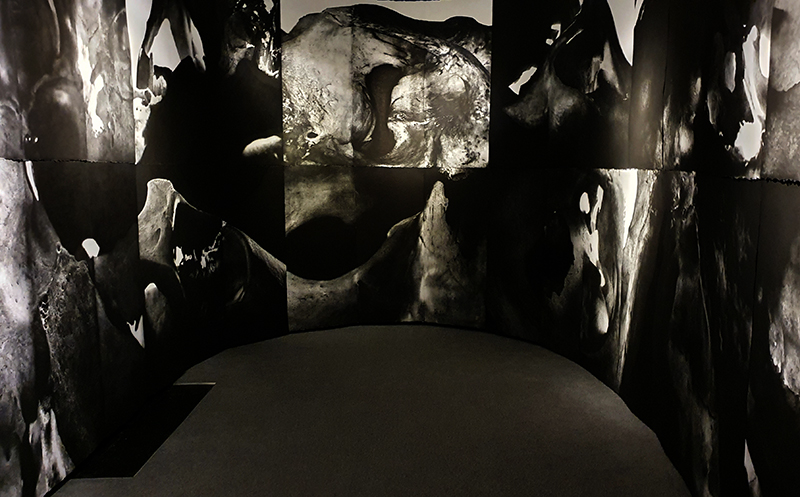
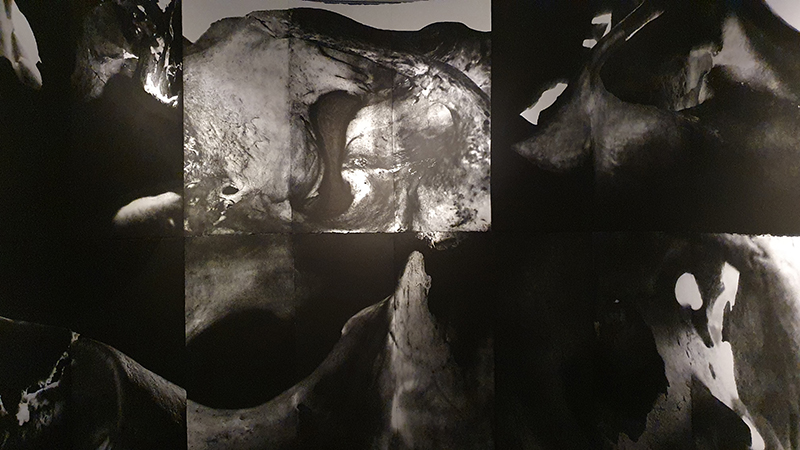
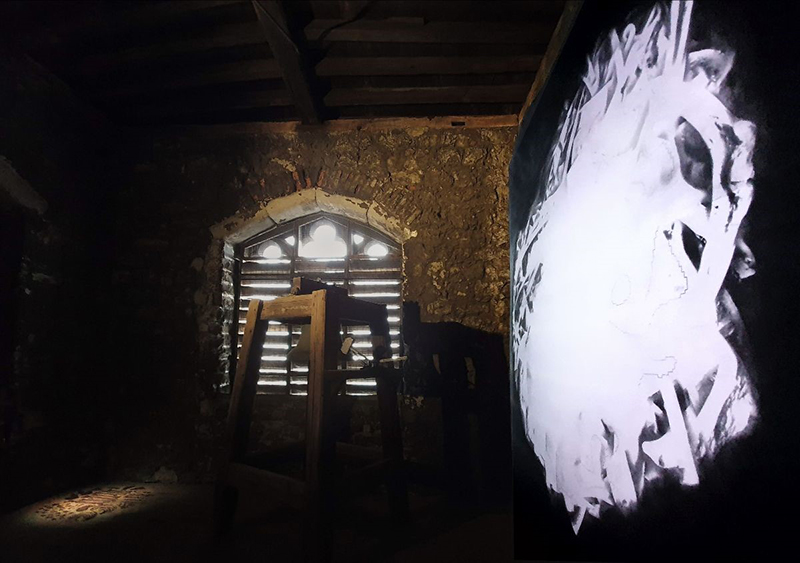
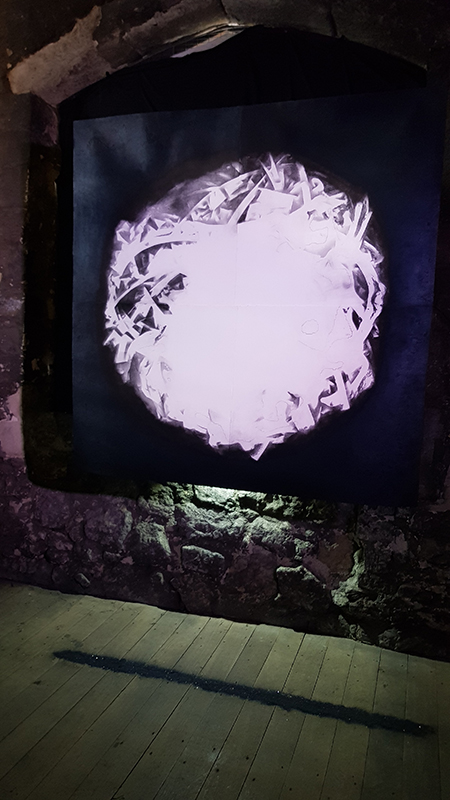
…not necessarily in the right order at Stephen Lawrence Gallery takes a playful cue from the Morecambe and Wise sketch with special guest Andre Previn which is embedded in British cultural history. Work from the featured artists (Carol Wyss, Dominic Murcott, Graeme Miller, Dirty Electronics and Dushume) overlaps and layers through still image, sound and projection. Exhibited is the third iteration of Carol Wyss’s giant etchings that expose the inner recesses of the human skull. Here they are made luminous and their sculpted landscapes all the more surreal by the animated light sequences traversing their surfaces.

Reading

Not observant enough to realise I bought the pocket guide version of The Natural Navigator by Tristan Gooley I ended up with an unembellished rather prosaic read with lots of facts and charts and possibly useful information that requires a large investment of dedication to the cause to learn many of these techniques. What was amusing though was finding the section headed Mosses and Lichens opens with the paragraph –

‘There is a commonly held belief that “Moss grows on the north side of trees and buildings.” It does, sometimes, but will also grow on every other side.

He goes on to say that moss doesn’t care about direction, but it does care about moisture. So in the northern hemisphere the side away from the sun is preferred by moss as it retains moisture for longer. Gradient is also important to prevent run off of water. I have tried to prop my planks at as low an angle as possible in the side passage but may need to find somewhere I can lie them down more.

I am enjoying dipping in to Florian Freistetter’s A History of the Universe in 100 Stars. No longer a swathe of uniform twinkling points of light but each star has its own character and story. It starts with 100 stories but we can extrapolate that to consider each of the many billion stars as individuals.

Listening

In Our Time – Superconductivity Excellent guest speakers (Nigel Hussey, Professor of Experimental Condensed Matter Physics at the University of Bristol; Suchitra Sebastian, Professor of Physics at the Cavendish Laboratory at the University of Cambridge; Stephen Blundell, Professor of Physics at the University of Oxford) on this podcast. Superconductivity was a surprising discovery in 1911 by the Dutch physicist Heike Kamerlingh Onnes who found that when he lowered the temperature of mercury close to absolute zero and ran an electrical current through it, there was no resistance to the current. Many other materials have also been found to share this property when cooled to a pivotal temperature when the material suddenly enters a different phase and behaves in a completely different way. As water moves from solid to liquid to gas at different temperatures so metals can move between solid, liquid and superconductor. Further research found that a superconductor also expels magnetic fields and this has been exploited in the making of MRI scanners and to speed particles through the Large Hadron Collider.

I also enjoyed hearing how, what were once impossible numbers, called imaginary numbers by Descartes, have turned out to be fundamental and integral to explaining oscillations and the sort of wave like structures in the universe that we encounter when diving into a quantum world.

The Curious cases of Rutherford and Fry – The impossible number

Delighted to announce At a Distance has been selected for The Anxiety of Interdisciplinarity exhibition at the Island Venue, Bridewell St, Bristol.

The Anxiety of Interdisciplinarity is an exhibition which seeks to reframe printmaking as a site of interdisciplinarity – a testing ground for ‘The important work…done at the surfaces between adjacent disciplines’ (Carter, 1998). Motivated by the International Multidisciplinary Printmaking Conference IMPACT 12’s theme ‘Merging and Metamorphosis’, the exhibition aims to trace the metamorphosis of conversations between disciplines. Installed at a former police station in Bristol, the Island Venue hosts art works in an outdoor courtyard, police cells and subterranean motor vehicle storage area.  The hybrid exhibition includes works of differing materials, scale and dimensions across installation, sculpture, sound, moving image, digital and post-digital media.  Curated by Sarah Strachan and Ayeshah Zolghadr.

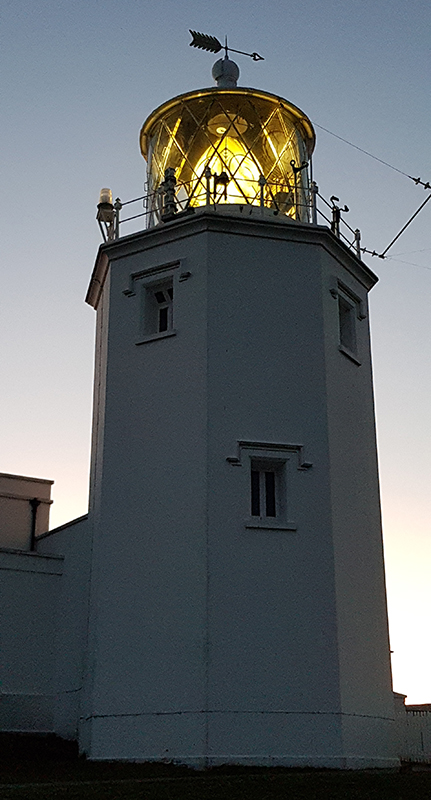
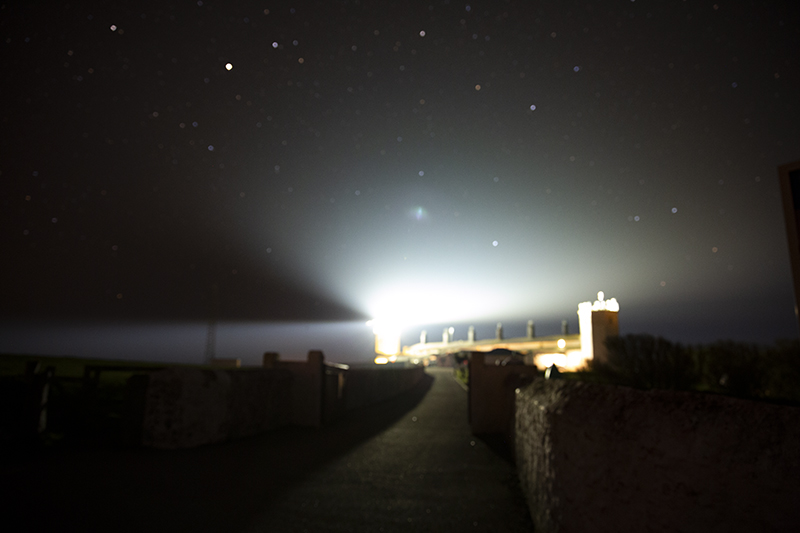
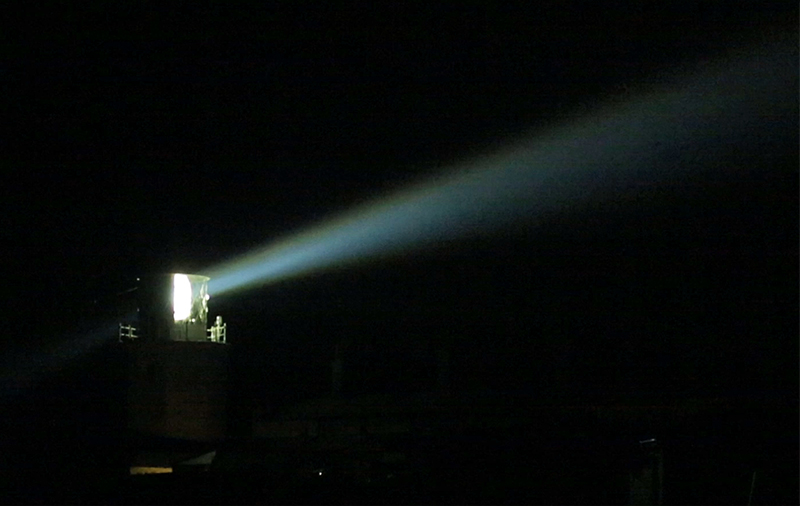
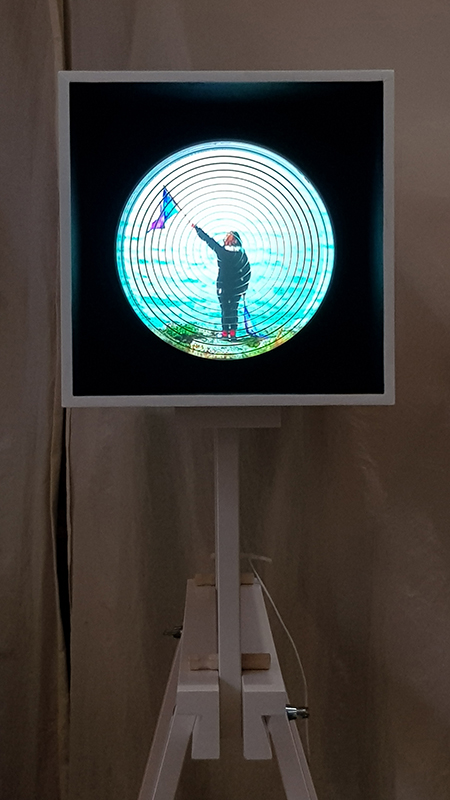
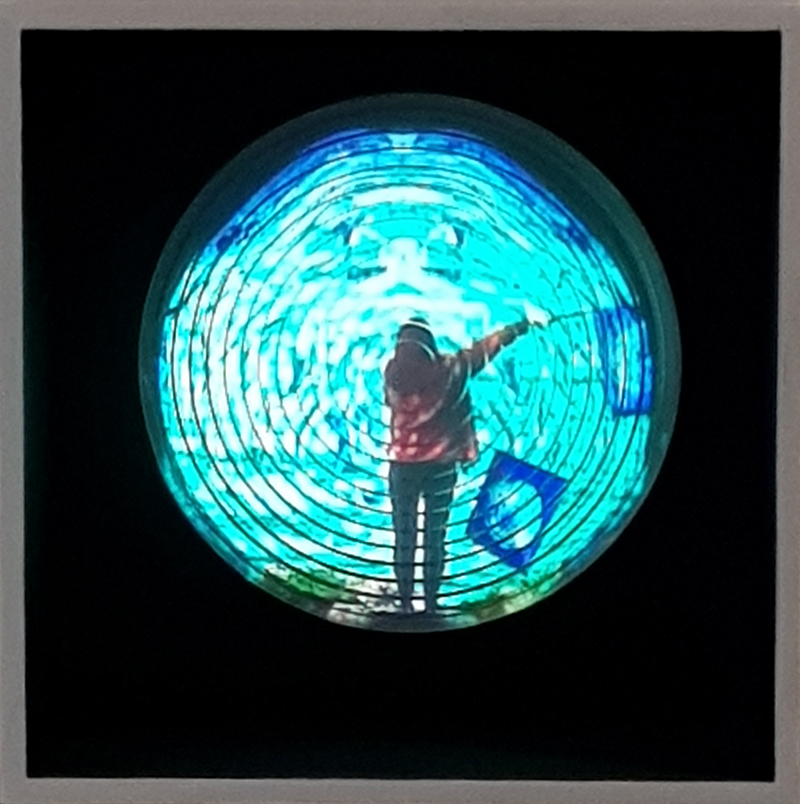
At a Distance looks at remote methods of communication and relates this to the mysterious twinning of electrons in quantum entanglement where particles link in a way that they instantly affect each other, even over vast expanses. Einstein famously called this phenomenon ‘spooky action at a distance’. Filmed in Cornwall on 29th March 2019 (the first date when Brexit was supposed to happen) as the iconic Lizard Lighthouse powers up its lamp, solitary figures using semaphore flags sign ‘We Are One’ out across the ocean in the hope the message will be echoed back. Drawing on the physical language of print that embodies touch, separation and mirroring the flags have been printed using hand painted dye sublimation inks applied via a heat press. This process transfers the ink from a paper matrix onto the substrate textile. The image passes momentarily across space in a dematerialized state as vapour before being reformed as its mirror opposite.

In the studio I have been performing some more test etchings of the directional magnetic steel samples. Copper sulphate seems to give a better result than Nitric Acid. I have managed to gently polish the surface with Brasso without losing the crystal pattern and I gave it a coat of clear lacquer as it seems to rust easily. I am enjoying the excavation process.

The pattern comes from rolling single crystals of an iron silicon alloy into thin sheets to minimise magnetic losses for use in transformers.

There is a link here to quite a cool video showing magnetic wall domain movement with a magneto-optical sensor.

Back in the belly of a rock video editing the footage of iron filings movement over rock like surfaces.

Magnetic field reversals are stored in ancient volcanic and sedimentary rocks. The North and South Pole flip at irregular intervals but average about every 300,000 years. The last one was around 780,000 years ago. During a magnetic field reversal, which can take thousands of years, the magnetic field becomes twisted and tangled, and magnetic poles may appear in unexpected places.

Today the Earth is divided into the super hot inner core, the molten outer core, the mantle, and the thin crust.

When the Earth formed about 4.5 billion years ago from the collision, accretion and compression of matter it was rock all the way through. Heat from the massive violence of formation and radioactive decay caused the planet to get hotter and hotter. After about 500 million years of heating up it finally reached the melting point of iron. Known as the iron catastrophe this liquifying caused planetary differentiation to occur as lighter material rose to the surface becoming the mantle and crust whereas the heavy metals like iron and nickel fell towards the centre becoming the core. This molten mass also contains elements that dissolve in iron such as gold, platinum, and cobalt along with around 90% of the Earth’s sulphur.

Earth’s main geomagnetic field is constantly changing due to convection flows and waves in the Earth’s core. As this change cannot entirely be predicted, uncertainty slowly increases over time. This fluctuation is monitored using The World Magnetic Model jointly developed by the National Centres for Environmental Information and the British Geological Survey. This is the standard model used by the U.S. and U.K. governments and international organizations for navigation, attitude and heading referencing systems using the geomagnetic field.

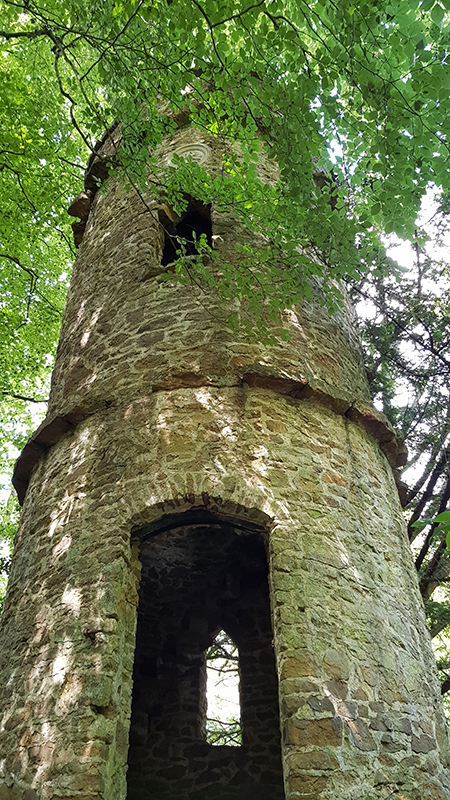
Took an early morning drive out to Wilder’s Folly. Built in 1769 by Reverend Henry Wilder as a love token for his fiancée Joan Thoyts – it could be seen from both their residencies. First drone flight over a building and over trees. White doves are now resident and thankfully didn’t seem bothered by the drone.

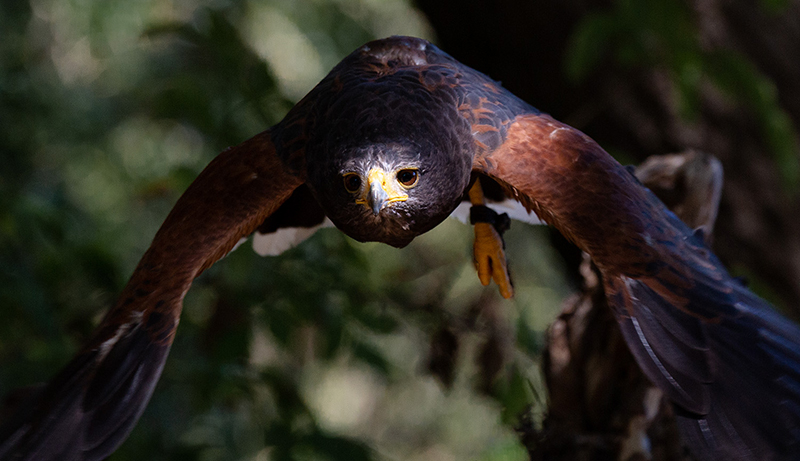
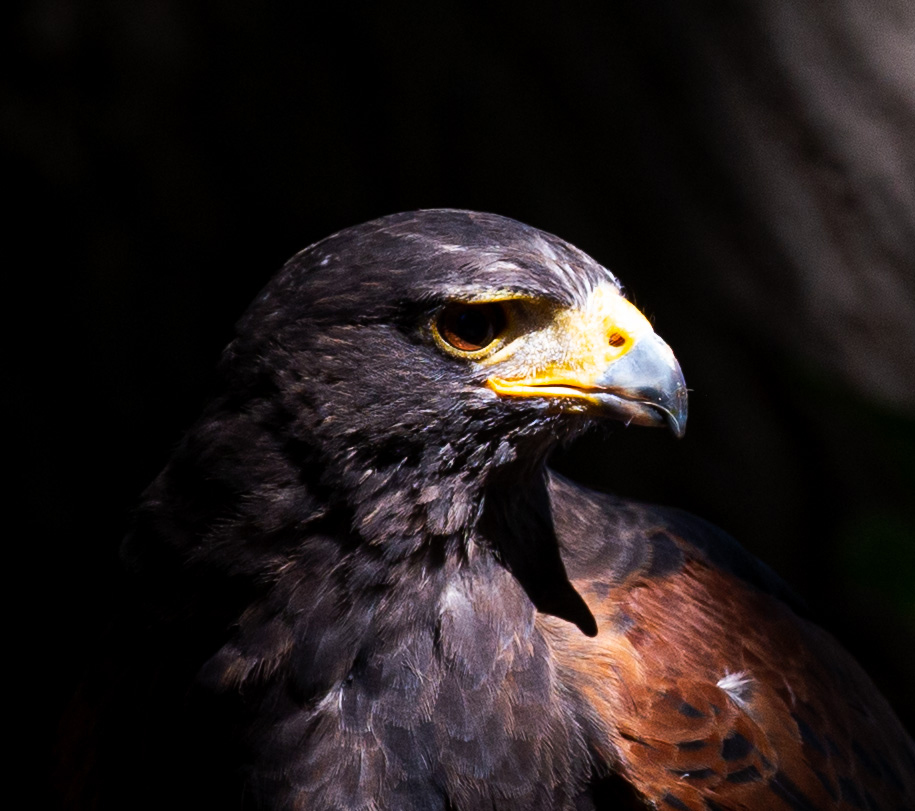
Such a brilliant day meeting and trying to photograph the beautiful birds of prey at Coda Falconry under the expert guidance of Elliot. Lots of advice on hand just need faster reflexes and possibly a mirrorless camera.

Birds appear to be able to “see” Earth’s magnetic field lines and use that information for navigation. Their compass ability comes from a quantum effect in radical pairs, formed photochemically in the eyes.

Gallery Visits

The extraordinary Joe Banks Disinformation The Rapture Live optokinetic video and sound installation at Cable Depot. A special experience to witness this work which has a heady mix of spirituality and mortality. The human voice stretched to primordial sounds as the flesh transcends its halo of fire.

Wellcome Collection Rooted Beings

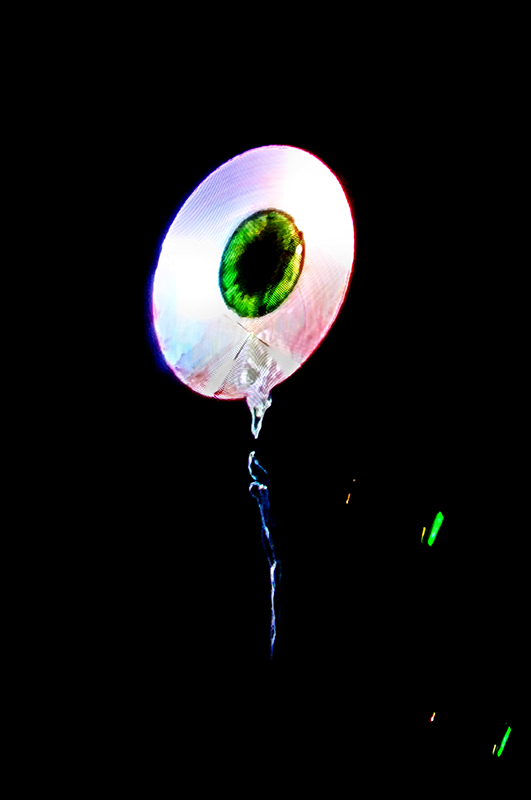
A look at the symbiotic relationship between plants, fungi and humans. The exhibition takes on the entanglement of colonial violence, indigenous knowledge and wildness. How different the world would be if we were also autotrophic. Patricia Domínguez holographic sculptures were fascinating – these are four blades of programmable LED lights spinning at speed to create an image. It was very effective. I was also intrigued by the material construction of the Vegetal Matrix exhibition stands which did look a bit like volcanic stone in the low light though they were listed as MDF with acrylic, so a sort of textured paint.

Wellcome Collection Being Human

Yinka Shonibare’s Refugee Astronaut“The refugee astronaut is the reverse of the colonial instinct of the astronaut – someone who is going out to conquer the world. What you have here is a nomadic astronaut just trying to find somewhere that’s still habitable.” 

Wellcome Collection In the Air

The exhibition explores the relationship between the air and earth, from 3.5-billion-year-old fossilised bacteria that first introduced oxygen into the atmosphere to delicate porcelain sculptures of the glaciers that provide a record of the air and our impact on it. 

Stromatolites 350m years old – these are fossilised microbial reefs formed in shallow waters from blue-green algae. These cyanobacteria were some of the earliest life forms and their photosynthesis helped produce the oxygen to support the development of other life forms.

International Airspace David Rickard 2019

This work marks the 100 year anniversary of the signing of the Paris Convention which extended land rights upwards to create international airspaces. The vessel contains air collected from the 27 participating countries alongside photographs of where the air was captured.

Panoramic film installation Air Morphologies investigates the materiality and composition of air pollution particles, their causes, effects and morphological agency. The project addresses how art and aesthetics interact with toxic materials; what kind of stories might be deployed through digital technologies; and how geopolitics are located in atmospheric thinking and being. Air Morphologies was initiated during Matterlurgy’s residency on the Science Technology Society program at Delfina Foundation, London funded by Gaia Art Foundation.

Rachael Allain introduced me to the work of Perla Krauze at Cadogan Contemporary. Earthy work presented simply allowing the natural materials to resonate with their own history and materiality. Real volcanic rock rather than a simulation.

“Using graphite frottages from stones and pavements and engraved volcanic rocks from El Pedregal, her paintings are abstract topographies and mappings. Stone is a fundamental material in her practice; linked to memory and durability, it can also be transformed and eroded. The crosshatch patterns in her paintings derive from the lines made in stone cutting, emphasising the transformation of stone from raw material to art object. Described as ‘grayscale tone poems’, Krauze alters and arranges stones to make miniature landscapes, complete in themselves but still referencing their origins.”

Future shock reimagining our near future at 180 The Strand. An immersive dive into a fairground world of light and motion, entertaining with one or two that stood out beyond technical prowess.

My favourite has its roots in the fashion world. Ib Kamara’s stylish film The Queen is Coming, a collaboration with Abdel El Tayeb grabs attention with its sense of transfixing unease created by the film’s characters via their direct expressions and heightened breathing. Anxiety levels are high. Fantastic.

In Neo Surf a collaborative project between filmmaker Romain Gavras and music producer Surkin the sheer scale of the marble quarry landscape emphasised by lanky teens dancing on the cut blocks is extraordinary and brings home a kind of wild abandonment.

Vigil is an installation collaboration between Ruben Spini and musician Caterina Barbieri. A sunset projected onto suspended melting ice creates a fragmented mirror image across the floor while videos with slow-motion footage of levitating bodies, transcendent synths and haunting vocals add to the sense of a slow death drugged on beauty.

Vortex puffs out a smoke ring every so often which is quite fun. Created by Pablo Barquin and Anna Diaz.

Row by Tundra uses the same holographic projectors as I recently saw used by Patricia Domínguez in Rooted Beings. Here they are interpreting generative data from the 12 notes of the chromatic scale.

Other work at Future Shock includes Weirdcore’s lucid dreaming colourscape Subconscious, Lawrence Lek’s self-driving car animation Theta, Actual Objects mildly interactive installation Vicky, NonoTak’s Daydream V6, Ibby Njoya’s colour box experience named after his influential father Mustafa, Vanishing Point from UVA, Object Blue and Natalia Podgorska’s installation of a future where astrologically predicted personality traits are true in What Melissa Said, Ryoichi Kurokawa and the shifting planes of light Topologies by UVA,

In The Black Fantastic at the Hayward Gallery. New narratives of Black possibility embracing the fantastical not as escapism but as bursting from the constraints of a restrictive society.

The Soundsuits of Nick Cave made as a response to racist violence confer anonymity along with a shamanic power. What a great use of the lace doily. Inspiration for the many doilies I have inherited from my Mum.

Wangechi Mutu collages, Sentinel sculptures and film The End of Eating Everything (featuring Santigold) are drawn from folklore steeped in the grotesque and spectacular. Time to turn from gluttony to restoration.

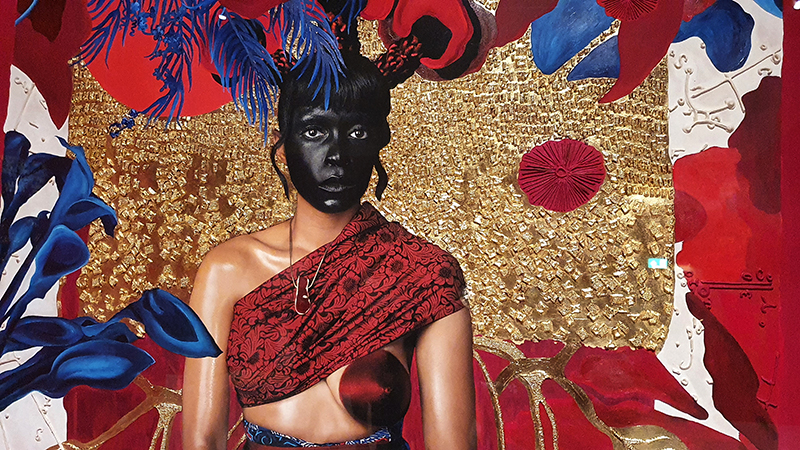
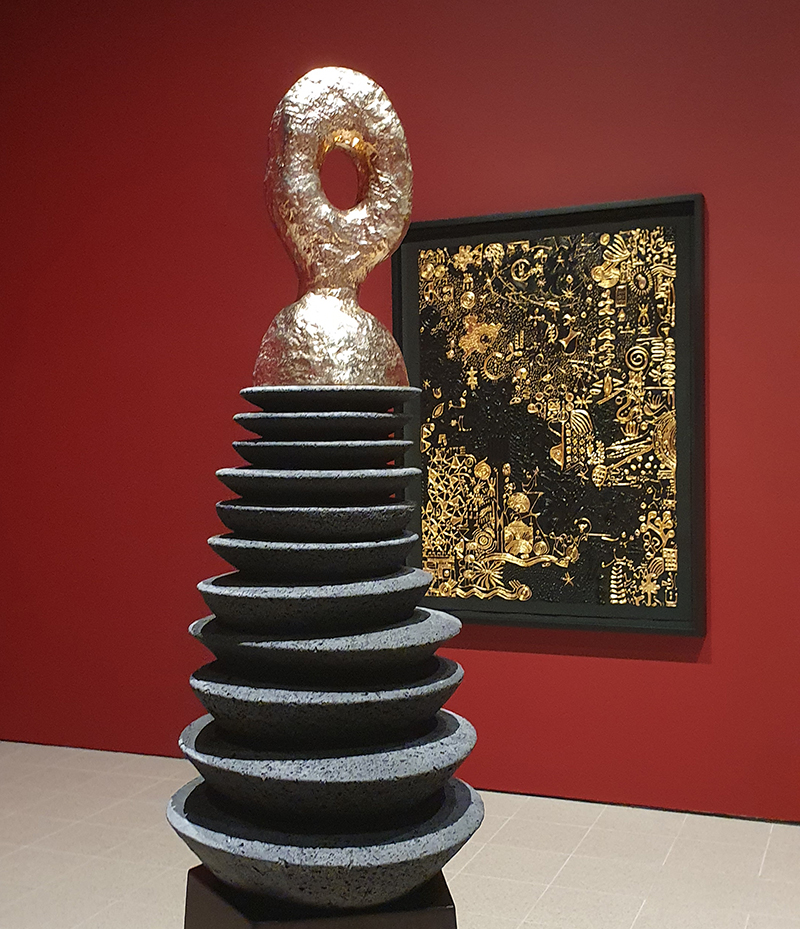
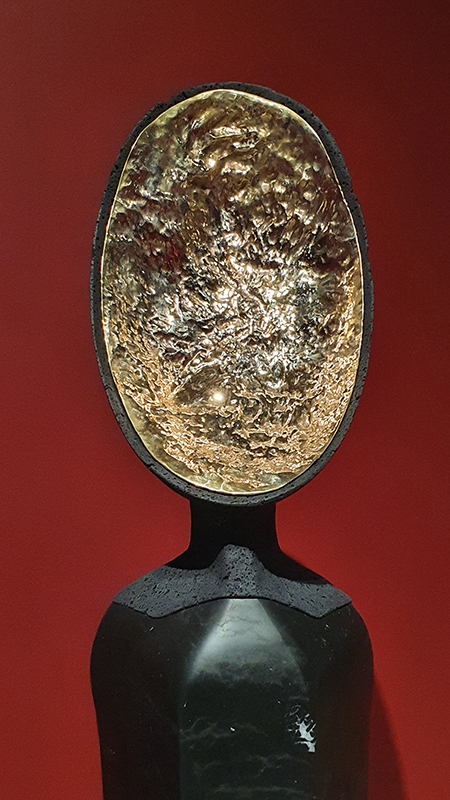
Lina Iris Viktor sumptuous paintings and Diviner sculptures heavy with gold acting as a conduit between heaven and earth inspired by ancient Egyptian funerary traditions. Her dramatic use of rich glossy black signifies the ‘materia prima’ – from which all creation was formed. Fabulous to see The Watcher, The Listener, The Orator sculptures are hewn from volcanic rock. Black gold of the sun.

Hew Locke’s The Ambassadors, a procession in search of future lands carrying their precious history with them echoing down the ages to Hans Holbein the Younger’s painting of the same name made in times when colonial foundations were being laid.

Cauleen Smith created an intriguing installation Epistrophy which refers to a phrase in literature or music repeated for emphasis. Her archive of associations are elevated into cinematic stardom by a series of live feed CCTV cameras which relay the objects onto the big screens becoming larger than life.

Other vibrant works include those of Rashaad Newsome, Tabita Rezaire and Chris Offili.

Directed to The Swimmers Limb by an attendant who said rather harshly ‘there’s not much to see’ I visited Gallery 31 dedicated to the Somerset House Studio artists where Mani Kambo has designed a ‘psychedelic’ wallpaper on which hang prints by Tai Shani from her feminist mythology series. Pattern, symbols and ritual. Plenty to see.

Carol Wyss The Mind Has Mountains at The Swiss Church. Having seen this powerful work at Ruskin’s House on Coniston Water last year in a very different space – very like the inside of a skull, it was rewarding to be able to see it in a larger space with a little distance which brought alive the mountainscapes within us. A film of the very physical etching, printing and installation process made by Peter Bromley entitled  Carol Wyss – In Situ was screened to an amazed captivated audience.

We are made of carbon, it is the basic building block in virtually every cell in our body. Most of the carbon in the world is carbon-12 which contains six neutrons and six protons. However about 15 km above our heads radioactive carbon-14 is formed as neutrons from cosmic rays interact with the atmosphere.

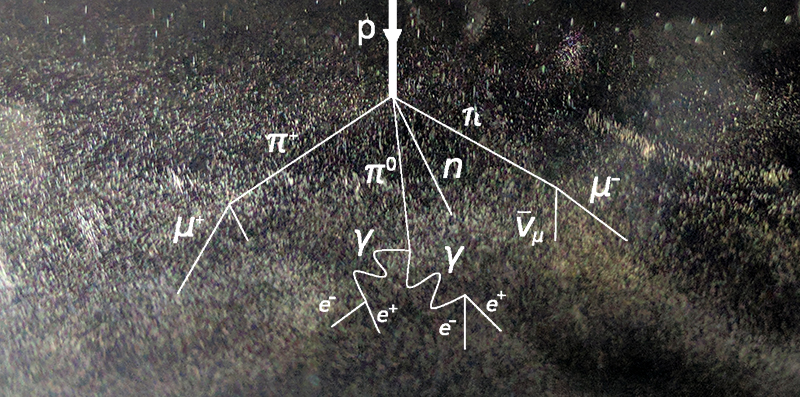
Protons and atomic nuclei created by events such as exploding stars speed across space and collide violently with the Earth’s atmosphere creating a chain reaction of cascading particles. Some of these tiny travellers may come from distant galaxies or be created by phenomena that we are yet to discover. Our body is continuously permeated at a subatomic scale by these particles fired into our world – an almost tangible contact with outer space.

Carbon-14 has six protons and eight neutrons and has a half-life of 5,730 years. This means that after 5,730 years dead matter which absorbed Carbon-14 when alive will contain half the amount it had when it died and after another 5,730 years that amount will have halved again. Radioactive decay is random but in a sample there are enough atoms to work out an average time it will take for the nucleus to lose the extra neutrons.

This radioactive carbon-dioxide in the atmosphere is absorbed by plants which are eaten by animals and humans.

Cosmic ray activity gives us carbon dating techniques.

I am working on a video, Cosmic Chiasmus, meaning crossing.

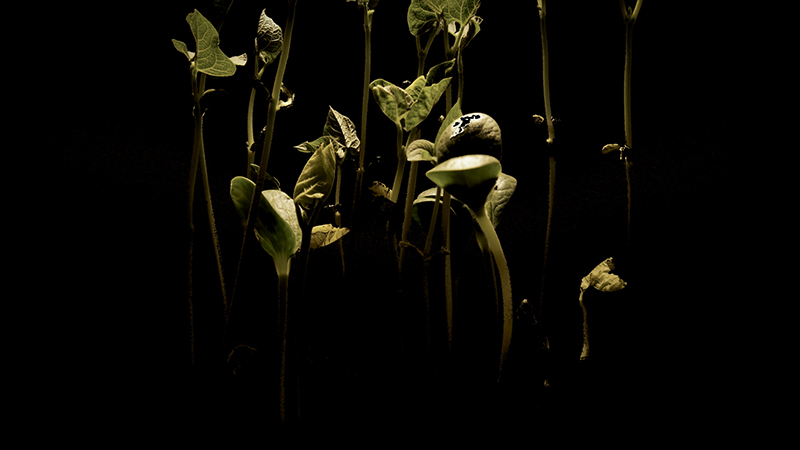
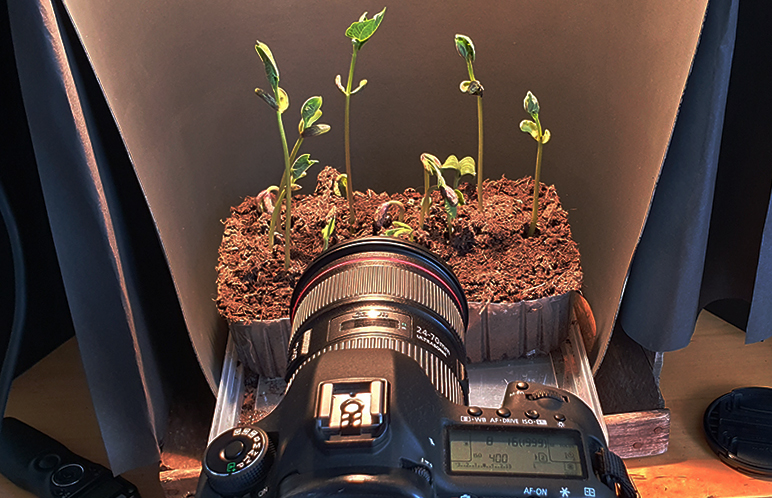
Plant time lapse filming is fascinating to see how plants are so animated just at a different time scale to us. Also I have recently finished reading Richard Powers Overstory, a very powerful sobering read, which celebrates the slow yet socially active time of trees.

Carbon dating is performed by measuring Carbon-14 in organic matter. Radiocarbon decays slowly while an organism is alive but is continually replenished as long as the organism takes in air or food.

When an organism dies no more Carbon-14 is absorbed and that which is present starts to decay at a constant rate.

By measuring the radioactivity of dead organic matter, the current carbon-14 content can be determined and the time of death established.

The oldest matter that can reliably be carbon dated is about 50,000 years old. Currently techniques are being refined as they have often relied on the assumption that Carbon-14 levels in the atmosphere are constant but they are not.

The burning of fossil fuels which have lost all their radiocarbon dilutes the amount of Carbon-14 with carbon dioxide and nuclear explosions add huge amounts of ‘bomb carbon’ to the atmosphere. During planetary magnetic field reversals more solar radiation cosmic rays enter the atmosphere producing more Carbon-14. Also the oceans suck up carbon circulating it for centuries.

There are a number of uncertainties for dating shell.

On the surface of the earth two to three Muons pass through your hand every second, underground this is reduced to about once a month.

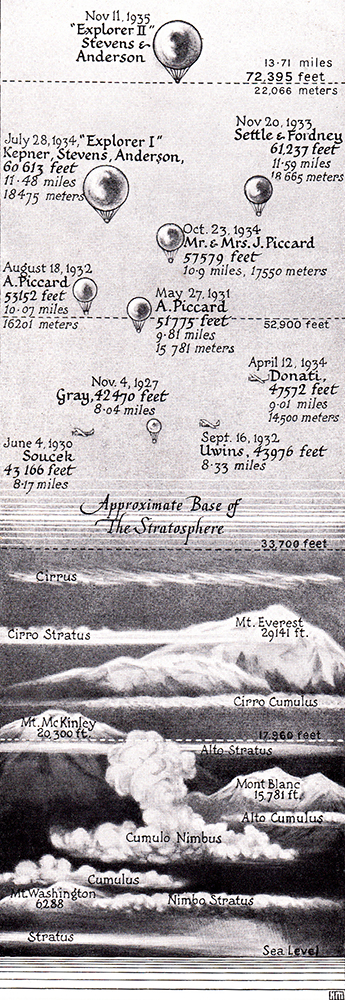
I came across some articles about balloon voyages made in the 1930’s to the stratosphere to record cosmic ray activity in old National Geographic magazines .

Intrepid explorers. These early explorations were innovative but also dangerous. In July 1934 a flight developed tears in the balloon fabric at about 57,000 feet and began to break apart, as it did so the hydrogen in the balloon exploded and the crew had to parachute to safety.

Physicist Victor Hess had already made a series of daring ascents in a balloon to take measurements of radiation in the atmosphere. In 1912 he made an ascent to 17,000 feet during a near-total eclipse of the Sun to determine if the source of the radiation was coming from the Sun and made the discovery that it had to be coming from further out in space.

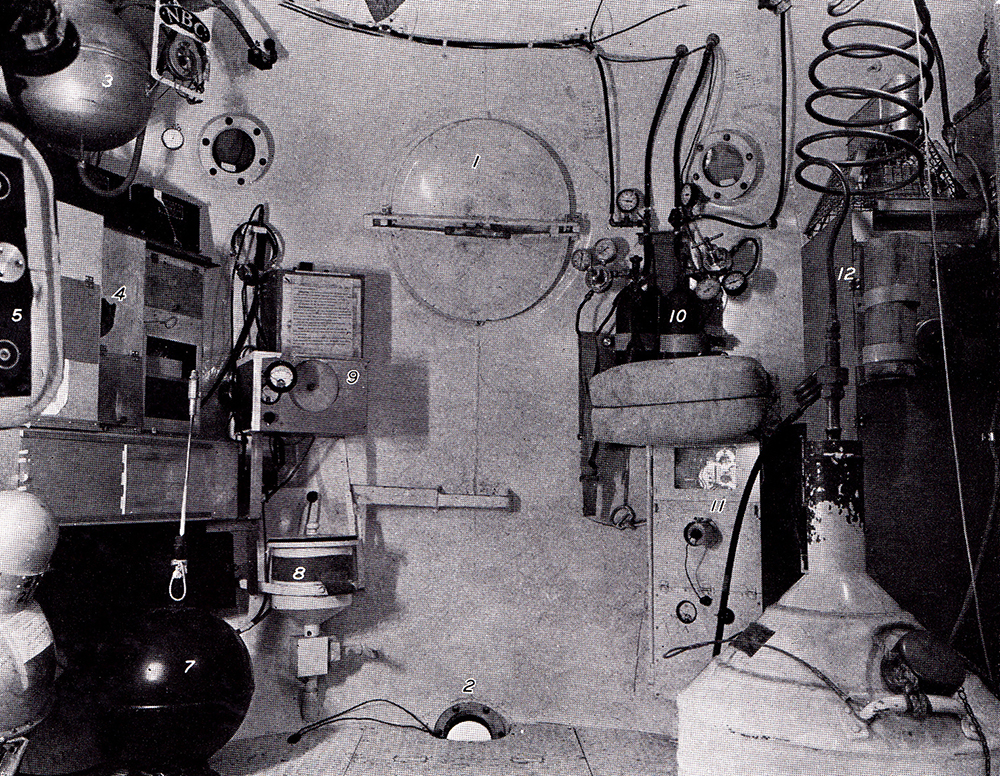
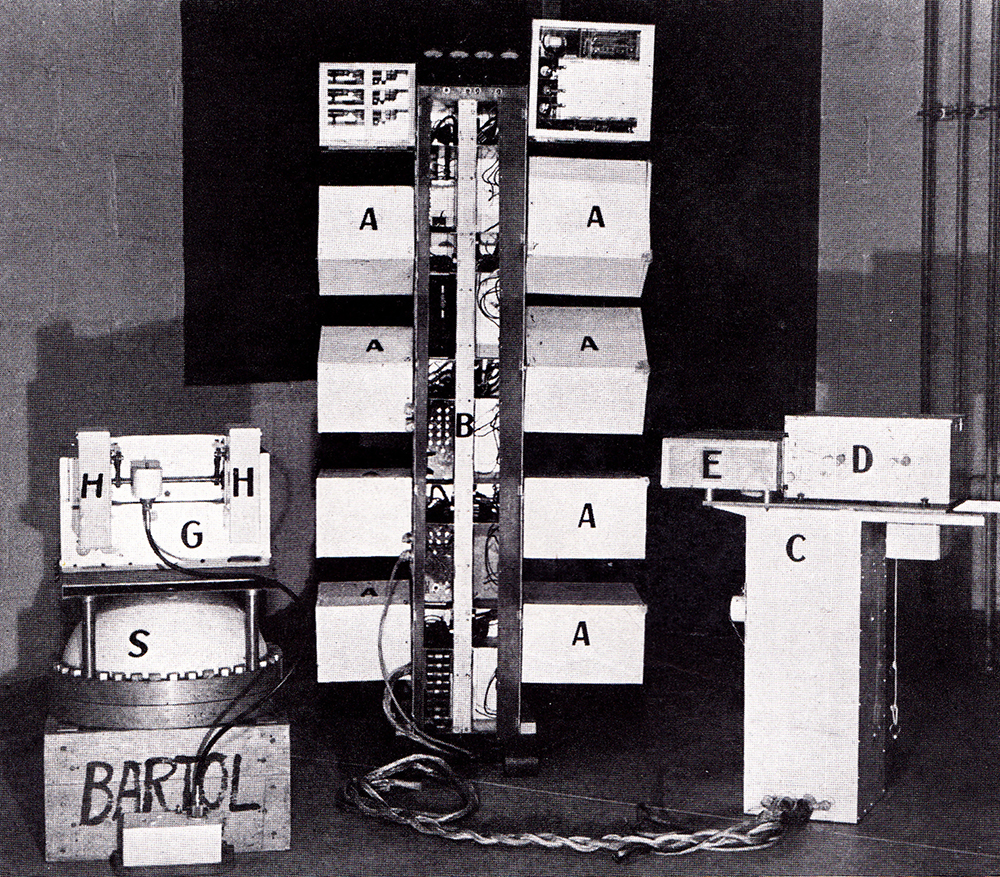
The stratosphere balloon Explorer II was designed to carry heavy instruments for cosmic ray measurements to a height of 13 miles and more above sea level.

Scientists designed a system of cosmic ray telescopes to record the numbers of cosmic rays coming in from several angles above the horizon. Most of the cosmic rays counted are secondary particles shot out from the atoms of the air by the primary rays entering and colliding from space. During this flight the height at which most secondary cosmic rays are produced was determined and the first records of bursts of energy from atom disruption by cosmic rays was made.

Also, the first track ever made directly in the emulsion of a photographic plate by an alpha-particle cosmic ray with enormous energy of 100,000,000 electron volts was achieved. Two boxes of photographic plates coated with special emulsion were wrapped in light tight paper and attached to the balloon gondola. When the plates were developed there were no visible images but when put under a microscope tracks could be seen where the particles had ploughed through the emulsion.

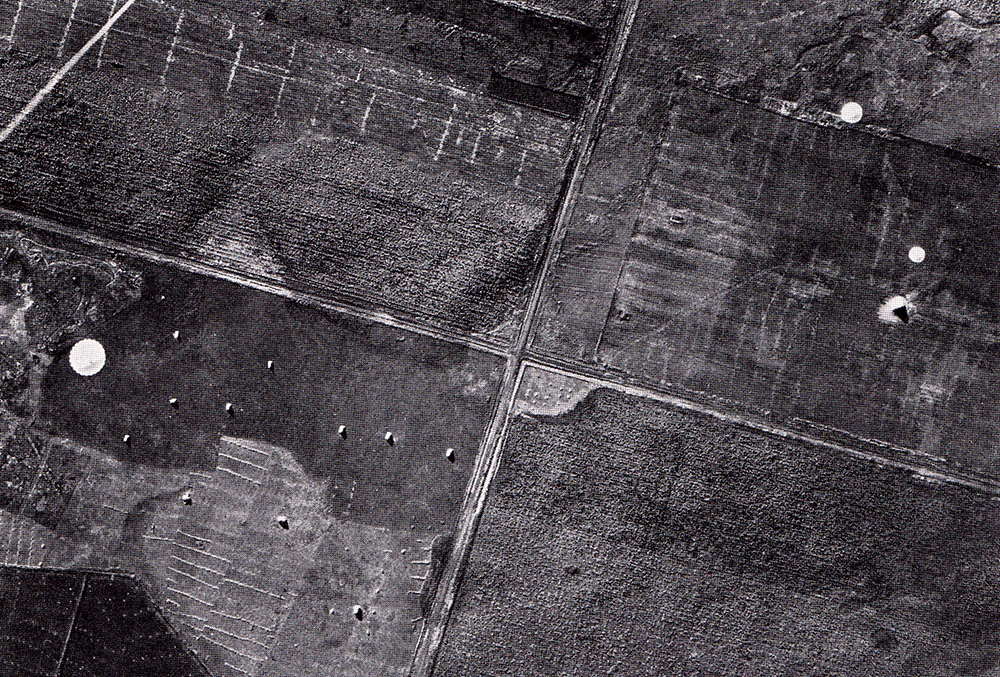
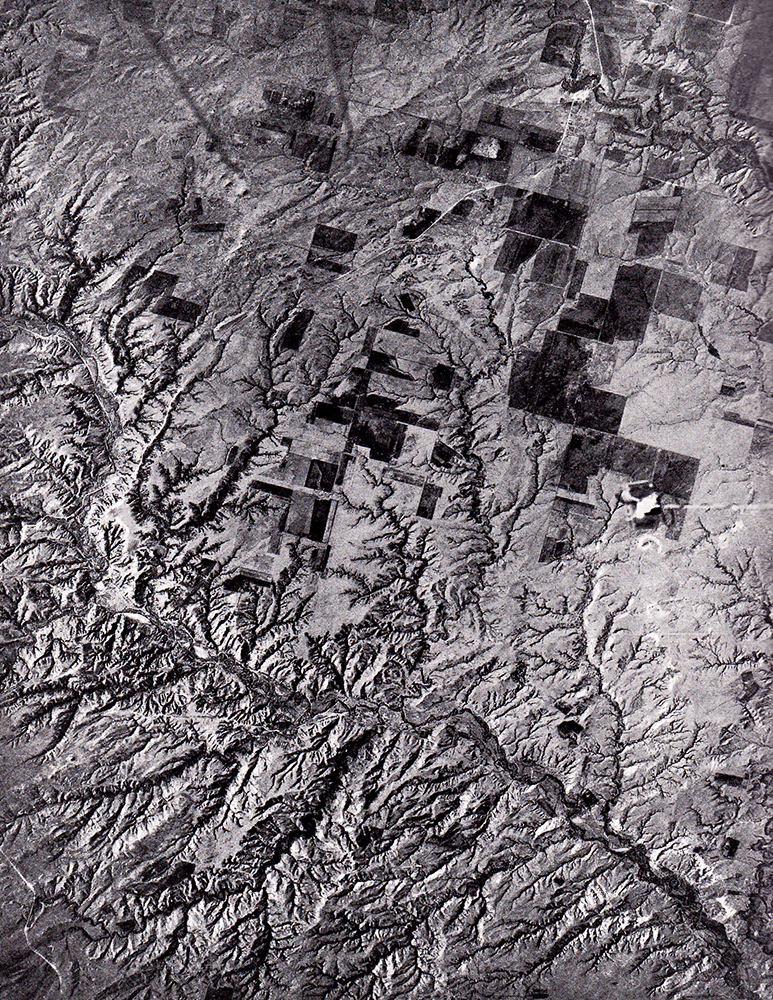
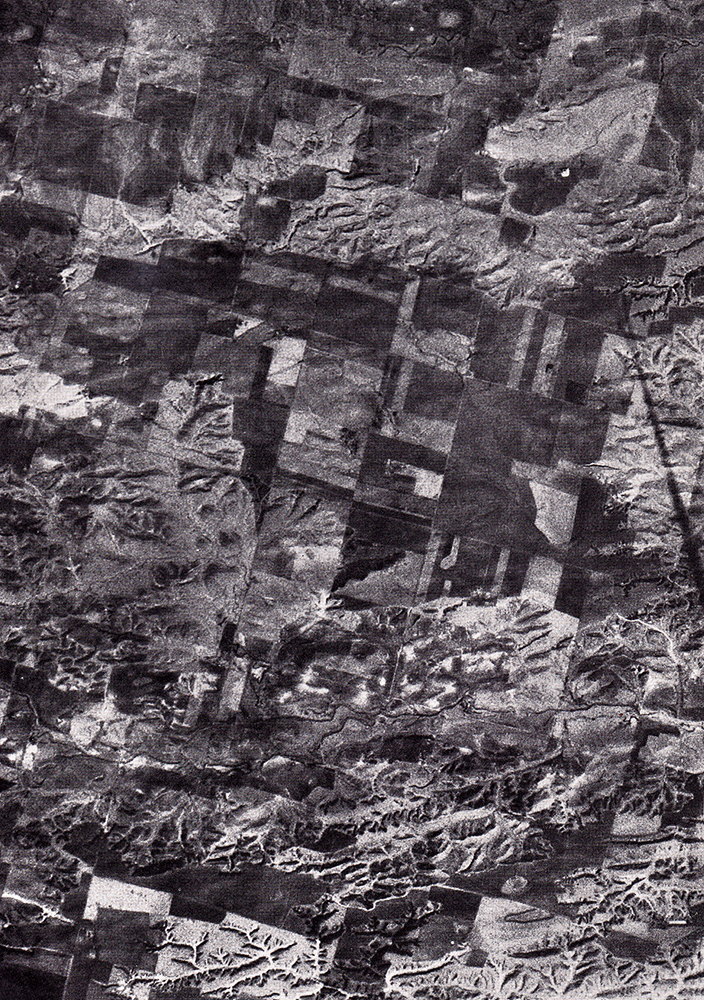
Early google earth. They also took the highest altitude photographs of the Earth ever made.

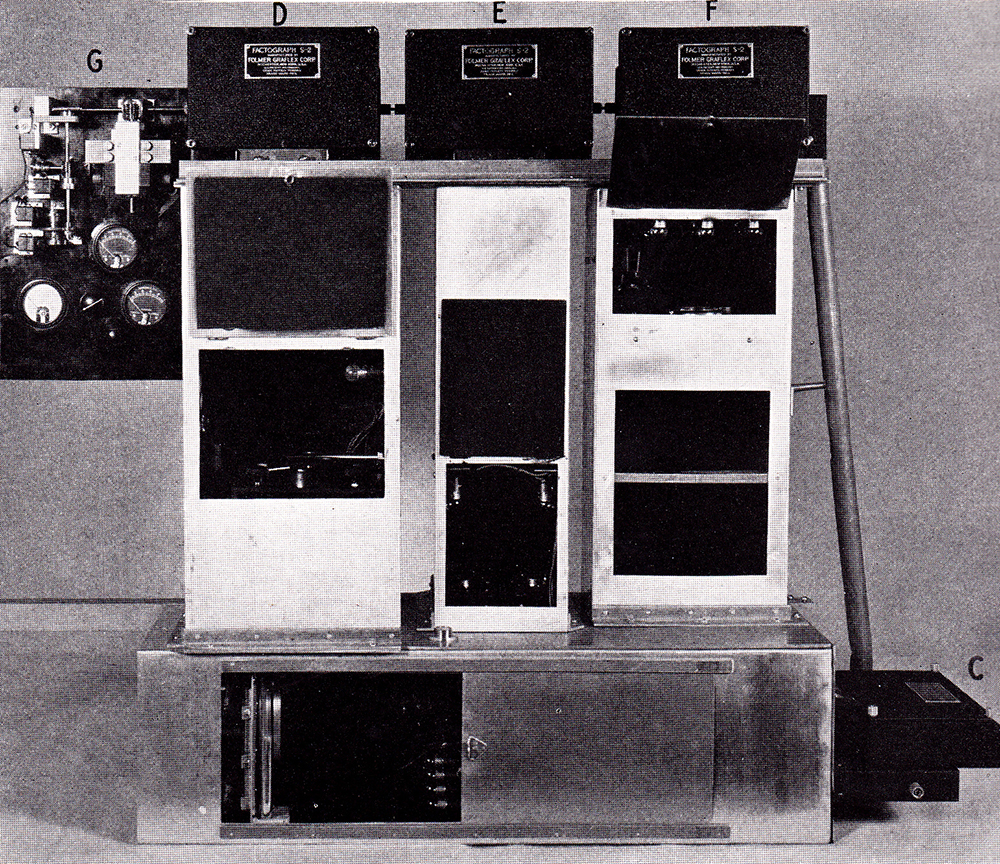
To record data they had a series of cameras set to take automatic photographs of the dials on the different apparatus.

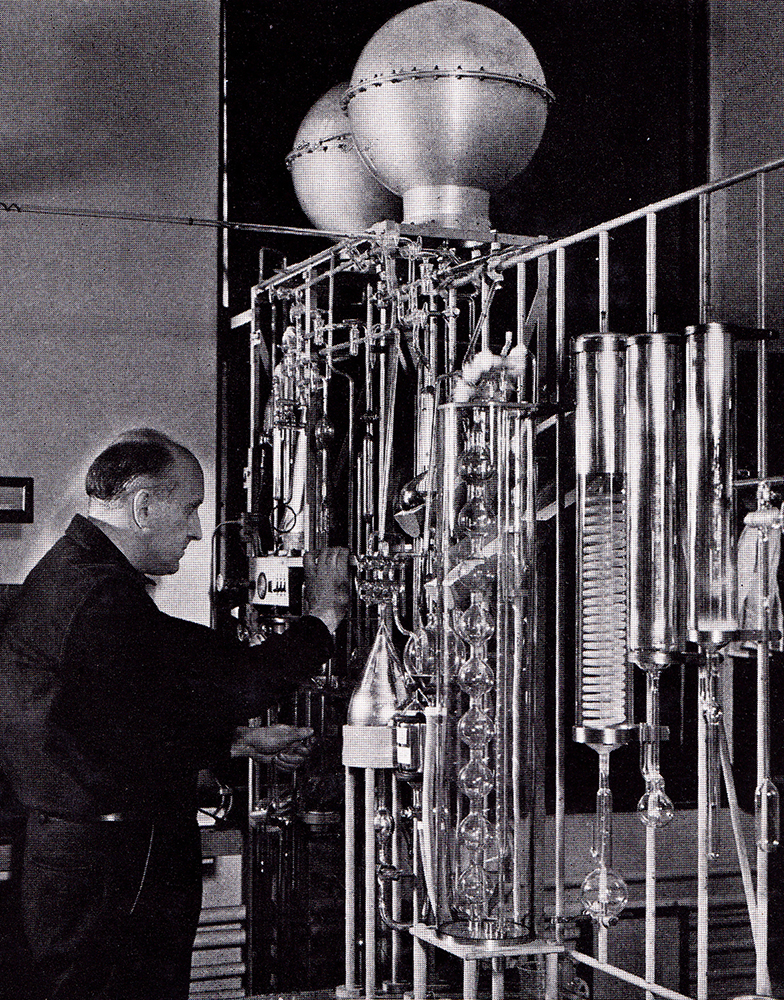
Analysing air captured from the stratosphere.

On Earth we are protected from most radioactive particles by the atmosphere and the magnetic field.

It has been clearly demonstrated that birds are able to sense the direction of the Earth’s magnetic field and that they can use this information as part of a compass sense. It may be possible humans retain some residual magnetoreceptor in our eyes that once allowed us to navigate using the Earth’s magnetic field. Current research suggests that some people do indeed perceive magnetic fields, albeit unconsciously.

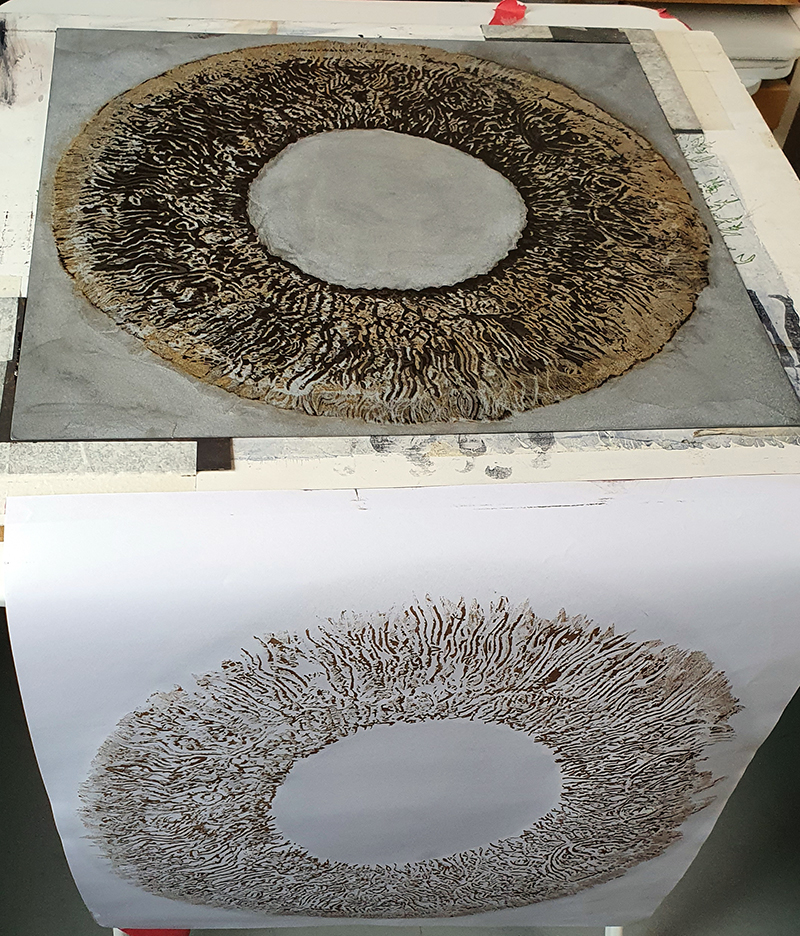
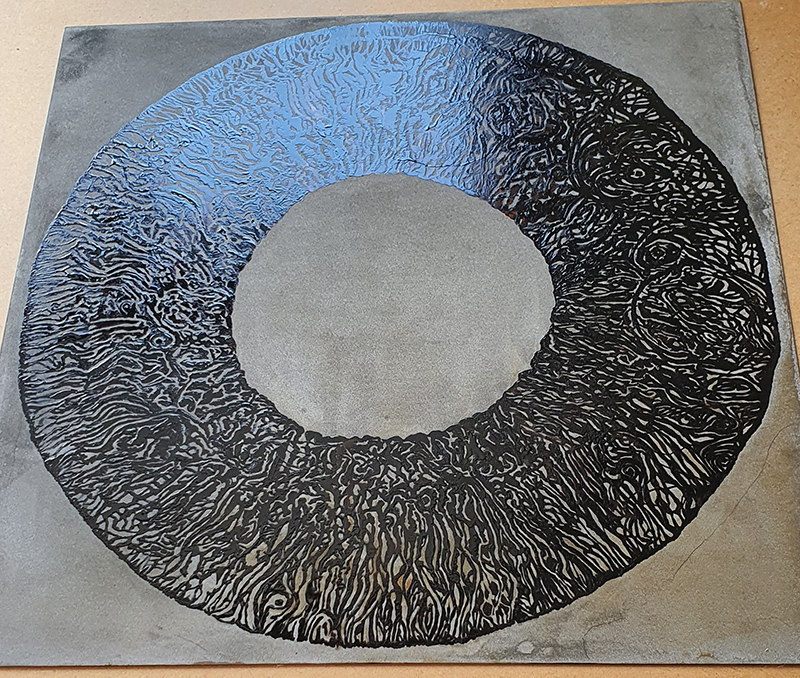
Work in progress on navigation by magnetic receptors. Working on a soft ground etching of my iris with aquatint. Not sure yet if I will use the plate or the print in the final work which will have iron filings activated across the surface.

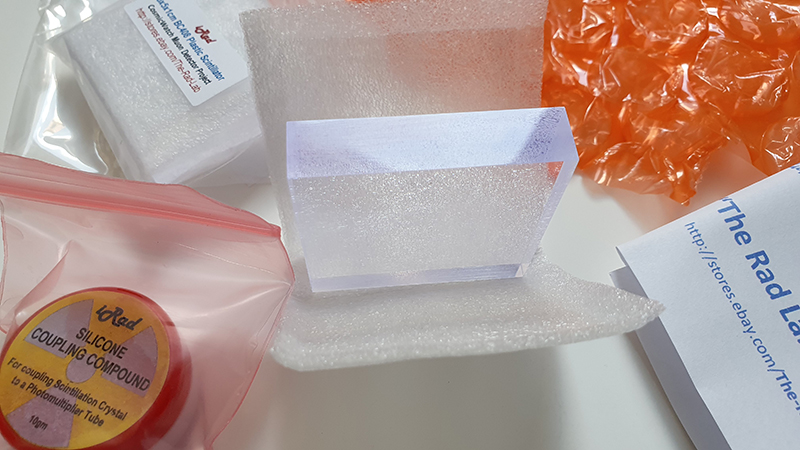
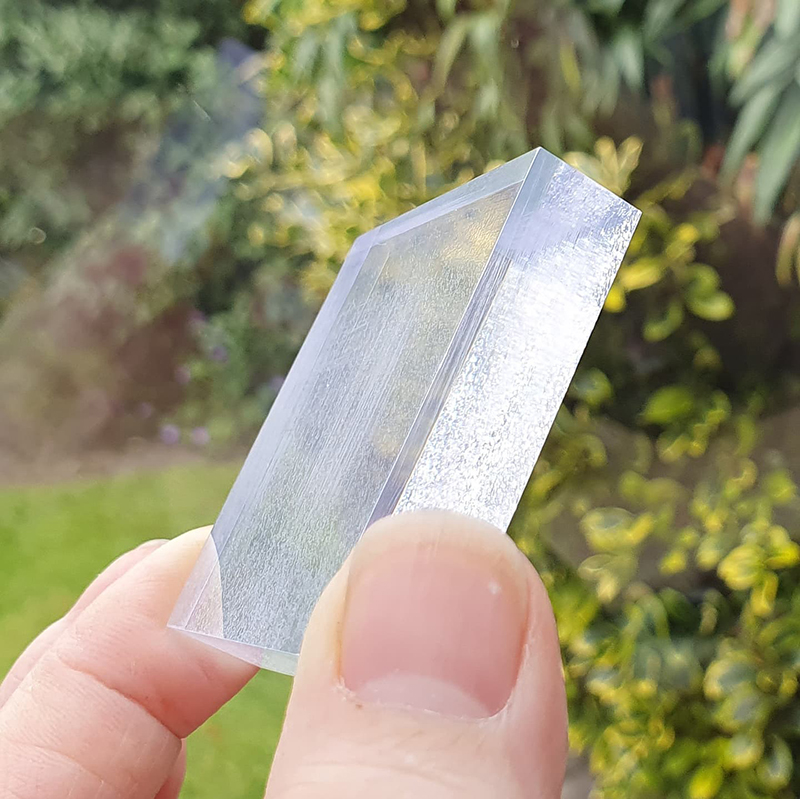
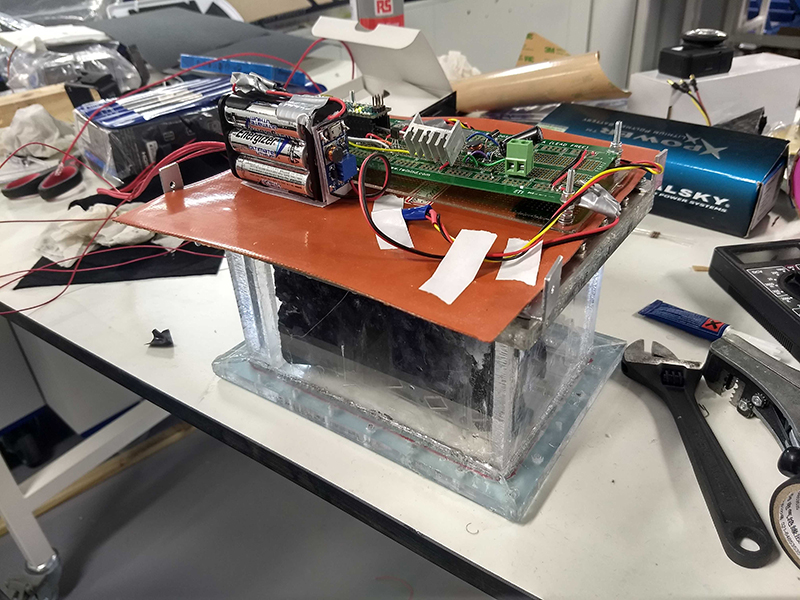
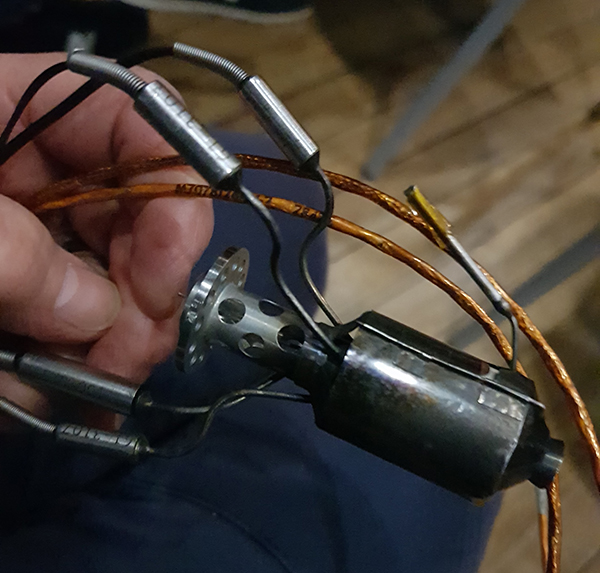
First components have arrived from America for my attempt to build my own cosmic ray detector to create an interactive artwork. The plastic block converts the energy of the charged particle passing through to a photon which can be read by a silicon photo-multiplier and the information fed to an Arduino processor. Daunting and exciting.

New work in progress – I collected a selection of images from the 1930’s including some from family, including my Mum aged 3, which I have tinted blue and had printed on sublimation dye paper for transfer to the tiles making up the raster pattern based on early television signals. FM radio and television signals can pierce the ionosphere and travel through space at the speed of light. The first signals will have travelled about 90 lightyears now to arrive at a solar system very similar to our own. Fragments travelling through space for light years with the potential for alien life to decipher.

Visit to Sutton Hoo where the ever increasing accuracy of radio carbon dating has provided astonishing clues to the past history of this intriguing site. Archaeologists can determine the age of objects in decades as opposed to centuries.

Sutton Hoo is the site of two early medieval cemeteries dating from the 6th to 7th centuries near Woodbridge, in Suffolk, England. In 1939 landowner Mrs Edith Pretty asked local archaeologist Basil Brown to investigate the largest of several Anglo-Saxon burial mounds on her property. Inside, he made one of the most spectacular archaeological discoveries of all time.

Past, present and future finds. Ancient trees. Burials of Kings. Amazing sword of beaten twisted wrought iron and steel. Basil Brown’s star charts.

The agency and aura of objects was investigated with the intent to generate new relations between objects and their associations with the world around them in the beautiful group show Can We Ever Know The Meaning Of These Objects curated by Sarah Sparkes and Kevin Quigley at Gallery 46.

Eileen Agar Angel of Anarchy at Whitechapel Gallery exposing the subconscious entwined with the material of nature. Enjoyed the decomposition of space into lines like foliations and contour lines. Which angel would you choose? Anarchy or Mercy?

I joined a zoom presentation from Sophie Williamson on her current project undead matter which dips into the deep time entanglement of geological ancestry. Leaving a mark in the past as a way of communicating with the future and creating a lineage for ourselves. Eras mingle with each other as ancient footprints resurface, ice melts, secreted narratives emerge. The permafrost holds vast amounts of carbon. Whole forests.

Zircon crystal contains radioactive uranium with a half-life of 4.5 billion years, which makes it useful for dating extremely old materials much much older than those containing Carbon-14. These crystals may hold clues to the origin of life. The carbon necessary for life may have arrived here in space dust from outer space via asteroids or comets.

WHAT ON EARTH group show from artists including Victoria Ahrens, Melanie King and Diego Valente using photographic processes with an emphasis on the material environment, tactility and sustainability.

Michael Armitage – Paradise Edict at the Royal Academy. Digital images do not do justice to the glow and vibrancy of these paintings. Can feel the heat pulsating with unsettling shape-shifting undercurrents.

180 The Strand with Ryoji Ikeda’s digital showcase was an intense assault on the senses using light and sound as medium to create immersive experiences. Brightness is the number of photons per second hitting your eye. Pushing the limits of what our senses can tolerate.

Took a trip to the Lake District to visit Brantwood, John Ruskin’s beautiful home to see Carol Wyss The Mind Has Mountains and Crown of Creation installations. Having seen the work that went into the printing of the large etchings at Thames-side Print Studio it was wonderful to be able to see the work finally installed and step inside the mysterious depths of the human skull; a space echoed by the surrounding mountains. The light installation is suspended in the dark chill of the Ice House vault, viewed from the top of rugged steps carved into the rock. Here the fragility of the human skeleton fades and glows accompanied by an evocative soundscape made by Natasha Lohan capturing the echoing chamber and the water that courses through everything.

Visit to UCL’s Astronomical Observatory in Mill Hill.

1912 UCL observatory 3

Thanks to knowledgeable hosts Mark Fuller and Thomas Schlichter for a wonderful tour of the UCL observatory and to Lumen London for organising.

1912 UCL observatory 1

Shame it was cloudy but I enjoyed seeing the telescopes and hearing the history of this beautiful site. Looking forward to future collaborations.

We didn’t see the stars outside but an archive image and a loop lens proved fascinating.

1912 UCL observatory 71912 UCL observatory 8

In the studio back after a busy year I have been tidying up, building mezzanine storage shelves and planning new work looking at cosmic planes, thinking about star HD70642 – a possible home from home and what lies beyond the horizon that I can never reach.


New Doggerland at Thames-side Gallery presents a future imagining of physical and cultural re-connection between Britain and the European mainland.

Doggerland was an area of land that once connected Britain to continental Europe. At the end of the last ice age a warming climate exposed land for habitation but gradually the lowlands were flooded as temperatures rose further then about 8,200 years ago, a combined melting of a glacial lake and a tsunami submerged Doggerland beneath the southern North Sea. Great work including these from Jane Millar, Oona Grimes and Sarah Sparkes.

It was the place to be on 31/01/2020.

Nam June Paik at Tate Modern. Amazing pioneer of technology in art. Colliding nature, entanglement, connectedness, meditation, transmission.


Trevor Paglin From ‘Apple’ to ‘Anomaly’ (Pictures and Labels) at The Barbican Curve.

The long wall is filled with thousands of pinned photographs taken from ImageNet, a publicly available data set of images, which is also used to train artificial intelligence networks. ImageNet contains more than fourteen-million images grouped into labelled categories which include the unambiguous ‘apple’ along with such terms as ‘debtors’, ‘alcoholics’ and ‘bad persons’. These definitions applied to humans by AI algorithms present an uncomfortable future of machine induced judgement.

 ‘Machine-seeing-for-machines is a ubiquitous phenomenon, encompassing everything from facial-recognition systems conducting automated biometric surveillance at airports to department stores intercepting customers’ mobile phone pings to create intricate maps of movements through the aisles. But all this seeing, all of these images, are essentially invisible to human eyes. These images aren’t meant for us; they’re meant to do things in the world; human eyes aren’t in the loop.’ Trevor Paglen

Interestingly there was no photography allowed in the Trevor Paglen show. So I tried Image net for an image to post. I searched for ‘artist’ but ImageNet is under maintenance so I tried Google and this is the first image I got.

2001 artist

Another great show from Kathleen Herbert, A Study of Shadows at Danielle Arnaud. Using the cyanotype to interrogate the history and science of Prussian Blue and discover what emerges from the shadows through process and research. We learn – ‘Prussian Blue has a unique chemical structure and was originally created through the cyanotype process. It was the colour used to measure the blueness of the sky and was also used in the UK during the Chernobyl disaster as an antidote to radiation poisoning, preventing Caesium 137 from entering the food chain. Prussian Blue also has the ability to heal itself; if the intensity of its colour is lost through light-induced fading, it can be recovered by being placed in the dark.’

2001 Kathleen Herbert 4

The sound and video work Everything is Fleeing to its Presence relates a narrative of impressions and scientific facts while the visuals of varying tones of blue appear and disappear in hypnotic succession. Together the effect is of immersion, like the chemically coated paper, in a pool of blue.

Mary Yacoob Schema at Five Years Gallery. Also using cyanotypes, but here exploring the architectural roots of this process through precise silhouettes, detailed drawing, structure and form which is then exposed to the unpredictable chemistry to produce beautiful outcomes.

2001 Mary Yacoob (1)

Anselm Keifer at White Cube Bermondsey.  Superstrings, Runes, The Norns, Gordian Knot all tied together in characteristically monumental paintings thick with stuff in an attempt to connect complex scientific theory with ancient mythology.

2001 Anselm Keifer 12001 Anselm Keifer 2

William Blake at Tate Britain. What visions, such torment. So much mortal flesh.

Anne Hardy The Depth of Darkness, the Return of the Light winter commission for Tate Britain, a sort of after party dystopia with an impressive soundscape of rain, thunder, birds and insects inspired by pagan descriptions of the winter solstice – the darkest moment of the year.

2001 Tate Britain Anne Hardy

We sit together for a minute at Thames-side Gallery. Alex Simpson and Alice Hartley share a similar sensibility making dynamic and intuitive works. The gallery is alive with gestural forms, captured fragments and movement held momentarily in stasis, both fragile and immediate.

2001 Alex Simpson2001 Alice Hartley

The Computer Arts Society, The Lumen Prize and Art in Flux join London Group members at The Cello Factory for a second In The Dark curated mash up of light and technology artworks that overlap and collide in Even darker. Curated by clever duo interactive filmmakers Genetic Moo, artists include Carol Wyss and Sumi Perera.


Bridget Riley at Hayward Gallery. Messing with perception; undulations and vibrations.

2001 Bridget Riley (1)

Mark Leckey O’ Magic Power Of Bleakness at Tate Britain. Sense of bleakness achieved in synthetic bridge recreation which gave gallery awkward angles. Voyeuristic social commentary, old rave footage. Magic found interspersed in otherworldly images contrast to dank underworld.
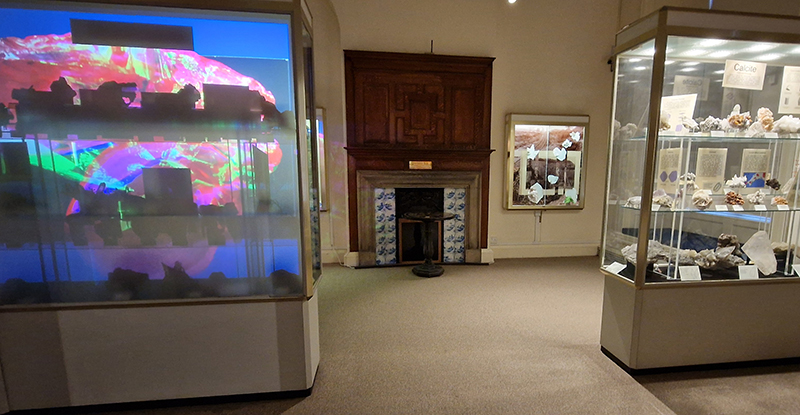
2001 Mark Leckey

Some beautiful artefacts in The Moon exhibition at Royal Maritime Museum Greenwich celebrating 50 years since the Apollo 11 Moon landing.
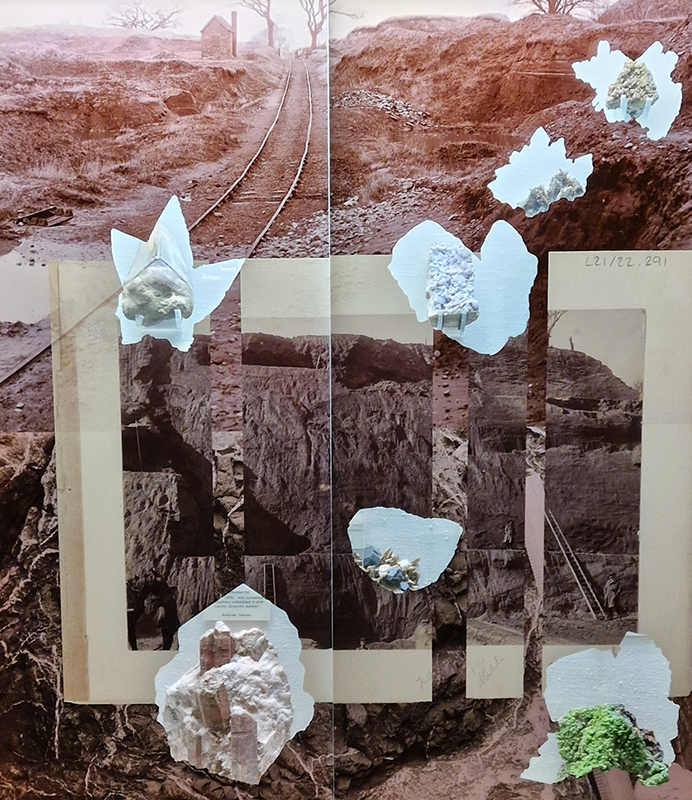
Astronomicum Caesarean 1540 – rotating paper discs are used to track the moon’s position which the physician would then interpret to predict if the patient might improve or relapse.

1912 Moon Exhibition volvelle

Orrery 1823-27 by John Addison includes a special geared section to show the rise and fall of the moon and mimicking the tilt of its orbit.

1912 Moon Exhibition orrery

Selenographia 1797 by John Russell. It models the slight wobble or libration of the moon meaning that over time a little more than half of the side of the moon is visible from Earth.1912 Moon Exhibition selenographia

Moon rocks, encased.

1912 Moon Exhibition rocks

A Distant View III by United Visual Artists. A 3D rendering in wood of original NASA data imaging of the moon’s surface from the Orbiter mission 1966/7
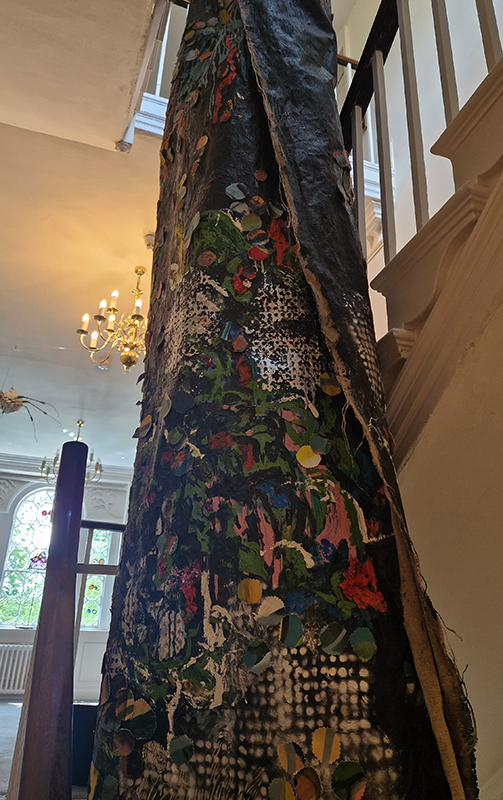
1912 Moon Exhibition UVA

Very lucky to be invited by Rachael Allain for a tour of The Queen’s House at the National Maritime Museum Greenwich led by curator Matilda Pye. We saw the Susan Derges commission Mortal Moon inspired by the Armada Portrait of Queen Elizabeth 1 and a celestial globe, dating from 1551.

1912 susan derges-mortal-moon

The fractal elegance of the Tulip staircase.

1912 Queen's House Tulip Staircase

Which is also where the Queen’s House ghosts were inadvertently photographed by retired Canadian Reverend R.W Hardy on his visit in 1966. Recreated in situ by Matty with mobile. Apparently photographic experts examined the original negative and found no signs of tampering.

1912 Queen's House Ghosts

Ending the tour with Tacita Dean’s poignant photos of the desolate shell of the Teignmouth Electron, the yacht that bore Donald Crowhurst to his miserable and solitary death. It looks so small.

1912 Tacita Dean

Immersive installations inviting a change of consciousness at TRANSFORMER: A Rebirth Of Wonder presented by The Store X The Vinyl Factory. Including Doug Aitken NEW ERA dramatic video-scape looking at the first phone call and future communication highway.

1911 Doug Aitken 21911 Doug Aitken

Mark Bradford’s paintings in Cerberus at Hauser & Wirth London recall the vibrant matter of creation, the splitting of the earth in molten rivulets to expose the dark underbelly.

1911 Mark Bradford

I am reading W. G. Sebald’s rambling Rings of Saturn. Revisiting my home county and local haunts through his eyes. He set off in 1992 but it feels like a journey back further in time as there are so many reminiscences and anecdotes from the past. Among the vaguely defined histories is the story of the demise of the estate of Henstead Hall under guardianship of the eccentric Major Wyndham Le Strange who shunned the outside world and took to a literally underground existence.

These images from 2014 when I visited the abandoned walled garden at Henstead became fragments for my work titled Pairi Daêza, an ancient Iranian word meaning ‘around’ and ‘wall’; the origin of ‘paradise’.

1705 Open Studios Pairi Daeza

A tenuous link but I discovered Henstead Hall subsequently become home to Douglas Farmiloe a self-described “Mayfair playboy” who had found himself in the scandal pages of the News of the World during the 1930s, after an indiscretion with a hostess from the West End ‘Paradise Club’.

Reading stones could be considered the first instruments used to create an enhanced sensory experience. Originally made from ground and polished rock crystal or beryl, they were placed over texts to magnify them.

1909 reading stones

This early optical technology paved the way toward observation of the furthest reaches of the universe and its minutest components.

1909 Baetylus 2.jpg

Both the telescope and microscope are referenced by the sculpture Baetylus installed on St. Augustine’s Tower roof for the exhibition Reading Stones.

1909 Baetylus installed St Augustines Tower

Baetylus (meaning from the house of god), are sacred stones/meteorites of divine origin.

In this case sold to me for £6, a 15mm Nickel Iron Meteorite from Campo Del Cielo Argentina, falling 5000-6000 years ago. Photographed with a macro lens and direct to media printed onto acrylic by Genesis printing. The steel frame expertly welded by Nick Amott of J.& R. Precision Engineers.

1909 welding

The wind and rain on the roof soon added to the piece.

1909 Baetylus meteor shower

rain + meteor = meteor shower

An object falling through space distorts not only the space it travels through but also time as space and time are inexorably linked.

Each visit to the roof gave a different experience of the work.

1909 Baetylus 1

The act of “reading stones” can refer to both the scientific practice of geological investigation and the ritual of lithomancy which seeks to interpret the patterns of stones cast by those wishing to divine the future.

1909 Lithomancy reading

Offering ‘readings’ gave visitors a personal perspective to consider when thinking about how we experience time and negotiate the future. The board, a salvaged old table top was screen printed with a design created after researching the ancient art of lithomancy and prevalent variations. I gave the board a geological emphasis and aligned the areas of activity with traditional associations such as sedimentary = home, boulders = obstacles and challenges, strata = knowledge and experience.

1909 lithomancy board

The gemstones were assigned properties according to traditional meanings.

1909 assigning stones

It was magical to spend so much time within the thick stone walls of St. Augustine’s Tower, ascending and descending the steep narrow spiral stairs adding yet another infinitesimal trace to the worn history of the steps.

1909 St Augustine tower stairs

Working with Carol Wyss and Anne Krinsky on this project was a pleasure and we were delighted with the public response to the exhibition.

1909 Carol Wyss All that remains

Carol Wyss All That Remains 

“My aim is to re-create the original ‘UR’ bone which has neither gender nor race, the first ever bone which existed, the one which fell from heaven or space. It is an attempt at merging all the bones of the human skeleton into one entity, which then becomes the common denominator, the starting point from which all bones and consequently all humans came. I am referring to the bible story of Eve’s creation from Adam’s rib, the Greek myth of Pyrrha with the creation of humans from the stones / bones of the earth and Da Vinci’s perfectly proportional Vitruvian man, as well as to science’s search for the ultimate building blocks of our universe.” Carol Wyss

1909 Carol Wyss

1909 Carol Wyss Os

Carol Wyss Os

Deucalion and his wife Pyrrha were the only survivors of the great deluge and landed on Mount Parnassus, the only place spared by the flood.
Deucalion consulted an oracle of Themis about how to repopulate the earth. He was told to throw the bones of his mother behind his shoulder.
Deucalion and Pyrrha understood the “mother” to be Gaia, the mother of all living things, and the “bones” to be rocks.
They threw the rocks behind their shoulders, which soon began to lose their hardness and change form.
Their mass grew greater, and the beginnings of human form emerged.
The parts that were soft and moist became skin, the veins of the rock became people’s veins, and the hardest parts of the rocks became bones.
The stones thrown by Pyrrha became women; those thrown by Deucalion became men.

1909 Carol Wyss Osmosis

Carol Wyss Osmosis

All the sons of Adam are part of
One single body,
They are of the same essence.
When time afflicts us with pain
In one part of that body
All the other parts feel it too.
If you fail to feel the pain of others
You do not deserve the name of man.
― Saadi Shirazi 1258

1909 Anne Krinsky Ephemera Scrolls 2

Anne Krinsky Ephemera Scrolls

“I am interested in the ephemeral nature of the physical world – in the transformation of terrains and in the erosion of stone, wood and metal over time. In developing imagery for the Ephemera scrolls, I wanted to create visual relationships across time and space. I photographed the Tower’s clock mechanism and gravestones from the surrounding garden and other London churchyards. During a recent residency at Oberpfalzer Kunstlerhaus in Schwandorf, Germany, I photographed the River Naab, as its water levels dropped during the hottest June on record. I feel impelled to document changes to wetlands and waterways in this time of accelerating climate change.” Anne Krinsky

1909 Anne Krinsky Ephemera Scrolls 1

Anne Krinsky Ephemera Scrolls

Time Crystals video work installed alongside the tower’s ancient clock builds on an interest in the mystery of time viewed across human, cosmological and quantum scales.

1909 St Augustines Tower Clock

The clock by which we measure time on our watches and digital devices is very misleading;
it is determined by the daily rotation of the Earth around its axis and its annual rotation around the sun.
This astronomical time is linear and regular.
But the actual clock by which we live our socioeconomic lives is an emergent phenomenon determined by the collective forces of social interaction:
it is continually and systematically speeding up relative to objective astronomical time.
– Geoffrey West, 2017

The patterns employed within the film and spilling out from the projection as 3D triangles mirror the crystal structure of the mineral beryl, commonly used to fashion the original reading stones.

1909 time crystals video still

The work also makes reference to the scientific theory of time crystals; a model which proposes a structure that repeats in time, as well as in space. Variations in perspective are manipulated through the speeding up, slowing down and overlapping of events to deconstruct a linear flow of time and interrogate the methods by which humans measure and experience this phenomenon.

It is within my mind then, that I measure time. I must not allow my mind to insist that time is something objective.
When I measure time, I am measuring something in the present of my mind. Either this is time, or I have no idea what time is.
― St. Augustine of Hippo, 397

1909 Time Crystals

How can the past and future be, when the past no longer is, and the future is not yet?
As for the present, if it were always present and never moved on to become the past, it would not be time, but eternity.
― St. Augustine of Hippo, 397

Using Carlo Rovelli’s book The Order Of Time as a reference guide and the quotes of St. Augustine as points of enquiry the repeating layered films were made using time lapse and slow motion; recording the exchange of energy as objects collide, heat up, cool down, travel at speed, transform, reflect and absorb, display traces of past events and embark on supposedly predictable trajectories. How we experience time is relative to where we are in the universe, our proximity to a larger mass and how fast we are moving.


A crystal is like a class of children arranged for drill, but standing at ease,
so that while the class as a whole has regularity both in time and space, each individual child is a little fidgety.
– Dame Kathleen Lonsdale, 1948

The fabric of the ancient building also helped determine the work installed. The 3D element of my video installation needed to be built in situ. One challenge was projecting in portrait mode to neatly fit the wall space between window and clock mechanism. Projectors are not supposed to be set on their side but with an adapted ceiling mount allowing clear air vents for the fan it all worked out fine.

1909 making triangles

Clamps, weights, stitching, balancing and non invasive means of installing had to be employed not to harm the Grade I listed heritage site.

1909 time crystals video installation detail

On location. After much searching a secret tower in the woods was found, knotted within dense undergrowth. Hidden in time and space.

1909 secret tower

Artlyst review of Reading Stones. by Jude Cowan Montague.

A pleasure to be asked back to Guest Projects for a filmed interview about my experience during the residency Laboratory of Dark Matters for a promotional video to launch Yinka Shonibare’s new residency programme opening in Lagos.


I attended the UK High Altitude Society Conference 2019 to give an update on the project aiming to launch a cloud chamber in a high altitude balloon.

1909 UKHAS 2019 2.JPG

Live Stream of conference presentations – my presentation at 3:30 in.

Very interesting talk from Michael Johnson on citizen space exploration & inflatable spacecraft, building on past developments of inflatable spacecraft from NASA new technology could see thousands of tiny spacecraft launched within days as opposed to decades.

1909 pocket spacecraft 3

1909 pocket spacecraft 4

He also allowed us to hold the tiny spacecraft.

Finished working on video sculpture At a distance which has been installed at The Museum of Cornish Life, Helston for the Lizard Point Residency Touring Exhibition.

1909 at a distance install

This residency was inspired by an incredible communications double anniversary in 2019, for Lizard Lighthouse (400 years) and Goonhilly Earth Station (50 years: transmission of the first lunar landings), considering the importance of life-saving lighthouse beacons and internationally important transmissions across the sea and sky.

1909 Lizard Lighthouse

Lizard Point, overlooking the Atlantic, benefits from natural darkness, natural beauty and is a great spot for viewing the Moon, stars and meteor showers.

1909 Lizard Lighthouse 21909 LIGHTHOUSE beam

Staying on site, next door to the famous Lizard Lighthouse, artists had the opportunity to create works responding to the variety of astronomical sights found there, as well as be inspired by the rich communications heritage along this very special part of the SW coastal path.

Solitary figures using semaphore flags sign ‘We Are One’ out across the ocean; filmed on 29th March 2019 (the first date the UK was supposed to leave the EU).

1909 At a distance 1

As in entanglement theory where two paired electrons mirror each other at a distance it is hoped the message will be echoed back. The work looks at methods of communication over distance. It relates this to the mysterious twinning of electrons in quantum entanglement where particles link in a way that they instantly affect each other, even over vast distances, and which Einstein famously called ‘spooky action at a distance’. The video is back projected onto a Fresnel lens, the type found in lighthouses to increase luminosity of the lamps beam, another form of messaging over distance.

1909 At a distance 2

The video sequences through five sets of semaphore messages. Each message is echoed back within a swirling force field emanating from across the ocean repeating the pattern of the flag representing entanglement. This is interspersed with imagery from video captured of the Lizard Point Lighthouse Lamp slowly waking and powering up from dim to dazzling light, split and mirrored in a circle of sending and receiving messages.


The Museum of Cornish Life is surprisingly vast and crowded with innumerable artefacts at every scale. A fearsome cider press the size of a lorry included. The long passage through the museum to the exhibition rooms encounters an overwhelming volume of items jostling for attention.

1909 Helston museum

Here are the records of events from which we infer the past.

While in Cornwall there was time for a quick visit to Tate St. Ives. An unexpected treat to find Otobong Nkanga’s excellent exhibition From Where I Stand looking at the glittery desirability of minerals and the scars left on the landscape and people by it’s extraction.

What could a monument be? Is it the thing we build or the thing we have taken away from? A place of emptiness is the monument to remind us there is no possibility of getting back to what has been – Otobong Nkanga

Midsummer weekend at Allenheads Contemporary Arts. As always it was fantastic to be back in the North Pennines surrounded by the unique landscape and equally unique participating artists. Thank you to Helen Ratcliffe, Alan Smith and co-curator Rob La Frenais for creating such a stimulating event and inviting me to be part of it. Continuum contemplated shared futures and journeys; explorations of the unknown on a cosmological and human scale.

I was privileged to be given access to use the local Blacksmith’s Shop heritage site for Aóratos a site specific installation with fire and film.

1906 Forge.jpg

It is not impossible that wormholes exist in our universe.

To traverse space by means of a wormhole would require vast amounts of negative energy.

1906 token burning 4

Visitors were invited to burn offerings of negative energy to power a ‘wormhole’.

1906 token burning

Using specially prepared tokens visitors could write or draw messages to clear their subconscious of any negative or unwelcome thoughts.

1906 token burning 3

The offerings were burnt giving out blue and green flames in the forge fire releasing the absorbed negative energy to open the wormhole portal above.

1906 token burning 2

This turned out to be quite a personal and sometimes emotional experience for visitors who thought carefully about what they would send into the flames before ascending the stairs to enter the portal to the vortex and take the journey through the wormhole exiting at a different point to where they entered.

1906 portal enter

1906 portal

Beyond the threshold hidden landscapes and alternative perspectives were revealed.

1906 Aoratos 11906 Aoratos 21906 Aoratos 31906 Aoratos 41906 Aoratos 5

It is hoped visitors left the wormhole video installation feeling cleansed and positively charged.

There was a wonderful enthusiastic crowd from Newcastle’s refugee community travelling with artist Henna Asikainen – ” Understanding what it means to be displaced from ones cultural, social and ecological environment and then to establish a home in another, which is fundamentally different, has been the basis for the emergence of my recent projects.”

1906 Continuum weekend.jpg

Henna shared a practice from her own Finnish culture through her participatory work Omens  – a divining practice from ancient times involving melting metal over an open fire and pouring it into cold water and then interpreting the resulting form. The interaction of metal and water being symbolic of different cultures coming together, making new forms, interpreting the outcomes together, and by sharing these hopes & fears, generating a dialogue about our common futures.

1906 Henna Asikainen.jpg

Annie Carpenter and Alan Smith collaborated on Salvaged Alignment a sculpture activated by the sun at the exact moment of the solstice.

1906 annie carpenter alan smith.jpg

Annie was also showing Perpetual Apogee  a sculpture referencing Victorian kinetic models of the solar system embracing inaccuracies inherent in such scientific modeling.

1906 annie carpenter

Alan Smith was screening his film 2052 looking at the everyday 33 years from now.

1906 Alan Smith

In the gallery Robert Good presented A New Atlas of the Sublime, a series of panels dissecting the hierarchies and subtleties of language used when attempting to describe the power of a sublime experience.

1906 Robert Good.jpg

Nicola Ellis, referencing algorithms and scientific technologies used in social media, gave visitors an uncanny experience in Watch Yourself Watch Yourself

1906 Nicola Ellis.jpg

Sarah Fortais performing Voyager in her DIY spacesuit arrived from afar, by public transport, to explore the local neighbourhood of Allenheads through the eyes of an alien with accompanying space dog Maddy.

1906 Sarah Fortais 1.jpg

1906 Pippa Goldschmidt.jpg

Great to meet up with Pippa Goldschmidt again and hear more readings from her short stories inspired by past roles as astronomer and civil servant on The Need for Better Regulation of Outer Space.


Tracey Warr and Rob La Frenais Writing The Future workshop posted story portals around the village for visitors to discover.

1906 writing-the-future-story-portals-4.jpg

Much celebration at the launch of Lucien Anderson’s Humble Telescope on the cosmic pond. Come the dark skies of Allenheads, lay back and gaze up through the portal from a watery bed.

1906 Lucien Anderson.jpg


1906 solstice sunset

As the solstice sun dipped John Bowers, Tim Shaw, Rob Blazey, Malcolm Conchie and Alan Smith began the annual Midsummer Night’s Drone that continued through to sunrise.

1906 droning.JPG

1906 Aoratos 6.jpg

Aóratos imagery took reference from theories of cosmic strings, space foam and the idea of a web of tiny wormholes connecting all points in space. Video was captured by putting an endoscope down rabbit holes looking for hidden root systems and a microscope was pushed into fibres and foam. The bare branches of trees reflect the branching decay of cosmic particles as they hit the atmosphere and break up.

Space travelers are subject to high levels of radiation from cosmic ray activity outside the protective magnetic field and atmosphere of Earth. As part of this project I worked with students Sena Harayama, Romain Clement De Givry and Medad Newman from Imperial College Space Society supervised by senior lecturer in spacecraft engineering Dr Aaron Knoll in an attempt to launch a cloud chamber in the payload of a high altitude balloon to view this activity.

The students had put a lot of effort into building a cloud chamber suitable to launch over 30km high into subzero temperatures with little air pressure.

1906 cloud chamber.jpg

The final launch date pre-booked with the Civil Aviation Authority was upon us and so with just three days notice the team decided it must go ahead ready or not. Unfortunately the chamber had not been tested to see if it functioned on earth and during final assembly on the evening before the launch the chamber shattered.  Disappointed, the students worked into the night to make a substitute chamber.

I had been charged with making a connector out of garden hose, plumbers waste pipe, foam and sealant to pass helium from narrow cylinder pipe to wide mouth of balloon.

The launch took place on disused Oakley airfield kindly permitted by landowner Tom Baxter.

1906 Cloud Chamber Balloon 11906 balloon launch1906 Cloud Chamber Balloon 21906 Cloud Chamber Balloon 31906 Cloud Chamber Balloon 41906 Cloud Chamber Balloon 51906 Cloud Chamber Balloon 61906 Cloud Chamber Balloon 71906 Cloud Chamber Balloon 81906 Cloud Chamber Balloon 91906 Cloud Chamber Balloon 101906 Cloud Chamber Balloon 111906 Cloud Chamber Balloon 12

The balloon reached an altitude of over 37 km and the payload was successfully recovered from a field of horses near Silverstone after an exciting car chase.

1906 final landing

1906 flight path.jpg

During the violent launch the camera inside the payload to capture activity in the cloud chamber was knocked aside.

1906 inside chamber.jpg

All we have is a short clip before darkness descends and the experiment becomes part of that which is unseen.
1906 Risograph

Risograph leaflet for visitors to the wormhole installation, expertly printed by Elliott Denny.

1906 Risograph 4

1906 Risograph 1

1906 Risograph 3


In the Studio

Put The Forms (aluminium etched with dark matter visualisations) up for Open Studios at Thames-side Studios annual event which was buzzing this year with lots of workshops and activities and a festival feel flurry of food stalls.

1906 Open Studios

Meanwhile I was creating vibrant chemical landscapes ready to be encapsulated in screen printed tokens for the burning ritual to power the wormhole.


Out of the Studio

Carol Wyss hoping for rain to activate her enigmatic steel plates and reveal the codes within the bones in Coming Good: Come Hell or High Water an exhibition in St Johns Churchyard as part of Transforming Being Waterloo Festival.

1906 Carol Wyss (2)1906 Carol Wyss


The latest ACA Project Continuum  is launched and I am looking forward to contributing to the programme with some new work exploring the activity of cosmic rays at the edge of the earths atmosphere. I have had two productive meetings with the Imperial College Space Society and the project to launch a high altitude balloon with a cloud chamber in the payload is underway. The first tasks are to make contact with the Civil Aviation Authority ahead of requesting flight permissions and researching how to safely transport helium to the prospective launch site.

1902 DIY mini cloud chamber

The team have been issued with their own mini cloud chamber kit to test and use as a basis for designing the prototype for launch which must be able to function in low air pressure and turbulence.

There was a fantastic turnout to Culture Lab. Newcastle University for the first Continuum event in an inspiring season of art, science and speculative fiction taking place at Allenheads, Hexham and Newcastle. So happy to be involved in this new project.

1902 Continuum Launch

We heard from Minna Långström about her latest film The Other Side of Mars and her installation Photons from Mars which explore how we see Mars through the mediated eyes of technology.

1902 Continuum launch Minna Langstrom

Robert Good analysed what happens at the intersection of art and science, concluding that insight comes from multiple perspectives working together.

1902 Continuum Launch Robert Good

Pippa Goldschmidt read from her texts The Need for Better Regulation of Outer Space and Falling Sky highlighting the emotional and lived experience of the scientists who square up to the big questions in astronomy. She has fascinating first hand knowledge of the political sensitivities surrounding studying the stars when visiting observatories such as in the Chilean Atacama Desert when the nation is undergoing a military coup.

1902 The Falling Sky - Pippa Goldschmidt

Chris Welch professor of space engineering from The International Space University gave a lively account of Space Travel. Fact and Fiction; current technology, theoretical technology and science fiction technology. Sometimes it’s hard to tell one from the other.

1902 Continuum Launch Chris Welch

He also kindly allowed us to handle a mini rocket smuggled in from Strasbourg

1902 Continuum Launch mini rocket

The artist Nahum relayed a beautiful story of the moon landings from the moon’s perspective written by an 11 year old refugee girl and punctuated by real magic. This originated from his work giving refugee children a sense of belonging by imagining looking back at earth from space to see that we are all human on one tiny planet. In other work aiming to democratise space travel he hypnotised his audience in order to prompt false memories of visiting the moon into their minds.

1902 Continuum Launch Nahum assited by Minna Langstrom

John Bowers and Tim Shaw ended the evening with mesmeric visualisation and acoustics extrapolated from electromagnetic waves generated by meteors, minerals and mystical phenomenon.

1902 Continuum Launch John Bowers

It was a quick visit to Allenheads this time but Annie Carpenter, Nicola Ellis, Robert Good and myself can look forward to an upcoming week of research and stories around the fire as a prelude to making new work for the project.

1806 fire

Delighted that my work Pentacoronae has been selected for the exhibition Insatiable Mind which is part of the Salisbury International Arts Festival 2019. The festival will highlight the anniversaries of the Fall of the Berlin Wall in 1989 and the Moon Landing of 1969. The exhibition seeks to convey the notion of leaving behind the comforts of the familiar in order to discover the unknown.

Pentacoronae encourages the viewer to seek darkness, stargaze, wonder and map their own stories across the sky.

1902 Pentacoronae photo John Hooper

Maybe I should take my cloud chamber with me to Salisbury just to make sure that clean up of radioactive material was as successful as they claim.

1711 cosmic trail

More exciting news is that Carol Wyss, Anne Krinsky and myself have been awarded a two week takeover of Hackney’s oldest building, St. Augustine’s Tower.

1902 St Augustines Tower 2

The tower is the last remains of the original church built in the late 13th century.

1902 St Augustines Tower 1

Our proposal is for an exhibition of site-specific new works made in response to St. Augustine’s Tower and the historic role of spires as a symbolic connection between earth, mortals and the heavens.

1902 St Augustines Tower

There are four floors connected by a narrow stone spiral staircase.

1902 St Augustines Tower roof

It has an amazing clock dating from about 1580; the pendulum case is on the first floor, the clock on the second and the bell on the third floor.

1902 St Augustines Tower 3

Drawing on our individual interests in geology (Anne Krinsky), anatomy (Carol Wyss) and cosmology (Susan Eyre) we will curate the exhibition with the intent of sparking a dialogue between works installed to convey a cohesive exploration of materiality, the passage of time and wider philosophical issues evoked by these relationships.

1902 St Augustines Tower graveyard


The New Materialisms Reading group I attend have been reading The Hidden Life of Trees by Peter Wohlleben. It is extraordinary to discover how trees communicate and consider the slow time at which they operate and the age and extent of the largest known living organism, the fungi web. I also have a whole new raft of guilt to contend with.

1902 branch partile decay.jpg

I am also out collecting images of bare branches that resonate with the idea of particle decay.

1901 Cosmic ray decay

1902 disperse prep

In the studio painting ‘entanglement’ in disperse inks to heat press for the semaphore flags ready for the Lizard Point Residency. Semaphore = information at a distance, entanglement = spooky action at a distance (according to Einstein)


Out of the Studio….

Called at SPACE to see Anna Chrystal Stephens’ show Anorak. A derogatory term for an obsessive but maybe it’s a necessary trait if you are to survive in alternative social possibilities. Either that or develop superpowers.

1902 Anna Chrystal Stephens

I joined Robert Good at the opening of Word Bank of Lost Dialects at The Word National Centre for the Written Word, South Tyneside. Word Bank of Lost Dialects created by Jane Glennie and Robert Good is a fascinating documentation of the thousands of North East dialect words donated by visitors to The Word’s original Lost Dialects exhibition.

Also opening at The Word was Cracked! Secret Codes and Communication, with a very useful semaphore flag chart – just what I needed for the work I am planning for the upcoming Lizard Point Residency. In 2019 the Lizard is celebrating the 400 year anniversary of Sir John Killigrew’s building of the first lighthouse on Lizard Point in 1619. The subsequent lighthouse also has important links to the search for reliable Longitude measurement, with an assistant to the astronomer royal visiting the lighthouse at the time of the first Transit of Venus to record an accurate location for the Lizard Rocks. The world famous Goonhilly also celebrates the 50 year anniversary of their transmission of the first lunar landings. We will also be visiting wireless and semaphore stations along the Lizard coastal path, considering the Scilly Isles 30 miles out to sea and the important prehistoric menhirs offering ‘beacons’ for travel & procession across the land.

1902 Cracking Codes (1).jpg

Anglo-Saxon Kingdoms at The British Library was full of ancient treasures from the Library’s own collection, including the Lindisfarne Gospels, Beowulf and Bede’s Ecclesiastical History, the Domesday Book and Codex Amiatinus, a giant Northumbrian Bible taken to Italy in 716, returning to England for the first time in 1300 years. A surprising number of books in flourishing scripts, illuminated, illustrated and bound in sculpted covers. However I found it very frustrating to be presented with so many undecipherable pages and envied those muttering in Latin or Old English who could gain some insight. More translations please. Possibly you had to buy the catalogue to learn more.

1902 Marvels-of-the-East-from-a-collection-of-geographical-astronomical-and-other-texts_credit-British-Library-.jpg

Inspired by the legend of How Raven Stole the Sun and brought light to the world Joana Escoval’s  The Sun Lovers at Tenderpixel dazzled with an overload of fluorescent tubes.

1902 Joana Escoval 2

Especially blinding when visiting at the twilight hour. The story and further daydreams  were reduced to minimalist gestures in gold wire, feathers and blasted rock.

To celebrate Chinese New Year of the pig the mass underground car park takeover Four legs good, two legs bad (a quote from George Orwell’s prescient 1945 book Animal Farm)was heavily porcine in theme with a weirdly anarchic yet delineated curation. Pick of the show was Carol Wyss and Anne Leigniel.

Some interesting work in Critical Matter at the reduced RCA Dyson Gallery from Rosanna Dean, Victoria Mihatovic, Susie Olczak and Samuel Padfield. Looking at the very current theme of entanglement of materials in the web of life in reference to the philosophy of  Henri Bergson who wrote Matter and Memory in 1896 which argued against memory as a purely physical embodiment.

Flux Social presenters this month were Adam John Williams // a.k.a Chemical Adam, Adeline Rozario from Tinderdust, and Sofi Lee-Henson. Another interesting evening and good to talk to Adam about his use of the cloud chamber to translate the randomness of radioactive decay into music.

I joined Walking as Material led by Lily German who took us through the city down to the shores of the Thames and up onto the walkways and bridges, stopping to look at the fabric of London and consider its past and the changing materials that make up its surfaces. Also the amount of sewage that must be dealt with.

1902 mattering walk bridge pillars1902 mattering walk steps down1902 mattering walk chains1902 mattering walk wall1902 mattering walk london stone

We ended the walk at Matter(ing), an exhibition investigating ides of materiality and the outcome of enabling materials to drive the creation of work at Platform Southwark from artists Abigail Brothers, Lily German and Sebastian Sochan.

Enjoyed the connections made by Zach Blas in his performance lecture Metric Mysticism at Edel Assanti. Tracing the use of the crystal ball from John Dee via Derek Jarman, David Bowie’s Labyrinth, Lord of the Rings, Saudi Arabia’s Global Center for Combating Extremist Ideology to Palantir Technologies, a private American software company that specializes in big data analytics. Prophecies of a society controlled by the media and the police appear fulfilled.

1902 Zach Blas metric mystics

Treated to a personal private view of Draft at The Hospital Club by Mary Yacoob. Strong work held it’s own amongst the plush velvet sofas and hand embellished wallpaper.

1902 Mary Yacoob