Archives for posts with tag: magnetic field

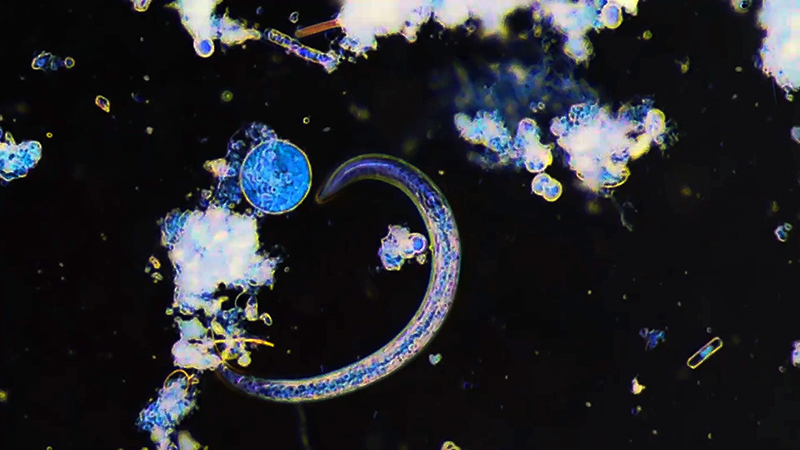
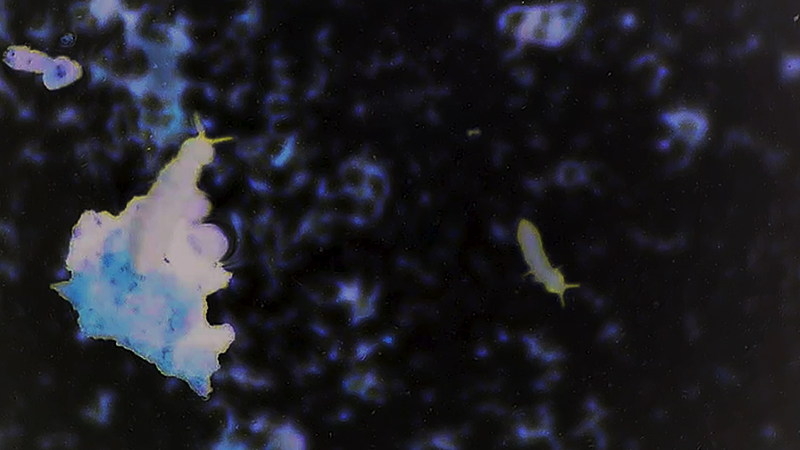
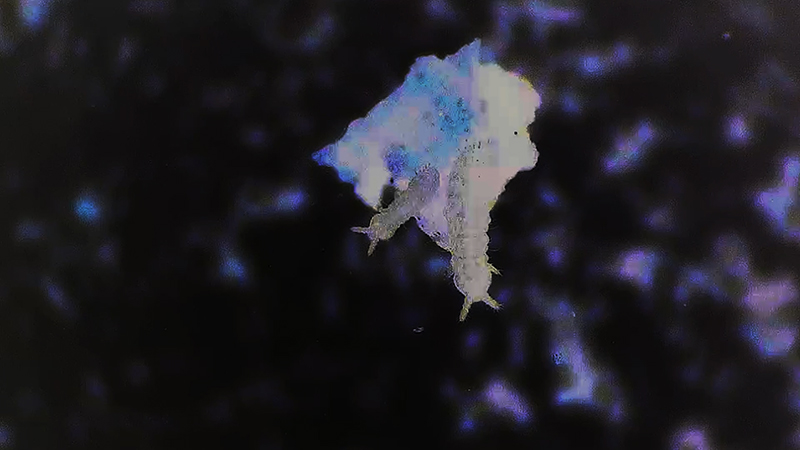
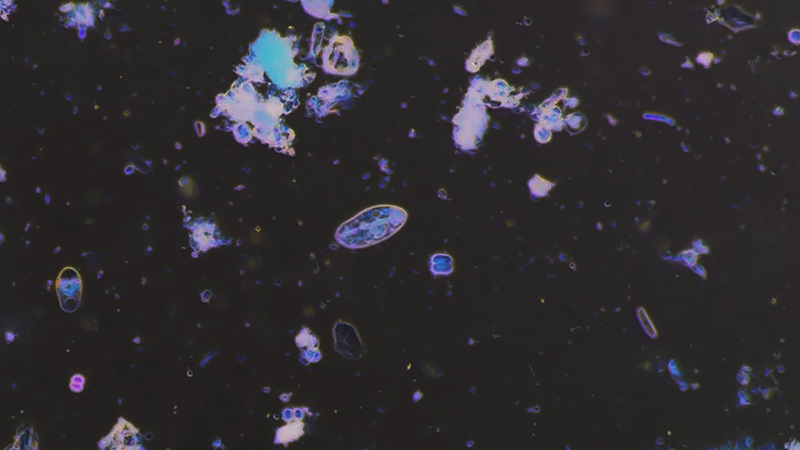
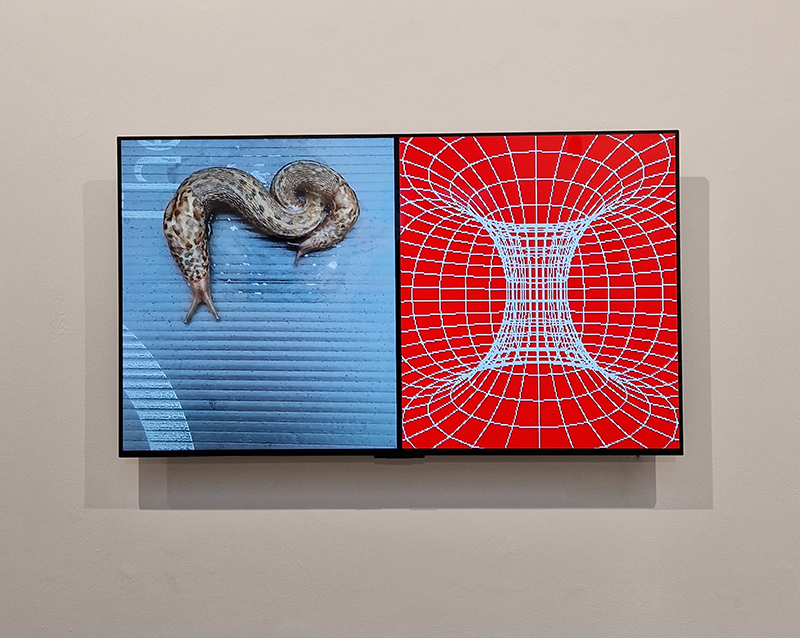
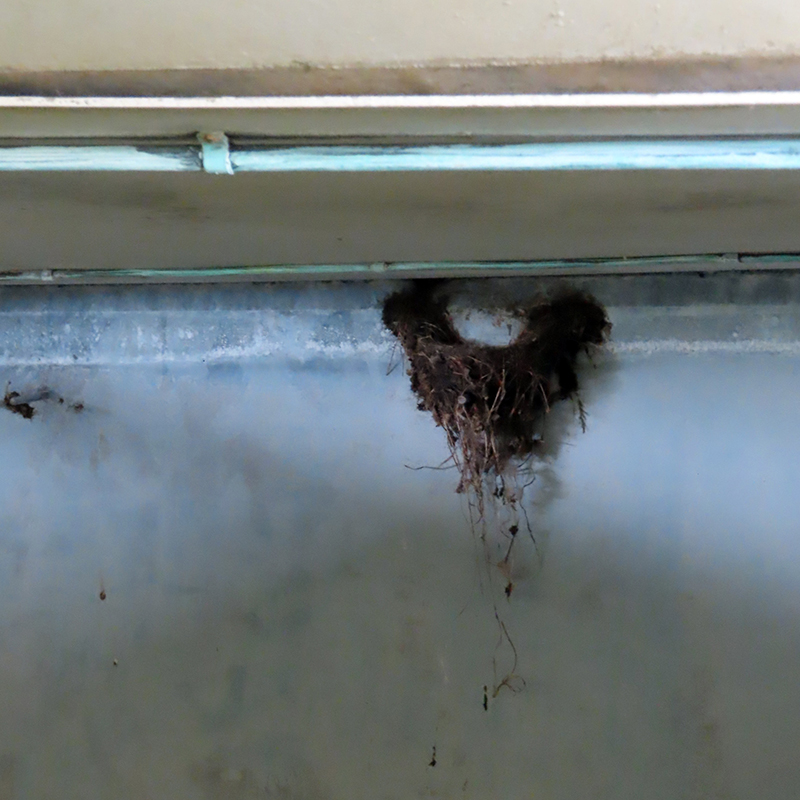
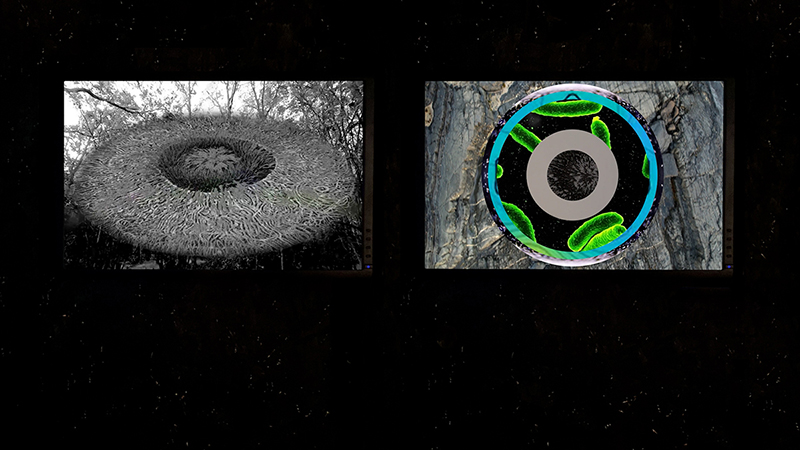
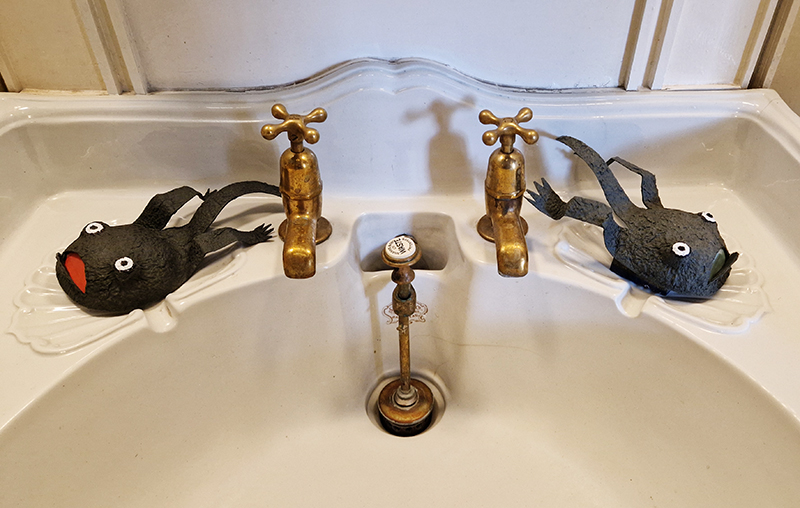
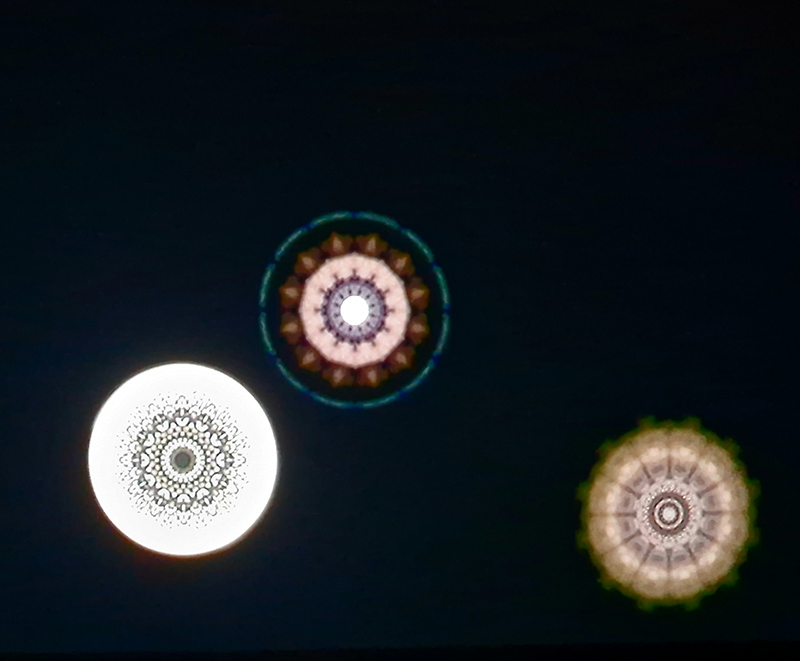
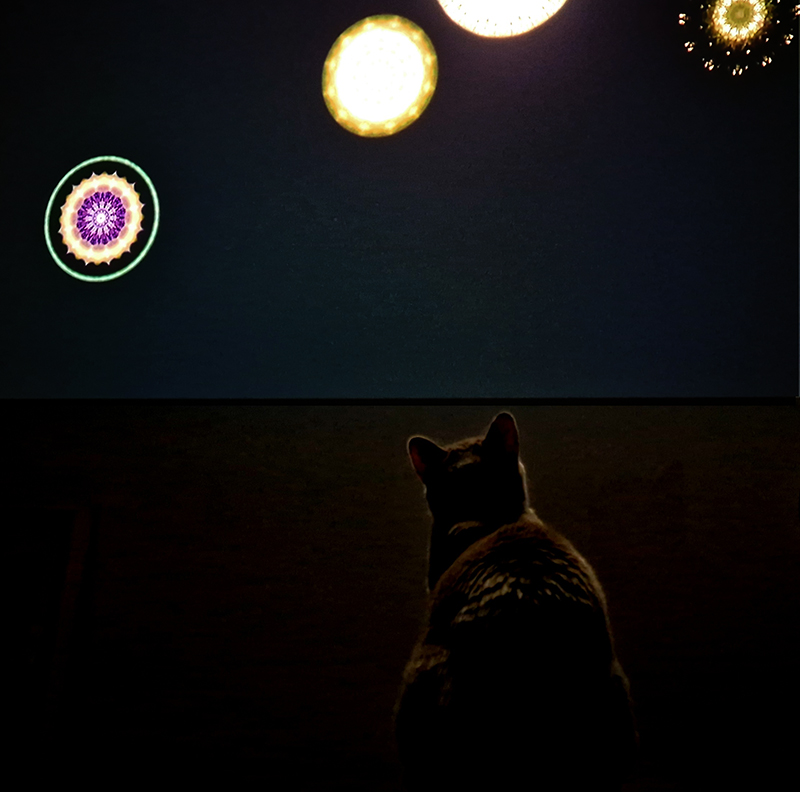
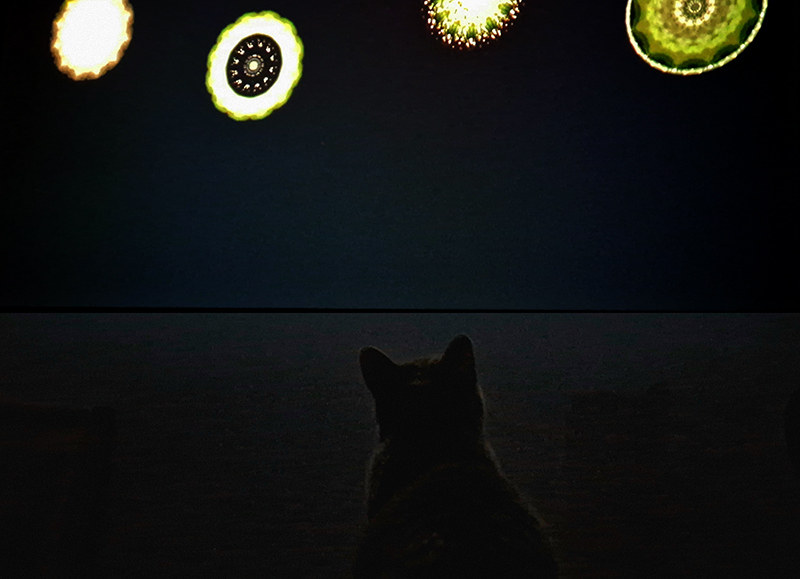
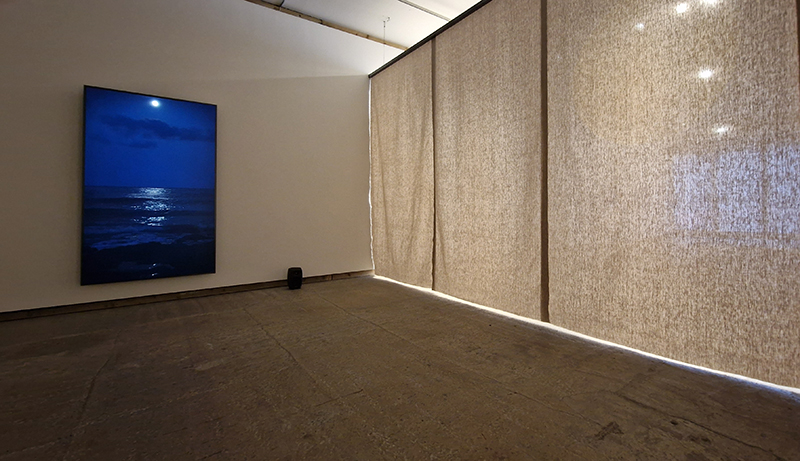
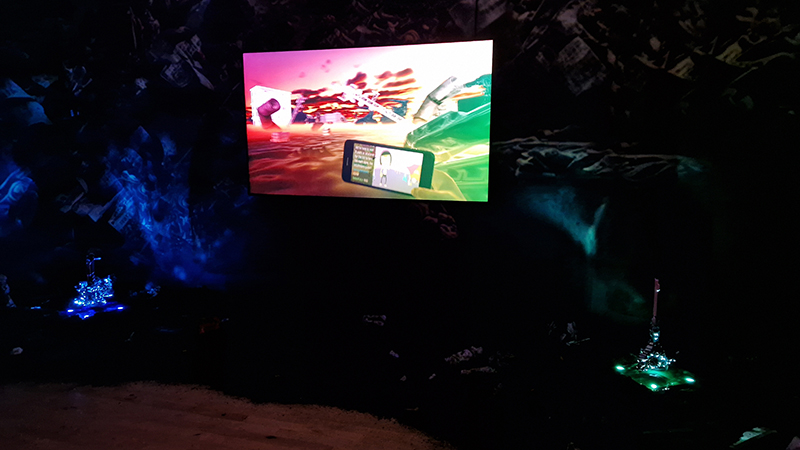
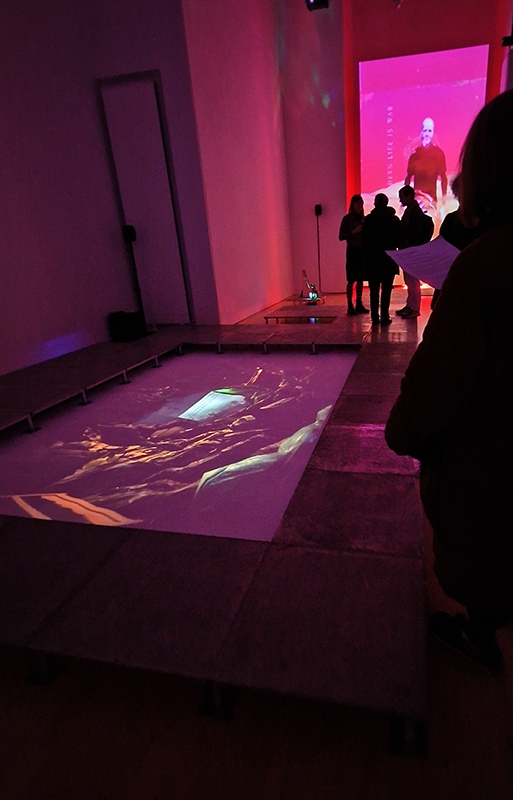
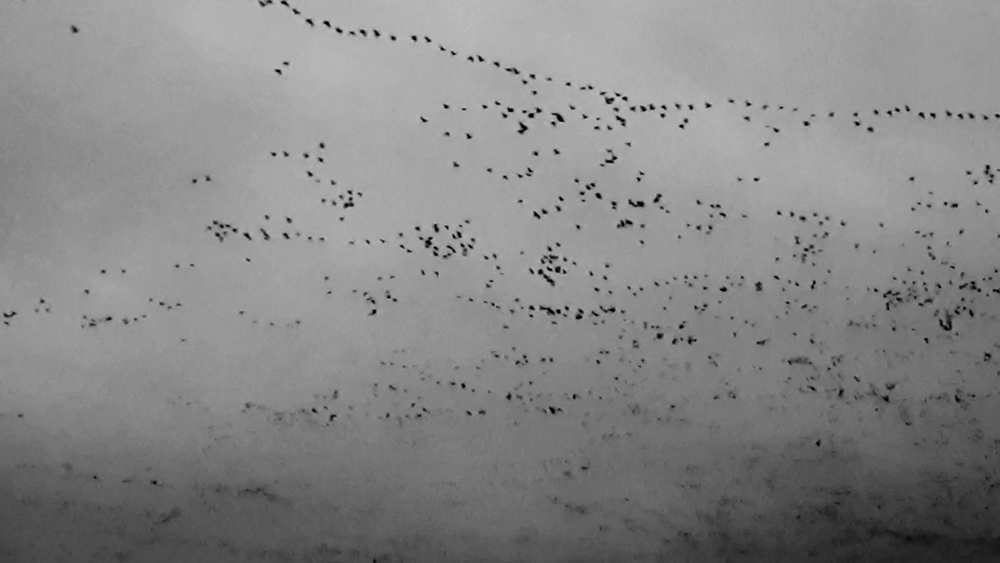
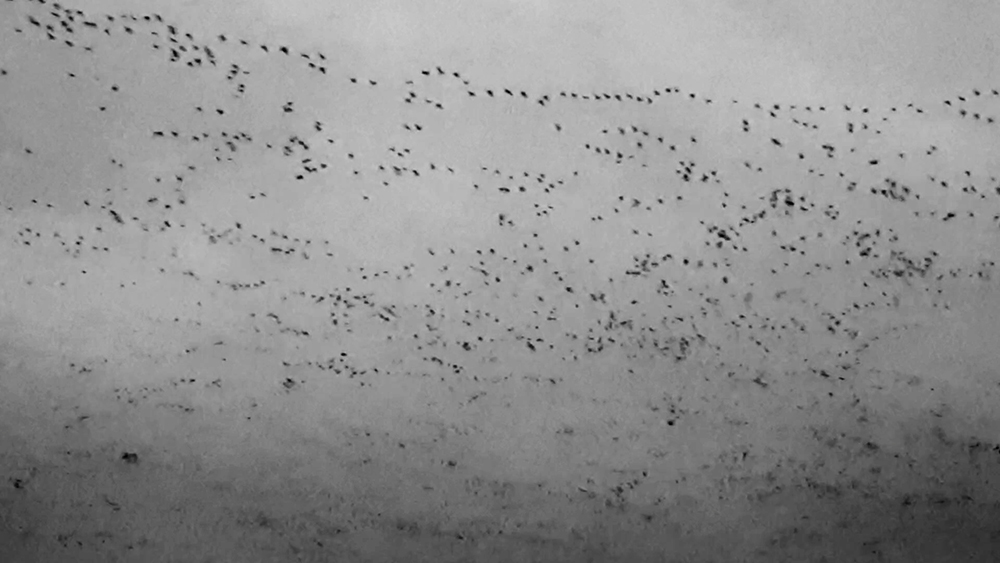
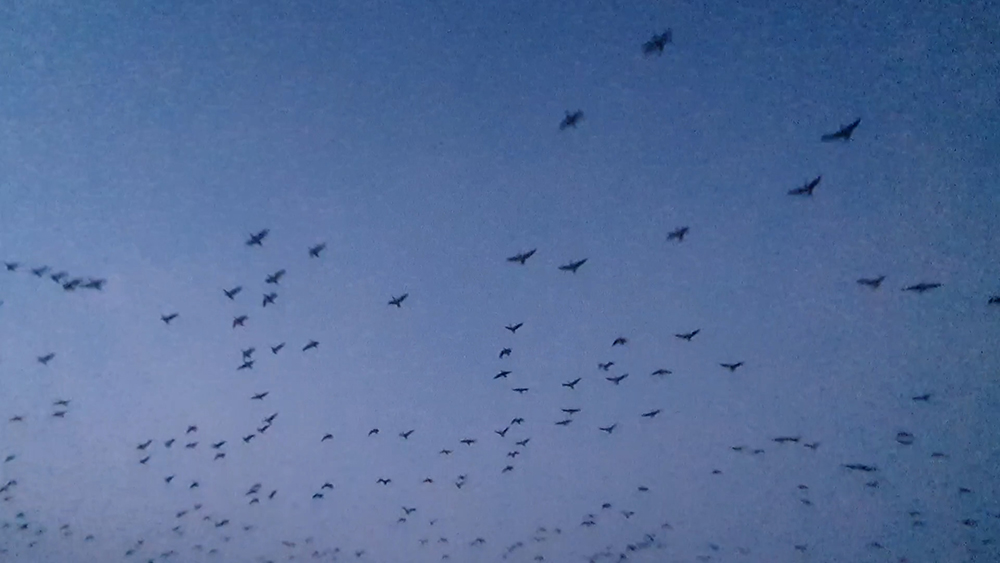
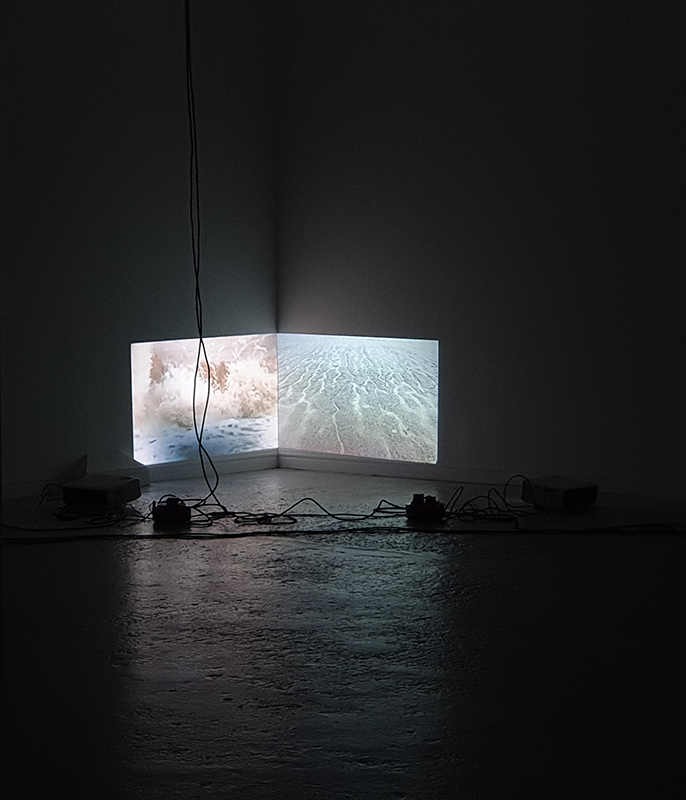
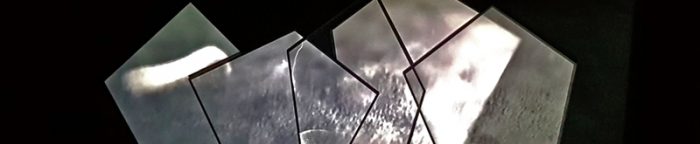
I am enjoying discovering the gutter creatures who share my home. Gathering video footage of an alternative cosmos to go towards making work which will be shown in Occupied: Strange Company at the Safehouse next year, a group exhibition curated by Julie Hoyle.
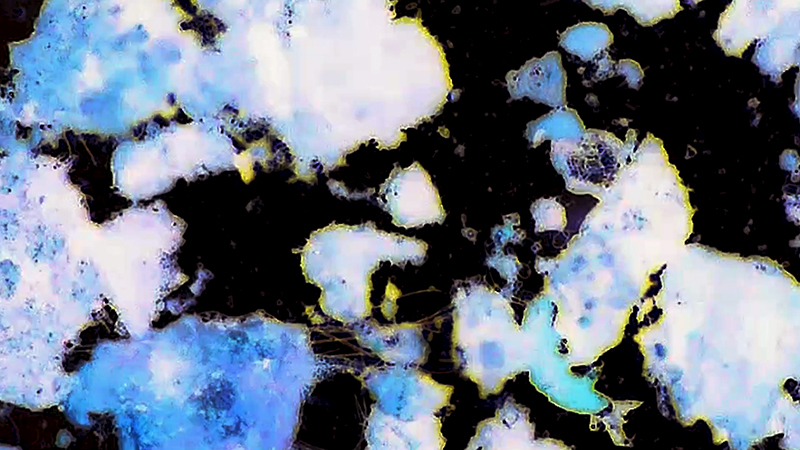
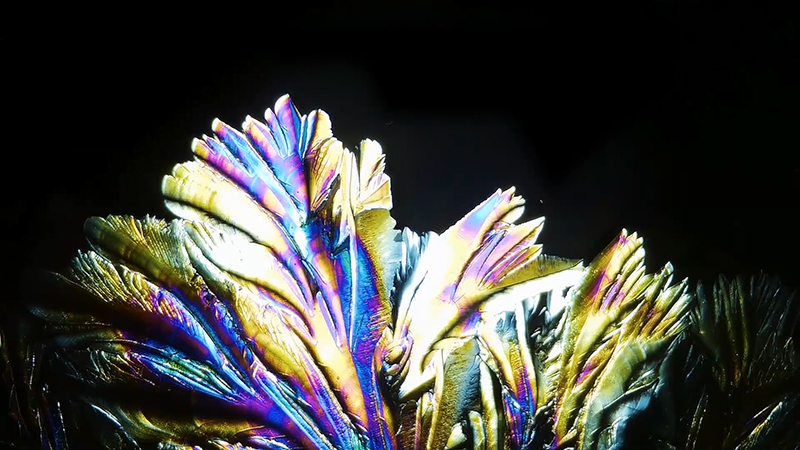
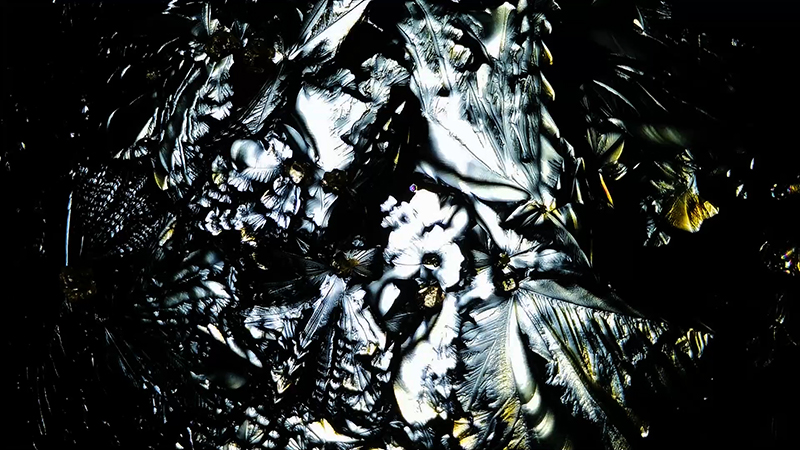
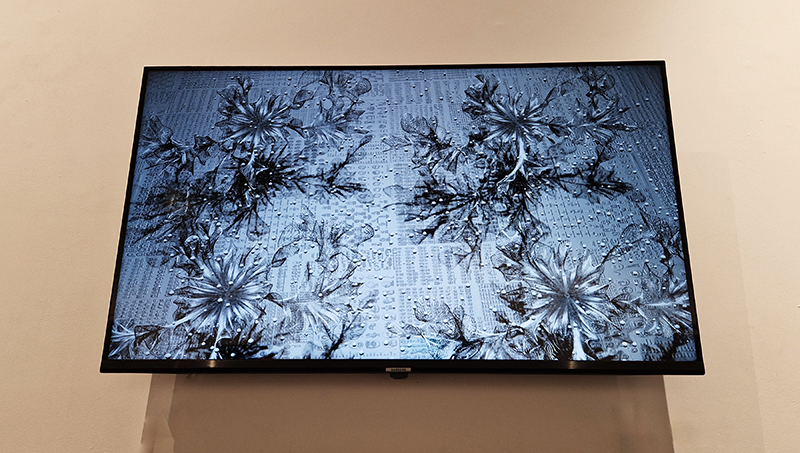
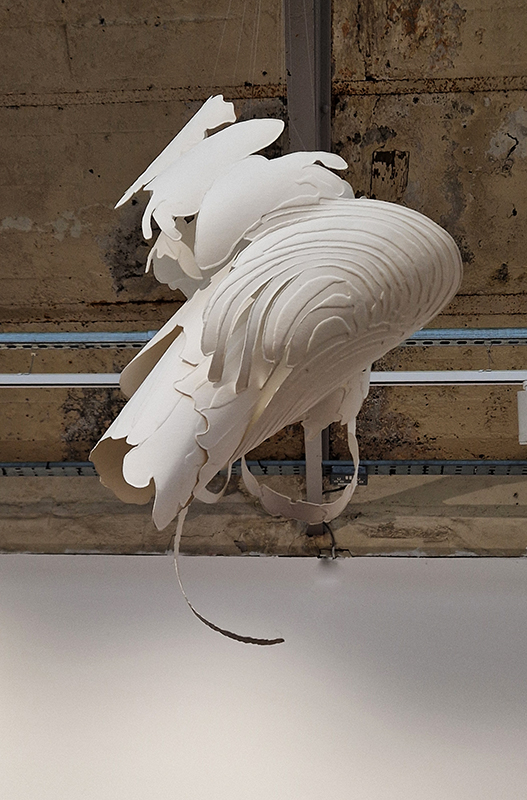
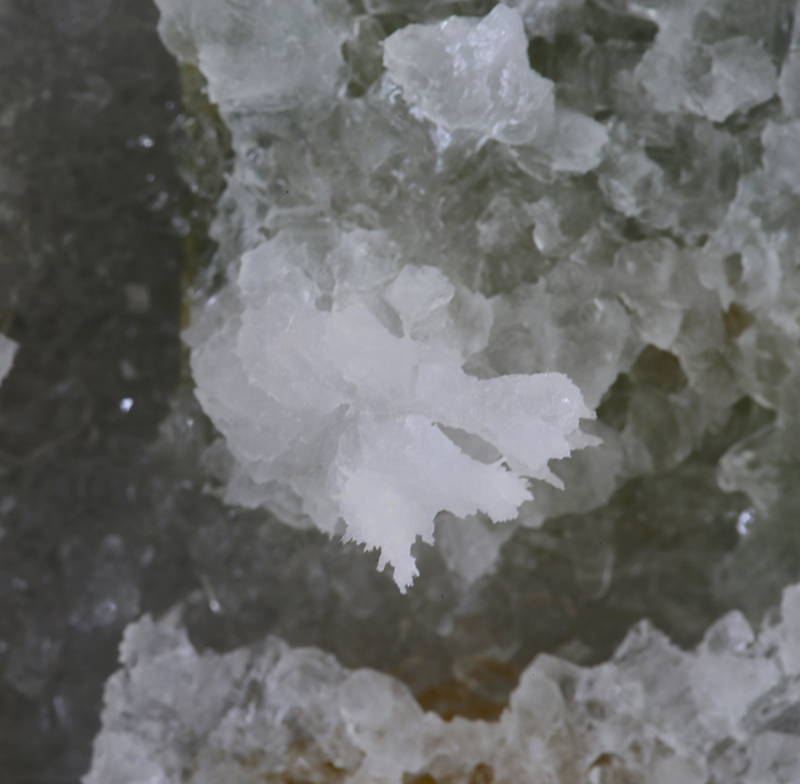
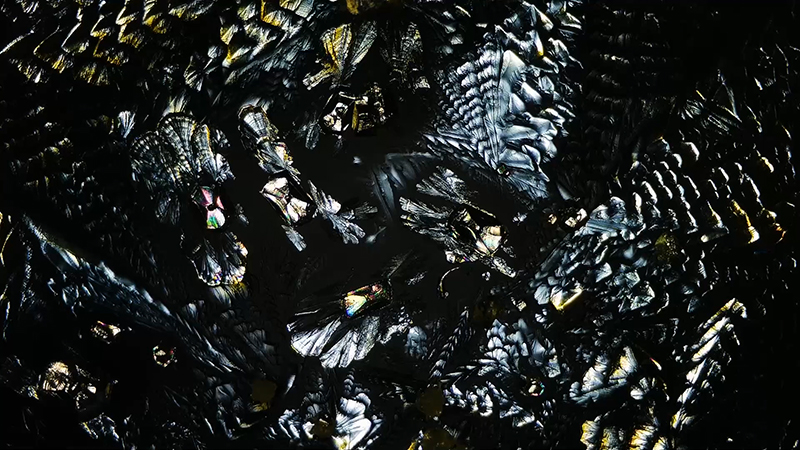
My experiments growing citric acid crystals have been going well. I am filming these transformations under polarised light which reveals the many vibrant colours but I also like the images without the filter. The structures remind me of feathers so I am thinking about creatures that flutter as well as those that swim.

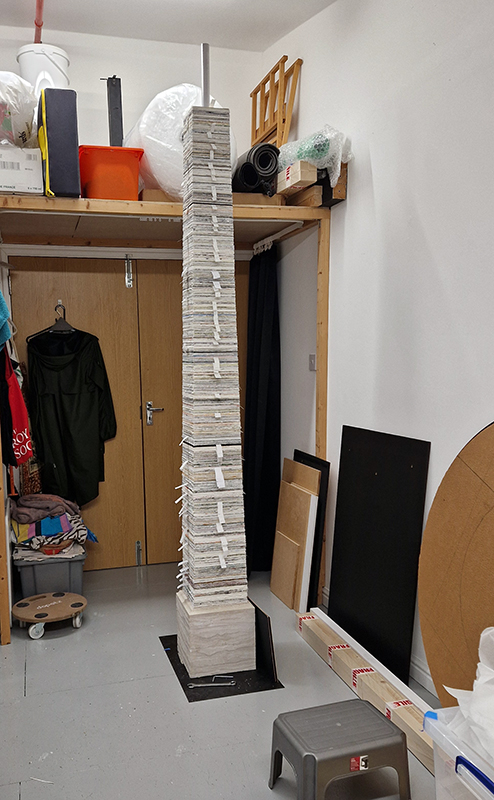
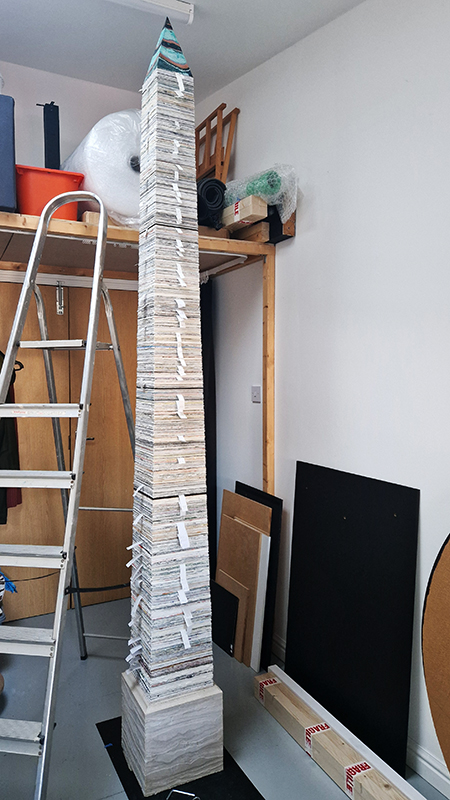
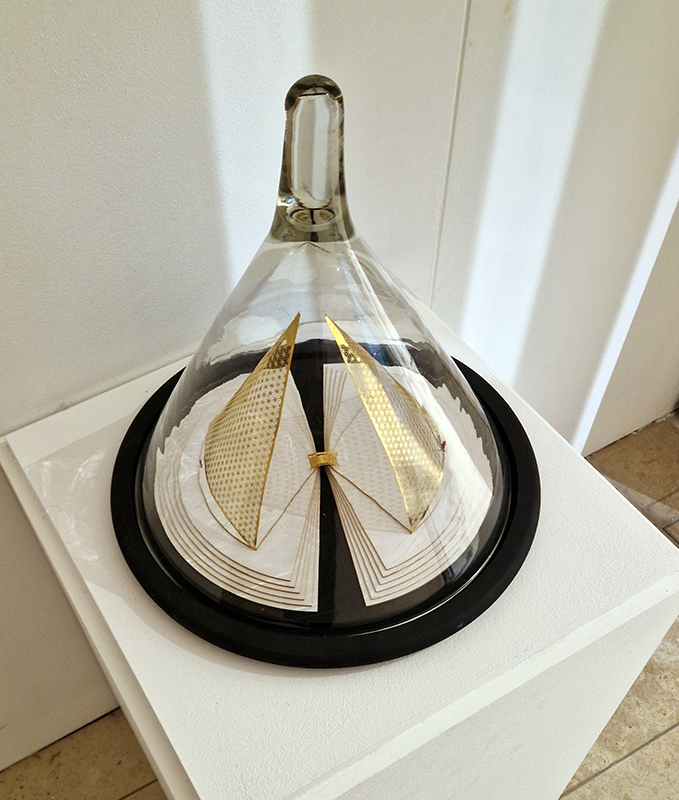
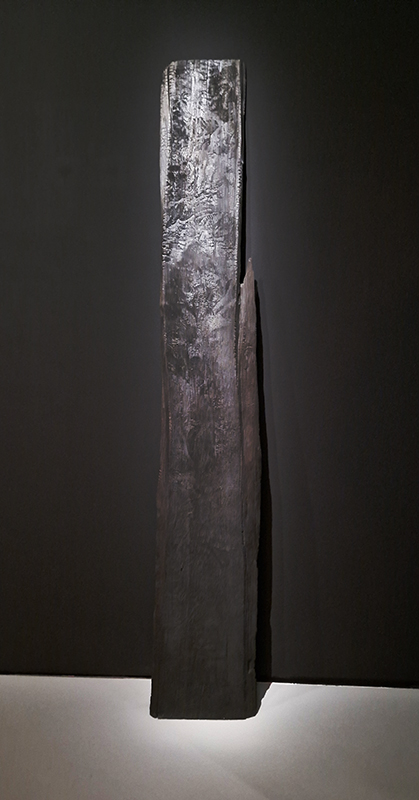
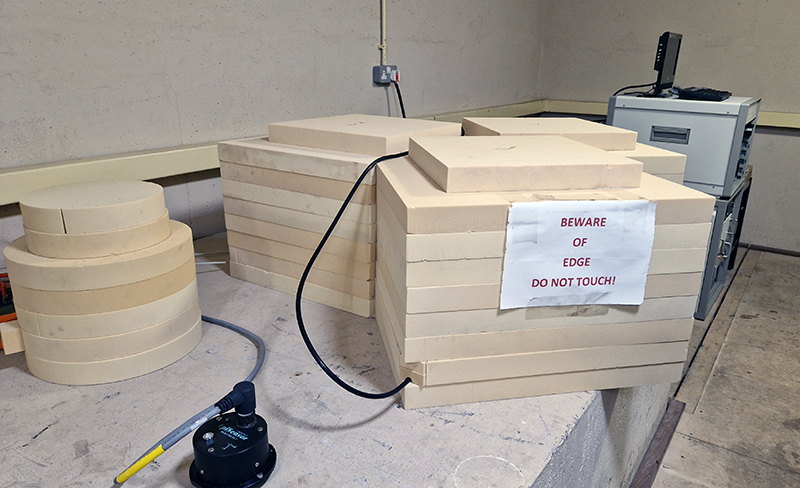
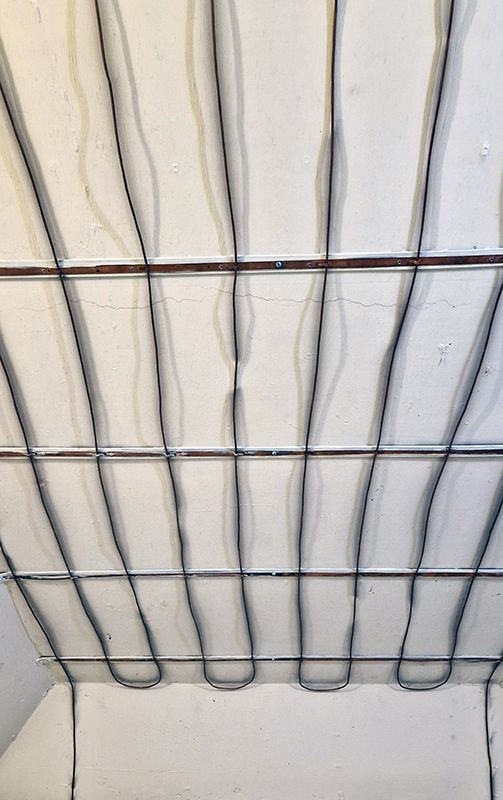
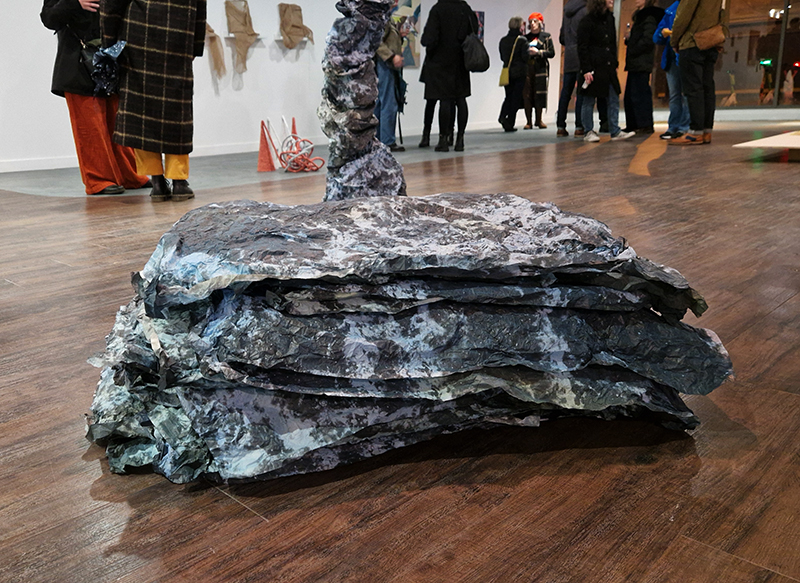
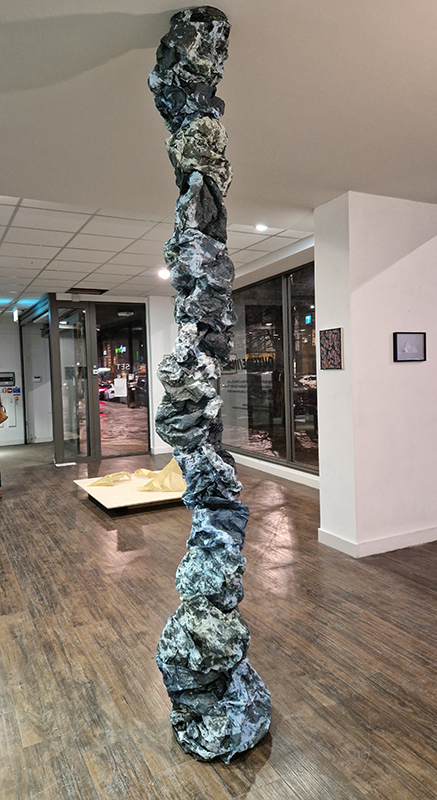
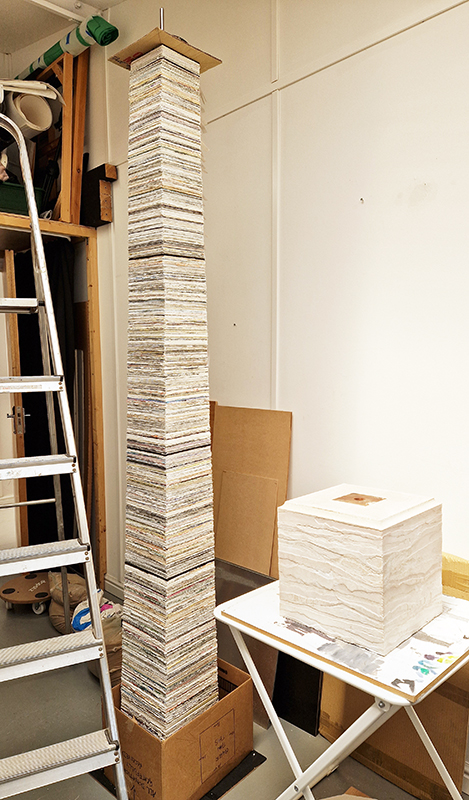
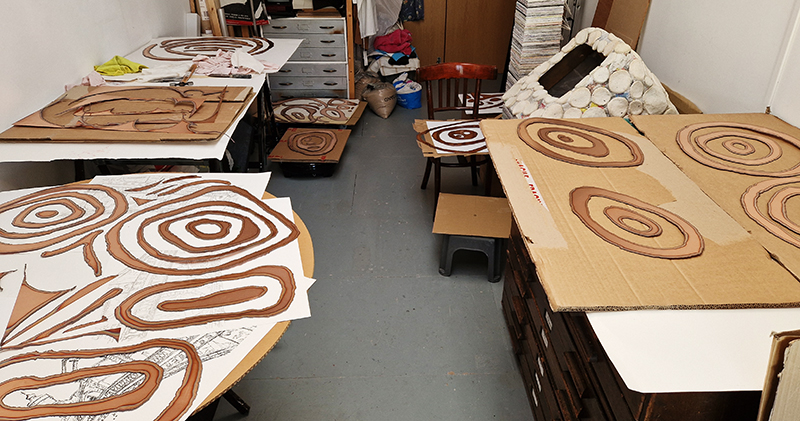
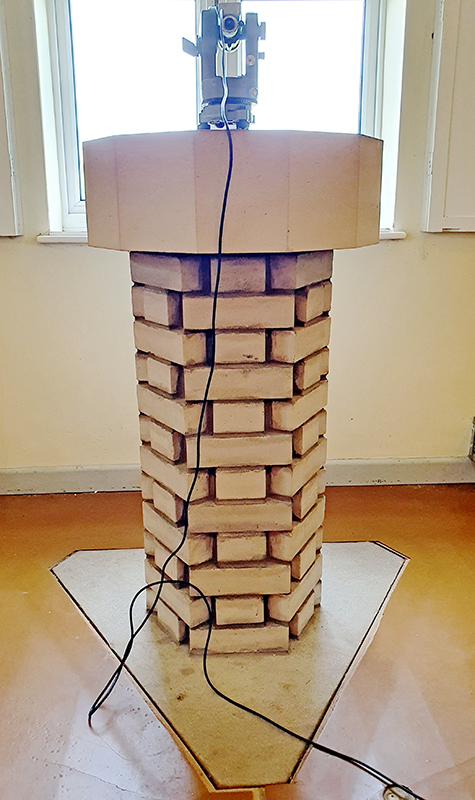
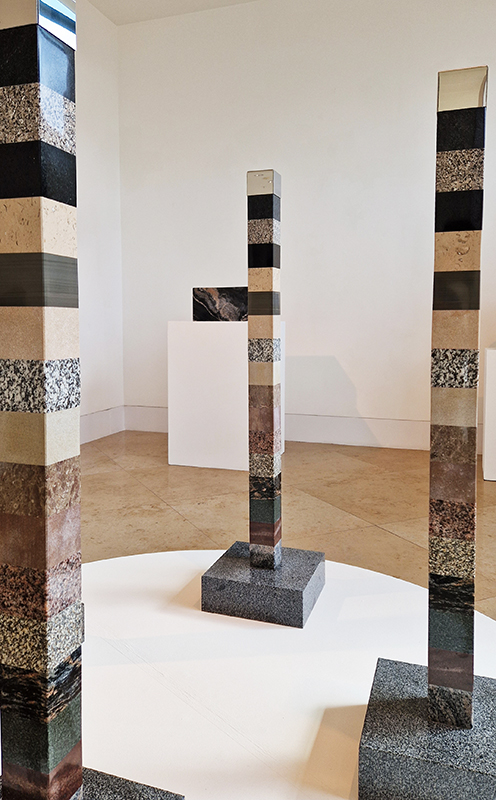
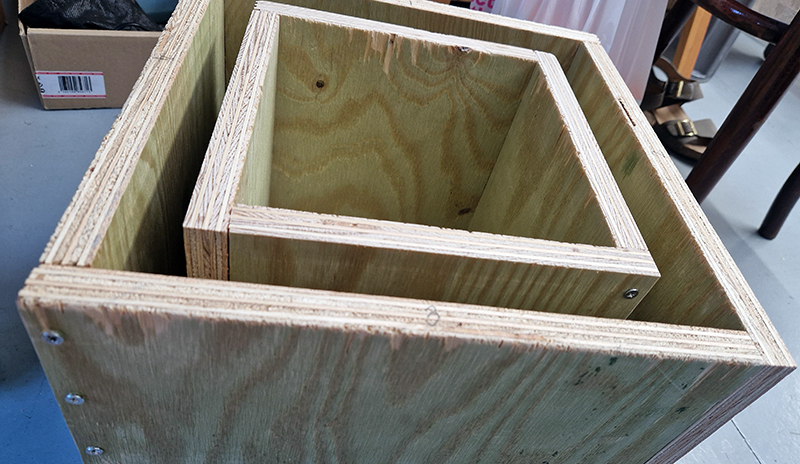
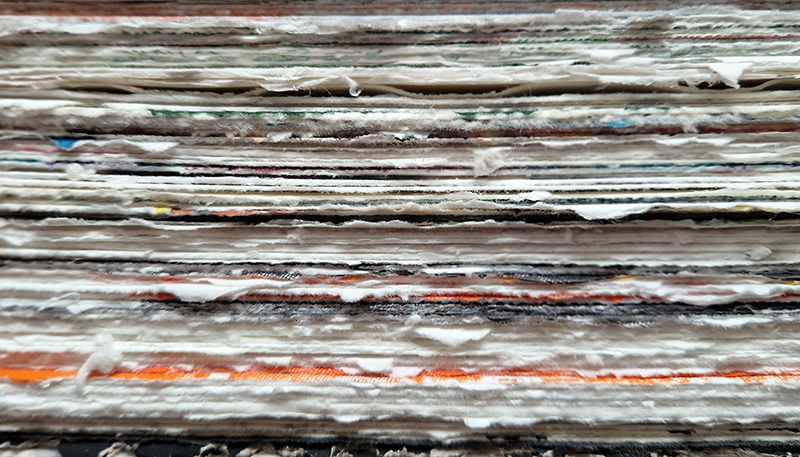
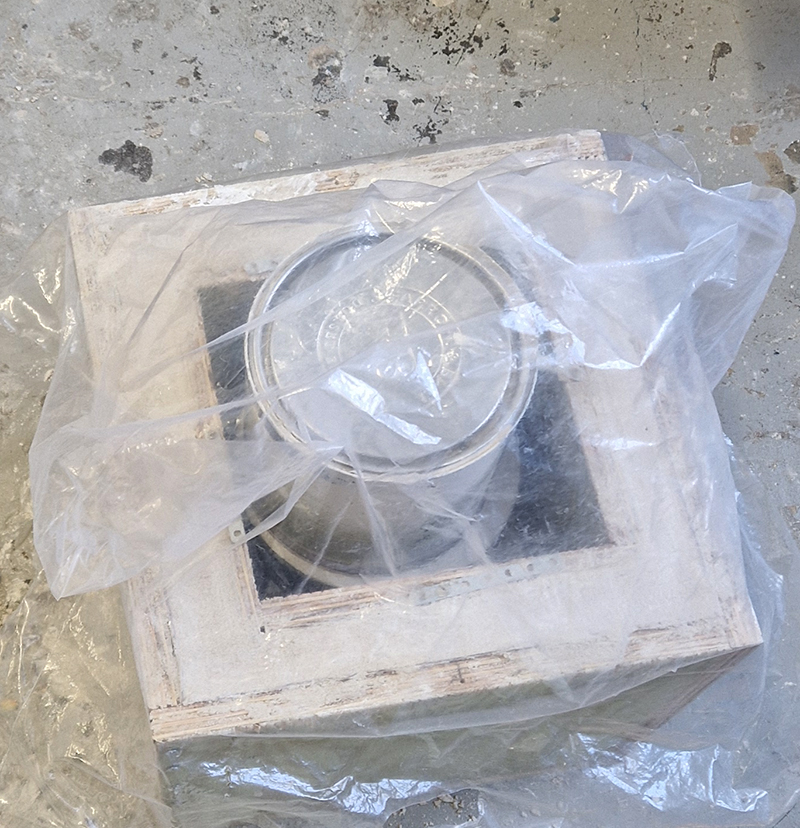
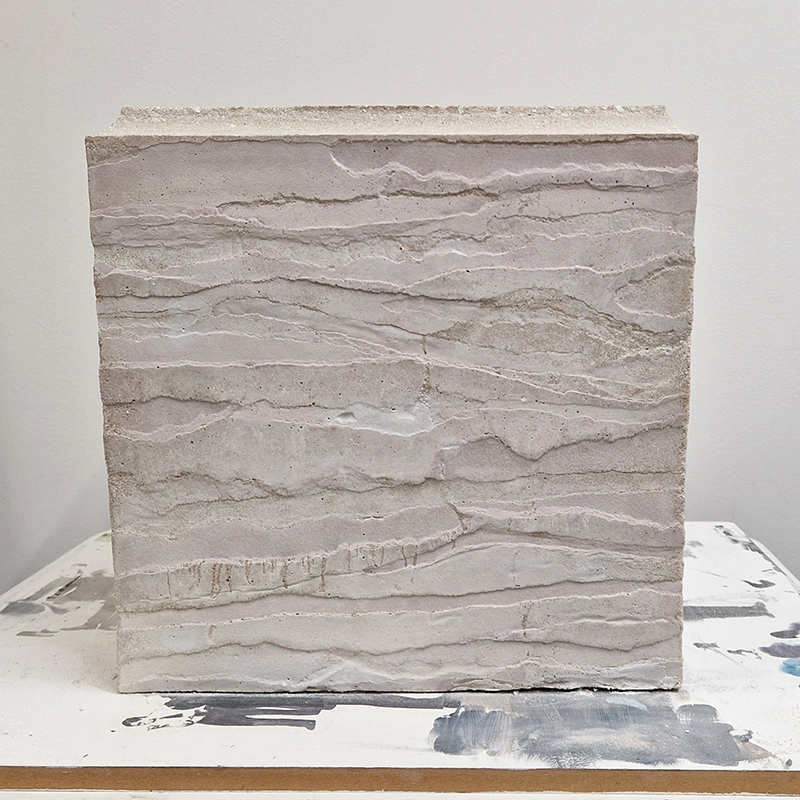
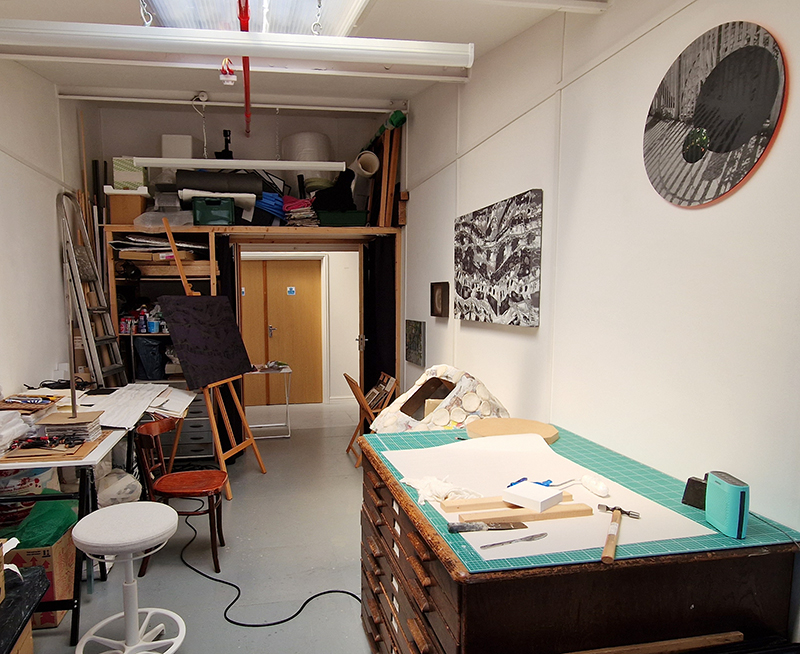
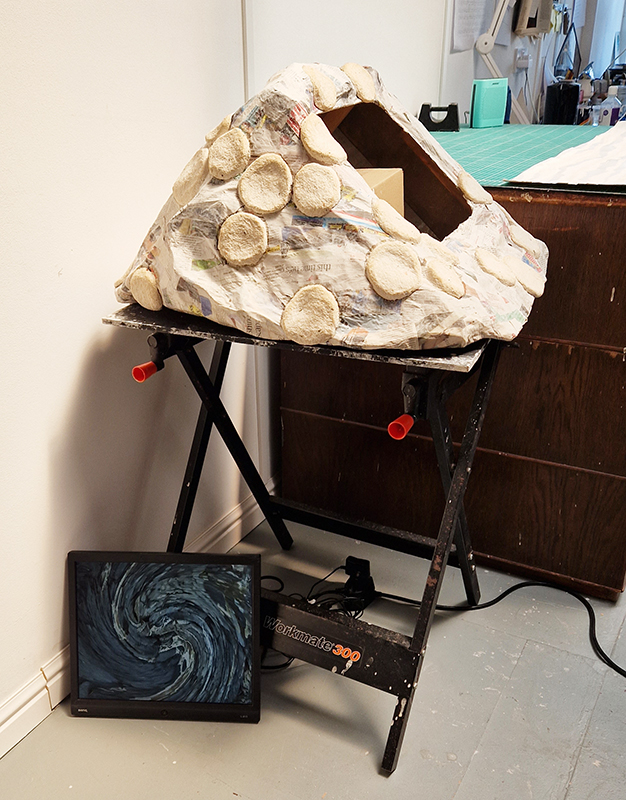
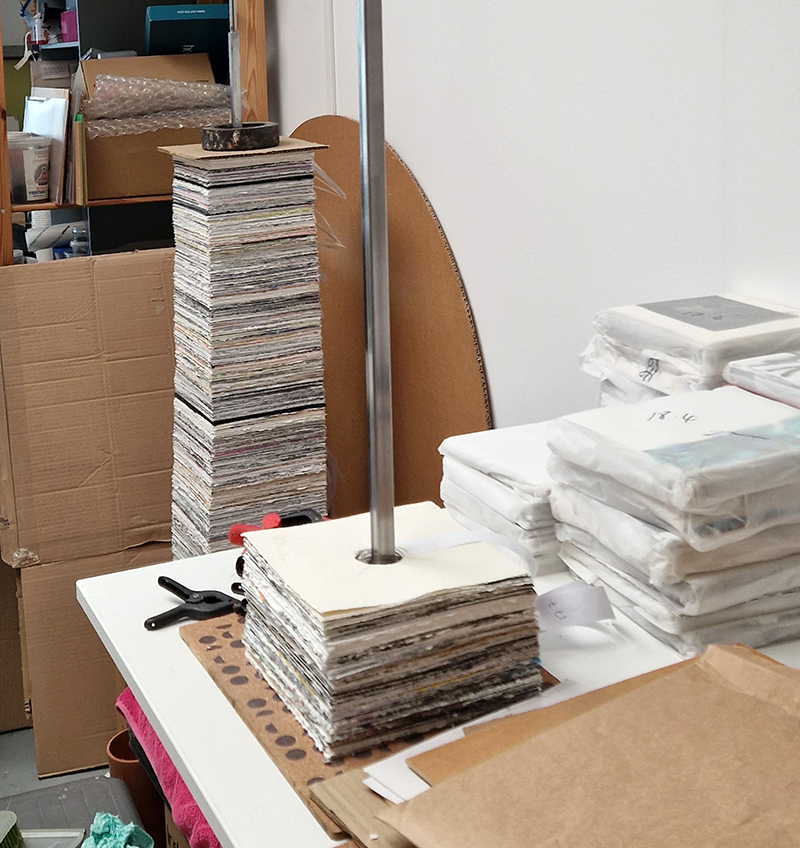
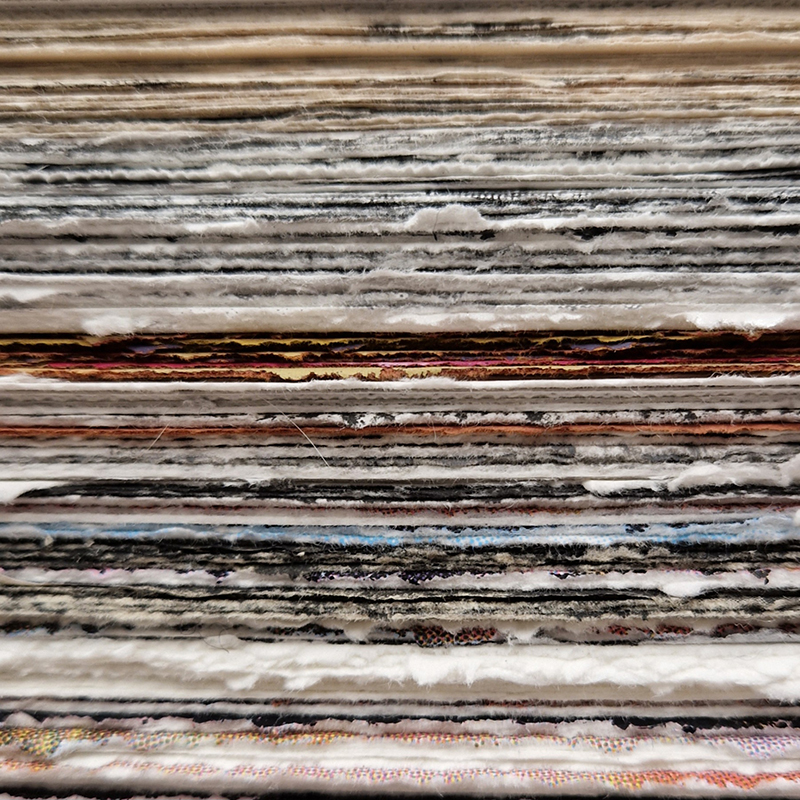
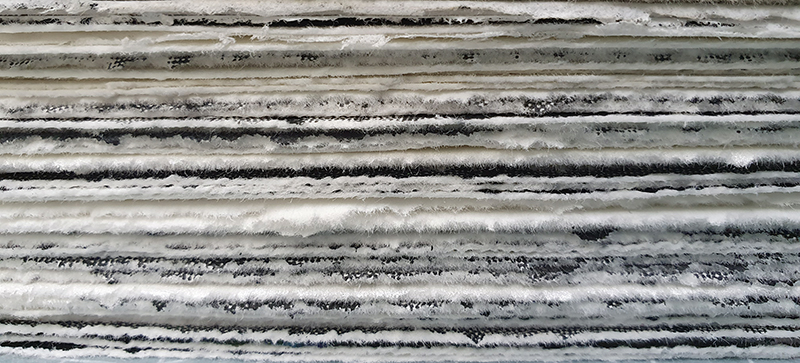
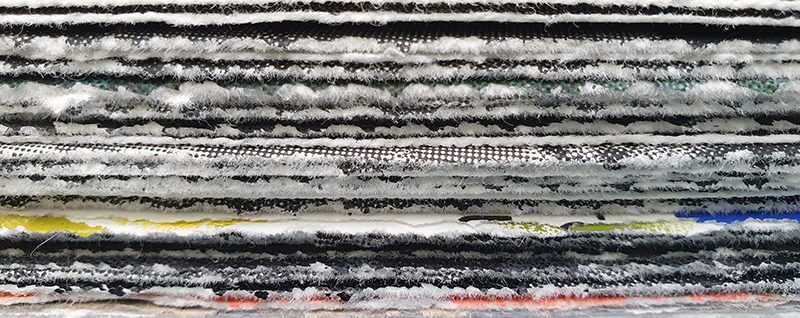
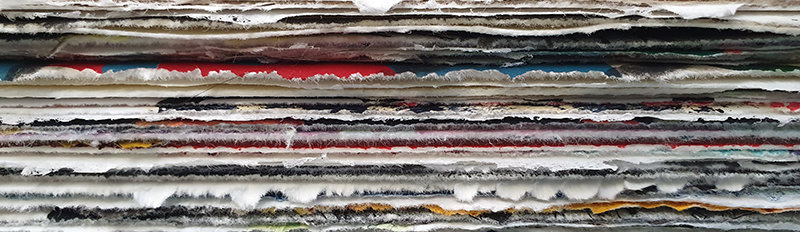
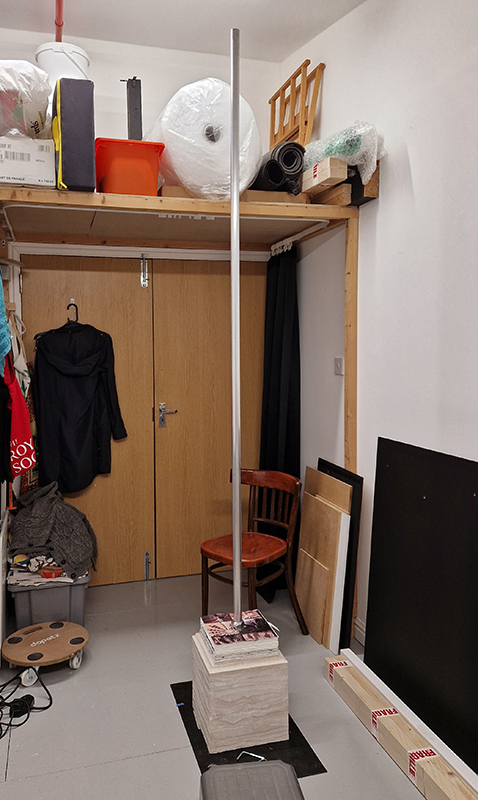
Time in the studio has been spent checking over and preparing works that will be showing in Cosmos: The Art of Observing Space curated by Ione Parkin which opens in the new year. I am thrilled to be part of this exhibition bringing together contemporary and historic artists and featuring an extraordinary range of work inspired by the cosmos. I have completed a test build of The Azimuth Obelisk (of sedimentary knowledge) using a new internal structure for before packing it all away again ready for transport to The Royal West of England Academy in Bristol. This work is a reimagining of an permanent azimuth mark erected at Hartland Magnetic Observatory in North Devon from which the drift of the magnetic north pole is monitored. Made of many layers hand torn from recycled works on paper it echoes the geological and magnetic history of the Earth which is secreted in the strata of sedimentary rock. The protruding tabs of paper seen in these studio images are markers for each section of paper squares of a tapering size and will get tucked away at installation in the gallery. With the added thickness of my new studio roof insulation the obelisk only just fits in now.
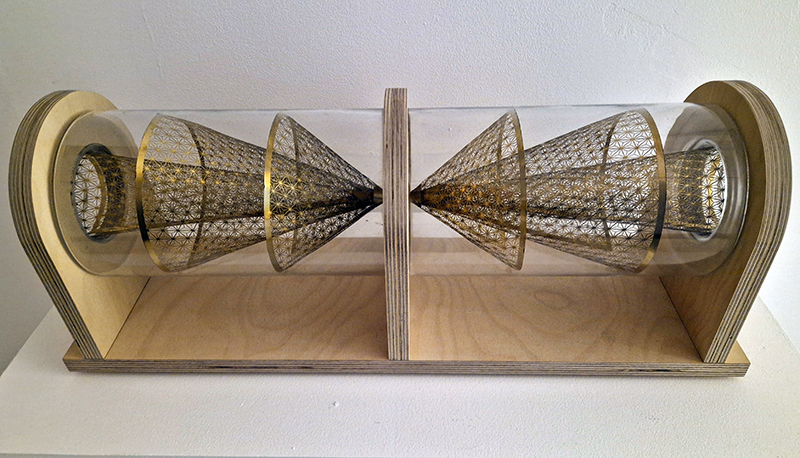
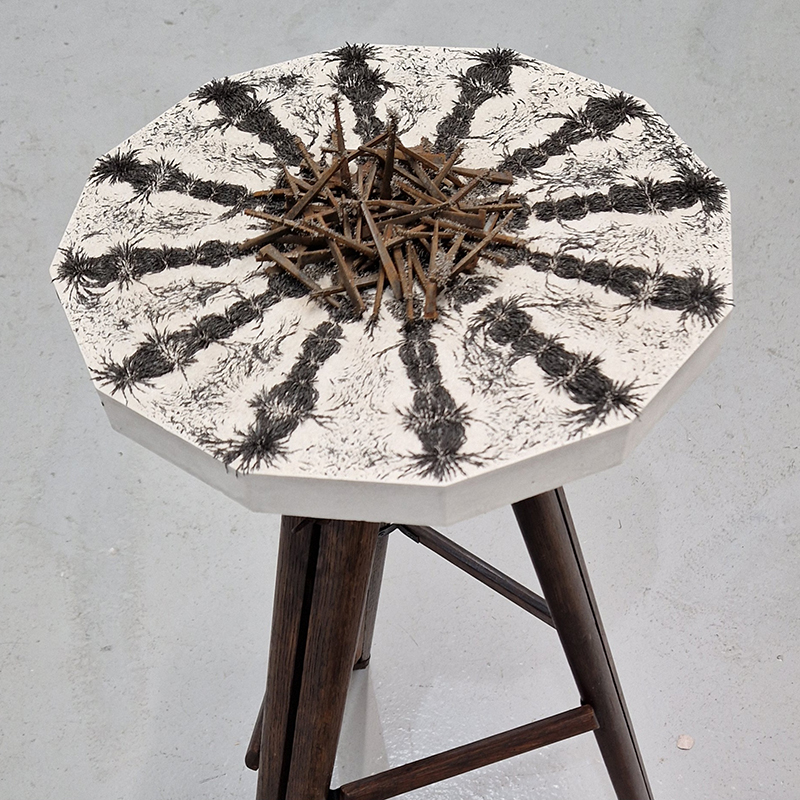
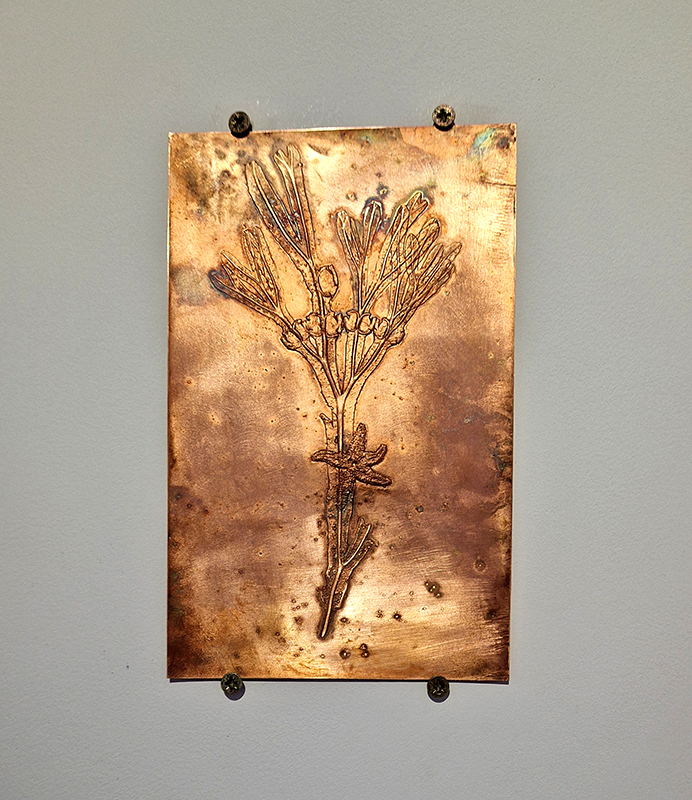
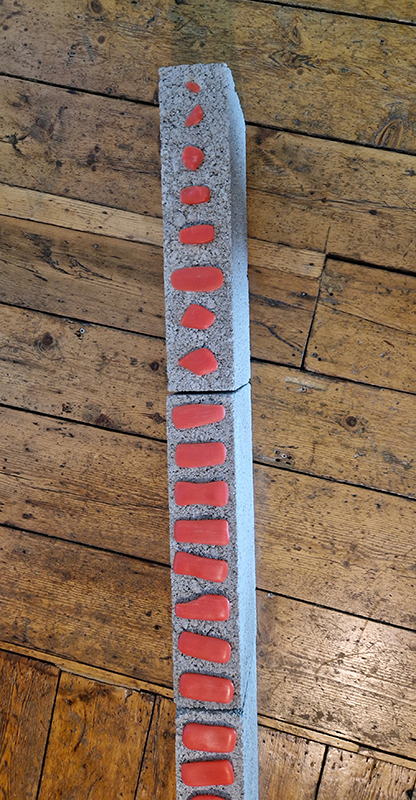
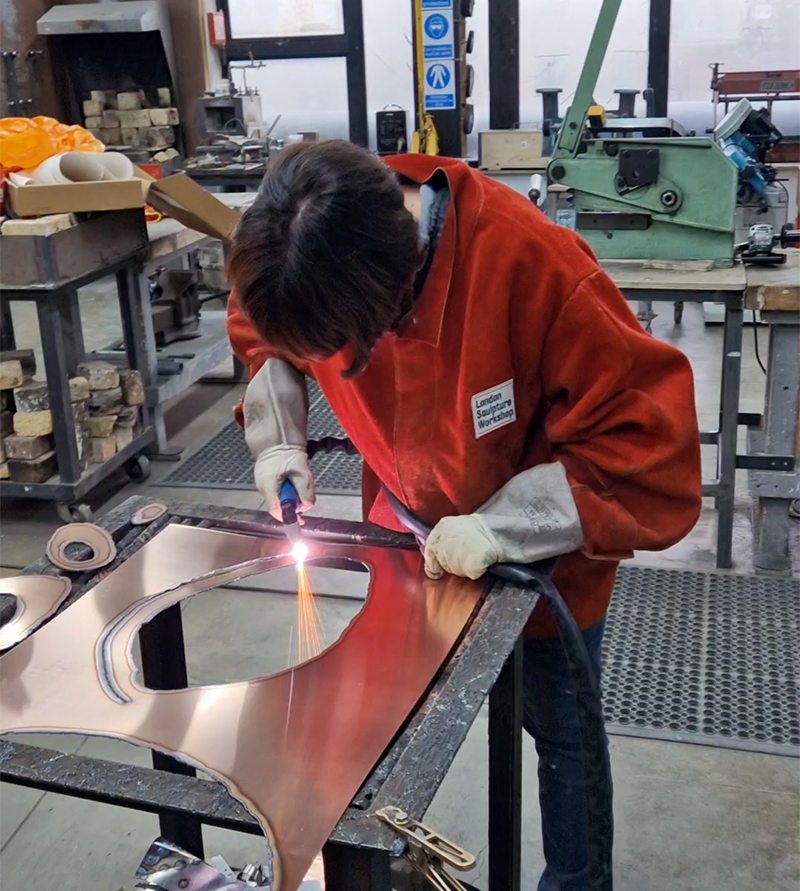
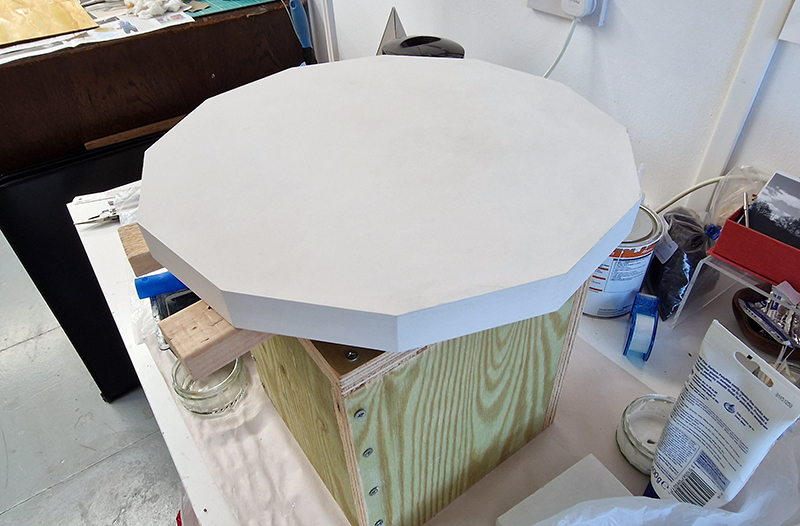
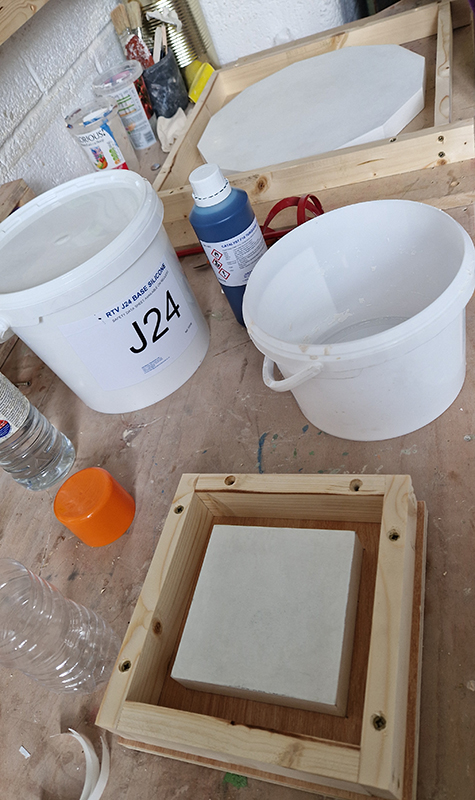
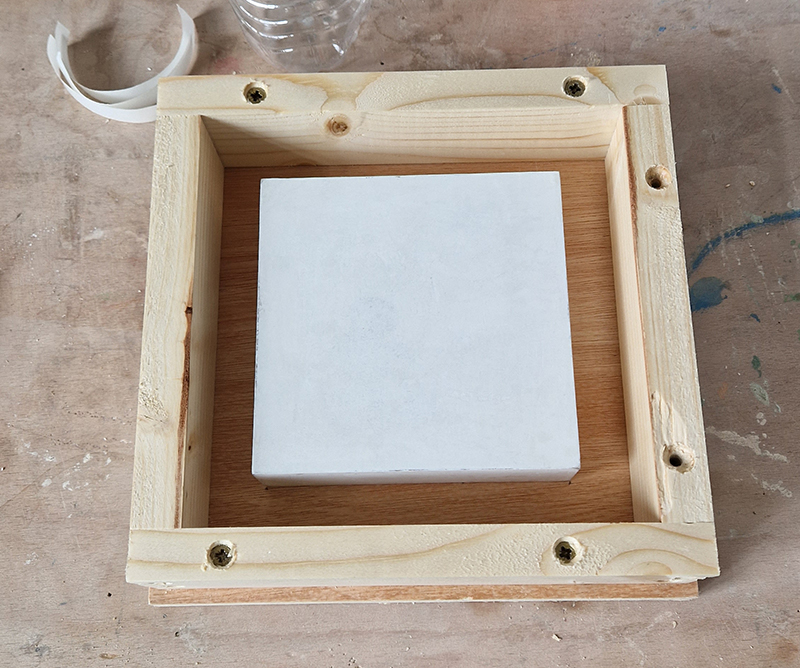
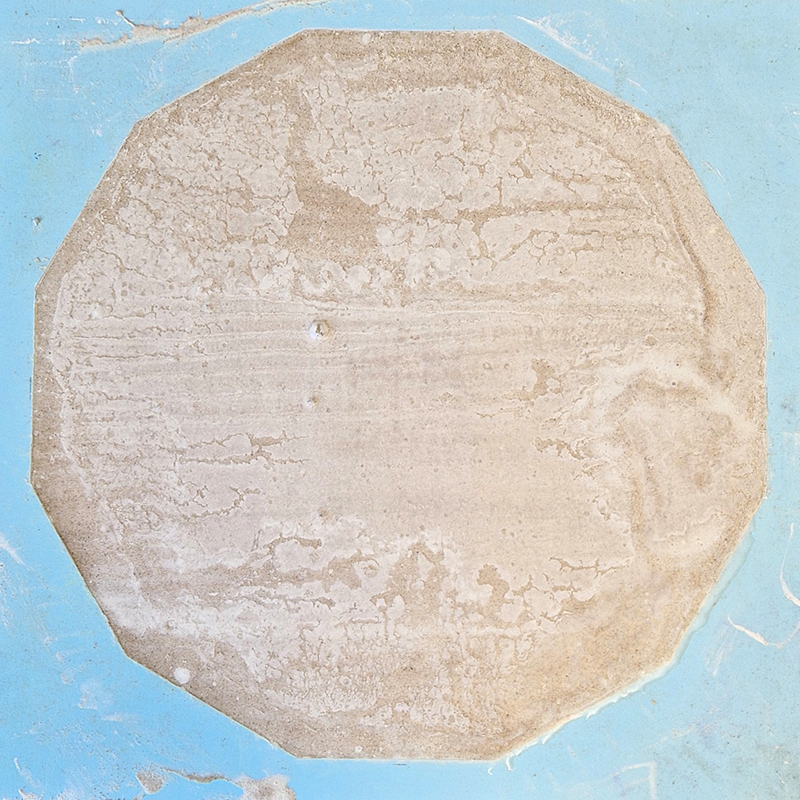
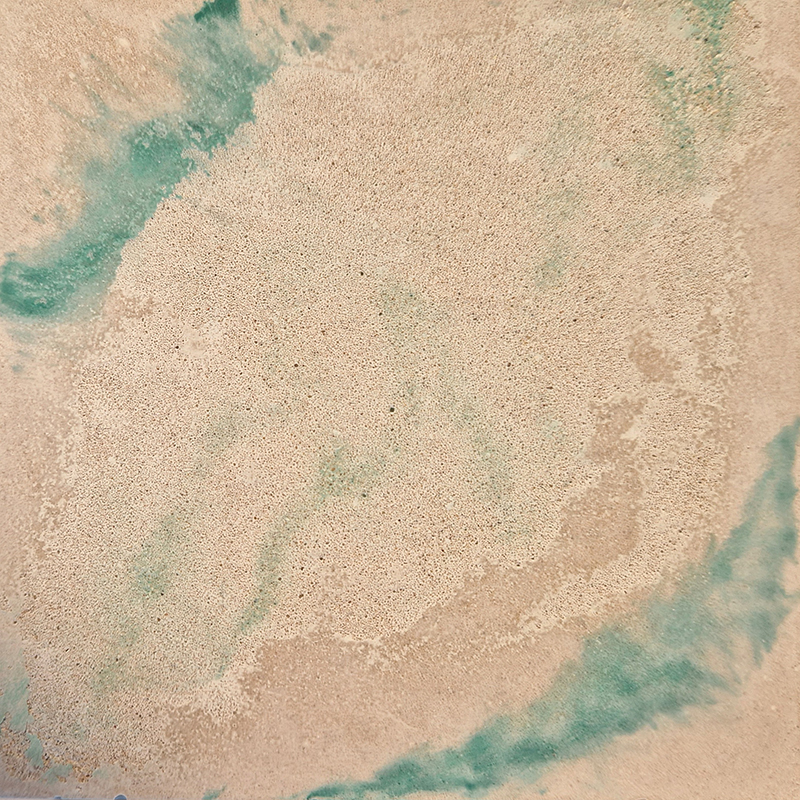
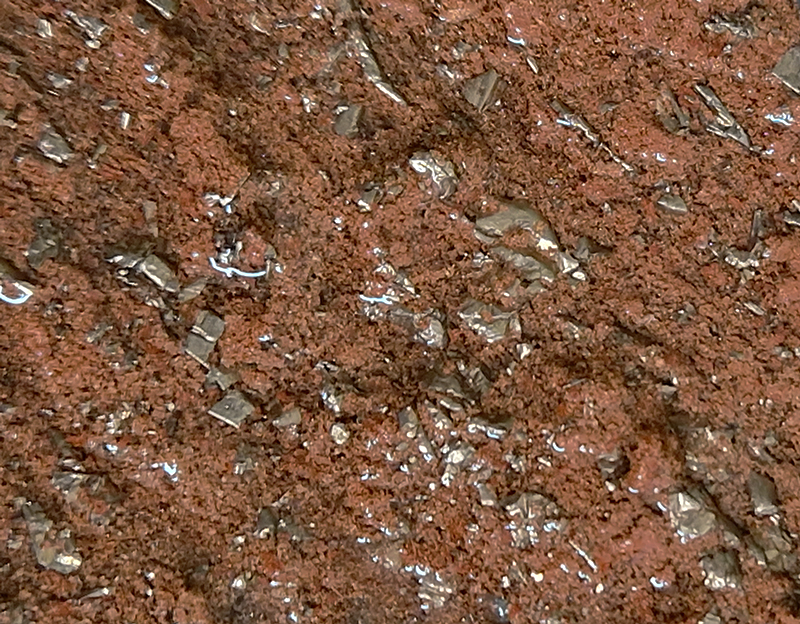
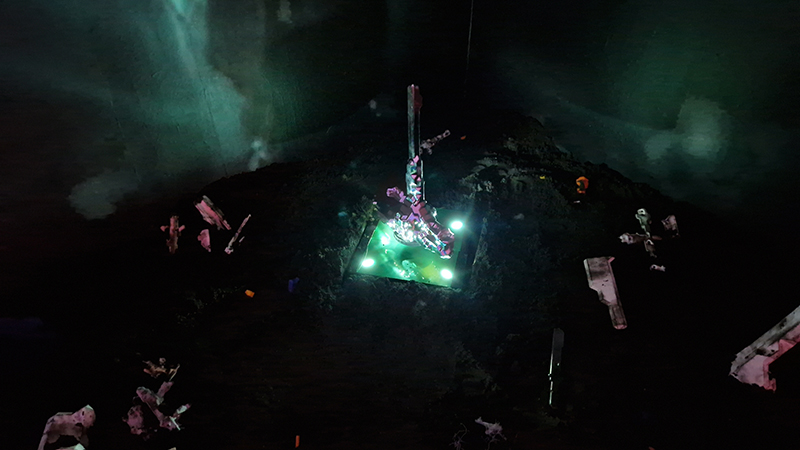
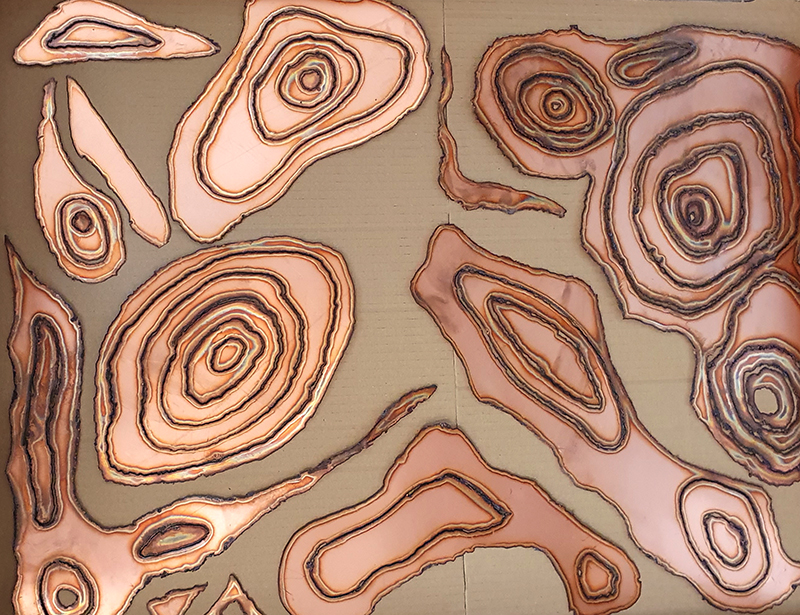
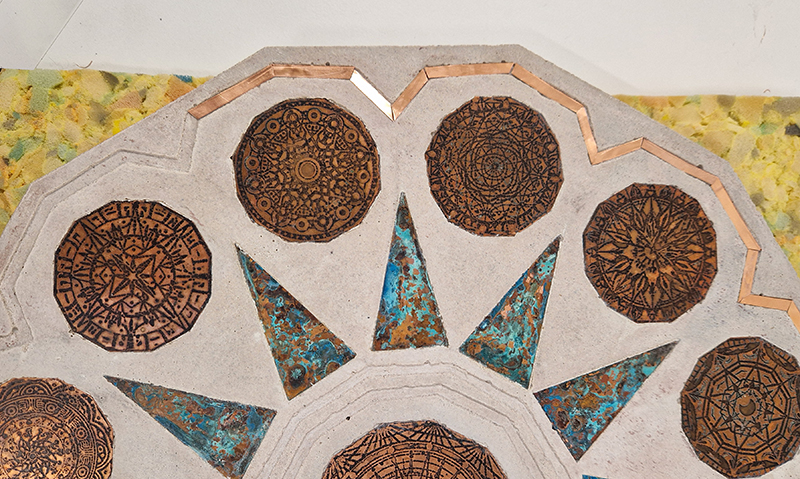
I have started work on inserting copper segments into the new sculpture for the Instruments of the Anemoi series. The other larger pieces of etched and patinated copper were added at the time of casting, held in place with tape and hope when the concrete was poured into the mould. This series of sculptures are suggestive of the pedestals that support various instruments used in monitoring the Earths’ magnetic field but are envisaged here as speculative objects used by the wind gods as the first emissaries of navigation.

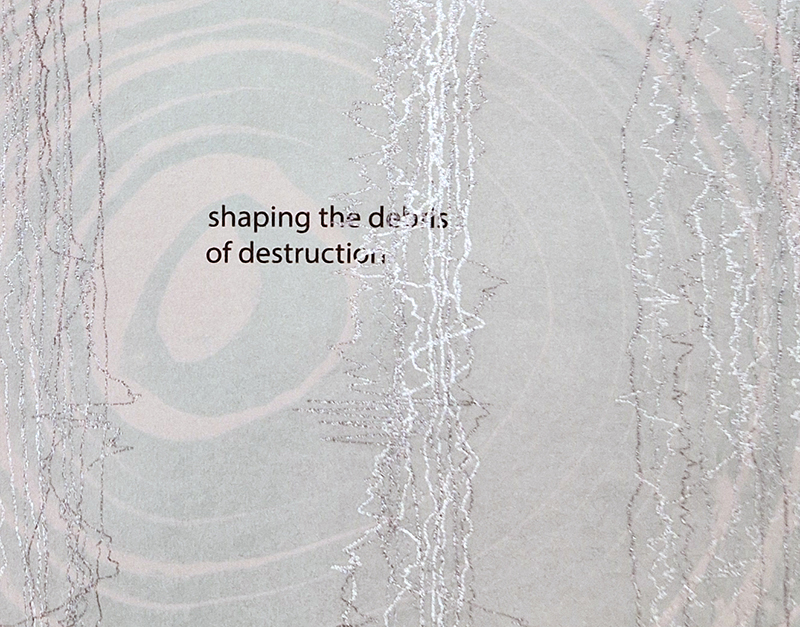
I am still battling with writing text for The Book of Reversals, an artist book that responds to the record of Earth’s magnetic field reversals being written in bands of minerals on the ocean floor.
The crisp crust fractures / Fragments slide across a viscous veneer

Submarine mountains tower / Ocean trenches gape

Tectonic plates subduct / melting into the mantle 

Deep time traces are consumed / surfaces ceaselessly reformed

The Earth’s magnetic field has been a fascinating mystery for many hundreds of years and Gillian Turner’s book North Pole, South Pole recounts the stories of those who sought to solve its origin and mechanism. Something I hope to look at in more depth is how pottery and bricks preserve the direction of the magnetic field in their minerals during the process of firing which heats and then cools the clay – the same process that occurs in a lava flow. Iron-bearing minerals (like magnetite) in clay become “magnetic” when heated in a kiln. As the pottery cools, these minerals lock into the Earth’s magnetic field direction and strength at that time. The study of the magnetic properties of ancient pottery, known as archaeomagnetism, has been used to make records of the inclination of the magnetic field from past millennia. Inspired by these studies of manmade artefacts to determine the historical position of the north magnetic pole, physicists Bernard Brunhes and Pierre David took samples from exposed lava flows and their underlying clay in central France. In 1906 they came to the astonishing conclusion that about six million years ago the magnetic field seemed to point in the opposite direction, the first indication of magnetic field reversals.
Also with thanks to Gillian Turner’s book North Pole, South Pole I have learnt that there were early hydrogen balloon ascents to determine if the Earth’s magnetic field intensity varied with altitude, helping to decide if the magnetic field came from within the Earth or was extra terrestrial. In 1804 Jean-Baptiste Biot and Joseph Louis Gay-Lussac made a pioneering ascent to 4,000 feet (1.2km). In Turner’s book she writes that the dip needle necessary to take the measurements iced up and so the results were unreliable. I feel for them, but it seems they conducted many other experiments on temperature and gases in the atmosphere while aloft and in any case we now know they would have needed to ascend many kilometres higher than they achieved to notice any weakening in the magnetic field.
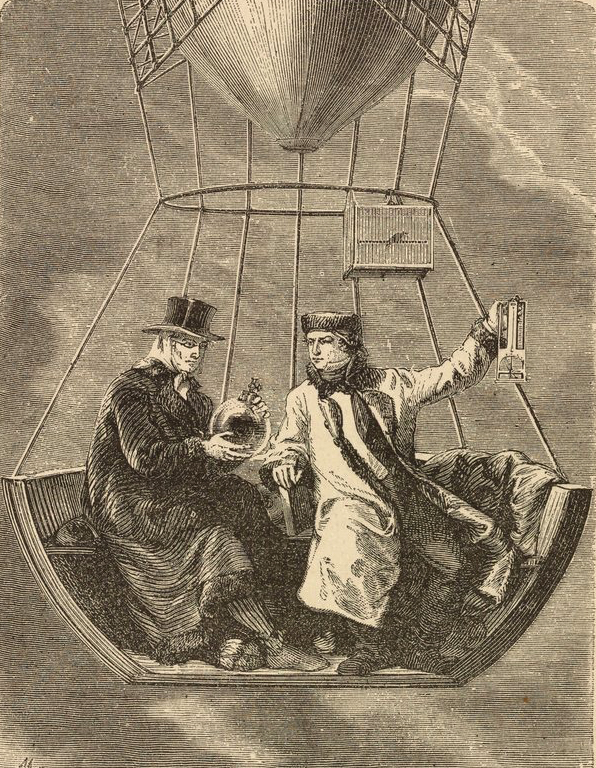
This plate is from John Howard Appleton’s (1844-1930) Chemistry, Developed by Facts and Principles Drawn Chiefly from the Non-Metals, published in 1884.

I am trying to remember when I first had the idea to launch a cloud chamber in the payload of a high altitude balloon. I knew about the hot-air balloon experiments carried by Victor Hess to determine the origin of cosmic radiation, and his discovery in 1912, when he made an ascent to over 5km during a near-total eclipse of the Sun, that radiation had to be coming from further out in space.
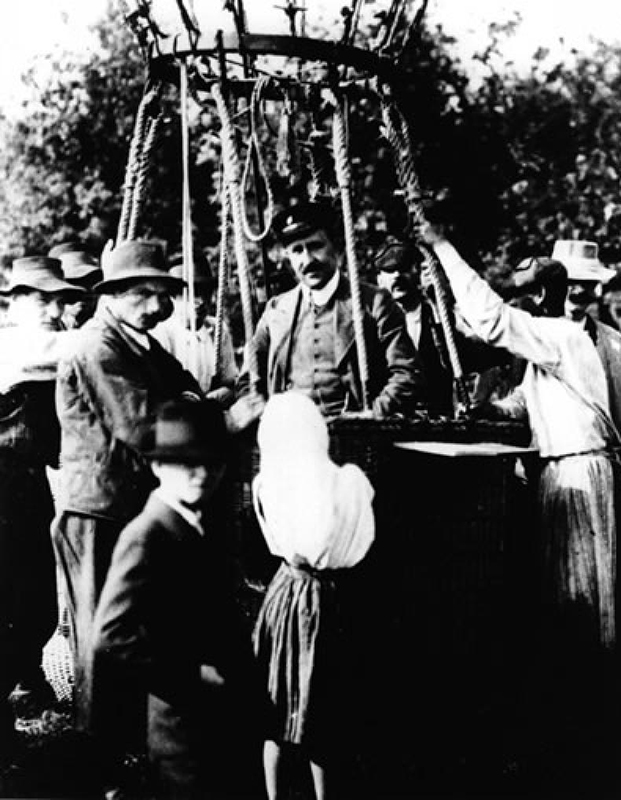
Hess on his return from the 1912 balloon ascent – Alan Watson pointed out that this was obviously staged at another time as he would not have been standing looking so well after his ordeal.

I remember looking into the dark skies during a residency at Allenheads Contemporary Arts and wondering about all the activity that I couldn’t see. I decided then I would like to film at 15km where most subatomic cosmic ray activity takes place, even if nothing would show on the film.
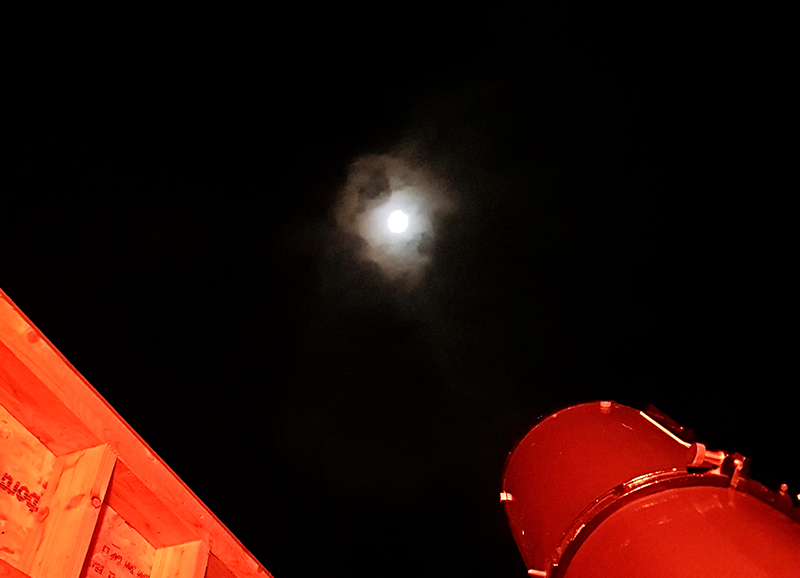
A high altitude balloon flight seemed the perfect solution and I was very grateful for the help I subsequently received from Imperial College Space Society and The UK High Altitude Society. The decision to include a cloud chamber in the payload was always a risk and as it turned out nothing of the cosmic ray activity was captured on film. However, the balloon did reach an altitude of over 37km and the payload was successfully recovered with some amazing video footage of its journey.
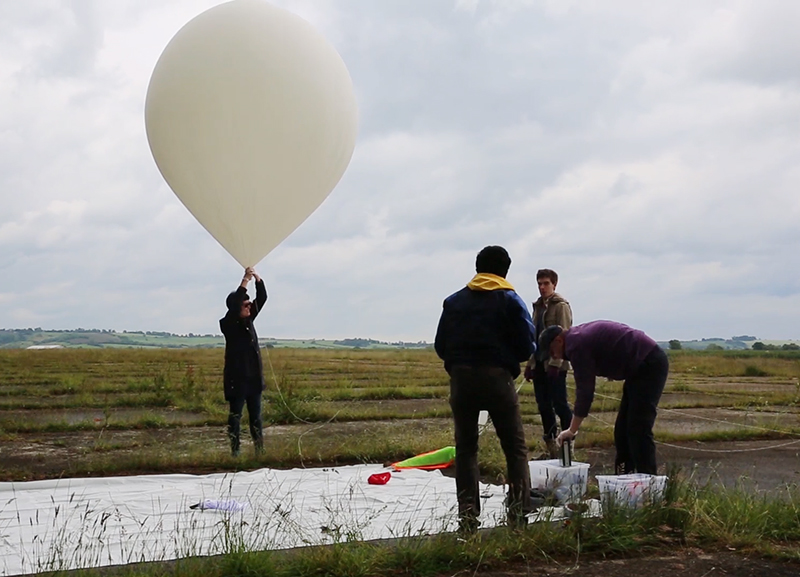
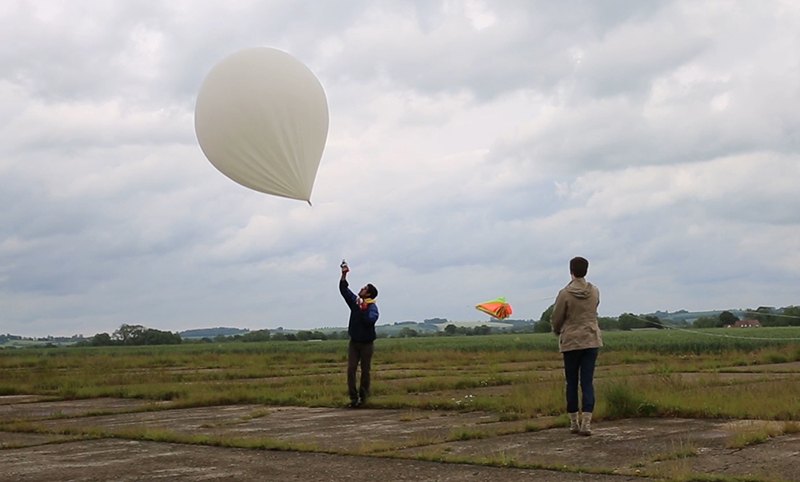
The record height for a hot air balloon ascent is 21km so in theory it could be possible to send a cloud chamber up in a hot-air balloon and film at altitude with potential for more success if some brave person were on board to operate the camera. Unlikely to be me.
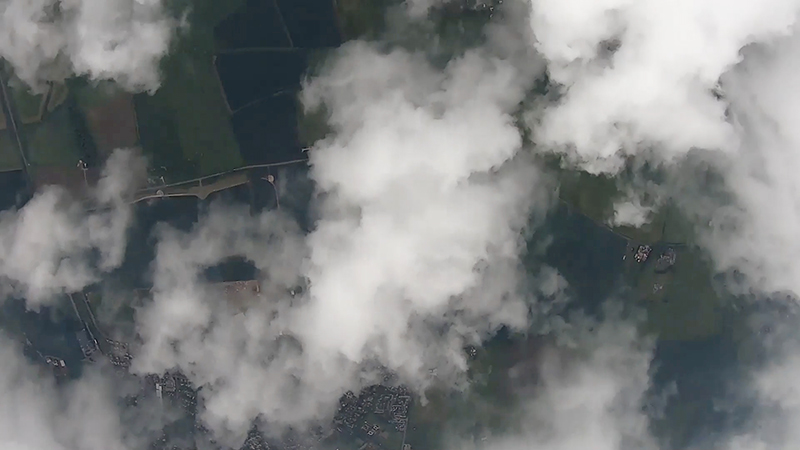
Some intriguing news of ORC’s on the RAS websiteThe most distant and most powerful ‘odd radio circle’ (ORC) known so far has been discovered by astronomers. These curious rings are a relatively new astronomical phenomenon, having been detected for the first time just six years ago. Only a handful of confirmed examples are known – most of which are 10-20 times the size of our Milky Way galaxy. ORCs are enormous, faint, ring-shaped structures of radio emission surrounding galaxies which are visible only in the radio band of the electromagnetic spectrum and consist of relativistic, magnetised plasma. the three new cosmic rings – discovered not by automated software but by sharp-eyed citizen scientists – represent an important step toward unlocking the secrets of these vast, puzzling structures.

Out and About

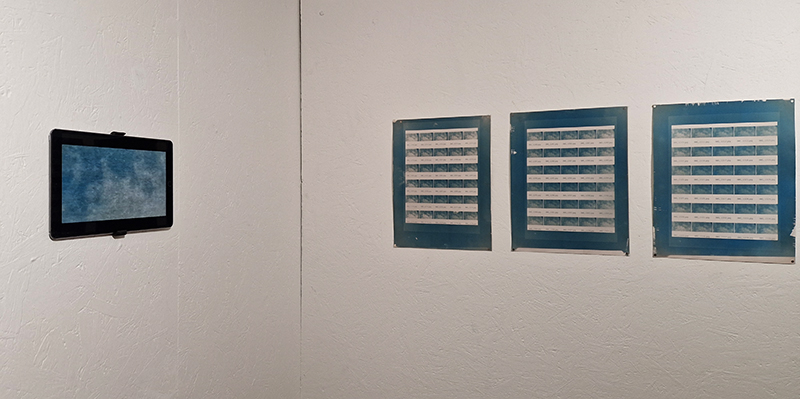
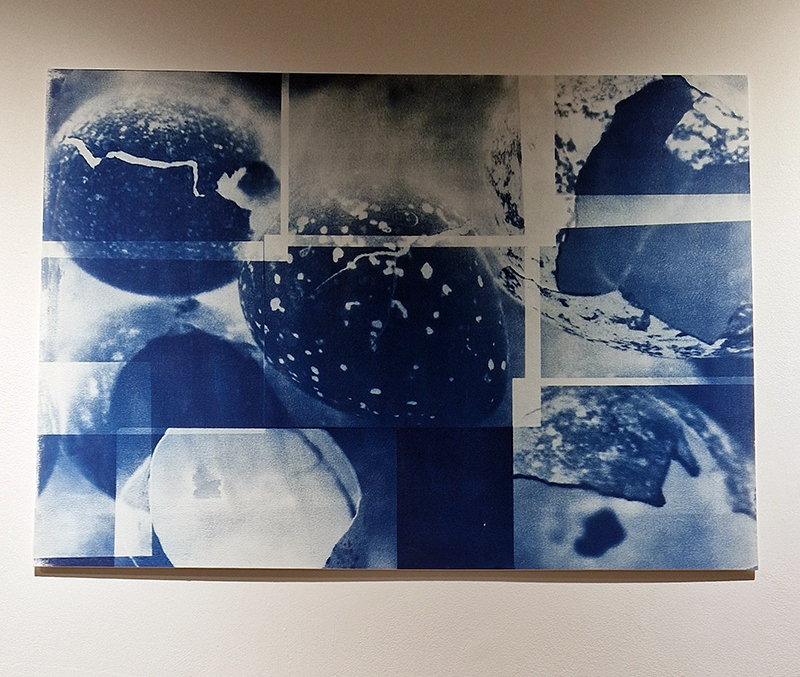
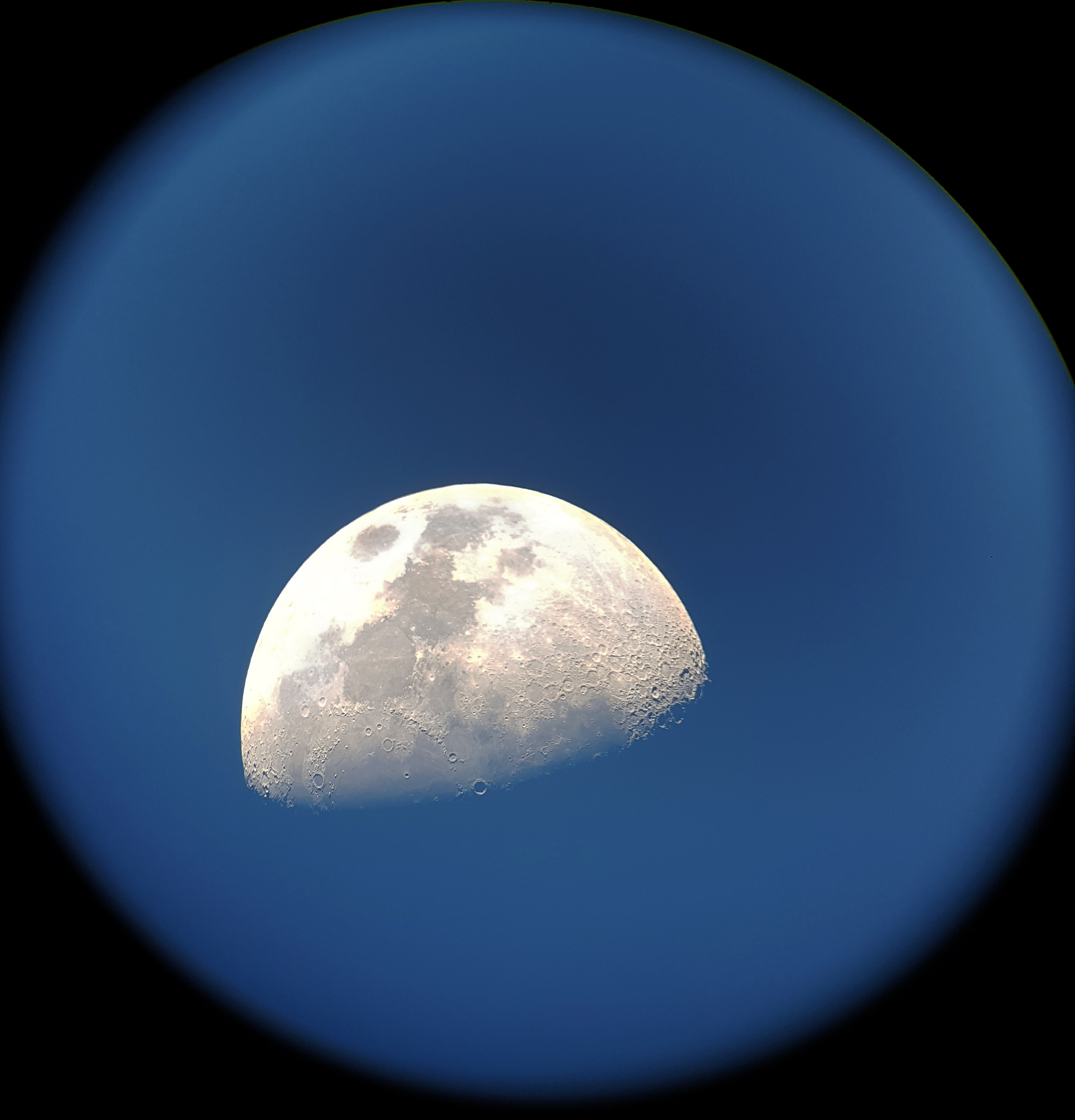
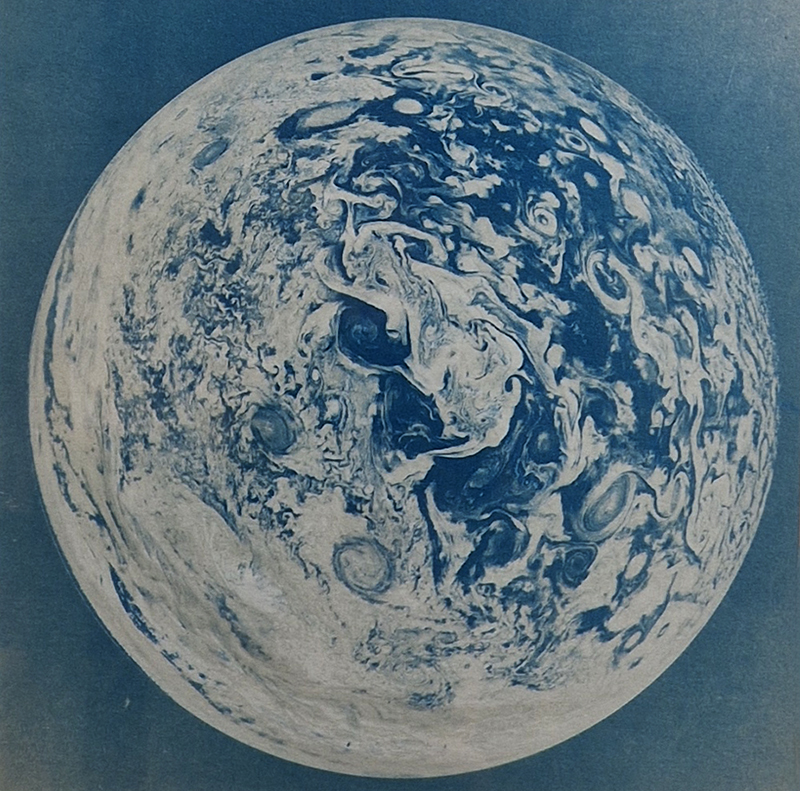
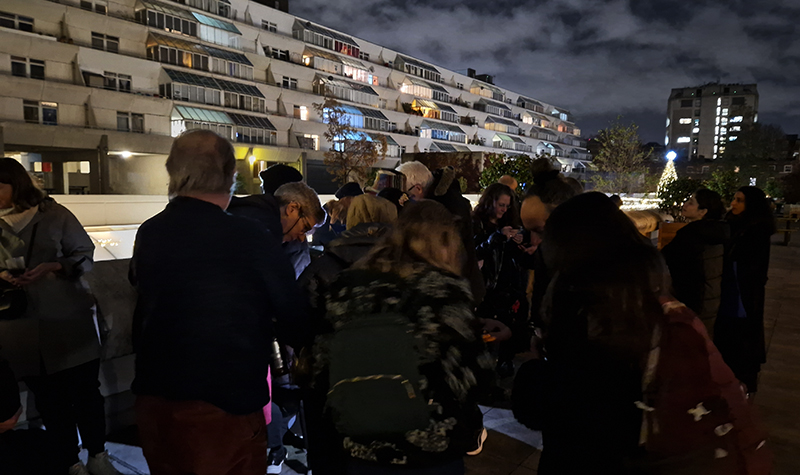
A wonderful evening with artist in residence Melanie King at Passengers connecting the celestial with the architecture of the grade II listed Brunswick Centre in Bloomsbury, London. Melanie used the residency opportunity to explore the duotone cyanotype process using multiple layers of cyanotype to mimic astronomical imaging construction and even used cyanotypes to create an of the Moon. The beautiful results were presented at an evening event with the additional treat of live telescope viewing of the Moon and Saturn from the second floor terrace of the Brunswick centre under the engaging guidance of astronomer and science communicator Paul Hill.
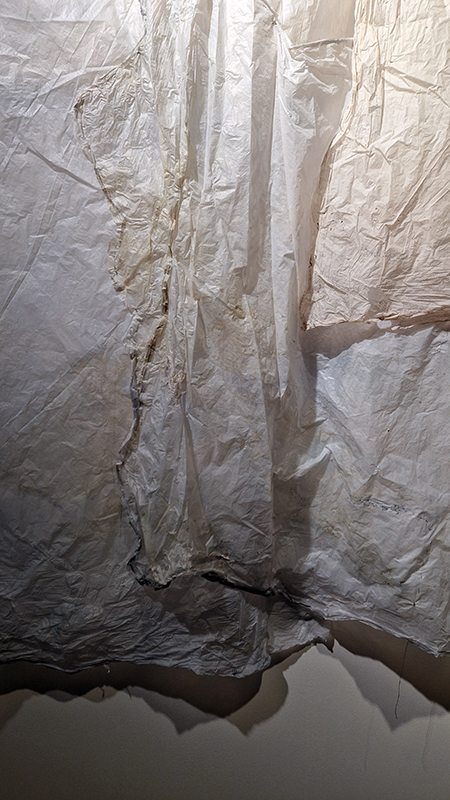
Liz Elton’s sensitive work Black and Blue (compostable bio materials, cabbage and fruit dye saddened with iron, silk, poppy and sage seeds) showing in A Changed Environment at Messums London. This group show examines changing ideas of beauty, ecology, and sustainability, as well as themes of place, memory, and identity, revealing how connections to the natural world can inspire both understanding and hope. I love the delicacy of this new work and the term ‘saddened by iron’ which is used in the dying process to dull a colour, and which, as Liz says, also emotes the hardships of industrial life.

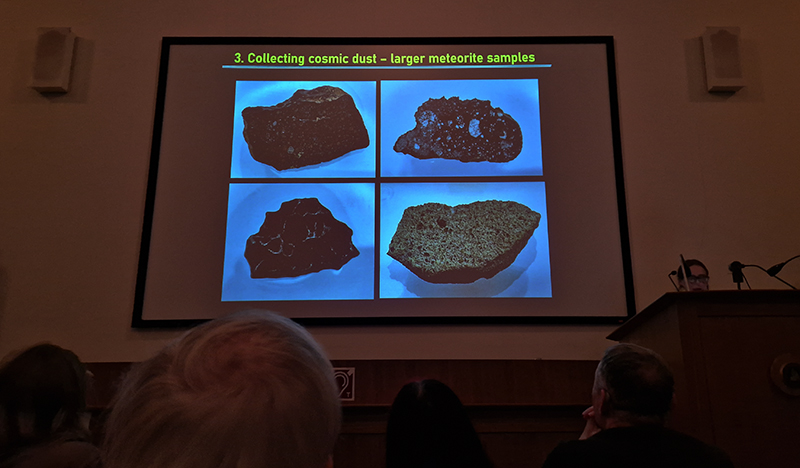
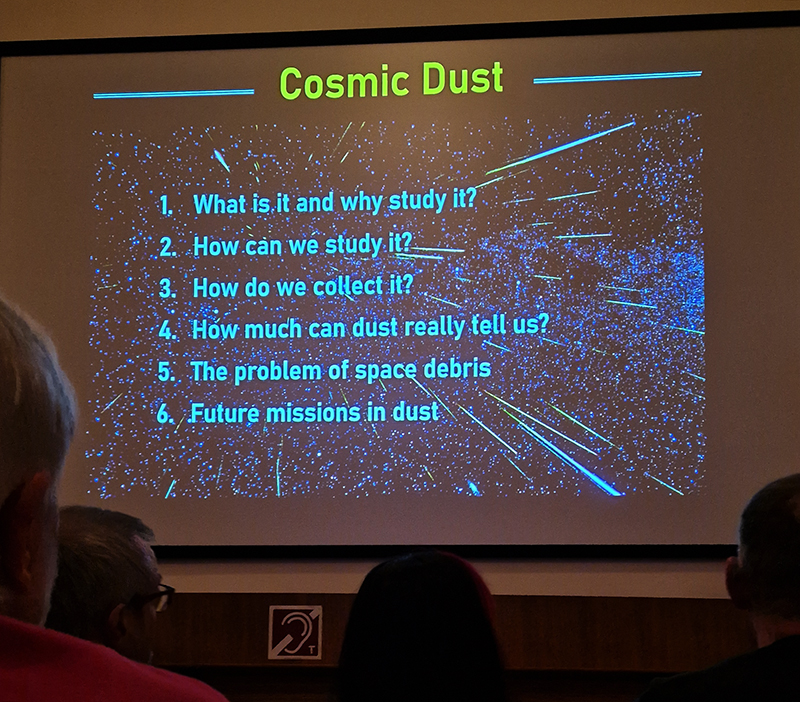
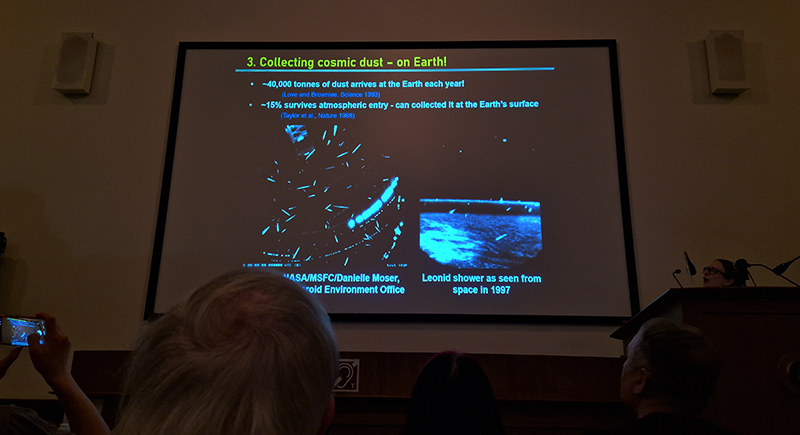
Cosmic Dust talk by expert on extraterrestrial space dust, and how it can impact astronomy and wider human endeavours in space, Penny Wozniakiewicz at The Royal Astronomical Society. ‘Natural’ cosmic dust is being polluted by man made dust from space debris. This is a real problem created by dead satellites, old upper stages of rockets, fragments form exploded rocket or stages, flecks of paint, aluminium oxide spheres from solid rocket burns, dropped space equipment. When any of this debris collides a cloud of smaller debris is ejected, this process is self propagating and even the tiniest piece of debris can cause serious damage to spacecraft and satellites. This is called the Kessler syndrome, a cascading effect that could render orbital space unusable for generations, threatening satellites, the International Space Station, and future space travel.
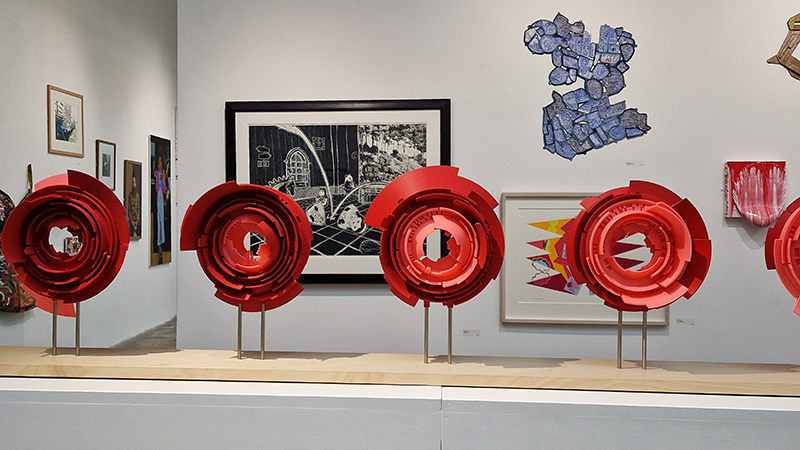
Good to visit the The London Group show 2025 at Copeland Gallery where lots of friends are showing excellent work and also to discover new work and artists.

I found Majid Majid’s video Faith Amongst The Ruins a difficult but compelling work. So scary and horrific because we know this is real footage, some of which I had seen before at the time of the attacks on hotels housing asylum seekers and refugees, but it is still so disturbing to watch these people, with so many children present, cheer on the violence. They have no empathy with the terrified people trapped inside the hotel or for the person in the car who is ambushed and stabbed. The glee of those filming the assault is chilling.

He writes: “As a refugee, I know places shaped by fear and rejection. This work revisits UK sites of last summer’s Islamophobic and racist violence, a mosque, a street, and a hotel housing asylum seekers transforming them through prayer. Placing a mat where hostility flared, I reclaim space as sacred ground. Video and traces of violence form a counter-narrative of dignity, belonging, and resilience.”

Images: Majid Majid, Sayako Sugawara, R James Healy, Victoria Rance, Jonathan Armour, Sandra Crisp, Jenny Wiggins, Victoria Arney, Carol Wyss, Sandra Crisp, Genetic Moo, Jacqueline Yuen-Ling Chiu.

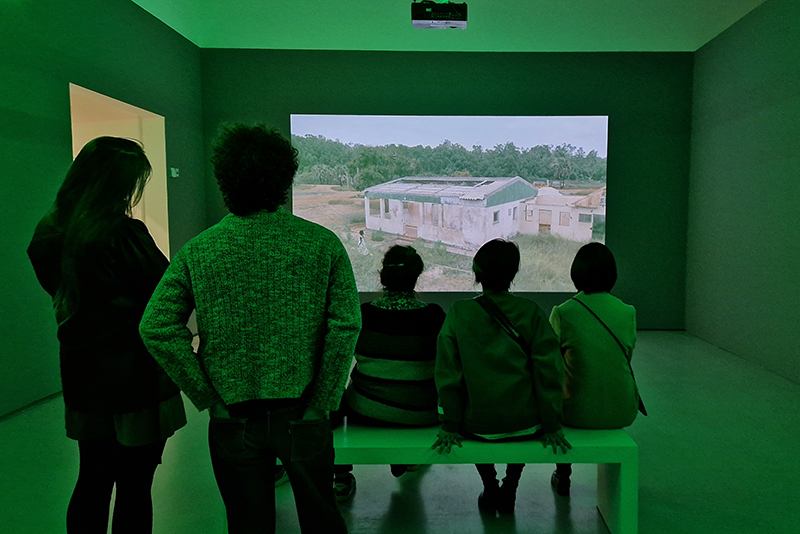
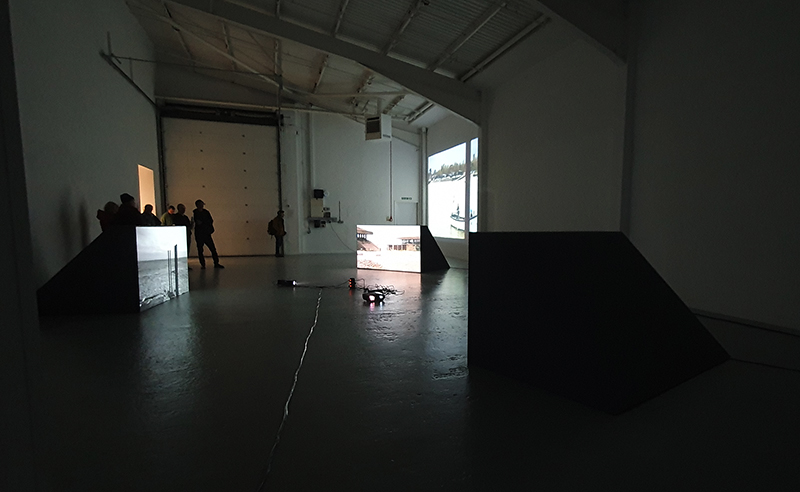
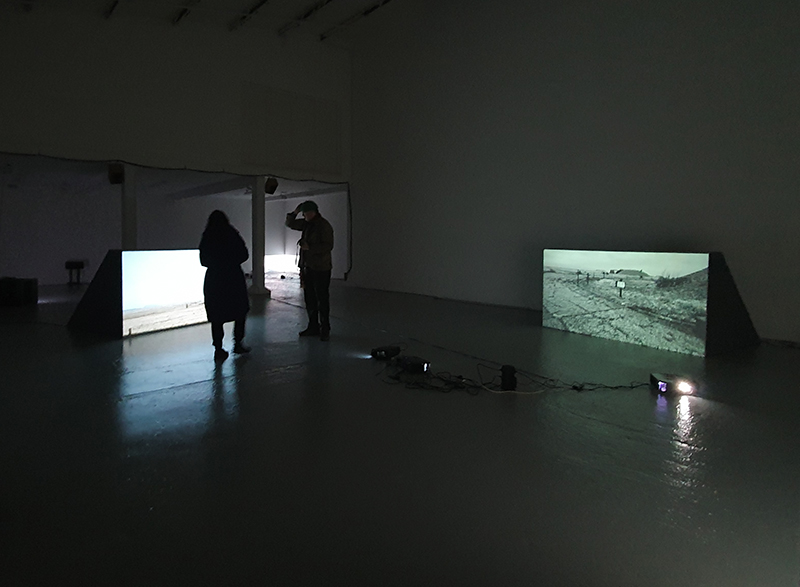
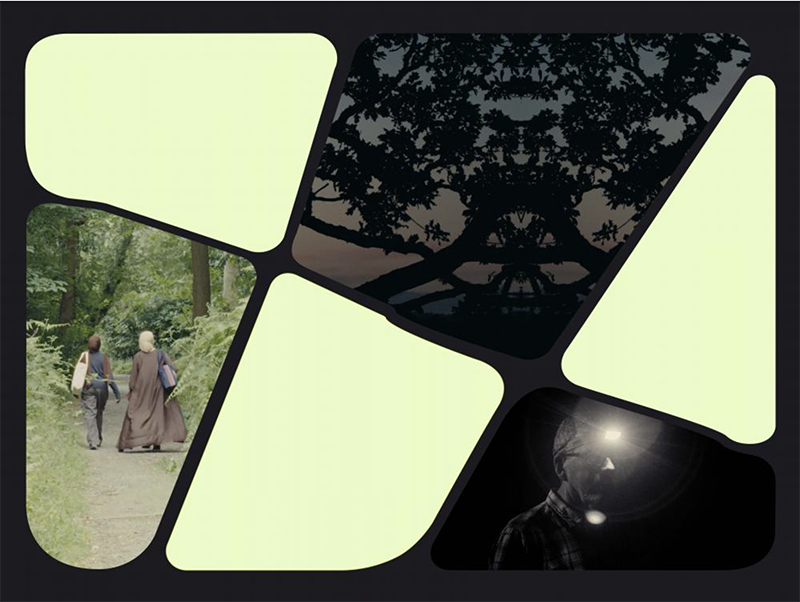
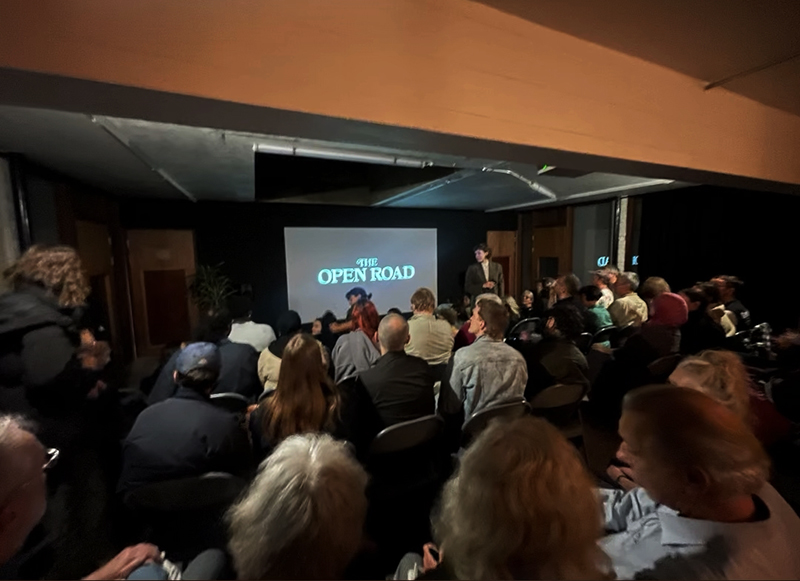
Three beautifully directed films screened at FormaHQ as part of The Open Road series of artists moving image works, co-commissioned by a partnership of visual arts organisations. The works are loosely inspired by The Canterbury Tales, drawing from a disparate cast of characters to recount competing stories in a patchwork of styles. David Blandy (Commons), Amaal Said (Open Country) and Sam Williams (The Eel’s Tale) each draw on storytelling traditions to give fresh perspectives on their journeys, on foot, by sea and through time. Heartbreaking to hear how terrified Amaal Said was to leave London for the open country of the south coast, especially with the current rise in overt racism, when out looking for locations and that they did suffer racist abuse while filming. Hers is a gentle and warm study of a mother and daughter and an absent grandmother, a longing for home and to feel ‘at home’. Sam William’s film sets the plight of the highly endangered glass eels who journey 4,000 miles from the Sargasso Sea to the Medway wetlands in Kent, swept along by currents, undergoing bodily transformation, following an instinctive desire on this epic migration alongside two other watery tales of transformative journeys across boundaries of identity and freedom. Coincidently, a recent episode of the Infinite Monkey Cage is all about these mysterious eels. David Blandy turned his attention to the vast and disparate collection of artefacts held in the Tunbridge Wells museum and gave some of these specimens a voice to tell of how they had lived before they became a part of this collective of human taxonomy.
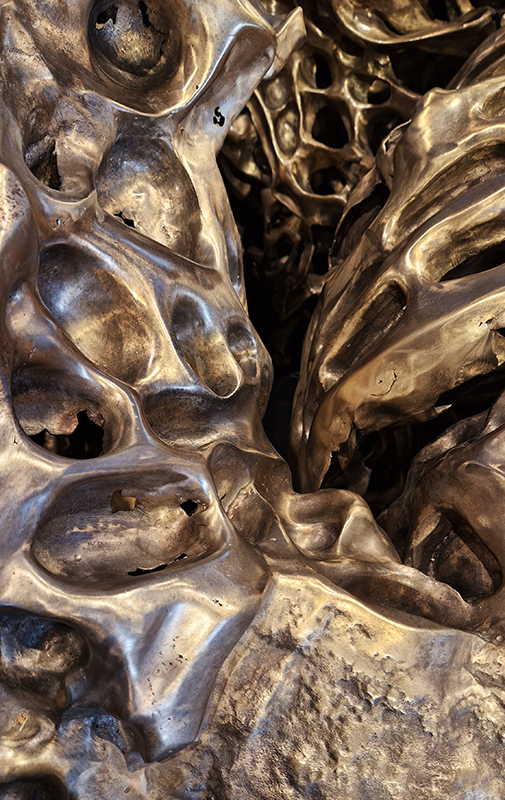
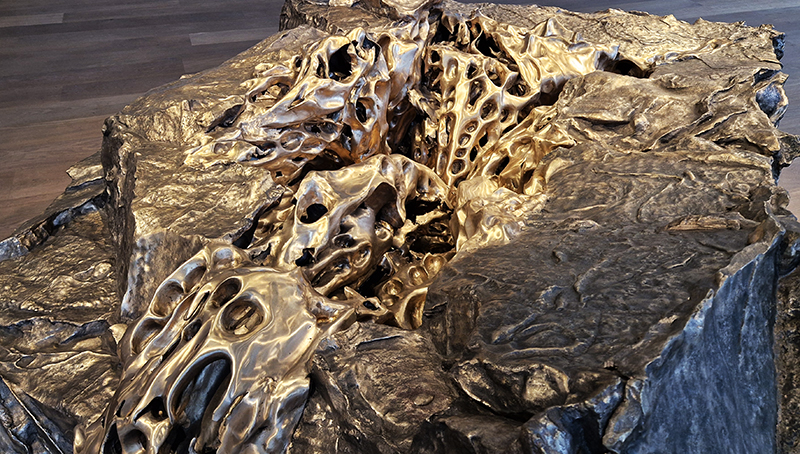
Cristina Iglesias The Shore at Hauser & Wirth features large-scale bronze works from the artist’s Littoral (Lunar Meteorite) series, part of her ongoing exploration of geological themes. The word ‘littoral’ refers to something relating to or situated along a coast or shore, or the region where the land meets the water. The weightiness of the objects is impressive ( I can’t imagine how they were brought into the gallery even with the technology available today – after coming here from the talk on stone henge and the incredible feat of bringing the standing stones across rough terrain for many kilometres and up a slope 5000 years ago seems even more impossible – yet there they are). The sound of water bubbling within each piece draws you to peer within and stay with the piece perhaps longer. The audience is invited to touch the sculptures. The bronze is polished and does need to be used and worn away in a more effective organic and dirty process. They are very clean.
The Royal Astronomical Society lecture Sighting the Sun and Moon? at Stonehenge – by Archaeoastronomist Prof. Clive Ruggles. Debunking many myths and overspeculation, concerning the use of the monument for observations of the sky the professor was clear about what can sensibly be said about the relationship of Stonehenge to the Sun, considering the conventional archaeological evidence that has been uncovered in recent years. He also recommended visiting the day before or after the actual solstice if possible for an experience without the many crowds as the alignment is almost identical. Also visiting at sunset can be just as magical and quieter. He turned his attention to the Moon, questioning if our prehistoric forebears also celebrated the occurrence of a major lunar standstill, an event occurring every 18.6 years around which time the Moon can be seen at fortnightly intervals exceptionally far to the north and south.

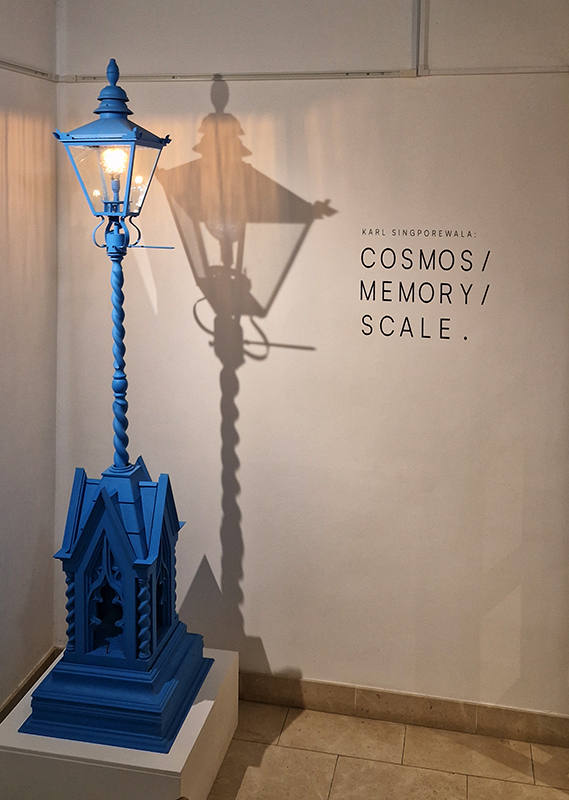
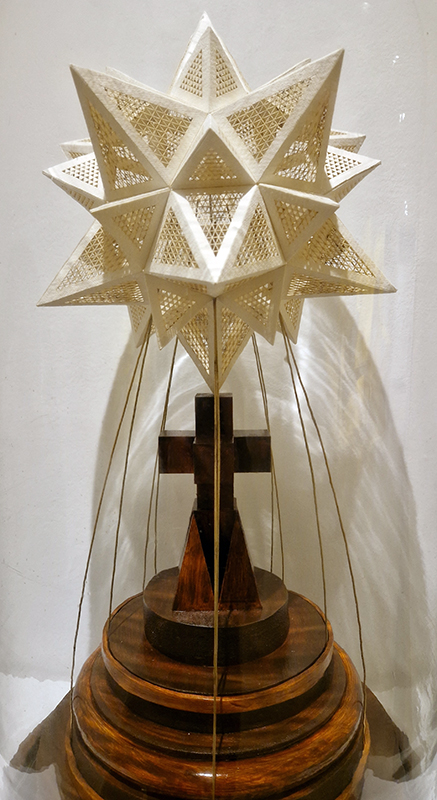
Karl Singporewala’s sculptural interpretations of Zoroastrian symbolism in Cosmos, Memory, Scale at SOAS Gallery convey a meditation on how material and memory intersect to shape the human experience. Cosmos speaks to both his fascination with astrophysics together with a metaphysical belief in the alignments of life. Stars and geometric forms recur as motifs, refracting both spiritual navigation and mathematical structure. Memory is treated as a living, shifting phenomenon. Inspired by oral tradition, family stories and inherited rituals. Scale, is used both literally and metaphorically in shifting perspectives and unexpected relationships. Good Thoughts, Good Words, Good Deeds.
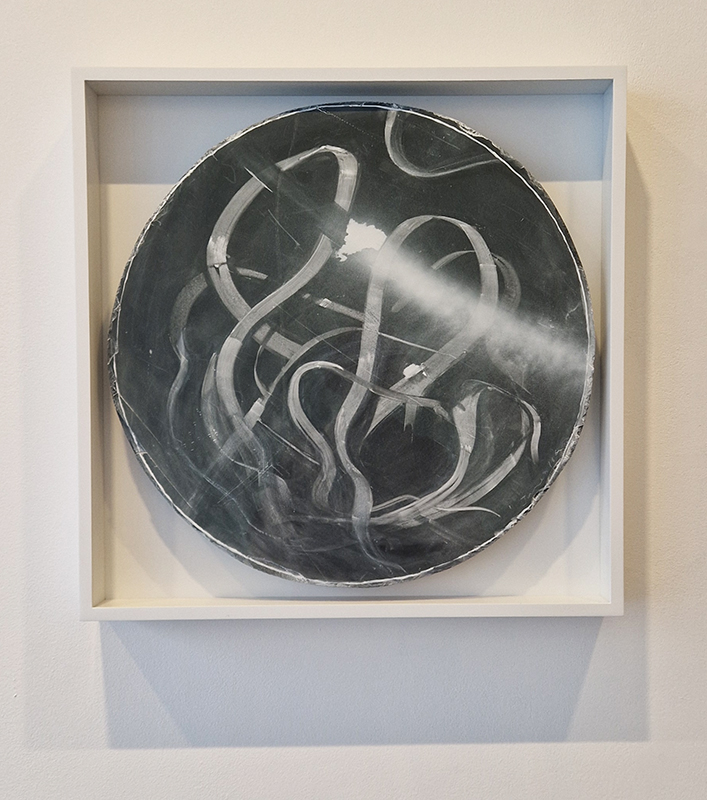
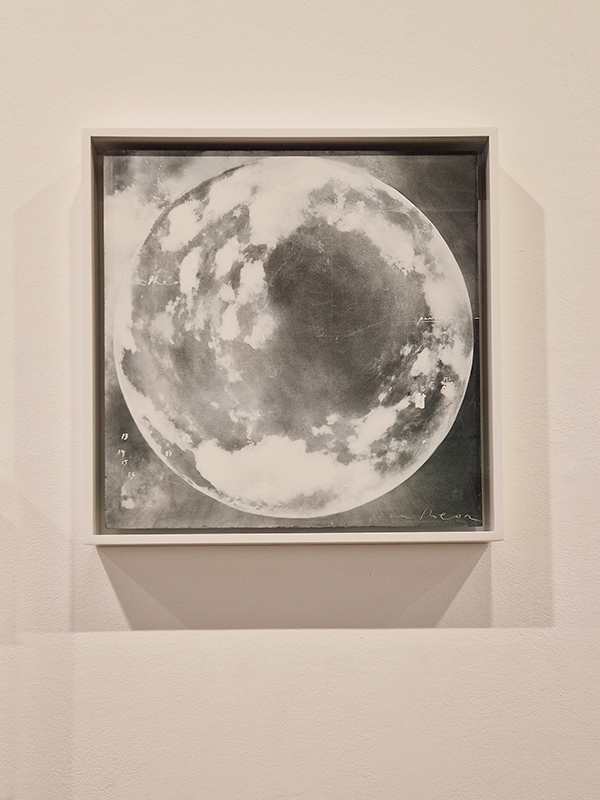
Dusty, chalky mythical drawings and solar eclipse traces from Tacita Dean in Black, Grey, Green and White at Frith Street Gallery Golden Square.
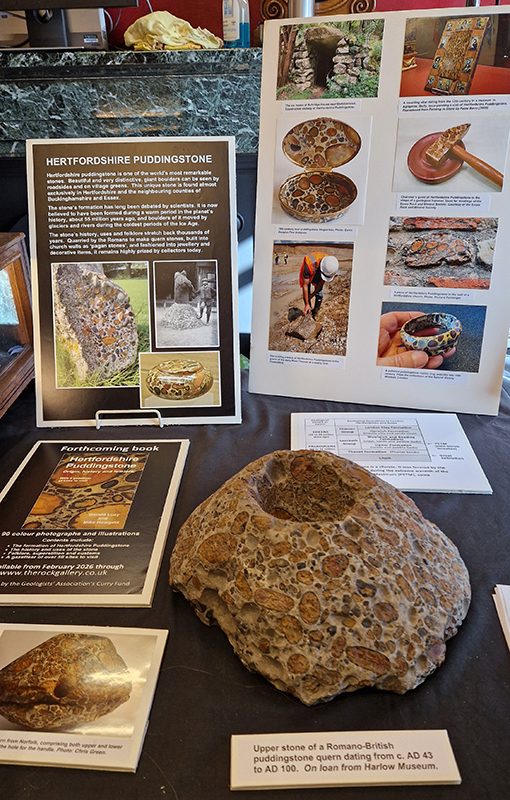
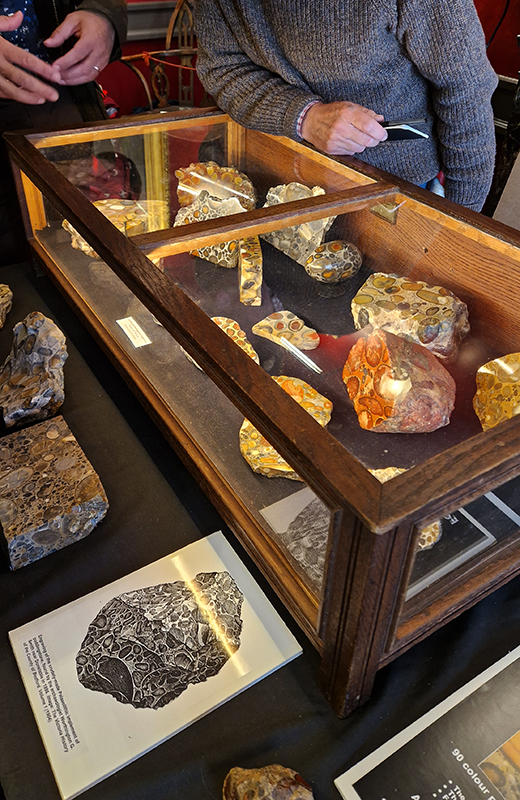
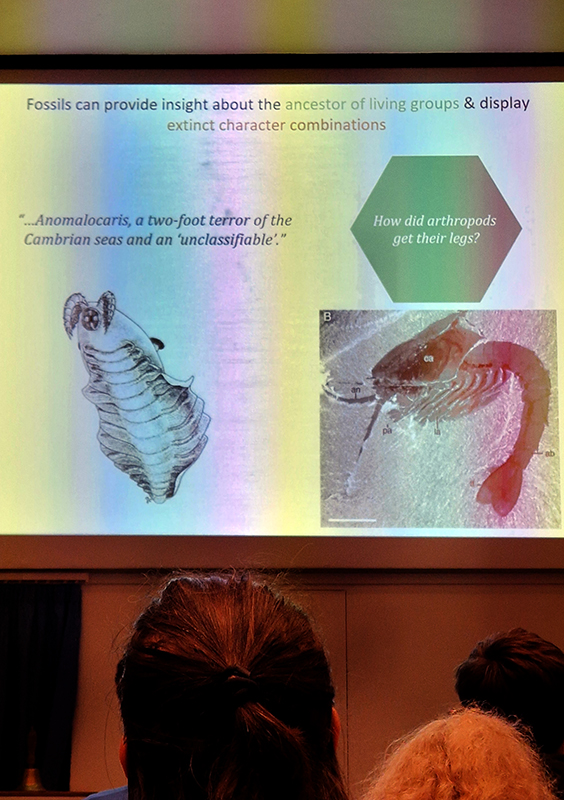
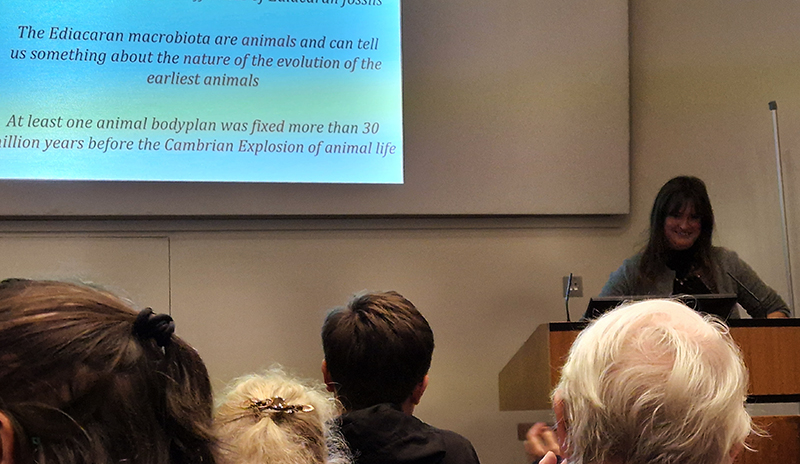
I spent a happy morning at the Geologists Association Festival of Geology 2025. This included a fascinating lecture The Early Evolution of Animal Life by palaeobiologist Frankie Dunn focused on the origin and early evolution of animals and particularly on the fossil record of the late Ediacaran Period (approximately 570 – 540 million years ago) – just before the Cambrian explosion of life. The aim of her research is to understand how animal body plans evolved in deep time. There also was some amazing and unique pudding stone on display.
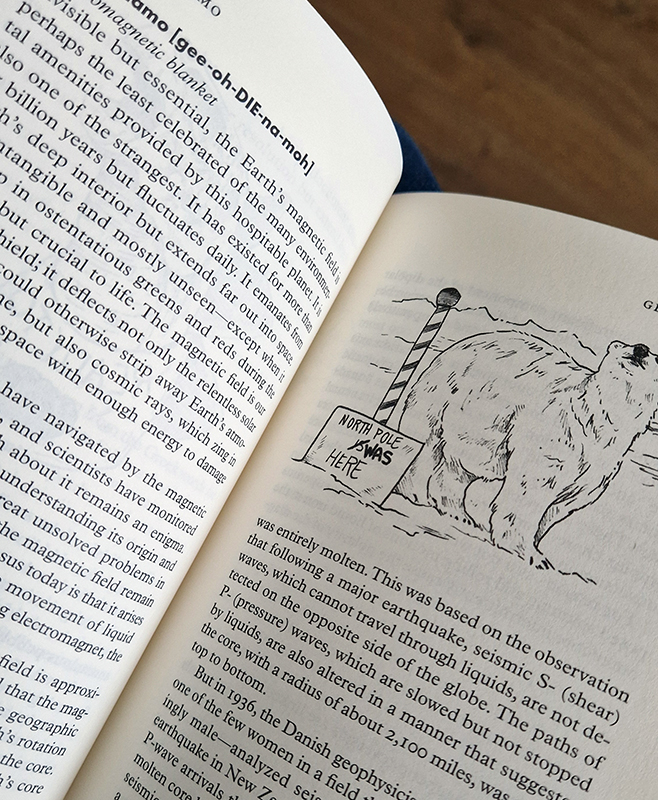
I also picked up a great little book full of wonderful geologically enriching words by Marcia Bjornerud.

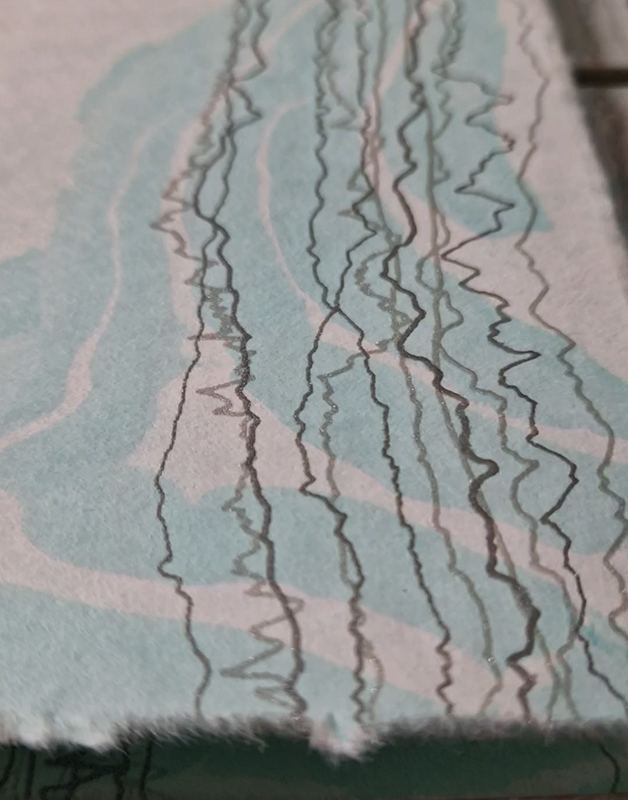
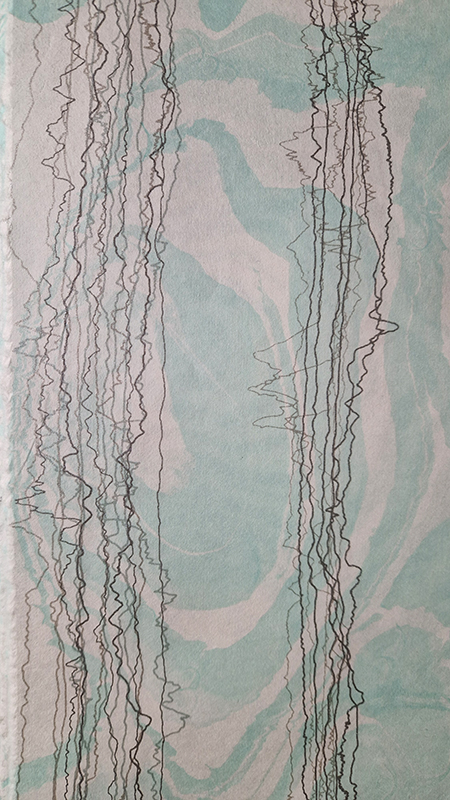
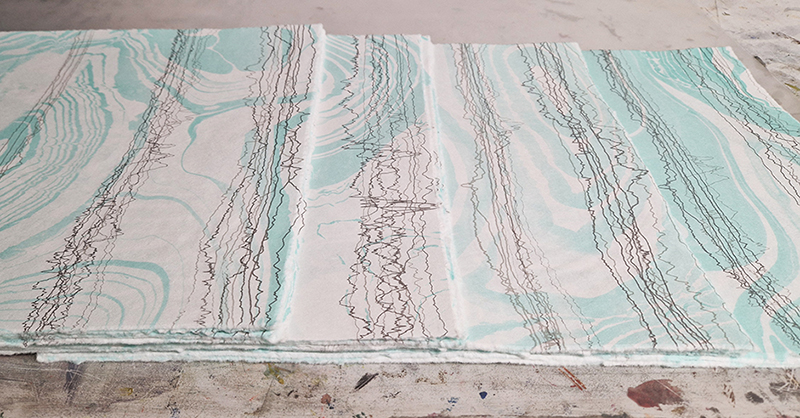
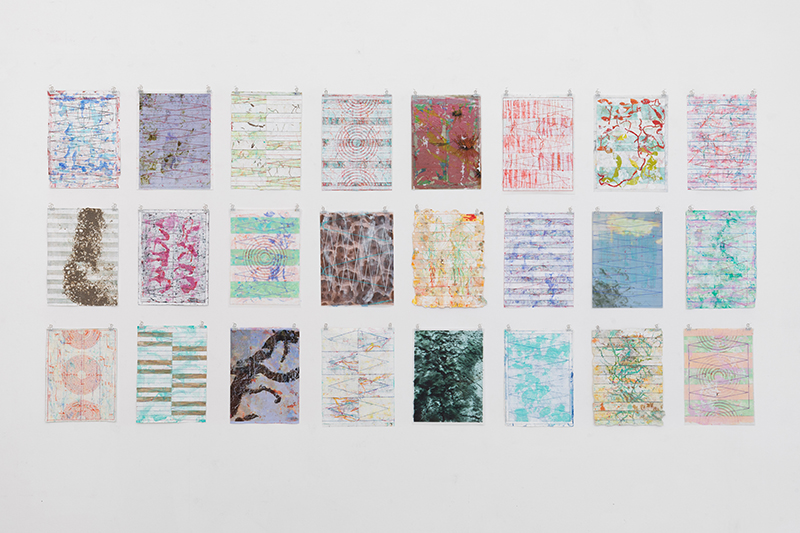
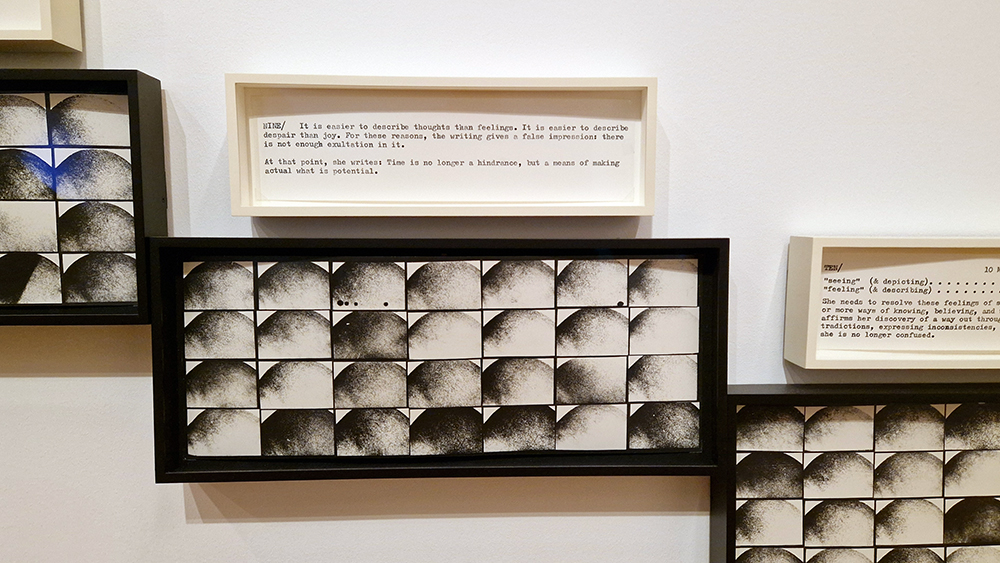
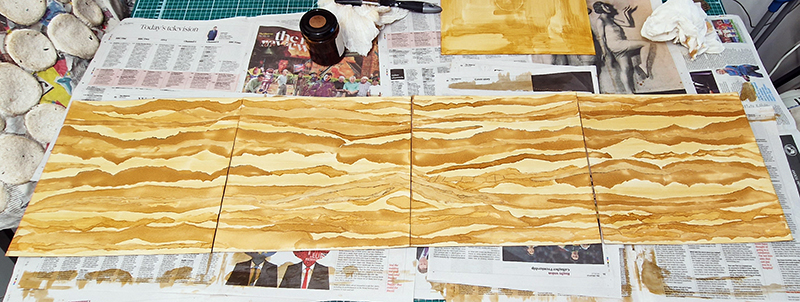
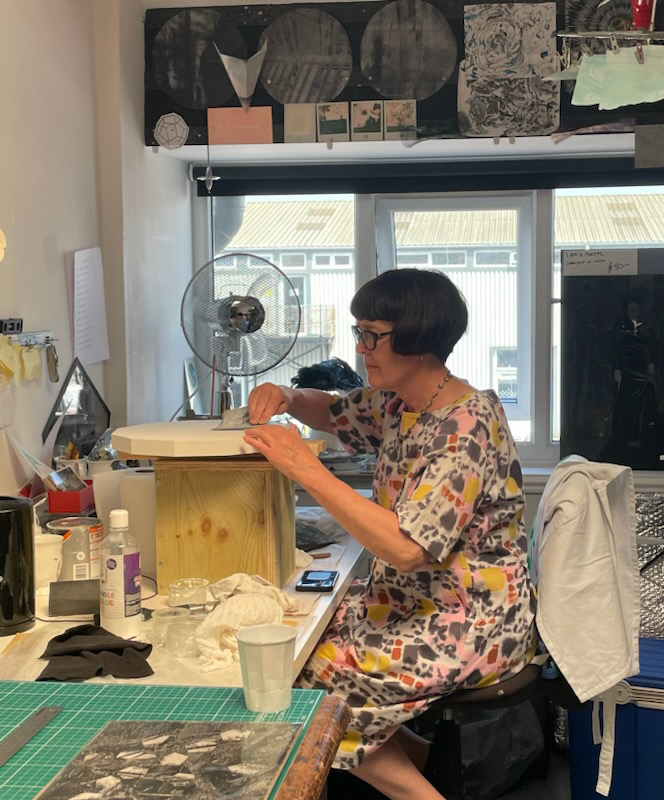
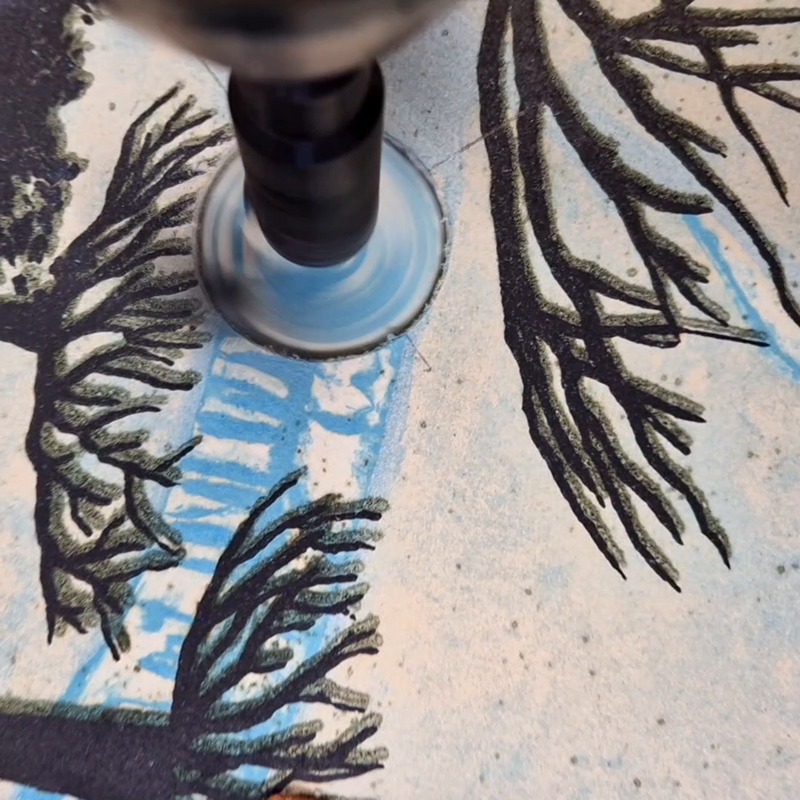
Spending time in the print studio layering up magnetometer lines describing fluctuations in the Earth’s magnetic field. Using sheets of Japanese paper with Suminagashi ink swirls to evoke both ocean and magnetic currents. The lines are printed in metallic inks, relating to the idea of a lode, which in geology is a deposit of metalliferous ore that is embedded in a fracture in a rock formation or a vein of ore that is deposited between layers of rock.

The bands of magnetometer lines are used to signify the last three magnetic pole reversals. The most recent at 42,000 years ago (a short 500 year blip), then 780,000 years ago (continued for 22,000 years) and 1,000,000 years ago (continued for 40,000 years). This history of these reversals is stored in the ocean floor as magma flows up between cracks in the Earth’s crust, spreads and solidifies, capturing the direction of the poles in the orientation of the minerals.

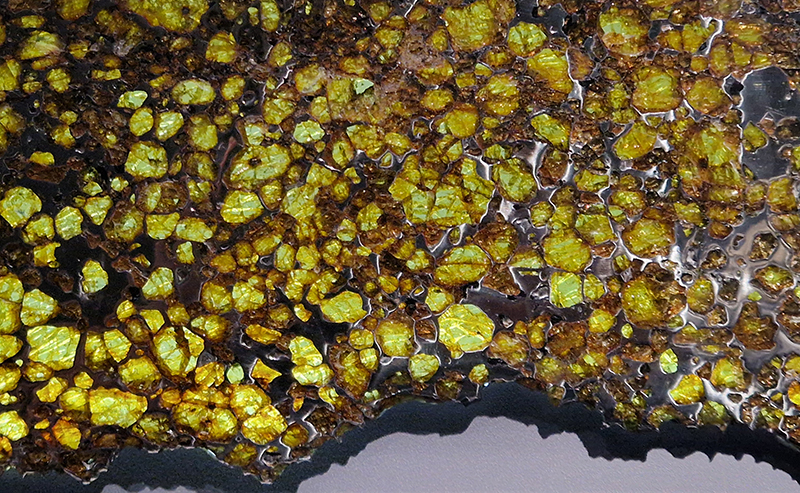
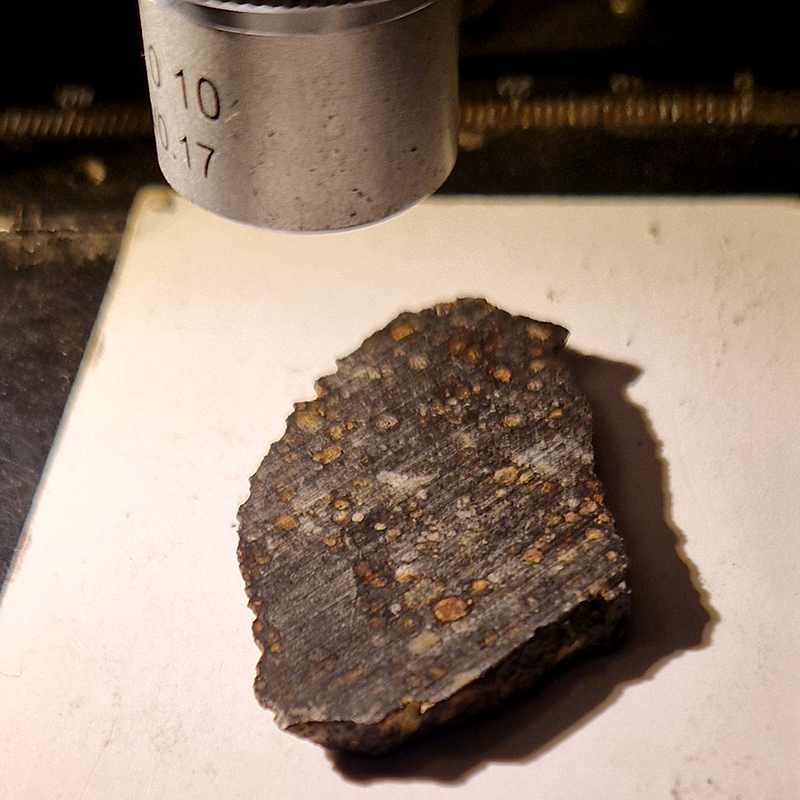
Work in progress on Mineral Visions, a video sculpture with a particular focus on magnetite/magnetism and human relations. Editing video of Jepara seen under the microscope. This is a magnetic pallasite meteorite with an interior structure of densely packed olivine and iron-nickel, discovered in Indonesia in 2008. Pallasite meteorites formed in the asteroid belt between Mars and Jupiter. They’re made up of minerals and remnant materials from the first few million years of the solar system, forming at a time when planets were only just coming together.

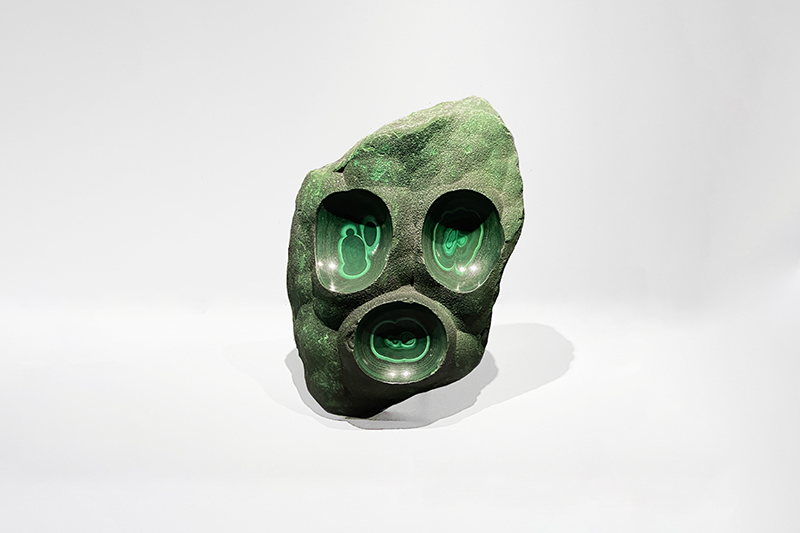
A very special research trip with fellow artists exhibiting in the upcoming show at Hypha HQ, The Geological Unconscious, to visit la Galerie de Géologie et de Minéralogie, Muséum National d’Histoire Naturelle, Paris. Hosted by the curator of minerology we were privileged to see a selection of stones in the museum vault. The museum holds Roger Caillois’ stone collection as featured in his book The Writing of Stones. The photographs of this extraordinary collection do not compare to seeing them up close, from every angle. Must larger than anticipated, they are extracted from their snug foam packaging for yet another scrutiny of the human gaze. Caillois wrote at length about each stone, allowing his imagination to conjure metaphor and analogy from the syntax of the ancient crystal and sediment. He was fascinated by his own fascination with the stones which he saw as a desire to connect with the more than human and lose oneself in the enormity of the universe.

Roger-Caillois Malachite Photo Julie F. Hill

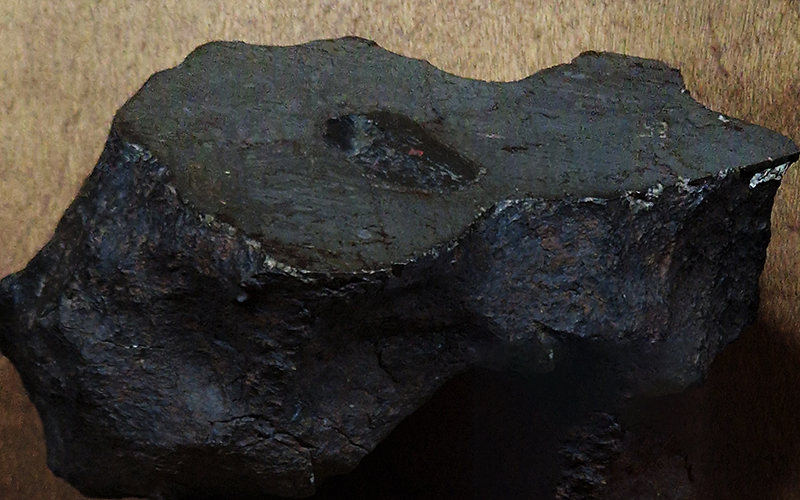
We also got to see some meteorites in the collection including a large one containing diamonds that had belonged to Caillois. The Canyon Diablo meteorite originated in the asteroid belt between Mars and Jupiter and crash landed into the Arizona desert approximately 49,000 years ago, with the force of more than 100 atomic bombs. The crater it left is nearly a mile across and 600 feet deep. Fragments were flung over an area of over 11 sqm from the point of impact where the main mass vaporized on contact. In the force of collision small diamonds formed from graphite and are found inside the highly recrystallized meteorite fragments at the rim of the crater. 

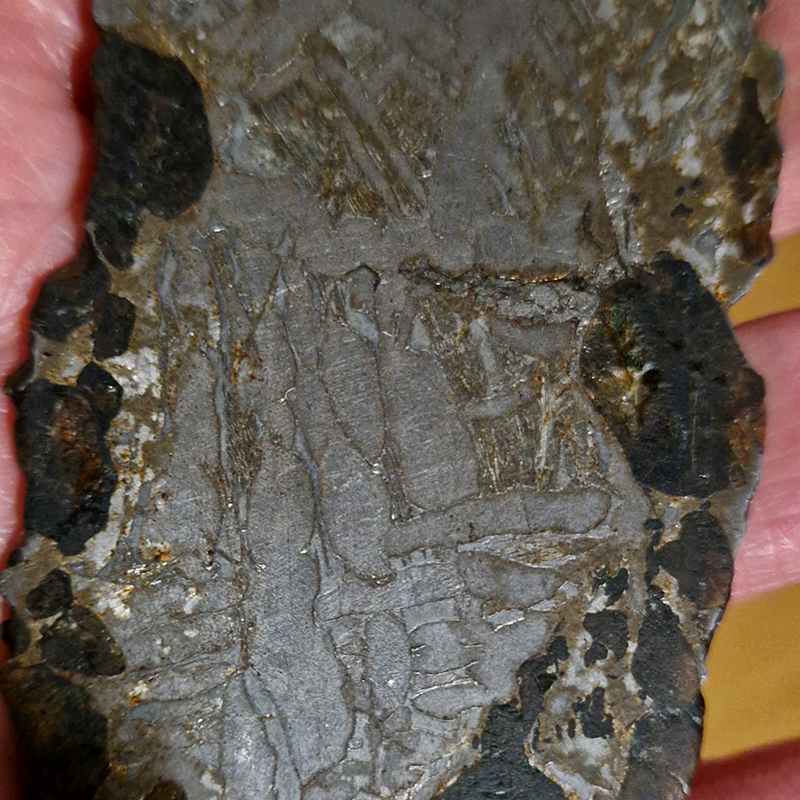
I was also interested to a slice from one of the world’s largest specimens of pallasite, the Imilac pallasite discovered in 1822 which exploded over the Atacama Desert in northern Chile, possibly in the fourteenth century.

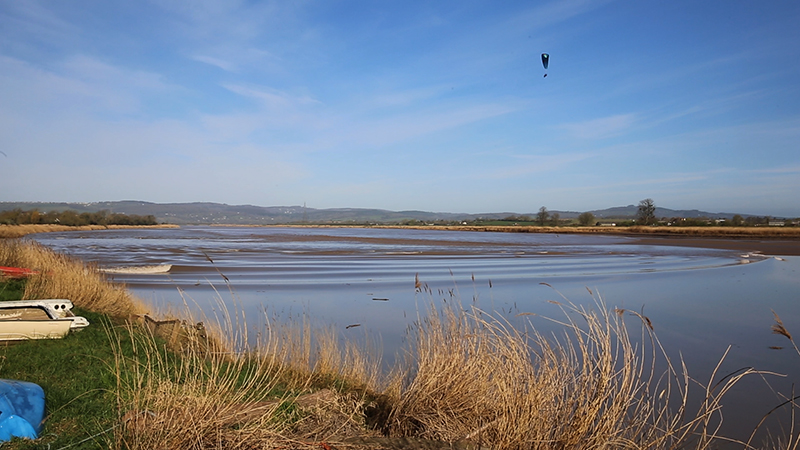
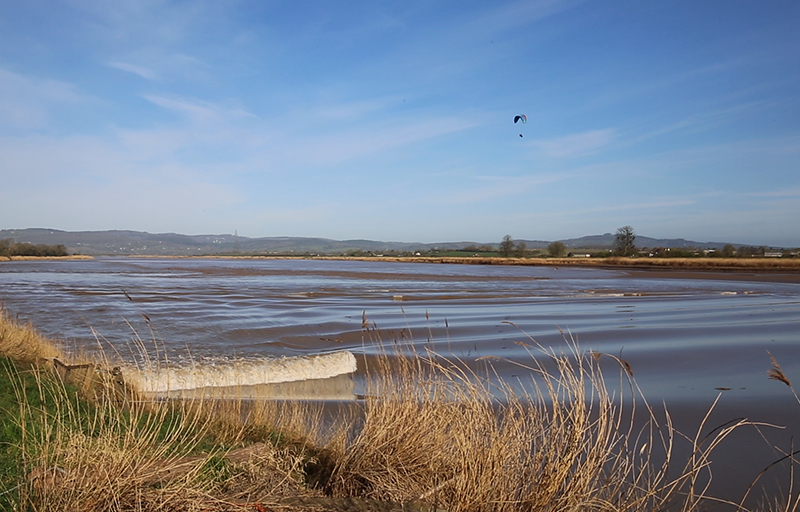
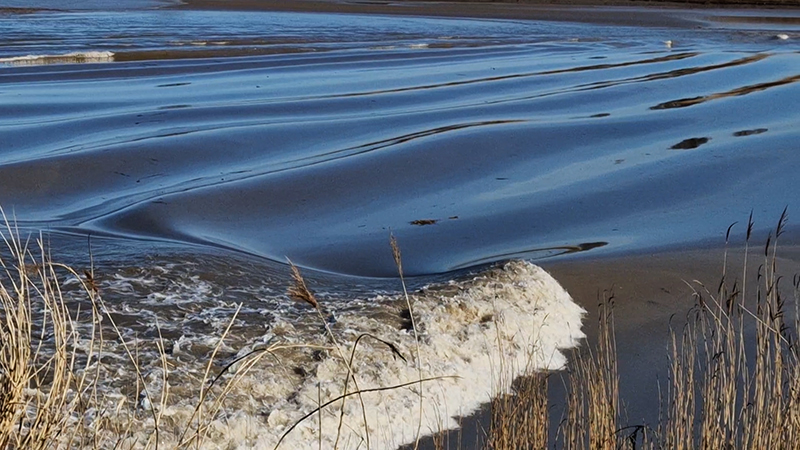
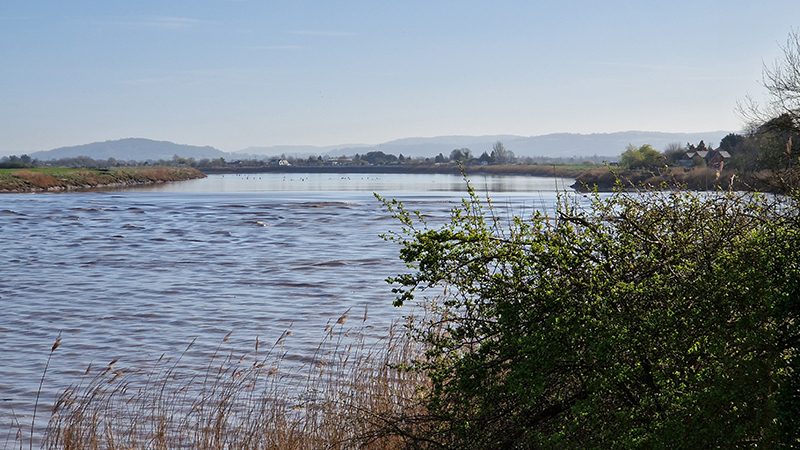
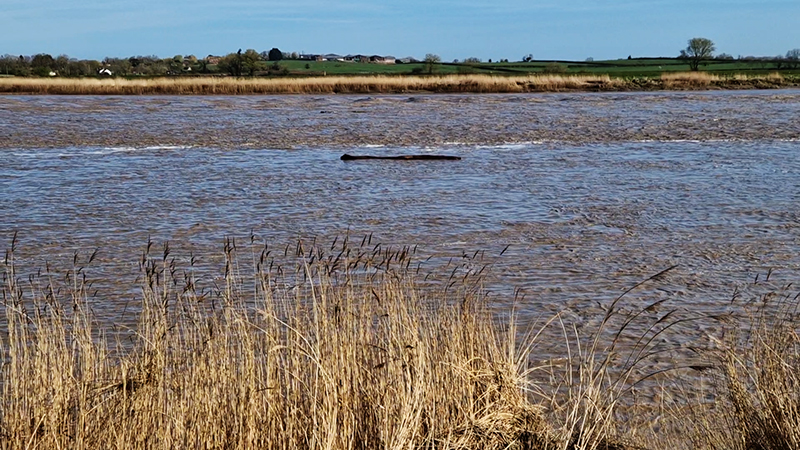
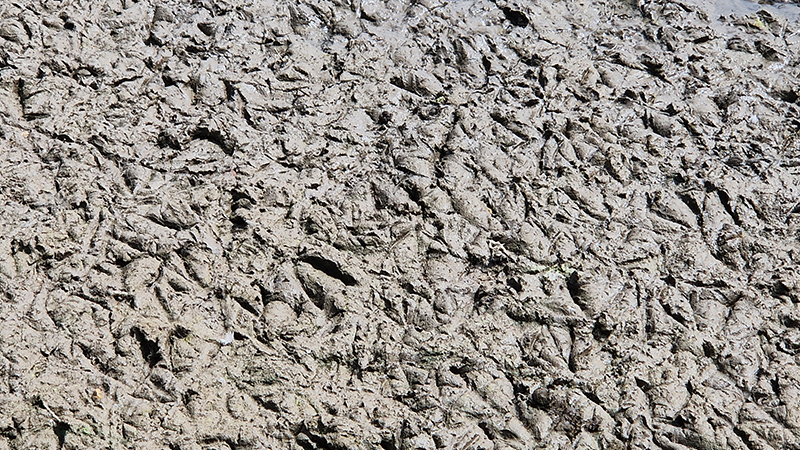
This spring Severn bore had been forecast to be a 4* event but arrived earlier than expected as more of a ripple. Not enough rain from the Welsh hills and no uplifting wind meant it was a more gentle, leisurely wave. It was still exciting to witness the change in the river from the slow glassy seaward flow to choppy, muddy turbulence carrying logs and assorted debris inland as the tidal wave rose into the channel. Such a beautiful morning to be on the river bank.

Gallery Visits

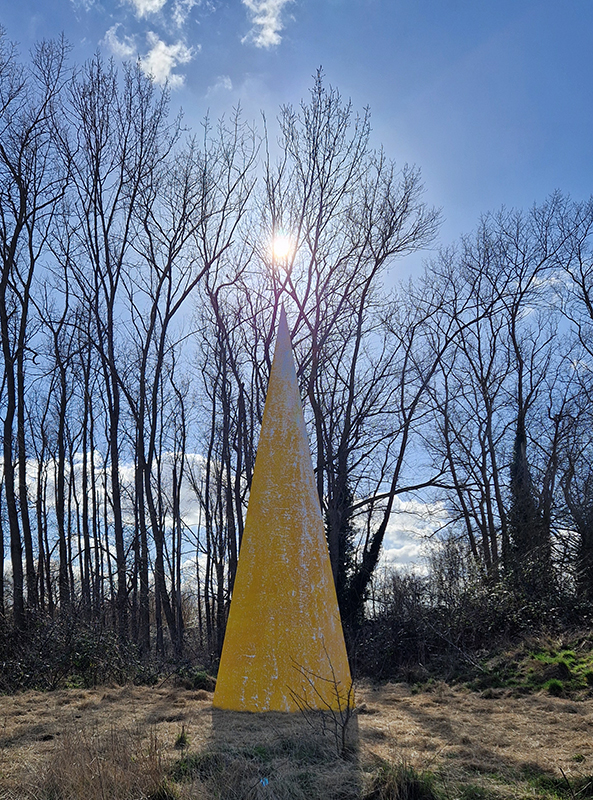
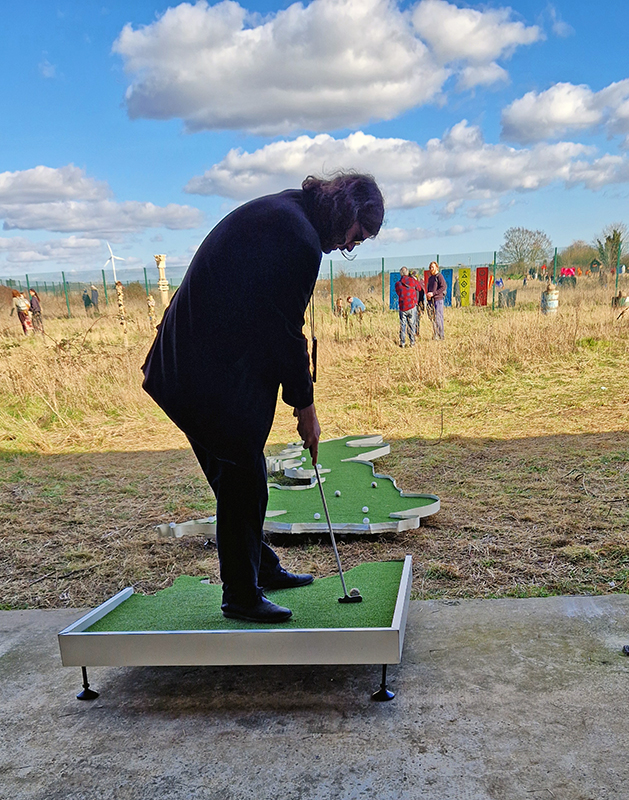
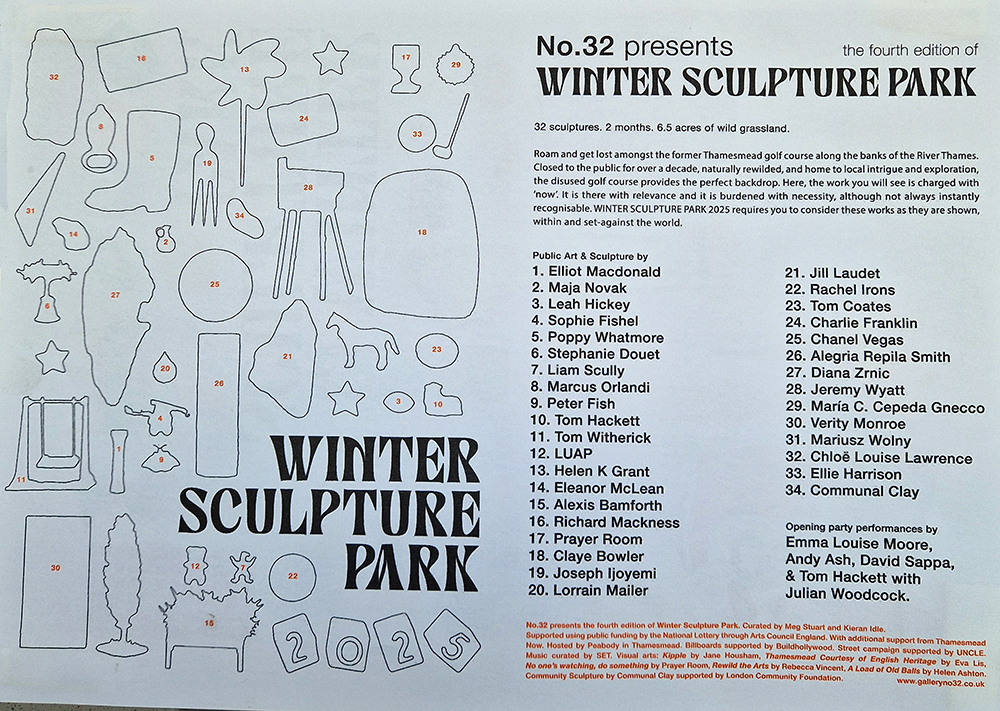
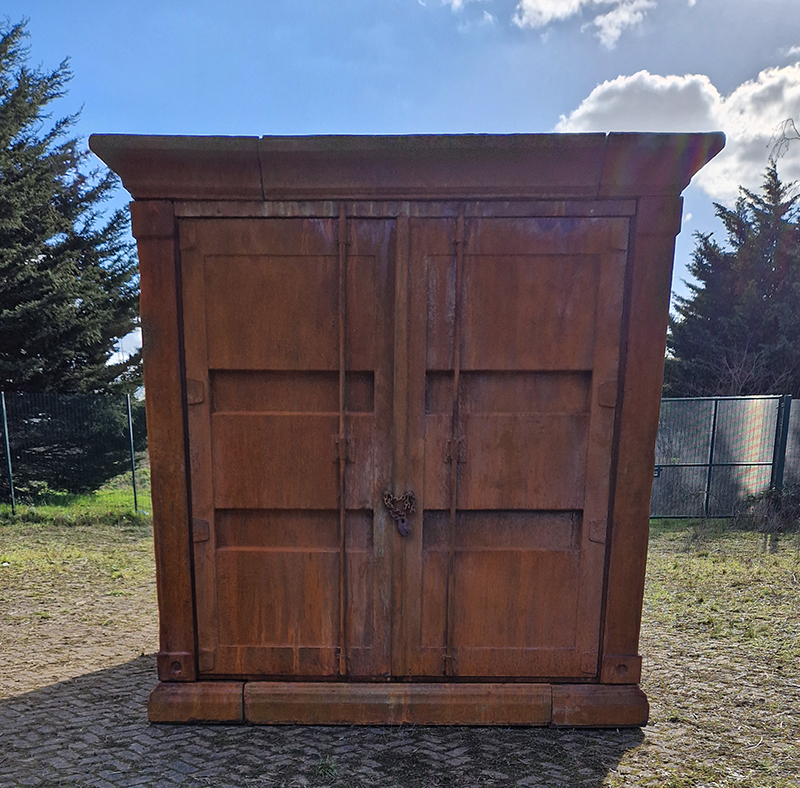
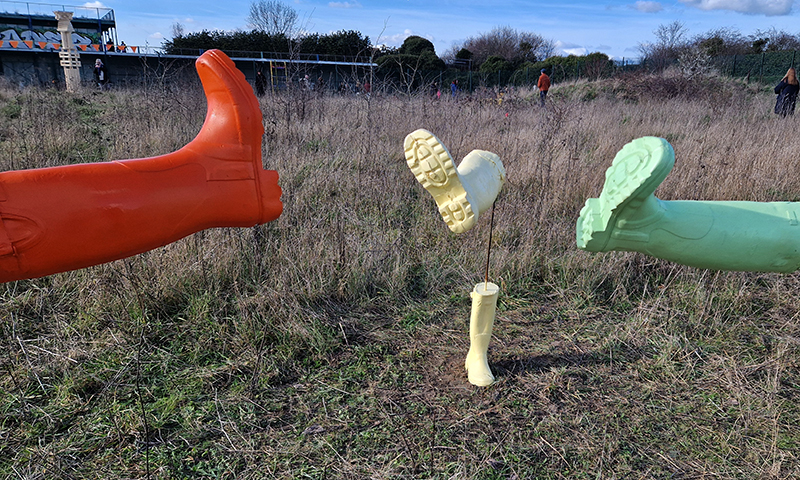
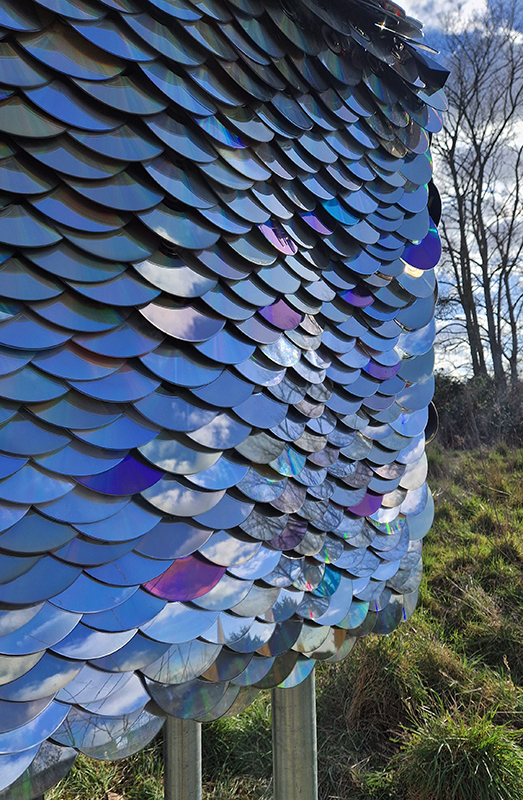
Glorious sunshine spot lit exuberant work at the Winter Sculpture Park hosted by Gallery No32 at a former Thamesmead golf course along the banks of the River Thames.

Clinging On, an exhibition of wall based sculptures curated by Poppy Whatmore at Glassyard Studios SW9. Instability is growing across the world, as we cling to liberal norms, ideas and values; these works connect a feeling of uncertainty to the physical, defying a gravitational pull or some internal force. These are physical, material or conceptual investigations of precariousness and the accompanying need to hold on. A packed PV means I have few images but I did capture the excellent Ocean Chasms/Crystal Chasms by Julie F. Hill and Caught Moon by Jane Millar.

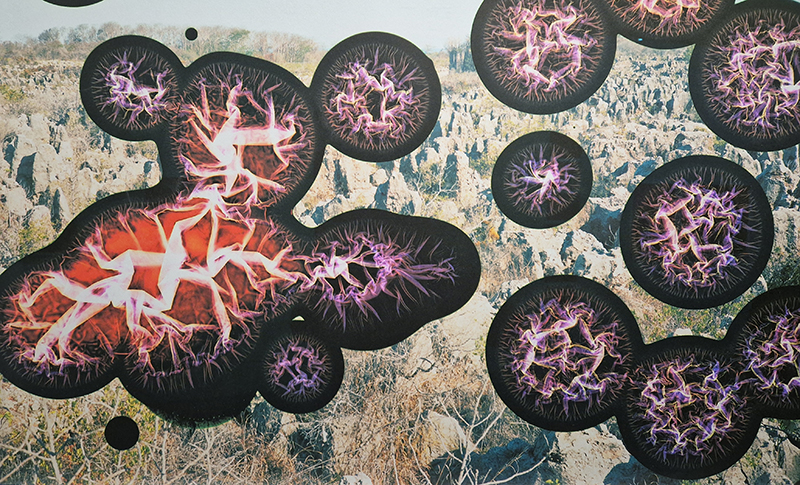
Moving Landscapes at Jeu de Paume, Paris. This exhibition brings together photography, literature and science to address environmental questions but also those of identity or migratory flows; the landscape thus becomes a living and constantly changing territory. Artists include Mounir Ayache, Julian Charrière, Edgar Cleijne, Ellen Gallagher, Yo-Yo Gonthier, Laila Hida, Eliza Levy, Julien Lombardi, Andrea Olga Mantovani,Mónica De Miranda, Richard Pak, Mathieu Pernot, Prune Phi, Léonard Pongoa and Thomas Struth.

Events

More Life By Lauren Mooney and James Yeatman at Royal Court Theatre. Asking the question ‘what is life?’ but also what is the quality of life you would accept if you discovered you were a computer file. What constitutes real human experience? A brain sliced, scanned and rebuilt in the future to be transplanted into a new synthetic body holds memories of a past life and feels emotion but has limited access to new physical sensory experience – no need to eat or sleep. Does the urge to live, live on? Is it possible the first person to live forever has already been born?

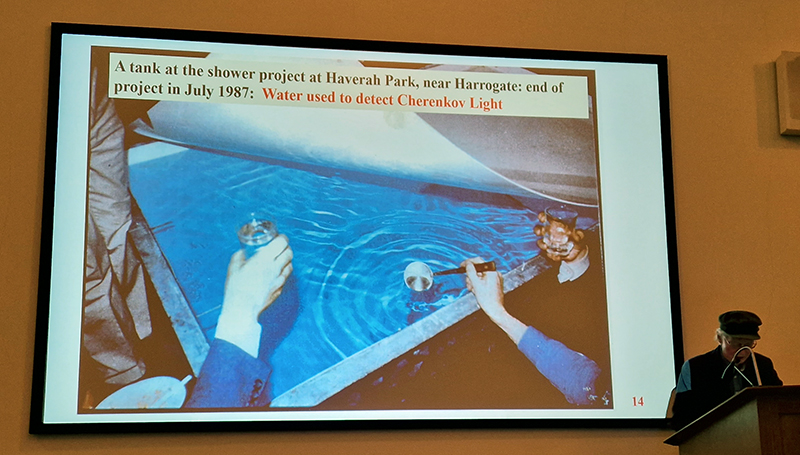
Great to see Alan Watson again, after visiting Haverah Park with him last year, to hear more about Searching for the Origin of the Highest Energy Particles in Nature. This water being sampled in the image below had been in the tank for nearly 30 years yet was still clear and drinkable.

He began his lecture at The Royal Astronomical Society with a short history on the discovery of cosmic rays, taking us right back to 1785 and Charles-Augustin de Coulomb who discovered that bodies with like electrical charges repel and if they have different signs, the force between them makes them attract. In his experiments testing electrical charge with two metal balls suspended on silk threads to easily repel or attract he was surprised to find that even if his experiment was very well insulated the charge still leaked away. It took over a century before it was realised that the air was being ionised which spurred physicists to discover the source of this ionization. In 1912 Victor Hess made his famous balloon flight to over 5km with a rudimentary Geiger counter and no oxygen to discover that ionization increased with altitude and must have an extra-terrestrial source. Over another century on and cosmic rays still present a mystery as to their origin and how they gain their enormous energies.

Alan is interested in the ultra high energy subatomic particles from extragalactic sources with energies about a million times as high as the energy reached by human-made particle accelerators. To put these energy scales in context – a laser pointer has an energy of about 3 electron volts, which is also typical of the photons that come from the sun. The molecules in the air are rushing around at 300m per second with an energy of 1/40 eV. A low energy cosmic ray, the sort that passes through your body a million times in a night, has an energy of 1 giga-electron volts, a proton created at CERN ( the European Organization for Nuclear Research) has around 7 tera-electron volts. If there was a race between a CERN proton and a high energy cosmic ray (over 1018 eV ) starting at the centre of the galaxy, by the time the cosmic ray had reached Earth the CERN proton would not even have reached the moon.

The ultra high energy rays are very rare. To detect these particles physicists rely on observing extensive air shower arrays to amplify the arrival of the particle. By recording the secondary particles that are produced when a cosmic ray hits the upper atmosphere the energy of the particle can be calculated. The showers arrive is a disc like formation with footprints of around 1sqkm so it is necessary to have detectors spread over a large area. The detectors measure the arrival time of the secondary particles and this can help determine the direction of the particle to within 1 degree. The trajectory of the cosmic ray is affected by galactic and intergalactic magnetic fields making it very difficult to find the origin of the particle.

The shadow of the moon can be seen in data recordings of cosmic ray arrivals.

There are a few different methods of detecting cosmic rays. This can be done using scintillator plastic which gives off a flash of light when a particle passes through the medium. Using Cherenkov radiation is another method – this takes advantage of a naturally occurring electromagnetic shock wave giving off energy as light when a particle passes through a medium faster than light can travel through the same medium. The speed of light through water is only 3/4 as fast as when it passes through air, a cosmic ray with much more energy will travel through water at almost the speed of light. This phenomenon can even be seen with the naked eye if the location is dark enough. Astronauts experience flashes of light in the eyes from particles directly hitting the retina but also from particles passing through the vitreous fluid and causing Cherenkov radiation.

Another method is to detect the excitation of nitrogen, the same process that produces the aurora. This light is in the ultra violet spectrum.

By the end of the 1980’s when Haverah Park closed the discovery of the origin of high energy cosmic rays was still a long way off. What had been established was that at the very high energies, only one particle would fall within one km per century. To make further progress a much larger area of detection would be needed. The Pierre Auger Observatory in Argentina at 3000 sq km is about twice the size of Surrey with many hundreds of water tanks. These tanks hold 10 tonnes of water but are the same depth as those at Haverah Park at 1.3m which turned out to be the optimal depth for the water tanks. Charged particles generated during the development of extensive air showers excite atmospheric nitrogen molecules, and these molecules then emit fluorescence light. The Cherenkov detectors at Pierre Auger are supplemented by fluorescence detectors installed at four elevated observation sites with 24 large telescopes specialized for measuring the nitrogen fluorescence in the atmosphere above the array.

The most exciting discovery came in 2017 when a convincing anisotropy in the arrival direction of cosmic rays of a certain energy was determined with some evidence that Centaurus A might be a source of these cosmic rays. There was also evidence of particles clustering close to the super galactic plane, an enormous, flattened structure extending nearly a billion light years across.

The galactic year is the duration of time required for the Sun to orbit once around the centre of the Milky Way Galaxy equivalent to approximately 225 million Earth years.

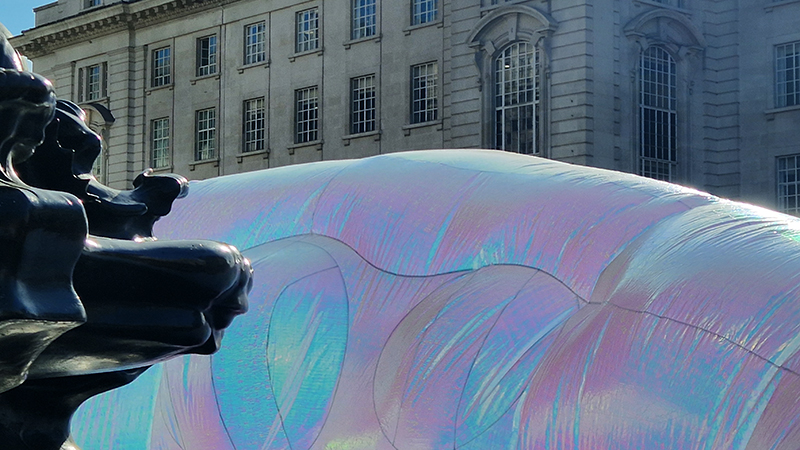
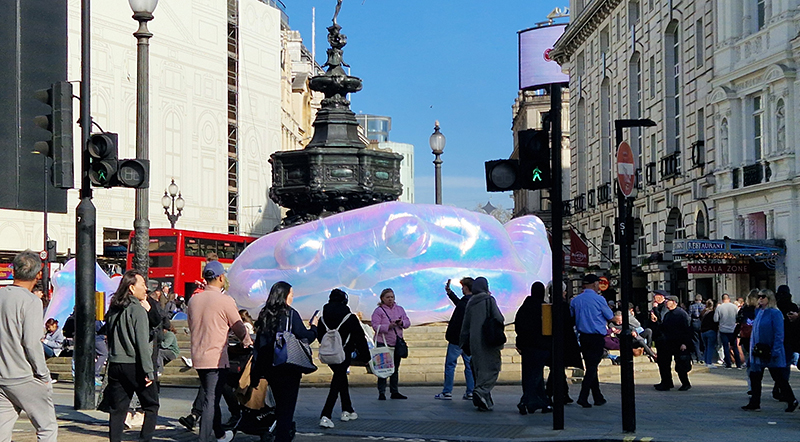
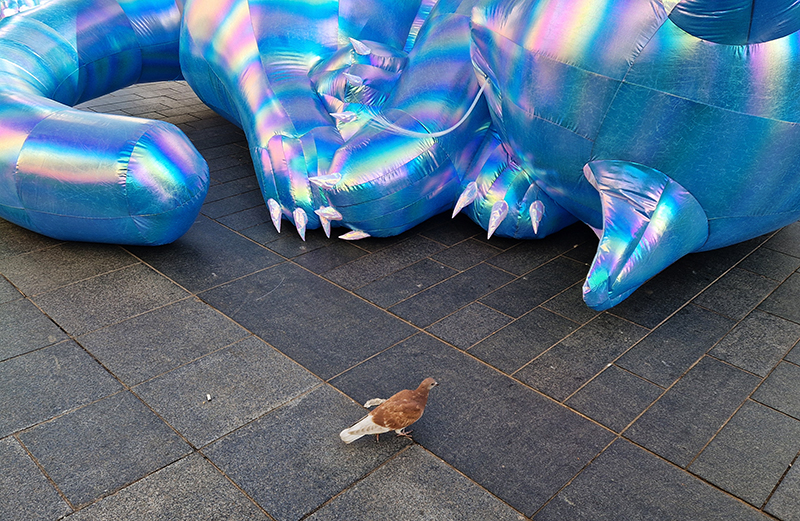
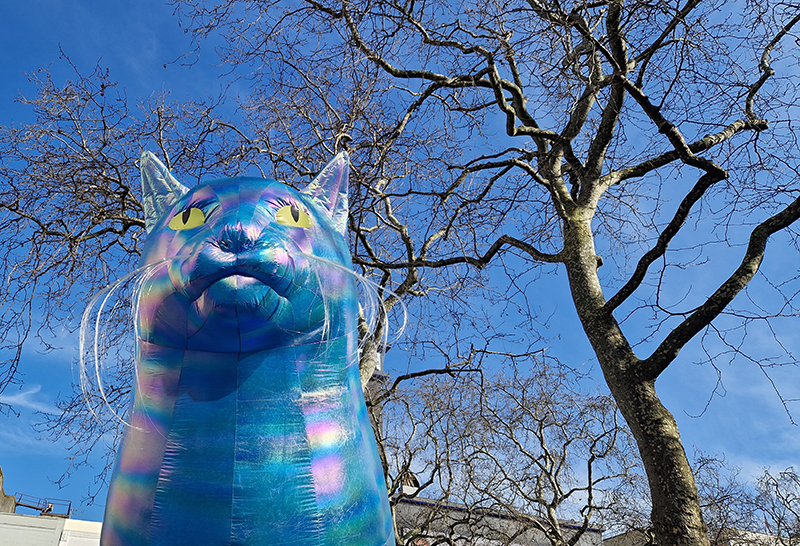
Art After Dark cosmic takeover around Piccadilly and Leicester Square from Nelly Ben Hayoun-Stépanian. I saw the iridescent asteroid-sized moon rocks and inflatable UV reactive sculptures inspired by Schrödinger’s famous quantum physics paradox in bright sunshine

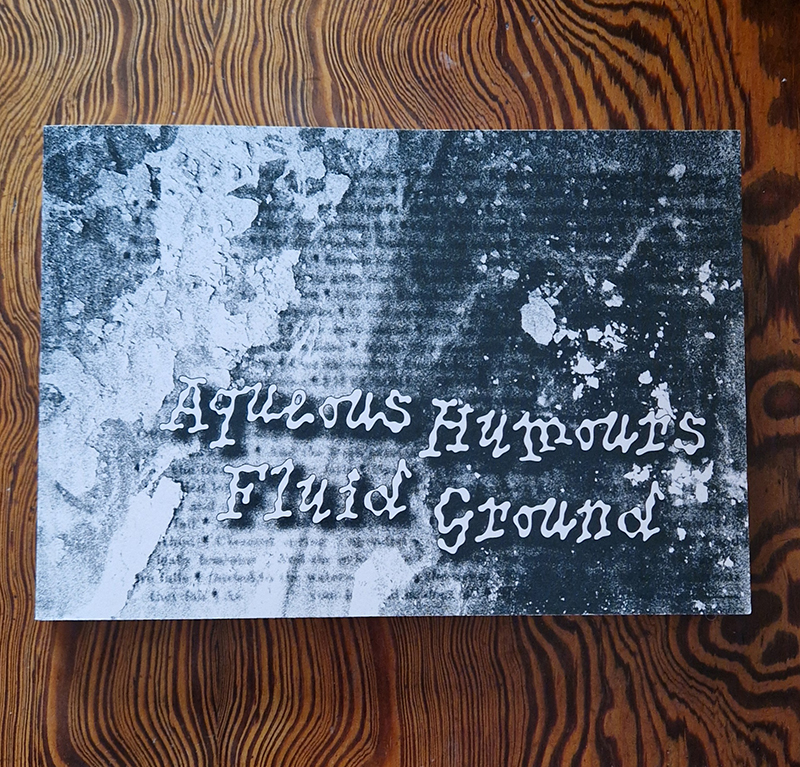
Book launch at Matt’s Gallery – Aqueous Humours Fluid Ground, edited by Kirsten Cooke published by Matt’s Gallery and the Poorhouse Reading Rooms. A night of experimental nonfiction, fiction, diagram, scent and moving image. An evening that activates a watery mapping, which denatures cartography through practices of immersion, aquatics, time travel and the posthuman lenses of geological, animal and machine vision. With contributions from Linda Stupart, Harun Morrison, Ezra-Lloyd Jackson, Melanie Jackson, Joseph Noonan-Ganley, Charlie Franklin, Michelle Williams Gamaker, Lucy A. Sames, Maggie Roberts, Carl Gent. I was only able to stay for the first half of the evening but this gave a wonderful flavour of the book which I look forward to dipping into.

Listening

Journey to the Centre of the Earth – an Infinite Monkey Cage podcast with guests seismologist Ana Ferreira, geologist Chris Jackson and comedian Phil Wang. The immense pressures and searing temperatures that present engineering difficulties of ‘going into the Earth’s crust’ to explore what lies beneath are discussed along with the relationship between the tectonic plates and a stable atmosphere and new evidence of hidden subterranean shifting globular continents.

Reading

The Periodic Table by Primo Levi. My initial reaction to this book was surprise that it was so engaging, but a few elements in, I was surprised to find the chapters shifted from autobiography to fiction with dubious and misogynistic content. I have persevered as the chapter on Carbon, which was recommended to me, is the last chapter in the book and I thought I should start at the beginning not the end. This final chapter is written with a different emphasis, with the explanation that carbon cannot be treated like other elements as it is not specific to one story but is everything to everyone. ‘Every two hundred years, every atom of carbon that is not congealed in materials by now stable (such as, precisely, limestone, or coal, or diamond, or certain plastics) enters and renters the cycle of life, through the narrow door of photosynthesis.’ The story of one atom of carbon is relayed but it is noted that the author ‘could tell innumerable other stories and they would all be true…. the number of atoms is so great that one could always be found whose story coincides with any capriciously invented story’.

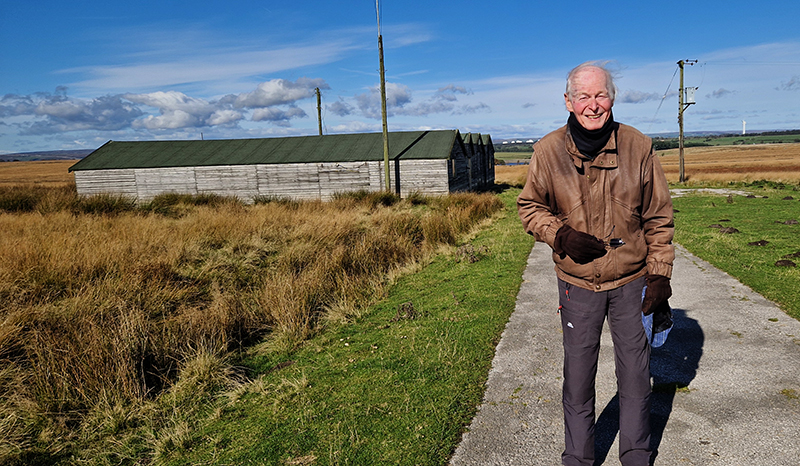
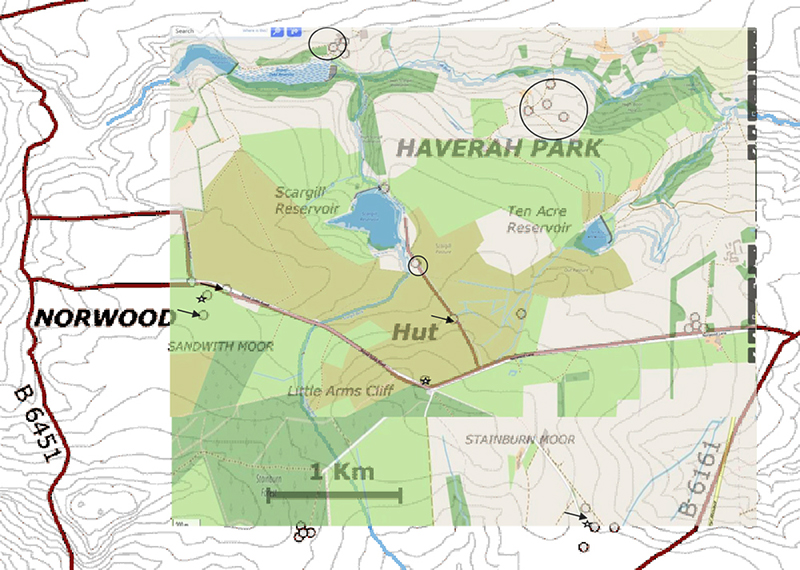
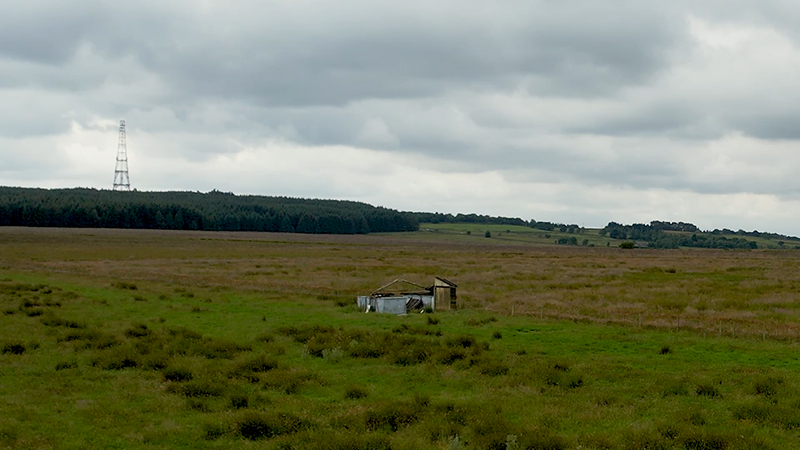
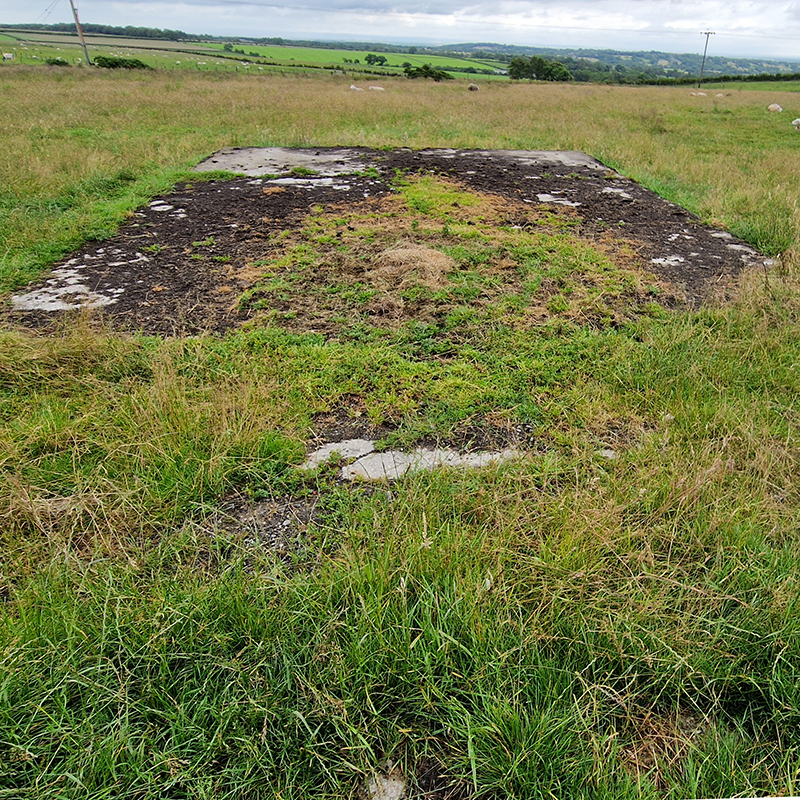
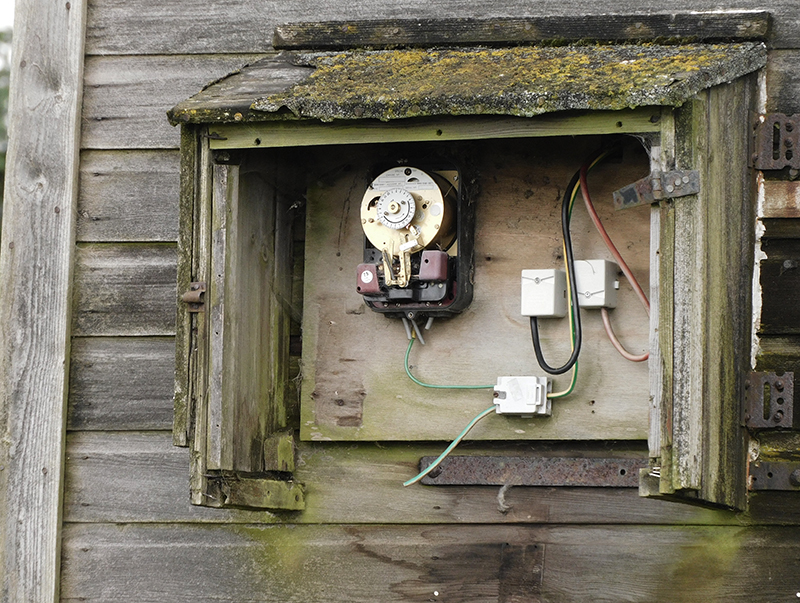
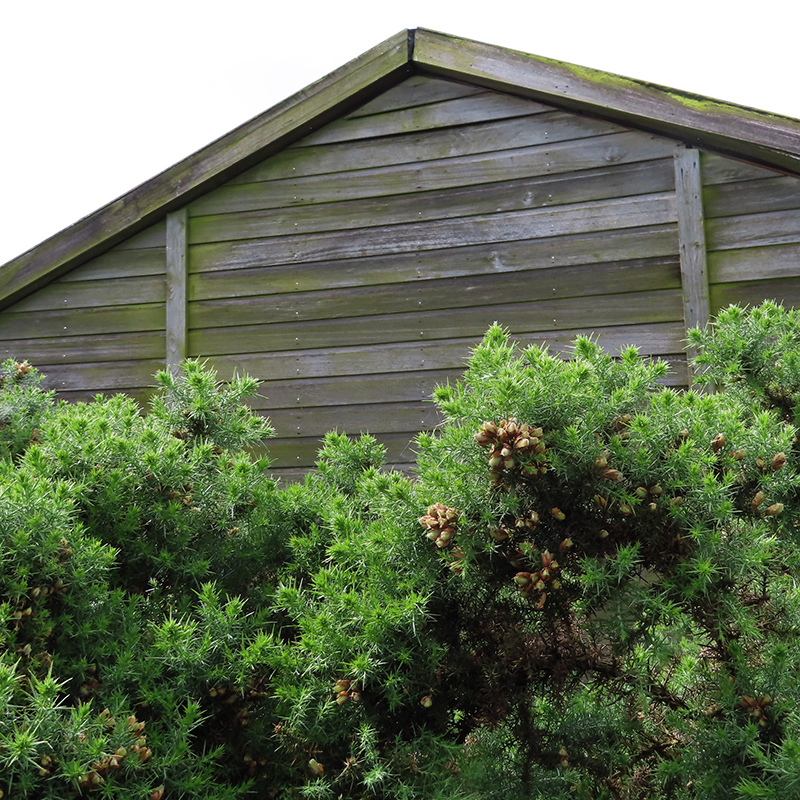
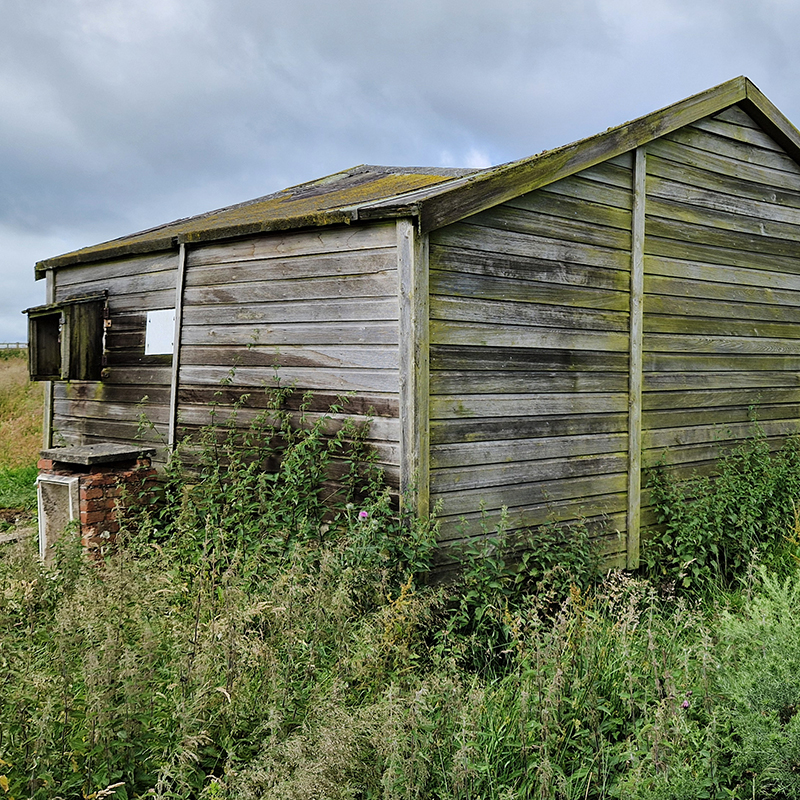
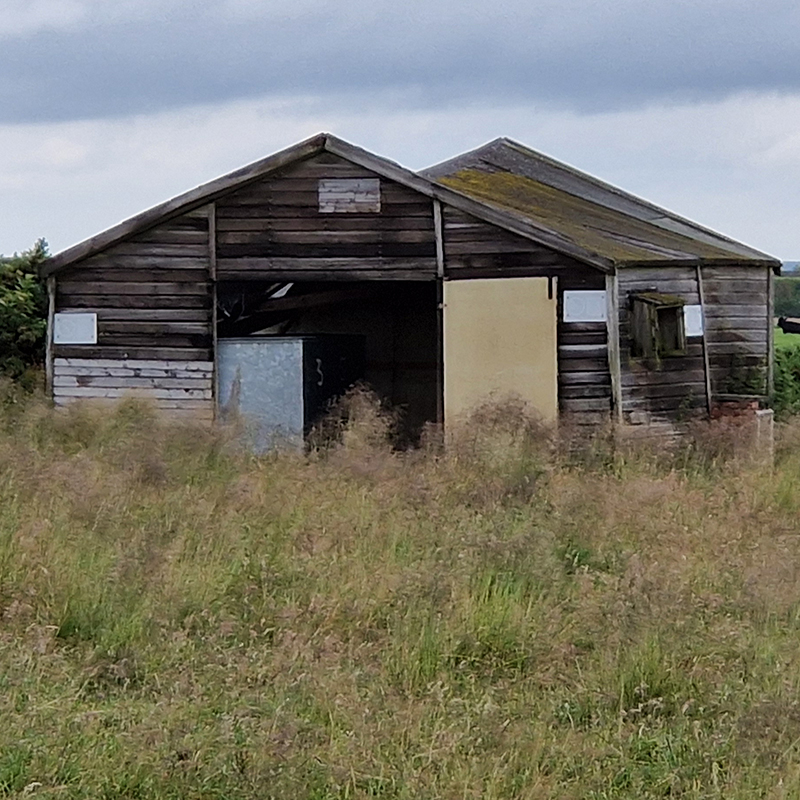
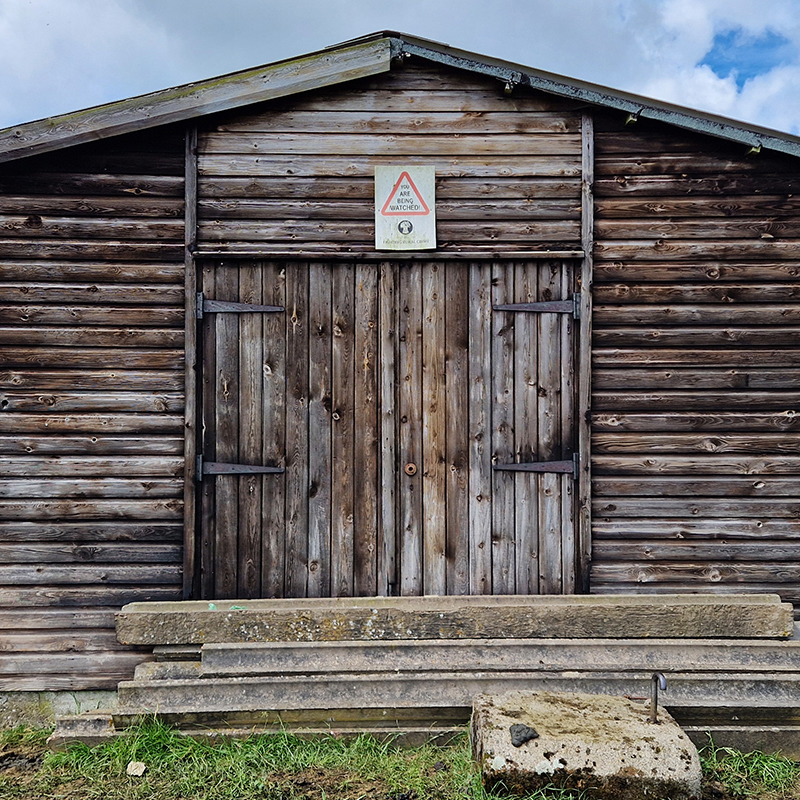
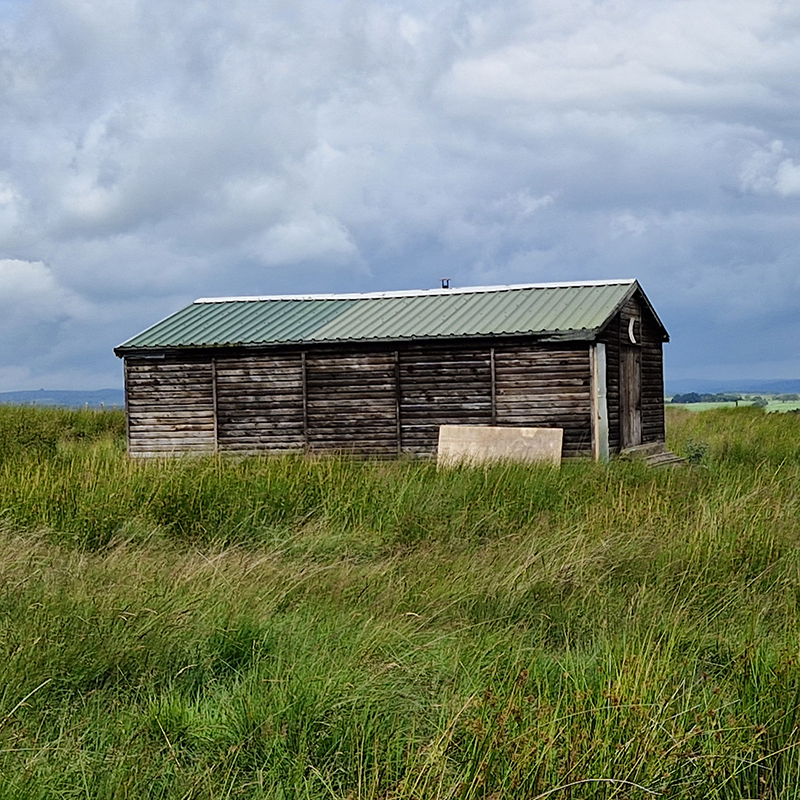
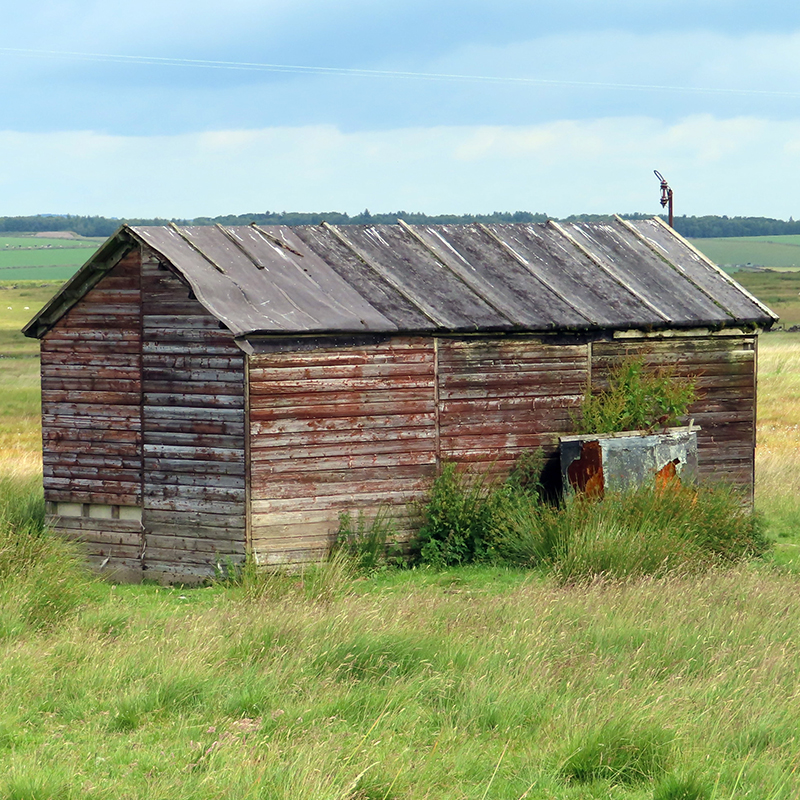
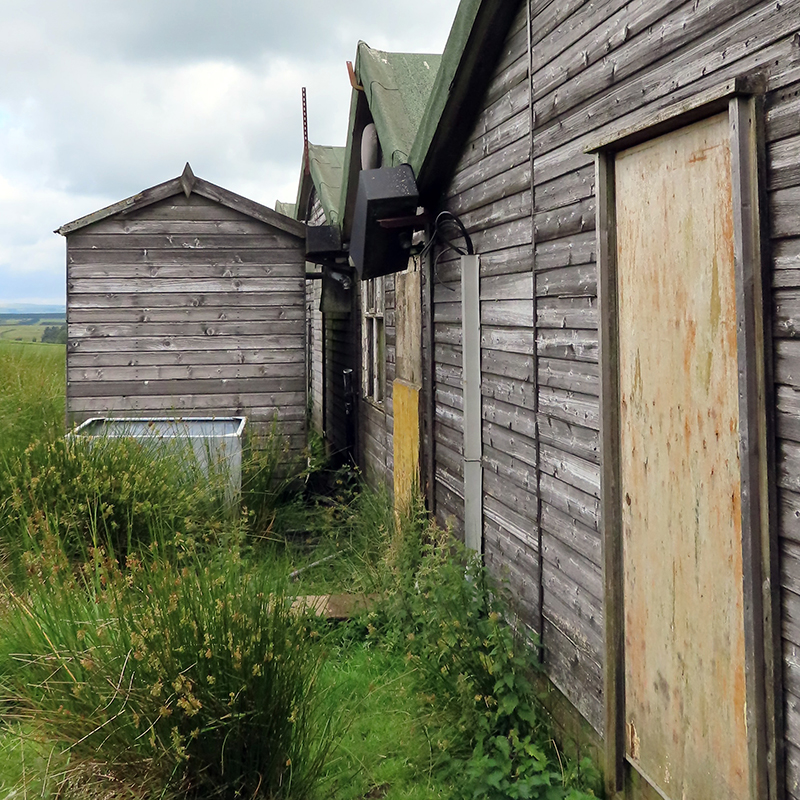
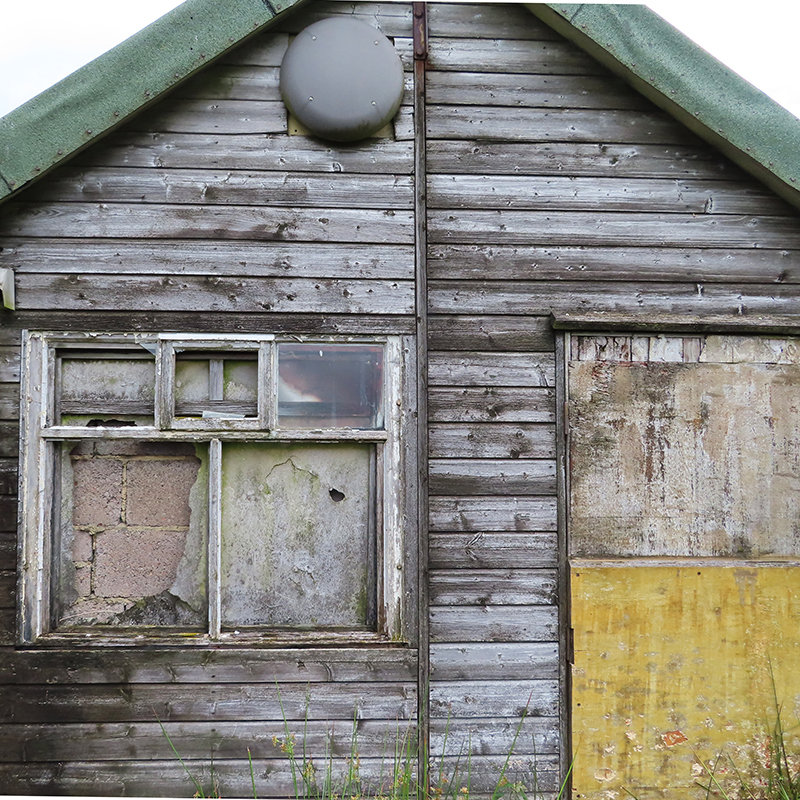
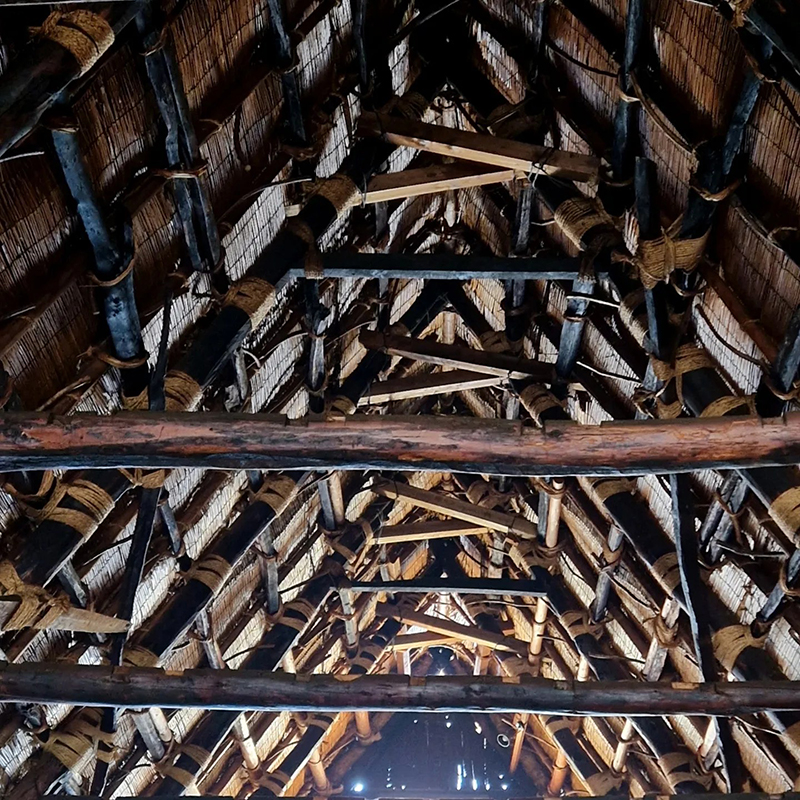
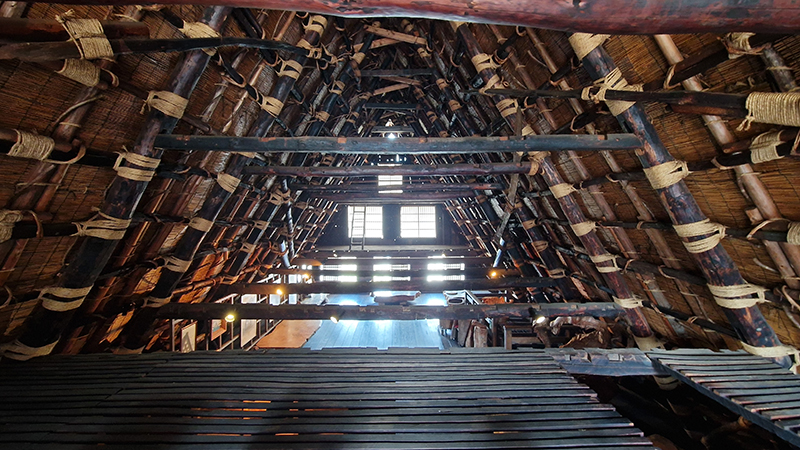
In search of huts. I have been on a mission to locate and document the remaining huts from a cosmic ray detection experiment at Haverah Park on the Pennine moorland in North Yorkshire.

When high-energy cosmic rays enter the atmosphere, they set off a chain-reaction particle cascade known as an extensive air shower. The Haverah Park experiment was home to one of the largest extensive cosmic ray air shower arrays in the world.

It was operated by the Physics Department of the University of Leeds for 20 years, closing in 1987. An array of over 200 water-Cherenkov detectors covering 12 km2 were active during its operation and many 1000’s of extensive air showers were recorded, including ones of such size that the cosmic rays that generated them had energies previously unthought of, adding to the mystery of where they come from.

The large energy density of cosmic rays is close to that of starlight, adding their own glow to the sky as they blast across the universe. Cosmic rays are the atomic nuclei of elements ranging from hydrogen to uranium accelerated to high energies, with half being protons and most positively charged.

Much of the technology used to observe cosmic rays has changed little over the decades since first inventions and still plays a role within newer technologies.

It appeals to me that the excitement of observing particles from other galaxies happened at these unassuming structures.

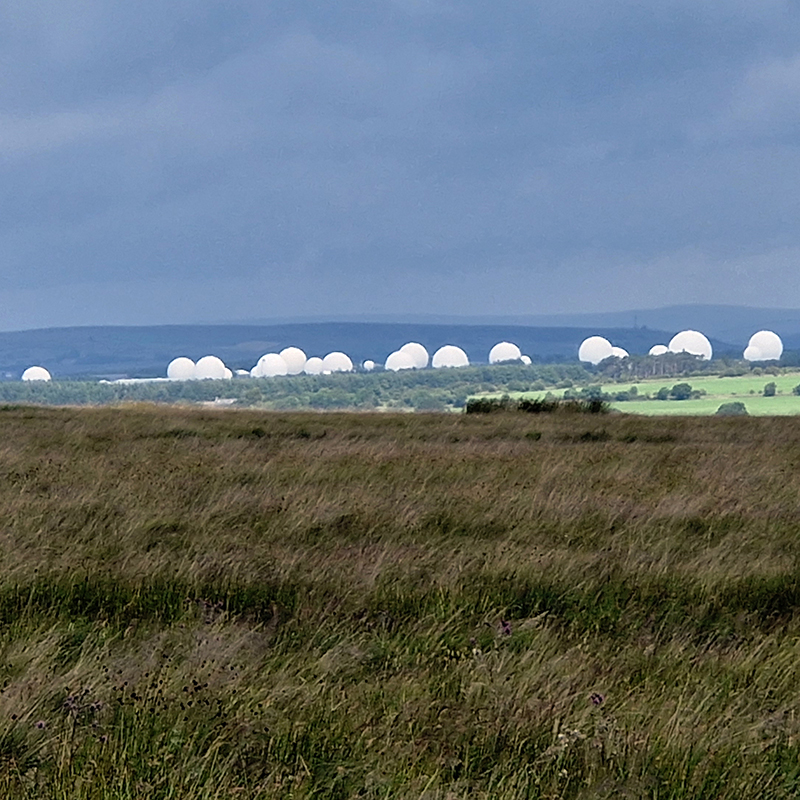
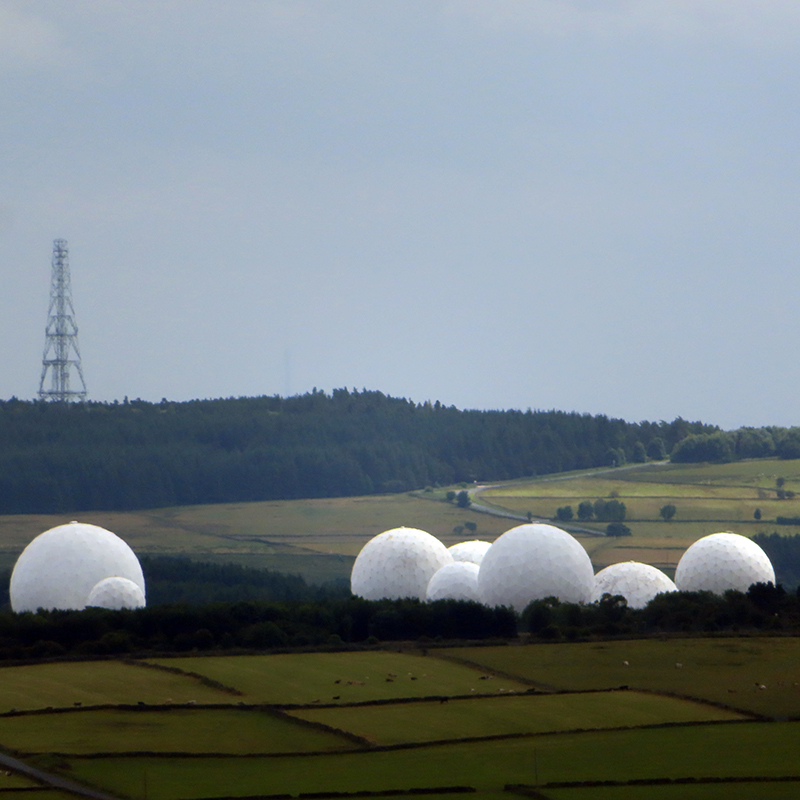
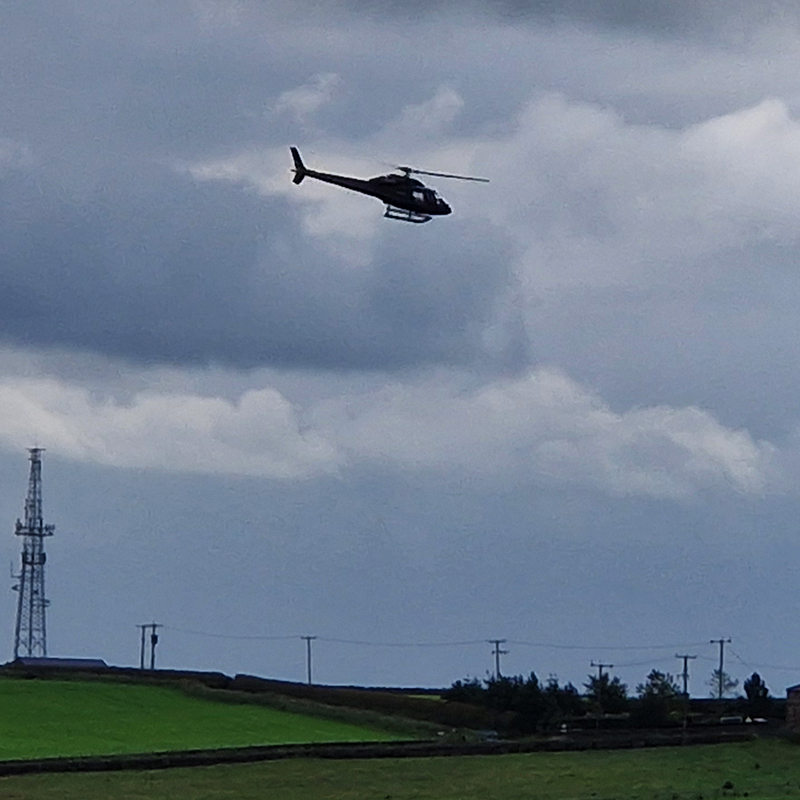
Sharing the landscape of Haverah Park cosmic ray air shower detector array huts are the striking white radomes that shield secret radar equipment at RAF Menwith Hill. The spy station has been there since the cold war space race began in the mid-fifties. Little is known about what goes on here but broadly it is said to gather electronic intelligence and is operated by US National Security Agency (NSA) and UK Government Communications Headquarters (GCHQ). As satellite technology has increased so has the number of radomes which now number 37 at the site. It is worth noting that satellites are vulnerable to unpredictable space weather and cosmic ray interference.

The total number of particles detected in a shower can be used to estimate the energy of the primary cosmic ray. Some particles contain the highest energy form of radiation known to exist anywhere in the universe and their origin is one of science’s greatest mysteries. Air showers of secondary particles generated from a primary cosmic ray hitting the Earth’s atmosphere are spread over many kilometres when they hit the ground so it is useful to have detectors spread over a large area. The difference in the time of arrival of recorded particles at multiple detectors can be used to estimate the arrival direction of the primary cosmic ray. However, this does not necessarily reveal the origin of the particle as magnetic fields within the galaxies bend their trajectories so that the memory of their original direction is obfuscated.

The cosmic ray detectors I made for the The Breath of Stars use a block of plastic scintillator which emits a short burst of UV light when a charged particle passes through it which is picked up by a single-photon-sensitive device. The detectors used at Haverah Park are water Cherenkov detectors. These are large steel tanks of purified water with photon sensitive detectors in the water.

While the speed of light in a vacuum is a universal constant its speed through a material may be significantly reduced as it is slowed by the medium. A particle passing through a material faster than that at which light can travel through the material loses electrons thereby emitting light. When cosmic rays pass through the water tanks, they emit Cherenkov radiation because they travel faster than the speed of light in water. Cherenkov light is similar to the production of a sonic boom when an airplane is traveling through the air faster than sound waves can move through the air. Pavel Cherenkov along with Ilya Frank and Igor Tamm discovered and demonstrated this phenomenon in 1934, astonishingly, it had been predicted in 1888 by Oliver Heaviside, and in 1910 Marie Curie had noticed a strange blue glow from her radium experiments.

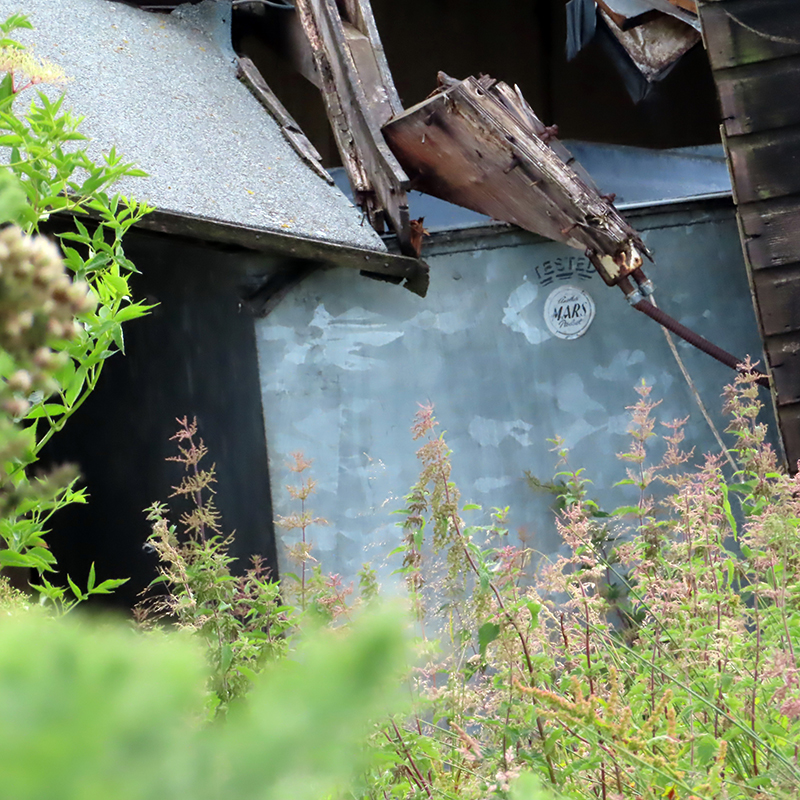
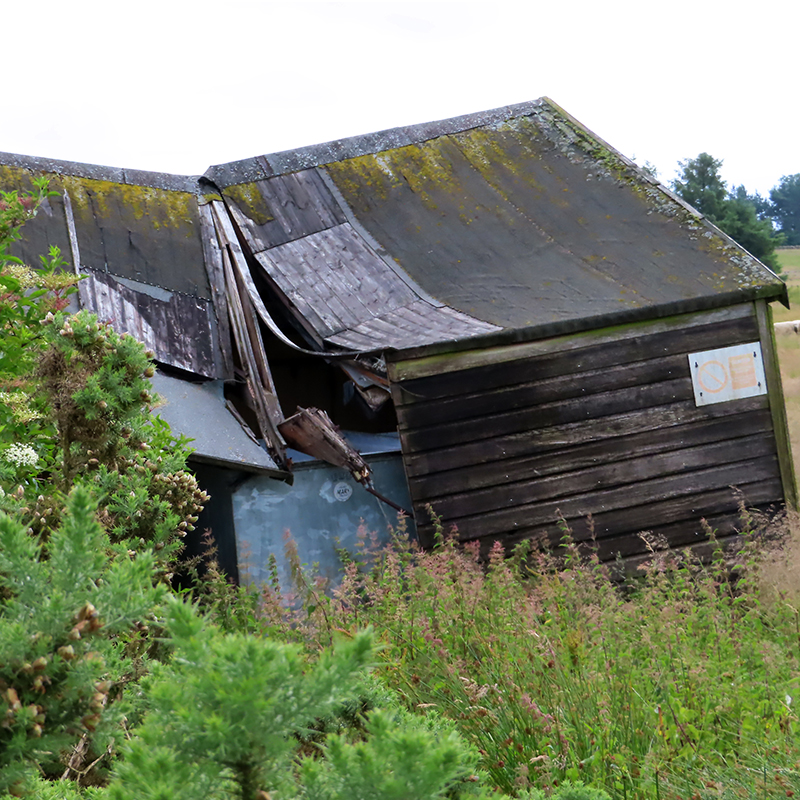
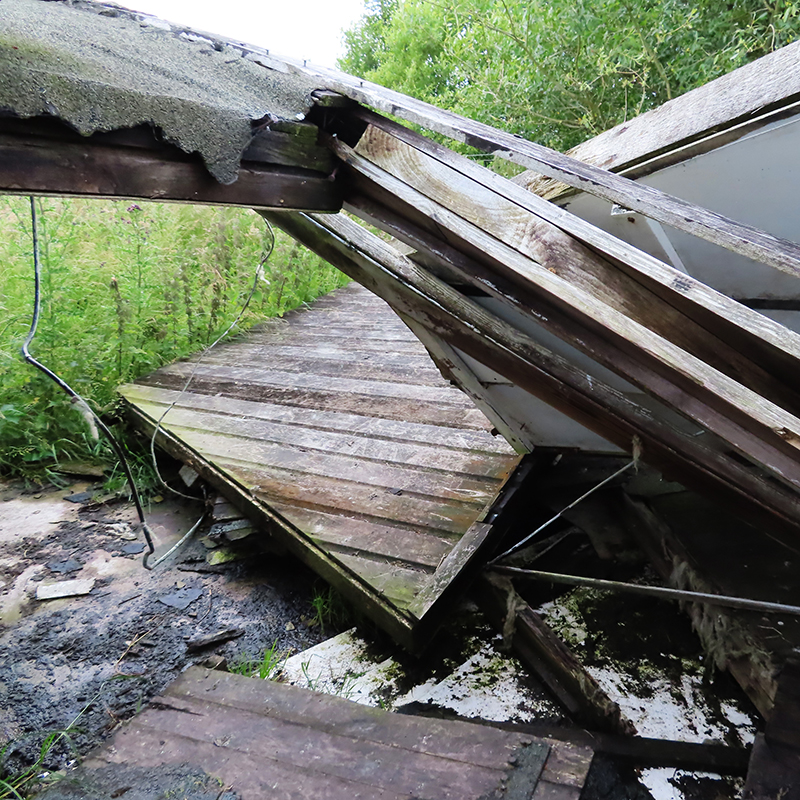
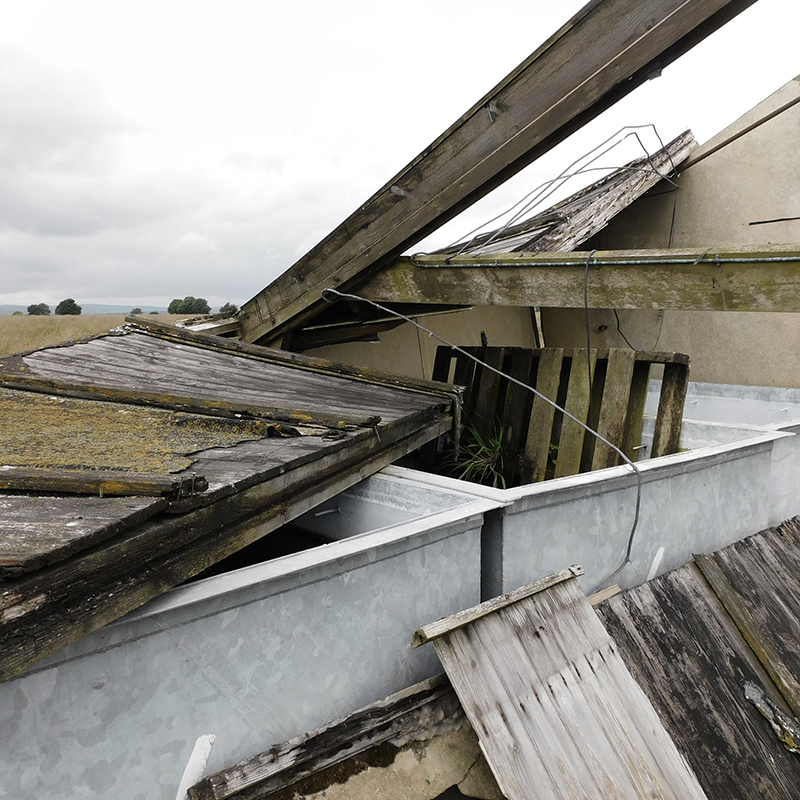
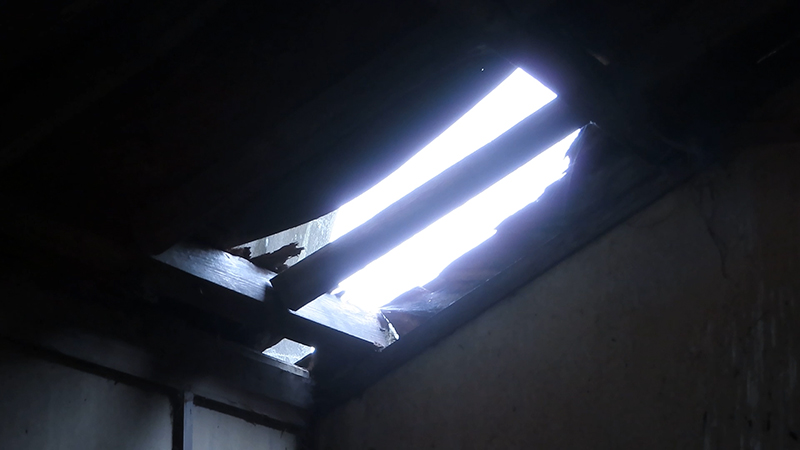
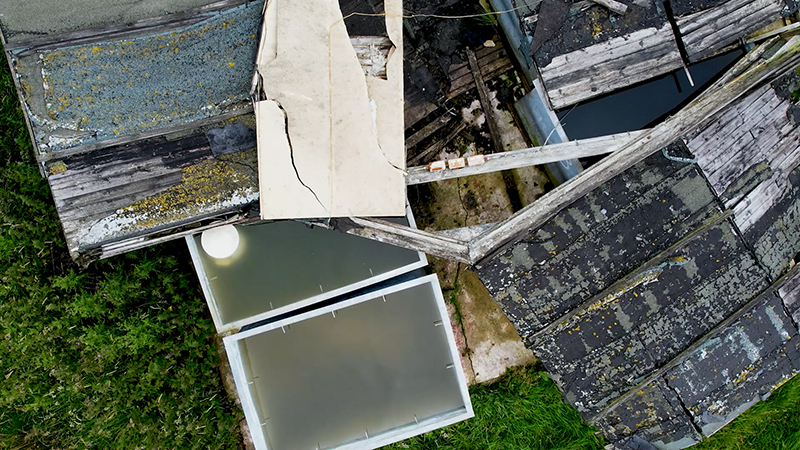
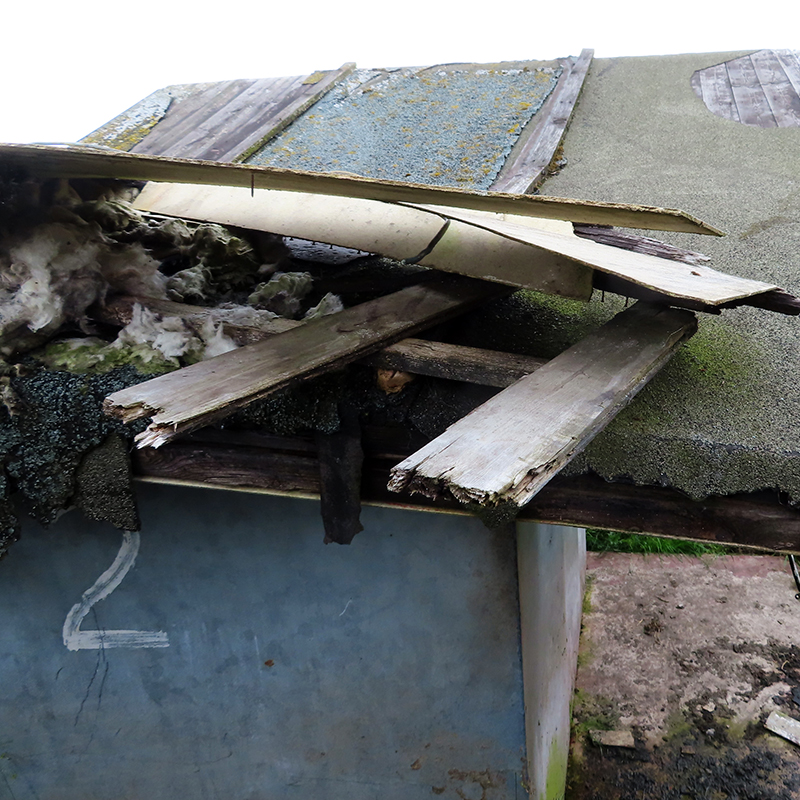
Other huts from the Haverah Park experiment are in a state of collapse.

There are so many high energy particles hurtling around the universe that they almost equal starlight in energy density. Cosmic rays travel at almost the speed of light and because they are charged particles most cosmic rays are confined, spiralling within our galaxy for a million years or more, by the magnetic fields which permeate it.

Five million cosmic rays pass through your body each day. Some will collide with atomic nuclei. A particle passing through a material at a velocity greater than that at which light can travel through the material emits light. Maybe we glow a little.

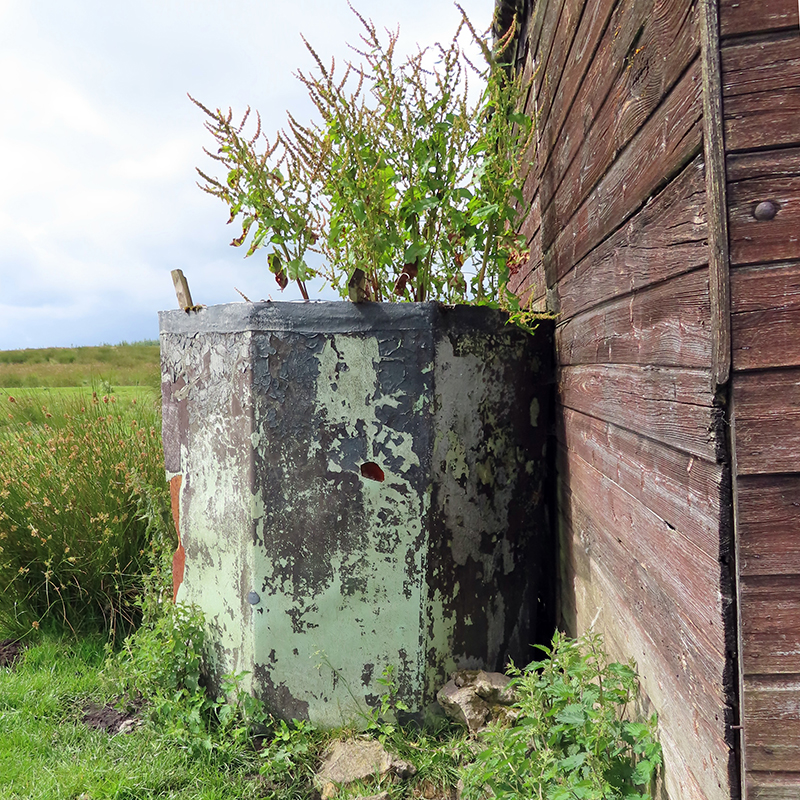
Following the disappearing trail. Haverah Park hut with an intriguing hexagon tank.

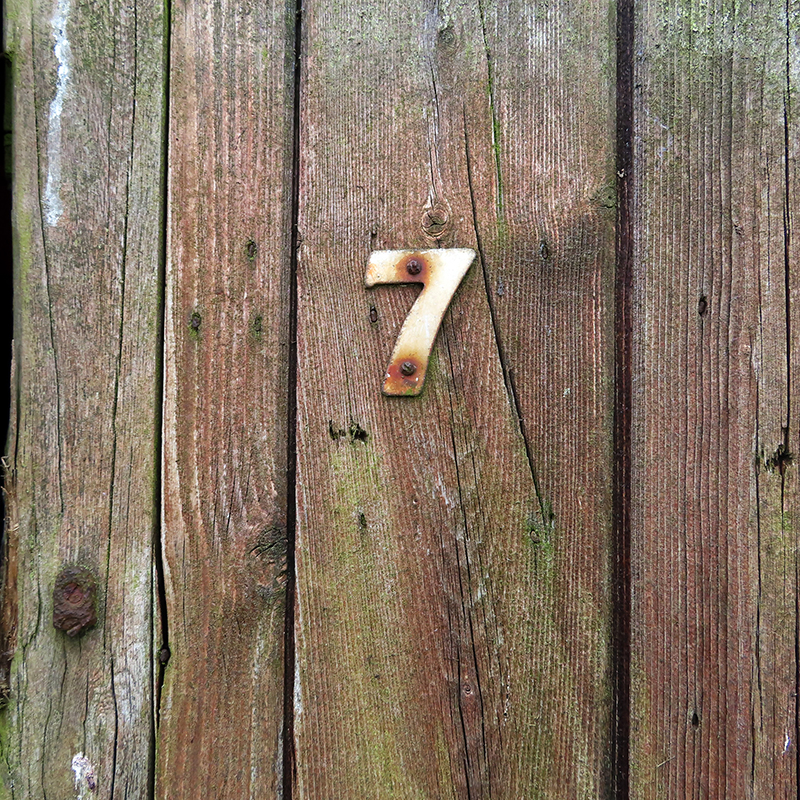
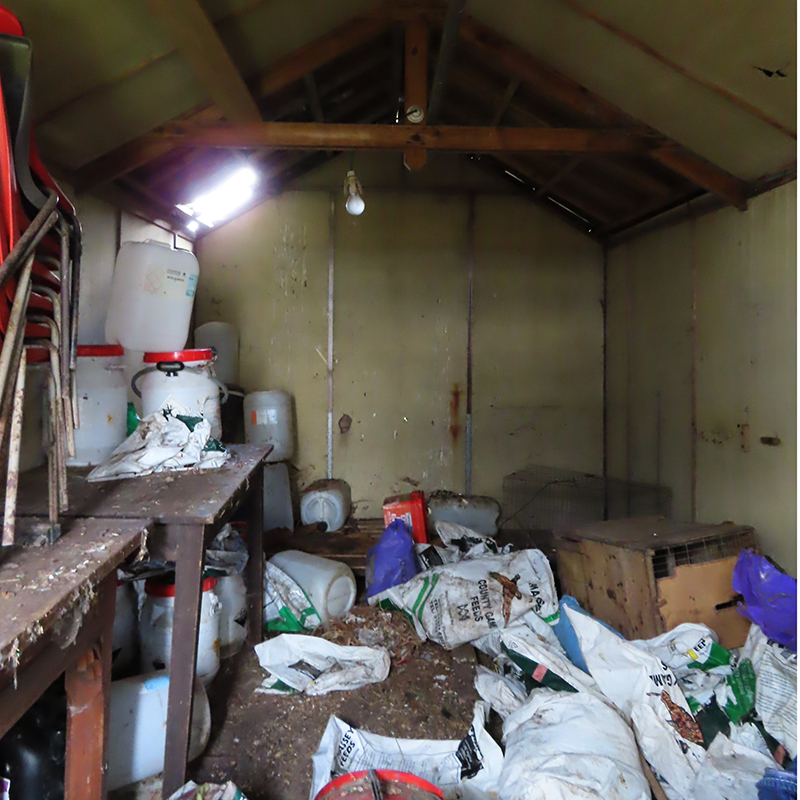
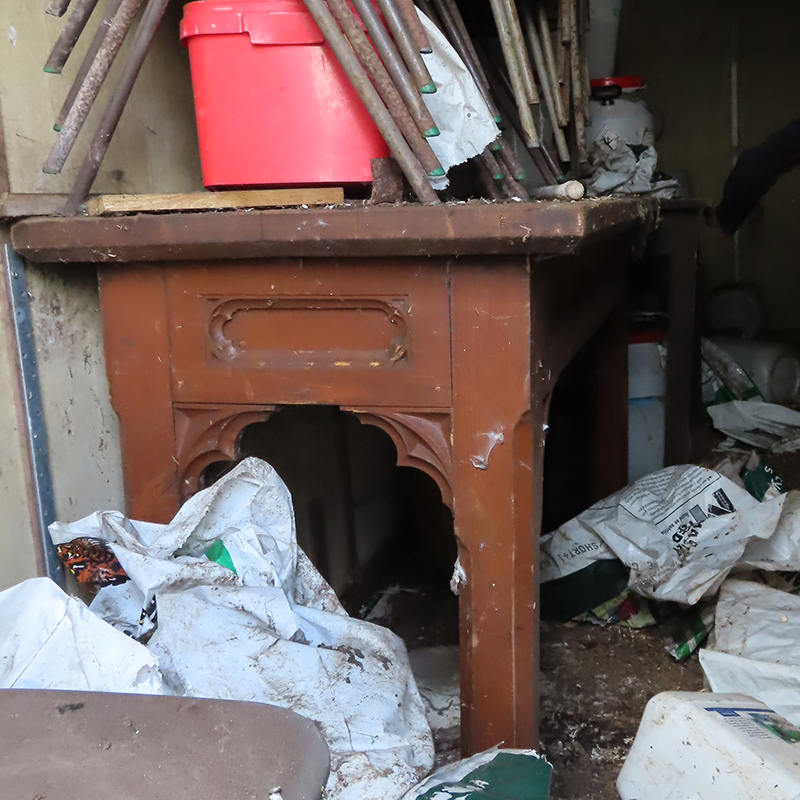
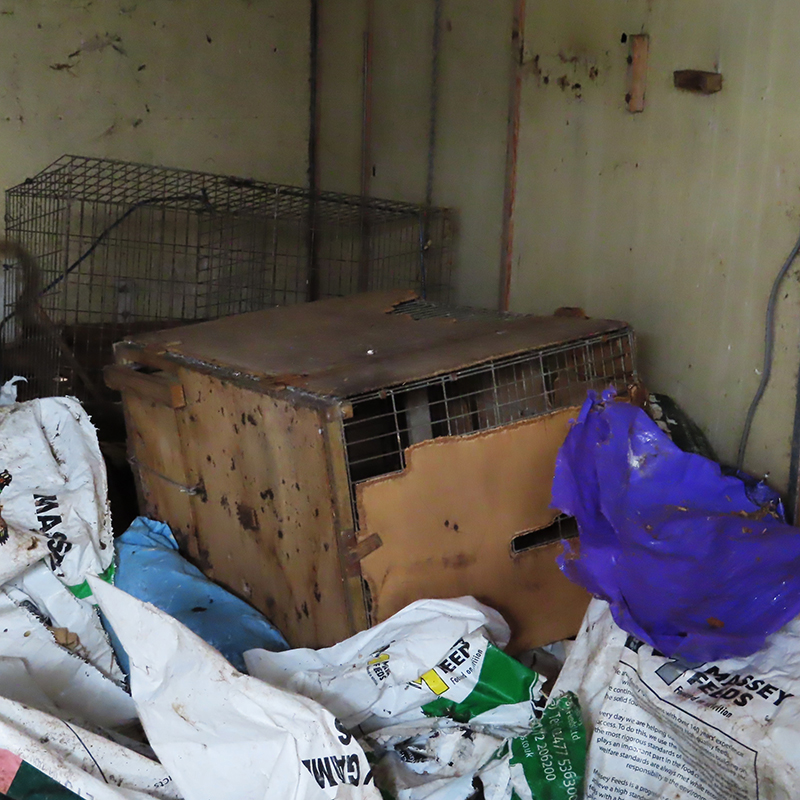
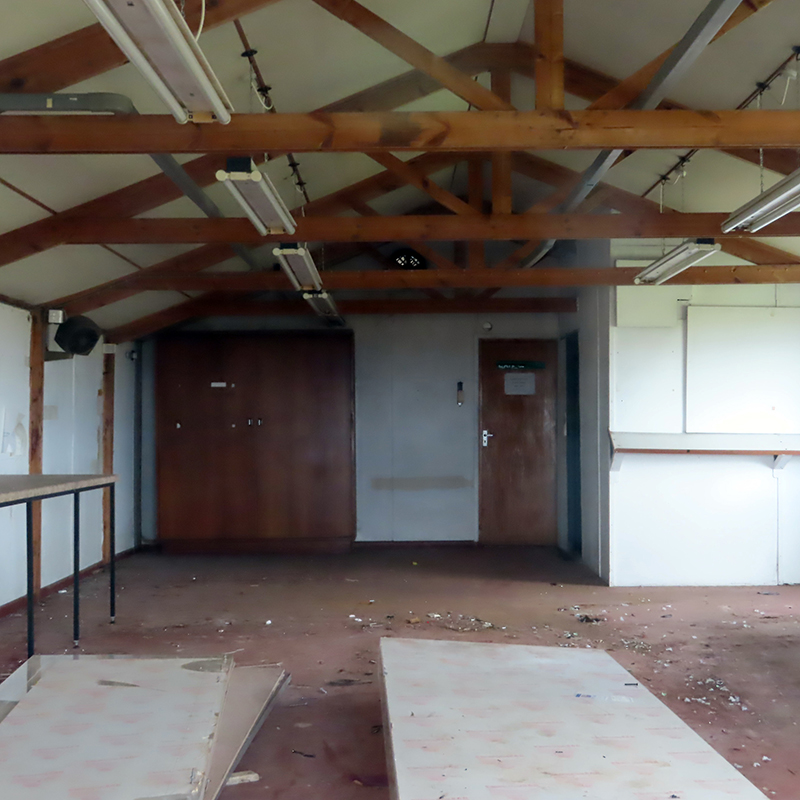
Inside Hut no. 7 is a dumping ground. Waste is a big problem in space as well as on Earth. The thickening shell of space junk in low Earth orbit, if left to accumulate, could cause a conductive shield to form, weakening the effectiveness of the magnetosphere, which protects life on earth from most cosmic radiation.

A decaying wall map of the entire Haverah Park experiment is just visible through a window of one of the huts in the central hub, but not much else remains inside.

It looks like these huts have been recently emptied into a skip which, by chance, was collected while I was there. Unfortunately, the driver had no enlightening information for me about the future of the huts.

Cherenkov radiation is a form of energy that gives off a blue glow when electrically charged particles are moving at speeds faster than light is able to travel through the same medium. The experimental physicist Blackett, who received the 1948 Nobel Prize in Physics for his investigations into cosmic rays, believed that extensive air showers should produce flashes of light that could be perceived by the human eye when lying down and looking upwards under dark skies. Whether he achieved seeing this phenomena himself is not known, but he inspired colleagues Galbraith and Jelley, in 1952, to devise an experiment to detect light from air showers using a rubbish bin painted black on the inside, a recycled searchlight mirror and a small phototube. With these simple items, they made the first observation of Cherenkov light produced by cosmic rays passing through the atmosphere. Not all the twinkling in the night sky is starlight.

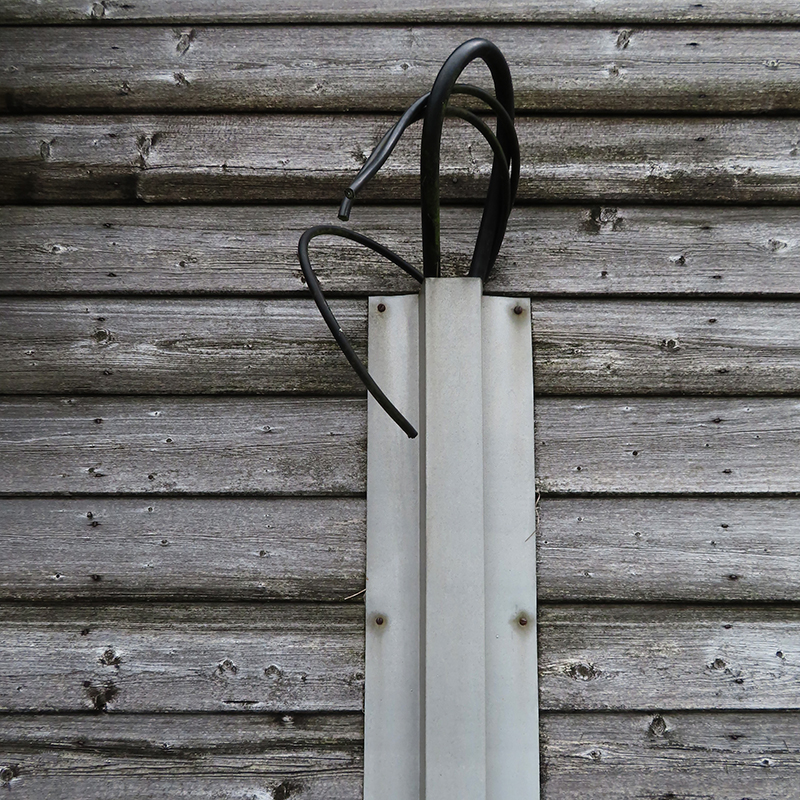
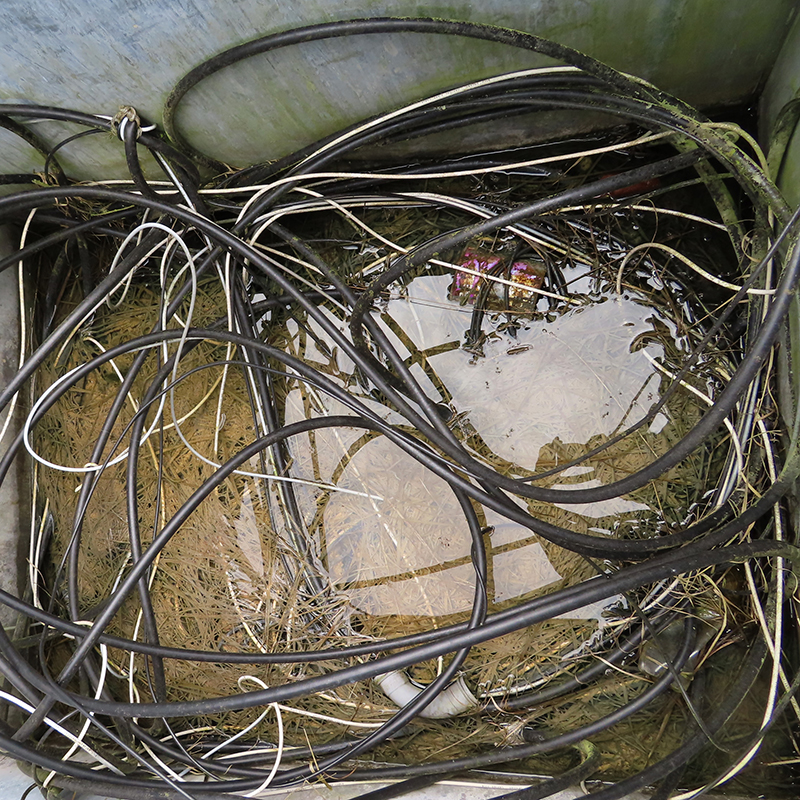
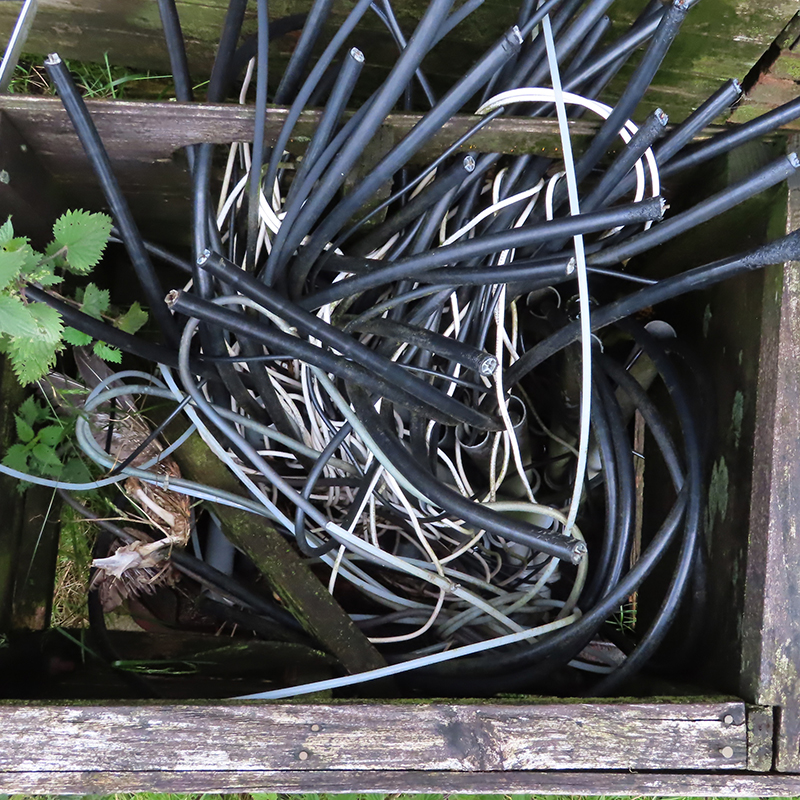
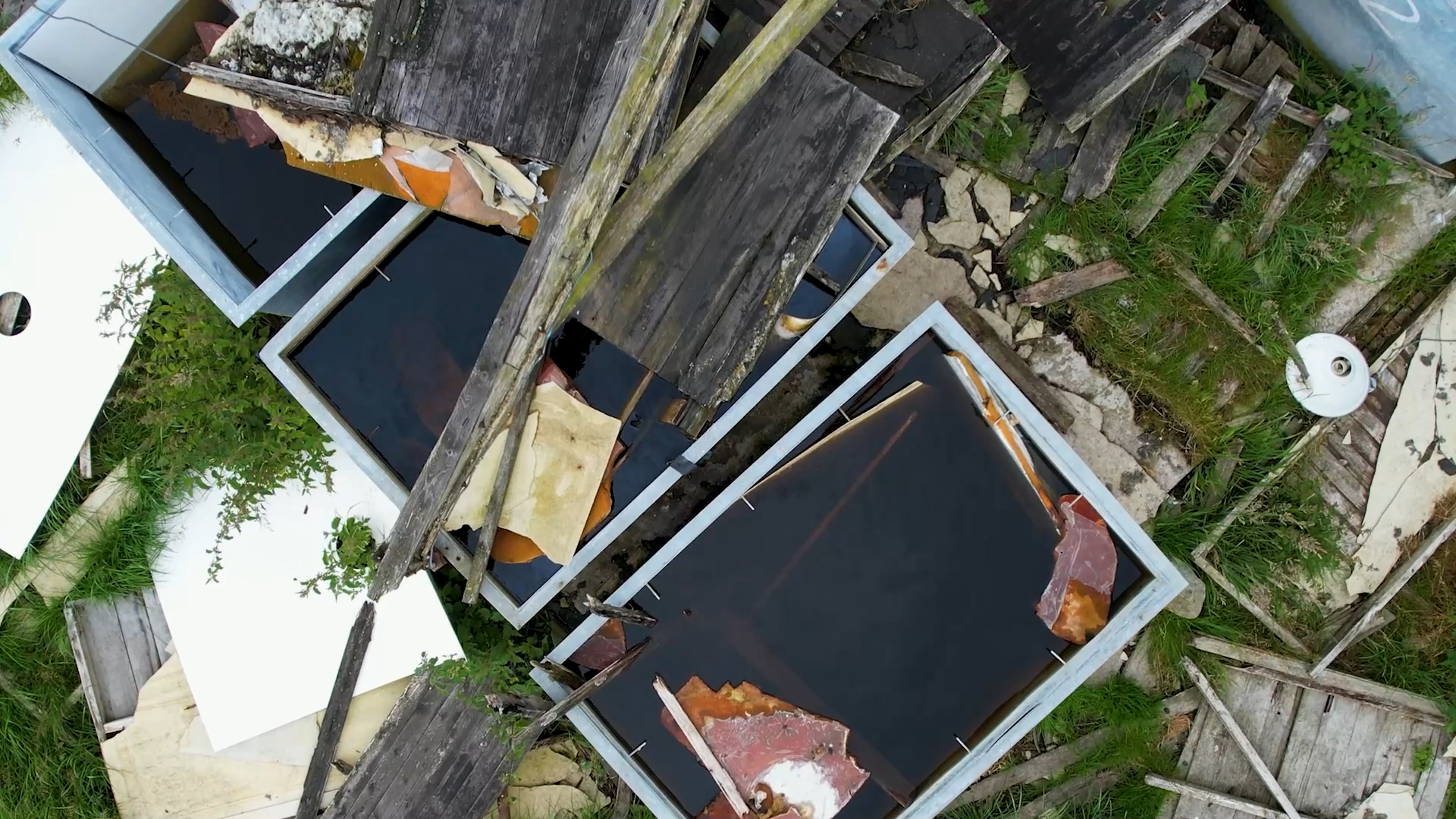
During the Haverah Park experiment, the water Cherenkov detectors deployed across the moors were connected by underground cables and transmitted information to the control huts via radio signals in the microwave frequency range. All communication is now severed. Cut cables coil in rain filled tanks. The cosmic rays are still pounding down upon these new unwatched ecosystems but the detectors have moved elsewhere.

I am looking forward to meeting Professor Alan Watson FRS here in the autumn. He is eminent in the field of cosmic rays and helped initiate the extensive air shower project, working at Haverah Park for 25 years. He has kindly agreed to meet and share his insider knowledge of the history and operations at the site.

The idea to build a truly giant shower array was launched by Alan Watson and Jim Cronin shortly after Haverah Park was decommissioned and thanks to the ground breaking work undertaken in these huts, it evolved to become the vast Pierre Auger Observatory in Argentina, named in honour of the man who first discovered extensive air showers.

Peering into the darkness, trying to fathom the structures of the universe or what’s inside the hut, and the nature of that relationship.

The ultra high energy particles detected at Havarah Park and new arrays across the globe are very rare, possibly less than one per square kilometre per century, so it is big news when one arrives. Because they have such high energy, it is thought they shouldn’t be affected by galactic magnetic fields, and therefore, the direction of the particle could be determined and the source located. The Amaterasu particle, named after the sun goddess in Japanese mythology, the second most powerful particle to be recorded, appears to have emerged from the Local Void, ana area with no astronomical objects that might produce such a particle. There is no explanation of where these particles come from, just hints of bigger mysteries to unfold.

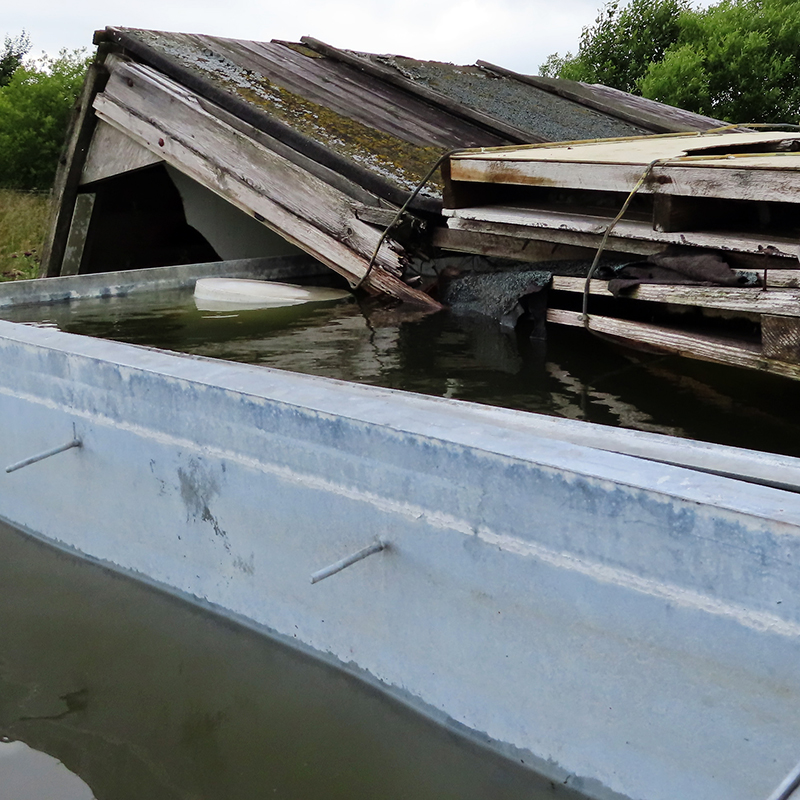
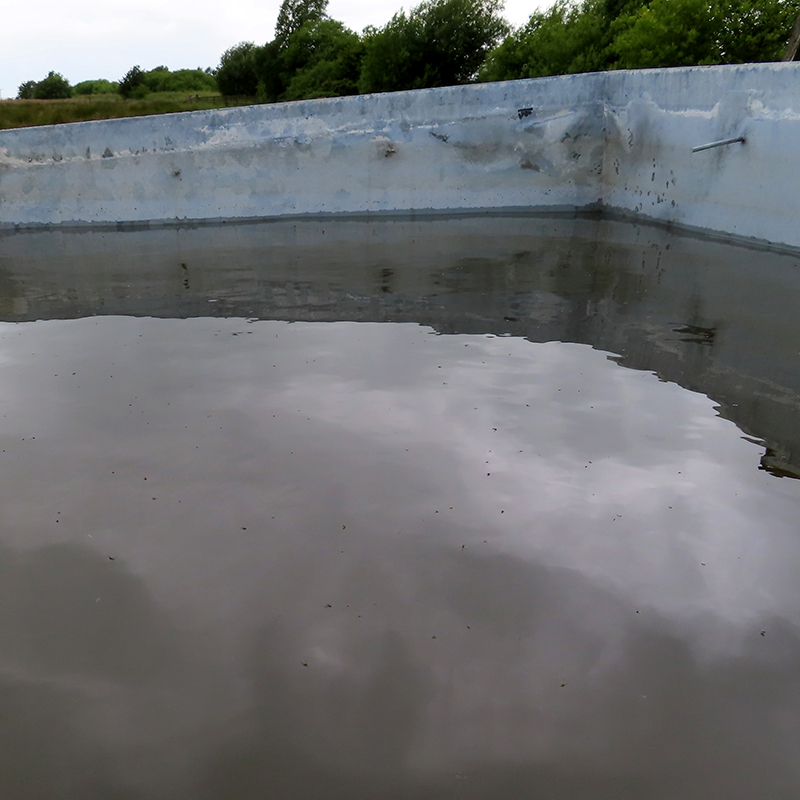
Many water tanks remain around Haverah Park, stripped of their purpose as water Cherenkov detectors they now reflect the sky in the rainfall they collect rather than record showers of particles from space.

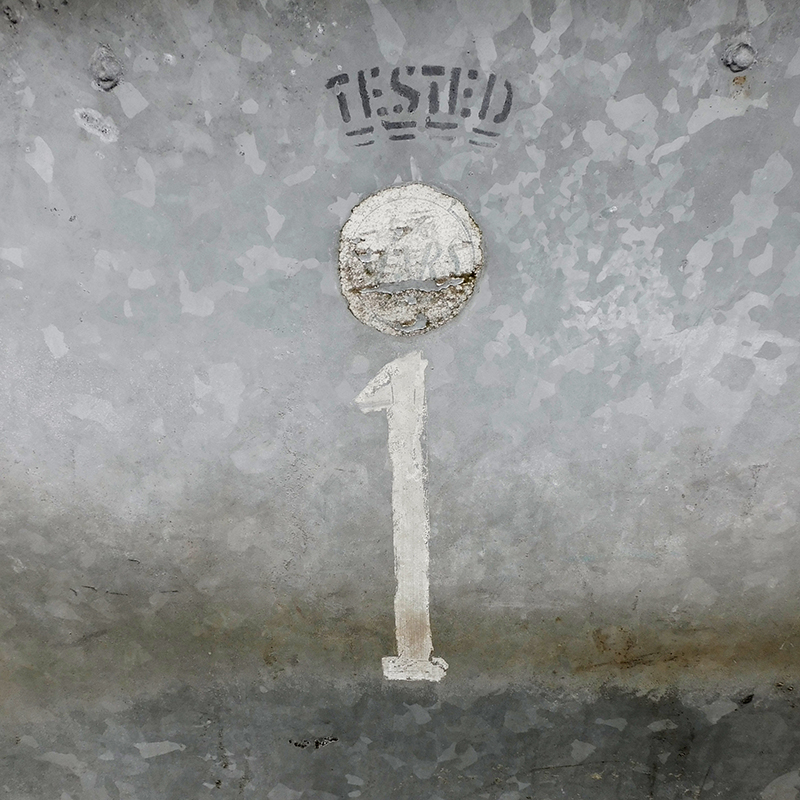
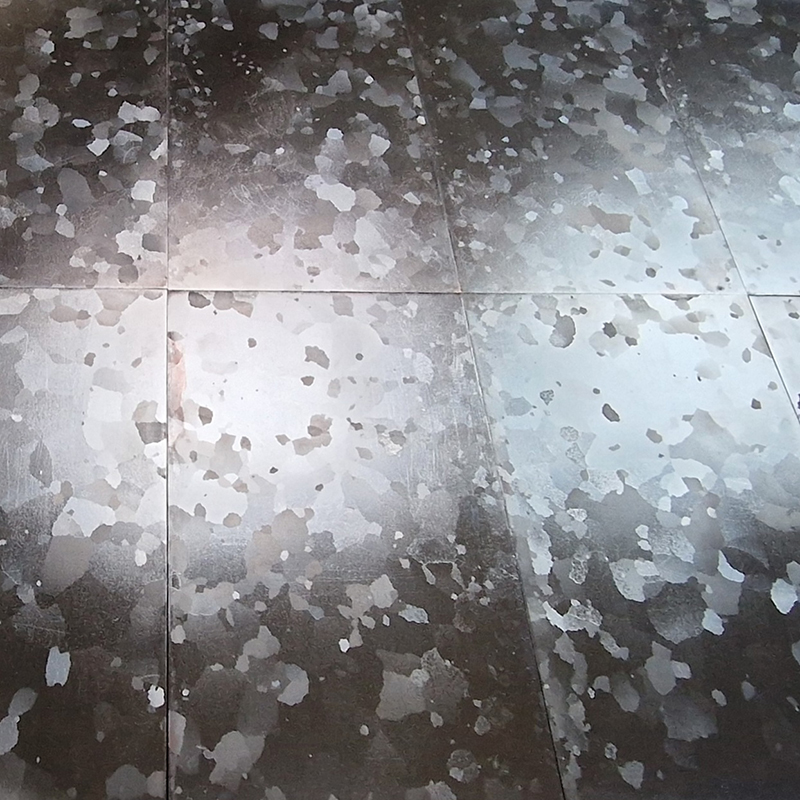
During operation, huts were built in groups of three, each with six large galvanised steel tanks lined with white plastic to diffuse the light and filled with local purified water. Each tank was monitored by extremely sensitive photon detectors which recorded the Cherenkov light emitted as particles passed through the water. At the end of the large array experiment, one of the detectors was opened, and the water was found to be crystal clear and good enough to drink. The proof that water could be kept bacteria-free in a sealed container for over 25 years gave confidence in using the same technology for a future larger cosmic ray detector array to be developed.

Haverah Park was once one of the largest extensive air shower arrays in the world, with an area of 12 km2, but in the end, it just wasn’t big enough.

When Alan Watson and Jim Cronin proposed building a new 3000 km2 shower array, the question from funders was, ‘why do you want to make the array so large?’. The answer is, of course, to discover those known and unknown unknowns, but funders don’t usually like unpredictable outcomes. Luckily their plea was bolstered by the Fly’s Eye Cosmic Ray Detector Array out in the Utah Desert recording the Oh-My-God particle in 1991, it’s energy was 40 million times greater than that of any particles ever produced in any terrestrial particle accelerator. This and other evidence of extremely high energy particles sparked interest in the field of astrophysics and validated the discovery of similar particles at Haverah Park, which had not been taken seriously at the time. This ambitious proposal gained momentum during the 1990s to become the Pierre Auger Observatory in Argentina, with the detector design developed from the water Cherenkov tanks so successfully operated at Haverah Park. The huts here may be in ruins, but their legacy lives on at the world’s largest extensive air shower detector array, which is edging closer to answer the question ‘Where do ultra-high-energy cosmic rays come from?’

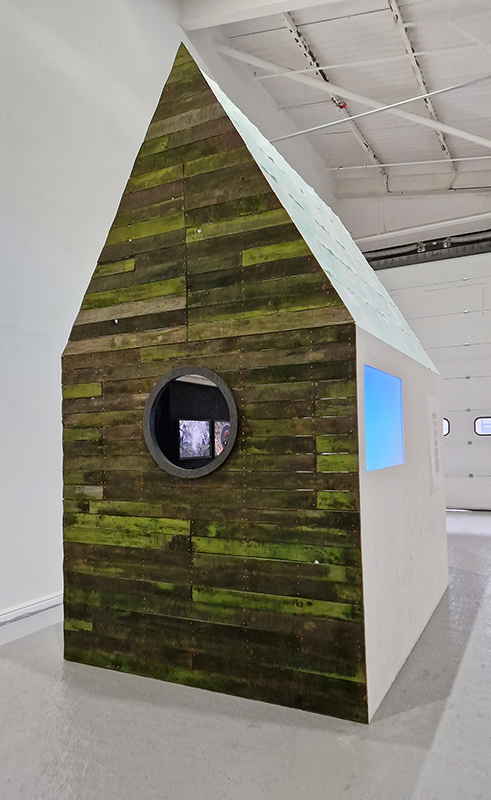
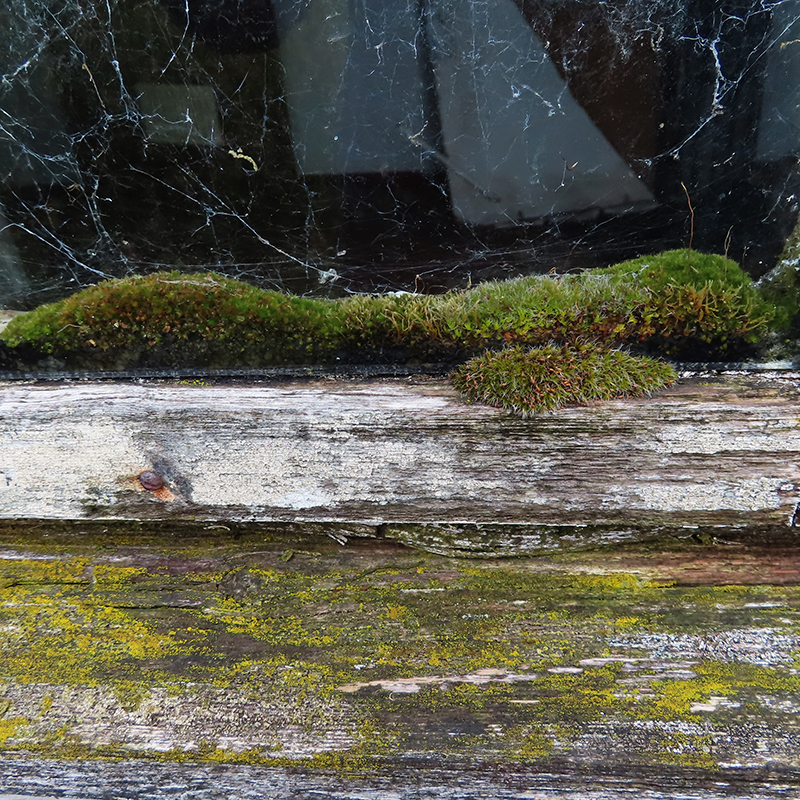
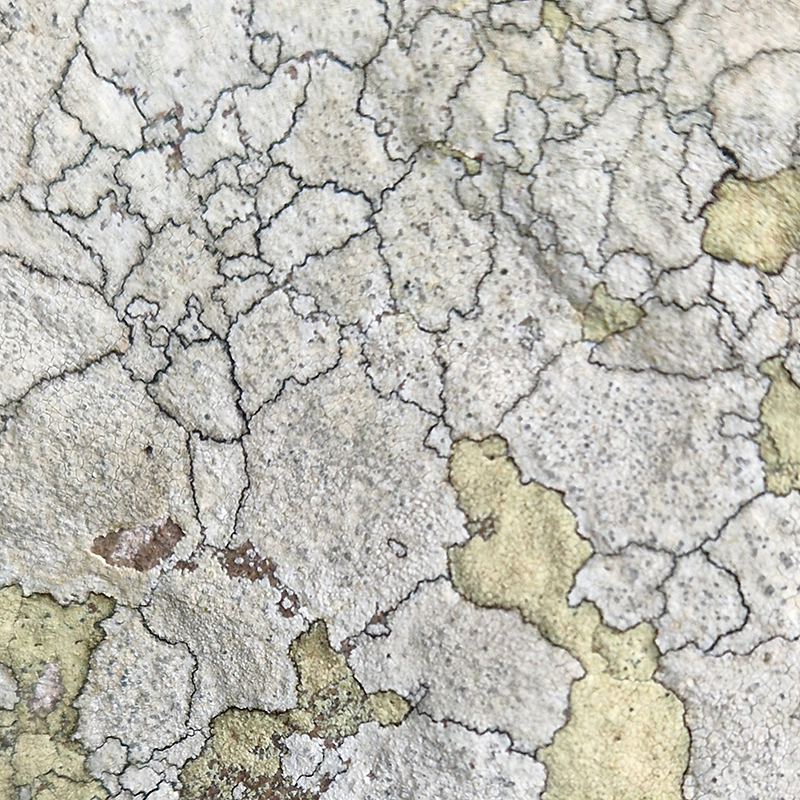
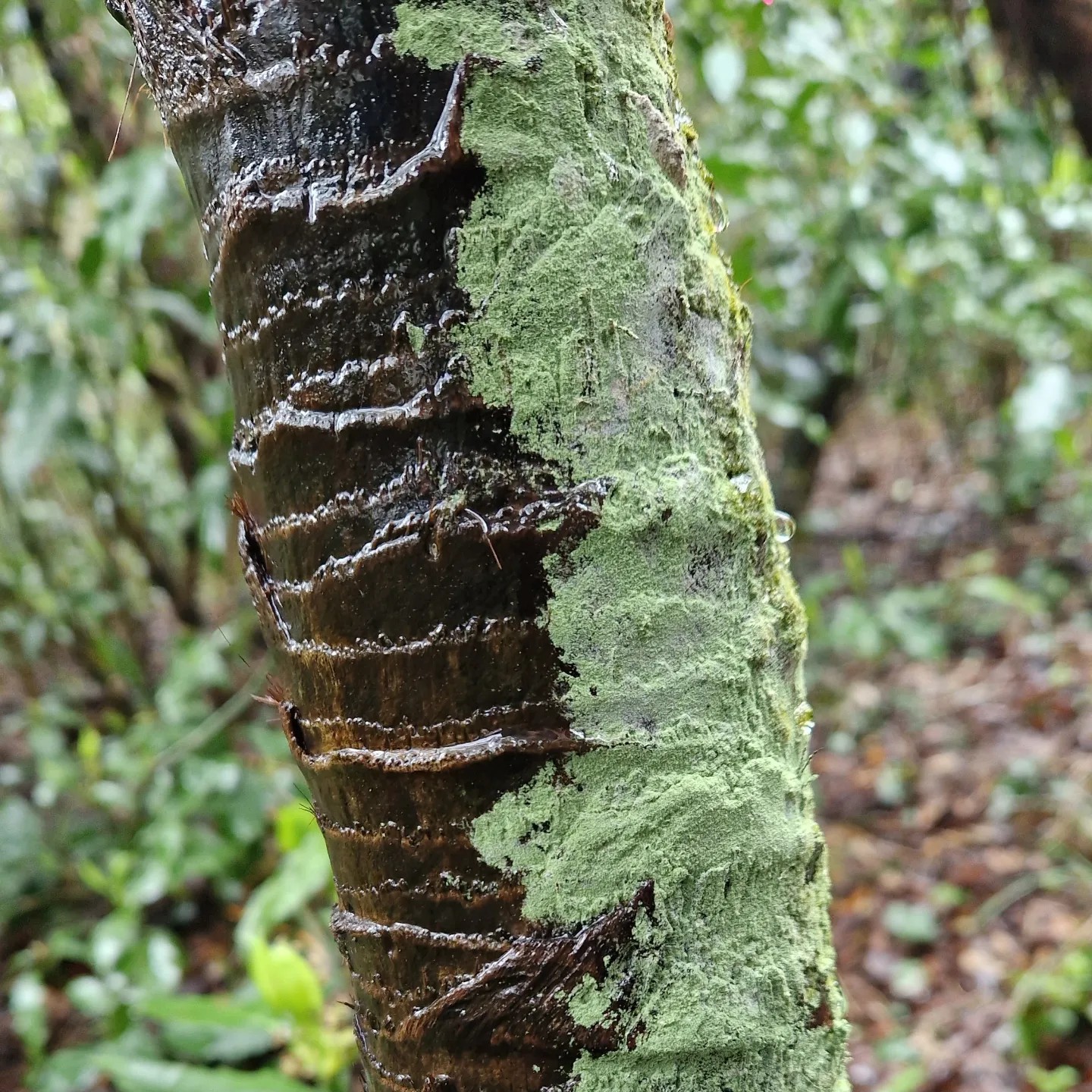
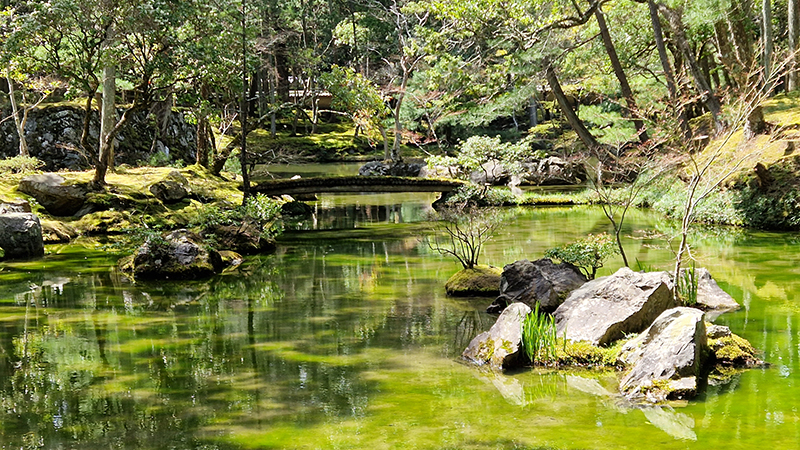
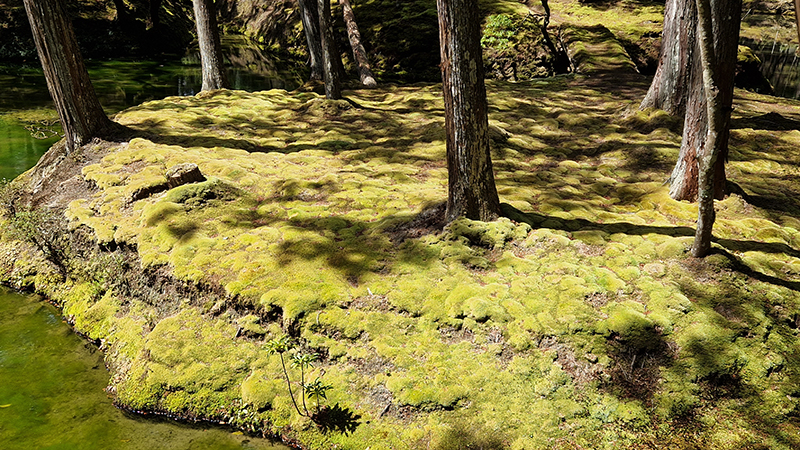
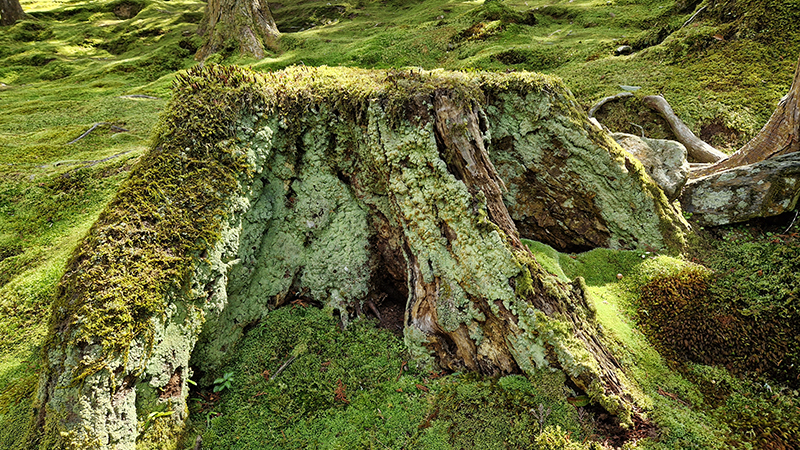
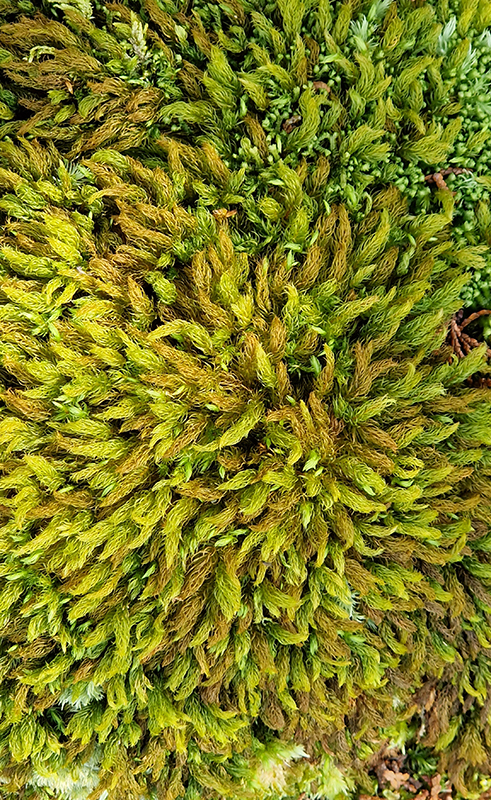
I am looking forward to developing work responding to the legacy of the Haverah Park experiment and building on my experience of creating The Absolute Hut (of absolute potential) New surfaces to explore, more moss, and also lichens here.

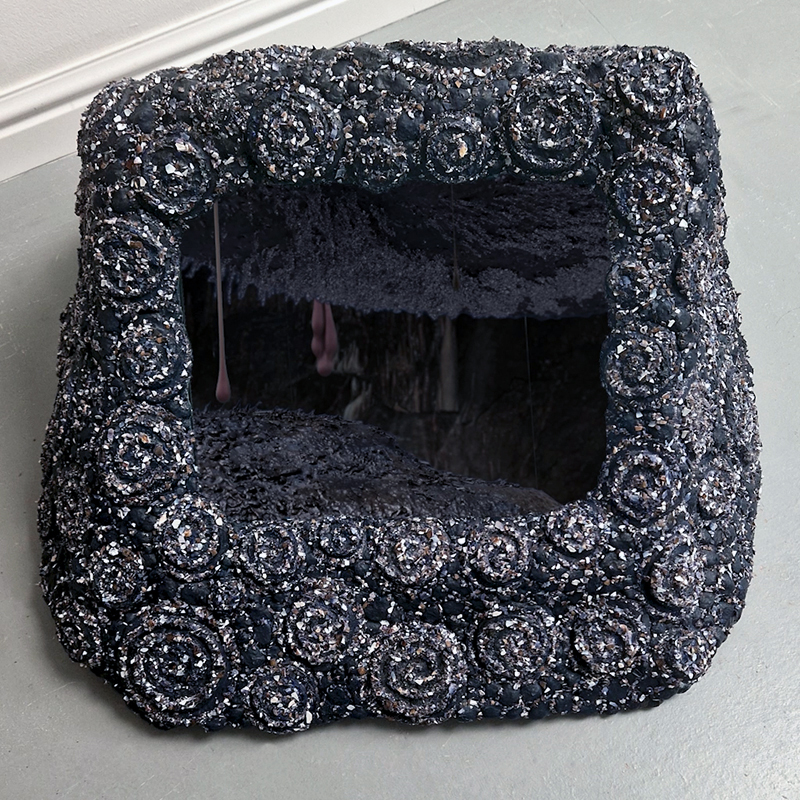
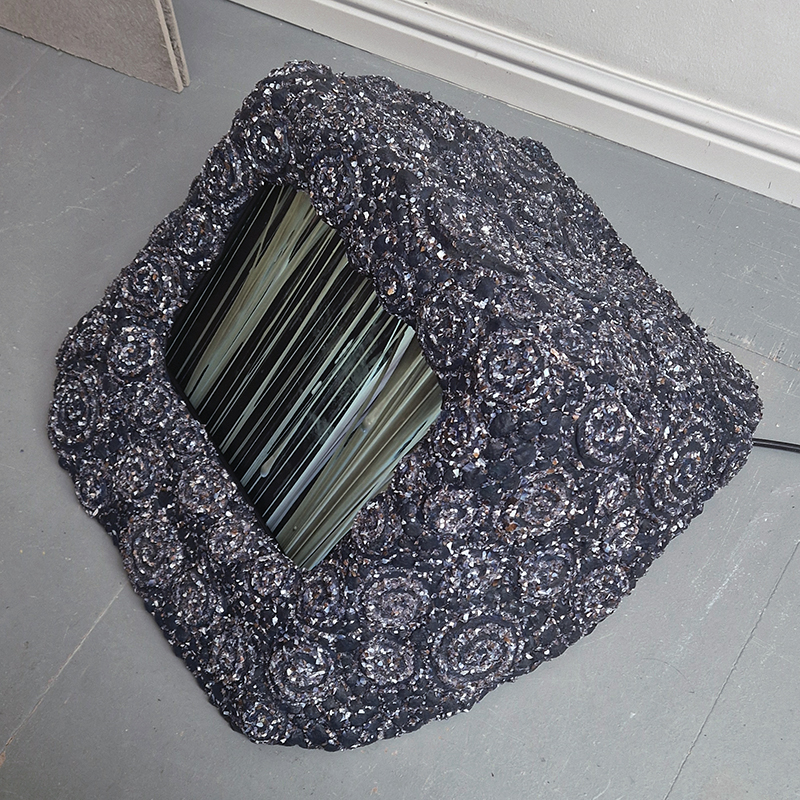
‘The Belly of a Rock’ video has waited a long time for its crusted shell. A hybrid between rock, mollusc, and technology inspired by the chemical conversations and urge to create described by Italo Calvino in his story ‘The Spiral’. We don’t always know what we are creating. Within ‘the belly’ surfaces slide and scrape along lines of fissure, distended innards ooze and rocks moan as they are distorted by untold pressure. The turbulent spiralling of the core births rock and lifeforms acted upon by the drag of the oscillating magnetic field.  

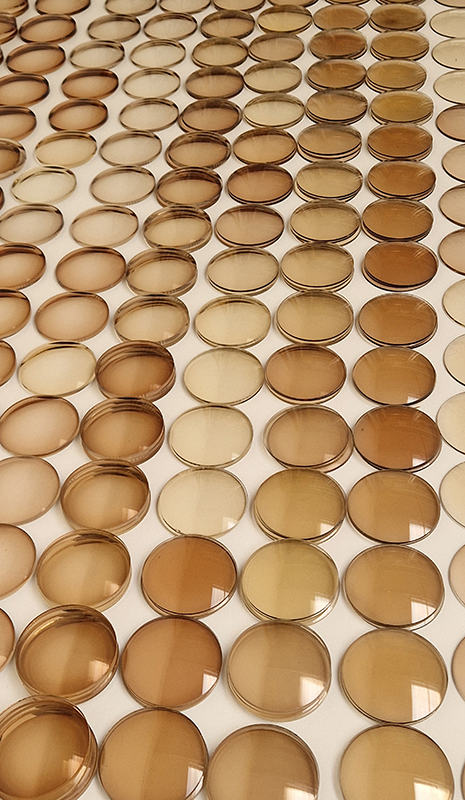
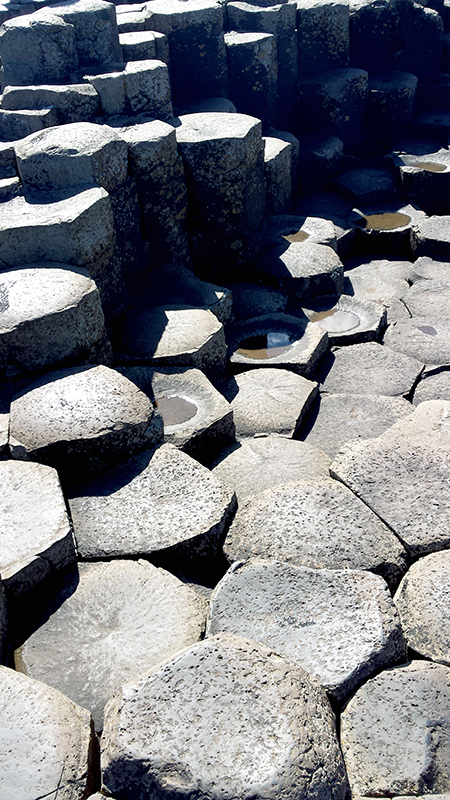
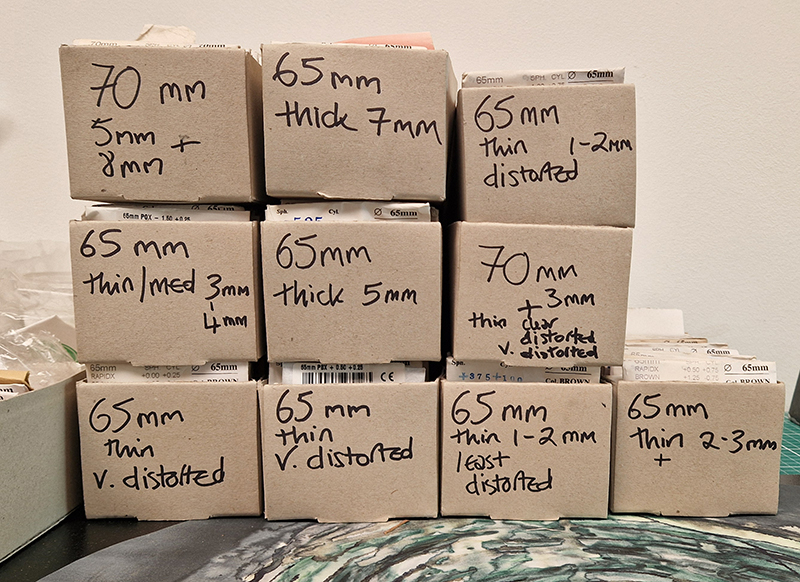
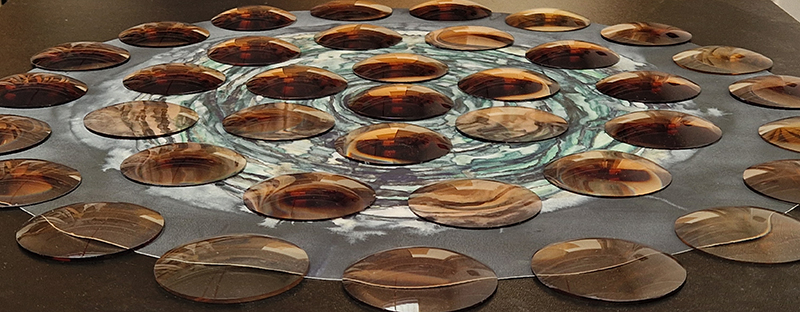
I have acquired a large number of photochromic optical lenses. These I have sorted by diameter, thickness and distortion. Initial thoughts about their use include using them as petri dishes to grow crystals which are embedded into small concrete hexagonal pillars of differing heights with reference to the geology of giants causeway. Using them to create composite windows into a new hut structure filled with video projections referencing the fly’s eye cosmic detector array.

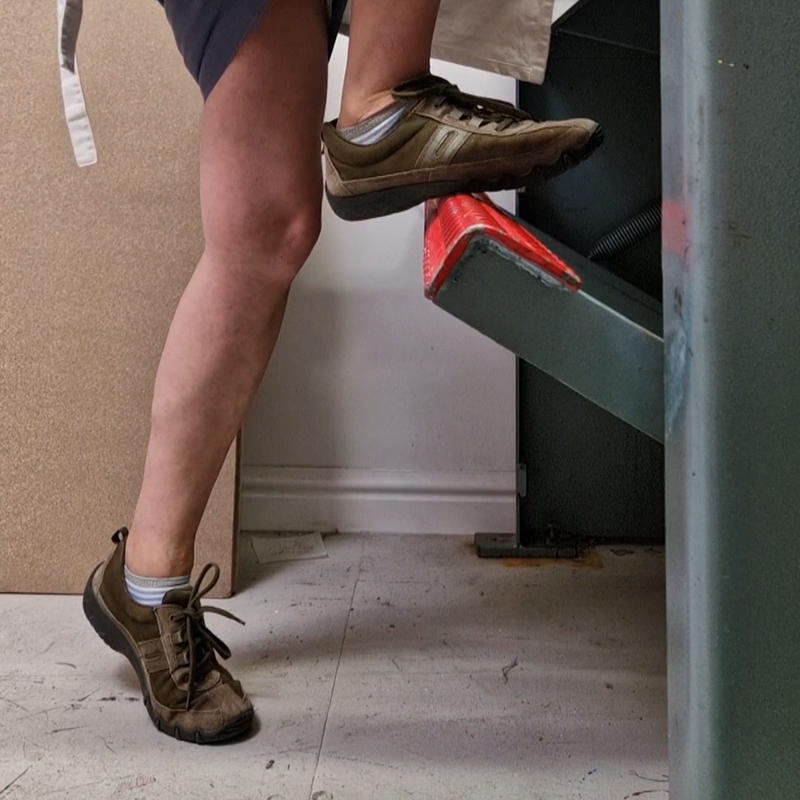
A good workout on the guillotine making 201 cuts in copper sheet in preparation for a new concrete tablet in the Instruments of the Anemoi sculpture series.

Gallery and other outings:

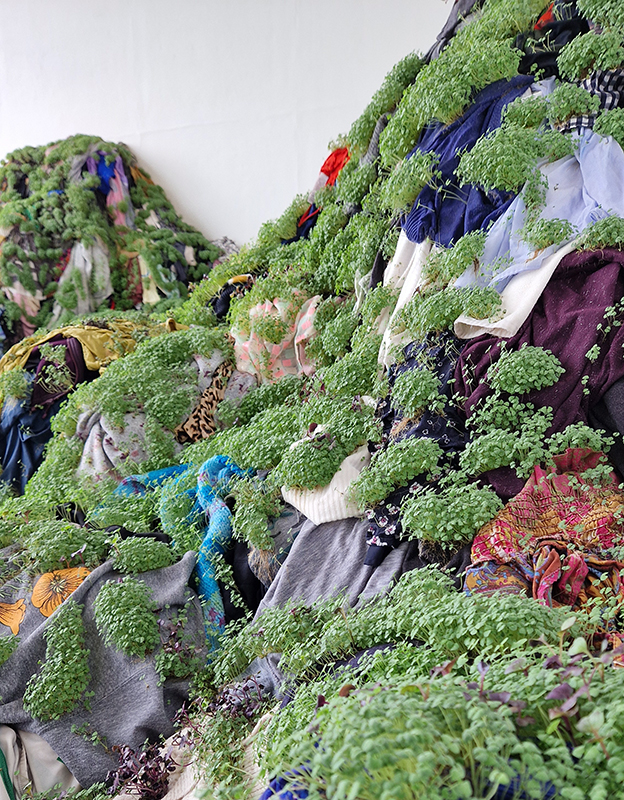
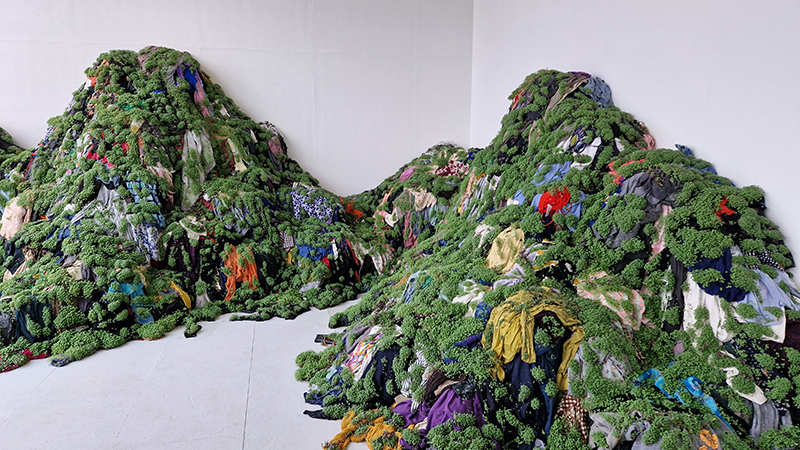
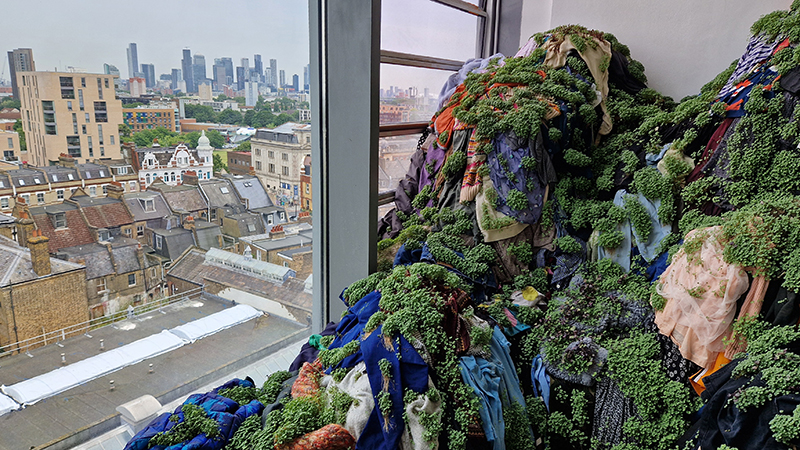
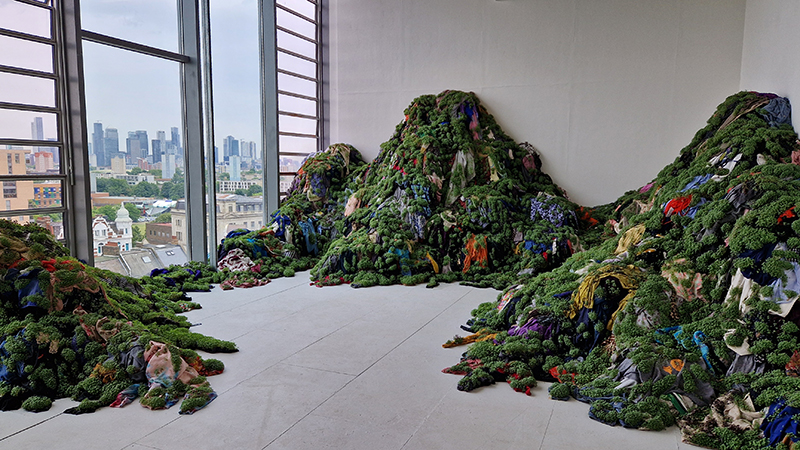
Beverley Duckworth’s installation Surplus at Goldsmiths MFA final show. Beverley’s work is grown through a diligent process of care. Found materials are literally given new life in the seeds which are embedded into them, which then transform and colour them. The installation includes an intermittent sound element of recordings of the melody played by waste trucks in Taiwan to call people to bring out their rubbish.

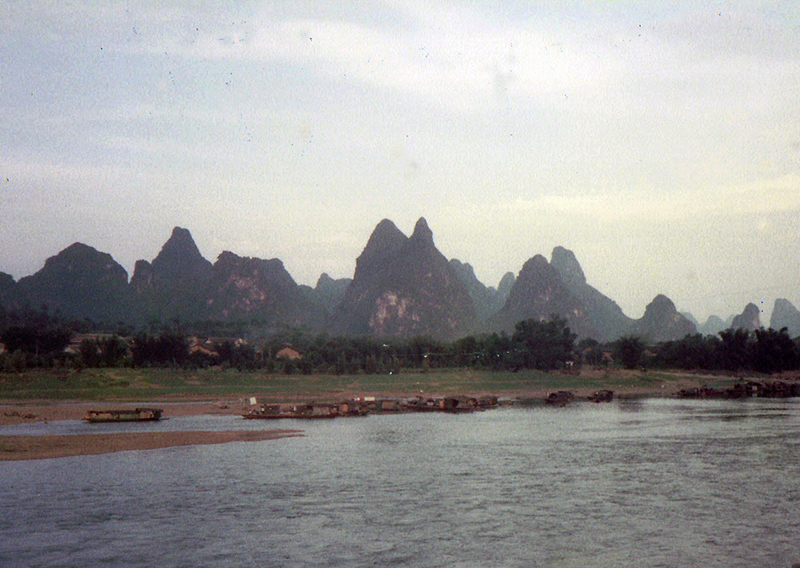
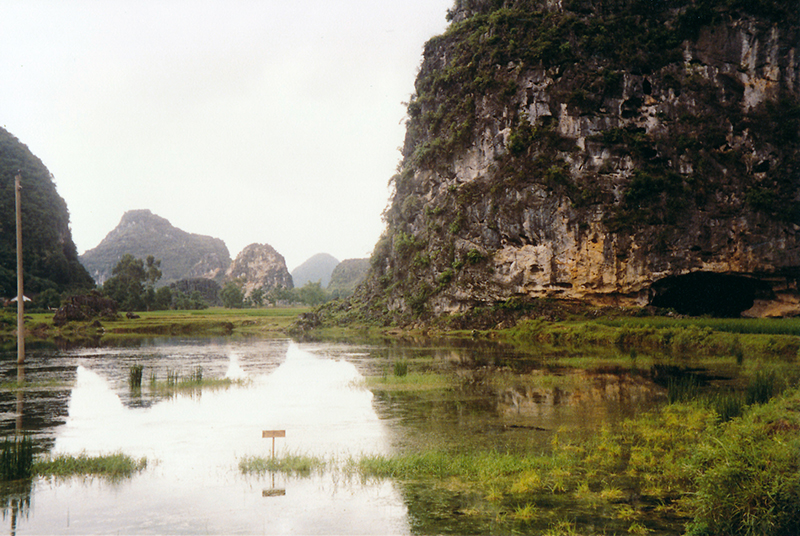
Apparently I wasn’t the first person to be struck by similarities to the landscape of Yangshuo near Guilin China. I visited in 1984 and think it is no longer a quiet little village.

It was the first time I had been back inside the Ben Pimlott building at Goldsmiths since by own graduation, a scary twenty years ago. The building was brand new then and the views with little visible green fed into my installation Re:construction – a large screen print with tiny viewing hole to a tiny oasis amidst the grey, albeit a synthetic one.

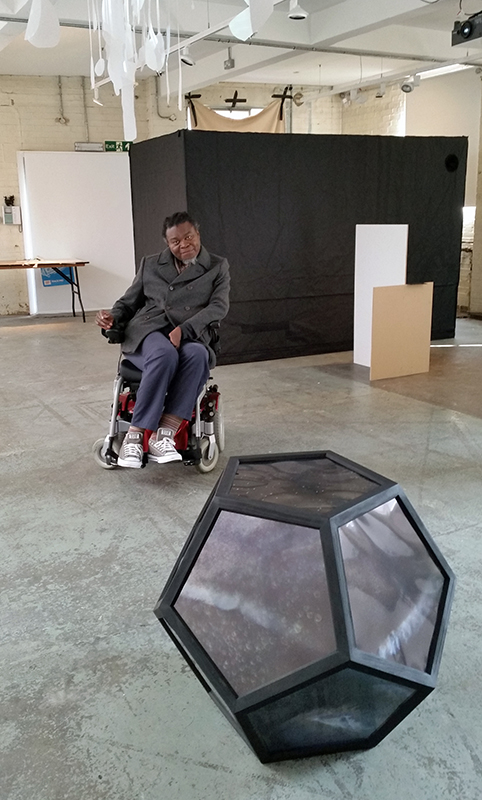
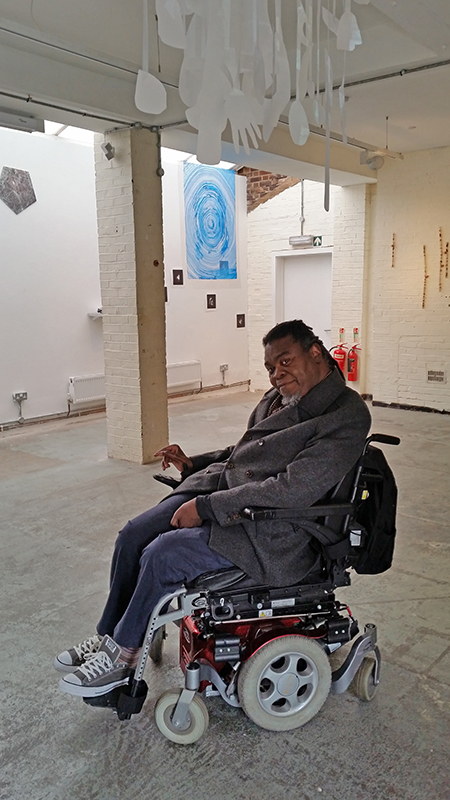
Yinka Shonibare Suspended States at Serpentine South. Horrors of war and colonialism are filed under dazzling colour, birds on the brink of extinction stare in plea or accusation, beacons of light in the darkness come from miniature replicas of sanctuaries.

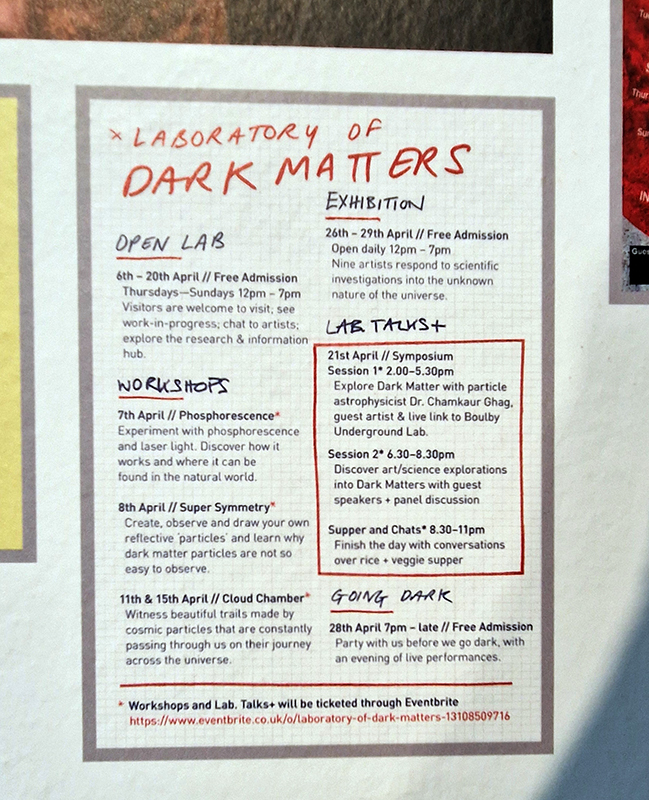
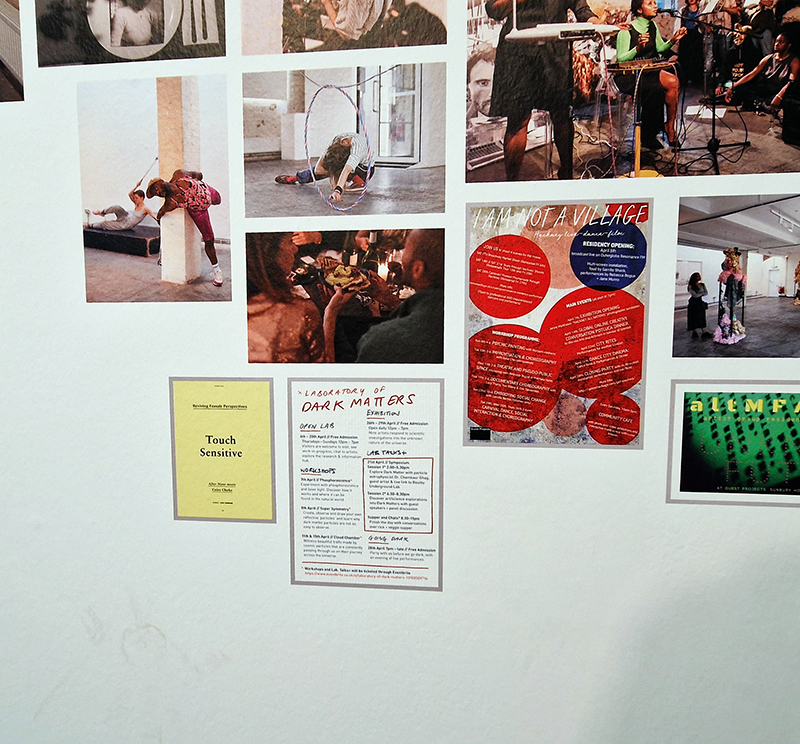
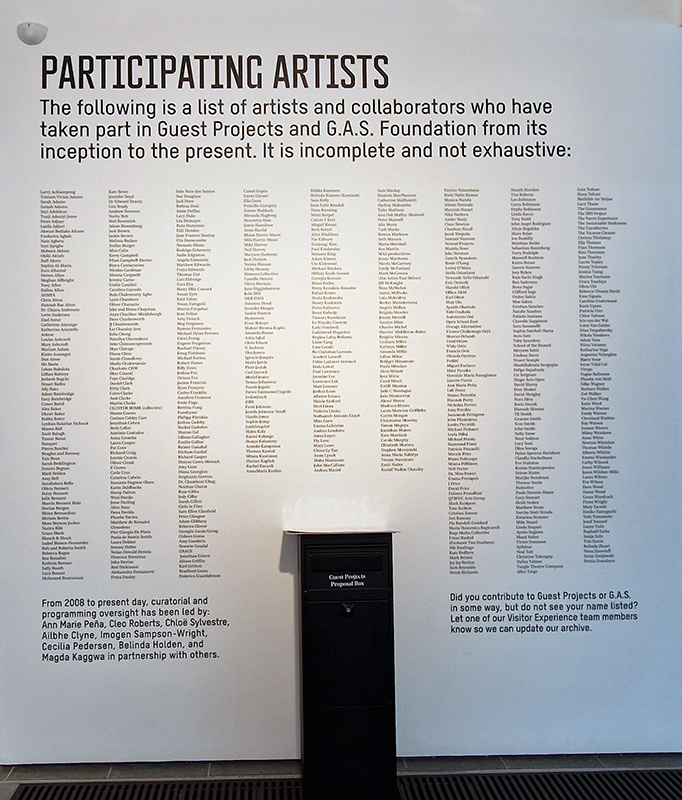
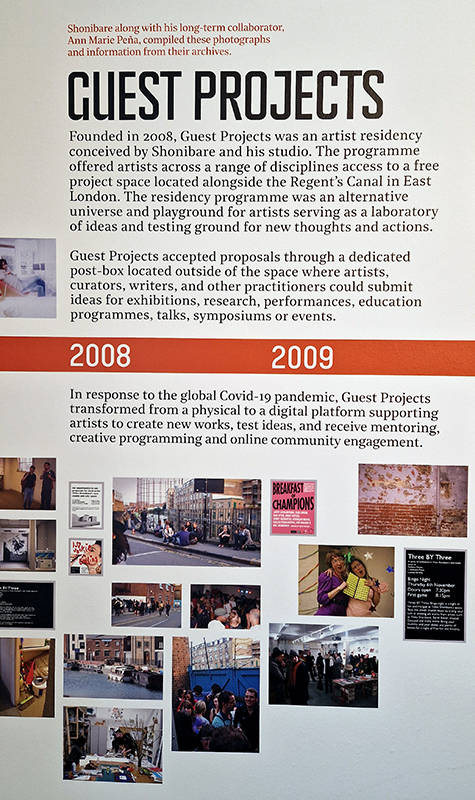
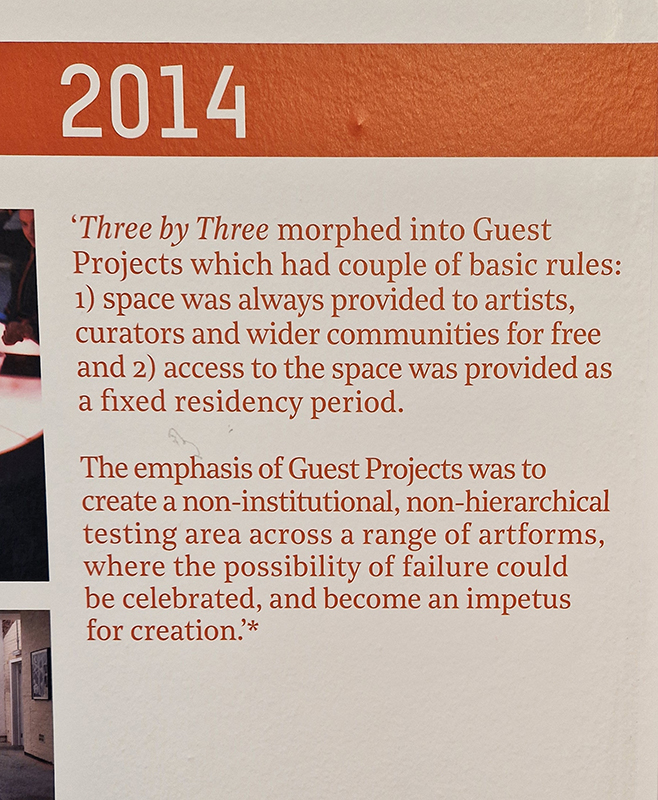
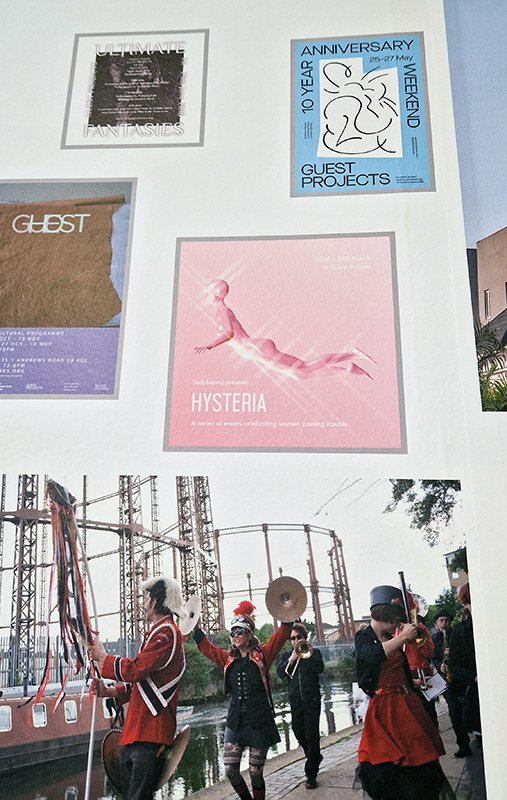
Yinka’s socially engaged inclusive practice spills over into real help for artists and communities. The exhibition celebrates Guest Projects and G.A.S. Foundation in Lagos. Guest Projects is such a generous idea and I have been so lucky to benefit from it with the project Laboratory of Dark Matters

Being awarded a month’s residency at Guest Projects was crucial to the success of Laboratory of Dark Matters as a site for developing ideas and subsequently touring the project. Wonderful to meet Yinka and also to be part of the selection committee for the next round of projects.

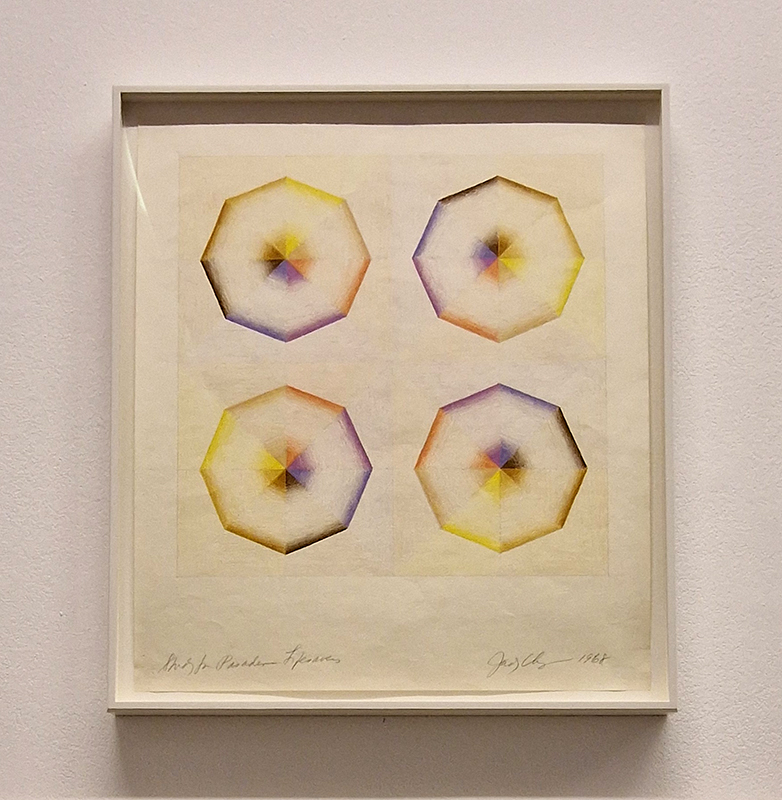
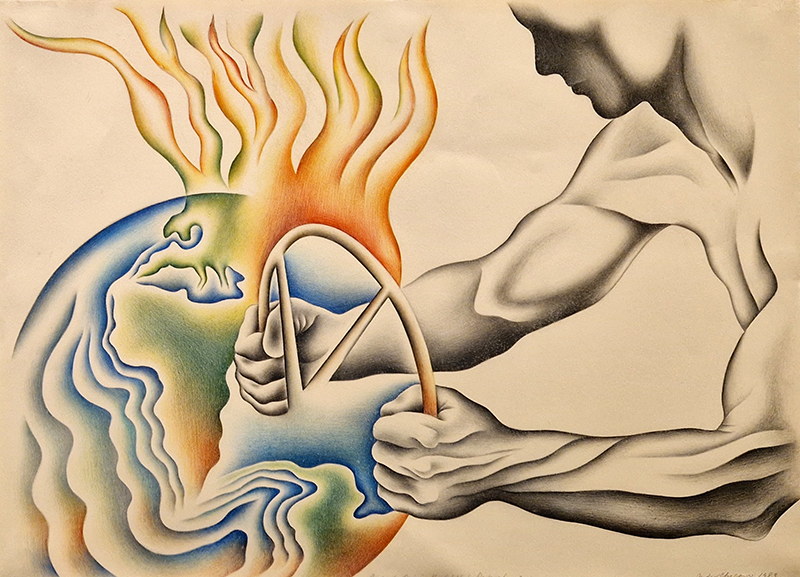
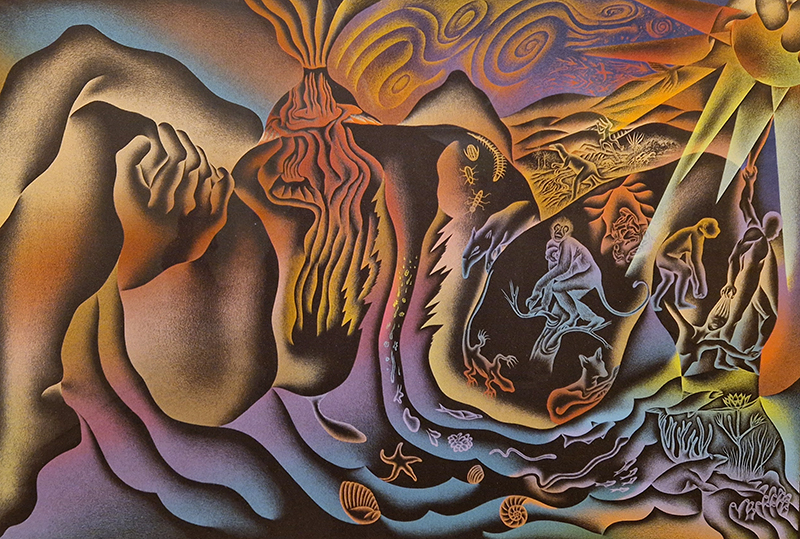
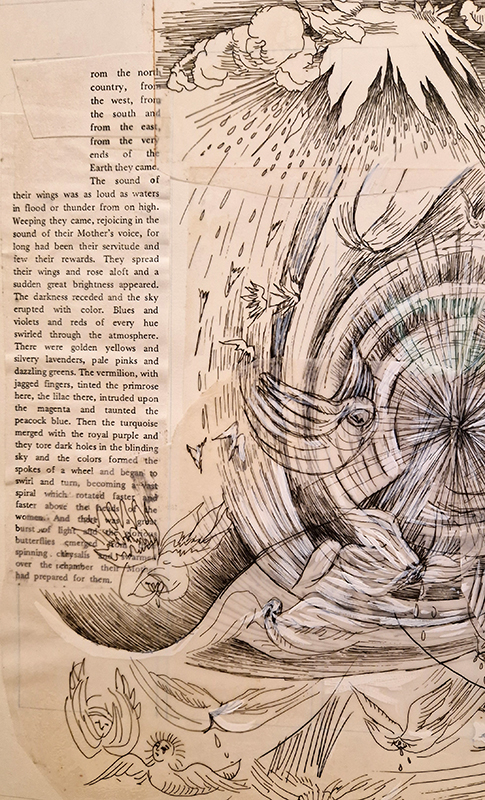
Judy Chicago Revelations at Serpentine North. The highlight of this show is the video documenting The Dinner Party (1974-79) installation and the preparatory drawings and sample plate. What a shame the actual installation wasn’t here, I will have to visit the Brooklyn Museum, New York sometime to see it. The research, collaborations, crafts and designs that went into creating it was phenomenal.

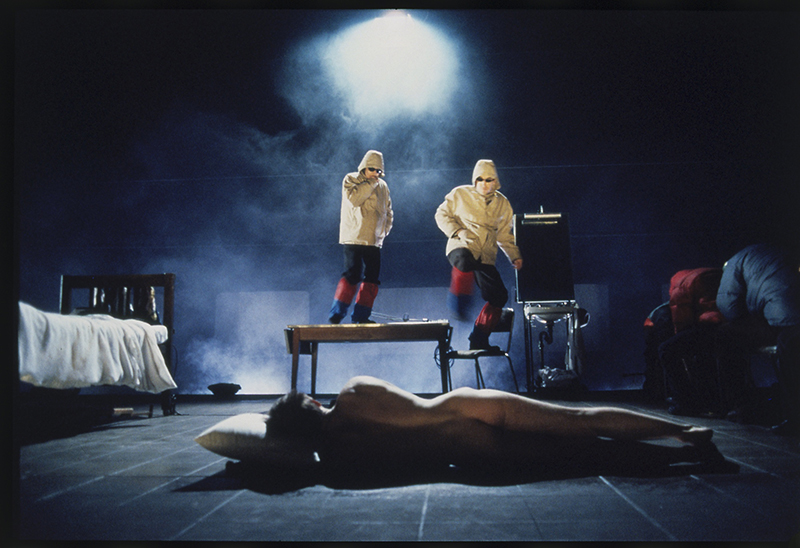
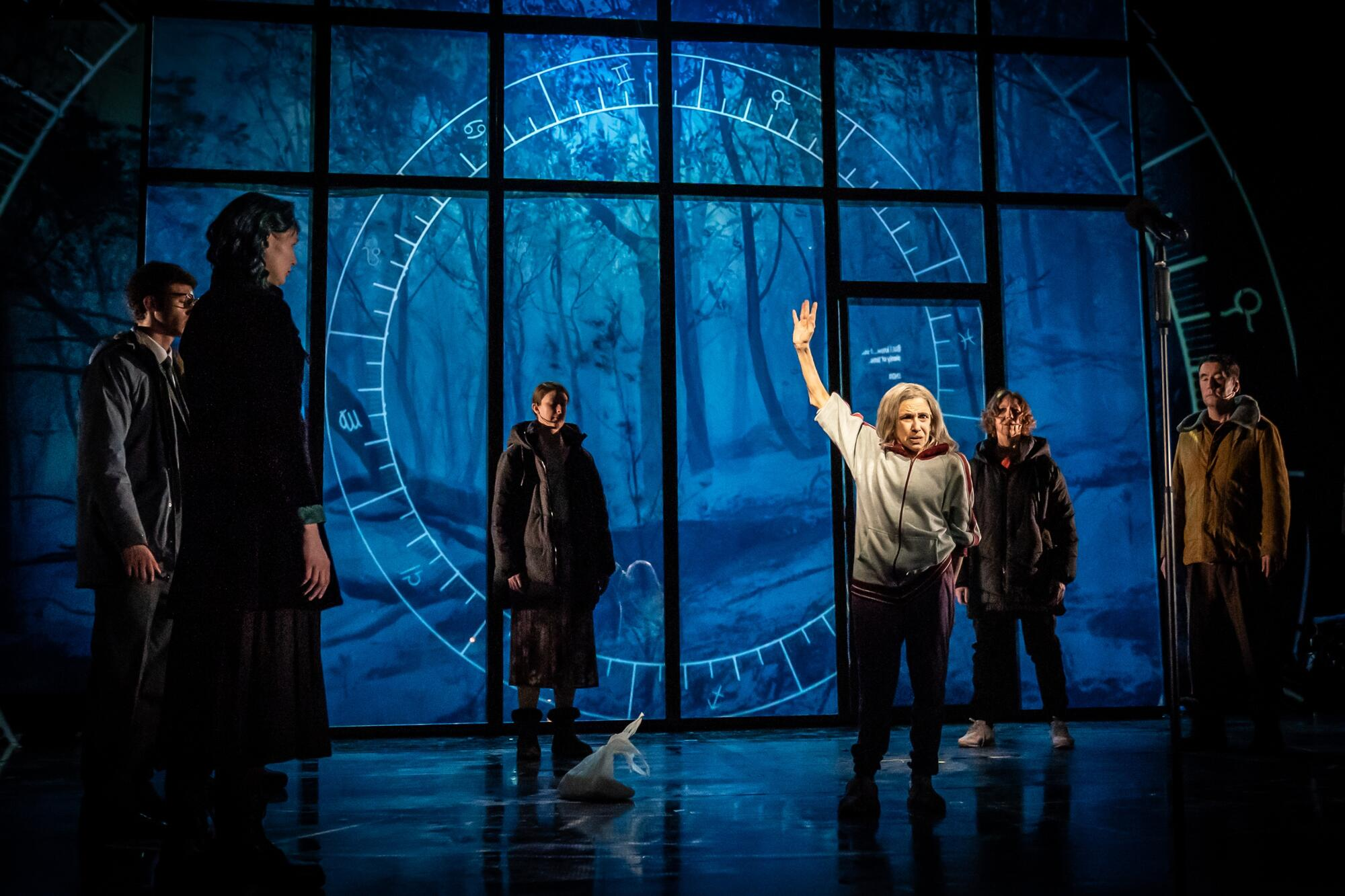
Saw Complicité’s excellent Mnemonic at The National Theatre, 25 years after first seeing it at Riverside Studios. ‘A body is found in the ice, and a woman is looking for her father while a man searches for his lost lover. Mnemonic is as much about origins as it is about memory, and remembering what is lost. Mnemonic asks us: what is our place in the natural world? How have human relationships with the environment shaped patterns of migration? Who are we, and where do we come from? ‘

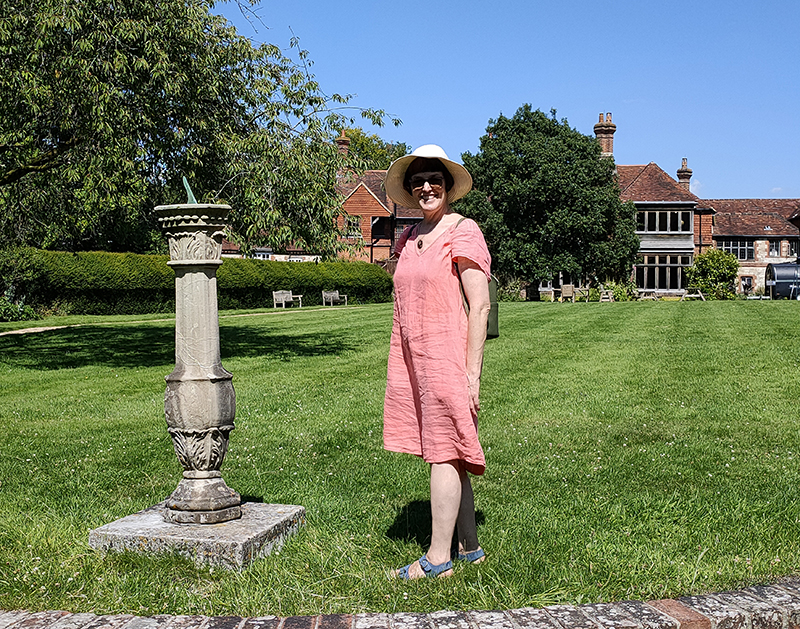
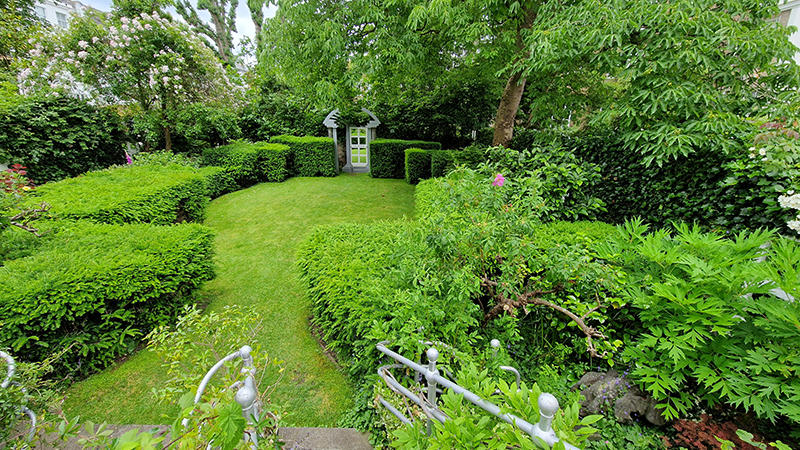
Visited the delightful mellow brick country home and extensive gardens of pioneering naturalist Gilbert White at Selborne. His book ‘The Natural History of Selborne’ (1789) has never been out of print since it was published more than 230 years ago. He was brought to many people’s attention, including mine, during the pandemic and lockdowns of 2020 when writer Melissa Harrison included his diary readings in her podcast The Stubborn Light of Things.

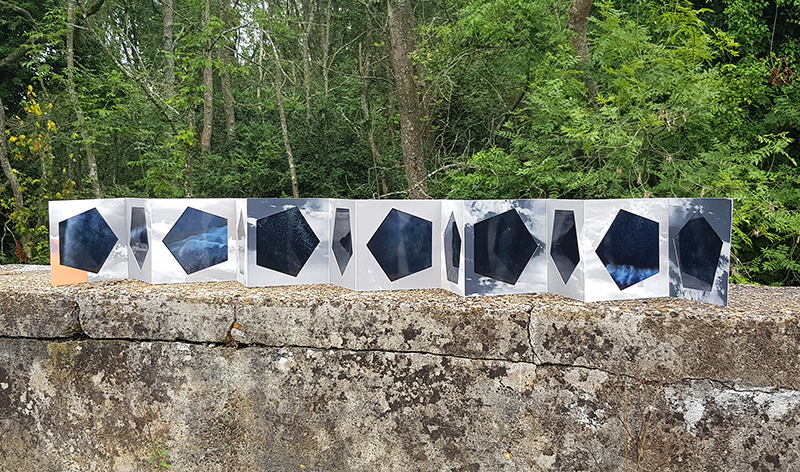
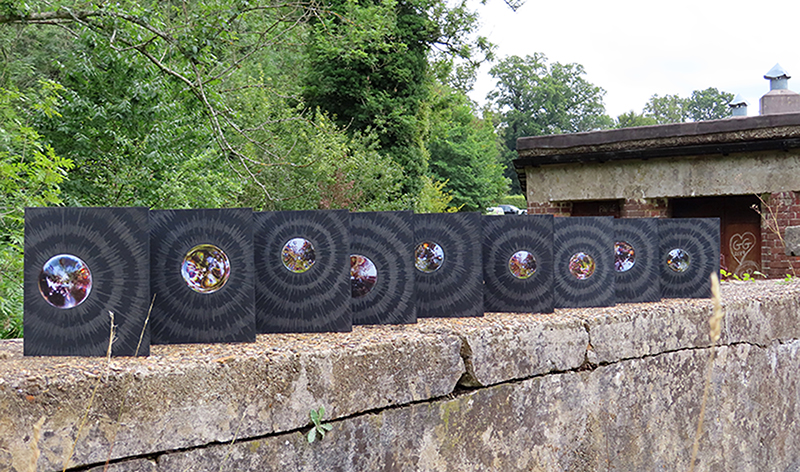
Delighted to have both my artists books In/Out and Unbound accepted into the Art, Science and Creativity exhibition curated by Liverpool Book Art at Liverpool Central Library in the autumn. The starting point for this exhibition is a quote from Albert Einstein:

“Where the world ceases to be a stage for personal hopes, aspirations, and desires, and we stand before it as free creatures, full of admirations, questions and contemplation, we enter the realm of art and science. If we describe what we see and experience in the language of logic, we do science; if we convey connections through forms that are inaccessible to the rational mind, but intuitively recognisable as making sense, we do art.”

Open Studios 2024 – showing the two channel video installation Radical Pair in my studio.

In Thames-side Studios Gallery showcase of studio holders works I presented one of the sculptures from the Instruments of the Anemoi series.

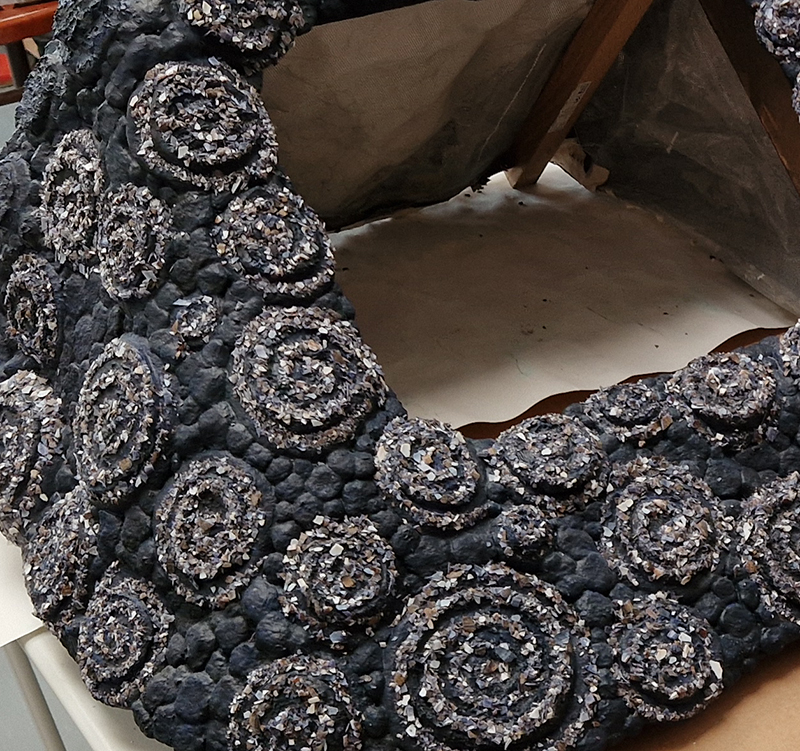
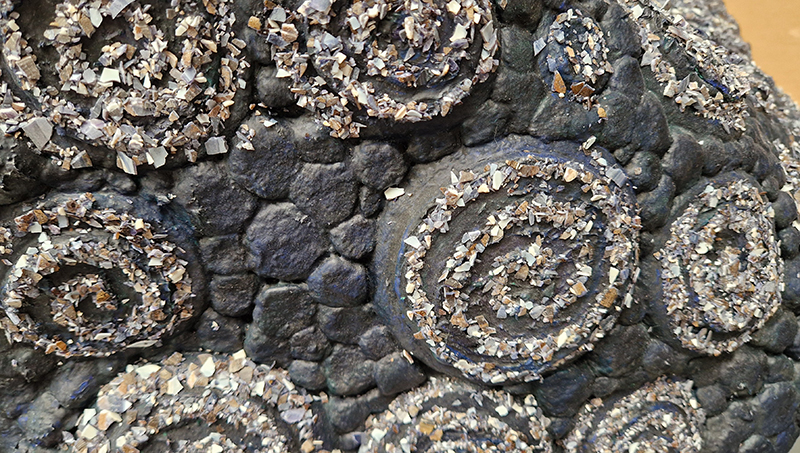
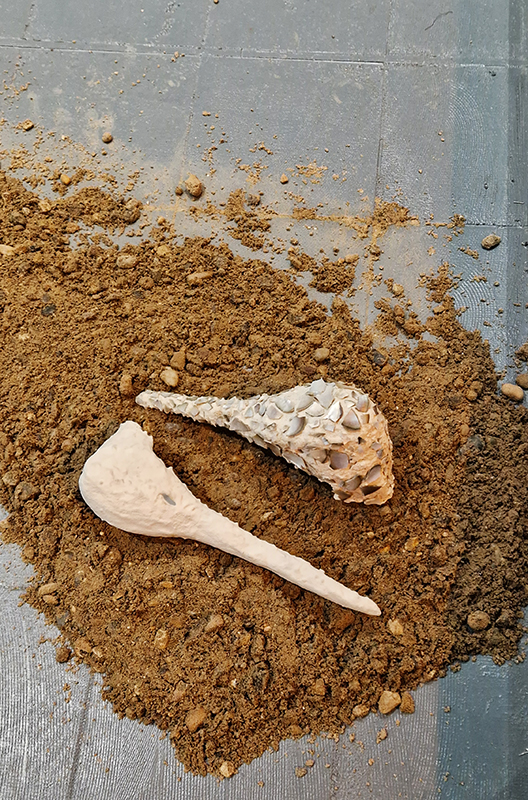
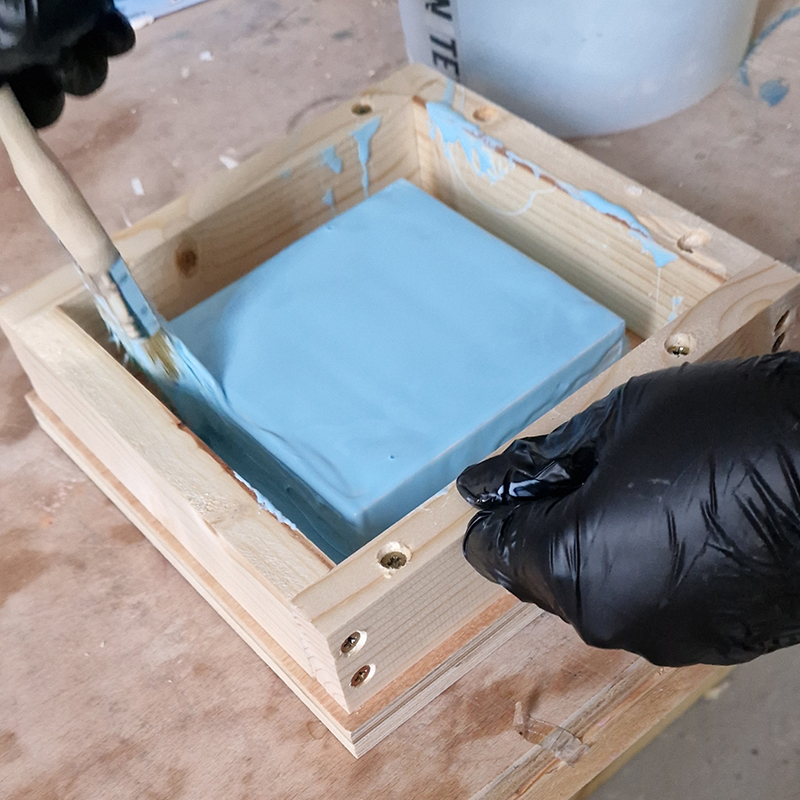
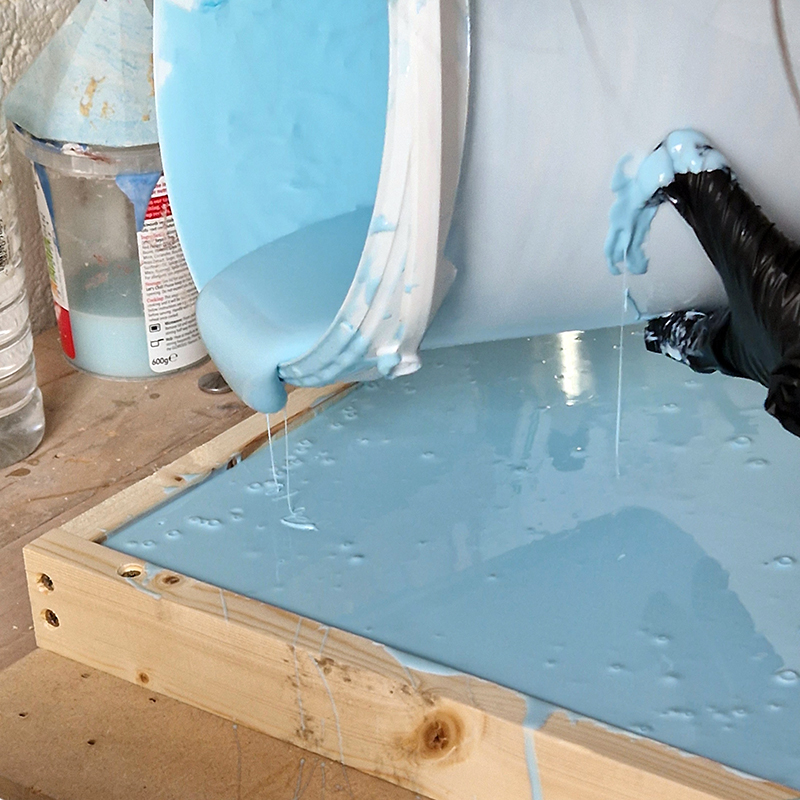
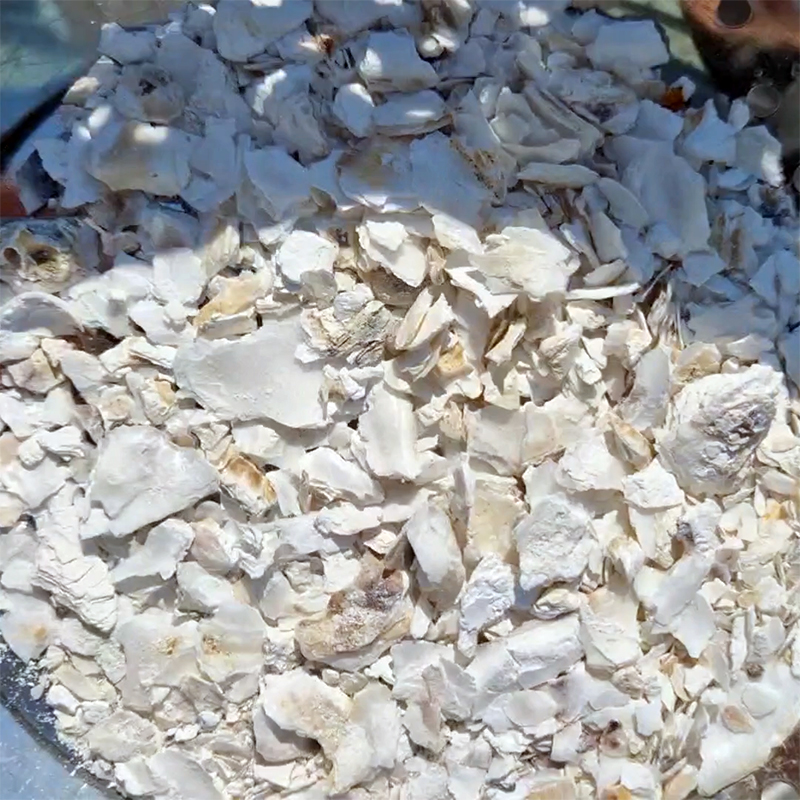
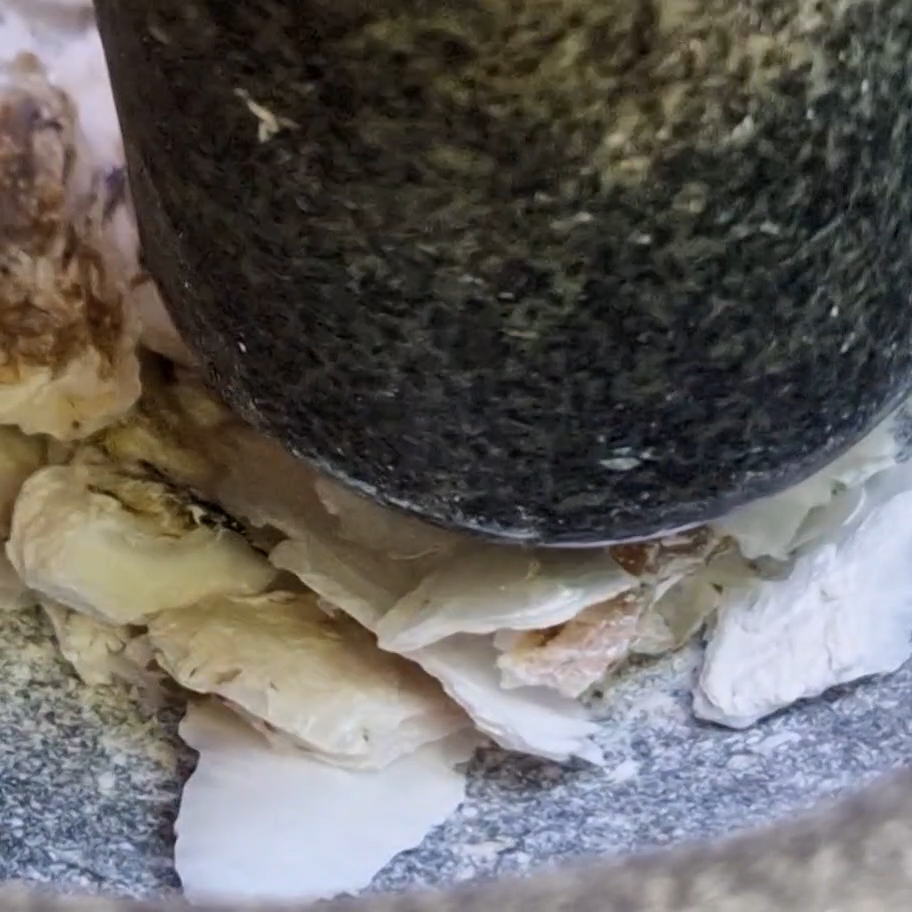
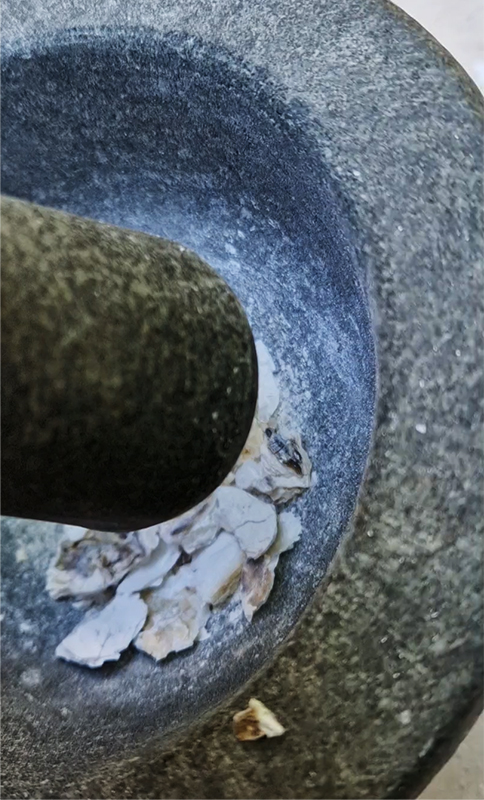
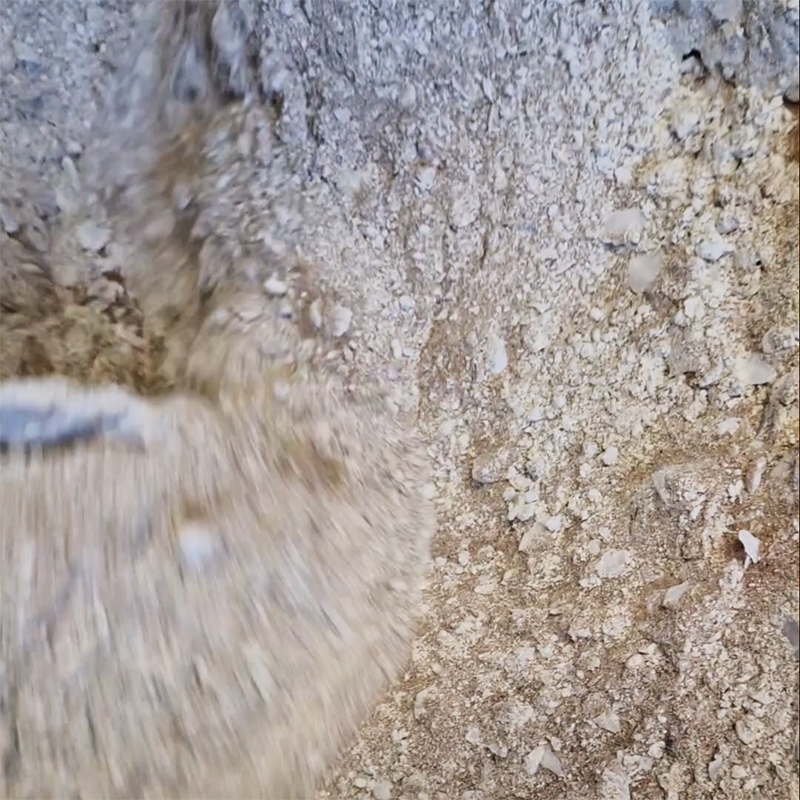
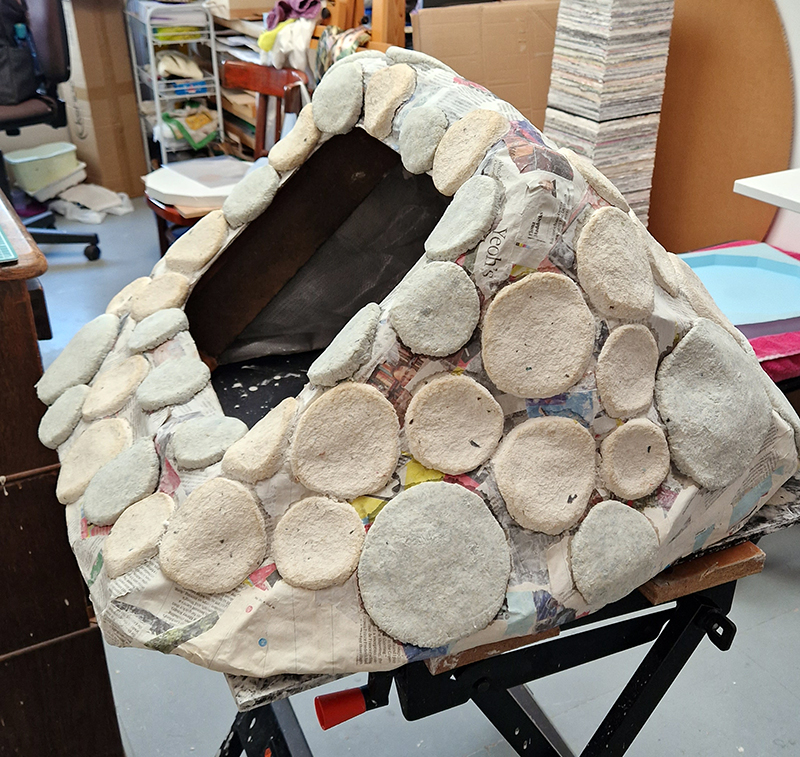
Work in progress on hybrid sculpture Belly of a Rock adding spirals of crushed mussel shells to the crusted casing that will house a monitor screen. Earth rotates faster at the Equator than it does at the poles causing spiral convection currents in the liquid iron outer core. Earth’s magnetic field is created in this swirling outer core where magnetism is about fifty times stronger than it is on the rocky surface of the Earth.

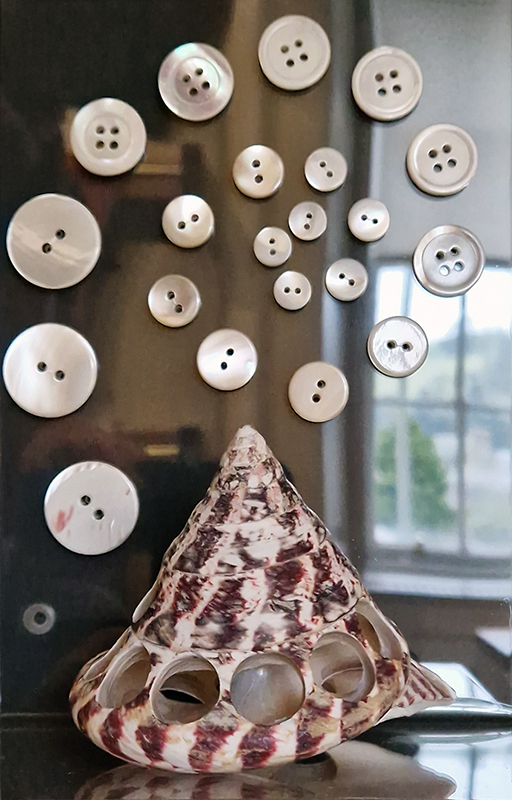
Trochus (sea snail) shell buttons seen at Borders Textile Towerhouse, Hawick. The buttons made from these molluscs found in warm waters are used for the Borders quality knitwear industry. Genuine shell can apparently be identified from imitation by touch, it always feels cool even in hot temperatures.

We do not yet know another form of life other than carbonaceous life. All life on Earth uses the same biochemistry of carbon.

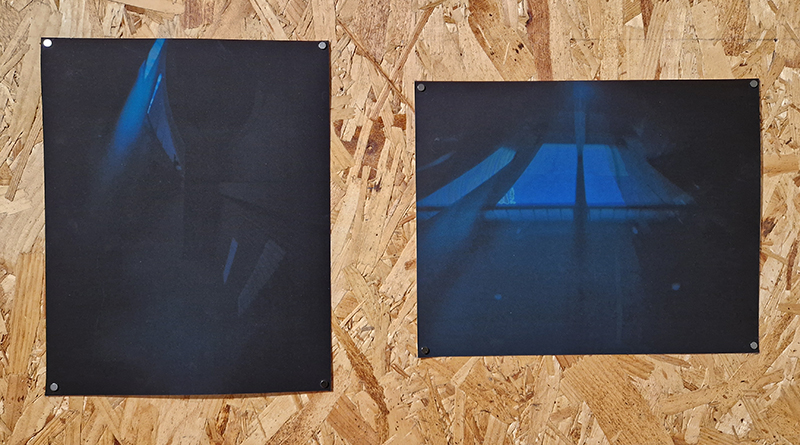
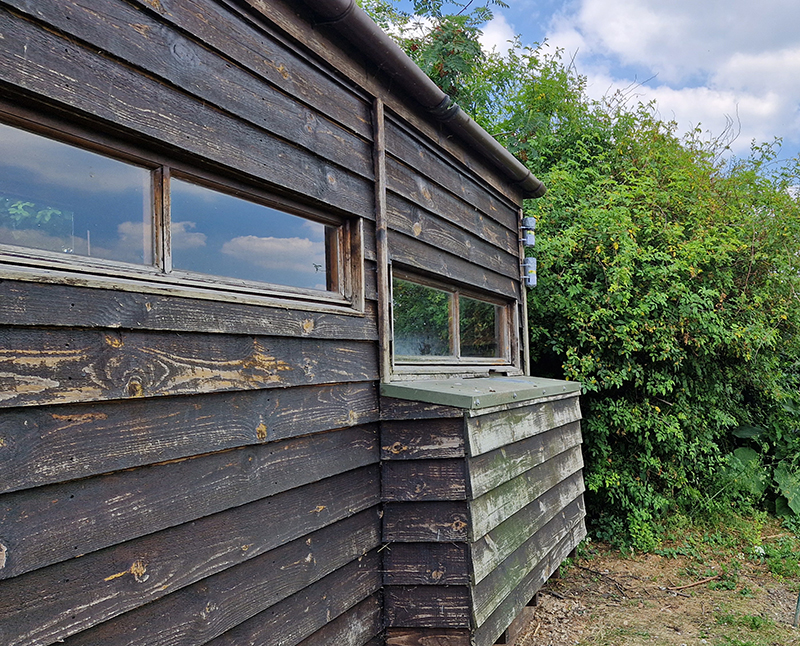
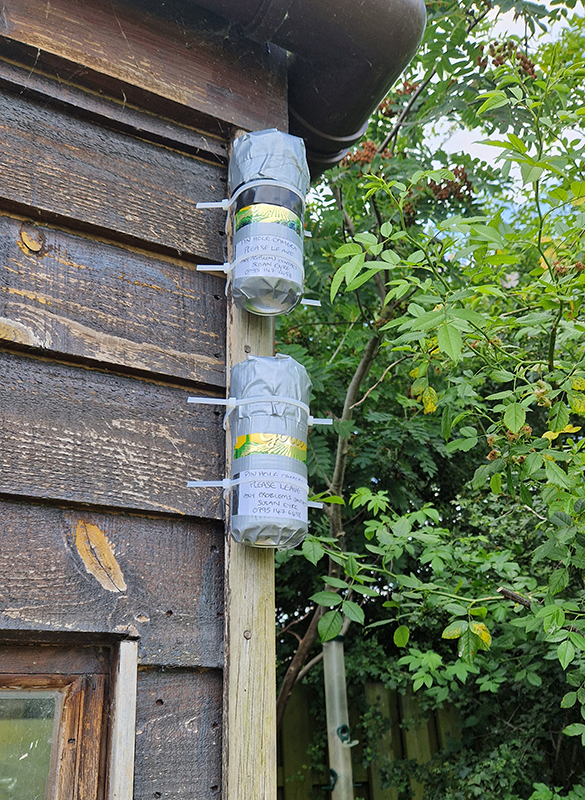
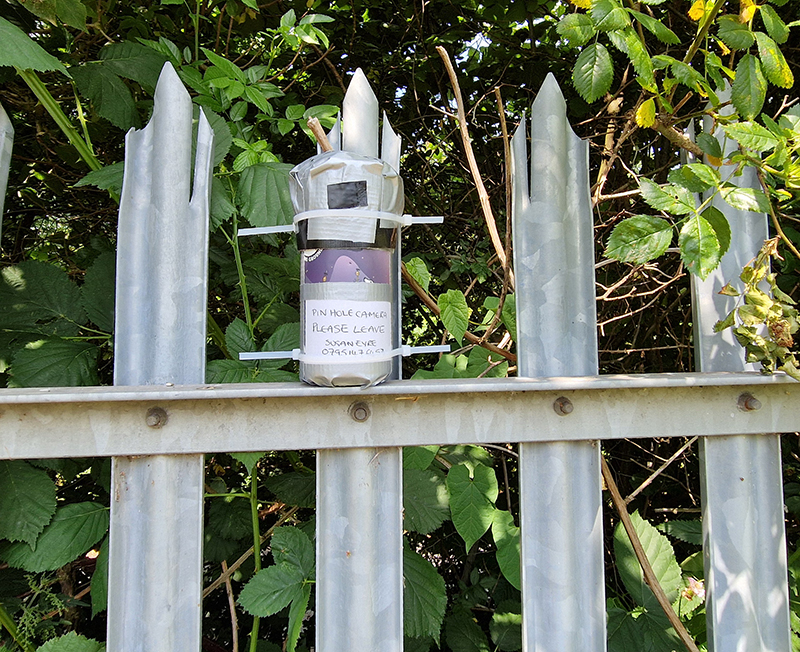
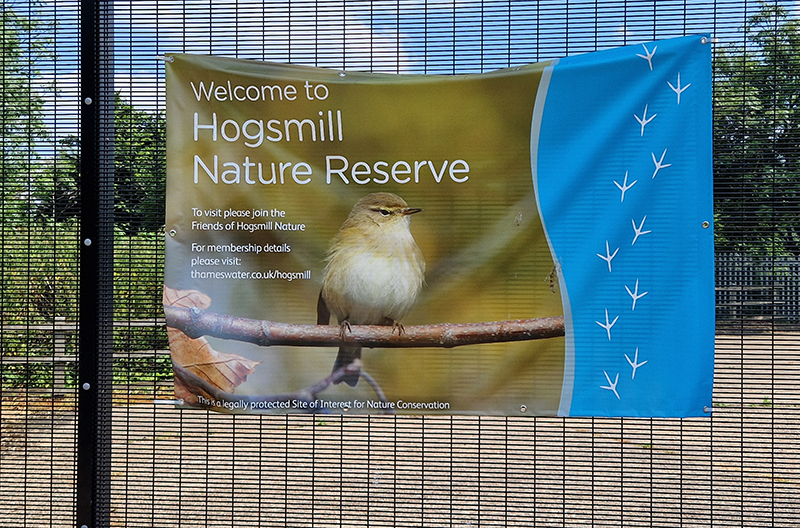
Reminded by the solstice, I finally installed some solargraph pin hole cameras at Hogsmill Nature Reserve. I have had the tins prepared for a long while so not sure if they will work. The lagoon was worryingly green.

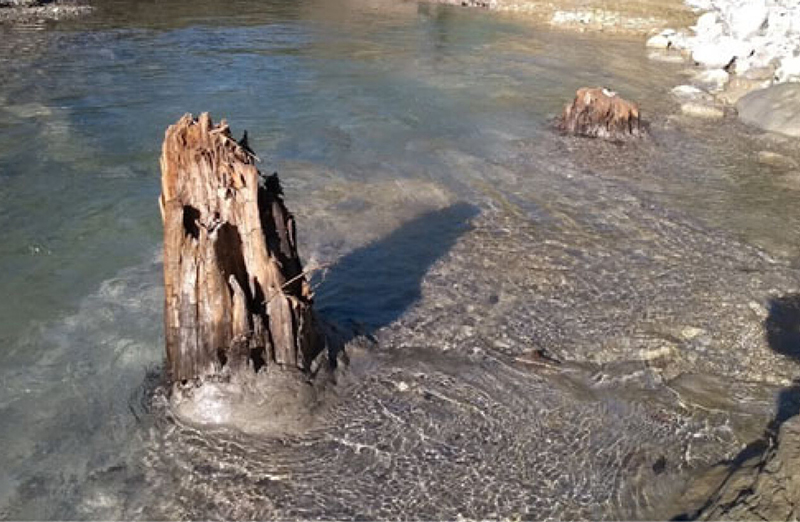
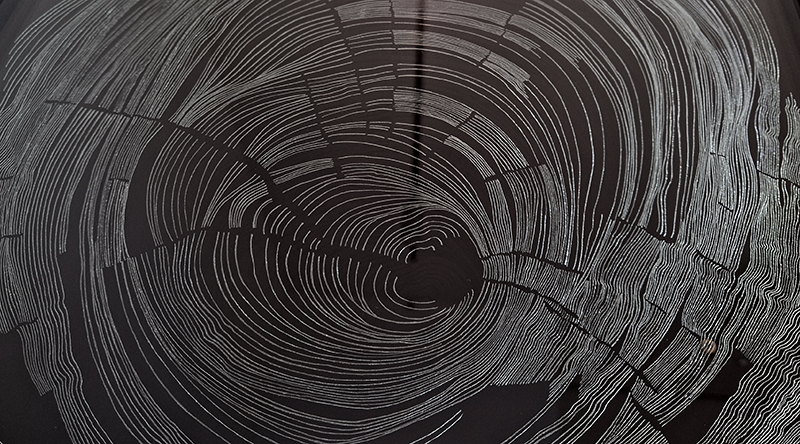
A recent Royal Society research article reveals that extreme solar events such as solar flares and coronal mass ejections can release bursts of energetic particles towards Earth which are found preserved in the rings of partially fossilized trees as huge spikes in carbon-14. Through the individual analysis of ancient tree rings from subfossils found in the Drouzet River in the Southern French Alps, scientists discovered evidence of a giant solar storm dated to around 14,300 years ago. This event appears to have been enormously more powerful than the Carrington Event of 1859 when fires broke out in telegraph offices.

Radiocarbon is produced in the upper atmosphere as cosmic rays collide with particles in the atmosphere. It is absorbed by plants during photosynthesis and enters the food chain of organisms and because it decays at a known rate, scientists can use it to determine when the organism died using carbon dating processes. Solar storms tend to deflect the number of energetic particles coming from outer space but a violent storm will create much more radioactive carbon-14 which will subsequently be absorbed by life on Earth. Radiocarbon dating is not exact because the atmospheric 14C/12C ratio varies due to cosmic ray activity, nuclear explosions and solar activity. Still from Cosmic Chiasmus: crossing the universe.

For scientists using the radiocarbon dating technique it is important to know the carbon-12 content of the contemporary atmosphere. A calibration curve of carbon-12 in the atmosphere is provided by an international body using many archive records but the most precise and accurate are based on dendrochronologically dated tree-ring series. Stills from Time Crystals.

Other evidence of this major radiation storm 14,300 years ago is also seen in ice cores having a higher concentration of an isotope of beryllium extracted from Greenland. These incredibly powerful geomagnetic storms are known as Miyake events. Nine Miyake events have been identified in the last 15,000 years, the most recent being around 774 CE.

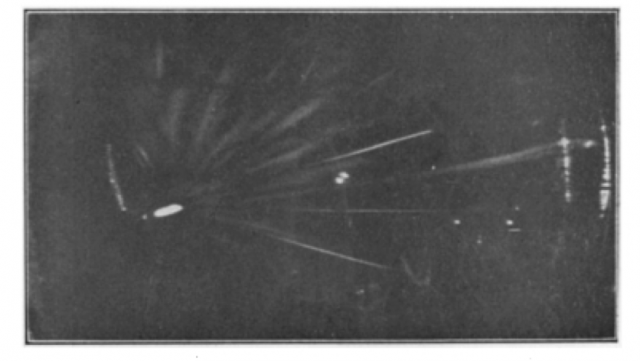
Radioactivity was discovered by Henri Becquerel while working on a series of experiments on phosphorescent materials in 1896. Cosmic Rays were discovered by balloon enthusiast Victor Hess in August 1912. He went almost 5.5km up in a hydrogen filled balloon with a balloonist and a meteorologist equipped with an electrometer which could read the level of radiation. This expedition was to determine the source of radiation which was bewildering scientists working on radiation such as Marie Curie who found some radiation registered on their equipment when they removed the source of radiation and even when instruments were shielded by a lead casing. C.T.R. Wilson was also baffled by apparent radiation seen in his cloud chamber, which he had developed to study atmospheric phenomena. One of the first images from Wilson’s cloud chamber –

A cloud chamber is a box containing a supersaturated vapor. As charged particles pass through, they ionize the vapor, which condenses to form droplets on the ions. The tracks of the particles become visible as trails of droplets, which can be photographed. In 1911 Wilson presented his first rough photographs of particle tracks at the Royal Society in London. In 1929 Hans Geiger and Walter Müller developed a gas filled ionization detector that registers individual charged particles and was ideal for studying high-energy cosmic rays. Bruno Rossi further developed the Geiger counter and demonstrated that the Earth’s magnetic field bends incoming charged particle showers. In 1936 Seth H. Neddermeyer and Carl D. Anderson discovered the Muon as most common cosmic particle in cosmic ray showers. In 1938 Pierre Auger observed showers with energies of 1015 eV – 10 million times higher than any known before.

In 1947 Patrick Blackett presented a paper in which he suggested that Pierre Auger emitted by high-energy cosmic rays contributed to the light in the night sky. In September 1952 a simple experiment by Bill Galbraith and John Jelley allowed the first observation of Cherenkov light produced by cosmic rays passing through the atmosphere. By the end of the decade, observation of Cherenkov radiation in the atmosphere had been developed further as a means for studying cosmic rays. I will be looking further at Cherenkov radiation in the coming weeks as I begin research on the historical site of Haverah Park in North Yorkshire, the site of an extensive cosmic ray air shower detection array which led the world for two decades in studies of cosmic rays of the highest energies. Haverah Park array used water Cherenkov detectors. I will also be looking at the cosmic ray detection innovations of Astronomer Royal Sir Arnold Wolfendale

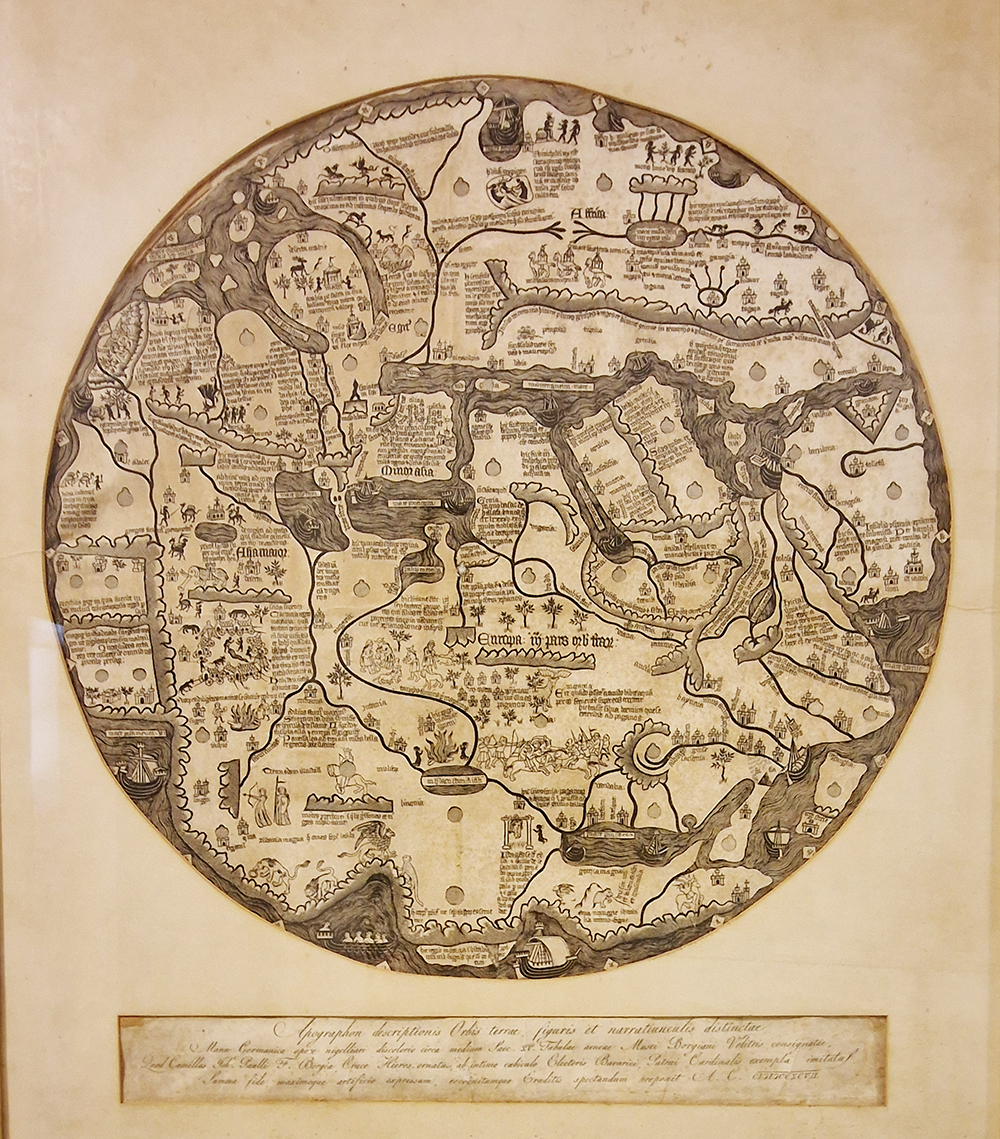
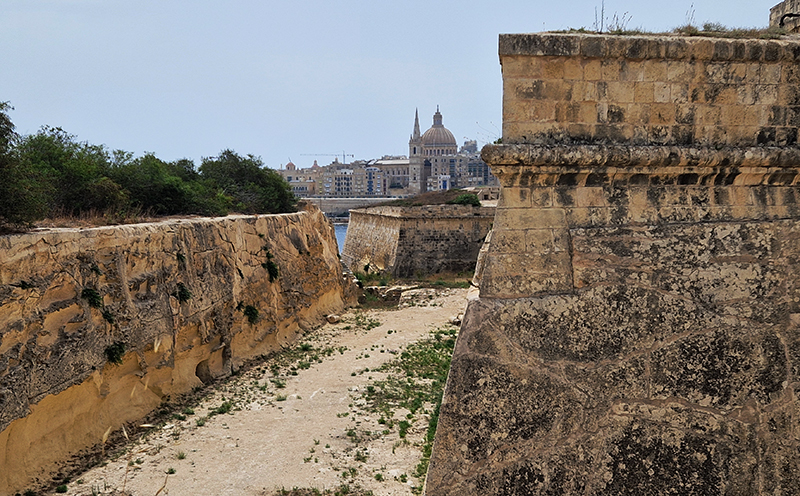
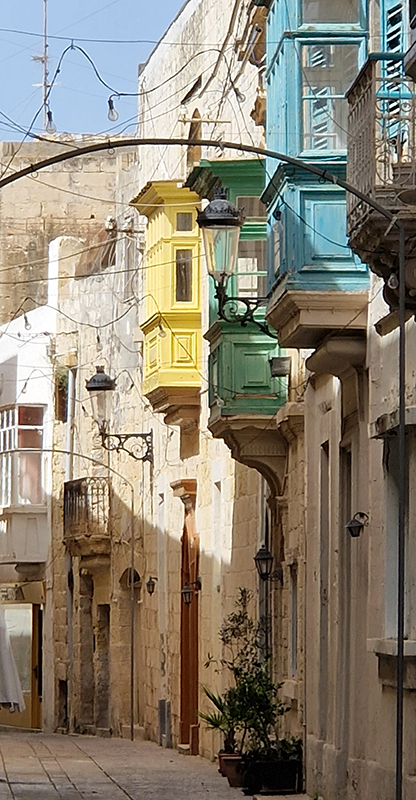
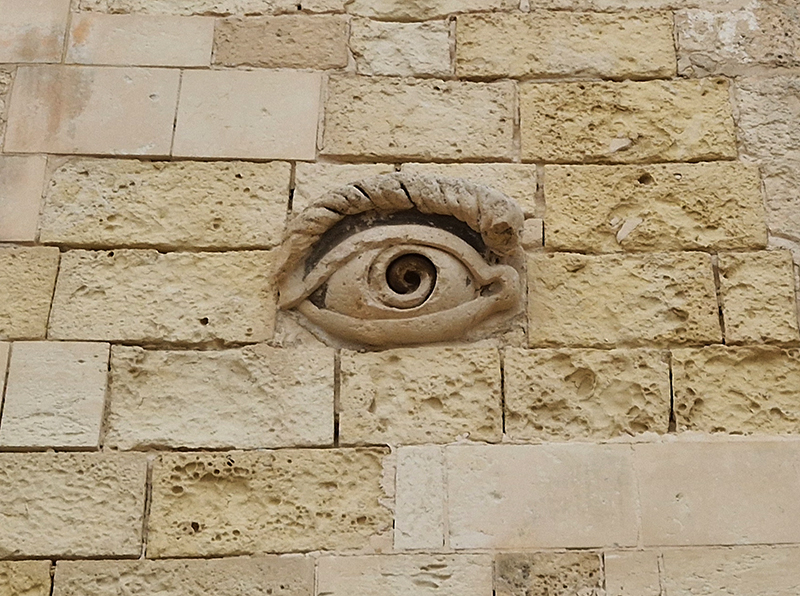
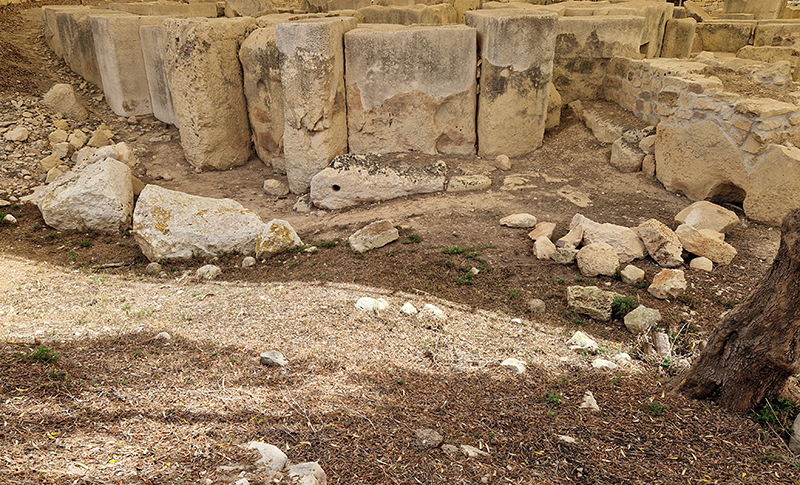
A visit to Malta. Architecturally beautiful, bathed in golden light, the palimpsest of Malta’s history is fascinating to uncover. 20,000 years ago after the last Ice Age, the sea level in the Mediterranean was 130 metres lower than today and Malta was one land mass connected to Sicily.

Due to its geographic location Malta was a contested site for naval and trade powers for hundreds of years, yet before the first empire builders arrived there is no evidence of conflict between communities found at the archaeological sites for the first 5000 years of settlement.

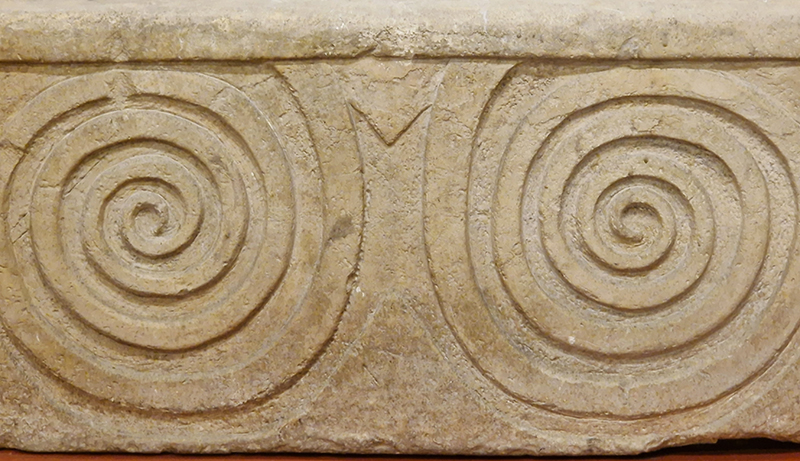
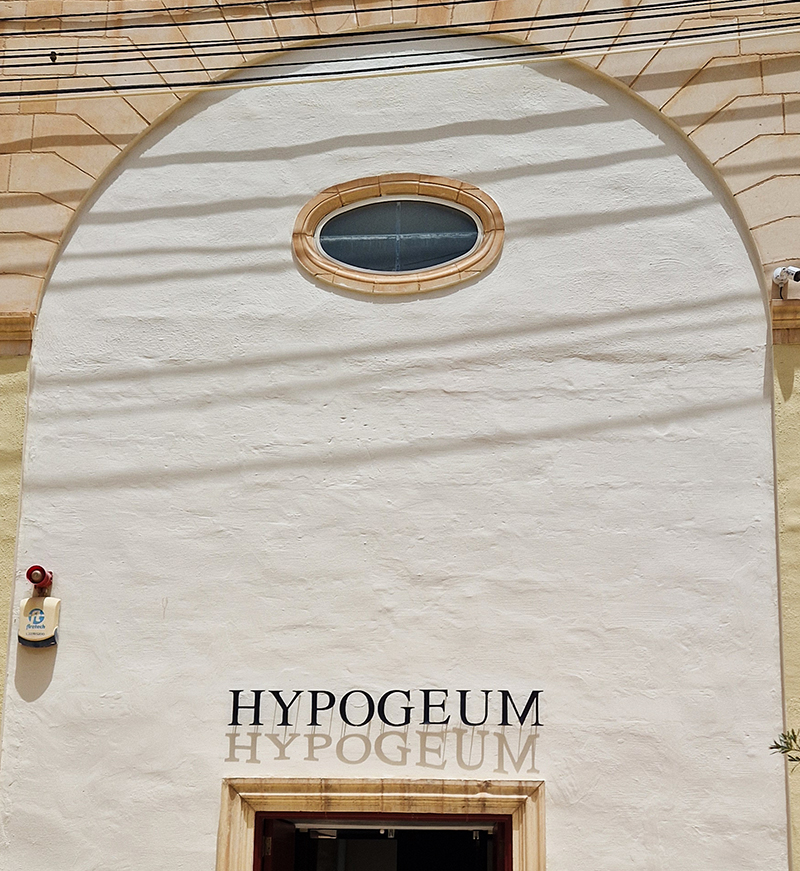
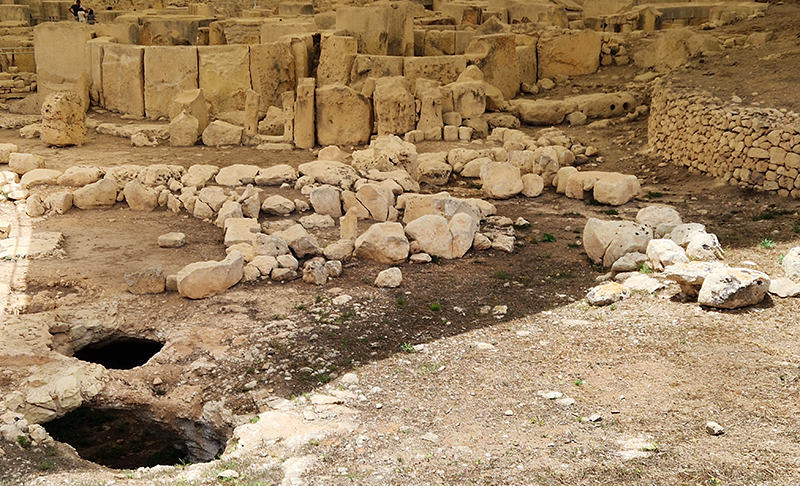
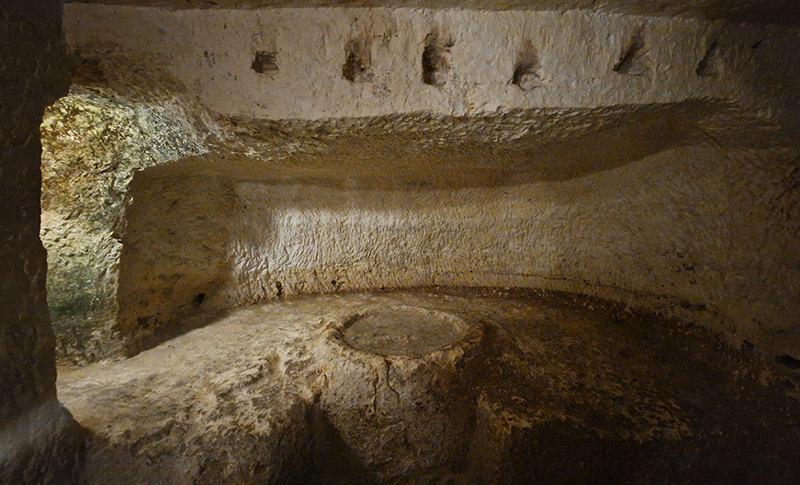
Evidence of first settlers dates to about 5900 BC. These people were hunters and farmers who kept domestic cattle and built temples. The earliest remains found at the Neolithic subterranean temple and burial site of about 7,000 individuals – The Ħal Saflieni Hypogeum – the only known European example of a subterranean ‘labyrinth’ date from about 4000 BC.

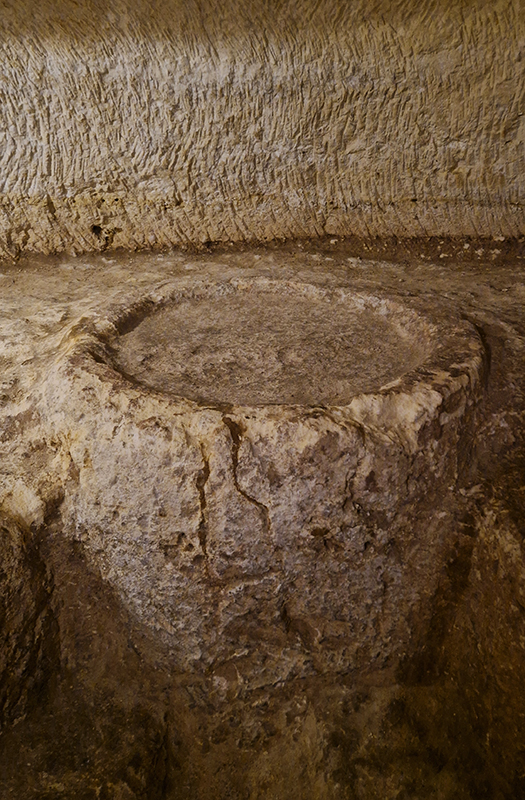
The whole system, which in places replicates the architecture of temples above ground, was cut into the limestone using just stone or antler tools. Some of these deep underground chambers are decorated with spiral and chequerboard patterns in red ochre. A highlight of the visit is the acoustic demonstration of a deep resounding echo filling the chamber when someone with a low voice speaks softly into a small, excavated niche. The particular acoustic frequencies measured throughout the chambers suggests a deliberate design and a potentially important cultural role for making music. Archaeologists believe the dead were probably left exposed until the flesh had decomposed and fallen off before the bones were buried in mass graves along with copious amounts of red ochre but so much is unknown.

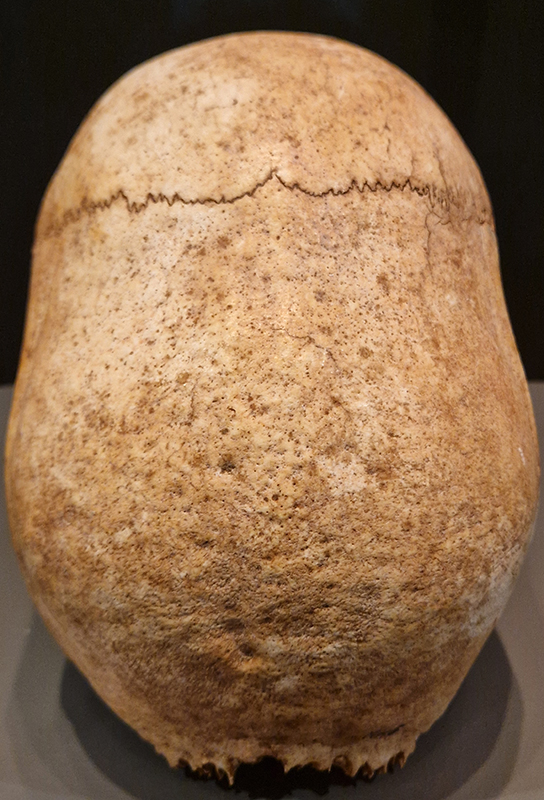
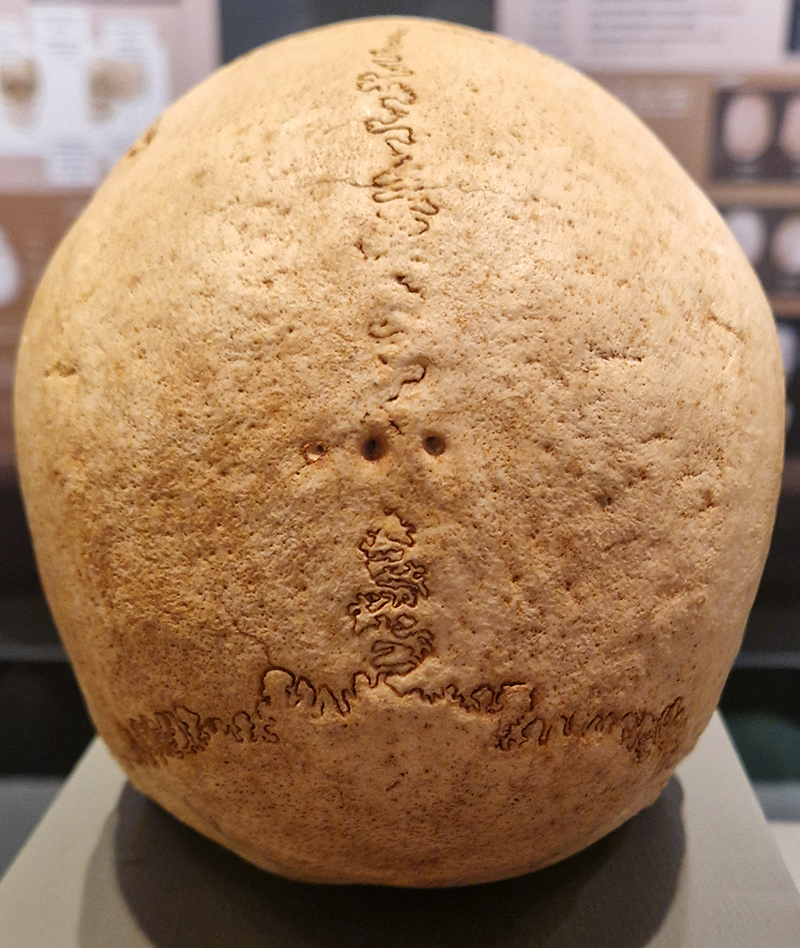
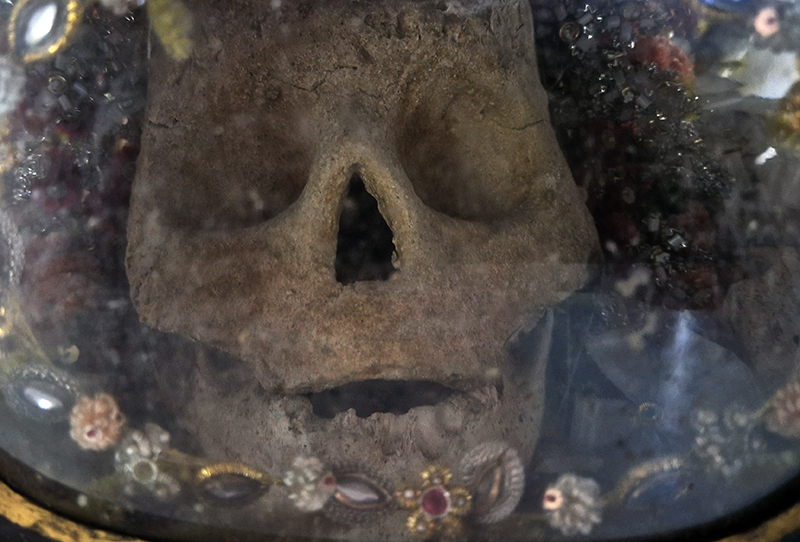
Photography is not allowed in the labyrinth of tunnels, so I have no images inside the ancient site where so many people were buried, but saw skulls found here, known as the long skulls, at the Museum of Archaeology.

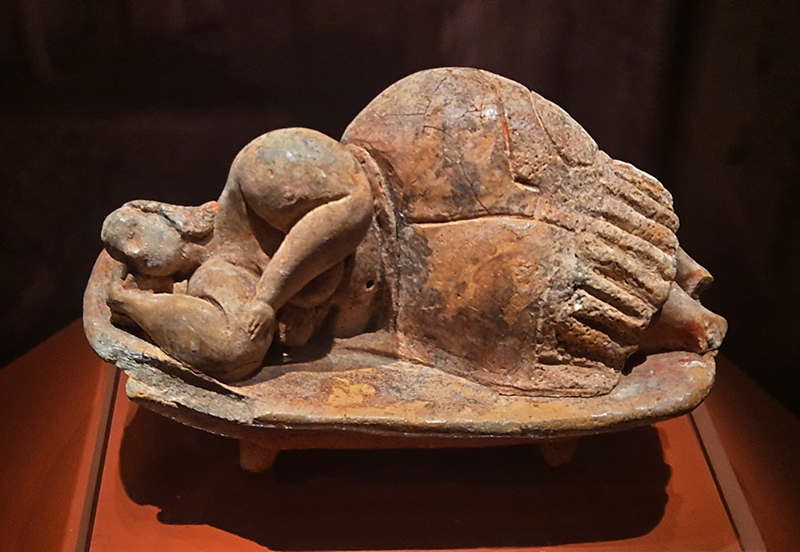
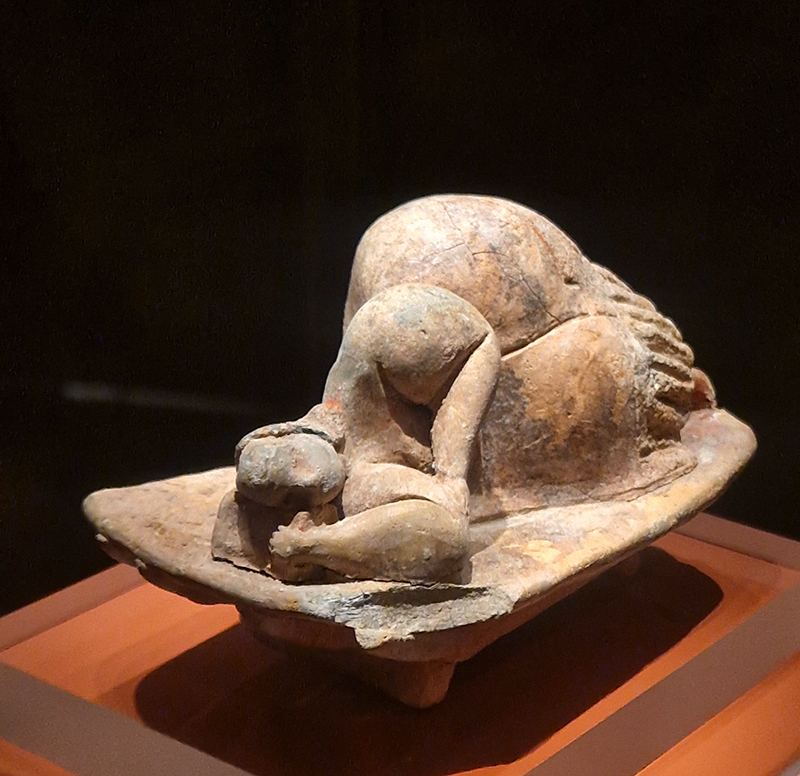
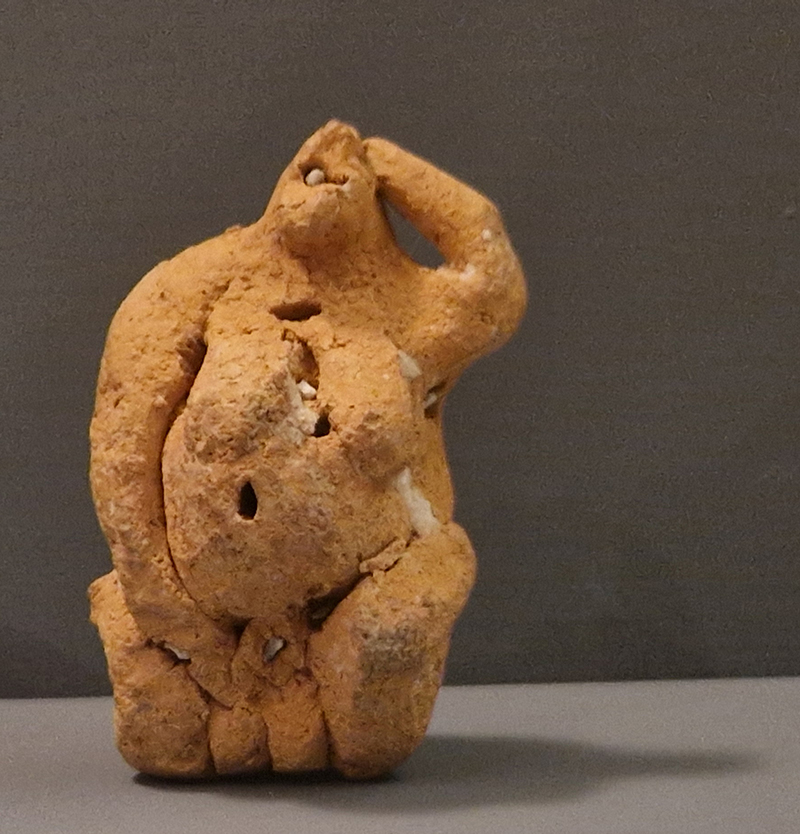
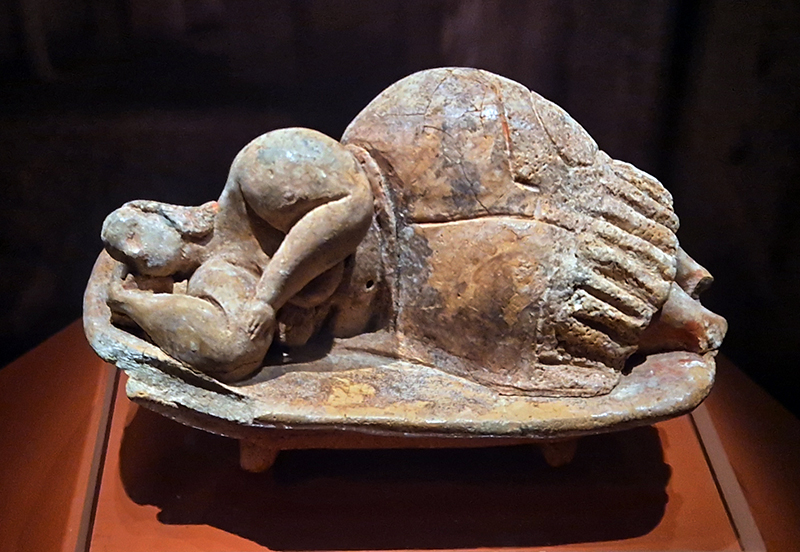
Also at the museum is the famed clay figurine of a ‘sleeping woman’ discovered in the Hypogeum.

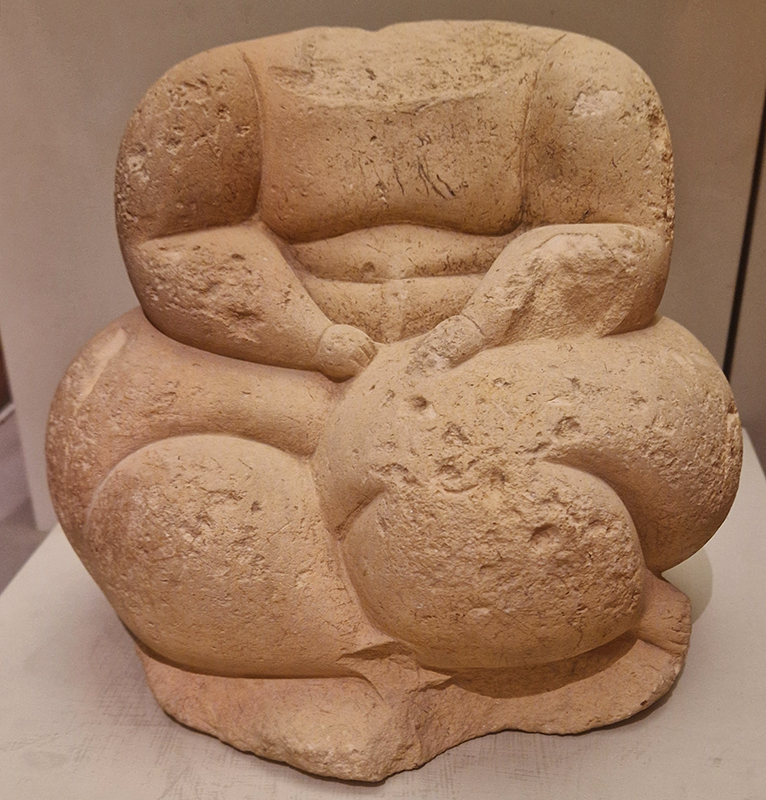
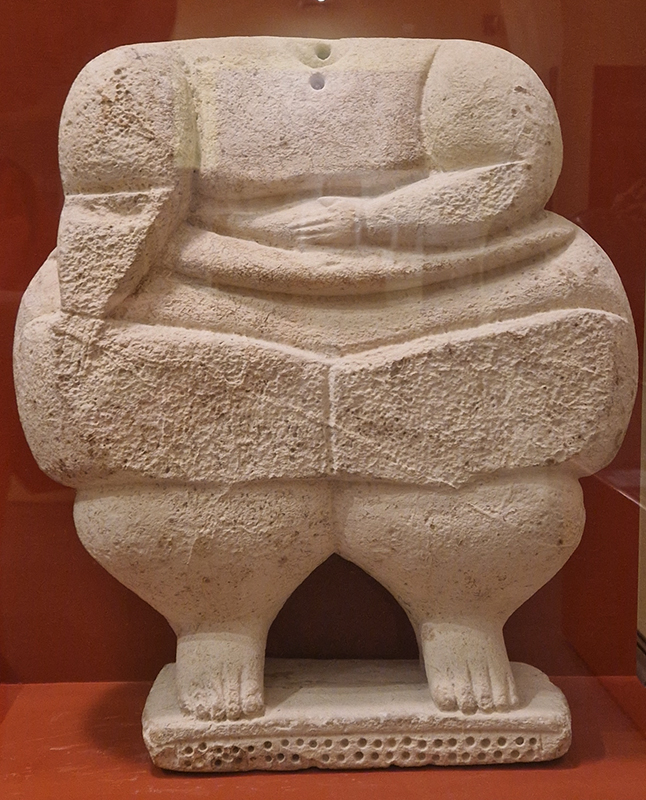
The ancient temples and early artworks hint at past cultures we have no way of understanding.

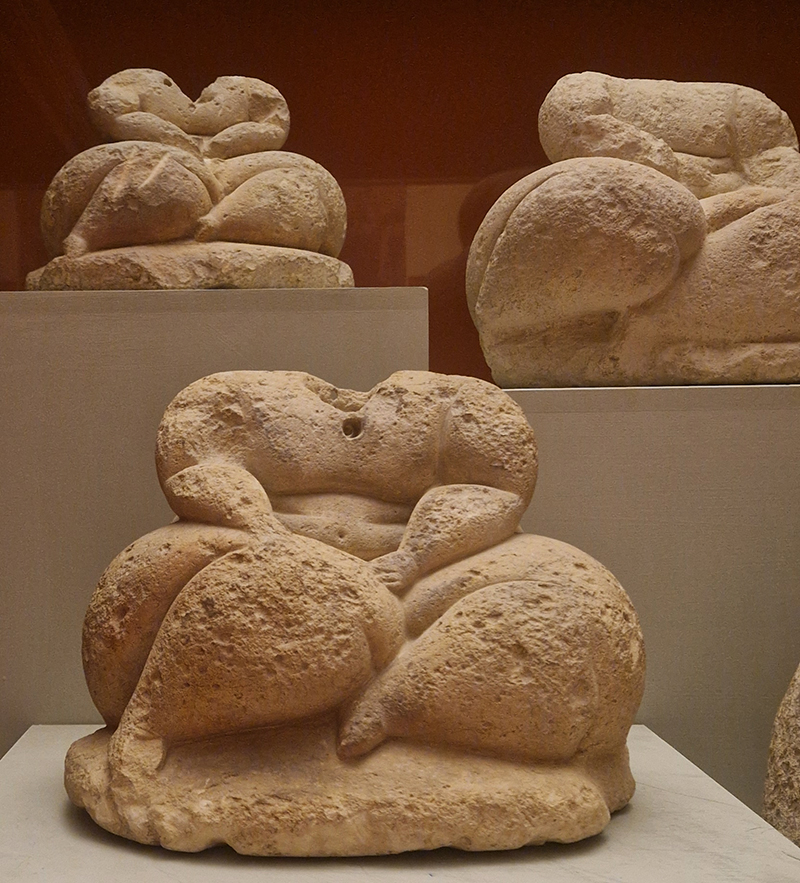
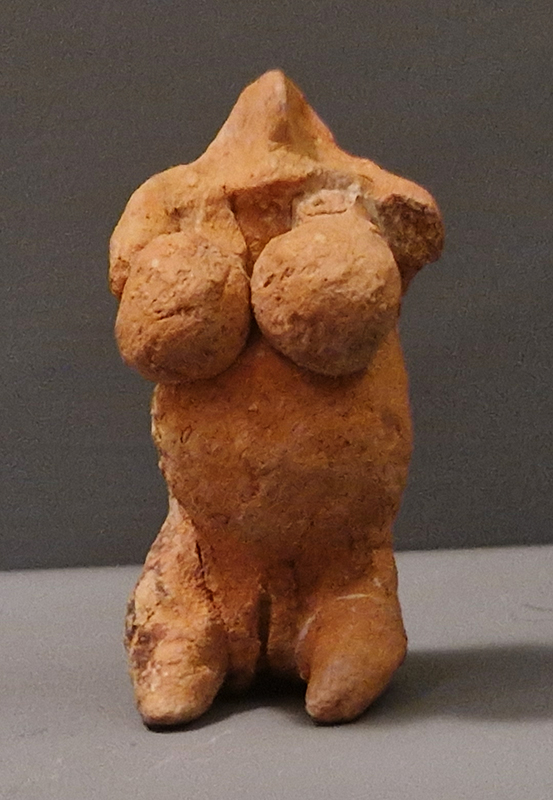
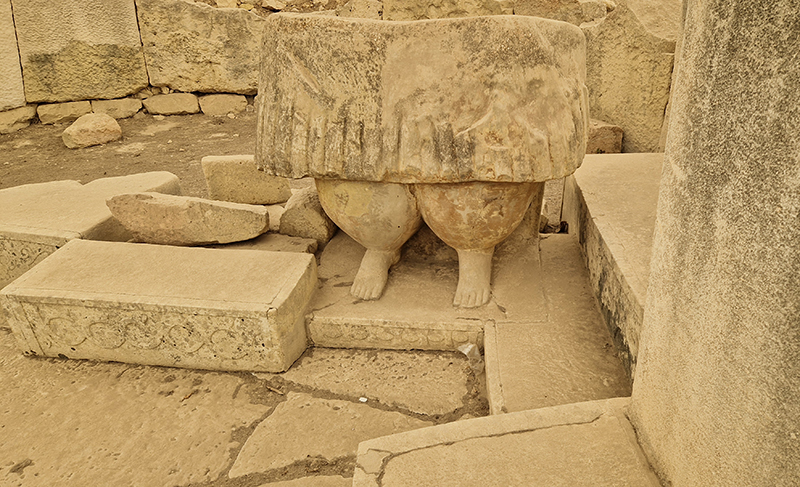
Many figures were found at other temple sites. Although some figures are female and there are many phallic figures, it is not clear of the gender of the ‘fat’ figures some of which appear to allow for interchangeable heads.

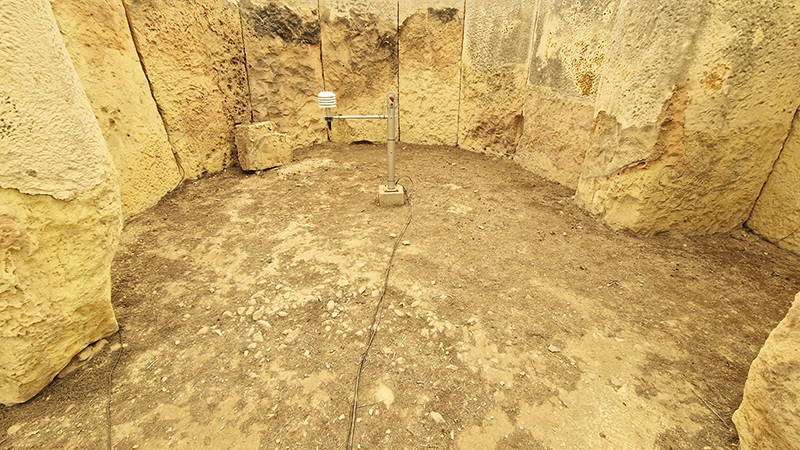
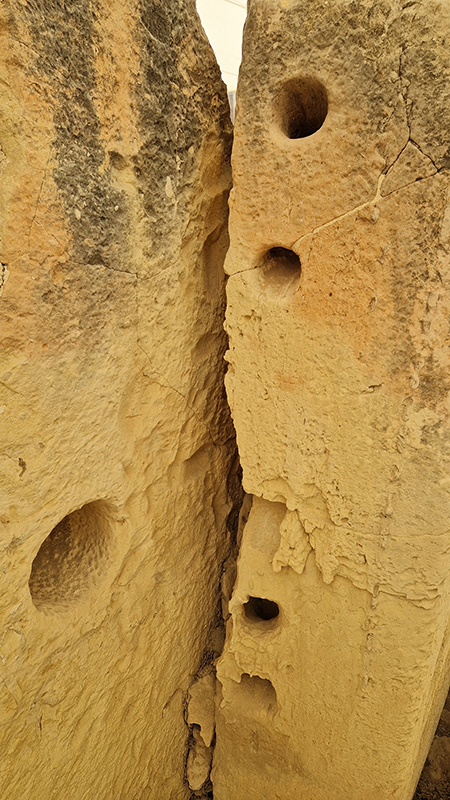
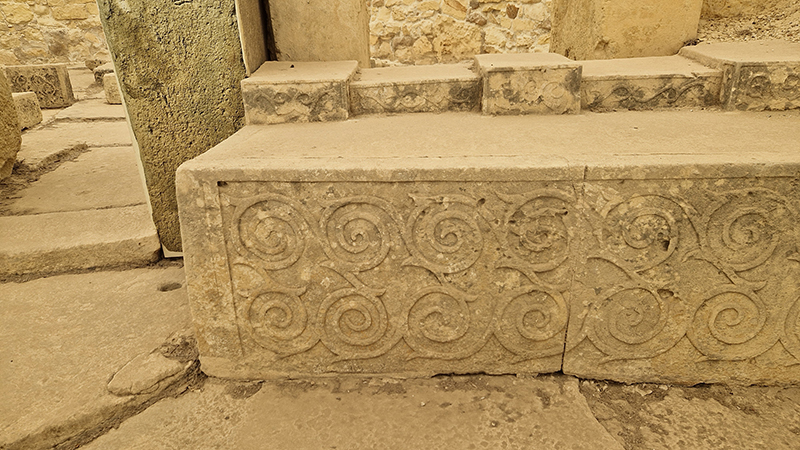
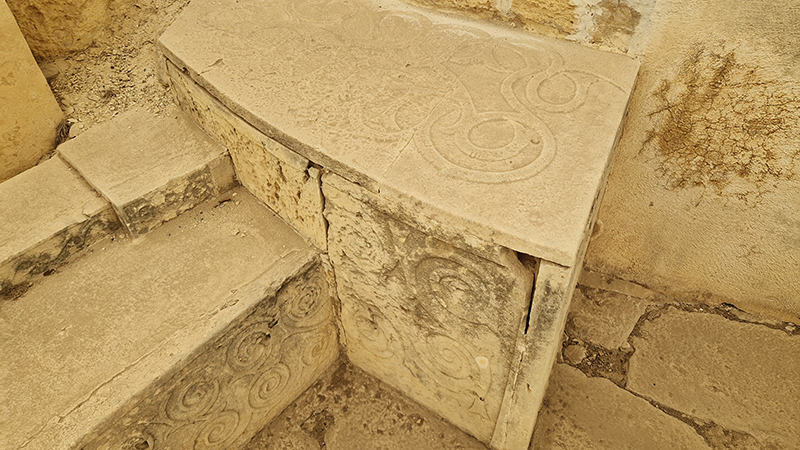
The Tarxien Temples complex of megalithic monuments with intricate stonework date to approximately 3150 BC.

In about 3850 BC new settlers arrived, also farming and building temples but after 1,500 years suddenly disappeared from the landscape. New research using carbon dating, pollen from earth cores, tree ring and human bone analysis, and the location of sediment embedded molluscs, suggests a society battling with soil erosion from felling all the trees, subsequent dietary deficiencies, and a major climate catastrophe around 2350 BC, possibly a dust cloud from volcanic eruptions, which may have led to their ultimate demise.

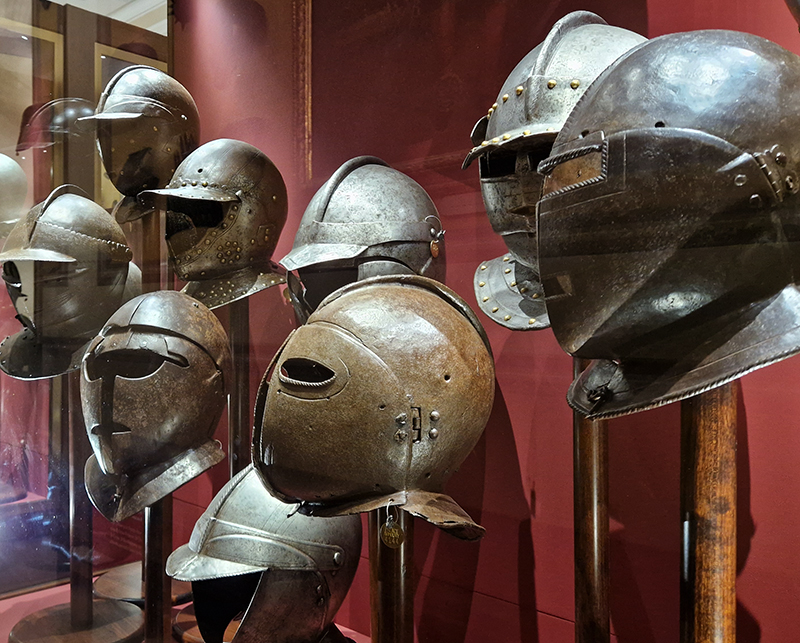
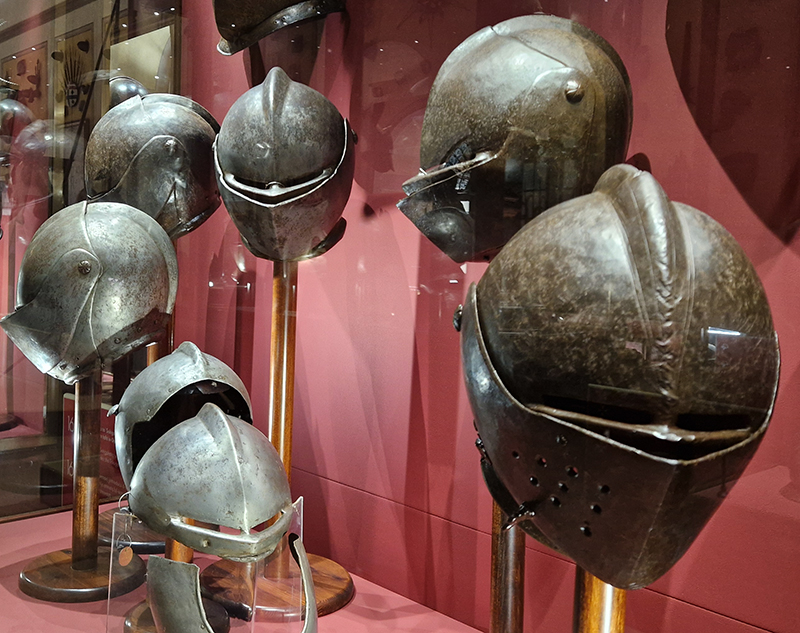
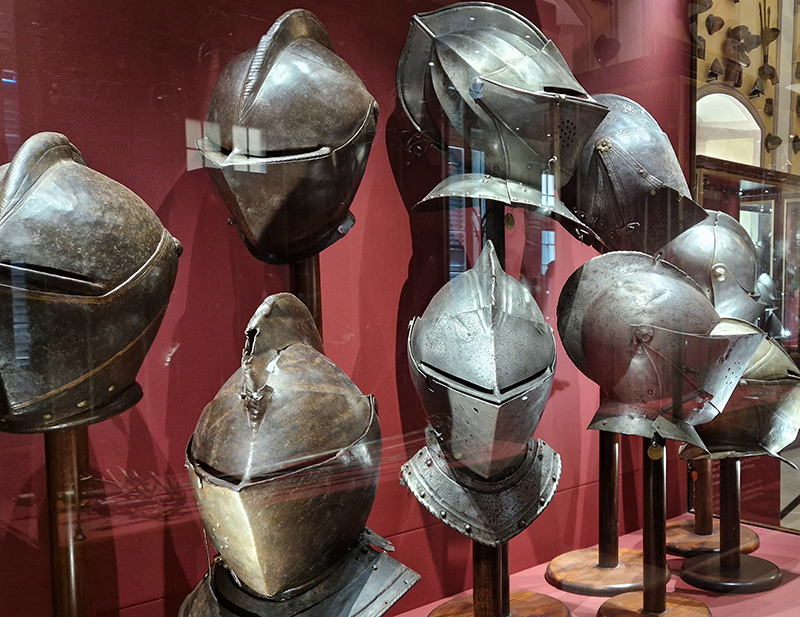
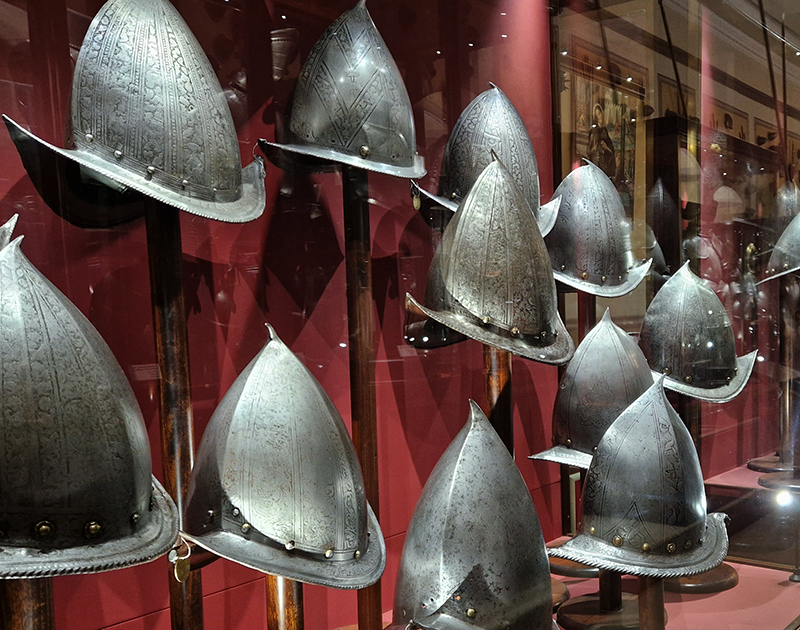
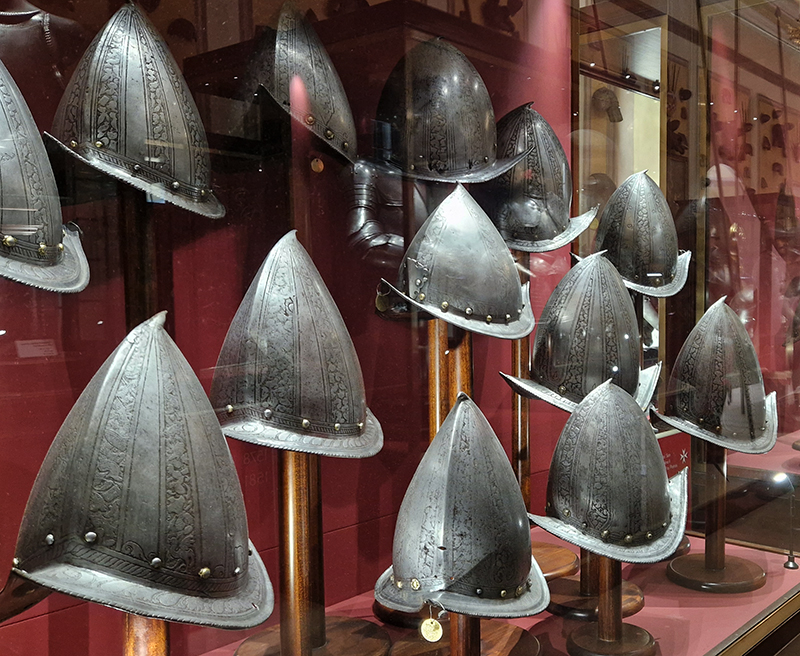
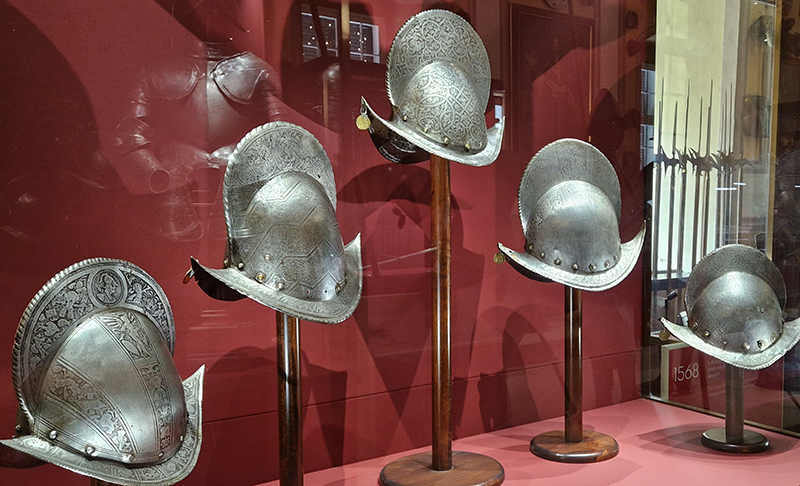
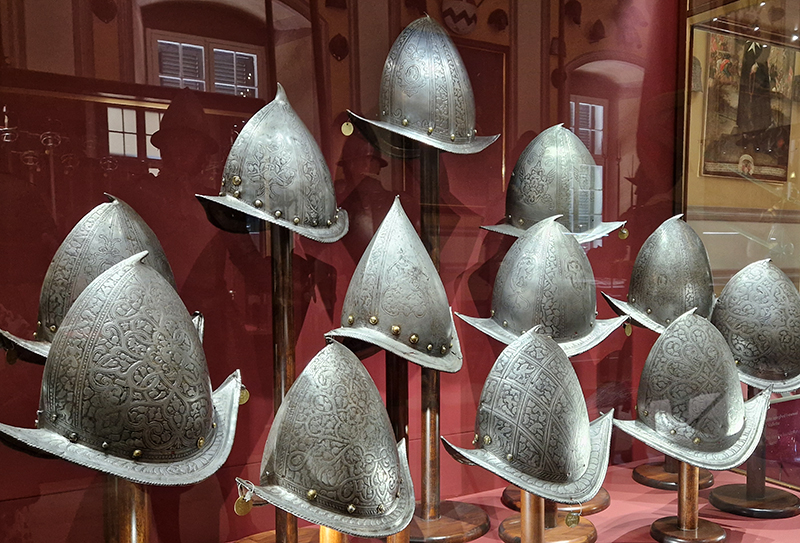
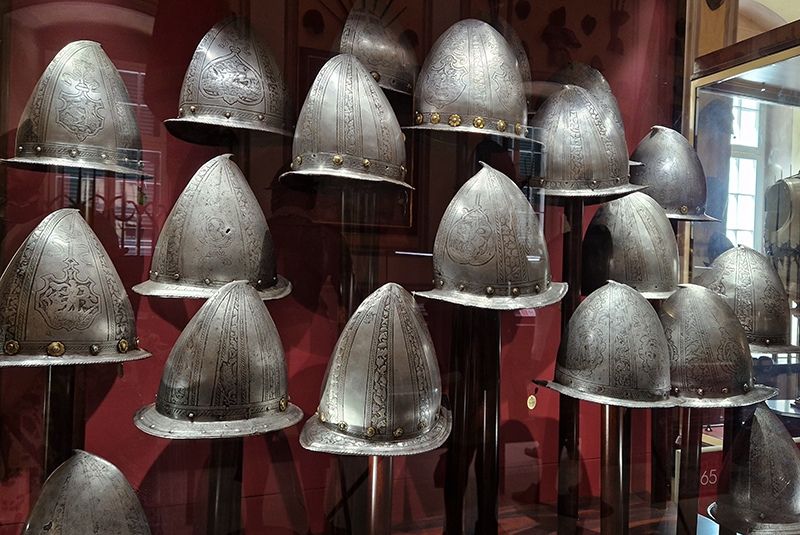
Malta suffered so much war, stretching back hundreds of years, war after war, so many wars, so depressing. A colossal amount of armour, some so intricately detailed, is held at the Grandmasters Palace Museum.

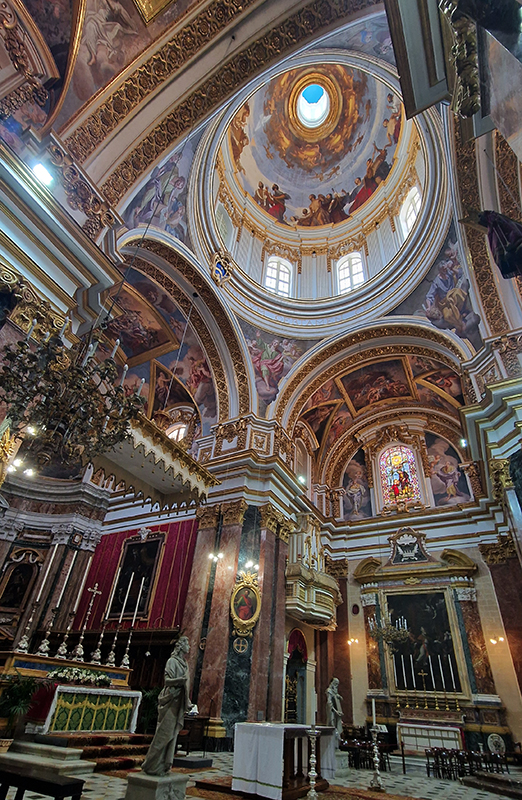
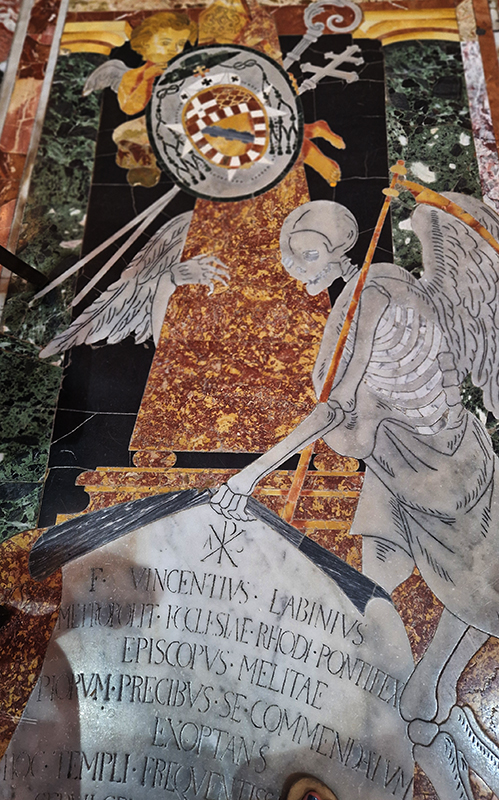
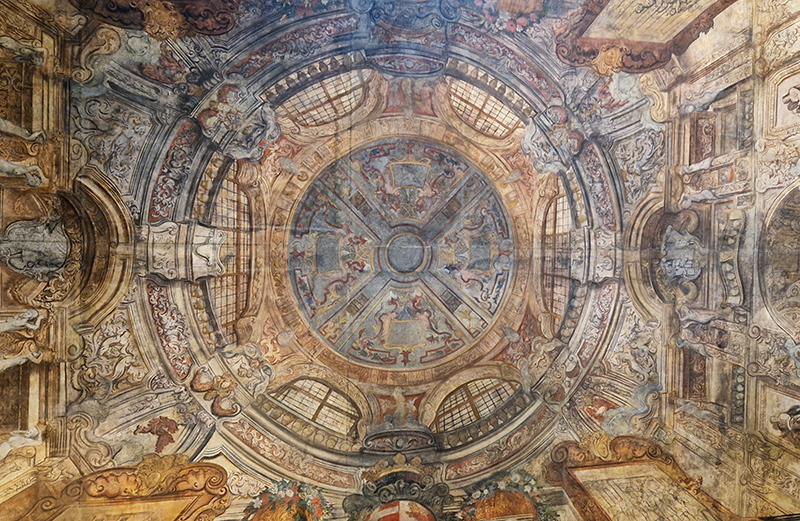
The Phoenicians arrived in Malta around 870 BC from Lebanon, and Malta subsequently came under the control of the ancient city of Carthage as a strategic trading post right up until the Romans take it in 255 BC bringing with them the Roman Catholic religion. A Cathedral was founded in the 12th century (according to legend it was built on the site where the Roman Governor met St. Paul when he was ship wrecked on Malta) was damaged by a huge earthquake in 1693 and rebuilt in the opulent Baroque style.

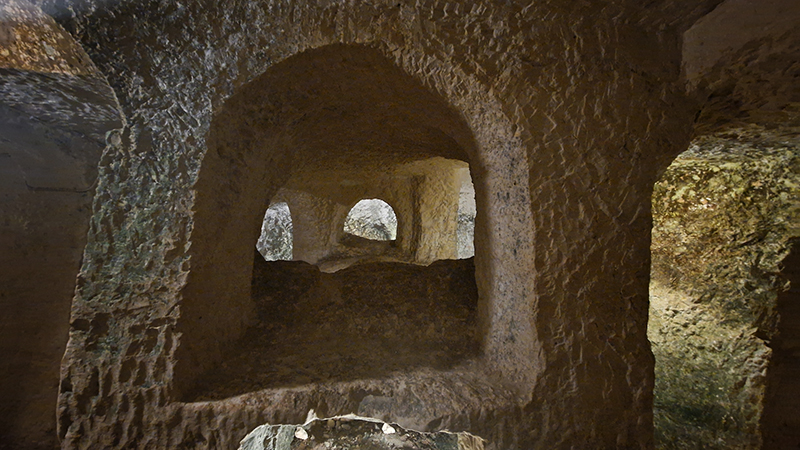
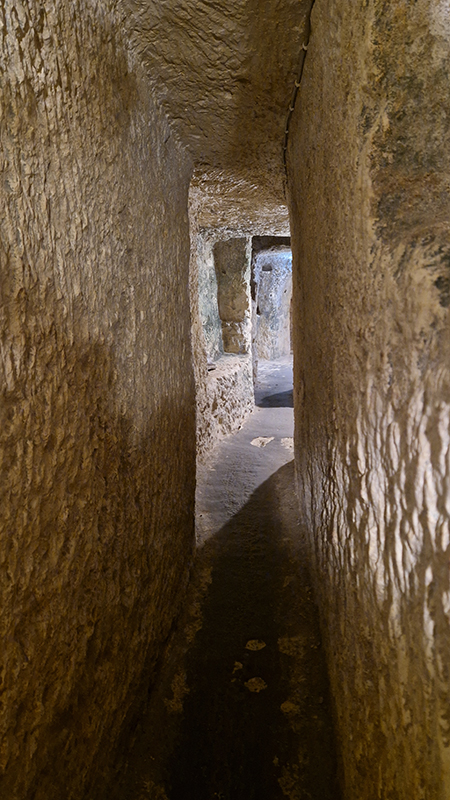
St. Paul’s catacombs located outside the walls of the ancient city of Melite is a system of underground galleries and tombs dating from the third to the eighth centuries CE.

The Byzantines of Malta fought off an invading Arab army for many weeks but the capital city of Melite fell in 870AD and all inhabitants were massacred. The city was rebuilt as Mdina by the Muslim conquerors. The Normans invaded Malta in 1091 to little resistance and this paved the way for the reintroduction of Christianity. Next came the Order of Knights of the Hospital of Saint John of Jerusalem, colonising Malta in 1530. The Order of St John was given Malta as a fief for the annual donation of a peregrine falcon, better known as the Maltese falcon. It was kept and trained in a great hall of the Grandmasters Palace where owls, song birds and other exotic birds were kept.

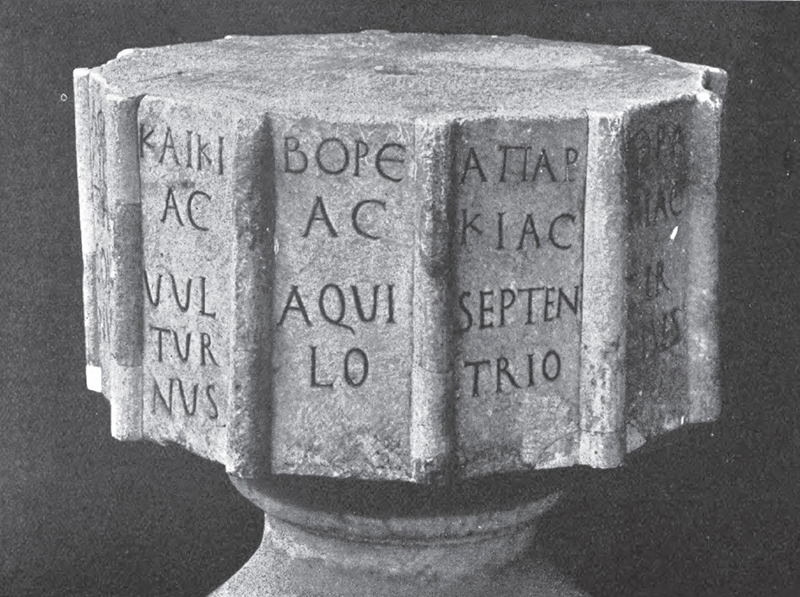
The Knights ran a strong naval fleet and knew the importance of astronomy for navigation. They established an astronomical observatory at the Grandmaster’s Palace. Also a meridian line, inlaid in marble, ran across the floor of one room with a hole in the ceiling above – noon was marked as the sun crossed the line.

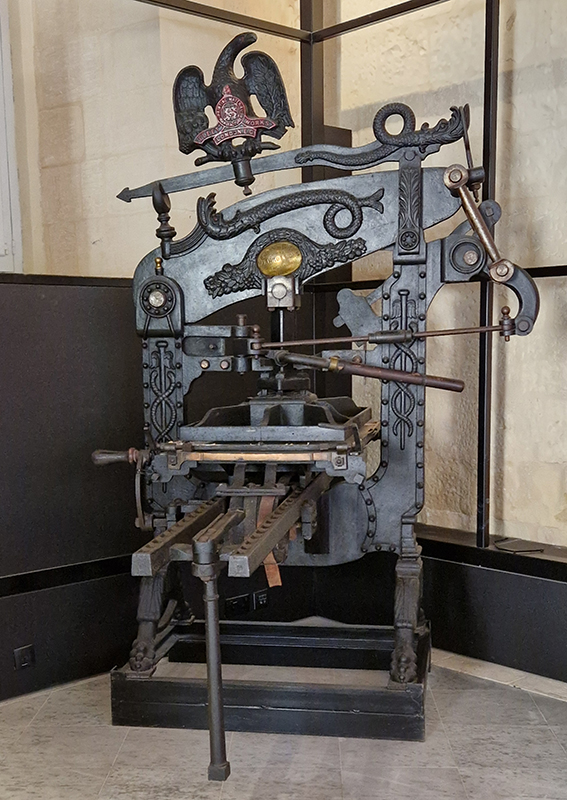
The Order of St John capitulated on the arrival of Napoleon Bonaparte in 1798. During his week on Malta Napoleon abolished slavery and instigated free education but there were other changes not so beneficial to the population and after two years of French rule an uprising led to Malta becoming a protectorate of the British. The magnificent printing press in the administrative hub of the Grandmasters Palace was manufactured by Londoners Harrild and Sons (founded 1809) of Farringdon.

Malta played a vital role providing a strategic location for hospitals during the first world war and was heavily bombed during the second world war. Discontent on British commitment to supporting Malta’s economy and hikes in imported food prices eventually led to riots by the population and came to a head on 7th June 1919 when British troops fired into the crowd, killing four and injuring 50. Relationship souring, Malta finally gains independence in 1964, becoming a republic in 1974.

While in Malta I was reading Cloud Cuckoo Land by Anthony Doerr, a novel that whisks you across time and space as characters inhabit times from the 1453 Ottoman siege of Constantinople to a spaceship escaping future Earth. It resonated with a land whose history is still so present and helped set markers across the centuries to cross reference what was happening in different parts of the world at the same time.

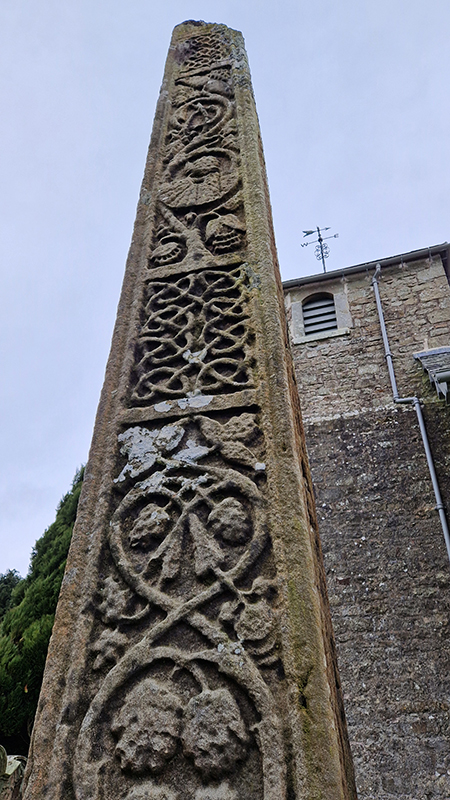
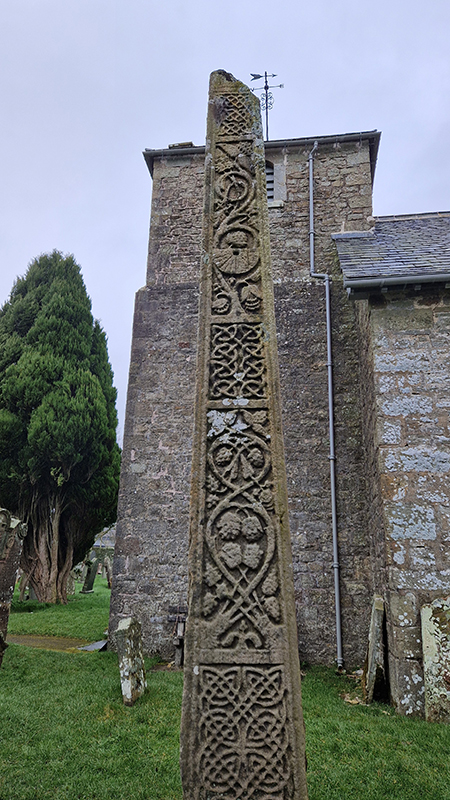
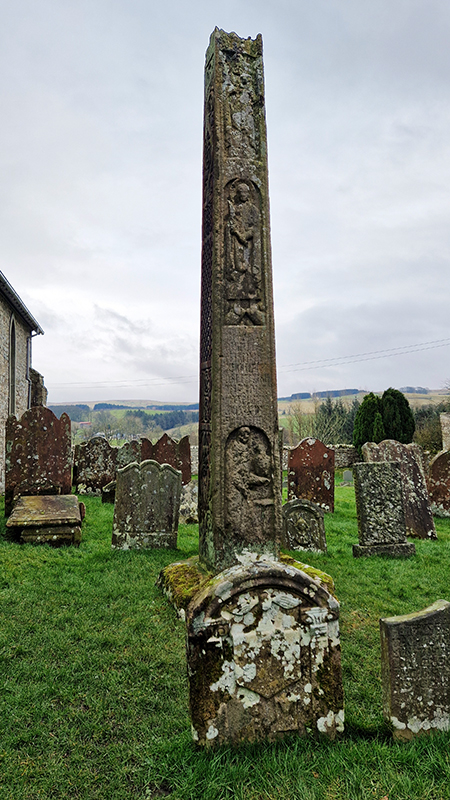
In Cumbria earlier in the year I visited Bewcastle, site of a Roman out post fort. The Anglo-Saxon Bewcastle Cross from the 7/8th century, hewn from a single piece of sandstone stands at 4.5m in the splendid village churchyard of St. Cuthbert’s Church. The head of the cross is missing and the carving very worn but features an intriguing mix of religious and non-religious figures, reliefs and inscriptions in a runic alphabet. The oldest carved sundial in Britain can be seen on the south face of the shaft, this medieval timepiece was carved at a later date, after the cross was erected, and is missing the indicator. From the late 7th century, around when this cross was being commissioned the Byzantines were busy building defence walls around Malta to counter a growing Muslim threat they feared.

Gallery Visits

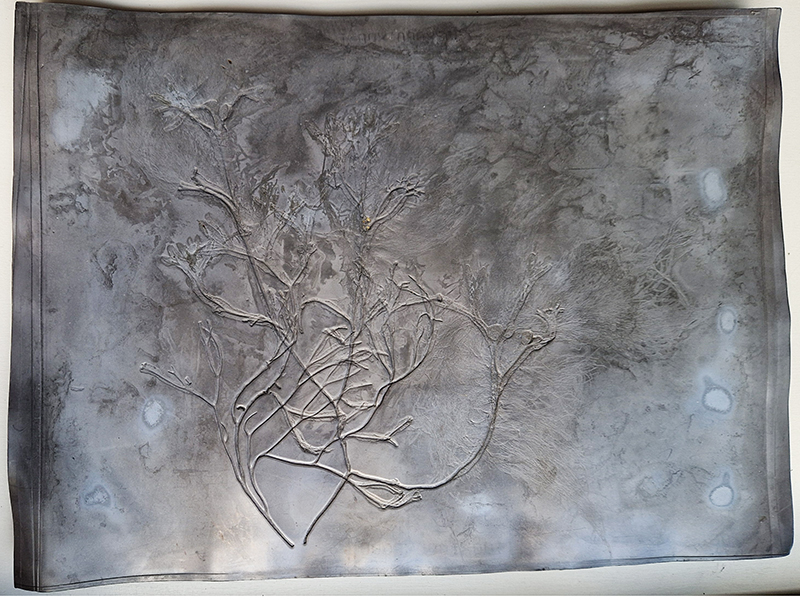
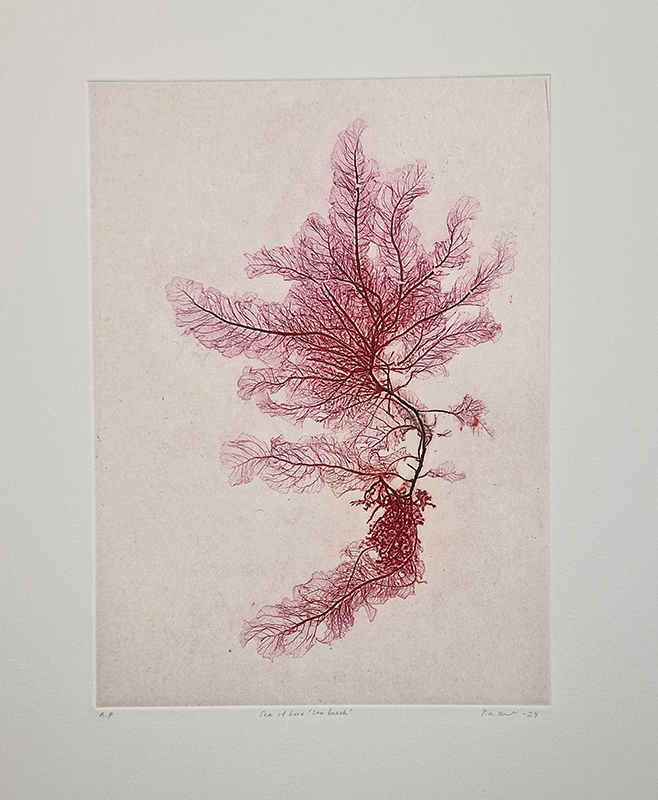
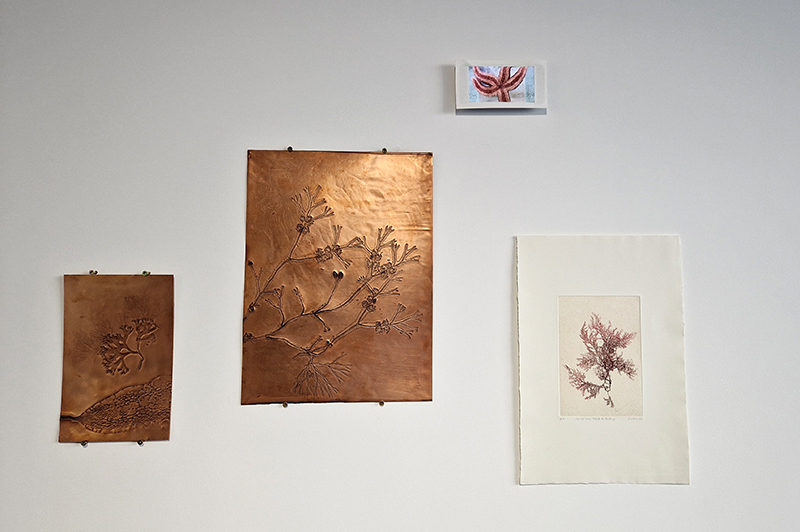
Pia Östlund Sea of Love at No Show Space. Really enjoyed my visit to this beautifully curated exhibition. So nice to have a gallerist take time to talk about the work. The nature printing explored in this show is an involved process of imprinting dried seaweed under pressure between polished lead sheets, taking latex moulds from the imprints which are then made conductive by coating in graphite and electroplated with copper to make a printing plate. Pia Östlund spent two months at BORCH Editions in Copenhagen, working with the master printers on refining the platemaking process of nature printing. Nature printing is an intaglio printing technique from the mid-19th century that makes it possible to make direct impressions of the surface of natural objects.

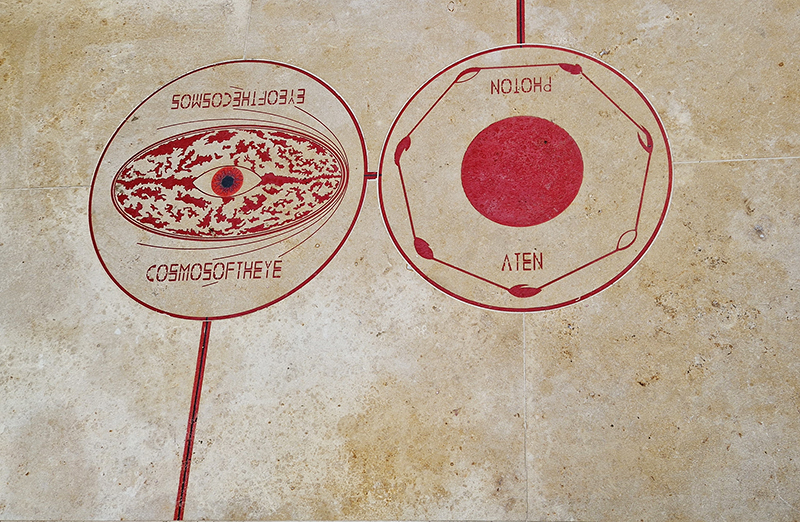
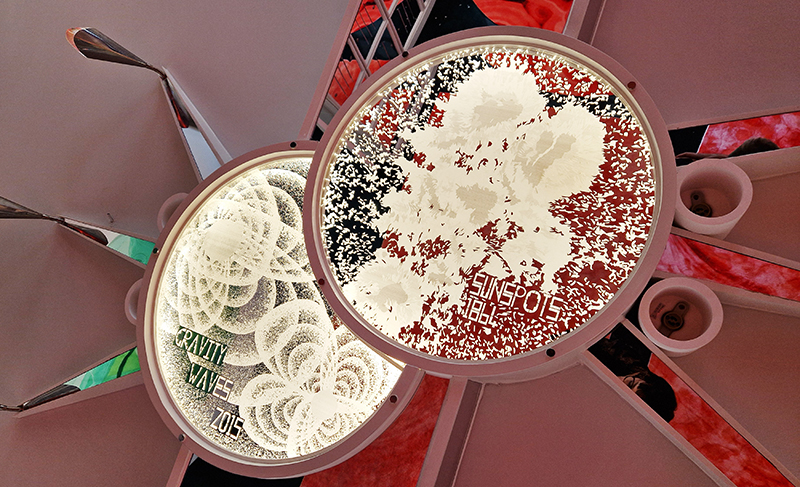
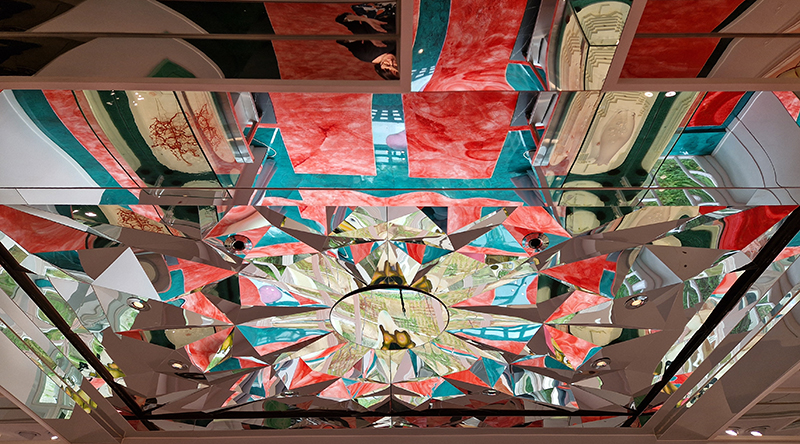
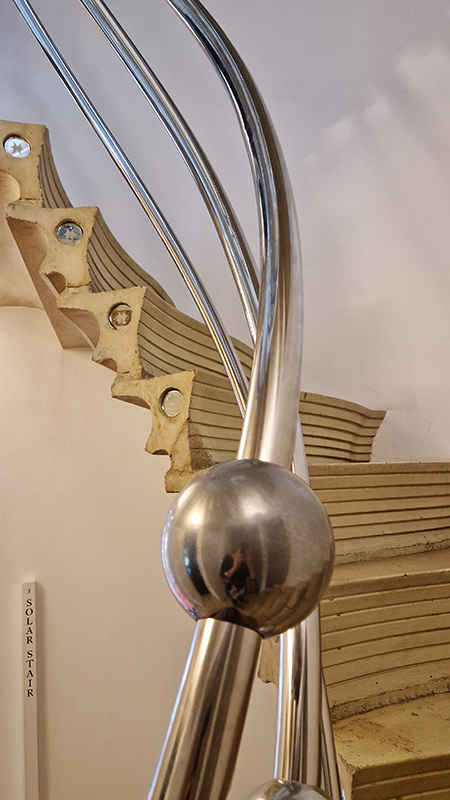
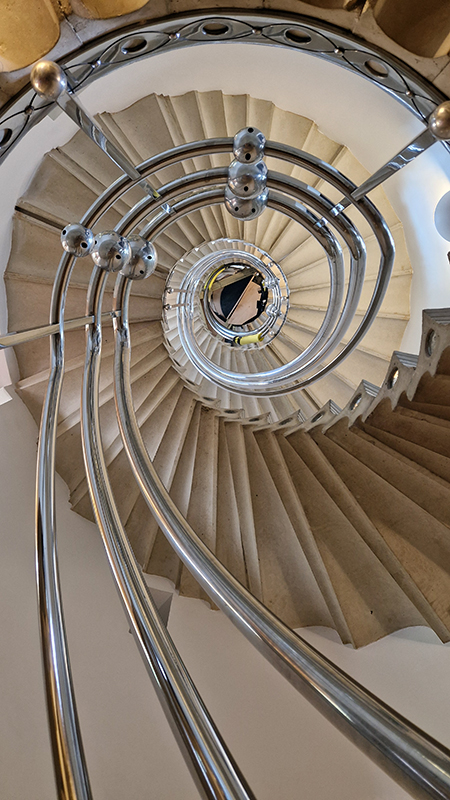
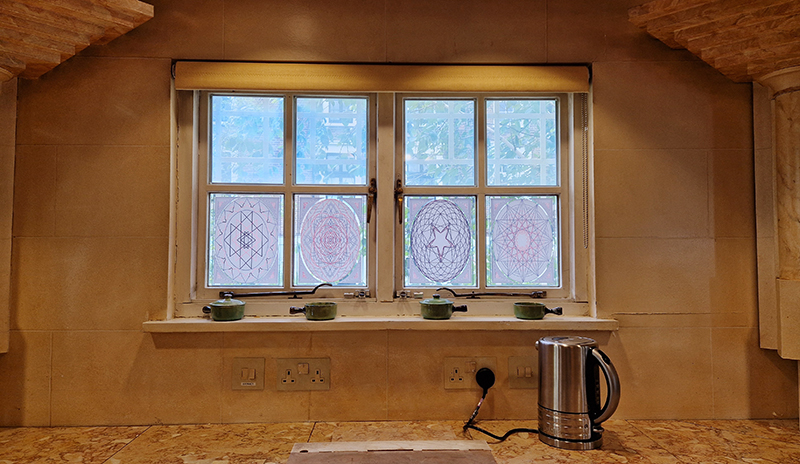
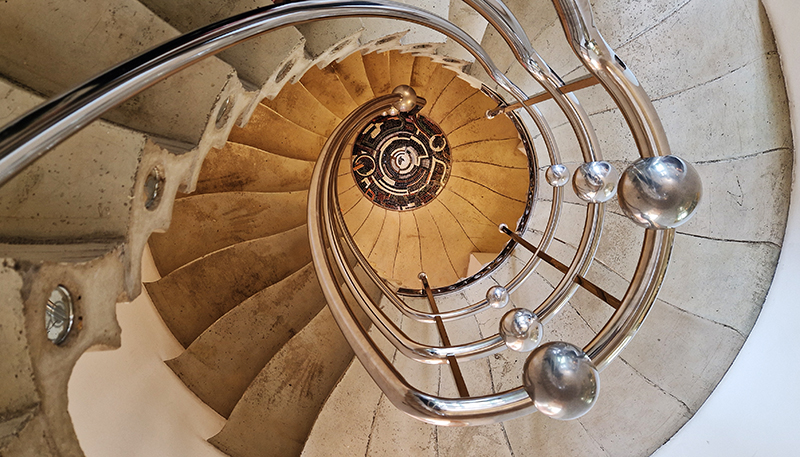
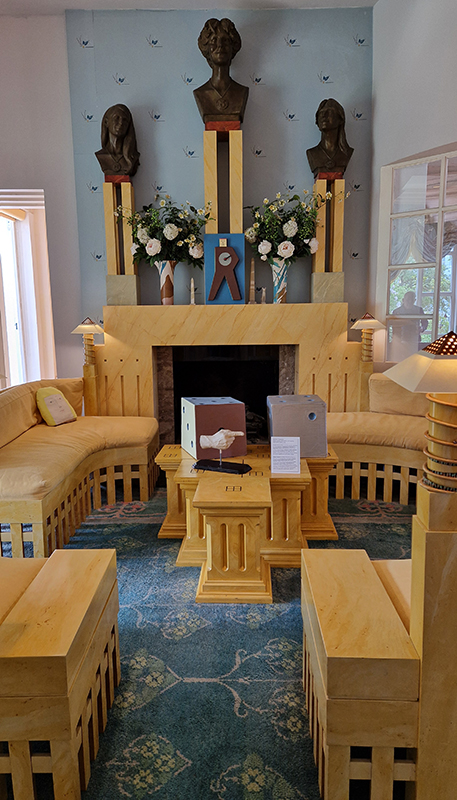
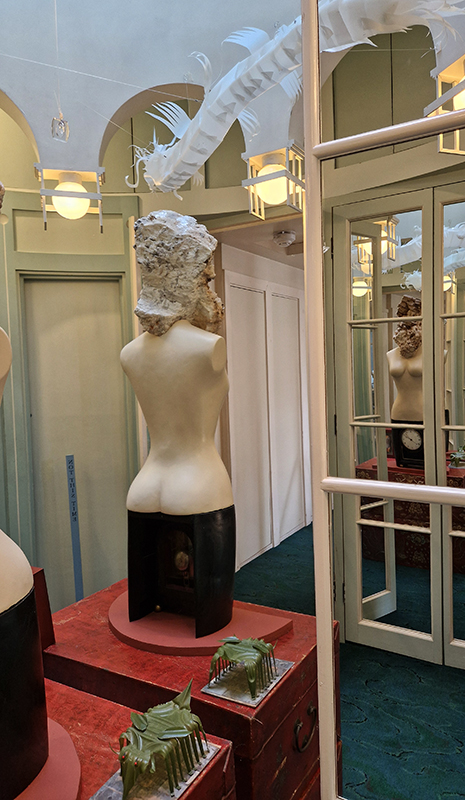
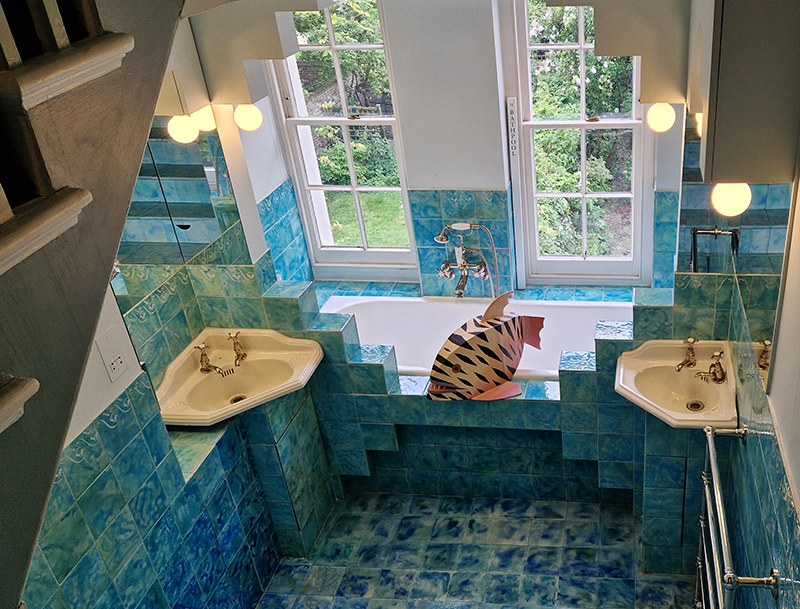
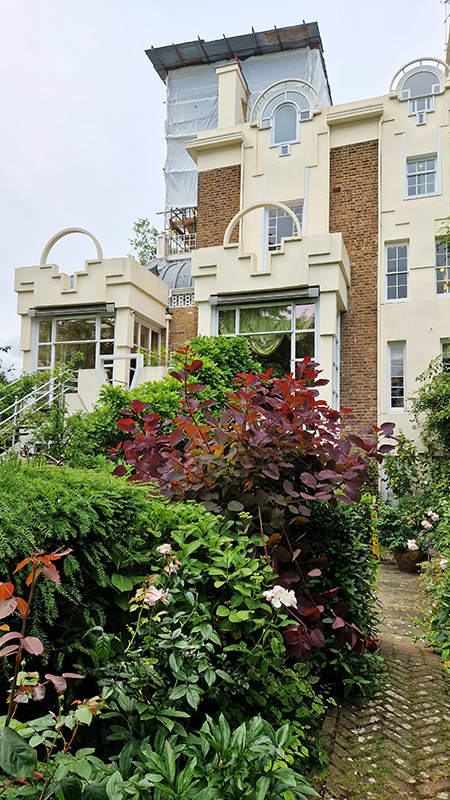
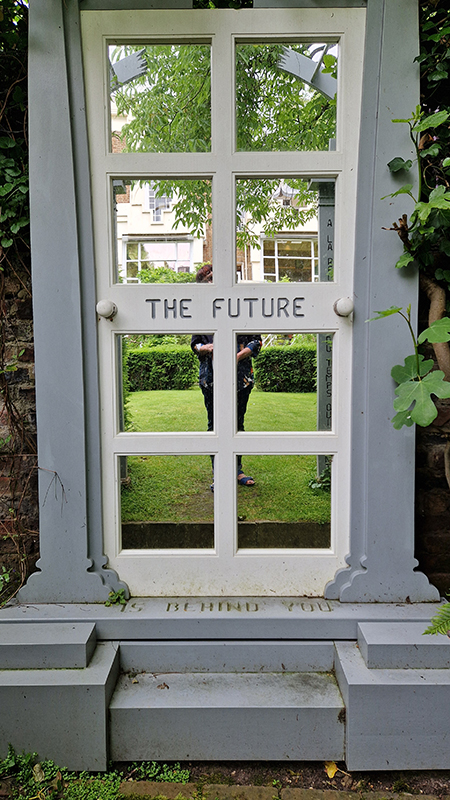
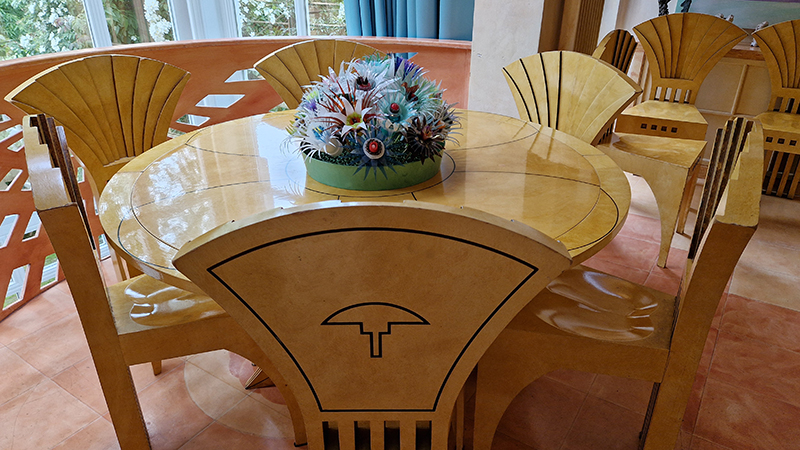
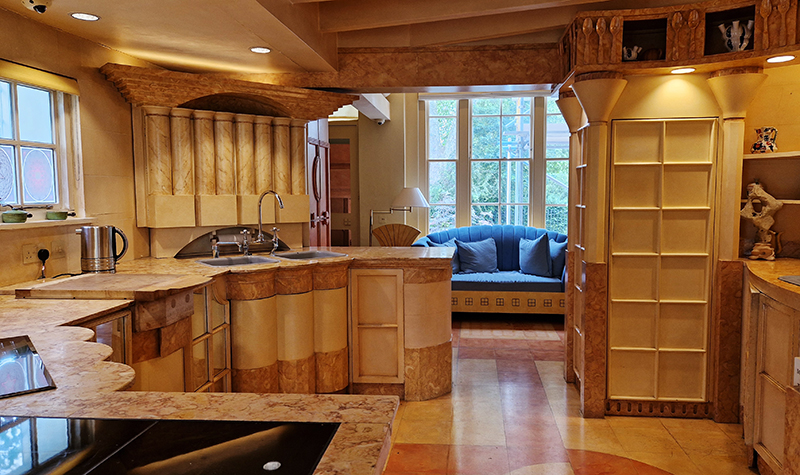
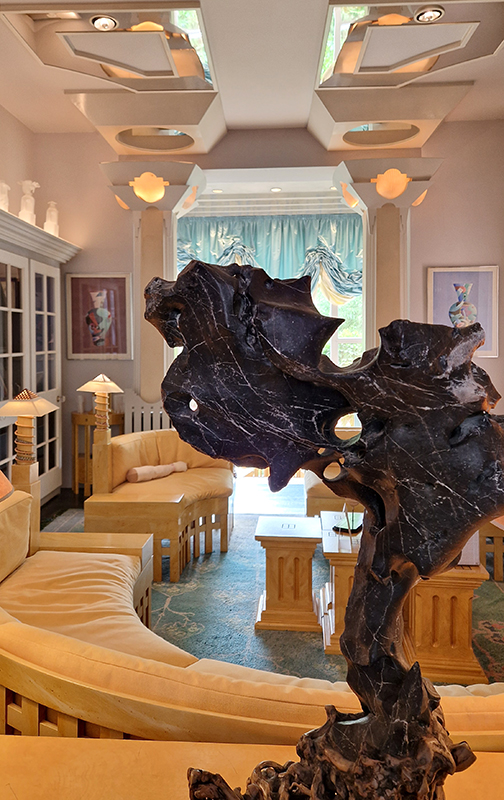
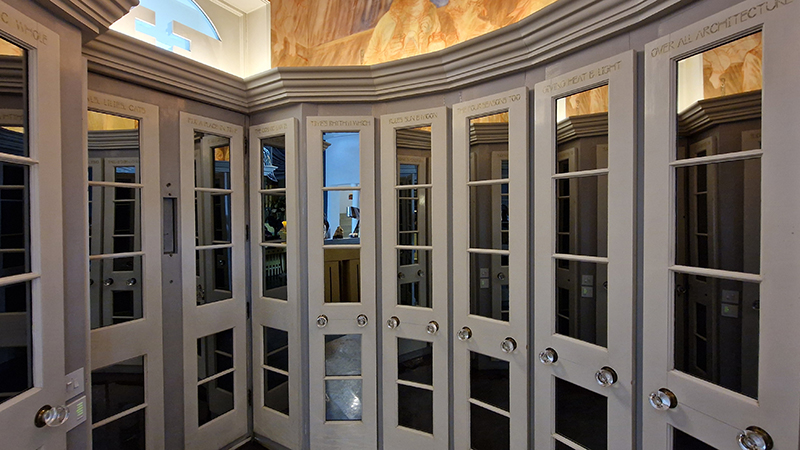
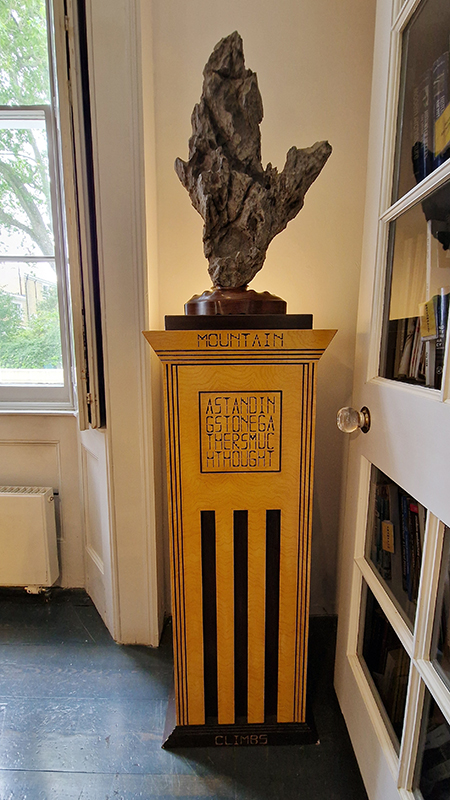
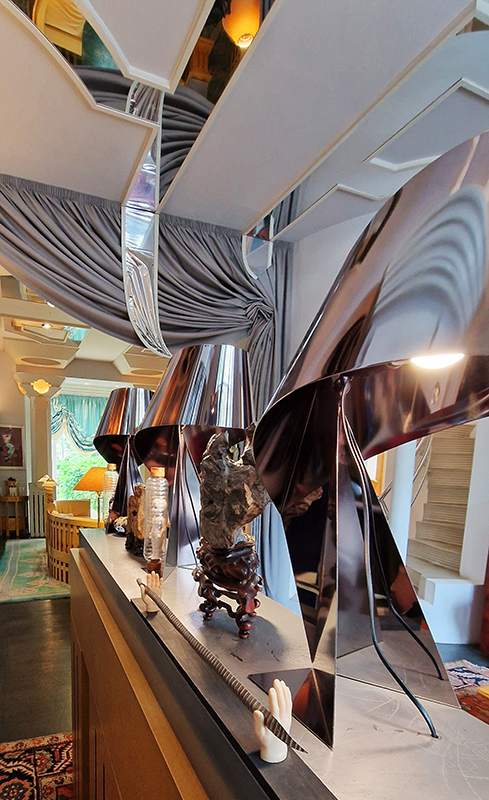
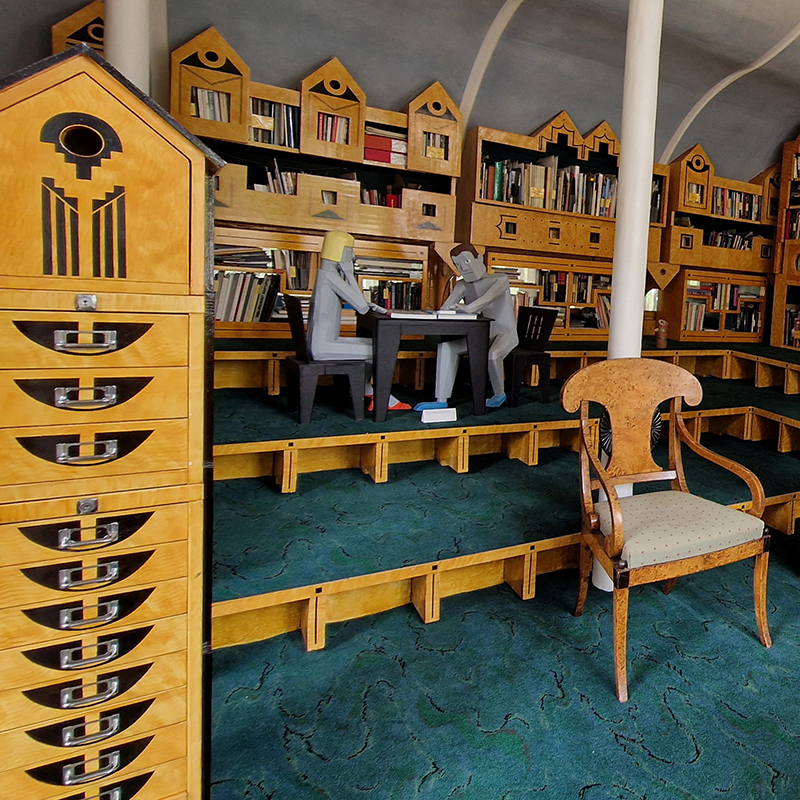
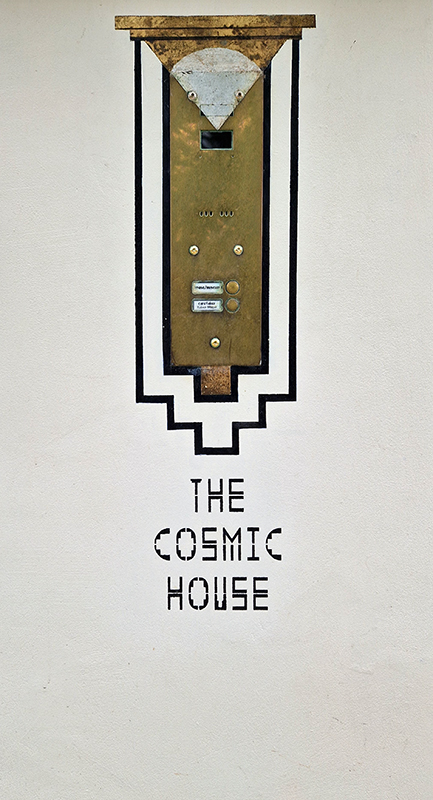
Sensory overload at The Cosmic House, a ‘built manifesto for Post-Modernism’. The original 1840’s residence has been remodelled by Charles Jencks into a complex system of symbols that embrace the creation of the universe, the rotation of the Earth around the Sun, day and night, the seasons, the elements, the understanding of science, and the history of architecture.

It’s like entering a kaleidoscope, mirrors everywhere, shifting perspectives, glimpses through to other spaces, optical illusions, and all saturated with vibrating colour.

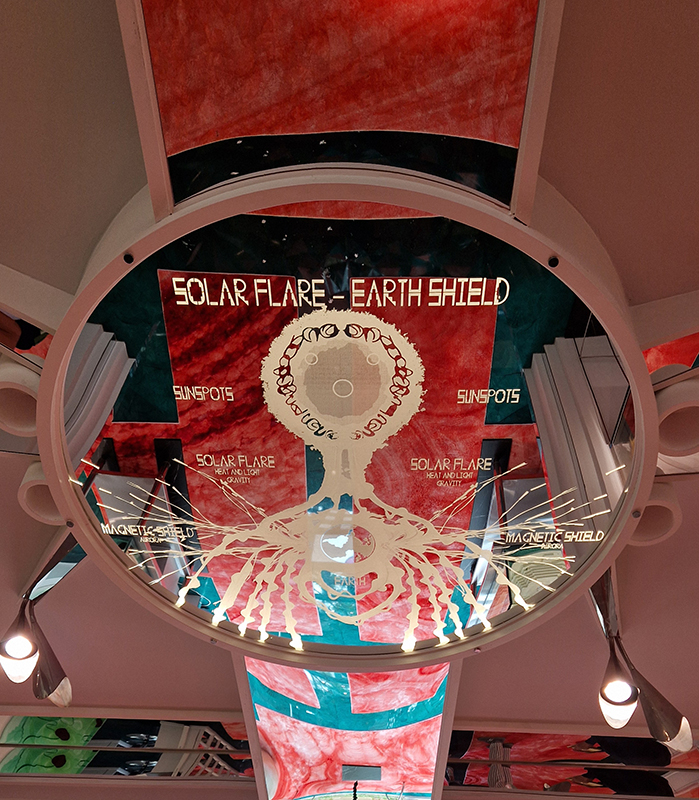
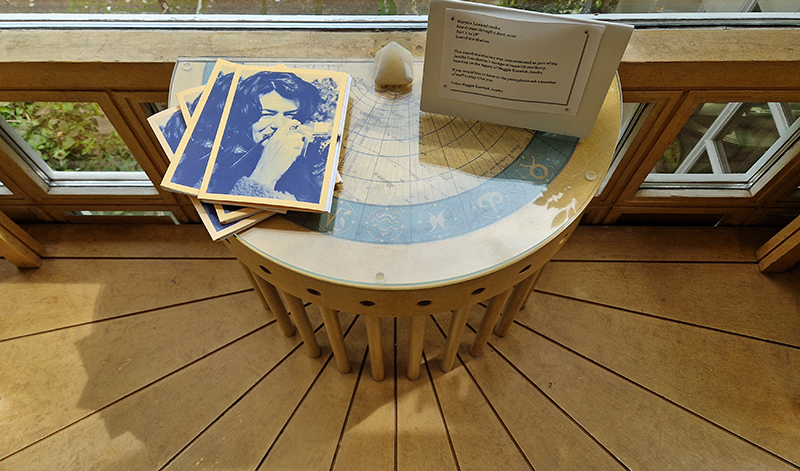
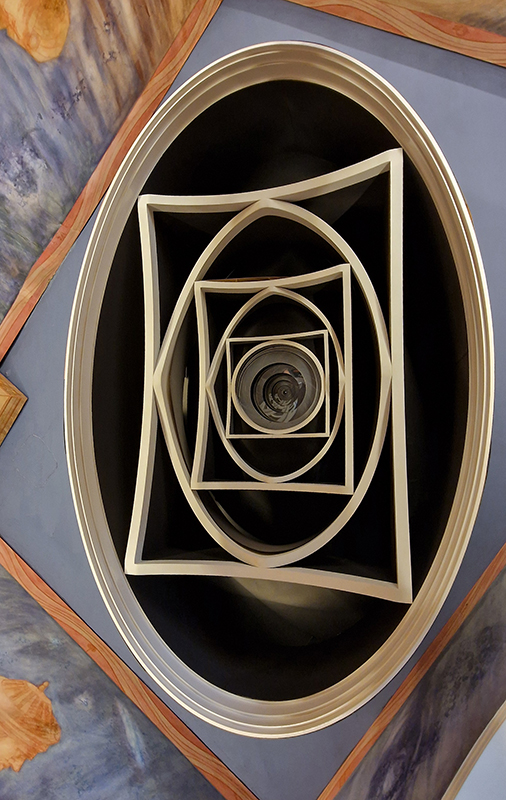
The latest addition to the house is the museum gallery, which Jencks designed but did not live to see completed, with mirrored ceiling plaques on all my favourite things like magnetic fields, solar flares and gravity waves. Amazing place to visit.

There is currently an exhibition THE WORLD TO ME WAS A SECRET: CAESIOUS, ZINNOBER, CELADON, AND VIRESCENT by Tai Shani here whose theatrical colourful works suit this setting.

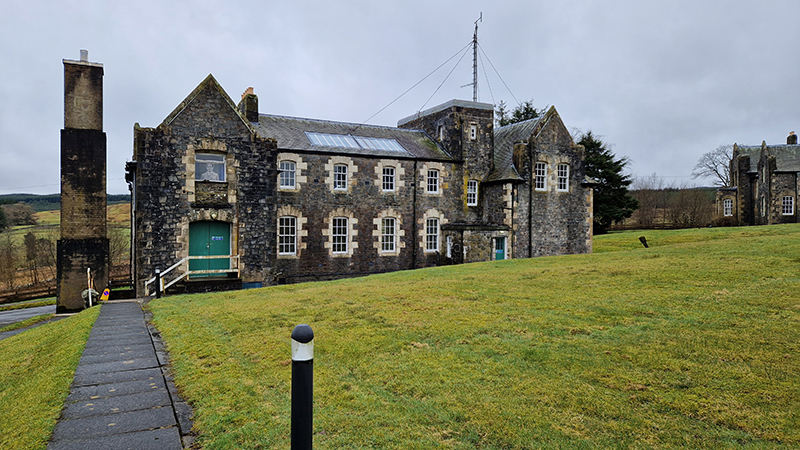
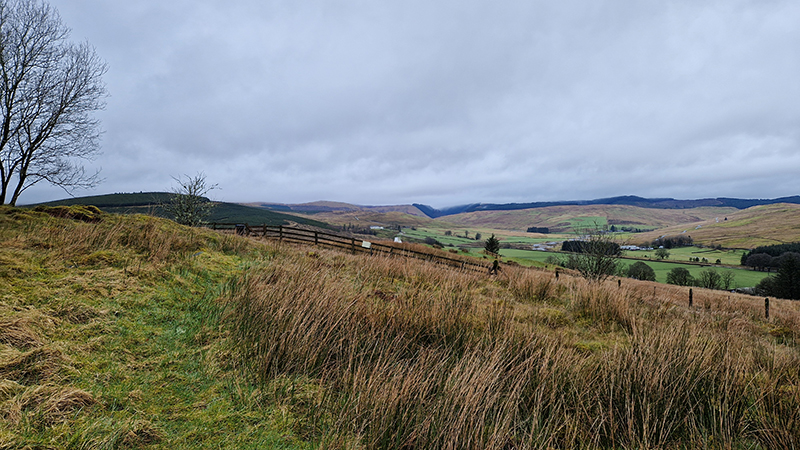
I am extremely grateful to a-n Artists Newsletter for the professional practice and creative development bursary that allowed me to visit Kielder Observatory in Northumberland and Eskdalemuir Observatory, Dumfriesshire to research how space weather impacts Earth’s magnetic field. I am also grateful to Claire Brown, site manager at Eskdalemuir Magnetic Observatory, for her time showing me around the site and explaining the many measurement processes that happen here. Despite the first survey of the site at Eskdalemuir, by the National Physical Laboratory in 1903, reporting back that “the weather was wet and stormy, and somewhat unfavourable to “field work” an observatory was established in this remote location, and recordings monitoring Earth’s magnetic field have been made from this site for 120 years.

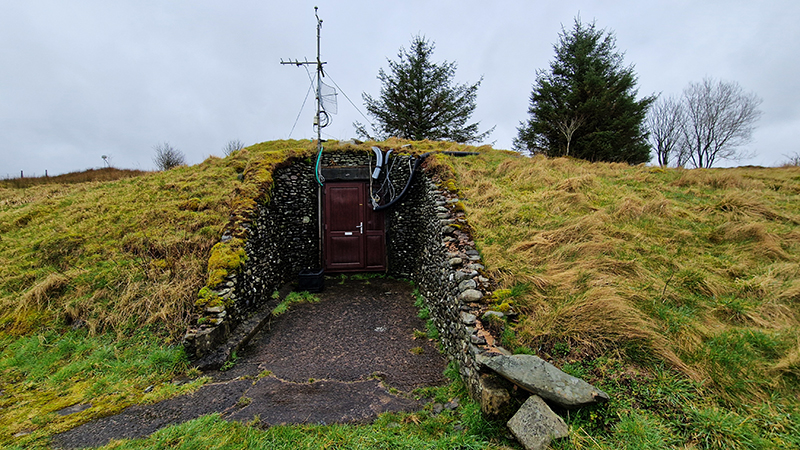
I was able to visit the East Absolute Hut, the Underground Chamber, and the Seismic Vault along with the main building and museum rooms. The interaction of space weather with magnetic currents in the surface of the Earth is monitored here, and there is a camera on the roof to record visual aurora on a loop which is then sent to the British Geological Survey research teams in Edinburgh for analysis. Meteorological observations are also made here, along with solar radiation, atmospheric pollution, and seismological activity. The monitoring of radiation pollution was inaugurated here after the Chernobyl incident in 1986 when explosions at the nuclear plant scattered radioactive elements over a wide area across Europe.

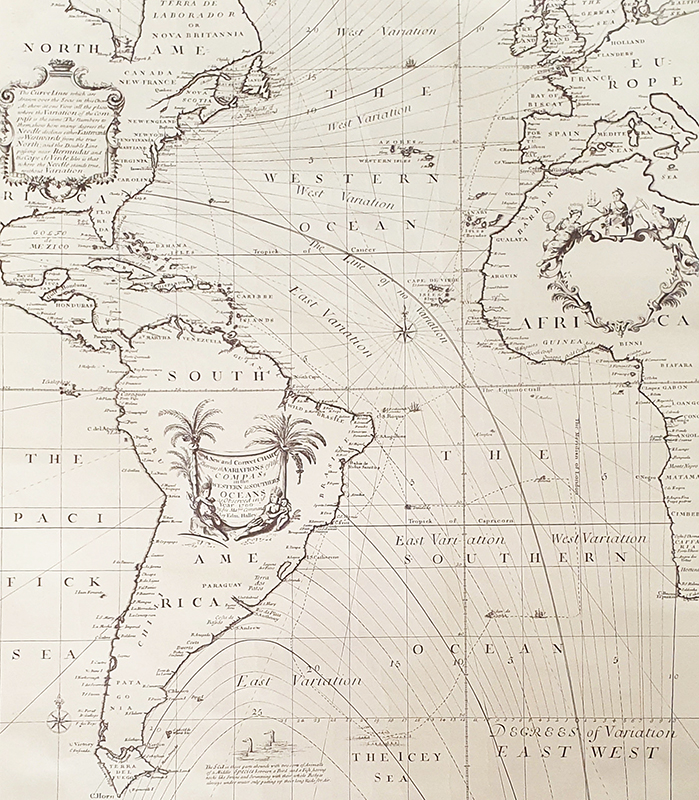
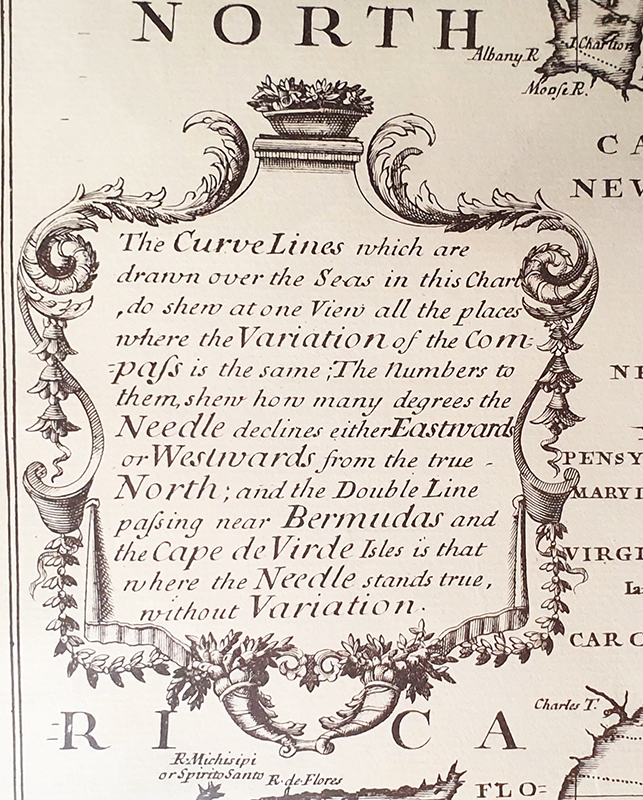
95% of Earth’s magnetic field comes from the swirling outer core of the Earth and changes are due to convection pattern turbulence. As compasses have been used for over 400 years, and records kept of magnetic declination, there is a long history of measurements to refer to. The magnetic north pole had been drifting westwards at about 55km a year up until 2020 but has recently slowed to 45km. Consistency of observations is very important for magnetic field modelling, which is why many of the instruments at Eskdalemuir are located underground to maintain an even temperature.

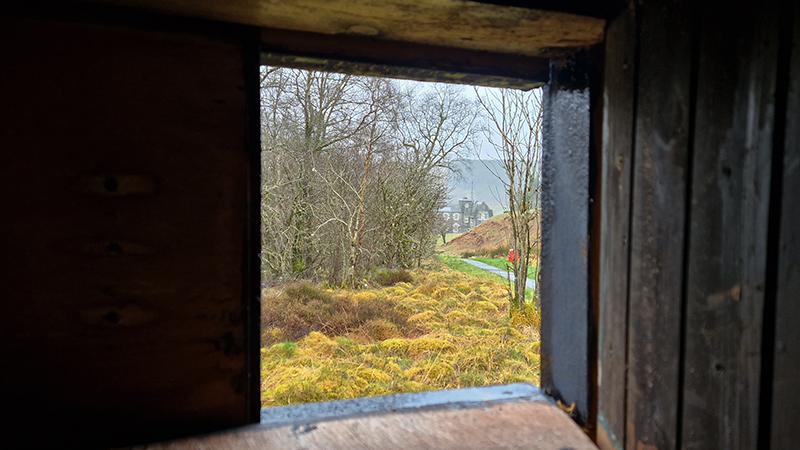
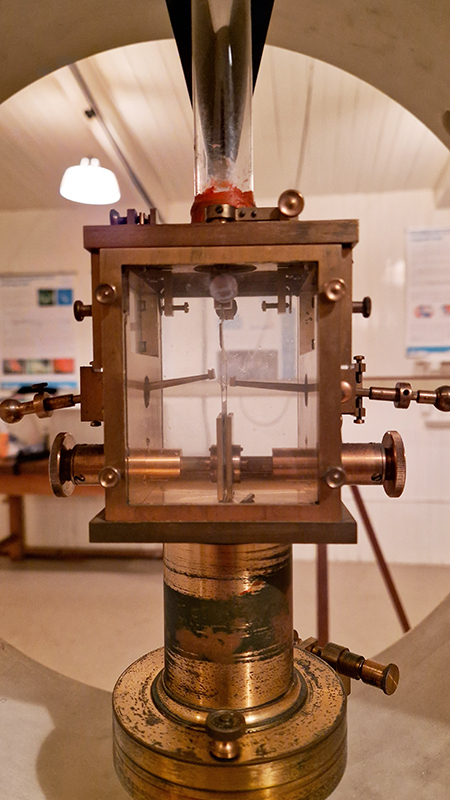
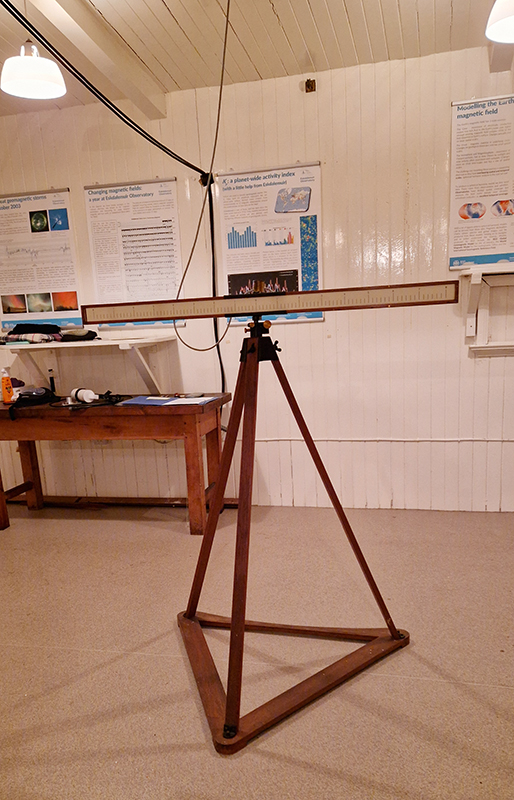
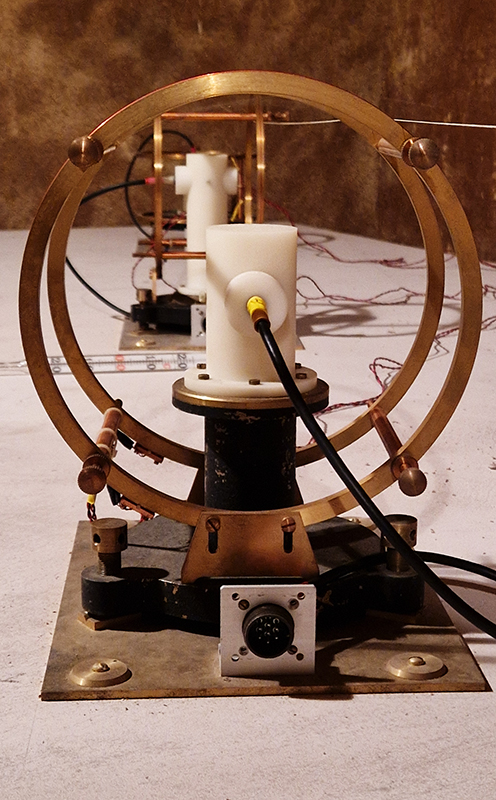
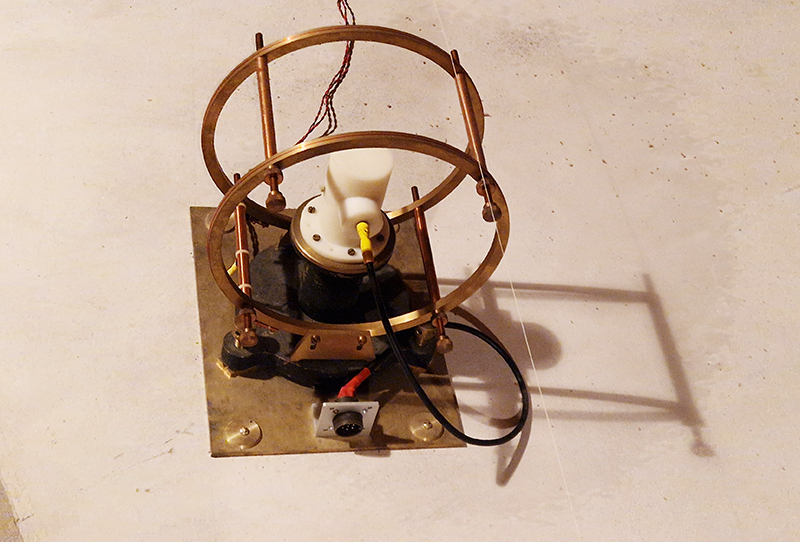
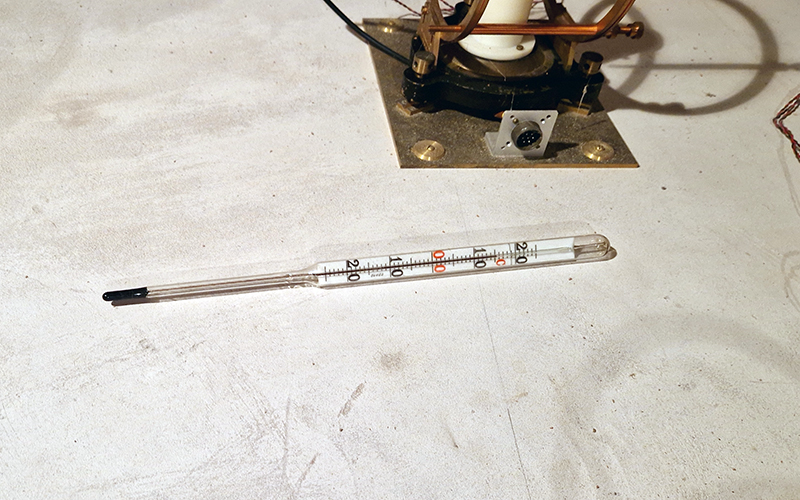
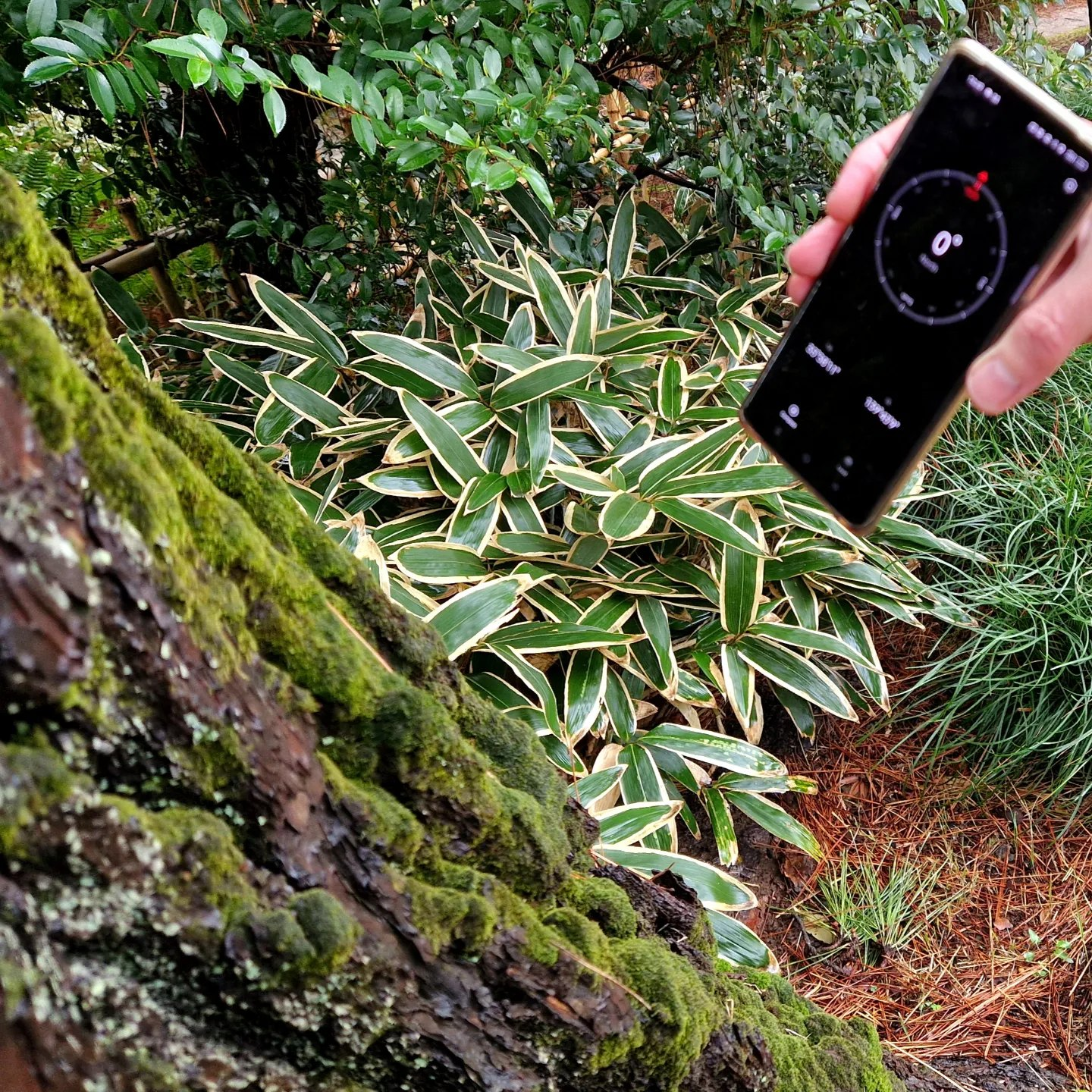
Manual observations of the direction of the magnetic field are taken once a week from the East Absolute Hut. A small sliding window in the wooden hut is pulled back to reveal a distant fixed azimuth mark, not always easily visible during inclement weather. The mark, viewed through the fluxgate theodolite, must be lined up with the north south meridian line until the reading on the digital recorder is at zero. At the same time the digital clock must read zero. These numbers fluctuate rapidly but once both machines read zero a measurement of the position of the magnetic north pole can be recorded. A separate recording is taken through a series of 12 angles on the theodolite to give an accurate position. The instrument is very sensitive and the operator wears the same clothes each time with no metal fixings etc to ensure consistency in the records. The measurements are then plotted on a graph which usually follows a smooth line describing the drift of the magnetic north pole. Sudden deviations alert the operator to errors in the recordings or dramatic movement in the field known as a geomagnetic jerk.

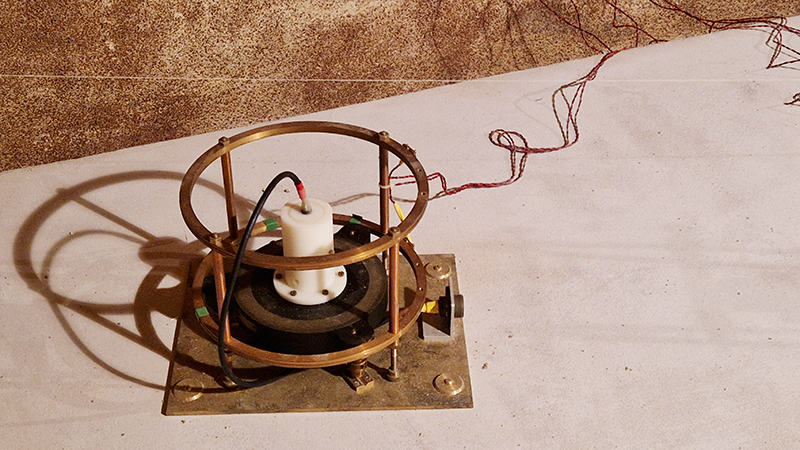
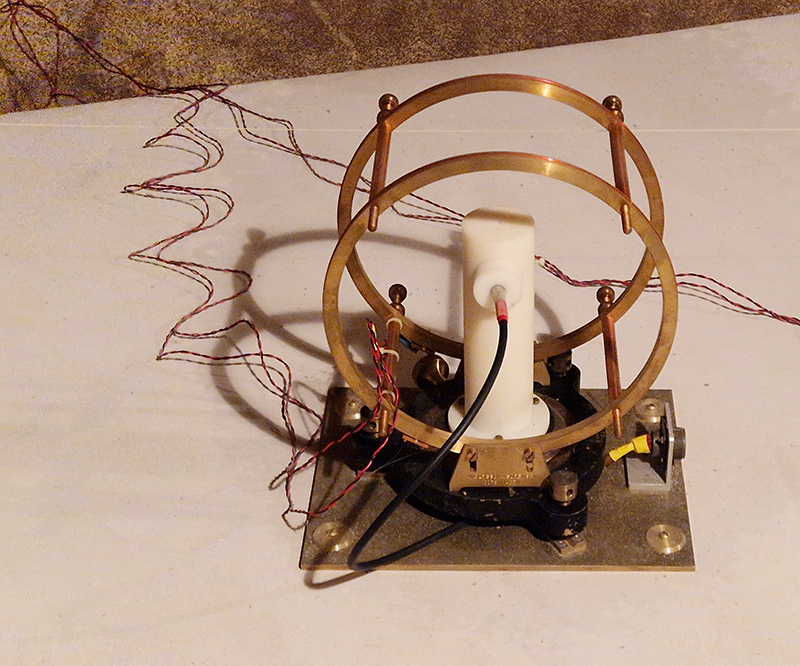
The instruments in the underground chamber measure the strength of the magnetic field in three directions.

Surface readings are also taken automatically from instruments in small enclosures in the back field. During my visit these instruments were used to record data rather than those I came in close contact with.

In the vault, seismograph readings are made of vibrations in the bedrock. Seismic activity around the UK is fairly low level but sensitive structures can still be effected. These instruments pinpointed the magnitude 4.7 Longtown earthquake on Boxing Day 1979, and a swarm of tremors in the Dumfries area in 2001. The network also detected the air crash at Lockerbie in 1988, accurately recording the time of impact for crash investigators.

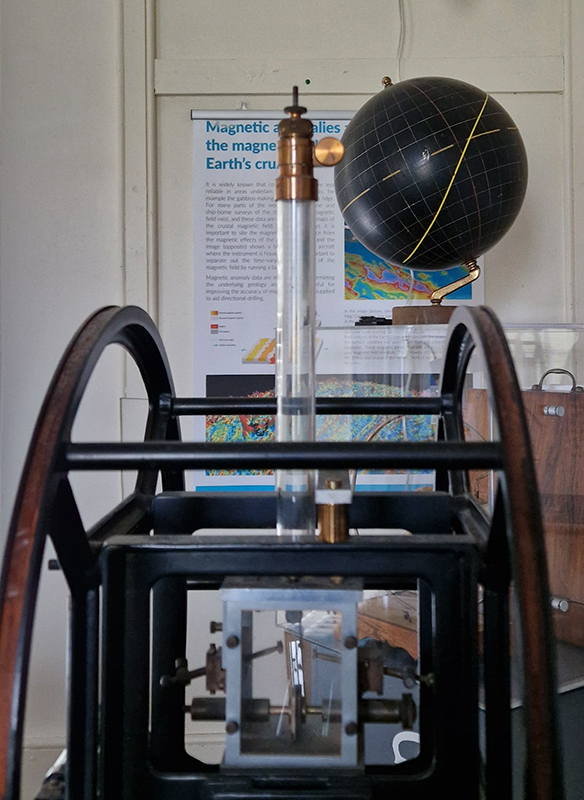
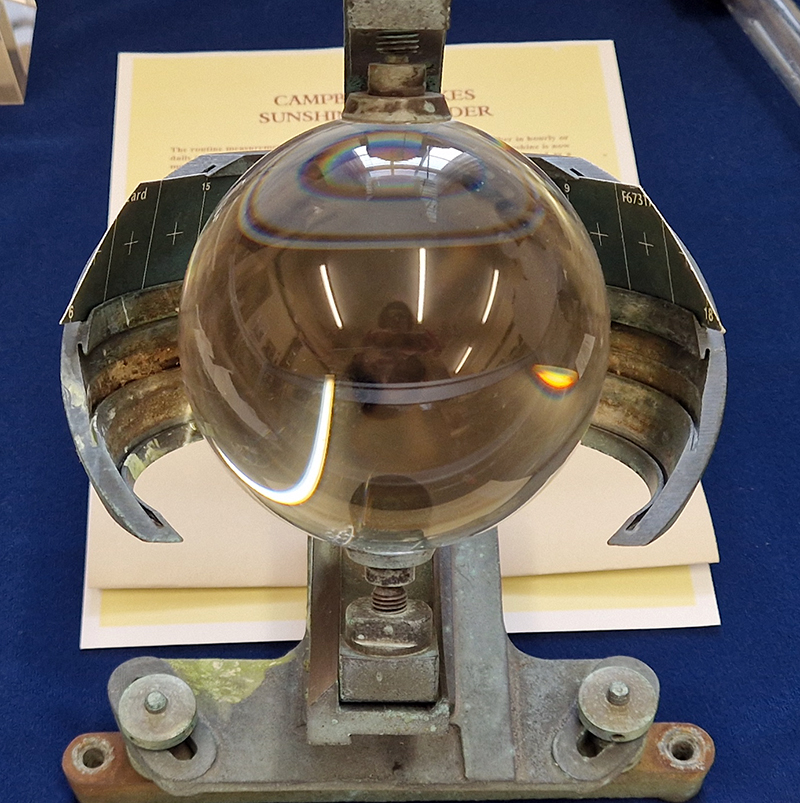
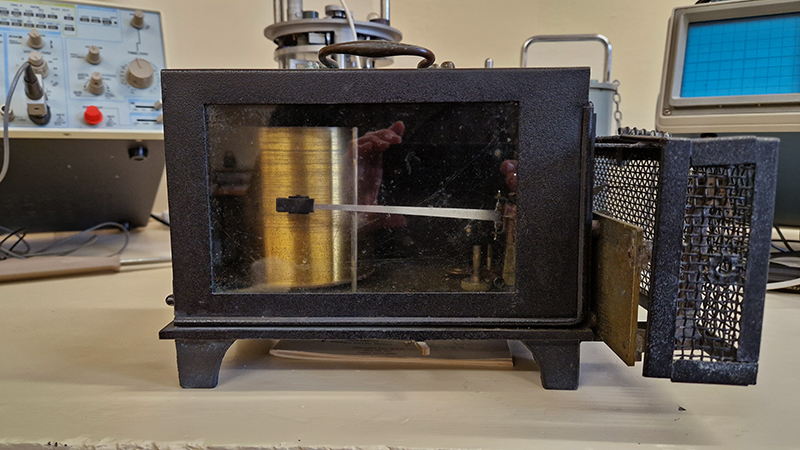
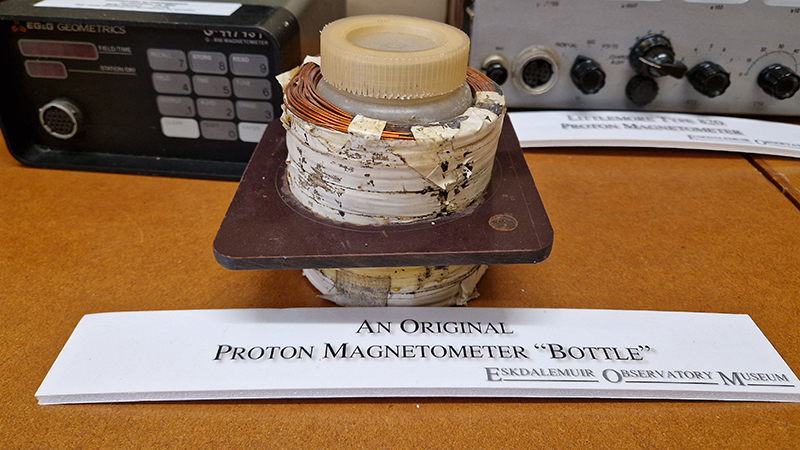
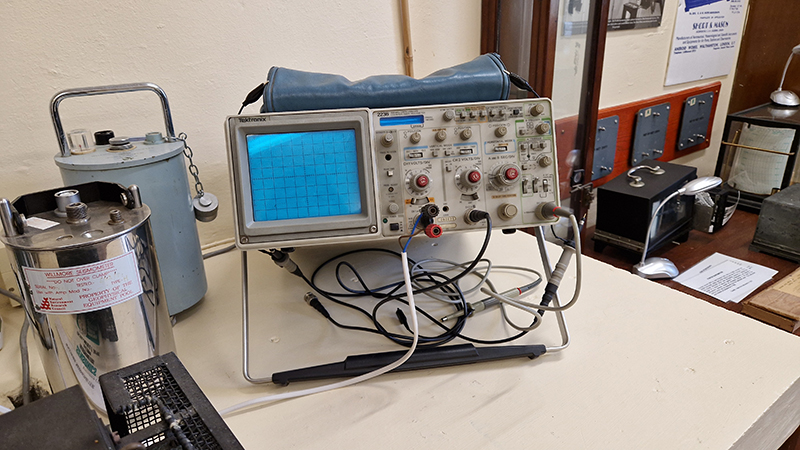
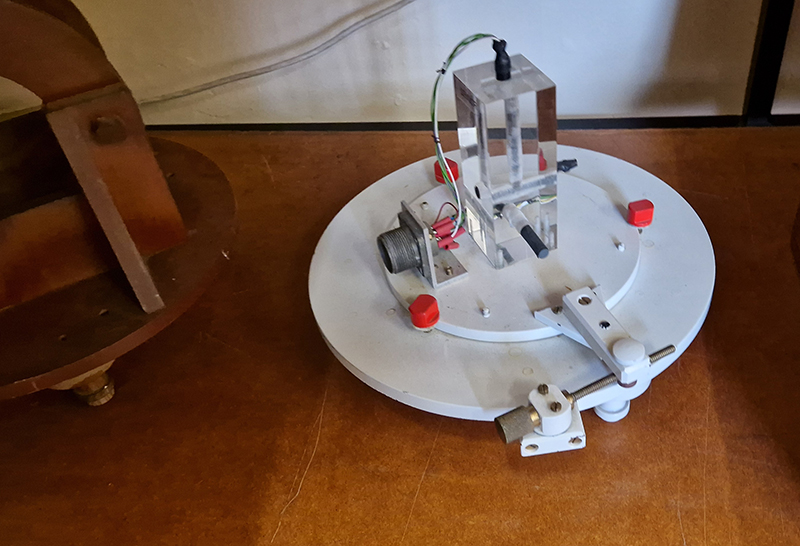
The museum holds a wonderful collection of mysterious instruments.

I attended Aurora Night at Kielder Observatory, established in 2008 under some of the darkest skies in Europe, to learn about how solar activity interacts with Earth’s atmosphere and creates the Aurora. The skies were very dark but also cloudy, and the sun was quiet, so no chance of seeing any aurora or even stargazing. However, we were given fascinating presentations on what causes the ethereal coloured lights seen at Earth’s poles and further towards the equator when solar activity is peaking.

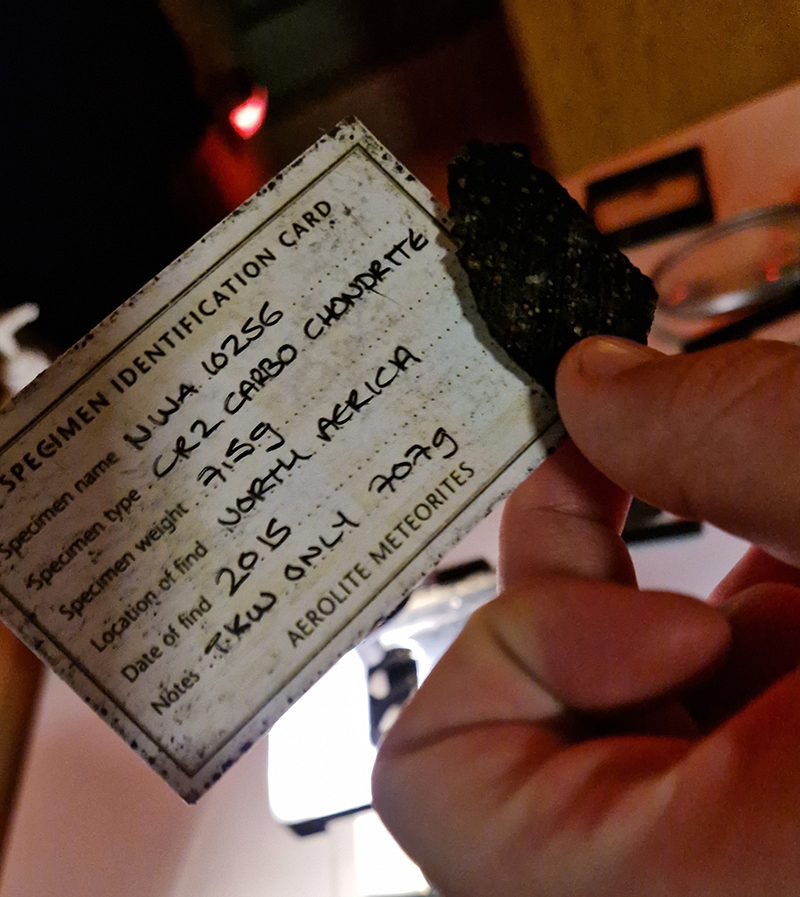
We were also given some cool meteorites to handle including a carbonaceous chondrite, one of the most primitive objects in our solar system.

The sun rotates faster at the equator than at the poles and this causes disruption in its magnetic field. The solar flares that we see loop out from the surface of the Sun are caused by localised incidents of polarity, where plasma and particles loop around what could be thought of as areas acting like independent bar magnets. Millions of tons of plasma and chunks of magnetic field can be ejected during one coronal mass ejection and this matter hurtles out into space, if we are in the line of fire we will be bombarded with energetic particles and Earth’s magnetic field will be disrupted. The solar wind brings the particles from the Sun that envelop Earth and are drawn to the polar regions by the geomagnetic field. The aurora is caused by the interaction of these high energy particles (usually electrons) with neutral atoms in the earth’s upper atmosphere. The particle collisions that occur in the upper atmosphere cause photons of light to be emitted. The Earth’s geomagnetic field is not symmetrical and changes as the Earth rotates, it responds to the disturbance of particles coming from the Sun and as the field adjusts to this disturbance, magnetic energy is released, thereby accelerating charged particles to high energies. These charged particles are forced to stream along the geomagnetic field lines which is why the aurora lights can appear in vertical columns or other dancing shapes depending on where in the magnetosphere they entered the atmosphere. The colours of the lights are dependent on which atmospheric gas is being excited by the solar particles, oxygen emits either a greenish or a red light and nitrogen gives off a blue light.

Solar activity is monitored and space weather forecasts are posted online. To be in with a chance of seeing the Aurora in the UK, the KP level should be 5 or above as this index increases as the aurora’s southern edge moves southward. It can take up to three days for the particles ejected from the Sun in a CME to reach the Earth. The lights are fainter than sunlight so a dark night sky is needed to see them. It is also often the case that the greater photo sensitivity of a camera can capture lights that are barely visible to the human eye. The aurora is more likely to be visible during the spring and autumn equinox because of the angle of the Earth’s magnetic field in relation to the Sun, not because storms are more frequent.

2024 is predicted to have a high number of solar storms so there may be opportunities to see the Aurora but it also comes with the risk of severe space weather that could cause havoc with our reliance on satellites and related technologies.

The connection between solar activity and the impact on technology was made during the 1859 Carrington Event, the most intense geomagnetic storm in recorded history. Strong auroral displays were reported globally and even seen in London, while sparking and fires occurred in multiple telegraph stations.

Satellites are vulnerable to space weather which can cause ongoing degradation or single event upsets where a charged particle can trigger a command in the satellite. During space weather events the ionosphere can become enhanced making it harder to communicate with satellites. Errors can occur in precision navigation and timing situations. Aviation crews are at risk to higher doses of radiation during solar activity and the HF radio communication system can have interference. Induced geoelectric fields in the ground can cause currents to flow in power grids and railway lines damaging transformers.

During the 2003 ‘Hallowe’en’ solar storms, when the largest single solar flare ever recorded was followed by severe storms, over half of all Earth-orbiting spacecrafts were impacted, disrupting satellite TV and radio services, GPS systems, damaging a Japanese scientific satellite beyond repair, sending several deep-space missions into safe mode or complete shutdown, and destroying the Martian Radiation Environment Experiment. The solar storms also led to communication problems for flights passing over the North Pole and Antarctic science groups had a full communications blackout for several days.

In acknowledging these risks we can gain an awareness of our vulnerability to the forces of nature and a respect for the power of the sun, the protection offered by our home planet and the interconnectedness of the universe.

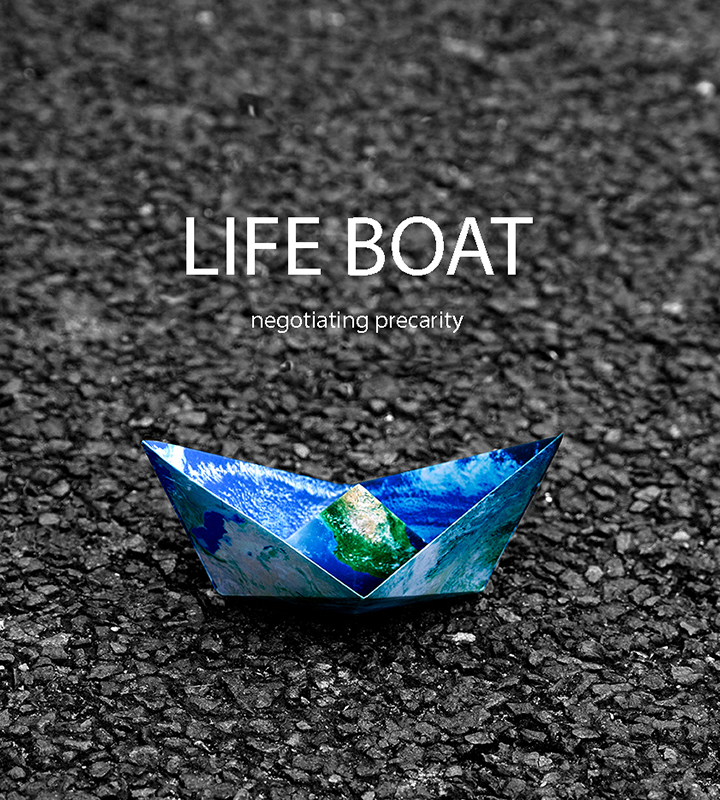
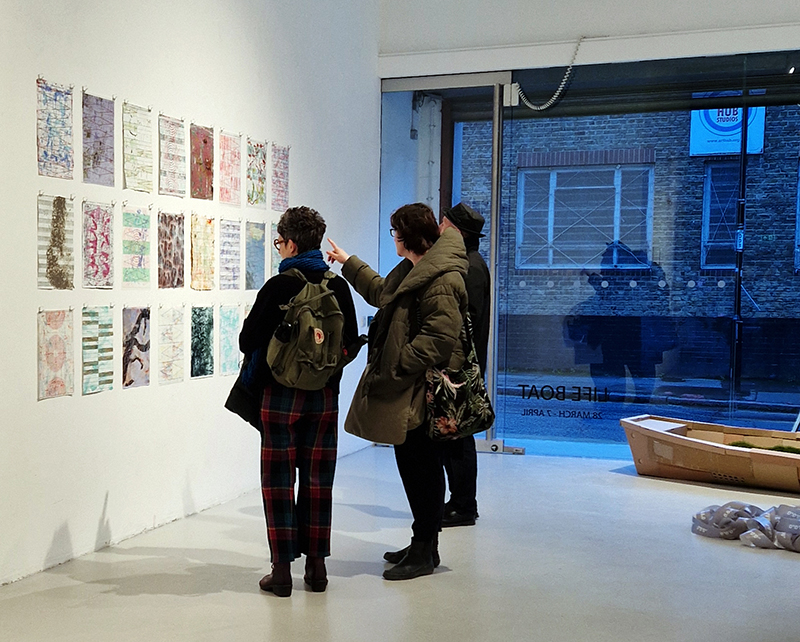
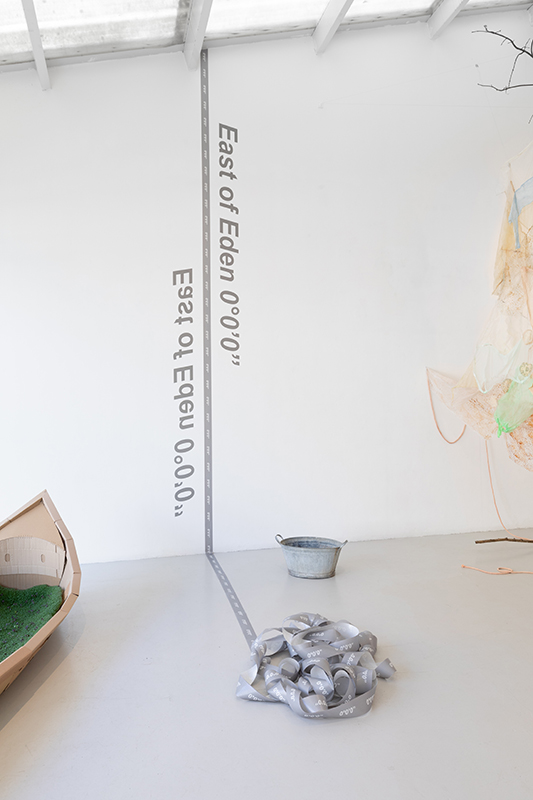
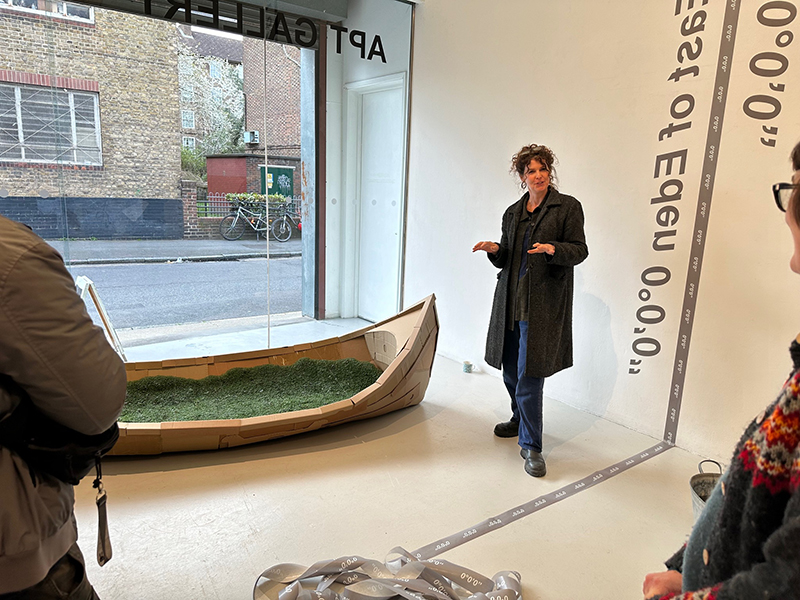
Life Boat at APT Gallery

Life Boat brings together artists with a shared interest in exploring precarity as a site of dynamic transition. Each takes an investigative approach to the environmental, social and historical themes evoked by the lifeboat, as a means of addressing ecological crisis, liminal landscapes, close and distant horizons, boundaries and displacement, lines of rescue, navigation and transformation.

Very happy to be exhibiting with Rachael Allain, Caroline AreskogJones, Beverley Duckworth, Liz Elton, Kathleen Herbert, Kaori Homma and Anne Krinsky.

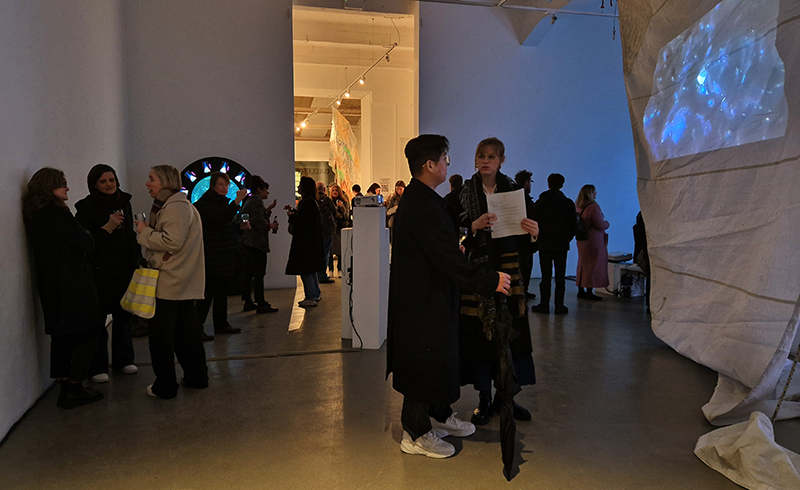
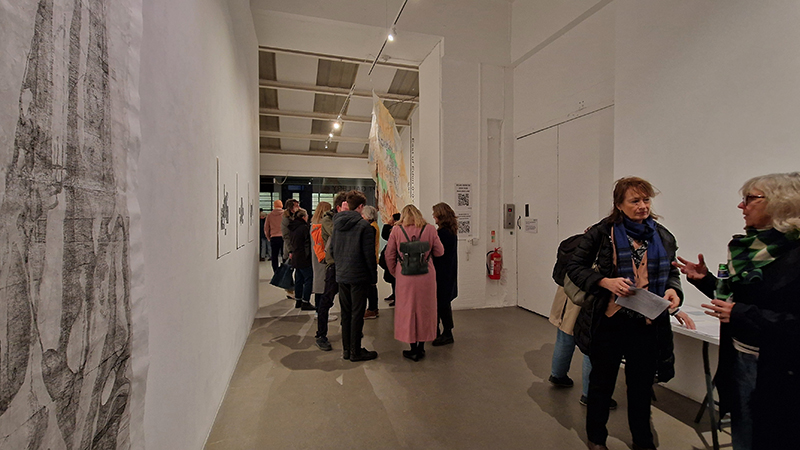
We had a fantastic opening night.

I was showing submīrārī (earthbound) and a new video installation Orbital – these works both consider transient landscapes, ecological landscapes on the cusp of disappearance and the digital landscape at risk from obliteration by an extreme solar storm.

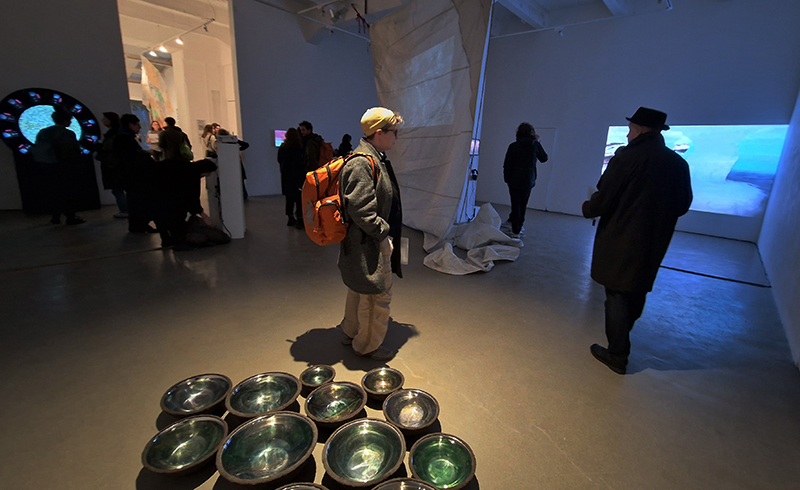
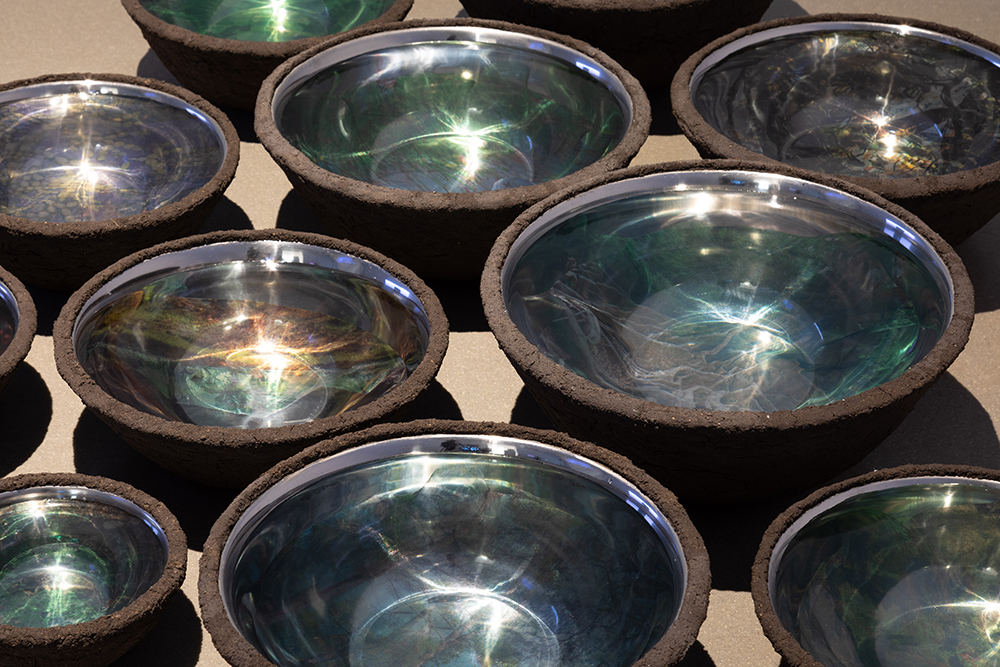
submīrārī (earthbound), 2018, steel, earth, water, sublimation printed textile, 12 pieces dimensions variable approx. 200 x 200 cm. Reflections of a no longer certain world hover in pools fluctuating on the cusp of disappearance. The ethereal images float or submerge revealing the hidden activity of water which also refracts light across the surface prompting the viewer to repeatedly shift perspective. Donna Haraway, drawing from Latour, proposes the ‘Earthbound’ as those humans who are ready to rethink and create new narratives with Gaia at the centre, who recognise the entanglement of society and nature and aim to pursue a ‘nonarrogant collaboration with all those in the muddle’. The shift in perspective embraced by the ‘Earthbound’ embodies a grief shared with other species at loss of habitat and disappearing landscapes. It is not a nostalgia for paradise lost but a reappraisal of what paradise could be.

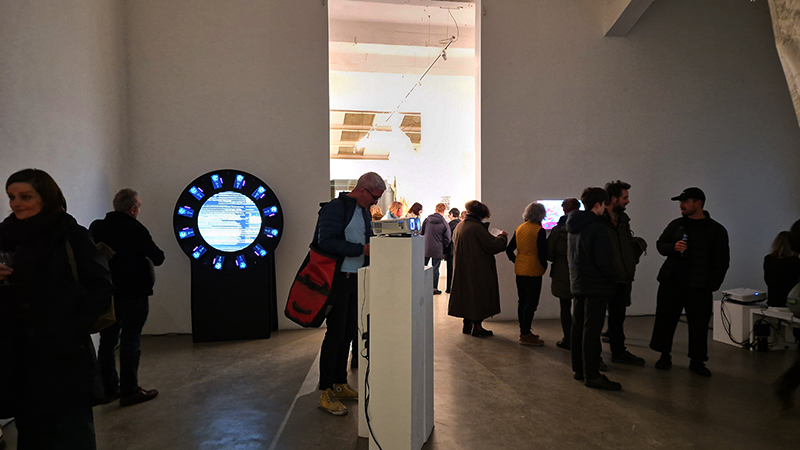
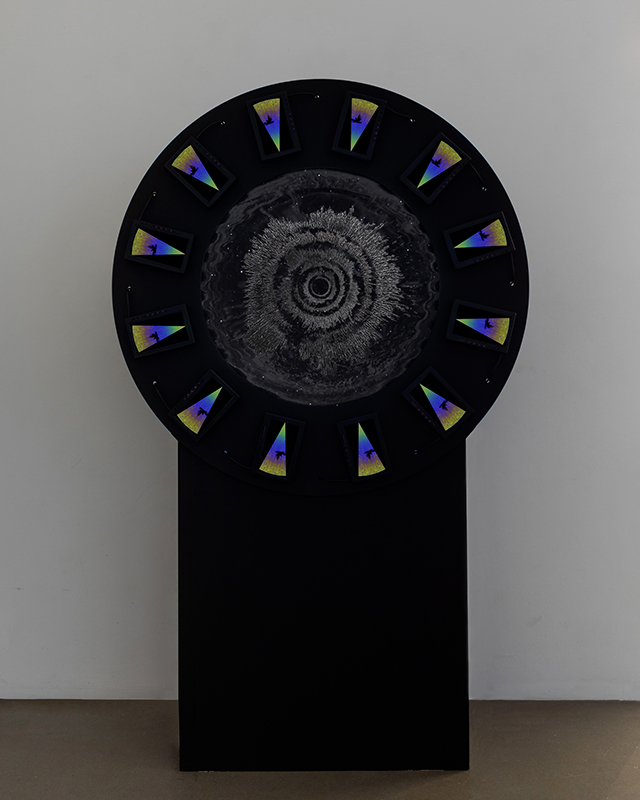
Orbital, 2024, Back projection video, mini screen array, board, installation 122 x 200 x 50 cm, video 05:44 min. An exploration of the potential risks of space weather on human technology and infrastructure and non-human navigation.

The Sun is about 150 million kilometres (93 million miles) from Earth, but space weather can affect Earth and the rest of the solar system. It can cause damage to satellites and electrical blackouts on Earth. Small satellites have come to dominate low Earth orbit, and we have become reliant on this technology for communication, military strategy, and data gathering.

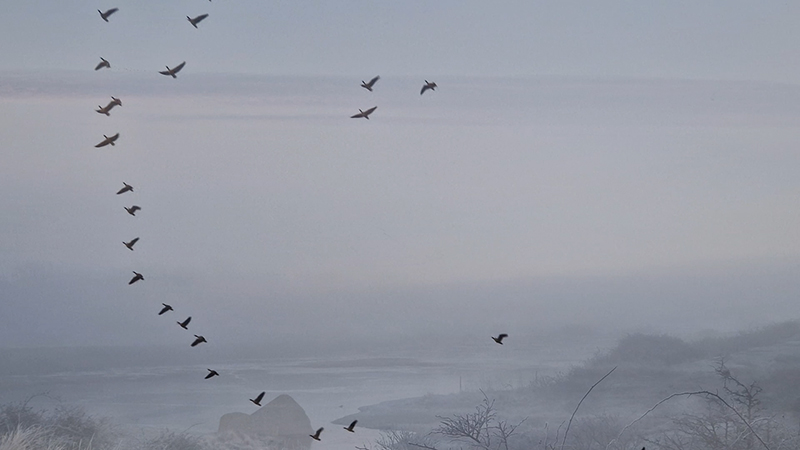
A blast of high energy particles hitting Earth during a solar storm can interfere with Earth’s magnetic field, confusing birds that use this for navigation. In America, pigeon racers postpone the big race if bad space weather is predicted. There is also new research that might suggest the number of satellites orbiting Earth and the growing satellite space junk graveyard could weaken Earth’s protective magnetic field, making us even more vulnerable to space weather and cosmic radiation.

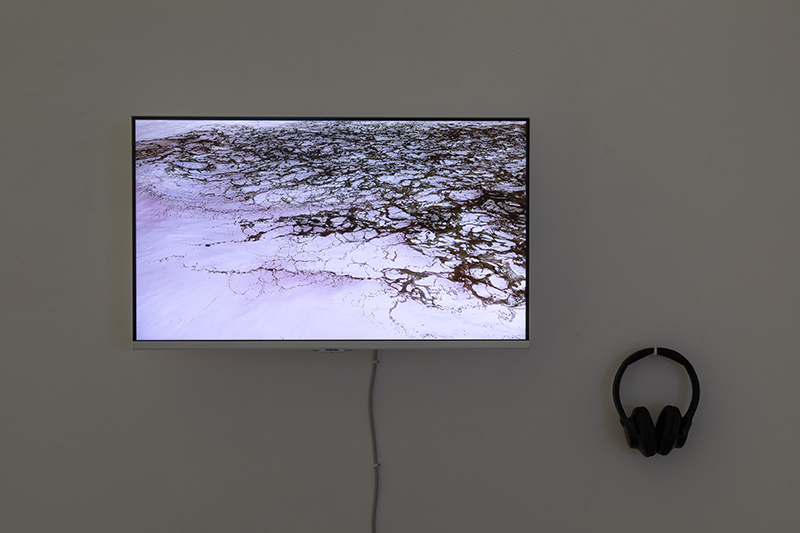
Rachael Allain’s current doctoral project ‘Above and Below the Horizon: A practice-led investigation into liminal thresholds of bodies of water’ has been undertaken in response to various aquatic locations. The work shown in this exhibition documents mapping aspects of an unexpected journey of discovery made in the upper reaches of the Arctic Ocean during an international art and science expeditionary residency in the Svalbard Archipelago during midsummer 2022. ‘Circumnavigation of a ‘Bergy Bit’’ is a film with sound of a close and intimate encounter with a section of an iceberg, calved from its mass and found beached and melting close to shore in Eolusneset, Sorgfjorden in the Bay of Grief.

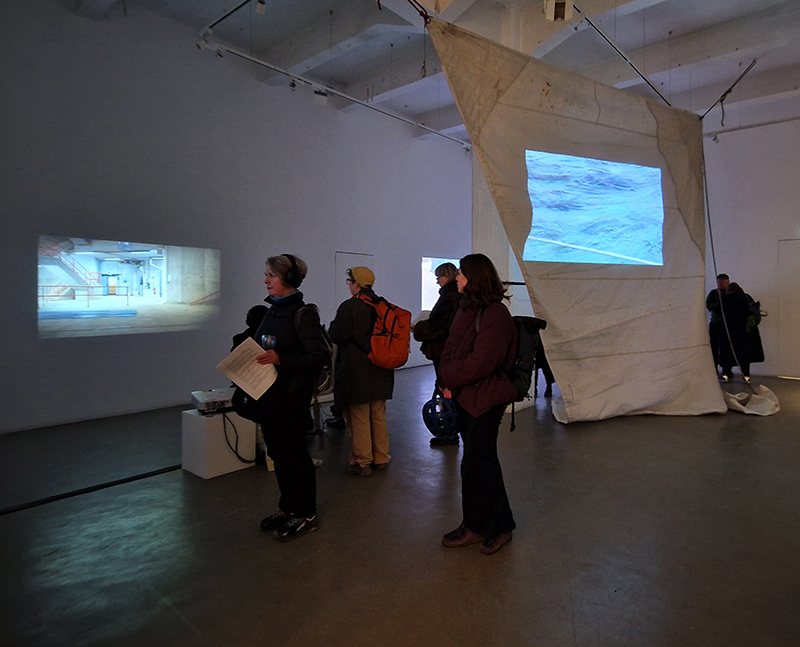
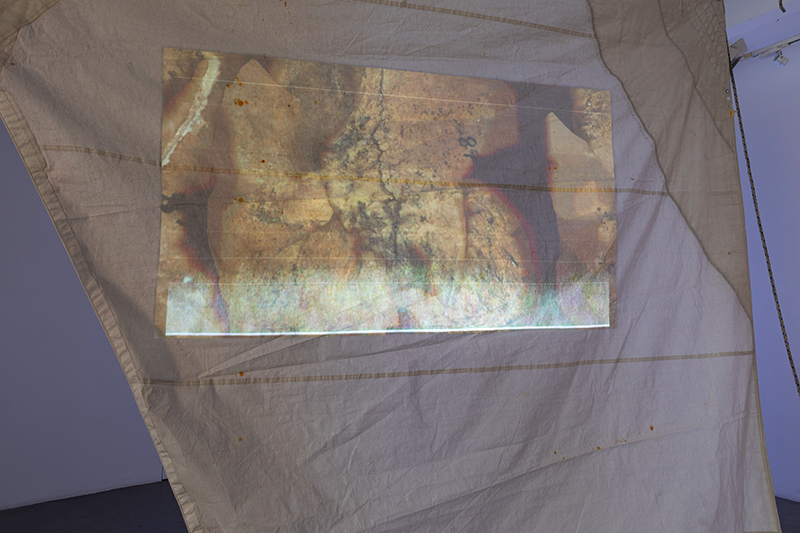
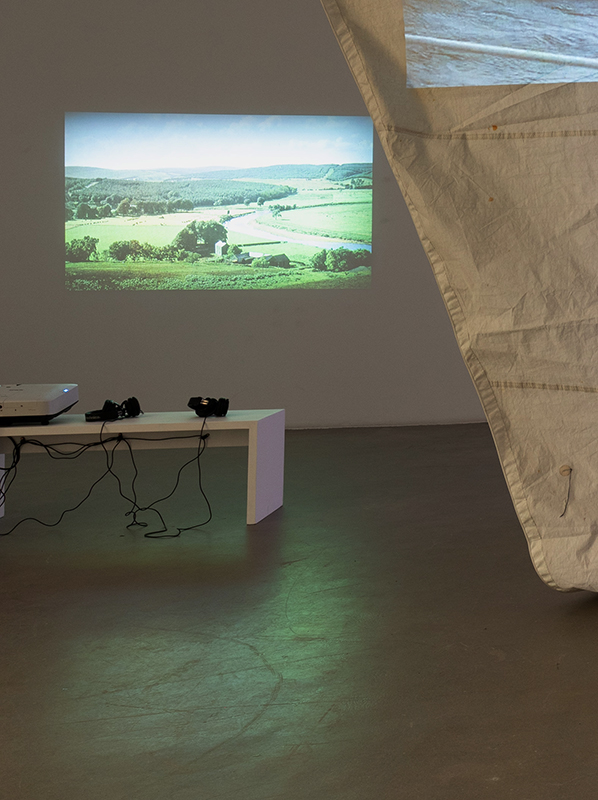
In 2019 Caroline AreskogJones spent time on the Sea of Hebrides making a series of responses whilst researching more viscerally the ocean as a site of ‘field research’ and gathering recordings. ‘Sounding Line’ (2024, sail, audio/video single channel as projection 07:32 min. Sail courtesy of Sail Britain) was created in deliberate wave format being inspired by Jean Painleve, whose hybrid films overlaid with jazz soundtracks occupy the uncertain space between art and science. Oskar Jones was invited to create the sonic composition in response – the saxophone being a wind instrument of extraordinary virtuosity.  Since 2023 Caroline has been visiting the Natural History Museum Cetacean Archive – at the invitation of Principal Curator, Richard Sabin. Through conversations including those with environmental historian Sophia Nicolov, her research has broadened and this updated presentation includes recordings of the two remaining Orcas who inhabit the Sea of Hebrides courtesy of the Hebridean Whale and Dolphin Trust.

Anne Krinsky Boiling Seas Acid Seas (Work-in-progress), 2024, Video, 12:26 min, filmed on location at Long Beach Peninsula in the Pacific Northwest.

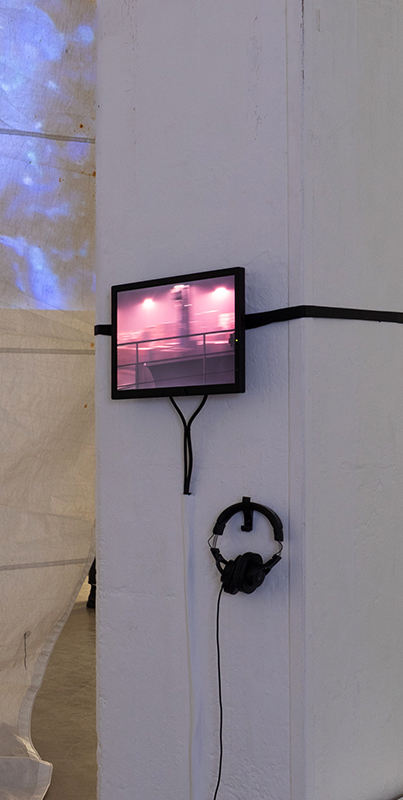
A History Of The Receding Horizon (2015, HD Video, 16:9, sound, projection, 28 min) is a digital film installation by Kathleen Herbert, exploring different concepts of time within the landscape. Based upon Kielder in Northumberland, the narrator whose script was developed from the artists research interviews with environmental historians, astronomers at Kielder Observatory and local people from the area, leads the viewer through the film weaving together past, present and future timelines. The Chaplin (2006,  standard HD video, 4:3, sound, monitor, 07: 20 min) is a film installation recalling a conversation held between the artist, Kathleen Herbert, and the Port Chaplin based at the Mission to Seafarers centre in Avonmouth docks. The Port Chaplin boards every ship as it enters the docks, his role is to provide emotional and practical support to seafarers while they are in port. The piece was produced while Kathleen was based at the centre researching for a new commission by Picture This Moving Image and Situations Bristol. Her research at the centre culminated in a 3 day voyage aboard a cargo ship in which she took her camera and the extracts of film from this journey provide the visual background of the film.

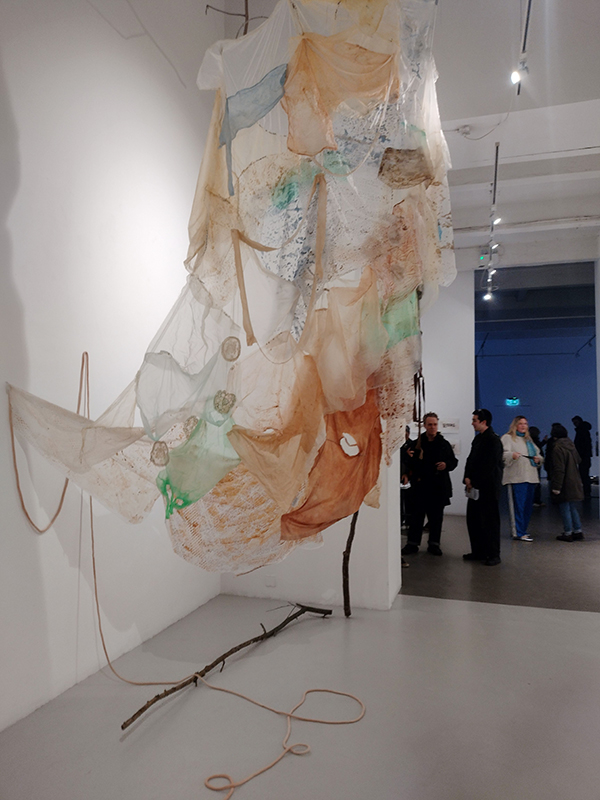
Fragility and vulnerability are embodied in layered works on paper, a large suspended sculpture made from delicate compostable material and living installations incorporating transient elements that transform over the exhibition period.

Anne Krinsky has been working on a research-based project about vulnerable wetlands and climate change since 2018. Coastal wetlands worldwide are at risk from rising sea levels caused by climate change, while inland watersheds are threatened by heat, drought and agricultural runoff. These ecosystems are critical to the plants and animals that inhabit them and to human survival. She is drawn to biodiverse habitat edges – where water meets land or where fresh water meets the sea and is interested in recording both the beauty of – and human impacts on – fragile habitats. She uses documentation as an archive of raw materials to generate work in other media, including site-responsive print and video installation and tactile work on paper. In responding creatively to wetlands and watersheds, she wants to raise public awareness of climate threats to these life-sustaining habitats. Before They Vanish, 2024, 24 small works: paper, mylar, acrylic, digital print, mixed media, 150 x 300 cm.

Caroline AreskogJones Float 2023, Paper lithography on shoji, 60 x 120 cm forms part of a series of works inspired by the Natural History Museum Cetacean Archive, rendered onto Shoji paper, used in museum conservation.

Liz Elton begins in landscape and still-life painting to explore the potential of waste and the recycling of matter.  Her ephemeral work is often made on compostable ground, coloured with kitchen waste and embedded with seeds. Showing Habitat, 2024, Compostable cornstarch food waste recycling bags, household textiles from a house clearance, vegetable dyes from kitchen waste, water colour, silk, soil from various locations and gleaned from vegetables bought in the market, vegetable seeds saved from food preparation, seeds of varieties of self-seeding edible plants typically found on the wasteland around Deptford creek, found wood, Approx. 360 x 250 x 150 cm (variable).

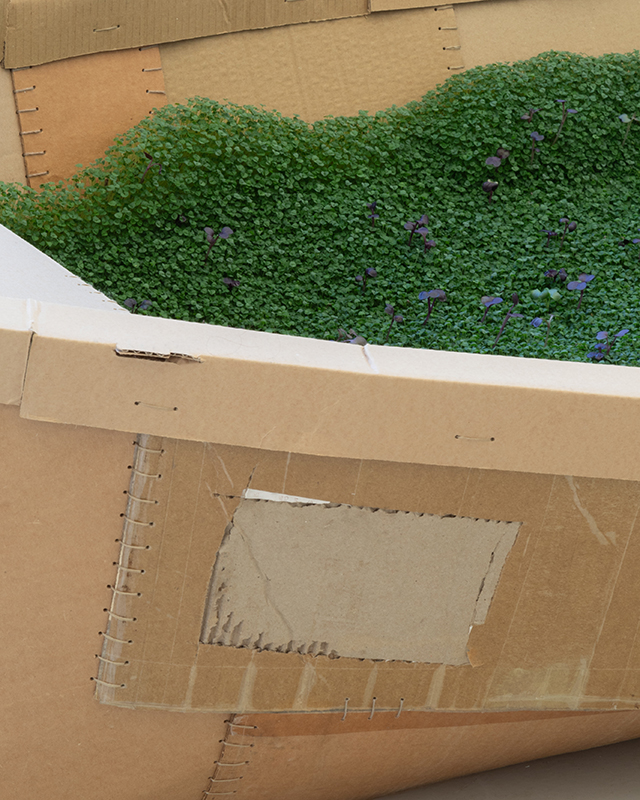
Working with living sculpture and installation, Beverley Duckworth creates spaces and moments which connect the smallest, poetic actions of plants with precarious issues facing humanity. Her practice centres on the afterlife of the discarded and is rooted in small acts of reparation – sewing scraps together, watering fragile seedlings and nurturing the regenerative power of composting from waste materials. Works include Husk, 2024, Discarded cardboard, thread, flax, seeds, water, 90 x 70 x 280 cm; Raze, 2023, Discarded clothes, binder, 48 x 51 x 10 cm.

Etchings and spatial interventions explore the use of the natural world as human resource and land as a site of geopolitical conflict.

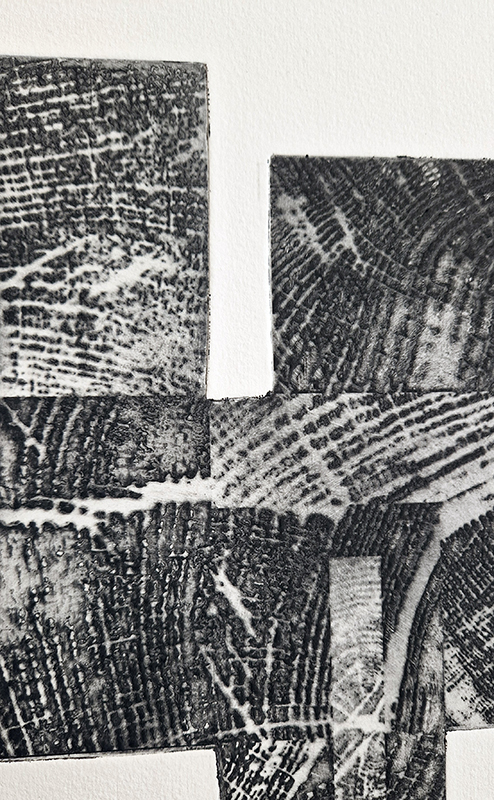
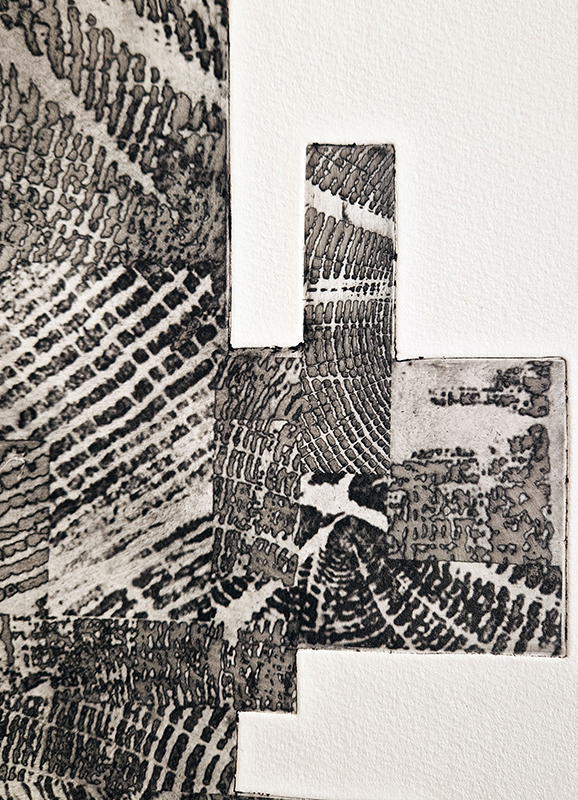
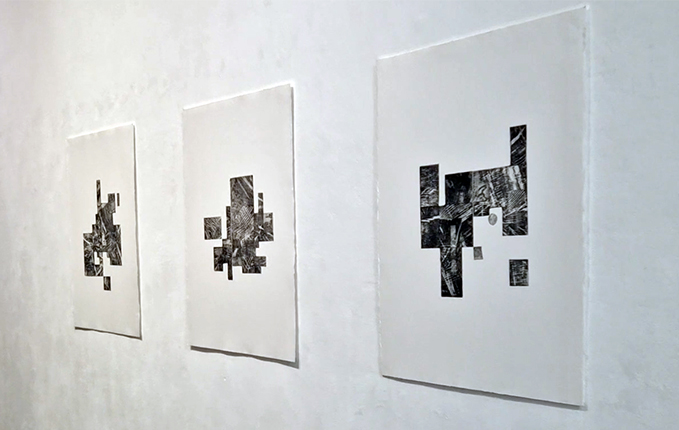
Kathleen Herbert Lost Dimensions I, II, III, 2022-23, Photopolymer Etching on Somerset Satin Paper, 75 x 57 cm.

Kaori Homma’s multi-site Homma Meridian project asks us to reconsider and to challenge the cartographic demarcations that govern so much of our world and that we so frequently take for granted. With the deceptively simple move of ‘repositioning’ the Greenwich Prime Meridian, the artist radically shifts our perspective, as well as our sure footing, both figuratively and even literally. At each of its iterations (which have included Budapest, Margate, Wales, Paris, London and Pennsylvania) the artist and participating audiences draw an impermanent line running north-south, always using ephemeral materials, as a substitute for the ‘Prime’ meridian. The project’s act of displacement and its ephemerality work to highlight the imaginary nature of boundaries and to shake up our perception of our position on the earth as it spins on its titled axis. Works include Homma Meridian, Deptford, 2024, Vinyl Letters, tape, dimensions variable; Floating 0 degree Longitude, 2024, Abrudashi Fire Etching, Water, Bucket, 60 x 38 x 25 cm; Four corners of the earth, 2024, Aburidashi Fire Etching on Paper, 50 x 80 x 3 cm

Alongside the exhibition we held a series of events including a Low Tide Walk in Deptford Creek – led by Anne Krinsky in partnership with Creekside Discovery Centre followed by refreshments and a tour of the Life Boat exhibition at APT Gallery just two minutes from this amazing natural habitat in Deptford.

FIELDWORK AS PRACTICE – A live sonic performance by Oskar Jones and a conversation led by Caroline AreskogJones bringing together Oliver Beardon (Founder and Skipper of ‘Sail Britain’) Richard Sabin (Principal Curator of Mammals at the Natural History Museum, London) and Sophie Nicolov (AHRC Early Career Research Fellow, Natural History Museum, London) for a discussion around the potential overlaps between ‘field’ and research, artistic practice and ecological activism.

Homma Meridian and the Secret of Invisible Ink/Fire Etching Workshop where Kaori Homma shared her technique using Invisible Ink as part of the Aburidashi/Fire Etching process, historically used for espionage, she also gave a fascinating presentation on the history of this process and how it relates to her own art practice and her Homma Meridian Project.

In tackling concepts of the perilous, the vulnerable and the lost, Life Boat raises the alarm on the passive position of waiting for rescue and encourages urgent action in troubled waters.

Gallery Visits

Women In Revolt at Tate Britain. A lot of documentation here of social history. Many texts, posters, zines, not so much art but a great piece from the inimitable Susan Hiller, with personal incites accompanying images of her ever increasing pregnant belly such as: – She writes, one is born into time. And in time introduced to language….Or rather — one is born. And through language, introduced to time…Perhaps even — one is born, in time, through language.

Mary Yacoob, captivates with astonishing precision of detail as always in Brutal Space at Bobinska Brownlee exploring the subject of future adaptations to life in space.

Listening

A webinar from British Geological Survey on how we measure the magnetic field, everyday applications and mitigating the threats of space weather. From the Earth’s core to outer space: understanding the magnetic field

“A powerful solar flare hitting Earth is entirely plausible, and in the Internet Age would have a massive immediate effect that would go on to wreck the world economy. Satellites in low Earth orbit as well as communication devices on Earth would be destroyed – the ‘Internet Apocalypse’, causing blackouts, riots and supply-chain disruption, as well as ruining your last-second eBay bid”. Tim Marshall The Future of Geography

The dramatic increase in the number of satellites being launched into low Earth orbit unfortunately coincides with the current Solar Cycle 25, which is predicted to peak between January and October of 2024, with more solar storms of greater intensity and therefore a larger hazard for critical technologies and services. A growing risk awareness is evident as three new geomagnetic observatories have been installed across the UK in the last year to monitor space weather. They hope to predict solar storms and alert operatives to manage situations such as that in February 2022 when a Coronal Mass Ejection led to 38 commercial satellites being lost. Solar plasma from a geomagnetic storm heated the atmosphere, causing denser gases to expand into the satellites’ orbit, which increased atmospheric drag on the satellites and caused them to de-orbit.

Despite the unpredictability of our star’s activity, national space agencies and an increasing number of private companies are forging ahead with space based technology. There is a joint plan between space agencies (not including China or Russia) to construct a Lunar Gateway Space Station near to the moon where astronauts will live and conduct experiments for up to 90 days between visits to the moon. Gateway will be exposed to much higher levels of radiation than the ISS which is in low Earth orbit and so must be built to shield against higher levels of cosmic ray bombardment.

As of January 3rd 2024, the satellite tracking website “Orbiting Now” lists 8,377 active satellites in various Earth orbits. Communication and Earth observation make up the majority. The USA still outstrips all other operators but other nations are eager to catch up and within the past two decades, satellites from 91 new space-faring countries reached orbit.

It is not only radiation from space weather that is a threat to satellite dependent infrastructure. As witnessed following the largest nuclear test conducted in outer space by the USA in 1962, which lit up the sky with Auroras, knocked out electricity in Hawaii 900 miles away, created significant magnetic field disturbances and an artificial radiation belt which damaged or destroyed several satellites and persisted for a decade. Nuclear detonations in space could make space unusable for satellites.

Work in progress on a new video installation for upcoming exhibition Life Boat at APT Gallery. Taking the lifeboat as a metaphor for precarity, eight artists respond to current uncertain times of ecological and social change and shifting landscapes from both local and global perspectives.

The video looks at the interaction between space weather and Earth’s magnetic field and the risk solar storms pose to satellites and related infrastructure.

The ancient walled city of York was a great host venue for the Aesthetica Art Prize 2024 exhibition and the Future Now Symposium. Grey February is dispelled by the inspired decision of the local council and shops to keep the Christmas lights on.

There are many artists alongside myself in the Aesthetica Art Prize longlist, and it was great to meet up with familiar faces as well as make new contacts at this event. With so many artists, the digital showcase of our work in York Gallery was on quite a long loop, but I felt happy to be in such good company.

A link to my Aesthetica 2024 longlisted artist online profile is here

Private view of finalists work. Shortlist here

The winners of the main prizes, Maryam Tafakory for Nazarbazi [the play of glances]which explores love and desire in Iranian cinema, where depictions of intimacy between women and men are prohibited. and  Emerging Prize-winner Gala Hernández López, were well deserved with powerful, timely work.

The Future Now Symposium threw up some interesting and potentially disturbing questions about AI despite some speakers such as Dr Suzanne Livingston and Marian Ursu, positive spin that AI could herald a new utopia of knowledge production and collaboration to solve the world’s problems. The panel discussing ‘The Impact of New Technologies’ were all in agreement that it is already too late to change or avert the learning bias of AI systems reflecting and perpetuating human biases, as the early modelling is embedded too deep in systems that no one really understands or can control. There was encouragement to welcome the new technologies such as chatGTP and text prompt generative fill software as new tools to be used to expand on what we can create rather than seeing these as taking over the creative thought process.

The myth surrounding the deception of the judges by Boris Eldagsen’s now-infamous AI-generated piece, The Electrician, which won a Sony World Photography Award in 2023, was laid to rest by Edgar Martins on the ‘Photography in Focus’ panel. The winning image had been entered to the competition as an AI generated image and was judged on that basis, there was no cover up but certain media sources sparked heated debates around our trust in images, giving the impression that the judges had been misled. This doesn’t mean to say that there isn’t a problem with image authenticity in the news and especially on social media as AI generated images are shared ubiquitously without the relevant acknowledgement.

I very much enjoyed Sarah Perks in conversation with Heather Phillipson who describes her works as “quantum thought experiments,” which unfold in absurd and complex ways. Interesting to hear how her ideas develop from 2D sketchbook/collages, straight to full large scale 3D installation with no small scale models in between. Making such large work is a problem when it comes to storage, so some pieces have to be relinquished and then recreated if necessary, as it was for her Turner Prize nomination.

Margaret Salmon was another fascinating speaker with her quietly moving films that expose and elevate the minutiae of human experience. She showed a short film zooming in on the invasive ravaging nature of trawling the sea bed, indiscriminately gathering up everything in the haul, interspersed with a Whitstable trawlerman speaking about his life on the boats where this was just seen in terms of hard or easy work and how the day played out. It reminded me of the taped interview I have of Aunt Millie, a close elderly neighbour from my Suffolk childhood, who talked about mending the fishing nets piecemeal as a young woman when the village still had an active fishing industry. Fragile histories to be remembered.

The panel discussion ‘What does it mean to be an artist today?’ was tempered by Ori Gersht accounts of his personal experience as a jew during the current conflict, both here and as witness to atrocities in Israel. How to respond.

Gallery Visits

Freya Gabie Duet at Danielle Arnaud. Great to hear Freya’s own account of her time spent as artist in residence on the Mexican/U.S border at one of the teatime talks hosted at the gallery. The shocking inequalities and water poverty that she witnessed are sensitively explored through her work. The ease with which she could cross back and forth was denied those indigenous to the Mexican side who live in the shadow of a shiny wealthy city that they would never visit.
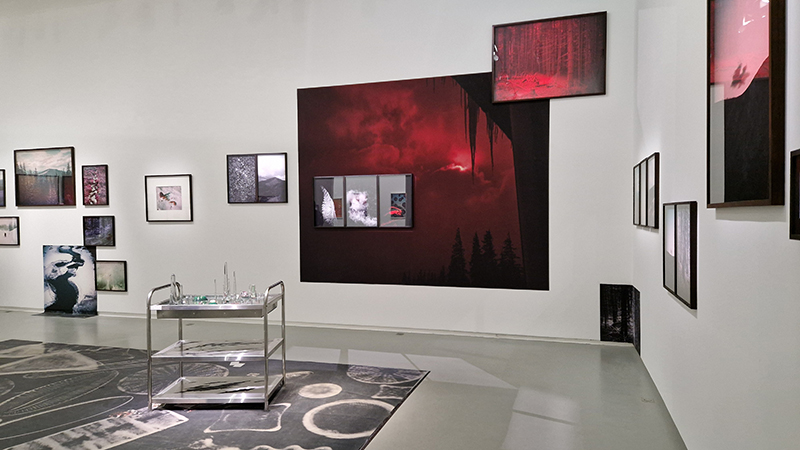
The exhibition explores the landscape of El Paso and Ciudad Juarez as a repository of shared connections and experience. Giving the land voice to both remember and carry the complications, contradictions, and beauty of the place; the way these nuances act in harmony, and the notes of discord they strike. For this exhibition, Freya Gabie draws out threads that weave the two cities of Ciudad Juarez and El Paso together. Approaching the intricate back and forth of economic, social, and medical journeys that take place between the people and objects of the border, and examining how the border both generates the flow of goods, services, and people and dams it, revealing the ways the resulting impacts are felt.

Agata Madejska Grand Habitat Horror Vacui at Flat Time House. The works evoke the personal intimacy and mess of domestic life lived at odds with prevalent power structures. They embody feelings of fragility, and exposure when a home must be constructed from fragments as seen in the small personal objects secreted in pockets or spilling across the floor, an accumulation of detritus that together makes a life, chafing against the world like grit in Vaseline. Due to my own current preoccupations, the dark padded grid of the entry room floor, that gave under the weight of mass and was strewn with discarded silver objects, read as low earth orbit littered with space junk, but was in fact a reference to the Chanel brand handbag.

DISSONANT BLOOM a group show with works by Nancy Allen, Mauro Bonacina and Héloïse Chassepot at Sundy. Enjoyable tactile sculptures with interesting materials and painting to get lost in with no point of focus.

As a concept ‘Dissonant Bloom’ refers to our vexed relationship with nature but it also suggests that growth and flourishing are possible amidst unfavourable conditions. In the same way that the coexistence of competing species ultimately fosters biodiversity and ecological resilience. In the same way every work in this exhibition embodies aspects of blooming, either aesthetically or conceptually, but they do not necessarily do so in harmony with each other.

Fragments of a Lost Future with Karen David, Lana Locke, Liz Elton, Mimei Thompson, Susie Olczac at White Conduit Projects. In a time of climate crisis the works question hope for the future as a fantasy, or only for the non-human.

The Planet’s mineral, energy and agriculture resources have been efficiently, and even ruthlessly, exploited… They have harnessed energy of the atom, deciphered the molecular codes that oversee their own reproduction… Despite these achievements the people of this planet have in other respects scarcely raised themselves above the lowest level of barbarism. The enjoyment of pain and violence is as natural to them as the air they breathe. J.G. Ballard [“Report From an Obscure Planet”, 1992]

The fears of the near future described in J.G. Ballard’s science fiction novels are now our reality.

When corporations and politicians are busy monopolising airspace and arguing amongst themselves, whose voice will communicate this urgent crisis. We go about our daily lives with our heads partly buried in the sand, often too busy to fully engage with our current polycrisis. Activists rightly convey outrage, but can we embed these urgencies into our everyday lives? In ‘Report from an Obscure Planet’, Ballard describes the critical state of the Earth as viewed from another place. White Conduit Projects brings together these five artists who bravely and playfully incorporate this sense of crisis into the core and surface of their work. Starting with their everyday surroundings, they attempt new ways of communication, quietly bringing a Ballardian nuance to artworks that inhabit our domestic space.

Loose Ends is a group exhibition at Thames-side Studios Gallery exploring connections and the interwoven poetics of material and the body by ten artists working across ceramics, textiles and performance.

Blown away by the sheer elegant beauty of  Alex Simpson‘s impressive new ceramic work traversing across latex covered foam blocks.

Robert Good Saturation Point Sunday Salon 29. Responding to Richard Brautigan’s 1967 ode to a coming technological utopia ‘All Watched Over by Machines of Loving Grace’ Robert explores what a cybernetic meadow might look like. Here he presents six digital artworks that hum, whirr, click and miaow with the first stirrings of a new digital landscape – one of computer vision, compromised identity and permanent connectivity. This meadow is not brought about by the unfathomable AI but is hand sown and nurtured with the level of technology we can still engage with; it is a human scale materialization of the inner workings of the digital world.
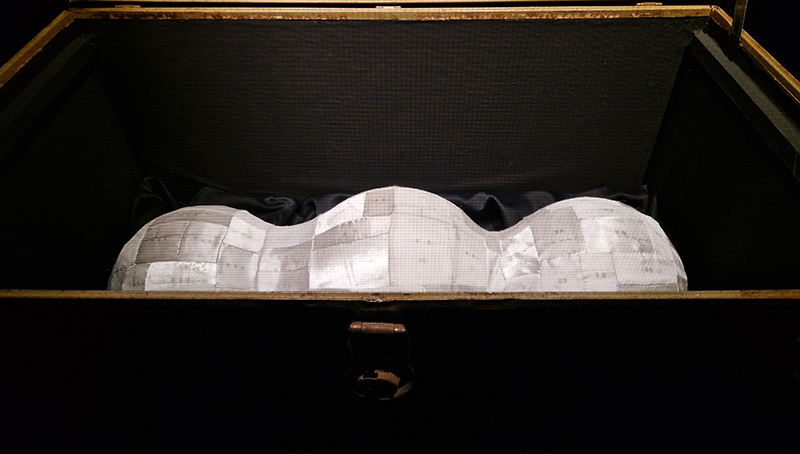
OUTSIDE IN at SET Ealing, a dynamic group show curated and including beautiful, stitched painting by Anna Lytridou, with works by Anja Aichinger, coloured paper clay forms by Eleanor Bedlow, fossil like forms by Anna Joy Reading, delicate folded brass mesh geometric forms by Brigitte Parusel, paintings of collapsed breasts by Jennifer Nieuwland, explorations of genealogy through painting by Jillian Knipe, abstract and evocative paintings by Linda Hemmersbach and Stacie McCormick and subtly coloured sculpted paper forms oscillating between stone and the night sky by Julie F Hill contemplating interconnections between the organic and the inorganic.
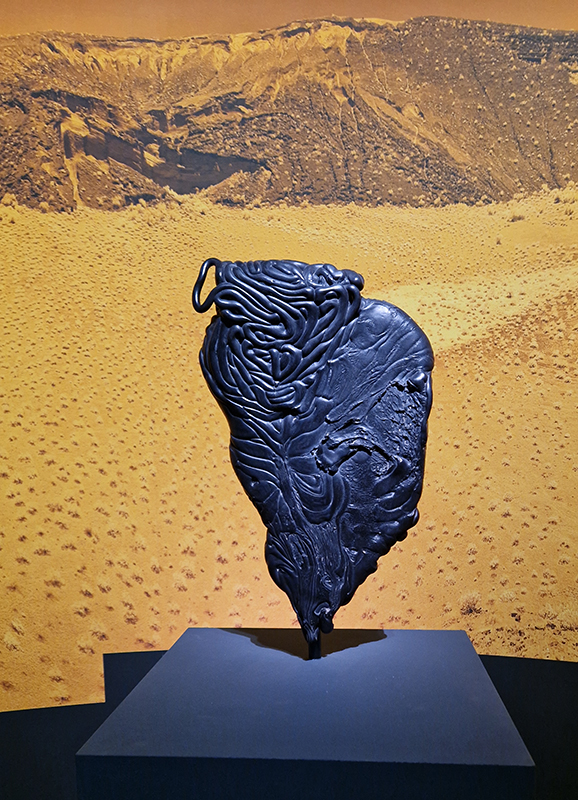
Listening

In Our Time Panpsychism – Melvyn Bragg and guests discuss the idea that some kind of consciousness is present not just in our human brains but throughout the universe, right down to cells or even electrons. This is panpsychism and its proponents argue it offers a compelling alternative to those who say we are nothing but matter, like machines, and to those who say we are both matter and something else we might call soul. It is a third way. Critics argue panpsychism is implausible, an example of how not to approach this problem, yet interest has been growing widely in recent decades partly for the idea itself and partly in the broader context of understanding how consciousness arises.

The Life Scientific – Professor of Computer Science at the University of Oxford, and the Director of Foundational AI Research at the Alan Turing Institute Michael Wooldridge on AI and sentient robots – Humans have a long-held fascination with animating an inanimate object, but the idea of Artificial Intelligence (AI) is often perceived as a dystopian threat: from Mary Shelley’s Frankenstein, through to the Terminator movies. We still often think of this technology as ‘futuristic’: whereas in fact, it’s already woven into the fabric of our daily lives, from facial recognition software to translator apps. He believes this will be a watershed year for AI development.

It might be interesting to consider if and how AI and technology might impact human evolution. Medical advances may already have influence. A 300,000-Year History of Human Evolution – Robin May The species we recognise as our own – anatomically modern humans – has existed for only 300,000 years, a blink of an eye in evolutionary terms. And yet during that time our species has been shaped by strong evolutionary forces, often unwittingly as an indirect result of human activities.

It is within my mind then, that I measure time. I must not allow my mind to insist that time is something objective.  When I measure time, I am measuring something in the present of my mind. St. Augustine of Hippo, 397

The many layers of paper comprising The Azimuth Obelisk (of sedimentary knowledge) sculpture have been prepared ready for final assembly. The next step will be patinating and assembling the copper pyramidion. This sculpture is a reimagining of the obelisk erected at Hartland Magnetic Observatory in 1955 which is now almost hidden by undergrowth. Although manual readings via a theodolite are still taken from the Observing Building north facing window, this concrete permanent azimuth mark has been replaced by a GPS position. The sculpture expresses the passage of time, made from recycled paper prints and drawings whose history is embedded in the stacked layers, much as the Earth’s geological and magnetic history is secreted into sedimentary strata of rock.

What is below our feet can be as much of a mystery as what is above our heads. The furthest humans have drilled below the surface of the Earth is just over 12 km but it is 6,370 km to the centre of the Earth. One way of exploring the Earth’s core is by studying geoneutrinos. Geoneutrinos are neutrinos, the lightest subatomic particle, released by the natural radioactive decay of potassium, thorium, and uranium in Earth’s interior. By studying geoneutrinos, scientists can better understand the composition and spatial distribution of materials in the mantle and core. Neutrinos can pass through matter uninhibited and are not affected by magnetism. Geoneutrinos are low-energy electron antineutrinos, and scientists need to use large detectors to record them but because they  are so elusive, they don’t capture very many events each year. Some of the heat emanating from the interior of our planet comes from this radioactive decay and is responsible for everything from creating the molten iron core that generates Earth’s magnetic field to the spread of the sea floor and motion of the continents.

At the centre of the Earth is a hot sphere of solid iron which has its own ocean of molten iron, surging and churning with hurricanes and whirlpools powered by the Coriolis forces of Earth’s rotation. These complex motions generate our planet’s magnetosphere. The turbulent dynamo process also means the magnetic field is in a constant state of change and the poles are always on the move. From James Clark Ross first locating the magnetic north pole in 1831 to when Roald Amundsen found the pole again almost a century later it had moved at least 50 km since the days of Ross. Both poles continue to wander as varying speeds. Magnetic stripes around mid-ocean ridges reveal the history of Earth’s magnetic field for millions of years and record magnetic field reversals in the magnetism of ancient rocks. Field reversals come at irregular intervals averaging about 300,000 years with the last one 780,000 years ago. Reversals take a few thousand years to complete, and during that time the magnetic field does not vanish but becomes twisted and tangled with magnetic poles appearing in unaccustomed places. Although in a state of turmoil with possible weak areas it can still protect us from space radiation and solar storms.

I took up membership of London Sculpture Workshop supported by a professional practice and creative development bursary from The Artists Information Company. Great to have access to the facilities here to work on sculptures responding to research visits to magnetic observatories. I had a couple of sessions cutting copper with a plasma gun. The intense heat colours the edges of the metal with blues, yellows and crimsons. Unfortunately some of the colour gets lost when they are lacquered so I have left some without coating this time to see if they lose the colour anyway. These topographical contours which are destined for the installation The Absolute Hut (of action potential), reflect the fluid motion of the Earth’s interior and also the pulsating alpha waves emanating from the human brain subjected to magnetic fields.

I have started editing and gathering together video footage for The Absolute Hut installation. Inside the hut I am planning to have video screens suggesting portals into a modulated web of neural pathways and one larger window with a two way projection film of the migratory pink footed geese at Snettisham in Norfolk. Natural navigation techniques and extra-sensory methods used by the non-human realm will form the basis for speculation as to the ability for humans to perceive the Earth’s magnetic field. 

Following on from concrete casting tuition with Anna Hughes as part of my a-n creative development bursary I have been testing casting concrete with embedded magnets. I had an idea to try removing bubbles from the concrete by putting it on an exercise vibrating plate. The motion is quite violent and undulating and my mix was quite loose so it had an effect like a small wave machine sloshing side to side – there were no bubbles in the results though. These tests are towards making a series of dodecagon tablets cast in Snowcrete, a non-magnetic cement, as used in a magnetic observatory. Suggestive of the pedestals that support various instruments used in monitoring the Earths’ magnetic field they also respond to an ancient anemoscope “table of the winds” carved in marble around eighteen hundred years ago and inscribed with the Greek and Latin names of classical winds on each of its twelve sides.

Lichen boundaries seen on a trip to Somerset reminded me of the magnetic domains of the directional magnetic steel when sanded and etched to reveal the Goss texture of rolled iron silicon alloy crystals. The jigsaw pattern of magnetic domains give this material exceptional magnetic properties.

I had a great time interacting via zoom with volunteer mediators who will serve as conversationalists for visitors who come to the Carbon exhibition at Science Gallery Bengaluru where my video Cosmic Chiasmus: crossing the universe will be shown later in the year. Mediators are an integral part of each exhibition-season at Science Gallery Bengaluru (SGB). By providing each visitor the unique opportunity to deeply engage with the exhibits, events, and programmes, the mediators are at the backbone of our commitment to public engagement at SGB.

The session was designed to gain an understanding of the work to be shown, the process behind its creation, and the key concepts explored in it. Cosmic Chiasmus: crossing the universe offers a glimpse into a subatomic world where cosmic rays travel from distant galaxies to collide and silently interact with atoms and technology on Earth. Not only is all life physically permeated by cosmic rays with the potential for nuclei collisions but some cascading particles smash into atoms of nitrogen to create carbon-14. Carbon-14 then combines with oxygen in the atmosphere to create radioactive carbon-dioxide  – this is ingested by plants and animals through the food cycle. In making the film I was interested in exploring the interconnectedness of ourselves to our wider environment, even outer space and the influence intangible phenomena such as cosmic rays can have on everyday life and human technology.  It is an incredible journey that cosmic rays make, blasted across space, spiralling along magnetic field lines to end up entangled with carbon in our bodies.

Most years have twelve full moons, but as our calendar is not perfectly synchronized with astronomical events, every now and then there is more than one full moon in a month which can be known as a blue moon. It takes the moon 27.3 days to orbit the Earth but about 29.5 days to go through all of its eight phases waxing from new to full and waning back again. We can hope to see a super blue moon next month.

Carey Young’s Plato Contract – only gains status as an artwork once it has been installed, following explicit instructions, in the impact crater, Plato, on the moon.

Royal Society Summer Lates – Interesting new research in the search for dark matter from UCL High Energy Physics team using quantum sensors. Tiny glass spheres levitated in a vacuum and super cooled means these are extremely sensitive to any slight gravitational interaction should dark matter be made of very light particles. Instead of a vast tank of Xenon installed in a disused goldmine this new search for dark matter is quite a contrast in scale.

Also got to cause gravitational lensing with my own body mass and enjoy some splendid cocktails with surreal smoke bubble topping. Love Royal Society events.

Melanie Jackson Rouge Flambé at San Mei Gallery with a fascinating accompanying essay by Esther Leslie. Rouge flambé is a red oxide ceramic glaze with a long history of use, spreading across the globe from its origins in China. Together these works celebrate forces that hold a primordial fascination – fire, colour, alchemy which bridge the scientific with the mythological.

Angela Palmer Deep Time: uncovering our hidden past at Pangolin London. The exhibition explores time through the material history of Great Britain – charting its 3-billion-year lithic timeline to arrive in our current age of the Anthropocene. Featuring the UK’s 16 geological periods, starting with one of the world’s most ancient rocks, the 3-billion-year-old Lewisian Gneiss from the Outer Hebrides. Further stones include 2.5-billion-year-old White Anorthosite sourced in the Outer Hebrides that was also found on the Moon by the astronauts of Apollo 15 in 1971, as well as 66-milion-year-old Northern Irish Black Basalt marking the extinction of the dinosaur. The exhibition also includes teak sculptures salvaged from the ocean where it lay for a century while marine boring insects carved into its surfaces. Many of these works have minimal intervention from the artist in their presentation. The work has been done in the sourcing and extraction.

I attended the UCL Space Domain Summer Celebration. The event was introduced by Victor Buchli – Co-Chair of the UCL Space Domain which draws in researchers from across disciplines whose work touches on space exploration in some way. Guest speakers, artist Lisa Pettibone and poet Simon Barraclough, gave presentations on their work and involvement with the Mullard Space Science Laboratory and subsequent inclusion of work on the Euclid Spacecraft (launched on 1st July 2023) in the form of a plaque depicting ‘The Fingertip Galaxy’ a collaborative project created with hundreds of mission scientists and engineers’ painted fingertips, along with specially commissioned lines from Simon’s poetry. We were privileged to see the very first image sent back from the Euclid Space Telescope whose mission is to map out the dark side of our universe by analyzing billions of galaxies that reside up to about 10 billion light-years away. Every point of light is a galaxy.

Reading

Compass – a story of exploration and innovation by Alan Gurney. Full of fascinating historical anecdotes charting the invention of the magnetic compass for navigation at sea from lodestone floating in a bowl of water to the precision marine liquid compass, gyrocompass and fluxgate compass used today. Although early experiments came under the auspices of scientific expeditions the compass cannot be untangled from its commercial propagation and employment in colonialism and the slave trade. The first ship charted solely for a scientific expedition, The Paramore, launched from The Royal Dockyard at Deptford in 1694, to compass the globe and measure magnetic variation. It was however approved for funding by The Royal Society, Queen Mary and The Admiralty based on the benefits it would bring for navigation and trade. One of the many delays in launching the Paramore was the novel decision of how many guns should be fitted in a ship bound for scientific research. Pirates were at large and nation wars would flare up while ships were out at sea so a friend at launch might be a hostile force at the next harbour without the means for the crew to receive this news before it was too late. Many many lives were lost at sea during these turbulent times through aggression but also shipwrecks from the poor quality, misuse or misinterpretation of the ship’s compass. Magnetic variation, deviation and iron introduced onto the ships meant the compass needle could not be relied upon to show true north. It took centuries to comprehend the unpredictable power of magnetism and the Earth’s magnetic field.

Listening

The End of the Universe Gresham Lecture from Professor Katherine Blundell. The relocation of matter. Spacetime is expanding ever faster due to dark energy. Galaxies do not expand as they are held together by gravity. It is the space between galaxies that is getting bigger and will continue until in some distant future astronomers in one galaxy will not be able to see any other galaxies. Black holes eventually evaporate.

Also from Professor Katherine Blundell Cosmic Vision: Fast & Furious.

Cosmic rays are particles that move extremely fast. They are raining down on planet earth all the time. Although they are called rays they are not like photons, as light is made of, as they have mass but they do travel at nearly the speed of light. The kinetic energy in just one particle can be equivalent to the energy of a cricket ball bowled by the fastest bowler on the planet  – so much energy squeezed into one tiny particle gives it a huge velocity. Light travels a thousand billion kilometres in one year – a light year – no object with mass can travel at the speed of light but an ultra-high energy cosmic ray would only lag behind the photon by 100th of the diameter of human hair. Some ultra high energy cosmic ray particles that arrive on Earth have 1000 billion times more energy than particle colliders on earth can generate. These ultra high energy particles are very rare – with only about 1 per square metre per century. We know many cosmic rays come from supernova explosions in distant galaxies especially from what are called starburst galaxies where lots of supernovae are happening. Supernovae expand very very fast into the interstellar medium of their galaxy – this causes shocks as the plasma expands and where there are compressed magnetic fields particles can be accelerated to very high speeds. There is a formula called the Hillas Criterion which states – the maximum velocity a particle can be accelerated to depends on three things –  the strength of the magnetic field  – the speed of the plasma –  and the size of the region over which the acceleration can take place. New research shows that ancient Radio Galaxies such as Centaurus A – which is over 1 million light years across or the smaller Fornax A Galaxy are good candidates for the propagation of the ultra high energy particles as these galaxies have the huge size necessary to allow the particles to gather speed in the giant regions of radio emission which extend well beyond the galaxies visible structure.

The Breath of Stars is a digital video work activated in real time by cosmic rays. These subatomic visitors from outer space are created during super nova explosions or by phenomena we are yet to discover. This work has been a long time coming and the fact that it is working in real time now is thanks to coding genius Jamie Howard who has managed to get a number video files to play simultaneously on one screen. We had to ditch the Raspberry Pi for a Panda Latte to cope with the processing needed. Cosmic particles strike the edge of the Earth’s atmosphere, break apart and shower down upon us. Some particles collide and silently interact with atoms and technology on Earth. In this work particle detectors and mini computers are connected to a projector. Every time a cosmic particle passes through the plastic scintillator block inside the detector its energy is recorded via a Silicon photomultiplier and a starburst video is displayed for twelve seconds. The kaleidoscopic video images generated are created from footage of cosmic particle trails filmed in a cloud chamber, split and mirrored twelve ways. The particles arrive randomly and this can be witnessed by the sudden flurries and silent gaps of the video imagery. First test run and the cat loved it.

The South Atlantic Anomaly is a region where the Earth’s magnetic field is at its weakest. The intensity of the field here is about one third of that near the magnetic poles. This affects how close to the Earth energetic charged particles (cosmic rays) can reach. This area, which spans the southern Atlantic and South America, is deepening and moving westwards. Could this be the beginning of the overdue magnetic field reversal?

The classical compass winds were named to reflect geographic direction as conceived of by the ancient Greeks and Romans. Ancient wind roses typically had twelve winds and thus twelve points of orientation. The Anemoi (from Greek “Winds”) were wind gods who were each ascribed a cardinal direction.

Supported by a professional practice and creative development bursary from a-n The Artists Information Company I have been privileged to have expert tuition in mould making and concrete casting from Anna Hughes based at Thames-side Studios. I have really enjoyed these sessions. Anna has given me the skills to go forward and experiment and I am excited by this new process. I prepared a dodecagon (twelve sided) shape cut in MDF to make a silicon mould and a double box mould for the base of my obelisk sculpture plus some small shapes for testing.

To continue the notion of sedimentary layers as signified by the layering of recycled paper in the body of the obelisk sculpture, I made collagraphs to line the box mould to give a texture of strata. Limestone, a sedimentary rock, is often formed from crushed seashells, compressed over eons. I used crushed oyster shells to use as aggregate for the base.

I am super pleased with how the base turned out.

I also tested using verdigris pigment mixed into the concrete or in the grooves of etched aluminium to leave an imprint. The plate tests didn’t come out so clear so need more testing and I next plan to try embedding the etched plate face up in the concrete.

Open Studios at Thames-side Studios 2023.

At a distance was installed in the main gallery group show. This work looks at remote methods of communication and relates this to the mysterious twinning of electrons in quantum entanglement where particles link in a way that they instantly affect each other, even over vast expanses. Einstein famously called this phenomenon ‘spooky action at a distance’. Filmed on 29th March 2019 (the first proposed Brexit date), in Cornwall as the iconic Lizard Lighthouse powers up its lamp, solitary figures using semaphore flags sign ‘We Are One’ out across the ocean in the hope the message will be echoed back. Drawing on the physical language of print that embodies touch, separation and mirroring the flags have been printed using hand painted dye sublimation inks applied via a heat press. This process transfers the ink from a paper matrix onto the substrate textile. The image passes momentarily across space in a dematerialized state as vapour before being reformed as its mirror opposite.

In my studio there was recent magnetic work Pole Receptor, along with work in progress Belly of a Rock hybrid sculpture plus some works from the archive such as screen prints from the StrataGem and everydaymatters series. I spent the weekend preparing for my concrete casting tuition in between chatting to visitors. Thanks to Caroline AreskogJones for the studio portrait.

The StrataGem series of screenprints on textiles imagines the possibility of the formation of geological strata created from the waste of plastic food packaging trays.

Informed by the discovery that the matter we know, that which is visible to us and includes all the stars and galaxies is less than 5% of the content of the universe, dark matter making up about 27% and the remaining percentage being dark energy, everydaymatters dissects landscapes to discover the hidden structures of the universe. Images taken from everyday prosaic paradises, such as Paradise Industrial Estate in Hemel Hempstead, are split into constituent parts of what is seen and unseen.

Studio progress on The Azimuth Obelisk of Sedimentary Knowledge – all the paper is now torn down but lots still needs to have a hole drilled through to feed onto the frame. This sculpture is a response to the obelisk erected in 1955 at Hartland Magnetic Observatory, near the site’s northern boundary as a permanent azimuth mark viewed from the north facing window of the observing hut (also known as the absolute hut). I have been sorting out if I have enough old boards for the north wall of The Absolute Hut and have been donated some old monitors and screens to see if I can get them working to use inside. I am thinking of having several screens playing video in the hut – as in the brain – a sensory hub there are different activities and processing going on in different locations. More paper clay forms have been added to The Belly of a Rock sculpture framework to house the video screen – this hybrid sculpture is a place of chemical conversations at the intersection of the animate and inanimate.

Gallery Visits

Fabulous tech and plaster sculptures from Tessa Garland in Postcards From the Volcano at Thames-side Gallery.

Light Being curated by Jonathan Miles of The Wild Parlour at Lychee One.

We were talking of such things: shadows, obscure illumination, folds within substance, but all without a schema that would serve to cohere. Then someone interjected about the rootmeaning of the word for being human as being an entanglement of light, thinking, and being. This would then generate a sense, like something in the air, but also a generation of a spacing for work. Rather than being an exhibition with a theme, instead a tonal poetics and with it a letting be or presentation of an accord would emerge. – Jonathan Miles

Mesmerizing performance from Chudamani Clowes – Choral Coral Cuts. Performance cutting linoleum to produce a song of coral for coral.

Transport delays meant I missed the first performance but did also catch Kate Howe read The Infinite Intimate which accompanies her sculptural Kraft paper installation and Jessica Mardon recite The Recovery of Meaning.

When numbers weren’t just a unit, a system of measurement, but were symbols that had meaning, it was their meaning that provided structure, not structure that provided their meaning. – Jessica Mardon

Nothing truly exists – except in relation to other things. Carlo Rovelli

Work in progress.

Building the azimuth obelisk made from layered re-cycled paper. This sculpture is a response to the concrete obelisk erected in 1955 at Hartland Magnetic Observatory as a permanent azimuth mark from which to measure the drift of Earth’s magnetic field. Deep time geology holds the sedimentary knowledge of magnetic activity, from the degrees of variation between the magnetic and geographic north pole to the cataclysmic impact of pole reversals.

Etching Directional Magnetic Steel to reveal the jigsaw pattern which comes from rolling single crystals of an iron silicon alloy into thin sheets to minimise magnetic losses for use in industry.

The copper sulphate etching process creates a very thin, fragile layer of shiny copper under the red residue

Magnetism embodies magical qualities which have fascinated humans since the first encounter with a lodestone. These rare and enigmatic fragments found scattered across the surface of the Earth are created when lightning chances to strike the mineral magnetite.

The Lodestone, from Plato to Kircher by D. W. Emerson lists various historical references to the lodestone. The writer concludes – Lodestone, being very unusual, greatly impressed previous generations. Despite its unattractive appearance it was an admired mineral type more precious than pearls, it was celebrated in persuasive Latin hexameters, it was an analogue for the power of deities, it took a witch to subdue it, it was deemed explicable by Epicurean atomic theory, it was involved in a rather tenuous argument for eternal punishment of wicked persons, it meant doom for unwary mariners, it furnished fodder for folk lore, it resided in the arsenal of the apothecary, it helped to demonstrate the earth’s magnetism, and it assisted navigation. What other mineral has such a record? The lodestone was quite a remarkable rock; it still is, and oddly, yet to be completely studied and documented.

Pliny the Elder (AD 23/24 – 79) :

What is more amazing (than this stone) or at least where
has nature shown greater devilry? She gave rocks a voice
answering, or rather answering back, to man. What is more
indolent than the inert character of stone? Yet nature has
endowed it with awareness and hooking hands. What is
more unyielding than the harshness of iron? On it nature
has bestowed feet and a mode of behaviour. For it is drawn
by the lodestone, and the all-subduing substance hastens to
something like a vacuum, and on its approach it leaps
towards the stone, is held and kept there by its embrace.

Claudius Claudianus (AD fl. 395):

There exists a stone called lodestone; discoloured, dingy,
nondescript. It does not lend distinction to the combed
locks of kings, nor to the fair necks of girls, nor does it
gleam on the showy clasps of sword belts. But in fact if
you pay due regard to the strange marvels of this dark rock
then it outshines elegant adornments and anything, on far
eastern shores, that the Indian looks for in the weed of the
Red Sea (i.e. pearls).

Augustine of Hippo (AD 354-430):

We recognise in the lodestone an extraordinary ability to
seize iron; I was much perturbed when I first saw it. The
reason is that I clearly saw an iron ring grabbed and held
up by the stone. … Who would not be amazed at this power
of the stone?

Generating a magnetic field.

The dynamo theory states that to generate a magnetic field, a body must rotate and have a fluid core with an internal energy supply that is able to conduct electricity and drive convection.  Earth fulfils all of these requirements. It rotates faster at the Equator than it does at the poles causing spiral convection currents in the liquid iron outer core which is an excellent electrical conductor, powered by the energy released as droplets of liquid iron in the outer core freeze onto the solid inner core.

Any variations in rotation, conductivity, and heat impact the magnetic field created.

Mars has a weak magnetic field as it has a totally solid core. Venus also has a weak magnetic field for although it has a liquid core it rotates too slowly to create convection currents.  Jupiter has the strongest magnetic field in the solar system, with a metallic liquid hydrogen core and fast rotation, it has a magnetosphere so large it begins to deflect the solar wind almost 3 million kilometres from its surface.

Highlights from a trip to Japan which offered many poetic and spiritual experiences.

Active sulphur vents of the North South Hakone volcano arc boundary dividing Japan into East and West….also used to cook eggs. The beautiful markings on the eggshell were gone the next day.

As Tristan Gooley says in The Natural Navigator, ‘There is a commonly held belief that “Moss grows on the north side of trees and buildings.” It does, sometimes, but will also grow on every other side. However, lots of satisfyingly north facing moss growth on the trees in this Tokyo park.

Moss tending in the rain, some splendid moss in the gardens of Kanazawa.

Inspiration for an absolute hut. The “Gassho-zukuri Village”, a World Heritage Site set in stunning mountain scenery, has more than 100 gassho-zukuri thatched rural buildings with wonderful steep pitched A-frame roofs.

To Discover the Meaning of Being Born as Human Beings. Higashi Honganji Temple

Moss heaven.

To visit Saihoji Kakedora Temple (the Moss Temple), you must send a postcard by mail to request a visit. On arrival, you spend time in the temple at a low table quietly copying sutras with a calligraphy pen to calm the mind before entering the garden.

The garden is built around the Ogonchi Pond shaped like the Chinese character, meaning heart and blanketed in over 120 species of moss.

master of persimmons

treetops are close to

Stormy Mountain

The poem stone tells the story of Kayori who had 40 persimmon trees in the garden laden with fruit which he intended to sell, but the night before they were to be picked a huge storm arose and in the morning not one persimmon was left on the trees. Kyorai was enlightened by this experience and called the hut Rakushisha – the cottage of the fallen persimmon.

Many famous haiku poets, disciples of Basho and including Basho himself, stayed here.

Home of the cloud dragon. Zen garden at Tenryu-Ji Temple, Kyoto.

The tour through the womb of the Zuigu-bosatsu. The darkness of the journey through the womb was absolute. The stone floor ice cold on bare feet. Rosary beads the size of grapefruits led a winding path to the softly lit zuigu stone and on to the light to be reborn. Kiyomizu Temple, Kyoto

Kaname-ishi, keystone at Seikanji Temple, overlooking the city of Kyoto, spread like a fan before it, is believed to grant wishes if touched.

Rivers in the sky. Theories about crown shyness range from being caused by friction as new shoots are eroded in a windy forest to sensing the shadow or warmth of a neighbour.

Binzuru (Pindola Bharadvaja) was one of the sixteen arahats and is said to have excelled in the mastery of occult powers.

In Japanese mythology, the god of thunder arrived in Nara riding a white deer. The deer have lived here for centuries and are revered as emissaries of the gods of the Kasugataisha Shrine.

They have learnt to bow to be rewarded with special deer biscuits, which you can buy to feed them.

Discovering the works of Rafael Lozano-Hemmer, a Mexican media artist exhibiting internationally with a background in physical chemistry who creates large scale interactive work exploring and exploiting human interaction with technology to create an impressive catalogue of works from tethering a blazing sun to a face briefly echoed in a wisp of cloud. I was drawn to his work Atmospheric Memory inspired by Charles Babbage’s philosophy.
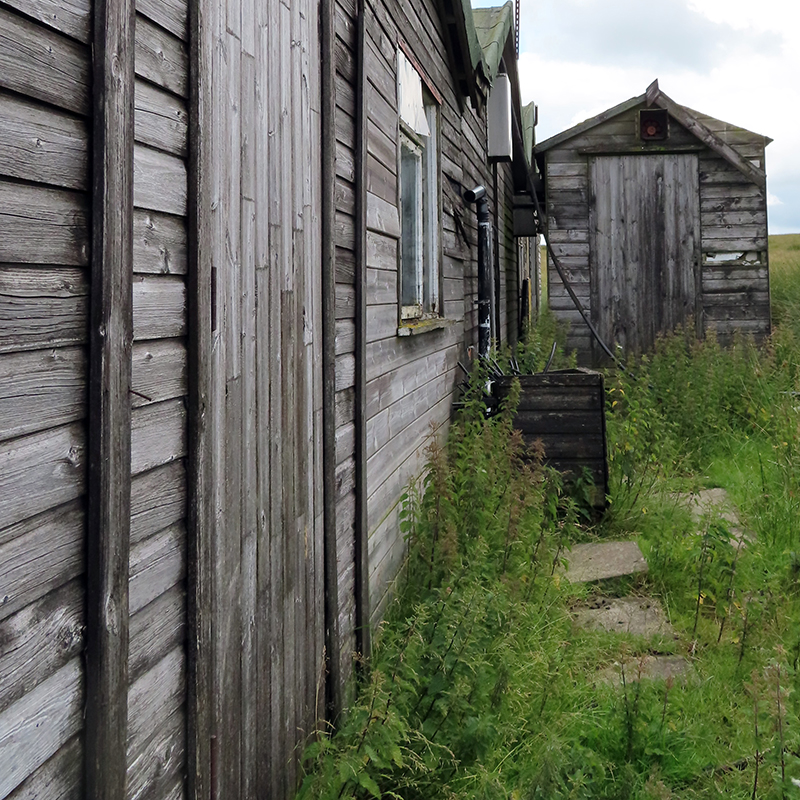
Whilst the atmosphere we breathe is the ever-living witness of the sentiments we have uttered, the waters, and the more solid materials of the globe, bear equally enduring testimony of the acts we have committed. Charles Babbage

Gallery Visits

Undertow at Unit 1 Gallery a group show with a subtle and astute use of material, quietly smoldering with agency.
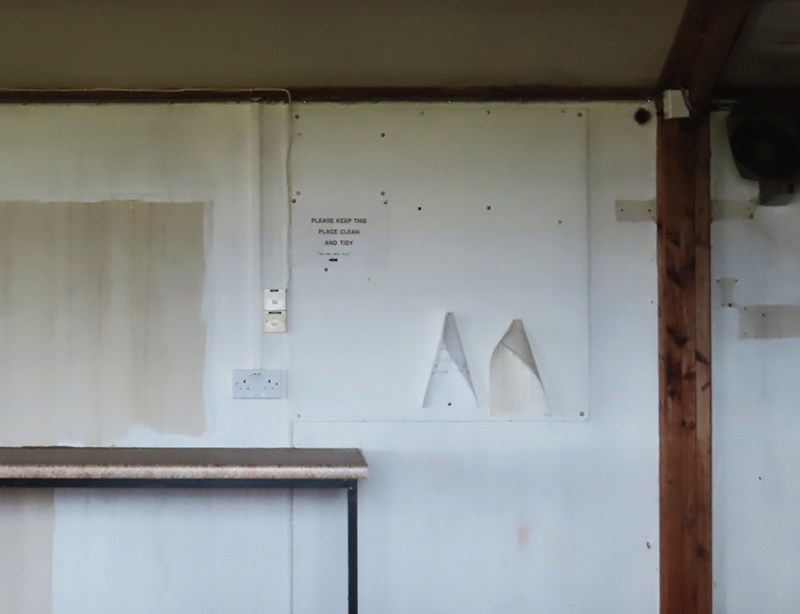
Artists: Alex Simpson, Alison Rees, Isobel Church, Lauren Ilsley, Nicholas Middleton, Sarah Wishart and Tana West.

‘Hope locates itself in the premises that we don’t know what will happen and that in the spaciousness of uncertainty is room to act.’ – Rebecca Solnit, Hope in the Dark, 2004/2016

Michael Taylor The Last Man at Standpoint Gallery. I really loved this luminous body of work.

Richard Slee Sunlit Uplands at Hales Gallery was a wonderful conveyor belt parade of glistening mini utopias.

We can see no detail, we can see nothing definable and it is, I know, simply the sanguine necessity of our minds that makes us believe those uplands of the future are still more gracious and splendid than we can either hope or imagine.” 

The Discovery of the Future, H.G. Wells 1902

The quote “sunlit uplands” has been used as political ideology, as an assurance for better days to come most recently the phrase has been linked to the promises of Brexit, with politicians leaning on this rallying rhetoric.

George Henry Longly Microgravities at Nicoletti. I found the slick production values, very shiny like outsize circuit boards of these works exposing sci-fi cliché and subverting popular space movie tropes sat very close to the ideas they are parodying. Microgravity – ‘the condition in which people or objects appear to be weightless’, according to NASA’s website – is responsible for metabolic and behavioural changes for space travelers. Some interesting theory behind this show about the human cost of living in space as our gut microbiome reacts to a weightless environment. I liked the reflection cast on the floor from the mirrored circle left exposed as a planet on the widescreen landscape.

On Failure group show at Soft Opening with Olivia Erlanger, Cash Frances, Jordan/Martin Hell, Kelsey Isaacs, Maren Karlson, Sam Lipp, Chris Lloyd and Narumi Nekpenekpen. While certain works function as indexes of failed attempts at control, others recognise the perceived failure of the human body, positing that from a spiritual perspective: if perfection is nonexistent, then failure is all we have, all that is real. One or two of the hanging pieces are reminiscent of the votive offerings at holy wells or the love lock bridges festooned with padlocks.

Bridget Smith Field Recordings at Frith Street Gallery. Natural material processes, simply presented. The weathering of bulrushes, the materiality of analogue photographic techniques such as ambrotypes and tintypes, the simplicity of a moon rising over the sea.

Daniel Shanken The Cascades at Stanley Picker Gallery. I was excited to see this show as the randomness within the work is derived from radioactive decay and I thought the title may refer to cascades of comic particles but perhaps it refers to cascades of data. The aesthetic was very game based and the randomness not explicit in origin. I liked the set up though with the projection onto the floor creating an abyss to gaze down into from an industrial style walkway.

David Blandy Atomic Light at John Hansard Gallery Southampton. Four films circumnavigating the fallout from the atomic bomb massacre at Hiroshima. The body of work is inspired by a family history, a grandfather, a prisoner of war in Singapore – held by the Japanese but felt himself saved by the detonation at Hiroshima. The golden hour light is so perfectly captured and reflected in The Edge of Forever which gives voice to the children, accusing, watchful and alone. This was filmed by his partner and features his own children. Soil, Sinew and Bone is a collaged documentary of archival material, mirrored so that the central area of the film takes on the shape of an a atomic bomb. In Sunspot two scientists, one in Japan, one at Mount Wilson Observatory are monitoring the activity of sunspots, the flares that can erupt and disrupt radio signals as the particle filled solar wind and magnetic turbulence blasts across the magnetosphere. The film Empire of the Swamp has a wonderful rich narration embodied in the voice of an ancient crocodile who remembers the mangrove swamps before the war and the arrival of the white man.

I enjoyed the Art Fictions podcast with guest Jennifer Higgie discussing her writing practice via the 2009 novel Drive Your Plow Over the Bones of the Dead by Olga Tokarczuk. I was then lucky to see Complicitie’s excellent interpretation of this novel on stage at the Barbican directed by Simon McBurney.

this is a tale about the cosmos, poetry, and the limitations and possibilities of activism.

Complicitie’s production employed the same blinding flash technique as Alfredo Jaar used in his work The Sound of Silence which I saw in 2006 and still remember vividly. Sitting in a dark space a story of one photograph, taken in Sudan 1993, is told in simple sentences on a large black screen. The photograph is shown momentarily before a blinding flash of light scores the retina. You are left blinking in the afterglow. The image won a Pulitzer Prize, but the South African photographer Kevin Carter committed suicide at 33 after struggling to come to terms with what he witnessed, and the public response for not having intervened to save the child’s life. In the novel Drive Your Plow Over the Bones of the Dead, Janina, the eccentric ‘older woman’ does not hold back from intervening when she sees injustice to any living thing. She is also vilified, but for showing compassion for the animals.

Alfredo Jaar 'The Sound of Silence'

I also dredged up the memory of having seen the film Spoor at the 2017 BFI LLF also based on this novel. Finally I have bought a copy of the novel. A circuitous route to the original text.

I am very much enjoying reading Rebecca Solnit A Field Guide to Getting Lost. Her writing is like a torchlight illuminating one idea after another, sweeping across a multitude of topics with an infectious energy to explore and experience the unknown.

How will you go about finding that thing, the nature of which is totally unknown to you? – Meno

Editing footage for the video Belly of a Rock which will be shown on an old monitor encased in a sculptural hybrid form relating to both mollusc and rock. The giant sea slug of the mollusc family, can derive directional cues from the magnetic field of the earth which is then modified in response to the lunar cycle. It orients its body between north and east prior to a full moon. In the slug’s nervous system, four particular neurons are stimulated by changes in the applied magnetic field, and two are inhibited by such changes suggesting that the animal uses its magnetic sense continuously to help it travel in a straight line.

The Earth can be divided into the inner core, the outer core, the mantle, and the thin crust. The outer core is about 1,367 miles thick and mostly composed of liquid iron and nickel. It is very malleable and in a state of violent convection. The churning liquid metal of the outer core creates and sustains Earth’s magnetic field. At the boundary between the inner and outer core temperatures can reach 6,000° C which is as hot as the surface of the sun. The inner core is a dense ball of mostly iron, but with a temperature above the melting point of iron, it is not liquid or even molten. Intense pressure from the rest of the planet and its atmosphere prevents the iron inner core from melting as the iron atoms are unable to move into a liquid state. It could be described as a plasma behaving as a solid. The inner core rotates eastward, like the surface of the planet, but it’s a little faster, making an extra rotation about every 1,000 years.  Geoscientists think that the iron crystals in the inner core align north-south, along with Earth’s axis of rotation and magnetic field and are arranged in a hexagonal close-packed pattern. The orientation of the crystal structure means that seismic waves travel faster when going north-south than when going east-west. Seismic waves travel four seconds faster pole-to-pole than through the Equator. 

The Earth is still cooling and as it does so, bits of the liquid outer core solidify or crystallize causing the solid inner core to grow by about a millimetre every year. The growth is not uniform, it is influenced by activity in the mantle and is more concentrated around regions where tectonic plates are slipping from the lithosphere into the mantle, drawing heat from the core and cooling the surrounding area. The crystallization process is very slow, and further slowed by the constant radioactive decay of Earth’s interior. Scientists estimate it would take about 91 billion years for the core to completely solidify but the sun will burn out in just 5 billion years. 

I have nervously passed the cosmic ray detectors over to programmer Jamie. It was hard to let them out of my sight after so much work to get them built but he can’t test the code he has written without them. The Breath of Stars directly interacts with cosmic rays in real time to trigger a digital reaction via a mini computer attached to a block of plastic scintillator and a sensitive photomultiplier. As each particle strikes the plastic scintillator its energy is recorded and a starburst image video relative to the energy released is projected, with the largest images representing the particles with the highest energy.

I am constructing an Obelisk sculpture in response to the concrete obelisk erected in 1955 at Hartland Magnetic Observatory, near the site’s northern boundary as a permanent azimuth mark. It is viewed via a theodolite through a window in the north wall of the Absolute Hut, its azimuth being 11º27’54” E of N and marks the point from which the magnetic north pole is tracked as it drifts westwards. Layers of torn recycled paper are stacked like sedimentary rock that holds clues to the Earth’s magnetic field reversals in its strata.

Copper contours of magnetic field lines have been lacquered to preserve the heat patina from plasma gun cutting. These shapes will be pinned to the north facing mossy wall of the Absolute Hut installation, a reimagining of the Absolute Hut at Hartland Magnetic Observatory. I will also employ a north facing window from which to observe the azimuth mark of the Obelisk sculpture.

A second research visit to RSPB Snettisham, this time to see the pink footed geese (which over winter on the mudflats here) leave their roost at dawn to fly to the fields to feed.

The walk from the car park to the viewing area is over 2km and takes about half an hour to walk. Setting out before first light the weather felt promising but just as I erected the camera tripod the rain came down hard and didn’t stop for the rest of the morning.

Made a second attempt the next morning leaving a little earlier and although it remained dry there was heavy fog over the sea. Not great for filming with my very basic kit but very atmospheric to experience as the geese emerged from the sea mists.

The noise they make is incredible, a constant chattering building to a crescendo of honking calls as they rise from the water and swarm across the sky in their hundreds. They come in waves but look like particles. At one point what sounded like a few gunshots fired out across the bay in the distant darkness. This sudden disturbance set off a slow deep rumble which drew closer accompanied by a low dark cloud growing heavily stronger building and rising as a huge tidal wave of geese rose simultaneously into the sky in panicked disarray. Extraordinary to witness.

Birds are able to “see” Earth’s magnetic field lines and use that information for navigation. Their compass ability comes from a quantum effect in radical pairs, formed photochemically in the eyes. This light sensitive magnetic compass used by birds is affected by the polarisation direction of light. Exposure to blue light excites an electron, which causes the formation of a radical-pair whose electrons are quantum entangled, enabling the precision needed for magnetoreception.

In chemistry a radical is an unpaired electron which is can be highly chemically reactive. In the radical pair mechanism a pair of electrons with opposite spins have a chemical bond. Light can cause the electrons to change spin direction which can break the bond giving the electron a chance to react with other molecules. In magnetoreception two cryptochrome molecules, found in the rod cells in the eyes of birds, each with unpaired electrons, exist in states either with their spin axes in the same direction, or in opposite directions, oscillating rapidly between the two states. That oscillation is extremely sensitive and can detect the weak magnetic field of the Earth. Birds then move their heads to read the spin of the molecules and therefore detect the orientation of the magnetic field.

While in North Norfolk staying in a beach chalet away from light pollution I was able to make a couple of short time lapse videos centering on Polaris.

Birds can detect the slow arc of the sun and the rotation of the constellations across the sky which is imperceptible to humans and allows migrating birds to orient themselves using celestial navigation as well as magnetoreception.

Birds are also able to detect rapid movement such as individual flashes or flickering of a fluorescent light which humans see as a continuous light. Hawks which pursue other birds through dense forests at high speeds, follow the movement of their prey while avoiding branches and other obstacles. To humans travelling at this speed, the fleeing prey, branches and obstacles would just be a blur.

Gallery Visit

Thames-side Gallery ‘The Accurate Perception Available When Our Eye Becomes Single’ is an immersive multi-screen installation evoking the emotional specifics of place (Orford Ness on the Suffolk coast) while exploring the elasticity of time and history. It is an audio-visual collaboration between Richard Ducker (video) and Ian Thompson (sound) with no linear narrative; sound and image are not synchronised, so each viewing is a unique experience. Sarah Sparkes also makes an enigmatic performative appearance both in the video and live in the gallery.

The crashing sea on shingle, open spaces and brutalist bunker architecture of Orford Ness are echoed in the gallery with audio pitched to envelop and resonate but not overwhelm. Nicely done.

Listening

I really enjoy the Inside Science podcasts with Gaia Vince and this one interviewing cosmologist and theoretical physicist Laura Mersini-Houghton about finding evidence that supports her multiverse theory was particularly fascinating.

Multiverses, melting glaciers and what you can tell from the noise of someone peeing

According to Laura the single universe theory is mathematically impossible.

Reading

Merlin Sheldrake’s Entangled Life. A remarkable reveal of an other world, so different yet so entwined with our own. Beautifully clear analogies help to bridge an understanding between human and fungi.

The ability to detect and respond to chemicals is a primordial sensory ability.

In humans when a molecule lands on our olfactory epithelium and binds to a receptor it causes nerves to fire triggering thoughts and emotional responses.

A mycelial network is one large chemically sensitive membrane: a molecule can bind to a receptor anywhere on its surface and trigger a signalling cascade that alters fungal behaviour.

Fungal lives are lived in a flood of sensory information.

They have light receptors, are sensitive to touch and it also looks like fungi may form fantastically complex networks of electrically excitable cells – a potential ‘fungal computer’ using electrical signalling as a basis for rapid communication and decision making which could learn and remember.