Archives for posts with tag: cosmos

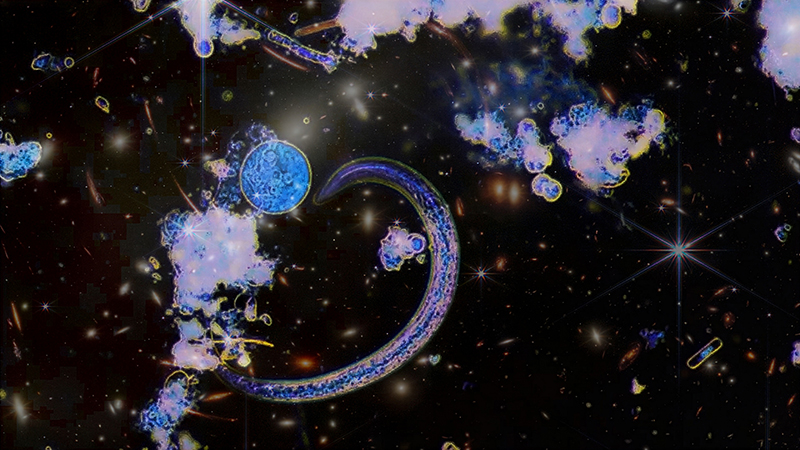
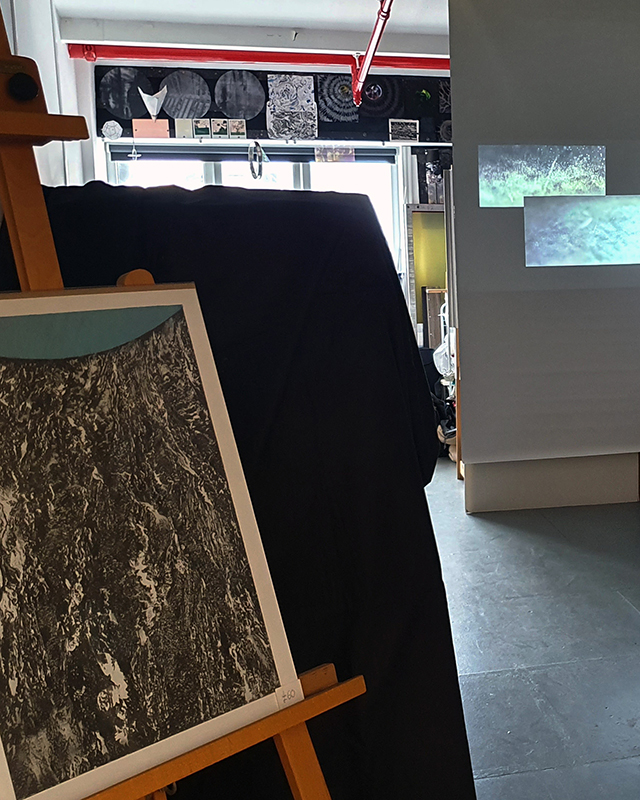
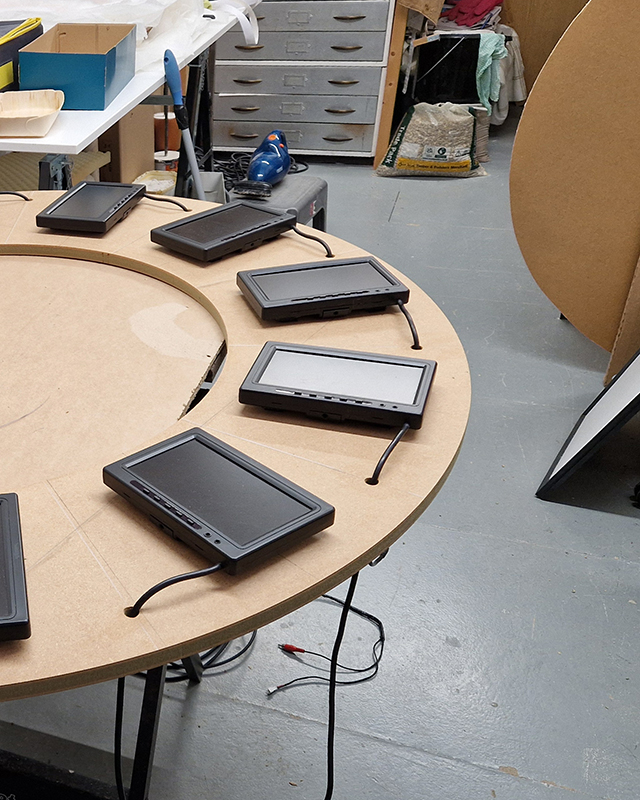
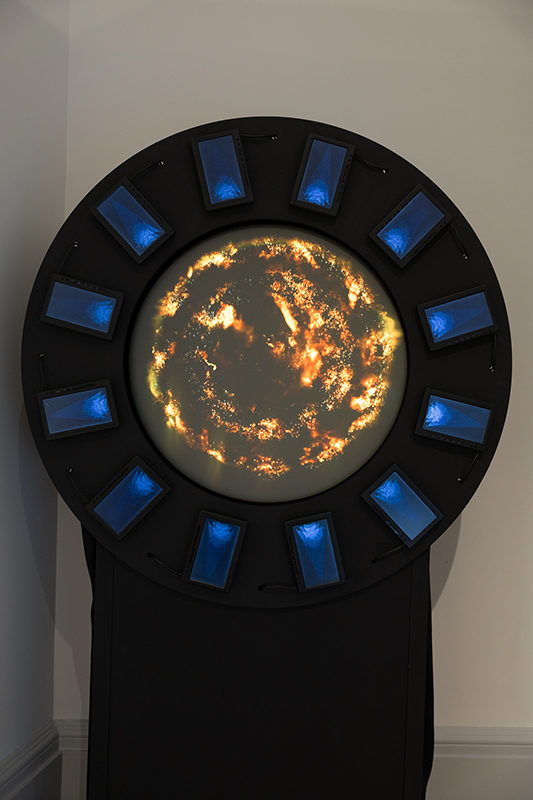
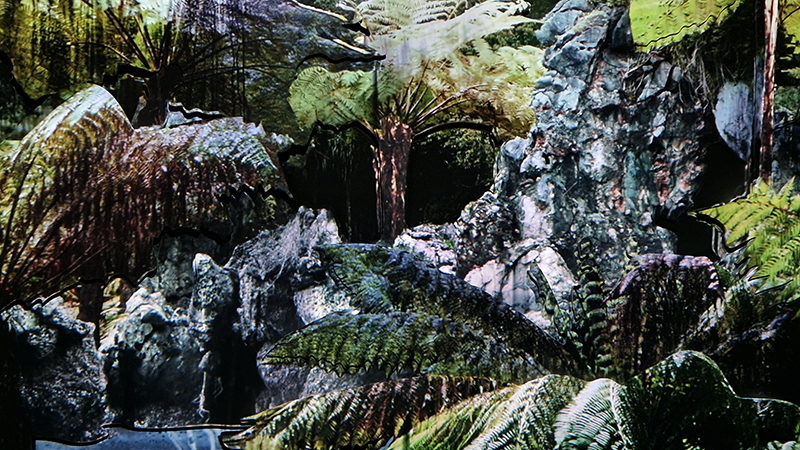
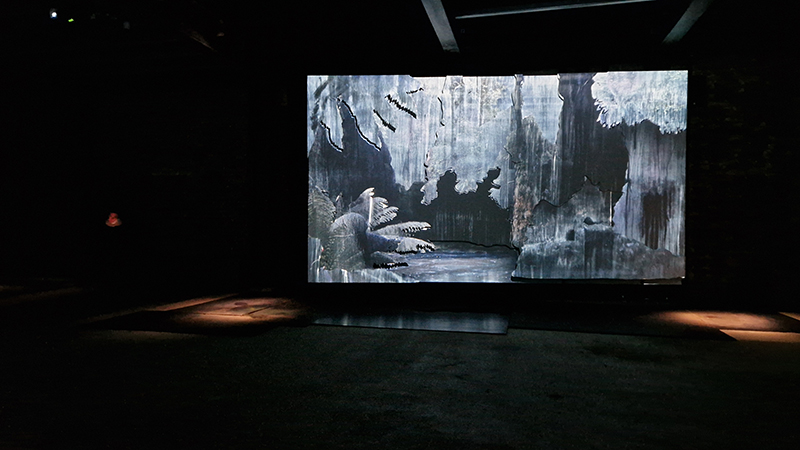
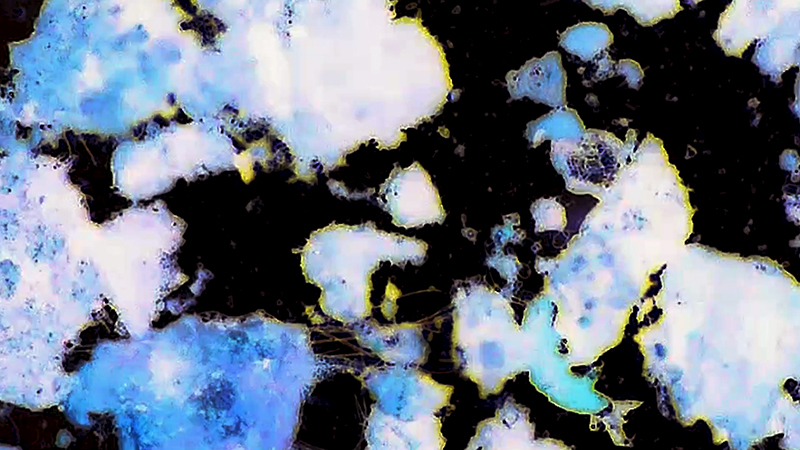
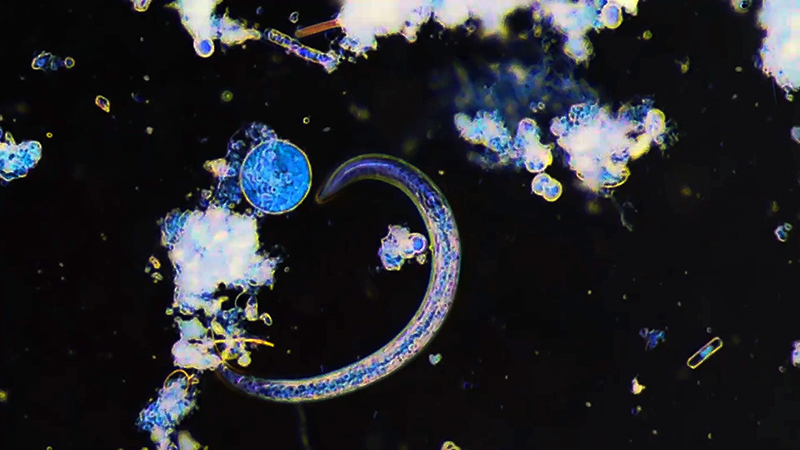
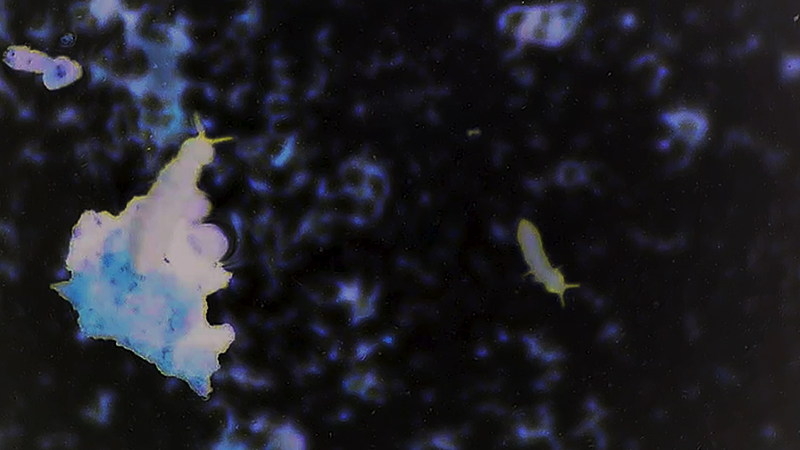
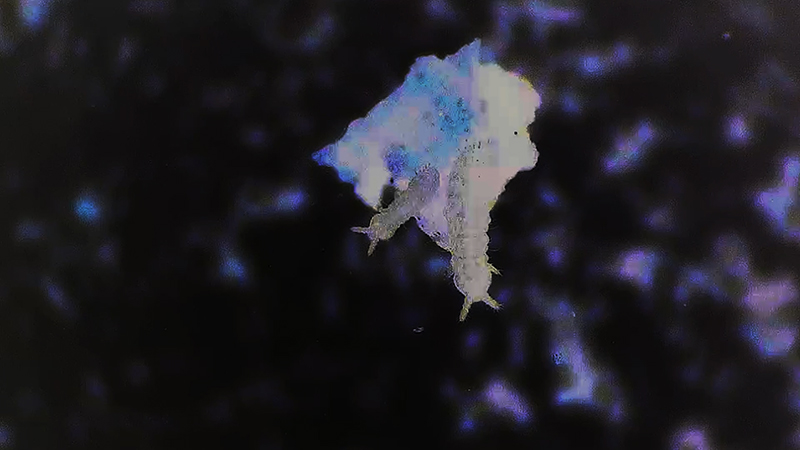
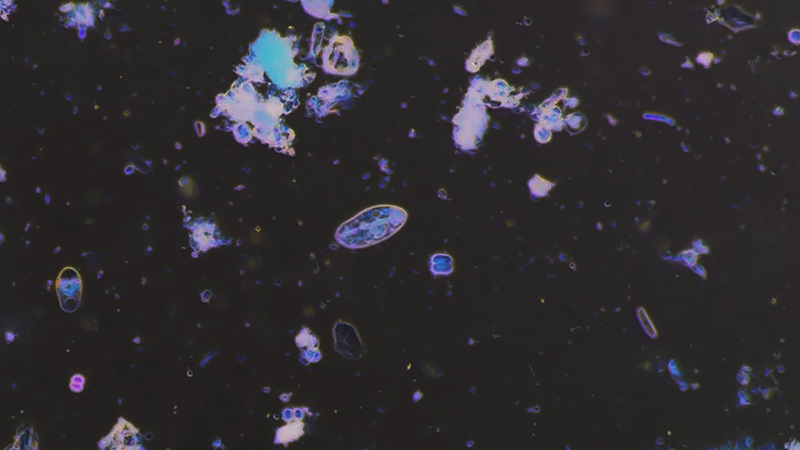
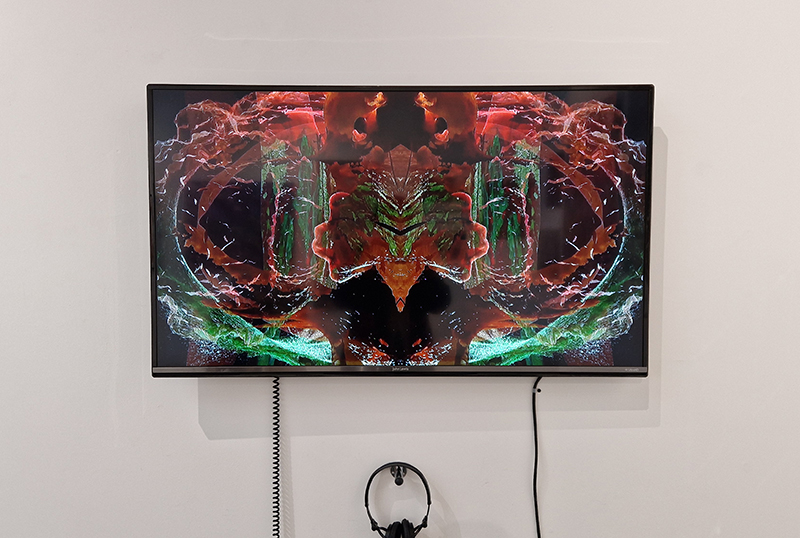
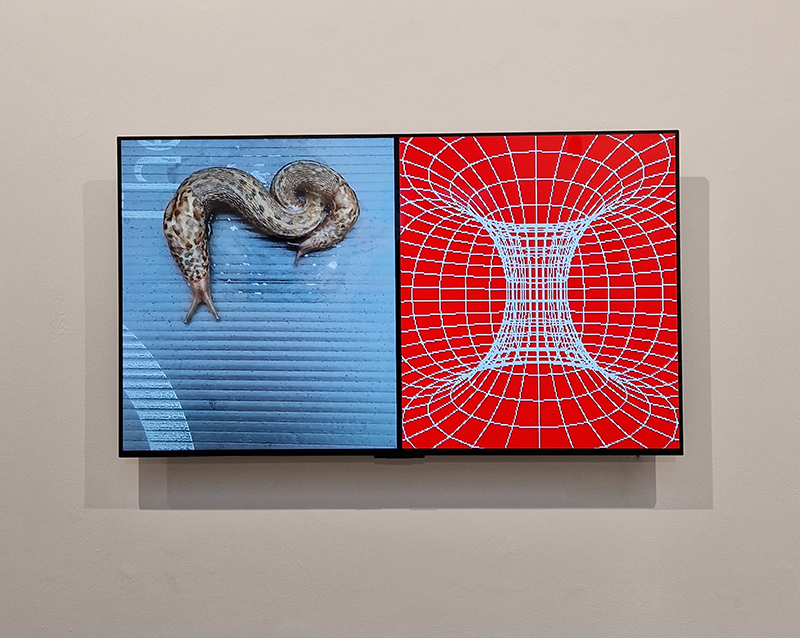
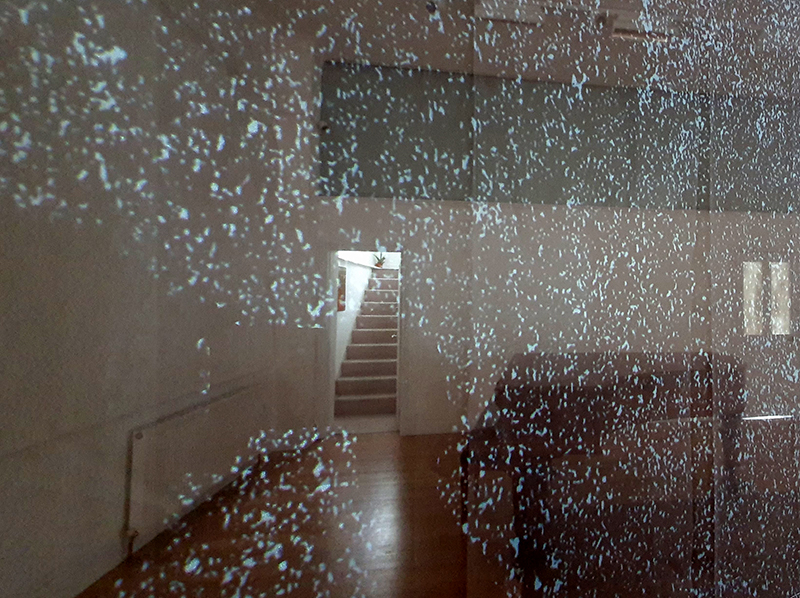
I am enjoying discovering the gutter creatures who share my home. Gathering video footage of an alternative cosmos to go towards making work which will be shown in Occupied: Strange Company at the Safehouse next year, a group exhibition curated by Julie Hoyle.

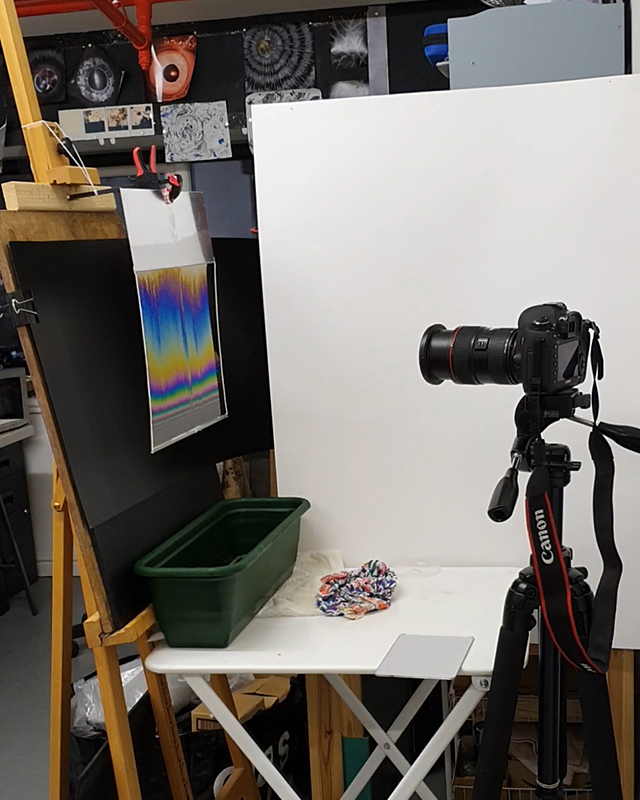
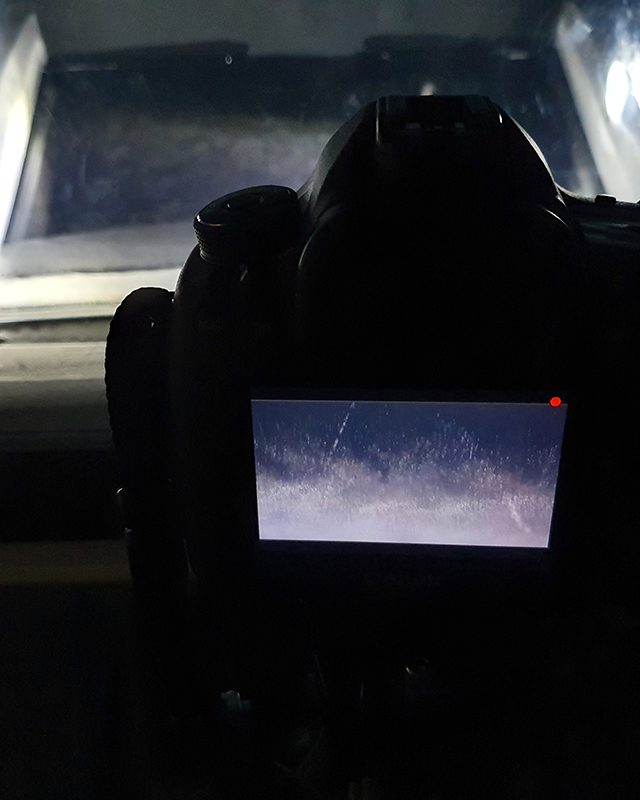
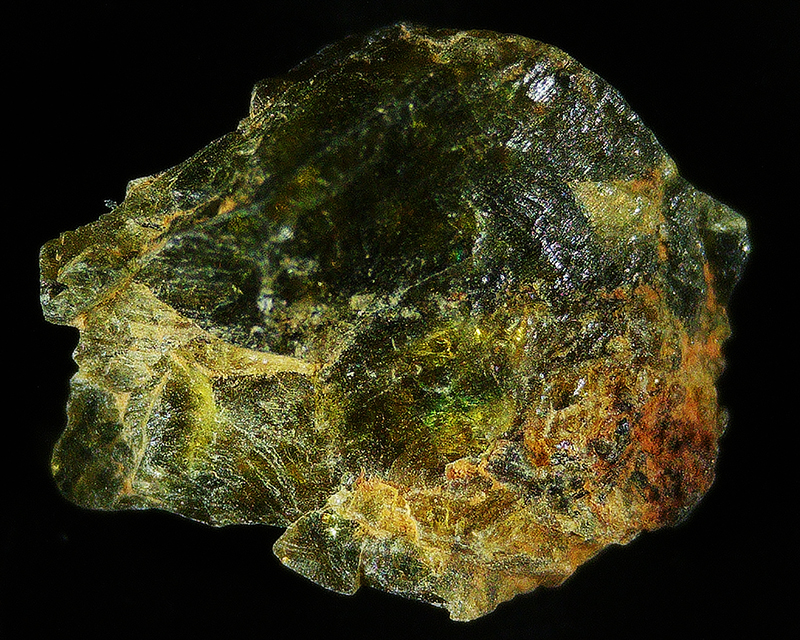
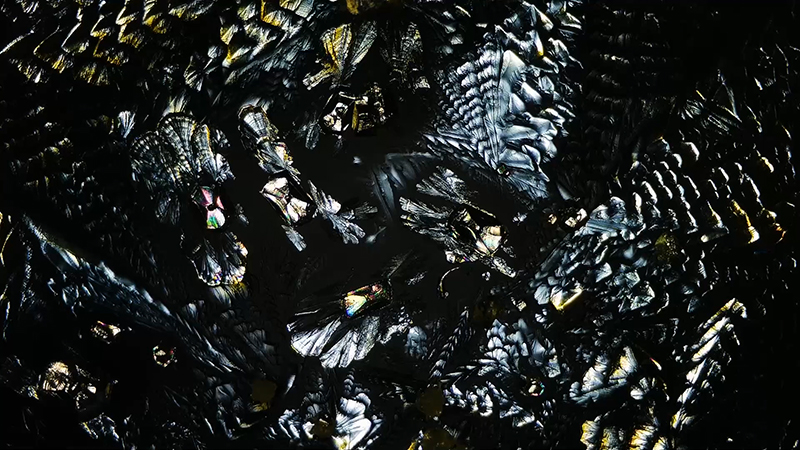
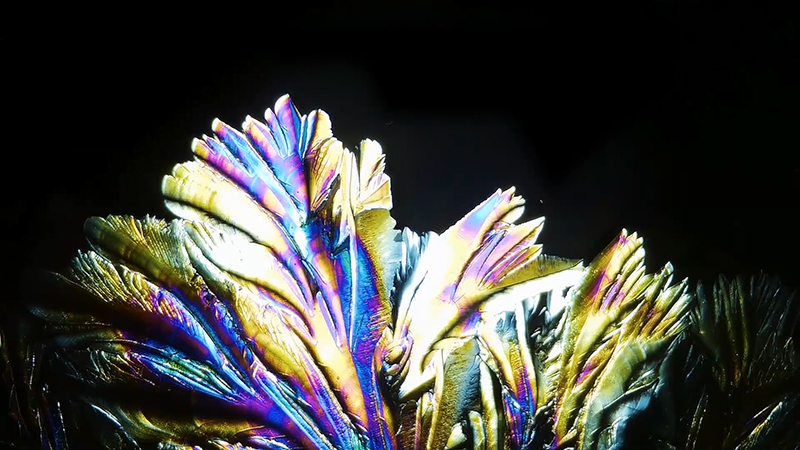
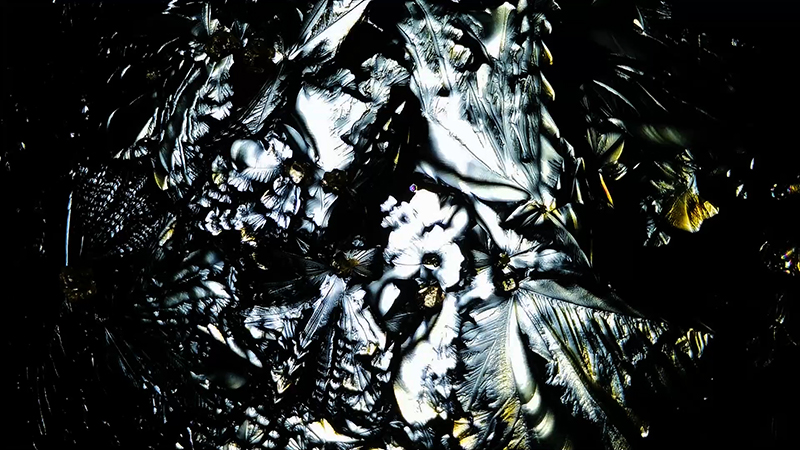
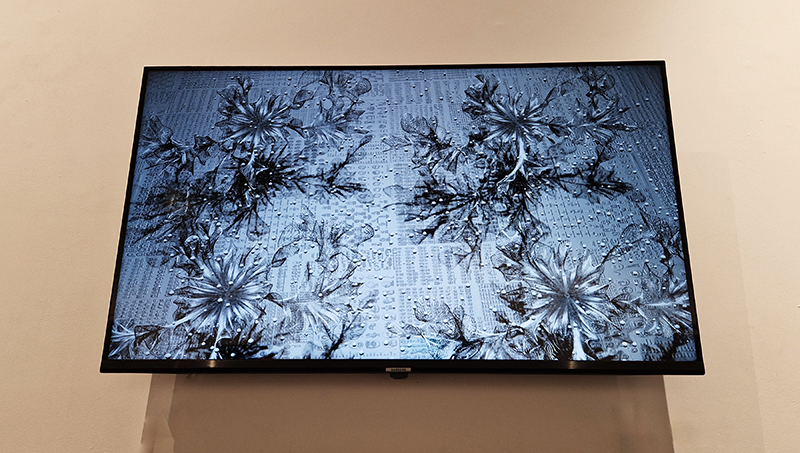
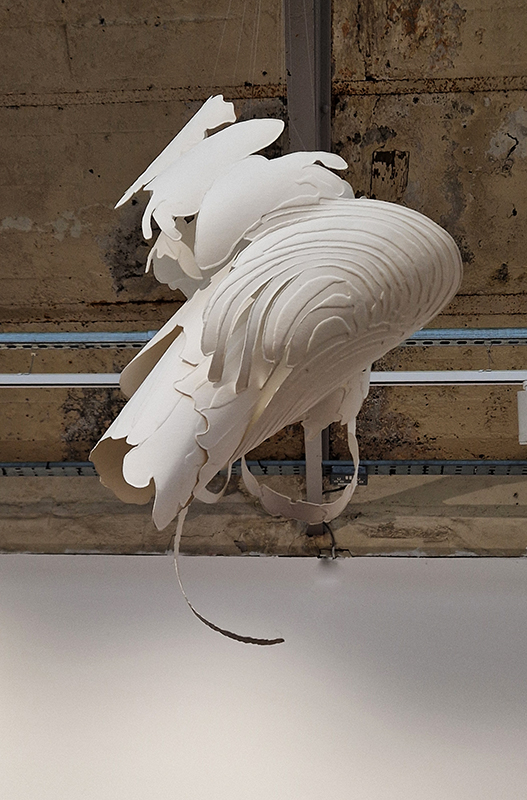
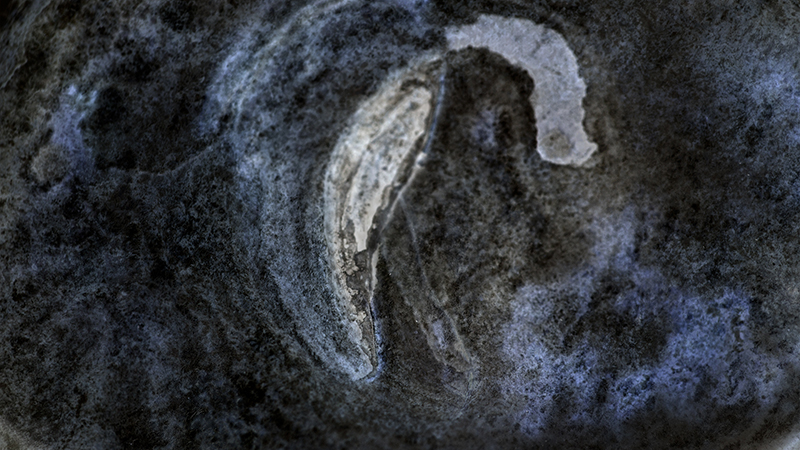
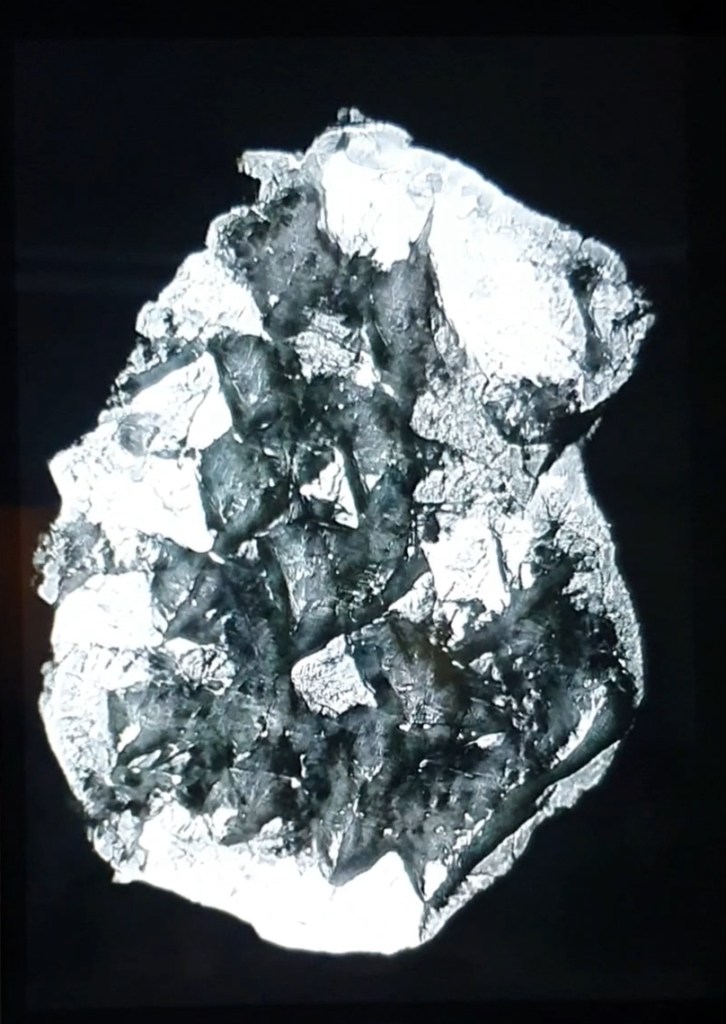
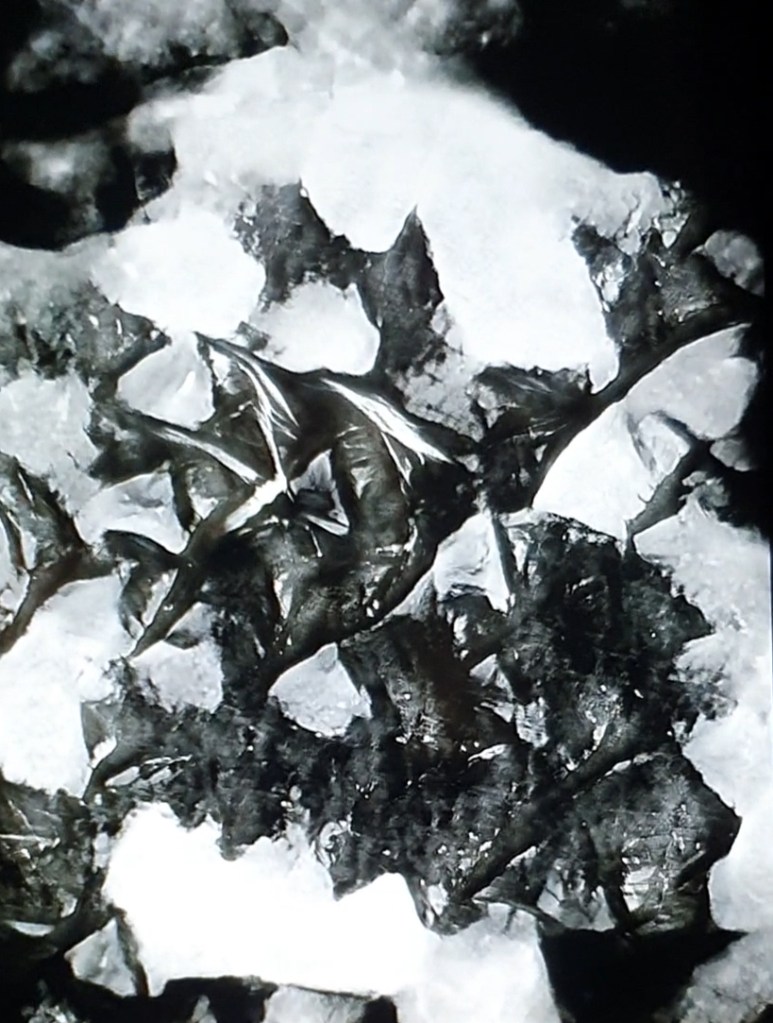
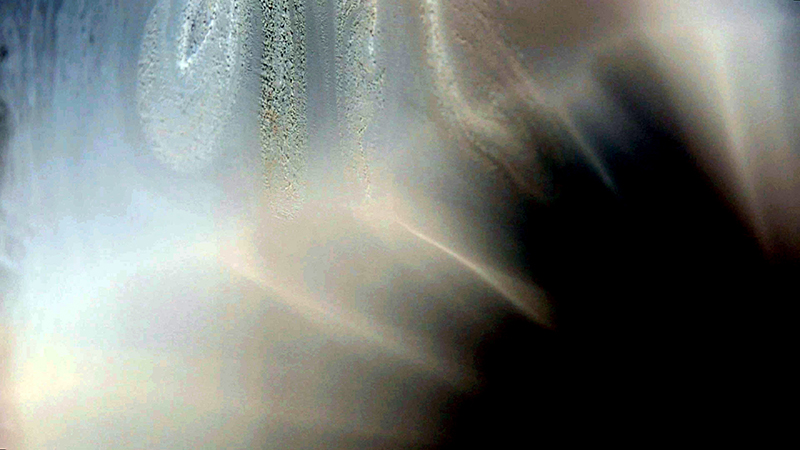
My experiments growing citric acid crystals have been going well. I am filming these transformations under polarised light which reveals the many vibrant colours but I also like the images without the filter. The structures remind me of feathers so I am thinking about creatures that flutter as well as those that swim.

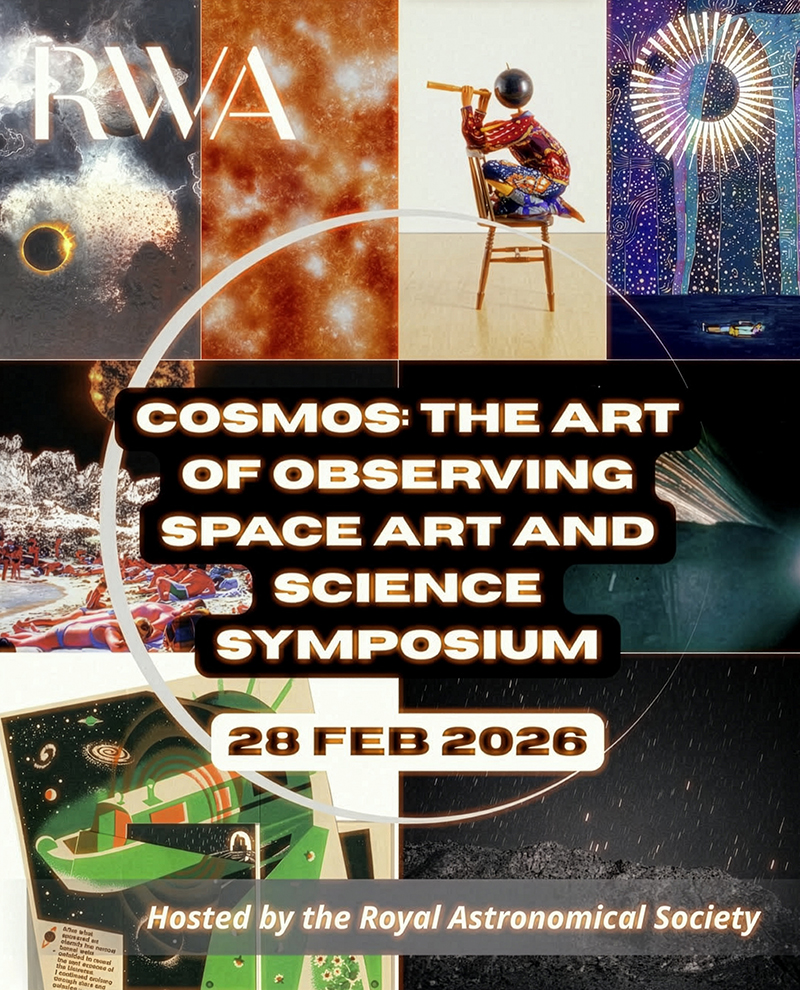
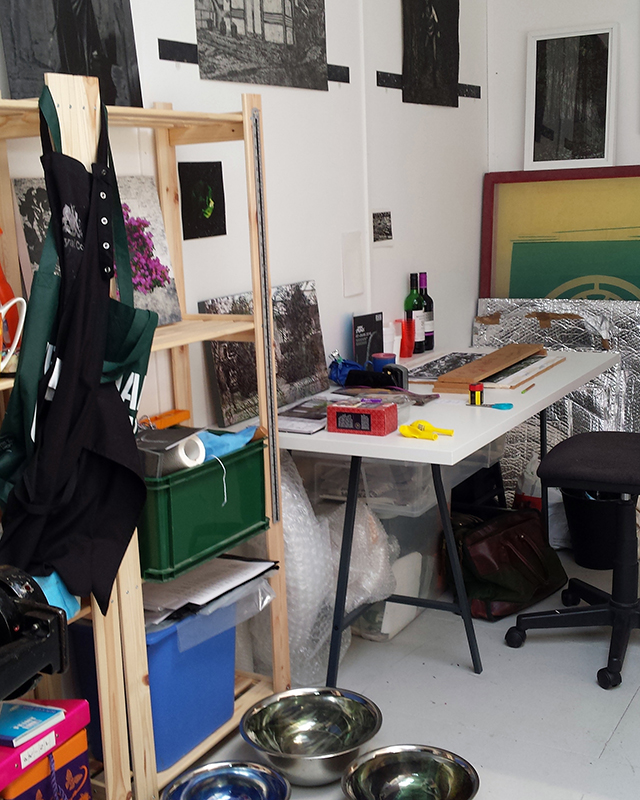
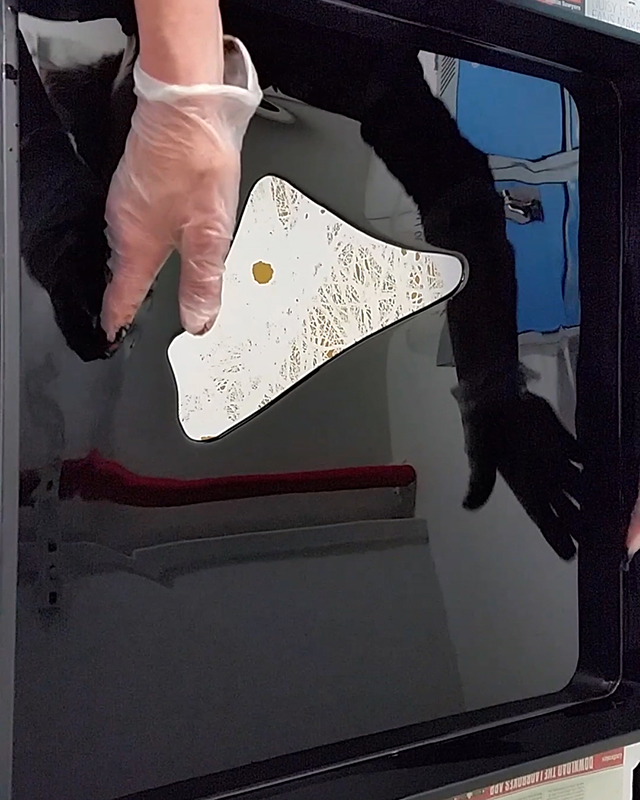
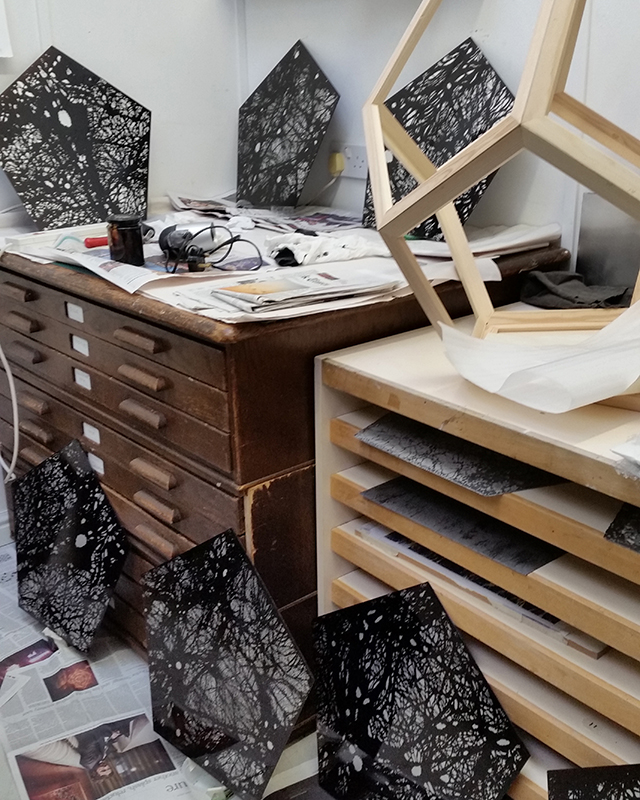
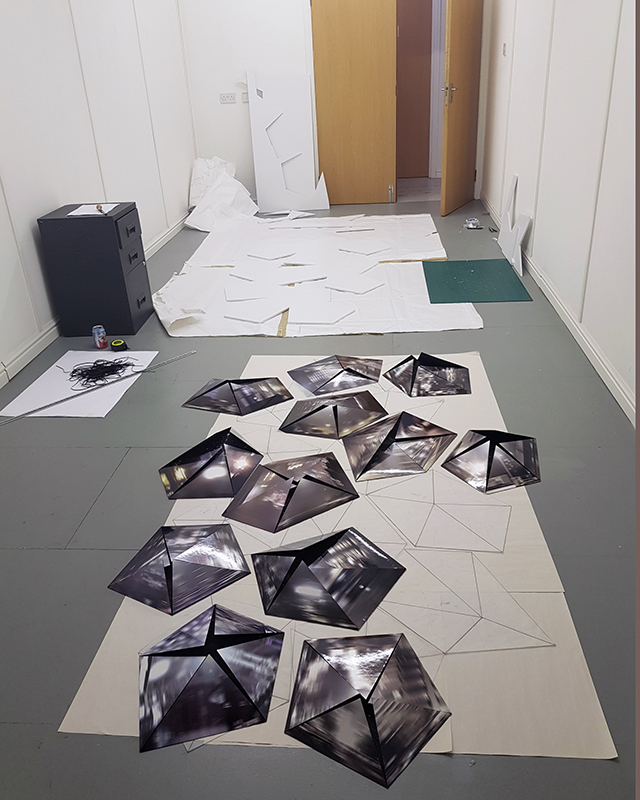
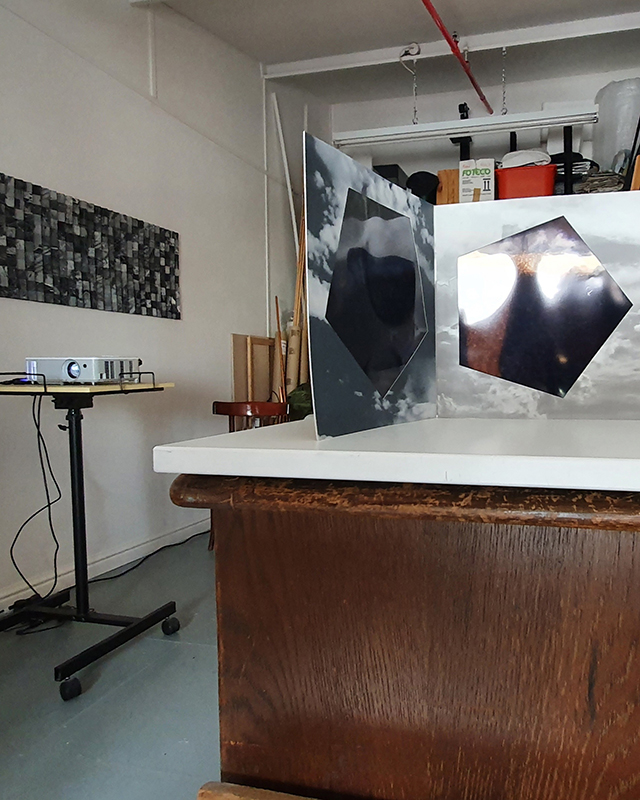
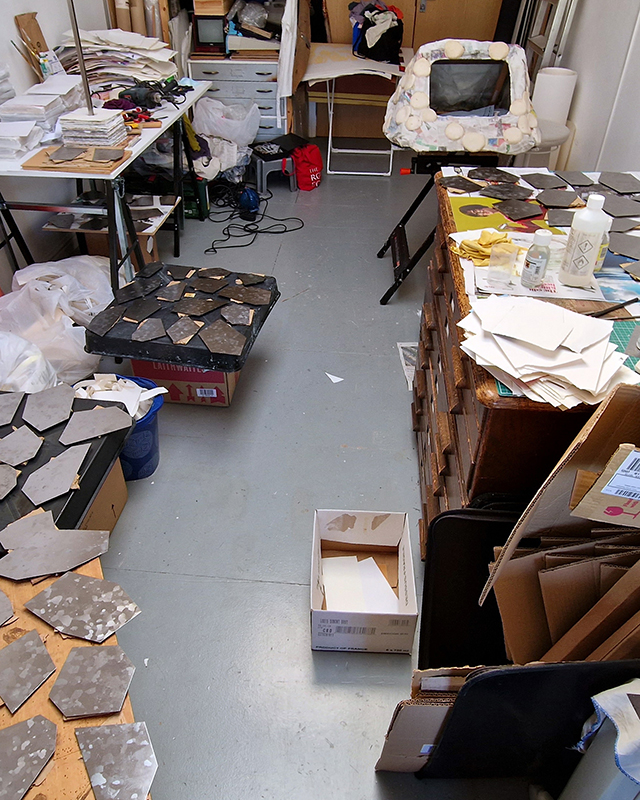
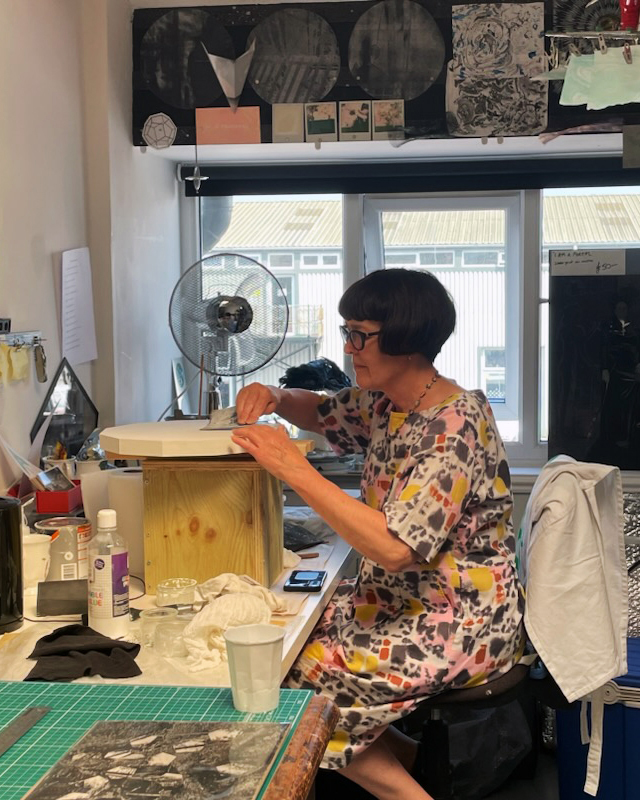
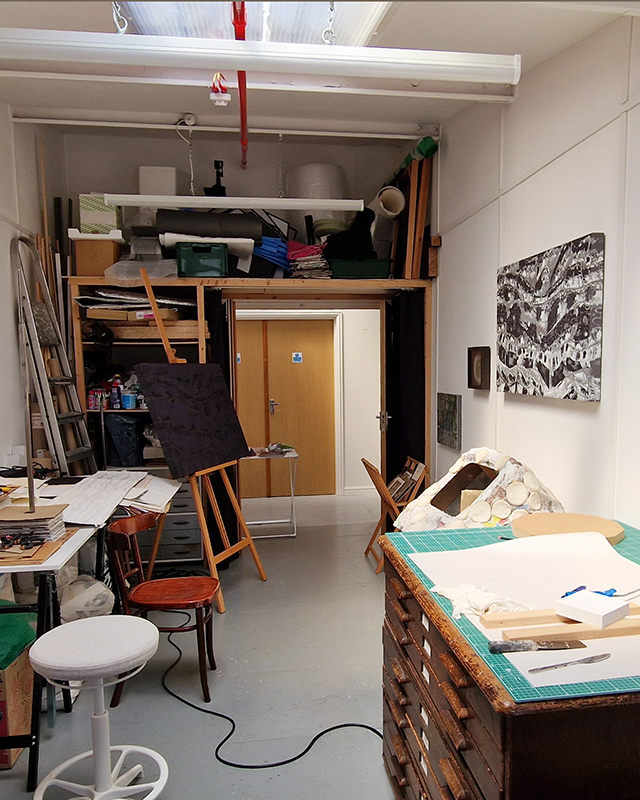
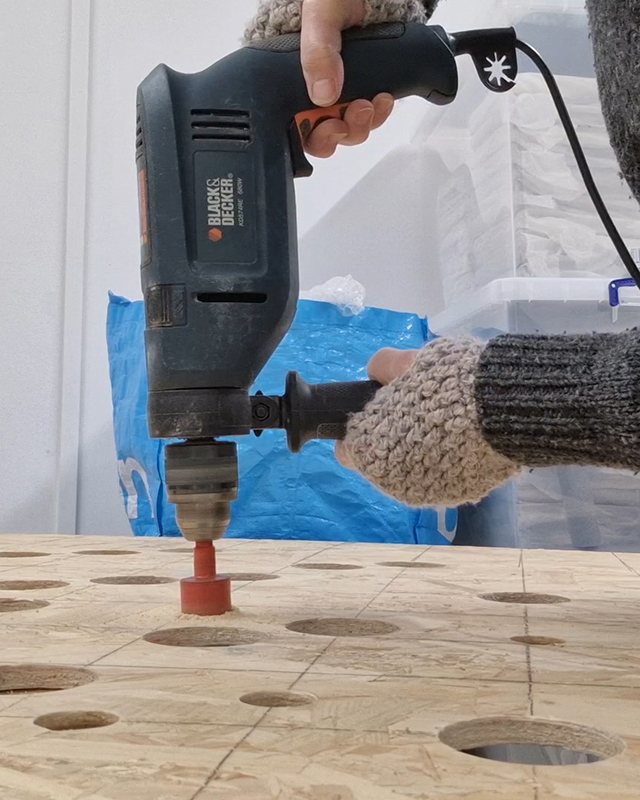
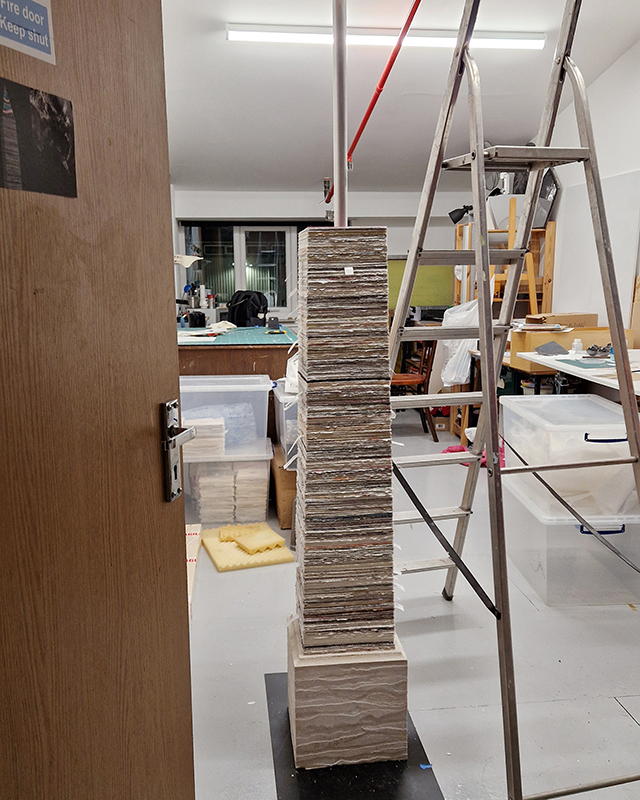
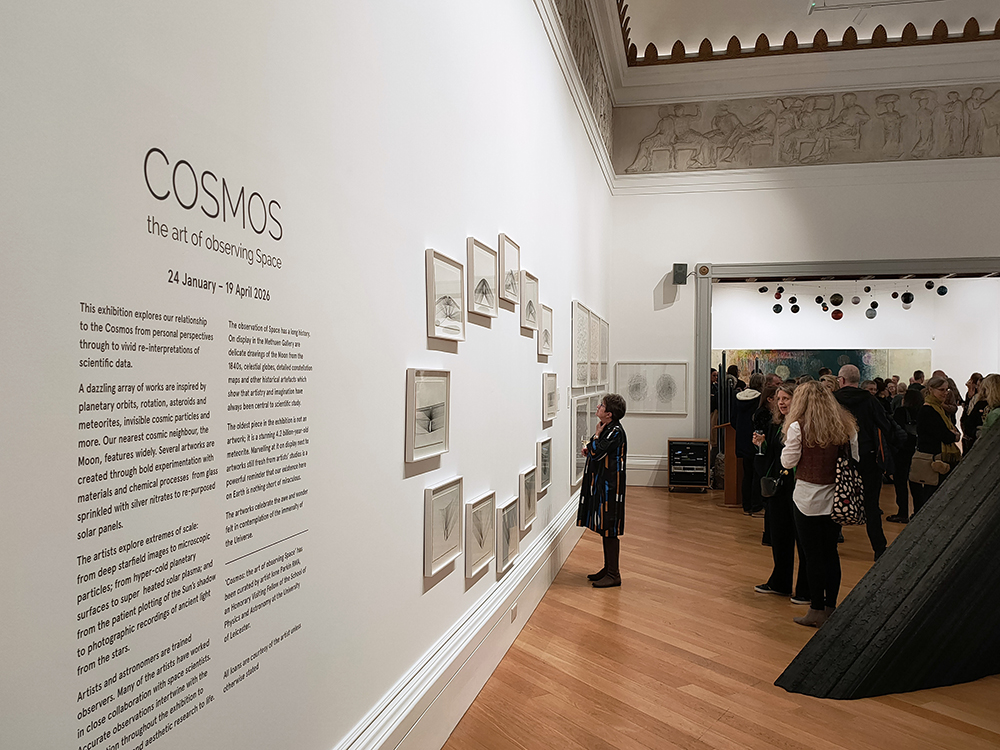
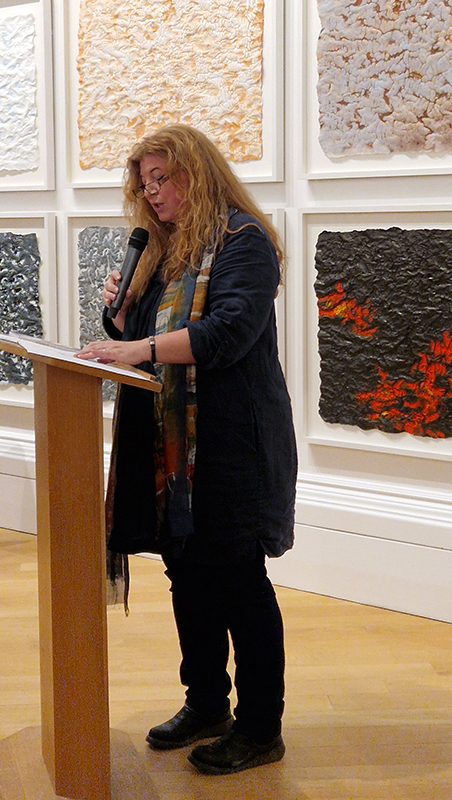
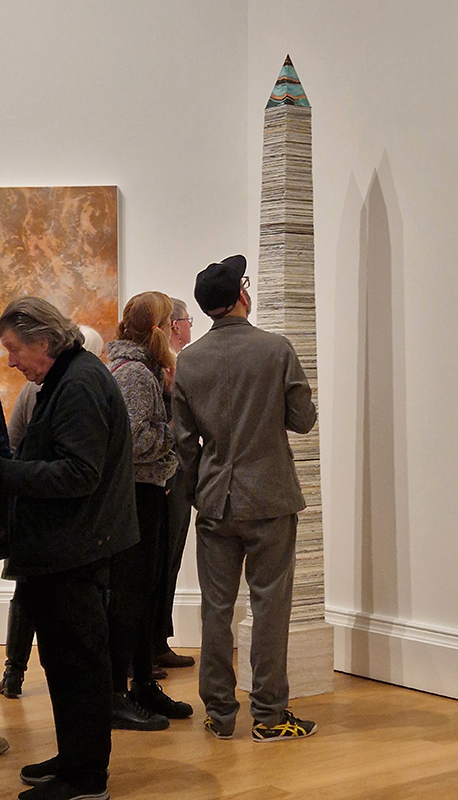
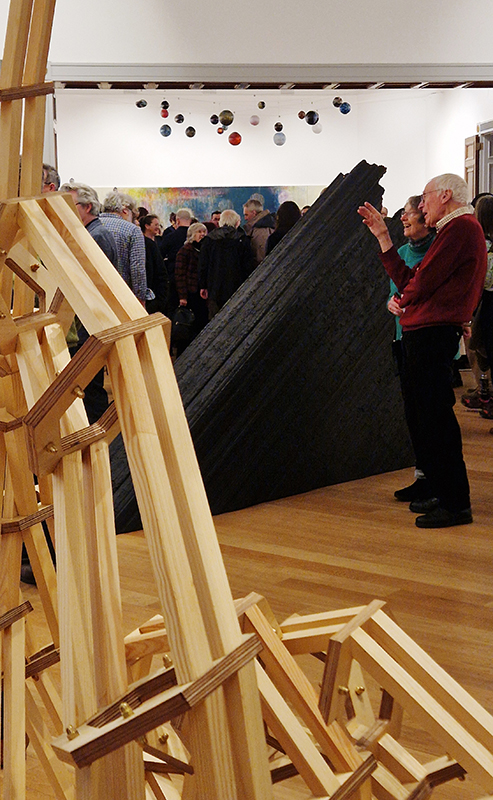
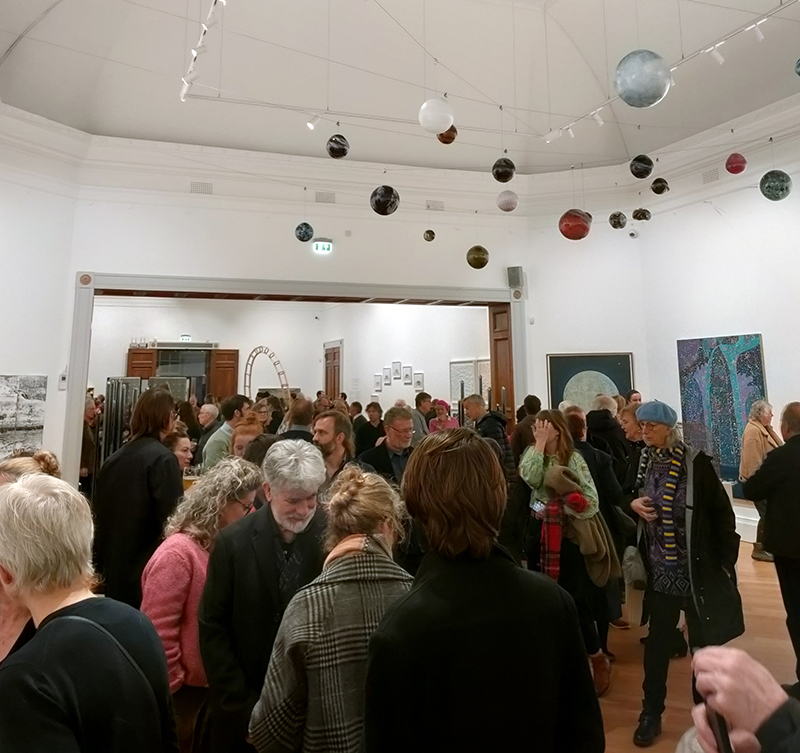
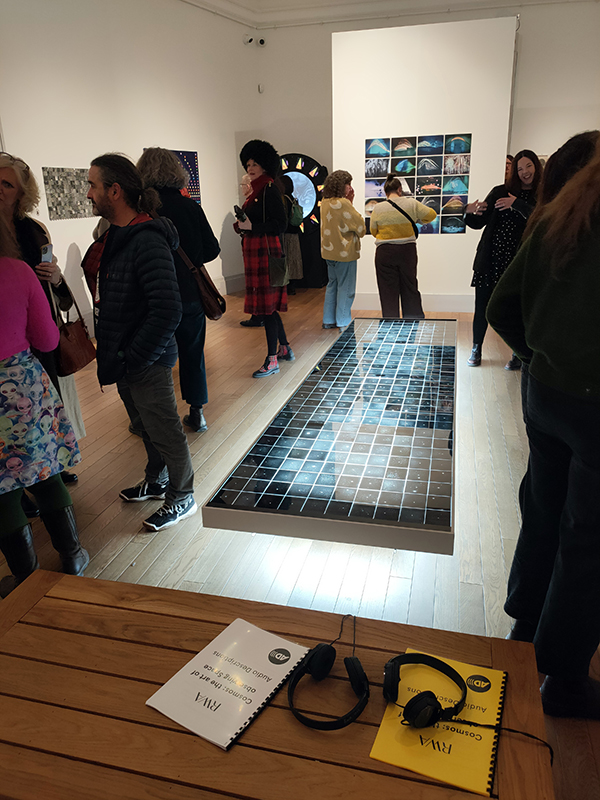
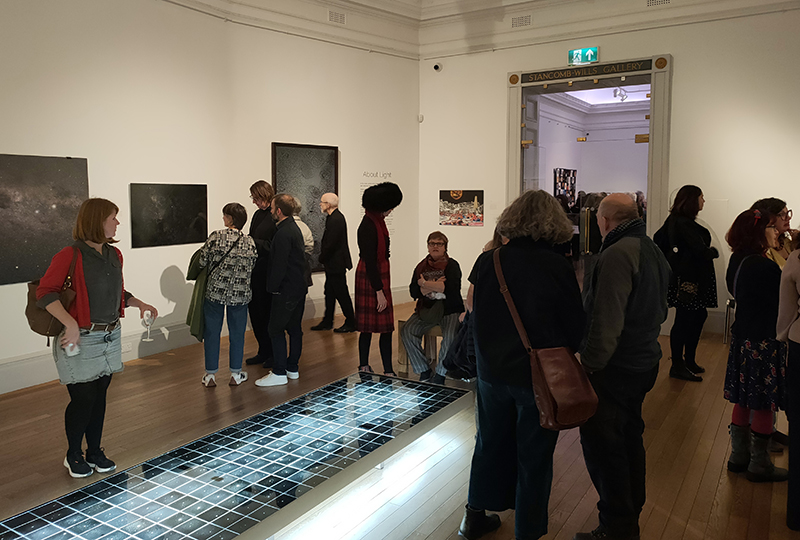
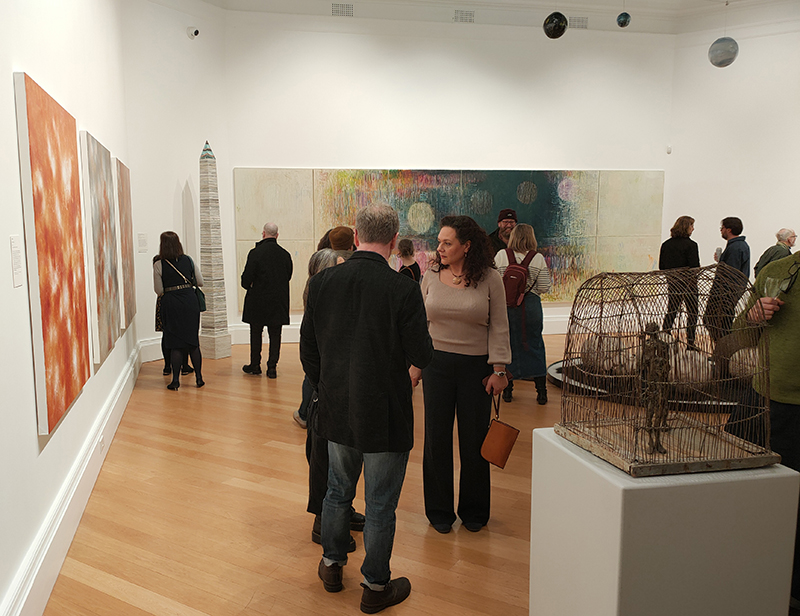
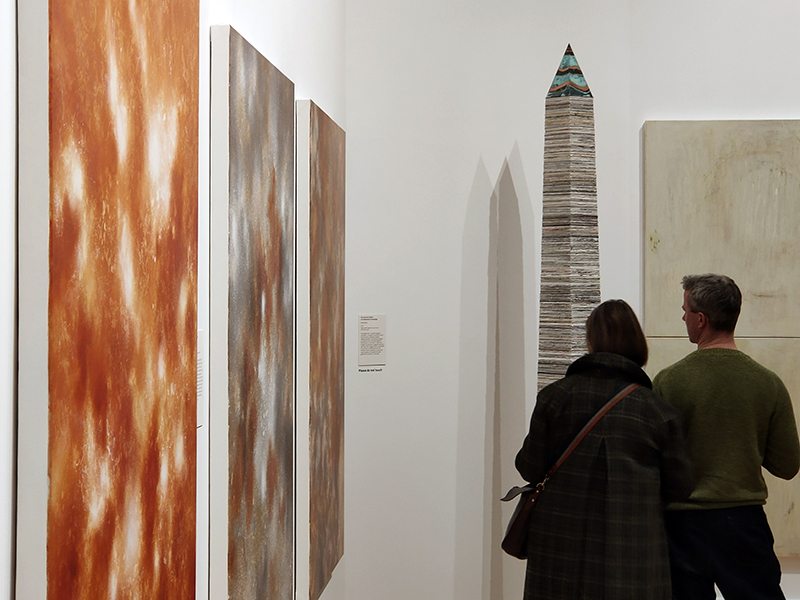
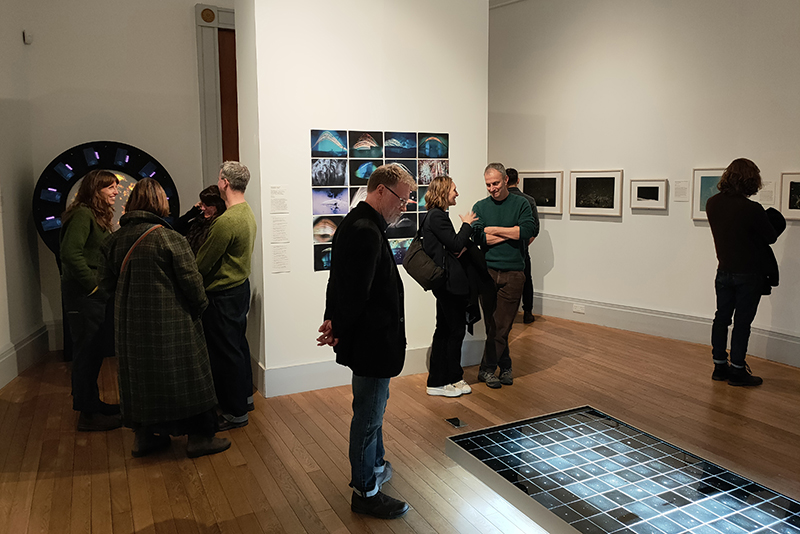
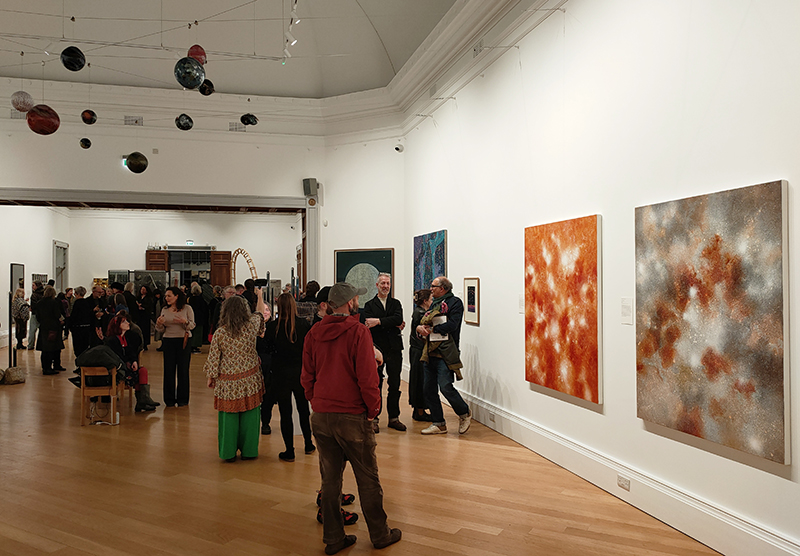
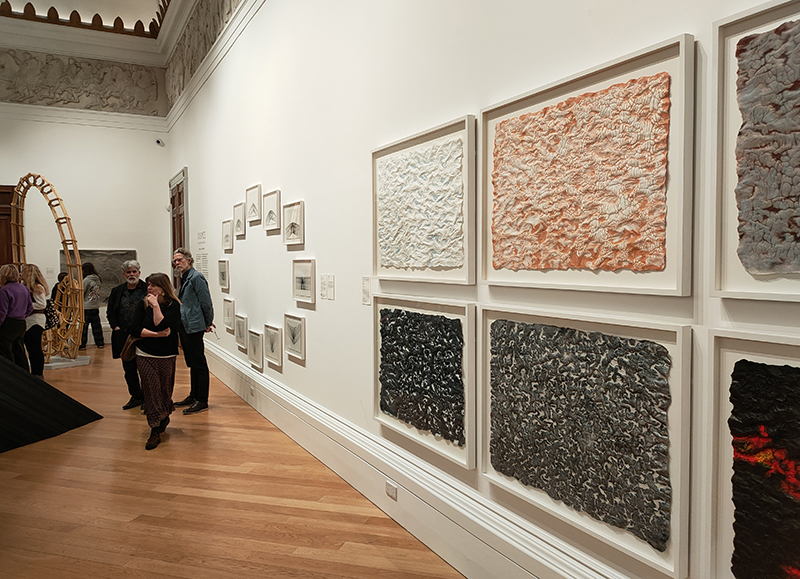
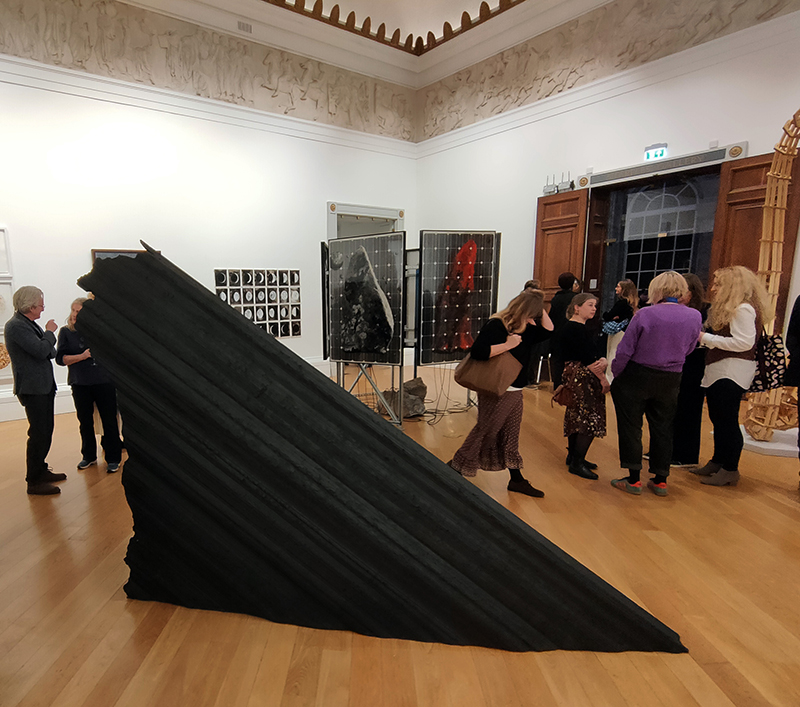
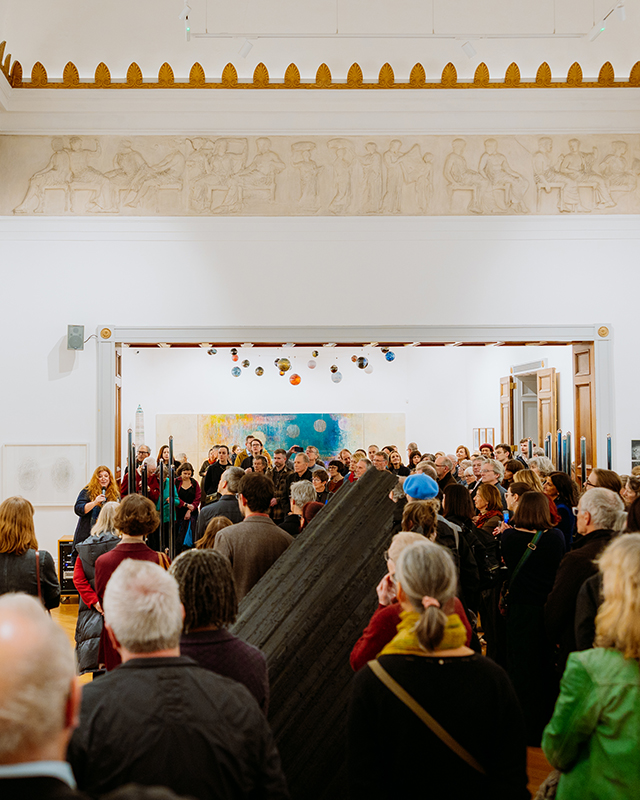
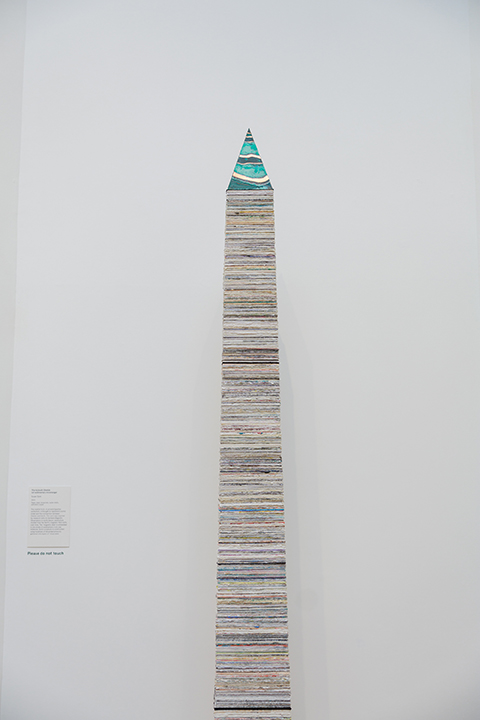
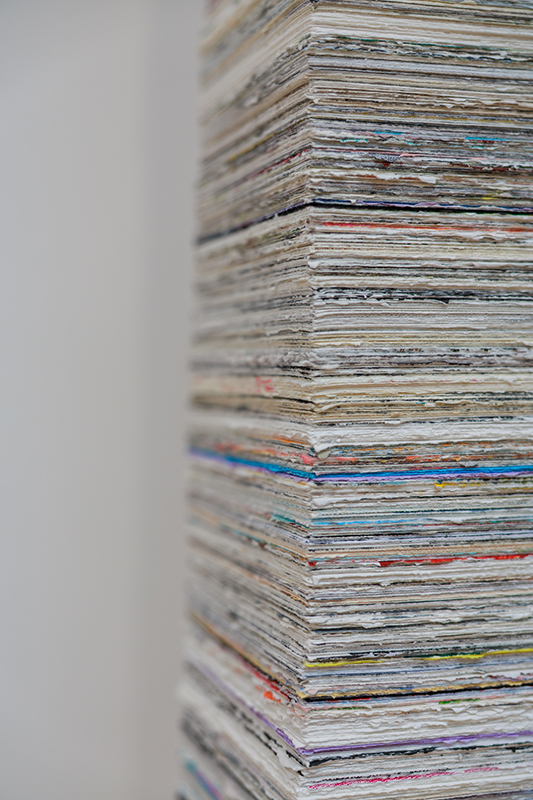
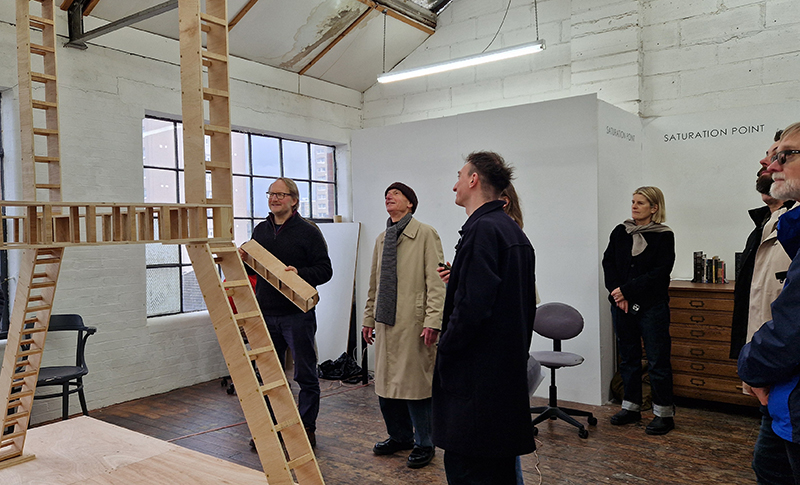
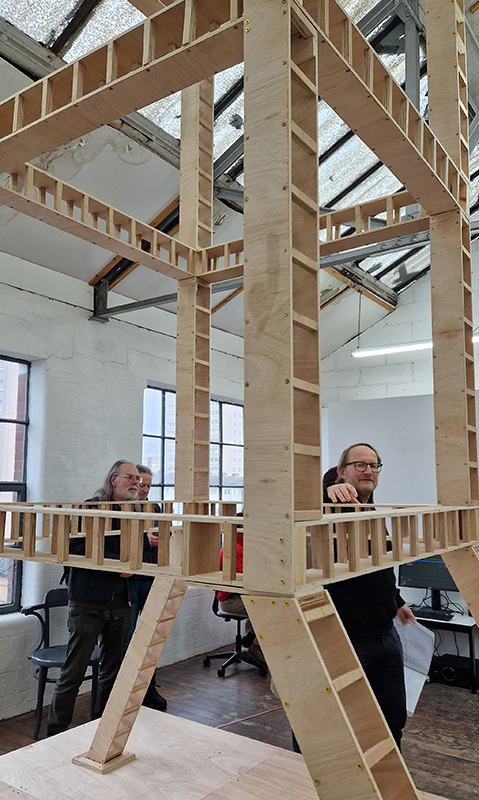
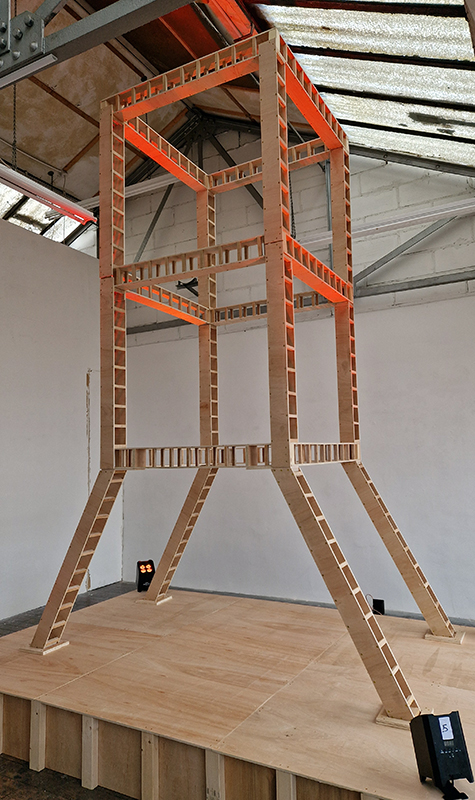
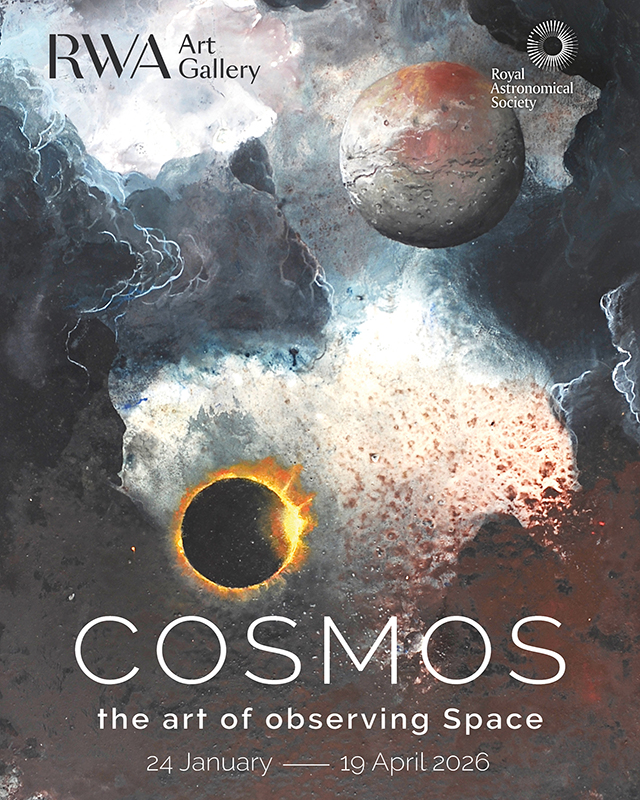
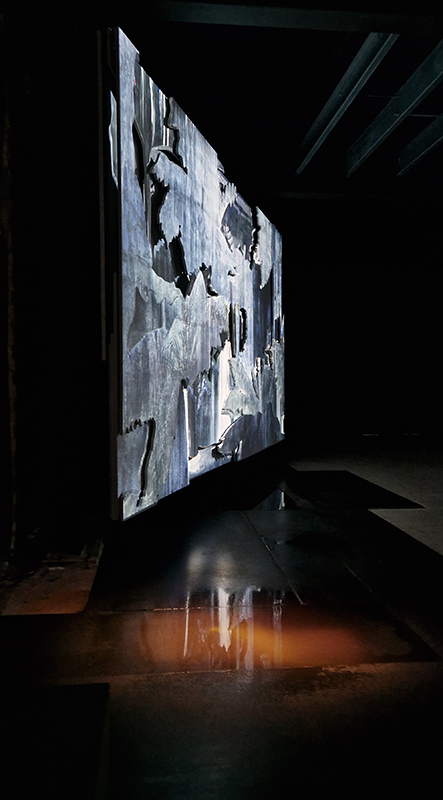
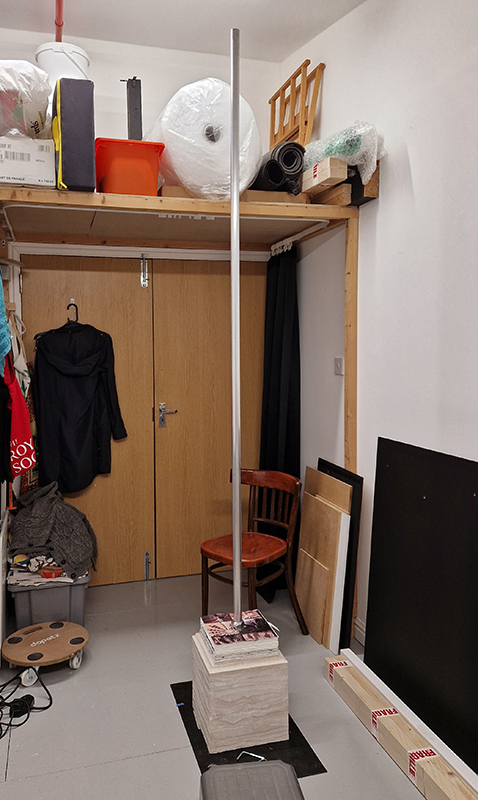
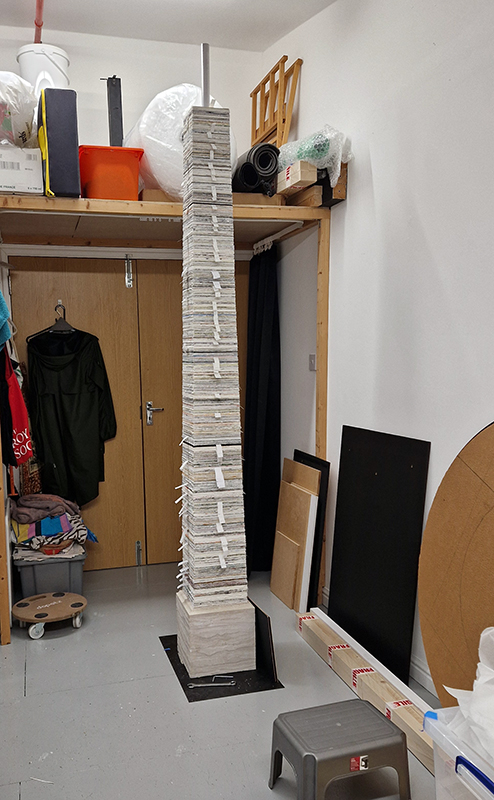
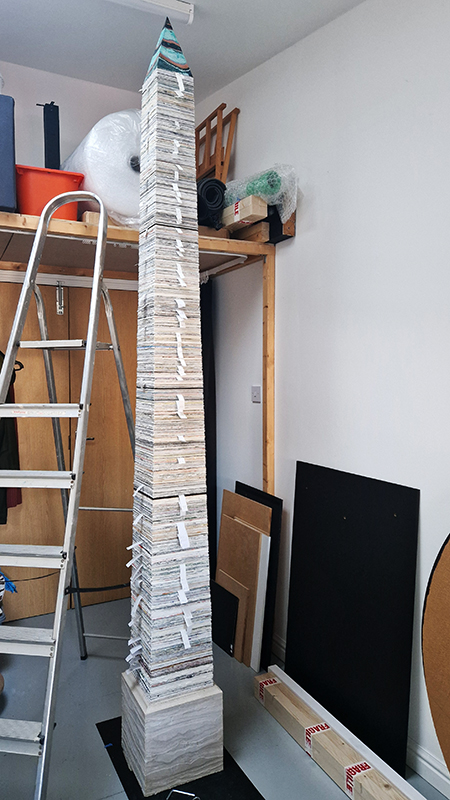
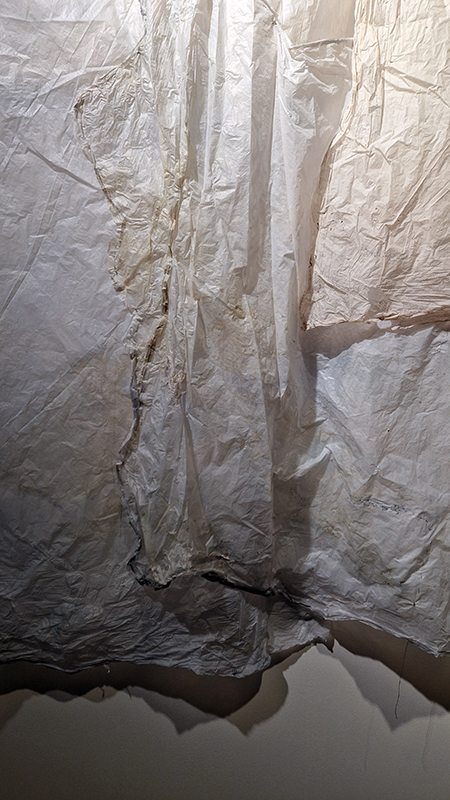
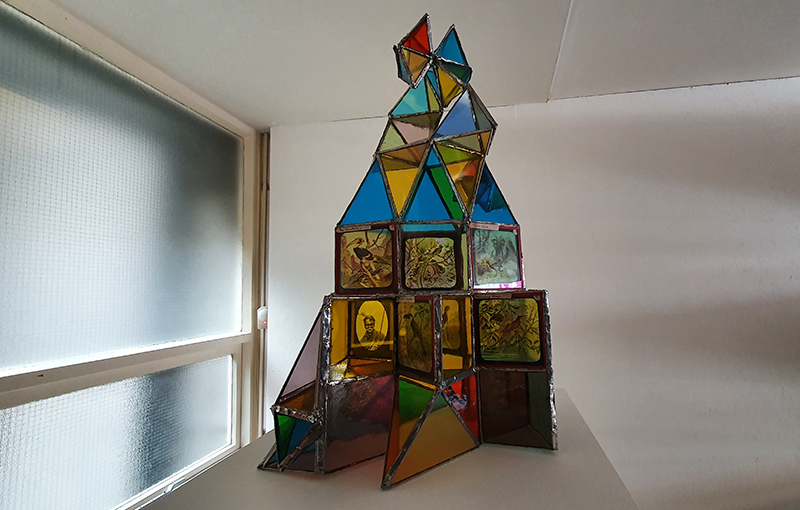
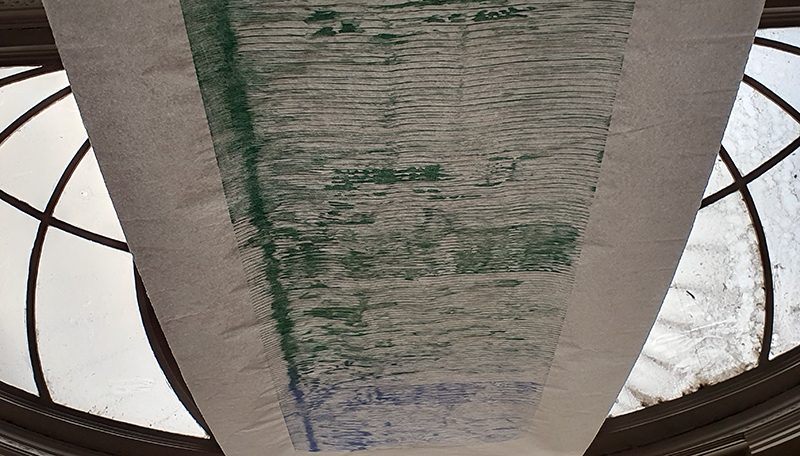
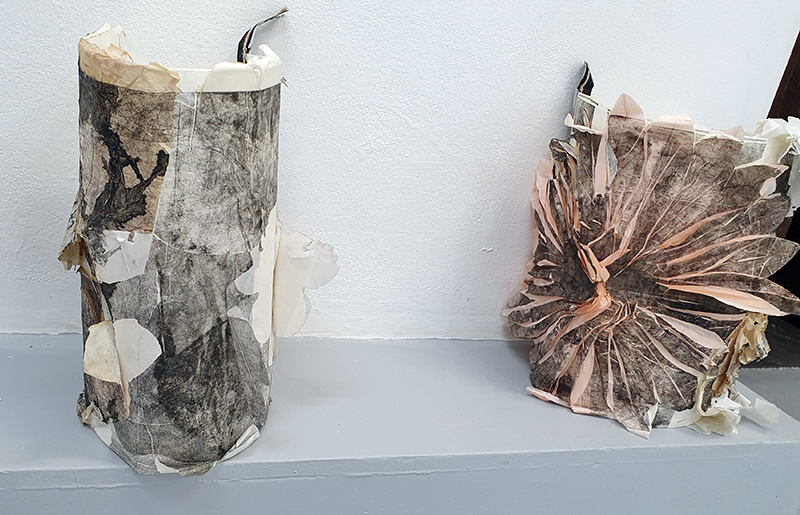
Time in the studio has been spent checking over and preparing works that will be showing in Cosmos: The Art of Observing Space curated by Ione Parkin which opens in the new year. I am thrilled to be part of this exhibition bringing together contemporary and historic artists and featuring an extraordinary range of work inspired by the cosmos. I have completed a test build of The Azimuth Obelisk (of sedimentary knowledge) using a new internal structure for before packing it all away again ready for transport to The Royal West of England Academy in Bristol. This work is a reimagining of an permanent azimuth mark erected at Hartland Magnetic Observatory in North Devon from which the drift of the magnetic north pole is monitored. Made of many layers hand torn from recycled works on paper it echoes the geological and magnetic history of the Earth which is secreted in the strata of sedimentary rock. The protruding tabs of paper seen in these studio images are markers for each section of paper squares of a tapering size and will get tucked away at installation in the gallery. With the added thickness of my new studio roof insulation the obelisk only just fits in now.

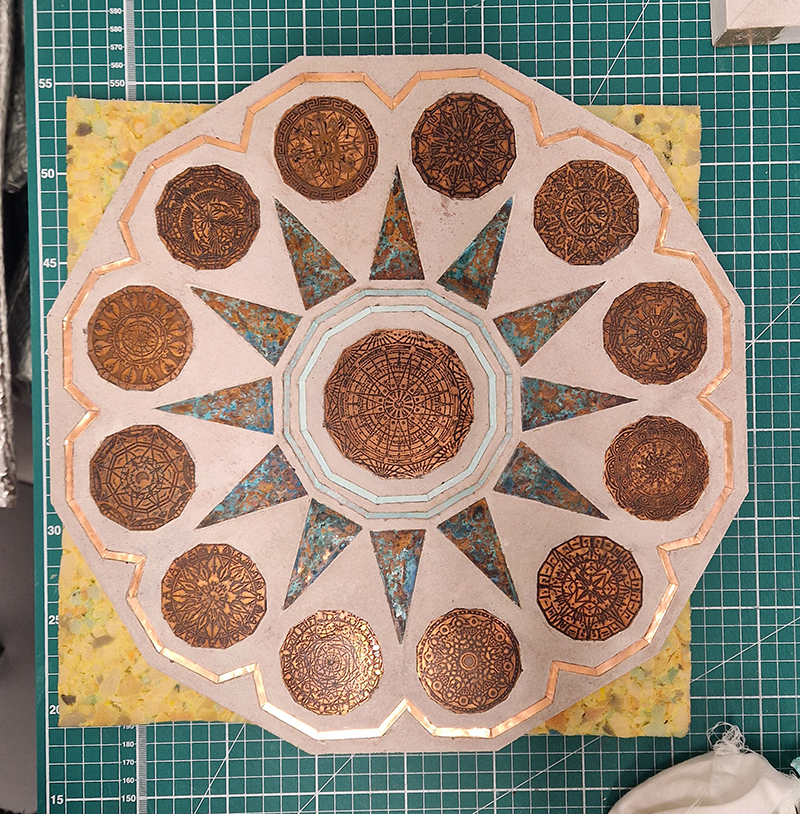
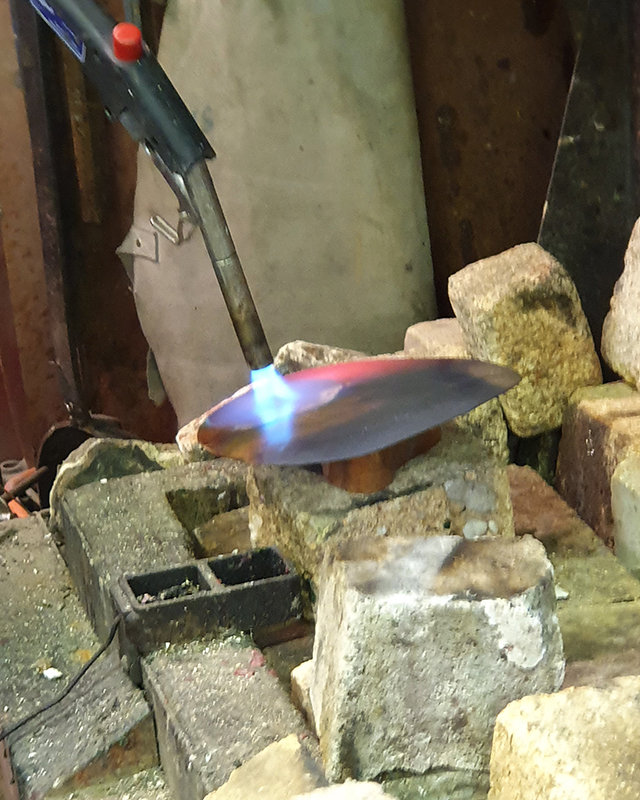
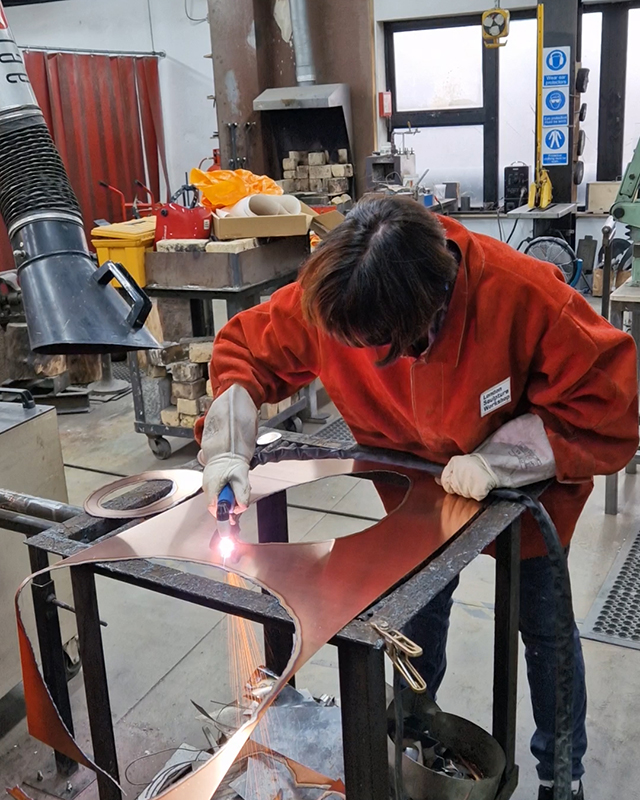
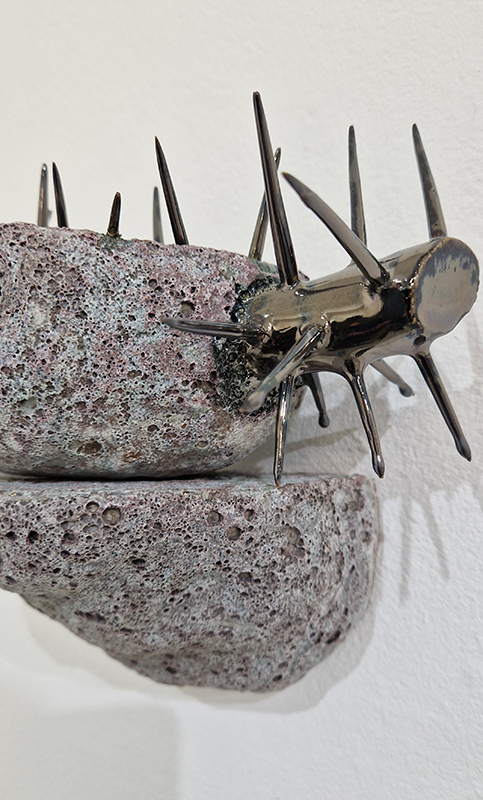
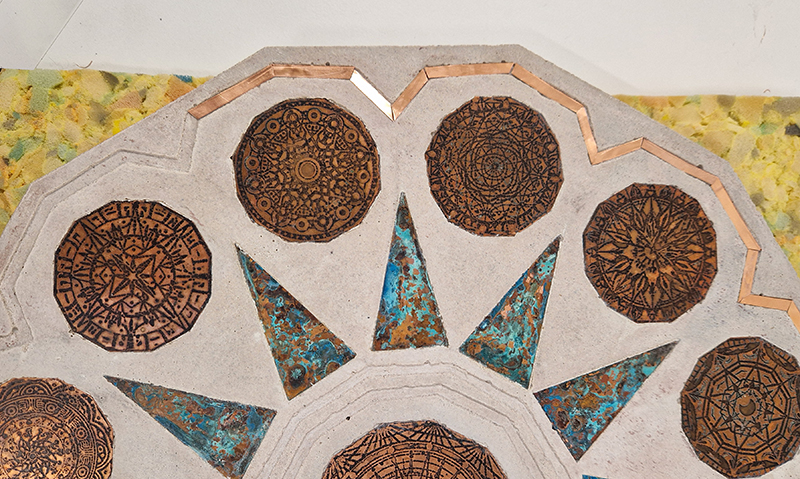
I have started work on inserting copper segments into the new sculpture for the Instruments of the Anemoi series. The other larger pieces of etched and patinated copper were added at the time of casting, held in place with tape and hope when the concrete was poured into the mould. This series of sculptures are suggestive of the pedestals that support various instruments used in monitoring the Earths’ magnetic field but are envisaged here as speculative objects used by the wind gods as the first emissaries of navigation.

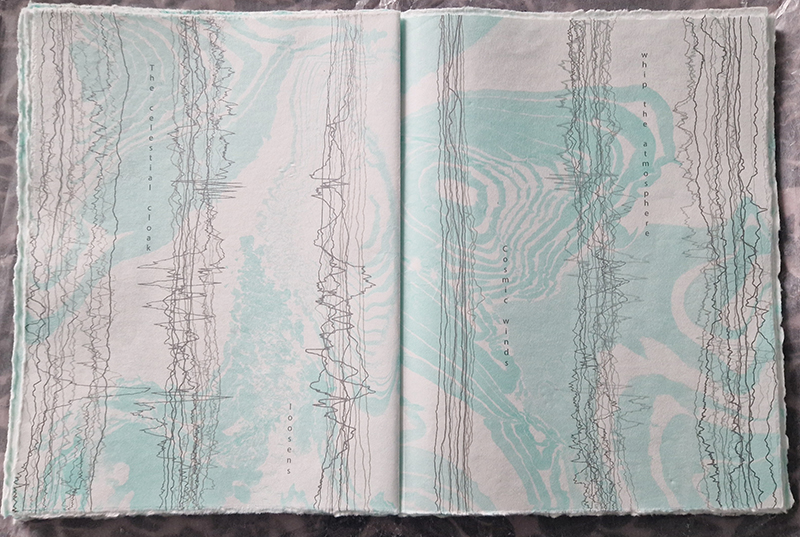
I am still battling with writing text for The Book of Reversals, an artist book that responds to the record of Earth’s magnetic field reversals being written in bands of minerals on the ocean floor.

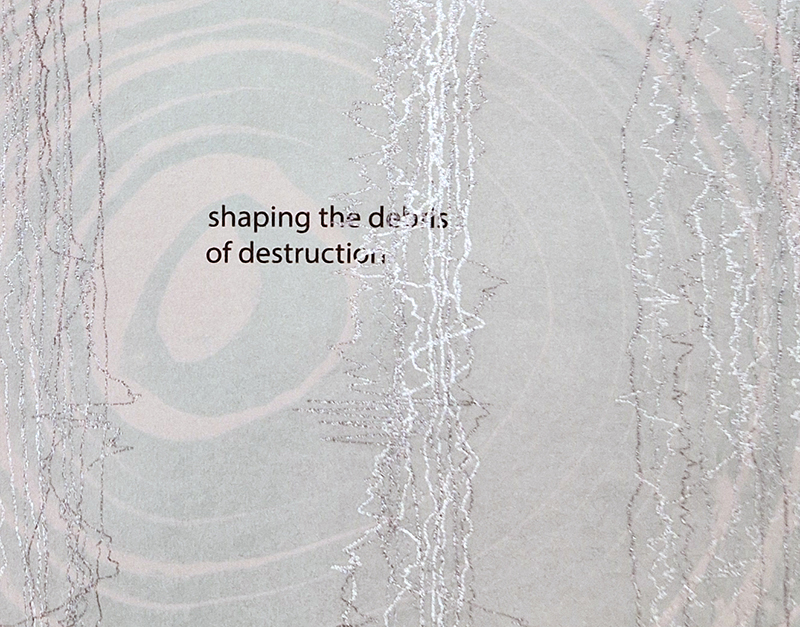
The crisp crust fractures / Fragments slide across a viscous veneer

Submarine mountains tower / Ocean trenches gape

Tectonic plates subduct / melting into the mantle 

Deep time traces are consumed / surfaces ceaselessly reformed

The Earth’s magnetic field has been a fascinating mystery for many hundreds of years and Gillian Turner’s book North Pole, South Pole recounts the stories of those who sought to solve its origin and mechanism. Something I hope to look at in more depth is how pottery and bricks preserve the direction of the magnetic field in their minerals during the process of firing which heats and then cools the clay – the same process that occurs in a lava flow. Iron-bearing minerals (like magnetite) in clay become “magnetic” when heated in a kiln. As the pottery cools, these minerals lock into the Earth’s magnetic field direction and strength at that time. The study of the magnetic properties of ancient pottery, known as archaeomagnetism, has been used to make records of the inclination of the magnetic field from past millennia. Inspired by these studies of manmade artefacts to determine the historical position of the north magnetic pole, physicists Bernard Brunhes and Pierre David took samples from exposed lava flows and their underlying clay in central France. In 1906 they came to the astonishing conclusion that about six million years ago the magnetic field seemed to point in the opposite direction, the first indication of magnetic field reversals.

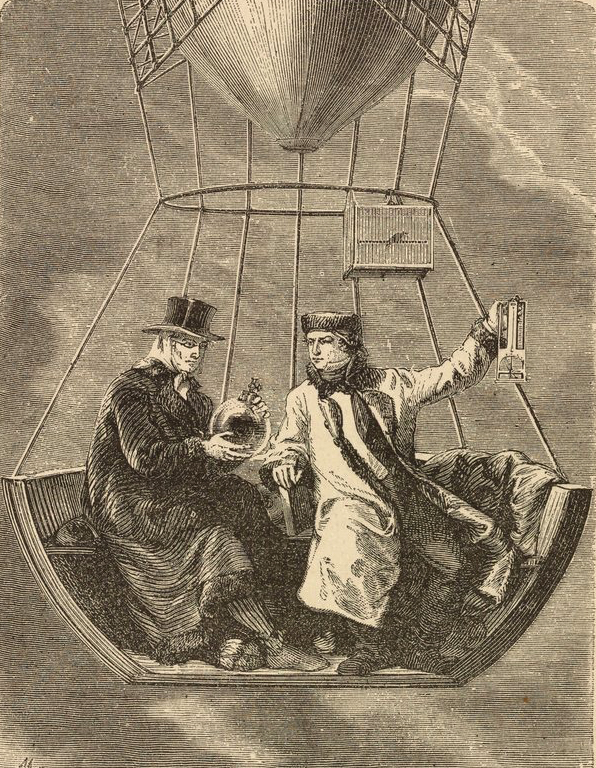
Also with thanks to Gillian Turner’s book North Pole, South Pole I have learnt that there were early hydrogen balloon ascents to determine if the Earth’s magnetic field intensity varied with altitude, helping to decide if the magnetic field came from within the Earth or was extra terrestrial. In 1804 Jean-Baptiste Biot and Joseph Louis Gay-Lussac made a pioneering ascent to 4,000 feet (1.2km). In Turner’s book she writes that the dip needle necessary to take the measurements iced up and so the results were unreliable. I feel for them, but it seems they conducted many other experiments on temperature and gases in the atmosphere while aloft and in any case we now know they would have needed to ascend many kilometres higher than they achieved to notice any weakening in the magnetic field.

This plate is from John Howard Appleton’s (1844-1930) Chemistry, Developed by Facts and Principles Drawn Chiefly from the Non-Metals, published in 1884.

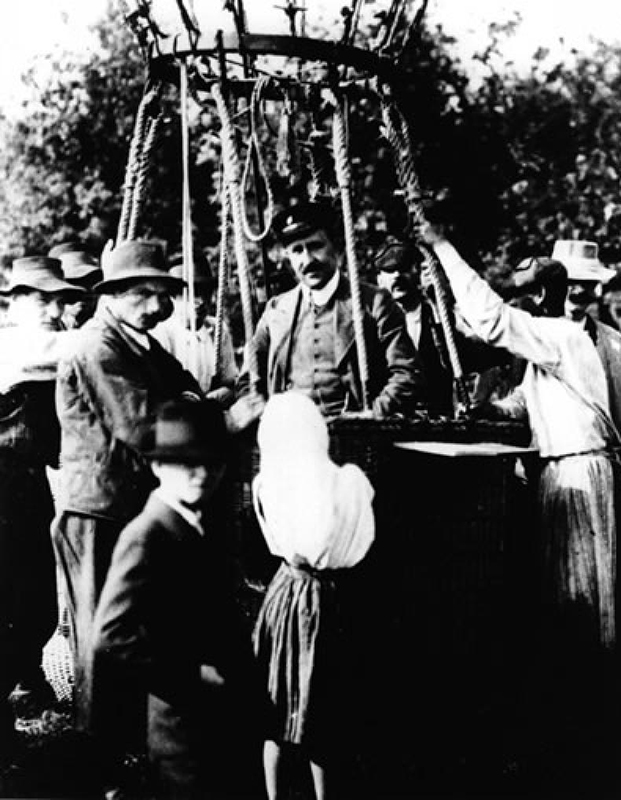
I am trying to remember when I first had the idea to launch a cloud chamber in the payload of a high altitude balloon. I knew about the hot-air balloon experiments carried by Victor Hess to determine the origin of cosmic radiation, and his discovery in 1912, when he made an ascent to over 5km during a near-total eclipse of the Sun, that radiation had to be coming from further out in space.

Hess on his return from the 1912 balloon ascent – Alan Watson pointed out that this was obviously staged at another time as he would not have been standing looking so well after his ordeal.

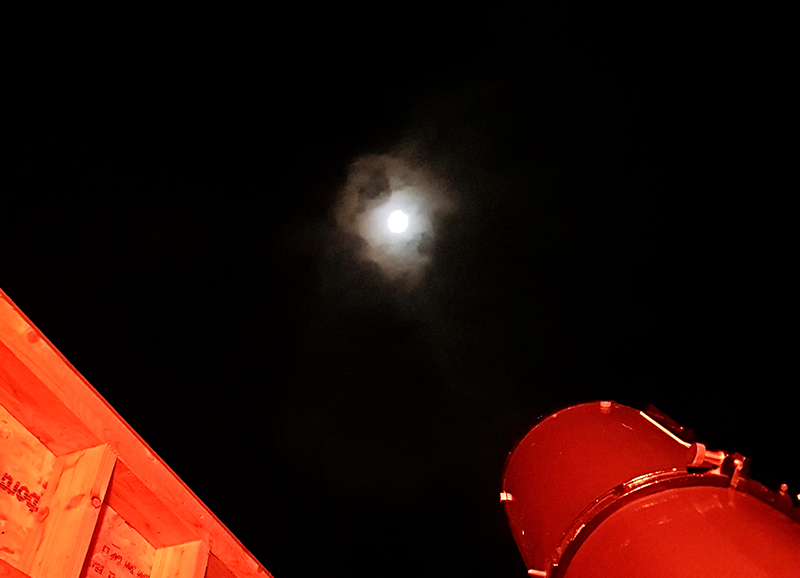
I remember looking into the dark skies during a residency at Allenheads Contemporary Arts and wondering about all the activity that I couldn’t see. I decided then I would like to film at 15km where most subatomic cosmic ray activity takes place, even if nothing would show on the film.

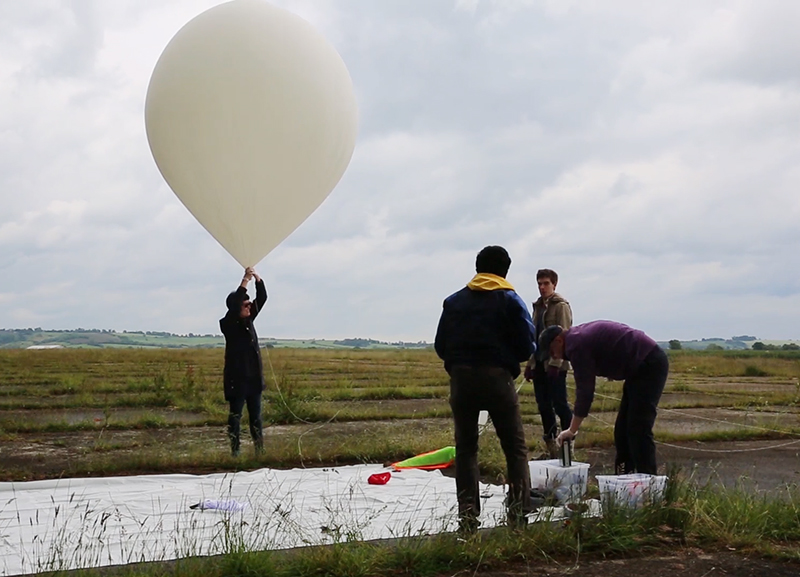
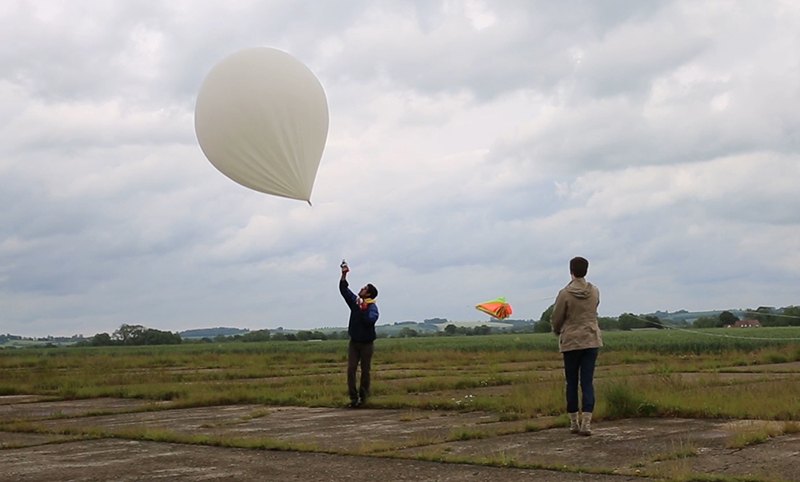
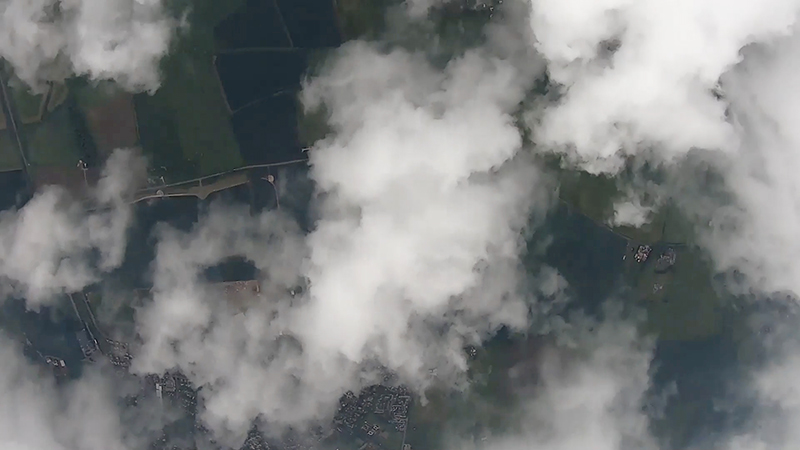
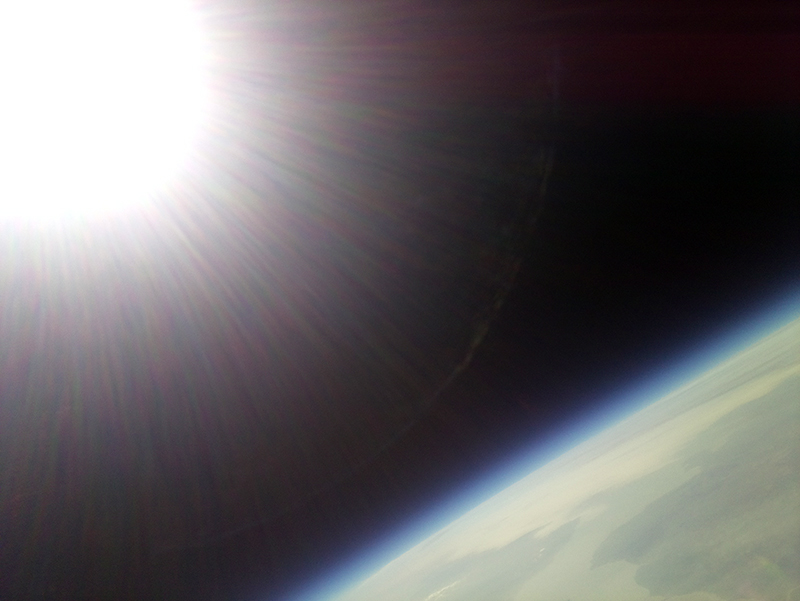
A high altitude balloon flight seemed the perfect solution and I was very grateful for the help I subsequently received from Imperial College Space Society and The UK High Altitude Society. The decision to include a cloud chamber in the payload was always a risk and as it turned out nothing of the cosmic ray activity was captured on film. However, the balloon did reach an altitude of over 37km and the payload was successfully recovered with some amazing video footage of its journey.

The record height for a hot air balloon ascent is 21km so in theory it could be possible to send a cloud chamber up in a hot-air balloon and film at altitude with potential for more success if some brave person were on board to operate the camera. Unlikely to be me.

Some intriguing news of ORC’s on the RAS websiteThe most distant and most powerful ‘odd radio circle’ (ORC) known so far has been discovered by astronomers. These curious rings are a relatively new astronomical phenomenon, having been detected for the first time just six years ago. Only a handful of confirmed examples are known – most of which are 10-20 times the size of our Milky Way galaxy. ORCs are enormous, faint, ring-shaped structures of radio emission surrounding galaxies which are visible only in the radio band of the electromagnetic spectrum and consist of relativistic, magnetised plasma. the three new cosmic rings – discovered not by automated software but by sharp-eyed citizen scientists – represent an important step toward unlocking the secrets of these vast, puzzling structures.

Out and About

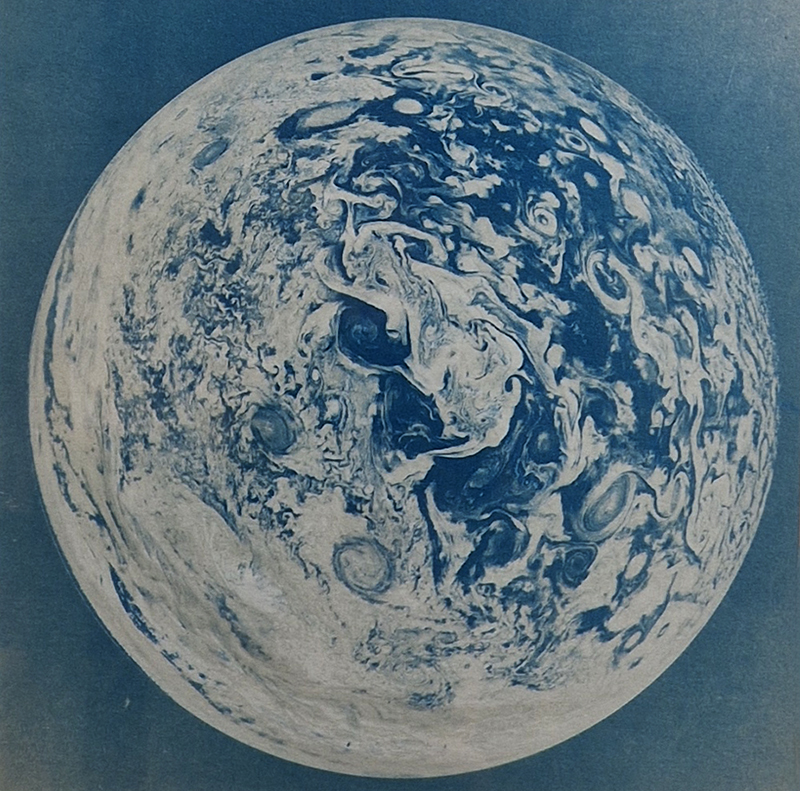
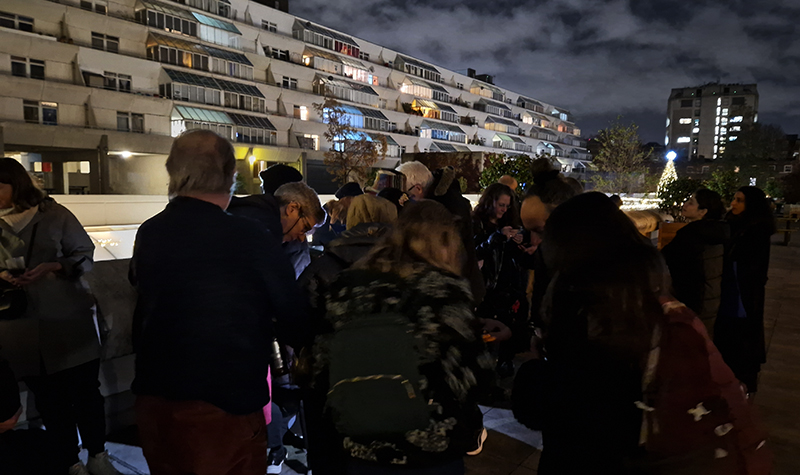
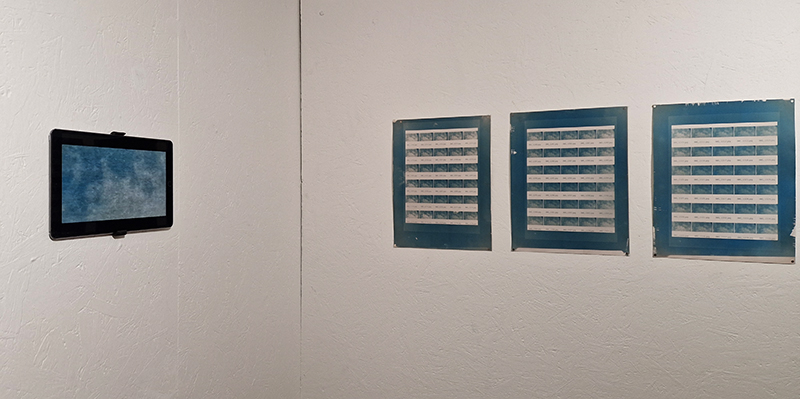
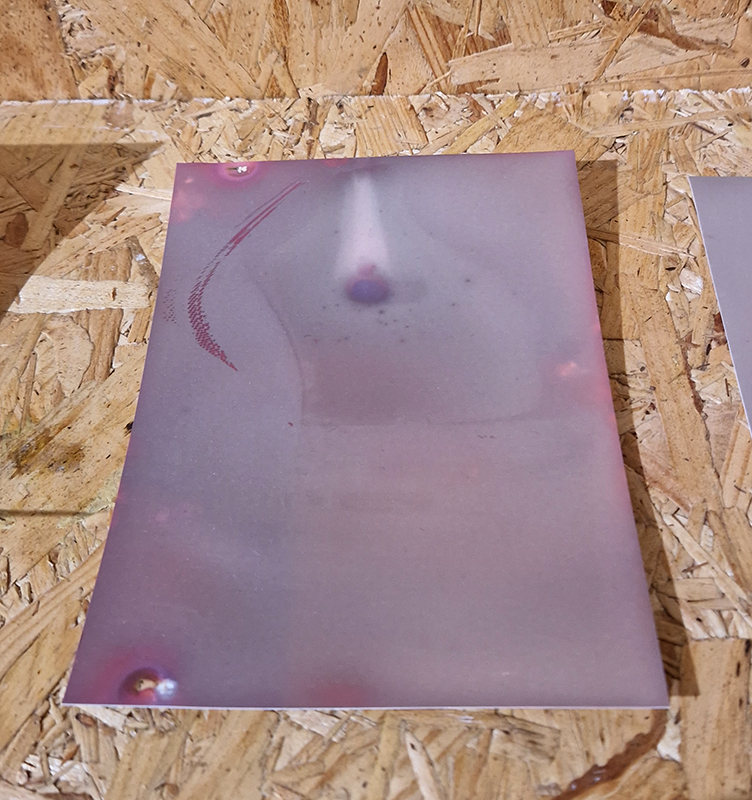
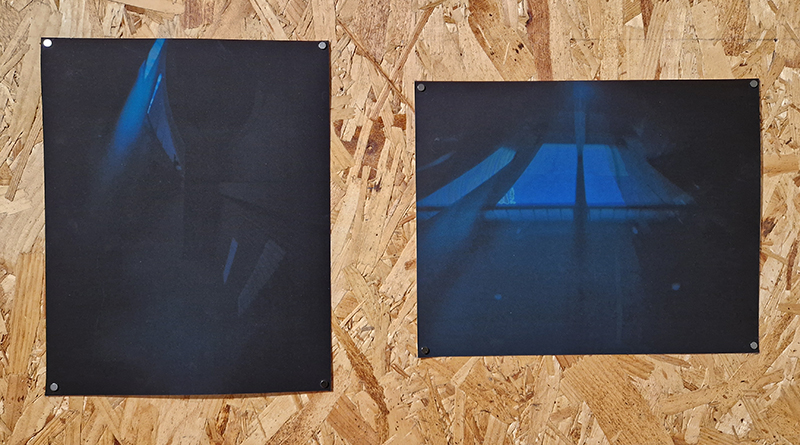
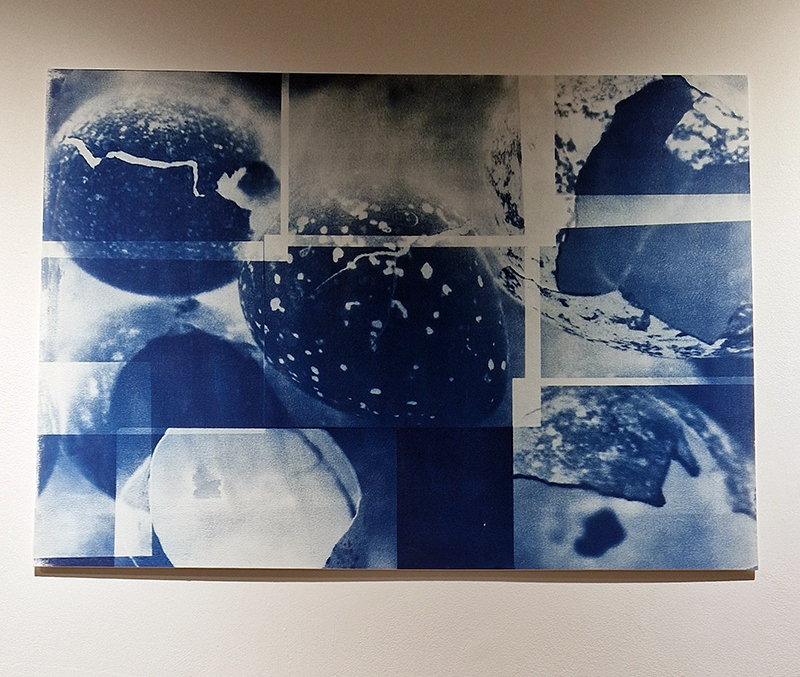
A wonderful evening with artist in residence Melanie King at Passengers connecting the celestial with the architecture of the grade II listed Brunswick Centre in Bloomsbury, London. Melanie used the residency opportunity to explore the duotone cyanotype process using multiple layers of cyanotype to mimic astronomical imaging construction and even used cyanotypes to create an of the Moon. The beautiful results were presented at an evening event with the additional treat of live telescope viewing of the Moon and Saturn from the second floor terrace of the Brunswick centre under the engaging guidance of astronomer and science communicator Paul Hill.

Liz Elton’s sensitive work Black and Blue (compostable bio materials, cabbage and fruit dye saddened with iron, silk, poppy and sage seeds) showing in A Changed Environment at Messums London. This group show examines changing ideas of beauty, ecology, and sustainability, as well as themes of place, memory, and identity, revealing how connections to the natural world can inspire both understanding and hope. I love the delicacy of this new work and the term ‘saddened by iron’ which is used in the dying process to dull a colour, and which, as Liz says, also emotes the hardships of industrial life.

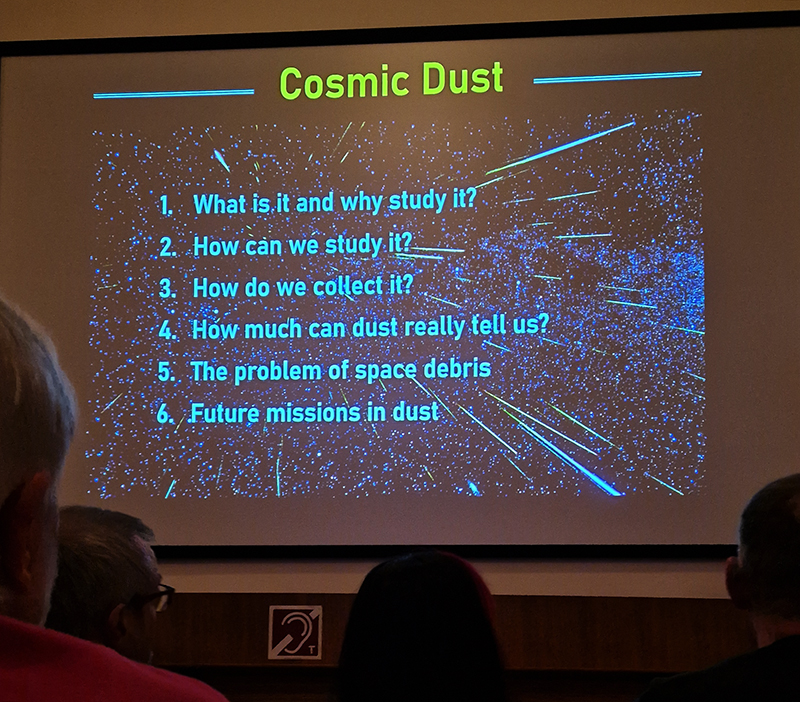
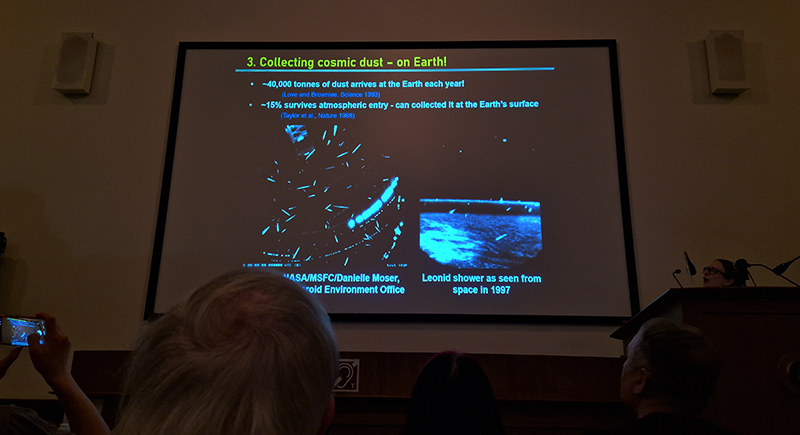
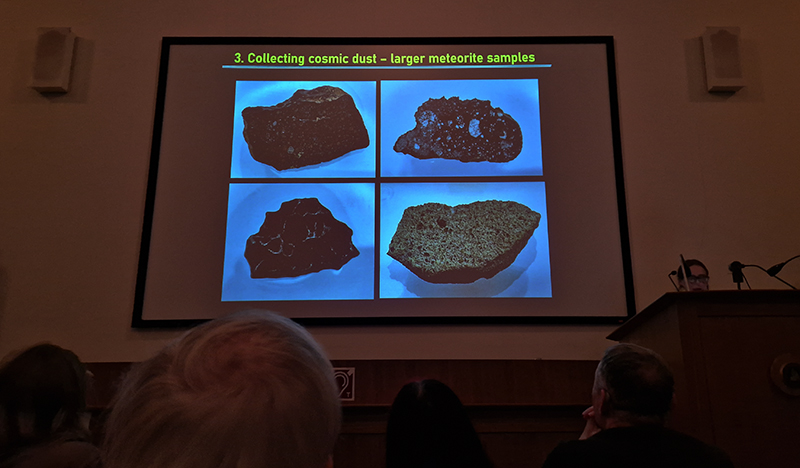
Cosmic Dust talk by expert on extraterrestrial space dust, and how it can impact astronomy and wider human endeavours in space, Penny Wozniakiewicz at The Royal Astronomical Society. ‘Natural’ cosmic dust is being polluted by man made dust from space debris. This is a real problem created by dead satellites, old upper stages of rockets, fragments form exploded rocket or stages, flecks of paint, aluminium oxide spheres from solid rocket burns, dropped space equipment. When any of this debris collides a cloud of smaller debris is ejected, this process is self propagating and even the tiniest piece of debris can cause serious damage to spacecraft and satellites. This is called the Kessler syndrome, a cascading effect that could render orbital space unusable for generations, threatening satellites, the International Space Station, and future space travel.

Good to visit the The London Group show 2025 at Copeland Gallery where lots of friends are showing excellent work and also to discover new work and artists.

I found Majid Majid’s video Faith Amongst The Ruins a difficult but compelling work. So scary and horrific because we know this is real footage, some of which I had seen before at the time of the attacks on hotels housing asylum seekers and refugees, but it is still so disturbing to watch these people, with so many children present, cheer on the violence. They have no empathy with the terrified people trapped inside the hotel or for the person in the car who is ambushed and stabbed. The glee of those filming the assault is chilling.

He writes: “As a refugee, I know places shaped by fear and rejection. This work revisits UK sites of last summer’s Islamophobic and racist violence, a mosque, a street, and a hotel housing asylum seekers transforming them through prayer. Placing a mat where hostility flared, I reclaim space as sacred ground. Video and traces of violence form a counter-narrative of dignity, belonging, and resilience.”

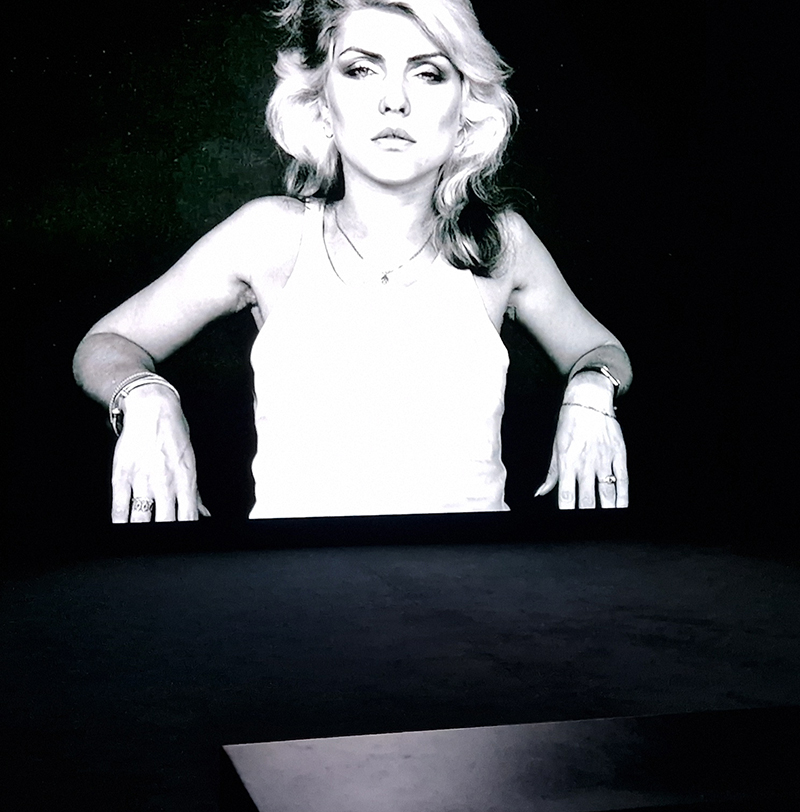
Images: Majid Majid, Sayako Sugawara, R James Healy, Victoria Rance, Jonathan Armour, Sandra Crisp, Jenny Wiggins, Victoria Arney, Carol Wyss, Sandra Crisp, Genetic Moo, Jacqueline Yuen-Ling Chiu.

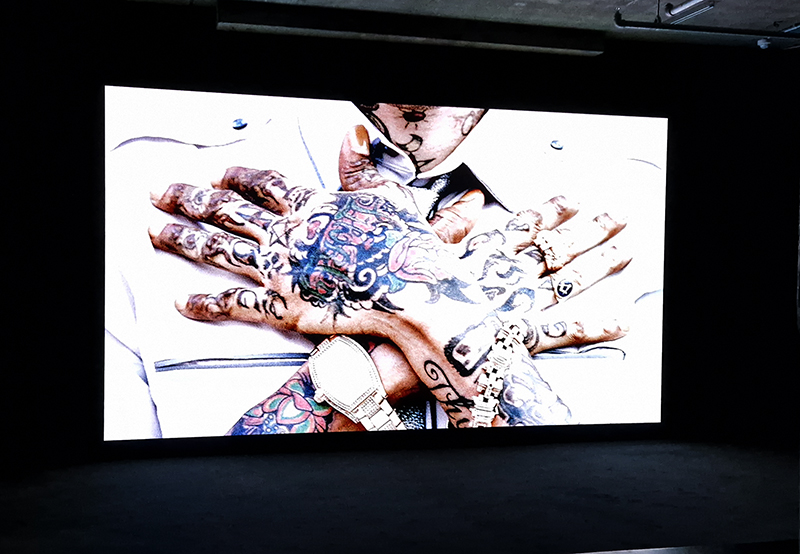
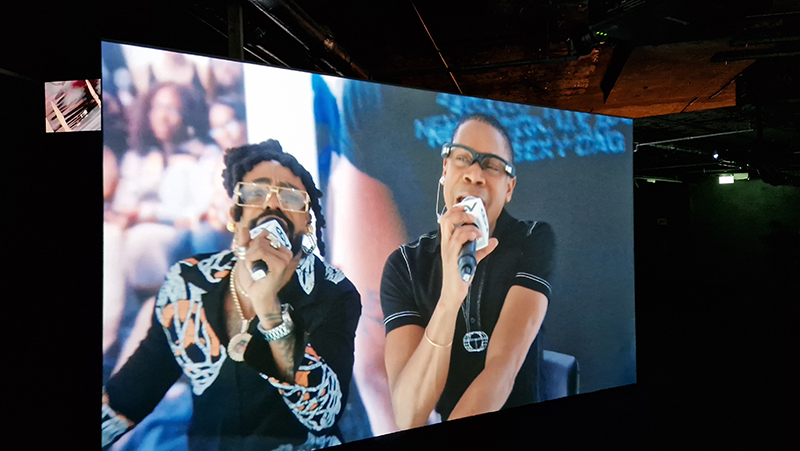
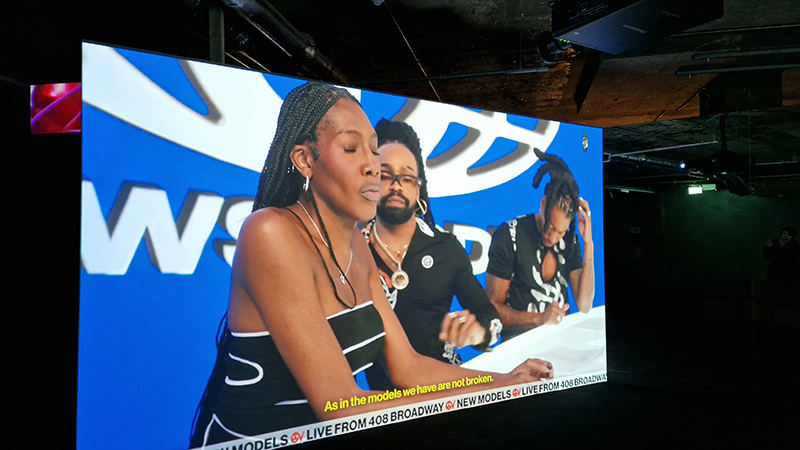
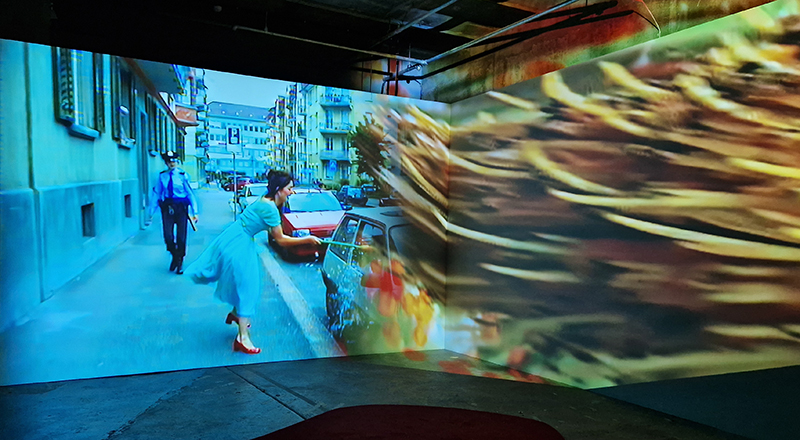
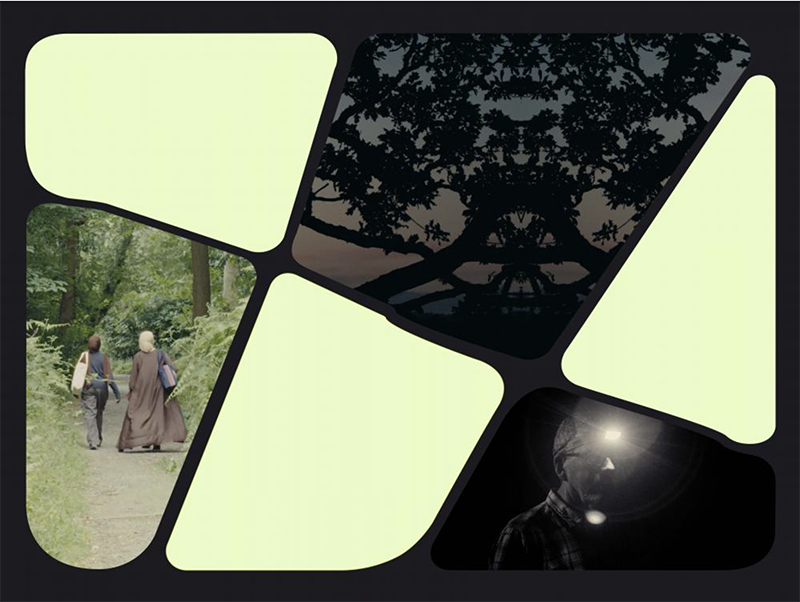
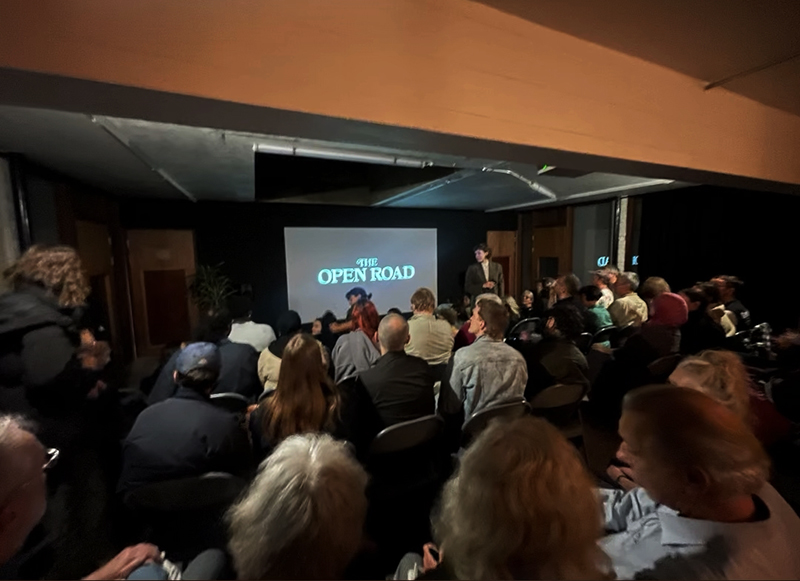
Three beautifully directed films screened at FormaHQ as part of The Open Road series of artists moving image works, co-commissioned by a partnership of visual arts organisations. The works are loosely inspired by The Canterbury Tales, drawing from a disparate cast of characters to recount competing stories in a patchwork of styles. David Blandy (Commons), Amaal Said (Open Country) and Sam Williams (The Eel’s Tale) each draw on storytelling traditions to give fresh perspectives on their journeys, on foot, by sea and through time. Heartbreaking to hear how terrified Amaal Said was to leave London for the open country of the south coast, especially with the current rise in overt racism, when out looking for locations and that they did suffer racist abuse while filming. Hers is a gentle and warm study of a mother and daughter and an absent grandmother, a longing for home and to feel ‘at home’. Sam William’s film sets the plight of the highly endangered glass eels who journey 4,000 miles from the Sargasso Sea to the Medway wetlands in Kent, swept along by currents, undergoing bodily transformation, following an instinctive desire on this epic migration alongside two other watery tales of transformative journeys across boundaries of identity and freedom. Coincidently, a recent episode of the Infinite Monkey Cage is all about these mysterious eels. David Blandy turned his attention to the vast and disparate collection of artefacts held in the Tunbridge Wells museum and gave some of these specimens a voice to tell of how they had lived before they became a part of this collective of human taxonomy.

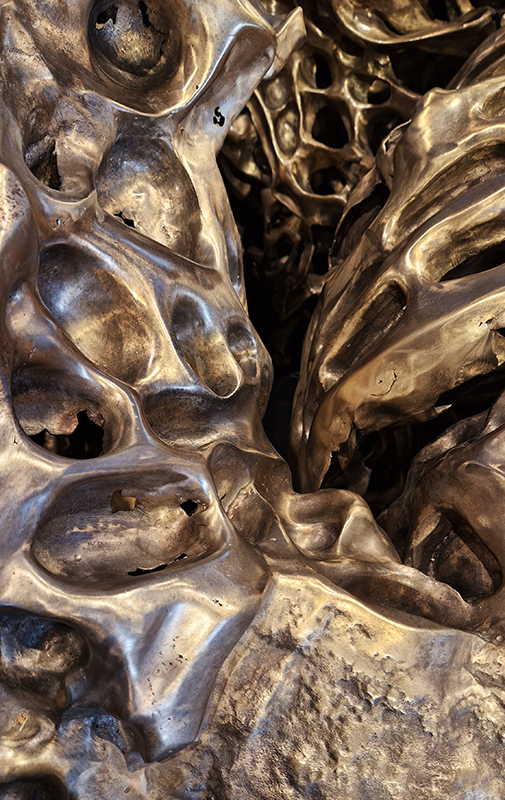
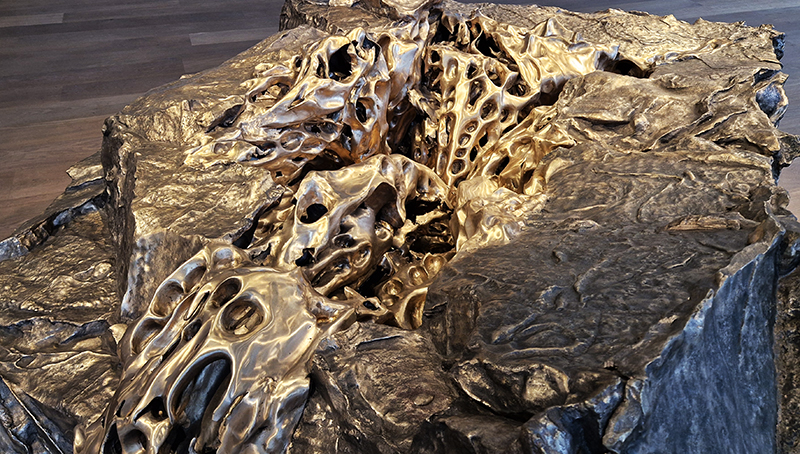
Cristina Iglesias The Shore at Hauser & Wirth features large-scale bronze works from the artist’s Littoral (Lunar Meteorite) series, part of her ongoing exploration of geological themes. The word ‘littoral’ refers to something relating to or situated along a coast or shore, or the region where the land meets the water. The weightiness of the objects is impressive ( I can’t imagine how they were brought into the gallery even with the technology available today – after coming here from the talk on stone henge and the incredible feat of bringing the standing stones across rough terrain for many kilometres and up a slope 5000 years ago seems even more impossible – yet there they are). The sound of water bubbling within each piece draws you to peer within and stay with the piece perhaps longer. The audience is invited to touch the sculptures. The bronze is polished and does need to be used and worn away in a more effective organic and dirty process. They are very clean.

The Royal Astronomical Society lecture Sighting the Sun and Moon? at Stonehenge – by Archaeoastronomist Prof. Clive Ruggles. Debunking many myths and overspeculation, concerning the use of the monument for observations of the sky the professor was clear about what can sensibly be said about the relationship of Stonehenge to the Sun, considering the conventional archaeological evidence that has been uncovered in recent years. He also recommended visiting the day before or after the actual solstice if possible for an experience without the many crowds as the alignment is almost identical. Also visiting at sunset can be just as magical and quieter. He turned his attention to the Moon, questioning if our prehistoric forebears also celebrated the occurrence of a major lunar standstill, an event occurring every 18.6 years around which time the Moon can be seen at fortnightly intervals exceptionally far to the north and south.

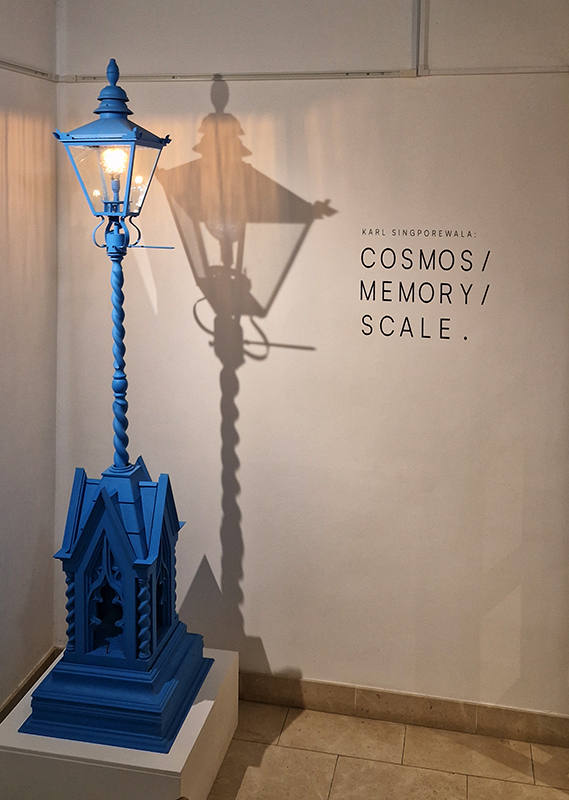
Karl Singporewala’s sculptural interpretations of Zoroastrian symbolism in Cosmos, Memory, Scale at SOAS Gallery convey a meditation on how material and memory intersect to shape the human experience. Cosmos speaks to both his fascination with astrophysics together with a metaphysical belief in the alignments of life. Stars and geometric forms recur as motifs, refracting both spiritual navigation and mathematical structure. Memory is treated as a living, shifting phenomenon. Inspired by oral tradition, family stories and inherited rituals. Scale, is used both literally and metaphorically in shifting perspectives and unexpected relationships. Good Thoughts, Good Words, Good Deeds.

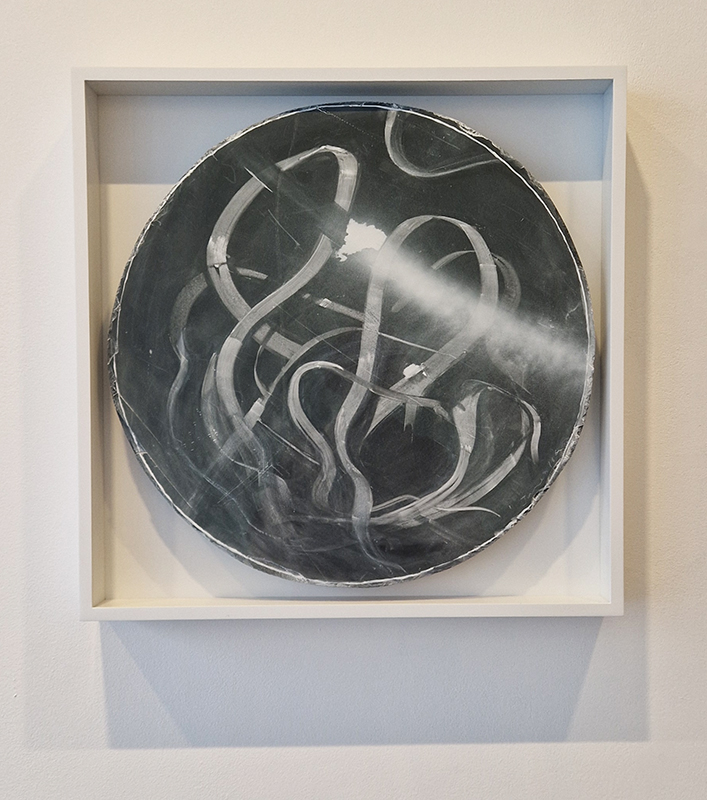
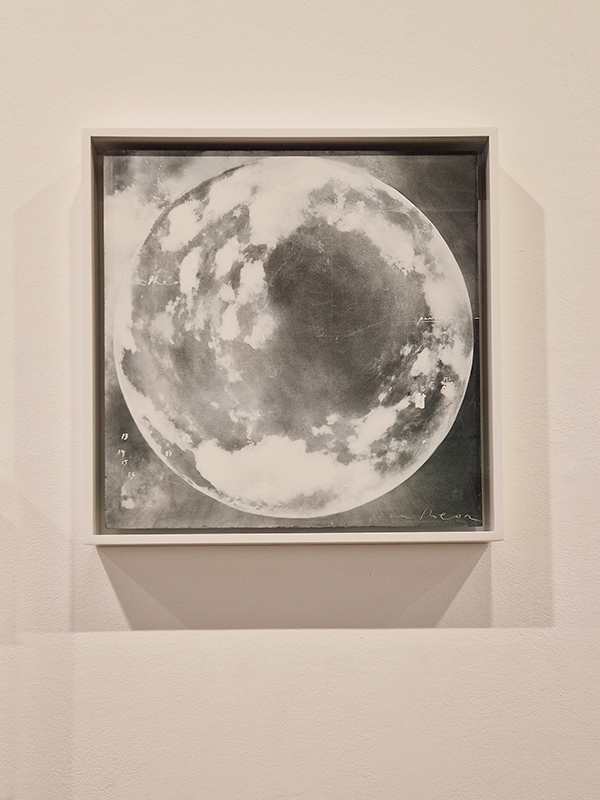
Dusty, chalky mythical drawings and solar eclipse traces from Tacita Dean in Black, Grey, Green and White at Frith Street Gallery Golden Square.

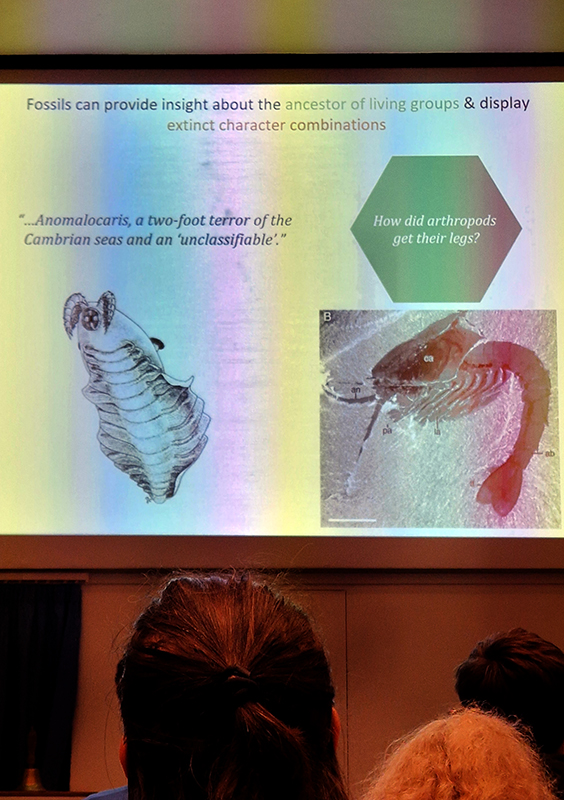
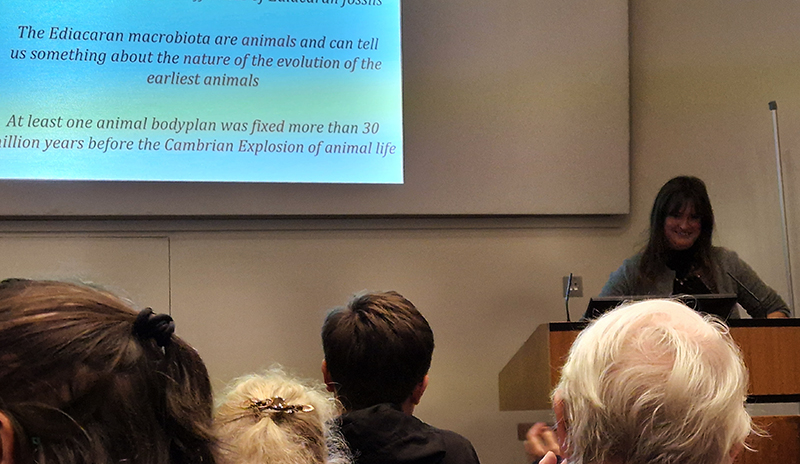
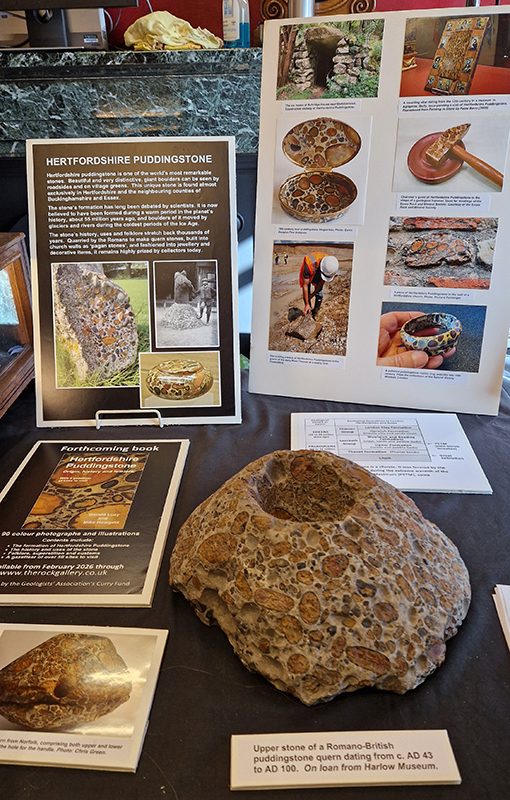
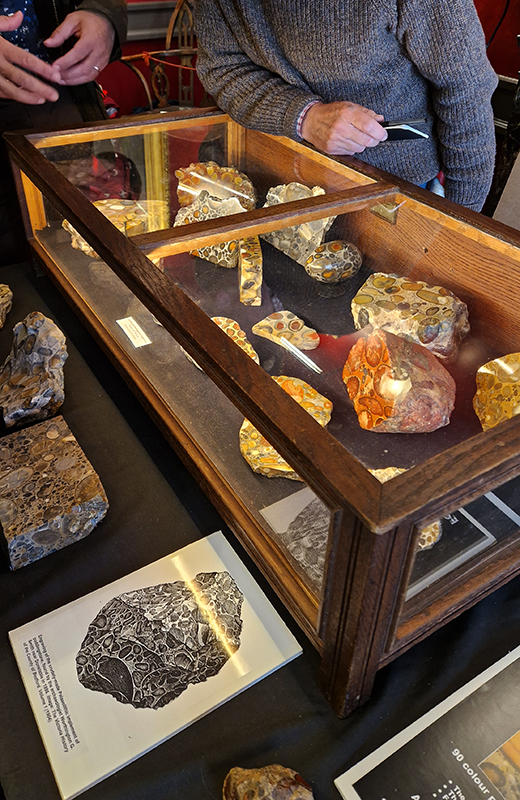
I spent a happy morning at the Geologists Association Festival of Geology 2025. This included a fascinating lecture The Early Evolution of Animal Life by palaeobiologist Frankie Dunn focused on the origin and early evolution of animals and particularly on the fossil record of the late Ediacaran Period (approximately 570 – 540 million years ago) – just before the Cambrian explosion of life. The aim of her research is to understand how animal body plans evolved in deep time. There also was some amazing and unique pudding stone on display.

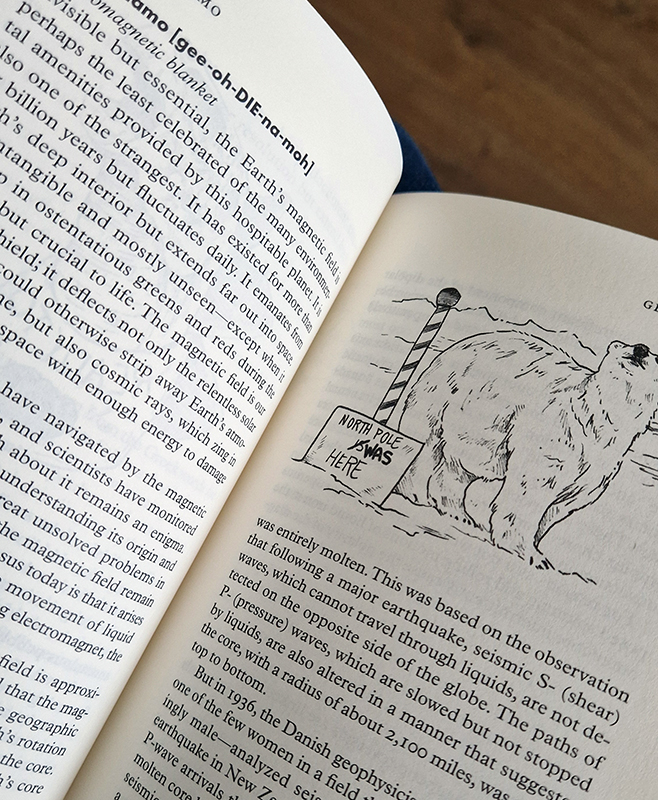
I also picked up a great little book full of wonderful geologically enriching words by Marcia Bjornerud.

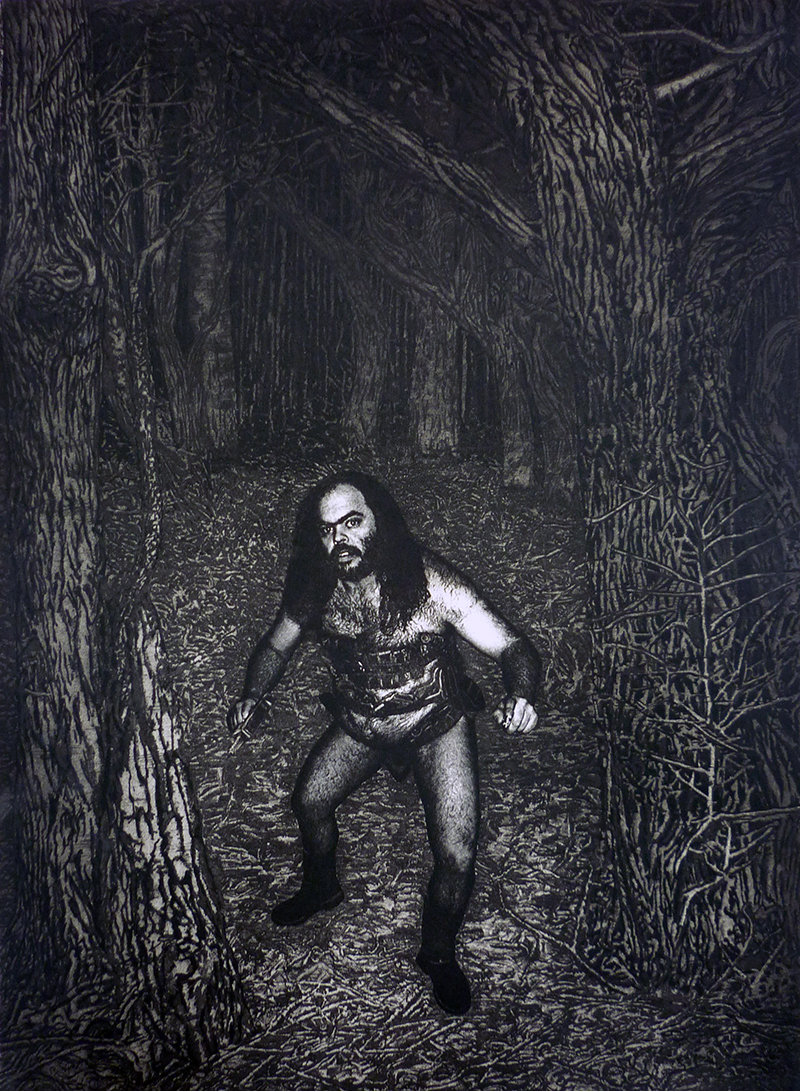
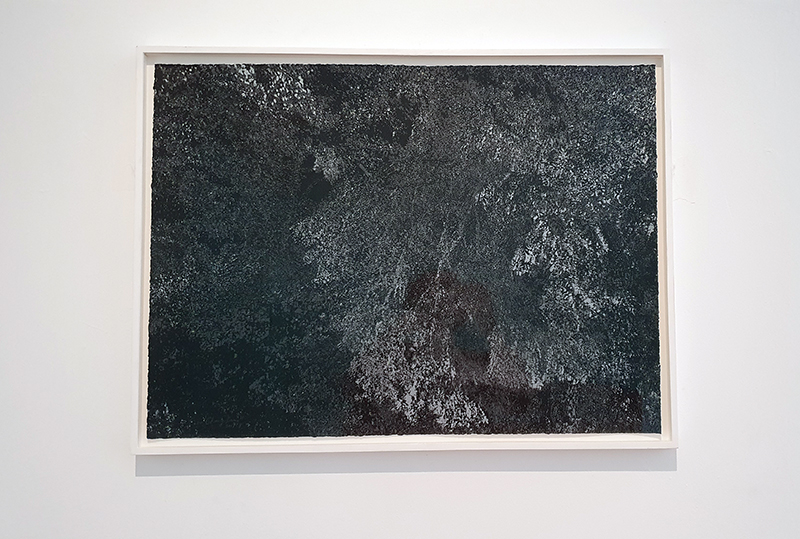
Delighted that my etching Forest of Eden has been selected for exhibition at AIR Gallery on the theme of the macabre with the exhibition renamed Memento Mori. What happens when we are confronted with the uncomfortable or visually grotesque? What makes the unappealing difficult to digest but impossible to turn away from?

The myth of the wild man stretches back to the tale of Gilgamesh’s quest for immortality.  In history the wild man’s characteristics oscillate between horror and fantasy. They reflect fear of the other as well as aspirations to be at one with nature often violating the taboos of civilization and symbolizing the repressed desires of society. This person who posts photos of himself in charged poses has become an internet meme shared with equal disgust and fascination. In this etching he is placed back in the ancient forest of all our origins.

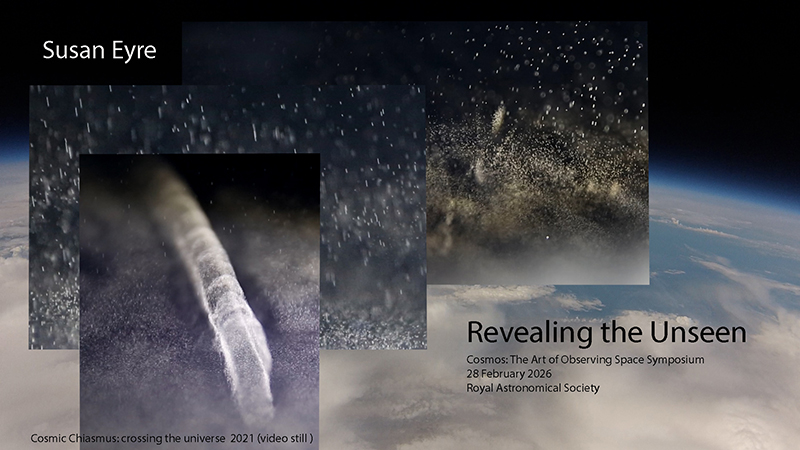
I have completed the video commission Cosmic Chiasmus (crossing the universe) for Queen’s Hall Digital but am continuing research into cosmic rays. Around 10,000 muons rain down on each square metre of Earth’s surface every minute.

Muon tomography can be used to remotely explore dense matter for hidden voids. High energy cosmic rays such as muons pass through objects, but in doing so, some will be absorbed by the object and so fewer particles will arrive on the other side. This means sensitive muon detectors can be used like x-rays to determine the structure of extremely large and dense objects. This method has been used to reveal a mysterious, 30-metre-long hidden chamber in the 4,500-year-old great pyramid of Giza, to determine the inner structures of volcanoes and to study the damaged nuclear reactor at Fukushima, Japan.

The Robot, The Dentist and The Pyramid is a 45-minute Documentary (2020) from Ancient Architects

I have discovered an audio manipulation in Adobe Audition that makes my own voice acceptable to me as voiceover for my video work. So I have returned to the video Contingent Horizons, rewritten and recorded new dialogue.

This dialogue is based on the excerpts from popular online lectures that I had used before but I have reimagined some of these quotes and included ideas from ancient descriptions of the cosmos.

the nature of the world emerges from shifting patterns

between matter and myth

to the darkest North with moon on water

to the South with sunlit crystal

to the West with Earthbound cubic alter

to the East with circling zephyrs

walking

to know the land as a plotted dimension

as abstract space

as imagined space

Out of the studio:

Lisa Chang Lee Symphony Zero at San Mei Gallery. Beautiful work creating a fragile connection between humans and the natural world as rhythms coincide to create collaborative music. Plants swaying in the breeze are each represented by a musical instrument sympathetic to its form and its movement is transposed using algorithms applied using modes of symmetry and interval into musical scores which in turn are played by humans.

Less a building: Interactions with the London Zoo Aviary book launch hosted by Passengers at The Brunswick Centre. Transported by readings from the book of this iconic flight of fancy in architecture for avian captives at the zoo. A many layered and collaborative research project by Michaela Nettell with Marcela Araguez, Tim Dee, Polly Gould, Alex Hartley, Julie F Hill, Helen Jukes, Milena Michalski, Colin Priest, Ana Ruepp and Matthew Turner. Excellent writing and gorgeous artworks. Now I wish I’d visited the aviary more often.

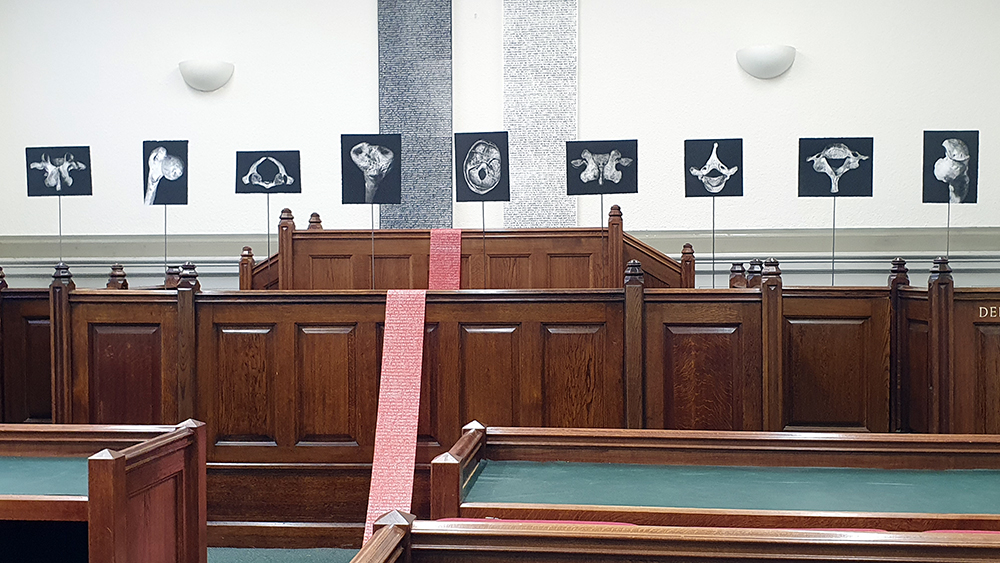
Geographies of Print collective Without Horizon, Without Shore. Stunning installations set against the civic backdrop of the Old Lambeth County Court, an apt setting for work looking at passage of time, capturing the transient and the human condition.

Victoria Arney has used the sonograms of bird song to create sculptural woodcuts. Capturing fleeting moments within landscape.

Victoria Ahrens looks at erosion and disappearance, creating work in situ using the minerals present in the landscape to hand colour her prints. We think of colour as light bouncing off matter, some absorbed, some reflected, but this work really brings home how integral colour is to substance.

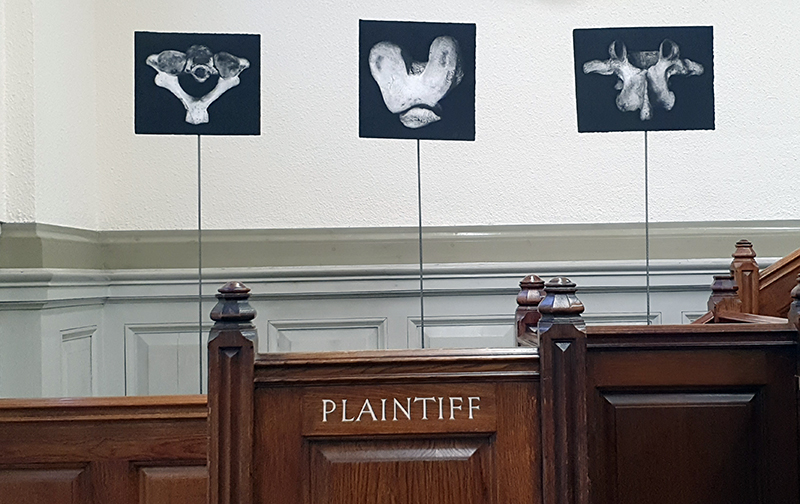
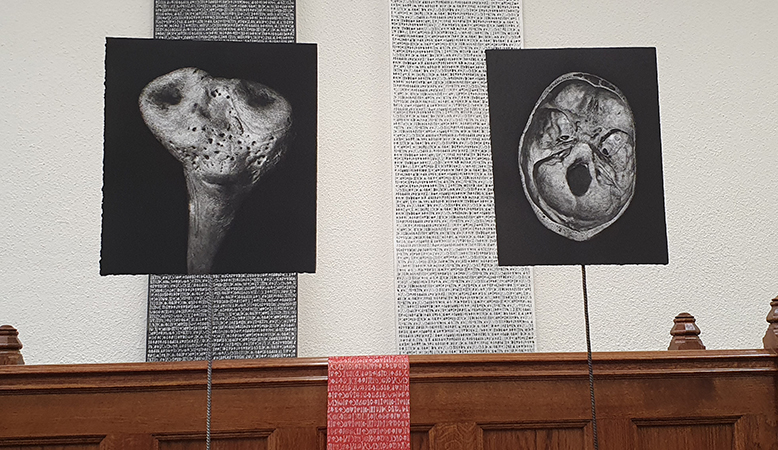
Carol Wyss uncovers the structures that shape us physically and bear witness human frailty.

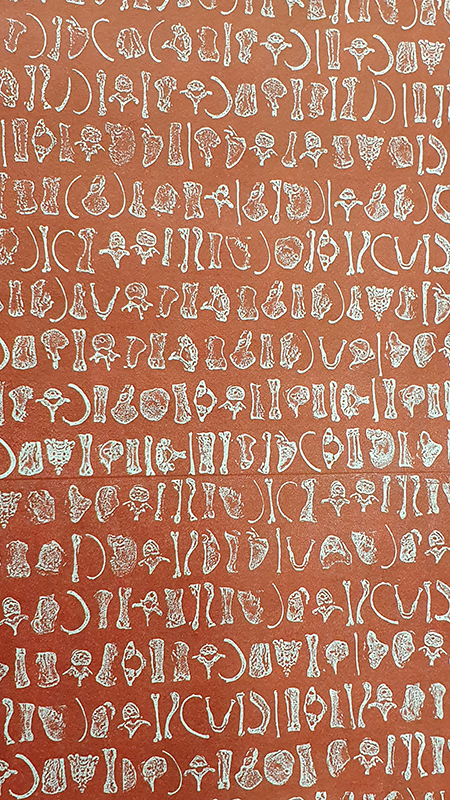
Symbols made from bones connect us to the earth as origin and destiny.

Thom Bridge Only Similar or Equivalent at Best solo show at Staffordshire Street Studios. Incredible work with light taking the image into realms of physics and geology.
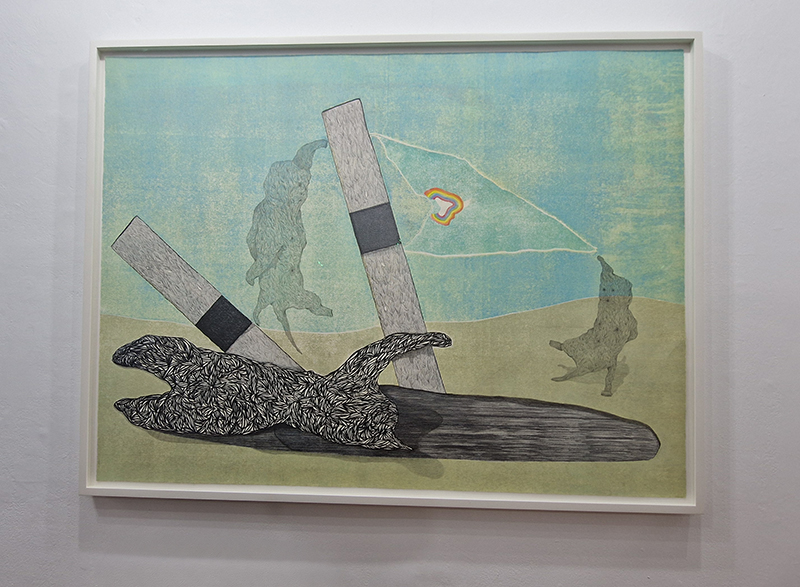
“The degree to which an image is like the world is a question not of fidelity- as a narrative of documentation or technological development would have it – but of equivalence, the role that an image plays in showing in showing, or demonstrating, representing or bringing into view. Equivalence takes priority over resemblance, because the task of the image is not to repeat the world, but to inform it, and by informing it, subtly alter it in turn.” Duncan Wooldridge

Chudamani Clowes in Figure It Out with the Neulinge Collective. Wonderful immediacy as always from Chud that cuts right through to expose the lived experience of those who migrate. Epic journeys bring stories and transformation. The coral is on the move.

Robert Good in Osmosis: experiments in permeability at Espacio Gallery with work that forces an examination of an addiction to media updates, digital clickbait and daily data news dumps. Assaulted by a tsunami of inane questions and disconnected headlines into a brain numbing torpor the need for space to think is made apparent.

A captivating telling of how magic is vital for our well being and should be sought not shunned. Mythosphere is a multi-media theatre production created by Inna Dulerayn presented by Bacchae productions in partnership with Stone Nest at the atmospherically derelict Old Welsh Chapel on Shaftesbury Avenue. Inspired by the life experiences and creativity of Leonora Carrington and the writings of Diana Wynne.

This is a story about magic. The magic that we lost. The magic that is a forgotten part of our nature. The magic that is our right to be divine. But we still sense it. We dream of it. We feel abandoned without it. We keep looking for it all our lives.

Reading:

I am still dipping into The Waves by Virginia Woolf which I was inspired to read after listening to the Art Fictions Podcast with guest artist Hannah Hughes speaking to Fiona Fullerton. I particularly love the interludes as the sun rises over the ocean and begins its journey across the sky. Like too rich chocolate cake the intensity of Woolf’s writing is delicious but can only be taken in small bites.

I have Chantall Powell to thank for flagging up the book The Philosophers’ Secret Fire: A History of the Imagination by Patrick Harpur. A fascinating book taking the view that just because something is not literally so doesn’t mean it isn’t ‘real’. As in Mythosphere the book seeks to rediscover the Otherworld of spirits, gods and daimons which the west has banished to the unconscious mind.

I was so excited to read the following:

“…daimons inhabit another, often subterranean world which fleetingly interacts with ours. They are both material and immaterial, both there and not-there – often small, always elusive shape-shifters whose world is characterized by distortions of time and space and, above all, by an intrinsic uncertainty.

The point is: the words ‘subatomic particles’ could be substituted for ‘daimons’ in the paragraph above without any loss of accuracy. This is not a coincidence – the subatomic realm, like the unconscious, is where the daimons took refuge once they were outcast from their natural habitat.”

‘And here is one of the map’s most important characteristics: the viewer is positioned simultaneously inside and outside it. In the act of locating themselves on it, the viewer is at the same moment imaginatively rising above (and outside) it in a transcendent moment of contemplation, beyond time and space, seeing everywhere from nowhere.’ Jerry Brotton in A History of the World in 12 maps

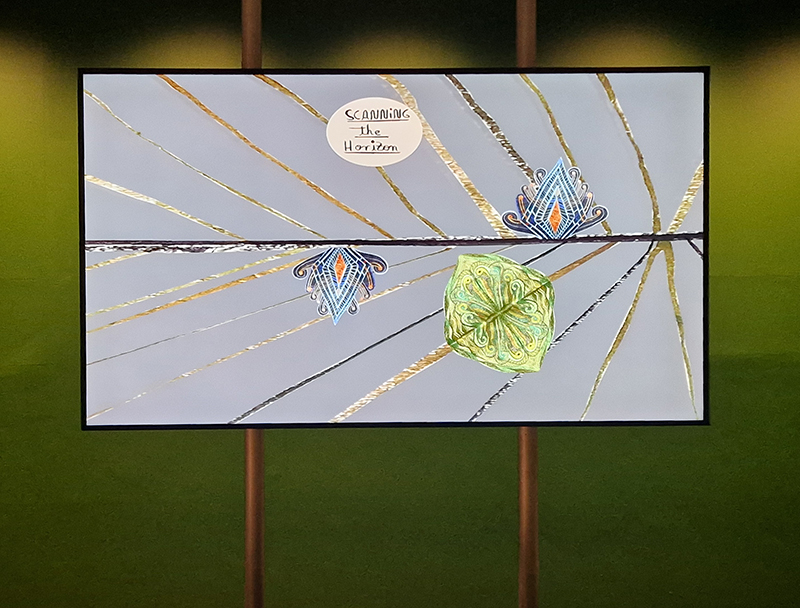
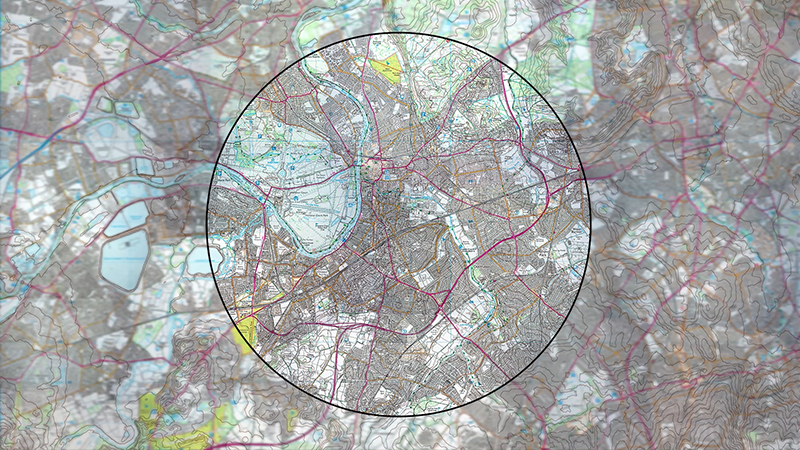
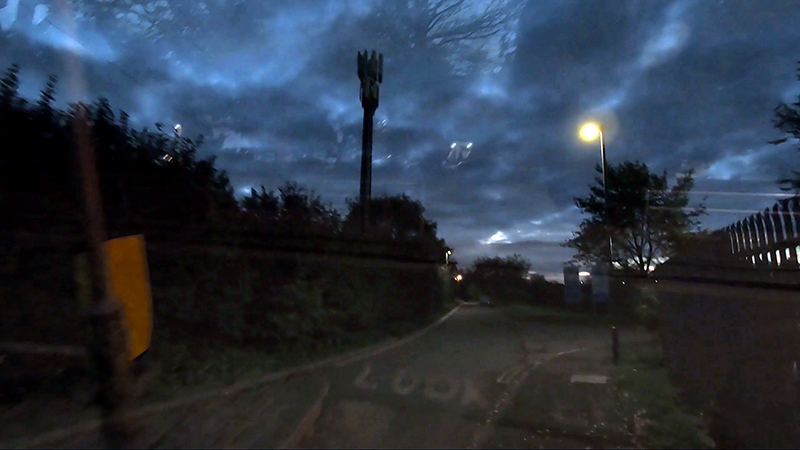
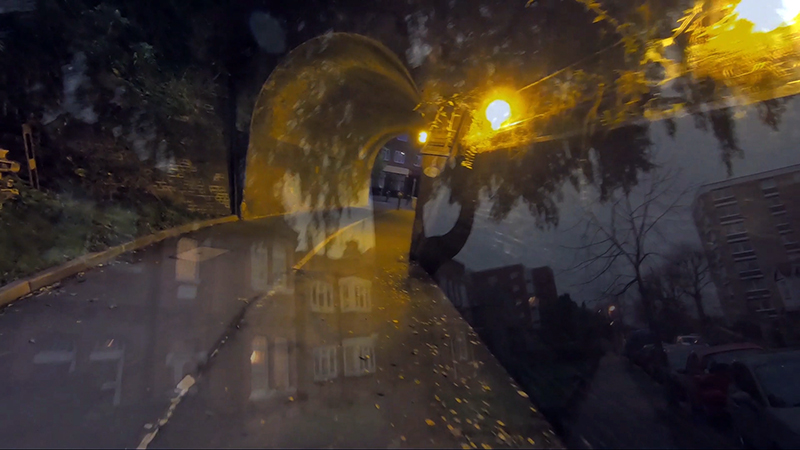
Locked down editing video work. Setting off at dawn and wearing a headcam I walked the most direct route to each of the four points due North, East, South and West of my home. I chose a three mile radius as this approximates the distance to my horizon at sea level.

I am interested in how space is perceived as a plotted dimension, as abstract space calculated mathematically but perhaps not something we can visualise and as imagined space.

I aim to relate these different perspectives on space to broader knowledge. In my film there are three speculative viewpoints; ‘the seeker’ who wishes to discover what is beyond the horizon, ‘the seer’ who imagines what might be beyond and ‘the scientist’ who offers abstract theories.

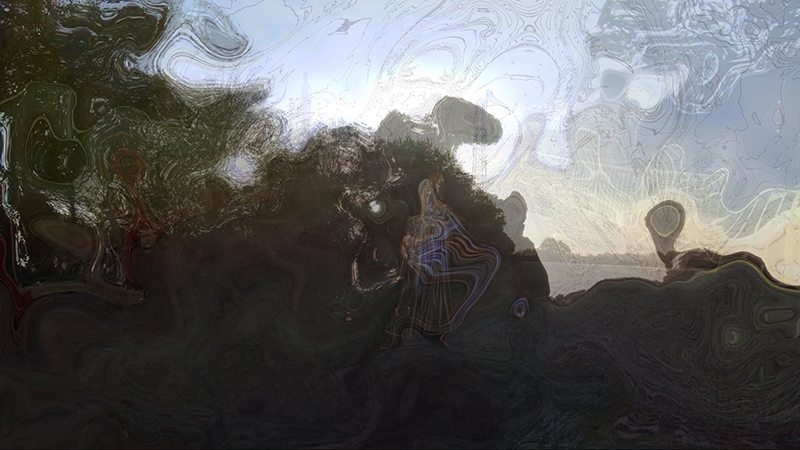
In the film I explore connections and hierarchies of physical dimensions and perception, the use of contour lines on maps, foliation and patterns in soap film membranes or marbling.

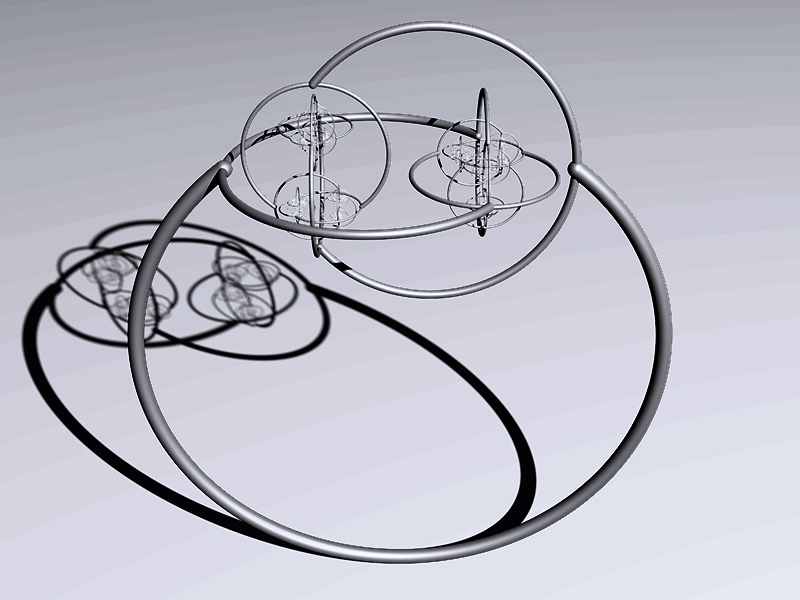
Foliation is the decomposition of shape into lines and circles. It occurs in geology as repetitive layering in metamorphic rocks and in mathematics as the analysis of curves and surfaces. The math’s language is way beyond what I can understand but it does have connections with holonomy and manifolds and Poincaré which I am interested in though I am yet to get to grips with any firm understanding. The notion of leaves (slices) allows for an intuitive way of thinking about a foliation. In mathematics, topology compares shapes to see if they have the same number of holes and handles and can therefore be moulded from one shape into the other by stretching, twisting, crumpling and bending, but not tearing or gluing.

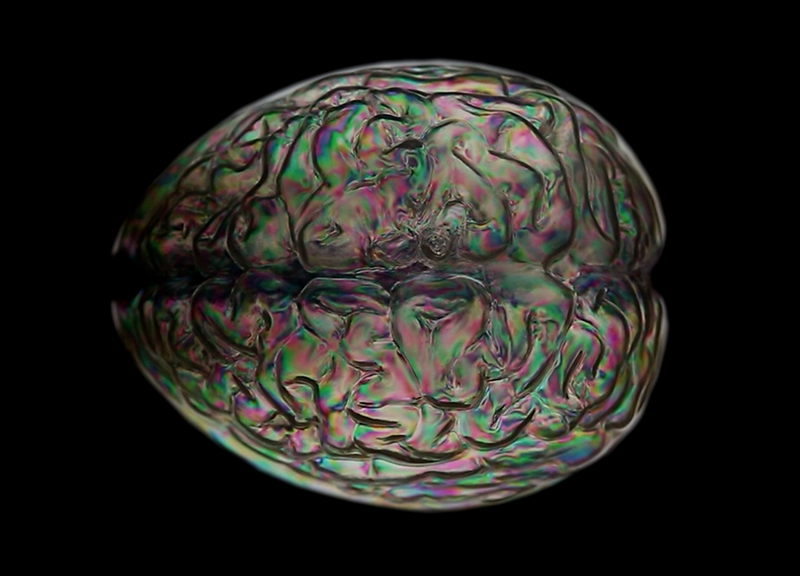
I took many films of soap film membranes and have been exporting the final single frame at the moment the bubble bursts. I have used these frames to create sequences of collated membrane bursts. We may live in a multiverse of bubbles each with wildly different laws of physics. String theory allows for many universes with different physical laws. It may be possible our universe could suddenly transform into a universe with different properties. If it did happen it would be so fast we wouldn’t even register it.

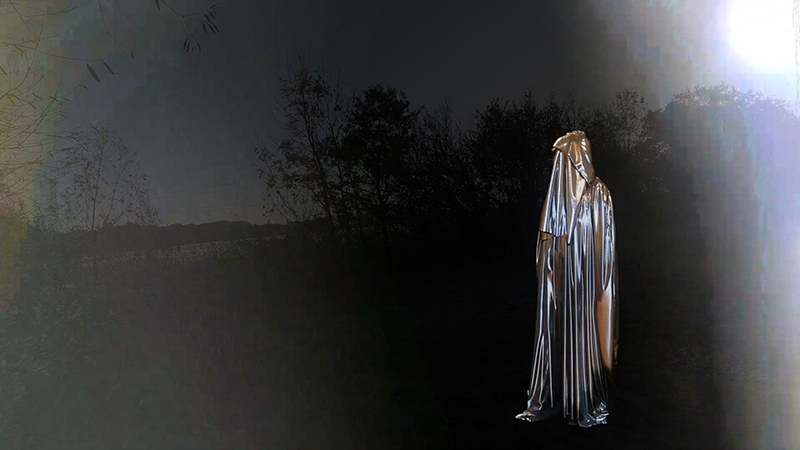
I made a silver cape for some green screen filming in character as the seer. Learning lots about Adobe After Effects so if the editing requires I drop this section then the hours put in won’t be entirely wasted and the cape will come in for when next door can have their parties again.

Thinking about making new work that interacts in real time with cosmic rays as they hit the Earth’s atmosphere and shower down upon us.

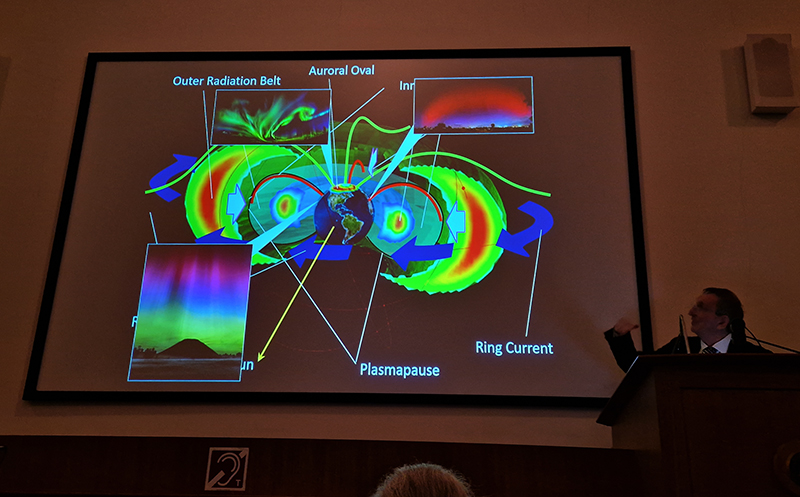
Cosmic rays, some travelling from other galaxies, pass through us and our world continuously, creating an almost tangible contact with outer space. Witnessing this incredible activity helps us look beyond what our immediate senses tell us exists and consider the interconnectedness of our universe.

We are made of carbon. Most of the carbon in the world is carbon-12 which contains six neutrons and six protons. Protons and atomic nuclei created by events such as exploding stars speed across space and collide violently with the Earth’s atmosphere creating a chain reaction of cascading particles. Some of these particles created are neutrons which can smash into atoms of nitrogen to create carbon-14 which has six protons and eight neutrons.

Cosmic ray activity gives us carbon dating techniques. Carbon-14 is unstable and therefore radioactive. It has a half-life of 5,730 years. This means if a sample of a tree contains 64 g of radioactive carbon, then after 5,730 years it will contain 32 g, after another 5,730 years that will have halved again to 16 g. Radioactive decay is random but in a sample there are enough atoms to work out an average time it will take for the nucleus to lose the extra neutrons.

Carbon-14 atoms in the atmosphere combine with oxygen to create radioactive carbon-dioxide. This radioactive carbon-dioxide is absorbed by plants which are eaten by animals. When an organism dies no more carbon-14 will be absorbed. The existing carbon-14 will start to decay. By measuring the radioactivity, the current carbon-14 content can be determined and the time of death established.

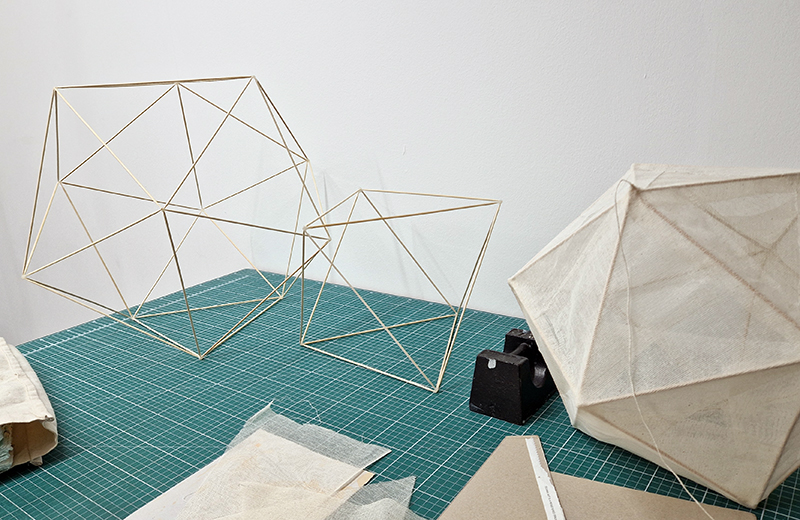
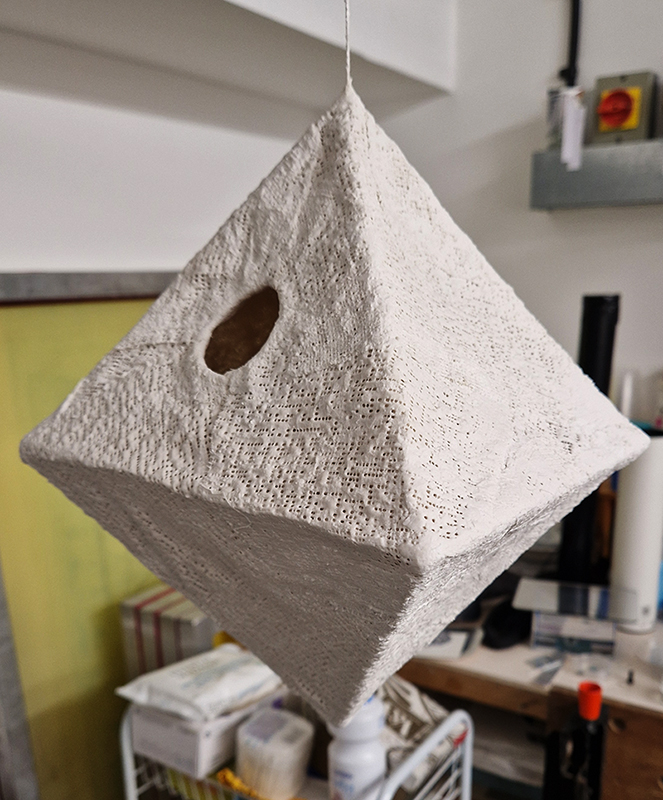
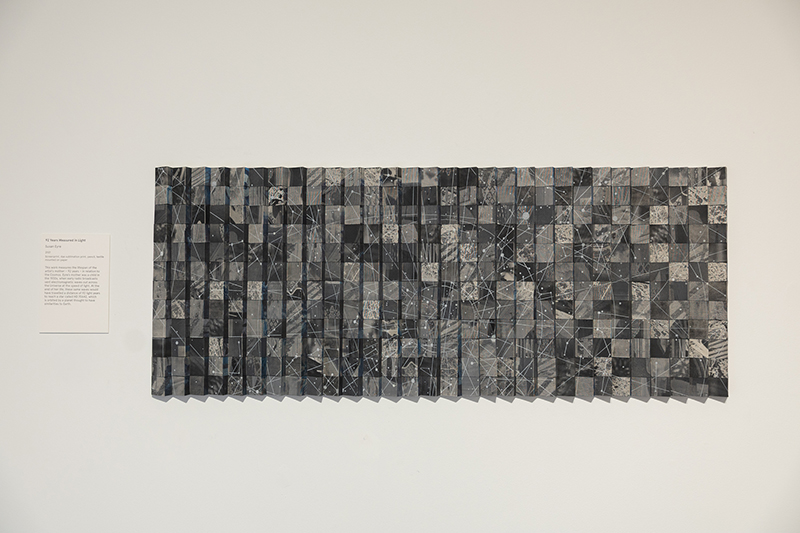
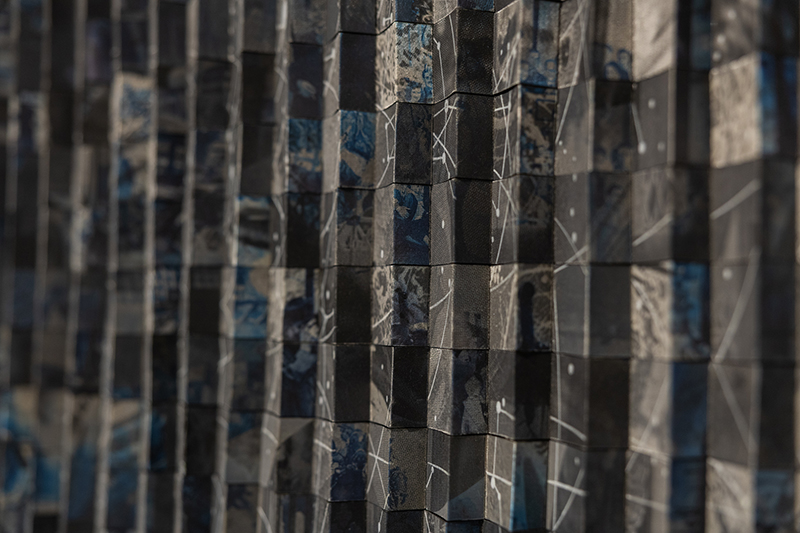
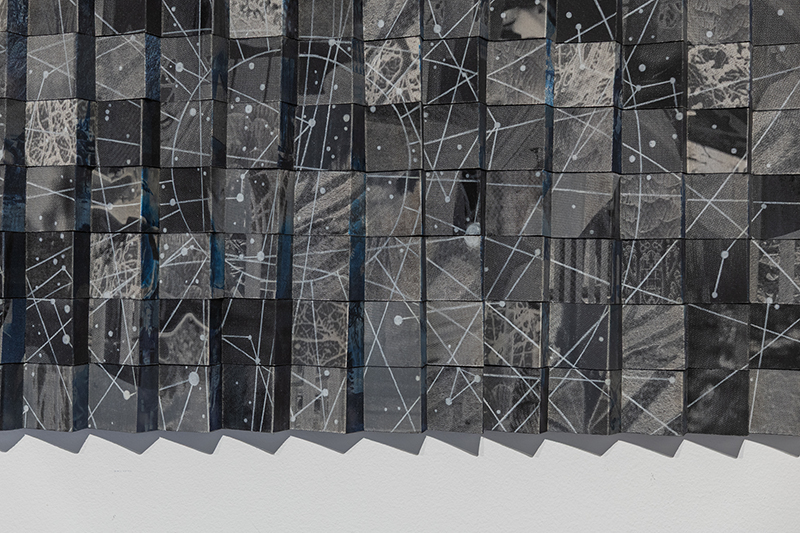
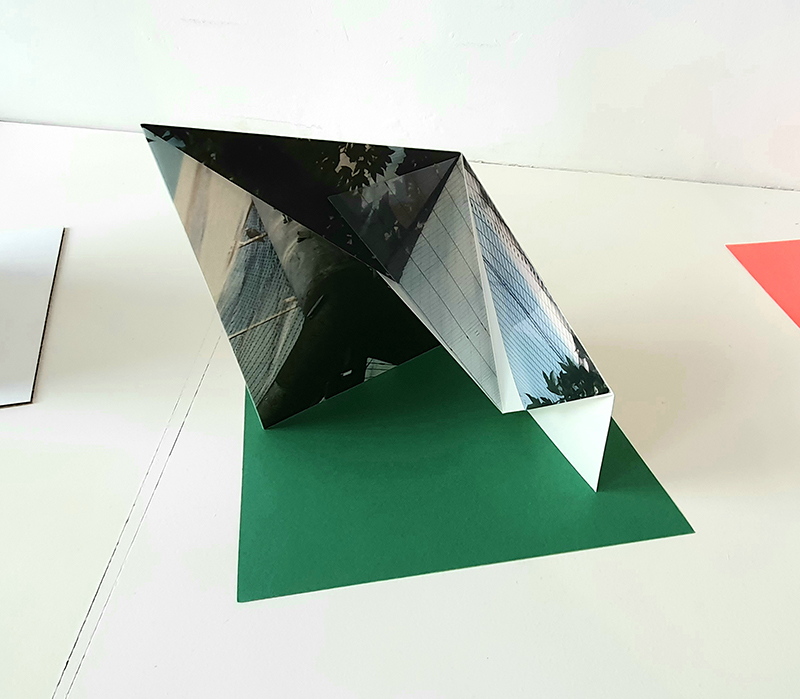
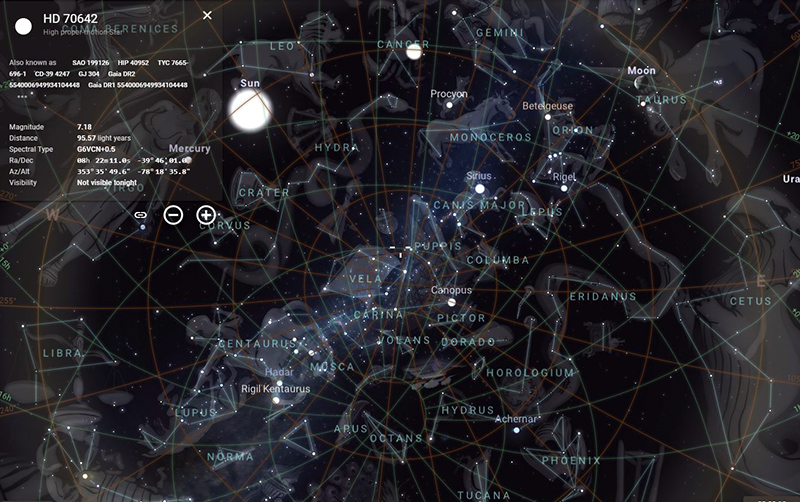
A planet with twice the mass of Jupiter has been discovered orbiting HD70642 in an almost circular orbit. This means it is possible that Earth-type planets may be orbiting further in. In all other planetary systems discovered with massive planets they usually have disruptive closer elliptical orbits which would destroy any smaller planets on a circular orbit. Hope to return to my studio soon to continue work on ’90 light years home’ which will use a raster pattern on folded paper looking at mapping out a space ship as a star map using 137 points. As physicist Laurence Eaves states – ‘The number 137 would be the one you’d signal to aliens to indicate that we have some measure of mastery over our planet and understand quantum mechanics.’

137 comes from the fine-structure constant, also known as Sommerfeld’s constant and is represented by the alpha symbol α. Using several fundamental constants found in nature to give a fundamental physical constant. This number represents the strength of electromagnetic interaction between elementary charged particles which is the probability that an electron will absorb a photon.

I watched the Hito Steyerl lecture as part of the Dramaturgies of Resistance online event series.  ‘At this unprecedented time, when it seems as if “everything is canceled,” Steyerl’s most recent work explores the complex relation between spread (of conspiracy theories no less than viral contagion) and simulation (from the automization of performance to our capacities for virtual interaction with statistical probability of human risk).’

I was excited to find the lecture covered topics very relevant to my research into abstract space at the moment such as objects in topology. The Alexander horned sphere is a pathological object in topology. It is formed by starting with a standard torus, removing a radial slice of the torus and connecting a standard punctured torus to each side of the cut, interlinked with the torus on the other side. A pathological object is one which possesses deviant, irregular or a counterintuitive property, in such a way that distinguishes it from what is conceived as a typical object in the same category.

The opposite of pathological is well-behaved.

Mathematician Shing-Tung Yau set out to discover if there could be a spacetime which contains no matter but in which there is still gravity caused by the topology of the space. In 1977 he solved the Calabi Conjecture posed by Eugenio Calibi in 1954 who was interested in whether a certain type of topology guarantees a certain type of geometry. Topology looks at the overall form of an object and recognizes shapes that have an equivalent topology but different geometry such as a doughnut and a coffee cup as they can be morphed from one to the other. Topologists generally study manifolds. Manifolds are shapes that could be flat when looked at close up such as the earth’s surface or a ball if you were an ant. Each point on the surface can be mapped using two coordinates onto a 2 D plane and the shape is finite. Taking the average of all the curvatures at every point on the surface gives what’s called the Ricci curvature. A doughnut which is a 2D manifold mapped in this way has a Ricci curvature of zero which shows that a manifold can have a zero Ricci curvature at every point without being flat. There are also shapes which look 3D when seen up close and need 3 coordinates to map them. In mathematics it is possible to think of Euclidean (flat) space in any number of dimensions by increasing the number of coordinates you use giving manifolds in many dimensions. Transferring this equation to physics Ricci curvature describes the curvature of spacetime that’s induced by matter being present if this curvature is zero then it describes a spacetime with no matter. Yau proved that this type of manifold could exist in all dimensions. This type of manifold is known as the Calabi-Yau manifold. Particularly in superstring theory, the extra dimensions of spacetime are sometimes conjectured to take the form of a 6-dimensional Calabi–Yau manifold, which led to the idea of mirror symmetry.

Hidden in the future.

Grow the space of cooperation.

I took a couple of online geometry courses with The Princes School of Traditional Arts.

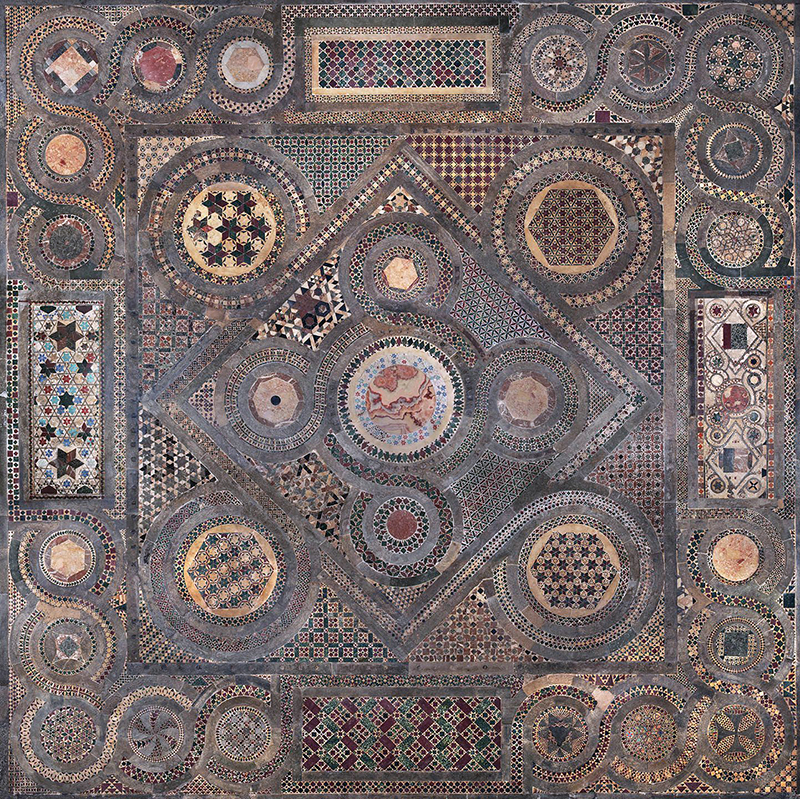
Mapping the Cosmos class was based on the geometry and symbolism of the Cosmati Pavement at Westminster Abbey which was laid in 1268.

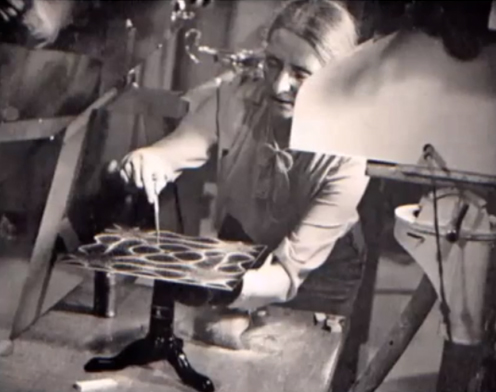
The Geometry of Sound class looked at Chladni patterns which occur on a rigid surface caused by various modes of vibration.

We begin each drawing with a circle intersecting a horizontal line. The horizon where heaven and earth touch.

I am about to follow up on some of the recommended further reading.

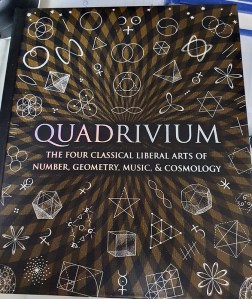
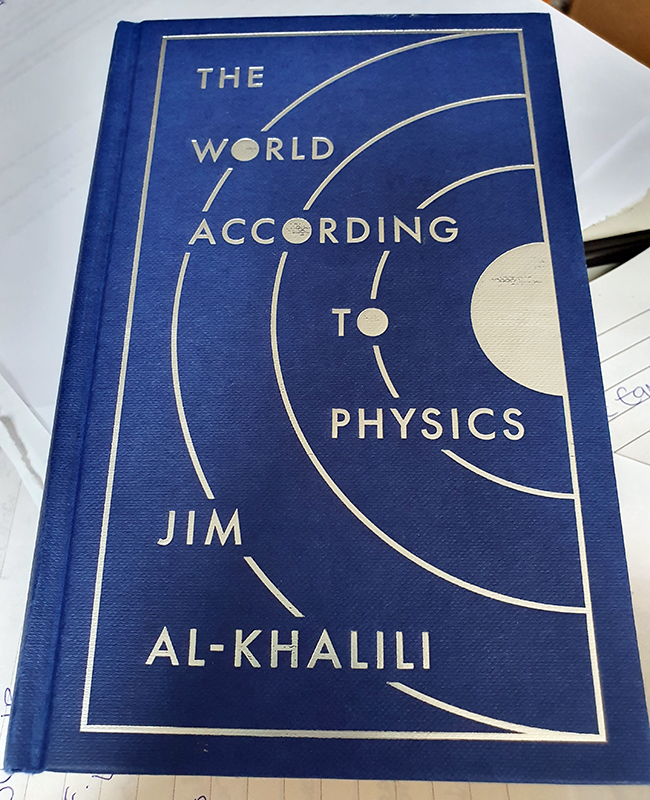
Other reading has provided some mind blowing facts. Thanks Jim Al-Khalili.

There are scientists measuring time in attoseconds. There are more attoseconds in a single second than there have been seconds since the big bang.

Atoms are incredible tiny; you can fit more atoms into a single glass of water than there are glasses of water in all the oceans of the world.

“Which is older, day or night? “Night is the older, by one day.” — Thales

My visit to the Venice Biennale was marked by my receiving news that I had a place at the Royal College of Art for the Autumn.  A great start to a very inspiring few days.

It does feel a bit like I am going to be launched into space. Exciting and an amazing opportunity but also not knowing what to expect with anxieties that I will be lost or unable to cope.

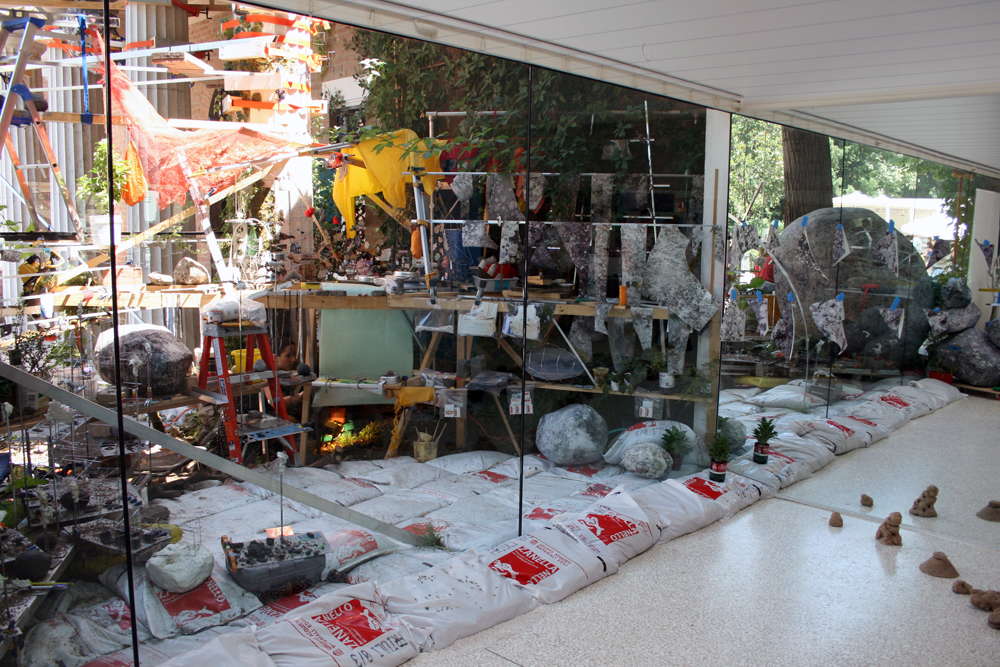
Bedwyr Williams ‘The Starry Messenger’ and Sarah Sze’s Triple Point both explore feelings of place within the universe. Very apt for my frame of mind.

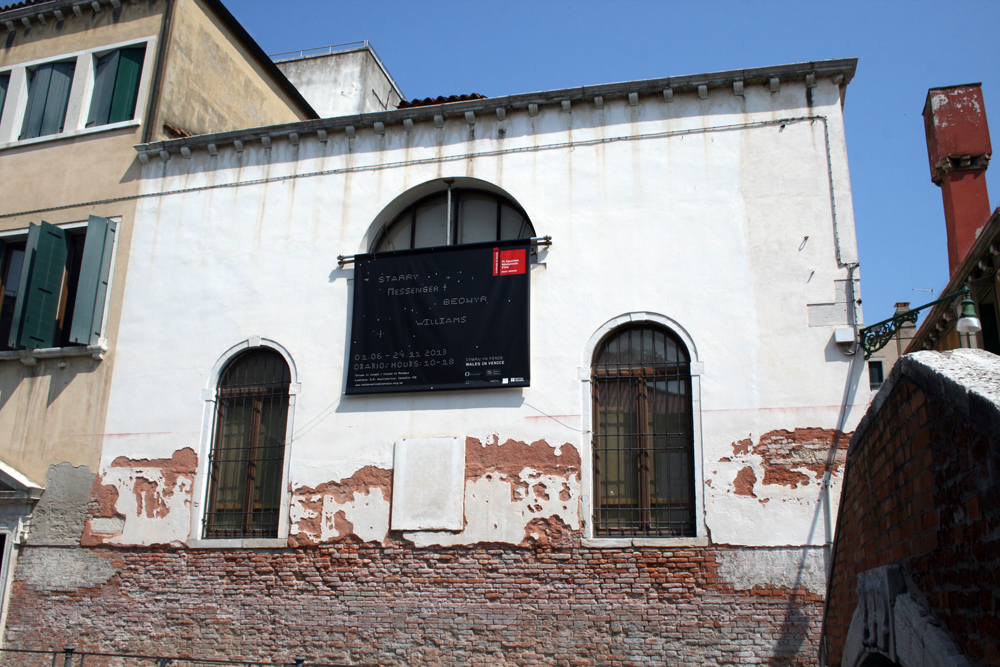
Wales in Venice

Wales in Venice

‘The Starry Messenger’ explores the relationships between stargazing and the individual, the cosmos, and the role of the amateur in a professional world.

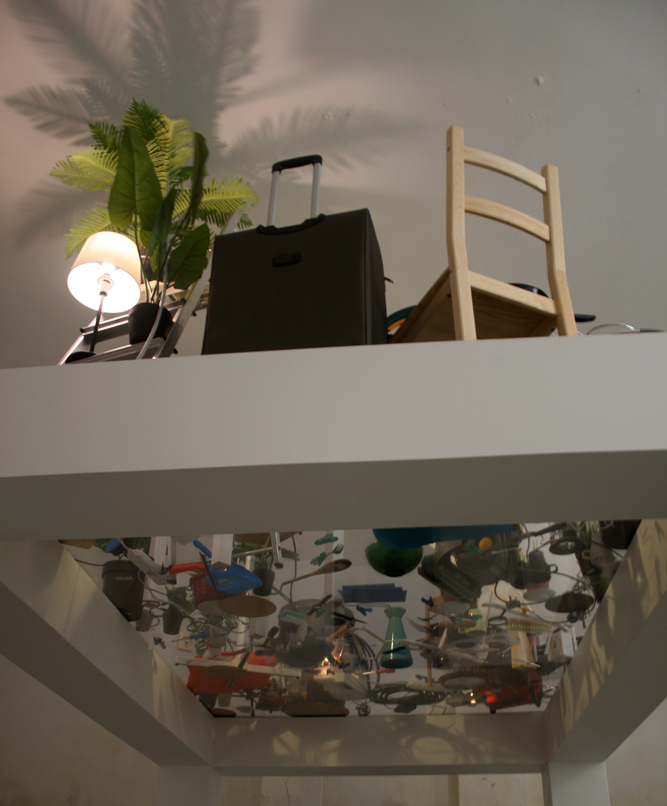
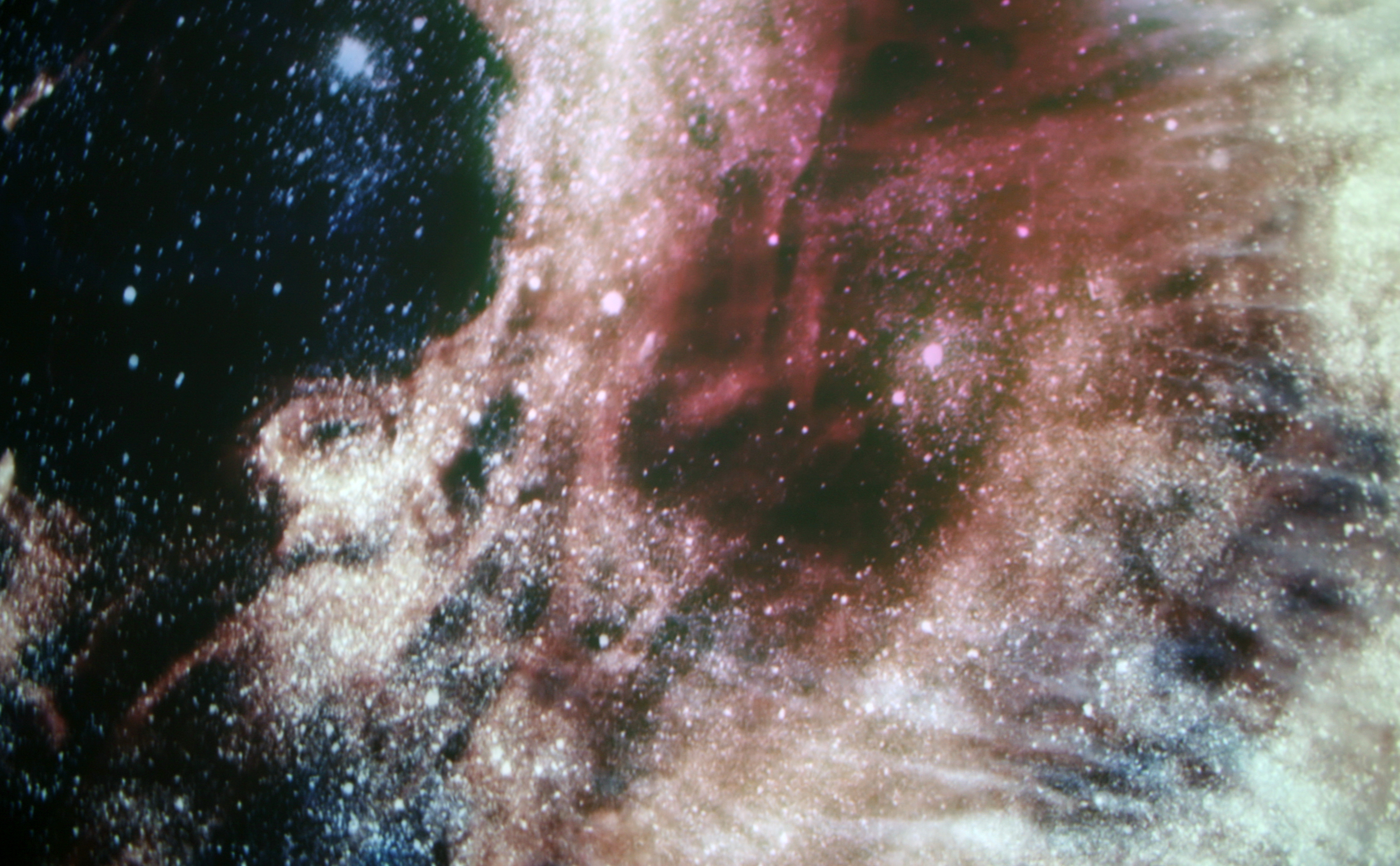
Inside the former church and convent in a darkened room there is a small observatory with a door ajar through which we can see the starry cosmos. There is the sound of a man weeping, just like Kevin does when he thinks about the vastness of space and his own insignificance. Moving through the installation you walk under glass with household objects placed on its surface above your head which I took as a possible reference to Leonardo Da Vinci’s drawing ‘A cloudburst of material possessions’. Maybe it is space debris.
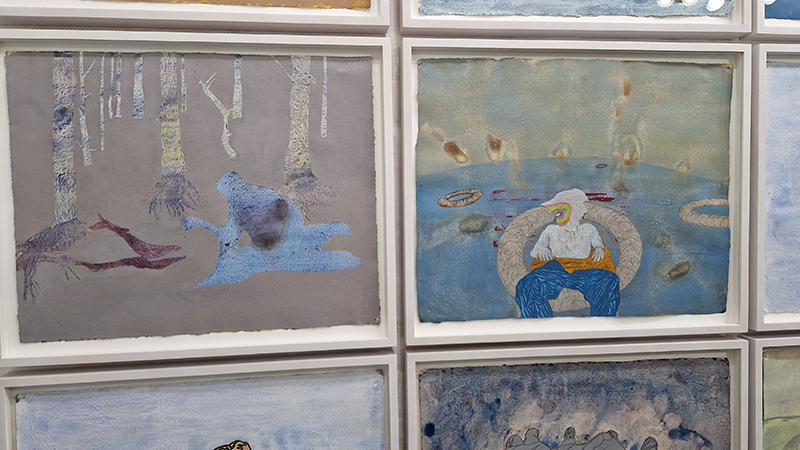
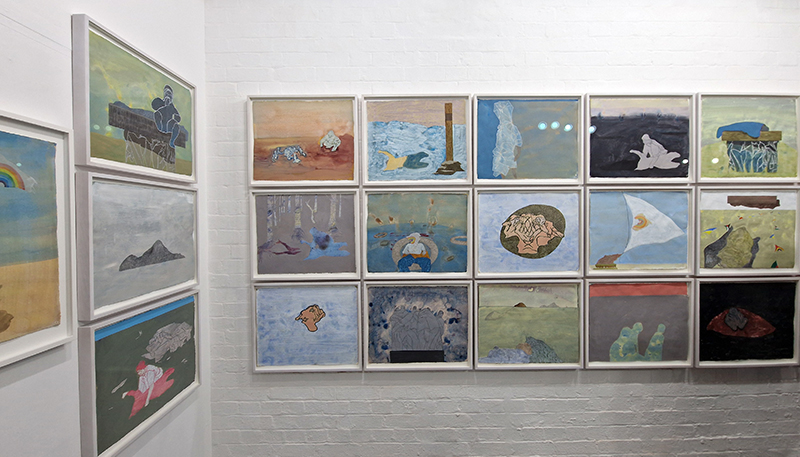
Bedwyr Williams The Starry Messenger

Bedwyr Williams The Starry Messenger

There is a film with a Mighty Boosh style protagonist who represents a character trapped within a mosaic mural.
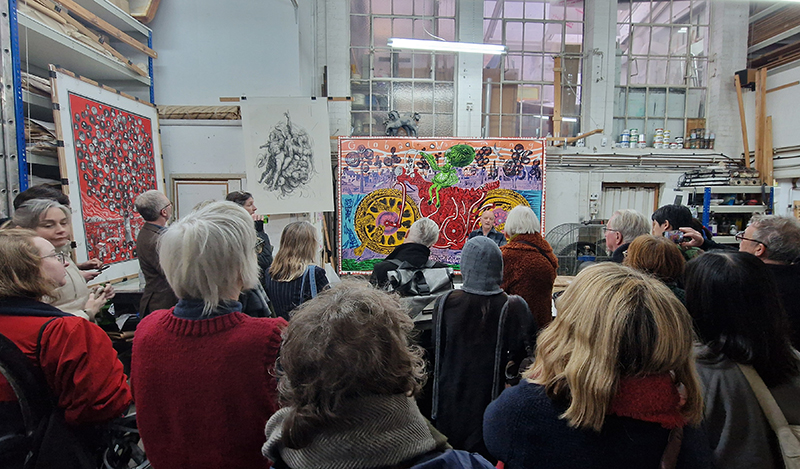
Bedwyr Williams The Starry Messenger

Bedwyr Williams The Starry Messenger

From the geological formation of stone out of oozing mud through its journey and subsequent use in a mural to the demolition of the building and its return to the earth. From looking out at the stars through a telescope to ‘staring into space’ the outer and inner worlds collide in a wonderfully amusing narrative encompassing the life the universe and everything dialogue.

Bedwyr Williams The Starry Messenger

Bedwyr Williams The Starry Messenger

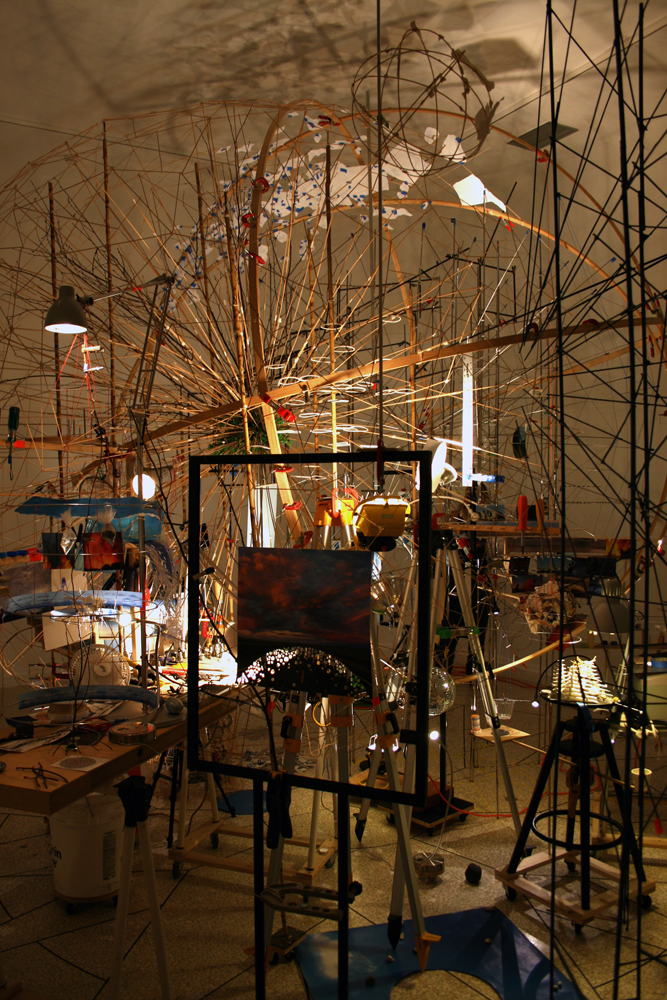
Sarah Sze explores the desire to locate our place within a disorienting world.

Sarah Sze Triple Ponit

Sarah Sze Triple Point

Her fragile sculptures echo the balance and chaos of the world around us.
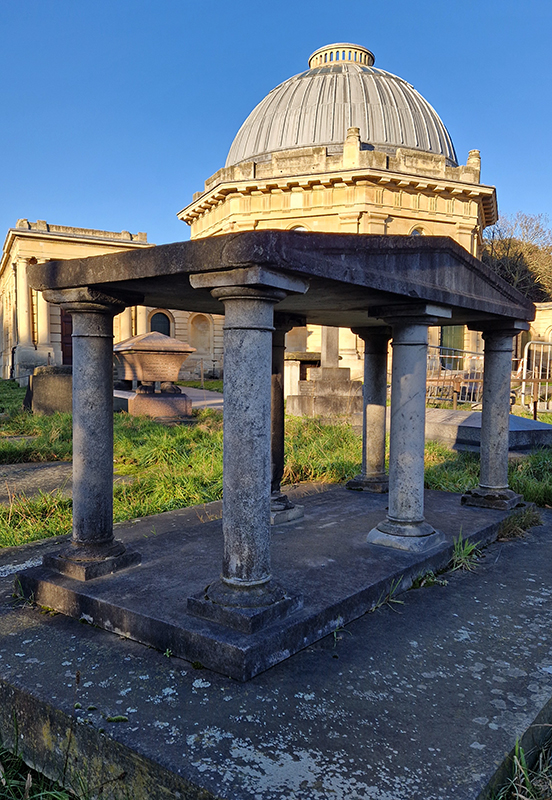
Sarah Sze Triple Point

Sarah Sze Triple Point

They appear to spin or be in the process of expansion, beautifully mysterious like the working of the atom or the universe they are full of wonder.
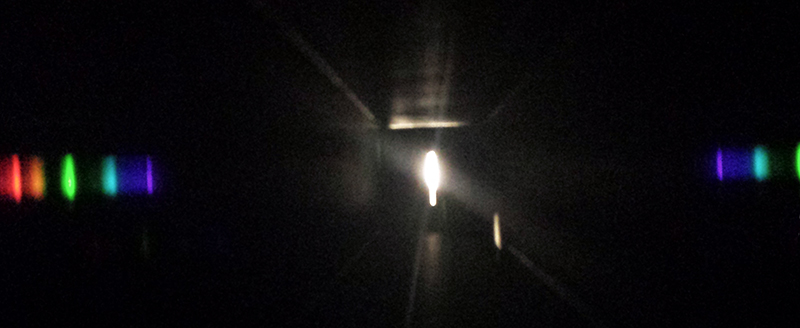
Sarah Sze Triple Point

Sarah Sze Triple Point

Playing with pattern, order and taxonomy she creates a laboratory busy in its own pursuits which makes us feel we are close to understanding something great.

Sarah Sze Triple Point

Sarah Sze Triple Point

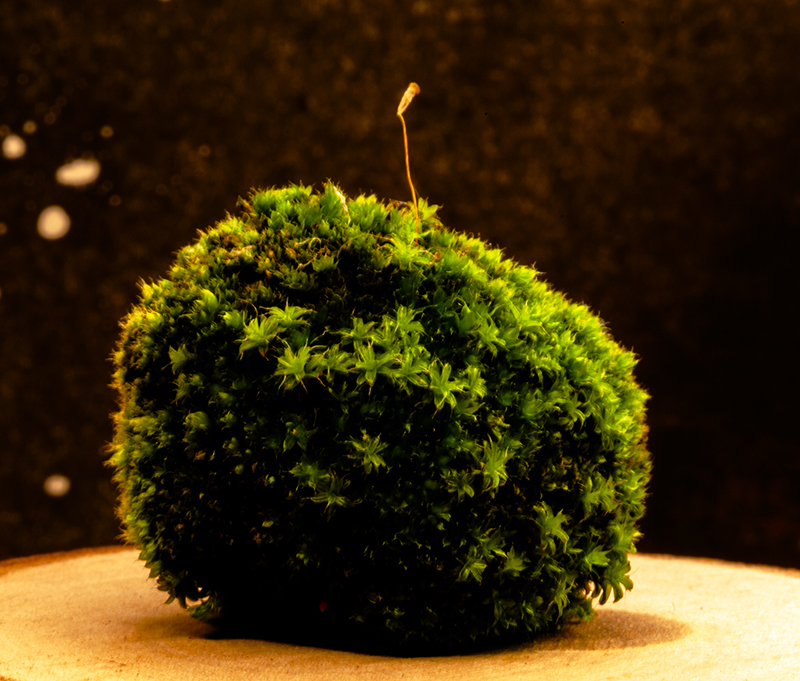
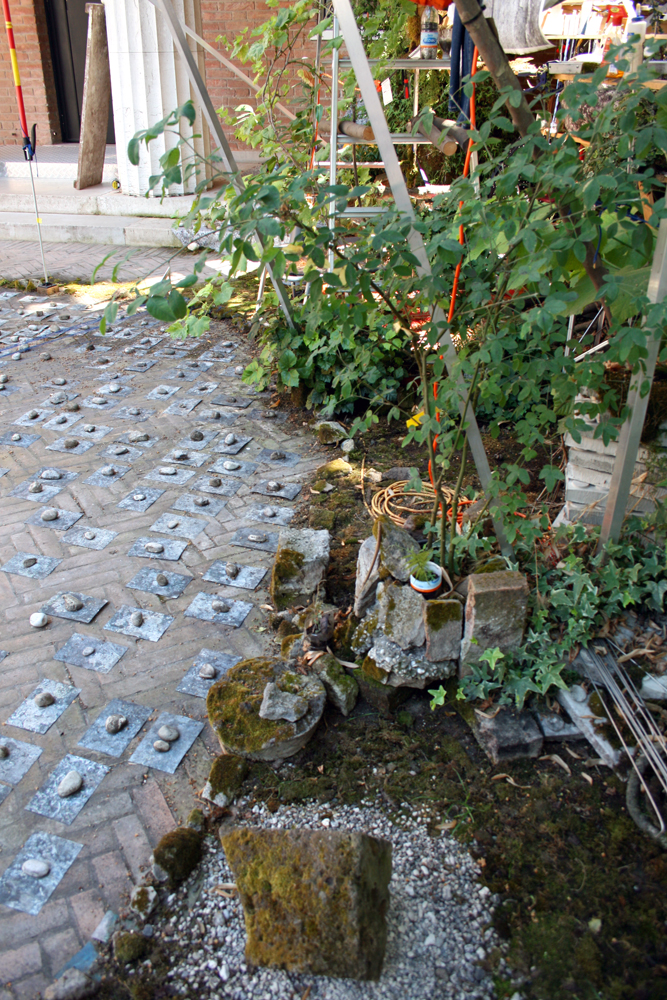
I was excited to see she had used moss a lot throughout this installation, even turning its image into wallpaper.

Sarah Sze Triple Point

Sarah Sze Triple Point

Triple Point refers to the phase when gas, liquid and solid form of a substance are all in equilibrium, her use of natural forms keep our ideas grounded in our surroundings while drawing us into the mysteries of evolution.

The extraordinary collection of stones once owned by artist Roger Caillois were on display in the Central Pavillion.

Roger Caillois Stones

Roger Caillois Stones

Caillois believed that nature should be examined as something other than as the utilitarian force that Darwin purported and that aesthetics and the need for decoration should be considered integral to our understanding of the natural world.

Roger Caillois Stones

Roger Caillois Stones

He considered the beautiful patterns within ancient natural forms were a sort of cryptic ‘universal syntax’, a unifying aesthetic language.

Roger Caillois Stones

Roger Caillois Stones

He wanted to understand the mysteries of the subjective experience through its relationship to factual reality.

I find it fascinating trying to understand the aesthetic experience.

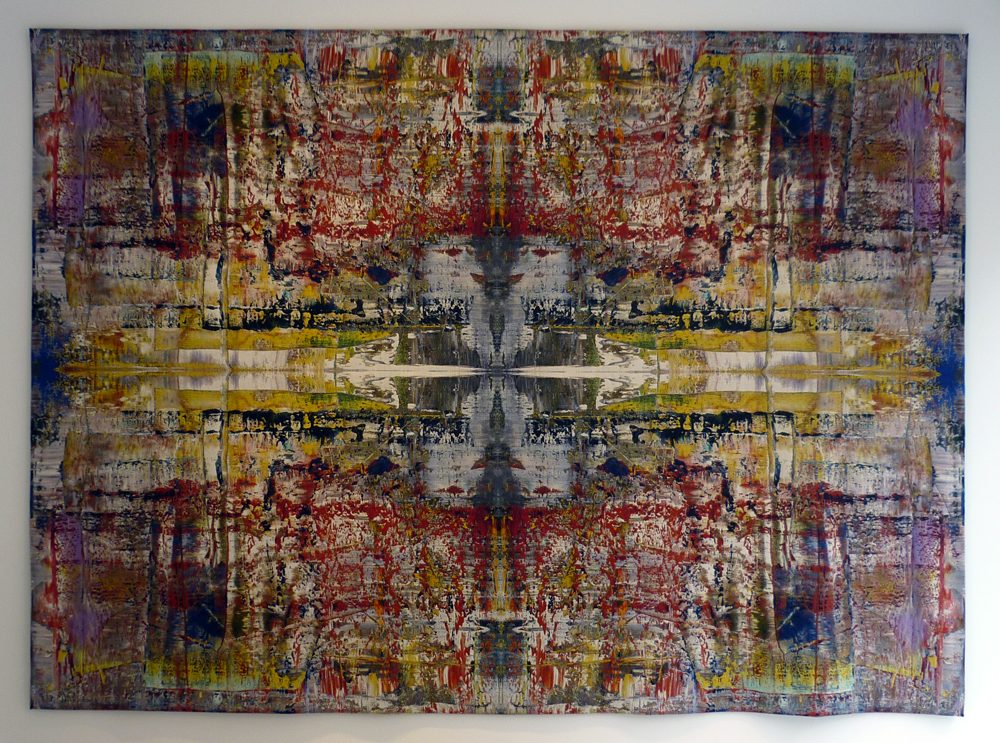
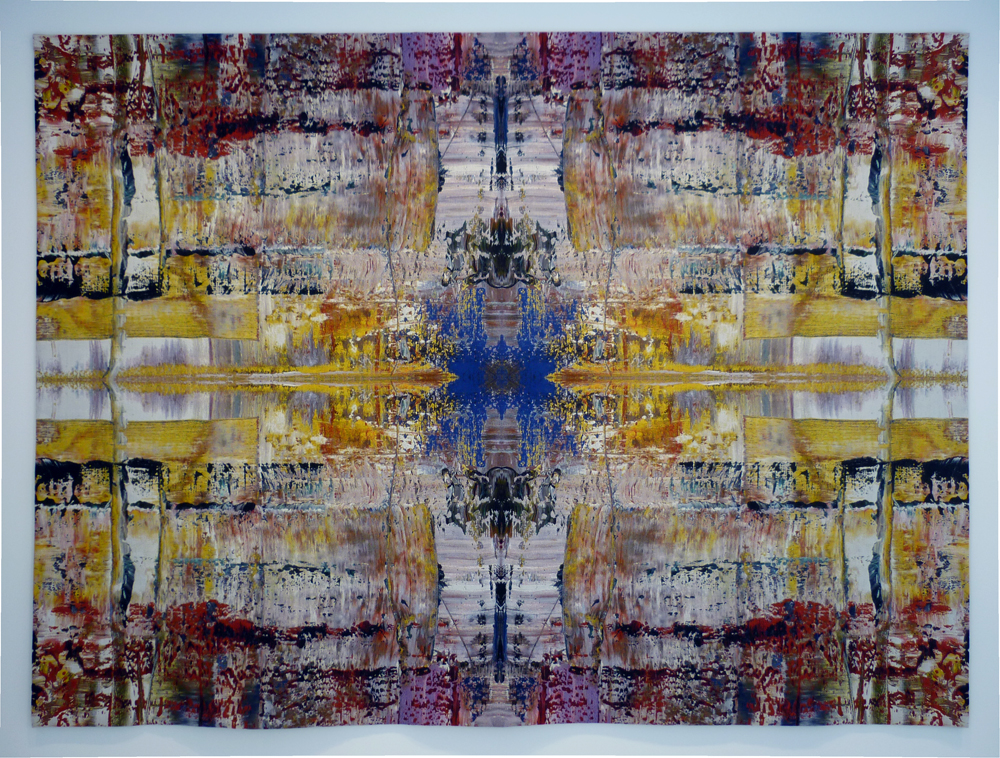
Gerhard Richter’s tapestries at Gagosian, Davies Street emanate pure aesthetic pleasure, colours and form coalesce erupt and fade.

These works are based on Abstract Painting (724-4) (1990). The visual effect of the tapestries is a Rorschach-like multiplying of the forms and colours of the original canvas.

Gerhard Richter

Gerhard Richter

Like entering a hypnotic state, like staring into space both literally and metaphorically you are transported to a place where it feels familiar and strange at the same time.

Gerhard Richter

Gerhard Richter

Venice was a perfect location to think about mysteries, the sacred and the wonders of the world.

1307 Monastry